US20250049810A1 - Methods of treating a ras protein-related disease or disorder - Google Patents
Methods of treating a ras protein-related disease or disorder Download PDFInfo
- Publication number
- US20250049810A1 US20250049810A1 US18/795,852 US202418795852A US2025049810A1 US 20250049810 A1 US20250049810 A1 US 20250049810A1 US 202418795852 A US202418795852 A US 202418795852A US 2025049810 A1 US2025049810 A1 US 2025049810A1
- Authority
- US
- United States
- Prior art keywords
- compound
- subject
- inhibitor
- cancer
- ras
- Prior art date
- Legal status (The legal status is an assumption and is not a legal conclusion. Google has not performed a legal analysis and makes no representation as to the accuracy of the status listed.)
- Pending
Links
Images


Classifications
-
- A—HUMAN NECESSITIES
- A61—MEDICAL OR VETERINARY SCIENCE; HYGIENE
- A61K—PREPARATIONS FOR MEDICAL, DENTAL OR TOILETRY PURPOSES
- A61K31/00—Medicinal preparations containing organic active ingredients
- A61K31/33—Heterocyclic compounds
- A61K31/395—Heterocyclic compounds having nitrogen as a ring hetero atom, e.g. guanethidine or rifamycins
- A61K31/495—Heterocyclic compounds having nitrogen as a ring hetero atom, e.g. guanethidine or rifamycins having six-membered rings with two or more nitrogen atoms as the only ring heteroatoms, e.g. piperazine or tetrazines
- A61K31/50—Pyridazines; Hydrogenated pyridazines
- A61K31/501—Pyridazines; Hydrogenated pyridazines not condensed and containing further heterocyclic rings
-
- A—HUMAN NECESSITIES
- A61—MEDICAL OR VETERINARY SCIENCE; HYGIENE
- A61K—PREPARATIONS FOR MEDICAL, DENTAL OR TOILETRY PURPOSES
- A61K31/00—Medicinal preparations containing organic active ingredients
- A61K31/33—Heterocyclic compounds
- A61K31/395—Heterocyclic compounds having nitrogen as a ring hetero atom, e.g. guanethidine or rifamycins
- A61K31/535—Heterocyclic compounds having nitrogen as a ring hetero atom, e.g. guanethidine or rifamycins having six-membered rings with at least one nitrogen and one oxygen as the ring hetero atoms, e.g. 1,2-oxazines
- A61K31/5375—1,4-Oxazines, e.g. morpholine
- A61K31/5386—1,4-Oxazines, e.g. morpholine spiro-condensed or forming part of bridged ring systems
-
- A—HUMAN NECESSITIES
- A61—MEDICAL OR VETERINARY SCIENCE; HYGIENE
- A61K—PREPARATIONS FOR MEDICAL, DENTAL OR TOILETRY PURPOSES
- A61K45/00—Medicinal preparations containing active ingredients not provided for in groups A61K31/00 - A61K41/00
- A61K45/06—Mixtures of active ingredients without chemical characterisation, e.g. antiphlogistics and cardiaca
-
- A—HUMAN NECESSITIES
- A61—MEDICAL OR VETERINARY SCIENCE; HYGIENE
- A61K—PREPARATIONS FOR MEDICAL, DENTAL OR TOILETRY PURPOSES
- A61K9/00—Medicinal preparations characterised by special physical form
- A61K9/0012—Galenical forms characterised by the site of application
- A61K9/0053—Mouth and digestive tract, i.e. intraoral and peroral administration
-
- A—HUMAN NECESSITIES
- A61—MEDICAL OR VETERINARY SCIENCE; HYGIENE
- A61P—SPECIFIC THERAPEUTIC ACTIVITY OF CHEMICAL COMPOUNDS OR MEDICINAL PREPARATIONS
- A61P31/00—Antiinfectives, i.e. antibiotics, antiseptics, chemotherapeutics
-
- A—HUMAN NECESSITIES
- A61—MEDICAL OR VETERINARY SCIENCE; HYGIENE
- A61P—SPECIFIC THERAPEUTIC ACTIVITY OF CHEMICAL COMPOUNDS OR MEDICINAL PREPARATIONS
- A61P35/00—Antineoplastic agents
Definitions
- statins bind the enzyme active site of HMG-CoA reductase, thus preventing the enzyme from engaging with its substrates.
- statins bind the enzyme active site of HMG-CoA reductase, thus preventing the enzyme from engaging with its substrates.
- undruggable targets include a vast and largely untapped reservoir of medically important human proteins. Thus, there exists a great deal of interest in discovering new molecular modalities capable of modulating the function of such undruggable targets.
- RAS proteins KRAS, HRAS, and NRAS
- activating mutations at codon 12 in RAS proteins function by inhibiting both GTPase-activating protein (GAP)-dependent and intrinsic hydrolysis rates of GTP, significantly skewing the population of RAS mutant proteins to the “on” (GTP-bound) state (RAS(ON)), leading to oncogenic MAPK signaling.
- GAP GTPase-activating protein
- RAS(ON) GTP-bound
- RAS exhibits a picomolar affinity for GTP, enabling RAS to be activated even in the presence of low concentrations of this nucleotide.
- Mutations at codons 13 (e.g., G13C) and 61 (e.g., Q61K) of RAS are also responsible for oncogenic activity in some cancers.
- RAS proteins play a critical role in regulating cell growth, differentiation, and survival, acting as molecular switches, relaying signals from cell surface receptors to intracellular pathways that control key cellular processes.
- Genetic studies have demonstrated that complete deletion of RAS genes is lethal in mouse models and leads to the absence of cellular proliferation in vitro (Drosten et al. Oncogene 33, 2857-2865 (2014); Drosten et al. EMBO J. 29, 1091-1104 (2010)).
- KRAS conditional knockout in adult bone marrow has been shown to induce significant hematopoietic defects, including splenomegaly, an expanded neutrophil compartment, and reduced B cell number (Zhang et.
- RAS protein-related disorders using Compound A, or a pharmaceutically acceptable salt thereof, which is a RAS inhibitor.
- the disclosure features a method of treating a RAS protein-related disorder (e.g. cancer) in a human subject in need thereof.
- the method includes orally administering a total daily dose of 50 mg to 800 mg (e.g., a total daily dose between 60 mg to 800 mg, 80 mg to 800 mg, 120 mg to 800 mg, 160 mg to 800 mg, 200 mg to 800 mg, 250 mg to 800 mg, 300 mg to 800 mg, 350 mg to 800 mg, 400 mg to 800 mg, 450 mg to 800 mg, 500 mg to 800 mg, 550 mg to 800 mg, 600 mg to 800 mg, 650 mg to 800 mg, 700 mg to 800 mg, 750 mg to 800 mg, 60 mg to 700 mg, 80 mg to 700 mg, 120 mg to 700 mg, 160 mg to 700 mg, 200 mg to 700 mg, 250 mg to 700 mg, 300 mg to 700 mg, 350 mg to 700 mg, 400 mg to 700 mg, 450 mg to 700 mg, 500 mg to 700 mg, 550 mg to 700 mg, 600 mg to 700 mg, 650 mg to 700 mg, 60 mg,
- the method includes administering a total daily dose of 50 mg to 800 mg (e.g., a total daily dose of 50 mg, 60 mg, 70 mg, 80 mg, 90 mg, 100 mg, 110 mg, 120 mg, 130 mg, 140 mg, 150 mg, 160 mg, 170 mg, 180 mg, 190 mg, 200 mg, 210 mg, 220 mg, 230 mg, 240 mg, 250 mg, 260 mg, 270 mg, 280 mg, 290 mg, 300 mg, 310 mg, 320 mg, 330 mg, 340 mg, 350 mg, 360 mg, 370 mg, 380 mg, 390 mg, 400 mg, 410 mg, 420 mg, 430 mg, 440 mg, 450 mg, 460 mg, 470 mg, 480 mg, 490 mg, 500 mg, 525 mg, 550 mg, 575 mg, 600 mg, 625 mg, 650 mg, 675 mg, 700 mg, 725 mg, 750 mg, 775 mg, or 800 mg) Compound A to the subject.
- the method includes administering a total daily dose of 200 mg to 600 mg, 225 mg to 575 mg, 250 mg to 550 mg, 275 mg to 525 mg, 300 mg to 500 mg, 325 mg to 475 mg, 350 mg to 450 mg, or 375 mg to 425 mg Compound A to the subject.
- the method includes administering 80 mg to 500 mg of Compound A to the subject. In some embodiments, the method includes administering 90 mg to 500 mg of Compound A to the subject. In some embodiments, the method comprises administering 100 mg to 500 mg of Compound A to the subject. In some embodiments, the method comprises administering 120 mg to 500 mg of Compound A to the subject. In some embodiments, the method comprises administering 160 mg to 500 mg of Compound A to the subject. In some embodiments, the method includes administering 200 mg to 500 mg of Compound A to the subject. In some embodiments, the method includes administering 250 mg to 500 mg of Compound A to the subject. In some embodiments, the method includes administering 300 mg to 500 mg of Compound A to the subject.
- the method includes administering 350 mg to 500 mg of Compound A to the subject. In some embodiments, the method includes administering 400 mg to 500 mg of Compound A to the subject. In some embodiments, the method includes administering 450 mg to 500 mg of Compound A to the subject.
- the method includes administering 80 mg to 400 mg of Compound A to the subject. In some embodiments, the method includes administering 90 mg to 400 mg of Compound A to the subject. In some embodiments, the method comprises administering 100 mg to 400 mg of Compound A to the subject. In some embodiments, the method comprises administering 120 mg to 400 mg of Compound A to the subject. In some embodiments, the method comprises administering 160 mg to 400 mg of Compound A to the subject. In some embodiments, the method includes administering 200 mg to 400 mg of Compound A to the subject. In some embodiments, the method includes administering 220 mg to 400 mg of Compound A to the subject. In some embodiments, the method includes administering 250 mg to 400 mg of Compound A to the subject. In some embodiments, the method includes administering 300 mg to 400 mg of Compound A to the subject. In some embodiments, the method includes administering 350 mg to 400 mg of Compound A to the subject.
- the method includes administering 80 mg to 300 mg of Compound A to the subject. In some embodiments, the method includes administering 90 mg to 300 mg of Compound A to the subject. In some embodiments, the method comprises administering 100 mg to 300 mg of Compound A to the subject. In some embodiments, the method comprises administering 120 mg to 300 mg of Compound A to the subject. In some embodiments, the method comprises administering 160 mg to 300 mg of Compound A to the subject. In some embodiments, the method includes administering 200 mg to 300 mg of Compound A to the subject. In some embodiments, the method includes administering 250 mg to 300 mg of Compound A to the subject.
- the method includes administering 80 mg to 200 mg of Compound A to the subject. In some embodiments, the method includes administering 90 mg to 200 mg of Compound A to the subject. In some embodiments, the method includes administering 100 mg to 200 mg of Compound A to the subject. In some embodiments, the method includes administering 120 mg to 200 mg of Compound A to the subject. In some embodiments, the method includes administering 160 mg to 200 mg of Compound A to the subject.
- Compound A is administered to the subject daily. In some embodiments, Compound A is administered to the subject once, twice, or more per day. In some embodiments, Compound A is administered to the subject once per day. In some embodiments, Compound A is administered to the subject twice per day.
- the method includes administering 100 mg of Compound A twice per day to the subject (i.e., a total daily dose of 200 mg). In some embodiments, the method includes administering 200 mg of Compound A twice per day to the subject (i.e., a total daily dose of 400 mg). In some embodiments, the method includes administering 300 mg of Compound A twice per day to the subject (i.e., a total daily dose of 600 mg). In some embodiments, the method includes administering 400 mg of Compound A twice per day to the subject (i.e., a total daily dose of 800 mg).
- the RAS protein-related disorder is a cancer.
- the cancer comprises a RAS mutation.
- the RAS mutation is at position 12.
- the RAS mutation is G12C.
- the cancer comprises a RAS amplification.
- the cancer is pancreatic cancer.
- the cancer is lung cancer.
- the cancer is non-small cell lung cancer.
- the cancer is colorectal cancer.
- the Ras protein is KRAS.
- the method further comprises administering an additional anticancer therapy.
- the additional anticancer therapy is an EGFR inhibitor, a second RAS inhibitor, a SHP2 inhibitor, a SOS1 inhibitor, a Raf inhibitor, a MEK inhibitor, an ERK inhibitor, a PI3K inhibitor, a PTEN inhibitor, an AKT inhibitor, an mTORC1 inhibitor, a BRAF inhibitor, a PD-L1 inhibitor, a PD-1 inhibitor, a CDK4/6 inhibitor, a HER2 inhibitor, or a combination thereof.
- the additional anticancer therapy is a pan-RAS inhibitor.
- the additional anticancer therapy is a RAS(ON) multi-selective inhibitor.
- the additional anticancer therapy is a SHP2 inhibitor. In some embodiments, the additional anticancer therapy comprises a SHP2 inhibitor and a PD-L1 inhibitor. In some embodiments, the additional therapy comprises a second RAS inhibitor and a PD-L1 inhibitor. In some embodiments, the second RAS inhibitor is a KRAS G12C C inhibitor. In some embodiments, the second RAS inhibitor is a RAS(ON) G12C-selective inhibitor. In some embodiments, the second RAS inhibitor is a KRAS G12C C(OFF) inhibitor.
- any limitation discussed with respect to one embodiment of the invention may apply to any other embodiment of the invention.
- any compound or composition of the invention may be used in any method of the invention, and any method of the invention may be used to produce or to utilize any compound or composition of the invention.
- FIG. 1 shows Compound A phase 1 study design.
- FIG. 2 is a waterfall plot of the best overall response to Compound A in KRAS G12C c NSCLC subjects previously treated with or na ⁇ ve to a KRAS G12C C(OFF) inhibitor.
- FIG. 3 depicts the best overall response to Compound A in KRAS G12C CRC na ⁇ ve to KRAS G12C (OFF) inhibitor.
- One patient had PD due to a new lesion and target lesion measurements were not available. Pru Unconfirmed PR per RECIST 1.1.
- FIG. 4 shows the mean plasma concentration of Compound A overtime profiles following daily (50 mg, 100 mg, and 200 mg) or twice daily (200 mg) oral administration, a Subjects considered outliers have been excluded from plots of 50 mg cohort.
- Compound A is RAS inhibitor—more specifically, a RAS(ON) G12C-selective, tri-complex inhibitor, that is selective for the active, GTP-bound state, of the canonical RAS isoforms harboring a G12C mutation.
- Compound A binds to cyclophilin A, which is abundantly expressed in normal tissues and tumors, resulting in a binary complex that covalently binds to RAS G12C (ON) to form a tri-complex, blocking downstream RAS signaling (Schulze et. al., Science. 2023 Aug. 18; 381(6659): 794-799).
- the term “about” is used to indicate that a value includes the standard deviation of error for the device or method being employed to determine the value.
- the term “about” refers to a range of values that fall within 25%, 20%, 19%, 18%, 17%, 16%, 15%, 14%, 13%, 12%, 11%, 10%, 9%, 8%, 7%, 6%, 5%, 4%, 3%, 2%, 1%, or less in either direction (greater than or less than) of a stated value, unless otherwise stated or otherwise evident from the context (e.g., where such number would exceed 100% of a possible value).
- a range or amount is provided in the disclosure herein, +/ ⁇ 5% of each range endpoint or specific amount is included, unless otherwise indicated.
- a range of 50 mg to 800 mg of Compound A is understood to encompass 50 mg (+/ ⁇ 5%) to 800 mg (+/ ⁇ 5%), e.g., 47.5 mg to 840 mg Compound A.
- administration refers to the administration of a composition comprising Compound A to a subject or system.
- Administration also includes administering a prodrug derivative or analog or pharmaceutically acceptable salt to the subject, which can form an equivalent amount of active compound within the subject's body.
- Administration to an animal subject e.g., to a human may be by any appropriate route.
- administration may be bronchial (including by bronchial instillation), buccal, enteral, intradermal, intra-arterial, intradermal, intragastric, intramedullary, intramuscular, intranasal, intraperitoneal, intrathecal, intravenous, intraventricular, mucosal, nasal, oral, rectal, subcutaneous, sublingual, topical, tracheal (including by intratracheal instillation), transdermal, vaginal or vitreal.
- a composition comprising compound A is administered orally.
- a combination therapy refers to a method of treatment including administering to a subject at least two active therapeutic agents, as one or more pharmaceutical compositions, as part of a therapeutic regimen.
- a combination therapy may include administration of a single pharmaceutical composition including at least two therapeutic agents and one or more pharmaceutically acceptable carrier, excipient, diluent, or surfactant.
- a combination therapy may include administration of two or more pharmaceutical compositions, each composition including one or more therapeutic agent and one or more pharmaceutically acceptable carrier, excipient, diluent, or surfactant.
- the two or more agents may optionally be administered simultaneously (as a single or as separate compositions) or sequentially (as separate compositions).
- the therapeutic agents may be administered in an effective amount.
- the therapeutic agent may be administered in a therapeutically effective amount.
- the effective amount of one or more of the therapeutic agents may be lower when used in a combination therapy than the therapeutic amount of the same therapeutic agent when it is used as a monotherapy, e.g., due to an additive or synergistic effect of combining the two or more therapeutics.
- the term “dosage form” refers to a physically discrete unit of a compound (e.g., Compound A) for administration to a subject.
- a unit dosage amount or a whole fraction thereof
- appropriate for administration in accordance with a dosing regimen that has been determined to correlate with a desired or beneficial outcome when administered to a relevant population (i.e., with a therapeutic dosing regimen).
- a dosing regimen that has been determined to correlate with a desired or beneficial outcome when administered to a relevant population (i.e., with a therapeutic dosing regimen).
- the total amount of a therapeutic composition or compound administered to a particular subject is determined by one or more attending physicians and may involve administration of multiple dosage forms.
- a dosing regimen refers to a set of unit doses (typically more than one) that are administered individually to a subject, typically separated by periods of time.
- a given therapeutic compound e.g., Compound A
- has a recommended dosing regimen which may involve one or more doses.
- a dosing regimen includes a plurality of doses each of which are separated from one another by a time period of the same length; in some embodiments, a dosing regimen includes a plurality of doses and at least two different time periods separating individual doses. In some embodiments, all doses within a dosing regimen are of the same unit dose amount.
- a dosing regimen includes a first dose in a first dose amount, followed by one or more additional doses in a second dose amount different from the first dose amount.
- a dosing regimen includes a first dose in a first dose amount, followed by one or more additional doses in a second dose amount same as the first dose amount.
- a dosing regimen is correlated with a desired or beneficial outcome when administered across a relevant population (i.e., is a therapeutic dosing regimen).
- disorder is used in this disclosure to mean, and is used interchangeably with, the terms disease, condition, or illness, unless otherwise indicated.
- inhibitor refers to any statistically significant decrease in a biological activity, including full blocking of the activity.
- inhibitor refers to a compound that prevents a biomolecule, (e.g., a protein, nucleic acid) from completing or initiating a reaction.
- An inhibitor can inhibit a reaction by competitive, uncompetitive, or non-competitive means, for example. With respect to its binding mechanism, an inhibitor may be an irreversible inhibitor or a reversible inhibitor.
- Exemplary inhibitors include, but are not limited to, nucleic acids, DNA, RNA, shRNA, siRNA, proteins, protein mimetics, peptides, peptidomimetics, antibodies, small molecules, chemicals, analogs that mimic the binding site of an enzyme, receptor, or other protein.
- the inhibitor is a small molecule, e.g., a low molecular weight organic compound, e.g., an organic compound having a molecular weight (MW) of less than 1200 Daltons (Da).
- the MW is less than 1100 Da.
- the MW is less than 1000 Da.
- the MW is less than 900 Da.
- the range of the MW of the small molecule is between 800 Da and 1200 Da.
- Small molecule inhibitors include cyclic and acyclic compounds. Small molecules inhibitors include natural products, derivatives, and analogs thereof. Small molecule inhibitors can include a covalent cross-linking group capable of forming a covalent cross-link, e.g., with an amino acid side-chain of a target protein.
- patient or “subject” are used interchangeably and refer to a mammal, for whom diagnosis, prognosis, or therapy is desired.
- Mammalian subjects include, but are not limited to, humans, domestic animals, farm animals, sports animals, and zoo animals including, for example, humans, non-human primates, dogs, cats, guinea pigs, rabbits, rats, mice, horses, and cattle.
- the subject has been diagnosed with cancer.
- the subject is a human afflicted with a tumor (e.g., cancer) who has been diagnosed with a need for treatment for a tumor (e.g., cancer).
- composition refers to a compound, such as Compound A disclosed herein, or a pharmaceutically acceptable salt thereof, formulated together with a pharmaceutically acceptable excipient.
- a “pharmaceutically acceptable excipient,” as used herein, refers to any inactive ingredient (for example, a vehicle capable of suspending or dissolving the active compound) having the properties of being nontoxic and noninflammatory in a subject.
- Typical excipients include, for example: antiadherents, antioxidants, binders, coatings, compression aids, disintegrants, dyes (colors), emollients, emulsifiers, fillers (diluents), film formers or coatings, flavors, fragrances, glidants (flow enhancers), lubricants, preservatives, printing inks, sorbents, suspensing or dispersing agents, sweeteners, or waters of hydration.
- Excipients include, but are not limited to: butylated optionally substituted hydroxyltoluene (BHT), calcium carbonate, calcium phosphate (dibasic), calcium stearate, croscarmellose, crosslinked polyvinyl pyrrolidone, citric acid, crospovidone, cysteine, ethylcellulose, gelatin, optionally substituted hydroxylpropyl cellulose, optionally substituted hydroxylpropyl methylcellulose, lactose, magnesium stearate, maltitol, mannitol, methionine, methylcellulose, methyl paraben, microcrystalline cellulose, polyethylene glycol, polyvinyl pyrrolidone, povidone, pregelatinized starch, propyl paraben, retinyl palmitate, shellac, silicon dioxide, sodium carboxymethyl cellulose, sodium citrate, sodium starch glycolate, sorbitol, starch (corn), stearic acid, stearic acid
- a composition includes at least two different pharmaceutically acceptable excipients.
- pharmaceutically acceptable salt refers to those salts of the compounds described herein that are, within the scope of sound medical judgment, suitable for use in contact with the tissues of humans and other animals without undue toxicity, irritation, allergic response and the like, and are commensurate with a reasonable benefit/risk ratio.
- Pharmaceutically acceptable salts are well known in the art. For example, pharmaceutically acceptable salts are described in: Berge et al., J. Pharmaceutical Sciences 66:119, 1977 and in Pharmaceutical Salts: Properties, Selection, and Use, (Eds. P. H. Stahl and C. G. Wermuth), WileyVCH, 2008.
- the salts can be prepared in situ during the final isolation and purification of the compounds described herein or separately by reacting the free base group with a suitable organic acid.
- RAS inhibitor and “inhibitor of [a] RAS” are used interchangeably to refer to any inhibitor that targets, that is, selectively binds to or inhibits a RAS protein.
- RAS(ON) multi-selective inhibitor refers to a RAS inhibitor of at least three RAS isoforms, including wild-type and/or variants with missense mutations at one of the following positions: 12, 13, 59, 61, or 146.
- a RAS(ON) multi-selective inhibitor refers to a RAS inhibitor of at least three RAS variants with missense mutations at one of the following positions: 12, 13, and 61.
- RAS(ON) mutant-selective inhibitor refers to a RAS inhibitor selective for a RAS(ON) variant with missense mutation at one of the following positions: 12, 13, or 61.
- RAS(ON) mutant-selective inhibitors include a RAS(ON) G12C-selective inhibitor, a RAS(ON) G12D-selective inhibitor, a RAS(ON) Q61H-selective inhibitor, a RAS(ON) G12V-selective inhibitor and a RAS(ON) G13D-selective inhibitor.
- RAS(ON) inhibitor refers to an inhibitor that targets, that is, selectively binds to or inhibits, the GTP-bound, active state of RAS (e.g., selective over the GDP-bound, inactive state of RAS). Inhibition of the GTP-bound, active state of RAS includes, for example, the inhibition of oncogenic signaling from the GTP-bound, active state of RAS.
- the RAS(ON) inhibitor is an inhibitor that selectively binds to and inhibits the GTP-bound, active state of RAS.
- RAS(ON) inhibitors may also bind to or inhibit the GDP-bound, inactive state of RAS (e.g., with a lower affinity or inhibition constant than for the GTP-bound, active state of RAS).
- a RAS(ON) inhibitor useful in the present disclosure may form a high affinity three-component complex, or conjugate, between a synthetic ligand and two intracellular proteins which do not interact under normal physiological conditions: the target protein of interest (e.g., RAS), and a widely expressed cytosolic chaperone (presenter protein) in the cell (e.g., cyclophilin A).
- the inhibitors of RAS described herein induce a new binding pocket in RAS by driving formation of a high affinity tri-complex, or conjugate, between the RAS protein and the widely expressed cytosolic chaperone, cyclophilin A (CYPA).
- CYPA cyclophilin A
- RAS(OFF) inhibitor refers to an inhibitor that targets, that is, selectively binds to or inhibits, the GDP-bound, inactive state of RAS (e.g., selective over the GTP-bound, active state of RAS).
- RAS pathway and “RAS/MAPK pathway” are used interchangeably herein to refer to a signal transduction cascade downstream of various cell surface growth factor receptors in which activation of RAS (and its various isoforms and allotypes) is a central event that drives a variety of cellular effector events that determine the proliferation, activation, differentiation, mobilization, and other functional properties of the cell.
- SHP2 conveys positive signals from growth factor receptors to the RAS activation/deactivation cycle, which is modulated by guanine nucleotide exchange factors (GEFs, such as SOS1) that load GTP onto RAS to produce functionally active GTP-bound RAS as well as GTP-accelerating proteins (GAPs, such as NF1) that facilitate termination of the signals by conversion of GTP to GDP.
- GTP-bound RAS produced by this cycle conveys essential positive signals to a series of serine/threonine kinases including RAF and MAP kinases, from which emanate additional signals to various cellular effector functions.
- a “therapeutic agent” is any substance, e.g., a compound or composition, capable of treating a disease or disorder.
- therapeutic agents that are useful in connection with the present disclosure include RAS inhibitors and cancer chemotherapeutics. Many such therapeutic agents are known in the art and are disclosed herein.
- terapéuticaally effective amount means an amount that is sufficient, when administered to a population suffering from or susceptible to a disease, disorder, or condition in accordance with a therapeutic dosing regimen, to treat the disease, disorder, or condition.
- a therapeutically effective amount is one that reduces the incidence or severity of, or delays onset of, one or more symptoms of the disease, disorder, or condition.
- therapeutically effective amount does not in fact require successful treatment be achieved in a particular individual. Rather, a therapeutically effective amount may be that amount that provides a particular desired pharmacological response in a significant number of subjects when administered to patients in need of such treatment.
- a therapeutically effective amount may be a reference to an amount as measured in one or more specific tissues (e.g., a tissue affected by the disease, disorder or condition) or fluids (e.g., blood, saliva, serum, sweat, tears, urine).
- tissue e.g., a tissue affected by the disease, disorder or condition
- fluids e.g., blood, saliva, serum, sweat, tears, urine.
- a therapeutically effective amount may be formulated or administered in a single dose.
- a therapeutically effective amount may be formulated or administered in a plurality of doses, for example, as part of a dosing regimen.
- treatment refers to any administration of a substance (e.g., Compound A) that partially or completely alleviates, ameliorates, relieves, inhibits, delays onset of, reduces severity of, or reduces incidence of one or more symptoms, features, or causes of a particular disease, disorder, or condition.
- a substance e.g., Compound A
- such treatment may be administered to a subject who does not exhibit signs of the relevant disease, disorder or condition or of a subject who exhibits only early signs of the disease, disorder, or condition.
- treatment may be administered to a subject who exhibits one or more established signs of the relevant disease, disorder or condition.
- treatment may be of a subject who has been diagnosed as suffering from the relevant disease, disorder, or condition. In some embodiments, treatment may be of a subject known to have one or more susceptibility factors that are statistically correlated with increased risk of development of the relevant disease, disorder, or condition. In any treatment method herein, a patient or subject may be in need of such treatment.
- the present disclosure features methods of treating RAS protein-related disorders (e.g. cancer) in a human subject in need thereof, the method including administering (e.g., oral administration) 50 mg to 800 mg of Compound A daily:
- Compound A may exist as a conformational stereoisomer, such as an atropisomer.
- Pharmaceutically acceptable salts of Compound A are also contemplated, as are solvates, hydrates and polymorphs. See, e.g., WO 2021/091982 and PCT/US2024/024246, incorporated herein by reference in their entirety.
- Compound A can be prepared as described in WO 2021/091982 and WO 2022/235864, each incorporated herein by reference in its entirety.
- Compound A can be present as a pharmaceutically acceptable isotopically labeled version, wherein one or more atoms is replaced by atoms having the same atomic number, but an atomic mass or mass number different from the atomic mass or mass number usually found in nature.
- isotopes that can be incorporated into Compound A include isotopes of hydrogen, carbon, nitrogen, oxygen, and fluorine, such as 2 H, 3 H, 11 C, 13 C, 14 C, 13 N, 15 N, 15 O, 17 O, and 18 O, respectively.
- These radio-labeled compounds could be useful to help determine or measure the effectiveness of Compound A, by characterizing, for example, the site or mode of action.
- Radioactive isotopes tritium, i.e., 3 H, and carbon-14, i.e., 14 C, are particularly useful for this purpose in view of their ease of incorporation and ready means of detection.
- substitution with heavier isotopes such as deuterium, i.e., 2 H, may afford certain therapeutic advantages resulting from greater metabolic stability, for example, increased in vivo half-life or reduced dosage requirements.
- substitution with positron emitting isotopes such as 11 C, 15 O and 13 N, can be useful in Positron Emission Topography (PET) studies.
- PET Positron Emission Topography
- the cancer may, for example, be pancreatic cancer, colorectal cancer, non-small cell lung cancer, acute myeloid leukemia, multiple myeloma, thyroid gland adenocarcinoma, a myelodysplastic syndrome, or squamous cell lung carcinoma.
- the cancer comprises a RAS mutation, such as KRAS G12C.
- the cancer comprising a KRAS G12C mutation may further comprise an additional RAS mutation. Other RAS mutations are described herein.
- a method of treating a RAS protein-related disorder in a subject in need thereof comprising administering to the subject a therapeutically effective amount of Compound A, or a pharmaceutically acceptable salt thereof.
- the method includes administering of a total daily dose between 50 mg to 800 mg of Compound A (e.g., a total daily dose between 60 mg to 800 mg, 80 mg to 800 mg, 120 mg to 800 mg, 160 mg to 800 mg, 200 mg to 800 mg, 250 mg to 800 mg, 300 mg to 800 mg, 350 mg to 800 mg, 400 mg to 800 mg, 450 mg to 800 mg, 500 mg to 800 mg, 550 mg to 800 mg, 600 mg to 800 mg, 650 mg to 800 mg, 700 mg to 800 mg, 750 mg to 800 mg, 60 mg to 700 mg, 80 mg to 700 mg, 120 mg to 700 mg, 160 mg to 700 mg, 200 mg to 700 mg, 250 mg to 700 mg, 300 mg to 700 mg, 350 mg to 700 mg, 400 mg to 700 mg, 450 mg to 700 mg, 500 mg to 700 mg, 550 mg to 700 mg, 600 mg to 700 mg, 650 mg to 700 mg, 60 mg to 600 mg, 80 mg to 600 mg, 120 mg to 600 mg, 160 mg to 600 mg, 120 mg to 600 mg, 160 mg to 600
- the method includes administering a total daily dose of 50 mg, 60 mg, 70 mg, 80 mg, 90 mg, 100 mg, 110 mg, 120 mg, 130 mg, 140 mg, 150 mg, 160 mg, 170 mg, 180 mg, 190 mg, 200 mg, 210 mg, 220 mg, 230 mg, 240 mg, 250 mg, 260 mg, 270 mg, 280 mg, 290 mg, 300 mg, 310 mg, 320 mg, 330 mg, 340 mg, 350 mg, 360 mg, 370 mg, 380 mg, 390 mg, 400 mg, 410 mg, 420 mg, 430 mg, 440 mg, 450 mg, 460 mg, 470 mg, 480 mg, 490 mg, 500 mg, 525 mg, 550 mg, 575 mg, 600 mg, 625 mg, 650 mg, 675 mg, 700 mg, 725 mg, 750 mg, 775 mg, or 800 mg of Compound A to a subject in need thereof.
- the total daily dose can be administered once or
- the method includes administering a total daily dose of 50 mg to 800 mg Compound A to a subject in need thereof. In some embodiments, the method includes administering a total daily dose of 60 mg to 800 mg Compound A to a subject in need thereof. In some embodiments, the method includes administering a total daily dose of 70 mg to 800 mg Compound A to a subject in need thereof. In some embodiments, the method includes administering a total daily dose of 80 mg to 800 mg Compound A to the subject in need thereof. In some embodiments, the method includes administering a total daily dose of 100 mg to 800 mg Compound A to the subject in need thereof. In some embodiments, the method includes administering a total daily dose of 120 mg to 800 mg Compound A to the subject in need thereof.
- the method includes administering a total daily dose of 160 mg to 800 mg Compound A to the subject in need thereof. In some embodiments, the method includes administering a total daily dose of 200 mg to 800 mg Compound A to the subject in need thereof. In some embodiments, the method includes administering a total daily dose of 250 mg to 800 mg Compound A to the subject in need thereof. In some embodiments, the method includes administering a total daily dose of 300 mg to 800 mg Compound A to the subject in need thereof. In some embodiments, the method includes administering a total daily dose of 350 mg to 800 mg Compound A to the subject in need thereof. In some embodiments, the method includes administering a total daily dose of 400 mg to 800 mg Compound A to the subject in need thereof.
- the method includes administering a total daily dose of 450 mg to 800 mg Compound A to the subject in need thereof. In some embodiments, the method includes administering a total daily dose of 500 mg to 800 mg Compound A to the subject in need thereof. In some embodiments, the method includes administering a total daily dose of 550 mg to 800 mg Compound A to the subject in need thereof. In some embodiments, the method includes administering a total daily dose of 600 mg to 800 mg Compound A to the subject in need thereof. In some embodiments, the method includes administering a total daily dose of 650 mg to 800 mg Compound A to the subject in need thereof. In some embodiments, the method includes administering a total daily dose of 700 mg to 800 mg Compound A to the subject in need thereof. In some embodiments, the method includes administering a total daily dose of 750 mg to 800 mg Compound A to the subject in need thereof.
- the method includes administering a total daily dose of 50 mg to 700 mg of Compound A to a subject in need thereof. In some embodiments, the method includes administering a total daily dose of 60 mg to 700 mg Compound A to a subject in need thereof. In some embodiments, the method includes administering a total daily dose of 70 mg to 700 mg Compound A to a subject in need thereof. In some embodiments, the method includes administering a total daily dose of 80 mg to 700 mg Compound A to the subject in need thereof. In some embodiments, the method includes administering a total daily dose of 100 mg to 700 mg Compound A to the subject in need thereof. In some embodiments, the method includes administering a total daily dose of 120 mg to 700 mg Compound A to the subject in need thereof.
- the method includes administering a total daily dose of 160 mg to 700 mg Compound A to the subject in need thereof. In some embodiments, the method includes administering a total daily dose of 200 mg to 700 mg Compound A to the subject in need thereof. In some embodiments, the method includes administering a total daily dose of 250 mg to 700 mg Compound A to the subject in need thereof. In some embodiments, the method includes administering a total daily dose of 300 mg to 700 mg Compound A to the subject in need thereof. In some embodiments, the method includes administering a total daily dose of 350 mg to 700 mg Compound A to the subject in need thereof. In some embodiments, the method includes administering a total daily dose of 400 mg to 700 mg Compound A to the subject in need thereof.
- the method includes administering a total daily dose of 450 mg to 800 mg Compound A to the subject in need thereof. In some embodiments, the method includes administering a total daily dose of 500 mg to 700 mg Compound A to the subject in need thereof. In some embodiments, the method includes administering a total daily dose of 550 mg to 700 mg Compound A to the subject in need thereof. In some embodiments, the method includes administering a total daily dose of 600 mg to 800 mg Compound A to the subject in need thereof. In some embodiments, the method includes administering a total daily dose of 650 mg to 700 mg Compound A to the subject in need thereof.
- the method includes administering a total daily dose of 50 mg to 600 mg of Compound A to a subject in need thereof. In some embodiments, the method includes administering a total daily dose of 60 mg to 600 mg Compound A to a subject in need thereof. In some embodiments, the method includes administering a total daily dose of 70 mg to 600 mg Compound A to a subject in need thereof. In some embodiments, the method includes administering a total daily dose of 80 mg to 600 mg Compound A to the subject in need thereof. In some embodiments, the method includes administering a total daily dose of 100 mg to 600 mg Compound A to the subject in need thereof. In some embodiments, the method includes administering a total daily dose of 120 mg to 600 mg Compound A to the subject in need thereof.
- the method includes administering a total daily dose of 160 mg to 600 mg Compound A to the subject in need thereof. In some embodiments, the method includes administering a total daily dose of 200 mg to 600 mg Compound A to the subject in need thereof. In some embodiments, the method includes administering a total daily dose of 250 mg to 600 mg Compound A to the subject in need thereof. In some embodiments, the method includes administering a total daily dose of 300 mg to 600 mg Compound A to the subject in need thereof. In some embodiments, the method includes administering a total daily dose of 350 mg to 600 mg Compound A to the subject in need thereof. In some embodiments, the method includes administering a total daily dose of 400 mg to 600 mg Compound A to the subject in need thereof.
- the method includes administering a total daily dose of 450 mg to 600 mg Compound A to the subject in need thereof. In some embodiments, the method includes administering a total daily dose of 500 mg to 600 mg Compound A to the subject in need thereof. In some embodiments, the method includes administering a total daily dose of 550 mg to 600 mg Compound A to the subject in need thereof.
- the method includes administering a total daily dose of 50 mg to 500 mg of Compound A to a subject in need thereof. In some embodiments, the method includes administering a total daily dose of 60 mg to 500 mg Compound A to a subject in need thereof. In some embodiments, the method includes administering a total daily dose of 70 mg to 500 mg Compound A to a subject in need thereof. In some embodiments, the method includes administering a total daily dose of 80 mg to 500 mg Compound A to the subject in need thereof. In some embodiments, the method includes administering a total daily dose of 100 mg to 500 mg Compound A to the subject in need thereof. In some embodiments, the method includes administering a total daily dose of 120 mg to 500 mg Compound A to the subject in need thereof.
- the method includes administering a total daily dose of 160 mg to 500 mg Compound A to the subject in need thereof. In some embodiments, the method includes administering a total daily dose of 200 mg to 500 mg Compound A to the subject in need thereof. In some embodiments, the method includes administering a total daily dose of 250 mg to 500 mg Compound A to the subject in need thereof. In some embodiments, the method includes administering a total daily dose of 300 mg to 500 mg Compound A to the subject in need thereof. In some embodiments, the method includes administering a total daily dose of 350 mg to 500 mg Compound A to the subject in need thereof. In some embodiments, the method includes administering a total daily dose of 400 mg to 500 mg Compound A to the subject in need thereof. In some embodiments, the method includes administering a total daily dose of 450 mg to 500 mg Compound A to the subject in need thereof.
- the method includes administering a total daily dose of 50 mg to 400 mg of Compound A to a subject in need thereof. In some embodiments, the method includes administering a total daily dose of 60 mg to 400 mg Compound A to a subject in need thereof. In some embodiments, the method includes administering a total daily dose of 70 mg to 400 mg Compound A to a subject in need thereof. In some embodiments, the method includes administering a total daily dose of 80 mg to 400 mg Compound A to the subject in need thereof. In some embodiments, the method includes administering a total daily dose of 100 mg to 400 mg Compound A to the subject in need thereof. In some embodiments, the method includes administering a total daily dose of 120 mg to 400 mg Compound A to the subject in need thereof.
- the method includes administering a total daily dose of 160 mg to 400 mg Compound A to the subject in need thereof. In some embodiments, the method includes administering a total daily dose of 200 mg to 400 mg Compound A to the subject in need thereof. In some embodiments, the method includes administering a total daily dose of 250 mg to 400 mg Compound A to the subject in need thereof. In some embodiments, the method includes administering a total daily dose of 300 mg to 400 mg Compound A to the subject in need thereof. In some embodiments, the method includes administering a total daily dose of 350 mg to 400 mg Compound A to the subject in need thereof.
- the method includes administering a total daily dose of 50 mg to 300 mg Compound A to a subject in need thereof. In some embodiments, the method includes administering a total daily dose of 60 mg to 300 mg Compound A to a subject in need thereof. In some embodiments, the method includes administering a total daily dose of 70 mg to 300 mg of Compound A to a subject in need thereof. In some embodiments, the method includes administering a total daily dose of 80 mg to 300 mg Compound A to the subject in need thereof. In some embodiments, the method includes administering a total daily dose of 100 mg to 300 mg Compound A to the subject in need thereof. In some embodiments, the method includes administering a total daily dose of 120 mg to 300 mg Compound A to the subject in need thereof.
- the method includes administering a total daily dose of 160 mg to 300 mg Compound A to the subject in need thereof. In some embodiments, the method includes administering a total daily dose of 200 mg to 300 mg Compound A to the subject in need thereof. In some embodiments, the method includes administering a total daily dose of 250 mg to 300 mg Compound A to the subject in need thereof.
- the method includes administering a total daily dose of 50 mg to 200 mg Compound A to a subject in need thereof. In some embodiments, the method includes administering a total daily dose of 60 mg to 200 mg of Compound A to a subject in need thereof. In some embodiments, the method includes administering a total daily dose of 70 mg to 200 mg of Compound A to a subject in need thereof. In some embodiments, the method includes administering a total daily dose of 80 mg to 200 mg Compound A to the subject in need thereof. In some embodiments, the method includes administering a total daily dose of 100 mg to 200 mg Compound A to the subject in need thereof. In some embodiments, the method includes administering a total daily dose of 120 mg to 200 mg Compound A to the subject in need thereof. In some embodiments, the method includes administering a total daily dose of 160 mg to 200 mg Compound A to the subject in need thereof.
- the method includes administering a total daily dose of 200 mg to 600 mg Compound A to the subject in need thereof. In some embodiments, the method includes administering a total daily dose of 225 mg to 575 mg Compound A to the subject in need thereof. In some embodiments, the method includes administering a total daily dose of 250 mg to 550 mg Compound A to the subject in need thereof. In some embodiments, the method includes administering a total daily dose of 275 mg to 525 mg Compound A to the subject in need thereof. In some embodiments, the method includes administering a total daily dose of 300 mg to 500 mg Compound A to the subject in need thereof.
- the method includes administering a total daily dose of 325 mg to 475 mg Compound A to the subject in need thereof. In some embodiments, the method includes administering a total daily dose of 350 mg to 450 mg Compound A to the subject in need thereof. In some embodiments, the method includes administering a total daily dose of 375 mg to 425 mg Compound A to the subject in need thereof.
- the method includes administering a total daily dose of 50 mg to 160 mg Compound A to a subject in need thereof. In some embodiments, the method includes administering a total daily dose of 60 mg to 160 mg of Compound A to a subject in need thereof. In some embodiments, the method includes administering a total daily dose of 70 mg to 160 mg of Compound A to a subject in need thereof. In some embodiments, the method includes administering a total daily dose of 80 mg to 160 mg Compound A to the subject in need thereof. In some embodiments, the method includes administering a total daily dose of 100 mg to 160 mg Compound A to the subject in need thereof. In some embodiments, the method includes administering a total daily dose of 120 mg to 160 mg Compound A to the subject in need thereof.
- the method includes administering a total daily dose of 50 mg to 120 mg Compound A to a subject in need thereof. In some embodiments, the method includes administering a total daily dose of 60 mg to 120 mg of Compound A to a subject in need thereof. In some embodiments, the method includes administering a total daily dose of 70 mg to 120 mg of Compound A to a subject in need thereof. In some embodiments, the method includes administering a total daily dose of 80 mg to 120 mg Compound A to the subject in need thereof. In some embodiments, the method includes administering a total daily dose of 100 mg to 120 mg Compound A to the subject in need thereof.
- the method includes administering a total daily dose of 50 mg to 100 mg Compound A to a subject in need thereof. In some embodiments, the method includes administering a total daily dose of 60 mg to 100 mg of Compound A to a subject in need thereof. In some embodiments, the method includes administering a total daily dose of 70 mg to 100 mg of Compound A to a subject in need thereof. In some embodiments, the method includes administering a total daily dose of 80 mg to 100 mg Compound A to the subject in need thereof.
- the method includes administering a total daily dose of 50 mg Compound A to the subject in need thereof. In some embodiments, the method includes administering a total daily dose of 60 mg Compound A to the subject in need thereof. In some embodiments, the method includes administering a total daily dose of 70 mg Compound A to the subject in need thereof. In some embodiments, the method includes administering a total daily dose of 80 mg Compound A to the subject in need thereof. In some embodiments, the method includes administering a total daily dose of 100 mg Compound A to the subject in need thereof. In some embodiments, the method includes administering a total daily dose of 120 mg Compound A to the subject in need thereof.
- the method includes administering a total daily dose of 160 mg Compound A to the subject in need thereof. In some embodiments, the method includes administering a total daily dose of 200 mg Compound A to the subject in need thereof. In some embodiments, the method includes administering a total daily dose of 250 mg Compound A to the subject in need thereof. In some embodiments, the method includes administering a total daily dose of 300 mg Compound A to the subject in need thereof. In some embodiments, the method includes administering a total daily dose of 350 mg Compound A to the subject in need thereof. In some embodiments, the method includes administering a total daily dose of 400 mg Compound A to the subject in need thereof.
- the method includes administering a total daily dose of 450 mg Compound A to the subject in need thereof. In some embodiments, the method includes administering a total daily dose of 500 mg Compound A to the subject in need thereof. In some embodiments, the method includes administering a total daily dose of 550 mg Compound A to the subject in need thereof. In some embodiments, the method includes administering a total daily dose of 600 mg Compound A to the subject in need thereof. In some embodiments, the method includes administering a total daily dose of 650 mg Compound A to the subject in need thereof. In some embodiments, the method includes administering a total daily dose of 700 mg Compound A to the subject in need thereof. In some embodiments, the method includes administering a total daily dose of 750 mg Compound A to the subject in need thereof. In some embodiments, the method includes administering a total daily dose of 800 mg Compound A to the subject in need thereof.
- Compound A is administered daily. In some embodiments, Compound A is administered once, twice, or more daily. In some embodiments, Compound A is administered twice daily. In various embodiments, Compound A is administered in a divided daily dose, such as two, three, four, five, or six times a day.
- the subject is administered Compound A at a dose disclosed herein orally once daily (QD).
- the subject is administered Compound A at a dose disclosed herein orally twice daily (BID).
- the subject is administered 175 mg to 325 mg of Compound A BID.
- the method includes administering 200 mg to 300 mg of Compound A BID to the subject in need thereof.
- the method includes administering 225 mg to 275 mg of Compound A BID to the subject in need thereof.
- the method includes administering 200 mg of Compound A BID to the subject in need thereof.
- the method includes administering 300 mg of Compound A BID to the subject in need thereof.
- the method includes administering 400 mg of Compound A BID to the subject in need thereof.
- a method or use described herein further comprises administering an additional anti-cancer therapy.
- the additional anti-cancer therapy is a HER2 inhibitor, an EGFR inhibitor, a second RAS inhibitor (e.g., a pan-KRAS inhibitor or a RAS(ON) multi-selective inhibitor), a SHP2 inhibitor, a SOS1 inhibitor, a Raf inhibitor, a MEK inhibitor, an ERK inhibitor, a PI3K inhibitor, a PTEN inhibitor, an AKT inhibitor, an mTORC1 inhibitor, a BRAF inhibitor, a PD-L1 inhibitor, a PD-1 inhibitor, a CDK4/6 inhibitor, or a combination thereof.
- the additional anticancer therapy is a SHP2 inhibitor.
- Other combination therapies are described herein.
- Compound A is administered 1, 2, 3, 4, 5, 6 or 7 times per week. In various embodiments, Compound A is administered 7 days per week. In various embodiments, Compound A is administered 6 days per week. For example, Compound A is administered on days 1, 2, 3, 4, 5, and 6 days of each 7 days. In various embodiments, Compound A is administered 5 days per week. For example, Compound A is administered on days 1, 2, 3, 4, and 5 days of each 7 days. In various embodiments, Compound A is administered 4 days per week. For example, Compound A is administered on days 1, 2, 3, and 4 days of each 7 days. In various embodiments, Compound A is administered 3 days per week. For example, Compound A is administered on days 1, 2, and 3 of each 7 days. In various embodiments, Compound A is administered 2 days per week. For example, Compound A is administered on days 1 and 2 of each 7 days.
- the subject is administered Compound A for at least 1 month, at least 2 months, at least 3 months, at least 4 months, at least 5 months, at least 6 months, at least 7 months, at least 8 months, at least 9 months, at least 10 months, at least 11 months, at least 12 months, at least 15 months, at least 18 months, at least 21 months, or at least 23 months, e.g., for 1 month, 2 months, 3 months, 4 months, 5 months, 6 months, 7 months, 8 months, 9 months, 10 months, 11 months, 12 months, 15 months, 18 months, 21 months, 24 months or longer.
- the subject is administered Compound A for at least 1 month.
- the subject is administered Compound A for at least 3 months.
- the subject is administered Compound A for at least 6 months. In various embodiments, the subject is administered Compound A for at least 8 months. In various embodiments, the subject is administered Compound A for at least 10 months. In various embodiments, the subject is administered Compound A for at least 12 months.
- Compound A is administered in treatment cycles.
- the treatment cycle is 7 days, 14 days, 21 days, 28 days, 1 month, 2 months, 3 months, 4 months, 5 month, 6 months, 7 months, 8 months, 9 months, 10 months, 11 months or 1 year.
- the subject undergoes 1, 2, 3, 4, or more treatment cycles.
- the subject undergoes at least 3 treatment cycles, at least 5 treatment cycles, at least 8 treatment cycles, at least 10 treatment cycles, at least 15 treatment cycles, at least 20 treatment cycles, at least 25 treatment cycles or more.
- Response rates or results for subjects administered Compound A in the methods disclosed herein can be measured in various ways, after the subject has been taking Compound A for a suitable length of time, as is known to those of skill in the art.
- the subject can respond to the therapy as measured by at least a stable disease (SD), as determined by Response Evaluation Criteria in Solid Tumors (RECIST) 1.1 protocol (Eisenhauer, et al., 2009).
- SD stable disease
- RECIST v1.1 is discussed in detail in the examples below.
- the stable disease has neither sufficient shrinkage to qualify for partial response (PR) nor sufficient increase to qualify for progressive disease (PD).
- the progression of a patient's disease can be assessed by measuring tumor size, tumor lesions, or formation of new tumors or lesions, by assessing the patient using a computerized tomography (CT) scan, a positron emission tomography (PET) scan, a magnetic resonance imaging (MRI) scan, an X-ray, ultrasound, or some combination thereof.
- CT computerized tomography
- PET positron emission tomography
- MRI magnetic resonance imaging
- ultrasound or some combination thereof.
- tumors are defined as “responsive,” “stable,” or “progressive” when they improve, remain the same, or worsen during treatment, respectively.
- the amount of a tumor in an individual is the “tumor burden” which can be measured as the number, volume, and/or weight of the tumor.
- Examples of the commonly used criteria published in the literature include Response Evaluation Criteria in Solid Tumors (RECIST), Modified Response Evaluation Criteria in Solid Tumors (mRECIST), PET Response Criteria in Solid Tumors (PERCIST), Choi Criteria, Lugano Response Criteria, European Association for the Study of the Liver (EASL) Criteria, Response Evaluation Criteria in the Cancer of the Liver (RECICL), and WHO Criteria in Tumor Response.
- progression free survival is the time from treatment to the date of the first confirmed disease progression per RECIST 1.1 criteria.
- the patient exhibits a PFS of at least 1 month.
- the patient exhibits a PFS of at least 3 months.
- the patient exhibits a PFS of at least 6 months.
- RECIST shall mean an acronym that stands for “Response Evaluation Criteria in Solid Tumors” and is a set of published rules that define when cancer patients improve (“respond”), stay the same (“stable”) or worsen (“progression”) during treatments. Response as defined by RECIST criteria have been published, for example, a Journal of the National Cancer Institute, Vol. 92, No. 3, Feb. 2, 2000 and RECIST criteria can include other similar published definitions and rule sets. One skilled in the art would understand definitions that go with RECIST criteria, as used herein, such as “Partial Response (PR),” “Complete Response (CR),” “Stable Disease (SD)” and “Progressive Disease (PD).”
- survival refers to the subject remaining alive, and includes overall survival as well as progression free survival.
- reducing the tumor means reducing the size, volume, or weight of the tumor, reducing the number of metastases, reducing the size or weight of a metastasis, or combinations thereof.
- a metastasis is cutaneous or subcutaneous.
- administration of the immune checkpoint inhibitor reduces the size or volume of the tumor by at least about 10%, at least about 20%, at least about 30%, at least about 40%, at least about 50%, at least about 60%, at least about 70%, at least about 75%, at least about 80%, at least about 90%, at least about 95%, at least about 98% or at least about 99%, for example, relative to a control drug in a subject of the same genotype.
- administration of Compound A or combination therapy comprising the same reduces the weight of the tumor by at least about 10%, at least about 20%, at least about 30%, at least about 40%, at least about 50%, at least about 60%, at least about 70%, at least about 75%, at least about 80%, at least about 90%, at least about 95%, at least about 98% or at least about 99%, for example, relative to a control drug in a subject of the same genotype.
- administration of the Compound A or combination therapy comprising the same reduces the size or volume of a metastasis by at least about 10%, at least about 20%, at least about 30%, at least about 40%, at least about 50%, at least about 60%, at least about 70%, at least about 75%, at least about 80%, at least about 90%, at least about 95%, at least about 98% or at least about 99%, for example, relative to a control drug in a subject of the same genotype.
- administration of the RAS(ON) inhibitor therapy or combination therapy comprising the same reduces the number of metastases by at least about 10%, at least about 20%, at least about 30%, at least about 40%, at least about 50%, at least about 60%, at least about 70%, at least about 75%, at least about 80%, at least about 90%, at least about 95%, at least about 98% or at least about 99% for example, relative to a control drug in a subject of the same genotype. In certain embodiments, combinations of these effects are achieved.
- a biological sample obtained from the subject is used to determine response to treatment with Compound A.
- the term “biological sample” refers to any sample obtained from a subject.
- a biological sample can be obtained from a subject prior to or subsequent to a diagnosis, at one or more time points prior to or following treatment or therapy, at one or more time points during which there is no treatment or therapy or can be collected from a healthy subject.
- the biological sample can be a tissue sample or a fluid sample.
- the biological sample includes a tissue sample, a biopsy sample, a tumor aspirate, a bone marrow aspirate or a blood sample (or a fraction thereof, such as blood or serum).
- the biological sample includes a tumor cell or cancer cell, for example a circulating tumor cell present in a fluid sample, for example, blood or a fraction thereof.
- the biological sample includes a cell free nucleic acid present in a fluid sample, for example, blood or a fraction thereof.
- the biological sample comprises a cell lysate (or lysate fraction) or cell extract; or a solution containing one or more molecules derived from a cell or cellular material (for example a polypeptide or nucleic acid).
- the cell lysate can include proteins, nuclear and/or mitochondrial fractions.
- the cell lysate includes a cytosolic fraction.
- the cell lysate includes a nuclear/mitochondrial fraction and a cytosolic fraction.
- the source of a biological sample can be solid tissue as from a fresh, frozen and/or preserved organ, tissue sample, biopsy, or aspirate; blood or any blood constituents; bodily fluids such as cerebral spinal fluid, amniotic fluid, peritoneal fluid or interstitial fluid; or cells from any time in gestation or development of the subject.
- the biological sample can contain compounds that are not naturally intermixed with the tissue in nature such as preservatives, anticoagulants, buffers, fixatives, nutrients, antibiotics or the like.
- the biological sample can be preserved as a frozen sample or as formaldehyde- or paraformaldehyde-fixed paraffin-embedded (FFPE) tissue preparation.
- FFPE formaldehyde- or paraformaldehyde-fixed paraffin-embedded
- the sample can be embedded in a matrix, for example, an FFPE block or a frozen sample.
- tissue and sample types are amenable for use herein.
- the other tissue and sample types can be fresh frozen tissue, wash fluids, or cell pellets, or the like.
- a biological sample can be a tumor sample, which contains nucleic acid molecules from a tumor or cancer.
- a biological sample that is a tumor sample can be DNA, for example, genomic DNA, or cDNA derived from RNA.
- the tumor nucleic acid sample is purified or isolated (for example, it is removed from its natural state).
- the sample is a tissue (for example, a tumor biopsy), a CTC or cell free nucleic acid.
- a tumor sample is isolated from a human subject.
- the analysis is performed on a tumor biopsy embedded in paraffin wax.
- the sample can be a fresh frozen tissue sample.
- the sample is a bodily fluid obtained from the subject.
- the bodily fluid can be blood or fractions thereof (specifically, serum, plasma), urine, saliva, sputum or cerebrospinal fluid (CSF).
- the sample can contain cellular as well as extracellular sources of nucleic acid.
- the extracellular sources can be cell-free nucleic acids and/or exosomes.
- the methods described herein, including the RT-PCR methods are sensitive, precise and have multi-analyte capability for use with paraffin embedded samples. See, for example, Cronin et al., Am. J Pathol. 164(1):35-42 (2004).
- the disclosure provides a method of treating cancer in a subject comprising administering to the subject Compound A in an amount described herein. Accordingly, one embodiment of the present disclosure provides a method treating a subject in need thereof by administering a pharmaceutical composition containing Compound A in an amount described herein, and a pharmaceutically acceptable excipient, as well as methods of using Compound A to prepare such compositions.
- compositions may be specially formulated for administration in solid or liquid form, including those adapted for the following: oral administration, for example, drenches (aqueous or non-aqueous solutions or suspensions), tablets, e.g., those targeted for buccal, sublingual, and systemic absorption, boluses, powders, granules, pastes for application to the tongue; parenteral administration, for example, by subcutaneous, intramuscular, intravenous or epidural injection as, for example, a sterile solution or suspension, or sustained-release formulation; topical application, for example, as a cream, ointment, or a controlled-release patch or spray applied to the skin, lungs, or oral cavity; intravaginally or intrarectally, for example, as a pessary, cream, or foam; sublingually; ocularly; transdermally; or nasally, pulmonary, and to other mucosal surfaces.
- oral administration for example, drenches (aqueous or non-aqueous solutions or suspension
- Compound A can be formulated as pharmaceutical compositions.
- the mode of administration, and the type of treatment desired, e.g., prevention, prophylaxis, or therapy Compound A is formulated in ways consonant with these parameters.
- a summary of such techniques may be found in Remington: The Science and Practice of Pharmacy, 21 st Edition , Lippincott Williams & Wilkins, (2005); and Encyclopedia of Pharmaceutical Technology, eds. J. Swarbrick and J. C. Boylan, 1988-1999, Marcel Dekker, New York, each of which is incorporated herein by reference.
- compositions can be prepared according to conventional mixing, granulating or coating methods, respectively, and the present pharmaceutical compositions can contain from about 0.1% to about 99%, from about 5% to about 90%, or from about 1% to about 20% of Compound A, by weight or volume.
- Compound A may be present in amounts totaling 1-95% by weight of the total weight of a composition, such as a pharmaceutical composition.
- composition may be provided in a dosage form that is suitable for intraarticular, oral, parenteral (e.g., intravenous, intramuscular), rectal, cutaneous, subcutaneous, topical, transdermal, sublingual, nasal, vaginal, intravesicular, intraurethral, intrathecal, epidural, aural, or ocular administration, or by injection, inhalation, or direct contact with the nasal, genitourinary, reproductive or oral mucosa.
- parenteral e.g., intravenous, intramuscular
- rectal cutaneous, subcutaneous, topical, transdermal, sublingual, nasal, vaginal, intravesicular, intraurethral, intrathecal, epidural, aural, or ocular administration, or by injection, inhalation, or direct contact with the nasal, genitourinary, reproductive or oral mucosa.
- the pharmaceutical composition may be in the form of, e.g., tablets, capsules, pills, powders, granulates, suspensions, emulsions, solutions, gels including hydrogels, pastes, ointments, creams, plasters, drenches, osmotic delivery devices, suppositories, enemas, injectables, implants, sprays, preparations suitable for iontophoretic delivery, or aerosols.
- the compositions may be formulated according to conventional pharmaceutical practice.
- Formulations may be prepared in a manner suitable for systemic administration or topical or local administration.
- Systemic formulations include those designed for injection (e.g., intramuscular, intravenous or subcutaneous injection) or may be prepared for transdermal, transmucosal, or oral administration.
- a formulation will generally include a diluent as well as, in some cases, adjuvants, buffers, preservatives and the like.
- Compounds, or a pharmaceutically acceptable salt thereof can be administered also in liposomal compositions or as microemulsions.
- formulations can be prepared in conventional forms as liquid solutions or suspensions or as solid forms suitable for solution or suspension in liquid prior to injection or as emulsions.
- Suitable excipients include, for example, water, saline, dextrose, glycerol and the like.
- Such compositions may also contain amounts of nontoxic auxiliary substances such as wetting or emulsifying agents, pH buffering agents and the like, such as, for example, sodium acetate, sorbitan monolaurate, and so forth.
- Systemic administration may also include relatively noninvasive methods such as the use of suppositories, transdermal patches, transmucosal delivery and intranasal administration.
- Oral administration is also suitable for compounds of the invention, or a pharmaceutically acceptable salt thereof. Suitable forms include syrups, capsules, and tablets, as is understood in the art.
- the therapeutically effective amount of Compound A is administered orally in the form of a tablet or multiple tablets.
- Compound A as described herein, may be formulated in a variety of ways that are known in the art.
- the first and second agents of the combination therapy may be formulated together or separately.
- Other modalities of combination therapy are described herein.
- kits that contain, e.g., two pills, a pill and a powder, a suppository and a liquid in a vial, two topical creams, etc.
- the kit can include optional components that aid in the administration of the unit dose to subjects, such as vials for reconstituting powder forms, syringes for injection, customized IV delivery systems, inhalers, etc.
- the unit dose kit can contain instructions for preparation and administration of the compositions.
- the kit may be manufactured as a single use unit dose for one subject, multiple uses for a particular subject (at a constant dose or in which the individual compounds, or a pharmaceutically acceptable salt thereof, may vary in potency as therapy progresses); or the kit may contain multiple doses suitable for administration to multiple subjects (“bulk packaging”).
- the kit components may be assembled in cartons, blister packs, bottles, tubes, and the like.
- Formulations for oral use include tablets containing the active ingredient(s) in a mixture with non-toxic pharmaceutically acceptable excipients.
- excipients may be, for example, inert diluents or fillers (e.g., sucrose, sorbitol, sugar, mannitol, microcrystalline cellulose, starches including potato starch, calcium carbonate, sodium chloride, lactose, calcium phosphate, calcium sulfate, or sodium phosphate); granulating and disintegrating agents (e.g., cellulose derivatives including microcrystalline cellulose, starches including potato starch, croscarmellose sodium, alginates, or alginic acid); binding agents (e.g., sucrose, glucose, sorbitol, acacia, alginic acid, sodium alginate, gelatin, starch, pregelatinized starch, microcrystalline cellulose, magnesium aluminum silicate, carboxymethylcellulose sodium, methylcellulose, optionally substituted hydroxylpropyl methylcellulose,
- Two or more compounds may be mixed together in a tablet, capsule, or other vehicle, or may be partitioned.
- the first compound is contained on the inside of the tablet, and the second compound is on the outside, such that a substantial portion of the second compound is released prior to the release of the first compound.
- Formulations for oral use may also be provided as chewable tablets, or as hard gelatin capsules wherein Compound A is mixed with an inert solid diluent (e.g., potato starch, lactose, microcrystalline cellulose, calcium carbonate, calcium phosphate or kaolin), or as soft gelatin capsules wherein Compound A is mixed with water or an oil medium, for example, peanut oil, liquid paraffin, or olive oil. Powders, granulates, and pellets may be prepared using the ingredients mentioned above under tablets and capsules in a conventional manner using, e.g., a mixer, a fluid bed apparatus or a spray drying equipment.
- an inert solid diluent e.g., potato starch, lactose, microcrystalline cellulose, calcium carbonate, calcium phosphate or kaolin
- an oil medium for example, peanut oil, liquid paraffin, or olive oil.
- Powders, granulates, and pellets may be prepared using the ingredients mentioned above under tablets and capsules in a conventional manner
- Dissolution or diffusion-controlled release can be achieved by appropriate coating of a tablet, capsule, pellet, or granulate formulation of compounds, or by incorporating Compound A into an appropriate matrix.
- a controlled release coating may include one or more of the coating substances mentioned above or, e.g., shellac, beeswax, glycowax, castor wax, carnauba wax, stearyl alcohol, glyceryl monostearate, glyceryl distearate, glycerol palmitostearate, ethylcellulose, acrylic resins, dl-polylactic acid, cellulose acetate butyrate, polyvinyl chloride, polyvinyl acetate, vinyl pyrrolidone, polyethylene, polymethacrylate, methylmethacrylate, 2-optionally substituted hydroxylmethacrylate, methacrylate hydrogels, 1,3 butylene glycol, ethylene glycol methacrylate, or polyethylene glycols.
- the matrix material may also include, e.g., hydrated methylcellulose, carnauba wax and stearyl alcohol, carbopol 934, silicone, glyceryl tristearate, methyl acrylate-methyl methacrylate, polyvinyl chloride, polyethylene, or halogenated fluorocarbon.
- compositions in which Compound A, or a composition thereof, can be incorporated for administration orally include aqueous solutions, suitably flavored syrups, aqueous or oil suspensions, and flavored emulsions with edible oils such as cottonseed oil, sesame oil, coconut oil, or peanut oil, as well as elixirs and similar pharmaceutical vehicles.
- aqueous solutions suitably flavored syrups, aqueous or oil suspensions, and flavored emulsions with edible oils such as cottonseed oil, sesame oil, coconut oil, or peanut oil, as well as elixirs and similar pharmaceutical vehicles.
- the pharmaceutical composition may further comprise an additional compound having antiproliferative activity.
- compounds, or a pharmaceutically acceptable salt thereof will be formulated into suitable compositions to permit facile delivery.
- Each compound, or a pharmaceutically acceptable salt thereof, of a combination therapy may be formulated in a variety of ways that are known in the art.
- the first and second agents of the combination therapy may be formulated together or separately.
- the first and second agents are formulated together for the simultaneous or near simultaneous administration of the agents.
- Compound A and pharmaceutical compositions thereof can be formulated and employed in combination therapies, that is, Compound A and pharmaceutical compositions thereof can be formulated with or administered concurrently with, prior to, or subsequent to, one or more other desired therapeutics or medical procedures.
- the particular combination of therapies (therapeutics or procedures) to employ in a combination regimen will take into account compatibility of the desired therapeutics or procedures and the desired therapeutic effect to be achieved. It will also be appreciated that the therapies employed may achieve a desired effect for the same disorder, or they may achieve different effects (e.g., control of any adverse effects).
- Administration of each drug in a combination therapy can, independently, be one to four times daily for one day to one year, and may even be for the life of the subject. Chronic, long-term administration may be indicated.
- the disclosure provides a method of treating a disease or disorder that is characterized by aberrant RAS activity due to a RAS G12C mutation.
- the disease or disorder is a cancer.
- the present disclosure provides a method of treating cancer in a subject in need thereof, the method comprising administering to the subject an amount of Compound A as disclosed herein or a pharmaceutical composition comprising the same.
- the cancer is colorectal cancer, non-small cell lung cancer, small-cell lung cancer, pancreatic cancer, appendiceal cancer, melanoma, acute myeloid leukemia, small bowel cancer, ampullary cancer, germ cell cancer, cervical cancer, cancer of unknown primary origin, endometrial cancer, esophagogastric cancer, GI neuroendocrine cancer, ovarian cancer, sex cord stromal tumor cancer, hepatobiliary cancer, or bladder cancer.
- the cancer is appendiceal, endometrial or melanoma.
- a method of treating a RAS protein-related disorder in a subject in need thereof comprising administering to the subject a therapeutically effective amount of a compound of the present invention, or a pharmaceutically acceptable salt thereof, or a pharmaceutical composition comprising such a compound or salt.
- cancer refers to the presence of cells possessing characteristics typical of cancer-causing cells, such as uncontrolled proliferation, immortality, metastatic potential, rapid growth and proliferation rate, and certain characteristic morphological features. Cancer cells are often in the form of a tumor, but such cells can exist isolated within an animal, or can be non-tumorigenic, such as a leukemia cell.
- Cancers include, but are not limited to, B cell malignancies, for example, multiple myeloma, the heavy chain diseases, such as, for example, alpha chain disease, gamma chain disease, and mu chain disease, benign monoclonal gammopathy, and immunocytic amyloidosis, skin cancer, breast cancer, lung cancer, bronchus cancer, colorectal cancer, prostate cancer, pancreatic cancer, stomach cancer, ovarian cancer, urinary bladder cancer, brain or central nervous system cancer, peripheral nervous system cancer, esophageal cancer, cervical cancer, uterine or endometrial cancer, cancer of the oral cavity or pharynx, liver cancer, kidney cancer, testicular cancer, biliary tract cancer, small bowel or appendix cancer, salivary gland cancer, thyroid gland cancer, adrenal gland cancer, osteosarcoma, chondrosarcoma, cancer of hematological tissues, and the like.
- the heavy chain diseases such as, for example, alpha chain disease, gamma chain disease,
- cancers include human sarcomas and carcinomas, for example, fibrosarcoma, myxosarcoma, liposarcoma, chondrosarcoma, osteogenic sarcoma, chordoma, angiosarcoma, endotheli osarcoma, lymphangiosarcoma, lymphangioendotheliosarcoma, synovioma, mesothelioma, Ewing's tumor, leiomyosarcoma, rhabdomyosarcoma, colon carcinoma, colorectal cancer, pancreatic cancer, breast cancer, ovarian cancer, prostate cancer, squamous cell carcinoma, basal cell carcinoma, adenocarcinoma, sweat gland carcinoma, sebaceous gland carcinoma, papillary carcinoma, papillary adenocarcinomas, cystadenocarcinoma, medullary carcinoma, bronchogenic carcinoma, renal cell
- the cancer is an epithelial cancer such as, but not limited to, bladder cancer, breast cancer, cervical cancer, colon cancer, gynecologic cancers, renal cancer, laryngeal cancer, lung cancer, oral cancer, head and neck cancer, ovarian cancer, pancreatic cancer, prostate cancer, or skin cancer.
- the cancer is breast cancer, prostate cancer, lung cancer, or colon cancer.
- the epithelial cancer is non-small-cell lung cancer, nonpapillary renal cell carcinoma, cervical carcinoma, ovarian carcinoma (for example, serous ovarian carcinoma), or breast carcinoma.
- Compound A may be used for the treatment of a wide variety of cancers including tumors such as lung, prostate, breast, brain, skin, cervical carcinomas, testicular carcinomas, etc. More particularly, cancers that may be treated and methods of the disclosure include, but are not limited to tumor types such as astrocytic, breast, cervical, colorectal, endometrial, esophageal, gastric, head and neck, hepatocellular, laryngeal, lung, oral, ovarian, prostate and thyroid carcinomas and sarcomas. Other cancers include, for example:
- the cancer comprises a RAS mutation, such as a RAS mutation described herein.
- the cancer comprises a RAS G12C mutation (e.g. a KRAS G12C mutation).
- a mutation is a G12C mutation, and one or more mutations selected from:
- the cancer comprises an NRAS G12C mutation. In some embodiments, the cancer comprises an HRAS G12C mutation. In some embodiments, the cancer comprises a NRAS G12C mutation and a KRAS G12C mutation.
- Such means include, but are not limited to direct sequencing, and utilization of a high-sensitivity diagnostic assay (with CE-IVD mark), e.g., as described in Domagala, et al., Pol J Pathol 3: 145-164 (2012), incorporated herein by reference in its entirety, including TheraScreen PCR; AmoyDx; PNAClamp; RealQuality; EntroGen; LightMix; StripAssay; Hybcell plexA; Devyser; Surveyor; Cobas; and TheraScreen Pyro. See, also, e.g., WO 2020/106640.
- a cancer comprises a RAS mutation and an STK11 LOF , a KEAP1, an EPHA5 or an NF1 mutation, or a combination thereof.
- the cancer is non-small cell lung cancer and comprises a KRAS G12C mutation.
- the cancer is non-small cell lung cancer and comprises a -RAS G12C mutation, an STK11 LOF mutation, and a KEAP1 mutation.
- the cancer is non-small cell lung cancer and comprises a KRAS G12C mutation and an STK11 LOF mutation.
- the cancer is non-small cell lung cancer and comprises a KRAS G12C mutation and an STK11 LOF mutation.
- the cancer is colorectal cancer and comprises a KRAS G12C mutation. In some embodiments, the cancer is pancreatic cancer and comprises a KRAS G12C mutation. In some embodiments, the cancer is endometrial cancer and comprises a KRAS G12C mutation. In some embodiments, the cancer is gastric cancer and comprises a KRAS G12C mutation.
- the subject being treated by Compound A in the disclosed methods is one who has undergone at least one or more prior systemic cancer therapies (e.g., Compound A is a second or third line therapy).
- the subject being treated by Compound A in the disclosed methods is one who has disease progression following at least one prior systemic cancer therapy (i.e., Compound A is a second line therapy).
- the subject being treated by Compound A in the disclosed methods is one who has disease progression following at least two prior systemic cancer therapies (i.e., Compound A is a third line therapy).
- Prior systemic cancer therapies can be any therapy approved by a regulatory authority (e.g., the FDA or EMA) as treatment given type and stage of cancer.
- the prior systemic cancer therapy is a cancer therapy not yet approved by a regulatory authority but undergoing clinical trials. If a subject has had a prior systemic cancer therapy, in some cases, the subject has not undergone any systemic cancer therapy for at least one month, at least two months, at least three months, at least four months, at least five months, or at least six months prior to starting therapy as disclosed herein with Compound A.
- the disclosure provides a method of treating cancer in a subject comprising administering to the subject a composition comprising Compound A in an amount disclosed herein or combination of compounds described herein, wherein the subject has one or more tumors that are resistant or unresponsive to treatment.
- the subject has one or more tumors that are resistant or unresponsive to one or more treatments selected from the group consisting of surgery, radiation, chemotherapy, biologic agents, small molecules, cell-based therapy, hormone therapy, and immunotherapy.
- treatment is a standard of care therapy, first-line therapy, second-line therapy, or third-line therapy.
- the subject has one or more tumors that have progressed during one or more treatments, wherein the treatments are standard of care therapy, first-line therapy, second-line therapy, or third-line therapy.
- First-line therapy is defined as a treatment that is administered to a subject suffering from cancer who has not received any prior treatment.
- Second-line therapy is defined as treatment that is administered to a subject suffering from cancer who has received prior first-line therapy but experienced disease progression during first-line treatment.
- Third-line therapy is defined as treatment that is administered to a subject suffering from cancer who has received prior first and second-line treatment but has experienced disease progression during second-line treatment.
- Each particular type of cancer has a first-line, second-line, and third-line therapy.
- the first-, second-, and third-line therapies for types of cancer are known in the art.
- FDA approved drug labels will indicate if a particular drug is approved as a first-, second-, or third-line therapy.
- the disclosure provides a method of treating cancer in a subject comprising administering to the subject a composition comprising Compound A in an amount disclosed herein or combination of compounds described herein, wherein the subject cannot tolerate standard of care therapy, first-line therapy, second-line therapy, or third-line therapy.
- the disclosure provides a method of treating cancer in a subject comprising administering to the subject Compound A or combination therapy including Compound A, wherein the subject has experienced tumor recurrence after surgical resection of the primary tumor.
- the disclosure provides a method of treating cancer in a subject comprising administering to the subject a composition comprising Compound A in an amount disclosed herein or combination of compounds described herein, wherein the subject has a tumor that cannot be surgically removed. In various embodiments, the disclosure provides a method of treating cancer in a subject comprising administering to the subject a composition comprising Compound A in an amount disclosed herein or combination of compounds described herein, wherein the subject has no treatment options available.
- the cancer includes a mutation in RAS and the cancer is resistant to treatment with a RAS(OFF), such as a KRAS(OFF) inhibitor, such as a KRASG12C(OFF) inhibitor.
- a RAS(OFF) such as a KRAS(OFF) inhibitor
- KRASG12C(OFF) inhibitor such as a KRASG12C(OFF) inhibitor.
- resistant to treatment refers to a treatment of a disorder with a therapeutic agent, where the therapeutic agent is ineffective or where the therapeutic agent was previously effective and has become less effective over time.
- Resistance to treatment includes acquired and/or adaptive resistance to treatment, which refers to a decrease in the efficacy of a treatment over a period of time where the subject is being administered the therapeutic agent. Acquired resistance to treatment may result from the acquisition of a mutation in a target protein that renders the treatment ineffective or less effective.
- a cancer may become resistant to treatment with a RAS(OFF) inhibitor that decreases the efficacy of the RAS(OFF) inhibitor.
- Measurement of a decrease in the efficacy of the treatment will depend on the disorder being treated, and such methods are known to those of skill in the art.
- efficacy of a cancer treatment may be measured by the progression of the disease.
- An effective treatment may slow or halt the progression of the disease.
- a cancer that is resistant to treatment with a therapeutic agent, e.g., a RAS(OFF) inhibitor may fail to slow or halt the progression of the disease.
- dosages of Compound A may optionally be administered to a subject with food, such as consuming a standardized high-fat, high calorie meal, or in a fasting state (no food or liquids, except for water for >10 hours).
- the dose of Compound A is administered with or without food.
- a subject undergoing a therapy is monitored for adverse events (AE) during the course of the therapy.
- a treatment related AE is an AE that is related to the treatment drug.
- a treatment emergent AE is one that a subject develops undergoing the treatment that was not present prior to start of therapy. In some cases, the treatment emergent AE is not or suspected not to be related to the treatment itself.
- AEs are characterized as one of five grades—grade I is a mild AE; grade 2 is a moderate AE; grade 3 is a severe AE; grade 4 is a life-threatening or disabling AE; and grade 5 is death related to AE.
- the subject does not exhibit any grade 3 AE that is treatment related. In some cases, the subject does not exhibit any grade 3 AE.
- the subject does not exhibit any grade 4 AE that is treatment related. In some cases, the subject does not exhibit any grade 4 AE. In various cases, the subject does not exhibit a grade 3 or grade 4 AE that is treatment related after administration of Compound A for at least one month, or at least three months.
- DLT dose limiting toxicities
- the subject of the disclosed methods exhibits a response to the therapy.
- the subject exhibits at least a stable disease (SD) due to administration of Compound A.
- the subject exhibits at least a partial response (PR) due to administration of Compound A.
- SD stable disease
- PR partial response
- the response of a subject is assessed by the criteria as defined by RECIST 1.1, e.g., as discussed in Eisenhauer et al., Eur J Cancer, 45:228-247 (2009).
- a complete response (CR) is disappearance of all target lesions and any pathological lymph nodes have a reduction in short axis to less than 10 mm.
- a partial response (PR) is at least a 30% decrease in the sum of diameters of target lesions, taking as reference the baseline sum diameters.
- a progressive disease is at least a 20% increase in the sum of diameters of target lesions, taking as reference the smallest sum on study (including the baseline sum if that is the smallest on study), and there must be an absolute increase of at least 5 mm in addition to the relative increase of 20%.
- a stable disease is neither sufficient shrinkage to qualify for PR nor sufficient increase to qualify for PD.
- a controlled disease state is when a patient may alternate between exhibiting a stable disease and a partial response. The tumor size can be measured by radiographic scan.
- the methods include monitoring of modulated cardiac activity or function, such as an increased QTc interval prolongation, during the course of therapy as disclosed herein. Additionally, in specific embodiments, prior to the administration of the therapy disclosed herein, the subject may undergo screening for modulated cardiac activity or function.
- methods to screen or monitor modulated cardiac activity or function useful in the methods of the present disclosure include electrocardiogram (ECG), monitoring electrolyte levels, echocardiogram, stress test, MRI, and any other examination technique known in the art.
- the disclosed methods exclude subjects having congenital long QT syndrome or subjects with concurrent QTc prolongation.
- the methods include monitoring cardiac activity or function prior to administration, during concomitant use, and/or as clinically indicated during a therapy as disclosed herein in subjects having, in non-limiting examples, bradyarrhythmias, electrolyte abnormalities, or subjects unable to avoid concomitant medications that are known to prolong the QT interval.
- a subject does not have cardiac abnormalities, such as medically uncontrolled hypertension ( ⁇ 160 mmHg systolic blood pressure or ⁇ 100 mmHg diastolic blood pressure; in France, ⁇ 140 mmHg systolic blood pressure or ⁇ 90 mmHg diastolic blood pressure), congestive heart failure Class ⁇ 2, as defined by the New York Heart Association, acute coronary syndrome (including unstable angina, coronary artery stenting, or angioplasty, bypass grafting within prior 6 months); myocardial infarction within 6 months, history or evidence of current, uncontrolled, clinically significant, unstable arrhythmias, history of congenital long QT syndrome or prolonged corrected QT interval (QTc) >470 msec using Fridericia's formula (unless a pacemaker is in place) or uncorrectable abnormalities in serum electrolytes (i.e., sodium, potassium, calcium, magnesium, phosphorus) or a baseline left ventricular ejection fraction (LV
- the methods include administering a therapy disclosed herein to a subject who has discontinued use or avoids concomitant use of products with known potential to prolong the QTc interval.
- the subject may be in need of medications known to prolong QTc include but are not limited to Amiodarone, Anagrelide, Arsenic Trioxide, Azithromycin, Chloroquine, Chlorpromazine, Cilostazol, Ciprofloxacin, Citalopram, Disopyramide, Dofetilide, Donepezil, Dronedarone, Droperidol, Erythromycin, Escitalopram, Flecainide, Fluconazole, Haloperidol, Ibutilide, Levofloxacin, Methadone, Moxifloxacin, Ondansetron, Oxaliplatin, Pentamidine, Pimozide, Procainamide, Propofol, Quinidine, Sevoflurane, Sotalol, Thioridazine, and
- the present disclosure provides methods of treating a subject having cancer (e.g., a cancer comprising a KRAS G12C mutation), wherein the method generally comprises, administering to the subject a composition comprising about 200 mg to about 400 mg of Compound A, wherein the composition is administered to the subject twice daily, and the subject is monitored for QTc interval prolongation.
- the methods further comprise pausing administration of a composition comprising Compound A for a time period sufficient to allow a QTc interval less than about 481 ms or a return to baseline.
- the methods can comprise dose reducing Compound A to the next lower dose level.
- a subject receiving about 300 mg of Compound A twice daily can be dose reduced to about 250 mg of compound A twice daily.
- a subject receiving about 250 mg of Compound A twice daily can be dose reduced to about 200 mg of compound A twice daily.
- a subject receiving about 200 mg of Compound A twice daily can be dose reduced to about 150 mg of Compound A twice daily.
- a subject receiving between about 200 mg to about 300 mg of Compound A twice daily can be dose reduced to about 200 to about 400 mg of Compound A once daily.
- the present disclosure provides methods of treating a subject having cancer (e.g., a cancer comprising a KRAS G12C mutation), wherein the method generally comprises, administering to the subject a composition comprising an amount of Compound A disclosed herein.
- dosages of Compound A disclosed herein may optionally be administered to a subject with food, such as consuming a standardized high-fat, high calorie meal or in a fasting state (no food or liquids, except for water for greater than 10 hours).
- the dose of Compound A is administered with or without food.
- the dose of Compound A is administered without food.
- no food is allowed for at least 4 hours after administration.
- no food is allowed for at least 8 hours prior to administration. In some embodiments, no food is allowed for at least 8 hours prior to administration and no food is allowed for at least 4 hours after administration. In some embodiments, water is permitted only 1 hour before and/or 1 hour after administration.
- compositions comprising Compound A and one or more therapeutic agents for use in treating a RAS related disease or disorder (e.g. cancer).
- the compositions of the disclosure comprise two or more RAS(ON) inhibitor therapies (e.g., Compound A plus RMC-6236).
- compositions of the disclosure comprise a RAS(ON) inhibitor therapy in an amount disclosed herein and one additional therapeutic agent.
- compositions of the disclosure comprise a RAS(ON) inhibitor therapy and two additional therapeutic agents.
- compositions of the disclosure comprise a RAS(ON) inhibitor therapy and three additional therapeutic agents.
- compositions of the disclosure comprise a RAS(ON) inhibitor therapy and four or more additional therapeutic agents.
- compositions including the combinations, or a pharmaceutically acceptable salt thereof, and a pharmaceutically acceptable excipient.
- Composition comprising a combination of therapeutic agents may be used in methods of modulating RAS (e.g., in a subject or in a cell) and in methods of treating RAS-related diseases and disorders (e.g., cancer), as described herein.
- RAS-related diseases and disorders e.g., cancer
- the present disclosure provides, inter alia, compositions, methods, and kits for treating or preventing a RAS related disease or disorder.
- Compound A as disclosed herein, may be administered before, after, or concurrently with one or more of such additional therapies.
- Compound A dosed in the amounts disclosed herein and dosages of the one or more additional therapies e.g., non-drug treatment or therapeutic agent
- a therapeutic effect e.g., synergistic or additive therapeutic effect
- Compound A and an additional therapeutic agent such as any additional therapeutic agent disclosed herein, may be administered together, such as in a unitary pharmaceutical composition, or separately and, when administered separately, this may occur simultaneously or sequentially. Such sequential administration may be close or remote in time.
- compositions and methods of the present disclosure include Compound A plus a RAS(ON) inhibitor.
- the RAS(ON) inhibitor is a RAS(ON) multi-selective inhibitor (e.g., RMC-6236, RMC-7977, RM-034, GFH547, ERAS-0015 or compound 6A of WO 2024/067857).
- RAS(ON) multi-selective inhibitors useful in combinations according to the present disclosure can be found in any one of the following patent applications: WO 2024153208, WO 2024149214, WO 2024104364, WO 2024067857, WO 2024060966, WO 2024017859, WO 2024008834, WO 2023240263, WO 2023025832, WO 2022060836, WO 2021091956, CN 117720556, CN 117720555, CN 117720554, CN 117534687, CN 117534685, and CN 117534684, each of which is incorporated herein by reference in its entirety, including the compound structures disclosed therein.
- the RAS(ON) multi-selective inhibitor is RMC-6236
- the RAS(ON) multi-selective inhibitor is compound 6A of WO 2024/067857
- combinations comprising a RAS(ON) therapy include a composition comprising a RAS(ON) mutant-selective inhibitor.
- the RAS(ON) mutant-selective inhibitor is a RAS(ON) G12D-selective inhibitor.
- the RAS(ON) mutant-selective inhibitor is a RAS(ON) G13C-selective inhibitor.
- the RAS(ON) mutant-selective inhibitor is a RAS(ON) Q61H-selective inhibitor.
- the RAS(ON) mutant-selective inhibitor is a RAS(ON) G12V-selective inhibitor.
- the RAS(ON) mutant-selective inhibitor is a RAS(ON) G13D-selective inhibitor.
- RAS(ON) mutant-selective inhibitors useful according to the methods of the present disclosure can be found in any one of the following patent applications: WO 2024102421, WO 2023240263, WO 2023133543, WO 2023015559, WO 2023086341, WO 2023208005, WO 2023060253, WO 2022235870, WO 2022235864, WO 2021091967, WO 2021091982, WO 2021108683, WO 2020132597, International Patent Application Numbers PCT/US2024/023208, PCT/US2024/023272, and PCT/US2024/030993, each of which is incorporated herein by reference in its entirety, including the compound structures disclosed therein.
- the RAS(ON) mutant-selective inhibitor useful according to the present disclosure is RMC-9805
- the combination therapy comprising Compound A may include one or more RAS(ON) inhibitors, for example, Compound A plus one or more RAS(ON) multi-selective inhibitors and/or one or more RAS(ON) mutant-selective inhibitors.
- Syntheses of RAS(ON) inhibitors are known, for example, as described in WO 2024008610, WO 2024102421, WO 2023240263, WO 2023133543, WO 2023015559, WO 2023086341, WO 2023208005, WO 2023232776, WO 2023060253, WO 2022235870, WO 2022235864, WO 2021091967, WO 2021091982, WO 2021108683, WO 2020132597, International Patent Application Numbers PCT/US2024/023208, PCT/US2024/023272, and PCT/US2024/030993, together with synthetic methods known in the art of synthetic organic chemistry, or variations thereon as appreciated by those skilled in the art.
- compositions and methods described herein may include a Compound A in combination with one or more RAS/MAPK pathway inhibitors.
- the RAS/MAPK pathway is a signal transduction cascade downstream of various cell surface growth factor receptors in which activation of RAS (and its various isoforms and allotypes) is a central event that drives a variety of cellular effector events that determine the proliferation, activation, differentiation, mobilization, and other functional properties of the cell.
- SHP2 conveys positive signals from growth factor receptors to the RAS activation/deactivation cycle, which is modulated by guanine nucleotide exchange factors (GEFs, such as SOS1) that load GTP onto RAS to produce functionally active GTP-bound RAS as well as GTP-accelerating proteins (GAPs, such as NF1) that facilitate termination of the signals by conversion of GTP to GDP.
- GTP-bound RAS produced by this cycle conveys essential positive signals to a series of serine/threonine kinases including RAF and MAP kinases, from which emanate additional signals to various cellular effector functions.
- a therapeutic agent that may be combined with a RAS(ON) inhibitor is an inhibitor of the MAP kinase (MAPK) pathway (or “MAPK pathway inhibitor”).
- MAPK pathway inhibitors include, but are not limited to, one or more MAPK pathway inhibitors described in Cancers (Basel) 2015 September; 7(3): 1758-1784.
- the MAPK inhibitor may be selected from one or more of trametinib, binimetinib, selumetinib, cobimetinib, LErafAON (NeoPharm), ISIS 5132; vemurafenib, pimasertib, TAK733, R04987655 (CH4987655); CI-1040; PD-0325901; CH5126766; MAP855; AZD6244; refametinib (RDEA 119/BAY 86-9766); GDC-0973/XL581; AZD8330 (ARRY-424704/ARRY-704); RO5126766 (Roche, described in PLoS One. 2014 Nov.
- the MAPK pathway inhibitor may be PLX8394, LXH254, GDC-5573, or LY3009120.
- a MAPK pathway inhibitor may be a PI3K ⁇ :RAS breaker, such as BBO-10203.
- compositions and methods described herein may include Compound A in combination with one or more RAS(OFF) inhibitors.
- RAS(OFF) inhibitors Numerous mutant-selective and pan-KRAS inhibitors have been disclosed and are known in the art.
- a RAS(OFF) inhibitor may be administered or formulated in combination with a RAS(ON) inhibitor described herein.
- RAS(OFF) inhibitors are designed to inhibit RAS activity by targeting different regions of the RAS protein in its inactive state (GDP bound state), preventing its activation and downstream signaling.
- a RAS(OFF) inhibitor is a KRAS(OFF) inhibitor that has a molecular weight of under 700 Da.
- KRAS(OFF) inhibitor refers to any RAS(OFF) inhibitor that binds to KRAS in its GDP-bound “OFF” position.
- the KRAS(OFF) inhibitor is specific for a KRAS G12C mutation.
- KRAS G12C C(OFF) inhibitors use a covalent binding group that allows them to selectively target the KRAS G12C C mutant protein, and many such inhibitors comprise a pyrimidine core.
- KRAS G12C C(OFF) inhibitors all target the same cysteine residue in the KRAS G12C C mutant protein, leading to a conformational change that locks the protein in an inactive state.
- KRAS G12C C(OFF) inhibitors include, but are not limited to, AMG510 (sotorasib), MRTX849 (adagrasib), MRTX1257, GDC-6036 (divarasib), JDQ443 (opnurasib), ERAS-3490, LY3537982 (olomorasib), BI 1823911, BPI-421286, JAB-3312, JAB-21000, JAB-21822 (glecirasib), D-1553 (garsorasib), D3S-001, HYP-209PTSA, HBI-2438, HS-10370, MK-1084, YL-15293, BBO-8520 (ON/OFF inhibitor), FMC-376 (ON/OFF inhibitor), GEC255, BBO
- the KRAS(OFF) inhibitor is selected from AMG510 and MRTX849. In some embodiments, the KRAS(OFF) inhibitor is AMG510. In some embodiments, the KRAS(OFF) inhibitor is selected from BPI-421286, JNJ-74699157 (ARS-3248), LY3537982, MRTX1257, ARS853, ARS1620, or GDC-6036.
- a KRAS(OFF) inhibitor is specific for a KRAS G12D mutation.
- Many KRAS G12D (OFF) inhibitors have been developed using RAS G12C C(OFF) inhibitors as a starting point, thus sharing the backbone of G12C inhibitors in combination with other chemical moieties such as piperazine-based compounds.
- KRAS G12D (OFF) inhibitors include MRTX1133, MRTX282, JAB-22000, ERAS-4, ERAS-5024, HRS-4642, BI-2852, BI-2852, ASP3082, TH-Z827, TH-Z835, TSN1611, QTX-3046, GFH375 (VS-7375), INCB161734 and KD-8.
- the small molecule RAS(OFF) inhibitor is specific for a KRAS G12V mutation. In some embodiments, the small molecule RAS(OFF) inhibitor is specific for a KRAS G13D mutation. In some embodiments, the small molecule RAS(OFF) inhibitor is a pan-KRAS(OFF) inhibitor.
- RAS(OFF) inhibitor includes any such RAS(OFF) inhibitor disclosed in any one of the following patent applications: WO 2024138486, WO 2024138206, WO 2024138052, WO 2024131829, WO 2024125642, WO 2024125600, WO 2024123913, WO 2024123102, WO 2024120433, WO 2024120419, WO 2024123913, WO 2024085661, WO 2024083258, WO 2024083256, WO 2024083246, WO 2024083168, WO 2024078555, WO 2024076674, WO 2024076672, WO 2024076670, WO 2024067714, WO 2024067575, WO 2024064335, WO 2024063578, WO 2024063576, WO 2024061370, WO 2024061333, WO 2024061267, WO 2024056063, WO 2024055112, WO 2024
- reference to the term RAS(OFF) inhibitor refers to a pan-KRAS inhibitor, such as selected from one disclosed in any of the following: WO 2024119277, WO 2024120433, WO 2024115890, WO 2024112654, WO 2024104453, WO 2024104425, WO 2024107686, WO 2024104453, WO 2024103010, WO 2024085661, WO 2024083246, WO 2024083168, WO 2024067575, WO 2024064335, WO 2024063578, WO 2024063576, WO 2024051852, WO 2024051763, WO 2024046370, WO 2024044667, WO 2024041621, WO 2024041606, WO 2024041589, WO 2024040131, WO 2024040109, WO 2024032747, WO 2024032704, WO 2024032703, WO 2024032702, WO
- the combination therapy comprising Compound A may include one or more additional RAS inhibitors, for example, a pan-KRAS inhibitor.
- combination comprising a pan-KRAS inhibitor therapy comprises ERAS-4001.
- the pan-KRAS inhibitor is a pan-KRAS inhibitor in a patent application filed in the name of Medshine Discovery, Inc.
- combination comprising a pan-KRAS inhibitor therapy includes BGB-53038, BBO-11818, YL-17231, QTX3034, ABT-200, ADT-1004, AN9025, OC211, JAB-23425, BI-2865, BI-2493, ABREV01, A2A-03, or PF-07934040.
- a RAS(OFF) degrader targeting the OFF state of RAS may be employed.
- These degraders are known in the art. RAS degraders may be found, for example, in one or more of the following applications: WO 2024131777, WO 2024120424, WO 2024119278, WO 2024118966, WO 2024118960, WO 2024083258, WO 2024083256, WO 2024055112, WO 2024054625, WO 2024050742, WO 2024044334, WO 2024040080, WO 2024034657, WO 2024034593, WO 2024034591, WO 2024034123, WO 2024029613, WO 2024020159, WO 2024019103, WO 2024017392, WO 2023185864, WO 2023171781, WO 2023141570, WO 2023138524, WO 2023130012
- the RAS(OFF) inhibitor is a peptide-based inhibitor.
- Peptide-based RAS(OFF) inhibitors have been developed that target specific regions of the RAS protein, such as the Switch II region or the RAS-effector interface.
- Non-limiting examples include the K-Ras-binding peptide (Krpep-2d), the Ras inhibitory peptide (Rasin) and LUNA18 (NCT05012618).
- Peptide-based RAS(OFF) inhibitors are a class of compounds that target the RAS protein by disrupting its interaction with its downstream effectors or other signaling proteins. These inhibitors are typically designed to mimic the binding motifs of RAS-interacting proteins or other RAS effectors, such as RAF or PI3K.
- peptide-based inhibitors can effectively compete with these proteins and prevent the activation of downstream signaling pathways. See, e.g., WO 2024101402, WO 2024101386, WO 2023214576, WO 2023140329, WO 2022234853, WO 2022234852, WO 2022234851, and WO 2022234639, each of which is incorporated herein by reference in its entirety.
- Peptide-based RAS(OFF) inhibitors can be further classified into two main categories: those that target the RAS-effector interface, and those that target other regions of the RAS protein.
- Peptide-based inhibitors that target the RAS-effector interface are designed to bind to the switch regions of RAS that are critical for its interaction with downstream effectors, such as RAF or PI3K.
- These inhibitors typically contain amino acid residues that are similar to those found in the binding motifs of RAS-interacting proteins or effectors and are often designed to form hydrogen bonds or other interactions with key residues on the surface of RAS.
- Peptide-based RAS(OFF) inhibitors that target other regions of the RAS protein are typically designed to disrupt other interactions that are critical for the activation or signaling of RAS.
- some peptide-based inhibitors are designed to bind to the hypervariable region of RAS, which is thought to play a role in membrane localization and anchoring of the protein. By binding to this region, peptide-based inhibitors can prevent the proper localization of RAS to the plasma membrane, which is necessary for its activation and signaling.
- RAF-binding domain which is found in many RAS-interacting proteins and is important for the interaction of RAS with downstream effectors such as RAF.
- the RBD contains a conserved amino acid sequence (Arg-Xaa-Arg) that is critical for binding to RAS, and this motif has been incorporated into several peptide-based inhibitors designed to disrupt the RAS-RAF interaction.
- RAS-binding domain RAS-binding domain of PI3K, which is important for the interaction of RAS with this downstream effector.
- the RBD of PI3K contains several conserved amino acid residues (such as Arg-Arg-Trp) that are critical for binding to RAS, and these motifs have been used in the design of peptide-based inhibitors that target the RAS-PI3K interaction.
- Other common motifs used in peptide-based RAS(OFF) inhibitors include the Ras-binding domain (RBD) of other RAS-interacting proteins such as RalGDS and SOS, as well as sequences that mimic the structure of the switch regions of RAS itself. These motifs are typically used to optimize the binding affinity and selectivity of the inhibitor for the desired target protein or interaction.
- the RAS(OFF) inhibitor is an antibody or antigenic binding peptide specific for RAS(OFF).
- Antibodies have been developed that bind to specific regions of the RAS protein, such as the Switch II region or the RAS-effector interface. For example, some antibodies have been developed that target the switch regions of RAS proteins, which are critical for the activation of these proteins and their interaction with downstream effectors. Binding of these antibodies to the switch regions can prevent the conformational changes required for RAS activation and downstream signaling.
- Another approach involves the use of antibodies that target RAS-interacting proteins or downstream effectors, such as RAF or PI3K. Binding of these antibodies to their target proteins can disrupt the RAS-dependent signaling pathways and inhibit the growth and survival of cancer cells.
- KRAS(OFF)-specific inhibitory antibodies include anti-p21ser, and K27 (DARPin) (see, e.g., Khan et al, Biochim Biophys Acta Mol Cell Res. 2020 February; 1867(2):118570). See also WO 2024136608 and WO 2024111590, each of which is incorporated herein by reference in its entirety.
- compositions and methods described herein may include Compound A in combination with one or more SOS1 inhibitors.
- a SOS1 inhibitor may be administered or formulated in combination with Compound A and/or any additional therapeutic agent described herein.
- a SOS1 inhibitor is one or more of RMC-5845, RMC-4948, RMC-0331, BI-1701963, BI-3406, SDR5, MRTX-0902, ZG2001, and BAY-293.
- SOS1 inhibitor includes any such SOS1 inhibitor disclosed in any one of the following patent applications: WO 2023109929, WO 2023059597, WO 2023029833, WO 2023041049, WO 2023022497, WO 2022157629, WO 2022184116, WO 2022170952, WO 2022170917, WO 2022171184, WO 2022170802, WO 2022161461, WO 2022121813, WO 2022028506, WO 2022139304, WO 2021228028, WO 2019122129, CN 115215847, CN 115028644, CN 114685488, CN 111393519, CN115677702, and CN115806560 each of which is incorporated herein by reference in its entirety, including the compound structures disclosed therein which are specifically incorporated herein by reference.
- compositions and methods described herein may include Compound A in combination with one or more SHP inhibitors.
- a SHP inhibitor may be administered or formulated in combination with Compound A and/or any additional therapeutic agent described herein.
- the SHP inhibitor is an inhibitor of SHP1.
- the SHP inhibitor is an inhibitor of SHP2.
- the SHP 1 inhibitor is SB6299 aka DA-4511.
- a SHP2 inhibitor is one or more of SHP099, TNO155, RMC-4550, RMC-4630, JAB-3068, JAB-3312, RLY-1971, ERAS-601, SH3809, PF-07284892, or BBP-398.
- SHP2 inhibitor includes any such SHP2 inhibitor disclosed in any one of the following patent applications: WO 2023282702, WO 2023280283, WO 2023280237, WO 2023018155, WO 2023011513, WO 2022271966, WO 2022271964, WO 2022271911, WO 2022259157, WO 2022242767, WO 2022241975, WO 2022237676, WO 2022237367, WO 2022237178, WO 2022235822, WO 20222084008, WO 2022135568, WO 2022063190, WO 2022043865, WO 2022042331, WO 2022033430, WO 2022017444, WO 2022007869, WO 2021259077, WO 2021249449, WO 2021249057, WO 2021244659, WO 2021218755, WO 2021176072, WO 202117
- compositions and methods described herein may include Compound A in combination with one or more MEK inhibitors.
- a MEK inhibitor may be administered or formulated in combination with Compound A and/or any additional therapeutic agent described herein.
- a MEK inhibitor is one or more of pimasertib, IMM-1-104, selumetinib, cobimetinib (Cotellic®), trametinib (Mekinist®), and binimetinib (Mektovi®).
- a MEK inhibitor targets a MEK mutation that is a Class I MEK1 mutation selected from D67N; P124L; P124S; and L177V.
- the MEK mutation is a Class II MEK1 mutation selected from ⁇ E51-Q58; AF53-Q58; E203K; L177M; C121S; F53L; K57E; Q56P; and K57N.
- reference to the term MEK inhibitor includes any such MEK inhibitor disclosed in any one of the following patent applications: WO 2022221866, WO 2022125941, WO 2022208391, WO 2022015736, WO 2022177557, WO 2021018866, WO 2021069486, WO 2021142144, WO 2021168283, WO 2021234097, WO 2019076947, WO 2018233696, WO 2016188472, WO 2014063024, WO 2013019906, WO 2011047238, WO 2007044515, US 2023032403, and CN 115813930, each of which is incorporated herein by reference in its entirety, including the compound structures disclosed therein which are specifically incorporated herein by reference.
- compositions and methods described herein may include Compound A in combination with one or more RAF inhibitors.
- a RAF inhibitor may be administered or formulated in combination with Compound A and/or any additional therapeutic agent described herein.
- a RAF inhibitor is VS-6766 or BTDX-4933.
- a RAF inhibitor is a BRAF inhibitor.
- BRAF inhibitors that may be used in combination with Compound A include, for example, Vs6766, IK-595, vemurafenib, dabrafenib, and encorafenib.
- BRAF may comprise a Class 3 BRAF mutation.
- the Class 3 BRAF mutation is selected from one or more of the following amino acid substitutions in human BRAF: D287H; P367R; V459L; G466V; G466E; G466A; S467L; G469E; N581S; N5811; D594N; D594G; D594A; D594H; F595L; G596D; G596R and A762E.
- RAF inhibitor includes any such RAF inhibitor disclosed in any one of the following patent applications: WO 2023076991, WO 2022226626, WO 2022226261, WO 2019084459, WO 2018203219, WO 201851306, WO 2017212442, WO 2015075483, WO 2013134243, WO 2013134298, WO 2011047238, WO 2011025965, WO 2011025947, WO 2011025951, WO 2011025940, WO 2011025938, WO 2010065893, WO 2009016460, WO 2009130015, WO 2009111278, WO 2009111279, WO 2008028141, and WO 2006024834, each of which is incorporated herein by reference in its entirety, including the compound structures disclosed therein which are specifically incorporated herein by reference.
- compositions and methods described herein may include Compound A in combination with one or more ERK inhibitors.
- An ERK inhibitor may be administered or formulated in combination with Compound A and/or any additional therapeutic agent described herein.
- an ERK inhibitor is an ERK1/2 inhibitor, such as ERAS-007.
- an ERK inhibitor is an ERK 5 inhibitor.
- an ERK inhibitor is one or more of ASTX-029 or 1-75.
- reference to the term ERK inhibitor includes any such ERK inhibitor disclosed in any one of the following patent applications: WO 2023076305, WO 2022259222, WO 2022221547, WO 2021110169, WO 2021110168, WO 2021252316, WO 2020102686, WO 2020228817, WO 2020107987, WO 2019233456, WO 2019233457, WO 2016025561, WO 2016192063, WO 2016106029, WO 2016106009, WO 2015051341, WO 2014124230, WO 2014052563, WO 2011041152, WO 200910550, WO 2008153858, CN114315837, CN 115057860, CN 107973783, each of which is incorporated herein by reference in its entirety, including the compound structures disclosed therein which are specifically incorporated herein by reference.
- compositions and methods described herein may include Compound A in combination with one or more Mitogen-Activated Protein Kinase (MAPK) inhibitors.
- a MAPK inhibitor may be administered or formulated in combination with Compound A and/or any additional therapeutic agent described herein.
- a MAPK inhibitor is a p38MAPK inhibitor or a MAP3K8 inhibitor.
- the MAPK inhibitor is one or more of Tilpisertib (GS-4875) and neflamapidmod (VX-745).
- reference to the term MAPK inhibitor includes any such MAPK inhibitor disclosed in any one of the following patent applications: WO 2016029263, CN 114767674, CN 115850179, and CN 1743006, each of which is incorporated herein by reference in its entirety, including the compound structures disclosed therein which are specifically incorporated herein by reference.
- a therapeutic agent that may be combined with Compound A is an inhibitor of MAP2K4.
- a non-limiting example of a MAP2K4 inhibitor useful according to the disclosure is HRX-0233.
- compositions and methods described herein may include Compound A in combination with one or more kinase inhibitors.
- Tyrosine kinases and serine/threonine kinases play a crucial role in various cellular processes such as cell signaling, growth, and differentiation.
- Kinase inhibitors known in the art have been developed as a treatment for various types of cancer in addition to therapies for conditions such as neurodegenerative diseases, autoimmune disorders, and inflammation.
- compositions and methods described herein may include one or more Protein Kinase A (PKA) inhibitors.
- PKA Protein Kinase A
- a PKA inhibitor may be administered or formulated in combination with Compound A and/or any additional therapeutic agent described herein.
- a PKA inhibitor is H89.
- reference to the term PKA inhibitor includes any such PKA inhibitor disclosed in any one of the following patent applications: CN 106620678 and CN 114632155, each of which is incorporated herein by reference in its entirety, including the compound structures disclosed therein which are specifically incorporated herein by reference.
- compositions and methods described herein may include Compound A in combination with one or more Focal Adhesion Kinase (FAK) inhibitors.
- a FAK inhibitor may be administered or formulated in combination with Compound A and/or any additional therapeutic agent described herein.
- a FAK inhibitor is one or more of B1853520, defactinib, GSK2256098, PF-00562271, and VS-4718.
- reference to the term FAK inhibitor includes any such FAK inhibitor disclosed in any one of the following patent applications: WO 2022152315, WO 2021098679, WO 2020135442, WO 2020191448, WO 2012022408, WO 2013134353, WO 2012110774, WO 2010062578, CN 111072571, and KR 101691536, each of which is incorporated herein by reference in its entirety, including the compound structures disclosed therein which are specifically incorporated herein by reference.
- compositions and methods described herein may include Compound A in combination with one or more Rho-associated, coiled-coil containing protein kinase (ROCK) inhibitors.
- a ROCK inhibitor may be administered or formulated in combination with Compound A and/or any additional therapeutic agent described herein.
- a ROCK inhibitor is GSK269962A.
- ROCK inhibitor includes any such ROCK inhibitor disclosed in any one of the following patent applications: WO 2023051753, WO 2022237892, WO 2022012409, WO 2021093795, WO 2021214200, WO 2020177292, WO 202011751, WO 2019014304, WO 2019179525, WO 2019089868, WO 2019014300, WO 2018108156, WO 2018009627, WO 2018009625, WO 2018009622, WO 2017123860, WO 2017205709, WO 2016112236, WO 2014068035, WO 2013030367, WO 2012146724, WO 2012067965, WO 2011107608, CN 108129453, CN 108191821, CN 110917352, CN 108558823, CN108047193, CN107973777, CN108047197, CN108129448, CN 115869304, and GB20
- compositions and methods described herein may include Compound A in combination with one or more Mitogen- and stress-activated kinase (MSK1) inhibitors.
- MSK1 inhibitor may be administered or formulated in combination with Compound A and/or any additional therapeutic agent described herein.
- a MSK1 inhibitor is one or more of SB-747651A, SB 747651A, Ro 320432, CGP 57380, GSK2830371, SR1664, LY-3214996, PFI-4, MSC-2363318A, and AS601245.
- compositions and methods described herein may include Compound A in combination with one or more ribosomal S6 kinase (RSK) inhibitors.
- RSK1 inhibitor may be administered or formulated in combination with Compound A and/or any additional therapeutic agent described herein.
- a RSK inhibitor is one or more of BI-D1870, LJH685, SL0101-1, FMK, BRD7389, BIX 02565, LJI308, LJI308-S, LJI308-1, and LJH685-S.
- a RSK inhibitor is PMD-026.
- RSK inhibitor includes any such RSK inhibitor disclosed in any one of the following patent applications: WO 2021249558, WO 2020165646, WO 2017141116, and CN 113801139, each of which is incorporated herein by reference in its entirety, including the compound structures disclosed therein which are specifically incorporated herein by reference.
- compositions and methods described herein may include Compound A in combination with one or more Anaplastic Lymphoma Kinase (ALK) inhibitors.
- ALK Anaplastic Lymphoma Kinase
- An ALK inhibitor may be administered or formulated in combination with Compound A and/or any additional therapeutic agent described herein.
- an ALK inhibitor is one or more of Crizotinib (Xalkori), Ceritinib (Zykadia), Alectinib (Alecensa), Brigatinib (Alunbrig), Lorlatinib (Lorbrena), Ensartinib (X-396), TAE684, ASP3026, TPX-0131, LDK378 (Ceritinib analog), CEP-37440; 4SC-203, TL-398, PLB1003, TSR-011, CT-707, TPX-0005, and AP26113. Additional examples of ALK kinase inhibitors are described in examples 3-39 of WO05016894.
- reference to the term ALK inhibitor includes any such ALK inhibitor disclosed in any one of the following patent applications: WO 2019142095, WO 2019179482, WO 2018130928, WO 2018127184, WO 2017101803, WO 2016192132, WO 2014100431, WO 2012082972, CN 111138492, CN 110526914, CN 109836415, CN 105801603, CN107987056, and CN 105878248, each of which is incorporated herein by reference in its entirety, including the compound structures disclosed therein which are specifically incorporated herein by reference.
- compositions and methods described herein may include Compound A in combination with one or more receptor tyrosine kinase inhibitors.
- a receptor tyrosine kinase (RTK) inhibitor is a type of molecule (e.g., small molecule, antibody, and nucleic acid) that binds to and blocks the activity of receptor tyrosine kinases or their ligands.
- RTKs are proteins found on the surface of cells that play a critical role in cell signaling and growth and have been developed as therapeutics for a range of diseases, including cancer, diabetes, and autoimmune disorders.
- a therapeutic agent may be a pan-RTK inhibitor, such as afatinib.
- compositions and methods described herein may include Compound A in combination with one or more EGFR inhibitors.
- An EGFR inhibitor may be administered or formulated in combination with Compound A and/or any additional therapeutic agent described herein.
- EGFR inhibitors include, but are not limited to, small molecule antagonists, antibody inhibitors, or specific antisense nucleotide or siRNA.
- Useful antibody inhibitors of EGFR include cetuximab (Erbitux®), panitumumab (Vectibix®), zalutumumab, nimotuzumab, and matuzumab.
- antibody-based EGFR inhibitors include any anti-EGFR antibody or antibody fragment that can partially or completely block EGFR activation by its natural ligand.
- Non-limiting examples of antibody-based EGFR inhibitors include those described in Modjtahedi et al., Br. J. Cancer 1993, 67:247-253; Teramoto et al., Cancer 1996, 77:639-645; Goldstein et al., Clin. Cancer Res. 1995, 1:1311-1318; Huang et al., 1999, Cancer Res. 15:59(8):1935-40; and Yang et al., Cancer Res. 1999, 59:1236-1243.
- the EGFR inhibitor can be monoclonal antibody Mab E7.6.3 (Yang, 1999 supra), or Mab C225 (ATCC Accession No. HB-8508), or an antibody or antibody fragment having the binding specificity thereof.
- Small molecule antagonists of EGFR include gefitinib (Iressa®), Lazertinib, erlotinib (Tarceva®), and lapatinib (TykerB®). See, e.g., Yan et al., Pharmacogenetics and Pharmacogenomics In Oncology Therapeutic Antibody Development, BioTechniques 2005, 39(4):565-8; and Paez et al., EGFR Mutations In Lung Cancer Correlation With Clinical Response To Gefitinib Therapy, Science 2004, 304(5676):1497-500.
- the EGFR inhibitor is osimertinib (Tagrisso®).
- an EGFR inhibitor is one or more of cetuximab, gefitinib (Iressa), erlotinib (Tarceva), and afatinib (Gilotrif). Additional non-limiting examples of small molecule EGFR inhibitors include any of the EGFR inhibitors described in Traxler et al., Exp. Opin. Ther. Patents 1998, 8(12):1599-1625.
- An EGFR inhibitor may be ERAS-801.
- an EGFR inhibitor is an ERBB inhibitor. In humans, the ERBB family contains HER1 (EGFR, ERBB1), HER2 (NEU, ERBB2), HER3 (ERBB3), and HER (ERBB4).
- the EGFR inhibitor may be bosutinib, crizotinib, dasatinib, erlotinib, gefitinib, lapatinib, pazopanib, ruxolitinib, sunitinib, vemurafenib, abrocitinib, asciminib, futibatinib, ibrutinib, imatinib, pacritinib, or sorafenib.
- reference to the term EGFR inhibitor includes any such EGFR inhibitor disclosed in any one of the following patent applications: WO 2023041071, WO 2023049312, WO 2023020600, WO 2023284747, WO 2022206797, WO 2022258977, WO 2022033416, WO 2022033410, WO 2022105908, WO 2022100641, WO 2022014639, WO 2022007841, WO 2021018009, WO 2021057882, WO 2021252661, WO 2021018003, WO 2021073498, WO 2021238827, WO 2020254547, WO 2020216371, WO 2020147838, WO 2020207483, WO 2020254572, WO 2020001350, WO 2021001351, WO 2019164948, WO 2019218958, WO 2019046775, WO 2019015655, WO 2018121758, WO 20182189
- compositions and methods described herein may include Compound A in combination with one or more HER2 inhibitors.
- a HER2 inhibitor may be administered or formulated in combination with Compound A and/or any additional therapeutic agent described herein.
- an HER2 inhibitor is one or more of tucatinib, rastuzumab (Herceptin), pertuzumab (Perjeta), lapatinib (Tykerb), ado-trastuzumab emtansine (Kadcyla), and neratinib (Nerlynx).
- Non-limiting examples of HER2 inhibitors include monoclonal antibodies such as trastuzumab (Herceptin®) and pertuzumab (Perjeta®); small molecule tyrosine kinase inhibitors such as gefitinib (Iressa®), erlotinib (Tarceva®), pilitinib, CP-654577, CP-724714, canertinib (CI 1033), HKI-272, lapatinib (GW-572016; Tykerb®), PKI-166, AEE788, BMS-599626, HKI-357, BIBW 2992, ARRY-334543, and JNJ-26483327.
- monoclonal antibodies such as trastuzumab (Herceptin®) and pertuzumab (Perjeta®); small molecule tyrosine kinase inhibitors such as gefitinib (Iressa®), erlotinib (Tarceva®),
- reference to the term HER2 inhibitor includes any such HER2 inhibitor disclosed in any one of the following patent applications: WO 2021156178, WO 2021156180, WO 2021213800, WO 2021088987, WO 2013561183, and WO 2013056108, each of which is incorporated herein by reference in its entirety, including the compound structures disclosed therein which are specifically incorporated herein by reference.
- compositions and methods described herein may include Compound A in combination with one or more MET inhibitors.
- a MET inhibitor may be administered or formulated in combination with Compound A and/or any additional therapeutic agent described herein.
- a MET inhibitor is one or more of Crizotinib (Xalkori), Cabozantinib (Cometriq, Cabometyx), Capmatinib (Tabrecta), Tepotinib (Tepmetko), Savolitinib (Volitinib), Onartuzumab (MetMab), Foretinib (GSK1363089), MGCD-265 (Amuvatinib), SU11274, and SU5416.
- MET inhibitor includes any such MET inhibitor disclosed in any one of the following patent applications: WO 2022226168, WO 2021222045, WO 2020047184, WO 2020015744, WO 2020244654, WO 2020156453, WO 2019206268, WO 2018077227, WO 2017012539, WO 2016015653, WO 2016012963, WO 2012015677, WO 2011162835, WO 2010089507, WO 2009091374, WO 2009056692, WO 2008051547, WO 2007130468, US 2012237524, CN 103497177, CN 107311983, CN 107382968, CN 110218191, and TW201331206, each of which is incorporated herein by reference in its entirety, including the compound structures disclosed therein which are specifically incorporated herein by reference.
- compositions and methods described herein may include Compound A in combination with one or more AXL inhibitors.
- An AXL inhibitor may be administered or formulated in combination with Compound A and/or any additional therapeutic agent described herein.
- AXL is a receptor tyrosine kinase that belongs to the TAM family of receptors, which also includes TYRO3 and MERTK.
- an AXL inhibitor is one or more of bemcentib, BGB324, R428, SGI-7079, TP-0903, BMS-777607, UNC2025, and TP-0903.
- reference to the term AXL inhibitor includes any such AXL inhibitor disclosed in any one of the following patent applications: WO 2023045816, WO 2022237843, WO 2022246179, WO 2021012717, WO 2021088787, WO 2021067772, WO 2021239133, WO 2021204713, WO 2020238802, WO 2019039525, WO 2019101178, WO 2019074116, WO 2017146236, WO 2016097918, WO 2015012298, WO 2010005876, WO 2010083465, CN 115073367, and JP 2022171109, each of which is incorporated herein by reference in its entirety, including the compound structures disclosed therein which are specifically incorporated herein by reference.
- compositions and methods described herein may include Compound A in combination with one or more insulin-like growth factor receptor 1 (IGF-1R) inhibitors.
- An IGFR inhibitor may be administered or formulated in combination with Compound A and/or any additional therapeutic agent described herein.
- IGFR inhibitors have been developed to target the IGFR receptor, which plays a critical role in cancer progression and metastasis.
- an IGFR inhibitor is one or more of linsitinib, AXL1717, OSI-906 (Linsitinib), BMS-754807, BI 836845, AZ12253801, PQIP (Pyrrolo[1,2-a]quinoxaline), and NVP-AEW541.
- reference to the term IGFR inhibitor includes any such IGFR inhibitor disclosed in any one of the following patent applications: WO 2022115946, WO 2022217923, WO 2021203861, WO 2021246413, WO 2020116398, WO 2019046600, WO 2018195250, WO 2018221521, WO 2018204872, WO 2017072196, WO 2016173682, WO 2015162291, WO 2015162292, WO 2010066868, WO 2006069202, and CN 112125916, each of which is incorporated herein by reference in its entirety, including the compound structures disclosed therein which are specifically incorporated herein by reference.
- compositions and methods described herein may include Compound A in combination with one or more Rearranged during transfection (RET) inhibitors.
- An RET inhibitor may be administered or formulated in combination with Compound A and/or any additional therapeutic agent described herein.
- RET plays a critical role in various cellular processes, including cell growth, differentiation, survival, and migration. RET is activated by binding of its ligands, such as glial cell line-derived neurotrophic factor (GDNF) family ligands, which leads to the activation of downstream signaling pathways that promote these cellular processes.
- GDNF glial cell line-derived neurotrophic factor
- a RET inhibitor is one or more of pralsetinib, selpercatinib (LOXO-292), BLU-667, RXDX-105, TPX-0046, GSK3179106, molidustat (BAY 85-3934), and RPI-1 (Retrophin).
- reference to the term RET inhibitor includes any such RET inhibitor disclosed in any one of the following patent applications: WO 2021211380, WO 2021057963, WO 2021043209, WO 2021222017, WO 2020035065, WO 2020114487, WO 2020200314, WO 2020200316, WO 2020114494, WO 2018071447, WO 2018213329, WO 2017079140, WO 2014050781, CN 113943285, CN 113683610, CN 113683611, CN 113620944, CN 113620945, CN 113527291, CN 113527292, CN 113527290, CN 113135896, CN 111057075, CN111233899, and CN111362923, each of which is incorporated herein by reference in its entirety, including the compound structures disclosed therein which are specifically incorporated herein by reference.
- compositions and methods described herein may include Compound A in combination with one or more c-ros oncogene 1 (ROS1) inhibitors.
- a ROS1 inhibitor may be administered or formulated in combination with a Compound A and/or any additional therapeutic agent described herein.
- ROS1 is a receptor tyrosine kinase that belongs to the insulin receptor family and plays a role in various cellular processes, including cell growth, differentiation, survival, and migration.
- a ROS1 inhibitor is one or more of taletrectinib, DS-6051 b, TPX-0131, GZD824, and PF-06463922.
- ROS1 inhibitor includes any such ROS1 inhibitor disclosed in any one of the following patent applications: WO 2021098703, WO 2020024825, and US 2017079972, each of which is incorporated herein by reference in its entirety, including the compound structures disclosed therein which are specifically incorporated herein by reference.
- compositions and methods described herein may include Compound A in combination with one or more platelet-derived growth factor receptor (PDGFR) inhibitors.
- PDGFR platelet-derived growth factor receptor
- a PDGFR inhibitor may be administered or formulated in combination with Compound A and/or any additional therapeutic agent described herein.
- PDGFR is a family of receptor tyrosine kinases that consists of two members, PDGFR ⁇ and PDGFR ⁇ . They are activated by binding to their ligands, such as platelet-derived growth factor (PDGF), which leads to the activation of downstream signaling pathways that promote cell growth, proliferation, and survival.
- PDGF platelet-derived growth factor
- a PDGFR inhibitor is one or more of CP-673451, imatinib, nintedanib (ofev), sunitinib (sutent), pazopanib (votrient), regorafenib (stivarga), and dasatinib (sprycel).
- compositions and methods described herein may include Compound A in combination with fibroblast growth factor (FGF) inhibitors.
- FGF fibroblast growth factor
- An FGF inhibitor may be administered or formulated in combination with Compound A and/or any additional therapeutic agent described herein.
- FGFRs are a family of receptor tyrosine kinases that consists of four members, FGFR1-4. FGFRs are activated by binding to their ligands, fibroblast growth factors (FGFs), which leads to the activation of downstream signaling pathways that promote cell growth, differentiation, and survival.
- the FGFR inhibitor is an inhibitor of FGFR2.
- the FGFR inhibitor is an inhibitor of FGFR4.
- an FGFR inhibitor is one or more of futibatinib (TAK-659), erdafitinib (balversa), infigratinib (Truseltiq), Debio 1347, and rogaratinib (BAY 1163877).
- FGFR inhibitor includes any such FGFR inhibitor disclosed in any one of the following patent applications: WO 2022033472, WO 2022152274, WO 2022166469, WO 2022206939, WO 2021037219, WO 2021089005, WO 2021113462, WO 2020185532, WO 2019213544, WO 2020164603, WO 2019154364, WO 2019034076, WO 2019213506, WO 2019223766, WO 2018028438, WO 2018153373, WO 2018121650, WO 2018010514, WO 2017028816, WO 2017118438, WO 2016134320, WO 2015008844, WO 2014172644, WO 2014007951, WO 2013179033, WO 2013087578, WO 2012047699, CN 105906630, CN 115869315, CN 115141176, CN 115043832, and CN 115028634, each
- the FGF pathway inhibitor targets an FGF ligand.
- FGF pathway inhibitors include FGF ligand traps and antibodies.
- FGF ligand traps and antibodies include, FP-1039, an FGF ligand trap consisting of the extracellular domain of FGFR1 fused to the Fc portion of human IgG1, designed to sequester FGF ligands and inhibit FGF signaling, and MFGR1877S, a monoclonal antibody targeting FGF ligands, designed to block FGF-mediated signaling, including the compound structures disclosed therein which are specifically incorporated herein by reference.
- compositions and methods described herein may include Compound A in combination with one or more vascular endothelial growth factor (VEGF) signaling inhibitors.
- VEGF vascular endothelial growth factor
- VEGF vascular endothelial growth factor
- a VEGF inhibitor may be administered or formulated in combination with Compound A and/or any additional therapeutic agent described herein.
- the VEGF inhibitor is an antibody or antigen binding regions that specifically bind VEGF (e.g., bevacizumab), or soluble VEGF receptors or a ligand binding region thereof) such as VEGF-TRAPTM, and anti-VEGF receptor agents (e.g., antibodies or antigen binding regions that specifically bind thereto).
- VEGF inhibitor is one or more of bevacizumab, aflibercept, ramucirumab, sorafenib, sunitinib, and pazopanib.
- compositions and methods described herein may include Compound A in combination with one or more inhibitors of the PI3K-AKT-TOR signaling pathway.
- the PI3K-AKT-mTOR signaling pathway is a critical intracellular pathway that regulates a wide range of cellular processes including cell growth, proliferation, metabolism, and survival. The pathway is initiated when growth factors, such as insulin or IGF-1, bind to cell surface receptors and activate phosphoinositide 3-kinase (PI3K). Activated PI3K then phosphorylates phosphatidylinositol 4,5-bisphosphate (PIP2) to produce phosphatidylinositol 3,4,5-trisphosphate (PIP3), which in turn activates AKT.
- growth factors such as insulin or IGF-1
- IGF-1 phosphoinositide 3-kinase
- Activated PI3K then phosphorylates phosphatidylinositol 4,5-bisphosphate (PIP2) to produce phosphati
- Activated AKT then phosphorylates a variety of downstream targets including the tuberous sclerosis complex (TSC1/TSC2), leading to the activation of mTOR (mammalian target of rapamycin) complex 1 (mTORC1).
- mTORC1 mammalian target of rapamycin complex 1
- Activated mTORC1 promotes protein synthesis and cell growth by phosphorylating key regulators of translation initiation such as S6 kinase (S6K) and eukaryotic initiation factor 4E-binding protein 1 (4E-BP1).
- S6K S6 kinase
- 4E-BP1 eukaryotic initiation factor 4E-binding protein 1
- compositions and methods described herein may include Compound A in combination with one or more PI3K inhibitors.
- a PI3K inhibitor may be administered or formulated in combination with Compound A and/or any additional therapeutic agent described herein.
- PI3K inhibitors include, but are not limited to, wortmannin; 17-hydroxywortmannin analogs described in WO06/044453; 4-[2-(1H-Indazol-4-yl)-6-[[4-(methylsulfonyl)piperazin-1-yl]methyl]thieno[3,2-d]pyrimidin-4-yl]morpholine (also known as pictilisib or GDC-0941 and described in WO09/036082 and WO09/055730); 2-methyl-2-[4-[3-methyl-2-oxo-8-(quinolin-3-yl)-2,3-dihydroimidazo[4,5-c]quinolin-1-yl]phenyl]propionitrile (also known as BEZ
- PI3K inhibitors include demethoxyviridin, perifosine, CAL101, PX-866, BEZ235, SF1126, INK1117, IPI-145, BKM120, XL147, XL765, Palomid 529, GSK1059615, ZSTK474, PWT33597, IC87114, TGI 00-115, CAL263, PI-103, GNE-477, CUDC-907, and AEZS-136.
- the PI3K inhibitor is alpelisib or copanlisib.
- compositions and methods described herein may include Compound A in combination with one or more AKT inhibitors.
- An AKT inhibitor may be administered or formulated in combination with Compound A and/or any additional therapeutic agent described herein.
- AKT inhibitors include, but are not limited to, ipatasertib, GSK-2141795, Akt-1-1 (inhibits Akt1) (Barnett et al., Biochem. J. 2005, 385(Pt. 2): 399-408); Akt-1-1,2 (inhibits Akl and 2) (Barnett et al., Biochem. J. 2005, 385(Pt. 2): 399-408); API-59CJ-Ome (e.g., Jin et al., Br.
- the PI3K/AKT inhibitor may include, but is not limited to, one or more PI3K/AKT inhibitors described in Cancers (Basel) 2015 September; 7(3): 1758-1784.
- the PI3K/AKT inhibitor may be selected from one or more of NVP-BEZ235; BGT226; XL765/SAR245409; SF1126; GDC-0980; PI-103; PF-04691502; PKI-587; and GSK2126458.
- compositions and methods described herein may include Compound A in combination with one or more mTOR inhibitors.
- a mTOR inhibitor may be administered or formulated in combination with Compound A and/or any additional therapeutic agent described herein.
- mTOR inhibitors include, but are not limited to, ATP-competitive mTORC1/mTORC2 inhibitors, e.g., PI-103, PP242, PP30; Torin 1; FKBP12 enhancers; 4H-1-benzopyran-4-one derivatives; and rapamycin (also known as sirolimus) and derivatives thereof, including: temsirolimus (Torisel®); everolimus (Afinitor®; WO94/09010); ridaforolimus (also known as deforolimus or AP23573); rapalogs, e.g., as disclosed in WO98/02441 and WO01/14387, e.g.
- AP23464 and AP23841 40-(2-hydroxyethyl)rapamycin; 40-[3-hydroxy(hydroxymethyl)methylpropanoate]-rapamycin (also known as CC1779); 40-epi-(tetrazolyt)-rapamycin (also called ABT578); 32-deoxorapamycin; 16-pentynyloxy-32(S)-dihydrorapanycin; derivatives disclosed in WO05/005434; derivatives disclosed in U.S. Pat. Nos.
- the mTOR inhibitor is a bisteric inhibitor (see, e.g., WO2018204416, WO2019212990 and WO2019212991), such as RMC-5552.
- compositions and methods described herein may include Compound A in combination with one or more mitogen-activated protein kinase-interacting kinase (MNK) inhibitors.
- MNK mitogen-activated protein kinase-interacting kinase
- a MNK inhibitor may be administered or formulated in combination with Compound A and/or any additional therapeutic agent described herein.
- MNK proteins are activated downstream of the mitogen-activated protein kinase (MAPK) signaling pathway, which plays a critical role in the regulation of cellular proliferation, differentiation, and survival.
- MNKs phosphorylate eIF4E, a key component of the eukaryotic translation initiation complex, which enhances the translation of specific mRNAs, including those encoding proteins involved in cell cycle regulation and oncogenesis.
- a MNK inhibitor is one or more tomivosertib (eFT508), CGP57380, and SEL201.
- reference to the term MNK inhibitor includes any such MNK inhibitor disclosed in any one of the following patent applications: WO 2021098691, WO 2020108619, WO 2020086713, WO 2018152117, WO 2018228275, WO 2015200481, and CN115583942, each of which is incorporated herein by reference in its entirety, including the compound structures disclosed therein which are specifically incorporated herein by reference.
- compositions and methods described herein may include Compound A in combination with one or more eukaryotic initiation factor 4A (eIF4A) inhibitors.
- eIF4A eukaryotic initiation factor 4A
- An eIF4A inhibitor may be administered or formulated in combination with Compound A and/or any additional therapeutic agent described herein.
- eIF4A is a critical component of the eukaryotic translation initiation complex, where it functions as an RNA helicase to unwind the secondary structure of mRNA and facilitate ribosome binding. eIF4A is required for the translation of many cancer-associated genes, making it an attractive therapeutic target for cancer treatment.
- an eIF4A inhibitor is one or more zotatifin (eFT226), silvestrol, pateamine A, and rocaglates.
- reference to the term eIF4A inhibitor includes any such eIF4A inhibitor disclosed in any one of the following patent applications: WO 2023034813, WO 2021195128, and WO 2017091585, each of which is incorporated herein by reference in its entirety, including the compound structures disclosed therein which are specifically incorporated herein by reference.
- compositions and methods described herein may include one or more eukaryotic initiation factor 4G (eIF4G) inhibitors.
- eIF4G eukaryotic initiation factor 4G
- An eIF4G inhibitor may be administered or formulated in combination with Compound A and/or any additional therapeutic agent described herein.
- eIF4G family includes several proteins that are involved in the initiation of protein translation.
- eIF4G serves as a scaffold for other proteins, including eIF4E and eIF4A, to form the eIF4F complex, which is responsible for binding to the 5′ cap of mRNA and unwinding the secondary structure of the mRNA to allow ribosomal scanning and translation initiation.
- an eIF4G inhibitor is one or more pateamine A, and hippuristanol.
- compositions and methods described herein may include Compound A in combination with one or more DNA damage response (DDR) inhibitors.
- DDR DNA damage response
- the DDR pathway is a critical cellular pathway that is activated in response to DNA damage and is essential for maintaining genomic stability, thereby preventing the development of cancer.
- cancer cells often have defects in the DDR pathway, which makes them more sensitive to DDR inhibitors.
- DDR inhibitors have shown promise in preclinical studies as potential cancer therapeutics, particularly in combination with other agents.
- compositions and methods described herein may include Compound A in combination with one or more Wee1 inhibitors.
- Wee1 is a kinase that plays a critical role in regulating the cell cycle by inhibiting the activity of cyclin-dependent kinases (CDKs) and preventing the progression of cells through the G2/M checkpoint.
- CDKs cyclin-dependent kinases
- Wee1 is overexpressed in several cancer types and has been implicated in tumor growth and survival.
- a Wee1 inhibitor is one or more of imp7068, adavosertib, or ZNL-02-096.
- reference to the term Wee1 inhibitor includes any such Wee1 inhibitor disclosed in any one of the following patent applications: WO 2022011391, WO 2022247641, WO 2021043152, WO 2020221358, WO 2020083404, WO 2020192581, WO 2019085933, WO 2018133829, WO 2015115355, WO 2015183776, WO 2014085216, and CN 114831993, each of which is incorporated herein by reference in its entirety, including the compound structures disclosed therein which are specifically incorporated herein by reference.
- compositions and methods described herein may include Compound A in combination with one or more checkpoint kinase (CHK) inhibitors.
- CHK checkpoint kinase
- a CHK inhibitor may be administered or formulated in combination with Compound A and/or any additional therapeutic agent described herein.
- CHK1 kinase is a critical regulator of the cell cycle and the DNA damage response pathway.
- the CHK inhibitor is a CHK1 inhibitor.
- a CHK inhibitor is a CHK2 inhibitor.
- a CHK1 inhibitor is one or more rabusertib, LY2606368, GDC-0575, and MK-8776.
- CHK1 inhibitor includes any such CHK1 inhibitor disclosed in any one of the following patent applications: WO 2021113661, WO 2021104461, WO 2019012030, WO 2010118390, WO 2008067027, WO 2002070494, and TW202126818, each of which is incorporated herein by reference in its entirety, including the compound structures disclosed therein which are specifically incorporated herein by reference.
- compositions and methods described herein may include Compound A in combination with one or more ataxia telangiectasia mutated (ATM) inhibitors.
- An ATM inhibitor may be administered or formulated in combination with Compound A and/or any additional therapeutic agent described herein.
- ATM plays a role in regulating the replication stress response and maintaining genomic stability.
- an ATM inhibitor is one or more M4076, AZD0156, KU-60019, and VE-821.
- ATM inhibitor includes any such ATM inhibitor disclosed in any one of the following patent applications: WO 2021197339, WO 2021098734, WO 2021260580, WO 2007026157, WO 2006085067, and US 2016113935, each of which is incorporated herein by reference in its entirety, including the compound structures disclosed therein which are specifically incorporated herein by reference.
- compositions and methods described herein may include Compound A in combination with one or more ataxia telangiectasia and Rad3-related (ATR) inhibitors.
- An ATR inhibitor may be administered or formulated in combination with Compound A and/or any additional therapeutic agent described herein.
- an ATR inhibitor is one or more ceralaertib, VE-821, RP-350, AZ20, VX-970, abd110, VX-803, and BAY 1895344.
- reference to the term ATR inhibitor includes any such ATR inhibitor disclosed in any one of the following patent applications: WO 2023016529, WO 2022237875, WO 2022268025, WO 2021012049, WO 2021023272, WO 2021260579, WO 2021228758, WO 2019050889, WO 2019154365, WO 2019133711, WO 2017059357, WO 2013049859, WO 2007046426, WO 2007015632, and CN113797341, each of which is incorporated herein by reference in its entirety, including the compound structures disclosed therein which are specifically incorporated herein by reference.
- compositions and methods described herein may include Compound A in combination with one or more Poly(ADP-ribose) polymerase (PARP) inhibitors.
- a PARP inhibitor may be administered or formulated in combination with Compound A and/or any additional therapeutic agent described herein.
- PARP aka tankyrase
- PARP enzymes play a critical role in DNA damage repair, particularly in the repair of single-strand DNA breaks.
- PARP inhibitors block the activity of PARP enzymes, leading to the accumulation of DNA damage and ultimately cell death.
- a PARP inhibitor is one or more Olaparib, rucaparib, niraparib, and veliparib (ABT-888).
- reference to the term PARP inhibitor includes any such PARP inhibitor disclosed in any one of the following patent applications: WO 2023051812, WO 2023051807, WO 2023051716, WO 2023278592, WO 2022228387, WO 2022022664, WO 2022000946, WO 2022222921, WO 2021163530, WO 2020122034, WO 2020239097, WO 2020142583, WO 2020156577, WO 2020098774, WO 2020196712, WO 2019200382, WO 2018125961, WO 2018205938, WO 2018192576, WO 2018218025, WO 2017032289, WO 2017177838, WO 2017029601, WO 2017088723, WO 2016155655, WO 2015154630, WO 2013097225, WO 2012130166, WO 2011006794, WO 2009046205, WO 2009063244, WO 2008084261, WO 2007138351,
- compositions and methods described herein may include Compound A in combination with one or more DNA-dependent protein kinase (DNA-PK) inhibitors.
- An DNA-PK inhibitor may be administered or formulated in combination with Compound A and/or any additional therapeutic agent described herein.
- DNA-dependent protein kinase is a serine/threonine protein kinase that plays a crucial role in DNA repair and maintenance of genome stability.
- a DNA-PK inhibitor is one or more NU7441, AZD7648, VX-984, M3814, and CC-115.
- DNA-PK inhibitor includes any such DNA-PK inhibitor disclosed in any one of the following patent applications: WO 2022187965, WO 2021197159, WO 2021260583, WO 2021204111, WO 2021104277, WO 2021098813, WO 2021022078, WO 2020259613, WO 2019143678, WO 2019143675, WO 2019201283, WO 2015058031, WO 2014159690, WO 2012028233, WO 2009010761, WO 2006032869, WO 2006109084, CN 112574179, CN 112300132, and CN 112300126, each of which is incorporated herein by reference in its entirety, including the compound structures disclosed therein which are specifically incorporated herein by reference.
- Compositions and methods described herein may include Compound A in combination with one or more cell cycle inhibitors.
- Cell cycle inhibitors target specific proteins involved in regulating the cell cycle, which is the process by which a cell divides and replicates its DNA.
- Non-limiting examples cell cycle proteins include cyclin-dependent kinase (CDK), aurora kinase, and polo-like kinase (PLK).
- CDKs are a family of kinases that are involved in regulating the cell cycle. CDK inhibitors block the activity of these kinases, leading to cell cycle arrest and/or apoptosis.
- Aurora kinases are a family of serine/threonine kinases that play a critical role in regulating mitosis.
- Aurora kinase inhibitors block the activity of these kinases, leading to mitotic arrest and cell death.
- PLKs are a family of serine/threonine kinases that are involved in regulating multiple stages of the cell cycle. PLK inhibitors block the activity of these kinases, leading to cell cycle arrest and/or apoptosis.
- compositions and methods described herein may include Compound A in combination with one or more CDK inhibitors.
- a CDK inhibitor may be administered or formulated in combination with Compound A and/or any additional therapeutic agent described herein.
- Cyclin-dependent kinases are a family of protein kinases that regulate cell division and proliferation. Cell cycle progression is controlled by cyclins and their associated cyclin-dependent kinases, such as CDK1, CDK2, CDK3, CDK4 and CDK6, while other CDKs such as CDK7, CDK8 and CDK9 are critical to transcription.
- a CDK inhibitor is a CDK2 inhibitor.
- a CDK inhibitor is a CDK4/6 inhibitor.
- a CDK inhibitor is a CDK7 inhibitor.
- a CDK inhibitor is a CDK9 inhibitor.
- a CDK inhibitor is one or more palbociclib, ribociclib, abemaciclib, and trilaciclib.
- a CDK inhibitor is one or more of tagtociclib (PF-07104091), seliciclib, voruciclib P1446A-05, BLU-222, dinaciclib, AT-7519, RGB286638, and AZD4573.
- CDK inhibitor includes any such CDK inhibitor disclosed in any one of the following patent applications: WO 2022166793, WO 2022187611, WO 2022130304, WO 2021227906, WO 2021057867, WO 2020207260, WO 2020138370, WO 2020125513, WO 2020148635, WO 2020215156, WO 2020052627, WO 2017177837, WO 2017162215, WO 2017177836, WO 2016193939, WO 2016014904, WO 2016015598, WO 2016015605, WO 2015181737, WO 2012061156 A1, WO 2012038411, WO 2010020675, WO 2010125004, WO 2007139732, WO 2006024945, CN 114478529, CN 108794496, CN 105294737, CN107652284, KR 20180106188, and US 2017152269, each of which is incorporated herein by
- compositions and methods described herein may include Compound A in combination with one or more aurora kinase inhibitors.
- An aurora kinase inhibitor may be administered or formulated in combination with Compound A and/or any additional therapeutic agent described herein.
- Aurora kinases are a family of serine/threonine kinases that play a critical role in regulating cell division and maintaining genomic stability. The Aurora kinase family consists of three members: Aurora A, Aurora B, and Aurora C.
- an aurora kinase inhibitor is one or more palbociclib, ribociclib, and abemaciclib.
- an aurora kinase inhibitor is one or more of alisertib, danusertib, barasertib, and MLN8237.
- reference to the term aurora kinase inhibitor includes any such aurora kinase inhibitor disclosed in any one of the following patent applications: WO 2021110009, WO 2021008338, WO 2020112514, WO 2019129234, WO 2016077161, WO 2013143466, WO 2011103089, WO 2010081881, WO 2010133794, WO 2009134658, WO 2008001886, WO 2007095124, WO 2007003596, WO 2006129064, CN 114276227, CN 108078991, CN 106543155, CN 104211692, and CN 104098551, each of which is incorporated herein by reference in its entirety, including the compound structures disclosed therein which are specifically incorporated herein by reference.
- compositions and methods described herein may include Compound A in combination with one or more polo-like kinase (PLK) inhibitors.
- PLK inhibitor may be administered or formulated in combination with Compound A and/or any additional therapeutic agent described herein.
- PLKs are a family of serine/threonine kinases that play a crucial role in regulating cell division, DNA damage response, mitotic progression, and consists of four members: PLK1, PLK2, PLK3, and PLK4.
- a PLK inhibitor is one or more of volasertib, onvansertib, BI 2536, and GSK461364.
- PLK inhibitor includes any such PLK inhibitor disclosed in any one of the following patent applications: WO 2011012534 A1, WO 2010065134, WO 2009130453, WO 2009042806, WO 2004043936, WO 2007030361, WO 2006021547, CN 115804777, and EP 2325185, each of which is incorporated herein by reference in its entirety, including the compound structures disclosed therein which are specifically incorporated herein by reference.
- compositions and methods described herein may include Compound A in combination with one or more Kinesin spindle protein (KSP) inhibitors.
- compositions described herein may include one or more Kinesin family (KIF) inhibitors.
- KSP inhibitor may be administered or formulated in combination with Compound A and/or any additional therapeutic agent described herein.
- KSP and KIF are a subset of the kinesin superfamily of microtubule motor proteins.
- KSP also known as Eg5
- Eg5 is a member of the kinesin superfamily of motor proteins that plays a critical role in mitotic spindle formation and cell division.
- KSP inhibitors selectively target rapidly dividing cancer cells by disrupting spindle formation and inducing mitotic arrest.
- a KSP inhibitor is one or more of SB743921, monastrol, S-Trityl-L-cysteine (STLC), and filanesib (ARRY-520).
- a KIF inhibitor is an inhibitor of a Kinesin-8 family microtubule motor protein.
- the kinesin-8 family protein is KIF18A.
- a KIF inhibitor is one or more of AMG650, BTB-1, K03861, and SJ000291942.
- kinesin superfamily of microtubule motor protein inhibitor includes any such kinesin superfamily of microtubule motor protein inhibitor disclosed in any one of the following patent applications: WO 2015114854, WO 2015114855, WO 2010084186, WO 2006101761, WO 2006110390, WO 2006044825, WO 2006078574, WO 2005060654, WO 2004092147, WO 2004037171, WO 2004058700, WO 2003050064, WO 2003105855, WO 2022037665, WO 2018114804, WO 2017162663, WO 2016207089, WO 2012073375, JP 2014162787, JP 2019189590, JP2013166713, and KR 20220145566, each of which is incorporated herein by reference in its entirety, including the compound structures disclosed therein which are specifically incorporated herein by reference.
- compositions and methods described herein may include Compound A in combination with one or more Dual-specificity tyrosine phosphorylation-regulated kinase 1 (DYRK1) inhibitors.
- a DYRK1 inhibitor may be administered or formulated in combination with Compound A and/or any additional therapeutic agent described herein.
- DYRK1 is a member of the DYRK (dual-specificity tyrosine phosphorylation-regulated kinase) family of protein kinases. It plays essential roles in various cellular processes, including cell cycle regulation, neuronal development, and transcriptional control.
- a DYRK1 inhibitor is one or more of harmine, INDY, D4476, and AZ191.
- DYRK1 inhibitor includes any such DYRK1 inhibitor disclosed in any one of the following patent applications: WO 2023277331 A1, WO 2023140846 A1, WO 2017181087 A1, each of which is incorporated herein by reference in its entirety, including the compound structures disclosed therein which are specifically incorporated herein by reference.
- compositions and methods described herein may include Compound A in combination with one or more anti-apoptotic protein inhibitors.
- an anti-apoptotic protein inhibitor may be administered or formulated in combination with Compound A and/or any additional therapeutic agent described herein.
- Anti-apoptotic inhibitors target proteins that play a role in preventing apoptosis, a form of programmed cell death. Apoptosis is a critical mechanism for eliminating damaged or unwanted cells.
- Anti-apoptotic proteins are a family of proteins that inhibit the apoptotic pathway, thereby preventing cell death.
- compositions described herein may include one or more anti-apoptotic protein inhibitors.
- An anti-apoptotic protein inhibitor may be administered or formulated in combination with a RAS(ON) inhibitor and/or any additional therapeutic agent described herein.
- the anti-apoptotic protein inhibitor includes a MCL-1 inhibitor.
- MCL-1 inhibitors include, AMG-176, MIK665, and S63845.
- the myeloid cell leukemia-1 (MCL-1) protein is one of the key anti-apoptotic members of the B-cell lymphoma-2 (BCL-2) protein family. Over-expression of MCL-1 has been closely related to tumor progression as well as to resistance, not only to traditional chemotherapies but also to targeted therapeutics including BCL-2 inhibitors such as ABT-263.
- the anti-apoptotic protein inhibitor includes a BCL protein inhibitor.
- BCL protein inhibitors include but are not limited to Venetoclax (Venclexta), Navitoclax (ABT-263), A-1331852, S63845, and AT-101.
- compositions and methods described herein may include Compound A in combination with one or more autophagy inhibitors.
- an autophagy inhibitor may be administered or formulated in combination with Compound A and/or any additional therapeutic agent described herein.
- Autophagy inhibitors include, but are not limited to chloroquine, 3-methyladenine, hydroxychloroquine (PlaquenilTM), spautin-1, SAR405, bafilomycin A1, 5-amino-4-imidazole carboxamide riboside (AICAR), okadaic acid, autophagy-suppressive algal toxins which inhibit protein phosphatases of type 2A or type 1, analogues of cAMP, and drugs which elevate cAMP levels such as adenosine, LY204002, N6-mercaptopurine riboside, and vinblastine.
- antisense or siRNA that inhibits expression of proteins including but not limited to ATG5 (which are implicated in autophagy), may also be used.
- compositions and methods described herein may include Compound A in combination with one or more Unc-51-like kinase (ULK) inhibitors.
- ULK Unc-51-like kinase
- An ULK inhibitor may be administered or formulated in combination with Compound A and/or any additional therapeutic agent described herein.
- a ULK inhibitor is a ULK1/2 inhibitor.
- an ULK inhibitor is one or more of ULK-101, MRT68921, SBI-0206965, MRT67307, MRT68920, MRT68922, MRT199665, LY3009120, and Dorsomorphin.
- compositions and methods described herein may include Compound A in combination with one or more Vacuolar protein sorting protein (VPS) inhibitors.
- a VPS inhibitor may be administered or formulated in combination with Compound A and/or any additional therapeutic agent described herein.
- VPS proteins are a family of proteins that play a critical role in the process of autophagy by regulating the formation and function of autophagosomes, structures that engulf and transport cellular components to lysosomes for degradation. Dysregulation of VPS proteins has been implicated in various diseases, including cancer, neurodegenerative disorders, and infectious diseases.
- a VPS inhibitor is a VPS34 inhibitor.
- a VPS inhibitor is one or more of PIK-III, VPS34-IN1, SAR405, Spautin-1, and NSC185058.
- compositions and methods described herein may include Compound A in combination with one or more macropinocytosis inhibitors.
- a macropinocytosis inhibitor may be administered or formulated in combination with a RAS(ON) inhibitor and/or any additional therapeutic agent described herein.
- Macropinocytosis inhibitors are compounds that can block or reduce the process of macropinocytosis.
- a macropinocytosis inhibitor is one or more of EIPA (ethylisopropylamiloride), Wortmannin, Amiloride, Apilimod, Dyngo-4a, and Latrunculin B.
- compositions and methods described herein may include Compound A in combination with one or more WNT/beta-catenin pathway inhibitors.
- a WNT/beta-catenin pathway inhibitor may be administered or formulated in combination with Compound A and/or any additional therapeutic agent described herein.
- the WNT/beta-catenin pathway is an important signaling pathway that plays a crucial role in development, tissue homeostasis, and disease. Dysregulation of this pathway has been implicated in various cancers, making it an attractive target for cancer therapy.
- WNT/beta-catenin pathway inhibitors target various components of the pathway, including WNT ligands, receptors, and downstream effectors.
- compositions and methods described herein may include Compound A and one or more ⁇ -catenin inhibitors.
- a ⁇ -catenin inhibitor may be administered or formulated in combination with Compound A and/or any additional therapeutic agent described herein.
- Beta-catenin is a protein that plays an important role in the WNT signaling pathway, which regulates various cellular processes including cell proliferation, differentiation, and migration. In normal cells, ⁇ -catenin levels are tightly regulated by a destruction complex, which marks beta-catenin for degradation. However, in many cancer cells, the destruction complex is impaired, leading to the accumulation of beta-catenin in the nucleus and the activation of target genes involved in tumor growth and metastasis.
- a WNT/ ⁇ -catenin inhibitor is one or more of FOG-001, OMP-131R10, Foxy-5, LGK974, RXC004, ETC-159, OMP-54F28, Niclosamide, OMP-18R5, OTSA-101, BNC101, DKN-01, Sulindac, Pyrvinium, E7449, BC2059, PRI-724, SM08502, IWP1, IWP2, IWP3, IWP4, IWP12, IWP L6, C59, GNF-6231, GNF-1331, DK-520, DK-419, IgG-2919, Fz7-21, RHPD-P1, SR137892, 1094-0205, 2124-0331, 3235-0367, NSC36784, NSC654259, IgG-2919, Salinomycin, BMD4702, 3289-8625, J01-017a, FJ9, KY-02061, KY-02327, NSC654259,
- reference to the term ⁇ -catenin inhibitor includes any such ⁇ -catenin inhibitor disclosed in any one of the following patent applications: CN 104388427 and CN 103830211, each of which is incorporated herein by reference in its entirety, including the compound structures disclosed therein which are specifically incorporated herein by reference.
- compositions and methods described herein may include Compound A in combination with one or more Porcupine (PORCN) inhibitors.
- PORCN Porcupine
- a PORCN inhibitor may be administered or formulated in combination with Compound A and/or any additional therapeutic agent described herein.
- PORCN is a membrane-bound O-acyltransferase enzyme that plays a critical role in the WNT signaling pathway by mediating the palmitoylation of WNT ligands. This palmitoylation is essential for the secretion and signaling activity of WMT proteins. Inhibition of PORCN leads to reduced WNT signaling activity.
- a PORCN inhibitor is one or more of LGK974 (WNT974), ETC-1922159, CGX1321, and CWP232291.
- compositions and methods described herein may include Compound A in combination with one or more Glycogen synthase kinase (GSK3) inhibitors.
- GSK3 inhibitor may be administered or formulated in combination with Compound A and/or any additional therapeutic agent described herein.
- the GSK3 family consists of two closely related serine/threonine kinases: GSK3a and GSK3p. These kinases are involved in numerous cellular processes, including glycogen metabolism, cell cycle regulation, and Wnt signaling. GSK inhibitors have been investigated as potential therapeutics for various diseases, including cancer, diabetes, Alzheimer's disease, and bipolar disorder.
- a GSK3 inhibitor is one or more of Tideglusib, laduviglusib, LiCl (Lithium chloride), CHIR99021, SB216763, AZD1080, and LY2090314.
- reference to the term GSK3 inhibitor includes any such GSK3 inhibitor disclosed in any one of the following patent applications: WO 2017153834, WO 2014059383, WO 2010012398, WO 2009017455, WO 2003037891, CN 107151235, and CN 102258783, each of which is incorporated herein by reference in its entirety, including the compound structures disclosed therein which are specifically incorporated herein by reference.
- compositions and methods described herein may include Compound A in combination with one or more Cdc2-like kinase (CLK) inhibitors.
- CLK Cdc2-like kinase
- a CLK inhibitor may be administered or formulated in combination with Compound A and/or any additional therapeutic agent described herein.
- LKs Cdc2-like kinases
- CLK1, CLK2, CLK3, and CLK4 The CLK family of kinases have been shown to be involved in several diseases, including cancer, neurodegenerative disorders, and viral infections.
- a CLK inhibitor is a CLK 2 inhibitor.
- a CLK2 inhibitor is one or more of Lorecivivint, SM08502, SM04690, TG003, KH-CB19, Cmpd-1, T3.5, and CX-4945.
- reference to the term CLK inhibitor includes any such CLK inhibitor disclosed in WO 2020006115, which is incorporated herein by reference in its entirety, including the compound structures disclosed therein which are specifically incorporated herein by reference.
- compositions and methods described herein may include Compound A in combination with one or more JAK/STAT pathway inhibitors.
- a JAK/STAT pathway inhibitor may be administered or formulated in combination with Compound A and/or any additional therapeutic agent described herein.
- the Janus kinase/signal transducer and activator of transcription (JAK/STAT) pathway is a signaling pathway involved in many cellular processes, including immune response, cell growth, and differentiation. Dysregulation of this pathway has been linked to various diseases, including inflammatory disorders, cancer, and autoimmune diseases. Inhibitors of the JAK/STAT pathway can be used for the treatment of these diseases.
- a JAK/STAT pathway inhibitor is an inhibitor of JAK1, JAK2 and/or JAK3.
- a JAK inhibitor is one or more of Ruxolitinib (Jakafi®), Pacritinib, Fedratinib, Tofacitinib (Xeljanz®), Abrocitinib, Filgotinib, Oclacitinib, Peficitinib, Upadacitinib, Deucravacitinib, Delgocitinib, and Baricitinib (Olumiant®).
- JAK inhibitor includes any such JAK inhibitor disclosed in any one of the following patent applications: WO 2023011301, WO 2023201044, WO 2022143629, WO 2022251434, WO 2022067106, WO 2022033551, WO 2021244323, WO 2021238817, WO 2021238818, WO 2021178991, WO 2021136345, WO 2021190647, WO 2020219639, WO 2020182159, WO 2020155931, WO 2020038457, WO 2020219524, WO 2020173400, WO 2018204233, WO 2018204238, WO 2018169875, WO 2018117152, WO 2017215630, WO 2016070697, WO 2016027195, CN 117815195, CN117815367, and CN 115969796, each of which is incorporated herein by reference in its entirety, including the compound structures disclosed therein which
- the JAK/STAT pathway inhibitor is a STAT inhibitor.
- the STAT inhibitor is an inhibitor of STAT3 and/or STAT5.
- the STAT inhibitor is a STAT3 degrader.
- the STAT inhibitor is one or more of TTI-101, C-188-9, WP1066, VVD-130850, LLL12B, STA-21, SD-36, Stattic, S31-201, OPB-31121, and Napabucasin (BB1608).
- STAT inhibitor includes any such STAT inhibitor disclosed in any one of the following patent applications: WO 2024030628, WO 2023164680, WO 2023192960, WO 2023133336, WO2020206424, WO 2023107706, WO 2021150543, WO 2008151037, and CN 109288845, each of which is incorporated herein by reference in its entirety, including the compound structures disclosed therein which are specifically incorporated herein by reference.
- compositions and methods described herein may include Compound A in combination with one or more epigenetic modulators.
- Epigenetic modulators are a class of therapeutics that target enzymes responsible for modifying the structure and function of chromatin, the complex of DNA and proteins that make up chromosomes. These enzymes, including histone deacetylases (HDACs), histone methyltransferases (HMTs), and DNA methyltransferases (DNMTs), play critical roles in gene expression and regulation by modifying the packaging of DNA and affecting how it is read and transcribed.
- HDACs histone deacetylases
- HMTs histone methyltransferases
- DNMTs DNA methyltransferases
- Epigenetic modulators work by altering the activity of these enzymes, either by inhibiting or enhancing their function, to regulate gene expression in specific ways. By targeting specific epigenetic modifications, such as acetylation, methylation, and DNA methylation, these therapies have the potential to treat a wide range of
- compositions and methods described herein may include Compound A in combination with one or more histone deacetylase (HDAC) inhibitors.
- HDAC histone deacetylase
- a HDAC inhibitor may be administered or formulated in combination with Compound A and/or any additional therapeutic agent described herein.
- HDACs There are several classes of HDACs, including class I, class IIa, class IIb, class III, and class IV. Class I HDACs are further divided into HDAC1, HDAC2, HDAC3, and HDAC8, while class IIa HDACs include HDAC4, HDAC5, HDAC7, and HDAC9. Class IIb HDACs consist of HDAC6 and HDAC10, and class III HDACs are known as sirtuins.
- HDAC inhibitors can target different classes of HDACs, and their specific effects on gene expression can vary depending on which HDACs they target.
- a HDAC inhibitor is one or more of Vorinostat (Zolinza), Romidepsin (Istodax), Belinostat (Beleodaq), Panobinostat (Farydak), Entinostat (MS-275), Valproic acid (Depakene), Trichostatin A (TSA), Sodium butyrate, and Mocetinostat (MGCD0103).
- HDAC inhibitors include trichostatin, sodium butyrate, apicidan, suberoyl anilide hydroamic acid, vorinostat, LBH 589, romidepsin, ACY-1215, and Panobinostat.
- reference to the term HDAC inhibitor includes any such HDAC inhibitor disclosed in any one of the following patent applications: WO 2022110958, WO 2021252628, WO 2019204550, WO 2018178060, WO 2016126724, WO 2014143666, WO 2013041480, and WO 2006120456, each of which is incorporated herein by reference in its entirety, including the compound structures disclosed therein which are specifically incorporated herein by reference.
- compositions and methods described herein may include Compound A in combination with one or more bromodomain and extra-terminal protein (BET) inhibitors.
- BET bromodomain and extra-terminal protein
- a BET inhibitor may be administered or formulated in combination with Compound A and/or any additional therapeutic agent described herein.
- BET (bromodomain and extra-terminal) proteins are a family of epigenetic reader proteins that recognize and bind to acetylated lysine residues on histones, leading to chromatin remodeling and gene expression regulation. There are four BET proteins in humans: BRD2, BRD3, BRD4, and BRDT.
- BET inhibitors specifically target the bromodomains of BET proteins, inhibiting their binding to acetylated lysine residues on histones and leading to alterations in gene expression.
- BET inhibitors are useful in the treatment of cancer and other diseases characterized by dysregulated gene expression.
- a BET inhibitor is one or more of JQ1, I-BET762, OTX015, RVX-208, and CPI-0610.
- reference to the term BET inhibitor includes any such BET inhibitor disclosed in any one of the following patent applications: WO 2022046682, WO 2022182857, WO 2021107657, WO 2021107656, WO 2020221006, WO 2020053660, WO 2018097977, WO 2017222977, WO 2017142881, WO 2015075665, WO 2015011084, and CN 113264930, each of which is incorporated herein by reference in its entirety, including the compound structures disclosed therein which are specifically incorporated herein by reference.
- compositions and methods described herein may include Compound A in combination with one or more Enhancer of Zeste Homolog 2 (EZH2) inhibitors.
- a EZH2 inhibitor may be administered or formulated in combination with Compound A and/or any additional therapeutic agent described herein.
- EZH2 is a histone-lysine N-methyltransferase that is a member of the Polycomb repressive complex 2 (PRC2) family.
- PRC2 Polycomb repressive complex 2
- EZH2 plays a crucial role in gene expression regulation, specifically by catalyzing the trimethylation of histone H3 at lysine 27 (H3K27me3), leading to transcriptional repression of target genes.
- an EZH2 inhibitor has been found to be overexpressed in several types of cancers and is associated with tumor progression and poor prognosis.
- an EZH2 inhibitor is one or more of Tazemetostat, GSK2816126, and CPI-1205 (lirametostat).
- EZH2 inhibitor includes any such EZH2 inhibitor disclosed in any one of the following patent applications: WO 2023030299, WO 2022179584, WO 2020224607, WO 2021243060, WO 2021086069, WO 2019206155, WO 2018133795, WO 2018137639, WO 2017184999, WO 2017218953, WO 2016201328, WO 2015195848, WO 2013155317, WO 2013138361, and CN 114621191, each of which is incorporated herein by reference in its entirety, including the compound structures disclosed therein which are specifically incorporated herein by reference.
- compositions and methods described herein may include Compound A in combination with one or more Co-REST inhibitors.
- a Co-REST inhibitor may be administered or formulated in combination with Compound A and/or any additional therapeutic agent described herein.
- Co-REST is a transcriptional co-repressor protein that interacts with a variety of transcription factors to regulate gene expression. Co-REST acts by recruiting histone deacetylases (HDACs) to chromatin, leading to the repression of gene expression. Inhibition of Co-REST has been proposed as a potential therapeutic strategy for the treatment of various diseases, including neurodegenerative disorders and cancer.
- a co-REST inhibitor is one or more of Nocodazole, NSC 1892, and Anacardic acid.
- compositions and methods described herein may include Compound A in combination with one or more E1A-binding protein p300 (EP300) inhibitors.
- An EP300 inhibitor may be administered or formulated in combination with Compound A and/or any additional therapeutic agent described herein.
- EP300 is a transcriptional co-activator involved in the regulation of numerous cellular processes, including chromatin remodeling, DNA damage response, and cell cycle progression.
- EP300 acts as a histone acetyltransferase, catalyzing the transfer of acetyl groups to lysine residues on histone proteins, which leads to changes in chromatin structure and gene expression.
- EP300 activity has been implicated in diseases, such as cancer, cardiovascular and neurological disorders.
- an EP300 inhibitor is one or more of C646, A-485, NU9056, and L002.
- reference to the term EP300 inhibitor includes any such EP300 inhibitor disclosed in any one of the following patent applications: WO 2021213521 and WO 2016044694, each of which is incorporated herein by reference in its entirety, including the compound structures disclosed therein which are specifically incorporated herein by reference.
- compositions and methods described herein may include Compound A in combination with one or more Lysine-specific demethylase 1 (LSD1) inhibitors.
- LSD1 inhibitor may be administered or formulated in combination with Compound A and/or any additional therapeutic agent described herein.
- LSD1 is an enzyme that plays a crucial role in regulating gene expression through histone modification. It specifically removes the methyl group from lysine 4 on histone 3, leading to gene repression. Dysregulation of LSD1 has been associated with various diseases including cancer and neurodegenerative disorders.
- a LSD1 inhibitor is one or more of GSK2879552, IMG-7289, ORY-1001, IMG-8419, SP-2577, CC-90011, HCI-2509, and INCB059872.
- reference to the term LSD1 inhibitor includes any such LSD1 inhibitor disclosed in any one of the following patent applications: WO 2021095840, WO 2021175079, WO 2021058024, WO 2020047198, WO 2020052649, WO 2020015745, WO 2020052647, WO 2018137644, WO 2017184934, WO 2017027678, WO 2017116558, WO 2017149463, WO 2016161282, WO 2015123465, WO 2015123424, WO 2013057322, WO 2013057320, WO 2012135113, CN 114805261, CN 111072610 CN107174584, CN 110478352, CN 106432248, and CN 106045881, each
- compositions and methods described herein may include Compound A in combination with one or more Protein arginine methyltransferase 5 (PRMT5) inhibitors.
- a PRMT5 inhibitor may be administered or formulated in combination with Compound A and/or any additional therapeutic agent described herein.
- PRMT5 is a member of the PRMT family, which catalyzes the transfer of a methyl group from S-adenosylmethionine (SAM) to the nitrogen atoms of arginine residues in target proteins.
- SAM S-adenosylmethionine
- PRMT5 is involved in various biological processes, including gene expression regulation, signal transduction, and DNA repair.
- a PRMT5 inhibitor is one or more of TNG908, TNG462, AMG193, GSK591, EPZ015666, TC-E 5003, and MS023.
- reference to the term PRMT5 inhibitor includes any such PRMT5 inhibitor disclosed in any one of the following patent applications: WO 2023001133, WO 2022206964, WO 2022153161, WO 2021068953, WO 2021088992, WO 2020259478, WO 2020205660, WO 2020250123, WO 2020033288, WO 2019102494, WO 2019112719, WO 2019180631, WO 2018065365, WO 2017153186, WO 2017212385, WO 2017032840, WO 2016022605, WO2014100695, WO 2014145214, WO 2014100719, CN 111825656, CN 114558014, CN 11304554, and CN 112778275, each of which is incorporated herein by reference in its entirety
- compositions and methods described herein may include Compound A in combination with one or more methionine adenosyltransferase 2A (MAT2A) inhibitors.
- a MAT2A inhibitor may be administered or formulated in combination with Compound A and/or any additional therapeutic agent described herein.
- MAT2A is an enzyme that catalyzes the production of S-adenosylmethionine (SAM), which is an important cofactor in many biological processes, including DNA methylation, protein methylation, and polyamine synthesis. Elevated MAT2A expression has been associated with various cancers.
- a MAT2A inhibitor is one or more of cycloleucine and 2-hydroxy-4-methylthiobutanoic acid.
- MAT2A inhibitor includes any such MAT2A inhibitor disclosed in any one of the following patent applications: WO 2022256808, WO 2022256806, WO 2019191470, and CN 115716831, each of which is incorporated herein by reference in its entirety, including the compound structures disclosed therein which are specifically incorporated herein by reference.
- compositions and methods described herein may include Compound A in combination with one or more Disruptor of Telomeric silencing 1-like (DOT1L) inhibitors.
- a DOT1L inhibitor may be administered or formulated in combination with Compound A and/or any additional therapeutic agent described herein.
- DOT1L is a histone methyltransferase enzyme that catalyzes the methylation of lysine 79 on histone H3. This modification is associated with transcriptional elongation and is important for the maintenance of gene expression programs.
- the DOT1L family includes enzymes that are involved in epigenetic regulation and transcriptional control, and their dysregulation has been linked to various diseases, including cancer.
- a DOT1L inhibitor is one or more of EPZ-5676 (pinometostat) and EPZ-004777.
- reference to the term DOT1L inhibitor includes any such DOT1L inhibitor disclosed in any one of the following patent applications: WO 2016090271, WO 2014100662, and CN 108997480, each of which is incorporated herein by reference in its entirety, including the compound structures disclosed therein which are specifically incorporated herein by reference.
- compositions and methods described herein may include Compound A in combination with one or more ubiquitin-activating enzyme inhibitors (e.g., a UBA1 inhibitor).
- a UBA1 inhibitor may be administered or formulated in combination with Compound A and/or any additional therapeutic agent described herein.
- UBA1 also known as ubiquitin-activating enzyme 1
- UBA1 is a key enzyme involved in the ubiquitination process, a fundamental cellular mechanism for protein degradation and regulation. Ubiquitination involves the covalent attachment of ubiquitin molecules to target proteins, marking them for degradation by the proteasome or modulating their activity, localization, or interactions within the cell.
- inhibitors have been developed to modulate UBA1 activity, with the aim of disrupting ubiquitination-mediated processes in diseased cells.
- These inhibitors include but are not limited to adenosine-based inhibitors which typically compete with ATP for binding to the active site of UBA1, thereby preventing the activation of ubiquitin (e.g., PYR-41 and MLN7243); covalent inhibitors which form irreversible bonds with specific amino acid residues in the active site of UBA1, leading to inhibition of its activity (e.g., TAK-243 (formerly known as MLN4924)); allosteric inhibitors which bind to sites on UBA1 distinct from the active site, inducing conformational changes that inhibit its catalytic activity (e.g., compound 2i); and fragment-based inhibitors which are designed based on smaller molecular fragments that bind to UBA1.
- adenosine-based inhibitors which typically compete with ATP for binding to the active site of UBA1, thereby preventing the activ
- a UBA1 inhibitor is one or more of PYR-41, MLN7243, and TAK-243.
- reference to the term UBA1 inhibitor includes any such UBA1 inhibitor disclosed in any one of the following patent applications: WO 2016069393 A1, WO 2016069392 A1, and JP 2013237627 A2, each of which is incorporated herein by reference in its entirety, including the compound structures disclosed therein which are specifically incorporated herein by reference.
- compositions and methods described herein may include Compound A in combination with one or more Farnesyl transferase inhibitors.
- a farnesyl transferase inhibitor may be administered or formulated in combination with Compound A and/or any additional therapeutic agent described herein.
- Farnesyl transferase inhibitors are a class of drugs that target the farnesyl transferase enzyme, which plays a role in a process called protein prenylation. Protein prenylation is an important step in the process of activating certain proteins involved in signal transduction, cell growth, and differentiation.
- a farnesyl transferase inhibitor is one or more of tipifarnib, lonafarnib, and rilapladib.
- reference to the term farnesyl transferase inhibitor includes any such farnesyl transferase inhibitor disclosed in any one of the following patent applications: WO 2010057028, WO 2007042465, WO 200136395, WO 200064891, WO 200042849, WO 199938862, WO 199928315, WO 199829390, WO 199426723, CN 107312000, CN 107365310, KR 100375421, KR 100388790. each of which is incorporated herein by reference in its entirety, including the compound structures disclosed therein which are specifically incorporated herein by reference.
- compositions and methods described herein may include Compound A in combination with one or more casein kinase inhibitors.
- a casein inhibitor is, SR-3029, a potent and ATP competitive CK1 ⁇ and CK1 ⁇ inhibitor.
- compositions and methods described herein may include one or more FLT3 inhibitors in combination with Compound A disclosed herein.
- FLT3 Fms-like tyrosine kinase 3
- CD135 is a receptor tyrosine kinase (RTK) that plays a crucial role in regulating hematopoiesis, the process by which blood cells are formed. It is primarily expressed on hematopoietic stem cells (HSCs) and progenitor cells in the bone marrow, where it controls cell proliferation, survival, and differentiation.
- HSCs hematopoietic stem cells
- a FLT3 inhibitor includes, but are not limited to, midostaurin, gilteritinib, sorafenib, quizartinib, crenolanib, ponatinib and quizartinib.
- compositions and methods described herein may include Compound A in combination with one or more one or more TGF ⁇ pathway inhibitors. In some embodiments, compositions and methods described herein may include one or more TGF ⁇ inhibitors. A TGF ⁇ inhibitor may be administered or formulated in combination with Compound A and/or any additional therapeutic agent described herein.
- TGF ⁇ transforming growth factor beta
- a TGF ⁇ inhibitor may be administered or formulated in combination with Compound A and/or any additional therapeutic agent described herein.
- TGF ⁇ transforming growth factor beta
- Dysregulation of the TGF ⁇ signaling pathway has been implicated in various diseases, including cancer, fibrosis, and autoimmune disorders.
- a TGF ⁇ inhibitor is one or more of galunisertib (LY2157299), and vactosertib (TEW-7197). In some embodiments, a TGF ⁇ inhibitor is one or more of Galunisertib, LY2157299, Fresolimumab, Lerdelimumab, Trabedersen, curcumin, resveratrol and small interfering RNA (siRNA) to silence TGF ⁇ receptor expression.
- siRNA small interfering RNA
- TGF ⁇ inhibitor includes any such TGF ⁇ inhibitor disclosed in any one of the following patent applications: WO 2023043473, WO 2020104648, WO 2020128850, WO 2016140884, WO 2007018818, WO 2004024159, WO 200226935, WO 2002062753, WO 2002062776, and JP 2012087076, each of which is incorporated herein by reference in its entirety, including the compound structures disclosed therein which are specifically incorporated herein by reference.
- compositions and methods described herein may include Compound A in combination with one or more HSP90 inhibitors.
- a HSP90 inhibitor may be administered or formulated in combination with Compound A and/or any additional therapeutic agent described herein.
- HSP90 also known as heat shock protein 90, is a molecular chaperone that plays a critical role in regulating the folding, stability, and activity of a large number of client proteins involved in various cellular processes, including cell cycle progression, signal transduction, and apoptosis.
- a HSP90 inhibitor is one or more of Geldanamycin and its derivatives (e.g., 17-AAG, 17-DMAG), KOS 953, Radicicol and its derivatives (e.g., PU-H71), SNX-2112, Ganetespib, AT13387, Onalespib, Luminespib, and KW-2478.
- Geldanamycin and its derivatives e.g., 17-AAG, 17-DMAG
- KOS 953, Radicicol and its derivatives e.g., PU-H71
- SNX-2112 e.g., Ganetespib, AT13387, Onalespib, Luminespib, and KW-2478.
- HSP90 inhibitor includes any such HSP90 inhibitor disclosed in any one of the following patent applications: WO 2021137665, WO 2018200534, WO 2017151425, WO 2015200514, WO 2013053833, WO 2013009657, WO 2013119985, WO 2012138894, WO 2011044394, WO 2009097578, WO 2008115719, CN 105237533, and CN 104030904, each of which is incorporated herein by reference in its entirety, including the compound structures disclosed therein which are specifically incorporated herein by reference.
- compositions and methods described herein may include Compound A in combination with one or more Glutathione peroxidase 4 (GPX4) inhibitors.
- a GPX4 inhibitor may be administered or formulated in combination with Compound A and/or any additional therapeutic agent described herein.
- GPX4 is an antioxidant enzyme that plays a critical role in protecting cells against oxidative stress-induced cell death. GPX4 catalyzes the reduction of lipid hydroperoxides to their corresponding alcohols and acts as a regulator of ferroptosis, a form of regulated cell death driven by lipid peroxidation.
- a GPX4 inhibitor is one or more of RSL3, ML162, DPI7, FINO2, MCB-613, CBS9106, ML210, ODSH, and TLN232.
- reference to the term GPX4 inhibitor includes any such GPX4 inhibitor disclosed in any one of the following patent applications: WO 2021132592, US 2021244715, and KR 20220115536, each of which is incorporated herein by reference in its entirety, including the compound structures disclosed therein which are specifically incorporated herein by reference.
- compositions and methods described herein may include Compound A in combination with one or more NRF2 inhibitors.
- a NRF2 inhibitor may be administered or formulated in combination with Compound A and/or any additional therapeutic agent described herein.
- NRF2 is a transcription factor that regulates the expression of genes involved in the cellular antioxidant response, detoxification, and other cytoprotective pathways. It plays a critical role in cellular defense mechanisms against oxidative stress and other forms of cellular damage.
- a NRF2 inhibitor is one or more of ML385, Brusatol, CDDO-Im, RTA-408, and trigonelline.
- NRF2 inhibitor includes any such NRF2 inhibitor disclosed in any one of the following patent applications: WO 2023051088, WO 2021202720, KR 2022013610, and CN 107519168, each of which is incorporated herein by reference in its entirety, including the compound structures disclosed therein which are specifically incorporated herein by reference.
- compositions and methods described herein may include Compound A in combination with one or more TEA domain (TEAD) inhibitors.
- TEAD TEA domain
- a TEAD inhibitor may be administered or formulated in combination with Compound A and/or any additional therapeutic agent described herein.
- TEAD is a family of transcription factors that play a key role in regulating gene expression during embryonic development and tissue homeostasis. The four members of the TEAD family (TEAD1-4) are transcriptional co-activators that bind to DNA through their conserved TEA domain and interact with other transcription factors to activate the expression of target genes.
- a TEAD inhibitor is one or more of VT-107, a pan-TEAD, VT-104, Verteporfin, CA3, IAG933, K-975, IK-595, and Statins (see, e.g., Chapeau, Emilie and Schmelzle, Tobias (2023) IAG933, an oral selective YAP1-TAZ/pan-TEAD protein-protein interaction inhibitor (PPIi) with pre-clinical activity in monotherapy and combinations with MAPK inhibitors. Nature cancer).
- PPIi oral selective YAP1-TAZ/pan-TEAD protein-protein interaction inhibitor
- TEAD inhibitor includes any such TEAD inhibitor disclosed in any one of the following patent applications: WO 2023280254, WO 2023031781, WO 2022258040, WO 2020070181 WO 2018185266, and WO 2017064277, each of which is incorporated herein by reference in its entirety, including the compound structures disclosed therein which are specifically incorporated herein by reference.
- compositions and methods described herein may include Compound A in combination with one or more NOTCH/Gamma secretase inhibitors.
- a NOTCH/Gamma secretase inhibitor may be administered or formulated in combination with Compound A and/or any additional therapeutic agent described herein.
- a NOTCH/Gamma secretase inhibitor is nirogacestat.
- NOTCH/Gamma secretase inhibitor includes any such NOTCH/Gamma secretase inhibitor disclosed in any one of the following patent applications: WO 2020208572, WO 2017200969, WO 2014047390, WO 2014047372, WO 2011041336, WO 2010090954, WO 2009008980, WO 2009087130, WO 2007110335, CN 103664904, CN 105560244, and KR 20200077480, each of which is incorporated herein by reference in its entirety, including the compound structures disclosed therein which are specifically incorporated herein by reference.
- compositions and methods described herein may include Compound A in combination with one or more Hedgehog inhibitors.
- a hedgehog inhibitor may be administered or formulated in combination with Compound A and/or any additional therapeutic agent described herein.
- the hedgehog (Hh) family of proteins are secreted signaling molecules that play a crucial role in embryonic development and tissue homeostasis in adults. The Hh signaling pathway is involved in regulating cell growth, differentiation, and survival.
- a hedgehog inhibitor is one or more of Vismodegib (Erivedge), Sonidegib (Odomzo), and Glasdegib (Daurismo).
- hedgehog inhibitor includes any such hedgehog inhibitor disclosed in any one of the following patent applications: WO 2011063309, and CN 107163028, each of which is incorporated herein by reference in its entirety, including the compound structures disclosed therein which are specifically incorporated herein by reference.
- compositions and methods described herein may include Compound A in combination with one or more NFkB pathway inhibitors.
- An NFkB inhibitor may be administered or formulated in combination with Compound A and/or any additional therapeutic agent described herein.
- NF-kappa B (NF ⁇ B) is a family of transcription factors involved in regulating various cellular processes, including inflammation, immunity, cell survival, and proliferation.
- Non-limiting examples of NFkB inhibitors include Bortezomib (Velcade), Curcumin, Parthenolide, IKK inhibitors (e.g., IKK-16, BAY 11-7082), Resveratrol, Andrographolide and Proteasome inhibitors (e.g., MG132, lactacystin).
- the additional therapy is the administration of side-effect limiting agents (e.g., agents intended to lessen the occurrence or severity of side effects of treatment.
- the Compound A can also be used in combination with a therapeutic agent that treats nausea.
- agents that can be used to treat nausea include: dronabinol, granisetron, metoclopramide, ondansetron, and prochlorperazine, or pharmaceutically acceptable salts thereof.
- the one or more additional therapies includes a non-drug treatment (e.g., surgery or radiation therapy).
- the one or more additional therapies includes a therapeutic agent (e.g., a compound or biologic that is an anti-angiogenic agent, signal transduction inhibitor, antiproliferative agent, glycolysis inhibitor, or autophagy inhibitor).
- the one or more additional therapies includes a non-drug treatment (e.g., surgery or radiation therapy) and a therapeutic agent (e.g., a compound or biologic that is an anti-angiogenic agent, signal transduction inhibitor, antiproliferative agent, glycolysis inhibitor, or autophagy inhibitor).
- non-drug treatments include, but are not limited to, radiation therapy, cryotherapy, hyperthermia, surgery (e.g., surgical excision of tumor tissue), and T cell adoptive transfer (ACT) therapy.
- radiation therapy e.g., radiation therapy, cryotherapy, hyperthermia
- surgery e.g., surgical excision of tumor tissue
- T cell adoptive transfer (ACT) therapy e.g., T cell adoptive transfer
- Compound A may be used as an adjuvant therapy after surgery. In some embodiments, Compound A may be used as a neo-adjuvant therapy prior to surgery.
- Radiation therapy may be used for inhibiting abnormal cell growth or treating a hyperproliferative disorder, such as cancer, in a subject (e.g., mammal (e.g., human)).
- a subject e.g., mammal (e.g., human)
- Techniques for administering radiation therapy are known in the art. Radiation therapy can be administered through one of several methods, or a combination of methods, including, without limitation, external-beam therapy, internal radiation therapy, implant radiation, stereotactic radiosurgery, systemic radiation therapy, radiotherapy, and permanent or temporary interstitial brachy therapy.
- brachy therapy refers to radiation therapy delivered by a spatially confined radioactive material inserted into the body at or near a tumor or other proliferative tissue disease site.
- Suitable radiation sources for use as a cell conditioner of the present disclosure include both solids and liquids.
- the radiation source can be a radionuclide, such as I-125, I-131, Yb-169, Ir-192 as a solid source, I-125 as a solid source, or other radionuclides that emit photons, beta particles, gamma radiation, or other therapeutic rays.
- the radioactive material can also be a fluid made from any solution of radionuclide(s), e.g., a solution of I-125 or I-131, or a radioactive fluid can be produced using a slurry of a suitable fluid containing small particles of solid radionuclides, such as Au-198, or Y-90.
- the radionuclide(s) can be embodied in a gel or radioactive micro spheres.
- Compound A can render abnormal cells more sensitive to treatment with radiation for purposes of killing or inhibiting the growth of such cells. Accordingly, this disclosure further relates to a method for sensitizing abnormal cells in a mammal to treatment with radiation which comprises administering to the mammal an amount of a compound of the present disclosure, which amount is effective to sensitize abnormal cells to treatment with radiation. The amount of the compound in this method can be determined according to the means for ascertaining effective amounts of such compounds described herein. In some embodiments, Compound A may be used as an adjuvant therapy after radiation therapy or as a neo-adjuvant therapy prior to radiation therapy.
- the non-drug treatment is a T cell adoptive transfer (ACT) therapy.
- the T cell is an activated T cell.
- the T cell may be modified to express a chimeric antigen receptor (CAR).
- CAR modified T (CAR-T) cells can be generated by any method known in the art.
- the CAR-T cells can be generated by introducing a suitable expression vector encoding the CAR to a T cell. Prior to expansion and genetic modification of the T cells, a source of T cells is obtained from a subject.
- T cells can be obtained from a number of sources, including peripheral blood mononuclear cells, bone marrow, lymph node tissue, cord blood, thymus tissue, tissue from a site of infection, ascites, pleural effusion, spleen tissue, and tumors. In certain embodiments of the present disclosure, any number of T cell lines available in the art may be used. In some embodiments, the T cell is an autologous T cell. Whether prior to or after genetic modification of the T cells to express a desirable protein (e.g., a CAR), the T cells can be activated and expanded generally using methods as described, for example, in U.S. Pat. Nos.
- a desirable protein e.g., a CAR
- compositions and methods described herein may include Compound A in combination with one or more Claudin-18 targeting agents.
- a Claudin-18 targeting agents may be administered or formulated in combination with Compound A and/or any additional therapeutic agent described herein.
- Claudin-18 e.g., claudin 18.2; CLDN18.2
- GC gastric cancer
- GEJ gastroesophageal junction
- pancreatic cancer because of its limited expression in healthy tissues and abnormal overexpression in a range of malignancies.
- CLDN18.2-targeted therapies including monoclonal antibodies, bispecific antibodies, antibody-drug conjugates (ADCs), and chimeric antigen receptor (CAR) T-cell therapies, are ongoing, with some showing promising early results.
- ADCs antibody-drug conjugates
- CAR chimeric antigen receptor
- CLDN18.2 located in tight-junction supramolecular complexes in normal tissue
- the perturbations in cell polarity that expose CLDN18.2 epitopes may theoretically enable CLDN18.2 targeted agents to bind to CLDN18.2 in malignant tissues with minimal off-target effects, making CLDN18.2 an attractive target for therapy.
- a Claudin-18 targeting agent is one or more of Zolbetuximab, ASKB589, Osemitamab (TST001), PT886 (a bispecific antibody that targets CLDN18.2 and CD47), TJ-CD4B, CMG901 (an ADC that is composed of an antiCLDN18.2 monoclonal antibody joined to a cytotoxic payload, monomethyl auristatin E), and CT041 (autologous T cells genetically engineered to express a CLDN18.2-targeted CAR).
- Claudin-18 targeting agent includes any such Claudin-18 targeting agent disclosed in any one of the following patent applications: WO 2024081544, WO 2024131683, WO 2024137619, WO 2024140670, WO 2024136594, WO 2023034922, WO 2023046202, WO 2022203090, WO 2022133169, WO 2022100613, WO 2022256449, WO 2022136642, WO 2021155380, WO 2021129765, WO 2021011885, WO 2021058000, WO 2021218874, WO 2021027850, WO 2020156554, WO 2020025792, WO 2020114480, WO 2020211792, WO 2020239005, WO 2019219089, WO 2018157147, WO 2018108106, WO 2016166122, WO 2014146778, CN 118290582, CN 118203658, and CN 118286201, each
- a therapeutic agent for combination therapy may be a steroid.
- the one or more additional therapies includes a steroid.
- Suitable steroids may include, but are not limited to, 21-acetoxypregnenolone, alclometasone, algestone, amcinonide, beclomethasone, betamethasone, budesonide, chloroprednisone, clobetasol, clocortolone, cloprednol, corticosterone, cortisone, cortivazol, deflazacort, desonide, desoximetasone, dexamethasone, diflorasone, diflucortolone, difuprednate, enoxolone, fluazacort, fiucloronide, flumethasone, flunisolide, fluocinolone acetonide, fluocinonide, fluocortin butyl, fluocortolone, flu
- therapeutic agents that may be used in combination therapy with Compound A include compounds described in the following patents: U.S. Pat. Nos. 6,258,812, 6,630,500, 6,515,004, 6,713,485, 5,521,184, 5,770,599, 5,747,498, 5,990,141, 6,235,764, and 8,623,885, and International Patent Applications WO01/37820, WO01/32651, WO02/68406, WO02/66470, WO02/55501, WO04/05279, WO04/07481, WO04/07458, WO04/09784, WO02/59110, WO99/45009, WO00/59509, WO99/61422, WO00/12089, and WO00/02871.
- An additional therapeutic agent may be a biologic (e.g., cytokine (e.g., interferon or an interleukin such as IL-2)) used in treatment of cancer or symptoms associated therewith.
- the biologic is an immunoglobulin-based biologic, e.g., a monoclonal antibody (e.g., a humanized antibody, a fully human antibody, an Fc fusion protein, or a functional fragment thereof) that agonizes a target to stimulate an anti-cancer response or antagonizes an antigen important for cancer.
- antibody-drug conjugates are also included.
- an additional therapeutic agent may be an immune modulatory agent.
- an additional therapeutic agent may be a T-cell checkpoint inhibitor.
- the checkpoint inhibitor is an inhibitory antibody (e.g., a monospecific antibody such as a monoclonal antibody).
- the antibody may be, e.g., humanized or fully human.
- the checkpoint inhibitor is a fusion protein, e.g., an Fc-receptor fusion protein.
- the checkpoint inhibitor is an agent, such as an antibody, which interacts with a checkpoint protein.
- the checkpoint inhibitor is an agent, such as an antibody, which interacts with the ligand of a checkpoint protein.
- the checkpoint inhibitor is an inhibitor (e.g., an inhibitory antibody or small molecule inhibitor) of CTLA-4 (e.g., an anti-CTLA-4 antibody or fusion a protein).
- the checkpoint inhibitor is an inhibitor or antagonist (e.g., an inhibitory antibody or small molecule inhibitor) of PD-1.
- the checkpoint inhibitor is an inhibitor or antagonist (e.g., an inhibitory antibody or small molecule inhibitor) of PD-L1.
- the checkpoint inhibitor is an inhibitor or antagonist (e.g., an inhibitory antibody or Fc fusion or small molecule inhibitor) of PD-L2 (e.g., a PD-L2/Ig fusion protein).
- the checkpoint inhibitor is an inhibitor or antagonist (e.g., an inhibitory antibody or small molecule inhibitor) of B7-H3, B7-H4, BTLA, HVEM, TIM3, GAL9, LAG3, VISTA, KIR, 2B4, CD160, CGEN-15049, CHK 1, CHK2, A2aR, B-7 family ligands, or a combination thereof.
- an inhibitor or antagonist e.g., an inhibitory antibody or small molecule inhibitor of B7-H3, B7-H4, BTLA, HVEM, TIM3, GAL9, LAG3, VISTA, KIR, 2B4, CD160, CGEN-15049, CHK 1, CHK2, A2aR, B-7 family ligands, or a combination thereof.
- the checkpoint inhibitor is pembrolizumab, nivolumab, PDR001 (NVS), REGN2810 (Sanofi/Regeneron), a PD-L1 antibody such as, e.g., avelumab, durvalumab, atezolizumab, pidilizumab, JNJ-63723283 (JNJ), BGB-A317 (BeiGene & Celgene) or a checkpoint inhibitor disclosed in Preusser, M. et al. (2015) Nat. Rev.
- a PD-L1 antibody such as, e.g., avelumab, durvalumab, atezolizumab, pidilizumab, JNJ-63723283 (JNJ), BGB-A317 (BeiGene & Celgene) or a checkpoint inhibitor disclosed in Preusser, M. et al. (2015) Nat. Rev.
- Neurol. including, without limitation, ipilimumab, tremelimumab, nivolumab, pembrolizumab, AMP224, AMP514/MED10680, BMS936559, MED14736, MPDL3280A, MSB0010718C, BMS986016, IMP321, lirilumab, IPH2101, 1-7F9, and KW-6002.
- immune modulatory agent includes targets identified in Table 1.
- An additional therapeutic agent may be an anti-TIGIT antibody, such as MBSA43, BMS-986207, MK-7684, COM902, AB154, MTIG7192A or OMP-313M32 (etigilimab).
- an anti-TIGIT antibody such as MBSA43, BMS-986207, MK-7684, COM902, AB154, MTIG7192A or OMP-313M32 (etigilimab).
- the combination therapy includes Compound A and a cancer vaccine composition.
- the cancer vaccine composition is HB-700, mRNA-4157, mRNA-5671, BNT111, GVAX Pancreas, IMA901, DCVax, SOT101, Sipuleucel-T, PROSTVAC-VF or TG01.
- An additional therapeutic agent may be an agent that treats cancer or symptoms associated therewith (e.g., a cytotoxic agent, non-peptide small molecules, or other compound useful in the treatment of cancer or symptoms associated therewith, collectively, an “anti-cancer agent”).
- Anti-cancer agents can be, e.g., chemotherapeutics or targeted therapy agents.
- Anti-cancer agents include mitotic inhibitors, intercalating antibiotics, growth factor inhibitors, cell cycle inhibitors, enzymes, topoisomerase inhibitors, biological response modifiers, alkylating agents, anti metabolites, folic acid analogs, pyrimidine analogs, purine analogs and related inhibitors, vinca alkaloids, epipodophyllotoxins, antibiotics, L-Asparaginase, topoisomerase inhibitors, interferons, platinum coordination complexes, anthracenedione substituted urea, methyl hydrazine derivatives, adrenocortical suppressant, adrenocorticosteroides, progestins, estrogens, antiestrogen, androgens, antiandrogen, and gonadotropin-releasing hormone analog.
- anti-cancer agents include leucovorin (LV), irinotecan, oxaliplatin, capecitabine, paclitaxel, and doxetaxel.
- the one or more additional therapies includes two or more anti-cancer agents.
- the two or more anti-cancer agents can be used in a cocktail to be administered in combination or administered separately. Suitable dosing regimens of combination anti-cancer agents are known in the art and described in, for example, Saltz et al., Proc. Am. Soc. Clin. Oncol. 18:233a (1999), and Douillard et al., Lancet 355(9209):1041-1047 (2000).
- anti-cancer agents include Gleevec® (Imatinib Mesylate); Kyprolis® (carfilzomib); Velcade® (bortezomib): Casodex (bicalutarnide); Iressa® (gefitinib); alkylating agents such as thiotepa and cyclosphosphamide; alkyl sulfonates such as busulfan, improsulfan and piposulfan; aziridines such as benzodopa, carboquone, meturedopa, and uredopa; ethylenimines and methylamelamines including altretamine, triethylenemelamine, triethylenephosphoramide, triethiylenethiophosphoramide and trimethylolomelamine; acetogenins (especially bullatacin and bullatacinone); a camptothecin (including the synthetic analogue topotecan); bryostatin
- dynemicin such as dynemicin A; bisphosphonates such as clodronate; an esperamicin; neocarzinostatin chromophore and related chromoprotein enediyne antiobiotic chromophores, aclacinomysins, actinomycin, authramycin, azaserine, bleomycins, cactinomycin, calicheamicin, carabicin, caminomycin, carminomycin, carzinophilin, chromomycins, dactinomycin, daunorubicin, detorubicin, 6-diazo-5-oxo-L-norleucine, adriamycin (doxorubicin), morpholino-doxorubicin, cyanomorpholino-doxorubicin, 2-pyrrolino-doxorubicin, deoxydoxorubic
- anti-cancer agents include trastuzumab (Herceptin®), bevacizumab (Avastin®), cetuximab (Erbitux®), rituximab (Rituxan®), Taxol®, Arimidex®, ABVD, avicine, abagovomab, acridine carboxamide, adecatumumab, 17-N-allylamino-17-demethoxygeldanamycin, alpharadin, alvocidib, 3-aminopyridine-2-carboxaldehyde thiosemicarbazone, amonafide, anthracenedione, anti-CD22 immunotoxins, antineoplastics (e.g., cell-cycle nonspecific antineoplastic agents, and other antineoplastics described herein), antitumorigenic herbs, apaziquone, atiprimod, azathioprine, belotecan, bendamustine, BIBW 2992,
- anti-cancer agents include natural products such as vinca alkaloids (e.g., vinblastine, vincristine, and vinorelbine), epidipodophyllotoxins (e.g., etoposide and teniposide), antibiotics (e.g., dactinomycin (actinomycin D), daunorubicin, and idarubicin), anthracyclines, mitoxantrone, bleomycins, plicamycin (mithramycin), mitomycin, enzymes (e.g., L-asparaginase which systemically metabolizes L-asparagine and deprives cells which do not have the capacity to synthesize their own asparagine), antiplatelet agents, antiproliferative/antimitotic alkylating agents such as nitrogen mustards (e.g., mechlorethamine, cyclophosphamide and analogs, melphalan, and chlorambucil),
- nitrogen mustards
- an anti-cancer agent is selected from mechlorethamine, camptothecin, ifosfamide, tamoxifen, raloxifene, gemcitabine, Navelbine®, sorafenib, or any analog or derivative variant of the foregoing.
- the anti-cancer agent is JAB-3312.
- an anti-cancer agent is a PD-1 or PD-L1 antagonist.
- additional therapeutic agents include ALK inhibitors, HER2 inhibitors, EGFR inhibitors, IGF-1R inhibitors, MEK inhibitors, PI3K inhibitors, AKT inhibitors, TOR inhibitors, MCL-1 inhibitors, BCL-2 inhibitors, SHP2 inhibitors, proteasome inhibitors, and immune modulatory therapies, such as an immune checkpoint inhibitor.
- a therapeutic agent may be a pan-RTK inhibitor, such as afatinib.
- the additional therapeutic agent is selected from the group consisting of a MEK inhibitor, a HER2 inhibitor, a SHP2 inhibitor, a CDK4/6 inhibitor, an mTOR inhibitor, a SOS1 inhibitor, and a PD-L1 inhibitor.
- the additional therapeutic agent is selected from the group consisting of a MEK inhibitor, a SHP2 inhibitor, and a PD-L1 inhibitor. See, e.g., Hallin et al., Cancer Discovery, DOI: 10.1158/2159-8290 (Oct. 28, 2019) and Canon et al., Nature, 575:217 (2019).
- a RAS(ON) inhibitor of the present disclosure is used in combination with a MEK inhibitor and a SOS1 inhibitor. In some embodiments, a RAS(ON) inhibitor of the present disclosure is used in combination with a PD-L1 inhibitor and a SOS1 inhibitor. In some embodiments, a RAS(ON) inhibitor of the present disclosure is used in combination with a PD-L1 inhibitor and a SHP2 inhibitor. In some embodiments, a RAS(ON) inhibitor of the present disclosure is used in combination with a MEK inhibitor and a SHP2 inhibitor. In some embodiments, the cancer is colorectal cancer, and the treatment comprises administration of a Ras inhibitor of the present disclosure in combination with a second or third therapeutic agent.
- Proteasome inhibitors include, but are not limited to, carfilzomib (Kyprolis®), bortezomib (Velcade®), and oprozomib.
- Immune therapies include, but are not limited to, monoclonal antibodies, immunomodulatory imides (IMiDs), GITR agonists, genetically engineered T-cells (e.g., CAR-T cells), bispecific antibodies (e.g., BiTEs), and anti-PD-1, anti-PD-L1, anti-CTLA4, anti-LAGI, and anti-OX40 agents).
- IMDs immunomodulatory imides
- GITR agonists e.g., CAR-T cells
- bispecific antibodies e.g., BiTEs
- anti-PD-1 anti-PD-L1, anti-CTLA4, anti-LAGI, and anti-OX40 agents.
- Immunomodulatory agents are a class of immunomodulatory drugs (drugs that adjust immune responses) containing an imide group.
- the IMiD class includes thalidomide and its analogues (lenalidomide, pomalidomide, and apremilast).
- anti-PD-1 antibodies and methods for their use are described by Goldberg et al., Blood 2007, 110(1):186-192; Thompson et al., Clin. Cancer Res. 2007, 13(6):1757-1761; and WO06/121168 A1), as well as described elsewhere herein.
- GITR agonists include, but are not limited to, GITR fusion proteins and anti-GITR antibodies (e.g., bivalent anti-GITR antibodies), such as, a GITR fusion protein described in U.S. Pat. Nos. 6,111,090, 8,586,023, WO2010/003118 and WO2011/090754; or an anti-GITR antibody described, e.g., in U.S. Pat. No. 7,025,962, EP 1947183, U.S. Pat. Nos.
- anti-GITR antibodies e.g., bivalent anti-GITR antibodies
- Anti-angiogenic agents are inclusive of, but not limited to, in vitro synthetically prepared chemical compositions, antibodies, antigen binding regions, radionuclides, and combinations and conjugates thereof.
- An anti-angiogenic agent can be an agonist, antagonist, allosteric modulator, toxin or, more generally, may act to inhibit or stimulate its target (e.g., receptor or enzyme activation or inhibition), and thereby promote cell death or arrest cell growth.
- the one or more additional therapies include an anti-angiogenic agent.
- Anti-angiogenic agents can be MMP-2 (matrix-metalloproteinase 2) inhibitors, MMP-9 (matrix-metalloprotienase 9) inhibitors, and COX-II (cyclooxygenase 11) inhibitors.
- Non-limiting examples of anti-angiogenic agents include rapamycin, temsirolimus (CCI-779), everolimus (RAD001), sorafenib, sunitinib, and bevacizumab.
- Examples of useful COX-II inhibitors include alecoxib, valdecoxib, and rofecoxib.
- WO96/33172 examples include WO96/27583, WO98/07697, WO98/03516, WO98/34918, WO98/34915, WO98/33768, WO98/30566, WO90/05719, WO99/52910, WO99/52889, WO99/29667, WO99007675, EP0606046, EP0780386, EP1786785, EP1181017, EP0818442, EP1004578, and US20090012085, and U.S. Pat. Nos. 5,863,949 and 5,861,510.
- MMP-2 and MMP-9 inhibitors are those that have little or no activity inhibiting MMP-1. More preferred, are those that selectively inhibit MMP-2 or AMP-9 relative to the other matrix-metalloproteinases (i.e., MAP-1, MMP-3, MMP-4, MMP-5, MMP-6, MMP-7, MMP-8, MMP-10, MMP-11, MMP-12, and MMP-13).
- MMP inhibitors are AG-3340, RO 32-3555, and RS 13-0830.
- anti-angiogenic agents include KDR (kinase domain receptor) inhibitory agents (e.g., antibodies and antigen binding regions that specifically bind to the kinase domain receptor), EGFR inhibitory agents (e.g., antibodies or antigen binding regions that specifically bind thereto) such as Vectibix® (panitumumab), erlotinib (Tarceva®), anti-Ang1 and anti-Ang2 agents (e.g., antibodies or antigen binding regions specifically binding thereto or to their receptors, e.g., Tie2/Tek), and anti-Tie2 kinase inhibitory agents (e.g., antibodies or antigen binding regions that specifically bind thereto).
- KDR kinase domain receptor
- EGFR inhibitory agents e.g., antibodies or antigen binding regions that specifically bind thereto
- Vectibix® panitumumab
- erlotinib Tarceva®
- anti-Ang1 and anti-Ang2 agents e.
- anti-angiogenic agents include Campath, IL-8, B-FGF, Tek antagonists (US2003/0162712; U.S. Pat. No. 6,413,932), anti-TWEAK agents (e.g., specifically binding antibodies or antigen binding regions, or soluble TWEAK receptor antagonists; see U.S. Pat. No. 6,727,225), ADAM distintegrin domain to antagonize the binding of integrin to its ligands (US 2002/0042368), specifically binding anti-eph receptor or anti-ephrin antibodies or antigen binding regions (U.S. Pat. Nos.
- anti-PDGF-BB antagonists e.g., specifically binding antibodies or antigen binding regions
- antibodies or antigen binding regions specifically binding to PDGF-BB ligands
- PDGFR kinase inhibitory agents e.g., antibodies or antigen binding regions that specifically bind thereto
- Additional anti-angiogenic agents include: SD-7784 (Pfizer, USA); cilengitide (Merck KGaA, Germany, EPO 0770622); pegaptanib octasodium, (Gilead Sciences, USA); Alphastatin, (BioActa, UK); M-PGA, (Celgene, USA, U.S. Pat. No. 5,712,291); ilomastat, (Arriva, USA, U.S. Pat. No. 5,892,112); emaxanib, (Pfizer, USA, U.S. Pat. No.
- vatalanib (Novartis, Switzerland); 2-methoxyestradiol (EntreMed, USA); TLC ELL-12 (Elan, Ireland); anecortave acetate (Alcon, USA); alpha-D148 Mab (Amgen, USA); CEP-7055 (Cephalon, USA); anti-Vn Mab (Crucell, Netherlands), DACantiangiogenic (ConjuChem, Canada); Angiocidin (InKine Pharmaceutical, USA); KM-2550 (Kyowa Hakko, Japan); SU-0879 (Pfizer, USA); CGP-79787 (Novartis, Switzerland, EP 0970070); ARGENT technology (Ariad, USA); YIGSR-Stealth (Johnson & Johnson, USA); fibrinogen-E fragment (BioActa, UK); angiogenic inhibitor (Trigen, UK); TBC-1635 (Encysive Pharmaceuticals, USA); SC-236 (Pfizer, USA); ABT-567 (Abbott,
- therapeutic agents that may be used in combination with Compound A include agents (e.g., antibodies, antigen binding regions, or soluble receptors) that specifically bind and inhibit the activity of growth factors, such as antagonists of hepatocyte growth factor (HGF, also known as Scatter Factor), and antibodies or antigen binding regions that specifically bind its receptor, c-Met.
- agents e.g., antibodies, antigen binding regions, or soluble receptors
- HGF hepatocyte growth factor
- Scatter Factor also known as Scatter Factor
- anti-neoplastic agent Another example of a therapeutic agent that may be used in combination with Compound A is an anti-neoplastic agent.
- the one or more additional therapies include an anti-neoplastic agent.
- anti-neoplastic agents include acemannan, aclarubicin, aldesleukin, alemtuzumab, alitretinoin, altretamine, amifostine, aminolevulinic acid, amrubicin, amsacrine, anagrelide, anastrozole, ancer, ancestim, arglabin, arsenic trioxide, BAM-002 (Novelos), bexarotene, bicalutamide, broxuridine, capecitabine, celmoleukin, cetrorelix, cladribine, clotrimazole, cytarabine ocfosfate, DA 3030 (Dong-A), daclizumab, denileukin dift
- therapeutic agents that may be used in combination with Compound A include ipilimumab (Yervoy®); tremelimumab; galiximab; nivolumab, also known as BMS-936558 (Opdivo®); pembrolizumab (Keytruda®); avelumab (Bavencio®); AMP224; BMS-936559; MPDL3280A, also known as RG7446; MEDI-570; AMG557; MGA271; IMP321; BMS-663513; PF-05082566; CDX-1127; anti-OX40 (Providence Health Services); huMAbOX40L; atacicept; CP-870893; lucatumumab; dacetuzumab; muromonab-CD3; ipilumumab; MEDI4736 (Imfinzi®); MSB0010718C; AMP 224; adada
- the methods described herein can be used in combination with the agents disclosed herein or other suitable agents, depending on the condition being treated. Hence, in some embodiments the one or more compounds of the disclosure will be co-administered with other therapies as described herein.
- the compounds described herein may be administered with the second agent simultaneously or separately.
- This administration in combination can include simultaneous administration of the two agents in the same dosage form, simultaneous administration in separate dosage forms, and separate administration. That is, a compound described herein and any of the agents described herein can be formulated together in the same dosage form and administered simultaneously. Alternatively, a compound of the invention and any of the therapies described herein can be simultaneously administered, wherein both the agents are present in separate formulations.
- a compound of the present disclosure can be administered and followed by any of the therapies described herein, or vice versa.
- a compound of the invention and any of the therapies described herein are administered a few minutes apart, or a few hours apart, or a few days apart.
- the first therapy and one or more additional therapies are administered simultaneously or sequentially, in either order.
- the first therapeutic agent may be administered immediately, up to 1 hour, up to 2 hours, up to 3 hours, up to 4 hours, up to 5 hours, up to 6 hours, up to 7 hours, up to, 8 hours, up to 9 hours, up to 10 hours, up to 11 hours, up to 12 hours, up to 13 hours, 14 hours, up to hours 16, up to 17 hours, up 18 hours, up to 19 hours up to 20 hours, up to 21 hours, up to 22 hours, up to 23 hours, up to 24 hours, or up to 1-7, 1-14, 1-21 or 1-30 days before or after the one or more additional therapies.
- kits including (a) a pharmaceutical composition including an agent (e.g., a compound of the invention) described herein, and (b) a package insert with instructions to perform any of the methods described herein.
- the kit includes (a) a pharmaceutical composition including an agent (e.g., a compound of the invention) described herein, (b) one or more additional therapies (e.g., non-drug treatment or therapeutic agent), and (c) a package insert with instructions to perform any of the methods described herein.
- kits may comprise two separate pharmaceutical compositions: a compound of the present invention, and one or more additional therapies.
- the kit may comprise a container for containing the separate compositions such as a divided bottle or a divided foil packet. Additional examples of containers include syringes, boxes, and bags.
- the kit may comprise directions for the use of the separate components.
- the kit form is particularly advantageous when the separate components are preferably administered in different dosage forms (e.g., oral and parenteral), are administered at different dosage intervals, or when titration of the individual components of the combination is desired by the prescribing health care professional.
- Embodiment 1 A method of treating a cancer in a human subject in need thereof, the method comprising orally administering a total daily dose of 50 mg to 800 mg Compound A:
- Embodiment 2 The method of embodiment 1, wherein the method comprises a total daily dose of 60 mg to 800 mg Compound A to the subject.
- Embodiment 3 The method of embodiment 1, wherein the method comprises administering a total daily dose of 70 mg to 800 mg Compound A to the subject.
- Embodiment 4 The method of embodiment 1, wherein the method comprises administering 80 mg to 500 mg of Compound A to the subject.
- Embodiment 5 The method of embodiment 1, wherein the method comprises administering a total daily dose of 100 mg to 800 mg Compound A to the subject.
- Embodiment 6 The method of embodiment 1, wherein the method comprises administering a total daily dose of 120 mg to 800 mg Compound A to the subject.
- Embodiment 7 The method of embodiment 1, wherein the method comprises administering a total daily dose of 160 mg to 800 mg Compound A to the subject.
- Embodiment 8 The method of embodiment 1, wherein the method comprises administering a total daily dose of 200 mg to 800 mg Compound A to the subject.
- Embodiment 9 The method of embodiment 1, wherein the method comprises administering a total daily dose of 250 mg to 800 mg Compound A to the subject.
- Embodiment 10 The method of embodiment 1, wherein the method comprises administering a total daily dose of 300 mg to 800 mg Compound A to the subject.
- Embodiment 11 The method of embodiment 1, wherein the method comprises a total daily dose of 350 mg to 800 mg Compound A to the subject.
- Embodiment 12 The method of embodiment 1, wherein the method comprises administering a total daily dose of 400 mg to 800 mg to the subject.
- Embodiment 13 The method of embodiment 1, wherein the method comprises administering a total daily dose of 450 mg to 800 mg to the subject.
- Embodiment 14 The method of embodiment 1, wherein the method comprises administering a total daily dose of 500 mg to 800 mg to the subject.
- Embodiment 15 The method of embodiment 1, wherein the method comprises administering a total daily dose of 550 mg to 800 mg to the subject.
- Embodiment 16 The method of embodiment 1, wherein the method comprises administering a total daily dose of 600 mg to 800 mg to the subject.
- Embodiment 17 The method of embodiment 1, wherein the method comprises administering a total daily dose of 650 mg to 800 mg to the subject.
- Embodiment 18 The method of embodiment 1, wherein the method comprises administering a total daily dose of 700 mg to 800 mg to the subject.
- Embodiment 19 The method of embodiment 1, wherein the method comprises administering a total daily dose of 750 mg to 800 mg to the subject.
- Embodiment 20 The method of embodiment 1, wherein the method comprises administering a total daily dose of 750 mg to 800 mg to the subject.
- Embodiment 21 The method of embodiment 1, wherein the method comprises administering a total daily dose of 750 mg to 800 mg to the subject.
- Embodiment 22 The method of embodiment 1, wherein the method comprises administering a total daily dose of 225 mg to 575 mg to the subject.
- Embodiment 23 The method of embodiment 1, wherein the method comprises administering a total daily dose of 250 mg to 550 mg to the subject.
- Embodiment 24 The method of embodiment 1, wherein the method comprises administering a total daily dose of 275 mg to 525 mg to the subject.
- Embodiment 25 The method of embodiment 1, wherein the method comprises administering a total daily dose of 300 mg to 500 mg to the subject.
- Embodiment 26 The method of embodiment 1, wherein the method comprises administering a total daily dose of 325 mg to 475 mg to the subject.
- Embodiment 27 The method of embodiment 1, wherein the method comprises administering a total daily dose of 350 mg to 450 mg to the subject.
- Embodiment 27 The method of embodiment 1, wherein the method comprises administering a total daily dose of 375 mg to 425 mg to the subject.
- Embodiment 28 The method of any one of embodiments 1 to 27, wherein Compound A is administered once daily or twice daily.
- Embodiment 29 The method of embodiments 1 or 2, wherein the method comprises administering 60 mg of Compound A to the subject.
- Embodiment 30 The method of any one of embodiments 1 to 3, wherein the method comprises administering 70 mg of Compound A to the subject.
- Embodiment 31 The method of any one of embodiments 1 to 4, wherein the method comprises administering 80 mg of Compound A to the subject.
- Embodiment 32 The method of any one of embodiments 1 to 5, wherein the method comprises administering 100 mg of Compound A to the subject.
- Embodiment 33 The method of any one of embodiments 1 to 6, wherein the method comprises administering 120 mg of Compound A to the subject.
- Embodiment 34 The method of any one of embodiments 1 to 6, wherein the method comprises administering 160 mg of Compound A to the subject.
- Embodiment 35 The method of any one of embodiments 1 to 7, wherein the method comprises administering 200 mg of Compound A to the subject.
- Embodiment 36 The method of any one of embodiments 1 to 8, wherein the method comprises administering 250 mg of Compound A to the subject.
- Embodiment 37 The method of any one of embodiments 1 to 9, wherein the method comprises administering 300 mg of Compound A to the subject.
- Embodiment 38 The method of any one of embodiments 1 to 10, wherein the method comprises administering 350 mg of Compound A to the subject.
- Embodiments 39 The method of any one of embodiments 1 to 11, wherein the method comprises administering 400 mg of Compound A to the subject.
- Embodiment 40 The method of any one of embodiments 1 to 12, wherein the method comprises administering 450 mg of Compound A to the subject.
- Embodiment 41 The method of any one of embodiments 1 to 13, wherein the method comprises administering 500 mg of Compound A to the subject.
- Embodiment 42 The method of any one of embodiments 1 to 14, wherein the method comprises administering 550 mg of Compound A to the subject.
- Embodiment 43 The method of any one of embodiments 1 to 15, wherein the method comprises administering 600 mg of Compound A to the subject.
- Embodiment 44 The method of any one of embodiments 1 to 16, wherein the method comprises administering 650 mg of Compound A to the subject.
- Embodiment 45 The method of any one of embodiments 1 to 17, wherein the method comprises administering 700 mg of Compound A to the subject.
- Embodiment 46 The method of any one of embodiments 1 to 18, wherein the method comprises administering 750 mg of Compound A to the subject.
- Embodiment 47 The method of any one of embodiments 1 to 18, wherein the method comprises administering 800 mg of Compound A to the subject.
- Embodiment 48 The method of embodiment 1, wherein the method comprises administering 175 mg to 325 mg of Compound A twice daily.
- Embodiment 49 The method of embodiment 1, wherein the method comprises administering 200 mg to 300 mg of Compound A twice daily.
- Embodiment 50 The method of embodiment 1, wherein the method comprises administering 225 mg to 275 mg of Compound A twice daily.
- Embodiment 51 The method of embodiment 1, wherein the method comprises administering 200 mg of Compound A twice daily.
- Embodiment 52 The method of embodiment 1, wherein the method comprises administering 300 mg of Compound A twice daily.
- Embodiment 53 The method of embodiment 1, wherein the method comprises administering 400 mg of Compound A BID twice daily.
- Embodiment 54 The method of any one of embodiments 1 to 53, wherein Compound A is administered to the subject daily on one or more days per week.
- Embodiment 55 The method any one of embodiments 1 to 53, wherein Compound A is administered to the subject once per day on day 1, day 2, day 3, day 4, day 5, day 6, and day 7 of each 7 days.
- Embodiment 56 The method of any one of embodiments 1 to 55, wherein the cancer comprises a RAS G12C mutation.
- Embodiment 57 The method of embodiment 56, wherein the cancer is pancreatic cancer.
- Embodiment 58 The method of embodiment 56, wherein the cancer is lung cancer.
- Embodiment 59 The method of embodiment 56, wherein the cancer is colorectal cancer.
- Embodiment 60 The method of any one of embodiments 1 to 59, wherein the method further comprises administering an additional therapeutic agent.
- Embodiment 61 The method of embodiment 60, wherein the additional therapeutic agent is a pan-KRAS inhibitor.
- Embodiment 62 The method of embodiment 60, wherein the additional therapeutic agent is a KRASG12C(OFF) inhibitor.
- Embodiment 63 The method of embodiment 60, wherein the additional therapeutic agent is a RAS(ON) multi-selective inhibitor.
- Embodiment 64 The method of embodiment 60, wherein the additional therapeutic agent comprises a SHP2 inhibitor and a PD-L1 inhibitor.
- Embodiment 65 The method of embodiment 60, wherein the additional therapy comprises a second RAS inhibitor and a PD-L1 inhibitor.
- Embodiment 66 The method of embodiment 60, wherein the additional therapy is pembrolizumab or a biosimilar thereof.
- Embodiment 67 The method of embodiment 60, wherein the additional therapy is cetuximab or a biosimilar thereof.
- Embodiment 68 A method of treating a cancer comprising a RAS G12C mutation in subject in need thereof, the method comprising orally administering a total daily dose of 200 mg to 800 mg of Compound A, wherein Compound A is administered to the subject twice daily.
- Embodiment 69 The method of embodiment 68, wherein the method further comprises screening or monitoring the subject for modulated cardiac function.
- Embodiment 70 The method of embodiment 68, wherein the subject does not have congenital long QT syndrome or does not have concurrent QTc prolongation.
- Embodiment 71 The method of embodiment 68, wherein the subject has discontinued use of or avoids concomitant use of products with known potential to prolong the QTc interval.
- Embodiment 72 The method of embodiment 68, wherein a change in QTc interval is detected during treatment with Compound A.
- Embodiment 73 The method of embodiment 72, wherein the change in QTc interval is a QTc absolute value greater than 500 ms or an increase of greater than 60 ms from baseline.
- Embodiment 74 The method of embodiment 72 or 73, wherein the method includes a pausing the administration of Compound A for a time period sufficient to allow a QTc interval less than about 481 ms or a return to baseline.
- Embodiment 75 The method of embodiment 74, wherein the method includes reducing the dose of Compound A.
- Embodiment 76 The method of any one of embodiment 1 to 75, wherein the subject has undergone at least one or more prior systemic cancer therapies.
- Embodiment 77 The method of any one of embodiments 68 to 76, wherein the cancer is NSCLC.
- Embodiment 78 The method of any one of embodiments 68 to 76, wherein the cancer is CRC.
- Embodiment 79 The method of any one of embodiments 68-78, wherein the subject has previously treated with a KRAS G12C C(OFF) inhibitor.
- Embodiment 80 The method of any one of embodiments 68-78, wherein the subject has not been previously treated with a KRAS G12C C(OFF) inhibitor.
- Embodiment 81 The method of any one of embodiments 1 to 80, wherein Compound A is administered without food.
- Embodiment 82 The method of any one of embodiments 1 to 80, wherein the subject does not consume food for at least 4 hours after administration of Compound A.
- Embodiment 83 The method of any one of embodiments 1 to 80, wherein the subject does not consume food for at least 8 hours prior to administration of Compound A.
- Embodiment 84 The method of any one of embodiments 1 to 80, wherein the subject does not consume food for at least hours prior to administration of Compound A and the subject does not consume food for at least 4 hours after administration of Compound A.
- Embodiment 85 The method of any one of embodiments 1 to 80, wherein the subject is in a fasted state upon administration of Compound A.
- Embodiment 86 The method of embodiment 85, wherein the subject does not consume water 1 hour prior to administration of Compound A and/or 1 hour after administration of Compound A.
- Example 1 Study Design for Compound a Monotherapy in Subjects with Advanced KRAS G12C Mutant Solid Tumors
- Compound A is a potent, covalent, tri-complex, orally bioavailable RAS(ON) inhibitor selective for the active GTP-bound state of mutated RAS G12C C.
- Compound A binds to an intracellular protein, cyclophilin A (CypA), that is ubiquitously and abundantly expressed in normal tissues and tumors, with evidence to suggest that expression is particularly high in tumors and may be associated with malignant transformation. Binding of Compound A to CypA results in an inhibitory binary complex that then binds KRAS G12C C(ON), forming a stable tri-complex and resulting in irreversible covalent modification of the unique Cys-12 residue of KRAS G12C c by Compound A.
- CypA cyclophilin A
- the tri-complex suppresses downstream signaling by disrupting interactions between KRAS G12C C(ON) and effectors, inducing growth suppression and apoptosis in vitro in multiple human cancer cell lines harboring the KRAS G12C mutation.
- Compound A exhibits significant anti-tumor activity in vivo, inducing dose-dependent and durable tumor regressions in multiple xenograft models of human KRAS G12C cancers.
- This Example describes the study design of a Phase 1/1b study of Compound A in patients with advanced KRAS G12C solid tumors with the first patient dosed in September 2022.
- Part 1 Dose Escalation
- Part 2 Dose Expansion
- RP2DS Phase 2 dose and schedule
- Dose expansion cohorts includes subjects with KRASG12C tumors (including non-small cell lung cancer [NSCLC] and colorectal cancer [CRC]) who have not been previously exposed to a KRASG12C(OFF) inhibitor (KRASG12Ci na ⁇ ve). If an alternative candidate RP2DS or subject population is warranted to be explored, an additional expansion cohort is added. A final estimate of the RP2DS is evaluated and confirmed including all subjects from the dose escalation and dose expansion cohorts. All toxicities including those during Cycle 1 and late toxicities outside Cycle 1 are considered in the determination of RP2DS.
- Dose escalation was guided by the time-to-event Bayesian optimal interval (TITE-BOIN) design (Yuan, 2018), with a target dose limiting toxicity (DLT) rate of 0.3 and an acceptable toxicity interval of (0.236, 0.333].
- DLT assessment performed on the DLT-evaluable population. Enrollment began with an initial cohort size of 3 to 4 subjects in each dose level/schedule. A minimum of 6 subjects evaluated at the maximum tolerated dose (MTD).
- the starting dose of Compound A was at 50 mg once daily (QD) orally (PO).
- the dose levels evaluated during dose escalation are summarized in the Table 2 below.
- the first cycle of treatment i.e., first 21 days after treatment initiation) constitutes the DLT evaluation period.
- further degree of dose exploration e.g., intermediate dose levels
- PK pharmacokinetic
- DC Dose Committee
- backfill cohorts which opens once a dose clears DLT evaluation and is considered safe and tolerable.
- the backfill slots may initially be reserved for subjects who have KRAS G12C -mutant solid tumors and have not been previously treated with a KRAS G12C C(OFF) inhibitor.
- Backfill cohorts open enrollment to subjects with KRAS G12C c NSCLC with prior exposure to KRAS G12C C(OFF) inhibitor if a partial response (PR) or better to Compound A is observed in this subject population during dose escalation.
- Backfill enrollment is concurrent with dose escalation, but enrollment priority may be given to dose escalation cohorts if there is a subject who qualifies for both backfill and dose escalation cohort.
- Part 2 enrolls one or more expansion cohorts treated at candidate RP2DS.
- Dose expansion cohorts include subjects with KRAS G12C NSCLC and CRC who have not been previously exposed to a KRAS G12C C(OFF) inhibitor. If an alternative candidate RP2DS or subject population is warranted to be explored, an additional expansion cohort is added.
- Food effect is assessed during Dose Escalation in a separate cohort in up to 12 subjects at a dose level that has cleared DLT evaluation, is considered tolerable, and represents measurable blood Compound A concentrations at multiple time points.
- the food effect cohort is separate from backfill enrollment and not be included in the DLT analysis.
- Compound A PK is evaluated in subjects administered study treatment as follows:
- C1D-2 For the fed condition (C1D-2), following an overnight fast of at least 8 hours, subjects start to consume a standard meal with moderate fat content approximately 30 minutes before administration of study treatment. Subjects should consume the meal in 30 minutes or less.
- the study treatment should be administered with 240 mL (8 fluid ounces) of water. Additional water is allowed ad libitum except for 1 hour prior and 1 hour after administration of study treatment. No food is allowed for at least 4 hours after administration of study treatment.
- C1D1 For the fasted condition (C1D1), following an overnight fast of at least 8 hours, study treatment administered to subjects with 240 mL (8 fluid ounces) of water. Additional water is allowed ad libitum except for 1 hour prior and 1 hour after administration of study treatment. No food is allowed for at least 4 hours after administration of study treatment.
- This 2-part study may evaluate Compound A dose levels during Part 1 (Dose Escalation) to determine the MTD and/or candidate RP2DS.
- Alternative dosing schedules explored based on emerging safety and PK data.
- Dose Expansion evaluate the safety/tolerability, PK, and preliminary antitumor effects of the candidate RP2DS across patients with different histotypes/genotypes.
- Safety assessments and procedures were performed. Real-time safety monitoring is performed to ensure that the protocol-specified dose modification guidelines are followed.
- C1 safety and available PK and pharmacodynamic data reviewed and evaluated at each Compound A dose level/schedule to determine whether enrollment into the next higher dose-level cohort could proceed.
- Subjects are assessed for response using Response Evaluation Criteria in Solid Tumors (version 1.1) (RECIST [v1.1]). All subjects with previous or current, known or suspected brain metastases must have a magnetic resonance imaging (MRI) of the brain (unless contraindicated) performed within 28 days prior to the first dose of Compound A (C1D1). Disease response for clinical management of subjects were assessed per RECIST (v1.1).
- MRI magnetic resonance imaging
- Compound A will be administered orally QD for a treatment cycle of 21 days.
- BID dosing be administered to subjects who are enrolled into Dose level 3 and higher dose levels during escalation as well.
- the second dose of Compound A is administered approximately 10 to 12 hours after the first dose is administered.
- Compound A is a potent, covalent, orally bioavailable RAS(ON) G12C-selective inhibitor that uses a tri-complex mechanism to selectively target the active, GTP-bound state of the oncogenic KRAS G12C .
- RAS(ON) G12C-selective inhibitor uses a tri-complex mechanism to selectively target the active, GTP-bound state of the oncogenic KRAS G12C .
- Compound A achieved a superior response rate, deeper regressions and longer duration of response compared to the KRAS G12C (OFF) inhibitor, adagrasib.
- Receptor tyrosine kinase (RTK) overexpression and/or hyperactivating alterations and new synthesis of KRAS G12C (ON) have been identified as potential resistance mechanisms to KRAS G12C (OFF) inhibitors.
- KRAS G12C (ON) inhibitors retain potency in cells with RTK activation and further are expected to rapidly extinguish newly synthesized KRAS G12C (ON). Therefore, Compound A has the potential to serve an unmet medical need in patients with KRASG12C-mutated CRC and prior G12Ci-treated NSCLC, who have limited treatment options.
- FIG. 4 shows the plasma Compound A concentration-time profiles on C1D1 and C1D15 (steady state).
- Compound A is orally bioavailable and rapidly absorbed with a median Tmax of 1 hour. Both Cmax and AUC increased in a dose-dependent manner in the range of 50-200 mg. Compound A has a short terminal half-life ( ⁇ 3 hours) in the plasma. The mean accumulation ratio (C1D15 AUC vs C1D1 AUC) is less than 2 ⁇ , suggesting little drug accumulation with repeated daily dosing.
Landscapes
- Health & Medical Sciences (AREA)
- Chemical & Material Sciences (AREA)
- Medicinal Chemistry (AREA)
- Pharmacology & Pharmacy (AREA)
- Life Sciences & Earth Sciences (AREA)
- Animal Behavior & Ethology (AREA)
- General Health & Medical Sciences (AREA)
- Public Health (AREA)
- Veterinary Medicine (AREA)
- Epidemiology (AREA)
- Organic Chemistry (AREA)
- Chemical Kinetics & Catalysis (AREA)
- General Chemical & Material Sciences (AREA)
- Nuclear Medicine, Radiotherapy & Molecular Imaging (AREA)
- Physiology (AREA)
- Nutrition Science (AREA)
- Communicable Diseases (AREA)
- Oncology (AREA)
- Pharmaceuticals Containing Other Organic And Inorganic Compounds (AREA)
- Pyridine Compounds (AREA)
Abstract
The disclosure features methods of treating RAS disorders using Compound A, or a pharmaceutically acceptable salt thereof. The disclosure also features methods of treating RAS disorders (e.g., cancer) including combinations of Compound A, or a pharmaceutically acceptable salt thereof, and additional therapeutic agent. Compound A is a compound having the following structure:
Description
- The present application claims the benefit of priority to U.S. Application No. 63/531,175, filed on Aug. 7, 2023; U.S. Application No. 63/543,420, filed on Oct. 10, 2023; and U.S. Application No. 63/618,783, filed on Jan. 8, 2024, all of which are hereby incorporated by reference in their entirety.
- The vast majority of small molecule drugs act by binding a functionally important pocket on a target protein, thereby modulating the activity of that protein. For example, cholesterol-lowering drugs known as statins bind the enzyme active site of HMG-CoA reductase, thus preventing the enzyme from engaging with its substrates. The fact that many such drug/target interacting pairs are known may have misled some into believing that a small molecule modulator could be discovered for most, if not all, proteins provided a reasonable amount of time, effort, and resources. This is far from the case. Current estimates are that only about 10% of all human proteins are targetable by small molecules. The other 90% are currently considered refractory or intractable toward above-mentioned small molecule drug discovery. Such targets are commonly referred to as “undruggable.” These undruggable targets include a vast and largely untapped reservoir of medically important human proteins. Thus, there exists a great deal of interest in discovering new molecular modalities capable of modulating the function of such undruggable targets.
- It has been well established in literature that RAS proteins (KRAS, HRAS, and NRAS) play an essential role in various human cancers and are therefore appropriate targets for anticancer therapy. Indeed, mutations in RAS proteins account for approximately 30% of all human cancers in the United States, many of which are fatal. Dysregulation of RAS proteins by activating mutations, overexpression or upstream activation is common in human tumors, and activating mutations in RAS are frequently found in human cancer. For example, activating mutations at
codon 12 in RAS proteins function by inhibiting both GTPase-activating protein (GAP)-dependent and intrinsic hydrolysis rates of GTP, significantly skewing the population of RAS mutant proteins to the “on” (GTP-bound) state (RAS(ON)), leading to oncogenic MAPK signaling. Notably, RAS exhibits a picomolar affinity for GTP, enabling RAS to be activated even in the presence of low concentrations of this nucleotide. Mutations at codons 13 (e.g., G13C) and 61 (e.g., Q61K) of RAS are also responsible for oncogenic activity in some cancers. - In normal cells, RAS proteins play a critical role in regulating cell growth, differentiation, and survival, acting as molecular switches, relaying signals from cell surface receptors to intracellular pathways that control key cellular processes. Genetic studies have demonstrated that complete deletion of RAS genes is lethal in mouse models and leads to the absence of cellular proliferation in vitro (Drosten et al. Oncogene 33, 2857-2865 (2014); Drosten et al. EMBO J. 29, 1091-1104 (2010)). Furthermore, KRAS conditional knockout in adult bone marrow has been shown to induce significant hematopoietic defects, including splenomegaly, an expanded neutrophil compartment, and reduced B cell number (Zhang et. al., Stem Cells; 34(7):1859-71 (2016)). Targeting the mutant form of RAS, rather than wild-type RAS, has emerged as a strategy to treat RAS mutant cancer due to its specific involvement in oncogenic signaling. Despite extensive drug discovery efforts against RAS during the last several decades, only two agents targeting the KRAS G12C mutant have been approved in the U.S. (sotorasib and adagrasib). However, both these agents target the “OFF” form of KRAS (KRASG12C(OFF) inhibitors) and are limited with regard to the depth and duration of response. Although the reasons for such limitations are multifactorial, cancer cells appear to bypass inactive state selective inhibition by increasing the amount of drug-insensitive/GTP-bound KRASG12C.
- Further efforts are needed to uncover additional medicines for cancers driven by RASG12C mutation.
- Provided herein are methods of treating RAS protein-related disorders using Compound A, or a pharmaceutically acceptable salt thereof, which is a RAS inhibitor.
-

- In an aspect, the disclosure features a method of treating a RAS protein-related disorder (e.g. cancer) in a human subject in need thereof. The method includes orally administering a total daily dose of 50 mg to 800 mg (e.g., a total daily dose between 60 mg to 800 mg, 80 mg to 800 mg, 120 mg to 800 mg, 160 mg to 800 mg, 200 mg to 800 mg, 250 mg to 800 mg, 300 mg to 800 mg, 350 mg to 800 mg, 400 mg to 800 mg, 450 mg to 800 mg, 500 mg to 800 mg, 550 mg to 800 mg, 600 mg to 800 mg, 650 mg to 800 mg, 700 mg to 800 mg, 750 mg to 800 mg, 60 mg to 700 mg, 80 mg to 700 mg, 120 mg to 700 mg, 160 mg to 700 mg, 200 mg to 700 mg, 250 mg to 700 mg, 300 mg to 700 mg, 350 mg to 700 mg, 400 mg to 700 mg, 450 mg to 700 mg, 500 mg to 700 mg, 550 mg to 700 mg, 600 mg to 700 mg, 650 mg to 700 mg, 60 mg to 600 mg, 80 mg to 600 mg, 120 mg to 600 mg, 160 mg to 600 mg, 200 mg to 600 mg, 250 mg to 600 mg, 300 mg to 600 mg, 350 mg to 600 mg, 400 mg to 600 mg, 450 mg to 600 mg, 500 mg to 600 mg, 550 mg to 600 mg, 60 mg to 500 mg, 80 mg to 500 mg, 120 mg to 500 mg, 160 mg to 500 mg, 200 mg to 500 mg, 220 mg to 500 mg, 250 mg to 500 mg, 300 mg to 500 mg, 350 mg to 500 mg, 400 mg to 500 mg, 450 mg to 500 mg, 60 mg to 400 mg, 80 mg to 400 mg, 120 mg to 400 mg, 160 mg to 400 mg, 200 mg to 400 mg, 250 mg to 400 mg, 300 mg to 400 mg, 350 mg to 400 mg, 50 mg to 300 mg, 60 mg to 300 mg, 80 mg to 300 mg, 120 mg to 300 mg, 160 mg to 300 mg, 200 mg to 300 mg, 250 mg to 300 mg, 50 mg to 250 mg, 60 mg to 250 mg, 80 mg to 250 mg, 120 mg to 250 mg, 160 mg to 250 mg, 50 mg to 200 mg, 60 mg to 200 mg, 80 mg to 200 mg, 120 mg to 200 mg, 160 mg to 200 mg, 50 mg to 160 mg, 60 mg to 160 mg, 80 mg to 160 mg, 120 mg to 160 mg, 50 mg to 120 mg, 60 mg to 120 mg, 80 mg to 120 mg, 50 mg to 80 mg, 60 mg to 80 mg, 70 mg to 80 mg, 50 mg to 100 mg, 60 mg to 100 mg, or 80 mg to 100 mg) Compound A to the subject.
- In some embodiments, the method includes administering a total daily dose of 50 mg to 800 mg (e.g., a total daily dose of 50 mg, 60 mg, 70 mg, 80 mg, 90 mg, 100 mg, 110 mg, 120 mg, 130 mg, 140 mg, 150 mg, 160 mg, 170 mg, 180 mg, 190 mg, 200 mg, 210 mg, 220 mg, 230 mg, 240 mg, 250 mg, 260 mg, 270 mg, 280 mg, 290 mg, 300 mg, 310 mg, 320 mg, 330 mg, 340 mg, 350 mg, 360 mg, 370 mg, 380 mg, 390 mg, 400 mg, 410 mg, 420 mg, 430 mg, 440 mg, 450 mg, 460 mg, 470 mg, 480 mg, 490 mg, 500 mg, 525 mg, 550 mg, 575 mg, 600 mg, 625 mg, 650 mg, 675 mg, 700 mg, 725 mg, 750 mg, 775 mg, or 800 mg) Compound A to the subject.
- In some embodiments, the method includes administering a total daily dose of 200 mg to 600 mg, 225 mg to 575 mg, 250 mg to 550 mg, 275 mg to 525 mg, 300 mg to 500 mg, 325 mg to 475 mg, 350 mg to 450 mg, or 375 mg to 425 mg Compound A to the subject.
- In some embodiments, the method includes administering 80 mg to 500 mg of Compound A to the subject. In some embodiments, the method includes administering 90 mg to 500 mg of Compound A to the subject. In some embodiments, the method comprises administering 100 mg to 500 mg of Compound A to the subject. In some embodiments, the method comprises administering 120 mg to 500 mg of Compound A to the subject. In some embodiments, the method comprises administering 160 mg to 500 mg of Compound A to the subject. In some embodiments, the method includes administering 200 mg to 500 mg of Compound A to the subject. In some embodiments, the method includes administering 250 mg to 500 mg of Compound A to the subject. In some embodiments, the method includes administering 300 mg to 500 mg of Compound A to the subject. In some embodiments, the method includes administering 350 mg to 500 mg of Compound A to the subject. In some embodiments, the method includes administering 400 mg to 500 mg of Compound A to the subject. In some embodiments, the method includes administering 450 mg to 500 mg of Compound A to the subject.
- In some embodiments, the method includes administering 80 mg to 400 mg of Compound A to the subject. In some embodiments, the method includes administering 90 mg to 400 mg of Compound A to the subject. In some embodiments, the method comprises administering 100 mg to 400 mg of Compound A to the subject. In some embodiments, the method comprises administering 120 mg to 400 mg of Compound A to the subject. In some embodiments, the method comprises administering 160 mg to 400 mg of Compound A to the subject. In some embodiments, the method includes administering 200 mg to 400 mg of Compound A to the subject. In some embodiments, the method includes administering 220 mg to 400 mg of Compound A to the subject. In some embodiments, the method includes administering 250 mg to 400 mg of Compound A to the subject. In some embodiments, the method includes administering 300 mg to 400 mg of Compound A to the subject. In some embodiments, the method includes administering 350 mg to 400 mg of Compound A to the subject.
- In some embodiments, the method includes administering 80 mg to 300 mg of Compound A to the subject. In some embodiments, the method includes administering 90 mg to 300 mg of Compound A to the subject. In some embodiments, the method comprises administering 100 mg to 300 mg of Compound A to the subject. In some embodiments, the method comprises administering 120 mg to 300 mg of Compound A to the subject. In some embodiments, the method comprises administering 160 mg to 300 mg of Compound A to the subject. In some embodiments, the method includes administering 200 mg to 300 mg of Compound A to the subject. In some embodiments, the method includes administering 250 mg to 300 mg of Compound A to the subject.
- In some embodiments, the method includes administering 80 mg to 200 mg of Compound A to the subject. In some embodiments, the method includes administering 90 mg to 200 mg of Compound A to the subject. In some embodiments, the method includes administering 100 mg to 200 mg of Compound A to the subject. In some embodiments, the method includes administering 120 mg to 200 mg of Compound A to the subject. In some embodiments, the method includes administering 160 mg to 200 mg of Compound A to the subject.
- In some embodiments, Compound A is administered to the subject daily. In some embodiments, Compound A is administered to the subject once, twice, or more per day. In some embodiments, Compound A is administered to the subject once per day. In some embodiments, Compound A is administered to the subject twice per day.
- In some embodiments, the method includes administering 100 mg of Compound A twice per day to the subject (i.e., a total daily dose of 200 mg). In some embodiments, the method includes administering 200 mg of Compound A twice per day to the subject (i.e., a total daily dose of 400 mg). In some embodiments, the method includes administering 300 mg of Compound A twice per day to the subject (i.e., a total daily dose of 600 mg). In some embodiments, the method includes administering 400 mg of Compound A twice per day to the subject (i.e., a total daily dose of 800 mg).
- In some embodiments, the RAS protein-related disorder is a cancer. In some embodiments, the cancer comprises a RAS mutation. In some embodiments, the RAS mutation is at
position 12. In some embodiments, the RAS mutation is G12C. In some embodiments, the cancer comprises a RAS amplification. In some embodiments, the cancer is pancreatic cancer. In some embodiments, the cancer is lung cancer. In some embodiments, the cancer is non-small cell lung cancer. In some embodiments, the cancer is colorectal cancer. In some embodiments, the Ras protein is KRAS. In some embodiments, the method further comprises administering an additional anticancer therapy. In some embodiments, the additional anticancer therapy is an EGFR inhibitor, a second RAS inhibitor, a SHP2 inhibitor, a SOS1 inhibitor, a Raf inhibitor, a MEK inhibitor, an ERK inhibitor, a PI3K inhibitor, a PTEN inhibitor, an AKT inhibitor, an mTORC1 inhibitor, a BRAF inhibitor, a PD-L1 inhibitor, a PD-1 inhibitor, a CDK4/6 inhibitor, a HER2 inhibitor, or a combination thereof. In some embodiments, the additional anticancer therapy is a pan-RAS inhibitor. In some embodiments, the additional anticancer therapy is a RAS(ON) multi-selective inhibitor. In some embodiments, the additional anticancer therapy is a SHP2 inhibitor. In some embodiments, the additional anticancer therapy comprises a SHP2 inhibitor and a PD-L1 inhibitor. In some embodiments, the additional therapy comprises a second RAS inhibitor and a PD-L1 inhibitor. In some embodiments, the second RAS inhibitor is a KRASG12CC inhibitor. In some embodiments, the second RAS inhibitor is a RAS(ON) G12C-selective inhibitor. In some embodiments, the second RAS inhibitor is a KRASG12CC(OFF) inhibitor. - It is specifically contemplated that any limitation discussed with respect to one embodiment of the invention may apply to any other embodiment of the invention. Furthermore, any compound or composition of the invention may be used in any method of the invention, and any method of the invention may be used to produce or to utilize any compound or composition of the invention.
-
FIG. 1 shows Compound Aphase 1 study design. -
FIG. 2 is a waterfall plot of the best overall response to Compound A in KRASG12Cc NSCLC subjects previously treated with or naïve to a KRASG12CC(OFF) inhibitor. (1) All treated patients who received a first dose of RMC-6291 at least 8 weeks prior to data extract date. (2) Tumor response per RECIST 1.1. (3) PR includes 5 confirmed and 3 unconfirmed. Pru=Unconfirmed PR per RECIST 1.1; G12Ci=G12C inhibitor. -
FIG. 3 depicts the best overall response to Compound A in KRASG12C CRC naïve to KRASG12C(OFF) inhibitor. 1) All treated patients who received first dose of RMC-6291 at least 8 weeks prior to data extract date. (2) Tumor response per RECIST 1.1. (3) PR includes 5 confirmed and 3 unconfirmed. (4) One patient had PD due to a new lesion and target lesion measurements were not available. Pru=Unconfirmed PR per RECIST 1.1. -
FIG. 4 shows the mean plasma concentration of Compound A overtime profiles following daily (50 mg, 100 mg, and 200 mg) or twice daily (200 mg) oral administration, a Subjects considered outliers have been excluded from plots of 50 mg cohort. - Compound A is RAS inhibitor—more specifically, a RAS(ON) G12C-selective, tri-complex inhibitor, that is selective for the active, GTP-bound state, of the canonical RAS isoforms harboring a G12C mutation. Compound A binds to cyclophilin A, which is abundantly expressed in normal tissues and tumors, resulting in a binary complex that covalently binds to RASG12C(ON) to form a tri-complex, blocking downstream RAS signaling (Schulze et. al., Science. 2023 Aug. 18; 381(6659): 794-799).
- In this application, unless otherwise clear from context, (i) the term “a” means “one or more”; (ii) the term “or” is used to mean “and/or” unless explicitly indicated to refer to alternatives only or the alternative are mutually exclusive, although the disclosure supports a definition that refers to only alternatives and “and/or”; (iii) the terms “comprising” and “including” are understood to encompass itemized components or steps whether presented by themselves or together with one or more additional components or steps; and (iv) where ranges are provided, endpoints are included.
- As used herein, the term “about” is used to indicate that a value includes the standard deviation of error for the device or method being employed to determine the value. In certain embodiments, the term “about” refers to a range of values that fall within 25%, 20%, 19%, 18%, 17%, 16%, 15%, 14%, 13%, 12%, 11%, 10%, 9%, 8%, 7%, 6%, 5%, 4%, 3%, 2%, 1%, or less in either direction (greater than or less than) of a stated value, unless otherwise stated or otherwise evident from the context (e.g., where such number would exceed 100% of a possible value).
- Note that when a range or amount is provided in the disclosure herein, +/−5% of each range endpoint or specific amount is included, unless otherwise indicated. For example, a range of 50 mg to 800 mg of Compound A is understood to encompass 50 mg (+/−5%) to 800 mg (+/−5%), e.g., 47.5 mg to 840 mg Compound A.
- As used herein, the term “administration” refers to the administration of a composition comprising Compound A to a subject or system. Administration also includes administering a prodrug derivative or analog or pharmaceutically acceptable salt to the subject, which can form an equivalent amount of active compound within the subject's body. Administration to an animal subject (e.g., to a human) may be by any appropriate route. For example, in some embodiments, administration may be bronchial (including by bronchial instillation), buccal, enteral, intradermal, intra-arterial, intradermal, intragastric, intramedullary, intramuscular, intranasal, intraperitoneal, intrathecal, intravenous, intraventricular, mucosal, nasal, oral, rectal, subcutaneous, sublingual, topical, tracheal (including by intratracheal instillation), transdermal, vaginal or vitreal. In some embodiments, a composition comprising compound A is administered orally.
- The term “combination therapy” refers to a method of treatment including administering to a subject at least two active therapeutic agents, as one or more pharmaceutical compositions, as part of a therapeutic regimen. For example, a combination therapy may include administration of a single pharmaceutical composition including at least two therapeutic agents and one or more pharmaceutically acceptable carrier, excipient, diluent, or surfactant. A combination therapy may include administration of two or more pharmaceutical compositions, each composition including one or more therapeutic agent and one or more pharmaceutically acceptable carrier, excipient, diluent, or surfactant. The two or more agents may optionally be administered simultaneously (as a single or as separate compositions) or sequentially (as separate compositions). The therapeutic agents may be administered in an effective amount. The therapeutic agent may be administered in a therapeutically effective amount. In some embodiments, the effective amount of one or more of the therapeutic agents may be lower when used in a combination therapy than the therapeutic amount of the same therapeutic agent when it is used as a monotherapy, e.g., due to an additive or synergistic effect of combining the two or more therapeutics.
- As used herein, the term “dosage form” refers to a physically discrete unit of a compound (e.g., Compound A) for administration to a subject. Each unit contains a predetermined quantity of compound. In some embodiments, such quantity is a unit dosage amount (or a whole fraction thereof) appropriate for administration in accordance with a dosing regimen that has been determined to correlate with a desired or beneficial outcome when administered to a relevant population (i.e., with a therapeutic dosing regimen). Those of ordinary skill in the art appreciate that the total amount of a therapeutic composition or compound administered to a particular subject is determined by one or more attending physicians and may involve administration of multiple dosage forms.
- As used herein, the term “dosing regimen” refers to a set of unit doses (typically more than one) that are administered individually to a subject, typically separated by periods of time. In some embodiments, a given therapeutic compound (e.g., Compound A) has a recommended dosing regimen, which may involve one or more doses. In some embodiments, a dosing regimen includes a plurality of doses each of which are separated from one another by a time period of the same length; in some embodiments, a dosing regimen includes a plurality of doses and at least two different time periods separating individual doses. In some embodiments, all doses within a dosing regimen are of the same unit dose amount. In some embodiments, different doses within a dosing regimen are of different amounts. In some embodiments, a dosing regimen includes a first dose in a first dose amount, followed by one or more additional doses in a second dose amount different from the first dose amount. In some embodiments, a dosing regimen includes a first dose in a first dose amount, followed by one or more additional doses in a second dose amount same as the first dose amount. In some embodiments, a dosing regimen is correlated with a desired or beneficial outcome when administered across a relevant population (i.e., is a therapeutic dosing regimen).
- The term “disorder” is used in this disclosure to mean, and is used interchangeably with, the terms disease, condition, or illness, unless otherwise indicated.
- The terms “inhibit,” “block,” and “suppress” are used interchangeably and refer to any statistically significant decrease in a biological activity, including full blocking of the activity. As used herein, the term “inhibitor” refers to a compound that prevents a biomolecule, (e.g., a protein, nucleic acid) from completing or initiating a reaction. An inhibitor can inhibit a reaction by competitive, uncompetitive, or non-competitive means, for example. With respect to its binding mechanism, an inhibitor may be an irreversible inhibitor or a reversible inhibitor. Exemplary inhibitors include, but are not limited to, nucleic acids, DNA, RNA, shRNA, siRNA, proteins, protein mimetics, peptides, peptidomimetics, antibodies, small molecules, chemicals, analogs that mimic the binding site of an enzyme, receptor, or other protein. In some embodiments, the inhibitor is a small molecule, e.g., a low molecular weight organic compound, e.g., an organic compound having a molecular weight (MW) of less than 1200 Daltons (Da). In some embodiments, the MW is less than 1100 Da. In some embodiments, the MW is less than 1000 Da. In some embodiments, the MW is less than 900 Da. In some embodiments, the range of the MW of the small molecule is between 800 Da and 1200 Da. Small molecule inhibitors include cyclic and acyclic compounds. Small molecules inhibitors include natural products, derivatives, and analogs thereof. Small molecule inhibitors can include a covalent cross-linking group capable of forming a covalent cross-link, e.g., with an amino acid side-chain of a target protein.
- As used herein “patient” or “subject” are used interchangeably and refer to a mammal, for whom diagnosis, prognosis, or therapy is desired. Mammalian subjects include, but are not limited to, humans, domestic animals, farm animals, sports animals, and zoo animals including, for example, humans, non-human primates, dogs, cats, guinea pigs, rabbits, rats, mice, horses, and cattle. In certain embodiments, the subject has been diagnosed with cancer. In certain embodiments, the subject is a human afflicted with a tumor (e.g., cancer) who has been diagnosed with a need for treatment for a tumor (e.g., cancer).
- As used herein, the term “pharmaceutical composition” refers to a compound, such as Compound A disclosed herein, or a pharmaceutically acceptable salt thereof, formulated together with a pharmaceutically acceptable excipient.
- A “pharmaceutically acceptable excipient,” as used herein, refers to any inactive ingredient (for example, a vehicle capable of suspending or dissolving the active compound) having the properties of being nontoxic and noninflammatory in a subject. Typical excipients include, for example: antiadherents, antioxidants, binders, coatings, compression aids, disintegrants, dyes (colors), emollients, emulsifiers, fillers (diluents), film formers or coatings, flavors, fragrances, glidants (flow enhancers), lubricants, preservatives, printing inks, sorbents, suspensing or dispersing agents, sweeteners, or waters of hydration. Excipients include, but are not limited to: butylated optionally substituted hydroxyltoluene (BHT), calcium carbonate, calcium phosphate (dibasic), calcium stearate, croscarmellose, crosslinked polyvinyl pyrrolidone, citric acid, crospovidone, cysteine, ethylcellulose, gelatin, optionally substituted hydroxylpropyl cellulose, optionally substituted hydroxylpropyl methylcellulose, lactose, magnesium stearate, maltitol, mannitol, methionine, methylcellulose, methyl paraben, microcrystalline cellulose, polyethylene glycol, polyvinyl pyrrolidone, povidone, pregelatinized starch, propyl paraben, retinyl palmitate, shellac, silicon dioxide, sodium carboxymethyl cellulose, sodium citrate, sodium starch glycolate, sorbitol, starch (corn), stearic acid, stearic acid, sucrose, talc, titanium dioxide, vitamin A, vitamin E, vitamin C, and xylitol. Those of ordinary skill in the art are familiar with a variety of agents and materials useful as excipients. See, e.g., Ansel, et al., Ansel's Pharmaceutical Dosage Forms and Drug Delivery Systems. Philadelphia: Lippincott, Williams & Wilkins, 2004; Gennaro, et al., Remington: The Science and Practice of Pharmacy. Philadelphia: Lippincott, Williams & Wilkins, 2000; and Rowe, Handbook of Pharmaceutical Excipients. Chicago, Pharmaceutical Press, 2005. In some embodiments, a composition includes at least two different pharmaceutically acceptable excipients.
- The term “pharmaceutically acceptable salt,” as use herein, refers to those salts of the compounds described herein that are, within the scope of sound medical judgment, suitable for use in contact with the tissues of humans and other animals without undue toxicity, irritation, allergic response and the like, and are commensurate with a reasonable benefit/risk ratio. Pharmaceutically acceptable salts are well known in the art. For example, pharmaceutically acceptable salts are described in: Berge et al., J. Pharmaceutical Sciences 66:119, 1977 and in Pharmaceutical Salts: Properties, Selection, and Use, (Eds. P. H. Stahl and C. G. Wermuth), WileyVCH, 2008. The salts can be prepared in situ during the final isolation and purification of the compounds described herein or separately by reacting the free base group with a suitable organic acid.
- The terms “RAS inhibitor” and “inhibitor of [a] RAS” are used interchangeably to refer to any inhibitor that targets, that is, selectively binds to or inhibits a RAS protein.
- As used herein, the terms “RAS(ON) multi-selective inhibitor,” “RASMULTI inhibitor,” “RASMULTI(ON) inhibitor,” and “RAS(MULTI) inhibitor” refer to a RAS inhibitor of at least three RAS isoforms, including wild-type and/or variants with missense mutations at one of the following positions: 12, 13, 59, 61, or 146. In some embodiments, a RAS(ON) multi-selective inhibitor refers to a RAS inhibitor of at least three RAS variants with missense mutations at one of the following positions: 12, 13, and 61.
- As used herein, the terms “RAS(ON) mutant-selective inhibitor” “refers to a RAS inhibitor selective for a RAS(ON) variant with missense mutation at one of the following positions: 12, 13, or 61. Non-limiting examples of RAS(ON) mutant-selective inhibitors include a RAS(ON) G12C-selective inhibitor, a RAS(ON) G12D-selective inhibitor, a RAS(ON) Q61H-selective inhibitor, a RAS(ON) G12V-selective inhibitor and a RAS(ON) G13D-selective inhibitor.
- As used herein, the term “RAS(ON) inhibitor” refers to an inhibitor that targets, that is, selectively binds to or inhibits, the GTP-bound, active state of RAS (e.g., selective over the GDP-bound, inactive state of RAS). Inhibition of the GTP-bound, active state of RAS includes, for example, the inhibition of oncogenic signaling from the GTP-bound, active state of RAS. In some embodiments, the RAS(ON) inhibitor is an inhibitor that selectively binds to and inhibits the GTP-bound, active state of RAS. In certain embodiments, RAS(ON) inhibitors may also bind to or inhibit the GDP-bound, inactive state of RAS (e.g., with a lower affinity or inhibition constant than for the GTP-bound, active state of RAS). In certain embodiments, a RAS(ON) inhibitor useful in the present disclosure may form a high affinity three-component complex, or conjugate, between a synthetic ligand and two intracellular proteins which do not interact under normal physiological conditions: the target protein of interest (e.g., RAS), and a widely expressed cytosolic chaperone (presenter protein) in the cell (e.g., cyclophilin A). More specifically, in some embodiments, the inhibitors of RAS described herein induce a new binding pocket in RAS by driving formation of a high affinity tri-complex, or conjugate, between the RAS protein and the widely expressed cytosolic chaperone, cyclophilin A (CYPA).
- As used herein, the term “RAS(OFF) inhibitor” refers to an inhibitor that targets, that is, selectively binds to or inhibits, the GDP-bound, inactive state of RAS (e.g., selective over the GTP-bound, active state of RAS).
- The terms “RAS pathway” and “RAS/MAPK pathway” are used interchangeably herein to refer to a signal transduction cascade downstream of various cell surface growth factor receptors in which activation of RAS (and its various isoforms and allotypes) is a central event that drives a variety of cellular effector events that determine the proliferation, activation, differentiation, mobilization, and other functional properties of the cell. SHP2 conveys positive signals from growth factor receptors to the RAS activation/deactivation cycle, which is modulated by guanine nucleotide exchange factors (GEFs, such as SOS1) that load GTP onto RAS to produce functionally active GTP-bound RAS as well as GTP-accelerating proteins (GAPs, such as NF1) that facilitate termination of the signals by conversion of GTP to GDP. GTP-bound RAS produced by this cycle conveys essential positive signals to a series of serine/threonine kinases including RAF and MAP kinases, from which emanate additional signals to various cellular effector functions.
- A “therapeutic agent” is any substance, e.g., a compound or composition, capable of treating a disease or disorder. In some embodiments, therapeutic agents that are useful in connection with the present disclosure include RAS inhibitors and cancer chemotherapeutics. Many such therapeutic agents are known in the art and are disclosed herein.
- The term “therapeutically effective amount” means an amount that is sufficient, when administered to a population suffering from or susceptible to a disease, disorder, or condition in accordance with a therapeutic dosing regimen, to treat the disease, disorder, or condition. In some embodiments, a therapeutically effective amount is one that reduces the incidence or severity of, or delays onset of, one or more symptoms of the disease, disorder, or condition. Those of ordinary skill in the art will appreciate that the term “therapeutically effective amount” does not in fact require successful treatment be achieved in a particular individual. Rather, a therapeutically effective amount may be that amount that provides a particular desired pharmacological response in a significant number of subjects when administered to patients in need of such treatment. It is specifically understood that particular subjects may, in fact, be “refractory” to a “therapeutically effective amount.” In some embodiments, reference to a therapeutically effective amount may be a reference to an amount as measured in one or more specific tissues (e.g., a tissue affected by the disease, disorder or condition) or fluids (e.g., blood, saliva, serum, sweat, tears, urine). Those of ordinary skill in the art will appreciate that, in some embodiments, a therapeutically effective amount may be formulated or administered in a single dose. In some embodiments, a therapeutically effective amount may be formulated or administered in a plurality of doses, for example, as part of a dosing regimen.
- The term “treatment” (also “treat” or “treating”), in its broadest sense, refers to any administration of a substance (e.g., Compound A) that partially or completely alleviates, ameliorates, relieves, inhibits, delays onset of, reduces severity of, or reduces incidence of one or more symptoms, features, or causes of a particular disease, disorder, or condition. In some embodiments, such treatment may be administered to a subject who does not exhibit signs of the relevant disease, disorder or condition or of a subject who exhibits only early signs of the disease, disorder, or condition. Alternatively, or additionally, in some embodiments, treatment may be administered to a subject who exhibits one or more established signs of the relevant disease, disorder or condition. In some embodiments, treatment may be of a subject who has been diagnosed as suffering from the relevant disease, disorder, or condition. In some embodiments, treatment may be of a subject known to have one or more susceptibility factors that are statistically correlated with increased risk of development of the relevant disease, disorder, or condition. In any treatment method herein, a patient or subject may be in need of such treatment.
- In general, the present disclosure features methods of treating RAS protein-related disorders (e.g. cancer) in a human subject in need thereof, the method including administering (e.g., oral administration) 50 mg to 800 mg of Compound A daily:
-

- Compound A may exist as a conformational stereoisomer, such as an atropisomer. Pharmaceutically acceptable salts of Compound A are also contemplated, as are solvates, hydrates and polymorphs. See, e.g., WO 2021/091982 and PCT/US2024/024246, incorporated herein by reference in their entirety. Compound A can be prepared as described in WO 2021/091982 and WO 2022/235864, each incorporated herein by reference in its entirety.
- Compound A can be present as a pharmaceutically acceptable isotopically labeled version, wherein one or more atoms is replaced by atoms having the same atomic number, but an atomic mass or mass number different from the atomic mass or mass number usually found in nature. Examples of isotopes that can be incorporated into Compound A include isotopes of hydrogen, carbon, nitrogen, oxygen, and fluorine, such as 2H, 3H, 11C, 13C, 14C, 13N, 15N, 15O, 17O, and 18O, respectively. These radio-labeled compounds could be useful to help determine or measure the effectiveness of Compound A, by characterizing, for example, the site or mode of action. Certain isotopically labeled versions of Compound A, for example, those incorporating a radioactive isotope, are useful in drug and/or substrate tissue distribution studies. The radioactive isotopes tritium, i.e., 3H, and carbon-14, i.e., 14C, are particularly useful for this purpose in view of their ease of incorporation and ready means of detection.
- Substitution with heavier isotopes such as deuterium, i.e., 2H, may afford certain therapeutic advantages resulting from greater metabolic stability, for example, increased in vivo half-life or reduced dosage requirements. Substitution with positron emitting isotopes, such as 11C, 15O and 13N, can be useful in Positron Emission Topography (PET) studies.
- Further provided is a method of treating cancer in a subject in need thereof, the method comprising administering to the subject a therapeutically effective amount of Compound A. The cancer may, for example, be pancreatic cancer, colorectal cancer, non-small cell lung cancer, acute myeloid leukemia, multiple myeloma, thyroid gland adenocarcinoma, a myelodysplastic syndrome, or squamous cell lung carcinoma. In some embodiments, the cancer comprises a RAS mutation, such as KRAS G12C. In some embodiments, the cancer comprising a KRAS G12C mutation may further comprise an additional RAS mutation. Other RAS mutations are described herein.
- Further provided is a method of treating a RAS protein-related disorder in a subject in need thereof, the method comprising administering to the subject a therapeutically effective amount of Compound A, or a pharmaceutically acceptable salt thereof.
- In some embodiments of any of the methods described herein, the method includes administering of a total daily dose between 50 mg to 800 mg of Compound A (e.g., a total daily dose between 60 mg to 800 mg, 80 mg to 800 mg, 120 mg to 800 mg, 160 mg to 800 mg, 200 mg to 800 mg, 250 mg to 800 mg, 300 mg to 800 mg, 350 mg to 800 mg, 400 mg to 800 mg, 450 mg to 800 mg, 500 mg to 800 mg, 550 mg to 800 mg, 600 mg to 800 mg, 650 mg to 800 mg, 700 mg to 800 mg, 750 mg to 800 mg, 60 mg to 700 mg, 80 mg to 700 mg, 120 mg to 700 mg, 160 mg to 700 mg, 200 mg to 700 mg, 250 mg to 700 mg, 300 mg to 700 mg, 350 mg to 700 mg, 400 mg to 700 mg, 450 mg to 700 mg, 500 mg to 700 mg, 550 mg to 700 mg, 600 mg to 700 mg, 650 mg to 700 mg, 60 mg to 600 mg, 80 mg to 600 mg, 120 mg to 600 mg, 160 mg to 600 mg, 200 mg to 600 mg, 250 mg to 600 mg, 300 mg to 600 mg, 350 mg to 600 mg, 400 mg to 600 mg, 450 mg to 600 mg, 500 mg to 600 mg, 550 mg to 600 mg, 60 mg to 500 mg, 80 mg to 500 mg, 120 mg to 500 mg, 160 mg to 500 mg, 200 mg to 500 mg, 220 mg to 500 mg, 250 mg to 500 mg, 300 mg to 500 mg, 350 mg to 500 mg, 400 mg to 500 mg, 450 mg to 500 mg, 60 mg to 400 mg, 80 mg to 400 mg, 120 mg to 400 mg, 160 mg to 400 mg, 200 mg to 400 mg, 250 mg to 400 mg, 300 mg to 400 mg, 350 mg to 400 mg, 50 mg to 300 mg, 60 mg to 300 mg, 80 mg to 300 mg, 120 mg to 300 mg, 160 mg to 300 mg, 200 mg to 300 mg, 250 mg to 300 mg, 50 mg to 250 mg, 60 mg to 250 mg, 80 mg to 250 mg, 120 mg to 250 mg, 160 mg to 250 mg, 50 mg to 200 mg, 60 mg to 200 mg, 80 mg to 200 mg, 120 mg to 200 mg, 160 mg to 200 mg, 50 mg to 160 mg, 60 mg to 160 mg, 80 mg to 160 mg, 120 mg to 160 mg, 50 mg to 120 mg, 60 mg to 120 mg, 80 mg to 120 mg, 50 mg to 80 mg, 60 mg to 80 mg, 70 mg to 80 mg, 50 mg to 100 mg, 60 mg to 100 mg, or 80 mg to 100 mg) to a subject in need thereof. In each of the preceding embodiments, the total daily dose can be administered once or twice daily.
- In some embodiments, the method includes administering a total daily dose of 50 mg, 60 mg, 70 mg, 80 mg, 90 mg, 100 mg, 110 mg, 120 mg, 130 mg, 140 mg, 150 mg, 160 mg, 170 mg, 180 mg, 190 mg, 200 mg, 210 mg, 220 mg, 230 mg, 240 mg, 250 mg, 260 mg, 270 mg, 280 mg, 290 mg, 300 mg, 310 mg, 320 mg, 330 mg, 340 mg, 350 mg, 360 mg, 370 mg, 380 mg, 390 mg, 400 mg, 410 mg, 420 mg, 430 mg, 440 mg, 450 mg, 460 mg, 470 mg, 480 mg, 490 mg, 500 mg, 525 mg, 550 mg, 575 mg, 600 mg, 625 mg, 650 mg, 675 mg, 700 mg, 725 mg, 750 mg, 775 mg, or 800 mg of Compound A to a subject in need thereof. In each of the preceding embodiments, the total daily dose can be administered once or twice daily.
- In some embodiments, the method includes administering a total daily dose of 50 mg to 800 mg Compound A to a subject in need thereof. In some embodiments, the method includes administering a total daily dose of 60 mg to 800 mg Compound A to a subject in need thereof. In some embodiments, the method includes administering a total daily dose of 70 mg to 800 mg Compound A to a subject in need thereof. In some embodiments, the method includes administering a total daily dose of 80 mg to 800 mg Compound A to the subject in need thereof. In some embodiments, the method includes administering a total daily dose of 100 mg to 800 mg Compound A to the subject in need thereof. In some embodiments, the method includes administering a total daily dose of 120 mg to 800 mg Compound A to the subject in need thereof. In some embodiments, the method includes administering a total daily dose of 160 mg to 800 mg Compound A to the subject in need thereof. In some embodiments, the method includes administering a total daily dose of 200 mg to 800 mg Compound A to the subject in need thereof. In some embodiments, the method includes administering a total daily dose of 250 mg to 800 mg Compound A to the subject in need thereof. In some embodiments, the method includes administering a total daily dose of 300 mg to 800 mg Compound A to the subject in need thereof. In some embodiments, the method includes administering a total daily dose of 350 mg to 800 mg Compound A to the subject in need thereof. In some embodiments, the method includes administering a total daily dose of 400 mg to 800 mg Compound A to the subject in need thereof. In some embodiments, the method includes administering a total daily dose of 450 mg to 800 mg Compound A to the subject in need thereof. In some embodiments, the method includes administering a total daily dose of 500 mg to 800 mg Compound A to the subject in need thereof. In some embodiments, the method includes administering a total daily dose of 550 mg to 800 mg Compound A to the subject in need thereof. In some embodiments, the method includes administering a total daily dose of 600 mg to 800 mg Compound A to the subject in need thereof. In some embodiments, the method includes administering a total daily dose of 650 mg to 800 mg Compound A to the subject in need thereof. In some embodiments, the method includes administering a total daily dose of 700 mg to 800 mg Compound A to the subject in need thereof. In some embodiments, the method includes administering a total daily dose of 750 mg to 800 mg Compound A to the subject in need thereof.
- In some embodiments, the method includes administering a total daily dose of 50 mg to 700 mg of Compound A to a subject in need thereof. In some embodiments, the method includes administering a total daily dose of 60 mg to 700 mg Compound A to a subject in need thereof. In some embodiments, the method includes administering a total daily dose of 70 mg to 700 mg Compound A to a subject in need thereof. In some embodiments, the method includes administering a total daily dose of 80 mg to 700 mg Compound A to the subject in need thereof. In some embodiments, the method includes administering a total daily dose of 100 mg to 700 mg Compound A to the subject in need thereof. In some embodiments, the method includes administering a total daily dose of 120 mg to 700 mg Compound A to the subject in need thereof. In some embodiments, the method includes administering a total daily dose of 160 mg to 700 mg Compound A to the subject in need thereof. In some embodiments, the method includes administering a total daily dose of 200 mg to 700 mg Compound A to the subject in need thereof. In some embodiments, the method includes administering a total daily dose of 250 mg to 700 mg Compound A to the subject in need thereof. In some embodiments, the method includes administering a total daily dose of 300 mg to 700 mg Compound A to the subject in need thereof. In some embodiments, the method includes administering a total daily dose of 350 mg to 700 mg Compound A to the subject in need thereof. In some embodiments, the method includes administering a total daily dose of 400 mg to 700 mg Compound A to the subject in need thereof. In some embodiments, the method includes administering a total daily dose of 450 mg to 800 mg Compound A to the subject in need thereof. In some embodiments, the method includes administering a total daily dose of 500 mg to 700 mg Compound A to the subject in need thereof. In some embodiments, the method includes administering a total daily dose of 550 mg to 700 mg Compound A to the subject in need thereof. In some embodiments, the method includes administering a total daily dose of 600 mg to 800 mg Compound A to the subject in need thereof. In some embodiments, the method includes administering a total daily dose of 650 mg to 700 mg Compound A to the subject in need thereof.
- In some embodiments, the method includes administering a total daily dose of 50 mg to 600 mg of Compound A to a subject in need thereof. In some embodiments, the method includes administering a total daily dose of 60 mg to 600 mg Compound A to a subject in need thereof. In some embodiments, the method includes administering a total daily dose of 70 mg to 600 mg Compound A to a subject in need thereof. In some embodiments, the method includes administering a total daily dose of 80 mg to 600 mg Compound A to the subject in need thereof. In some embodiments, the method includes administering a total daily dose of 100 mg to 600 mg Compound A to the subject in need thereof. In some embodiments, the method includes administering a total daily dose of 120 mg to 600 mg Compound A to the subject in need thereof. In some embodiments, the method includes administering a total daily dose of 160 mg to 600 mg Compound A to the subject in need thereof. In some embodiments, the method includes administering a total daily dose of 200 mg to 600 mg Compound A to the subject in need thereof. In some embodiments, the method includes administering a total daily dose of 250 mg to 600 mg Compound A to the subject in need thereof. In some embodiments, the method includes administering a total daily dose of 300 mg to 600 mg Compound A to the subject in need thereof. In some embodiments, the method includes administering a total daily dose of 350 mg to 600 mg Compound A to the subject in need thereof. In some embodiments, the method includes administering a total daily dose of 400 mg to 600 mg Compound A to the subject in need thereof. In some embodiments, the method includes administering a total daily dose of 450 mg to 600 mg Compound A to the subject in need thereof. In some embodiments, the method includes administering a total daily dose of 500 mg to 600 mg Compound A to the subject in need thereof. In some embodiments, the method includes administering a total daily dose of 550 mg to 600 mg Compound A to the subject in need thereof.
- In some embodiments, the method includes administering a total daily dose of 50 mg to 500 mg of Compound A to a subject in need thereof. In some embodiments, the method includes administering a total daily dose of 60 mg to 500 mg Compound A to a subject in need thereof. In some embodiments, the method includes administering a total daily dose of 70 mg to 500 mg Compound A to a subject in need thereof. In some embodiments, the method includes administering a total daily dose of 80 mg to 500 mg Compound A to the subject in need thereof. In some embodiments, the method includes administering a total daily dose of 100 mg to 500 mg Compound A to the subject in need thereof. In some embodiments, the method includes administering a total daily dose of 120 mg to 500 mg Compound A to the subject in need thereof. In some embodiments, the method includes administering a total daily dose of 160 mg to 500 mg Compound A to the subject in need thereof. In some embodiments, the method includes administering a total daily dose of 200 mg to 500 mg Compound A to the subject in need thereof. In some embodiments, the method includes administering a total daily dose of 250 mg to 500 mg Compound A to the subject in need thereof. In some embodiments, the method includes administering a total daily dose of 300 mg to 500 mg Compound A to the subject in need thereof. In some embodiments, the method includes administering a total daily dose of 350 mg to 500 mg Compound A to the subject in need thereof. In some embodiments, the method includes administering a total daily dose of 400 mg to 500 mg Compound A to the subject in need thereof. In some embodiments, the method includes administering a total daily dose of 450 mg to 500 mg Compound A to the subject in need thereof.
- In some embodiments, the method includes administering a total daily dose of 50 mg to 400 mg of Compound A to a subject in need thereof. In some embodiments, the method includes administering a total daily dose of 60 mg to 400 mg Compound A to a subject in need thereof. In some embodiments, the method includes administering a total daily dose of 70 mg to 400 mg Compound A to a subject in need thereof. In some embodiments, the method includes administering a total daily dose of 80 mg to 400 mg Compound A to the subject in need thereof. In some embodiments, the method includes administering a total daily dose of 100 mg to 400 mg Compound A to the subject in need thereof. In some embodiments, the method includes administering a total daily dose of 120 mg to 400 mg Compound A to the subject in need thereof. In some embodiments, the method includes administering a total daily dose of 160 mg to 400 mg Compound A to the subject in need thereof. In some embodiments, the method includes administering a total daily dose of 200 mg to 400 mg Compound A to the subject in need thereof. In some embodiments, the method includes administering a total daily dose of 250 mg to 400 mg Compound A to the subject in need thereof. In some embodiments, the method includes administering a total daily dose of 300 mg to 400 mg Compound A to the subject in need thereof. In some embodiments, the method includes administering a total daily dose of 350 mg to 400 mg Compound A to the subject in need thereof.
- In some embodiments, the method includes administering a total daily dose of 50 mg to 300 mg Compound A to a subject in need thereof. In some embodiments, the method includes administering a total daily dose of 60 mg to 300 mg Compound A to a subject in need thereof. In some embodiments, the method includes administering a total daily dose of 70 mg to 300 mg of Compound A to a subject in need thereof. In some embodiments, the method includes administering a total daily dose of 80 mg to 300 mg Compound A to the subject in need thereof. In some embodiments, the method includes administering a total daily dose of 100 mg to 300 mg Compound A to the subject in need thereof. In some embodiments, the method includes administering a total daily dose of 120 mg to 300 mg Compound A to the subject in need thereof. In some embodiments, the method includes administering a total daily dose of 160 mg to 300 mg Compound A to the subject in need thereof. In some embodiments, the method includes administering a total daily dose of 200 mg to 300 mg Compound A to the subject in need thereof. In some embodiments, the method includes administering a total daily dose of 250 mg to 300 mg Compound A to the subject in need thereof.
- In some embodiments, the method includes administering a total daily dose of 50 mg to 200 mg Compound A to a subject in need thereof. In some embodiments, the method includes administering a total daily dose of 60 mg to 200 mg of Compound A to a subject in need thereof. In some embodiments, the method includes administering a total daily dose of 70 mg to 200 mg of Compound A to a subject in need thereof. In some embodiments, the method includes administering a total daily dose of 80 mg to 200 mg Compound A to the subject in need thereof. In some embodiments, the method includes administering a total daily dose of 100 mg to 200 mg Compound A to the subject in need thereof. In some embodiments, the method includes administering a total daily dose of 120 mg to 200 mg Compound A to the subject in need thereof. In some embodiments, the method includes administering a total daily dose of 160 mg to 200 mg Compound A to the subject in need thereof.
- In some embodiments, the method includes administering a total daily dose of 200 mg to 600 mg Compound A to the subject in need thereof. In some embodiments, the method includes administering a total daily dose of 225 mg to 575 mg Compound A to the subject in need thereof. In some embodiments, the method includes administering a total daily dose of 250 mg to 550 mg Compound A to the subject in need thereof. In some embodiments, the method includes administering a total daily dose of 275 mg to 525 mg Compound A to the subject in need thereof. In some embodiments, the method includes administering a total daily dose of 300 mg to 500 mg Compound A to the subject in need thereof. In some embodiments, the method includes administering a total daily dose of 325 mg to 475 mg Compound A to the subject in need thereof. In some embodiments, the method includes administering a total daily dose of 350 mg to 450 mg Compound A to the subject in need thereof. In some embodiments, the method includes administering a total daily dose of 375 mg to 425 mg Compound A to the subject in need thereof.
- In some embodiments, the method includes administering a total daily dose of 50 mg to 160 mg Compound A to a subject in need thereof. In some embodiments, the method includes administering a total daily dose of 60 mg to 160 mg of Compound A to a subject in need thereof. In some embodiments, the method includes administering a total daily dose of 70 mg to 160 mg of Compound A to a subject in need thereof. In some embodiments, the method includes administering a total daily dose of 80 mg to 160 mg Compound A to the subject in need thereof. In some embodiments, the method includes administering a total daily dose of 100 mg to 160 mg Compound A to the subject in need thereof. In some embodiments, the method includes administering a total daily dose of 120 mg to 160 mg Compound A to the subject in need thereof.
- In some embodiments, the method includes administering a total daily dose of 50 mg to 120 mg Compound A to a subject in need thereof. In some embodiments, the method includes administering a total daily dose of 60 mg to 120 mg of Compound A to a subject in need thereof. In some embodiments, the method includes administering a total daily dose of 70 mg to 120 mg of Compound A to a subject in need thereof. In some embodiments, the method includes administering a total daily dose of 80 mg to 120 mg Compound A to the subject in need thereof. In some embodiments, the method includes administering a total daily dose of 100 mg to 120 mg Compound A to the subject in need thereof.
- In some embodiments, the method includes administering a total daily dose of 50 mg to 100 mg Compound A to a subject in need thereof. In some embodiments, the method includes administering a total daily dose of 60 mg to 100 mg of Compound A to a subject in need thereof. In some embodiments, the method includes administering a total daily dose of 70 mg to 100 mg of Compound A to a subject in need thereof. In some embodiments, the method includes administering a total daily dose of 80 mg to 100 mg Compound A to the subject in need thereof.
- In some embodiments, the method includes administering a total daily dose of 50 mg Compound A to the subject in need thereof. In some embodiments, the method includes administering a total daily dose of 60 mg Compound A to the subject in need thereof. In some embodiments, the method includes administering a total daily dose of 70 mg Compound A to the subject in need thereof. In some embodiments, the method includes administering a total daily dose of 80 mg Compound A to the subject in need thereof. In some embodiments, the method includes administering a total daily dose of 100 mg Compound A to the subject in need thereof. In some embodiments, the method includes administering a total daily dose of 120 mg Compound A to the subject in need thereof. In some embodiments, the method includes administering a total daily dose of 160 mg Compound A to the subject in need thereof. In some embodiments, the method includes administering a total daily dose of 200 mg Compound A to the subject in need thereof. In some embodiments, the method includes administering a total daily dose of 250 mg Compound A to the subject in need thereof. In some embodiments, the method includes administering a total daily dose of 300 mg Compound A to the subject in need thereof. In some embodiments, the method includes administering a total daily dose of 350 mg Compound A to the subject in need thereof. In some embodiments, the method includes administering a total daily dose of 400 mg Compound A to the subject in need thereof. In some embodiments, the method includes administering a total daily dose of 450 mg Compound A to the subject in need thereof. In some embodiments, the method includes administering a total daily dose of 500 mg Compound A to the subject in need thereof. In some embodiments, the method includes administering a total daily dose of 550 mg Compound A to the subject in need thereof. In some embodiments, the method includes administering a total daily dose of 600 mg Compound A to the subject in need thereof. In some embodiments, the method includes administering a total daily dose of 650 mg Compound A to the subject in need thereof. In some embodiments, the method includes administering a total daily dose of 700 mg Compound A to the subject in need thereof. In some embodiments, the method includes administering a total daily dose of 750 mg Compound A to the subject in need thereof. In some embodiments, the method includes administering a total daily dose of 800 mg Compound A to the subject in need thereof.
- In various embodiments, Compound A is administered daily. In some embodiments, Compound A is administered once, twice, or more daily. In some embodiments, Compound A is administered twice daily. In various embodiments, Compound A is administered in a divided daily dose, such as two, three, four, five, or six times a day.
- In some embodiments of the methods disclosed herein, the subject is administered Compound A at a dose disclosed herein orally once daily (QD).
- In some embodiments of the methods disclosed herein, the subject is administered Compound A at a dose disclosed herein orally twice daily (BID).
- In some embodiments of the method disclosed herein, the subject is administered 175 mg to 325 mg of Compound A BID. In some embodiments, the method includes administering 200 mg to 300 mg of Compound A BID to the subject in need thereof. In some embodiments, the method includes administering 225 mg to 275 mg of Compound A BID to the subject in need thereof. In some embodiments, the method includes administering 200 mg of Compound A BID to the subject in need thereof. In some embodiments, the method includes administering 300 mg of Compound A BID to the subject in need thereof. In some embodiments, the method includes administering 400 mg of Compound A BID to the subject in need thereof.
- In some embodiments, a method or use described herein further comprises administering an additional anti-cancer therapy. In some embodiments, the additional anti-cancer therapy is a HER2 inhibitor, an EGFR inhibitor, a second RAS inhibitor (e.g., a pan-KRAS inhibitor or a RAS(ON) multi-selective inhibitor), a SHP2 inhibitor, a SOS1 inhibitor, a Raf inhibitor, a MEK inhibitor, an ERK inhibitor, a PI3K inhibitor, a PTEN inhibitor, an AKT inhibitor, an mTORC1 inhibitor, a BRAF inhibitor, a PD-L1 inhibitor, a PD-1 inhibitor, a CDK4/6 inhibitor, or a combination thereof. In some embodiments, the additional anticancer therapy is a SHP2 inhibitor. Other combination therapies are described herein.
- In various embodiments, Compound A is administered 1, 2, 3, 4, 5, 6 or 7 times per week. In various embodiments, Compound A is administered 7 days per week. In various embodiments, Compound A is administered 6 days per week. For example, Compound A is administered on
days days days days days - In various embodiments, the subject is administered Compound A for at least 1 month, at least 2 months, at least 3 months, at least 4 months, at least 5 months, at least 6 months, at least 7 months, at least 8 months, at least 9 months, at least 10 months, at least 11 months, at least 12 months, at least 15 months, at least 18 months, at least 21 months, or at least 23 months, e.g., for 1 month, 2 months, 3 months, 4 months, 5 months, 6 months, 7 months, 8 months, 9 months, 10 months, 11 months, 12 months, 15 months, 18 months, 21 months, 24 months or longer. In various embodiments, the subject is administered Compound A for at least 1 month. In various embodiments, the subject is administered Compound A for at least 3 months. In various embodiments, the subject is administered Compound A for at least 6 months. In various embodiments, the subject is administered Compound A for at least 8 months. In various embodiments, the subject is administered Compound A for at least 10 months. In various embodiments, the subject is administered Compound A for at least 12 months.
- In some embodiments, Compound A is administered in treatment cycles. In some embodiments, the treatment cycle is 7 days, 14 days, 21 days, 28 days, 1 month, 2 months, 3 months, 4 months, 5 month, 6 months, 7 months, 8 months, 9 months, 10 months, 11 months or 1 year. In various embodiments, the subject undergoes 1, 2, 3, 4, or more treatment cycles. In some embodiments, the subject undergoes at least 3 treatment cycles, at least 5 treatment cycles, at least 8 treatment cycles, at least 10 treatment cycles, at least 15 treatment cycles, at least 20 treatment cycles, at least 25 treatment cycles or more.
- Response rates or results for subjects administered Compound A in the methods disclosed herein can be measured in various ways, after the subject has been taking Compound A for a suitable length of time, as is known to those of skill in the art.
- The subject can respond to the therapy as measured by at least a stable disease (SD), as determined by Response Evaluation Criteria in Solid Tumors (RECIST) 1.1 protocol (Eisenhauer, et al., 2009). RECIST v1.1 is discussed in detail in the examples below. An at least stable disease is one that is a stable disease, has shown a partial response (PR) or has shown a complete response (CR) (i.e., “at least SD”=SD+PR+CR, often referred to as disease control). In various embodiments, the stable disease has neither sufficient shrinkage to qualify for partial response (PR) nor sufficient increase to qualify for progressive disease (PD). In various embodiments, the patient exhibits at least a partial response (i.e., “at least PR”=PR+CR, often referred to as objective response).
- Response can be measured by one or more of decrease in tumor size, suppression or decrease of tumor growth, decrease in target or tumor lesions, delayed time to progression, no new tumor or lesion, a decrease in new tumor formation, an increase in survival or progression-free survival (PFS), and no metastases. In various embodiments, the progression of a patient's disease can be assessed by measuring tumor size, tumor lesions, or formation of new tumors or lesions, by assessing the patient using a computerized tomography (CT) scan, a positron emission tomography (PET) scan, a magnetic resonance imaging (MRI) scan, an X-ray, ultrasound, or some combination thereof.
- Several criteria and definitions published in the literature can be used to determine the effect of one or more treatments on tumors in a subject suffering from cancer. Based on these criteria, tumors are defined as “responsive,” “stable,” or “progressive” when they improve, remain the same, or worsen during treatment, respectively. The amount of a tumor in an individual is the “tumor burden” which can be measured as the number, volume, and/or weight of the tumor.
- Examples of the commonly used criteria published in the literature include Response Evaluation Criteria in Solid Tumors (RECIST), Modified Response Evaluation Criteria in Solid Tumors (mRECIST), PET Response Criteria in Solid Tumors (PERCIST), Choi Criteria, Lugano Response Criteria, European Association for the Study of the Liver (EASL) Criteria, Response Evaluation Criteria in the Cancer of the Liver (RECICL), and WHO Criteria in Tumor Response.
- As used herein, “progression free survival” or “PFS” is the time from treatment to the date of the first confirmed disease progression per RECIST 1.1 criteria. In various embodiments, the patient exhibits a PFS of at least 1 month. In various embodiments, the patient exhibits a PFS of at least 3 months. In some embodiments, the patient exhibits a PFS of at least 6 months.
- “RECIST” shall mean an acronym that stands for “Response Evaluation Criteria in Solid Tumors” and is a set of published rules that define when cancer patients improve (“respond”), stay the same (“stable”) or worsen (“progression”) during treatments. Response as defined by RECIST criteria have been published, for example, a Journal of the National Cancer Institute, Vol. 92, No. 3, Feb. 2, 2000 and RECIST criteria can include other similar published definitions and rule sets. One skilled in the art would understand definitions that go with RECIST criteria, as used herein, such as “Partial Response (PR),” “Complete Response (CR),” “Stable Disease (SD)” and “Progressive Disease (PD).”
- As used herein, “survival” refers to the subject remaining alive, and includes overall survival as well as progression free survival.
- As used herein, “reducing the tumor,” means reducing the size, volume, or weight of the tumor, reducing the number of metastases, reducing the size or weight of a metastasis, or combinations thereof. In certain embodiments, a metastasis is cutaneous or subcutaneous. Thus, in certain embodiments, administration of the immune checkpoint inhibitor reduces the size or volume of the tumor by at least about 10%, at least about 20%, at least about 30%, at least about 40%, at least about 50%, at least about 60%, at least about 70%, at least about 75%, at least about 80%, at least about 90%, at least about 95%, at least about 98% or at least about 99%, for example, relative to a control drug in a subject of the same genotype. In certain embodiments, administration of Compound A or combination therapy comprising the same, reduces the weight of the tumor by at least about 10%, at least about 20%, at least about 30%, at least about 40%, at least about 50%, at least about 60%, at least about 70%, at least about 75%, at least about 80%, at least about 90%, at least about 95%, at least about 98% or at least about 99%, for example, relative to a control drug in a subject of the same genotype. In certain embodiments, administration of the Compound A or combination therapy comprising the same, reduces the size or volume of a metastasis by at least about 10%, at least about 20%, at least about 30%, at least about 40%, at least about 50%, at least about 60%, at least about 70%, at least about 75%, at least about 80%, at least about 90%, at least about 95%, at least about 98% or at least about 99%, for example, relative to a control drug in a subject of the same genotype. In certain embodiments, administration of the RAS(ON) inhibitor therapy or combination therapy comprising the same, reduces the number of metastases by at least about 10%, at least about 20%, at least about 30%, at least about 40%, at least about 50%, at least about 60%, at least about 70%, at least about 75%, at least about 80%, at least about 90%, at least about 95%, at least about 98% or at least about 99% for example, relative to a control drug in a subject of the same genotype. In certain embodiments, combinations of these effects are achieved.
- In some embodiments, a biological sample obtained from the subject is used to determine response to treatment with Compound A. As used herein, the term “biological sample” refers to any sample obtained from a subject. A biological sample can be obtained from a subject prior to or subsequent to a diagnosis, at one or more time points prior to or following treatment or therapy, at one or more time points during which there is no treatment or therapy or can be collected from a healthy subject. The biological sample can be a tissue sample or a fluid sample. In certain embodiments, the biological sample includes a tissue sample, a biopsy sample, a tumor aspirate, a bone marrow aspirate or a blood sample (or a fraction thereof, such as blood or serum). In certain embodiments, the biological sample includes a tumor cell or cancer cell, for example a circulating tumor cell present in a fluid sample, for example, blood or a fraction thereof. In certain embodiments, the biological sample includes a cell free nucleic acid present in a fluid sample, for example, blood or a fraction thereof. In one embodiment, the biological sample comprises a cell lysate (or lysate fraction) or cell extract; or a solution containing one or more molecules derived from a cell or cellular material (for example a polypeptide or nucleic acid). The cell lysate can include proteins, nuclear and/or mitochondrial fractions. In certain embodiments, the cell lysate includes a cytosolic fraction. In certain embodiments, the cell lysate includes a nuclear/mitochondrial fraction and a cytosolic fraction.
- The source of a biological sample can be solid tissue as from a fresh, frozen and/or preserved organ, tissue sample, biopsy, or aspirate; blood or any blood constituents; bodily fluids such as cerebral spinal fluid, amniotic fluid, peritoneal fluid or interstitial fluid; or cells from any time in gestation or development of the subject. The biological sample can contain compounds that are not naturally intermixed with the tissue in nature such as preservatives, anticoagulants, buffers, fixatives, nutrients, antibiotics or the like. The biological sample can be preserved as a frozen sample or as formaldehyde- or paraformaldehyde-fixed paraffin-embedded (FFPE) tissue preparation. For example, the sample can be embedded in a matrix, for example, an FFPE block or a frozen sample. However, other tissue and sample types are amenable for use herein. In one embodiment, the other tissue and sample types can be fresh frozen tissue, wash fluids, or cell pellets, or the like. A biological sample can be a tumor sample, which contains nucleic acid molecules from a tumor or cancer. A biological sample that is a tumor sample can be DNA, for example, genomic DNA, or cDNA derived from RNA. In one embodiment, the tumor nucleic acid sample is purified or isolated (for example, it is removed from its natural state). In one embodiment, the sample is a tissue (for example, a tumor biopsy), a CTC or cell free nucleic acid.
- In certain embodiments, a tumor sample is isolated from a human subject. In certain embodiments, the analysis is performed on a tumor biopsy embedded in paraffin wax. In one embodiment, the sample can be a fresh frozen tissue sample. In certain embodiments, the sample is a bodily fluid obtained from the subject. The bodily fluid can be blood or fractions thereof (specifically, serum, plasma), urine, saliva, sputum or cerebrospinal fluid (CSF). The sample can contain cellular as well as extracellular sources of nucleic acid. The extracellular sources can be cell-free nucleic acids and/or exosomes. The methods described herein, including the RT-PCR methods, are sensitive, precise and have multi-analyte capability for use with paraffin embedded samples. See, for example, Cronin et al., Am. J Pathol. 164(1):35-42 (2004).
- Additional means for assessing response are described in detail in the examples below and can generally be applied to the methods disclosed herein.
- In various embodiments, the disclosure provides a method of treating cancer in a subject comprising administering to the subject Compound A in an amount described herein. Accordingly, one embodiment of the present disclosure provides a method treating a subject in need thereof by administering a pharmaceutical composition containing Compound A in an amount described herein, and a pharmaceutically acceptable excipient, as well as methods of using Compound A to prepare such compositions.
- In some embodiments, pharmaceutical compositions may be specially formulated for administration in solid or liquid form, including those adapted for the following: oral administration, for example, drenches (aqueous or non-aqueous solutions or suspensions), tablets, e.g., those targeted for buccal, sublingual, and systemic absorption, boluses, powders, granules, pastes for application to the tongue; parenteral administration, for example, by subcutaneous, intramuscular, intravenous or epidural injection as, for example, a sterile solution or suspension, or sustained-release formulation; topical application, for example, as a cream, ointment, or a controlled-release patch or spray applied to the skin, lungs, or oral cavity; intravaginally or intrarectally, for example, as a pessary, cream, or foam; sublingually; ocularly; transdermally; or nasally, pulmonary, and to other mucosal surfaces.
- For use as treatment of subjects, Compound A can be formulated as pharmaceutical compositions. Depending on the subject to be treated, the mode of administration, and the type of treatment desired, e.g., prevention, prophylaxis, or therapy, Compound A is formulated in ways consonant with these parameters. A summary of such techniques may be found in Remington: The Science and Practice of Pharmacy, 21st Edition, Lippincott Williams & Wilkins, (2005); and Encyclopedia of Pharmaceutical Technology, eds. J. Swarbrick and J. C. Boylan, 1988-1999, Marcel Dekker, New York, each of which is incorporated herein by reference.
- Compositions can be prepared according to conventional mixing, granulating or coating methods, respectively, and the present pharmaceutical compositions can contain from about 0.1% to about 99%, from about 5% to about 90%, or from about 1% to about 20% of Compound A, by weight or volume. In some embodiments, Compound A may be present in amounts totaling 1-95% by weight of the total weight of a composition, such as a pharmaceutical composition.
- The composition may be provided in a dosage form that is suitable for intraarticular, oral, parenteral (e.g., intravenous, intramuscular), rectal, cutaneous, subcutaneous, topical, transdermal, sublingual, nasal, vaginal, intravesicular, intraurethral, intrathecal, epidural, aural, or ocular administration, or by injection, inhalation, or direct contact with the nasal, genitourinary, reproductive or oral mucosa. Thus, the pharmaceutical composition may be in the form of, e.g., tablets, capsules, pills, powders, granulates, suspensions, emulsions, solutions, gels including hydrogels, pastes, ointments, creams, plasters, drenches, osmotic delivery devices, suppositories, enemas, injectables, implants, sprays, preparations suitable for iontophoretic delivery, or aerosols. The compositions may be formulated according to conventional pharmaceutical practice.
- Formulations may be prepared in a manner suitable for systemic administration or topical or local administration. Systemic formulations include those designed for injection (e.g., intramuscular, intravenous or subcutaneous injection) or may be prepared for transdermal, transmucosal, or oral administration. A formulation will generally include a diluent as well as, in some cases, adjuvants, buffers, preservatives and the like. Compounds, or a pharmaceutically acceptable salt thereof, can be administered also in liposomal compositions or as microemulsions.
- For injection, formulations can be prepared in conventional forms as liquid solutions or suspensions or as solid forms suitable for solution or suspension in liquid prior to injection or as emulsions. Suitable excipients include, for example, water, saline, dextrose, glycerol and the like. Such compositions may also contain amounts of nontoxic auxiliary substances such as wetting or emulsifying agents, pH buffering agents and the like, such as, for example, sodium acetate, sorbitan monolaurate, and so forth.
- Various sustained release systems for drugs have also been devised. See, for example, U.S. Pat. No. 5,624,677.
- Systemic administration may also include relatively noninvasive methods such as the use of suppositories, transdermal patches, transmucosal delivery and intranasal administration. Oral administration is also suitable for compounds of the invention, or a pharmaceutically acceptable salt thereof. Suitable forms include syrups, capsules, and tablets, as is understood in the art. In one embodiment the therapeutically effective amount of Compound A is administered orally in the form of a tablet or multiple tablets.
- Compound A, as described herein, may be formulated in a variety of ways that are known in the art. For example, the first and second agents of the combination therapy may be formulated together or separately. Other modalities of combination therapy are described herein.
- The individually or separately formulated agents can be packaged together as a kit. Non-limiting examples include, but are not limited to, kits that contain, e.g., two pills, a pill and a powder, a suppository and a liquid in a vial, two topical creams, etc. The kit can include optional components that aid in the administration of the unit dose to subjects, such as vials for reconstituting powder forms, syringes for injection, customized IV delivery systems, inhalers, etc. Additionally, the unit dose kit can contain instructions for preparation and administration of the compositions. The kit may be manufactured as a single use unit dose for one subject, multiple uses for a particular subject (at a constant dose or in which the individual compounds, or a pharmaceutically acceptable salt thereof, may vary in potency as therapy progresses); or the kit may contain multiple doses suitable for administration to multiple subjects (“bulk packaging”). The kit components may be assembled in cartons, blister packs, bottles, tubes, and the like.
- Formulations for oral use include tablets containing the active ingredient(s) in a mixture with non-toxic pharmaceutically acceptable excipients. These excipients may be, for example, inert diluents or fillers (e.g., sucrose, sorbitol, sugar, mannitol, microcrystalline cellulose, starches including potato starch, calcium carbonate, sodium chloride, lactose, calcium phosphate, calcium sulfate, or sodium phosphate); granulating and disintegrating agents (e.g., cellulose derivatives including microcrystalline cellulose, starches including potato starch, croscarmellose sodium, alginates, or alginic acid); binding agents (e.g., sucrose, glucose, sorbitol, acacia, alginic acid, sodium alginate, gelatin, starch, pregelatinized starch, microcrystalline cellulose, magnesium aluminum silicate, carboxymethylcellulose sodium, methylcellulose, optionally substituted hydroxylpropyl methylcellulose, ethylcellulose, polyvinylpyrrolidone, or polyethylene glycol); and lubricating agents, glidants, and antiadhesives (e.g., magnesium stearate, zinc stearate, stearic acid, silicas, hydrogenated vegetable oils, or talc). Other pharmaceutically acceptable excipients can be colorants, flavoring agents, plasticizers, humectants, buffering agents, and the like.
- Two or more compounds may be mixed together in a tablet, capsule, or other vehicle, or may be partitioned. In one example, the first compound is contained on the inside of the tablet, and the second compound is on the outside, such that a substantial portion of the second compound is released prior to the release of the first compound.
- Formulations for oral use may also be provided as chewable tablets, or as hard gelatin capsules wherein Compound A is mixed with an inert solid diluent (e.g., potato starch, lactose, microcrystalline cellulose, calcium carbonate, calcium phosphate or kaolin), or as soft gelatin capsules wherein Compound A is mixed with water or an oil medium, for example, peanut oil, liquid paraffin, or olive oil. Powders, granulates, and pellets may be prepared using the ingredients mentioned above under tablets and capsules in a conventional manner using, e.g., a mixer, a fluid bed apparatus or a spray drying equipment.
- Dissolution or diffusion-controlled release can be achieved by appropriate coating of a tablet, capsule, pellet, or granulate formulation of compounds, or by incorporating Compound A into an appropriate matrix. A controlled release coating may include one or more of the coating substances mentioned above or, e.g., shellac, beeswax, glycowax, castor wax, carnauba wax, stearyl alcohol, glyceryl monostearate, glyceryl distearate, glycerol palmitostearate, ethylcellulose, acrylic resins, dl-polylactic acid, cellulose acetate butyrate, polyvinyl chloride, polyvinyl acetate, vinyl pyrrolidone, polyethylene, polymethacrylate, methylmethacrylate, 2-optionally substituted hydroxylmethacrylate, methacrylate hydrogels, 1,3 butylene glycol, ethylene glycol methacrylate, or polyethylene glycols. In a controlled release matrix formulation, the matrix material may also include, e.g., hydrated methylcellulose, carnauba wax and stearyl alcohol, carbopol 934, silicone, glyceryl tristearate, methyl acrylate-methyl methacrylate, polyvinyl chloride, polyethylene, or halogenated fluorocarbon.
- The liquid forms in which Compound A, or a composition thereof, can be incorporated for administration orally include aqueous solutions, suitably flavored syrups, aqueous or oil suspensions, and flavored emulsions with edible oils such as cottonseed oil, sesame oil, coconut oil, or peanut oil, as well as elixirs and similar pharmaceutical vehicles.
- In some embodiments, the pharmaceutical composition may further comprise an additional compound having antiproliferative activity. Depending on the mode of administration, compounds, or a pharmaceutically acceptable salt thereof, will be formulated into suitable compositions to permit facile delivery. Each compound, or a pharmaceutically acceptable salt thereof, of a combination therapy may be formulated in a variety of ways that are known in the art. For example, the first and second agents of the combination therapy may be formulated together or separately. Desirably, the first and second agents are formulated together for the simultaneous or near simultaneous administration of the agents.
- It will be appreciated that Compound A and pharmaceutical compositions thereof can be formulated and employed in combination therapies, that is, Compound A and pharmaceutical compositions thereof can be formulated with or administered concurrently with, prior to, or subsequent to, one or more other desired therapeutics or medical procedures. The particular combination of therapies (therapeutics or procedures) to employ in a combination regimen will take into account compatibility of the desired therapeutics or procedures and the desired therapeutic effect to be achieved. It will also be appreciated that the therapies employed may achieve a desired effect for the same disorder, or they may achieve different effects (e.g., control of any adverse effects).
- Administration of each drug in a combination therapy, as described herein, can, independently, be one to four times daily for one day to one year, and may even be for the life of the subject. Chronic, long-term administration may be indicated.
- In some embodiments, the disclosure provides a method of treating a disease or disorder that is characterized by aberrant RAS activity due to a RAS G12C mutation. In some embodiments, the disease or disorder is a cancer.
- Accordingly, the present disclosure provides a method of treating cancer in a subject in need thereof, the method comprising administering to the subject an amount of Compound A as disclosed herein or a pharmaceutical composition comprising the same. In some embodiments, the cancer is colorectal cancer, non-small cell lung cancer, small-cell lung cancer, pancreatic cancer, appendiceal cancer, melanoma, acute myeloid leukemia, small bowel cancer, ampullary cancer, germ cell cancer, cervical cancer, cancer of unknown primary origin, endometrial cancer, esophagogastric cancer, GI neuroendocrine cancer, ovarian cancer, sex cord stromal tumor cancer, hepatobiliary cancer, or bladder cancer. In some embodiments, the cancer is appendiceal, endometrial or melanoma. Also provided is a method of treating a RAS protein-related disorder in a subject in need thereof, the method comprising administering to the subject a therapeutically effective amount of a compound of the present invention, or a pharmaceutically acceptable salt thereof, or a pharmaceutical composition comprising such a compound or salt.
- As used herein, the terms “cancer” or “tumor” refer to the presence of cells possessing characteristics typical of cancer-causing cells, such as uncontrolled proliferation, immortality, metastatic potential, rapid growth and proliferation rate, and certain characteristic morphological features. Cancer cells are often in the form of a tumor, but such cells can exist isolated within an animal, or can be non-tumorigenic, such as a leukemia cell. Cancers include, but are not limited to, B cell malignancies, for example, multiple myeloma, the heavy chain diseases, such as, for example, alpha chain disease, gamma chain disease, and mu chain disease, benign monoclonal gammopathy, and immunocytic amyloidosis, skin cancer, breast cancer, lung cancer, bronchus cancer, colorectal cancer, prostate cancer, pancreatic cancer, stomach cancer, ovarian cancer, urinary bladder cancer, brain or central nervous system cancer, peripheral nervous system cancer, esophageal cancer, cervical cancer, uterine or endometrial cancer, cancer of the oral cavity or pharynx, liver cancer, kidney cancer, testicular cancer, biliary tract cancer, small bowel or appendix cancer, salivary gland cancer, thyroid gland cancer, adrenal gland cancer, osteosarcoma, chondrosarcoma, cancer of hematological tissues, and the like. Other non-limiting examples of types of cancers applicable to the methods encompassed by the present disclosure include human sarcomas and carcinomas, for example, fibrosarcoma, myxosarcoma, liposarcoma, chondrosarcoma, osteogenic sarcoma, chordoma, angiosarcoma, endotheli osarcoma, lymphangiosarcoma, lymphangioendotheliosarcoma, synovioma, mesothelioma, Ewing's tumor, leiomyosarcoma, rhabdomyosarcoma, colon carcinoma, colorectal cancer, pancreatic cancer, breast cancer, ovarian cancer, prostate cancer, squamous cell carcinoma, basal cell carcinoma, adenocarcinoma, sweat gland carcinoma, sebaceous gland carcinoma, papillary carcinoma, papillary adenocarcinomas, cystadenocarcinoma, medullary carcinoma, bronchogenic carcinoma, renal cell carcinoma, hepatoma, bile duct carcinoma, liver cancer, choriocarcinoma, seminoma, embryonal carcinoma, Wilms' tumor, cervical cancer, bone cancer, brain tumor, testicular cancer, lung carcinoma, small cell lung carcinoma, bladder carcinoma, epithelial carcinoma, glioma, astrocytoma, medulloblastoma, craniopharyngioma, ependymoma, pinealoma, hemangioblastoma, acoustic neuroma, oligodendroglioma, meningioma, melanoma, neuroblastoma, retinoblastoma; leukemias, for example, acute lymphocytic leukemia and acute myelocytic leukemia (myeloblastic, promyelocytic, myelomonocytic, monocytic and erythroleukemia); chronic leukemia (chronic myelocytic (granulocytic) leukemia and chronic lymphocytic leukemia); and polycythemia vera, lymphoma (Hodgkin's disease and non-Hodgkin's disease), multiple myeloma, Waldenstrom's macroglobulinemia, and heavy chain disease. In some embodiments, the cancer is an epithelial cancer such as, but not limited to, bladder cancer, breast cancer, cervical cancer, colon cancer, gynecologic cancers, renal cancer, laryngeal cancer, lung cancer, oral cancer, head and neck cancer, ovarian cancer, pancreatic cancer, prostate cancer, or skin cancer. In other embodiments, the cancer is breast cancer, prostate cancer, lung cancer, or colon cancer. In still other embodiments, the epithelial cancer is non-small-cell lung cancer, nonpapillary renal cell carcinoma, cervical carcinoma, ovarian carcinoma (for example, serous ovarian carcinoma), or breast carcinoma.
- In some embodiments, Compound A, pharmaceutical compositions comprising Compound A or salt thereof, and methods provided herein may be used for the treatment of a wide variety of cancers including tumors such as lung, prostate, breast, brain, skin, cervical carcinomas, testicular carcinomas, etc. More particularly, cancers that may be treated and methods of the disclosure include, but are not limited to tumor types such as astrocytic, breast, cervical, colorectal, endometrial, esophageal, gastric, head and neck, hepatocellular, laryngeal, lung, oral, ovarian, prostate and thyroid carcinomas and sarcomas. Other cancers include, for example:
-
- Cardiac, for example: sarcoma (angiosarcoma, fibrosarcoma, rhabdomyosarcoma, liposarcoma), myxoma, rhabdomyoma, fibroma, lipoma and teratoma;
- Lung, for example: bronchogenic carcinoma (squamous cell, undifferentiated small cell, undifferentiated large cell, adenocarcinoma), alveolar (bronchiolar) carcinoma, bronchial adenoma, sarcoma, lymphoma, chondromatous hamartoma, mesothelioma;
- Gastrointestinal, for example: esophagus (squamous cell carcinoma, adenocarcinoma, ieiomyosarcoma, lymphoma), stomach (carcinoma, lymphoma, leiomyosarcoma), pancreas (ductal adenocarcinorna, inrsulinoma, glucagonoma, gastrinoma, carcinoid tumors, vipoma), small bowel (adenocarcinoma, lymphoma, carcinoid tumors, Kaposi's sarcoma, leiomyoma, hemangioma, lipoma, neurofibroma, fibroma), large bowel (adenocarcinorna, tubular adenoma, villous adenoma, hamartoma, leiomyoma);
- Genitourinary tract, for example: kidney (adenocarcinoma, Wilm's tumor (nephroblastoma), lymphoma, leukemia), bladder and urethra (squamous cell carcinoma, transitional cell carcinoma, adenocarcinoma), prostate (adenocarcinoma, sarcoma), testis (seminoma, teratoma, embryonal carcinoma, teratocarcinoma, choriocarcinoma, sarcoma, interstitial cell carcinoma, fibroma, fibroadenoma, adenomatoid tumors, lipoma);
- Liver, for example: hepatoma (hepatocellular carcinoma), cholangiocarcinoma, hepatoblastoma, angiosarcoma, hepatocellular adenoma, hemangioma;
- Biliary tract, for example: gall bladder carcinoma, ampullary carcinoma, cholangiocarcinoma; Bone, for example: osteogenic sarcoma (osteosarcoma), fibrosarcoma, malignant fibrous histiocytoma, chondrosarcoma, Ewing's sarcoma, malignant lymphoma (reticulum cell sarcoma), multiple myeloma, malignant giant cell tumor chordoma, osteochronfroma (osteocartilaginous exostoses), benign chondroma, chondroblastoma, chondromyxofibroma, osteoid osteoma and giant cell tumors;
- Nervous system, for example: skull (osteoma, hemangioma, granuloma, xanthoma, osteitis deformans), meninges (meningioma, meningiosarcoma, gliomatosis), brain (astrocytoma, medulloblastoma, glioma, ependymoma, germinoma (pinealoma), glioblastoma multiform, oligodendroglioma, schwannoma, retinoblastoma, congenital tumors), spinal cord neurofibroma,
neurofibromatosis type 1, meningioma, glioma, sarcoma); - Gynecological, for example: uterus (endometrial carcinoma, uterine carcinoma, uterine corpus endometrial carcinoma), cervix (cervical carcinoma, pre-tumor cervical dysplasia), ovaries (ovarian carcinoma (serous cystadenocarcinoma, mucinous cystadenocarcinoma, unclassified carcinoma), granulosa-thecal cell tumors, Sertoli-Leydig cell tumors, dysgerminoma, malignant teratoma), vulva (squamous cell carcinoma, intraepithelial carcinoma, adenocarcinoma, fibrosarcoma, melanoma), vagina (clear cell carcinoma, squamous cell carcinoma, botryoid sarcoma (embryonal rhabdomyosarcoma), fallopian tubes (carcinoma);
- Hematologic, for example: blood (myeloid leukemia (acute and chronic), acute lymphoblastic leukemia, chronic lymphocytic leukemia, myeloproliferative diseases (e.g., myelofibrosis and myeloproliferative neoplasms, multiple myeloma, myelodysplastic syndrome), Hodgkin's disease, non-Hodgkin's lymphoma (malignant lymphoma);
- Skin, for example: malignant melanoma, basal cell carcinoma, squamous cell carcinoma, Kaposi's sarcoma, moles dysplastic nevi, lipoma, angioma, dermatofibroma, keloids, psoriasis; and
- Adrenal glands, for example: neuroblastoma.
- In some embodiments, the cancer comprises a RAS mutation, such as a RAS mutation described herein. In some embodiments, the cancer comprises a RAS G12C mutation (e.g. a KRAS G12C mutation). In some embodiments, a mutation is a G12C mutation, and one or more mutations selected from:
-
- (a) the following KRAS mutants: G12D, G12V, G12C, G13D, G12R, G12A, Q61H, G12S, A146T, G13C, Q61L, Q61R, K117N, A146V, G12F, Q61K, L19F, Q22K, V141, A59T, A146P, G13R, G12L, or G13V, and combinations thereof;
- (b) the following HRAS mutants: Q61R, G13R, Q61K, G12S, Q61L, G12D, G13V, G13D, G12C, K117N, A59T, G12V, G13C, Q61H, G13S, A18V, D119N, G13N, A146T, A66T, G12A, A146V, G12N, or G12R, and combinations thereof; and
- (c) the following NRAS mutants: Q61R, Q61K, G12D, Q61L, Q61H, G13R, G13D, G12S, G12C, G12V, G12A, G13V, G12R, P185S, G13C, A146T, G60E, Q61P, A59D, E132K, E49K, T501, A146V, or A59T, and combinations thereof;
or a combination of any of the foregoing. In some embodiments, the cancer comprises at least two RAS mutations, a G12C mutation and at least one mutation selected from the group consisting of G13C, G13D, G13S, G13V, Q61H, Q61K, Q61 L, or a combination thereof. In some embodiments, the cancer is non-small cell lung cancer and the RAS mutation comprises a KRAS mutation, such as KRAS G12C. In some embodiments, the cancer is colorectal cancer and the RAS mutation comprises a KRAS mutation, such as KRAS G12C. In some embodiments, the cancer is pancreatic cancer and the RAS mutation comprises an KRAS G12C mutation. In some embodiments, the cancer is non-small cell lung. In some embodiments, the cancer is colorectal cancer.
- In some embodiments, the cancer comprises an NRAS G12C mutation. In some embodiments, the cancer comprises an HRAS G12C mutation. In some embodiments, the cancer comprises a NRAS G12C mutation and a KRAS G12C mutation.
- Methods of detecting RAS mutations are known in the art. Such means include, but are not limited to direct sequencing, and utilization of a high-sensitivity diagnostic assay (with CE-IVD mark), e.g., as described in Domagala, et al., Pol J Pathol 3: 145-164 (2012), incorporated herein by reference in its entirety, including TheraScreen PCR; AmoyDx; PNAClamp; RealQuality; EntroGen; LightMix; StripAssay; Hybcell plexA; Devyser; Surveyor; Cobas; and TheraScreen Pyro. See, also, e.g., WO 2020/106640.
- In some embodiments, a cancer comprises a RAS mutation and an STK11LOF, a KEAP1, an EPHA5 or an NF1 mutation, or a combination thereof. In some embodiments, the cancer is non-small cell lung cancer and comprises a KRAS G12C mutation. In some embodiments, the cancer is non-small cell lung cancer and comprises a -RAS G12C mutation, an STK11LOF mutation, and a KEAP1 mutation. In some embodiments, the cancer is non-small cell lung cancer and comprises a KRAS G12C mutation and an STK11LOF mutation. In some embodiments, the cancer is non-small cell lung cancer and comprises a KRAS G12C mutation and an STK11LOF mutation. In some embodiments, the cancer is colorectal cancer and comprises a KRAS G12C mutation. In some embodiments, the cancer is pancreatic cancer and comprises a KRAS G12C mutation. In some embodiments, the cancer is endometrial cancer and comprises a KRAS G12C mutation. In some embodiments, the cancer is gastric cancer and comprises a KRAS G12C mutation.
- In some embodiments, the subject being treated by Compound A in the disclosed methods is one who has undergone at least one or more prior systemic cancer therapies (e.g., Compound A is a second or third line therapy). In some embodiments, the subject being treated by Compound A in the disclosed methods is one who has disease progression following at least one prior systemic cancer therapy (i.e., Compound A is a second line therapy). In some embodiments, the subject being treated by Compound A in the disclosed methods is one who has disease progression following at least two prior systemic cancer therapies (i.e., Compound A is a third line therapy). Prior systemic cancer therapies can be any therapy approved by a regulatory authority (e.g., the FDA or EMA) as treatment given type and stage of cancer. In some cases, the prior systemic cancer therapy is a cancer therapy not yet approved by a regulatory authority but undergoing clinical trials. If a subject has had a prior systemic cancer therapy, in some cases, the subject has not undergone any systemic cancer therapy for at least one month, at least two months, at least three months, at least four months, at least five months, or at least six months prior to starting therapy as disclosed herein with Compound A.
- In various embodiments, the disclosure provides a method of treating cancer in a subject comprising administering to the subject a composition comprising Compound A in an amount disclosed herein or combination of compounds described herein, wherein the subject has one or more tumors that are resistant or unresponsive to treatment. In various embodiments, the subject has one or more tumors that are resistant or unresponsive to one or more treatments selected from the group consisting of surgery, radiation, chemotherapy, biologic agents, small molecules, cell-based therapy, hormone therapy, and immunotherapy. In various embodiments, treatment is a standard of care therapy, first-line therapy, second-line therapy, or third-line therapy. In various embodiments, the subject has one or more tumors that have progressed during one or more treatments, wherein the treatments are standard of care therapy, first-line therapy, second-line therapy, or third-line therapy.
- First-line therapy is defined as a treatment that is administered to a subject suffering from cancer who has not received any prior treatment. Second-line therapy is defined as treatment that is administered to a subject suffering from cancer who has received prior first-line therapy but experienced disease progression during first-line treatment. Third-line therapy is defined as treatment that is administered to a subject suffering from cancer who has received prior first and second-line treatment but has experienced disease progression during second-line treatment. Each particular type of cancer has a first-line, second-line, and third-line therapy. The first-, second-, and third-line therapies for types of cancer are known in the art. In addition, FDA approved drug labels will indicate if a particular drug is approved as a first-, second-, or third-line therapy.
- In various embodiments, the disclosure provides a method of treating cancer in a subject comprising administering to the subject a composition comprising Compound A in an amount disclosed herein or combination of compounds described herein, wherein the subject cannot tolerate standard of care therapy, first-line therapy, second-line therapy, or third-line therapy. In various embodiments, the disclosure provides a method of treating cancer in a subject comprising administering to the subject Compound A or combination therapy including Compound A, wherein the subject has experienced tumor recurrence after surgical resection of the primary tumor. In various embodiments, the disclosure provides a method of treating cancer in a subject comprising administering to the subject a composition comprising Compound A in an amount disclosed herein or combination of compounds described herein, wherein the subject has a tumor that cannot be surgically removed. In various embodiments, the disclosure provides a method of treating cancer in a subject comprising administering to the subject a composition comprising Compound A in an amount disclosed herein or combination of compounds described herein, wherein the subject has no treatment options available.
- In some embodiments, the cancer includes a mutation in RAS and the cancer is resistant to treatment with a RAS(OFF), such as a KRAS(OFF) inhibitor, such as a KRASG12C(OFF) inhibitor. As used herein, the term “resistant to treatment” refers to a treatment of a disorder with a therapeutic agent, where the therapeutic agent is ineffective or where the therapeutic agent was previously effective and has become less effective over time. Resistance to treatment includes acquired and/or adaptive resistance to treatment, which refers to a decrease in the efficacy of a treatment over a period of time where the subject is being administered the therapeutic agent. Acquired resistance to treatment may result from the acquisition of a mutation in a target protein that renders the treatment ineffective or less effective. Accordingly, resistance to treatment may persist even after cessation of administration of the therapeutic agent. In particular, a cancer may become resistant to treatment with a RAS(OFF) inhibitor that decreases the efficacy of the RAS(OFF) inhibitor. Measurement of a decrease in the efficacy of the treatment will depend on the disorder being treated, and such methods are known to those of skill in the art. For example, efficacy of a cancer treatment may be measured by the progression of the disease. An effective treatment may slow or halt the progression of the disease. A cancer that is resistant to treatment with a therapeutic agent, e.g., a RAS(OFF) inhibitor, may fail to slow or halt the progression of the disease.
- In some embodiments, dosages of Compound A may optionally be administered to a subject with food, such as consuming a standardized high-fat, high calorie meal, or in a fasting state (no food or liquids, except for water for >10 hours). In one embodiment, the dose of Compound A is administered with or without food.
- A subject undergoing a therapy is monitored for adverse events (AE) during the course of the therapy. A treatment related AE is an AE that is related to the treatment drug. A treatment emergent AE is one that a subject develops undergoing the treatment that was not present prior to start of therapy. In some cases, the treatment emergent AE is not or suspected not to be related to the treatment itself. AEs are characterized as one of five grades—grade I is a mild AE;
grade 2 is a moderate AE;grade 3 is a severe AE;grade 4 is a life-threatening or disabling AE; andgrade 5 is death related to AE. In some cases, the subject does not exhibit anygrade 3 AE that is treatment related. In some cases, the subject does not exhibit anygrade 3 AE. In some cases, the subject does not exhibit anygrade 4 AE that is treatment related. In some cases, the subject does not exhibit anygrade 4 AE. In various cases, the subject does not exhibit agrade 3 orgrade 4 AE that is treatment related after administration of Compound A for at least one month, or at least three months. - In various cases, the subject being treated with Compound A in the methods disclosed herein, does not exhibit any dose limiting toxicities (DLT) at the dose administered. A DLT is any AE meeting the criteria listed below occurring during the first treatment cycle of Compound A (
day 1 through day 21) where relationship to the drug cannot be ruled out. - In various cases, the subject of the disclosed methods exhibits a response to the therapy. In some cases, the subject exhibits at least a stable disease (SD) due to administration of Compound A. In some cases, the subject exhibits at least a partial response (PR) due to administration of Compound A. The response of a subject is assessed by the criteria as defined by RECIST 1.1, e.g., as discussed in Eisenhauer et al., Eur J Cancer, 45:228-247 (2009). A complete response (CR) is disappearance of all target lesions and any pathological lymph nodes have a reduction in short axis to less than 10 mm. A partial response (PR) is at least a 30% decrease in the sum of diameters of target lesions, taking as reference the baseline sum diameters. A progressive disease is at least a 20% increase in the sum of diameters of target lesions, taking as reference the smallest sum on study (including the baseline sum if that is the smallest on study), and there must be an absolute increase of at least 5 mm in addition to the relative increase of 20%. A stable disease is neither sufficient shrinkage to qualify for PR nor sufficient increase to qualify for PD. A controlled disease state is when a patient may alternate between exhibiting a stable disease and a partial response. The tumor size can be measured by radiographic scan.
- In certain embodiments, the methods include monitoring of modulated cardiac activity or function, such as an increased QTc interval prolongation, during the course of therapy as disclosed herein. Additionally, in specific embodiments, prior to the administration of the therapy disclosed herein, the subject may undergo screening for modulated cardiac activity or function. Non-limiting examples of methods to screen or monitor modulated cardiac activity or function useful in the methods of the present disclosure include electrocardiogram (ECG), monitoring electrolyte levels, echocardiogram, stress test, MRI, and any other examination technique known in the art.
- In various cases, the disclosed methods exclude subjects having congenital long QT syndrome or subjects with concurrent QTc prolongation. In some embodiments, the methods include monitoring cardiac activity or function prior to administration, during concomitant use, and/or as clinically indicated during a therapy as disclosed herein in subjects having, in non-limiting examples, bradyarrhythmias, electrolyte abnormalities, or subjects unable to avoid concomitant medications that are known to prolong the QT interval. In some embodiments, a subject does not have cardiac abnormalities, such as medically uncontrolled hypertension (≥160 mmHg systolic blood pressure or ≥100 mmHg diastolic blood pressure; in France, ≥140 mmHg systolic blood pressure or ≥90 mmHg diastolic blood pressure), congestive heart failure Class ≥2, as defined by the New York Heart Association, acute coronary syndrome (including unstable angina, coronary artery stenting, or angioplasty, bypass grafting within prior 6 months); myocardial infarction within 6 months, history or evidence of current, uncontrolled, clinically significant, unstable arrhythmias, history of congenital long QT syndrome or prolonged corrected QT interval (QTc) >470 msec using Fridericia's formula (unless a pacemaker is in place) or uncorrectable abnormalities in serum electrolytes (i.e., sodium, potassium, calcium, magnesium, phosphorus) or a baseline left ventricular ejection fraction (LVEF)<50%. Generally, an average of triplicate readings for assessing QTc interval may be used.
- In some embodiments, the methods include administering a therapy disclosed herein to a subject who has discontinued use or avoids concomitant use of products with known potential to prolong the QTc interval. In some embodiments, the subject may be in need of medications known to prolong QTc include but are not limited to Amiodarone, Anagrelide, Arsenic Trioxide, Azithromycin, Chloroquine, Chlorpromazine, Cilostazol, Ciprofloxacin, Citalopram, Disopyramide, Dofetilide, Donepezil, Dronedarone, Droperidol, Erythromycin, Escitalopram, Flecainide, Fluconazole, Haloperidol, Ibutilide, Levofloxacin, Methadone, Moxifloxacin, Ondansetron, Oxaliplatin, Pentamidine, Pimozide, Procainamide, Propofol, Quinidine, Sevoflurane, Sotalol, Thioridazine, and Vandetanib.
- In one aspect the present disclosure provides methods of treating a subject having cancer (e.g., a cancer comprising a KRAS G12C mutation), wherein the method generally comprises, administering to the subject a composition comprising about 200 mg to about 400 mg of Compound A, wherein the composition is administered to the subject twice daily, and the subject is monitored for QTc interval prolongation. In various cases where a change in QTc interval is detected, for example, where the QTc absolute value is greater than 500 ms or an increase of greater than 60 ms from baseline is detected, the methods further comprise pausing administration of a composition comprising Compound A for a time period sufficient to allow a QTc interval less than about 481 ms or a return to baseline. In some embodiment, where a subject has a treatment related detection of QTc prolongation, the methods can comprise dose reducing Compound A to the next lower dose level. In a non-limiting example, a subject receiving about 300 mg of Compound A twice daily can be dose reduced to about 250 mg of compound A twice daily. In another a non-limiting example, a subject receiving about 250 mg of Compound A twice daily can be dose reduced to about 200 mg of compound A twice daily. In still another non-limiting example, a subject receiving about 200 mg of Compound A twice daily can be dose reduced to about 150 mg of Compound A twice daily. In still yet another non-limiting example, a subject receiving between about 200 mg to about 300 mg of Compound A twice daily can be dose reduced to about 200 to about 400 mg of Compound A once daily.
- In one aspect the present disclosure provides methods of treating a subject having cancer (e.g., a cancer comprising a KRAS G12C mutation), wherein the method generally comprises, administering to the subject a composition comprising an amount of Compound A disclosed herein. In some embodiments, dosages of Compound A disclosed herein may optionally be administered to a subject with food, such as consuming a standardized high-fat, high calorie meal or in a fasting state (no food or liquids, except for water for greater than 10 hours). In one embodiment, the dose of Compound A is administered with or without food. In some embodiments, the dose of Compound A is administered without food. In some embodiments, no food is allowed for at least 4 hours after administration. In some embodiments, no food is allowed for at least 8 hours prior to administration. In some embodiments, no food is allowed for at least 8 hours prior to administration and no food is allowed for at least 4 hours after administration. In some embodiments, water is permitted only 1 hour before and/or 1 hour after administration.
- Provided herein are compositions comprising Compound A and one or more therapeutic agents for use in treating a RAS related disease or disorder (e.g. cancer). In certain embodiments, the compositions of the disclosure comprise two or more RAS(ON) inhibitor therapies (e.g., Compound A plus RMC-6236). In certain embodiments, compositions of the disclosure comprise a RAS(ON) inhibitor therapy in an amount disclosed herein and one additional therapeutic agent. In certain embodiments, compositions of the disclosure comprise a RAS(ON) inhibitor therapy and two additional therapeutic agents. In certain embodiments, compositions of the disclosure comprise a RAS(ON) inhibitor therapy and three additional therapeutic agents. In certain embodiments, compositions of the disclosure comprise a RAS(ON) inhibitor therapy and four or more additional therapeutic agents.
- Also provided are pharmaceutical compositions including the combinations, or a pharmaceutically acceptable salt thereof, and a pharmaceutically acceptable excipient. Composition comprising a combination of therapeutic agents may be used in methods of modulating RAS (e.g., in a subject or in a cell) and in methods of treating RAS-related diseases and disorders (e.g., cancer), as described herein. The present disclosure provides, inter alia, compositions, methods, and kits for treating or preventing a RAS related disease or disorder.
- Compound A, as disclosed herein, may be administered before, after, or concurrently with one or more of such additional therapies. When combined, Compound A dosed in the amounts disclosed herein and dosages of the one or more additional therapies (e.g., non-drug treatment or therapeutic agent) provide a therapeutic effect (e.g., synergistic or additive therapeutic effect). Compound A and an additional therapeutic agent, such as any additional therapeutic agent disclosed herein, may be administered together, such as in a unitary pharmaceutical composition, or separately and, when administered separately, this may occur simultaneously or sequentially. Such sequential administration may be close or remote in time.
- All references herein are incorporated by reference for the agents described, including compound or molecular structures disclosed therein, whether explicitly stated as such or not.
- Compositions and methods of the present disclosure include Compound A plus a RAS(ON) inhibitor. In some embodiments, the RAS(ON) inhibitor is a RAS(ON) multi-selective inhibitor (e.g., RMC-6236, RMC-7977, RM-034, GFH547, ERAS-0015 or compound 6A of WO 2024/067857). Exemplary RAS(ON) multi-selective inhibitors useful in combinations according to the present disclosure can be found in any one of the following patent applications: WO 2024153208, WO 2024149214, WO 2024104364, WO 2024067857, WO 2024060966, WO 2024017859, WO 2024008834, WO 2023240263, WO 2023025832, WO 2022060836, WO 2021091956, CN 117720556, CN 117720555, CN 117720554, CN 117534687, CN 117534685, and CN 117534684, each of which is incorporated herein by reference in its entirety, including the compound structures disclosed therein.
- In some embodiments, the RAS(ON) multi-selective inhibitor is RMC-6236
-

- In some embodiments, the RAS(ON) multi-selective inhibitor is compound 6A of WO 2024/067857
-
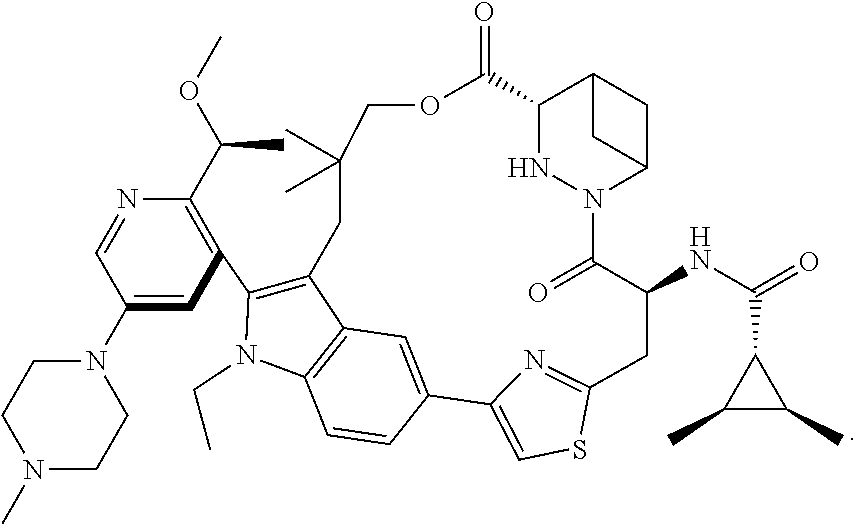
- Some embodiments of combinations comprising a RAS(ON) therapy include a composition comprising a RAS(ON) mutant-selective inhibitor. In some embodiments, the RAS(ON) mutant-selective inhibitor is a RAS(ON) G12D-selective inhibitor. In some embodiments, the RAS(ON) mutant-selective inhibitor is a RAS(ON) G13C-selective inhibitor. In some embodiments, the RAS(ON) mutant-selective inhibitor is a RAS(ON) Q61H-selective inhibitor. In some embodiments, the RAS(ON) mutant-selective inhibitor is a RAS(ON) G12V-selective inhibitor. In some embodiments, the RAS(ON) mutant-selective inhibitor is a RAS(ON) G13D-selective inhibitor. RAS(ON) mutant-selective inhibitors useful according to the methods of the present disclosure, can be found in any one of the following patent applications: WO 2024102421, WO 2023240263, WO 2023133543, WO 2023015559, WO 2023086341, WO 2023208005, WO 2023060253, WO 2022235870, WO 2022235864, WO 2021091967, WO 2021091982, WO 2021108683, WO 2020132597, International Patent Application Numbers PCT/US2024/023208, PCT/US2024/023272, and PCT/US2024/030993, each of which is incorporated herein by reference in its entirety, including the compound structures disclosed therein.
- In some embodiments, the RAS(ON) mutant-selective inhibitor useful according to the present disclosure is RMC-9805
-

- In some embodiments, the combination therapy comprising Compound A may include one or more RAS(ON) inhibitors, for example, Compound A plus one or more RAS(ON) multi-selective inhibitors and/or one or more RAS(ON) mutant-selective inhibitors.
- Syntheses of RAS(ON) inhibitors are known, for example, as described in WO 2024008610, WO 2024102421, WO 2023240263, WO 2023133543, WO 2023015559, WO 2023086341, WO 2023208005, WO 2023232776, WO 2023060253, WO 2022235870, WO 2022235864, WO 2021091967, WO 2021091982, WO 2021108683, WO 2020132597, International Patent Application Numbers PCT/US2024/023208, PCT/US2024/023272, and PCT/US2024/030993, together with synthetic methods known in the art of synthetic organic chemistry, or variations thereon as appreciated by those skilled in the art.
- Compositions and methods described herein may include a Compound A in combination with one or more RAS/MAPK pathway inhibitors. The RAS/MAPK pathway is a signal transduction cascade downstream of various cell surface growth factor receptors in which activation of RAS (and its various isoforms and allotypes) is a central event that drives a variety of cellular effector events that determine the proliferation, activation, differentiation, mobilization, and other functional properties of the cell. SHP2 conveys positive signals from growth factor receptors to the RAS activation/deactivation cycle, which is modulated by guanine nucleotide exchange factors (GEFs, such as SOS1) that load GTP onto RAS to produce functionally active GTP-bound RAS as well as GTP-accelerating proteins (GAPs, such as NF1) that facilitate termination of the signals by conversion of GTP to GDP. GTP-bound RAS produced by this cycle conveys essential positive signals to a series of serine/threonine kinases including RAF and MAP kinases, from which emanate additional signals to various cellular effector functions. In some embodiments, a therapeutic agent that may be combined with a RAS(ON) inhibitor is an inhibitor of the MAP kinase (MAPK) pathway (or “MAPK pathway inhibitor”). MAPK pathway inhibitors include, but are not limited to, one or more MAPK pathway inhibitors described in Cancers (Basel) 2015 September; 7(3): 1758-1784. For example, the MAPK inhibitor may be selected from one or more of trametinib, binimetinib, selumetinib, cobimetinib, LErafAON (NeoPharm), ISIS 5132; vemurafenib, pimasertib, TAK733, R04987655 (CH4987655); CI-1040; PD-0325901; CH5126766; MAP855; AZD6244; refametinib (RDEA 119/BAY 86-9766); GDC-0973/XL581; AZD8330 (ARRY-424704/ARRY-704); RO5126766 (Roche, described in PLoS One. 2014 Nov. 25; 9(11)); and GSK1120212 (or JTP-74057, described in Clin Cancer Res. 2011 Mar. 1; 17(5):989-1000). The MAPK pathway inhibitor may be PLX8394, LXH254, GDC-5573, or LY3009120. A MAPK pathway inhibitor may be a PI3Kα:RAS breaker, such as BBO-10203.
- Compositions and methods described herein may include Compound A in combination with one or more RAS(OFF) inhibitors. Numerous mutant-selective and pan-KRAS inhibitors have been disclosed and are known in the art. A RAS(OFF) inhibitor may be administered or formulated in combination with a RAS(ON) inhibitor described herein. RAS(OFF) inhibitors are designed to inhibit RAS activity by targeting different regions of the RAS protein in its inactive state (GDP bound state), preventing its activation and downstream signaling.
- In some embodiments, a RAS(OFF) inhibitor is a KRAS(OFF) inhibitor that has a molecular weight of under 700 Da. The term “KRAS(OFF) inhibitor” refers to any RAS(OFF) inhibitor that binds to KRAS in its GDP-bound “OFF” position. In some embodiments, the KRAS(OFF) inhibitor is specific for a KRASG12C mutation. KRASG12CC(OFF) inhibitors use a covalent binding group that allows them to selectively target the KRASG12CC mutant protein, and many such inhibitors comprise a pyrimidine core. KRASG12CC(OFF) inhibitors all target the same cysteine residue in the KRASG12CC mutant protein, leading to a conformational change that locks the protein in an inactive state. KRASG12CC(OFF) inhibitors include, but are not limited to, AMG510 (sotorasib), MRTX849 (adagrasib), MRTX1257, GDC-6036 (divarasib), JDQ443 (opnurasib), ERAS-3490, LY3537982 (olomorasib), BI 1823911, BPI-421286, JAB-3312, JAB-21000, JAB-21822 (glecirasib), D-1553 (garsorasib), D3S-001, HYP-209PTSA, HBI-2438, HS-10370, MK-1084, YL-15293, BBO-8520 (ON/OFF inhibitor), FMC-376 (ON/OFF inhibitor), GEC255, BBO-11818, and GFH925 (1B1351). In some embodiments, the KRAS(OFF) inhibitor is selected from AMG510 and MRTX849. In some embodiments, the KRAS(OFF) inhibitor is AMG510. In some embodiments, the KRAS(OFF) inhibitor is selected from BPI-421286, JNJ-74699157 (ARS-3248), LY3537982, MRTX1257, ARS853, ARS1620, or GDC-6036.
- In some embodiments, a KRAS(OFF) inhibitor is specific for a KRASG12D mutation. Many KRASG12D(OFF) inhibitors have been developed using RASG12CC(OFF) inhibitors as a starting point, thus sharing the backbone of G12C inhibitors in combination with other chemical moieties such as piperazine-based compounds. Non-limiting examples of KRASG12D(OFF) inhibitors include MRTX1133, MRTX282, JAB-22000, ERAS-4, ERAS-5024, HRS-4642, BI-2852, BI-2852, ASP3082, TH-Z827, TH-Z835, TSN1611, QTX-3046, GFH375 (VS-7375), INCB161734 and KD-8.
- In some embodiments, the small molecule RAS(OFF) inhibitor is specific for a KRASG12V mutation. In some embodiments, the small molecule RAS(OFF) inhibitor is specific for a KRASG13D mutation. In some embodiments, the small molecule RAS(OFF) inhibitor is a pan-KRAS(OFF) inhibitor.
- In some embodiments, reference to the term RAS(OFF) inhibitor includes any such RAS(OFF) inhibitor disclosed in any one of the following patent applications: WO 2024138486, WO 2024138206, WO 2024138052, WO 2024131829, WO 2024125642, WO 2024125600, WO 2024123913, WO 2024123102, WO 2024120433, WO 2024120419, WO 2024123913, WO 2024085661, WO 2024083258, WO 2024083256, WO 2024083246, WO 2024083168, WO 2024078555, WO 2024076674, WO 2024076672, WO 2024076670, WO 2024067714, WO 2024067575, WO 2024064335, WO 2024063578, WO 2024063576, WO 2024061370, WO 2024061333, WO 2024061267, WO 2024056063, WO 2024055112, WO 2024054926, WO 2024054647, WO 2024054625, WO 2024051763, WO 2024051721, WO 2024050742, WO 2024050640, WO 2024046406, WO 2024046370, WO 2024045066, WO 2024044667, WO 2024044649, WO 2024044334, WO 2024041621, WO 2024041606, WO 2024041589, WO 2024041573, WO 2024040131, WO 2024040109, WO 2024040080, WO 2024036270, WO 2024034657, WO 2024034593, WO 2024034591, WO 2024034123, WO 2024032747, WO 2024032704, WO 2024032703, WO 2024032702, WO 2024031088, WO 2024030647, WO 2024030633, WO 2024029613, WO 2024022507, WO 2024022444, WO 2024020159, WO 2024019103, WO 2024017859, WO 2024017392, WO 2024015731, WO 2024015262, WO 2024012456, WO 2024009191, WO 2024008179, WO 2024008178, WO 2024008068, WO 2024006445, WO 2024006424, WO 2024002373, WO 2023287896, WO 2023287730, WO 2023284881, WO 2023284730, WO 2023284537, WO 2023283933, WO 2023283213, WO 2023280280, WO 2023280136, WO 2023280026, WO 2023278600, WO 2023274383, WO 2023327324, WO 2023246914, WO 2023246903, WO 2023246777, WO 2023244713, WO 2023244615, WO 2023244604, WO 2023244600, WO 2023244599, WO 2023230190, WO 2023226630, WO 2023225302, WO 2023225252, WO 2023220421, WO 2023219941, WO 2023217148, WO 2023215802, WO 2023215801, WO 2023213269, WO 2023212548, WO 2023208005, WO 2023205719, WO 2023199180, WO 2023198191, WO 2023197984, WO 2023190748, WO 2023185864, WO 2023183755, WO 2023183585, WO 2023179703, WO 2023179629, WO 2023173017, WO 2023173016, WO 2023173014, WO 2023172737, WO 2023171781, WO 2023159087, WO 2023159086, WO 2023154766, WO 2023152255, WO 2023151674, WO 2023151621, WO 2023150394, WO 2023150284, WO 2023143623, WO 2023143605, WO 2023143352, WO 2023143352, WO 2023143312, WO 2023141570, WO 2023141300, WO 2023138662, WO 2023138601, WO 2023138589, WO 2023138524, WO 2023133183, WO 2023133181, WO 2023130012, WO 2023125989, WO 2023125627, WO 2023122662, WO 2023122154, WO 2023120742, WO 2023119677, WO 2023117681, WO 2023116934, WO 2023116895, WO 2023114733, WO 2023105491, WO 2023104018, WO 2023103906, WO 2023103523, WO 2023101928, WO 2023099624, WO 2023099624, WO 2023099620, WO 2023099612, WO 2023099608, WO 2023099592, WO 2023098832, WO 2023098425, WO 2023097227, WO 2023081840, WO 2023081476, WO 2023078424, WO 2023077441, WO 2023072297, WO 2023072188, WO 2023066371, WO 2023064857, WO 2023061463, WO 2023061294, WO 2023057985, WO 2023056951, WO 2023056421, WO 2023051586, WO 2023049697, WO 2023046135, WO 2023045960, WO 2023041059, WO 2023041059, WO 2023040989, WO 2023040513, WO 2023039240, WO 2023039020, WO 2023036282, WO 2023034290, WO 2023030517, WO 2023030495, WO 2023030385, WO 2023030495, WO 2023030517, WO 2023030685, WO 2023030687, WO2023034290, WO 2023036282, WO 2023039240, WO 203020347, WO 2023025116, WO 2023287896, WO 2023287730, WO 2023284881, WO 2023284730, WO 2023284537, WO 2023283933, WO 2023283213, WO 2023280280, WO 2023280136, WO 2023280026, WO 2023278600, WO 2023274383, WO 2023327324, WO 2023040989, WO 2023039240, WO 2023039020, WO 2023036282, WO 2023034290, WO 2023030517, WO 2023030495, WO 2023030385, WO 2023025116, WO 2023020523, WO 2023020521, WO 2023020519, WO 2023020518, WO 2023020347, WO 2023018812, WO 2023018810, WO 2023018809, WO 2023018699, WO 2023014979, WO 2023014006, WO 2023004102, WO 2023003417, WO 2023001141, WO 2023001123, WO 2022271658, WO 2022269508, WO 2022266167, WO 2022266069, WO 2022266015, WO 2022265974, WO 2022261154, WO 2022261154, WO 2022251576, WO 2022251296, WO 2022237815, WO 2022232332, WO 2022232331, WO 2022232320, WO 2022232318, WO 2022223037, WO 2022221739, WO 2022221528, WO 2022221386, WO 2022216762 (e.g., Compound 44 or Compound 66a), WO 2022212894, WO 2022192794, WO 2022192790, WO 2022188729, WO 2022187411, WO 2022184178, WO 2022173870, WO 2022173678, WO 2022135346, WO 2022133731, WO 2022133038, WO 2022133345, WO 2022132200, WO 2022119748, WO 2022109485, WO 2022109487, WO 2022066805, WO 2022002102, WO 2022002018, WO 2021259331, WO 2021257828, WO 2021252339, WO 2021248095, WO 2021248090, WO 2021248083, WO 2021248082, WO 2021248079, WO 2021248055, WO 2021245051, WO 2021244603, WO 2021239058, WO 2021231526, WO 2021228161, WO 2021219090, WO 2021219090, WO 2021219072, WO 2021218939, WO 2021217019, WO 2021216770, WO 2021215545, WO 2021215544, WO 2021211864, WO 2021190467, WO 2021185233, WO 2021180181, WO 2021175199, 2021173923, WO 2021169990, WO 2021169963, WO 2021168193, WO 2021158071, WO 2021155716, WO 2021152149, WO 2021150613, WO 2021147967, WO 2021147965, WO 2021143693, WO 2021142252, WO 2021141628, WO 2021139748, WO 2021139678, WO 2021129824, WO 2021129820, WO 2021127404, WO 2021126816, WO 2021126799, WO 2021124222, WO 2021121371, WO 2021121367, WO 2021121330, WO 2021113595, WO 2021107160, WO 2021106231, WO 2021088458, WO 2021086833, WO 2021085653, WO 2021081212, WO 2021058018, WO 2021057832, WO 2021055728, WO 2021031952, WO 2021027911, WO 2021023247, WO 2020259513, WO 2020259432, WO 2020234103, WO 2020233592, WO 2020216190, WO 2020178282, WO 2020146613, WO 2020118066, WO 2020113071, WO 2020106647, WO 2020102730, WO 2020101736, WO 2020097537, WO 2020086739, WO 2020081282, WO 2020050890, WO 2020047192, WO 2020035031, WO 2020028706, WO 2019241157, WO 2019232419, WO 2019217691, WO 2019217307, WO 2019215203, WO 2019213526, WO 2019213516, WO 2019155399, WO 2019150305, WO 2019110751, WO 2019099524, WO 2019051291, WO 2018218070, WO 2018218071, WO 2018218069, WO 2018217651, WO 2018206539, WO 2018143315, WO 2018140600, WO 2018140599, WO 2018140598, WO 2018140514, WO 2018140513, WO 2018140512, WO 2018119183, WO 2018112420, WO 2018068017, WO 2018064510, WO 2017201161, WO 2017172979, WO 2017100546, WO 2017087528, WO 2017058807, WO 2017058805, WO 2017058728, WO 2017058902, WO 2017058792, WO 2017058768, WO 2017058915, WO 2017015562, WO 2016168540, WO 2016164675, WO 2016049568, WO 2016049524, WO 2015054572, WO 2014152588, WO 2014143659, WO 2013155223, CN 118221700, CN 118221699, CN 118221698, CN 118221685, CN 118126064, CN 118078802, CN 118078801, CN 118005656, CN 117986263, CN 117986263, CN 117946135, CN 117924327, CN 117903117, CN 117800990, CN 117800989, CN 117800976, CN 117736226, CN 117683051, CN 117645627, CN 117624194, CN 117624190, CN 117586280, CN 117486901, CN 117466917, CN 117462688, CN 117362315, CN 117327102, CN 117327094, CN 117327074, CN 117285590, CN 117263959, CN 117247382, CN 117186095, CN 117164605, CN 116969977, CN 116925075, CN 116891489, CN 116731045, CN 116731044, CN 116554208, CN 116514846, CN 116478184, CN 116478141, CN 116410145, CN 116375742, CN 116354988, CN 116332948, CN 116332938, CN 116327956, CN 116262759, CN 116217592, CN 116199703, CN 116162099, CN 116143806, CN 116143805, CN 116120315, CN 116102559, CN 115960105, CN 115894520, CN 115872979, CN 115850267, CN 115785199, CN 115785124, CN 115724842, CN 115724842, CN 115721720, CN 115716840, CN 115703775, CN 115611923, CN 115611898, CN 115583937, CN 115572278, CN 115557949, CN 115521312, CN 115504976, CN 115490709, CN 115466272, CN 115433183, CN 115433179, CN 115403575, CN 115385938, CN 115385937, CN 115385912, CN 115381786, CN 115368383, CN 115368382, CN 115368381, CN 115353506, CN 115322158, CN 115304623, CN 115304602, CN 115197245, CN 115181106, CN 114989195, CN 114989166, CN 114989147, CN 114920741, CN 114920739, CN 114907387, CN 114874234, CN 114874201, CN 114716436, CN 114716435, CN 114685532, CN 114685460, CN 114591319, CN 114539293, CN 114539286, CN 114539246, CN 114437107, CN 114437084, CN 114409653, CN 114380827, CN 114195804, CN 114195788, CN 114437107, CN 114409653, CN 114380827, CN 114195804, CN 114057776, CN 114057744, CN 114057743, CN 113999226, CN 113980032, CN 113980014, CN 113960193, CN 113929676, CN 113754653, CN 113683616, CN 113563323, CN 113527299, CN 113527294, CN 113527293, CN 113493440, CN 113429405, CN 113321654, CN 113248521, CN 113087700, CN 113024544, CN 113004269, CN 112920183, CN 112778284, CN 112390818, CN 112390788, CN 112300196, CN 112300194, CN 112300173, CN 112225734, CN 112142735, CN 112110918, CN 112094269, CN 112047937, CN 109574871, or EP 4389751, each of which is incorporated herein by reference in its entirety, including the RAS compound structures disclosed therein which are specifically incorporated herein by reference.
- In some embodiments, reference to the term RAS(OFF) inhibitor refers to a pan-KRAS inhibitor, such as selected from one disclosed in any of the following: WO 2024119277, WO 2024120433, WO 2024115890, WO 2024112654, WO 2024104453, WO 2024104425, WO 2024107686, WO 2024104453, WO 2024103010, WO 2024085661, WO 2024083246, WO 2024083168, WO 2024067575, WO 2024064335, WO 2024063578, WO 2024063576, WO 2024051852, WO 2024051763, WO 2024046370, WO 2024044667, WO 2024041621, WO 2024041606, WO 2024041589, WO 2024040131, WO 2024040109, WO 2024032747, WO 2024032704, WO 2024032703, WO 2024032702, WO 2024031088, WO 2024030647, WO 2024030633, WO 2024015262, WO 2024009191, WO 2024008068, WO 2024002373, WO 2023287896, WO 2023274324, WO 2023246914, WO 2023246777, WO 2023230190, WO 2023215802, WO 2023215801, WO 2023197984, WO 2023190748, WO 2023183585, WO 2023179703, WO 2023173017, WO 2023173016, WO 2023173014, WO 2023172737, WO 2023154766, WO 2023143352, WO 2023143312, WO 2023138589, WO 2023133183, WO 2023122662, WO 2023114733, WO 2023099624, WO 2023099623, WO 2023099612, WO 2023099608, WO 2023099592, WO 2023097227, WO 2023064857, WO 2023056421, WO 2023049697, WO 2023046135, WO 2023039240, WO 2023034290, WO 2023020523, WO 2023020521, WO 2023020519, WO 2023020518, WO 2023001123, WO 2022271823, WO 2022261210, WO 2022258974, WO 2022256459, WO 2022250170, WO 2022248885, WO 2022228543, WO 2022216762, WO 2022072783, WO 2016161361, KR20240041720, KR20240041719, CN 118221700, CN 118126064, CN 117924327, CN 117946135, CN 117800990, CN 117800989, CN 117683051, CN 117486901, CN 117263959, CN 116969977, or CN 116332948, each of which is incorporated herein by reference in its entirety, including the compound structures disclosed therein. In some embodiments, the combination therapy comprising Compound A may include one or more additional RAS inhibitors, for example, a pan-KRAS inhibitor. In some embodiments, combination comprising a pan-KRAS inhibitor therapy comprises ERAS-4001. In some embodiments, the pan-KRAS inhibitor, is a pan-KRAS inhibitor in a patent application filed in the name of Medshine Discovery, Inc. In some embodiments, combination comprising a pan-KRAS inhibitor therapy includes BGB-53038, BBO-11818, YL-17231, QTX3034, ABT-200, ADT-1004, AN9025, OC211, JAB-23425, BI-2865, BI-2493, ABREV01, A2A-03, or PF-07934040.
- In any embodiment employing a combination with a RAS(OFF) inhibitor herein, a RAS(OFF) degrader targeting the OFF state of RAS may be employed. These degraders are known in the art. RAS degraders may be found, for example, in one or more of the following applications: WO 2024131777, WO 2024120424, WO 2024119278, WO 2024118966, WO 2024118960, WO 2024083258, WO 2024083256, WO 2024055112, WO 2024054625, WO 2024050742, WO 2024044334, WO 2024040080, WO 2024034657, WO 2024034593, WO 2024034591, WO 2024034123, WO 2024029613, WO 2024020159, WO 2024019103, WO 2024017392, WO 2023185864, WO 2023171781, WO 2023141570, WO 2023138524, WO 2023130012, WO 2023116934, WO 2023099620, WO 2023081476, WO 2023077441, CN 118126040, and CN 115785199, each of which is incorporated herein by reference in its entirety.
- In some embodiments, the RAS(OFF) inhibitor is a peptide-based inhibitor. Peptide-based RAS(OFF) inhibitors have been developed that target specific regions of the RAS protein, such as the Switch II region or the RAS-effector interface. Non-limiting examples include the K-Ras-binding peptide (Krpep-2d), the Ras inhibitory peptide (Rasin) and LUNA18 (NCT05012618). Peptide-based RAS(OFF) inhibitors are a class of compounds that target the RAS protein by disrupting its interaction with its downstream effectors or other signaling proteins. These inhibitors are typically designed to mimic the binding motifs of RAS-interacting proteins or other RAS effectors, such as RAF or PI3K. By binding to RAS at the same site as these effectors, peptide-based inhibitors can effectively compete with these proteins and prevent the activation of downstream signaling pathways. See, e.g., WO 2024101402, WO 2024101386, WO 2023214576, WO 2023140329, WO 2022234853, WO 2022234852, WO 2022234851, and WO 2022234639, each of which is incorporated herein by reference in its entirety.
- Peptide-based RAS(OFF) inhibitors can be further classified into two main categories: those that target the RAS-effector interface, and those that target other regions of the RAS protein. Peptide-based inhibitors that target the RAS-effector interface are designed to bind to the switch regions of RAS that are critical for its interaction with downstream effectors, such as RAF or PI3K. These inhibitors typically contain amino acid residues that are similar to those found in the binding motifs of RAS-interacting proteins or effectors and are often designed to form hydrogen bonds or other interactions with key residues on the surface of RAS.
- Peptide-based RAS(OFF) inhibitors that target other regions of the RAS protein are typically designed to disrupt other interactions that are critical for the activation or signaling of RAS. For example, some peptide-based inhibitors are designed to bind to the hypervariable region of RAS, which is thought to play a role in membrane localization and anchoring of the protein. By binding to this region, peptide-based inhibitors can prevent the proper localization of RAS to the plasma membrane, which is necessary for its activation and signaling.
- Several common motifs have been identified as important for the binding of RAS-interacting proteins and effectors and are often used in the design of peptide-based inhibitors. One example is the RAF-binding domain (RBD), which is found in many RAS-interacting proteins and is important for the interaction of RAS with downstream effectors such as RAF. The RBD contains a conserved amino acid sequence (Arg-Xaa-Arg) that is critical for binding to RAS, and this motif has been incorporated into several peptide-based inhibitors designed to disrupt the RAS-RAF interaction. Another example is the RAS-binding domain (RBD) of PI3K, which is important for the interaction of RAS with this downstream effector. The RBD of PI3K contains several conserved amino acid residues (such as Arg-Arg-Trp) that are critical for binding to RAS, and these motifs have been used in the design of peptide-based inhibitors that target the RAS-PI3K interaction. Other common motifs used in peptide-based RAS(OFF) inhibitors include the Ras-binding domain (RBD) of other RAS-interacting proteins such as RalGDS and SOS, as well as sequences that mimic the structure of the switch regions of RAS itself. These motifs are typically used to optimize the binding affinity and selectivity of the inhibitor for the desired target protein or interaction.
- In some embodiments, the RAS(OFF) inhibitor is an antibody or antigenic binding peptide specific for RAS(OFF). Antibodies have been developed that bind to specific regions of the RAS protein, such as the Switch II region or the RAS-effector interface. For example, some antibodies have been developed that target the switch regions of RAS proteins, which are critical for the activation of these proteins and their interaction with downstream effectors. Binding of these antibodies to the switch regions can prevent the conformational changes required for RAS activation and downstream signaling. Another approach involves the use of antibodies that target RAS-interacting proteins or downstream effectors, such as RAF or PI3K. Binding of these antibodies to their target proteins can disrupt the RAS-dependent signaling pathways and inhibit the growth and survival of cancer cells. Additionally, some antibodies have been developed that can induce the internalization and degradation of RAS proteins, leading to their depletion and inhibition of downstream signaling. For example, some antibodies have been developed that recognize the unique structure of mutant RAS proteins and target them for degradation via the ubiquitin-proteasome pathway. Non-limiting examples of KRAS(OFF)-specific inhibitory antibodies include anti-p21ser, and K27 (DARPin) (see, e.g., Khan et al, Biochim Biophys Acta Mol Cell Res. 2020 February; 1867(2):118570). See also WO 2024136608 and WO 2024111590, each of which is incorporated herein by reference in its entirety.
- In some embodiments, compositions and methods described herein may include Compound A in combination with one or more SOS1 inhibitors. A SOS1 inhibitor may be administered or formulated in combination with Compound A and/or any additional therapeutic agent described herein. In some embodiments, a SOS1 inhibitor is one or more of RMC-5845, RMC-4948, RMC-0331, BI-1701963, BI-3406, SDR5, MRTX-0902, ZG2001, and BAY-293. In some embodiments, reference to the term SOS1 inhibitor includes any such SOS1 inhibitor disclosed in any one of the following patent applications: WO 2023109929, WO 2023059597, WO 2023029833, WO 2023041049, WO 2023022497, WO 2022157629, WO 2022184116, WO 2022170952, WO 2022170917, WO 2022171184, WO 2022170802, WO 2022161461, WO 2022121813, WO 2022028506, WO 2022139304, WO 2021228028, WO 2019122129, CN 115215847, CN 115028644, CN 114685488, CN 111393519, CN115677702, and CN115806560 each of which is incorporated herein by reference in its entirety, including the compound structures disclosed therein which are specifically incorporated herein by reference.
- iii) SHP Inhibitors
- In some embodiments, compositions and methods described herein may include Compound A in combination with one or more SHP inhibitors. A SHP inhibitor may be administered or formulated in combination with Compound A and/or any additional therapeutic agent described herein. In some embodiments, the SHP inhibitor is an inhibitor of SHP1. In some embodiments, the SHP inhibitor is an inhibitor of SHP2. In some embodiments, the
SHP 1 inhibitor is SB6299 aka DA-4511. In some embodiments, a SHP2 inhibitor is one or more of SHP099, TNO155, RMC-4550, RMC-4630, JAB-3068, JAB-3312, RLY-1971, ERAS-601, SH3809, PF-07284892, or BBP-398. In some embodiments, reference to the term SHP2 inhibitor includes any such SHP2 inhibitor disclosed in any one of the following patent applications: WO 2023282702, WO 2023280283, WO 2023280237, WO 2023018155, WO 2023011513, WO 2022271966, WO 2022271964, WO 2022271911, WO 2022259157, WO 2022242767, WO 2022241975, WO 2022237676, WO 2022237367, WO 2022237178, WO 2022235822, WO 20222084008, WO 2022135568, WO 2022063190, WO 2022043865, WO 2022042331, WO 2022033430, WO 2022017444, WO 2022007869, WO 2021259077, WO 2021249449, WO 2021249057, WO 2021244659, WO 2021218755, WO 2021176072, WO 2021171261, WO 2021149817, WO 2021148010, WO 2021147879, WO 2021143823, WO 2021143701, WO 2021143680, WO 2021281752, WO 2021121397, WO 2021119525, WO 2021115286, WO 2021110796, WO 2021088945, WO 2021073439, WO 2021061706, WO 2021061515, WO 2021043077, WO 2021033153, WO 2021028362, WO 2021033153, WO 2021028362, WO 2021018287, WO 2020259679, WO 2020249079, WO 2020210384, WO 2020201991, WO 2020181283, WO 2020177653, WO 2020165734, WO 2020165733, WO 2020165732, WO 2020156243, WO 2020156242, WO 2020108590, WO 2020104635, WO 2020094104, WO 2020094018, WO 2020081848, WO 2020073949, WO 2020073945, WO 2020072656, WO 2020065453, WO 2020065452, WO 2020063760, WO 2020061103, WO 2020061101, WO 2020033828, WO 2020033286, WO 2020022323, WO 2019233810, WO 2019213318, WO 2019183367, WO 2019183364, WO 2019182960, WO 2019167000, WO 2019165073, WO 2019158019, WO 2019152454, WO 2019051469, WO 2019051084, WO 2018218133, WO 2018172984, WO 2018160731, WO 2018136265, WO 2018136264, WO 2018130928, WO 2018129402, WO 2018081091, WO 2018057884, WO 2018013597, WO 2017216706, WO 2017211303, WO 2017210134, WO 2017156397, WO 2017100279, WO 2017079723, WO 2017078499, WO 2016203406, WO 2016203405, WO 2016203404, WO 2016196591, WO 2016191328, WO 2015107495, WO 2015107494, WO 2015107493, WO 2014176488, WO 2014113584, CN 115677661, CN 115677660, CN 115611869, CN 115521305, CN 115490697, CN 115466273, CN 115394612, CN 115304613, CN 115304612, CN 115300513, CN 115197225, CN 114957162, CN 114920759, CN 114716448, CN 114671879, CN 114539223, CN 114524772, CN 114213417, CN 114195799, CN 114163457, CN 113896710, CN 113248521, CN 113248449, CN 113135924, CN 113024508, CN 112920131, CN 112823796, CN 112409334, CN 112402385, CN 112174935, 111848599, CN 111704611, CN 111393459, CN 111265529, CN 110143949, CN 108113848, U.S. Ser. No. 11/179,397, U.S. Ser. No. 11/044,675, U.S. Ser. No. 11/034,705, U.S. Ser. No. 11/033,547, U.S. Ser. No. 11/001,561, U.S. Ser. No. 10/988,466, U.S. Ser. No. 10/954,243, U.S. Ser. No. 10/934,302, or U.S. Ser. No. 10/858,359, each of which is incorporated herein by reference in its entirety, including the compound structures disclosed therein which are specifically incorporated herein by reference. - In some embodiments, compositions and methods described herein may include Compound A in combination with one or more MEK inhibitors. A MEK inhibitor may be administered or formulated in combination with Compound A and/or any additional therapeutic agent described herein. In some embodiments, a MEK inhibitor is one or more of pimasertib, IMM-1-104, selumetinib, cobimetinib (Cotellic®), trametinib (Mekinist®), and binimetinib (Mektovi®). In some embodiments, a MEK inhibitor targets a MEK mutation that is a Class I MEK1 mutation selected from D67N; P124L; P124S; and L177V. In some embodiments, the MEK mutation is a Class II MEK1 mutation selected from ΔE51-Q58; AF53-Q58; E203K; L177M; C121S; F53L; K57E; Q56P; and K57N. In some embodiments, reference to the term MEK inhibitor includes any such MEK inhibitor disclosed in any one of the following patent applications: WO 2022221866, WO 2022125941, WO 2022208391, WO 2022015736, WO 2022177557, WO 2021018866, WO 2021069486, WO 2021142144, WO 2021168283, WO 2021234097, WO 2019076947, WO 2018233696, WO 2016188472, WO 2014063024, WO 2013019906, WO 2011047238, WO 2007044515, US 2023032403, and CN 115813930, each of which is incorporated herein by reference in its entirety, including the compound structures disclosed therein which are specifically incorporated herein by reference.
- In some embodiments, compositions and methods described herein may include Compound A in combination with one or more RAF inhibitors. A RAF inhibitor may be administered or formulated in combination with Compound A and/or any additional therapeutic agent described herein. In some embodiments, a RAF inhibitor is VS-6766 or BTDX-4933. In some embodiments, a RAF inhibitor is a BRAF inhibitor. BRAF inhibitors that may be used in combination with Compound A include, for example, Vs6766, IK-595, vemurafenib, dabrafenib, and encorafenib. BRAF may comprise a
Class 3 BRAF mutation. In some embodiments, theClass 3 BRAF mutation is selected from one or more of the following amino acid substitutions in human BRAF: D287H; P367R; V459L; G466V; G466E; G466A; S467L; G469E; N581S; N5811; D594N; D594G; D594A; D594H; F595L; G596D; G596R and A762E. In some embodiments, reference to the term RAF inhibitor includes any such RAF inhibitor disclosed in any one of the following patent applications: WO 2023076991, WO 2022226626, WO 2022226261, WO 2019084459, WO 2018203219, WO 201851306, WO 2017212442, WO 2015075483, WO 2013134243, WO 2013134298, WO 2011047238, WO 2011025965, WO 2011025947, WO 2011025951, WO 2011025940, WO 2011025938, WO 2010065893, WO 2009016460, WO 2009130015, WO 2009111278, WO 2009111279, WO 2008028141, and WO 2006024834, each of which is incorporated herein by reference in its entirety, including the compound structures disclosed therein which are specifically incorporated herein by reference. - In some embodiments, compositions and methods described herein may include Compound A in combination with one or more ERK inhibitors. An ERK inhibitor may be administered or formulated in combination with Compound A and/or any additional therapeutic agent described herein. In some embodiments, an ERK inhibitor is an ERK1/2 inhibitor, such as ERAS-007. In some embodiments, an ERK inhibitor is an
ERK 5 inhibitor. In some embodiments, an ERK inhibitor is one or more of ASTX-029 or 1-75. In some embodiments, reference to the term ERK inhibitor includes any such ERK inhibitor disclosed in any one of the following patent applications: WO 2023076305, WO 2022259222, WO 2022221547, WO 2021110169, WO 2021110168, WO 2021252316, WO 2020102686, WO 2020228817, WO 2020107987, WO 2019233456, WO 2019233457, WO 2016025561, WO 2016192063, WO 2016106029, WO 2016106009, WO 2015051341, WO 2014124230, WO 2014052563, WO 2011041152, WO 200910550, WO 2008153858, CN114315837, CN 115057860, CN 107973783, each of which is incorporated herein by reference in its entirety, including the compound structures disclosed therein which are specifically incorporated herein by reference. - vii) MAPK Inhibitors
- In some embodiments, compositions and methods described herein may include Compound A in combination with one or more Mitogen-Activated Protein Kinase (MAPK) inhibitors. A MAPK inhibitor may be administered or formulated in combination with Compound A and/or any additional therapeutic agent described herein. In some embodiments, a MAPK inhibitor is a p38MAPK inhibitor or a MAP3K8 inhibitor. In some embodiments, the MAPK inhibitor is one or more of Tilpisertib (GS-4875) and neflamapidmod (VX-745). In some embodiments, reference to the term MAPK inhibitor includes any such MAPK inhibitor disclosed in any one of the following patent applications: WO 2016029263, CN 114767674, CN 115850179, and CN 1743006, each of which is incorporated herein by reference in its entirety, including the compound structures disclosed therein which are specifically incorporated herein by reference.
- In some embodiments, a therapeutic agent that may be combined with Compound A is an inhibitor of MAP2K4. A non-limiting example of a MAP2K4 inhibitor useful according to the disclosure is HRX-0233.
- Compositions and methods described herein may include Compound A in combination with one or more kinase inhibitors. Tyrosine kinases and serine/threonine kinases play a crucial role in various cellular processes such as cell signaling, growth, and differentiation. Kinase inhibitors known in the art have been developed as a treatment for various types of cancer in addition to therapies for conditions such as neurodegenerative diseases, autoimmune disorders, and inflammation.
- In some embodiments, compositions and methods described herein may include one or more Protein Kinase A (PKA) inhibitors. A PKA inhibitor may be administered or formulated in combination with Compound A and/or any additional therapeutic agent described herein. In some embodiments, a PKA inhibitor is H89. In some embodiments, reference to the term PKA inhibitor includes any such PKA inhibitor disclosed in any one of the following patent applications: CN 106620678 and CN 114632155, each of which is incorporated herein by reference in its entirety, including the compound structures disclosed therein which are specifically incorporated herein by reference.
- In some embodiments, compositions and methods described herein may include Compound A in combination with one or more Focal Adhesion Kinase (FAK) inhibitors. A FAK inhibitor may be administered or formulated in combination with Compound A and/or any additional therapeutic agent described herein. In some embodiments, a FAK inhibitor is one or more of B1853520, defactinib, GSK2256098, PF-00562271, and VS-4718. In some embodiments, reference to the term FAK inhibitor includes any such FAK inhibitor disclosed in any one of the following patent applications: WO 2022152315, WO 2021098679, WO 2020135442, WO 2020191448, WO 2012022408, WO 2013134353, WO 2012110774, WO 2010062578, CN 111072571, and KR 101691536, each of which is incorporated herein by reference in its entirety, including the compound structures disclosed therein which are specifically incorporated herein by reference.
- iii) ROCK Inhibitors
- In some embodiments, compositions and methods described herein may include Compound A in combination with one or more Rho-associated, coiled-coil containing protein kinase (ROCK) inhibitors. A ROCK inhibitor may be administered or formulated in combination with Compound A and/or any additional therapeutic agent described herein. In some embodiments, a ROCK inhibitor is GSK269962A. In some embodiments, reference to the term ROCK inhibitor includes any such ROCK inhibitor disclosed in any one of the following patent applications: WO 2023051753, WO 2022237892, WO 2022012409, WO 2021093795, WO 2021214200, WO 2020177292, WO 202011751, WO 2019014304, WO 2019179525, WO 2019089868, WO 2019014300, WO 2018108156, WO 2018009627, WO 2018009625, WO 2018009622, WO 2017123860, WO 2017205709, WO 2016112236, WO 2014068035, WO 2013030367, WO 2012146724, WO 2012067965, WO 2011107608, CN 108129453, CN 108191821, CN 110917352, CN 108558823, CN108047193, CN107973777, CN108047197, CN108129448, CN 115869304, and GB202214708, each of which is incorporated herein by reference in its entirety, including the compound structures disclosed therein which are specifically incorporated herein by reference.
- In some embodiments, compositions and methods described herein may include Compound A in combination with one or more Mitogen- and stress-activated kinase (MSK1) inhibitors. A MSK1 inhibitor may be administered or formulated in combination with Compound A and/or any additional therapeutic agent described herein. In some embodiments, a MSK1 inhibitor is one or more of SB-747651A, SB 747651A, Ro 320432, CGP 57380, GSK2830371, SR1664, LY-3214996, PFI-4, MSC-2363318A, and AS601245.
- In some embodiments, compositions and methods described herein may include Compound A in combination with one or more ribosomal S6 kinase (RSK) inhibitors. A RSK1 inhibitor may be administered or formulated in combination with Compound A and/or any additional therapeutic agent described herein. In some embodiments, a RSK inhibitor is one or more of BI-D1870, LJH685, SL0101-1, FMK, BRD7389, BIX 02565, LJI308, LJI308-S, LJI308-1, and LJH685-S. In some embodiments, a RSK inhibitor is PMD-026. In some embodiments, reference to the term RSK inhibitor includes any such RSK inhibitor disclosed in any one of the following patent applications: WO 2021249558, WO 2020165646, WO 2017141116, and CN 113801139, each of which is incorporated herein by reference in its entirety, including the compound structures disclosed therein which are specifically incorporated herein by reference.
- In some embodiments, compositions and methods described herein may include Compound A in combination with one or more Anaplastic Lymphoma Kinase (ALK) inhibitors. An ALK inhibitor may be administered or formulated in combination with Compound A and/or any additional therapeutic agent described herein. In some embodiments, an ALK inhibitor is one or more of Crizotinib (Xalkori), Ceritinib (Zykadia), Alectinib (Alecensa), Brigatinib (Alunbrig), Lorlatinib (Lorbrena), Ensartinib (X-396), TAE684, ASP3026, TPX-0131, LDK378 (Ceritinib analog), CEP-37440; 4SC-203, TL-398, PLB1003, TSR-011, CT-707, TPX-0005, and AP26113. Additional examples of ALK kinase inhibitors are described in examples 3-39 of WO05016894. In some embodiments, reference to the term ALK inhibitor includes any such ALK inhibitor disclosed in any one of the following patent applications: WO 2019142095, WO 2019179482, WO 2018130928, WO 2018127184, WO 2017101803, WO 2016192132, WO 2014100431, WO 2012082972, CN 111138492, CN 110526914, CN 109836415, CN 105801603, CN107987056, and CN 105878248, each of which is incorporated herein by reference in its entirety, including the compound structures disclosed therein which are specifically incorporated herein by reference.
- Compositions and methods described herein may include Compound A in combination with one or more receptor tyrosine kinase inhibitors. A receptor tyrosine kinase (RTK) inhibitor is a type of molecule (e.g., small molecule, antibody, and nucleic acid) that binds to and blocks the activity of receptor tyrosine kinases or their ligands. RTKs are proteins found on the surface of cells that play a critical role in cell signaling and growth and have been developed as therapeutics for a range of diseases, including cancer, diabetes, and autoimmune disorders. In some embodiments, a therapeutic agent may be a pan-RTK inhibitor, such as afatinib.
- In some embodiments, compositions and methods described herein may include Compound A in combination with one or more EGFR inhibitors. An EGFR inhibitor may be administered or formulated in combination with Compound A and/or any additional therapeutic agent described herein. EGFR inhibitors include, but are not limited to, small molecule antagonists, antibody inhibitors, or specific antisense nucleotide or siRNA. Useful antibody inhibitors of EGFR include cetuximab (Erbitux®), panitumumab (Vectibix®), zalutumumab, nimotuzumab, and matuzumab. Further antibody-based EGFR inhibitors include any anti-EGFR antibody or antibody fragment that can partially or completely block EGFR activation by its natural ligand. Non-limiting examples of antibody-based EGFR inhibitors include those described in Modjtahedi et al., Br. J. Cancer 1993, 67:247-253; Teramoto et al., Cancer 1996, 77:639-645; Goldstein et al., Clin. Cancer Res. 1995, 1:1311-1318; Huang et al., 1999, Cancer Res. 15:59(8):1935-40; and Yang et al., Cancer Res. 1999, 59:1236-1243. The EGFR inhibitor can be monoclonal antibody Mab E7.6.3 (Yang, 1999 supra), or Mab C225 (ATCC Accession No. HB-8508), or an antibody or antibody fragment having the binding specificity thereof.
- Small molecule antagonists of EGFR include gefitinib (Iressa®), Lazertinib, erlotinib (Tarceva®), and lapatinib (TykerB®). See, e.g., Yan et al., Pharmacogenetics and Pharmacogenomics In Oncology Therapeutic Antibody Development, BioTechniques 2005, 39(4):565-8; and Paez et al., EGFR Mutations In Lung Cancer Correlation With Clinical Response To Gefitinib Therapy, Science 2004, 304(5676):1497-500. In some embodiments, the EGFR inhibitor is osimertinib (Tagrisso®). In some embodiments, an EGFR inhibitor is one or more of cetuximab, gefitinib (Iressa), erlotinib (Tarceva), and afatinib (Gilotrif). Additional non-limiting examples of small molecule EGFR inhibitors include any of the EGFR inhibitors described in Traxler et al., Exp. Opin. Ther. Patents 1998, 8(12):1599-1625. An EGFR inhibitor may be ERAS-801. In some embodiments, an EGFR inhibitor is an ERBB inhibitor. In humans, the ERBB family contains HER1 (EGFR, ERBB1), HER2 (NEU, ERBB2), HER3 (ERBB3), and HER (ERBB4). In some embodiments, the EGFR inhibitor may be bosutinib, crizotinib, dasatinib, erlotinib, gefitinib, lapatinib, pazopanib, ruxolitinib, sunitinib, vemurafenib, abrocitinib, asciminib, futibatinib, ibrutinib, imatinib, pacritinib, or sorafenib. In some embodiments, reference to the term EGFR inhibitor includes any such EGFR inhibitor disclosed in any one of the following patent applications: WO 2023041071, WO 2023049312, WO 2023020600, WO 2023284747, WO 2022206797, WO 2022258977, WO 2022033416, WO 2022033410, WO 2022105908, WO 2022100641, WO 2022014639, WO 2022007841, WO 2021018009, WO 2021057882, WO 2021252661, WO 2021018003, WO 2021073498, WO 2021238827, WO 2020254547, WO 2020216371, WO 2020147838, WO 2020207483, WO 2020254572, WO 2020001350, WO 2021001351, WO 2019164948, WO 2019218958, WO 2019046775, WO 2019015655, WO 2018121758, WO 2018218963, WO 2017220007, WO 2017205459, WO 2017161937, WO 2016192609, WO 199633980, WO 199630347, WO 199730034, WO 199730044, WO 199738994, WO 199749688, WO 199802434, WO 199738983, WO 199519774, WO 199519970, WO 199713771, WO 199802437, WO 199802438, WO 199732881, WO 199833798, WO 199732880, WO 199732880, WO 199702266, WO 199727199, WO 199807726, WO 1997/34895, WO 199631510, WO 199814449, WO 199814450, WO 199814451, WO 199509847, WO 199719065, WO 199817662, WO 199935146, WO 199935132, WO 199907701, WO 199220642, DE 19629652, EP 682027, EP 837063, EP 0787772, EP 0520722, EP 0566226, CN 115960018, CN 110283162, CN 114044774, CN111973601, CN 111973602, and CN113896744, each of which is incorporated herein by reference in its entirety, including the compound structures disclosed therein which are specifically incorporated herein by reference.
- In some embodiments, compositions and methods described herein may include Compound A in combination with one or more HER2 inhibitors. A HER2 inhibitor may be administered or formulated in combination with Compound A and/or any additional therapeutic agent described herein. In some embodiments, an HER2 inhibitor is one or more of tucatinib, rastuzumab (Herceptin), pertuzumab (Perjeta), lapatinib (Tykerb), ado-trastuzumab emtansine (Kadcyla), and neratinib (Nerlynx). Non-limiting examples of HER2 inhibitors include monoclonal antibodies such as trastuzumab (Herceptin®) and pertuzumab (Perjeta®); small molecule tyrosine kinase inhibitors such as gefitinib (Iressa®), erlotinib (Tarceva®), pilitinib, CP-654577, CP-724714, canertinib (CI 1033), HKI-272, lapatinib (GW-572016; Tykerb®), PKI-166, AEE788, BMS-599626, HKI-357, BIBW 2992, ARRY-334543, and JNJ-26483327. In some embodiments, reference to the term HER2 inhibitor includes any such HER2 inhibitor disclosed in any one of the following patent applications: WO 2021156178, WO 2021156180, WO 2021213800, WO 2021088987, WO 2013561183, and WO 2013056108, each of which is incorporated herein by reference in its entirety, including the compound structures disclosed therein which are specifically incorporated herein by reference.
- iii) MET Inhibitors
- In some embodiments, compositions and methods described herein may include Compound A in combination with one or more MET inhibitors. A MET inhibitor may be administered or formulated in combination with Compound A and/or any additional therapeutic agent described herein. In some embodiments, a MET inhibitor is one or more of Crizotinib (Xalkori), Cabozantinib (Cometriq, Cabometyx), Capmatinib (Tabrecta), Tepotinib (Tepmetko), Savolitinib (Volitinib), Onartuzumab (MetMab), Foretinib (GSK1363089), MGCD-265 (Amuvatinib), SU11274, and SU5416. In some embodiments, reference to the term MET inhibitor includes any such MET inhibitor disclosed in any one of the following patent applications: WO 2022226168, WO 2021222045, WO 2020047184, WO 2020015744, WO 2020244654, WO 2020156453, WO 2019206268, WO 2018077227, WO 2017012539, WO 2016015653, WO 2016012963, WO 2012015677, WO 2011162835, WO 2010089507, WO 2009091374, WO 2009056692, WO 2008051547, WO 2007130468, US 2012237524, CN 103497177, CN 107311983, CN 107382968, CN 110218191, and TW201331206, each of which is incorporated herein by reference in its entirety, including the compound structures disclosed therein which are specifically incorporated herein by reference.
- In some embodiments, compositions and methods described herein may include Compound A in combination with one or more AXL inhibitors. An AXL inhibitor may be administered or formulated in combination with Compound A and/or any additional therapeutic agent described herein. AXL is a receptor tyrosine kinase that belongs to the TAM family of receptors, which also includes TYRO3 and MERTK. In some embodiments, an AXL inhibitor is one or more of bemcentib, BGB324, R428, SGI-7079, TP-0903, BMS-777607, UNC2025, and TP-0903. In some embodiments, reference to the term AXL inhibitor includes any such AXL inhibitor disclosed in any one of the following patent applications: WO 2023045816, WO 2022237843, WO 2022246179, WO 2021012717, WO 2021088787, WO 2021067772, WO 2021239133, WO 2021204713, WO 2020238802, WO 2019039525, WO 2019101178, WO 2019074116, WO 2017146236, WO 2016097918, WO 2015012298, WO 2010005876, WO 2010083465, CN 115073367, and JP 2022171109, each of which is incorporated herein by reference in its entirety, including the compound structures disclosed therein which are specifically incorporated herein by reference.
- In some embodiments, compositions and methods described herein may include Compound A in combination with one or more insulin-like growth factor receptor 1 (IGF-1R) inhibitors. An IGFR inhibitor may be administered or formulated in combination with Compound A and/or any additional therapeutic agent described herein. IGFR inhibitors have been developed to target the IGFR receptor, which plays a critical role in cancer progression and metastasis. In some embodiments, an IGFR inhibitor is one or more of linsitinib, AXL1717, OSI-906 (Linsitinib), BMS-754807, BI 836845, AZ12253801, PQIP (Pyrrolo[1,2-a]quinoxaline), and NVP-AEW541. In some embodiments, reference to the term IGFR inhibitor includes any such IGFR inhibitor disclosed in any one of the following patent applications: WO 2022115946, WO 2022217923, WO 2021203861, WO 2021246413, WO 2020116398, WO 2019046600, WO 2018195250, WO 2018221521, WO 2018204872, WO 2017072196, WO 2016173682, WO 2015162291, WO 2015162292, WO 2010066868, WO 2006069202, and CN 112125916, each of which is incorporated herein by reference in its entirety, including the compound structures disclosed therein which are specifically incorporated herein by reference.
- In some embodiments, compositions and methods described herein may include Compound A in combination with one or more Rearranged during transfection (RET) inhibitors. An RET inhibitor may be administered or formulated in combination with Compound A and/or any additional therapeutic agent described herein. RET plays a critical role in various cellular processes, including cell growth, differentiation, survival, and migration. RET is activated by binding of its ligands, such as glial cell line-derived neurotrophic factor (GDNF) family ligands, which leads to the activation of downstream signaling pathways that promote these cellular processes. In some embodiments, a RET inhibitor is one or more of pralsetinib, selpercatinib (LOXO-292), BLU-667, RXDX-105, TPX-0046, GSK3179106, molidustat (BAY 85-3934), and RPI-1 (Retrophin). In some embodiments, reference to the term RET inhibitor includes any such RET inhibitor disclosed in any one of the following patent applications: WO 2021211380, WO 2021057963, WO 2021043209, WO 2021222017, WO 2020035065, WO 2020114487, WO 2020200314, WO 2020200316, WO 2020114494, WO 2018071447, WO 2018213329, WO 2017079140, WO 2014050781, CN 113943285, CN 113683610, CN 113683611, CN 113620944, CN 113620945, CN 113527291, CN 113527292, CN 113527290, CN 113135896, CN 111057075, CN111233899, and CN111362923, each of which is incorporated herein by reference in its entirety, including the compound structures disclosed therein which are specifically incorporated herein by reference.
- vii) ROS1 Inhibitors
- In some embodiments, compositions and methods described herein may include Compound A in combination with one or more c-ros oncogene 1 (ROS1) inhibitors. A ROS1 inhibitor may be administered or formulated in combination with a Compound A and/or any additional therapeutic agent described herein. ROS1 is a receptor tyrosine kinase that belongs to the insulin receptor family and plays a role in various cellular processes, including cell growth, differentiation, survival, and migration. In some embodiments, a ROS1 inhibitor is one or more of taletrectinib, DS-6051 b, TPX-0131, GZD824, and PF-06463922. In some embodiments, reference to the term ROS1 inhibitor includes any such ROS1 inhibitor disclosed in any one of the following patent applications: WO 2021098703, WO 2020024825, and US 2017079972, each of which is incorporated herein by reference in its entirety, including the compound structures disclosed therein which are specifically incorporated herein by reference.
- viii) PDGFR Inhibitors
- In some embodiments, compositions and methods described herein may include Compound A in combination with one or more platelet-derived growth factor receptor (PDGFR) inhibitors. A PDGFR inhibitor may be administered or formulated in combination with Compound A and/or any additional therapeutic agent described herein. PDGFR is a family of receptor tyrosine kinases that consists of two members, PDGFRα and PDGFRβ. They are activated by binding to their ligands, such as platelet-derived growth factor (PDGF), which leads to the activation of downstream signaling pathways that promote cell growth, proliferation, and survival. In some embodiments, a PDGFR inhibitor is one or more of CP-673451, imatinib, nintedanib (ofev), sunitinib (sutent), pazopanib (votrient), regorafenib (stivarga), and dasatinib (sprycel).
- In some embodiments, compositions and methods described herein may include Compound A in combination with fibroblast growth factor (FGF) inhibitors. An FGF inhibitor may be administered or formulated in combination with Compound A and/or any additional therapeutic agent described herein. FGFRs are a family of receptor tyrosine kinases that consists of four members, FGFR1-4. FGFRs are activated by binding to their ligands, fibroblast growth factors (FGFs), which leads to the activation of downstream signaling pathways that promote cell growth, differentiation, and survival. In some embodiments, the FGFR inhibitor is an inhibitor of FGFR2. In some embodiments, the FGFR inhibitor is an inhibitor of FGFR4. In some embodiments, an FGFR inhibitor is one or more of futibatinib (TAK-659), erdafitinib (balversa), infigratinib (Truseltiq), Debio 1347, and rogaratinib (BAY 1163877). In some embodiments, reference to the term FGFR inhibitor includes any such FGFR inhibitor disclosed in any one of the following patent applications: WO 2022033472, WO 2022152274, WO 2022166469, WO 2022206939, WO 2021037219, WO 2021089005, WO 2021113462, WO 2020185532, WO 2019213544, WO 2020164603, WO 2019154364, WO 2019034076, WO 2019213506, WO 2019223766, WO 2018028438, WO 2018153373, WO 2018121650, WO 2018010514, WO 2017028816, WO 2017118438, WO 2016134320, WO 2015008844, WO 2014172644, WO 2014007951, WO 2013179033, WO 2013087578, WO 2012047699, CN 105906630, CN 115869315, CN 115141176, CN 115043832, and CN 115028634, each of which is incorporated herein by reference in its entirety. In some embodiments, the FGF pathway inhibitor targets an FGF ligand. Such FGF pathway inhibitors include FGF ligand traps and antibodies. Non-limiting examples include, FP-1039, an FGF ligand trap consisting of the extracellular domain of FGFR1 fused to the Fc portion of human IgG1, designed to sequester FGF ligands and inhibit FGF signaling, and MFGR1877S, a monoclonal antibody targeting FGF ligands, designed to block FGF-mediated signaling, including the compound structures disclosed therein which are specifically incorporated herein by reference.
- In some embodiments, compositions and methods described herein may include Compound A in combination with one or more vascular endothelial growth factor (VEGF) signaling inhibitors. VEGF (vascular endothelial growth factor) signaling inhibitors are a class of drugs that target the signaling pathway mediated by VEGF and its receptors. VEGF plays a critical role in angiogenesis, the process of forming new blood vessels from existing ones, and it is overexpressed in many types of cancer, making it an attractive target for cancer therapy. A VEGF inhibitor may be administered or formulated in combination with Compound A and/or any additional therapeutic agent described herein. In some embodiments, the VEGF inhibitor is an antibody or antigen binding regions that specifically bind VEGF (e.g., bevacizumab), or soluble VEGF receptors or a ligand binding region thereof) such as VEGF-TRAP™, and anti-VEGF receptor agents (e.g., antibodies or antigen binding regions that specifically bind thereto). In some embodiments, the VEGF inhibitor is one or more of bevacizumab, aflibercept, ramucirumab, sorafenib, sunitinib, and pazopanib.
- Compositions and methods described herein may include Compound A in combination with one or more inhibitors of the PI3K-AKT-TOR signaling pathway. The PI3K-AKT-mTOR signaling pathway is a critical intracellular pathway that regulates a wide range of cellular processes including cell growth, proliferation, metabolism, and survival. The pathway is initiated when growth factors, such as insulin or IGF-1, bind to cell surface receptors and activate phosphoinositide 3-kinase (PI3K). Activated PI3K then phosphorylates
phosphatidylinositol 4,5-bisphosphate (PIP2) to producephosphatidylinositol - In some embodiments, compositions and methods described herein may include Compound A in combination with one or more PI3K inhibitors. A PI3K inhibitor may be administered or formulated in combination with Compound A and/or any additional therapeutic agent described herein. PI3K inhibitors include, but are not limited to, wortmannin; 17-hydroxywortmannin analogs described in WO06/044453; 4-[2-(1H-Indazol-4-yl)-6-[[4-(methylsulfonyl)piperazin-1-yl]methyl]thieno[3,2-d]pyrimidin-4-yl]morpholine (also known as pictilisib or GDC-0941 and described in WO09/036082 and WO09/055730); 2-methyl-2-[4-[3-methyl-2-oxo-8-(quinolin-3-yl)-2,3-dihydroimidazo[4,5-c]quinolin-1-yl]phenyl]propionitrile (also known as BEZ 235 or NVP-BEZ 235, and described in WO06/122806); (S)-l-(4-((2-(2-aminopyrimidin-5-yl)-7-methyl-4-morpholinothieno[3,2-d]pyrimidin-6-yl)methyl)piperazin-1-yl)-2-hydroxypropan-1-one (described in WO08/070740); LY294002 (2-(4-morpholinyl)-8-phenyl-4H-1-benzopyran-4-one (available from Axon Medchem); PI 103 hydrochloride (3-[4-(4-morpholinylpyrido-[3′,2′:4,5]furo[3,2-d]pyrimidin-2-yl]phenol hydrochloride (available from Axon Medchem); PIK 75 (2-methyl-5-nitro-2-[(6-bromoimidazo[1,2-a]pyridin-3-yl)methylene]-1-methylhydrazide-benzenesulfonic acid, monohydrochloride) (available from Axon Medchem); PIK 90 (N-(7,8-dimethoxy-2,3-dihydro-imidazo[1,2-c]quinazolin-5-yl)-nicotinamide (available from Axon Medchem); AS-252424 (5-[1-[5-(4-fluoro-2-hydroxy-phenyl)-furan-2-yl]-meth-(Z)-ylidene]-thiazolidine-2,4-dione (available from Axon Medchem); TGX-221 (7-methyl-2-(4-morpholinyl)-9-[1-(phenylamino)ethyl]-4H-pyrido-[1,2-a]pyrirnidin-4-one (available from Axon Medchem); XL-765; and XL-147. Other PI3K inhibitors include demethoxyviridin, perifosine, CAL101, PX-866, BEZ235, SF1126, INK1117, IPI-145, BKM120, XL147, XL765, Palomid 529, GSK1059615, ZSTK474, PWT33597, IC87114, TGI 00-115, CAL263, PI-103, GNE-477, CUDC-907, and AEZS-136. In some embodiments, the PI3K inhibitor is alpelisib or copanlisib.
- In some embodiments, compositions and methods described herein may include Compound A in combination with one or more AKT inhibitors. An AKT inhibitor may be administered or formulated in combination with Compound A and/or any additional therapeutic agent described herein. AKT inhibitors include, but are not limited to, ipatasertib, GSK-2141795, Akt-1-1 (inhibits Akt1) (Barnett et al., Biochem. J. 2005, 385(Pt. 2): 399-408); Akt-1-1,2 (inhibits Akl and 2) (Barnett et al., Biochem. J. 2005, 385(Pt. 2): 399-408); API-59CJ-Ome (e.g., Jin et al., Br. J. Cancer 2004, 91:1808-12); 1-H-imidazo[4,5-c]pyridinyl compounds (e.g., WO 05/011700); indole-3-carbinol and derivatives thereof (e.g., U.S. Pat. No. 6,656,963; Sarkar and Li J Nutr. 2004, 134(12 Suppl):3493S-3498S); perifosine (e.g., interferes with Akt membrane localization; Dasmahapatra et al. Clin. Cancer Res. 2004, 10(15):5242-52); phosphatidylinositol ether lipid analogues (e.g., Gills and Dennis Expert. Opin. Investig. Drugs 2004, 13:787-97); and triciribine (TCN or API-2 or NCI identifier: NSC 154020; Yang et al., Cancer Res. 2004, 64:4394-9). The PI3K/AKT inhibitor may include, but is not limited to, one or more PI3K/AKT inhibitors described in Cancers (Basel) 2015 September; 7(3): 1758-1784. For example, the PI3K/AKT inhibitor may be selected from one or more of NVP-BEZ235; BGT226; XL765/SAR245409; SF1126; GDC-0980; PI-103; PF-04691502; PKI-587; and GSK2126458.
- iii) mTOR Inhibitors
- In some embodiments, compositions and methods described herein may include Compound A in combination with one or more mTOR inhibitors. A mTOR inhibitor may be administered or formulated in combination with Compound A and/or any additional therapeutic agent described herein. mTOR inhibitors include, but are not limited to, ATP-competitive mTORC1/mTORC2 inhibitors, e.g., PI-103, PP242, PP30;
Torin 1; FKBP12 enhancers; 4H-1-benzopyran-4-one derivatives; and rapamycin (also known as sirolimus) and derivatives thereof, including: temsirolimus (Torisel®); everolimus (Afinitor®; WO94/09010); ridaforolimus (also known as deforolimus or AP23573); rapalogs, e.g., as disclosed in WO98/02441 and WO01/14387, e.g. AP23464 and AP23841; 40-(2-hydroxyethyl)rapamycin; 40-[3-hydroxy(hydroxymethyl)methylpropanoate]-rapamycin (also known as CC1779); 40-epi-(tetrazolyt)-rapamycin (also called ABT578); 32-deoxorapamycin; 16-pentynyloxy-32(S)-dihydrorapanycin; derivatives disclosed in WO05/005434; derivatives disclosed in U.S. Pat. Nos. 5,258,389, 5,118,677, 5,118,678, 5,100,883, 5,151,413, 5,120,842, and 5,256,790, and in WO94/090101, WO92/05179, WO93/111130, WO94/02136, WO94/02485, WO95/14023, WO94/02136, WO95/16691, WO96/41807, WO96/41807, and WO2018204416; and phosphorus-containing rapamycin derivatives (e.g., WO05/016252). In some embodiments, the mTOR inhibitor is a bisteric inhibitor (see, e.g., WO2018204416, WO2019212990 and WO2019212991), such as RMC-5552. - In some embodiments, compositions and methods described herein may include Compound A in combination with one or more mitogen-activated protein kinase-interacting kinase (MNK) inhibitors. A MNK inhibitor may be administered or formulated in combination with Compound A and/or any additional therapeutic agent described herein. MNK proteins are activated downstream of the mitogen-activated protein kinase (MAPK) signaling pathway, which plays a critical role in the regulation of cellular proliferation, differentiation, and survival. MNKs phosphorylate eIF4E, a key component of the eukaryotic translation initiation complex, which enhances the translation of specific mRNAs, including those encoding proteins involved in cell cycle regulation and oncogenesis. In some embodiments, a MNK inhibitor is one or more tomivosertib (eFT508), CGP57380, and SEL201. In some embodiments, reference to the term MNK inhibitor includes any such MNK inhibitor disclosed in any one of the following patent applications: WO 2021098691, WO 2020108619, WO 2020086713, WO 2018152117, WO 2018228275, WO 2015200481, and CN115583942, each of which is incorporated herein by reference in its entirety, including the compound structures disclosed therein which are specifically incorporated herein by reference.
- v) eIF4 Inhibitors
- In some embodiments, compositions and methods described herein may include Compound A in combination with one or more eukaryotic initiation factor 4A (eIF4A) inhibitors. An eIF4A inhibitor may be administered or formulated in combination with Compound A and/or any additional therapeutic agent described herein. eIF4A is a critical component of the eukaryotic translation initiation complex, where it functions as an RNA helicase to unwind the secondary structure of mRNA and facilitate ribosome binding. eIF4A is required for the translation of many cancer-associated genes, making it an attractive therapeutic target for cancer treatment. In some embodiments, an eIF4A inhibitor is one or more zotatifin (eFT226), silvestrol, pateamine A, and rocaglates. In some embodiments, reference to the term eIF4A inhibitor includes any such eIF4A inhibitor disclosed in any one of the following patent applications: WO 2023034813, WO 2021195128, and WO 2017091585, each of which is incorporated herein by reference in its entirety, including the compound structures disclosed therein which are specifically incorporated herein by reference.
- In some embodiments, compositions and methods described herein may include one or more eukaryotic initiation factor 4G (eIF4G) inhibitors. An eIF4G inhibitor may be administered or formulated in combination with Compound A and/or any additional therapeutic agent described herein. eIF4G family includes several proteins that are involved in the initiation of protein translation. eIF4G serves as a scaffold for other proteins, including eIF4E and eIF4A, to form the eIF4F complex, which is responsible for binding to the 5′ cap of mRNA and unwinding the secondary structure of the mRNA to allow ribosomal scanning and translation initiation. In some embodiments, an eIF4G inhibitor is one or more pateamine A, and hippuristanol.
- Compositions and methods described herein may include Compound A in combination with one or more DNA damage response (DDR) inhibitors. The DDR pathway is a critical cellular pathway that is activated in response to DNA damage and is essential for maintaining genomic stability, thereby preventing the development of cancer. However, cancer cells often have defects in the DDR pathway, which makes them more sensitive to DDR inhibitors. DDR inhibitors have shown promise in preclinical studies as potential cancer therapeutics, particularly in combination with other agents.
- In some embodiments, compositions and methods described herein may include Compound A in combination with one or more Wee1 inhibitors. Wee1 is a kinase that plays a critical role in regulating the cell cycle by inhibiting the activity of cyclin-dependent kinases (CDKs) and preventing the progression of cells through the G2/M checkpoint. Wee1 is overexpressed in several cancer types and has been implicated in tumor growth and survival. In some embodiments, a Wee1 inhibitor is one or more of imp7068, adavosertib, or ZNL-02-096. In some embodiments, reference to the term Wee1 inhibitor includes any such Wee1 inhibitor disclosed in any one of the following patent applications: WO 2022011391, WO 2022247641, WO 2021043152, WO 2020221358, WO 2020083404, WO 2020192581, WO 2019085933, WO 2018133829, WO 2015115355, WO 2015183776, WO 2014085216, and CN 114831993, each of which is incorporated herein by reference in its entirety, including the compound structures disclosed therein which are specifically incorporated herein by reference.
- In some embodiments, compositions and methods described herein may include Compound A in combination with one or more checkpoint kinase (CHK) inhibitors. A CHK inhibitor may be administered or formulated in combination with Compound A and/or any additional therapeutic agent described herein. CHK1 kinase is a critical regulator of the cell cycle and the DNA damage response pathway. In some embodiments, the CHK inhibitor is a CHK1 inhibitor. In some embodiments, a CHK inhibitor is a CHK2 inhibitor. In some embodiments, a CHK1 inhibitor is one or more rabusertib, LY2606368, GDC-0575, and MK-8776. In some embodiments, reference to the term CHK1 inhibitor includes any such CHK1 inhibitor disclosed in any one of the following patent applications: WO 2021113661, WO 2021104461, WO 2019012030, WO 2010118390, WO 2008067027, WO 2002070494, and TW202126818, each of which is incorporated herein by reference in its entirety, including the compound structures disclosed therein which are specifically incorporated herein by reference.
- iii) ATM Inhibitors
- In some embodiments, compositions and methods described herein may include Compound A in combination with one or more ataxia telangiectasia mutated (ATM) inhibitors. An ATM inhibitor may be administered or formulated in combination with Compound A and/or any additional therapeutic agent described herein. ATM plays a role in regulating the replication stress response and maintaining genomic stability. In some embodiments, an ATM inhibitor is one or more M4076, AZD0156, KU-60019, and VE-821. In some embodiments, reference to the term ATM inhibitor includes any such ATM inhibitor disclosed in any one of the following patent applications: WO 2021197339, WO 2021098734, WO 2021260580, WO 2007026157, WO 2006085067, and US 2016113935, each of which is incorporated herein by reference in its entirety, including the compound structures disclosed therein which are specifically incorporated herein by reference.
- In some embodiments, compositions and methods described herein may include Compound A in combination with one or more ataxia telangiectasia and Rad3-related (ATR) inhibitors. An ATR inhibitor may be administered or formulated in combination with Compound A and/or any additional therapeutic agent described herein. In some embodiments, an ATR inhibitor is one or more ceralaertib, VE-821, RP-350, AZ20, VX-970, abd110, VX-803, and BAY 1895344. In some embodiments, reference to the term ATR inhibitor includes any such ATR inhibitor disclosed in any one of the following patent applications: WO 2023016529, WO 2022237875, WO 2022268025, WO 2021012049, WO 2021023272, WO 2021260579, WO 2021228758, WO 2019050889, WO 2019154365, WO 2019133711, WO 2017059357, WO 2013049859, WO 2007046426, WO 2007015632, and CN113797341, each of which is incorporated herein by reference in its entirety, including the compound structures disclosed therein which are specifically incorporated herein by reference.
- In some embodiments, compositions and methods described herein may include Compound A in combination with one or more Poly(ADP-ribose) polymerase (PARP) inhibitors. A PARP inhibitor may be administered or formulated in combination with Compound A and/or any additional therapeutic agent described herein. There are 17 PARP (aka tankyrase) family members that have been identified. PARP enzymes play a critical role in DNA damage repair, particularly in the repair of single-strand DNA breaks. PARP inhibitors block the activity of PARP enzymes, leading to the accumulation of DNA damage and ultimately cell death. In some embodiments, a PARP inhibitor is one or more Olaparib, rucaparib, niraparib, and veliparib (ABT-888). In some embodiments, reference to the term PARP inhibitor includes any such PARP inhibitor disclosed in any one of the following patent applications: WO 2023051812, WO 2023051807, WO 2023051716, WO 2023278592, WO 2022228387, WO 2022022664, WO 2022000946, WO 2022222921, WO 2021163530, WO 2020122034, WO 2020239097, WO 2020142583, WO 2020156577, WO 2020098774, WO 2020196712, WO 2019200382, WO 2018125961, WO 2018205938, WO 2018192576, WO 2018218025, WO 2017032289, WO 2017177838, WO 2017029601, WO 2017088723, WO 2016155655, WO 2015154630, WO 2013097225, WO 2012130166, WO 2011006794, WO 2009046205, WO 2009063244, WO 2008084261, WO 2007138351, WO 2006110816, WO 2005053662, WO 2005012524, CN113698356, CN 113603647, CN 115073544, CN 108938634, CN 104887680, CN 110343088, CN108976236, and CN 107629071, each of which is incorporated herein by reference in its entirety, including the compound structures disclosed therein which are specifically incorporated herein by reference.
- In some embodiments, compositions and methods described herein may include Compound A in combination with one or more DNA-dependent protein kinase (DNA-PK) inhibitors. An DNA-PK inhibitor may be administered or formulated in combination with Compound A and/or any additional therapeutic agent described herein. DNA-dependent protein kinase (DNA-PK) is a serine/threonine protein kinase that plays a crucial role in DNA repair and maintenance of genome stability. In some embodiments, a DNA-PK inhibitor is one or more NU7441, AZD7648, VX-984, M3814, and CC-115. In some embodiments, reference to the term DNA-PK inhibitor includes any such DNA-PK inhibitor disclosed in any one of the following patent applications: WO 2022187965, WO 2021197159, WO 2021260583, WO 2021204111, WO 2021104277, WO 2021098813, WO 2021022078, WO 2020259613, WO 2019143678, WO 2019143675, WO 2019201283, WO 2015058031, WO 2014159690, WO 2012028233, WO 2009010761, WO 2006032869, WO 2006109084, CN 112574179, CN 112300132, and CN 112300126, each of which is incorporated herein by reference in its entirety, including the compound structures disclosed therein which are specifically incorporated herein by reference.
- Compositions and methods described herein may include Compound A in combination with one or more cell cycle inhibitors. Cell cycle inhibitors target specific proteins involved in regulating the cell cycle, which is the process by which a cell divides and replicates its DNA. Non-limiting examples cell cycle proteins include cyclin-dependent kinase (CDK), aurora kinase, and polo-like kinase (PLK). CDKs are a family of kinases that are involved in regulating the cell cycle. CDK inhibitors block the activity of these kinases, leading to cell cycle arrest and/or apoptosis. Aurora kinases are a family of serine/threonine kinases that play a critical role in regulating mitosis. Aurora kinase inhibitors block the activity of these kinases, leading to mitotic arrest and cell death. PLKs are a family of serine/threonine kinases that are involved in regulating multiple stages of the cell cycle. PLK inhibitors block the activity of these kinases, leading to cell cycle arrest and/or apoptosis.
- In some embodiments, compositions and methods described herein may include Compound A in combination with one or more CDK inhibitors. A CDK inhibitor may be administered or formulated in combination with Compound A and/or any additional therapeutic agent described herein. Cyclin-dependent kinases are a family of protein kinases that regulate cell division and proliferation. Cell cycle progression is controlled by cyclins and their associated cyclin-dependent kinases, such as CDK1, CDK2, CDK3, CDK4 and CDK6, while other CDKs such as CDK7, CDK8 and CDK9 are critical to transcription. CDK binding to cyclins forms heterodimeric complexes that phosphorylate their substrates on serine and threonine residues, which in turn initiates events required for cell-cycle transcription and progression. In some embodiments, a CDK inhibitor is a CDK2 inhibitor. In some embodiments, a CDK inhibitor is a CDK4/6 inhibitor. In some embodiments, a CDK inhibitor is a CDK7 inhibitor. In some embodiments, a CDK inhibitor is a CDK9 inhibitor. In some embodiments, a CDK inhibitor is one or more palbociclib, ribociclib, abemaciclib, and trilaciclib. In some embodiments, a CDK inhibitor is one or more of tagtociclib (PF-07104091), seliciclib, voruciclib P1446A-05, BLU-222, dinaciclib, AT-7519, RGB286638, and AZD4573.
- In some embodiments, reference to the term CDK inhibitor includes any such CDK inhibitor disclosed in any one of the following patent applications: WO 2022166793, WO 2022187611, WO 2022130304, WO 2021227906, WO 2021057867, WO 2020207260, WO 2020138370, WO 2020125513, WO 2020148635, WO 2020215156, WO 2020052627, WO 2017177837, WO 2017162215, WO 2017177836, WO 2016193939, WO 2016014904, WO 2016015598, WO 2016015605, WO 2015181737, WO 2012061156 A1, WO 2012038411, WO 2010020675, WO 2010125004, WO 2007139732, WO 2006024945, CN 114478529, CN 108794496, CN 105294737, CN107652284, KR 20180106188, and US 2017152269, each of which is incorporated herein by reference in its entirety, including the compound structures disclosed therein which are specifically incorporated herein by reference.
- In some embodiments, compositions and methods described herein may include Compound A in combination with one or more aurora kinase inhibitors. An aurora kinase inhibitor may be administered or formulated in combination with Compound A and/or any additional therapeutic agent described herein. Aurora kinases are a family of serine/threonine kinases that play a critical role in regulating cell division and maintaining genomic stability. The Aurora kinase family consists of three members: Aurora A, Aurora B, and Aurora C. In some embodiments, an aurora kinase inhibitor is one or more palbociclib, ribociclib, and abemaciclib. In some embodiments, an aurora kinase inhibitor is one or more of alisertib, danusertib, barasertib, and MLN8237. In some embodiments, reference to the term aurora kinase inhibitor includes any such aurora kinase inhibitor disclosed in any one of the following patent applications: WO 2021110009, WO 2021008338, WO 2020112514, WO 2019129234, WO 2016077161, WO 2013143466, WO 2011103089, WO 2010081881, WO 2010133794, WO 2009134658, WO 2008001886, WO 2007095124, WO 2007003596, WO 2006129064, CN 114276227, CN 108078991, CN 106543155, CN 104211692, and CN 104098551, each of which is incorporated herein by reference in its entirety, including the compound structures disclosed therein which are specifically incorporated herein by reference.
- iii) PLK Inhibitors
- In some embodiments, compositions and methods described herein may include Compound A in combination with one or more polo-like kinase (PLK) inhibitors. A PLK inhibitor may be administered or formulated in combination with Compound A and/or any additional therapeutic agent described herein. PLKs are a family of serine/threonine kinases that play a crucial role in regulating cell division, DNA damage response, mitotic progression, and consists of four members: PLK1, PLK2, PLK3, and PLK4. In some embodiments, a PLK inhibitor is one or more of volasertib, onvansertib, BI 2536, and GSK461364. In some embodiments, reference to the term PLK inhibitor includes any such PLK inhibitor disclosed in any one of the following patent applications: WO 2011012534 A1, WO 2010065134, WO 2009130453, WO 2009042806, WO 2004043936, WO 2007030361, WO 2006021547, CN 115804777, and EP 2325185, each of which is incorporated herein by reference in its entirety, including the compound structures disclosed therein which are specifically incorporated herein by reference.
- In some embodiments, compositions and methods described herein may include Compound A in combination with one or more Kinesin spindle protein (KSP) inhibitors. In some embodiments, compositions described herein may include one or more Kinesin family (KIF) inhibitors. In some embodiments, a KSP inhibitor may be administered or formulated in combination with Compound A and/or any additional therapeutic agent described herein. KSP and KIF are a subset of the kinesin superfamily of microtubule motor proteins. KSP, also known as Eg5, is a member of the kinesin superfamily of motor proteins that plays a critical role in mitotic spindle formation and cell division. KSP inhibitors selectively target rapidly dividing cancer cells by disrupting spindle formation and inducing mitotic arrest. In some embodiments, a KSP inhibitor is one or more of SB743921, monastrol, S-Trityl-L-cysteine (STLC), and filanesib (ARRY-520). In some embodiments, a KIF inhibitor is an inhibitor of a Kinesin-8 family microtubule motor protein. In some embodiments, the kinesin-8 family protein is KIF18A. In some embodiments, a KIF inhibitor is one or more of AMG650, BTB-1, K03861, and SJ000291942. In some embodiments, reference to the term kinesin superfamily of microtubule motor protein inhibitor includes any such kinesin superfamily of microtubule motor protein inhibitor disclosed in any one of the following patent applications: WO 2015114854, WO 2015114855, WO 2010084186, WO 2006101761, WO 2006110390, WO 2006044825, WO 2006078574, WO 2005060654, WO 2004092147, WO 2004037171, WO 2004058700, WO 2003050064, WO 2003105855, WO 2022037665, WO 2018114804, WO 2017162663, WO 2016207089, WO 2012073375, JP 2014162787, JP 2019189590, JP2013166713, and KR 20220145566, each of which is incorporated herein by reference in its entirety, including the compound structures disclosed therein which are specifically incorporated herein by reference.
- In some embodiments, compositions and methods described herein may include Compound A in combination with one or more Dual-specificity tyrosine phosphorylation-regulated kinase 1 (DYRK1) inhibitors. A DYRK1 inhibitor may be administered or formulated in combination with Compound A and/or any additional therapeutic agent described herein. DYRK1 is a member of the DYRK (dual-specificity tyrosine phosphorylation-regulated kinase) family of protein kinases. It plays essential roles in various cellular processes, including cell cycle regulation, neuronal development, and transcriptional control. In some embodiments, a DYRK1 inhibitor is one or more of harmine, INDY, D4476, and AZ191. In some embodiments, reference to the term DYRK1 inhibitor includes any such DYRK1 inhibitor disclosed in any one of the following patent applications: WO 2023277331 A1, WO 2023140846 A1, WO 2017181087 A1, each of which is incorporated herein by reference in its entirety, including the compound structures disclosed therein which are specifically incorporated herein by reference.
- Compositions and methods described herein may include Compound A in combination with one or more anti-apoptotic protein inhibitors. In some embodiments, an anti-apoptotic protein inhibitor may be administered or formulated in combination with Compound A and/or any additional therapeutic agent described herein. Anti-apoptotic inhibitors target proteins that play a role in preventing apoptosis, a form of programmed cell death. Apoptosis is a critical mechanism for eliminating damaged or unwanted cells. Anti-apoptotic proteins are a family of proteins that inhibit the apoptotic pathway, thereby preventing cell death. There are several known classes of anti-apoptotic inhibitors, including Bcl-2 inhibitors, XIAP inhibitors, survivin inhibitors, Mcl-1 inhibitors, and FLIP inhibitors. These inhibitors work by binding to specific anti-apoptotic proteins and preventing their activity, thereby promoting cell death in cancer cells. In some embodiments, compositions described herein may include one or more anti-apoptotic protein inhibitors. An anti-apoptotic protein inhibitor may be administered or formulated in combination with a RAS(ON) inhibitor and/or any additional therapeutic agent described herein. In some embodiments, the anti-apoptotic protein inhibitor includes a MCL-1 inhibitor. Non-limiting examples of MCL-1 inhibitors include, AMG-176, MIK665, and S63845. The myeloid cell leukemia-1 (MCL-1) protein is one of the key anti-apoptotic members of the B-cell lymphoma-2 (BCL-2) protein family. Over-expression of MCL-1 has been closely related to tumor progression as well as to resistance, not only to traditional chemotherapies but also to targeted therapeutics including BCL-2 inhibitors such as ABT-263. In some embodiments, the anti-apoptotic protein inhibitor includes a BCL protein inhibitor. Examples of BCL protein inhibitors include but are not limited to Venetoclax (Venclexta), Navitoclax (ABT-263), A-1331852, S63845, and AT-101.
- Compositions and methods described herein may include Compound A in combination with one or more autophagy inhibitors. In some embodiments, an autophagy inhibitor may be administered or formulated in combination with Compound A and/or any additional therapeutic agent described herein. Autophagy inhibitors include, but are not limited to chloroquine, 3-methyladenine, hydroxychloroquine (Plaquenil™), spautin-1, SAR405, bafilomycin A1, 5-amino-4-imidazole carboxamide riboside (AICAR), okadaic acid, autophagy-suppressive algal toxins which inhibit protein phosphatases of type 2A or
type 1, analogues of cAMP, and drugs which elevate cAMP levels such as adenosine, LY204002, N6-mercaptopurine riboside, and vinblastine. In addition, antisense or siRNA that inhibits expression of proteins including but not limited to ATG5 (which are implicated in autophagy), may also be used. In some embodiments, the one or more additional therapies include an autophagy inhibitor. - In some embodiments, compositions and methods described herein may include Compound A in combination with one or more Unc-51-like kinase (ULK) inhibitors. An ULK inhibitor may be administered or formulated in combination with Compound A and/or any additional therapeutic agent described herein. In some embodiments, a ULK inhibitor is a ULK1/2 inhibitor. In some embodiments, an ULK inhibitor is one or more of ULK-101, MRT68921, SBI-0206965, MRT67307, MRT68920, MRT68922, MRT199665, LY3009120, and Dorsomorphin.
- In some embodiments, compositions and methods described herein may include Compound A in combination with one or more Vacuolar protein sorting protein (VPS) inhibitors. A VPS inhibitor may be administered or formulated in combination with Compound A and/or any additional therapeutic agent described herein. VPS (proteins are a family of proteins that play a critical role in the process of autophagy by regulating the formation and function of autophagosomes, structures that engulf and transport cellular components to lysosomes for degradation. Dysregulation of VPS proteins has been implicated in various diseases, including cancer, neurodegenerative disorders, and infectious diseases. In some embodiments, a VPS inhibitor is a VPS34 inhibitor. In some embodiments, a VPS inhibitor is one or more of PIK-III, VPS34-IN1, SAR405, Spautin-1, and NSC185058.
- In some embodiments, compositions and methods described herein may include Compound A in combination with one or more macropinocytosis inhibitors. A macropinocytosis inhibitor may be administered or formulated in combination with a RAS(ON) inhibitor and/or any additional therapeutic agent described herein. Macropinocytosis inhibitors are compounds that can block or reduce the process of macropinocytosis. In some embodiments, a macropinocytosis inhibitor is one or more of EIPA (ethylisopropylamiloride), Wortmannin, Amiloride, Apilimod, Dyngo-4a, and Latrunculin B.
- Compositions and methods described herein may include Compound A in combination with one or more WNT/beta-catenin pathway inhibitors. In some embodiments, a WNT/beta-catenin pathway inhibitor may be administered or formulated in combination with Compound A and/or any additional therapeutic agent described herein. The WNT/beta-catenin pathway is an important signaling pathway that plays a crucial role in development, tissue homeostasis, and disease. Dysregulation of this pathway has been implicated in various cancers, making it an attractive target for cancer therapy. WNT/beta-catenin pathway inhibitors target various components of the pathway, including WNT ligands, receptors, and downstream effectors.
- In some embodiments, compositions and methods described herein may include Compound A and one or more β-catenin inhibitors. A β-catenin inhibitor may be administered or formulated in combination with Compound A and/or any additional therapeutic agent described herein. Beta-catenin is a protein that plays an important role in the WNT signaling pathway, which regulates various cellular processes including cell proliferation, differentiation, and migration. In normal cells, β-catenin levels are tightly regulated by a destruction complex, which marks beta-catenin for degradation. However, in many cancer cells, the destruction complex is impaired, leading to the accumulation of beta-catenin in the nucleus and the activation of target genes involved in tumor growth and metastasis. In some embodiments, a WNT/β-catenin inhibitor is one or more of FOG-001, OMP-131R10, Foxy-5, LGK974, RXC004, ETC-159, OMP-54F28, Niclosamide, OMP-18R5, OTSA-101, BNC101, DKN-01, Sulindac, Pyrvinium, E7449, BC2059, PRI-724, SM08502, IWP1, IWP2, IWP3, IWP4, IWP12, IWP L6, C59, GNF-6231, GNF-1331, DK-520, DK-419, IgG-2919, Fz7-21, RHPD-P1, SR137892, 1094-0205, 2124-0331, 3235-0367, NSC36784, NSC654259, IgG-2919, Salinomycin, BMD4702, 3289-8625, J01-017a, FJ9, KY-02061, KY-02327, NSC668036, Peptide Pen-N3, SSTC3, CCT031374, TCS 183, XAV939, AZ1366, G007-LK, MSC2504877, G244-LM, IWR-1, JW74, JW55, K-756, NVP-TNKS656, MN-64, RK-287107, WIKI4, KY1220, KYA1797K, MSAB, PKF115-584, CGP049090, AV-65, PNU-74654, Windorphen, IQ-1 tegavivant, foscenvivant, PNPB-29, ZW4864, SAH-BCL9, Carnosic acid, xStAx-VHL, NRX-252114, Septuximab vedotin, PF-06647020, LGR5-mc-vc-PAB-MMAE, LGR5-NMS818, CWP232291, PRI-724 (also known as ICG-001), C-82, and BC2059. In some embodiments, reference to the term β-catenin inhibitor includes any such β-catenin inhibitor disclosed in any one of the following patent applications: CN 104388427 and CN 103830211, each of which is incorporated herein by reference in its entirety, including the compound structures disclosed therein which are specifically incorporated herein by reference.
- In some embodiments, compositions and methods described herein may include Compound A in combination with one or more Porcupine (PORCN) inhibitors. A PORCN inhibitor may be administered or formulated in combination with Compound A and/or any additional therapeutic agent described herein. PORCN is a membrane-bound O-acyltransferase enzyme that plays a critical role in the WNT signaling pathway by mediating the palmitoylation of WNT ligands. This palmitoylation is essential for the secretion and signaling activity of WMT proteins. Inhibition of PORCN leads to reduced WNT signaling activity. In some embodiments, a PORCN inhibitor is one or more of LGK974 (WNT974), ETC-1922159, CGX1321, and CWP232291.
- iii) GSK3 Inhibitors
- In some embodiments, compositions and methods described herein may include Compound A in combination with one or more Glycogen synthase kinase (GSK3) inhibitors. A GSK3 inhibitor may be administered or formulated in combination with Compound A and/or any additional therapeutic agent described herein. The GSK3 family consists of two closely related serine/threonine kinases: GSK3a and GSK3p. These kinases are involved in numerous cellular processes, including glycogen metabolism, cell cycle regulation, and Wnt signaling. GSK inhibitors have been investigated as potential therapeutics for various diseases, including cancer, diabetes, Alzheimer's disease, and bipolar disorder. In some embodiments, a GSK3 inhibitor is one or more of Tideglusib, laduviglusib, LiCl (Lithium chloride), CHIR99021, SB216763, AZD1080, and LY2090314. In some embodiments, reference to the term GSK3 inhibitor includes any such GSK3 inhibitor disclosed in any one of the following patent applications: WO 2017153834, WO 2014059383, WO 2010012398, WO 2009017455, WO 2003037891, CN 107151235, and CN 102258783, each of which is incorporated herein by reference in its entirety, including the compound structures disclosed therein which are specifically incorporated herein by reference.
- In some embodiments, compositions and methods described herein may include Compound A in combination with one or more Cdc2-like kinase (CLK) inhibitors. A CLK inhibitor may be administered or formulated in combination with Compound A and/or any additional therapeutic agent described herein. LKs (Cdc2-like kinases) are a family of serine/threonine kinases that play a crucial role in pre-mRNA splicing, specifically in the regulation of alternative splicing. There are four members of the CLK family: CLK1, CLK2, CLK3, and CLK4. The CLK family of kinases have been shown to be involved in several diseases, including cancer, neurodegenerative disorders, and viral infections. In some embodiments, a CLK inhibitor is a
CLK 2 inhibitor. In some embodiments, a CLK2 inhibitor is one or more of Lorecivivint, SM08502, SM04690, TG003, KH-CB19, Cmpd-1, T3.5, and CX-4945. In some embodiments, reference to the term CLK inhibitor includes any such CLK inhibitor disclosed in WO 2020006115, which is incorporated herein by reference in its entirety, including the compound structures disclosed therein which are specifically incorporated herein by reference. - Compositions and methods described herein may include Compound A in combination with one or more JAK/STAT pathway inhibitors. In some embodiments, a JAK/STAT pathway inhibitor may be administered or formulated in combination with Compound A and/or any additional therapeutic agent described herein. The Janus kinase/signal transducer and activator of transcription (JAK/STAT) pathway is a signaling pathway involved in many cellular processes, including immune response, cell growth, and differentiation. Dysregulation of this pathway has been linked to various diseases, including inflammatory disorders, cancer, and autoimmune diseases. Inhibitors of the JAK/STAT pathway can be used for the treatment of these diseases. In some embodiments, a JAK/STAT pathway inhibitor is an inhibitor of JAK1, JAK2 and/or JAK3. In some embodiments, a JAK inhibitor is one or more of Ruxolitinib (Jakafi®), Pacritinib, Fedratinib, Tofacitinib (Xeljanz®), Abrocitinib, Filgotinib, Oclacitinib, Peficitinib, Upadacitinib, Deucravacitinib, Delgocitinib, and Baricitinib (Olumiant®). In some embodiments, reference to the term JAK inhibitor includes any such JAK inhibitor disclosed in any one of the following patent applications: WO 2023011301, WO 2023201044, WO 2022143629, WO 2022251434, WO 2022067106, WO 2022033551, WO 2021244323, WO 2021238817, WO 2021238818, WO 2021178991, WO 2021136345, WO 2021190647, WO 2020219639, WO 2020182159, WO 2020155931, WO 2020038457, WO 2020219524, WO 2020173400, WO 2018204233, WO 2018204238, WO 2018169875, WO 2018117152, WO 2017215630, WO 2016070697, WO 2016027195, CN 117815195, CN117815367, and CN 115969796, each of which is incorporated herein by reference in its entirety, including the compound structures disclosed therein which are specifically incorporated herein by reference.
- In some embodiments, the JAK/STAT pathway inhibitor is a STAT inhibitor. In some embodiments, the STAT inhibitor is an inhibitor of STAT3 and/or STAT5. In some embodiments, the STAT inhibitor is a STAT3 degrader. In some embodiments, the STAT inhibitor is one or more of TTI-101, C-188-9, WP1066, VVD-130850, LLL12B, STA-21, SD-36, Stattic, S31-201, OPB-31121, and Napabucasin (BB1608). In some embodiments, reference to the term STAT inhibitor includes any such STAT inhibitor disclosed in any one of the following patent applications: WO 2024030628, WO 2023164680, WO 2023192960, WO 2023133336, WO2020206424, WO 2023107706, WO 2021150543, WO 2008151037, and CN 109288845, each of which is incorporated herein by reference in its entirety, including the compound structures disclosed therein which are specifically incorporated herein by reference.
- Compositions and methods described herein may include Compound A in combination with one or more epigenetic modulators. Epigenetic modulators are a class of therapeutics that target enzymes responsible for modifying the structure and function of chromatin, the complex of DNA and proteins that make up chromosomes. These enzymes, including histone deacetylases (HDACs), histone methyltransferases (HMTs), and DNA methyltransferases (DNMTs), play critical roles in gene expression and regulation by modifying the packaging of DNA and affecting how it is read and transcribed. Epigenetic modulators work by altering the activity of these enzymes, either by inhibiting or enhancing their function, to regulate gene expression in specific ways. By targeting specific epigenetic modifications, such as acetylation, methylation, and DNA methylation, these therapies have the potential to treat a wide range of diseases, including cancer, inflammatory disorders, and neurological disorders.
- In some embodiments, compositions and methods described herein may include Compound A in combination with one or more histone deacetylase (HDAC) inhibitors. A HDAC inhibitor may be administered or formulated in combination with Compound A and/or any additional therapeutic agent described herein. There are several classes of HDACs, including class I, class IIa, class IIb, class III, and class IV. Class I HDACs are further divided into HDAC1, HDAC2, HDAC3, and HDAC8, while class IIa HDACs include HDAC4, HDAC5, HDAC7, and HDAC9. Class IIb HDACs consist of HDAC6 and HDAC10, and class III HDACs are known as sirtuins. HDAC inhibitors can target different classes of HDACs, and their specific effects on gene expression can vary depending on which HDACs they target. In some embodiments, a HDAC inhibitor is one or more of Vorinostat (Zolinza), Romidepsin (Istodax), Belinostat (Beleodaq), Panobinostat (Farydak), Entinostat (MS-275), Valproic acid (Depakene), Trichostatin A (TSA), Sodium butyrate, and Mocetinostat (MGCD0103). Non-limiting examples of HDAC inhibitors include trichostatin, sodium butyrate, apicidan, suberoyl anilide hydroamic acid, vorinostat, LBH 589, romidepsin, ACY-1215, and Panobinostat. In some embodiments, reference to the term HDAC inhibitor includes any such HDAC inhibitor disclosed in any one of the following patent applications: WO 2022110958, WO 2021252628, WO 2019204550, WO 2018178060, WO 2016126724, WO 2014143666, WO 2013041480, and WO 2006120456, each of which is incorporated herein by reference in its entirety, including the compound structures disclosed therein which are specifically incorporated herein by reference.
- In some embodiments, compositions and methods described herein may include Compound A in combination with one or more bromodomain and extra-terminal protein (BET) inhibitors. A BET inhibitor may be administered or formulated in combination with Compound A and/or any additional therapeutic agent described herein. BET (bromodomain and extra-terminal) proteins are a family of epigenetic reader proteins that recognize and bind to acetylated lysine residues on histones, leading to chromatin remodeling and gene expression regulation. There are four BET proteins in humans: BRD2, BRD3, BRD4, and BRDT. BET inhibitors specifically target the bromodomains of BET proteins, inhibiting their binding to acetylated lysine residues on histones and leading to alterations in gene expression. BET inhibitors are useful in the treatment of cancer and other diseases characterized by dysregulated gene expression. In some embodiments, a BET inhibitor is one or more of JQ1, I-BET762, OTX015, RVX-208, and CPI-0610. In some embodiments, reference to the term BET inhibitor includes any such BET inhibitor disclosed in any one of the following patent applications: WO 2022046682, WO 2022182857, WO 2021107657, WO 2021107656, WO 2020221006, WO 2020053660, WO 2018097977, WO 2017222977, WO 2017142881, WO 2015075665, WO 2015011084, and CN 113264930, each of which is incorporated herein by reference in its entirety, including the compound structures disclosed therein which are specifically incorporated herein by reference.
- iii) EZH2 Inhibitors
- In some embodiments, compositions and methods described herein may include Compound A in combination with one or more Enhancer of Zeste Homolog 2 (EZH2) inhibitors. A EZH2 inhibitor may be administered or formulated in combination with Compound A and/or any additional therapeutic agent described herein. EZH2 is a histone-lysine N-methyltransferase that is a member of the Polycomb repressive complex 2 (PRC2) family. EZH2 plays a crucial role in gene expression regulation, specifically by catalyzing the trimethylation of histone H3 at lysine 27 (H3K27me3), leading to transcriptional repression of target genes. EZH2 has been found to be overexpressed in several types of cancers and is associated with tumor progression and poor prognosis. In some embodiments, an EZH2 inhibitor is one or more of Tazemetostat, GSK2816126, and CPI-1205 (lirametostat). In some embodiments, reference to the term EZH2 inhibitor includes any such EZH2 inhibitor disclosed in any one of the following patent applications: WO 2023030299, WO 2022179584, WO 2020224607, WO 2021243060, WO 2021086069, WO 2019206155, WO 2018133795, WO 2018137639, WO 2017184999, WO 2017218953, WO 2016201328, WO 2015195848, WO 2013155317, WO 2013138361, and CN 114621191, each of which is incorporated herein by reference in its entirety, including the compound structures disclosed therein which are specifically incorporated herein by reference.
- In some embodiments, compositions and methods described herein may include Compound A in combination with one or more Co-REST inhibitors. A Co-REST inhibitor may be administered or formulated in combination with Compound A and/or any additional therapeutic agent described herein. Co-REST is a transcriptional co-repressor protein that interacts with a variety of transcription factors to regulate gene expression. Co-REST acts by recruiting histone deacetylases (HDACs) to chromatin, leading to the repression of gene expression. Inhibition of Co-REST has been proposed as a potential therapeutic strategy for the treatment of various diseases, including neurodegenerative disorders and cancer. In some embodiments, a co-REST inhibitor is one or more of Nocodazole, NSC 1892, and Anacardic acid.
- In some embodiments, compositions and methods described herein may include Compound A in combination with one or more E1A-binding protein p300 (EP300) inhibitors. An EP300 inhibitor may be administered or formulated in combination with Compound A and/or any additional therapeutic agent described herein. EP300 is a transcriptional co-activator involved in the regulation of numerous cellular processes, including chromatin remodeling, DNA damage response, and cell cycle progression. EP300 acts as a histone acetyltransferase, catalyzing the transfer of acetyl groups to lysine residues on histone proteins, which leads to changes in chromatin structure and gene expression. EP300 activity has been implicated in diseases, such as cancer, cardiovascular and neurological disorders. In some embodiments, an EP300 inhibitor is one or more of C646, A-485, NU9056, and L002. In some embodiments, reference to the term EP300 inhibitor includes any such EP300 inhibitor disclosed in any one of the following patent applications: WO 2021213521 and WO 2016044694, each of which is incorporated herein by reference in its entirety, including the compound structures disclosed therein which are specifically incorporated herein by reference.
- In some embodiments, compositions and methods described herein may include Compound A in combination with one or more Lysine-specific demethylase 1 (LSD1) inhibitors. A LSD1 inhibitor may be administered or formulated in combination with Compound A and/or any additional therapeutic agent described herein. LSD1 is an enzyme that plays a crucial role in regulating gene expression through histone modification. It specifically removes the methyl group from
lysine 4 onhistone 3, leading to gene repression. Dysregulation of LSD1 has been associated with various diseases including cancer and neurodegenerative disorders. In some embodiments, a LSD1 inhibitor is one or more of GSK2879552, IMG-7289, ORY-1001, IMG-8419, SP-2577, CC-90011, HCI-2509, and INCB059872. In some embodiments, reference to the term LSD1 inhibitor includes any such LSD1 inhibitor disclosed in any one of the following patent applications: WO 2021095840, WO 2021175079, WO 2021058024, WO 2020047198, WO 2020052649, WO 2020015745, WO 2020052647, WO 2018137644, WO 2017184934, WO 2017027678, WO 2017116558, WO 2017149463, WO 2016161282, WO 2015123465, WO 2015123424, WO 2013057322, WO 2013057320, WO 2012135113, CN 114805261, CN 111072610 CN107174584, CN 110478352, CN 106432248, and CN 106045881, each of which is incorporated herein by reference in its entirety, including the compound structures disclosed therein which are specifically incorporated herein by reference. - vii) PRMT5
- In some embodiments, compositions and methods described herein may include Compound A in combination with one or more Protein arginine methyltransferase 5 (PRMT5) inhibitors. A PRMT5 inhibitor may be administered or formulated in combination with Compound A and/or any additional therapeutic agent described herein. PRMT5 is a member of the PRMT family, which catalyzes the transfer of a methyl group from S-adenosylmethionine (SAM) to the nitrogen atoms of arginine residues in target proteins. PRMT5 is involved in various biological processes, including gene expression regulation, signal transduction, and DNA repair. In some embodiments, a PRMT5 inhibitor is one or more of TNG908, TNG462, AMG193, GSK591, EPZ015666, TC-E 5003, and MS023. In some embodiments, reference to the term PRMT5 inhibitor includes any such PRMT5 inhibitor disclosed in any one of the following patent applications: WO 2023001133, WO 2022206964, WO 2022153161, WO 2021068953, WO 2021088992, WO 2020259478, WO 2020205660, WO 2020250123, WO 2020033288, WO 2019102494, WO 2019112719, WO 2019180631, WO 2018065365, WO 2017153186, WO 2017212385, WO 2017032840, WO 2016022605, WO2014100695, WO 2014145214, WO 2014100719, CN 111825656, CN 114558014, CN 11304554, and CN 112778275, each of which is incorporated herein by reference in its entirety, including the compound structures disclosed therein which are specifically incorporated herein by reference.
- viii) MAT2A
- In some embodiments, compositions and methods described herein may include Compound A in combination with one or more methionine adenosyltransferase 2A (MAT2A) inhibitors. A MAT2A inhibitor may be administered or formulated in combination with Compound A and/or any additional therapeutic agent described herein. MAT2A is an enzyme that catalyzes the production of S-adenosylmethionine (SAM), which is an important cofactor in many biological processes, including DNA methylation, protein methylation, and polyamine synthesis. Elevated MAT2A expression has been associated with various cancers. In some embodiments, a MAT2A inhibitor is one or more of cycloleucine and 2-hydroxy-4-methylthiobutanoic acid. In some embodiments, reference to the term MAT2A inhibitor includes any such MAT2A inhibitor disclosed in any one of the following patent applications: WO 2022256808, WO 2022256806, WO 2019191470, and CN 115716831, each of which is incorporated herein by reference in its entirety, including the compound structures disclosed therein which are specifically incorporated herein by reference.
- In some embodiments, compositions and methods described herein may include Compound A in combination with one or more Disruptor of Telomeric silencing 1-like (DOT1L) inhibitors. A DOT1L inhibitor may be administered or formulated in combination with Compound A and/or any additional therapeutic agent described herein. DOT1L is a histone methyltransferase enzyme that catalyzes the methylation of lysine 79 on histone H3. This modification is associated with transcriptional elongation and is important for the maintenance of gene expression programs. The DOT1L family includes enzymes that are involved in epigenetic regulation and transcriptional control, and their dysregulation has been linked to various diseases, including cancer. In some embodiments, a DOT1L inhibitor is one or more of EPZ-5676 (pinometostat) and EPZ-004777. In some embodiments, reference to the term DOT1L inhibitor includes any such DOT1L inhibitor disclosed in any one of the following patent applications: WO 2016090271, WO 2014100662, and CN 108997480, each of which is incorporated herein by reference in its entirety, including the compound structures disclosed therein which are specifically incorporated herein by reference.
- iix) UBA1
- In some embodiments, compositions and methods described herein may include Compound A in combination with one or more ubiquitin-activating enzyme inhibitors (e.g., a UBA1 inhibitor). A UBA1 inhibitor may be administered or formulated in combination with Compound A and/or any additional therapeutic agent described herein. UBA1, also known as ubiquitin-activating
enzyme 1, is a key enzyme involved in the ubiquitination process, a fundamental cellular mechanism for protein degradation and regulation. Ubiquitination involves the covalent attachment of ubiquitin molecules to target proteins, marking them for degradation by the proteasome or modulating their activity, localization, or interactions within the cell. Several inhibitors have been developed to modulate UBA1 activity, with the aim of disrupting ubiquitination-mediated processes in diseased cells. These inhibitors include but are not limited to adenosine-based inhibitors which typically compete with ATP for binding to the active site of UBA1, thereby preventing the activation of ubiquitin (e.g., PYR-41 and MLN7243); covalent inhibitors which form irreversible bonds with specific amino acid residues in the active site of UBA1, leading to inhibition of its activity (e.g., TAK-243 (formerly known as MLN4924)); allosteric inhibitors which bind to sites on UBA1 distinct from the active site, inducing conformational changes that inhibit its catalytic activity (e.g., compound 2i); and fragment-based inhibitors which are designed based on smaller molecular fragments that bind to UBA1. In some embodiments, a UBA1 inhibitor is one or more of PYR-41, MLN7243, and TAK-243. In some embodiments, reference to the term UBA1 inhibitor includes any such UBA1 inhibitor disclosed in any one of the following patent applications: WO 2016069393 A1, WO 2016069392 A1, and JP 2013237627 A2, each of which is incorporated herein by reference in its entirety, including the compound structures disclosed therein which are specifically incorporated herein by reference. - In some embodiments, compositions and methods described herein may include Compound A in combination with one or more Farnesyl transferase inhibitors. A farnesyl transferase inhibitor may be administered or formulated in combination with Compound A and/or any additional therapeutic agent described herein. Farnesyl transferase inhibitors (FTIs) are a class of drugs that target the farnesyl transferase enzyme, which plays a role in a process called protein prenylation. Protein prenylation is an important step in the process of activating certain proteins involved in signal transduction, cell growth, and differentiation. In some embodiments, a farnesyl transferase inhibitor is one or more of tipifarnib, lonafarnib, and rilapladib. In some embodiments, reference to the term farnesyl transferase inhibitor includes any such farnesyl transferase inhibitor disclosed in any one of the following patent applications: WO 2010057028, WO 2007042465, WO 200136395, WO 200064891, WO 200042849, WO 199938862, WO 199928315, WO 199829390, WO 199426723, CN 107312000, CN 107365310, KR 100375421, KR 100388790. each of which is incorporated herein by reference in its entirety, including the compound structures disclosed therein which are specifically incorporated herein by reference.
- In some embodiments, compositions and methods described herein may include Compound A in combination with one or more casein kinase inhibitors. In some embodiments, a casein inhibitor is, SR-3029, a potent and ATP competitive CK1δ and CK1ε inhibitor.
- In some embodiments, compositions and methods described herein may include one or more FLT3 inhibitors in combination with Compound A disclosed herein. FLT3 (Fms-like tyrosine kinase 3), also known as CD135, is a receptor tyrosine kinase (RTK) that plays a crucial role in regulating hematopoiesis, the process by which blood cells are formed. It is primarily expressed on hematopoietic stem cells (HSCs) and progenitor cells in the bone marrow, where it controls cell proliferation, survival, and differentiation. In some embodiments, a FLT3 inhibitor includes, but are not limited to, midostaurin, gilteritinib, sorafenib, quizartinib, crenolanib, ponatinib and quizartinib.
- In some embodiments, compositions and methods described herein may include Compound A in combination with one or more one or more TGFβ pathway inhibitors. In some embodiments, compositions and methods described herein may include one or more TGFβ inhibitors. A TGFβ inhibitor may be administered or formulated in combination with Compound A and/or any additional therapeutic agent described herein. TGFβ (transforming growth factor beta) is a multifunctional cytokine involved in various cellular processes, including cell growth, differentiation, apoptosis, and immune response. Dysregulation of the TGFβ signaling pathway has been implicated in various diseases, including cancer, fibrosis, and autoimmune disorders. In some embodiments, a TGFβ inhibitor is one or more of galunisertib (LY2157299), and vactosertib (TEW-7197). In some embodiments, a TGFβ inhibitor is one or more of Galunisertib, LY2157299, Fresolimumab, Lerdelimumab, Trabedersen, curcumin, resveratrol and small interfering RNA (siRNA) to silence TGFβ receptor expression. In some embodiments, reference to the term TGFβ inhibitor includes any such TGFβ inhibitor disclosed in any one of the following patent applications: WO 2023043473, WO 2020104648, WO 2020128850, WO 2016140884, WO 2007018818, WO 2004024159, WO 200226935, WO 2002062753, WO 2002062776, and JP 2012087076, each of which is incorporated herein by reference in its entirety, including the compound structures disclosed therein which are specifically incorporated herein by reference.
- In some embodiments, compositions and methods described herein may include Compound A in combination with one or more HSP90 inhibitors. A HSP90 inhibitor may be administered or formulated in combination with Compound A and/or any additional therapeutic agent described herein. HSP90, also known as heat shock protein 90, is a molecular chaperone that plays a critical role in regulating the folding, stability, and activity of a large number of client proteins involved in various cellular processes, including cell cycle progression, signal transduction, and apoptosis. In some embodiments, a HSP90 inhibitor is one or more of Geldanamycin and its derivatives (e.g., 17-AAG, 17-DMAG), KOS 953, Radicicol and its derivatives (e.g., PU-H71), SNX-2112, Ganetespib, AT13387, Onalespib, Luminespib, and KW-2478. In some embodiments, reference to the term HSP90 inhibitor includes any such HSP90 inhibitor disclosed in any one of the following patent applications: WO 2021137665, WO 2018200534, WO 2017151425, WO 2015200514, WO 2013053833, WO 2013009657, WO 2013119985, WO 2012138894, WO 2011044394, WO 2009097578, WO 2008115719, CN 105237533, and CN 104030904, each of which is incorporated herein by reference in its entirety, including the compound structures disclosed therein which are specifically incorporated herein by reference.
- In some embodiments, compositions and methods described herein may include Compound A in combination with one or more Glutathione peroxidase 4 (GPX4) inhibitors. A GPX4 inhibitor may be administered or formulated in combination with Compound A and/or any additional therapeutic agent described herein. GPX4 is an antioxidant enzyme that plays a critical role in protecting cells against oxidative stress-induced cell death. GPX4 catalyzes the reduction of lipid hydroperoxides to their corresponding alcohols and acts as a regulator of ferroptosis, a form of regulated cell death driven by lipid peroxidation. In some embodiments, a GPX4 inhibitor is one or more of RSL3, ML162, DPI7, FINO2, MCB-613, CBS9106, ML210, ODSH, and TLN232. In some embodiments, reference to the term GPX4 inhibitor includes any such GPX4 inhibitor disclosed in any one of the following patent applications: WO 2021132592, US 2021244715, and KR 20220115536, each of which is incorporated herein by reference in its entirety, including the compound structures disclosed therein which are specifically incorporated herein by reference.
- In some embodiments, compositions and methods described herein may include Compound A in combination with one or more NRF2 inhibitors. A NRF2 inhibitor may be administered or formulated in combination with Compound A and/or any additional therapeutic agent described herein. NRF2 is a transcription factor that regulates the expression of genes involved in the cellular antioxidant response, detoxification, and other cytoprotective pathways. It plays a critical role in cellular defense mechanisms against oxidative stress and other forms of cellular damage. In some embodiments, a NRF2 inhibitor is one or more of ML385, Brusatol, CDDO-Im, RTA-408, and trigonelline. In some embodiments, reference to the term NRF2 inhibitor includes any such NRF2 inhibitor disclosed in any one of the following patent applications: WO 2023051088, WO 2021202720, KR 2022013610, and CN 107519168, each of which is incorporated herein by reference in its entirety, including the compound structures disclosed therein which are specifically incorporated herein by reference.
- In some embodiments, compositions and methods described herein may include Compound A in combination with one or more TEA domain (TEAD) inhibitors. A TEAD inhibitor may be administered or formulated in combination with Compound A and/or any additional therapeutic agent described herein. TEAD is a family of transcription factors that play a key role in regulating gene expression during embryonic development and tissue homeostasis. The four members of the TEAD family (TEAD1-4) are transcriptional co-activators that bind to DNA through their conserved TEA domain and interact with other transcription factors to activate the expression of target genes. In some embodiments, a TEAD inhibitor is one or more of VT-107, a pan-TEAD, VT-104, Verteporfin, CA3, IAG933, K-975, IK-595, and Statins (see, e.g., Chapeau, Emilie and Schmelzle, Tobias (2023) IAG933, an oral selective YAP1-TAZ/pan-TEAD protein-protein interaction inhibitor (PPIi) with pre-clinical activity in monotherapy and combinations with MAPK inhibitors. Nature cancer). In some embodiments, reference to the term TEAD inhibitor includes any such TEAD inhibitor disclosed in any one of the following patent applications: WO 2023280254, WO 2023031781, WO 2022258040, WO 2020070181 WO 2018185266, and WO 2017064277, each of which is incorporated herein by reference in its entirety, including the compound structures disclosed therein which are specifically incorporated herein by reference.
- In some embodiments, compositions and methods described herein may include Compound A in combination with one or more NOTCH/Gamma secretase inhibitors. A NOTCH/Gamma secretase inhibitor may be administered or formulated in combination with Compound A and/or any additional therapeutic agent described herein. In some embodiments, a NOTCH/Gamma secretase inhibitor is nirogacestat. In some embodiments, reference to the term NOTCH/Gamma secretase inhibitor includes any such NOTCH/Gamma secretase inhibitor disclosed in any one of the following patent applications: WO 2020208572, WO 2017200969, WO 2014047390, WO 2014047372, WO 2011041336, WO 2010090954, WO 2009008980, WO 2009087130, WO 2007110335, CN 103664904, CN 105560244, and KR 20200077480, each of which is incorporated herein by reference in its entirety, including the compound structures disclosed therein which are specifically incorporated herein by reference.
- In some embodiments, compositions and methods described herein may include Compound A in combination with one or more Hedgehog inhibitors. A hedgehog inhibitor may be administered or formulated in combination with Compound A and/or any additional therapeutic agent described herein. The hedgehog (Hh) family of proteins are secreted signaling molecules that play a crucial role in embryonic development and tissue homeostasis in adults. The Hh signaling pathway is involved in regulating cell growth, differentiation, and survival. In some embodiments, a hedgehog inhibitor is one or more of Vismodegib (Erivedge), Sonidegib (Odomzo), and Glasdegib (Daurismo). In some embodiments, reference to the term hedgehog inhibitor includes any such hedgehog inhibitor disclosed in any one of the following patent applications: WO 2011063309, and CN 107163028, each of which is incorporated herein by reference in its entirety, including the compound structures disclosed therein which are specifically incorporated herein by reference.
- Compositions and methods described herein may include Compound A in combination with one or more NFkB pathway inhibitors. An NFkB inhibitor may be administered or formulated in combination with Compound A and/or any additional therapeutic agent described herein. NF-kappa B (NFκB) is a family of transcription factors involved in regulating various cellular processes, including inflammation, immunity, cell survival, and proliferation. Non-limiting examples of NFkB inhibitors include Bortezomib (Velcade), Curcumin, Parthenolide, IKK inhibitors (e.g., IKK-16, BAY 11-7082), Resveratrol, Andrographolide and Proteasome inhibitors (e.g., MG132, lactacystin).
- In some embodiments, the additional therapy is the administration of side-effect limiting agents (e.g., agents intended to lessen the occurrence or severity of side effects of treatment. For example, in some embodiments, the Compound A can also be used in combination with a therapeutic agent that treats nausea. Examples of agents that can be used to treat nausea include: dronabinol, granisetron, metoclopramide, ondansetron, and prochlorperazine, or pharmaceutically acceptable salts thereof.
- In some embodiments, the one or more additional therapies includes a non-drug treatment (e.g., surgery or radiation therapy). In some embodiments, the one or more additional therapies includes a therapeutic agent (e.g., a compound or biologic that is an anti-angiogenic agent, signal transduction inhibitor, antiproliferative agent, glycolysis inhibitor, or autophagy inhibitor). In some embodiments, the one or more additional therapies includes a non-drug treatment (e.g., surgery or radiation therapy) and a therapeutic agent (e.g., a compound or biologic that is an anti-angiogenic agent, signal transduction inhibitor, antiproliferative agent, glycolysis inhibitor, or autophagy inhibitor).
- Examples of non-drug treatments include, but are not limited to, radiation therapy, cryotherapy, hyperthermia, surgery (e.g., surgical excision of tumor tissue), and T cell adoptive transfer (ACT) therapy.
- In some embodiments, Compound A may be used as an adjuvant therapy after surgery. In some embodiments, Compound A may be used as a neo-adjuvant therapy prior to surgery.
- Radiation therapy may be used for inhibiting abnormal cell growth or treating a hyperproliferative disorder, such as cancer, in a subject (e.g., mammal (e.g., human)). Techniques for administering radiation therapy are known in the art. Radiation therapy can be administered through one of several methods, or a combination of methods, including, without limitation, external-beam therapy, internal radiation therapy, implant radiation, stereotactic radiosurgery, systemic radiation therapy, radiotherapy, and permanent or temporary interstitial brachy therapy. The term “brachy therapy,” as used herein, refers to radiation therapy delivered by a spatially confined radioactive material inserted into the body at or near a tumor or other proliferative tissue disease site. The term is intended, without limitation, to include exposure to radioactive isotopes (e.g., At-211, I-131, I-125, Y-90, Re-186, Re-188, Sm-153, Bi-212, P-32, and radioactive isotopes of Lu). Suitable radiation sources for use as a cell conditioner of the present disclosure include both solids and liquids. By way of non-limiting example, the radiation source can be a radionuclide, such as I-125, I-131, Yb-169, Ir-192 as a solid source, I-125 as a solid source, or other radionuclides that emit photons, beta particles, gamma radiation, or other therapeutic rays. The radioactive material can also be a fluid made from any solution of radionuclide(s), e.g., a solution of I-125 or I-131, or a radioactive fluid can be produced using a slurry of a suitable fluid containing small particles of solid radionuclides, such as Au-198, or Y-90. Moreover, the radionuclide(s) can be embodied in a gel or radioactive micro spheres.
- In some embodiments, Compound A can render abnormal cells more sensitive to treatment with radiation for purposes of killing or inhibiting the growth of such cells. Accordingly, this disclosure further relates to a method for sensitizing abnormal cells in a mammal to treatment with radiation which comprises administering to the mammal an amount of a compound of the present disclosure, which amount is effective to sensitize abnormal cells to treatment with radiation. The amount of the compound in this method can be determined according to the means for ascertaining effective amounts of such compounds described herein. In some embodiments, Compound A may be used as an adjuvant therapy after radiation therapy or as a neo-adjuvant therapy prior to radiation therapy.
- In some embodiments, the non-drug treatment is a T cell adoptive transfer (ACT) therapy. In some embodiments, the T cell is an activated T cell. The T cell may be modified to express a chimeric antigen receptor (CAR). CAR modified T (CAR-T) cells can be generated by any method known in the art. For example, the CAR-T cells can be generated by introducing a suitable expression vector encoding the CAR to a T cell. Prior to expansion and genetic modification of the T cells, a source of T cells is obtained from a subject. T cells can be obtained from a number of sources, including peripheral blood mononuclear cells, bone marrow, lymph node tissue, cord blood, thymus tissue, tissue from a site of infection, ascites, pleural effusion, spleen tissue, and tumors. In certain embodiments of the present disclosure, any number of T cell lines available in the art may be used. In some embodiments, the T cell is an autologous T cell. Whether prior to or after genetic modification of the T cells to express a desirable protein (e.g., a CAR), the T cells can be activated and expanded generally using methods as described, for example, in U.S. Pat. Nos. 6,352,694; 6,534,055; 6,905,680; 6,692,964; 5,858,358; 6,887,466; 6,905,681; 7,144,575; 7,067,318; 7,172,869; 7,232,566; 7,175,843; 7,572,631; 5,883,223; 6,905,874; 6,797,514; and 6,867,041.
- In some embodiments, compositions and methods described herein may include Compound A in combination with one or more Claudin-18 targeting agents. A Claudin-18 targeting agents may be administered or formulated in combination with Compound A and/or any additional therapeutic agent described herein. Claudin-18 (e.g., claudin 18.2; CLDN18.2) has become a promising target for the treatment of patients with digestive malignancies, such as gastric cancer (GC), gastroesophageal junction (GEJ) cancer, esophageal cancer, and pancreatic cancer, because of its limited expression in healthy tissues and abnormal overexpression in a range of malignancies. Multiple clinical trials of CLDN18.2-targeted therapies, including monoclonal antibodies, bispecific antibodies, antibody-drug conjugates (ADCs), and chimeric antigen receptor (CAR) T-cell therapies, are ongoing, with some showing promising early results. Malignant transformation of gastric epithelial tissue leads to disruption of cell polarity and then to exposure of CLDN18.2 epitopes on the cell surface. Although targeted monoclonal antibodies are largely unable to access CLDN18.2 located in tight-junction supramolecular complexes in normal tissue, the perturbations in cell polarity that expose CLDN18.2 epitopes may theoretically enable CLDN18.2 targeted agents to bind to CLDN18.2 in malignant tissues with minimal off-target effects, making CLDN18.2 an attractive target for therapy. In some embodiments, a Claudin-18 targeting agent is one or more of Zolbetuximab, ASKB589, Osemitamab (TST001), PT886 (a bispecific antibody that targets CLDN18.2 and CD47), TJ-CD4B, CMG901 (an ADC that is composed of an antiCLDN18.2 monoclonal antibody joined to a cytotoxic payload, monomethyl auristatin E), and CT041 (autologous T cells genetically engineered to express a CLDN18.2-targeted CAR). In some embodiments, reference to the term Claudin-18 targeting agent includes any such Claudin-18 targeting agent disclosed in any one of the following patent applications: WO 2024081544, WO 2024131683, WO 2024137619, WO 2024140670, WO 2024136594, WO 2023034922, WO 2023046202, WO 2022203090, WO 2022133169, WO 2022100613, WO 2022256449, WO 2022136642, WO 2021155380, WO 2021129765, WO 2021011885, WO 2021058000, WO 2021218874, WO 2021027850, WO 2020156554, WO 2020025792, WO 2020114480, WO 2020211792, WO 2020239005, WO 2019219089, WO 2018157147, WO 2018108106, WO 2016166122, WO 2014146778, CN 118290582, CN 118203658, and CN 118286201, each of which is incorporated herein by reference in its entirety, including the compound structures disclosed therein which are specifically incorporated herein by reference.
- In some embodiments, a therapeutic agent for combination therapy may be a steroid. Accordingly, in some embodiments, the one or more additional therapies includes a steroid. Suitable steroids may include, but are not limited to, 21-acetoxypregnenolone, alclometasone, algestone, amcinonide, beclomethasone, betamethasone, budesonide, chloroprednisone, clobetasol, clocortolone, cloprednol, corticosterone, cortisone, cortivazol, deflazacort, desonide, desoximetasone, dexamethasone, diflorasone, diflucortolone, difuprednate, enoxolone, fluazacort, fiucloronide, flumethasone, flunisolide, fluocinolone acetonide, fluocinonide, fluocortin butyl, fluocortolone, fluorometholone, fluperolone acetate, fluprednidene acetate, fluprednisolone, flurandrenolide, fluticasone propionate, formocortal, halcinonide, halobetasol propionate, halometasone, hydrocortisone, loteprednol etabonate, mazipredone, medrysone, meprednisone, methylprednisolone, mometasone furoate, paramethasone, prednicarbate, prednisolone, prednisolone 25-diethylaminoacetate, prednisolone sodium phosphate, prednisone, prednival, prednylidene, rimexolone, tixocortol, triamcinolone, triamcinolone acetonide, triamcinolone benetonide, triamcinolone hexacetonide, and salts or derivatives thereof.
- Further examples of therapeutic agents that may be used in combination therapy with Compound A include compounds described in the following patents: U.S. Pat. Nos. 6,258,812, 6,630,500, 6,515,004, 6,713,485, 5,521,184, 5,770,599, 5,747,498, 5,990,141, 6,235,764, and 8,623,885, and International Patent Applications WO01/37820, WO01/32651, WO02/68406, WO02/66470, WO02/55501, WO04/05279, WO04/07481, WO04/07458, WO04/09784, WO02/59110, WO99/45009, WO00/59509, WO99/61422, WO00/12089, and WO00/02871.
- An additional therapeutic agent may be a biologic (e.g., cytokine (e.g., interferon or an interleukin such as IL-2)) used in treatment of cancer or symptoms associated therewith. In some embodiments, the biologic is an immunoglobulin-based biologic, e.g., a monoclonal antibody (e.g., a humanized antibody, a fully human antibody, an Fc fusion protein, or a functional fragment thereof) that agonizes a target to stimulate an anti-cancer response or antagonizes an antigen important for cancer. Also included are antibody-drug conjugates.
- An additional therapeutic agent may be an immune modulatory agent. For example, an additional therapeutic agent may be a T-cell checkpoint inhibitor. In one embodiment, the checkpoint inhibitor is an inhibitory antibody (e.g., a monospecific antibody such as a monoclonal antibody). The antibody may be, e.g., humanized or fully human. In some embodiments, the checkpoint inhibitor is a fusion protein, e.g., an Fc-receptor fusion protein. In some embodiments, the checkpoint inhibitor is an agent, such as an antibody, which interacts with a checkpoint protein. In some embodiments, the checkpoint inhibitor is an agent, such as an antibody, which interacts with the ligand of a checkpoint protein. In some embodiments, the checkpoint inhibitor is an inhibitor (e.g., an inhibitory antibody or small molecule inhibitor) of CTLA-4 (e.g., an anti-CTLA-4 antibody or fusion a protein). In some embodiments, the checkpoint inhibitor is an inhibitor or antagonist (e.g., an inhibitory antibody or small molecule inhibitor) of PD-1. In some embodiments, the checkpoint inhibitor is an inhibitor or antagonist (e.g., an inhibitory antibody or small molecule inhibitor) of PD-L1. In some embodiments, the checkpoint inhibitor is an inhibitor or antagonist (e.g., an inhibitory antibody or Fc fusion or small molecule inhibitor) of PD-L2 (e.g., a PD-L2/Ig fusion protein). In some embodiments, the checkpoint inhibitor is an inhibitor or antagonist (e.g., an inhibitory antibody or small molecule inhibitor) of B7-H3, B7-H4, BTLA, HVEM, TIM3, GAL9, LAG3, VISTA, KIR, 2B4, CD160, CGEN-15049,
CHK 1, CHK2, A2aR, B-7 family ligands, or a combination thereof. In some embodiments, the checkpoint inhibitor is pembrolizumab, nivolumab, PDR001 (NVS), REGN2810 (Sanofi/Regeneron), a PD-L1 antibody such as, e.g., avelumab, durvalumab, atezolizumab, pidilizumab, JNJ-63723283 (JNJ), BGB-A317 (BeiGene & Celgene) or a checkpoint inhibitor disclosed in Preusser, M. et al. (2015) Nat. Rev. Neurol., including, without limitation, ipilimumab, tremelimumab, nivolumab, pembrolizumab, AMP224, AMP514/MED10680, BMS936559, MED14736, MPDL3280A, MSB0010718C, BMS986016, IMP321, lirilumab, IPH2101, 1-7F9, and KW-6002. Non-limiting examples of immune modulatory agent includes targets identified in Table 1. -
TABLE 1 Exemplary Immune Modulatory Targets Useful in Combination Therapies Target Biological Function Target Biological Function CTLA-4 Inhibitory Receptor A2aR Inhibitory Receptor PD-1 Inhibitory Receptor CD73 Inhibitory Receptor PD-L1 Ligand for PD-1 CD39 Inhibitory Receptor LAG-3 Inhibitory Receptor PVRIG Inhibitory Receptor B7.1 Costimulatory Molecule IDO Inhibitory enzyme B7-H3 Inhibitory Ligand CSF1R Inhibitory Receptor B7-H4 Inhibitory Ligand LIF Inhibitory Cytokine TIM3 Inhibitory Receptor CD47 Inhibitory Receptor VISTA Inhibitory Receptor SIRPa Inhibitory Receptor CD137 Costimulatory Molecule IL-2 Effector Cytokines OX-40 Costimulatory Receptor IL-15 Effector Cytokines CD40 agonist Costimulatory Molecule IL-12 Effector Cytokines CD40 agonist + FLT3 Costimulatory Molecule TREM2 Receptor ligand CD27 Costimulatory Receptor TGFb Multifunctional Cytokine CCR4 Costimulatory Receptor CD73/TGFb trap Multifunctional Cytokine GITR Costimulatory Receptor TCR-T cells directed Cell therapy to KRASMUT, mesothelin, or PRAME NKG2D Activating Receptor mRNA cancer vaccines vaccines KIR Costimulatory Receptor BiTEs Bi-specific T-cell engager NKG2A Inhibitory Receptor Dual EP2/EP4 E-prostanoid receptor inhibitor ENPP1 Inhibitory Receptor Gamma delta T Cells Cell therapy TIGIT Inhibitory Receptor NK cells Cell therapy CTLA4, cytotoxic T-lymphocyte-associated antigen 4; LAG3, lymphocyte activation gene 3; PD-1, programmed cell death protein 1; PD-L1, PD-1 ligand; TIM3, T cell membrane protein 3; VISTA, V-domain immunoglobulin (Ig)-containing suppressor of T-cell activation; KIR, killer IgG-like receptor, APC (Antigen Presenting Cells); TREM2 (Triggering receptor expressed on myeloid cells 2); TGF-b (Transforming growth factor beta) - An additional therapeutic agent may be an anti-TIGIT antibody, such as MBSA43, BMS-986207, MK-7684, COM902, AB154, MTIG7192A or OMP-313M32 (etigilimab).
- In some embodiments, the combination therapy includes Compound A and a cancer vaccine composition. In some embodiments, the cancer vaccine composition is HB-700, mRNA-4157, mRNA-5671, BNT111, GVAX Pancreas, IMA901, DCVax, SOT101, Sipuleucel-T, PROSTVAC-VF or TG01.
- An additional therapeutic agent may be an agent that treats cancer or symptoms associated therewith (e.g., a cytotoxic agent, non-peptide small molecules, or other compound useful in the treatment of cancer or symptoms associated therewith, collectively, an “anti-cancer agent”). Anti-cancer agents can be, e.g., chemotherapeutics or targeted therapy agents.
- Anti-cancer agents include mitotic inhibitors, intercalating antibiotics, growth factor inhibitors, cell cycle inhibitors, enzymes, topoisomerase inhibitors, biological response modifiers, alkylating agents, anti metabolites, folic acid analogs, pyrimidine analogs, purine analogs and related inhibitors, vinca alkaloids, epipodophyllotoxins, antibiotics, L-Asparaginase, topoisomerase inhibitors, interferons, platinum coordination complexes, anthracenedione substituted urea, methyl hydrazine derivatives, adrenocortical suppressant, adrenocorticosteroides, progestins, estrogens, antiestrogen, androgens, antiandrogen, and gonadotropin-releasing hormone analog. Further anti-cancer agents include leucovorin (LV), irinotecan, oxaliplatin, capecitabine, paclitaxel, and doxetaxel. In some embodiments, the one or more additional therapies includes two or more anti-cancer agents. The two or more anti-cancer agents can be used in a cocktail to be administered in combination or administered separately. Suitable dosing regimens of combination anti-cancer agents are known in the art and described in, for example, Saltz et al., Proc. Am. Soc. Clin. Oncol. 18:233a (1999), and Douillard et al., Lancet 355(9209):1041-1047 (2000).
- Other non-limiting examples of anti-cancer agents include Gleevec® (Imatinib Mesylate); Kyprolis® (carfilzomib); Velcade® (bortezomib): Casodex (bicalutarnide); Iressa® (gefitinib); alkylating agents such as thiotepa and cyclosphosphamide; alkyl sulfonates such as busulfan, improsulfan and piposulfan; aziridines such as benzodopa, carboquone, meturedopa, and uredopa; ethylenimines and methylamelamines including altretamine, triethylenemelamine, triethylenephosphoramide, triethiylenethiophosphoramide and trimethylolomelamine; acetogenins (especially bullatacin and bullatacinone); a camptothecin (including the synthetic analogue topotecan); bryostatin; callystatin; CC-1065 (including its adozelesin, carzelesin and bizelesin synthetic analogues); cryptophycins (particularly cryptophycin 1 and cryptophycin 8); dolastatin; duocarmycin (including the synthetic analogues, KW-2189 and CB1-TM1); eleutherobin; pancratistatin; sarcodictyin A; spongistatin; nitrogen mustards such as chlorambucil, chlornaphazine, cholophosphamide, estramustine, ifosfamide, mechlorethamine, mechlorethamine oxide hydrochloride, melphalan, novembichin, phenesterine, prednimustine, trofosfamide, uracil mustard; nitrosureas such as carmustine, chlorozotocin, fotemustine, lomustine, nimustine, and ranimustine; antibiotics such as the enediyne antibiotics (e.g., calicheamicin, such as calicheamicin gammaII and calicheamicin omegaII (see, e.g., Agnew, Chem. Intl. Ed Engl. 33:183-186 (1994)); dynemicin such as dynemicin A; bisphosphonates such as clodronate; an esperamicin; neocarzinostatin chromophore and related chromoprotein enediyne antiobiotic chromophores, aclacinomysins, actinomycin, authramycin, azaserine, bleomycins, cactinomycin, calicheamicin, carabicin, caminomycin, carminomycin, carzinophilin, chromomycins, dactinomycin, daunorubicin, detorubicin, 6-diazo-5-oxo-L-norleucine, adriamycin (doxorubicin), morpholino-doxorubicin, cyanomorpholino-doxorubicin, 2-pyrrolino-doxorubicin, deoxydoxorubicin, epirubicin, esorubicin, idarubicin, marcellomycin, mitomycins such as mitomycin C, mycophenolic acid, nogalamycin, olivomycins, peplomycin, potfiromycin, puromycin, quelamycin, rodorubicin, streptonigrin, streptozocin, tubercidin, ubenimex, zinostatin, zorubicin; anti-metabolites such as methotrexate and 5-fluorouracil (5-FU); folic acid analogues such as denopterin, pteropterin, trimetrexate; purine analogs such as fludarabine, 6-mercaptopurine, thiamiprine, thioguanine; pyrimidine analogs such as ancitabine, azacitidine, 6-azauridine, carmofur, cytarabine, dideoxyuridine, doxifluridine, enocitabine, floxuridine; androgens such as calusterone, dromostanolone propionate, epitiostanol, mepitiostane, testolactone; anti-adrenals such as aminoglutethimide, mitotane, trilostane; folic acid replenishers such as frolinic acid; aceglatone; aldophosphamide glycoside; aminolevulinic acid; eniluracil; amsacrine; bestrabucil; bisantrene; edatraxate; defofamine; demecolcine; diaziquone; elfomithine; elliptinium acetate; an epothilone such as epothilone B; etoglucid; gallium nitrate; hydroxyurea; lentinan; lonidamine; maytansinoids such as maytansine and ansamitocins; mitoguazone; mitoxantrone; mopidamol; nitracrine; pentostatin; phenamet; pirarubicin; losoxantrone; podophyllinic acid; 2-ethylhydrazide; procarbazine; PSK® polysaccharide complex (JHS Natural Products, Eugene, OR); razoxane; rhizoxin; sizofiran; spirogermanium; tenuazonic acid; triaziquone; 2,2′,2″-trichlorotriethylamine; trichothecenes such as T-2 toxin, verracurin A, roridin A and anguidine; urethane; vindesine; dacarbazine; mannomustine; mitobronitol; mitolactol; pipobroman; gacytosine; arabinoside (“Ara-C”); cyclophosphamide; thiotepa; taxoids, e.g., Taxol® (paclitaxel), Abraxane® (cremophor-free, albumin-engineered nanoparticle formulation of paclitaxel), and Taxotere® (doxetaxel); chloranbucil; tamoxifen (Noivadex™); raloxifene; aromatase inhibiting 4(5)-imidazoles; 4-hydroxytamoxifen; trioxifene; keoxifene; LY 117018; onapristone; toremifene (Fareston®); flutamide, nilutamide, bicalutamide, leuprolide, goserelin; chlorambucil: Gemzar® gemcitabine; 6-thioguanine; mercaptopurine; platinum coordination complexes such as cisplatin, oxaliplatin and carboplatin; vinblastine; platinum; etoposide (VP-16); ifosfamide; mitoxantrone; vincristine; Navelbine® (vinorelbine); novantrone; teniposide; edatrexate; daunomycin; aminopterin; ibandronate; irinotecan (e.g., CPT-11); topoisomerase inhibitor RFS 2000; difluoromethylornithine (DMFO); retinoids such as retinoic acid; esperamicins; capecitabine (e.g., Xeloda®); and pharmaceutically acceptable salts of any of the above.
- Additional non-limiting examples of anti-cancer agents include trastuzumab (Herceptin®), bevacizumab (Avastin®), cetuximab (Erbitux®), rituximab (Rituxan®), Taxol®, Arimidex®, ABVD, avicine, abagovomab, acridine carboxamide, adecatumumab, 17-N-allylamino-17-demethoxygeldanamycin, alpharadin, alvocidib, 3-aminopyridine-2-carboxaldehyde thiosemicarbazone, amonafide, anthracenedione, anti-CD22 immunotoxins, antineoplastics (e.g., cell-cycle nonspecific antineoplastic agents, and other antineoplastics described herein), antitumorigenic herbs, apaziquone, atiprimod, azathioprine, belotecan, bendamustine, BIBW 2992, biricodar, brostallicin, bryostatin, buthionine sulfoximine, CBV (chemotherapy), calyculin, dichloroacetic acid, discodermolide, elsamitrucin, enocitabine, eribulin, exatecan, exisulind, ferruginol, forodesine, fosfestrol, ICE chemotherapy regimen, IT-101, imexon, imiquimod, indolocarbazole, irofulven, laniquidar, larotaxel, lenalidomide, lucanthone, lurtotecan, mafosfamide, mitozolomide, nafoxidine, nedaplatin, olaparib, ortataxel, PAC-1, pawpaw, pixantrone, proteasome inhibitors, rebeccamycin, resiquimod, rubitecan, SN-38, salinosporamide A, sapacitabine, Stanford V, swainsonine, talaporfin, tariquidar, tegafur-uracil, temodar, tesetaxel, triplatin tetranitrate, tris(2-chloroethyl)amine, troxacitabine, uramustine, vadimezan, vinflunine, ZD6126, and zosuquidar.
- Further non-limiting examples of anti-cancer agents include natural products such as vinca alkaloids (e.g., vinblastine, vincristine, and vinorelbine), epidipodophyllotoxins (e.g., etoposide and teniposide), antibiotics (e.g., dactinomycin (actinomycin D), daunorubicin, and idarubicin), anthracyclines, mitoxantrone, bleomycins, plicamycin (mithramycin), mitomycin, enzymes (e.g., L-asparaginase which systemically metabolizes L-asparagine and deprives cells which do not have the capacity to synthesize their own asparagine), antiplatelet agents, antiproliferative/antimitotic alkylating agents such as nitrogen mustards (e.g., mechlorethamine, cyclophosphamide and analogs, melphalan, and chlorambucil), ethylenimines and methylmelamines (e.g., hexamethylmelaamine and thiotepa), alkyl sulfonates (e.g., busulfan), nitrosoureas (e.g., carmustine (BCNU) and analogs, and streptozocin), trazenes-dacarbazinine (DTIC), antiproliferative/antimitotic antimetabolites such as folic acid analogs, pyrimidine analogs (e.g., fluorouracil, floxuridine, and cytarabine), purine analogs and related inhibitors (e.g., mercaptopurine, thioguanine, pentostatin, and 2-chlorodeoxyadenosine), aromatase inhibitors (e.g., anastrozole, exemestane, and letrozole), and platinum coordination complexes (e.g., cisplatin and carboplatin), procarbazine, hydroxyurea, mitotane, aminoglutethimide, DNA binding agents (e.g., Zalypsis®), PI3K inhibitors such as PI3K delta inhibitor (e.g., GS-1101 and TGR-1202), PI3K delta and gamma inhibitor (e.g., CAL-130), copanlisib, alpelisib and idelalisib; multi-kinase inhibitor (e.g., TG02 and sorafenib), hormones (e.g., estrogen) and hormone agonists such as leutinizing hormone releasing hormone (LHRH) agonists (e.g., goserelin, leuprolide and triptorelin), BAFF-neutralizing antibody (e.g., LY2127399), IKK inhibitors, p38MAPK inhibitors, anti-IL-6 (e.g., CNT0328), telomerase inhibitors (e.g., GRN 163L), cell surface monoclonal antibodies (e.g., anti-CD38 (HUMAX-CD38), anti-CSI (e.g., elotuzumab, PI3K/Akt inhibitors (e.g., perifosine), PKC inhibitors (e.g., enzastaurin), FTIs (e.g., Zarnestra™), anti-CD138 (e.g., BT062), Torc1/2 specific kinase inhibitors (e.g., INK128), ER/UPR targeting agents (e.g., MKC-3946), and cFMS inhibitors (e.g., ARRY-382).
- In some embodiments, an anti-cancer agent is selected from mechlorethamine, camptothecin, ifosfamide, tamoxifen, raloxifene, gemcitabine, Navelbine®, sorafenib, or any analog or derivative variant of the foregoing. In some embodiments, the anti-cancer agent is JAB-3312.
- In some embodiments, an anti-cancer agent is a PD-1 or PD-L1 antagonist.
- In some embodiments, additional therapeutic agents include ALK inhibitors, HER2 inhibitors, EGFR inhibitors, IGF-1R inhibitors, MEK inhibitors, PI3K inhibitors, AKT inhibitors, TOR inhibitors, MCL-1 inhibitors, BCL-2 inhibitors, SHP2 inhibitors, proteasome inhibitors, and immune modulatory therapies, such as an immune checkpoint inhibitor. In some embodiments, a therapeutic agent may be a pan-RTK inhibitor, such as afatinib.
- In some embodiments, the additional therapeutic agent is selected from the group consisting of a MEK inhibitor, a HER2 inhibitor, a SHP2 inhibitor, a CDK4/6 inhibitor, an mTOR inhibitor, a SOS1 inhibitor, and a PD-L1 inhibitor. In some embodiments, the additional therapeutic agent is selected from the group consisting of a MEK inhibitor, a SHP2 inhibitor, and a PD-L1 inhibitor. See, e.g., Hallin et al., Cancer Discovery, DOI: 10.1158/2159-8290 (Oct. 28, 2019) and Canon et al., Nature, 575:217 (2019). In some embodiments, a RAS(ON) inhibitor of the present disclosure is used in combination with a MEK inhibitor and a SOS1 inhibitor. In some embodiments, a RAS(ON) inhibitor of the present disclosure is used in combination with a PD-L1 inhibitor and a SOS1 inhibitor. In some embodiments, a RAS(ON) inhibitor of the present disclosure is used in combination with a PD-L1 inhibitor and a SHP2 inhibitor. In some embodiments, a RAS(ON) inhibitor of the present disclosure is used in combination with a MEK inhibitor and a SHP2 inhibitor. In some embodiments, the cancer is colorectal cancer, and the treatment comprises administration of a Ras inhibitor of the present disclosure in combination with a second or third therapeutic agent.
- Proteasome inhibitors include, but are not limited to, carfilzomib (Kyprolis®), bortezomib (Velcade®), and oprozomib.
- Immune therapies include, but are not limited to, monoclonal antibodies, immunomodulatory imides (IMiDs), GITR agonists, genetically engineered T-cells (e.g., CAR-T cells), bispecific antibodies (e.g., BiTEs), and anti-PD-1, anti-PD-L1, anti-CTLA4, anti-LAGI, and anti-OX40 agents).
- Immunomodulatory agents (IMiDs) are a class of immunomodulatory drugs (drugs that adjust immune responses) containing an imide group. The IMiD class includes thalidomide and its analogues (lenalidomide, pomalidomide, and apremilast).
- Exemplary anti-PD-1 antibodies and methods for their use are described by Goldberg et al., Blood 2007, 110(1):186-192; Thompson et al., Clin. Cancer Res. 2007, 13(6):1757-1761; and WO06/121168 A1), as well as described elsewhere herein.
- GITR agonists include, but are not limited to, GITR fusion proteins and anti-GITR antibodies (e.g., bivalent anti-GITR antibodies), such as, a GITR fusion protein described in U.S. Pat. Nos. 6,111,090, 8,586,023, WO2010/003118 and WO2011/090754; or an anti-GITR antibody described, e.g., in U.S. Pat. No. 7,025,962, EP 1947183, U.S. Pat. Nos. 7,812,135, 8,388,967, 8,591,886, 7,618,632, EP 1866339, and WO2011/028683, WO2013/039954, WO05/007190, WO07/133822, WO05/055808, WO99/40196, WO01/03720, WO99/20758, WO06/083289, WO05/115451, and WO2011/051726.
- Another example of a therapeutic agent that may be used in combination with Compound A is an anti-angiogenic agent. Anti-angiogenic agents are inclusive of, but not limited to, in vitro synthetically prepared chemical compositions, antibodies, antigen binding regions, radionuclides, and combinations and conjugates thereof. An anti-angiogenic agent can be an agonist, antagonist, allosteric modulator, toxin or, more generally, may act to inhibit or stimulate its target (e.g., receptor or enzyme activation or inhibition), and thereby promote cell death or arrest cell growth. In some embodiments, the one or more additional therapies include an anti-angiogenic agent.
- Anti-angiogenic agents can be MMP-2 (matrix-metalloproteinase 2) inhibitors, MMP-9 (matrix-metalloprotienase 9) inhibitors, and COX-II (cyclooxygenase 11) inhibitors. Non-limiting examples of anti-angiogenic agents include rapamycin, temsirolimus (CCI-779), everolimus (RAD001), sorafenib, sunitinib, and bevacizumab. Examples of useful COX-II inhibitors include alecoxib, valdecoxib, and rofecoxib. Examples of useful matrix metalloproteinase inhibitors are described in WO96/33172, WO96/27583, WO98/07697, WO98/03516, WO98/34918, WO98/34915, WO98/33768, WO98/30566, WO90/05719, WO99/52910, WO99/52889, WO99/29667, WO99007675, EP0606046, EP0780386, EP1786785, EP1181017, EP0818442, EP1004578, and US20090012085, and U.S. Pat. Nos. 5,863,949 and 5,861,510. Preferred MMP-2 and MMP-9 inhibitors are those that have little or no activity inhibiting MMP-1. More preferred, are those that selectively inhibit MMP-2 or AMP-9 relative to the other matrix-metalloproteinases (i.e., MAP-1, MMP-3, MMP-4, MMP-5, MMP-6, MMP-7, MMP-8, MMP-10, MMP-11, MMP-12, and MMP-13). Some specific examples of MMP inhibitors are AG-3340, RO 32-3555, and RS 13-0830.
- Further exemplary anti-angiogenic agents include KDR (kinase domain receptor) inhibitory agents (e.g., antibodies and antigen binding regions that specifically bind to the kinase domain receptor), EGFR inhibitory agents (e.g., antibodies or antigen binding regions that specifically bind thereto) such as Vectibix® (panitumumab), erlotinib (Tarceva®), anti-Ang1 and anti-Ang2 agents (e.g., antibodies or antigen binding regions specifically binding thereto or to their receptors, e.g., Tie2/Tek), and anti-Tie2 kinase inhibitory agents (e.g., antibodies or antigen binding regions that specifically bind thereto). Other anti-angiogenic agents include Campath, IL-8, B-FGF, Tek antagonists (US2003/0162712; U.S. Pat. No. 6,413,932), anti-TWEAK agents (e.g., specifically binding antibodies or antigen binding regions, or soluble TWEAK receptor antagonists; see U.S. Pat. No. 6,727,225), ADAM distintegrin domain to antagonize the binding of integrin to its ligands (US 2002/0042368), specifically binding anti-eph receptor or anti-ephrin antibodies or antigen binding regions (U.S. Pat. Nos. 5,981,245; 5,728,813; 5,969,110; 6,596,852; 6,232,447; 6,057,124 and patent family members thereof), and anti-PDGF-BB antagonists (e.g., specifically binding antibodies or antigen binding regions) as well as antibodies or antigen binding regions specifically binding to PDGF-BB ligands, and PDGFR kinase inhibitory agents (e.g., antibodies or antigen binding regions that specifically bind thereto). Additional anti-angiogenic agents include: SD-7784 (Pfizer, USA); cilengitide (Merck KGaA, Germany, EPO 0770622); pegaptanib octasodium, (Gilead Sciences, USA); Alphastatin, (BioActa, UK); M-PGA, (Celgene, USA, U.S. Pat. No. 5,712,291); ilomastat, (Arriva, USA, U.S. Pat. No. 5,892,112); emaxanib, (Pfizer, USA, U.S. Pat. No. 5,792,783); vatalanib, (Novartis, Switzerland); 2-methoxyestradiol (EntreMed, USA); TLC ELL-12 (Elan, Ireland); anecortave acetate (Alcon, USA); alpha-D148 Mab (Amgen, USA); CEP-7055 (Cephalon, USA); anti-Vn Mab (Crucell, Netherlands), DACantiangiogenic (ConjuChem, Canada); Angiocidin (InKine Pharmaceutical, USA); KM-2550 (Kyowa Hakko, Japan); SU-0879 (Pfizer, USA); CGP-79787 (Novartis, Switzerland, EP 0970070); ARGENT technology (Ariad, USA); YIGSR-Stealth (Johnson & Johnson, USA); fibrinogen-E fragment (BioActa, UK); angiogenic inhibitor (Trigen, UK); TBC-1635 (Encysive Pharmaceuticals, USA); SC-236 (Pfizer, USA); ABT-567 (Abbott, USA); Metastatin (EntreMed, USA); maspin (Sosei, Japan); 2-methoxyestradiol (Oncology Sciences Corporation, USA); ER-68203-00 (IV AX, USA); BeneFin (Lane Labs, USA); Tz-93 (Tsumura, Japan); TAN-1120 (Takeda, Japan); FR-111142 (Fujisawa, Japan, JP 02233610); platelet factor 4 (RepliGen, USA, EP 407122); vascular endothelial growth factor antagonist (Borean, Denmark); bevacizumab (pINN) (Genentech, USA); angiogenic inhibitors (SUGEN, USA); XL 784 (Exelixis, USA); XL 647 (Exelixis, USA); MAb, alpha5beta3 integrin, second generation (Applied Molecular Evolution, USA and Medlmmune, USA); enzastaurin hydrochloride (Lilly, USA); CEP 7055 (Cephalon, USA and Sanofi-Synthelabo, France); BC 1 (Genoa Institute of Cancer Research, Italy); rBPI 21 and BPI-derived antiangiogenic (XOMA, USA); PI 88 (Progen, Australia); cilengitide (Merck KGaA, German; Munich Technical University, Germany, Scripps Clinic and Research Foundation, USA); AVE 8062 (Ajinomoto, Japan); AS 1404 (Cancer Research Laboratory, New Zealand); SG 292, (Telios, USA); Endostatin (Boston Childrens Hospital, USA); ATN 161 (Attenuon, USA); 2-methoxyestradiol (Boston Childrens Hospital, USA); ZD 6474, (AstraZeneca, UK); ZD 6126, (Angiogene Pharmaceuticals, UK); PPI 2458, (Praecis, USA); AZD 9935, (AstraZeneca, UK); AZD 2171, (AstraZeneca, UK); vatalanib (pINN), (Novartis, Switzerland and Schering AG, Germany); tissue factor pathway inhibitors, (EntreMed, USA); pegaptanib (Pinn), (Gilead Sciences, USA); xanthorrhizol, (Yonsei University, South Korea); vaccine, gene-based, VEGF-2, (Scripps Clinic and Research Foundation, USA); SPV5.2, (Supratek, Canada); SDX 103, (University of California at San Diego, USA); PX 478, (ProlX, USA); METASTATIN, (EntreMed, USA); troponin I, (Harvard University, USA); SU 6668, (SUGEN, USA); OXI 4503, (OXiGENE, USA); o-guanidines, (Dimensional Pharmaceuticals, USA); motuporamine C, (British Columbia University, Canada); CDP 791, (Celltech Group, UK); atiprimod (pINN), (GlaxoSmithKline, UK); E 7820, (Eisai, Japan); CYC 381, (Harvard University, USA); AE 941, (Aeterna, Canada); vaccine, angiogenic, (EntreMed, USA); urokinase plasminogen activator inhibitor, (Dendreon, USA); oglufanide (pINN), (Melmotte, USA); HIF-lalfa inhibitors, (Xenova, UK); CEP 5214, (Cephalon, USA); BAY RES 2622, (Bayer, Germany); Angiocidin, (InKine, USA); A6, (Angstrom, USA); KR 31372, (Korea Research Institute of Chemical Technology, South Korea); GW 2286, (GlaxoSmithKline, UK); EHT 0101, (ExonHit, France); CP 868596, (Pfizer, USA); CP 564959, (OSI, USA); CP 547632, (Pfizer, USA); 786034, (GlaxoSmithKline, UK); KRN 633, (Kirin Brewery, Japan); drug delivery system, intraocular, 2-methoxyestradiol; anginex (Maastricht University, Netherlands, and Minnesota University, USA); ABT 510 (Abbott, USA); AAL 993 (Novartis, Switzerland); VEGI (ProteomTech, USA); tumor necrosis factor-alpha inhibitors; SU 11248 (Pfizer, USA and SUGEN USA); ABT 518, (Abbott, USA); YH16 (Yantai Rongchang, China); S-3APG (Boston Childrens Hospital, USA and EntreMed, USA); MAb, KDR (ImClone Systems, USA); MAb, alpha5 beta (Protein Design, USA); KDR kinase inhibitor (Celltech Group, UK, and Johnson & Johnson, USA); GFB 116 (South Florida University, USA and Yale University, USA); CS 706 (Sankyo, Japan); combretastatin A4 prodrug (Arizona State University, USA); chondroitinase AC (IBEX, Canada); BAY RES 2690 (Bayer, Germany); AGM 1470 (Harvard University, USA, Takeda, Japan, and TAP, USA); AG 13925 (Agouron, USA); Tetrathiomolybdate (University of Michigan, USA); GCS 100 (Wayne State University, USA) CV 247 (Ivy Medical, UK); CKD 732 (Chong Kun Dang, South Korea); irsogladine, (Nippon Shinyaku, Japan); RG 13577 (Aventis, France); WX 360 (Wilex, Germany); squalamine, (Genaera, USA); RPI 4610 (Sirna, USA); heparanase inhibitors (InSight, Israel); KL 3106 (Kolon, South Korea); Honokiol (Emory University, USA); ZK CDK (Schering AG, Germany); ZK Angio (Schering AG, Germany); ZK 229561 (Novartis, Switzerland, and Schering AG, Germany); XMP 300 (XOMA, USA); VGA 1102 (Taisho, Japan); VE-cadherin-2 antagonists(ImClone Systems, USA); Vasostatin (National Institutes of Health, USA); Flk-1 (ImClone Systems, USA); TZ 93 (Tsumura, Japan); TumStatin (Beth Israel Hospital, USA); truncated soluble FLT 1 (vascular endothelial growth factor receptor 1) (Merck & Co, USA); Tie-2 ligands (Regeneron, USA); and thrombospondin 1 inhibitor (Allegheny Health, Education and Research Foundation, USA).
- Further examples of therapeutic agents that may be used in combination with Compound A include agents (e.g., antibodies, antigen binding regions, or soluble receptors) that specifically bind and inhibit the activity of growth factors, such as antagonists of hepatocyte growth factor (HGF, also known as Scatter Factor), and antibodies or antigen binding regions that specifically bind its receptor, c-Met.
- Another example of a therapeutic agent that may be used in combination with Compound A is an anti-neoplastic agent. In some embodiments, the one or more additional therapies include an anti-neoplastic agent. Non-limiting examples of anti-neoplastic agents include acemannan, aclarubicin, aldesleukin, alemtuzumab, alitretinoin, altretamine, amifostine, aminolevulinic acid, amrubicin, amsacrine, anagrelide, anastrozole, ancer, ancestim, arglabin, arsenic trioxide, BAM-002 (Novelos), bexarotene, bicalutamide, broxuridine, capecitabine, celmoleukin, cetrorelix, cladribine, clotrimazole, cytarabine ocfosfate, DA 3030 (Dong-A), daclizumab, denileukin diftitox, deslorelin, dexrazoxane, dilazep, docetaxel, docosanol, doxercalciferol, doxifluridine, doxorubicin, bromocriptine, carmustine, cytarabine, fluorouracil, HIT diclofenac, interferon alfa, daunorubicin, doxorubicin, tretinoin, edelfosine, edrecolomab, eflornithine, emitefur, epirubicin, epoetin beta, etoposide phosphate, exemestane, exisulind, fadrozole, filgrastim, finasteride, fludarabine phosphate, formestane, fotemustine, gallium nitrate, gemcitabine, gemtuzumab zogamicin, gimeracil/oteracil/tegafur combination, glycopine, goserelin, heptaplatin, human chorionic gonadotropin, human fetal alpha fetoprotein, ibandronic acid, idarubicin, (imiquimod, interferon alfa, interferon alfa, natural, interferon alfa-2, interferon alfa-2a, interferon alfa-2b, interferon alfa-NI, interferon alfa-n3, interferon alfacon-1, interferon alpha, natural, interferon beta, interferon beta-la, interferon beta-Ib, interferon gamma, natural interferon gamma-la, interferon gamma-Ib, interleukin-1 beta, iobenguane, irinotecan, irsogladine, lanreotide, LC 9018 (Yakult), leflunomide, lenograstim, lentinan sulfate, letrozole, leukocyte alpha interferon, leuprorelin, levamisole+fluorouracil, liarozole, lobaplatin, lonidamine, lovastatin, masoprocol, melarsoprol, metoclopramide, mifepristone, miltefosine, mirimostim, mismatched double stranded RNA, mitoguazone, mitolactol, mitoxantrone, molgramostim, nafarelin, naloxone+pentazocine, nartograstim, nedaplatin, nilutamide, noscapine, novel erythropoiesis stimulating protein, NSC 631570 octreotide, oprelvekin, osaterone, oxaliplatin, paclitaxel, pamidronic acid, pegaspargase, peginterferon alfa-2b, pentosan polysulfate sodium, pentostatin, picibanil, pirarubicin, rabbit antithymocyte polyclonal antibody, polyethylene glycol interferon alfa-2a, porfimer sodium, raloxifene, raltitrexed, rasburiembodiment, rhenium Re 186 etidronate, RII retinamide, rituximab, romurtide, samarium (153 Sm) lexidronam, sargramostim, sizofiran, sobuzoxane, sonermin, strontium-89 chloride, suramin, tasonermin, tazarotene, tegafur, temoporfin, temozolomide, teniposide, tetrachlorodecaoxide, thalidomide, thymalfasin, thyrotropin alfa, topotecan, toremifene, tositumomab-iodine 131, trastuzumab, treosulfan, tretinoin, trilostane, trimetrexate, triptorelin, tumor necrosis factor alpha, natural, ubenimex, bladder cancer vaccine, Maruyama vaccine, melanoma lysate vaccine, valrubicin, verteporfin, vinorelbine, virulizin, zinostatin stimalamer, or zoledronic acid; abarelix; AE 941 (Aeterna), ambamustine, antisense oligonucleotide, bcl-2 (Genta), APC 8015 (Dendreon), decitabine, dexaminoglutethimide, diaziquone, EL 532 (Elan), EM 800 (Endorecherche), eniluracil, etanidazole, fenretinide, filgrastim SD01 (Amgen), fulvestrant, galocitabine, gastrin 17 immunogen, HLA-B7 gene therapy (Vical), granulocyte macrophage colony stimulating factor, histamine dihydrochloride, ibritumomab tiuxetan, ilomastat, IM 862 (Cytran), interleukin-2, iproxifene, LDI 200 (Milkhaus), leridistim, lintuzumab, CA 125 MAb (Biomira), cancer MAb (Japan Pharmaceutical Development), HER-2 and Fc MAb (Medarex), idiotypic 105AD7 MAb (CRC Technology), idiotypic CEA MAb (Trilex), LYM-1-iodine 131 MAb (Techni clone), polymorphic epithelial mucin-yttrium 90 MAb (Antisoma), marimastat, menogaril, mitumomab, motexafin gadolinium, MX 6 (Galderma), nelarabine, nolatrexed, P 30 protein, pegvisomant, pemetrexed, porfiromycin, prinomastat, RL 0903 (Shire), rubitecan, satraplatin, sodium phenylacetate, sparfosic acid, SRL 172 (SR Pharma), SU 5416 (SUGEN), TA 077 (Tanabe), tetrathiomolybdate, thaliblastine, thrombopoietin, tin ethyl etiopurpurin, tirapazamine, cancer vaccine (Biomira), melanoma vaccine (New York University), melanoma vaccine (Sloan Kettering Institute), melanoma oncolysate vaccine (New York Medical College), viral melanoma cell lysates vaccine (Royal Newcastle Hospital), or valspodar.
- Additional examples of therapeutic agents that may be used in combination with Compound A include ipilimumab (Yervoy®); tremelimumab; galiximab; nivolumab, also known as BMS-936558 (Opdivo®); pembrolizumab (Keytruda®); avelumab (Bavencio®); AMP224; BMS-936559; MPDL3280A, also known as RG7446; MEDI-570; AMG557; MGA271; IMP321; BMS-663513; PF-05082566; CDX-1127; anti-OX40 (Providence Health Services); huMAbOX40L; atacicept; CP-870893; lucatumumab; dacetuzumab; muromonab-CD3; ipilumumab; MEDI4736 (Imfinzi®); MSB0010718C; AMP 224; adalimumab (Humira®); ado-trastuzumab emtansine (Kadcyla®); aflibercept (Eylea®); alemtuzumab (Campath®); basiliximab (Simulect®); belimumab (Benlysta®); basiliximab (Simulect®); belimumab (Benlysta®); brentuximab vedotin (Adcetris®); canakinumab (Ilaris®); certolizumab pegol (Cimzia®); daclizumab (Zenapax®); daratumumab (Darzalex®); denosumab (Prolia®); eculizumab (Soliris®); efalizumab (Raptiva®); gemtuzumab ozogamicin (Mylotarg®); golimumab (Simponi®); ibritumomab tiuxetan (Zevalin®); infliximab (Remicade®); motavizumab (Numax®); natalizumab (Tysabri®); obinutuzumab (Gazyva®); ofatumumab (Arzerra®); omalizumab (Xolair®); palivizumab (Synagis®); pertuzumab (Perjeta®); pertuzumab (Perjeta®); ranibizumab (Lucentis®); raxibacumab (Abthrax®); tocilizumab (Actemra®); tositumomab; tositumomab-i-131; tositumomab and tositumomab-i-131 (Bexxar®); ustekinumab (Stelara®); AMG 102; AMG 386; AMG 479; AMG 655; AMG 706; AMG 745; and AMG 951.
- The methods described herein can be used in combination with the agents disclosed herein or other suitable agents, depending on the condition being treated. Hence, in some embodiments the one or more compounds of the disclosure will be co-administered with other therapies as described herein. When used in combination therapy, the compounds described herein may be administered with the second agent simultaneously or separately. This administration in combination can include simultaneous administration of the two agents in the same dosage form, simultaneous administration in separate dosage forms, and separate administration. That is, a compound described herein and any of the agents described herein can be formulated together in the same dosage form and administered simultaneously. Alternatively, a compound of the invention and any of the therapies described herein can be simultaneously administered, wherein both the agents are present in separate formulations. In another alternative, a compound of the present disclosure can be administered and followed by any of the therapies described herein, or vice versa. In some embodiments of the separate administration protocol, a compound of the invention and any of the therapies described herein are administered a few minutes apart, or a few hours apart, or a few days apart.
- In some embodiments of any of the methods described herein, the first therapy and one or more additional therapies are administered simultaneously or sequentially, in either order. The first therapeutic agent may be administered immediately, up to 1 hour, up to 2 hours, up to 3 hours, up to 4 hours, up to 5 hours, up to 6 hours, up to 7 hours, up to, 8 hours, up to 9 hours, up to 10 hours, up to 11 hours, up to 12 hours, up to 13 hours, 14 hours, up to
hours 16, up to 17 hours, up 18 hours, up to 19 hours up to 20 hours, up to 21 hours, up to 22 hours, up to 23 hours, up to 24 hours, or up to 1-7, 1-14, 1-21 or 1-30 days before or after the one or more additional therapies. - The disclosure also features kits including (a) a pharmaceutical composition including an agent (e.g., a compound of the invention) described herein, and (b) a package insert with instructions to perform any of the methods described herein. In some embodiments, the kit includes (a) a pharmaceutical composition including an agent (e.g., a compound of the invention) described herein, (b) one or more additional therapies (e.g., non-drug treatment or therapeutic agent), and (c) a package insert with instructions to perform any of the methods described herein.
- As one aspect of the present disclosure contemplates the treatment of the disease or symptoms associated therewith with a combination of pharmaceutically active compounds that may be administered separately, the invention further relates to combining separate pharmaceutical compositions in kit form. The kit may comprise two separate pharmaceutical compositions: a compound of the present invention, and one or more additional therapies. The kit may comprise a container for containing the separate compositions such as a divided bottle or a divided foil packet. Additional examples of containers include syringes, boxes, and bags. In some embodiments, the kit may comprise directions for the use of the separate components. The kit form is particularly advantageous when the separate components are preferably administered in different dosage forms (e.g., oral and parenteral), are administered at different dosage intervals, or when titration of the individual components of the combination is desired by the prescribing health care professional.
- Embodiment 1: A method of treating a cancer in a human subject in need thereof, the method comprising orally administering a total daily dose of 50 mg to 800 mg Compound A:
-
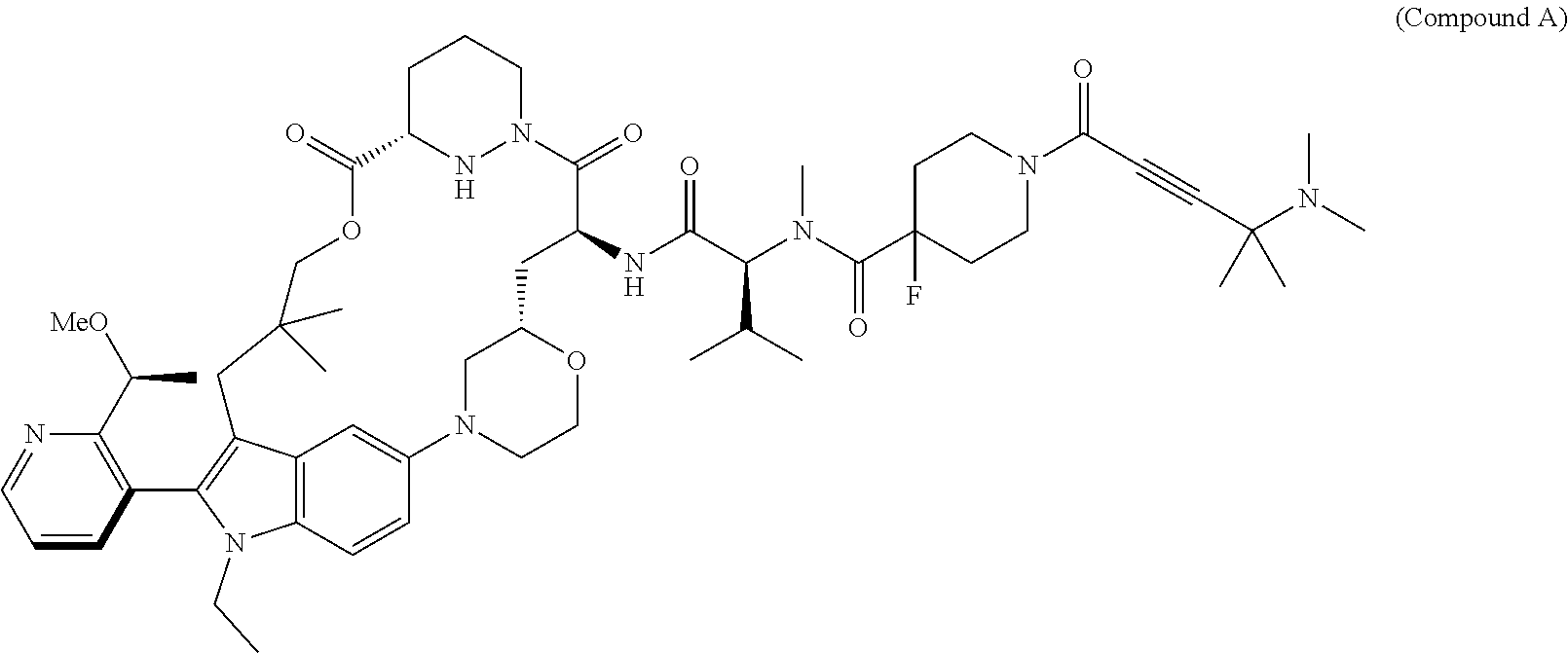
- or a pharmaceutically acceptable salt thereof, to the subject.
- Embodiment 2: The method of
embodiment 1, wherein the method comprises a total daily dose of 60 mg to 800 mg Compound A to the subject. - Embodiment 3: The method of
embodiment 1, wherein the method comprises administering a total daily dose of 70 mg to 800 mg Compound A to the subject. - Embodiment 4: The method of
embodiment 1, wherein the method comprises administering 80 mg to 500 mg of Compound A to the subject. - Embodiment 5: The method of
embodiment 1, wherein the method comprises administering a total daily dose of 100 mg to 800 mg Compound A to the subject. - Embodiment 6: The method of
embodiment 1, wherein the method comprises administering a total daily dose of 120 mg to 800 mg Compound A to the subject. - Embodiment 7: The method of
embodiment 1, wherein the method comprises administering a total daily dose of 160 mg to 800 mg Compound A to the subject. - Embodiment 8: The method of
embodiment 1, wherein the method comprises administering a total daily dose of 200 mg to 800 mg Compound A to the subject. - Embodiment 9: The method of
embodiment 1, wherein the method comprises administering a total daily dose of 250 mg to 800 mg Compound A to the subject. - Embodiment 10: The method of
embodiment 1, wherein the method comprises administering a total daily dose of 300 mg to 800 mg Compound A to the subject. - Embodiment 11: The method of
embodiment 1, wherein the method comprises a total daily dose of 350 mg to 800 mg Compound A to the subject. - Embodiment 12: The method of
embodiment 1, wherein the method comprises administering a total daily dose of 400 mg to 800 mg to the subject. - Embodiment 13: The method of
embodiment 1, wherein the method comprises administering a total daily dose of 450 mg to 800 mg to the subject. - Embodiment 14: The method of
embodiment 1, wherein the method comprises administering a total daily dose of 500 mg to 800 mg to the subject. - Embodiment 15: The method of
embodiment 1, wherein the method comprises administering a total daily dose of 550 mg to 800 mg to the subject. - Embodiment 16: The method of
embodiment 1, wherein the method comprises administering a total daily dose of 600 mg to 800 mg to the subject. - Embodiment 17: The method of
embodiment 1, wherein the method comprises administering a total daily dose of 650 mg to 800 mg to the subject. - Embodiment 18: The method of
embodiment 1, wherein the method comprises administering a total daily dose of 700 mg to 800 mg to the subject. - Embodiment 19: The method of
embodiment 1, wherein the method comprises administering a total daily dose of 750 mg to 800 mg to the subject. - Embodiment 20: The method of
embodiment 1, wherein the method comprises administering a total daily dose of 750 mg to 800 mg to the subject. - Embodiment 21: The method of
embodiment 1, wherein the method comprises administering a total daily dose of 750 mg to 800 mg to the subject. - Embodiment 22: The method of
embodiment 1, wherein the method comprises administering a total daily dose of 225 mg to 575 mg to the subject. - Embodiment 23: The method of
embodiment 1, wherein the method comprises administering a total daily dose of 250 mg to 550 mg to the subject. - Embodiment 24: The method of
embodiment 1, wherein the method comprises administering a total daily dose of 275 mg to 525 mg to the subject. - Embodiment 25: The method of
embodiment 1, wherein the method comprises administering a total daily dose of 300 mg to 500 mg to the subject. - Embodiment 26: The method of
embodiment 1, wherein the method comprises administering a total daily dose of 325 mg to 475 mg to the subject. - Embodiment 27: The method of
embodiment 1, wherein the method comprises administering a total daily dose of 350 mg to 450 mg to the subject. - Embodiment 27: The method of
embodiment 1, wherein the method comprises administering a total daily dose of 375 mg to 425 mg to the subject. - Embodiment 28: The method of any one of
embodiments 1 to 27, wherein Compound A is administered once daily or twice daily. - Embodiment 29: The method of
embodiments - Embodiment 30: The method of any one of
embodiments 1 to 3, wherein the method comprises administering 70 mg of Compound A to the subject. - Embodiment 31: The method of any one of
embodiments 1 to 4, wherein the method comprises administering 80 mg of Compound A to the subject. - Embodiment 32: The method of any one of
embodiments 1 to 5, wherein the method comprises administering 100 mg of Compound A to the subject. - Embodiment 33: The method of any one of
embodiments 1 to 6, wherein the method comprises administering 120 mg of Compound A to the subject. - Embodiment 34: The method of any one of
embodiments 1 to 6, wherein the method comprises administering 160 mg of Compound A to the subject. - Embodiment 35: The method of any one of
embodiments 1 to 7, wherein the method comprises administering 200 mg of Compound A to the subject. - Embodiment 36: The method of any one of
embodiments 1 to 8, wherein the method comprises administering 250 mg of Compound A to the subject. - Embodiment 37: The method of any one of
embodiments 1 to 9, wherein the method comprises administering 300 mg of Compound A to the subject. - Embodiment 38: The method of any one of
embodiments 1 to 10, wherein the method comprises administering 350 mg of Compound A to the subject. - Embodiments 39: The method of any one of
embodiments 1 to 11, wherein the method comprises administering 400 mg of Compound A to the subject. - Embodiment 40: The method of any one of
embodiments 1 to 12, wherein the method comprises administering 450 mg of Compound A to the subject. - Embodiment 41: The method of any one of
embodiments 1 to 13, wherein the method comprises administering 500 mg of Compound A to the subject. - Embodiment 42: The method of any one of
embodiments 1 to 14, wherein the method comprises administering 550 mg of Compound A to the subject. - Embodiment 43: The method of any one of
embodiments 1 to 15, wherein the method comprises administering 600 mg of Compound A to the subject. - Embodiment 44: The method of any one of
embodiments 1 to 16, wherein the method comprises administering 650 mg of Compound A to the subject. - Embodiment 45: The method of any one of
embodiments 1 to 17, wherein the method comprises administering 700 mg of Compound A to the subject. - Embodiment 46: The method of any one of
embodiments 1 to 18, wherein the method comprises administering 750 mg of Compound A to the subject. - Embodiment 47: The method of any one of
embodiments 1 to 18, wherein the method comprises administering 800 mg of Compound A to the subject. - Embodiment 48: The method of
embodiment 1, wherein the method comprises administering 175 mg to 325 mg of Compound A twice daily. - Embodiment 49: The method of
embodiment 1, wherein the method comprises administering 200 mg to 300 mg of Compound A twice daily. - Embodiment 50: The method of
embodiment 1, wherein the method comprises administering 225 mg to 275 mg of Compound A twice daily. - Embodiment 51: The method of
embodiment 1, wherein the method comprises administering 200 mg of Compound A twice daily. - Embodiment 52: The method of
embodiment 1, wherein the method comprises administering 300 mg of Compound A twice daily. - Embodiment 53: The method of
embodiment 1, wherein the method comprises administering 400 mg of Compound A BID twice daily. - Embodiment 54: The method of any one of
embodiments 1 to 53, wherein Compound A is administered to the subject daily on one or more days per week. - Embodiment 55: The method any one of
embodiments 1 to 53, wherein Compound A is administered to the subject once per day onday 1,day 2,day 3,day 4,day 5,day 6, andday 7 of each 7 days. - Embodiment 56: The method of any one of
embodiments 1 to 55, wherein the cancer comprises a RAS G12C mutation. - Embodiment 57: The method of embodiment 56, wherein the cancer is pancreatic cancer.
- Embodiment 58: The method of embodiment 56, wherein the cancer is lung cancer.
- Embodiment 59: The method of embodiment 56, wherein the cancer is colorectal cancer.
- Embodiment 60: The method of any one of
embodiments 1 to 59, wherein the method further comprises administering an additional therapeutic agent. - Embodiment 61: The method of
embodiment 60, wherein the additional therapeutic agent is a pan-KRAS inhibitor. - Embodiment 62: The method of
embodiment 60, wherein the additional therapeutic agent is a KRASG12C(OFF) inhibitor. - Embodiment 63: The method of
embodiment 60, wherein the additional therapeutic agent is a RAS(ON) multi-selective inhibitor. - Embodiment 64: The method of
embodiment 60, wherein the additional therapeutic agent comprises a SHP2 inhibitor and a PD-L1 inhibitor. - Embodiment 65: The method of
embodiment 60, wherein the additional therapy comprises a second RAS inhibitor and a PD-L1 inhibitor. - Embodiment 66: The method of
embodiment 60, wherein the additional therapy is pembrolizumab or a biosimilar thereof. - Embodiment 67: The method of
embodiment 60, wherein the additional therapy is cetuximab or a biosimilar thereof. - Embodiment 68: A method of treating a cancer comprising a RAS G12C mutation in subject in need thereof, the method comprising orally administering a total daily dose of 200 mg to 800 mg of Compound A, wherein Compound A is administered to the subject twice daily.
- Embodiment 69: The method of embodiment 68, wherein the method further comprises screening or monitoring the subject for modulated cardiac function.
- Embodiment 70: The method of embodiment 68, wherein the subject does not have congenital long QT syndrome or does not have concurrent QTc prolongation.
- Embodiment 71: The method of embodiment 68, wherein the subject has discontinued use of or avoids concomitant use of products with known potential to prolong the QTc interval.
- Embodiment 72: The method of embodiment 68, wherein a change in QTc interval is detected during treatment with Compound A.
- Embodiment 73: The method of embodiment 72, wherein the change in QTc interval is a QTc absolute value greater than 500 ms or an increase of greater than 60 ms from baseline.
- Embodiment 74: The method of embodiment 72 or 73, wherein the method includes a pausing the administration of Compound A for a time period sufficient to allow a QTc interval less than about 481 ms or a return to baseline.
- Embodiment 75: The method of embodiment 74, wherein the method includes reducing the dose of Compound A.
- Embodiment 76: The method of any one of
embodiment 1 to 75, wherein the subject has undergone at least one or more prior systemic cancer therapies. - Embodiment 77: The method of any one of embodiments 68 to 76, wherein the cancer is NSCLC.
- Embodiment 78: The method of any one of embodiments 68 to 76, wherein the cancer is CRC.
- Embodiment 79: The method of any one of embodiments 68-78, wherein the subject has previously treated with a KRASG12CC(OFF) inhibitor.
- Embodiment 80: The method of any one of embodiments 68-78, wherein the subject has not been previously treated with a KRASG12CC(OFF) inhibitor.
- Embodiment 81: The method of any one of
embodiments 1 to 80, wherein Compound A is administered without food. - Embodiment 82: The method of any one of
embodiments 1 to 80, wherein the subject does not consume food for at least 4 hours after administration of Compound A. - Embodiment 83: The method of any one of
embodiments 1 to 80, wherein the subject does not consume food for at least 8 hours prior to administration of Compound A. - Embodiment 84: The method of any one of
embodiments 1 to 80, wherein the subject does not consume food for at least hours prior to administration of Compound A and the subject does not consume food for at least 4 hours after administration of Compound A. - Embodiment 85: The method of any one of
embodiments 1 to 80, wherein the subject is in a fasted state upon administration of Compound A. - Embodiment 86: The method of embodiment 85, wherein the subject does not consume
water 1 hour prior to administration of Compound A and/or 1 hour after administration of Compound A. - The disclosure is further illustrated by the following examples, which are not to be construed as limiting this disclosure in scope or spirit to the specific procedures herein described. It is to be understood that the examples are provided to illustrate certain embodiments and that no limitation to the scope of the disclosure is intended thereby. It is to be further understood that resort may be had to various other embodiments, modifications, and equivalents thereof which may suggest themselves to those skilled in the art without departing from the spirit of the present disclosure or scope of the appended claims.
- As described herein, Compound A is a potent, covalent, tri-complex, orally bioavailable RAS(ON) inhibitor selective for the active GTP-bound state of mutated RASG12CC. Compound A binds to an intracellular protein, cyclophilin A (CypA), that is ubiquitously and abundantly expressed in normal tissues and tumors, with evidence to suggest that expression is particularly high in tumors and may be associated with malignant transformation. Binding of Compound A to CypA results in an inhibitory binary complex that then binds KRASG12CC(ON), forming a stable tri-complex and resulting in irreversible covalent modification of the unique Cys-12 residue of KRASG12Cc by Compound A. The tri-complex suppresses downstream signaling by disrupting interactions between KRASG12CC(ON) and effectors, inducing growth suppression and apoptosis in vitro in multiple human cancer cell lines harboring the KRASG12C mutation. Compound A exhibits significant anti-tumor activity in vivo, inducing dose-dependent and durable tumor regressions in multiple xenograft models of human KRASG12C cancers.
- This Example describes the study design of a
Phase 1/1b study of Compound A in patients with advanced KRASG12C solid tumors with the first patient dosed in September 2022. There are two components in this study:Part 1—Dose Escalation andPart 2—Dose Expansion (FIG. 1 ). InPart 1—Dose Escalation, an assessment of safety and tolerability are conducted, and the candidate recommendedPhase 2 dose and schedule (RP2DS) are determined for further testing in the Dose Expansion Part.Part 2 of the study evaluates the safety and antitumor effects of the candidate RP2DS in KRASG12C-mutant solid tumors. - Dose expansion cohorts includes subjects with KRASG12C tumors (including non-small cell lung cancer [NSCLC] and colorectal cancer [CRC]) who have not been previously exposed to a KRASG12C(OFF) inhibitor (KRASG12Ci naïve). If an alternative candidate RP2DS or subject population is warranted to be explored, an additional expansion cohort is added. A final estimate of the RP2DS is evaluated and confirmed including all subjects from the dose escalation and dose expansion cohorts. All toxicities including those during
Cycle 1 and late toxicities outsideCycle 1 are considered in the determination of RP2DS. - Dose escalation was guided by the time-to-event Bayesian optimal interval (TITE-BOIN) design (Yuan, 2018), with a target dose limiting toxicity (DLT) rate of 0.3 and an acceptable toxicity interval of (0.236, 0.333]. DLT assessment performed on the DLT-evaluable population. Enrollment began with an initial cohort size of 3 to 4 subjects in each dose level/schedule. A minimum of 6 subjects evaluated at the maximum tolerated dose (MTD).
- The starting dose of Compound A was at 50 mg once daily (QD) orally (PO). The dose levels evaluated during dose escalation are summarized in the Table 2 below. The first cycle of treatment (i.e., first 21 days after treatment initiation) constitutes the DLT evaluation period.
-
TABLE 2 Dose levels during dose escalation of Compound A. Dose Escalation Dose Level Compound A Dosage (mg) 1 (starting dose) 50 mg QD 2 100 mg QD 3 200 mg QD and/or 100 mg BID 4 400 mg QD and/or 200 mg BID 5 800 mg QD and/or 400 mg BID 6 1200 mg QD and/or 600 mg BID Abbreviations: BID = twice daily; QD = once daily - In addition to the planned dose levels, further degree of dose exploration (e.g., intermediate dose levels) are also implemented based on emerging safety and/or pharmacokinetic (PK) data and the Dose Committee (DC) recommendation. Safety signals are closely monitored, and smaller escalation increments can be implemented.
- Alternative dosing schedules explored are based on emerging safety and PK data. These alternative schedules include, but are not restricted to, dosing Compound A twice daily (BID) instead of QD.
- To better characterize the safety, PK, and preliminary activity of Compound A, additional subjects were enrolled in backfill cohorts which opens once a dose clears DLT evaluation and is considered safe and tolerable. The backfill slots may initially be reserved for subjects who have KRASG12C-mutant solid tumors and have not been previously treated with a KRASG12CC(OFF) inhibitor. Backfill cohorts open enrollment to subjects with KRASG12Cc NSCLC with prior exposure to KRASG12CC(OFF) inhibitor if a partial response (PR) or better to Compound A is observed in this subject population during dose escalation.
- Backfill enrollment is concurrent with dose escalation, but enrollment priority may be given to dose escalation cohorts if there is a subject who qualifies for both backfill and dose escalation cohort.
- Enrollment in Part 2 (Dose Expansion) began when the first candidate RP2DS was selected and occurred in parallel with Part 1 (Dose Escalation).
-
Part 2 enrolls one or more expansion cohorts treated at candidate RP2DS. Dose expansion cohorts include subjects with KRASG12C NSCLC and CRC who have not been previously exposed to a KRASG12CC(OFF) inhibitor. If an alternative candidate RP2DS or subject population is warranted to be explored, an additional expansion cohort is added. - Approximately 30 evaluable (up to approximately 40) subjects are enrolled in each expansion cohort, and up to 12 subjects enrolled in a food effect cohort.
Part 2—Dose Expansion can enroll up to approximately 132 subjects. - Food effect is assessed during Dose Escalation in a separate cohort in up to 12 subjects at a dose level that has cleared DLT evaluation, is considered tolerable, and represents measurable blood Compound A concentrations at multiple time points. The food effect cohort is separate from backfill enrollment and not be included in the DLT analysis.
- In Dose Escalation food effect cohort, Compound A PK is evaluated in subjects administered study treatment as follows:
-
- One single test dose in the
fed state 2 days prior to the start ofCycle 1 Day 1 (C1D1), which will be referred to as C1D-2, with example meal; and - Regular dosing schedule in the fasted state on C1D1 and thereafter.
- One single test dose in the
- All screening and baseline assessments completed prior to administration of study treatment on C1D-2 and treatment-emergent adverse events (TEAEs) and other safety data collected starting on C1D-2 after administration of study treatment.
- For the fed condition (C1D-2), following an overnight fast of at least 8 hours, subjects start to consume a standard meal with moderate fat content approximately 30 minutes before administration of study treatment. Subjects should consume the meal in 30 minutes or less. The study treatment should be administered with 240 mL (8 fluid ounces) of water. Additional water is allowed ad libitum except for 1 hour prior and 1 hour after administration of study treatment. No food is allowed for at least 4 hours after administration of study treatment.
- For the fasted condition (C1D1), following an overnight fast of at least 8 hours, study treatment administered to subjects with 240 mL (8 fluid ounces) of water. Additional water is allowed ad libitum except for 1 hour prior and 1 hour after administration of study treatment. No food is allowed for at least 4 hours after administration of study treatment.
- This 2-part study may evaluate Compound A dose levels during Part 1 (Dose Escalation) to determine the MTD and/or candidate RP2DS. Alternative dosing schedules explored based on emerging safety and PK data. In
Part 2, Dose Expansion evaluate the safety/tolerability, PK, and preliminary antitumor effects of the candidate RP2DS across patients with different histotypes/genotypes. - Safety assessments and procedures were performed. Real-time safety monitoring is performed to ensure that the protocol-specified dose modification guidelines are followed. In addition, C1 safety and available PK and pharmacodynamic data reviewed and evaluated at each Compound A dose level/schedule to determine whether enrollment into the next higher dose-level cohort could proceed. A modified schedule evaluated in which Compound A may be administered more or less frequently than once daily (QD). The totality of the data from dose escalation cohorts is reviewed and one or more candidate RP2DS for expansion in
Part 2 can be recommended. - Subjects are assessed for response using Response Evaluation Criteria in Solid Tumors (version 1.1) (RECIST [v1.1]). All subjects with previous or current, known or suspected brain metastases must have a magnetic resonance imaging (MRI) of the brain (unless contraindicated) performed within 28 days prior to the first dose of Compound A (C1D1). Disease response for clinical management of subjects were assessed per RECIST (v1.1).
- Whole-blood samples were collected from all subjects to measure Compound A concentrations, circulating tumor deoxyribonucleic acid (ctDNA) and other biomarkers. Samples for pharmacodynamic assays collected in
Cycle 1 and beyond. Paired pretreatment and on treatment fresh tumor samples collected from any subject if consent is obtained and at the discretion of the treating physician. Optional collection of pre-study treatment fresh biopsy should be performed prior to C1D1 dosing. An optional on-study treatment biopsy may be obtained with subject consent and at the discretion of the treating physician. The primary purpose of the optional on-study treatment biopsies is to assess pharmacodynamic markers and previously acquired pre-study treatment markers of resistance. Biopsy assessment with study intervention treatment over time may also help with better understanding of the shift in mutational profile with study treatment, as well as cellular clonality changes over time. Where tumor tissue allows, predictive biomarkers of response are explored. - Up to approximately 222 subjects can be enrolled in the study, with the following assumptions:
-
-
Part 1—Dose Escalation enrolls up to approximately 90 subjects with any KRASG12C-mutant solid tumor- Approximately 36 subjects enrolled to determine the Compound A monotherapy MTD in the Dose Escalation portion of the study (assuming 6 dose levels/schedules with approximately 6 subjects per dose level). The actual total number of subjects required depends on the number of dose levels, any alternative schedules being explored, the number of DLT-evaluable subjects, and the number of dose-limiting toxicities (DLTs).
-
- An additional approximately 42 subjects enrolled who have KRASG12C-mutant tumor and have not been previously treated with a KRASG12C(OFF) inhibitor at a given dose level once the dose clears DLT evaluation, defined as “backfill enrollment,” primarily to obtain more data on safety, PK, and drug activity. Subjects with KRASG12Cc NSCLC previously treated with a KRASG12C(OFF) inhibitor is also allowed.
-
-
Part 2—Dose Expansion enrolls up to approximately 132 subjects in one or more expansion cohorts. -
Part 2—Dose expansion enrolls subjects with KRASG12C-mutant NSCLC and CRC who have not been previously treated with a KRASG12C(OFF) inhibitor at candidate RP2DS. If an alternative candidate RP2DS or subject population is warranted to be explored, an additional expansion cohort can be added. Up to approximately 40 subjects enrolled to achieve approximately 30 evaluable subjects in each expansion cohort. If two alternative candidate RP2DS need be explored, the sample size may be split and up to approximately 40 subjects may be enrolled between the 2 candidate RP2DS.
-
- Subjects are eligible to be included in the study only if all of the following criteria apply:
-
-
- 1. Subject must be ≥18 years of age at the time of signing the informed consent form (ICF) and capable of giving signed informed consent, which includes compliance with the requirements and restrictions listed in the ICF and in this protocol.
-
-
- 2. Subject must have pathologically documented, locally advanced or metastatic KRASG12C mutant solid tumor malignancy (not amenable to curative surgery) that has previously been treated with:
- both immunotherapy and chemotherapy given either concurrently or sequentially for subjects with NSCLC
- fluoropyrimidine, oxaliplatin, and irinotecan, with nivolumab or pembrolizumab, for subjects with microsatellite unstable/mismatch repair deficient tumors for CRC
- KRASG12C mutation based on subject's local clinically accredited laboratory testing (Clinical Laboratory Improvement Amendments [CLIA]-certified or equivalent per local law) using deoxyribonucleic acid (DNA) sequencing or polymerase chain reaction (PCR) test prior to this study.
- a. For
Part 1—Dose Escalation, subjects with any KRASG12C solid tumor histology are enrolled. - b. For backfill cohorts of
Part 1—Dose Escalation, only subjects with a KRASG12C-mutant tumor who have not been previously exposed to a KRASG12C inhibitor (KRASG12Ci-naïve) are enrolled. Subjects with KRASG12Cc NSCLC previously treated with a KRASG12C(OFF) inhibitor are also allowed. - c. For
Part 2—Dose Expansion, subjects with KRASG12Cc NSCLC and CRC who are KRASG12Ci-naïve will be enrolled. Subjects with KRASG12C NSCLC previously treated with a KRASG12C(OFF) inhibitor will also be allowed. - d. If archival tissue is available within the past 5 years prior to start of treatment, it must be provided as soon as possible once eligibility has been confirmed. If no archival tissue is available, subjects are encouraged to undergo a pretreatment tumor biopsy, when possible, but it is not required for enrollment.
- 3. Subject must have measurable disease per RECIST v1.1, using either a computed tomography (CT) or magnetic resonance imaging (MRI) scan.
- 4. Subject must have a life expectancy of at least 3 months.
- 5. The subject's Eastern Cooperative Oncology Group (ECOG) performance status (PS) is 0 to 1 with no deterioration in PS (where it is >1) 2 weeks prior to
Cycle 1 Day 1 (C1D1) (C1D-2 for food effect cohorts). Rescreening is required if PS is >1 for any reason prior to C1D1 (C1D-2 for food effect cohorts). - 6. Subject must have the ability to ingest and retain oral (PO) medications.
- 7. Subject must have adequate hematological and biological function, as follows:
- a. Bone marrow function
- i. Absolute neutrophil count (ANC) ≥1.5×10⁹/L
- ii. Hemoglobin ≥9 g/dL; subject must not have received a red blood cell (RBC) transfusion within 28 days of screening. Erythropoietin treatment is not considered an RBC transfusion.
- iii. Platelets ≥100×109/L; subject must not have received a platelet transfusion within 14 days of screening.
- iv. Hematologic criteria must be met without the use of hematopoietic growth factors within 7 days of the screening lab measurement for short acting growth factors and within 14 days of screening for long-acting growth factors (ie, terminal elimination half-life [t½]>48 hours [e.g., pegfilgrastim]).
- b. Subject must have hepatic function as follows:
- i. Aspartate aminotransferase (AST) and alanine aminotransferase (ALT) s 3×upper limit of normal (ULN)
- ii. Bilirubin s 1.5×ULN (<2.0×ULN for subjects with documented Gilbert's syndrome)
- c. Subject must have renal function as follows:
- i. Renal clearance as estimated glomerular filtration rate (eGFR) of >50 mL/min/1.73 m2 (using the Modification of Diet in Renal Disease [MDRD] formula or 24-hour urine collection)
- d. Subject must have coagulation function as follows:
- i. Prothrombin time (PT)/international normalized ratio (INR) and activated partial thromboplastin time (aPTT)/partial thromboplastin time (PTT)<1.3×ULN, or within target range if taking prophylactic anticoagulant(s)
- a. Bone marrow function
- 2. Subject must have pathologically documented, locally advanced or metastatic KRASG12C mutant solid tumor malignancy (not amenable to curative surgery) that has previously been treated with:
- Subjects are excluded from the study if any of the following criteria apply:
-
- 1. Subject has primary central nervous system (CNS) tumors.
- 2. Subject has known or suspected leptomeningeal or brain metastases or spinal cord compression. Subject with symptomatic, active, or untreated brain metastases will also be excluded. However, a subject with previously treated or resected brain metastases will be allowed if ALL of the following conditions are met:
- a. Radiation therapy ending at least 2 weeks prior to C1D1 (C1D-2 for food effect cohorts)
- b. No evidence of clinical or radiographic disease progression as determined by a brain MRI performed within 28 days of C1D1 (C1D-2 for food effect cohorts)
- c. Asymptomatic and on a stable dose of steroids and/or anticonvulsant therapy (if applicable) at least 28 days prior to C1D1 (C1D-2 for food effect cohorts). Note: anticonvulsant used must not be a prohibited medication for this study as listed in
Appendix 2.
- 3. Subject who has any of the following cardiac abnormalities:
- a. Medically uncontrolled hypertension (>160 mmHg systolic blood pressure or ≥100 mmHg diastolic blood pressure; in France, ≥140 mmHg systolic blood pressure or ≥90 mmHg diastolic blood pressure) based on an average of 3 readings
- b. Congestive heart failure Class ≥2, as defined by the New York Heart Association
- c. Acute coronary syndrome (including unstable angina, coronary artery stenting, or angioplasty, bypass grafting within prior 6 months); myocardial infarction within 6 months of anticipated C1D1 (C1D-2 for food effect cohorts)
- d. History or evidence of current, uncontrolled, clinically significant, unstable arrhythmias
- i. Subject with medically controlled atrial fibrillation >1 month prior to
Study Day 1 is eligible - ii. Subject who has a pacemaker in place to control atrial arrhythmias is a candidate for the study
- i. Subject with medically controlled atrial fibrillation >1 month prior to
- e. History of congenital long QT syndrome or prolonged corrected QT interval (QTc) >470 msec using Fridericia's formula (unless a pacemaker is in place) or uncorrectable abnormalities in serum electrolytes (ie, sodium, potassium, calcium, magnesium, phosphorus):
- i. An average of triplicate readings for assessing QTc interval may be used.
- ii. Subject with an implantable defibrillator is not eligible to participate in the study.
- f. Current cardiomyopathy or history within the past 12 months prior to anticipated C1D1 (C1D-2 for food effect cohorts)
- g. Baseline left ventricular ejection fraction (LVEF)<50%.
- 4. Subject has a prior history of interstitial lung disease (ILD) or non-infectious pneumonitis requiring high-dose glucocorticoids or any active ILD or pneumonitis, or prior thoracic radiotherapy within 2 months of enrollment.
- 5. Subject has a history of cerebrovascular accident or transient ischemic attack within previous 6 months of signing the ICF.
- 6. Subject has known active severe acute respiratory syndrome coronavirus 2 (SARS CoV2).
- 7. Subject has active, untreated human immunodeficiency virus (HIV) infection CD4+ T cell counts ≤350 cells/μL and presence of acquired immunodeficiency syndrome (AIDS)-defining opportunistic infections in the past 12 months.
- a. Antiretroviral therapy is permitted but must not conflict with other study restrictions (see exclusion criteria 18-24).
- b. Subject must be on an established treatment for at least 28 days.
- c. Subject must have an HIV viral load less than 400 copies/mL prior to enrollment.
- 8. Subject has active/chronic hepatitis B (positive for hepatitis B surface antigen with detected hepatitis B virus) or hepatitis C (positive for hepatitis C ribonucleic acid [RNA]).
- 9. Subject has a known impairment of gastrointestinal (GI) function that may significantly alter the absorption of RMC-6291 (e.g., uncontrolled nausea and vomiting, diarrhea, malabsorption syndrome, inflammatory bowel disease, gastrectomy, or small bowel resection).
- 10. Subject has a history of severe allergic reactions to any of the study treatment components.
- 11. Subject has had a major surgical procedure(s) s 28 days or non-study-related minor procedure(s) s 7 days prior to C1D1 (C1D-2 for food effect cohorts); in all cases, the subject must be sufficiently recovered and stable before treatment administration.
- 12. Subject has any other unstable or clinically significant concurrent medical condition (including, but not limited to substance abuse, uncontrolled intercurrent illness such as active infection requiring systemic therapy within 72 hours of C1D1 [C1D-2 for food effect cohorts] or arterial thrombosis) that would, in the opinion of the investigator or Sponsor Medical Monitor, jeopardize the safety of a subject, impact their expected survival through the end of the study participation, and/or impact their ability to comply with the protocol.
- 13. Any subject who had a pulmonary embolism that resolved within 28-days of C1D1 (C1D-2 for food effect cohorts) or has an ongoing/unresolved pulmonary embolism of any duration will also be excluded.
- 14. Subject previously treated with a KRASG12C(ON) inhibitor
- 15. Subject has had treatment with KRASG12C(OFF) inhibitors <14 days before C1D1 (C1D-2 for food effect cohorts)
- 16. Subjects who discontinued treatment with a prior KRASG12C(OFF) inhibitor due to a treatment-related Grade ≥3 adverse event (AE), or due to a clinically significant AE of any severity (e.g., pneumonitis, transaminase elevations, QTc prolongation).
- 17. Subjects previously treated with a KRASG12C(OFF) inhibitor will be permitted into the dose escalation cohorts, but excluded from backfill cohorts and expansion cohorts with the following exception: a. If a PR or better is observed in a subject with KRASG12C NSCLC during dose escalation who has previously been treated with a KRASG12C(OFF) inhibitor, then this patient population will become eligible for backfill cohorts.
- 18. Subject has had treatment with chemotherapy, or biologics/monoclonal antibodies <21 days or 5 half-lives (whichever is shorter) before C1D1 (C1D-2 for food effect cohorts)
- 19. Subject has had treatment with non-thoracic radiation therapy <14 days before C1D1 (C1D-2 for food effect cohorts)
- 20. Subject has had treatment with immunotherapy (e.g., checkpoint inhibitors) 14 to 21 days before C1D1 (C1D-2 for food effect cohorts), depending on cycle length of the immunotherapy.
- 21. Subject has had treatment with any other anticancer treatments including investigational agents that do not fit in the above categories <21 days before C1D1 (C1D-2 for food effect cohorts) (excluding coronavirus disease-2019 [COVID-19] vaccines).
- 22. Subject requires treatment with proton pump inhibitors (PPIs) or H2 receptor antagonists (H2-blockers) (refer to
Appendix 2 for prohibited medications). - 23. Subject has had consumption of medications that are known to prolong QTc interval within 7 days prior to C1D1 (C1D-2 for food effect cohorts) or requires treatment with medications that are known to prolong QTc interval (refer to
Appendix 2 for prohibited medications and medications that require Sponsor Medical Monitor approval). - 24. Subject has had consumption of strong cytochrome P-450 (CYP)3A4 inducers, inhibitors, or CYP3A4 substrates with a narrow therapeutic index within 7 days prior to initiation of study treatment or requires treatment with strong CYP3A4 inducers or inhibitors (refer to
Appendix 2 for prohibited medications and medications that require Sponsor Medical Monitor's approval). - 25. Subject has had consumption of P-glycoprotein (P-gp) inhibitors (e.g., cyclosporine, tacrolimus) or P-gp substrates with a narrow therapeutic index within 7 days prior to initiation of study treatment or requires treatment with a P-gp inhibitor (refer to
Appendix 2 for prohibited medications and medications that require Sponsor Medical Monitor's approval) - 26. Subject has ongoing AE(s) from a prior cancer therapy that have not recovered to
Grade 1, normal, or baseline, except for alopecia. - a. Subject with
ongoing Grade s 2 neuropathies due to prior treatment will be allowed on study.
- Initially Compound A will be administered orally QD for a treatment cycle of 21 days. BID dosing be administered to subjects who are enrolled into
Dose level 3 and higher dose levels during escalation as well. For subjects on BID dosing, the second dose of Compound A is administered approximately 10 to 12 hours after the first dose is administered. - Compound A is a potent, covalent, orally bioavailable RAS(ON) G12C-selective inhibitor that uses a tri-complex mechanism to selectively target the active, GTP-bound state of the oncogenic KRASG12C. In preclinical models, Compound A achieved a superior response rate, deeper regressions and longer duration of response compared to the KRASG12C(OFF) inhibitor, adagrasib. Receptor tyrosine kinase (RTK) overexpression and/or hyperactivating alterations and new synthesis of KRASG12C(ON) have been identified as potential resistance mechanisms to KRASG12C(OFF) inhibitors. Preclinical modeling shows KRASG12C(ON) inhibitors retain potency in cells with RTK activation and further are expected to rapidly extinguish newly synthesized KRASG12C(ON). Therefore, Compound A has the potential to serve an unmet medical need in patients with KRASG12C-mutated CRC and prior G12Ci-treated NSCLC, who have limited treatment options.
- Patients with previously treated, advanced KRASG12CC-mutated solid tumors received escalating doses of Compound A. Doses included 50 mg, 100 mg, and 200 mg once daily (QD) and 100 mg, 200 mg, 300 mg, and 400 mg twice daily (BID). Each cycle had 21 days, with efficacy assessed every 6 weeks. Additional patients were enrolled to backfill cohorts at dose levels that cleared dose-limiting toxicity evaluation to further characterize PK, safety, and anti-tumor activity of Compound A as described in Example 1.
- As of Aug. 8, 2023, 47 patients with KRASG12C mutated solid tumors were treated, and 35 remained on treatment. The median number of prior therapies was 3 (range, 1-7). Compound A exhibited dose-dependent exposure with a median Tmax of 1.0 hour and terminal half-life of 1.8 hours. Modeling projected average target occupancy of ≥˜90% at 100 mg BID and above. Treatment-related adverse events (TRAEs) occurring in 210% of patients were nausea (34%), diarrhea (30%), QTc prolongation (21%), vomiting and fatigue (15% each). The most common Gr3 TRAEs were QTc prolongation reported in 5 patients (3 at 400 mg BID, 1 at 300 mg, 1 at 200 mg BID). Only one out of these 5 patients had an average QTc interval >501 ms. Most events of Gr3 QTc prolongation resolved to Gr1 or normal following dose interruption and/or reduction, and all 5 patients were asymptomatic and remained on treatment at a reduced dose. No treatment-related ≥Gr3 hepatotoxicity was observed. No patients experienced a treatment-related Gr4 or 5 AE, or a treatment-emergent AE that led to treatment discontinuation. Efficacy analysis was conducted in two dominant subgroups and included patients enrolled 28 weeks before data cutoff across all dose levels.
- As of Oct. 5, 2023, among patients with NSCLC treated across all doses, three of seven, or 43%, who had not previously received a G12C(OFF) inhibitor responded to Compound A therapy. Further, 5 of 10, or 50%, of patients who had previously received a G12C(OFF) inhibitor responded to Compound A. The disease control rate for both sets of patients was 100 percent, with no early progression. (
FIG. 2 ) - As of Oct. 5, 2023, for patients with colorectal cancer who had not previously received a G12C(OFF) inhibitor, 8 of 20, or 40%, had a partial response. The disease control rate was 80 percent (
FIG. 3 ). Together, these results provide encouraging initial evidence of a clinically meaningful, differentiated profile compared to other G12C inhibitors described. - As of May 15, 2023, pharmacokinetic data are available for a total of 13 subjects with advanced solid tumors who have received at least one dose of Compound A.
FIG. 4 shows the plasma Compound A concentration-time profiles on C1D1 and C1D15 (steady state). - Compound A is orally bioavailable and rapidly absorbed with a median Tmax of 1 hour. Both Cmax and AUC increased in a dose-dependent manner in the range of 50-200 mg. Compound A has a short terminal half-life (<3 hours) in the plasma. The mean accumulation ratio (C1D15 AUC vs C1D1 AUC) is less than 2×, suggesting little drug accumulation with repeated daily dosing.
Claims (51)
1. A method of treating a cancer in a human subject in need thereof, the method comprising orally administering to the subject a total daily dose of 50 mg to 800 mg Compound A:

2. The method of claim 1 , wherein the method comprises administering 100 mg to 800 mg of Compound A to the subject.
3. The method of claim 1 , wherein the method comprises administering 200 mg to 800 mg of Compound A to the subject.
4. The method of claim 1 , wherein the method comprises administering 300 mg to 800 mg of Compound A to the subject.
5. The method of claim 1 , wherein the method comprises administering 400 mg to 800 mg of Compound A to the subject.
6. The method of claim 1 , wherein the method comprises administering 500 mg to 800 mg of Compound A to the subject.
7. The method of claim 1 , wherein the method comprises administering 600 mg to 800 mg of Compound A to the subject.
8. The method of claim 1 , wherein the method comprises administering 700 mg to 800 mg of Compound A to the subject.
9. The method of claim 1 , wherein the method comprises administering 200 mg to 300 mg of Compound A to the subject.
10. The method of any one of claims 1 to 9 , wherein Compound A is administered once daily or twice daily.
11. The method of claims 1 or 2 , wherein the method comprises administering 100 mg of Compound A to the subject.
12. The method of any one of claims 1 to 3 , wherein the method comprises administering 200 mg of Compound A to the subject.
13. The method of any one of claims 1 to 4 , wherein the method comprises administering 300 mg of Compound A to the subject.
14. The method of any one of claims 1 to 5 , wherein the method comprises administering 400 mg of Compound A to the subject.
15. The method of any one of claims 1 to 6 , wherein the method comprises administering 500 mg of Compound A to the subject.
16. The method of any one of claims 1 to 7 , wherein the method comprises administering 600 mg of Compound A to the subject.
17. The method of any one of claims 1 to 8 , wherein the method comprises administering 700 mg of Compound A to the subject.
18. The method of any one of claims 1 to 8 , wherein the method comprises administering 800 mg of Compound A to the subject.
19. The method of any one of claims 1 to 18 , wherein Compound A is administered 1, 2, 3, 4, 5, 6 or 7 times per week.
20. The method of any one of claims 1 to 19 , wherein the subject is administered Compound A for at least 1 month, at least 2 months, at least 3 months, at least 4 months, at least 5 months, at least 6 months, at least 7 months, at least 8 months, at least 9 months, at least 10 months, at least 11 months, at least 12 months, at least 15 months, at least 18 months, at least 21 months, or at least 23 months.
21. The method of any one of claims 1 to 19 , wherein Compound A is administered in treatment cycles and each treatment cycle is 7 days, 14 days, 21 days, 28 days, 1 month, 2 months, 3 months, 4 months, 5 month, 6 months, 7 months, 8 months, 9 months, 10 months, 11 months, or 1 year.
22. The method of claim 21 , wherein the subject undergoes 1, 2, 3, or more treatment cycles.
23. The method of any one of claims 1 to 22 , wherein the cancer comprises a RAS mutation.
24. The method of claim 23 , wherein the RAS mutation is G12C.
25. The method of any one of claims 1 to 24 , wherein the cancer is pancreatic cancer.
26. The method of any one of claims 1 to 24 , wherein the cancer is lung cancer.
27. The method of any one of claims 1 to 24 , wherein the cancer is colorectal cancer.
28. The method of claim 26 , wherein the lung cancer is non-small cell lung cancer.
29. The method of claims 23 or 24 , wherein the RAS protein is KRAS.
30. The method of any one of claims 1 to 29 , wherein the method further comprises administering an additional therapeutic agent.
31. The method of claim 30 , wherein the additional therapeutic agent is a RAS(ON) multi-selective inhibitor.
32. The method of claim 30 , wherein the additional therapeutic agent is a pan-KRAS inhibitor.
33. The method of 30, wherein the additional therapeutic agent is a PD-1 and/or PD-L1 inhibitor.
34. A method of treating a cancer comprising a RAS G12C mutation in a human subject in need thereof, the method comprising orally administering to the subject a total daily dose of 200 mg to 600 mg of Compound A, wherein Compound A is administered to the subject twice daily.
35. The method of claim 34 , wherein the method further comprises screening or monitoring the subject for modulated cardiac function.
36. The method of claim 35 , wherein the subject does not have congenital long QT syndrome or does not have concurrent QTc prolongation.
37. The method of claim 35 , wherein the subject has discontinued use of or avoids concomitant use of products with known potential to prolong the QTc interval.
38. The method of claim 35 , wherein a change in QTc interval is detected during treatment with Compound A.
39. The method of claim 38 , wherein the change in QTc interval is a QTc absolute value greater than 500 ms or an increase of greater than 60 ms from baseline.
40. The method of claim 38 or 39 , wherein the method includes a pausing the administration of Compound A for a time period sufficient to allow a QTc interval less than about 481 ms or a return to baseline.
41. The method of claim 40 , wherein the method includes reducing the dose of Compound A.
42. A method of treating non-small cell lung cancer (NSCLC) comprising a RAS G12C mutation in a human subject in need thereof, the method comprising orally administering to the subject a total daily dose of 200 mg to 600 mg of Compound A, wherein Compound A is administered twice daily.
43. The method of claim 42 , wherein the method comprises administering 200 mg Compound A twice daily to the subject.
44. The method of claim 42 or 43 , wherein the subject has received at least one prior cancer therapy.
45. The method of any one of claims 42 to 44 , wherein the subject has locally advanced or metastatic NSCLC.
46. The method of any one of claims 42 to 45 , wherein the has received a prior KRASG12CC(OFF) inhibitor.
47. The method of any one of claims 42 to 45 , wherein the subject is naïve to a KRASG12CC(OFF) inhibitor.
48. A method of treating colorectal cancer (CRC) comprising a RAS G12C mutation in a human subject in need thereof, the method comprising orally administering to the subject a total daily dose of 200 mg to 600 mg of Compound A, or a pharmaceutically acceptable salt thereof, wherein Compound A is administered twice daily.
49. The method of claim 48 , wherein the method comprises administering 200 mg or 300 mg Compound A twice daily to the subject.
50. The method of claim 48 or 49 , wherein the subject has received at least one prior cancer therapy.
51. The method of any one of claims 48 to 50 , wherein the subject is naïve to a KRASG12C(OFF) inhibitor.
Priority Applications (1)
| Application Number | Priority Date | Filing Date | Title |
|---|---|---|---|
| US18/795,852 US20250049810A1 (en) | 2023-08-07 | 2024-08-06 | Methods of treating a ras protein-related disease or disorder |
Applications Claiming Priority (4)
| Application Number | Priority Date | Filing Date | Title |
|---|---|---|---|
| US202363531175P | 2023-08-07 | 2023-08-07 | |
| US202363543420P | 2023-10-10 | 2023-10-10 | |
| US202463618783P | 2024-01-08 | 2024-01-08 | |
| US18/795,852 US20250049810A1 (en) | 2023-08-07 | 2024-08-06 | Methods of treating a ras protein-related disease or disorder |
Publications (1)
| Publication Number | Publication Date |
|---|---|
| US20250049810A1 true US20250049810A1 (en) | 2025-02-13 |
Family
ID=92543330
Family Applications (1)
| Application Number | Title | Priority Date | Filing Date |
|---|---|---|---|
| US18/795,852 Pending US20250049810A1 (en) | 2023-08-07 | 2024-08-06 | Methods of treating a ras protein-related disease or disorder |
Country Status (3)
| Country | Link |
|---|---|
| US (1) | US20250049810A1 (en) |
| TW (1) | TW202521125A (en) |
| WO (1) | WO2025034702A1 (en) |
Cited By (1)
| Publication number | Priority date | Publication date | Assignee | Title |
|---|---|---|---|---|
| US12403196B2 (en) | 2020-09-15 | 2025-09-02 | Revolution Medicines, Inc. | Ras inhibitors |
Families Citing this family (4)
| Publication number | Priority date | Publication date | Assignee | Title |
|---|---|---|---|---|
| AU2023350264A1 (en) | 2022-09-29 | 2025-04-10 | Guangzhou Joyo Pharmatech Co., Ltd | Macrocyclic derivative and use thereof |
| WO2025255438A1 (en) * | 2024-06-07 | 2025-12-11 | Revolution Medicines, Inc. | Methods of treating a ras protein-related disease or disorder |
| CN120665069A (en) * | 2025-06-12 | 2025-09-19 | 军事科学院军事医学研究院军事兽医研究所 | YDT compound and preparation method and application thereof |
| CN120665068A (en) * | 2025-06-12 | 2025-09-19 | 军事科学院军事医学研究院军事兽医研究所 | YBM compound, and preparation method and application thereof |
Family Cites Families (1630)
| Publication number | Priority date | Publication date | Assignee | Title |
|---|---|---|---|---|
| US6905680B2 (en) | 1988-11-23 | 2005-06-14 | Genetics Institute, Inc. | Methods of treating HIV infected subjects |
| US5858358A (en) | 1992-04-07 | 1999-01-12 | The United States Of America As Represented By The Secretary Of The Navy | Methods for selectively stimulating proliferation of T cells |
| GB8827305D0 (en) | 1988-11-23 | 1988-12-29 | British Bio Technology | Compounds |
| US6352694B1 (en) | 1994-06-03 | 2002-03-05 | Genetics Institute, Inc. | Methods for inducing a population of T cells to proliferate using agents which recognize TCR/CD3 and ligands which stimulate an accessory molecule on the surface of the T cells |
| US6534055B1 (en) | 1988-11-23 | 2003-03-18 | Genetics Institute, Inc. | Methods for selectively stimulating proliferation of T cells |
| JP2762522B2 (en) | 1989-03-06 | 1998-06-04 | 藤沢薬品工業株式会社 | Angiogenesis inhibitor |
| US5112946A (en) | 1989-07-06 | 1992-05-12 | Repligen Corporation | Modified pf4 compositions and methods of use |
| PT98990A (en) | 1990-09-19 | 1992-08-31 | American Home Prod | PROCESS FOR THE PREPARATION OF CARBOXYLIC ACID ESTERS OF RAPAMICIN |
| US5892112A (en) | 1990-11-21 | 1999-04-06 | Glycomed Incorporated | Process for preparing synthetic matrix metalloprotease inhibitors |
| US5120842A (en) | 1991-04-01 | 1992-06-09 | American Home Products Corporation | Silyl ethers of rapamycin |
| US5100883A (en) | 1991-04-08 | 1992-03-31 | American Home Products Corporation | Fluorinated esters of rapamycin |
| US5118678A (en) | 1991-04-17 | 1992-06-02 | American Home Products Corporation | Carbamates of rapamycin |
| SG64322A1 (en) | 1991-05-10 | 1999-04-27 | Rhone Poulenc Rorer Int | Bis mono and bicyclic aryl and heteroaryl compounds which inhibit egf and/or pdgf receptor tyrosine kinase |
| US5118677A (en) | 1991-05-20 | 1992-06-02 | American Home Products Corporation | Amide esters of rapamycin |
| NZ243082A (en) | 1991-06-28 | 1995-02-24 | Ici Plc | 4-anilino-quinazoline derivatives; pharmaceutical compositions, preparatory processes, and use thereof |
| US5151413A (en) | 1991-11-06 | 1992-09-29 | American Home Products Corporation | Rapamycin acetals as immunosuppressant and antifungal agents |
| AU661533B2 (en) | 1992-01-20 | 1995-07-27 | Astrazeneca Ab | Quinazoline derivatives |
| US5521184A (en) | 1992-04-03 | 1996-05-28 | Ciba-Geigy Corporation | Pyrimidine derivatives and processes for the preparation thereof |
| ZA935111B (en) | 1992-07-17 | 1994-02-04 | Smithkline Beecham Corp | Rapamycin derivatives |
| ZA935112B (en) | 1992-07-17 | 1994-02-08 | Smithkline Beecham Corp | Rapamycin derivatives |
| US5256790A (en) | 1992-08-13 | 1993-10-26 | American Home Products Corporation | 27-hydroxyrapamycin and derivatives thereof |
| GB9221220D0 (en) | 1992-10-09 | 1992-11-25 | Sandoz Ag | Organic componds |
| US5258389A (en) | 1992-11-09 | 1993-11-02 | Merck & Co., Inc. | O-aryl, O-alkyl, O-alkenyl and O-alkynylrapamycin derivatives |
| CA2148484A1 (en) | 1992-11-13 | 1994-05-26 | Stewart Lyman | Novel cytokine designated elk ligand |
| US5455258A (en) | 1993-01-06 | 1995-10-03 | Ciba-Geigy Corporation | Arylsulfonamido-substituted hydroxamic acids |
| US5629327A (en) | 1993-03-01 | 1997-05-13 | Childrens Hospital Medical Center Corp. | Methods and compositions for inhibition of angiogenesis |
| AU6909194A (en) | 1993-05-14 | 1994-12-12 | Board Of Regents, The University Of Texas System | Preparation of n-cyanodithioimino-carbonates and 3-mercapto-5-amino-1h-1,2,4-triazole |
| US5516658A (en) | 1993-08-20 | 1996-05-14 | Immunex Corporation | DNA encoding cytokines that bind the cell surface receptor hek |
| CA2148931A1 (en) | 1993-10-01 | 1995-04-13 | Jurg Zimmermann | Pyrimidineamine derivatives and processes for the preparation thereof |
| EP0729471A1 (en) | 1993-11-19 | 1996-09-04 | Abbott Laboratories | Semisynthetic analogs of rapamycin (macrolides) being immunomodulators |
| PL314238A1 (en) | 1993-12-17 | 1996-09-02 | Sandoz Ltd | Rapamycin derivatives |
| US5700823A (en) | 1994-01-07 | 1997-12-23 | Sugen, Inc. | Treatment of platelet derived growth factor related disorders such as cancers |
| IL112249A (en) | 1994-01-25 | 2001-11-25 | Warner Lambert Co | Pharmaceutical compositions containing di and tricyclic pyrimidine derivatives for inhibiting tyrosine kinases of the epidermal growth factor receptor family and some new such compounds |
| IL112248A0 (en) | 1994-01-25 | 1995-03-30 | Warner Lambert Co | Tricyclic heteroaromatic compounds and pharmaceutical compositions containing them |
| EP0756627A1 (en) | 1994-04-15 | 1997-02-05 | Amgen Inc. | Hek5, hek7, hek8, hek11, new eph-like receptor protein tyrosine kinases |
| DK0682027T3 (en) | 1994-05-03 | 1998-05-04 | Ciba Geigy Ag | Pyrrolopyrimidine derivatives with antiproliferative action |
| US7175843B2 (en) | 1994-06-03 | 2007-02-13 | Genetics Institute, Llc | Methods for selectively stimulating proliferation of T cells |
| US6303769B1 (en) | 1994-07-08 | 2001-10-16 | Immunex Corporation | Lerk-5 dna |
| US5919905A (en) | 1994-10-05 | 1999-07-06 | Immunex Corporation | Cytokine designated LERK-6 |
| US6057124A (en) | 1995-01-27 | 2000-05-02 | Amgen Inc. | Nucleic acids encoding ligands for HEK4 receptors |
| US5863949A (en) | 1995-03-08 | 1999-01-26 | Pfizer Inc | Arylsulfonylamino hydroxamic acid derivatives |
| EP2163546B1 (en) | 1995-03-30 | 2016-06-01 | Pfizer Products Inc. | Quinazoline derivatives |
| DE69609602T2 (en) | 1995-04-03 | 2001-04-12 | Novartis Ag, Basel | PYRAZOLE DERIVATIVES AND METHOD FOR THE PRODUCTION THEREOF |
| US5861510A (en) | 1995-04-20 | 1999-01-19 | Pfizer Inc | Arylsulfonyl hydroxamic acid derivatives as MMP and TNF inhibitors |
| GB9508538D0 (en) | 1995-04-27 | 1995-06-14 | Zeneca Ltd | Quinazoline derivatives |
| US7067318B2 (en) | 1995-06-07 | 2006-06-27 | The Regents Of The University Of Michigan | Methods for transfecting T cells |
| US6692964B1 (en) | 1995-05-04 | 2004-02-17 | The United States Of America As Represented By The Secretary Of The Navy | Methods for transfecting T cells |
| US5747498A (en) | 1996-05-28 | 1998-05-05 | Pfizer Inc. | Alkynyl and azido-substituted 4-anilinoquinazolines |
| US5880141A (en) | 1995-06-07 | 1999-03-09 | Sugen, Inc. | Benzylidene-Z-indoline compounds for the treatment of disease |
| CA2219659C (en) | 1995-06-09 | 2008-03-18 | Novartis Ag | Rapamycin derivatives |
| US5624677A (en) | 1995-06-13 | 1997-04-29 | Pentech Pharmaceuticals, Inc. | Controlled release of drugs delivered by sublingual or buccal administration |
| TR199800012T1 (en) | 1995-07-06 | 1998-04-21 | Novartis Ag | Pyrolopyrimidines and applications for preparation. |
| AR004010A1 (en) | 1995-10-11 | 1998-09-30 | Glaxo Group Ltd | HETERO CYCLIC COMPOUNDS |
| GB9523675D0 (en) | 1995-11-20 | 1996-01-24 | Celltech Therapeutics Ltd | Chemical compounds |
| DE69624081T2 (en) | 1995-12-20 | 2003-06-12 | Agouron Pharmaceuticals, Inc. | Matrix metalloprotease inhibitors |
| JP4275733B2 (en) | 1996-01-23 | 2009-06-10 | ノバルティス アクチエンゲゼルシャフト | Pyrrolopyrimidine and process for producing the same |
| JP3406763B2 (en) | 1996-01-30 | 2003-05-12 | 東レ・ダウコーニング・シリコーン株式会社 | Silicone rubber composition |
| GB9603097D0 (en) | 1996-02-14 | 1996-04-10 | Zeneca Ltd | Quinazoline compounds |
| GB9603095D0 (en) | 1996-02-14 | 1996-04-10 | Zeneca Ltd | Quinazoline derivatives |
| DE19629652A1 (en) | 1996-03-06 | 1998-01-29 | Thomae Gmbh Dr K | 4-Amino-pyrimidine derivatives, medicaments containing these compounds, their use and processes for their preparation |
| DE19608588A1 (en) | 1996-03-06 | 1997-09-11 | Thomae Gmbh Dr K | Pyrimido [5,4-d] pyrimidines, medicaments containing these compounds, their use and processes for their preparation |
| WO1997034895A1 (en) | 1996-03-15 | 1997-09-25 | Novartis Ag | Novel n-7-heterocyclyl pyrrolo[2,3-d]pyridines and their use |
| DE69710712T3 (en) | 1996-04-12 | 2010-12-23 | Warner-Lambert Co. Llc | REVERSIBLE INHIBITORS OF TYROSINE KINASEN |
| GB9607729D0 (en) | 1996-04-13 | 1996-06-19 | Zeneca Ltd | Quinazoline derivatives |
| CA2258548C (en) | 1996-06-24 | 2005-07-26 | Pfizer Inc. | Phenylamino-substituted tricyclic derivatives for treatment of hyperproliferative diseases |
| EP0818442A3 (en) | 1996-07-12 | 1998-12-30 | Pfizer Inc. | Cyclic sulphone derivatives as inhibitors of metalloproteinases and of the production of tumour necrosis factor |
| EP0937082A2 (en) | 1996-07-12 | 1999-08-25 | Ariad Pharmaceuticals, Inc. | Materials and method for treating or preventing pathogenic fungal infection |
| EP0912559B1 (en) | 1996-07-13 | 2002-11-06 | Glaxo Group Limited | Fused heterocyclic compounds as protein tyrosine kinase inhibitors |
| ES2191187T3 (en) | 1996-07-13 | 2003-09-01 | Glaxo Group Ltd | BICYCLE HETEROAROMATIC COMPOUNDS AS INHIBITORS OF PROTEIN TIROSIN-QUINASA. |
| HRP970371A2 (en) | 1996-07-13 | 1998-08-31 | Kathryn Jane Smith | Heterocyclic compounds |
| EA199900036A1 (en) | 1996-07-18 | 1999-06-24 | Пфайзер Инк | METALLIC PROTEASIS INHIBITORS OF MATRIX ON THE BASIS OF PHOSPHINATES, PHARMACEUTICAL COMPOSITION, METHOD OF TREATMENT |
| US6111090A (en) | 1996-08-16 | 2000-08-29 | Schering Corporation | Mammalian cell surface antigens; related reagents |
| AU4055697A (en) | 1996-08-16 | 1998-03-06 | Schering Corporation | Mammalian cell surface antigens; related reagents |
| ATE384062T1 (en) | 1996-08-23 | 2008-02-15 | Novartis Pharma Gmbh | SUBSTITUTED PYRROLOPYRIMIDINES AND METHOD FOR THE PRODUCTION THEREOF |
| PL331895A1 (en) | 1996-08-23 | 1999-08-16 | Pfizer | Arylosulphonylamino derivatives of hydroxamic acid |
| ID18494A (en) | 1996-10-02 | 1998-04-16 | Novartis Ag | PIRAZOLA DISTRIBUTION IN THE SEQUENCE AND THE PROCESS OF MAKING IT |
| WO1998014449A1 (en) | 1996-10-02 | 1998-04-09 | Novartis Ag | Fused pyrazole derivatives and processes for their preparation |
| EP0929553B1 (en) | 1996-10-02 | 2005-03-16 | Novartis AG | Pyrimidine derivatives and processes for the preparation thereof |
| EP0837063A1 (en) | 1996-10-17 | 1998-04-22 | Pfizer Inc. | 4-Aminoquinazoline derivatives |
| GB9621757D0 (en) | 1996-10-18 | 1996-12-11 | Ciba Geigy Ag | Phenyl-substituted bicyclic heterocyclyl derivatives and their use |
| US5950126A (en) | 1996-12-03 | 1999-09-07 | Nokia Telecommunications Oy | Network operator controlled usage of long distance carriers |
| DK0950059T3 (en) | 1997-01-06 | 2004-11-01 | Pfizer | Cyclic sulfone derivatives |
| ATE248812T1 (en) | 1997-02-03 | 2003-09-15 | Pfizer Prod Inc | ARYLSULFONYLHYDROXAMIC ACID DERIVATIVES |
| KR20000070751A (en) | 1997-02-05 | 2000-11-25 | 로즈 암스트롱, 크리스틴 에이. 트러트웨인 | Pyrido[2,3-D]pyrimidines and 4-Aminopyrimidines as Inhibitors of Cellular Proliferation |
| JP2000507975A (en) | 1997-02-07 | 2000-06-27 | ファイザー・インク | N-hydroxy-β-sulfonylpropionamide derivatives and their use as matrix metalloproteinase inhibitors |
| PL334997A1 (en) | 1997-02-11 | 2000-03-27 | Pfizer | Derivatives or arylosulphonyl-hydroxamic acid |
| CO4950519A1 (en) | 1997-02-13 | 2000-09-01 | Novartis Ag | PHTHALAZINES, PHARMACEUTICAL PREPARATIONS THAT UNDERSTAND THEM AND THE PROCESS FOR THEIR PREPARATION |
| US6150395A (en) | 1997-05-30 | 2000-11-21 | The Regents Of The University Of California | Indole-3-carbinol (I3C) derivatives and methods |
| KR100375421B1 (en) | 1997-07-15 | 2003-05-12 | 주식회사 엘지생명과학 | Farnesyl Transferase Inhibitor with Anticancer Effect |
| WO1999007701A1 (en) | 1997-08-05 | 1999-02-18 | Sugen, Inc. | Tricyclic quinoxaline derivatives as protein tyrosine kinase inhibitors |
| BR9811868A (en) | 1997-08-08 | 2000-08-15 | Pfizer Prod Inc | Hydroxyl aryloxyarylsulfonylamino derivatives |
| AU1102399A (en) | 1997-10-21 | 1999-05-10 | Human Genome Sciences, Inc. | Human tumor necrosis factor receptor-like proteins tr11, tr11sv1, and tr11sv2 |
| ID24175A (en) | 1997-11-28 | 2000-07-13 | Lg Chemical Ltd | IMIDAZOL DRIVINGS WHICH HAVE A LIVING ACTIVITY FOR FARNESIL TRANSFERASE AND THE PROCESS OF MAKING IT |
| GB9725782D0 (en) | 1997-12-05 | 1998-02-04 | Pfizer Ltd | Therapeutic agents |
| GB9800575D0 (en) | 1998-01-12 | 1998-03-11 | Glaxo Group Ltd | Heterocyclic compounds |
| RS49779B (en) | 1998-01-12 | 2008-06-05 | Glaxo Group Limited, | BICYCLIC HETEROAROMATIC COMPOUNDS AS PROTEIN TYROSINE KINASE INHIBITORS |
| DE69904302T2 (en) | 1998-02-02 | 2003-08-14 | Lg Chemical Ltd., Seoul/Soul | FARNESYL TRANSFERASE INHIBITORS WITH PIPERID STRUCTURE AND METHOD FOR THE PRODUCTION THEREOF |
| IL137409A0 (en) | 1998-02-09 | 2001-07-24 | Genentech Inc | Novel tumor necrosis factor receptor homolog and nucleic acids encoding the same |
| AU756838B2 (en) | 1998-03-04 | 2003-01-23 | Bristol-Myers Squibb Company | Heterocyclo-substituted imidazopyrazine protein tyrosine kinase inhibitors |
| KR100388790B1 (en) | 1998-03-06 | 2003-10-04 | 주식회사 엘지생명과학 | Pyridin-2-one derivative useful as farnesyl transferase inhibitor |
| PA8469501A1 (en) | 1998-04-10 | 2000-09-29 | Pfizer Prod Inc | HYDROXAMIDES OF THE ACID (4-ARILSULFONILAMINO) -TETRAHIDROPIRAN-4-CARBOXILICO |
| PA8469401A1 (en) | 1998-04-10 | 2000-05-24 | Pfizer Prod Inc | BICYCLE DERIVATIVES OF HYDROXAMIC ACID |
| HUP0103617A2 (en) | 1998-05-29 | 2002-02-28 | Sugen, Inc. | Pyrrole substituted 2-indolinone protein kinase inhibitors, pharmaceutical compositions containing the compounds and their use |
| UA60365C2 (en) | 1998-06-04 | 2003-10-15 | Пфайзер Продактс Інк. | Isothiazole derivatives, a method for preparing thereof, a pharmaceutical composition and a method for treatment of hyperproliferative disease of mammal |
| EP1097147A4 (en) | 1998-07-10 | 2001-11-21 | Merck & Co Inc | Novel angiogenesis inhibitors |
| AU760020B2 (en) | 1998-08-31 | 2003-05-08 | Merck & Co., Inc. | Novel angiogenesis inhibitors |
| ES2213985T3 (en) | 1998-11-05 | 2004-09-01 | Pfizer Products Inc. | 5-OXO-PIRROLIDIN-2-CARBOXYLIC ACID HYDROXYAMIDE DERIVATIVES. |
| KR100708360B1 (en) | 1999-01-21 | 2007-04-17 | 브리스톨-마이어스스퀴브컴파니 | Complexes and methods of las-farnesyltransferase inhibitors with sulfobutylether-7-β-cyclodextrin or 2-hydroxypropyl-β-cyclodextrin |
| DE60028740T2 (en) | 1999-03-30 | 2007-05-24 | Novartis Ag | PHTHALAZINE DERIVATIVES FOR THE TREATMENT OF INFLAMMATORY DISEASES |
| CN1151148C (en) | 1999-04-13 | 2004-05-26 | Lgci株式会社 | farnesyl transferase inhibitor with pyrrole structure and preparation method thereof |
| GB9912961D0 (en) | 1999-06-03 | 1999-08-04 | Pfizer Ltd | Metalloprotease inhibitors |
| US6521424B2 (en) | 1999-06-07 | 2003-02-18 | Immunex Corporation | Recombinant expression of Tek antagonists |
| ATE324444T1 (en) | 1999-06-07 | 2006-05-15 | Immunex Corp | TEK ANTAGONISTS |
| WO2001003720A2 (en) | 1999-07-12 | 2001-01-18 | Genentech, Inc. | Promotion or inhibition of angiogenesis and cardiovascularization by tumor necrosis factor ligand/receptor homologs |
| CA2383451A1 (en) | 1999-08-24 | 2001-03-01 | Ariad Gene Therapeutics, Inc. | 28-epirapalogs |
| EP1676845B1 (en) | 1999-11-05 | 2008-06-11 | AstraZeneca AB | New quinazoline derivatives |
| AU779426B2 (en) | 1999-11-15 | 2005-01-27 | Janssen Pharmaceutica N.V. | Triazoles as farnesyl transferase inhibitors |
| EP1233943B1 (en) | 1999-11-24 | 2011-06-29 | Sugen, Inc. | Ionizable indolinone derivatives and their use as ptk ligands |
| US6515004B1 (en) | 1999-12-15 | 2003-02-04 | Bristol-Myers Squibb Company | N-[5-[[[5-alkyl-2-oxazolyl]methyl]thio]-2-thiazolyl]-carboxamide inhibitors of cyclin dependent kinases |
| US6727225B2 (en) | 1999-12-20 | 2004-04-27 | Immunex Corporation | TWEAK receptor |
| US7572631B2 (en) | 2000-02-24 | 2009-08-11 | Invitrogen Corporation | Activation and expansion of T cells |
| ES2302726T3 (en) | 2000-02-24 | 2008-08-01 | Invitrogen Corporation | STIMULATION AND SIMULTANEOUS CONCENTRATION OF CELLS. |
| US6797514B2 (en) | 2000-02-24 | 2004-09-28 | Xcyte Therapies, Inc. | Simultaneous stimulation and concentration of cells |
| US7074408B2 (en) | 2000-02-25 | 2006-07-11 | Immunex Corporation | Use of integrin antagonists to inhibit angiogenesis |
| US6630500B2 (en) | 2000-08-25 | 2003-10-07 | Cephalon, Inc. | Selected fused pyrrolocarbazoles |
| US6509318B1 (en) | 2000-09-29 | 2003-01-21 | The Regents Of The University Of California | TGF-B inhibitors and methods |
| CN1307173C (en) | 2000-12-21 | 2007-03-28 | 葛兰素集团有限公司 | Pyrimidinamines as modulators of angiogenesis |
| US20020147198A1 (en) | 2001-01-12 | 2002-10-10 | Guoqing Chen | Substituted arylamine derivatives and methods of use |
| US7102009B2 (en) | 2001-01-12 | 2006-09-05 | Amgen Inc. | Substituted amine derivatives and methods of use |
| US6995162B2 (en) | 2001-01-12 | 2006-02-07 | Amgen Inc. | Substituted alkylamine derivatives and methods of use |
| US6878714B2 (en) | 2001-01-12 | 2005-04-12 | Amgen Inc. | Substituted alkylamine derivatives and methods of use |
| US7105682B2 (en) | 2001-01-12 | 2006-09-12 | Amgen Inc. | Substituted amine derivatives and methods of use |
| GB0102665D0 (en) | 2001-02-02 | 2001-03-21 | Glaxo Group Ltd | Compounds |
| GB0102668D0 (en) | 2001-02-02 | 2001-03-21 | Glaxo Group Ltd | Compounds |
| UA76977C2 (en) | 2001-03-02 | 2006-10-16 | Icos Corp | Aryl- and heteroaryl substituted chk1 inhibitors and their use as radiosensitizers and chemosensitizers |
| WO2003037891A1 (en) | 2001-11-01 | 2003-05-08 | Janssen Pharmaceutica N.V. | Heteroaryl amines as glycogen synthase kinase 3beta inhibitors (gsk3 inhibitors) |
| EP1463733B1 (en) | 2001-12-06 | 2007-09-05 | Merck & Co., Inc. | Mitotic kinesin inhibitors |
| WO2003105855A1 (en) | 2002-01-11 | 2003-12-24 | Merck & Co., Inc. | Mitotic kinesin inhibitors |
| US7307088B2 (en) | 2002-07-09 | 2007-12-11 | Amgen Inc. | Substituted anthranilic amide derivatives and methods of use |
| TWI329112B (en) | 2002-07-19 | 2010-08-21 | Bristol Myers Squibb Co | Novel inhibitors of kinases |
| US20040132730A1 (en) | 2002-09-10 | 2004-07-08 | Jonathan Axon | Inhibitors of TGFbeta |
| CA2500848A1 (en) | 2002-10-18 | 2004-05-06 | Merck & Co., Inc. | Mitotic kinesin inhibitors |
| AU2003284399A1 (en) | 2002-11-14 | 2004-06-03 | Kyowa Hakko Kogyo Co., Ltd. | Plk inhibitors |
| CA2508956A1 (en) | 2002-12-20 | 2004-07-15 | Merck & Co., Inc. | Mitotic kinesin inhibitors |
| KR101096948B1 (en) | 2003-04-18 | 2011-12-20 | 후지필름 홀딩스 가부시끼가이샤 | MG Kinesin Inhibitor |
| KR20060052681A (en) | 2003-05-23 | 2006-05-19 | 와이어쓰 | Gitr ligand and gitr ligand-related molecules and antibody and uses thereof |
| PT1646634E (en) | 2003-07-08 | 2009-02-16 | Novartis Ag | Use of rapamycin and rapamycin derivatives for the treatment of bone loss |
| WO2005007190A1 (en) | 2003-07-11 | 2005-01-27 | Schering Corporation | Agonists or antagonists of the clucocorticoid-induced tumour necrosis factor receptor (gitr) or its ligand for the treatment of immune disorders, infections and cancer |
| WO2005016252A2 (en) | 2003-07-11 | 2005-02-24 | Ariad Gene Therapeutics, Inc. | Phosphorus-containing macrocycles |
| GB0317466D0 (en) | 2003-07-25 | 2003-08-27 | Univ Sheffield | Use |
| TW200523262A (en) | 2003-07-29 | 2005-07-16 | Smithkline Beecham Corp | Inhibitors of AKT activity |
| EP2287156B1 (en) | 2003-08-15 | 2013-05-29 | Novartis AG | 2,4-Di(phenylamino)-pyrimidines useful in the treatment of neoplastic diseases, inflammatory and immune system disorders |
| NZ547984A (en) | 2003-12-01 | 2009-03-31 | Kudos Pharm Ltd | DNA damage repair inhibitors for treatment of cancer |
| WO2005055808A2 (en) | 2003-12-02 | 2005-06-23 | Genzyme Corporation | Compositions and methods to diagnose and treat lung cancer |
| EP1697331A4 (en) | 2003-12-19 | 2010-08-04 | Merck Sharp & Dohme | INHIBITORS OF MITOTIC KINESINES |
| GB0409799D0 (en) | 2004-04-30 | 2004-06-09 | Isis Innovation | Method of generating improved immune response |
| EP1765402A2 (en) | 2004-06-04 | 2007-03-28 | Duke University | Methods and compositions for enhancement of immunity by in vivo depletion of immunosuppressive cell activity |
| EP1786817A1 (en) | 2004-08-26 | 2007-05-23 | Boehringer Ingelheim International GmbH | Pteridinones used as plk (polo like kinases) inhibitors |
| PL1786785T3 (en) | 2004-08-26 | 2010-08-31 | Pfizer | Enantiomerically pure aminoheteroaryl compounds as protein kinases |
| US20090118261A1 (en) | 2004-08-31 | 2009-05-07 | Astrazeneca Ab | Quinazolinone derivatives and their use as b-raf inhibitors |
| CN1743006A (en) | 2004-09-02 | 2006-03-08 | 上海泽生科技开发有限公司 | New use of MAPK inhibitor and its composition thereof |
| WO2006024945A1 (en) | 2004-09-03 | 2006-03-09 | Pfizer Inc. | Pharmaceutical compositions comprising a cdk inhibitor |
| TW200616986A (en) | 2004-09-20 | 2006-06-01 | Kudos Pharm Ltd | DNA-pk inhibitors |
| MX2007004489A (en) | 2004-10-13 | 2007-09-21 | Wyeth Corp | Analogs of 17-hydroxywortmannin as pi3k inhibitors. |
| US7449486B2 (en) | 2004-10-19 | 2008-11-11 | Array Biopharma Inc. | Mitotic kinesin inhibitors and methods of use thereof |
| MY146381A (en) | 2004-12-22 | 2012-08-15 | Amgen Inc | Compositions and methods relating relating to anti-igf-1 receptor antibodies |
| JP4545196B2 (en) | 2005-01-19 | 2010-09-15 | メルク・シャープ・エンド・ドーム・コーポレイション | Mitotic kinesin inhibitor |
| JP2008529995A (en) | 2005-02-09 | 2008-08-07 | クドス ファーマシューティカルズ リミテッド | ATM inhibitor |
| EP1861366A2 (en) | 2005-03-16 | 2007-12-05 | Merck & Co., Inc. | Mitotic kinesin inhibitors |
| CA2602777C (en) | 2005-03-25 | 2018-12-11 | Tolerrx, Inc. | Gitr binding molecules and uses therefor |
| JP2008535839A (en) | 2005-04-07 | 2008-09-04 | メルク エンド カムパニー インコーポレーテッド | Mitotic kinesin inhibitor |
| TWI375673B (en) | 2005-04-11 | 2012-11-01 | Abbott Lab | 1h-benzimidazole-4-carboxamides substituted with a quaternary carbon at the 2-position are potent parp inhibitors |
| AR053358A1 (en) | 2005-04-15 | 2007-05-02 | Cancer Rec Tech Ltd | DNA INHIBITORS - PK |
| PL2161336T5 (en) | 2005-05-09 | 2017-10-31 | Ono Pharmaceutical Co | Human monoclonal antibodies to programmed death 1(PD-1) and methods for treating cancer using anti-PD-1 antibodies alone or in combination with other immunotherapeutics |
| ZA200710313B (en) | 2005-05-13 | 2009-05-27 | Topotarget Uk Ltd | Pharmaceutical formulations of HDAC inhibitors |
| GB0510390D0 (en) | 2005-05-20 | 2005-06-29 | Novartis Ag | Organic compounds |
| WO2006129064A1 (en) | 2005-05-28 | 2006-12-07 | Astrazeneca Ab | Quinazolines and their use as aurora kinase inhibitors |
| US20070032514A1 (en) | 2005-07-01 | 2007-02-08 | Zahn Stephan K | 2,4-diamino-pyrimidines as aurora inhibitors |
| HRP20150474T1 (en) | 2005-07-22 | 2015-06-05 | Eli Lilly And Company | PYRIDINE AND QUINOLINE SUBSTITUTED PIROLO [1,2-b] PIRAZOLE MONOHYDRATE AS TGF-BETA INHIBITOR |
| WO2007015632A1 (en) | 2005-08-04 | 2007-02-08 | Cgk Co., Ltd. | Atm and atr inhibitor |
| TW200745094A (en) | 2005-08-31 | 2007-12-16 | Kudos Pharm Ltd | ATM inhibitor |
| CA2621879A1 (en) | 2005-09-06 | 2007-03-15 | Smithkline Beecham Corporation | Benzimidazole thiophene compounds as plk inhibitors |
| CN101267824A (en) | 2005-09-20 | 2008-09-17 | 辉瑞产品公司 | Therapeutic dosage forms and methods using tyrosine kinase inhibitors |
| JP2009511450A (en) | 2005-10-07 | 2009-03-19 | ノバルティス アクチエンゲゼルシャフト | Combination of nilotinib and farnesyltransferase inhibitor |
| SI1934174T1 (en) | 2005-10-07 | 2011-08-31 | Exelixis Inc | Azetidines as mek inhibitors for the treatment of proliferative diseases |
| US20100048923A1 (en) | 2005-10-21 | 2010-02-25 | Hiroshi Nishida | ATR Inhibitor |
| WO2007133822A1 (en) | 2006-01-19 | 2007-11-22 | Genzyme Corporation | Gitr antibodies for the treatment of cancer |
| CN101379060B (en) | 2006-02-10 | 2012-05-23 | 转化技术制药公司 | Benzoxazole Derivatives, Compositions and Methods of Use as Aurora Kinase Inhibitors |
| EP2018368B1 (en) | 2006-03-27 | 2012-12-05 | F. Hoffmann-La Roche AG | Malonamide derivatives as gamma secretase inhibitors |
| US7601716B2 (en) | 2006-05-01 | 2009-10-13 | Cephalon, Inc. | Pyridopyrazines and derivatives thereof as ALK and c-Met inhibitors |
| AU2007268083A1 (en) | 2006-05-22 | 2007-12-06 | Schering Corporation | Pyrazolo [1, 5-A] pyrimidines as CDK inhibitors |
| GB0610680D0 (en) | 2006-05-31 | 2006-07-12 | Istituto Di Ricerche D Biolog | Therapeutic compounds |
| US20090209537A1 (en) | 2006-06-30 | 2009-08-20 | Kyowa Hakko Kirin Co., Ltd. | Aurora inhibitors |
| US8217177B2 (en) | 2006-07-14 | 2012-07-10 | Amgen Inc. | Fused heterocyclic derivatives and methods of use |
| BRPI0716224A2 (en) | 2006-08-31 | 2013-10-15 | Array Biopharma Inc | RAF INHIBITOR COMPOUNDS AND METHODS OF USE THEREOF. |
| JP2010506942A (en) | 2006-10-20 | 2010-03-04 | イコス・コーポレイション | CHK1 inhibitor composition |
| TWI432427B (en) | 2006-10-23 | 2014-04-01 | Cephalon Inc | Fused bicyclic derivatives of 2,4-diaminopyrimidine as alk and c-met inhibitors |
| AU2007329352B2 (en) | 2006-12-07 | 2013-01-17 | F. Hoffmann-La Roche Ag | Phosphoinositide 3-kinase inhibitor compounds and methods of use |
| EP2109608B1 (en) | 2007-01-10 | 2011-03-23 | Istituto di Richerche di Biologia Molecolare P. Angeletti S.p.A. | Amide substituted indazoles as poly(adp-ribose)polymerase (parp) inhibitors |
| KR101313804B1 (en) | 2007-03-20 | 2013-10-01 | 쿠리스 인코퍼레이션 | Fused amino pyridine as hsp90 inhibitors |
| US9540427B2 (en) | 2007-05-30 | 2017-01-10 | The United States Of America, As Represented By The Secretary, Department Of Health & Human Services | Peptide-based stat inhibitor |
| BRPI0812450A2 (en) | 2007-06-05 | 2019-09-24 | Schering Corp | polycyclic indazole derivatives and their use as erk inhibitors for cancer treatment |
| BRPI0814256A8 (en) | 2007-07-05 | 2016-02-10 | Schering Corp | TETRAHYDROPYROPYRANCROMENE GAMMA SECRETASE INHIBITORS |
| ES2591281T3 (en) | 2007-07-12 | 2016-11-25 | Gitr, Inc. | Combination therapies that employ GITR binding molecules |
| DE102007033835B4 (en) | 2007-07-18 | 2010-07-15 | Eads Deutschland Gmbh | Imaging technique for direct object segmentation in images |
| UY31232A1 (en) | 2007-07-19 | 2009-03-02 | COMPOUNDS DERIVED FROM DIBENZOTIFENILAMINO-CROMEN-4-ACTIVE WAVES REPLACED AND ITS ISOMERS AND APPLICATIONS | |
| WO2009017455A1 (en) | 2007-07-30 | 2009-02-05 | Astrazeneca Ab | A new combination of (a) an alpha-4-beta-2 -neuronal nicotinic agonist and (b) a gsk3 inhibitor |
| CN101815712A (en) | 2007-08-01 | 2010-08-25 | 辉瑞有限公司 | Pyrazole compounds and their use as RAF inhibitors |
| PA8792501A1 (en) | 2007-08-09 | 2009-04-23 | Sanofi Aventis | NEW DERIVATIVES OF 6-TRIAZOLOPIRIDACINA-SULFANIL BENZOTIAZOL AND BENCIMIDAZOL, ITS PREPARATION PROCEDURE, ITS APPLICATION AS MEDICATIONS, PHARMACEUTICAL COMPOSITIONS AND NEW MAIN USE AS MET INHIBITORS. |
| PE20090678A1 (en) | 2007-09-12 | 2009-06-27 | Genentech Inc | COMBINATIONS OF INHIBITING COMPOUNDS OF PHOSPHOINOSITIDE 3-KINASE AND CHEMOTHERAPEUTIC AGENTS AND THE METHODS OF USE |
| ES2488966T3 (en) | 2007-09-25 | 2014-09-01 | Takeda Pharmaceutical Company Limited | Polo type kinase inhibitors |
| CA2700903C (en) | 2007-10-03 | 2017-05-30 | Eisai Inc. | Parp inhibitor compounds |
| JP5348725B2 (en) | 2007-10-25 | 2013-11-20 | ジェネンテック, インコーポレイテッド | Method for producing thienopyrimidine compound |
| AU2008322676B9 (en) | 2007-11-15 | 2014-03-27 | Msd Italia S.R.L. | Pyridazinone derivatives as PARP inhibitors |
| RU2010133489A (en) | 2008-01-11 | 2012-02-20 | Ф.Хоффманн-Ля Рош Аг (Ch) | USE OF GAMMA SECRETASE INHIBITORS FOR TREATMENT OF CANCER |
| WO2009097578A1 (en) | 2008-02-01 | 2009-08-06 | Takeda Pharmaceutical Company Limited | Oxim derivatives as hsp90 inhibitors |
| TW200940539A (en) | 2008-02-29 | 2009-10-01 | Array Biopharma Inc | RAF inhibitor compounds and methods of use thereof |
| CL2009000447A1 (en) | 2008-02-29 | 2010-01-04 | Array Biopharma Inc Y Genentech Inc | Compounds derived from (1h-pyrrolo {2,3-b} pyridin-5-yl) -sulfonamido-substituted benzamide; preparation procedure; pharmaceutical composition; and its use in the treatment of cancer, through the inhibition of raf. |
| EP2112150B1 (en) | 2008-04-22 | 2013-10-16 | Forma Therapeutics, Inc. | Improved raf inhibitors |
| GB0807451D0 (en) | 2008-04-24 | 2008-05-28 | Chroma Therapeutics Ltd | Inhibitors of PLK |
| ES2616255T3 (en) | 2008-04-30 | 2017-06-12 | National Health Research Institutes | Condensed bicyclic pyrimidine compounds as aurora kinase inhibitors |
| AU2009266873A1 (en) | 2008-07-02 | 2010-01-07 | Emergent Product Development Seattle, Llc | TGF-beta antagonist multi-target binding proteins |
| EP2326641B1 (en) | 2008-07-09 | 2014-09-03 | Rigel Pharmaceuticals, Inc. | Polycyclic heteroaryl substituted triazoles useful as axl inhibitors |
| DE102008035552A1 (en) | 2008-07-30 | 2010-02-04 | Bayer Schering Pharma Aktiengesellschaft | Substituted pyridines and their use |
| PL2331547T3 (en) | 2008-08-22 | 2015-01-30 | Novartis Ag | Pyrrolopyrimidine compounds as cdk inhibitors |
| JPWO2010030002A1 (en) | 2008-09-12 | 2012-02-02 | 国立大学法人三重大学 | Foreign GITR ligand expressing cells |
| JO3067B1 (en) | 2008-10-27 | 2017-03-15 | Glaxosmithkline Llc | Pyrimidine amino pyrimidines as inhibitors for FAK |
| US20110294794A1 (en) | 2008-11-13 | 2011-12-01 | Link Medicine Corporation | Treatment of proteinopathies using a farnesyl transferase inhibitor |
| CN102317293A (en) | 2008-12-05 | 2012-01-11 | 艾科尔公司 | RAF inhibitors and uses thereof |
| WO2010065134A1 (en) | 2008-12-05 | 2010-06-10 | Millennium Pharmaceuticals, Inc. | 5, 7-dihydro- 6h-pyrimido [ 5, 4-d] [ 1 ] benzazepin-6-thiones as plk inhibitors |
| CN103396488A (en) | 2008-12-12 | 2013-11-20 | 贝林格尔.英格海姆国际有限公司 | Anti-IGF antibodies |
| EP2241565A1 (en) | 2009-01-15 | 2010-10-20 | Universität Leipzig | Aurora kinase inhibitors compounds |
| CA2749843C (en) | 2009-01-16 | 2017-09-05 | Rigel Pharmaceuticals, Inc. | Axl inhibitors for use in combination therapy for preventing, treating or managing metastatic cancer |
| WO2010084186A1 (en) | 2009-01-26 | 2010-07-29 | Novartis Ag | Salts and polymorphs of a kinesin inhibitor compound |
| EP2393776B1 (en) | 2009-02-06 | 2014-05-14 | Merck Sharp & Dohme Corp. | Novel trifluoromethylsulfonamide gamma secretase inhibitor |
| FR2941950B1 (en) | 2009-02-06 | 2011-04-01 | Sanofi Aventis | 6- (6-O-SUBSTITUTED-TRIAZOLOPYRIDAZINE-SULFANYL) BENZOTHIAZOLES AND BENZIMIDAZOLES DERIVATIVES: PREPARATION, APPLICATION AS MEDICAMENTS AND USE AS INHIBITORS OF MET. |
| SG10201900212QA (en) | 2009-04-11 | 2019-02-27 | Array Biopharma Inc | Checkpoint kinase 1 inhibitors for potentiating dna damaging agents |
| ES2660146T3 (en) | 2009-04-29 | 2018-03-21 | Nerviano Medical Sciences S.R.L. | Cdk inhibitor salts |
| FR2945535B1 (en) | 2009-05-18 | 2011-06-10 | Sanofi Aventis | ANTICANCER COMPOUND AND PHARMACEUTICAL COMPOSITION CONTAINING THE SAME |
| WO2011006794A1 (en) | 2009-07-14 | 2011-01-20 | Nerviano Medical Sciences S.R.L. | 3-oxo-2, 3-dihydro-lh-isoindole-4-carboxamides as parp inhibitors |
| JP5851990B2 (en) | 2009-07-29 | 2016-02-03 | ネルビアーノ・メデイカル・サイエンシーズ・エツセ・エルレ・エルレ | PLK inhibitor salt |
| US20120214811A1 (en) | 2009-08-28 | 2012-08-23 | Ignacio Aliagas | Raf inhibitor compounds and methods of use thereof |
| CN102482283A (en) | 2009-08-28 | 2012-05-30 | 阵列生物制药公司 | Raf inhibitor compounds and methods of use thereof |
| EP2470538A1 (en) | 2009-08-28 | 2012-07-04 | Array Biopharma, Inc. | Raf inhibitor compounds and methods of use thereof |
| SG178899A1 (en) | 2009-08-28 | 2012-04-27 | Array Biopharma Inc | Raf inhibitor compounds and methods of use thereof |
| SG178854A1 (en) | 2009-08-28 | 2012-04-27 | Array Biopharma Inc | Raf inhibitor compounds and methods of use thereof |
| CA2772613C (en) | 2009-09-03 | 2020-03-10 | Schering Corporation | Anti-gitr antibodies |
| CA2774769A1 (en) | 2009-09-30 | 2011-04-07 | Schering Corporation | Novel compounds that are erk inhibitors |
| EP2483311B1 (en) | 2009-09-30 | 2016-05-18 | F.Hoffmann-La Roche Ag | Anti-Notch3 antagonistic antibodies for treating of a gamma-secretase inhibitor positive T-cell leukemia that does not respond to an anti-Notch1 antagonistic antibody. |
| LT2486039T (en) | 2009-10-07 | 2016-10-10 | Sloan Kettering Institute For Cancer Research | Purine derivatives useful as hsp90 inhibitors |
| KR101729116B1 (en) | 2009-10-16 | 2017-05-02 | 노바르티스 아게 | Combination |
| EP2325185A1 (en) | 2009-10-28 | 2011-05-25 | GPC Biotech AG | Plk inhibitor |
| GB0919054D0 (en) | 2009-10-30 | 2009-12-16 | Isis Innovation | Treatment of obesity |
| WO2011063309A1 (en) | 2009-11-20 | 2011-05-26 | Infinity Pharmaceuticals, Inc. | Methods and compositions for treating hedgehog-associated cancers |
| HUE029257T2 (en) | 2009-12-29 | 2017-02-28 | Aptevo Res And Dev Llc | Heterodimer binding proteins and uses thereof |
| BR112012019302B1 (en) | 2010-02-03 | 2022-06-21 | Incyte Holdings Corporation | Imidazo[1,2-b][1,2,4]triazines as c-met inhibitors, composition comprising them and in vitro methods of inhibiting c-met kinase activity, of inhibiting the hgf/ c-meth kinase in a cell and to inhibit the proliferative activity of a cell |
| CN104031049A (en) | 2010-02-19 | 2014-09-10 | 米伦纽姆医药公司 | Crystalline Forms Of Aurora Kinase Inhibitor |
| US8815873B2 (en) | 2010-03-02 | 2014-08-26 | Amakem Nv | Heterocyclic amides as rock inhibitors |
| AR085183A1 (en) | 2010-07-30 | 2013-09-18 | Lilly Co Eli | COMPOUND 6- (1-METHYL-1H-PIRAZOL-4-IL) -3- (2-METHYL-2H-INDAZOL-5-ILTIO) - [1,2,4] TRIAZOL [4,3-B] PIRIDAZINE, PHARMACEUTICAL COMPOSITION THAT UNDERSTAND AND USE IT TO PREPARE A USEFUL MEDICINAL PRODUCT TO TREAT CANCER |
| DE102010034699A1 (en) | 2010-08-18 | 2012-02-23 | Merck Patent Gmbh | pyrimidine derivatives |
| DE102010035744A1 (en) | 2010-08-28 | 2012-03-01 | Merck Patent Gmbh | Imidazolonylchinoline |
| DE102010046720A1 (en) | 2010-09-23 | 2012-03-29 | Bayer Schering Pharma Aktiengesellschaft | Process for the preparation of pan-CDK inhibitors of the formula (I), as well as intermediates of the preparation |
| JO3062B1 (en) | 2010-10-05 | 2017-03-15 | Lilly Co Eli | Crystalline (r)-(e)-2-(4-(2-(5-(1-(3,5-dichloropyridin-4-yl)ethoxy)-1h-indazol-3-yl)vinyl)-1h-pyrazol-1-yl)ethanol |
| JP5611755B2 (en) | 2010-10-18 | 2014-10-22 | 日本メナード化粧品株式会社 | TGF-β inhibitor |
| PL2632467T3 (en) | 2010-10-25 | 2016-12-30 | Cdk inhibitors | |
| BR112013012078A2 (en) | 2010-11-15 | 2019-09-24 | Abbvie Inc | nampt and rock inhibitors |
| JP5641054B2 (en) | 2010-12-03 | 2014-12-17 | 富士通株式会社 | Novel compound, kinesin spindle protein inhibitor and application thereof |
| KR20130130022A (en) | 2010-12-17 | 2013-11-29 | 노파르티스 아게 | Crystalline forms of 5-chloro-n2-(2-isopropoxy-5-methyl-4-piperidin-4-yl-phenyl)-n4[2-(propane-2-sulfonyl)-phenyl]-pyrimidine-2,4-diamine |
| CA2827172C (en) | 2011-02-17 | 2019-02-26 | Cancer Therapeutics Crc Pty Limited | Selective fak inhibitors |
| SI2500036T1 (en) | 2011-03-18 | 2014-09-30 | Metheresis Translational Research Sa | MET inhibitors for enhancing radiotherapy efficacy |
| MX2013010871A (en) | 2011-03-23 | 2014-01-31 | Amgen Inc | FUSIONED DOUBLE TRICICLIC INHIBITORS OF CDK 4/6 AND FLT3. |
| PE20141322A1 (en) | 2011-03-25 | 2014-10-05 | Glaxosmithkline Intellectual Property (N 2) Limited | CYCLOPROPYLAMINES AS INHIBITORS OF LYSINE-SPECIFIC DESMETILASE 1 |
| TWI527800B (en) | 2011-04-01 | 2016-04-01 | 南京英派藥業有限公司 | 1-(arylmethyl)quinazoline-2,4(1h,3h)-diones as parp inhibitors and the use thereof |
| MX360390B (en) | 2011-04-05 | 2018-10-31 | Sloan Kettering Inst Cancer Res | Hsp90 inhibitors. |
| GB201107223D0 (en) | 2011-04-29 | 2011-06-15 | Amakem Nv | Novel rock inhibitors |
| WO2013009657A1 (en) | 2011-07-08 | 2013-01-17 | Sloan-Kettering Institute For Cancer Research | Uses of labeled hsp90 inhibitors |
| CN102258783A (en) | 2011-07-14 | 2011-11-30 | 吴效科 | Application of GSK3 inhibitor in preparation of drugs for treating hyperandrogenism |
| KR20190133790A (en) | 2011-08-01 | 2019-12-03 | 제넨테크, 인크. | Methods of treating cancer using pd-1 axis binding antagonists and mek inhibitors |
| SG11201400058PA (en) | 2011-08-31 | 2014-03-28 | Amakem Nv | Novel rock kinase inhibitors |
| US20130108641A1 (en) | 2011-09-14 | 2013-05-02 | Sanofi | Anti-gitr antibodies |
| CN103732577B (en) | 2011-09-19 | 2017-04-05 | 希格马托制药工业公司 | As effective hdac inhibitor carrying lactams thio derivative and they as medicine purposes |
| CN103957917A (en) | 2011-09-30 | 2014-07-30 | 沃泰克斯药物股份有限公司 | Treatment of pancreatic cancer and non-small cell lung cancer with ATR inhibitors |
| MX2014004559A (en) | 2011-10-14 | 2014-08-01 | Novartis Ag | 2 - carboxamide cycloamino urea derivatives in combination with hsp90 inhibitors for the treatment of proliferative diseases. |
| RS56608B1 (en) | 2011-10-14 | 2018-02-28 | Array Biopharma Inc | Solid dispersion |
| EP2776394B1 (en) | 2011-10-20 | 2018-12-26 | Oryzon Genomics, S.A. | (hetero)aryl cyclopropylamine compounds as lsd1 inhibitors |
| EP3736265A1 (en) | 2011-10-20 | 2020-11-11 | Oryzon Genomics, S.A. | (hetero)aryl cyclopropylamine compounds as lsd1 inhibitors |
| UY34484A (en) | 2011-12-15 | 2013-07-31 | Bayer Ip Gmbh | BENZOTIENILO-PIRROLOTRIAZINAS DISUSTITUIDAS AND ITS USES |
| NZ624063A (en) | 2011-12-31 | 2016-09-30 | Beigene Ltd | Fused tetra or penta-cyclic dihydrodiazepinocarbazolones as parp inhibitors |
| TWI532743B (en) | 2012-01-16 | 2016-05-11 | As a novel fused ring heterocyclic derivative of c-Met inhibitors | |
| BR112014019704B1 (en) | 2012-02-09 | 2022-05-31 | University Of Kansas | C-TERMINAL HSP90 INHIBITOR COMPOUNDS, PHARMACEUTICAL COMPOSITION COMPRISING SUCH COMPOUNDS AND USE THEREOF FOR THE TREATMENT OR PREVENTION OF A NEURODEGENERATIVE DISORDER |
| JP6029284B2 (en) | 2012-02-14 | 2016-11-24 | 一丸ファルコス株式会社 | Kinesin inhibitors |
| HUE027976T2 (en) | 2012-03-06 | 2016-11-28 | Cephalon Inc | Condensed ring bicyclic 2,4-diaminopyrimidine derivative as dual ALK and FAK inhibitor |
| AR090151A1 (en) | 2012-03-07 | 2014-10-22 | Lilly Co Eli | RAF INHIBITING COMPOUNDS |
| US9187474B2 (en) | 2012-03-07 | 2015-11-17 | Deciphera Pharmaceuticals, Llc | Raf inhibitor compounds |
| ES2718900T3 (en) | 2012-03-12 | 2019-07-05 | Epizyme Inc | Human EZH2 inhibitors and methods of use thereof |
| CN104024246B (en) | 2012-03-27 | 2016-03-02 | 广东东阳光药业有限公司 | As the substituted pyrimidines derivative of Ou Ruola kinase inhibitor |
| EP2836482B1 (en) | 2012-04-10 | 2019-12-25 | The Regents of The University of California | Compositions and methods for treating cancer |
| BR112014025508B1 (en) | 2012-04-13 | 2020-11-17 | Eisai R&D Management Co., Ltd. | salt form of a human ezh2 histone methyltransferase inhibitor |
| JP2013237627A (en) | 2012-05-14 | 2013-11-28 | Kumamoto Univ | New ubiquitin-activating enzyme inhibitor, and drug containing the inhibitor |
| GB201209613D0 (en) | 2012-05-30 | 2012-07-11 | Astex Therapeutics Ltd | New compounds |
| CN107652289B (en) | 2012-06-13 | 2020-07-21 | 因塞特控股公司 | Substituted tricyclic compounds as FGFR inhibitors |
| CN103664904A (en) | 2012-09-07 | 2014-03-26 | 李振 | Gamma-secretase inhibitor and use thereof |
| US9249157B2 (en) | 2012-09-21 | 2016-02-02 | Bristol-Myers Squibb Company | Tricyclic heterocycle compounds |
| TWI614238B (en) | 2012-09-21 | 2018-02-11 | 必治妥美雅史谷比公司 | Bis(fluoroalkyl)-1,4-benzodiazepine compounds and prodrugs thereof |
| SG11201502211QA (en) | 2012-09-25 | 2015-05-28 | Chugai Pharmaceutical Co Ltd | Ret inhibitor |
| EP2900241B1 (en) | 2012-09-28 | 2018-08-08 | Merck Sharp & Dohme Corp. | Novel compounds that are erk inhibitors |
| CN103497177B (en) | 2012-09-29 | 2017-03-22 | 天津滨江药物研发有限公司 | Amino heterocyclic aromatic compound serving as c-Met inhibitor, and preparation method thereof |
| PL2909204T3 (en) | 2012-10-12 | 2019-07-31 | The Broad Institute, Inc. | Gsk3 inhibitors and methods of use thereof |
| FI3702351T3 (en) | 2012-10-19 | 2024-01-24 | Array Biopharma Inc | Formulation comprising a mek inhibitor |
| NZ708526A (en) | 2012-10-31 | 2018-08-31 | Ph Pharma Co Ltd | Novel rock inhibitors |
| CN103830211A (en) | 2012-11-27 | 2014-06-04 | 上海曼克尔瑞生物医药技术有限公司 | Application of beta-catenin inhibitor-curcumin in liver cancer treatment |
| AU2013352568B2 (en) | 2012-11-28 | 2019-09-19 | Merck Sharp & Dohme Llc | Compositions and methods for treating cancer |
| US20150299166A1 (en) | 2012-12-20 | 2015-10-22 | Concert Pharmaceuticals, Inc. | Deuterated alk inhibitors |
| HRP20182037T1 (en) | 2012-12-21 | 2019-02-08 | Epizyme, Inc. | PRMT5 INHIBITORS AND THEIR USE |
| US8906900B2 (en) | 2012-12-21 | 2014-12-09 | Epizyme, Inc. | PRMT5 inhibitors and uses thereof |
| AU2013361076B2 (en) | 2012-12-21 | 2018-08-30 | Epizyme, Inc. | DOT1 L inhibitors for use in the treatment of leukemia |
| WO2014113584A1 (en) | 2013-01-16 | 2014-07-24 | Rhode Island Hospital | Compositions and methods for the prevention and treatment of osteolysis and osteoporosis |
| MX2015009952A (en) | 2013-02-08 | 2015-10-05 | Celgene Avilomics Res Inc | Erk inhibitors and uses thereof. |
| JP2014162787A (en) | 2013-02-28 | 2014-09-08 | Ichimaru Pharcos Co Ltd | Kinesin inhibitor |
| SI3527563T1 (en) | 2013-03-12 | 2022-01-31 | Vertex Pharmaceuticals Incorporated | Dna-pk inhibitors |
| EP2975938A4 (en) | 2013-03-15 | 2017-02-15 | Ohio State Innovation Foundation | Inhibitors of prmt5 and methods of their use |
| AU2014239542A1 (en) | 2013-03-15 | 2015-10-01 | Araxes Pharma Llc | Covalent inhibitors of KRas G12C |
| EP2970139B1 (en) | 2013-03-15 | 2018-05-30 | BioMarin Pharmaceutical Inc. | Hdac inhibitors |
| WO2014143659A1 (en) | 2013-03-15 | 2014-09-18 | Araxes Pharma Llc | Irreversible covalent inhibitors of the gtpase k-ras g12c |
| WO2014146672A1 (en) | 2013-03-18 | 2014-09-25 | Ganymed Pharmaceuticals Ag | Therapy involving antibodies against claudin 18.2 for treatment of cancer |
| CN104098551B (en) | 2013-04-03 | 2019-03-22 | 广东东阳光药业有限公司 | Substituted Quinazoline Derivatives as Aurora Kinase Inhibitors |
| KR102269032B1 (en) | 2013-04-19 | 2021-06-24 | 인사이트 홀딩스 코포레이션 | Bicyclic heterocycles as fgfr inhibitors |
| AU2014256984B2 (en) | 2013-04-26 | 2019-02-14 | Indiana University Research & Technology Corporation | Hydroxyindole carboxylic acid based inhibitors for oncogenic Src homology-2 domain containing protein tyrosine phosphatase-2 (SHP2) |
| CN104211692B (en) | 2013-06-04 | 2019-05-24 | 广东东阳光药业有限公司 | Derivative as Ou Ruola kinase inhibitor |
| US10124003B2 (en) | 2013-07-18 | 2018-11-13 | Taiho Pharmaceutical Co., Ltd. | Therapeutic agent for FGFR inhibitor-resistant cancer |
| CA2918813A1 (en) | 2013-07-23 | 2015-01-29 | Bayer Pharma Aktiengesellschaft | Substituted dihydropyrido[3,4-b]pyrazinones as dual inhibitors of bet proteins and polo-like kinases |
| TWI649308B (en) | 2013-07-24 | 2019-02-01 | 小野藥品工業股份有限公司 | Quinoline derivative |
| EP3363800A1 (en) | 2013-10-03 | 2018-08-22 | Kura Oncology, Inc. | Heterocyclic inhibitors of erk and methods of use |
| KR20160076519A (en) | 2013-10-10 | 2016-06-30 | 아락세스 파마 엘엘씨 | Inhibitors of kras g12c |
| CN105636958B (en) | 2013-10-17 | 2018-01-05 | 沃泰克斯药物股份有限公司 | DNA PK inhibitor |
| CN105916857B (en) | 2013-11-21 | 2018-06-22 | 诺华股份有限公司 | Pyrrolopyrrolone derivatives and its purposes as BET inhibitor |
| GB201320729D0 (en) | 2013-11-25 | 2014-01-08 | Cancer Rec Tech Ltd | Therapeutic compounds and their use |
| JO3517B1 (en) | 2014-01-17 | 2020-07-05 | Novartis Ag | N-azaspirocycloalkane substituted n-heteroaryl compounds and compositions for inhibiting the activity of shp2 |
| ES2699354T3 (en) | 2014-01-17 | 2019-02-08 | Novartis Ag | Derivatives of 1- (triazin-3-yl / pyridazin-3-yl) -piper (-azin) idine and compositions thereof to inhibit the activity of SHP2 |
| WO2015107493A1 (en) | 2014-01-17 | 2015-07-23 | Novartis Ag | 1 -pyridazin-/triazin-3-yl-piper(-azine)/idine/pyrolidine derivatives and and compositions thereof for inhibiting the activity of shp2 |
| JP2015140308A (en) | 2014-01-28 | 2015-08-03 | 一丸ファルコス株式会社 | Kinesin inhibitor comprising luteolin or glycoside thereof as active ingredient |
| JP2015140307A (en) | 2014-01-28 | 2015-08-03 | 一丸ファルコス株式会社 | Kinesin inhibitor containing rosmarinic acid or its glycoside as an active ingredient |
| US9974795B2 (en) | 2014-01-31 | 2018-05-22 | Carna Biosciences, Inc. | Anticancer agent composition |
| CR20160395A (en) | 2014-02-13 | 2016-12-20 | Incyte Corp | CYCLOPROPILAMINS AS INHIBITORS OF LSD1 |
| MY183499A (en) | 2014-02-13 | 2021-02-22 | Incyte Corp | Cyclopropylamines as lsd1 inhibitors |
| CN104030904B (en) | 2014-03-07 | 2017-01-18 | 福建医科大学 | Application of 4-arylmethyl curcumin analogues serving as Hsp90 inhibitor |
| WO2015154630A1 (en) | 2014-04-10 | 2015-10-15 | 南京明德新药研发股份有限公司 | Analogues of 4h-pyrazolo[1,5-α]benzimidazole compound as parp inhibitors |
| RU2692563C2 (en) | 2014-04-25 | 2019-06-25 | Пьер Фабр Медикамент | Conjugate of anti-igf-1r antibody with drug and use thereof for treating cancer |
| MA39378B2 (en) | 2014-04-25 | 2021-02-26 | Pf Medicament | Igf-1r antibody and its use as a targeting vehicle for the treatment of cancer |
| DK3148532T3 (en) | 2014-05-28 | 2021-04-26 | Piramal Entpr Ltd | Pharmaceutical Combination Comprising a CDK Inhibitor and a Thioredoxin Reductase Inhibitor for the Treatment of Cancer |
| JP2017517520A (en) | 2014-05-29 | 2017-06-29 | メルク・シャープ・アンド・ドーム・コーポレーションMerck Sharp & Dohme Corp. | Method of treating cancer using a WEE1 inhibitor |
| LT3157527T (en) | 2014-06-17 | 2023-07-25 | Epizyme, Inc. | Ezh2 inhibitors for treating lymphoma |
| AU2015279926B2 (en) | 2014-06-24 | 2020-12-24 | The University Of Kansas | Biphenyl amides with modified ether groups as Hsp90 inhibitors and Hsp70 inducers |
| TWI713455B (en) | 2014-06-25 | 2020-12-21 | 美商伊凡克特治療公司 | Mnk inhibitors and methods related thereto |
| CN110117273B (en) | 2014-07-24 | 2022-02-01 | 贝达医药公司 | 2H-indazole derivatives as Cyclin Dependent Kinase (CDK) inhibitors and their medical use |
| SG10201900648SA (en) | 2014-07-25 | 2019-02-27 | Novartis Ag | Tablet formulation of 2-fluoro-n-methyl-4-[7-(quinolin-6-ylmethyl)imidazo[1,2-b][1,2,4]triazin-2-yl]benzamide |
| WO2016015604A1 (en) | 2014-07-26 | 2016-02-04 | Sunshine Lake Pharma Co., Ltd. | Compounds as cdk small-molecule inhibitors and uses thereof |
| CN105294737B (en) | 2014-07-26 | 2019-02-12 | 广东东阳光药业有限公司 | Compounds of CDK class small molecule inhibitors and their uses |
| US9828373B2 (en) | 2014-07-26 | 2017-11-28 | Sunshine Lake Pharma Co., Ltd. | 2-amino-pyrido[2,3-D]pyrimidin-7(8H)-one derivatives as CDK inhibitors and uses thereof |
| AU2015296117B2 (en) | 2014-08-01 | 2019-05-16 | Jiangsu Hansoh Pharmaceutical Group Co., Ltd. | Crystalline free bases of C-Met inhibitor or crystalline acid salts thereof, and preparation methods and uses thereof |
| US10653693B2 (en) | 2014-08-04 | 2020-05-19 | Epizyme, Inc. | PRMT5 inhibitors and uses thereof |
| EP3179858B1 (en) | 2014-08-13 | 2019-05-15 | Celgene Car Llc | Forms and compositions of an erk inhibitor |
| NO2721710T3 (en) | 2014-08-21 | 2018-03-31 | ||
| WO2016029263A1 (en) | 2014-08-25 | 2016-03-03 | Wang Bing Hui | Mapk inhibitors |
| JP2017529358A (en) | 2014-09-19 | 2017-10-05 | ジェネンテック, インコーポレイテッド | Use of CBP / EP300 inhibitors and BET inhibitors for the treatment of cancer |
| WO2016049568A1 (en) | 2014-09-25 | 2016-03-31 | Araxes Pharma Llc | Methods and compositions for inhibition of ras |
| WO2016049524A1 (en) | 2014-09-25 | 2016-03-31 | Araxes Pharma Llc | Inhibitors of kras g12c mutant proteins |
| CN105560244B (en) | 2014-10-10 | 2019-01-11 | 上海交通大学 | A kind of inhibitors of gamma-secretase and its application |
| CN104388427B (en) | 2014-10-22 | 2017-12-05 | 首都医科大学附属北京友谊医院 | MiRNA 200b are preparing the new application of β catenin inhibitor |
| KR20160049435A (en) | 2014-10-27 | 2016-05-09 | 삼성전자주식회사 | Composition for reducing cell senescence comprising Atm inhibitor and use thereof |
| EP3212650B1 (en) | 2014-10-29 | 2021-02-17 | Millennium Pharmaceuticals, Inc. | Administration of ubiquitin-activating enzyme inhibitor and chemotherapeutic agents |
| TW201628621A (en) | 2014-10-29 | 2016-08-16 | 千禧製藥公司 | Administration of ubiquitin-activating enzyme inhibitor and radiation |
| BR112017007953B1 (en) | 2014-11-05 | 2023-12-05 | Jiangsu Hengrui Medicine Co., Ltd. | CRYSTALLINE II FORM OF JAK KINASE INHIBITOR BISULPHATE, ITS USE AND PREPARATION METHOD, AND PHARMACEUTICAL COMPOSITION |
| TWI693218B (en) | 2014-11-14 | 2020-05-11 | 美商美國禮來大藥廠 | Aurora A kinase inhibitor |
| CN105878248A (en) | 2014-11-17 | 2016-08-24 | 中国药科大学 | ALK inhibitor and applications thereof |
| US20190076455A1 (en) | 2014-12-05 | 2019-03-14 | Epizyme, Inc. | Treatment of leukemia via the administration of dot1l inhibitor pinometostat |
| EP3233829B1 (en) | 2014-12-18 | 2019-08-14 | Pfizer Inc | Pyrimidine and triazine derivatives and their use as axl inhibitors |
| TWI704151B (en) | 2014-12-22 | 2020-09-11 | 美商美國禮來大藥廠 | Erk inhibitors |
| ES2700200T3 (en) | 2014-12-22 | 2019-02-14 | Lilly Co Eli | ERK inhibitors |
| EP3242873B1 (en) | 2015-01-09 | 2020-07-22 | Bristol-Myers Squibb Company | Cyclic ureas as inhibitors of rock |
| MA42032A (en) | 2015-02-02 | 2018-03-14 | Forma Therapeutics Inc | 3-ARYL-4-AMIDO-BICYCLO [4,5,0] HYDROXAMIC ACIDS AS HDAC INHIBITORS |
| PE20171514A1 (en) | 2015-02-20 | 2017-10-20 | Incyte Corp | BICYCLE HETEROCYCLES AS FGFR INHIBITORS |
| ES2789331T3 (en) | 2015-03-02 | 2020-10-26 | Rigel Pharmaceuticals Inc | TGF-beta inhibitors |
| US10487078B2 (en) | 2015-04-03 | 2019-11-26 | Nantbio, Inc. | Compositions and methods of targeting mutant K-RAS |
| JP6878398B2 (en) | 2015-04-03 | 2021-05-26 | インパクト セラピューティクス インコーポレイティドImpact Therapeutics, Inc | PARP inhibitor solid drug type and its use |
| MA51438A (en) | 2015-04-03 | 2021-04-14 | Incyte Corp | HETEROCYCLIC COMPOUNDS USED AS LSD1 INHIBITORS |
| CN105906630B (en) | 2015-04-06 | 2018-10-23 | 四川百利药业有限责任公司 | Two substitutional amine-group compounds of N- (1H- pyrazoles -5- bases) pyrimido pyrazoles -4,6- as FGFR inhibitor |
| BR112017021869A2 (en) | 2015-04-10 | 2018-12-11 | Araxes Pharma Llc | substituted quinazoline compounds and methods of use thereof |
| WO2016165762A1 (en) | 2015-04-15 | 2016-10-20 | Ganymed Pharmaceuticals Ag | Drug conjugates comprising antibodies against claudin 18.2 |
| US10428064B2 (en) | 2015-04-15 | 2019-10-01 | Araxes Pharma Llc | Fused-tricyclic inhibitors of KRAS and methods of use thereof |
| WO2016173682A1 (en) | 2015-04-27 | 2016-11-03 | Pierre Fabre Medicament | Conjugate of monomethyl auristatin f and trastuzumab and its use for the treatment of cancer |
| CN112535685A (en) | 2015-05-08 | 2021-03-23 | 四川大学华西第二医院 | New use of poly ADP ribose polymerase inhibitor for treating hepatitis B virus related diseases |
| WO2016191328A1 (en) | 2015-05-22 | 2016-12-01 | Allosta Pharmaceuticals | Methods to prepare and employ binding site models for modulation of phosphatase activity and selectivity determination |
| WO2016188472A1 (en) | 2015-05-28 | 2016-12-01 | 正大天晴药业集团股份有限公司 | Pharmaceutical composition of mek inhibitor and preparation method thereof |
| CN106279173A (en) | 2015-05-29 | 2017-01-04 | 华东理工大学 | Pteridinone derivant is as the application of EGFR inhibitor |
| WO2016196591A1 (en) | 2015-06-01 | 2016-12-08 | Indiana University Research & Technology Corporation | Protein tyrosine phosphatases or shp2 inhibitors and uses thereof |
| CN107849046B (en) | 2015-06-03 | 2020-06-12 | 常州捷凯医药科技有限公司 | Heterocyclic compounds as ERK inhibitors |
| CN104987324B (en) | 2015-06-04 | 2018-05-04 | 湖北生物医药产业技术研究院有限公司 | Pyrimidine derivatives as ALK inhibitor |
| SI3302448T1 (en) | 2015-06-04 | 2024-03-29 | Aurigene Oncology Limited | Substituted heterocyclyl derivatives as cdk inhibitors |
| WO2016201328A1 (en) | 2015-06-10 | 2016-12-15 | Epizyme, Inc. | Ezh2 inhibitors for treating lymphoma |
| WO2016203404A1 (en) | 2015-06-19 | 2016-12-22 | Novartis Ag | Compounds and compositions for inhibiting the activity of shp2 |
| CN107922388B (en) | 2015-06-19 | 2020-12-29 | 诺华股份有限公司 | Compounds and compositions for inhibiting SHP2 activity |
| WO2016203405A1 (en) | 2015-06-19 | 2016-12-22 | Novartis Ag | Compounds and compositions for inhibiting the activity of shp2 |
| WO2016207089A1 (en) | 2015-06-22 | 2016-12-29 | Bayer Pharma Aktiengesellschaft | Antibody drug conjugates (adcs) and antibody prodrug conjugates (apdcs) with enzymatically cleavable groups |
| TWI615392B (en) | 2015-07-20 | 2018-02-21 | Betta Pharmaceuticals Co Ltd | Maleate salt crystal form of novel fused pyridine derivative and use thereof |
| CA2993013A1 (en) | 2015-07-22 | 2017-01-26 | Araxes Pharma Llc | Substituted quinazoline compounds and their use as inhibitors of g12c mutant kras, hras and/or nras proteins |
| SG10202001219UA (en) | 2015-08-12 | 2020-03-30 | Incyte Corp | Salts of an lsd1 inhibitor |
| JP2018523679A (en) | 2015-08-17 | 2018-08-23 | ルピン・リミテッド | Heteroaryl derivatives as PARP inhibitors |
| JP6549311B2 (en) | 2015-08-20 | 2019-07-24 | 浙江海正薬業股▲ふん▼有限公司Zhejiang Hisun Pharmaceutical CO.,LTD. | Indole derivatives, process for their preparation and their use in medicine |
| CA2994895A1 (en) | 2015-08-25 | 2017-03-02 | Beigene, Ltd. | Process for preparing parp inhibitor, crystalline forms, and uses thereof |
| TWI791251B (en) | 2015-08-26 | 2023-02-01 | 比利時商健生藥品公司 | Novel 6-6 bicyclic aromatic ring substituted nucleoside analogues for use as prmt5 inhibitors |
| AU2015101598A4 (en) | 2015-09-17 | 2015-12-03 | Macau University Of Science And Technology | Novel ros1 inhibitor and its use |
| EP3356339A1 (en) | 2015-09-28 | 2018-08-08 | Araxes Pharma LLC | Inhibitors of kras g12c mutant proteins |
| EP3356359B1 (en) | 2015-09-28 | 2021-10-20 | Araxes Pharma LLC | Inhibitors of kras g12c mutant proteins |
| EP3356347A1 (en) | 2015-09-28 | 2018-08-08 | Araxes Pharma LLC | Inhibitors of kras g12c mutant proteins |
| EP3356354A1 (en) | 2015-09-28 | 2018-08-08 | Araxes Pharma LLC | Inhibitors of kras g12c mutant proteins |
| WO2017058768A1 (en) | 2015-09-28 | 2017-04-06 | Araxes Pharma Llc | Inhibitors of kras g12c mutant proteins |
| WO2017058915A1 (en) | 2015-09-28 | 2017-04-06 | Araxes Pharma Llc | Inhibitors of kras g12c mutant proteins |
| WO2017058728A1 (en) | 2015-09-28 | 2017-04-06 | Araxes Pharma Llc | Inhibitors of kras g12c mutant proteins |
| HK1258570A1 (en) | 2015-09-30 | 2019-11-15 | Vertex Pharmaceuticals Inc. | Method for treating cancer using a combination of dna damaging agents and atr inhibitors |
| EP3156404A1 (en) | 2015-10-15 | 2017-04-19 | Inventiva | New compounds inhibitors of the yap/taz-tead interaction and their use in the treatment of malignant mesothelioma |
| AU2016344663B2 (en) | 2015-10-26 | 2023-09-07 | Pierre Fabre Medicament | Composition for the treatment of IGF-1R expressing cancer |
| CN105237533B (en) | 2015-10-26 | 2017-03-22 | 中国药科大学 | Tetrahydropyridine [4,3-d] miazines Hsp90 inhibitor and medical application thereof |
| BR112018008877B1 (en) | 2015-11-02 | 2023-01-24 | Blueprint Medicines Corporation | RET-INHIBITOR COMPOUNDS, PHARMACEUTICAL COMPOSITION AND USES OF SUCH COMPOUNDS |
| WO2017078499A2 (en) | 2015-11-06 | 2017-05-11 | 경북대학교 산학협력단 | Composition for prevention or treatment of neuroinflammatory disease, containing protein tyrosine phosphatase inhibitor |
| KR101691536B1 (en) | 2015-11-06 | 2017-01-02 | 한국원자력의학원 | Composition for enhancing sensitivity to radiotherapy comprising Novel FAK inhibitor |
| US11008372B2 (en) | 2015-11-07 | 2021-05-18 | Board Of Regents, The University Of Texas System | Targeting proteins for degradation |
| MX2018005967A (en) | 2015-11-16 | 2018-08-29 | Araxes Pharma Llc | 2-substituted quinazoline compounds comprising a substituted heterocyclic group and methods of use thereof. |
| CN106749261A (en) | 2015-11-23 | 2017-05-31 | 中国科学院上海药物研究所 | One class substituted triazole and piperazines PARP inhibitor and its production and use |
| JP7105691B2 (en) | 2015-11-25 | 2022-07-25 | イーフェクター セラピューティクス, インコーポレイテッド | EIF4A-INHIBITING COMPOUNDS AND RELATED METHODS |
| WO2017100546A1 (en) | 2015-12-09 | 2017-06-15 | Araxes Pharma Llc | Methods for preparation of quinazoline derivatives |
| US9932288B2 (en) | 2015-12-09 | 2018-04-03 | West Virginia University | Chemical compound for inhibition of SHP2 function and for use as an anti-cancer agent |
| CN106883213B (en) | 2015-12-15 | 2021-04-20 | 合肥中科普瑞昇生物医药科技有限公司 | A dual inhibitor of EGFR and ALK kinases |
| CN108884029B (en) | 2015-12-29 | 2021-10-26 | 米拉蒂医疗股份有限公司 | LSD1 inhibitors |
| WO2017118438A1 (en) | 2016-01-08 | 2017-07-13 | 杭州英创医药科技有限公司 | Heterocyclic compound used as fgfr inhibitor |
| AR107354A1 (en) | 2016-01-13 | 2018-04-18 | Bristol Myers Squibb Co | SPIROHEPTAN SALICILAMIDS AND RELATED COMPOUNDS AS ROCK INHIBITORS |
| ES2882066T3 (en) | 2016-02-15 | 2021-12-01 | Univ Michigan Regents | Fused 1,4-oxazepines and related analogs as BET bromodomain inhibitors |
| CN105541863B (en) | 2016-02-16 | 2017-09-05 | 安纳康科学股份有限公司 | Thiophene [2,3 c] pyridine derivate and its purposes as CDK kinase inhibitors |
| CA3014395A1 (en) | 2016-02-19 | 2017-08-24 | Phoenix Molecular Designs | Carboxamide derivatives useful as rsk inhibitors |
| US20190099413A1 (en) | 2016-02-26 | 2019-04-04 | Ono Pharmaceutical Co., Ltd. | Drug for cancer therapy characterized in that axl inhibitor and immune checkpoint inhibitor are administered in combination |
| WO2017151425A1 (en) | 2016-02-29 | 2017-09-08 | Madrigal Pharmaceuticals, Inc. | Hsp90 inhibitor drug conjugates |
| ES2831832T3 (en) | 2016-03-01 | 2021-06-09 | Novartis Ag | Cyano-substituted indole compounds and uses thereof as LSD1 inhibitors |
| CN107151235B (en) | 2016-03-04 | 2019-12-13 | 上海市计划生育科学研究所 | Use of thiadiazolidinedionyl GSK3 inhibitors for modulating sperm motility |
| WO2017153834A1 (en) | 2016-03-10 | 2017-09-14 | Alma Mater Studiorum - Universitá Di Bologna | TREATMENT OF CDKL5 DISORDERS WITH GSK3β INHIBITOR TIDEGLUSIB |
| KR20180116307A (en) | 2016-03-10 | 2018-10-24 | 얀센 파마슈티카 엔.브이. | Substituted nucleoside analogs for use as PRMT5 inhibitors |
| WO2017156397A1 (en) | 2016-03-11 | 2017-09-14 | Board Of Regents, The University Of Texas Sysytem | Heterocyclic inhibitors of ptpn11 |
| CN107174584B (en) | 2016-03-12 | 2020-09-01 | 福建金乐医药科技有限公司 | Application of piperazine structure-containing compound in preparation of LSD1 inhibitor |
| KR102765652B1 (en) | 2016-03-22 | 2025-02-11 | 장쑤 한서 파마슈티칼 그룹 캄파니 리미티드 | EGFR inhibitor free base or acid salt polycrystalline form, preparation method thereof and application thereof |
| KR20180123047A (en) | 2016-03-24 | 2018-11-14 | 바이엘 파마 악티엔게젤샤프트 | Prodrugs of cytotoxic activators with enzymatically cleavable groups |
| EP3434676B1 (en) | 2016-03-25 | 2022-03-09 | Chia Tai Tianqing Pharmaceutical Group Co., Ltd. | Substituted pyrrolopyrimidine cdk inhibitor, pharmaceutical composition containing same and use thereof |
| US10822312B2 (en) | 2016-03-30 | 2020-11-03 | Araxes Pharma Llc | Substituted quinazoline compounds and methods of use |
| CN107286180B (en) | 2016-04-11 | 2019-07-02 | 上海勋和医药科技有限公司 | Heteropyridopyrimidinone derivatives as CDK inhibitors and their applications |
| CN107286174B (en) | 2016-04-11 | 2020-08-18 | 上海勋和医药科技有限公司 | Substituted 2,4- (1H,3H) pyrimidinedione as PARP inhibitor and application thereof |
| CN107286134B (en) | 2016-04-11 | 2019-04-12 | 上海勋和医药科技有限公司 | 2,4- disubstituted pyrimidines derivatives are as CDK inhibitor and its application |
| CN105801603B (en) | 2016-04-13 | 2018-10-02 | 成都倍特药业有限公司 | A kind of ALK inhibitor and preparation method thereof with macrocyclic structure |
| JP7278776B2 (en) | 2016-04-15 | 2023-05-22 | フェリシテックス・セラピューティクス,インコーポレイテッド | Combinations for treatment of neoplasms with quiescent cell targeting and inhibitors of mitosis |
| WO2017184999A1 (en) | 2016-04-22 | 2017-10-26 | Dana-Farber Cancer Institute, Inc. | Ezh2 inhibitors and uses thereof |
| CR20180553A (en) | 2016-04-22 | 2019-02-01 | Incyte Corp | FORMULATIONS OF AN LSD1 INHIBITOR |
| JP7039489B2 (en) | 2016-05-18 | 2022-03-22 | ミラティ セラピューティクス, インコーポレイテッド | KRAS G12C inhibitor |
| JP7194022B2 (en) | 2016-05-20 | 2022-12-21 | イーライ リリー アンド カンパニー | Combination therapy with Notch inhibitors and PD-1 or PD-L1 inhibitors |
| CN106045881B (en) | 2016-05-26 | 2017-10-31 | 新乡医学院 | Resveratrol derivative, its preparation method and the application as LSD1 inhibitor |
| MX383920B (en) | 2016-05-26 | 2025-03-14 | Recurium Ip Holdings Llc | Egfr inhibitor compounds |
| EP3464262B1 (en) | 2016-05-27 | 2020-02-26 | Bristol-Myers Squibb Company | Triazolones and tetrazolones as inhibitors of rock |
| AU2017274199B2 (en) | 2016-05-31 | 2021-09-23 | Board Of Regents, The University Of Texas System | Heterocyclic inhibitors of PTPN11 |
| CA2969295A1 (en) | 2016-06-06 | 2017-12-06 | Pfizer Inc. | Substituted carbonucleoside derivatives, and use thereof as a prmt5 inhibitor |
| JP6751203B2 (en) | 2016-06-07 | 2020-09-02 | ジャコバイオ ファーマスーティカルズ カンパニー リミテッドJacobio Pharmaceuticals Co., Ltd. | Novel heterocyclic derivatives useful as SHP2 inhibitors |
| MX2018015353A (en) | 2016-06-10 | 2019-09-09 | Novartis Ag | Therapeutic uses of a c-raf inhibitor. |
| RU2021106500A (en) | 2016-06-14 | 2021-04-16 | Новартис Аг | COMPOUNDS AND COMPOSITIONS FOR SUPPRESSING SHP2 ACTIVITY |
| CN107759600A (en) | 2016-06-16 | 2018-03-06 | 正大天晴药业集团股份有限公司 | Crystallization as the Pyrrolopyrimidine compounds of JAK inhibitor |
| MA45406A (en) | 2016-06-17 | 2019-04-24 | Epizyme Inc | EZH2 INHIBITORS TO TREAT CANCER |
| MD3472157T2 (en) | 2016-06-20 | 2023-10-31 | Incyte Corp | Crystalline solid forms of a BET inhibitor |
| CN107540661A (en) | 2016-06-24 | 2018-01-05 | 正大天晴药业集团股份有限公司 | Crystallization as the Aniline pyrimidine compound of EGFR inhibitor |
| JP7113810B2 (en) | 2016-07-07 | 2022-08-05 | ブリストル-マイヤーズ スクイブ カンパニー | Spirolactam as a ROCK inhibitor |
| KR102473481B1 (en) | 2016-07-07 | 2022-12-01 | 브리스톨-마이어스 스큅 컴퍼니 | Lactams, cyclic ureas and carbamates, and triazolone derivatives as potent and selective ROCK inhibitors |
| KR102449652B1 (en) | 2016-07-07 | 2022-09-29 | 브리스톨-마이어스 스큅 컴퍼니 | Spiro-fused cyclic urea as inhibitor of ROCK |
| TWI806832B (en) | 2016-07-12 | 2023-07-01 | 美商銳新醫藥公司 | 2,5-disubstituted 3-methyl pyrazines and 2,5,6-trisubstituted 3-methyl pyrazines as allosteric shp2 inhibitors |
| CN107619388A (en) | 2016-07-13 | 2018-01-23 | 南京天印健华医药科技有限公司 | Heterocyclic compound as FGFR inhibitor |
| CN107629071B (en) | 2016-07-19 | 2019-12-27 | 上海勋和医药科技有限公司 | Substituted 2,4- (1H,3H) pyrimidinedione as PARP inhibitor and application thereof |
| CN107698593A (en) | 2016-08-09 | 2018-02-16 | 南京天印健华医药科技有限公司 | Heterocyclic compound as FGFR inhibitor |
| CN107519168A (en) | 2016-08-24 | 2017-12-29 | 中国医科大学 | A kind of application of NRF2 inhibitor and its related compound treatment tuberculosis infection |
| AU2017329090B9 (en) | 2016-09-19 | 2019-09-05 | Novartis Ag | Therapeutic combinations comprising a RAF inhibitor and a ERK inhibitor |
| EP3515916B1 (en) | 2016-09-22 | 2023-06-07 | Relay Therapeutics, Inc. | Shp2 phosphatase inhibitors and methods of use thereof |
| CN106543155B (en) | 2016-09-26 | 2020-07-07 | 中国人民解放军北部战区总医院 | Chalcone and flavonoid derivative as aurora kinase inhibitor |
| CN106432248B (en) | 2016-09-27 | 2018-11-27 | 郑州大学 | The LSD1 of triazole containing pyrimido inhibitor, preparation method and application |
| JP2019529484A (en) | 2016-09-29 | 2019-10-17 | アラクセス ファーマ エルエルシー | Inhibitor of KRAS G12C mutant protein |
| WO2018065365A1 (en) | 2016-10-03 | 2018-04-12 | Janssen Pharmaceutica Nv | Novel monocyclic and bicyclic ring system substituted carbanucleoside analogues for use as prmt5 inhibitors |
| US10377743B2 (en) | 2016-10-07 | 2019-08-13 | Araxes Pharma Llc | Inhibitors of RAS and methods of use thereof |
| TWI704148B (en) | 2016-10-10 | 2020-09-11 | 美商亞雷生物製藥股份有限公司 | Substituted pyrazolo[1,5-a]pyridine compounds as ret kinase inhibitors |
| CN107973783B (en) | 2016-10-21 | 2024-09-06 | 正大天晴药业集团股份有限公司 | Alternylpyrimidine derivatives as ERK inhibitors |
| TW202500565A (en) | 2016-10-24 | 2025-01-01 | 美商傳達治療有限公司 | Shp2 phosphatase inhibitors and methods of use thereof |
| LT3533787T (en) | 2016-10-27 | 2020-11-25 | Fujian Cosunter Pharmaceutical Co., Ltd. | PYRIDONE COMPOUND AS A C-MET INHIBITOR |
| WO2018097977A1 (en) | 2016-11-22 | 2018-05-31 | Gilead Sciences, Inc. | Crystalline forms of a phosphate complex of a bet inhibitor |
| CN106620678A (en) | 2016-11-28 | 2017-05-10 | 同济大学 | Novel application of PKA inhibitor H-89 |
| EP3556772A4 (en) | 2016-12-13 | 2020-09-09 | Carsgen Therapeutics Ltd | HUMANIZED ANTI-CD19 ANTIBODY AND CD19-DIRECTED IMMUNEFFECTOR CELL |
| MX392368B (en) | 2016-12-15 | 2025-03-24 | Univ California | Compositions and methods for treating cancer |
| WO2018108156A1 (en) | 2016-12-16 | 2018-06-21 | 成都先导药物开发有限公司 | Rock inhibitor and application thereof |
| CA3047522A1 (en) | 2016-12-21 | 2018-06-28 | Bayer Pharma Aktiengesellschaft | Specific antibody drug conjugates (adcs) having ksp inhibitors |
| JP6434678B2 (en) | 2016-12-21 | 2018-12-05 | 日本たばこ産業株式会社 | Process for producing 7H-pyrrolo [2,3-d] pyrimidine derivative and synthetic intermediate thereof |
| EA201991528A1 (en) | 2016-12-22 | 2020-01-16 | Эмджен Инк. | Benzisothiazole, isothiazole [3,4-b] pyridine, quinazoline, phthalazine, pyrido [2,3-d] pyridazine and pyrido [2,3-d] pyrimidine derivatives in a red herbal solution COLORECTAL CANCER |
| WO2018121650A1 (en) | 2016-12-29 | 2018-07-05 | 南京明德新药研发股份有限公司 | Fgfr inhibitor |
| EP3562822B1 (en) | 2016-12-30 | 2021-03-10 | Mitobridge, Inc. | Poly-adp ribose polymerase (parp) inhibitors |
| US11040984B2 (en) | 2016-12-30 | 2021-06-22 | Medshine Discovery Inc. | Quinazoline compound for EGFR inhibition |
| US10988766B2 (en) | 2017-01-06 | 2021-04-27 | Oregon Health & Science University | Compositions and methods used in diagnosing and treating colorectal cancer |
| CN108276410B (en) | 2017-01-06 | 2021-12-10 | 首药控股(北京)股份有限公司 | Anaplastic lymphoma kinase inhibitor and preparation method and application thereof |
| ES2964956T3 (en) | 2017-01-10 | 2024-04-10 | Novartis Ag | Pharmaceutical combination comprising an ALK inhibitor and a SHP2 inhibitor |
| CN108314677B (en) | 2017-01-17 | 2020-06-30 | 安徽中科拓苒药物科学研究有限公司 | EZH2 inhibitor and application thereof |
| BR112019014527A2 (en) | 2017-01-23 | 2020-02-27 | Revolution Medicines, Inc. | PYRIDINE COMPOUNDS AS ALLOSTIC SHP2 INHIBITORS |
| WO2018133829A1 (en) | 2017-01-23 | 2018-07-26 | 南京明德新药研发股份有限公司 | 1,2-dihydro-3h-pyrazolo[3,4-d]pyrimidin-3-one derivative as wee1 inhibitor |
| AU2018210770B2 (en) | 2017-01-23 | 2022-03-24 | Revolution Medicines, Inc. | Bicyclic compounds as allosteric SHP2 inhibitors |
| AU2018213637B2 (en) | 2017-01-24 | 2022-01-27 | Cspc Zhongqi Pharmaceutical Technology (Shijiazhuang) Co., Ltd. | LSD1 inhibitor and preparation method and application thereof |
| WO2018137639A1 (en) | 2017-01-25 | 2018-08-02 | 恩瑞生物医药科技(上海)有限公司 | Histone methyltransferase ezh2 inhibitor, preparation method and pharmaceutical use thereof |
| WO2018140598A1 (en) | 2017-01-26 | 2018-08-02 | Araxes Pharma Llc | Fused n-heterocyclic compounds and methods of use thereof |
| EP3573970A1 (en) | 2017-01-26 | 2019-12-04 | Araxes Pharma LLC | 1-(6-(3-hydroxynaphthalen-1-yl)quinazolin-2-yl)azetidin-1-yl)prop-2-en-1-one derivatives and similar compounds as kras g12c inhibitors for the treatment of cancer |
| US11358959B2 (en) | 2017-01-26 | 2022-06-14 | Araxes Pharma Llc | Benzothiophene and benzothiazole compounds and methods of use thereof |
| WO2018140600A1 (en) | 2017-01-26 | 2018-08-02 | Araxes Pharma Llc | Fused hetero-hetero bicyclic compounds and methods of use thereof |
| EP3573954A1 (en) | 2017-01-26 | 2019-12-04 | Araxes Pharma LLC | Fused bicyclic benzoheteroaromatic compounds and methods of use thereof |
| EP3573971A1 (en) | 2017-01-26 | 2019-12-04 | Araxes Pharma LLC | 1-(3-(6-(3-hydroxynaphthalen-1-yl)benzofuran-2-yl)azetidin-1yl)prop-2-en-1-one derivatives and similar compounds as kras g12c modulators for treating cancer |
| JOP20190186A1 (en) | 2017-02-02 | 2019-08-01 | Astellas Pharma Inc | Quinazoline compound |
| AU2018220840A1 (en) | 2017-02-14 | 2019-09-19 | Effector Therapeutics, Inc. | Piperidine-substituted Mnk inhibitors and methods related thereto |
| WO2018153373A1 (en) | 2017-02-27 | 2018-08-30 | 贝达药业股份有限公司 | Fgfr inhibitor and application thereof |
| KR20200130514A (en) | 2017-02-27 | 2020-11-18 | 드래곤플라이 쎄라퓨틱스, 인크. | Multispecific binding proteins targeting caix, ano1, mesothelin,trop2, cea, or claudin-18.2 |
| EP3589647A1 (en) | 2017-02-28 | 2020-01-08 | Novartis AG | Shp inhibitor compositions and uses for chimeric antigen receptor therapy |
| JOP20180018A1 (en) | 2017-03-14 | 2019-01-30 | Gilead Sciences Inc | Pharmaceutical compositions comprising a jak inhibitor |
| KR102057309B1 (en) | 2017-03-17 | 2019-12-19 | 울산대학교 산학협력단 | Composition for preventing or treating cancer comprising CDK inhibitor |
| SG11201908820VA (en) | 2017-03-23 | 2019-10-30 | Jacobio Pharmaceuticals Co Ltd | Novel heterocyclic derivatives useful as shp2 inhibitors |
| EP3381474A1 (en) | 2017-03-27 | 2018-10-03 | Alfasigma S.p.A. | Histone deacetylase inhibitors-based antibody drug conjugates (adcs) and use in therapy |
| KR102652866B1 (en) | 2017-04-06 | 2024-04-02 | 엥방티바 | Novel compounds that are inhibitors of YAP/TAZ-TAD interaction and their use in the treatment of malignant mesothelioma |
| KR102657218B1 (en) | 2017-04-19 | 2024-04-16 | 바이오-패쓰 홀딩스 인크. | P-ethoxy nucleic acid for IGF-1R inhibition |
| WO2018192576A1 (en) | 2017-04-21 | 2018-10-25 | 上海迪诺医药科技有限公司 | Method for preparing parp inhibitor compound, and intermediate, amorphous form, solvate, pharmaceutical composition, and application thereof |
| CN110996918A (en) | 2017-04-24 | 2020-04-10 | 萨缪斯治疗股份有限公司 | Oral formulations of HSP90 inhibitors and related methods |
| AR111495A1 (en) | 2017-05-01 | 2019-07-17 | Theravance Biopharma R&D Ip Llc | FUSIONED IMIDAZO-PIPERIDINE COMPOUNDS AS JAK INHIBITORS |
| MX388748B (en) | 2017-05-01 | 2025-03-20 | Theravance Biopharma R&D Ip Llc | TREATMENT METHODS USING A JAK INHIBITOR COMPOUND. |
| JP7348071B2 (en) | 2017-05-02 | 2023-09-20 | レヴォリューション・メディスンズ,インコーポレイテッド | Rapamycin analogs as mTOR inhibitors |
| TWI798218B (en) | 2017-05-02 | 2023-04-11 | 瑞士商諾華公司 | Combination therapy |
| MA49398A (en) | 2017-05-05 | 2020-04-22 | Eric Steven Burak | ANTI-IGF-1R MONOCLONAL ANTIBODIES AND USES OF THEM |
| WO2018205938A1 (en) | 2017-05-08 | 2018-11-15 | 广州丹康医药生物有限公司 | Parp inhibitor, pharmaceutical composition, preparation method and use thereof |
| WO2018206539A1 (en) | 2017-05-11 | 2018-11-15 | Astrazeneca Ab | Heteroaryl compounds that inhibit g12c mutant ras proteins |
| JP2020519672A (en) | 2017-05-15 | 2020-07-02 | ブループリント メディシンズ コーポレイション | Combination of RET inhibitor and mTORC1 inhibitor and its use for treating cancer mediated by aberrant RET activity |
| JOP20190272A1 (en) | 2017-05-22 | 2019-11-21 | Amgen Inc | Kras g12c inhibitors and methods of using the same |
| WO2018218025A1 (en) | 2017-05-24 | 2018-11-29 | The Trustees Of The University Of Pennsylvania | Radiolabeled and fluorescent parp inhibitors for imaging and radiotherapy |
| CN107163028B (en) | 2017-05-24 | 2019-07-12 | 东南大学 | A kind of benzamide Hedgehog inhibitor and preparation method and application thereof |
| CN110831933A (en) | 2017-05-25 | 2020-02-21 | 亚瑞克西斯制药公司 | Quinazoline derivatives as modulators of mutated KRAS, HRAS or NRAS |
| JP2020521741A (en) | 2017-05-25 | 2020-07-27 | アラクセス ファーマ エルエルシー | Compounds for the treatment of cancer and methods of their use |
| US10745385B2 (en) | 2017-05-25 | 2020-08-18 | Araxes Pharma Llc | Covalent inhibitors of KRAS |
| WO2018218133A1 (en) | 2017-05-26 | 2018-11-29 | Relay Therapeutics, Inc. | Pyrazolo[3,4-b]pyrazine derivatives as shp2 phosphatase inhibitors |
| KR20220051270A (en) | 2017-05-30 | 2022-04-26 | 데이진 화-마 가부시키가이샤 | Anti-igf-i receptor antibody |
| CN107176954B (en) | 2017-06-02 | 2019-01-11 | 无锡双良生物科技有限公司 | A kind of pharmaceutical salts and its crystal form, preparation method and application of EGFR inhibitor |
| CN109020957B (en) | 2017-06-12 | 2023-01-13 | 南京天印健华医药科技有限公司 | Heterocyclic compounds as MNK inhibitors |
| RU2742234C1 (en) | 2017-06-23 | 2021-02-03 | Систоун Фармасьютикалс | Coumarin-like cyclic compound as mek inhibitor and use thereof |
| CN107311983A (en) | 2017-07-06 | 2017-11-03 | 北京万全德众医药生物技术有限公司 | Indoles micromolecular C MET inhibitor |
| CN107382968A (en) | 2017-07-06 | 2017-11-24 | 北京万全德众医药生物技术有限公司 | A kind of preparation method of indoles c Met inhibitor |
| KR102680164B1 (en) | 2017-07-12 | 2024-07-01 | 브리스톨-마이어스 스큅 컴퍼니 | Phenylacetamide as a ROCK inhibitor |
| JP7313331B2 (en) | 2017-07-12 | 2023-07-24 | ブリストル-マイヤーズ スクイブ カンパニー | Spiroheptanyl hydantoins as ROCK inhibitors |
| WO2019012030A1 (en) | 2017-07-13 | 2019-01-17 | INSERM (Institut National de la Santé et de la Recherche Médicale) | Dhodh inhibitor and chk1 inhibitor for treating cancer |
| CA3069829A1 (en) | 2017-07-19 | 2019-01-24 | Chia Tai Tianqing Pharmaceutical Group Co., Ltd. | Aryl-phosphorus-oxygen compound as egfr kinase inhibitor |
| US11236094B2 (en) | 2017-08-15 | 2022-02-01 | Cspc Zhongqi Pharmaceuticall Technology (Shijiazhuang) Co., Ltd. | Substituted pyrrolo[2,1-f][1,2,4]triazines as FGFR inhibitors |
| JP7156287B2 (en) | 2017-08-23 | 2022-10-19 | 小野薬品工業株式会社 | Cancer therapeutic agent containing an Axl inhibitor as an active ingredient |
| US20210332141A1 (en) | 2017-08-30 | 2021-10-28 | Amgen Inc. | Insulin-like growth factor-1 receptor (igf-1r) binding proteins and methods of use |
| CN111032655B (en) | 2017-08-31 | 2022-09-02 | 达纳-法伯癌症研究所股份有限公司 | EGFR and/or HER2 inhibitors and methods of use |
| SG11202001282UA (en) | 2017-09-07 | 2020-03-30 | Revolution Medicines Inc | Shp2 inhibitor compositions and methods for treating cancer |
| JP7235338B2 (en) | 2017-09-08 | 2023-03-08 | ニューウェーブ・ファーマスーティカル・インコーポレイテッド | Substituted pyrrolopyridines as ATR inhibitors |
| ES2985118T3 (en) | 2017-09-08 | 2024-11-04 | Amgen Inc | KRAS G12C inhibitors and methods of using them |
| WO2019051469A1 (en) | 2017-09-11 | 2019-03-14 | Krouzon Pharmaceuticals, Inc. | Octahydrocyclopenta[c]pyrrole allosteric inhibitors of shp2 |
| CN107652284B (en) | 2017-09-30 | 2020-01-31 | 武汉九州钰民医药科技有限公司 | CDK inhibitors for the treatment of proliferative diseases |
| US11826363B2 (en) | 2017-10-13 | 2023-11-28 | Ono Pharmaceutical Co., Ltd. | Therapeutic agent for solid cancers, which comprises Axl inhibitor as active ingredient |
| EP3973960B1 (en) | 2017-10-17 | 2025-09-03 | Atriva Therapeutics GmbH | Novel mek-inhibitor for the treatment of viral and bacterial infections |
| EP4245758A3 (en) | 2017-10-26 | 2023-12-20 | Xynomic Pharmaceuticals, Inc. | Crystalline salts of a b-raf kinase inhibitor |
| PT3712150T (en) | 2017-11-01 | 2024-08-22 | Wuxi Biocity Biopharmaceutics Co Ltd | Macrocyclic compound serving as wee1 inhibitor and applications thereof |
| ES2937039T3 (en) | 2017-11-03 | 2023-03-23 | Bristol Myers Squibb Co | ROCK Diazaspiro Inhibitors |
| CA3082579A1 (en) | 2017-11-15 | 2019-05-23 | Mirati Therapeutics, Inc. | Kras g12c inhibitors |
| BR112020010322A2 (en) | 2017-11-24 | 2020-11-17 | Jubilant Episcribe Llc | compound of the formula i; compound of the formula ia; compound of the formula ib; process for preparing compounds of formula i; pharmaceutical composition; method for the treatment and / or prevention of various diseases; use of compounds; method for treating cancer; and method for the treatment and / or prevention of a prmt5-mediated condition or a proliferative disorder or cancer |
| EP3719012B1 (en) | 2017-11-24 | 2024-03-06 | Medshine Discovery Inc. | N-[4-[(2-amino-4-pyridinyl)oxy]-3-fluorophenyl]-3-(4-fluorophenyl)-1,2,3,4-tetrahydro-2,4-dioxo-5-pyrimidinecarboxamide derivatives as c-met/axl inhibitors for the treatment of tumors |
| CN109836415B (en) | 2017-11-29 | 2020-11-06 | 北京博远精准医疗科技有限公司 | Urea compounds as ALK inhibitors |
| CN111741964A (en) | 2017-12-05 | 2020-10-02 | 安杰斯制药公司 | Heterocyclic compounds as PRMT5 inhibitors |
| TW201938561A (en) | 2017-12-08 | 2019-10-01 | 瑞典商阿斯特捷利康公司 | Chemical compounds |
| MY208632A (en) | 2017-12-21 | 2025-05-21 | Boehringer Ingelheim Int | Novel benzylamino substituted pyridopyrimidinones and derivatives as sos1 inhibitors |
| CN108078991B (en) | 2017-12-29 | 2021-02-19 | 中山大学附属第三医院 | Application of Aurora kinase inhibitor in preparation of tumor microenvironment inhibition drug |
| KR20200106053A (en) | 2017-12-29 | 2020-09-10 | 버텍스 파마슈티칼스 인코포레이티드 | Cancer treatment methods using ATR inhibitors |
| CN109985239B (en) | 2017-12-29 | 2024-10-18 | 广州威溶特医药科技有限公司 | Application of aurora kinase inhibitor and alpha virus in preparation of antitumor drugs |
| CN108047197A (en) | 2017-12-31 | 2018-05-18 | 佛山市赛维斯医药科技有限公司 | Nitrothiophene amide ROCK inhibitor, preparation method and its usage |
| CN108129453A (en) | 2017-12-31 | 2018-06-08 | 佛山市赛维斯医药科技有限公司 | A kind of ROCK inhibitor containing methyl naphthalene and propylene glycol thiophene-carboxamides class formation |
| CN108047193A (en) | 2017-12-31 | 2018-05-18 | 佛山市赛维斯医药科技有限公司 | Alcoxyl thiophene-carboxamides class ROCK inhibitor, preparation method and its usage |
| CN108191821A (en) | 2017-12-31 | 2018-06-22 | 佛山市赛维斯医药科技有限公司 | A kind of ROCK inhibitor and purposes containing methyl naphthalene and cyano-thiophene amide class formation |
| CN108558823A (en) | 2017-12-31 | 2018-09-21 | 佛山市赛维斯医药科技有限公司 | A kind of cyano-thiophene amide ROCK inhibitor, preparation method and its usage |
| CN108129448A (en) | 2017-12-31 | 2018-06-08 | 佛山市赛维斯医药科技有限公司 | Thiophene-carboxamides class ROCK inhibitor, preparation method and its usage |
| CN107973777A (en) | 2017-12-31 | 2018-05-01 | 佛山市赛维斯医药科技有限公司 | One kind contains methyl naphthalene and propane diols thiophene-carboxamides class ROCK inhibitor and application thereof |
| IT201800001168A1 (en) | 2018-01-17 | 2019-07-17 | Fond Per Listituto Oncologico Di Ricerca Ior | NEW SENOLYTIC DRUGS INHIBITORS ALK |
| ES2980444T3 (en) | 2018-01-17 | 2024-10-01 | Vertex Pharma | DNA-PK inhibitors |
| US12121524B2 (en) | 2018-01-17 | 2024-10-22 | Vertex Pharmaceuticals Incorporated | DNA-PK inhibitors |
| CN107987056A (en) | 2018-01-19 | 2018-05-04 | 董丹丹 | A kind of new anaplastic lymphoma kinase (ALK) inhibitor Ai Li replaces the preparation method of Buddhist nun |
| WO2019152454A1 (en) | 2018-01-30 | 2019-08-08 | Research Development Foundation | Shp2 inhibitors and methods of use thereof |
| CN108113848A (en) | 2018-01-31 | 2018-06-05 | 力迈德医疗(广州)有限公司 | Upper limb and head recovery exercising robot |
| TW201942115A (en) | 2018-02-01 | 2019-11-01 | 美商輝瑞股份有限公司 | Substituted quinazoline and pyridopyrimidine derivatives useful as anticancer agents |
| RS65147B1 (en) | 2018-02-07 | 2024-02-29 | Wuxi Biocity Biopharmaceutics Co Ltd | Atr inhibitor and application thereof |
| WO2019154364A1 (en) | 2018-02-08 | 2019-08-15 | 南京明德新药研发有限公司 | Pyrazine-2(1h)-ketone compound acting as fgfr inhibitor |
| TW201942116A (en) | 2018-02-09 | 2019-11-01 | 美商輝瑞股份有限公司 | Tetrahydroquinazoline derivatives useful as anticancer agents |
| US11044675B2 (en) | 2018-02-13 | 2021-06-22 | Idac Holdings, Inc. | Methods, apparatuses and systems for adaptive uplink power control in a wireless network |
| AU2019222026B2 (en) | 2018-02-13 | 2022-05-12 | Shanghai Blueray Biopharma Co., Ltd. | Pyrimidine-fused cyclic compound, preparation method therefor and application thereof |
| EP3755690A4 (en) | 2018-02-20 | 2021-10-27 | Dana-Farber Cancer Institute, Inc. | EGFR INHIBITORS AND METHOD OF USE THEREOF |
| EP3755699A1 (en) | 2018-02-21 | 2020-12-30 | Relay Therapeutics, Inc. | Shp2 phosphatase inhibitors and methods of use thereof |
| US11466016B2 (en) | 2018-03-02 | 2022-10-11 | Otsuka Pharmaceutical Co., Ltd. | Pharmaceutical compounds |
| CN110294750A (en) | 2018-03-21 | 2019-10-01 | 密执安州立大学董事会 | 5,6- dihydro -11H- indoles as ALK inhibitor simultaneously [2,3-B] quinoline -11- ketone compound |
| AU2019239658A1 (en) | 2018-03-21 | 2020-11-12 | Suzhou Puhe BioPharma Co., Ltd. | SHP2 inhibitors and uses thereof |
| EP3768668B1 (en) | 2018-03-21 | 2024-08-28 | Relay Therapeutics, Inc. | Shp2 phosphatase inhibitors and methods of use thereof |
| EP3768680A1 (en) | 2018-03-21 | 2021-01-27 | Relay Therapeutics, Inc. | Pyrazolo[3,4-b]pyrazine shp2 phosphatase inhibitors and methods of use thereof |
| IL277518B2 (en) | 2018-03-22 | 2024-01-01 | Aurigene Oncology Ltd | Inhibitors of PRMT5 |
| AU2019236892B2 (en) | 2018-03-23 | 2023-12-14 | Fochon Pharmaceuticals, Ltd. | Deuterated compounds as ROCK inhibitors |
| CN111936499B (en) | 2018-03-30 | 2023-09-19 | 法国施维雅药厂 | Heterobicyclic inhibitors of MAT2A and methods for treating cancer |
| WO2019200382A1 (en) | 2018-04-13 | 2019-10-17 | The Board Of Regents Of University Of Texas System | Nanoparticle compositions and methods of use of parp inhibitor for treatment of cancer |
| WO2019201283A1 (en) | 2018-04-20 | 2019-10-24 | Xrad Therapeutics, Inc. | Dual atm and dna-pk inhibitors for use in anti-tumor therapy |
| JP2021522324A (en) | 2018-04-20 | 2021-08-30 | ヴァロ アーリー ディスカバリー, インコーポレイテッド | Isoindoline as an HDAC inhibitor |
| WO2019206155A1 (en) | 2018-04-24 | 2019-10-31 | 上海海雁医药科技有限公司 | Ezh2 inhibitor and pharmaceutically acceptable salts and polymorphic substances thereof, and application of ezh2 inhibitor |
| EP3786155B1 (en) | 2018-04-26 | 2023-08-16 | Fujian Akeylink Biotechnology Co., Ltd. | Crystal form of c-met inhibitor and salt form thereof and preparation method therefor |
| JP2019189590A (en) | 2018-04-27 | 2019-10-31 | 国立大学法人広島大学 | Kinesin inhibitor, anticancer agent comprising that inhibitor, and method of screening kinesin inhibitor |
| CN108794496B (en) | 2018-04-28 | 2020-04-24 | 北京施安泰医药技术开发有限公司 | CDK inhibitor, pharmaceutical composition, preparation method and application thereof |
| MX2020011564A (en) | 2018-05-01 | 2021-01-29 | Revolution Medicines Inc | RAPAMYCIN ANALOGUES BINDED TO C26 AS MTOR INHIBITORS. |
| CN118978535A (en) | 2018-05-01 | 2024-11-19 | 锐新医药公司 | C40-, C28- and C-32-linked rapamycin analogs as mTOR inhibitors |
| CA3099151A1 (en) | 2018-05-02 | 2019-11-07 | Navire Pharma, Inc. | Substituted heterocyclic inhibitors of ptpn11 |
| SG11202010636VA (en) | 2018-05-04 | 2020-11-27 | Incyte Corp | Solid forms of an fgfr inhibitor and processes for preparing the same |
| CA3099118A1 (en) | 2018-05-04 | 2019-11-07 | Amgen Inc. | Kras g12c inhibitors and methods of using the same |
| BR112020022373A2 (en) | 2018-05-04 | 2021-02-02 | Incyte Corporation | salts of a fgfr inhibitor |
| EP3788038B1 (en) | 2018-05-04 | 2023-10-11 | Amgen Inc. | Kras g12c inhibitors and methods of using the same |
| WO2019217307A1 (en) | 2018-05-07 | 2019-11-14 | Mirati Therapeutics, Inc. | Kras g12c inhibitors |
| TW202012415A (en) | 2018-05-08 | 2020-04-01 | 瑞典商阿斯特捷利康公司 | Chemical compounds |
| CN112174935B (en) | 2018-05-09 | 2022-12-06 | 北京加科思新药研发有限公司 | Heterocyclic derivatives useful as SHP2 inhibitors |
| MA52564A (en) | 2018-05-10 | 2021-03-17 | Amgen Inc | KRAS G12C INHIBITORS FOR CANCER TREATMENT |
| WO2019218958A1 (en) | 2018-05-15 | 2019-11-21 | 江苏豪森药业集团有限公司 | Pharmaceutical composition comprising small molecule egfr inhibitor and preparation method therefor |
| CN116178554B (en) | 2018-05-18 | 2025-09-09 | 礼新医药科技(上海)有限公司 | Anti-claudin 18.2 antibodies and uses thereof |
| CN111868058B (en) | 2018-05-25 | 2023-06-13 | 上海和誉生物医药科技有限公司 | A kind of FGFR inhibitor, its preparation method and its application in medicine |
| CN110526914B (en) | 2018-05-25 | 2022-02-08 | 首药控股(北京)股份有限公司 | A kind of polymorph of ALK inhibitor and preparation method thereof |
| MX2020012731A (en) | 2018-06-01 | 2021-02-22 | Amgen Inc | Kras g12c inhibitors and methods of using the same. |
| US20210230300A1 (en) | 2018-06-04 | 2021-07-29 | Bayer Aktiengesellschaft | Inhibitors of shp2 |
| WO2019233457A1 (en) | 2018-06-08 | 2019-12-12 | 贝达药业股份有限公司 | Erk inhibitor and use thereof |
| CN112204027A (en) | 2018-06-08 | 2021-01-08 | 贝达药业股份有限公司 | ERK inhibitor and application thereof |
| EP4268898A3 (en) | 2018-06-11 | 2024-01-17 | Amgen Inc. | Kras g12c inhibitors for treating cancer |
| EP3807276B1 (en) | 2018-06-12 | 2025-12-10 | Amgen Inc. | Kras g12c inhibitors encompassing a piperazine ring and use thereof in the treatment of cancer |
| CN108938634B (en) | 2018-06-25 | 2022-08-05 | 杭州瑞普晨创科技有限公司 | Effect of PARP inhibitors in promoting Targeted endoderm production |
| US20220062240A1 (en) | 2018-06-26 | 2022-03-03 | Biosplice Therapeutics, Inc. | Methods of treating cancer using a clk inhibitor |
| WO2020001350A1 (en) | 2018-06-27 | 2020-01-02 | 江苏威凯尔医药科技有限公司 | Egfr inhibitor, method for preparing the same, and uses thereof |
| CN108997480B (en) | 2018-07-02 | 2021-07-27 | 中山大学附属第五医院 | A kind of polypeptide with inhibiting histone methylase DOT1L dimethylation activity, inhibitor and design method and application thereof |
| DE102018116787A1 (en) | 2018-07-11 | 2020-01-16 | Fresenius Medical Care Deutschland Gmbh | Multi-chamber bag for medical purposes and method for recognizing the condition of a separable seam of a multi-chamber bag for medical purposes |
| WO2020015744A1 (en) | 2018-07-19 | 2020-01-23 | 南京明德新药研发有限公司 | Azaindole derivative and use thereof as fgfr and c-met inhibitor |
| KR102778948B1 (en) | 2018-07-20 | 2025-03-07 | 씨에스피씨 종콰이 팔마씨우티컬 테크놀로지 (스자좡) 컴퍼니 리미티드 | Salts of LSD1 inhibitors and their crystalline forms |
| JP7174143B2 (en) | 2018-07-24 | 2022-11-17 | 大鵬薬品工業株式会社 | Heterobicyclic compounds that inhibit SHP2 activity |
| WO2020024825A1 (en) | 2018-07-31 | 2020-02-06 | Ascentage Pharma (Suzhou) Co., Ltd. | Method for treating cancer by combination of fak/alk/ros1 inhibitor and egfr inhibitor |
| US12134620B2 (en) | 2018-08-01 | 2024-11-05 | Araxes Pharma Llc | Heterocyclic spiro compounds and methods of use thereof for the treatment of cancer |
| TWI830761B (en) | 2018-08-03 | 2024-02-01 | 德商安美基研究(慕尼黑)公司 | Antibody constructs for cldn18.2 and cd3 |
| WO2020033286A1 (en) | 2018-08-06 | 2020-02-13 | Purdue Research Foundation | Novel sesquiterpenoid analogs |
| BR112021002267A8 (en) | 2018-08-07 | 2023-02-07 | Merck Sharp & Dohme | PRMT5 INHIBITORS |
| MX2021001608A (en) | 2018-08-10 | 2021-07-15 | Navire Pharma Inc | 6-(4-amino-3-methyl-2-oxa-8-azaspiro[4.5]decan-8-yl)-3-(2,3-dich lorophenyl)-2-methylpyrimidin-4(3h)-one derivatives and related compounds as ptpn11 (shp2) inhibitors for treating cancer. |
| WO2020035031A1 (en) | 2018-08-16 | 2020-02-20 | Genentech, Inc. | Fused ring compounds |
| CN108976236B (en) | 2018-08-16 | 2020-11-10 | 湖南华腾制药有限公司 | Deuterated PARP inhibitor, salt thereof, preparation method and application thereof |
| WO2020035065A1 (en) | 2018-08-17 | 2020-02-20 | 南京明德新药研发有限公司 | Pyrazole derivative as ret inhibitor |
| ES2973331T3 (en) | 2018-08-23 | 2024-06-19 | Zhuhai United Laboratories Co Ltd | [1,2,4]triazolo[1,5-a]pyridine compound as JAK inhibitor and application thereof |
| UY38349A (en) | 2018-08-30 | 2020-03-31 | Array Biopharma Inc | PYRAZOLO [3,4-B] PYRIDINE COMPOUNDS AS INHIBITORS OF TAM AND MET KINASES |
| WO2020047198A1 (en) | 2018-08-31 | 2020-03-05 | Incyte Corporation | Salts of an lsd1 inhibitor and processes for preparing the same |
| WO2020047192A1 (en) | 2018-08-31 | 2020-03-05 | Mirati Therapeutics, Inc. | Kras g12c inhibitors |
| WO2020052649A1 (en) | 2018-09-13 | 2020-03-19 | 南京明德新药研发有限公司 | Cyclopropylamine compound as lsd1 inhibitor and use thereof |
| CA3112496A1 (en) | 2018-09-13 | 2020-03-19 | Chia Tai Tianqing Pharmaceutical Group Co., Ltd. | Salts of substituted pyrrolopyrimidine cdk inhibitor, crystal and use thereof |
| CN112672994B (en) | 2018-09-13 | 2022-09-13 | 南昌弘益药业有限公司 | Heterospiro compounds serving as LSD1 inhibitor and application thereof |
| TW202035401A (en) | 2018-09-13 | 2020-10-01 | 加拿大商增你智表觀遺傳學公司 | Solid forms of a bet inhibitor |
| BR112021005082A2 (en) | 2018-09-18 | 2021-06-08 | Nikang Therapeutics, Inc. | fused tricyclic ring derivatives as src homology-2 phosphatase inhibitors |
| WO2020063760A1 (en) | 2018-09-26 | 2020-04-02 | Jacobio Pharmaceuticals Co., Ltd. | Novel heterocyclic derivatives useful as shp2 inhibitors |
| JP2022502385A (en) | 2018-09-29 | 2022-01-11 | ノバルティス アーゲー | Method for producing a compound for inhibiting the activity of SHP2 |
| IL304526B2 (en) | 2018-09-29 | 2025-05-01 | Novartis Ag | Manufacture of compounds and compositions for inhibiting the activity of shp2 |
| EP3632908A1 (en) | 2018-10-02 | 2020-04-08 | Inventiva | Inhibitors of the yap/taz-tead interaction and their use in the treatment of cancer |
| WO2020072656A1 (en) | 2018-10-03 | 2020-04-09 | Gilead Sciences, Inc. | Imidozopyrimidine derivatives |
| CN111295384B (en) | 2018-10-10 | 2022-08-12 | 江苏豪森药业集团有限公司 | Bicyclic derivative inhibitor, its preparation method and application |
| TW202028183A (en) | 2018-10-10 | 2020-08-01 | 大陸商江蘇豪森藥業集團有限公司 | Nitrogen-containing heteroaryl derivative regulators, preparation method and application thereof |
| AR116604A1 (en) | 2018-10-15 | 2021-05-26 | Lilly Co Eli | KRAS G12C INHIBITORS |
| CA3116561C (en) | 2018-10-17 | 2023-09-12 | Array Biopharma Inc. | Protein tyrosine phosphatase inhibitors |
| CN111072571B (en) | 2018-10-18 | 2021-05-14 | 北京西博医药研究有限公司 | Dithiocarbamates as FAK inhibitors |
| TWI857981B (en) | 2018-10-24 | 2024-10-11 | 美商伊凡克特治療公司 | Crystalline forms of mnk inhibitors |
| JP7628305B2 (en) | 2018-10-24 | 2025-02-10 | アラクセス ファーマ エルエルシー | 2-(2-acryloyl-2,6-diazaspiro[3.4]octan-6-yl)-6-(1H-indazol-4-yl)-benzonitrile derivatives and related compounds as inhibitors of G12C mutant KRAS protein for inhibiting tumor metastasis - Patents.com |
| EP3875460A4 (en) | 2018-10-26 | 2022-07-20 | Wuxi Biocity Biopharmaceutics Co., Ltd. | PYRIMIDOPYRAZOLONE DERIVATIVE AS A WEE1 INHIBITOR AND USE OF IT |
| CN109288845A (en) | 2018-10-31 | 2019-02-01 | 南京先进生物材料与过程装备研究院有限公司 | A kind of carbazoles STAT inhibitor maleate crystal form II drug combination compositions and preparation method thereof |
| CN117143079A (en) | 2018-11-06 | 2023-12-01 | 上海奕拓医药科技有限责任公司 | Spiro aromatic ring compound and application thereof |
| KR20210089716A (en) | 2018-11-07 | 2021-07-16 | 상하이 린진 바이오파마 씨오., 엘티디. | Nitrogen-containing condensed heterocyclic SHP2 inhibitor compound, preparation method and use |
| PT3735299T (en) | 2018-11-09 | 2024-11-25 | Hoffmann La Roche | Fused ring compounds |
| MY208750A (en) | 2018-11-16 | 2025-05-27 | Jiangsu Hengrui Medicine Co | Pharmaceutical composition comprising parp inhibitors |
| JP7516029B2 (en) | 2018-11-16 | 2024-07-16 | アムジエン・インコーポレーテツド | Improved synthesis of key intermediates for KRAS G12C inhibitor compounds |
| BR112021009430A2 (en) | 2018-11-16 | 2021-08-17 | California Institute Of Technology | erk inhibitors and their uses |
| JP7454572B2 (en) | 2018-11-19 | 2024-03-22 | アムジエン・インコーポレーテツド | KRAS G12C inhibitor and its use |
| JP7377679B2 (en) | 2018-11-19 | 2023-11-10 | アムジエン・インコーポレーテツド | Combination therapy comprising a KRASG12C inhibitor and one or more additional pharmaceutically active agents for the treatment of cancer |
| CA3118796A1 (en) | 2018-11-22 | 2020-05-28 | Fundacio Institut De Recerca Biomedica (Irb Barcelona) | Tgf.beta. inhibitor and prodrugs |
| JP7454573B2 (en) | 2018-11-23 | 2024-03-22 | アンスティチュ ナショナル ドゥ ラ サンテ エ ドゥ ラ ルシェルシュ メディカル | Use of SHP2 inhibitors to treat insulin resistance |
| CN109574871B (en) | 2018-11-23 | 2022-01-04 | 上海交通大学 | Acetaminoazobenzene derivative and preparation and application thereof |
| CN109608444B (en) | 2018-11-27 | 2022-02-11 | 中国药科大学 | ERK inhibitor containing isoindolinone and preparation method and use thereof |
| EP3887373A1 (en) | 2018-11-29 | 2021-10-06 | Araxes Pharma LLC | Compounds and methods of use thereof for treatment of cancer |
| KR20210084555A (en) | 2018-11-30 | 2021-07-07 | 일라이 릴리 앤드 캄파니 | Aurora A kinase inhibitors for use in the treatment of neuroblastoma |
| WO2020108619A1 (en) | 2018-11-30 | 2020-06-04 | 上海迪诺医药科技有限公司 | Mnk inhibitor |
| JP2022509149A (en) | 2018-11-30 | 2022-01-20 | 上海拓界生物医薬科技有限公司 | Derivatives of pyrimidines and 5-membered nitrogen heterocycles, their production methods, and their medical uses |
| EP3895732A4 (en) | 2018-12-03 | 2022-09-14 | Teijin Pharma Limited | Anti-igf-i receptor humanized antibody |
| MX2021002804A (en) | 2018-12-05 | 2021-07-15 | Mirati Therapeutics Inc | Combination therapies. |
| JP7458399B2 (en) | 2018-12-07 | 2024-03-29 | ゼットリップ ホールディング リミテッド | Anti-claudin antibodies and their use |
| AU2019392232B2 (en) | 2018-12-07 | 2025-02-13 | Sunshine Lake Pharma Co., Ltd. | RET inhibitors, pharmaceutical compositions and uses thereof |
| JP7457708B2 (en) | 2018-12-07 | 2024-03-28 | サンシャイン・レイク・ファーマ・カンパニー・リミテッド | RET inhibitors, pharmaceutical compositions and uses thereof |
| EA202191641A1 (en) | 2018-12-11 | 2021-09-13 | Дайити Санкио Компани, Лимитед | ANTIBODY-DRUG CONJUGATE COMBINATION WITH PARP INHIBITOR |
| CN111989332B (en) | 2018-12-19 | 2022-07-26 | 凯复(苏州)生物医药有限公司 | Macrocyclic compounds as CDK inhibitors, their preparation and their use in medicine |
| MX2021007251A (en) | 2018-12-20 | 2021-07-15 | Pfizer | Novel polymorphic forms of a tgfî inhibitor. |
| EP3897644A4 (en) | 2018-12-21 | 2022-09-07 | Revolution Medicines, Inc. | COOPERATIVE BINDING COMPOUNDS AND ASSOCIATED USES |
| US12194040B2 (en) | 2018-12-27 | 2025-01-14 | Hinova Pharmaceuticals Inc. | FAK inhibitor and drug combination thereof |
| WO2020138370A1 (en) | 2018-12-27 | 2020-07-02 | 大日本住友製薬株式会社 | Cancer treatment pharmaceutical composition containing cdk inhibitor |
| JP2022516170A (en) | 2019-01-04 | 2022-02-24 | アクティニウム ファーマシューティカルズ インコーポレイテッド | Methods for treating cancer using a combination of PARP inhibitors and antibody radioactive material conjugates |
| JP7592601B2 (en) | 2019-01-10 | 2024-12-02 | ミラティ セラピューティクス, インコーポレイテッド | KRAS G12C inhibitors |
| SG11202107225SA (en) | 2019-01-17 | 2021-08-30 | Pfizer | Crystalline form of a cdk inhibitor |
| WO2020147838A1 (en) | 2019-01-18 | 2020-07-23 | 正大天晴药业集团股份有限公司 | Salt of egfr inhibitor, crystal form, and preparation method therefor |
| KR102857917B1 (en) | 2019-01-30 | 2025-09-10 | 펠리카메드 바이오테크놀로지 컴퍼니 리미티드 | JAK inhibitor and method for preparing the same |
| WO2020156243A1 (en) | 2019-01-31 | 2020-08-06 | 贝达药业股份有限公司 | Shp2 inhibitor and application thereof |
| WO2020156242A1 (en) | 2019-01-31 | 2020-08-06 | 贝达药业股份有限公司 | Shp2 inhibitor and application thereof |
| CN113490689B (en) | 2019-02-01 | 2024-06-04 | 恺兴生命科技(上海)有限公司 | TCR fusion proteins and cells expressing TCR fusion proteins |
| KR102660608B1 (en) | 2019-02-01 | 2024-04-26 | 지앙수 아오사이캉 파마수티칼 씨오., 엘티디. | Tricyclic compound containing pyrimidinyl group as c-Met inhibitor |
| US20220144850A1 (en) | 2019-02-02 | 2022-05-12 | Chia Tai Tianqing Pharmaceutical Group Co., Ltd. | Indolo heptamyl oxime analogue as parp inhibitor |
| EP3924352A4 (en) | 2019-02-11 | 2022-11-16 | Phoenix Molecular Designs | CRYSTALLINE FORMS OF AN RSK INHIBITOR |
| WO2020165732A1 (en) | 2019-02-12 | 2020-08-20 | Novartis Ag | Pharmaceutical combination comprising tno155 and a krasg12c inhibitor |
| CA3127286A1 (en) | 2019-02-12 | 2020-08-20 | Novartis Ag | Pharmaceutical combination comprising tno155 and ribociclib |
| WO2020165733A1 (en) | 2019-02-12 | 2020-08-20 | Novartis Ag | Pharmaceutical combination comprising tno155 and a pd-1 inhibitor |
| CN113454087B (en) | 2019-02-15 | 2023-01-03 | 石药集团中奇制药技术(石家庄)有限公司 | Solid form of FGFR inhibitor compounds and methods for making the same |
| CN111606908B (en) | 2019-02-25 | 2021-08-24 | 河南迈英诺医药科技有限公司 | JAK inhibitor compounds and uses thereof |
| CN111647000B (en) | 2019-03-04 | 2021-10-12 | 勤浩医药(苏州)有限公司 | Pyrazine derivative and application thereof in inhibition of SHP2 |
| CN109734701B (en) | 2019-03-04 | 2020-07-14 | 中国药科大学 | ROCK inhibitor-dichloroacetic acid complex salt and preparation method and application thereof |
| WO2020178282A1 (en) | 2019-03-05 | 2020-09-10 | Astrazeneca Ab | Fused tricyclic compounds useful as anticancer agents |
| US11033547B2 (en) | 2019-03-07 | 2021-06-15 | Merck Patent Gmbh | Carboxamide-pyrimidine derivatives as SHP2 antagonists |
| WO2020185532A1 (en) | 2019-03-08 | 2020-09-17 | Incyte Corporation | Methods of treating cancer with an fgfr inhibitor |
| US12398141B2 (en) | 2019-03-14 | 2025-08-26 | Shanghai Synergy Pharmaceutical Sciences Co., Ltd | JAK kinase inhibitor, preparation method for same, and applications thereof in field of medicine |
| JP2022528047A (en) | 2019-03-22 | 2022-06-08 | ショウヤオ ホールディングス(ベイジン) カンパニー, リミテッド | Wee1 inhibitor, its manufacture and use |
| BR112021017350A2 (en) | 2019-03-27 | 2021-11-16 | Daiichi Sankyo Co Ltd | Combination of antibody-pyrrolobenzodiazepine derivative conjugate and parp inhibitor |
| CA3130727A1 (en) | 2019-03-28 | 2020-10-01 | Amplia Therapeutics Limited | A salt and crystal form of a fak inhibitor |
| WO2020205660A1 (en) | 2019-03-29 | 2020-10-08 | University Of Florida Research Foundation, Incorporated | Prmt5 inhibitor compounds |
| CU20210080A7 (en) | 2019-04-02 | 2022-05-11 | Array Biopharma Inc | SUBSTITUTED TRIAZINES AS PROTEIN TYROSINE PHOSPHATASE INHIBITORS |
| ES3023310T3 (en) | 2019-04-03 | 2025-05-30 | Guangzhou Baiyunshan Pharmaceutical Holdings Co Ltd Baiyunshan Pharmaceutical General Factory | Nitrogen-containing spiro derivative as ret inhibitor |
| BR112021019643A2 (en) | 2019-04-03 | 2021-12-07 | Guangzhou Baiyunshan Pharmaceutical Holdings Co Ltd Baiyunshan Pharmaceutical General Factory | Pyrazolopyridine compounds as ret inhibitors and use thereof |
| CN120574283A (en) | 2019-04-05 | 2025-09-02 | 凯麦拉医疗公司 | STAT degraders and their uses |
| CN113661164B (en) | 2019-04-08 | 2025-03-04 | 珠海宇繁生物科技有限责任公司 | A CDK kinase inhibitor and its application |
| CA3127475A1 (en) | 2019-04-08 | 2020-10-15 | Merck Patent Gmbh | Pyrimidinone derivatives as shp2 antagonists |
| AU2020270555B2 (en) | 2019-04-10 | 2024-11-28 | Springworks Therapeutics, Inc. | Combination therapy with an anti BCMA antibody and a gamma secretase inhibitor |
| EP3954693A4 (en) | 2019-04-10 | 2022-08-10 | Medshine Discovery Inc. | Crystal form of egfr inhibitor and preparation method therefor |
| CN111825656B (en) | 2019-04-15 | 2023-03-31 | 南京药石科技股份有限公司 | Inhibitors of protein arginine methyltransferase 5 (PRMT 5), pharmaceutical products thereof, and methods thereof |
| US20220372112A1 (en) | 2019-04-19 | 2022-11-24 | Keymed Biosciences Co., Ltd. | Tumor therapeutic agent and use thereof |
| WO2020216190A1 (en) | 2019-04-22 | 2020-10-29 | 贝达药业股份有限公司 | Quinazoline compound and pharmaceutical application thereof |
| WO2020219639A1 (en) | 2019-04-24 | 2020-10-29 | Theravance Biopharma R&D Ip, Llc | Ester and carbonate pyrimidine compounds as jak kinase inhibitors |
| KR20250057082A (en) | 2019-04-24 | 2025-04-28 | 엘랑코 유에스 인코포레이티드 | A 7h-pyrrolo[2,3-d]pyrimidine jak-inhibitor |
| WO2020216371A1 (en) | 2019-04-26 | 2020-10-29 | 江苏先声药业有限公司 | Egfr inhibitor and application thereof |
| CN111848579B (en) | 2019-04-26 | 2023-11-14 | 君实润佳(上海)医药科技有限公司 | Prodrugs of 4- (2, 6-dichlorobenzoylamino) -N- (4-piperidinyl) -1H-pyrazole-3-carboxamide |
| CN110003204B (en) | 2019-04-30 | 2020-08-11 | 上海勋和医药科技有限公司 | A kind of BET protein inhibitor, its preparation method and use |
| CN113784968B (en) | 2019-04-30 | 2024-03-15 | 无锡智康弘义生物科技有限公司 | Crystal forms of Wee1 inhibitor compounds and their applications |
| CN111909157B (en) | 2019-05-07 | 2023-02-03 | 南京药石科技股份有限公司 | EZH2 inhibitors and uses thereof |
| WO2020228817A1 (en) | 2019-05-15 | 2020-11-19 | 南京明德新药研发有限公司 | Erk inhibitor and use thereof |
| CN111973602B (en) | 2019-05-21 | 2022-02-11 | 浙江工业大学 | Application of morpholinyl acetamido quinazoline compound as EGFR (epidermal growth factor receptor) inhibitor |
| EP3972963A1 (en) | 2019-05-21 | 2022-03-30 | Bayer Aktiengesellschaft | Identification and use of kras inhibitors |
| CN111973601B (en) | 2019-05-21 | 2022-02-11 | 浙江工业大学 | Application of cinnamoamidoquinazolines as EGFR inhibitors in the preparation of medicines |
| CN118359609A (en) | 2019-05-21 | 2024-07-19 | 益方生物科技(上海)股份有限公司 | Heterocyclic compounds, preparation methods and uses thereof |
| WO2020238802A1 (en) | 2019-05-24 | 2020-12-03 | 南京明德新药研发有限公司 | Crystal form of c-met/axl inhibitor |
| KR102758039B1 (en) | 2019-05-30 | 2025-01-22 | 샨동 보안 바이오테크놀로지 컴퍼니, 리미티드 | Antibody or chimeric antigen receptor targeting Claudin 18.2 |
| CN113438944A (en) | 2019-05-31 | 2021-09-24 | 百济神州有限公司 | Pellet preparation of PARP inhibitor and preparation process thereof |
| CN112047937B (en) | 2019-06-06 | 2023-04-07 | 劲方医药科技(上海)有限公司 | Tetrahydropyrido [3,4-d ] pyrimidin-2 (1H) -ones, their preparation and their pharmaceutical use |
| EP3980783A4 (en) | 2019-06-06 | 2023-09-13 | Apollomics Inc. (Hangzhou) | METHOD FOR TREATING CANCER PATIENTS USING A C-MET INHIBITOR |
| CR20220010A (en) | 2019-06-10 | 2022-05-13 | Lupin Ltd | PRMT5 INHIBITORS |
| WO2020249079A1 (en) | 2019-06-14 | 2020-12-17 | 北京盛诺基医药科技股份有限公司 | Shp2 phosphatase allosteric inhibitor |
| MA56507A (en) | 2019-06-21 | 2022-04-27 | Hoffmann La Roche | NEW EGFR INHIBITORS |
| CN113966335B (en) | 2019-06-21 | 2024-08-02 | 豪夫迈·罗氏有限公司 | EGFR inhibitors for the treatment of cancer |
| CN112110918B (en) | 2019-06-21 | 2023-08-22 | 劲方医药科技(上海)有限公司 | Spiro substituted pyrimido cyclic compounds, process for their preparation and their use in medicine |
| WO2020259478A1 (en) | 2019-06-24 | 2020-12-30 | 南京圣和药物研发有限公司 | Tricyclic compound as prmt5 inhibitor and application thereof |
| JP7699066B2 (en) | 2019-06-24 | 2025-06-26 | クヮントン ニューオップ バイオファーマシューティカルズ カンパニー, リミテッド | Heterocyclic Compounds as Inhibitors of KRAS G12C |
| CN110256421A (en) | 2019-06-26 | 2019-09-20 | 微境生物医药科技(上海)有限公司 | KRAS-G12C inhibitor |
| CN110218191A (en) | 2019-06-26 | 2019-09-10 | 山东大学 | A kind of compound and preparation method thereof and its application as c-Met inhibitor |
| KR20220027183A (en) | 2019-06-27 | 2022-03-07 | 메드샤인 디스커버리 아이엔씨. | Quinoline and synoline derivatives as DNA-PK inhibitors |
| JP2022538548A (en) | 2019-06-28 | 2022-09-05 | トゥオチエ バイオテック (シャンハイ) カンパニー リミテッド | Pyrimidine 5-membered nitrogen heterocyclic derivative, its preparation method and its pharmaceutical use |
| WO2021001351A1 (en) | 2019-07-01 | 2021-01-07 | Deutsches Krebsforschungszentrum | Plasmodium antibodies |
| CN110283162B (en) | 2019-07-09 | 2022-04-05 | 辽宁大学 | A kind of epidermal growth factor receptor inhibitor and its application |
| CN112239465A (en) | 2019-07-16 | 2021-01-19 | 微境生物医药科技(上海)有限公司 | Aurora kinase inhibitor and use thereof |
| CN110343088B (en) | 2019-07-17 | 2021-05-11 | 东南大学 | A kind of derivative based on PARP inhibitor Niraparib and its preparation method and application |
| MX2022000652A (en) | 2019-07-17 | 2022-06-02 | Univ California | ANTIBODIES AGAINST CLAUDIN 18 AND CANCER TREATMENT METHODS. |
| CN110330479A (en) | 2019-07-19 | 2019-10-15 | 南京华威医药科技集团有限公司 | A kind of antitumoral compounds and application thereof as AXL inhibitor |
| AU2020317381A1 (en) | 2019-07-22 | 2022-02-10 | Repare Therapeutics Inc. | Substituted 2-morpholinopyridine derivatives as ATR kinase inhibitors |
| CN111704611B (en) | 2019-07-25 | 2022-01-14 | 上海凌达生物医药有限公司 | Aryl spiro SHP2 inhibitor compound, preparation method and application |
| CN114430740B (en) | 2019-07-26 | 2023-12-29 | 贝达药业股份有限公司 | EGFR inhibitors, compositions and methods of making the same |
| WO2021018009A1 (en) | 2019-07-26 | 2021-02-04 | 贝达药业股份有限公司 | Egfr inhibitor, composition, and preparation method therefor |
| CN112300194B (en) | 2019-07-30 | 2022-01-14 | 上海凌达生物医药有限公司 | Condensed ring pyridone compounds, preparation method and application |
| CN114195804A (en) | 2019-07-30 | 2022-03-18 | 上海凌达生物医药有限公司 | Piperidine condensed ring compound, preparation method and application |
| CN112300173B (en) | 2019-07-30 | 2021-10-01 | 上海凌达生物医药有限公司 | Nitrogen-containing polycyclic compounds, preparation method and application |
| CA3146052A1 (en) | 2019-07-30 | 2021-02-04 | Edvince Ab | Mek inhibitor for treatment of stroke |
| EP4003345B1 (en) | 2019-07-30 | 2024-12-04 | XRad Therapeutics, Inc. | Dual atm and dna-pk inhibitors for use in anti-tumor therapy |
| CN112300132A (en) | 2019-07-30 | 2021-02-02 | 山东轩竹医药科技有限公司 | Aryl quinazoline DNA-PK inhibitor |
| CN112300126A (en) | 2019-07-31 | 2021-02-02 | 山东轩竹医药科技有限公司 | Heterocyclic DNA-PK inhibitors |
| CN112300160A (en) | 2019-08-01 | 2021-02-02 | 上海奕拓医药科技有限责任公司 | Spiro aromatic ring compound, preparation and application thereof |
| RS66523B1 (en) | 2019-08-06 | 2025-03-31 | Wuxi Biocity Biopharmaceutics Co Ltd | Crystalline forms of an atr inhibitor and use thereof |
| WO2021023247A1 (en) | 2019-08-07 | 2021-02-11 | Jacobio Pharmaceuticals Co., Ltd. | Kras mutant protein inhibitor |
| EP3772513A1 (en) | 2019-08-09 | 2021-02-10 | C.N.C.C.S. S.c.a.r.l. Collezione Nazionale Dei Composti Chimici e Centro Screening | Shp2 inhibitors |
| CN112390818B (en) | 2019-08-12 | 2023-08-22 | 劲方医药科技(上海)有限公司 | Substituted heteroaromatic ring dihydropyrimidinone derivatives, its preparation method and medical application |
| MY207446A (en) | 2019-08-12 | 2025-02-27 | Abl Bio Inc | Anti-claudin 18.2 and anti-4-1bb bispecific antibodies and uses thereof |
| CN112390788A (en) | 2019-08-13 | 2021-02-23 | 苏州闻天医药科技有限公司 | Compound for inhibiting KRASG12C mutant protein and preparation method and application thereof |
| CN112390797A (en) | 2019-08-15 | 2021-02-23 | 微境生物医药科技(上海)有限公司 | Novel spirocyclic K-Ras G12C inhibitor |
| US20220363681A1 (en) | 2019-08-16 | 2022-11-17 | Genfleet Therapeutics (Shanghai) Inc. | Oxo six-membered cyclopyrimidine compound, preparation method and medical use thereof |
| GB201911928D0 (en) | 2019-08-20 | 2019-10-02 | Otsuka Pharma Co Ltd | Pharmaceutical compounds |
| CN110478352A (en) | 2019-08-30 | 2019-11-22 | 郑州大学 | 5- cyano -6- phenyl-pyrimidine compound containing triazolyl is inhibiting application and LSD1 inhibitor in LSD1 |
| CN114728910B (en) | 2019-08-31 | 2024-05-14 | 上海奕拓医药科技有限责任公司 | Pyrazole derivatives for FGFR inhibitors and preparation methods thereof |
| CN112442049A (en) | 2019-09-03 | 2021-03-05 | 微境生物医药科技(上海)有限公司 | Pyrimidine derivatives as Wee1 inhibitors |
| CN112442050B (en) | 2019-09-04 | 2024-08-09 | 广东东阳光药业股份有限公司 | A RET inhibitor, its pharmaceutical composition and use thereof |
| CN114127053B (en) | 2019-09-06 | 2023-06-13 | 四川科伦博泰生物医药股份有限公司 | Substituted pyrazine compound, preparation method and application thereof |
| US20220402916A1 (en) | 2019-09-18 | 2022-12-22 | Merck Sharp & Dohme Corp. | Small molecule inhibitors of kras g12c mutant |
| CN114502165A (en) | 2019-09-23 | 2022-05-13 | 苏州浦合医药科技有限公司 | SHP2 inhibitor and application thereof |
| KR20220066923A (en) | 2019-09-24 | 2022-05-24 | 릴레이 테라퓨틱스, 인크. | SHP2 phosphatase inhibitors and methods of making and using the same |
| CN112552295A (en) | 2019-09-25 | 2021-03-26 | 北京加科思新药研发有限公司 | KRAS mutein inhibitors |
| CN114502564A (en) | 2019-09-26 | 2022-05-13 | 贝达药业股份有限公司 | EGFR inhibitor, composition and preparation method thereof |
| CN112574255B (en) | 2019-09-27 | 2024-05-10 | 中国科学院上海有机化学研究所 | Organic arsine-based CDK inhibitor and preparation method and application thereof |
| CN114502561B (en) | 2019-09-29 | 2023-12-26 | 南昌弘益药业有限公司 | LSD1 inhibitor |
| CN112574235B (en) | 2019-09-29 | 2024-01-16 | 广东东阳光药业股份有限公司 | A RET inhibitor, its pharmaceutical composition and its use |
| CN112574179B (en) | 2019-09-29 | 2022-05-10 | 山东轩竹医药科技有限公司 | DNA-PK inhibitors |
| WO2021058018A1 (en) | 2019-09-29 | 2021-04-01 | Beigene, Ltd. | Inhibitors of kras g12c |
| CN112574307B (en) | 2019-09-29 | 2023-11-28 | 迈威(上海)生物科技股份有限公司 | Anti-human Claudin18.2 antibody and its application |
| JP2022551439A (en) | 2019-10-04 | 2022-12-09 | スミトモ ファーマ オンコロジー, インコーポレイテッド | AXL inhibitor formulation |
| KR20220079573A (en) | 2019-10-08 | 2022-06-13 | 아트리바 테라퓨틱스 게엠베하 | MEK inhibitors for the treatment of hantavirus infection |
| CN114466846B (en) | 2019-10-12 | 2024-08-20 | 南京圣和药业股份有限公司 | Substituted tricyclic compounds as PRMT5 inhibitors and their applications |
| CN112724145A (en) | 2019-10-14 | 2021-04-30 | 杭州雷索药业有限公司 | Pyrazine derivatives for inhibiting SHP2 activity |
| CN114430741A (en) | 2019-10-17 | 2022-05-03 | 贝达药业股份有限公司 | EGFR inhibitor, composition and preparation method thereof |
| CN110917352A (en) | 2019-10-22 | 2020-03-27 | 天津医科大学肿瘤医院 | Novel use of ROCK inhibitors in tumor immunotherapy |
| MX2022004656A (en) | 2019-10-24 | 2022-05-25 | Amgen Inc | PYRIDOPYRIMIDINE DERIVATIVES USEFUL AS INHIBITORS OF KRAS G12C AND KRAS G12D IN THE TREATMENT OF CANCER. |
| CN112225734B (en) | 2019-10-25 | 2021-12-07 | 南京瑞捷医药科技有限公司 | KRAS G12C inhibitors and uses thereof |
| MX2022005053A (en) | 2019-10-28 | 2022-05-18 | Merck Sharp & Dohme Llc | KRAS G12C MUTANT SMALL MOLECULE INHIBITORS. |
| JP2023515235A (en) | 2019-10-31 | 2023-04-12 | 大鵬薬品工業株式会社 | 4-aminobut-2-enamide derivatives and salts thereof |
| WO2021086069A1 (en) | 2019-10-31 | 2021-05-06 | 재단법인 대구경북첨단의료산업진흥재단 | Compound comprising ezh2 inhibitor and e3 ligase binder and pharmaceutical composition for preventing or treating ezh2-associated disease comprising same as active ingredient |
| CN112778284B (en) | 2019-11-01 | 2022-04-05 | 四川海思科制药有限公司 | Pyrimido-cyclic derivative and application thereof in medicine |
| CN113286794B (en) | 2019-11-04 | 2024-03-12 | 北京加科思新药研发有限公司 | KRAS mutant protein inhibitors |
| PH12022550988A1 (en) | 2019-11-04 | 2023-10-09 | Revolution Medicines Inc | Ras inhibitors |
| KR20220109408A (en) | 2019-11-04 | 2022-08-04 | 레볼루션 메디슨즈, 인크. | RAS inhibitors |
| CN114901366A (en) | 2019-11-04 | 2022-08-12 | 锐新医药公司 | RAS inhibitors |
| CN114728938B (en) | 2019-11-07 | 2024-05-24 | 南京再明医药有限公司 | Tetrahydroisoquinoline spiro compounds as PRMT5 inhibitors |
| CN114555588B (en) | 2019-11-07 | 2024-08-06 | 南京正大天晴制药有限公司 | Quinazolines as AXL inhibitors |
| WO2021088987A1 (en) | 2019-11-08 | 2021-05-14 | 南京明德新药研发有限公司 | Salt form serving as selective her2 inhibitor, and crystal forms and application thereof |
| CN112778276B (en) | 2019-11-08 | 2024-08-20 | 南京圣和药业股份有限公司 | Compounds as SHP2 inhibitors and uses thereof |
| CN114641293B (en) | 2019-11-08 | 2024-05-31 | 石药集团中奇制药技术(石家庄)有限公司 | Use of a FGFR inhibitor |
| CN112778275B (en) | 2019-11-11 | 2023-05-12 | 石药集团中奇制药技术(石家庄)有限公司 | Adamantyl PRMT5 inhibitor and application thereof |
| BR112022008020A2 (en) | 2019-11-13 | 2022-07-12 | Taiho Pharmaceutical Co Ltd | METHODS OF TREATMENT OF LSD1-RELATED DISEASES AND DISORDERS WITH LSD1 INHIBITORS |
| KR20220102622A (en) | 2019-11-15 | 2022-07-20 | 우한 엘엘 사이언스 앤드 테크놀로지 디벨롭먼트 컴퍼니, 리미티드 | ROCK inhibitors and methods for their preparation and use |
| EP4062914A4 (en) | 2019-11-18 | 2024-01-17 | Inxmed (Nanjing) Co., Ltd. | Use of fak inhibitor in preparation of drug for treating tumors having nras mutation |
| HRP20241540T1 (en) | 2019-11-18 | 2025-01-03 | Jumbo Drug Bank Co., Ltd. | PYRROLOTRIAZINE COMPOUNDS THAT ACT AS MNC INHIBITORS |
| WO2021098703A1 (en) | 2019-11-18 | 2021-05-27 | 南京明德新药研发有限公司 | Compound as highly selective ros1 inhibitor and use thereof |
| WO2021098734A1 (en) | 2019-11-19 | 2021-05-27 | 南京明德新药研发有限公司 | Substituted quinolinopyrrolidone compound as atm inhibitor and application thereof |
| CN111393519B (en) | 2019-11-21 | 2022-11-08 | 中国药科大学 | Novel stapled peptides as KRASG12C/SOS1 inhibitors and their uses |
| AU2020385513A1 (en) | 2019-11-22 | 2022-07-14 | Medshine Discovery Inc. | Pyrimidopyrrole spiro compounds and derivatives thereof as DNA-PK inhibitors |
| IL293318A (en) | 2019-11-25 | 2022-07-01 | Medshine Discovery Inc | Pyrimidoimidazole compounds used as dna-pk inhibitors |
| WO2021107657A1 (en) | 2019-11-26 | 2021-06-03 | 주식회사 베노바이오 | Novel quinazoline redox derivative, and use as bet inhibitor |
| WO2021107656A2 (en) | 2019-11-26 | 2021-06-03 | 주식회사 베노바이오 | Novel quercetin redox derivative and use thereof as bet inhibitor |
| WO2021108683A1 (en) | 2019-11-27 | 2021-06-03 | Revolution Medicines, Inc. | Covalent ras inhibitors and uses thereof |
| CN114746413B (en) | 2019-11-29 | 2024-02-23 | 南京明德新药研发有限公司 | Diazaindole derivatives and application thereof as Chk1 inhibitor |
| WO2021106231A1 (en) | 2019-11-29 | 2021-06-03 | Taiho Pharmaceutical Co., Ltd. | A compound having inhibitory activity against kras g12d mutation |
| CN112898292A (en) | 2019-12-03 | 2021-06-04 | 微境生物医药科技(上海)有限公司 | Novel aurora kinase inhibitor and use thereof |
| EP4069301A1 (en) | 2019-12-04 | 2022-10-12 | Bayer Aktiengesellschaft | Inhibitors of shp2 |
| CN115151539A (en) | 2019-12-04 | 2022-10-04 | 因赛特公司 | Derivatives of FGFR Inhibitors |
| WO2021113661A1 (en) | 2019-12-05 | 2021-06-10 | Seagen Inc. | Amorphous and polymorphic form of a specific chk1 inhibitor |
| WO2021113595A1 (en) | 2019-12-06 | 2021-06-10 | Beta Pharma, Inc. | Phosphorus derivatives as kras inhibitors |
| PL4071152T3 (en) | 2019-12-06 | 2025-08-11 | D3 Bio (Wuxi) Co., Ltd. | Spiro compound serving as erk inhibitor, and application thereof |
| CN112920183B (en) | 2019-12-06 | 2024-07-19 | 南京圣和药业股份有限公司 | Compounds as KRAS-G12C inhibitors and uses thereof |
| AU2020398022B2 (en) | 2019-12-06 | 2023-04-27 | D3 Bio (Wuxi) Co., Ltd. | Thiazololactam compound as ERK inhibitor and use thereof |
| CN113024544B (en) | 2019-12-09 | 2024-07-02 | 武汉誉祥医药科技有限公司 | Cyano-containing heterocyclic compound and application thereof |
| CN114829362A (en) | 2019-12-10 | 2022-07-29 | 成都倍特药业股份有限公司 | Six-membered and five-membered aromatic ring derivative containing nitrogen heteroatom and used as SHP2 inhibitor |
| WO2021119525A1 (en) | 2019-12-11 | 2021-06-17 | Tiaki Therapeutics Inc. | Shp1 and shp2 inhibitors and their methods of use |
| CN111072610B (en) | 2019-12-16 | 2022-08-30 | 杭州师范大学 | Preparation and application of substituted benzofuran 2-formyl hydrazone LSD1 inhibitor |
| US20230028414A1 (en) | 2019-12-16 | 2023-01-26 | Amgen Inc. | Dosing regimen of kras g12c inhibitor |
| EP4076493A4 (en) | 2019-12-18 | 2024-01-03 | Merck Sharp & Dohme LLC | Macrocyclic peptides as potent inhibitors of k-ras g12d mutant |
| WO2021120045A1 (en) | 2019-12-18 | 2021-06-24 | InventisBio Co., Ltd. | Heterocyclic compounds, preparation methods and uses thereof |
| WO2021121371A1 (en) | 2019-12-19 | 2021-06-24 | 贝达药业股份有限公司 | Kras g12c inhibitor and pharmaceutical use thereof |
| CN113004269B (en) | 2019-12-19 | 2024-11-05 | 首药控股(北京)股份有限公司 | Heterocyclic compounds that are inhibitors of Kras-G12C |
| WO2021121397A1 (en) | 2019-12-19 | 2021-06-24 | 首药控股(北京)股份有限公司 | Substituted alkynyl heterocyclic compound |
| JP7644517B2 (en) | 2019-12-19 | 2025-03-12 | ジャコバイオ ファーマスーティカルズ カンパニー リミテッド | KRAS Mutant Protein Inhibitors |
| WO2021120890A1 (en) | 2019-12-20 | 2021-06-24 | Novartis Ag | Pyrazolyl derivatives useful as anti-cancer agents |
| CA3164995A1 (en) | 2019-12-20 | 2021-06-24 | Erasca, Inc. | Tricyclic pyridones and pyrimidones |
| CN111057075B (en) | 2019-12-24 | 2021-04-27 | 武汉九州钰民医药科技有限公司 | RET inhibitor and preparation method thereof |
| CN113024508A (en) | 2019-12-25 | 2021-06-25 | 天津医科大学 | Nitrogen heterocyclic ring derivative and preparation method and application thereof |
| WO2021132592A1 (en) | 2019-12-26 | 2021-07-01 | 中外製薬株式会社 | Method for predicting sensitivity of cancer cell to gpx4 inhibitor |
| CN113045565A (en) | 2019-12-27 | 2021-06-29 | 微境生物医药科技(上海)有限公司 | Novel K-Ras G12C inhibitors |
| AU2020414932B2 (en) | 2019-12-27 | 2025-05-29 | Legend Biotech Ireland Limited | Claudin18.2 binding moieties and uses thereof |
| BR112022010267A2 (en) | 2019-12-27 | 2022-08-16 | Wigen Biomedicine Tech Shanghai Co Ltd | COMPOUND, PHARMACEUTICAL COMPOSITION, AND USE OF COMPOUNDS |
| WO2021137665A1 (en) | 2019-12-30 | 2021-07-08 | 이화여자대학교 산학협력단 | 1, 2, 3-triazole derivative compound as hsp90 inhibitor, and use thereof |
| JP7580136B2 (en) | 2019-12-30 | 2024-11-11 | 路良 | JAK inhibitor compounds and uses thereof |
| CN112094269B (en) | 2020-01-01 | 2021-12-07 | 上海凌达生物医药有限公司 | Saturated six-membered ring heterocyclic compound, preparation method and application |
| CN111138492B (en) | 2020-01-06 | 2022-08-02 | 沈阳药科大学 | Preparation method of ALK inhibitor brigatinib |
| WO2021139678A1 (en) | 2020-01-07 | 2021-07-15 | 广州百霆医药科技有限公司 | Pyridopyrimidine kras g12c mutant protein inhibitor |
| WO2021139748A1 (en) | 2020-01-08 | 2021-07-15 | Ascentage Pharma (Suzhou) Co., Ltd. | Spirocyclic tetrahydroquinazolines |
| US20210269434A1 (en) | 2020-01-10 | 2021-09-02 | Incyte Corporation | Tricyclic compounds as inhibitors of kras |
| US12351566B2 (en) | 2020-01-10 | 2025-07-08 | Immuneering Corporation | MEK inhibitors and therapeutic uses thereof |
| TWI810426B (en) | 2020-01-10 | 2023-08-01 | 長庚大學 | Use and evaluation method of pharmaceutical composition in preparation of medicine for treating cancer |
| CN115175908B (en) | 2020-01-13 | 2024-07-23 | 苏州泽璟生物制药股份有限公司 | Aryl or heteroaryl pyridone or pyrimidone derivatives and preparation method and application thereof |
| WO2021143680A1 (en) | 2020-01-16 | 2021-07-22 | 浙江海正药业股份有限公司 | Heteroaryl derivative, preparation method therefor, and use thereof |
| WO2021143823A1 (en) | 2020-01-16 | 2021-07-22 | 浙江海正药业股份有限公司 | Pyridine or pyrimidine derivative, and preparation method therefor and use thereof |
| CN113135896B (en) | 2020-01-18 | 2024-12-06 | 正大天晴药业集团股份有限公司 | Methylpyrazole derivatives as RET inhibitors |
| CN113135924B (en) | 2020-01-19 | 2024-04-26 | 广东东阳光药业股份有限公司 | Pyrimidine derivatives and their application in medicine |
| CN113135910A (en) | 2020-01-19 | 2021-07-20 | 北京诺诚健华医药科技有限公司 | Pyrimidine-4 (3H) -ketone heterocyclic compound, preparation method and pharmaceutical application thereof |
| US20230038646A1 (en) | 2020-01-20 | 2023-02-09 | Texas Tech University System | Novel and potent jak/stat inhibitor |
| WO2021150613A1 (en) | 2020-01-20 | 2021-07-29 | Incyte Corporation | Spiro compounds as inhibitors of kras |
| CN115003668A (en) | 2020-01-21 | 2022-09-02 | 南京明德新药研发有限公司 | Macrocyclic compounds as KRAS inhibitors |
| WO2021147879A1 (en) | 2020-01-21 | 2021-07-29 | 贝达药业股份有限公司 | Shp2 inhibitor and application thereof |
| CN115210232B (en) | 2020-01-22 | 2024-03-01 | 上海齐鲁制药研究中心有限公司 | Pyrazolo heteroaromatic compounds and their applications |
| EP4093406A4 (en) | 2020-01-24 | 2024-02-28 | Taiho Pharmaceutical Co., Ltd. | IMPROVEMENT OF THE ANTITUMOR ACTIVITY OF SHP2 INHIBITOR PYRIMIDINONE IN COMBINATION WITH NEW ANTI-CANCER DRUGS IN CANCER |
| GB202001344D0 (en) | 2020-01-31 | 2020-03-18 | Redx Pharma Plc | Ras Inhibitors |
| JP2023512297A (en) | 2020-01-31 | 2023-03-24 | ゲンサン バイオファーマ インコーポレイテッド | Bispecific T cell engager |
| US20230131720A1 (en) | 2020-02-03 | 2023-04-27 | Boehringer Ingelheim International Gmbh | [1,3]DIAZINO[5,4-d]PYRIMIDINES AS HER2 INHIBITORS |
| US20230126204A1 (en) | 2020-02-03 | 2023-04-27 | Boehringer Ingelheim International Gmbh | [1,3]DIAZINO[5,4-d]PYRIMIDINES AS HER2 INHIBITORS |
| CN112159405B (en) | 2020-02-04 | 2021-09-14 | 广州必贝特医药技术有限公司 | Pyridopyrimidinone compounds and application thereof |
| CN115003307A (en) | 2020-02-06 | 2022-09-02 | 伟迈可生物有限公司 | Pharmaceutical composition for preventing or treating cancer associated with KRAS mutation |
| CN113248521B (en) | 2020-02-11 | 2023-07-18 | 上海和誉生物医药科技有限公司 | A kind of K-RAS G12C inhibitor and its preparation method and application |
| US11998534B2 (en) | 2020-02-12 | 2024-06-04 | Eubulus Biotherapeutics Inc. | GPX4 inhibitor in combination with anticancer agent for treating proliferative disease |
| WO2021163530A1 (en) | 2020-02-14 | 2021-08-19 | KSQ Therapeutics, Inc. | Therapeutic combinations comprising ubiquitin-specific-processing protease 1 (usp1) inhibitors and poly (adp-ribose) polymerase (parp) inhibitors |
| CN113264930B (en) | 2020-02-17 | 2022-07-29 | 中国药科大学 | Pyrrole-type BET inhibitor and preparation method and application thereof |
| US20230084515A1 (en) | 2020-02-19 | 2023-03-16 | Vanderbilt University | Therapeutic methods and compositions for treating cancer using braf and/or mek inhibitor combination therapy |
| CN115135650A (en) | 2020-02-20 | 2022-09-30 | 贝达医药公司 | Pyridopyrimidine derivatives as KRAS inhibitors |
| CN111265529B (en) | 2020-02-22 | 2021-07-23 | 南京大学 | Application of protein tyrosine phosphatase SHP2 inhibitor in preparation of psoriasis medicine |
| CN113637005B (en) | 2020-02-24 | 2024-05-24 | 泰励生物科技(上海)有限公司 | KRAS inhibitors for cancer treatment |
| CN114845997B (en) | 2020-02-24 | 2024-03-29 | 上海喆邺生物科技有限公司 | Aromatic compound and application thereof in preparation of antitumor drugs |
| TW202146021A (en) | 2020-02-28 | 2021-12-16 | 瑞士商諾華公司 | A triple pharmaceutical combination comprising dabrafenib, an erk inhibitor and a shp2 inhibitor. |
| CN113321654B (en) | 2020-02-28 | 2022-05-03 | 上海济煜医药科技有限公司 | Fused pyridones as kinase inhibitors |
| WO2021173923A1 (en) | 2020-02-28 | 2021-09-02 | Erasca, Inc. | Pyrrolidine-fused heterocycles |
| TW202144343A (en) | 2020-03-02 | 2021-12-01 | 美商施萬生物製藥研發 Ip有限責任公司 | Crystalline hydrate of a jak inhibitor compound |
| CN114901663B (en) | 2020-03-02 | 2024-07-02 | 上海喆邺生物科技有限公司 | Aromatic heterocyclic compounds and application thereof in medicines |
| IT202000004849A1 (en) | 2020-03-06 | 2021-09-06 | Univ Degli Studi Di Roma “Tor Vergata” | Peptides and their uses |
| CN113354622B (en) | 2020-03-06 | 2022-11-01 | 沈阳药科大学 | P-phenylenediamine LSD1 inhibitor and preparation method thereof |
| WO2021180181A1 (en) | 2020-03-12 | 2021-09-16 | 南京明德新药研发有限公司 | Pyrimidoheterocyclic compounds and application thereof |
| WO2021185233A1 (en) | 2020-03-17 | 2021-09-23 | Jacobio Pharmaceuticals Co., Ltd. | Kras mutant protein inhibitors |
| CN115996716A (en) | 2020-03-24 | 2023-04-21 | 效应治疗股份有限公司 | EIF4A inhibitor combination |
| CN111362923A (en) | 2020-03-25 | 2020-07-03 | 魏威 | Method for preparing RET inhibitor pracetib, intermediate of pracetib and preparation method of pracetib |
| JP7773987B2 (en) | 2020-03-25 | 2025-11-20 | ウィゲン・バイオメディシン・テクノロジー・(シャンハイ)・カンパニー・リミテッド | Spiro ring-containing quinazoline compounds |
| CN113440613A (en) | 2020-03-26 | 2021-09-28 | 轶诺(浙江)药业有限公司 | Application of berberine analogue and JAK inhibitor in treatment of gastrointestinal inflammatory diseases |
| CN111233899B (en) | 2020-03-27 | 2020-12-29 | 苏州信诺维医药科技有限公司 | RET inhibitor |
| CN115380031A (en) | 2020-03-30 | 2022-11-22 | 南京明德新药研发有限公司 | Crystal form of quinoline pyrrolidine-2-ketone compound as ATM inhibitor and application thereof |
| WO2021197159A1 (en) | 2020-03-31 | 2021-10-07 | 南京明德新药研发有限公司 | Macrocyclic compounds that serve as dna-pk inhibitors |
| WO2021202720A1 (en) | 2020-04-01 | 2021-10-07 | Fronthera U.S. Pharmaceuticals Llc | Use of triterpenoid nrf2 inhibitors |
| CN113493440B (en) | 2020-04-03 | 2024-08-23 | 上海翰森生物医药科技有限公司 | Salt of nitrogen-containing heteroaromatic derivative and crystal form thereof |
| AU2021252094A1 (en) | 2020-04-08 | 2022-11-10 | Bergenbio Asa | AXL inhibitors for antiviral therapy |
| CN112142735B (en) | 2020-04-09 | 2021-09-17 | 上海凌达生物医药有限公司 | Condensed cyanopyridine compound, preparation method and application |
| WO2021204111A1 (en) | 2020-04-10 | 2021-10-14 | 南京明德新药研发有限公司 | Aminopyrimidine compound as dna-pk inhibitor and derivatives thereof |
| CN113512116B (en) | 2020-04-10 | 2022-09-20 | 苏州普乐康医药科技有限公司 | anti-IGF-1R antibody and application thereof |
| CN113527290B (en) | 2020-04-13 | 2025-07-22 | 广东东阳光药业股份有限公司 | RET inhibitor, pharmaceutical composition and application thereof |
| CN113527291B (en) | 2020-04-13 | 2025-07-22 | 广东东阳光药业股份有限公司 | RET inhibitor, pharmaceutical composition thereof and application thereof |
| CN113527292B (en) | 2020-04-13 | 2025-07-22 | 广东东阳光药业股份有限公司 | RET inhibitor, pharmaceutical composition and application thereof |
| CN111393459B (en) | 2020-04-16 | 2022-07-22 | 南京安纳康生物科技有限公司 | SHP2 inhibitor and application thereof |
| CN121270549A (en) | 2020-04-16 | 2026-01-06 | 因赛特公司 | Fused tricyclic KRAS inhibitors |
| TWI865765B (en) | 2020-04-17 | 2024-12-11 | 美商絡速藥業公司 | Crystalline ret inhibitor |
| CN113527299B (en) | 2020-04-18 | 2023-12-29 | 上海凌达生物医药有限公司 | Nitrogen-containing condensed ring compound, preparation method and application |
| CN113527293B (en) | 2020-04-20 | 2023-09-08 | 苏州璞正医药有限公司 | KRAS G12C mutant protein inhibitor, pharmaceutical composition, preparation method and application thereof |
| JP2023523730A (en) | 2020-04-22 | 2023-06-07 | アトリバ セラピューティクス ゲーエムベーハー | ROCK inhibitor for use in treating or preventing pulmonary edema |
| WO2021216770A1 (en) | 2020-04-22 | 2021-10-28 | Accutar Biotechnology Inc. | Substituted tetrahydroquinazoline compounds as kras inhibitors |
| WO2021217019A1 (en) | 2020-04-23 | 2021-10-28 | The Regents Of The University Of California | Ras inhibitors and uses thereof |
| US11608343B2 (en) | 2020-04-24 | 2023-03-21 | Boehringer Ingelheim International Gmbh | Substituted pyrimido[5,4-d]pyrimidines as HER2 inhibitors |
| US20230174518A1 (en) | 2020-04-24 | 2023-06-08 | Taiho Pharmaceutical Co., Ltd. | Kras g12d protein inhibitors |
| WO2021215545A1 (en) | 2020-04-24 | 2021-10-28 | Taiho Pharmaceutical Co., Ltd. | Anticancer combination therapy with n-(1-acryloyl-azetidin-3-yl)-2-((1h-indazol-3-yl)amino)methyl)-1h-imidazole-5-carboxamide inhibitor of kras-g12c |
| US12486251B2 (en) | 2020-04-25 | 2025-12-02 | Pharmablock Sciences (Nanjing) , Inc. | CBP/EP300 inhibitor and use thereof |
| WO2021222045A1 (en) | 2020-04-26 | 2021-11-04 | Apollomics Inc. | Novel pharmaceutical formulation for c-met inhibitor |
| AR121914A1 (en) | 2020-04-27 | 2022-07-20 | Lilly Co Eli | COMPOUNDS USEFUL TO INHIBIT RET KINASE |
| CN113637082A (en) | 2020-04-27 | 2021-11-12 | 启愈生物技术(上海)有限公司 | Bispecific antibody targeting human claudin and human PDL1 protein and application thereof |
| CN115427414A (en) | 2020-04-28 | 2022-12-02 | 贝达药业股份有限公司 | Fused ring compound and application thereof in medicine |
| CN111848599B (en) | 2020-04-28 | 2022-04-12 | 江南大学 | A class of oxygen-containing five-membered heterocyclic compounds, synthesis method, pharmaceutical composition and use |
| WO2021219091A2 (en) | 2020-04-29 | 2021-11-04 | 北京泰德制药股份有限公司 | Quinoxalinone derivative as irreversible inhibitor of kras g12c mutant protein |
| CN113563323B (en) | 2020-04-29 | 2023-12-01 | 上海凌达生物医药有限公司 | Benzothiazolyl biaryl compound, preparation method and application |
| CN116194456B (en) | 2020-04-30 | 2025-08-29 | 上海科州药物股份有限公司 | Preparation and application of heterocyclic compounds as KRAS inhibitors |
| WO2021218755A1 (en) | 2020-04-30 | 2021-11-04 | 贝达药业股份有限公司 | Shp2 inhibitor, and composition and use thereof |
| CN113620944B (en) | 2020-05-07 | 2024-10-15 | 广东东阳光药业股份有限公司 | Novel RET inhibitors, pharmaceutical compositions thereof and uses thereof |
| CN113620945B (en) | 2020-05-07 | 2024-08-23 | 广东东阳光药业股份有限公司 | RET inhibitor, pharmaceutical composition thereof and application of RET inhibitor in medicines |
| CA3182745A1 (en) | 2020-05-09 | 2021-11-18 | Chia Tai Tianqing Pharmaceutical Group Co., Ltd. | Sos1 inhibitor containing phosphorus |
| CN115515577A (en) | 2020-05-11 | 2022-12-23 | 阿斯利康(瑞典)有限公司 | ATR inhibitors for the treatment of cancer |
| JP7451765B2 (en) | 2020-05-12 | 2024-03-18 | 蘇州阿尓脈生物科技有限公司 | Pyridine acetamide derivatives as CDK inhibitors, their preparation methods and uses |
| WO2021231526A1 (en) | 2020-05-13 | 2021-11-18 | Incyte Corporation | Fused pyrimidine compounds as kras inhibitors |
| CN113666923A (en) | 2020-05-15 | 2021-11-19 | 苏州泽璟生物制药股份有限公司 | Alkoxy alkyl substituted heterocyclic inhibitor and preparation method and application thereof |
| CN113683610B (en) | 2020-05-18 | 2025-02-25 | 广东东阳光药业股份有限公司 | A RET inhibitor, its pharmaceutical composition and its use |
| CN113683611B (en) | 2020-05-18 | 2025-02-11 | 广东东阳光药业股份有限公司 | New RET inhibitors, pharmaceutical compositions and uses thereof |
| CN113683616B (en) | 2020-05-18 | 2025-12-30 | 广州百霆医药科技有限公司 | KRAS G12C mutant protein inhibitor |
| EP3912623B1 (en) | 2020-05-20 | 2024-07-31 | Atriva Therapeutics GmbH | Pd-0184264 for the treatment of coronavirus infections and/or covid-19 cytokine storm |
| CN113717156B (en) | 2020-05-25 | 2023-05-09 | 南京红云生物科技有限公司 | EGFR inhibitor, preparation method and application thereof |
| TWI799871B (en) | 2020-05-27 | 2023-04-21 | 大陸商勁方醫藥科技(上海)有限公司 | Tricyclic compound, its preparation method and medical application |
| CN113735879B (en) | 2020-05-27 | 2022-05-17 | 百极弘烨(广东)医药科技有限公司 | Macrocyclic JAK inhibitor and application thereof |
| WO2021243060A1 (en) | 2020-05-28 | 2021-12-02 | Epizyme, Inc. | Use of ezh2 inhibitors for treating cancer |
| JP2023527242A (en) | 2020-05-29 | 2023-06-27 | 南京正大天晴制薬有限公司 | Pyrimidine compounds that are AXL inhibitors |
| CN113735856A (en) | 2020-05-29 | 2021-12-03 | 百极弘烨(南通)医药科技有限公司 | Macrocyclic JAK inhibitors and their applications |
| KR20230019462A (en) | 2020-06-02 | 2023-02-08 | 베링거 인겔하임 인터내셔날 게엠베하 | Cyclic 2-amino-3-cyanothiophene and derivatives for cancer treatment |
| EP4159860A4 (en) | 2020-06-02 | 2024-09-25 | Teijin Pharma Limited | HUMANIZED ANTIBODY AGAINST THE IGF-1 RECEPTOR |
| US20230212170A1 (en) | 2020-06-04 | 2023-07-06 | Shanghai Antengene Corporation Limited | Inhibitors of kras g12c protein and uses thereof |
| CN113754653A (en) | 2020-06-05 | 2021-12-07 | 明慧医药(上海)有限公司 | A kind of KRAS G12C inhibitor compound and use thereof |
| WO2021244323A1 (en) | 2020-06-05 | 2021-12-09 | 苏州科睿思制药有限公司 | Crystal form of upadacitinib, preparation method therefor, and use thereof |
| WO2021248082A1 (en) | 2020-06-05 | 2021-12-09 | Sparcbio Llc | Heterocyclic compounds and methods of use thereof |
| JP7754849B2 (en) | 2020-06-05 | 2025-10-15 | ペプシコ・インク | Chillers for cooling beverages |
| CN113754683A (en) | 2020-06-05 | 2021-12-07 | 上海奕拓医药科技有限责任公司 | Isotopically substituted spiroaromatic ring compounds and their use |
| US20230023009A1 (en) | 2020-06-05 | 2023-01-26 | Sparcbio Llc | Heterocyclic compounds and methods of use thereof |
| WO2021248083A1 (en) | 2020-06-05 | 2021-12-09 | Sparcbio Llc | Heterocyclic compounds and methods of use thereof |
| WO2021248095A1 (en) | 2020-06-05 | 2021-12-09 | Sparcbio Llc | Heterocyclic compounds and methods of use thereof |
| WO2021248079A1 (en) | 2020-06-05 | 2021-12-09 | Sparcbio Llc | Heterocyclic compounds and methods of use thereof |
| WO2021252339A1 (en) | 2020-06-08 | 2021-12-16 | Accutar Biotechnology, Inc. | Substituted purine-2,6-dione compounds as kras inhibitors |
| US20230212171A1 (en) | 2020-06-09 | 2023-07-06 | David A. Scott | Allosteric egfr inhibitors and methods of use thereof |
| EP4164606A4 (en) | 2020-06-11 | 2024-07-03 | The Trustees Of Columbia University In The City Of New York | METHODS AND COMPOSITIONS FOR PREVENTING AND TREATING MYOPIA WITH TRICHOSTATIN A, A HISTONE DEACETYLASE (HDAC) INHIBITOR, AND DERIVATIVES THEREOF |
| CA3181898A1 (en) | 2020-06-11 | 2021-12-16 | Bang Fu | Shp2 inhibitors, compositions and uses thereof |
| CN113801118A (en) | 2020-06-12 | 2021-12-17 | 华东理工大学 | Pteridinone derivatives as RSK inhibitors and application thereof |
| CN113797341B (en) | 2020-06-12 | 2022-11-11 | 周凌云 | Use of ATR inhibitor and PARP1 inhibitor in combination in the preparation of a drug for the treatment of hepatitis B-related liver cancer |
| CN113801139A (en) | 2020-06-12 | 2021-12-17 | 华东理工大学 | Pyrimido-oxazine derivatives as RSK inhibitors and uses thereof |
| WO2021252316A1 (en) | 2020-06-12 | 2021-12-16 | Merck Sharp & Dohme Corp. | Granular composition of an erk inhibitor and uses thereof |
| CN115734966B (en) | 2020-06-12 | 2025-07-18 | 石药集团中奇制药技术(石家庄)有限公司 | Heterocyclic compounds and their use |
| WO2021257828A1 (en) | 2020-06-18 | 2021-12-23 | Shy Therapeutics, Llc | Substituted thienopyrimidines that interact with the ras superfamily for the treatment of cancers, inflammatory diseases, rasopathies, and fibrotic disease |
| KR102130281B1 (en) | 2020-06-19 | 2020-07-08 | 성균관대학교산학협력단 | A pharmaceutical composition for preventing or treating a human cytomegalovirus disease comprising a gamma secretase inhibitor, and a method for screening a therapeutic agent for a human cytomegalovirus disease using gamma secretase |
| CN115667239B (en) | 2020-06-22 | 2025-11-18 | 四川科伦博泰生物医药股份有限公司 | Substituted pyrazine compounds, pharmaceutical compositions comprising them, and their uses |
| CN113896710A (en) | 2020-06-22 | 2022-01-07 | 山东轩竹医药科技有限公司 | SHP2 inhibitor and application thereof |
| EP4171651A1 (en) | 2020-06-24 | 2023-05-03 | AstraZeneca UK Limited | Combination of antibody-drug conjugate and atm inhibitor |
| JP7793556B2 (en) | 2020-06-24 | 2026-01-05 | アストラゼネカ ユーケー リミテッド | Combination of antibody-drug conjugate with ATR inhibitor |
| WO2021259331A1 (en) | 2020-06-24 | 2021-12-30 | 南京明德新药研发有限公司 | Eight-membered n-containing heterocyclic compound |
| WO2021260583A1 (en) | 2020-06-24 | 2021-12-30 | Astrazeneca Uk Limited | Combination of antibody-drug conjugate and dna-pk inhibitor |
| WO2022000946A1 (en) | 2020-06-29 | 2022-01-06 | 中国药科大学 | Parp inhibitor containing phthalazin-1(2h)-one structure, preparation method therefor, and pharmaceutical use thereof |
| US20230242544A1 (en) | 2020-06-30 | 2023-08-03 | InventisBio Co., Ltd. | Quinazoline compounds, preparation methods and uses thereof |
| CN113880827B (en) | 2020-07-03 | 2024-10-01 | 苏州闻天医药科技有限公司 | Compound for inhibiting KRASG12C mutant protein and preparation method and application thereof |
| CN113896744B (en) | 2020-07-06 | 2024-04-16 | 成都先导药物开发股份有限公司 | A selective EGFR inhibitor |
| CN112823796A (en) | 2020-07-08 | 2021-05-21 | 南京大学 | Application of protein tyrosine phosphatase SHP2 inhibitor in preparation of medicine for treating osteoarthritis |
| CN116096372B (en) | 2020-07-09 | 2024-09-03 | 上海和誉生物医药科技有限公司 | EGFR inhibitor, preparation method and pharmaceutical application thereof |
| BR112023000350A2 (en) | 2020-07-09 | 2023-03-28 | Recurium Ip Holdings Llc | SALTS AND FORMS OF A WEE1 INHIBITOR |
| CN115916765B (en) | 2020-07-10 | 2025-04-18 | 浙江海正药业股份有限公司 | Pyridine or pyrimidine derivatives and preparation method and use thereof |
| EP4178573A4 (en) | 2020-07-13 | 2024-08-07 | Verastem, Inc. | COMBINATION THERAPY FOR THE TREATMENT OF ABNORMAL CELL GROWTH |
| CN113929676A (en) | 2020-07-14 | 2022-01-14 | 浙江海正药业股份有限公司 | Pyridino-heterocyclic derivative and preparation method and application thereof |
| JP7772771B2 (en) | 2020-07-14 | 2025-11-18 | 武漢朗来科技発展有限公司 | ROCK inhibitor, its production method and use |
| MX2023000693A (en) | 2020-07-15 | 2023-02-13 | Taiho Pharmaceutical Co Ltd | EGFR INHIBITOR. |
| CN113943285B (en) | 2020-07-17 | 2024-12-06 | 正大天晴药业集团股份有限公司 | Compounds as RET Inhibitors |
| WO2022017444A1 (en) | 2020-07-24 | 2022-01-27 | 贝达药业股份有限公司 | Shp2 inhibitor and composition and application thereof |
| KR20220013610A (en) | 2020-07-27 | 2022-02-04 | 엘에스엠트론 주식회사 | The air cleaner assembly for agricultural vehicle |
| CN113980032B (en) | 2020-07-27 | 2023-06-16 | 江苏恒瑞医药股份有限公司 | Fused tetracyclic derivative, preparation method thereof and application thereof in medicines |
| CN113980014B (en) | 2020-07-27 | 2023-05-12 | 江苏恒瑞医药股份有限公司 | Hydrogenated pyridopyrimidine derivative, preparation method and medical application thereof |
| US20230331739A1 (en) | 2020-07-31 | 2023-10-19 | Chia Tai Tianqing Pharmaceutical Group Co., Ltd. | Indolo heptamyl oxime analog crystal as parp inhibitor and method for preparing same |
| CN114057743B (en) | 2020-08-05 | 2025-01-07 | 百济神州(北京)生物科技有限公司 | Methods for preparing KRAS G12C inhibitors imidazotriazine and pyrrolopyrimidine derivatives |
| CN114057744B (en) | 2020-08-05 | 2025-01-17 | 百济神州(北京)生物科技有限公司 | Process for preparing KRAS G12C inhibitors imidazotriazines and pyrrolopyrimidine derivatives |
| CN116194446A (en) | 2020-08-06 | 2023-05-30 | 北京泰德制药股份有限公司 | SOS1 inhibitor, pharmaceutical composition containing same and application thereof |
| WO2022033416A1 (en) | 2020-08-10 | 2022-02-17 | 上海和誉生物医药科技有限公司 | Fused ring compound as egfr inhibitor, and preparation method therefor and use thereof |
| CN116724042A (en) | 2020-08-10 | 2023-09-08 | 深圳微芯生物科技股份有限公司 | A kind of heterotricyclic compound and its preparation method and application |
| KR102887500B1 (en) | 2020-08-10 | 2025-11-17 | 아비스코 테라퓨틱스 컴퍼니 리미티드 | EGFR inhibitors and their preparation methods and applications |
| WO2022033472A1 (en) | 2020-08-11 | 2022-02-17 | 河南迈英诺医药科技有限公司 | Fgfr inhibitor compound and use thereof |
| CN116322678B (en) | 2020-08-14 | 2025-04-08 | 上海复旦张江生物医药股份有限公司 | Salt form and crystal form of JAK inhibitor as well as preparation methods and applications thereof |
| WO2022037665A1 (en) | 2020-08-21 | 2022-02-24 | Glyco-Therapy Biotechnology Co., Ltd. | Site-specific antibody conjugates and the methods for preparation of the same |
| WO2022043865A1 (en) | 2020-08-24 | 2022-03-03 | Taiho Pharmaceutical Co., Ltd. | Crystalline form of heterobicyclic compound |
| CN116113418A (en) | 2020-08-25 | 2023-05-12 | 四川科伦博泰生物医药股份有限公司 | Heterocyclic compound and its preparation method and use |
| US20230310452A1 (en) | 2020-08-26 | 2023-10-05 | Mdi Biological Laboratory | Bromodomain and extra terminal domain (bet) inhibitor compositions and methods thereof for use as anti-aging agents |
| CN114195799B (en) | 2020-09-02 | 2025-01-28 | 勤浩医药(苏州)有限公司 | Pyrazine derivatives and their application in inhibiting SHP2 |
| CN114163457B (en) | 2020-09-11 | 2025-08-29 | 赣江新区博瑞创新医药有限公司 | Pyrimido five-membered nitrogen heterocyclic compound and its use |
| IL301298A (en) | 2020-09-15 | 2023-05-01 | Revolution Medicines Inc | Indole derivatives as ras inhibitors in the treatment of cancer |
| CN114195788B (en) | 2020-09-17 | 2024-10-01 | 苏州闻天医药科技有限公司 | Tetracyclic compounds and application thereof |
| EP4217071A1 (en) | 2020-09-23 | 2023-08-02 | Erasca, Inc. | Tricyclic pyridones and pyrimidones |
| CN116348466B (en) | 2020-09-23 | 2025-05-30 | 上海齐鲁制药研究中心有限公司 | Pyrazine thiobiphenyl compounds and their applications |
| BR112023005320A2 (en) | 2020-09-25 | 2023-04-25 | Aclaris Therapeutics Inc | THE CRYSTALLINE POLYMORPHIC FORM OF COMPOUND 1 ((R)-4-((1-(2-CYANOACETYL)PIPERIDIN-3-YL)AMINO)-1H-PYROLO[2,3-B] ETHYL PYRIDINE-5-CARBOXYLATE) , METHOD FOR PREPARING THE CRYSTALLINE POLYMORPHIC A FORM OF THE COMPOUND 1((R)-4-((1-(2-CYANOACETYL)PIPERIDIN-3-IL)AMINO)-1H-PYROLO[2,3-B]PYRIDINE-5 -ETHYL CARBOXYLATE) AND PROCESS FOR PREPARING COMPOUND 1 |
| CN112125916A (en) | 2020-09-28 | 2020-12-25 | 杭州仁者生物科技有限公司 | Novel small molecule inhibitors of insulin-like growth factor-1 receptor and their uses |
| CN114315837B (en) | 2020-09-29 | 2023-06-16 | 江苏恒瑞医药股份有限公司 | Crystalline forms of ERK inhibitors and methods of making the same |
| US11767320B2 (en) | 2020-10-02 | 2023-09-26 | Incyte Corporation | Bicyclic dione compounds as inhibitors of KRAS |
| EP4232376A1 (en) | 2020-10-21 | 2023-08-30 | Société des Produits Nestlé S.A. | Capsule, food or beverage preparation machine for processing a capsule, and food or beverage preparation process implementing such a food or beverage preparation machine and capsule |
| CN114380827A (en) | 2020-10-22 | 2022-04-22 | 贝达药业股份有限公司 | KRAS G12C inhibitor and its application in medicine |
| CN114437107B (en) | 2020-11-06 | 2025-04-04 | 江苏先声药业有限公司 | Piperazine compounds and their applications |
| KR20230107305A (en) | 2020-11-10 | 2023-07-14 | 상하이 치루 파마슈티컬 리서치 앤 디벨롭먼트 센터 리미티드 | Bispecific Antibodies to Claudin 18A2 and CD3 and Uses of Bispecific Antibodies |
| WO2022100641A1 (en) | 2020-11-11 | 2022-05-19 | 上海海雁医药科技有限公司 | Pharmaceutical composition containing egfr inhibitor, and preparation method therefor |
| WO2022105908A1 (en) | 2020-11-23 | 2022-05-27 | 上海和誉生物医药科技有限公司 | Egfr inhibitor, preparation method therefor, and pharmaceutical application thereof |
| EP4247369A4 (en) | 2020-11-23 | 2024-10-16 | Merck Sharp & Dohme LLC | SPIROCYCLIC SUBSTITUTED 6,7-DIHYDRO-PYRANO[2,3-D PYRIMIDINE AS INHIBITORS OF THE KRAS G12C MUTANT |
| WO2022109485A1 (en) | 2020-11-23 | 2022-05-27 | Merck Sharp & Dohme Corp. | 6,7-dihydro-pyrano[2,3-d]pyrimidine inhibitors of kras g12c mutant |
| CN114539286B (en) | 2020-11-24 | 2024-02-02 | 成都百裕制药股份有限公司 | Piperazine derivatives and their applications in medicine |
| CN114539110B (en) | 2020-11-26 | 2023-02-14 | 东南大学 | HDAC inhibitor containing RAS/RAF protein interfering group and preparation method thereof |
| CN112402385B (en) | 2020-11-30 | 2022-04-01 | 北京华氏开元医药科技有限公司 | 4-hydroxymethyl-1H-indole compound pharmaceutical preparation and preparation method thereof |
| WO2022115946A1 (en) | 2020-12-02 | 2022-06-09 | The Royal Institution For The Advancement Of Learning/Mcgill University | Therapeutic applications of type 1 insulin-like growth factor (igf-1) receptor antagonists |
| CN114591319B (en) | 2020-12-04 | 2024-06-28 | 江苏先声药业有限公司 | Tetrahydropyridopyrimidine derivative and application thereof |
| TWI880049B (en) | 2020-12-04 | 2025-04-11 | 美商美國禮來大藥廠 | Kras g12c inhibitors |
| WO2022121813A1 (en) | 2020-12-07 | 2022-06-16 | 北京泰德制药股份有限公司 | Sos1 inhibitor, pharmaceutical composition comprising same, and use thereof |
| WO2022125941A1 (en) | 2020-12-11 | 2022-06-16 | Iovance Biotherapeutics, Inc. | Treatment of cancer patients with tumor infiltrating lymphocyte therapies in combination with braf inhibitors and/or mek inhibitors |
| US12398154B2 (en) | 2020-12-15 | 2025-08-26 | Mirati Therapeutics, Inc. | Azaquinazoline pan-KRas inhibitors |
| EP4262803A4 (en) | 2020-12-16 | 2025-03-12 | Mirati Therapeutics, Inc. | PAN-KRAS TETRAHYDROPYRIDOPYRIMIDINE INHIBITORS |
| KR20230159363A (en) | 2020-12-18 | 2023-11-21 | 오리진 온콜로지 리미티드 | Cocrystals of CDK inhibitors |
| WO2022133169A1 (en) | 2020-12-18 | 2022-06-23 | Century Therapeutics, Inc. | Chimeric antigen receptor systems with adaptable receptor specificity |
| WO2022133345A1 (en) | 2020-12-18 | 2022-06-23 | Erasca, Inc. | Tricyclic pyridones and pyrimidones |
| AU2021409515A1 (en) | 2020-12-22 | 2023-07-06 | Hanmi Pharmaceutical Co., Ltd. | Novel quinazoline derivatives as SOS1 inhibitors and use thereof |
| CN113999226B (en) | 2020-12-22 | 2023-01-06 | 上海科州药物研发有限公司 | Heterocyclic compounds as KRAS inhibitors and methods of use thereof |
| MX2023007399A (en) | 2020-12-22 | 2023-07-06 | Novartis Ag | Pharmaceutical combinations comprising a kras g12c inhibitor and uses of a kras g12c inhibitor for the treatment of cancers. |
| WO2022133731A1 (en) | 2020-12-22 | 2022-06-30 | Novartis Ag | Pharmaceutical combinations comprising a kras g12c inhibitor and uses of a kras g12c inhibitor and for the treatment of cancers |
| AU2021405049A1 (en) | 2020-12-23 | 2023-06-22 | Sotio Biotech A.S. | Tumor-specific claudin 18.2 antibody-drug conjugates |
| TW202241902A (en) | 2020-12-25 | 2022-11-01 | 大陸商江蘇恒瑞醫藥股份有限公司 | Crystal form of a pyrimido five-membered nitrogen heterocyclic derivative and preparation method thereof |
| CN114671879A (en) | 2020-12-25 | 2022-06-28 | 江苏恒瑞医药股份有限公司 | Crystal form of pyrimido five-membered nitrogen heterocyclic derivative and preparation method thereof |
| US20240325395A1 (en) | 2020-12-29 | 2024-10-03 | Onquality Pharmaceuticals China Ltd. | Reagent and method for treating skin diseases or conditions associated with anti-tumor agent |
| CN114685460A (en) | 2020-12-31 | 2022-07-01 | 贝达药业股份有限公司 | KRAS G12C inhibitor and its application in medicine |
| CN114685488A (en) | 2020-12-31 | 2022-07-01 | 南京圣和药业股份有限公司 | Compounds as SOS1 inhibitors and uses thereof |
| CN114685532A (en) | 2020-12-31 | 2022-07-01 | 正大天晴药业集团股份有限公司 | Macrocyclic compound and medical application thereof |
| CN114716435A (en) | 2021-01-04 | 2022-07-08 | 广州百霆医药科技有限公司 | KRAS G12C mutation inhibitor |
| CN114716436A (en) | 2021-01-04 | 2022-07-08 | 广州百霆医药科技有限公司 | KRAS G12C mutation inhibitor and application thereof |
| WO2022153161A1 (en) | 2021-01-14 | 2022-07-21 | Pfizer Inc. | Treatment of cancer using a prmt5 inhibitor |
| CN114524818B (en) | 2021-01-15 | 2023-06-23 | 深圳康溯医药科技有限公司 | FGFR inhibitor compounds and uses thereof |
| CA3208625A1 (en) | 2021-01-18 | 2022-07-21 | Hinova Pharmaceuticals Inc. | Synthesis method for aminopyrimidine fak inhibitor compound |
| CN114805261B (en) | 2021-01-18 | 2023-03-21 | 沈阳药科大学 | Benzofuran LSD1 inhibitor and preparation method thereof |
| CR20230402A (en) | 2021-01-19 | 2023-11-21 | Lupin Ltd | Pharmaceutical combinations of sos1 inhibitors for treating and/or preventing cancer |
| WO2022161461A1 (en) | 2021-01-29 | 2022-08-04 | 江苏先声药业有限公司 | Sos1 inhibitor, preparation method therefor, and application thereof |
| CN114831993A (en) | 2021-02-01 | 2022-08-02 | 首药控股(北京)股份有限公司 | Pharmaceutical preparation composition containing WEE1 inhibitor and preparation method thereof |
| US20240109896A1 (en) | 2021-02-03 | 2024-04-04 | Ya Therapeutics Inc | Fgfr kinase inhibitor and use thereof |
| US20250009745A1 (en) | 2021-02-05 | 2025-01-09 | Shanghai Qilu Pharmaceutical Research And Development Centre Ltd. | Cdk inhibitor |
| CN114874234B (en) | 2021-02-05 | 2025-10-17 | 江苏先声药业有限公司 | Tricyclic compound serving as KRAS G12C inhibitor and application thereof |
| CA3210167A1 (en) | 2021-02-09 | 2022-08-18 | Genentech, Inc. | Tetracyclic oxazepine compounds and uses thereof |
| CA3207854A1 (en) | 2021-02-09 | 2022-08-18 | Liansheng Li | Heterocyclic compounds and uses thereof |
| WO2022170802A1 (en) | 2021-02-09 | 2022-08-18 | 苏州阿尔脉生物科技有限公司 | Pyrimido-pyridone derivative as sos1 inhibitor, preparation method therefor and use thereof |
| WO2022170952A1 (en) | 2021-02-09 | 2022-08-18 | 苏州阿尔脉生物科技有限公司 | Polycyclic pyridazinone derivative serving as sos1 inhibitor, preparation method therefor and use thereof |
| WO2022170917A1 (en) | 2021-02-09 | 2022-08-18 | 苏州阿尔脉生物科技有限公司 | Polycyclic pyrimidine derivative as sos1 inhibitor, and preparation method therefor and use thereof |
| CN113200981A (en) | 2021-02-10 | 2021-08-03 | 杭州英创医药科技有限公司 | Heterocyclic compounds as SOS1 inhibitors |
| KR102679204B1 (en) | 2021-02-10 | 2024-06-27 | 한국생명공학연구원 | Composition for preventing or treating cancer comprising a GPX4 inhibitor and a Lp-PLA2 inhibitor |
| WO2022177557A1 (en) | 2021-02-17 | 2022-08-25 | Springworks Therapeutics, Inc. | Crystalline solids of mek inhibitor n-((r)-2,3-dihydroxypropoxy)-3,4-difluoro-2-(2-fluoro-4-iodophenylamino)-benzamide and uses thereof |
| US11084780B1 (en) | 2021-02-17 | 2021-08-10 | Springworks Therapeutics, Inc. | Crystalline solids of MEK inhibitor N-((R)-2,3-dihydroxypropoxy)-3,4-difluoro-2-(2-fluoro-4-iodo-phenylamino)-benzamide and uses thereof |
| EP4294300A4 (en) | 2021-02-17 | 2025-01-08 | Medtronic Cryocath LP | Method and apparatus for determining bronchial denervation |
| MX2023009858A (en) | 2021-02-25 | 2023-09-12 | Impact Biomedicines Inc | Use of a bet inhibitor alone or in combination with fedratinib or ruxolitinib for treating a hematological malignancy such as myelofibrosis. |
| WO2022179584A1 (en) | 2021-02-26 | 2022-09-01 | 南京药石科技股份有限公司 | New ezh2 inhibitor and use thereof |
| WO2022187411A1 (en) | 2021-03-02 | 2022-09-09 | Kumquat Biosciences Inc. | Heterocycles and uses thereof |
| CN112920131A (en) | 2021-03-03 | 2021-06-08 | 天津医科大学 | 1,2, 4-triazole derivatives and preparation method and application thereof |
| WO2022187611A1 (en) | 2021-03-04 | 2022-09-09 | Lifemine Therapeutics | Cdk inhibitor compounds for use in methods of treatment |
| WO2022184178A1 (en) | 2021-03-05 | 2022-09-09 | Jacobio Pharmaceuticals Co., Ltd. | Kras g12d inhibitors |
| CN117062818A (en) | 2021-03-05 | 2023-11-14 | 南京再明医药有限公司 | Novel SOS1 inhibitors and their preparation methods and applications |
| WO2022188729A1 (en) | 2021-03-07 | 2022-09-15 | Jacobio Pharmaceuticals Co., Ltd. | Fused ring derivatives useful as kras g12d inhibitors |
| CN115043832B (en) | 2021-03-08 | 2023-08-22 | 药雅科技(上海)有限公司 | FGFR inhibitor acetylenic heterocyclic compound and preparation method and application thereof |
| CN115028634B (en) | 2021-03-08 | 2023-11-28 | 药雅科技(上海)有限公司 | Acetylenic pyrazino heterocycle FGFR inhibitor and preparation method and application thereof |
| CN115028644A (en) | 2021-03-08 | 2022-09-09 | 首药控股(北京)股份有限公司 | SOS1 inhibitor heterocyclic compounds |
| WO2022187964A1 (en) | 2021-03-10 | 2022-09-15 | adMare Therapeutics Society | 7-morpholino-l,6-naphthyridin-5-yl derivatives and pharmaceutical compositions thereof useful as dna-pk inhibitor |
| ES3013592T3 (en) | 2021-03-12 | 2025-04-14 | Bristol Myers Squibb Co | Kras g12d inhibitors |
| JP2024510207A (en) | 2021-03-12 | 2024-03-06 | ブリストル-マイヤーズ スクイブ カンパニー | KRAS inhibitor |
| CN115073367A (en) | 2021-03-16 | 2022-09-20 | 南京科默生物医药有限公司 | Anti-tumor compound used as AXL inhibitor and application thereof |
| TW202304506A (en) | 2021-03-25 | 2023-02-01 | 日商安斯泰來製藥公司 | Combination therapy involving antibodies against claudin 18.2 for treatment of cancer |
| WO2022206797A1 (en) | 2021-03-30 | 2022-10-06 | 贝达药业股份有限公司 | Egfr inhibitor, and composition and use thereof |
| TWI825637B (en) | 2021-03-31 | 2023-12-11 | 美商輝瑞股份有限公司 | 3,4-dihydro-2,7-naphthyridine-1,6(2h,7h)-diones as mek inhibitors |
| CN115141176B (en) | 2021-03-31 | 2023-08-22 | 药雅科技(上海)有限公司 | Acetylenic indole FGFR inhibitor and preparation method and application thereof |
| WO2022206964A1 (en) | 2021-04-02 | 2022-10-06 | 海思科医药集团股份有限公司 | Prmt5 inhibitor and use thereof |
| TW202308632A (en) | 2021-04-02 | 2023-03-01 | 美商綜合醫院股份有限公司 | Methods for inhibiting ras |
| CN117222640A (en) | 2021-04-03 | 2023-12-12 | 先声再明医药有限公司 | Heterocyclic compounds as FGFR inhibitors and their applications |
| CN115181106B (en) | 2021-04-07 | 2024-04-05 | 药雅科技(上海)有限公司 | Quinazoline KRAS G12D Preparation and application of mutant protein inhibitor |
| EP4320132A1 (en) | 2021-04-08 | 2024-02-14 | Genentech, Inc. | Oxazepine compounds and uses thereof in the treatment of cancer |
| CN115197245A (en) | 2021-04-09 | 2022-10-18 | 上海拓界生物医药科技有限公司 | Kras inhibitor and preparation method thereof |
| WO2022221386A1 (en) | 2021-04-14 | 2022-10-20 | Erasca, Inc. | Selective kras inhibitors |
| CN112794912B (en) | 2021-04-14 | 2021-07-06 | 苏州普乐康医药科技有限公司 | anti-IGF-1R antibody and application thereof |
| WO2022221739A1 (en) | 2021-04-16 | 2022-10-20 | Merck Sharp & Dohme Corp. | Small molecule inhibitors of kras g12d mutant |
| CA3215387A1 (en) | 2021-04-16 | 2022-10-20 | Dawei XUAN | Uses of heterocyclic inhibitors of erk1/2 |
| WO2022221866A1 (en) | 2021-04-16 | 2022-10-20 | Ikena Oncology, Inc. | Mek inhibitors and uses thereof |
| CN115215847B (en) | 2021-04-16 | 2025-05-13 | 中国科学院上海药物研究所 | A class of KRAS-SOS1 inhibitors, preparation methods and applications thereof |
| EP4322945A4 (en) | 2021-04-16 | 2025-07-16 | Mirati Therapeutics Inc | KRAS G12C INHIBITORS |
| AU2022262752A1 (en) | 2021-04-21 | 2023-08-24 | Apollomics Inc. | Diagnostic and treatment of cancer using c-met inhibitor |
| WO2022223037A1 (en) | 2021-04-22 | 2022-10-27 | 劲方医药科技(上海)有限公司 | Salt or polymorph of kras inhibitor |
| AU2022261011A1 (en) | 2021-04-22 | 2023-11-16 | Wigen Biomedicine Technology (shanghai) Co., Ltd. | Parp inhibitor containing piperazine structure, preparation method therefor and pharmaceutical use thereof |
| KR102554041B1 (en) | 2021-04-22 | 2023-07-11 | 중앙대학교 산학협력단 | A composition for enhancing immunity comprising a kinesin inhibitor as an active ingredient |
| CA3216104A1 (en) | 2021-04-23 | 2022-10-27 | Aleksandra Franovic | Treatment of cancer with a raf inhibitor |
| WO2022228387A1 (en) | 2021-04-26 | 2022-11-03 | Fochon Biosciences, Ltd. | Compounds as parp inhibitors |
| EP4329749A4 (en) | 2021-04-27 | 2025-03-19 | Merck Sharp & Dohme LLC | Small molecule inhibitors of the KRAS G12C mutant |
| WO2022232320A1 (en) | 2021-04-27 | 2022-11-03 | Merck Sharp & Dohme Corp. | Small molecule inhibitors of kras g12c mutant |
| WO2022232331A1 (en) | 2021-04-29 | 2022-11-03 | Amgen Inc. | Heterocyclic compounds and methods of use |
| JP2024517693A (en) | 2021-04-29 | 2024-04-23 | アムジエン・インコーポレーテツド | 2-Aminobenzothiazole compounds and methods of use thereof |
| JP7018531B1 (en) | 2021-04-30 | 2022-02-10 | 潤 齋藤 | AXL inhibitor |
| CN117203207A (en) | 2021-04-30 | 2023-12-08 | 江苏恒瑞医药股份有限公司 | Bridged ring compound, preparation method thereof and application thereof in medicine |
| CN115304623A (en) | 2021-04-30 | 2022-11-08 | 四川海思科制药有限公司 | A kind of pyrimidocyclic derivative and its application in medicine |
| CN115490709A (en) | 2021-04-30 | 2022-12-20 | 四川海思科制药有限公司 | A KRASG12D inhibitor and its application in medicine |
| WO2022235822A1 (en) | 2021-05-05 | 2022-11-10 | Huabio International, Llc | Shp2 inhibitor monotherapy and uses thereof |
| AR125787A1 (en) | 2021-05-05 | 2023-08-16 | Revolution Medicines Inc | RAS INHIBITORS |
| AR125782A1 (en) | 2021-05-05 | 2023-08-16 | Revolution Medicines Inc | RAS INHIBITORS |
| CN113248449B (en) | 2021-05-06 | 2022-09-23 | 中国药科大学 | A kind of aryl spiro compound containing formamidine and its preparation method and application |
| AU2022270499A1 (en) | 2021-05-07 | 2023-11-23 | Chugai Seiyaku Kabushiki Kaisha | Pharmaceutical use of cyclic peptide compound |
| MX2023013139A (en) | 2021-05-07 | 2023-11-28 | Chugai Pharmaceutical Co Ltd | Cyclic compound having inhibitory effect selective for kras but not for hras and nras. |
| WO2022234639A1 (en) | 2021-05-07 | 2022-11-10 | 中外製薬株式会社 | Bonding molecule exhibiting selective bonding to variant ras (g12d) |
| CN115304612A (en) | 2021-05-08 | 2022-11-08 | 南京圣和药业股份有限公司 | Crystalline forms of a heterocyclic SHP2 inhibitor |
| CN115304613A (en) | 2021-05-08 | 2022-11-08 | 南京圣和药业股份有限公司 | Preparation method of heterocyclic SHP2 inhibitor |
| CN115304602A (en) | 2021-05-08 | 2022-11-08 | 浙江海正药业股份有限公司 | Pyrazinopyrazinonaphthyridinedione derivatives, preparation method and medical application thereof |
| CN115300513A (en) | 2021-05-08 | 2022-11-08 | 南京圣和药业股份有限公司 | Composition containing heterocyclic SHP2 inhibitor and application thereof |
| TW202311259A (en) | 2021-05-12 | 2023-03-16 | 大陸商北京加科思新藥研發有限公司 | Novel forms of compound ⅰ and use thereof |
| CN117412953A (en) | 2021-05-12 | 2024-01-16 | 微境生物医药科技(上海)有限公司 | Axl inhibitors |
| IL308409A (en) | 2021-05-12 | 2024-01-01 | Chia Tai Tianqing Pharmaceutical Group Co Ltd | ATR inhibitor compound containing sulfoximine |
| TW202244049A (en) | 2021-05-12 | 2022-11-16 | 大陸商藥雅科技(上海)有限公司 | Preparation and Application of SHP2 Phosphatase Inhibitor |
| KR20240007279A (en) | 2021-05-13 | 2024-01-16 | 상하이 인스티튜트 오브 마테리아 메디카 차이니즈 아카데미 오브 싸이언시즈 | Heterocyclic compounds that inhibit SHP2 activity, methods for producing and uses thereof |
| JP2024517496A (en) | 2021-05-14 | 2024-04-22 | 武漢朗来科技発展有限公司 | Acid addition salts and crystal forms of salts of ROCK inhibitors, compositions and drug uses |
| CN115340545A (en) | 2021-05-14 | 2022-11-15 | 浙江海正药业股份有限公司 | Bicyclic heteroaryl derivatives and their preparation methods and uses |
| CN115368381B (en) | 2021-05-18 | 2023-10-24 | 药雅科技(上海)有限公司 | Preparation and application of heterocyclic inhibitor |
| WO2022241975A1 (en) | 2021-05-20 | 2022-11-24 | Etern Biopharma (Shanghai) Co., Ltd. | Methods for treating cancers associated with egfr mutation |
| CN115368382A (en) | 2021-05-21 | 2022-11-22 | 贝达药业股份有限公司 | KRAS G12D inhibitor and its application in medicine |
| JP2024521712A (en) | 2021-05-21 | 2024-06-04 | アーカス バイオサイエンシーズ,インコーポレーテッド | AXL Inhibitor Compounds |
| CN115368383A (en) | 2021-05-21 | 2022-11-22 | 江苏恒瑞医药股份有限公司 | Condensed nitrogen-containing heterocyclic compound, preparation method and medical application thereof |
| US20240376119A1 (en) | 2021-05-21 | 2024-11-14 | Cspc Zhongqi Pharmaceutical Technology (Shijiazhuang) Co., Ltd. | Spiro compound and use thereof |
| CN115381786A (en) | 2021-05-24 | 2022-11-25 | 上海璎黎药业有限公司 | Pharmaceutical composition containing oxygen heterocyclic compound, pharmaceutical preparation, preparation method and application thereof |
| JP2024520457A (en) | 2021-05-25 | 2024-05-24 | エラスカ・インコーポレイテッド | Sulfur-containing heteroaromatic tricyclic KRAS inhibitors |
| CN115385912A (en) | 2021-05-25 | 2022-11-25 | 浙江海正药业股份有限公司 | Pyrazinopyrazinoquinolinone derivatives, preparation method and medical application thereof |
| CN115385937A (en) | 2021-05-25 | 2022-11-25 | 江苏恒瑞医药股份有限公司 | Pyrimido-cycloalkyl compounds, preparation method and medical application thereof |
| CN115385938A (en) | 2021-05-25 | 2022-11-25 | 江苏恒瑞医药股份有限公司 | Benzopyrimidine compounds, preparation method thereof and application thereof in medicines |
| US20240238298A1 (en) | 2021-05-26 | 2024-07-18 | Emory University | JAK Inhibitors for Managing Conditions in Patients with Down's Syndrome or Other Trisomy |
| CN115403575A (en) | 2021-05-27 | 2022-11-29 | 浙江海正药业股份有限公司 | Heteroaromatic ring derivative and preparation method and application thereof |
| US20240279241A1 (en) | 2021-05-28 | 2024-08-22 | Redx Pharma Plc | Pyrido[4,3-d]pyrimidine compounds capable of inhibiting kras mutant proteins |
| AU2022280213A1 (en) | 2021-05-28 | 2023-08-31 | Jiangsu Tasly Diyi Pharmaceutical Co., Ltd. | Wee1 inhibitor and use thereof |
| WO2022251576A1 (en) | 2021-05-28 | 2022-12-01 | Merck Sharp & Dohme Corp. | Small molecule inhibitors of kras g12c mutant |
| EP4347041A1 (en) | 2021-05-28 | 2024-04-10 | Taiho Pharmaceutical Co., Ltd. | Small molecule inhibitors of kras mutated proteins |
| WO2022256459A1 (en) | 2021-06-01 | 2022-12-08 | Quanta Therapeutics, Inc. | Kras modulators and uses thereof |
| AU2022283819A1 (en) | 2021-06-01 | 2024-01-04 | Triumvira Immunologics Usa, Inc. | Claudin 18.2 t cell-antigen couplers and uses thereof |
| WO2022256808A1 (en) | 2021-06-02 | 2022-12-08 | Ideaya Biosciences Inc. | Combination therapy comprising a mat2a inhibitor and type i prmt inhibitor |
| CA3220160A1 (en) | 2021-06-02 | 2022-12-08 | Michael Patrick Dillon | Combination therapy comprising a mat2a inhibitor and a type ii prmt inhibitor |
| CN115433179A (en) | 2021-06-03 | 2022-12-06 | 正大天晴药业集团股份有限公司 | Benzopyrimidine compounds and medical application thereof |
| CN115433183B (en) | 2021-06-04 | 2024-01-02 | 润佳(苏州)医药科技有限公司 | KRAS inhibitors and uses thereof |
| CN115504976A (en) | 2021-06-07 | 2022-12-23 | 上海希迈医药科技有限公司 | Adagrasib crystal form and preparation method thereof |
| WO2022261210A1 (en) | 2021-06-08 | 2022-12-15 | Quanta Therapeutics, Inc. | Kras modulators and uses thereof |
| CN117500799A (en) | 2021-06-09 | 2024-02-02 | 伊莱利利公司 | Substituted fused azines as KRAS G12D inhibitors |
| WO2022259157A1 (en) | 2021-06-09 | 2022-12-15 | Novartis Ag | A triple pharmaceutical combination comprising dabrafenib, trametinib and a shp2 inhibitor |
| CN113429405A (en) | 2021-06-10 | 2021-09-24 | 都创(上海)医药开发有限公司 | Crystal form of MRTX849 compound and preparation method and application thereof |
| SI4337191T1 (en) | 2021-06-10 | 2025-04-30 | Natco Pharma Limited | Egfr inhibitor for the treatment of head and neck cancer |
| BR112023025869A2 (en) | 2021-06-10 | 2024-02-27 | Redx Pharma Plc | QUINAZOLINE DERIVATIVES USEFUL AS RAS INHIBITORS |
| WO2022259222A1 (en) | 2021-06-11 | 2022-12-15 | Otsuka Pharmaceutical Co., Ltd. | Process for preparing an erk inhibitor |
| CN115466243A (en) | 2021-06-11 | 2022-12-13 | 武汉人福创新药物研发中心有限公司 | Heterocyclic Compounds for TEAD Inhibitors |
| CN115466272A (en) | 2021-06-11 | 2022-12-13 | 博瑞生物医药(苏州)股份有限公司 | A pyrimidoheterocyclic compound, a pharmaceutical composition containing it and its use |
| CN115466273A (en) | 2021-06-11 | 2022-12-13 | 首药控股(北京)股份有限公司 | Substituted Alkynyl Heterocycles |
| EP4355751A1 (en) | 2021-06-14 | 2024-04-24 | Kumquat Biosciences Inc. | Fused heteroaryl compounds useful as anticancer agents |
| WO2022265974A1 (en) | 2021-06-16 | 2022-12-22 | Erasca, Inc. | Aminoheterocycle-substituted tricyclic kras inhibitors |
| WO2022266069A1 (en) | 2021-06-16 | 2022-12-22 | Erasca, Inc. | Tricyclic kras g12d inhibitors |
| US20240383921A1 (en) | 2021-06-16 | 2024-11-21 | Erasca, Inc. | Amide and urea-containing tricyclic kras inhibitors |
| CN115916775B (en) | 2021-06-22 | 2025-02-07 | 成都硕德药业有限公司 | ATR inhibitors and uses thereof |
| WO2022271658A1 (en) | 2021-06-23 | 2022-12-29 | Erasca, Inc. | Tricyclic kras inhibitors |
| WO2022271823A1 (en) | 2021-06-23 | 2022-12-29 | Newave Pharmaceutical Inc. | Mutant kras modulators and uses thereof |
| EP4359667B1 (en) | 2021-06-23 | 2026-01-28 | TPI Technology, Inc. | Quick adjust root plate attachment for wind turbine blade molds |
| KR20240024928A (en) | 2021-06-23 | 2024-02-26 | 노파르티스 아게 | Pyrazolyl derivatives as inhibitors of KRAS mutant proteins |
| CN113603647B (en) | 2021-06-23 | 2023-01-31 | 潍坊医学院 | PARP inhibitor-alkylation bifunctional molecule and preparation method and application thereof |
| TW202317124A (en) | 2021-06-24 | 2023-05-01 | 美商艾瑞斯卡公司 | Erk1/2 and shp2 inhibitors combination therapy |
| CN115521312A (en) | 2021-06-24 | 2022-12-27 | 上海希迈医药科技有限公司 | Solid forms of Adagrasib and methods of making the same |
| US20240293422A1 (en) | 2021-06-24 | 2024-09-05 | Erasca, Inc. | Shp2 and cdk4/6 inhibitors combination therapies for the treatment of cancer |
| WO2023278592A1 (en) | 2021-06-29 | 2023-01-05 | Duke University | Radiolabeled parp inhibitor conjugates for cancer treatment |
| EP4363412A4 (en) | 2021-06-30 | 2025-05-14 | Dana-Farber Cancer Institute, Inc. | SMALL MOLECULE INHIBITORS OF KRAS G12D MUTANT |
| WO2023274324A1 (en) | 2021-06-30 | 2023-01-05 | 上海艾力斯医药科技股份有限公司 | Nitrogen-containing heterocyclic compound, and preparation method therefor, intermediate thereof, and application thereof |
| KR20230003981A (en) | 2021-06-30 | 2023-01-06 | 한국화학연구원 | The pyrrolo[3,2-c]pyridine derivatives which is the DYRK1 inhibitor and the use |
| CN115557949A (en) | 2021-07-01 | 2023-01-03 | 浙江海正药业股份有限公司 | Tetracyclic derivative, preparation method and medical application thereof |
| AU2022303440A1 (en) | 2021-07-02 | 2024-02-22 | Shanghai De Novo Pharmatech Co., Ltd. | Kras g12d inhibitor and use thereof |
| CN117460737A (en) | 2021-07-05 | 2024-01-26 | 四川科伦博泰生物医药股份有限公司 | Heteroaromatic compounds, their preparation methods and uses |
| CN116249683B (en) | 2021-07-06 | 2024-07-26 | 浙江海正药业股份有限公司 | Deuteromethyl substituted pyrazinopyrazinoquinolinone derivative, preparation method and application thereof in medicine |
| IL309642A (en) | 2021-07-07 | 2024-02-01 | Incyte Corp | Tricyclic compounds as inhibitors of kras |
| JP2024523657A (en) | 2021-07-07 | 2024-06-28 | ヒノバ ファーマシューティカルズ インコーポレイテッド | Synthesis and application of phosphatase decomposers |
| CN117751116A (en) | 2021-07-07 | 2024-03-22 | 微境生物医药科技(上海)有限公司 | Fused ring compounds as KRas G12D inhibitors |
| CN116323616B (en) | 2021-07-07 | 2025-02-25 | 浙江同源康医药股份有限公司 | Compounds used as SHP2 inhibitors and their use |
| CN115594680A (en) | 2021-07-07 | 2023-01-13 | 武汉人福创新药物研发中心有限公司(Cn) | A TEAD inhibitor |
| TW202319056A (en) | 2021-07-09 | 2023-05-16 | 南韓商治納輔醫藥科技有限公司 | Shp2 inhibitors and use thereof |
| CN115611923A (en) | 2021-07-12 | 2023-01-17 | 贝达药业股份有限公司 | KRAS G12D inhibitor and application thereof in medicines |
| WO2023287730A1 (en) | 2021-07-13 | 2023-01-19 | Recurium Ip Holdings, Llc | Tricyclic compounds |
| CN115607551A (en) | 2021-07-14 | 2023-01-17 | 上海汇伦医药股份有限公司 | Novel use of EGFR inhibitor |
| WO2023284730A1 (en) | 2021-07-14 | 2023-01-19 | Nikang Therapeutics, Inc. | Alkylidene derivatives as kras inhibitors |
| JP2024529347A (en) | 2021-07-14 | 2024-08-06 | インサイト・コーポレイション | Tricyclic Compounds as Inhibitors of KRAS |
| WO2023283933A1 (en) | 2021-07-16 | 2023-01-19 | Silexon Biotech Co., Ltd. | Compounds useful as kras g12d inhibitors |
| CN115611898A (en) | 2021-07-16 | 2023-01-17 | 浙江海正药业股份有限公司 | Tetracyclic derivative, preparation method and medical application thereof |
| WO2023284537A1 (en) | 2021-07-16 | 2023-01-19 | Shanghai Zion Pharma Co. Limited | Kras g12d inhibitors and uses thereof |
| WO2023284881A1 (en) | 2021-07-16 | 2023-01-19 | Silexon Ai Technology Co., Ltd. | Heterocyclic compounds useful as kras g12d inhibitors |
| WO2023001123A1 (en) | 2021-07-19 | 2023-01-26 | 上海艾力斯医药科技股份有限公司 | New pyridopyrimidine derivative |
| WO2023001133A1 (en) | 2021-07-20 | 2023-01-26 | 上海齐鲁制药研究中心有限公司 | Prmt5 inhibitor |
| WO2023003417A1 (en) | 2021-07-22 | 2023-01-26 | 국립암센터 | Kras mutation-specific inhibitor and composition for preventing or treating cancer comprising same |
| AU2022315228A1 (en) | 2021-07-23 | 2024-02-08 | Lawrence Livermore National Security, Llc | Compositions and methods for inhibition of ras |
| JP2024525993A (en) | 2021-07-23 | 2024-07-12 | スゾウ、ザンロン、ファーマ、リミテッド | KRAS G12D INHIBITORS AND USES THEREOF |
| CN115677702B (en) | 2021-07-23 | 2024-07-02 | 武汉誉祥医药科技有限公司 | Tri-fused ring compound and pharmaceutical composition and application thereof |
| WO2023014006A1 (en) | 2021-08-02 | 2023-02-09 | 서울대학교산학협력단 | Compound for targeted degradation of ras |
| KR20240042641A (en) | 2021-08-04 | 2024-04-02 | 베이징 타이드 파마슈티컬 코퍼레이션 리미티드 | SHP2 inhibitor, pharmaceutical composition containing same and use thereof |
| CN115703775A (en) | 2021-08-06 | 2023-02-17 | 苏州阿尔脉生物科技有限公司 | KRAS mutant G12C inhibitor and preparation method and application thereof |
| CN113603677B (en) | 2021-08-06 | 2022-06-14 | 嘉兴特科罗生物科技有限公司 | JAK inhibitor with high oral bioavailability |
| KR20240099134A (en) | 2021-08-06 | 2024-06-28 | 레이즈바이오, 인크. | Conjugates containing covalent binders to target intracellular KRAS G12C protein |
| CN116143806A (en) | 2021-08-08 | 2023-05-23 | 上海凌达生物医药有限公司 | Nitrogen-containing heterocyclic compound, preparation method and application |
| JP2024528949A (en) | 2021-08-09 | 2024-08-01 | ユービックス セラピューティクス インコーポレイテッド | Compounds having SHP2 proteolytic activity and medical uses thereof |
| AU2022328206A1 (en) | 2021-08-10 | 2024-02-22 | Amgen Inc. | Heterocyclic compounds and methods of use |
| US20240417412A1 (en) | 2021-08-10 | 2024-12-19 | Amgen Inc. | Heterocyclic compounds and methods of use |
| JP2024532734A (en) | 2021-08-10 | 2024-09-10 | アムジエン・インコーポレーテツド | Heterocyclic compounds and methods of use |
| TW202321261A (en) | 2021-08-10 | 2023-06-01 | 美商伊瑞斯卡公司 | Selective kras inhibitors |
| EP4385992A4 (en) | 2021-08-11 | 2025-12-03 | Wigen Biomedicine Tech Shanghai Co Ltd | NAPHTHYRIDINE DERIVATIVE AS AN ATR HIBITOR AND METHOD FOR THE PREPARATION OF IT |
| WO2023015559A1 (en) | 2021-08-13 | 2023-02-16 | Nutshell Biotech (Shanghai) Co., Ltd. | Macrocycle compounds as inhibitors of ras |
| WO2023020347A1 (en) | 2021-08-16 | 2023-02-23 | 华润医药研究院(深圳)有限公司 | Pyrimidopyridine compound and preparation method and medical use therefor |
| MX2024002016A (en) | 2021-08-17 | 2024-05-10 | Kanaph Therapeutics Inc | Sos1 inhibitor and use thereof. |
| CN115813930A (en) | 2021-08-17 | 2023-03-21 | 赛诺哈勃药业(成都)有限公司 | Use of macrocyclic compound in combination with MEK inhibitor in medicine for treating diseases |
| WO2023020523A1 (en) | 2021-08-18 | 2023-02-23 | Jacobio Pharmaceuticals Co., Ltd. | Bicyclic derivatives and use thereof |
| WO2023020518A1 (en) | 2021-08-18 | 2023-02-23 | Jacobio Pharmaceuticals Co., Ltd. | N-cyclopropylpyrido [4, 3-d] pyrimidin-4-amine derivatives and uses thereof |
| WO2023020521A1 (en) | 2021-08-18 | 2023-02-23 | Jacobio Pharmaceuticals Co., Ltd. | Pyridine fused pyrimidine derivatives and use thereof |
| EP4387967A4 (en) | 2021-08-18 | 2025-08-13 | Jacobio Pharmaceuticals Co Ltd | 1,4-OXAZEPAN DERIVATIVES AND USES THEREOF |
| CN117769560A (en) | 2021-08-19 | 2024-03-26 | 贝达药业股份有限公司 | Salts, crystalline forms, compositions and uses of EGFR inhibitors |
| CN115716840B (en) | 2021-08-24 | 2024-07-23 | 昆药集团股份有限公司 | Heterocyclic compound with KRAS mutant protein inhibition effect, and pharmaceutical composition and application thereof |
| CN115716831B (en) | 2021-08-25 | 2024-07-02 | 中国科学院分子细胞科学卓越创新中心 | MAT2A inhibitor and application thereof in antiviral |
| WO2023025116A1 (en) | 2021-08-25 | 2023-03-02 | 浙江海正药业股份有限公司 | Heterocyclic derivative, preparation method therefor and use thereof in medicine |
| CN113527294A (en) | 2021-08-25 | 2021-10-22 | 都创(上海)医药开发有限公司 | Crystal form of MRTX849 compound and preparation method and application thereof |
| AR126854A1 (en) | 2021-08-27 | 2023-11-22 | Hoffmann La Roche | MACROCYCLIC COMPOUNDS FOR THE TREATMENT OF CANCER |
| TW202327597A (en) | 2021-08-30 | 2023-07-16 | 大陸商江蘇恒瑞醫藥股份有限公司 | Application of an ezh2 inhibitor for preparing a drug for treating t cell lymphoma |
| WO2023034813A1 (en) | 2021-08-30 | 2023-03-09 | Arizona Board Of Regents On Behalf Of The University Of Arizona | An eif4a inhibitor with a novel mechanism of action |
| US12441742B2 (en) | 2021-08-31 | 2025-10-14 | Incyte Corporation | Naphthyridine compounds as inhibitors of KRAS |
| TW202315626A (en) | 2021-08-31 | 2023-04-16 | 大陸商勁方醫藥科技(上海)有限公司 | Pyrimidine-fused cyclic compound and preparation method and use thereof |
| CN115721720A (en) | 2021-08-31 | 2023-03-03 | 北京大学 | Application of KRAS inhibitor and AKR inhibitor in combination in resisting tumor cell drug resistance |
| TW202327569A (en) | 2021-09-01 | 2023-07-16 | 瑞士商諾華公司 | Pharmaceutical combinations comprising a tead inhibitor and uses thereof for the treatment of cancers |
| WO2023030687A1 (en) | 2021-09-01 | 2023-03-09 | KHR Biotec GmbH | Cyclopenta[4,5]furo[3,2-c]pyridine derivatives as ras inhibitors for use in the treatment of hyperproliferative diseases or genetic disorders |
| US20250197379A1 (en) | 2021-09-01 | 2025-06-19 | KHR Biotec GmbH | Novel ras inhibitors |
| CN115724842A (en) | 2021-09-01 | 2023-03-03 | 广东东阳光药业有限公司 | Pyrimidone derivatives and their use in medicine |
| CN117836278A (en) | 2021-09-02 | 2024-04-05 | 上海海和药物研究开发股份有限公司 | A SOS1 inhibitor, preparation method and use thereof |
| CN117794930A (en) | 2021-09-03 | 2024-03-29 | 苏州亚盛药业有限公司 | KRAS inhibitors |
| CN115197225B (en) | 2021-09-03 | 2023-04-11 | 贵州大学 | Five-membered heterocyclic quinazolinone compound and preparation method thereof |
| WO2023034922A2 (en) | 2021-09-03 | 2023-03-09 | Novarock Biotherapeutics, Ltd. | Bispecific binding proteins that bind cd137 and a tumor associated antigen |
| EP4389751A1 (en) | 2021-09-03 | 2024-06-26 | Kumquat Biosciences Inc. | Heterocyclic compounds and uses thereof |
| WO2023030517A1 (en) | 2021-09-06 | 2023-03-09 | Suzhou Zanrong Pharma Limited | Kras g12c inhibitors and uses thereof |
| CN113698356B (en) | 2021-09-09 | 2023-04-14 | 上海博悦生物科技有限公司 | Stable crystal form of novel PARP inhibitor and preparation method thereof |
| IL311322A (en) | 2021-09-09 | 2024-05-01 | Mirati Therapeutics Inc | Process and intermediates for the synthesis of Adagrasib |
| CN116284055B (en) | 2021-09-10 | 2025-09-23 | 润佳(苏州)医药科技有限公司 | A KRAS inhibitor and its use |
| CN115785199A (en) | 2021-09-10 | 2023-03-14 | 润佳(苏州)医药科技有限公司 | Bifunctional compound and application thereof |
| TWI820901B (en) | 2021-09-10 | 2023-11-01 | 大陸商德昇濟醫藥(無錫)有限公司 | Crystal form of pyrimido-heterocyclic compounds and preparation method thereof |
| CN115785124B (en) | 2021-09-10 | 2024-11-08 | 润佳(苏州)医药科技有限公司 | KRAS G12D inhibitors and uses thereof |
| US20240409558A1 (en) | 2021-09-13 | 2024-12-12 | Biomea Fusion, Inc. | Irreversible inhibitors of kras |
| WO2023043473A1 (en) | 2021-09-14 | 2023-03-23 | R-Pharm Overseas, Inc. | TGF-β INHIBITOR COMPOSITION AND USE THEREOF |
| CN117222646A (en) | 2021-09-16 | 2023-12-12 | 苏州赞荣医药科技有限公司 | KRAS G12C inhibitors and their uses |
| EP4417607A4 (en) | 2021-09-17 | 2025-08-06 | Nanjing Zaiming Pharmaceutical Co Ltd | Heterocyclic compound as an SOS1 inhibitor and uses thereof |
| CN116143805B (en) | 2021-09-17 | 2025-10-17 | 上海凌达生物医药有限公司 | Nitrogen-containing heterocyclic biaryl compounds, preparation method and application |
| CN114605406B (en) | 2021-09-18 | 2023-05-26 | 都创(上海)医药开发有限公司 | Crystal form of AMG510 compound and its preparation method and use |
| CN118103371A (en) | 2021-09-18 | 2024-05-28 | 山东新时代药业有限公司 | EGFR inhibitor and its preparation method and use |
| WO2023041059A1 (en) | 2021-09-18 | 2023-03-23 | 南京明德新药研发有限公司 | Octahydropyrazinodiazanaphthyridine dione compound and crystal form thereof |
| WO2023049697A1 (en) | 2021-09-21 | 2023-03-30 | Incyte Corporation | Hetero-tricyclic compounds as inhibitors of kras |
| CN115838383A (en) | 2021-09-22 | 2023-03-24 | 南京正大天晴制药有限公司 | Benzocycloheptanes as AXL inhibitors |
| EP4406948A4 (en) | 2021-09-22 | 2025-10-08 | Sichuan Huiyu Pharmaceutical Co Ltd | PYRIDINE DERIVATIVE AND USE THEREOF |
| IL311616A (en) | 2021-09-23 | 2024-05-01 | Blatter Fritz | EGFR inhibitory polymorph forms |
| CN115894520A (en) | 2021-09-23 | 2023-04-04 | 上海和誉生物医药科技有限公司 | A macrocyclic K-RAS G12C inhibitor, its preparation method and pharmaceutical application |
| CN115850267A (en) | 2021-09-24 | 2023-03-28 | 四川科伦博泰生物医药股份有限公司 | Bridged ring compound, preparation method and application thereof |
| CN115869304A (en) | 2021-09-26 | 2023-03-31 | 四川大学 | Application of ROCK inhibitor in preparation of medicine for preventing and/or treating radiation pneumonitis |
| US20250034166A1 (en) | 2021-09-27 | 2025-01-30 | Jacobio Pharmaceuticals Co., Ltd. | Polycyclic fused ring derivatives and use thereof |
| US20240409628A1 (en) | 2021-09-27 | 2024-12-12 | Evopoint Biosciences Co., Ltd. | Antibody, antibody-drug conjugate thereof and use thereof |
| CN115872979A (en) | 2021-09-29 | 2023-03-31 | 广东东阳光药业有限公司 | Pyrimidine derivatives and their use in medicine |
| CN118043330A (en) | 2021-09-29 | 2024-05-14 | 海南先声再明医药股份有限公司 | KRAS G12D inhibitor compounds and preparation methods and applications thereof |
| EP4410792A4 (en) | 2021-09-30 | 2025-12-03 | Xizang Haisco Pharmaceutical Co Ltd | Nitrogen-containing PARP inhibitor of a heterocyclical derivative and use thereof |
| WO2023051807A1 (en) | 2021-09-30 | 2023-04-06 | 海思科医药集团股份有限公司 | Bicyclic derivative parp inhibitor and use thereof |
| CN115894463A (en) | 2021-09-30 | 2023-04-04 | 武汉朗来科技发展有限公司 | Preparation method of ROCK inhibitor, intermediate thereof and preparation method of intermediate |
| WO2023051716A1 (en) | 2021-09-30 | 2023-04-06 | 海思科医药集团股份有限公司 | Heteroaryl derivative parp inhibitor and use thereof |
| CN113940936A (en) | 2021-10-01 | 2022-01-18 | 浙江中医药大学 | Application of dihydrotanshinone I in preparation of Nrf2 inhibitor |
| US12030884B2 (en) | 2021-10-01 | 2024-07-09 | Incyte Corporation | Pyrazoloquinoline KRAS inhibitors |
| US20250000863A1 (en) | 2021-10-05 | 2025-01-02 | Mirati Therapeutics, Inc. | Combination therapies of kras g12d inhibitors with sos1 inhibitors |
| WO2023056951A1 (en) | 2021-10-08 | 2023-04-13 | 杭州德睿智药科技有限公司 | Aryl-substituted heterocyclic compound |
| US20240300942A1 (en) | 2021-10-08 | 2024-09-12 | Vrise Therapeutics Inc. | Small molecules for treatement of cancer |
| AR127308A1 (en) | 2021-10-08 | 2024-01-10 | Revolution Medicines Inc | RAS INHIBITORS |
| CN113960193A (en) | 2021-10-09 | 2022-01-21 | 首都医科大学附属北京朝阳医院 | Method for measuring plasma MRTX849 concentration by high performance liquid chromatography tandem mass spectrometry |
| CN115960105A (en) | 2021-10-12 | 2023-04-14 | 贝达药业股份有限公司 | KRAS G12D inhibitor and its application in medicine |
| WO2023061294A1 (en) | 2021-10-13 | 2023-04-20 | 再鼎医药(上海)有限公司 | Nitrogen-containing heterocyclic derivative regulator, preparation method therefor and application thereof |
| CA3235146A1 (en) | 2021-10-14 | 2023-04-20 | Incyte Corporation | Quinoline compounds as inhibitors of kras |
| CN115974896A (en) | 2021-10-15 | 2023-04-18 | 广东东阳光药业有限公司 | Novel pyrimidopyridine compounds, their pharmaceutical compositions and their uses |
| WO2023066371A1 (en) | 2021-10-22 | 2023-04-27 | 江苏恒瑞医药股份有限公司 | Nitrogen-containing tetracyclic compound, preparation method therefor, and medical use thereof |
| US20240415835A1 (en) | 2021-10-26 | 2024-12-19 | Otsuka Pharmaceutical Co., Ltd. | Compositions comprising an erk inhibitor |
| IL312248A (en) | 2021-10-28 | 2024-06-01 | Verastem Inc | Combination therapy for treating abnormal cell growth |
| WO2023072188A1 (en) | 2021-10-29 | 2023-05-04 | 贝达药业股份有限公司 | Kras g12d inhibitors and use thereof in medicine |
| CN114057776A (en) | 2021-10-31 | 2022-02-18 | 南京碳硅人工智能生物医药技术研究院有限公司 | Novel synthesis method of pyrimidopiperidine derivative with anticancer activity |
| WO2023072297A1 (en) | 2021-11-01 | 2023-05-04 | 江苏恒瑞医药股份有限公司 | Nitrogen-containing tetracyclic compound, and preparation method therefor and use thereof in medicine |
| WO2023077441A1 (en) | 2021-11-05 | 2023-05-11 | Ranok Therapeutics (Hangzhou) Co. Ltd. | Methods and compositions for targeted protein degradation |
| JP2024540410A (en) | 2021-11-05 | 2024-10-31 | フロンティア メディシンズ コーポレーション | KRAS G12C inhibitors |
| CN118139861A (en) | 2021-11-05 | 2024-06-04 | 苏州信诺维医药科技股份有限公司 | Crystal form of KRAS mutant inhibitor, preparation method and application thereof |
| US20250066386A1 (en) | 2021-11-09 | 2025-02-27 | Biomea Fusion, Inc. | Inhibitors of kras |
| CN116102559A (en) | 2021-11-11 | 2023-05-12 | 四川汇宇制药股份有限公司 | Polysubstituted pyrimidoaryl ring derivative and application thereof |
| CN114213417B (en) | 2021-11-16 | 2023-08-22 | 郑州大学 | Pyrazolo six-membered nitrogen heterocyclic compound and its synthesis method and application |
| CN116162099A (en) | 2021-11-24 | 2023-05-26 | 浙江海正药业股份有限公司 | Heterocyclic derivative and preparation method and application thereof |
| JP2024543879A (en) | 2021-11-24 | 2024-11-26 | メルク・シャープ・アンド・ドーム・エルエルシー | Small molecule inhibitors of mutant KRAS proteins |
| EP4405337A4 (en) | 2021-11-30 | 2025-11-26 | Beta Pharma Inc | Fused pyrimidine derivatives as KRAS oncoprotein inhibitors |
| JP2024543975A (en) | 2021-12-01 | 2024-11-26 | ベーリンガー インゲルハイム インターナショナル ゲゼルシャフト ミット ベシュレンクテル ハフツング | Cyclized 2-amino-3-cyanothiophenes and derivatives for the treatment of cancer - Patents.com |
| JP2024543982A (en) | 2021-12-01 | 2024-11-26 | ベーリンガー インゲルハイム インターナショナル ゲゼルシャフト ミット ベシュレンクテル ハフツング | Fused 2-amino-3-cyanothiophenes and derivatives for the treatment of cancer - Patents.com |
| KR20240128852A (en) | 2021-12-01 | 2024-08-27 | 베링거 인겔하임 인터내셔날 게엠베하 | Cyclic 2-amino-3-cyano thiophenes and derivatives for cancer therapy |
| WO2023099620A1 (en) | 2021-12-01 | 2023-06-08 | Boehringer Ingelheim International Gmbh | Kras degrading compounds comprising annulated 2-amino-3-cyano thiophenes |
| JP2024543976A (en) | 2021-12-01 | 2024-11-26 | ベーリンガー インゲルハイム インターナショナル ゲゼルシャフト ミット ベシュレンクテル ハフツング | Cyclized 2-amino-3-cyanothiophenes and derivatives for the treatment of cancer - Patents.com |
| CN116199703A (en) | 2021-12-01 | 2023-06-02 | 江苏恒瑞医药股份有限公司 | Fused tetracyclic heterocyclic compound, preparation method thereof and application thereof in medicine |
| CN118574835A (en) | 2021-12-01 | 2024-08-30 | 勃林格殷格翰国际有限公司 | Cyclic 2-amino-3-cyanothiophenes and derivatives for the treatment of cancer |
| CN116217592A (en) | 2021-12-02 | 2023-06-06 | 江苏恒瑞医药股份有限公司 | Nitrogen-containing tricyclic compound, its preparation method and its application in medicine |
| CN118055932A (en) | 2021-12-02 | 2024-05-17 | 上海和誉生物医药科技有限公司 | A KRAS inhibitor and its preparation and pharmaceutical application |
| CN116217591A (en) | 2021-12-02 | 2023-06-06 | 思路迪生物医药(上海)有限公司 | Pyridopyrimidine derivatives serving as KRAS G12D mutation inhibitors |
| CN114044774B (en) | 2021-12-06 | 2024-04-09 | 光武惠文生物科技(北京)有限公司 | EGFR inhibitors and their preparation method and use |
| WO2023103906A1 (en) | 2021-12-07 | 2023-06-15 | 贝达药业股份有限公司 | Kras g12d inhibitor and use in medicine |
| CN116253748A (en) | 2021-12-09 | 2023-06-13 | 苏州浦合医药科技有限公司 | Substituted bicyclic heteroaryl compounds as KRAS G12D inhibitors |
| EP4444719A1 (en) | 2021-12-10 | 2024-10-16 | Vrise Therapeutics, Inc. | 5,6,7,8-tetrahydro-2,6-naphthyridine derivatives as cancer therapeutics |
| EP4444290A4 (en) | 2021-12-11 | 2025-11-26 | Kymera Therapeutics Inc | STAT3 DEMOCENTERS AND USES THEREOF |
| WO2023114733A1 (en) | 2021-12-13 | 2023-06-22 | Quanta Therapeutics, Inc. | Kras modulators and uses thereof |
| CN116265462B (en) | 2021-12-17 | 2025-05-16 | 石药集团中奇制药技术(石家庄)有限公司 | Heterocyclic compound with antitumor activity and application thereof |
| WO2023122154A1 (en) | 2021-12-21 | 2023-06-29 | Bridgene Biosciences, Inc. | Inhibitors of ras oncoproteins |
| CN116332948A (en) | 2021-12-22 | 2023-06-27 | 翰森生物有限责任公司 | A nitrogen-containing tetracyclic compound and its preparation method and medicinal use |
| MX2024007780A (en) | 2021-12-22 | 2024-09-11 | Univ California | COVALENT BINDING INHIBITORS OF G12S, G12D AND/OR G12E MUTANTS OF K-RAS GTPASE. |
| CN116332938A (en) | 2021-12-22 | 2023-06-27 | 浙江海正药业股份有限公司 | Fused tricyclic derivative and preparation method and application thereof |
| US20250163039A1 (en) | 2021-12-22 | 2025-05-22 | Boehringer Ingelheim International Gmbh | Heteroaromatic compounds for the treatment of cancer |
| WO2023119677A1 (en) | 2021-12-24 | 2023-06-29 | Astellas Pharma Inc. | Pharmaceutical composition comprising a quinazoline compound |
| CN116332959A (en) | 2021-12-24 | 2023-06-27 | 苏州泽璟生物制药股份有限公司 | KRAS G12D Proteolytic regulator and its prepn and application |
| EP4455147A4 (en) | 2021-12-24 | 2026-01-07 | Genfleet Therapeutics Shanghai Inc | POLYMORPH OF A KRAS INSHIBITOR, MANUFACTURING METHOD FOR IT AND USES THEREOF |
| CN116354988A (en) | 2021-12-27 | 2023-06-30 | 正大天晴药业集团股份有限公司 | Tetracyclic compounds and their medicinal uses |
| WO2023125627A1 (en) | 2021-12-28 | 2023-07-06 | Lynk Pharmaceuticals Co., Ltd. | Nitrogen-containing heterocyclic compound and application thereof |
| WO2023130012A1 (en) | 2021-12-29 | 2023-07-06 | Development Center For Biotechnology | Compounds for mutant kras protein degradation and uses thereof |
| CN116410145A (en) | 2021-12-29 | 2023-07-11 | 上海泓博智源医药股份有限公司 | A kind of preparation method of MRTX849 intermediate |
| CN116375742A (en) | 2021-12-30 | 2023-07-04 | 海思科医药集团股份有限公司 | Azaaromatic ring derivative, composition and pharmaceutical application thereof |
| CN114539246A (en) | 2021-12-30 | 2022-05-27 | 苏州闻天医药科技有限公司 | Piperidinopyrimidine compound and application thereof |
| CN114409653A (en) | 2021-12-31 | 2022-04-29 | 苏州闻天医药科技有限公司 | Bridged ring pyrimidine-fused ring compound and application thereof |
| CN116262759B (en) | 2021-12-31 | 2023-12-08 | 华润医药研究院(深圳)有限公司 | Pyrimidine tricyclic compound, and preparation method and medical application thereof |
| CN114276227B (en) | 2021-12-31 | 2023-10-13 | 山东省千佛山医院 | An Aurora kinase inhibitor and its application in preparing anti-tumor drugs |
| WO2023125989A1 (en) | 2021-12-31 | 2023-07-06 | 上海医药集团股份有限公司 | Quinazoline compound and application thereof |
| US20250084079A1 (en) | 2022-01-06 | 2025-03-13 | Theras, Inc. | Compositions and methods for inhibition of ras |
| TW202337466A (en) | 2022-01-06 | 2023-10-01 | 美商德洛斯股份有限公司 | Compositions and methods for inhibition of ras |
| AU2023204824A1 (en) | 2022-01-10 | 2024-07-18 | Revolution Medicines, Inc. | Ras inhibitors |
| IL314170A (en) | 2022-01-10 | 2024-09-01 | Recludix Pharma Inc | Stat modulators and uses thereof |
| WO2023141300A1 (en) | 2022-01-20 | 2023-07-27 | Kumquat Biosciences Inc. | Heterocyclic compounds and uses thereof |
| CN116514844A (en) | 2022-01-20 | 2023-08-01 | 思路迪生物医药(上海)有限公司 | A class of thienopyrimidine derivatives and their use as pan-KRAS mutation inhibitors |
| WO2023140846A1 (en) | 2022-01-20 | 2023-07-27 | Felicitex Therapeutics, Inc. | Combination cancer therapy with dyrk1 inhibitors and inhibitors of the ras-raf-mek-erk (mapk) pathway |
| US20250206732A1 (en) | 2022-01-21 | 2025-06-26 | Arvinas Operations, Inc. | Compounds and methods for the targeted degradation of kras |
| EP4467548A4 (en) | 2022-01-21 | 2025-12-24 | D3 Bio Wuxi Co Ltd | CROSSED RING-SUBSTITUTED HETEROARYL PYRAN DERIVATIVE AND USES THEREOF |
| EP4467154A4 (en) | 2022-01-21 | 2025-12-17 | Chugai Pharmaceutical Co Ltd | MEDICINE FOR THE TREATMENT OR PREVENTION OF CANCER |
| JP7629580B1 (en) | 2022-01-21 | 2025-02-13 | ユーシノヴァ・ファーマシューティカルズ・リミテッド | Benzopyrimidine compounds and uses thereof |
| CN116514846A (en) | 2022-01-21 | 2023-08-01 | 浙江海正药业股份有限公司 | Heterocyclic derivatives, their preparation methods and their medicinal uses |
| WO2023138524A1 (en) | 2022-01-24 | 2023-07-27 | 贝达药业股份有限公司 | Kras g12d degradation agent and medical use thereof |
| CN116478184A (en) | 2022-01-24 | 2023-07-25 | 上海华汇拓医药科技有限公司 | KRAS inhibitor and preparation method and application thereof |
| CN118679170A (en) | 2022-01-28 | 2024-09-20 | 上海艾力斯医药科技股份有限公司 | Nitrogen-containing heterocyclic compound, and preparation method and application thereof |
| WO2023143623A1 (en) | 2022-01-30 | 2023-08-03 | 上海医药集团股份有限公司 | Quinoline compound and use thereof |
| WO2023143352A1 (en) | 2022-01-30 | 2023-08-03 | 上海璎黎药业有限公司 | Nitrogen-containing heterocyclic compound, preparation method therefor, and use thereof |
| TW202332434A (en) | 2022-01-31 | 2023-08-16 | 瑞士商諾華公司 | Process for the synthesis of pyrazolyl derivatives useful as anti-cancer agents |
| AU2023216698A1 (en) | 2022-02-03 | 2024-06-13 | Mirati Therapeutics, Inc. | Quinazoline pan-kras inhibitors |
| US20250129103A1 (en) | 2022-02-07 | 2025-04-24 | Frontier Medicines Corporation | Methods for treatment of cancer |
| IL314812A (en) | 2022-02-09 | 2024-10-01 | Quanta Therapeutics Inc | KRAS modulators and their uses |
| WO2023152255A1 (en) | 2022-02-10 | 2023-08-17 | Bayer Aktiengesellschaft | Fused pyrimidines as kras inhibitors |
| WO2023151621A1 (en) | 2022-02-11 | 2023-08-17 | 泰励生物科技(上海)有限公司 | Compound having anti-kras mutant tumor activity |
| WO2023151674A1 (en) | 2022-02-14 | 2023-08-17 | 深圳福沃药业有限公司 | Quinazoline derivative as kras g12c mutation inhibitor |
| AU2023222076A1 (en) | 2022-02-16 | 2024-08-15 | Amgen Inc. | Quinazoline compounds and use thereof as inhibtors of mutant kras proteins |
| CA3251671A1 (en) | 2022-02-16 | 2023-08-24 | Amgen Inc. | Quinazoline compounds and use thereof as inhibtors of mutant kras proteins |
| CN114539293B (en) | 2022-02-24 | 2023-09-22 | 广东晨康生物科技有限公司 | Thienopyrimidine compound or pharmaceutically acceptable salt thereof, and preparation method and application thereof |
| EP4482837A1 (en) | 2022-02-25 | 2025-01-01 | Recludix Pharma, Inc. | 6-oxodecahydropyrrolo[1,2-a][1,5]diazocine and 6-oxodecahydro-4h-pyrrolo[2,1-d][1,5]thiazocine derivatives as stat3 and stat6 modulators for the treatment of cancer and inflammatory conditions |
| CN114524772B (en) | 2022-02-28 | 2023-07-11 | 中国药科大学 | Heterocyclic series compound and preparation method and application thereof |
| CN114539223B (en) | 2022-03-01 | 2024-04-09 | 中国药科大学 | Aryl-containing aza-seven-membered ring compound and preparation method and application thereof |
| CN114478529A (en) | 2022-03-01 | 2022-05-13 | 无锡捷化医药科技有限公司 | CDK inhibitor and preparation method thereof |
| WO2023172940A1 (en) * | 2022-03-08 | 2023-09-14 | Revolution Medicines, Inc. | Methods for treating immune refractory lung cancer |
| WO2023173016A1 (en) | 2022-03-09 | 2023-09-14 | Blossomhill Therapeutics, Inc. | Kras inhibitors for treating disease |
| CN116731044A (en) | 2022-03-09 | 2023-09-12 | 上海翰森生物医药科技有限公司 | Pyrimidine-containing polycyclic biological inhibitor, preparation method and application thereof |
| WO2023173014A1 (en) | 2022-03-09 | 2023-09-14 | Blossomhill Therapeutics, Inc. | Kras inhibitors and their use |
| WO2023173017A1 (en) | 2022-03-09 | 2023-09-14 | Blossomhill Therapeutics, Inc. | Kras inhibitors for treating disease |
| JP2025508133A (en) | 2022-03-11 | 2025-03-21 | カムクワット バイオサイエンシーズ インコーポレイテッド | Heterocyclic compounds and uses thereof |
| CA3255513A1 (en) | 2022-03-11 | 2025-03-04 | Astellas Pharma Inc. | Heterocyclic compound for inducing degradation of g12d mutant kras protein |
| WO2023183755A1 (en) | 2022-03-21 | 2023-09-28 | Erasca, Inc. | Tricyclic pyrimidones |
| US20250206758A1 (en) | 2022-03-22 | 2025-06-26 | Suzhou Zelgen Biopharmaceuticals Co., Ltd. | Substituted bridged ring inhibitor, preparation method therefor and application thereof |
| CN114632155B (en) | 2022-03-24 | 2022-10-11 | 中国人民解放军军事科学院军事医学研究院 | Application of PKA siRNA in the preparation of drugs for the treatment of novel coronavirus disease |
| EP4499639A1 (en) | 2022-03-24 | 2025-02-05 | BeiGene, Ltd. | Heterocyclic compounds, compositions thereof, and methods of treatment therewith |
| EP4499233A1 (en) | 2022-03-25 | 2025-02-05 | Eli Lilly and Company | Kras inhibitors |
| WO2023185864A1 (en) | 2022-03-28 | 2023-10-05 | Jingrui Biopharma Co., Ltd. | Compounds for Targeted Degradation of KRAS |
| CN114558014B (en) | 2022-03-31 | 2024-01-30 | 中国人民解放军空军军医大学 | A class of PRMT5 inhibitors and their application in the treatment of breast cancer |
| WO2023192960A1 (en) | 2022-03-31 | 2023-10-05 | Recludix Pharma, Inc. | Stat modulators and uses thereof |
| US20250177406A1 (en) | 2022-03-31 | 2025-06-05 | Eisai R&D Management Co., Ltd. | Pharmaceutical composition for treating tumors |
| CN116891489A (en) | 2022-03-31 | 2023-10-17 | 正大天晴药业集团股份有限公司 | Aniline substituted 8-fluoro-pyridine [4,3-d ] pyrimidine compounds |
| CN116327956B (en) | 2022-04-01 | 2025-11-28 | 劲方医药科技(上海)股份有限公司 | Pharmaceutical composition, use thereof and method for treating cancer |
| CN114437084B (en) | 2022-04-07 | 2022-07-05 | 苏州亚盛药业有限公司 | Heterocyclic compound and preparation method and application thereof |
| CN114874201B (en) | 2022-04-08 | 2023-01-20 | 思路迪生物医药(上海)有限公司 | Pan-KRAS inhibitor and preparation and application thereof |
| CN116891488B (en) | 2022-04-11 | 2025-12-12 | 成都海博为药业有限公司 | Fused ring compounds, pharmaceutical compositions comprising them, and their applications |
| WO2023199180A1 (en) | 2022-04-11 | 2023-10-19 | Novartis Ag | Therapeutic uses of a krasg12c inhibitor |
| KR20250003838A (en) | 2022-04-15 | 2025-01-07 | 더 리젠츠 오브 더 유니버시티 오브 미시간 | JAK inhibitor analogues, preparations, and uses thereof |
| CN118434748A (en) | 2022-04-15 | 2024-08-02 | 杭州多域生物技术有限公司 | A six-membered and six-membered compound, preparation method, pharmaceutical composition and application |
| CN114621191B (en) | 2022-04-18 | 2023-08-15 | 东南大学 | EZH2 inhibitor and its preparation and application |
| JP2025513258A (en) | 2022-04-21 | 2025-04-24 | ギリアード サイエンシーズ, インコーポレイテッド | KRA G12D modulating compounds |
| CN116925075A (en) | 2022-04-21 | 2023-10-24 | 贝达药业股份有限公司 | Crystal form and salt form of quinazoline compound and preparation method thereof |
| CN114767674B (en) | 2022-04-24 | 2023-08-18 | 华中科技大学同济医学院附属协和医院 | Application of p38MAPK inhibitor in preparation of medicine for treating meibomian gland dysfunction |
| WO2023208005A1 (en) | 2022-04-25 | 2023-11-02 | Hansoh Bio Llc | Cyclic compounds, preparation methods and medicinal uses thereof |
| EP4514809A1 (en) | 2022-04-26 | 2025-03-05 | Erasca, Inc. | Tricyclic pyridones and pyrimidones |
| US20240109918A1 (en) | 2022-05-04 | 2024-04-04 | Kumquat Biosciences Inc. | Heterocyclic compounds and uses thereof |
| KR20250021402A (en) | 2022-05-04 | 2025-02-12 | 컴쿼트 바이오사이언시즈 인크. | Heterocyclic compounds and their uses |
| CA3256645A1 (en) | 2022-05-06 | 2025-04-23 | Chugai Seiyaku Kabushiki Kaisha | Cyclic compound having selective kras inhibitory effect on hras and nras |
| WO2023213269A1 (en) | 2022-05-06 | 2023-11-09 | Zai Lab (Shanghai) Co., Ltd. | Amide-substituted heterocyclic compounds as kras g12d modulators and uses thereof |
| CN119156387A (en) | 2022-05-09 | 2024-12-17 | 贝达医药公司 | 8-Substituted and 6-substituted pyridopyrimidine derivatives as KRAS inhibitors |
| WO2023217148A1 (en) | 2022-05-10 | 2023-11-16 | 杭州多域生物技术有限公司 | Aromatic compound, method for preparing same, and use thereof |
| CN115611869B (en) | 2022-05-11 | 2024-08-09 | 山东大学 | Heterocyclic pyrazine derivatives and their application in the preparation of SHP2 inhibitors |
| WO2023220421A1 (en) | 2022-05-13 | 2023-11-16 | Ranok Therapeutics (Hangzhou) Co. Ltd. | Inhibitors of kras(g12d) |
| CN114920759B (en) | 2022-05-18 | 2024-09-10 | 江南大学 | Heterocyclic-triazolothiadiazole heterocyclic series compound, synthesis method, pharmaceutical composition and application |
| KR20250013185A (en) | 2022-05-19 | 2025-01-31 | 제넨테크, 인크. | Aza-tetracyclic oxazepine compounds and uses thereof |
| WO2023225252A1 (en) | 2022-05-20 | 2023-11-23 | Theras, Inc. | Compositions and methods for inhibition of ras |
| CN115057860B (en) | 2022-05-20 | 2024-02-09 | 四川大学华西医院 | An ERK inhibitor and its pharmaceutical use |
| CN114989195B (en) | 2022-05-25 | 2024-10-29 | 广东晨康生物科技有限公司 | Thienopyrimidine compound or pharmaceutically acceptable salt thereof, and preparation method and application thereof |
| EP4532494A1 (en) | 2022-05-25 | 2025-04-09 | Quanta Therapeutics, Inc. | Pyrimidine based modulators and uses thereof |
| CN114907387B (en) | 2022-05-26 | 2023-11-10 | 中山大学 | Pyrimidopyrrole KRAS inhibitors and their preparation methods and applications |
| CN117164581A (en) | 2022-05-27 | 2023-12-05 | 苏州泽璟生物制药股份有限公司 | Polymorphic substance of KRAS inhibitor or salt thereof and preparation method of polymorphic substance |
| CN116731045B (en) | 2022-05-27 | 2025-11-21 | 重庆华森英诺生物科技有限公司 | KRAS inhibitor, preparation method and application thereof |
| JP2025519199A (en) | 2022-06-01 | 2025-06-24 | エフ・ホフマン-ラ・ロシュ・アクチェンゲゼルシャフト | Haloindole macrocycles for the treatment of cancer |
| CN114989166B (en) | 2022-06-02 | 2023-10-10 | 中国人民解放军空军军医大学 | Tumor KRAS G12C mutation targeting positron tracer agent, preparation method and application |
| CN114920741B (en) | 2022-06-02 | 2023-08-22 | 中国人民解放军空军军医大学 | Iodine-labeled tumor KRAS G12C mutation targeting tracer, preparation method and application |
| CN120504682A (en) | 2022-06-10 | 2025-08-19 | 锐新医药公司 | Macrocyclic RAS inhibitors |
| JP2025525355A (en) | 2022-06-14 | 2025-08-05 | ミラティ セラピューティクス, インコーポレイテッド | Tetrahydropyridopyrimidine pan-KRas inhibitors |
| WO2023244600A1 (en) | 2022-06-15 | 2023-12-21 | Mirati Therapeutics, Inc. | Prodrugs of pan-kras inhibitors |
| WO2023244615A1 (en) | 2022-06-15 | 2023-12-21 | Mirati Therapeutics, Inc. | Azaquinazoline pan-kras inhibitors |
| WO2023244599A1 (en) | 2022-06-15 | 2023-12-21 | Mirati Therapeutics, Inc. | Pan-kras inhibitors |
| TW202400600A (en) | 2022-06-16 | 2024-01-01 | 美商昂勝醫療科技股份有限公司 | Quinazoline derivatives, compositions and methods thereof |
| CN117247382A (en) | 2022-06-17 | 2023-12-19 | 正大天晴药业集团股份有限公司 | Crystal forms of pyridopyrimidinone compounds |
| CN114989147B (en) | 2022-06-20 | 2024-05-17 | 广东晨康生物科技有限公司 | Benzopyrimidine compound or pharmaceutically acceptable salt thereof, and preparation method and application thereof |
| WO2023246777A1 (en) | 2022-06-20 | 2023-12-28 | Jacobio Pharmaceuticals Co., Ltd. | K-ras mutant protein inhibitors |
| IL317856A (en) | 2022-06-24 | 2025-02-01 | Medshine Discovery Inc | Heterocyclic substituted pyrimidopyran compound and use thereof |
| WO2023246903A1 (en) | 2022-06-24 | 2023-12-28 | 暨南大学 | Selenium-containing heterocyclic compound, pharmaceutical composition thereof and use thereof |
| WO2024006445A1 (en) | 2022-06-29 | 2024-01-04 | Frontier Medicines Corporation | Methods for treatment of cancer |
| CN114957162B (en) | 2022-06-30 | 2024-03-12 | 潍坊医学院附属医院 | Preparation and application of a class of thiadiazole core compounds |
| IL317823A (en) | 2022-06-30 | 2025-02-01 | Lilly Co Eli | Kras g12c inhibitor for treating cancer |
| CN117327074A (en) | 2022-06-30 | 2024-01-02 | 深圳福沃药业有限公司 | Ethyl naphtyl quinazoline derivatives as KRAS G12C mutation inhibitors |
| CN118085092A (en) | 2022-06-30 | 2024-05-28 | 深圳市乐土生物医药有限公司 | Isolated anti-human Claudin18.2 antibody and its application |
| CN117327102A (en) | 2022-06-30 | 2024-01-02 | 北京华森英诺生物科技有限公司 | KRAS inhibitor, preparation method and application thereof |
| CN115073544B (en) | 2022-06-30 | 2024-07-23 | 上海应用技术大学 | A PARP inhibitor pyrazoloquinoline derivative and a synthesis method thereof |
| CN117327094B (en) | 2022-07-01 | 2025-12-26 | 上海艾力斯医药科技股份有限公司 | Compounds or their pharmaceutically acceptable salts and their crystal forms |
| CN117362315B (en) | 2022-07-01 | 2025-09-23 | 上海艾力斯医药科技股份有限公司 | A pentapyrrocyclic compound, its intermediate and preparation method thereof |
| EP4549439A1 (en) | 2022-07-01 | 2025-05-07 | Suzhou Zelgen Biopharmaceutical Co., Ltd. | Substituted pyrimidine-fused ring inhibitor, method for preparing same, and use thereof |
| WO2024008068A1 (en) | 2022-07-04 | 2024-01-11 | Jacobio Pharmaceuticals Co., Ltd. | K-ras mutant protein inhibitors |
| CA3261042A1 (en) | 2022-07-04 | 2024-01-11 | F. Hoffmann-La Roche Ag | Macrocyclic inhibitors of kras for the treatment of cancer |
| CA3261000A1 (en) | 2022-07-05 | 2024-01-11 | Pfizer Inc. | Pyrido[4,3-d]pyrimidine compounds |
| JP2025524597A (en) | 2022-07-07 | 2025-07-30 | ベイジン スウィッツアランド ゲゼルシャフト ミット ベシュレンクテル ハフツング | Heterocyclic compounds, compositions thereof, and methods of treatment therewith |
| JP2025525315A (en) | 2022-07-08 | 2025-08-05 | エフ・ホフマン-ラ・ロシュ・アクチェンゲゼルシャフト | Macrocyclic compounds useful as KRAS inhibitors |
| TW202408520A (en) | 2022-07-08 | 2024-03-01 | 大陸商貝達藥業股份有限公司 | KRAS G12D inhibitor and application thereof in medicine |
| EP4551577A1 (en) | 2022-07-09 | 2025-05-14 | Blossomhill Therapeutics, Inc. | Fused ring kras inhibitors for treating disease |
| WO2024015731A1 (en) | 2022-07-11 | 2024-01-18 | Incyte Corporation | Fused tricyclic compounds as inhibitors of kras g12v mutants |
| EP4556481A4 (en) | 2022-07-12 | 2025-11-12 | Medshine Discovery Inc | PIPERAZINE BRIDGE SUBSTITUTED HETEROCYCLICAL PYRIMIDINE COMPOUND |
| WO2024012519A1 (en) | 2022-07-13 | 2024-01-18 | 北京华森英诺生物科技有限公司 | Pan-kras inhibitor |
| AR129934A1 (en) | 2022-07-20 | 2024-10-16 | Hoffmann La Roche | MACROCYCLIC COMPOUNDS FOR CANCER TREATMENT |
| WO2024019103A1 (en) | 2022-07-21 | 2024-01-25 | アステラス製薬株式会社 | Heterocyclic compound that acts on g12d mutant kras protein |
| US20260001914A1 (en) | 2022-07-21 | 2026-01-01 | Merck Sharp & Dohme Llc | Macrocyclic peptides targeting kras |
| CN117430620A (en) | 2022-07-22 | 2024-01-23 | 上海医药集团股份有限公司 | Pyrimidine ring compounds, their intermediates, their pharmaceutical compositions and their applications |
| CN117466917A (en) | 2022-07-22 | 2024-01-30 | 浙江海正药业股份有限公司 | Heterocyclic derivatives, their preparation methods and their medicinal uses |
| JP2025524846A (en) | 2022-07-27 | 2025-08-01 | 江蘇恒瑞医薬股▲ふん▼有限公司 | Fused ring compounds, their preparation methods and pharmaceutical uses |
| CN117462688A (en) | 2022-07-28 | 2024-01-30 | 江苏恒瑞医药股份有限公司 | Composition comprising KRAS G12D inhibitor |
| JP2025524799A (en) | 2022-07-29 | 2025-08-01 | 江蘇恒瑞医薬股▲ふん▼有限公司 | Pharmaceutical compositions containing KRAS G12D inhibitors |
| CN115353506A (en) | 2022-08-01 | 2022-11-18 | 苏州施安鼎泰生物医药技术有限公司 | 3-substituted phenanthridine compound, preparation method and application thereof, and pharmaceutical composition |
| CN117486901A (en) | 2022-08-01 | 2024-02-02 | 江苏恒瑞医药股份有限公司 | Fused piperidine compounds, their preparation methods and their applications in medicine |
| WO2024030647A1 (en) | 2022-08-05 | 2024-02-08 | Theras, Inc. | Compositions and methods for inhibition of ras |
| CN119731180A (en) | 2022-08-05 | 2025-03-28 | 金橘生物科技公司 | Heterocyclic compounds and their use |
| CN119630656A (en) | 2022-08-05 | 2025-03-14 | 安斯泰来制药株式会社 | Heterocyclic compounds for inducing degradation of mutant KRAS proteins |
| EP4565567A1 (en) | 2022-08-05 | 2025-06-11 | Kymera Therapeutics, Inc. | Deuterated stat3 degraders and uses thereof |
| KR20250060957A (en) | 2022-08-05 | 2025-05-07 | 테라스, 인크. | Compositions and methods for inhibiting KRAS |
| TW202413346A (en) | 2022-08-09 | 2024-04-01 | 日商安斯泰來製藥股份有限公司 | Heterocyclic compound for inducing degradation of G12V mutant KRAS protein |
| JPWO2024034591A1 (en) | 2022-08-09 | 2024-02-15 | ||
| JP2025528126A (en) | 2022-08-11 | 2025-08-26 | ベイジン スウィッツアランド ゲゼルシャフト ミット ベシュレンクテル ハフツング | Heterocyclic compounds, compositions thereof, and methods of treatment therewith |
| EP4568967A1 (en) | 2022-08-11 | 2025-06-18 | BeiGene Switzerland GmbH | Heterocyclic compounds, compositions thereof, and methods of treatment therewith |
| KR20250048078A (en) | 2022-08-11 | 2025-04-07 | 브리스톨-마이어스 스큅 컴퍼니 | KRAS inhibitor |
| TW202417454A (en) | 2022-08-11 | 2024-05-01 | 英屬開曼群島商百濟神州有限公司 | Heterocyclic compounds, compositions thereof, and methods of treatment therewith |
| WO2024034123A1 (en) | 2022-08-12 | 2024-02-15 | アステラス製薬株式会社 | Pharmaceutical composition containing heterocyclic compound |
| AU2023321005A1 (en) | 2022-08-12 | 2025-03-20 | Chia Tai Tianqing Pharmaceutical Group Co., Ltd. | Tricyclic compounds and medical use thereof |
| CN117586280A (en) | 2022-08-16 | 2024-02-23 | 贝达药业股份有限公司 | KRAS G12D inhibitors and their applications in medicine |
| JP2025527530A (en) | 2022-08-16 | 2025-08-22 | ブリストル-マイヤーズ スクイブ カンパニー | KRAS inhibitors |
| CN115322158B (en) | 2022-08-16 | 2024-04-30 | 江南大学 | As KRASG12CSubstituted quinazoline compounds of protein inhibitor |
| EP4573095A1 (en) | 2022-08-17 | 2025-06-25 | Treeline Biosciences, Inc. | Pyridopyrimidine kras inhibitors |
| WO2024040080A1 (en) | 2022-08-19 | 2024-02-22 | Erasca, Inc. | Kras inhibitor conjugates |
| WO2024041606A1 (en) | 2022-08-24 | 2024-02-29 | 泰励生物科技(上海)有限公司 | Compound with anti-kras mutant tumor activity |
| CN117624190A (en) | 2022-08-24 | 2024-03-01 | 贝达药业股份有限公司 | KRAS G12D inhibitors and their applications in medicine |
| WO2024044334A2 (en) | 2022-08-24 | 2024-02-29 | Ranok Therapeutics (Hangzhou) Co. Ltd. | Methods and compositions for modulating kras(g12d) |
| WO2024044649A2 (en) | 2022-08-24 | 2024-02-29 | The Regents Of The University Of California | GTPase INHIBITORS AND USES THEREOF |
| WO2024041573A1 (en) | 2022-08-25 | 2024-02-29 | Zai Lab (Shanghai) Co., Ltd. | Fused multi-heterocyclic compounds as kras g12d modulators and uses thereof |
| TW202423931A (en) | 2022-08-25 | 2024-06-16 | 大陸商上海艾力斯醫藥科技股份有限公司 | Nitrogen-containing heterocyclic compound, preparation method therefor, intermediate thereof, and use thereof |
| CN117624194A (en) | 2022-08-25 | 2024-03-01 | 贝达药业股份有限公司 | KRAS G12D inhibitor and application thereof in medicine |
| WO2024041621A1 (en) | 2022-08-25 | 2024-02-29 | Jacobio Pharmaceuticals Co., Ltd. | K-ras mutant protein inhibitors |
| EP4577214A2 (en) | 2022-08-26 | 2025-07-02 | Merck Sharp & Dohme LLC | Small molecule inhibitors of kras proteins |
| WO2024046370A1 (en) | 2022-08-30 | 2024-03-07 | 上海科州药物研发有限公司 | Heterocyclic compounds as kras inhibitors, and preparation and therapeutic use thereof |
| WO2024045066A1 (en) | 2022-08-31 | 2024-03-07 | Nikang Therapeutics, Inc. | Alkylidene carbamate as kras inhibitors |
| CN117645627A (en) | 2022-09-02 | 2024-03-05 | 正大天晴药业集团股份有限公司 | Heterocyclic compound and medical application thereof |
| WO2024051721A1 (en) | 2022-09-07 | 2024-03-14 | Nikang Therapeutics, Inc. | Tetracyclic derivatives as kras inhibitors |
| WO2024138486A1 (en) | 2022-12-29 | 2024-07-04 | Nikang Therapeutics, Inc. | Tetracyclic derivatives as kras inhibitors |
| EP4584276A1 (en) | 2022-09-07 | 2025-07-16 | Bristol-Myers Squibb Company | Kras g12d inhibitors |
| CN117659050A (en) | 2022-09-08 | 2024-03-08 | 深圳福沃药业有限公司 | Quinazoline heterocyclic derivatives as KRAS mutation inhibitors for the treatment of cancer |
| WO2024054625A2 (en) | 2022-09-08 | 2024-03-14 | Nikang Therapeutics, Inc. | Bifunctional compounds for degrading kras g12d via ubiquitin proteasome pathway |
| WO2024050742A1 (en) | 2022-09-08 | 2024-03-14 | Nikang Therapeutics, Inc. | Bifunctional compounds for degrading kras g12d via ubiquitin proteasome pathway |
| CN117683051A (en) | 2022-09-09 | 2024-03-12 | 上海艾力斯医药科技股份有限公司 | Tetraheterocyclic compounds, their preparation methods, their intermediates and their applications |
| CN119816506A (en) | 2022-09-09 | 2025-04-11 | 上海翰森生物医药科技有限公司 | Pyrimidine-containing polycyclic biological inhibitor, preparation method and application thereof |
| JP2025529368A (en) | 2022-09-09 | 2025-09-04 | ラノック セラピューティクス (ハンジョウ) カンパニー リミテッド | 4-(3,8-diazabicyclo[3.2.1]octan-3-yl)-7-naphthalene-pyrido[4,3-d]pyrimidine derivatives as inhibitors of KRAS(G12D) mutant oncoprotein for cancer treatment |
| WO2024055112A1 (en) | 2022-09-13 | 2024-03-21 | Risen (Suzhou) Pharma Tech Co., Ltd. | Bifunctional compounds and pharmaceutical uses thereof |
| WO2024056063A1 (en) | 2022-09-16 | 2024-03-21 | 南京明德新药研发有限公司 | Compound containing hexahydro-spiro [cyclopropane-1,2'-pyrrolizine] |
| CN117720555A (en) | 2022-09-19 | 2024-03-19 | 杭州阿诺生物医药科技有限公司 | An intermediate for preparing KRAS inhibitor compounds and its synthesis method |
| WO2024060966A1 (en) | 2022-09-19 | 2024-03-28 | 杭州阿诺生物医药科技有限公司 | Pan-kras inhibitor compound |
| CN115521305B (en) | 2022-09-20 | 2024-11-08 | 中国药科大学 | SHP2& NAMPT double-targeting compound, and pharmaceutical composition and application thereof |
| WO2024061333A1 (en) | 2022-09-21 | 2024-03-28 | 甘李药业股份有限公司 | Kras mutant protein inhibitor, preparation method therefor, and use thereof |
| CN117731670A (en) | 2022-09-21 | 2024-03-22 | 劲方医药科技(上海)有限公司 | Pharmaceutical composition and preparation method and application thereof |
| CN117736226A (en) | 2022-09-22 | 2024-03-22 | 贝达药业股份有限公司 | pan-KRAS inhibitors and their use in medicine |
| WO2024064335A1 (en) | 2022-09-23 | 2024-03-28 | Ikena Oncology, Inc. | Naphthyl-substituted pyranopyrimidinones and related compounds and their use in treating medical conditions |
| WO2024063578A1 (en) | 2022-09-23 | 2024-03-28 | 일동제약(주) | Novel tetraheterocycle compound |
| KR20240041720A (en) | 2022-09-23 | 2024-04-01 | 일동제약(주) | Novel tri-heterocycle compounds |
| WO2024063576A1 (en) | 2022-09-23 | 2024-03-28 | 일동제약(주) | Novel quinazoline compound as kras inhibitor |
| TW202426459A (en) | 2022-09-23 | 2024-07-01 | 大陸商勁方醫藥科技(上海)有限公司 | Pyrimidine-fused cyclic compound, preparation method therefor and use thereof |
| KR20240041719A (en) | 2022-09-23 | 2024-04-01 | 일동제약(주) | Novel thiophene compounds |
| CN117800989A (en) | 2022-09-26 | 2024-04-02 | 上海交通大学 | Compound containing exocyclic double bond and polysubstituted methyl ether structure and application thereof |
| CN117777164A (en) | 2022-09-27 | 2024-03-29 | 上海璎黎药业有限公司 | Nitrogen-containing polycyclic compound, pharmaceutical composition and application thereof |
| AU2023350264A1 (en) | 2022-09-29 | 2025-04-10 | Guangzhou Joyo Pharmatech Co., Ltd | Macrocyclic derivative and use thereof |
| WO2024067714A1 (en) | 2022-09-30 | 2024-04-04 | 泰励生物科技(上海)有限公司 | Compounds with anti-kras mutant tumor activity |
| CN117800976A (en) | 2022-09-30 | 2024-04-02 | 上海凌达生物医药有限公司 | A class of nitrogen-containing heterocyclic compounds, preparation methods and uses |
| CN117800990A (en) | 2022-09-30 | 2024-04-02 | 江苏豪森药业集团有限公司 | Nitrogen-containing bridged cyclic compounds and preparation methods and medicinal uses thereof |
| EP4598917A1 (en) | 2022-10-05 | 2025-08-13 | Amgen Inc. | Heterocyclic inhibitors of kras g12c mutant proteins and uses thereof |
| UY40474A (en) | 2022-10-05 | 2024-04-15 | Amgen Inc | KRAS G12C MUTANTS ANCHORED HETEROCYCLIC INHIBITORS AND THEIR USES |
| WO2024081544A2 (en) | 2022-10-10 | 2024-04-18 | Medimmune, Llc | Compositions and methods of treating cancer with chimeric antigen receptors targeting claudin 18.2 |
| CN115583942A (en) | 2022-10-11 | 2023-01-10 | 中国海洋大学 | 2-substituted 5-phenyl-oxazole derivative, preparation method thereof and application thereof as MNK (MNK) inhibitor |
| WO2024078555A1 (en) | 2022-10-13 | 2024-04-18 | 广东东阳光药业股份有限公司 | Pyrimidopyridine compound, and pharmaceutical composition and use thereof |
| TW202417455A (en) | 2022-10-18 | 2024-05-01 | 南韓商日東製藥股份有限公司 | Novel triheterocyclic compounds and pharmaceutical composition |
| WO2024083168A1 (en) | 2022-10-19 | 2024-04-25 | Genentech, Inc. | Oxazepine compounds comprising a 6-aza moiety and uses thereof |
| EP4631942A1 (en) | 2022-10-21 | 2025-10-15 | Leadingtac Pharmaceutical (Shaoxing) Co., Ltd. | Pan-kras degrading agent, and preparation method therefor and use thereof |
| WO2024083246A1 (en) | 2022-10-21 | 2024-04-25 | Ascentage Pharma (Suzhou) Co., Ltd. | Kras inhibitors |
| JP2025536369A (en) | 2022-10-21 | 2025-11-05 | リーディングタック ファーマシューティカル(シャオシン)カンパニー,リミテッド | KRAS G12D decomposing agent, its manufacturing method and application |
| CN117263959A (en) | 2022-10-24 | 2023-12-22 | 药雅科技(上海)有限公司 | Preparation and application of aromatic KRAS mutant protein inhibitor |
| CN115394612B (en) | 2022-10-26 | 2023-01-06 | 广东米勒电气有限公司 | Opening and closing on-line monitoring circuit breaker based on digital isolation and working method thereof |
| CN115677660B (en) | 2022-10-27 | 2024-05-03 | 中国药科大学 | Phenylurea compounds and preparation methods, uses and pharmaceutical compositions thereof |
| CN115677661B (en) | 2022-10-27 | 2024-04-19 | 中国药科大学 | Heterocyclic thioether compounds and their uses and pharmaceutical compositions |
| CN117986263A (en) | 2022-11-04 | 2024-05-07 | 上海璎黎药业有限公司 | A crystal form of an oxygen-containing heterocyclic compound, preparation method and application thereof |
| CN115490697B (en) | 2022-11-07 | 2023-09-29 | 西华大学 | An asymmetric synthesis method of chiral azaspiro[4,5]-decylamine |
| AU2023377064A1 (en) | 2022-11-09 | 2025-05-22 | Revolution Medicines, Inc. | Compounds, complexes, and methods for their preparation and of their use |
| CN120202211A (en) | 2022-11-09 | 2025-06-24 | 中外制药株式会社 | Cyclic compounds with selective KRAS inhibition relative to HRAS and NRAS |
| WO2024101402A1 (en) | 2022-11-09 | 2024-05-16 | 中外製薬株式会社 | Pharmaceutical composition containing cyclic compound having selective kras inhibitory effect against hras and nras |
| EP4615847A1 (en) | 2022-11-11 | 2025-09-17 | Merck Sharp & Dohme LLC | Small molecule inhibitors of kras proteins |
| PE20252237A1 (en) | 2022-11-14 | 2025-09-15 | Amgen Inc | MACROCYCLIC KRAS INHIBITORS AND METHODS OF USE |
| CN118047799A (en) | 2022-11-16 | 2024-05-17 | 杭州阿诺生物医药科技有限公司 | Pan-KRAS inhibitor compound |
| LU505465B1 (en) | 2022-11-16 | 2024-05-14 | Adlai Nortye Biopharma Co Ltd | A pan-KRAS inhibitor compound |
| CN118047801A (en) | 2022-11-17 | 2024-05-17 | 广东东阳光药业股份有限公司 | A KRAS inhibitor compound, its pharmaceutical composition and use thereof |
| CN120282969A (en) | 2022-11-17 | 2025-07-08 | 江苏恒瑞医药股份有限公司 | Fused tricyclic compounds, preparation method thereof and application thereof in medicines |
| LU505464B1 (en) | 2022-11-18 | 2024-05-13 | Adlai Nortye Biopharma Co Ltd | A pan-KRAS inhibitor compound |
| CN115583937B (en) | 2022-11-21 | 2023-05-02 | 北京志道生物科技有限公司 | KRAS inhibitor with indole or azaindole as mother nucleus and preparation method thereof |
| CN115572278B (en) | 2022-11-21 | 2023-09-01 | 北京志道生物科技有限公司 | Genipin derivative and preparation method and application thereof |
| IL320913A (en) | 2022-11-21 | 2025-07-01 | Treeline Biosciences Inc | Spirocyclic dihydropyranopyrimidine kras inhibitors |
| WO2024111590A1 (en) | 2022-11-22 | 2024-05-30 | 一丸ファルコス株式会社 | Composition containing ras inhibitor peptide |
| WO2024115890A1 (en) | 2022-11-28 | 2024-06-06 | Redx Pharma Plc | Compounds |
| CN117534684A (en) | 2022-11-29 | 2024-02-09 | 杭州阿诺生物医药科技有限公司 | A pan-KRAS inhibitor compound |
| US12168058B2 (en) | 2022-11-30 | 2024-12-17 | Tiger Biotherapeutics, Inc. | Glutarimide-containing KRAS-mutant degrader compounds and uses thereof |
| TW202440597A (en) | 2022-11-30 | 2024-10-16 | 美商虎行生物公司 | Glutarimide-containing pan-kras-mutant degrader compounds and uses thereof |
| CN115869315B (en) | 2022-12-01 | 2025-11-28 | 思路迪生物医药(上海)有限公司 | Solid dispersion and preparation of FGFR inhibitor, preparation method and application thereof |
| CN118126064A (en) | 2022-12-01 | 2024-06-04 | 上海璎黎药业有限公司 | A nitrogen-containing heterocyclic compound, its pharmaceutical composition and application |
| CN116554208A (en) | 2022-12-02 | 2023-08-08 | 苏州浦合医药科技有限公司 | Substituted bicyclic heteroaryl compounds as KRAS G12D inhibitors |
| CN118126040A (en) | 2022-12-02 | 2024-06-04 | 上海交通大学 | Compounds containing tetrahydropyrazolopyridin[3,4-d]pyrimidine structure |
| WO2024123913A1 (en) | 2022-12-06 | 2024-06-13 | Ranok Therapeutics (Hangzhou) Co. Ltd. | Kras(g12v) inhibitors |
| CN115969796B (en) | 2022-12-06 | 2024-07-09 | 苏州大学 | JAK inhibitor long-acting microsphere and preparation method and application thereof |
| WO2024120419A1 (en) | 2022-12-06 | 2024-06-13 | Zai Lab (Shanghai) Co., Ltd. | Fused tetracyclic compounds as kras g12d modulators and uses thereof |
| WO2024123102A1 (en) | 2022-12-07 | 2024-06-13 | 에스케이바이오팜 주식회사 | Novel tricyclic compound as kras g12d inhibitor, and use thereof |
| JP2025540269A (en) | 2022-12-07 | 2025-12-11 | ジャコバイオ ファーマスーティカルズ カンパニー リミテッド | Fused ring compounds and uses thereof |
| CN120265623A (en) | 2022-12-07 | 2025-07-04 | 贝达药业股份有限公司 | A compound targeting pan-KRAS protein degradation agent and its application |
| US20240239813A1 (en) | 2022-12-08 | 2024-07-18 | Risen (Suzhou) Pharma Tech Co., Ltd. | Kras inhibitors and pharmaceutical uses thereof |
| EP4630422A1 (en) | 2022-12-08 | 2025-10-15 | Risen (Suzhou) Pharma Tech Co., Ltd. | Bifunctional compounds and pharmaceutical uses thereof |
| CN115850179B (en) | 2022-12-13 | 2025-03-25 | 北京科翔中升医药科技有限公司 | A deuterated indazole MAPK inhibitor drug and its use |
| WO2024125600A1 (en) | 2022-12-14 | 2024-06-20 | 上海科州药物研发有限公司 | Heterocyclic compounds acting as kras inhibitors, preparation therefor and therapeutic use thereof |
| CN118203658A (en) | 2022-12-15 | 2024-06-18 | 华兰基因工程有限公司 | Recombinant Claudin18.2 fully human monoclonal antibody injection preparation and preparation method thereof |
| EP4635958A1 (en) | 2022-12-15 | 2025-10-22 | Shanghai Hansoh Biomedical Co., Ltd. | Pyrimidine-containing polycyclic derivative inhibitor, and preparation method therefor and use thereof |
| CN115804777B (en) | 2022-12-17 | 2024-03-08 | 长沙市中心医院 | Application of 3-methyladenine as sensitizer of Polo-like kinase inhibitor in preparation of medicines for treating nasopharyngeal carcinoma |
| WO2024131777A1 (en) | 2022-12-19 | 2024-06-27 | 杭州中美华东制药有限公司 | Kras-protac chimeric compound, preparation method therefor and use thereof |
| CN118221698A (en) | 2022-12-19 | 2024-06-21 | 艾立康药业股份有限公司 | KRAS G12D inhibitors |
| CN115960018B (en) | 2022-12-19 | 2024-01-05 | 湖南岳靶生物医药有限公司 | EGFR inhibitor, composition and application thereof |
| CN118221685A (en) | 2022-12-19 | 2024-06-21 | 艾立康药业股份有限公司 | Indoles as KRAS G12D inhibitors |
| WO2024131683A1 (en) | 2022-12-19 | 2024-06-27 | 华润生物医药有限公司 | Antibody binding to cldn18.2, antibody-drug conjugate and use thereof |
| WO2024137619A1 (en) | 2022-12-20 | 2024-06-27 | Bolt Biotherapeutics, Inc. | Anti-claudin, bis-benzimid azole sting agonist immunoconjugates, and uses thereof |
| WO2024131829A1 (en) | 2022-12-20 | 2024-06-27 | 江苏恒瑞医药股份有限公司 | Crystal form of kras g12d inhibitor and preparation method therefor |
| CN115806560B (en) | 2022-12-20 | 2024-07-02 | 武汉誉祥医药科技有限公司 | Azatetrafused ring compound, pharmaceutical composition and application thereof |
| CN118221699A (en) | 2022-12-20 | 2024-06-21 | 江苏恒瑞医药股份有限公司 | A pharmaceutically acceptable salt, crystal form and preparation method of a KRAS G12D inhibitor |
| KR20240101987A (en) | 2022-12-23 | 2024-07-03 | 주식회사 와이바이오로직스 | Monoclonal antibody specifically binding to claudin-18.2 and uses thereof |
| WO2024138206A1 (en) | 2022-12-23 | 2024-06-27 | Frontier Medicines Corporation | Fluoropyridopyrimidine and fluoroquinazoline derivaties and methods of use thereof |
| WO2024136608A1 (en) | 2022-12-23 | 2024-06-27 | 한미약품 주식회사 | Antigenic peptide having multiple kras variant peptides linked thereto, nucleic acid encoding the same, and use thereof |
| JP2026502159A (en) | 2022-12-23 | 2026-01-21 | カムクワット バイオサイエンシーズ インコーポレイテッド | Heterocycles and their uses |
| WO2024140670A1 (en) | 2022-12-26 | 2024-07-04 | Full-Life Technologies Hk Limited | Conjugate and uses thereof |
| WO2024149214A1 (en) | 2023-01-10 | 2024-07-18 | Nikang Therapeutics, Inc. | Bifunctional compounds for degrading kras-12d via ubiquitin proteasome pathway |
| WO2024153208A1 (en) | 2023-01-19 | 2024-07-25 | 劲方医药科技(上海)有限公司 | Macrocyclic compounds, preparation method therefor, and use thereof |
| CN118221700A (en) | 2023-03-14 | 2024-06-21 | 北京华森英诺生物科技有限公司 | Condensed ring aromatic compound, preparation method and application thereof |
| CN116120315B (en) | 2023-04-19 | 2023-06-09 | 山东绿叶制药有限公司 | KRAS G12C inhibitor and application thereof |
| CN116478141B (en) | 2023-06-20 | 2023-10-24 | 药康众拓(江苏)医药科技有限公司 | Deuterated KRAS inhibitor drug and application thereof |
| CN117164605A (en) | 2023-08-09 | 2023-12-05 | 润佳(苏州)医药科技有限公司 | KRAS G12D inhibitors and related uses thereof |
| CN117285590A (en) | 2023-09-26 | 2023-12-26 | 中国人民解放军军事科学院军事医学研究院 | Compound, preparation method thereof, composition comprising compound and application of compound |
| CN117186095A (en) | 2023-11-02 | 2023-12-08 | 南方科技大学 | Covalent inhibitors targeting KRAS protein G12D mutants |
| CN117903117A (en) | 2023-12-15 | 2024-04-19 | 云南万宏医药科技有限公司 | Preparation method of KRAS G12C inhibitor divarasib |
| CN117815195B (en) | 2023-12-28 | 2024-08-23 | 平光制药股份有限公司 | JAK inhibitor composition and preparation process thereof |
| CN117815367A (en) | 2024-01-05 | 2024-04-05 | 上海交通大学医学院附属第九人民医院 | A pharmaceutical composition for treating and preventing periprosthetic bone dissolution in the aging population |
| CN117924327A (en) | 2024-01-24 | 2024-04-26 | 上海湃隆生物科技有限公司 | Kras inhibitor compounds with macrocyclic structures |
| CN117946135A (en) | 2024-01-24 | 2024-04-30 | 上海湃隆生物科技有限公司 | Heterocyclic compound, pharmaceutical composition and application thereof |
| CN118005656B (en) | 2024-02-01 | 2025-07-04 | 药雅科技(上海)有限公司 | Preparation and application of pyrimidine-thiopyranedione inhibitors of KRAS G12C mutant protein |
| CN118078802A (en) | 2024-02-29 | 2024-05-28 | 南京上元堂沉香生物科技有限公司 | Application of 2- (2-phenethyl) chromone derivative in preparation of medicine for treating lung cancer |
| CN118078801A (en) | 2024-02-29 | 2024-05-28 | 南京上元堂沉香生物科技有限公司 | Application of a tetrahydro-2-(2-phenylethyl) chromone derivative in the preparation of drugs for treating mutant lung cancer |
| CN118286201A (en) | 2024-03-01 | 2024-07-05 | 宁夏医科大学 | Application of dihydromyricetin in preparation of medicament for treating spermatogenic dysfunction |
-
2024
- 2024-08-06 US US18/795,852 patent/US20250049810A1/en active Pending
- 2024-08-06 WO PCT/US2024/041036 patent/WO2025034702A1/en active Pending
- 2024-08-07 TW TW113129555A patent/TW202521125A/en unknown
Cited By (3)
| Publication number | Priority date | Publication date | Assignee | Title |
|---|---|---|---|---|
| US12403196B2 (en) | 2020-09-15 | 2025-09-02 | Revolution Medicines, Inc. | Ras inhibitors |
| US12409225B2 (en) | 2020-09-15 | 2025-09-09 | Revolution Medicines, Inc. | Ras inhibitors |
| US12465643B2 (en) | 2020-09-15 | 2025-11-11 | Revolution Medicines, Inc. | Ras inhibitors |
Also Published As
| Publication number | Publication date |
|---|---|
| WO2025034702A1 (en) | 2025-02-13 |
| TW202521125A (en) | 2025-06-01 |
Similar Documents
| Publication | Publication Date | Title |
|---|---|---|
| TW202308632A (en) | Methods for inhibiting ras | |
| US20250049810A1 (en) | Methods of treating a ras protein-related disease or disorder | |
| KR20250164828A (en) | Composition for inducing RAS GTP hydrolysis and use thereof | |
| WO2022217053A1 (en) | Use of sos1 inhibitors with ras inhibitors to treat cancers | |
| US20250345328A1 (en) | Methods of treating a ras related disease or disorder | |
| US20240352038A1 (en) | Crystalline forms of ras inhibitors, compositions containing the same, and methods of use thereof | |
| AU2024265078A1 (en) | Combination therapy for a ras related disease or disorder | |
| KR20250172857A (en) | Crystalline form of RAS inhibitor | |
| CN117597354A (en) | Ways to Inhibit RAS | |
| US20250375445A1 (en) | Methods of treating a ras protein-related disease or disorder | |
| AU2024322786A1 (en) | Rmc-6291 for use in the treatment of ras protein-related disease or disorder | |
| WO2026015801A1 (en) | Methods of treating a ras related disease or disorder | |
| WO2026015790A1 (en) | Methods of treating a ras related disease or disorder | |
| WO2026015796A1 (en) | Methods of treating a ras related disease or disorder | |
| WO2026015825A1 (en) | Use of ras inhibitor for treating pancreatic cancer | |
| WO2025265060A1 (en) | Therapeutic compositions and methods for managing treatment-related effects | |
| KR20260019479A (en) | Combination therapy for RAS-related diseases or disorders | |
| US20240408100A1 (en) | Treatment methods for subjects having cancer with a dysregulated mapk and/or pi3k pathway | |
| CN121487738A (en) | Compositions for inducing RAS GTP hydrolysis and uses thereof | |
| WO2025240847A1 (en) | Ras inhibitors | |
| WO2026006747A1 (en) | Ras inhibitors | |
| TW202547461A (en) | Ras inhibitors |
Legal Events
| Date | Code | Title | Description |
|---|---|---|---|
| STPP | Information on status: patent application and granting procedure in general |
Free format text: APPLICATION UNDERGOING PREEXAM PROCESSING |
|
| STPP | Information on status: patent application and granting procedure in general |
Free format text: DOCKETED NEW CASE - READY FOR EXAMINATION |
|
| AS | Assignment |
Owner name: WILMINGTON TRUST, NATIONAL ASSOCIATION, AS AGENT, MINNESOTA Free format text: SECURITY INTEREST;ASSIGNOR:REVOLUTION MEDICINES, INC.;REEL/FRAME:071721/0025 Effective date: 20250623 |