[go: up one dir, main page]

WO2023172940A1 - Methods for treating immune refractory lung cancer - Google Patents

Methods for treating immune refractory lung cancer Download PDF

Info

Publication number
WO2023172940A1
WO2023172940A1 PCT/US2023/063907 US2023063907W WO2023172940A1 WO 2023172940 A1 WO2023172940 A1 WO 2023172940A1 US 2023063907 W US2023063907 W US 2023063907W WO 2023172940 A1 WO2023172940 A1 WO 2023172940A1
Authority
WO
WIPO (PCT)
Prior art keywords
optionally substituted
membered
alkyl
subject
tumor
Prior art date
Legal status (The legal status is an assumption and is not a legal conclusion. Google has not performed a legal analysis and makes no representation as to the accuracy of the status listed.)
Ceased
Application number
PCT/US2023/063907
Other languages
French (fr)
Inventor
Cristina BLAJ
Elsa QUINTANA
Current Assignee (The listed assignees may be inaccurate. Google has not performed a legal analysis and makes no representation or warranty as to the accuracy of the list.)
Revolution Medicines Inc
Original Assignee
Revolution Medicines Inc
Priority date (The priority date is an assumption and is not a legal conclusion. Google has not performed a legal analysis and makes no representation as to the accuracy of the date listed.)
Filing date
Publication date
Application filed by Revolution Medicines Inc filed Critical Revolution Medicines Inc
Priority to JP2024553373A priority Critical patent/JP2025510572A/en
Priority to EP23713567.8A priority patent/EP4489755A1/en
Priority to CN202380038591.9A priority patent/CN119136806A/en
Publication of WO2023172940A1 publication Critical patent/WO2023172940A1/en
Priority to US18/819,406 priority patent/US20250009753A1/en
Anticipated expiration legal-status Critical
Ceased legal-status Critical Current

Links

Classifications

    • AHUMAN NECESSITIES
    • A61MEDICAL OR VETERINARY SCIENCE; HYGIENE
    • A61KPREPARATIONS FOR MEDICAL, DENTAL OR TOILETRY PURPOSES
    • A61K31/00Medicinal preparations containing organic active ingredients
    • A61K31/33Heterocyclic compounds
    • A61K31/395Heterocyclic compounds having nitrogen as a ring hetero atom, e.g. guanethidine or rifamycins
    • A61K31/495Heterocyclic compounds having nitrogen as a ring hetero atom, e.g. guanethidine or rifamycins having six-membered rings with two or more nitrogen atoms as the only ring heteroatoms, e.g. piperazine or tetrazines
    • A61K31/50Pyridazines; Hydrogenated pyridazines
    • A61K31/504Pyridazines; Hydrogenated pyridazines forming part of bridged ring systems
    • AHUMAN NECESSITIES
    • A61MEDICAL OR VETERINARY SCIENCE; HYGIENE
    • A61KPREPARATIONS FOR MEDICAL, DENTAL OR TOILETRY PURPOSES
    • A61K31/00Medicinal preparations containing organic active ingredients
    • A61K31/33Heterocyclic compounds
    • A61K31/395Heterocyclic compounds having nitrogen as a ring hetero atom, e.g. guanethidine or rifamycins
    • A61K31/535Heterocyclic compounds having nitrogen as a ring hetero atom, e.g. guanethidine or rifamycins having six-membered rings with at least one nitrogen and one oxygen as the ring hetero atoms, e.g. 1,2-oxazines
    • A61K31/53751,4-Oxazines, e.g. morpholine
    • A61K31/53831,4-Oxazines, e.g. morpholine ortho- or peri-condensed with heterocyclic ring systems
    • AHUMAN NECESSITIES
    • A61MEDICAL OR VETERINARY SCIENCE; HYGIENE
    • A61KPREPARATIONS FOR MEDICAL, DENTAL OR TOILETRY PURPOSES
    • A61K31/00Medicinal preparations containing organic active ingredients
    • A61K31/33Heterocyclic compounds
    • A61K31/395Heterocyclic compounds having nitrogen as a ring hetero atom, e.g. guanethidine or rifamycins
    • A61K31/495Heterocyclic compounds having nitrogen as a ring hetero atom, e.g. guanethidine or rifamycins having six-membered rings with two or more nitrogen atoms as the only ring heteroatoms, e.g. piperazine or tetrazines
    • A61K31/4965Non-condensed pyrazines
    • A61K31/497Non-condensed pyrazines containing further heterocyclic rings
    • AHUMAN NECESSITIES
    • A61MEDICAL OR VETERINARY SCIENCE; HYGIENE
    • A61KPREPARATIONS FOR MEDICAL, DENTAL OR TOILETRY PURPOSES
    • A61K31/00Medicinal preparations containing organic active ingredients
    • A61K31/33Heterocyclic compounds
    • A61K31/395Heterocyclic compounds having nitrogen as a ring hetero atom, e.g. guanethidine or rifamycins
    • A61K31/535Heterocyclic compounds having nitrogen as a ring hetero atom, e.g. guanethidine or rifamycins having six-membered rings with at least one nitrogen and one oxygen as the ring hetero atoms, e.g. 1,2-oxazines
    • A61K31/53751,4-Oxazines, e.g. morpholine
    • A61K31/53771,4-Oxazines, e.g. morpholine not condensed and containing further heterocyclic rings, e.g. timolol
    • AHUMAN NECESSITIES
    • A61MEDICAL OR VETERINARY SCIENCE; HYGIENE
    • A61KPREPARATIONS FOR MEDICAL, DENTAL OR TOILETRY PURPOSES
    • A61K31/00Medicinal preparations containing organic active ingredients
    • A61K31/33Heterocyclic compounds
    • A61K31/395Heterocyclic compounds having nitrogen as a ring hetero atom, e.g. guanethidine or rifamycins
    • A61K31/535Heterocyclic compounds having nitrogen as a ring hetero atom, e.g. guanethidine or rifamycins having six-membered rings with at least one nitrogen and one oxygen as the ring hetero atoms, e.g. 1,2-oxazines
    • A61K31/53751,4-Oxazines, e.g. morpholine
    • A61K31/53861,4-Oxazines, e.g. morpholine spiro-condensed or forming part of bridged ring systems
    • AHUMAN NECESSITIES
    • A61MEDICAL OR VETERINARY SCIENCE; HYGIENE
    • A61KPREPARATIONS FOR MEDICAL, DENTAL OR TOILETRY PURPOSES
    • A61K31/00Medicinal preparations containing organic active ingredients
    • A61K31/33Heterocyclic compounds
    • A61K31/395Heterocyclic compounds having nitrogen as a ring hetero atom, e.g. guanethidine or rifamycins
    • A61K31/55Heterocyclic compounds having nitrogen as a ring hetero atom, e.g. guanethidine or rifamycins having seven-membered rings, e.g. azelastine, pentylenetetrazole
    • AHUMAN NECESSITIES
    • A61MEDICAL OR VETERINARY SCIENCE; HYGIENE
    • A61KPREPARATIONS FOR MEDICAL, DENTAL OR TOILETRY PURPOSES
    • A61K31/00Medicinal preparations containing organic active ingredients
    • A61K31/33Heterocyclic compounds
    • A61K31/395Heterocyclic compounds having nitrogen as a ring hetero atom, e.g. guanethidine or rifamycins
    • A61K31/55Heterocyclic compounds having nitrogen as a ring hetero atom, e.g. guanethidine or rifamycins having seven-membered rings, e.g. azelastine, pentylenetetrazole
    • A61K31/551Heterocyclic compounds having nitrogen as a ring hetero atom, e.g. guanethidine or rifamycins having seven-membered rings, e.g. azelastine, pentylenetetrazole having two nitrogen atoms, e.g. dilazep
    • AHUMAN NECESSITIES
    • A61MEDICAL OR VETERINARY SCIENCE; HYGIENE
    • A61KPREPARATIONS FOR MEDICAL, DENTAL OR TOILETRY PURPOSES
    • A61K45/00Medicinal preparations containing active ingredients not provided for in groups A61K31/00 - A61K41/00
    • AHUMAN NECESSITIES
    • A61MEDICAL OR VETERINARY SCIENCE; HYGIENE
    • A61KPREPARATIONS FOR MEDICAL, DENTAL OR TOILETRY PURPOSES
    • A61K45/00Medicinal preparations containing active ingredients not provided for in groups A61K31/00 - A61K41/00
    • A61K45/06Mixtures of active ingredients without chemical characterisation, e.g. antiphlogistics and cardiaca
    • AHUMAN NECESSITIES
    • A61MEDICAL OR VETERINARY SCIENCE; HYGIENE
    • A61PSPECIFIC THERAPEUTIC ACTIVITY OF CHEMICAL COMPOUNDS OR MEDICINAL PREPARATIONS
    • A61P35/00Antineoplastic agents

Definitions

  • Cancer remains one of the most-deadly threats to human health. In the U.S., cancer affects nearly 1 .3 million new patients each year, and is the second leading cause of death after heart disease, accounting for approximately 1 in 4 deaths.
  • ICIs immune checkpoint inhibitors
  • initial or acquired resistance to treatment with ICIs remains an obstacle to a durable antitumor activity in most cases.
  • Current response biomarkers for treatment with anti-PD-1 or anti-PD-L1 include tumor mutational burden, expression of Programmed cell Death Ligand-1 (PD-L1), and T cell density.
  • PD-L1 Programmed cell Death Ligand-1
  • T cell density T cell density.
  • the ICI induced anti-tumor immunity is dependent on the infiltration of lymphocytes into the tumor core, with “T cells inflamed” tumors showing the best responses.
  • the present disclosure provides compositions and uses thereof for treating immune refractory lung cancer.
  • the disclosure is based, at least in part, on the observation that treatment of immune refractory lung cancer with a RAS inhibitor (e.g., a RAS(ON) inhibitor) compound that inhibits a mutant RAS G12C protein sensitizes the cancer to treatment with an immunotherapy agent.
  • a RAS inhibitor e.g., a RAS(ON) inhibitor
  • the compound inhibits RAS having an oncogenic G12C mutation.
  • the RAS inhibitor is a covalent inhibitor, for example, that is capable of forming a covalent bond with an oncogenic mutant form of RAS G12C at the G12C position.
  • treatment with a RAS inhibitor sensitizes the cancer to treatment with an immune checkpoint inhibitor or a SHP2 inhibitor.
  • a compound or combination of compounds described herein are administered to a subject who has previously failed immunotherapy treatment, such as immunotherapy treatment with an immune checkpoint inhibitor.
  • the disclosure provides a method of treating an immune refractory lung cancer in a subject by administering to the subject a RAS G12C (ON) inhibitor.
  • the disclosure provides a method of transforming a tumor microenvironment of an immunologically cold lung cancer in a subject in need thereof by administering to the subject a RAS G12C (ON) inhibitor.
  • the RAS G12C (ON) inhibitor is a tri-complex RAS G12C (ON) inhibitor.
  • the disclosure provides a method of treating an immune refractory lung cancer in a subject, the method including administering to the subject a RAS inhibitor of Formula I:
  • Formula I or a pharmaceutically acceptable salt thereof, where the dotted lines represent zero, one, two, three, or four non-adjacent double bonds;
  • A is -N(H or CH3)C(O)-(CH2)- where the amino nitrogen is bound to the carbon atom of -CH(R 10 )-, optionally substituted 3 to 6-membered cycloalkylene, optionally substituted 3 to 6-membered heterocycloalkylene, optionally substituted 6-membered arylene, or optionally substituted 5 to 10- membered heteroarylene;
  • G is optionally substituted C1-C4 alkylene, optionally substituted C1-C4 alkenylene, optionally substituted C1-C4 heteroalkylene, -C(O)O-CH(R 6 )- where C is bound to -C(R 7 R 8 )-, -C(O)NH-CH(R 6 )- where C is bound to -C(R 7 R 8 )-, optionally substituted C1-C4 heteroalkylene, or 3 to 8-membered heteroarylene;
  • L is a linker, wherein the linker is acyclic or comprises a monocyclic, fused bicyclic, fused polycyclic, bridged bicyclic, or bridged polycyclic group;
  • W is a cross-linking group including a vinyl ketone, a vinyl sulfone, an ynone, a haloacetyl, or an alkynyl sulfone;
  • X 1 is optionally substituted C1-C2 alkylene, NR, O, or S(O) n ;
  • X 2 is O or NH
  • X 3 is N or CH; n is 0, 1 , or 2; R is hydrogen, cyano, optionally substituted C1-C4 alkyl, optionally substituted C2-C4 alkenyl, optionally substituted C2-C4 alkynyl, C(O)R’, C(O)OR’, C(O)N(R’) 2 , S(O)R’, S(O) 2 R’, or S(O) 2 N(R’) 2 ; each R’ is, independently, H or optionally substituted C1-C4 alkyl;
  • Y 1 is C, CH, or N
  • Y 2 , Y 3 , Y 4 , and Y 7 are, independently, C or N;
  • Y 5 is CH, CH 2 , or N;
  • Y 6 is C(O), CH, CH 2 , or N;
  • R 1 is cyano, optionally substituted C1-C6 alkyl, optionally substituted C1-C6 heteroalkyl, optionally substituted 3 to 6-membered cycloalkyl, optionally substituted 3 to 6-membered cycloalkenyl, optionally substituted 3 to 6-membered heterocycloalkyl, optionally substituted 6 to 10-membered aryl, or optionally substituted 5 to 10-membered heteroaryl,
  • R 2 is absent, hydrogen, optionally substituted C1-C6 alkyl, optionally substituted C2-C6 alkenyl, optionally substituted C2-C6 alkynyl, optionally substituted 3 to 6-membered cycloalkyl, optionally substituted 3 to 7-membered heterocycloalkyl, optionally substituted 6-membered aryl, optionally substituted 5 or 6-membered heteroaryl;
  • R 3 is absent, or
  • R 1 and R 2 combine with the atoms to which they are attached to form an optionally substituted 3 to 14-membered heterocycloalkyl, or R 2 and R 3 combine with the atom to which they are attached to form an optionally substituted 3 to 8-membered cycloalkyl or optionally substituted 3 to 14-membered heterocycloalkyl;
  • R 4 is absent, hydrogen, halogen, cyano, or methyl optionally substituted with 1 to 3 halogens;
  • R 5 is hydrogen, C1-C4 alkyl optionally substituted with halogen, cyano, hydroxy, or C1-C4 alkoxy, cyclopropyl, or cyclobutyl;
  • R 6 is hydrogen or methyl
  • R 7 is hydrogen, halogen, or optionally substituted C1-C3 alkyl, or
  • R 6 and R 7 combine with the carbon atoms to which they are attached to form an optionally substituted 3 to 6-membered cycloalkyl or optionally substituted 3 to 7-membered heterocycloalkyl;
  • R 8 is hydrogen, halogen, hydroxy, cyano, optionally substituted C1-C3 alkoxy, optionally substituted C1-C3 alkyl, optionally substituted C2-C6 alkenyl, optionally substituted C2-C6 alkynyl, optionally substituted 3 to 8-membered cycloalkyl, optionally substituted 3 to 14-membered heterocycloalkyl, optionally substituted 5 to 10-membered heteroaryl, or optionally substituted 6 to 10-membered aryl, or
  • R 7a and R 8a are, independently, hydrogen, halo, optionally substituted C1-C3 alkyl, or combine with the carbon to which they are attached to form a carbonyl;
  • R 7 ’ is hydrogen, halogen, or optionally substituted C1-C3 alkyl
  • R 8 ’ is hydrogen, halogen, hydroxy, cyano, optionally substituted C1-C3 alkoxy, optionally substituted C1-C3 alkyl, optionally substituted C2-C6 alkenyl, optionally substituted C2-C6 alkynyl, optionally substituted 3 to 8-membered cycloalkyl, optionally substituted 3 to 14-membered heterocycloalkyl, optionally substituted 5 to 10-membered heteroaryl, or optionally substituted 6 to 10-membered aryl, or
  • R 7 ’ and R 8 ’ combine with the carbon atom to which they are attached to form optionally substituted 3 to 6-membered cycloalkyl or optionally substituted 3 to 7-membered heterocycloalkyl;
  • R 9 is H, F, optionally substituted Ci-Ce alkyl, optionally substituted Ci-Ce heteroalkyl, optionally substituted 3 to 6-membered cycloalkyl, or optionally substituted 3 to 7-membered heterocycloalkyl, or
  • R 9 and L combine with the atoms to which they are attached to form an optionally substituted 3 to 14-membered heterocycloalkyl
  • R 9 ’ is hydrogen or optionally substituted Ci-Ce alkyl, or
  • R 9 and R 9 ’ combine with the atom to which they are attached to form a 3 to 6-membered cycloalkyl or a 3 to 6-membered heterocycloalkyl;
  • R 10 is hydrogen, halo, hydroxy, C1-C3 alkoxy, or C1-C3 alkyl
  • R 10a is hydrogen or halo
  • R 11 is hydrogen or C1-C3 alkyl
  • R 21 is H or C1-C3 alkyl.
  • the disclosure provides a method of transforming a tumor microenvironment of an immunologically cold lung cancer in a subject in need thereof by administering to the subject a RAS inhibitor of Formula I, or a subformula thereof, as described herein.
  • the subject is resistant to an immune checkpoint inhibitor prior to transformation of the tumor microenvironment.
  • administering the RAS inhibitor transforms the tumor microenvironment thereby sensitizing the cancer to treatment with an immune checkpoint inhibitor.
  • the method may further include administering to the subject a SHP2 inhibitor.
  • the disclosure provides a method of treating an immune refractory lung cancer in a subject by administering to the subject a RAS G12C (ON) inhibitor, a SHP2 inhibitor, and an immune checkpoint inhibitor.
  • the disclosure provides a method of transforming a tumor microenvironment of an immunologically cold lung cancer in a subject in need thereof by administering to the subject a RAS G12C (ON) inhibitor, a SHP2 inhibitor, and an immune checkpoint inhibitor.
  • a RAS G12C (ON) inhibitor e.g., a RAS G12C (ON) inhibitor, a SHP2 inhibitor, and an immune checkpoint inhibitor.
  • the Ras inhibitor is a compound of Formula I:
  • Formula I or a pharmaceutically acceptable salt thereof, wherein the dotted lines represent zero, one, two, three, or four non-adjacent double bonds;
  • A is -N(H or CH3)C(O)-(CH2)- where the amino nitrogen is bound to the carbon atom of -CH(R 10 )-, optionally substituted 3 to 6-membered cycloalkylene, optionally substituted 3 to 6-membered heterocycloalkylene, optionally substituted 6-membered arylene, or optionally substituted 5 to 10- membered heteroarylene;
  • G is optionally substituted C1-C4 alkylene, optionally substituted C1-C4 alkenylene, optionally substituted C1-C4 heteroalkylene, -C(O)O-CH(R 6 )- where C is bound to -C(R 7 R 8 )-, -C(O)NH-CH(R 6 )- where C is bound to -C(R 7 R 8 )-, optionally substituted C1-C4 heteroalkylene, or 3 to 8-membered heteroarylene;
  • L is a linker, wherein the linker is acyclic or comprises a monocyclic, fused bicyclic, fused polycyclic, bridged bicyclic, or bridged polycyclic group;
  • W is a cross-linking group comprising a vinyl ketone, a vinyl sulfone, an ynone, a haloacetyl, or an alkynyl sulfone;
  • X 1 is optionally substituted C1-C2 alkylene, NR, O, or S(O) n ;
  • X 2 is O or NH
  • X 3 is N or CH; n is 0, 1 , or 2;
  • R is hydrogen, cyano, optionally substituted C1-C4 alkyl, optionally substituted C2-C4 alkenyl, optionally substituted C2-C4 alkynyl, C(O)R’, C(O)OR’, C(O)N(R’) 2 , S(O)R’, S(O) 2 R’, or S(O) 2 N(R’) 2 ; each R’ is, independently, H or optionally substituted C1-C4 alkyl;
  • Y 1 is C, CH, or N
  • Y 2 , Y 3 , Y 4 , and Y 7 are, independently, C or N;
  • Y 5 is CH, CH 2 , or N;
  • Y 6 is C(O), CH, CH 2 , or N;
  • R 1 is cyano, optionally substituted Ci-Ce alkyl, optionally substituted Ci-Ce heteroalkyl, optionally substituted 3 to 6-membered cycloalkyl, optionally substituted 3 to 6-membered cycloalkenyl, optionally substituted 3 to 6-membered heterocycloalkyl, optionally substituted 6 to 10-membered aryl, or optionally substituted 5 to 10-membered heteroaryl;
  • R 2 is absent, hydrogen, optionally substituted Ci-Ce alkyl, optionally substituted C2-C6 alkenyl, optionally substituted C2-C6 alkynyl, optionally substituted 3 to 6-membered cycloalkyl, optionally substituted 3 to 7-membered heterocycloalkyl, optionally substituted 6-membered aryl, optionally substituted 5 or 6-membered heteroaryl;
  • R 3 is absent, or
  • R 1 and R 2 combine with the atoms to which they are attached to form optionally substituted 3 to 14- membered heterocycloalkyl, or R 2 and R 3 combine with the atom to which they are attached to form an optionally substituted 3 to 8-membered cycloalkyl or;
  • R 4 is absent, hydrogen, halogen, cyano, or methyl optionally substituted with 1 to 3 halogens;
  • R 5 is hydrogen, C1-C4 alkyl optionally substituted with halogen, cyano, hydroxy, or C1-C4 alkoxy, cyclopropyl, or cyclobutyl;
  • R 6 is hydrogen or methyl;
  • R 7 is hydrogen, halogen, or optionally substituted C1-C3 alkyl, or
  • R 6 and R 7 combine with the carbon atoms to which they are attached to form an optionally substituted 3 to 6-membered cycloalkyl or optionally substituted 3 to 7-membered heterocycloalkyl;
  • R 8 is hydrogen, halogen, hydroxy, cyano, optionally substituted C1-C3 alkoxy, optionally substituted C1-C3 alkyl, optionally substituted C2-C6 alkenyl, optionally substituted C2-C6 alkynyl, optionally substituted 3 to 8-membered cycloalkyl, optionally substituted 3 to 14-membered heterocycloalkyl, optionally substituted 5 to 10-membered heteroaryl, or optionally substituted 6 to 10-membered aryl, or
  • R 7a and R 8a are, independently, hydrogen, halo, optionally substituted C1-C3 alkyl, or combine with the carbon to which they are attached to form a carbonyl;
  • R 7 ’ is hydrogen, halogen, or optionally substituted C1-C3 alkyl
  • R 8 ’ is hydrogen, halogen, hydroxy, cyano, optionally substituted C1-C3 alkoxy, optionally substituted C1-C3 alkyl, optionally substituted C2-C6 alkenyl, optionally substituted C2-C6 alkynyl, optionally substituted 3 to 8-membered cycloalkyl, optionally substituted 3 to 14-membered heterocycloalkyl, optionally substituted 5 to 10-membered heteroaryl, or optionally substituted 6 to 10-membered aryl, or
  • R 7 ’ and R 8 ’ combine with the carbon atom to which they are attached to form optionally substituted 3 to 6-membered cycloalkyl or optionally substituted 3 to 7-membered heterocycloalkyl;
  • R 9 is H, F, optionally substituted Ci-Ce alkyl, optionally substituted Ci-Ce heteroalkyl, optionally substituted 3 to 6-membered cycloalkyl, or optionally substituted 3 to 7-membered heterocycloalkyl, or
  • R 9 and L combine with the atoms to which they are attached to form an optionally substituted 3 to 14-membered heterocycloalkyl
  • R 9 ’ is hydrogen or optionally substituted Ci-Ce alkyl
  • R 9 and R 9 ’ combine with the atom to which they are attached to form a 3 to 6-membered cycloalkyl or a 3 to 6-membered heterocycloalkyl;
  • R 10 is hydrogen, halo, hydroxy, C1-C3 alkoxy, or C1-C3 alkyl
  • R 10a is hydrogen or halo
  • R 11 is hydrogen or C1-C3 alkyl
  • R 21 is H or C1-C3 alkyl.
  • the RAS inhibitor is a compound of Formula II:
  • the RAS inhibitor is a compound of Formula III:
  • the RAS inhibitor is a compound of Formula IV:
  • the RAS inhibitor is a compound of Formula V: or a pharmaceutically acceptable salt thereof.
  • the RAS inhibitor is a compound of Formula VI:
  • R 12 is optionally substituted Ci-Ce alkyl, optionally substituted Ci-Ce heteroalkyl, or optionally substituted 3 to 7-membered heterocycloalkyl.
  • R 7 is methyl or R 8 is methyl. In some embodiments of compounds of Formula I, R 7 is methyl or R 8 is methyl. In some embodiments, the RAS inhibitor is a compound of Formula VII:
  • Formula VII or a pharmaceutically acceptable salt thereof, where R 13 hydrogen, optionally substituted 3 to 10-membered heterocycloalkyl, or optionally substituted Ci-Ce heteroalkyl.
  • R 2 is optionally substituted Ci-Ce alkyl or optionally substituted 3- to 6- membered cycloalkyl.
  • L is acyclic. In some embodiments, L is monocyclic.
  • A is optionally substituted 6-membered arylene. In some embodiments, A is optionally substituted 5 to 6-membered heteroarylene. In some embodiments, A is optionally substituted C1-C4 heteroalkylene. In some embodiments, A is optionally substituted 3 to 6-membered heterocycloalkylene.
  • B is -CHR 9 -.
  • R 9 is F, optionally substituted C1-C6 alkyl, optionally substituted C1-C6 heteroalkyl, optionally substituted 3 to 6-membered cycloalkyl, or optionally substituted 3 to 7-membered heterocycloalkyl.
  • B is optionally substituted 6-membered arylene. In some embodiments, B is 6-membered arylene.
  • W is a cross-linking group including a vinyl ketone, a vinyl sulfone, an ynone, or an alkynyl sulfone
  • W is a cross-linking group including a vinyl ketone. In some embodiments, W has the structure of Formula Villa:
  • R 16a , R 16b , and R 16c are, independently, hydrogen, -CN, halogen, or -Ci-Cs alkyl optionally substituted with one or more substituents independently selected from -OH, -O-C1-C3 alkyl, -NH2, -NH(CI-C3 alkyl), -N(CI-C3 alkyl)2, or a 4 to 7-membered saturated heterocycloalkyl.
  • W is a cross-linking group including an ynone. In some embodiments, W has the structure of Formula VII I b: O
  • R 17 is hydrogen, -C1-C3 alkyl optionally substituted with one or more substituents independently selected from -OH, -O-C1-C3 alkyl, -NH2, -NH(CI-C3 alkyl), -N(CI-C3 alkyl)2, or a 4 to 7- membered saturated cycloalkyl, or a 4 to 7-membered saturated heterocycloalkyl.
  • W is a cross-linking group including a vinyl sulfone.
  • W has the structure of Formula VII Ic: Formula VI He wherein R 18a , R 18b , and R 18c are, independently, hydrogen, -CN, or -Ci-Cs alkyl optionally substituted with one or more substituents independently selected from -OH, -O-C1-C3 alkyl, -NH2, -NH(CI-C3 alkyl), -N(CI-C3 alkyl)2, or a 4 to 7-membered saturated heterocycloalkyl.
  • W is a cross-linking group including an alkynyl sulfone. In some embodiments, W has the structure of Formula VI I Id :
  • R 19 is hydrogen, -C1-C3 alkyl optionally substituted with one or more substituents independently selected from -OH, -O-C1-C3 alkyl, -NH2, -NH(CI-C3 alkyl), -N(CI-C3 alkyl)2, or a 4 to 7- membered saturated heterocycloalkyl, or a 4 to 7-membered saturated heterocycloalkyl.
  • W has the structure of Formula Vile:
  • R 20 is hydrogen, -C1-C3 alkyl optionally substituted with one or more substituents independently selected from -OH, -O-C1-C3 alkyl, -NH2, -NH(CI-C3 alkyl), -N(CI-C3 alkyl)2, or a 4 to 7-membered saturated heterocycloalkyl.
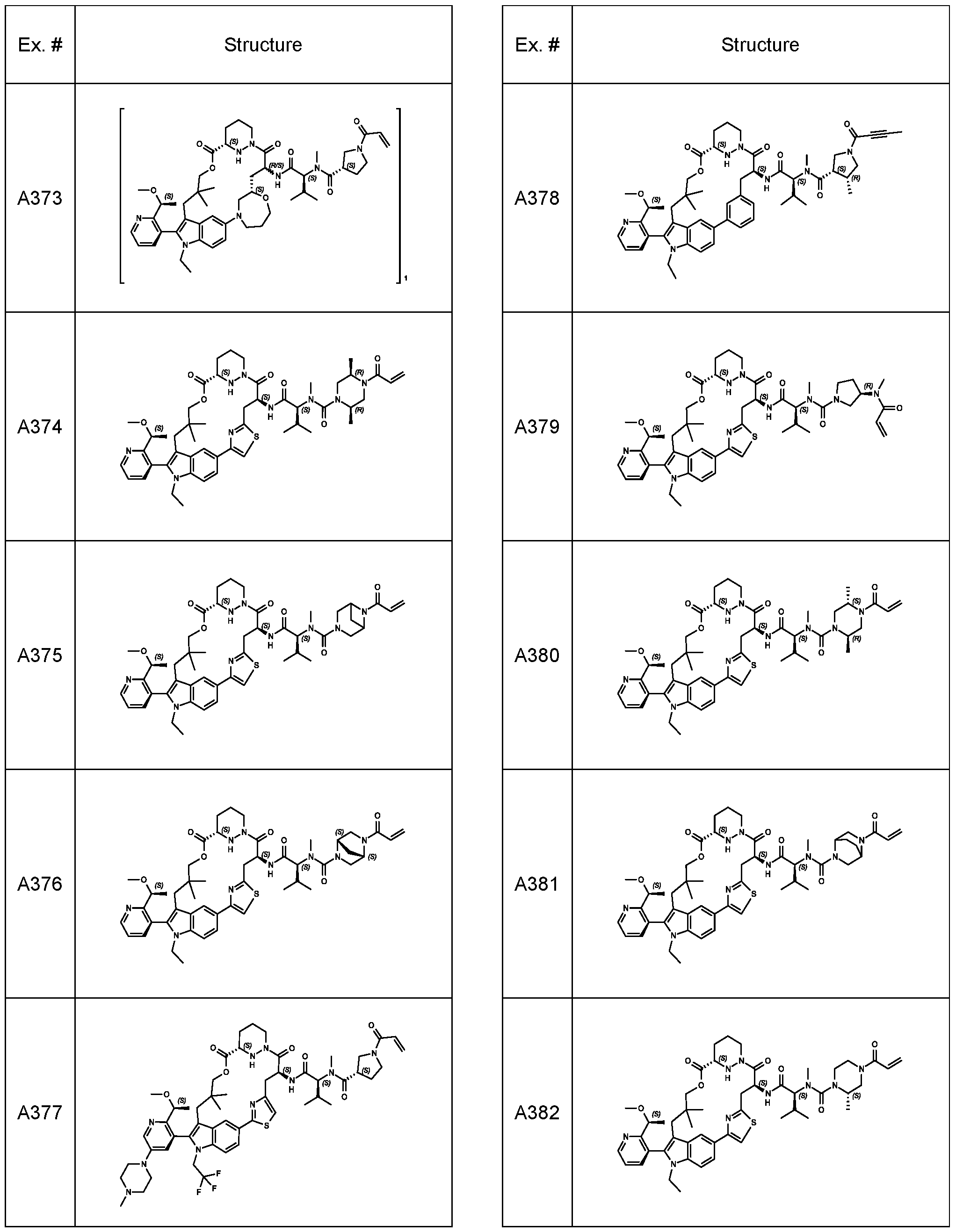
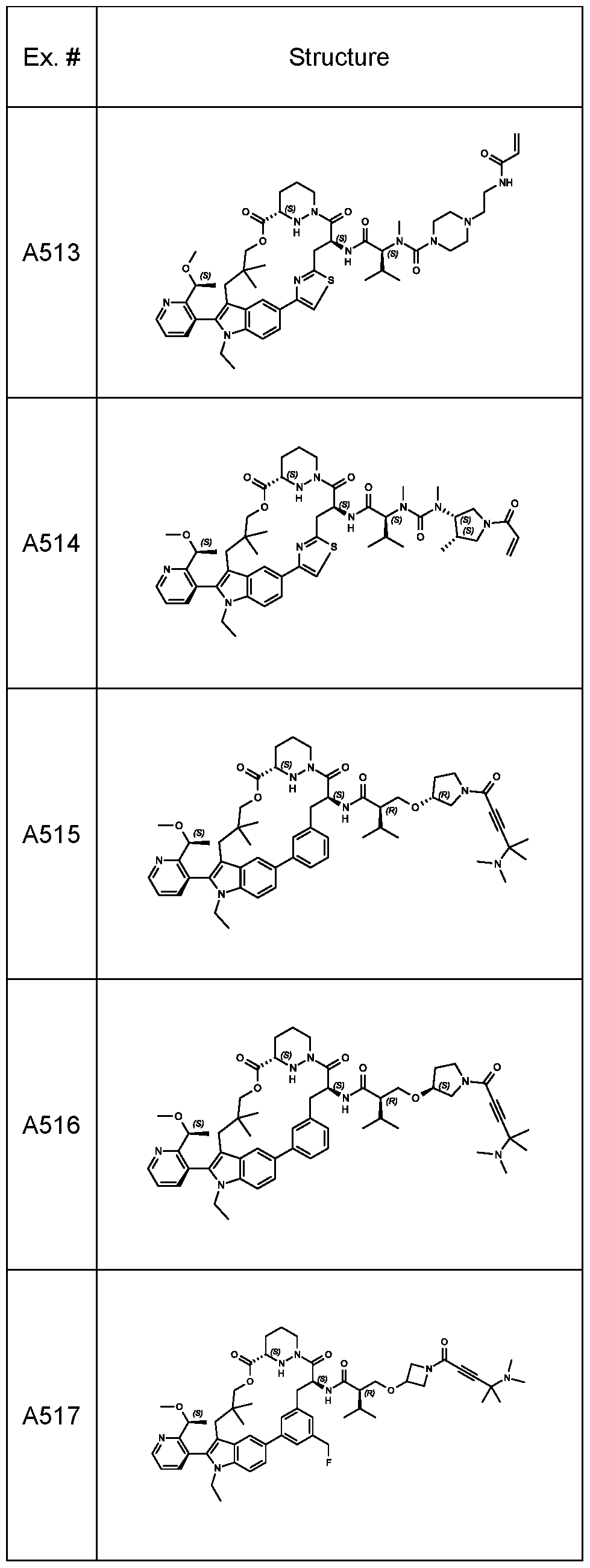
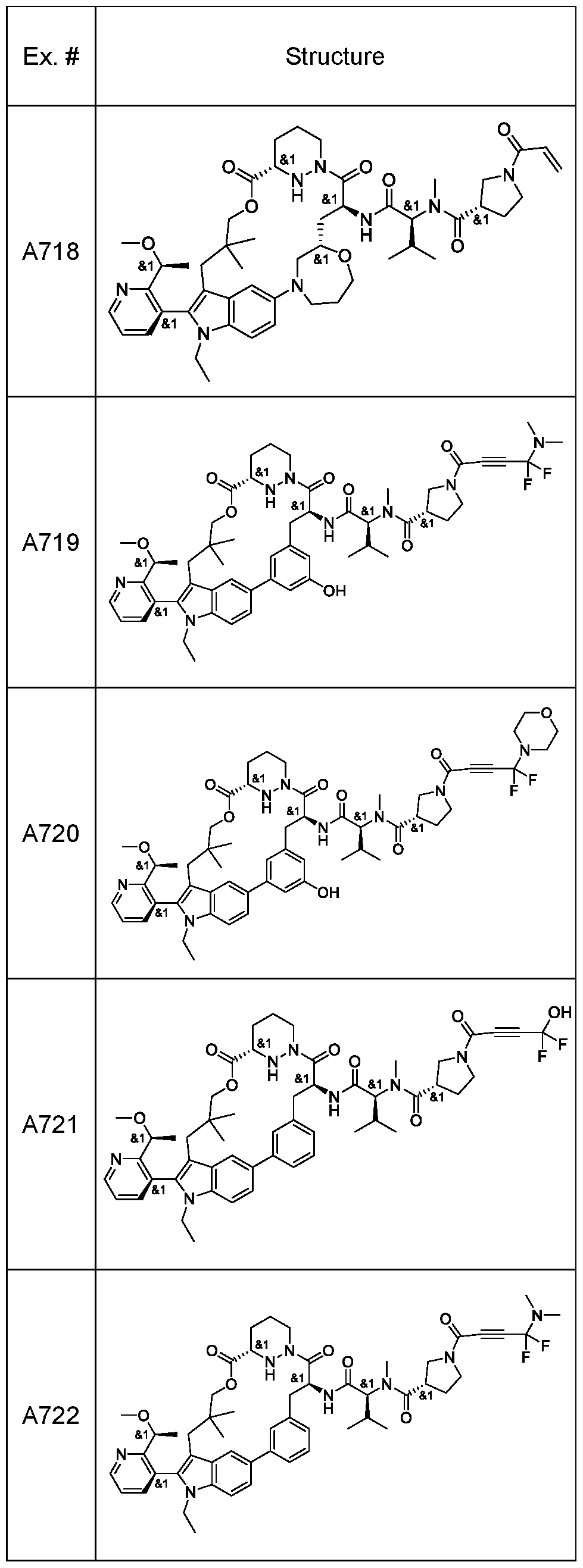
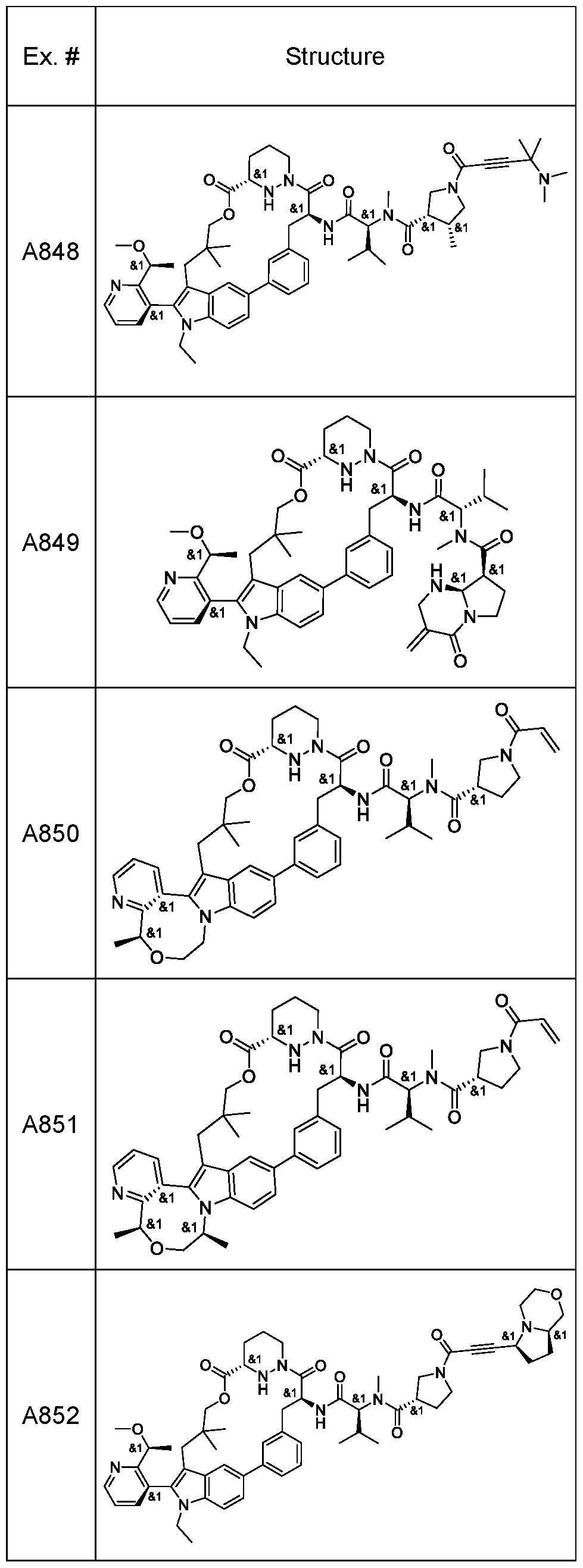
  • the RAS inhibitor is a compound of Table 1 , or a pharmaceutically acceptable salt thereof. In some embodiments, the RAS inhibitor is: or a pharmaceutically acceptable salt thereof.
  • the RAS inhibitor is a compound of Formula IX:
  • A’ is 5-6 membered saturated heterocycloalkyl or 5-6 membered heteroaryl, each optionally substituted by methyl, methoxy or halogen;
  • R 2 is methyl or halomethyl
  • R 9 ’ and R 9 ’’ are each methyl or R 9 ’ and R 9 ’’ taken together form an unsubstituted saturated C3-C6 cycloalkyl; and R 17 is hydrogen, -C1-C3 alkyl optionally substituted with one or more substituents independently selected from -OH, -O-C1-C3 alkyl, -NH2, -NH(CI-C3 alkyl), -N(CI-C3 alkyl)2, or a 4 to 7-membered saturated cycloalkyl, or a 4 to 7-membered saturated heterocycloalkyl.
  • the RAS inhibitor is a compound of Formula X:
  • the method further includes administering to the subject an immune checkpoint inhibitor.
  • the disclosure provides a method of treating an immune refractory lung cancer in a subject by administering to the subject a RAS inhibitor, a SHP2 inhibitor, and an immune checkpoint inhibitor, wherein the RAS inhibitor is: or a pharmaceutically acceptable salt thereof, and the SHP2 inhibitor is: or a pharmaceutically acceptable salt thereof.
  • the subject is administered an immune checkpoint inhibitor that is a PD-1 inhibitor.
  • the disclosure provides a method of sensitizing an immune refractory lung cancer in a subject, the method including administering to the subject a RAS inhibitor of Formula I or a subformula thereof described herein.
  • the subject has previously been administered an immune checkpoint inhibitor. In some embodiments, the subject is resistant to treatment with an immune checkpoint inhibitor. In some embodiments, the subject has acquired resistance to treatment with an immune checkpoint inhibitor.
  • administering the RAS inhibitor sensitizes the cancer to treatment with an immune checkpoint inhibitor.
  • the combination of inhibitors is administered simultaneously or sequentially. In some embodiments, the inhibitors are administered as a single formulation or in separate formulations.
  • the subject has one or more tumors with a low tumor mutational burden. In some embodiments, the subject has one or more microsatellite stable tumors. In some embodiments, the subject has one or more tumors with low microsatellite instability. In some embodiments, the subject has one or more tumors with a low tumor immune infiltrate.
  • administering the RAS inhibitor or a combination of inhibitors as disclosed herein alters the tumor immune infiltrate relative to the tumor immune infiltrate in the absence of the inhibitor or inhibitors.
  • the tumor immune infiltrate includes antigen-presenting cells, myeloid cells, or lymphoid cells.
  • administering the RAS inhibitor or a combination of inhibitors as disclosed herein alters the anti-tumor immune response relative to the tumor immune infiltrate in the absence of the inhibitor or inhibitors.
  • administering the RAS inhibitor or a combination of inhibitors as disclosed herein alters the tumor microenvironment relative to the tumor immune infiltrate in the absence of the inhibitor or inhibitors.
  • administering the RAS inhibitor or a combination of inhibitors as disclosed herein transforms an immunologically cold tumor into an immunologically hot tumor. In some embodiments, the method reduces tumor size or inhibits tumor growth.
  • the immune refractory lung cancer is a non-small cell lung cancer or a small-cell lung cancer. In some embodiments, the immune refractory lung cancer includes a Ras mutation. In some embodiments, the Ras mutation is K-Ras G12C, H-Ras C12C, or N-Ras G12C. In some embodiments, the Ras mutation is K-Ras G12C.
  • any limitation discussed with respect to one embodiment of the disclosure may apply to any other embodiment of the disclosure.
  • any compound or composition of the disclosure may be used in any method of the disclosure, and any method of the disclosure may be used to produce or to utilize any compound or composition of the disclosure.
  • FIG. 1 is a graph showing the tumor immune profile of the murine syngeneic Lewis lung (eLL2) KRAS WT/GI2C NR AS" A2 tumors.
  • the composition of the eLL2 KRAS'"TM 120 NR AS" A2 tumors is represented by an average of 2.37 % T cells (CD3+.
  • CD4+ and gdT cells 0.35 % B cells (CD19+), 1.38 % NK cells (NKp46+), 3.35 % dendritic cells (CD11c+/MHC il hi ), 39.72 % myeloid cells (Ly6G+ and LySC+), 8.5 % macrophages (F4/80+), 6.52 % other CD45+ cells and 37.79 % CD45-celis.
  • FIG. 2A is a representative immunohistochemical staining of CD8+ cells in the eLL2 KRAS'"TM 120 NRAS" A2 tumor. Arrowheads show positive staining, and the scale bar represents 100 nm.
  • FIG. 2B shows the quantification of 4 tumors showing an immune desert tumor microenvironment with an average of 0.225 % cytotoxic T cells infiltrating the tumor.
  • FIG. 3A shows tumor cell growth in vivo in the murine syngeneic eLL2 KRAS'"TM 120 NRAS" A2 model in mice treated with vehicle and isotype control.
  • FIG. 3B shows tumor cell growth in vivo in the murine syngeneic eLL2 KRAS'"TM 120 NRAS" A2 model in mice treated with Compound A and isotype control.
  • FIG. 3C shows tumor cell growth in vivo in the murine syngeneic eLL2 KRAS'"TM 120 NRAS" A2 model in mice treated with RMC-4550 and isotype control.
  • FIG. 3D shows tumor cell growth in vivo in the murine syngeneic eLL2 KRAS'"TM 120 NRAS" A2 model in mice treated with Compound A, RMC-4550 and isotype control.
  • FIG. 3E shows tumor cell growth in vivo in the murine syngeneic eLL2 KRAS'"TM 120 NRAS" A2 model in mice treated with vehicle and anti-PD-1 .
  • FIG. 3F shows tumor cell growth in vivo in the murine syngeneic eLL2 KRAS'"TM 120 NRAS" A2 model in mice treated with Compound A and anti-PD-1 .
  • FIG. 3G shows tumor cell growth in vivo in the murine syngeneic eLL2 KRAS'"TM 120 NRAS" A2 model in mice treated with RMC-4550 and anti-PD-1 .
  • FIG. 3H shows tumor cell growth in vivo in the murine syngeneic eLL2 KRAS'"TM 120 NRAS" A2 model in mice treated with Compound A, RMC-4550, and anti-PD-1 .
  • FIG. 3I shows the percent of tumors that have increased by less than double from baseline volume overtime following treatment with RMC-4550, Compound A, or both.
  • FIG. 3J are graphs showing the percent of tumors that have increased by less than double from baseline volume over time following treatment with RMC-4550, Compound A, anti-PD-1 , or a combination thereof.
  • FIG. 3K shows the percent body weight change over time post tumor implant following treatment with RMC-4550, Compound A, or both. Treatments were well tolerated by body weight measurements.
  • FIG. 3L shows the percent body weight change overtime post tumor implant following treatment with RMC-4550, Compound A, anti-PD-1 , or a combination thereof. Treatments were well tolerated by body weight measurements.
  • FIG. 4A graphically depicts Compound A, the dual combinations with RMC-4550 or anti-PD-1 and the triple combination significantly increased the infiltration of CD8+ T cells.
  • FIG. 4B shows Compound A, the dual combinations with RMC-4550 or anti-PD-1 and the triple combination significantly increased the infiltration of CD4+ T cells.
  • FIG. 4C is a graph showing monotherapies with Compound A and RMC-4550 as well as the combination therapies significantly decreased Ly6G+ myeloid suppressor cells.
  • FIG. 5A graphically depicts the dual combination of Compound A and RMC-4550 or the triple combination with anti-PD-1 resulted in an increased proportion of CD8+ T cells secreting Granzyme B
  • FIG. 5B shows the dual combination of Compound A and RMC-4550 or the triple combination with anti-PD-1 resulted in an increased proportion of CD107a+ CD8+ T cells.
  • FIG. 5C is a graph showing the dual combination of Compound A and RMC-4550 or the triple combination with anti-PD-1 resulted in an increased proportion of TNF alpha+ CD8+ T cells.
  • FIG. 6A graphically depicts IHC quantification of T cell infiltration after 4 days of treatment with Compound A and the combination with RMC-4550, anti-PD-1 or the triple combination showed a significant increase of CD8+ T cells.
  • FIG. 6B shows IHC quantification of T cell infiltration after 4 days of treatment with Compound A and the combination with RMC-4550, anti-PD-1 or the triple combination showed a significant increase of CD4+ T cells.
  • the present disclosure relates generally to compositions and methods for the treatment of immune refractory lung cancer.
  • the disclosure is based, at least in part, on the observation that treatment of immune refractory lung cancer with a compound that inhibits mutant RAS G12C protein sensitizes the cancer to treatment with an immunotherapy agent.
  • the compound inhibits RAS having an oncogenic G12C mutation.
  • the RAS inhibitor is a covalent inhibitor, for example, that is capable of forming a covalent bond with an oncogenic mutant form of RAS G12C at the G12C position.
  • treatment with a RAS inhibitor sensitizes the cancer to treatment with an immune checkpoint inhibitor or a SHP2 inhibitor.
  • a compound or combination of compounds described herein is administered to a subject who has previously failed immunotherapy treatment, such as treatment with an immune checkpoint inhibitor.
  • the term “about” is used to indicate that a value includes the standard deviation of error for the device or method being employed to determine the value.
  • the term “about” refers to a range of values that fall within 25%, 20%, 19%, 18%, 17%, 16%, 15%, 14%, 13%, 12%, 11%, 10%, 9%, 8%, 7%, 6%, 5%, 4%, 3%, 2%, 1%, or less in either direction (greater than or less than) of a stated value, unless otherwise stated or otherwise evident from the context (e.g., where such number would exceed 100% of a possible value).
  • adjacent in the context of describing adjacent atoms refers to bivalent atoms that are directly connected by a covalent bond.
  • Compounds described herein can be asymmetric (e.g., having one or more stereocenters). All stereoisomers, such as enantiomers and diastereomers, are intended unless otherwise indicated.
  • one or more compounds depicted herein may exist in different tautomeric forms.
  • references to such compounds encompass all such tautomeric forms.
  • tautomeric forms result from the swapping of a single bond with an adjacent double bond and the concomitant migration of a proton.
  • a tautomeric form may be a prototropic tautomer, which is an isomeric protonation states having the same empirical formula and total charge as a reference form.
  • moieties with prototropic tautomeric forms are ketone - enol pairs, amide - imidic acid pairs, lactam - lactim pairs, amide - imidic acid pairs, enamine - imine pairs, and annular forms where a proton can occupy two or more positions of a heterocyclic system, such as, 1 H- and 3H-imidazole, 1 H-, 2H- and 4H-1 ,2,4-triazole, 1 H- and 2H- isoindole, and 1 H- and 2H-pyrazole.
  • tautomeric forms can be in equilibrium or sterically locked into one form by appropriate substitution.
  • tautomeric forms result from acetal interconversion.
  • structures depicted herein are also meant to include compounds that differ only in the presence of one or more isotopically enriched atoms.
  • Exemplary isotopes that can be incorporated into compounds of the present disclosure include isotopes of hydrogen, carbon, nitrogen, oxygen, phosphorus, sulfur, fluorine, chlorine, and iodine, such as 2 H, 3 H, 11 C, 13 C, 14 C, 13 N, 15 N, 15 O, 17 O, 18 0, 32 P, 33 P, 35 S, 18 F, 36 CI, 123 l and 125 l.
  • Isotopically labeled compounds e.g., those labeled with 3 H and 14 C
  • Tritiated (i.e., 3 H) and carbon-14 (i.e., 14 C) isotopes can be useful for their ease of preparation and detectability. Further, substitution with heavier isotopes such as deuterium (i.e., 2 H) may afford certain therapeutic advantages resulting from greater metabolic stability (e.g., increased in vivo half-life or reduced dosage requirements).
  • one or more hydrogen atoms are replaced by 2 H or 3 H, or one or more carbon atoms are replaced by 13 C- or 14 C-enriched carbon.
  • Positron emitting isotopes such as 15 0, 13 N, 11 C, and 18 F are useful for positron emission tomography (PET) studies to examine substrate receptor occupancy.
  • isotopically labeled compounds can generally be prepared by following procedures analogous to those disclosed for compounds of the present disclosure described herein, by substituting an isotopically labeled reagent for a non-isotopically labeled reagent.
  • Deuteration of moieties within substituent W in compounds of the present invention are also contemplated, where W is defined herein (see, e.g., Formulas I and subformulas thereof as well as specific examples of W described herein, such as any A moiety of compounds of the Formulas described herein is also contemplated, such as Further, deuterium substitution may also take place in compounds of the present invention at the linker position, such as
  • silylation substitution is also contemplated, such as in the linker as follows:
  • substituents of compounds of the present disclosure are disclosed in groups or in ranges. It is specifically intended that the present disclosure include each and every individual subcombination of the members of such groups and ranges.
  • the term “Ci-Ce alkyl” is specifically intended to individually disclose methyl, ethyl, C3 alkyl, C4 alkyl, C5 alkyl, and Ce alkyl.
  • the present disclosure is intended to cover individual compounds and groups of compounds (e.g., genera and subgenera) containing each and every individual subcombination of members at each position.
  • optionally substituted X is intended to be equivalent to “X, wherein X is optionally substituted” (e.g., “alkyl, wherein said alkyl is optionally substituted”). It is not intended to mean that the feature “X” (e.g., alkyl) per se is optional.
  • certain compounds of interest may contain one or more “optionally substituted” moieties.
  • substituted whether preceded by the term “optionally” or not, means that one or more hydrogens of the designated moiety are replaced with a suitable substituent, e.g., any of the substituents or groups described herein.
  • an “optionally substituted” group may have a suitable substituent at each substitutable position of the group, and when more than one position in any given structure may be substituted with more than one substituent selected from a specified group, the substituent may be either the same or different at every position.
  • substituents envisioned by the present disclosure are preferably those that result in the formation of stable or chemically feasible compounds.
  • stable refers to compounds that are not substantially altered when subjected to conditions to allow for their production, detection, and, in certain embodiments, their recovery, purification, and use for one or more of the purposes disclosed herein.
  • Suitable monovalent substituents on R° may be, independently, halogen, -(CH2)o-2R*, -SiR*3, -OSiR*3, -C(O)SR* -(C1-4 straight or branched alkylene)C(O)OR*, or -SSR* wherein each R* is unsubstituted or where preceded by “halo” is substituted only with one or more halogens, and is independently selected from C1-4 aliphatic, -CH2Ph, -0(CH2)o-iPh, or a 5-6-membered saturated, partially unsaturated, or aryl ring having 0-4 heteroatoms independently selected from nitrogen, oxygen, or sulfur.
  • Suitable divalent substituents that are bound to vicinal substitutable carbons of an “optionally substituted” group include: -O(CR*2)2-3O-, wherein each independent occurrence of R* is selected from hydrogen, C1-6 aliphatic which may be substituted as defined below, or an unsubstituted 5-6-membered saturated, partially unsaturated, or aryl ring having 0-4 heteroatoms independently selected from nitrogen, oxygen, or sulfur.
  • Suitable substituents on the aliphatic group of R* include halogen, -R*, -(haloR*), -OH, -OR*, -0(haloR*), -CN, -C(O)OH, -C(O)OR*, -NH2, -NHR*, -NR*2, or -N02, wherein each R* is unsubstituted or where preceded by “halo” is substituted only with one or more halogens, and is independently C1-4 aliphatic, -CH2Ph, -0(CH2)o-iPh, or a 5-6-membered saturated, partially unsaturated, or aryl ring having 0-4 heteroatoms independently selected from nitrogen, oxygen, or sulfur.
  • Suitable substituents on a substitutable nitrogen of an “optionally substituted” group include -Rt, -NRt 2 , -C(O)Rt, -C(O)ORt, -C(O)C(O)Rt, -C(O)CH 2 C(O)Rt, -S(O) 2 Rt, -S(O) 2 NRt 2 , -C(S)NRt 2 , -C(NH)NRt 2 , or -N(Rt)S(O) 2 Rt; wherein each Rt is independently hydrogen, C1-6 aliphatic which may be substituted as defined below, unsubstituted -OPh, or an unsubstituted 3-6-membered saturated, partially unsaturated, or aryl ring having 0-4 heteroatoms independently selected from nitrogen, oxygen, or sulfur, or, notwithstanding the definition above, two independent occurrences of Rt, taken together with their intervening atom(s) form an unsubstit
  • Suitable substituents on an aliphatic group of Rt are independently halogen, -R*, -(haloR*), -OH, -OR*, -0(haloR*), -CN, -C(O)OH, -C(O)OR*, -NH 2 , -NHR*, -NR* 2 , or -NQ 2 , wherein each R* is unsubstituted or where preceded by “halo” is substituted only with one or more halogens, and is independently C1-4 aliphatic, -CH2Ph, -0(CH2)o-iPh, or a 5-6-membered saturated, partially unsaturated, or aryl ring having 0-4 heteroatoms independently selected from nitrogen, oxygen, or sulfur.
  • reference to a particular compound may relate to a specific form of that compound. In some embodiments, reference to a particular compound may relate to that compound in any form.
  • a preparation of a single stereoisomer of a compound may be considered to be a different form of the compound than a racemic mixture of the compound; a particular salt of a compound may be considered to be a different form from another salt form of the compound; a preparation containing one conformational isomer ((Z) or (E)) of a double bond may be considered to be a different form from one containing the other conformational isomer ((E) or (Z)) of the double bond; a preparation in which one or more atoms is a different isotope than is present in a reference preparation may be considered to be a different form.
  • administration refers to the administration of a composition (e.g., a compound, or a preparation that includes a compound as described herein) to a subject or system.
  • Administration also includes administering a prodrug derivative or analog of the compound or pharmaceutically acceptable salt of the compound or composition to the subject, which can form an equivalent amount of active compound within the subject’s body.
  • Administration to an animal subject e.g., to a human may be by any appropriate route.
  • administration may be bronchial (including by bronchial instillation), buccal, enteral, interdermal, intra-arterial, intradermal, intragastric, intramedullary, intramuscular, intranasal, intraperitoneal, intrathecal, intravenous, intraventricular, mucosal, nasal, oral, rectal, subcutaneous, sublingual, topical, tracheal (including by intratracheal instillation), transdermal, vaginal or vitreal.
  • bronchial including by bronchial instillation
  • acetyl refers to the group -C(O)CH3.
  • alkoxy refers to a -O-C1-C20 alkyl group, wherein the alkoxy group is attached to the remainder of the compound through an oxygen atom.
  • alkyl refers to a saturated, straight or branched monovalent hydrocarbon group containing from 1 to 20 (e.g., from 1 to 10 or from 1 to 6) carbons.
  • an alkyl group is unbranched (i.e., is linear); in some embodiments, an alkyl group is branched.
  • Alkyl groups are exemplified by, but not limited to, methyl, ethyl, n- and /so-propyl, n-, sec-, iso- and fe/Y-butyl, and neopentyl.
  • alkylene represents a saturated divalent hydrocarbon group derived from a straight or branched chain saturated hydrocarbon by the removal of two hydrogen atoms, and is exemplified by methylene, ethylene, isopropylene, and the like.
  • C x -C y alkylene represents alkylene groups having between x and y carbons. Exemplary values for x are 1 , 2, 3, 4, 5, and 6, and exemplary values for y are 2, 3, 4, 5, 6, 7, 8, 9, 10, 12, 14, 16, 18, or 20 (e.g., Ci-Ce, C1-C10, C2-C20, C2-C6, C2-C10, or C2-C20 alkylene).
  • the alkylene can be further substituted with 1 , 2, 3, or 4 substituent groups as defined herein.
  • alkenyl represents monovalent straight or branched chain groups of, unless otherwise specified, from 2 to 20 carbons (e.g., from 2 to 6 or from 2 to 10 carbons) containing one or more carbon-carbon double bonds and is exemplified by ethenyl, 1 -propenyl, 2-propenyl, 2-methyl-1 -propenyl, 1 -butenyl, and 2-butenyl.
  • Alkenyls include both cis and trans isomers.
  • alkenylene represents a divalent straight or branched chain groups of, unless otherwise specified, from 2 to 20 carbons (e.g., from 2 to 6 or from 2 to 10 carbons) containing one or more carbon-carbon double bonds.
  • alkynyl represents monovalent straight or branched chain groups from 2 to 20 carbon atoms (e.g., from 2 to 4, from 2 to 6, or from 2 to 10 carbons) containing a carbon-carbon triple bond and is exemplified by ethynyl, and 1-propynyl.
  • alkynyl sulfone represents a group comprising the structure , wherein R is any chemically feasible substituent described herein.
  • amino represents -N(Rt)2, e.g., -NH2 and -N(CH3)2.
  • aminoalkyl represents an alkyl moiety substituted on one or more carbon atoms with one or more amino moieties.
  • amino acid refers to a molecule having a side chain, an amino group, and an acid group (e.g., -CO2H or -SOsH), wherein the amino acid is attached to the parent molecular group by the side chain, amino group, or acid group (e.g., the side chain).
  • amino acid in its broadest sense, refers to any compound or substance that can be incorporated into a polypeptide chain, e.g., through formation of one or more peptide bonds.
  • an amino acid has the general structure H2N-C(H)(R)-COOH.
  • an amino acid is a naturally-occurring amino acid.
  • an amino acid is a synthetic amino acid; in some embodiments, an amino acid is a D-amino acid; in some embodiments, an amino acid is an L-amino acid.
  • Standard amino acid refers to any of the twenty standard L-amino acids commonly found in naturally occurring peptides.
  • Exemplary amino acids include alanine, arginine, asparagine, aspartic acid, cysteine, glutamic acid, glutamine, glycine, histidine, optionally substituted hydroxylnorvaline, isoleucine, leucine, lysine, methionine, norvaline, ornithine, phenylalanine, proline, pyrrolysine, selenocysteine, serine, taurine, threonine, tryptophan, tyrosine, and valine.
  • amino acid substitution refers to the substitution of a wild-type amino acid of a protein with a non-wild-type amino acid. Amino acid substitutions can result from genetic mutations and may alter one or more properties of the protein (e.g., may confer altered binding affinity or specificity, altered enzymatic activity, altered structure, or altered function).
  • aryl represents a monovalent monocyclic, bicyclic, or multicyclic ring system formed by carbon atoms, wherein the ring attached to the pendant group is aromatic.
  • aryl groups are phenyl, naphthyl, phenanthrenyl, and anthracenyl.
  • An aryl ring can be attached to its pendant group at any heteroatom or carbon ring atom that results in a stable structure and any of the ring atoms can be optionally substituted unless otherwise specified.
  • Co represents a bond.
  • part of the term -N(C(0)-(Co-Cs alkylene-H)- includes -N(C(Q)-(Co alkylene-H)-, which is also represented by -N(C(O)-H)-.
  • Carbocyclic and “carbocyclyl,” as used herein, refer to a monovalent, optionally substituted C3-C12 monocyclic, bicyclic, or tricyclic ring structure, which may be bridged, fused or spirocyclic, in which all the rings are formed by carbon atoms and at least one ring is non-aromatic.
  • Carbocyclic structures include cycloalkyl, cycloalkenyl, and cycloalkynyl groups.
  • carbocyclyl groups are cyclohexyl, cyclohexenyl, cyclooctynyl, 1 ,2-dihydronaphthyl, 1 ,2,3,4-tetrahydronaphthyl, fluorenyl, indenyl, indanyl, decalinyl, and the like.
  • a carbocyclic ring can be attached to its pendant group at any ring atom that results in a stable structure and any of the ring atoms can be optionally substituted unless otherwise specified.
  • a combination therapy refers to a method of treatment including administering to a subject at least two therapeutic agents, optionally as one or more pharmaceutical compositions, as part of a therapeutic regimen.
  • a combination therapy may include administration of a single pharmaceutical composition including at least two therapeutic agents and one or more pharmaceutically acceptable carrier, excipient, diluent, or surfactant.
  • a combination therapy may include administration of two or more pharmaceutical compositions, each composition including one or more therapeutic agent and one or more pharmaceutically acceptable carrier, excipient, diluent, or surfactant.
  • the two or more agents may optionally be administered simultaneously (as a single or as separate compositions) or sequentially (as separate compositions).
  • the therapeutic agents may be administered in an effective amount.
  • the therapeutic agent may be administered in a therapeutically effective amount.
  • the effective amount of one or more of the therapeutic agents may be lower when used in a combination therapy than the therapeutic amount of the same therapeutic agent when it is used as a monotherapy, e.g., due to an additive or synergistic effect of combining the two or more therapeutics.
  • cyano represents a -CN group.
  • cycloalkyl represents a monovalent saturated cyclic hydrocarbon group, which may be bridged, fused or spirocyclic having from three to eight ring carbons, unless otherwise specified, and is exemplified by cyclopropyl, cyclobutyl, cyclopentyl, cyclohexyl, cycloheptyl, and cycloheptyl.
  • cycloalkenyl represents a monovalent, non-aromatic, saturated cyclic hydrocarbon group, which may be bridged, fused or spirocyclic having from three to eight ring carbons, unless otherwise specified, and containing one or more carbon-carbon double bonds.
  • stereomer means stereoisomers that are not mirror images of one another and are non-superimposable on one another.
  • the term “dosage form” refers to a physically discrete unit of a compound (e.g., a compound of the present disclosure) for administration to a subject.
  • a compound e.g., a compound of the present disclosure
  • Each unit contains a predetermined quantity of compound.
  • such quantity is a unit dosage amount (or a whole fraction thereof) appropriate for administration in accordance with a dosing regimen that has been determined to correlate with a desired or beneficial outcome when administered to a relevant population (i.e., with a therapeutic dosing regimen).
  • a dosing regimen refers to a set of unit doses (typically more than one) that are administered individually to a subject, typically separated by periods of time.
  • a given therapeutic compound e.g., a compound of the present disclosure
  • has a recommended dosing regimen which may involve one or more doses.
  • a dosing regimen includes a plurality of doses each of which are separated from one another by a time period of the same length; in some embodiments, a dosing regimen includes a plurality of doses and at least two different time periods separating individual doses. In some embodiments, all doses within a dosing regimen are of the same unit dose amount.
  • a dosing regimen includes a first dose in a first dose amount, followed by one or more additional doses in a second dose amount different from the first dose amount.
  • a dosing regimen includes a first dose in a first dose amount, followed by one or more additional doses in a second dose amount same as the first dose amount.
  • a dosing regimen is correlated with a desired or beneficial outcome when administered across a relevant population (i.e., is a therapeutic dosing regimen).
  • disorder is used in this disclosure to mean, and is used interchangeably with, the terms disease, condition, or illness, unless otherwise indicated.
  • enantiomer means each individual optically active form of a compound of the invention, having an optical purity or enantiomeric excess (as determined by methods standard in the art) of at least 80% (i.e., at least 90% of one enantiomer and at most 10% of the other enantiomer), preferably at least 90% and more preferably at least 98%.
  • guanidinoalkyl alkyl represents an alkyl moiety substituted on one or more carbon atoms with one or more guanidinyl moieties.
  • haloacetyl refers to an acetyl group wherein at least one of the hydrogens has been replaced by a halogen.
  • haloalkyl represents an alkyl moiety substituted on one or more carbon atoms with one or more of the same of different halogen moieties.
  • halogen represents a halogen selected from bromine, chlorine, iodine, or fluorine.
  • heteroalkyl refers to an “alkyl” group, as defined herein, in which at least one carbon atom has been replaced with a heteroatom (e.g., an O, N, or S atom).
  • a heteroatom e.g., an O, N, or S atom.
  • the heteroatom may appear in the middle or at the end of the radical.
  • heteroaryl represents a monovalent, monocyclic or polycyclic ring structure that contains at least one fully aromatic ring: i.e., they contain 4n+2 pi electrons within the monocyclic or polycyclic ring system and contains at least one ring heteroatom selected from N, O, or S in that aromatic ring.
  • exemplary unsubstituted heteroaryl groups are of 1 to 12 (e.g., 1 to 11 , 1 to 10, 1 to 9, 2 to 12, 2 to 11 , 2 to 10, or 2 to 9) carbons.
  • heteroaryl includes bicyclic, tricyclic, and tetracyclic groups in which any of the above heteroaromatic rings is fused to one or more, aryl or carbocyclic rings, e.g., a phenyl ring, or a cyclohexane ring.
  • heteroaryl groups include, but are not limited to, pyridyl, pyrazolyl, benzooxazolyl, benzoimidazolyl, benzothiazolyl, imidazolyl, thiazolyl, quinolinyl, tetrahydroquinolinyl, and 4-azaindolyl.
  • a heteroaryl ring can be attached to its pendant group at any ring atom that results in a stable structure and any of the ring atoms can be optionally substituted unless otherwise specified.
  • the heteroaryl is substituted with 1 , 2, 3, or 4 substituents groups.
  • heterocycloalkyl represents a monovalent monocyclic, bicyclic or polycyclic ring system, which may be bridged, fused or spirocyclic, wherein at least one ring is nonaromatic and wherein the non-aromatic ring contains one, two, three, or four heteroatoms independently selected from the group consisting of nitrogen, oxygen, and sulfur.
  • the 5-membered ring has zero to two double bonds, and the 6- and 7-membered rings have zero to three double bonds.
  • Exemplary unsubstituted heterocycloalkyl groups are of 1 to 12 (e.g., 1 to 11 , 1 to 10, 1 to 9, 2 to 12, 2 to 11 , 2 to 10, or 2 to 9) carbons.
  • heterocycloalkyl also represents a heterocyclic compound having a bridged multicyclic structure in which one or more carbons or heteroatoms bridges two non-adjacent members of a monocyclic ring, e.g., a quinuclidinyl group.
  • heterocycloalkyl includes bicyclic, tricyclic, and tetracyclic groups in which any of the above heterocyclic rings is fused to one or more aromatic, carbocyclic, heteroaromatic, or heterocyclic rings, e.g., an aryl ring, a cyclohexane ring, a cyclohexene ring, a cyclopentane ring, a cyclopentene ring, a pyridine ring, or a pyrrolidine ring.
  • heterocycloalkyl groups are pyrrolidinyl, piperidinyl, 1 ,2,3,4-tetrahydroquinolinyl, decahydroquinolinyl, dihydropyrrolopyridine, and decahydronapthyridinyl.
  • a heterocycloalkyl ring can be attached to its pendant group at any ring atom that results in a stable structure and any of the ring atoms can be optionally substituted unless otherwise specified.
  • hydroxy represents a -OH group.
  • hydroxyalkyl represents an alkyl moiety substituted on one or more carbon atoms with one or more -OH moieties.
  • isomer means any tautomer, stereoisomer, atropiosmer, enantiomer, or diastereomer of any compound of the invention. It is recognized that the compounds of the invention can have one or more chiral centers or double bonds and, therefore, exist as stereoisomers, such as double-bond isomers (i.e., geometric E/Z isomers) or diastereomers (e.g., enantiomers (i.e., (+) or (-)) or cis/trans isomers).
  • stereoisomers such as double-bond isomers (i.e., geometric E/Z isomers) or diastereomers (e.g., enantiomers (i.e., (+) or (-)) or cis/trans isomers).
  • the chemical structures depicted herein, and therefore the compounds of the invention encompass all the corresponding stereoisomers, that is, both the stereomerically pure form (e.g., geometrically pure, enantiomerically pure, or diastereomerically pure) and enantiomeric and stereoisomeric mixtures, e.g., racemates.
  • Enantiomeric and stereoisomeric mixtures of compounds of the invention can typically be resolved into their component enantiomers or stereoisomers by well-known methods, such as chiral-phase gas chromatography, chiral-phase high performance liquid chromatography, crystallizing the compound as a chiral salt complex, or crystallizing the compound in a chiral solvent.
  • Enantiomers and stereoisomers can also be obtained from stereomerically or enantiomerically pure intermediates, reagents, and catalysts by well-known asymmetric synthetic methods.
  • the terms “immune refractory,” “immune evasive,” or “cold tumor” refers to a tumor, cancer, or patient having a tumor or cancer, for which a prior immunotherapy, such as an immune checkpoint inhibitor, has been found ineffective or intolerable.
  • a patient having an immune refractory cancer includes a patient who has previously been administered an immunotherapy, such as an immune checkpoint inhibitor, and the immunotherapy has been found ineffective or found not adequately effective to slow or halt the progression of the disease or to alleviate symptoms associated with the progression of the disease.
  • Immune refractory cancers include cancers that have become resistant to or desensitized to treatment with immunotherapy (e.g., the effectiveness of an immunotherapy, such as an immune checkpoint inhibitor, previously administered to the patient is diminished over time). Immune refractory cancers can be identified by methods known to those of skill in the art or by methods described herein. For example, immune refractory cancers may be characterized by low immune cell infiltrate in one or more tumors.
  • Low immune cell infiltrate may include a decrease or absence of lymphocytes; a decrease or absence of tumor-infiltrating lymphocytes (TILs) ; a decrease or absence of dendritic cells; a decrease or absence of myeloid cells; a decrease or absence of natural killer (NK) cells; a decrease or absence of macrophages; a decrease or absence of T cells; a decrease or absence of CD8+ T cells; a decrease or absence of CD4+ T cells; or a decrease or absence of CD4+/CD8+ T cells.
  • TILs tumor-infiltrating lymphocytes
  • NK natural killer
  • a “hot tumor” refers to a tumor, cancer, or patient having a tumor or cancer that is not immune refractory.
  • a cancer or tumor having a low cytotoxic T cell count can be characterized as an “immune desert.”
  • a cancer or tumor having a cytotoxic T cell count of less than 1 % live cells are considered an “immune desert.”
  • a cancer or tumor having a cytotoxic T cell count of less than 0.5% live cells are considered an “immune desert.”
  • a cancer or tumor having a cytotoxic T cell count of less than 0.25% live cells are considered an “immune desert.”
  • inhibitor refers to a compound that prevents a biomolecule, (e.g., a protein, nucleic acid) from completing or initiating a reaction.
  • An inhibitor can inhibit a reaction by competitive, uncompetitive, or non-competitive means, for example.
  • an inhibitor may be an irreversible inhibitor or a reversible inhibitor.
  • Exemplary inhibitors include, but are not limited to, nucleic acids, DNA, RNA, shRNA, siRNA, proteins, protein mimetics, peptides, peptidomimetics, antibodies, small molecules, chemicals, analogs that mimic the binding site of an enzyme, receptor, or other protein.
  • the inhibitor is a small molecule, e.g., a low molecular weight organic compound, e.g., an organic compound having a molecular weight (MW) of less than 1200 Daltons (Da). In some embodiments, the MW is less than 1100 Da. In some embodiments, the MW is less than 1000 Da. In some embodiments, the MW is less than 900 Da. In some embodiments, the range of the MW of the small molecule is between 800 Da and 1200 Da.
  • Small molecule inhibitors include cyclic and acyclic compounds. Small molecules inhibitors include natural products, derivatives, and analogs thereof. Small molecule inhibitors can include a covalent cross-linking group capable of forming a covalent cross-link, e.g., with an amino acid side-chain of a target protein.
  • linker refers to a divalent organic moiety connecting a first moiety (e.g., a macrocyclic moiety) to a second moiety (e.g., a cross-linking group).
  • first moiety e.g., a macrocyclic moiety
  • second moiety e.g., a cross-linking group
  • the linker results in a compound capable of achieving an IC50 of 2 uM or less in the Ras-RAF disruption assay protocol provided here:
  • this biochemical assay is to measure the ability of test compounds to facilitate ternary complex formation between a nucleotide-loaded Ras isoform and cyclophilin A; the resulting ternary complex disrupts binding to a BRAF RBD construct, inhibiting Ras signaling through a RAF effector.
  • assay buffer containing 25 mM HEPES pH 7.3, 0.002% Tween20, 0.1 % BSA, 100 mM NaCI and 5 mM MgCh, tagless Cyclophilin A, His6-K-Ras-GMPPNP (or other Ras variant), and GST- BRAF RBD are combined in a 384-well assay plate at final concentrations of 25 pM, 12.5 nM and 50 nM, respectively.
  • Compound is present in plate wells as a 10-point 3-fold dilution series starting at a final concentration of 30 pM.
  • TR-FRET signal is read on a microplate reader (Ex 320 nm, Em 665/615 nm).
  • Compounds that facilitate disruption of a Ras:RAF complex are identified as those eliciting a decrease in the TR-FRET ratio relative to DMSO control wells.
  • the linker comprises 20 or fewer linear atoms. In some embodiments, the linker comprises 15 or fewer linear atoms. In some embodiments, the linker comprises 10 or fewer linear atoms. In some embodiments, the linker has a molecular weight of under 500 g/mol. In some embodiments, the linker has a molecular weight of under 400 g/mol. In some embodiments, the linker has a molecular weight of under 300 g/mol. In some embodiments, the linker has a molecular weight of under 200 g/mol. In some embodiments, the linker has a molecular weight of under 100 g/mol. In some embodiments, the linker has a molecular weight of under 50 g/mol.
  • mutation indicates any modification of a nucleic acid or polypeptide which results in an altered nucleic acid or polypeptide.
  • the term “mutation” may include, for example, point mutations, deletions or insertions of single or multiple residues in a polynucleotide, which includes alterations arising within a protein-encoding region of a gene as well as alterations in regions outside of a protein-encoding sequence, such as, but not limited to, regulatory or promoter sequences, as well as amplifications or chromosomal breaks or translocations.
  • the mutation results in an amino acid substitution in the encoded-protein.
  • a “patient” or “subject” is a mammal, e.g., a human, mouse, rat, guinea pig, dog, cat, horse, cow, pig, or non-human primate, such as a monkey, chimpanzee, baboon or rhesus.
  • prevent refers to keeping a disease or disorder from afflicting the subject. Preventing includes prophylactic treatment. For instance, preventing can include administering to the subject a compound disclosed herein before a subject is afflicted with a disease and the administration will keep the subject from being afflicted with the disease.
  • composition refers to a compound, such as a compound of the present disclosure, or a pharmaceutically acceptable salt thereof, formulated together with a pharmaceutically acceptable excipient.
  • a “pharmaceutically acceptable excipient,” as used herein, refers any inactive ingredient (for example, a vehicle capable of suspending or dissolving the active compound) having the properties of being nontoxic and non-inflammatory in a subject.
  • Typical excipients include, for example: antiadherents, antioxidants, binders, coatings, compression aids, dis integrants, dyes (colors), emollients, emulsifiers, fillers (diluents), film formers or coatings, flavors, fragrances, glidants (flow enhancers), lubricants, preservatives, printing inks, sorbents, suspending or dispersing agents, sweeteners, or waters of hydration.
  • Excipients include, but are not limited to: butylated optionally substituted hydroxytoluene (BHT), calcium carbonate, calcium phosphate (dibasic), calcium stearate, croscarmellose, crosslinked polyvinyl pyrrolidone, citric acid, crospovidone, cysteine, ethylcellulose, gelatin, optionally substituted hydroxylpropyl cellulose, optionally substituted hydroxylpropyl methylcellulose, lactose, magnesium stearate, maltitol, mannitol, methionine, methylcellulose, methyl paraben, microcrystalline cellulose, polyethylene glycol, polyvinyl pyrrolidone, povidone, pregelatinized starch, propyl paraben, retinyl palmitate, shellac, silicon dioxide, sodium carboxymethyl cellulose, sodium citrate, sodium starch glycolate, sorbitol, starch (corn), stearic acid, stearic acid,
  • a composition includes at least two different pharmaceutically acceptable excipients.
  • pharmaceutically acceptable salt refers to those salts of the compounds described herein that are, within the scope of sound medical judgment, suitable for use in contact with the tissues of humans and other animals without undue toxicity, irritation, allergic response and the like, and are commensurate with a reasonable benefit/risk ratio.
  • Pharmaceutically acceptable salts are well known in the art. For example, pharmaceutically acceptable salts are described in: Berge et al., J. Pharmaceutical Sciences 66:1-19, 1977 and in Pharmaceutical Salts: Properties, Selection, and Use, (Eds. P.H. Stahl and C.G. Wermuth), Wiley-VCH, 2008.
  • the salts can be prepared in situ during the final isolation and purification of the compounds described herein or separately by reacting the free base group with a suitable organic acid.
  • RAS inhibitor and “inhibitor of [a] RAS” are used interchangeably to refer to any inhibitor that targets, that is, selectively binds to or inhibits a RAS protein.
  • RAS(ON) inhibitor refers to an inhibitor that targets, that is, selectively binds to or inhibits, the GTP-bound, active state of RAS (e.g., selective over the GDP-bound, inactive state of RAS). Inhibition of the GTP-bound, active state of RAS includes, for example, the inhibition of oncogenic signaling from the GTP-bound, active state of RAS.
  • the RAS(ON) inhibitor is an inhibitor that selectively binds to and inhibits the GTP-bound, active state of RAS.
  • RAS(ON) inhibitors may also bind to or inhibit the GDP-bound, inactive state of RAS (e.g., with a lower affinity or inhibition constant than for the GTP-bound, active state of RAS).
  • a RAS(ON) inhibitor may be a tri-complex RAS(ON) inhibitor having a mechanism of action entailing formation of a high affinity three-component complex between a synthetic ligand (the RAS(ON) inhibitor) and two intracellular proteins which do not interact under normal physiological conditions: the target protein of interest, RAS, and a widely expressed cytosolic chaperone protein in the cell, cyclophilin A. See, e.g., WO 2021091982.
  • the RAS inhibitors of Formula 0 and Formula I herein, and subformula thereof, are tri-complex RAS(ON) inhibitors.
  • RAS(OFF) inhibitor refers to as an inhibitor that targets, that is, selectively binds to or inhibits, the GDP-bound, inactive state of RAS (e.g., selective over the GTP-bound, active state of RAS).
  • RAS(OFF) inhibitors are known in the art.
  • Non-limiting examples of RAS(OFF) inhibitors include ARS-853, ARS-1620, ERAS-3490, JAB-21822, IBI351/GFH-925, JDQ443, D-1553, GDC- 6036, AMG510, and MRTX849.
  • RAS pathway and “RAS/MAPK pathway” are used interchangeably herein to refer to a signal transduction cascade downstream of various cell surface growth factor receptors in which activation of RAS (and its various isoforms and allotypes) is a central event that drives a variety of cellular effector events that determine the proliferation, activation, differentiation, mobilization, and other functional properties of the cell.
  • SHP2 conveys positive signals from growth factor receptors to the RAS activation/deactivation cycle, which is modulated by guanine nucleotide exchange factors (GEFs, such as SOS1) that load GTP onto RAS to produce functionally active GTP-bound RAS as well as GTP- accelerating proteins (GAPs, such as NF1) that facilitate termination of the signals by conversion of GTP to GDP.
  • GTP-bound RAS produced by this cycle conveys essential positive signals to a series of serine/threonine kinases including RAF and MAP kinases, from which emanate additional signals to various cellular effector functions.
  • resistant to treatment refers to a treatment of a disorder with a therapeutic agent, where the therapeutic agent is ineffective or where the therapeutic agent was previously effective and has become less effective overtime.
  • Resistance to treatment includes acquired resistance to treatment, which refers to a decrease in the efficacy of a treatment over a period of time where the subject is being administered the therapeutic agent.
  • Acquired resistance to treatment may result from the acquisition of a mutation in a target protein that renders the treatment ineffective or less effective. Accordingly, resistance to treatment may persist even after cessation of administration of the therapeutic agent.
  • a cancer may become resistant to treatment with an immune checkpoint inhibitor following treatment with an immune checkpoint inhibitor.
  • Such cancers are also referred to herein as “immune refractory.” Measurement of a decrease in the efficacy of the treatment will depend on the disorder being treated, and such methods are known to those of skill in the art. For example, efficacy of a cancer treatment may be measured by the progression of the disease. An effective treatment may slow or halt the progression of the disease. A cancer that is resistant to treatment with a therapeutic agent, e.g., an immune checkpoint inhibitor, may fail to slow or halt the progression of the disease.
  • a therapeutic agent e.g., an immune checkpoint inhibitor
  • stereoisomer refers to all possible different isomeric as well as conformational forms which a compound may possess (e.g., a compound of any formula described herein), in particular all possible stereochemically and conformationally isomeric forms, all diastereomers, enantiomers or conformers of the basic molecular structure, including atropisomers. Some compounds of the present invention may exist in different tautomeric forms, all of the latter being included within the scope of the present invention.
  • sulfonyl represents an -S(O)2- group.
  • a “therapeutic agent” is any substance, e.g., a compound or composition, capable of treating a disease or disorder.
  • therapeutic agents that are useful in connection with the present disclosure include RAS inhibitors and cancer chemotherapeutics. Many such therapeutic agents are known in the art and are disclosed herein.
  • terapéuticaally effective amount means an amount that is sufficient, when administered to a population suffering from or susceptible to a disease, disorder, or condition in accordance with a therapeutic dosing regimen, to treat the disease, disorder, or condition.
  • a therapeutically effective amount is one that reduces the incidence or severity of, or delays onset of, one or more symptoms of the disease, disorder, or condition.
  • therapeutically effective amount does not in fact require successful treatment be achieved in a particular individual. Rather, a therapeutically effective amount may be that amount that provides a particular desired pharmacological response in a significant number of subjects when administered to patients in need of such treatment.
  • a therapeutically effective amount may be a reference to an amount as measured in one or more specific tissues (e.g., a tissue affected by the disease, disorder or condition) or fluids (e.g., blood, saliva, serum, sweat, tears, urine).
  • tissue e.g., a tissue affected by the disease, disorder or condition
  • fluids e.g., blood, saliva, serum, sweat, tears, urine.
  • a therapeutically effective amount may be formulated or administered in a single dose.
  • a therapeutically effective amount may be formulated or administered in a plurality of doses, for example, as part of a dosing regimen.
  • thiocarbonyl refers to a -C(S)- group.
  • treatment refers to any administration of a substance (e.g., a compound of the present disclosure) that partially or completely alleviates, ameliorates, relieves, inhibits, delays onset of, reduces severity of, or reduces incidence of one or more symptoms, features, or causes of a particular disease, disorder, or condition.
  • a substance e.g., a compound of the present disclosure
  • such treatment may be administered to a subject who does not exhibit signs of the relevant disease, disorder or condition or of a subject who exhibits only early signs of the disease, disorder, or condition.
  • treatment may be administered to a subject who exhibits one or more established signs of the relevant disease, disorder or condition.
  • treatment may be of a subject who has been diagnosed as suffering from the relevant disease, disorder, or condition. In some embodiments, treatment may be of a subject known to have one or more susceptibility factors that are statistically correlated with increased risk of development of the relevant disease, disorder, or condition.
  • vinyl ketone refers to a group comprising a carbonyl group directly connected to a carbon-carbon double bond.
  • vinyl sulfone refers to a group comprising a sulfonyl group directed connected to a carbon-carbon double bond.
  • wild-type refers to an entity having a structure or activity as found in nature in a “normal” (as contrasted with mutant, diseased, altered, etc.) state or context. Those of ordinary skill in the art will appreciate that wild-type genes and polypeptides often exist in multiple different forms (e.g., alleles).
  • compositions including one or more RAS inhibitor compound, or a pharmaceutically acceptable salt thereof, and a pharmaceutically acceptable excipient.
  • RAS inhibitor compounds may be used in methods of inhibiting RAS (e.g., in a subject or in a cell) and methods of treating cancer, as described herein.
  • a compound of the present disclosure is or acts as a prodrug, such as with respect to administration to a cell or to a subject in need thereof.
  • RAS proteins (KRAS, HRAS, and NRAS) play an essential role in various human cancers and are therefore appropriate targets for anticancer therapy. Indeed, mutations in RAS proteins account for approximately 30% of all human cancers in the United States, many of which are fatal. Dysregulation of RAS proteins by activating mutations, overexpression, or upstream activation is common in human tumors, and activating mutations in RAS are frequently found in human cancer. RAS converts between a GDP- bound “off and a GTP-bound “on” state.
  • the conversion between states is facilitated by interplay between a guanine nucleotide exchange factor (GEF) protein (e.g., SOS1), which loads RAS with GTP, and a GTPase-activating protein (GAP) protein (e.g., NF1), which hydrolyzes GTP, thereby inactivating RAS.
  • GEF guanine nucleotide exchange factor
  • GAP GTPase-activating protein
  • SHP2 SH2 domain-containing protein tyrosine phosphatase-2
  • Mutations in RAS proteins can lock the protein in the “on” state resulting in a constitutively active signaling pathway that leads to uncontrolled cell growth.
  • activating mutations at codon 12 in RAS proteins function by inhibiting both GAP-dependent and intrinsic hydrolysis rates of GTP, significantly skewing the population of RAS mutant proteins to the “on” (GTP-bound) state (RAS(ON)), leading to oncogenic MAPK signaling.
  • RAS exhibits a picomolar affinity for GTP, enabling RAS to be activated even in the presence of low concentrations of this nucleotide.
  • Mutations at codons 13 (e.g., G13D) and 61 (e.g., Q61 K) of RAS are also responsible for oncogenic activity in some cancers.
  • TAMs tumor associated macrophages
  • MDSCs myeloid-derived suppressor cells
  • KRAS mutations predominate in lung, pancreatic and colon cancers and dictate the immunosuppressive tumor microenvironments (TME) in these tumors (Gu et al., Cancers 2021).
  • TME tumor microenvironments
  • Oncogenic KRAS mutations mediate autocrine effects and crosstalk with the TME by inducing several inflammatory cytokines, chemokines and signaling pathways that promote carcinogenesis and resistance to immunotherapies (Hamarsheh et al, Nat. Commun. 2020).
  • RAS inhibitors described herein may sensitize immune refractory lung cancers to immunotherapy. It is suggested herein that therapies using a RAS inhibitor described herein may alter the tumor immune infiltrate comprising of T-cells, B-cells, APCs, monocytes, MDSCs, TAMs, neutrophils, other monocyte- derived cells, tumor-associated stroma, cancer stem cells, or mesenchymal stem cells and result in an enhanced anti-tumor therapeutic effect. In some embodiments, a RAS inhibitor described herein may sensitize a subject to immunotherapy, such as checkpoint inhibitor therapy.
  • RAS inhibitors of the present disclosure may form a high affinity three-component complex, or conjugate, between a synthetic ligand and two intracellular proteins which do not interact under normal physiological conditions: the target protein of interest (e.g., RAS), and a widely expressed cytosolic chaperone (presenter protein) in the cell (e.g., cyclophilin A). More specifically, in some embodiments, the inhibitors of RAS described herein induce a new binding pocket in RAS by driving formation of a high affinity tri-complex, or conjugate, between the RAS protein and the widely expressed cytosolic chaperone, cyclophilin A (CYPA).
  • CYPA cyclophilin A
  • A is -N(H or CH3)C(O)-(CH2)- where the amino nitrogen is bound to the carbon atom of -CH(R 10 )-, optionally substituted 3 to 6-membered cycloalkylene, optionally substituted 3 to 6-membered heterocycloalkylene, optionally substituted 6-membered arylene, or optionally substituted 5 to 10- membered heteroarylene;
  • G is optionally substituted C1-C4 alkylene, optionally substituted C1-C4 alkenylene, optionally substituted C1-C4 heteroalkylene, -C(O)O-CH(R 6 )- where C is bound to -C(R 7 R 8 )-, -C(O)NH-CH(R 6 )- where C is bound to -C(R 7 R 8 )-, optionally substituted C1-C4 heteroalkylene, or 3 to 8-membered heteroarylene;
  • L is absent or a linker
  • W is a cross-linking group comprising a vinyl ketone, a vinyl sulfone, an ynone, a haloacetyl, or an alkynyl sulfone;
  • X 1 is optionally substituted C1-C2 alkylene, NR, O, or S(O) n ;
  • X 2 is O or NH
  • X 3 is N or CH; n is 0, 1 , or 2;
  • R is hydrogen, cyano, optionally substituted C1-C4 alkyl, optionally substituted C2-C4 alkenyl, optionally substituted C2-C4 alkynyl, C(O)R’, C(O)OR’, C(O)N(R’) 2 , S(O)R’, S(O) 2 R’, or S(O) 2 N(R’) 2 ; each R’ is, independently, H or optionally substituted C1-C4 alkyl;
  • Y 1 is C, CH, or N
  • Y 2 , Y 3 , Y 4 , and Y 7 are, independently, C or N;
  • Y 5 is CH, CH 2 , or N;
  • Y 6 is C(O), CH, CH 2 , or N;
  • R 1 is cyano, optionally substituted Ci-Ce alkyl, optionally substituted Ci-Ce heteroalkyl, optionally substituted 3 to 6-membered cycloalkyl, optionally substituted 3 to 6-membered cycloalkenyl, optionally substituted 3 to 6-membered heterocycloalkyl, optionally substituted 6 to 10-membered aryl, or optionally substituted 5 to 10-membered heteroaryl, or
  • R 1 and R 2 combine with the atoms to which they are attached to form an optionally substituted 3 to 14-membered heterocycloalkyl
  • R 2 is absent, hydrogen, optionally substituted Ci-Ce alkyl, optionally substituted C2-C6 alkenyl, optionally substituted C2-C6 alkynyl, optionally substituted 3 to 6-membered cycloalkyl, optionally substituted 3 to 7-membered heterocycloalkyl, optionally substituted 6-membered aryl, optionally substituted 5 or 6-membered heteroaryl;
  • R 3 is absent, or
  • R 2 and R 3 combine with the atom to which they are attached to form an optionally substituted 3 to 8-membered cycloalkyl or optionally substituted 3 to 14-membered heterocycloalkyl;
  • R 4 is absent, hydrogen, halogen, cyano, or methyl optionally substituted with 1 to 3 halogens;
  • R 5 is hydrogen, C1-C4 alkyl optionally substituted with halogen, cyano, hydroxy, or C1-C4 alkoxy, cyclopropyl, or cyclobutyl;
  • R 6 is hydrogen or methyl
  • R 7 is hydrogen, halogen, or optionally substituted C1-C3 alkyl, or
  • R 6 and R 7 combine with the carbon atoms to which they are attached to form an optionally substituted 3 to 6-membered cycloalkyl or optionally substituted 3 to 7-membered heterocycloalkyl;
  • R 8 is hydrogen, halogen, hydroxy, cyano, optionally substituted C1-C3 alkoxy, optionally substituted C1-C3 alkyl, optionally substituted C2-C6 alkenyl, optionally substituted C2-C6 alkynyl, optionally substituted 3 to 8-membered cycloalkyl, optionally substituted 3 to 14-membered heterocycloalkyl, optionally substituted 5 to 10-membered heteroaryl, or optionally substituted 6 to 10-membered aryl, or
  • R 7a and R 8a are, independently, hydrogen, halo, optionally substituted C1-C3 alkyl, or combine with the carbon to which they are attached to form a carbonyl;
  • R 7 ’ is hydrogen, halogen, or optionally substituted C1-C3 alkyl
  • R 8 ’ is hydrogen, halogen, hydroxy, cyano, optionally substituted C1-C3 alkoxy, optionally substituted C1-C3 alkyl, optionally substituted C2-C6 alkenyl, optionally substituted C2-C6 alkynyl, optionally substituted 3 to 8-membered cycloalkyl, optionally substituted 3 to 14-membered heterocycloalkyl, optionally substituted 5 to 10-membered heteroaryl, or optionally substituted 6 to 10-membered aryl, or
  • R 7 ’ and R 8 ’ combine with the carbon atom to which they are attached to form optionally substituted 3 to 6-membered cycloalkyl or optionally substituted 3 to 7-membered heterocycloalkyl;
  • R 9 is H, F, optionally substituted Ci-Ce alkyl, optionally substituted Ci-Ce heteroalkyl, optionally substituted 3 to 6-membered cycloalkyl, or optionally substituted 3 to 7-membered heterocycloalkyl, or
  • R 9 and L combine with the atoms to which they are attached to form an optionally substituted 3 to 14-membered heterocycloalkyl
  • R 9 ’ is hydrogen or optionally substituted Ci-Ce alkyl
  • R 9 and R 9 ’ combine with the atom to which they are attached to form a 3 to 6-membered cycloalkyl or a 3 to 6-membered heterocycloalkyl;
  • R 10 is hydrogen, halo, hydroxy, C1-C3 alkoxy, or C1-C3 alkyl;
  • R 10a is hydrogen or halo
  • R 11 is hydrogen or C1-C3 alkyl
  • R 21 is hydrogen or C1-C3 alkyl (e.g., methyl).
  • a compound of the present invention is selected from Table 1 , or a pharmaceutically acceptable salt or stereoisomer thereof.
  • a compound of the present invention is selected from Table 1 , or a pharmaceutically acceptable salt or atropisomer thereof.
  • the disclosure provides a method of treating an immune refractory lung cancer in a subject, the method including administering to the subject a RAS inhibitor of Formula 0, or a pharmaceutically acceptable salt thereof.
  • the compound of Formula 0 is a compound of Table 1 or Table 2, or a pharmaceutically acceptable salt thereof.
  • A is -N(H or CH3)C(O)-(CH2)- where the amino nitrogen is bound to the carbon atom of -CH(R 10 )-, optionally substituted 3 to 6-membered cycloalkylene, optionally substituted 3 to 6-membered heterocycloalkylene, optionally substituted 6-membered arylene, or optionally substituted 5 to 10- membered heteroarylene;
  • G is optionally substituted C1-C4 alkylene, optionally substituted C1-C4 alkenylene, optionally substituted C1-C4 heteroalkylene, -C(O)O-CH(R 6 )- where C is bound to -C(R 7 R 8 )-, -C(O)NH-CH(R 6 )- where C is bound to -C(R 7 R 8 )-, optionally substituted C1-C4 heteroalkylene, or 3 to 8-membered heteroarylene;
  • L is a linker, wherein the linker is acyclic or comprises a monocyclic, fused bicyclic, fused polycyclic, bridged bicyclic, or bridged polycyclic group;
  • W is a cross-linking group comprising a vinyl ketone, a vinyl sulfone, an ynone, a haloacetyl, or an alkynyl sulfone;
  • X 1 is optionally substituted C1-C2 alkylene, NR, O, or S(O) n ;
  • X 2 is O or NH
  • X 3 is N or CH; n is 0, 1 , or 2;
  • R is hydrogen, cyano, optionally substituted C1-C4 alkyl, optionally substituted C2-C4 alkenyl, optionally substituted C2-C4 alkynyl, C(O)R’, C(O)OR’, C(O)N(R’) 2 , S(O)R’, S(O) 2 R’, or S(O) 2 N(R’) 2 ; each R’ is, independently, H or optionally substituted C1-C4 alkyl;
  • Y 1 is C, CH, or N
  • Y 2 , Y 3 , Y 4 , and Y 7 are, independently, C or N;
  • Y 5 is CH, CH 2 , or N;
  • Y 6 is C(O), CH, CH 2 , or N;
  • R 1 is cyano, optionally substituted C1-C6 alkyl, optionally substituted C1-C6 heteroalkyl, optionally substituted 3 to 6-membered cycloalkyl, optionally substituted 3 to 6-membered cycloalkenyl, optionally substituted 3 to 6-membered heterocycloalkyl, optionally substituted 6 to 10-membered aryl, or optionally substituted 5 to 10-membered heteroaryl, or
  • R 1 and R 2 combine with the atoms to which they are attached to form an optionally substituted 3 to 14-membered heterocycloalkyl
  • R 2 is absent, hydrogen, optionally substituted C1-C6 alkyl, optionally substituted C2-C6 alkenyl, optionally substituted C2-C6 alkynyl, optionally substituted 3 to 6-membered cycloalkyl, optionally substituted 3 to 7-membered heterocycloalkyl, optionally substituted 6-membered aryl, optionally substituted 5 or 6-membered heteroaryl;
  • R 3 is absent, or
  • R 2 and R 3 combine with the atom to which they are attached to form an optionally substituted 3 to 8-membered cycloalkyl or optionally substituted 3 to 14-membered heterocycloalkyl;
  • R 4 is absent, hydrogen, halogen, cyano, or methyl optionally substituted with 1 to 3 halogens;
  • R 5 is hydrogen, C1-C4 alkyl optionally substituted with halogen, cyano, hydroxy, or C1-C4 alkoxy, cyclopropyl, or cyclobutyl;
  • R 6 is hydrogen or methyl
  • R 7 is hydrogen, halogen, or optionally substituted C1-C3 alkyl, or
  • R 6 and R 7 combine with the carbon atoms to which they are attached to form an optionally substituted 3 to 6-membered cycloalkyl or optionally substituted 3 to 7-membered heterocycloalkyl;
  • R 8 is hydrogen, halogen, hydroxy, cyano, optionally substituted C1-C3 alkoxy, optionally substituted C1-C3 alkyl, optionally substituted C2-C6 alkenyl, optionally substituted C2-C6 alkynyl, optionally substituted 3 to 8-membered cycloalkyl, optionally substituted 3 to 14-membered heterocycloalkyl, optionally substituted 5 to 10-membered heteroaryl, or optionally substituted 6 to 10-membered aryl, or
  • R 7a and R 8a are, independently, hydrogen, halo, optionally substituted C1-C3 alkyl, or combine with the carbon to which they are attached to form a carbonyl;
  • R 7 ’ is hydrogen, halogen, or optionally substituted C1-C3 alkyl;
  • R 8 ’ is hydrogen, halogen, hydroxy, cyano, optionally substituted C1-C3 alkoxy, optionally substituted C1-C3 alkyl, optionally substituted C2-C6 alkenyl, optionally substituted C2-C6 alkynyl, optionally substituted 3 to 8-membered cycloalkyl, optionally substituted 3 to 14-membered heterocycloalkyl, optionally substituted 5 to 10-membered heteroaryl, or optionally substituted 6 to 10-membered aryl, or
  • R 7 ’ and R 8 ’ combine with the carbon atom to which they are attached to form optionally substituted 3 to 6-membered cycloalkyl or optionally substituted 3 to 7-membered heterocycloalkyl;
  • R 9 is H, F, optionally substituted Ci-Ce alkyl, optionally substituted Ci-Ce heteroalkyl, optionally substituted 3 to 6-membered cycloalkyl, or optionally substituted 3 to 7-membered heterocycloalkyl, or
  • R 9 and L combine with the atoms to which they are attached to form an optionally substituted 3 to 14-membered heterocycloalkyl
  • R 9 ’ is hydrogen or optionally substituted Ci-Ce alkyl
  • R 9 and R 9 ’ combined with the atoms to which they are attached, form a 3 to 6-membered cycloalkyl or a 3 to 6-membered heterocycloalkyl;
  • R 10 is hydrogen, halo, hydroxy, C1-C3 alkoxy, or C1-C3 alkyl
  • R 10a is hydrogen or halo
  • R 11 is hydrogen or C1-C3 alkyl
  • R 21 is H or C1-C3 alkyl.
  • the disclosure provides a method of treating an immune refractory lung cancer in a subject, the method including administering to the subject a RAS inhibitor of Formula I, or a pharmaceutically acceptable salt thereof.
  • the compound of Formula 0 is a compound of Table 1 , or a pharmaceutically acceptable salt thereof.
  • a compound of the present invention is selected from Table 1 , or a pharmaceutically acceptable salt or stereoisomer thereof. In some embodiments, a compound of the present invention is selected from Table 1 , or a pharmaceutically acceptable salt or atropisomer thereof.
  • a compound of the present invention is selected from Table 2, or a pharmaceutically acceptable salt or stereoisomer thereof. In some embodiments, a compound of the present invention is selected from Table 2, or a pharmaceutically acceptable salt or atropisomer thereof.
  • the RAS inhibitor is selective for RAS that includes a G12C amino acid substitution relative to wild-type RAS or other RAS mutants.
  • the RAS inhibitor is a KRAS inhibitor that is selective for KRAS that includes a G12C amino acid substitution relative to wild-type KRAS or other KRAS mutants.
  • the RAS inhibitor is an NRAS inhibitor that is selective for NRAS that includes a G12C amino acid substitution relative to wild-type NRAS or other NRAS mutants.
  • the RAS inhibitor is an HRAS inhibitor that is selective for HRAS that includes a G12C amino acid substitution.
  • the HRAS inhibitor is selective for HRAS that includes a G12C amino acid substitution relative to wild-type NRAS or other NRAS mutants. In some embodiments, the RAS inhibitor that is selective for RAS that includes G12C relative to wild-type RAS or other RAS mutants, is a RAS(ON) inhibitor. In some embodiments, the RAS inhibitor that is selective for RAS that includes G12C relative to wild-type RAS or other RAS mutants, is not a RAS(OFF) inhibitor.
  • compositions and methods described herein may include an immune checkpoint inhibitor (ICI).
  • ICI immune checkpoint inhibitor
  • An immune checkpoint inhibitor may be administered or formulated in combination with a RAS inhibitor described herein.
  • An immune checkpoint inhibitor may be administered or formulated in combination with a RAS inhibitor described herein and a SHP2 inhibitor.
  • Immune checkpoints refer to a plethora of inhibitory pathways hardwired into the immune system, which, under normal physiological conditions are crucial for maintaining self-tolerance and modulating the duration and amplitude of physiological immune responses in peripheral tissues to minimize collateral tissue damage in response to pathogenic infection.
  • the expression of immune checkpoint proteins is often dysregulated by tumors as an important immune resistance and escape mechanism.
  • CTL-4 cytotoxic T- lymphocyte-associated antigen 4
  • FDA US Food and Drug Administration
  • T cell activation through blockade of immune checkpoints has been a major focus of efforts to therapeutically manipulate endogenous anti-tumor immunity, owing to the capacity of T cells for the selective recognition of peptides derived from proteins in all cellular compartments; their capacity to directly recognize and kill antigen-expressing cells (by CD8+ effector T cells; also known as cytotoxic T lymphocytes (CTLs)); and their ability to orchestrate diverse immune responses (by CD4+ helper T cells), which integrate adaptive and innate effector mechanisms.
  • CTLs cytotoxic T lymphocytes
  • CD4+ helper T cells CD4+ helper T cells
  • CTLA4 cytotoxic T-lymphocyte-associated antigen 4; LAG3, lymphocyte activation gene 3; PD-1 , programmed cell death protein 1 ; PD-L1 , PD-1 ligand; TIM3, T cell membrane protein 3; VISTA, V-domain immunoglobulin (Ig)-containing suppressor of T-cell activation; KIR, killer IgG-like receptor.
  • ICIs approved or in development include, but are not limited to, YERVOY® (ipilimumab), OPDIVO® (nivolumab), KEYTRUDA® (pembrolizumab), tremelimumab, galiximab, MDX-1106, BMS- 936558, MEDI4736, MPDL3280A, MEDI6469, BMS-986016, BMS-663513, PF-05082566, IPH2101 , KW- 0761 , CDX-1127, CP-870, CP-893, GSK2831781 , MSB0010718C, MK3475, CT-011 , AMP-224, MDX- 1105, IMP321 , and MGA271 , as well as numerous other antibodies or fusion proteins directed to the immune checkpoint proteins noted in Table 3.
  • Common immune checkpoint proteins that may be targeted by ICIs include, but are not limited to B7.1 , B7-H3, LAG3, CD137, KIR, CCR4, CD27, 0X40, GITR, CD40, CTLA4, PD-1 , and PD-L1.
  • the ICI therapy is selected from one or more of anti-PD-1 , anti-PD-L1 , anti- CTLA-4, anti-LAG3, anti-B7.1 , anti-B7H3, anti-B7H4, anti-TIM3, anti- VISTA, anti-CD137, anti-OX40, anti- CD40, anti-CD27, anti-CCR4, anti-GITR, anti-NKG2D, and anti-KIR.
  • the ICI therapy is an antibody (e.g., a monoclonal antibody selective for any of the targets in Table 3).
  • the ICI is an anti-PD-1 antibody.
  • the antibody may be, e.g., humanized or fully human.
  • the checkpoint inhibitor is a fusion protein, e.g., an Fc-receptor fusion protein.
  • the checkpoint inhibitor is an agent, such as an antibody, that interacts with a checkpoint protein.
  • the checkpoint inhibitor is an agent, such as an antibody, that interacts with the ligand of a checkpoint protein.
  • the checkpoint inhibitor is an inhibitor (e.g., an inhibitory antibody or small molecule inhibitor) of CTLA-4 (e.g., an anti-CTLA-4 antibody or fusion a protein).
  • the checkpoint inhibitor is an inhibitor or antagonist (e.g., an inhibitory antibody or small molecule inhibitor) of PD-1 .
  • the checkpoint inhibitor is an inhibitor or antagonist (e.g., an inhibitory antibody or small molecule inhibitor) of PD-L1 .
  • the checkpoint inhibitor is an inhibitor or antagonist (e.g., an inhibitory antibody or Fc fusion or small molecule inhibitor) of PD-L2 (e.g., a PD-L2/lg fusion protein).
  • the checkpoint inhibitor is an inhibitor or antagonist (e.g., an inhibitory antibody or small molecule inhibitor) of B7-H3, B7-H4, BTLA, HVEM, TIM3, GAL9, LAG3, VISTA, KIR, 2B4, CD160, CGEN-15049, CHK 1 , CHK2, A2aR, B-7 family ligands, or a combination thereof.
  • an inhibitor or antagonist e.g., an inhibitory antibody or small molecule inhibitor of B7-H3, B7-H4, BTLA, HVEM, TIM3, GAL9, LAG3, VISTA, KIR, 2B4, CD160, CGEN-15049, CHK 1 , CHK2, A2aR, B-7 family ligands, or a combination thereof.
  • the checkpoint inhibitor is pembrolizumab, nivolumab, PDR001 (NVS), REGN2810 (Sanofi/Regeneron), a PD-L1 antibody such as, e.g., avelumab, durvalumab, atezolizumab, pidilizumab, JNJ-63723283 (JNJ), BGB-A317 (also known as tislelizumab; BeiGene & Celgene) or a checkpoint inhibitor disclosed in Preusser, M. et al. (2015) Nat. Rev.
  • a PD-L1 antibody such as, e.g., avelumab, durvalumab, atezolizumab, pidilizumab, JNJ-63723283 (JNJ), BGB-A317 (also known as tislelizumab; BeiGene & Celgene) or a checkpoint inhibitor disclosed in Preusser, M.
  • Neurol. including, without limitation, ipilimumab, tremelimumab, nivolumab, pembrolizumab, AMP224, AMP514/ MEDI0680, BMS936559, MEDI4736, MPDL3280A, MSB0010718C, BMS986016, IMP321 , lirilumab, IPH2101 , 1-7F9, and KW-6002.
  • compositions and methods described herein may include a SHP2 inhibitor.
  • a SHP2 inhibitor may be administered or formulated in combination with a RAS inhibitor described herein.
  • a SHP2 inhibitor may be administered or formulated in combination with a RAS inhibitor and an immune checkpoint inhibitor.
  • SHP2 is a non-receptor protein tyrosine phosphatase encoded by the PTPN11 gene that contributes to multiple cellular functions including proliferation, differentiation, cell cycle maintenance and migration.
  • SHP2 has two N-terminal Src homology 2 domains (N-SH2 and C-SH2), a catalytic domain (PTP), and a C-terminal tail.
  • the two SH2 domains control the subcellular localization and functional regulation of SHP2.
  • the molecule exists in an inactive, self-inhibited conformation stabilized by a binding network involving residues from both the N-SH2 and PTP domains. Stimulation by, for example, cytokines or growth factors acting through receptor tyrosine kinases (RTKs) leads to exposure of the catalytic site resulting in enzymatic activation of SHP2.
  • RTKs receptor tyrosine kinases
  • SHP2 is involved in signaling through the RAS-mitogen-activated protein kinase (MAPK), the JAK-
  • a SHP2 inhibitor e.g., RMC-4550 or SHP099 in combination with a RAS pathway inhibitor (e.g., a MEK inhibitor) has been shown to inhibit the proliferation of multiple cancer cell lines in vitro (e.g., pancreas, lung, ovarian and breast cancer).
  • a RAS pathway inhibitor e.g., a MEK inhibitor
  • Non-limiting examples of such SHP2 inhibitors include: Chen et al. Mol Pharmacol. 2006, 70, 562; Sarver et al., J. Med. Chem. 2017, 62, 1793; Xie et al., J. Med. Chem.
  • a SHP2 inhibitor binds in the active site.
  • a SHP2 inhibitor is a mixed-type irreversible inhibitor.
  • a SHP2 inhibitor binds an allosteric site e.g., a non-covalent allosteric inhibitor.
  • a SHP2 inhibitor is a covalent SHP2 inhibitor, such as an inhibitor that targets the cysteine residue (C333) that lies outside the phosphatase’s active site.
  • a SHP2 inhibitor is a reversible inhibitor.
  • a SHP2 inhibitor is an irreversible inhibitor.
  • the SHP2 inhibitor is SHP099. In some embodiments, the
  • SHP2 inhibitor is TNO155, having the structure or a pharmaceutically acceptable salt, solvate, isomer (e.g., stereoisomer), prodrug, or tautomer thereof.
  • the SHP2 inhibitor is RMC-4550, having the structure or a pharmaceutically acceptable salt, solvate, isomer (e.g., stereoisomer), prodrug, or tautomer thereof.
  • the SHP2 inhibitor is RMC-4630, having the structure or a pharmaceutically acceptable salt, solvate, isomer (e.g., stereoisomer), prodrug, or tautomer thereof.
  • the SHP2 inhibitor is JAB-3068, having the structure or a pharmaceutically acceptable salt, solvate, isomer (e.g., stereoisomer), prodrug, or tautomer thereof.
  • the SHP2 inhibitor is JAB-3312.
  • the SHP2 inhibitor is RLY- 1971 , having the structure pharmaceutically acceptable salt, solvate, isomer (e.g., stereoisomer), prodrug, or tautomer thereof.
  • the SHP2 inhibitor is ERAS-601 , or a pharmaceutically acceptable salt, solvate, isomer (e.g., stereoisomer), prodrug, or tautomer thereof.
  • the SHP2 inhibitor is BBP-398, or a pharmaceutically acceptable salt, solvate, isomer (e.g., stereoisomer), prodrug, or tautomer thereof.
  • the present disclosure also provides pharmaceutical compositions.
  • the pharmaceutical composition comprises a RAS inhibitor, a SHP2 inhibitor, an immune checkpoint inhibitor, or a combination thereof as active agents, and at least one pharmaceutically acceptable excipient.
  • the pharmaceutically acceptable excipient may be a diluent, a binder, a filler, a buffering agent, a pH modifying agent, a disintegrant, a dispersant, a preservative, a lubricant, taste-masking agent, a flavoring agent, or a coloring agent.
  • the amount and types of excipients utilized to form pharmaceutical compositions may be selected according to known principles of pharmaceutical science.
  • compositions can be formulated into various dosage forms and administered by several different means that will deliver a therapeutically effective amount of the active agent(s).
  • Such compositions can be administered orally (e.g., inhalation) or parenterally in dosage unit formulations containing conventional nontoxic pharmaceutically acceptable carriers, adjuvants, and vehicles as desired.
  • the disclosure provides a method of treating a subject having an immune refractory lung cancer, the method generally comprises, administering to the subject a compound or combination of compounds described herein.
  • the subject is administered a RAS inhibitor described herein (i.e., a RAS G12C inhibitor).
  • the subject is administered a RAS inhibitor described herein in combination with an immune checkpoint inhibitor, a SHP2 inhibitor, or a combination thereof. Suitable examples of RAS inhibitors, SHP2 inhibitors and immune checkpoint inhibitors are described above and incorporated into this section by reference.
  • the disclosure provides a method of sensitizing an immune refractory cancer to immunotherapy in a subject in need thereof, the method generally comprises, administering to the subject a compound or combination of compounds described herein.
  • the subject is administered a RAS inhibitor described herein (i.e., a RAS G12C inhibitor).
  • the subject is administered a RAS inhibitor described herein in combination with an immune checkpoint inhibitor, a SHP2 inhibitor, or a combination thereof.
  • the disclosure provides a method to promote the transformation of immunologically cold tumors to immunologically hot tumors in a subject in need thereof, the method generally comprises, administering to the subject a compound or combination of compounds described herein, thereby enabling the treatment of a previously immunologically cold tumor which has been transformed to an immunologically hot tumor.
  • the subject is administered a RAS inhibitor described herein (i.e., a RAS G12C inhibitor).
  • the subject is administered a RAS inhibitor described herein in combination with an immune checkpoint inhibitor, a SHP2 inhibitor, or a combination thereof.
  • the disclosure provides a method of boosting the efficacy of other cancer therapies when administered in combination to the subject.
  • the subject is administered a RAS inhibitor described herein (i.e., a RAS G12C inhibitor).
  • the subject is administered a RAS inhibitor described herein in combination with an immune checkpoint inhibitor, a SHP2 inhibitor, or a combination thereof.
  • the methods of the present disclosure can alter the tumor immune infiltrate comprising of T-cells, B-cells, APCs, monocytes, MDSCs, TAMs, neutrophils, other monocyte-derived cells, tumor-associated stroma, cancer stem cells, and mesenchymal stem cells and result in an enhanced anti-tumor therapeutic effect.
  • the disclosure provides a method of treating lung cancer in a subject comprising administering to the subject a RAS inhibitor or combination of compounds described herein, wherein the subject has one or more tumors that are characterized as immune refractory, immune evasive, immunologically protected, immunologically “cold,” microsatellite stable, microsatellite instability low, comprising a low immune infiltrate, comprising a low tumor mutational burden, or exhibiting heterogeneity.
  • the disclosure provides a method for treating tumors (e.g., lung cancer) that are characterized as immune evasive, immunologically protected, immunologically “cold,” microsatellite stable, microsatellite instability low, comprising a low immune infiltrate, comprising a low tumor mutational burden or exhibiting heterogeneity in a subject, comprising (i) diagnosing the subject as having an immune refractory, immune evasive tumor, immunologically protected tumor, immunologically “cold” tumor, microsatellite stable tumor, microsatellite instability low tumor, a tumor comprising a low immune infiltrate, a tumor comprising a low tumor mutational burden or a tumor exhibiting heterogeneity, and (ii) administering a RAS inhibitor or combination of compounds described herein to the subject.
  • tumors e.g., lung cancer
  • the diagnosing comprises assaying biomarkers/characteristics associated with tumors that are characterized as immune refractory, immune evasive, immunologically protected, immunologically “cold,” microsatellite stable, microsatellite instability low, comprising a low immune infiltrate, comprising a low tumor mutational burden or exhibiting heterogeneity.
  • the method further comprises (iii) determining if the subject's tumor becomes immune responsive, and then (iv) administering an immunotherapy, optionally in combination with the RAS inhibitor or combination of compounds described herein.
  • the subject is previously diagnosed as having a tumor characterized as immune evasive, immunologically protected, immunologically “cold,” microsatellite stable, microsatellite instability low, comprising a low immune infiltrate, comprising a low tumor mutational burden or exhibiting heterogeneity.
  • Also provided herein is a method for determining if a subject is or is likely to be responsive to treatment with a RAS inhibitor or combination of compounds described herein, and treating the subject accordingly.
  • a patient diagnosed with cancer undergoes testing to identify the tumor as a cold tumor, e.g., using methods described herein and others described in the art.
  • the disclosure provides a method for treating a subject having a cancer, e.g., an immune refractory cancer, with a RAS inhibitor or combination of compounds described herein, the method comprising obtaining a tumor sample from a subject, conducting assays to determine if the tumor is a cold tumor, and treating the subject with a RAS inhibitor or combination of compounds described herein if the tumor is identified as a cold tumor.
  • Assays to determine whether the tumor is a cold tumor include, but are not limited to tumor mutational burden analysis, microsatellite instability (MSI) testing, the degree of immune cell (e.g., CD4 + T- cells, CD8 + T-cells, NK1 ,1 + NK cells, APCs, monocytes, and neutrophils) infiltration into the tumor, immune cell phenotype (e.g., PD-1 + , PD-L1 + , and PD-L2 + ), immune cell function (e.g., expression of IFN-y, IL-12, IL-15, and MHCII), and ratio of pro-inflammatory and anti-inflammatory mediators in the tumor microenvironment (TME).
  • MMI microsatellite instability
  • diagnostic tools designed to characterize tumors at the cellular and molecular level are FDA-approved and commercially available. Examples of approved diagnostics include FOUNDATIONONE® CDX, FOUNDATIONONE® LIQUID, FOUNDATIONONE® HEME, BRACAnalysis CDx, therascreen EGFR RGQ PCR kit, cobase EGFR Mutation Test v2, PD-L1 IHC 22C3 pharmDx, Abbott RealTime IDH1 , MRDx BCR-ABL test, VENTANA ALK (D5F3) CDx Assay, Abbott RealTime IDH2, Kir Extended RAS Panel, Oncomine Dx Target Test, LeukoStrat CDx FLT3 Mutation Assay, FoundationFocus CDxBRCA Assay, Vysis CLL FISH Probe Kit, K/T D816V Mutation Detection, PDGFRB FISH, cobas KRAS Mutation Test, therascreen KRAS RGQ PCR Kit, FerriScan, Dako c-K
  • the subject is screened for eligibility for treatment with one or more immunotherapies described herein.
  • subjects that are not eligible for treatment with such immunotherapies e.g., are non-responsive to one or more immunotherapies or have a cancer characterized as non-responsive to one or more immunotherapies
  • Non-limiting examples of immunotherapies include Pembrolizumab (KEYTRUDA®, Merck Sharp & Dohme Corp), Nivolumab (OPDIVO®, Bristol-Myers Squibb), Atezolizumab (TECENTRIQ®), Avelumab (BAVENCIO®), and Durvalumab (IMFINZI®). Eligibility criteria for these immunotherapies are known in the art. For example, without limitation, pembrolizumab (KEYTRUDA®), nivolumab (OPDIVO®), and atezolizumab (TECENTRIQ®) have eligibility criteria based on PD-L1 expression levels.
  • PD-L1 expression criteria and methods of measuring the same may be found at keytrudahcp.com/biomarker-testing/pd-11 -expression- testing/ (pembrolizumab; KEYTRUDA®), or the FDA-approved prescribing information for pembrolizumab (KEYTRUDA®, as revised 1/2020), atezolizumab (e.g., TECENTRIQ®, as revised 5/2020), and nivolumab (e.g., OPDIVO®, as revised on 6/2020).
  • pembrolizumab e.g., TECENTRIQ®, as revised 5/2020
  • nivolumab e.g., OPDIVO®, as revised on 6/2020.
  • treating such patients with a RAS inhibitor or combination of compounds described herein may promote the transformation of the tumor that is not eligible for treatment with an immunotherapy to an immunogenic tumor, which in turn will enable such tumors to be treated with an immunotherapy.
  • the tumors of subjects that are not eligible for an immunotherapy can be monitored throughout the course of treatment with a RAS inhibitor or combination of compounds described herein in order to determine when the tumor becomes eligible for treatment with an immunotherapy.
  • the subject may be administered an immunotherapy, alone or in combination with a RAS inhibitor or a SHP2 inhibitor, or a combination thereof.
  • the disclosure provides a method of treating lung cancer in a subject comprising administering to the subject a RAS inhibitor or combination of compounds described herein, wherein the subject has one or more tumors with a low immune infiltrate.
  • the administering to a subject with one or more lung tumors with a low immune infiltrate alters the tumor immune infiltrate.
  • the tumor immune infiltrate comprises antigen-presenting cells, myeloid cells, and lymphoid cells.
  • antigen-presenting cells in the tumor immune infiltrate comprise macrophages or dendritic cells.
  • myeloid cells in the tumor immune infiltrate comprise monocytes, neutrophils, myeloid-derived suppressor cells (MDSCs), and tumor- associated macrophages (TAMs).
  • the TAMs in the tumor immune infiltrate comprise M1 macrophages, M2 macrophages, and MARCO + macrophages.
  • lymphoid cells in the tumor immune infiltrate comprise T-cells, B-cells, NK T-cells, and NK cells.
  • RNA sequencing RNA-seq
  • scRNA-seq single-cell RNA sequencing
  • next-generation sequencing whole- exome sequencing, epigenetic sequencing, ATAC-seq, microarray analysis, and mass cytometry or CyTOF.
  • Biomarkers can be used, alone or in combination, for the evaluation of immune cells and include cell surface markers and secreted proteins.
  • biomarkers for the characterization of the tumor immune infiltrate include, but are not limited to, CD45, CD3, CD4, CD8, CD25, CD44, CD134, CD252, CD137, CD79, CD39, FOXP3, PD-1 , LAG-3, TIM-1 , IFN-y, Granzyme, Perforin, CD11 b, CD11c, Ly6C, Ly6G, CD14, CD16, CD80, MARCO, CD68, CD115, CD206, CD163, CD103c, F4/80, PD-L1 , PD-L2, Arginase, iNOS, ROS, TNF-a, TGF-p, MHC-I, MHC-II, NK1.1 , NKG2D, CD244, Ki67, CD19, CD20, CCR2, CXCR3, CCR4, CCR5, CCR6, CCR7, CCR10, CCL2, CCL5, Cx3CR1 , CCL10, ICOS, CD40, CD40,
  • CSCs Cancer stem cells
  • CSC markers include, but are not limited to, CD19, CD20, CD24, CD34, CD38, CD44, CD90, CD133, Aldehyde dehydrogenase 1 , CEACAM-6/CD66c, BMI-1 , Connexin 43/GJA1 , DLL4, EpCAM/TROP1 , GLI-1 , GLI-2, Integrins, PON1 , PTEN, ALCAM/CD166, DPPIV/CD26, Lgr5, Musashi-1 , A20, ABCG2, CD15, Fractalkine, HIF-2a, L1CAM, c-MAF, Nestin, Podoplanin, SOX2, CD96, CD117, FLT3, AFP, CD13, CD90, NF2/Merlin, ABCB5, NGFR, Syndecan-1 , Endoglin, STRO-1 , and PONT
  • the disclosure provides a method of treating cancer in a subject comprising administering to the subject a RAS inhibitor or combination of compounds described herein, wherein the subject has one or more immune refractory tumors.
  • the subject has one or more immunologically protected tumors.
  • the subject has one or more microsatellite stable tumors.
  • the subject has one or more microsatellite low tumors.
  • the subject has one or more tumors with moderate microsatellite instability.
  • the subject has one or more tumors with a low tumor mutational burden.
  • the subject has one or more tumors with a moderate tumor mutational burden.
  • the subject has one or more tumors resistant to therapy. In various embodiments, the subject has one or more immunologically heterogeneous tumors. In various embodiments, the subject has genetically heterogeneous tumors. In various embodiments, the subject has one or more refractory tumors. In one or more embodiments, the subject has a tumor that develops resistance during the course of treatment.
  • the tumor characteristic is determined from one or more biological samples from a subject suffering from cancer. In various embodiments, the tumor characteristic is determined by comparing one or more biological samples from a subject suffering from cancer to one or more biological samples from one or more healthy subjects. In various embodiments, the tumor characteristic is determined from one or more biological samples selected from the group consisting of blood, cerebrospinal fluid, urine, stool, buccal swab, nasal swab, lavage, tissue biopsy, bone marrow biopsy, and tumor biopsy. In various embodiments, the tumor characteristic is determined from the analysis of cells, proteins, or nucleic acids in one or more biological samples from a subject suffering from cancer.
  • the tumor characteristic is determined by comparing the analysis of cells, proteins, or nucleic acids in one or more biological samples from a subject suffering from cancer to the analysis of one or more biological samples from one or more healthy subjects. In various embodiments, the tumor characteristic is determined by comparing the analysis of cells, proteins, or nucleic acids in one or more biological samples from a subject suffering cancer to the analysis of one or more biological samples from one or more subjects suffering from cancer and responsive to treatment.
  • the cells are selected from the group consisting of leukocytes, epithelial cells, mesenchymal cells, mesenchymal stem cells, stromal cells, endothelial cells, fibroblasts, cancer-associated fibroblasts (CAFs), pericytes, adipocytes, cancer stem cells, circulating tumor cells (CTCs), hematopoietic stem cells, and hematopoietic progenitor cells.
  • the proteins are selected from the group consisting of cytokines, chemokines, growth factors, signal transduction proteins, enzymes, proteases, and nucleases.
  • the nucleic acids are selected from the group consisting of DNA, ssDNA, circulating tumor DNA (ctDNA), RNA, mRNA, dsRNA, siRNA, miRNA, and IncRNA.
  • the nucleic acid analysis is performed by PCR, RT-PCR, qRT-PCR, next-generation sequencing (NGS), RNA-seq, ATAC-seq, exome sequencing, Southern Blot, microarray analysis, or singlecell sequencing.
  • the tumor characteristic of a subject suffering from cancer is determined from the analysis of one or more blood samples collected from the subject. In various embodiments, the tumor characteristic of a subject suffering from cancer is determined from the analysis of cells, proteins, or nucleic acids in one or more blood samples collected from the subject. In various embodiments, the tumor characteristic of a subject suffering from cancer is determined by comparing the analysis of cells, proteins, or nucleic acids in one or more blood samples from the subject suffering from cancer to the analysis of one or more blood samples from one or more healthy subjects.
  • the cells analyzed in one or more blood samples are leukocytes, epithelial cells, mesenchymal cells, mesenchymal stem cells, stromal cells, endothelial cells, fibroblasts, cancer associated fibroblasts (CAFs), pericytes, adipocytes, cancer stem cells, circulating tumor cells (CTCs), hematopoietic stem cells, and hematopoietic progenitor cells.
  • the leukocytes are myeloid cells and lymphoid cells.
  • myeloid cells are monocytes, macrophages, neutrophils, granulocytes, dendritic cells, mast cells, eosinophils, and basophils.
  • the lymphoid cells are T cells, B cells, NK cells, NK-T cells, or iNK cells.
  • the analysis of cells from one or more blood samples collected from a subject suffering from cancer demonstrates increased levels of immune suppressive cells compared to the analysis of cells from one or more healthy subjects or one or more subjects suffering from cancer and responsive to treatment (e.g., responsive to an immunotherapy such as an immune checkpoint inhibitor).
  • the immune suppressive cells are myeloid derived suppressor cells (MDSCs), tumor-associated macrophages (TAMs), neutrophils, T reg cells, and B reg cells.
  • MDSCs are monocytic MDSCs (M-MDSCs) and polymorphonuclear MDSCs (PMN-MDSCs).
  • the TAMs are M2 TAMs.
  • the immune suppressive cells are CAFs.
  • the levels of immune suppressive cells in one or more blood samples of a subject having one or more tumors characterized as immune refractory, immunologically protected, or immunologically “cold” are increased by about 5-100% (e.g., about 5%, about 10%, about 15%, about 20%, about 25%, about 30%, about 35%, about 40%, about 45%, about 50%, about 55%, about 60%, about 65%, about 70%, about 75%, about 80%, about 85%, about 90%, about 95%, or about 100%, inclusive of all values and ranges between these values), 10-95%, 15-90%, 20-85%, 25-75%, 30-70%, 35-65%, 40- 60%, 45-55%, or 50% compared to one or more blood samples collected from one or more healthy subjects or one or more subjects suffering from cancer and responsive to treatment.
  • the levels of immune suppressive cells in one or more blood samples of a subject having one or more tumors characterized as immune refractory, immunologically protected, or immunologically “cold” are increased by about 2-100 fold (e.g., about 2, 5, 10, 15, 20, 25, 30, 35, 40, 45, 50, 55, 60, 65, 70, 75, 80, 85, 90, 95, or 100 fold, inclusive of all values and ranges between these values) compared to one or more blood samples collected from one or more healthy subjects or one or more subjects suffering from cancer and responsive to treatment.
  • immune suppressive cells are identified by the assay of cell-surface proteins expression.
  • the analysis of cells from one or more blood samples collected from a subject having one or more tumors characterized as immune refractory, immunologically protected, or immunologically “cold” demonstrates reduced levels or absence of activated pro-inflammatory immune cells (e.g., reduced relative to a healthy subject or a subject suffering from cancer and responsive to treatment by about 5%, about 10%, about 15%, about 20%, about 25%, about 30%, about 35%, about 40%, about 45%, about 50%, about 55%, about 60%, about 65%, about 70%, about 75%, about 80%, about 85%, about 90%, about 95%, or about 100%, inclusive of all values and ranges between these values).
  • activated pro-inflammatory immune cells e.g., reduced relative to a healthy subject or a subject suffering from cancer and responsive to treatment by about 5%, about 10%, about 15%, about 20%, about 25%, about 30%, about 35%, about 40%, about 45%, about 50%, about 55%, about 60%, about 65%, about 70%, about 75%, about 80%, about
  • the analysis of cells from one or more blood samples collected from a subject having one or more tumors characterized as immune refractory, immunologically protected, or immunologically “cold” demonstrates reduced levels or absence of activated pro-inflammatory immune cells (e.g., reduced relative to a healthy subject or a subject suffering from cancer and responsive to treatment by about 2, 5, 10, 15, 20, 25, 30, 35, 40, 45, 50, 55, 60, 65, 70, 75, 80, 85, 90, 95, or 100 fold inclusive of all values and ranges between these values).
  • the activated pro-inflammatory cells are dendritic cells (DCs), macrophages, M1 macrophages, T-cells, B-cells, NK cells, NK- T cells, and iNK cells.
  • the frequency of pro-inflammatory immune cells is ⁇ 10% (e.g., about 9%, about 8%, about 7%, about 6%, about 5%, about 4%, about 3%, about 2%, or about 1%) of all leukocytes analyzed from one or more blood samples collected from the subject.
  • activated pro-inflammatory immune cells are identified by the assay of cell-surface protein expression.
  • the analysis of cells in one or more blood samples of a subject suffering from cancer is performed by the assay of cell-surface proteins.
  • the cell-surface proteins are selected from the group consisting of receptor tyrosine kinase (RTK), CD1c, CD2, CD3, CD4, CD5, CD8, CD9, CD10, CD11 b, CD11c, CD14, CD15, CD16, CD18, CD19, CD20, CD21 , CD22, CD23, CD24, TACI, CD25, CD27, CD28, CD30, CD30L, CD31 , CD32, CD32b, CD34, CD33, CD38, CD39, CD40, CD40-L, CD41 b, CD42a, CD42b, CD43, CD44, CD48, CD47, CD45RA, CD45RO, CD48, CD52, CD55, CD56, CD58, CD61 , CD66b, CD70, CD72, CD79, CD68, CD84, CD86, CD93,
  • RTK receptor t
  • Integrins are selected from the group consisting of cd , a2, allb, a3, a4, a5, a6, a7, a8, a9, a10, a11 , aD, aE, aL, aM, aV, aX, p1 , p2, p3, p4, p5, p6, p7, p8, or combinations thereof.
  • TCR is selected from the group consisting of a, p, y, 6, e, and TCR.
  • the analysis of cells from one or more blood samples collected from a subject having one or more tumors characterized as immune refractory, immunologically protected, or immunologically “cold” demonstrates a high neutrophil to lymphocyte ratio (NLR).
  • NLR neutrophil to lymphocyte ratio
  • the analysis of cells from one or more blood samples collected from a subject having one or more tumors characterized as immune refractory, immunologically protected, or immunologically “cold” demonstrates an NLR > 2.
  • the analysis of cells from one or more blood samples collected from a subject having one or more tumors characterized as immune refractory, immunologically protected, or immunologically “cold” demonstrates NLR of between 2 and 10 (e.g., NLR of 2, 3, 4, 5, 6, 7, 8, 9, and 10, inclusive of all values and ranges between these values).
  • NLR is used to determine the prognosis for a subject suffering from cancer and having one or more tumors characterized as immune refractory, immunologically protected, or immunologically “cold.”
  • NLR > 2 determines a poor prognosis.
  • the cells analyzed from one or more blood samples collected from a subject suffering from cancer are circulating tumor cells (CTCs).
  • CTCs circulating tumor cells
  • the assay of one or more blood samples collected from a subject suffering from cancer demonstrates increased frequency of CTCs compared to the analysis of one or more blood samples collected from one or more healthy subjects or one or more subjects suffering from cancer and responsive to treatment.
  • the frequency of circulating tumor cells in one or more blood samples of a subject having one or more tumors characterized as immune refractory, immunologically protected, or immunologically “cold” is > 3 or ⁇ 5 CTCs per 7.5 ml blood.
  • the tumor characteristic of a subject suffering from cancer is determined from the analysis of proteins in one or more blood samples of the subject. In various embodiments, the tumor characteristic of a subject suffering from cancer is determined by comparing the analysis of proteins in one or more blood samples from the subject suffering from cancer to the analysis of one or more blood samples from one or more healthy subjects or one or more subjects suffering from cancer and responsive to treatment.
  • the protein is an intracellular protein or a secreted protein. In various embodiments, the protein is selected from the group consisting of cytokines, chemokines, growth factors, enzymes, proteases, and nucleases.
  • cytokines and chemokines are selected from the group consisting of IL-1 a, IL-1 p, IL-2, IL-3, IL-4, IL-5, IL-6, IL-7, IL-8, IL-9, IL-10, IL-11 , IL- 12, IL-13, IL-14, IL-15, IL-16, IL-17, IL-18, IL-20, IL-21 , IL-22, IL-23, IL-24, IL-25, IL-26, IL-27, IL-28, IL-29, IL-30, IL-31 , IL-32, IL-33, IL-35, IL-36, CCL1 , CCL2, CCL3, CCL4, CCL5, CCL6, CCL7, CCL8, CCL9, CCL10, CCL11 , CCL12, CCL14, CCL15, CCL16, CCL17, CCL18, CCL19, CCL20, CCL21
  • the growth factors are selected from the group consisting of EGF, FGF, NGF, PDGF, VEGF, IGF, GMCSF, GCSF, TGF, Erythropoietin, TPO, BMP, HGF, GDF, Neurotrophins, MSF, SGF, GDF, G-CSF, and GM-CSF.
  • the protein is a protease is selected from the group consisting of aspartic protease, a cysteine protease, a metalloprotease, a serine protease, or a threonine protease.
  • the protein is a protease is selected from the group consisting of ADAM1 , ADAM2, ADAM7, ADAM8, ADAM9, ADAM10, ADAM11 , ADAM12, ADAM15, ADAM17, ADAM18, ADAM19, ADAM20, ADAM21 , ADAM22, ADAM23, ADAM28, ADAM29, ADAM30, ADAM33, MMP1 , MMP2, MMP3, MMP7, MMP8, MMP9, MMP10, MMP11 , MMP12, MMP13, MMP14, MMP15, MMP16, MMP17, MMP18, MMP19, MMP20, MMP21 , MMP23A, MMP23B, MMP24, MMP25, MMP26, MMP27 and MMP28.
  • the protein is an enzyme selected from the group consisting of arginase, asparaginase, kynurinase, indoleamine 2,3 dioxygenase (IDO1 and IDO2), tryptophan 2,3 dioxygenase (TDO), and IL4I1 .
  • the protein is associated with apoptosis.
  • proteins associated with apoptosis are selected from the group consisting of P53, Caspase 1 , Caspase 2, Caspase 3, Caspase 4, Caspase 5, Caspase 6, Caspase 7, Caspase 8, Caspase 9, Caspase 10, Caspase 11 , Caspase 12, Caspase 13, Caspase 14, BCL-2, BCL-XL, MCL-1 , CED-9, A1 , BFL1 , BAX, BAK, DIVA, BCL-XS, BIK, BIM, BAD, BID, and EGL-1.
  • Several methods have been described in the literature for assaying proteins from blood samples, including western blot, and ELISA.
  • the analysis of proteins from one or more blood samples of a subject having one or more tumors that are characterized as immune refractory, immunologically protected, or immunologically “cold” demonstrates increased levels of tumor promoting, anti-inflammatory, or immune suppressive proteins.
  • the tumor promoting, anti-inflammatory, or immune suppressive proteins are cell-surface proteins, intracellular proteins, or secreted proteins.
  • the tumor promoting, anti-inflammatory, or immune suppressive proteins are selected from the group consisting of CD39, CD79, MMP1 , MMP2, MMP3, MMP7, MMP8, MMP9, MMP10, MMP11 , MMP12, MMP13, MMP14, MMP15, MMP16, MMP17, MMP18, MMP19, MMP20, MMP21 , MMP23A, MMP23B, MMP24, MMP25, MMP26, MMP27, MMP28, CXCL12, GM-CSF, G-CSF, TGF-p1 , TGF-p2, TGF-p3, arginase, asparaginase, kyneurinase, indoleamine 2,3 dioxygenase (IDO1 and IDO2), tryptophan 2,3 dioxygenase (TDO), myeloperoxidase (MPO), neutrophil elastase (NE), and IL4I1.
  • the levels of tumor promoting, anti-inflammatory, or immune suppressive proteins in one or more blood samples of a subject having one or more tumors that are characterized as immune refractory, immunologically protected, or immunologically “cold” are increased by 5-100% (e.g., increased by about 5%, about 10%, about 15%, about 20%, about 25%, about 30%, about 35%, about 40%, about 45%, about 50%, about 55%, about 60%, about 65%, about 70%, about 75%, about 80%, about 85%, about 90%, about 95%, or about 100%, inclusive of all values and ranges between these values), 10-95%, 15-90%, 20- 85%, 25-75%, 30-70%, 35-65%, 40-60%, 45-55%, 50%, or 100% compared to one or more blood samples collected from one or more healthy subjects or one or more subjects suffering from cancer and responsive to treatment.
  • 5-100% e.g., increased by about 5%, about 10%, about 15%, about 20%, about 25%, about 30%, about 35%, about 40%
  • the levels of tumor promoting, anti-inflammatory, or immune suppressive proteins in one or more blood samples of a subject having one or more tumors that are characterized as immune refractory, immunologically protected, or immunologically “cold” are increased by 2-100 fold (e.g., about 2, 5, 10, 15, 20, 25, 30, 35, 40, 45, 50, 55, 60, 65, 70, 75, 80, 85, 90, 95, or 100 fold, inclusive of all values and ranges between these values) compared to one or more blood samples collected from one or more healthy subjects or one or more subjects suffering from cancer and responsive to treatment.
  • 2-100 fold e.g., about 2, 5, 10, 15, 20, 25, 30, 35, 40, 45, 50, 55, 60, 65, 70, 75, 80, 85, 90, 95, or 100 fold, inclusive of all values and ranges between these values
  • the analysis of proteins from one or more blood samples of a subject having one or more tumors that are characterized as immune refractory, immunologically protected, or immunologically “cold” demonstrate reduced levels, low levels, or absence of tumor inhibiting, anti-tumor, or pro-inflammatory proteins.
  • tumor inhibiting, anti-tumor, or pro-inflammatory proteins are selected from the group consisting of IL-1 a, IL-1 p, IL-2, IL-3, IL-4, IL-5, IL-6, IL-7, IL-8, IL-9, IL- 10, IL-11 , IL-12, IL-13, IL-14, IL-15, IL-16, IL-17, IL-18, IL-20, IL-21 , IL-22, IL-23, IL-24, IL-25, IL-26, IL-27, IL-28, IL-29, IL-30, IL-31 , IL-32, IL-33, IL-35, IL-36, cell-surface IL-15, CXCL2 (MCP-1), CXCL3 (MIP-1a), CXCL4 (MIP-1 p), CXCL5 (RANTES), IFN-a, IFN-p, IFN-y, Granzyme-B, Perforin,
  • the levels of tumor inhibiting, anti-tumor, or pro- inflammatory proteins in one or more blood samples of a subject having one or more tumors that are characterized as immune refractory, immunologically protected, or immunologically “cold” are decreased by 5-100% (e.g., reduced relative to a healthy subject or a subject suffering from cancer and responsive to treatment by about 5%, about 10%, about 15%, about 20%, about 25%, about 30%, about 35%, about 40%, about 45%, about 50%, about
  • the levels of tumor inhibiting, anti-tumor, or pro-inflammatory proteins in one or more blood samples of a subject having one or more tumors that are characterized as immune refractory, immunologically protected, or immunologically “cold” are decreased by 2-100 fold (e.g., about 2, 5, 10, 15, 20, 25, 30, 35, 40, 45, 50, 55, 60, 65, 70, 75, 80, 85, 90, 95, or 100 fold, inclusive of all values and ranges between these values) compared to one or more blood samples collected from one or more healthy subjects or subjects suffering from cancer and responsive to treatment.
  • 2-100 fold e.g., about 2, 5, 10, 15, 20, 25, 30, 35, 40, 45, 50, 55, 60, 65, 70, 75, 80, 85, 90, 95, or 100 fold, inclusive of all values and ranges between these values
  • the analysis of one or more blood samples of a subject having one or more tumors that are characterized as immune refractory, immunologically protected, or immunologically “cold” demonstrates increased levels of neutrophil extracellular traps (NETs).
  • the analysis of one or more blood samples of a subject having one or more tumors that are characterized as immune refractory, immunologically protected, or immunologically “cold” demonstrates increased levels of neutrophil extracellular traps (NETs) compared to the analysis of one or more blood samples from one or more healthy subjects or one or more subjects suffering from cancer and responsive to treatment.
  • NETs neutrophil extracellular traps
  • the levels of NETs in one or more blood samples of a subject having one or more tumors that are characterized as immune refractory, immunologically protected, or immunologically “cold” are increased by 5-100% (e.g., increased by about 5%, about 10%, about 15%, about 20%, about 25%, about 30%, about 35%, about 40%, about 45%, about 50%, about 55%, about 60%, about 65%, about 70%, about 75%, about 80%, about 85%, about 90%, about 95%, or about 100%, inclusive of all values and ranges between these values), 10-95%, 15-90%, 20-85%, 25-75%, 30-70%, 35-65%, 40-60%, 45- 55%, 50%, or 100% compared to one or more blood samples collected from one or more healthy subjects or one or more subjects suffering from cancer and responsive to treatment.
  • 5-100% e.g., increased by about 5%, about 10%, about 15%, about 20%, about 25%, about 30%, about 35%, about 40%, about 45%, about 50%, about 5
  • the levels of NETs in one or more blood samples of a subject having one or more tumors that are characterized as immune refractory, immunologically protected, or immunologically “cold” are increased by 2-100 fold (e.g., about 2, 5, 10, 15, 20, 25, 30, 35, 40, 45, 50, 55, 60, 65, 70, 75, 80, 85, 90, 95, or 100 fold, inclusive of all values and ranges between these values) compared to one or more blood samples collected from one or more healthy subjects or one or more subjects suffering from cancer and responsive to treatment.
  • 2-100 fold e.g., about 2, 5, 10, 15, 20, 25, 30, 35, 40, 45, 50, 55, 60, 65, 70, 75, 80, 85, 90, 95, or 100 fold, inclusive of all values and ranges between these values
  • the tumor characteristic of a subject suffering from cancer is determined from the analysis of nucleic acids in one or more blood samples of the subject. In various embodiments, the tumor characteristic of a subject suffering from cancer is determined by comparing the analysis of nucleic acids in one or more blood samples from the subject suffering from cancer to the analysis of one or more blood samples from one or more healthy subjects or one or more subjects suffering from cancer and responsive to treatment.
  • the nucleic acid is selected from the group comprising DNA, ssDNA, circulating tumor DNA (ctDNA), RNA, mRNA, dsRNA, siRNA, miRNA, and IncRNA.
  • the analysis of ctDNA from one or more blood samples of a subject having one or more tumors that are characterized as immune refractory, immunologically protected, or immunologically “cold” demonstrates low levels or absence of one or more tumor mutations, tumor antigens, or neoantigens.
  • the analysis of ctDNA from one or more blood samples of a subject suffering from cancer demonstrates a low or no tumor mutation burden.
  • the analysis of ctDNA from one or more blood samples of a subject having one or more tumors that are characterized as immune refractory, immunologically protected, or immunologically “cold” demonstrates a tumor mutation burden of between 5 and 0.001 somatic mutations per mega base pairs (e.g., about 5, about 4, about 3, about 2, about 1 , about 0.9, about 0.8, about 0.7, about 0.6, about 0.5, about 0.4, about 0.3, about 0.2, about 0.1 , about 0.09, about 0.08, about 0.07, about 0.06, about 0.05, about 0.04, about 0.03, about 0.02, about 0.01 , about 0.009, about 0.008, about 0.007, about 0.006, about 0.005, about 0.004, about 0.003, about 0.002, or 0.001 , inclusive of all values and ranges between these values).
  • somatic mutations per mega base pairs e.g., about 5, about 4, about 3, about 2, about 1 , about 0.9, about 0.8, about 0.7, about
  • the nucleic acid analysis is performed by PCR, RT-PCR, qRT-PCR, next- generation sequencing (NGS), RNA-seq, ATAC-seq, exome sequencing, Southern Blot, microarray analysis, or singlecell sequencing.
  • NGS next- generation sequencing
  • RNA-seq RNA-seq
  • ATAC-seq exome sequencing
  • Southern Blot Southern Blot
  • microarray analysis or singlecell sequencing.
  • the tumor characteristic of a subject is determined from the gene expression analysis from nucleic acids in one or more blood samples of a subject suffering from cancer.
  • gene expression analysis from nucleic acids in one or more blood samples of a subject having one or more tumors that are characterized as immune refractory, immunologically protected, or immunologically “cold” demonstrates increased expression of tumor promoting, tumor permissive, or immune suppressive genes compared to the analysis of one or more blood samples from one or more healthy subjects or one or more subjects suffering from cancer and responsive to treatment.
  • the expression of tumor promoting, tumor permissive, or immune suppressive genes in one or more blood samples of a subject having one or more tumors that are characterized as immune refractory, immunologically protected, or immunologically “cold” is increased by 5-100% (e.g., increased by about 5%, about 10%, about 15%, about 20%, about 25%, about 30%, about 35%, about 40%, about 45%, about 50%, about 55%, about 60%, about 65%, about 70%, about 75%, about 80%, about 85%, about 90%, about 95%, or about 100%, inclusive of all values and ranges between these values), 10-95%, 15- 90%, 20-85%, 25-75%, 30-70%, 35-65%, 40-60%, 45-55%, or 50% compared to one or more blood samples collected from one or more healthy subjects or one or more subjects suffering from cancer and responsive to treatment.
  • 5-100% e.g., increased by about 5%, about 10%, about 15%, about 20%, about 25%, about 30%, about 35%, about 40%, about
  • the expression of tumor promoting, tumor permissive, or immune suppressive genes in one or more blood samples of a subject having one or more tumors that are characterized as immune refractory, immunologically protected, or immunologically “cold” is increased by 2-100 fold (e.g., about 2, 5, 10, 15, 20, 25, 30, 35, 40, 45, 50, 55, 60, 65, 70, 75, 80, 85, 90, 95, or 100 fold, inclusive of all values and ranges between these values) compared to one or more blood samples collected from one or more healthy subjects or one or more subjects suffering from cancer and responsive to treatment.
  • 2-100 fold e.g., about 2, 5, 10, 15, 20, 25, 30, 35, 40, 45, 50, 55, 60, 65, 70, 75, 80, 85, 90, 95, or 100 fold, inclusive of all values and ranges between these values
  • the analysis of nucleic acids in one or more blood samples of a subject having one or more tumors that are characterized as immune refractory, immunologically protected, or immunologically “cold” demonstrates decreased expression of tumor inhibiting, anti-tumor, or pro- inflammatory genes compared to the analysis of one or more blood samples from one or more healthy subjects or one or more subjects suffering from cancer and responsive to treatment.
  • the analysis of nucleic acids in one or more blood samples of a subject having one or more tumors that are characterized as immune refractory, immunologically protected, or immunologically “cold” demonstrates low or no expression of tumor inhibiting, anti-tumor, or anti-inflammatory genes compared to the analysis of one or more blood samples from one or more healthy subjects or one or more subjects suffering from cancer and responsive to treatment.
  • the expression of tumor inhibiting, anti- tumor, or pro-inflammatory genes in one or more blood samples of a subject having one or more tumors that are characterized as immune refractory, immunologically protected, or immunologically “cold” is decreased by 5-100% (e.g., decreased by about 5%, about 10%, about 15%, about 20%, about 25%, about 30%, about 35%, about 40%, about 45%, about 50%, about 55%, about 60%, about 65%, about 70%, about 75%, about 80%, about 85%, about 90%, about 95%, or about 100%, inclusive of all values and ranges between these values), 10-95%, 15-90%, 20-85%, 25-75%, 30-70%, 35-65%, 40-60%, 45-55%, or 50% compared to a healthy subject or a subject suffering from cancer who is responsive to therapy.
  • 5-100% e.g., decreased by about 5%, about 10%, about 15%, about 20%, about 25%, about 30%, about 35%, about 40%, about 45%, about 50%, about 55%
  • the expression of tumor inhibiting, anti-tumor, or pro-inflammatory genes in one or more blood samples of a subject having one or more tumors that are characterized as immune refractory, immunologically protected, or immunologically “cold” is reduced by 2-100 fold (e.g., reduced relative to a healthy subject or a subject suffering from cancer and responsive to therapy by about 2, 5, 10, 15, 20, 25, 30, 35, 40, 45, 50, 55, 60, 65, 70, 75, 80, 85, 90, 95, or 100 fold, inclusive of all values and ranges between these values).
  • the gene expression analysis is performed by PCR, RT- PCR, qRT-PCR, next-generation sequencing (NGS), RNA-seq, ATAC-seq, exome sequencing, Southern Blot, microarray analysis, or single-cell sequencing.
  • NGS next-generation sequencing
  • RNA-seq RNA-seq
  • ATAC-seq exome sequencing
  • Southern Blot Southern Blot
  • microarray analysis or single-cell sequencing.
  • the tumor characteristic of a subject suffering from cancer is determined from the analysis of one or more tumor samples collected from the subject.
  • the tumor sample is a biopsy.
  • the tumor characteristic of a subject suffering from cancer is determined from the analysis of cells, proteins, or nucleic acids in one or more tumor samples collected from the subject.
  • the tumor characteristic of a subject suffering from cancer is determined by comparing the analysis of cells, proteins, or nucleic acids in one or more tumor samples from the subject suffering from cancer to the analysis of tissue samples from one or more healthy subjects or one or more subjects suffering from cancer and responsive to treatment.
  • the cells analyzed in one or more tumor samples are leukocytes, epithelial cells, mesenchymal cells, mesenchymal stem cells, stromal cells, endothelial cells, fibroblasts, pericytes, adipocytes, and cancer stem cells.
  • the leukocytes are myeloid cells and lymphoid cells.
  • myeloid cells are monocytes, macrophages, neutrophils, granulocytes, dendritic cells, mast cells, eosinophils, and basophils.
  • the lymphoid cells are T cells, B cells, NK cells, NK-T cells, or iNK cells.
  • the analysis of cells from one or more tumor samples collected from a subject having one or more tumors that are characterized as immune refractory, immunologically protected, or immunologically “cold” demonstrates the presence of immune suppressive cells.
  • the analysis of one or more tumor samples collected from a subject having one or more tumors that are characterized as immune refractory, immunologically protected, or immunologically “cold” demonstrates the presence of immune suppressive cells in the tumor core.
  • the analysis of cells from one or more tumor samples collected from a subject having one or more tumors that are characterized as immune refractory, immunologically protected, or immunologically “cold” demonstrates increased levels of immune suppressive cells.
  • the analysis of one or more tumor samples demonstrates increased levels of immune suppressive cells in the tumor core.
  • the immune suppressive cells are myeloid derived suppressor cells (MDSCs), tumor-associated macrophages (TAMs), neutrophils, T reg cells, and B reg cells.
  • MDSCs are monocytic MDSCs (M-MDSCs) and polymorphonuclear MDSCs (PMN-MDSCs).
  • the TAMs are M2 TAMs.
  • the immune suppressive cells are CAFs.
  • the levels of immune suppressive cells in one or more tumor samples of a subject having one or more tumors that are characterized as immune refractory, immunologically protected, or immunologically “cold” are increased by 5-100% (e.g., increased by about 5%, about 10%, about 15%, about 20%, about 25%, about 30%, about 35%, about 40%, about 45%, about 50%, about 55%, about 60%, about 65%, about 70%, about 75%, about 80%, about 85%, about 90%, about 95%, or about 100%, inclusive of all values and ranges between these values), 10-95%, 15-90%, 20-85%, 25-75%, 30-70%, 35- 65%, 40-60%, 45-55%, or 50% compared to tissue samples of one or more healthy subjects or one or more subjects suffering from cancer and responsive to treatment.
  • 5-100% e.g., increased by about 5%, about 10%, about 15%, about 20%, about 25%, about 30%, about 35%, about 40%, about 45%, about 50%, about 55%, about 60%,
  • the levels of immune suppressive cells in one or more tumor samples of a subject having one or more tumors that are characterized as immune refractory, immunologically protected, or immunologically “cold” are increased by 2-100-fold (e.g., increased relative to a healthy subject or a subject suffering from cancer and responsive to treatment by about 2, 5, 10, 15, 20, 25, 30, 35, 40, 45, 50, 55, 60, 65, 70, 75, 80, 85, 90, 95, or 100 fold, inclusive of all values and ranges between these values) compared to one or more tissue samples or one or more healthy subjects or one or more subjects suffering from cancer and responsive to treatment.
  • the analysis of cells from one or more tumor samples collected from a subject having one or more tumors that are characterized as immune refractory, immunologically protected, or immunologically “cold” demonstrates the absence of leukocytes. In various embodiments, the analysis of cells from one or more tumor samples collected from a subject having one or more tumors that are characterized as immune refractory, immunologically protected, or immunologically “cold” demonstrates the reduced or low levels of leukocytes. In various embodiments, the frequency of leukocytes is ⁇ 50%, ⁇ 40%, ⁇ 30%, ⁇ 20%, ⁇ 10%, or ⁇ 5%, inclusive of all values and ranges between these values, of all cells analyzed.
  • the analysis of cells from one or more tumor samples collected from a subject having one or more tumors that are characterized as immune refractory, immunologically protected, or immunologically “cold” demonstrates the absence of activated pro-inflammatory immune cells. In various embodiments, the analysis of cells from one or more tumor samples collected from a subject having one or more tumors that are characterized as immune refractory, immunologically protected, or immunologically “cold” demonstrates the absence of activated pro-inflammatory immune cells from the tumor core.
  • the analysis of cells from one or more tumor samples collected from a subject having one or more tumors that are characterized as immune refractory, immunologically protected, or immunologically “cold” demonstrates low or reduced levels of activated pro-inflammatory immune cells. In various embodiments, the analysis of cells from one or more tumor samples collected from a subject having one or more tumors that are characterized as immune refractory, immunologically protected, or immunologically “cold” demonstrates low or reduced levels of activated pro-inflammatory immune cells in the tumor core.
  • the activated pro-inflammatory cells are dendritic cells (DCs), macrophages, M1 macrophages, T-cells, B-cells, NK cells, NK-T cells, and iNK cells.
  • the frequency of pro-inflammatory immune cells is ⁇ 50%, ⁇ 40%, ⁇ 30%, ⁇ 20%, ⁇ 10%, or ⁇ 5%, inclusive of all values and ranges between these values, of all cells analyzed.
  • the tumor characteristic of a subject suffering from cancer is determined from the analysis of the location of immune cells in one or more tumor samples of the subject.
  • immune cells in one or more tumor samples of a subject having one or more immune refractory, immunologically protected, or immunologically “cold” are located in the tumor periphery.
  • immune cells in one or more tumor samples of a subject having one or more immune refractory, immunologically protected, or immunologically “cold” are absent from the tumor core.
  • immune cells in one or more tumor samples of a subject having one or more immune refractory, immunologically protected, or immunologically “cold” are reduced in the tumor core.
  • immune cells in the tumor core are reduced by 5-100% (e.g., relative to a healthy subject or a subject suffering from cancer and responsive to treatment by about 5%, about 10%, about 15%, about 20%, about 25%, about 30%, about 35%, about 40%, about 45%, about 50%, about 55%, about 60%, about 65%, about 70%, about 75%, about 80%, about 85%, about 90%, about 95%, or about 100%, inclusive of all values and ranges between these values), 10-95%, 15-90%, 20-85%, 25-75%, 30- 70%, 35-65%, 40-60%, 45-55%, or 50% compared to one or more samples from one or more healthy subjects or one or more subjects suffering from cancer and responsive to treatment.
  • 5-100% e.g., relative to a healthy subject or a subject suffering from cancer and responsive to treatment by about 5%, about 10%, about 15%, about 20%, about 25%, about 30%, about 35%, about 40%, about 45%, about 50%, about 55%, about 60%, about 65%, about 70%, about 7
  • the tumor characteristic of a subject suffering from cancer is determined from the analysis of the location of stromal cells in one or more tumor samples of the subject.
  • the stromal cells are CAFs, pericytes, adipocytes, and endothelial cells.
  • CAFs in one or more tumor samples of a subject having one or more immune refractory, immunologically protected, or immunologically “cold” tumors are increased in the tumor periphery.
  • CAFs in one or more tumor samples of a subject having one or more immune refractory, immunologically protected, or immunologically “cold” tumors are increased in the tumor core.
  • the frequency of CAFs in the tumor periphery is increased by 5-100% (e.g., increased by about 5%, about 10%, about 15%, about 20%, about 25%, about 30%, about 35%, about 40%, about 45%, about 50%, about 55%, about 60%, about 65%, about 70%, about 75%, about 80%, about 85%, about 90%, about 95%, or about 100%, inclusive of all values and ranges between these values), 10-95%, 15-90%, 20-85%, 25-75%, 30-70%, 35-65%, 40-60%, 45-55%, 50%, or 100% compared to one or more tissue sample from one or more healthy subjects or subjects suffering from cancer and responsive to treatment.
  • 5-100% e.g., increased by about 5%, about 10%, about 15%, about 20%, about 25%, about 30%, about 35%, about 40%, about 45%, about 50%, about 55%, about 60%, about 65%, about 70%, about 75%, about 80%, about 85%, about 90%, about 95%, or about 100%, inclusive of all
  • the frequency of CAFs in the tumor periphery is increased by 2-100 fold (e.g., increased by about 2, 5, 10, 15, 20, 25, 30, 35, 40, 45, 50, 55, 60, 65, 70, 75, 80, 85, 90, 95 fold, inclusive of all values and ranges between these values) compared to one or more tissue samples from one or more healthy subjects or one or more subjects suffering from cancer and responsive to treatment.
  • the frequency of CAFs in the tumor core is increased by 5-100% (e.g., increased by about 5%, about 10%, about 15%, about 20%, about 25%, about 30%, about 35%, about 40%, about 45%, about 50%, about 55%, about 60%, about 65%, about 70%, about 75%, about 80%, about 85%, about 90%, about 95%, or about 100%, inclusive of all values and ranges between these values), 10-95%, 15-90%, 20-85%, 25-75%, 30-70%, 35-65%, 40-60%, 45-55%, 50%, or 100% compared to one or more tissue samples of one or more healthy subjects or one or more subjects suffering from cancer and responsive to treatment.
  • 5-100% e.g., increased by about 5%, about 10%, about 15%, about 20%, about 25%, about 30%, about 35%, about 40%, about 45%, about 50%, about 55%, about 60%, about 65%, about 70%, about 75%, about 80%, about 85%, about 90%, about 95%, or about 100%, inclusive of all
  • the frequency of CAFs in the tumor core is increased by 2-100 fold (e.g., increased relative to a healthy subject or a subject suffering from cancer and responsive to treatment by about 2, 5, 10, 15, 20, 25, 30, 35, 40, 45, 50, 55, 60, 65, 70, 75, 80, 85, 90, 95 fold, inclusive of all values and ranges between these values) compared to one or more healthy tissue samples.
  • the analysis of cells in one or more tumor samples of a subject suffering from cancer is performed by the assay of cell-surface proteins.
  • the cell-surface proteins are selected from the group consisting of receptor tyrosine kinase (RTK), CD1c, CD2, CD3, CD4, CD5, CD8, CD9, CD10, CD11 b, CD11c, CD14, CD15, CD16, CD18, CD19, CD20, CD21 , CD22, CD23, CD24, TACI, CD25, CD27, CD28, CD30, CD30L, CD31 , CD32, CD32b, CD34, CD33, CD38, CD39, CD40, CD40-L, CD41 b, CD42a, CD42b, CD43, CD44, CD45, CD47, CD45RA, CD45RO, CD48, CD52, CD55, CD56, CD58, CD61 , CD66b, CD70, CD72, CD79, CD68, CD84, CD86, CD93,
  • RTK receptor t
  • Integrins are selected from the group consisting of cd , a2, allb, a3, a4, a5, a6, a7, a8, a9, a10, a11 , aD, aE, aL, aM, aV, aX, p1 , p2, p3, p4, p5, p6, p7, p8, or combinations thereof.
  • TCR is selected from the group consisting of a, p, y, 6, e, and TCR.
  • Tumor core is generally described as the densely packed, central, bulk-forming and differentiated region of the tumor.
  • tumor periphery is generally described as the invasive edge of the tumor that interacts with the surrounding stroma and parenchyma.
  • the tumor characteristic of a subject suffering from cancer is determined from the analysis of proteins in one or more tumor samples of the subject. In various embodiments, the tumor characteristic of a subject suffering from cancer is determined by comparing the analysis of proteins in one or more tumor samples from the subject suffering from cancer to the analysis of one or more tissues from one or more healthy subjects or one or more subjects suffering from cancer and responsive to treatment.
  • the protein is intracellular or extracellular. In various embodiments, the protein is selected from the group consisting of cytokines, chemokines, growth factors, enzymes, proteases, and nucleases.
  • cytokines and chemokines are selected from the group consisting of lL-1a, IL-1 p, IL-2, IL-3, IL-4, IL-5, IL-6, IL-7, IL-8, IL-9, IL-10, IL-11 , IL-12, IL-13, IL-14, IL-15, IL-16, IL-17, IL-18, IL-20, IL-21 , IL-22, IL-23, IL-24, IL-25, IL-26, IL-27, IL-28, IL-29, IL-30, IL-31 , IL- 32, IL-33, IL-35, IL-36, CCL1 , CCL2, CCL3, CCL4, CCL5, CCL6, CCL7, CCL8, CCL9, CCL10, CCL11 , CCL12, CCL14, CCL15, CCL16, CCL17, CCL18, CCL19, CCL20, CCL21
  • the growth factors are selected from the group consisting of EGF, FGF, NGF, PDGF, VEGF, IGF, GMCSF, GCSF, TGF, Erythropoietin, TPO, BMP, HGF, GDF, Neurotrophins, MSF, SGF, GDF, G- CSF, and GM-CSF.
  • the protein is a protease selected from the group consisting of aspartic protease, a cysteine protease, a metalloprotease, a serine protease, or a threonine protease.
  • the protein is a protease is selected from the group consisting of ADAM1 , ADAM2, ADAM7, ADAM8, ADAM9, ADAM10, ADAM11 , ADAM12, ADAM15, ADAM17, ADAM18, ADAM19, ADAM20, ADAM21 , ADAM22, ADAM23, ADAM28, ADAM29, ADAM30, ADAM33, MMP1 , MMP2, MMP3, MMP7, MMP8, MMP9, MMP10, MMP11 , MMP12, MMP13, MMP14, MMP15, MMP16, MMP17, MMP18, MMP19, MMP20, MMP21 , MMP23A, MMP23B, MMP24, MMP25, MMP26, MMP27, and MMP28.
  • the protein is an enzyme selected from the group consisting of arginase, asparaginase, kynurinase, indoleamine 2,3 dioxygenase (IDO1 and IDO2), tryptophan 2,3 dioxygenase (TDO), and IL4I1 .
  • the protein is associated with apoptosis.
  • proteins associated with apoptosis are selected from the group consisting of P53, Caspase 1 , Caspase 2, Caspase 3, Caspase 4, Caspase 5, Caspase 6, Caspase 7, Caspase 8, Caspase 9, Caspase 10, Caspase 11 , Caspase 12, Caspase 13, Caspase 14, BCL-2, BCL-XL, MCL-1 , CED-9, A1 , BFL1 , BAX, BAK, DIVA, BCL-XS, BIK, BIM, BAD, BID, and EGL-1.
  • Several methods have been described in the literature for assaying proteins from tumor samples, including immunohistochemistry, immunofluorescence, western blot, and ELISA.
  • proteins from one or more tumor samples of a subject having one or more tumors characterized as immune refractory, immunologically protected, or immunologically “cold” demonstrates increased levels of proteins associated with tumor progression, antiinflammatory activity, or immune suppression.
  • proteins associated with tumor progression, anti-inflammatory activity, or immune suppression are cell-surface proteins, intracellular proteins, or secreted proteins.
  • proteins associated with tumor progression, antiinflammatory activity, or immune suppression are selected from the group consisting of CD39, CD47, CD79, CD140a, CD163, CD206, FOXP3, FAP, PD-1 , PD-L1 , PD-L2, CSF-1 R, AiR, A 2 AR, A 2 BR, A 3 R, TIM- 1 , TIM-3, TIM-4, TIGIT, CSFR, SIGLEC, MMP1 , MMP2, MMP3, MMP7, MMP8, MMP9, MMP10, MMP11 , MMP12, MMP13, MMP14, MMP15, MMP16, MMP17, MMP18, MMP19, MMP20, MMP21 , MMP23A, MMP23B, MMP24, MMP25, MMP26, MMP27, MMP28, CXCL12, GM-CSF, G-CSF, FAP, TGF-p1 , TGF- p2, TGF-p
  • the levels of proteins associated with tumor progression, anti-inflammatory activity, or immune suppression in one or more tumor samples of a subject having one or more tumors characterized as immune refractory, immunologically protected, or immunologically “cold” are increased by 5-100% (e.g., increased by about 5%, about 10%, about 15%, about 20%, about 25%, about 30%, about 35%, about 40%, about 45%, about 50%, about 55%, about 60%, about 65%, about 70%, about 75%, about 80%, about 85%, about 90%, about 95%, or about 100%, inclusive of all values and ranges between these values), 10-95%, 15-90%, 20-85%, 25-75%, 30-70%, 35-65%, 40-60%, 45-55%, 50%, or 100% compared to one or more tissue samples from one or more healthy subjects or one or more subjects suffering from cancer and responsive to treatment.
  • 5-100% e.g., increased by about 5%, about 10%, about 15%, about 20%, about 25%, about 30%, about 35%, about 40%, about
  • the levels of proteins associated with tumor progression, anti-inflammatory activity, or immune suppression in one or more tumor samples of a subject having one or more tumors characterized as immune refractory, immunologically protected, or immunologically “cold” are increased by 2-100 fold (e.g., increased relative to a healthy subject or a subject suffering from cancer and responsive to treatment by about 2, 5, 10, 15, 20, 25, 30, 35, 40, 45, 50, 55, 60, 65, 70, 75, 80, 85, 90, 95 fold, inclusive of all values and ranges between these values) compared to one or more tissue samples from one or more healthy subjects or subjects suffering from cancer and responsive to treatment.
  • the analysis of proteins from one or more tumor samples of a subject having one or more tumors characterized as immune refractory, immunologically protected, or immunologically “cold” demonstrate reduced levels, low levels, or absence of proteins associated with tumor growth inhibition, anti-tumor activity, or pro- inflammatory activity.
  • proteins associated with tumor growth inhibition, anti-tumor activity, or pro-inflammatory activity are selected from the group consisting of CD44, CD56, CD103c, CD69, KG2A, NKG2B, NKG2C, NKG2D, NKG2E, NKG2F, NKG2H, ICOS, ICOS-L, SLAM, SLAMF2, OX-40, OX-40L, GITR, GITRL, TL-1A, HVEM, 41-BB, 41 BB-L, TRAF1 , TRAF2, TRAF3, TRAF5, BAFF, BAFF-R, APRIL, TRAIL, RANK, AITR, TRAMP, IL-1d, IL-10, IL-2, IL-3, IL-4, IL-5, IL-6, IL-7, IL-8, IL-9, IL-10, IL-11 , IL-12, IL-13, IL-14, IL-15, IL-16, IL-17, IL-18, IL-20
  • the levels of proteins associated with tumor growth inhibition, anti-tumor activity, or pro-inflammatory activity are reduced by 5-100% (e.g., reduced by about 5%, about 10%, about 15%, about 20%, about 25%, about 30%, about 35%, about 40%, about 45%, about 50%, about 55%, about 60%, about 65%, about 70%, about 75%, about 80%, about 85%, about 90%, about 95%, or about 100%, inclusive of all values and ranges between these values), 10-95%, 15-90%, 20-85%, 25-75%, 30- 70%, 35-65%, 40-60%, 45-55%, 50%, or 100% compared to one or more samples collected from one or more healthy tissues or one or more tumor samples collected from a subject suffering from cancer and responsive to treatment.
  • assaying proteins from tumor samples including immunohistochemistry, immunofluorescence, western blot, intracellular flow cytometry, and ELISA.
  • the tumor characteristic of a subject suffering from cancer is determined from the Tumor Proportion Score (TPS) for PD-L1 expression in one or more tumor samples from the subject.
  • TPS Tumor Proportion Score
  • the TPS of a subject having one or more tumors that are characterized as immune refractory, immunologically protected, or immunologically “cold” is ⁇ 1.
  • TPS for PD-L1 expression is defined as the percentage of viable tumor cells demonstrating partial or complete membrane staining by immunohistochemical analysis.
  • the tumor characteristic of a subject suffering from cancer is determined from the Combined Positivity Score (CPS) for PD-L1 expression in one or more tumor samples from the subject.
  • CPS Combined Positivity Score
  • the CPS of a subject having one or more tumors that are characterized as immune refractory, immunologically protected, or immunologically “cold” is ⁇ 10 (e.g., 1 , 2, 3, 4, 5, 6, 7, 8, 9, or 10, inclusive of all ranges between these values).
  • the CPS is ⁇ 1.
  • CPS for PD-L1 expression is determined from the immunohistochemical determination of the number of viable tumor cells, lymphocytes, and macrophages positive for PD-L1 as a percentage of all viable tumor cells.
  • the tumor characteristic of a subject suffering from cancer is determined from microsatellite instability testing of one or more tumor samples from the subject. In various embodiments, the tumor characteristic of a subject suffering from cancer is determined by comparing microsatellite instability testing of one or more tumor samples to microsatellite stability testing from one or more healthy tissues of the subject. In various embodiments, the microsatellite instability testing is the assay of microsatellite markers. In various embodiments, the microsatellite instability testing is the assay of mismatch repair markers. In various embodiments, the microsatellite markers are selected from the group consisting of BAT25, BAT26, D2S123, D5S346, and D17S250.
  • the mismatch repair markers are selected from the group consisting of MLH1 , MSH2, MLH6, and PMS2.
  • the subject has one or more immune refractory, immunologically protected, or immunologically “cold” tumors that are determined to be microsatellite instability low.
  • the subject has one or more immune refractory, immunologically protected, or immunologically “cold” tumors that are determined to be microsatellite stable.
  • the subject has one or more immune refractory, immunologically protected, or immunologically “cold” tumors that are mismatch repair proficient.
  • the analysis of one or more tumor samples of a subject having one or more tumors characterized as immune refractory, immunologically protected, or immunologically “cold” demonstrates increased levels of neutrophil extracellular traps (NETs).
  • the analysis of one or more tumor samples of a subject having one or more tumors characterized as immune refractory, immunologically protected, or immunologically “cold” demonstrates increased levels of neutrophil extracellular traps (NETs) compared to the analysis of one or more tumor samples from one or more healthy subjects.
  • NETs neutrophil extracellular traps
  • the levels of NETs in one or more tumor samples of a subject suffering from cancer are increased by 5-100% (e.g., increased by about 5%, about 10%, about 15%, about 20%, about 25%, about 30%, about 35%, about 40%, about 45%, about 50%, about 55%, about 60%, about 65%, about 70%, about 75%, about 80%, about 85%, about 90%, about 95%, or about 100%, inclusive of all values and ranges between these values), 10-95%, 15-90%, 20-85%, 25-75%, 30- 70%, 35-65%, 40-60%, 45-55%, 50%, or 100% compared to one or more tissue samples from one or more healthy subjects or subject suffering from cancer and responsive to treatment.
  • 5-100% e.g., increased by about 5%, about 10%, about 15%, about 20%, about 25%, about 30%, about 35%, about 40%, about 45%, about 50%, about 55%, about 60%, about 65%, about 70%, about 75%, about 80%, about 85%, about 90%, about 95%, or about
  • the levels of NETs in one or more tumor samples of a subject suffering from cancer are increased by 2-100 fold (e.g., increased relative to a healthy subject or a subject suffering from cancer and responsive to treatment by about 2, 5, 10, 15, 20, 25, 30, 35, 40, 45, 50, 55, 60, 65, 70, 75, 80, 85, 90, 95 fold, inclusive of all values and ranges between these values) compared to one or more tissue samples from one or more healthy subjects or subjects suffering from cancer and responsive to treatment.
  • the tumor characteristic of a subject suffering from cancer is determined from the analysis of nucleic acids in one or more tumor samples of the subject. In various embodiments, the tumor characteristic of a subject suffering from cancer is determined by comparing the analysis of nucleic acids in one or more tumor samples from the subject suffering from cancer to the analysis of one or more tissue samples from one or more healthy subjects or subjects suffering from cancer and responsive to treatment.
  • the nucleic acid is selected from the group comprising DNA, ssDNA, RNA, mRNA, dsRNA, siRNA, miRNA, and IncRNA.
  • the nucleic acid analysis is performed by PCR, RT-PCR, qRT-PCR, next-generation sequencing (NGS), RNA-seq, ATAC- seq, exome sequencing, Southern Blot, microarray analysis, or single- cell sequencing.
  • NGS next-generation sequencing
  • RNA-seq RNA-seq
  • ATAC- seq exome sequencing
  • Southern Blot Southern Blot
  • microarray analysis or single- cell sequencing.
  • the analysis of nucleic acids from one or more tumor samples of a subject suffering from cancer is used to determine the tumor mutation burden.
  • the analysis of nucleic acids from one or more tumor samples of a subject having one or more tumors characterized as immune refractory, immunologically protected, or immunologically “cold” demonstrates a low tumor mutation burden.
  • the analysis of nucleic acids from one or more tumor samples a subject having one or more tumors characterized as immune refractory, immunologically protected, or immunologically “cold” demonstrates a tumor mutation burden of between 5 and 0.001 somatic mutations per mega base pairs (e.g., about 5, about 4, about 3, about 2, about 1 , about 0.9, about 0.8, about 0.7, about 0.6, about 0.5, about 0.4, about 0.3, about 0.2, about 0.1 , about 0.09, about 0.08, about 0.07, about 0.06, about 0.05, about 0.04, about 0.03, about 0.02, about 0.01 , about 0.009, about 0.008, about 0.007, about 0.006, about 0.005, about 0.004, about 0.003, about 0.002, or 0.001 , inclusive of all values and ranges between these values).
  • somatic mutations per mega base pairs e.g., about 5, about 4, about 3, about 2, about 1 , about 0.9, about 0.8, about 0.7, about 0.6, about
  • the nucleic acid analysis is performed by PCR, RT-PCR, qRT-PCR, next-generation sequencing (NGS), RNA-seq, ATAC-seq, exome sequencing, Southern Blot, microarray analysis, or single-cell sequencing.
  • NGS next-generation sequencing
  • RNA-seq RNA-seq
  • ATAC-seq exome sequencing
  • Southern Blot Southern Blot
  • microarray analysis or single-cell sequencing.
  • the analysis of nucleic acids in one or more tumor samples of a subject having one or more tumors characterized as immune refractory, immunologically protected, or immunologically “cold” demonstrates increased expression of genes associated with tumor promoting, tumor permissive, anti-inflammatory, or immune suppressive activity compared to the analysis of one or more tissue samples from one or more healthy subjects or subjects suffering from cancer and responsive to treatment.
  • genes associated with tumor promoting, tumor permissive, antiinflammatory, or immune suppressive activity are selected from the group consisting of CD39, CD47, CD79, CD140a, CD163, CD206, FOXP3, FAP, PD-1 , PD-L1 , PD-L2, CSF-1 R, AiR, A 2 AR, A 2 BR, A 3 R, TIM- 1 , TIM-3, TIM-4, TIGIT, CSFR, SIGLEC, MMP1 , MMP2, MMP3, MMP7, MMP8, MMP9, MMP10, MMP11 , MMP12, MMP13, MMP14, MMP15, MMP16, MMP17, MMP18, MMP19, MMP20, MMP21 , MMP23A, MMP23B, MMP24, MMP25, MMP26, MMP27, MMP28, CXCL12, GM-CSF, G-CSF, FAP, TGF-p1 , TGF-
  • the expression of genes associated with tumor promoting, tumor permissive, antiinflammatory, or immune suppressive activity is increased by 5-100% (e.g., increased by about 5%, about 10%, about 15%, about 20%, about 25%, about 30%, about 35%, about 40%, about 45%, about 50%, about 55%, about 60%, about 65%, about 70%, about 75%, about 80%, about 85%, about 90%, about 95%, or about 100%, inclusive of all values and ranges between these values), 10-95%, 15-90%, 20-85%, 25-75%, 30-70%, 35-65%, 40-60%, 45-55%, 50%, or 100% compared to one or more tissue samples of one or more healthy subjects or subjects suffering from cancer and responsive to treatment.
  • 5-100% e.g., increased by about 5%, about 10%, about 15%, about 20%, about 25%, about 30%, about 35%, about 40%, about 45%, about 50%, about 55%, about 60%, about 65%, about 70%, about 75%, about 80%, about 85%, about 90%, about
  • the gene expression analysis is performed by PCR, RT-PCR, qRT-PCR, next-generation sequencing (NGS), RNA-seq, ATAC-seq, exome sequencing, Southern Blot, microarray analysis, or singlecell sequencing.
  • the analysis of nucleic acids in one or more tumor samples of a subject having one or more tumors characterized as immune refractory, immunologically protected, or immunologically “cold” demonstrates low or decreased expression of genes associated with tumor inhibiting, anti-tumor, or pro-inflammatory activity.
  • the analysis of nucleic acids in one or more tumor samples of a subject suffering from cancer demonstrates no expression of genes associated with tumor inhibiting, anti-tumor, or pro-inflammatory activity.
  • genes associated with tumor inhibiting, anti-tumor, or pro-inflammatory activity are selected from the group consisting of CD44, CD56, CD103c, CD69, KG2A, NKG2B, NKG2C, NKG2D, NKG2E, NKG2F, NKG2H, ICOS, ICOS-L, SLAM, SLAMF2, OX-40, OX-40L, GITR, GITRL, TL-1A, HVEM, 41 -BB, 41 BB-L, TRAF1 , TRAF2, TRAF3, TRAF5, BAFF, BAFF-R, APRIL, TRAIL, RANK, AITR, TRAMP, cell-surface IL-15, IL-1 a, IL-1 p, IL-2, IL-3, IL-4, IL-5, IL-6, IL-7, IL-8, IL-9, IL-10, IL-11 , IL-12, IL-13, IL-14, IL-15, IL-16,
  • the expression genes associated with tumor inhibiting, anti-tumor, or pro- inflammatory activity is decreased by 5-100% (e.g., decreased by about 5%, about 10%, about 15%, about 20%, about 25%, about 30%, about 35%, about 40%, about 45%, about 50%, about 55%, about 60%, about 65%, about 70%, about 75%, about 80%, about 85%, about 90%, about 95%, or about 100%, inclusive of all values and ranges between these values), 10-95%, 15-90%, 20- 85%, 25-75%, 30-70%, 35-65%, 40-60%, 45-55%, 50% compared to a healthy subject or a subject suffering from cancer responsive to treatment.
  • 5-100% e.g., decreased by about 5%, about 10%, about 15%, about 20%, about 25%, about 30%, about 35%, about 40%, about 45%, about 50%, about 55%, about 60%, about 65%, about 70%, about 75%, about 80%, about 85%, about 90%, about 95%, or about 100%, inclusive of all
  • the gene expression analysis is performed by PCR, RT-PCR, qRT- PCR, next-generation sequencing (NGS), RNA-seq, ATAC-seq, exome sequencing, Southern Blot, microarray analysis, or single-cell sequencing.
  • NGS next-generation sequencing
  • RNA-seq RNA-seq
  • ATAC-seq exome sequencing
  • Southern Blot Southern Blot
  • microarray analysis or single-cell sequencing.
  • a method of the present disclosure comprises analyzing a first and a second biological sample (e.g., a blood sample or a tumor sample) obtained from a subject, wherein “first” and “second” refer to the order in which the samples were collected.
  • a first, second, third, fourth or fifth biological sample can be obtained and analyzed.
  • the biological samples may be collected days, weeks, or months apart.
  • the two or more biological samples can be analyzed as previously described herein.
  • a first biological sample can be obtained from the subject before administration of a RAS inhibitor described herein and the second biological sample obtained from the subject after administration of a RAS inhibitor described herein.
  • the disclosure provides a method of treating cancer in a subject comprising administering to the subject a RAS inhibitor or combination of compounds described herein, wherein the subject has one or more tumors that are resistant or unresponsive to treatment.
  • the subject has one or more tumors that are resistant or unresponsive to one or more treatments selected from the group consisting of surgery, radiation, chemotherapy, biologic agents, small molecules, cell-based therapy, hormone therapy, and immunotherapy.
  • treatment is a standard of care therapy, first-line therapy, second-line therapy, or third- line therapy.
  • the subject has one or more tumors that have progressed during one or more treatments, wherein the treatments are standard of care therapy, first-line therapy, second-line therapy, or third-line therapy.
  • First-line therapy is defined as a treatment that is administered to a subject suffering from cancer who has not received any prior treatment.
  • Second-line therapy is defined as treatment that is administered to a subject suffering from cancer who has received prior first-line therapy but experienced disease progression during first-line treatment.
  • Third-line therapy is defined as treatment that is administered to a subject suffering from cancer who has received prior first and second-line treatment but has experienced disease progression during second-line treatment.
  • Each particular type of cancer has a first-line, second- line, and third-line therapy.
  • the first-, second-, and third-line therapies for types of cancer are known in the art.
  • FDA approved drug labels will indicate if a particular drug is approved as a first-, second-, or third- line therapy.
  • tumors are defined as “responsive,” “stable,” or “progressive” when they improve, remain the same, or worsen during treatment, respectively.
  • Examples of the commonly used criteria published in the literature include Response Evaluation Criteria in Solid Tumors (RECIST), Modified Response Evaluation Criteria in Solid Tumors (mRECIST), PET Response Criteria in Solid Tumors (PERCIST), Choi Criteria, Lugano Response Criteria, European Association for the Study of the Liver (EASL) Criteria, Response Evaluation Criteria in the Cancer of the Liver (RECICL), and WHO Criteria in Tumor Response.
  • the disclosure provides a method of treating cancer in a subject comprising administering to the subject a RAS inhibitor or combination of compounds described herein, wherein the subject cannot tolerate standard of care therapy, first-line therapy, second-line therapy, or third-line therapy.
  • the disclosure provides a method of treating cancer in a subject comprising administering to the subject a RAS inhibitor or combination of compounds described herein, wherein the subject has experienced tumor recurrence after surgical resection of the primary tumor.
  • the disclosure provides a method of treating cancer in a subject comprising administering to the subject a RAS inhibitor or combination of compounds described herein, wherein the subject has a tumor that cannot be surgically removed.
  • the disclosure provides a method of treating cancer in a subject comprising administering to the subject a RAS inhibitor or combination of compounds described herein, wherein the subject has no treatment options available.
  • chemotherapies are cytotoxic and are associated with significant side-effects and toxicities that are associated with poor outcomes and poor response to treatment.
  • clinicians Prior to administering such treatments, clinicians rely on several assessment tools to help determine the risk of a subject suffering from cancer experiencing treatment related toxicities and adverse events. Based on the results of these assessments, a subject suffering from cancer is considered intolerant to therapy if they are determined to be at increased risk of experiencing therapy-related toxicities and adverse events resulting in poor outcomes.
  • KPS Karnofsky Performance Status
  • ECOG PS Eastern Cooperative Oncology Group Performance Status
  • TAG Timed Get Up and Go
  • SPPB Short Physical Performance Battery
  • CGA Cancer Aging Research Group
  • CARG Cancer Aging Research Group
  • CASH Chemotherapy Risk Assessment Scale for High-Age Patients
  • the disclosure provides a method of treating lung cancer in a subject comprising administering to the subject a RAS inhibitor or combination of compounds described herein, wherein the subject has one or more immune refractory tumors.
  • the administering alters the tumor immune infiltrate.
  • the administering alters the antitumor immune response.
  • the administering alters the tumor microenvironment comprising tumor cells, immune cells, cancer stem cells, and stroma.
  • the administering transforms an immunologically cold tumor into an immunologically hot tumor.
  • the administering reduces tumor size or inhibits tumor growth.
  • the administering induces tumor cell death, apoptosis, or necrosis via direct particle uptake by tumor cells.
  • the disclosure provides a method of treating cancer in a subject comprising administering to the subject a RAS inhibitor or combination of compounds described herein, wherein the subject has one or more tumors that are characterized as immunologically protected or immune refractory.
  • the administering alters the tumor-associated stroma comprising fibroblasts, cancer-associated fibroblasts, adipocytes, pericytes, endothelium, vasculature, lymphatic vessels, tumor-associated vasculature, mesenchymal stromal cells, mesenchymal stem cells, and extracellular matrix.
  • the methods herein reduce tumor size or tumor burden in the subject, or reduce metastasis in the subject.
  • the methods reduce the tumor size by 10%, 20%, 30% or more.
  • the methods reduce tumor size by 10%, 15%, 20%, 25%, 30%, 35%, 40%, 45%, 50%, 55%, 60%, 65%, 70%, 75%, 80%, 85%, 90%, 95% or 100%, or including all values and ranges that lie in between these values.
  • biomarkers may decrease in abundance when a tumor becomes immune refractory. It is contemplated herein that after treatment with a RAS inhibitor or combination of compounds described herein, the level of one or more of biomarkers increases by an amount in the range of from about 1 .1 fold to about 10 fold, e.g., about 1.1 , about 1 .5, about 2, about 2.5, about 3, about 3.5, about 4, about 4.5, about 5, about 5.5, about 6, about 6.5, about 7, about 7.5, about 8, about 8.5, about 9, about 9.5, or about 10 fold. Similarly, certain biomarkers increase in abundance when a tumor becomes immune refractory.
  • the level of one or more of such biomarkers decrease by an amount in the range of from about 1 .1 fold to about 10 fold, e.g., about 1.1 , about 1 .5, about 2, about 2.5, about 3, about 3.5, about 4, about 4.5, about 5, about 5.5, about 6, about 6.5, about 7, about 7.5, about 8, about 8.5, about 9, about 9.5, or about 10 fold.
  • administering a RAS inhibitor or combination of compounds described herein to a subject having one or more tumors characterized as immune refractory, immunologically protected, or immunologically “cold” reduces the levels of immune suppressive cells in blood.
  • the suppressive cells are myeloid derived suppressor cells (MDSCs), tumor-associated macrophages (TAMs), neutrophils, T reg cells, and B reg cells.
  • MDSCs are monocytic MDSCs (M- MDSCs) and polymorphonuclear MDSCs (PMN-MDSCs).
  • TAMs are M2 TAMs.
  • the immune suppressive cells are CAFs.
  • the levels of immune suppressive cells are reduced by about 5-100% (e.g., reduced by about 5%, about 10%, about 15%, about 20%, about 25%, about 30%, about 35%, about 40%, about 45%, about 50%, about 55%, about 60%, about 65%, about 70%, about 75%, about 80%, about 85%, about 90%, about 95%, or about 100%, inclusive of all values and ranges between these values), 10-95%, 15-90%, 20-85%, 25-75%, 30-70%, 35-65%, 40-60%, 45-55%, or 50% compared to one or more blood samples collected from the subject prior to treatment.
  • 5-100% e.g., reduced by about 5%, about 10%, about 15%, about 20%, about 25%, about 30%, about 35%, about 40%, about 45%, about 50%, about 55%, about 60%, about 65%, about 70%, about 75%, about 80%, about 85%, about 90%, about 95%, or about 100%, inclusive of all values and ranges between these values
  • 10-95% 15-90%
  • the levels of immune suppressive cells are reduced by about 2-100 fold (e.g., about 2, 5, 10, 15, 20, 25, 30, 35, 40, 45, 50, 55, 60, 65, 70, 75, 80, 85, 90, 95, or 100 fold, inclusive of all values and ranges between these values) compared to one or more blood samples collected from the subject prior to treatment.
  • immune suppressive cells are identified by the assay of cell-surface proteins expression.
  • administering a RAS inhibitor or combination of compounds described herein to a subject having one or more tumors characterized as immune refractory, immunologically protected, or immunologically “cold” increases the levels of activated pro-inflammatory immune cells by 5-100% (e.g., increased by about 5%, about 10%, about 15%, about 20%, about 25%, about 30%, about 35%, about 40%, about 45%, about 50%, about 55%, about 60%, about 65%, about 70%, about 75%, about 80%, about 85%, about 90%, about 95%, or about 100%, inclusive of all values and ranges between these values), 10-95%, 15-90%, 20-85%, 25-75%, 30-70%, 35-65%, 40-60%, 45-55%, or 50% compared to one or more blood samples collected from the subject prior to treatment.
  • 5-100% e.g., increased by about 5%, about 10%, about 15%, about 20%, about 25%, about 30%, about 35%, about 40%, about 45%, about 50%, about 55%, about 60%, about
  • administering a RAS inhibitor or combination of compounds described herein to a subject having one or more tumors characterized as immune refractory, immunologically protected, or immunologically “cold” increases the levels of activated pro-inflammatory immune cells by 2-100 fold (e.g., about 2, 5, 10, 15, 20, 25, 30, 35, 40, 45, 50, 55, 60, 65, 70, 75, 80, 85, 90, 95, or 100 fold, inclusive of all values and ranges between these values) compared to one or more blood samples collected from the subject prior to treatment.
  • the activated pro-inflammatory cells are dendritic cells (DCs), macrophages, M1 macrophages, T-cells, B-cells, NK cells, NK- T cells, and iNK cells.
  • DCs dendritic cells
  • the frequency of pro-inflammatory immune cells is increased to 10-50% (e.g., about 10%, 15%, 20%, 25%, 30%, 35%, 40%, 45%, or 50%, inclusive of all values and ranges between these values) of all leukocytes analyzed from one or more blood samples collected from the subject.
  • activated pro-inflammatory immune cells are identified by the assay of cell-surface protein expression.
  • the analysis of cells in one or more blood samples of a subject suffering from cancer is performed by the assay of cell-surface proteins.
  • the cell-surface proteins are selected from the group consisting of receptor tyrosine kinase (RTK), CD1c, CD2, CD3, CD4, CD5, CD8, CD9, CD10, CD11 b, CD11c, CD14, CD15, CD16, CD18, CD19, CD20, CD21 , CD22, CD23, CD24, TACI, CD25, CD27, CD28, CD30, CD30L, CD31 , CD32, CD32b, CD34, CD33, CD38, CD39, CD40, CD40-L, CD41 b, CD42a, CD42b, CD43, CD44, CD48, CD47, CD45RA, CD45RO, CD48, CD52, CD55, CD56, CD58, CD61 , CD66b, CD70, CD72, CD79, CD68, CD84, CD86, CD93,
  • RTK receptor t
  • Integrins are selected from the group consisting of cd , a2, allb, a3, a4, a5, a6, a7, a8, a9, a10, a11 , aD, aE, aL, aM, aV, aX, p1 , p2, p3, p4, p5, p6, p7, p8, or combinations thereof.
  • TCR is selected from the group consisting of a, p, y, b, £, and TCR.
  • administering a RAS inhibitor or combination of compounds described herein to a subject having one or more tumors characterized as immune refractory, immunologically protected, or immunologically “cold” reduces the neutrophil to lymphocyte (NLR) in one or more blood samples from high to moderate, or high to low.
  • NLR neutrophil to lymphocyte
  • the analysis of cells from one or more blood samples collected from a subject having one or more tumors characterized as immune refractory, immunologically protected, or immunologically “cold” reduces NLR to between 1-2 (e.g., between 1 , 1 .1 , 1 .2, 1 .3, 1 .4, 1 .5, 1 .6, 1 .7, 1 .8, 1 .9, and 2 inclusive of all values and ranges between these values).
  • NLR, after administration of the RAS inhibitor or combination of compounds described herein is reduced.
  • NLR, after administration of the RAS inhibitor or combination of compounds described herein is ⁇ 2.
  • administering a RAS inhibitor or combination of compounds described herein to a subject having one or more tumors characterized as immune refractory, immunologically protected, or immunologically “cold” reduces the levels of CTOs in one or blood samples.
  • the levels of CTOs in blood are reduced to 5, 4, 3, 2, 1 , or 0 per 7.5 ml blood inclusive of inclusive of all values and ranges between these values.
  • administering a RAS inhibitor or combination of compounds described herein to a subject having one or more tumors characterized as immune refractory, immunologically protected, or immunologically “cold” decreases the levels of tumor promoting, anti-inflammatory, or immune suppressive proteins in one or more blood samples of the subject.
  • the tumor promoting, anti- inflammatory, or immune suppressive proteins are selected from the group consisting of CD39, CD79, MMP1 , MMP2, MMP3, MMP7, MMP8, MMP9, MMP10, MMP11 , MMP12, MMP13, MMP14, MMP15, MMP16, MMP17, MMP18, MMP19, MMP20, MMP21 , MMP23A, MMP23B, MMP24, MMP25, MMP26, MMP27 and MMP28, CXCL12, GM-CSF, G-CSF, TGF-01 , TGF-02, and TGF-03, arginase, asparaginase, kyneurinase, indoleamine 2,3 dioxygenase (IDO1 and IDO2), tryptophan 2,3 dioxygenase (TDO), myeloperoxidase (MPO), neutrophil elastase (NE), and IL4I1
  • the levels of tumor promoting, anti-inflammatory, or immune suppressive proteins in one or more blood samples of the subject are decreased by 5-100% (e.g., decreased by about 5%, about 10%, about 15%, about 20%, about 25%, about 30%, about 35%, about 40%, about 45%, about 50%, about 55%, about 60%, about 65%, about 70%, about 75%, about 80%, about 85%, about 90%, about 95%, or about 100%, inclusive of all values and ranges between these values), 10-95%, 15-90%, 20-85%, 25-75%, 30-70%, 35-65%, 40- 60%, 45-55%, 50%, or 100% compared to one or more blood samples collected prior to treatment.
  • 5-100% e.g., decreased by about 5%, about 10%, about 15%, about 20%, about 25%, about 30%, about 35%, about 40%, about 45%, about 50%, about 55%, about 60%, about 65%, about 70%, about 75%, about 80%, about 85%, about 90%, about 95%, or about 100%, inclusive of
  • the levels of tumor promoting, anti-inflammatory, or immune suppressive proteins in one or more blood samples of the subject are decreased by 2-100 fold (e.g., decreased relative to one or more samples collected prior to treatment by about 2, 5, 10, 15, 20, 25, 30, 35, 40, 45, 50, 55, 60, 65, 70, 75, 80, 85, 90, 95, or 100 fold, inclusive of all values and ranges between these values) compared to one or more blood samples collected from the subject prior to treatment.
  • administering a RAS inhibitor or combination of compounds described herein to a subject having one or more tumors characterized as immune refractory, immunologically protected, or immunologically “cold” increases the levels of tumor inhibiting, anti-tumor, or pro-inflammatory proteins in one or more blood samples collected from the subject.
  • tumor inhibiting, anti-tumor, or pro-inflammatory proteins are selected from the group consisting of IL-1 a, IL-1 p, IL-2, IL-3, IL-4, IL-5, IL-6, IL-7, IL-8, IL-9, IL-10, IL-11 , IL-12, IL-13, IL-14, IL-15, IL-16, IL-17, IL-18, IL-20, IL-21 , IL-22, IL-23, IL-24, IL-25, IL-26, IL-27, IL-28, IL-29, IL-30, IL-31 , IL-32, IL-33, IL-35, IL-36, cellsurface IL-15, CXCL2 (MCP-1), CXCL3 (MIP-1d), CXCL4 (MIP-1 p), CXCL5 (RANTES), IFN-a, IFN-p, IFN- y, Granzyme-B, Perforin,
  • the levels of anti-tumor, or pro-inflammatory proteins are increased by 5-100% (e.g., increased by about 5%, about 10%, about 15%, about 20%, about 25%, about 30%, about 35%, about 40%, about 45%, about 50%, about 55%, about 60%, about 65%, about 70%, about 75%, about 80%, about 85%, about 90%, about 95%, or about 100%, inclusive of all values and ranges between these values), 10-95%, 15-90%, 20-85%, 25-75%, 30-70%, 35-65%, 40-60%, 45-55%, 50%, or 100% compared to one or more blood samples collected prior to treatment.
  • 5-100% e.g., increased by about 5%, about 10%, about 15%, about 20%, about 25%, about 30%, about 35%, about 40%, about 45%, about 50%, about 55%, about 60%, about 65%, about 70%, about 75%, about 80%, about 85%, about 90%, about 95%, or about 100%, inclusive of all values and ranges between these values
  • the levels of anti-tumor, or pro-inflammatory proteins are increased by 2-100 fold (e.g., increased relative to one or more samples collected prior to treatment by about 2, 5, 10, 15, 20, 25, 30, 35, 40, 45, 50, 55, 60, 65, 70, 75, 80, 85, 90, 95, or 100 fold, inclusive of all values and ranges between these values) compared to one or more blood samples collected from the subject prior to treatment.
  • 2-100 fold e.g., increased relative to one or more samples collected prior to treatment by about 2, 5, 10, 15, 20, 25, 30, 35, 40, 45, 50, 55, 60, 65, 70, 75, 80, 85, 90, 95, or 100 fold, inclusive of all values and ranges between these values
  • administering a RAS inhibitor or combination of compounds described herein to a subject having one or more tumors characterized as immune refractory, immunologically protected, or immunologically “cold” decreases the levels of neutrophil extracellular traps (NETs) in one or more blood samples collected from the subject.
  • NETs neutrophil extracellular traps
  • the levels of NETs in one or more blood samples is decreased by 5-100% (e.g., decreased by about 5%, about 10%, about 15%, about 20%, about 25%, about 30%, about 35%, about 40%, about 45%, about 50%, about 55%, about 60%, about 65%, about 70%, about 75%, about 80%, about 85%, about 90%, about 95%, or about 100%, inclusive of all values and ranges between these values), 10-95%, 15-90%, 20-85%, 25-75%, 30-70%, 35- 65%, 40-60%, 45-55%, 50%, or 100% compared to one or more blood samples collected prior to treatment.
  • 5-100% e.g., decreased by about 5%, about 10%, about 15%, about 20%, about 25%, about 30%, about 35%, about 40%, about 45%, about 50%, about 55%, about 60%, about 65%, about 70%, about 75%, about 80%, about 85%, about 90%, about 95%, or about 100%, inclusive of all values and ranges between these values
  • the levels of NETs in one or more blood samples is decreased by 2- 100-fold (e.g., by about 2, 5, 10, 15, 20, 25, 30, 35, 40, 45, 50, 55, 60, 65, 70, 75, 80, 85, 90, 95, or 100 fold, inclusive of all values and ranges between these values) compared to one or more blood samples collected from the subject prior to treatment.
  • 2- 100-fold e.g., by about 2, 5, 10, 15, 20, 25, 30, 35, 40, 45, 50, 55, 60, 65, 70, 75, 80, 85, 90, 95, or 100 fold, inclusive of all values and ranges between these values.
  • administering a RAS inhibitor or combination of compounds described herein to a subject having one or more tumors characterized as immune refractory, immunologically protected, or immunologically “cold” decreases the expression of tumor promoting, tumor permissive, or immune suppressive genes in one or more blood samples of the subject.
  • the expression of tumor promoting, tumor permissive, or immune suppressive genes is decreased by 5-100% (e.g., decreased relative to levels in one or more blood samples collected prior to treatment by about 5%, about 10%, about 15%, about 20%, about 25%, about 30%, about 35%, about 40%, about 45%, about 50%, about 55%, about 60%, about 65%, about 70%, about 75%, about 80%, about 85%, about 90%, about 95%, or about 100%, inclusive of all values and ranges between these values), 10-95%, 15-90%, 20- 85%, 25-75%, 30-70%, 35-65%, 40-60%, 45-55%, 50%, or 100%) compared to one or more blood samples collected prior to treatment.
  • 5-100% e.g., decreased relative to levels in one or more blood samples collected prior to treatment by about 5%, about 10%, about 15%, about 20%, about 25%, about 30%, about 35%, about 40%, about 45%, about 50%, about 55%, about 60%, about 65%, about 70%, about 75%, about
  • the expression of tumor promoting, tumor permissive, or immune suppressive genes is decreased by 2-100-fold (e.g., decreased by about 2, 5, 10, 15, 20, 25, 30, 35, 40, 45, 50, 55, 60,65, 70, 75, 80, 85, 90, 95, or 100 fold, inclusive of all values and ranges between these values) compared to one or more blood samples collected from the subject prior to treatment.
  • administering a RAS inhibitor or combination of compounds described herein to a subject having one or more tumors characterized as immune refractory, immunologically protected, or immunologically “cold” increases the expression of tumor inhibiting, anti-tumor, or pro- inflammatory genes in one or more samples collected from the subject.
  • the expression of tumor inhibiting, anti-tumor, or pro-inflammatory genes is increased by 5-100% (e.g., increased by about 5%, about 10%, about 15%, about 20%, about 25%, about 30%, about 35%, about 40%, about 45%, about 50%, about 55%, about 60%, about 65%, about 70%, about 75%, about 80%, about 85%, about 90%, about 95%, or about 100%, inclusive of all values and ranges between these values), 10-95%, 15-90%, 20-85%, 25-75%, 30-70%, 35-65%, 40-60%, 45-55%, 50%, or 100% compared to one or more blood samples collected prior to treatment.
  • 5-100% e.g., increased by about 5%, about 10%, about 15%, about 20%, about 25%, about 30%, about 35%, about 40%, about 45%, about 50%, about 55%, about 60%, about 65%, about 70%, about 75%, about 80%, about 85%, about 90%, about 95%, or about 100%, inclusive of all values and ranges between these
  • the expression of tumor inhibiting, anti-tumor, or pro-inflammatory genes is increased by 2-100-fold (e.g., increased relative to one or more samples collected prior to treatment by about 2, 5, 10, 15, 20, 25, 30, 35, 40, 45, 50, 55, 60, 65, 70, 75, 80, 85, 90, 95, or 100 fold, inclusive of all values and ranges between these values) compared to one or more blood samples collected from the subject prior to treatment.
  • the gene expression analysis is performed by PCR, RT- PCR, qRT-PCR, next-generation sequencing (NGS), RNA-seq, ATAC-seq, exome sequencing, Southern Blot, microarray analysis, or single-cell sequencing.
  • administering a RAS inhibitor or combination of compounds described herein to a subject having one or more tumors characterized as immune refractory, immunologically protected, or immunologically “cold” increases the levels of leukocytes in the tumor.
  • the levels of leukocytes are increased in the tumor core or tumor periphery.
  • the leukocytes are increased by 5-100% (e.g., increased by about 5%, about 10%, about 15%, about 20%, about 25%, about 30%, about 35%, about 40%, about 45%, about 50%, about 55%, about 60%, about 65%, about 70%, about 75%, about 80%, about 85%, about 90%, about 95%, or about 100%, inclusive of all values and ranges between these values), 10-95%, 15-90%, 20-85%, 25-75%, 30- 70%, 35-65%, 40-60%, 45-55%, or 50% compared to one or more tumor samples collected from the subject prior to treatment.
  • 5-100% e.g., increased by about 5%, about 10%, about 15%, about 20%, about 25%, about 30%, about 35%, about 40%, about 45%, about 50%, about 55%, about 60%, about 65%, about 70%, about 75%, about 80%, about 85%, about 90%, about 95%, or about 100%, inclusive of all values and ranges between these values
  • 10-95% 15-90%, 20-85%
  • the levels of leukocytes are increased by 2-100 fold (e.g., about 2, 5, 10, 15, 20, 25, 30, 35, 40, 45, 50, 55, 60, 65, 70, 75, 80, 85, 90, 95, or 100 fold, inclusive of all values and ranges between these values) compared to one or more tumor samples collected from the subject prior to treatment.
  • the frequency of leukocytes in the tumor core or tumor periphery is > 5%, > 10%, > 15%, > 20%, > 25%, > 30%, > 35%, > 40%, > 45%, or > 50, inclusive of all values and ranges between these values, of all cells analyzed.
  • administering a RAS inhibitor or combination of compounds described herein to a subject having one or more tumors characterized as immune refractory, immunologically protected, or immunologically “cold” reduces the levels of immune suppressive cells in the tumor.
  • the levels of immune suppressive cells are reduced in the tumor core or tumor periphery.
  • the suppressive cells are myeloid derived suppressor cells (MDSCs), tumor associated macrophages (TAMs), neutrophils, T reg cells, and B reg cells.
  • MDSCs are monocytic MDSCs (M-MDSCs) and polymorphonuclear MDSCs (PMN-MDSCs).
  • the TAMs are M2 TAMs.
  • the immune suppressive cells are CAFs.
  • the levels of immune suppressive cells are reduced by about 5-100% (e.g., reduced by about 5%, about 10%, about 15%, about 20%, about 25%, about 30%, about 35%, about 40%, about 45%, about 50%, about 55%, about 60%, about 65%, about 70%, about 75%, about 80%, about 85%, about 90%, about 95%, or about 100%, inclusive of all values and ranges between these values), 10- 95%, 15-90%, 20-85%, 25-75%, 30-70%, 35-65%, 40-60%, 45-55%, or 50% compared to one or more tumor samples collected from the subject prior to treatment.
  • the levels of immune suppressive cells are reduced by about 2-100 fold (e.g., about 2, 5, 10, 15, 20, 25, 30, 35,40, 45, 50, 55, 60, 65, 70, 75, 80, 85, 90, 95, or 100 fold, inclusive of all values and ranges between these values) compared to one or more tumor samples collected from the subject prior to treatment.
  • immune suppressive cells are identified by the assay of cell-surface proteins expression.
  • Levels of leukocytes in a tumor sample can be evaluated by several methods including flow cytometry and immunohistochemistry.
  • administering a RAS inhibitor or combination of compounds described herein to a subject having one or more tumors characterized as immune refractory, immunologically protected, or immunologically “cold” increases the levels of activated pro-inflammatory immune cells in the tumor.
  • the levels of activated pro- inflammatory cells are increased in the tumor core or tumor periphery.
  • administering a RAS inhibitor or combination of compounds described herein to a subject having one or more tumors characterized as immune refractory, immunologically protected, or immunologically “cold” increases the levels of activated pro-inflammatory immune cells in the tumor by 5-100% (e.g., increased by about 5%, about 10%, about 15%, about 20%, about 25%, about 30%, about 35%, about 40%, about 45%, about 50%, about 55%, about 60%, about 65%, about 70%, about 75%, about 80%, about 85%, about 90%, about 95%, or about 100%, inclusive of all values and ranges between these values), 10-95%, 15-90%, 20-85%, 25-75%, 30-70%, 35-65%, 40-60%, 45-55%, or 50% compared to one or more tumor samples collected from the subject prior to treatment.
  • 5-100% e.g., increased by about 5%, about 10%, about 15%, about 20%, about 25%, about 30%, about 35%, about 40%, about 45%, about 50%, about 55%, about
  • administering a RAS inhibitor or combination of compounds described herein to a subject having one or more tumors characterized as immune refractory, immunologically protected, or immunologically “cold” increases the levels of activated pro-inflammatory immune cells by 2-100 fold (e.g., about 2, 5, 10, 15, 20, 25, 30, 35, 40, 45, 50, 55, 60, 65, 70, 75, 80, 85, 90, 95, or 100 fold, inclusive of all values and ranges between these values) compared to one or more tumor samples collected from the subject prior to treatment.
  • the activated pro-inflammatory cells are dendritic cells (DCs), macrophages, M1 macrophages, T-cells, B-cells, NK cells, NK-T cells, and NK cells.
  • the frequency of pro-inflammatory immune cells is between about 10-50% (e.g., about 10%, 15%, 20%, 25%, 30%, 35%, 40%, 45%, or 50%, inclusive of all values and ranges between these values) of all leukocytes analyzed from one or more tumor samples collected from the subject.
  • activated pro-inflammatory immune cells are identified by the assay of cell-surface protein expression.
  • the analysis of cells in one or more tumor samples of a subject suffering from cancer is performed by the assay of cell-surface proteins.
  • the cell-surface proteins are selected from the group consisting of receptor tyrosine kinase (RTK), CD1c, CD2, CD3, CD4, CD5, CD8, CD9, CD10, CD11 b, CD11c, CD14, CD15, CD16, CD18, CD19, CD20, CD21 , CD22, CD23, CD24, TACI, CD25, CD27, CD28, CD30, CD30L, CD31 , CD32, CD32b, CD34, CD33, CD38, CD39, CD40, CD40-L, CD41 b, CD42a, CD42b, CD43, CD44, CD48, CD47, CD45RA, CD45RO, CD48, CD52, CD55, CD56, CD58, CD61 , CD66b, CD70, CD72, CD79, CD68, CD84, CD86, CD93,
  • RTK receptor t
  • Integrins are selected from the group consisting of cd , a2, allb, a3, a4, a5, a6, a7, a8, a9, a10, a11 , aD, aE, aL, aM, aV, aX, p1 , p2, p3, p4, p5, p6, p7, p8, or combinations thereof.
  • TCR is selected from the group consisting of a, p, y, 6, e, and TCR.
  • administering a RAS inhibitor or combination of compounds described herein to a subject having one or more tumors characterized as immune refractory, immunologically protected, or immunologically “cold” decreases the levels of tumor promoting, anti-inflammatory, or immune suppressive proteins in one or more tumor samples of the subject.
  • the tumor promoting, anti- inflammatory, or immune suppressive proteins are selected from the group consisting of CD39, CD79, MMP1 , MMP2, MMP3, MMP7, MMP8, MMP9, MMP10, MMP11 , MMP12, MMP13, MMP14, MMP15, MMP16, MMP17, MMP18, MMP19, MMP20, MMP21 , MMP23A, MMP23B, MMP24, MMP25, MMP26, MMP27, MMP28, CXCL12, GM-CSF, G-CSF, TGF-01 , TGF-p2, TGF-p3, arginase, asparaginase, kyneurinase, indoleamine 2,3 dioxygenase (IDO1 and IDO2), tryptophan 2,3 dioxygenase (TDO), myeloperoxidase (MPO), neutrophil elastase (NE), and IL4I1.
  • the levels of tumor promoting, anti-inflammatory, or immune suppressive proteins in one or more tumor samples of the subject are decreased by 5-100% (e.g., decreased by about 5%, about 10%, about 15%, about 20%, about 25%, about 30%, about 35%, about 40%, about 45%, about 50%, about 55%, about 60%, about 65%, about 70%, about 75%, about 80%, about 85%, about 90%, about 95%, or about 100%, inclusive of all values and ranges between these values), 10-95%, 15-90%, 20-85%, 25-75%, 30-70%, 35-65%, 40-60%, 45- 55%, 50%, or 100% compared to one or more tumor samples collected prior to treatment.
  • 5-100% e.g., decreased by about 5%, about 10%, about 15%, about 20%, about 25%, about 30%, about 35%, about 40%, about 45%, about 50%, about 55%, about 60%, about 65%, about 70%, about 75%, about 80%, about 85%, about 90%, about 95%, or about 100%, inclusive
  • the levels of tumor promoting, anti-inflammatory, or immune suppressive proteins in one or more tumor samples of the subject are decreased by 2-100 fold (e.g., decreased relative to one or more samples collected prior to treatment by about 2, 5, 10, 15, 20, 25, 30, 35, 40, 45, 50, 55, 60, 65, 70, 75, 80, 85, 90, 95, or 100 fold, inclusive of all values and ranges between these values) compared to one or more tumor samples collected from the subject prior to treatment.
  • administering a RAS inhibitor or combination of compounds described herein to a subject having one or more tumors characterized as immune refractory, immunologically protected, or immunologically “cold” increases the levels of proteins associated with tumor growth inhibition, anti-tumor activity, or pro-inflammatory activity.
  • proteins associated with tumor growth inhibition, anti-tumor activity, or pro-inflammatory activity are selected from the group consisting of CD44, CD56, CD103c, CD69, KG2A, NKG2B, NKG2C, NKG2D, NKG2E, NKG2F, NKG2H, ICOS, ICOS-L, SLAM, SLAMF2, OX-40, OX-40L, GITR, GITRL, TL-1A, HVEM, 41 -BB, 41 BB-L, TRAF1 , TRAF2, TRAF3, TRAF5, BAFF, BAFF-R, APRIL, TRAIL, RANK, AITR, TRAMP, IL-1 a, IL-1 p, IL-2, IL-3, IL- 4, IL-5, IL-6, IL-7, IL-8, IL-9, IL-10, IL-11 , IL-12, IL-13, IL-14, IL-15, IL-16, IL-17, IL-18
  • the levels of proteins associated with tumor growth inhibition, anti-tumor activity, or pro-inflammatory activity are increased by 5-100% (e.g., increased by about 5%, about 10%, about 15%, about 20%, about 25%, about 30%, about 35%, about 40%, about 45%, about 50%, about 55%, about 60%, about 65%, about 70%, about 75%, about 80%, about 85%, about 90%, about 95%, or about 100%, inclusive of all values and ranges between these values), 10-95%, 15-90%, 20-85%, 25-75%, 30-70%, 35-65%, 40-60%, 45-55%, 50%, or 100% compared to one or more tumor samples collected prior to treatment.
  • 5-100% e.g., increased by about 5%, about 10%, about 15%, about 20%, about 25%, about 30%, about 35%, about 40%, about 45%, about 50%, about 55%, about 60%, about 65%, about 70%, about 75%, about 80%, about 85%, about 90%, about 95%, or about 100%, inclusive of all values and
  • the levels of proteins associated with tumor growth inhibition, antitumor activity, or pro-inflammatory activity are increased by 2-100 fold (e.g., decreased relative to one or more samples collected prior to treatment by about 2, 5, 10, 15, 20, 25, 30, 35, 40, 45, 50, 55, 60, 65, 70, 75, 80, 85, 90, 95, or 100 fold, inclusive of all values and ranges between these values) compared to one or more tumor samples collected from the subject prior to treatment.
  • 2-100 fold e.g., decreased relative to one or more samples collected prior to treatment by about 2, 5, 10, 15, 20, 25, 30, 35, 40, 45, 50, 55, 60, 65, 70, 75, 80, 85, 90, 95, or 100 fold, inclusive of all values and ranges between these values
  • administering a RAS inhibitor or combination of compounds described herein to a subject having one or more tumors characterized as immune refractory, immunologically protected, or immunologically “cold” decreases the levels of neutrophil extracellular traps (NETs) in one or more tumor samples collected from the subject.
  • NETs neutrophil extracellular traps
  • the levels of NETs in one or more tumor samples is decreased by 5-100% (e.g., decreased by about 5%, about 10%, about 15%, about 20%, about 25%, about 30%, about 35%, about 40%, about 45%, about 50%, about 55%, about 60%, about 65%, about 70%, about 75%, about 80%, about 85%, about 90%, about 95%, or about 100%, inclusive of all values and ranges between these values), 10-95%, 15-90%, 20-85%, 25-75%, 30-70%, 35- 65%, 40-60%, 45-55%, 50%, or 100% compared to one or more tumor samples collected prior to treatment.
  • 5-100% e.g., decreased by about 5%, about 10%, about 15%, about 20%, about 25%, about 30%, about 35%, about 40%, about 45%, about 50%, about 55%, about 60%, about 65%, about 70%, about 75%, about 80%, about 85%, about 90%, about 95%, or about 100%, inclusive of all values and ranges between these values
  • the levels of NETs in one or more tumor samples is decreased by 2- 100-fold (e.g., decreased relative to one or more samples collected prior to treatment by about 2, 5, 10, 15, 20, 25, 30, 35, 40, 45, 50, 55, 60, 65, 70, 75, 80, 85, 90, 95, or 100 fold, inclusive of all values and ranges between these values) compared to one or more tumor samples collected from the subject prior to treatment.
  • 2- 100-fold e.g., decreased relative to one or more samples collected prior to treatment by about 2, 5, 10, 15, 20, 25, 30, 35, 40, 45, 50, 55, 60, 65, 70, 75, 80, 85, 90, 95, or 100 fold, inclusive of all values and ranges between these values
  • administering a RAS inhibitor or combination of compounds described herein to a subject having one or more tumors characterized as immune refractory, immunologically protected, or immunologically “cold” decreases the expression of tumor promoting, tumor permissive, or immune suppressive genes in one or more tumor samples of the subject.
  • the expression of tumor promoting, tumor permissive, or immune suppressive genes is decreased by 5- 100% (e.g., decreased by about 5%, about 10%, about 15%, about 20%, about 25%, about 30%, about 35%, about 40%, about 45%, about 50%, about 55%, about 60%, about 65%, about 70%, about 75%, about 80%, about 85%, about 90%, about 95%, or about 100%, inclusive of all values and ranges between these values), 10-95%, 15-90%, 20-85%, 25-75%, 30-70%, 35-65%, 40-60%, 45-55%, 50%, or 100% compared to one or more tumor samples collected prior to treatment.
  • 5- 100% e.g., decreased by about 5%, about 10%, about 15%, about 20%, about 25%, about 30%, about 35%, about 40%, about 45%, about 50%, about 55%, about 60%, about 65%, about 70%, about 75%, about 80%, about 85%, about 90%, about 95%, or about 100%, inclusive of all values and ranges between these values
  • the expression of tumor promoting, tumor permissive, or immune suppressive genes is decreased by 2-100- fold (e.g., decreased relative to one or more samples collected prior to treatment by about 2, 5, 10, 15, 20, 25, 30, 35, 40, 45, 50, 55, 60, 65, 70, 75, 80, 85, 90, 95, or 100 fold, inclusive of all values and ranges between these values) compared to one or more tumor samples collected from the subject prior to treatment.
  • administering a RAS inhibitor or combination of compounds described herein to a subject having one or more tumors characterized as immune refractory, immunologically protected, or immunologically “cold” increases the expression of tumor inhibiting, anti-tumor, or pro- inflammatory genes in one or more samples collected from the subject.
  • the expression of tumor inhibiting, anti-tumor, or pro-inflammatory genes is increased by 5-100% (e.g.
  • the expression of tumor inhibiting, anti-tumor, or pro-inflammatory genes is increased by 2-100-fold (e.g., increased by about 2, 5, 10, 15, 20, 25, 30, 35, 40, 45, 50, 55, 60, 65, 70, 75, 80, 85, 90, 95, or 100 fold, inclusive of all values and ranges between these values) compared to one or more tumor samples collected from the subject prior to treatment.
  • the gene expression analysis is performed by PCR, RT-PCR, qRT-PCR, next-generation sequencing (NGS), RNA-seq, ATAC-seq, exome sequencing, Southern Blot, microarray analysis, or single-cell sequencing.
  • treatment of a subject having lung cancer with a RAS inhibitor or combination of compounds described herein switches the cold tumor to a hot tumor.
  • Such switch can be detected using the methods described herein and known in the art.
  • treatment may continue by administering a RAS inhibitor or combination of compounds described herein, wherein the RAS inhibitor or combination of compounds described herein is useful in treating hot tumors, or tumors that are immune cell rich or immunogenic.
  • the patient stops treatment with a RAS inhibitor or combination of compounds described herein, and the patient begins treatment with a cancer therapeutic that is useful in treating hot tumors, or tumors that are immune cell rich or immunogenic.
  • Such cancer therapeutics include chemotherapeutics, cytokines, angiogenesis inhibitors, enzymes, immune checkpoint modulators and monoclonal antibodies, hormone therapy, comprises one or more cellbased therapies, such as adoptive cell transfer, tumor-infiltrating leukocyte therapy, chimeric antigen receptor T-cell therapy (CAR-T), NK-cell therapy and stem cell therapy, or oncolytic virus or oncolytic bacteria.
  • cellbased therapies such as adoptive cell transfer, tumor-infiltrating leukocyte therapy, chimeric antigen receptor T-cell therapy (CAR-T), NK-cell therapy and stem cell therapy, or oncolytic virus or oncolytic bacteria.
  • the immune checkpoint modulators target Programmed cell death protein 1 (PD-1), Programmed cell death protein ligand-1 (PD-L1), cytotoxic T-lymphocyte-associated protein 4 (CTLA-4), T-cell Immunoglobulin and mucin-domain containing-3 (TIM-3), Lymphocyte-activation Gene 3 (LAG-3), or TIGIT (T cell immunoreceptor with Ig and ITIM domains).
  • the immune checkpoint modulator is an antibody selected from the group consisting of ipilimumab, tremelimumab, pembrolizumab, nivolumab, atezolizumab, avelumab, cemiplimab, and durvalumab.
  • the subject diagnosed with a cold tumor and receiving therapy with a RAS inhibitor or combination of compounds described herein is monitored regularly to determine if the tumor has switched to a hot tumor. Monitoring may be carried out as determined by a physician to be necessary, e.g., every month, every two months, every three months, every 6 months, or every year.
  • the subject has previously been treated with immunotherapy but has developed resistance to immunotherapy or had a shift from a hot tumor to a cold tumor.
  • a method of treating a subject having cancerthat has developed resistance to immunotherapy or developed a cold tumor comprising administering to the subject a RAS inhibitor or combination of compounds described herein.
  • the invention discloses a method of treating lung cancer in a subject in need thereof, the method comprising administering to the subject a therapeutically effective amount of a compound of the present invention, or a pharmaceutically acceptable salt thereof, or a pharmaceutical composition comprising such a compound or salt, wherein the cancer is an immune refractory lung cancer.
  • Ras mutations are known in the art. Such means include, but are not limited to direct sequencing, and utilization of a high-sensitivity diagnostic assay (with CE-IVD mark), e.g., as described in Domagala, et al., Pol J Pathol 3: 145-164 (2012), incorporated herein by reference in its entirety, including TheraScreen PCR; AmoyDx; PNACIamp; RealQuality; EntroGen; LightMix; StripAssay; Hybcell plexA; Devyser; Surveyor; Cobas; and TheraScreen Pyro. See, also, e.g., WO 2020/106640.
  • the cancer is non-small cell lung cancer, or any of the lung cancers described herein, and the Ras mutation comprises a K-Ras G12C mutation, an H-Ras G12C mutation, or an N-Ras G12C mutation.
  • the cancer is non-small cell lung cancer, or any of the lung cancers described herein, and the Ras mutation comprises a K-Ras G12C mutation.
  • a method of inhibiting a Ras protein in a cell comprising contacting the cell with an effective amount of a compound of the present invention, or a pharmaceutically acceptable salt thereof.
  • a method of inhibiting RAF-Ras binding is also provided.
  • the cell may be a cancer cell.
  • the cancer cell may be of any type of cancer described herein.
  • the cell may be in vivo or in vitro.
  • the invention discloses a method of treating a lung cancer.
  • the lung cancer is an immune refractory lung cancer.
  • lung cancer can be classified using different systems.
  • lung cancer includes adenocarcinoma (mixed, acinar, papillary, solid, micropapillary, lepidic nonmucinous and lepidic mucinous), squamous cell carcinoma, large cell carcinoma (e.g., non-small cell lung cancers (NSCLC) (e.g., advanced or non-advanced, large cell carcinoma with neuroendocrine morphology (LCNEM), NSCLC — not otherwise specified (NOS)/adenosquamous carcinoma, sarcomatoid carcinoma, adenosquamous carcinoma, and large-cell neuroendocrine carcinoma (LCNEC)); and small cell lung cancer/carcinoma (SCLC)).
  • NSCLC non-small cell lung cancers
  • SCLC small cell lung cancer/carcinoma
  • lung cancer can be classified into preinvasive lesions, minimally invasive adenocarcinoma, and invasive adenocarcinoma (invasive mucinous adenocarcinoma, mucinous bronchioloalveolar carcinoma (BAC), colloid, fetal (low and high grade), and enteric).
  • invasive adenocarcinoma invasive mucinous adenocarcinoma, mucinous bronchioloalveolar carcinoma (BAC), colloid, fetal (low and high grade), and enteric.
  • Non-small cell lung cancer comprises adenocarcinoma, squamous cell carcinoma, large cell carcinoma, or large cell neuroendocrine tumors.
  • lung cancer may be categorized as either small cell lung cancer (“SCLC”) or non- small cell lung cancer (“NSCLC”).
  • SCLCs may be further categorized as squamous or non-squamous.
  • An example of a non-squamous NSCLC is adenocarcinoma.
  • lung cancer is bronchogenic carcinoma (squamous cell, undifferentiated small cell, undifferentiated large cell, adenocarcinoma), alveolar (bronchiolar) carcinoma, bronchial adenoma, sarcoma, lymphoma, chondromatous hamartoma, or mesothelioma.
  • carcinoma squamous cell, undifferentiated small cell, undifferentiated large cell, adenocarcinoma
  • alveolar (bronchiolar) carcinoma bronchial adenoma
  • sarcoma sarcoma
  • lymphoma chondromatous hamartoma
  • mesothelioma mesothelioma
  • the lung cancer may be newly diagnosed and naive to treatment, or may be relapsed, refractory, relapsed and refractory, locally advanced, or metastatic.
  • the lung cancer comprises a relapsed or refractory lung cancer.
  • the lung cancer comprises a metastatic lung cancer.
  • the subject is diagnosed with a relapsed or refractory lung cancer.
  • the subject is diagnosed with a metastatic lung cancer.
  • the methods of the invention may include a compound of the invention used alone or in combination with one or more additional therapies (e.g., non-drug treatments or therapeutic agents).
  • the dosages of one or more of the additional therapies may be reduced from standard dosages when administered alone. For example, doses may be determined empirically from drug combinations and permutations or may be deduced by isobolographic analysis (e.g., Black et al., Neurology 65:S3-S6 (2005)).
  • a compound of the present invention may be administered before, after, or concurrently with one or more of such additional therapies.
  • dosages of a compound of the invention and dosages of the one or more additional therapies provide a therapeutic effect (e.g., synergistic or additive therapeutic effect).
  • a compound of the present invention and an additional therapy such as an anti-cancer agent, may be administered together, such as in a unitary pharmaceutical composition, or separately and, when administered separately, this may occur simultaneously or sequentially. Such sequential administration may be close or remote in time.
  • the additional therapy is the administration of side-effect limiting agents (e.g., agents intended to lessen the occurrence or severity of side effects of treatment.
  • side-effect limiting agents e.g., agents intended to lessen the occurrence or severity of side effects of treatment.
  • the compounds of the present invention can also be used in combination with a therapeutic agent that treats nausea.
  • agents that can be used to treat nausea include: dronabinol, granisetron, metoclopramide, ondansetron, and prochlorperazine, or pharmaceutically acceptable salts thereof.
  • the one or more additional therapies includes a non-drug treatment (e.g., surgery or radiation therapy).
  • the one or more additional therapies includes a therapeutic agent (e.g., a compound or biologic that is an anti-angiogenic agent, signal transduction inhibitor, antiproliferative agent, glycolysis inhibitor, or autophagy inhibitor).
  • the one or more additional therapies includes a non-drug treatment (e.g., surgery or radiation therapy) and a therapeutic agent (e.g., a compound or biologic that is an anti-angiogenic agent, signal transduction inhibitor, antiproliferative agent, glycolysis inhibitor, or autophagy inhibitor).
  • the one or more additional therapies includes two therapeutic agents.
  • the one or more additional therapies includes three therapeutic agents.
  • the one or more additional therapies includes four or more therapeutic agents.
  • non-drug treatments include, but are not limited to, radiation therapy, cryotherapy, hyperthermia, surgery (e.g., surgical excision of tumor tissue), and T cell adoptive transfer (ACT) therapy.
  • radiation therapy e.g., radiation therapy, cryotherapy, hyperthermia
  • surgery e.g., surgical excision of tumor tissue
  • T cell adoptive transfer (ACT) therapy e.g., T cell adoptive transfer
  • the compounds of the invention may be used as an adjuvant therapy after surgery. In some embodiments, the compounds of the invention may be used as a neo-adjuvant therapy prior to surgery.
  • Radiation therapy may be used for inhibiting abnormal cell growth or treating a hyperproliferative disorder, such as cancer, in a subject (e.g., mammal (e.g., human)).
  • a subject e.g., mammal (e.g., human)
  • Techniques for administering radiation therapy are known in the art. Radiation therapy can be administered through one of several methods, or a combination of methods, including, without limitation, external-beam therapy, internal radiation therapy, implant radiation, stereotactic radiosurgery, systemic radiation therapy, radiotherapy, and permanent or temporary interstitial brachy therapy.
  • brachy therapy refers to radiation therapy delivered by a spatially confined radioactive material inserted into the body at or near a tumor or other proliferative tissue disease site.
  • Suitable radiation sources for use as a cell conditioner of the present invention include both solids and liquids.
  • the radiation source can be a radionuclide, such as 1-125 , 1-131 , Yb-169, I r- 192 as a solid source, 1-125 as a solid source, or other radionuclides that emit photons, beta particles, gamma radiation, or other therapeutic rays.
  • the radioactive material can also be a fluid made from any solution of radionuclide(s), e.g., a solution of 1-125 or 1-131 , or a radioactive fluid can be produced using a slurry of a suitable fluid containing small particles of solid radionuclides, such as Au-198, or Y-90.
  • the radionuclide(s) can be embodied in a gel or radioactive micro spheres.
  • the compounds of the present invention can render abnormal cells more sensitive to treatment with radiation for purposes of killing or inhibiting the growth of such cells. Accordingly, this invention further relates to a method for sensitizing abnormal cells in a mammal to treatment with radiation which comprises administering to the mammal an amount of a compound of the present invention, which amount is effective to sensitize abnormal cells to treatment with radiation. The amount of the compound in this method can be determined according to the means for ascertaining effective amounts of such compounds described herein. In some embodiments, the compounds of the present invention may be used as an adjuvant therapy after radiation therapy or as a neo-adjuvant therapy prior to radiation therapy.
  • the non-drug treatment is a T cell adoptive transfer (ACT) therapy.
  • the T cell is an activated T cell.
  • the T cell may be modified to express a chimeric antigen receptor (CAR).
  • CAR modified T (CAR-T) cells can be generated by any method known in the art.
  • the CAR-T cells can be generated by introducing a suitable expression vector encoding the CAR to a T cell. Prior to expansion and genetic modification of the T cells, a source of T cells is obtained from a subject.
  • T cells can be obtained from a number of sources, including peripheral blood mononuclear cells, bone marrow, lymph node tissue, cord blood, thymus tissue, tissue from a site of infection, ascites, pleural effusion, spleen tissue, and tumors. In certain embodiments of the present invention, any number of T cell lines available in the art may be used. In some embodiments, the T cell is an autologous T cell. Whether prior to or after genetic modification of the T cells to express a desirable protein (e.g., a CAR), the T cells can be activated and expanded generally using methods as described, for example, in U.S.
  • a desirable protein e.g., a CAR
  • a therapeutic agent may be a compound used in the treatment of cancer or symptoms associated therewith.
  • a therapeutic agent may be a steroid.
  • the one or more additional therapies includes a steroid.
  • Suitable steroids may include, but are not limited to, 21 - acetoxypregnenolone, alclometasone, algestone, amcinonide, beclomethasone, betamethasone, budesonide, chloroprednisone, clobetasol, clocortolone, cloprednol, corticosterone, cortisone, cortivazol, deflazacort, desonide, desoximetasone, dexamethasone, diflorasone, diflucortolone, difuprednate, enoxolone, fluazacort, fiucloronide, flumethasone, flunisolide, fluocinolone acetonide, fluocinonide, fluocortin butyl, fluocortolone, fluorometh
  • a therapeutic agent may be a biologic (e.g., cytokine (e.g., interferon or an interleukin such as IL- 2)) used in treatment of cancer or symptoms associated therewith.
  • the biologic is an immunoglobulin-based biologic, e.g., a monoclonal antibody (e.g., a humanized antibody, a fully human antibody, an Fc fusion protein, or a functional fragment thereof) that agonizes a target to stimulate an anticancer response or antagonizes an antigen important for cancer.
  • antibody-drug conjugates are also included.
  • a therapeutic agent may be a T-cell checkpoint inhibitor.
  • the checkpoint inhibitor is an inhibitory antibody (e.g., a monospecific antibody such as a monoclonal antibody).
  • the antibody may be, e.g., humanized or fully human.
  • the checkpoint inhibitor is a fusion protein, e.g., an Fc-receptor fusion protein.
  • the checkpoint inhibitor is an agent, such as an antibody, that interacts with a checkpoint protein.
  • the checkpoint inhibitor is an agent, such as an antibody, that interacts with the ligand of a checkpoint protein.
  • the checkpoint inhibitor is an inhibitor (e.g., an inhibitory antibody or small molecule inhibitor) of CTLA-4 (e.g., an anti-CTLA-4 antibody or fusion a protein). In some embodiments, the checkpoint inhibitor is an inhibitor or antagonist (e.g., an inhibitory antibody or small molecule inhibitor) of PD-1 . In some embodiments, the checkpoint inhibitor is an inhibitor or antagonist (e.g., an inhibitory antibody or small molecule inhibitor) of PD-L1 . In some embodiments, the checkpoint inhibitor is an inhibitor or antagonist (e.g., an inhibitory antibody or Fc fusion or small molecule inhibitor) of PD-L2 (e.g., a PD-L2/lg fusion protein).
  • CTLA-4 e.g., an anti-CTLA-4 antibody or fusion a protein
  • the checkpoint inhibitor is an inhibitor or antagonist (e.g., an inhibitory antibody or small molecule inhibitor) of PD-1 .
  • the checkpoint inhibitor is an inhibitor or antagonist (e.g.
  • the checkpoint inhibitor is an inhibitor or antagonist (e.g., an inhibitory antibody or small molecule inhibitor) of B7-H3, B7-H4, BTLA, HVEM, TIM3, GAL9, LAG3, VISTA, KIR, 2B4, CD160, CGEN-15049, CHK 1 , CHK2, A2aR, B-7 family ligands, or a combination thereof.
  • an inhibitor or antagonist e.g., an inhibitory antibody or small molecule inhibitor of B7-H3, B7-H4, BTLA, HVEM, TIM3, GAL9, LAG3, VISTA, KIR, 2B4, CD160, CGEN-15049, CHK 1 , CHK2, A2aR, B-7 family ligands, or a combination thereof.
  • the checkpoint inhibitor is pembrolizumab, nivolumab, PDR001 (NVS), REGN2810 (Sanofi/Regeneron), a PD-L1 antibody such as, e.g., avelumab, durvalumab, atezolizumab, pidilizumab, JNJ-63723283 (JNJ), BGB-A317 (BeiGene & Celgene) or a checkpoint inhibitor disclosed in Preusser, M. et al. (2015) Nat. Rev.
  • a PD-L1 antibody such as, e.g., avelumab, durvalumab, atezolizumab, pidilizumab, JNJ-63723283 (JNJ), BGB-A317 (BeiGene & Celgene) or a checkpoint inhibitor disclosed in Preusser, M. et al. (2015) Nat. Rev.
  • Neurol. including, without limitation, ipilimumab, tremelimumab, nivolumab, pembrolizumab, AMP224, AMP514/ MEDI0680, BMS936559, MEDI4736, MPDL3280A, MSB0010718C, BMS986016, IMP321 , lirilumab, IPH2101 , 1 -7F9, and KW-6002.
  • Other checkpoint inhibitors are described herein.
  • a therapeutic agent may be an anti-TIGIT antibody, such as MBSA43, BMS-986207, MK-7684, COM902, AB154, MTIG7192A or OMP-313M32 (etigilimab).
  • an anti-TIGIT antibody such as MBSA43, BMS-986207, MK-7684, COM902, AB154, MTIG7192A or OMP-313M32 (etigilimab).
  • a therapeutic agent may be an agent that treats cancer or symptoms associated therewith (e.g., a cytotoxic agent, non-peptide small molecules, or other compound useful in the treatment of cancer or symptoms associated therewith, collectively, an “anti-cancer agent”).
  • Anti-cancer agents can be, e.g., chemotherapeutics or targeted therapy agents.
  • Anti-cancer agents include mitotic inhibitors, intercalating antibiotics, growth factor inhibitors, cell cycle inhibitors, enzymes, topoisomerase inhibitors, biological response modifiers, alkylating agents, antimetabolites, folic acid analogs, pyrimidine analogs, purine analogs and related inhibitors, vinca alkaloids, epipodopyyllotoxins, antibiotics, L-Asparaginase, topoisomerase inhibitors, interferons, platinum coordination complexes, anthracenedione substituted urea, methyl hydrazine derivatives, adrenocortical suppressant, adrenocorticosteroides, progestins, estrogens, antiestrogen, androgens, antiandrogen, and gonadotropin-releasing hormone analog.
  • anti-cancer agents include leucovorin (LV), irinotecan, oxaliplatin, capecitabine, paclitaxel, and docetaxel.
  • the one or more additional therapies includes two or more anti-cancer agents.
  • the two or more anti-cancer agents can be used in a cocktail to be administered in combination or administered separately. Suitable dosing regimens of combination anti-cancer agents are known in the art and described in, for example, Saltz et al., Proc. Am. Soc. Clin. Oncol. 18:233a (1999), and Douillard et al., Lancet 355(9209):1041-1047 (2000).
  • anti-cancer agents include Gleevec® (Imatinib Mesylate); Kyprolis® (carfilzomib); Velcade® (bortezomib); Casodex (bicalutamide); Iressa® (gefitinib); alkylating agents such as thiotepa and cyclosphosphamide; alkyl sulfonates such as busulfan, improsulfan and piposulfan; aziridines such as benzodopa, carboquone, meturedopa, and uredopa; ethylenimines and methylamelamines including altretamine, triethylenemelamine, triethylenephosphoramide, triethiylenethiophosphoramide and trimethylolomelamine; acetogenins (especially bullatacin and bullatacinone); a camptothecin (including the synthetic analogue topotecan); bryostatin; call
  • dynemicin such as dynemicin A; bisphosphonates such as clodronate; an esperamicin; neocarzinostatin chromophore and related chromoprotein enediyne antiobiotic chromophores, aclacinomysins, actinomycin, authramycin, azaserine, bleomycins, cactinomycin, calicheamicin, carabicin, caminomycin, carminomycin, carzinophilin, chromomycins, dactinomycin, daunorubicin, detorubicin, 6- diazo- 5-oxo-L-norleucine, adriamycin (doxorubicin), morpholino-doxorubicin, cyanomorpholinodoxorubicin, 2-pyrrolino-doxorubicin, deoxydoxorubicin,
  • doxorubicin morpholino-doxorubi
  • anti-cancer agents include trastuzumab (Herceptin®), bevacizumab (Avastin®), cetuximab (Erbitux®), rituximab (Rituxan®), Taxol®, Arimidex®, ABVD, avicine, abagovomab, acridine carboxamide, adecatumumab, 17-N-allylamino-17-demethoxygeldanamycin, alpharadin, alvocidib, 3-aminopyridine-2-carboxaldehyde thiosemicarbazone, amonafide, anthracenedione, anti-CD22 immunotoxins, antineoplastics (e.g., cell-cycle nonspecific antineoplastic agents, and other antineoplastics described herein), antitumorigenic herbs, apaziquone, atiprimod, azathioprine, belotecan, bendamustine, BIBW2992,
  • anti-cancer agents include natural products such as vinca alkaloids (e.g., vinblastine, vincristine, and vinorelbine), epidipodophyllotoxins (e.g., etoposide and teniposide), antibiotics (e.g., dactinomycin (actinomycin D), daunorubicin, and idarubicin), anthracyclines, mitoxantrone, bleomycins, plicamycin (mithramycin), mitomycin, enzymes (e.g., L-asparaginase which systemically metabolizes L-asparagine and deprives cells which do not have the capacity to synthesize their own asparagine), antiplatelet agents, antiproliferative/antimitotic alkylating agents such as nitrogen mustards (e.g., mechlorethamine, cyclophosphamide and analogs, melphalan, and chlorambucil),
  • nitrogen mustards
  • an anti-cancer agent is selected from mechlorethamine, camptothecin, ifosfamide, tamoxifen, raloxifene, gemcitabine, Navelbine®, sorafenib, or any analog or derivative variant of the foregoing.
  • the anti-cancer agent is a HER2 inhibitor.
  • HER2 inhibitors include monoclonal antibodies such as trastuzumab (Herceptin®) and pertuzumab (Perjeta®); small molecule tyrosine kinase inhibitors such as gefitinib (Iressa®), erlotinib (Tarceva®), pilitinib, CP- 654577, CP-724714, canertinib (Cl 1033), HKI-272, lapatinib (GW-572016; Tykerb®), PKI-166, AEE788, BMS-599626, HKI-357, BIBW2992, ARRY-334543, and JNJ-26483327.
  • monoclonal antibodies such as trastuzumab (Herceptin®) and pertuzumab (Perjeta®)
  • small tyrosine kinase inhibitors such as gefitinib (Iressa®),
  • an anti-cancer agent is an ALK inhibitor.
  • ALK inhibitors include ceritinib, TAE-684 (NVP-TAE694), PF02341066 (crizotinib or 1066), alectinib; brigatinib; entrectinib; ensartinib (X-396); lorlatinib; ASP3026; CEP-37440; 4SC-203; TL-398; PLB1003; TSR-011 ; CT-707; TPX-0005, and AP26113. Additional examples of ALK kinase inhibitors are described in examples 3-39 of W005016894.
  • an anti-cancer agent is an inhibitor of a member downstream of a Receptor Tyrosine Kinase (RTK)ZGrowth Factor Receptor (e.g., a SHP2 inhibitor (e.g., SHP099, TNO155, RMC- 4550, RMC-4630, JAB-3068, JAB-3312, RLY-1971 , ERAS-601 , SH3809, PF-07284892, or BBP-398, or other SHP2 inhibitor described herein), a SOS1 inhibitor (e.g., BI-1701963, BI-3406, SDR5, RMC-5845, MRTX-0902, or BAY-293), a Raf inhibitor, a MEK inhibitor, an ERK inhibitor, a PI3K inhibitor, a PTEN inhibitor, an AKT inhibitor, or an mTOR inhibitor (e.g., mTORCI inhibitor or mTORC2 inhibitor).
  • the anti-cancer agent is J
  • an anti-cancer agent is an additional Ras inhibitor or a Ras vaccine, or another therapeutic modality designed to directly or indirectly decrease the oncogenic activity of Ras.
  • an anti-cancer agent is an additional Ras inhibitor.
  • the Ras inhibitor targets Ras in its active, or GTP-bound state. In some embodiments, the Ras inhibitor targets Ras in its inactive, or GDP-bound state.
  • the Ras inhibitor is an inhibitor of K-Ras G12C, such as AMG 510, MRTX1257, MRTX849, JNJ-74699157, LY3499446, ARS-1620, ARS-853, BPI-421286, LY3537982, JDQ443, JAB-21822, JAB-21000, IBI351 , ERAS-3490, or GDC-6036.
  • the Ras inhibitor is an inhibitor of K-Ras G12D, such as MRTX1133 or JAB-22000.
  • the Ras inhibitor is a K-Ras G12V inhibitor, such as JAB-23000.
  • the Ras inhibitor is RMC-6236.
  • the Ras inhibitor is selected from a Ras(ON) inhibitor (that is, Ras in its GTP-bound state) disclosed in the following, incorporated herein by reference in their entireties, or a pharmaceutically acceptable salt, solvate, isomer (e.g., stereoisomer), prodrug, or tautomer thereof: WO 2022235870, WO 2022235864, WO 2021091982, WO 2021091967, WO 2021091956, and WO 2020132597.
  • a Ras(ON) inhibitor that is, Ras in its GTP-bound state
  • a pharmaceutically acceptable salt, solvate, isomer e.g., stereoisomer
  • prodrug or tautomer thereof: WO 2022235870, WO 2022235864, WO 2021091982, WO 2021091967, WO 2021091956, and WO 2020132597.
  • Ras inhibitors that may be combined with a Ras inhibitor of the present invention are provided in the following, incorporated herein by reference in their entireties: WO 2023287896, WO 2023287730, WO 2023284881 , WO 2023284730, WO 2023284537, WO 2023283933, WO 2023283213, WO 2023280960, WO 2023280280, WO 2023280136, WO 2023280026, WO 2023278600, WO 2023274383, WO 2023274324, WO 2023020523, WO 2023020521 , WO 2023020519, WO 2023020518, WO 2023018812, WO 2023018810, WO 2023018809, WO 2023018699, WO 2023015559, WO 2023014979, WO 2023014006, WO 2023010121 , WO 2023009716, WO 2023009572, WO 2023004102, WO 202300
  • a therapeutic agent that may be combined with a compound of the present invention is an inhibitor of the MAP kinase (MAPK) pathway (or“MAPK inhibitor”).
  • MAPK inhibitors include, but are not limited to, one or more MAPK inhibitor described in Cancers (Basel) 2015 Sep; 7(3): 1758- 1784.
  • the MAPK inhibitor may be selected from one or more of trametinib, binimetinib, selumetinib, cobimetinib, LErafAON (NeoPharm), ISIS 5132; vemurafenib, pimasertib, TAK733, RO4987655 (CH4987655); CI-1040; PD-0325901 ; CH5126766; MAP855; AZD6244; refametinib (RDEA 119/BAY 86-9766); GDC-0973/XL581 ; AZD8330 (ARRY-424704/ARRY-704); RO5126766 (Roche, described in PLoS One.
  • the MAPK inhibitor may be PLX8394, LXH254, GDC-5573, or LY3009120.
  • an anti-cancer agent is a disrupter or inhibitor of the RAS-RAF-ERK or PI3K-AKT-TOR or PI3K-AKT signaling pathways.
  • the PI3K/AKT inhibitor may include, but is not limited to, one or more PI3K/AKT inhibitor described in Cancers (Basel) 2015 Sep; 7(3): 1758-1784.
  • the PI3K/AKT inhibitor may be selected from one or more of NVP-BEZ235; BGT226; XL765/SAR245409; SF1126; GDC-0980; PI-103; PF-04691502; PKI-587; GSK2126458.
  • an anti-cancer agent is a PD-1 or PD-L1 antagonist.
  • additional therapeutic agents include ALK inhibitors, HER2 inhibitors, EGFR inhibitors, IGF-1 R inhibitors, MEK inhibitors, PI3K inhibitors, AKT inhibitors, TOR inhibitors, MCL-1 inhibitors, BCL-2 inhibitors, SHP2 inhibitors, proteasome inhibitors, and immune therapies, such as an immune checkpoint inhibitor.
  • a therapeutic agent may be a pan-RTK inhibitor, such as afatinib.
  • IGF-1 R inhibitors include linsitinib, or a pharmaceutically acceptable salt thereof.
  • EGFR inhibitors include, but are not limited to, small molecule antagonists, antibody inhibitors, or specific antisense nucleotide or siRNA.
  • Useful antibody inhibitors of EGFR include cetuximab (Erbitux®), panitumumab (Vectibix®), zalutumumab, nimotuzumab, and matuzumab.
  • Further antibody-based EGFR inhibitors include any anti-EGFR antibody or antibody fragment that can partially or completely block EGFR activation by its natural ligand.
  • Non-limiting examples of antibody-based EGFR inhibitors include those described in Modjtahedi et al., Br. J.
  • the EGFR inhibitor can be monoclonal antibody Mab E7.6.3 (Yang, 1999 supra), or Mab C225 (ATCC Accession No. HB-8508), or an antibody or antibody fragment having the binding specificity thereof.
  • Small molecule antagonists of EGFR include gefitinib (Iressa®), erlotinib (Tarceva®), and lapatinib (TykerB®). See, e.g., Yan et al., Pharmacogenetics and Pharmacogenomics in Oncology Therapeutic Antibody Development, BioTechniques 2005, 39(4):565-8; and Paez et al., EGFR Mutations in Lung Cancer Correlation With Clinical Response To Gefitinib Therapy, Science 2004, 304(5676):1497-500.
  • the EGFR inhibitor is osimertinib (Tagrisso®).
  • small molecule EGFR inhibitors include any of the EGFR inhibitors described in the following patent publications, and all pharmaceutically acceptable salts of such EGFR inhibitors: EP 0520722; EP 0566226; WO96/33980; U.S. Pat. No.
  • an EGFR inhibitor is an ERBB inhibitor.
  • the ERBB family contains HER1 (EGFR, ERBB1), HER2 (NEU, ERBB2), HER3 (ERBB3), and HER (ERBB4).
  • MEK inhibitors include, but are not limited to, pimasertib, selumetinib, cobimetinib (Cotellic®), trametinib (Mekinist®), and binimetinib (Mektovi®).
  • a MEK inhibitor targets a MEK mutation that is a Class I MEK1 mutation selected from D67N; P124L; P124S; and L177V.
  • the MEK mutation is a Class II MEK1 mutation selected from AE51 -Q58; AF53-Q58; E203K; L177M; C121 S; F53L; K57E; Q56P; and K57N.
  • PI3K inhibitors include, but are not limited to, wortmannin; 17-hydroxywortmannin analogs described in WO06/044453; 4-[2-(1 H-lndazol-4-yl)-6-[[4-(methylsulfonyl)piperazin-1-yl]methyl]thieno[3,2- d]pyrimidin-4-yl]morpholine (also known as pictilisib or GDC-0941 and described in W009/036082 and W009/055730); 2-methyl-2-[4-[3-methyl-2-oxo-8-(quinolin-3-yl)-2,3-dihydroimidazo[4,5-c]quinolin-1- yl]phenyl]propionitrile (also known as BEZ 235 or NVP-BEZ 235, and described in WO06/122806); (S)-l-(4- ((2-(2-aminopyrimidin-5-yl)-7-methyl-4-morpholinothien
  • PI3K inhibitors include demethoxyviridin, perifosine, CAL101 , PX- 866, BEZ235, SF1126, INK1117, IPI-145, BKM120, XL147, XL765, Palomid 529, GSK1059615, ZSTK474, PWT33597, IC87114, TGI 00-115, CAL263, PI-103, GNE-477, CUDC-907, and AEZS-136.
  • AKT inhibitors include, but are not limited to, Akt-1-1 (inhibits Aktl) (Barnett et al., Biochem. J. 2005, 385(Pt. 2): 399-408); Akt-1-1 ,2 (inhibits Akl and 2) (Barnett et al., Biochem. J. 2005, 385(Pt. 2): 399- 408); API-59CJ-Ome (e.g., Jin et al., Br. J. Cancer 2004, 91 :1808-12); 1-H-imidazo[4,5-c]pyridinyl compounds (e.g., WO 05/011700); indole-3-carbinol and derivatives thereof (e.g., U.S. Pat.
  • mTOR inhibitors include, but are not limited to, ATP-competitive mTORC1/mTORC2 inhibitors, e.g., PI-103, PP242, PP30; Torin 1 ; FKBP12 enhancers; 4H-1-benzopyran-4-one derivatives; and rapamycin (also known as sirolimus) and derivatives thereof, including: temsirolimus (Torisel®); everolimus (Afinitor®; W094/09010); ridaforolimus (also known as deforolimus or AP23573); rapalogs, e.g., as disclosed in WO98/02441 and WO01/14387, e.g.
  • ATP-competitive mTORC1/mTORC2 inhibitors e.g., PI-103, PP242, PP30; Torin 1 ; FKBP12 enhancers; 4H-1-benzopyran-4-one derivatives; and rapamycin (
  • AP23464 and AP23841 40-(2-hydroxyethyl)rapamycin; 40-[3-hydroxy(hydroxymethyl)methylpropanoate]-rapamycin (also known as CC1779); 40-epi-(tetrazolyt)- rapamycin (also called ABT578); 32-deoxorapamycin; 16-pentynyloxy-32(S)-dihydrorapanycin; derivatives disclosed in W005/005434; derivatives disclosed in U.S. Patent Nos.
  • the mTOR inhibitor is a bisteric inhibitor (see, e.g., WO2018204416, WO2019212990 and WO2019212991), such as RMC-5552, having the structure
  • BRAF inhibitors that may be used in combination with compounds of the invention include, for example, vemurafenib, dabrafenib, and encorafenib.
  • a BRAF may comprise a Class 3 BRAF mutation.
  • the Class 3 BRAF mutation is selected from one or more of the following amino acid substitutions in human BRAF: D287H; P367R; V459L; G466V; G466E; G466A; S467L; G469E; N581S; N5811; D594N; D594G; D594A; D594H; F595L; G596D; G596R and A762E.
  • MCL-1 inhibitors include, but are not limited to, AMG-176, MIK665, and S63845.
  • the myeloid cell leukemia-1 (MCL-1) protein is one of the key anti-apoptotic members of the B-cell lymphoma-2 (BCL-2) protein family.
  • BCL-1 B-cell lymphoma-2
  • Over-expression of MCL-1 has been closely related to tumor progression as well as to resistance, not only to traditional chemotherapies but also to targeted therapeutics including BCL-2 inhibitors such as ABT-263.
  • the additional therapeutic agent is selected from the group consisting of a MEK inhibitor, a HER2 inhibitor, a SHP2 inhibitor, a CDK4/6 inhibitor, an mTOR inhibitor, a SOS1 inhibitor, and a PD-L1 inhibitor.
  • the additional therapeutic agent is selected from the group consisting of a MEK inhibitor, a SHP2 inhibitor, and a PD-L1 inhibitor. See, e.g., Hallin et al., Cancer Discovery, DOI: 10.1158/2159-8290 (October 28, 2019) and Canon et al., Nature, 575:217 (2019).
  • a Ras inhibitor of the present invention is used in combination with a MEK inhibitor and a SOS1 inhibitor.
  • a Ras inhibitor of the present invention is used in combination with a PD-L1 inhibitor and a SOS1 inhibitor. In some embodiments, a Ras inhibitor of the present invention is used in combination with a PD-L1 inhibitor and a SHP2 inhibitor. In some embodiments, a Ras inhibitor of the present invention is used in combination with a MEK inhibitor and a SHP2 inhibitor. In some embodiments, the cancer is colorectal cancer and the treatment comprises administration of a Ras inhibitor of the present invention in combination with a second or third therapeutic agent.
  • Proteasome inhibitors include, but are not limited to, carfilzomib (Kyprolis®), bortezomib (Velcade®), and oprozomib.
  • Immune therapies include, but are not limited to, monoclonal antibodies, immunomodulatory imides (IMiDs), GITR agonists, genetically engineered T-cells (e.g., CAR-T cells), bispecific antibodies (e.g., BiTEs), and anti-PD-1 , anti-PD-L1 , anti-CTLA4, anti-LAGI, and anti-OX40 agents).
  • IMDs immunomodulatory imides
  • GITR agonists e.g., CAR-T cells
  • bispecific antibodies e.g., BiTEs
  • anti-PD-1 anti-PD-L1
  • anti-CTLA4 anti-LAGI
  • anti-OX40 agents include, but are not limited to, monoclonal antibodies, immunomodulatory imides (IMiDs), GITR agonists, genetically engineered T-cells (e.g., CAR-T cells), bispecific antibodies (e.g., BiTEs), and anti-PD-1 , anti-PD-L1
  • Immunomodulatory agents are a class of immunomodulatory drugs (drugs that adjust immune responses) containing an imide group.
  • the I MiD class includes thalidomide and its analogues (lenalidomide, pomalidomide, and apremilast).
  • anti-PD-1 antibodies and methods for their use are described by Goldberg et al., Blood 2007, 110(1):186-192; Thompson et al., Clin. Cancer Res. 2007, 13(6):1757-1761 ; and WO06/121168 A1), as well as described elsewhere herein.
  • GITR agonists include, but are not limited to, GITR fusion proteins and anti-GITR antibodies (e.g., bivalent anti-GITR antibodies), such as, a GITR fusion protein described in U.S. Pat. No. 6,111 ,090, , U.S. Pat. No. 8,586,023, WO2010/003118 and WO2011/090754; or an anti-GITR antibody described, e.g., in U.S. Pat. No. 7,025,962, EP 1947183, U.S. Pat. No. 7,812,135, U.S. Pat. No. 8,388,967, U.S. Pat. No. 8,591 ,886, U.S. Pat. No.
  • Anti-angiogenic agents are inclusive of, but not limited to, in vitro synthetically prepared chemical compositions, antibodies, antigen binding regions, radionuclides, and combinations and conjugates thereof.
  • An anti-angiogenic agent can be an agonist, antagonist, allosteric modulator, toxin or, more generally, may act to inhibit or stimulate its target (e.g., receptor or enzyme activation or inhibition), and thereby promote cell death or arrest cell growth.
  • the one or more additional therapies include an anti-angiogenic agent.
  • Anti-angiogenic agents can be MMP-2 (matrix-metalloproteinase 2) inhibitors, MMP-9 (matrix- metalloprotienase 9) inhibitors, and COX-II (cyclooxygenase 11) inhibitors.
  • Non-limiting examples of anti- angiogenic agents include rapamycin, temsirolimus (CCI-779), everolimus (RAD001), sorafenib, sunitinib, and bevacizumab.
  • Examples of useful COX-II inhibitors include alecoxib, valdecoxib, and rofecoxib.
  • MMP-2 and MMP-9 inhibitors are those that have little or no activity inhibiting MMP- 1 . More preferred are those that selectively inhibit MMP-2 or AMP-9 relative to the other matrixmetalloproteinases (i.e., MAP-1 , MMP-3, MMP-4, MMP-5, MMP-6, MMP- 7, MMP- 8, MMP-10, MMP-11 , MMP-12, and MMP-13).
  • MMP inhibitors are AG-3340, RO 32-3555, and RS 13-0830.
  • anti-angiogenic agents include KDR (kinase domain receptor) inhibitory agents (e.g., antibodies and antigen binding regions that specifically bind to the kinase domain receptor), anti- VEGF agents (e.g., antibodies or antigen binding regions that specifically bind VEGF (e.g., bevacizumab), or soluble VEGF receptors or a ligand binding region thereof) such as VEGF-TRAPTM, and anti- VEGF receptor agents (e.g., antibodies or antigen binding regions that specifically bind thereto), EGFR inhibitory agents (e.g., antibodies or antigen binding regions that specifically bind thereto) such as Vectibix® (panitumumab), erlotinib (Tarceva®), anti-Angl and anti-Ang2 agents (e.g., antibodies or antigen binding regions specifically binding thereto or to their receptors, e.g., Tie2/Tek), and anti-Tie2 kinase inhibitory agents (e.g
  • anti-angiogenic agents include Campath, IL-8, B-FGF, Tek antagonists (US2003/0162712; US6, 413,932), anti-TWEAK agents (e.g., specifically binding antibodies or antigen binding regions, or soluble TWEAK receptor antagonists; see US6,727,225), ADAM distintegrin domain to antagonize the binding of integrin to its ligands (US 2002/0042368), specifically binding anti-eph receptor or anti-ephrin antibodies or antigen binding regions (U.S. Patent Nos.
  • anti-PDGF-BB antagonists e.g., specifically binding antibodies or antigen binding regions
  • antibodies or antigen binding regions specifically binding to PDGF-BB ligands
  • PDGFR kinase inhibitory agents e.g., antibodies or antigen binding regions that specifically bind thereto
  • Additional anti-angiogenic agents include: SD-7784 (Pfizer, USA); cilengitide (Merck KGaA, Germany, EPO 0770622); pegaptanib octasodium, (Gilead Sciences, USA); Alphastatin, (BioActa, UK); M- PGA, (Celgene, USA, US 5712291); ilomastat, (Arriva, USA, US5892112); emaxanib, (Pfizer, USA, US 5792783); vatalanib, (Novartis, Switzerland); 2-methoxyestradiol (EntreMed, USA); TLC ELL-12 (Elan, Ireland); anecortave acetate (Alcon, USA); alpha-D148 Mab (Amgen, USA); CEP-7055 (Cephalon, USA); anti-Vn Mab (Crucell, Netherlands), DACantiangiogenic (ConjuChem, Canada); Angiocidin (InKine Pharmaceutical, USA
  • METASTATIN (EntreMed, USA); troponin I, (Harvard University, USA); SU 6668, (SUGEN, USA); OXI 4503, (OXiGENE, USA); o-guanidines, (Dimensional Pharmaceuticals, USA); motuporamine C, (British Columbia University, Canada); CDP 791 , (Celltech Group, UK); atiprimod (pINN), (GlaxoSmithKline, UK); E 7820, (Eisai, Japan); CYC 381 , (Harvard University, USA); AE 941 , (Aeterna, Canada); vaccine, angiogenic, (EntreMed, USA); urokinase plasminogen activator inhibitor, (Dendreon, USA); oglufanide (pINN), (Melmotte, USA); HIF-lalfa inhibitors, (Xenova, UK); CEP 5214, (Cephalon, USA); BAY RES 26
  • therapeutic agents that may be used in combination with compounds of the invention include agents (e.g., antibodies, antigen binding regions, or soluble receptors) that specifically bind and inhibit the activity of growth factors, such as antagonists of hepatocyte growth factor (HGF, also known as Scatter Factor), and antibodies or antigen binding regions that specifically bind its receptor, c- Met.
  • agents e.g., antibodies, antigen binding regions, or soluble receptors
  • HGF hepatocyte growth factor
  • Scatter Factor also known as Scatter Factor
  • Autophagy inhibitors include, but are not limited to chloroquine, 3- methyladenine, hydroxychloroquine (PlaquenilTM), bafilomycin A1 , 5-amino-4-imidazole carboxamide riboside (AICAR), okadaic acid, autophagy-suppressive algal toxins which inhibit protein phosphatases of type 2A or type 1 , analogues of cAMP, and drugs which elevate cAMP levels such as adenosine, LY204002, N6-mercaptopurine riboside, and vinblastine.
  • antisense or siRNA that inhibits expression of proteins including but not limited to ATG5 (which are implicated in autophagy), may also be used.
  • the one or more additional therapies include an autophagy inhibitor.
  • anti-neoplastic agent Another example of a therapeutic agent that may be used in combination with compounds of the invention is an anti-neoplastic agent.
  • the one or more additional therapies include an anti-neoplastic agent.
  • anti-neoplastic agents include acemannan, aclarubicin, aldesleukin, alemtuzumab, alitretinoin, altretamine, amifostine, aminolevulinic acid, amrubicin, amsacrine, anagrelide, anastrozole, ancer, ancestim, arglabin, arsenic trioxide, BAM-002 (Novelos), bexarotene, bicalutamide, broxuridine, capecitabine, celmoleukin, cetrorelix, cladribine, clotrimazole, cytarabine ocfosfate, DA 3030 (Dong-A), daclizumab, denileukin dif
  • therapeutic agents include ipilimumab (Yervoy®); tremelimumab; galiximab; nivolumab, also known as BMS-936558 (Opdivo®); pembrolizumab (Keytruda®); avelumab (Bavencio®); AMP224; BMS-936559; MPDL3280A, also known as RG7446; MEDI-570; AMG557; MGA271 ; IMP321 ; BMS-663513; PF-05082566; CDX-1127; anti-OX40 (Providence Health Services); huMAbOX40L; atacicept; CP-870893; lucatumumab; dacetuzumab; muromonab-CD3; ipilumumab; MEDI4736 (Imfinzi®); MSB0010718C; AMP 224;
  • the compounds described herein can be used in combination with the agents disclosed herein or other suitable agents, depending on the condition being treated. Hence, in some embodiments the one or more compounds of the disclosure will be co-administered with other therapies as described herein.
  • the compounds described herein may be administered with the second agent simultaneously or separately.
  • This administration in combination can include simultaneous administration of the two agents in the same dosage form, simultaneous administration in separate dosage forms, and separate administration. That is, a compound described herein and any of the agents described herein can be formulated together in the same dosage form and administered simultaneously. Alternatively, a compound of the invention and any of the therapies described herein can be simultaneously administered, wherein both the agents are present in separate formulations.
  • a compound of the present disclosure can be administered and followed by any of the therapies described herein, or vice versa.
  • a compound of the invention and any of the therapies described herein are administered a few minutes apart, or a few hours apart, or a few days apart.
  • the first therapy e.g., a compound of the invention
  • one or more additional therapies are administered simultaneously or sequentially, in either order.
  • the first therapeutic agent may be administered immediately, up to 1 hour, up to 2 hours, up to 3 hours, up to 4 hours, up to 5 hours, up to 6 hours, up to 7 hours, up to, 8 hours, up to 9 hours, up to 10 hours, up to 11 hours, up to 12 hours, up to 13 hours, 14 hours, up to hours 16, up to 17 hours, up 18 hours, up to 19 hours up to 20 hours, up to 21 hours, up to 22 hours, up to 23 hours, up to 24 hours, or up to 1 -7, 1 -14, 1 -21 or 1 -30 days before or after the one or more additional therapies.
  • kits including (a) a pharmaceutical composition including an agent (e.g., a compound of the invention) described herein, and (b) a package insert with instructions to perform any of the methods described herein.
  • the kit includes (a) a pharmaceutical composition including an agent (e.g., a compound of the invention) described herein, (b) one or more additional therapies (e.g., non-drug treatment or therapeutic agent), and (c) a package insert with instructions to perform any of the methods described herein.
  • kits may comprise two separate pharmaceutical compositions: a compound of the present invention, and one or more additional therapies.
  • the kit may comprise a container for containing the separate compositions such as a divided bottle or a divided foil packet. Additional examples of containers include syringes, boxes, and bags.
  • the kit may comprise directions for the use of the separate components.
  • the kit form is particularly advantageous when the separate components are preferably administered in different dosage forms (e.g., oral and parenteral), are administered at different dosage intervals, or when titration of the individual components of the combination is desired by the prescribing health care professional.
  • compositions including one or more RAS inhibitor compounds, or a pharmaceutically acceptable salt thereof, and a pharmaceutically acceptable excipient.
  • a compound is present in a pharmaceutical composition in unit dose amount appropriate for administration in a therapeutic regimen that shows a statistically significant probability of achieving a predetermined therapeutic effect when administered to a relevant population.
  • pharmaceutical compositions may be specially formulated for administration in solid or liquid form, including those adapted for the following: oral administration, for example, drenches (aqueous or non-aqueous solutions or suspensions), tablets, e.g., those targeted for buccal, sublingual, and systemic absorption, boluses, powders, granules, pastes for application to the tongue; parenteral administration, for example, by subcutaneous, intramuscular, intravenous or epidural injection as, for example, a sterile solution or suspension, or sustained-release formulation; topical application, for example, as a cream, ointment, or a controlled-release patch or spray applied to the skin, lungs, or oral cavity; intravaginally or intrarectally, for example, as a pessary, cream
  • the compounds of the disclosure may have ionizable groups so as to be capable of preparation as pharmaceutically acceptable salts.
  • These salts may be acid addition salts involving inorganic or organic acids or the salts may, in the case of acidic forms of the compounds of the disclosure, be prepared from inorganic or organic bases.
  • the compounds are prepared or used as pharmaceutically acceptable salts prepared as addition products of pharmaceutically acceptable acids or bases.
  • Suitable pharmaceutically acceptable acids and bases are well-known in the art, such as hydrochloric, sulfuric, hydrobromic, acetic, lactic, citric, or tartaric acids for forming acid addition salts, and potassium hydroxide, sodium hydroxide, ammonium hydroxide, caffeine, various amines, and the like for forming basic salts.
  • Representative acid addition salts include acetate, adipate, alginate, ascorbate, aspartate, benzenesulfonate, benzoate, bisulfate, borate, butyrate, camphorate, camphorsulfonate, citrate, cyclopentanepropionate, digluconate, dodecylsulfate, ethanesulfonate, fumarate, glucoheptonate, glycerophosphate, hemisulfate, heptonate, hexanoate, hydrobromide, hydrochloride, hydroiodide, 2-optionally substituted hydroxyl-ethanesulfonate, lactobionate, lactate, laurate, lauryl sulfate, malate, maleate, malonate, methanesulfonate, 2-naphthalenesulfonate, nicotinate, nit
  • alkali or alkaline earth metal salts include sodium, lithium, potassium, calcium, magnesium, and the like, as well as nontoxic ammonium, quaternary ammonium, and amine cations, including, but not limited to ammonium, tetramethylammonium, tetraethylammonium, methylamine, dimethylamine, trimethylamine, triethylamine, ethylamine and the like.
  • the compounds of the disclosure, or a pharmaceutically acceptable salt thereof can be formulated as pharmaceutical or veterinary compositions.
  • the mode of administration, and the type of treatment desired, e.g., prevention, prophylaxis, or therapy are formulated in ways consonant with these parameters.
  • a summary of such techniques may be found in Remington: The Science and Practice of Pharmacy, 21 st Edition, Lippincott Williams & Wilkins, (2005); and Encyclopedia of Pharmaceutical Technology, eds. J. Swarbrick and J. C. Boylan, 1988-1999, Marcel Dekker, New York, each of which is incorporated herein by reference.
  • compositions can be prepared according to conventional mixing, granulating, or coating methods, respectively, and the present pharmaceutical compositions can contain from about 0.1% to about 99%, from about 5% to about 90%, or from about 1% to about 20% of a compound of the present disclosure, or pharmaceutically acceptable salt thereof, by weight or volume.
  • compounds, or a pharmaceutically acceptable salt thereof, described herein may be present in amounts totaling 1-95% by weight of the total weight of a composition, such as a pharmaceutical composition.
  • composition may be provided in a dosage form that is suitable for intraarticular, oral, parenteral (e.g., intravenous, intramuscular), rectal, cutaneous, subcutaneous, topical, transdermal, sublingual, nasal, vaginal, intravesicular, intraurethral, intrathecal, epidural, aural, or ocular administration, or by injection, inhalation, or direct contact with the nasal, genitourinary, reproductive, or oral mucosa.
  • parenteral e.g., intravenous, intramuscular
  • rectal cutaneous, subcutaneous, topical, transdermal, sublingual, nasal, vaginal, intravesicular, intraurethral, intrathecal, epidural, aural, or ocular administration, or by injection, inhalation, or direct contact with the nasal, genitourinary, reproductive, or oral mucosa.
  • the pharmaceutical composition may be in the form of, e.g., tablets, capsules, pills, powders, granulates, suspensions, emulsions, solutions, gels including hydrogels, pastes, ointments, creams, plasters, drenches, osmotic delivery devices, suppositories, enemas, injectables, implants, sprays, preparations suitable for iontophoretic delivery, or aerosols.
  • the compositions may be formulated according to conventional pharmaceutical practice.
  • Formulations may be prepared in a manner suitable for systemic administration or topical or local administration.
  • Systemic formulations include those designed for injection (e.g., intramuscular, intravenous, or subcutaneous injection) or may be prepared for transdermal, transmucosal, or oral administration.
  • a formulation will generally include a diluent as well as, in some cases, adjuvants, buffers, preservatives and the like.
  • Compounds, or a pharmaceutically acceptable salt thereof can be administered also in liposomal compositions or as microemulsions.
  • formulations can be prepared in conventional forms as liquid solutions or suspensions or as solid forms suitable for solution or suspension in liquid prior to injection or as emulsions.
  • Suitable excipients include, for example, water, saline, dextrose, glycerol, and the like. Such compositions may also contain amounts of nontoxic auxiliary substances such as wetting or emulsifying agents, pH buffering agents and the like, such as, for example, sodium acetate, sorbitan monolaurate, and so forth.
  • Systemic administration may also include relatively noninvasive methods such as the use of suppositories, transdermal patches, transmucosal delivery and intranasal administration.
  • Oral administration is also suitable for compounds of the disclosure, or a pharmaceutically acceptable salt thereof. Suitable forms include syrups, capsules, and tablets, as is understood in the art.
  • Each compound, or a pharmaceutically acceptable salt thereof, as described herein, may be formulated in a variety of ways that are known in the art.
  • the first and second agents of the combination therapy may be formulated together or separately.
  • Other modalities of combination therapy are described herein.
  • kits that contain, e.g., two pills, a pill and a powder, a suppository and a liquid in a vial, two topical creams, etc.
  • the kit can include optional components that aid in the administration of the unit dose to subjects, such as vials for reconstituting powder forms, syringes for injection, customized IV delivery systems, inhalers, etc.
  • the unit dose kit can contain instructions for preparation and administration of the compositions.
  • the kit may be manufactured as a single use unit dose for one subject, multiple uses for a particular subject (at a constant dose or in which the individual compounds, or a pharmaceutically acceptable salt thereof, may vary in potency as therapy progresses); or the kit may contain multiple doses suitable for administration to multiple subjects (“bulk packaging”).
  • the kit components may be assembled in cartons, blister packs, bottles, tubes, and the like.
  • Formulations for oral use include tablets containing the active ingredients) in a mixture with non-toxic pharmaceutically acceptable excipients.
  • excipients may be, for example, inert diluents or fillers (e.g., sucrose, sorbitol, sugar, mannitol, microcrystalline cellulose, starches including potato starch, calcium carbonate, sodium chloride, lactose, calcium phosphate, calcium sulfate, or sodium phosphate); granulating and disintegrating agents (e.g., cellulose derivatives including microcrystalline cellulose, starches including potato starch, croscarmellose sodium, alginates, or alginic acid); binding agents (e.g., sucrose, glucose, sorbitol, acacia, alginic acid, sodium alginate, gelatin, starch, pregelatinized starch, microcrystalline cellulose, magnesium aluminum silicate, carboxymethylcellulose sodium, methylcellulose, optionally substituted hydroxylpropyl methylcellulose, eth
  • Two or more compounds may be mixed together in a tablet, capsule, or other vehicle, or may be partitioned.
  • the first compound is contained on the inside of the tablet, and the second compound is on the outside, such that a substantial portion of the second compound is released prior to the release of the first compound.
  • Formulations for oral use may also be provided as chewable tablets, or as hard gelatin capsules wherein the active ingredient is mixed with an inert solid diluent (e.g., potato starch, lactose, microcrystalline cellulose, calcium carbonate, calcium phosphate or kaolin), or as soft gelatin capsules wherein the active ingredient is mixed with water or an oil medium, for example, peanut oil, liquid paraffin, or olive oil.
  • Powders, granulates, and pellets may be prepared using the ingredients mentioned above under tablets and capsules in a conventional manner using, e.g., a mixer, a fluid bed apparatus or a spray drying equipment.
  • Dissolution or diffusion-controlled release can be achieved by appropriate coating of a tablet, capsule, pellet, or granulate formulation of compounds, or by incorporating the compound, or a pharmaceutically acceptable salt thereof, into an appropriate matrix.
  • a controlled release coating may include one or more of the coating substances mentioned above or, e.g., shellac, beeswax, glycowax, castor wax, carnauba wax, stearyl alcohol, glyceryl monostearate, glyceryl distearate, glycerol palmitostearate, ethylcellulose, acrylic resins, dl-polylactic acid, cellulose acetate butyrate, polyvinyl chloride, polyvinyl acetate, vinyl pyrrolidone, polyethylene, polymethacrylate, methylmethacrylate, 2-optionally substituted hydroxylmethacrylate, methacrylate hydrogels, 1 ,3 butylene glycol, ethylene glycol methacrylate, or polyethylene glycols.
  • the matrix material may also include, e.g., hydrated methylcellulose, carnauba wax and stearyl alcohol, carbopol 934, silicone, glyceryl tristearate, methyl acrylate-methyl methacrylate, polyvinyl chloride, polyethylene, or halogenated fluorocarbon.
  • liquid forms in which the compounds, or a pharmaceutically acceptable salt thereof, and compositions of the present disclosure can be incorporated for administration orally include aqueous solutions, suitably flavored syrups, aqueous or oil suspensions, and flavored emulsions with edible oils such as cottonseed oil, sesame oil, coconut oil, or peanut oil, as well as elixirs and similar pharmaceutical vehicles.
  • the oral dosage of any of the compounds of the disclosure, or a pharmaceutically acceptable salt thereof will depend on the nature of the compound, and can readily be determined by one skilled in the art.
  • a dosage may be, for example, about 0.001 mg to about 2000 mg per day, about 1 mg to about 1000 mg per day, about 5 mg to about 500 mg per day, about 100 mg to about 1500 mg per day, about 500 mg to about 1500 mg per day, about 500 mg to about 2000 mg per day, or any range derivable therein.
  • the pharmaceutical composition may further include an additional compound having antiproliferative (e.g., anti-cancer) activity.
  • an additional compound having antiproliferative (e.g., anti-cancer) activity e.g., anti-cancer
  • compounds, or a pharmaceutically acceptable salt thereof will be formulated into suitable compositions to permit facile delivery.
  • Each compound, or a pharmaceutically acceptable salt thereof, of a combination therapy may be formulated in a variety of ways that are known in the art.
  • the first and second agents of the combination therapy may be formulated together or separately. Desirably, the first and second agents are formulated together for the simultaneous or near simultaneous administration of the agents.
  • the compounds and pharmaceutical compositions of the present disclosure can be formulated and employed in combination therapies, that is, the compounds and pharmaceutical compositions can be formulated with or administered concurrently with, prior to, or subsequent to, one or more other desired therapeutics or medical procedures.
  • the particular combination of therapies (therapeutics or procedures) to employ in a combination regimen will take into account compatibility of the desired therapeutics or procedures and the desired therapeutic effect to be achieved. It will also be appreciated that the therapies employed may achieve a desired effect for the same disorder, or they may achieve different effects (e.g., control of any adverse effects).
  • Administration of each drug in a combination therapy can, independently, be one to four times daily for one day to one year, and may even be for the life of the subject. Chronic, long-term administration may be indicated.
  • a method of treating an immune refractory lung cancer in a subject comprising administering to the subject a RAS G12C (ON) inhibitor.
  • a method of transforming a tumor microenvironment of an immunologically cold lung cancer in a subject in need thereof comprising administering to the subject a RAS G12C (ON) inhibitor.
  • a method of treating an immune refractory lung cancer in a subject comprising administering to the subject a RAS inhibitor of Formula I:
  • Formula I or a pharmaceutically acceptable salt thereof, wherein the dotted lines represent zero, one, two, three, or four non-adjacent double bonds;
  • A is -N(H or CH3)C(O)-(CH2)- where the amino nitrogen is bound to the carbon atom of -CH(R 10 )-, optionally substituted 3 to 6-membered cycloalkylene, optionally substituted 3 to 6-membered heterocycloalkylene, optionally substituted 6-membered arylene, or optionally substituted 5 to 10- membered heteroarylene;
  • G is optionally substituted C1-C4 alkylene, optionally substituted C1-C4 alkenylene, optionally substituted C1-C4 heteroalkylene, -C(O)O-CH(R 6 )- where C is bound to -C(R 7 R 8 )-, -C(O)NH-CH(R 6 )- where C is bound to -C(R 7 R 8 )-, optionally substituted C1-C4 heteroalkylene, or 3 to 8-membered heteroarylene;
  • L is a linker, wherein the linker is acyclic or comprises a monocyclic, fused bicyclic, fused polycyclic, bridged bicyclic, or bridged polycyclic group;
  • W is a cross-linking group comprising a vinyl ketone, a vinyl sulfone, an ynone, a haloacetyl, or an alkynyl sulfone;
  • X 1 is optionally substituted C1-C2 alkylene, NR, O, or S(O) n ;
  • X 2 is O or NH
  • X 3 is N or CH; n is 0, 1 , or 2;
  • R is hydrogen, cyano, optionally substituted C1-C4 alkyl, optionally substituted C2-C4 alkenyl, optionally substituted C2-C4 alkynyl, C(O)R’, C(O)OR’, C(O)N(R’) 2 , S(O)R’, S(O) 2 R’, or S(O) 2 N(R’) 2 ; each R’ is, independently, H or optionally substituted C1-C4 alkyl;
  • Y 1 is C, CH, or N
  • Y 2 , Y 3 , Y 4 , and Y 7 are, independently, C or N;
  • Y 5 is CH, CH 2 , or N;
  • Y 6 is C(O), CH, CH 2 , or N;
  • R 1 is cyano, optionally substituted C1-C6 alkyl, optionally substituted C1-C6 heteroalkyl, optionally substituted 3 to 6-membered cycloalkyl, optionally substituted 3 to 6-membered cycloalkenyl, optionally substituted 3 to 6-membered heterocycloalkyl, optionally substituted 6 to 10-membered aryl, or optionally substituted 5 to 10-membered heteroaryl, or
  • R 1 and R 2 combine with the atoms to which they are attached to form an optionally substituted 3 to 14-membered heterocycloalkyl
  • R 2 is absent, hydrogen, optionally substituted C1-C6 alkyl, optionally substituted C2-C6 alkenyl, optionally substituted C2-C6 alkynyl, optionally substituted 3 to 6-membered cycloalkyl, optionally substituted 3 to 7-membered heterocycloalkyl, optionally substituted 6-membered aryl, optionally substituted 5 or 6-membered heteroaryl;
  • R 3 is absent, or
  • R 2 and R 3 combine with the atom to which they are attached to form an optionally substituted 3 to 8-membered cycloalkyl or optionally substituted 3 to 14-membered heterocycloalkyl;
  • R 4 is absent, hydrogen, halogen, cyano, or methyl optionally substituted with 1 to 3 halogens;
  • R 5 is hydrogen, C1-C4 alkyl optionally substituted with halogen, cyano, hydroxy, or C1-C4 alkoxy, cyclopropyl, or cyclobutyl;
  • R 6 is hydrogen or methyl
  • R 7 is hydrogen, halogen, or optionally substituted C1-C3 alkyl, or
  • R 6 and R 7 combine with the carbon atoms to which they are attached to form an optionally substituted 3 to 6-membered cycloalkyl or optionally substituted 3 to 7-membered heterocycloalkyl;
  • R 7a and R 8a are, independently, hydrogen, halo, optionally substituted C1-C3 alkyl, or combine with the carbon to which they are attached to form a carbonyl;
  • R 7 ’ is hydrogen, halogen, or optionally substituted C1-C3 alkyl
  • R 8 ’ is hydrogen, halogen, hydroxy, cyano, optionally substituted C1-C3 alkoxy, optionally substituted C1-C3 alkyl, optionally substituted C2-C6 alkenyl, optionally substituted C2-C6 alkynyl, optionally substituted 3 to 8-membered cycloalkyl, optionally substituted 3 to 14-membered heterocycloalkyl, optionally substituted 5 to 10-membered heteroaryl, or optionally substituted 6 to 10-membered aryl, or
  • R 7 ’ and R 8 ’ combine with the carbon atom to which they are attached to form optionally substituted 3 to 6-membered cycloalkyl or optionally substituted 3 to 7-membered heterocycloalkyl;
  • R 9 is H, F, optionally substituted Ci-Ce alkyl, optionally substituted Ci-Ce heteroalkyl, optionally substituted 3 to 6-membered cycloalkyl, or optionally substituted 3 to 7-membered heterocycloalkyl, or
  • R 9 and L combine with the atoms to which they are attached to form an optionally substituted 3 to 14-membered heterocycloalkyl
  • R 9 ’ is hydrogen or optionally substituted Ci-Ce alkyl
  • R 9 and R 9 ’ combined with the atoms to which they are attached, form a 3 to 6-membered cycloalkyl or a 3 to 6-membered heterocycloalkyl;
  • R 10 is hydrogen, halo, hydroxy, C1-C3 alkoxy, or C1-C3 alkyl
  • R 10a is hydrogen or halo
  • R 11 is hydrogen or C1-C3 alkyl
  • R 21 is H or C1-C3 alkyl.
  • a method of transforming a tumor microenvironment of an immunologically cold lung cancer in a subject in need thereof comprising administering to the subject a RAS inhibitor of Formula I:
  • Formula I or a pharmaceutically acceptable salt thereof wherein the dotted lines represent zero, one, two, three, or four non-adjacent double bonds;
  • A is -N(H or CH3)C(O)-(CH2)- where the amino nitrogen is bound to the carbon atom of -CH(R 10 )-, optionally substituted 3 to 6-membered cycloalkylene, optionally substituted 3 to 6-membered heterocycloalkylene, optionally substituted 6-membered arylene, or optionally substituted 5 to 10- membered heteroarylene;
  • G is optionally substituted C1-C4 alkylene, optionally substituted C1-C4 alkenylene, optionally substituted C1-C4 heteroalkylene, -C(O)O-CH(R 6 )- where C is bound to -C(R 7 R 8 )-, -C(O)NH-CH(R 6 )- where C is bound to -C(R 7 R 8 )-, optionally substituted C1-C4 heteroalkylene, or 3 to 8-membered heteroarylene;
  • L is a linker, wherein the linker is acyclic or comprises a monocyclic, fused bicyclic, fused polycyclic, bridged bicyclic, or bridged polycyclic group;
  • W is a cross-linking group comprising a vinyl ketone, a vinyl sulfone, an ynone, a haloacetyl, or an alkynyl sulfone;
  • X 1 is optionally substituted C1-C2 alkylene, NR, O, or S(O) n ;
  • X 2 is O or NH
  • X 3 is N or CH; n is 0, 1 , or 2;
  • R is hydrogen, cyano, optionally substituted C1-C4 alkyl, optionally substituted C2-C4 alkenyl, optionally substituted C2-C4 alkynyl, C(O)R’, C(O)OR’, C(O)N(R’) 2 , S(O)R’, S(O) 2 R’, or S(O) 2 N(R’) 2 ; each R’ is, independently, H or optionally substituted C1-C4 alkyl;
  • Y 1 is C, CH, or N
  • Y 2 , Y 3 , Y 4 , and Y 7 are, independently, C or N;
  • Y 5 is CH, CH 2 , or N;
  • Y 6 is C(O), CH, CH 2 , or N;
  • R 1 is cyano, optionally substituted Ci-Ce alkyl, optionally substituted Ci-Ce heteroalkyl, optionally substituted 3 to 6-membered cycloalkyl, optionally substituted 3 to 6-membered cycloalkenyl, optionally substituted 3 to 6-membered heterocycloalkyl, optionally substituted 6 to 10-membered aryl, or optionally substituted 5 to 10-membered heteroaryl, or
  • R 1 and R 2 combine with the atoms to which they are attached to form an optionally substituted 3 to 14-membered heterocycloalkyl
  • R 2 is absent, hydrogen, optionally substituted Ci-Ce alkyl, optionally substituted C2-C6 alkenyl, optionally substituted C2-C6 alkynyl, optionally substituted 3 to 6-membered cycloalkyl, optionally substituted 3 to 7-membered heterocycloalkyl, optionally substituted 6-membered aryl, optionally substituted 5 or 6-membered heteroaryl;
  • R 3 is absent, or
  • R 2 and R 3 combine with the atom to which they are attached to form an optionally substituted 3 to 8-membered cycloalkyl or optionally substituted 3 to 14-membered heterocycloalkyl;
  • R 4 is absent, hydrogen, halogen, cyano, or methyl optionally substituted with 1 to 3 halogens;
  • R 5 is hydrogen, C1-C4 alkyl optionally substituted with halogen, cyano, hydroxy, or C1-C4 alkoxy, cyclopropyl, or cyclobutyl;
  • R 6 is hydrogen or methyl
  • R 7 is hydrogen, halogen, or optionally substituted C1-C3 alkyl, or R 6 and R 7 combine with the carbon atoms to which they are attached to form an optionally substituted 3 to 6-membered cycloalkyl or optionally substituted 3 to 7-membered heterocycloalkyl;
  • R 8 is hydrogen, halogen, hydroxy, cyano, optionally substituted C1-C3 alkoxy, optionally substituted C1-C3 alkyl, optionally substituted C2-C6 alkenyl, optionally substituted C2-C6 alkynyl, optionally substituted 3 to 8-membered cycloalkyl, optionally substituted 3 to 14-membered heterocycloalkyl, optionally substituted 5 to 10-membered heteroaryl, or optionally substituted 6 to 10-membered aryl, or
  • R 7a and R 8a are, independently, hydrogen, halo, optionally substituted C1-C3 alkyl, or combine with the carbon to which they are attached to form a carbonyl;
  • R 7 ’ is hydrogen, halogen, or optionally substituted C1-C3 alkyl
  • R 8 ’ is hydrogen, halogen, hydroxy, cyano, optionally substituted C1-C3 alkoxy, optionally substituted C1-C3 alkyl, optionally substituted C2-C6 alkenyl, optionally substituted C2-C6 alkynyl, optionally substituted 3 to 8-membered cycloalkyl, optionally substituted 3 to 14-membered heterocycloalkyl, optionally substituted 5 to 10-membered heteroaryl, or optionally substituted 6 to 10-membered aryl, or
  • R 7 ’ and R 8 ’ combine with the carbon atom to which they are attached to form optionally substituted 3 to 6-membered cycloalkyl or optionally substituted 3 to 7-membered heterocycloalkyl;
  • R 9 is H, F, optionally substituted Ci-Ce alkyl, optionally substituted Ci-Ce heteroalkyl, optionally substituted 3 to 6-membered cycloalkyl, or optionally substituted 3 to 7-membered heterocycloalkyl, or
  • R 9 and L combine with the atoms to which they are attached to form an optionally substituted 3 to 14-membered heterocycloalkyl
  • R 9 ’ is hydrogen or optionally substituted Ci-Ce alkyl
  • R 9 and R 9 ’ combine with the atom to which they are attached to form a 3 to 6-membered cycloalkyl or a 3 to 6-membered heterocycloalkyl;
  • R 10 is hydrogen, halo, hydroxy, C1-C3 alkoxy, or C1-C3 alkyl
  • R 10a is hydrogen or halo
  • R 11 is hydrogen or C1-C3 alkyl
  • R 21 is H or C1-C3 alkyl.
  • a method of treating an immune refractory lung cancer in a subject comprising administering to the subject a RAS G12C (ON) inhibitor, a SHP2 inhibitor, and an immune checkpoint inhibitor.
  • a method of transforming a tumor microenvironment of an immunologically cold lung cancer in a subject in need thereof comprising administering to the subject a RAS G12C (ON) inhibitor, a SHP2 inhibitor, and an immune checkpoint inhibitor.
  • a RAS G12C (ON) inhibitor is a compound of Formula I:
  • Formula I or a pharmaceutically acceptable salt thereof, wherein the dotted lines represent zero, one, two, three, or four non-adjacent double bonds;
  • A is -N(H or CH3)C(O)-(CH2)- where the amino nitrogen is bound to the carbon atom of -CH(R 10 )-, optionally substituted 3 to 6-membered cycloalkylene, optionally substituted 3 to 6-membered heterocycloalkylene, optionally substituted 6-membered arylene, or optionally substituted 5 to 10- membered heteroarylene;
  • G is optionally substituted C1-C4 alkylene, optionally substituted C1-C4 alkenylene, optionally substituted C1-C4 heteroalkylene, -C(O)O-CH(R 6 )- where C is bound to -C(R 7 R 8 )-, -C(O)NH-CH(R 6 )- where C is bound to -C(R 7 R 8 )-, optionally substituted C1-C4 heteroalkylene, or 3 to 8-membered heteroarylene;
  • L is a linker, wherein the linker is acyclic or comprises a monocyclic, fused bicyclic, fused polycyclic, bridged bicyclic, or bridged polycyclic group;
  • W is a cross-linking group comprising a vinyl ketone, a vinyl sulfone, an ynone, a haloacetyl, or an alkynyl sulfone;
  • X 1 is optionally substituted C1-C2 alkylene, NR, O, or S(O) n ;
  • X 2 is O or NH
  • X 3 is N or CH; n is 0, 1 , or 2;
  • R is hydrogen, cyano, optionally substituted C1-C4 alkyl, optionally substituted C2-C4 alkenyl, optionally substituted C2-C4 alkynyl, C(O)R’, C(O)OR’, C(O)N(R’) 2 , S(O)R’, S(O) 2 R’, or S(O) 2 N(R’) 2 ; each R’ is, independently, H or optionally substituted C1-C4 alkyl;
  • Y 1 is C, CH, or N
  • Y 2 , Y 3 , Y 4 , and Y 7 are, independently, C or N;
  • Y 5 is CH, CH 2 , or N;
  • Y 6 is C(O), CH, CH 2 , or N;
  • R 1 is cyano, optionally substituted Ci-Ce alkyl, optionally substituted Ci-Ce heteroalkyl, optionally substituted 3 to 6-membered cycloalkyl, optionally substituted 3 to 6-membered cycloalkenyl, optionally substituted 3 to 6-membered heterocycloalkyl, optionally substituted 6 to 10-membered aryl, or optionally substituted 5 to 10-membered heteroaryl, or
  • R 1 and R 2 combine with the atoms to which they are attached to form an optionally substituted 3 to 14-membered heterocycloalkyl
  • R 2 is absent, hydrogen, optionally substituted Ci-Ce alkyl, optionally substituted C2-C6 alkenyl, optionally substituted C2-C6 alkynyl, optionally substituted 3 to 6-membered cycloalkyl, optionally substituted 3 to 7-membered heterocycloalkyl, optionally substituted 6-membered aryl, optionally substituted 5 or 6-membered heteroaryl;
  • R 3 is absent, or
  • R 2 and R 3 combine with the atom to which they are attached to form an optionally substituted 3 to 8-membered cycloalkyl or optionally substituted 3 to 14-membered heterocycloalkyl;
  • R 4 is absent, hydrogen, halogen, cyano, or methyl optionally substituted with 1 to 3 halogens;
  • R 5 is hydrogen, C1-C4 alkyl optionally substituted with halogen, cyano, hydroxy, or C1-C4 alkoxy, cyclopropyl, or cyclobutyl;
  • R 6 is hydrogen or methyl
  • R 7 is hydrogen, halogen, or optionally substituted C1-C3 alkyl, or
  • R 6 and R 7 combine with the carbon atoms to which they are attached to form an optionally substituted 3 to 6-membered cycloalkyl or optionally substituted 3 to 7-membered heterocycloalkyl;
  • R 8 is hydrogen, halogen, hydroxy, cyano, optionally substituted C1-C3 alkoxy, optionally substituted C1-C3 alkyl, optionally substituted C2-C6 alkenyl, optionally substituted C2-C6 alkynyl, optionally substituted 3 to 8-membered cycloalkyl, optionally substituted 3 to 14-membered heterocycloalkyl, optionally substituted 5 to 10-membered heteroaryl, or optionally substituted 6 to 10-membered aryl, or
  • R 7a and R 8a are, independently, hydrogen, halo, optionally substituted C1-C3 alkyl, or combine with the carbon to which they are attached to form a carbonyl;
  • R 7 ’ is hydrogen, halogen, or optionally substituted C1-C3 alkyl
  • R 8 ’ is hydrogen, halogen, hydroxy, cyano, optionally substituted C1-C3 alkoxy, optionally substituted C1-C3 alkyl, optionally substituted C2-C6 alkenyl, optionally substituted C2-C6 alkynyl, optionally substituted 3 to 8-membered cycloalkyl, optionally substituted 3 to 14-membered heterocycloalkyl, optionally substituted 5 to 10-membered heteroaryl, or optionally substituted 6 to 10-membered aryl, or
  • R 7 ’ and R 8 ’ combine with the carbon atom to which they are attached to form optionally substituted 3 to 6-membered cycloalkyl or optionally substituted 3 to 7-membered heterocycloalkyl;
  • R 9 is H, F, optionally substituted Ci-Ce alkyl, optionally substituted Ci-Ce heteroalkyl, optionally substituted 3 to 6-membered cycloalkyl, or optionally substituted 3 to 7-membered heterocycloalkyl, or
  • R 9 and L combine with the atoms to which they are attached to form an optionally substituted 3 to 14-membered heterocycloalkyl
  • R 9 ’ is hydrogen or optionally substituted Ci-Ce alkyl
  • R 9 and R 9 ’ combine with the atom to which they are attached to form a 3 to 6-membered cycloalkyl or a 3 to 6-membered heterocycloalkyl;
  • R 10 is hydrogen, halo, hydroxy, C1-C3 alkoxy, or C1-C3 alkyl;
  • R 10a is hydrogen or halo
  • R 11 is hydrogen or C1-C3 alkyl
  • R 21 is H or C1-C3 alkyl. 12. The method of any one of embodiments 1 to 11 , wherein the RAS inhibitor is a compound of
  • Formula VI or a pharmaceutically acceptable salt thereof, wherein X e and X f are, independently, N or CH; and R 12 is optionally substituted Ci-Ce alkyl, optionally substituted Ci-Ce heteroalkyl, or optionally substituted 3 to 7-membered heterocycloalkyl.
  • R 13 hydrogen, optionally substituted 3 to 10-membered heterocycloalkyl, or optionally substituted Ci-Ce heteroalkyl.
  • R 2 is optionally substituted Ci-C 6 alkyl or optionally substituted 3- to 6-membered cycloalkyl.
  • R 9 is F, optionally substituted Ci-Ce alkyl, optionally substituted Ci-Ce heteroalkyl, optionally substituted 3 to 6-membered cycloalkyl, or optionally substituted 3 to 7-membered heterocycloalkyl.
  • R 16a , R 16b , and R 16c are, independently, hydrogen, -CN, halogen, or -Ci-Cs alkyl optionally substituted with one or more substituents independently selected from -OH, -O-C1-C3 alkyl, -NH2, -NH(CI-C3 alkyl), -N(CI-C3 alkyl)2, or a 4 to 7-membered saturated heterocycloalkyl.
  • R 17 is hydrogen, -C1-C3 alkyl optionally substituted with one or more substituents independently selected from -OH, -O-C1-C3 alkyl, -NH2, -NH(CI-C3 alkyl), -N(CI-C3 alkyl)2, or a 4 to 7- membered saturated cycloalkyl, or a 4 to 7-membered saturated heterocycloalkyl.
  • R 18a , R 18b , and R 18c are, independently, hydrogen, -CN, or -Ci-Cs alkyl optionally substituted with one or more substituents independently selected from -OH, -O-C1-C3 alkyl, -NH2, -NH(CI-C3 alkyl), -N(CI-C3 alkyl)2, or a 4 to 7-membered saturated heterocycloalkyl.
  • R 19 is hydrogen, -C1-C3 alkyl optionally substituted with one or more substituents independently selected from -OH, -O-C1-C3 alkyl, -NH2, -NH(CI-C3 alkyl), -N(CI-C3 alkyl)2, or a 4 to 7- membered saturated heterocycloalkyl, or a 4 to 7-membered saturated heterocycloalkyl. 38. The method of any one of embodiments 4 to 8 and 11 to 29, wherein W has the structure of
  • R 20 is hydrogen, -C1-C3 alkyl optionally substituted with one or more substituents independently selected from -OH, -O-C1-C3 alkyl, -NH2, -NH(CI-C3 alkyl), -N(CI-C3 alkyl)2, or a 4 to 7-membered saturated heterocycloalkyl.
  • A’ is 5-6 membered saturated heterocycloalkyl or 5-6 membered heteroaryl, each optionally substituted by methyl, methoxy or halogen;
  • R 2 is methyl or halomethyl
  • R 9 ’ and R 9 ’’ are each methyl or
  • R 9 ’ and R9 taken together form an unsubstituted saturated C3-C6 cycloalkyl; and R 17 is hydrogen, -C1-C3 alkyl optionally substituted with one or more substituents independently selected from -OH, -O-C1-C3 alkyl, -NH2, -NH(CI-C3 alkyl), -N(CI-C3 alkyl)2, or a 4 to 7-membered saturated cycloalkyl, or a 4 to 7-membered saturated heterocycloalkyl.
  • a method of treating an immune refractory lung cancer in a subject comprising administering to the subject a RAS inhibitor, a SHP2 inhibitor, and an immune checkpoint inhibitor, wherein the RAS inhibitor is: or a pharmaceutically acceptable salt thereof, and the SHP2 inhibitor is: or a pharmaceutically acceptable salt thereof.
  • the tumor immune infiltrate comprises antigen- presenting cells, myeloid cells, or lymphoid cells.
  • administering the RAS inhibitor alters the anti-tumor immune response.
  • the parental LL2 model is characterized in the literature as a ‘cold’ tumor model. See, e.g., world wide web at drugdevelopment.labcorp.com/industry-solutions/oncology/preclinical/tumor-spotlights/ll-2-an- immunosuppressive-murine-tumor-model.html (dated October 2019, last visited March 7, 2022).
  • the eLL2 KRAS m/G12C NRAS 7 - cell line was engineered from the murine LL2 (LL/2, LLC1) heterozygous KRAS G12C tumor cell line (purchased from American Type Culture Collection) using CRISPR technology at Synthego.
  • the NRAS gene was knocked out using the guide RNA sequence AATGACTGAGTACAAACTGG (SEQ ID NO: 1) targeting the following cut location: chr3:103,058,938.
  • the NRAS KO was confirmed by Sanger sequencing in the clone A2. This clone was used for in vivo experiments. Impairments in the antigen presentation machinery were detected in this clone in vivo.
  • Example 1 The Tumor Microenvironment of the Syngeneic Lewis Lung KRAS G12C NRAS Tumor Model Pre-Treatment Is Lymphocyte-Desert (“Cold”) and Dominated by Myeloid Cells
  • the baseline tumor immune profile of the murine syngeneic eLL2 KRAS m/G12C NRAS /_ A2 tumors was evaluated in 13 control tumors ( ⁇ 200-1500 mm 3 ) by flow cytometry.
  • Tumor tissue was minced, processed with the Miltenyi Biotec Mouse Tumor Dissociation Kit or the Dri Tumor & Tissue Dissociation Reagent from BD Biosciences, and homogenized with the gentleMACSTM Dissociator.
  • the cell suspension was incubated at 4°C for 30 minutes with Mouse BD Fc Block (Clone 2.4G2 from BD Pharmingen), 10 minutes with Blue Dead Cell Stain Kit (from Invitrogen) and 30 min in cell staining buffer.
  • Antibodies used targeted CD45 (Clone 30-F11 from BD Biosciences), CD19 (Clone 1 D3 from BD Biosciences, CD3e (Clone 145-2C11 from Biolegend), CD8b (Clone H35-17.2 from BD Biosciences), CD4 (Clone GK1 .5 from Biolegend), TCR y/ ⁇ 5 (Clone GL3 from Biolegend), NKp46 (Clone 29A1 .4 from Thermo Fisher), CD11 b (Clone M1/70 from Biolegend), F4/80 (Clone BM8 from Biolegend), Ly-6G (Clone 1A8 from BD Biosciences), Ly-6C (Clone HK1.4 from Biolegend), l-A/l-E (Clone M5/114.15.2 from BD Biosciences) and CD11 c (Clone N418 from BD Biosciences).
  • composition of the eLL2 KRAS m/G12C NRAS 7 - A2 tumors is represented by an average of 2.37 % T cells (CD8+, CD4+ and gdT cells), 0.35 % B cells (CD19+), 1 .38 % NK cells (NKp46+), 3.35 % dendritic cells (CD11c+/MHC ll hi ), 39.72 % myeloid cells (Ly6G+ and Ly6C+), 8.5 % macrophages (F4/80+), 6.52 % other CD45+ cells and 37.79 % CD45- cells (FIG. 1).
  • HALO CytoNuclear detection software (Indica Labs) was tuned to detect all the nuclei based on the Hematoxylin stain and specific DAB staining. Percent positivity was chosen to represent the number of DAB positive nuclei/total number of nuclei.
  • Results Representative immunohistochemical staining of CD8+ cells in the eLL2 KRAS m/G12C NRAS A A2 tumor (FIG. 2A) and the quantification of 4 tumors (FIG. 2B) shows an immune desert tumor microenvironment with an average of 0.225 % cytotoxic T cells infiltrating the tumor.
  • Example 3 Compound A Drives Temporary Complete Regressions of a Syngeneic Lewis Lung KRAS G12C Tumor Model In Vivo as Monotherapy or in Combination With anti-PD-1 and Permanent Complete Regressions in Combination with RMC-4550
  • mice Effects of Compound A and combination therapy with anti-PD-1 and/or RMC-4550 on tumor cell growth in vivo were evaluated in the murine syngeneic eLL2 KRAS m/G12C NRAS /_ A2 model using female C57BL/6J mice (6-8 weeks old). Mice were implanted with tumor cells (3 x 10 6 cells/mouse) in DMEM medium without supplements subcutaneously in the upper right flank. Once tumors reached an average size of ⁇ 130 mm 3 , mice were randomized to treatment groups to start the administration of test articles or vehicle.
  • Compound A was administered by oral gavage once daily (po qd) at 200 mg/kg, RMC- 4550 was administered by oral gavage once daily (po qd) at 30 mg/kg, /nWvoMAb anti-mouse PD-1 (CD279) antibody (Clone RMP1-14 from BioXCell) and InV/voMAb rat lgG2a isotype control (Clone 2A3 from BioXCell) were administered at 10 mg/kg by intraperitoneal injection biweekly (ip biw). The administration of Compound A and RMC-4550 was ceased after 45 days of treatment in the monotherapy and combination groups. Anti-PD-1 and isotype control were administered for 21 days. Body weight and tumor volume (using calipers) was measured twice weekly until study endpoints.
  • Compound A is A556 of Table 1 .
  • CRs Complete regressions
  • Transient complete regressions defined as CRs that did not last until the end of the study (day 106) as tumor eventually grew out despite continuous treatment.
  • Durable complete regressions defined as CRs that lasted through the experimental endpoint (day 106).
  • Example 4 The Dual Combination of Compound A with RMC-4550 and the Triple Combination with anti-PD-1 Modulates the TME of the Syngeneic Lewis Lung KRAS G12C Tumor Model in Favor of Anti-tumor Immunity.
  • the cell suspension was incubated at 4°C for 30 minutes with Mouse BD Fc Block (Clone 2.4G2 from BD Pharmingen), 10 minutes with Blue Dead Cell Stain Kit (from Invitrogen) and 30 min in cell staining buffer.
  • Antibodies used targeted CD45 (Clone 30-F11 from BD Biosciences), CD19 (Clone 1 D3 from BD Biosciences, CD3e (Clone145-2C11 from Biolegend), CD8b (Clone H35-17.2 from BD Biosciences), CD4 (Clone GK1 .5 from Biolegend), CD11 b (Clone M1/70 from Biolegend), F4/80 (Clone BM8 from Biolegend), Ly-6G (Clone 1A8 from BD Biosciences) and Ly-6C (Clone HK1.4 from Biolegend).
  • Compound A the dual combinations with RMC-4550 or anti-PD-1 and the triple combination significantly increased the infiltration of CD8+ (FIG. 4A) and CD4+ T cells (FIG. 4B) as percentage of CD45+ cells after 4 days of treatment.
  • Antibodies used targeted CD45 (Clone 30-F11 from BD Biosciences), CD19 (Clone 1 D3 from BD Biosciences, CD3e (Clone145-2C1 1 from Biolegend), CD8b (Clone H35-17.2 from BD Biosciences), CD107a (Clone 1 D4B), TNFa (Clone MP6-XT22) and GzmB (Clone GB11).
  • the staining was performed on the Biocare inWelliPATH automated staining platform using the manufacturer’s recommended settings. The sections were incubated with Biocare Peroxidase Blocker (Biocare, Cat. #PX968) and Background Punisher (Biocare, Cat, #BP974M) to block non-specific background. For the detection of rabbit primary antibodies, MACH4 HRP-polymer Detection System (Biocare, Cat. #MRH534) was used. For chromogenic detection and counterstaining, the following reagents were used: I ntelliPATH FLX DAB chromogen kit (Biocare, Cat. #IPK5010), IntelliPATH Hematoxylin (Biocare, Cat. # XMF963) and Ventana Bluing Reagent (Ventana, Cat. #760-2037).
  • HALO CytoNuclear detection software (Indica Labs) was tuned to detect all the nuclei based on the Hematoxylin stain and specific DAB staining. Percent positivity was chosen to represent the number of DAB positive nuclei/total number of nuclei.

Landscapes

  • Health & Medical Sciences (AREA)
  • Veterinary Medicine (AREA)
  • Chemical & Material Sciences (AREA)
  • Medicinal Chemistry (AREA)
  • Pharmacology & Pharmacy (AREA)
  • Life Sciences & Earth Sciences (AREA)
  • Animal Behavior & Ethology (AREA)
  • General Health & Medical Sciences (AREA)
  • Public Health (AREA)
  • Epidemiology (AREA)
  • Chemical Kinetics & Catalysis (AREA)
  • General Chemical & Material Sciences (AREA)
  • Nuclear Medicine, Radiotherapy & Molecular Imaging (AREA)
  • Organic Chemistry (AREA)
  • Pharmaceuticals Containing Other Organic And Inorganic Compounds (AREA)
  • Medicines That Contain Protein Lipid Enzymes And Other Medicines (AREA)
  • Peptides Or Proteins (AREA)

Abstract

The disclosure features methods for treating immune refractory lung cancer using a RAS inhibitor. The disclosure also features combination therapies for treating immune refractory lung cancer.

Description

METHODS FOR TREATING IMMUNE REFRACTORY LUNG CANCER
Cross Reference to Related Application(s)
This application claims the benefit of priority to U.S. Provisional Application Ser. No. 63/317,649, which was filed March 8, 2022, the entire disclosure of which is hereby incorporated by reference as if set forth in its entirety.
Sequence Listing
The instant application contains a Sequence Listing which has been submitted electronically in XML format and is hereby incorporated by reference in its entirety. Said XML copy, created on March 3, 2023, is named “51432-025WO2_Sequence_Listing_3_3_23” and is 1 ,785 bytes in size.
Background
Cancer remains one of the most-deadly threats to human health. In the U.S., cancer affects nearly 1 .3 million new patients each year, and is the second leading cause of death after heart disease, accounting for approximately 1 in 4 deaths.
The development of immune checkpoint inhibitors (ICIs) has dramatically improved the treatment of various solid tumors. However, initial or acquired resistance to treatment with ICIs remains an obstacle to a durable antitumor activity in most cases. Current response biomarkers for treatment with anti-PD-1 or anti-PD-L1 include tumor mutational burden, expression of Programmed cell Death Ligand-1 (PD-L1), and T cell density. The ICI induced anti-tumor immunity is dependent on the infiltration of lymphocytes into the tumor core, with “T cells inflamed” tumors showing the best responses. In contrast, “cold tumors,” also referred to as immune refractory or immune evasive tumors, which may be defined in part by a lack of T cell infiltration and a low IFN-y gene signature, rarely respond to immune checkpoint inhibition (Bonaventura et al, Front. Immunol. 2019). There is a need for new compositions and methods for treating immune refractory tumors.
Summary
The present disclosure provides compositions and uses thereof for treating immune refractory lung cancer. The disclosure is based, at least in part, on the observation that treatment of immune refractory lung cancer with a RAS inhibitor (e.g., a RAS(ON) inhibitor) compound that inhibits a mutant RAS G12C protein sensitizes the cancer to treatment with an immunotherapy agent. In some embodiments the compound inhibits RAS having an oncogenic G12C mutation. In some embodiments the RAS inhibitor is a covalent inhibitor, for example, that is capable of forming a covalent bond with an oncogenic mutant form of RAS G12C at the G12C position. In some embodiments treatment with a RAS inhibitor sensitizes the cancer to treatment with an immune checkpoint inhibitor or a SHP2 inhibitor. In some embodiments a compound or combination of compounds described herein are administered to a subject who has previously failed immunotherapy treatment, such as immunotherapy treatment with an immune checkpoint inhibitor.
In an aspect, the disclosure provides a method of treating an immune refractory lung cancer in a subject by administering to the subject a RASG12C(ON) inhibitor. In another aspect, the disclosure provides a method of transforming a tumor microenvironment of an immunologically cold lung cancer in a subject in need thereof by administering to the subject a RASG12C(ON) inhibitor.
In some embodiments, the RASG12C(ON) inhibitor is a tri-complex RASG12C (ON) inhibitor.
In another aspect, the disclosure provides a method of treating an immune refractory lung cancer in a subject, the method including administering to the subject a RAS inhibitor of Formula I:
Figure imgf000003_0001
Formula I or a pharmaceutically acceptable salt thereof, where the dotted lines represent zero, one, two, three, or four non-adjacent double bonds;
A is -N(H or CH3)C(O)-(CH2)- where the amino nitrogen is bound to the carbon atom of -CH(R10)-, optionally substituted 3 to 6-membered cycloalkylene, optionally substituted 3 to 6-membered heterocycloalkylene, optionally substituted 6-membered arylene, or optionally substituted 5 to 10- membered heteroarylene;
B is absent, -CH(R9)-, >C=CR9R9’, or >CR9R9’ where the carbon is bound to the carbonyl carbon of -N(R11)C(O)-, optionally substituted 3 to 6-membered cycloalkylene, optionally substituted 3 to 6- membered heterocycloalkylene, optionally substituted 6-membered arylene, or 5 to 6-membered heteroarylene;
G is optionally substituted C1-C4 alkylene, optionally substituted C1-C4 alkenylene, optionally substituted C1-C4 heteroalkylene, -C(O)O-CH(R6)- where C is bound to -C(R7R8)-, -C(O)NH-CH(R6)- where C is bound to -C(R7R8)-, optionally substituted C1-C4 heteroalkylene, or 3 to 8-membered heteroarylene;
L is a linker, wherein the linker is acyclic or comprises a monocyclic, fused bicyclic, fused polycyclic, bridged bicyclic, or bridged polycyclic group;
W is a cross-linking group including a vinyl ketone, a vinyl sulfone, an ynone, a haloacetyl, or an alkynyl sulfone;
X1 is optionally substituted C1-C2 alkylene, NR, O, or S(O)n;
X2 is O or NH;
X3 is N or CH; n is 0, 1 , or 2; R is hydrogen, cyano, optionally substituted C1-C4 alkyl, optionally substituted C2-C4 alkenyl, optionally substituted C2-C4 alkynyl, C(O)R’, C(O)OR’, C(O)N(R’)2, S(O)R’, S(O)2R’, or S(O)2N(R’)2; each R’ is, independently, H or optionally substituted C1-C4 alkyl;
Y1 is C, CH, or N;
Y2, Y3, Y4, and Y7 are, independently, C or N;
Y5 is CH, CH2, or N;
Y6 is C(O), CH, CH2, or N;
R1 is cyano, optionally substituted C1-C6 alkyl, optionally substituted C1-C6 heteroalkyl, optionally substituted 3 to 6-membered cycloalkyl, optionally substituted 3 to 6-membered cycloalkenyl, optionally substituted 3 to 6-membered heterocycloalkyl, optionally substituted 6 to 10-membered aryl, or optionally substituted 5 to 10-membered heteroaryl,
R2 is absent, hydrogen, optionally substituted C1-C6 alkyl, optionally substituted C2-C6 alkenyl, optionally substituted C2-C6 alkynyl, optionally substituted 3 to 6-membered cycloalkyl, optionally substituted 3 to 7-membered heterocycloalkyl, optionally substituted 6-membered aryl, optionally substituted 5 or 6-membered heteroaryl; R3 is absent, or
R1 and R2 combine with the atoms to which they are attached to form an optionally substituted 3 to 14-membered heterocycloalkyl, or R2 and R3 combine with the atom to which they are attached to form an optionally substituted 3 to 8-membered cycloalkyl or optionally substituted 3 to 14-membered heterocycloalkyl;
R4 is absent, hydrogen, halogen, cyano, or methyl optionally substituted with 1 to 3 halogens;
R5 is hydrogen, C1-C4 alkyl optionally substituted with halogen, cyano, hydroxy, or C1-C4 alkoxy, cyclopropyl, or cyclobutyl;
R6 is hydrogen or methyl; R7 is hydrogen, halogen, or optionally substituted C1-C3 alkyl, or
R6 and R7 combine with the carbon atoms to which they are attached to form an optionally substituted 3 to 6-membered cycloalkyl or optionally substituted 3 to 7-membered heterocycloalkyl;
R8 is hydrogen, halogen, hydroxy, cyano, optionally substituted C1-C3 alkoxy, optionally substituted C1-C3 alkyl, optionally substituted C2-C6 alkenyl, optionally substituted C2-C6 alkynyl, optionally substituted 3 to 8-membered cycloalkyl, optionally substituted 3 to 14-membered heterocycloalkyl, optionally substituted 5 to 10-membered heteroaryl, or optionally substituted 6 to 10-membered aryl, or
R7 and R8 combine with the carbon atom to which they are attached to form C=CR7’R8’; C=N(OH), C=N(O-CI-C3 alkyl), C=O, C=S, C=NH, optionally substituted 3 to 6-membered cycloalkyl, or optionally substituted 3 to 7-membered heterocycloalkyl;
R7a and R8a are, independently, hydrogen, halo, optionally substituted C1-C3 alkyl, or combine with the carbon to which they are attached to form a carbonyl;
R7’ is hydrogen, halogen, or optionally substituted C1-C3 alkyl; R8’ is hydrogen, halogen, hydroxy, cyano, optionally substituted C1-C3 alkoxy, optionally substituted C1-C3 alkyl, optionally substituted C2-C6 alkenyl, optionally substituted C2-C6 alkynyl, optionally substituted 3 to 8-membered cycloalkyl, optionally substituted 3 to 14-membered heterocycloalkyl, optionally substituted 5 to 10-membered heteroaryl, or optionally substituted 6 to 10-membered aryl, or
R7’ and R8’ combine with the carbon atom to which they are attached to form optionally substituted 3 to 6-membered cycloalkyl or optionally substituted 3 to 7-membered heterocycloalkyl; R9 is H, F, optionally substituted Ci-Ce alkyl, optionally substituted Ci-Ce heteroalkyl, optionally substituted 3 to 6-membered cycloalkyl, or optionally substituted 3 to 7-membered heterocycloalkyl, or
R9 and L combine with the atoms to which they are attached to form an optionally substituted 3 to 14-membered heterocycloalkyl;
R9’ is hydrogen or optionally substituted Ci-Ce alkyl, or
R9 and R9’ combine with the atom to which they are attached to form a 3 to 6-membered cycloalkyl or a 3 to 6-membered heterocycloalkyl;
R10 is hydrogen, halo, hydroxy, C1-C3 alkoxy, or C1-C3 alkyl;
R10a is hydrogen or halo;
R11 is hydrogen or C1-C3 alkyl; and
R21 is H or C1-C3 alkyl.
In another aspect, the disclosure provides a method of transforming a tumor microenvironment of an immunologically cold lung cancer in a subject in need thereof by administering to the subject a RAS inhibitor of Formula I, or a subformula thereof, as described herein. In some embodiments, the subject is resistant to an immune checkpoint inhibitor prior to transformation of the tumor microenvironment. In some embodiments, administering the RAS inhibitor transforms the tumor microenvironment thereby sensitizing the cancer to treatment with an immune checkpoint inhibitor.
In each of the preceding aspects, the method may further include administering to the subject a SHP2 inhibitor.
In another aspect, the disclosure provides a method of treating an immune refractory lung cancer in a subject by administering to the subject a RASG12C(ON) inhibitor, a SHP2 inhibitor, and an immune checkpoint inhibitor.
In still another aspect, the disclosure provides a method of transforming a tumor microenvironment of an immunologically cold lung cancer in a subject in need thereof by administering to the subject a RASG12C(ON) inhibitor, a SHP2 inhibitor, and an immune checkpoint inhibitor.
In some embodiments of any of the methods described herein, the Ras inhibitor is a compound of Formula I:
Figure imgf000005_0001
Formula I or a pharmaceutically acceptable salt thereof, wherein the dotted lines represent zero, one, two, three, or four non-adjacent double bonds;
A is -N(H or CH3)C(O)-(CH2)- where the amino nitrogen is bound to the carbon atom of -CH(R10)-, optionally substituted 3 to 6-membered cycloalkylene, optionally substituted 3 to 6-membered heterocycloalkylene, optionally substituted 6-membered arylene, or optionally substituted 5 to 10- membered heteroarylene;
B is absent, -CH(R9)-, >C=CR9R9’, or >CR9R9’ where the carbon is bound to the carbonyl carbon of -N(R11)C(O)-, optionally substituted 3 to 6-membered cycloalkylene, optionally substituted 3 to 6- membered heterocycloalkylene, optionally substituted 6-membered arylene, or 5 to 6-membered heteroarylene;
G is optionally substituted C1-C4 alkylene, optionally substituted C1-C4 alkenylene, optionally substituted C1-C4 heteroalkylene, -C(O)O-CH(R6)- where C is bound to -C(R7R8)-, -C(O)NH-CH(R6)- where C is bound to -C(R7R8)-, optionally substituted C1-C4 heteroalkylene, or 3 to 8-membered heteroarylene;
L is a linker, wherein the linker is acyclic or comprises a monocyclic, fused bicyclic, fused polycyclic, bridged bicyclic, or bridged polycyclic group;
W is a cross-linking group comprising a vinyl ketone, a vinyl sulfone, an ynone, a haloacetyl, or an alkynyl sulfone;
X1 is optionally substituted C1-C2 alkylene, NR, O, or S(O)n;
X2 is O or NH;
X3 is N or CH; n is 0, 1 , or 2;
R is hydrogen, cyano, optionally substituted C1-C4 alkyl, optionally substituted C2-C4 alkenyl, optionally substituted C2-C4 alkynyl, C(O)R’, C(O)OR’, C(O)N(R’)2, S(O)R’, S(O)2R’, or S(O)2N(R’)2; each R’ is, independently, H or optionally substituted C1-C4 alkyl;
Y1 is C, CH, or N;
Y2, Y3, Y4, and Y7 are, independently, C or N;
Y5 is CH, CH2, or N;
Y6 is C(O), CH, CH2, or N;
R1 is cyano, optionally substituted Ci-Ce alkyl, optionally substituted Ci-Ce heteroalkyl, optionally substituted 3 to 6-membered cycloalkyl, optionally substituted 3 to 6-membered cycloalkenyl, optionally substituted 3 to 6-membered heterocycloalkyl, optionally substituted 6 to 10-membered aryl, or optionally substituted 5 to 10-membered heteroaryl;
R2 is absent, hydrogen, optionally substituted Ci-Ce alkyl, optionally substituted C2-C6 alkenyl, optionally substituted C2-C6 alkynyl, optionally substituted 3 to 6-membered cycloalkyl, optionally substituted 3 to 7-membered heterocycloalkyl, optionally substituted 6-membered aryl, optionally substituted 5 or 6-membered heteroaryl; R3 is absent, or
R1 and R2 combine with the atoms to which they are attached to form optionally substituted 3 to 14- membered heterocycloalkyl, or R2 and R3 combine with the atom to which they are attached to form an optionally substituted 3 to 8-membered cycloalkyl or;
R4 is absent, hydrogen, halogen, cyano, or methyl optionally substituted with 1 to 3 halogens;
R5 is hydrogen, C1-C4 alkyl optionally substituted with halogen, cyano, hydroxy, or C1-C4 alkoxy, cyclopropyl, or cyclobutyl; R6 is hydrogen or methyl; R7 is hydrogen, halogen, or optionally substituted C1-C3 alkyl, or
R6 and R7 combine with the carbon atoms to which they are attached to form an optionally substituted 3 to 6-membered cycloalkyl or optionally substituted 3 to 7-membered heterocycloalkyl;
R8 is hydrogen, halogen, hydroxy, cyano, optionally substituted C1-C3 alkoxy, optionally substituted C1-C3 alkyl, optionally substituted C2-C6 alkenyl, optionally substituted C2-C6 alkynyl, optionally substituted 3 to 8-membered cycloalkyl, optionally substituted 3 to 14-membered heterocycloalkyl, optionally substituted 5 to 10-membered heteroaryl, or optionally substituted 6 to 10-membered aryl, or
R7 and R8 combine with the carbon atom to which they are attached to form C=CR7’R8’; C=N(OH), C=N(O-CI-C3 alkyl), C=O, C=S, C=NH, optionally substituted 3 to 6-membered cycloalkyl, or optionally substituted 3 to 7-membered heterocycloalkyl;
R7a and R8a are, independently, hydrogen, halo, optionally substituted C1-C3 alkyl, or combine with the carbon to which they are attached to form a carbonyl;
R7’ is hydrogen, halogen, or optionally substituted C1-C3 alkyl; R8’ is hydrogen, halogen, hydroxy, cyano, optionally substituted C1-C3 alkoxy, optionally substituted C1-C3 alkyl, optionally substituted C2-C6 alkenyl, optionally substituted C2-C6 alkynyl, optionally substituted 3 to 8-membered cycloalkyl, optionally substituted 3 to 14-membered heterocycloalkyl, optionally substituted 5 to 10-membered heteroaryl, or optionally substituted 6 to 10-membered aryl, or
R7’ and R8’ combine with the carbon atom to which they are attached to form optionally substituted 3 to 6-membered cycloalkyl or optionally substituted 3 to 7-membered heterocycloalkyl;
R9 is H, F, optionally substituted Ci-Ce alkyl, optionally substituted Ci-Ce heteroalkyl, optionally substituted 3 to 6-membered cycloalkyl, or optionally substituted 3 to 7-membered heterocycloalkyl, or
R9 and L combine with the atoms to which they are attached to form an optionally substituted 3 to 14-membered heterocycloalkyl;
R9’ is hydrogen or optionally substituted Ci-Ce alkyl; or
R9 and R9’ combine with the atom to which they are attached to form a 3 to 6-membered cycloalkyl or a 3 to 6-membered heterocycloalkyl;
R10 is hydrogen, halo, hydroxy, C1-C3 alkoxy, or C1-C3 alkyl;
R10a is hydrogen or halo;
R11 is hydrogen or C1-C3 alkyl; and
R21 is H or C1-C3 alkyl.
In some embodiments, the RAS inhibitor is a compound of Formula II:
Figure imgf000008_0001
Formula II or a pharmaceutically acceptable salt thereof.
In some embodiments, the RAS inhibitor is a compound of Formula III:
Figure imgf000008_0002
Formula III or a pharmaceutically acceptable salt thereof.
In some embodiments, the RAS inhibitor is a compound of Formula IV:
Figure imgf000008_0003
Formula IV or a pharmaceutically acceptable salt thereof.
In some embodiments, the RAS inhibitor is a compound of Formula V:
Figure imgf000009_0001
or a pharmaceutically acceptable salt thereof.
In some embodiments, the RAS inhibitor is a compound of Formula VI:
Figure imgf000009_0002
Formula VI or a pharmaceutically acceptable salt thereof, where Xe and Xf are, independently, N or CH; and
R12 is optionally substituted Ci-Ce alkyl, optionally substituted Ci-Ce heteroalkyl, or optionally substituted 3 to 7-membered heterocycloalkyl.
In some embodiments of compounds of Formula I, R7 is methyl or R8 is methyl. In some embodiments of compounds of Formula I, R7 is methyl or R8 is methyl. In some embodiments, the RAS inhibitor is a compound of Formula VII:
Figure imgf000010_0001
Formula VII or a pharmaceutically acceptable salt thereof, where R13 hydrogen, optionally substituted 3 to 10-membered heterocycloalkyl, or optionally substituted Ci-Ce heteroalkyl.
In some embodiments, R2 is optionally substituted Ci-Ce alkyl or optionally substituted 3- to 6- membered cycloalkyl.
In some embodiments, L is acyclic. In some embodiments, L is monocyclic.
In some embodiments, A is optionally substituted 6-membered arylene. In some embodiments, A is optionally substituted 5 to 6-membered heteroarylene. In some embodiments, A is optionally substituted C1-C4 heteroalkylene. In some embodiments, A is optionally substituted 3 to 6-membered heterocycloalkylene.
In some embodiments, B is -CHR9-. In some embodiments, R9 is F, optionally substituted C1-C6 alkyl, optionally substituted C1-C6 heteroalkyl, optionally substituted 3 to 6-membered cycloalkyl, or optionally substituted 3 to 7-membered heterocycloalkyl. In some embodiments, B is optionally substituted 6-membered arylene. In some embodiments, B is 6-membered arylene.
In some embodiments, W is a cross-linking group including a vinyl ketone, a vinyl sulfone, an ynone, or an alkynyl sulfone
In some embodiments, W is a cross-linking group including a vinyl ketone. In some embodiments, W has the structure of Formula Villa:
Figure imgf000010_0002
Formula Villa wherein R16a, R16b, and R16c are, independently, hydrogen, -CN, halogen, or -Ci-Cs alkyl optionally substituted with one or more substituents independently selected from -OH, -O-C1-C3 alkyl, -NH2, -NH(CI-C3 alkyl), -N(CI-C3 alkyl)2, or a 4 to 7-membered saturated heterocycloalkyl.
In some embodiments, W is a cross-linking group including an ynone. In some embodiments, W has the structure of Formula VII I b: O
^^R17
Formula VI lib wherein R17 is hydrogen, -C1-C3 alkyl optionally substituted with one or more substituents independently selected from -OH, -O-C1-C3 alkyl, -NH2, -NH(CI-C3 alkyl), -N(CI-C3 alkyl)2, or a 4 to 7- membered saturated cycloalkyl, or a 4 to 7-membered saturated heterocycloalkyl.
In some embodiments, W is a cross-linking group including a vinyl sulfone. In some embodiments, W has the structure of Formula VII Ic:
Figure imgf000011_0001
Formula VI He wherein R18a, R18b, and R18c are, independently, hydrogen, -CN, or -Ci-Cs alkyl optionally substituted with one or more substituents independently selected from -OH, -O-C1-C3 alkyl, -NH2, -NH(CI-C3 alkyl), -N(CI-C3 alkyl)2, or a 4 to 7-membered saturated heterocycloalkyl.
In some embodiments, W is a cross-linking group including an alkynyl sulfone. In some embodiments, W has the structure of Formula VI I Id :
Figure imgf000011_0002
Formula VI lid wherein R19 is hydrogen, -C1-C3 alkyl optionally substituted with one or more substituents independently selected from -OH, -O-C1-C3 alkyl, -NH2, -NH(CI-C3 alkyl), -N(CI-C3 alkyl)2, or a 4 to 7- membered saturated heterocycloalkyl, or a 4 to 7-membered saturated heterocycloalkyl.
In some embodiments, W has the structure of Formula Vile:
Figure imgf000011_0003
Formula Ville wherein Xe is a halogen; and
R20 is hydrogen, -C1-C3 alkyl optionally substituted with one or more substituents independently selected from -OH, -O-C1-C3 alkyl, -NH2, -NH(CI-C3 alkyl), -N(CI-C3 alkyl)2, or a 4 to 7-membered saturated heterocycloalkyl.
In some embodiments, the RAS inhibitor is a compound of Table 1 , or a pharmaceutically acceptable salt thereof. In some embodiments, the RAS inhibitor is:
Figure imgf000012_0001
or a pharmaceutically acceptable salt thereof.
In some embodiments, the RAS inhibitor is a compound of Formula IX:
Figure imgf000012_0002
Formula IX or a pharmaceutically acceptable salt thereof, wherein
A is 6-membered heterocycloalkyl optionally substituted by methyl, -OH or =O; A’ is 5-6 membered saturated heterocycloalkyl or 5-6 membered heteroaryl, each optionally substituted by methyl, methoxy or halogen;
R2 is methyl or halomethyl;
R9’ and R9’’ are each methyl or R9’ and R9’’ taken together form an unsubstituted saturated C3-C6 cycloalkyl; and R17 is hydrogen, -C1-C3 alkyl optionally substituted with one or more substituents independently selected from -OH, -O-C1-C3 alkyl, -NH2, -NH(CI-C3 alkyl), -N(CI-C3 alkyl)2, or a 4 to 7-membered saturated cycloalkyl, or a 4 to 7-membered saturated heterocycloalkyl.
In some embodiments, the RAS inhibitor is a compound of Formula X:
Figure imgf000013_0001
Formula X or a pharmaceutically acceptable salt thereof, wherein
Figure imgf000013_0002
Figure imgf000014_0001
Figure imgf000015_0001
In some embodiments of any of the methods described herein, the method further includes administering to the subject an immune checkpoint inhibitor.
In another aspect, the disclosure provides a method of treating an immune refractory lung cancer in a subject by administering to the subject a RAS inhibitor, a SHP2 inhibitor, and an immune checkpoint inhibitor, wherein the RAS inhibitor is:
Figure imgf000015_0002
or a pharmaceutically acceptable salt thereof, and the SHP2 inhibitor is:
Figure imgf000016_0001
or a pharmaceutically acceptable salt thereof.
In some embodiments of the methods described herein, the subject is administered an immune checkpoint inhibitor that is a PD-1 inhibitor.
In another aspect, the disclosure provides a method of sensitizing an immune refractory lung cancer in a subject, the method including administering to the subject a RAS inhibitor of Formula I or a subformula thereof described herein.
In some embodiments, the subject has previously been administered an immune checkpoint inhibitor. In some embodiments, the subject is resistant to treatment with an immune checkpoint inhibitor. In some embodiments, the subject has acquired resistance to treatment with an immune checkpoint inhibitor.
In some embodiments, administering the RAS inhibitor sensitizes the cancer to treatment with an immune checkpoint inhibitor.
In some embodiments, the combination of inhibitors is administered simultaneously or sequentially. In some embodiments, the inhibitors are administered as a single formulation or in separate formulations.
In some embodiments, the subject has one or more tumors with a low tumor mutational burden. In some embodiments, the subject has one or more microsatellite stable tumors. In some embodiments, the subject has one or more tumors with low microsatellite instability. In some embodiments, the subject has one or more tumors with a low tumor immune infiltrate.
In some embodiments, administering the RAS inhibitor or a combination of inhibitors as disclosed herein alters the tumor immune infiltrate relative to the tumor immune infiltrate in the absence of the inhibitor or inhibitors. In some embodiments, the tumor immune infiltrate includes antigen-presenting cells, myeloid cells, or lymphoid cells. In some embodiments, administering the RAS inhibitor or a combination of inhibitors as disclosed herein alters the anti-tumor immune response relative to the tumor immune infiltrate in the absence of the inhibitor or inhibitors. In some embodiments, administering the RAS inhibitor or a combination of inhibitors as disclosed herein alters the tumor microenvironment relative to the tumor immune infiltrate in the absence of the inhibitor or inhibitors. In some embodiments, administering the RAS inhibitor or a combination of inhibitors as disclosed herein transforms an immunologically cold tumor into an immunologically hot tumor. In some embodiments, the method reduces tumor size or inhibits tumor growth.
In some embodiments, the immune refractory lung cancer is a non-small cell lung cancer or a small-cell lung cancer. In some embodiments, the immune refractory lung cancer includes a Ras mutation. In some embodiments, the Ras mutation is K-Ras G12C, H-Ras C12C, or N-Ras G12C. In some embodiments, the Ras mutation is K-Ras G12C.
It is specifically contemplated that any limitation discussed with respect to one embodiment of the disclosure may apply to any other embodiment of the disclosure. Furthermore, any compound or composition of the disclosure may be used in any method of the disclosure, and any method of the disclosure may be used to produce or to utilize any compound or composition of the disclosure.
Brief Description of the Figures
FIG. 1 is a graph showing the tumor immune profile of the murine syngeneic Lewis lung (eLL2) KRASWT/GI2C NR AS" A2 tumors. The composition of the eLL2 KRAS'"™120 NR AS" A2 tumors is represented by an average of 2.37 % T cells (CD3+. CD4+ and gdT cells), 0.35 % B cells (CD19+), 1.38 % NK cells (NKp46+), 3.35 % dendritic cells (CD11c+/MHC ilhi), 39.72 % myeloid cells (Ly6G+ and LySC+), 8.5 % macrophages (F4/80+), 6.52 % other CD45+ cells and 37.79 % CD45-celis.
FIG. 2A is a representative immunohistochemical staining of CD8+ cells in the eLL2 KRAS'"™120 NRAS" A2 tumor. Arrowheads show positive staining, and the scale bar represents 100 nm.
FIG. 2B shows the quantification of 4 tumors showing an immune desert tumor microenvironment with an average of 0.225 % cytotoxic T cells infiltrating the tumor.
FIG. 3A shows tumor cell growth in vivo in the murine syngeneic eLL2 KRAS'"™120 NRAS" A2 model in mice treated with vehicle and isotype control.
FIG. 3B shows tumor cell growth in vivo in the murine syngeneic eLL2 KRAS'"™120 NRAS" A2 model in mice treated with Compound A and isotype control.
FIG. 3C shows tumor cell growth in vivo in the murine syngeneic eLL2 KRAS'"™120 NRAS" A2 model in mice treated with RMC-4550 and isotype control.
FIG. 3D shows tumor cell growth in vivo in the murine syngeneic eLL2 KRAS'"™120 NRAS" A2 model in mice treated with Compound A, RMC-4550 and isotype control.
FIG. 3E shows tumor cell growth in vivo in the murine syngeneic eLL2 KRAS'"™120 NRAS" A2 model in mice treated with vehicle and anti-PD-1 .
FIG. 3F shows tumor cell growth in vivo in the murine syngeneic eLL2 KRAS'"™120 NRAS" A2 model in mice treated with Compound A and anti-PD-1 .
FIG. 3G shows tumor cell growth in vivo in the murine syngeneic eLL2 KRAS'"™120 NRAS" A2 model in mice treated with RMC-4550 and anti-PD-1 .
FIG. 3H shows tumor cell growth in vivo in the murine syngeneic eLL2 KRAS'"™120 NRAS" A2 model in mice treated with Compound A, RMC-4550, and anti-PD-1 .
FIG. 3I shows the percent of tumors that have increased by less than double from baseline volume overtime following treatment with RMC-4550, Compound A, or both.
FIG. 3J are graphs showing the percent of tumors that have increased by less than double from baseline volume over time following treatment with RMC-4550, Compound A, anti-PD-1 , or a combination thereof.
FIG. 3K shows the percent body weight change over time post tumor implant following treatment with RMC-4550, Compound A, or both. Treatments were well tolerated by body weight measurements.
FIG. 3L shows the percent body weight change overtime post tumor implant following treatment with RMC-4550, Compound A, anti-PD-1 , or a combination thereof. Treatments were well tolerated by body weight measurements.
FIG. 4A graphically depicts Compound A, the dual combinations with RMC-4550 or anti-PD-1 and the triple combination significantly increased the infiltration of CD8+ T cells. FIG. 4B shows Compound A, the dual combinations with RMC-4550 or anti-PD-1 and the triple combination significantly increased the infiltration of CD4+ T cells.
FIG. 4C is a graph showing monotherapies with Compound A and RMC-4550 as well as the combination therapies significantly decreased Ly6G+ myeloid suppressor cells.
FIG. 5A graphically depicts the dual combination of Compound A and RMC-4550 or the triple combination with anti-PD-1 resulted in an increased proportion of CD8+ T cells secreting Granzyme B
FIG. 5B shows the dual combination of Compound A and RMC-4550 or the triple combination with anti-PD-1 resulted in an increased proportion of CD107a+ CD8+ T cells.
FIG. 5C is a graph showing the dual combination of Compound A and RMC-4550 or the triple combination with anti-PD-1 resulted in an increased proportion of TNF alpha+ CD8+ T cells.
FIG. 6A graphically depicts IHC quantification of T cell infiltration after 4 days of treatment with Compound A and the combination with RMC-4550, anti-PD-1 or the triple combination showed a significant increase of CD8+ T cells.
FIG. 6B shows IHC quantification of T cell infiltration after 4 days of treatment with Compound A and the combination with RMC-4550, anti-PD-1 or the triple combination showed a significant increase of CD4+ T cells.
Detailed Description
The present disclosure relates generally to compositions and methods for the treatment of immune refractory lung cancer. The disclosure is based, at least in part, on the observation that treatment of immune refractory lung cancer with a compound that inhibits mutant RAS G12C protein sensitizes the cancer to treatment with an immunotherapy agent. In some embodiments the compound inhibits RAS having an oncogenic G12C mutation. In some embodiments the RAS inhibitor is a covalent inhibitor, for example, that is capable of forming a covalent bond with an oncogenic mutant form of RAS G12C at the G12C position. In some embodiments treatment with a RAS inhibitor sensitizes the cancer to treatment with an immune checkpoint inhibitor or a SHP2 inhibitor. In some embodiments a compound or combination of compounds described herein is administered to a subject who has previously failed immunotherapy treatment, such as treatment with an immune checkpoint inhibitor.
Additional aspects of the disclosure are described below.
General Methods
The practice of the present disclosure will employ, unless otherwise indicated, conventional techniques of cell culturing, molecular biology (including recombinant techniques), microbiology, cell biology, biochemistry, and immunology, which are within the skill of the art. Such techniques are explained fully in the literature, such as, Molecular Cloning: A Laboratory Manual, third edition (Sambrook et al., 2001) Cold Spring Harbor Press; Oligonucleotide Synthesis (P. Herdewijn, ed., 2004); Animal Cell Culture (R. I. Freshney), ed., 1987); Methods in Enzymology (Academic Press, Inc.); Handbook of Experimental Immunology (D. M. Weir & C. C. Blackwell, eds.); Gene Transfer Vectors for Mammalian Cells (J. M. Miller & M. P. Calos, eds., 1987); Current Protocols in Molecular Biology (F. M. Ausubel et al., eds., 1987); PCR: The Polymerase Chain Reaction, (Mullis et al., eds., 1994); Current Protocols in Immunology (J. E. Coligan et al., eds., 1991); Short Protocols in Molecular Biology (Wiley and Sons, 1999); Manual of Clinical Laboratory Immunology (B. Detrick, N. R. Rose, and J. D. Folds eds., 2006); Immunochemical Protocols (J. Pound, ed., 2003); Lab Manual in Biochemistry: Immunology and Biotechnology (A. Nigam and A.
Ayyagari, eds. 2007); Immunology Methods Manual: The Comprehensive Sourcebook of Techniques (Ivan Lefkovits, ed., 1996); Using Antibodies: A Laboratory Manual (E. Harlow and D. Lane, eds. ,1988); and others.
Definitions
In this application, unless otherwise clear from context, (i) the term “a” means “one or more”; (ii) the term "or" is used to mean "and/or" unless explicitly indicated to refer to alternatives only or the alternative are mutually exclusive, although the disclosure supports a definition that refers to only alternatives and "and/or”; (iii) the terms “comprising” and “including” are understood to encompass itemized components or steps whether presented by themselves or together with one or more additional components or steps; and (iv) where ranges are provided, endpoints are included.
As used herein, the term “about” is used to indicate that a value includes the standard deviation of error for the device or method being employed to determine the value. In certain embodiments, the term “about” refers to a range of values that fall within 25%, 20%, 19%, 18%, 17%, 16%, 15%, 14%, 13%, 12%, 11%, 10%, 9%, 8%, 7%, 6%, 5%, 4%, 3%, 2%, 1%, or less in either direction (greater than or less than) of a stated value, unless otherwise stated or otherwise evident from the context (e.g., where such number would exceed 100% of a possible value).
As used herein, the term “adjacent” in the context of describing adjacent atoms refers to bivalent atoms that are directly connected by a covalent bond.
A “compound of the present invention” and similar terms as used herein, whether explicitly noted or not, refers to Ras inhibitors described herein, including compounds of Formula I and subformula thereof, and compounds of Table 1 and Table 2, as well as salts (e.g., pharmaceutically acceptable salts), solvates, hydrates, stereoisomers (including atropisomers), and tautomers thereof.
Those skilled in the art will appreciate that certain compounds described herein can exist in one or more different isomeric (e.g., stereoisomers, geometric isomers, atropisomers, tautomers) or isotopic (e.g., in which one or more atoms has been substituted with a different isotope of the atom, such as hydrogen substituted for deuterium) forms. Unless otherwise indicated or clear from context, a depicted structure can be understood to represent any such isomeric or isotopic form, individually or in combination.
Compounds described herein can be asymmetric (e.g., having one or more stereocenters). All stereoisomers, such as enantiomers and diastereomers, are intended unless otherwise indicated. Compounds of the present disclosure that contain asymmetrically substituted carbon atoms can be isolated in optically active or racemic forms. Methods on how to prepare optically active forms from optically active starting materials are known in the art, such as by resolution of racemic mixtures or by stereoselective synthesis. Many geometric isomers of olefins, C=N double bonds, and the like can also be present in the compounds described herein, and all such stable isomers are contemplated in the present disclosure. Cis and trans geometric isomers of the compounds of the present disclosure are described and may be isolated as a mixture of isomers or as separated isomeric forms.
In some embodiments, one or more compounds depicted herein may exist in different tautomeric forms. As will be clear from context, unless explicitly excluded, references to such compounds encompass all such tautomeric forms. In some embodiments, tautomeric forms result from the swapping of a single bond with an adjacent double bond and the concomitant migration of a proton. In certain embodiments, a tautomeric form may be a prototropic tautomer, which is an isomeric protonation states having the same empirical formula and total charge as a reference form. Examples of moieties with prototropic tautomeric forms are ketone - enol pairs, amide - imidic acid pairs, lactam - lactim pairs, amide - imidic acid pairs, enamine - imine pairs, and annular forms where a proton can occupy two or more positions of a heterocyclic system, such as, 1 H- and 3H-imidazole, 1 H-, 2H- and 4H-1 ,2,4-triazole, 1 H- and 2H- isoindole, and 1 H- and 2H-pyrazole. In some embodiments, tautomeric forms can be in equilibrium or sterically locked into one form by appropriate substitution. In certain embodiments, tautomeric forms result from acetal interconversion.
Unless otherwise stated, structures depicted herein are also meant to include compounds that differ only in the presence of one or more isotopically enriched atoms. Exemplary isotopes that can be incorporated into compounds of the present disclosure include isotopes of hydrogen, carbon, nitrogen, oxygen, phosphorus, sulfur, fluorine, chlorine, and iodine, such as 2H, 3H, 11C, 13C, 14C, 13N, 15N, 15O, 17O, 180, 32P, 33P, 35S, 18F, 36CI, 123l and 125l. Isotopically labeled compounds (e.g., those labeled with 3H and 14C) can be useful in compound or substrate tissue distribution assays. Tritiated (i.e., 3H) and carbon-14 (i.e., 14C) isotopes can be useful for their ease of preparation and detectability. Further, substitution with heavier isotopes such as deuterium (i.e., 2H) may afford certain therapeutic advantages resulting from greater metabolic stability (e.g., increased in vivo half-life or reduced dosage requirements). In some embodiments, one or more hydrogen atoms are replaced by 2H or 3H, or one or more carbon atoms are replaced by 13C- or 14C-enriched carbon. Positron emitting isotopes such as 150, 13N, 11C, and 18F are useful for positron emission tomography (PET) studies to examine substrate receptor occupancy. Preparations of isotopically labelled compounds are known to those of skill in the art. For example, isotopically labeled compounds can generally be prepared by following procedures analogous to those disclosed for compounds of the present disclosure described herein, by substituting an isotopically labeled reagent for a non-isotopically labeled reagent.
Non-limiting examples of moieties that may contain one or more deuterium substitutions in compounds of the present invention, where any position “R” may be deuterium (D), include
Figure imgf000020_0001
Additional examples include moieties such as
Figure imgf000021_0001
similar R1-type moieties, wherein the definition of R1 is found herein. Deuteration of moieties within substituent W in compounds of the present invention are also contemplated, where W is defined herein (see, e.g., Formulas I and subformulas thereof as well as specific examples of W described herein, such as
Figure imgf000021_0002
any A moiety of compounds of the Formulas described herein is also contemplated, such as
Figure imgf000021_0003
Further, deuterium substitution may also take place in compounds of the present invention at the linker position, such as
Figure imgf000021_0004
In a further embodiment, silylation substitution is also contemplated, such as in the linker as follows:
Figure imgf000021_0005
As is known in the art, many chemical entities can adopt a variety of different solid forms such as, for example, amorphous forms or crystalline forms (e.g., polymorphs, hydrates, solvate). In some embodiments, compounds of the present disclosure may be utilized in any such form, including in any solid form. In some embodiments, compounds described or depicted herein may be provided or utilized in hydrate or solvate form.
At various places in the present specification, substituents of compounds of the present disclosure are disclosed in groups or in ranges. It is specifically intended that the present disclosure include each and every individual subcombination of the members of such groups and ranges. For example, the term “Ci-Ce alkyl” is specifically intended to individually disclose methyl, ethyl, C3 alkyl, C4 alkyl, C5 alkyl, and Ce alkyl. Furthermore, where a compound includes a plurality of positions at which substituents are disclosed in groups or in ranges, unless otherwise indicated, the present disclosure is intended to cover individual compounds and groups of compounds (e.g., genera and subgenera) containing each and every individual subcombination of members at each position.
The term “optionally substituted X” (e.g., “optionally substituted alkyl”) is intended to be equivalent to “X, wherein X is optionally substituted” (e.g., “alkyl, wherein said alkyl is optionally substituted”). It is not intended to mean that the feature “X” (e.g., alkyl) per se is optional. As described herein, certain compounds of interest may contain one or more “optionally substituted” moieties. In general, the term “substituted”, whether preceded by the term “optionally” or not, means that one or more hydrogens of the designated moiety are replaced with a suitable substituent, e.g., any of the substituents or groups described herein. Unless otherwise indicated, an “optionally substituted” group may have a suitable substituent at each substitutable position of the group, and when more than one position in any given structure may be substituted with more than one substituent selected from a specified group, the substituent may be either the same or different at every position. For example, in the term “optionally substituted Ci-Ce alkyl-C2-Cg heteroaryl,” the alkyl portion, the heteroaryl portion, or both, may be optionally substituted. Combinations of substituents envisioned by the present disclosure are preferably those that result in the formation of stable or chemically feasible compounds. The term “stable”, as used herein, refers to compounds that are not substantially altered when subjected to conditions to allow for their production, detection, and, in certain embodiments, their recovery, purification, and use for one or more of the purposes disclosed herein.
Suitable monovalent substituents on a substitutable carbon atom of an “optionally substituted” group may be, independently, deuterium; halogen; -(CH2)o-4R°; -(CH2)Q-4OR°; -0(CH2)o-4R°; -0-(CH2)O-4C(0)OR°; -(CH2)O-4CH(OR°)2; -(CH2)O-4SR°; -(CH2)o-4Ph, which may be substituted with R°; -(CH2)o-40(CH2)o-iPh which may be substituted with R°; -CH=CHPh, which may be substituted with R°; -(CH2)o-40(CH2)o-i-pyridyl which may be substituted with R°; 4-8 membered saturated or unsaturated heterocycloalkyl (e.g., pyridyl); 3-8 membered saturated or unsaturated cycloalkyl (e.g., cyclopropyl, cyclobutyl, or cyclopentyl); -NO2; -CN; -N3; -(CH2)o-4N(R°)2; -(CH2)o-4N(R°)C(0)R°; -N(R°)C(S)R°; -(CH2)O-4N(R0)C(0)NR°2; -N(RO)C(S)NR°2; -(CH2)O-4N(R°)C(0)OR°; - N(R°)N(R°)C(O)R°; -N(R°)N(R°)C(O) NR°2; -N(R°)N(R°)C(O)OR°; -(CH2)O-4C(0)R°; -C(S)R°; -(CH2)O-4C(0)OR°; -(CH2)O-4-C(0)-N(R°)2; -(CH2)O-4- C(O)-N(R°)-S(O)2-RO; -C(NCN)NRO 2; -(CH2)O-4C(0)SR°; -(CH2)o-4C(0)OSiR°3; -(CH2)o-40C(0)R°; -OC(O)(C H2)O-4SR°; -SC(S)SR°; -(CH2)O-4SC(0)R°; -(CH2)O-4C(0)NR°2; -C(S)NRO 2; -C(S)SR°; -(CH2)O-40C(0)NR°2; - C(O)N(OR°)R°; -C(O)C(O)R°; -C(O)CH2C(O)R°; -C(NOR°)R°; -(CH2)o-4SSR°; -(CH2)o-4S(0)2R°; -(CH2)o-4S( O)2OR°; -(CH2)O-40S(0)2R°; -S(O)2NRO 2; -(CH2)O-4S(0)R°; -N(RO)S(O)2NR°2; -N(RO)S(O)2R°; -N(OR°)R°; -C (NORO)NR°2; -C(NH)NRO 2; -P(O)2RO; -P(O)RO 2; -P(O)(ORO)2; -OP(O)RO 2; -OP(O)(ORO)2; -OP(O)(OR°)R°, -S iR°3; -(C1-4 straight or branched alkylene)O-N(R°)2; or -(C1-4 straight or branched alkylene)C(O)O-N(R°)2, wherein each R° may be substituted as defined below and is independently hydrogen, -C1-6 aliphatic, -CH2PI1, -0(CH2)o-iPh, -CH2-(5-6 membered heteroaryl ring), or a 3-6-membered saturated, partially unsaturated, or aryl ring having 0-4 heteroatoms independently selected from nitrogen, oxygen, or sulfur, or, notwithstanding the definition above, two independent occurrences of R°, taken together with their intervening atom(s), form a 3-12-membered saturated, partially unsaturated, or aryl mono- or bicyclic ring having 0-4 heteroatoms independently selected from nitrogen, oxygen, or sulfur, which may be substituted as defined below.
Suitable monovalent substituents on R° (or the ring formed by taking two independent occurrences of R° together with their intervening atoms), may be, independently, halogen, -(CH2)o-2R*,
Figure imgf000023_0001
-SiR*3, -OSiR*3, -C(O)SR* -(C1-4 straight or branched alkylene)C(O)OR*, or -SSR* wherein each R* is unsubstituted or where preceded by “halo” is substituted only with one or more halogens, and is independently selected from C1-4 aliphatic, -CH2Ph, -0(CH2)o-iPh, or a 5-6-membered saturated, partially unsaturated, or aryl ring having 0-4 heteroatoms independently selected from nitrogen, oxygen, or sulfur. Suitable divalent substituents on a saturated carbon atom of R° include =O and =S.
Suitable divalent substituents on a saturated carbon atom of an “optionally substituted” group include the following: =O, =S, =NNR*2, =NNHC(O)R*, =NNHC(O)OR*, =NNHS(O)2R*, =NR*, =NOR*, -O(C(R*2))2-3O-, or -S(C(R*2))2-3S-, wherein each independent occurrence of R* is selected from hydrogen, C1-6 aliphatic which may be substituted as defined below, or an unsubstituted 5-6-membered saturated, partially unsaturated, or aryl ring having 0-4 heteroatoms independently selected from nitrogen, oxygen, or sulfur. Suitable divalent substituents that are bound to vicinal substitutable carbons of an “optionally substituted” group include: -O(CR*2)2-3O-, wherein each independent occurrence of R* is selected from hydrogen, C1-6 aliphatic which may be substituted as defined below, or an unsubstituted 5-6-membered saturated, partially unsaturated, or aryl ring having 0-4 heteroatoms independently selected from nitrogen, oxygen, or sulfur.
Suitable substituents on the aliphatic group of R* include halogen, -R*, -(haloR*), -OH, -OR*, -0(haloR*), -CN, -C(O)OH, -C(O)OR*, -NH2, -NHR*, -NR*2, or -N02, wherein each R* is unsubstituted or where preceded by “halo” is substituted only with one or more halogens, and is independently C1-4 aliphatic, -CH2Ph, -0(CH2)o-iPh, or a 5-6-membered saturated, partially unsaturated, or aryl ring having 0-4 heteroatoms independently selected from nitrogen, oxygen, or sulfur.
Suitable substituents on a substitutable nitrogen of an “optionally substituted” group include -Rt, -NRt2, -C(O)Rt, -C(O)ORt, -C(O)C(O)Rt, -C(O)CH2C(O)Rt, -S(O)2Rt, -S(O)2NRt2, -C(S)NRt2, -C(NH)NRt2, or -N(Rt)S(O)2Rt; wherein each Rt is independently hydrogen, C1-6 aliphatic which may be substituted as defined below, unsubstituted -OPh, or an unsubstituted 3-6-membered saturated, partially unsaturated, or aryl ring having 0-4 heteroatoms independently selected from nitrogen, oxygen, or sulfur, or, notwithstanding the definition above, two independent occurrences of Rt, taken together with their intervening atom(s) form an unsubstituted 3-12-membered saturated, partially unsaturated, or aryl mono- or bicyclic ring having 0-4 heteroatoms independently selected from nitrogen, oxygen, or sulfur.
Suitable substituents on an aliphatic group of Rt are independently halogen, -R*, -(haloR*), -OH, -OR*, -0(haloR*), -CN, -C(O)OH, -C(O)OR*, -NH2, -NHR*, -NR*2, or -NQ2, wherein each R* is unsubstituted or where preceded by “halo” is substituted only with one or more halogens, and is independently C1-4 aliphatic, -CH2Ph, -0(CH2)o-iPh, or a 5-6-membered saturated, partially unsaturated, or aryl ring having 0-4 heteroatoms independently selected from nitrogen, oxygen, or sulfur. Suitable divalent substituents on a saturated carbon atom of Rt include =O and =S. Those of ordinary skill in the art, reading the present disclosure, will appreciate that certain compounds described herein may be provided or utilized in any of a variety of forms such as, for example, salt forms, protected forms, pro-drug forms, ester forms, isomeric forms (e.g., optical or structural isomers), isotopic forms, etc. In some embodiments, reference to a particular compound may relate to a specific form of that compound. In some embodiments, reference to a particular compound may relate to that compound in any form. In some embodiments, for example, a preparation of a single stereoisomer of a compound may be considered to be a different form of the compound than a racemic mixture of the compound; a particular salt of a compound may be considered to be a different form from another salt form of the compound; a preparation containing one conformational isomer ((Z) or (E)) of a double bond may be considered to be a different form from one containing the other conformational isomer ((E) or (Z)) of the double bond; a preparation in which one or more atoms is a different isotope than is present in a reference preparation may be considered to be a different form.
As used herein, the term “administration” refers to the administration of a composition (e.g., a compound, or a preparation that includes a compound as described herein) to a subject or system. Administration also includes administering a prodrug derivative or analog of the compound or pharmaceutically acceptable salt of the compound or composition to the subject, which can form an equivalent amount of active compound within the subject’s body. Administration to an animal subject (e.g., to a human) may be by any appropriate route. For example, in some embodiments, administration may be bronchial (including by bronchial instillation), buccal, enteral, interdermal, intra-arterial, intradermal, intragastric, intramedullary, intramuscular, intranasal, intraperitoneal, intrathecal, intravenous, intraventricular, mucosal, nasal, oral, rectal, subcutaneous, sublingual, topical, tracheal (including by intratracheal instillation), transdermal, vaginal or vitreal.
The term “acetyl,” as used herein, refers to the group -C(O)CH3.
The term “alkoxy,” as used herein, refers to a -O-C1-C20 alkyl group, wherein the alkoxy group is attached to the remainder of the compound through an oxygen atom.
The term “alkyl,” as used herein, refers to a saturated, straight or branched monovalent hydrocarbon group containing from 1 to 20 (e.g., from 1 to 10 or from 1 to 6) carbons. In some embodiments, an alkyl group is unbranched (i.e., is linear); in some embodiments, an alkyl group is branched. Alkyl groups are exemplified by, but not limited to, methyl, ethyl, n- and /so-propyl, n-, sec-, iso- and fe/Y-butyl, and neopentyl.
The term “alkylene,” as used herein, represents a saturated divalent hydrocarbon group derived from a straight or branched chain saturated hydrocarbon by the removal of two hydrogen atoms, and is exemplified by methylene, ethylene, isopropylene, and the like. The term “Cx-Cy alkylene” represents alkylene groups having between x and y carbons. Exemplary values for x are 1 , 2, 3, 4, 5, and 6, and exemplary values for y are 2, 3, 4, 5, 6, 7, 8, 9, 10, 12, 14, 16, 18, or 20 (e.g., Ci-Ce, C1-C10, C2-C20, C2-C6, C2-C10, or C2-C20 alkylene). In some embodiments, the alkylene can be further substituted with 1 , 2, 3, or 4 substituent groups as defined herein.
The term “alkenyl,” as used herein, represents monovalent straight or branched chain groups of, unless otherwise specified, from 2 to 20 carbons (e.g., from 2 to 6 or from 2 to 10 carbons) containing one or more carbon-carbon double bonds and is exemplified by ethenyl, 1 -propenyl, 2-propenyl, 2-methyl-1 -propenyl, 1 -butenyl, and 2-butenyl. Alkenyls include both cis and trans isomers. The term “alkenylene,” as used herein, represents a divalent straight or branched chain groups of, unless otherwise specified, from 2 to 20 carbons (e.g., from 2 to 6 or from 2 to 10 carbons) containing one or more carbon-carbon double bonds.
The term “alkynyl,” as used herein, represents monovalent straight or branched chain groups from 2 to 20 carbon atoms (e.g., from 2 to 4, from 2 to 6, or from 2 to 10 carbons) containing a carbon-carbon triple bond and is exemplified by ethynyl, and 1-propynyl.
The term “alkynyl sulfone,” as used herein, represents a group comprising the structure
Figure imgf000025_0001
, wherein R is any chemically feasible substituent described herein.
The term “amino,” as used herein, represents -N(Rt)2, e.g., -NH2 and -N(CH3)2.
The term “aminoalkyl,” as used herein, represents an alkyl moiety substituted on one or more carbon atoms with one or more amino moieties.
The term “amino acid,” as described herein, refers to a molecule having a side chain, an amino group, and an acid group (e.g., -CO2H or -SOsH), wherein the amino acid is attached to the parent molecular group by the side chain, amino group, or acid group (e.g., the side chain). As used herein, the term “amino acid” in its broadest sense, refers to any compound or substance that can be incorporated into a polypeptide chain, e.g., through formation of one or more peptide bonds. In some embodiments, an amino acid has the general structure H2N-C(H)(R)-COOH. In some embodiments, an amino acid is a naturally-occurring amino acid. In some embodiments, an amino acid is a synthetic amino acid; in some embodiments, an amino acid is a D-amino acid; in some embodiments, an amino acid is an L-amino acid. “Standard amino acid” refers to any of the twenty standard L-amino acids commonly found in naturally occurring peptides. Exemplary amino acids include alanine, arginine, asparagine, aspartic acid, cysteine, glutamic acid, glutamine, glycine, histidine, optionally substituted hydroxylnorvaline, isoleucine, leucine, lysine, methionine, norvaline, ornithine, phenylalanine, proline, pyrrolysine, selenocysteine, serine, taurine, threonine, tryptophan, tyrosine, and valine.
An “amino acid substitution,” as used herein, refers to the substitution of a wild-type amino acid of a protein with a non-wild-type amino acid. Amino acid substitutions can result from genetic mutations and may alter one or more properties of the protein (e.g., may confer altered binding affinity or specificity, altered enzymatic activity, altered structure, or altered function).
The term “aryl,” as used herein, represents a monovalent monocyclic, bicyclic, or multicyclic ring system formed by carbon atoms, wherein the ring attached to the pendant group is aromatic. Examples of aryl groups are phenyl, naphthyl, phenanthrenyl, and anthracenyl. An aryl ring can be attached to its pendant group at any heteroatom or carbon ring atom that results in a stable structure and any of the ring atoms can be optionally substituted unless otherwise specified.
The term “Co,” as used herein, represents a bond. For example, part of the term -N(C(0)-(Co-Cs alkylene-H)- includes -N(C(Q)-(Co alkylene-H)-, which is also represented by -N(C(O)-H)-.
The terms “carbocyclic” and “carbocyclyl,” as used herein, refer to a monovalent, optionally substituted C3-C12 monocyclic, bicyclic, or tricyclic ring structure, which may be bridged, fused or spirocyclic, in which all the rings are formed by carbon atoms and at least one ring is non-aromatic. Carbocyclic structures include cycloalkyl, cycloalkenyl, and cycloalkynyl groups. Examples of carbocyclyl groups are cyclohexyl, cyclohexenyl, cyclooctynyl, 1 ,2-dihydronaphthyl, 1 ,2,3,4-tetrahydronaphthyl, fluorenyl, indenyl, indanyl, decalinyl, and the like. A carbocyclic ring can be attached to its pendant group at any ring atom that results in a stable structure and any of the ring atoms can be optionally substituted unless otherwise specified.
The term “carbonyl,” as used herein, represents a C(O) group, which can also be represented as C=O.
The term “carboxyl,” as used herein, means -CO2H, (C=O)(OH), COOH, or C(Q)OH or the unprotonated counterparts.
The term “combination therapy” refers to a method of treatment including administering to a subject at least two therapeutic agents, optionally as one or more pharmaceutical compositions, as part of a therapeutic regimen. For example, a combination therapy may include administration of a single pharmaceutical composition including at least two therapeutic agents and one or more pharmaceutically acceptable carrier, excipient, diluent, or surfactant. A combination therapy may include administration of two or more pharmaceutical compositions, each composition including one or more therapeutic agent and one or more pharmaceutically acceptable carrier, excipient, diluent, or surfactant. The two or more agents may optionally be administered simultaneously (as a single or as separate compositions) or sequentially (as separate compositions). The therapeutic agents may be administered in an effective amount. The therapeutic agent may be administered in a therapeutically effective amount. In some embodiments, the effective amount of one or more of the therapeutic agents may be lower when used in a combination therapy than the therapeutic amount of the same therapeutic agent when it is used as a monotherapy, e.g., due to an additive or synergistic effect of combining the two or more therapeutics.
The term “cyano,” as used herein, represents a -CN group.
The term “cycloalkyl,” as used herein, represents a monovalent saturated cyclic hydrocarbon group, which may be bridged, fused or spirocyclic having from three to eight ring carbons, unless otherwise specified, and is exemplified by cyclopropyl, cyclobutyl, cyclopentyl, cyclohexyl, cycloheptyl, and cycloheptyl.
The term “cycloalkenyl,” as used herein, represents a monovalent, non-aromatic, saturated cyclic hydrocarbon group, which may be bridged, fused or spirocyclic having from three to eight ring carbons, unless otherwise specified, and containing one or more carbon-carbon double bonds.
The term “diastereomer,” as used herein, means stereoisomers that are not mirror images of one another and are non-superimposable on one another.
As used herein, the term “dosage form” refers to a physically discrete unit of a compound (e.g., a compound of the present disclosure) for administration to a subject. Each unit contains a predetermined quantity of compound. In some embodiments, such quantity is a unit dosage amount (or a whole fraction thereof) appropriate for administration in accordance with a dosing regimen that has been determined to correlate with a desired or beneficial outcome when administered to a relevant population (i.e., with a therapeutic dosing regimen). Those of ordinary skill in the art appreciate that the total amount of a therapeutic composition or compound administered to a particular subject is determined by one or more attending physicians and may involve administration of multiple dosage forms.
As used herein, the term “dosing regimen” refers to a set of unit doses (typically more than one) that are administered individually to a subject, typically separated by periods of time. In some embodiments, a given therapeutic compound (e.g., a compound of the present disclosure) has a recommended dosing regimen, which may involve one or more doses. In some embodiments, a dosing regimen includes a plurality of doses each of which are separated from one another by a time period of the same length; in some embodiments, a dosing regimen includes a plurality of doses and at least two different time periods separating individual doses. In some embodiments, all doses within a dosing regimen are of the same unit dose amount. In some embodiments, different doses within a dosing regimen are of different amounts. In some embodiments, a dosing regimen includes a first dose in a first dose amount, followed by one or more additional doses in a second dose amount different from the first dose amount. In some embodiments, a dosing regimen includes a first dose in a first dose amount, followed by one or more additional doses in a second dose amount same as the first dose amount. In some embodiments, a dosing regimen is correlated with a desired or beneficial outcome when administered across a relevant population (i.e., is a therapeutic dosing regimen).
The term “disorder” is used in this disclosure to mean, and is used interchangeably with, the terms disease, condition, or illness, unless otherwise indicated.
The term “enantiomer,” as used herein, means each individual optically active form of a compound of the invention, having an optical purity or enantiomeric excess (as determined by methods standard in the art) of at least 80% (i.e., at least 90% of one enantiomer and at most 10% of the other enantiomer), preferably at least 90% and more preferably at least 98%.
The term “guanidinyl,” refers to a group having the structure:
Figure imgf000027_0001
, wherein each R is, independently, any chemically feasible substituent described herein.
The term “guanidinoalkyl alkyl,” as used herein, represents an alkyl moiety substituted on one or more carbon atoms with one or more guanidinyl moieties.
The term “haloacetyl,” as used herein, refers to an acetyl group wherein at least one of the hydrogens has been replaced by a halogen.
The term “haloalkyl,” as used herein, represents an alkyl moiety substituted on one or more carbon atoms with one or more of the same of different halogen moieties.
The term “halogen,” as used herein, represents a halogen selected from bromine, chlorine, iodine, or fluorine.
The term "heteroalkyl,” as used herein, refers to an "alkyl" group, as defined herein, in which at least one carbon atom has been replaced with a heteroatom (e.g., an O, N, or S atom). The heteroatom may appear in the middle or at the end of the radical.
The term “heteroaryl,” as used herein, represents a monovalent, monocyclic or polycyclic ring structure that contains at least one fully aromatic ring: i.e., they contain 4n+2 pi electrons within the monocyclic or polycyclic ring system and contains at least one ring heteroatom selected from N, O, or S in that aromatic ring. Exemplary unsubstituted heteroaryl groups are of 1 to 12 (e.g., 1 to 11 , 1 to 10, 1 to 9, 2 to 12, 2 to 11 , 2 to 10, or 2 to 9) carbons. The term “heteroaryl” includes bicyclic, tricyclic, and tetracyclic groups in which any of the above heteroaromatic rings is fused to one or more, aryl or carbocyclic rings, e.g., a phenyl ring, or a cyclohexane ring. Examples of heteroaryl groups include, but are not limited to, pyridyl, pyrazolyl, benzooxazolyl, benzoimidazolyl, benzothiazolyl, imidazolyl, thiazolyl, quinolinyl, tetrahydroquinolinyl, and 4-azaindolyl. A heteroaryl ring can be attached to its pendant group at any ring atom that results in a stable structure and any of the ring atoms can be optionally substituted unless otherwise specified. In some embodiment, the heteroaryl is substituted with 1 , 2, 3, or 4 substituents groups.
The term “heterocycloalkyl,” as used herein, represents a monovalent monocyclic, bicyclic or polycyclic ring system, which may be bridged, fused or spirocyclic, wherein at least one ring is nonaromatic and wherein the non-aromatic ring contains one, two, three, or four heteroatoms independently selected from the group consisting of nitrogen, oxygen, and sulfur. The 5-membered ring has zero to two double bonds, and the 6- and 7-membered rings have zero to three double bonds. Exemplary unsubstituted heterocycloalkyl groups are of 1 to 12 (e.g., 1 to 11 , 1 to 10, 1 to 9, 2 to 12, 2 to 11 , 2 to 10, or 2 to 9) carbons. The term “heterocycloalkyl” also represents a heterocyclic compound having a bridged multicyclic structure in which one or more carbons or heteroatoms bridges two non-adjacent members of a monocyclic ring, e.g., a quinuclidinyl group. The term “heterocycloalkyl” includes bicyclic, tricyclic, and tetracyclic groups in which any of the above heterocyclic rings is fused to one or more aromatic, carbocyclic, heteroaromatic, or heterocyclic rings, e.g., an aryl ring, a cyclohexane ring, a cyclohexene ring, a cyclopentane ring, a cyclopentene ring, a pyridine ring, or a pyrrolidine ring. Examples of heterocycloalkyl groups are pyrrolidinyl, piperidinyl, 1 ,2,3,4-tetrahydroquinolinyl, decahydroquinolinyl, dihydropyrrolopyridine, and decahydronapthyridinyl. A heterocycloalkyl ring can be attached to its pendant group at any ring atom that results in a stable structure and any of the ring atoms can be optionally substituted unless otherwise specified.
The term “hydroxy,” as used herein, represents a -OH group.
The term “hydroxyalkyl,” as used herein, represents an alkyl moiety substituted on one or more carbon atoms with one or more -OH moieties.
The term “isomer,” as used herein, means any tautomer, stereoisomer, atropiosmer, enantiomer, or diastereomer of any compound of the invention. It is recognized that the compounds of the invention can have one or more chiral centers or double bonds and, therefore, exist as stereoisomers, such as double-bond isomers (i.e., geometric E/Z isomers) or diastereomers (e.g., enantiomers (i.e., (+) or (-)) or cis/trans isomers). According to the invention, the chemical structures depicted herein, and therefore the compounds of the invention, encompass all the corresponding stereoisomers, that is, both the stereomerically pure form (e.g., geometrically pure, enantiomerically pure, or diastereomerically pure) and enantiomeric and stereoisomeric mixtures, e.g., racemates. Enantiomeric and stereoisomeric mixtures of compounds of the invention can typically be resolved into their component enantiomers or stereoisomers by well-known methods, such as chiral-phase gas chromatography, chiral-phase high performance liquid chromatography, crystallizing the compound as a chiral salt complex, or crystallizing the compound in a chiral solvent. Enantiomers and stereoisomers can also be obtained from stereomerically or enantiomerically pure intermediates, reagents, and catalysts by well-known asymmetric synthetic methods.
As used interchangeably herein, the terms “immune refractory,” “immune evasive,” or “cold tumor” refers to a tumor, cancer, or patient having a tumor or cancer, for which a prior immunotherapy, such as an immune checkpoint inhibitor, has been found ineffective or intolerable. For example, a patient having an immune refractory cancer includes a patient who has previously been administered an immunotherapy, such as an immune checkpoint inhibitor, and the immunotherapy has been found ineffective or found not adequately effective to slow or halt the progression of the disease or to alleviate symptoms associated with the progression of the disease. Immune refractory cancers include cancers that have become resistant to or desensitized to treatment with immunotherapy (e.g., the effectiveness of an immunotherapy, such as an immune checkpoint inhibitor, previously administered to the patient is diminished over time). Immune refractory cancers can be identified by methods known to those of skill in the art or by methods described herein. For example, immune refractory cancers may be characterized by low immune cell infiltrate in one or more tumors. Low immune cell infiltrate may include a decrease or absence of lymphocytes; a decrease or absence of tumor-infiltrating lymphocytes (TILs) ; a decrease or absence of dendritic cells; a decrease or absence of myeloid cells; a decrease or absence of natural killer (NK) cells; a decrease or absence of macrophages; a decrease or absence of T cells; a decrease or absence of CD8+ T cells; a decrease or absence of CD4+ T cells; or a decrease or absence of CD4+/CD8+ T cells. See, e.g., Chen and Mellman, Nature, 541 :321 (2017). In some embodiments, by contrast, a “hot tumor” refers to a tumor, cancer, or patient having a tumor or cancer that is not immune refractory. A cancer or tumor having a low cytotoxic T cell count can be characterized as an “immune desert.” In some embodiments, a cancer or tumor having a cytotoxic T cell count of less than 1 % live cells are considered an “immune desert.” In some embodiments, a cancer or tumor having a cytotoxic T cell count of less than 0.5% live cells are considered an “immune desert.” In some embodiments, a cancer or tumor having a cytotoxic T cell count of less than 0.25% live cells are considered an “immune desert.”
As used herein, the term “inhibitor” refers to a compound that prevents a biomolecule, (e.g., a protein, nucleic acid) from completing or initiating a reaction. An inhibitor can inhibit a reaction by competitive, uncompetitive, or non-competitive means, for example. With respect to its binding mechanism, an inhibitor may be an irreversible inhibitor or a reversible inhibitor. Exemplary inhibitors include, but are not limited to, nucleic acids, DNA, RNA, shRNA, siRNA, proteins, protein mimetics, peptides, peptidomimetics, antibodies, small molecules, chemicals, analogs that mimic the binding site of an enzyme, receptor, or other protein. In some embodiments, the inhibitor is a small molecule, e.g., a low molecular weight organic compound, e.g., an organic compound having a molecular weight (MW) of less than 1200 Daltons (Da). In some embodiments, the MW is less than 1100 Da. In some embodiments, the MW is less than 1000 Da. In some embodiments, the MW is less than 900 Da. In some embodiments, the range of the MW of the small molecule is between 800 Da and 1200 Da. Small molecule inhibitors include cyclic and acyclic compounds. Small molecules inhibitors include natural products, derivatives, and analogs thereof. Small molecule inhibitors can include a covalent cross-linking group capable of forming a covalent cross-link, e.g., with an amino acid side-chain of a target protein.
As used herein, the term “linker” refers to a divalent organic moiety connecting a first moiety (e.g., a macrocyclic moiety) to a second moiety (e.g., a cross-linking group). In some embodiments, the linker results in a compound capable of achieving an IC50 of 2 uM or less in the Ras-RAF disruption assay protocol provided here:
The purpose of this biochemical assay is to measure the ability of test compounds to facilitate ternary complex formation between a nucleotide-loaded Ras isoform and cyclophilin A; the resulting ternary complex disrupts binding to a BRAFRBD construct, inhibiting Ras signaling through a RAF effector.
In assay buffer containing 25 mM HEPES pH 7.3, 0.002% Tween20, 0.1 % BSA, 100 mM NaCI and 5 mM MgCh, tagless Cyclophilin A, His6-K-Ras-GMPPNP (or other Ras variant), and GST- BRAFRBD are combined in a 384-well assay plate at final concentrations of 25 pM, 12.5 nM and 50 nM, respectively. Compound is present in plate wells as a 10-point 3-fold dilution series starting at a final concentration of 30 pM. After incubation at 25°C for 3 hours, a mixture of Anti-His Eu- W1024 and anti-GST allophycocyanin is then added to assay sample wells at final concentrations of 10 nM and 50 nM, respectively, and the reaction incubated for an additional 1.5 hours. TR-FRET signal is read on a microplate reader (Ex 320 nm, Em 665/615 nm). Compounds that facilitate disruption of a Ras:RAF complex are identified as those eliciting a decrease in the TR-FRET ratio relative to DMSO control wells.
In some embodiments, the linker comprises 20 or fewer linear atoms. In some embodiments, the linker comprises 15 or fewer linear atoms. In some embodiments, the linker comprises 10 or fewer linear atoms. In some embodiments, the linker has a molecular weight of under 500 g/mol. In some embodiments, the linker has a molecular weight of under 400 g/mol. In some embodiments, the linker has a molecular weight of under 300 g/mol. In some embodiments, the linker has a molecular weight of under 200 g/mol. In some embodiments, the linker has a molecular weight of under 100 g/mol. In some embodiments, the linker has a molecular weight of under 50 g/mol.
The term “mutation” as used herein indicates any modification of a nucleic acid or polypeptide which results in an altered nucleic acid or polypeptide. The term “mutation” may include, for example, point mutations, deletions or insertions of single or multiple residues in a polynucleotide, which includes alterations arising within a protein-encoding region of a gene as well as alterations in regions outside of a protein-encoding sequence, such as, but not limited to, regulatory or promoter sequences, as well as amplifications or chromosomal breaks or translocations. In particular embodiments, the mutation results in an amino acid substitution in the encoded-protein.
A “patient” or “subject” is a mammal, e.g., a human, mouse, rat, guinea pig, dog, cat, horse, cow, pig, or non-human primate, such as a monkey, chimpanzee, baboon or rhesus.
The term “prevent” or “preventing” with regard to a subject refers to keeping a disease or disorder from afflicting the subject. Preventing includes prophylactic treatment. For instance, preventing can include administering to the subject a compound disclosed herein before a subject is afflicted with a disease and the administration will keep the subject from being afflicted with the disease.
As used herein, the term “pharmaceutical composition” refers to a compound, such as a compound of the present disclosure, or a pharmaceutically acceptable salt thereof, formulated together with a pharmaceutically acceptable excipient.
A “pharmaceutically acceptable excipient,” as used herein, refers any inactive ingredient (for example, a vehicle capable of suspending or dissolving the active compound) having the properties of being nontoxic and non-inflammatory in a subject. Typical excipients include, for example: antiadherents, antioxidants, binders, coatings, compression aids, dis integrants, dyes (colors), emollients, emulsifiers, fillers (diluents), film formers or coatings, flavors, fragrances, glidants (flow enhancers), lubricants, preservatives, printing inks, sorbents, suspending or dispersing agents, sweeteners, or waters of hydration. Excipients include, but are not limited to: butylated optionally substituted hydroxytoluene (BHT), calcium carbonate, calcium phosphate (dibasic), calcium stearate, croscarmellose, crosslinked polyvinyl pyrrolidone, citric acid, crospovidone, cysteine, ethylcellulose, gelatin, optionally substituted hydroxylpropyl cellulose, optionally substituted hydroxylpropyl methylcellulose, lactose, magnesium stearate, maltitol, mannitol, methionine, methylcellulose, methyl paraben, microcrystalline cellulose, polyethylene glycol, polyvinyl pyrrolidone, povidone, pregelatinized starch, propyl paraben, retinyl palmitate, shellac, silicon dioxide, sodium carboxymethyl cellulose, sodium citrate, sodium starch glycolate, sorbitol, starch (corn), stearic acid, stearic acid, sucrose, talc, titanium dioxide, vitamin A, vitamin E, vitamin C, and xylitol. Those of ordinary skill in the art are familiar with a variety of agents and materials useful as excipients. See, e.g., Ansel, et al., Ansel's Pharmaceutical Dosage Forms and Drug Delivery Systems. Philadelphia: Lippincott, Williams & Wilkins, 2004; Gennaro, et al., Remington: The Science and Practice of Pharmacy. Philadelphia: Lippincott, Williams & Wilkins, 2000; and Rowe, Handbook of Pharmaceutical Excipients. Chicago, Pharmaceutical Press, 2005. In some embodiments, a composition includes at least two different pharmaceutically acceptable excipients.
The term “pharmaceutically acceptable salt,” as use herein, refers to those salts of the compounds described herein that are, within the scope of sound medical judgment, suitable for use in contact with the tissues of humans and other animals without undue toxicity, irritation, allergic response and the like, and are commensurate with a reasonable benefit/risk ratio. Pharmaceutically acceptable salts are well known in the art. For example, pharmaceutically acceptable salts are described in: Berge et al., J. Pharmaceutical Sciences 66:1-19, 1977 and in Pharmaceutical Salts: Properties, Selection, and Use, (Eds. P.H. Stahl and C.G. Wermuth), Wiley-VCH, 2008. The salts can be prepared in situ during the final isolation and purification of the compounds described herein or separately by reacting the free base group with a suitable organic acid.
The terms “RAS inhibitor” and “inhibitor of [a] RAS” are used interchangeably to refer to any inhibitor that targets, that is, selectively binds to or inhibits a RAS protein.
As used herein, the term “RAS(ON) inhibitor” refers to an inhibitor that targets, that is, selectively binds to or inhibits, the GTP-bound, active state of RAS (e.g., selective over the GDP-bound, inactive state of RAS). Inhibition of the GTP-bound, active state of RAS includes, for example, the inhibition of oncogenic signaling from the GTP-bound, active state of RAS. In some embodiments, the RAS(ON) inhibitor is an inhibitor that selectively binds to and inhibits the GTP-bound, active state of RAS. In certain embodiments, RAS(ON) inhibitors may also bind to or inhibit the GDP-bound, inactive state of RAS (e.g., with a lower affinity or inhibition constant than for the GTP-bound, active state of RAS). A RAS(ON) inhibitor may be a tri-complex RAS(ON) inhibitor having a mechanism of action entailing formation of a high affinity three-component complex between a synthetic ligand (the RAS(ON) inhibitor) and two intracellular proteins which do not interact under normal physiological conditions: the target protein of interest, RAS, and a widely expressed cytosolic chaperone protein in the cell, cyclophilin A. See, e.g., WO 2021091982. The RAS inhibitors of Formula 0 and Formula I herein, and subformula thereof, are tri-complex RAS(ON) inhibitors.
As used herein, the term “RAS(OFF) inhibitor” refers to as an inhibitor that targets, that is, selectively binds to or inhibits, the GDP-bound, inactive state of RAS (e.g., selective over the GTP-bound, active state of RAS). RAS(OFF) inhibitors are known in the art. Non-limiting examples of RAS(OFF) inhibitors include ARS-853, ARS-1620, ERAS-3490, JAB-21822, IBI351/GFH-925, JDQ443, D-1553, GDC- 6036, AMG510, and MRTX849.
The terms “RAS pathway” and “RAS/MAPK pathway” are used interchangeably herein to refer to a signal transduction cascade downstream of various cell surface growth factor receptors in which activation of RAS (and its various isoforms and allotypes) is a central event that drives a variety of cellular effector events that determine the proliferation, activation, differentiation, mobilization, and other functional properties of the cell. SHP2 conveys positive signals from growth factor receptors to the RAS activation/deactivation cycle, which is modulated by guanine nucleotide exchange factors (GEFs, such as SOS1) that load GTP onto RAS to produce functionally active GTP-bound RAS as well as GTP- accelerating proteins (GAPs, such as NF1) that facilitate termination of the signals by conversion of GTP to GDP. GTP-bound RAS produced by this cycle conveys essential positive signals to a series of serine/threonine kinases including RAF and MAP kinases, from which emanate additional signals to various cellular effector functions.
As used herein, the term “resistant to treatment” refers to a treatment of a disorder with a therapeutic agent, where the therapeutic agent is ineffective or where the therapeutic agent was previously effective and has become less effective overtime. Resistance to treatment includes acquired resistance to treatment, which refers to a decrease in the efficacy of a treatment over a period of time where the subject is being administered the therapeutic agent. Acquired resistance to treatment may result from the acquisition of a mutation in a target protein that renders the treatment ineffective or less effective. Accordingly, resistance to treatment may persist even after cessation of administration of the therapeutic agent. In particular, a cancer may become resistant to treatment with an immune checkpoint inhibitor following treatment with an immune checkpoint inhibitor. Such cancers are also referred to herein as “immune refractory.” Measurement of a decrease in the efficacy of the treatment will depend on the disorder being treated, and such methods are known to those of skill in the art. For example, efficacy of a cancer treatment may be measured by the progression of the disease. An effective treatment may slow or halt the progression of the disease. A cancer that is resistant to treatment with a therapeutic agent, e.g., an immune checkpoint inhibitor, may fail to slow or halt the progression of the disease.
The term “stereoisomer,” as used herein, refers to all possible different isomeric as well as conformational forms which a compound may possess (e.g., a compound of any formula described herein), in particular all possible stereochemically and conformationally isomeric forms, all diastereomers, enantiomers or conformers of the basic molecular structure, including atropisomers. Some compounds of the present invention may exist in different tautomeric forms, all of the latter being included within the scope of the present invention.
The term “sulfonyl,” as used herein, represents an -S(O)2- group.
A “therapeutic agent” is any substance, e.g., a compound or composition, capable of treating a disease or disorder. In some embodiments, therapeutic agents that are useful in connection with the present disclosure include RAS inhibitors and cancer chemotherapeutics. Many such therapeutic agents are known in the art and are disclosed herein.
The term “therapeutically effective amount” means an amount that is sufficient, when administered to a population suffering from or susceptible to a disease, disorder, or condition in accordance with a therapeutic dosing regimen, to treat the disease, disorder, or condition. In some embodiments, a therapeutically effective amount is one that reduces the incidence or severity of, or delays onset of, one or more symptoms of the disease, disorder, or condition. Those of ordinary skill in the art will appreciate that the term “therapeutically effective amount” does not in fact require successful treatment be achieved in a particular individual. Rather, a therapeutically effective amount may be that amount that provides a particular desired pharmacological response in a significant number of subjects when administered to patients in need of such treatment. It is specifically understood that particular subjects may, in fact, be “refractory” to a “therapeutically effective amount.” In some embodiments, reference to a therapeutically effective amount may be a reference to an amount as measured in one or more specific tissues (e.g., a tissue affected by the disease, disorder or condition) or fluids (e.g., blood, saliva, serum, sweat, tears, urine). Those of ordinary skill in the art will appreciate that, in some embodiments, a therapeutically effective amount may be formulated or administered in a single dose. In some embodiments, a therapeutically effective amount may be formulated or administered in a plurality of doses, for example, as part of a dosing regimen.
The term “thiocarbonyl,” as used herein, refers to a -C(S)- group.
The term “treatment” (also “treat” or “treating”), in its broadest sense, refers to any administration of a substance (e.g., a compound of the present disclosure) that partially or completely alleviates, ameliorates, relieves, inhibits, delays onset of, reduces severity of, or reduces incidence of one or more symptoms, features, or causes of a particular disease, disorder, or condition. In some embodiments, such treatment may be administered to a subject who does not exhibit signs of the relevant disease, disorder or condition or of a subject who exhibits only early signs of the disease, disorder, or condition. Alternatively, or additionally, in some embodiments, treatment may be administered to a subject who exhibits one or more established signs of the relevant disease, disorder or condition. In some embodiments, treatment may be of a subject who has been diagnosed as suffering from the relevant disease, disorder, or condition. In some embodiments, treatment may be of a subject known to have one or more susceptibility factors that are statistically correlated with increased risk of development of the relevant disease, disorder, or condition.
The term “vinyl ketone,” as used herein, refers to a group comprising a carbonyl group directly connected to a carbon-carbon double bond.
The term “vinyl sulfone,” as used herein, refers to a group comprising a sulfonyl group directed connected to a carbon-carbon double bond.
The term “wild-type” refers to an entity having a structure or activity as found in nature in a “normal” (as contrasted with mutant, diseased, altered, etc.) state or context. Those of ordinary skill in the art will appreciate that wild-type genes and polypeptides often exist in multiple different forms (e.g., alleles).
The term “ynone,” as used herein, refers to a group comprising the structure
Figure imgf000033_0001
wherein R is any chemically feasible substituent described herein.
RAS Inhibitors
Provided herein are compounds that inhibit RAS and uses thereof. Also provided are pharmaceutical compositions including one or more RAS inhibitor compound, or a pharmaceutically acceptable salt thereof, and a pharmaceutically acceptable excipient. RAS inhibitor compounds may be used in methods of inhibiting RAS (e.g., in a subject or in a cell) and methods of treating cancer, as described herein. In some embodiments, a compound of the present disclosure is or acts as a prodrug, such as with respect to administration to a cell or to a subject in need thereof.
RAS proteins (KRAS, HRAS, and NRAS) play an essential role in various human cancers and are therefore appropriate targets for anticancer therapy. Indeed, mutations in RAS proteins account for approximately 30% of all human cancers in the United States, many of which are fatal. Dysregulation of RAS proteins by activating mutations, overexpression, or upstream activation is common in human tumors, and activating mutations in RAS are frequently found in human cancer. RAS converts between a GDP- bound “off and a GTP-bound “on” state. The conversion between states is facilitated by interplay between a guanine nucleotide exchange factor (GEF) protein (e.g., SOS1), which loads RAS with GTP, and a GTPase-activating protein (GAP) protein (e.g., NF1), which hydrolyzes GTP, thereby inactivating RAS. Additionally, the SH2 domain-containing protein tyrosine phosphatase-2 (SHP2) associates with the receptor signaling apparatus and becomes active upon RTK activation, and then promote RAS activation. Mutations in RAS proteins can lock the protein in the “on” state resulting in a constitutively active signaling pathway that leads to uncontrolled cell growth. For example, activating mutations at codon 12 in RAS proteins function by inhibiting both GAP-dependent and intrinsic hydrolysis rates of GTP, significantly skewing the population of RAS mutant proteins to the “on” (GTP-bound) state (RAS(ON)), leading to oncogenic MAPK signaling. Notably, RAS exhibits a picomolar affinity for GTP, enabling RAS to be activated even in the presence of low concentrations of this nucleotide. Mutations at codons 13 (e.g., G13D) and 61 (e.g., Q61 K) of RAS are also responsible for oncogenic activity in some cancers.
Oncogenic pathways, like KRAS, and the presence of immunosuppressive cell populations, like tumor associated macrophages (TAMs) and myeloid-derived suppressor cells (MDSCs), have emerged as biological mechanisms of T cell exclusion (Liu et al, Theranostics 2021).
KRAS mutations predominate in lung, pancreatic and colon cancers and dictate the immunosuppressive tumor microenvironments (TME) in these tumors (Gu et al., Cancers 2021). Oncogenic KRAS mutations mediate autocrine effects and crosstalk with the TME by inducing several inflammatory cytokines, chemokines and signaling pathways that promote carcinogenesis and resistance to immunotherapies (Hamarsheh et al, Nat. Commun. 2020).
RAS inhibitors described herein may sensitize immune refractory lung cancers to immunotherapy. It is suggested herein that therapies using a RAS inhibitor described herein may alter the tumor immune infiltrate comprising of T-cells, B-cells, APCs, monocytes, MDSCs, TAMs, neutrophils, other monocyte- derived cells, tumor-associated stroma, cancer stem cells, or mesenchymal stem cells and result in an enhanced anti-tumor therapeutic effect. In some embodiments, a RAS inhibitor described herein may sensitize a subject to immunotherapy, such as checkpoint inhibitor therapy.
RAS inhibitors of the present disclosure may form a high affinity three-component complex, or conjugate, between a synthetic ligand and two intracellular proteins which do not interact under normal physiological conditions: the target protein of interest (e.g., RAS), and a widely expressed cytosolic chaperone (presenter protein) in the cell (e.g., cyclophilin A). More specifically, in some embodiments, the inhibitors of RAS described herein induce a new binding pocket in RAS by driving formation of a high affinity tri-complex, or conjugate, between the RAS protein and the widely expressed cytosolic chaperone, cyclophilin A (CYPA). Without being bound by theory, the inventors believe that one way the inhibitory effect on RAS is affected by compounds of the invention and the complexes, or conjugates, they form is by steric occlusion of the interaction site between RAS and downstream effector molecules, such as RAF, which are required for propagating the oncogenic signal. See, e.g., WO 2021/091982, incorporated herein by reference in its entirety. Accordingly, provided herein is a compound, or pharmaceutically acceptable salt thereof, having the structure of Formula 0:
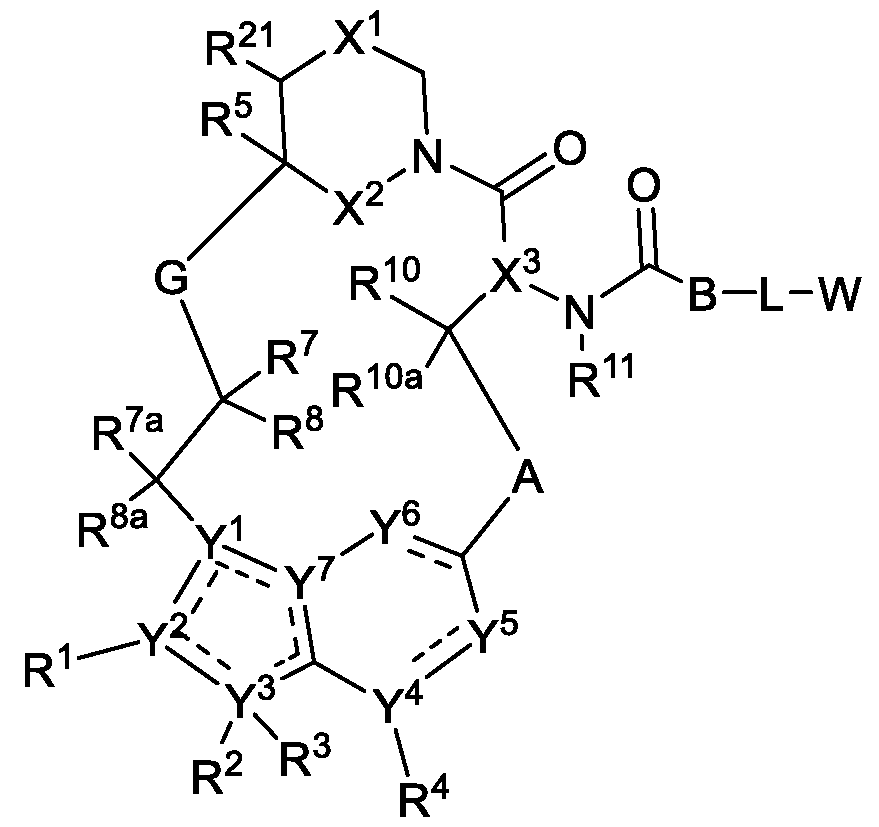
Figure imgf000035_0001
Formula 0 wherein the dotted lines represent zero, one, two, three, or four non-adjacent double bonds;
A is -N(H or CH3)C(O)-(CH2)- where the amino nitrogen is bound to the carbon atom of -CH(R10)-, optionally substituted 3 to 6-membered cycloalkylene, optionally substituted 3 to 6-membered heterocycloalkylene, optionally substituted 6-membered arylene, or optionally substituted 5 to 10- membered heteroarylene;
B is absent, -CH(R9)-, >C=CR9R9’, or >CR9R9’ where the carbon is bound to the carbonyl carbon of -N(R11)C(O)-, optionally substituted 3 to 6-membered cycloalkylene, optionally substituted 3 to 6- membered heterocycloalkylene, optionally substituted 6-membered arylene, or 5 to 6-membered heteroarylene;
G is optionally substituted C1-C4 alkylene, optionally substituted C1-C4 alkenylene, optionally substituted C1-C4 heteroalkylene, -C(O)O-CH(R6)- where C is bound to -C(R7R8)-, -C(O)NH-CH(R6)- where C is bound to -C(R7R8)-, optionally substituted C1-C4 heteroalkylene, or 3 to 8-membered heteroarylene;
L is absent or a linker;
W is a cross-linking group comprising a vinyl ketone, a vinyl sulfone, an ynone, a haloacetyl, or an alkynyl sulfone;
X1 is optionally substituted C1-C2 alkylene, NR, O, or S(O)n;
X2 is O or NH;
X3 is N or CH; n is 0, 1 , or 2;
R is hydrogen, cyano, optionally substituted C1-C4 alkyl, optionally substituted C2-C4 alkenyl, optionally substituted C2-C4 alkynyl, C(O)R’, C(O)OR’, C(O)N(R’)2, S(O)R’, S(O)2R’, or S(O)2N(R’)2; each R’ is, independently, H or optionally substituted C1-C4 alkyl;
Y1 is C, CH, or N;
Y2, Y3, Y4, and Y7 are, independently, C or N;
Y5 is CH, CH2, or N;
Y6 is C(O), CH, CH2, or N; R1 is cyano, optionally substituted Ci-Ce alkyl, optionally substituted Ci-Ce heteroalkyl, optionally substituted 3 to 6-membered cycloalkyl, optionally substituted 3 to 6-membered cycloalkenyl, optionally substituted 3 to 6-membered heterocycloalkyl, optionally substituted 6 to 10-membered aryl, or optionally substituted 5 to 10-membered heteroaryl, or
R1 and R2 combine with the atoms to which they are attached to form an optionally substituted 3 to 14-membered heterocycloalkyl;
R2 is absent, hydrogen, optionally substituted Ci-Ce alkyl, optionally substituted C2-C6 alkenyl, optionally substituted C2-C6 alkynyl, optionally substituted 3 to 6-membered cycloalkyl, optionally substituted 3 to 7-membered heterocycloalkyl, optionally substituted 6-membered aryl, optionally substituted 5 or 6-membered heteroaryl; R3 is absent, or
R2 and R3 combine with the atom to which they are attached to form an optionally substituted 3 to 8-membered cycloalkyl or optionally substituted 3 to 14-membered heterocycloalkyl;
R4 is absent, hydrogen, halogen, cyano, or methyl optionally substituted with 1 to 3 halogens;
R5 is hydrogen, C1-C4 alkyl optionally substituted with halogen, cyano, hydroxy, or C1-C4 alkoxy, cyclopropyl, or cyclobutyl;
R6 is hydrogen or methyl; R7 is hydrogen, halogen, or optionally substituted C1-C3 alkyl, or
R6 and R7 combine with the carbon atoms to which they are attached to form an optionally substituted 3 to 6-membered cycloalkyl or optionally substituted 3 to 7-membered heterocycloalkyl;
R8 is hydrogen, halogen, hydroxy, cyano, optionally substituted C1-C3 alkoxy, optionally substituted C1-C3 alkyl, optionally substituted C2-C6 alkenyl, optionally substituted C2-C6 alkynyl, optionally substituted 3 to 8-membered cycloalkyl, optionally substituted 3 to 14-membered heterocycloalkyl, optionally substituted 5 to 10-membered heteroaryl, or optionally substituted 6 to 10-membered aryl, or
R7 and R8 combine with the carbon atom to which they are attached to form C=CR7’R8’; C=N(OH), C=N(O-CI-C3 alkyl), C=O, C=S, C=NH, optionally substituted 3 to 6-membered cycloalkyl, or optionally substituted 3 to 7-membered heterocycloalkyl;
R7a and R8a are, independently, hydrogen, halo, optionally substituted C1-C3 alkyl, or combine with the carbon to which they are attached to form a carbonyl;
R7’ is hydrogen, halogen, or optionally substituted C1-C3 alkyl; R8’ is hydrogen, halogen, hydroxy, cyano, optionally substituted C1-C3 alkoxy, optionally substituted C1-C3 alkyl, optionally substituted C2-C6 alkenyl, optionally substituted C2-C6 alkynyl, optionally substituted 3 to 8-membered cycloalkyl, optionally substituted 3 to 14-membered heterocycloalkyl, optionally substituted 5 to 10-membered heteroaryl, or optionally substituted 6 to 10-membered aryl, or
R7’ and R8’ combine with the carbon atom to which they are attached to form optionally substituted 3 to 6-membered cycloalkyl or optionally substituted 3 to 7-membered heterocycloalkyl;
R9 is H, F, optionally substituted Ci-Ce alkyl, optionally substituted Ci-Ce heteroalkyl, optionally substituted 3 to 6-membered cycloalkyl, or optionally substituted 3 to 7-membered heterocycloalkyl, or
R9 and L combine with the atoms to which they are attached to form an optionally substituted 3 to 14-membered heterocycloalkyl;
R9’ is hydrogen or optionally substituted Ci-Ce alkyl; or
R9 and R9’ combine with the atom to which they are attached to form a 3 to 6-membered cycloalkyl or a 3 to 6-membered heterocycloalkyl; R10 is hydrogen, halo, hydroxy, C1-C3 alkoxy, or C1-C3 alkyl;
R10a is hydrogen or halo;
R11 is hydrogen or C1-C3 alkyl; and
R21 is hydrogen or C1-C3 alkyl (e.g., methyl). In some embodiments, a compound of the present invention is selected from Table 1 , or a pharmaceutically acceptable salt or stereoisomer thereof. In some embodiments, a compound of the present invention is selected from Table 1 , or a pharmaceutically acceptable salt or atropisomer thereof.
In some embodiments, the disclosure provides a method of treating an immune refractory lung cancer in a subject, the method including administering to the subject a RAS inhibitor of Formula 0, or a pharmaceutically acceptable salt thereof. In some embodiments, the compound of Formula 0 is a compound of Table 1 or Table 2, or a pharmaceutically acceptable salt thereof.
Additionally, provided herein is a compound, or pharmaceutically acceptable salt thereof, having the structure of Formula I:
Figure imgf000037_0001
Formula I wherein the dotted lines represent zero, one, two, three, or four non-adjacent double bonds;
A is -N(H or CH3)C(O)-(CH2)- where the amino nitrogen is bound to the carbon atom of -CH(R10)-, optionally substituted 3 to 6-membered cycloalkylene, optionally substituted 3 to 6-membered heterocycloalkylene, optionally substituted 6-membered arylene, or optionally substituted 5 to 10- membered heteroarylene;
B is absent, -CH(R9)-, >C=CR9R9’, or >CR9R9’ where the carbon is bound to the carbonyl carbon of -N(R11)C(O)-, optionally substituted 3 to 6-membered cycloalkylene, optionally substituted 3 to 6- membered heterocycloalkylene, optionally substituted 6-membered arylene, or 5 to 6-membered heteroarylene;
G is optionally substituted C1-C4 alkylene, optionally substituted C1-C4 alkenylene, optionally substituted C1-C4 heteroalkylene, -C(O)O-CH(R6)- where C is bound to -C(R7R8)-, -C(O)NH-CH(R6)- where C is bound to -C(R7R8)-, optionally substituted C1-C4 heteroalkylene, or 3 to 8-membered heteroarylene;
L is a linker, wherein the linker is acyclic or comprises a monocyclic, fused bicyclic, fused polycyclic, bridged bicyclic, or bridged polycyclic group; W is a cross-linking group comprising a vinyl ketone, a vinyl sulfone, an ynone, a haloacetyl, or an alkynyl sulfone;
X1 is optionally substituted C1-C2 alkylene, NR, O, or S(O)n;
X2 is O or NH;
X3 is N or CH; n is 0, 1 , or 2;
R is hydrogen, cyano, optionally substituted C1-C4 alkyl, optionally substituted C2-C4 alkenyl, optionally substituted C2-C4 alkynyl, C(O)R’, C(O)OR’, C(O)N(R’)2, S(O)R’, S(O)2R’, or S(O)2N(R’)2; each R’ is, independently, H or optionally substituted C1-C4 alkyl;
Y1 is C, CH, or N;
Y2, Y3, Y4, and Y7 are, independently, C or N;
Y5 is CH, CH2, or N;
Y6 is C(O), CH, CH2, or N;
R1 is cyano, optionally substituted C1-C6 alkyl, optionally substituted C1-C6 heteroalkyl, optionally substituted 3 to 6-membered cycloalkyl, optionally substituted 3 to 6-membered cycloalkenyl, optionally substituted 3 to 6-membered heterocycloalkyl, optionally substituted 6 to 10-membered aryl, or optionally substituted 5 to 10-membered heteroaryl, or
R1 and R2 combine with the atoms to which they are attached to form an optionally substituted 3 to 14-membered heterocycloalkyl;
R2 is absent, hydrogen, optionally substituted C1-C6 alkyl, optionally substituted C2-C6 alkenyl, optionally substituted C2-C6 alkynyl, optionally substituted 3 to 6-membered cycloalkyl, optionally substituted 3 to 7-membered heterocycloalkyl, optionally substituted 6-membered aryl, optionally substituted 5 or 6-membered heteroaryl; R3 is absent, or
R2 and R3 combine with the atom to which they are attached to form an optionally substituted 3 to 8-membered cycloalkyl or optionally substituted 3 to 14-membered heterocycloalkyl;
R4 is absent, hydrogen, halogen, cyano, or methyl optionally substituted with 1 to 3 halogens;
R5 is hydrogen, C1-C4 alkyl optionally substituted with halogen, cyano, hydroxy, or C1-C4 alkoxy, cyclopropyl, or cyclobutyl;
R6 is hydrogen or methyl; R7 is hydrogen, halogen, or optionally substituted C1-C3 alkyl, or
R6 and R7 combine with the carbon atoms to which they are attached to form an optionally substituted 3 to 6-membered cycloalkyl or optionally substituted 3 to 7-membered heterocycloalkyl;
R8 is hydrogen, halogen, hydroxy, cyano, optionally substituted C1-C3 alkoxy, optionally substituted C1-C3 alkyl, optionally substituted C2-C6 alkenyl, optionally substituted C2-C6 alkynyl, optionally substituted 3 to 8-membered cycloalkyl, optionally substituted 3 to 14-membered heterocycloalkyl, optionally substituted 5 to 10-membered heteroaryl, or optionally substituted 6 to 10-membered aryl, or
R7 and R8 combine with the carbon atom to which they are attached to form C=CR7’R8’; C=N(OH), C=N(O-CI-C3 alkyl), C=O, C=S, C=NH, optionally substituted 3 to 6-membered cycloalkyl, or optionally substituted 3 to 7-membered heterocycloalkyl;
R7a and R8a are, independently, hydrogen, halo, optionally substituted C1-C3 alkyl, or combine with the carbon to which they are attached to form a carbonyl; R7’ is hydrogen, halogen, or optionally substituted C1-C3 alkyl; R8’ is hydrogen, halogen, hydroxy, cyano, optionally substituted C1-C3 alkoxy, optionally substituted C1-C3 alkyl, optionally substituted C2-C6 alkenyl, optionally substituted C2-C6 alkynyl, optionally substituted 3 to 8-membered cycloalkyl, optionally substituted 3 to 14-membered heterocycloalkyl, optionally substituted 5 to 10-membered heteroaryl, or optionally substituted 6 to 10-membered aryl, or
R7’ and R8’ combine with the carbon atom to which they are attached to form optionally substituted 3 to 6-membered cycloalkyl or optionally substituted 3 to 7-membered heterocycloalkyl;
R9 is H, F, optionally substituted Ci-Ce alkyl, optionally substituted Ci-Ce heteroalkyl, optionally substituted 3 to 6-membered cycloalkyl, or optionally substituted 3 to 7-membered heterocycloalkyl, or
R9 and L combine with the atoms to which they are attached to form an optionally substituted 3 to 14-membered heterocycloalkyl;
R9’ is hydrogen or optionally substituted Ci-Ce alkyl; or
R9 and R9’, combined with the atoms to which they are attached, form a 3 to 6-membered cycloalkyl or a 3 to 6-membered heterocycloalkyl;
R10 is hydrogen, halo, hydroxy, C1-C3 alkoxy, or C1-C3 alkyl;
R10a is hydrogen or halo;
R11 is hydrogen or C1-C3 alkyl; and
R21 is H or C1-C3 alkyl.
In some embodiments, the disclosure provides a method of treating an immune refractory lung cancer in a subject, the method including administering to the subject a RAS inhibitor of Formula I, or a pharmaceutically acceptable salt thereof. In some embodiments, the compound of Formula 0 is a compound of Table 1 , or a pharmaceutically acceptable salt thereof.
In some embodiments, a compound of the present invention is selected from Table 1 , or a pharmaceutically acceptable salt or stereoisomer thereof. In some embodiments, a compound of the present invention is selected from Table 1 , or a pharmaceutically acceptable salt or atropisomer thereof.
Table 1 : Certain Compounds of the Present Invention
Figure imgf000039_0002
Figure imgf000039_0001
Figure imgf000040_0001
Figure imgf000041_0001
Figure imgf000042_0001
Figure imgf000042_0002
Figure imgf000043_0001
Figure imgf000043_0002
Figure imgf000044_0001
Figure imgf000044_0002
Figure imgf000045_0001
Figure imgf000045_0002
Figure imgf000046_0001
Figure imgf000046_0002
Figure imgf000047_0001
Figure imgf000048_0001
Figure imgf000049_0001
Figure imgf000049_0002
Figure imgf000050_0001
Figure imgf000050_0002
Figure imgf000051_0001
Figure imgf000051_0002
Figure imgf000052_0001
Figure imgf000052_0002
Figure imgf000053_0001
Figure imgf000053_0002
Figure imgf000054_0001
Figure imgf000054_0002
Figure imgf000055_0001
Figure imgf000055_0002
Figure imgf000056_0002
Figure imgf000056_0001
Figure imgf000057_0001
Figure imgf000057_0002
Figure imgf000058_0001
Figure imgf000058_0002
Figure imgf000059_0001
Figure imgf000059_0002
Figure imgf000060_0001
Figure imgf000060_0002
Figure imgf000061_0001
Figure imgf000061_0002
Figure imgf000062_0001
Figure imgf000062_0002
Figure imgf000063_0001
Figure imgf000063_0002
Figure imgf000064_0002
Figure imgf000064_0001
Figure imgf000065_0001
Figure imgf000065_0002
Figure imgf000066_0001
Figure imgf000066_0002
Figure imgf000067_0001
Figure imgf000067_0002
Figure imgf000068_0001
Figure imgf000068_0002
Figure imgf000069_0001
Figure imgf000069_0002
Figure imgf000070_0002
Figure imgf000070_0001
Figure imgf000071_0001
Figure imgf000072_0001
Figure imgf000072_0002
Figure imgf000073_0001
Figure imgf000073_0002
Figure imgf000074_0001
Figure imgf000075_0001
Figure imgf000075_0002
Figure imgf000076_0002
Figure imgf000076_0001
Figure imgf000077_0001
Figure imgf000078_0001
Figure imgf000078_0002
Figure imgf000079_0001
Figure imgf000079_0002
Figure imgf000080_0001
Figure imgf000080_0002
Figure imgf000081_0001
Figure imgf000081_0002
Figure imgf000082_0001
Figure imgf000082_0002
Figure imgf000083_0001
Figure imgf000083_0002
Figure imgf000084_0001
Figure imgf000084_0002
Figure imgf000085_0001
Figure imgf000085_0002
Figure imgf000086_0001
Figure imgf000087_0001
Figure imgf000087_0002
Figure imgf000088_0002
Figure imgf000088_0001
Figure imgf000089_0002
Figure imgf000089_0001
Figure imgf000090_0001
Figure imgf000090_0002
Figure imgf000091_0001
Figure imgf000091_0002
Figure imgf000092_0001
Figure imgf000092_0002
Figure imgf000093_0001
Figure imgf000094_0002
Figure imgf000094_0001
Figure imgf000095_0001
Figure imgf000095_0002
Figure imgf000096_0001
Figure imgf000096_0002
Figure imgf000097_0001
Figure imgf000097_0002
Figure imgf000098_0001
Figure imgf000098_0002
Figure imgf000099_0001
Figure imgf000100_0001
Figure imgf000100_0002
Figure imgf000101_0001
Figure imgf000101_0002
Figure imgf000102_0001
Figure imgf000102_0002
Figure imgf000103_0001
Figure imgf000103_0002
Figure imgf000104_0002
Figure imgf000104_0001
Figure imgf000105_0001
Figure imgf000105_0002
Figure imgf000106_0001
Figure imgf000107_0002
Figure imgf000107_0001
Figure imgf000108_0001
Figure imgf000108_0002
Figure imgf000109_0001
Figure imgf000109_0002
Figure imgf000110_0001
Figure imgf000110_0002
Figure imgf000111_0001
Figure imgf000111_0002
Figure imgf000112_0002
Figure imgf000112_0001
Figure imgf000113_0001
Figure imgf000114_0001
Figure imgf000115_0001
Figure imgf000116_0002
Figure imgf000116_0001
Figure imgf000117_0001
Figure imgf000117_0002
Figure imgf000118_0001
Figure imgf000118_0002
Figure imgf000119_0001
Figure imgf000119_0002
Figure imgf000120_0001
Figure imgf000121_0001
Figure imgf000122_0001
Figure imgf000123_0001
Figure imgf000123_0002
Figure imgf000124_0001
Figure imgf000124_0002
Figure imgf000125_0001
Figure imgf000125_0002
Figure imgf000126_0001
Figure imgf000126_0002
Figure imgf000127_0001
Figure imgf000128_0001
Figure imgf000128_0002
Figure imgf000129_0001
Figure imgf000130_0001
Figure imgf000131_0001
Figure imgf000131_0004
In some embodiments, a compound of the present invention is selected from Table 2, or a pharmaceutically acceptable salt or stereoisomer thereof. In some embodiments, a compound of the present invention is selected from Table 2, or a pharmaceutically acceptable salt or atropisomer thereof.
Table 2. Certain Compounds of the Present Invention
Figure imgf000131_0002
Figure imgf000131_0003
Figure imgf000132_0001
Figure imgf000133_0001
Figure imgf000133_0002
Figure imgf000134_0001
Figure imgf000134_0002
Figure imgf000135_0001
Figure imgf000135_0002
Figure imgf000136_0001
Figure imgf000137_0001
Figure imgf000138_0001
Figure imgf000138_0002
Figure imgf000139_0001
Figure imgf000140_0001
Figure imgf000140_0002
Figure imgf000141_0001
Figure imgf000142_0001
Figure imgf000142_0002
Figure imgf000143_0002
Figure imgf000143_0001
Figure imgf000144_0001
Figure imgf000144_0002
Figure imgf000145_0001
Figure imgf000146_0001
Figure imgf000146_0002
Figure imgf000147_0002
Figure imgf000147_0001
Figure imgf000148_0001
Figure imgf000148_0002
In some embodiments, the RAS inhibitor is selective for RAS that includes a G12C amino acid substitution relative to wild-type RAS or other RAS mutants. In some embodiments, the RAS inhibitor is a KRAS inhibitor that is selective for KRAS that includes a G12C amino acid substitution relative to wild-type KRAS or other KRAS mutants. In some embodiments, the RAS inhibitor is an NRAS inhibitor that is selective for NRAS that includes a G12C amino acid substitution relative to wild-type NRAS or other NRAS mutants. In some embodiments, the RAS inhibitor is an HRAS inhibitor that is selective for HRAS that includes a G12C amino acid substitution. In some embodiments, the HRAS inhibitor is selective for HRAS that includes a G12C amino acid substitution relative to wild-type NRAS or other NRAS mutants. In some embodiments, the RAS inhibitor that is selective for RAS that includes G12C relative to wild-type RAS or other RAS mutants, is a RAS(ON) inhibitor. In some embodiments, the RAS inhibitor that is selective for RAS that includes G12C relative to wild-type RAS or other RAS mutants, is not a RAS(OFF) inhibitor.
Immune Checkpoint Inhibitors
Compositions and methods described herein may include an immune checkpoint inhibitor (ICI). An immune checkpoint inhibitor may be administered or formulated in combination with a RAS inhibitor described herein. An immune checkpoint inhibitor may be administered or formulated in combination with a RAS inhibitor described herein and a SHP2 inhibitor.
Immune checkpoints refer to a plethora of inhibitory pathways hardwired into the immune system, which, under normal physiological conditions are crucial for maintaining self-tolerance and modulating the duration and amplitude of physiological immune responses in peripheral tissues to minimize collateral tissue damage in response to pathogenic infection. However, the expression of immune checkpoint proteins is often dysregulated by tumors as an important immune resistance and escape mechanism.
Because many of the immune checkpoints are initiated by ligand-receptor interactions, they can be readily blocked by antibodies or modulated by recombinant forms of ligands or receptors. Thus, inhibition of these pathways has been used to activate therapeutic anti-tumor immunity. For example, cytotoxic T- lymphocyte-associated antigen 4 (CTLA-4) antibodies were the first of this class of immunotherapeutics to achieve US Food and Drug Administration (FDA) approval. Preliminary clinical findings with inhibitors of additional immune-checkpoint proteins, such as programmed cell death protein 1 (PD-1), indicate broad and diverse opportunities to enhance anti-tumor immunity with the potential to produce durable clinical responses.
T cell activation through blockade of immune checkpoints has been a major focus of efforts to therapeutically manipulate endogenous anti-tumor immunity, owing to the capacity of T cells for the selective recognition of peptides derived from proteins in all cellular compartments; their capacity to directly recognize and kill antigen-expressing cells (by CD8+ effector T cells; also known as cytotoxic T lymphocytes (CTLs)); and their ability to orchestrate diverse immune responses (by CD4+ helper T cells), which integrate adaptive and innate effector mechanisms. Thus, agonists of co-stimulatory receptors or antagonists of inhibitory signals, both of which result in the amplification of antigen-specific T cell responses, are currently agents of interest in clinical testing.
Table 3. Non-limiting list of immune checkpoint targets.
Figure imgf000149_0001
CTLA4, cytotoxic T-lymphocyte-associated antigen 4; LAG3, lymphocyte activation gene 3; PD-1 , programmed cell death protein 1 ; PD-L1 , PD-1 ligand; TIM3, T cell membrane protein 3; VISTA, V-domain immunoglobulin (Ig)-containing suppressor of T-cell activation; KIR, killer IgG-like receptor.
ICIs approved or in development include, but are not limited to, YERVOY® (ipilimumab), OPDIVO® (nivolumab), KEYTRUDA® (pembrolizumab), tremelimumab, galiximab, MDX-1106, BMS- 936558, MEDI4736, MPDL3280A, MEDI6469, BMS-986016, BMS-663513, PF-05082566, IPH2101 , KW- 0761 , CDX-1127, CP-870, CP-893, GSK2831781 , MSB0010718C, MK3475, CT-011 , AMP-224, MDX- 1105, IMP321 , and MGA271 , as well as numerous other antibodies or fusion proteins directed to the immune checkpoint proteins noted in Table 3. Common immune checkpoint proteins that may be targeted by ICIs include, but are not limited to B7.1 , B7-H3, LAG3, CD137, KIR, CCR4, CD27, 0X40, GITR, CD40, CTLA4, PD-1 , and PD-L1.
In some embodiments, the ICI therapy is selected from one or more of anti-PD-1 , anti-PD-L1 , anti- CTLA-4, anti-LAG3, anti-B7.1 , anti-B7H3, anti-B7H4, anti-TIM3, anti- VISTA, anti-CD137, anti-OX40, anti- CD40, anti-CD27, anti-CCR4, anti-GITR, anti-NKG2D, and anti-KIR. In some embodiments, the ICI therapy is an antibody (e.g., a monoclonal antibody selective for any of the targets in Table 3). In some embodiments the ICI is an anti-PD-1 antibody. The antibody may be, e.g., humanized or fully human. In some embodiments, the checkpoint inhibitor is a fusion protein, e.g., an Fc-receptor fusion protein. In some embodiments, the checkpoint inhibitor is an agent, such as an antibody, that interacts with a checkpoint protein. In some embodiments, the checkpoint inhibitor is an agent, such as an antibody, that interacts with the ligand of a checkpoint protein. In some embodiments, the checkpoint inhibitor is an inhibitor (e.g., an inhibitory antibody or small molecule inhibitor) of CTLA-4 (e.g., an anti-CTLA-4 antibody or fusion a protein). In some embodiments, the checkpoint inhibitor is an inhibitor or antagonist (e.g., an inhibitory antibody or small molecule inhibitor) of PD-1 . In some embodiments, the checkpoint inhibitor is an inhibitor or antagonist (e.g., an inhibitory antibody or small molecule inhibitor) of PD-L1 . In some embodiments, the checkpoint inhibitor is an inhibitor or antagonist (e.g., an inhibitory antibody or Fc fusion or small molecule inhibitor) of PD-L2 (e.g., a PD-L2/lg fusion protein). In some embodiments, the checkpoint inhibitor is an inhibitor or antagonist (e.g., an inhibitory antibody or small molecule inhibitor) of B7-H3, B7-H4, BTLA, HVEM, TIM3, GAL9, LAG3, VISTA, KIR, 2B4, CD160, CGEN-15049, CHK 1 , CHK2, A2aR, B-7 family ligands, or a combination thereof. In some embodiments, the checkpoint inhibitor is pembrolizumab, nivolumab, PDR001 (NVS), REGN2810 (Sanofi/Regeneron), a PD-L1 antibody such as, e.g., avelumab, durvalumab, atezolizumab, pidilizumab, JNJ-63723283 (JNJ), BGB-A317 (also known as tislelizumab; BeiGene & Celgene) or a checkpoint inhibitor disclosed in Preusser, M. et al. (2015) Nat. Rev. Neurol., including, without limitation, ipilimumab, tremelimumab, nivolumab, pembrolizumab, AMP224, AMP514/ MEDI0680, BMS936559, MEDI4736, MPDL3280A, MSB0010718C, BMS986016, IMP321 , lirilumab, IPH2101 , 1-7F9, and KW-6002.
SHP2 Inhibitors
Compositions and methods described herein may include a SHP2 inhibitor. A SHP2 inhibitor may be administered or formulated in combination with a RAS inhibitor described herein. A SHP2 inhibitor may be administered or formulated in combination with a RAS inhibitor and an immune checkpoint inhibitor.
SHP2 is a non-receptor protein tyrosine phosphatase encoded by the PTPN11 gene that contributes to multiple cellular functions including proliferation, differentiation, cell cycle maintenance and migration. SHP2 has two N-terminal Src homology 2 domains (N-SH2 and C-SH2), a catalytic domain (PTP), and a C-terminal tail. The two SH2 domains control the subcellular localization and functional regulation of SHP2. The molecule exists in an inactive, self-inhibited conformation stabilized by a binding network involving residues from both the N-SH2 and PTP domains. Stimulation by, for example, cytokines or growth factors acting through receptor tyrosine kinases (RTKs) leads to exposure of the catalytic site resulting in enzymatic activation of SHP2.
SHP2 is involved in signaling through the RAS-mitogen-activated protein kinase (MAPK), the JAK-
STAT or the phosphoinositol 3-kinase-AKT pathways. Mutations in the PTPN11 gene and subsequently in SHP2 have been identified in several human developmental diseases, such as Noonan Syndrome and Leopard Syndrome, as well as human cancers, such as juvenile myelomonocytic leukemia, neuroblastoma, melanoma, acute myeloid leukemia and cancers of the breast, lung, and colon. Some of these mutations destabilize the auto-inhibited conformation of SHP2 and promote autoactivation or enhanced growth factor driven activation of SHP2. SHP2, therefore, represents a highly attractive target for the development of novel therapies for the treatment of various diseases including cancer. A SHP2 inhibitor (e.g., RMC-4550 or SHP099) in combination with a RAS pathway inhibitor (e.g., a MEK inhibitor) has been shown to inhibit the proliferation of multiple cancer cell lines in vitro (e.g., pancreas, lung, ovarian and breast cancer).
Non-limiting examples of such SHP2 inhibitors that are known in the art, include: Chen et al. Mol Pharmacol. 2006, 70, 562; Sarver et al., J. Med. Chem. 2017, 62, 1793; Xie et al., J. Med. Chem. 2017, 60, 113734; and Igbe et al., Oncotarget, 2017, 8, 113734; and patent applications: WO 2023282702, WO 2023280283, WO 2023280237, WO 2023018155, WO 2023011513, WO 2022271966, WO 2022271964, WO 2022271911 , WO 2022259157, WO 2022242767, WO 2022241975, WO 2022237676, WO 2022237367, WO 2022237178, WO 2022235822, WO 2022234409, WO 2022208408, WO 2022207924, WO 2022167682, WO 2022166844, WO 2022161222, WO 2022156765, WO 2022135568, WO 2022089406, WO 2022089389, WO 2022063190, WO 2022 043865, WO 2022042331 , WO 2022033430, WO 2022017444, WO 2022007869, WO 2021259077, WO 2021249449, WO 2021249057, WO 2021244659, WO 2021218755, WO 2021281752, WO 2021149817, WO 2021148010, WO 2021147879, WO 2021143823, WO 2021143701 , WO 2021143680, WO 2021121397, WO 2021119525, WO 2021 115286, WO 20211 10796, WO 2021088945, WO 2021073439, WO 2021061706, WO 2021061515, WO 2021043077, WO 2021033153, WO 2021028362, WO 2021033153, WO 2021028362, WO 2021018287, WO 2020259679, WO 2020249079, WO 2020210384, WO 2020201991 , WO 2020181283, WO 2020177653, WO 2020165734, WO 2020165733, WO 2020165732, WO 2020156243, WO 2020156242, WO 2020108590, WO 2020104635, WO 2020094104, WO 2020094018, WO 2020081848, WO 2020073949, WO 2020073945, WO 2020072656, WO 2020065453, WO 2020065452, WO 2020063760, WO 2020061103, WO 2020061 101 , WO 2020033828, WO 2020033286, WO 2020022323, WO 2019233810, WO 2019213318, WO 2019183367, WO 2019183364, WO 2019182960, WO 2019167000, WO 2019165073, WO 2019158019, WO 2019152454, WO 2019051469, WO 2019051084, WO 2018218133, WO 2018172984, WO 2018160731 , WO 2018136265, WO 2018136264, WO 2018130928, WO 2018129402, WO 2018081091 , WO 2018057884, WO 2018013597, WO 2017216706, WO 2017211303, WO 2017210134, WO 2017156397, WO 2017100279, WO 2017079723, WO 2017078499, WO 2016203406, WO 2016203405, WO 2016203404, WO 2016196591 , WO 2016191328, WO 2015107495, WO 2015107494, WO 2015107493, WO 2014176488, WO 2014113584, CN 115677661 , CN 1 15677660, CN 115611869, CN 115521305, CN 115490697, CN 115466273, CN
115394612, CN 1 15304613, CN 115304612, CN 115300513, CN 115197225, CN 114957162, CN
114920759, CN 1 14716448, CN 114671879, CN 114539223, CN 114524772, CN 114213417, CN
114195799, CN 1 14163457, CN 113896710, CN 113248521 , CN 113248449, CN 113135924, CN
113024508, CN 1 12920131 , CN 112823796, CN 112409334, CN 112402385, CN 112174935, 11 1848599,
CN 11170461 1 , CN 111393459, CN 111265529, CN 110143949, CN 108113848, US 11179397, US 11044675, US 11034705, US 11033547, US 11001561 , US 10988466, US 10954243, US 10934302, US 10858359, or a pharmaceutically acceptable salt, solvate, isomer (e.g., stereoisomer), prodrug, or tautomer thereof, each of which is incorporated herein by reference. In some embodiments, a SHP2 inhibitor binds in the active site. In some embodiments, a SHP2 inhibitor is a mixed-type irreversible inhibitor. In some embodiments, a SHP2 inhibitor binds an allosteric site e.g., a non-covalent allosteric inhibitor. In some embodiments, a SHP2 inhibitor is a covalent SHP2 inhibitor, such as an inhibitor that targets the cysteine residue (C333) that lies outside the phosphatase’s active site. In some embodiments a SHP2 inhibitor is a reversible inhibitor. In some embodiments, a SHP2 inhibitor is an irreversible inhibitor. In some embodiments, the SHP2 inhibitor is SHP099. In some embodiments, the
SHP2 inhibitor is TNO155, having the structure
Figure imgf000152_0001
or a pharmaceutically acceptable salt, solvate, isomer (e.g., stereoisomer), prodrug, or tautomer thereof. In some embodiments, the SHP2 inhibitor is RMC-4550, having the structure
Figure imgf000152_0002
or a pharmaceutically acceptable salt, solvate, isomer (e.g., stereoisomer), prodrug, or tautomer thereof.
In some embodiments, the SHP2 inhibitor is RMC-4630, having the structure
Figure imgf000152_0003
or a pharmaceutically acceptable salt, solvate, isomer (e.g., stereoisomer), prodrug, or tautomer thereof. In some embodiments, the SHP2 inhibitor is JAB-3068, having the structure
Figure imgf000152_0004
or a pharmaceutically acceptable salt, solvate, isomer (e.g., stereoisomer), prodrug, or tautomer thereof. In some embodiments, the SHP2 inhibitor is JAB-3312. In some embodiments, the SHP2 inhibitor is RLY- 1971 , having the structure
Figure imgf000153_0001
pharmaceutically acceptable salt, solvate, isomer (e.g., stereoisomer), prodrug, or tautomer thereof. In some embodiments, the SHP2 inhibitor is ERAS-601 , or a pharmaceutically acceptable salt, solvate, isomer (e.g., stereoisomer), prodrug, or tautomer thereof. In some embodiments, the SHP2 inhibitor is BBP-398, or a pharmaceutically acceptable salt, solvate, isomer (e.g., stereoisomer), prodrug, or tautomer thereof.
The present disclosure also provides pharmaceutical compositions. The pharmaceutical composition comprises a RAS inhibitor, a SHP2 inhibitor, an immune checkpoint inhibitor, or a combination thereof as active agents, and at least one pharmaceutically acceptable excipient. The pharmaceutically acceptable excipient may be a diluent, a binder, a filler, a buffering agent, a pH modifying agent, a disintegrant, a dispersant, a preservative, a lubricant, taste-masking agent, a flavoring agent, or a coloring agent. The amount and types of excipients utilized to form pharmaceutical compositions may be selected according to known principles of pharmaceutical science.
The composition can be formulated into various dosage forms and administered by several different means that will deliver a therapeutically effective amount of the active agent(s). Such compositions can be administered orally (e.g., inhalation) or parenterally in dosage unit formulations containing conventional nontoxic pharmaceutically acceptable carriers, adjuvants, and vehicles as desired.
Methods of Use
In some embodiments, the disclosure provides a method of treating a subject having an immune refractory lung cancer, the method generally comprises, administering to the subject a compound or combination of compounds described herein. In some embodiments, the subject is administered a RAS inhibitor described herein (i.e., a RAS G12C inhibitor). In some embodiments, the subject is administered a RAS inhibitor described herein in combination with an immune checkpoint inhibitor, a SHP2 inhibitor, or a combination thereof. Suitable examples of RAS inhibitors, SHP2 inhibitors and immune checkpoint inhibitors are described above and incorporated into this section by reference.
In some embodiments, the disclosure provides a method of sensitizing an immune refractory cancer to immunotherapy in a subject in need thereof, the method generally comprises, administering to the subject a compound or combination of compounds described herein. In some embodiments, the subject is administered a RAS inhibitor described herein (i.e., a RAS G12C inhibitor). In some embodiments, the subject is administered a RAS inhibitor described herein in combination with an immune checkpoint inhibitor, a SHP2 inhibitor, or a combination thereof.
In some embodiments, the disclosure provides a method to promote the transformation of immunologically cold tumors to immunologically hot tumors in a subject in need thereof, the method generally comprises, administering to the subject a compound or combination of compounds described herein, thereby enabling the treatment of a previously immunologically cold tumor which has been transformed to an immunologically hot tumor. In some embodiments, the subject is administered a RAS inhibitor described herein (i.e., a RAS G12C inhibitor). In some embodiments, the subject is administered a RAS inhibitor described herein in combination with an immune checkpoint inhibitor, a SHP2 inhibitor, or a combination thereof.
In some embodiments, the disclosure provides a method of boosting the efficacy of other cancer therapies when administered in combination to the subject. In some embodiments, the subject is administered a RAS inhibitor described herein (i.e., a RAS G12C inhibitor). In some embodiments, the subject is administered a RAS inhibitor described herein in combination with an immune checkpoint inhibitor, a SHP2 inhibitor, or a combination thereof.
In each of the above embodiments, the methods of the present disclosure can alter the tumor immune infiltrate comprising of T-cells, B-cells, APCs, monocytes, MDSCs, TAMs, neutrophils, other monocyte-derived cells, tumor-associated stroma, cancer stem cells, and mesenchymal stem cells and result in an enhanced anti-tumor therapeutic effect.
Identification of Tumor Types
In various embodiments, the disclosure provides a method of treating lung cancer in a subject comprising administering to the subject a RAS inhibitor or combination of compounds described herein, wherein the subject has one or more tumors that are characterized as immune refractory, immune evasive, immunologically protected, immunologically “cold,” microsatellite stable, microsatellite instability low, comprising a low immune infiltrate, comprising a low tumor mutational burden, or exhibiting heterogeneity.
In various embodiments, the disclosure provides a method for treating tumors (e.g., lung cancer) that are characterized as immune evasive, immunologically protected, immunologically “cold,” microsatellite stable, microsatellite instability low, comprising a low immune infiltrate, comprising a low tumor mutational burden or exhibiting heterogeneity in a subject, comprising (i) diagnosing the subject as having an immune refractory, immune evasive tumor, immunologically protected tumor, immunologically “cold” tumor, microsatellite stable tumor, microsatellite instability low tumor, a tumor comprising a low immune infiltrate, a tumor comprising a low tumor mutational burden or a tumor exhibiting heterogeneity, and (ii) administering a RAS inhibitor or combination of compounds described herein to the subject. In various embodiments, the diagnosing comprises assaying biomarkers/characteristics associated with tumors that are characterized as immune refractory, immune evasive, immunologically protected, immunologically “cold,” microsatellite stable, microsatellite instability low, comprising a low immune infiltrate, comprising a low tumor mutational burden or exhibiting heterogeneity. In various embodiments, the method further comprises (iii) determining if the subject's tumor becomes immune responsive, and then (iv) administering an immunotherapy, optionally in combination with the RAS inhibitor or combination of compounds described herein. In some embodiments, the subject is previously diagnosed as having a tumor characterized as immune evasive, immunologically protected, immunologically “cold,” microsatellite stable, microsatellite instability low, comprising a low immune infiltrate, comprising a low tumor mutational burden or exhibiting heterogeneity.
Also provided herein is a method for determining if a subject is or is likely to be responsive to treatment with a RAS inhibitor or combination of compounds described herein, and treating the subject accordingly. In various embodiments, a patient diagnosed with cancer undergoes testing to identify the tumor as a cold tumor, e.g., using methods described herein and others described in the art. The disclosure provides a method for treating a subject having a cancer, e.g., an immune refractory cancer, with a RAS inhibitor or combination of compounds described herein, the method comprising obtaining a tumor sample from a subject, conducting assays to determine if the tumor is a cold tumor, and treating the subject with a RAS inhibitor or combination of compounds described herein if the tumor is identified as a cold tumor. Assays to determine whether the tumor is a cold tumor include, but are not limited to tumor mutational burden analysis, microsatellite instability (MSI) testing, the degree of immune cell (e.g., CD4+ T- cells, CD8+ T-cells, NK1 ,1+ NK cells, APCs, monocytes, and neutrophils) infiltration into the tumor, immune cell phenotype (e.g., PD-1+, PD-L1+, and PD-L2+), immune cell function (e.g., expression of IFN-y, IL-12, IL-15, and MHCII), and ratio of pro-inflammatory and anti-inflammatory mediators in the tumor microenvironment (TME).
Multiple diagnostic tools designed to characterize tumors at the cellular and molecular level are FDA-approved and commercially available. Examples of approved diagnostics include FOUNDATIONONE® CDX, FOUNDATIONONE® LIQUID, FOUNDATIONONE® HEME, BRACAnalysis CDx, therascreen EGFR RGQ PCR kit, cobase EGFR Mutation Test v2, PD-L1 IHC 22C3 pharmDx, Abbott RealTime IDH1 , MRDx BCR-ABL test, VENTANA ALK (D5F3) CDx Assay, Abbott RealTime IDH2, Praxis Extended RAS Panel, Oncomine Dx Target Test, LeukoStrat CDx FLT3 Mutation Assay, FoundationFocus CDxBRCA Assay, Vysis CLL FISH Probe Kit, K/T D816V Mutation Detection, PDGFRB FISH, cobas KRAS Mutation Test, therascreen KRAS RGQ PCR Kit, FerriScan, Dako c-KIT pharmDx, INFORM Her-2/neu, PathVysion HER-2 DNA Probe Kit, SPOT-LIGHT HER2 CISH Kit, Bond Oracle HER2 IHC System, HER2 CISH pharmDx Kit, INFORM HER2 DUAL ISH DNA Probe Cocktail, HercepTest, HER2 FISH pharmDx Kit, THXID BRAF Kit, Vysis ALK Break Apart FISH Probe Kit, cobas 4800 BRAF V600 Mutation Test, VENTANA PD-L1 (SP142) Assay, therascreen FGFR RGQ RT-PCR Kit, and therascreen PIK3CA RGQ PCR Kit.
In various embodiments, the subject is screened for eligibility for treatment with one or more immunotherapies described herein. In various embodiments, subjects that are not eligible for treatment with such immunotherapies (e.g., are non-responsive to one or more immunotherapies or have a cancer characterized as non-responsive to one or more immunotherapies) may be first treated with a RAS inhibitor or combination of compounds described herein according to the methods described herein. Non-limiting examples of immunotherapies include Pembrolizumab (KEYTRUDA®, Merck Sharp & Dohme Corp), Nivolumab (OPDIVO®, Bristol-Myers Squibb), Atezolizumab (TECENTRIQ®), Avelumab (BAVENCIO®), and Durvalumab (IMFINZI®). Eligibility criteria for these immunotherapies are known in the art. For example, without limitation, pembrolizumab (KEYTRUDA®), nivolumab (OPDIVO®), and atezolizumab (TECENTRIQ®) have eligibility criteria based on PD-L1 expression levels. PD-L1 expression criteria and methods of measuring the same may be found at keytrudahcp.com/biomarker-testing/pd-11 -expression- testing/ (pembrolizumab; KEYTRUDA®), or the FDA-approved prescribing information for pembrolizumab (KEYTRUDA®, as revised 1/2020), atezolizumab (e.g., TECENTRIQ®, as revised 5/2020), and nivolumab (e.g., OPDIVO®, as revised on 6/2020). Each of these publications are herein incorporated by reference in its entirety for all purposes. As described herein, treating such patients with a RAS inhibitor or combination of compounds described herein may promote the transformation of the tumor that is not eligible for treatment with an immunotherapy to an immunogenic tumor, which in turn will enable such tumors to be treated with an immunotherapy. In various embodiments, the tumors of subjects that are not eligible for an immunotherapy can be monitored throughout the course of treatment with a RAS inhibitor or combination of compounds described herein in order to determine when the tumor becomes eligible for treatment with an immunotherapy. Once the tumor is eligible for treatment with an immunotherapy, the subject may be administered an immunotherapy, alone or in combination with a RAS inhibitor or a SHP2 inhibitor, or a combination thereof.
In various embodiments, the disclosure provides a method of treating lung cancer in a subject comprising administering to the subject a RAS inhibitor or combination of compounds described herein, wherein the subject has one or more tumors with a low immune infiltrate. In various embodiments, the administering to a subject with one or more lung tumors with a low immune infiltrate alters the tumor immune infiltrate. In various embodiments, the tumor immune infiltrate comprises antigen-presenting cells, myeloid cells, and lymphoid cells. In various embodiments, antigen-presenting cells in the tumor immune infiltrate comprise macrophages or dendritic cells. In various embodiments, myeloid cells in the tumor immune infiltrate comprise monocytes, neutrophils, myeloid-derived suppressor cells (MDSCs), and tumor- associated macrophages (TAMs). In various embodiments, the TAMs in the tumor immune infiltrate comprise M1 macrophages, M2 macrophages, and MARCO+ macrophages. In various embodiments, lymphoid cells in the tumor immune infiltrate comprise T-cells, B-cells, NK T-cells, and NK cells.
Qualitative and quantitative methods have been described for the characterization of the tumor immune infiltrate, including but not limited, microscopic analyses, histological assays, cytological assays, flow cytometry, polymerase chain reaction (PCR), quantitative polymerase chain reaction (qPCR), RNA sequencing (RNA-seq), single-cell RNA sequencing (scRNA-seq), next-generation sequencing, whole- exome sequencing, epigenetic sequencing, ATAC-seq, microarray analysis, and mass cytometry or CyTOF. Biomarkers can be used, alone or in combination, for the evaluation of immune cells and include cell surface markers and secreted proteins. Exemplary biomarkers for the characterization of the tumor immune infiltrate include, but are not limited to, CD45, CD3, CD4, CD8, CD25, CD44, CD134, CD252, CD137, CD79, CD39, FOXP3, PD-1 , LAG-3, TIM-1 , IFN-y, Granzyme, Perforin, CD11 b, CD11c, Ly6C, Ly6G, CD14, CD16, CD80, MARCO, CD68, CD115, CD206, CD163, CD103c, F4/80, PD-L1 , PD-L2, Arginase, iNOS, ROS, TNF-a, TGF-p, MHC-I, MHC-II, NK1.1 , NKG2D, CD244, Ki67, CD19, CD20, CCR2, CXCR3, CCR4, CCR5, CCR6, CCR7, CCR10, CCL2, CCL5, Cx3CR1 , CCL10, ICOS, CD40, CD40L, IL1a, IL1 p, IL2, IL4, IL5, IL6, IL8, IL12, IL15, IL17, IL21 , IL22, TCRy/b, TCRa/p, STAT3, ROR1c, and RORyt.
Cancer stem cells (CSCs) have been described as a subset of cells found within solid and hematologic tumors that are tumorigenic, and capable of self-renewal, differentiation. Several reports have described the importance of CSCs in the pathogenesis of a variety of tumors, tumor relapse after therapy, and development of therapeutic resistance. A number of cell surface markers can be used to distinguish CSCs within solid and hematologic tumors. CSC markers include, but are not limited to, CD19, CD20, CD24, CD34, CD38, CD44, CD90, CD133, Aldehyde dehydrogenase 1 , CEACAM-6/CD66c, BMI-1 , Connexin 43/GJA1 , DLL4, EpCAM/TROP1 , GLI-1 , GLI-2, Integrins, PON1 , PTEN, ALCAM/CD166, DPPIV/CD26, Lgr5, Musashi-1 , A20, ABCG2, CD15, Fractalkine, HIF-2a, L1CAM, c-MAF, Nestin, Podoplanin, SOX2, CD96, CD117, FLT3, AFP, CD13, CD90, NF2/Merlin, ABCB5, NGFR, Syndecan-1 , Endoglin, STRO-1 , and PONT
In various embodiments, the disclosure provides a method of treating cancer in a subject comprising administering to the subject a RAS inhibitor or combination of compounds described herein, wherein the subject has one or more immune refractory tumors. In various embodiments, the subject has one or more immunologically protected tumors. In various embodiments, the subject has one or more microsatellite stable tumors. In various embodiments, the subject has one or more microsatellite low tumors. In various embodiments, the subject has one or more tumors with moderate microsatellite instability. In various embodiments, the subject has one or more tumors with a low tumor mutational burden. In various embodiments, the subject has one or more tumors with a moderate tumor mutational burden. In various embodiments, the subject has one or more tumors resistant to therapy. In various embodiments, the subject has one or more immunologically heterogeneous tumors. In various embodiments, the subject has genetically heterogeneous tumors. In various embodiments, the subject has one or more refractory tumors. In one or more embodiments, the subject has a tumor that develops resistance during the course of treatment.
In various embodiments, the tumor characteristic is determined from one or more biological samples from a subject suffering from cancer. In various embodiments, the tumor characteristic is determined by comparing one or more biological samples from a subject suffering from cancer to one or more biological samples from one or more healthy subjects. In various embodiments, the tumor characteristic is determined from one or more biological samples selected from the group consisting of blood, cerebrospinal fluid, urine, stool, buccal swab, nasal swab, lavage, tissue biopsy, bone marrow biopsy, and tumor biopsy. In various embodiments, the tumor characteristic is determined from the analysis of cells, proteins, or nucleic acids in one or more biological samples from a subject suffering from cancer. In various embodiments, the tumor characteristic is determined by comparing the analysis of cells, proteins, or nucleic acids in one or more biological samples from a subject suffering from cancer to the analysis of one or more biological samples from one or more healthy subjects. In various embodiments, the tumor characteristic is determined by comparing the analysis of cells, proteins, or nucleic acids in one or more biological samples from a subject suffering cancer to the analysis of one or more biological samples from one or more subjects suffering from cancer and responsive to treatment. In various embodiments, the cells are selected from the group consisting of leukocytes, epithelial cells, mesenchymal cells, mesenchymal stem cells, stromal cells, endothelial cells, fibroblasts, cancer-associated fibroblasts (CAFs), pericytes, adipocytes, cancer stem cells, circulating tumor cells (CTCs), hematopoietic stem cells, and hematopoietic progenitor cells. In various embodiments, the proteins are selected from the group consisting of cytokines, chemokines, growth factors, signal transduction proteins, enzymes, proteases, and nucleases. In various embodiments, the nucleic acids are selected from the group consisting of DNA, ssDNA, circulating tumor DNA (ctDNA), RNA, mRNA, dsRNA, siRNA, miRNA, and IncRNA. In various embodiments, the nucleic acid analysis is performed by PCR, RT-PCR, qRT-PCR, next-generation sequencing (NGS), RNA-seq, ATAC-seq, exome sequencing, Southern Blot, microarray analysis, or singlecell sequencing.
In various embodiments, the tumor characteristic of a subject suffering from cancer is determined from the analysis of one or more blood samples collected from the subject. In various embodiments, the tumor characteristic of a subject suffering from cancer is determined from the analysis of cells, proteins, or nucleic acids in one or more blood samples collected from the subject. In various embodiments, the tumor characteristic of a subject suffering from cancer is determined by comparing the analysis of cells, proteins, or nucleic acids in one or more blood samples from the subject suffering from cancer to the analysis of one or more blood samples from one or more healthy subjects. In various embodiments, the cells analyzed in one or more blood samples are leukocytes, epithelial cells, mesenchymal cells, mesenchymal stem cells, stromal cells, endothelial cells, fibroblasts, cancer associated fibroblasts (CAFs), pericytes, adipocytes, cancer stem cells, circulating tumor cells (CTCs), hematopoietic stem cells, and hematopoietic progenitor cells. In various embodiments, the leukocytes are myeloid cells and lymphoid cells. In various embodiments, myeloid cells are monocytes, macrophages, neutrophils, granulocytes, dendritic cells, mast cells, eosinophils, and basophils. In various embodiments, the lymphoid cells are T cells, B cells, NK cells, NK-T cells, or iNK cells.
In various embodiments, the analysis of cells from one or more blood samples collected from a subject suffering from cancer demonstrates increased levels of immune suppressive cells compared to the analysis of cells from one or more healthy subjects or one or more subjects suffering from cancer and responsive to treatment (e.g., responsive to an immunotherapy such as an immune checkpoint inhibitor). In various embodiments, the immune suppressive cells are myeloid derived suppressor cells (MDSCs), tumor-associated macrophages (TAMs), neutrophils, Treg cells, and Breg cells. In various embodiments, MDSCs are monocytic MDSCs (M-MDSCs) and polymorphonuclear MDSCs (PMN-MDSCs). In various embodiments, the TAMs are M2 TAMs. In various embodiments, the immune suppressive cells are CAFs. In various embodiments, the levels of immune suppressive cells in one or more blood samples of a subject having one or more tumors characterized as immune refractory, immunologically protected, or immunologically “cold” are increased by about 5-100% (e.g., about 5%, about 10%, about 15%, about 20%, about 25%, about 30%, about 35%, about 40%, about 45%, about 50%, about 55%, about 60%, about 65%, about 70%, about 75%, about 80%, about 85%, about 90%, about 95%, or about 100%, inclusive of all values and ranges between these values), 10-95%, 15-90%, 20-85%, 25-75%, 30-70%, 35-65%, 40- 60%, 45-55%, or 50% compared to one or more blood samples collected from one or more healthy subjects or one or more subjects suffering from cancer and responsive to treatment. In various embodiments, the levels of immune suppressive cells in one or more blood samples of a subject having one or more tumors characterized as immune refractory, immunologically protected, or immunologically “cold” are increased by about 2-100 fold (e.g., about 2, 5, 10, 15, 20, 25, 30, 35, 40, 45, 50, 55, 60, 65, 70, 75, 80, 85, 90, 95, or 100 fold, inclusive of all values and ranges between these values) compared to one or more blood samples collected from one or more healthy subjects or one or more subjects suffering from cancer and responsive to treatment. In various embodiments, immune suppressive cells are identified by the assay of cell-surface proteins expression. In various embodiments, the analysis of cells from one or more blood samples collected from a subject having one or more tumors characterized as immune refractory, immunologically protected, or immunologically “cold” demonstrates reduced levels or absence of activated pro-inflammatory immune cells (e.g., reduced relative to a healthy subject or a subject suffering from cancer and responsive to treatment by about 5%, about 10%, about 15%, about 20%, about 25%, about 30%, about 35%, about 40%, about 45%, about 50%, about 55%, about 60%, about 65%, about 70%, about 75%, about 80%, about 85%, about 90%, about 95%, or about 100%, inclusive of all values and ranges between these values).
In various embodiments, the analysis of cells from one or more blood samples collected from a subject having one or more tumors characterized as immune refractory, immunologically protected, or immunologically “cold” demonstrates reduced levels or absence of activated pro-inflammatory immune cells (e.g., reduced relative to a healthy subject or a subject suffering from cancer and responsive to treatment by about 2, 5, 10, 15, 20, 25, 30, 35, 40, 45, 50, 55, 60, 65, 70, 75, 80, 85, 90, 95, or 100 fold inclusive of all values and ranges between these values). In various embodiments, the activated pro- inflammatory cells are dendritic cells (DCs), macrophages, M1 macrophages, T-cells, B-cells, NK cells, NK- T cells, and iNK cells. In various embodiments, the frequency of pro-inflammatory immune cells is <10% (e.g., about 9%, about 8%, about 7%, about 6%, about 5%, about 4%, about 3%, about 2%, or about 1%) of all leukocytes analyzed from one or more blood samples collected from the subject. In various embodiments, activated pro-inflammatory immune cells are identified by the assay of cell-surface protein expression.
In various embodiments, the analysis of cells in one or more blood samples of a subject suffering from cancer is performed by the assay of cell-surface proteins. In various embodiments, the cell-surface proteins are selected from the group consisting of receptor tyrosine kinase (RTK), CD1c, CD2, CD3, CD4, CD5, CD8, CD9, CD10, CD11 b, CD11c, CD14, CD15, CD16, CD18, CD19, CD20, CD21 , CD22, CD23, CD24, TACI, CD25, CD27, CD28, CD30, CD30L, CD31 , CD32, CD32b, CD34, CD33, CD38, CD39, CD40, CD40-L, CD41 b, CD42a, CD42b, CD43, CD44, CD48, CD47, CD45RA, CD45RO, CD48, CD52, CD55, CD56, CD58, CD61 , CD66b, CD70, CD72, CD79, CD68, CD84, CD86, CD93, CD94, CD95, CRACC, BLAME, BCMA, CD103, CD107, CD112, CD120a, CD120b, CD123, CD125, CD134, CD135, CD140a, CD141 , CD154, CD155, CD160, CD163, CD172a, XCR1 , CD203c, CD204, CD206, CD207 CD226, CD244, CD267, CD268, CD269, CD355, CD358, NKG2A, NKG2B, NKG2C, NKG2D, NKG2E, NKG2F, NKG2H, KIR2DL1 , KIR2DL2, KIR2DL3, KIR2DL5A, KIR2DL5B, KIR3DL1 , KIR3DL2, KIR3DL3, KIR3DL4, KIR2DS1 , KIR2DS2, KIR2DS3, KIR2DS4, KIR2DS5, DAP12, KIR3DS, NKp44, NKp46, TOR, BCR, Integrins, FcpeRI, MHC-I, MHC-II, IL-1 R, IL-2Ra, IL-2Rp, IL-2Ry, IL-3Ra, CSF2RB, IL-4R, IL-5Ra, IL-6Ra, gp130, IL-7Ra, IL-9R, IL-12R01 , IL-12R02, IL-13Ra1 , IL-13Ra2, IL-15Ra, IL-21 R, IL-23R, IL-27Ra, IL- 31 Ra, OSMR, CSF-1 R, cell-surface IL-15, IL-10Ra, IL-10Rp, IL-20Ra, IL-20Rp, IL-22Ra1 , IL-22Ra2, IL- 22Rp, IL-28RA, PD-1 , PD-1 H, BTLA, CTLA-4, PD-L1 , PD-L2, 2B4, B7-1 , B7-2, B7-H1 , B7-H4, B7-DC, DR3, LIGHT, LAIR, LTa1 p2, LTpR, TIM-1 , TIM-3, TIM-4, TIGIT, LAG-3, ICOS, ICOS-L, SLAM, SLAMF2, OX-40, OX-40L, GITR, GITRL, TL1A, HVEM, 41-BB, 41 BB-L, TL-1A, TRAF1 , TRAF2, TRAF3, TRAF5, BAFF, BAFF-R, APRIL, TRAIL, RANK, AITR, TRAMP, CCR1 , CCR2, CCR3, CCR4, CCR5, CCR6, CCR7, CCR8, CCR9, CCR10, CCR11 , CXCR1 , CXCR2, CXCR3, CXCR4, CXCR5, CXCR6, CXCR7, CLECL9a, DC-SIGN, IGSF4A, SIGLEC, EGFR, PDGFR, VEGFR, FAP, a-SMA, Vimentin, Laminin, FAS, FAS-L, Fc, ICAM-1 , ICAM-2, ICAM-3, ICAM-4, ICAM-5, PECAM-1 , MICA, MICB, UL16, ULBP1 , ULBP2, ILBP3, ULBP4, ULBP5, ULBP6, MULTI , RAE1 a, p, y, 6, and e, AiR, A2AR, A2BR, and A3R, H60a, H60b, and H60c. In various embodiments, Integrins are selected from the group consisting of cd , a2, allb, a3, a4, a5, a6, a7, a8, a9, a10, a11 , aD, aE, aL, aM, aV, aX, p1 , p2, p3, p4, p5, p6, p7, p8, or combinations thereof. In various embodiments, TCR is selected from the group consisting of a, p, y, 6, e, and TCR. Several methods have been described in the literature for assaying of cell-surface protein expression, including Flow Cytometry and Mass Cytometry (CyTOF). The presence or abundance of one or more of these cellsurface proteins indicates that the patient is amendable to treatment with the methods disclosed herein.
In various embodiments, the analysis of cells from one or more blood samples collected from a subject having one or more tumors characterized as immune refractory, immunologically protected, or immunologically “cold” demonstrates a high neutrophil to lymphocyte ratio (NLR). In various embodiments, the analysis of cells from one or more blood samples collected from a subject having one or more tumors characterized as immune refractory, immunologically protected, or immunologically “cold” demonstrates an NLR > 2. In various embodiments, the analysis of cells from one or more blood samples collected from a subject having one or more tumors characterized as immune refractory, immunologically protected, or immunologically “cold” demonstrates NLR of between 2 and 10 (e.g., NLR of 2, 3, 4, 5, 6, 7, 8, 9, and 10, inclusive of all values and ranges between these values). In various embodiments, NLR is used to determine the prognosis for a subject suffering from cancer and having one or more tumors characterized as immune refractory, immunologically protected, or immunologically “cold.” In various embodiments, NLR > 2 determines a poor prognosis.
In various embodiments, the cells analyzed from one or more blood samples collected from a subject suffering from cancer are circulating tumor cells (CTCs). In various embodiments, the assay of one or more blood samples collected from a subject suffering from cancer demonstrates increased frequency of CTCs compared to the analysis of one or more blood samples collected from one or more healthy subjects or one or more subjects suffering from cancer and responsive to treatment. In various embodiments, the frequency of circulating tumor cells in one or more blood samples of a subject having one or more tumors characterized as immune refractory, immunologically protected, or immunologically “cold” is > 3 or < 5 CTCs per 7.5 ml blood.
In various embodiments, the tumor characteristic of a subject suffering from cancer is determined from the analysis of proteins in one or more blood samples of the subject. In various embodiments, the tumor characteristic of a subject suffering from cancer is determined by comparing the analysis of proteins in one or more blood samples from the subject suffering from cancer to the analysis of one or more blood samples from one or more healthy subjects or one or more subjects suffering from cancer and responsive to treatment. In various embodiments, the protein is an intracellular protein or a secreted protein. In various embodiments, the protein is selected from the group consisting of cytokines, chemokines, growth factors, enzymes, proteases, and nucleases. In various embodiments, cytokines and chemokines are selected from the group consisting of IL-1 a, IL-1 p, IL-2, IL-3, IL-4, IL-5, IL-6, IL-7, IL-8, IL-9, IL-10, IL-11 , IL- 12, IL-13, IL-14, IL-15, IL-16, IL-17, IL-18, IL-20, IL-21 , IL-22, IL-23, IL-24, IL-25, IL-26, IL-27, IL-28, IL-29, IL-30, IL-31 , IL-32, IL-33, IL-35, IL-36, CCL1 , CCL2, CCL3, CCL4, CCL5, CCL6, CCL7, CCL8, CCL9, CCL10, CCL11 , CCL12, CCL14, CCL15, CCL16, CCL17, CCL18, CCL19, CCL20, CCL21 , CCL22, CCL23, CCL24, CCL25, CCL26, CCL27, CCL28, CXCL1 , CXCL2 (MCP-1), CXCL3 (MIP-1a), CXCL4 (MIP-1 p), CXCL5 (RANTES), CXCL6, CXCL7, CXCL8, CXCL9, CXCL10, CXCL11 , CXCL12, CXCL13, CXCL14, CXCL15, CXCL16, CXCL17, IFN-a, IFN-p, IFN-y, Granzyme-B, Perforin, TNF-a, TGF-p1 , TGF-p2, and TGF-p3. In various embodiments, the growth factors are selected from the group consisting of EGF, FGF, NGF, PDGF, VEGF, IGF, GMCSF, GCSF, TGF, Erythropoietin, TPO, BMP, HGF, GDF, Neurotrophins, MSF, SGF, GDF, G-CSF, and GM-CSF. In various embodiments, the protein is a protease is selected from the group consisting of aspartic protease, a cysteine protease, a metalloprotease, a serine protease, or a threonine protease. In some embodiments, the protein is a protease is selected from the group consisting of ADAM1 , ADAM2, ADAM7, ADAM8, ADAM9, ADAM10, ADAM11 , ADAM12, ADAM15, ADAM17, ADAM18, ADAM19, ADAM20, ADAM21 , ADAM22, ADAM23, ADAM28, ADAM29, ADAM30, ADAM33, MMP1 , MMP2, MMP3, MMP7, MMP8, MMP9, MMP10, MMP11 , MMP12, MMP13, MMP14, MMP15, MMP16, MMP17, MMP18, MMP19, MMP20, MMP21 , MMP23A, MMP23B, MMP24, MMP25, MMP26, MMP27 and MMP28. In various embodiments, the protein is an enzyme selected from the group consisting of arginase, asparaginase, kynurinase, indoleamine 2,3 dioxygenase (IDO1 and IDO2), tryptophan 2,3 dioxygenase (TDO), and IL4I1 . In various embodiments, the protein is associated with apoptosis. In various embodiments, proteins associated with apoptosis are selected from the group consisting of P53, Caspase 1 , Caspase 2, Caspase 3, Caspase 4, Caspase 5, Caspase 6, Caspase 7, Caspase 8, Caspase 9, Caspase 10, Caspase 11 , Caspase 12, Caspase 13, Caspase 14, BCL-2, BCL-XL, MCL-1 , CED-9, A1 , BFL1 , BAX, BAK, DIVA, BCL-XS, BIK, BIM, BAD, BID, and EGL-1. Several methods have been described in the literature for assaying proteins from blood samples, including western blot, and ELISA.
In various embodiments, the analysis of proteins from one or more blood samples of a subject having one or more tumors that are characterized as immune refractory, immunologically protected, or immunologically “cold” demonstrates increased levels of tumor promoting, anti-inflammatory, or immune suppressive proteins. In various embodiments, the tumor promoting, anti-inflammatory, or immune suppressive proteins are cell-surface proteins, intracellular proteins, or secreted proteins. In various embodiments, the tumor promoting, anti-inflammatory, or immune suppressive proteins are selected from the group consisting of CD39, CD79, MMP1 , MMP2, MMP3, MMP7, MMP8, MMP9, MMP10, MMP11 , MMP12, MMP13, MMP14, MMP15, MMP16, MMP17, MMP18, MMP19, MMP20, MMP21 , MMP23A, MMP23B, MMP24, MMP25, MMP26, MMP27, MMP28, CXCL12, GM-CSF, G-CSF, TGF-p1 , TGF-p2, TGF-p3, arginase, asparaginase, kyneurinase, indoleamine 2,3 dioxygenase (IDO1 and IDO2), tryptophan 2,3 dioxygenase (TDO), myeloperoxidase (MPO), neutrophil elastase (NE), and IL4I1. In various embodiments, the levels of tumor promoting, anti-inflammatory, or immune suppressive proteins in one or more blood samples of a subject having one or more tumors that are characterized as immune refractory, immunologically protected, or immunologically “cold” are increased by 5-100% (e.g., increased by about 5%, about 10%, about 15%, about 20%, about 25%, about 30%, about 35%, about 40%, about 45%, about 50%, about 55%, about 60%, about 65%, about 70%, about 75%, about 80%, about 85%, about 90%, about 95%, or about 100%, inclusive of all values and ranges between these values), 10-95%, 15-90%, 20- 85%, 25-75%, 30-70%, 35-65%, 40-60%, 45-55%, 50%, or 100% compared to one or more blood samples collected from one or more healthy subjects or one or more subjects suffering from cancer and responsive to treatment. In various embodiments, the levels of tumor promoting, anti-inflammatory, or immune suppressive proteins in one or more blood samples of a subject having one or more tumors that are characterized as immune refractory, immunologically protected, or immunologically “cold” are increased by 2-100 fold (e.g., about 2, 5, 10, 15, 20, 25, 30, 35, 40, 45, 50, 55, 60, 65, 70, 75, 80, 85, 90, 95, or 100 fold, inclusive of all values and ranges between these values) compared to one or more blood samples collected from one or more healthy subjects or one or more subjects suffering from cancer and responsive to treatment. In various embodiments, the analysis of proteins from one or more blood samples of a subject having one or more tumors that are characterized as immune refractory, immunologically protected, or immunologically “cold” demonstrate reduced levels, low levels, or absence of tumor inhibiting, anti-tumor, or pro-inflammatory proteins. In various embodiments, tumor inhibiting, anti-tumor, or pro-inflammatory proteins are selected from the group consisting of IL-1 a, IL-1 p, IL-2, IL-3, IL-4, IL-5, IL-6, IL-7, IL-8, IL-9, IL- 10, IL-11 , IL-12, IL-13, IL-14, IL-15, IL-16, IL-17, IL-18, IL-20, IL-21 , IL-22, IL-23, IL-24, IL-25, IL-26, IL-27, IL-28, IL-29, IL-30, IL-31 , IL-32, IL-33, IL-35, IL-36, cell-surface IL-15, CXCL2 (MCP-1), CXCL3 (MIP-1a), CXCL4 (MIP-1 p), CXCL5 (RANTES), IFN-a, IFN-p, IFN-y, Granzyme-B, Perforin, and TNF-a. In various embodiments, the levels of tumor inhibiting, anti-tumor, or pro- inflammatory proteins in one or more blood samples of a subject having one or more tumors that are characterized as immune refractory, immunologically protected, or immunologically “cold” are decreased by 5-100% (e.g., reduced relative to a healthy subject or a subject suffering from cancer and responsive to treatment by about 5%, about 10%, about 15%, about 20%, about 25%, about 30%, about 35%, about 40%, about 45%, about 50%, about
55%, about 60%, about 65%, about 70%, about 75%, about 80%, about 85%, about 90%, about 95%, or about 100%, inclusive of all values and ranges between these values), 10-95%, 15-90%, 20-85%, 25-75%, 30-70%, 35-65%, 40-60%, 45-55%, 50%, or 100% compared to one or more blood samples collected from one or more healthy subjects or one or more subjects suffering from cancer and responsive to treatment. In various embodiments, the levels of tumor inhibiting, anti-tumor, or pro-inflammatory proteins in one or more blood samples of a subject having one or more tumors that are characterized as immune refractory, immunologically protected, or immunologically “cold” are decreased by 2-100 fold (e.g., about 2, 5, 10, 15, 20, 25, 30, 35, 40, 45, 50, 55, 60, 65, 70, 75, 80, 85, 90, 95, or 100 fold, inclusive of all values and ranges between these values) compared to one or more blood samples collected from one or more healthy subjects or subjects suffering from cancer and responsive to treatment. Several methods have been described in the literature for assaying proteins from blood samples, including western blot, and ELISA.
In various embodiments, the analysis of one or more blood samples of a subject having one or more tumors that are characterized as immune refractory, immunologically protected, or immunologically “cold” demonstrates increased levels of neutrophil extracellular traps (NETs). In various embodiments, the analysis of one or more blood samples of a subject having one or more tumors that are characterized as immune refractory, immunologically protected, or immunologically “cold” demonstrates increased levels of neutrophil extracellular traps (NETs) compared to the analysis of one or more blood samples from one or more healthy subjects or one or more subjects suffering from cancer and responsive to treatment. In various embodiments, the levels of NETs in one or more blood samples of a subject having one or more tumors that are characterized as immune refractory, immunologically protected, or immunologically “cold” are increased by 5-100% (e.g., increased by about 5%, about 10%, about 15%, about 20%, about 25%, about 30%, about 35%, about 40%, about 45%, about 50%, about 55%, about 60%, about 65%, about 70%, about 75%, about 80%, about 85%, about 90%, about 95%, or about 100%, inclusive of all values and ranges between these values), 10-95%, 15-90%, 20-85%, 25-75%, 30-70%, 35-65%, 40-60%, 45- 55%, 50%, or 100% compared to one or more blood samples collected from one or more healthy subjects or one or more subjects suffering from cancer and responsive to treatment. In various embodiments, the levels of NETs in one or more blood samples of a subject having one or more tumors that are characterized as immune refractory, immunologically protected, or immunologically “cold” are increased by 2-100 fold (e.g., about 2, 5, 10, 15, 20, 25, 30, 35, 40, 45, 50, 55, 60, 65, 70, 75, 80, 85, 90, 95, or 100 fold, inclusive of all values and ranges between these values) compared to one or more blood samples collected from one or more healthy subjects or one or more subjects suffering from cancer and responsive to treatment. Several methods have been described in the literature for assaying NETs from blood samples, including western blot, ELISA, and flow cytometry.
In various embodiments, the tumor characteristic of a subject suffering from cancer is determined from the analysis of nucleic acids in one or more blood samples of the subject. In various embodiments, the tumor characteristic of a subject suffering from cancer is determined by comparing the analysis of nucleic acids in one or more blood samples from the subject suffering from cancer to the analysis of one or more blood samples from one or more healthy subjects or one or more subjects suffering from cancer and responsive to treatment. In various embodiments, the nucleic acid is selected from the group comprising DNA, ssDNA, circulating tumor DNA (ctDNA), RNA, mRNA, dsRNA, siRNA, miRNA, and IncRNA. In various embodiments, the analysis of ctDNA from one or more blood samples of a subject having one or more tumors that are characterized as immune refractory, immunologically protected, or immunologically “cold” demonstrates low levels or absence of one or more tumor mutations, tumor antigens, or neoantigens. In various embodiments, the analysis of ctDNA from one or more blood samples of a subject suffering from cancer demonstrates a low or no tumor mutation burden. In various embodiments, the analysis of ctDNA from one or more blood samples of a subject having one or more tumors that are characterized as immune refractory, immunologically protected, or immunologically “cold” demonstrates a tumor mutation burden of between 5 and 0.001 somatic mutations per mega base pairs (e.g., about 5, about 4, about 3, about 2, about 1 , about 0.9, about 0.8, about 0.7, about 0.6, about 0.5, about 0.4, about 0.3, about 0.2, about 0.1 , about 0.09, about 0.08, about 0.07, about 0.06, about 0.05, about 0.04, about 0.03, about 0.02, about 0.01 , about 0.009, about 0.008, about 0.007, about 0.006, about 0.005, about 0.004, about 0.003, about 0.002, or 0.001 , inclusive of all values and ranges between these values). In various embodiments, the nucleic acid analysis is performed by PCR, RT-PCR, qRT-PCR, next- generation sequencing (NGS), RNA-seq, ATAC-seq, exome sequencing, Southern Blot, microarray analysis, or singlecell sequencing.
In various embodiments, the tumor characteristic of a subject is determined from the gene expression analysis from nucleic acids in one or more blood samples of a subject suffering from cancer. In various embodiments, gene expression analysis from nucleic acids in one or more blood samples of a subject having one or more tumors that are characterized as immune refractory, immunologically protected, or immunologically “cold” demonstrates increased expression of tumor promoting, tumor permissive, or immune suppressive genes compared to the analysis of one or more blood samples from one or more healthy subjects or one or more subjects suffering from cancer and responsive to treatment. In various embodiments, the expression of tumor promoting, tumor permissive, or immune suppressive genes in one or more blood samples of a subject having one or more tumors that are characterized as immune refractory, immunologically protected, or immunologically “cold” is increased by 5-100% (e.g., increased by about 5%, about 10%, about 15%, about 20%, about 25%, about 30%, about 35%, about 40%, about 45%, about 50%, about 55%, about 60%, about 65%, about 70%, about 75%, about 80%, about 85%, about 90%, about 95%, or about 100%, inclusive of all values and ranges between these values), 10-95%, 15- 90%, 20-85%, 25-75%, 30-70%, 35-65%, 40-60%, 45-55%, or 50% compared to one or more blood samples collected from one or more healthy subjects or one or more subjects suffering from cancer and responsive to treatment. In various embodiments, the expression of tumor promoting, tumor permissive, or immune suppressive genes in one or more blood samples of a subject having one or more tumors that are characterized as immune refractory, immunologically protected, or immunologically “cold” is increased by 2-100 fold (e.g., about 2, 5, 10, 15, 20, 25, 30, 35, 40, 45, 50, 55, 60, 65, 70, 75, 80, 85, 90, 95, or 100 fold, inclusive of all values and ranges between these values) compared to one or more blood samples collected from one or more healthy subjects or one or more subjects suffering from cancer and responsive to treatment. In various embodiments, the analysis of nucleic acids in one or more blood samples of a subject having one or more tumors that are characterized as immune refractory, immunologically protected, or immunologically “cold” demonstrates decreased expression of tumor inhibiting, anti-tumor, or pro- inflammatory genes compared to the analysis of one or more blood samples from one or more healthy subjects or one or more subjects suffering from cancer and responsive to treatment. In various embodiments, the analysis of nucleic acids in one or more blood samples of a subject having one or more tumors that are characterized as immune refractory, immunologically protected, or immunologically “cold” demonstrates low or no expression of tumor inhibiting, anti-tumor, or anti-inflammatory genes compared to the analysis of one or more blood samples from one or more healthy subjects or one or more subjects suffering from cancer and responsive to treatment. In various embodiments, the expression of tumor inhibiting, anti- tumor, or pro-inflammatory genes in one or more blood samples of a subject having one or more tumors that are characterized as immune refractory, immunologically protected, or immunologically “cold” is decreased by 5-100% (e.g., decreased by about 5%, about 10%, about 15%, about 20%, about 25%, about 30%, about 35%, about 40%, about 45%, about 50%, about 55%, about 60%, about 65%, about 70%, about 75%, about 80%, about 85%, about 90%, about 95%, or about 100%, inclusive of all values and ranges between these values), 10-95%, 15-90%, 20-85%, 25-75%, 30-70%, 35-65%, 40-60%, 45-55%, or 50% compared to a healthy subject or a subject suffering from cancer who is responsive to therapy. In various embodiments, the expression of tumor inhibiting, anti-tumor, or pro-inflammatory genes in one or more blood samples of a subject having one or more tumors that are characterized as immune refractory, immunologically protected, or immunologically “cold” is reduced by 2-100 fold (e.g., reduced relative to a healthy subject or a subject suffering from cancer and responsive to therapy by about 2, 5, 10, 15, 20, 25, 30, 35, 40, 45, 50, 55, 60, 65, 70, 75, 80, 85, 90, 95, or 100 fold, inclusive of all values and ranges between these values). In various embodiments, the gene expression analysis is performed by PCR, RT- PCR, qRT-PCR, next-generation sequencing (NGS), RNA-seq, ATAC-seq, exome sequencing, Southern Blot, microarray analysis, or single-cell sequencing.
In various embodiments, the tumor characteristic of a subject suffering from cancer is determined from the analysis of one or more tumor samples collected from the subject. In various embodiments, the tumor sample is a biopsy. In various embodiments, the tumor characteristic of a subject suffering from cancer is determined from the analysis of cells, proteins, or nucleic acids in one or more tumor samples collected from the subject. In various embodiments, the tumor characteristic of a subject suffering from cancer is determined by comparing the analysis of cells, proteins, or nucleic acids in one or more tumor samples from the subject suffering from cancer to the analysis of tissue samples from one or more healthy subjects or one or more subjects suffering from cancer and responsive to treatment. In various embodiments, the cells analyzed in one or more tumor samples are leukocytes, epithelial cells, mesenchymal cells, mesenchymal stem cells, stromal cells, endothelial cells, fibroblasts, pericytes, adipocytes, and cancer stem cells. In various embodiments, the leukocytes are myeloid cells and lymphoid cells. In various embodiments, myeloid cells are monocytes, macrophages, neutrophils, granulocytes, dendritic cells, mast cells, eosinophils, and basophils. In various embodiments, the lymphoid cells are T cells, B cells, NK cells, NK-T cells, or iNK cells.
In various embodiments, the analysis of cells from one or more tumor samples collected from a subject having one or more tumors that are characterized as immune refractory, immunologically protected, or immunologically “cold” demonstrates the presence of immune suppressive cells. In various embodiments, the analysis of one or more tumor samples collected from a subject having one or more tumors that are characterized as immune refractory, immunologically protected, or immunologically “cold” demonstrates the presence of immune suppressive cells in the tumor core. In various embodiments, the analysis of cells from one or more tumor samples collected from a subject having one or more tumors that are characterized as immune refractory, immunologically protected, or immunologically “cold” demonstrates increased levels of immune suppressive cells. In various embodiments, the analysis of one or more tumor samples demonstrates increased levels of immune suppressive cells in the tumor core. In various embodiments, the immune suppressive cells are myeloid derived suppressor cells (MDSCs), tumor-associated macrophages (TAMs), neutrophils, Treg cells, and Breg cells. In various embodiments, MDSCs are monocytic MDSCs (M-MDSCs) and polymorphonuclear MDSCs (PMN-MDSCs). In various embodiments, the TAMs are M2 TAMs. In various embodiments, the immune suppressive cells are CAFs. In various embodiments, the levels of immune suppressive cells in one or more tumor samples of a subject having one or more tumors that are characterized as immune refractory, immunologically protected, or immunologically “cold” are increased by 5-100% (e.g., increased by about 5%, about 10%, about 15%, about 20%, about 25%, about 30%, about 35%, about 40%, about 45%, about 50%, about 55%, about 60%, about 65%, about 70%, about 75%, about 80%, about 85%, about 90%, about 95%, or about 100%, inclusive of all values and ranges between these values), 10-95%, 15-90%, 20-85%, 25-75%, 30-70%, 35- 65%, 40-60%, 45-55%, or 50% compared to tissue samples of one or more healthy subjects or one or more subjects suffering from cancer and responsive to treatment. In various embodiments, the levels of immune suppressive cells in one or more tumor samples of a subject having one or more tumors that are characterized as immune refractory, immunologically protected, or immunologically “cold” are increased by 2-100-fold (e.g., increased relative to a healthy subject or a subject suffering from cancer and responsive to treatment by about 2, 5, 10, 15, 20, 25, 30, 35, 40, 45, 50, 55, 60, 65, 70, 75, 80, 85, 90, 95, or 100 fold, inclusive of all values and ranges between these values) compared to one or more tissue samples or one or more healthy subjects or one or more subjects suffering from cancer and responsive to treatment.
In various embodiments, the analysis of cells from one or more tumor samples collected from a subject having one or more tumors that are characterized as immune refractory, immunologically protected, or immunologically “cold” demonstrates the absence of leukocytes. In various embodiments, the analysis of cells from one or more tumor samples collected from a subject having one or more tumors that are characterized as immune refractory, immunologically protected, or immunologically “cold” demonstrates the reduced or low levels of leukocytes. In various embodiments, the frequency of leukocytes is <50%, < 40%, < 30%, < 20%, < 10%, or < 5%, inclusive of all values and ranges between these values, of all cells analyzed.
In various embodiments, the analysis of cells from one or more tumor samples collected from a subject having one or more tumors that are characterized as immune refractory, immunologically protected, or immunologically “cold” demonstrates the absence of activated pro-inflammatory immune cells. In various embodiments, the analysis of cells from one or more tumor samples collected from a subject having one or more tumors that are characterized as immune refractory, immunologically protected, or immunologically “cold” demonstrates the absence of activated pro-inflammatory immune cells from the tumor core. In various embodiments, the analysis of cells from one or more tumor samples collected from a subject having one or more tumors that are characterized as immune refractory, immunologically protected, or immunologically “cold” demonstrates low or reduced levels of activated pro-inflammatory immune cells. In various embodiments, the analysis of cells from one or more tumor samples collected from a subject having one or more tumors that are characterized as immune refractory, immunologically protected, or immunologically “cold” demonstrates low or reduced levels of activated pro-inflammatory immune cells in the tumor core. In various embodiments, the activated pro-inflammatory cells are dendritic cells (DCs), macrophages, M1 macrophages, T-cells, B-cells, NK cells, NK-T cells, and iNK cells. In various embodiments, the frequency of pro-inflammatory immune cells is < 50%, < 40%, < 30%, < 20%, < 10%, or < 5%, inclusive of all values and ranges between these values, of all cells analyzed.
In various embodiments, the tumor characteristic of a subject suffering from cancer is determined from the analysis of the location of immune cells in one or more tumor samples of the subject. In various embodiments, immune cells in one or more tumor samples of a subject having one or more immune refractory, immunologically protected, or immunologically “cold” are located in the tumor periphery. In various embodiments, immune cells in one or more tumor samples of a subject having one or more immune refractory, immunologically protected, or immunologically “cold” are absent from the tumor core. In various embodiments, immune cells in one or more tumor samples of a subject having one or more immune refractory, immunologically protected, or immunologically “cold” are reduced in the tumor core. In various embodiments, immune cells in the tumor core are reduced by 5-100% (e.g., relative to a healthy subject or a subject suffering from cancer and responsive to treatment by about 5%, about 10%, about 15%, about 20%, about 25%, about 30%, about 35%, about 40%, about 45%, about 50%, about 55%, about 60%, about 65%, about 70%, about 75%, about 80%, about 85%, about 90%, about 95%, or about 100%, inclusive of all values and ranges between these values), 10-95%, 15-90%, 20-85%, 25-75%, 30- 70%, 35-65%, 40-60%, 45-55%, or 50% compared to one or more samples from one or more healthy subjects or one or more subjects suffering from cancer and responsive to treatment.
In various embodiments, the tumor characteristic of a subject suffering from cancer is determined from the analysis of the location of stromal cells in one or more tumor samples of the subject. In various embodiments, the stromal cells are CAFs, pericytes, adipocytes, and endothelial cells. In various embodiments, CAFs in one or more tumor samples of a subject having one or more immune refractory, immunologically protected, or immunologically “cold” tumors are increased in the tumor periphery. In various embodiments, CAFs in one or more tumor samples of a subject having one or more immune refractory, immunologically protected, or immunologically “cold” tumors are increased in the tumor core. In various embodiments, the frequency of CAFs in the tumor periphery is increased by 5-100% (e.g., increased by about 5%, about 10%, about 15%, about 20%, about 25%, about 30%, about 35%, about 40%, about 45%, about 50%, about 55%, about 60%, about 65%, about 70%, about 75%, about 80%, about 85%, about 90%, about 95%, or about 100%, inclusive of all values and ranges between these values), 10-95%, 15-90%, 20-85%, 25-75%, 30-70%, 35-65%, 40-60%, 45-55%, 50%, or 100% compared to one or more tissue sample from one or more healthy subjects or subjects suffering from cancer and responsive to treatment. In various embodiments, the frequency of CAFs in the tumor periphery is increased by 2-100 fold (e.g., increased by about 2, 5, 10, 15, 20, 25, 30, 35, 40, 45, 50, 55, 60, 65, 70, 75, 80, 85, 90, 95 fold, inclusive of all values and ranges between these values) compared to one or more tissue samples from one or more healthy subjects or one or more subjects suffering from cancer and responsive to treatment. In various embodiments, the frequency of CAFs in the tumor core is increased by 5-100% (e.g., increased by about 5%, about 10%, about 15%, about 20%, about 25%, about 30%, about 35%, about 40%, about 45%, about 50%, about 55%, about 60%, about 65%, about 70%, about 75%, about 80%, about 85%, about 90%, about 95%, or about 100%, inclusive of all values and ranges between these values), 10-95%, 15-90%, 20-85%, 25-75%, 30-70%, 35-65%, 40-60%, 45-55%, 50%, or 100% compared to one or more tissue samples of one or more healthy subjects or one or more subjects suffering from cancer and responsive to treatment. In various embodiments, the frequency of CAFs in the tumor core is increased by 2-100 fold (e.g., increased relative to a healthy subject or a subject suffering from cancer and responsive to treatment by about 2, 5, 10, 15, 20, 25, 30, 35, 40, 45, 50, 55, 60, 65, 70, 75, 80, 85, 90, 95 fold, inclusive of all values and ranges between these values) compared to one or more healthy tissue samples.
In various embodiments, the analysis of cells in one or more tumor samples of a subject suffering from cancer is performed by the assay of cell-surface proteins. In various embodiments, the cell-surface proteins are selected from the group consisting of receptor tyrosine kinase (RTK), CD1c, CD2, CD3, CD4, CD5, CD8, CD9, CD10, CD11 b, CD11c, CD14, CD15, CD16, CD18, CD19, CD20, CD21 , CD22, CD23, CD24, TACI, CD25, CD27, CD28, CD30, CD30L, CD31 , CD32, CD32b, CD34, CD33, CD38, CD39, CD40, CD40-L, CD41 b, CD42a, CD42b, CD43, CD44, CD45, CD47, CD45RA, CD45RO, CD48, CD52, CD55, CD56, CD58, CD61 , CD66b, CD70, CD72, CD79, CD68, CD84, CD86, CD93, CD94, CD95, CRACC, BLAME, BCMA, CD103, CD107, CD112, CD120a, CD120b, CD123, CD125, CD134, CD135, CD140a, CD141 , CD154, CD155, CD160, CD163, CD172a, XCR1 , CD203c, CD204, CD206, CD207 CD226, CD244, CD267, CD268, CD269, CD355, CD358, NKG2A, NKG2B, NKG2C, NKG2D, NKG2E, NKG2F, NKG2H, KIR2DL1 , KIR2DL2, KIR2DL3, KIR2DL5A, KIR2DL5B, KIR3DL1 , KIR3DL2, KIR3DL3, KIR3DL4, KIR2DS1 , KIR2DS2, KIR2DS3, KIR2DS4, KIR2DS5, DAP12, KIR3DS, NKp44, NKp46, TOR, BCR, Integrins, FcpcRI, MHC-I, MHC-II, IL-1 R, IL-2Ra, IL-2Rp, IL-2Ry, IL-3Ra, CSF2RB, IL-4R, IL-5Ra, IL-6Ra, gp130, IL-7Ra, IL-9R, IL-12R01 , IL-12R02, IL-13Ra1 , IL-13Ra2, IL-15Ra, IL-21 R, IL-23R, IL-27Ra, IL- 31 Ra, OSMR, CSF-1 R, cell-surface IL-15, IL-10Ra, IL-10Rp, IL-20Ra, IL-20Rp, IL-22Ra1 , IL-22Ra2, IL- 22Rp, IL-28RA, PD-1 , PD-1H, BTLA, CTLA-4, PD-L1 , PD-L2, 2B4, B7-1 , B7-2, B7-H1 , B7-H4, B7-DC, DR3, LIGHT, LAIR, LTa1 p2, LTpR, TIM-1 , TIM-3, TIM-4, TIGIT, LAG-3, ICOS, ICOS-L, SLAM, SLAMF2, OX-40, OX-40L, GITR, GITRL, TL1A, HVEM, 41-BB, 41 BB-L, TL-1A, TRAF1 , TRAF2, TRAF3, TRAF5, BAFF, BAFF-R, APRIL, TRAIL, RANK, AITR, TRAMP, CCR1 , CCR2, CCR3, CCR4, CCR5, CCR6, CCR7, CCR8, CCR9, CCR10, CCR11 , CXCR1 , CXCR2, CXCR3, CXCR4, CXCR5, CXCR6, CXCR7, CLECL9a, DC-SIGN, IGSF4A, SIGLEC, EGFR, PDGFR, VEGFR, FAP, a-SMA, Vimentin, Laminin, FAS, FAS-L, Fc, ICAM-1 , ICAM-2, ICAM-3, ICAM-4, ICAM-5, PECAM-1 , MICA, MICB, UL16, ULBP1 , ULBP2, ILBP3, ULBP4, ULBP5, ULBP6, MULTI , RAE1a, p, y, 6, and e, AiR, A2AR, A2BR, and A3R, H60a, H60b, and H60c. In various embodiments, Integrins are selected from the group consisting of cd , a2, allb, a3, a4, a5, a6, a7, a8, a9, a10, a11 , aD, aE, aL, aM, aV, aX, p1 , p2, p3, p4, p5, p6, p7, p8, or combinations thereof. In various embodiments, TCR is selected from the group consisting of a, p, y, 6, e, and TCR. Several methods have been described in the literature for assaying of cell-surface protein expression from tumor samples, including immunohistochemistry, immunofluorescence, western blot, flow cytometry, and Mass Cytometry (CyTOF).
Tumor core is generally described as the densely packed, central, bulk-forming and differentiated region of the tumor. In contrast, the tumor periphery is generally described as the invasive edge of the tumor that interacts with the surrounding stroma and parenchyma.
In various embodiments, the tumor characteristic of a subject suffering from cancer is determined from the analysis of proteins in one or more tumor samples of the subject. In various embodiments, the tumor characteristic of a subject suffering from cancer is determined by comparing the analysis of proteins in one or more tumor samples from the subject suffering from cancer to the analysis of one or more tissues from one or more healthy subjects or one or more subjects suffering from cancer and responsive to treatment. In various embodiments, the protein is intracellular or extracellular. In various embodiments, the protein is selected from the group consisting of cytokines, chemokines, growth factors, enzymes, proteases, and nucleases. In various embodiments, cytokines and chemokines are selected from the group consisting of lL-1a, IL-1 p, IL-2, IL-3, IL-4, IL-5, IL-6, IL-7, IL-8, IL-9, IL-10, IL-11 , IL-12, IL-13, IL-14, IL-15, IL-16, IL-17, IL-18, IL-20, IL-21 , IL-22, IL-23, IL-24, IL-25, IL-26, IL-27, IL-28, IL-29, IL-30, IL-31 , IL- 32, IL-33, IL-35, IL-36, CCL1 , CCL2, CCL3, CCL4, CCL5, CCL6, CCL7, CCL8, CCL9, CCL10, CCL11 , CCL12, CCL14, CCL15, CCL16, CCL17, CCL18, CCL19, CCL20, CCL21 , CCL22, CCL23, CCL24, CCL25, CCL26, CCL27, CCL28, CXCL1 , CXCL2 (MCP-1), CXCL3 (MIP-1a), CXCL4 (MIP-1 p), CXCL5 (RANTES), CXCL6, CXCL7, CXCL8, CXCL9, CXCL10, CXCL11 , CXCL12, CXCL13, CXCL14, CXCL15, CXCL16, CXCL17, IFN-a, IFN-p, IFN-y, Granzyme-B, Perforin, TNF-a, TGF-p1 , TGF-p2, and TGF-p3. In various embodiments, the growth factors are selected from the group consisting of EGF, FGF, NGF, PDGF, VEGF, IGF, GMCSF, GCSF, TGF, Erythropoietin, TPO, BMP, HGF, GDF, Neurotrophins, MSF, SGF, GDF, G- CSF, and GM-CSF. In various embodiments, the protein is a protease selected from the group consisting of aspartic protease, a cysteine protease, a metalloprotease, a serine protease, or a threonine protease. In some embodiments, the protein is a protease is selected from the group consisting of ADAM1 , ADAM2, ADAM7, ADAM8, ADAM9, ADAM10, ADAM11 , ADAM12, ADAM15, ADAM17, ADAM18, ADAM19, ADAM20, ADAM21 , ADAM22, ADAM23, ADAM28, ADAM29, ADAM30, ADAM33, MMP1 , MMP2, MMP3, MMP7, MMP8, MMP9, MMP10, MMP11 , MMP12, MMP13, MMP14, MMP15, MMP16, MMP17, MMP18, MMP19, MMP20, MMP21 , MMP23A, MMP23B, MMP24, MMP25, MMP26, MMP27, and MMP28. In various embodiments, the protein is an enzyme selected from the group consisting of arginase, asparaginase, kynurinase, indoleamine 2,3 dioxygenase (IDO1 and IDO2), tryptophan 2,3 dioxygenase (TDO), and IL4I1 . In various embodiments, the protein is associated with apoptosis. In various embodiments, proteins associated with apoptosis are selected from the group consisting of P53, Caspase 1 , Caspase 2, Caspase 3, Caspase 4, Caspase 5, Caspase 6, Caspase 7, Caspase 8, Caspase 9, Caspase 10, Caspase 11 , Caspase 12, Caspase 13, Caspase 14, BCL-2, BCL-XL, MCL-1 , CED-9, A1 , BFL1 , BAX, BAK, DIVA, BCL-XS, BIK, BIM, BAD, BID, and EGL-1. Several methods have been described in the literature for assaying proteins from tumor samples, including immunohistochemistry, immunofluorescence, western blot, and ELISA.
In various embodiments, the analysis of proteins from one or more tumor samples of a subject having one or more tumors characterized as immune refractory, immunologically protected, or immunologically “cold” demonstrates increased levels of proteins associated with tumor progression, antiinflammatory activity, or immune suppression. In various embodiments, proteins associated with tumor progression, anti-inflammatory activity, or immune suppression are cell-surface proteins, intracellular proteins, or secreted proteins. In various embodiments, proteins associated with tumor progression, antiinflammatory activity, or immune suppression are selected from the group consisting of CD39, CD47, CD79, CD140a, CD163, CD206, FOXP3, FAP, PD-1 , PD-L1 , PD-L2, CSF-1 R, AiR, A2AR, A2BR, A3R, TIM- 1 , TIM-3, TIM-4, TIGIT, CSFR, SIGLEC, MMP1 , MMP2, MMP3, MMP7, MMP8, MMP9, MMP10, MMP11 , MMP12, MMP13, MMP14, MMP15, MMP16, MMP17, MMP18, MMP19, MMP20, MMP21 , MMP23A, MMP23B, MMP24, MMP25, MMP26, MMP27, MMP28, CXCL12, GM-CSF, G-CSF, FAP, TGF-p1 , TGF- p2, TGF-p3, arginase, asparaginase, kyneurinase, indoleamine 2,3 dioxygenase (IDO1 and IDO2), tryptophan 2,3 dioxygenase (TDO), myeloperoxidase (MPO), neutrophil elastase (NE), and IL4I1. In various embodiments, the levels of proteins associated with tumor progression, anti-inflammatory activity, or immune suppression in one or more tumor samples of a subject having one or more tumors characterized as immune refractory, immunologically protected, or immunologically “cold” are increased by 5-100% (e.g., increased by about 5%, about 10%, about 15%, about 20%, about 25%, about 30%, about 35%, about 40%, about 45%, about 50%, about 55%, about 60%, about 65%, about 70%, about 75%, about 80%, about 85%, about 90%, about 95%, or about 100%, inclusive of all values and ranges between these values), 10-95%, 15-90%, 20-85%, 25-75%, 30-70%, 35-65%, 40-60%, 45-55%, 50%, or 100% compared to one or more tissue samples from one or more healthy subjects or one or more subjects suffering from cancer and responsive to treatment. In various embodiments, the levels of proteins associated with tumor progression, anti-inflammatory activity, or immune suppression in one or more tumor samples of a subject having one or more tumors characterized as immune refractory, immunologically protected, or immunologically “cold” are increased by 2-100 fold (e.g., increased relative to a healthy subject or a subject suffering from cancer and responsive to treatment by about 2, 5, 10, 15, 20, 25, 30, 35, 40, 45, 50, 55, 60, 65, 70, 75, 80, 85, 90, 95 fold, inclusive of all values and ranges between these values) compared to one or more tissue samples from one or more healthy subjects or subjects suffering from cancer and responsive to treatment.
In various embodiments, the analysis of proteins from one or more tumor samples of a subject having one or more tumors characterized as immune refractory, immunologically protected, or immunologically “cold” demonstrate reduced levels, low levels, or absence of proteins associated with tumor growth inhibition, anti-tumor activity, or pro- inflammatory activity. In various embodiments, proteins associated with tumor growth inhibition, anti-tumor activity, or pro-inflammatory activity are selected from the group consisting of CD44, CD56, CD103c, CD69, KG2A, NKG2B, NKG2C, NKG2D, NKG2E, NKG2F, NKG2H, ICOS, ICOS-L, SLAM, SLAMF2, OX-40, OX-40L, GITR, GITRL, TL-1A, HVEM, 41-BB, 41 BB-L, TRAF1 , TRAF2, TRAF3, TRAF5, BAFF, BAFF-R, APRIL, TRAIL, RANK, AITR, TRAMP, IL-1d, IL-10, IL-2, IL-3, IL-4, IL-5, IL-6, IL-7, IL-8, IL-9, IL-10, IL-11 , IL-12, IL-13, IL-14, IL-15, IL-16, IL-17, IL-18, IL-20, IL-21 , IL-22, IL-23, IL-24, IL-25, IL-26, IL-27, IL-28, IL-29, IL-30, IL-31 , IL-32, IL-33, IL-35, IL-36, CXCL2 (MCP-1), CXCL3 (MIP-1a), CXCL4 (MIP-1 ), CXCL5 (RANTES), IFN-a, IFN-p, IFN-y, Granzyme-B, Perforin, and TNF-a. In various embodiments, the levels of proteins associated with tumor growth inhibition, anti-tumor activity, or pro-inflammatory activity are reduced by 5-100% (e.g., reduced by about 5%, about 10%, about 15%, about 20%, about 25%, about 30%, about 35%, about 40%, about 45%, about 50%, about 55%, about 60%, about 65%, about 70%, about 75%, about 80%, about 85%, about 90%, about 95%, or about 100%, inclusive of all values and ranges between these values), 10-95%, 15-90%, 20-85%, 25-75%, 30- 70%, 35-65%, 40-60%, 45-55%, 50%, or 100% compared to one or more samples collected from one or more healthy tissues or one or more tumor samples collected from a subject suffering from cancer and responsive to treatment. Several methods have been described for assaying proteins from tumor samples, including immunohistochemistry, immunofluorescence, western blot, intracellular flow cytometry, and ELISA.
In various embodiments, the tumor characteristic of a subject suffering from cancer is determined from the Tumor Proportion Score (TPS) for PD-L1 expression in one or more tumor samples from the subject. In various embodiments, the TPS of a subject having one or more tumors that are characterized as immune refractory, immunologically protected, or immunologically “cold” of between 1 and 50 (e.g., 1 , 2, 3, 4, 5, 6, 7, 8, 9, 10, 11 , 12, 13, 14, 15, 16, 17, 18, 19, 20, 21 , 22, 23, 24, 25, 26, 27, 28, 29, 30, 31 , 32, 33, 34, 35, 36, 37, 38, 39, 40, 41 , 42, 43, 44, 45, 46, 47, 48, 49, or 50, inclusive of all ranges between these values). In various embodiments, the TPS of a subject having one or more tumors that are characterized as immune refractory, immunologically protected, or immunologically “cold” is < 1. TPS for PD-L1 expression is defined as the percentage of viable tumor cells demonstrating partial or complete membrane staining by immunohistochemical analysis.
In various embodiments, the tumor characteristic of a subject suffering from cancer is determined from the Combined Positivity Score (CPS) for PD-L1 expression in one or more tumor samples from the subject. In various embodiments, the CPS of a subject having one or more tumors that are characterized as immune refractory, immunologically protected, or immunologically “cold” is < 10 (e.g., 1 , 2, 3, 4, 5, 6, 7, 8, 9, or 10, inclusive of all ranges between these values). In various embodiments, the CPS is < 1. CPS for PD-L1 expression is determined from the immunohistochemical determination of the number of viable tumor cells, lymphocytes, and macrophages positive for PD-L1 as a percentage of all viable tumor cells.
In various embodiments, the tumor characteristic of a subject suffering from cancer is determined from microsatellite instability testing of one or more tumor samples from the subject. In various embodiments, the tumor characteristic of a subject suffering from cancer is determined by comparing microsatellite instability testing of one or more tumor samples to microsatellite stability testing from one or more healthy tissues of the subject. In various embodiments, the microsatellite instability testing is the assay of microsatellite markers. In various embodiments, the microsatellite instability testing is the assay of mismatch repair markers. In various embodiments, the microsatellite markers are selected from the group consisting of BAT25, BAT26, D2S123, D5S346, and D17S250. In various embodiments, the mismatch repair markers are selected from the group consisting of MLH1 , MSH2, MLH6, and PMS2. In various embodiments, the subject has one or more immune refractory, immunologically protected, or immunologically “cold” tumors that are determined to be microsatellite instability low. In various embodiments, the subject has one or more immune refractory, immunologically protected, or immunologically “cold” tumors that are determined to be microsatellite stable. In various embodiments, the subject has one or more immune refractory, immunologically protected, or immunologically “cold” tumors that are mismatch repair proficient.
In various embodiments, the analysis of one or more tumor samples of a subject having one or more tumors characterized as immune refractory, immunologically protected, or immunologically “cold” demonstrates increased levels of neutrophil extracellular traps (NETs). In various embodiments, the analysis of one or more tumor samples of a subject having one or more tumors characterized as immune refractory, immunologically protected, or immunologically “cold” demonstrates increased levels of neutrophil extracellular traps (NETs) compared to the analysis of one or more tumor samples from one or more healthy subjects. In various embodiments, the levels of NETs in one or more tumor samples of a subject suffering from cancer are increased by 5-100% (e.g., increased by about 5%, about 10%, about 15%, about 20%, about 25%, about 30%, about 35%, about 40%, about 45%, about 50%, about 55%, about 60%, about 65%, about 70%, about 75%, about 80%, about 85%, about 90%, about 95%, or about 100%, inclusive of all values and ranges between these values), 10-95%, 15-90%, 20-85%, 25-75%, 30- 70%, 35-65%, 40-60%, 45-55%, 50%, or 100% compared to one or more tissue samples from one or more healthy subjects or subject suffering from cancer and responsive to treatment. In various embodiments, the levels of NETs in one or more tumor samples of a subject suffering from cancer are increased by 2-100 fold (e.g., increased relative to a healthy subject or a subject suffering from cancer and responsive to treatment by about 2, 5, 10, 15, 20, 25, 30, 35, 40, 45, 50, 55, 60, 65, 70, 75, 80, 85, 90, 95 fold, inclusive of all values and ranges between these values) compared to one or more tissue samples from one or more healthy subjects or subjects suffering from cancer and responsive to treatment. Several methods have been described in the literature for assaying NETs, including western blot, ELISA, and flow cytometry.
In various embodiments, the tumor characteristic of a subject suffering from cancer is determined from the analysis of nucleic acids in one or more tumor samples of the subject. In various embodiments, the tumor characteristic of a subject suffering from cancer is determined by comparing the analysis of nucleic acids in one or more tumor samples from the subject suffering from cancer to the analysis of one or more tissue samples from one or more healthy subjects or subjects suffering from cancer and responsive to treatment. In various embodiments, the nucleic acid is selected from the group comprising DNA, ssDNA, RNA, mRNA, dsRNA, siRNA, miRNA, and IncRNA. In various embodiments, the nucleic acid analysis is performed by PCR, RT-PCR, qRT-PCR, next-generation sequencing (NGS), RNA-seq, ATAC- seq, exome sequencing, Southern Blot, microarray analysis, or single- cell sequencing.
In various embodiments, the analysis of nucleic acids from one or more tumor samples of a subject suffering from cancer is used to determine the tumor mutation burden. In various embodiments, the analysis of nucleic acids from one or more tumor samples of a subject having one or more tumors characterized as immune refractory, immunologically protected, or immunologically “cold” demonstrates a low tumor mutation burden. In various embodiments, the analysis of nucleic acids from one or more tumor samples a subject having one or more tumors characterized as immune refractory, immunologically protected, or immunologically “cold” demonstrates a tumor mutation burden of between 5 and 0.001 somatic mutations per mega base pairs (e.g., about 5, about 4, about 3, about 2, about 1 , about 0.9, about 0.8, about 0.7, about 0.6, about 0.5, about 0.4, about 0.3, about 0.2, about 0.1 , about 0.09, about 0.08, about 0.07, about 0.06, about 0.05, about 0.04, about 0.03, about 0.02, about 0.01 , about 0.009, about 0.008, about 0.007, about 0.006, about 0.005, about 0.004, about 0.003, about 0.002, or 0.001 , inclusive of all values and ranges between these values). In various embodiments, the nucleic acid analysis is performed by PCR, RT-PCR, qRT-PCR, next-generation sequencing (NGS), RNA-seq, ATAC-seq, exome sequencing, Southern Blot, microarray analysis, or single-cell sequencing.
In various embodiments, the analysis of nucleic acids in one or more tumor samples of a subject having one or more tumors characterized as immune refractory, immunologically protected, or immunologically “cold” demonstrates increased expression of genes associated with tumor promoting, tumor permissive, anti-inflammatory, or immune suppressive activity compared to the analysis of one or more tissue samples from one or more healthy subjects or subjects suffering from cancer and responsive to treatment. In various embodiments, genes associated with tumor promoting, tumor permissive, antiinflammatory, or immune suppressive activity are selected from the group consisting of CD39, CD47, CD79, CD140a, CD163, CD206, FOXP3, FAP, PD-1 , PD-L1 , PD-L2, CSF-1 R, AiR, A2AR, A2BR, A3R, TIM- 1 , TIM-3, TIM-4, TIGIT, CSFR, SIGLEC, MMP1 , MMP2, MMP3, MMP7, MMP8, MMP9, MMP10, MMP11 , MMP12, MMP13, MMP14, MMP15, MMP16, MMP17, MMP18, MMP19, MMP20, MMP21 , MMP23A, MMP23B, MMP24, MMP25, MMP26, MMP27, MMP28, CXCL12, GM-CSF, G-CSF, FAP, TGF-p1 , TGF- p2, TGF-p3, arginase, asparaginase, kyneurinase, indoleamine 2,3 dioxygenase (IDO1 and IDO2), tryptophan 2,3 dioxygenase (TDO), myeloperoxidase (MPO), neutrophil elastase (NE), and IL4I1. In various embodiments, the expression of genes associated with tumor promoting, tumor permissive, antiinflammatory, or immune suppressive activity is increased by 5-100% (e.g., increased by about 5%, about 10%, about 15%, about 20%, about 25%, about 30%, about 35%, about 40%, about 45%, about 50%, about 55%, about 60%, about 65%, about 70%, about 75%, about 80%, about 85%, about 90%, about 95%, or about 100%, inclusive of all values and ranges between these values), 10-95%, 15-90%, 20-85%, 25-75%, 30-70%, 35-65%, 40-60%, 45-55%, 50%, or 100% compared to one or more tissue samples of one or more healthy subjects or subjects suffering from cancer and responsive to treatment. In various embodiments, the gene expression analysis is performed by PCR, RT-PCR, qRT-PCR, next-generation sequencing (NGS), RNA-seq, ATAC-seq, exome sequencing, Southern Blot, microarray analysis, or singlecell sequencing. In various embodiments, the analysis of nucleic acids in one or more tumor samples of a subject having one or more tumors characterized as immune refractory, immunologically protected, or immunologically “cold” demonstrates low or decreased expression of genes associated with tumor inhibiting, anti-tumor, or pro-inflammatory activity. In various embodiments, the analysis of nucleic acids in one or more tumor samples of a subject suffering from cancer demonstrates no expression of genes associated with tumor inhibiting, anti-tumor, or pro-inflammatory activity. In various embodiments, genes associated with tumor inhibiting, anti-tumor, or pro-inflammatory activity are selected from the group consisting of CD44, CD56, CD103c, CD69, KG2A, NKG2B, NKG2C, NKG2D, NKG2E, NKG2F, NKG2H, ICOS, ICOS-L, SLAM, SLAMF2, OX-40, OX-40L, GITR, GITRL, TL-1A, HVEM, 41 -BB, 41 BB-L, TRAF1 , TRAF2, TRAF3, TRAF5, BAFF, BAFF-R, APRIL, TRAIL, RANK, AITR, TRAMP, cell-surface IL-15, IL-1 a, IL-1 p, IL-2, IL-3, IL-4, IL-5, IL-6, IL-7, IL-8, IL-9, IL-10, IL-11 , IL-12, IL-13, IL-14, IL-15, IL-16, IL-17, IL-18, IL-20, IL-21 , IL-22, IL-23, IL-24, IL-25, IL-26, IL-27, IL-28, IL-29, IL-30, IL-31 , IL-32, IL-33, IL-35, IL-36, CXCL2 (MCP-1), CXCL3 (MIP-1a), CXCL4 (MIP-1 p), CXCL5 (RANTES), IFN-a, IFN-p, IFN-y, Granzyme- B, Perforin, TNF-a, and p53. In various embodiments, the expression genes associated with tumor inhibiting, anti-tumor, or pro- inflammatory activity is decreased by 5-100% (e.g., decreased by about 5%, about 10%, about 15%, about 20%, about 25%, about 30%, about 35%, about 40%, about 45%, about 50%, about 55%, about 60%, about 65%, about 70%, about 75%, about 80%, about 85%, about 90%, about 95%, or about 100%, inclusive of all values and ranges between these values), 10-95%, 15-90%, 20- 85%, 25-75%, 30-70%, 35-65%, 40-60%, 45-55%, 50% compared to a healthy subject or a subject suffering from cancer responsive to treatment. In various embodiments, the gene expression analysis is performed by PCR, RT-PCR, qRT- PCR, next-generation sequencing (NGS), RNA-seq, ATAC-seq, exome sequencing, Southern Blot, microarray analysis, or single-cell sequencing.
In some embodiments, a method of the present disclosure comprises analyzing a first and a second biological sample (e.g., a blood sample or a tumor sample) obtained from a subject, wherein “first” and “second” refer to the order in which the samples were collected. In some embodiments, a first, second, third, fourth or fifth biological sample can be obtained and analyzed. The biological samples may be collected days, weeks, or months apart. The two or more biological samples can be analyzed as previously described herein. For example, a first biological sample can be obtained from the subject before administration of a RAS inhibitor described herein and the second biological sample obtained from the subject after administration of a RAS inhibitor described herein.
In various embodiments, the disclosure provides a method of treating cancer in a subject comprising administering to the subject a RAS inhibitor or combination of compounds described herein, wherein the subject has one or more tumors that are resistant or unresponsive to treatment. In various embodiments, the subject has one or more tumors that are resistant or unresponsive to one or more treatments selected from the group consisting of surgery, radiation, chemotherapy, biologic agents, small molecules, cell-based therapy, hormone therapy, and immunotherapy. In various embodiments, treatment is a standard of care therapy, first-line therapy, second-line therapy, or third- line therapy. In various embodiments, the subject has one or more tumors that have progressed during one or more treatments, wherein the treatments are standard of care therapy, first-line therapy, second-line therapy, or third-line therapy.
First-line therapy is defined as a treatment that is administered to a subject suffering from cancer who has not received any prior treatment. Second-line therapy is defined as treatment that is administered to a subject suffering from cancer who has received prior first-line therapy but experienced disease progression during first-line treatment. Third-line therapy is defined as treatment that is administered to a subject suffering from cancer who has received prior first and second-line treatment but has experienced disease progression during second-line treatment. Each particular type of cancer has a first-line, second- line, and third-line therapy. The first-, second-, and third-line therapies for types of cancer are known in the art. In addition, FDA approved drug labels will indicate if a particular drug is approved as a first-, second-, or third- line therapy.
Several criteria and definitions published in the literature can be used to determine the effect of one or more treatments on tumors in a subject suffering from cancer. Based on these criteria, tumors are defined as “responsive,” “stable,” or “progressive” when they improve, remain the same, or worsen during treatment, respectively.
Examples of the commonly used criteria published in the literature include Response Evaluation Criteria in Solid Tumors (RECIST), Modified Response Evaluation Criteria in Solid Tumors (mRECIST), PET Response Criteria in Solid Tumors (PERCIST), Choi Criteria, Lugano Response Criteria, European Association for the Study of the Liver (EASL) Criteria, Response Evaluation Criteria in the Cancer of the Liver (RECICL), and WHO Criteria in Tumor Response.
In various embodiments, the disclosure provides a method of treating cancer in a subject comprising administering to the subject a RAS inhibitor or combination of compounds described herein, wherein the subject cannot tolerate standard of care therapy, first-line therapy, second-line therapy, or third-line therapy. In various embodiments, the disclosure provides a method of treating cancer in a subject comprising administering to the subject a RAS inhibitor or combination of compounds described herein, wherein the subject has experienced tumor recurrence after surgical resection of the primary tumor. In various embodiments, the disclosure provides a method of treating cancer in a subject comprising administering to the subject a RAS inhibitor or combination of compounds described herein, wherein the subject has a tumor that cannot be surgically removed. In various embodiments, the disclosure provides a method of treating cancer in a subject comprising administering to the subject a RAS inhibitor or combination of compounds described herein, wherein the subject has no treatment options available.
Several therapies used in the treatment of cancer (e.g., chemotherapies) are cytotoxic and are associated with significant side-effects and toxicities that are associated with poor outcomes and poor response to treatment. Prior to administering such treatments, clinicians rely on several assessment tools to help determine the risk of a subject suffering from cancer experiencing treatment related toxicities and adverse events. Based on the results of these assessments, a subject suffering from cancer is considered intolerant to therapy if they are determined to be at increased risk of experiencing therapy-related toxicities and adverse events resulting in poor outcomes. Examples of commonly used assessment tools used in the determination of therapy intolerance include Karnofsky Performance Status (KPS), Eastern Cooperative Oncology Group Performance Status (ECOG PS), Timed Get Up and Go (TUG), Short Physical Performance Battery (SPPB), Comprehensive Geriatric Assessment (CGA), Cancer Aging Research Group (CARG) Score, and Chemotherapy Risk Assessment Scale for High-Age Patients (CRASH). Treatment Outcomes and Clinical Endpoints
In various embodiments, the disclosure provides a method of treating lung cancer in a subject comprising administering to the subject a RAS inhibitor or combination of compounds described herein, wherein the subject has one or more immune refractory tumors. In various embodiments, the administering alters the tumor immune infiltrate. In various embodiments, the administering alters the antitumor immune response. In various embodiments, the administering alters the tumor microenvironment comprising tumor cells, immune cells, cancer stem cells, and stroma. In various embodiments, the administering transforms an immunologically cold tumor into an immunologically hot tumor. In various embodiments, the administering reduces tumor size or inhibits tumor growth. In various embodiments, the administering induces tumor cell death, apoptosis, or necrosis via direct particle uptake by tumor cells.
In various embodiments, the disclosure provides a method of treating cancer in a subject comprising administering to the subject a RAS inhibitor or combination of compounds described herein, wherein the subject has one or more tumors that are characterized as immunologically protected or immune refractory. In various embodiments, the administering alters the tumor-associated stroma comprising fibroblasts, cancer-associated fibroblasts, adipocytes, pericytes, endothelium, vasculature, lymphatic vessels, tumor-associated vasculature, mesenchymal stromal cells, mesenchymal stem cells, and extracellular matrix.
It is contemplated that the methods herein reduce tumor size or tumor burden in the subject, or reduce metastasis in the subject. In various embodiments, the methods reduce the tumor size by 10%, 20%, 30% or more. In various embodiments, the methods reduce tumor size by 10%, 15%, 20%, 25%, 30%, 35%, 40%, 45%, 50%, 55%, 60%, 65%, 70%, 75%, 80%, 85%, 90%, 95% or 100%, or including all values and ranges that lie in between these values.
Certain biomarkers may decrease in abundance when a tumor becomes immune refractory. It is contemplated herein that after treatment with a RAS inhibitor or combination of compounds described herein, the level of one or more of biomarkers increases by an amount in the range of from about 1 .1 fold to about 10 fold, e.g., about 1.1 , about 1 .5, about 2, about 2.5, about 3, about 3.5, about 4, about 4.5, about 5, about 5.5, about 6, about 6.5, about 7, about 7.5, about 8, about 8.5, about 9, about 9.5, or about 10 fold. Similarly, certain biomarkers increase in abundance when a tumor becomes immune refractory. After treatment with a RAS inhibitor or combination of compounds described herein, the level of one or more of such biomarkers decrease by an amount in the range of from about 1 .1 fold to about 10 fold, e.g., about 1.1 , about 1 .5, about 2, about 2.5, about 3, about 3.5, about 4, about 4.5, about 5, about 5.5, about 6, about 6.5, about 7, about 7.5, about 8, about 8.5, about 9, about 9.5, or about 10 fold. In various embodiments, administering a RAS inhibitor or combination of compounds described herein to a subject having one or more tumors characterized as immune refractory, immunologically protected, or immunologically “cold” reduces the levels of immune suppressive cells in blood. In various embodiments, the suppressive cells are myeloid derived suppressor cells (MDSCs), tumor-associated macrophages (TAMs), neutrophils, Treg cells, and Breg cells. In various embodiments, MDSCs are monocytic MDSCs (M- MDSCs) and polymorphonuclear MDSCs (PMN-MDSCs). In various embodiments, the TAMs are M2 TAMs. In various embodiments, the immune suppressive cells are CAFs. In various embodiments, the levels of immune suppressive cells are reduced by about 5-100% (e.g., reduced by about 5%, about 10%, about 15%, about 20%, about 25%, about 30%, about 35%, about 40%, about 45%, about 50%, about 55%, about 60%, about 65%, about 70%, about 75%, about 80%, about 85%, about 90%, about 95%, or about 100%, inclusive of all values and ranges between these values), 10-95%, 15-90%, 20-85%, 25-75%, 30-70%, 35-65%, 40-60%, 45-55%, or 50% compared to one or more blood samples collected from the subject prior to treatment. In various embodiments, the levels of immune suppressive cells are reduced by about 2-100 fold (e.g., about 2, 5, 10, 15, 20, 25, 30, 35, 40, 45, 50, 55, 60, 65, 70, 75, 80, 85, 90, 95, or 100 fold, inclusive of all values and ranges between these values) compared to one or more blood samples collected from the subject prior to treatment. In various embodiments, immune suppressive cells are identified by the assay of cell-surface proteins expression. In various embodiments, administering a RAS inhibitor or combination of compounds described herein to a subject having one or more tumors characterized as immune refractory, immunologically protected, or immunologically “cold” increases the levels of activated pro-inflammatory immune cells by 5-100% (e.g., increased by about 5%, about 10%, about 15%, about 20%, about 25%, about 30%, about 35%, about 40%, about 45%, about 50%, about 55%, about 60%, about 65%, about 70%, about 75%, about 80%, about 85%, about 90%, about 95%, or about 100%, inclusive of all values and ranges between these values), 10-95%, 15-90%, 20-85%, 25-75%, 30-70%, 35-65%, 40-60%, 45-55%, or 50% compared to one or more blood samples collected from the subject prior to treatment. In various embodiments, administering a RAS inhibitor or combination of compounds described herein to a subject having one or more tumors characterized as immune refractory, immunologically protected, or immunologically “cold” increases the levels of activated pro-inflammatory immune cells by 2-100 fold (e.g., about 2, 5, 10, 15, 20, 25, 30, 35, 40, 45, 50, 55, 60, 65, 70, 75, 80, 85, 90, 95, or 100 fold, inclusive of all values and ranges between these values) compared to one or more blood samples collected from the subject prior to treatment. In various embodiments, the activated pro- inflammatory cells are dendritic cells (DCs), macrophages, M1 macrophages, T-cells, B-cells, NK cells, NK- T cells, and iNK cells. In various embodiments, the frequency of pro-inflammatory immune cells is increased to 10-50% (e.g., about 10%, 15%, 20%, 25%, 30%, 35%, 40%, 45%, or 50%, inclusive of all values and ranges between these values) of all leukocytes analyzed from one or more blood samples collected from the subject. In various embodiments, activated pro-inflammatory immune cells are identified by the assay of cell-surface protein expression.
In various embodiments, the analysis of cells in one or more blood samples of a subject suffering from cancer is performed by the assay of cell-surface proteins. In various embodiments, the cell-surface proteins are selected from the group consisting of receptor tyrosine kinase (RTK), CD1c, CD2, CD3, CD4, CD5, CD8, CD9, CD10, CD11 b, CD11c, CD14, CD15, CD16, CD18, CD19, CD20, CD21 , CD22, CD23, CD24, TACI, CD25, CD27, CD28, CD30, CD30L, CD31 , CD32, CD32b, CD34, CD33, CD38, CD39, CD40, CD40-L, CD41 b, CD42a, CD42b, CD43, CD44, CD48, CD47, CD45RA, CD45RO, CD48, CD52, CD55, CD56, CD58, CD61 , CD66b, CD70, CD72, CD79, CD68, CD84, CD86, CD93, CD94, CD95, CRACC, BLAME, BCMA, CD103, CD107, CD112, CD120a, CD120b, CD123, CD125, CD134, CD135, CD140a, CD141 , CD154, CD155, CD160, CD163, CD172a, XCR1 , CD203c, CD204, CD206, CD207 CD226, CD244, CD267, CD268, CD269, CD355, CD358, NKG2A, NKG2B, NKG2C, NKG2D, NKG2E, NKG2F, NKG2H, KIR2DL1 , KIR2DL2, KIR2DL3, KIR2DL5A, KIR2DL5B, KIR3DL1 , KIR3DL2, KIR3DL3, KIR3DL4, KIR2DS1 , KIR2DS2, KIR2DS3, KIR2DS4, KIR2DS5, DAP12, KIR3DS, NKp44, NKp46, TOR, BCR, Integrins, FcpeRI, MHC-I, MHC-II, IL-1 R, IL-2Ra, IL-2Rp, IL-2Ry, IL-3Ra, CSF2RB, IL-4R, IL-5Ra, IL-6Ra, gp130, IL-7Ra, IL-9R, IL-12R01 , IL-12R02, IL-13Ra1 , IL-13Ra2, IL-15Ra, IL-21 R, IL-23R, IL-27Ra, IL- 31 Ra, OSMR, CSF-1 R, cell-surface IL-15, IL-10Ra, IL-10Rp, IL-20Ra, IL-20Rp, IL-22Ra1 , IL-22Ra2, IL- 22Rp, IL-28RA, PD-1 , PD-1H, BTLA, CTLA-4, PD-L1 , PD-L2, 2B4, B7-1 , B7-2, B7-H1 , B7-H4, B7-DC, DR3, LIGHT, LAIR, LTa1 p2, LTpR, TIM-1 , TIM-3, TIM-4, TIGIT, LAG-3, ICOS, ICOS-L, SLAM, SLAMF2, OX-40, OX-40L, GITR, GITRL, TL1A, HVEM, 41-BB, 41 BB-L, TL-1A, TRAF1 , TRAF2, TRAF3, TRAF5, BAFF, BAFF-R, APRIL, TRAIL, RANK, AITR, TRAMP, CCR1 , CCR2, CCR3, CCR4, CCR5, CCR6, CCR7, CCR8, CCR9, CCR10, CCR11 , CXCR1 , CXCR2, CXCR3, CXCR4, CXCR5, CXCR6, CXCR7, CLECL9a, DC-SIGN, IGSF4A, SIGLEC, EGFR, PDGFR, VEGFR, FAP, a-SMA, Vimentin, Laminin, FAS, FAS-L, Fc, ICAM-1 , ICAM-2, ICAM-3, ICAM-4, ICAM-5, PECAM-1 , MICA, MICB, UL16, ULBP1 , ULBP2, ILBP3, ULBP4, ULBP5, ULBP6, MULTI , RAE1 a, p, y, 6, and £, AiR, A2AR, A2BR, and A3R, H60a, H60b, and H60c. In various embodiments, Integrins are selected from the group consisting of cd , a2, allb, a3, a4, a5, a6, a7, a8, a9, a10, a11 , aD, aE, aL, aM, aV, aX, p1 , p2, p3, p4, p5, p6, p7, p8, or combinations thereof. In various embodiments, TCR is selected from the group consisting of a, p, y, b, £, and TCR. Several methods have been described in the literature for assaying of cell-surface protein expression, including Flow Cytometry and Mass Cytometry (CyTOF). The presence or abundance of one or more of these cellsurface proteins indicates that the patient is responsive to treatment with the method disclosed herein.
In various embodiments, administering a RAS inhibitor or combination of compounds described herein to a subject having one or more tumors characterized as immune refractory, immunologically protected, or immunologically “cold” reduces the neutrophil to lymphocyte (NLR) in one or more blood samples from high to moderate, or high to low. In various embodiments, the analysis of cells from one or more blood samples collected from a subject having one or more tumors characterized as immune refractory, immunologically protected, or immunologically “cold” reduces NLR to between 1-2 (e.g., between 1 , 1 .1 , 1 .2, 1 .3, 1 .4, 1 .5, 1 .6, 1 .7, 1 .8, 1 .9, and 2 inclusive of all values and ranges between these values). In various embodiments, NLR, after administration of the RAS inhibitor or combination of compounds described herein, is reduced. In various embodiments, NLR, after administration of the RAS inhibitor or combination of compounds described herein is < 2.
In various embodiments, administering a RAS inhibitor or combination of compounds described herein to a subject having one or more tumors characterized as immune refractory, immunologically protected, or immunologically “cold” reduces the levels of CTOs in one or blood samples. In various embodiments, the levels of CTOs in blood are reduced to 5, 4, 3, 2, 1 , or 0 per 7.5 ml blood inclusive of inclusive of all values and ranges between these values.
In various embodiments, administering a RAS inhibitor or combination of compounds described herein to a subject having one or more tumors characterized as immune refractory, immunologically protected, or immunologically “cold” decreases the levels of tumor promoting, anti-inflammatory, or immune suppressive proteins in one or more blood samples of the subject. In various embodiments, the tumor promoting, anti- inflammatory, or immune suppressive proteins are selected from the group consisting of CD39, CD79, MMP1 , MMP2, MMP3, MMP7, MMP8, MMP9, MMP10, MMP11 , MMP12, MMP13, MMP14, MMP15, MMP16, MMP17, MMP18, MMP19, MMP20, MMP21 , MMP23A, MMP23B, MMP24, MMP25, MMP26, MMP27 and MMP28, CXCL12, GM-CSF, G-CSF, TGF-01 , TGF-02, and TGF-03, arginase, asparaginase, kyneurinase, indoleamine 2,3 dioxygenase (IDO1 and IDO2), tryptophan 2,3 dioxygenase (TDO), myeloperoxidase (MPO), neutrophil elastase (NE), and IL4I1 . In various embodiments, the levels of tumor promoting, anti-inflammatory, or immune suppressive proteins in one or more blood samples of the subject are decreased by 5-100% (e.g., decreased by about 5%, about 10%, about 15%, about 20%, about 25%, about 30%, about 35%, about 40%, about 45%, about 50%, about 55%, about 60%, about 65%, about 70%, about 75%, about 80%, about 85%, about 90%, about 95%, or about 100%, inclusive of all values and ranges between these values), 10-95%, 15-90%, 20-85%, 25-75%, 30-70%, 35-65%, 40- 60%, 45-55%, 50%, or 100% compared to one or more blood samples collected prior to treatment. In various embodiments, the levels of tumor promoting, anti-inflammatory, or immune suppressive proteins in one or more blood samples of the subject are decreased by 2-100 fold (e.g., decreased relative to one or more samples collected prior to treatment by about 2, 5, 10, 15, 20, 25, 30, 35, 40, 45, 50, 55, 60, 65, 70, 75, 80, 85, 90, 95, or 100 fold, inclusive of all values and ranges between these values) compared to one or more blood samples collected from the subject prior to treatment.
In various embodiments, administering a RAS inhibitor or combination of compounds described herein to a subject having one or more tumors characterized as immune refractory, immunologically protected, or immunologically “cold” increases the levels of tumor inhibiting, anti-tumor, or pro-inflammatory proteins in one or more blood samples collected from the subject. In various embodiments, tumor inhibiting, anti-tumor, or pro-inflammatory proteins are selected from the group consisting of IL-1 a, IL-1 p, IL-2, IL-3, IL-4, IL-5, IL-6, IL-7, IL-8, IL-9, IL-10, IL-11 , IL-12, IL-13, IL-14, IL-15, IL-16, IL-17, IL-18, IL-20, IL-21 , IL-22, IL-23, IL-24, IL-25, IL-26, IL-27, IL-28, IL-29, IL-30, IL-31 , IL-32, IL-33, IL-35, IL-36, cellsurface IL-15, CXCL2 (MCP-1), CXCL3 (MIP-1d), CXCL4 (MIP-1 p), CXCL5 (RANTES), IFN-a, IFN-p, IFN- y, Granzyme-B, Perforin, and TNF-a. In various embodiments, the levels of anti-tumor, or pro-inflammatory proteins are increased by 5-100% (e.g., increased by about 5%, about 10%, about 15%, about 20%, about 25%, about 30%, about 35%, about 40%, about 45%, about 50%, about 55%, about 60%, about 65%, about 70%, about 75%, about 80%, about 85%, about 90%, about 95%, or about 100%, inclusive of all values and ranges between these values), 10-95%, 15-90%, 20-85%, 25-75%, 30-70%, 35-65%, 40-60%, 45-55%, 50%, or 100% compared to one or more blood samples collected prior to treatment. In various embodiments, the levels of anti-tumor, or pro-inflammatory proteins are increased by 2-100 fold (e.g., increased relative to one or more samples collected prior to treatment by about 2, 5, 10, 15, 20, 25, 30, 35, 40, 45, 50, 55, 60, 65, 70, 75, 80, 85, 90, 95, or 100 fold, inclusive of all values and ranges between these values) compared to one or more blood samples collected from the subject prior to treatment. Several methods have been described in the literature for assaying proteins from blood samples, including western blot, and ELISA.
In various embodiments, administering a RAS inhibitor or combination of compounds described herein to a subject having one or more tumors characterized as immune refractory, immunologically protected, or immunologically “cold” decreases the levels of neutrophil extracellular traps (NETs) in one or more blood samples collected from the subject. In various embodiments, the levels of NETs in one or more blood samples is decreased by 5-100% (e.g., decreased by about 5%, about 10%, about 15%, about 20%, about 25%, about 30%, about 35%, about 40%, about 45%, about 50%, about 55%, about 60%, about 65%, about 70%, about 75%, about 80%, about 85%, about 90%, about 95%, or about 100%, inclusive of all values and ranges between these values), 10-95%, 15-90%, 20-85%, 25-75%, 30-70%, 35- 65%, 40-60%, 45-55%, 50%, or 100% compared to one or more blood samples collected prior to treatment. In various embodiments, the levels of NETs in one or more blood samples is decreased by 2- 100-fold (e.g., by about 2, 5, 10, 15, 20, 25, 30, 35, 40, 45, 50, 55, 60, 65, 70, 75, 80, 85, 90, 95, or 100 fold, inclusive of all values and ranges between these values) compared to one or more blood samples collected from the subject prior to treatment. Several methods have been described in the literature for assaying NETs from blood samples, including western blot, ELISA, and flow cytometry. In various embodiments, administering a RAS inhibitor or combination of compounds described herein to a subject having one or more tumors characterized as immune refractory, immunologically protected, or immunologically “cold” decreases the expression of tumor promoting, tumor permissive, or immune suppressive genes in one or more blood samples of the subject. In one or more embodiments, the expression of tumor promoting, tumor permissive, or immune suppressive genes is decreased by 5-100% (e.g., decreased relative to levels in one or more blood samples collected prior to treatment by about 5%, about 10%, about 15%, about 20%, about 25%, about 30%, about 35%, about 40%, about 45%, about 50%, about 55%, about 60%, about 65%, about 70%, about 75%, about 80%, about 85%, about 90%, about 95%, or about 100%, inclusive of all values and ranges between these values), 10-95%, 15-90%, 20- 85%, 25-75%, 30-70%, 35-65%, 40-60%, 45-55%, 50%, or 100%) compared to one or more blood samples collected prior to treatment. In one or more embodiments, the expression of tumor promoting, tumor permissive, or immune suppressive genes is decreased by 2-100-fold (e.g., decreased by about 2, 5, 10, 15, 20, 25, 30, 35, 40, 45, 50, 55, 60,65, 70, 75, 80, 85, 90, 95, or 100 fold, inclusive of all values and ranges between these values) compared to one or more blood samples collected from the subject prior to treatment.
In various embodiments, administering a RAS inhibitor or combination of compounds described herein to a subject having one or more tumors characterized as immune refractory, immunologically protected, or immunologically “cold” increases the expression of tumor inhibiting, anti-tumor, or pro- inflammatory genes in one or more samples collected from the subject. In one or more embodiments, the expression of tumor inhibiting, anti-tumor, or pro-inflammatory genes is increased by 5-100% (e.g., increased by about 5%, about 10%, about 15%, about 20%, about 25%, about 30%, about 35%, about 40%, about 45%, about 50%, about 55%, about 60%, about 65%, about 70%, about 75%, about 80%, about 85%, about 90%, about 95%, or about 100%, inclusive of all values and ranges between these values), 10-95%, 15-90%, 20-85%, 25-75%, 30-70%, 35-65%, 40-60%, 45-55%, 50%, or 100% compared to one or more blood samples collected prior to treatment. In various embodiments, the expression of tumor inhibiting, anti-tumor, or pro-inflammatory genes is increased by 2-100-fold (e.g., increased relative to one or more samples collected prior to treatment by about 2, 5, 10, 15, 20, 25, 30, 35, 40, 45, 50, 55, 60, 65, 70, 75, 80, 85, 90, 95, or 100 fold, inclusive of all values and ranges between these values) compared to one or more blood samples collected from the subject prior to treatment. In various embodiments, the gene expression analysis is performed by PCR, RT- PCR, qRT-PCR, next-generation sequencing (NGS), RNA-seq, ATAC-seq, exome sequencing, Southern Blot, microarray analysis, or single-cell sequencing.
In various embodiments, administering a RAS inhibitor or combination of compounds described herein to a subject having one or more tumors characterized as immune refractory, immunologically protected, or immunologically “cold” increases the levels of leukocytes in the tumor. In various embodiments, the levels of leukocytes are increased in the tumor core or tumor periphery. In various embodiments, the leukocytes are increased by 5-100% (e.g., increased by about 5%, about 10%, about 15%, about 20%, about 25%, about 30%, about 35%, about 40%, about 45%, about 50%, about 55%, about 60%, about 65%, about 70%, about 75%, about 80%, about 85%, about 90%, about 95%, or about 100%, inclusive of all values and ranges between these values), 10-95%, 15-90%, 20-85%, 25-75%, 30- 70%, 35-65%, 40-60%, 45-55%, or 50% compared to one or more tumor samples collected from the subject prior to treatment. In various embodiments, the levels of leukocytes are increased by 2-100 fold (e.g., about 2, 5, 10, 15, 20, 25, 30, 35, 40, 45, 50, 55, 60, 65, 70, 75, 80, 85, 90, 95, or 100 fold, inclusive of all values and ranges between these values) compared to one or more tumor samples collected from the subject prior to treatment. In various embodiments, the frequency of leukocytes in the tumor core or tumor periphery is > 5%, > 10%, > 15%, > 20%, > 25%, > 30%, > 35%, > 40%, > 45%, or > 50, inclusive of all values and ranges between these values, of all cells analyzed.
In various embodiments, administering a RAS inhibitor or combination of compounds described herein to a subject having one or more tumors characterized as immune refractory, immunologically protected, or immunologically “cold” reduces the levels of immune suppressive cells in the tumor. In various embodiments, the levels of immune suppressive cells are reduced in the tumor core or tumor periphery. In various embodiments, the suppressive cells are myeloid derived suppressor cells (MDSCs), tumor associated macrophages (TAMs), neutrophils, Treg cells, and Breg cells. In various embodiments, MDSCs are monocytic MDSCs (M-MDSCs) and polymorphonuclear MDSCs (PMN-MDSCs). In various embodiments, the TAMs are M2 TAMs. In various embodiments, the immune suppressive cells are CAFs. In various embodiments, the levels of immune suppressive cells are reduced by about 5-100% (e.g., reduced by about 5%, about 10%, about 15%, about 20%, about 25%, about 30%, about 35%, about 40%, about 45%, about 50%, about 55%, about 60%, about 65%, about 70%, about 75%, about 80%, about 85%, about 90%, about 95%, or about 100%, inclusive of all values and ranges between these values), 10- 95%, 15-90%, 20-85%, 25-75%, 30-70%, 35-65%, 40-60%, 45-55%, or 50% compared to one or more tumor samples collected from the subject prior to treatment. In various embodiments, the levels of immune suppressive cells are reduced by about 2-100 fold (e.g., about 2, 5, 10, 15, 20, 25, 30, 35,40, 45, 50, 55, 60, 65, 70, 75, 80, 85, 90, 95, or 100 fold, inclusive of all values and ranges between these values) compared to one or more tumor samples collected from the subject prior to treatment. In various embodiments, immune suppressive cells are identified by the assay of cell-surface proteins expression.
Levels of leukocytes in a tumor sample can be evaluated by several methods including flow cytometry and immunohistochemistry. In various embodiments, administering a RAS inhibitor or combination of compounds described herein to a subject having one or more tumors characterized as immune refractory, immunologically protected, or immunologically “cold” increases the levels of activated pro-inflammatory immune cells in the tumor. In various embodiments, the levels of activated pro- inflammatory cells are increased in the tumor core or tumor periphery.
In various embodiments, administering a RAS inhibitor or combination of compounds described herein to a subject having one or more tumors characterized as immune refractory, immunologically protected, or immunologically “cold” increases the levels of activated pro-inflammatory immune cells in the tumor by 5-100% (e.g., increased by about 5%, about 10%, about 15%, about 20%, about 25%, about 30%, about 35%, about 40%, about 45%, about 50%, about 55%, about 60%, about 65%, about 70%, about 75%, about 80%, about 85%, about 90%, about 95%, or about 100%, inclusive of all values and ranges between these values), 10-95%, 15-90%, 20-85%, 25-75%, 30-70%, 35-65%, 40-60%, 45-55%, or 50% compared to one or more tumor samples collected from the subject prior to treatment. In various embodiments, administering a RAS inhibitor or combination of compounds described herein to a subject having one or more tumors characterized as immune refractory, immunologically protected, or immunologically “cold” increases the levels of activated pro-inflammatory immune cells by 2-100 fold (e.g., about 2, 5, 10, 15, 20, 25, 30, 35, 40, 45, 50, 55, 60, 65, 70, 75, 80, 85, 90, 95, or 100 fold, inclusive of all values and ranges between these values) compared to one or more tumor samples collected from the subject prior to treatment. In various embodiments, the activated pro-inflammatory cells are dendritic cells (DCs), macrophages, M1 macrophages, T-cells, B-cells, NK cells, NK-T cells, and NK cells. In various embodiments, the frequency of pro-inflammatory immune cells is between about 10-50% (e.g., about 10%, 15%, 20%, 25%, 30%, 35%, 40%, 45%, or 50%, inclusive of all values and ranges between these values) of all leukocytes analyzed from one or more tumor samples collected from the subject. In various embodiments, activated pro-inflammatory immune cells are identified by the assay of cell-surface protein expression.
In various embodiments, the analysis of cells in one or more tumor samples of a subject suffering from cancer is performed by the assay of cell-surface proteins. In various embodiments, the cell-surface proteins are selected from the group consisting of receptor tyrosine kinase (RTK), CD1c, CD2, CD3, CD4, CD5, CD8, CD9, CD10, CD11 b, CD11c, CD14, CD15, CD16, CD18, CD19, CD20, CD21 , CD22, CD23, CD24, TACI, CD25, CD27, CD28, CD30, CD30L, CD31 , CD32, CD32b, CD34, CD33, CD38, CD39, CD40, CD40-L, CD41 b, CD42a, CD42b, CD43, CD44, CD48, CD47, CD45RA, CD45RO, CD48, CD52, CD55, CD56, CD58, CD61 , CD66b, CD70, CD72, CD79, CD68, CD84, CD86, CD93, CD94, CD95, CRACC, BLAME, BCMA, CD103, CD107, CD112, CD120a, CD120b, CD123, CD125, CD134, CD135, CD140a, CD141 , CD154, CD155, CD160, CD163, CD172a, XCR1 , CD203c, CD204, CD206, CD207 CD226, CD244, CD267, CD268, CD269, CD355, CD358, NKG2A, NKG2B, NKG2C, NKG2D, NKG2E, NKG2F, NKG2H, KIR2DL1 , KIR2DL2, KIR2DL3, KIR2DL5A, KIR2DL5B, KIR3DL1 , KIR3DL2, KIR3DL3, KIR3DL4, KIR2DS1 , KIR2DS2, KIR2DS3, KIR2DS4, KIR2DS5, DAP12, KIR3DS, NKp44, NKp46, TOR, BCR, Integrins, FcpeRI, MHC-I, MHC-II, IL-1 R, IL-2Ra, IL-2Rp, IL-2Ry, IL-3Ra, CSF2RB, IL-4R, IL-5Ra, IL-6Ra, gp130, IL-7Ra, IL-9R, IL-12R01 , IL-12R02, IL-13Ra1 , IL-13Ra2, IL-15Ra, IL-21 R, IL-23R, IL-27Ra, IL- 31 Ra, OSMR, CSF-1 R, cell-surface IL-15, IL-10Ra, IL-10Rp, IL-20Ra, IL-20Rp, IL-22Ra1 , IL-22Ra2, IL- 22Rp, IL-28RA, PD-1 , PD-1H, BTLA, CTLA-4, PD-L1 , PD-L2, 2B4, B7-1 , B7-2, B7-H1 , B7-H4, B7-DC, DR3, LIGHT, LAIR, LTa1 p2, LTpR, TIM-1 , TIM-3, TIM-4, TIGIT, LAG-3, ICOS, ICOS-L, SLAM, SLAMF2, OX-40, OX-40L, GITR, GITRL, TL1A, HVEM, 41-BB, 41 BB-L, TL-1A, TRAF1 , TRAF2, TRAF3, TRAF5, BAFF, BAFF-R, APRIL, TRAIL, RANK, AITR, TRAMP, CCR1 , CCR2, CCR3, CCR4, CCR5, CCR6, CCR7, CCR8, CCR9, CCR10, CCR11 , CXCR1 , CXCR2, CXCR3, CXCR4, CXCR5, CXCR6, CXCR7, CLECL9a, DC-SIGN, IGSF4A, SIGLEC, EGFR, PDGFR, VEGFR, FAP, a-SMA, Vimentin, Laminin, FAS, FAS-L, Fc, ICAM-1 , ICAM-2, ICAM-3, ICAM-4, ICAM-5, PECAM-1 , MICA, MICB, UL16, ULBP1 , ULBP2, ILBP3, ULBP4, ULBP5, ULBP6, MULTI , RAE1 a, p, y, 6, and e, AiR, A2AR, A2BR, and A3R, H60a, H60b, and H60c. In various embodiments, Integrins are selected from the group consisting of cd , a2, allb, a3, a4, a5, a6, a7, a8, a9, a10, a11 , aD, aE, aL, aM, aV, aX, p1 , p2, p3, p4, p5, p6, p7, p8, or combinations thereof. In various embodiments, TCR is selected from the group consisting of a, p, y, 6, e, and TCR. Several methods have been described in the literature for assaying of cell-surface protein expression, including Flow Cytometry and Mass Cytometry (CyTOF). The presence or abundance of one or more of these cellsurface proteins indicates that the patient is responsive to treatment with the method disclosed herein.
In various embodiments, administering a RAS inhibitor or combination of compounds described herein to a subject having one or more tumors characterized as immune refractory, immunologically protected, or immunologically “cold” decreases the levels of tumor promoting, anti-inflammatory, or immune suppressive proteins in one or more tumor samples of the subject. In various embodiments, the tumor promoting, anti- inflammatory, or immune suppressive proteins are selected from the group consisting of CD39, CD79, MMP1 , MMP2, MMP3, MMP7, MMP8, MMP9, MMP10, MMP11 , MMP12, MMP13, MMP14, MMP15, MMP16, MMP17, MMP18, MMP19, MMP20, MMP21 , MMP23A, MMP23B, MMP24, MMP25, MMP26, MMP27, MMP28, CXCL12, GM-CSF, G-CSF, TGF-01 , TGF-p2, TGF-p3, arginase, asparaginase, kyneurinase, indoleamine 2,3 dioxygenase (IDO1 and IDO2), tryptophan 2,3 dioxygenase (TDO), myeloperoxidase (MPO), neutrophil elastase (NE), and IL4I1. In various embodiments, the levels of tumor promoting, anti-inflammatory, or immune suppressive proteins in one or more tumor samples of the subject are decreased by 5-100% (e.g., decreased by about 5%, about 10%, about 15%, about 20%, about 25%, about 30%, about 35%, about 40%, about 45%, about 50%, about 55%, about 60%, about 65%, about 70%, about 75%, about 80%, about 85%, about 90%, about 95%, or about 100%, inclusive of all values and ranges between these values), 10-95%, 15-90%, 20-85%, 25-75%, 30-70%, 35-65%, 40-60%, 45- 55%, 50%, or 100% compared to one or more tumor samples collected prior to treatment. In various embodiments, the levels of tumor promoting, anti-inflammatory, or immune suppressive proteins in one or more tumor samples of the subject are decreased by 2-100 fold (e.g., decreased relative to one or more samples collected prior to treatment by about 2, 5, 10, 15, 20, 25, 30, 35, 40, 45, 50, 55, 60, 65, 70, 75, 80, 85, 90, 95, or 100 fold, inclusive of all values and ranges between these values) compared to one or more tumor samples collected from the subject prior to treatment.
In various embodiments, administering a RAS inhibitor or combination of compounds described herein to a subject having one or more tumors characterized as immune refractory, immunologically protected, or immunologically “cold” increases the levels of proteins associated with tumor growth inhibition, anti-tumor activity, or pro-inflammatory activity. In various embodiments, proteins associated with tumor growth inhibition, anti-tumor activity, or pro-inflammatory activity are selected from the group consisting of CD44, CD56, CD103c, CD69, KG2A, NKG2B, NKG2C, NKG2D, NKG2E, NKG2F, NKG2H, ICOS, ICOS-L, SLAM, SLAMF2, OX-40, OX-40L, GITR, GITRL, TL-1A, HVEM, 41 -BB, 41 BB-L, TRAF1 , TRAF2, TRAF3, TRAF5, BAFF, BAFF-R, APRIL, TRAIL, RANK, AITR, TRAMP, IL-1 a, IL-1 p, IL-2, IL-3, IL- 4, IL-5, IL-6, IL-7, IL-8, IL-9, IL-10, IL-11 , IL-12, IL-13, IL-14, IL-15, IL-16, IL-17, IL-18, IL-20, IL-21 , IL-22, IL-23, IL-24, IL-25, IL-26, IL-27, IL-28, IL-29, IL-30, IL-31 , IL-32, IL-33, IL-35, IL-36, CXCL2 (MCP-1), CXCL3 (MIP-1a), CXCL4 (MIP-1 p), CXCL5 (RANTES), IFN-a, IFN-p, IFN-y, Granzyme-B, Perforin, and TNF-a. In various embodiments, the levels of proteins associated with tumor growth inhibition, anti-tumor activity, or pro-inflammatory activity are increased by 5-100% (e.g., increased by about 5%, about 10%, about 15%, about 20%, about 25%, about 30%, about 35%, about 40%, about 45%, about 50%, about 55%, about 60%, about 65%, about 70%, about 75%, about 80%, about 85%, about 90%, about 95%, or about 100%, inclusive of all values and ranges between these values), 10-95%, 15-90%, 20-85%, 25-75%, 30-70%, 35-65%, 40-60%, 45-55%, 50%, or 100% compared to one or more tumor samples collected prior to treatment. In various embodiments, the levels of proteins associated with tumor growth inhibition, antitumor activity, or pro-inflammatory activity are increased by 2-100 fold (e.g., decreased relative to one or more samples collected prior to treatment by about 2, 5, 10, 15, 20, 25, 30, 35, 40, 45, 50, 55, 60, 65, 70, 75, 80, 85, 90, 95, or 100 fold, inclusive of all values and ranges between these values) compared to one or more tumor samples collected from the subject prior to treatment. Several methods have been described in the literature for assaying proteins from tumor samples, including western blot, and ELISA.
In various embodiments, administering a RAS inhibitor or combination of compounds described herein to a subject having one or more tumors characterized as immune refractory, immunologically protected, or immunologically “cold” decreases the levels of neutrophil extracellular traps (NETs) in one or more tumor samples collected from the subject. In various embodiments, the levels of NETs in one or more tumor samples is decreased by 5-100% (e.g., decreased by about 5%, about 10%, about 15%, about 20%, about 25%, about 30%, about 35%, about 40%, about 45%, about 50%, about 55%, about 60%, about 65%, about 70%, about 75%, about 80%, about 85%, about 90%, about 95%, or about 100%, inclusive of all values and ranges between these values), 10-95%, 15-90%, 20-85%, 25-75%, 30-70%, 35- 65%, 40-60%, 45-55%, 50%, or 100% compared to one or more tumor samples collected prior to treatment. In various embodiments, the levels of NETs in one or more tumor samples is decreased by 2- 100-fold (e.g., decreased relative to one or more samples collected prior to treatment by about 2, 5, 10, 15, 20, 25, 30, 35, 40, 45, 50, 55, 60, 65, 70, 75, 80, 85, 90, 95, or 100 fold, inclusive of all values and ranges between these values) compared to one or more tumor samples collected from the subject prior to treatment. Several methods have been described in the literature for assaying NETs from tumor samples, including western blot, ELISA, and flow cytometry.
In various embodiments, administering a RAS inhibitor or combination of compounds described herein to a subject having one or more tumors characterized as immune refractory, immunologically protected, or immunologically “cold” decreases the expression of tumor promoting, tumor permissive, or immune suppressive genes in one or more tumor samples of the subject. In one or more embodiments, the expression of tumor promoting, tumor permissive, or immune suppressive genes is decreased by 5- 100% (e.g., decreased by about 5%, about 10%, about 15%, about 20%, about 25%, about 30%, about 35%, about 40%, about 45%, about 50%, about 55%, about 60%, about 65%, about 70%, about 75%, about 80%, about 85%, about 90%, about 95%, or about 100%, inclusive of all values and ranges between these values), 10-95%, 15-90%, 20-85%, 25-75%, 30-70%, 35-65%, 40-60%, 45-55%, 50%, or 100% compared to one or more tumor samples collected prior to treatment. In one or more embodiments, the expression of tumor promoting, tumor permissive, or immune suppressive genes is decreased by 2-100- fold (e.g., decreased relative to one or more samples collected prior to treatment by about 2, 5, 10, 15, 20, 25, 30, 35, 40, 45, 50, 55, 60, 65, 70, 75, 80, 85, 90, 95, or 100 fold, inclusive of all values and ranges between these values) compared to one or more tumor samples collected from the subject prior to treatment.
In various embodiments, administering a RAS inhibitor or combination of compounds described herein to a subject having one or more tumors characterized as immune refractory, immunologically protected, or immunologically “cold” increases the expression of tumor inhibiting, anti-tumor, or pro- inflammatory genes in one or more samples collected from the subject. In one or more embodiments, the expression of tumor inhibiting, anti-tumor, or pro-inflammatory genes is increased by 5-100% (e.g. increased by about 5%, about 10%, about 15%, about 20%, about 25%, about 30%, about 35%, about 40%, about 45%, about 50%, about 55%, about 60%, about 65%, about 70%, about 75%, about 80%, about 85%, about 90%, about 95%, or about 100%, inclusive of all values and ranges between these values), 10-95%, 15-90%, 20-85%, 25-75%, 30-70%, 35-65%, 40-60%, 45-55%, 50%, or 100% compared to one or more tumor samples collected prior to treatment. In various embodiments, the expression of tumor inhibiting, anti-tumor, or pro-inflammatory genes is increased by 2-100-fold (e.g., increased by about 2, 5, 10, 15, 20, 25, 30, 35, 40, 45, 50, 55, 60, 65, 70, 75, 80, 85, 90, 95, or 100 fold, inclusive of all values and ranges between these values) compared to one or more tumor samples collected from the subject prior to treatment. In various embodiments, the gene expression analysis is performed by PCR, RT-PCR, qRT-PCR, next-generation sequencing (NGS), RNA-seq, ATAC-seq, exome sequencing, Southern Blot, microarray analysis, or single-cell sequencing. In various embodiments, treatment of a subject having lung cancer with a RAS inhibitor or combination of compounds described herein switches the cold tumor to a hot tumor. Such switch can be detected using the methods described herein and known in the art. If the subject has been diagnosed with a tumor that has switched from cold to hot tumor, treatment may continue by administering a RAS inhibitor or combination of compounds described herein, wherein the RAS inhibitor or combination of compounds described herein is useful in treating hot tumors, or tumors that are immune cell rich or immunogenic. In other embodiments, when the tumor has switched from cold to hot tumor, the patient stops treatment with a RAS inhibitor or combination of compounds described herein, and the patient begins treatment with a cancer therapeutic that is useful in treating hot tumors, or tumors that are immune cell rich or immunogenic. Such cancer therapeutics include chemotherapeutics, cytokines, angiogenesis inhibitors, enzymes, immune checkpoint modulators and monoclonal antibodies, hormone therapy, comprises one or more cellbased therapies, such as adoptive cell transfer, tumor-infiltrating leukocyte therapy, chimeric antigen receptor T-cell therapy (CAR-T), NK-cell therapy and stem cell therapy, or oncolytic virus or oncolytic bacteria.
In various embodiments, the immune checkpoint modulators target Programmed cell death protein 1 (PD-1), Programmed cell death protein ligand-1 (PD-L1), cytotoxic T-lymphocyte-associated protein 4 (CTLA-4), T-cell Immunoglobulin and mucin-domain containing-3 (TIM-3), Lymphocyte-activation Gene 3 (LAG-3), or TIGIT (T cell immunoreceptor with Ig and ITIM domains). In various embodiments, the immune checkpoint modulator is an antibody selected from the group consisting of ipilimumab, tremelimumab, pembrolizumab, nivolumab, atezolizumab, avelumab, cemiplimab, and durvalumab.
In various embodiments, the subject diagnosed with a cold tumor and receiving therapy with a RAS inhibitor or combination of compounds described herein is monitored regularly to determine if the tumor has switched to a hot tumor. Monitoring may be carried out as determined by a physician to be necessary, e.g., every month, every two months, every three months, every 6 months, or every year.
In various embodiments, the subject has previously been treated with immunotherapy but has developed resistance to immunotherapy or had a shift from a hot tumor to a cold tumor. Also provided is a method of treating a subject having cancerthat has developed resistance to immunotherapy or developed a cold tumor comprising administering to the subject a RAS inhibitor or combination of compounds described herein.
Cancers having an Oncogenic RAS Mutation
In some embodiments, the invention discloses a method of treating lung cancer in a subject in need thereof, the method comprising administering to the subject a therapeutically effective amount of a compound of the present invention, or a pharmaceutically acceptable salt thereof, or a pharmaceutical composition comprising such a compound or salt, wherein the cancer is an immune refractory lung cancer.
Methods of detecting Ras mutations are known in the art. Such means include, but are not limited to direct sequencing, and utilization of a high-sensitivity diagnostic assay (with CE-IVD mark), e.g., as described in Domagala, et al., Pol J Pathol 3: 145-164 (2012), incorporated herein by reference in its entirety, including TheraScreen PCR; AmoyDx; PNACIamp; RealQuality; EntroGen; LightMix; StripAssay; Hybcell plexA; Devyser; Surveyor; Cobas; and TheraScreen Pyro. See, also, e.g., WO 2020/106640.
In some embodiments, the cancer is non-small cell lung cancer, or any of the lung cancers described herein, and the Ras mutation comprises a K-Ras G12C mutation, an H-Ras G12C mutation, or an N-Ras G12C mutation. In some embodiments, the cancer is non-small cell lung cancer, or any of the lung cancers described herein, and the Ras mutation comprises a K-Ras G12C mutation.
Also provided is a method of inhibiting a Ras protein in a cell, the method comprising contacting the cell with an effective amount of a compound of the present invention, or a pharmaceutically acceptable salt thereof. A method of inhibiting RAF-Ras binding, the method comprising contacting the cell with an effective amount of a compound of the present invention, or a pharmaceutically acceptable salt thereof, is also provided. The cell may be a cancer cell. The cancer cell may be of any type of cancer described herein. The cell may be in vivo or in vitro.
Lung Cancers
In some embodiments, the invention discloses a method of treating a lung cancer. In some embodiments, the lung cancer is an immune refractory lung cancer.
Lung cancer can be classified using different systems. In one system, lung cancer includes adenocarcinoma (mixed, acinar, papillary, solid, micropapillary, lepidic nonmucinous and lepidic mucinous), squamous cell carcinoma, large cell carcinoma (e.g., non-small cell lung cancers (NSCLC) (e.g., advanced or non-advanced, large cell carcinoma with neuroendocrine morphology (LCNEM), NSCLC — not otherwise specified (NOS)/adenosquamous carcinoma, sarcomatoid carcinoma, adenosquamous carcinoma, and large-cell neuroendocrine carcinoma (LCNEC)); and small cell lung cancer/carcinoma (SCLC)).
Alternatively, in a different system, lung cancer can be classified into preinvasive lesions, minimally invasive adenocarcinoma, and invasive adenocarcinoma (invasive mucinous adenocarcinoma, mucinous bronchioloalveolar carcinoma (BAC), colloid, fetal (low and high grade), and enteric). Non-small cell lung cancer comprises adenocarcinoma, squamous cell carcinoma, large cell carcinoma, or large cell neuroendocrine tumors.
More frequently, lung cancer may be categorized as either small cell lung cancer (“SCLC”) or non- small cell lung cancer (“NSCLC”). NSCLCs may be further categorized as squamous or non-squamous. An example of a non-squamous NSCLC is adenocarcinoma.
In some embodiments, lung cancer is bronchogenic carcinoma (squamous cell, undifferentiated small cell, undifferentiated large cell, adenocarcinoma), alveolar (bronchiolar) carcinoma, bronchial adenoma, sarcoma, lymphoma, chondromatous hamartoma, or mesothelioma.
The lung cancer may be newly diagnosed and naive to treatment, or may be relapsed, refractory, relapsed and refractory, locally advanced, or metastatic. In some instances, the lung cancer comprises a relapsed or refractory lung cancer. In some instances, the lung cancer comprises a metastatic lung cancer. In some cases, the subject is diagnosed with a relapsed or refractory lung cancer. In additional cases, the subject is diagnosed with a metastatic lung cancer.
Combination Therapies
The methods of the invention may include a compound of the invention used alone or in combination with one or more additional therapies (e.g., non-drug treatments or therapeutic agents). The dosages of one or more of the additional therapies (e.g., non-drug treatments or therapeutic agents) may be reduced from standard dosages when administered alone. For example, doses may be determined empirically from drug combinations and permutations or may be deduced by isobolographic analysis (e.g., Black et al., Neurology 65:S3-S6 (2005)). A compound of the present invention may be administered before, after, or concurrently with one or more of such additional therapies. When combined, dosages of a compound of the invention and dosages of the one or more additional therapies (e.g., non-drug treatment or therapeutic agent) provide a therapeutic effect (e.g., synergistic or additive therapeutic effect). A compound of the present invention and an additional therapy, such as an anti-cancer agent, may be administered together, such as in a unitary pharmaceutical composition, or separately and, when administered separately, this may occur simultaneously or sequentially. Such sequential administration may be close or remote in time.
In some embodiments, the additional therapy is the administration of side-effect limiting agents (e.g., agents intended to lessen the occurrence or severity of side effects of treatment. For example, in some embodiments, the compounds of the present invention can also be used in combination with a therapeutic agent that treats nausea. Examples of agents that can be used to treat nausea include: dronabinol, granisetron, metoclopramide, ondansetron, and prochlorperazine, or pharmaceutically acceptable salts thereof.
In some embodiments, the one or more additional therapies includes a non-drug treatment (e.g., surgery or radiation therapy). In some embodiments, the one or more additional therapies includes a therapeutic agent (e.g., a compound or biologic that is an anti-angiogenic agent, signal transduction inhibitor, antiproliferative agent, glycolysis inhibitor, or autophagy inhibitor). In some embodiments, the one or more additional therapies includes a non-drug treatment (e.g., surgery or radiation therapy) and a therapeutic agent (e.g., a compound or biologic that is an anti-angiogenic agent, signal transduction inhibitor, antiproliferative agent, glycolysis inhibitor, or autophagy inhibitor). In other embodiments, the one or more additional therapies includes two therapeutic agents. In still other embodiments, the one or more additional therapies includes three therapeutic agents. In some embodiments, the one or more additional therapies includes four or more therapeutic agents.
In this Combination Therapy section, all references are incorporated by reference for the agents described, whether explicitly stated as such or not.
Non-drug therapies
Examples of non-drug treatments include, but are not limited to, radiation therapy, cryotherapy, hyperthermia, surgery (e.g., surgical excision of tumor tissue), and T cell adoptive transfer (ACT) therapy.
In some embodiments, the compounds of the invention may be used as an adjuvant therapy after surgery. In some embodiments, the compounds of the invention may be used as a neo-adjuvant therapy prior to surgery.
Radiation therapy may be used for inhibiting abnormal cell growth or treating a hyperproliferative disorder, such as cancer, in a subject (e.g., mammal (e.g., human)). Techniques for administering radiation therapy are known in the art. Radiation therapy can be administered through one of several methods, or a combination of methods, including, without limitation, external-beam therapy, internal radiation therapy, implant radiation, stereotactic radiosurgery, systemic radiation therapy, radiotherapy, and permanent or temporary interstitial brachy therapy. The term "brachy therapy," as used herein, refers to radiation therapy delivered by a spatially confined radioactive material inserted into the body at or near a tumor or other proliferative tissue disease site. The term is intended, without limitation, to include exposure to radioactive isotopes (e.g., At-211 , 1-131 , 1-125, Y-90, Re-186, Re-188, Sm-153, Bi-212, P-32, and radioactive isotopes of Lu). Suitable radiation sources for use as a cell conditioner of the present invention include both solids and liquids. By way of non-limiting example, the radiation source can be a radionuclide, such as 1-125 , 1-131 , Yb-169, I r- 192 as a solid source, 1-125 as a solid source, or other radionuclides that emit photons, beta particles, gamma radiation, or other therapeutic rays. The radioactive material can also be a fluid made from any solution of radionuclide(s), e.g., a solution of 1-125 or 1-131 , or a radioactive fluid can be produced using a slurry of a suitable fluid containing small particles of solid radionuclides, such as Au-198, or Y-90. Moreover, the radionuclide(s) can be embodied in a gel or radioactive micro spheres.
In some embodiments, the compounds of the present invention can render abnormal cells more sensitive to treatment with radiation for purposes of killing or inhibiting the growth of such cells. Accordingly, this invention further relates to a method for sensitizing abnormal cells in a mammal to treatment with radiation which comprises administering to the mammal an amount of a compound of the present invention, which amount is effective to sensitize abnormal cells to treatment with radiation. The amount of the compound in this method can be determined according to the means for ascertaining effective amounts of such compounds described herein. In some embodiments, the compounds of the present invention may be used as an adjuvant therapy after radiation therapy or as a neo-adjuvant therapy prior to radiation therapy.
In some embodiments, the non-drug treatment is a T cell adoptive transfer (ACT) therapy. In some embodiments, the T cell is an activated T cell. The T cell may be modified to express a chimeric antigen receptor (CAR). CAR modified T (CAR-T) cells can be generated by any method known in the art. For example, the CAR-T cells can be generated by introducing a suitable expression vector encoding the CAR to a T cell. Prior to expansion and genetic modification of the T cells, a source of T cells is obtained from a subject. T cells can be obtained from a number of sources, including peripheral blood mononuclear cells, bone marrow, lymph node tissue, cord blood, thymus tissue, tissue from a site of infection, ascites, pleural effusion, spleen tissue, and tumors. In certain embodiments of the present invention, any number of T cell lines available in the art may be used. In some embodiments, the T cell is an autologous T cell. Whether prior to or after genetic modification of the T cells to express a desirable protein (e.g., a CAR), the T cells can be activated and expanded generally using methods as described, for example, in U.S. Patents 6,352,694; 6,534,055; 6,905,680; 6,692,964; 5,858,358; 6,887,466; 6,905,681 ; 7,144,575; 7,067,318; 7,172,869; 7,232,566; 7,175,843; 7,572,631 ; 5,883,223; 6,905,874; 6,797,514; and 6,867,041.
Therapeutic agents
A therapeutic agent may be a compound used in the treatment of cancer or symptoms associated therewith.
For example, a therapeutic agent may be a steroid. Accordingly, in some embodiments, the one or more additional therapies includes a steroid. Suitable steroids may include, but are not limited to, 21 - acetoxypregnenolone, alclometasone, algestone, amcinonide, beclomethasone, betamethasone, budesonide, chloroprednisone, clobetasol, clocortolone, cloprednol, corticosterone, cortisone, cortivazol, deflazacort, desonide, desoximetasone, dexamethasone, diflorasone, diflucortolone, difuprednate, enoxolone, fluazacort, fiucloronide, flumethasone, flunisolide, fluocinolone acetonide, fluocinonide, fluocortin butyl, fluocortolone, fluoromethoIone, fluperolone acetate, fluprednidene acetate, fluprednisolone, flurandrenolide, fluticasone propionate, formocortal, halcinonide, halobetasol propionate, halometasone, hydrocortisone, loteprednol etabonate, mazipredone, medrysone, meprednisone, methylprednisolone, mometasone furoate, paramethasone, prednicarbate, prednisolone, prednisolone 25-diethylaminoacetate, prednisolone sodium phosphate, prednisone, prednival, prednylidene, rimexolone, tixocortol, triamcinolone, triamcinolone acetonide, triamcinolone benetonide, triamcinolone hexacetonide, and salts or derivatives thereof.
Further examples of therapeutic agents that may be used in combination therapy with a compound of the present invention include compounds described in the following patents: U.S. Patent Nos. 6,258,812, 6,630,500, 6,515,004, 6,713,485, 5,521 ,184, 5,770,599, 5,747,498, 5,990,141 , 6,235,764, and 8,623,885, and International Patent Applications W001/37820, WO01/32651 , W002/68406, W002/66470, W002/55501 , W004/05279, W004/07481 , W004/07458, W004/09784, W002/59110, W099/45009, WO00/59509, WO99/61422, WO00/12089, and WO00/02871.
A therapeutic agent may be a biologic (e.g., cytokine (e.g., interferon or an interleukin such as IL- 2)) used in treatment of cancer or symptoms associated therewith. In some embodiments, the biologic is an immunoglobulin-based biologic, e.g., a monoclonal antibody (e.g., a humanized antibody, a fully human antibody, an Fc fusion protein, or a functional fragment thereof) that agonizes a target to stimulate an anticancer response or antagonizes an antigen important for cancer. Also included are antibody-drug conjugates.
A therapeutic agent may be a T-cell checkpoint inhibitor. In one embodiment, the checkpoint inhibitor is an inhibitory antibody (e.g., a monospecific antibody such as a monoclonal antibody). The antibody may be, e.g., humanized or fully human. In some embodiments, the checkpoint inhibitor is a fusion protein, e.g., an Fc-receptor fusion protein. In some embodiments, the checkpoint inhibitor is an agent, such as an antibody, that interacts with a checkpoint protein. In some embodiments, the checkpoint inhibitor is an agent, such as an antibody, that interacts with the ligand of a checkpoint protein. In some embodiments, the checkpoint inhibitor is an inhibitor (e.g., an inhibitory antibody or small molecule inhibitor) of CTLA-4 (e.g., an anti-CTLA-4 antibody or fusion a protein). In some embodiments, the checkpoint inhibitor is an inhibitor or antagonist (e.g., an inhibitory antibody or small molecule inhibitor) of PD-1 . In some embodiments, the checkpoint inhibitor is an inhibitor or antagonist (e.g., an inhibitory antibody or small molecule inhibitor) of PD-L1 . In some embodiments, the checkpoint inhibitor is an inhibitor or antagonist (e.g., an inhibitory antibody or Fc fusion or small molecule inhibitor) of PD-L2 (e.g., a PD-L2/lg fusion protein). In some embodiments, the checkpoint inhibitor is an inhibitor or antagonist (e.g., an inhibitory antibody or small molecule inhibitor) of B7-H3, B7-H4, BTLA, HVEM, TIM3, GAL9, LAG3, VISTA, KIR, 2B4, CD160, CGEN-15049, CHK 1 , CHK2, A2aR, B-7 family ligands, or a combination thereof. In some embodiments, the checkpoint inhibitor is pembrolizumab, nivolumab, PDR001 (NVS), REGN2810 (Sanofi/Regeneron), a PD-L1 antibody such as, e.g., avelumab, durvalumab, atezolizumab, pidilizumab, JNJ-63723283 (JNJ), BGB-A317 (BeiGene & Celgene) or a checkpoint inhibitor disclosed in Preusser, M. et al. (2015) Nat. Rev. Neurol., including, without limitation, ipilimumab, tremelimumab, nivolumab, pembrolizumab, AMP224, AMP514/ MEDI0680, BMS936559, MEDI4736, MPDL3280A, MSB0010718C, BMS986016, IMP321 , lirilumab, IPH2101 , 1 -7F9, and KW-6002. Other checkpoint inhibitors are described herein.
A therapeutic agent may be an anti-TIGIT antibody, such as MBSA43, BMS-986207, MK-7684, COM902, AB154, MTIG7192A or OMP-313M32 (etigilimab).
A therapeutic agent may be an agent that treats cancer or symptoms associated therewith (e.g., a cytotoxic agent, non-peptide small molecules, or other compound useful in the treatment of cancer or symptoms associated therewith, collectively, an “anti-cancer agent”). Anti-cancer agents can be, e.g., chemotherapeutics or targeted therapy agents. Anti-cancer agents include mitotic inhibitors, intercalating antibiotics, growth factor inhibitors, cell cycle inhibitors, enzymes, topoisomerase inhibitors, biological response modifiers, alkylating agents, antimetabolites, folic acid analogs, pyrimidine analogs, purine analogs and related inhibitors, vinca alkaloids, epipodopyyllotoxins, antibiotics, L-Asparaginase, topoisomerase inhibitors, interferons, platinum coordination complexes, anthracenedione substituted urea, methyl hydrazine derivatives, adrenocortical suppressant, adrenocorticosteroides, progestins, estrogens, antiestrogen, androgens, antiandrogen, and gonadotropin-releasing hormone analog. Further anti-cancer agents include leucovorin (LV), irinotecan, oxaliplatin, capecitabine, paclitaxel, and docetaxel. In some embodiments, the one or more additional therapies includes two or more anti-cancer agents. The two or more anti-cancer agents can be used in a cocktail to be administered in combination or administered separately. Suitable dosing regimens of combination anti-cancer agents are known in the art and described in, for example, Saltz et al., Proc. Am. Soc. Clin. Oncol. 18:233a (1999), and Douillard et al., Lancet 355(9209):1041-1047 (2000).
Other non-limiting examples of anti-cancer agents include Gleevec® (Imatinib Mesylate); Kyprolis® (carfilzomib); Velcade® (bortezomib); Casodex (bicalutamide); Iressa® (gefitinib); alkylating agents such as thiotepa and cyclosphosphamide; alkyl sulfonates such as busulfan, improsulfan and piposulfan; aziridines such as benzodopa, carboquone, meturedopa, and uredopa; ethylenimines and methylamelamines including altretamine, triethylenemelamine, triethylenephosphoramide, triethiylenethiophosphoramide and trimethylolomelamine; acetogenins (especially bullatacin and bullatacinone); a camptothecin (including the synthetic analogue topotecan); bryostatin; callystatin; CC- 1065 (including its adozelesin, carzelesin and bizelesin synthetic analogues); cryptophycins (particularly cryptophycin 1 and cryptophycin 8); dolastatin; duocarmycin (including the synthetic analogues, KW-2189 and CB1-TM1); eleutherobin; pancratistatin; sarcodictyin A; spongistatin; nitrogen mustards such as chlorambucil, chlornaphazine, cholophosphamide, estramustine, ifosfamide, mechlorethamine, mechlorethamine oxide hydrochloride, melphalan, novembichin, phenesterine, prednimustine, trofosfamide, uracil mustard; nitrosureas such as carmustine, chlorozotocin, fotemustine, lomustine, nimustine, and ranimustine; antibiotics such as the enediyne antibiotics (e.g., calicheamicin, such as calicheamicin gammall and calicheamicin omegall (see, e.g., Agnew, Chem. Inti. Ed Engl. 33:183-186 (1994)); dynemicin such as dynemicin A; bisphosphonates such as clodronate; an esperamicin; neocarzinostatin chromophore and related chromoprotein enediyne antiobiotic chromophores, aclacinomysins, actinomycin, authramycin, azaserine, bleomycins, cactinomycin, calicheamicin, carabicin, caminomycin, carminomycin, carzinophilin, chromomycins, dactinomycin, daunorubicin, detorubicin, 6- diazo- 5-oxo-L-norleucine, adriamycin (doxorubicin), morpholino-doxorubicin, cyanomorpholinodoxorubicin, 2-pyrrolino-doxorubicin, deoxydoxorubicin, epirubicin, esorubicin, idarubicin, marcellomycin, mitomycins such as mitomycin C, mycophenolic acid, nogalamycin, olivomycins, peplomycin, potfiromycin, puromycin, quelamycin, rodorubicin, streptonigrin, streptozocin, tubercidin, ubenimex, zinostatin, zorubicin; anti-metabolites such as methotrexate and 5-fluorouracil (5-FU); folic acid analogues such as denopterin, pteropterin, trimetrexate; purine analogs such as fludarabine, 6-mercaptopurine, thiamiprine, thioguanine; pyrimidine analogs such as ancitabine, azacitidine, 6-azauridine, carmofur, cytarabine, dideoxyuridine, doxifluridine, enocitabine, floxuridine; androgens such as calusterone, dromostanolone propionate, epitiostanol, mepitiostane, testolactone; anti-adrenals such as aminoglutethimide, mitotane, trilostane; folic acid replenishers such as frolinic acid; aceglatone; aldophosphamide glycoside; aminolevulinic acid; eniluracil; amsacrine; bestrabucil; bisantrene; edatraxate; defofamine; demecolcine; diaziquone; elfomith ine; elliptinium acetate; an epothilone such as epothilone B; etoglucid; gallium nitrate; hydroxyurea; lentinan; lonidamine; maytansinoids such as maytansine and ansamitocins; mitoguazone; mitoxantrone; mopidamol; nitracrine; pentostatin; phenamet; pirarubicin; losoxantrone; podophyllinic acid; 2- ethylhydrazide; procarbazine; PSK® polysaccharide complex (JHS Natural Products, Eugene, OR); razoxane; rhizoxin; sizofiran; spirogermanium; tenuazonic acid; triaziquone; 2,2',2"-trichlorotriethylamine; trichothecenes such as T- 2 toxin, verracurin A, roridin A and anguidine; urethane; vindesine; dacarbazine; mannomustine; mitobronitol; mitolactol; pipobroman; gacytosine; arabinoside ("Ara-C"); cyclophosphamide; thiotepa; taxoids, e.g., Taxol® (paclitaxel), Abraxane® (cremophor-free, albumin-engineered nanoparticle formulation of paclitaxel), and Taxotere® (doxetaxel); chloranbucil; tamoxifen (Nolvadex™); raloxifene; aromatase inhibiting 4(5)-imidazoles; 4- hyd oxytamoxifen; trioxifene; keoxifene; LY 117018; onapristone; toremifene (Fareston®); flutamide, nilutamide, bicalutamide, leuprolide, goserelin; chlorambucil; Gemzar® gemcitabine; 6-thioguanine; mercaptopurine; platinum coordination complexes such as cisplatin, oxaliplatin and carboplatin; vinblastine; platinum; etoposide (VP-16); ifosfamide; mitoxantrone; vincristine; Navelbine® (vinorelbine); novantrone; teniposide; edatrexate; daunomycin; aminopterin; ibandronate; irinotecan (e.g., CPT-11); topoisomerase inhibitor RFS 2000; difluoromethylornithine (DMFO); retinoids such as retinoic acid; esperamicins; capecitabine (e.g., Xeloda®); and pharmaceutically acceptable salts of any of the above.
Additional non-limiting examples of anti-cancer agents include trastuzumab (Herceptin®), bevacizumab (Avastin®), cetuximab (Erbitux®), rituximab (Rituxan®), Taxol®, Arimidex®, ABVD, avicine, abagovomab, acridine carboxamide, adecatumumab, 17-N-allylamino-17-demethoxygeldanamycin, alpharadin, alvocidib, 3-aminopyridine-2-carboxaldehyde thiosemicarbazone, amonafide, anthracenedione, anti-CD22 immunotoxins, antineoplastics (e.g., cell-cycle nonspecific antineoplastic agents, and other antineoplastics described herein), antitumorigenic herbs, apaziquone, atiprimod, azathioprine, belotecan, bendamustine, BIBW2992, biricodar, brostallicin, bryostatin, buthionine sulfoximine, CBV (chemotherapy), calyculin, dichloroacetic acid, discodermolide, elsamitrucin, enocitabine, eribulin, exatecan, exisulind, ferruginol, forodesine, fosfestrol, ICE chemotherapy regimen, IT-101 , imexon, imiquimod, indolocarbazole, irofulven, laniquidar, larotaxel, lenalidomide, lucanthone, lurtotecan, mafosfamide, mitozolomide, nafoxidine, nedaplatin, olaparib, ortataxel, PAC-1 , pawpaw, pixantrone, proteasome inhibitors, rebeccamycin, resiquimod, rubitecan, SN-38, salinosporamide A, sapacitabine, Stanford V, swainsonine, talaporfin, tariquidar, tegafur-uracil, temodar, tesetaxel, triplatin tetranitrate, tris(2-chloroethyl)amine, troxacitabine, uramustine, vadimezan, vinflunine, ZD6126, and zosuquidar.
Further non-limiting examples of anti-cancer agents include natural products such as vinca alkaloids (e.g., vinblastine, vincristine, and vinorelbine), epidipodophyllotoxins (e.g., etoposide and teniposide), antibiotics (e.g., dactinomycin (actinomycin D), daunorubicin, and idarubicin), anthracyclines, mitoxantrone, bleomycins, plicamycin (mithramycin), mitomycin, enzymes (e.g., L-asparaginase which systemically metabolizes L-asparagine and deprives cells which do not have the capacity to synthesize their own asparagine), antiplatelet agents, antiproliferative/antimitotic alkylating agents such as nitrogen mustards (e.g., mechlorethamine, cyclophosphamide and analogs, melphalan, and chlorambucil), ethylenimines and methylmelamines (e.g., hexamethylmelamine and thiotepa), CDK inhibitors (e.g., a CDK4/6 inhibitor such as abemaciclib, ribociclib, palbociclib; seliciclib, UCN-01 , P1446A-05, PD-0332991 , dinaciclib, P27-00, AT-7519, RGB286638, and SCH727965), alkyl sulfonates (e.g., busulfan), nitrosoureas (e.g., carmustine (BCNU) and analogs, and streptozocin), trazenes-dacarbazinine (DTIC), antiproliferative/antimitotic antimetabolites such as folic acid analogs, pyrimidine analogs (e.g., fluorouracil, floxuridine, and cytarabine), purine analogs and related inhibitors (e.g., mercaptopurine, thioguanine, pentostatin, and 2-chlorodeoxyadenosine), aromatase inhibitors (e.g., anastrozole, exemestane, and letrozole), and platinum coordination complexes (e.g., cisplatin and carboplatin), procarbazine, hydroxyurea, mitotane, aminoglutethimide, histone deacetylase (HDAC) inhibitors (e.g., trichostatin, sodium butyrate, apicidan, suberoyl anilide hydroamic acid, vorinostat, LBH 589, romidepsin, ACY-1215, and pa no bi nostat), mTOR inhibitors (e.g., vistusertib, temsirolimus, everolimus, ridaforolimus, and sirolimus), KSP(Eg5) inhibitors (e.g., Array 520), DNA binding agents (e.g., Zalypsis®), PI3K inhibitors such as PI3K delta inhibitor (e.g., GS-1101 and TGR-1202), PI3K delta and gamma inhibitor (e.g., CAL- 130), copanlisib, alpelisib and idelalisib; multi-kinase inhibitor (e.g., TG02 and sorafenib), hormones (e.g., estrogen) and hormone agonists such as leutinizing hormone releasing hormone (LHRH) agonists (e.g., goserelin, leuprolide and triptorelin), BAFF-neutralizing antibody (e.g., LY2127399), IKK inhibitors, p38MAPK inhibitors, anti-IL-6 (e.g., CNT0328), telomerase inhibitors (e.g., GRN 163L), aurora kinase inhibitors (e.g., MLN8237), cell surface monoclonal antibodies (e.g., anti-CD38 (HUMAX-CD38), anti-CSI (e.g., elotuzumab), HSP90 inhibitors (e.g., 17 AAG and KOS 953), P13K / Akt inhibitors (e.g., perifosine), Akt inhibitors (e.g., GSK-2141795), PKC inhibitors (e.g., enzastaurin), FTIs (e.g., Zarnestra™), anti-CD138 (e.g., BT062), Torcl/2 specific kinase inhibitors (e.g., INK128), ER/UPR targeting agents (e.g., MKC-3946), cFMS inhibitors (e.g., ARRY-382), JAK1/2 inhibitors (e.g., CYT387), PARP inhibitors (e.g., olaparib and veliparib (ABT-888)), and BCL-2 antagonists.
In some embodiments, an anti-cancer agent is selected from mechlorethamine, camptothecin, ifosfamide, tamoxifen, raloxifene, gemcitabine, Navelbine®, sorafenib, or any analog or derivative variant of the foregoing.
In some embodiments, the anti-cancer agent is a HER2 inhibitor. Non-limiting examples of HER2 inhibitors include monoclonal antibodies such as trastuzumab (Herceptin®) and pertuzumab (Perjeta®); small molecule tyrosine kinase inhibitors such as gefitinib (Iressa®), erlotinib (Tarceva®), pilitinib, CP- 654577, CP-724714, canertinib (Cl 1033), HKI-272, lapatinib (GW-572016; Tykerb®), PKI-166, AEE788, BMS-599626, HKI-357, BIBW2992, ARRY-334543, and JNJ-26483327.
In some embodiments, an anti-cancer agent is an ALK inhibitor. Non-limiting examples of ALK inhibitors include ceritinib, TAE-684 (NVP-TAE694), PF02341066 (crizotinib or 1066), alectinib; brigatinib; entrectinib; ensartinib (X-396); lorlatinib; ASP3026; CEP-37440; 4SC-203; TL-398; PLB1003; TSR-011 ; CT-707; TPX-0005, and AP26113. Additional examples of ALK kinase inhibitors are described in examples 3-39 of W005016894.
In some embodiments, an anti-cancer agent is an inhibitor of a member downstream of a Receptor Tyrosine Kinase (RTK)ZGrowth Factor Receptor (e.g., a SHP2 inhibitor (e.g., SHP099, TNO155, RMC- 4550, RMC-4630, JAB-3068, JAB-3312, RLY-1971 , ERAS-601 , SH3809, PF-07284892, or BBP-398, or other SHP2 inhibitor described herein), a SOS1 inhibitor (e.g., BI-1701963, BI-3406, SDR5, RMC-5845, MRTX-0902, or BAY-293), a Raf inhibitor, a MEK inhibitor, an ERK inhibitor, a PI3K inhibitor, a PTEN inhibitor, an AKT inhibitor, or an mTOR inhibitor (e.g., mTORCI inhibitor or mTORC2 inhibitor). In some embodiments, the anti-cancer agent is JAB-3312.
In some embodiments, an anti-cancer agent is an additional Ras inhibitor or a Ras vaccine, or another therapeutic modality designed to directly or indirectly decrease the oncogenic activity of Ras. In some embodiments, an anti-cancer agent is an additional Ras inhibitor. In some embodiments, the Ras inhibitor targets Ras in its active, or GTP-bound state. In some embodiments, the Ras inhibitor targets Ras in its inactive, or GDP-bound state. In some embodiments, the Ras inhibitor is an inhibitor of K-Ras G12C, such as AMG 510, MRTX1257, MRTX849, JNJ-74699157, LY3499446, ARS-1620, ARS-853, BPI-421286, LY3537982, JDQ443, JAB-21822, JAB-21000, IBI351 , ERAS-3490, or GDC-6036. In some embodiments, the Ras inhibitor is an inhibitor of K-Ras G12D, such as MRTX1133 or JAB-22000. In some embodiments, the Ras inhibitor is a K-Ras G12V inhibitor, such as JAB-23000. In some embodiments, the Ras inhibitor is RMC-6236. In some embodiments, the Ras inhibitor is selected from a Ras(ON) inhibitor (that is, Ras in its GTP-bound state) disclosed in the following, incorporated herein by reference in their entireties, or a pharmaceutically acceptable salt, solvate, isomer (e.g., stereoisomer), prodrug, or tautomer thereof: WO 2022235870, WO 2022235864, WO 2021091982, WO 2021091967, WO 2021091956, and WO 2020132597. Other examples of Ras inhibitors that may be combined with a Ras inhibitor of the present invention are provided in the following, incorporated herein by reference in their entireties: WO 2023287896, WO 2023287730, WO 2023284881 , WO 2023284730, WO 2023284537, WO 2023283933, WO 2023283213, WO 2023280960, WO 2023280280, WO 2023280136, WO 2023280026, WO 2023278600, WO 2023274383, WO 2023274324, WO 2023020523, WO 2023020521 , WO 2023020519, WO 2023020518, WO 2023018812, WO 2023018810, WO 2023018809, WO 2023018699, WO 2023015559, WO 2023014979, WO 2023014006, WO 2023010121 , WO 2023009716, WO 2023009572, WO 2023004102, WO 2023003417, WO 2023001141 , WO 2023001 123, WO 2022271923, WO 2022271823, WO 2022271810, WO 2022271658, WO 2022269508, WO 2022266167, WO 2022266069, WO 2022266015, WO 2022265974, WO 2022261154, WO 2022261 154, WO 2022251576, WO 2022251296, WO 2022237815, WO 2022232332, WO 2022232331 , WO 2022232320, WO 2022232318, WO 2022223037, WO 2022221739, WO 2022221528, WO 2022221386, WO 2022216762, WO 2022192794, WO 2022192790, WO 2022188729, WO 202218741 1 , WO 2022184178, WO 2022173870, WO 2022173678, WO 2022135346, WO 2022133731 , WO 2022133038, WO 2022133345, WO 2022132200, WO 20221 19748, WO 2022109485, WO 2022109487, WO 2022066805, WO 2022002102, WO 2022002018, WO 2021259331 , WO 2021257828, WO 2021252339, WO 2021248095, WO 2021248090, WO 2021248083, WO 2021248082, WO 2021248079, WO 2021248055, WO 2021245051 , WO 2021244603, WO 2021239058, WO 2021231526, WO 2021228161 , WO 2021219090, WO 2021219090, WO 2021219072, WO 2021218939, WO 2021217019, WO 2021216770, WO 2021215545, WO 2021215544, WO 2021211864, WO 2021190467, WO 2021185233, WO 2021180181 , WO 2021 175199, 2021173923, WO 2021169990, WO 2021169963, WO 2021168193, WO 2021158071 , WO 2021 155716, WO 2021152149, WO 2021150613, WO 2021147967, WO 2021147965, WO 2021143693, WO 2021142252, WO 2021141628, WO 2021139748, WO 2021139678, WO 2021129824, WO 2021 129820, WO 2021127404, WO 2021126816, WO 2021126799, WO 2021124222, WO 2021121371 , WO 2021121367, WO 2021121330, WO 2020050890, WO 2020047192, WO 2020035031 , WO 2020028706, WO 2019241157, WO 2019232419, WO 2019217691 , WO 2019217307, WO 2019215203, WO 2019213526, WO 2019213516, WO 2019155399, WO 2019150305, WO 2019110751 , WO 2019099524, WO 2019051291 , WO 2018218070, WO 2018217651 , WO 2018218071 , WO 2018218069, WO 2018206539, WO 2018143315, WO 2018140600, WO 2018140599, WO 2018140598, WO 2018140514, WO 2018140513, WO 2018140512, WO 2018119183, WO 2018112420, WO 2018068017, WO 2018064510, WO 2017201161 , WO 2017172979, WO 2017100546, WO 2017087528, WO
2017058807, WO 2017058805, WO 2017058728, WO 2017058902, WO 2017058792, WO 2017058768, WO 2017058915, WO 2017015562, WO 2016168540, WO 2016164675, WO 2016049568, WO 2016049524, WO 2015054572, WO 2014152588, WO 2014143659 and WO 2013155223.
In some embodiments, a therapeutic agent that may be combined with a compound of the present invention is an inhibitor of the MAP kinase (MAPK) pathway (or“MAPK inhibitor”). MAPK inhibitors include, but are not limited to, one or more MAPK inhibitor described in Cancers (Basel) 2015 Sep; 7(3): 1758- 1784. For example, the MAPK inhibitor may be selected from one or more of trametinib, binimetinib, selumetinib, cobimetinib, LErafAON (NeoPharm), ISIS 5132; vemurafenib, pimasertib, TAK733, RO4987655 (CH4987655); CI-1040; PD-0325901 ; CH5126766; MAP855; AZD6244; refametinib (RDEA 119/BAY 86-9766); GDC-0973/XL581 ; AZD8330 (ARRY-424704/ARRY-704); RO5126766 (Roche, described in PLoS One. 2014 Nov 25;9(11)); and GSK1120212 (or JTP-74057, described in Clin Cancer Res. 2011 Mar 1 ;17(5):989-1000). The MAPK inhibitor may be PLX8394, LXH254, GDC-5573, or LY3009120.
In some embodiments, an anti-cancer agent is a disrupter or inhibitor of the RAS-RAF-ERK or PI3K-AKT-TOR or PI3K-AKT signaling pathways. The PI3K/AKT inhibitor may include, but is not limited to, one or more PI3K/AKT inhibitor described in Cancers (Basel) 2015 Sep; 7(3): 1758-1784. For example, the PI3K/AKT inhibitor may be selected from one or more of NVP-BEZ235; BGT226; XL765/SAR245409; SF1126; GDC-0980; PI-103; PF-04691502; PKI-587; GSK2126458.
In some embodiments, an anti-cancer agent is a PD-1 or PD-L1 antagonist.
In some embodiments, additional therapeutic agents include ALK inhibitors, HER2 inhibitors, EGFR inhibitors, IGF-1 R inhibitors, MEK inhibitors, PI3K inhibitors, AKT inhibitors, TOR inhibitors, MCL-1 inhibitors, BCL-2 inhibitors, SHP2 inhibitors, proteasome inhibitors, and immune therapies, such as an immune checkpoint inhibitor. In some embodiments, a therapeutic agent may be a pan-RTK inhibitor, such as afatinib.
IGF-1 R inhibitors include linsitinib, or a pharmaceutically acceptable salt thereof.
EGFR inhibitors include, but are not limited to, small molecule antagonists, antibody inhibitors, or specific antisense nucleotide or siRNA. Useful antibody inhibitors of EGFR include cetuximab (Erbitux®), panitumumab (Vectibix®), zalutumumab, nimotuzumab, and matuzumab. Further antibody-based EGFR inhibitors include any anti-EGFR antibody or antibody fragment that can partially or completely block EGFR activation by its natural ligand. Non-limiting examples of antibody-based EGFR inhibitors include those described in Modjtahedi et al., Br. J. Cancer 1993, 67:247-253; Teramoto et al., Cancer 1996, 77:639-645; Goldstein et al., Clin. Cancer Res. 1995, 1 :1311-1318; Huang et al., 1999, Cancer Res. 15:59(8): 1935-40; and Yang et al., Cancer Res.1999, 59:1236-1243. The EGFR inhibitor can be monoclonal antibody Mab E7.6.3 (Yang, 1999 supra), or Mab C225 (ATCC Accession No. HB-8508), or an antibody or antibody fragment having the binding specificity thereof.
Small molecule antagonists of EGFR include gefitinib (Iressa®), erlotinib (Tarceva®), and lapatinib (TykerB®). See, e.g., Yan et al., Pharmacogenetics and Pharmacogenomics in Oncology Therapeutic Antibody Development, BioTechniques 2005, 39(4):565-8; and Paez et al., EGFR Mutations in Lung Cancer Correlation With Clinical Response To Gefitinib Therapy, Science 2004, 304(5676):1497-500. In some embodiments, the EGFR inhibitor is osimertinib (Tagrisso®). Further non-limiting examples of small molecule EGFR inhibitors include any of the EGFR inhibitors described in the following patent publications, and all pharmaceutically acceptable salts of such EGFR inhibitors: EP 0520722; EP 0566226; WO96/33980; U.S. Pat. No. 5,747,498; WO96/30347; EP 0787772; WG97/30034; WG97/30044; WO97/38994; WO97/49688; EP 837063; WO98/02434; WO97/38983; WO95/19774; WO95/19970; WO97/13771 ; WO98/02437; WO98/02438; WO97/32881 ; DE 19629652; WO98/33798; WO97/32880; WO97/32880; EP 682027; WO97/02266; WO97/27199; WO98/07726; WO97/34895; WO96/31510; WO98/14449; WO98/14450; WO98/14451 ; WO95/09847; WO97/19065; WO98/17662; U.S. Pat. No. 5,789,427; U.S. Pat. No. 5,650,415; U.S. Pat. No. 5,656,643; WO99/35146; WO99/35132; W099/07701 ; and WO92/20642. Additional non-limiting examples of small molecule EGFR inhibitors include any of the EGFR inhibitors described in Traxler et al., Exp. Opin. Ther. Patents 1998, 8(12):1599-1625. In some embodiments, an EGFR inhibitor is an ERBB inhibitor. In humans, the ERBB family contains HER1 (EGFR, ERBB1), HER2 (NEU, ERBB2), HER3 (ERBB3), and HER (ERBB4).
MEK inhibitors include, but are not limited to, pimasertib, selumetinib, cobimetinib (Cotellic®), trametinib (Mekinist®), and binimetinib (Mektovi®). In some embodiments, a MEK inhibitor targets a MEK mutation that is a Class I MEK1 mutation selected from D67N; P124L; P124S; and L177V. In some embodiments, the MEK mutation is a Class II MEK1 mutation selected from AE51 -Q58; AF53-Q58; E203K; L177M; C121 S; F53L; K57E; Q56P; and K57N.
PI3K inhibitors include, but are not limited to, wortmannin; 17-hydroxywortmannin analogs described in WO06/044453; 4-[2-(1 H-lndazol-4-yl)-6-[[4-(methylsulfonyl)piperazin-1-yl]methyl]thieno[3,2- d]pyrimidin-4-yl]morpholine (also known as pictilisib or GDC-0941 and described in W009/036082 and W009/055730); 2-methyl-2-[4-[3-methyl-2-oxo-8-(quinolin-3-yl)-2,3-dihydroimidazo[4,5-c]quinolin-1- yl]phenyl]propionitrile (also known as BEZ 235 or NVP-BEZ 235, and described in WO06/122806); (S)-l-(4- ((2-(2-aminopyrimidin-5-yl)-7-methyl-4-morpholinothieno[3,2-d]pyrimidin-6-yl)methyl)piperazin-1-yl)-2- hydroxypropan-1-one (described in W008/070740); LY294002 (2-(4-morpholinyl)-8-phenyl-4H-l- benzopyran-4-one (available from Axon Medchem); PI 103 hydrochloride (3-[4-(4-morpholinylpyrido- [3',2':4,5]furo[3,2-d]pyrimidin-2-yl] phenol hydrochloride (available from Axon Medchem); PIK 75 (2-methyl- 5-nitro-2-[(6-bromoimidazo[1 ,2-a]pyridin-3-yl)methylene]-1 -methylhydrazide-benzenesulfonic acid, monohydrochloride) (available from Axon Medchem); PIK 90 (N-(7,8-dimethoxy-2,3-dihydro-imidazo[l,2- c]quinazolin-5-yl)-nicotinamide (available from Axon Medchem); AS-252424 (5-[l-[5-(4-fluoro-2-hydroxy- phenyl)-furan-2-yl]-meth-(Z)-ylidene]-thiazolidine-2, 4-dione (available from Axon Medchem); TGX-221 (7- methyl-2-(4-morpholinyl)-9-[1-(phenylamino)ethyl]-4H-pyrido-[1 ,2-a]pyrirnidin-4-one (available from Axon Medchem); XL-765; and XL-147. Other PI3K inhibitors include demethoxyviridin, perifosine, CAL101 , PX- 866, BEZ235, SF1126, INK1117, IPI-145, BKM120, XL147, XL765, Palomid 529, GSK1059615, ZSTK474, PWT33597, IC87114, TGI 00-115, CAL263, PI-103, GNE-477, CUDC-907, and AEZS-136.
AKT inhibitors include, but are not limited to, Akt-1-1 (inhibits Aktl) (Barnett et al., Biochem. J. 2005, 385(Pt. 2): 399-408); Akt-1-1 ,2 (inhibits Akl and 2) (Barnett et al., Biochem. J. 2005, 385(Pt. 2): 399- 408); API-59CJ-Ome (e.g., Jin et al., Br. J. Cancer 2004, 91 :1808-12); 1-H-imidazo[4,5-c]pyridinyl compounds (e.g., WO 05/011700); indole-3-carbinol and derivatives thereof (e.g., U.S. Pat. No. 6,656,963; Sarkar and Li J Nutr. 2004, 134(12 Suppl):3493S-3498S); perifosine (e.g., interferes with Akt membrane localization; Dasmahapatra et al. Clin. Cancer Res. 2004, 10(15):5242-52); phosphatidylinositol ether lipid analogues (e.g., Gills and Dennis Expert. Opin. Investig. Drugs 2004, 13:787-97); and triciribine (TCN or API-2 or NCI identifier: NSC 154020; Yang et al., Cancer Res. 2004, 64:4394-9). mTOR inhibitors include, but are not limited to, ATP-competitive mTORC1/mTORC2 inhibitors, e.g., PI-103, PP242, PP30; Torin 1 ; FKBP12 enhancers; 4H-1-benzopyran-4-one derivatives; and rapamycin (also known as sirolimus) and derivatives thereof, including: temsirolimus (Torisel®); everolimus (Afinitor®; W094/09010); ridaforolimus (also known as deforolimus or AP23573); rapalogs, e.g., as disclosed in WO98/02441 and WO01/14387, e.g. AP23464 and AP23841 ; 40-(2-hydroxyethyl)rapamycin; 40-[3-hydroxy(hydroxymethyl)methylpropanoate]-rapamycin (also known as CC1779); 40-epi-(tetrazolyt)- rapamycin (also called ABT578); 32-deoxorapamycin; 16-pentynyloxy-32(S)-dihydrorapanycin; derivatives disclosed in W005/005434; derivatives disclosed in U.S. Patent Nos. 5,258,389, 5,118,677, 5,118,678, 5,100,883, 5,151 ,413, 5,120,842, and 5,256,790, and in W094/090101 , WO92/05179, WO93/111130, WO94/02136, WO94/02485, WO95/14023, WO94/02136, WO95/16691 , WO96/41807, WO96/41807, and WO2018204416; and phosphorus-containing rapamycin derivatives (e.g., W005/016252). In some embodiments, the mTOR inhibitor is a bisteric inhibitor (see, e.g., WO2018204416, WO2019212990 and WO2019212991), such as RMC-5552, having the structure
Figure imgf000194_0001
BRAF inhibitors that may be used in combination with compounds of the invention include, for example, vemurafenib, dabrafenib, and encorafenib. A BRAF may comprise a Class 3 BRAF mutation. In some embodiments, the Class 3 BRAF mutation is selected from one or more of the following amino acid substitutions in human BRAF: D287H; P367R; V459L; G466V; G466E; G466A; S467L; G469E; N581S; N5811; D594N; D594G; D594A; D594H; F595L; G596D; G596R and A762E.
MCL-1 inhibitors include, but are not limited to, AMG-176, MIK665, and S63845. The myeloid cell leukemia-1 (MCL-1) protein is one of the key anti-apoptotic members of the B-cell lymphoma-2 (BCL-2) protein family. Over-expression of MCL-1 has been closely related to tumor progression as well as to resistance, not only to traditional chemotherapies but also to targeted therapeutics including BCL-2 inhibitors such as ABT-263.
In some embodiments, the additional therapeutic agent is selected from the group consisting of a MEK inhibitor, a HER2 inhibitor, a SHP2 inhibitor, a CDK4/6 inhibitor, an mTOR inhibitor, a SOS1 inhibitor, and a PD-L1 inhibitor. In some embodiments, the additional therapeutic agent is selected from the group consisting of a MEK inhibitor, a SHP2 inhibitor, and a PD-L1 inhibitor. See, e.g., Hallin et al., Cancer Discovery, DOI: 10.1158/2159-8290 (October 28, 2019) and Canon et al., Nature, 575:217 (2019). In some embodiments, a Ras inhibitor of the present invention is used in combination with a MEK inhibitor and a SOS1 inhibitor. In some embodiments, a Ras inhibitor of the present invention is used in combination with a PD-L1 inhibitor and a SOS1 inhibitor. In some embodiments, a Ras inhibitor of the present invention is used in combination with a PD-L1 inhibitor and a SHP2 inhibitor. In some embodiments, a Ras inhibitor of the present invention is used in combination with a MEK inhibitor and a SHP2 inhibitor. In some embodiments, the cancer is colorectal cancer and the treatment comprises administration of a Ras inhibitor of the present invention in combination with a second or third therapeutic agent. Proteasome inhibitors include, but are not limited to, carfilzomib (Kyprolis®), bortezomib (Velcade®), and oprozomib.
Immune therapies include, but are not limited to, monoclonal antibodies, immunomodulatory imides (IMiDs), GITR agonists, genetically engineered T-cells (e.g., CAR-T cells), bispecific antibodies (e.g., BiTEs), and anti-PD-1 , anti-PD-L1 , anti-CTLA4, anti-LAGI, and anti-OX40 agents).
Immunomodulatory agents (IMiDs) are a class of immunomodulatory drugs (drugs that adjust immune responses) containing an imide group. The I MiD class includes thalidomide and its analogues (lenalidomide, pomalidomide, and apremilast).
Exemplary anti-PD-1 antibodies and methods for their use are described by Goldberg et al., Blood 2007, 110(1):186-192; Thompson et al., Clin. Cancer Res. 2007, 13(6):1757-1761 ; and WO06/121168 A1), as well as described elsewhere herein.
GITR agonists include, but are not limited to, GITR fusion proteins and anti-GITR antibodies (e.g., bivalent anti-GITR antibodies), such as, a GITR fusion protein described in U.S. Pat. No. 6,111 ,090, , U.S. Pat. No. 8,586,023, WO2010/003118 and WO2011/090754; or an anti-GITR antibody described, e.g., in U.S. Pat. No. 7,025,962, EP 1947183, U.S. Pat. No. 7,812,135, U.S. Pat. No. 8,388,967, U.S. Pat. No. 8,591 ,886, U.S. Pat. No. 7,618,632, EP 1866339, and WO2011/028683, WO2013/039954, WG05/007190, WO07/133822, WG05/055808, WO99/40196, WG01/03720, WO99/20758, WO06/083289, WO05/115451 , and WO2011/051726.
Another example of a therapeutic agent that may be used in combination with the compounds of the invention is an anti-angiogenic agent. Anti-angiogenic agents are inclusive of, but not limited to, in vitro synthetically prepared chemical compositions, antibodies, antigen binding regions, radionuclides, and combinations and conjugates thereof. An anti-angiogenic agent can be an agonist, antagonist, allosteric modulator, toxin or, more generally, may act to inhibit or stimulate its target (e.g., receptor or enzyme activation or inhibition), and thereby promote cell death or arrest cell growth. In some embodiments, the one or more additional therapies include an anti-angiogenic agent.
Anti-angiogenic agents can be MMP-2 (matrix-metalloproteinase 2) inhibitors, MMP-9 (matrix- metalloprotienase 9) inhibitors, and COX-II (cyclooxygenase 11) inhibitors. Non-limiting examples of anti- angiogenic agents include rapamycin, temsirolimus (CCI-779), everolimus (RAD001), sorafenib, sunitinib, and bevacizumab. Examples of useful COX-II inhibitors include alecoxib, valdecoxib, and rofecoxib. Examples of useful matrix metalloproteinase inhibitors are described in WO96/33172, WO96/27583, WO98/07697, WO98/03516, WO98/34918, WO98/34915, WO98/33768, WO98/30566, W090/05719, WO99/52910, WO99/52889, WO99/29667, WO99007675, EP0606046, EP0780386, EP1786785, EP1181017, EP0818442, EP1004578, and US20090012085, and U.S. Patent Nos. 5,863,949 and 5,861 ,510. Preferred MMP-2 and MMP-9 inhibitors are those that have little or no activity inhibiting MMP- 1 . More preferred are those that selectively inhibit MMP-2 or AMP-9 relative to the other matrixmetalloproteinases (i.e., MAP-1 , MMP-3, MMP-4, MMP-5, MMP-6, MMP- 7, MMP- 8, MMP-10, MMP-11 , MMP-12, and MMP-13). Some specific examples of MMP inhibitors are AG-3340, RO 32-3555, and RS 13-0830.
Further exemplary anti-angiogenic agents include KDR (kinase domain receptor) inhibitory agents (e.g., antibodies and antigen binding regions that specifically bind to the kinase domain receptor), anti- VEGF agents (e.g., antibodies or antigen binding regions that specifically bind VEGF (e.g., bevacizumab), or soluble VEGF receptors or a ligand binding region thereof) such as VEGF-TRAP™, and anti- VEGF receptor agents (e.g., antibodies or antigen binding regions that specifically bind thereto), EGFR inhibitory agents (e.g., antibodies or antigen binding regions that specifically bind thereto) such as Vectibix® (panitumumab), erlotinib (Tarceva®), anti-Angl and anti-Ang2 agents (e.g., antibodies or antigen binding regions specifically binding thereto or to their receptors, e.g., Tie2/Tek), and anti-Tie2 kinase inhibitory agents (e.g., antibodies or antigen binding regions that specifically bind thereto). Other anti-angiogenic agents include Campath, IL-8, B-FGF, Tek antagonists (US2003/0162712; US6, 413,932), anti-TWEAK agents (e.g., specifically binding antibodies or antigen binding regions, or soluble TWEAK receptor antagonists; see US6,727,225), ADAM distintegrin domain to antagonize the binding of integrin to its ligands (US 2002/0042368), specifically binding anti-eph receptor or anti-ephrin antibodies or antigen binding regions (U.S. Patent Nos. 5,981 ,245; 5,728,813; 5,969,110; 6,596,852; 6,232,447; 6,057,124 and patent family members thereof), and anti-PDGF-BB antagonists (e.g., specifically binding antibodies or antigen binding regions) as well as antibodies or antigen binding regions specifically binding to PDGF-BB ligands, and PDGFR kinase inhibitory agents (e.g., antibodies or antigen binding regions that specifically bind thereto). Additional anti-angiogenic agents include: SD-7784 (Pfizer, USA); cilengitide (Merck KGaA, Germany, EPO 0770622); pegaptanib octasodium, (Gilead Sciences, USA); Alphastatin, (BioActa, UK); M- PGA, (Celgene, USA, US 5712291); ilomastat, (Arriva, USA, US5892112); emaxanib, (Pfizer, USA, US 5792783); vatalanib, (Novartis, Switzerland); 2-methoxyestradiol (EntreMed, USA); TLC ELL-12 (Elan, Ireland); anecortave acetate (Alcon, USA); alpha-D148 Mab (Amgen, USA); CEP-7055 (Cephalon, USA); anti-Vn Mab (Crucell, Netherlands), DACantiangiogenic (ConjuChem, Canada); Angiocidin (InKine Pharmaceutical, USA); KM-2550 (Kyowa Hakko, Japan); SU-0879 (Pfizer, USA); CGP-79787 (Novartis, Switzerland, EP 0970070); ARGENT technology (Ariad, USA); YIGSR-Stealth (Johnson & Johnson, USA); fibrinogen-E fragment (BioActa, UK); angiogenic inhibitor (Trigen, UK); TBC-1635 (Encysive Pharmaceuticals, USA); SC-236 (Pfizer, USA); ABT-567 (Abbott, USA); Metastatin (EntreMed, USA); maspin (Sosei, Japan); 2-methoxyestradiol (Oncology Sciences Corporation, USA); ER-68203-00 (IV AX, USA); BeneFin (Lane Labs, USA); Tz-93 (Tsumura, Japan); TAN-1120 (Takeda, Japan); FR-111142 (Fujisawa, Japan, JP 02233610); platelet factor 4 (RepliGen, USA, EP 407122); vascular endothelial growth factor antagonist (Borean, Denmark); bevacizumab (pINN) (Genentech, USA); angiogenic inhibitors (SUGEN, USA); XL 784 (Exelixis, USA); XL 647 (Exelixis, USA); MAb, alpha5beta3 integrin, second generation (Applied Molecular Evolution, USA and Medlmmune, USA); enzastaurin hydrochloride (Lilly, USA); CEP 7055 (Cephalon, USA and Sanofi-Synthelabo, France); BC 1 (Genoa Institute of Cancer Research, Italy); rBPI 21 and BPI-derived antiangiogenic (XOMA, USA); PI 88 (Progen, Australia); cilengitide (Merck KGaA, German; Munich Technical University, Germany, Scripps Clinic and Research Foundation, USA); AVE 8062 (Ajinomoto, Japan); AS 1404 (Cancer Research Laboratory, New Zealand); SG 292, (Telios, USA); Endostatin (Boston Childrens Hospital, USA); ATN 161 (Attenuon, USA); 2- methoxyestradiol (Boston Childrens Hospital, USA); ZD 6474, (AstraZeneca, UK); ZD 6126, (Angiogene Pharmaceuticals, UK); PPI 2458, (Praecis, USA); AZD 9935, (AstraZeneca, UK); AZD 2171 , (AstraZeneca, UK); vatalanib (pINN), (Novartis, Switzerland and Schering AG, Germany); tissue factor pathway inhibitors, (EntreMed, USA); pegaptanib (Pinn), (Gilead Sciences, USA); xanthorrhizol, (Yonsei University, South Korea); vaccine, gene-based, VEGF-2, (Scripps Clinic and Research Foundation, USA); SPV5.2, (Supratek, Canada); SDX 103, (University of California at San Diego, USA); PX 478, (ProIX, USA);
METASTATIN, (EntreMed, USA); troponin I, (Harvard University, USA); SU 6668, (SUGEN, USA); OXI 4503, (OXiGENE, USA); o-guanidines, (Dimensional Pharmaceuticals, USA); motuporamine C, (British Columbia University, Canada); CDP 791 , (Celltech Group, UK); atiprimod (pINN), (GlaxoSmithKline, UK); E 7820, (Eisai, Japan); CYC 381 , (Harvard University, USA); AE 941 , (Aeterna, Canada); vaccine, angiogenic, (EntreMed, USA); urokinase plasminogen activator inhibitor, (Dendreon, USA); oglufanide (pINN), (Melmotte, USA); HIF-lalfa inhibitors, (Xenova, UK); CEP 5214, (Cephalon, USA); BAY RES 2622, (Bayer, Germany); Angiocidin, (InKine, USA); A6, (Angstrom, USA); KR 31372, (Korea Research Institute of Chemical Technology, South Korea); GW 2286, (GlaxoSmithKline, UK); EHT 0101 , (ExonHit, France); CP 868596, (Pfizer, USA); CP 564959, (OSI, USA); CP 547632, (Pfizer, USA); 786034, (GlaxoSmithKline, UK); KRN 633, (Kirin Brewery, Japan); drug delivery system, intraocular, 2-methoxyestradiol; anginex (Maastricht University, Netherlands, and Minnesota University, USA); ABT 510 (Abbott, USA); AAL 993 (Novartis, Switzerland); VEGI (ProteomTech, USA); tumor necrosis factor-alpha inhibitors; SU 11248 (Pfizer, USA and SUGEN USA); ABT 518, (Abbott, USA); YH16 (Yantai Rongchang, China); S-3APG (Boston Childrens Hospital, USA and EntreMed, USA); MAb, KDR (ImClone Systems, USA); MAb, alpha5 beta (Protein Design, USA); KDR kinase inhibitor (Celltech Group, UK, and Johnson & Johnson, USA); GFB 116 (South Florida University, USA and Yale University, USA); CS 706 (Sankyo, Japan); combretastatin A4 prodrug (Arizona State University, USA); chondroitinase AC (IBEX, Canada); BAY RES 2690 (Bayer, Germany); AGM 1470 (Harvard University, USA, Takeda, Japan, and TAP, USA); AG 13925 (Agouron, USA); Tetrathiomolybdate (University of Michigan, USA); GCS 100 (Wayne State University, USA) CV 247 (Ivy Medical, UK); CKD 732 (Chong Kun Dang, South Korea); irsogladine, (Nippon Shinyaku, Japan); RG 13577 (Aventis, France); WX 360 (Wilex, Germany); squalamine, (Genaera, USA); RPI 4610 (Sirna, USA); heparanase inhibitors (InSight, Israel); KL 3106 (Kolon, South Korea); Honokiol (Emory University, USA); ZK CDK (Schering AG, Germany); ZK Angio (Schering AG, Germany); ZK 229561 (Novartis, Switzerland, and Schering AG, Germany); XMP 300 (XOMA, USA); VGA 1102 (Taisho, Japan); VE-cadherin-2 antagonists(lmClone Systems, USA); Vasostatin (National Institutes of Health, USA); Flk-1 (ImClone Systems, USA); TZ 93 (Tsumura, Japan); TumStatin (Beth Israel Hospital, USA); truncated soluble FLT 1 (vascular endothelial growth factor receptor 1) (Merck & Co, USA); Tie-2 ligands (Regeneron, USA); and thrombospondin 1 inhibitor (Allegheny Health, Education and Research Foundation, USA).
Further examples of therapeutic agents that may be used in combination with compounds of the invention include agents (e.g., antibodies, antigen binding regions, or soluble receptors) that specifically bind and inhibit the activity of growth factors, such as antagonists of hepatocyte growth factor (HGF, also known as Scatter Factor), and antibodies or antigen binding regions that specifically bind its receptor, c- Met.
Another example of a therapeutic agent that may be used in combination with compounds of the invention is an autophagy inhibitor. Autophagy inhibitors include, but are not limited to chloroquine, 3- methyladenine, hydroxychloroquine (Plaquenil™), bafilomycin A1 , 5-amino-4-imidazole carboxamide riboside (AICAR), okadaic acid, autophagy-suppressive algal toxins which inhibit protein phosphatases of type 2A or type 1 , analogues of cAMP, and drugs which elevate cAMP levels such as adenosine, LY204002, N6-mercaptopurine riboside, and vinblastine. In addition, antisense or siRNA that inhibits expression of proteins including but not limited to ATG5 (which are implicated in autophagy), may also be used. In some embodiments, the one or more additional therapies include an autophagy inhibitor.
Another example of a therapeutic agent that may be used in combination with compounds of the invention is an anti-neoplastic agent. In some embodiments, the one or more additional therapies include an anti-neoplastic agent. Non-limiting examples of anti-neoplastic agents include acemannan, aclarubicin, aldesleukin, alemtuzumab, alitretinoin, altretamine, amifostine, aminolevulinic acid, amrubicin, amsacrine, anagrelide, anastrozole, ancer, ancestim, arglabin, arsenic trioxide, BAM-002 (Novelos), bexarotene, bicalutamide, broxuridine, capecitabine, celmoleukin, cetrorelix, cladribine, clotrimazole, cytarabine ocfosfate, DA 3030 (Dong-A), daclizumab, denileukin diftitox, deslorelin, dexrazoxane, dilazep, docetaxel, docosanol, doxercalciferol, doxifluridine, doxorubicin, bromocriptine, carmustine, cytarabine, fluorouracil, HIT diclofenac, interferon alfa, daunorubicin, doxorubicin, tretinoin, edelfosine, edrecolomab, eflornithine, emitefur, epirubicin, epoetin beta, etoposide phosphate, exemestane, exisulind, fadrozole, filgrastim, finasteride, fludarabine phosphate, formestane, fotemustine, gallium nitrate, gemcitabine, gemtuzumab zogamicin, gimeracil/oteracil/tegafur combination, glycopine, goserelin, heptaplatin, human chorionic gonadotropin, human fetal alpha fetoprotein, ibandronic acid, idarubicin, (imiquimod, interferon alfa, interferon alfa, natural, interferon alfa-2, interferon alfa-2a, interferon alfa-2b, interferon alfa-NI, interferon alfa-n3, interferon alfacon-1 , interferon alpha, natural, interferon beta, interferon beta-la, interferon beta-lb, interferon gamma, natural interferon gamma- la, interferon gamma-lb, interleukin-1 beta, iobenguane, irinotecan, irsogladine, lanreotide, LC 9018 (Yakult), leflunomide, lenograstim, lentinan sulfate, letrozole, leukocyte alpha interferon, leuprorelin, levamisole + fluorouracil, liarozole, lobaplatin, lonidamine, lovastatin, masoprocol, melarsoprol, metoclopramide, mifepristone, miltefosine, mirimostim, mismatched double stranded RNA, mitoguazone, mitolactol, mitoxantrone, molgramostim, nafarelin, naloxone + pentazocine, nartograstim, nedaplatin, nilutamide, noscapine, novel erythropoiesis stimulating protein, NSC 631570 octreotide, oprelvekin, osaterone, oxaliplatin, paclitaxel, pamidronic acid, pegaspargase, peginterferon alfa-2b, pentosan polysulfate sodium, pentostatin, picibanil, pirarubicin, rabbit antithymocyte polyclonal antibody, polyethylene glycol interferon alfa-2a, porfimer sodium, raloxifene, raltitrexed, rasburiembodiment, rhenium Re 186 etidronate, RII retinamide, rituximab, romurtide, samarium (153 Sm) lexidronam, sargramostim, sizofiran, sobuzoxane, sonermin, strontium-89 chloride, suramin, tasonermin, tazarotene, tegafur, temoporfin, temozolomide, teniposide, tetrachlorodecaoxide, thalidomide, thymalfasin, thyrotropin alfa, topotecan, toremifene, tositumomab-iodine 131 , trastuzumab, treosulfan, tretinoin, trilostane, trimetrexate, triptorelin, tumor necrosis factor alpha, natural, ubenimex, bladder cancer vaccine, Maruyama vaccine, melanoma lysate vaccine, valrubicin, verteporfin, vinorelbine, virulizin, zinostatin stimalamer, or zoledronic acid; abarelix; AE 941 (Aeterna), ambamustine, antisense oligonucleotide, bcl-2 (Genta), APC 8015 (Dendreon), decitabine, dexaminoglutethimide, diaziquone, EL 532 (Elan), EM 800 (Endorecherche), eniluracil, etanidazole, fenretinide, filgrastim SD01 (Amgen), fulvestrant, galocitabine, gastrin 17 immunogen, HLA-B7 gene therapy (Vical), granulocyte macrophage colony stimulating factor, histamine dihydrochloride, ibritumomab tiuxetan, ilomastat, IM 862 (Cytran), interleukin-2, iproxifene, LDI 200 (Milkhaus), leridistim, lintuzumab, CA 125 MAb (Biomira), cancer MAb (Japan Pharmaceutical Development), HER-2 and Fc MAb (Medarex), idiotypic 105AD7 MAb (CRC Technology), idiotypic CEA MAb (Trilex), LYM-1-iodine 131 MAb (Techni clone), polymorphic epithelial mucin-yttrium 90 MAb (Antisoma), marimastat, menogaril, mitumomab, motexafin gadolinium, MX 6 (Galderma), nelarabine, nolatrexed, P 30 protein, pegvisomant, pemetrexed, porfiromycin, prinomastat, RL 0903 (Shire), rubitecan, satraplatin, sodium phenylacetate, sparfosic acid, SRL 172 (SR Pharma), SU 5416 (SUGEN), TA 077 (Tanabe), tetrathiomolybdate, thaliblastine, thrombopoietin, tin ethyl etiopurpurin, tirapazamine, cancer vaccine (Biomira), melanoma vaccine (New York University), melanoma vaccine (Sloan Kettering Institute), melanoma oncolysate vaccine (New York Medical College), viral melanoma cell lysates vaccine (Royal Newcastle Hospital), or valspodar.
Additional examples of therapeutic agents that may be used in combination with compounds of the invention include ipilimumab (Yervoy®); tremelimumab; galiximab; nivolumab, also known as BMS-936558 (Opdivo®); pembrolizumab (Keytruda®); avelumab (Bavencio®); AMP224; BMS-936559; MPDL3280A, also known as RG7446; MEDI-570; AMG557; MGA271 ; IMP321 ; BMS-663513; PF-05082566; CDX-1127; anti-OX40 (Providence Health Services); huMAbOX40L; atacicept; CP-870893; lucatumumab; dacetuzumab; muromonab-CD3; ipilumumab; MEDI4736 (Imfinzi®); MSB0010718C; AMP 224; adalimumab (Humira®); ado-trastuzumab emtansine (Kadcyla®); aflibercept (Eylea®); alemtuzumab (Campath®); basiliximab (Simulect®); belimumab (Benlysta®); basiliximab (Simulect®); belimumab (Benlysta®); brentuximab vedotin (Adcetris®); canakinumab (Haris®); certolizumab pegol (Cimzia®); daclizumab (Zenapax®); daratumumab (Darzalex®); denosumab (Prolia®); eculizumab (Soliris®); efalizumab (Raptiva®); gemtuzumab ozogamicin (Mylotarg®); golimumab (Simponi®); ibritumomab tiuxetan (Zevalin®); infliximab (Remicade®); motavizumab (Numax®); natalizumab (Tysabri®); obinutuzumab (Gazyva®); ofatumumab (Arzerra®); omalizumab (Xolair®); palivizumab (Synagis®); pertuzumab (Perjeta®); pertuzumab (Perjeta®); ranibizumab (Lucentis®); raxibacumab (Abthrax®); tocilizumab (Actemra®); tositumomab; tositumomab-i-131 ; tositumomab and tositumomab-i-131 (Bexxar®); ustekinumab (Stelara®); AMG 102; AMG 386; AMG 479; AMG 655; AMG 706; AMG 745; and AMG 951.
The compounds described herein can be used in combination with the agents disclosed herein or other suitable agents, depending on the condition being treated. Hence, in some embodiments the one or more compounds of the disclosure will be co-administered with other therapies as described herein. When used in combination therapy, the compounds described herein may be administered with the second agent simultaneously or separately. This administration in combination can include simultaneous administration of the two agents in the same dosage form, simultaneous administration in separate dosage forms, and separate administration. That is, a compound described herein and any of the agents described herein can be formulated together in the same dosage form and administered simultaneously. Alternatively, a compound of the invention and any of the therapies described herein can be simultaneously administered, wherein both the agents are present in separate formulations. In another alternative, a compound of the present disclosure can be administered and followed by any of the therapies described herein, or vice versa. In some embodiments of the separate administration protocol, a compound of the invention and any of the therapies described herein are administered a few minutes apart, or a few hours apart, or a few days apart.
In some embodiments of any of the methods described herein, the first therapy (e.g., a compound of the invention) and one or more additional therapies are administered simultaneously or sequentially, in either order. The first therapeutic agent may be administered immediately, up to 1 hour, up to 2 hours, up to 3 hours, up to 4 hours, up to 5 hours, up to 6 hours, up to 7 hours, up to, 8 hours, up to 9 hours, up to 10 hours, up to 11 hours, up to 12 hours, up to 13 hours, 14 hours, up to hours 16, up to 17 hours, up 18 hours, up to 19 hours up to 20 hours, up to 21 hours, up to 22 hours, up to 23 hours, up to 24 hours, or up to 1 -7, 1 -14, 1 -21 or 1 -30 days before or after the one or more additional therapies.
The invention also features kits including (a) a pharmaceutical composition including an agent (e.g., a compound of the invention) described herein, and (b) a package insert with instructions to perform any of the methods described herein. In some embodiments, the kit includes (a) a pharmaceutical composition including an agent (e.g., a compound of the invention) described herein, (b) one or more additional therapies (e.g., non-drug treatment or therapeutic agent), and (c) a package insert with instructions to perform any of the methods described herein.
As one aspect of the present invention contemplates the treatment of the disease or symptoms associated therewith with a combination of pharmaceutically active compounds that may be administered separately, the invention further relates to combining separate pharmaceutical compositions in kit form. The kit may comprise two separate pharmaceutical compositions: a compound of the present invention, and one or more additional therapies. The kit may comprise a container for containing the separate compositions such as a divided bottle or a divided foil packet. Additional examples of containers include syringes, boxes, and bags. In some embodiments, the kit may comprise directions for the use of the separate components. The kit form is particularly advantageous when the separate components are preferably administered in different dosage forms (e.g., oral and parenteral), are administered at different dosage intervals, or when titration of the individual components of the combination is desired by the prescribing health care professional.
Pharmaceutical Compositions
The disclosure provides pharmaceutical compositions including one or more RAS inhibitor compounds, or a pharmaceutically acceptable salt thereof, and a pharmaceutically acceptable excipient.
In some embodiments, a compound is present in a pharmaceutical composition in unit dose amount appropriate for administration in a therapeutic regimen that shows a statistically significant probability of achieving a predetermined therapeutic effect when administered to a relevant population. In some embodiments, pharmaceutical compositions may be specially formulated for administration in solid or liquid form, including those adapted for the following: oral administration, for example, drenches (aqueous or non-aqueous solutions or suspensions), tablets, e.g., those targeted for buccal, sublingual, and systemic absorption, boluses, powders, granules, pastes for application to the tongue; parenteral administration, for example, by subcutaneous, intramuscular, intravenous or epidural injection as, for example, a sterile solution or suspension, or sustained-release formulation; topical application, for example, as a cream, ointment, or a controlled-release patch or spray applied to the skin, lungs, or oral cavity; intravaginally or intrarectally, for example, as a pessary, cream, or foam; sublingually; ocularly; transdermally; or nasally, pulmonary, and to other mucosal surfaces.
Compounds described herein, whether expressly stated or not, may be provided or utilized in salt form, e.g., a pharmaceutically acceptable salt form, unless expressly stated to the contrary.
The compounds of the disclosure may have ionizable groups so as to be capable of preparation as pharmaceutically acceptable salts. These salts may be acid addition salts involving inorganic or organic acids or the salts may, in the case of acidic forms of the compounds of the disclosure, be prepared from inorganic or organic bases. In some embodiments, the compounds are prepared or used as pharmaceutically acceptable salts prepared as addition products of pharmaceutically acceptable acids or bases. Suitable pharmaceutically acceptable acids and bases are well-known in the art, such as hydrochloric, sulfuric, hydrobromic, acetic, lactic, citric, or tartaric acids for forming acid addition salts, and potassium hydroxide, sodium hydroxide, ammonium hydroxide, caffeine, various amines, and the like for forming basic salts. Methods for preparation of the appropriate salts are well-established in the art. Representative acid addition salts include acetate, adipate, alginate, ascorbate, aspartate, benzenesulfonate, benzoate, bisulfate, borate, butyrate, camphorate, camphorsulfonate, citrate, cyclopentanepropionate, digluconate, dodecylsulfate, ethanesulfonate, fumarate, glucoheptonate, glycerophosphate, hemisulfate, heptonate, hexanoate, hydrobromide, hydrochloride, hydroiodide, 2-optionally substituted hydroxyl-ethanesulfonate, lactobionate, lactate, laurate, lauryl sulfate, malate, maleate, malonate, methanesulfonate, 2-naphthalenesulfonate, nicotinate, nitrate, oleate, oxalate, palmitate, pamoate, pectinate, persulfate, 3-phenylpropionate, phosphate, picrate, pivalate, propionate, stearate, succinate, sulfate, tartrate, thiocyanate, toluenesulfonate, undecanoate, valerate salts and the like. Representative alkali or alkaline earth metal salts include sodium, lithium, potassium, calcium, magnesium, and the like, as well as nontoxic ammonium, quaternary ammonium, and amine cations, including, but not limited to ammonium, tetramethylammonium, tetraethylammonium, methylamine, dimethylamine, trimethylamine, triethylamine, ethylamine and the like.
For use as treatment of subjects, the compounds of the disclosure, or a pharmaceutically acceptable salt thereof, can be formulated as pharmaceutical or veterinary compositions. Depending on the subject to be treated, the mode of administration, and the type of treatment desired, e.g., prevention, prophylaxis, or therapy, the compounds, or a pharmaceutically acceptable salt thereof, are formulated in ways consonant with these parameters. A summary of such techniques may be found in Remington: The Science and Practice of Pharmacy, 21st Edition, Lippincott Williams & Wilkins, (2005); and Encyclopedia of Pharmaceutical Technology, eds. J. Swarbrick and J. C. Boylan, 1988-1999, Marcel Dekker, New York, each of which is incorporated herein by reference.
Compositions can be prepared according to conventional mixing, granulating, or coating methods, respectively, and the present pharmaceutical compositions can contain from about 0.1% to about 99%, from about 5% to about 90%, or from about 1% to about 20% of a compound of the present disclosure, or pharmaceutically acceptable salt thereof, by weight or volume. In some embodiments, compounds, or a pharmaceutically acceptable salt thereof, described herein may be present in amounts totaling 1-95% by weight of the total weight of a composition, such as a pharmaceutical composition.
The composition may be provided in a dosage form that is suitable for intraarticular, oral, parenteral (e.g., intravenous, intramuscular), rectal, cutaneous, subcutaneous, topical, transdermal, sublingual, nasal, vaginal, intravesicular, intraurethral, intrathecal, epidural, aural, or ocular administration, or by injection, inhalation, or direct contact with the nasal, genitourinary, reproductive, or oral mucosa. Thus, the pharmaceutical composition may be in the form of, e.g., tablets, capsules, pills, powders, granulates, suspensions, emulsions, solutions, gels including hydrogels, pastes, ointments, creams, plasters, drenches, osmotic delivery devices, suppositories, enemas, injectables, implants, sprays, preparations suitable for iontophoretic delivery, or aerosols. The compositions may be formulated according to conventional pharmaceutical practice.
Formulations may be prepared in a manner suitable for systemic administration or topical or local administration. Systemic formulations include those designed for injection (e.g., intramuscular, intravenous, or subcutaneous injection) or may be prepared for transdermal, transmucosal, or oral administration. A formulation will generally include a diluent as well as, in some cases, adjuvants, buffers, preservatives and the like. Compounds, or a pharmaceutically acceptable salt thereof, can be administered also in liposomal compositions or as microemulsions. For injection, formulations can be prepared in conventional forms as liquid solutions or suspensions or as solid forms suitable for solution or suspension in liquid prior to injection or as emulsions. Suitable excipients include, for example, water, saline, dextrose, glycerol, and the like. Such compositions may also contain amounts of nontoxic auxiliary substances such as wetting or emulsifying agents, pH buffering agents and the like, such as, for example, sodium acetate, sorbitan monolaurate, and so forth.
Various sustained release systems for drugs have also been devised. See, for example, U.S. Patent No. 5,624,677.
Systemic administration may also include relatively noninvasive methods such as the use of suppositories, transdermal patches, transmucosal delivery and intranasal administration. Oral administration is also suitable for compounds of the disclosure, or a pharmaceutically acceptable salt thereof. Suitable forms include syrups, capsules, and tablets, as is understood in the art.
Each compound, or a pharmaceutically acceptable salt thereof, as described herein, may be formulated in a variety of ways that are known in the art. For example, the first and second agents of the combination therapy may be formulated together or separately. Other modalities of combination therapy are described herein.
The individually or separately formulated agents can be packaged together as a kit. Non-limiting examples include, but are not limited to, kits that contain, e.g., two pills, a pill and a powder, a suppository and a liquid in a vial, two topical creams, etc. The kit can include optional components that aid in the administration of the unit dose to subjects, such as vials for reconstituting powder forms, syringes for injection, customized IV delivery systems, inhalers, etc. Additionally, the unit dose kit can contain instructions for preparation and administration of the compositions. The kit may be manufactured as a single use unit dose for one subject, multiple uses for a particular subject (at a constant dose or in which the individual compounds, or a pharmaceutically acceptable salt thereof, may vary in potency as therapy progresses); or the kit may contain multiple doses suitable for administration to multiple subjects (“bulk packaging”). The kit components may be assembled in cartons, blister packs, bottles, tubes, and the like.
Formulations for oral use include tablets containing the active ingredients) in a mixture with non-toxic pharmaceutically acceptable excipients. These excipients may be, for example, inert diluents or fillers (e.g., sucrose, sorbitol, sugar, mannitol, microcrystalline cellulose, starches including potato starch, calcium carbonate, sodium chloride, lactose, calcium phosphate, calcium sulfate, or sodium phosphate); granulating and disintegrating agents (e.g., cellulose derivatives including microcrystalline cellulose, starches including potato starch, croscarmellose sodium, alginates, or alginic acid); binding agents (e.g., sucrose, glucose, sorbitol, acacia, alginic acid, sodium alginate, gelatin, starch, pregelatinized starch, microcrystalline cellulose, magnesium aluminum silicate, carboxymethylcellulose sodium, methylcellulose, optionally substituted hydroxylpropyl methylcellulose, ethylcellulose, polyvinylpyrrolidone, or polyethylene glycol); and lubricating agents, glidants, and antiadhesives (e.g., magnesium stearate, zinc stearate, stearic acid, silicas, hydrogenated vegetable oils, or talc). Other pharmaceutically acceptable excipients can be colorants, flavoring agents, plasticizers, humectants, buffering agents, and the like.
Two or more compounds may be mixed together in a tablet, capsule, or other vehicle, or may be partitioned. In one example, the first compound is contained on the inside of the tablet, and the second compound is on the outside, such that a substantial portion of the second compound is released prior to the release of the first compound. Formulations for oral use may also be provided as chewable tablets, or as hard gelatin capsules wherein the active ingredient is mixed with an inert solid diluent (e.g., potato starch, lactose, microcrystalline cellulose, calcium carbonate, calcium phosphate or kaolin), or as soft gelatin capsules wherein the active ingredient is mixed with water or an oil medium, for example, peanut oil, liquid paraffin, or olive oil. Powders, granulates, and pellets may be prepared using the ingredients mentioned above under tablets and capsules in a conventional manner using, e.g., a mixer, a fluid bed apparatus or a spray drying equipment.
Dissolution or diffusion-controlled release can be achieved by appropriate coating of a tablet, capsule, pellet, or granulate formulation of compounds, or by incorporating the compound, or a pharmaceutically acceptable salt thereof, into an appropriate matrix. A controlled release coating may include one or more of the coating substances mentioned above or, e.g., shellac, beeswax, glycowax, castor wax, carnauba wax, stearyl alcohol, glyceryl monostearate, glyceryl distearate, glycerol palmitostearate, ethylcellulose, acrylic resins, dl-polylactic acid, cellulose acetate butyrate, polyvinyl chloride, polyvinyl acetate, vinyl pyrrolidone, polyethylene, polymethacrylate, methylmethacrylate, 2-optionally substituted hydroxylmethacrylate, methacrylate hydrogels, 1 ,3 butylene glycol, ethylene glycol methacrylate, or polyethylene glycols. In a controlled release matrix formulation, the matrix material may also include, e.g., hydrated methylcellulose, carnauba wax and stearyl alcohol, carbopol 934, silicone, glyceryl tristearate, methyl acrylate-methyl methacrylate, polyvinyl chloride, polyethylene, or halogenated fluorocarbon.
The liquid forms in which the compounds, or a pharmaceutically acceptable salt thereof, and compositions of the present disclosure can be incorporated for administration orally include aqueous solutions, suitably flavored syrups, aqueous or oil suspensions, and flavored emulsions with edible oils such as cottonseed oil, sesame oil, coconut oil, or peanut oil, as well as elixirs and similar pharmaceutical vehicles.
Generally, when administered to a human, the oral dosage of any of the compounds of the disclosure, or a pharmaceutically acceptable salt thereof, will depend on the nature of the compound, and can readily be determined by one skilled in the art. A dosage may be, for example, about 0.001 mg to about 2000 mg per day, about 1 mg to about 1000 mg per day, about 5 mg to about 500 mg per day, about 100 mg to about 1500 mg per day, about 500 mg to about 1500 mg per day, about 500 mg to about 2000 mg per day, or any range derivable therein.
In some embodiments, the pharmaceutical composition may further include an additional compound having antiproliferative (e.g., anti-cancer) activity. Depending on the mode of administration, compounds, or a pharmaceutically acceptable salt thereof, will be formulated into suitable compositions to permit facile delivery. Each compound, or a pharmaceutically acceptable salt thereof, of a combination therapy may be formulated in a variety of ways that are known in the art. For example, the first and second agents of the combination therapy may be formulated together or separately. Desirably, the first and second agents are formulated together for the simultaneous or near simultaneous administration of the agents.
It will be appreciated that the compounds and pharmaceutical compositions of the present disclosure can be formulated and employed in combination therapies, that is, the compounds and pharmaceutical compositions can be formulated with or administered concurrently with, prior to, or subsequent to, one or more other desired therapeutics or medical procedures. The particular combination of therapies (therapeutics or procedures) to employ in a combination regimen will take into account compatibility of the desired therapeutics or procedures and the desired therapeutic effect to be achieved. It will also be appreciated that the therapies employed may achieve a desired effect for the same disorder, or they may achieve different effects (e.g., control of any adverse effects).
Administration of each drug in a combination therapy, as described herein, can, independently, be one to four times daily for one day to one year, and may even be for the life of the subject. Chronic, long-term administration may be indicated.
Numbered Embodiments
1 . A method of treating an immune refractory lung cancer in a subject, the method comprising administering to the subject a RASG12C(ON) inhibitor.
2. A method of transforming a tumor microenvironment of an immunologically cold lung cancer in a subject in need thereof, the method comprising administering to the subject a RASG12C(ON) inhibitor.
3. The method of embodiment 1 or 2, wherein the RASG12C(ON) inhibitor is a tri-complex RASG12C(ON) inhibitor.
4. A method of treating an immune refractory lung cancer in a subject, the method comprising administering to the subject a RAS inhibitor of Formula I:
Figure imgf000204_0001
Formula I or a pharmaceutically acceptable salt thereof, wherein the dotted lines represent zero, one, two, three, or four non-adjacent double bonds;
A is -N(H or CH3)C(O)-(CH2)- where the amino nitrogen is bound to the carbon atom of -CH(R10)-, optionally substituted 3 to 6-membered cycloalkylene, optionally substituted 3 to 6-membered heterocycloalkylene, optionally substituted 6-membered arylene, or optionally substituted 5 to 10- membered heteroarylene;
B is absent, -CH(R9)-, >C=CR9R9’, or >CR9R9’ where the carbon is bound to the carbonyl carbon of -N(R11)C(O)-, optionally substituted 3 to 6-membered cycloalkylene, optionally substituted 3 to 6- membered heterocycloalkylene, optionally substituted 6-membered arylene, or 5 to 6-membered heteroarylene; G is optionally substituted C1-C4 alkylene, optionally substituted C1-C4 alkenylene, optionally substituted C1-C4 heteroalkylene, -C(O)O-CH(R6)- where C is bound to -C(R7R8)-, -C(O)NH-CH(R6)- where C is bound to -C(R7R8)-, optionally substituted C1-C4 heteroalkylene, or 3 to 8-membered heteroarylene;
L is a linker, wherein the linker is acyclic or comprises a monocyclic, fused bicyclic, fused polycyclic, bridged bicyclic, or bridged polycyclic group;
W is a cross-linking group comprising a vinyl ketone, a vinyl sulfone, an ynone, a haloacetyl, or an alkynyl sulfone;
X1 is optionally substituted C1-C2 alkylene, NR, O, or S(O)n;
X2 is O or NH;
X3 is N or CH; n is 0, 1 , or 2;
R is hydrogen, cyano, optionally substituted C1-C4 alkyl, optionally substituted C2-C4 alkenyl, optionally substituted C2-C4 alkynyl, C(O)R’, C(O)OR’, C(O)N(R’)2, S(O)R’, S(O)2R’, or S(O)2N(R’)2; each R’ is, independently, H or optionally substituted C1-C4 alkyl;
Y1 is C, CH, or N;
Y2, Y3, Y4, and Y7 are, independently, C or N;
Y5 is CH, CH2, or N;
Y6 is C(O), CH, CH2, or N;
R1 is cyano, optionally substituted C1-C6 alkyl, optionally substituted C1-C6 heteroalkyl, optionally substituted 3 to 6-membered cycloalkyl, optionally substituted 3 to 6-membered cycloalkenyl, optionally substituted 3 to 6-membered heterocycloalkyl, optionally substituted 6 to 10-membered aryl, or optionally substituted 5 to 10-membered heteroaryl, or
R1 and R2 combine with the atoms to which they are attached to form an optionally substituted 3 to 14-membered heterocycloalkyl;
R2 is absent, hydrogen, optionally substituted C1-C6 alkyl, optionally substituted C2-C6 alkenyl, optionally substituted C2-C6 alkynyl, optionally substituted 3 to 6-membered cycloalkyl, optionally substituted 3 to 7-membered heterocycloalkyl, optionally substituted 6-membered aryl, optionally substituted 5 or 6-membered heteroaryl; R3 is absent, or
R2 and R3 combine with the atom to which they are attached to form an optionally substituted 3 to 8-membered cycloalkyl or optionally substituted 3 to 14-membered heterocycloalkyl;
R4 is absent, hydrogen, halogen, cyano, or methyl optionally substituted with 1 to 3 halogens;
R5 is hydrogen, C1-C4 alkyl optionally substituted with halogen, cyano, hydroxy, or C1-C4 alkoxy, cyclopropyl, or cyclobutyl;
R6 is hydrogen or methyl; R7 is hydrogen, halogen, or optionally substituted C1-C3 alkyl, or
R6 and R7 combine with the carbon atoms to which they are attached to form an optionally substituted 3 to 6-membered cycloalkyl or optionally substituted 3 to 7-membered heterocycloalkyl;
R8 is hydrogen, halogen, hydroxy, cyano, optionally substituted C1-C3 alkoxy, optionally substituted C1-C3 alkyl, optionally substituted C2-C6 alkenyl, optionally substituted C2-C6 alkynyl, optionally substituted 3 to 8-membered cycloalkyl, optionally substituted 3 to 14-membered heterocycloalkyl, optionally substituted 5 to 10-membered heteroaryl, or optionally substituted 6 to 10-membered aryl, or R7 and R8 combine with the carbon atom to which they are attached to form C=CR7’R8’; C=N(OH), C=N(O-CI-C3 alkyl), C=O, C=S, C=NH, optionally substituted 3 to 6-membered cycloalkyl, or optionally substituted 3 to 7-membered heterocycloalkyl;
R7a and R8a are, independently, hydrogen, halo, optionally substituted C1-C3 alkyl, or combine with the carbon to which they are attached to form a carbonyl;
R7’ is hydrogen, halogen, or optionally substituted C1-C3 alkyl; R8’ is hydrogen, halogen, hydroxy, cyano, optionally substituted C1-C3 alkoxy, optionally substituted C1-C3 alkyl, optionally substituted C2-C6 alkenyl, optionally substituted C2-C6 alkynyl, optionally substituted 3 to 8-membered cycloalkyl, optionally substituted 3 to 14-membered heterocycloalkyl, optionally substituted 5 to 10-membered heteroaryl, or optionally substituted 6 to 10-membered aryl, or
R7’ and R8’ combine with the carbon atom to which they are attached to form optionally substituted 3 to 6-membered cycloalkyl or optionally substituted 3 to 7-membered heterocycloalkyl;
R9 is H, F, optionally substituted Ci-Ce alkyl, optionally substituted Ci-Ce heteroalkyl, optionally substituted 3 to 6-membered cycloalkyl, or optionally substituted 3 to 7-membered heterocycloalkyl, or
R9 and L combine with the atoms to which they are attached to form an optionally substituted 3 to 14-membered heterocycloalkyl;
R9’ is hydrogen or optionally substituted Ci-Ce alkyl; or
R9 and R9’, combined with the atoms to which they are attached, form a 3 to 6-membered cycloalkyl or a 3 to 6-membered heterocycloalkyl;
R10 is hydrogen, halo, hydroxy, C1-C3 alkoxy, or C1-C3 alkyl;
R10a is hydrogen or halo;
R11 is hydrogen or C1-C3 alkyl; and
R21 is H or C1-C3 alkyl.
5. A method of transforming a tumor microenvironment of an immunologically cold lung cancer in a subject in need thereof, the method comprising administering to the subject a RAS inhibitor of Formula I:
Figure imgf000206_0001
Formula I or a pharmaceutically acceptable salt thereof, wherein the dotted lines represent zero, one, two, three, or four non-adjacent double bonds; A is -N(H or CH3)C(O)-(CH2)- where the amino nitrogen is bound to the carbon atom of -CH(R10)-, optionally substituted 3 to 6-membered cycloalkylene, optionally substituted 3 to 6-membered heterocycloalkylene, optionally substituted 6-membered arylene, or optionally substituted 5 to 10- membered heteroarylene;
B is absent, -CH(R9)-, >C=CR9R9’, or >CR9R9’ where the carbon is bound to the carbonyl carbon of -N(R11)C(O)-, optionally substituted 3 to 6-membered cycloalkylene, optionally substituted 3 to 6- membered heterocycloalkylene, optionally substituted 6-membered arylene, or 5 to 6-membered heteroarylene;
G is optionally substituted C1-C4 alkylene, optionally substituted C1-C4 alkenylene, optionally substituted C1-C4 heteroalkylene, -C(O)O-CH(R6)- where C is bound to -C(R7R8)-, -C(O)NH-CH(R6)- where C is bound to -C(R7R8)-, optionally substituted C1-C4 heteroalkylene, or 3 to 8-membered heteroarylene;
L is a linker, wherein the linker is acyclic or comprises a monocyclic, fused bicyclic, fused polycyclic, bridged bicyclic, or bridged polycyclic group;
W is a cross-linking group comprising a vinyl ketone, a vinyl sulfone, an ynone, a haloacetyl, or an alkynyl sulfone;
X1 is optionally substituted C1-C2 alkylene, NR, O, or S(O)n;
X2 is O or NH;
X3 is N or CH; n is 0, 1 , or 2;
R is hydrogen, cyano, optionally substituted C1-C4 alkyl, optionally substituted C2-C4 alkenyl, optionally substituted C2-C4 alkynyl, C(O)R’, C(O)OR’, C(O)N(R’)2, S(O)R’, S(O)2R’, or S(O)2N(R’)2; each R’ is, independently, H or optionally substituted C1-C4 alkyl;
Y1 is C, CH, or N;
Y2, Y3, Y4, and Y7 are, independently, C or N;
Y5 is CH, CH2, or N;
Y6 is C(O), CH, CH2, or N;
R1 is cyano, optionally substituted Ci-Ce alkyl, optionally substituted Ci-Ce heteroalkyl, optionally substituted 3 to 6-membered cycloalkyl, optionally substituted 3 to 6-membered cycloalkenyl, optionally substituted 3 to 6-membered heterocycloalkyl, optionally substituted 6 to 10-membered aryl, or optionally substituted 5 to 10-membered heteroaryl, or
R1 and R2 combine with the atoms to which they are attached to form an optionally substituted 3 to 14-membered heterocycloalkyl;
R2 is absent, hydrogen, optionally substituted Ci-Ce alkyl, optionally substituted C2-C6 alkenyl, optionally substituted C2-C6 alkynyl, optionally substituted 3 to 6-membered cycloalkyl, optionally substituted 3 to 7-membered heterocycloalkyl, optionally substituted 6-membered aryl, optionally substituted 5 or 6-membered heteroaryl; R3 is absent, or
R2 and R3 combine with the atom to which they are attached to form an optionally substituted 3 to 8-membered cycloalkyl or optionally substituted 3 to 14-membered heterocycloalkyl;
R4 is absent, hydrogen, halogen, cyano, or methyl optionally substituted with 1 to 3 halogens;
R5 is hydrogen, C1-C4 alkyl optionally substituted with halogen, cyano, hydroxy, or C1-C4 alkoxy, cyclopropyl, or cyclobutyl;
R6 is hydrogen or methyl; R7 is hydrogen, halogen, or optionally substituted C1-C3 alkyl, or R6 and R7 combine with the carbon atoms to which they are attached to form an optionally substituted 3 to 6-membered cycloalkyl or optionally substituted 3 to 7-membered heterocycloalkyl;
R8 is hydrogen, halogen, hydroxy, cyano, optionally substituted C1-C3 alkoxy, optionally substituted C1-C3 alkyl, optionally substituted C2-C6 alkenyl, optionally substituted C2-C6 alkynyl, optionally substituted 3 to 8-membered cycloalkyl, optionally substituted 3 to 14-membered heterocycloalkyl, optionally substituted 5 to 10-membered heteroaryl, or optionally substituted 6 to 10-membered aryl, or
R7 and R8 combine with the carbon atom to which they are attached to form C=CR7’R8’; C=N(OH), C=N(O-CI-C3 alkyl), C=O, C=S, C=NH, optionally substituted 3 to 6-membered cycloalkyl, or optionally substituted 3 to 7-membered heterocycloalkyl;
R7a and R8a are, independently, hydrogen, halo, optionally substituted C1-C3 alkyl, or combine with the carbon to which they are attached to form a carbonyl;
R7’ is hydrogen, halogen, or optionally substituted C1-C3 alkyl; R8’ is hydrogen, halogen, hydroxy, cyano, optionally substituted C1-C3 alkoxy, optionally substituted C1-C3 alkyl, optionally substituted C2-C6 alkenyl, optionally substituted C2-C6 alkynyl, optionally substituted 3 to 8-membered cycloalkyl, optionally substituted 3 to 14-membered heterocycloalkyl, optionally substituted 5 to 10-membered heteroaryl, or optionally substituted 6 to 10-membered aryl, or
R7’ and R8’ combine with the carbon atom to which they are attached to form optionally substituted 3 to 6-membered cycloalkyl or optionally substituted 3 to 7-membered heterocycloalkyl;
R9 is H, F, optionally substituted Ci-Ce alkyl, optionally substituted Ci-Ce heteroalkyl, optionally substituted 3 to 6-membered cycloalkyl, or optionally substituted 3 to 7-membered heterocycloalkyl, or
R9 and L combine with the atoms to which they are attached to form an optionally substituted 3 to 14-membered heterocycloalkyl;
R9’ is hydrogen or optionally substituted Ci-Ce alkyl; or
R9 and R9’ combine with the atom to which they are attached to form a 3 to 6-membered cycloalkyl or a 3 to 6-membered heterocycloalkyl;
R10 is hydrogen, halo, hydroxy, C1-C3 alkoxy, or C1-C3 alkyl;
R10a is hydrogen or halo;
R11 is hydrogen or C1-C3 alkyl; and
R21 is H or C1-C3 alkyl.
6. The method of embodiment 5, wherein the subject is resistant to an immune checkpoint inhibitor prior to transformation of the tumor microenvironment.
7. The method of embodiment 5 or 6, wherein administering the RAS inhibitor transforms the tumor microenvironment thereby sensitizing the cancer to treatment with an immune checkpoint inhibitor.
8. The method of any one of embodiments 1 to 7, further comprising administering to the subject a SHP2 inhibitor.
9. A method of treating an immune refractory lung cancer in a subject, the method comprising administering to the subject a RASG12C(ON) inhibitor, a SHP2 inhibitor, and an immune checkpoint inhibitor.
10. A method of transforming a tumor microenvironment of an immunologically cold lung cancer in a subject in need thereof, the method comprising administering to the subject a RASG12C(ON) inhibitor, a SHP2 inhibitor, and an immune checkpoint inhibitor. 11 . The method of any one of embodiments 1 to 3 and 8 to 10, wherein the RASG12C(ON) inhibitor is a compound of Formula I:
Figure imgf000209_0001
Formula I or a pharmaceutically acceptable salt thereof, wherein the dotted lines represent zero, one, two, three, or four non-adjacent double bonds;
A is -N(H or CH3)C(O)-(CH2)- where the amino nitrogen is bound to the carbon atom of -CH(R10)-, optionally substituted 3 to 6-membered cycloalkylene, optionally substituted 3 to 6-membered heterocycloalkylene, optionally substituted 6-membered arylene, or optionally substituted 5 to 10- membered heteroarylene;
B is absent, -CH(R9)-, >C=CR9R9’, or >CR9R9’ where the carbon is bound to the carbonyl carbon of -N(R11)C(O)-, optionally substituted 3 to 6-membered cycloalkylene, optionally substituted 3 to 6- membered heterocycloalkylene, optionally substituted 6-membered arylene, or 5 to 6-membered heteroarylene;
G is optionally substituted C1-C4 alkylene, optionally substituted C1-C4 alkenylene, optionally substituted C1-C4 heteroalkylene, -C(O)O-CH(R6)- where C is bound to -C(R7R8)-, -C(O)NH-CH(R6)- where C is bound to -C(R7R8)-, optionally substituted C1-C4 heteroalkylene, or 3 to 8-membered heteroarylene;
L is a linker, wherein the linker is acyclic or comprises a monocyclic, fused bicyclic, fused polycyclic, bridged bicyclic, or bridged polycyclic group;
W is a cross-linking group comprising a vinyl ketone, a vinyl sulfone, an ynone, a haloacetyl, or an alkynyl sulfone;
X1 is optionally substituted C1-C2 alkylene, NR, O, or S(O)n;
X2 is O or NH;
X3 is N or CH; n is 0, 1 , or 2;
R is hydrogen, cyano, optionally substituted C1-C4 alkyl, optionally substituted C2-C4 alkenyl, optionally substituted C2-C4 alkynyl, C(O)R’, C(O)OR’, C(O)N(R’)2, S(O)R’, S(O)2R’, or S(O)2N(R’)2; each R’ is, independently, H or optionally substituted C1-C4 alkyl;
Y1 is C, CH, or N;
Y2, Y3, Y4, and Y7 are, independently, C or N;
Y5 is CH, CH2, or N; Y6 is C(O), CH, CH2, or N;
R1 is cyano, optionally substituted Ci-Ce alkyl, optionally substituted Ci-Ce heteroalkyl, optionally substituted 3 to 6-membered cycloalkyl, optionally substituted 3 to 6-membered cycloalkenyl, optionally substituted 3 to 6-membered heterocycloalkyl, optionally substituted 6 to 10-membered aryl, or optionally substituted 5 to 10-membered heteroaryl, or
R1 and R2 combine with the atoms to which they are attached to form an optionally substituted 3 to 14-membered heterocycloalkyl;
R2 is absent, hydrogen, optionally substituted Ci-Ce alkyl, optionally substituted C2-C6 alkenyl, optionally substituted C2-C6 alkynyl, optionally substituted 3 to 6-membered cycloalkyl, optionally substituted 3 to 7-membered heterocycloalkyl, optionally substituted 6-membered aryl, optionally substituted 5 or 6-membered heteroaryl; R3 is absent, or
R2 and R3 combine with the atom to which they are attached to form an optionally substituted 3 to 8-membered cycloalkyl or optionally substituted 3 to 14-membered heterocycloalkyl;
R4 is absent, hydrogen, halogen, cyano, or methyl optionally substituted with 1 to 3 halogens;
R5 is hydrogen, C1-C4 alkyl optionally substituted with halogen, cyano, hydroxy, or C1-C4 alkoxy, cyclopropyl, or cyclobutyl;
R6 is hydrogen or methyl; R7 is hydrogen, halogen, or optionally substituted C1-C3 alkyl, or
R6 and R7 combine with the carbon atoms to which they are attached to form an optionally substituted 3 to 6-membered cycloalkyl or optionally substituted 3 to 7-membered heterocycloalkyl;
R8 is hydrogen, halogen, hydroxy, cyano, optionally substituted C1-C3 alkoxy, optionally substituted C1-C3 alkyl, optionally substituted C2-C6 alkenyl, optionally substituted C2-C6 alkynyl, optionally substituted 3 to 8-membered cycloalkyl, optionally substituted 3 to 14-membered heterocycloalkyl, optionally substituted 5 to 10-membered heteroaryl, or optionally substituted 6 to 10-membered aryl, or
R7 and R8 combine with the carbon atom to which they are attached to form C=CR7’R8’; C=N(OH), C=N(O-CI-C3 alkyl), C=O, C=S, C=NH, optionally substituted 3 to 6-membered cycloalkyl, or optionally substituted 3 to 7-membered heterocycloalkyl;
R7a and R8a are, independently, hydrogen, halo, optionally substituted C1-C3 alkyl, or combine with the carbon to which they are attached to form a carbonyl;
R7’ is hydrogen, halogen, or optionally substituted C1-C3 alkyl; R8’ is hydrogen, halogen, hydroxy, cyano, optionally substituted C1-C3 alkoxy, optionally substituted C1-C3 alkyl, optionally substituted C2-C6 alkenyl, optionally substituted C2-C6 alkynyl, optionally substituted 3 to 8-membered cycloalkyl, optionally substituted 3 to 14-membered heterocycloalkyl, optionally substituted 5 to 10-membered heteroaryl, or optionally substituted 6 to 10-membered aryl, or
R7’ and R8’ combine with the carbon atom to which they are attached to form optionally substituted 3 to 6-membered cycloalkyl or optionally substituted 3 to 7-membered heterocycloalkyl;
R9 is H, F, optionally substituted Ci-Ce alkyl, optionally substituted Ci-Ce heteroalkyl, optionally substituted 3 to 6-membered cycloalkyl, or optionally substituted 3 to 7-membered heterocycloalkyl, or
R9 and L combine with the atoms to which they are attached to form an optionally substituted 3 to 14-membered heterocycloalkyl;
R9’ is hydrogen or optionally substituted Ci-Ce alkyl; or
R9 and R9’ combine with the atom to which they are attached to form a 3 to 6-membered cycloalkyl or a 3 to 6-membered heterocycloalkyl; R10 is hydrogen, halo, hydroxy, C1-C3 alkoxy, or C1-C3 alkyl;
R10a is hydrogen or halo;
R11 is hydrogen or C1-C3 alkyl; and
R21 is H or C1-C3 alkyl. 12. The method of any one of embodiments 1 to 11 , wherein the RAS inhibitor is a compound of
Formula II:
Figure imgf000211_0001
Formula II. or a pharmaceutically acceptable salt thereof.
13. The method of embodiment 12, wherein the RAS inhibitor is a compound of Formula III:
Figure imgf000211_0002
Formula III. or a pharmaceutically acceptable salt thereof. 14. The method of embodiment 13, wherein the RAS inhibitor is a compound of Formula IV:
Figure imgf000212_0001
Formula IV. or a pharmaceutically acceptable salt thereof.
15. The method of embodiment 14, wherein the RAS inhibitor is a compound of Formula V:
Figure imgf000212_0002
Formula V. or a pharmaceutically acceptable salt thereof.
16. The method of embodiment 15, wherein the RAS inhibitor is a compound of Formula VI:
Figure imgf000212_0003
Formula VI or a pharmaceutically acceptable salt thereof, wherein Xe and Xf are, independently, N or CH; and R12 is optionally substituted Ci-Ce alkyl, optionally substituted Ci-Ce heteroalkyl, or optionally substituted 3 to 7-membered heterocycloalkyl.
17. The method of any one of embodiments 4 to 8 and 11 to 16, wherein R7 is methyl or R8 is methyl.
18. The method of embodiment 17, wherein the RAS inhibitor is a compound of Formula VII:
Figure imgf000213_0001
Formula VII wherein R13 hydrogen, optionally substituted 3 to 10-membered heterocycloalkyl, or optionally substituted Ci-Ce heteroalkyl.
19. The method of any one of embodiments 4 to 8 and 11 to 18, wherein R2 is optionally substituted Ci-C6 alkyl or optionally substituted 3- to 6-membered cycloalkyl.
20. The method of any one of embodiments 4 to 8 and 11 to 19, wherein L is acyclic.
21 . The method of any one of embodiments 4 to 8 and 11 to 19, wherein L is monocyclic.
22. The method of any one of embodiments 4 to 8 and 11 to 21 , wherein A is optionally substituted 6- membered arylene.
23. The method of any one of embodiments 4 to 8 and 11 to 21 , wherein A is optionally substituted 5 to 6-membered heteroarylene.
24. The method of any one of embodiments 4 to 8 and 11 to 21 , wherein A is optionally substituted Ci- 04 heteroalkylene.
25. The method of any one of embodiments 4 to 8 and 11 to 21 , wherein A is optionally substituted 3 to 6-membered heterocycloalkylene.
26. The method of any one of embodiments 4 to 8 and 11 to 25, wherein B is -CHR9-.
27. The method of embodiment 26, wherein R9 is F, optionally substituted Ci-Ce alkyl, optionally substituted Ci-Ce heteroalkyl, optionally substituted 3 to 6-membered cycloalkyl, or optionally substituted 3 to 7-membered heterocycloalkyl.
28. The method of any one of embodiments 4 to 8 and 11 to 25, wherein B is optionally substituted 6- membered arylene.
29. The method of embodiment 28, wherein B is 6-membered arylene.
30. The method of any one of embodiments 4 to 8 and 11 to 29, wherein W is a cross-linking group comprising a vinyl ketone. 31 . The method of embodiment 30, wherein W has the structure of Formula Villa:
Figure imgf000214_0001
Formula Villa wherein R16a, R16b, and R16c are, independently, hydrogen, -CN, halogen, or -Ci-Cs alkyl optionally substituted with one or more substituents independently selected from -OH, -O-C1-C3 alkyl, -NH2, -NH(CI-C3 alkyl), -N(CI-C3 alkyl)2, or a 4 to 7-membered saturated heterocycloalkyl.
32. The method of any one of embodiments 4 to 8 and 11 to 29, wherein W is a cross-linking group comprising an ynone.
33. The method of embodiment 32, wherein W has the structure of Formula VI 11 b:
Figure imgf000214_0002
Formula VI lib wherein R17 is hydrogen, -C1-C3 alkyl optionally substituted with one or more substituents independently selected from -OH, -O-C1-C3 alkyl, -NH2, -NH(CI-C3 alkyl), -N(CI-C3 alkyl)2, or a 4 to 7- membered saturated cycloalkyl, or a 4 to 7-membered saturated heterocycloalkyl.
34. The method of any one of embodiments 4 to 8 and 11 to 29, wherein W is a cross-linking group comprising a vinyl sulfone.
35. The method of embodiment 34, wherein W has the structure of Formula Ville:
R'8.
As r R,8b O' 'o R18C
Formula VI He wherein R18a, R18b, and R18c are, independently, hydrogen, -CN, or -Ci-Cs alkyl optionally substituted with one or more substituents independently selected from -OH, -O-C1-C3 alkyl, -NH2, -NH(CI-C3 alkyl), -N(CI-C3 alkyl)2, or a 4 to 7-membered saturated heterocycloalkyl.
36. The method of any one of embodiments 4 to 8 and 11 to 29, wherein W is a cross-linking group comprising an alkynyl sulfone.
37. The method of embodiment 36, wherein W has the structure of Formula VI I Id :
Figure imgf000214_0003
Formula VI lid wherein R19 is hydrogen, -C1-C3 alkyl optionally substituted with one or more substituents independently selected from -OH, -O-C1-C3 alkyl, -NH2, -NH(CI-C3 alkyl), -N(CI-C3 alkyl)2, or a 4 to 7- membered saturated heterocycloalkyl, or a 4 to 7-membered saturated heterocycloalkyl. 38. The method of any one of embodiments 4 to 8 and 11 to 29, wherein W has the structure of
Formula Ville:
Figure imgf000215_0001
Formula Ville wherein Xe is a halogen; and
R20 is hydrogen, -C1-C3 alkyl optionally substituted with one or more substituents independently selected from -OH, -O-C1-C3 alkyl, -NH2, -NH(CI-C3 alkyl), -N(CI-C3 alkyl)2, or a 4 to 7-membered saturated heterocycloalkyl.
39. The method of any one of embodiments 1 to 38, wherein the RAS inhibitor is a compound of Table 1 , or a pharmaceutically acceptable salt thereof.
40. The method of any of embodiments 1 to 39, wherein the RAS inhibitor is
Figure imgf000215_0002
or a pharmaceutically acceptable salt thereof.
41 . The method of any one of embodiments 1 to 11 , wherein the RAS inhibitor is a compound of
Formula IX:
Figure imgf000215_0003
Formula IX or a pharmaceutically acceptable salt thereof, wherein
A is 6-membered heterocycloalkyl optionally substituted by methyl, -OH or =O;
A’ is 5-6 membered saturated heterocycloalkyl or 5-6 membered heteroaryl, each optionally substituted by methyl, methoxy or halogen;
R2 is methyl or halomethyl;
R9’ and R9’’ are each methyl or
R9’ and R9” taken together form an unsubstituted saturated C3-C6 cycloalkyl; and R17 is hydrogen, -C1-C3 alkyl optionally substituted with one or more substituents independently selected from -OH, -O-C1-C3 alkyl, -NH2, -NH(CI-C3 alkyl), -N(CI-C3 alkyl)2, or a 4 to 7-membered saturated cycloalkyl, or a 4 to 7-membered saturated heterocycloalkyl.
42. The method of any one of embodiments 1 to 11 , wherein the RAS inhibitor is a compound of
Figure imgf000216_0001
Formula X or a pharmaceutically acceptable salt thereof, wherein
Figure imgf000216_0002
Figure imgf000217_0001
Figure imgf000218_0001
43. The method of any one of embodiments 1 to 8 and 11 to 42, further comprising administering to the subject an immune checkpoint inhibitor.
44. A method of treating an immune refractory lung cancer in a subject, the method comprising administering to the subject a RAS inhibitor, a SHP2 inhibitor, and an immune checkpoint inhibitor, wherein the RAS inhibitor is:
Figure imgf000219_0001
or a pharmaceutically acceptable salt thereof, and the SHP2 inhibitor is:
Figure imgf000219_0002
or a pharmaceutically acceptable salt thereof.
45. The method of any one of embodiments 9, 10, 43, and 44, wherein the immune checkpoint inhibitor is a PD-1 inhibitor.
46. The method of any one of embodiments 1 to 45, wherein the subject has previously been administered an immune checkpoint inhibitor.
47. The method of any one of embodiments 1 to 46, wherein the subject is resistant to treatment with an immune checkpoint inhibitor.
48. The method of embodiment 47, wherein the subject has acquired resistance to treatment with an immune checkpoint inhibitor.
49. The method of any one of embodiments 1 to 48, wherein administering the RAS inhibitor sensitizes the cancer to treatment with an immune checkpoint inhibitor.
50. The method of any one of embodiments 8 to 49, wherein the inhibitors are administered simultaneously or sequentially.
51 . The method of any one of embodiments 8 to 50, wherein the inhibitors are administered as a single formulation or in separate formulations.
52. The method of any one of embodiments 1 to 51 , wherein the subject has one or more tumors with a low tumor mutational burden.
53. The method of any one of embodiments 1 to 52, wherein the subject has one or more microsatellite stable tumors.
54. The method of any one of embodiments 1 to 53, wherein the subject has one or more tumors with low microsatellite instability.
55. The method of any one of embodiments 1 to 54, wherein the subject has one or more tumors with a low tumor immune infiltrate.
56. The method of any one of embodiments 1 to 55, wherein administering the RAS inhibitor alters the tumor immune infiltrate relative to the tumor immune infiltrate in the absence of the RAS inhibitor.
57. The method of embodiment 55 or 56, wherein the tumor immune infiltrate comprises antigen- presenting cells, myeloid cells, or lymphoid cells. 58. The method of any one of embodiments 1 to 57, wherein administering the RAS inhibitor alters the anti-tumor immune response.
59. The method of any one of embodiments 1 to 58, wherein administering the RAS inhibitor alters the tumor microenvironment relative to the tumor microenvironment in the absence of the RAS inhibitor.
60. The method of any one of embodiments 1 to 59, wherein administering the RAS inhibitor transforms an immunologically cold tumor into an immunologically hot tumor.
61 . The method of any one of embodiments 1 to 60, wherein the method reduces tumor size or inhibits tumor growth.
62. The method of any one of embodiments 1 to 61 , wherein the immune refractory lung cancer is non-small cell lung cancer or small-cell lung cancer.
63. The method of any one of embodiments 1 to 62, wherein the immune refractory lung cancer comprises a K-Ras G12C, H-Ras G12C, or N-Ras G12C mutation.
Examples
The disclosure is further illustrated by the following examples and synthesis examples, which are not to be construed as limiting this disclosure in scope or spirit to the specific procedures herein described. It is to be understood that the examples are provided to illustrate certain embodiments and that no limitation to the scope of the disclosure is intended thereby. It is to be further understood that resort may be had to various other embodiments, modifications, and equivalents thereof which may suggest themselves to those skilled in the art without departing from the spirit of the present disclosure or scope of the appended claims.
Relevant to the examples, persons of skill in the art will recognize that the parental LL2 model is characterized in the literature as a ‘cold’ tumor model. See, e.g., world wide web at drugdevelopment.labcorp.com/industry-solutions/oncology/preclinical/tumor-spotlights/ll-2-an- immunosuppressive-murine-tumor-model.html (dated October 2019, last visited March 7, 2022).
General Methods
The eLL2 KRASm/G12C NRAS 7- cell line was engineered from the murine LL2 (LL/2, LLC1) heterozygous KRAS G12C tumor cell line (purchased from American Type Culture Collection) using CRISPR technology at Synthego. The NRAS gene was knocked out using the guide RNA sequence AATGACTGAGTACAAACTGG (SEQ ID NO: 1) targeting the following cut location: chr3:103,058,938. The NRAS KO was confirmed by Sanger sequencing in the clone A2. This clone was used for in vivo experiments. Impairments in the antigen presentation machinery were detected in this clone in vivo. Without wishing to be bound by theory, it is believed that these impairments have limited the assessment of the synergy between RAS(ON) inhibitors and anti-PD-1 . Indeed, the following examples show favorable transformation of the tumor microenvironment upon treatment despite the impairments in the antigen presentation machinery.
Example 1. The Tumor Microenvironment of the Syngeneic Lewis Lung KRAS G12C NRAS Tumor Model Pre-Treatment Is Lymphocyte-Desert (“Cold”) and Dominated by Myeloid Cells
Methods: The baseline tumor immune profile of the murine syngeneic eLL2 KRASm/G12C NRAS /_ A2 tumors was evaluated in 13 control tumors (~200-1500 mm3) by flow cytometry. Tumor tissue was minced, processed with the Miltenyi Biotec Mouse Tumor Dissociation Kit or the Dri Tumor & Tissue Dissociation Reagent from BD Biosciences, and homogenized with the gentleMACS™ Dissociator. The cell suspension was incubated at 4°C for 30 minutes with Mouse BD Fc Block (Clone 2.4G2 from BD Pharmingen), 10 minutes with Blue Dead Cell Stain Kit (from Invitrogen) and 30 min in cell staining buffer. Antibodies used targeted CD45 (Clone 30-F11 from BD Biosciences), CD19 (Clone 1 D3 from BD Biosciences, CD3e (Clone 145-2C11 from Biolegend), CD8b (Clone H35-17.2 from BD Biosciences), CD4 (Clone GK1 .5 from Biolegend), TCR y/<5 (Clone GL3 from Biolegend), NKp46 (Clone 29A1 .4 from Thermo Fisher), CD11 b (Clone M1/70 from Biolegend), F4/80 (Clone BM8 from Biolegend), Ly-6G (Clone 1A8 from BD Biosciences), Ly-6C (Clone HK1.4 from Biolegend), l-A/l-E (Clone M5/114.15.2 from BD Biosciences) and CD11 c (Clone N418 from BD Biosciences).
Results: The composition of the eLL2 KRASm/G12C NRAS7- A2 tumors is represented by an average of 2.37 % T cells (CD8+, CD4+ and gdT cells), 0.35 % B cells (CD19+), 1 .38 % NK cells (NKp46+), 3.35 % dendritic cells (CD11c+/MHC llhi), 39.72 % myeloid cells (Ly6G+ and Ly6C+), 8.5 % macrophages (F4/80+), 6.52 % other CD45+ cells and 37.79 % CD45- cells (FIG. 1).
Example 2. el_L2 KRASWT/G12C NRAS A2 Tumors Are Cold Tumors Characterized by the Absence of Effector T cells Infiltrating the Tumor
Methods: For immunohistochemistry 5 pm sections of 4 control eLL2 KRAS™170120 NRAS A A2 tumors were de paraffinized and incubated with anti-mouse CD8a rabbit mAb (CST, Cat#98941 , Clone: D4W2Z) at a 1 :400 dilution with citrate-based pH 6.2 Heat-Induced Epitope Retrieval (Biocare, Cat. #DV2004); an isotype control (rabbit IgG) was used under the same conditions. The staining was performed on the Biocare inWelliPATH automated staining platform using the manufacturer’s recommended settings. The sections were incubated with Biocare Peroxidase Blocker (Biocare, Cat. #PX968) and Background Punisher (Biocare, Cat, #BP974M) to block non-specific background. For the detection of rabbit primary antibodies, MACH4 HRP-polymer Detection System (Biocare, Cat. #MRH534) was used. For chromogenic detection and counterstaining, the following reagents were used: I ntelliPATH FLX DAB chromogen kit (Biocare, Cat. #IPK5010), IntelliPATH Hematoxylin (Biocare, Cat. # XMF963) and Ventana Bluing Reagent (Ventana, Cat. #760-2037).
For analysis the HALO CytoNuclear detection software (Indica Labs) was tuned to detect all the nuclei based on the Hematoxylin stain and specific DAB staining. Percent positivity was chosen to represent the number of DAB positive nuclei/total number of nuclei.
Results: Representative immunohistochemical staining of CD8+ cells in the eLL2 KRASm/G12C NRAS A A2 tumor (FIG. 2A) and the quantification of 4 tumors (FIG. 2B) shows an immune desert tumor microenvironment with an average of 0.225 % cytotoxic T cells infiltrating the tumor.
Example 3. Compound A Drives Temporary Complete Regressions of a Syngeneic Lewis Lung KRAS G12C Tumor Model In Vivo as Monotherapy or in Combination With anti-PD-1 and Permanent Complete Regressions in Combination with RMC-4550
Methods: Effects of Compound A and combination therapy with anti-PD-1 and/or RMC-4550 on tumor cell growth in vivo were evaluated in the murine syngeneic eLL2 KRASm/G12C NRAS /_ A2 model using female C57BL/6J mice (6-8 weeks old). Mice were implanted with tumor cells (3 x 10⁶cells/mouse) in DMEM medium without supplements subcutaneously in the upper right flank. Once tumors reached an average size of ~130 mm3, mice were randomized to treatment groups to start the administration of test articles or vehicle. Compound A was administered by oral gavage once daily (po qd) at 200 mg/kg, RMC- 4550 was administered by oral gavage once daily (po qd) at 30 mg/kg, /nWvoMAb anti-mouse PD-1 (CD279) antibody (Clone RMP1-14 from BioXCell) and InV/voMAb rat lgG2a isotype control (Clone 2A3 from BioXCell) were administered at 10 mg/kg by intraperitoneal injection biweekly (ip biw). The administration of Compound A and RMC-4550 was ceased after 45 days of treatment in the monotherapy and combination groups. Anti-PD-1 and isotype control were administered for 21 days. Body weight and tumor volume (using calipers) was measured twice weekly until study endpoints.
Compound A is A556 of Table 1 . Results: Single-agent Compound A achieved 50 % temporary complete regressions, the combination with anti-PD-1 led to temporary complete regression in 100 % of the tumors, the combination of Compound A with RMC-4550 achieved 66.6 % temporary complete regressions and 33.3 % permanent complete regressions and the triple combination achieved 50 % temporary complete regressions and 50 % permanent complete regressions at the endpoint of the study (day 106) (FIG. 3A - FIG. 3J and Table 4). Treatments were well tolerated by body weight measurements (FIG. 3K and FIG. 3L). Some individual animals had to be euthanized before the study endpoint due to model-specific tumor ulcerations. These events occurred sporadically in all experimental groups including the vehicle-treated control group.
Table 4
Figure imgf000222_0001
Figure imgf000223_0001
Complete regressions (CRs) defined as impalpable tumor for at least 3 consecutive measurements. Transient complete regressions defined as CRs that did not last until the end of the study (day 106) as tumor eventually grew out despite continuous treatment. Durable complete regressions defined as CRs that lasted through the experimental endpoint (day 106).
Example 4. The Dual Combination of Compound A with RMC-4550 and the Triple Combination with anti-PD-1 Modulates the TME of the Syngeneic Lewis Lung KRAS G12C Tumor Model in Favor of Anti-tumor Immunity.
Methods: Effects of Compound A (Ex. A556 of Table 1). dosed at 200 mg/kg po qd, RMC-4550 dosed at 30 mg/kg po qd, anti-PD-1 dosed at 10 mg/kg ip qw and the combination therapies on the immune cell infiltration in the eLL2 KRASWT/G12C NRAS-/- A2 tumors have been evaluated 24 hours post 4 days of treatment in 3 mice/group by flow cytometry. Tumor tissue was minced, processed with the Miltenyi Biotec Mouse Tumor Dissociation Kit or the Dri Tumor & Tissue Dissociation Reagent from BD Biosciences, and homogenized with the gentleMACS™ Dissociator. The cell suspension was incubated at 4°C for 30 minutes with Mouse BD Fc Block (Clone 2.4G2 from BD Pharmingen), 10 minutes with Blue Dead Cell Stain Kit (from Invitrogen) and 30 min in cell staining buffer. Antibodies used targeted CD45 (Clone 30-F11 from BD Biosciences), CD19 (Clone 1 D3 from BD Biosciences, CD3e (Clone145-2C11 from Biolegend), CD8b (Clone H35-17.2 from BD Biosciences), CD4 (Clone GK1 .5 from Biolegend), CD11 b (Clone M1/70 from Biolegend), F4/80 (Clone BM8 from Biolegend), Ly-6G (Clone 1A8 from BD Biosciences) and Ly-6C (Clone HK1.4 from Biolegend).
Results: Compound A, the dual combinations with RMC-4550 or anti-PD-1 and the triple combination significantly increased the infiltration of CD8+ (FIG. 4A) and CD4+ T cells (FIG. 4B) as percentage of CD45+ cells after 4 days of treatment. The monotherapies with Compound A and RMC-4550 as well as the combination therapies significantly decreased Ly6G+ myeloid suppressor cells (FIG. 4C).
Figure 5. The Dual Combination of Compound A with RMC-4550 and the Triple Combination with anti-PD-1 Potentiates T cell Function in the Syngeneic Lewis Lung KRAS G12C Tumor Model
Methods: Effects of Compound A (Ex. A556 of Table 1) dosed at 200 mg/kg po qd, RMC-4550 dosed at 30 mg/kg po qd, anti-PD-1 dosed at 10 mg/kg ip qw and the combination therapies on T cell activation and function in the eLL2 KRASWT/G12C NRAS-/- A2 tumors have been evaluated 24 hours post 4 days of treatment in 3 mice/group by flow cytometry. Tumor tissue was minced, processed with the Miltenyi Biotec Mouse Tumor Dissociation Kit or the Dri Tumor & Tissue Dissociation Reagent from BD Biosciences, and homogenized with the gentleMACS™ Dissociator. For intracellular staining cells were resuspended in 100 ul RPMI+ Golgi Stop/Plug (1 :500) +/- CD107a (1 :500) and incubated at 37C for 3 hours. Subsequently for cell surface staining the cell suspensions were incubated at 4°C for 30 minutes with Mouse BD Fc Block (Clone 2.4G2 from BD Pharmingen), 10 minutes with Blue Dead Cell Stain Kit (from Invitrogen) and 30 min in cell staining buffer. Antibodies used targeted CD45 (Clone 30-F11 from BD Biosciences), CD19 (Clone 1 D3 from BD Biosciences, CD3e (Clone145-2C1 1 from Biolegend), CD8b (Clone H35-17.2 from BD Biosciences), CD107a (Clone 1 D4B), TNFa (Clone MP6-XT22) and GzmB (Clone GB11).
Results: The dual combination of Compound A and RMC-4550 or the triple combination with anti- PD-1 resulted in an increased proportion of CD8+ T cells secreting Granzyme B (FIG. 5A), CD107a (FIG. 5B) and TNF alpha (FIG. 5C). These markers are consistent with immune cell activation and cytotoxic degranulation.
Figure 6. Compound A and the Combination with RMC-4550, anti-PD-1 or the Triple Combination Increase the Numbers of Tumor Infiltrating Lymphocytes in the Syngeneic Lewis Lung KRAS G12C Tumor Model
Methods: For immunohistochemistry 5 pm sections of eLL2 KRASWT/G12C NRAS-/- A2 tumors (n=7-13/group) treated for 4 days with the indicated conditions were de paraffinized and incubated with antimouse CD8a rabbit mAb (CST, Cat#98941 , Clone: D4W2Z) at a 1 :400 dilution with citrate-based pH 6.2 Heat-Induced Epitope Retrieval (Biocare, Cat. #DV2004) or an anti-mouse CD4 rabbit mAb (CST, Cat#25229, Clone: D7D2Z); an isotype control (rabbit IgG) was used under the same conditions. The staining was performed on the Biocare inWelliPATH automated staining platform using the manufacturer’s recommended settings. The sections were incubated with Biocare Peroxidase Blocker (Biocare, Cat. #PX968) and Background Punisher (Biocare, Cat, #BP974M) to block non-specific background. For the detection of rabbit primary antibodies, MACH4 HRP-polymer Detection System (Biocare, Cat. #MRH534) was used. For chromogenic detection and counterstaining, the following reagents were used: I ntelliPATH FLX DAB chromogen kit (Biocare, Cat. #IPK5010), IntelliPATH Hematoxylin (Biocare, Cat. # XMF963) and Ventana Bluing Reagent (Ventana, Cat. #760-2037).
For analysis the HALO CytoNuclear detection software (Indica Labs) was tuned to detect all the nuclei based on the Hematoxylin stain and specific DAB staining. Percent positivity was chosen to represent the number of DAB positive nuclei/total number of nuclei.
Results: The IHC quantification of T cell infiltration after 4 days of treatment with Compound A (Ex. A556 of Table 1) and the combination with RMC-4550, anti-PD-1 or the triple combination showed a significant increase of CD8+ T cells (FIG. 6A) and CD4+ T cells (FIG. 6B).
Other Embodiments
While the disclosure has been described in connection with specific embodiments thereof, it will be understood that it is capable of further modifications and this application is intended to cover any variations, uses, or adaptations of the disclosure following, in general, the principles of the disclosure and including such departures from the disclosure that come within known or customary practice within the art to which the disclosure pertains and may be applied to the essential features hereinbefore set forth, and follows in the scope of the claims. Other embodiments are within the claims.

Claims

Claims
1 . A method of treating an immune refractory lung cancer in a subject, the method comprising administering to the subject a RASG12C(ON) inhibitor.
2. A method of transforming a tumor microenvironment of an immunologically cold lung cancer in a subject in need thereof, the method comprising administering to the subject a RASG12C(ON) inhibitor.
3. The method of claim 1 or 2, wherein the RASG12C(ON) inhibitor is a tri-complex RASG12C(ON) inhibitor.
4. A method of treating an immune refractory lung cancer in a subject, the method comprising administering to the subject a RAS inhibitor of Formula I:
Figure imgf000225_0001
Formula I or a pharmaceutically acceptable salt thereof, wherein the dotted lines represent zero, one, two, three, or four non-adjacent double bonds;
A is -N(H or CH3)C(O)-(CH2)- where the amino nitrogen is bound to the carbon atom of -CH(R10)-, optionally substituted 3 to 6-membered cycloalkylene, optionally substituted 3 to 6-membered heterocycloalkylene, optionally substituted 6-membered arylene, or optionally substituted 5 to 10- membered heteroarylene;
B is absent, -CH(R9)-, >C=CR9R9’, or >CR9R9’ where the carbon is bound to the carbonyl carbon of -N(R11)C(O)-, optionally substituted 3 to 6-membered cycloalkylene, optionally substituted 3 to 6- membered heterocycloalkylene, optionally substituted 6-membered arylene, or 5 to 6-membered heteroarylene;
G is optionally substituted C1-C4 alkylene, optionally substituted C1-C4 alkenylene, optionally substituted C1-C4 heteroalkylene, -C(O)O-CH(R6)- where C is bound to -C(R7R8)-, -C(O)NH-CH(R6)- where C is bound to -C(R7R8)-, optionally substituted C1-C4 heteroalkylene, or 3 to 8-membered heteroarylene;
L is a linker, wherein the linker is acyclic or comprises a monocyclic, fused bicyclic, fused polycyclic, bridged bicyclic, or bridged polycyclic group; W is a cross-linking group comprising a vinyl ketone, a vinyl sulfone, an ynone, a haloacetyl, or an alkynyl sulfone;
X1 is optionally substituted C1-C2 alkylene, NR, O, or S(O)n;
X2 is O or NH;
X3 is N or CH; n is 0, 1 , or 2;
R is hydrogen, cyano, optionally substituted C1-C4 alkyl, optionally substituted C2-C4 alkenyl, optionally substituted C2-C4 alkynyl, C(O)R’, C(O)OR’, C(O)N(R’)2, S(O)R’, S(O)2R’, or S(O)2N(R’)2; each R’ is, independently, H or optionally substituted C1-C4 alkyl;
Y1 is C, CH, or N;
Y2, Y3, Y4, and Y7 are, independently, C or N;
Y5 is CH, CH2, or N;
Y6 is C(O), CH, CH2, or N;
R1 is cyano, optionally substituted C1-C6 alkyl, optionally substituted C1-C6 heteroalkyl, optionally substituted 3 to 6-membered cycloalkyl, optionally substituted 3 to 6-membered cycloalkenyl, optionally substituted 3 to 6-membered heterocycloalkyl, optionally substituted 6 to 10-membered aryl, or optionally substituted 5 to 10-membered heteroaryl, or
R1 and R2 combine with the atoms to which they are attached to form an optionally substituted 3 to 14-membered heterocycloalkyl;
R2 is absent, hydrogen, optionally substituted C1-C6 alkyl, optionally substituted C2-C6 alkenyl, optionally substituted C2-C6 alkynyl, optionally substituted 3 to 6-membered cycloalkyl, optionally substituted 3 to 7-membered heterocycloalkyl, optionally substituted 6-membered aryl, optionally substituted 5 or 6-membered heteroaryl; R3 is absent, or
R2 and R3 combine with the atom to which they are attached to form an optionally substituted 3 to 8-membered cycloalkyl or optionally substituted 3 to 14-membered heterocycloalkyl;
R4 is absent, hydrogen, halogen, cyano, or methyl optionally substituted with 1 to 3 halogens;
R5 is hydrogen, C1-C4 alkyl optionally substituted with halogen, cyano, hydroxy, or C1-C4 alkoxy, cyclopropyl, or cyclobutyl;
R6 is hydrogen or methyl; R7 is hydrogen, halogen, or optionally substituted C1-C3 alkyl, or
R6 and R7 combine with the carbon atoms to which they are attached to form an optionally substituted 3 to 6-membered cycloalkyl or optionally substituted 3 to 7-membered heterocycloalkyl;
R8 is hydrogen, halogen, hydroxy, cyano, optionally substituted C1-C3 alkoxy, optionally substituted C1-C3 alkyl, optionally substituted C2-C6 alkenyl, optionally substituted C2-C6 alkynyl, optionally substituted 3 to 8-membered cycloalkyl, optionally substituted 3 to 14-membered heterocycloalkyl, optionally substituted 5 to 10-membered heteroaryl, or optionally substituted 6 to 10-membered aryl, or
R7 and R8 combine with the carbon atom to which they are attached to form C=CR7’R8’; C=N(OH), C=N(O-CI-C3 alkyl), C=O, C=S, C=NH, optionally substituted 3 to 6-membered cycloalkyl, or optionally substituted 3 to 7-membered heterocycloalkyl;
R7a and R8a are, independently, hydrogen, halo, optionally substituted C1-C3 alkyl, or combine with the carbon to which they are attached to form a carbonyl; R7’ is hydrogen, halogen, or optionally substituted C1-C3 alkyl; R8’ is hydrogen, halogen, hydroxy, cyano, optionally substituted C1-C3 alkoxy, optionally substituted C1-C3 alkyl, optionally substituted C2-C6 alkenyl, optionally substituted C2-C6 alkynyl, optionally substituted 3 to 8-membered cycloalkyl, optionally substituted 3 to 14-membered heterocycloalkyl, optionally substituted 5 to 10-membered heteroaryl, or optionally substituted 6 to 10-membered aryl, or
R7’ and R8’ combine with the carbon atom to which they are attached to form optionally substituted 3 to 6-membered cycloalkyl or optionally substituted 3 to 7-membered heterocycloalkyl;
R9 is H, F, optionally substituted Ci-Ce alkyl, optionally substituted Ci-Ce heteroalkyl, optionally substituted 3 to 6-membered cycloalkyl, or optionally substituted 3 to 7-membered heterocycloalkyl, or
R9 and L combine with the atoms to which they are attached to form an optionally substituted 3 to 14-membered heterocycloalkyl;
R9’ is hydrogen or optionally substituted Ci-Ce alkyl; or
R9 and R9’, combined with the atoms to which they are attached, form a 3 to 6-membered cycloalkyl or a 3 to 6-membered heterocycloalkyl;
R10 is hydrogen, halo, hydroxy, C1-C3 alkoxy, or C1-C3 alkyl;
R10a is hydrogen or halo;
R11 is hydrogen or C1-C3 alkyl; and
R21 is H or C1-C3 alkyl.
5. A method of transforming a tumor microenvironment of an immunologically cold lung cancer in a subject in need thereof, the method comprising administering to the subject a RAS inhibitor of Formula I:
Figure imgf000227_0001
Formula I or a pharmaceutically acceptable salt thereof, wherein the dotted lines represent zero, one, two, three, or four non-adjacent double bonds;
A is -N(H or CH3)C(O)-(CH2)- where the amino nitrogen is bound to the carbon atom of -CH(R10)-, optionally substituted 3 to 6-membered cycloalkylene, optionally substituted 3 to 6-membered heterocycloalkylene, optionally substituted 6-membered arylene, or optionally substituted 5 to 10- membered heteroarylene; B is absent, -CH(R9)-, >C=CR9R9’, or >CR9R9’ where the carbon is bound to the carbonyl carbon of -N(R11)C(O)-, optionally substituted 3 to 6-membered cycloalkylene, optionally substituted 3 to 6- membered heterocycloalkylene, optionally substituted 6-membered arylene, or 5 to 6-membered heteroarylene;
G is optionally substituted C1-C4 alkylene, optionally substituted C1-C4 alkenylene, optionally substituted C1-C4 heteroalkylene, -C(O)O-CH(R6)- where C is bound to -C(R7R8)-, -C(O)NH-CH(R6)- where C is bound to -C(R7R8)-, optionally substituted C1-C4 heteroalkylene, or 3 to 8-membered heteroarylene;
L is a linker, wherein the linker is acyclic or comprises a monocyclic, fused bicyclic, fused polycyclic, bridged bicyclic, or bridged polycyclic group;
W is a cross-linking group comprising a vinyl ketone, a vinyl sulfone, an ynone, a haloacetyl, or an alkynyl sulfone;
X1 is optionally substituted C1-C2 alkylene, NR, O, or S(O)n;
X2 is O or NH;
X3 is N or CH; n is 0, 1 , or 2;
R is hydrogen, cyano, optionally substituted C1-C4 alkyl, optionally substituted C2-C4 alkenyl, optionally substituted C2-C4 alkynyl, C(O)R’, C(O)OR’, C(O)N(R’)2, S(O)R’, S(O)2R’, or S(O)2N(R’)2; each R’ is, independently, H or optionally substituted C1-C4 alkyl;
Y1 is C, CH, or N;
Y2, Y3, Y4, and Y7 are, independently, C or N;
Y5 is CH, CH2, or N;
Y6 is C(O), CH, CH2, or N;
R1 is cyano, optionally substituted C1-C6 alkyl, optionally substituted C1-C6 heteroalkyl, optionally substituted 3 to 6-membered cycloalkyl, optionally substituted 3 to 6-membered cycloalkenyl, optionally substituted 3 to 6-membered heterocycloalkyl, optionally substituted 6 to 10-membered aryl, or optionally substituted 5 to 10-membered heteroaryl, or
R1 and R2 combine with the atoms to which they are attached to form an optionally substituted 3 to 14-membered heterocycloalkyl;
R2 is absent, hydrogen, optionally substituted C1-C6 alkyl, optionally substituted C2-C6 alkenyl, optionally substituted C2-C6 alkynyl, optionally substituted 3 to 6-membered cycloalkyl, optionally substituted 3 to 7-membered heterocycloalkyl, optionally substituted 6-membered aryl, optionally substituted 5 or 6-membered heteroaryl; R3 is absent, or
R2 and R3 combine with the atom to which they are attached to form an optionally substituted 3 to 8-membered cycloalkyl or optionally substituted 3 to 14-membered heterocycloalkyl;
R4 is absent, hydrogen, halogen, cyano, or methyl optionally substituted with 1 to 3 halogens;
R5 is hydrogen, C1-C4 alkyl optionally substituted with halogen, cyano, hydroxy, or C1-C4 alkoxy, cyclopropyl, or cyclobutyl;
R6 is hydrogen or methyl; R7 is hydrogen, halogen, or optionally substituted C1-C3 alkyl, or
R6 and R7 combine with the carbon atoms to which they are attached to form an optionally substituted 3 to 6-membered cycloalkyl or optionally substituted 3 to 7-membered heterocycloalkyl; R8 is hydrogen, halogen, hydroxy, cyano, optionally substituted C1-C3 alkoxy, optionally substituted C1-C3 alkyl, optionally substituted C2-C6 alkenyl, optionally substituted C2-C6 alkynyl, optionally substituted 3 to 8-membered cycloalkyl, optionally substituted 3 to 14-membered heterocycloalkyl, optionally substituted 5 to 10-membered heteroaryl, or optionally substituted 6 to 10-membered aryl, or
R7 and R8 combine with the carbon atom to which they are attached to form C=CR7’R8’; C=N(OH), C=N(O-CI-C3 alkyl), C=O, C=S, C=NH, optionally substituted 3 to 6-membered cycloalkyl, or optionally substituted 3 to 7-membered heterocycloalkyl;
R7a and R8a are, independently, hydrogen, halo, optionally substituted C1-C3 alkyl, or combine with the carbon to which they are attached to form a carbonyl;
R7’ is hydrogen, halogen, or optionally substituted C1-C3 alkyl; R8’ is hydrogen, halogen, hydroxy, cyano, optionally substituted C1-C3 alkoxy, optionally substituted C1-C3 alkyl, optionally substituted C2-C6 alkenyl, optionally substituted C2-C6 alkynyl, optionally substituted 3 to 8-membered cycloalkyl, optionally substituted 3 to 14-membered heterocycloalkyl, optionally substituted 5 to 10-membered heteroaryl, or optionally substituted 6 to 10-membered aryl, or
R7’ and R8’ combine with the carbon atom to which they are attached to form optionally substituted 3 to 6-membered cycloalkyl or optionally substituted 3 to 7-membered heterocycloalkyl;
R9 is H, F, optionally substituted Ci-Ce alkyl, optionally substituted Ci-Ce heteroalkyl, optionally substituted 3 to 6-membered cycloalkyl, or optionally substituted 3 to 7-membered heterocycloalkyl, or
R9 and L combine with the atoms to which they are attached to form an optionally substituted 3 to 14-membered heterocycloalkyl;
R9’ is hydrogen or optionally substituted Ci-Ce alkyl; or
R9 and R9’ combine with the atom to which they are attached to form a 3 to 6-membered cycloalkyl or a 3 to 6-membered heterocycloalkyl;
R10 is hydrogen, halo, hydroxy, C1-C3 alkoxy, or C1-C3 alkyl;
R10a is hydrogen or halo;
R11 is hydrogen or C1-C3 alkyl; and
R21 is H or C1-C3 alkyl.
6. The method of claim 5, wherein the subject is resistant to an immune checkpoint inhibitor prior to transformation of the tumor microenvironment.
7. The method of claim 5 or 6, wherein administering the RAS inhibitor transforms the tumor microenvironment thereby sensitizing the cancer to treatment with an immune checkpoint inhibitor.
8. The method of any one of claims 1 to 7, further comprising administering to the subject a SHP2 inhibitor.
9. A method of treating an immune refractory lung cancer in a subject, the method comprising administering to the subject a RASG12C(ON) inhibitor, a SHP2 inhibitor, and an immune checkpoint inhibitor.
10. A method of transforming a tumor microenvironment of an immunologically cold lung cancer in a subject in need thereof, the method comprising administering to the subject a RASG12C(ON) inhibitor, a SHP2 inhibitor, and an immune checkpoint inhibitor.
11 . The method of any one of claims 1 to 3 and 8 to 10, wherein the RASG12C(ON) inhibitor is a compound of Formula I:
Figure imgf000230_0001
Formula I or a pharmaceutically acceptable salt thereof, wherein the dotted lines represent zero, one, two, three, or four non-adjacent double bonds;
A is -N(H or CH3)C(O)-(CH2)- where the amino nitrogen is bound to the carbon atom of -CH(R10)-, optionally substituted 3 to 6-membered cycloalkylene, optionally substituted 3 to 6-membered heterocycloalkylene, optionally substituted 6-membered arylene, or optionally substituted 5 to 10- membered heteroarylene;
B is absent, -CH(R9)-, >C=CR9R9’, or >CR9R9’ where the carbon is bound to the carbonyl carbon of -N(R11)C(O)-, optionally substituted 3 to 6-membered cycloalkylene, optionally substituted 3 to 6- membered heterocycloalkylene, optionally substituted 6-membered arylene, or 5 to 6-membered heteroarylene;
G is optionally substituted C1-C4 alkylene, optionally substituted C1-C4 alkenylene, optionally substituted C1-C4 heteroalkylene, -C(O)O-CH(R6)- where C is bound to -C(R7R8)-, -C(O)NH-CH(R6)- where C is bound to -C(R7R8)-, optionally substituted C1-C4 heteroalkylene, or 3 to 8-membered heteroarylene;
L is a linker, wherein the linker is acyclic or comprises a monocyclic, fused bicyclic, fused polycyclic, bridged bicyclic, or bridged polycyclic group;
W is a cross-linking group comprising a vinyl ketone, a vinyl sulfone, an ynone, a haloacetyl, or an alkynyl sulfone;
X1 is optionally substituted C1-C2 alkylene, NR, O, or S(O)n;
X2 is O or NH;
X3 is N or CH; n is 0, 1 , or 2; R is hydrogen, cyano, optionally substituted C1-C4 alkyl, optionally substituted C2-C4 alkenyl, optionally substituted C2-C4 alkynyl, C(O)R’, C(O)OR’, C(O)N(R’)2, S(O)R’, S(O)2R’, or S(O)2N(R’)2; each R’ is, independently, H or optionally substituted C1-C4 alkyl;
Y1 is C, CH, or N;
Y2, Y3, Y4, and Y7 are, independently, C or N;
Y5 is CH, CH2, or N;
Y6 is C(O), CH, CH2, or N;
R1 is cyano, optionally substituted C1-C6 alkyl, optionally substituted C1-C6 heteroalkyl, optionally substituted 3 to 6-membered cycloalkyl, optionally substituted 3 to 6-membered cycloalkenyl, optionally substituted 3 to 6-membered heterocycloalkyl, optionally substituted 6 to 10-membered aryl, or optionally substituted 5 to 10-membered heteroaryl, or
R1 and R2 combine with the atoms to which they are attached to form an optionally substituted 3 to 14-membered heterocycloalkyl;
R2 is absent, hydrogen, optionally substituted C1-C6 alkyl, optionally substituted C2-C6 alkenyl, optionally substituted C2-C6 alkynyl, optionally substituted 3 to 6-membered cycloalkyl, optionally substituted 3 to 7-membered heterocycloalkyl, optionally substituted 6-membered aryl, optionally substituted 5 or 6-membered heteroaryl; R3 is absent, or
R2 and R3 combine with the atom to which they are attached to form an optionally substituted 3 to 8-membered cycloalkyl or optionally substituted 3 to 14-membered heterocycloalkyl;
R4 is absent, hydrogen, halogen, cyano, or methyl optionally substituted with 1 to 3 halogens;
R5 is hydrogen, C1-C4 alkyl optionally substituted with halogen, cyano, hydroxy, or C1-C4 alkoxy, cyclopropyl, or cyclobutyl;
R6 is hydrogen or methyl; R7 is hydrogen, halogen, or optionally substituted C1-C3 alkyl, or
R6 and R7 combine with the carbon atoms to which they are attached to form an optionally substituted 3 to 6-membered cycloalkyl or optionally substituted 3 to 7-membered heterocycloalkyl;
R8 is hydrogen, halogen, hydroxy, cyano, optionally substituted C1-C3 alkoxy, optionally substituted C1-C3 alkyl, optionally substituted C2-C6 alkenyl, optionally substituted C2-C6 alkynyl, optionally substituted 3 to 8-membered cycloalkyl, optionally substituted 3 to 14-membered heterocycloalkyl, optionally substituted 5 to 10-membered heteroaryl, or optionally substituted 6 to 10-membered aryl, or
R7 and R8 combine with the carbon atom to which they are attached to form C=CR7’R8’; C=N(OH), C=N(O-CI-C3 alkyl), C=O, C=S, C=NH, optionally substituted 3 to 6-membered cycloalkyl, or optionally substituted 3 to 7-membered heterocycloalkyl;
R7a and R8a are, independently, hydrogen, halo, optionally substituted C1-C3 alkyl, or combine with the carbon to which they are attached to form a carbonyl;
R7’ is hydrogen, halogen, or optionally substituted C1-C3 alkyl; R8’ is hydrogen, halogen, hydroxy, cyano, optionally substituted C1-C3 alkoxy, optionally substituted C1-C3 alkyl, optionally substituted C2-C6 alkenyl, optionally substituted C2-C6 alkynyl, optionally substituted 3 to 8-membered cycloalkyl, optionally substituted 3 to 14-membered heterocycloalkyl, optionally substituted 5 to 10-membered heteroaryl, or optionally substituted 6 to 10-membered aryl, or
R7’ and R8’ combine with the carbon atom to which they are attached to form optionally substituted 3 to 6-membered cycloalkyl or optionally substituted 3 to 7-membered heterocycloalkyl; R9 is H, F, optionally substituted Ci-Ce alkyl, optionally substituted Ci-Ce heteroalkyl, optionally substituted 3 to 6-membered cycloalkyl, or optionally substituted 3 to 7-membered heterocycloalkyl, or
R9 and L combine with the atoms to which they are attached to form an optionally substituted 3 to 14-membered heterocycloalkyl;
R9’ is hydrogen or optionally substituted Ci-Ce alkyl; or
R9 and R9’ combine with the atom to which they are attached to form a 3 to 6-membered cycloalkyl or a 3 to 6-membered heterocycloalkyl;
R10 is hydrogen, halo, hydroxy, C1-C3 alkoxy, or C1-C3 alkyl;
R10a is hydrogen or halo;
R11 is hydrogen or C1-C3 alkyl; and
R21 is H or C1-C3 alkyl.
12. The method of any one of claims 1 to 11 , wherein the RAS inhibitor is a compound of Table 1 , or a pharmaceutically acceptable salt thereof.
13. The method of any of claims 1 to 12, wherein the RAS inhibitor is
Figure imgf000232_0001
or a pharmaceutically acceptable salt thereof.
14. The method of any one of claims 1 to 8 and 11 to 13, further comprising administering to the subject an immune checkpoint inhibitor.
15. A method of treating an immune refractory lung cancer in a subject, the method comprising administering to the subject a RAS inhibitor, a SHP2 inhibitor, and an immune checkpoint inhibitor, wherein the RAS inhibitor is:
Figure imgf000232_0002
or a pharmaceutically acceptable salt thereof, and the SHP2 inhibitor is:
Figure imgf000233_0001
or a pharmaceutically acceptable salt thereof.
16. The method of any one of claims 9, 10, 14, and 15, wherein the immune checkpoint inhibitor is a PD-1 inhibitor.
17. The method of any one of claims 1 to 16, wherein the subject has previously been administered an immune checkpoint inhibitor.
18. The method of any one of claims 1 to 17, wherein the subject is resistant to treatment with an immune checkpoint inhibitor.
19. The method of claim 18, wherein the subject has acquired resistance to treatment with an immune checkpoint inhibitor.
20. The method of any one of claims 1 to 19, wherein administering the RAS inhibitor sensitizes the cancer to treatment with an immune checkpoint inhibitor.
21 . The method of any one of claims 8 to 20, wherein the inhibitors are administered simultaneously or sequentially.
22. The method of any one of claims 8 to 21 , wherein the inhibitors are administered as a single formulation or in separate formulations.
23. The method of any one of claims 1 to 22, wherein the subject has one or more tumors with a low tumor mutational burden.
24. The method of any one of claims 1 to 23, wherein the subject has one or more microsatellite stable tumors.
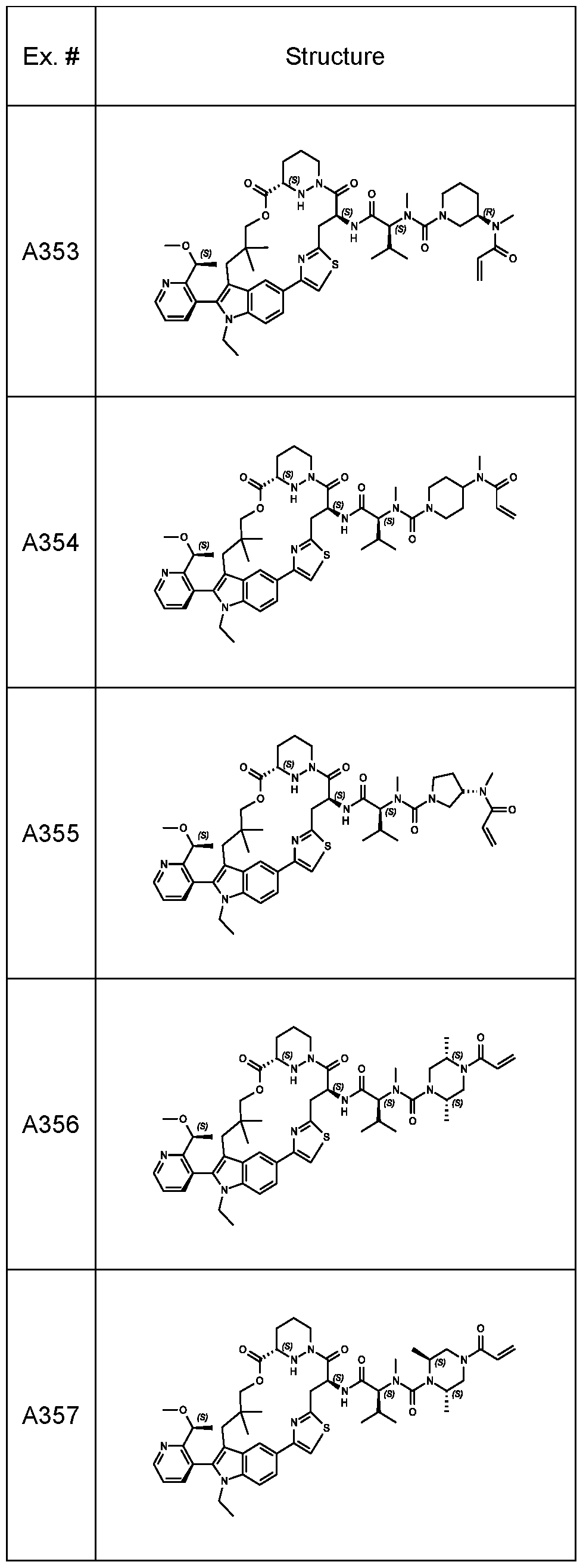
25. The method of any one of claims 1 to 24, wherein the subject has one or more tumors with low microsatellite instability.
26. The method of any one of claims 1 to 25, wherein the subject has one or more tumors with a low tumor immune infiltrate.
27. The method of any one of claims 1 to 26, wherein administering the RAS inhibitor alters the tumor immune infiltrate relative to the tumor immune infiltrate in the absence of the RAS inhibitor.
28. The method of claim 26 or 27, wherein the tumor immune infiltrate comprises antigen-presenting cells, myeloid cells, or lymphoid cells.
29. The method of any one of claims 1 to 28, wherein administering the RAS inhibitor alters the antitumor immune response.
30. The method of any one of claims 1 to 29, wherein administering the RAS inhibitor alters the tumor microenvironment relative to the tumor microenvironment in the absence of the RAS inhibitor.
31. The method of any one of claims 1 to 30, wherein administering the RAS inhibitor transforms an immunologically cold tumor into an immunologically hot tumor.
32. The method of any one of claims 1 to 31 , wherein the method reduces tumor size or inhibits tumor growth.
33. The method of any one of claims 1 to 32, wherein the immune refractory lung cancer is non-small cell lung cancer or small-cell lung cancer.
34. The method of any one of claims 1 to 33, wherein the immune refractory lung cancer comprises a K-Ras G12C, H-Ras G12C, or N-Ras G12C mutation.
PCT/US2023/063907 2022-03-08 2023-03-08 Methods for treating immune refractory lung cancer Ceased WO2023172940A1 (en)

Priority Applications (4)

Application Number Priority Date Filing Date Title
JP2024553373A JP2025510572A (en) 2022-03-08 2023-03-08 Methods for treating immunorefractory lung cancer
EP23713567.8A EP4489755A1 (en) 2022-03-08 2023-03-08 Methods for treating immune refractory lung cancer
CN202380038591.9A CN119136806A (en) 2022-03-08 2023-03-08 Methods for treating immune-refractory lung cancer
US18/819,406 US20250009753A1 (en) 2022-03-08 2024-08-29 Methods for treating immune refractory lung cancer

Applications Claiming Priority (2)

Application Number Priority Date Filing Date Title
US202263317649P 2022-03-08 2022-03-08
US63/317,649 2022-03-08

Related Child Applications (1)

Application Number Title Priority Date Filing Date
US18/819,406 Continuation US20250009753A1 (en) 2022-03-08 2024-08-29 Methods for treating immune refractory lung cancer

Publications (1)

Publication Number Publication Date
WO2023172940A1 true WO2023172940A1 (en) 2023-09-14

Family

ID=85772897

Family Applications (1)

Application Number Title Priority Date Filing Date
PCT/US2023/063907 Ceased WO2023172940A1 (en) 2022-03-08 2023-03-08 Methods for treating immune refractory lung cancer

Country Status (5)

Country Link
US (1) US20250009753A1 (en)
EP (1) EP4489755A1 (en)
JP (1) JP2025510572A (en)
CN (1) CN119136806A (en)
WO (1) WO2023172940A1 (en)

Cited By (5)

* Cited by examiner, † Cited by third party
Publication number Priority date Publication date Assignee Title
WO2025034702A1 (en) * 2023-08-07 2025-02-13 Revolution Medicines, Inc. Rmc-6291 for use in the treatment of ras protein-related disease or disorder
US12247036B2 (en) 2023-02-14 2025-03-11 Hoffmann-La Roche Inc. Tricyclic compounds for the treatment of cancer
WO2025213185A1 (en) * 2024-04-05 2025-10-09 Revolution Medicines, Inc. Peptide conjugates
WO2025213065A1 (en) * 2024-04-05 2025-10-09 Revolution Medicines, Inc. Peptide conjugates
US12458647B2 (en) 2022-09-29 2025-11-04 Guangzhou Joyo Pharmatech Co., Ltd. Macrocyclic derivative and use thereof

Families Citing this family (1)

* Cited by examiner, † Cited by third party
Publication number Priority date Publication date Assignee Title
IL301298A (en) 2020-09-15 2023-05-01 Revolution Medicines Inc Indole derivatives as ras inhibitors in the treatment of cancer

Citations (496)

* Cited by examiner, † Cited by third party
Publication number Priority date Publication date Assignee Title
WO1990005719A1 (en) 1988-11-23 1990-05-31 British Bio-Technology Limited Hydroxamic acid based collagenase inhibitors
JPH02233610A (en) 1989-03-06 1990-09-17 Fujisawa Pharmaceut Co Ltd Vascularization inhibitor
EP0407122A1 (en) 1989-07-06 1991-01-09 Repligen Corporation Novel modified PF4 compositions and methods of use
US5100883A (en) 1991-04-08 1992-03-31 American Home Products Corporation Fluorinated esters of rapamycin
WO1992005179A1 (en) 1990-09-19 1992-04-02 American Home Products Corporation Carboxylic acid esters of rapamycin
US5118677A (en) 1991-05-20 1992-06-02 American Home Products Corporation Amide esters of rapamycin
US5118678A (en) 1991-04-17 1992-06-02 American Home Products Corporation Carbamates of rapamycin
US5120842A (en) 1991-04-01 1992-06-09 American Home Products Corporation Silyl ethers of rapamycin
US5151413A (en) 1991-11-06 1992-09-29 American Home Products Corporation Rapamycin acetals as immunosuppressant and antifungal agents
WO1992020642A1 (en) 1991-05-10 1992-11-26 Rhone-Poulenc Rorer International (Holdings) Inc. Bis mono-and bicyclic aryl and heteroaryl compounds which inhibit egf and/or pdgf receptor tyrosine kinase
EP0520722A1 (en) 1991-06-28 1992-12-30 Zeneca Limited Therapeutic preparations containing quinazoline derivatives
WO1993011130A1 (en) 1991-12-03 1993-06-10 Smithkline Beecham Plc Rapamycin derivative and its medicinal use
EP0566226A1 (en) 1992-01-20 1993-10-20 Zeneca Limited Quinazoline derivatives
US5256790A (en) 1992-08-13 1993-10-26 American Home Products Corporation 27-hydroxyrapamycin and derivatives thereof
US5258389A (en) 1992-11-09 1993-11-02 Merck & Co., Inc. O-aryl, O-alkyl, O-alkenyl and O-alkynylrapamycin derivatives
WO1994002136A1 (en) 1992-07-17 1994-02-03 Smithkline Beecham Corporation Rapamycin derivatives
WO1994002485A1 (en) 1992-07-17 1994-02-03 Smithkline Beecham Corporation Rapamycin derivatives
WO1994009010A1 (en) 1992-10-09 1994-04-28 Sandoz Ltd. O-alkylated rapamycin derivatives and their use, particularly as immunosuppressants
EP0606046A1 (en) 1993-01-06 1994-07-13 Ciba-Geigy Ag Arylsulfonamido-substituted hydroxamic acids
WO1995009847A1 (en) 1993-10-01 1995-04-13 Ciba-Geigy Ag Pyrimidineamine derivatives and processes for the preparation thereof
WO1995014023A1 (en) 1993-11-19 1995-05-26 Abbott Laboratories Semisynthetic analogs of rapamycin (macrolides) being immunomodulators
WO1995016691A1 (en) 1993-12-17 1995-06-22 Sandoz Ltd. Rapamycin derivatives useful as immunosuppressants
WO1995019774A1 (en) 1994-01-25 1995-07-27 Warner-Lambert Company Bicyclic compounds capable of inhibiting tyrosine kinases of the epidermal growth factor receptor family
WO1995019970A1 (en) 1994-01-25 1995-07-27 Warner-Lambert Company Tricyclic compounds capable of inhibiting tyrosine kinases of the epidermal growth factor receptor family
EP0682027A1 (en) 1994-05-03 1995-11-15 Ciba-Geigy Ag Pyrrolopyrimidine derivatives with antiproliferative action
US5521184A (en) 1992-04-03 1996-05-28 Ciba-Geigy Corporation Pyrimidine derivatives and processes for the preparation thereof
WO1996027583A1 (en) 1995-03-08 1996-09-12 Pfizer Inc. Arylsulfonylamino hydroxamic acid derivatives
WO1996030347A1 (en) 1995-03-30 1996-10-03 Pfizer Inc. Quinazoline derivatives
WO1996031510A1 (en) 1995-04-03 1996-10-10 Novartis Ag Pyrazole derivatives and processes for the preparation thereof
WO1996033172A1 (en) 1995-04-20 1996-10-24 Pfizer Inc. Arylsulfonyl hydroxamic acid derivatives as mmp and tnf inhibitors
WO1996033980A1 (en) 1995-04-27 1996-10-31 Zeneca Limited Quinazoline derivatives
WO1996041807A1 (en) 1995-06-09 1996-12-27 Novartis Ag Rapamycin derivatives
WO1997002266A1 (en) 1995-07-06 1997-01-23 Novartis Ag Pyrrolopyrimidines and processes for the preparation thereof
WO1997013771A1 (en) 1995-10-11 1997-04-17 Glaxo Group Limited Bicyclic heteroaromatic compounds as protein tyrosine kinase inhibitors
US5624677A (en) 1995-06-13 1997-04-29 Pentech Pharmaceuticals, Inc. Controlled release of drugs delivered by sublingual or buccal administration
EP0770622A2 (en) 1995-09-15 1997-05-02 MERCK PATENT GmbH Cyclic adhesion inhibitors
WO1997019065A1 (en) 1995-11-20 1997-05-29 Celltech Therapeutics Limited Substituted 2-anilinopyrimidines useful as protein kinase inhibitors
EP0780386A1 (en) 1995-12-20 1997-06-25 F. Hoffmann-La Roche Ag Matrix metalloprotease inhibitors
US5650415A (en) 1995-06-07 1997-07-22 Sugen, Inc. Quinoline compounds
WO1997027199A1 (en) 1996-01-23 1997-07-31 Novartis Ag Pyrrolopyrimidines and processes for their preparation
EP0787772A2 (en) 1996-01-30 1997-08-06 Dow Corning Toray Silicone Company Ltd. Silicone rubber composition
US5656643A (en) 1993-11-08 1997-08-12 Rhone-Poulenc Rorer Pharmaceuticals Inc. Bis mono-and bicyclic aryl and heteroaryl compounds which inhibit EGF and/or PDGF receptor tyrosine kinase
WO1997030044A1 (en) 1996-02-14 1997-08-21 Zeneca Limited Quinazoline compounds
WO1997030034A1 (en) 1996-02-14 1997-08-21 Zeneca Limited Quinazoline derivatives as antitumor agents
WO1997032881A1 (en) 1996-03-06 1997-09-12 Dr. Karl Thomae Gmbh 4-amino pyrimidine derivates, medicaments containing these compounds, their use and process for their production
WO1997032880A1 (en) 1996-03-06 1997-09-12 Dr. Karl Thomae Gmbh Pyrimido[5,4-d]pyrimidines, medicaments containing these compounds, their use and process for their production
WO1997034895A1 (en) 1996-03-15 1997-09-25 Novartis Ag Novel n-7-heterocyclyl pyrrolo[2,3-d]pyridines and their use
WO1997038994A1 (en) 1996-04-13 1997-10-23 Zeneca Limited Quinazoline derivatives
WO1997038983A1 (en) 1996-04-12 1997-10-23 Warner-Lambert Company Irreversible inhibitors of tyrosine kinases
WO1997049688A1 (en) 1996-06-24 1997-12-31 Pfizer Inc. Phenylamino-substituted tricyclic derivatives for treatment of hyperproliferative diseases
EP0818442A2 (en) 1996-07-12 1998-01-14 Pfizer Inc. Cyclic sulphone derivatives as inhibitors of metalloproteinases and of the production of tumour necrosis factor
WO1998002434A1 (en) 1996-07-13 1998-01-22 Glaxo Group Limited Fused heterocyclic compounds as protein tyrosine kinase inhibitors
WO1998002441A2 (en) 1996-07-12 1998-01-22 Ariad Pharmaceuticals, Inc. Non immunosuppressive antifungal rapalogs
WO1998002437A1 (en) 1996-07-13 1998-01-22 Glaxo Group Limited Bicyclic heteroaromatic compounds as protein tyrosine kinase inhibitors
WO1998002438A1 (en) 1996-07-13 1998-01-22 Glaxo Group Limited Bicyclic heteroaromatic compounds as protein tyrosine kinase inhibitors
US5712291A (en) 1993-03-01 1998-01-27 The Children's Medical Center Corporation Methods and compositions for inhibition of angiogenesis
WO1998003516A1 (en) 1996-07-18 1998-01-29 Pfizer Inc. Phosphinate based inhibitors of matrix metalloproteases
WO1998007697A1 (en) 1996-08-23 1998-02-26 Pfizer Inc. Arylsulfonylamino hydroxamic acid derivatives
WO1998007726A1 (en) 1996-08-23 1998-02-26 Novartis Ag Substituted pyrrolopyrimidines and processes for their preparation
US5728813A (en) 1992-11-13 1998-03-17 Immunex Corporation Antibodies directed against elk ligand
WO1998014450A1 (en) 1996-10-02 1998-04-09 Novartis Ag Pyrimidine derivatives and processes for the preparation thereof
WO1998014449A1 (en) 1996-10-02 1998-04-09 Novartis Ag Fused pyrazole derivatives and processes for their preparation
WO1998014451A1 (en) 1996-10-02 1998-04-09 Novartis Ag Fused pyrazole derivative and process for its preparation
EP0837063A1 (en) 1996-10-17 1998-04-22 Pfizer Inc. 4-Aminoquinazoline derivatives
WO1998017662A1 (en) 1996-10-18 1998-04-30 Novartis Ag Phenyl-substituted bicyclic heterocyclyl derivatives and their use
US5747498A (en) 1996-05-28 1998-05-05 Pfizer Inc. Alkynyl and azido-substituted 4-anilinoquinazolines
WO1998030566A1 (en) 1997-01-06 1998-07-16 Pfizer Inc. Cyclic sulfone derivatives
US5789427A (en) 1994-03-07 1998-08-04 Sugen, Inc. Methods and compositions for inhibiting cell proliferative disorders
WO1998033768A1 (en) 1997-02-03 1998-08-06 Pfizer Products Inc. Arylsulfonylamino hydroxamic acid derivatives
WO1998033798A2 (en) 1997-02-05 1998-08-06 Warner Lambert Company Pyrido[2,3-d]pyrimidines and 4-amino-pyrimidines as inhibitors of cell proliferation
US5792783A (en) 1995-06-07 1998-08-11 Sugen, Inc. 3-heteroaryl-2-indolinone compounds for the treatment of disease
WO1998034918A1 (en) 1997-02-11 1998-08-13 Pfizer Inc. Arylsulfonyl hydroxamic acid derivatives
WO1998034915A1 (en) 1997-02-07 1998-08-13 Pfizer Inc. N-hydroxy-beta-sulfonyl-propionamide derivatives and their use as inhibitors of matrix metalloproteinases
US5858358A (en) 1992-04-07 1999-01-12 The United States Of America As Represented By The Secretary Of The Navy Methods for selectively stimulating proliferation of T cells
WO1999007675A1 (en) 1997-08-08 1999-02-18 Pfizer Products Inc. Aryloxyarylsulfonylamino hydroxamic acid derivatives
WO1999007701A1 (en) 1997-08-05 1999-02-18 Sugen, Inc. Tricyclic quinoxaline derivatives as protein tyrosine kinase inhibitors
US5892112A (en) 1990-11-21 1999-04-06 Glycomed Incorporated Process for preparing synthetic matrix metalloprotease inhibitors
WO1999020758A1 (en) 1997-10-21 1999-04-29 Human Genome Sciences, Inc. Human tumor necrosis factor receptor-like proteins tr11, tr11sv1, and tr11sv2
WO1999029667A1 (en) 1997-12-05 1999-06-17 Pfizer Limited Hydroxamic acid derivatives as matrix metalloprotease (mmp) inhibitors
WO1999035146A1 (en) 1998-01-12 1999-07-15 Glaxo Group Limited Bicyclic heteroaromatic compounds as protein tyrosine kinase inhibitors
WO1999035132A1 (en) 1998-01-12 1999-07-15 Glaxo Group Limited Heterocyclic compounds
WO1999040196A1 (en) 1998-02-09 1999-08-12 Genentech, Inc. Novel tumor necrosis factor receptor homolog and nucleic acids encoding the same
WO1999045009A1 (en) 1998-03-04 1999-09-10 Bristol-Myers Squibb Company Heterocyclo-substituted imidazopyrazine protein tyrosine kinase inhibitors
US5969110A (en) 1993-08-20 1999-10-19 Immunex Corporation Antibodies that bind hek ligands
WO1999052889A1 (en) 1998-04-10 1999-10-21 Pfizer Products Inc. (4-arylsulfonylamino)-tetrahydropyran-4-carboxylic acid hydroxamides
WO1999052910A1 (en) 1998-04-10 1999-10-21 Pfizer Products Inc. Bicyclic hydroxamic acid derivatives
US5981245A (en) 1994-04-15 1999-11-09 Amgen Inc. EPH-like receptor protein tyrosine kinases
US5990141A (en) 1994-01-07 1999-11-23 Sugen Inc. Treatment of platelet derived growth factor related disorders such as cancers
WO1999061422A1 (en) 1998-05-29 1999-12-02 Sugen, Inc. Pyrrole substituted 2-indolinone protein kinase inhibitors
EP0970070A1 (en) 1997-02-13 2000-01-12 Novartis AG Phthalazines with angiogenesis inhibiting activity
WO2000002871A1 (en) 1998-07-10 2000-01-20 Merck & Co., Inc. Novel angiogenesis inhibitors
WO2000012089A1 (en) 1998-08-31 2000-03-09 Merck & Co., Inc. Novel angiogenesis inhibitors
US6057124A (en) 1995-01-27 2000-05-02 Amgen Inc. Nucleic acids encoding ligands for HEK4 receptors
EP1004578A2 (en) 1998-11-05 2000-05-31 Pfizer Products Inc. 5-oxo-pyrrolidine-2-carboxylic acid hydroxamide derivatives
US6111090A (en) 1996-08-16 2000-08-29 Schering Corporation Mammalian cell surface antigens; related reagents
WO2000059509A1 (en) 1999-03-30 2000-10-12 Novartis Ag Phthalazine derivatives for treating inflammatory diseases
WO2001003720A2 (en) 1999-07-12 2001-01-18 Genentech, Inc. Promotion or inhibition of angiogenesis and cardiovascularization by tumor necrosis factor ligand/receptor homologs
WO2001014387A1 (en) 1999-08-24 2001-03-01 Ariad Gene Therapeutics, Inc. 28-epirapalogs
WO2001032651A1 (en) 1999-11-05 2001-05-10 Astrazeneca Ab Quinazoline derivatives as vegf inhibitors
US6232447B1 (en) 1994-10-05 2001-05-15 Immunex Corporation Antibody immunoreactive with a human cytokine designated LERK-6
US6235764B1 (en) 1998-06-04 2001-05-22 Pfizer Inc. Isothiazole derivatives useful as anticancer agents
WO2001037820A2 (en) 1999-11-24 2001-05-31 Sugen, Inc. Ionizable indolinone derivatives and their use as ptk ligands
EP1181017A1 (en) 1999-06-03 2002-02-27 Pfizer Limited Metalloprotease inhibitors
US6352694B1 (en) 1994-06-03 2002-03-05 Genetics Institute, Inc. Methods for inducing a population of T cells to proliferate using agents which recognize TCR/CD3 and ligands which stimulate an accessory molecule on the surface of the T cells
US20020042368A1 (en) 2000-02-25 2002-04-11 Fanslow William C. Integrin antagonists
US6413932B1 (en) 1999-06-07 2002-07-02 Immunex Corporation Tek antagonists comprising soluble tek extracellular binding domain
WO2002055501A2 (en) 2001-01-12 2002-07-18 Amgen Inc N-pyridyl carboxamide derivatives and pharmaceutical compositions containing them
WO2002059110A1 (en) 2000-12-21 2002-08-01 Glaxo Group Limited Pyrimidineamines as angiogenesis modulators
WO2002066470A1 (en) 2001-01-12 2002-08-29 Amgen Inc. Substituted alkylamine derivatives and methods of use
WO2002068406A2 (en) 2001-01-12 2002-09-06 Amgen Inc. Substituted amine derivatives and their use for the treatment of angiogenesis
US6515004B1 (en) 1999-12-15 2003-02-04 Bristol-Myers Squibb Company N-[5-[[[5-alkyl-2-oxazolyl]methyl]thio]-2-thiazolyl]-carboxamide inhibitors of cyclin dependent kinases
US6534055B1 (en) 1988-11-23 2003-03-18 Genetics Institute, Inc. Methods for selectively stimulating proliferation of T cells
US6596852B2 (en) 1994-07-08 2003-07-22 Immunex Corporation Antibodies that bind the cytokine designated LERK-5
US20030162712A1 (en) 1999-06-07 2003-08-28 Immunex Corporation Tek antagonists
US6630500B2 (en) 2000-08-25 2003-10-07 Cephalon, Inc. Selected fused pyrrolocarbazoles
US6656963B2 (en) 1997-05-30 2003-12-02 The Regents Of The University Of California Indole-3-carbinol (I3C) derivatives and methods
WO2004005279A2 (en) 2002-07-09 2004-01-15 Amgen Inc. Substituted anthranilic amide derivatives and methods of use
WO2004007481A2 (en) 2002-07-17 2004-01-22 Amgen Inc. Substituted amine derivatives and methods of use in the treatment of angiogenesis relates disorders
WO2004007458A1 (en) 2002-07-17 2004-01-22 Amgen Inc. Substituted 2-alkylamine nicotinic amide derivatives and use there of
WO2004009784A2 (en) 2002-07-19 2004-01-29 Bristol-Myers Squibb Company Novel inhibitors of kinases
US6692964B1 (en) 1995-05-04 2004-02-17 The United States Of America As Represented By The Secretary Of The Navy Methods for transfecting T cells
US6727225B2 (en) 1999-12-20 2004-04-27 Immunex Corporation TWEAK receptor
US6797514B2 (en) 2000-02-24 2004-09-28 Xcyte Therapies, Inc. Simultaneous stimulation and concentration of cells
WO2005005434A1 (en) 2003-07-08 2005-01-20 Novartis Ag Use of rapamycin and rapamycin derivatives for the treatment of bone loss
WO2005007190A1 (en) 2003-07-11 2005-01-27 Schering Corporation Agonists or antagonists of the clucocorticoid-induced tumour necrosis factor receptor (gitr) or its ligand for the treatment of immune disorders, infections and cancer
WO2005011700A1 (en) 2003-07-29 2005-02-10 Smithkline Beecham Corporation INHIBITORS OF Akt ACTIVITY
WO2005016894A1 (en) 2003-08-15 2005-02-24 Novartis Ag 2, 4-pyrimidinediamines useful in the treatment of neoplastic diseases, inflammatory and immune system disorders
WO2005016252A2 (en) 2003-07-11 2005-02-24 Ariad Gene Therapeutics, Inc. Phosphorus-containing macrocycles
US6867041B2 (en) 2000-02-24 2005-03-15 Xcyte Therapies, Inc. Simultaneous stimulation and concentration of cells
US6905874B2 (en) 2000-02-24 2005-06-14 Xcyte Therapies, Inc. Simultaneous stimulation and concentration of cells
US6905680B2 (en) 1988-11-23 2005-06-14 Genetics Institute, Inc. Methods of treating HIV infected subjects
WO2005055808A2 (en) 2003-12-02 2005-06-23 Genzyme Corporation Compositions and methods to diagnose and treat lung cancer
WO2005115451A2 (en) 2004-04-30 2005-12-08 Isis Innovation Limited Methods for generating improved immune response
WO2006044453A1 (en) 2004-10-13 2006-04-27 Wyeth Analogs of 17-hydroxywortmannin as pi3k inhibitors
US7067318B2 (en) 1995-06-07 2006-06-27 The Regents Of The University Of Michigan Methods for transfecting T cells
WO2006083289A2 (en) 2004-06-04 2006-08-10 Duke University Methods and compositions for enhancement of immunity by in vivo depletion of immunosuppressive cell activity
WO2006121168A1 (en) 2005-05-09 2006-11-16 Ono Pharmaceutical Co., Ltd. Human monoclonal antibodies to programmed death 1(pd-1) and methods for treating cancer using anti-pd-1 antibodies alone or in combination with other immunotherapeutics
WO2006122806A2 (en) 2005-05-20 2006-11-23 Novartis Ag 1,3-dihydro-imidazo [4,5-c] quinolin-2-ones as lipid kinase inhibitors
US7175843B2 (en) 1994-06-03 2007-02-13 Genetics Institute, Llc Methods for selectively stimulating proliferation of T cells
EP1786785A2 (en) 2004-08-26 2007-05-23 Pfizer, Inc. Enantiomerically pure aminoheteroaryl compounds as protein kinase inhibitors
WO2007133822A1 (en) 2006-01-19 2007-11-22 Genzyme Corporation Gitr antibodies for the treatment of cancer
EP1866339A2 (en) 2005-03-25 2007-12-19 TolerRx, Inc Gitr binding molecules and uses therefor
WO2008070740A1 (en) 2006-12-07 2008-06-12 F.Hoffmann-La Roche Ag Phosphoinositide 3-kinase inhibitor compounds and methods of use
EP1947183A1 (en) 1996-08-16 2008-07-23 Schering Corporation Mammalian cell surface antigens; related reagents
US20090012085A1 (en) 2005-09-20 2009-01-08 Charles Michael Baum Dosage forms and methods of treatment using a tyrosine kinase inhibitor
WO2009036082A2 (en) 2007-09-12 2009-03-19 Genentech, Inc. Combinations of phosphoinositide 3-kinase inhibitor compounds and chemotherapeutic agents, and methods of use
WO2009055730A1 (en) 2007-10-25 2009-04-30 Genentech, Inc. Process for making thienopyrimidine compounds
US7572631B2 (en) 2000-02-24 2009-08-11 Invitrogen Corporation Activation and expansion of T cells
US7618632B2 (en) 2003-05-23 2009-11-17 Wyeth Method of treating or ameliorating an immune cell associated pathology using GITR ligand antibodies
WO2010003118A1 (en) 2008-07-02 2010-01-07 Trubion Pharmaceuticals, Inc. Tgf-b antagonist multi-target binding proteins
WO2011028683A1 (en) 2009-09-03 2011-03-10 Schering Corporation Anti-gitr antibodies
WO2011051726A2 (en) 2009-10-30 2011-05-05 Isis Innovation Ltd Treatment of obesity
WO2011090754A1 (en) 2009-12-29 2011-07-28 Emergent Product Development Seattle, Llc Polypeptide heterodimers and uses thereof
WO2013039954A1 (en) 2011-09-14 2013-03-21 Sanofi Anti-gitr antibodies
WO2013155223A1 (en) 2012-04-10 2013-10-17 The Regents Of The University Of California Compositions and methods for treating cancer
US8586023B2 (en) 2008-09-12 2013-11-19 Mie University Cell capable of expressing exogenous GITR ligand
US8591886B2 (en) 2007-07-12 2013-11-26 Gitr, Inc. Combination therapies employing GITR binding molecules
US8623885B2 (en) 2011-03-23 2014-01-07 Amgen Inc. Fused tricyclic dual inhibitors of CDK 4/6 and FLT3
WO2014113584A1 (en) 2013-01-16 2014-07-24 Rhode Island Hospital Compositions and methods for the prevention and treatment of osteolysis and osteoporosis
WO2014143659A1 (en) 2013-03-15 2014-09-18 Araxes Pharma Llc Irreversible covalent inhibitors of the gtpase k-ras g12c
WO2014152588A1 (en) 2013-03-15 2014-09-25 Araxes Pharma Llc Covalent inhibitors of kras g12c
WO2014176488A1 (en) 2013-04-26 2014-10-30 Indiana University Research & Technology Corporation Hydroxyindole carboxylic acid based inhibitors for oncogenic src homology-2 domain containing protein tyrosine phosphatase-2 (shp2)
WO2015054572A1 (en) 2013-10-10 2015-04-16 Araxes Pharma Llc Inhibitors of kras g12c
WO2015107494A1 (en) 2014-01-17 2015-07-23 Novartis Ag 1 -(triazin-3-yi_/pyridazin-3-yl)-piper(-azine)idine derivatives and compositions thereof for inhibiting the activity of shp2
WO2015107495A1 (en) 2014-01-17 2015-07-23 Novartis Ag N-azaspirocycloalkane substituted n-heteroaryl compounds and compositions for inhibiting the activity of shp2
WO2015107493A1 (en) 2014-01-17 2015-07-23 Novartis Ag 1 -pyridazin-/triazin-3-yl-piper(-azine)/idine/pyrolidine derivatives and and compositions thereof for inhibiting the activity of shp2
WO2016049524A1 (en) 2014-09-25 2016-03-31 Araxes Pharma Llc Inhibitors of kras g12c mutant proteins
WO2016049568A1 (en) 2014-09-25 2016-03-31 Araxes Pharma Llc Methods and compositions for inhibition of ras
WO2016164675A1 (en) 2015-04-10 2016-10-13 Araxes Pharma Llc Substituted quinazoline compounds and methods of use thereof
WO2016168540A1 (en) 2015-04-15 2016-10-20 Araxes Pharma Llc Fused-tricyclic inhibitors of kras and methods of use thereof
WO2016191328A1 (en) 2015-05-22 2016-12-01 Allosta Pharmaceuticals Methods to prepare and employ binding site models for modulation of phosphatase activity and selectivity determination
WO2016196591A1 (en) 2015-06-01 2016-12-08 Indiana University Research & Technology Corporation Protein tyrosine phosphatases or shp2 inhibitors and uses thereof
WO2016203404A1 (en) 2015-06-19 2016-12-22 Novartis Ag Compounds and compositions for inhibiting the activity of shp2
WO2016203405A1 (en) 2015-06-19 2016-12-22 Novartis Ag Compounds and compositions for inhibiting the activity of shp2
WO2016203406A1 (en) 2015-06-19 2016-12-22 Novartis Ag Compounds and compositions for inhibiting the activity of shp2
WO2017015562A1 (en) 2015-07-22 2017-01-26 Araxes Pharma Llc Substituted quinazoline compounds and their use as inhibitors of g12c mutant kras, hras and/or nras proteins
WO2017058807A1 (en) 2015-09-28 2017-04-06 Araxes Pharma Llc Inhibitors of kras g12c mutant proteins
WO2017058768A1 (en) 2015-09-28 2017-04-06 Araxes Pharma Llc Inhibitors of kras g12c mutant proteins
WO2017058902A1 (en) 2015-09-28 2017-04-06 Araxes Pharma Llc Inhibitors of kras g12c mutant proteins
WO2017058792A1 (en) 2015-09-28 2017-04-06 Araxes Pharma Llc Inhibitors of kras g12c mutant proteins
WO2017058728A1 (en) 2015-09-28 2017-04-06 Araxes Pharma Llc Inhibitors of kras g12c mutant proteins
WO2017058915A1 (en) 2015-09-28 2017-04-06 Araxes Pharma Llc Inhibitors of kras g12c mutant proteins
WO2017058805A1 (en) 2015-09-28 2017-04-06 Araxes Pharma Llc Inhibitors of kras g12c mutant proteins
WO2017079723A1 (en) 2015-11-07 2017-05-11 Board Of Regents, The University Of Texas System Targeting proteins for degradation
WO2017078499A2 (en) 2015-11-06 2017-05-11 경북대학교 산학협력단 Composition for prevention or treatment of neuroinflammatory disease, containing protein tyrosine phosphatase inhibitor
WO2017087528A1 (en) 2015-11-16 2017-05-26 Araxes Pharma Llc 2-substituted quinazoline compounds comprising a substituted heterocyclic group and methods of use thereof
WO2017100279A1 (en) 2015-12-09 2017-06-15 West Virginia University Chemical compound for inhibition of shp2 function and for use as an anti-cancer agent
WO2017100546A1 (en) 2015-12-09 2017-06-15 Araxes Pharma Llc Methods for preparation of quinazoline derivatives
WO2017156397A1 (en) 2016-03-11 2017-09-14 Board Of Regents, The University Of Texas Sysytem Heterocyclic inhibitors of ptpn11
WO2017172979A1 (en) 2016-03-30 2017-10-05 Araxes Pharma Llc Substituted quinazoline compounds and methods of use
WO2017201161A1 (en) 2016-05-18 2017-11-23 Mirati Therapeutics, Inc. Kras g12c inhibitors
WO2017210134A1 (en) 2016-05-31 2017-12-07 Board Of Regents, University Of Texas System Heterocyclic inhibitors of ptpn11
WO2017211303A1 (en) 2016-06-07 2017-12-14 Jacobio Pharmaceuticals Co., Ltd. Novel heterocyclic derivatives useful as shp2 inhibitors
WO2017216706A1 (en) 2016-06-14 2017-12-21 Novartis Ag Compounds and compositions for inhibiting the activity of shp2
WO2018013597A1 (en) 2016-07-12 2018-01-18 Revolution Medicines, Inc. 2,5-disubstituted 3-methyl pyrazines and 2,5,6-trisubstituted 3-methyl pyrazines as allosteric shp2 inhibitors
WO2018057884A1 (en) 2016-09-22 2018-03-29 Relay Therapeutics, Inc. Shp2 phosphatase inhibitors and methods of use thereof
WO2018064510A1 (en) 2016-09-29 2018-04-05 Araxes Pharma Llc Inhibitors of kras g12c mutant proteins
WO2018068017A1 (en) 2016-10-07 2018-04-12 Araxes Pharma Llc Heterocyclic compounds as inhibitors of ras and methods of use thereof
WO2018081091A1 (en) 2016-10-24 2018-05-03 Relay Therapeutics, Inc. Pyrazolo[3,4-b]pyrazine derivatives as shp2 phosphatase inhibitors
WO2018098352A2 (en) * 2016-11-22 2018-05-31 Jun Oishi Targeting kras induced immune checkpoint expression
CN108113848A (en) 2018-01-31 2018-06-05 力迈德医疗(广州)有限公司 Upper limb and head recovery exercising robot
WO2018112420A1 (en) 2016-12-15 2018-06-21 The Regents Of The University Of California Compositions and methods for treating cancer
WO2018119183A2 (en) 2016-12-22 2018-06-28 Amgen Inc. Kras g12c inhibitors and methods of using the same
WO2018129402A1 (en) 2017-01-06 2018-07-12 Oregon Health & Science University Compositions and methods used in diagnosing and treating colorectal cancer
WO2018130928A1 (en) 2017-01-10 2018-07-19 Novartis Ag Pharmaceutical combination comprising an alk inhibitor and a shp2 inhibitor
WO2018136264A1 (en) 2017-01-23 2018-07-26 Revolution Medicines, Inc. Pyridine compounds as allosteric shp2 inhibitors
WO2018136265A1 (en) 2017-01-23 2018-07-26 Revolution Medicines, Inc. Bicyclic compounds as allosteric shp2 inhibitors
WO2018140599A1 (en) 2017-01-26 2018-08-02 Araxes Pharma Llc Benzothiophene and benzothiazole compounds and methods of use thereof
WO2018140512A1 (en) 2017-01-26 2018-08-02 Araxes Pharma Llc Fused bicyclic benzoheteroaromatic compounds and methods of use thereof
WO2018140513A1 (en) 2017-01-26 2018-08-02 Araxes Pharma Llc 1-(3-(6-(3-hydroxynaphthalen-1-yl)benzofuran-2-yl)azetidin-1yl)prop-2-en-1-one derivatives and similar compounds as kras g12c modulators for treating cancer
WO2018140514A1 (en) 2017-01-26 2018-08-02 Araxes Pharma Llc 1-(6-(3-hydroxynaphthalen-1-yl)quinazolin-2-yl)azetidin-1-yl)prop-2-en-1-one derivatives and similar compounds as kras g12c inhibitors for the treatment of cancer
WO2018140598A1 (en) 2017-01-26 2018-08-02 Araxes Pharma Llc Fused n-heterocyclic compounds and methods of use thereof
WO2018140600A1 (en) 2017-01-26 2018-08-02 Araxes Pharma Llc Fused hetero-hetero bicyclic compounds and methods of use thereof
WO2018143315A1 (en) 2017-02-02 2018-08-09 アステラス製薬株式会社 Quinazoline compound
WO2018160731A1 (en) 2017-02-28 2018-09-07 Novartis Ag Shp inhibitor compositions and uses for chimeric antigen receptor therapy
WO2018172984A1 (en) 2017-03-23 2018-09-27 Jacobio Pharmaceuticals Co., Ltd. Novel heterocyclic derivatives useful as shp2 inhibitors
WO2018204416A1 (en) 2017-05-02 2018-11-08 Revolution Medicines, Inc. Rapamycin analogs as mtor inhibitors
WO2018206539A1 (en) 2017-05-11 2018-11-15 Astrazeneca Ab Heteroaryl compounds that inhibit g12c mutant ras proteins
WO2018218133A1 (en) 2017-05-26 2018-11-29 Relay Therapeutics, Inc. Pyrazolo[3,4-b]pyrazine derivatives as shp2 phosphatase inhibitors
WO2018218071A1 (en) 2017-05-25 2018-11-29 Araxes Pharma Llc Compounds and methods of use thereof for treatment of cancer
WO2018218069A1 (en) 2017-05-25 2018-11-29 Araxes Pharma Llc Quinazoline derivatives as modulators of mutant kras, hras or nras
WO2018218070A2 (en) 2017-05-25 2018-11-29 Araxes Pharma Llc Covalent inhibitors of kras
WO2018217651A1 (en) 2017-05-22 2018-11-29 Amgen Inc. Kras g12c inhibitors and methods of using the same
WO2019051084A1 (en) 2017-09-07 2019-03-14 Revolution Medicines, Inc. Shp2 inhibitor compositions and methods for treating cancer
WO2019051469A1 (en) 2017-09-11 2019-03-14 Krouzon Pharmaceuticals, Inc. Octahydrocyclopenta[c]pyrrole allosteric inhibitors of shp2
WO2019051291A1 (en) 2017-09-08 2019-03-14 Amgen Inc. KRAS G12C INHIBITORS AND METHODS OF USE
WO2019099524A1 (en) 2017-11-15 2019-05-23 Mirati Therapeutics, Inc. Kras g12c inhibitors
WO2019110751A1 (en) 2017-12-08 2019-06-13 Astrazeneca Ab Tetracyclic compounds as inhibitors of g12c mutant ras protein, for use as anti-cancer agents
WO2019152454A1 (en) 2018-01-30 2019-08-08 Research Development Foundation Shp2 inhibitors and methods of use thereof
WO2019150305A1 (en) 2018-02-01 2019-08-08 Pfizer Inc. Substituted quinazoline and pyridopyrimidine derivatives useful as anticancer agents
WO2019155399A1 (en) 2018-02-09 2019-08-15 Pfizer Inc. Tetrahydroquinazoline derivatives useful as anticancer agents
CN110143949A (en) 2018-05-09 2019-08-20 北京加科思新药研发有限公司 Novel heterocyclic derivatives useful as SHP2 inhibitors
WO2019158019A1 (en) 2018-02-13 2019-08-22 上海青煜医药科技有限公司 Pyrimidine-fused cyclic compound, preparation method therefor and application thereof
WO2019165073A1 (en) 2018-02-21 2019-08-29 Relay Therapeutics, Inc. Shp2 phosphatase inhibitors and methods of use thereof
WO2019167000A1 (en) 2018-03-02 2019-09-06 Otsuka Pharmaceutical Co., Ltd. Pharmaceutical compounds
WO2019183367A1 (en) 2018-03-21 2019-09-26 Relay Therapeutics, Inc. Shp2 phosphatase inhibitors and methods of use thereof
WO2019183364A1 (en) 2018-03-21 2019-09-26 Relay Therapeutics, Inc. Pyrazolo[3,4-b]pyrazine shp2 phosphatase inhibitors and methods of use thereof
WO2019182960A1 (en) 2018-03-21 2019-09-26 Synblia Therapeutics, Inc. Shp2 inhibitors and uses thereof
WO2019212991A1 (en) 2018-05-01 2019-11-07 Revolution Medicines, Inc. C26-linked rapamycin analogs as mtor inhibitors
WO2019212990A1 (en) 2018-05-01 2019-11-07 Revolution Medicines, Inc. C40-, c28-, and c-32-linked rapamycin analogs as mtor inhibitors
WO2019213516A1 (en) 2018-05-04 2019-11-07 Amgen Inc. Kras g12c inhibitors and methods of using the same
WO2019213318A1 (en) 2018-05-02 2019-11-07 Board Of Regents, The University Of Texas System Substituted heterocyclic inhibitors of ptpn11
WO2019213526A1 (en) 2018-05-04 2019-11-07 Amgen Inc. Kras g12c inhibitors and methods of using the same
WO2019217691A1 (en) 2018-05-10 2019-11-14 Amgen Inc. Kras g12c inhibitors for the treatment of cancer
WO2019215203A1 (en) 2018-05-08 2019-11-14 Astrazeneca Ab Tetracyclic heteroaryl compounds
WO2019217307A1 (en) 2018-05-07 2019-11-14 Mirati Therapeutics, Inc. Kras g12c inhibitors
WO2019232419A1 (en) 2018-06-01 2019-12-05 Amgen Inc. Kras g12c inhibitors and methods of using the same
WO2019233810A1 (en) 2018-06-04 2019-12-12 Bayer Aktiengesellschaft Inhibitors of shp2
WO2019241157A1 (en) 2018-06-11 2019-12-19 Amgen Inc. Kras g12c inhibitors for treating cancer
WO2020022323A1 (en) 2018-07-24 2020-01-30 Taiho Pharmaceutical Co., Ltd. Heterobicyclic compounds for inhibiting the activity of shp2
WO2020028706A1 (en) 2018-08-01 2020-02-06 Araxes Pharma Llc Heterocyclic spiro compounds and methods of use thereof for the treatment of cancer
WO2020033286A1 (en) 2018-08-06 2020-02-13 Purdue Research Foundation Novel sesquiterpenoid analogs
WO2020033828A1 (en) 2018-08-10 2020-02-13 Board Of Regents, The University Of Texas System 6-(4-amino-3-methyl-2-oxa-8-azaspiro[4.5]decan-8-yl)-3-(2,3-dichlorophenyl)-2-methylpyrimidin-4(3h)-one derivatives and related compounds as ptpn11 (shp2) inhibitors for treating cancer
WO2020035031A1 (en) 2018-08-16 2020-02-20 Genentech, Inc. Fused ring compounds
WO2020047192A1 (en) 2018-08-31 2020-03-05 Mirati Therapeutics, Inc. Kras g12c inhibitors
WO2020050890A2 (en) 2018-06-12 2020-03-12 Amgen Inc. Kras g12c inhibitors and methods of using the same
WO2020061101A1 (en) 2018-09-18 2020-03-26 Nikang Therapeutics, Inc. Tri-substituted heteroaryl derivatives as src homology-2 phosphatase inhibitors
WO2020063760A1 (en) 2018-09-26 2020-04-02 Jacobio Pharmaceuticals Co., Ltd. Novel heterocyclic derivatives useful as shp2 inhibitors
WO2020065453A1 (en) 2018-09-29 2020-04-02 Novartis Ag Process of manufacture of a compound for inhibiting the activity of shp2
WO2020065452A1 (en) 2018-09-29 2020-04-02 Novartis Ag Manufacture of compounds and compositions for inhibiting the activity of shp2
WO2020072656A1 (en) 2018-10-03 2020-04-09 Gilead Sciences, Inc. Imidozopyrimidine derivatives
WO2020073949A1 (en) 2018-10-10 2020-04-16 江苏豪森药业集团有限公司 Regulator of nitrogen-containing heteroaromatic derivatives, preparation method therefor and use thereof
WO2020073945A1 (en) 2018-10-10 2020-04-16 江苏豪森药业集团有限公司 Bicyclic derivative inhibitor, preparation method therefor, and application thereof
WO2020081848A1 (en) 2018-10-17 2020-04-23 Array Biopharma Inc. Protein tyrosine phosphatase inhibitors
WO2020094104A1 (en) 2018-11-07 2020-05-14 如东凌达生物医药科技有限公司 Nitrogen-containing fused heterocyclic shp2 inhibitor compound, preparation method, and use
WO2020094018A1 (en) 2018-11-06 2020-05-14 上海奕拓医药科技有限责任公司 Spiro aromatic ring compound and application thereof
WO2020106640A1 (en) 2018-11-19 2020-05-28 Amgen Inc. Kras g12c inhibitors and methods of using the same
WO2020106647A2 (en) * 2018-11-19 2020-05-28 Amgen Inc. Combination therapy including a krasg12c inhibitor and one or more additional pharmaceutically active agents for the treatment of cancers
WO2020104635A1 (en) 2018-11-23 2020-05-28 INSERM (Institut National de la Santé et de la Recherche Médicale) Use of shp2 inhibitors for the treatment of insulin resistance
WO2020108590A1 (en) 2018-11-30 2020-06-04 上海拓界生物医药科技有限公司 Pyrimidine and five-membered nitrogen heterocycle derivative, preparation method therefor, and medical uses thereof
CN111265529A (en) 2020-02-22 2020-06-12 南京大学 Application of protein tyrosine phosphatase SHP2 inhibitor in preparation of psoriasis medicine
WO2020132597A1 (en) 2018-12-21 2020-06-25 Revolution Medicines, Inc. Compounds that participate in cooperative binding and uses thereof
CN111393459A (en) 2020-04-16 2020-07-10 南京安纳康生物科技有限公司 SHP2 inhibitor and application thereof
WO2020156243A1 (en) 2019-01-31 2020-08-06 贝达药业股份有限公司 Shp2 inhibitor and application thereof
WO2020156242A1 (en) 2019-01-31 2020-08-06 贝达药业股份有限公司 Shp2 inhibitor and application thereof
WO2020165734A1 (en) 2019-02-12 2020-08-20 Novartis Ag Pharmaceutical combination comprising tno155 and ribociclib
WO2020165732A1 (en) 2019-02-12 2020-08-20 Novartis Ag Pharmaceutical combination comprising tno155 and a krasg12c inhibitor
WO2020165733A1 (en) 2019-02-12 2020-08-20 Novartis Ag Pharmaceutical combination comprising tno155 and a pd-1 inhibitor
WO2020181283A1 (en) 2019-03-07 2020-09-10 Merck Patent Gmbh Carboxamide-pyrimidine derivatives as shp2 antagonists
WO2020177653A1 (en) 2019-03-04 2020-09-10 勤浩医药(苏州)有限公司 Pyrazine derivative and application thereof in inhibiting shp2
CN111704611A (en) 2019-07-25 2020-09-25 上海凌达生物医药有限公司 Aryl spiro SHP2 inhibitor compound, preparation method and application
WO2020201991A1 (en) 2019-04-02 2020-10-08 Array Biopharma Inc. Protein tyrosine phosphatase inhibitors
WO2020210384A1 (en) 2019-04-08 2020-10-15 Merck Patent Gmbh Pyrimidinone derivatives as shp2 antagonists
CN111848599A (en) 2020-04-28 2020-10-30 江南大学 A class of oxygen-containing five-membered heterocyclic compounds, synthesis method, pharmaceutical composition and use
WO2020249079A1 (en) 2019-06-14 2020-12-17 北京盛诺基医药科技股份有限公司 Shp2 phosphatase allosteric inhibitor
WO2020259679A1 (en) 2019-06-28 2020-12-30 上海拓界生物医药科技有限公司 Pyrimidine five-membered nitrogen heterocyclic derivative, preparation method thereof and pharmaceutical use thereof
WO2021018287A1 (en) 2019-08-01 2021-02-04 上海奕拓医药科技有限责任公司 Spiroaromatic compound, preparation and application thereof
WO2021028362A1 (en) 2019-08-09 2021-02-18 Irbm S.P.A. Shp2 inhibitors
WO2021033153A1 (en) 2019-08-20 2021-02-25 Otsuka Pharmaceutical Co., Ltd. Pyrazolo[3,4-b]pyrazine shp2 phosphatase inhibitors
CN112402385A (en) 2020-11-30 2021-02-26 北京华氏开元医药科技有限公司 4-Hydroxymethyl-1H-indole compound pharmaceutical preparation and preparation method thereof
WO2021043077A1 (en) 2019-09-06 2021-03-11 四川科伦博泰生物医药股份有限公司 Substituted pyrazine compound and preparation method therefor and use thereof
US20210085683A1 (en) * 2019-09-24 2021-03-25 Mirati Therapeutics, Inc. Combination therapies
WO2021061706A1 (en) 2019-09-24 2021-04-01 Relay Therapeutics, Inc. Shp2 phosphatase inhibitors and methods of making and using the same
WO2021061515A1 (en) 2019-09-23 2021-04-01 Synblia Therapeutics, Inc. Shp2 inhibitors and uses thereof
WO2021073439A1 (en) 2019-10-14 2021-04-22 杭州雷索药业有限公司 Pyrazine derivative for inhibiting shp2 activity
US20210130369A1 (en) * 2019-11-04 2021-05-06 Revolution Medicines, Inc. Ras inhibitors
US20210130303A1 (en) * 2019-11-04 2021-05-06 Revolution Medicines, Inc. Ras inhibitors
WO2021088945A1 (en) 2019-11-08 2021-05-14 南京圣和药业股份有限公司 Compound as shp2 inhibitor and use thereof
WO2021091967A1 (en) 2019-11-04 2021-05-14 Revolution Medicines, Inc. Ras inhibitors
CN112823796A (en) 2020-07-08 2021-05-21 南京大学 Application of protein tyrosine phosphatase SHP2 inhibitor in preparation of medicine for treating osteoarthritis
CN112920131A (en) 2021-03-03 2021-06-08 天津医科大学 1,2, 4-triazole derivatives and preparation method and application thereof
WO2021110796A1 (en) 2019-12-04 2021-06-10 Bayer Aktiengesellschaft Inhibitors of shp2
WO2021115286A1 (en) 2019-12-10 2021-06-17 成都倍特药业股份有限公司 Six-membered and five-membered aromatic ring derivative containing nitrogen heteroatoms which can be used as shp2 inhibitor
WO2021119525A1 (en) 2019-12-11 2021-06-17 Tiaki Therapeutics Inc. Shp1 and shp2 inhibitors and their methods of use
US11044675B2 (en) 2018-02-13 2021-06-22 Idac Holdings, Inc. Methods, apparatuses and systems for adaptive uplink power control in a wireless network
WO2021126816A1 (en) 2019-12-16 2021-06-24 Amgen Inc. Dosing regimen of a kras g12c inhibitor
WO2021121371A1 (en) 2019-12-19 2021-06-24 贝达药业股份有限公司 Kras g12c inhibitor and pharmaceutical use thereof
WO2021121397A1 (en) 2019-12-19 2021-06-24 首药控股(北京)股份有限公司 Substituted alkynyl heterocyclic compound
WO2021121367A1 (en) 2019-12-19 2021-06-24 Jacobio Pharmaceuticals Co., Ltd. Kras mutant protein inhibitors
WO2021126799A1 (en) 2019-12-18 2021-06-24 Merck Sharp & Dohme Corp. Macrocyclic peptides as potent inhibitors of k-ras g12d mutant
WO2021124222A1 (en) 2019-12-20 2021-06-24 Novartis Ag Pyrazolyl derivatives useful as anti-cancer agents
WO2021121330A1 (en) 2019-12-18 2021-06-24 InventisBio Co., Ltd. Heterocyclic compounds, preparation methods and uses thereof
WO2021127404A1 (en) 2019-12-20 2021-06-24 Erasca, Inc. Tricyclic pyridones and pyrimidones
CN113024508A (en) 2019-12-25 2021-06-25 天津医科大学 Nitrogen heterocyclic ring derivative and preparation method and application thereof
WO2021129820A1 (en) 2019-12-27 2021-07-01 微境生物医药科技(上海)有限公司 Spiro ring-containing quinazoline compound
WO2021129824A1 (en) 2019-12-27 2021-07-01 微境生物医药科技(上海)有限公司 New-type k-ras g12c inhibitor
WO2021142252A1 (en) 2020-01-10 2021-07-15 Incyte Corporation Tricyclic compounds as inhibitors of kras
WO2021141628A1 (en) 2019-01-10 2021-07-15 Mirati Therapeutics, Inc. Kras g12c inhibitors
WO2021139678A1 (en) 2020-01-07 2021-07-15 广州百霆医药科技有限公司 Pyridopyrimidine kras g12c mutant protein inhibitor
WO2021139748A1 (en) 2020-01-08 2021-07-15 Ascentage Pharma (Suzhou) Co., Ltd. Spirocyclic tetrahydroquinazolines
CN113135924A (en) 2020-01-19 2021-07-20 广东东阳光药业有限公司 Pyrimidine derivatives and their use in medicine
WO2021143680A1 (en) 2020-01-16 2021-07-22 浙江海正药业股份有限公司 Heteroaryl derivative, preparation method therefor, and use thereof
WO2021143701A1 (en) 2020-01-19 2021-07-22 北京诺诚健华医药科技有限公司 Pyrimidine-4(3h)-ketone heterocyclic compound, preparation method therefor and use thereof in medicine and pharmacology
WO2021143823A1 (en) 2020-01-16 2021-07-22 浙江海正药业股份有限公司 Pyridine or pyrimidine derivative, and preparation method therefor and use thereof
WO2021143693A1 (en) 2020-01-13 2021-07-22 苏州泽璟生物制药股份有限公司 Aryl or heteroaryl pyridone or pyrimidine derivative, preparation method and use thereof
WO2021147965A1 (en) 2020-01-21 2021-07-29 南京明德新药研发有限公司 Macrocyclic compound serving as kras inhibitor
WO2021150613A1 (en) 2020-01-20 2021-07-29 Incyte Corporation Spiro compounds as inhibitors of kras
WO2021148010A1 (en) 2020-01-22 2021-07-29 南京明德新药研发有限公司 Pyrazolo heteroaryl ring compound and application thereof
WO2021149817A1 (en) 2020-01-24 2021-07-29 Taiho Pharmaceutical Co., Ltd. Enhancement of anti-tumor activity of SHP2 inhibitor pyrimidinone in combination with novel cancer medicines in cancers
WO2021147879A1 (en) 2020-01-21 2021-07-29 贝达药业股份有限公司 Shp2 inhibitor and application thereof
WO2021152149A1 (en) 2020-01-31 2021-08-05 Jazz Pharmaceuticals Ireland Limited Ras inhibitors and methods of using the same
WO2021155716A1 (en) 2020-02-04 2021-08-12 广州必贝特医药技术有限公司 Pyridopyrimidinone compound and application thereof
WO2021158071A1 (en) 2020-02-06 2021-08-12 웰마커바이오 주식회사 Pharmaceutical composition for prevention or treatment of cancers associated with kras mutation
CN113248521A (en) 2020-02-11 2021-08-13 上海和誉生物医药科技有限公司 K-RAS G12C inhibitor and preparation method and application thereof
CN113248449A (en) 2021-05-06 2021-08-13 中国药科大学 Aryl spiro-compound containing formamidine and preparation method and application thereof
WO2021168193A1 (en) 2020-02-20 2021-08-26 Beta Pharma, Inc. Pyridopyrimidine derivatives as kras inhibitors
WO2021169990A1 (en) 2020-02-24 2021-09-02 泰励生物科技(上海)有限公司 Kras inhibitors for treating cancers
WO2021169963A1 (en) 2020-02-24 2021-09-02 上海喆邺生物科技有限公司 Aromatic compound and use thereof in preparing antineoplastic drugs
WO2021173923A1 (en) 2020-02-28 2021-09-02 Erasca, Inc. Pyrrolidine-fused heterocycles
US20210281752A1 (en) 2020-03-05 2021-09-09 Samsung Electronics Co., Ltd. Imaging device and electronic device including the same
WO2021175199A1 (en) 2020-03-02 2021-09-10 上海喆邺生物科技有限公司 Aromatic heterocyclic compound and application thereof in drug
WO2021180181A1 (en) 2020-03-12 2021-09-16 南京明德新药研发有限公司 Pyrimidoheterocyclic compounds and application thereof
WO2021185233A1 (en) 2020-03-17 2021-09-23 Jacobio Pharmaceuticals Co., Ltd. Kras mutant protein inhibitors
WO2021190467A1 (en) 2020-03-25 2021-09-30 微境生物医药科技(上海)有限公司 Spiro ring-containing quinazoline compound
WO2021211864A1 (en) 2020-04-16 2021-10-21 Incyte Corporation Fused tricyclic kras inhibitors
WO2021217019A1 (en) 2020-04-23 2021-10-28 The Regents Of The University Of California Ras inhibitors and uses thereof
WO2021216770A1 (en) 2020-04-22 2021-10-28 Accutar Biotechnology Inc. Substituted tetrahydroquinazoline compounds as kras inhibitors
WO2021215545A1 (en) 2020-04-24 2021-10-28 Taiho Pharmaceutical Co., Ltd. Anticancer combination therapy with n-(1-acryloyl-azetidin-3-yl)-2-((1h-indazol-3-yl)amino)methyl)-1h-imidazole-5-carboxamide inhibitor of kras-g12c
WO2021215544A1 (en) 2020-04-24 2021-10-28 Taiho Pharmaceutical Co., Ltd. Kras g12d protein inhibitors
WO2021219090A1 (en) 2020-04-29 2021-11-04 北京泰德制药股份有限公司 Quinoxaline dione derivative as irreversible inhibitor of kras g12c mutant protein
WO2021219072A1 (en) 2020-04-30 2021-11-04 上海科州药物研发有限公司 Preparation and application method of heterocyclic compound as kras inhibitor
WO2021218939A1 (en) 2020-04-28 2021-11-04 贝达药业股份有限公司 Fused ring compound and application thereof in medicine
WO2021218755A1 (en) 2020-04-30 2021-11-04 贝达药业股份有限公司 Shp2 inhibitor, and composition and use thereof
WO2021231526A1 (en) 2020-05-13 2021-11-18 Incyte Corporation Fused pyrimidine compounds as kras inhibitors
WO2021228161A1 (en) 2020-05-15 2021-11-18 苏州泽璟生物制药股份有限公司 Alkoxlyalkyl-substituted heterocyclic inhibitor, preparation method therefor, and use thereof
WO2021239058A1 (en) 2020-05-27 2021-12-02 劲方医药科技(上海)有限公司 Fused tricyclic compound, pharmaceutical composition thereof, and use thereof
WO2021244603A1 (en) 2020-06-04 2021-12-09 Shanghai Antengene Corporation Limited Inhibitors of kras g12c protein and uses thereof
WO2021248082A1 (en) 2020-06-05 2021-12-09 Sparcbio Llc Heterocyclic compounds and methods of use thereof
WO2021248090A1 (en) 2020-06-05 2021-12-09 Sparcbio Llc Heterocyclic compounds and methods of use thereof
WO2021248083A1 (en) 2020-06-05 2021-12-09 Sparcbio Llc Heterocyclic compounds and methods of use thereof
WO2021245051A1 (en) 2020-06-02 2021-12-09 Boehringer Ingelheim International Gmbh Annulated 2-amino-3-cyano thiophenes and derivatives for the treatment of cancer
WO2021244659A1 (en) 2020-06-05 2021-12-09 上海奕拓医药科技有限责任公司 Isotope-substituted spiro aromatic ring compound and application thereof
WO2021248079A1 (en) 2020-06-05 2021-12-09 Sparcbio Llc Heterocyclic compounds and methods of use thereof
WO2021248095A1 (en) 2020-06-05 2021-12-09 Sparcbio Llc Heterocyclic compounds and methods of use thereof
WO2021248055A1 (en) 2020-06-05 2021-12-09 Pepsico, Inc. Chiller for cooling a beverage
WO2021252339A1 (en) 2020-06-08 2021-12-16 Accutar Biotechnology, Inc. Substituted purine-2,6-dione compounds as kras inhibitors
WO2021249057A1 (en) 2020-06-12 2021-12-16 石药集团中奇制药技术(石家庄)有限公司 Heterocyclic compound and use thereof
WO2021249449A1 (en) 2020-06-11 2021-12-16 Betta Pharmaceuticals Co., Ltd Shp2 inhibitors, compositions and uses thereof
WO2021257828A1 (en) 2020-06-18 2021-12-23 Shy Therapeutics, Llc Substituted thienopyrimidines that interact with the ras superfamily for the treatment of cancers, inflammatory diseases, rasopathies, and fibrotic disease
WO2021259077A1 (en) 2020-06-22 2021-12-30 四川科伦博泰生物医药股份有限公司 Substituted pyrazine compound, pharmaceutical composition comprising same, and use thereof
WO2021259331A1 (en) 2020-06-24 2021-12-30 南京明德新药研发有限公司 Eight-membered n-containing heterocyclic compound
WO2022002018A1 (en) 2020-07-03 2022-01-06 苏州闻天医药科技有限公司 Compound for inhibiting krasg12c mutant protein, preparation method therefor, and use thereof
WO2022002102A1 (en) 2020-06-30 2022-01-06 InventisBio Co., Ltd. Quinazoline compounds, preparation methods and uses thereof
CN113896710A (en) 2020-06-22 2022-01-07 山东轩竹医药科技有限公司 SHP2 inhibitor and application thereof
WO2022007869A1 (en) 2020-07-10 2022-01-13 浙江海正药业股份有限公司 Pyridine or pyrimidine derivative and preparation method therefor and use thereof
WO2022017444A1 (en) 2020-07-24 2022-01-27 贝达药业股份有限公司 Shp2 inhibitor and composition and application thereof
WO2022033430A1 (en) 2020-08-10 2022-02-17 深圳微芯生物科技股份有限公司 Heterotricyclic compound, preparation method therefor and use thereof
WO2022043865A1 (en) 2020-08-24 2022-03-03 Taiho Pharmaceutical Co., Ltd. Crystalline form of heterobicyclic compound
WO2022042331A1 (en) 2020-08-25 2022-03-03 四川科伦博泰生物医药股份有限公司 Heterocyclic compound, and preparation method therefor and use thereof
CN114163457A (en) 2020-09-11 2022-03-11 赣江新区博瑞创新医药有限公司 Pyrimido five-membered nitrogen heterocyclic compound and use thereof
CN114195799A (en) 2020-09-02 2022-03-18 勤浩医药(苏州)有限公司 Pyrazine derivatives and their application in inhibiting SHP2
CN114213417A (en) 2021-11-16 2022-03-22 郑州大学 Pyrazolo six-membered nitrogen heterocyclic compound and its synthesis method and application
WO2022066805A1 (en) 2020-09-23 2022-03-31 Erasca, Inc. Tricyclic pyridones and pyrimidones
WO2022063190A1 (en) 2020-09-23 2022-03-31 南京明德新药研发有限公司 Pyrazine thiobiphenyl compound and application thereof
WO2022089406A1 (en) 2020-10-26 2022-05-05 上海青煜医药科技有限公司 Nitrogen-containing fused heterocyclic compound, and preparation method therefor and use thereof
WO2022089389A1 (en) 2020-10-30 2022-05-05 赣江新区博瑞创新医药有限公司 Heterocyclic compound, preparation method therefor, pharmaceutical composition thereof and application thereof
CN114524772A (en) 2022-02-28 2022-05-24 中国药科大学 Heterocyclic ring-containing tandem compound and preparation method and application thereof
WO2022109487A1 (en) 2020-11-23 2022-05-27 Merck Sharp & Dohme Corp. Spirocyclic-substituted 6,7-dihydro-pyrano[2,3-d]pyrimidine inhibitors of kras g12c mutant
WO2022109485A1 (en) 2020-11-23 2022-05-27 Merck Sharp & Dohme Corp. 6,7-dihydro-pyrano[2,3-d]pyrimidine inhibitors of kras g12c mutant
CN114539223A (en) 2022-03-01 2022-05-27 中国药科大学 Aryl-containing aza-heptacyclic compound and preparation method and application thereof
WO2022119748A1 (en) 2020-12-04 2022-06-09 Eli Lilly And Company Tricyclic kras g12c inhibitors
WO2022133345A1 (en) 2020-12-18 2022-06-23 Erasca, Inc. Tricyclic pyridones and pyrimidones
WO2022132200A1 (en) 2020-12-15 2022-06-23 Mirati Therapeutics, Inc. Azaquinazoline pan-kras inhibitors
WO2022133038A1 (en) 2020-12-16 2022-06-23 Mirati Therapeutics, Inc. Tetrahydropyridopyrimidine pan-kras inhibitors
CN114671879A (en) 2020-12-25 2022-06-28 江苏恒瑞医药股份有限公司 Crystal form of pyrimido five-membered nitrogen heterocyclic derivative and preparation method thereof
WO2022135568A1 (en) 2020-12-25 2022-06-30 江苏恒瑞医药股份有限公司 Crystal form of pyrimido five-membered nitrogen heterocyclic derivative and preparation method therefor
WO2022133731A1 (en) 2020-12-22 2022-06-30 Novartis Ag Pharmaceutical combinations comprising a kras g12c inhibitor and uses of a kras g12c inhibitor and for the treatment of cancers
WO2022135346A1 (en) 2020-12-22 2022-06-30 Novartis Ag Pharmaceutical combinations comprising a kras g12c inhibitor and uses of a kras g12c inhibitor for the treatment of cancers
CN114716448A (en) 2021-05-13 2022-07-08 中国科学院上海药物研究所 Heterocyclic compound for inhibiting activity of SHP2, preparation method and application thereof
WO2022156765A1 (en) 2021-01-22 2022-07-28 南京明德新药研发有限公司 Pyrazolopyrazine-linked tricyclic compound and application thereof
WO2022161222A1 (en) 2021-01-29 2022-08-04 四川科伦博泰生物医药股份有限公司 Heterocyclic shp2 inhibitor, preparation method therefor, and use thereof
WO2022167682A1 (en) 2021-02-08 2022-08-11 Irbm S.P.A. Azabicyclic shp2 inhibitors
WO2022166844A1 (en) 2021-02-05 2022-08-11 Hutchmed Limited Tricyclic compounds and uses thereof
WO2022173870A1 (en) 2021-02-09 2022-08-18 Kumquat Biosciences Inc. Heterocyclic compounds and uses thereof
WO2022173678A1 (en) 2021-02-09 2022-08-18 Genentech, Inc. Tetracyclic oxazepine compounds and uses thereof
CN114920759A (en) 2022-05-18 2022-08-19 江南大学 Heterocycle-triazolothiadiazole heterocycle series compound, synthetic method, pharmaceutical composition and use
CN114957162A (en) 2022-06-30 2022-08-30 潍坊医学院附属医院 Preparation and application of thiadiazole parent nucleus compound
WO2022184178A1 (en) 2021-03-05 2022-09-09 Jacobio Pharmaceuticals Co., Ltd. Kras g12d inhibitors
WO2022187411A1 (en) 2021-03-02 2022-09-09 Kumquat Biosciences Inc. Heterocycles and uses thereof
WO2022192790A1 (en) 2021-03-12 2022-09-15 Bristol-Myers Squibb Company Kras inhibitors
WO2022188729A1 (en) 2021-03-07 2022-09-15 Jacobio Pharmaceuticals Co., Ltd. Fused ring derivatives useful as kras g12d inhibitors
WO2022192794A1 (en) 2021-03-12 2022-09-15 Bristol-Myers Squibb Company Kras g12d inhibitors
WO2022208408A1 (en) 2021-04-01 2022-10-06 Array Biopharma Inc. Crystalline form of a shp2 inhibitor
WO2022207924A1 (en) 2021-04-02 2022-10-06 C.N.C.C.S. S.C.A.R.L. Collezione Nazionale Dei Composti Chimici E Centro Screening (s)-1-(5-((pyridin-3-yl)thio)pyrazin-2-yl)-4'h,6'h-spiro[piperidine-4,5'-pyrrolo [1,2-b]pyrazol]-4'-amine derivatives and similar compounds as shp2 inhibitors for the treatment of e.g. cancer
WO2022216762A1 (en) 2021-04-08 2022-10-13 Genentech, Inc. Oxazepine compounds and uses thereof in the treatment of cancer
CN115197225A (en) 2021-09-03 2022-10-18 贵州大学 A kind of five-membered heterocyclic quinazolinone compound and preparation method thereof
WO2022221386A1 (en) 2021-04-14 2022-10-20 Erasca, Inc. Selective kras inhibitors
WO2022221739A1 (en) 2021-04-16 2022-10-20 Merck Sharp & Dohme Corp. Small molecule inhibitors of kras g12d mutant
WO2022221528A2 (en) 2021-04-16 2022-10-20 Mirati Therapeutics, Inc. Kras g12c inhibitors
WO2022223037A1 (en) 2021-04-22 2022-10-27 劲方医药科技(上海)有限公司 Salt or polymorph of kras inhibitor
WO2022232320A1 (en) 2021-04-27 2022-11-03 Merck Sharp & Dohme Corp. Small molecule inhibitors of kras g12c mutant
WO2022232332A1 (en) 2021-04-29 2022-11-03 Amgen Inc. 2-aminobenzothiazole compounds and methods of use thereof
WO2022232331A1 (en) 2021-04-29 2022-11-03 Amgen Inc. Heterocyclic compounds and methods of use
WO2022232318A1 (en) 2021-04-27 2022-11-03 Merck Sharp & Dohme Corp. Small molecule inhibitors of kras g12c mutant
CN115300513A (en) 2021-05-08 2022-11-08 南京圣和药业股份有限公司 Composition containing heterocyclic SHP2 inhibitor and application thereof
CN115304612A (en) 2021-05-08 2022-11-08 南京圣和药业股份有限公司 Crystalline forms of a heterocyclic SHP2 inhibitor
CN115304613A (en) 2021-05-08 2022-11-08 南京圣和药业股份有限公司 Preparation method of heterocyclic SHP2 inhibitor
WO2022235864A1 (en) 2021-05-05 2022-11-10 Revolution Medicines, Inc. Ras inhibitors
WO2022235822A1 (en) 2021-05-05 2022-11-10 Huabio International, Llc Shp2 inhibitor monotherapy and uses thereof
WO2022235870A1 (en) 2021-05-05 2022-11-10 Revolution Medicines, Inc. Ras inhibitors for the treatment of cancer
WO2022234409A1 (en) 2021-05-05 2022-11-10 Novartis Ag Compounds and compositions for the treatment of mpnst
WO2022237178A1 (en) 2021-05-14 2022-11-17 浙江海正药业股份有限公司 Bicyclic heteroaryl derivative and preparation method therefor and use thereof
WO2022237676A1 (en) 2021-05-12 2022-11-17 药雅科技(上海)有限公司 Preparation and application of shp2 phosphatase inhibitor
WO2022237815A1 (en) 2021-05-12 2022-11-17 Jacobio Pharmaceuticals Co., Ltd. Novel forms of Compound I and use thereof
WO2022242767A1 (en) 2021-05-21 2022-11-24 石药集团中奇制药技术(石家庄)有限公司 Spiro compound and use thereof
WO2022241975A1 (en) 2021-05-20 2022-11-24 Etern Biopharma (Shanghai) Co., Ltd. Methods for treating cancers associated with egfr mutation
CN115394612A (en) 2022-10-26 2022-11-25 广东米勒电气有限公司 Opening and closing on-line monitoring circuit breaker based on digital isolation and working method thereof
WO2022251296A1 (en) 2021-05-25 2022-12-01 Erasca, Inc. Sulfur-containing heteroaromatic tricyclic kras inhibitors
WO2022251576A1 (en) 2021-05-28 2022-12-01 Merck Sharp & Dohme Corp. Small molecule inhibitors of kras g12c mutant
CN115466273A (en) 2021-06-11 2022-12-13 首药控股(北京)股份有限公司 Substituted Alkynyl Heterocycles
WO2022259157A1 (en) 2021-06-09 2022-12-15 Novartis Ag A triple pharmaceutical combination comprising dabrafenib, trametinib and a shp2 inhibitor
WO2022261154A1 (en) 2021-06-09 2022-12-15 Eli Lilly And Company Substituted fused azines as kras g12d inhibitors
CN115490697A (en) 2022-11-07 2022-12-20 西华大学 Asymmetric synthesis method of chiral azaspiro[4,5]-decylamine
WO2022266167A1 (en) 2021-06-16 2022-12-22 Erasca, Inc. Amide and urea-containing tricyclic kras inhibitors
WO2022265974A1 (en) 2021-06-16 2022-12-22 Erasca, Inc. Aminoheterocycle-substituted tricyclic kras inhibitors
WO2022266069A1 (en) 2021-06-16 2022-12-22 Erasca, Inc. Tricyclic kras g12d inhibitors
WO2022266015A1 (en) 2021-06-14 2022-12-22 Kumquat Biosciences Inc. Fused heteroaryl compounds useful as anticancer agents
CN115521305A (en) 2022-09-20 2022-12-27 中国药科大学 SHP2&NAMPT dual targeting compound and its pharmaceutical composition and application
WO2022271923A1 (en) 2021-06-24 2022-12-29 Erasca, Inc. Erk1/2 and kras g12c inhibitors combination therapy
WO2022269508A1 (en) 2021-06-23 2022-12-29 Novartis Ag Pyrazolyl derivatives as inhibitors of the kras mutant protein
WO2022271823A1 (en) 2021-06-23 2022-12-29 Newave Pharmaceutical Inc. Mutant kras modulators and uses thereof
WO2022271810A2 (en) 2021-06-22 2022-12-29 Ohio State Innovation Foundation Bicyclic peptidyl pan-ras inhibitors
WO2022271911A2 (en) 2021-06-23 2022-12-29 Tpi Technology, Inc. Quick adjust root plate attachment for wind turbine blade molds
WO2022271964A1 (en) 2021-06-24 2022-12-29 Erasca, Inc. Erk1/2 and shp2 inhibitors combination therapy
WO2022271658A1 (en) 2021-06-23 2022-12-29 Erasca, Inc. Tricyclic kras inhibitors
WO2022271966A1 (en) 2021-06-24 2022-12-29 Erasca, Inc. Shp2 and cdk4/6 inhibitors combination therapies for the treatment of cancer
WO2023274383A1 (en) 2021-07-02 2023-01-05 上海迪诺医药科技有限公司 Kras g12d inhibitor and use thereof
WO2023274324A1 (en) 2021-06-30 2023-01-05 上海艾力斯医药科技股份有限公司 Nitrogen-containing heterocyclic compound, and preparation method therefor, intermediate thereof, and application thereof
WO2023278600A1 (en) 2021-06-30 2023-01-05 Dana-Farber Cancer Institute, Inc. Small molecule inhibitors of kras g12d mutant
WO2023282702A1 (en) 2021-07-09 2023-01-12 주식회사 카나프테라퓨틱스 Shp2 inhibitor and use thereof
WO2023280960A1 (en) 2021-07-07 2023-01-12 Universitat De Barcelona Cancer therapeutics
WO2023280237A1 (en) 2021-07-07 2023-01-12 海创药业股份有限公司 Synthesis and application of phosphatase degrader
WO2023280280A1 (en) 2021-07-07 2023-01-12 微境生物医药科技(上海)有限公司 Fused-ring compound that acts as kras g12d inhibitor
WO2023280283A1 (en) 2021-07-07 2023-01-12 浙江同源康医药股份有限公司 Compound used as shp2 inhibitor and use thereof
WO2023280026A1 (en) 2021-07-05 2023-01-12 四川科伦博泰生物医药股份有限公司 Heteroaromatic ring compound, preparation method therefor and use thereof
WO2023283213A1 (en) 2021-07-07 2023-01-12 Incyte Corporation Tricyclic compounds as inhibitors of kras
WO2023280136A1 (en) 2021-07-06 2023-01-12 浙江海正药业股份有限公司 Trideuteromethyl-substituted pyrazino pyrazino quinolinone derivative, and preparation method therefor and use thereof in medicine
CN115611869A (en) 2022-05-11 2023-01-17 山东大学 Heterocyclic pyrazine derivatives and their application in the preparation of SHP2 inhibitors
WO2023287730A1 (en) 2021-07-13 2023-01-19 Recurium Ip Holdings, Llc Tricyclic compounds
WO2023284537A1 (en) 2021-07-16 2023-01-19 Shanghai Zion Pharma Co. Limited Kras g12d inhibitors and uses thereof
WO2023284881A1 (en) 2021-07-16 2023-01-19 Silexon Ai Technology Co., Ltd. Heterocyclic compounds useful as kras g12d inhibitors
WO2023284730A1 (en) 2021-07-14 2023-01-19 Nikang Therapeutics, Inc. Alkylidene derivatives as kras inhibitors
WO2023283933A1 (en) 2021-07-16 2023-01-19 Silexon Biotech Co., Ltd. Compounds useful as kras g12d inhibitors
WO2023287896A1 (en) 2021-07-14 2023-01-19 Incyte Corporation Tricyclic compounds as inhibitors of kras
WO2023001141A1 (en) 2021-07-23 2023-01-26 Shanghai Zion Pharma Co. Limited Kras g12d inhibitors and uses thereof
WO2023004102A2 (en) 2021-07-23 2023-01-26 Theras, Inc. Compositions and methods for inhibition of ras
WO2023003417A1 (en) 2021-07-22 2023-01-26 국립암센터 Kras mutation-specific inhibitor and composition for preventing or treating cancer comprising same
WO2023001123A1 (en) 2021-07-19 2023-01-26 上海艾力斯医药科技股份有限公司 New pyridopyrimidine derivative
WO2023009716A1 (en) 2021-07-28 2023-02-02 Iovance Biotherapeutics, Inc. Treatment of cancer patients with tumor infiltrating lymphocyte therapies in combination with kras inhibitors
WO2023009572A1 (en) 2021-07-27 2023-02-02 Verastem, Inc. Combination therapy for treating abnormal cell growth
WO2023010121A1 (en) 2021-07-29 2023-02-02 Board Of Regents, The University Of Texas System Methods and compositions for treatment of kras mutant cancer
CN115677661A (en) 2022-10-27 2023-02-03 中国药科大学 Heterocyclic thioether compounds and their use and pharmaceutical composition
CN115677660A (en) 2022-10-27 2023-02-03 中国药科大学 Phenylurea compound, preparation method, application and pharmaceutical composition thereof
WO2023014006A1 (en) 2021-08-02 2023-02-09 서울대학교산학협력단 Compound for targeted degradation of ras
WO2023014979A1 (en) 2021-08-06 2023-02-09 Rayzebio, Inc. Conjugates comprising covalent binders for targeting intracellular kras g12c proteins
WO2023011513A1 (en) 2021-08-04 2023-02-09 北京泰德制药股份有限公司 Shp2 inhibitor, pharmaceutical composition comprising same, and application thereof
WO2023018809A1 (en) 2021-08-10 2023-02-16 Amgen Inc. Heterocyclic compounds and methods of use
WO2023018699A1 (en) 2021-08-10 2023-02-16 Erasca, Inc. Selective kras inhibitors
WO2023018812A1 (en) 2021-08-10 2023-02-16 Amgen Inc. Heterocyclic compounds and methods of use
WO2023018810A1 (en) 2021-08-10 2023-02-16 Amgen Inc. Heterocyclic compounds and methods of use
WO2023015559A1 (en) 2021-08-13 2023-02-16 Nutshell Biotech (Shanghai) Co., Ltd. Macrocycle compounds as inhibitors of ras
WO2023018155A1 (en) 2021-08-09 2023-02-16 주식회사 유빅스테라퓨틱스 Compound having shp2 protein degrading activity, and medical uses thereof
WO2023020518A1 (en) 2021-08-18 2023-02-23 Jacobio Pharmaceuticals Co., Ltd. N-cyclopropylpyrido [4, 3-d] pyrimidin-4-amine derivatives and uses thereof
WO2023020519A1 (en) 2021-08-18 2023-02-23 Jacobio Pharmaceuticals Co., Ltd. 1, 4-oxazepane derivatives and uses thereof
WO2023020521A1 (en) 2021-08-18 2023-02-23 Jacobio Pharmaceuticals Co., Ltd. Pyridine fused pyrimidine derivatives and use thereof
WO2023020523A1 (en) 2021-08-18 2023-02-23 Jacobio Pharmaceuticals Co., Ltd. Bicyclic derivatives and use thereof

Patent Citations (527)

* Cited by examiner, † Cited by third party
Publication number Priority date Publication date Assignee Title
US6887466B2 (en) 1988-11-23 2005-05-03 Genetics Institute, Inc. Methods for selectively stimulating proliferation of T cells
US7144575B2 (en) 1988-11-23 2006-12-05 The Regents Of The University Of Michigan Methods for selectively stimulating proliferation of T cells
US5883223A (en) 1988-11-23 1999-03-16 Gray; Gary S. CD9 antigen peptides and antibodies thereto
US7232566B2 (en) 1988-11-23 2007-06-19 The United States As Represented By The Secretary Of The Navy Methods for treating HIV infected subjects
US6905680B2 (en) 1988-11-23 2005-06-14 Genetics Institute, Inc. Methods of treating HIV infected subjects
US6534055B1 (en) 1988-11-23 2003-03-18 Genetics Institute, Inc. Methods for selectively stimulating proliferation of T cells
WO1990005719A1 (en) 1988-11-23 1990-05-31 British Bio-Technology Limited Hydroxamic acid based collagenase inhibitors
JPH02233610A (en) 1989-03-06 1990-09-17 Fujisawa Pharmaceut Co Ltd Vascularization inhibitor
EP0407122A1 (en) 1989-07-06 1991-01-09 Repligen Corporation Novel modified PF4 compositions and methods of use
WO1992005179A1 (en) 1990-09-19 1992-04-02 American Home Products Corporation Carboxylic acid esters of rapamycin
US5892112A (en) 1990-11-21 1999-04-06 Glycomed Incorporated Process for preparing synthetic matrix metalloprotease inhibitors
US5120842B1 (en) 1991-04-01 1993-07-06 A Failli Amedeo
US5120842A (en) 1991-04-01 1992-06-09 American Home Products Corporation Silyl ethers of rapamycin
US5100883A (en) 1991-04-08 1992-03-31 American Home Products Corporation Fluorinated esters of rapamycin
US5118678A (en) 1991-04-17 1992-06-02 American Home Products Corporation Carbamates of rapamycin
WO1992020642A1 (en) 1991-05-10 1992-11-26 Rhone-Poulenc Rorer International (Holdings) Inc. Bis mono-and bicyclic aryl and heteroaryl compounds which inhibit egf and/or pdgf receptor tyrosine kinase
US5118677A (en) 1991-05-20 1992-06-02 American Home Products Corporation Amide esters of rapamycin
EP0520722A1 (en) 1991-06-28 1992-12-30 Zeneca Limited Therapeutic preparations containing quinazoline derivatives
US5151413A (en) 1991-11-06 1992-09-29 American Home Products Corporation Rapamycin acetals as immunosuppressant and antifungal agents
WO1993011130A1 (en) 1991-12-03 1993-06-10 Smithkline Beecham Plc Rapamycin derivative and its medicinal use
EP0566226A1 (en) 1992-01-20 1993-10-20 Zeneca Limited Quinazoline derivatives
US5521184A (en) 1992-04-03 1996-05-28 Ciba-Geigy Corporation Pyrimidine derivatives and processes for the preparation thereof
US5858358A (en) 1992-04-07 1999-01-12 The United States Of America As Represented By The Secretary Of The Navy Methods for selectively stimulating proliferation of T cells
WO1994002485A1 (en) 1992-07-17 1994-02-03 Smithkline Beecham Corporation Rapamycin derivatives
WO1994002136A1 (en) 1992-07-17 1994-02-03 Smithkline Beecham Corporation Rapamycin derivatives
US5256790A (en) 1992-08-13 1993-10-26 American Home Products Corporation 27-hydroxyrapamycin and derivatives thereof
WO1994009010A1 (en) 1992-10-09 1994-04-28 Sandoz Ltd. O-alkylated rapamycin derivatives and their use, particularly as immunosuppressants
US5258389A (en) 1992-11-09 1993-11-02 Merck & Co., Inc. O-aryl, O-alkyl, O-alkenyl and O-alkynylrapamycin derivatives
US5728813A (en) 1992-11-13 1998-03-17 Immunex Corporation Antibodies directed against elk ligand
EP0606046A1 (en) 1993-01-06 1994-07-13 Ciba-Geigy Ag Arylsulfonamido-substituted hydroxamic acids
US5712291A (en) 1993-03-01 1998-01-27 The Children's Medical Center Corporation Methods and compositions for inhibition of angiogenesis
US5969110A (en) 1993-08-20 1999-10-19 Immunex Corporation Antibodies that bind hek ligands
WO1995009847A1 (en) 1993-10-01 1995-04-13 Ciba-Geigy Ag Pyrimidineamine derivatives and processes for the preparation thereof
US5656643A (en) 1993-11-08 1997-08-12 Rhone-Poulenc Rorer Pharmaceuticals Inc. Bis mono-and bicyclic aryl and heteroaryl compounds which inhibit EGF and/or PDGF receptor tyrosine kinase
WO1995014023A1 (en) 1993-11-19 1995-05-26 Abbott Laboratories Semisynthetic analogs of rapamycin (macrolides) being immunomodulators
WO1995016691A1 (en) 1993-12-17 1995-06-22 Sandoz Ltd. Rapamycin derivatives useful as immunosuppressants
US5990141A (en) 1994-01-07 1999-11-23 Sugen Inc. Treatment of platelet derived growth factor related disorders such as cancers
WO1995019774A1 (en) 1994-01-25 1995-07-27 Warner-Lambert Company Bicyclic compounds capable of inhibiting tyrosine kinases of the epidermal growth factor receptor family
WO1995019970A1 (en) 1994-01-25 1995-07-27 Warner-Lambert Company Tricyclic compounds capable of inhibiting tyrosine kinases of the epidermal growth factor receptor family
US5789427A (en) 1994-03-07 1998-08-04 Sugen, Inc. Methods and compositions for inhibiting cell proliferative disorders
US5981245A (en) 1994-04-15 1999-11-09 Amgen Inc. EPH-like receptor protein tyrosine kinases
EP0682027A1 (en) 1994-05-03 1995-11-15 Ciba-Geigy Ag Pyrrolopyrimidine derivatives with antiproliferative action
US6905681B1 (en) 1994-06-03 2005-06-14 Genetics Institute, Inc. Methods for selectively stimulating proliferation of T cells
US6352694B1 (en) 1994-06-03 2002-03-05 Genetics Institute, Inc. Methods for inducing a population of T cells to proliferate using agents which recognize TCR/CD3 and ligands which stimulate an accessory molecule on the surface of the T cells
US7175843B2 (en) 1994-06-03 2007-02-13 Genetics Institute, Llc Methods for selectively stimulating proliferation of T cells
US6596852B2 (en) 1994-07-08 2003-07-22 Immunex Corporation Antibodies that bind the cytokine designated LERK-5
US6232447B1 (en) 1994-10-05 2001-05-15 Immunex Corporation Antibody immunoreactive with a human cytokine designated LERK-6
US6057124A (en) 1995-01-27 2000-05-02 Amgen Inc. Nucleic acids encoding ligands for HEK4 receptors
WO1996027583A1 (en) 1995-03-08 1996-09-12 Pfizer Inc. Arylsulfonylamino hydroxamic acid derivatives
US5863949A (en) 1995-03-08 1999-01-26 Pfizer Inc Arylsulfonylamino hydroxamic acid derivatives
WO1996030347A1 (en) 1995-03-30 1996-10-03 Pfizer Inc. Quinazoline derivatives
WO1996031510A1 (en) 1995-04-03 1996-10-10 Novartis Ag Pyrazole derivatives and processes for the preparation thereof
WO1996033172A1 (en) 1995-04-20 1996-10-24 Pfizer Inc. Arylsulfonyl hydroxamic acid derivatives as mmp and tnf inhibitors
US5861510A (en) 1995-04-20 1999-01-19 Pfizer Inc Arylsulfonyl hydroxamic acid derivatives as MMP and TNF inhibitors
US5770599A (en) 1995-04-27 1998-06-23 Zeneca Limited Quinazoline derivatives
WO1996033980A1 (en) 1995-04-27 1996-10-31 Zeneca Limited Quinazoline derivatives
US6692964B1 (en) 1995-05-04 2004-02-17 The United States Of America As Represented By The Secretary Of The Navy Methods for transfecting T cells
US7172869B2 (en) 1995-05-04 2007-02-06 The United States Of America As Represented By The Secretary Of The Navy Methods for transfecting T cells
US5792783A (en) 1995-06-07 1998-08-11 Sugen, Inc. 3-heteroaryl-2-indolinone compounds for the treatment of disease
US5650415A (en) 1995-06-07 1997-07-22 Sugen, Inc. Quinoline compounds
US7067318B2 (en) 1995-06-07 2006-06-27 The Regents Of The University Of Michigan Methods for transfecting T cells
WO1996041807A1 (en) 1995-06-09 1996-12-27 Novartis Ag Rapamycin derivatives
US5624677A (en) 1995-06-13 1997-04-29 Pentech Pharmaceuticals, Inc. Controlled release of drugs delivered by sublingual or buccal administration
WO1997002266A1 (en) 1995-07-06 1997-01-23 Novartis Ag Pyrrolopyrimidines and processes for the preparation thereof
EP0770622A2 (en) 1995-09-15 1997-05-02 MERCK PATENT GmbH Cyclic adhesion inhibitors
WO1997013771A1 (en) 1995-10-11 1997-04-17 Glaxo Group Limited Bicyclic heteroaromatic compounds as protein tyrosine kinase inhibitors
WO1997019065A1 (en) 1995-11-20 1997-05-29 Celltech Therapeutics Limited Substituted 2-anilinopyrimidines useful as protein kinase inhibitors
EP0780386A1 (en) 1995-12-20 1997-06-25 F. Hoffmann-La Roche Ag Matrix metalloprotease inhibitors
WO1997027199A1 (en) 1996-01-23 1997-07-31 Novartis Ag Pyrrolopyrimidines and processes for their preparation
EP0787772A2 (en) 1996-01-30 1997-08-06 Dow Corning Toray Silicone Company Ltd. Silicone rubber composition
WO1997030044A1 (en) 1996-02-14 1997-08-21 Zeneca Limited Quinazoline compounds
WO1997030034A1 (en) 1996-02-14 1997-08-21 Zeneca Limited Quinazoline derivatives as antitumor agents
WO1997032881A1 (en) 1996-03-06 1997-09-12 Dr. Karl Thomae Gmbh 4-amino pyrimidine derivates, medicaments containing these compounds, their use and process for their production
WO1997032880A1 (en) 1996-03-06 1997-09-12 Dr. Karl Thomae Gmbh Pyrimido[5,4-d]pyrimidines, medicaments containing these compounds, their use and process for their production
DE19629652A1 (en) 1996-03-06 1998-01-29 Thomae Gmbh Dr K 4-Amino-pyrimidine derivatives, medicaments containing these compounds, their use and processes for their preparation
WO1997034895A1 (en) 1996-03-15 1997-09-25 Novartis Ag Novel n-7-heterocyclyl pyrrolo[2,3-d]pyridines and their use
WO1997038983A1 (en) 1996-04-12 1997-10-23 Warner-Lambert Company Irreversible inhibitors of tyrosine kinases
WO1997038994A1 (en) 1996-04-13 1997-10-23 Zeneca Limited Quinazoline derivatives
US5747498A (en) 1996-05-28 1998-05-05 Pfizer Inc. Alkynyl and azido-substituted 4-anilinoquinazolines
WO1997049688A1 (en) 1996-06-24 1997-12-31 Pfizer Inc. Phenylamino-substituted tricyclic derivatives for treatment of hyperproliferative diseases
WO1998002441A2 (en) 1996-07-12 1998-01-22 Ariad Pharmaceuticals, Inc. Non immunosuppressive antifungal rapalogs
EP0818442A2 (en) 1996-07-12 1998-01-14 Pfizer Inc. Cyclic sulphone derivatives as inhibitors of metalloproteinases and of the production of tumour necrosis factor
WO1998002434A1 (en) 1996-07-13 1998-01-22 Glaxo Group Limited Fused heterocyclic compounds as protein tyrosine kinase inhibitors
WO1998002438A1 (en) 1996-07-13 1998-01-22 Glaxo Group Limited Bicyclic heteroaromatic compounds as protein tyrosine kinase inhibitors
WO1998002437A1 (en) 1996-07-13 1998-01-22 Glaxo Group Limited Bicyclic heteroaromatic compounds as protein tyrosine kinase inhibitors
WO1998003516A1 (en) 1996-07-18 1998-01-29 Pfizer Inc. Phosphinate based inhibitors of matrix metalloproteases
US6111090A (en) 1996-08-16 2000-08-29 Schering Corporation Mammalian cell surface antigens; related reagents
US7025962B1 (en) 1996-08-16 2006-04-11 Schering Corporation Mammalian cell surface antigens; related reagents
EP1947183A1 (en) 1996-08-16 2008-07-23 Schering Corporation Mammalian cell surface antigens; related reagents
WO1998007726A1 (en) 1996-08-23 1998-02-26 Novartis Ag Substituted pyrrolopyrimidines and processes for their preparation
WO1998007697A1 (en) 1996-08-23 1998-02-26 Pfizer Inc. Arylsulfonylamino hydroxamic acid derivatives
WO1998014450A1 (en) 1996-10-02 1998-04-09 Novartis Ag Pyrimidine derivatives and processes for the preparation thereof
WO1998014449A1 (en) 1996-10-02 1998-04-09 Novartis Ag Fused pyrazole derivatives and processes for their preparation
WO1998014451A1 (en) 1996-10-02 1998-04-09 Novartis Ag Fused pyrazole derivative and process for its preparation
EP0837063A1 (en) 1996-10-17 1998-04-22 Pfizer Inc. 4-Aminoquinazoline derivatives
WO1998017662A1 (en) 1996-10-18 1998-04-30 Novartis Ag Phenyl-substituted bicyclic heterocyclyl derivatives and their use
WO1998030566A1 (en) 1997-01-06 1998-07-16 Pfizer Inc. Cyclic sulfone derivatives
WO1998033768A1 (en) 1997-02-03 1998-08-06 Pfizer Products Inc. Arylsulfonylamino hydroxamic acid derivatives
WO1998033798A2 (en) 1997-02-05 1998-08-06 Warner Lambert Company Pyrido[2,3-d]pyrimidines and 4-amino-pyrimidines as inhibitors of cell proliferation
WO1998034915A1 (en) 1997-02-07 1998-08-13 Pfizer Inc. N-hydroxy-beta-sulfonyl-propionamide derivatives and their use as inhibitors of matrix metalloproteinases
WO1998034918A1 (en) 1997-02-11 1998-08-13 Pfizer Inc. Arylsulfonyl hydroxamic acid derivatives
US6258812B1 (en) 1997-02-13 2001-07-10 Novartis Ag Phthalazines with angiogenesis inhibiting activity
EP0970070A1 (en) 1997-02-13 2000-01-12 Novartis AG Phthalazines with angiogenesis inhibiting activity
US6656963B2 (en) 1997-05-30 2003-12-02 The Regents Of The University Of California Indole-3-carbinol (I3C) derivatives and methods
WO1999007701A1 (en) 1997-08-05 1999-02-18 Sugen, Inc. Tricyclic quinoxaline derivatives as protein tyrosine kinase inhibitors
WO1999007675A1 (en) 1997-08-08 1999-02-18 Pfizer Products Inc. Aryloxyarylsulfonylamino hydroxamic acid derivatives
WO1999020758A1 (en) 1997-10-21 1999-04-29 Human Genome Sciences, Inc. Human tumor necrosis factor receptor-like proteins tr11, tr11sv1, and tr11sv2
WO1999029667A1 (en) 1997-12-05 1999-06-17 Pfizer Limited Hydroxamic acid derivatives as matrix metalloprotease (mmp) inhibitors
WO1999035146A1 (en) 1998-01-12 1999-07-15 Glaxo Group Limited Bicyclic heteroaromatic compounds as protein tyrosine kinase inhibitors
US6713485B2 (en) 1998-01-12 2004-03-30 Smithkline Beecham Corporation Heterocyclic compounds
WO1999035132A1 (en) 1998-01-12 1999-07-15 Glaxo Group Limited Heterocyclic compounds
WO1999040196A1 (en) 1998-02-09 1999-08-12 Genentech, Inc. Novel tumor necrosis factor receptor homolog and nucleic acids encoding the same
WO1999045009A1 (en) 1998-03-04 1999-09-10 Bristol-Myers Squibb Company Heterocyclo-substituted imidazopyrazine protein tyrosine kinase inhibitors
WO1999052889A1 (en) 1998-04-10 1999-10-21 Pfizer Products Inc. (4-arylsulfonylamino)-tetrahydropyran-4-carboxylic acid hydroxamides
WO1999052910A1 (en) 1998-04-10 1999-10-21 Pfizer Products Inc. Bicyclic hydroxamic acid derivatives
WO1999061422A1 (en) 1998-05-29 1999-12-02 Sugen, Inc. Pyrrole substituted 2-indolinone protein kinase inhibitors
US6235764B1 (en) 1998-06-04 2001-05-22 Pfizer Inc. Isothiazole derivatives useful as anticancer agents
WO2000002871A1 (en) 1998-07-10 2000-01-20 Merck & Co., Inc. Novel angiogenesis inhibitors
WO2000012089A1 (en) 1998-08-31 2000-03-09 Merck & Co., Inc. Novel angiogenesis inhibitors
EP1004578A2 (en) 1998-11-05 2000-05-31 Pfizer Products Inc. 5-oxo-pyrrolidine-2-carboxylic acid hydroxamide derivatives
WO2000059509A1 (en) 1999-03-30 2000-10-12 Novartis Ag Phthalazine derivatives for treating inflammatory diseases
EP1181017A1 (en) 1999-06-03 2002-02-27 Pfizer Limited Metalloprotease inhibitors
US20030162712A1 (en) 1999-06-07 2003-08-28 Immunex Corporation Tek antagonists
US6413932B1 (en) 1999-06-07 2002-07-02 Immunex Corporation Tek antagonists comprising soluble tek extracellular binding domain
WO2001003720A2 (en) 1999-07-12 2001-01-18 Genentech, Inc. Promotion or inhibition of angiogenesis and cardiovascularization by tumor necrosis factor ligand/receptor homologs
WO2001014387A1 (en) 1999-08-24 2001-03-01 Ariad Gene Therapeutics, Inc. 28-epirapalogs
WO2001032651A1 (en) 1999-11-05 2001-05-10 Astrazeneca Ab Quinazoline derivatives as vegf inhibitors
WO2001037820A2 (en) 1999-11-24 2001-05-31 Sugen, Inc. Ionizable indolinone derivatives and their use as ptk ligands
US6515004B1 (en) 1999-12-15 2003-02-04 Bristol-Myers Squibb Company N-[5-[[[5-alkyl-2-oxazolyl]methyl]thio]-2-thiazolyl]-carboxamide inhibitors of cyclin dependent kinases
US6727225B2 (en) 1999-12-20 2004-04-27 Immunex Corporation TWEAK receptor
US6867041B2 (en) 2000-02-24 2005-03-15 Xcyte Therapies, Inc. Simultaneous stimulation and concentration of cells
US6905874B2 (en) 2000-02-24 2005-06-14 Xcyte Therapies, Inc. Simultaneous stimulation and concentration of cells
US6797514B2 (en) 2000-02-24 2004-09-28 Xcyte Therapies, Inc. Simultaneous stimulation and concentration of cells
US7572631B2 (en) 2000-02-24 2009-08-11 Invitrogen Corporation Activation and expansion of T cells
US20020042368A1 (en) 2000-02-25 2002-04-11 Fanslow William C. Integrin antagonists
US6630500B2 (en) 2000-08-25 2003-10-07 Cephalon, Inc. Selected fused pyrrolocarbazoles
WO2002059110A1 (en) 2000-12-21 2002-08-01 Glaxo Group Limited Pyrimidineamines as angiogenesis modulators
WO2002068406A2 (en) 2001-01-12 2002-09-06 Amgen Inc. Substituted amine derivatives and their use for the treatment of angiogenesis
WO2002066470A1 (en) 2001-01-12 2002-08-29 Amgen Inc. Substituted alkylamine derivatives and methods of use
WO2002055501A2 (en) 2001-01-12 2002-07-18 Amgen Inc N-pyridyl carboxamide derivatives and pharmaceutical compositions containing them
WO2004005279A2 (en) 2002-07-09 2004-01-15 Amgen Inc. Substituted anthranilic amide derivatives and methods of use
WO2004007481A2 (en) 2002-07-17 2004-01-22 Amgen Inc. Substituted amine derivatives and methods of use in the treatment of angiogenesis relates disorders
WO2004007458A1 (en) 2002-07-17 2004-01-22 Amgen Inc. Substituted 2-alkylamine nicotinic amide derivatives and use there of
WO2004009784A2 (en) 2002-07-19 2004-01-29 Bristol-Myers Squibb Company Novel inhibitors of kinases
US7618632B2 (en) 2003-05-23 2009-11-17 Wyeth Method of treating or ameliorating an immune cell associated pathology using GITR ligand antibodies
WO2005005434A1 (en) 2003-07-08 2005-01-20 Novartis Ag Use of rapamycin and rapamycin derivatives for the treatment of bone loss
WO2005016252A2 (en) 2003-07-11 2005-02-24 Ariad Gene Therapeutics, Inc. Phosphorus-containing macrocycles
WO2005007190A1 (en) 2003-07-11 2005-01-27 Schering Corporation Agonists or antagonists of the clucocorticoid-induced tumour necrosis factor receptor (gitr) or its ligand for the treatment of immune disorders, infections and cancer
WO2005011700A1 (en) 2003-07-29 2005-02-10 Smithkline Beecham Corporation INHIBITORS OF Akt ACTIVITY
WO2005016894A1 (en) 2003-08-15 2005-02-24 Novartis Ag 2, 4-pyrimidinediamines useful in the treatment of neoplastic diseases, inflammatory and immune system disorders
WO2005055808A2 (en) 2003-12-02 2005-06-23 Genzyme Corporation Compositions and methods to diagnose and treat lung cancer
WO2005115451A2 (en) 2004-04-30 2005-12-08 Isis Innovation Limited Methods for generating improved immune response
WO2006083289A2 (en) 2004-06-04 2006-08-10 Duke University Methods and compositions for enhancement of immunity by in vivo depletion of immunosuppressive cell activity
EP1786785A2 (en) 2004-08-26 2007-05-23 Pfizer, Inc. Enantiomerically pure aminoheteroaryl compounds as protein kinase inhibitors
WO2006044453A1 (en) 2004-10-13 2006-04-27 Wyeth Analogs of 17-hydroxywortmannin as pi3k inhibitors
EP1866339A2 (en) 2005-03-25 2007-12-19 TolerRx, Inc Gitr binding molecules and uses therefor
US8388967B2 (en) 2005-03-25 2013-03-05 Gitr, Inc. Methods for inducing or enhancing an immune response by administering agonistic GITR-binding antibodies
US7812135B2 (en) 2005-03-25 2010-10-12 Tolerrx, Inc. GITR-binding antibodies
WO2006121168A1 (en) 2005-05-09 2006-11-16 Ono Pharmaceutical Co., Ltd. Human monoclonal antibodies to programmed death 1(pd-1) and methods for treating cancer using anti-pd-1 antibodies alone or in combination with other immunotherapeutics
WO2006122806A2 (en) 2005-05-20 2006-11-23 Novartis Ag 1,3-dihydro-imidazo [4,5-c] quinolin-2-ones as lipid kinase inhibitors
US20090012085A1 (en) 2005-09-20 2009-01-08 Charles Michael Baum Dosage forms and methods of treatment using a tyrosine kinase inhibitor
WO2007133822A1 (en) 2006-01-19 2007-11-22 Genzyme Corporation Gitr antibodies for the treatment of cancer
WO2008070740A1 (en) 2006-12-07 2008-06-12 F.Hoffmann-La Roche Ag Phosphoinositide 3-kinase inhibitor compounds and methods of use
US8591886B2 (en) 2007-07-12 2013-11-26 Gitr, Inc. Combination therapies employing GITR binding molecules
WO2009036082A2 (en) 2007-09-12 2009-03-19 Genentech, Inc. Combinations of phosphoinositide 3-kinase inhibitor compounds and chemotherapeutic agents, and methods of use
WO2009055730A1 (en) 2007-10-25 2009-04-30 Genentech, Inc. Process for making thienopyrimidine compounds
WO2010003118A1 (en) 2008-07-02 2010-01-07 Trubion Pharmaceuticals, Inc. Tgf-b antagonist multi-target binding proteins
US8586023B2 (en) 2008-09-12 2013-11-19 Mie University Cell capable of expressing exogenous GITR ligand
WO2011028683A1 (en) 2009-09-03 2011-03-10 Schering Corporation Anti-gitr antibodies
WO2011051726A2 (en) 2009-10-30 2011-05-05 Isis Innovation Ltd Treatment of obesity
WO2011090754A1 (en) 2009-12-29 2011-07-28 Emergent Product Development Seattle, Llc Polypeptide heterodimers and uses thereof
US8623885B2 (en) 2011-03-23 2014-01-07 Amgen Inc. Fused tricyclic dual inhibitors of CDK 4/6 and FLT3
WO2013039954A1 (en) 2011-09-14 2013-03-21 Sanofi Anti-gitr antibodies
WO2013155223A1 (en) 2012-04-10 2013-10-17 The Regents Of The University Of California Compositions and methods for treating cancer
WO2014113584A1 (en) 2013-01-16 2014-07-24 Rhode Island Hospital Compositions and methods for the prevention and treatment of osteolysis and osteoporosis
WO2014143659A1 (en) 2013-03-15 2014-09-18 Araxes Pharma Llc Irreversible covalent inhibitors of the gtpase k-ras g12c
WO2014152588A1 (en) 2013-03-15 2014-09-25 Araxes Pharma Llc Covalent inhibitors of kras g12c
WO2014176488A1 (en) 2013-04-26 2014-10-30 Indiana University Research & Technology Corporation Hydroxyindole carboxylic acid based inhibitors for oncogenic src homology-2 domain containing protein tyrosine phosphatase-2 (shp2)
WO2015054572A1 (en) 2013-10-10 2015-04-16 Araxes Pharma Llc Inhibitors of kras g12c
WO2015107494A1 (en) 2014-01-17 2015-07-23 Novartis Ag 1 -(triazin-3-yi_/pyridazin-3-yl)-piper(-azine)idine derivatives and compositions thereof for inhibiting the activity of shp2
WO2015107495A1 (en) 2014-01-17 2015-07-23 Novartis Ag N-azaspirocycloalkane substituted n-heteroaryl compounds and compositions for inhibiting the activity of shp2
WO2015107493A1 (en) 2014-01-17 2015-07-23 Novartis Ag 1 -pyridazin-/triazin-3-yl-piper(-azine)/idine/pyrolidine derivatives and and compositions thereof for inhibiting the activity of shp2
WO2016049524A1 (en) 2014-09-25 2016-03-31 Araxes Pharma Llc Inhibitors of kras g12c mutant proteins
WO2016049568A1 (en) 2014-09-25 2016-03-31 Araxes Pharma Llc Methods and compositions for inhibition of ras
WO2016164675A1 (en) 2015-04-10 2016-10-13 Araxes Pharma Llc Substituted quinazoline compounds and methods of use thereof
WO2016168540A1 (en) 2015-04-15 2016-10-20 Araxes Pharma Llc Fused-tricyclic inhibitors of kras and methods of use thereof
WO2016191328A1 (en) 2015-05-22 2016-12-01 Allosta Pharmaceuticals Methods to prepare and employ binding site models for modulation of phosphatase activity and selectivity determination
WO2016196591A1 (en) 2015-06-01 2016-12-08 Indiana University Research & Technology Corporation Protein tyrosine phosphatases or shp2 inhibitors and uses thereof
WO2016203404A1 (en) 2015-06-19 2016-12-22 Novartis Ag Compounds and compositions for inhibiting the activity of shp2
WO2016203405A1 (en) 2015-06-19 2016-12-22 Novartis Ag Compounds and compositions for inhibiting the activity of shp2
WO2016203406A1 (en) 2015-06-19 2016-12-22 Novartis Ag Compounds and compositions for inhibiting the activity of shp2
WO2017015562A1 (en) 2015-07-22 2017-01-26 Araxes Pharma Llc Substituted quinazoline compounds and their use as inhibitors of g12c mutant kras, hras and/or nras proteins
WO2017058902A1 (en) 2015-09-28 2017-04-06 Araxes Pharma Llc Inhibitors of kras g12c mutant proteins
WO2017058768A1 (en) 2015-09-28 2017-04-06 Araxes Pharma Llc Inhibitors of kras g12c mutant proteins
WO2017058807A1 (en) 2015-09-28 2017-04-06 Araxes Pharma Llc Inhibitors of kras g12c mutant proteins
WO2017058792A1 (en) 2015-09-28 2017-04-06 Araxes Pharma Llc Inhibitors of kras g12c mutant proteins
WO2017058728A1 (en) 2015-09-28 2017-04-06 Araxes Pharma Llc Inhibitors of kras g12c mutant proteins
WO2017058915A1 (en) 2015-09-28 2017-04-06 Araxes Pharma Llc Inhibitors of kras g12c mutant proteins
WO2017058805A1 (en) 2015-09-28 2017-04-06 Araxes Pharma Llc Inhibitors of kras g12c mutant proteins
WO2017078499A2 (en) 2015-11-06 2017-05-11 경북대학교 산학협력단 Composition for prevention or treatment of neuroinflammatory disease, containing protein tyrosine phosphatase inhibitor
WO2017079723A1 (en) 2015-11-07 2017-05-11 Board Of Regents, The University Of Texas System Targeting proteins for degradation
WO2017087528A1 (en) 2015-11-16 2017-05-26 Araxes Pharma Llc 2-substituted quinazoline compounds comprising a substituted heterocyclic group and methods of use thereof
WO2017100279A1 (en) 2015-12-09 2017-06-15 West Virginia University Chemical compound for inhibition of shp2 function and for use as an anti-cancer agent
WO2017100546A1 (en) 2015-12-09 2017-06-15 Araxes Pharma Llc Methods for preparation of quinazoline derivatives
WO2017156397A1 (en) 2016-03-11 2017-09-14 Board Of Regents, The University Of Texas Sysytem Heterocyclic inhibitors of ptpn11
WO2017172979A1 (en) 2016-03-30 2017-10-05 Araxes Pharma Llc Substituted quinazoline compounds and methods of use
WO2017201161A1 (en) 2016-05-18 2017-11-23 Mirati Therapeutics, Inc. Kras g12c inhibitors
WO2017210134A1 (en) 2016-05-31 2017-12-07 Board Of Regents, University Of Texas System Heterocyclic inhibitors of ptpn11
WO2017211303A1 (en) 2016-06-07 2017-12-14 Jacobio Pharmaceuticals Co., Ltd. Novel heterocyclic derivatives useful as shp2 inhibitors
US10858359B2 (en) 2016-06-07 2020-12-08 Jacobio Pharmaceuticals Co., Ltd. Heterocyclic ring derivatives useful as SHP2 inhibitors
WO2017216706A1 (en) 2016-06-14 2017-12-21 Novartis Ag Compounds and compositions for inhibiting the activity of shp2
WO2018013597A1 (en) 2016-07-12 2018-01-18 Revolution Medicines, Inc. 2,5-disubstituted 3-methyl pyrazines and 2,5,6-trisubstituted 3-methyl pyrazines as allosteric shp2 inhibitors
WO2018057884A1 (en) 2016-09-22 2018-03-29 Relay Therapeutics, Inc. Shp2 phosphatase inhibitors and methods of use thereof
WO2018064510A1 (en) 2016-09-29 2018-04-05 Araxes Pharma Llc Inhibitors of kras g12c mutant proteins
WO2018068017A1 (en) 2016-10-07 2018-04-12 Araxes Pharma Llc Heterocyclic compounds as inhibitors of ras and methods of use thereof
WO2018081091A1 (en) 2016-10-24 2018-05-03 Relay Therapeutics, Inc. Pyrazolo[3,4-b]pyrazine derivatives as shp2 phosphatase inhibitors
WO2018098352A2 (en) * 2016-11-22 2018-05-31 Jun Oishi Targeting kras induced immune checkpoint expression
WO2018112420A1 (en) 2016-12-15 2018-06-21 The Regents Of The University Of California Compositions and methods for treating cancer
WO2018119183A2 (en) 2016-12-22 2018-06-28 Amgen Inc. Kras g12c inhibitors and methods of using the same
WO2018129402A1 (en) 2017-01-06 2018-07-12 Oregon Health & Science University Compositions and methods used in diagnosing and treating colorectal cancer
WO2018130928A1 (en) 2017-01-10 2018-07-19 Novartis Ag Pharmaceutical combination comprising an alk inhibitor and a shp2 inhibitor
WO2018136264A1 (en) 2017-01-23 2018-07-26 Revolution Medicines, Inc. Pyridine compounds as allosteric shp2 inhibitors
WO2018136265A1 (en) 2017-01-23 2018-07-26 Revolution Medicines, Inc. Bicyclic compounds as allosteric shp2 inhibitors
WO2018140514A1 (en) 2017-01-26 2018-08-02 Araxes Pharma Llc 1-(6-(3-hydroxynaphthalen-1-yl)quinazolin-2-yl)azetidin-1-yl)prop-2-en-1-one derivatives and similar compounds as kras g12c inhibitors for the treatment of cancer
WO2018140599A1 (en) 2017-01-26 2018-08-02 Araxes Pharma Llc Benzothiophene and benzothiazole compounds and methods of use thereof
WO2018140512A1 (en) 2017-01-26 2018-08-02 Araxes Pharma Llc Fused bicyclic benzoheteroaromatic compounds and methods of use thereof
WO2018140598A1 (en) 2017-01-26 2018-08-02 Araxes Pharma Llc Fused n-heterocyclic compounds and methods of use thereof
WO2018140600A1 (en) 2017-01-26 2018-08-02 Araxes Pharma Llc Fused hetero-hetero bicyclic compounds and methods of use thereof
WO2018140513A1 (en) 2017-01-26 2018-08-02 Araxes Pharma Llc 1-(3-(6-(3-hydroxynaphthalen-1-yl)benzofuran-2-yl)azetidin-1yl)prop-2-en-1-one derivatives and similar compounds as kras g12c modulators for treating cancer
WO2018143315A1 (en) 2017-02-02 2018-08-09 アステラス製薬株式会社 Quinazoline compound
WO2018160731A1 (en) 2017-02-28 2018-09-07 Novartis Ag Shp inhibitor compositions and uses for chimeric antigen receptor therapy
WO2018172984A1 (en) 2017-03-23 2018-09-27 Jacobio Pharmaceuticals Co., Ltd. Novel heterocyclic derivatives useful as shp2 inhibitors
US10988466B2 (en) 2017-03-23 2021-04-27 Jacobio Pharmaceuticals Co., Ltd. Heterocyclic derivatives useful as SHP2 inhibitors
WO2018204416A1 (en) 2017-05-02 2018-11-08 Revolution Medicines, Inc. Rapamycin analogs as mtor inhibitors
WO2018206539A1 (en) 2017-05-11 2018-11-15 Astrazeneca Ab Heteroaryl compounds that inhibit g12c mutant ras proteins
WO2018217651A1 (en) 2017-05-22 2018-11-29 Amgen Inc. Kras g12c inhibitors and methods of using the same
WO2018218069A1 (en) 2017-05-25 2018-11-29 Araxes Pharma Llc Quinazoline derivatives as modulators of mutant kras, hras or nras
WO2018218070A2 (en) 2017-05-25 2018-11-29 Araxes Pharma Llc Covalent inhibitors of kras
WO2018218071A1 (en) 2017-05-25 2018-11-29 Araxes Pharma Llc Compounds and methods of use thereof for treatment of cancer
WO2018218133A1 (en) 2017-05-26 2018-11-29 Relay Therapeutics, Inc. Pyrazolo[3,4-b]pyrazine derivatives as shp2 phosphatase inhibitors
WO2019051084A1 (en) 2017-09-07 2019-03-14 Revolution Medicines, Inc. Shp2 inhibitor compositions and methods for treating cancer
WO2019051291A1 (en) 2017-09-08 2019-03-14 Amgen Inc. KRAS G12C INHIBITORS AND METHODS OF USE
WO2019051469A1 (en) 2017-09-11 2019-03-14 Krouzon Pharmaceuticals, Inc. Octahydrocyclopenta[c]pyrrole allosteric inhibitors of shp2
WO2019099524A1 (en) 2017-11-15 2019-05-23 Mirati Therapeutics, Inc. Kras g12c inhibitors
WO2019110751A1 (en) 2017-12-08 2019-06-13 Astrazeneca Ab Tetracyclic compounds as inhibitors of g12c mutant ras protein, for use as anti-cancer agents
WO2019152454A1 (en) 2018-01-30 2019-08-08 Research Development Foundation Shp2 inhibitors and methods of use thereof
CN108113848A (en) 2018-01-31 2018-06-05 力迈德医疗(广州)有限公司 Upper limb and head recovery exercising robot
WO2019150305A1 (en) 2018-02-01 2019-08-08 Pfizer Inc. Substituted quinazoline and pyridopyrimidine derivatives useful as anticancer agents
WO2019155399A1 (en) 2018-02-09 2019-08-15 Pfizer Inc. Tetrahydroquinazoline derivatives useful as anticancer agents
WO2019158019A1 (en) 2018-02-13 2019-08-22 上海青煜医药科技有限公司 Pyrimidine-fused cyclic compound, preparation method therefor and application thereof
US11044675B2 (en) 2018-02-13 2021-06-22 Idac Holdings, Inc. Methods, apparatuses and systems for adaptive uplink power control in a wireless network
WO2019165073A1 (en) 2018-02-21 2019-08-29 Relay Therapeutics, Inc. Shp2 phosphatase inhibitors and methods of use thereof
WO2019167000A1 (en) 2018-03-02 2019-09-06 Otsuka Pharmaceutical Co., Ltd. Pharmaceutical compounds
WO2019182960A1 (en) 2018-03-21 2019-09-26 Synblia Therapeutics, Inc. Shp2 inhibitors and uses thereof
US10934302B1 (en) 2018-03-21 2021-03-02 Relay Therapeutics, Inc. SHP2 phosphatase inhibitors and methods of use thereof
WO2019183364A1 (en) 2018-03-21 2019-09-26 Relay Therapeutics, Inc. Pyrazolo[3,4-b]pyrazine shp2 phosphatase inhibitors and methods of use thereof
WO2019183367A1 (en) 2018-03-21 2019-09-26 Relay Therapeutics, Inc. Shp2 phosphatase inhibitors and methods of use thereof
WO2019212990A1 (en) 2018-05-01 2019-11-07 Revolution Medicines, Inc. C40-, c28-, and c-32-linked rapamycin analogs as mtor inhibitors
WO2019212991A1 (en) 2018-05-01 2019-11-07 Revolution Medicines, Inc. C26-linked rapamycin analogs as mtor inhibitors
WO2019213318A1 (en) 2018-05-02 2019-11-07 Board Of Regents, The University Of Texas System Substituted heterocyclic inhibitors of ptpn11
US10954243B2 (en) 2018-05-02 2021-03-23 Navire Pharma, Inc. Substituted heterocyclic inhibitors of PTPN11
WO2019213526A1 (en) 2018-05-04 2019-11-07 Amgen Inc. Kras g12c inhibitors and methods of using the same
WO2019213516A1 (en) 2018-05-04 2019-11-07 Amgen Inc. Kras g12c inhibitors and methods of using the same
WO2019217307A1 (en) 2018-05-07 2019-11-14 Mirati Therapeutics, Inc. Kras g12c inhibitors
WO2019215203A1 (en) 2018-05-08 2019-11-14 Astrazeneca Ab Tetracyclic heteroaryl compounds
CN110143949A (en) 2018-05-09 2019-08-20 北京加科思新药研发有限公司 Novel heterocyclic derivatives useful as SHP2 inhibitors
CN112409334A (en) 2018-05-09 2021-02-26 北京加科思新药研发有限公司 Novel heterocyclic derivatives useful as SHP2 inhibitors
CN112174935A (en) 2018-05-09 2021-01-05 北京加科思新药研发有限公司 Novel heterocyclic derivatives useful as SHP2 inhibitors
WO2019217691A1 (en) 2018-05-10 2019-11-14 Amgen Inc. Kras g12c inhibitors for the treatment of cancer
WO2019232419A1 (en) 2018-06-01 2019-12-05 Amgen Inc. Kras g12c inhibitors and methods of using the same
WO2019233810A1 (en) 2018-06-04 2019-12-12 Bayer Aktiengesellschaft Inhibitors of shp2
WO2019241157A1 (en) 2018-06-11 2019-12-19 Amgen Inc. Kras g12c inhibitors for treating cancer
WO2020050890A2 (en) 2018-06-12 2020-03-12 Amgen Inc. Kras g12c inhibitors and methods of using the same
WO2020022323A1 (en) 2018-07-24 2020-01-30 Taiho Pharmaceutical Co., Ltd. Heterobicyclic compounds for inhibiting the activity of shp2
WO2020028706A1 (en) 2018-08-01 2020-02-06 Araxes Pharma Llc Heterocyclic spiro compounds and methods of use thereof for the treatment of cancer
WO2020033286A1 (en) 2018-08-06 2020-02-13 Purdue Research Foundation Novel sesquiterpenoid analogs
WO2020033828A1 (en) 2018-08-10 2020-02-13 Board Of Regents, The University Of Texas System 6-(4-amino-3-methyl-2-oxa-8-azaspiro[4.5]decan-8-yl)-3-(2,3-dichlorophenyl)-2-methylpyrimidin-4(3h)-one derivatives and related compounds as ptpn11 (shp2) inhibitors for treating cancer
WO2020035031A1 (en) 2018-08-16 2020-02-20 Genentech, Inc. Fused ring compounds
WO2020047192A1 (en) 2018-08-31 2020-03-05 Mirati Therapeutics, Inc. Kras g12c inhibitors
WO2020061103A1 (en) 2018-09-18 2020-03-26 Nikang Therapeutics, Inc. Fused tricyclic ring derivatives as src homology-2 phosphatase inhibitors
WO2020061101A1 (en) 2018-09-18 2020-03-26 Nikang Therapeutics, Inc. Tri-substituted heteroaryl derivatives as src homology-2 phosphatase inhibitors
US11034705B2 (en) 2018-09-18 2021-06-15 Nikang Therapeutics, Inc. Fused tricyclic ring derivatives as Src homology-2 phosphate inhibitors
WO2020063760A1 (en) 2018-09-26 2020-04-02 Jacobio Pharmaceuticals Co., Ltd. Novel heterocyclic derivatives useful as shp2 inhibitors
WO2020065452A1 (en) 2018-09-29 2020-04-02 Novartis Ag Manufacture of compounds and compositions for inhibiting the activity of shp2
WO2020065453A1 (en) 2018-09-29 2020-04-02 Novartis Ag Process of manufacture of a compound for inhibiting the activity of shp2
WO2020072656A1 (en) 2018-10-03 2020-04-09 Gilead Sciences, Inc. Imidozopyrimidine derivatives
US11179397B2 (en) 2018-10-03 2021-11-23 Gilead Sciences, Inc. Imidazopyrimidine derivatives
WO2020073945A1 (en) 2018-10-10 2020-04-16 江苏豪森药业集团有限公司 Bicyclic derivative inhibitor, preparation method therefor, and application thereof
WO2020073949A1 (en) 2018-10-10 2020-04-16 江苏豪森药业集团有限公司 Regulator of nitrogen-containing heteroaromatic derivatives, preparation method therefor and use thereof
WO2020081848A1 (en) 2018-10-17 2020-04-23 Array Biopharma Inc. Protein tyrosine phosphatase inhibitors
WO2020094018A1 (en) 2018-11-06 2020-05-14 上海奕拓医药科技有限责任公司 Spiro aromatic ring compound and application thereof
WO2020094104A1 (en) 2018-11-07 2020-05-14 如东凌达生物医药科技有限公司 Nitrogen-containing fused heterocyclic shp2 inhibitor compound, preparation method, and use
WO2020106640A1 (en) 2018-11-19 2020-05-28 Amgen Inc. Kras g12c inhibitors and methods of using the same
WO2020106647A2 (en) * 2018-11-19 2020-05-28 Amgen Inc. Combination therapy including a krasg12c inhibitor and one or more additional pharmaceutically active agents for the treatment of cancers
WO2020104635A1 (en) 2018-11-23 2020-05-28 INSERM (Institut National de la Santé et de la Recherche Médicale) Use of shp2 inhibitors for the treatment of insulin resistance
WO2020108590A1 (en) 2018-11-30 2020-06-04 上海拓界生物医药科技有限公司 Pyrimidine and five-membered nitrogen heterocycle derivative, preparation method therefor, and medical uses thereof
WO2020132597A1 (en) 2018-12-21 2020-06-25 Revolution Medicines, Inc. Compounds that participate in cooperative binding and uses thereof
WO2021141628A1 (en) 2019-01-10 2021-07-15 Mirati Therapeutics, Inc. Kras g12c inhibitors
WO2020156243A1 (en) 2019-01-31 2020-08-06 贝达药业股份有限公司 Shp2 inhibitor and application thereof
WO2020156242A1 (en) 2019-01-31 2020-08-06 贝达药业股份有限公司 Shp2 inhibitor and application thereof
WO2020165734A1 (en) 2019-02-12 2020-08-20 Novartis Ag Pharmaceutical combination comprising tno155 and ribociclib
WO2020165733A1 (en) 2019-02-12 2020-08-20 Novartis Ag Pharmaceutical combination comprising tno155 and a pd-1 inhibitor
WO2020165732A1 (en) 2019-02-12 2020-08-20 Novartis Ag Pharmaceutical combination comprising tno155 and a krasg12c inhibitor
WO2020177653A1 (en) 2019-03-04 2020-09-10 勤浩医药(苏州)有限公司 Pyrazine derivative and application thereof in inhibiting shp2
US11033547B2 (en) 2019-03-07 2021-06-15 Merck Patent Gmbh Carboxamide-pyrimidine derivatives as SHP2 antagonists
WO2020181283A1 (en) 2019-03-07 2020-09-10 Merck Patent Gmbh Carboxamide-pyrimidine derivatives as shp2 antagonists
WO2020201991A1 (en) 2019-04-02 2020-10-08 Array Biopharma Inc. Protein tyrosine phosphatase inhibitors
WO2020210384A1 (en) 2019-04-08 2020-10-15 Merck Patent Gmbh Pyrimidinone derivatives as shp2 antagonists
US11001561B2 (en) 2019-04-08 2021-05-11 Merck Patent Gmbh Pyrimidinone derivatives as SHP2 antagonists
WO2020249079A1 (en) 2019-06-14 2020-12-17 北京盛诺基医药科技股份有限公司 Shp2 phosphatase allosteric inhibitor
WO2020259679A1 (en) 2019-06-28 2020-12-30 上海拓界生物医药科技有限公司 Pyrimidine five-membered nitrogen heterocyclic derivative, preparation method thereof and pharmaceutical use thereof
CN111704611A (en) 2019-07-25 2020-09-25 上海凌达生物医药有限公司 Aryl spiro SHP2 inhibitor compound, preparation method and application
WO2021018287A1 (en) 2019-08-01 2021-02-04 上海奕拓医药科技有限责任公司 Spiroaromatic compound, preparation and application thereof
WO2021028362A1 (en) 2019-08-09 2021-02-18 Irbm S.P.A. Shp2 inhibitors
WO2021033153A1 (en) 2019-08-20 2021-02-25 Otsuka Pharmaceutical Co., Ltd. Pyrazolo[3,4-b]pyrazine shp2 phosphatase inhibitors
WO2021043077A1 (en) 2019-09-06 2021-03-11 四川科伦博泰生物医药股份有限公司 Substituted pyrazine compound and preparation method therefor and use thereof
WO2021061515A1 (en) 2019-09-23 2021-04-01 Synblia Therapeutics, Inc. Shp2 inhibitors and uses thereof
US20210085683A1 (en) * 2019-09-24 2021-03-25 Mirati Therapeutics, Inc. Combination therapies
WO2021061706A1 (en) 2019-09-24 2021-04-01 Relay Therapeutics, Inc. Shp2 phosphatase inhibitors and methods of making and using the same
WO2021073439A1 (en) 2019-10-14 2021-04-22 杭州雷索药业有限公司 Pyrazine derivative for inhibiting shp2 activity
US20210130369A1 (en) * 2019-11-04 2021-05-06 Revolution Medicines, Inc. Ras inhibitors
WO2021091982A1 (en) 2019-11-04 2021-05-14 Revolution Medicines, Inc. Ras inhibitors
WO2021091956A1 (en) 2019-11-04 2021-05-14 Revolution Medicines, Inc. Ras inhibitors
WO2021091967A1 (en) 2019-11-04 2021-05-14 Revolution Medicines, Inc. Ras inhibitors
US20210130303A1 (en) * 2019-11-04 2021-05-06 Revolution Medicines, Inc. Ras inhibitors
WO2021088945A1 (en) 2019-11-08 2021-05-14 南京圣和药业股份有限公司 Compound as shp2 inhibitor and use thereof
WO2021110796A1 (en) 2019-12-04 2021-06-10 Bayer Aktiengesellschaft Inhibitors of shp2
WO2021115286A1 (en) 2019-12-10 2021-06-17 成都倍特药业股份有限公司 Six-membered and five-membered aromatic ring derivative containing nitrogen heteroatoms which can be used as shp2 inhibitor
WO2021119525A1 (en) 2019-12-11 2021-06-17 Tiaki Therapeutics Inc. Shp1 and shp2 inhibitors and their methods of use
WO2021126816A1 (en) 2019-12-16 2021-06-24 Amgen Inc. Dosing regimen of a kras g12c inhibitor
WO2021126799A1 (en) 2019-12-18 2021-06-24 Merck Sharp & Dohme Corp. Macrocyclic peptides as potent inhibitors of k-ras g12d mutant
WO2021121330A1 (en) 2019-12-18 2021-06-24 InventisBio Co., Ltd. Heterocyclic compounds, preparation methods and uses thereof
WO2021121371A1 (en) 2019-12-19 2021-06-24 贝达药业股份有限公司 Kras g12c inhibitor and pharmaceutical use thereof
WO2021121397A1 (en) 2019-12-19 2021-06-24 首药控股(北京)股份有限公司 Substituted alkynyl heterocyclic compound
WO2021121367A1 (en) 2019-12-19 2021-06-24 Jacobio Pharmaceuticals Co., Ltd. Kras mutant protein inhibitors
WO2021127404A1 (en) 2019-12-20 2021-06-24 Erasca, Inc. Tricyclic pyridones and pyrimidones
WO2021124222A1 (en) 2019-12-20 2021-06-24 Novartis Ag Pyrazolyl derivatives useful as anti-cancer agents
CN113024508A (en) 2019-12-25 2021-06-25 天津医科大学 Nitrogen heterocyclic ring derivative and preparation method and application thereof
WO2021129820A1 (en) 2019-12-27 2021-07-01 微境生物医药科技(上海)有限公司 Spiro ring-containing quinazoline compound
WO2021129824A1 (en) 2019-12-27 2021-07-01 微境生物医药科技(上海)有限公司 New-type k-ras g12c inhibitor
WO2021139678A1 (en) 2020-01-07 2021-07-15 广州百霆医药科技有限公司 Pyridopyrimidine kras g12c mutant protein inhibitor
WO2021139748A1 (en) 2020-01-08 2021-07-15 Ascentage Pharma (Suzhou) Co., Ltd. Spirocyclic tetrahydroquinazolines
WO2021142252A1 (en) 2020-01-10 2021-07-15 Incyte Corporation Tricyclic compounds as inhibitors of kras
WO2021143693A1 (en) 2020-01-13 2021-07-22 苏州泽璟生物制药股份有限公司 Aryl or heteroaryl pyridone or pyrimidine derivative, preparation method and use thereof
WO2021143680A1 (en) 2020-01-16 2021-07-22 浙江海正药业股份有限公司 Heteroaryl derivative, preparation method therefor, and use thereof
WO2021143823A1 (en) 2020-01-16 2021-07-22 浙江海正药业股份有限公司 Pyridine or pyrimidine derivative, and preparation method therefor and use thereof
CN113135924A (en) 2020-01-19 2021-07-20 广东东阳光药业有限公司 Pyrimidine derivatives and their use in medicine
WO2021143701A1 (en) 2020-01-19 2021-07-22 北京诺诚健华医药科技有限公司 Pyrimidine-4(3h)-ketone heterocyclic compound, preparation method therefor and use thereof in medicine and pharmacology
WO2021150613A1 (en) 2020-01-20 2021-07-29 Incyte Corporation Spiro compounds as inhibitors of kras
WO2021147879A1 (en) 2020-01-21 2021-07-29 贝达药业股份有限公司 Shp2 inhibitor and application thereof
WO2021147967A1 (en) 2020-01-21 2021-07-29 南京明德新药研发有限公司 Macrocyclic compound serving as kras inhibitor
WO2021147965A1 (en) 2020-01-21 2021-07-29 南京明德新药研发有限公司 Macrocyclic compound serving as kras inhibitor
WO2021148010A1 (en) 2020-01-22 2021-07-29 南京明德新药研发有限公司 Pyrazolo heteroaryl ring compound and application thereof
WO2021149817A1 (en) 2020-01-24 2021-07-29 Taiho Pharmaceutical Co., Ltd. Enhancement of anti-tumor activity of SHP2 inhibitor pyrimidinone in combination with novel cancer medicines in cancers
WO2021152149A1 (en) 2020-01-31 2021-08-05 Jazz Pharmaceuticals Ireland Limited Ras inhibitors and methods of using the same
WO2021155716A1 (en) 2020-02-04 2021-08-12 广州必贝特医药技术有限公司 Pyridopyrimidinone compound and application thereof
WO2021158071A1 (en) 2020-02-06 2021-08-12 웰마커바이오 주식회사 Pharmaceutical composition for prevention or treatment of cancers associated with kras mutation
CN113248521A (en) 2020-02-11 2021-08-13 上海和誉生物医药科技有限公司 K-RAS G12C inhibitor and preparation method and application thereof
WO2021168193A1 (en) 2020-02-20 2021-08-26 Beta Pharma, Inc. Pyridopyrimidine derivatives as kras inhibitors
CN111265529A (en) 2020-02-22 2020-06-12 南京大学 Application of protein tyrosine phosphatase SHP2 inhibitor in preparation of psoriasis medicine
WO2021169963A1 (en) 2020-02-24 2021-09-02 上海喆邺生物科技有限公司 Aromatic compound and use thereof in preparing antineoplastic drugs
WO2021169990A1 (en) 2020-02-24 2021-09-02 泰励生物科技(上海)有限公司 Kras inhibitors for treating cancers
WO2021173923A1 (en) 2020-02-28 2021-09-02 Erasca, Inc. Pyrrolidine-fused heterocycles
WO2021175199A1 (en) 2020-03-02 2021-09-10 上海喆邺生物科技有限公司 Aromatic heterocyclic compound and application thereof in drug
US20210281752A1 (en) 2020-03-05 2021-09-09 Samsung Electronics Co., Ltd. Imaging device and electronic device including the same
WO2021180181A1 (en) 2020-03-12 2021-09-16 南京明德新药研发有限公司 Pyrimidoheterocyclic compounds and application thereof
WO2021185233A1 (en) 2020-03-17 2021-09-23 Jacobio Pharmaceuticals Co., Ltd. Kras mutant protein inhibitors
WO2021190467A1 (en) 2020-03-25 2021-09-30 微境生物医药科技(上海)有限公司 Spiro ring-containing quinazoline compound
CN111393459A (en) 2020-04-16 2020-07-10 南京安纳康生物科技有限公司 SHP2 inhibitor and application thereof
WO2021211864A1 (en) 2020-04-16 2021-10-21 Incyte Corporation Fused tricyclic kras inhibitors
WO2021216770A1 (en) 2020-04-22 2021-10-28 Accutar Biotechnology Inc. Substituted tetrahydroquinazoline compounds as kras inhibitors
WO2021217019A1 (en) 2020-04-23 2021-10-28 The Regents Of The University Of California Ras inhibitors and uses thereof
WO2021215544A1 (en) 2020-04-24 2021-10-28 Taiho Pharmaceutical Co., Ltd. Kras g12d protein inhibitors
WO2021215545A1 (en) 2020-04-24 2021-10-28 Taiho Pharmaceutical Co., Ltd. Anticancer combination therapy with n-(1-acryloyl-azetidin-3-yl)-2-((1h-indazol-3-yl)amino)methyl)-1h-imidazole-5-carboxamide inhibitor of kras-g12c
CN111848599A (en) 2020-04-28 2020-10-30 江南大学 A class of oxygen-containing five-membered heterocyclic compounds, synthesis method, pharmaceutical composition and use
WO2021218939A1 (en) 2020-04-28 2021-11-04 贝达药业股份有限公司 Fused ring compound and application thereof in medicine
WO2021219090A1 (en) 2020-04-29 2021-11-04 北京泰德制药股份有限公司 Quinoxaline dione derivative as irreversible inhibitor of kras g12c mutant protein
WO2021219072A1 (en) 2020-04-30 2021-11-04 上海科州药物研发有限公司 Preparation and application method of heterocyclic compound as kras inhibitor
WO2021218755A1 (en) 2020-04-30 2021-11-04 贝达药业股份有限公司 Shp2 inhibitor, and composition and use thereof
WO2021231526A1 (en) 2020-05-13 2021-11-18 Incyte Corporation Fused pyrimidine compounds as kras inhibitors
WO2021228161A1 (en) 2020-05-15 2021-11-18 苏州泽璟生物制药股份有限公司 Alkoxlyalkyl-substituted heterocyclic inhibitor, preparation method therefor, and use thereof
WO2021239058A1 (en) 2020-05-27 2021-12-02 劲方医药科技(上海)有限公司 Fused tricyclic compound, pharmaceutical composition thereof, and use thereof
WO2021245051A1 (en) 2020-06-02 2021-12-09 Boehringer Ingelheim International Gmbh Annulated 2-amino-3-cyano thiophenes and derivatives for the treatment of cancer
WO2021244603A1 (en) 2020-06-04 2021-12-09 Shanghai Antengene Corporation Limited Inhibitors of kras g12c protein and uses thereof
WO2021248090A1 (en) 2020-06-05 2021-12-09 Sparcbio Llc Heterocyclic compounds and methods of use thereof
WO2021248082A1 (en) 2020-06-05 2021-12-09 Sparcbio Llc Heterocyclic compounds and methods of use thereof
WO2021248083A1 (en) 2020-06-05 2021-12-09 Sparcbio Llc Heterocyclic compounds and methods of use thereof
WO2021248055A1 (en) 2020-06-05 2021-12-09 Pepsico, Inc. Chiller for cooling a beverage
WO2021244659A1 (en) 2020-06-05 2021-12-09 上海奕拓医药科技有限责任公司 Isotope-substituted spiro aromatic ring compound and application thereof
WO2021248079A1 (en) 2020-06-05 2021-12-09 Sparcbio Llc Heterocyclic compounds and methods of use thereof
WO2021248095A1 (en) 2020-06-05 2021-12-09 Sparcbio Llc Heterocyclic compounds and methods of use thereof
WO2021252339A1 (en) 2020-06-08 2021-12-16 Accutar Biotechnology, Inc. Substituted purine-2,6-dione compounds as kras inhibitors
WO2021249449A1 (en) 2020-06-11 2021-12-16 Betta Pharmaceuticals Co., Ltd Shp2 inhibitors, compositions and uses thereof
WO2021249057A1 (en) 2020-06-12 2021-12-16 石药集团中奇制药技术(石家庄)有限公司 Heterocyclic compound and use thereof
WO2021257828A1 (en) 2020-06-18 2021-12-23 Shy Therapeutics, Llc Substituted thienopyrimidines that interact with the ras superfamily for the treatment of cancers, inflammatory diseases, rasopathies, and fibrotic disease
CN113896710A (en) 2020-06-22 2022-01-07 山东轩竹医药科技有限公司 SHP2 inhibitor and application thereof
WO2021259077A1 (en) 2020-06-22 2021-12-30 四川科伦博泰生物医药股份有限公司 Substituted pyrazine compound, pharmaceutical composition comprising same, and use thereof
WO2021259331A1 (en) 2020-06-24 2021-12-30 南京明德新药研发有限公司 Eight-membered n-containing heterocyclic compound
WO2022002102A1 (en) 2020-06-30 2022-01-06 InventisBio Co., Ltd. Quinazoline compounds, preparation methods and uses thereof
WO2022002018A1 (en) 2020-07-03 2022-01-06 苏州闻天医药科技有限公司 Compound for inhibiting krasg12c mutant protein, preparation method therefor, and use thereof
CN112823796A (en) 2020-07-08 2021-05-21 南京大学 Application of protein tyrosine phosphatase SHP2 inhibitor in preparation of medicine for treating osteoarthritis
WO2022007869A1 (en) 2020-07-10 2022-01-13 浙江海正药业股份有限公司 Pyridine or pyrimidine derivative and preparation method therefor and use thereof
WO2022017444A1 (en) 2020-07-24 2022-01-27 贝达药业股份有限公司 Shp2 inhibitor and composition and application thereof
WO2022033430A1 (en) 2020-08-10 2022-02-17 深圳微芯生物科技股份有限公司 Heterotricyclic compound, preparation method therefor and use thereof
WO2022043865A1 (en) 2020-08-24 2022-03-03 Taiho Pharmaceutical Co., Ltd. Crystalline form of heterobicyclic compound
WO2022042331A1 (en) 2020-08-25 2022-03-03 四川科伦博泰生物医药股份有限公司 Heterocyclic compound, and preparation method therefor and use thereof
CN114195799A (en) 2020-09-02 2022-03-18 勤浩医药(苏州)有限公司 Pyrazine derivatives and their application in inhibiting SHP2
CN114163457A (en) 2020-09-11 2022-03-11 赣江新区博瑞创新医药有限公司 Pyrimido five-membered nitrogen heterocyclic compound and use thereof
WO2022066805A1 (en) 2020-09-23 2022-03-31 Erasca, Inc. Tricyclic pyridones and pyrimidones
WO2022063190A1 (en) 2020-09-23 2022-03-31 南京明德新药研发有限公司 Pyrazine thiobiphenyl compound and application thereof
WO2022089406A1 (en) 2020-10-26 2022-05-05 上海青煜医药科技有限公司 Nitrogen-containing fused heterocyclic compound, and preparation method therefor and use thereof
WO2022089389A1 (en) 2020-10-30 2022-05-05 赣江新区博瑞创新医药有限公司 Heterocyclic compound, preparation method therefor, pharmaceutical composition thereof and application thereof
WO2022109487A1 (en) 2020-11-23 2022-05-27 Merck Sharp & Dohme Corp. Spirocyclic-substituted 6,7-dihydro-pyrano[2,3-d]pyrimidine inhibitors of kras g12c mutant
WO2022109485A1 (en) 2020-11-23 2022-05-27 Merck Sharp & Dohme Corp. 6,7-dihydro-pyrano[2,3-d]pyrimidine inhibitors of kras g12c mutant
CN112402385A (en) 2020-11-30 2021-02-26 北京华氏开元医药科技有限公司 4-Hydroxymethyl-1H-indole compound pharmaceutical preparation and preparation method thereof
WO2022119748A1 (en) 2020-12-04 2022-06-09 Eli Lilly And Company Tricyclic kras g12c inhibitors
WO2022132200A1 (en) 2020-12-15 2022-06-23 Mirati Therapeutics, Inc. Azaquinazoline pan-kras inhibitors
WO2022133038A1 (en) 2020-12-16 2022-06-23 Mirati Therapeutics, Inc. Tetrahydropyridopyrimidine pan-kras inhibitors
WO2022133345A1 (en) 2020-12-18 2022-06-23 Erasca, Inc. Tricyclic pyridones and pyrimidones
WO2022135346A1 (en) 2020-12-22 2022-06-30 Novartis Ag Pharmaceutical combinations comprising a kras g12c inhibitor and uses of a kras g12c inhibitor for the treatment of cancers
WO2022133731A1 (en) 2020-12-22 2022-06-30 Novartis Ag Pharmaceutical combinations comprising a kras g12c inhibitor and uses of a kras g12c inhibitor and for the treatment of cancers
CN114671879A (en) 2020-12-25 2022-06-28 江苏恒瑞医药股份有限公司 Crystal form of pyrimido five-membered nitrogen heterocyclic derivative and preparation method thereof
WO2022135568A1 (en) 2020-12-25 2022-06-30 江苏恒瑞医药股份有限公司 Crystal form of pyrimido five-membered nitrogen heterocyclic derivative and preparation method therefor
WO2022156765A1 (en) 2021-01-22 2022-07-28 南京明德新药研发有限公司 Pyrazolopyrazine-linked tricyclic compound and application thereof
WO2022161222A1 (en) 2021-01-29 2022-08-04 四川科伦博泰生物医药股份有限公司 Heterocyclic shp2 inhibitor, preparation method therefor, and use thereof
WO2022166844A1 (en) 2021-02-05 2022-08-11 Hutchmed Limited Tricyclic compounds and uses thereof
WO2022167682A1 (en) 2021-02-08 2022-08-11 Irbm S.P.A. Azabicyclic shp2 inhibitors
WO2022173678A1 (en) 2021-02-09 2022-08-18 Genentech, Inc. Tetracyclic oxazepine compounds and uses thereof
WO2022173870A1 (en) 2021-02-09 2022-08-18 Kumquat Biosciences Inc. Heterocyclic compounds and uses thereof
WO2022187411A1 (en) 2021-03-02 2022-09-09 Kumquat Biosciences Inc. Heterocycles and uses thereof
CN112920131A (en) 2021-03-03 2021-06-08 天津医科大学 1,2, 4-triazole derivatives and preparation method and application thereof
WO2022184178A1 (en) 2021-03-05 2022-09-09 Jacobio Pharmaceuticals Co., Ltd. Kras g12d inhibitors
WO2022188729A1 (en) 2021-03-07 2022-09-15 Jacobio Pharmaceuticals Co., Ltd. Fused ring derivatives useful as kras g12d inhibitors
WO2022192794A1 (en) 2021-03-12 2022-09-15 Bristol-Myers Squibb Company Kras g12d inhibitors
WO2022192790A1 (en) 2021-03-12 2022-09-15 Bristol-Myers Squibb Company Kras inhibitors
WO2022208408A1 (en) 2021-04-01 2022-10-06 Array Biopharma Inc. Crystalline form of a shp2 inhibitor
WO2022207924A1 (en) 2021-04-02 2022-10-06 C.N.C.C.S. S.C.A.R.L. Collezione Nazionale Dei Composti Chimici E Centro Screening (s)-1-(5-((pyridin-3-yl)thio)pyrazin-2-yl)-4'h,6'h-spiro[piperidine-4,5'-pyrrolo [1,2-b]pyrazol]-4'-amine derivatives and similar compounds as shp2 inhibitors for the treatment of e.g. cancer
WO2022216762A1 (en) 2021-04-08 2022-10-13 Genentech, Inc. Oxazepine compounds and uses thereof in the treatment of cancer
WO2022221386A1 (en) 2021-04-14 2022-10-20 Erasca, Inc. Selective kras inhibitors
WO2022221528A2 (en) 2021-04-16 2022-10-20 Mirati Therapeutics, Inc. Kras g12c inhibitors
WO2022221739A1 (en) 2021-04-16 2022-10-20 Merck Sharp & Dohme Corp. Small molecule inhibitors of kras g12d mutant
WO2022223037A1 (en) 2021-04-22 2022-10-27 劲方医药科技(上海)有限公司 Salt or polymorph of kras inhibitor
WO2022232320A1 (en) 2021-04-27 2022-11-03 Merck Sharp & Dohme Corp. Small molecule inhibitors of kras g12c mutant
WO2022232318A1 (en) 2021-04-27 2022-11-03 Merck Sharp & Dohme Corp. Small molecule inhibitors of kras g12c mutant
WO2022232332A1 (en) 2021-04-29 2022-11-03 Amgen Inc. 2-aminobenzothiazole compounds and methods of use thereof
WO2022232331A1 (en) 2021-04-29 2022-11-03 Amgen Inc. Heterocyclic compounds and methods of use
WO2022235822A1 (en) 2021-05-05 2022-11-10 Huabio International, Llc Shp2 inhibitor monotherapy and uses thereof
WO2022234409A1 (en) 2021-05-05 2022-11-10 Novartis Ag Compounds and compositions for the treatment of mpnst
WO2022235864A1 (en) 2021-05-05 2022-11-10 Revolution Medicines, Inc. Ras inhibitors
WO2022235870A1 (en) 2021-05-05 2022-11-10 Revolution Medicines, Inc. Ras inhibitors for the treatment of cancer
CN113248449A (en) 2021-05-06 2021-08-13 中国药科大学 Aryl spiro-compound containing formamidine and preparation method and application thereof
CN115304613A (en) 2021-05-08 2022-11-08 南京圣和药业股份有限公司 Preparation method of heterocyclic SHP2 inhibitor
CN115304612A (en) 2021-05-08 2022-11-08 南京圣和药业股份有限公司 Crystalline forms of a heterocyclic SHP2 inhibitor
CN115300513A (en) 2021-05-08 2022-11-08 南京圣和药业股份有限公司 Composition containing heterocyclic SHP2 inhibitor and application thereof
WO2022237676A1 (en) 2021-05-12 2022-11-17 药雅科技(上海)有限公司 Preparation and application of shp2 phosphatase inhibitor
WO2022237815A1 (en) 2021-05-12 2022-11-17 Jacobio Pharmaceuticals Co., Ltd. Novel forms of Compound I and use thereof
CN114716448A (en) 2021-05-13 2022-07-08 中国科学院上海药物研究所 Heterocyclic compound for inhibiting activity of SHP2, preparation method and application thereof
WO2022237367A1 (en) 2021-05-13 2022-11-17 中国科学院上海药物研究所 Heterocyclic compound for inhibiting shp2 activity, preparation method therefor and use thereof
WO2022237178A1 (en) 2021-05-14 2022-11-17 浙江海正药业股份有限公司 Bicyclic heteroaryl derivative and preparation method therefor and use thereof
WO2022241975A1 (en) 2021-05-20 2022-11-24 Etern Biopharma (Shanghai) Co., Ltd. Methods for treating cancers associated with egfr mutation
WO2022242767A1 (en) 2021-05-21 2022-11-24 石药集团中奇制药技术(石家庄)有限公司 Spiro compound and use thereof
WO2022251296A1 (en) 2021-05-25 2022-12-01 Erasca, Inc. Sulfur-containing heteroaromatic tricyclic kras inhibitors
WO2022251576A1 (en) 2021-05-28 2022-12-01 Merck Sharp & Dohme Corp. Small molecule inhibitors of kras g12c mutant
WO2022261154A1 (en) 2021-06-09 2022-12-15 Eli Lilly And Company Substituted fused azines as kras g12d inhibitors
WO2022259157A1 (en) 2021-06-09 2022-12-15 Novartis Ag A triple pharmaceutical combination comprising dabrafenib, trametinib and a shp2 inhibitor
CN115466273A (en) 2021-06-11 2022-12-13 首药控股(北京)股份有限公司 Substituted Alkynyl Heterocycles
WO2022266015A1 (en) 2021-06-14 2022-12-22 Kumquat Biosciences Inc. Fused heteroaryl compounds useful as anticancer agents
WO2022266069A1 (en) 2021-06-16 2022-12-22 Erasca, Inc. Tricyclic kras g12d inhibitors
WO2022266167A1 (en) 2021-06-16 2022-12-22 Erasca, Inc. Amide and urea-containing tricyclic kras inhibitors
WO2022265974A1 (en) 2021-06-16 2022-12-22 Erasca, Inc. Aminoheterocycle-substituted tricyclic kras inhibitors
WO2022271810A2 (en) 2021-06-22 2022-12-29 Ohio State Innovation Foundation Bicyclic peptidyl pan-ras inhibitors
WO2022271823A1 (en) 2021-06-23 2022-12-29 Newave Pharmaceutical Inc. Mutant kras modulators and uses thereof
WO2022269508A1 (en) 2021-06-23 2022-12-29 Novartis Ag Pyrazolyl derivatives as inhibitors of the kras mutant protein
WO2022271658A1 (en) 2021-06-23 2022-12-29 Erasca, Inc. Tricyclic kras inhibitors
WO2022271911A2 (en) 2021-06-23 2022-12-29 Tpi Technology, Inc. Quick adjust root plate attachment for wind turbine blade molds
WO2022271964A1 (en) 2021-06-24 2022-12-29 Erasca, Inc. Erk1/2 and shp2 inhibitors combination therapy
WO2022271966A1 (en) 2021-06-24 2022-12-29 Erasca, Inc. Shp2 and cdk4/6 inhibitors combination therapies for the treatment of cancer
WO2022271923A1 (en) 2021-06-24 2022-12-29 Erasca, Inc. Erk1/2 and kras g12c inhibitors combination therapy
WO2023278600A1 (en) 2021-06-30 2023-01-05 Dana-Farber Cancer Institute, Inc. Small molecule inhibitors of kras g12d mutant
WO2023274324A1 (en) 2021-06-30 2023-01-05 上海艾力斯医药科技股份有限公司 Nitrogen-containing heterocyclic compound, and preparation method therefor, intermediate thereof, and application thereof
WO2023274383A1 (en) 2021-07-02 2023-01-05 上海迪诺医药科技有限公司 Kras g12d inhibitor and use thereof
WO2023280026A1 (en) 2021-07-05 2023-01-12 四川科伦博泰生物医药股份有限公司 Heteroaromatic ring compound, preparation method therefor and use thereof
WO2023280136A1 (en) 2021-07-06 2023-01-12 浙江海正药业股份有限公司 Trideuteromethyl-substituted pyrazino pyrazino quinolinone derivative, and preparation method therefor and use thereof in medicine
WO2023280237A1 (en) 2021-07-07 2023-01-12 海创药业股份有限公司 Synthesis and application of phosphatase degrader
WO2023283213A1 (en) 2021-07-07 2023-01-12 Incyte Corporation Tricyclic compounds as inhibitors of kras
WO2023280283A1 (en) 2021-07-07 2023-01-12 浙江同源康医药股份有限公司 Compound used as shp2 inhibitor and use thereof
WO2023280280A1 (en) 2021-07-07 2023-01-12 微境生物医药科技(上海)有限公司 Fused-ring compound that acts as kras g12d inhibitor
WO2023280960A1 (en) 2021-07-07 2023-01-12 Universitat De Barcelona Cancer therapeutics
WO2023282702A1 (en) 2021-07-09 2023-01-12 주식회사 카나프테라퓨틱스 Shp2 inhibitor and use thereof
WO2023287730A1 (en) 2021-07-13 2023-01-19 Recurium Ip Holdings, Llc Tricyclic compounds
WO2023287896A1 (en) 2021-07-14 2023-01-19 Incyte Corporation Tricyclic compounds as inhibitors of kras
WO2023284730A1 (en) 2021-07-14 2023-01-19 Nikang Therapeutics, Inc. Alkylidene derivatives as kras inhibitors
WO2023284537A1 (en) 2021-07-16 2023-01-19 Shanghai Zion Pharma Co. Limited Kras g12d inhibitors and uses thereof
WO2023283933A1 (en) 2021-07-16 2023-01-19 Silexon Biotech Co., Ltd. Compounds useful as kras g12d inhibitors
WO2023284881A1 (en) 2021-07-16 2023-01-19 Silexon Ai Technology Co., Ltd. Heterocyclic compounds useful as kras g12d inhibitors
WO2023001123A1 (en) 2021-07-19 2023-01-26 上海艾力斯医药科技股份有限公司 New pyridopyrimidine derivative
WO2023003417A1 (en) 2021-07-22 2023-01-26 국립암센터 Kras mutation-specific inhibitor and composition for preventing or treating cancer comprising same
WO2023004102A2 (en) 2021-07-23 2023-01-26 Theras, Inc. Compositions and methods for inhibition of ras
WO2023001141A1 (en) 2021-07-23 2023-01-26 Shanghai Zion Pharma Co. Limited Kras g12d inhibitors and uses thereof
WO2023009572A1 (en) 2021-07-27 2023-02-02 Verastem, Inc. Combination therapy for treating abnormal cell growth
WO2023009716A1 (en) 2021-07-28 2023-02-02 Iovance Biotherapeutics, Inc. Treatment of cancer patients with tumor infiltrating lymphocyte therapies in combination with kras inhibitors
WO2023010121A1 (en) 2021-07-29 2023-02-02 Board Of Regents, The University Of Texas System Methods and compositions for treatment of kras mutant cancer
WO2023014006A1 (en) 2021-08-02 2023-02-09 서울대학교산학협력단 Compound for targeted degradation of ras
WO2023011513A1 (en) 2021-08-04 2023-02-09 北京泰德制药股份有限公司 Shp2 inhibitor, pharmaceutical composition comprising same, and application thereof
WO2023014979A1 (en) 2021-08-06 2023-02-09 Rayzebio, Inc. Conjugates comprising covalent binders for targeting intracellular kras g12c proteins
WO2023018155A1 (en) 2021-08-09 2023-02-16 주식회사 유빅스테라퓨틱스 Compound having shp2 protein degrading activity, and medical uses thereof
WO2023018809A1 (en) 2021-08-10 2023-02-16 Amgen Inc. Heterocyclic compounds and methods of use
WO2023018810A1 (en) 2021-08-10 2023-02-16 Amgen Inc. Heterocyclic compounds and methods of use
WO2023018812A1 (en) 2021-08-10 2023-02-16 Amgen Inc. Heterocyclic compounds and methods of use
WO2023018699A1 (en) 2021-08-10 2023-02-16 Erasca, Inc. Selective kras inhibitors
WO2023015559A1 (en) 2021-08-13 2023-02-16 Nutshell Biotech (Shanghai) Co., Ltd. Macrocycle compounds as inhibitors of ras
WO2023020519A1 (en) 2021-08-18 2023-02-23 Jacobio Pharmaceuticals Co., Ltd. 1, 4-oxazepane derivatives and uses thereof
WO2023020518A1 (en) 2021-08-18 2023-02-23 Jacobio Pharmaceuticals Co., Ltd. N-cyclopropylpyrido [4, 3-d] pyrimidin-4-amine derivatives and uses thereof
WO2023020521A1 (en) 2021-08-18 2023-02-23 Jacobio Pharmaceuticals Co., Ltd. Pyridine fused pyrimidine derivatives and use thereof
WO2023020523A1 (en) 2021-08-18 2023-02-23 Jacobio Pharmaceuticals Co., Ltd. Bicyclic derivatives and use thereof
CN115197225A (en) 2021-09-03 2022-10-18 贵州大学 A kind of five-membered heterocyclic quinazolinone compound and preparation method thereof
CN114213417A (en) 2021-11-16 2022-03-22 郑州大学 Pyrazolo six-membered nitrogen heterocyclic compound and its synthesis method and application
CN114524772A (en) 2022-02-28 2022-05-24 中国药科大学 Heterocyclic ring-containing tandem compound and preparation method and application thereof
CN114539223A (en) 2022-03-01 2022-05-27 中国药科大学 Aryl-containing aza-heptacyclic compound and preparation method and application thereof
CN115611869A (en) 2022-05-11 2023-01-17 山东大学 Heterocyclic pyrazine derivatives and their application in the preparation of SHP2 inhibitors
CN114920759A (en) 2022-05-18 2022-08-19 江南大学 Heterocycle-triazolothiadiazole heterocycle series compound, synthetic method, pharmaceutical composition and use
CN114957162A (en) 2022-06-30 2022-08-30 潍坊医学院附属医院 Preparation and application of thiadiazole parent nucleus compound
CN115521305A (en) 2022-09-20 2022-12-27 中国药科大学 SHP2&NAMPT dual targeting compound and its pharmaceutical composition and application
CN115394612A (en) 2022-10-26 2022-11-25 广东米勒电气有限公司 Opening and closing on-line monitoring circuit breaker based on digital isolation and working method thereof
CN115677660A (en) 2022-10-27 2023-02-03 中国药科大学 Phenylurea compound, preparation method, application and pharmaceutical composition thereof
CN115677661A (en) 2022-10-27 2023-02-03 中国药科大学 Heterocyclic thioether compounds and their use and pharmaceutical composition
CN115490697A (en) 2022-11-07 2022-12-20 西华大学 Asymmetric synthesis method of chiral azaspiro[4,5]-decylamine

Non-Patent Citations (58)

* Cited by examiner, † Cited by third party
Title
"Current Protocols in Immunology", 1991
"Encyclopedia of Pharmaceutical Technology", 1988, MARCEL DEKKER
"Gene Transfer Vectors for Mammalian Cells", 1987
"Pharmaceutical Salts: Properties, Selection, and Use", 2008, WILEY-VCH
"Remington: The Science and Practice of Pharmacy", 2005, LIPPINCOTT WILLIAMS & WILKINS
AGNEW, CHEM. INTL. ED ENGL., vol. 33, 1994, pages 183 - 186
ANASTASIOU P ET AL: "Combination of KRASG12C(ON) and SHP2 inhibitors overcomes adaptive resistance and enhances anti-tumour immunity", EUROPEAN JOURNAL OF CANCER, ELSEVIER, AMSTERDAM NL, vol. 174, 1 October 2022 (2022-10-01), XP087220590, ISSN: 0959-8049, [retrieved on 20221028], DOI: 10.1016/S0959-8049(22)00967-4 *
BARNETT ET AL., BIOCHEM. J., vol. 385, 2005, pages 399 - 408
BERGE ET AL., J. PHARMACEUTICAL SCIENCES, vol. 66, 1977, pages 1 - 19
BLACK ET AL., NEUROLOGY, vol. 65, 2005, pages S3 - S6
BLAJ C ET AL: "Enhancement of anti-tumor immunity in immunogenic and immune-refractory RAS mutant tumors with tri-complex RAS(ON) inhibitors", EUROPEAN JOURNAL OF CANCER, ELSEVIER, AMSTERDAM NL, vol. 174, 1 October 2022 (2022-10-01), XP087220013, ISSN: 0959-8049, [retrieved on 20221028], DOI: 10.1016/S0959-8049(22)00958-3 *
BONAVENTURA ET AL., FRONT. IMMUNOL., 2019
BRIERE DAVID M. ET AL: "The KRAS G12C Inhibitor MRTX849 Reconditions the Tumor Immune Microenvironment and Sensitizes Tumors to Checkpoint Inhibitor Therapy", MOLECULAR CANCER THERAPEUTICS, vol. 20, no. 6, 15 March 2021 (2021-03-15), US, pages 975 - 985, XP055891872, ISSN: 1535-7163, Retrieved from the Internet <URL:https://mct.aacrjournals.org/content/molcanther/20/6/975.full.pdf> DOI: 10.1158/1535-7163.MCT-20-0462 *
CANCERS (BASEL, vol. 7, no. 3, September 2015 (2015-09-01), pages 1758 - 1784
CANON ET AL., NATURE, vol. 575, 2019, pages 217
CHEN ET AL., MOL PHARMACOL., vol. 70, 2006, pages 562
CHENMELLMAN, NATURE, vol. 541, 2017, pages 321
CLIN CANCER RES., vol. 17, no. 5, 1 March 2011 (2011-03-01), pages 989 - 1000
COELHO MATTHEW A ET AL: "Oncogenic RAS Signaling Promotes Tumor Immunoresistance by Stabilizing PD-L1 mRNA", IMMUNITY, vol. 47, no. 6, 19 December 2017 (2017-12-19), pages 1083, XP085320544, ISSN: 1074-7613, DOI: 10.1016/J.IMMUNI.2017.11.016 *
DASMAHAPATRA ET AL., CLIN. CANCER RES., vol. 10, no. 15, 2004, pages 5242 - 52
DOMAGALA ET AL., POL J PATHOL, vol. 3, 2012, pages 145 - 164
DOUILLARD ET AL., LANCET, vol. 355, no. 9209, 2000, pages 1041 - 1047
FEDELE CARMINE ET AL: "SHP2 inhibition diminishes KRASG12C cycling and promotes tumor microenvironment remodeling", JOURNAL OF EXPERIMENTAL MEDICINE, vol. 218, no. 1, 4 January 2021 (2021-01-04), US, pages 20201414, XP093046027, ISSN: 0022-1007, Retrieved from the Internet <URL:https://www.ncbi.nlm.nih.gov/pmc/articles/PMC7549316/pdf/JEM_20201414.pdf> DOI: 10.1084/jem.20201414 *
GILLSDENNIS, EXPERT. OPIN. INVESTIG. DRUGS, vol. 13, 2004, pages 787 - 97
GOLDBERG ET AL., BLOOD, vol. 110, no. 1, 2007, pages 186 - 192
GOLDSTEIN ET AL., CLIN. CANCER RES., vol. 1, 1995, pages 1311 - 1318
GU ET AL., CANCERS, 2021
HALLIN ET AL., CANCER DISCOVERY, DOI: 10.1158/2159-8290, 28 October 2019 (2019-10-28)
HAMARSHEH ET AL., NAT. COMMUN, 2020
HUANG ET AL., CANCER RES., vol. 59, no. 8, 1999, pages 1236 - 1243
IGBE ET AL., ONCOTARGET, vol. 8, 2017, pages 113734
IMMUNOCHEMICAL PROTOCOLS, 2003
JIN ET AL., BR. J. CANCER, vol. 91, 2004, pages 1808 - 12
JUDE CANON ET AL: "The clinical KRAS(G12C) inhibitor AMG 510 drives anti-tumour immunity", NATURE, vol. 575, no. 7781, 30 October 2019 (2019-10-30), London, pages 217 - 223, XP055770919, ISSN: 0028-0836, DOI: 10.1038/s41586-019-1694-1 *
KEETON ADAM B. ET AL: "Abstract 2707: A novel RAS inhibitor, MCI-062, inhibits colon tumor growth in vivo and activates antitumor immunity", CANCER RESEARCH, vol. 79, no. 13_Supplement, 1 July 2019 (2019-07-01), US, pages 2707 - 2707, XP093045806, ISSN: 0008-5472, Retrieved from the Internet <URL:https://aacrjournals.org/cancerres/article/79/13_Supplement/2707/634792/Abstract-2707-A-novel-RAS-inhibitor-MCI-062> DOI: 10.1158/1538-7445.AM2019-2707 *
KELSEY STEVE: "Discovery and Development of RAS(ON) Inhibitors Beyond KRAS G12C", AACR-NCI-EORTC VIRTUAL INTERNATIONAL CONFERENCE ON MOLECULAR TARGETS AND CANCER THERAPEUTICS, 7 October 2021 (2021-10-07), XP055951686, Retrieved from the Internet <URL:https://ir.revmed.com/static-files/ad588f56-5608-4ad6-9816-be40b38eb974> *
KÖHLER JENS ET AL: "If Virchow and Ehrlich Had Dreamt Together: What the Future Holds for KRAS-Mutant Lung Cancer", INTERNATIONAL JOURNAL OF MOLECULAR SCIENCES, vol. 22, no. 6, 16 March 2021 (2021-03-16), Basel, CH, pages 3025, XP093045101, ISSN: 1661-6596, DOI: 10.3390/ijms22063025 *
KOLTUN E S: "First-in-class, orally bioavailable KRAS G12V (ON)/RAS MULTI (ON) tri-complex inhibitors, as single agents and in combinations, drive profound anti-tumor activity in preclinical models of KRAS G12V mutant cancers", AMERICAN ASSOCIATION FOR CANCER RESEARCH ANNUAL MEETING 2021, VIRTUAL MEETING I (APRIL 10-15, 2021) POSTER 1260, 10 April 2021 (2021-04-10), XP055951741, Retrieved from the Internet <URL:https://s3-us-west-2.amazonaws.com/rvmdpubs.revmed.com/2021/09+1260+RASmulti+inhibitor.pdf> *
LIU ET AL., THERANOSTICS, 2021
MODJTAHEDI ET AL., BR. J. CANCER, vol. 67, 1993, pages 247 - 253
NAKAYAMA AYAKO ET AL: "Characterisation of a novel KRAS G12C inhibitor ASP2453 that shows potent anti-tumour activity in KRAS G12C-mutated preclinical models", BRITISH JOURNAL OF CANCER, NATURE PUBLISHING GROUP UK, LONDON, vol. 126, no. 5, 18 November 2021 (2021-11-18), pages 744 - 753, XP037706444, ISSN: 0007-0920, [retrieved on 20211118], DOI: 10.1038/S41416-021-01629-X *
OLIGONUCLEOTIDE SYNTHESIS, 2004
PAEZ ET AL.: "EGFR Mutations in Lung Cancer Correlation With Clinical Response To Gefitinib Therapy", SCIENCE, vol. 304, no. 5676, 2004, pages 1497 - 500, XP002359959, DOI: 10.1126/science.1099314
PREUSSER, M. ET AL., NAT. REV. NEUROL., 2015
RECK M. ET AL: "Targeting KRAS in non-small-cell lung cancer: recent progress and new approaches", ANNALS OF ONCOLOGY, vol. 32, no. 9, 2 June 2021 (2021-06-02), NL, pages 1101 - 1110, XP093001560, ISSN: 0923-7534, DOI: 10.1016/j.annonc.2021.06.001 *
REVOLUTION MEDICINES ET AL: "Revolution Medicines Reports Fourth Quarter and Year-End", 28 February 2022 (2022-02-28), pages 1 - 11, XP093045089, Retrieved from the Internet <URL:https://www.globenewswire.com/news-release/2022/02/28/2393655/0/en/Revolution-Medicines-Reports-Fourth-Quarter-and-Year-End-2021-Financial-Results-and-Update-on-Corporate-Progress.html> [retrieved on 20230508] *
ROCHE, PLOS ONE, vol. 9, no. 11, 25 November 2014 (2014-11-25)
SALTZ ET AL., PROC. AM. SOC. CLIN. ONCOL., vol. 18, 1999, pages 233
SAMBROOK ET AL.: "Molecular Cloning: A Laboratory Manual", 2001, COLD SPRING HARBOR PRESS
SARKARLI, J NUTR., vol. 134, no. 12, 2004, pages 3493S - 3498S
SARVER ET AL., J. MED. CHEM., vol. 60, 2017, pages 113734
SKOULIDIS FERDINANDOS ET AL: "Sotorasib for Lung Cancers with KRAS p.G12C Mutation", THE NEW ENGLAND JOURNAL OF MEDICINE, vol. 384, no. 25, 24 June 2021 (2021-06-24), US, pages 2371 - 2381, XP055911413, ISSN: 0028-4793, DOI: 10.1056/NEJMoa2103695 *
TERAMOTO ET AL., CANCER, vol. 77, 1996, pages 639 - 645
THOMPSON ET AL., CLIN. CANCER RES., vol. 13, no. 6, 2007, pages 1757 - 1761
TRAXLER ET AL., EXP. OPIN. THER. PATENTS, vol. 8, no. 12, 1998, pages 1599 - 1625
VAN MALDEGEM FEBE ET AL: "Characterisation of tumour microenvironment remodelling following oncogene inhibition in preclinical studies with imaging mass cytometry", NATURE COMMUNICATIONS, vol. 12, no. 1, 8 October 2021 (2021-10-08), XP093045837, Retrieved from the Internet <URL:https://www.nature.com/articles/s41467-021-26214-x.pdf> DOI: 10.1038/s41467-021-26214-x *
YAN ET AL.: "Pharmacogenetics and Pharmacogenomics in Oncology Therapeutic Antibody Development", BIOTECHNIQUES, vol. 39, no. 4, 2005, pages 565 - 8, XP001245630, DOI: 10.2144/000112043
YANG ET AL., CANCER RES., vol. 64, 2004, pages 4394 - 9

Cited By (5)

* Cited by examiner, † Cited by third party
Publication number Priority date Publication date Assignee Title
US12458647B2 (en) 2022-09-29 2025-11-04 Guangzhou Joyo Pharmatech Co., Ltd. Macrocyclic derivative and use thereof
US12247036B2 (en) 2023-02-14 2025-03-11 Hoffmann-La Roche Inc. Tricyclic compounds for the treatment of cancer
WO2025034702A1 (en) * 2023-08-07 2025-02-13 Revolution Medicines, Inc. Rmc-6291 for use in the treatment of ras protein-related disease or disorder
WO2025213185A1 (en) * 2024-04-05 2025-10-09 Revolution Medicines, Inc. Peptide conjugates
WO2025213065A1 (en) * 2024-04-05 2025-10-09 Revolution Medicines, Inc. Peptide conjugates

Also Published As

Publication number Publication date
EP4489755A1 (en) 2025-01-15
CN119136806A (en) 2024-12-13
US20250009753A1 (en) 2025-01-09
JP2025510572A (en) 2025-04-15

Similar Documents

Publication Publication Date Title
JP7789906B2 (en) RAS inhibitors
KR20240004436A (en) How to Suppress RAS
WO2023172940A1 (en) Methods for treating immune refractory lung cancer
EP4601649A1 (en) Composition comprising a first ras inhibitor, second ras inhibitor and a shp2 inhibitor for use in the treatment of cancer
EP4319745A1 (en) Use of sos1 inhibitors with ras inhibitors to treat cancers
KR20250164828A (en) Composition for inducing RAS GTP hydrolysis and use thereof
US20250049810A1 (en) Methods of treating a ras protein-related disease or disorder
WO2024216048A1 (en) Crystalline forms of ras inhibitors, compositions containing the same, and methods of use thereof
US20250345328A1 (en) Methods of treating a ras related disease or disorder
AU2024265078A1 (en) Combination therapy for a ras related disease or disorder
US20250134891A1 (en) Use of sos1 inhibitors with mtor inhibitors to treat cancers
US20240051956A1 (en) Sos1 inhibitors and uses thereof
CN117597354A (en) Ways to Inhibit RAS
US20250375445A1 (en) Methods of treating a ras protein-related disease or disorder
WO2026015796A1 (en) Methods of treating a ras related disease or disorder
WO2026015790A1 (en) Methods of treating a ras related disease or disorder
WO2026015801A1 (en) Methods of treating a ras related disease or disorder
KR20260019479A (en) Combination therapy for RAS-related diseases or disorders
WO2025265060A1 (en) Therapeutic compositions and methods for managing treatment-related effects
WO2026015825A1 (en) Use of ras inhibitor for treating pancreatic cancer
AU2024322786A1 (en) Rmc-6291 for use in the treatment of ras protein-related disease or disorder

Legal Events

Date Code Title Description
121 Ep: the epo has been informed by wipo that ep was designated in this application

Ref document number: 23713567

Country of ref document: EP

Kind code of ref document: A1

WWE Wipo information: entry into national phase

Ref document number: 2024553373

Country of ref document: JP

WWE Wipo information: entry into national phase

Ref document number: 2023713567

Country of ref document: EP

NENP Non-entry into the national phase

Ref country code: DE

ENP Entry into the national phase

Ref document number: 2023713567

Country of ref document: EP

Effective date: 20241008

WWE Wipo information: entry into national phase

Ref document number: 202380038591.9

Country of ref document: CN