CN105949313B - Antibody Fc variants - Google Patents
Antibody Fc variants Download PDFInfo
- Publication number
- CN105949313B CN105949313B CN201610388334.XA CN201610388334A CN105949313B CN 105949313 B CN105949313 B CN 105949313B CN 201610388334 A CN201610388334 A CN 201610388334A CN 105949313 B CN105949313 B CN 105949313B
- Authority
- CN
- China
- Prior art keywords
- polypeptide
- antibody
- variant
- wild
- region
- Prior art date
- Legal status (The legal status is an assumption and is not a legal conclusion. Google has not performed a legal analysis and makes no representation as to the accuracy of the status listed.)
- Active
Links
Images


Classifications
-
- A—HUMAN NECESSITIES
- A61—MEDICAL OR VETERINARY SCIENCE; HYGIENE
- A61K—PREPARATIONS FOR MEDICAL, DENTAL OR TOILETRY PURPOSES
- A61K39/00—Medicinal preparations containing antigens or antibodies
- A61K39/395—Antibodies; Immunoglobulins; Immune serum, e.g. antilymphocytic serum
-
- A—HUMAN NECESSITIES
- A61—MEDICAL OR VETERINARY SCIENCE; HYGIENE
- A61P—SPECIFIC THERAPEUTIC ACTIVITY OF CHEMICAL COMPOUNDS OR MEDICINAL PREPARATIONS
- A61P3/00—Drugs for disorders of the metabolism
- A61P3/08—Drugs for disorders of the metabolism for glucose homeostasis
- A61P3/10—Drugs for disorders of the metabolism for glucose homeostasis for hyperglycaemia, e.g. antidiabetics
-
- C—CHEMISTRY; METALLURGY
- C07—ORGANIC CHEMISTRY
- C07K—PEPTIDES
- C07K16/00—Immunoglobulins [IGs], e.g. monoclonal or polyclonal antibodies
- C07K16/18—Immunoglobulins [IGs], e.g. monoclonal or polyclonal antibodies against material from animals or humans
- C07K16/28—Immunoglobulins [IGs], e.g. monoclonal or polyclonal antibodies against material from animals or humans against receptors, cell surface antigens or cell surface determinants
- C07K16/2896—Immunoglobulins [IGs], e.g. monoclonal or polyclonal antibodies against material from animals or humans against receptors, cell surface antigens or cell surface determinants against molecules with a "CD"-designation, not provided for elsewhere
-
- C—CHEMISTRY; METALLURGY
- C07—ORGANIC CHEMISTRY
- C07K—PEPTIDES
- C07K16/00—Immunoglobulins [IGs], e.g. monoclonal or polyclonal antibodies
-
- A—HUMAN NECESSITIES
- A61—MEDICAL OR VETERINARY SCIENCE; HYGIENE
- A61P—SPECIFIC THERAPEUTIC ACTIVITY OF CHEMICAL COMPOUNDS OR MEDICINAL PREPARATIONS
- A61P25/00—Drugs for disorders of the nervous system
-
- A—HUMAN NECESSITIES
- A61—MEDICAL OR VETERINARY SCIENCE; HYGIENE
- A61P—SPECIFIC THERAPEUTIC ACTIVITY OF CHEMICAL COMPOUNDS OR MEDICINAL PREPARATIONS
- A61P29/00—Non-central analgesic, antipyretic or antiinflammatory agents, e.g. antirheumatic agents; Non-steroidal antiinflammatory drugs [NSAID]
-
- A—HUMAN NECESSITIES
- A61—MEDICAL OR VETERINARY SCIENCE; HYGIENE
- A61P—SPECIFIC THERAPEUTIC ACTIVITY OF CHEMICAL COMPOUNDS OR MEDICINAL PREPARATIONS
- A61P35/00—Antineoplastic agents
-
- A—HUMAN NECESSITIES
- A61—MEDICAL OR VETERINARY SCIENCE; HYGIENE
- A61P—SPECIFIC THERAPEUTIC ACTIVITY OF CHEMICAL COMPOUNDS OR MEDICINAL PREPARATIONS
- A61P7/00—Drugs for disorders of the blood or the extracellular fluid
- A61P7/02—Antithrombotic agents; Anticoagulants; Platelet aggregation inhibitors
-
- C—CHEMISTRY; METALLURGY
- C07—ORGANIC CHEMISTRY
- C07K—PEPTIDES
- C07K16/00—Immunoglobulins [IGs], e.g. monoclonal or polyclonal antibodies
- C07K16/18—Immunoglobulins [IGs], e.g. monoclonal or polyclonal antibodies against material from animals or humans
- C07K16/28—Immunoglobulins [IGs], e.g. monoclonal or polyclonal antibodies against material from animals or humans against receptors, cell surface antigens or cell surface determinants
-
- C—CHEMISTRY; METALLURGY
- C07—ORGANIC CHEMISTRY
- C07K—PEPTIDES
- C07K16/00—Immunoglobulins [IGs], e.g. monoclonal or polyclonal antibodies
- C07K16/18—Immunoglobulins [IGs], e.g. monoclonal or polyclonal antibodies against material from animals or humans
- C07K16/28—Immunoglobulins [IGs], e.g. monoclonal or polyclonal antibodies against material from animals or humans against receptors, cell surface antigens or cell surface determinants
- C07K16/2851—Immunoglobulins [IGs], e.g. monoclonal or polyclonal antibodies against material from animals or humans against receptors, cell surface antigens or cell surface determinants against the lectin superfamily, e.g. CD23, CD72
- C07K16/2854—Immunoglobulins [IGs], e.g. monoclonal or polyclonal antibodies against material from animals or humans against receptors, cell surface antigens or cell surface determinants against the lectin superfamily, e.g. CD23, CD72 against selectins, e.g. CD62
-
- C—CHEMISTRY; METALLURGY
- C07—ORGANIC CHEMISTRY
- C07K—PEPTIDES
- C07K16/00—Immunoglobulins [IGs], e.g. monoclonal or polyclonal antibodies
- C07K16/18—Immunoglobulins [IGs], e.g. monoclonal or polyclonal antibodies against material from animals or humans
- C07K16/28—Immunoglobulins [IGs], e.g. monoclonal or polyclonal antibodies against material from animals or humans against receptors, cell surface antigens or cell surface determinants
- C07K16/2887—Immunoglobulins [IGs], e.g. monoclonal or polyclonal antibodies against material from animals or humans against receptors, cell surface antigens or cell surface determinants against CD20
-
- C—CHEMISTRY; METALLURGY
- C07—ORGANIC CHEMISTRY
- C07K—PEPTIDES
- C07K2317/00—Immunoglobulins specific features
- C07K2317/50—Immunoglobulins specific features characterized by immunoglobulin fragments
- C07K2317/52—Constant or Fc region; Isotype
-
- C—CHEMISTRY; METALLURGY
- C07—ORGANIC CHEMISTRY
- C07K—PEPTIDES
- C07K2317/00—Immunoglobulins specific features
- C07K2317/50—Immunoglobulins specific features characterized by immunoglobulin fragments
- C07K2317/56—Immunoglobulins specific features characterized by immunoglobulin fragments variable (Fv) region, i.e. VH and/or VL
-
- C—CHEMISTRY; METALLURGY
- C07—ORGANIC CHEMISTRY
- C07K—PEPTIDES
- C07K2317/00—Immunoglobulins specific features
- C07K2317/70—Immunoglobulins specific features characterized by effect upon binding to a cell or to an antigen
- C07K2317/71—Decreased effector function due to an Fc-modification
-
- C—CHEMISTRY; METALLURGY
- C07—ORGANIC CHEMISTRY
- C07K—PEPTIDES
- C07K2317/00—Immunoglobulins specific features
- C07K2317/70—Immunoglobulins specific features characterized by effect upon binding to a cell or to an antigen
- C07K2317/73—Inducing cell death, e.g. apoptosis, necrosis or inhibition of cell proliferation
-
- C—CHEMISTRY; METALLURGY
- C07—ORGANIC CHEMISTRY
- C07K—PEPTIDES
- C07K2317/00—Immunoglobulins specific features
- C07K2317/70—Immunoglobulins specific features characterized by effect upon binding to a cell or to an antigen
- C07K2317/73—Inducing cell death, e.g. apoptosis, necrosis or inhibition of cell proliferation
- C07K2317/732—Antibody-dependent cellular cytotoxicity [ADCC]
-
- C—CHEMISTRY; METALLURGY
- C07—ORGANIC CHEMISTRY
- C07K—PEPTIDES
- C07K2317/00—Immunoglobulins specific features
- C07K2317/70—Immunoglobulins specific features characterized by effect upon binding to a cell or to an antigen
- C07K2317/73—Inducing cell death, e.g. apoptosis, necrosis or inhibition of cell proliferation
- C07K2317/734—Complement-dependent cytotoxicity [CDC]
-
- C—CHEMISTRY; METALLURGY
- C07—ORGANIC CHEMISTRY
- C07K—PEPTIDES
- C07K2317/00—Immunoglobulins specific features
- C07K2317/90—Immunoglobulins specific features characterized by (pharmaco)kinetic aspects or by stability of the immunoglobulin
- C07K2317/92—Affinity (KD), association rate (Ka), dissociation rate (Kd) or EC50 value
-
- C—CHEMISTRY; METALLURGY
- C07—ORGANIC CHEMISTRY
- C07K—PEPTIDES
- C07K2319/00—Fusion polypeptide
- C07K2319/30—Non-immunoglobulin-derived peptide or protein having an immunoglobulin constant or Fc region, or a fragment thereof, attached thereto
-
- Y—GENERAL TAGGING OF NEW TECHNOLOGICAL DEVELOPMENTS; GENERAL TAGGING OF CROSS-SECTIONAL TECHNOLOGIES SPANNING OVER SEVERAL SECTIONS OF THE IPC; TECHNICAL SUBJECTS COVERED BY FORMER USPC CROSS-REFERENCE ART COLLECTIONS [XRACs] AND DIGESTS
- Y10—TECHNICAL SUBJECTS COVERED BY FORMER USPC
- Y10S—TECHNICAL SUBJECTS COVERED BY FORMER USPC CROSS-REFERENCE ART COLLECTIONS [XRACs] AND DIGESTS
- Y10S435/00—Chemistry: molecular biology and microbiology
- Y10S435/81—Packaged device or kit
Landscapes
- Health & Medical Sciences (AREA)
- Chemical & Material Sciences (AREA)
- Organic Chemistry (AREA)
- Medicinal Chemistry (AREA)
- Life Sciences & Earth Sciences (AREA)
- Immunology (AREA)
- General Health & Medical Sciences (AREA)
- Biochemistry (AREA)
- Genetics & Genomics (AREA)
- Molecular Biology (AREA)
- Proteomics, Peptides & Aminoacids (AREA)
- Biophysics (AREA)
- Veterinary Medicine (AREA)
- Public Health (AREA)
- Animal Behavior & Ethology (AREA)
- Pharmacology & Pharmacy (AREA)
- Nuclear Medicine, Radiotherapy & Molecular Imaging (AREA)
- General Chemical & Material Sciences (AREA)
- Chemical Kinetics & Catalysis (AREA)
- Diabetes (AREA)
- Bioinformatics & Cheminformatics (AREA)
- Engineering & Computer Science (AREA)
- Hematology (AREA)
- Neurosurgery (AREA)
- Epidemiology (AREA)
- Biomedical Technology (AREA)
- Neurology (AREA)
- Pain & Pain Management (AREA)
- Microbiology (AREA)
- Mycology (AREA)
- Rheumatology (AREA)
- Emergency Medicine (AREA)
- Endocrinology (AREA)
- Obesity (AREA)
- Peptides Or Proteins (AREA)
- Medicines Containing Antibodies Or Antigens For Use As Internal Diagnostic Agents (AREA)
- Medicines That Contain Protein Lipid Enzymes And Other Medicines (AREA)
- Preparation Of Compounds By Using Micro-Organisms (AREA)
Abstract
The present invention relates to engineered polypeptides comprising Fc variants and uses thereof. More specifically, Fc variants are described that exhibit reduced effector function. These variants result in benefits to patients with diseases that can be treated with antibodies for which it is desirable to reduce effector functions elicited by the antibodies.
Description
The present application is a divisional application of chinese patent application 201280016318.8(PCT/EP2012/055393) entitled "antibody Fc variant" with application date 3/27/2012.
Technical Field
The present invention relates to polypeptides comprising variants of an Fc region. More specifically, the present invention relates to polypeptides comprising an Fc region, wherein the polypeptide has altered effector function as a result of one or more amino acid substitutions in the Fc region of the polypeptide.
Summary of The Invention
The present invention relates to the field of antibody variants and provides polypeptides comprising Fc variants with reduced effector function (e.g., reduced ADCC and/or C1q binding).
In particular, the present invention provides a polypeptide comprising an Fc variant of a wild-type human IgG Fc region, the Fc variant comprising an amino acid substitution at position Pro329 and at least one other amino acid substitution, wherein the residues are numbered according to the EU index of Kabat, and wherein the polypeptide exhibits reduced affinity for human fcyriiia and/or fcyriia and/or fcyri compared to a polypeptide comprising a wild-type IgG Fc region, and wherein the ADCC induced by the polypeptide is reduced to at least 20% of the ADCC induced by the polypeptide comprising a wild-type human IgG Fc region.
In one particular embodiment Pro329 of the wild type human Fc region is substituted in the above polypeptides with glycine, or arginine, or an amino acid residue sufficiently large to disrupt the proline sandwich in the Fc/Fc γ receptor interface, wherein the proline sandwich is formed between proline 329 of Fc and tryptophan residues Trp 87 and Trp 110 of FcgRIII (Sondermann et al: Nature 406,267-273 (20.7.2000.) in another aspect of the invention the at least one other amino acid substitution in the Fc variant is S228P, E233P, L234A, L235A, L235E, N297A, N297D or P331S, and in another embodiment the at least one other amino acid substitution is L234A and L235A of the human IgG1Fc region, or S228P and L235E of the human IgG4Fc region.
In another aspect of the invention, the invention provides polypeptides that exhibit reduced affinity for at least one other receptor in the group comprising human receptors Fc γ I, Fc γ IIA and C1q, as compared to a polypeptide comprising a wild-type human IgG Fc region. In yet another aspect of the invention, the polypeptide comprises a human IgG1 or IgG4Fc region. In yet another aspect of the invention, the polypeptide is an antibody or an Fc fusion protein.
In another embodiment, the polypeptide comprising an Fc variant induces reduced platelet aggregation compared to platelet aggregation induced by a polypeptide comprising a wild-type human IgG Fc region. In yet another embodiment, the polypeptide of the invention shows strongly reduced CDC compared to CDC induced by a polypeptide comprising a wild-type human IgG Fc region.
In another embodiment of the present invention, there is provided the above-described Fc variant-containing polypeptide for use as a medicament. In one embodiment, the polypeptide is an anti-CD 9 antibody, wherein the polypeptide comprising a wild-type Fc region comprises SEQ ID NO 9 as the heavy chain variable region and SEQ ID NO 8 as the light chain variable region.
In a further aspect of the invention, there is provided a polypeptide as described above for use in the treatment of a disease, wherein advantageously the effector function of the polypeptide comprising the Fc variant is strongly reduced compared to the effector function induced by a polypeptide comprising a wild-type human IgG Fc region.
In another embodiment, there is provided the use of a polypeptide as described above in the manufacture of a medicament for the treatment of a disease, wherein advantageously the effector function of the polypeptide comprising an Fc variant of a wild-type human IgG Fc-region is strongly reduced compared to the effector function induced by the polypeptide comprising a wild-type human IgG Fc-region.
In another aspect of the invention, there is provided a method of treating an individual having a disease, wherein advantageously the effector function of a polypeptide comprising an Fc variant of a wild-type human IgG Fc region is strongly reduced compared to the effector function induced by a polypeptide comprising a wild-type human Fc polypeptide, the method comprising administering to the individual an effective amount of a polypeptide as described above.
Yet another aspect of the invention is the use of a polypeptide comprising an Fc variant of a wild-type human IgG Fc region in which Pro329 of the human IgG Fc region is substituted with glycine, wherein the residues are numbered according to the EU index of Kabat, wherein the polypeptide exhibits reduced affinity for human fcyriiia and fcyriia, for down-regulating ADCC to at least 20% of the ADCC induced by a polypeptide comprising a wild-type human IgG Fc region, and/or for down-regulating ADCP.
Another aspect of the invention is the use of a polypeptide comprising an Fc variant of a wild-type human IgG Fc region, in which Pro329 of the human IgG Fc region is substituted with glycine, and wherein the Fc variant further comprises at least two further amino acid substitutions at L234A and L235A in the human IgG1Fc region or S228P and L235E in the human IgG4Fc region, wherein the residues are numbered according to the EU index of Kabat, wherein the polypeptide exhibits reduced affinity to human fcyriiia and fcyriia for down-regulating ADCC to at least 20% of the ADCC induced by a polypeptide comprising a wild-type human IgG Fc region, and/or for down-regulating ADCP.
Another aspect of the present invention is the use of the above polypeptide, wherein the polypeptide induces a reduction in platelet aggregation as compared to platelet aggregation induced by a polypeptide comprising a wild-type human Fc region, wherein the polypeptide is a platelet activating antibody.
In another aspect of the invention there is provided a method of treating an individual having a disease, wherein the individual is treated with a polypeptide in which Pro329 of the human IgG Fc region is substituted with glycine, wherein the residues are numbered according to the EU index of Kabat, wherein the polypeptide is characterized by strongly reduced binding to Fc γ RIIIA and/or Fc γ RIIA as compared to a polypeptide comprising a wild-type human IgG Fc region, the method comprising administering to the individual an effective amount of the polypeptide.
In a further aspect of the invention, the polypeptide used in the method further comprises at least two further amino acid substitutions in L234A and L235A of the human IgG1Fc region or S228P and L235E of the human IgG4Fc region.
Background
Monoclonal antibodies have great therapeutic potential and play an important role in the current medical investment portfolio. Over the last decade, a clear trend in the pharmaceutical industry has been to develop monoclonal antibodies (mabs) as therapeutic agents for the treatment of various diseases, such as cancer, asthma, arthritis, multiple sclerosis, etc. Monoclonal antibodies are prepared primarily as recombinant proteins in genetically engineered mammalian cell cultures.
The Fc region of an antibody (i.e., the end of the antibody heavy chain that spans the domains CH2, CH3, and a partial hinge region) has limited variability, involved in achieving the physiological effects exerted by the antibody. Effector functions attributed to the Fc region of antibodies vary with the class and subclass of the antibody, and include binding of the antibody to specific Fc receptors ("fcrs") on cells through the Fc region, which trigger a variety of biological responses.
These receptors typically have an extracellular domain that mediates binding to Fc, a transmembrane region, and an intracellular domain that can mediate some signaling events within the cell. These receptors are expressed in a variety of immune cells including monocytes, macrophages, neutrophils, dendritic cells, eosinophils, mast cells, platelets, B cells, large granular lymphocytes, langerhans cells, Natural Killer (NK) cells, and T cells. Formation of the Fc/Fc γ R complex recruits these cells to the site of the bound antigen, typically leading to signaling and subsequent immune responses such as release of inflammatory mediators, B cell activation, endocytosis, phagocytosis, and cytotoxic attack. The ability to mediate cytotoxic and phagocytic effector functions is one potential mechanism by which antibodies destroy target cells. Non-specific cytotoxic cells expressing Fc γ R recognize bound antibody on target cells and subsequently cause lysis of the target cells-this cell-mediated reaction is termed antibody-dependent cell-mediated cytotoxicity (ADCC) (ravatch et al, Annu Rev Immunol 19(2001) 275-290). Non-specific cytotoxic cells expressing Fc γ R recognize bound antibodies on target cells and subsequently cause phagocytosis of the target cells-this cell-mediated response is termed antibody-dependent cell-mediated phagocytosis (ADCP). In addition, an overlapping site on the Fc region of the molecule also controls complement-mediated activation of cell-independent cytotoxic functions, also known as complement-dependent cytotoxicity (CDC).
For abs of the IgG class, ADCC and ADCP are controlled by the binding of the Fc region to a family of receptors known as Fc γ receptors (Fc γ R). In humans, this family of proteins comprises Fc γ RI (CD 64); fc γ RII (CD32), including isoforms Fc γ RIIA, Fc γ RIIB, and Fc γ RIIC; and Fc γ RIII (CD16), including the isoforms Fc γ RIIIA and Fc γ RIIIB (Raghavan and Bjorkman, Annu. Rev. cell Dev. biol.12(1996) 181-220; Abes et al, Expert Reviews VOL 5(6), (2009) 735-747). Fc γ R is expressed on a variety of immune cells, and the formation of Fc/Fc γ R complexes recruits these cells to the site of the bound antigen, typically leading to signaling and subsequent immune responses such as release of inflammatory mediators, B cell activation, endocytosis, phagocytosis, and cytotoxic attack. Furthermore, Fc γ RI, Fc γ RIIA/c and Fc γ RIIIA are activating receptors characterized by an intracellular Immunoreceptor Tyrosine Activation Motif (ITAM), while Fc γ RIIB has an inhibitory motif (ITIM) and is therefore inhibitory. Furthermore, de Reys et al, Blood,81, (1993)1792-1800 concluded that monoclonal antibody (e.g., CD9) induced platelet activation and aggregation is initiated by antigen recognition followed by an Fc domain-dependent step involving the Fc γ RII receptor (see also: Taylor et al, Blood 96(2000) 4254-4260). Fc γ RI binds monomeric IgG with high affinity, but Fc γ RIII and Fc γ RII are low affinity receptors, interacting with complexed or aggregated IgG.
The complement inflammatory cascade is part of the innate immune response and is critical to the ability of an individual to defend against infection. Another important Fc ligand is the complement protein C1 q. Fc binding to C1q mediates a process known as Complement Dependent Cytotoxicity (CDC). C1q is capable of binding six antibodies, but binding to two iggs is sufficient to activate the complement cascade. C1q forms a complex with C1r and C1s serine proteases to form the C1 complex of the complement pathway.
In many cases, the binding mediated by the Fc region of an immunoglobulin and stimulation of effector function is highly advantageous, for example for CD20 antibodies, however, in some cases, it may be more advantageous to reduce or even eliminate effector function. This is particularly true for those antibodies designed to deliver drugs (e.g., toxins and isotopes) to target cells where Fc/FcyR-mediated effector function will bring healthy immune cells into proximity of this lethal load, resulting in depletion of normal lymphoid tissue along with the target cells (Hutchins et al, PNAS USA 92(1995) 11980-11984; White et al, Annu Rev Med 52(2001) 125-145). In these cases, it would be extremely beneficial to use antibodies that recruit complement or are weak in effector cells (see also Wu et al, Cell Immunol 200(2000) 16-26; Shield et al, J.biol Chem 276(9) (2001) 6591-6604; U.S. Pat. No. 6,194,551; U.S. Pat. No. 5,885,573; and PCT publication WO 04/029207).
In other cases, for example, when the objective is to block the interaction of a broadly expressed receptor with its cognate ligand, it is advantageous to reduce or eliminate all antibody effector functions to reduce unwanted toxicity. In addition, where therapeutic antibodies show promiscuous binding across a variety of human tissues, it is prudent to limit targeting of effector function to a diverse set of tissues to limit toxicity. Last but not least, the reduced affinity of the antibody to the Fc γ RII receptor would be particularly advantageous for antibodies that induce platelet activation and aggregation by binding to the Fc γ RII receptor, which would be a serious side effect of such antibodies.
Although there are certain subclasses of human immunoglobulins that lack specific effector functions, there are no known native immunoglobulins that lack all effector functions. An alternative approach may be to engineer or mutate critical residues in the Fc region that are responsible for effector function. See, for example, PCT publications WO 2009/100309(Medimmune), WO 2006/076594(Xencor), WO 1999/58572(univ. cambridge), US 2006/0134709 (macrogenetics), WO 2006/047350(Xencor), WO 2006/053301(Xencor), US 6,737,056(Genentech), US 5,624,821(Scotgen Pharmaceuticals) and US 2010/0166740 (Roche).
IgG binding to the activating and inhibitory Fc γ receptor or complement first component (C1q) is dependent on residues located in the hinge and CH2 domains. Two regions of the CH2 domain are critical for Fc γ R and complement C1q binding and have unique sequences. Substitution of the human IgG1 and IgG2 residues at positions 233-. Idusogene et al, J.Immunol 166(2000)2571-2575 mapped the C1q binding site of rituxan and showed that Pro329Ala reduced the ability of Rituximab to bind C1q and activate complement. Substitution of Pro329 with Ala has been reported to result in reduced binding to Fc γ RI, Fc γ RII and Fc γ RIIIA receptors (Shields et al, j.biol. chem.276(9) (2001)6591-6604), but this mutation has also been described as showing wild-type-like binding to Fc γ RI and Fc γ RII and showing only a very small reduction in binding to Fc γ RIIIA receptors (tables 1 and 2 in Genentech's EP 1068241).
Oganesian et al, Acta cristallogaphic D64(2008)700-704 introduced the triple mutation L234F/L235E/P331S into the hinge lower and C2H domains and showed a reduced binding activity of the human IgG1 molecule to the human C1q receptor, Fc γ RI, Fc γ RII and Fc γ RIIIA.
There is still an unmet need for antibodies with strongly reduced ADCC and/or ADCP and/or CDC. It is therefore an object of the present invention to identify such antibodies. Surprisingly, it has been found that mutation of the proline residue of Pro329 to glycine results in a surprisingly strong inhibition of Fc γ RIIIA and Fc γ RIIA receptors, as well as a strong inhibition of ADCC and CDC. Furthermore, combined mutations of Pro329 with e.g. L234A and L235A (LALA) resulted in an unexpectedly strong inhibition of C1q, Fc γ RI, Fc γ RII and Fc γ RIIIA. Thus, for example, glycine appears to be unexpectedly superior to other amino acid substitutions, such as alanine, at position 329 in terms of disrupting the proline sandwich in the Fc/Fc γ receptor interface.
Brief Description of Drawings
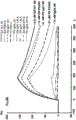
FIG. 1 shows a schematic view of a
The binding affinity of the different Fc γ rs for immunoglobulins was measured by Surface Plasmon Resonance (SPR) at 25 ℃ using a Biacore T100 instrument (GE Healthcare).
a) Fc γ RI binding affinities were tested against GA101(GA) antibody variants (IgG1-P329G, IgG4-SPLE, and IgG1-LALA mutations) and P-selectin (PS) antibody variants (IgG1-P329G, IgG1-LALA, and IgG4-SPLE), as well as wild-type antibodies.
b) Fc γ RI binding affinities were tested against CD9 antibody variants (IgG1 wild-type, IgG1-P329G, IgG1-LALA, IgG4-SPLE, IgG1-P329G/LALA, IgG4-SPLE/P329G) as well as wild-type antibodies.
c) Fc γ RIIA (R131) binding affinities were tested against CD9 antibody variants (IgG1 wild-type, IgG1-P329G, IgG1-LALA, IgG4-SPLE, IgG1-P329G/LALA, IgG4-SPLE/P329G) and wild-type antibodies. The reactions after the normalization are shown as a function of the acceptor concentration.
d) Fc γ RIIB binding affinities were tested against CD9 (referred to herein as "TA") antibody variants (IgG1 wild-type, IgG4-SPLE/P329G, IgG1-LALA, IgG1-LALA/P329G) and P-selectin (pSel) antibody variants (IgG4 wild-type, IgG4-SPLE) as well as wild-type antibodies.
e) Fc γ RIIIA-V158 binding affinity was tested against CD9 antibody variants (IgG1 wild-type, IgG4-SPLE, IgG1-LALA, IgG4-SPLE/P329G, IgG1-P329G, IgG1-LALA/P329G) as well as wild-type antibodies. The reactions after the normalization are shown as a function of the acceptor concentration.
FIG. 2
C1q binding was tested against P-selectin (PS) antibody variants (IgG1 wild-type, P329G, IgG4-SPLE) and CD20(GA) antibody variants (IgG1 wild-type, P329G, and IgG 4-SPLE).
FIG. 3
The efficacy of recruiting immune effector cells depends on the type of Fc variant. Fc variants were coated on ELISA plates and human NK92 effector cells transfected with human Fc γ RIIIA were added. Induction of cytolytic activity of activated NK cells was measured using an esterase assay.
a) CD20(GA101) antibody variants (wild type, LALA, P329G, P329G/LALA) were analyzed. b) CD20(GA101) antibody variants (introduced with either P329R or P329G mutations) were analyzed. All variants were produced in a glycoengineered form in order to have a stronger signal for any effector cell recruitment function.
FIG. 4
The efficacy of recruitment of immune effector cells, as measured by classical ADCC assay assays, depends on the type of Fc variant. Human NK92 cell line transfected with human F γ crriiia was used as effector cells and CD20 positive Raji cells were used as target cells. Different glycoengineered CD20 antibodies (GA101G (2)) and non-glycoengineered CD20 antibody (GA101) variants (introduced P329G, P329A or LALA mutations) were tested.
a) Non-glycoengineered CD20 antibody: P329G, LALA and P329G/LALA mutations have been introduced into this antibody respectively.
b) Glycoengineered CD20 antibody: P329G, P329A and LALA mutations have been introduced into the antibody, respectively.
FIG. 5
Complement Dependent Cytotoxicity (CDC) assay. Different Fc variants of non-glycoengineered and glycoengineered CD20(GA101) antibodies were analyzed for efficacy in mediating CDC on SUDH-L4 target cells.
a) Non-glycoengineered CD 20: P329G, LALA and P329G/LALA mutations have been introduced into this antibody respectively.
b) Glycoengineered CD 20: P329G, P329A and LALA mutations have been introduced into the antibody, respectively.
FIG. 6
a) The glycogram of Fc-binding glycans of human IgG1 variants. The percentage of half-lactosylation on Fc-binding oligosaccharides of hIgG1 comprising LALA, P329G, P329A or P329G/LALA mutations differed only minimally from that of wild-type antibodies.
b) Relative galactosylation: four different IgGs with an introduced IgG1P329G/LALA mutation. Four different V domains were compared for the amount of galactosylation after their expression in Hek293EBNA cells.
FIG. 7
Antibody-induced platelet aggregation in whole blood assay. Platelet aggregation induced by murine IgG1 was measured against two donors that differed in their response depending on antibody concentration.
a) Donor a, B) donor B.
Detailed Description
Definition of
In the present description and claims, the numbering of residues in immunoglobulin heavy chains is that of the EU index in Kabat et al, Sequences of Proteins of Immunological Interest, published Health Service 5 th edition, National Institutes of Health, Bethesda, Md. (1991), which is expressly incorporated herein by reference. The "EU index in Kabat" refers to the residue numbering of the human IgG1EU antibody.
"affinity" refers to the strength of the sum of non-covalent interactions between a single binding site of a molecule (e.g., an antibody) and its binding partner (e.g., an antigen or an Fc receptor). As used herein, unless otherwise indicated, "binding affinity" refers to an intrinsic binding affinity that reflects a 1:1 interaction between members of a binding pair (e.g., antibody/Fc receptor or antibody and antigen). The affinity of a molecule X for its partner Y can generally be expressed by the dissociation constant (Kd). Affinity can be measured by common methods known in the art, including those described herein. Specific illustrative and exemplary embodiments for measuring binding affinity are described below.
An "affinity matured" antibody refers to an antibody having one or more alterations in one or more hypervariable regions (HVRs) which result in an improvement in the affinity of the antibody for an antigen compared to a parent antibody not having such alterations.
"amino acid modification" refers to an amino acid sequence change in a predetermined amino acid sequence. Exemplary modifications include amino acid substitutions, insertions, and/or deletions. Preferred amino acid modifications herein are substitutions. For example, "amino acid modification" at a specified position of the Fc region refers to: substitution or deletion of the specified residue, or insertion of at least one amino acid residue adjacent to the specified residue. "adjacent" to designate residue insertions means insertions within one to two residues thereof. Insertions may be at the N-terminus or C-terminus of the designated residues.
"amino acid substitution" refers to the replacement of at least one amino acid residue present in a predetermined amino acid sequence with another, different "substituted" amino acid residue. The one or more substituted residues may be "naturally occurring amino acid residues" (i.e., encoded by the genetic code) and are selected from: alanine (Ala); arginine (Arg); asparagine (Asn); aspartic acid (Asp); cysteine (Cys); glutamine (Gln); glutamic acid (Glu); glycine (Gly); histidine (His); isoleucine (Ile); leucine (Leu); lysine (Lys); methionine (Met); phenylalanine (Phe); proline (Pro); serine (Ser); threonine (Thr); tryptophan (Trp); tyrosine (Tyr); and valine (Val). Preferably, the substitution residue is not cysteine. Substitutions with one or more non-naturally occurring amino acid residues are also encompassed within the definition of amino acid substitutions herein. "non-naturally occurring amino acid residue" refers to a residue other than those naturally occurring amino acid residues listed above, which is capable of covalently binding a neighboring amino acid residue(s) in a polypeptide chain. Examples of non-naturally occurring amino acid residues include norleucine, ornithine, norvaline, homoserine, and other amino acid residue analogs such as those described in Ellman et al, meth.enzyme.202 (1991) 301-336. To generate such non-naturally occurring amino acid residues, the methods of Noren et al, Science 244(1989)182 and Ellman et al, supra, can be used. Briefly, these methods involve chemically activating a suppressor tRNA with a non-naturally occurring amino acid residue, followed by in vitro transcription and translation of the RNA.
"amino acid insertion" refers to the incorporation of at least one amino acid into a predetermined amino acid sequence. While insertions are typically of one or two amino acid residues, larger "peptide insertions" are contemplated herein, such as insertions of about three to about five or even up to about ten amino acid residues. The inserted residue(s) may be naturally occurring or non-naturally occurring as disclosed above.
"amino acid deletion" refers to the removal of at least one amino acid residue from a predetermined amino acid sequence.
The term "antibody" is used herein in its broadest sense to encompass a variety of antibody structures, including, but not limited to, monoclonal antibodies, polyclonal antibodies, multispecific antibodies (e.g., bispecific antibodies), and antibody fragments, so long as they exhibit the desired antigen-binding activity.
The term "antibody variant" as used herein refers to a variant of a wild-type antibody, characterized in that an amino acid sequence change occurs in the antibody variant relative to the wild-type antibody, for example by introducing a specific amino acid residue in the wild-type antibody by mutation.
The term "effector function(s)" or "effector function" of an antibody as used herein refers to a function contributed by the Fc effector domain(s) of an IgG, e.g., the Fc region of an immunoglobulin. This function can be achieved, for example, by binding of the Fc effector domain(s) to Fc receptors on immune cells with phagocytic or lytic activity, or by binding of the Fc effector domain(s) to components of the complement system. Typical effector functions are ADCC, ADCP and CDC.
An "antibody fragment" refers to a molecule that is not an intact antibody, which comprises a portion of an intact antibody that binds to an antigen to which the intact antibody binds. Examples of antibody fragments include, but are not limited to, Fv, Fab '-SH, F (ab') 2; diabodies (diabodies); a linear antibody; single chain antibody molecules (e.g., scFv); and multispecific antibodies formed from antibody fragments.
An "antibody that binds to the same epitope" as a reference antibody refers to an antibody that blocks binding of the reference antibody to its antigen by 50% or more in a competition assay, and conversely, blocks binding of the reference antibody to its antigen by 50% or more in a competition assay. Exemplary competition assay assays are provided herein.
"antibody-dependent cell-mediated cytotoxicity" and "ADCC" refer to a cell-mediated reaction in which nonspecific cytotoxic cells that express FcR (e.g., Natural Killer (NK) cells, neutrophils, and macrophages) recognize bound antibody on target cells, followed by causing lysis of the target cells. The main cells used to mediate ADCC (NK cells) express Fc γ RIII only, whereas monocytes express Fc γ RI, Fc γ RII and Fc γ RIII. FcR expression on hematopoietic cells is summarized on page 464, Table 3, of ravatch and Kinet, Annu.Rev.Immunol 9(1991) 457-492.
The terms "antibody-dependent cellular phagocytosis" and "ADCP" refer to a process in which antibody-coated cells are fully or partially internalized by phagocytic immune cells (e.g., macrophages, neutrophils, and dendritic cells) that bind to the Fc region of an immunoglobulin.
The term "binding domain" refers to a region of a polypeptide that binds to another molecule. In the case of an FcR, the binding domain may comprise the portion of the polypeptide chain (e.g. its alpha chain) responsible for binding to the Fc region. One useful binding domain is the extracellular domain of the FcR α chain.
The term "binding" to an Fc receptor as used herein means the binding of an antibody to an Fc receptor in, for example, a biacore (r) assay (Pharmacia Biosensor AB, Uppsala, sweden).
In biacore (r) assay assays, Fc receptors are bound to a surface and binding of variants, such as antibody variants into which mutations have been introduced, is measured by Surface Plasmon Resonance (SPR). The affinity of binding is defined by the terms ka (the association rate constant of the antibody from the antibody/Fc receptor complex), KD (dissociation constant) and KD (KD/ka). Alternatively, the bound signal of the SPR sensorgram may be directly compared to the reference response signal for resonance signal height and dissociation behavior.
"C1 q" is a polypeptide comprising a binding site for an immunoglobulin Fc region. C1q forms together with the two serine proteases C1r and C1s a complex C1, which is the first component of the Complement Dependent Cytotoxicity (CDC) pathway. Human C1q is available from, for example, quinel, San Diego, calif.
The "CH 2 domain" (also referred to as the "C γ 2" domain) of the human IgG Fc region typically extends from about amino acid 231 to about amino acid 340. The CH2 domain is unique in that it does not closely pair with another domain. In contrast, two N-linked branched sugar chains were inserted between the two CH2 domains of the intact native IgG molecule. It is speculated that this sugar may provide an alternative to domain-domain pairing and help stabilize the CH2 domain (Burton, molecular. Immunol.22(1985) 161-206).
The "CH 3 domain" comprises the sequence of residues C-terminal to the CH2 domain in the Fc region (i.e., about amino acid residue 341 to about amino acid residue 447 of an IgG).
The terms "cancer" and "cancerous" refer to or describe a physiological condition in mammals that is typically characterized by dysregulated cell growth. Examples of cancer include, but are not limited to, carcinoma, lymphoma, blastoma, sarcoma, and leukemia. More specific examples of such cancers include squamous cell cancer, small-cell lung cancer, non-small cell lung cancer, adenocarcinoma of the lung, squamous carcinoma of the lung, cancer of the peritoneum, hepatocellular cancer, gastrointestinal cancer, pancreatic cancer, glioblastoma, cervical cancer, ovarian cancer, liver cancer (liver cancer), bladder cancer, hepatoma, breast cancer, colon cancer, colorectal cancer, endometrial or uterine carcinoma, salivary gland carcinoma, kidney cancer, liver cancer, prostate cancer, vulval cancer, thyroid cancer, liver cancer (hepatoma), and various types of head and neck cancer.
As used herein, the expressions "cell," "cell line," and "cell culture" are used interchangeably, and all such designations include progeny. Thus, the words "transformant" and "transformed cell" include the primary subject cell and cultures derived therefrom, regardless of the number of passages. It is also understood that all progeny may not have exactly the same DNA content due to deliberate or inadvertent mutations. The invention includes mutant progeny that have the same function or biological activity as screened for in the originally transformed cell. For situations where different names are intended, it will be clear from the context.
The term "chimeric" antibody refers to an antibody in which a portion of the heavy and/or light chain is derived from a particular source or species, while the remainder of the heavy and/or light chain is derived from a different source or species.
The "class" of an antibody refers to the type of constant domain or constant region that its heavy chain has. There are five main classes of antibodies: IgA, IgD, IgE, IgG, and IgM, several of which can be further divided into subclasses (isotypes), such as IgG1, IgG2, IgG3, IgG4, IgA1, and IgA 2. The heavy chain constant domains corresponding to different classes of immunoglobulins are called α, δ, ε, γ, and μ, respectively.
The term "cytotoxic agent" as used herein refers to a substance that inhibits or prevents cellular function and/or causes cell death or destruction. Cytotoxic agents include, but are not limited to, radioisotopes (e.g., At)211、I131、I125、Y90、Re186、Re188、Sm153、Bi212、P32、Pb212And radioactive isotopes of Lu); chemotherapeutic agents or drugs (e.g., methotrexate, adriamicin, vinca alkaloids (vincristine), vinblastine (vinblastine), etoposide (etoposide)), doxorubicin (doxorubicin), melphalium (melphalan), mitomycin C, chlorambucil (chlorembucil), daunorubicin (daunorubicin), or other intercalating agents); a growth inhibitor; enzymes and fragments thereof, such as nucleolytic enzymes; (ii) an antibiotic; toxins, e.g.A small molecule toxin or enzymatically active toxin of bacterial, fungal, plant or animal origin, including fragments and/or variants thereof; and various anti-tumor or anti-cancer agents disclosed below.
The term "complement dependent cytotoxicity" or CDC refers to a mechanism of inducing cell death in which the Fc effector domain(s) of an antibody that binds to a target activate a series of enzymatic reactions, resulting in the formation of a hole in the target cell membrane. Typically, antigen-antibody complexes, such as antigen-antibody complexes on antibody-coated target cells, bind to and activate complement component C1q, which in turn activates the complement cascade, resulting in the death of the target cells. Activation of complement may also result in deposition of complement components on the surface of target cells that facilitate ADCC by binding to complement receptors on leukocytes (e.g., CR 3).
A "disorder" is any disorder that may benefit from treatment with a polypeptide, such as an antibody containing an Fc variant. This includes chronic and acute disorders or diseases, including those pathological conditions that predispose a mammal to the disorder in question. In one embodiment, the disorder is cancer.
"effector functions" refer to those biological activities attributable to the Fc region of an antibody, which vary with antibody isotype. Examples of antibody effector functions include: c1q binding and Complement Dependent Cytotoxicity (CDC); fc receptor binding; antibody-dependent cell-mediated cytotoxicity (ADCC); phagocytosis (ADCP); down-regulation of cell surface receptors (e.g., B cell receptors); and B cell activation.
As used herein, "reduced effector function" means that a particular effector function (e.g., ADCC or CDC) is reduced by at least 20% as compared to a control (e.g., a polypeptide having a wild-type Fc region), and "strongly reduced effector function" as used herein means that a particular effector function (e.g., ADCC or CDC) is reduced by at least 50% as compared to a control.
An "effective amount" of a substance (e.g., a pharmaceutical preparation) is an amount that is effective to achieve the desired therapeutic or prophylactic result, in accordance with the desired dosage amount and time period.
The term "Fc region" is used herein to define the C-terminal region of an immunoglobulin heavy chain, which contains at least part of the constant region. The term includes native sequence Fc regions and variant Fc regions. In one embodiment, the human IgG heavy chain Fc region extends from Cys226 or from Pro230 to the carboxy-terminus of the heavy chain. However, the C-terminal lysine (Lys447) of the Fc region may or may not be present. Unless otherwise indicated herein, the numbering of amino acid residues in the Fc region or constant region is according to the EU numbering system, also known as the EU index, as described in Kabat et al, Sequences of Proteins of Immunological Interest, published Health Service 5 th edition, National Institutes of Health, Bethesda, Md (1991).
A "variant Fc region" comprises an amino acid sequence that differs from the amino acid sequence of a "native" or "wild-type" sequence Fc region due to at least one "amino acid modification" as defined herein. Preferably, the variant Fc region has at least one amino acid substitution as compared to the native sequence Fc region or to the Fc region of the parent polypeptide, for example from about one to about ten amino acid substitutions, and preferably from about one to about five amino acid substitutions in the native sequence Fc region or in the Fc region of the parent polypeptide. The variant Fc region herein will preferably have at least about 80% homology with the native sequence Fc region and/or with the Fc region of the parent polypeptide, and most preferably at least about 90% homology therewith, more preferably at least about 95% homology therewith.
The term "Fc variant" as used herein refers to a polypeptide comprising modifications in the Fc domain. The Fc variants of the present invention are defined in terms of the amino acid modifications that make up them. Thus, for example, P329G is an Fc variant having a substitution of proline with glycine at position 329 relative to the parent Fc polypeptide, wherein numbering is according to the EU index. The identity of the wild-type amino acid may not be specified, in which case the aforementioned variant is referred to as P329G. For all positions discussed in this invention, the numbering is according to the EU index. The EU index or EU numbering scheme in Kabat or EU index refers to the numbering of EU antibodies (Edelman et al, Proc Natl Acad Sci USA 63(1969)78-85, incorporated herein by reference in its entirety). The modification may be an addition, deletion or substitution. Substitutions may include naturally occurring amino acids and non-naturally occurring amino acids. Variants may comprise unnatural amino acids. Examples include U.S. patent nos. 6,586,207; WO 98/48032; WO 03/073238; US 2004/0214988a 1; WO 05/35727a 2; WO 05/74524a 2; chin, J.W., et al, Journal of the American Chemical Society 124(2002) 9026-9027; chin, J.W. and Schultz, P.G., ChemBiochem 11(2002) 1135-1137; chin, J.W., et al, PICAS United States of America 99(2002) 11020-11024; and Wang, l, and Schultz, p.g., chem. (2002) 1-10; all incorporated by reference in their entirety.
The term "Fc region-containing polypeptide" refers to a polypeptide comprising an Fc region, such as an antibody or immunoadhesin (see definitions below).
The term "Fc receptor" or "FcR" is used to describe a receptor that binds to the Fc region of an antibody. A preferred FcR is a native sequence human FcR. In addition, a preferred FcR is one that binds an IgG antibody (gamma receptor) and includes receptors of the Fc γ RI, Fc γ RII, and Fc γ RIII subclasses, including allelic variants and alternatively spliced forms of these receptors. Fc γ RII receptors include Fc γ RIIA (activating receptor) and Fc γ RIIB ("inhibiting receptor"), which have similar amino acid sequences, differing primarily in their cytoplasmic domains. The activating receptor Fc γ RIIA comprises an Immunoreceptor Tyrosine Activation Motif (ITAM) in its cytoplasmic domain. The inhibitory receptor Fc γ RIIB contains an Immunoreceptor Tyrosine Inhibitory Motif (ITIM) in its cytoplasmic domain. (see M., reviewed in annu, rev, immunol.15(1997) 203-234). FcR is reviewed in ravatch and Kinet, Annu.Rev.Immunol 9(1991) 457-492; capel et al, immunolmethods 4(1994) 25-34; and de Haas et al, J.Lab.Clin.Med.126(1995) 330-41. The term "FcR" herein encompasses other fcrs, including those to be identified in the future. The term also includes the neonatal receptor FcRn responsible for the transfer of maternal IgG to the fetus (Guyer et al, J.Immunol.117(1976) 587; and Kim et al, J.Immunol.24(1994) 249).
As used herein, "IgG Fc ligand" means a molecule, preferably a polypeptide, from any organism that binds to the Fc region of an IgG antibody to form an Fc/Fc ligand complex. Fc ligands include, but are not limited to, Fc γ R, Fc γ R, Fc γ R, FcRn, C1q, C3, mannan binding lectin, mannose receptor, staphylococcal protein a, streptococcal protein G, and viral Fc γ R. Fc ligands also include the Fc receptor homolog (FcRH), which is a family of Fc receptors homologous to Fc γ R (Davis et al, Immunological Reviews 190(2002)123-136, incorporated by reference in its entirety). Fc ligands may also include molecules that bind Fc not found. Particular IgG Fc ligands are FcRn and Fc γ receptors. As used herein, "Fc ligand" means a molecule, preferably a polypeptide, from any organism that binds to the Fc region of an antibody to form an Fc/Fc ligand complex.
As used herein, "Fc γ receptor," "Fc γ R," or "fcgamma" means any member of the family of proteins that bind to the Fc region of IgG antibodies and are encoded by the Fc γ R gene. In humans, this family includes, but is not limited to, Fc γ RI (CD64), including isoforms Fc γ RIA, Fc γ RIB, and Fc γ RIC; fc γ RII (CD32), including isoforms Fc γ RIIA (including allotype H131 and R131), Fc γ RIIB (including Fc γ RIIB-1 and Fc γ RIIB-2), and Fc γ RIIc; fc γ RIII (CD16), including isoforms Fc γ RIIIA (including allotypes V158 and F158) and Fc γ RIIIb (including allotype Fc γ RIIB-NA1 and Fc γ RIIB-NA2) (Jefferis et al, Immunol Lett 82(2002)57-65, incorporated by reference in its entirety), as well as any undiscovered human Fc γ R or Fc γ R isoforms or allotypes. The Fc γ R may be from any organism, including but not limited to humans, mice, rats, rabbits, and monkeys. Mouse Fc γ rs include, but are not limited to, Fc γ RI (CD64), Fc γ RII (CD32), Fc γ RIII (CD16), and Fc γ RIII-2(CD16-2), as well as any mouse Fc γ R or Fc γ R isotype or allotype not found.
As used herein, "FcRn" or "neonatal Fc receptor" means a protein that binds the Fc region of an IgG antibody and is at least partially encoded by the FcRn gene. FcRn may be from any organism including, but not limited to, human, mouse, rat, rabbit, and monkey. As known in the art, a functional FcRn protein comprises two polypeptides, often referred to as the heavy and light chains. The light chain is beta-2-microglobulin and the heavy chain is encoded by the FcRn gene. Unless otherwise indicated herein, FcRn or FcRn protein refers to the complex of the FcRn heavy chain and β -2-microglobulin.
As used herein, "wild-type or parent polypeptide" means an unmodified polypeptide that is subsequently modified to produce a variant. The wild-type polypeptide may be a naturally occurring polypeptide, or a variant or engineered form of a naturally occurring polypeptide. A wild-type polypeptide may refer to the polypeptide itself, a composition comprising the parent polypeptide, or an amino acid sequence encoding it. Thus, "wild-type immunoglobulin" as used herein means an unmodified immunoglobulin polypeptide used to produce variants by modification, and "wild-type antibody" as used herein means an unmodified antibody used to produce variant antibodies by modification. It is noted that "wild-type antibody" includes known commercial, recombinantly produced antibodies as described below.
The term "fragment crystallizable (Fc) polypeptide" is the portion of an antibody molecule that interacts with effector molecules and cells. It comprises the C-terminal portion of an immunoglobulin heavy chain.
The term "framework region" or "FR" refers to variable domain residues other than hypervariable region (HVR) residues. The FRs of a variable domain generally consist of four FR domains: FR1, FR2, FR3 and FR 4. Thus, HVR and FR sequences typically occur in the VH (or VL) in the following order: FR1-H1(L1) -FR2-H2(L2) -FR3-H3(L3) -FR 4.
The terms "full-length antibody," "intact antibody," and "whole antibody" are used interchangeably herein to refer to an antibody having a structure substantially similar to a native antibody structure, or having a heavy chain comprising an Fc region as defined herein.
A "functional Fc region" has the "effector functions" of a native sequence Fc region. Exemplary "effector functions" include C1q binding; complement-dependent cytotoxicity; fc receptor binding; antibody-dependent cell-mediated cytotoxicity (ADCC); phagocytosis; downregulation of cell surface receptors (e.g., B cell receptors; BCR), and the like. Such effector functions generally require the Fc region to be combined with a binding domain (e.g., an antibody variable domain) and can be evaluated using a variety of assay assays, such as those disclosed herein.
A "hinge region" is generally defined as extending from Glu216 to Pro230 of human IgG1 (Burton, mol. Immunol.22(1985) 161-206). The hinge region of other IgG isotypes can be aligned to the IgG1 sequence by placing the first and last cysteine residues that form the S-S bond between heavy chains at the same position.
The "lower hinge region" of the Fc region is generally defined as the sequence of residues adjacent to the C-terminus of the hinge region, i.e., residues 233 to 239 of the Fc region.
"homology" is defined as: the percentage of residues that are identical in amino acid sequence variants after aligning the sequences and introducing gaps, if necessary, to achieve the maximum percent homology. Methods and computer programs for alignment are well known in the art. One such computer program is "Align 2" written by Genentech, filed on 10.12.1991 with the user's file to the U.S. copyright office, Washington, d.c. 20559.
The terms "host cell," "host cell line," and "host cell culture" are used interchangeably to refer to a cell into which an exogenous nucleic acid has been introduced, including the progeny of such a cell. Host cells include "transformants" and "transformed cells," which include the originally transformed cell and progeny derived therefrom, regardless of the number of passages. The nucleic acid content of the progeny may not be identical to the parent cell, but may comprise mutations. Included herein are mutant progeny that have the same function and biological activity as screened or selected in the originally transformed cell.
A "human antibody" is an antibody having an amino acid sequence corresponding to the amino acid sequence of an antibody produced by a human or human cell or derived from a non-human source using a human antibody repertoire or other human antibody coding sequences. This definition of human antibodies specifically excludes humanized antibodies comprising non-human antigen binding residues.
A "human effector cell" is a leukocyte that expresses one or more fcrs and performs effector functions. Preferably, the cell expresses at least Fc γ RIII and performs ADCC effector function. Examples of human leukocytes that mediate ADCC include Peripheral Blood Mononuclear Cells (PBMCs), Natural Killer (NK) cells, monocytes, cytotoxic T cells, and neutrophils, preferably PBMCs and NK cells. Effector cells may be isolated from their natural source, e.g., from blood or PBMCs as described herein.
A "humanized" antibody is a chimeric antibody comprising amino acid residues from non-human HVRs and amino acid residues from human FRs. In certain embodiments, a humanized antibody will comprise substantially all of at least one and typically two variable domains, in which all or substantially all of the HVRs (e.g., CDRs) correspond to those of a non-human antibody and all or substantially all of the FRs correspond to those of a human antibody. The humanized antibody may optionally comprise at least a portion of an antibody constant region derived from a human antibody. "humanized forms" of antibodies (e.g., non-human antibodies) refer to antibodies that have been humanized.
The term "hypervariable region" or "HVR" as used herein refers to each region of an antibody variable domain which is hypervariable in sequence and/or which forms structurally defined loops ("hypervariable loops"). Typically, a native four-chain antibody comprises six HVRs; three in VH (H1, H2, H3) and three in VL (L1, L2, L3). HVRs typically comprise amino acid residues from hypervariable loops and/or from "complementarity determining regions" (CDRs) that have the highest sequence variability and/or are involved in antigen recognition. Exemplary hypervariable loops are present at amino acid residues 26-32(L1), 50-52(L2), 91-96(L3), 26-32(H1), 53-55(H2) and 96-101(H3) (Chothia and Lesk, J.mol.biol.196(1987) 901-917). Exemplary CDRs (CDR-L1, CDR-L2, CDR-L3, CDR-H1, CDR-H2 and CDR-H3) are present at amino acid residues 24-34(L1), amino acid residues 50-56(L2), amino acid residues 89-97(L3), amino acid residues 31-35B (H1), amino acid residues 50-65(H2) and amino acid residues 95-102(H3) (Kabat et al, Sequences of Proteins of Immunological Interest, published Health Service, National Institutes of Health, Bethesda, Md (1991)). In addition to CDR1 in VH, the CDRs generally comprise amino acid residues that form hypervariable loops. CDRs also contain "specificity determining residues" or "SDRs," which are residues that contact antigen. SDR is contained within a region of a CDR called the abbreviated CDR or a-CDR. Exemplary a-CDRs (a-CDR-L1, a-CDR-L2, a-CDR-L3, a-CDR-H1, a-CDR-H2 and a-CDR-H3) are present at amino acid residues 31-34(L1), amino acid residues 50-55(L2), amino acid residues 89-96(L3), amino acid residues 31-35B (H1), amino acid residues 50-58(H2) and amino acid residues 95-102(H3) (see Almagro and Fransson, Front. biosci.13(2008)1619 and 1633). Unless otherwise indicated, HVR residues and other residues (e.g., FR residues) in the variable domains are numbered herein according to Kabat et al, supra.
"immune complex" refers to a relatively stable structure formed when at least one target molecule and at least one heterologous Fc region-containing polypeptide are associated with each other to form a complex of greater molecular weight. Examples of immune complexes are antigen-antibody aggregates and target molecule-immunoadhesin aggregates. The term "immune complex" as used herein, unless otherwise specified, refers to an ex vivo complex (i.e., not a form or situation in which it may occur in nature). However, the immune complex may be administered to a mammal, for example, to assess clearance of the immune complex in the mammal.
An "immunoconjugate" is an antibody conjugated to one or more heterologous molecules including, but not limited to, cytotoxic agents.
An "individual" or "subject" is a mammal. Mammals include, but are not limited to, domesticated animals (e.g., cows, sheep, cats, dogs, and horses), primates (e.g., human and non-human primates such as monkeys), rabbits, and rodents (e.g., mice and rats). In certain embodiments, the individual or subject is a human.
An "isolated" antibody is one that has been separated from components of its natural environment. In some embodiments, the antibody is purified to greater than 95% or 99% purity as determined by, for example, electrophoresis (e.g., SDS-PAGE, isoelectric focusing (IEF), capillary electrophoresis), or chromatography (e.g., ion exchange or reverse phase HPLC). Methods for assessing antibody purity are reviewed, for example, in Flatman et al, J.Chromatogr.B848(2007) 79-87.
An "isolated" polypeptide is one that has been identified and separated and/or recovered from a component of its natural environment. Contaminant components of its natural environment are substances that may interfere with diagnostic or therapeutic uses for the polypeptide, and may include enzymes, hormones, and other proteinaceous or nonproteinaceous solutes. In a preferred embodiment, the polypeptide is purified to: (1) greater than 95% by weight of the polypeptide, and most preferably greater than 99% by weight, as determined by the Lowry method; (2) to the extent sufficient to obtain at least 15 residues of the N-terminal or internal amino acid sequence by using a spinning cup sequencer; or (3) homogeneity as shown by SDS-PAGE under reducing or non-reducing conditions using Coomassie blue staining or preferably silver staining. An isolated polypeptide includes a polypeptide in situ within a recombinant cell because at least one component of the polypeptide's natural environment is not present. Typically, however, an isolated polypeptide is prepared by at least one purification step.
An "isolated" nucleic acid refers to a nucleic acid molecule that has been separated from components of its natural environment. An isolated nucleic acid includes a nucleic acid molecule contained in a cell that normally contains the nucleic acid molecule, but which is present extrachromosomally or at a chromosomal location different from its natural chromosomal location.
An "isolated antibody-encoding nucleic acid" refers to one or more nucleic acid molecules encoding the heavy and light chains of an antibody (or fragments thereof), including the nucleic acid molecule(s) in a single vector or separate vectors, and the nucleic acid molecule(s) present at one or more locations in a host cell.
As used herein, the word "label" refers to a detectable compound or composition conjugated directly or indirectly to a polypeptide. The label may be detectable by itself (e.g., radioisotope labels or fluorescent labels) or, in the case of an enzymatic label, may catalyze chemical alteration of a substrate compound or composition which is detectable.
The term "ligand binding domain" as used herein refers to any native cell surface receptor or any region or derivative thereof that retains at least the qualitative ligand binding capacity of the corresponding native receptor. In a specific embodiment, the receptor is from a cell surface polypeptide having an extracellular domain homologous to a member of the immunoglobulin supergene family. Other receptors which are not members of the immunoglobulin supergene family, but which are also expressly encompassed by this definition, are receptors for cytokines, in particular receptors having tyrosine kinase activity (receptor tyrosine kinases), members of the hematopoeitin and nerve growth factor receptor superfamily, and cell adhesion molecules, such as (E-, L-and P-) selectins.
The term "monoclonal antibody" as used herein refers to an antibody obtained from a substantially homogeneous population of antibodies, i.e., the population comprises individuals of antibodies that are identical and/or bind the same epitope, except, for example, for possible variant antibodies comprising natural mutations or that occur during the production of monoclonal antibody preparations (such variants are typically present in minute amounts). Unlike polyclonal antibody preparations, which typically contain different antibodies directed against different determinants (epitopes), each monoclonal antibody in a monoclonal antibody preparation is directed against a single determinant on the antigen. Thus, the modifier "monoclonal" indicates the character of the antibody as being obtained from a substantially homogeneous population of antibodies, and is not to be construed as requiring production of the antibody by any particular method. For example, monoclonal antibodies to be used in accordance with the present invention can be prepared by a variety of techniques including, but not limited to, hybridoma methods, recombinant DNA methods, phage display methods, and methods utilizing transgenic animals containing all or part of a human immunoglobulin locus, such methods and other exemplary methods for preparing monoclonal antibodies being described herein.
"naked antibody" refers to an antibody that is not conjugated to a heterologous moiety (e.g., a cytotoxic moiety) or a radiolabel. Naked antibodies may be present in pharmaceutical formulations.
"Natural antibody" refers to a naturally occurring immunoglobulin molecule having a different structure. For example, a native IgG antibody is a heterotetrameric glycoprotein of about 150,000 daltons consisting of two identical light chains and two identical heavy chains linked by disulfide bonds. From N-terminus to C-terminus, each heavy chain has a variable region (VH), also known as a variable heavy chain domain or heavy chain variable domain, followed by three constant domains (CH1, CH2, and CH 3). Similarly, from N-terminus to C-terminus, each light chain has a variable region (VL), also known as a variable light chain domain or light chain variable domain, followed by a constant light Chain (CL) domain. The light chain of an antibody can be assigned to one of two types, called kappa and lambda, depending on the amino acid sequence of its constant and variable domains.
A "native sequence Fc region" comprises an amino acid sequence that is identical to the amino acid sequence of an Fc region found in nature. Native sequence human Fc regions include native sequence human IgG1Fc regions (non-a and a allotypes); a native sequence human IgG2Fc region; a native sequence human IgG3Fc region; a native sequence human IgG4Fc region; and naturally occurring variants thereof.
A nucleic acid is "operably linked" when it is placed in a functional relationship with another nucleic acid sequence. For example, if the DNA of the presequence or secretory leader is expressed as a preprotein that participates in the secretion of a polypeptide, it is operably linked to the DNA of that polypeptide; a promoter or enhancer is operably linked to a coding sequence if it affects the transcription of the coding sequence; or a ribosome binding site is operably linked to a coding sequence if it is placed at a position that facilitates translation. Generally, "operably linked" means that the DNA sequences being linked are contiguous and, in the case of a secretory leader, contiguous and in reading frame. However, enhancers need not be contiguous. Ligation may be achieved by ligation at convenient restriction sites. If such sites are not present, synthetic oligonucleotide adaptors or linkers may be used in accordance with convenient practice.
The term "package insert" is used to refer to instructions customarily included in commercial packages of therapeutic products, that contain information about the indications, uses, dosages, administrations, combination therapies, contraindications and/or warnings concerning the use of such therapeutic products.
As used herein, "position" means a position in the sequence of a protein. Positions can be numbered consecutively or in an established format (e.g., EU index for antibody numbering).
The terms "polypeptide" and "protein" are used interchangeably to refer to a polymer of amino acid residues, including natural or non-natural amino acid residues, and are not limited to a minimum length.
Thus, peptides, oligopeptides, dimers, multimers, and the like are encompassed within this definition. This definition encompasses both full-length proteins and fragments thereof. The term also includes post-translational modifications of the polypeptide, including, for example, glycosylation, sialylation, acetylation, and phosphorylation.
In addition, "polypeptide" herein also refers to modified proteins, such as deletions, additions, and substitutions of single or multiple amino acid residues to the native sequence, so long as the protein retains the desired activity. For example, serine residue substitutions may be made to eliminate a single reactive cysteine or remove a disulfide bond, or conservative amino acid substitutions may be made to eliminate a cleavage site. These modifications may be deliberate, such as by site-directed mutagenesis, or may be inadvertent, such as by mutation of the host producing the protein, or by error arising from Polymerase Chain Reaction (PCR) amplification.
The terms "wild-type polypeptide" and "wild-type (human) Fc region" as used herein refer to polypeptides and Fc regions, respectively, that comprise amino acid sequences lacking one or more of the Fc region modifications disclosed herein as being absent therefrom, which can be used, for example, as a control. The wild-type polypeptide may comprise a native sequence Fc region, or an Fc region with a modification (e.g., addition, deletion, and/or substitution) of the amino acid sequence that has already occurred.
The term "pharmaceutical formulation" refers to a formulation in a form that allows the biological activity of the active ingredient contained therein to be effective, and which does not contain other ingredients that have unacceptable toxicity to the individual to whom the formulation is administered.
"pharmaceutically acceptable carrier" refers to an ingredient of a pharmaceutical formulation other than the active ingredient, which is not toxic to the individual. Pharmaceutically acceptable carriers include, but are not limited to, buffers, excipients, stabilizers, or preservatives.
A polypeptide having "altered" FcR binding affinity or ADCC activity is a polypeptide having enhanced or reduced FcR binding activity and/or ADCC activity as compared to the parent polypeptide or to a polypeptide comprising a native sequence Fc region. Polypeptide variants that "show increased binding" to an FcR bind at least one FcR with better affinity than the parent polypeptide. A polypeptide variant that "exhibits reduced binding" to an FcR binds at least one FcR with less affinity than the parent polypeptide. Such variants that exhibit reduced binding to an FcR may have little or no significant binding to an FcR, e.g., 0-20% FcR binding, as compared to a native sequence IgG Fc region, e.g., as determined in the examples herein.
A polypeptide that binds an FcR with "reduced affinity" as compared to a parent polypeptide is a polypeptide that binds any one or more of the foregoing fcrs with substantially reduced binding affinity as compared to the parent antibody when the amounts of the polypeptide variant and parent polypeptide in the binding assay are substantially the same. For example, a polypeptide variant having reduced FcR binding affinity as compared to a parent polypeptide may exhibit about a 1.15-fold to about a 100-fold, e.g., about a 1.2-fold to about a 50-fold, reduction in FcR binding affinity, wherein FcR binding affinity is determined, e.g., as disclosed in the examples herein.
A polypeptide comprising an Fc variant that "mediates antibody-dependent cell-mediated cytotoxicity (ADCC) less efficiently in the presence of human effector cells" than a parent or wild-type polypeptide is a polypeptide that mediates ADCC with substantially less efficiency in vitro or in vivo when the amounts of the polypeptide variant and parent antibody used in the assay are substantially the same. Typically, such variants are identified using the in vitro ADCC assay disclosed herein, but other assay assays or methods for determining ADCC activity, e.g., in animal models and the like, are contemplated. Preferred variants, for example, are about 1.5-fold to about 100-fold less effective in mediating ADCC in an in vitro assay disclosed herein than the parent, for example, about 2-fold to about 50-fold.
A "receptor" is a polypeptide capable of binding at least one ligand. Preferred receptors are cell surface receptors having an extracellular ligand binding domain and optionally other domains, such as a transmembrane domain, endodomain and/or membrane anchor. The receptor to be evaluated in the assay described herein may be the complete receptor or a fragment or derivative thereof (e.g., a fusion protein comprising the binding domain of the receptor fused to one or more heterologous polypeptides). In addition, the receptor whose binding properties are to be assessed may be present in the cell or isolated and optionally coated on an assay plate or some other solid phase.
The term "receptor binding domain" is used to refer to any natural ligand for a receptor (including cell adhesion molecules), or any region or derivative of such a natural ligand that retains at least the qualitative receptor binding ability of the corresponding natural ligand. This definition also specifically includes binding sequences for ligands from the above-mentioned receptors.
As used herein, "treatment" (and grammatical variations thereof) refers to clinical intervention in an attempt to alter the natural course of the treated individual, which may be performed for prophylaxis or during the course of clinical pathology. Desirable effects of treatment include, but are not limited to, preventing occurrence or recurrence of disease, alleviating symptoms, reducing any direct or indirect pathological consequences of the disease, preventing metastasis, reducing the rate of disease progression, ameliorating or palliating the disease state, and remission or improved prognosis. In some embodiments, an antibody of the invention is used to delay the progression of a disease or slow the progression of a disease.
As used herein, a "variant protein" or "protein variant" or "variant" means a protein that differs from a parent protein by at least one amino acid modification. A protein variant may refer to the protein itself, a composition comprising the protein, or an amino acid sequence encoding it. Preferably, a protein variant has at least one amino acid modification compared to the parent protein, for example from about one to about seventy amino acid modifications, preferably from about one to about five amino acid modifications compared to the parent. The protein variant sequences herein preferably have at least about 80% homology, most preferably at least about 90% homology, more preferably at least about 95% homology to the parent protein sequence. A variant protein may refer to the variant protein itself, a composition comprising the protein variant, or a DNA sequence encoding it. Thus, as used herein, "antibody variant" or "variant antibody" means an antibody that differs from a parent antibody by at least one amino acid modification, "IgG variant" or "variant IgG" as used herein means an antibody that differs from a parent IgG by at least one amino acid modification, and "immunoglobulin variant" or "variant immunoglobulin" as used herein means an immunoglobulin sequence that differs from a parent immunoglobulin sequence by at least one amino acid modification.
The term "variable region" or "variable domain" refers to a domain in the heavy or light chain of an antibody that is involved in binding of the antibody to an antigen. The variable domains of the heavy and light chains of natural antibodies (VH and VL, respectively) generally have similar structures, each domain comprising four conserved Framework Regions (FR) and three hypervariable regions (HVRs). (see, e.g., Kindt et al, Kuby Immunology, 6 th edition, page 91, W.H.Freeman and Co. (2007)). A single VH or VL domain may be sufficient to confer antigen binding specificity. In addition, a library of complementary VL or VH domains can be screened with VH or VL domains, respectively, from antibodies that bind the antigen, and antibodies that bind the particular antigen isolated. See, e.g., Portolano et al, J.Immunol.150(1993) 880-887; clackson et al, Nature 352(1991) 624-.
The term "vector" as used herein refers to a nucleic acid molecule capable of amplifying another nucleic acid to which it is linked. The term includes vectors which are autonomously replicating nucleic acid structures, as well as vectors, which are incorporated into the genome of a host cell into which they are introduced. Certain vectors are capable of directing the expression of nucleic acids to which they are operatively linked. Such vectors are referred to herein as "expression vectors".
The present application relates to polypeptides comprising amino acid modifications that modulate binding to Fc receptors, particularly Fc γ receptors.
Detailed Description
The present invention relates to methods for preparing polypeptides comprising Fc variants. The "parent", "starting", "non-variant" or wild-type polypeptide may be prepared using techniques available in the art for producing polypeptides or antibodies comprising an Fc region. In a preferred embodiment of the invention, the parent polypeptide is an antibody, and exemplary methods for producing the antibody are described in more detail in the sections below. However, the parent polypeptide may be any other polypeptide comprising an Fc region, such as an immunoadhesin. The process for preparing immunoadhesins is described in more detail below.
In alternative embodiments, a variant Fc region (Fc variant) may be produced according to the methods disclosed herein, and this Fc variant may be fused to a selected heterologous polypeptide (e.g., an antibody variable domain or a binding domain of a receptor or ligand).
The wild-type polypeptide comprises an Fc region. Typically, the Fc region of a wild-type polypeptide will comprise a native or wild-type sequence Fc region, and preferably a human native sequence Fc region (human Fc region). However, the Fc region of the wild-type polypeptide may also have one or more amino acid sequence alterations or modifications relative to the native sequence Fc region that have already been present. For example, the C1q or Fc γ binding activity of the Fc region may have been previously altered (other types of Fc region modifications are described in more detail below). In another embodiment, the parent polypeptide Fc region is "conceptual" in that although it does not exist physically, antibody engineering can determine the desired variant Fc region amino acid sequence and produce a polypeptide comprising that sequence or DNA encoding the desired variant Fc region amino acid sequence.
However, in a preferred embodiment of the invention, a nucleic acid encoding the Fc region of a wild-type polypeptide is available and the nucleic acid sequence is altered to produce a variant nucleic acid sequence encoding a variant Fc region.
DNA encoding amino acid sequence variants of the starting polypeptide may be prepared by a variety of methods known in the art. These methods include, but are not limited to, site-directed (or oligonucleotide-mediated) mutagenesis, PCR mutagenesis, and cassette mutagenesis of a previously prepared DNA encoding the polypeptide.
Site-directed mutagenesis is a preferred method for making substitution variants. This technique is well known in the art (see, e.g., Carter et al, Nucleic Acids Res.13(1985)4431-4443 and Kunkel et al, Proc. Natl. Acad. Sci. USA 82(1985) 488). Briefly, in performing site-directed mutagenesis of DNA, the starting DNA is altered by: first, an oligonucleotide encoding the desired mutation is hybridized to a single strand of the starting DNA. After hybridization, the hybridized oligonucleotide is used as a primer, the single strand of the starting DNA is used as a template, and the entire second strand is synthesized with a DNA polymerase. Thus, an oligonucleotide encoding the desired mutation is incorporated into the resulting double-stranded DNA.
PCR mutagenesis is also suitable for preparing amino acid sequence variants of the starting polypeptide. See Higuchi, in PCR Protocols, Academic Press (1990) pp. 177-183; and Vallette et al, Nuc. acids Res.17(1989) 723-733. In short, when a small amount of template DNA is used as a starting material in PCR, primers having sequences slightly different from the corresponding regions in the template DNA can be used to generate a relatively large number of specific DNA fragments that differ from the template sequence only at the positions where the primers differ from the template.
Another method for preparing variants, cassette mutagenesis, can be based on the technique described by Wells et al, Gene 34(1985) 315-.
One embodiment of the present invention encompasses polypeptides comprising an Fc region of an antibody comprising an addition, substitution or deletion of at least one amino acid residue of the Fc region resulting in a reduction or elimination of affinity for at least one Fc receptor. The Fc region interacts with a number of receptors or ligands, including but not limited to Fc receptors (e.g., Fc γ RI, Fc γ RIIA, Fc γ RIIIA), complement protein C1q, and other molecules (e.g., protein a and protein G). These interactions are necessary for a variety of effector functions and downstream signaling events, including but not limited to antibody-dependent cell-mediated cytotoxicity (ADCC), antibody-dependent cellular phagocytosis (ADCP), and complement-dependent cytotoxicity (CDC). Thus, in certain embodiments, a variant of the invention has reduced or eliminated affinity for an Fc receptor responsible for effector function relative to a polypeptide having the same amino acid sequence but not comprising at least one amino acid residue addition, substitution or deletion of the Fc region (also referred to herein as a "wild-type polypeptide") relative to a polypeptide comprising an Fc variant of the invention. In certain embodiments, a polypeptide comprising an Fc variant of the invention comprises at least one or more of the following properties: reduced or eliminated effector function (ADCC and/or CDC and/or ADCP), reduced or eliminated binding to Fc receptors, reduced or eliminated binding to C1q, or reduced or eliminated toxicity. More particularly, embodiments of the present invention provide: anti-CD 20 (same as GA101 or GA), anti-CD 9 (same as TA), and anti-selectin (pSel) antibodies with reduced affinity for Fc receptors (e.g., Fc γ RI, Fc γ RII, Fc γ RIIIA) and/or complement protein C1 q.
In one embodiment, the antibody of the invention comprises an Fc region comprising at least one addition, substitution, or deletion of an amino acid residue at position P329, wherein the numbering system for the constant region is that of the EU index as set forth in Kabat et al, NIH Publication 91(1991)3242, National Technical Information Service, Springfield, VA.
In a particular embodiment, the polypeptide of the invention comprises an Fc variant of a wild-type human Fc polypeptide comprising an amino acid substitution at position Pro329, wherein the numbering of the residues in the IgG Fc region is that of the EU index in Kabat. In yet another embodiment, the variant comprises at least one additional amino acid substitution.
In yet another embodiment, the polypeptide comprising an Fc variant of a wild-type human Fc polypeptide has an amino acid substitution, deletion or addition that disrupts or reduces the function of a region of the Fc polypeptide and/or proline sandwich in the interface with Fc γ receptors.
In another embodiment, Pro329 is substituted with an amino acid that is smaller or larger than proline. In yet another embodiment, the substituted amino acid is Gly, Ala or Arg. In another aspect of the invention, Pro329 of the Fc polypeptide is replaced with glycine.
In yet another embodiment, the polypeptide comprising an Fc variant has at least one other amino acid substitution, addition, or deletion. In yet another embodiment, the variant exhibits reduced affinity for human Fc receptors (fcyr) and/or human complement receptors compared to a polypeptide comprising a wild-type Fc polypeptide.
In another embodiment, the polypeptide comprising an Fc variant exhibits reduced affinity for human Fc receptors (fcyr) and/or human complement receptors compared to a polypeptide comprising a wild-type human Fc region. In another embodiment, the affinity to at least one of Fc γ RI, Fc γ RII, Fc γ RIIIA is reduced, in yet another embodiment, the affinity to Fc γ RI and Fc γ RIIIA is reduced, in yet another embodiment, the affinity to Fc γ RI, Fc γ RII, and Fc γ RIIIA is reduced, in yet another aspect of the invention, the affinity to Fc γ RI receptor, Fc γ RIIIA receptor, and C1q is reduced, in yet another aspect of the invention, the affinity to Fc γ RI, Fc γ RII, Fc γ RIIIA, and C1q receptor is reduced.
In yet another embodiment, the polypeptide comprising an Fc variant has reduced ADCC induced by the polypeptide, and in a preferred embodiment, ADCC is reduced to at least 20% of the ADCC induced by the polypeptide comprising a wild-type Fc polypeptide. In yet another aspect of the invention, ADCC and CDC induced by a polypeptide comprising a wild-type Fc polypeptide is reduced or eliminated, and in yet another aspect, a polypeptide comprising an Fc variant as described above exhibits reduced ADCC, CDC and ADCP as compared to a polypeptide comprising a wild-type Fc polypeptide.
In one embodiment, the at least one other amino acid substitution in the polypeptide comprising the Fc variant is selected from the group consisting of: S228P, E233P, L234A, L235A, L235E, N297A, N297D, or P331S.
In a certain aspect of the invention, the polypeptide comprising an Fc variant comprises an antibody. In yet another aspect of the invention, the polypeptide comprising an Fc variant comprises a human IgG1 or IgG4Fc region. In yet another aspect of the invention, the variant is an IgG1 or IgG4 antibody.
In another aspect of the invention, the polypeptide comprising the Pro329Fc variant further comprises an addition, substitution or deletion of at least one amino acid residue in the Fc region that is associated with increased stability of the antibody. In yet another aspect of the invention, the affinity of a polypeptide comprising the above-described Fc variant to the Fcn receptor is altered only slightly (e.g., no more than 10-20% of the affinity of a polypeptide comprising a wild-type Fc polypeptide).
In one embodiment, the addition, substitution or deletion of the amino acid residue in the polypeptide comprising the Fc variant occurs at position 228 and/or 235 of the Fc region, wherein the numbering system for the constant region is that of the EU index as set forth in Kabat, et al.
In a specific embodiment, the serine at position 228 and/or the leucine at position 235 in the polypeptide comprising an Fc variant is substituted by another amino acid.
In a particular embodiment, a polypeptide comprising an Fc variant of the invention comprises an Fc region comprising an amino acid substitution at position 228 wherein the serine residue is substituted with proline.
In a specific embodiment, a polypeptide comprising an Fc variant of the invention comprises an Fc region comprising an amino acid substitution at position 235, wherein the leucine residue is substituted with glutamic acid.
In a specific embodiment, the polypeptide comprising an Fc variant comprises three mutations: amino acid substitution at position P329, S228P and L235E mutations (P329/SPLE).
In another embodiment, the polypeptide comprising an Fc variant comprises a human IgG4 region.
In one embodiment, the addition, substitution, or deletion of an amino acid residue occurs at position 234 and/or 235 of the Fc region, wherein the numbering system for the constant regions is that of the EU index as set forth in Kabat et al.
In a specific embodiment, the leucine 234 and/or the leucine 235 in the polypeptide comprising the Fc variant is replaced by another amino acid.
In a particular embodiment, a polypeptide comprising an Fc variant of the invention comprises an Fc region comprising an amino acid substitution at position 234, wherein the leucine residue is substituted with alanine.
In a specific embodiment, a polypeptide comprising an Fc variant of the present invention comprises an Fc region comprising an amino acid substitution at position 235, wherein the leucine residue is substituted with serine.
In a specific embodiment, a polypeptide comprising an Fc variant of a wild-type human Fc polypeptide comprises the triple mutation: amino acid substitution at Pro329, L234A and L235A mutations (P329/LALA).
In another embodiment, the polypeptide comprises a human IgG1 region.
While it is preferred to alter binding to Fc γ R, variants of Fc regions with altered binding affinity for neonatal receptors (FcRn) are also contemplated herein. Fc region variants with improved affinity for FcRn are expected to have longer serum half-lives, and such molecules would have useful applications in methods of mammalian therapy where long half-lives of the administered polypeptides are desired, for example to treat chronic diseases or disorders. Conversely, Fc region variants with reduced FcRn binding affinity are expected to have shorter half-lives, and such molecules may be administered to mammals, for example, where reduced circulation time may be advantageous, e.g., for in vivo diagnostic imaging, or for polypeptides that have toxic side effects when circulating in the bloodstream for extended periods of time, etc. Fc region variants with reduced FcRn binding affinity are expected to be less likely to cross the placenta and therefore may be useful in treating diseases or disorders in pregnant women.
Fc region variants having altered binding affinity for FcRn include those comprising an amino acid modification of the Fc region at any one or more of amino acid positions 238, 252, 253, 254, 255, 256, 265, 272, 286, 288, 303, 305, 307, 309, 311, 312, 317, 340, 356, 360, 362, 376, 378, 380, 382, 386, 388, 400, 413, 415, 424, 433, 434, 435, 436, 439 or 447. Variants that show reduced binding to FcRn will typically comprise an Fc region amino acid modification at any one or more of amino acid positions 252, 253, 254, 255, 288, 309, 386, 388, 400, 415, 433, 435, 436, 439 or 447; a variant with increased binding to FcRn will typically comprise an Fc region amino acid modification at any one or more of amino acid positions 238, 256, 265, 272, 286, 303, 305, 307, 311, 312, 317, 340, 356, 360, 362, 376, 378, 380, 382, 413, 424 or 434.
In another embodiment, the antibodies of the invention can be of any species (such as, but not limited to, IgG, IgM, and IgE). In certain embodiments, the antibodies of the invention are members of the IgG class of antibodies. In a particular embodiment, the antibody of the invention belongs to the subclass IgGl, IgG2 or IgG 4. In another specific embodiment, the antibody of the invention belongs to the subclass IgG1, and comprises the following amino acid substitutions: P329G and/or L234A and L235A of the Fc region. In an alternative embodiment, the antibodies of the invention belong to the subclass IgG 4. In a specific embodiment, the antibody of the invention belongs to the subclass IgG4, and comprises the following amino acid substitutions: P329G and/or S228P and L235E of the Fc region. In certain embodiments, the modified antibodies of the invention may be produced by combining a variable domain or fragment thereof with an Fc domain comprising one or more of the amino acid substitutions disclosed herein. In other embodiments, antibodies comprising an Fc domain can be modified by introducing one or more amino acid substitution residues in the Fc domain, thereby producing a modified antibody of the invention.
Reduced binding to Fc ligands
One skilled in the art will appreciate that antibodies of the invention may have altered (relative to unmodified antibodies) Fc γ R and/or C1q binding properties (examples of binding properties include, but are not limited to, binding specificity, equilibrium dissociation constant (K)D) Dissociation and association rates (k respectively)offAnd kon) Binding affinity and/or avidity), and certain changes are more or less desirable. Equilibrium dissociation, as known in the artConstant (K)D) Is defined as koff/kon. One skilled in the art can determine which kinetic parameters are most important for a given antibody application. For example, modifications that reduce binding to one or more positive modulators (e.g., fcyriiia) and/or enhance binding to an inhibitory Fc receptor (e.g., fcyriib) would be suitable for use in reducing ADCC activity. Thus, binding affinity (e.g., equilibrium dissociation constant (K)D) ) can indicate whether the ADCC activity of the antibody according to the invention is increased or decreased. Furthermore, modifications that reduce binding to C1q would be suitable for use in reducing or eliminating CDC activity. The affinity and binding properties of an Fc region to its ligand may be determined by a variety of in vitro assay methods (biochemical or immunological based assays) known in the art for determining Fc-fcyr interactions (i.e., specific binding of an Fc region to an fcyr), including, but not limited to, equilibrium methods (e.g., enzyme-linked immunosorbent assay (ELISA) or Radioimmunoassay (RIA)) or kinetics (e.g., ELISA)) or Analysis) and other methods, such as indirect binding assay assays, competitive inhibition assay assays, Fluorescence Resonance Energy Transfer (FRET), gel electrophoresis, and chromatography (e.g., gel filtration). These and other methods may utilize a label on one or more of the components being examined, and/or utilize a variety of detection methods including, but not limited to, chromogenic, fluorescent, luminescent, or isotopic labels. A detailed description of binding affinity and kinetics can be found in Paul, W.E. editor, Fundamental Immunology, 4 th edition, Lippincott-Raven, Philadelphia (1999).
In one aspect of the invention, a polypeptide comprising an Fc variant of a wild-type human Fc region, which variant comprises the amino acid substitution at Pro329 and at least one other amino acid substitution, exhibits reduced affinity for a human Fc receptor (fcyr) and/or a human complement receptor as compared to a polypeptide comprising the wild-type Fc polypeptide. In one aspect, a polypeptide comprising an Fc variant of the invention exhibits at least 2-fold, or at least 3-fold, or at least 5-fold, or at least 7-fold, or at least 10-fold, or at least 20-fold, or at least 30-fold, or at least 40-fold, or at least 50-fold, or at least 60-fold, or at least 70-fold, or at least 80-fold, or at least 90-fold, or at least 100-fold, or at least 200-fold lower affinity for an Fc receptor than a wild-type Fc polypeptide.
In one aspect, polypeptides comprising the Fc variants of the invention exhibit reduced binding affinity for one or more Fc receptors, including but not limited to Fc γ RI (CD64), including isoforms Fc γ RIA, Fc γ RII, and Fc γ RIII (CD16, including isoform Fc γ RIIIA), as compared to the unmodified antibody.
In one aspect, a polypeptide comprising an Fc variant of the invention exhibits reduced binding affinity to Fc γ RI (CD64), Fc γ RIIA, and Fc γ RIIIA as compared to an unmodified antibody.
In one aspect, a polypeptide comprising an Fc variant of the invention exhibits reduced binding affinity to Fc γ RIIA and Fc γ RIIIA as compared to an unmodified antibody.
In one aspect, a polypeptide comprising an Fc variant of the invention exhibits reduced binding affinity to Fc γ RI (CD64) and Fc γ RIIIA as compared to an unmodified antibody.
In one aspect of the invention, a polypeptide comprising an Fc variant of the invention that exhibits reduced binding affinity for an Fc receptor also exhibits reduced affinity for the C1q receptor.
In certain aspects, a polypeptide comprising an Fc variant of the invention does not comprise a concurrent increase in Fc γ RIIB receptor binding as compared to a wild-type polypeptide. In certain aspects of the invention, a polypeptide comprising an Fc variant has reduced affinity for the human receptor fcyriiia and for at least one other receptor in the group comprising the human receptors fcyriiia, fcyriiiib and C1q as compared to a polypeptide comprising a wild-type Fc polypeptide. In another aspect of the invention, a polypeptide comprising an Fc variant has reduced affinity for the human receptor fcyriiia and for at least two other receptors in the group comprising the human receptors fcyriiia, fcyriiiib and C1q, as compared to a polypeptide comprising a wild-type Fc polypeptide. In another aspect of the invention, the polypeptide comprising an Fc variant has reduced affinity for human Fc γ RIA, Fc γ IIIA, Fc γ IIA, Fc γ IIIB and C1q compared to a polypeptide comprising a wild-type Fc polypeptide. In yet another aspect of the invention, a polypeptide comprising an Fc variant has reduced affinity for human receptors Fc γ RIA, Fc γ IIIA, Fc γ IIA, Fc γ IIIB and C1q compared to a polypeptide comprising a wild-type Fc polypeptide.
In one aspect of the invention, a polypeptide comprising an Fc variant of the invention exhibits reduced affinity for fcyri or fcyriia relative to an unmodified antibody. In one aspect of the invention, the polypeptide comprising an Fc variant exhibits at least 2-fold, or at least 3-fold, or at least 5-fold, or at least 7-fold, or at least 10-fold, or at least 20-fold, or at least 30-fold, or at least 40-fold, or at least 50-fold, or at least 60-fold, or at least 70-fold, or at least 80-fold, or at least 90-fold, or at least 100-fold, or at least 200-fold lower affinity than the wild-type polypeptide. In one aspect of the invention, the polypeptide comprising an Fc variant exhibits at least 90%, at least 80%, at least 70%, at least 60%, at least 50%, at least 40%, at least 30%, at least 20%, at least 10% or at least 5% less affinity for Fc γ RI or Fc γ RIIA than the wild-type polypeptide.
In one aspect of the invention, a polypeptide comprising an Fc variant of the invention exhibits reduced affinity for Fc γ RIIIA relative to an unmodified antibody. In one aspect, a polypeptide comprising an Fc variant of the invention exhibits at least 2-fold, or at least 3-fold, or at least 5-fold, or at least 7-fold, or at least 10-fold, or at least 20-fold, or at least 30-fold, or at least 40-fold, or at least 50-fold, or at least 60-fold, or at least 70-fold, or at least 80-fold, or at least 90-fold, or at least 100-fold, or at least 200-fold lower affinity for Fc γ RIIIA than the wild-type polypeptide.
In one aspect of the invention, a polypeptide comprising an Fc variant of the invention exhibits at least 90%, at least 80%, at least 70%, at least 60%, at least 50%, at least 40%, at least 30%, at least 20%, at least 10%, or at least 5% less affinity for Fc γ RIIIA than the affinity of the wild-type polypeptide.
It is understood in the art that allelic variants of F1-58V of Fc γ RIIIA have altered antibody binding characteristics. In one embodiment, a polypeptide comprising an Fc variant of the invention binds with reduced affinity to an Fc γ RIIIA receptor relative to the wild-type polypeptide. In one aspect, a polypeptide comprising an Fc variant of the invention exhibits at least 2-fold, or at least 3-fold, or at least 5-fold, or at least 7-fold, or at least 10-fold, or at least 20-fold, or at least 30-fold, or at least 40-fold, or at least 50-fold, or at least 60-fold, or at least 70-fold, or at least 80-fold, or at least 90-fold, or at least 100-fold, or at least 200-fold lower affinity for Fc γ RIIIA (Fl 58V) than the wild-type polypeptide.
In one aspect of the invention, a polypeptide comprising an Fc variant of the invention exhibits reduced affinity for the C1q receptor relative to an unmodified antibody. In one aspect, a polypeptide comprising an Fc variant of the invention exhibits at least 2-fold, or at least 3-fold, or at least 5-fold, or at least 7-fold, or at least 10-fold, or at least 20-fold, or at least 30-fold, or at least 40-fold, or at least 50-fold, or at least 60-fold, or at least 70-fold, or at least 80-fold, or at least 90-fold, or at least 100-fold, or at least 200-fold lower affinity for the C1q receptor than the wild-type polypeptide.
In one aspect of the invention, a polypeptide comprising an Fc variant of the invention exhibits at least 90%, at least 80%, at least 70%, at least 60%, at least 50%, at least 40%, at least 30%, at least 20%, at least 10%, or at least 5% less affinity for C1q than the affinity of the wild-type polypeptide.
In one aspect of the invention, a polypeptide comprising an Fc variant of the invention exhibits at least 90%, at least 80%, at least 70%, at least 60%, at least 50%, at least 40%, at least 30%, at least 20%, at least 10%, or at least 5% less affinity for human Fc γ RI, Fc γ RIIA, Fc γ RIIIA (Fl 58V), or C1q receptors than the wild-type polypeptide.
In another aspect of the invention, a polypeptide comprising an Fc variant of the invention exhibits an affinity for Fc γ RI, Fc γ RIIA, Fc γ RIIIA (Fl 58V), and/or C1q receptors of between about 10nM and 100nM, 10nM and 1 μ M, 100nM and about 100 μ M, or about 100nM and about 10 μ M, or about 100nM and about 1 μ M, or about 1nM and about 100 μ M, or about 10nM and about 100 μ M, or about 1 μ M and about 100 μ M, or about 10 μ M and about 100 μ M, respectively. In certain embodiments, a polypeptide comprising an Fc variant of the invention exhibits an affinity for Fc γ RI, Fc γ RIIA, Fc γ RIIIA (Fl 58V), or C1q receptor of greater than 100nM, 500nM, 1 μ Μ, greater than 5 μ Μ, greater than 10 μ Μ, greater than 25 μ Μ, greater than 50 μ Μ, or greater than 100 μ Μ.
In another aspect of the invention, a polypeptide comprising an Fc variant of the invention exhibits increased affinity for fcyriib compared to a wild-type polypeptide. In another aspect, a polypeptide comprising an Fc variant of the invention exhibits an affinity for fcyriib that is unchanged or increased by at least 2-fold, or at least 3-fold, or at least 5-fold, or at least 7-fold, or at least 10-fold, or at least 20-fold, or at least 30-fold, or at least 40-fold, or at least 50-fold, or at least 60-fold, or at least 70-fold, or at least 80-fold, or at least 90-fold, or at least 100-fold, or at least 200-fold as compared to the unmodified antibody. In another aspect, a polypeptide comprising an Fc variant of the invention exhibits an increased affinity for an fcyriib receptor by at least 5%, at least 10%, at least 20%, at least 30%, at least 40%, at least 50%, at least 60%, at least 70%, at least 80%, at least 90%, or at least 95% as compared to the wild-type polypeptide.
In another aspect of the invention, the variants of the invention show an affinity for the Fc γ RI, Fc γ RIIA, Fc γ RIIIA or Fc γ RIIIA (Fl 58V) or C1q receptor of less than 100 μ M, less than 50 μ M, less than 10 μ M, less than 5 μ M, less than 2.5 μ M, less than 1 μ M, or less than 100nM, or less than 10 nM.
Reduced effector function
In certain aspects of the invention, a polypeptide comprising an Fc variant of the invention modulates effector function compared to a polypeptide comprising a wild-type Fc polypeptide.
In yet another aspect of the invention, the modulation is modulation of ADCC and/or ADCP and/or CDC. In another aspect of the invention, the modulation is a down-regulation or reduction in effect. In yet another aspect of the invention, this is modulation of ADCC, and in yet another aspect of the invention, this modulation is down-regulation of ADCC. In yet another aspect of the invention, this modulation is down-regulation of ADCC and CDC, in yet another embodiment, this is down-regulation of ADCC only, in yet another embodiment, this is down-regulation of ADCC and CDC and/or ADCP. In yet another aspect of the invention, a polypeptide comprising an Fc variant of the invention down-regulates or reduces ADCC/CDC and ADCP.
In another aspect of the invention, the reduction or down-regulation of ADCC or CDC or ADCP induced by a polypeptide comprising an Fc variant is to 0, 2.5, 5, 10, 20, 50 or 75% of the observed value of ADCC or CDC or ADCP, respectively, induced by a polypeptide comprising a wild-type Fc region.
In yet another aspect of the invention, the modulation of ADCC induced by a polypeptide comprising an Fc variant of the invention is a reduction in potency such that the Fc variant has about a > 10-fold reduction in EC50 compared to a polypeptide comprising a wild-type Fc polypeptide.
In yet another aspect, a variant of the invention does not have any significant ADCC and/or CDC and/or ADCP in the presence of human effector cells as compared to a polypeptide comprising a wild type Fc polypeptide.
In yet another aspect of the invention, a polypeptide comprising an Fc variant of the invention exhibits reduced (e.g., at least 20% reduced) or strongly reduced (e.g., at least 50% reduced) effector function, which may be a reduction in ADCC (down regulation), CDC and/or ADCP.
Reduced ADCC Activity
In vitro and/or in vivo cytotoxicity assay assays can be performed to confirm the reduction/depletion of CDC and/or ADCC activity. For example, Fc receptor (FcR) binding assay assays may be performed to ensure that the antibody lacks fcyr binding (and therefore may lack ADCC activity), but retains FcRn binding ability. The major cells mediating ADCC, NK cells, express Fc γ RIII only, whereas monocytes express Fc γ RI, RII and RIII. FcR expression on hematopoietic cells is summarized in ravatch and Kinet, annu.rev.immunol.9(1991) in page 3 464 of 457-492. Non-limiting examples of in vitro assay assays to assess ADCC activity of a molecule of interest are described in: U.S. Pat. Nos. 5,500,362 (see, e.g., Hellstrom, I.et al, Proc. nat' l Acad. Sci. USA 83(1986) 7059-; U.S. Pat. No. 5,821,337 (Bruggemann, M. et al, J.Exp. Med.166(1987) 1351-1361). Alternatively, non-radioactive assay methods may be utilized (see, e.g., ACTI for flow cytometry)TMNon-radioactive cytotoxicity assays (CellTechnology,mountain View, CA); and Cytotox Non-radioactive cytotoxicity assay (Promega, Madison, WI)). Effector cells used in such assays include Peripheral Blood Mononuclear Cells (PBMC) and Natural Killer (NK) cells. Alternatively or in addition, the ADCC activity of the molecule of interest may be assessed in vivo, for example in an animal model such as that disclosed in Clynes et al, proc.nat' l acad.sci.usa 95(1998) 652-. A C1q binding assay test may also be performed confirming that the antibody is unable to bind C1q and therefore lacks CDC activity. See, e.g., WO 2006/029879 and WO 2005/100402 for C1q and C3C binding ELISA. To assess complement activation, CDC assay tests may be performed (see, e.g., Gazzano-Santoro et al, J.Immunol. methods 202(1996) 163; Cragg, M.S. et al, Blood 101(2003) 1045-. FcRn binding and in vivo clearance/half-life assays can also be performed using methods known in the art (see, e.g., Petkova, s.b., et al, Int' l. immunol.18(12) (2006) 1759-.
It is contemplated that polypeptides comprising an Fc variant of the invention can be characterized by an in vitro functional assay for determining one or more Fc γ R-mediated effector cell functions. In certain embodiments, the antibodies of the invention have similar binding properties and effector cell function in an in vivo model (as described and disclosed herein) as in an in vitro based assay. However, the invention does not exclude: the variants of the invention do not exhibit the desired phenotype in an in vitro based assay but do exhibit the desired phenotype in vivo. In one embodiment, a polypeptide comprising an Fc variant of the invention exhibits reduced ADCC activity as compared to an unmodified wild-type Fc polypeptide. In another aspect, a polypeptide comprising an Fc variant of the present invention exhibits at least 2-fold, or at least 3-fold, or at least 5-fold, or at least 10-fold, or at least 50-fold, or at least 100-fold less ADCC activity than an unmodified antibody. In yet another embodiment, an antibody of the invention exhibits ADCC activity reduction by at least 10%, or at least 20%, or at least 30%, or at least 40%, or at least 50%, or at least 60%, or at least 70%, or at least 80%, or at least 90%, or at least 100% relative to the unmodified antibody. In another aspect of the invention, the reduction or down-regulation of ADCC induced by a polypeptide comprising an Fc variant is to 0, 2.5, 5, 10, 20, 50 or 75% of the observed value of ADCC or CDC or ADCP, respectively, induced by a polypeptide comprising a wild-type Fc region. In certain embodiments, a polypeptide comprising an Fc variant of the invention does not have detectable ADCC activity. In particular embodiments, the reduction and/or elimination of ADCC activity may be due to a reduced affinity of the polypeptide comprising an Fc variant of the invention for Fc ligands and/or receptors. In a particular embodiment of the invention, the down-regulation of ADCC is a reduction in potency such that the polypeptide comprising an Fc variant has about a 10-fold or greater reduction in EC50 compared to the wild type Fc polypeptide.
In yet another aspect, a polypeptide comprising an Fc variant of the invention modulates ADCC and/or CDC and/or ADCP. In a particular aspect, the variants of the invention show reduced CDC and ADCC and/or ADCP activity.
Reduced CDC activity
The complement activation pathway is initiated by the binding of the first component of the complement system (C1q) to a molecule, such as an antibody complexed with a cognate antigen. To assess complement activation, CDC assays such as described in Gazzano-Santoro et al, j.immunol.methods 202(1996)163 can be performed.
The binding properties of the different variants to C1q can be analyzed by ELISA sandwich-type immunoassays. The antibody concentration at half maximal response determines the EC50 value. This readout is reported as: relative differences from a reference standard measured on the same plate and the coefficient of variation of the sample and reference.
In one embodiment, a polypeptide comprising an Fc variant of the invention exhibits reduced affinity for C1q relative to a wild-type polypeptide. In another embodiment, a polypeptide comprising an Fc variant of the invention exhibits at least 2-fold, or at least 3-fold, or at least 5-fold, or at least 7-fold, or at least 10-fold, or at least 20-fold, or at least 30-fold, or at least 40-fold, or at least 50-fold, or at least 60-fold, or at least 70-fold, or at least 80-fold, or at least 90-fold, or at least 100-fold, or at least 200-fold lower affinity for the C1q receptor than the wild-type polypeptide.
In another embodiment, a polypeptide comprising an Fc variant of the invention exhibits at least 90%, at least 80%, at least 70%, at least 60%, at least 50%, at least 40%, at least 30%, at least 20%, at least 10%, or at least 5% less affinity for C1q than the affinity of the wild-type polypeptide. In another embodiment, a variant of the invention exhibits an affinity for C1q of between about 100nM to about 100 μ Μ, or about 100nM to about 10 μ Μ, or about 100nM to about 1 μ Μ, or about 1nM to about 100 μ Μ, or about 10nM to about 100 μ Μ, or about 1 μ Μ to about 100 μ Μ, or about 10 μ Μ to about 100 μ Μ. In certain embodiments, a polypeptide comprising an Fc variant of the invention exhibits an affinity for C1q of greater than 1 μ Μ, greater than 5 μ Μ, greater than 10 μ Μ, greater than 25 μ Μ, greater than 50 μ Μ or greater than 100 μ Μ.
In one embodiment, a polypeptide comprising an Fc variant of the invention exhibits reduced CDC activity as compared to a wild-type Fc polypeptide. In another embodiment, a polypeptide comprising an Fc variant of the present invention exhibits at least 2-fold, or at least 3-fold, or at least 5-fold, or at least 10-fold, or at least 50-fold, or at least 100-fold less CDC activity than a wild-type polypeptide. In yet another embodiment, a polypeptide comprising an Fc variant of the present invention exhibits CDC activity that is reduced by at least 10%, or at least 20%, or at least 30%, or at least 40%, or at least 50%, or at least 60%, or at least 70%, or at least 80%, or at least 90%, or at least 100%, or at least 200%, or at least 300%, or at least 400%, or at least 500% relative to the wild-type polypeptide. In certain aspects, a polypeptide comprising an Fc variant of the invention exhibits no detectable CDC activity. In particular embodiments, the reduction and/or elimination of CDC activity may be due to a decrease in affinity of the Fc variant-comprising polypeptide for an Fc ligand and/or receptor.
Reduced antibody-related toxicity
It is understood in the art that biological therapies may have undesirable toxicity problems associated with the complex nature of directing the immune system to recognize and attack unwanted cells and/or targets. When the identification and/or targeted attack does not occur where treatment is needed, consequences such as adverse toxicity may occur. For example, antibody staining of non-targeted tissues may indicate potential toxicity problems.
In one aspect, a polypeptide comprising an Fc variant of the invention exhibits reduced non-targeted tissue staining compared to a wild-type polypeptide. In another aspect, a polypeptide comprising an Fc variant of the invention exhibits reduced non-targeted tissue staining that is at least 2 fold, or at least 3 fold, or at least 5 fold, or at least 7 fold, or at least 10 fold, or at least 20 fold, or at least 30 fold, or at least 40 fold, or at least 50 fold, or at least 60 fold, or at least 70 fold, or at least 80 fold, or at least 90 fold, or at least 100 fold, or at least 200 fold less than the staining of a wild-type Fc polypeptide. In another embodiment, a variant of the invention exhibits reduced non-targeted tissue staining by at least 10%, or at least 20%, or at least 30%, or at least 40%, or at least 50%, or at least 60%, or at least 70%, or at least 80%, or at least 90%, or at least 100%, or at least 200%, or at least 300%, or at least 400%, or at least 500% relative to a wild-type Fc polypeptide.
In one embodiment, a polypeptide comprising an Fc variant of the invention exhibits reduced antibody-related toxicity compared to a wild-type polypeptide. In another embodiment, a polypeptide comprising an Fc variant of the invention exhibits at least 2-fold, or at least 3-fold, or at least 5-fold, or at least 7-fold, or at least 10-fold, or at least 20-fold, or at least 30-fold, or at least 40-fold, or at least 50-fold, or at least 60-fold, or at least 70-fold, or at least 80-fold, or at least 90-fold, or at least 100-fold, or at least 200-fold less toxicity than the wild-type polypeptide. In another aspect, a polypeptide comprising an Fc variant of the invention exhibits at least 10%, or at least 20%, or at least 30%, or at least 40%, or at least 50%, or at least 60%, or at least 70%, or at least 80%, or at least 90%, or at least 100%, or at least 200%, or at least 300%, or at least 400%, or at least 500% less toxicity relative to the wild-type polypeptide.
Platelet aggregation
In one aspect of the invention, the wild-type polypeptide induces platelet activation and/or platelet aggregation, and variants thereof (i.e., polypeptides comprising Fc variants) exhibit reduced or even eliminated platelet activation and/or aggregation. In yet another aspect of the invention, the wild-type polypeptide is an antibody that targets a platelet protein. In yet another aspect, the antibody is a CD9 antibody. In yet another embodiment, the CD9 antibody has a mutation at position P329G and/or at positions L234A/L235A or S228P/L235E (P329G/LALA, P329G/SPLE). In another embodiment, the antibody is characterized as SEQ ID NOS 8-14.
It is understood in the art that biological therapies may have the side effects of platelet aggregation. Platelet aggregation can be measured using in vitro and in vivo assay assays. In vitro assay tests are believed to reflect in vivo conditions.
In one aspect, a polypeptide comprising an Fc variant of the invention exhibits reduced platelet aggregation in an in vitro assay compared to a wild-type polypeptide. In another aspect, a polypeptide comprising an Fc variant of the invention exhibits reduced platelet aggregation in an in vitro assay that is at least 2 fold, or at least 3 fold, or at least 5 fold, or at least 7 fold, or at least 10 fold, or at least 20 fold, or at least 30 fold, or at least 40 fold, or at least 50 fold, or at least 60 fold, or at least 70 fold, or at least 80 fold, or at least 90 fold, or at least 100 fold, or at least 200 fold less than the platelet aggregation of a wild-type polypeptide. In another embodiment, a polypeptide comprising an Fc variant of the invention exhibits reduced platelet aggregation in an in vitro assay by at least 10%, or at least 20%, or at least 30%, or at least 40%, or at least 50%, or at least 60%, or at least 70%, or at least 80%, or at least 90%, or at least 100%, or at least 200%, or at least 300%, or at least 400%, or at least 500% relative to the wild-type polypeptide.
In yet another aspect, a polypeptide comprising an Fc variant of the invention exhibits reduced platelet aggregation in vivo as compared to a wild-type polypeptide. In another aspect, a variant of the invention exhibits reduced platelet aggregation in an in vivo assay that is at least 2 fold, or at least 3 fold, or at least 5 fold, or at least 7 fold, or at least 10 fold, or at least 20 fold, or at least 30 fold, or at least 40 fold, or at least 50 fold, or at least 60 fold, or at least 70 fold, or at least 80 fold, or at least 90 fold, or at least 100 fold, or at least 200 fold less than the platelet aggregation of a wild-type Fc polypeptide. In another embodiment, a polypeptide comprising an Fc variant of the invention exhibits reduced platelet aggregation in an in vivo assay by at least 10%, or at least 20%, or at least 30%, or at least 40%, or at least 50%, or at least 60%, or at least 70%, or at least 80%, or at least 90%, or at least 100%, or at least 200%, or at least 300%, or at least 400%, or at least 500% relative to the wild-type polypeptide.
Internalizing antibodies
The variants of the invention may bind to cell surface antigens that may exert an internalizing effect, thereby bringing the antibody into the cell. Once inside the cell, the variant may be released to the cytoplasm, targeted to a specific compartment, or recovered to the cell surface. In some embodiments, the variants of the invention bind to a cell surface antigen that exerts an internalizing effect. In other embodiments, the antibodies of the invention may be targeted to a particular organelle or compartment of a cell. In still other embodiments, the variants of the invention may be recovered to the cell surface or periphery following internalization.
In a particular embodiment, the antibody of the invention is specific for p-selectin, CD9, CD19, CD81, CCR5 or CXCR5, IL17a or IL-33.
Antibody preparation
In a preferred embodiment of the invention, the Fc region-containing polypeptide modified in accordance with the teachings of the present invention is an antibody. The techniques used to generate antibodies were as follows:
antigen selection and preparation
Where the polypeptide is an antibody, it is directed against an antigen of interest. Preferably, the antigen is a biologically important polypeptide, and administration of the antibody to a mammal having a disease or disorder can produce a therapeutic benefit in that mammal. However, antibodies against non-polypeptide antigens (e.g., tumor-associated glycolipid antigens; see U.S. Pat. No. 5,091,178) are also contemplated.
When the antigen is a polypeptide, it may be a transmembrane molecule (e.g. receptor) or a ligand, such as a growth factor. Exemplary antigens include molecules such as: renin; growth hormones, including human growth hormone and bovine growth hormone; growth hormone releasing factor; parathyroid hormone; thyroid stimulating hormone; a lipoprotein; alpha-1-antitrypsin; an insulin a chain; insulin B chain; proinsulin; follicle stimulating hormone; a calcitonin; luteinizing hormone; glucagon; coagulation factors, such as factor VIIIC, factor IX, tissue factor and von Willebrands factor; anti-coagulation factors, such as protein C; atrial natriuretic peptide; a pulmonary surfactant; plasminogen activators, such as urokinase or human urine or tissue-type plasminogen activator (t-PA); bombesin; thrombin; a hematopoietic growth factor; tumor necrosis factor-alpha and-beta; enkephalinase; RANTES (regulated on activation of normal T cell expressed and secreted proteins, regulated on activation normal T-cell expressed and secreted); human macrophage inflammatory protein (MIP-1-alpha); serum albumin, such as human serum albumin; muellian inhibiting substances; a relaxin a chain; a relaxin B chain; (ii) prorelaxin; mouse gonadotropin-related peptides; microbial proteins, such as beta-lactamases; a DNA enzyme; IgE; cytotoxic T lymphocyte-associated antigens (CTLA), such as CTLA-4; a statin; an activator protein; vascular Endothelial Growth Factor (VEGF); receptors for hormones or growth factors; protein A or D; rheumatoid factor; a neurotrophic factor, such as Bone Derived Neurotrophic Factor (BDNF), neurotrophin-3, -4, -5 or-6 (NT-3, NT-4, NT-5 or NT-6), or a nerve growth factor, such as NGF-beta; platelet Derived Growth Factor (PDGF); fibroblast growth factors such as aFGF and bFGF; epidermal Growth Factor (EGF); transforming Growth Factors (TGF), such as TGF-alpha and TGF-beta, including TGF-beta 1, TGF-beta 2, TGF-beta 3, TGF-beta 4, or TGF-beta 5; insulin-like growth factors-I and-II (IGF-I and IGF-II); des (1-3) -IGF-I (brain IGF-I), insulin-like growth factor binding protein; CD proteins such as CD4, CD8, CD19, and CD 20; erythropoietin; an osteoinductive factor; an immunotoxin; bone Morphogenetic Protein (BMP); interferons, such as interferon- α, - β, and- γ; colony Stimulating Factors (CSF), such as M-CSF, GM-CSF, and G-CSF; interleukins (IL), such as IL-1 through IL-10; superoxide dismutase; surface membrane proteins; a decay accelerating factor; viral antigens, such as part of the AIDS envelope; a transporter protein; a homing receptor; an address element; a regulatory protein; integrins such as CD11a, CD11b, CD11c, CD18, ICAM, VLA-4 and VCAM; tumor associated antigens such as HER2, HER3, or HER4 receptor; and fragments of any of the above polypeptides.
Preferred molecular targets for antibodies encompassed by the present invention include CD proteins such as CD4, CD8, CD19, CD20, and CD 34; a member of the ErbB receptor family, such as the EGF receptor, HER2, HER3 or HER4 receptor; cell adhesion molecules such as LFA-1, Mac1, p150.95, VLA-4, ICAM-1, VCAM, α 4/β 7 integrin, and α v/β 3 integrin, including the α or β subunit thereof (e.g., anti-CD 11a, anti-CD 18, or anti-CD 11b antibodies); growth factors, such as VEGF; tissue Factor (FR); interferon-alpha (α -IFN); interleukins, such as IL-8; IgE; blood group antigens; flk2/flt3 receptor; obesity (OB) receptors; an mpl receptor; CTLA-4; protein C, and the like.
Antibodies can be raised using a suitable antigen or fragment thereof (optionally conjugated to other molecules) as an immunogen. For transmembrane molecules, such as receptors, fragments of these (e.g., the extracellular domain of a receptor) can be used as immunogens. Alternatively, cells expressing transmembrane molecules may be used as immunogens. Such cells may be derived from natural sources (e.g., cancer cell lines) or may be cells that have been transformed by recombinant techniques to express the transmembrane molecule. Other antigens and forms thereof for making antibodies will be apparent to those skilled in the art.
Polyclonal antibodies
Polyclonal antibodies are raised in animals, preferably by multiple subcutaneous (sc) or intraperitoneal (ip) injections of the relevant antigen and adjuvant. It may be useful to use bifunctional or derivatizing agents (e.g., maleimidobenzoyl sulfosuccinimide ester (conjugated via a cysteine residue), N-hydroxysuccinimide (conjugated via a lysine residue), glutaraldehyde, succinic anhydride, SOCl2Or wherein R and R1Carbodiimides of different alkyl groups) and a protein immunogenic in the species to be immunized (e.g., keyhole limpet hemocyanin, serum albumin, bovine thyroglobulin, or soybean trypsin inhibitor).
Animals are immunized with an antigen, an immunogenic conjugate or a derivative, wherein e.g. 100 μ g or 5 μ g of the protein or conjugate (for rabbits or mice, respectively) is combined with 3 volumes of Freund's complete adjuvant and the solution is injected intradermally at multiple sites. One month later, the animals are boosted with an initial amount of peptide or conjugate, e.g., 1/10, in Freund's complete adjuvant by subcutaneous injection at multiple sites. After 7 to 14 days, the animals were bled and the serum was assayed for antibody titer. Animals were boosted until the titer plateaus. Preferably, the animal is boosted with a conjugate of the same antigen, but conjugated to a different protein and/or conjugated through a different cross-linking agent. Conjugates can also be prepared in recombinant cell culture as protein fusions. In addition, aggregating agents such as alum may be suitably used to enhance the immune response.
Monoclonal antibodies
Monoclonal antibodies can be prepared by the hybridoma method first described by Kohler et al, Nature,256(1975)495, or can be prepared by recombinant DNA methods (U.S. Pat. No. 4,816,567).
In the hybridoma method, a mouse or other suitable host animal (e.g., hamster or cynomolgus monkey) is immunized as described above to elicit lymphocytes that produce or are capable of producing antibodies that will specifically bind to the protein used for immunization. Alternatively, lymphocytes may be immunized in vitro. The lymphocytes are then fused with myeloma cells using a suitable fusing agent (e.g., polyethylene glycol) to form hybridoma cells (Goding, Monoclonal Antibodies: Principles and Practice, Academic Press (1986) pp 59-103).
The hybridoma cells so prepared are inoculated and cultured in a suitable medium, which preferably contains one or more substances that inhibit the growth or survival of the unfused parental myeloma cells. For example, if the parental myeloma cells lack the enzyme hypoxanthine guanine phosphoribosyl transferase (HGPRT or HPRT), the culture medium for the hybridomas typically will contain hypoxanthine, aminopterin, and thymidine (HAT medium), which substances prevent the growth of HGPRT-deficient cells.
Preferred myeloma cells are those that fuse efficiently, support stable high-level production of antibodies by selected antibody-producing cells, and are sensitive to, for example, HAT medium. Among these, preferred myeloma Cell lines are murine myeloma Cell lines, such as those derived from MOPC-21 and MPC-11 mouse tumors available from the Salk Institute Cell Distribution Center, San Diego, Calif. USA, and SP-2 or X63-Ag8-653 cells available from American Type Culture Collection, Rockville, Md. USA. Human myeloma and mouse-human heteromyeloma (heteroyeloma) cell lines (Kozbor, J., Immunol.133(1984) 3001; Brodeur et al, Monoclonal Antibody Production Techniques and Applications, Marcel Dekker, Inc., New York (1987) pp. 51-63) for the Production of human Monoclonal antibodies are also described.
The culture medium in which the hybridoma cells are grown is assayed for the production of monoclonal antibodies against the antigen. Preferably, the binding specificity of monoclonal antibodies produced by hybridoma cells is determined by immunoprecipitation or by an in vitro binding assay such as Radioimmunoassay (RIA) or enzyme-linked immunosorbent assay (ELISA).
After identifying hybridoma cells that produce Antibodies with the desired specificity, affinity, and/or activity, the clones may be subcloned by limiting dilution methods and cultured by standard methods (Goding, Monoclonal Antibodies: Principles and Practice, Academic Press (1986) pp 59-103). Suitable media for this purpose include, for example, D-MEM or RPMI-1640 medium. In addition, the hybridoma cells can be cultured in vivo in animals as ascites tumors.
Suitably, monoclonal antibodies secreted by the subclones may be isolated from the culture medium, ascites fluid or serum by conventional immunoglobulin purification methods (e.g., protein a-Sepharose, hydroxylapatite chromatography, gel electrophoresis, dialysis or affinity chromatography).
DNA encoding a monoclonal antibody is readily isolated and sequenced using conventional methods (e.g., by using oligonucleotide probes that are capable of specifically binding to genes encoding the heavy and light chains of the monoclonal antibody). Hybridoma cells serve as a preferred source of such DNA. Once isolated, the DNA may be placed into an expression vector, which is then transfected into a host cell such as an E.coli cell, simian COS cell, Chinese Hamster Ovary (CHO) cell, or myeloma cell that does not produce immunoglobulin protein, to obtain synthesis of the monoclonal antibody in the recombinant host cell. Recombinant production of antibodies is described in more detail below.
In another embodiment, antibodies or antibody fragments can be isolated from antibody phage libraries generated using the techniques described in McCafferty, J. et al, Nature 348(1990) 552-554. Clackson et al, Nature 352(1991)624-628 and Marks et al, J.mol.biol.222(1991)581-597, respectively, describe the isolation of murine and human antibodies using phage libraries. Subsequent publications describe the generation of high affinity (nM range) human antibodies by chain shuffling (Marks et al, Bio/Technology 10(1992) 779-. These techniques are therefore viable alternatives to traditional monoclonal antibody hybridoma techniques for isolating monoclonal antibodies.
The DNA may also be modified, for example, by substituting the coding sequence for the human heavy and light chain constant domains in place of the homologous murine sequences (U.S. Pat. No. 4,816,567; Morrison et al, Proc. Natl. Acad. Sci. USA,81(1984)6851-6855), or by covalently linking the immunoglobulin coding sequence to all or part of the coding sequence for a non-immunoglobulin polypeptide.
Typically, such non-immunoglobulin polypeptides replace the constant domains of an antibody, or they may replace the variable domains of one antigen-binding site of an antibody to produce a chimeric bivalent antibody comprising one antigen-binding site with specificity for one antigen and another antigen-binding site with specificity for a different antigen.
Affinity of antibody
In certain embodiments, an antibody provided herein has ≦ 1 μ M ≦ 100nM, ≦ 10nM, ≦ 1nM, ≦ 0.1nM, ≦ 0.01nM, or ≦ 0.001nM (e.g., 10 nM)-8M or less, e.g. from 10-8M to 10-13M, e.g. from 10-9M to 10- 13M) dissociation constant (Kd).
In one embodiment, the assay is performed as followsRadiolabeled antigen or Fc receptor binding assays (RIA) were performed using Fab forms of the antibody of interest and its antigen to determine Kd as described in the experiments. By using a minor concentration of (in the presence of an unlabelled antigen in a titration series)125I) The Fab is equilibrated with the labeled antigen, and the bound antigen is captured with an anti-Fab antibody coated plate and the solution binding affinity of the Fab for the antigen is measured (see, e.g., Chen et al, J.mol.biol.293(1999) 865-881). To determine the conditions for the assay, the capture anti-Fab antibodies (Cappel Labs) were coated overnight with 5. mu.g/ml in 50mM sodium carbonate (pH 9.6) The plates were plated (Thermo Scientific) and then blocked with PBS containing 2% (w/v) bovine serum albumin for 2 to 5 hours at room temperature (about 23 ℃). In a non-adsorption plate (Nunc #269620), 100pM or 26pM [ alpha ], [ beta ]125I]Antigen was mixed with serial dilutions of the Fab of interest (e.g., consistent with the evaluation of anti-VEGF antibodies, Fab-12, in Presta et al, Cancer Res.57(1997) 4593-. Then incubating the target Fab overnight; however, incubation may be continued for a longer period (e.g., about 65 hours) to ensure equilibrium is reached. The mixture is then transferred to a capture plate and incubated at room temperature (e.g., for 1 hour). The solution was then removed and washed with a solution containing 0.1
% polysorbate 20 The plate was washed 8 times with PBS. After drying the plates, 150. mu.l/well of scintillator (MICROSCINT-20) was addedTM(ii) a Packard), in TOPCOUNTTMThe plates were counted on a gamma counter (Packard) for 10 minutes. For each Fab, concentrations giving less than or equal to 20% of the maximum binding were selected for competitive binding assays.
According to another embodiment, at-10 Reaction Units (RU), using immobilized antigen or Fc receptor CM5 chips at 25 deg.C Or
Or (BIAcore, inc., Piscataway, NJ), surface plasmon resonance assay was used to measure Kd values. Briefly, carboxymethylated dextran biosensor chips (CM5, BIACORE, Inc.) were activated with N-ethyl-N '- (3-dimethylaminopropyl) -carbodiimide hydrochloride (EDC) and N-hydroxysuccinimide (NHS) according to the supplier's instructions. Antigen was diluted to 5. mu.g/ml (. about.0.2. mu.M) with 10mM sodium acetate pH 4.8 before injection at a flow rate of 5. mu.l/min to achieve about 10 Reaction Units (RU) of conjugated protein. After injection of the antigen, 1M ethanolamine was injected to block unreacted groups. For the kinetic measurements, a flow rate of about 25. mu.l/min at 25 ℃ was measured in a reactor containing 0.05% polysorbate 20 (TWEEN-20)TM) In surfactant pbs (pbst), a two-fold serial dilution of Fab (e.g., 0.78nM to 500nM) is injected. By fitting the combined sensorgram and the dissociated sensorgram simultaneously, with a simple one-to-one Langmuir binding model ((R))
 Evaluation Software version 3.2) calculation of the Association Rate (k)on) And dissociation rate (k)off). The equilibrium dissociation constant (Kd) is calculated as the ratio koff/kon. See, e.g., Chen et al, J.mol.biol.293(1999) 865-881. If the binding rate measured by the above surface plasmon resonance assay exceeds 106M-1s-1The rate of binding can then be determined by using a fluorescence quenching technique, such as in a spectrometer, such as an Aviv Instruments equipped with stopped flow spectrophotometer or 8000 series SLM-AMINCO with a stir cupTMThe increase or decrease in fluorescence emission intensity (excitation 295 nM; emission 340nM, 16nM band-pass) at 25 ℃ in PBS ph7.2 containing 20nM anti-antigen antibody (Fab form) in the presence of increasing concentrations of antigen was measured in a spectrophotometer (ThermoSpectronic).
In certain embodiments, the antibodies provided herein are antibody fragments. Antibody fragments include, but are not limited to, Fab '-SH, F (ab')2(iii) Fv and scFv fragments thereof,and other fragments described below. For a review of certain antibody fragments see Hudson et al, nat. Med.9(2003) 129-. For reviews of scFv fragments see, for example, Pluckth ü n, in The Pharmacology of Monoclonal Antibodies, Vol 113, edited by Rosenburg and Moore, (Springer-Verlag, New York), p.269-315 (1994); see also WO 93/16185; and U.S. Pat. nos. US 5,571,894 and 5,587,458. Fab and F (ab') comprising salvage receptor binding epitope residues and having increased half-life in vivo2See U.S. Pat. No. 5,869,046 for a discussion of fragments.
Diabodies (diabodies) are antibody fragments with two antigen-binding sites, which may be bivalent or bispecific. See, for example, EP 0404097; WO 1993/01161; hudson et al, nat. Med.9(2003) 129-134; and Hollinger et al, Proc. Natl. Acad. Sci. USA 90(1993) 6444-. Tri-antibodies (triabodies) and tetra-antibodies (tetrabodies) are also described in Hudson et al, nat. Med.9(2003) 129-134.
A single domain antibody is an antibody fragment comprising all or part of the heavy chain variable domain or all or part of the light chain variable domain of the antibody. In certain embodiments, the single domain antibody is a human single domain antibody (Domantis, Inc., Waltham, MA; see, e.g., U.S. Pat. No. US 6,248,516B 1).
Antibody fragments can be prepared by a variety of techniques, including but not limited to proteolytic digestion of intact antibodies as described herein and production by recombinant host cells (e.g., e.
Chimeric and humanized antibodies
In certain embodiments, the antibodies provided herein are chimeric antibodies. Certain chimeric antibodies are described, for example, in U.S. Pat. nos. US 4,816,567; and Morrison et al, Proc. Natl. Acad. Sci. USA,81(1984) 6851-6855). In one example, a chimeric antibody comprises a non-human variable region (e.g., a variable region derived from a mouse, rat, hamster, rabbit, or non-human primate (e.g., monkey)) and a human constant region. In another example, a chimeric antibody is a "class switch" antibody, wherein the class or subclass has been changed from that of the parent antibody. Chimeric antibodies include fragments thereof that bind antigen.
In certain embodiments, the chimeric antibody is a humanized antibody. Typically, the non-human antibody is humanized to reduce immunogenicity to humans, while retaining the specificity and affinity of the parent non-human antibody. Typically, a humanized antibody comprises one or more variable domains in which HVRs, e.g., CDRs (or portions thereof), are derived from a non-human antibody and FRs (or portions thereof) are derived from a human antibody sequence. The humanized antibody may optionally further comprise at least partially human constant regions. In some embodiments, some FR residues in the humanized antibody are substituted with corresponding residues from a non-human antibody (e.g., an antibody from which the HVR residues are derived), e.g., to restore or improve antibody specificity or affinity.
Humanized antibodies and methods for their preparation are reviewed, for example, in Almagro and Fransson, front.biosci.13(2008)1619-1633, and further described, for example, in Riechmann et al, Nature 332(1988) 323-329; queen et al, Proc.nat' l Acad.Sci.USA 86(1989) 10029-10033; U.S. Pat. nos. 5,821,337, 7,527,791, 6,982,321, and 7,087,409; kashmiri et al, Methods 36(2005)25-34 (describing SDR (a-CDR) grafting); padlan, mol.Immunol.28(1991)489-498 (described "resurfacing"); dall' Acqua et al, Methods 36(2005)43-60 (describing "FR shuffling"); osbourn et al, Methods 36(2005) 61-68; and Klimka et al, Br.J. cancer,83(2000) 252-.
Human framework regions that can be used for humanization include, but are not limited to: framework regions selected by the "best-fit" method (see, e.g., Sims et al, J.Immunol.151(1993) 2296); framework regions derived from consensus sequences of human antibodies for a particular subset of light or heavy chain variable regions (see, e.g., Carter et al, Proc. Natl. Acad. Sci. USA,89(1992) 4285; and Presta et al, J.Immunol.,151(1993) 2623); human mature (somatic mutation) or germline framework regions (see, e.g., Almagro and Fransson, front. biosci.13(2008) 1619-1633); and framework regions derived from screening FR libraries (see, e.g., Baca et al, J.biol.chem.272(1997) 10678-.
Human antibodies
In certain embodiments, the antibodies provided herein are human antibodies. Human antibodies can be produced using a variety of techniques known in the art. Human antibodies are generally described in van Dijk and van de Winkel, curr. opin. pharmacol.5(2001)368-74 and Lonberg, curr. opin. immunol.20(2008) 450-.
Human antibodies can be made by administering an immunogen to a transgenic animal that has been modified to produce whole human antibodies or whole antibodies with human variable regions in response to an antigen challenge. Such animals typically contain all or part of a human immunoglobulin locus, which replaces an endogenous immunoglobulin locus, or which is present extrachromosomally or randomly integrated into the chromosome of the animal. In such transgenic mice, the endogenous immunoglobulin locus has typically been inactivated. For an overview of methods for obtaining human antibodies from transgenic animals, see Lonberg, nat. Biotech.23(2005) 1117-1125. See also, e.g., the description XENOMOUSETMU.S. Pat. nos. 6,075,181 and 6,150,584 to technology; description of the invention U.S. patent numbers 5,770,429 for technology; description of K-M
 U.S. patent numbers 7,041,870 for technology; description of the invention
 U.S. patent application publication No. US2007/0061900 of the art. The human variable regions of the intact antibodies produced from such animals may be further modified, for example by combination with different human constant regions.
Human antibodies can also be made by hybridoma-based methods. Human myeloma and mouse-human hybrid myeloma cell lines have been described for the production of human monoclonal antibodies. (see, e.g., Kozbor, J.Immunol.,133(1984) 3001; Brodeur et al, Monoclonal Antibody Production Techniques and Applications, Marcel Dekker, Inc., New York, (1987) pp. 51-63; and Borner et al, J.Immunol.,147(1991) 86.). Human antibodies produced by human B-cell hybridoma technology are also described in Li et al, proc.natl.acad.sci.usa,103(2006) 3557-3562. Other methods include those described in, for example, U.S. Pat. No. 7,189,826 (describing the production of monoclonal human IgM antibodies from hybridoma cell lines) and Ni, Xiaondai Mianyixue,26(4) (2006)265 (describing human-human hybridomas). The human hybridoma technique (triple hybridoma technique) is also described in Vollmers and Brandlein, Histology and Histopathlogy 20(3) (2005)927-937 and Vollmers and Brandlein, Methods and Findgings in Experimental and Clinical pharmacy 27(3) (2005) 185-91.
Human antibodies can also be produced by: isolating Fv clone variable domain sequences selected from a human-derived phage display library. The variable domain sequence can then be combined with the desired human constant region. Techniques for selecting human antibodies from antibody libraries are described below.
Library-derived antibodies
The antibodies of the invention can be isolated by screening combinatorial libraries for antibodies having one or more desired activities. For example, various methods are known in the art for generating phage libraries and screening such libraries for antibodies with desired binding characteristics. Such Methods are reviewed, for example, in Hoogenboom, H.R. et al, in Methods in Molecular Biology 178(2002)1-37 (edited by O' Brien et al, Human Press, Totowa, NJ,2001), and are further described, for example, in McCafferty, J. et al, Nature 348(1990) 552-; clackson et al, Nature 352(1991) 624-628; marks et al, J.mol.biol.222(1992) 581-597; marks and Bradbury, in Methods in Molecular Biology 248161-175 (Lo editor, Human Press, Totowa, NJ, 2003); sidhu et al, J.Mol.biol.338(2) (2004) 299-310; lee et al, J.mol.biol.340(5) (2004) 1073-; fellouse, Proc. Natl. Acad. Sci. USA 101(34) (2004) 12467-12472; and Lee et al, J.Immunol.methods 284(1-2) (2004) 119-132.
In some phage display methods, libraries of VH and VL genes are separately cloned by Polymerase Chain Reaction (PCR) and randomly combined in phage libraries, from which antigen-binding phage are then screened as described by Winter et al, Ann.Rev.Immunol.,12(1994) 433-455. Phage display antibody fragments, usually in the form of single chain fv (scFv) fragments or Fab fragments. Libraries from immunized sources provide high affinity antibodies against the immunogen without the need to construct hybridomas. Alternatively, naive libraries can be cloned (e.g., from human) as described by Griffiths et al, EMBO J,12(1993)725-734 to provide a single source of antibody against a wide range of non-self as well as self antigens without any immunization. Finally, naive libraries can also be synthetically prepared by cloning unrearranged V gene segments from stem cells and using PCR primers comprising random sequences to encode the highly variable CDR3 regions and effect in vitro rearrangement, as described by Hoogenboom and Winter, J.Mol.biol.,227(1992) 381-. Patent publications describing human antibody phage libraries include, for example: U.S. Pat. No. 5,750,373 and U.S. patent application publication nos. 2005/0079574, 2005/0119455, 2005/0266000, 2007/0117126, 2007/0160598, 2007/0237764, 2007/0292936, and 2009/0002360.
Antibodies or antibody fragments isolated from a human antibody library are considered herein to be human antibodies or human antibody fragments.
Multispecific antibodies
In certain embodiments, the antibodies provided herein are multispecific antibodies, e.g., bispecific antibodies. Multispecific antibodies are monoclonal antibodies that have binding specificities for at least two different sites. In certain embodiments, one of the binding specificities is directed to a particular antigen and the other is directed to any other antigen. In certain embodiments, a bispecific antibody can bind to two different epitopes of an antigen. Bispecific antibodies can also be used to localize cytotoxic agents to cells expressing the antigen to which the antibody binds. Bispecific antibodies can be prepared as full length antibodies or antibody fragments.
Techniques for making multispecific antibodies include, but are not limited to, recombinant co-expression of two immunoglobulin heavy-light chain pairs with different specificities (see Milstein and Cuello, Nature 305(1983) 537; WO 93/08829; and Traunecker et al, EMBO J.10(1991)3655) and "knob-in-hole" engineering (see, e.g., U.S. Pat. No. 5,731,168). Multispecific antibodies can also be prepared by: engineering electrostatic steering to make antibody Fc-heterodimer molecules (WO 2009/089004a 1); crosslinking two or more antibodies or fragments (see, e.g., U.S. Pat. No. 4,676,980 and Brennan et al, Science,229(1985) 81); production of bispecific antibodies using leucine zippers (see, e.g., Kostelny et al, J.Immunol.,148(5) (1992) 1547-1553); the use of the "diabody" technique for the preparation of bispecific antibody fragments (see, e.g., Hollinger et al, Proc. Natl. Acad. Sci. USA,90(1993) 6444-6448); use of single chain fv (scFv) dimers (see, e.g., Gruber et al, J.Immunol.,152(1994) 5368); trispecific antibodies were prepared as described, for example, in Tutt et al, J.Immunol.147(1991) 60.
Also encompassed herein are engineered antibodies having three or more functional antigen binding sites, including "octopus antibodies" (see, e.g., US 2006/0025576 a 1).
The antibodies or fragments herein also include "dual action Fab" or "DAF" that contain an antigen binding site that binds to one specific antigen as well as to a different antigen (see, e.g., US 2008/0069820).
Antibody variants with altered binding affinity for antigens
In certain embodiments, it may be desirable to improve the binding affinity to an antigen and/or other biological properties of an antibody. Amino acid sequence variants of an antibody can be prepared by introducing appropriate modifications in the nucleotide sequence encoding the antibody or by peptide synthesis. Such modifications include, for example, deletions from the amino acid sequence of the antibody and/or insertions and/or substitutions of residues within the amino acid sequence of the antibody. Any combination of deletions, insertions, and substitutions can be made to arrive at the final construct, so long as the final construct possesses the desired characteristics, e.g., antigen binding.
Substitution, insertion and deletion variants
In certain embodiments, polypeptides comprising Fc variants are provided that further have one or more amino acid substitutions in a portion other than the Fc portion. Sites of interest for substitution mutagenesis include HVRs and FRs. Conservative substitutions are shown below the head of the "conservative substitutions" in table 1. The more substantial changes are shown below the table heading for "exemplary substitutions" in table 1, described further below with reference to amino acid side chain species. Amino acid substitutions may be introduced into the antibody of interest and the product screened for a desired activity (e.g., retained/improved antigen binding or reduced immunogenicity).
Table 1:
| residue of a proenzyme | Exemplary substitutions | Conservative substitutions |
| Ala(A) | Val;Leu;Ile | Val |
| Arg(R) | Lys;Gln;Asn | Lys |
| Asn(N) | Gln;His;Asp,Lys;Arg | Gln |
| Asp(D) | Glu;Asn | Glu |
| Cys(C) | Ser;Ala | Ser |
| Gln(Q) | Asn;Glu | Asn |
| Glu(E) | Asp;Gln | Asp |
| Gly(G) | Ala | Ala |
| His(H) | Asn;Gln;Lys;Arg | Arg |
| Ile(I) | Leu; val; met; ala; phe; norleucine | Leu |
| Leu(L) | Norleucine; ile; val; met; ala; phe (Phe) | Ile |
| Lys(K) | Arg;Gln;Asn | Arg |
| Met(M) | Leu;Phe;Ile | Leu |
| Phe(F) | Trp;Leu;Val;Ile;Ala;Tyr | Tyr |
| Pro(P) | Ala | Ala |
| Ser(S) | Thr | Thr |
| Thr(T) | Val;Ser | Ser |
| Trp(W) | Tyr;Phe | Tyr |
| Tyr(Y) | Trp;Phe;Thr;Ser | Phe |
| Val(V) | Ile; leu; met; phe; ala; norleucine | Leu |
Grouped by common side chain properties:
(1) hydrophobicity: ile, Met, Ala, Val, Leu, Ile;
(2) neutral hydrophilicity: cys, Ser, Thr, Asn, Gln;
(3) acidity: asp and Glu;
(4) alkalinity: his, Lys, Arg;
(5) residues that influence chain orientation: gly, Pro;
(6) aromatic: trp, Tyr, Phe.
Non-conservative substitutions would require the exchange of a member of one of these classes for another.
One class of substitution variants involves substituting one or more hypervariable region residues of a parent antibody (e.g., a humanized or human antibody). Typically, the resulting variant or variants selected for further study will have modifications (e.g., improvements) in certain biological properties (e.g., increased affinity, reduced immunogenicity) and/or will have certain biological properties of the parent antibody substantially retained relative to the parent antibody. Exemplary substitution variants are affinity matured antibodies, which can be conveniently generated, for example, using phage display-based affinity maturation techniques such as those described herein. Briefly, one or more HVR residues are mutated, variant antibodies are displayed on phage, and screened for specific biological activity (e.g., binding affinity).
Alterations (e.g., substitutions) can be made in HVRs to, for example, improve antibody affinity. Such changes can be made in HVR "hot spots" (i.e., residues encoded by codons that are mutated with high frequency during somatic maturation) (see, e.g., Chowdhury, Method mol. biol.207(2008) 179. 196) and/or in SDR (a-CDRs), for the resulting variant VH or VL, as tested for binding affinity. Affinity maturation by constructing and reselecting from secondary libraries has been described, for example, in Hoogenboom et al, in Methods in Molecular Biology 178(2002)1-37 (edited by O' Brien et al, Human Press, Totowa, NJ, (2001)). In some embodiments of affinity maturation, diversity is introduced in the variable genes selected for maturation by any of a variety of methods (e.g., error-prone PCR, strand shuffling, or oligonucleotide-directed mutagenesis). Secondary libraries were then generated. The library is then screened to identify any antibody variants with the desired affinity. Another approach to introducing diversity involves HVR targeting methods, in which several HVR residues are randomized (e.g., 4-6 residues at a time). HVR residues involved in antigen binding can be specifically identified, for example, by alanine scanning mutagenesis or simulation. CDR-H3 and CDR-L3 are particularly commonly targeted.
In certain embodiments, substitutions, insertions, or deletions may occur within one or more HVRs, so long as such alterations do not substantially reduce the ability of the antibody to bind antigen. For example, conservative changes that do not substantially reduce binding affinity (e.g., conservative substitutions as provided herein) may be made in HVRs. Such changes may be made outside of HVR "hotspots" or SDRs. In certain embodiments of the variant VH and VL sequences provided above, each HVR is unchanged, or comprises no more than one, two, or three amino acid substitutions.
One method for identifying antibody residues or regions that can be targeted for mutagenesis is referred to as "alanine scanning mutagenesis" as described by Cunningham and Wells, Science 244(1989) 1081-1085. In this method, a residue or group of target residues (e.g., charged residues such as arg, asp, his, lys, and glu) are identified and replaced with a neutral or negatively charged amino acid (e.g., alanine or polyalanine) to determine whether the interaction of the antibody with the antigen is affected. Further substitutions may be introduced at amino acid positions that show functional sensitivity to the initial substitution. Alternatively or in addition, the crystal structure of the antigen-antibody complex is used to identify the contact points between the antibody and the antigen. Such contact residues and adjacent residues may be targeted or eliminated as candidates for substitution. Variants can be screened to determine if they contain the desired property.
Amino acid sequence insertions include amino-terminal and/or carboxy-terminal fusions ranging in length from one residue to polypeptides containing one hundred or more residues, as well as intrasequence insertions of single or multiple amino acid residues. Examples of terminal insertions include antibodies with an N-terminal methionyl residue. Other insertional variants of the antibody molecule include fusions of the N-or C-terminus of the antibody with an enzyme (e.g. for ADEPT) or a polypeptide that increases the serum half-life of the antibody.
Glycosylation variants
In certain embodiments, the antibodies provided herein are altered to increase or decrease the degree of glycosylation of the antibody. Addition or deletion of glycosylation sites to an antibody can be conveniently achieved by altering the amino acid sequence such that one or more glycosylation sites are created or removed.
Where the antibody comprises an Fc region, the carbohydrate attached to the Fc region may be altered. Natural antibodies produced by mammalian cells typically comprise branched, biantennary oligosaccharides, which are typically attached by N linkage to Asn297 of the CH2 domain of the Fc region. See, e.g., Wright et al, TIBTECH 15(1997) 26-32. Oligosaccharides may comprise a variety of saccharides, such as mannose, N-acetylglucosamine (GlcNAc), galactose and sialic acid, as well as fucose attached to GlcNAc in the "stem" of a biantennary oligosaccharide structure. In some embodiments, modifications of oligosaccharides in the antibodies of the invention can be performed to produce antibody variants with certain improved properties.
The invention further provides a polypeptide comprising an Fc variant having sialylated oligosaccharides, for example wherein differential sialylation of Fc core oligosaccharides attached to the Fc region of an antibody is provided. Such polypeptides may have increased sialylation and/or reduced ADCC function. Examples of such antibody variants are described, for example, in Kaneko et al, Science 313(2006) 670-673.
Cysteine engineered antibody variants
In certain embodiments, it may be desirable to produce cysteine engineered antibodies, such as "thiomabs," in which one or more residues of the antibody are substituted with cysteine residues. In particular embodiments, the substituted residue is present at a site of the antibody that is readily accessible. By substituting those residues with cysteine, reactive thiols are placed at easily accessible sites of the antibody and can be used to conjugate the antibody to other moieties, such as a drug moiety or linker-drug moiety, to create an immunoconjugate (described further herein). In certain embodiments, any one or more of the following residues may be substituted with cysteine: v205 of the light chain (Kabat numbering); a118 of the heavy chain (EU numbering); and S400 of the heavy chain Fc region (EU numbering). Cysteine engineered antibodies can be produced, for example, as described in U.S. patent No. 7,521,541.
Antibody derivatives
In certain embodiments, the antibodies provided herein can be further modified to include other non-proteinaceous moieties known in the art and readily available. Suitable moieties for derivatizing antibodies include, but are not limited to, water-soluble polymers. Non-limiting examples of water-soluble polymers include, but are not limited to, polyethylene glycol (PEG), copolymers of ethylene glycol/propylene glycol, carboxymethylcellulose, dextran, polyvinyl alcohol, polyvinyl pyrrolidone, poly-1, 3-dioxolane, poly-1, 3, 6-trioxane, ethylene/maleic anhydride copolymers, polyaminoacids (homopolymers or random copolymers), dextran or poly (n-vinylpyrrolidone) polyethylene glycol, propropylene glycol homopolymers, propropylene oxide/ethylene oxide copolymers, polyoxyethylated polyols (e.g., glycerol), polyvinyl alcohol, and mixtures thereof. Polyethylene glycol propionaldehyde may have advantages in preparation due to its stability in water. The polymer may be of any molecular weight and may be branched or unbranched. The number of polymers attached to the antibody may be different, and if more than one polymer is attached, they may be the same or different molecules. In general, the number and/or type of polymers used for derivatization may be determined based on considerations including, but not limited to, the specific property or function of the antibody to be improved, whether the antibody derivative will be used therapeutically under the conditions identified, and the like.
In another embodiment, conjugates of an antibody and a non-proteinaceous moiety that can be selectively heated by exposure to radiation are provided. In one embodiment, the non-proteinaceous moiety is a carbon nanotube (Kam et al, Proc. Natl. Acad. Sci. USA 102(2005) 11600-. The radiation can be of any wavelength, and includes, but is not limited to, wavelengths that do not damage normal cells, but heat the non-proteinaceous portion to a temperature that can kill cells proximate to the antibody-non-proteinaceous portion.
Recombinant methods and compositions
Antibodies can be produced, for example, by recombinant methods and compositions as described in U.S. Pat. No. 4,816,567. In one embodiment, an isolated nucleic acid encoding an antibody variant described herein is provided. Such nucleic acids may encode an amino acid sequence comprising a VL of an antibody and/or an amino acid sequence comprising a VH of an antibody (e.g., a light chain and/or a heavy chain of an antibody). In another embodiment, one or more vectors (e.g., expression vectors) comprising such nucleic acids are provided. In another embodiment, host cells comprising such nucleic acids are provided. In one such embodiment, the host cell comprises (e.g., has been transformed with): (1) a vector comprising a nucleic acid encoding an amino acid sequence comprising a VL of an antibody and an amino acid sequence comprising a VH of an antibody; or (2) a first vector comprising a nucleic acid encoding an amino acid sequence comprising a VL of an antibody and a second vector comprising a nucleic acid encoding an amino acid sequence comprising a VH of an antibody. In one embodiment, the host cell is a eukaryotic cell, such as a Chinese Hamster Ovary (CHO) cell or a lymphoid cell (e.g., Y0, NS0, Sp20 cell). In one embodiment, a method of making an antibody variant is provided, wherein the method comprises culturing a host cell provided above containing a nucleic acid encoding the antibody under conditions suitable for expression of the antibody, and optionally recovering the antibody from the host cell (or host cell culture medium).
For recombinant production of antibody variants, a nucleic acid encoding an antibody, e.g., as described above, is isolated and inserted into one or more vectors for further cloning and/or expression in a host cell. Such nucleic acids can be readily isolated and sequenced using conventional methods (e.g., by using oligonucleotide probes that are capable of specifically binding to genes encoding the heavy and light chains of an antibody).
Suitable host cells for cloning or expressing antibody-encoding vectors include prokaryotic or eukaryotic cells as described herein. For example, antibodies can be produced in bacteria, particularly when glycosylation and Fc effector function are not required. Expression of antibody fragments and polypeptides in bacteria, see, e.g., U.S. Pat. nos. 5,648,237, 5,789,199, and 5,840,523. (see also Charlton, Methods in Molecular Biology 248(2003)245-254(B.K.C.Lo, ed., Humana Press, Totowa, NJ), which describes the expression of antibody fragments in E.coli). After expression, the antibodies in the soluble fraction can be isolated from the bacterial cell paste and can be further purified.
In addition to prokaryotes, eukaryotic microorganisms such as filamentous fungi or yeast are also suitable cloning or expression hosts for vectors encoding antibodies, including fungal and yeast strains in which the glycosylation pathway has been "humanized", resulting in the production of antibodies with partially or fully human glycosylation patterns. See Gerngross, nat. Biotech.22(2004) 1409-.
Host cells suitable for expression of glycosylated antibodies are also derived from multicellular organisms (invertebrates and vertebrates). Examples of invertebrate cells include plant and insect cells. A number of baculovirus strains have been identified which can be used in conjunction with insect cells, particularly for transfecting Spodoptera frugiperda cells.
Plant cell cultures may also be used as hosts. See, e.g., U.S. Pat. Nos. 5,959,177, 6,040,498, 6,420,548, 7,125,978, and 6,417,429 (describing PLANTIBODIIES for antibody production in transgenic plantsTMA technique).
Vertebrate cells can also be used as hosts. For example, mammalian cell lines adapted for growth in suspension may be used. Other examples of useful mammalian host cell lines are SV40 transformed monkey kidney CV1 cell line (COS-7); human embryonic kidney cell lines (293 or kidney cells (BHK)); mouse support cells (TM 4 cells as described, for example, in Mather, biol. reprod.23(1980) 243-; monkey kidney cells (CV 1); VERO cells (VERO-76); human cervical cancer cells (HELA); canine kidney cells (MDCK; buffalo rat liver cells (BRL 3A); human lung cells (W138); human liver cells (Hep G2); mouse mammary tumor (MMT 060562); TRI cells described, for example, in Mather et al, Annals N.Y.Acad.Sci.383(1982) 44-68; MRC 5 cells; and FS4 cells other useful mammalian host cell lines include Chinese Hamster Ovary (CHO) cells, including DHFR ovary (CHO) cells-CHO cells (Urlaub et al, Proc. Natl. Acad. Sci. USA 77(1980) 4216); and myeloma cell lines, such as Y0, NS0 and Sp 2/0. For a review of certain mammalian host cell lines suitable for antibody production, see, e.g., Yazaki and Wu, Methods in Molecular Biology 248(2003)255-268(B.K.C.Lo, ed., Humana Press, Totowa, NJ).
Determination test
Antibodies provided herein can be identified, screened for, or characterized for physical/chemical properties and/or biological activity by a variety of assay assays known in the art.
Binding assay and other assay assays
In one aspect, the antibodies of the invention can be tested for antigen binding activity, for example, by known methods such as ELISA, Western blot.
In an exemplary competition assay, immobilized antigen is incubated in a solution comprising a first labeled antibody that binds the antigen (e.g., a) and a second unlabeled antibody, where the second antibody is tested for its ability to compete with the first antibody for binding to the antigen. The second antibody may be present in the hybridoma supernatant. As a control, the immobilized antigen was incubated in a solution containing the first labeled antibody but no second unlabeled antibody. After incubation under conditions that allow the first antibody to bind to the antigen, excess unbound antibody is removed and the amount of label bound to the immobilized antigen is then measured. If the amount of label bound to the immobilized antigen is substantially reduced in the test sample relative to the control sample, then the second antibody is indicated to compete with the first antibody for binding to the antigen (see Harlow and Lane (1988) Antibodies: A Laboratory Manual ch.14(Cold Spring Harbor Laboratory, Cold Spring Harbor, N.Y.).
Immunoconjugates
The invention also provides immunoconjugates comprising an antibody herein conjugated to one or more cytotoxic agents, such as a chemotherapeutic agent or drug, a growth inhibitory agent, a toxin (e.g., a protein toxin, an enzymatically active toxin, or a fragment thereof, of bacterial, fungal, plant, or animal origin), or a radioisotope.
In one embodiment, the immunoconjugate is an antibody-drug conjugate (ADC) in which the antibody is conjugated to one or more drugs including, but not limited to, maytansinoids (maytansinoids) (see U.S. Pat. nos. 5,208,020, 5,416,064, and european patent EP 0425235B 1); auristatins, such as monomethyylaauristatin drug moiety DE and DF (MMAE and MMAF) (see U.S. Pat. nos. 5,635,483, 5,780,588 and 7,498,298); dolastatin (dolastatin); calicheamicin (calicheamicin) or a derivative thereof (see U.S. Pat. Nos. 5,712,374, 5,714,586, 5,739,116, 5,767,285, 5,770,701, 5,770,710, 5,773,001, and 5,877,296; Hinman et al, Cancer Res.53(1993) 3336-3342; and Lode et al, Cancer Res.58(1998) 2925-2928); anthracyclines (anthracyclines), such as daunorubicin (daunomycin) or doxorubicin (doxorubicin) (see Kratz et al, Current Med. chem.13(2006)477 523; Jeffrey et al, Bioorganic & Med. chem. letters 16(2006) 358-; aminopterin; vindesine (vindesine); taxanes (taxanes) such as docetaxel (docetaxel), paclitaxel (paclitaxel), larotaxel, tesetaxel and ortataxel; trichothecene; and CC 1065.
In another embodiment, the immunoconjugate comprises an antibody described herein conjugated to an enzymatically active toxin or fragment thereof, including but not limited to diphtheria a chain, a non-binding active fragment of diphtheria toxin, exotoxin a chain (from Pseudomonas aeruginosa), ricin a chain, abrin a chain, anemonin II a chain, α -sarcin, Aleurites fordii (Aleurites fordii) protein, carnation protein, pokeweed (phytolacca americana) protein (PAPI, PAPII, and PAP), Momordica charantia (momordia) inhibitor, leprosy protein, croton protein, saonpararia officinalis inhibitor, gelonin, mitogellin (mitogellin), restrictocin, phenomycin, enomycin, and trichothecene.
In another embodiment, the immunoconjugate comprises an antibody described herein conjugated to a radioactive atom to form a radioconjugate. Various radioisotopes can be used to produce the radioconjugates. Examples include At211、I131、I125、Y90、Re186、Re188、Sm153、Bi212、P32、Pb212And radioactive isotopes of Lu. Where the radioconjugate is to be used for detection, it may contain a radioactive atom, for example tc99m or I123, for scintigraphic studies, or a spin label for Nuclear Magnetic Resonance (NMR) imaging (also known as magnetic resonance imaging, mri), such as iodine-123, iodine-131, indium-111, fluorine-19, carbon-13, nitrogen-15, oxygen-17, gadolinium, manganese or iron.
Conjugates of the antibody and cytotoxic agent can be made with a variety of bifunctional protein coupling agents, such as N-succinimidyl 3- (2-pyridyldithio) propionate (SPDP), N-succinimidyl 4- (N-maleimidomethyl) cyclohexane-1-carboxylate (SMCC), Iminothiolane (IT), bifunctional derivatives of imidoesters (such as dimethyl adipimidate HCl), active esters (such as disuccinimidyl suberate), aldehydes (such as glutaraldehyde), bis-azido compounds (such as bis (p-azidobenzoyl) hexanediamine), bis-diazoniy derivatives (such as bis- (p-diazoniumbenzoyl) -ethylenediamine), diisocyanates (such as 2, 6-toluylene diisocyanate), and bis-active fluorine compounds (such as 1, 5-difluoro-2, 4-dinitrobenzene). For example, ricin immunotoxins may be prepared as described in Vitetta et al, Science 238(1987) 1098. Carbon 14 labeled 3-methyldiethylenetriaminepentaacetic acid 1-isothiocyanatobenzyl ester (MX-DTPA) is an exemplary chelating agent for conjugating radionucleotide to an antibody. See, for example, WO 94/11026. The linker may be a "cleavable linker" that facilitates release of the cytotoxic drug in the cell. For example, acid-sensitive linkers, peptidase-sensitive linkers, light-sensitive linkers, dimethyl linkers, or linkers comprising disulfides (Chari et al, Cancer Res.52(1992)127- "131; U.S. Pat. No. 5,208,020) can be used.
Immunoconjugates or ADCs herein are expressly contemplated, but are not limited to, such conjugates prepared with commercially available cross-linking agents (e.g., from Pierce Biotechnology, inc., Rockford, il., u.s.a) including, but not limited to: BMPS, EMCS, GMBS, HBVS, LC-SMCC, MBS, MPBH, SBAP, SIA, SIAB, SMCC, SMPB, SMPH, sulfo-EMCS, sulfo-GMBS, sulfo-KMUS, sulfo-MBS, sulfo-SIAB, sulfo-SMCC, sulfo-SMPB, and SVSB (succinimidyl- (4-vinylsulfone) benzoate).
Methods and compositions for diagnosis and detection
In certain embodiments, any of the antibody variants provided herein are used to detect the presence of an antigen bound to the antibody in a biological sample. The term "detecting" as used herein encompasses quantitative or qualitative detection. In certain embodiments, the biological sample comprises a cell or tissue.
In one embodiment, antibody variants are provided that can be used in methods of diagnosis or detection. In another aspect, methods are provided for detecting the presence of an antigen bound to the antibody variant in a biological sample. In certain embodiments, the method comprises contacting the biological sample with an antibody described herein under conditions that allow the antibody to bind to the antigen, and detecting whether a complex is formed between the antibody and the antigen. Such methods may be in vitro or in vivo. In one embodiment, antibody variants are used to select individuals suitable for antibody therapy, e.g., when the antigen to which the antibody binds is a biomarker for selecting patients.
Exemplary disorders that can be diagnosed with the antibodies of the invention include cancer, cardiovascular disease, neurological disorders, and diabetes.
In certain embodiments, labeled antibody variants are provided. Labels include, but are not limited to, labels or moieties that are detected directly (e.g., fluorescent labels, chromogenic labels, electron density labels, chemiluminescent labels, and radioactive labels), and moieties that are detected indirectly (e.g., enzymes or ligands), for example, by enzymatic reactions or molecular interactions. Exemplary labels include, but are not limited to, radioisotopes32P、14C、125I、3H and131i, a fluorophore such as a rare earth chelate or fluorescein and its derivatives, rhodamine and its derivatives, dansyl, umbelliferone, luciferase (e.g., firefly luciferase and bacterial luciferase (U.S. Pat. No. 4,737,456)), luciferin, 2, 3-dihydrophthalazinedione, horseradish peroxidase (HRP), alkaline phosphatase, β -galactosidase, glucoamylase, lysozyme, carbohydrate oxidase (e.g., glucose oxidase, galactose oxidase, and glucose-6-phosphate dehydrogenase), heterocyclic oxidase (e.g., urate oxidase and xanthine oxidase), coupled with an enzyme that oxidizes a dye precursor with hydrogen peroxide (e.g., HRP, lactoperoxidase, or microaxidase), biotin/avidin, spin labeling, phage labeling, stable free radical, or the like.
Pharmaceutical preparation
Pharmaceutical formulations of the antibody variants described herein may be prepared by mixing the antibody of the desired purity with one or more optional pharmaceutically acceptable carriers (Remington's Pharmaceutical Sciences 16 th edition, Osol, a. editor (1980)) in the form of a lyophilized formulation or an aqueous solution. Pharmaceutically acceptable carriers are generally non-toxic to recipients at the dosages and concentrations employed, and include, but are not limited to: buffers such as phosphoric acid, citric acid and other organic acids; antioxidant agentIncluding ascorbic acid and methionine; preservatives (e.g., octadecyl dimethyl benzyl ammonium chloride, hexamethonium chloride, benzalkonium chloride, benzethonium chloride, phenol, butanol or benzyl alcohol, alkyl parabens, such as methyl or propyl paraben, catechol, resorcinol, cyclohexanol, 3-pentanol, and m-cresol); low molecular weight (less than about 10 residues) polypeptides; proteins, such as serum albumin, gelatin or immunoglobulins; hydrophilic polymers such as polyvinylpyrrolidone; amino acids such as glycine, glutamine, asparagine, histidine, arginine or lysine; monosaccharides, disaccharides, and other sugars including glucose, mannose, or dextrins; chelating agents, such as EDTA; sugars, such as sucrose, mannitol, trehalose or sorbitol; salt-forming counterions, such as sodium; metal complexes (e.g., Zn-protein complexes); and/or a non-ionic surfactant, such as polyethylene glycol (PEG). Exemplary pharmaceutically acceptable carriers herein further include interstitial drug dispersing agents, such as soluble neutral active hyaluronidase glycoprotein (sHASEGP), e.g., human soluble PH-20 hyaluronidase glycoprotein, e.g., rHuPH20 (r: (r) ()) Baxter International, Inc.). Certain exemplary shasegps, including rHuPH20, and methods of use are described in U.S. patent publication nos. 2005/0260186 and 2006/0104968. In one aspect, the sHASEGP is combined with one or more additional glycosaminoglycanases, such as chondroitinase.
Exemplary lyophilized antibody formulations are described in U.S. Pat. No. 6,267,958. Aqueous antibody formulations include those described in U.S. Pat. No. 6,171,586 and WO 2006/044908, the latter formulations containing a histidine-acetic acid buffer.
The formulations may also comprise more than one active ingredient, preferably those having complementary activities, which do not adversely affect each other, as required for the particular indication being treated. Such active ingredients are suitably present in combination in an amount effective for the intended purpose.
The active ingredient may be entrapped in microcapsules prepared, for example, by coacervation techniques or by interfacial polymerization (e.g., hydroxymethylcellulose microcapsules or gelatin microcapsules and poly- (methylmethacylate) microcapsules, respectively), in colloidal drug delivery systems (e.g., liposomes, albumin microspheres, microemulsions, nanoparticles and nanocapsules), or in macroemulsions. Such techniques are disclosed in Remington's Pharmaceutical Sciences 16 th edition, Osol, A. edition (1980).
Sustained release formulations can be prepared. Suitable examples of sustained-release preparations include semipermeable matrices of solid hydrophobic polymers containing the antibody, which matrices may be in the form of shaped articles, e.g., films, or microcapsules.
The formulations to be used for in vivo administration are generally sterile. Sterility can be readily achieved, for example, by filtration through sterile filtration membranes.
Therapeutic methods and compositions
Any of the polypeptides provided herein can be used in a method of treatment.
In a particular aspect of the invention, the polypeptides of the invention are used for the treatment of diseases. In a more specific aspect, the disease is one in which a strong (at least 50%) reduction in effector function of the variant compared to a polypeptide comprising a wild-type Fc polypeptide is advantageous.
In a particular aspect, the polypeptide of the invention is useful for the preparation of a medicament for the treatment of a disease, wherein a strong reduction of the effector function of the polypeptide compared to a wild-type Fc polypeptide is advantageous. In another particular aspect, the polypeptide of the invention is for use in the manufacture of a medicament for the treatment of a disease, wherein it is advantageous that the effector function of the polypeptide is reduced by at least 20% compared to a wild-type Fc polypeptide.
Another aspect is a method of treating an individual suffering from a disease, wherein a strong reduction of the effector function of the variant compared to the wild-type Fc polypeptide is advantageous, the method comprising administering to the individual an effective amount of a polypeptide of the invention.
The strong reduction in effector function is: effector function is reduced by at least 50% as compared to effector function induced by a wild-type polypeptide.
Diseases are for example all diseases in which e.g.ADCC, ADCP or CDC should not destroy the targeted cells. Furthermore, this is true for antibodies designed to deliver drugs (e.g., toxins and isotopes) to target cells where Fc/FcyR-mediated effector function brings healthy immune cells into close proximity to the lethal load, resulting in depletion of normal lymphoid tissue along with the target cells (Hutchins et al, PNAS USA 92(1995) 11980-. In these cases, it would be extremely beneficial to use antibodies that recruit complement or are weak in effector cells (see, e.g., Wu et al, Cell Immunol 200(2000) 16-26; Shield et al, J.biol Chem 276(9) (2001) 6591-6604; U.S. Pat. No. 6,194,551; U.S. Pat. No. 5,885,573; and PCT publication WO 04/029207).
In other cases, for example, where the goal is to block the interaction of a broadly expressed receptor with its cognate ligand, it may be advantageous to reduce or eliminate all antibody effector functions to reduce unwanted toxicity. In addition, where therapeutic antibodies exhibit promiscuous binding across a variety of human tissues, it is prudent to limit targeting of effector function to a diverse set of tissues to limit toxicity.
In addition, for agonist antibodies, it would be very helpful if these antibodies showed reduced effector function.
Conditions that can be treated with polypeptide variants are numerous and include cancer (e.g., when an antibody variant binds to HER2 receptor, angiopoietin receptor, or vascular endothelial growth factor receptor (VEGF)); allergic disorders, such as asthma (with anti-IgE antibodies); LFA-1 mediated disorders (e.g., where the polypeptide variant is an anti-LFA-1 or anti-ICAM-1 antibody); neurological and metabolic disorders.
When the antibody binds to the HER2 receptor, the disorder is preferably a HER 2-expressing cancer, such as a benign or malignant tumor characterized by overexpression of the HER2 receptor. Such cancers include, but are not limited to, breast cancer, squamous cell cancer, small-cell lung cancer, non-small cell lung cancer, gastrointestinal cancer, pancreatic cancer, glioblastoma, cervical cancer, ovarian cancer, bladder cancer, hepatoma, colon cancer, colorectal cancer, endometrial cancer, salivary gland cancer, kidney cancer, liver cancer, prostate cancer, vulval cancer, thyroid cancer, hepatic cancer, and various types of head and neck cancer.
The polypeptide or antibody variant may be administered by any suitable means, including parenteral, subcutaneous, intraperitoneal, intrapulmonary and intranasal, and intralesional administration if local immunosuppressive therapy is desired. Parenteral infusion includes intramuscular, intravenous, intraarterial, intraperitoneal or subcutaneous administration. Furthermore, antibody variants, in particular polypeptide variants with decreasing doses, may suitably be administered by pulse infusion. Administration is preferably by injection, most preferably intravenous or subcutaneous injection, depending in part on whether the administration is brief or prolonged.
For the prevention or treatment of disease, the appropriate dosage of the polypeptide or antibody variant will depend on the type of disease to be treated, the severity and course of the disease, the polypeptide variant being administered for prophylactic or therapeutic purposes, previous therapy, the patient's clinical history, response to the polypeptide variant, and the judgment of the attending physician. The polypeptide variant is suitably administered to the patient at one time or over a series of treatments.
Depending on the type and severity of the disease, about 1. mu.g/kg to 15mg/kg (e.g., 0.1-20mg/kg) of the polypeptide or antibody variant is an initial candidate dose administered to the patient, e.g., by one or more divided administrations or by continuous infusion. Typical daily dosages may range from about 1. mu.g/kg to 100mg/kg or more, depending on the factors mentioned above. For repeated administration over several days or longer, depending on the condition, the treatment is continued until the desired suppression of disease symptoms occurs. However, other dosage regimens may be used. The progress of this treatment can be readily monitored by routine techniques and assay tests.
In certain embodiments, the invention provides a method of treating an individual having cancer comprising administering to the individual an effective amount of an antibody variant. In one such embodiment, the method further comprises administering to the individual an effective amount of at least one additional therapeutic agent, e.g., as described below. In other embodiments, the invention provides antibody variants for inhibiting angiogenesis, inhibiting cell proliferation, or depleting B cells in an individual comprising administering to the individual an antibody variant effective to inhibit angiogenesis, inhibit cell proliferation, or deplete B cells. In any of the above embodiments, the "individual" is preferably a human.
In another aspect, the invention provides the use of an antibody variant or polypeptide in the manufacture or manufacture of a medicament. In one embodiment, the medicament is for treating cancer or an inflammatory disease. In another embodiment, the medicament is for use in a method of treating cancer, diabetes, a neurological disorder, or inflammation, the method comprising administering to a subject having cancer, diabetes, a neurological disorder, or inflammation an effective amount of the medicament. In one such embodiment, the method further comprises administering to the individual an effective amount of at least one additional therapeutic agent, e.g., as described below. In another embodiment, the medicament is for inhibiting angiogenesis, inhibiting cell proliferation, or depleting B cells.
In another embodiment, the medicament is for use in a method of inhibiting angiogenesis, inhibiting cell proliferation, or depleting B cells in an individual, the method comprising administering to the individual an amount of the medicament effective to inhibit angiogenesis, inhibit cell proliferation, or deplete B cells. An "individual" in any of the above embodiments may be a human.
In another aspect, the invention provides a pharmaceutical formulation comprising any of the antibody variants provided herein, e.g., for use in any of the above methods of treatment. In one embodiment, a pharmaceutical formulation comprises any of the antibody variants provided herein and a pharmaceutically acceptable carrier. In another embodiment, a pharmaceutical formulation comprises any of the antibody variants provided herein and at least one additional therapeutic agent, e.g., as described below.
The antibodies of the invention may be used alone or in combination with other active agents in therapy. For example, an antibody of the invention can be co-administered with at least one other therapeutic agent.
Such combination therapies noted above encompass both combined administration (two or more therapeutic agents contained in the same or separate formulations) and separate administration, in which case administration of the antibody of the invention may occur prior to, concurrently with, and/or after administration of the other therapeutic agent and/or adjuvant. The antibodies of the invention may also be used in combination with radiotherapy.
The antibodies of the invention (and any other therapeutic agent) may be administered by any suitable means, including parenterally, intrapulmonary and intranasally, and intralesionally if local treatment is desired. Parenteral infusion includes intramuscular, intravenous, intraarterial, intraperitoneal or subcutaneous administration. Administration may be by any suitable route, for example by injection, such as intravenous or subcutaneous injection, depending in part on whether the administration is transient or chronic. Various dosing regimens are contemplated herein, including, but not limited to, single or multiple administrations at various time points, bolus administration, and pulse infusion.
The antibodies of the invention are formulated, administered and administered in a manner consistent with good medical practice. Factors to be considered herein include the particular condition to be treated, the particular mammal to be treated, the clinical condition of the individual patient, the cause of the disease, the site of drug delivery, the method of administration, the schedule of administration, and other factors known to medical practitioners. The antibody need not be, but may alternatively be formulated with one or more active agents currently used to prevent or treat the condition in question. The effective amount of such other active agents will depend on the amount of antibody present in the formulation, the type of disorder or treatment, and other factors discussed above. These are typically administered at the same dosages and routes of administration as described herein, or at 1% to 99% of the dosages described herein, or at any dosage and any route empirically/clinically determined to be appropriate.
For the prevention or treatment of disease, the appropriate dosage of an antibody of the invention (either alone or in combination with one or more other additional therapeutic agents) will depend on the type of disease to be treated, the type of antibody, the severity and course of the disease, whether the antibody is administered for prophylactic or therapeutic purposes, previous therapy, the patient's clinical history and response to the antibody, and the judgment of the attending physician. The antibody is suitably administered to the patient in one or a series of treatments. Depending on the type and severity of the disease, about 1. mu.g/kg to 15mg/kg (e.g., 0.1mg/kg-10mg/kg) of antibody may be an initial candidate dose administered to the patient, e.g., by one or more divided administrations, or by continuous infusion. Typical daily dosages may range from about 1. mu.g/kg to 100mg/kg or more, depending on the factors mentioned above. For repeated administration over several days or longer, depending on the condition, treatment will generally continue until inhibition of the desired disease symptoms occurs. An exemplary dose of antibody will range from about 0.05mg/kg to about 10 mg/kg. Thus, one or more doses of about 0.5mg/kg, 2.0mg/kg, 4.0mg/kg, or 10mg/kg (or any combination thereof) may be administered to a patient. Such doses may be administered intermittently, e.g., weekly or every three weeks (e.g., such that the patient receives from about 2 to about 20 or, e.g., about 6 doses of the antibody). An initial higher loading dose may be administered followed by one or more lower doses. However, other dosage regimens may be used. The progress of this treatment can be readily monitored by conventional techniques and assays.
It is understood that any of the above formulations or methods of treatment may be practiced with the immunoconjugates of the invention in place of or in addition to the antibodies of the invention.
Finished product
In another aspect of the invention, an article of manufacture comprising a material for treating, preventing and/or diagnosing the above-described conditions is provided. The article of manufacture comprises a container and a label or package insert on or with the container. Suitable containers include, for example, bottles, vials, syringes, IV solution bags, and the like. The container may be formed from a variety of materials, such as glass or plastic. The container contains a composition, by itself or in combination with another composition, effective for treating, preventing and/or diagnosing a condition, and may have a sterile access port (e.g., the container may be an intravenous solution bag or vial having a stopper pierceable by a hypodermic injection needle). At least one active agent in the composition is an antibody of the invention. The label or package insert indicates that the composition is for use in treating the selected condition. In addition, an article of manufacture can comprise (a) a first container in which the composition is contained, wherein the composition comprises an antibody of the invention; and (b) a second container in which the composition is contained, wherein the composition comprises an additional cytotoxic agent or an additional therapeutic agent. The article of manufacture in this embodiment of the invention may further comprise package insert indicating that the composition may be used to treat a particular condition. Alternatively or in addition, the article of manufacture can further comprise a second (or third) container comprising a pharmaceutically acceptable buffer, such as bacteriostatic water for injection (BWFI), phosphate buffered saline, ringer's solution, and dextrose solution. The article of manufacture may further comprise other materials desirable from a commercial and user standpoint, including other buffers, diluents, filters, needles, and syringes.
It is understood that any of the above articles of manufacture may comprise the immunoconjugate of the invention in place of, or in addition to, the antibody variant.
Non-therapeutic uses of polypeptides
The antibody variants of the invention may be used as affinity purifiers. In this method, antibody variants are immobilized on a solid phase such as Sephadex resin or filter paper using methods well known in the art. Contacting the immobilized polypeptide variant with a sample comprising the antigen to be purified, and then washing the support with a suitable solvent that will remove substantially all material from the sample except the antigen to be purified, which binds to the immobilized antibody variant. Finally, the support is washed with another suitable solvent (e.g., glycine buffer, pH5.0) that will release the antigen from the polypeptide variant.
Antibody variants may also be used in diagnostic assay assays, for example to detect expression of an antigen of interest in a particular cell, tissue or serum.
For diagnostic applications, antibody variants are typically labeled with a detectable moiety. A number of markers are available, which can be generally classified into the following categories:
(a) radioisotopes, e.g.35S、14C、125I、3H and131I. polypeptide variants can be labeled with radioisotopes using techniques described, for example, in Coligen et al, Current Protocols in Immunology, volumes 1 and 2, ed.Wiley-Interscience, New York, N.Y., Pubs. (1991), and radioactivity can be measured using scintillation counting.
(b) Fluorescent labels such as rare earth chelates (europium chelates) or fluorescein and its derivatives, rhodamine and its derivatives, dansyl, lissamine, phycoerythrin and texas red can be obtained. Fluorescent labels can be conjugated to polypeptide variants using techniques disclosed, for example, in Protocols in Immunology, supra. Fluorescence can be quantified using a fluorometer.
(c) A variety of enzyme-substrate labels are available, and a review of some of these is provided in U.S. patent No. 4,275,149. Enzymes typically catalyze chemical changes that can produce a colored substrate, which can be measured by a variety of techniques. For example, the enzyme may catalyze a color change in the substrate, which can be measured using a spectrophotometric assay. Alternatively, the enzyme may alter the fluorescence or chemiluminescence of the substrate. Techniques for quantifying changes in fluorescence are described above. The chemiluminescent substrate becomes electronically excited by a chemical reaction and can then emit light (e.g., with a chemiluminometer) or contribute energy to a fluorescent acceptor that can be measured. Examples of enzyme labels include luciferases (e.g., firefly luciferase and bacterial luciferases; U.S. Pat. No. 4,737,456), luciferin, 2, 3-dihydrophthalazinediones, malate dehydrogenase, urease, peroxidase (e.g., horseradish peroxidase (HRPO)), alkaline phosphatase, beta-galactosidase, glucoamylase, lysozyme, carbohydrate oxidases (e.g., glucose oxidase, galactose oxidase, and glucose-6-phosphate dehydrogenase), heterocyclic oxidases (e.g., urate oxidase and xanthine oxidase), lactoperoxidase, microperoxidase, and the like. Techniques for conjugating enzymes to antibodies are described in O' Sullivan et al, Methods for the Preparation of Enzyme-Antibody Conjugates for use in Enzyme Immunoassay, in Methods in Enzyme (ed J.Langlone & H.Van.Vunakis), Academic press, New York,73:147-166 (1981).
Examples of enzyme-substrate combinations include, for example:
(i) horseradish peroxidase (HRPO) and hydrogen peroxide as substrates, with catalase oxidizing dye precursors (e.g., o-phenylenediamine) or 3,3 ', 5, 5' -tetramethylbenzidine hydrochloride (TMB);
(ii) alkaline Phosphatase (AP) and p-nitrophenyl phosphate as chromogenic substrates; and
(iii) beta-D-galactosidase and a chromogenic substrate (e.g., p-nitrophenyl-beta-D-galactosidase) or a fluorogenic substrate (4-methylumbelliferyl-beta-D-galactosidase).
Many other enzyme-substrate combinations are available to those skilled in the art. See U.S. Pat. Nos. 4,275,149 and 4,318,980 for a general description of these.
Sometimes, the label is indirectly conjugated to the polypeptide variant. The skilled artisan will appreciate the numerous techniques to achieve this goal. For example, the polypeptide may be conjugated to biotin, and any of the three broad label classes described above may be conjugated to avidin, or vice versa. Biotin binds selectively to avidin and thus labels can be conjugated to polypeptide variants in this indirect manner. Alternatively, to achieve indirect conjugation of the label to the polypeptide variant, the polypeptide variant is conjugated to a small hapten (e.g., digoxin), and one of the different types of labels mentioned above is conjugated to an anti-hapten polypeptide variant (e.g., anti-digoxin antibody). Thus, indirect conjugation of the label to the polypeptide variant can be achieved.
In another aspect of the invention, labeled antibody variants are not required, and their presence can be detected with labeled antibodies that bind to the polypeptide variants.
The antibody variants of the invention may be used in any known assay method, such as competitive binding assays, direct and indirect sandwich assays and immunoprecipitation assays. Zola, Monoclonal Antibodies A Manual of Techniques, (1987) page 147-.
Antibody variants can also be used in vivo diagnostic assays. Usually with radionuclides (e.g. of the type111In、99Tc、14C、131I、125I、3H、32P or35S) labelling the polypeptide variants so that the antigen or cells expressing it can be located by immunoscintigraphy. Although the foregoing invention has been described in some detail by way of illustration and example for purposes of clarity of understanding, the description and examples should not be construed as limiting the scope of the invention.
Sequence listing description
1 human kappa light chain SEQ ID NO
2 human Lambda light chain of SEQ ID NO
SEQ ID NO 3 human IgG1 (Caucasian allotype)
6 human IgG4 SEQ ID NO
7 human IgG4 SPLE-mutants representing exemplary human sequences of kappa light chain, lambda light chain, IgG1 and IgG4 (which may be used as a basis for generating variants of the invention)
In the sequences of SEQ ID NO 3-5, human IgG1 allotypes, the P329 region according to the Kabat EU index is located at position 212, whereas the P329 region is found at position 209 in SEQ ID NO 6 and 7.
Kappa light chain of SEQ ID NO 8mAb 40A746.2.3
Heavy chain of wild type IgG1 of SEQ ID NO 9mAb 40A746.2.3
Heavy chain of IgG1P329G of mAb 40A746.2.3 of SEQ ID NO 10
Heavy chain of IgG1LALA/P329G of mAb 40A746.2.3 of SEQ ID NO 11
Heavy chain of IgG4SPLE of SEQ ID NO 12mAb 40A746.2.3
Heavy chain of IgG4SPLE/P329G of mAb 40A746.2.3 of SEQ ID NO 13
Heavy chain of IgG1LALA of SEQ ID NO 14mAb 40A746.2.3
Examples
The following seven examples are examples of the methods and compositions of the present invention. It is to be understood that various other embodiments may be implemented in view of the general description provided above.
Although the foregoing invention has been described in some detail by way of illustration and example for purposes of clarity of understanding, the description and examples should not be construed as limiting the scope of the invention. The disclosures of all patent and scientific literature cited herein are expressly incorporated by reference in their entirety.
Example 1
Antibodies
For the experiments described below, antibodies against CD9 (see SEQ ID 8-14), anti P-selectin (sequence described in WO 2005/100402) and anti CD20 (synonym: GA101, sequence described in EP 1692182) were used.
All variants described herein, such as P329G, P329A, P329R SPLE, LALA, P329G/LALA, P329G/SPLE variants (numbering according to EU nomenclature) of glycoengineered binding antibodies for selectin, CD9, CD20(GA101) and CD20(GA101) were generated using PCR-based mutagenesis. The IgG molecules were expressed in HEK-EBNA or HEK293(CD9Fc variant) systems and purified by protein a chromatography and size exclusion chromatography.
Example 2
Determination of the binding affinities of different Fc gamma receptors to immunoglobulins
The binding affinity of the different Fc γ rs for immunoglobulins was measured by Surface Plasmon Resonance (SPR) at 25 ℃ using a Biacore T100 instrument (GE Healthcare).

For 1:1 interactions, no difference in results should be observed, whether the binding molecules are injected on the surface or immobilized on the surface. Thus, depending on the solubility and availability of the ligand or the corresponding analyte, different settings are used (wherein Fc γ receptor acts as ligand or analyte, respectively).
For Fc γ RI, a 10000 Resonance Units (RU) polyhistidine sequence-recognizing capture system (pentaHis monoclonal antibody, Qiagen Hilden, catalog No. 34660) was immobilized at pH 4.5 using an amine coupling kit supplied by GE Healthcare and a CM5 chip. Fc γ RI was captured at a concentration of 5 μ g/ml using a 60 second pulse at a flow rate of 5 μ l/min. Different concentrations of antibody in the range of 0 to 100nM were passed through the flow cell at 298K at a flow rate of 30. mu.l/min for 120 seconds to record the binding phase. The dissociation phase was monitored for up to 240 seconds and triggered by switching the sample solution to running buffer. The surface was regenerated by washing with glycine solution of pH2 at a flow rate of 30 ml/min for 2 minutes. For all experiments, HBS-P + buffer supplied by GE Healthcare (10mM HEPES, pH 7.4,150mM NaCl, 0.05% (v/v) surfactant P20) was selected. Bulk refractive index differences were corrected by subtracting the reactions obtained from the surface without trapped Fc γ RI. Blank injections (double reference) were also subtracted.
The equilibrium dissociation constant (KD), defined as ka/KD, was determined by analyzing the sensing curves obtained with several different concentrations using the BIA evaluation software package. The fitting of the data follows a suitable binding model.
For Fc γ RIIA and Fc γ RIIIAV158, 10000 Resonance Units (RU) of the monoclonal antibody to be tested were immobilized on CM5 chips by using an amine coupling kit (pH 4.5 at a concentration of 10 μ g/ml) supplied by GE.
Different concentrations of Fc γ RIIA and IIIA in the range of 0 to 12800nM were passed through the flow cell at a flow rate of 5 μ l/min for 120 seconds at 298K to record the binding phase. The dissociation phase was monitored for up to 240 seconds and triggered by switching the sample solution to running buffer. The surface was regenerated by washing with 3mM NaOH/1M NaCl solution for 0.5 min at a flow rate of 30 ml/min. For all experiments, HBS-P + buffer supplied by GE Healthcare (10mM HEPES, pH 7.4,150mM NaCl, 0.05% (v/v) surfactant P20) was selected.
Bulk refractive index differences were corrected by subtracting the reactions obtained from the surface without capture antibody. Blank injections (double reference) were also subtracted.
The equilibrium dissociation constant (KD) was determined by analyzing the sensing curves obtained with several different concentrations using a BIA evaluation software package. The fitting of the data followed the appropriate binding model, using a steady state fit.
For Fc γ RIIB, a 10000 Resonance Unit (RU) capturing system recognizing a polyhistidine sequence (pentaHis monoclonal antibody, Qiagen Hilden, catalog No. 34660) was immobilized at pH 4.5 using an amine coupling kit supplied by GE Healthcare and a CM5 chip. Fc γ RIIB was captured at a concentration of 5 μ g/ml using a 120 second pulse at a flow rate of 5 μ l/min. The binding phase was recorded by passing different antibodies through the flow cell at 298K at a flow rate of 5. mu.l/min for 60 seconds at a concentration of 1340 nM. The dissociation phase was monitored for up to 120 seconds and triggered by switching the sample solution to running buffer. The surface was regenerated by washing with glycine solution of pH 2.5 at a flow rate of 30 ml/min for 0.5 min. For all experiments, HBS-P + buffer supplied by GE Healthcare (10mM HEPES, pH 7.4,150mM NaCl, 0.05% (v/v) surfactant P20) was selected.
Bulk refractive index differences were corrected by subtracting the reactions obtained from the surface without the captured Fc γ RIIB. Blank injections (double reference) were also subtracted.
Due to the very low intrinsic affinity of Fc γ RIIB to wild type IgG1, no affinity was calculated and qualitative binding was evaluated.
The following table summarizes the effect of mutations introduced into the Fc portion on binding to Fc γ RI, Fc γ RIIA, Fc γ RIIB, and Fc γ RIIIAV1-58(a), as well as on ADCC (measured in the absence (BLT) and presence of target cells (ADCC)) and on C1q binding (B).
Table 2A:
| FcγRI | FcγRIIaR131 | FcγRIIIAV158 | FcγRIIB | |
| WT IgG1 | ++(5nM) | ++(2μM) | +(0,7μM) | ++ |
| IgG4SPLE | - | +/-(10μM) | -(>20μM) | + |
| IgG1P329G | ++(6nM) | -(>20μM) | -(>20μM) | - |
| IgG1P329A ge | ++(8nM) | +(4.4μM) | +(1,8μM) | + |
| IgG1P329G LALA | - | -(>20μM) | -(>20μM) | - |
| IgG1P329G ge | ++(10nM) | -(>20μM) | -(>10μM) | - |
| *++for ge IgG1 | ||||
| 30nM |
table 2B:
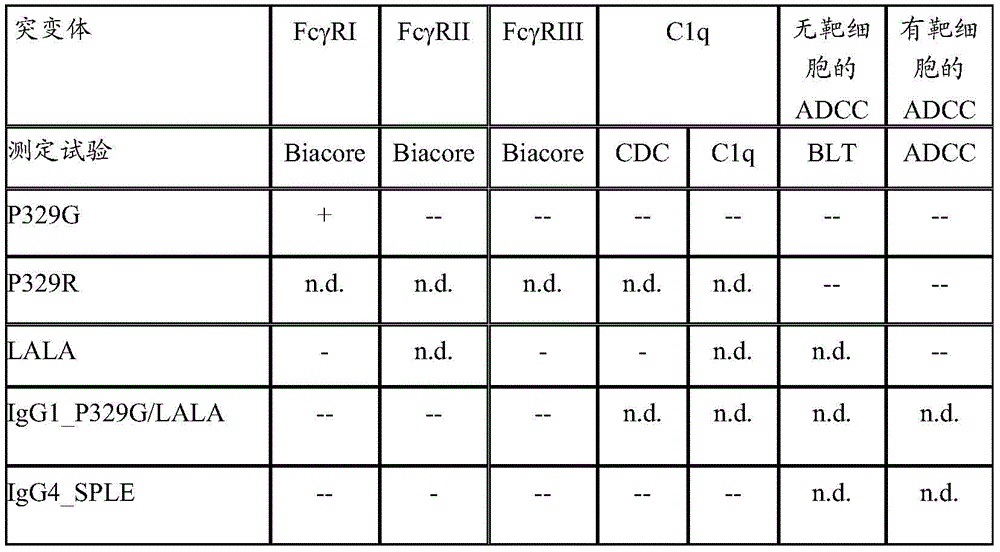
- -strongly reduced/inactivated compared to wt, + reduced compared to wt, equivalent + to wt interaction, n.d. not determined,/no results
In more detail, the following results were obtained:
affinity for Fc gamma RI receptor
P329G, P329A, SPLE and LALA mutations were introduced into the Fc polypeptides of P-selectin, CD20 and CD9 antibodies, and the binding affinity to Fc γ RI was measured using the Biacore system. The antibody with the P329G mutation still bound to Fc γ R1 (fig. 1a and 1b), but the introduction of the triple mutations P329G/LALA and P329G/SPLE, respectively, resulted in almost undetectable bound antibody (fig. 1 b). LALA or SPLE mutations reduced binding to this receptor more than P329G alone, but less than in combination with P329G (fig. 1a and 1 b). Thus, the combination of P329G with LALA or SPLE mutations was much more effective than the P329G mutation or the double mutation LALA or SPLE alone. The kd value for the CD20IgG1 wild-type antibody was 4.6nM and the kd value for the P329G mutant of the same antibody was 5.7M, but for the triple mutant P329G/LALA, binding of the antibody to Fc γ RI receptors was barely detectable and could not be determined. The antibody itself (i.e., whether CD9 or CD20 or p-selectin was tested) had a minor effect on binding affinity.
Affinity for Fc gamma RIIA receptor
P329G, SPLE and LALA mutations were introduced into the Fc polypeptide of CD9 antibody, respectively, and binding affinity to Fc γ RIIA-R131 receptor was measured using Biacore system. The binding levels were normalized so that the captured mAb represents 100 RU. So for a 1:1 stoichiometry, no more than about 20RU is expected. Figure 1c shows that the introduction of LALA, SPLE/P329G, P329G and LALA/P329G mutations into Fc variants strongly reduces binding to Fc γ RIIA receptors. Unlike binding to the Fc γ R1 receptor, the introduction of the P329G mutation alone was able to block binding to this receptor very strongly, to a degree more or less similar to the triple mutation P329G/LALA (fig. 1 c).
Affinity for Fc γ RIIB receptor
SPLE, LALA, SPLE/P329G and LALA/P329G mutations were introduced into the Fc polypeptide of CD9 and P-selectin antibodies, respectively, and the binding affinity to the Fc γ RIIB receptor was measured using the Biacore system. FIG. 1d shows that binding to Fc γ RIIB receptor is strongly reduced in LALA and the triple mutant P329G/LALA, P329G/SPLE.
Affinity for Fc gamma RIIIA receptors
P329G, LALA, SPLE, P329G/LALA and SPLE/P329G mutations were introduced into the Fc polypeptide of CD9 and binding affinity to the Fc γ RIIIA-V158 receptor was measured using the Biacore system. The P329G and triple mutations P329G/LALA most strongly reduced binding to Fc γ RIIIA receptors to barely detectable levels. P329G/SPLE also resulted in strongly reduced binding affinity, and the mutant SPLE and LALA only slightly reduced the binding affinity to Fc γ RIIIA receptor, respectively (fig. 1 c).
Example 3
C1Q ELISA
The binding properties of different polypeptides comprising Fc variants to C1q were analyzed by ELISA sandwich-type immunoassays. Each variant was coupled to hydrophobic Maxisorp 96-well plates at 8 concentrations between 10. mu.g/ml and 0. mu.g/ml. This conjugation mimics the complexation of antibodies, which is a prerequisite for high affinity binding of the C1q molecule. After washing, the samples were incubated to allow C1q to bind. After further washing, bound C1q molecules were detected by polyclonal rabbit anti-hC 1q antibody. After the subsequent washing step, an enzyme-labeled anti-rabbit-Fc γ specific antibody was added. The immunological reaction is visualized by the addition of a substrate that can be converted into a colored product by the enzyme. The resulting absorbance (measured by photometry) is proportional to the amount of C1q bound to the antibody to be investigated. EC50 values for variant-C1 q interaction were calculated. Absorbance units from the chromogenic reaction are plotted against the concentration of antibody. The antibody concentration at half maximal response determines the EC50 value. This readout is reported as: relative differences from a reference standard measured on the same plate and the coefficient of variation of the sample and reference.
Similar to the SPLE mutation, the P329G mutation introduced into P-selectin or CD20 antibody strongly reduced binding to C1q (fig. 2). Table 3 summarizes the calculated EC50 values for the binding of the variants to the C1q receptor. C1q belongs to complement activation proteins and plays a major role in the classical pathway of complement activation, which leads to the formation of a membrane attack complex. C1q is also involved in other immunological processes, such as enhancement of phagocytosis, clearance of apoptotic cells, or neutralization of viruses. Thus, it is expected that the mutations shown here to reduce C1q binding (e.g., P329G and SPLE, and most likely also triple mutations comprising the aforementioned single mutations) strongly reduce the above-described function of C1 q.
Table 3:
| antibodies | EC50 value |
| P-selectin IgG1wt | 1.8 |
| GA101IgG1wt | 2.4 |
| P-selectin IgG1_ P329G | 2.7 |
| P-selectin IgG4SPLE | 3.0 |
| GA101IgG1P329G | 5.5 |
| GA101IgG4SPLE | >10 |
Example 4
Targetfree cell ADCC, BLT assay
The antibodies to be tested (CD20(GA101) and CD9) were coated in PBS overnight at 4 ℃ in a suitable 96 flat bottom well plate. After washing the plates with PBS, the remaining binding sites were blocked with PBS/1% BSA at room temperature for 1 hour. Meanwhile, effector cells (NK-92 cell line transfected to express low or high affinity human Fc γ RIII) were harvested, and 200000 viable cells/well were seeded in 100. mu.l/well AIM V medium after discarding blocking buffer. Maximum esterase release from effector cells was determined using 100 μ l/well saponin buffer (PBS containing 0.5% saponin + 1% BSA). Cells were incubated at 37 ℃ in an incubator with 5% CO2 for 3 hours. After 3 hours, 20. mu.l/well of the supernatant was mixed with 180. mu.l/well of BLT substrate (0.1M Tris-HCl containing 0.2mM BLT +0.11mM DTNB, pH 8.0) and incubated at 37 ℃ for 30 minutes before reading the plate at 405nm in a microplate reader. The percentage of esterase release was determined by setting the maximum release (saponin treated cells) to 100% and the unstimulated cells (no antibody coating) to 0% release.
The wild-type CD20 antibody (GA101wt (1)) showed strong induction of cytolytic activity. The LALA variants showed a significant reduction in esterase release, whereas the P329G and P329G/LALA variants did not show any ADCC activity (e.g. 3 a). Figure 3b shows that not only the substitution of P329 for G results in a significantly reduced cytolytic activity, but that the substitution of P329 for R329 also results in a significantly reduced cytolytic activity (CD20 antibody). Thus, like glycine, arginine appears to disrupt the function of this proline sandwich in the antibody. The strongly reduced ADCC observed here for the P329G mutant most likely resulted from strongly reduced binding to Fc γ RIIA and Fc γ RIIIA receptors (see fig. 1c and 1 e).
Example 5
ADCC with target cells
Human Peripheral Blood Mononuclear Cells (PBMC) were used as effector cells and prepared using Histopaque-1077(Sigma Diagnostics Inc., St. Louis, MO63178USA) essentially as per the manufacturer's instructions. Briefly, venous blood was collected from volunteers using a heparinized syringe. Blood was diluted with PBS (without Ca + + or Mg + +)1:0.75-1.3 and plated on Histopaque-1077. The gradient was centrifuged for 30 minutes at Room Temperature (RT)400x g without braking. The intermediate phase containing PBMCs was collected, washed with PBS (50 ml based on cells from both gradients) and collected by centrifugation at 300x g for 10 min at RT. After resuspension of the pellet with PBS, PBMCs were counted and a second wash was performed by centrifugation at 200x g for 10 min at RT. The cells were then resuspended in the appropriate medium for subsequent processing. The ratio of effector cells to target cells for ADCC assay was 25:1 and 10:1 for PBMC and NK cells, respectively. Effector cells were prepared in AIM-V medium at appropriate concentrations to add 50ml to each well of a round-bottom 96-well plate. The target cells were human B lymphoma cells (e.g., Raji cells) cultured in DMEM containing 10% FCS. Target cells were washed in PBS, counted, and resuspended in AIM-V at 30 ten thousand per ml, so that 30' 000 cells in 100ml were added per microwell. Antibodies were diluted in AIM-V, added to previously seeded target cells in 50ml, and allowed to bind to target cells for 10 minutes at RT. Effector cells were then added and the plates were incubated for 4 hours at 37 ℃ in humidified air containing 5% CO 2. Killing of target cells was assessed by measuring Lactate Dehydrogenase (LDH) release from injured cells with a cytotoxicity detection kit (Roche Diagnostics, Rotkreuz, switzerland). After 4 hours incubation, the plates were centrifuged at 800x g. Transfer 100ml of supernatant from each well to a new clear flat bottom 96 well plate. 100ml of color substrate buffer from the kit was added per well. Vmax values of color reactions were determined at 490nm in an ELISA reader for at least 10 minutes using SOFTMax PRO software (Molecular Devices, Sunnyvale, CA94089, USA). Spontaneous LDH release was measured from wells containing only target and effector cells without antibody. Maximum release was determined from wells containing only target cells and 1% Triton X-100. The percentage of specific antibody-mediated killing was calculated as follows: ((x-SR)/(MR-SR) × 100, where x is the mean Vmax at a particular antibody concentration, SR is the mean Vmax released spontaneously, and MR is the mean Vmax released maximally.
The efficacy of recruitment of immune effector cells, as determined by classical ADCC assay assays, depends on the type of Fc variant. Here, human NK92 cell line transfected with human FcgRIIIA was used as effector cells and CD29 positive Raji cells were used as target cells. As can be seen in figure 4a, the ADCC of the GA101(CD20) Fc variant, in which glycine is substituted for proline (P329G), is strongly reduced, as is the ADCC of the double mutant P329G/LALA to a similar extent. In contrast, the LALA mutation has a weaker ADCC reduction. To better distinguish between different variants, variants were also produced in a glycoengineered form to enhance ADCC potency. It was observed that the parent molecule (GA101(CD20)) showed strong ADCC as expected. ADCC potency in the LALA form is strongly impaired. The P329G mutant very strongly reduced ADCC; this resulted in a much greater reduction than the P329A variant of the GA101(CD20) antibody (fig. 4 b).
Example 6
Complement Activity
The target cells were counted, washed with PBS, 100 ten thousand cells per ml, and resuspended in AIM-V (Invitrogen). 50ml cells were seeded per well in flat bottom 96-well plates. Dilutions of antibodies were prepared in AIM-V and added to the cells in 50 ml. The antibody was allowed to bind to the cells for 10 minutes at room temperature. Human serum complement (Quidel) was freshly thawed, diluted 3-fold with AIM-V and added to wells in 50 ml. Rabbit complement (Cedarlane Laboratories) was prepared as described by the manufacturer, diluted 3-fold with AIM-V and added to wells in 50 ml. As a control, the complement source was heated at 56 ℃ for 30 minutes before the assay was added. The assay plates were incubated at 37 ℃ for 2 hours. Killing of cells was determined by measuring LDH release. Briefly, 300x g centrifuged the plates for 3 minutes. 50ml of supernatant from each well was transferred to a new 96-well plate and 50ml of assay reagents from the cytotoxicity kit (Roche) were added. Dynamic measurements with an ELISA reader determined Vmax corresponding to LDH concentration in the supernatant. Maximum release was determined by incubating the cells in the presence of 1% Triton X-100.
Different Fc variants were analyzed to mediate CDC on SUDH-L4 target cells. Non-glycoengineered GA101 molecules showed significant CDC induction. LALA variants showed activity only at the highest concentration, whereas P329G and P329G/LALA variants did not show any CDC activity (fig. 5 a). Furthermore, LALA variants of glycoengineered GA101 molecules as well as P329G and P329A variants did not show any CDC activity (fig. 5 b).
Example 7
Sugar profile of human IgG1
The glycospectrum of human IgG1 antibodies containing mutations in the Fc region (intended to abolish binding to Fc γ receptors) was analyzed by MALDI/TOF-MS in cationic mode (neutral oligosaccharides).
The terminal sialic acid was removed by treatment of the human (h) IgG1 variant with sialidase (QA-Bio) as per the manufacturer's instructions. Neutral oligosaccharides of hIgG1 were then released by PNGase F (QA-Bio) digestion as described previously (Ferrara, C et al, Biotech. Bioeng.93(2006) 851-. The sugar spectra were analyzed by mass spectrometry (Autoflex, Bruker Daltonics GmbH) in the cationic mode as described previously (Ferrara, C et al, Biotech. Bioeng.93(2006) 851-.
The glycospectrum of neutral Fc-binding glycans of human IgG1 is characterized by three major m/z peaks, which can be assigned to fucosylated complex oligosaccharides with either no (G0) terminal galactose residues, one (G1) or two (G2) terminal galactose residues.
The glycogram of hIgG1 containing mutations within the Fc region (intended to abrogate binding to Fc receptors) was analyzed and compared to that obtained for wild-type antibodies. IgG variants containing one of the mutations within the Fc (P329G, LALA, P329A, P329G/LALA) showed similar glycospectrum to the wild-type antibody, Fc-binding glycans were fucosylated complex oligosaccharides (data not shown). Mutations within the Fc can affect the level of terminal galactosylation and terminal sialylation as observed by alanine substitutions for amino acids at positions 241, 243, 263, 265 or 301 (Lund, J. et al, J. Immunol.157(1996) 4963-4969).
Figure 6a shows the relative percentage of galactosylation of the different hIgG1Fc variants described herein. Slight variations were observed when the antibodies were expressed in different hosts, but no significant difference in terminal galactosylation was observed.
FIG. 6b shows the variability of galactosylation content of wild type and IgG1-P329G/LALA of 4 different antibodies, wherein the amount of galactosylation of four different V domains when expressed in Hek293EBNA cells was compared.
Example 8
Antibody-induced platelet aggregation in whole blood assays
Whole blood platelet aggregation analysis a Multiplate instrument from Dynabyte was used. First, 20ml of blood was drawn from a normal human donor and transferred into a hirudin tube (Dynabyte Medical, # MP 0601). A minicell imperance device (Dynabead # MP0021) was inserted into the Multiplate instrument for measurement. Then, 175. mu.l of 0.9% NaCl was added to the cuvette. Antibodies were added to the cuvette to obtain the final test concentration. Then, 175. mu.l of human blood was added and incubated at 37 ℃ for 3 minutes. The impedance analysis was automatically initiated at 37 ℃ for another 6 minutes. The data was analyzed by quantifying the area under the curve as a measure of platelet aggregation.
The CD9 antibody has been shown to induce platelet activation and platelet aggregation (Worthington et al, Br. J. Hematol.74(2) (1990) 216-222). Platelet aggregation induced by platelet-binding antibodies has previously been shown to involve binding to Fc γ RIIA (de Reys et al, Blood 81(1993) 1792-1800). As shown above, mutations LALA, P329G, P329G/LALA and P329G/SPLE introduced into the CD9 antibody strongly reduced the binding of the CD9 antibody to the Fc γ RIIA receptor (fig. 1 c).
The CD9 antibody-induced activation (measured by calcium efflux, data not shown) and platelet aggregation were abolished by introducing P329G and LALA triple mutations in the antibody, resulting in a strong reduction in Fc γ RIIA binding compared to the wild-type antibody (see fig. 7a and 7 b). Murine IgG1 induced platelet aggregation at low antibody concentrations (0.1-1. mu.l/ml). At higher concentrations, overstimulation of platelets leads to silencing of the aggregation response (3-30. mu.g/ml). Donor variability was observed with chim-hu-IgG 4-SPLE. Data for chim-hu-IgG4-SPLE responders at higher antibody concentrations are shown in FIG. 6a, and data for chim-hu-IgG4-SPLE non-responders are shown in FIG. 6 b. For the antibody variants chim-hu-IgG1-LALA, chim-hu-IgG-WT-P329G, chim-hu-IgG1-LALA-P329G, chim-hu-IgG4-SPLE-P329G, chim-hu-IgG4-SPLE-N297Q, no blood sample showed any aggregation reaction. Comparison: spontaneous aggregation in untreated blood samples (background); ADP-induced (ADP) and thrombin analogue induced (TRAP6) platelet aggregation. Isotype control: murine IgG1 (murine isotype) and human IgG4-SPLE (hu-IgG4-SPLE isotype).
One possible explanation for these data is that the reduced binding of CD9 antibodies with triple mutations to the Fc γ RIIA receptor is responsible for the reduced platelet aggregation observed for such mutant antibodies. In principle, it is therefore possible to prevent platelet aggregation as a toxic side effect of antibody therapy by introducing the above-mentioned mutations in the Fc part of the antibody which are capable of reducing the binding to the Fc γ RIIA receptor.
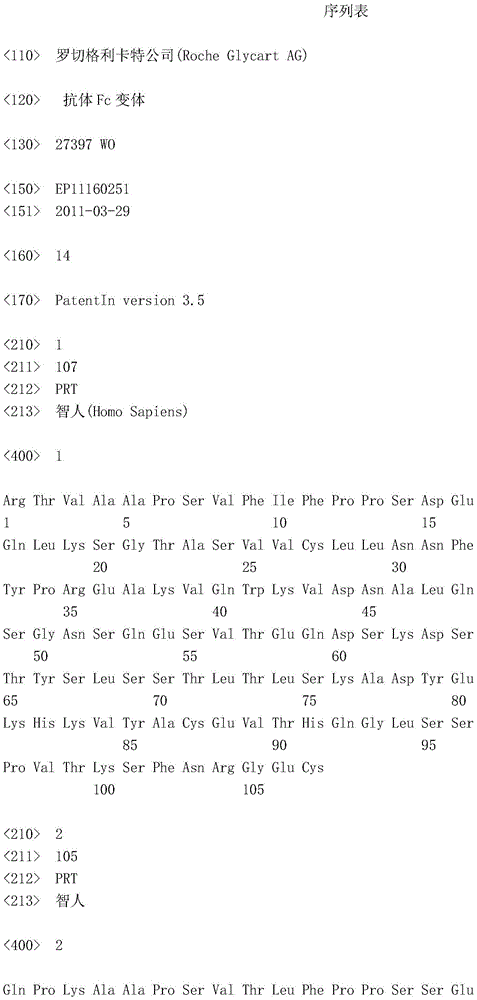
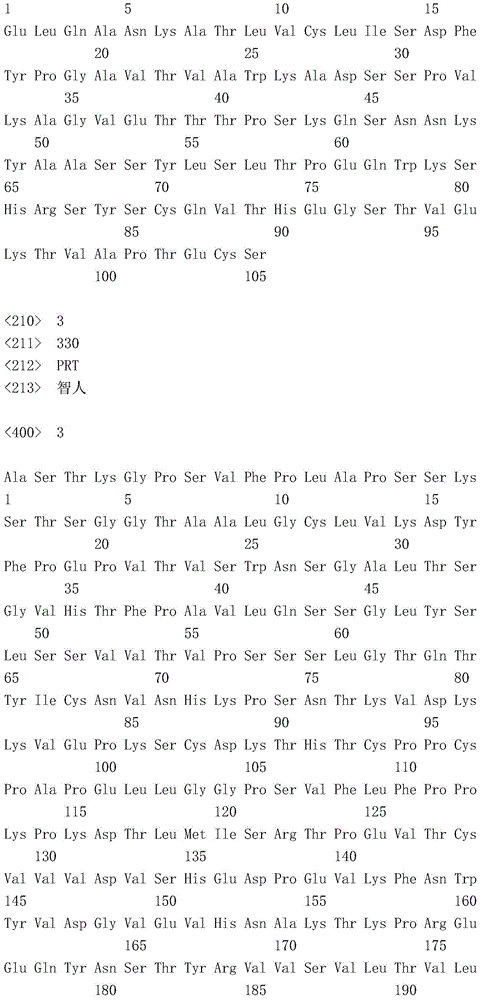
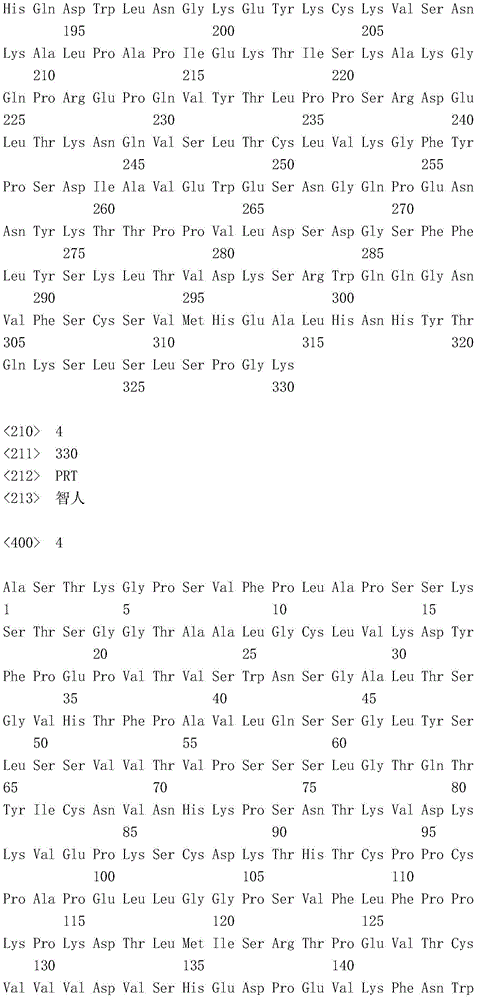
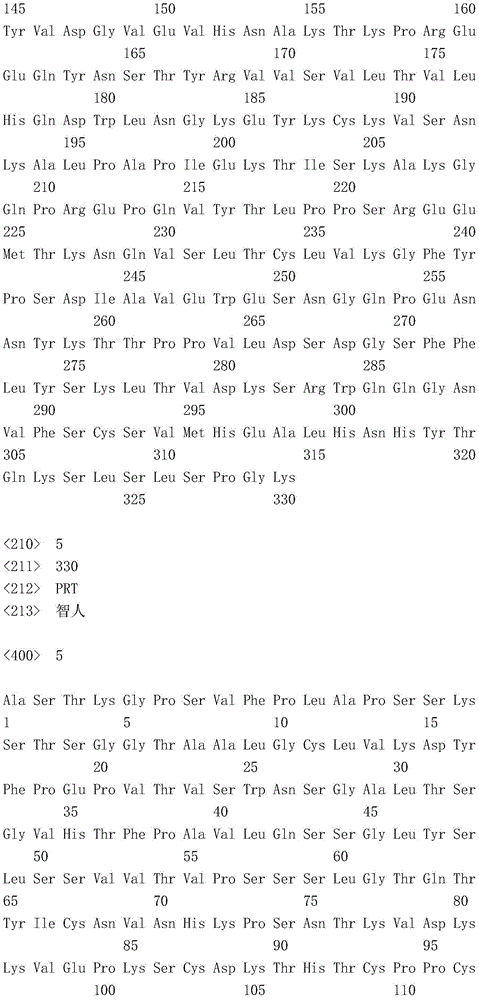


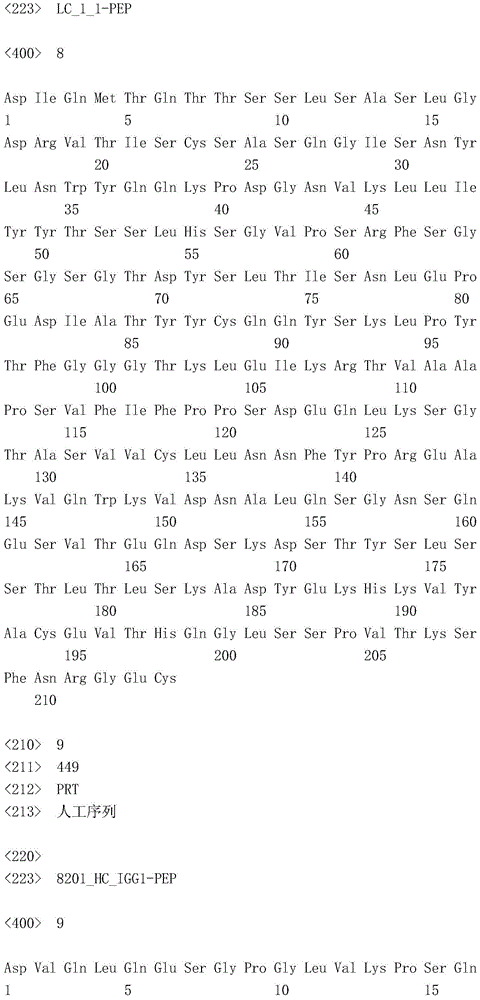
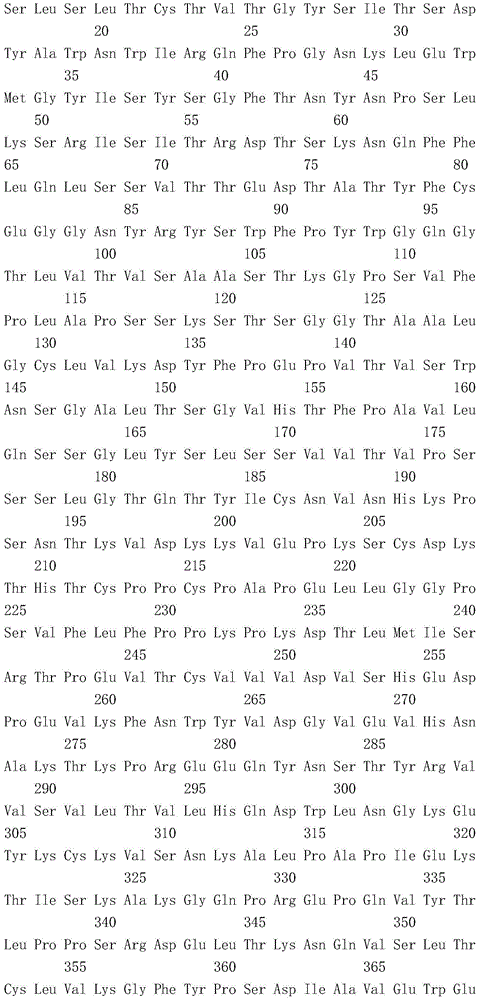
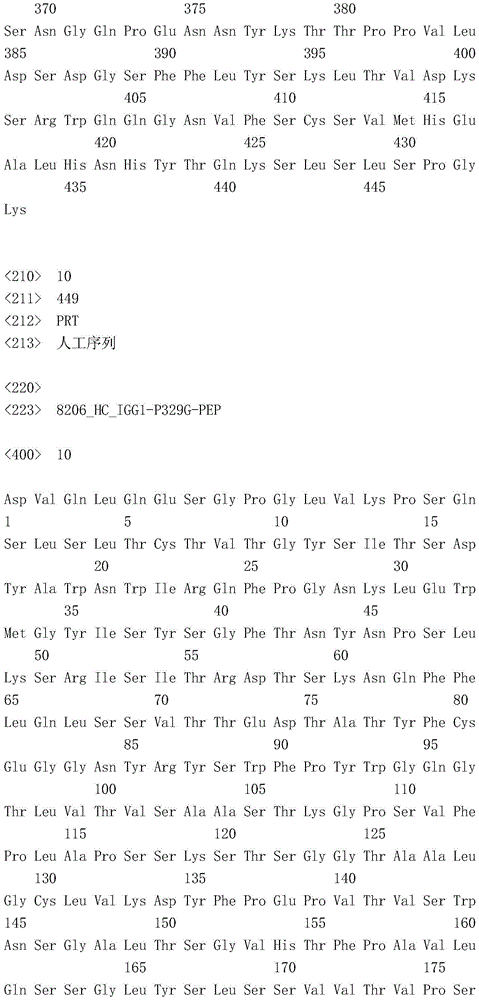

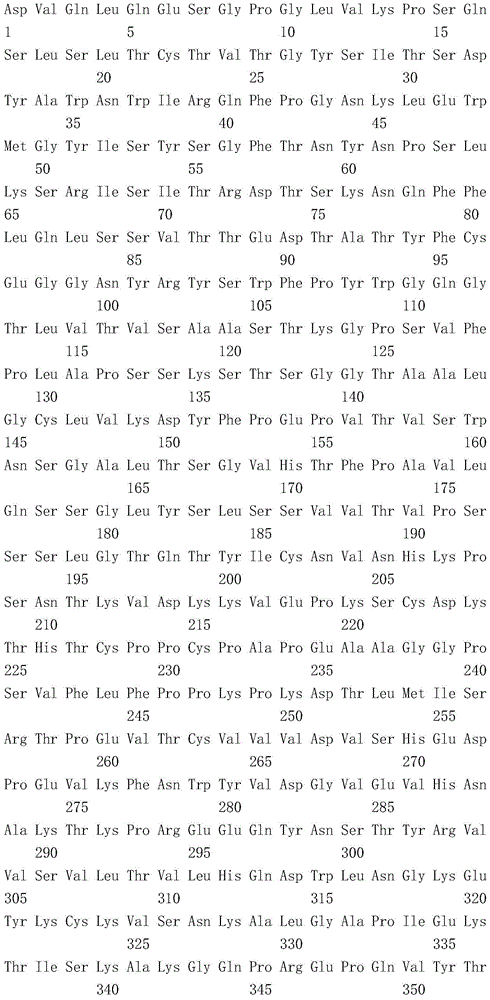
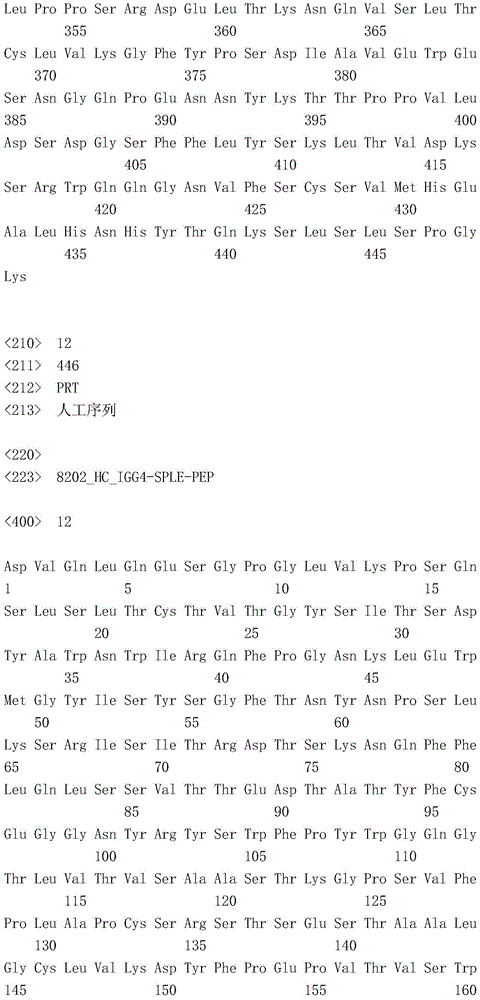
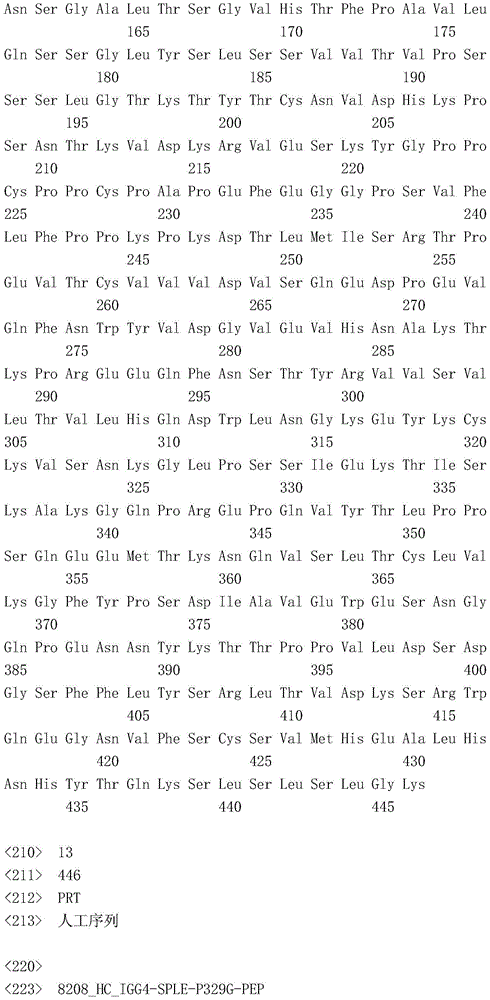
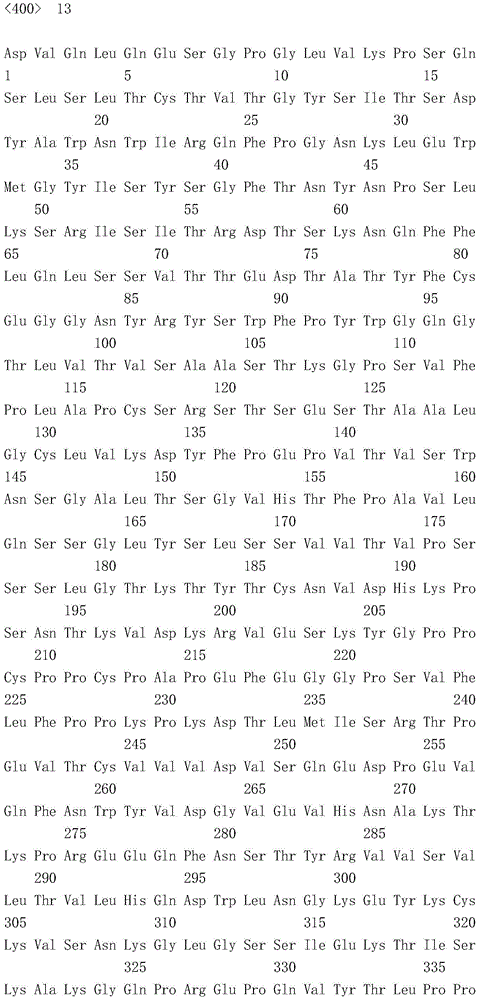
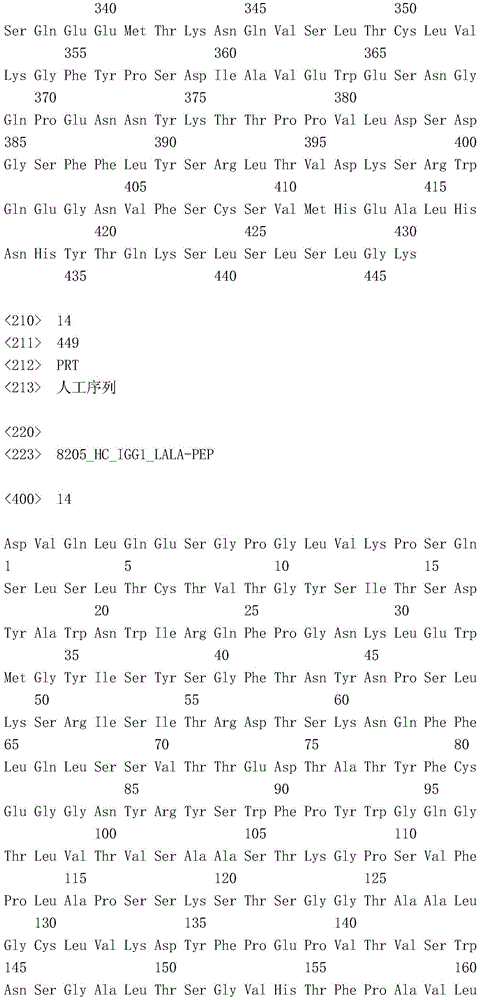

Claims (9)
1. A polypeptide comprising an Fc variant of a wild-type human IgG1Fc region, said Fc variant comprising an amino acid substitution at position Pro329 and at least one other amino acid substitution, wherein Pro329 of the wild-type human Fc region is substituted with glycine, wherein the at least one other amino acid substitution is L234A and L235A of the human IgG1Fc region, wherein the residues are numbered according to the EU index of Kabat,
wherein the polypeptide comprising an Fc variant exhibits less than 20% of the affinity of the polypeptide comprising a wild-type human IgG1Fc region for an Fc receptor responsible for effector function compared to the affinity said polypeptide exhibits for said Fc receptor.
2. The polypeptide of claim 1, wherein the wild-type human IgG1 polypeptide induces ADCC, and wherein the IgG1Fc variant polypeptide induces reduced ADCC and is reduced to 0-20% of the ADCC induced by the polypeptide comprising the wild-type human IgG1Fc region.
3. The polypeptide of claim 1, wherein the polypeptide is an antibody or an Fc fusion protein.
4. The polypeptide of claim 1, wherein the wild-type human IgG1 polypeptide induces platelet aggregation, and wherein the IgG1Fc variant polypeptide induces platelet aggregation that is reduced compared to platelet aggregation induced by a polypeptide comprising a wild-type human IgG1Fc region.
5. The polypeptide of claim 1, wherein the wild-type human IgG1 polypeptide induces CDC, and wherein the CDC induced by the IgG1Fc variant polypeptide is strongly reduced as compared to CDC induced by a polypeptide comprising a wild-type human IgG1Fc region.
6. A pharmaceutical formulation comprising a polypeptide according to any one of claims 1 to 5 and a pharmaceutically acceptable carrier.
7. Use of a polypeptide according to any one of claims 1 to 5 in the manufacture of a medicament for the treatment of a disease selected from: cancer, inflammation, diabetes and neurological disorders, wherein a strong reduction of effector function of the polypeptide comprising a wild-type human IgG Fc-region compared to the effector function induced by the polypeptide is advantageous.
8. Use of a polypeptide according to any of claims 1-5, wherein a strong reduction of effector function of the polypeptide compared to effector function induced by a polypeptide comprising a wild-type human IgG Fc-region is advantageous for the preparation of a medicament for the treatment of a disease.
9. The use of claim 8, wherein the effector function is ADCC.
Applications Claiming Priority (3)
| Application Number | Priority Date | Filing Date | Title |
|---|---|---|---|
| EP11160251 | 2011-03-29 | ||
| EP11160251.2 | 2011-03-29 | ||
| CN201280016318.8A CN103476795B (en) | 2011-03-29 | 2012-03-27 | Antibody Fc variant |
Related Parent Applications (1)
| Application Number | Title | Priority Date | Filing Date |
|---|---|---|---|
| CN201280016318.8A Division CN103476795B (en) | 2011-03-29 | 2012-03-27 | Antibody Fc variant |
Publications (2)
| Publication Number | Publication Date |
|---|---|
| CN105949313A CN105949313A (en) | 2016-09-21 |
| CN105949313B true CN105949313B (en) | 2021-06-15 |
Family
ID=45888223
Family Applications (2)
| Application Number | Title | Priority Date | Filing Date |
|---|---|---|---|
| CN201280016318.8A Active CN103476795B (en) | 2011-03-29 | 2012-03-27 | Antibody Fc variant |
| CN201610388334.XA Active CN105949313B (en) | 2011-03-29 | 2012-03-27 | Antibody Fc variants |
Family Applications Before (1)
| Application Number | Title | Priority Date | Filing Date |
|---|---|---|---|
| CN201280016318.8A Active CN103476795B (en) | 2011-03-29 | 2012-03-27 | Antibody Fc variant |
Country Status (26)
| Country | Link |
|---|---|
| US (5) | US8969526B2 (en) |
| EP (2) | EP2691417B2 (en) |
| JP (1) | JP5926791B2 (en) |
| KR (2) | KR101614195B1 (en) |
| CN (2) | CN103476795B (en) |
| AR (1) | AR085741A1 (en) |
| AU (1) | AU2012234335B2 (en) |
| BR (1) | BR112013024574B1 (en) |
| CA (1) | CA2828289C (en) |
| DK (1) | DK2691417T4 (en) |
| ES (1) | ES2692268T5 (en) |
| FI (1) | FI2691417T4 (en) |
| HR (1) | HRP20181690T4 (en) |
| HU (1) | HUE041335T2 (en) |
| IL (1) | IL228002B (en) |
| LT (1) | LT2691417T (en) |
| MX (2) | MX336740B (en) |
| MY (1) | MY163539A (en) |
| PL (1) | PL2691417T5 (en) |
| PT (1) | PT2691417T (en) |
| RS (1) | RS57895B2 (en) |
| RU (1) | RU2607014C2 (en) |
| SG (2) | SG10201602394QA (en) |
| SI (1) | SI2691417T2 (en) |
| TR (1) | TR201815420T4 (en) |
| WO (1) | WO2012130831A1 (en) |
Families Citing this family (612)
| Publication number | Priority date | Publication date | Assignee | Title |
|---|---|---|---|---|
| US20040132101A1 (en) | 2002-09-27 | 2004-07-08 | Xencor | Optimized Fc variants and methods for their generation |
| US20090010920A1 (en) | 2003-03-03 | 2009-01-08 | Xencor, Inc. | Fc Variants Having Decreased Affinity for FcyRIIb |
| US20170166655A1 (en) * | 2004-03-26 | 2017-06-15 | Xencor, Inc. | Novel immunoglobulin variants |
| AU2005304624B2 (en) | 2004-11-12 | 2010-10-07 | Xencor, Inc. | Fc variants with altered binding to FcRn |
| US8367805B2 (en) | 2004-11-12 | 2013-02-05 | Xencor, Inc. | Fc variants with altered binding to FcRn |
| US12492253B1 (en) | 2008-02-25 | 2025-12-09 | Xencor, Inc. | Anti-human C5 antibodies |
| WO2011028952A1 (en) | 2009-09-02 | 2011-03-10 | Xencor, Inc. | Compositions and methods for simultaneous bivalent and monovalent co-engagement of antigens |
| AU2011283694B2 (en) | 2010-07-29 | 2017-04-13 | Xencor, Inc. | Antibodies with modified isoelectric points |
| TWI666027B (en) | 2011-02-10 | 2019-07-21 | 羅齊克雷雅公司 | Mutant interleukin-2 polypeptides |
| KR101614195B1 (en) | 2011-03-29 | 2016-04-20 | 로슈 글리카트 아게 | Antibody fc variants |
| CA2833785C (en) | 2011-04-21 | 2022-06-07 | The Regents Of The University Of Colorado, A Body Corporate | Compositions and methods for the treatment of neuromyelitis optica |
| EA201892619A1 (en) | 2011-04-29 | 2019-04-30 | Роше Гликарт Аг | IMMUNOCONJUGATES CONTAINING INTERLEUKIN-2 MUTANT POLYPETIPS |
| US10400029B2 (en) | 2011-06-28 | 2019-09-03 | Inhibrx, Lp | Serpin fusion polypeptides and methods of use thereof |
| KR20220003656A (en) | 2011-06-28 | 2022-01-10 | 인히브릭스, 인크. | Serpin fusion polypeptides and methods of use thereof |
| CA2844540C (en) | 2011-08-23 | 2018-10-16 | Roche Glycart Ag | Bispecific antibodies specific for t-cell activating antigens and a tumor antigen and methods of use |
| US12466897B2 (en) | 2011-10-10 | 2025-11-11 | Xencor, Inc. | Heterodimeric human IgG1 polypeptides with isoelectric point modifications |
| US10851178B2 (en) | 2011-10-10 | 2020-12-01 | Xencor, Inc. | Heterodimeric human IgG1 polypeptides with isoelectric point modifications |
| CN104125852B9 (en) * | 2012-02-15 | 2017-05-17 | 弗·哈夫曼-拉罗切有限公司 | Fc-receptor based affinity chromatography |
| SMT202100621T1 (en) * | 2012-07-13 | 2022-01-10 | Roche Glycart Ag | Bispecific anti-vegf/anti-ang-2 antibodies and their use in the treatment of ocular vascular diseases |
| CA2876099A1 (en) * | 2012-08-02 | 2014-02-06 | F. Hoffmann-La Roche Ag | Method for producing monomeric and multimeric molecules and uses thereof |
| PL3434695T3 (en) | 2012-08-07 | 2021-05-17 | Roche Glycart Ag | Improved immunotherapy |
| EP2882774B1 (en) | 2012-08-08 | 2018-10-03 | Roche Glycart AG | Interleukin-10 fusion proteins and uses thereof |
| US20140044675A1 (en) | 2012-08-10 | 2014-02-13 | Roche Glycart Ag | Interleukin-2 fusion proteins and uses thereof |
| EP2904016B1 (en) | 2012-10-08 | 2018-11-14 | Roche Glycart AG | Fc-free antibodies comprising two fab-fragments and methods of use |
| US9605084B2 (en) | 2013-03-15 | 2017-03-28 | Xencor, Inc. | Heterodimeric proteins |
| US10968276B2 (en) | 2013-03-12 | 2021-04-06 | Xencor, Inc. | Optimized anti-CD3 variable regions |
| US9701759B2 (en) | 2013-01-14 | 2017-07-11 | Xencor, Inc. | Heterodimeric proteins |
| US11053316B2 (en) | 2013-01-14 | 2021-07-06 | Xencor, Inc. | Optimized antibody variable regions |
| US10738132B2 (en) | 2013-01-14 | 2020-08-11 | Xencor, Inc. | Heterodimeric proteins |
| US10131710B2 (en) | 2013-01-14 | 2018-11-20 | Xencor, Inc. | Optimized antibody variable regions |
| US10487155B2 (en) | 2013-01-14 | 2019-11-26 | Xencor, Inc. | Heterodimeric proteins |
| US9738722B2 (en) | 2013-01-15 | 2017-08-22 | Xencor, Inc. | Rapid clearance of antigen complexes using novel antibodies |
| TWI635098B (en) | 2013-02-01 | 2018-09-11 | 再生元醫藥公司 | Antibody containing chimeric constant region |
| EP2762496A1 (en) | 2013-02-05 | 2014-08-06 | EngMab AG | Method for the selection of antibodies against BCMA |
| CN104968682A (en) | 2013-02-05 | 2015-10-07 | 英格玛布股份公司 | Bispecific antibodies against CD3[epsilon] and BCMA |
| EP2762497A1 (en) | 2013-02-05 | 2014-08-06 | EngMab AG | Bispecific antibodies against CD3epsilon and BCMA |
| PE20151408A1 (en) | 2013-02-06 | 2015-10-15 | Inhibrx Llc | CD47 ANTIBODIES THAT DO NOT EXHAUST PLATELETS OR RED BALLOONS AND METHODS OF USING THEM |
| HK1211299A1 (en) | 2013-02-26 | 2016-05-20 | 罗切格利卡特公司 | Bispecific t cell activating antigen binding molecules |
| MX2015010350A (en) * | 2013-02-26 | 2015-10-29 | Roche Glycart Ag | Bispecific t cell activating antigen binding molecules. |
| EP2961771B1 (en) * | 2013-02-26 | 2020-01-01 | Roche Glycart AG | Bispecific t cell activating antigen binding molecules specific to cd3 and cea |
| UY35407A (en) | 2013-03-13 | 2014-10-31 | Genzyme Corp | ? FUSION PROTEINS UNDERSTANDING UNION PDGF and VEGF PORTIONS AND METHODS FOR USE ?. |
| US10106624B2 (en) | 2013-03-15 | 2018-10-23 | Xencor, Inc. | Heterodimeric proteins |
| MX367668B (en) * | 2013-03-15 | 2019-08-30 | Dana Farber Cancer Inst Inc | FLAVIVIRUS NEUTRALIZING ANTIBODIES AND METHODS OF USE OF THE SAME. |
| US10858417B2 (en) | 2013-03-15 | 2020-12-08 | Xencor, Inc. | Heterodimeric proteins |
| US10519242B2 (en) | 2013-03-15 | 2019-12-31 | Xencor, Inc. | Targeting regulatory T cells with heterodimeric proteins |
| EP3421495A3 (en) | 2013-03-15 | 2019-05-15 | Xencor, Inc. | Modulation of t cells with bispecific antibodies and fc fusions |
| UA118028C2 (en) | 2013-04-03 | 2018-11-12 | Рош Глікарт Аг | Bispecific antibodies specific for fap and dr5, antibodies specific for dr5 and methods of use |
| HK1213578A1 (en) | 2013-04-29 | 2016-07-08 | 豪夫迈‧罗氏有限公司 | Human fcrn-binding modified antibodies and methods of use |
| CN118561989A (en) | 2013-04-29 | 2024-08-30 | 豪夫迈·罗氏有限公司 | FC-receptor binding modified asymmetric antibodies and methods of use |
| PL3594240T3 (en) | 2013-05-20 | 2024-04-02 | F. Hoffmann-La Roche Ag | Anti-transferrin receptor antibodies and methods of use |
| ES2736326T3 (en) | 2013-05-31 | 2019-12-27 | Zymeworks Inc | Heteromultimers with reduced or silenced effector function |
| AR097584A1 (en) | 2013-09-12 | 2016-03-23 | Hoffmann La Roche | ANTIBODY COMBINATION THERAPY AGAINST HUMAN CSF-1R AND ANTIBODIES AGAINST HUMAN PD-L1 |
| PT3702373T (en) | 2013-09-13 | 2022-09-27 | Beigene Switzerland Gmbh | Anti-pd1 antibodies and their use as therapeutics and diagnostics |
| US10273303B2 (en) | 2013-11-13 | 2019-04-30 | Zymeworks Inc. | Monovalent antigen binding constructs targeting EGFR and/or HER2 and uses thereof |
| WO2015077891A1 (en) | 2013-11-27 | 2015-06-04 | Zymeworks Inc. | Bispecific antigen-binding constructs targeting her2 |
| JP2017501970A (en) * | 2013-12-10 | 2017-01-19 | エフ.ホフマン−ラ ロシュ アーゲーF. Hoffmann−La Roche Aktiengesellschaft | Use of subunit binding domains of multi-subunit structures for target-specific delivery of pharmaceutically active entities to multi-subunit structures |
| EP3192812B1 (en) | 2013-12-17 | 2020-05-27 | Genentech, Inc. | Anti-cd3 antibodies and methods of use |
| KR20160098277A (en) | 2013-12-20 | 2016-08-18 | 에프. 호프만-라 로슈 아게 | Improved recombinant polypeptide production methods |
| RU2694659C2 (en) | 2014-01-06 | 2019-07-16 | Ф. Хоффманн-Ля Рош Аг | Monovalent carrier modules across blood-brain barrier |
| CN105916880B (en) | 2014-01-15 | 2020-01-17 | 豪夫迈·罗氏有限公司 | Fc region variants with improved protein A binding |
| JP2017506075A (en) * | 2014-02-06 | 2017-03-02 | エフ・ホフマン−ラ・ロシュ・アクチェンゲゼルシャフト | Interleukin-10 immunoconjugate |
| EP3508496A1 (en) | 2014-02-06 | 2019-07-10 | F. Hoffmann-La Roche AG | Interleukin-2 fusion proteins and uses thereof |
| TWI754319B (en) | 2014-03-19 | 2022-02-01 | 美商再生元醫藥公司 | Methods and antibody compositions for tumor treatment |
| LT3122781T (en) | 2014-03-28 | 2020-03-25 | Xencor, Inc. | Bispecific antibodies that bind to cd38 and cd3 |
| CN110156892B (en) | 2014-07-03 | 2023-05-16 | 百济神州有限公司 | anti-PD-L1 antibodies and their use as therapeutic and diagnostic agents |
| SG10201900571YA (en) | 2014-07-22 | 2019-02-27 | Cb Therapeutics Inc | Anti-pd-1 antibodies |
| EP2982692A1 (en) | 2014-08-04 | 2016-02-10 | EngMab AG | Bispecific antibodies against CD3epsilon and BCMA |
| PE20170263A1 (en) | 2014-08-04 | 2017-03-30 | Hoffmann La Roche | T-CELL ACTIVATING ANTIGEN-BINDING BI-SPECIFIC MOLECULES |
| SG10201901057UA (en) | 2014-08-05 | 2019-03-28 | Cb Therapeutics Inc | Anti-pd-l1 antibodies |
| MX2017003123A (en) | 2014-09-12 | 2017-05-12 | Genentech Inc | Cysteine engineered antibodies and conjugates. |
| BR112017004802A2 (en) | 2014-09-12 | 2017-12-12 | Genentech Inc | anti-cll-1 and immunoconjugate antibodies |
| PE20170935A1 (en) | 2014-09-12 | 2017-07-13 | Genentech Inc | ANTI-HER2 AND IMMUNOCONJUGATED ANTIBODIES |
| BR112017004953A2 (en) | 2014-09-17 | 2017-12-05 | Genentech Inc | immunoconjugate, pharmaceutical formulation, method of treatment and method of inhibiting cell proliferation |
| RU2749922C2 (en) * | 2014-09-19 | 2021-06-21 | Сити Оф Хоуп | T- CELLS WITH COSTIMULATING CHIMERIC ANTIGEN RECEPTOR TARGETING IL13Rα2 |
| US9938522B2 (en) | 2014-09-25 | 2018-04-10 | Genewiz, Inc. | High throughput sequencing of end regions of long linear DNAs |
| IL294043B2 (en) | 2014-09-28 | 2024-10-01 | Univ California | Modulation of stimulatory and non-stimulatory myeloid cells |
| CA2963692A1 (en) | 2014-10-09 | 2016-04-14 | Engmab Ag | Bispecific antibodies against cd3epsilon and ror1 |
| SG11201703390SA (en) * | 2014-10-27 | 2017-05-30 | Inhibrx Lp | Serpin fusion polypeptides and methods of use thereof |
| US20160130324A1 (en) * | 2014-10-31 | 2016-05-12 | Shire Human Genetic Therapies, Inc. | C1 Inhibitor Fusion Proteins and Uses Thereof |
| CN107076761B (en) * | 2014-11-05 | 2020-05-05 | 豪夫迈·罗氏有限公司 | Method for determining anti-drug antibodies against human or humanized drug antibodies with effector function inhibition |
| RU2714116C2 (en) | 2014-11-06 | 2020-02-11 | Ф. Хоффманн-Ля Рош Аг | VARIANTS OF Fc-DOMAIN WITH MODIFIED FcRn BINDING AND METHODS OF APPLICATION THEREOF |
| DK3489256T3 (en) | 2014-11-14 | 2021-05-25 | Hoffmann La Roche | Antigen-binding molecules comprising a TNF family ligand trimer |
| ES2809455T3 (en) | 2014-11-17 | 2021-03-04 | Regeneron Pharma | Methods for tumor treatment using CD3xCD20 bispecific antibody |
| EP3221362B1 (en) | 2014-11-19 | 2019-07-24 | F.Hoffmann-La Roche Ag | Anti-transferrin receptor antibodies and methods of use |
| US11008403B2 (en) | 2014-11-19 | 2021-05-18 | Genentech, Inc. | Anti-transferrin receptor / anti-BACE1 multispecific antibodies and methods of use |
| LT3789402T (en) | 2014-11-20 | 2022-09-26 | F. Hoffmann-La Roche Ag | Combination therapy of t cell activating bispecific antigen binding molecules and pd-1 axis binding antagonists |
| CA2968162A1 (en) | 2014-11-20 | 2016-05-26 | F. Hoffmann-La Roche Ag | Common light chains and methods of use |
| DK3221356T3 (en) | 2014-11-20 | 2020-11-02 | Hoffmann La Roche | T cell activating bispecific antigen binding molecules against folr1 and cd3 |
| EP3023437A1 (en) | 2014-11-20 | 2016-05-25 | EngMab AG | Bispecific antibodies against CD3epsilon and BCMA |
| TN2017000223A1 (en) | 2014-11-26 | 2018-10-19 | Xencor Inc | Heterodimeric antibodies that bind cd3 and tumor antigens |
| US10259887B2 (en) | 2014-11-26 | 2019-04-16 | Xencor, Inc. | Heterodimeric antibodies that bind CD3 and tumor antigens |
| IL252467B (en) | 2014-11-26 | 2022-06-01 | Xencor Inc | Heterodimeric antibodies that bind cd3 and cd38 |
| WO2016082044A1 (en) | 2014-11-27 | 2016-06-02 | Zymeworks Inc. | Methods of using bispecific antigen-binding constructs targeting her2 |
| EP3029068A1 (en) | 2014-12-03 | 2016-06-08 | EngMab AG | Bispecific antibodies against CD3epsilon and BCMA for use in the treatment of diseases |
| EP3945096A1 (en) | 2014-12-19 | 2022-02-02 | Regenesance B.V. | Antibodies that bind human c6 and uses thereof |
| US10428155B2 (en) | 2014-12-22 | 2019-10-01 | Xencor, Inc. | Trispecific antibodies |
| MA41459A (en) | 2015-02-03 | 2017-12-12 | Als Therapy Development Inst | ANTI-CD40L ANTIBODIES AND METHODS FOR TREATING CD40L ILLNESSES OR DISORDERS |
| US10227411B2 (en) | 2015-03-05 | 2019-03-12 | Xencor, Inc. | Modulation of T cells with bispecific antibodies and FC fusions |
| JP6957355B2 (en) | 2015-03-17 | 2021-11-02 | エイジェンシー フォー サイエンス,テクノロジー アンド リサーチ | Serotype cross-reactive dengue neutralizing antibody and its use |
| WO2016161010A2 (en) | 2015-03-30 | 2016-10-06 | Regeneron Pharmaceuticals, Inc. | Heavy chain constant regions with reduced binding to fc gamma receptors |
| WO2016156291A1 (en) | 2015-03-31 | 2016-10-06 | F. Hoffmann-La Roche Ag | Antigen binding molecules comprising a trimeric tnf family ligand |
| EP3280736A1 (en) | 2015-04-07 | 2018-02-14 | F. Hoffmann-La Roche AG | Antigen binding complex having agonistic activity and methods of use |
| CN115109158A (en) | 2015-05-07 | 2022-09-27 | 阿吉纳斯公司 | anti-OX 40 antibodies and methods of use thereof |
| EP3294771A1 (en) | 2015-05-11 | 2018-03-21 | H. Hoffnabb-La Roche Ag | Compositions and methods of treating lupus nephritis |
| EP3310378B1 (en) | 2015-06-16 | 2024-01-24 | F. Hoffmann-La Roche AG | Anti-cll-1 antibodies and methods of use |
| HUE063270T2 (en) | 2015-06-16 | 2024-01-28 | Hoffmann La Roche | Humanized and affinity matured antibodies to fcrh5 and methods of use |
| EP3310811B1 (en) | 2015-06-16 | 2021-06-16 | Genentech, Inc. | Anti-cd3 antibodies and methods of use |
| AU2016280159A1 (en) | 2015-06-17 | 2017-12-07 | Genentech, Inc. | Anti-HER2 antibodies and methods of use |
| DK3313879T3 (en) | 2015-06-24 | 2022-03-14 | Hoffmann La Roche | Anti-transferrin receptor antibodies with adapted affinity |
| WO2016207091A1 (en) | 2015-06-24 | 2016-12-29 | F. Hoffmann-La Roche Ag | Trispecific antibodies specific for her2 and a blood brain barrier receptor and methods of use |
| EP3313887A2 (en) | 2015-06-26 | 2018-05-02 | MAB Discovery GmbH | Monoclonal anti-il-1racp antibodies |
| KR20180021833A (en) | 2015-06-29 | 2018-03-05 | 더 락커펠러 유니버시티 | Antibodies to CD40 with enhanced agonist activity |
| US10683369B2 (en) | 2015-08-03 | 2020-06-16 | Engmab Sàrl | Monoclonal antibodies against BCMA |
| GEP20217326B (en) | 2015-08-07 | 2021-11-25 | Alx Oncology Inc | Constructs having a sirp-alpha domain or variant thereof |
| NZ739750A (en) | 2015-09-25 | 2019-11-29 | Genentech Inc | Anti-tigit antibodies and methods of use |
| AR106188A1 (en) | 2015-10-01 | 2017-12-20 | Hoffmann La Roche | ANTI-CD19 HUMANIZED HUMAN ANTIBODIES AND METHODS OF USE |
| WO2017055392A1 (en) | 2015-10-02 | 2017-04-06 | F. Hoffmann-La Roche Ag | Anti-cd3xcd44v6 bispecific t cell activating antigen binding molecules |
| WO2017055385A1 (en) | 2015-10-02 | 2017-04-06 | F. Hoffmann-La Roche Ag | Anti-cd3xgd2 bispecific t cell activating antigen binding molecules |
| WO2017055393A1 (en) | 2015-10-02 | 2017-04-06 | F. Hoffmann-La Roche Ag | Anti-cd3xtim-3 bispecific t cell activating antigen binding molecules |
| WO2017055391A1 (en) | 2015-10-02 | 2017-04-06 | F. Hoffmann-La Roche Ag | Bispecific t cell activating antigen binding molecules binding mesothelin and cd3 |
| WO2017055395A1 (en) | 2015-10-02 | 2017-04-06 | F. Hoffmann-La Roche Ag | Anti-cd3xrob04 bispecific t cell activating antigen binding molecules |
| JP2018533930A (en) | 2015-10-02 | 2018-11-22 | エフ・ホフマン−ラ・ロシュ・アクチェンゲゼルシャフト | Bispecific T cell activation antigen binding molecule |
| EP3356406A1 (en) | 2015-10-02 | 2018-08-08 | H. Hoffnabb-La Roche Ag | Bispecific anti-human cd20/human transferrin receptor antibodies and methods of use |
| AR106189A1 (en) | 2015-10-02 | 2017-12-20 | Hoffmann La Roche | BIESPECTIFIC ANTIBODIES AGAINST HUMAN A-b AND THE HUMAN TRANSFERRINE RECEIVER AND METHODS OF USE |
| JP6918789B2 (en) * | 2015-10-02 | 2021-08-11 | エフ・ホフマン−ラ・ロシュ・アクチェンゲゼルシャフト | Anti-human CDC19 antibody with high affinity |
| MY192202A (en) | 2015-10-02 | 2022-08-06 | Hoffmann La Roche | Bispecific antibodies specific for pd1 and tim3 |
| KR102072317B1 (en) * | 2015-10-02 | 2020-01-31 | 에프. 호프만-라 로슈 아게 | Anti-PD1 Antibodies and Methods of Use |
| WO2017055314A1 (en) | 2015-10-02 | 2017-04-06 | F. Hoffmann-La Roche Ag | Bispecific anti-cd19xcd3 t cell activating antigen binding molecules |
| MA43345A (en) | 2015-10-02 | 2018-08-08 | Hoffmann La Roche | PYRROLOBENZODIAZEPINE ANTIBODY-DRUG CONJUGATES AND METHODS OF USE |
| CN107849137B (en) | 2015-10-02 | 2021-11-26 | 豪夫迈·罗氏有限公司 | Bispecific anti-CEAXCD 3T cell activating antigen binding molecules |
| EP3356403A2 (en) | 2015-10-02 | 2018-08-08 | H. Hoffnabb-La Roche Ag | Bispecific antibodies specific for a costimulatory tnf receptor |
| MY193013A (en) | 2015-10-07 | 2022-09-22 | Hoffmann La Roche | Bispecific antibodies with tetravalency for a costimulatory tnf receptor |
| MA43354A (en) | 2015-10-16 | 2018-08-22 | Genentech Inc | CONJUGATE DRUG CONJUGATES WITH CLOUDY DISULPHIDE |
| MA45326A (en) | 2015-10-20 | 2018-08-29 | Genentech Inc | CALICHEAMICIN-ANTIBODY-DRUG CONJUGATES AND METHODS OF USE |
| WO2017075173A2 (en) | 2015-10-30 | 2017-05-04 | Genentech, Inc. | Anti-factor d antibodies and conjugates |
| BR112018008865A8 (en) | 2015-11-02 | 2019-02-26 | Five Prime Therapeutics Inc | cd80 extracellular domain polypeptides and their use in cancer treatment |
| EP3165536A1 (en) | 2015-11-09 | 2017-05-10 | Ludwig-Maximilians-Universität München | Trispecific molecule combining specific tumor targeting and local immune checkpoint inhibition |
| TW202134282A (en) | 2015-12-02 | 2021-09-16 | 美商艾吉納斯公司 | Antibodies and methods of use thereof |
| KR20180085800A (en) | 2015-12-07 | 2018-07-27 | 젠코어 인코포레이티드 | CD3 and heterodimeric antibodies that bind to PSMA |
| EP3178848A1 (en) | 2015-12-09 | 2017-06-14 | F. Hoffmann-La Roche AG | Type ii anti-cd20 antibody for reducing formation of anti-drug antibodies |
| CN108369232B (en) * | 2015-12-09 | 2022-05-31 | 豪夫迈·罗氏有限公司 | Direct affinity measurement of human IgG1 binding to a multimeric antigen |
| IL313608A (en) | 2015-12-09 | 2024-08-01 | Hoffmann La Roche | Type ii anti-cd20 antibody for reducing formation of anti-drug antibodies |
| CN106939047B (en) * | 2016-01-04 | 2021-08-31 | 江苏怀瑜药业有限公司 | PD-L1 antibody and preparation method thereof |
| CN108699150B (en) | 2016-01-08 | 2022-08-09 | 科凌生物医疗有限公司 | Therapeutic anti-CD 9 antibodies |
| EP3400246B1 (en) | 2016-01-08 | 2020-10-21 | H. Hoffnabb-La Roche Ag | Methods of treating cea-positive cancers using pd-1 axis binding antagonists and anti-cea/anti-cd3 bispecific antibodies |
| JP2019515874A (en) | 2016-03-01 | 2019-06-13 | エフ・ホフマン−ラ・ロシュ・アクチェンゲゼルシャフト | Obintuzumab variants with altered cell death induction |
| AU2017228475A1 (en) * | 2016-03-04 | 2018-09-13 | Shire Human Genetic Therapies, Inc. | Recombinant follistatin-Fc fusion proteins and use in treating duchenne muscular dystrophy |
| WO2017162587A1 (en) | 2016-03-22 | 2017-09-28 | F. Hoffmann-La Roche Ag | Protease-activated t cell bispecific molecules |
| PL3433280T3 (en) | 2016-03-22 | 2023-07-31 | F. Hoffmann-La Roche Ag | Protease-activated t cell bispecific molecules |
| EP3231813A1 (en) | 2016-03-29 | 2017-10-18 | F. Hoffmann-La Roche AG | Trimeric costimulatory tnf family ligand-containing antigen binding molecules |
| MA45328A (en) | 2016-04-01 | 2019-02-06 | Avidity Biosciences Llc | NUCLEIC ACID-POLYPEPTIDE COMPOSITIONS AND USES THEREOF |
| RU2018139339A (en) | 2016-04-22 | 2020-05-22 | Эллигейтор Биосайенс Аб | NEW SPECIFIC POLYPEPTIDES AGAINST CD137 |
| EP3241845A1 (en) | 2016-05-06 | 2017-11-08 | MAB Discovery GmbH | Humanized anti-il-1r3 antibodies |
| JP7089483B2 (en) | 2016-05-11 | 2022-06-22 | エフ・ホフマン-ラ・ロシュ・アクチェンゲゼルシャフト | Modified anti-tenascin antibody and usage |
| CN109071652B (en) | 2016-05-11 | 2022-09-23 | 豪夫迈·罗氏有限公司 | Antigen binding molecules comprising TNF family ligand trimers and tenascin binding modules |
| EP3243836A1 (en) | 2016-05-11 | 2017-11-15 | F. Hoffmann-La Roche AG | C-terminally fused tnf family ligand trimer-containing antigen binding molecules |
| EP3243832A1 (en) | 2016-05-13 | 2017-11-15 | F. Hoffmann-La Roche AG | Antigen binding molecules comprising a tnf family ligand trimer and pd1 binding moiety |
| JP2019522633A (en) | 2016-05-20 | 2019-08-15 | ジェネンテック, インコーポレイテッド | PROTAC antibody conjugates and methods of use |
| JP7022080B2 (en) | 2016-05-27 | 2022-02-17 | ジェネンテック, インコーポレイテッド | Biochemical analytical methods for the characterization of site-specific antibody-drug conjugates |
| EP3252078A1 (en) | 2016-06-02 | 2017-12-06 | F. Hoffmann-La Roche AG | Type ii anti-cd20 antibody and anti-cd20/cd3 bispecific antibody for treatment of cancer |
| EP3464280B1 (en) | 2016-06-06 | 2021-10-06 | F. Hoffmann-La Roche AG | Silvestrol antibody-drug conjugates and methods of use |
| WO2017216054A1 (en) | 2016-06-12 | 2017-12-21 | F. Hoffmann-La Roche Ag | Dihydropyrimidinyl benzazepine carboxamide compounds |
| MA45255A (en) | 2016-06-14 | 2019-04-17 | Xencor Inc | BISPECIFIC CONTROL POINT INHIBITORS ANTIBODIES |
| CA3027302A1 (en) | 2016-06-20 | 2017-12-28 | F-Star Beta Limited | Binding members(1) |
| CA3029328A1 (en) | 2016-06-28 | 2018-01-04 | Xencor, Inc. | Heterodimeric antibodies that bind somatostatin receptor 2 |
| GB201611530D0 (en) | 2016-07-01 | 2016-08-17 | Alligator Bioscience Ab | Novel polypeptides |
| US10864203B2 (en) | 2016-07-05 | 2020-12-15 | Beigene, Ltd. | Combination of a PD-1 antagonist and a RAF inhibitor for treating cancer |
| RU2656181C1 (en) * | 2016-07-13 | 2018-05-31 | Закрытое Акционерное Общество "Биокад" | Anti-pd-1 antibodies, method for their production, and method of application |
| BR112019001989A2 (en) | 2016-08-02 | 2019-08-20 | Visterra, Inc. | engineered polypeptides and uses thereof |
| WO2018027204A1 (en) | 2016-08-05 | 2018-02-08 | Genentech, Inc. | Multivalent and multiepitopic anitibodies having agonistic activity and methods of use |
| BR112019002394B1 (en) | 2016-08-10 | 2021-12-21 | Ajou University Industry-Academic Cooperation Foundation | HETERODIMERIC PROTEIN FLUTED WITH CF AND ITS USE |
| JP7093767B2 (en) | 2016-08-11 | 2022-06-30 | ジェネンテック, インコーポレイテッド | Pyrrolobenzodiazepine prodrug and its antibody conjugate |
| CN110087680B (en) | 2016-08-19 | 2024-03-19 | 百济神州有限公司 | Treating cancer with combination products containing BTK inhibitors |
| CN109790220A (en) | 2016-08-25 | 2019-05-21 | 豪夫迈·罗氏有限公司 | Intermittent dosing of anti-CSF-1R antibodies in combination with macrophage activators |
| US10793632B2 (en) | 2016-08-30 | 2020-10-06 | Xencor, Inc. | Bispecific immunomodulatory antibodies that bind costimulatory and checkpoint receptors |
| PL3519437T3 (en) | 2016-09-30 | 2022-01-17 | F. Hoffmann-La Roche Ag | Bispecific antibodies against p95her2 |
| JP7050770B2 (en) | 2016-10-05 | 2022-04-08 | エフ・ホフマン-ラ・ロシュ・アクチェンゲゼルシャフト | Method for preparing antibody drug conjugate |
| JP7142630B2 (en) | 2016-10-14 | 2022-09-27 | ゼンコア インコーポレイテッド | IL15/IL15Rα heterodimeric FC-fusion protein |
| WO2018083126A1 (en) | 2016-11-01 | 2018-05-11 | Genmab B.V. | Polypeptide variants and uses thereof |
| MX2019004621A (en) | 2016-11-02 | 2019-11-28 | Engmab Sarl | Bispecific antibody against bcma and cd3 and an immunological drug for combined use in treating multiple myeloma. |
| CA3041340A1 (en) | 2016-11-09 | 2018-05-17 | Agenus Inc. | Anti-ox40 antibodies, anti-gitr antibodies, and methods of use thereof |
| CA3042435A1 (en) | 2016-11-15 | 2018-05-24 | Genentech, Inc. | Dosing for treatment with anti-cd20/anti-cd3 bispecific antibodies |
| TW201829463A (en) * | 2016-11-18 | 2018-08-16 | 瑞士商赫孚孟拉羅股份公司 | anti-HLA-G antibody and use thereof |
| MA50948A (en) | 2016-12-07 | 2020-10-14 | Agenus Inc | ANTIBODIES AND METHODS OF USING THE SAME |
| JP2020511408A (en) | 2016-12-12 | 2020-04-16 | ジェネンテック, インコーポレイテッド | Method of treating cancer using anti-PD-L1 antibody and anti-androgen drug |
| CN117752798A (en) | 2016-12-19 | 2024-03-26 | 豪夫迈·罗氏有限公司 | Combination therapy with targeted 4-1BB (CD137) agonists |
| EP3559034B1 (en) | 2016-12-20 | 2020-12-02 | H. Hoffnabb-La Roche Ag | Combination therapy of anti-cd20/anti-cd3 bispecific antibodies and 4-1bb (cd137) agonists |
| EP3558360A1 (en) | 2016-12-22 | 2019-10-30 | F. Hoffmann-La Roche AG | Treatment of tumors with an anti-csf-1r antibody in combination with an anti-pd-l1 antibody after failure of anti-pd-l1/pd1 treatment |
| MA47200A (en) * | 2017-01-03 | 2019-11-13 | Hoffmann La Roche | BISPECIFIC ANTIGEN BINDING MOLECULES INCLUDING A 20H4.9 ANTI-4-1BB CLONE |
| SG10202107429WA (en) | 2017-01-06 | 2021-08-30 | Avidity Biosciences Inc | Nucleic acid-polypeptide compositions and methods of inducing exon skipping |
| CN110325210A (en) | 2017-01-11 | 2019-10-11 | 小利兰·斯坦福大学托管委员会 | RSPO substitute molecule |
| TWI856437B (en) | 2017-01-20 | 2024-09-21 | 法商賽諾菲公司 | Anti-tgf-beta antibodies and their use |
| TWI788321B (en) | 2017-01-20 | 2023-01-01 | 美商健臻公司 | Bone-targeting antibodies |
| TWI774726B (en) | 2017-01-25 | 2022-08-21 | 英屬開曼群島商百濟神州有限公司 | Crystalline forms of (s)-7-(1-(but-2-ynoyl)piperidin-4-yl)-2-(4-phenoxyphenyl)-4,5,6,7-tetrahydropyrazolo[1,5-a]pyrimidine-3-carboxamide, preparation, and uses thereof |
| WO2018140821A1 (en) | 2017-01-26 | 2018-08-02 | Surrozen, Inc. | Tissue-specific wnt signal enhancing molecules and uses thereof |
| EP3600407B1 (en) | 2017-03-27 | 2025-01-29 | F. Hoffmann-La Roche AG | Improved antigen binding receptors |
| CA3054104A1 (en) | 2017-03-27 | 2018-10-04 | F. Hoffmann-La Roche Ag | Improved antigen binding receptor formats |
| CN110382542B (en) | 2017-03-29 | 2023-06-09 | 豪夫迈·罗氏有限公司 | Bispecific antigen-binding molecules targeting co-stimulatory TNF receptors |
| WO2018178074A1 (en) | 2017-03-29 | 2018-10-04 | F. Hoffmann-La Roche Ag | Trimeric antigen binding molecules specific for a costimulatory tnf receptor |
| EP3601345A1 (en) | 2017-03-29 | 2020-02-05 | H. Hoffnabb-La Roche Ag | Bispecific antigen binding molecule for a costimulatory tnf receptor |
| WO2018184966A1 (en) | 2017-04-03 | 2018-10-11 | F. Hoffmann-La Roche Ag | Antibodies binding to steap-1 |
| WO2018184965A1 (en) | 2017-04-03 | 2018-10-11 | F. Hoffmann-La Roche Ag | Immunoconjugates of il-2 with an anti-pd-1 and tim-3 bispecific antibody |
| WO2018184964A1 (en) | 2017-04-03 | 2018-10-11 | F. Hoffmann-La Roche Ag | Immunoconjugates of an anti-pd-1 antibody with a mutant il-2 or with il-15 |
| EP3606956B1 (en) | 2017-04-04 | 2024-07-31 | F. Hoffmann-La Roche AG | Novel bispecific antigen binding molecules capable of specific binding to cd40 and to fap |
| EP3606955B1 (en) | 2017-04-05 | 2024-11-06 | F. Hoffmann-La Roche AG | Bispecific antibodies specifically binding to pd1 and lag3 |
| EP4112644A1 (en) * | 2017-04-05 | 2023-01-04 | F. Hoffmann-La Roche AG | Anti-lag3 antibodies |
| TWI788340B (en) | 2017-04-07 | 2023-01-01 | 美商必治妥美雅史谷比公司 | Anti-icos agonist antibodies and uses thereof |
| AU2018250875A1 (en) | 2017-04-13 | 2019-10-03 | F. Hoffmann-La Roche Ag | An interleukin-2 immunoconjugate, a CD40 agonist, and optionally a PD-1 axis binding antagonist for use in methods of treating cancer |
| KR20200005540A (en) | 2017-04-14 | 2020-01-15 | 제넨테크, 인크. | How to diagnose and treat cancer |
| AU2018250695A1 (en) | 2017-04-14 | 2019-11-07 | Kodiak Sciences Inc. | Complement factor D antagonist antibodies and conjugates thereof |
| AU2018258661A1 (en) | 2017-04-28 | 2019-10-17 | Five Prime Therapeutics, Inc. | Methods of treatment with CD80 extracellular domain polypeptides |
| EP3401332A1 (en) | 2017-05-08 | 2018-11-14 | MAB Discovery GmbH | Anti-il-1r3 antibodies for use in inflammatory conditions |
| RU2770209C2 (en) | 2017-05-24 | 2022-04-14 | ЭйЭлЭс ТЕРАПИ ДЕВЕЛОПМЕНТ ИНСТИТЬЮТ | Cd40 ligand therapeutic antibodies |
| EP3630829A1 (en) | 2017-06-02 | 2020-04-08 | H. Hoffnabb-La Roche Ag | Type ii anti-cd20 antibody and anti-cd20/cd3 bispecific antibody for treatment of cancer |
| CA3067351A1 (en) * | 2017-06-15 | 2018-12-20 | Nai-Kong Cheung | Anti-l1-cam antibodies and uses thereof |
| CA3065553A1 (en) * | 2017-06-18 | 2018-12-27 | Kindred Biosciences, Inc. | Il17a antibodies and antagonists for veterinary use |
| MA49460A (en) | 2017-06-20 | 2020-04-29 | Amgen Inc | METHOD OF TREATMENT OR REDUCTION OF METABOLIC DISORDERS USING GASTRIC PEPTIDE INHIBITOR RECEPTOR BIND PROTEIN (GIPR) IN ASSOCIATION WITH GLP-1 AGONISTS |
| KR102757960B1 (en) | 2017-06-26 | 2025-01-22 | 베이진 엘티디 | Immunotherapy for hepatocellular carcinoma (HCC) |
| AU2018291497A1 (en) | 2017-06-30 | 2020-01-16 | Xencor, Inc. | Targeted heterodimeric Fc fusion proteins containing IL-15/IL-15Ra and antigen binding domains |
| IL272103B2 (en) | 2017-07-20 | 2024-10-01 | Aptevo Res & Development Llc | Antigen-binding proteins that bind to 5T4 and 4-1BB, as well as compositions and methods for treating cancer related to them |
| GB201711809D0 (en) | 2017-07-21 | 2017-09-06 | Governors Of The Univ Of Alberta | Antisense oligonucleotide |
| AU2018316343B2 (en) * | 2017-08-11 | 2025-06-12 | Genentech, Inc. | Anti-CD8 antibodies and uses thereof |
| WO2019035010A1 (en) | 2017-08-15 | 2019-02-21 | Kindred Biosciences, Inc. | Igg fc variants for veterinary use |
| MA49950A (en) | 2017-08-25 | 2020-07-01 | Five Prime Therapeutics Inc | ANTI-B7-H4 ANTIBODIES AND PROCEDURES FOR USE |
| MX2020002241A (en) | 2017-08-28 | 2020-09-03 | Angiex Inc | Anti-tm4sf1 antibodies and methods of using same. |
| US20190100587A1 (en) * | 2017-10-02 | 2019-04-04 | Covagen Ag | IgG1 Fc MUTANTS WITH ABLATED EFFECTOR FUNCTIONS |
| US11472889B2 (en) | 2017-10-14 | 2022-10-18 | Cytomx Therapeutics, Inc. | Antibodies, activatable antibodies, bispecific antibodies, and bispecific activatable antibodies and methods of use thereof |
| WO2019084060A1 (en) | 2017-10-24 | 2019-05-02 | Silverback Therapeutics, Inc. | Conjugates and methods of use thereof for selective delivery of immune-modulatory agents |
| MA50505A (en) | 2017-11-01 | 2020-09-09 | Hoffmann La Roche | 2 + 1 BISPECIFIC ANTIBODIES (CONTORSBODIES) |
| CN111246884A (en) | 2017-11-01 | 2020-06-05 | 豪夫迈·罗氏有限公司 | Novel Antigen Binding Molecules Containing Trimers of TNF Family Ligands |
| MX2020004573A (en) | 2017-11-01 | 2020-09-25 | Hoffmann La Roche | Combination therapy with targeted ox40 agonists. |
| US10981992B2 (en) | 2017-11-08 | 2021-04-20 | Xencor, Inc. | Bispecific immunomodulatory antibodies that bind costimulatory and checkpoint receptors |
| US11312770B2 (en) | 2017-11-08 | 2022-04-26 | Xencor, Inc. | Bispecific and monospecific antibodies using novel anti-PD-1 sequences |
| MA50900A (en) | 2017-11-17 | 2020-09-23 | Merck Sharp & Dohme | TRANSCRIT 3 SPECIFIC ANTIBODIES OF IMMUNOGLOBULIN TYPE (ILT3) AND THEIR USES |
| WO2019108795A1 (en) | 2017-11-29 | 2019-06-06 | Beigene Switzerland Gmbh | Treatment of indolent or aggressive b-cell lymphomas using a combination comprising btk inhibitors |
| EP3720448A4 (en) | 2017-12-06 | 2021-11-03 | Avidity Biosciences, Inc. | COMPOSITIONS AND METHODS FOR THE TREATMENT OF MUSCLE ATROPHY AND MYOTONIC DYSTROPHY |
| JP7765181B2 (en) | 2017-12-19 | 2025-11-06 | ゼンコア インコーポレイテッド | Modified IL-2 FC fusion proteins |
| JP7394058B2 (en) * | 2017-12-21 | 2023-12-07 | エフ・ホフマン-ラ・ロシュ・アクチェンゲゼルシャフト | Universal reporter cell assay for specificity testing of novel antigen-binding moieties |
| EP3502140A1 (en) | 2017-12-21 | 2019-06-26 | F. Hoffmann-La Roche AG | Combination therapy of tumor targeted icos agonists with t-cell bispecific molecules |
| CN111527107B (en) | 2017-12-21 | 2024-10-01 | 豪夫迈·罗氏有限公司 | Antibodies that bind to HLA-A2/WT1 |
| WO2019129677A1 (en) | 2017-12-29 | 2019-07-04 | F. Hoffmann-La Roche Ag | Anti-vegf antibodies and methods of use |
| CN108218998A (en) * | 2017-12-31 | 2018-06-29 | 武汉班科生物技术股份有限公司 | A kind of Fc segments of saltant type humanized IgG and preparation method and application |
| EP3740505A1 (en) | 2018-01-16 | 2020-11-25 | Lakepharma Inc. | Bispecific antibody that binds cd3 and another target |
| EP3743440A1 (en) | 2018-01-24 | 2020-12-02 | Genmab B.V. | Polypeptide variants and uses thereof |
| US20200354457A1 (en) | 2018-01-31 | 2020-11-12 | Hoffmann-La Roche Inc. | Bispecific antibodies comprising an antigen-binding site binding to lag3 |
| JP2021511782A (en) | 2018-01-31 | 2021-05-13 | エフ.ホフマン−ラ ロシュ アーゲーF. Hoffmann−La Roche Aktiengesellschaft | Stabilized immunoglobulin domain |
| CR20200391A (en) | 2018-02-08 | 2020-10-19 | Genentech Inc | Bispecific antigen-binding molecules and methods of use |
| TWI829667B (en) | 2018-02-09 | 2024-01-21 | 瑞士商赫孚孟拉羅股份公司 | Antibodies binding to gprc5d |
| SG11202007820QA (en) | 2018-02-21 | 2020-09-29 | Five Prime Therapeutics Inc | B7-h4 antibody dosing regimens |
| SG11202007821WA (en) | 2018-02-21 | 2020-09-29 | Five Prime Therapeutics Inc | B7-h4 antibody formulations |
| KR20200135313A (en) | 2018-02-26 | 2020-12-02 | 제넨테크, 인크. | Dosing for treatment with anti-TIGIT and anti-PD-L1 antagonist antibodies |
| JP2021516051A (en) | 2018-03-02 | 2021-07-01 | ファイブ プライム セラピューティクス, インコーポレイテッド | B7-H4 antibody and how to use it |
| AU2019236372B2 (en) | 2018-03-13 | 2024-06-20 | F. Hoffmann-La Roche Ag | Therapeutic combination of 4-1 BB agonists with anti-CD20 antibodies |
| TWI841551B (en) | 2018-03-13 | 2024-05-11 | 瑞士商赫孚孟拉羅股份公司 | Combination therapy with targeted 4-1bb (cd137) agonists |
| FI3765525T3 (en) | 2018-03-13 | 2023-10-16 | Zymeworks Bc Inc | Anti-her2 biparatopic antibody-drug conjugates and methods of use |
| CN110305217B (en) | 2018-03-27 | 2022-03-29 | 广州爱思迈生物医药科技有限公司 | Bispecific antibodies and their applications |
| EP3775184B1 (en) | 2018-03-29 | 2025-12-10 | F. Hoffmann-La Roche AG | Modulating lactogenic activity in mammalian cells |
| WO2019195278A1 (en) | 2018-04-02 | 2019-10-10 | Silverback Therapeutics, Inc. | Alk5 inhibitors, conjugates, and uses thereof |
| US10982006B2 (en) | 2018-04-04 | 2021-04-20 | Xencor, Inc. | Heterodimeric antibodies that bind fibroblast activation protein |
| SG11202007961QA (en) | 2018-04-13 | 2020-09-29 | Hoffmann La Roche | Her2-targeting antigen binding molecules comprising 4-1bbl |
| CN112867734A (en) | 2018-04-18 | 2021-05-28 | Xencor股份有限公司 | PD-1 targeting heterodimeric fusion proteins comprising an IL-15/IL-15Ra Fc fusion protein and a PD-1 antigen binding domain and uses thereof |
| AR115052A1 (en) | 2018-04-18 | 2020-11-25 | Hoffmann La Roche | MULTI-SPECIFIC ANTIBODIES AND THE USE OF THEM |
| CA3097741A1 (en) | 2018-04-18 | 2019-10-24 | Xencor, Inc. | Tim-3 targeted heterodimeric fusion proteins containing il-15/il-15ra fc-fusion proteins and tim-3 antigen binding domains |
| MA52485A (en) | 2018-05-03 | 2021-03-10 | Genmab Bv | COMBINATIONS OF ANTIBODY VARIANTS AND ASSOCIATED USES |
| JP2021525799A (en) | 2018-05-25 | 2021-09-27 | シルバーバック セラピューティックス インコーポレイテッド | Amino-pyrazine carboxamide compounds, conjugates, and their use |
| JP7653260B2 (en) | 2018-06-05 | 2025-03-28 | キングス・カレッジ・ロンドン | BTNL3/8-Targeted Constructs for Payload Delivery to the Gastrointestinal System |
| WO2019244107A1 (en) | 2018-06-21 | 2019-12-26 | Daiichi Sankyo Company, Limited | Compositions including cd3 antigen binding fragments and uses thereof |
| WO2020007817A1 (en) | 2018-07-04 | 2020-01-09 | F. Hoffmann-La Roche Ag | Novel bispecific agonistic 4-1bb antigen binding molecules |
| WO2020014271A1 (en) | 2018-07-09 | 2020-01-16 | Surrozen, Inc. | Tissue-specific wnt signal enhancing molecules and uses |
| IL280002B2 (en) | 2018-07-12 | 2025-05-01 | F Star Beta Ltd | Antibody molecules that bind cd137 and ox40 |
| WO2020011964A1 (en) | 2018-07-12 | 2020-01-16 | F-Star Beta Limited | Antibody molecules that bind pd-l1 and cd137 |
| GB201811404D0 (en) | 2018-07-12 | 2018-08-29 | F Star Beta Ltd | Anti-CD137 Antibodies |
| GB201811410D0 (en) | 2018-07-12 | 2018-08-29 | F Star Beta Ltd | OX40 Binding molecules |
| GB201811450D0 (en) | 2018-07-12 | 2018-08-29 | F Star Delta Ltd | Mesothelin and CD137 binding molecules |
| GB201811415D0 (en) | 2018-07-12 | 2018-08-29 | F Star Beta Ltd | Anti-Mesothelin Anti bodies |
| GB201811403D0 (en) | 2018-07-12 | 2018-08-29 | F Star Beta Ltd | Antibody molecules |
| GB201811408D0 (en) | 2018-07-12 | 2018-08-29 | F Star Beta Ltd | CD137 Binding Molecules |
| HRP20250234T1 (en) | 2018-08-31 | 2025-04-11 | Regeneron Pharmaceuticals, Inc. | DOSING STRATEGY THAT MITIGATES CYTOKINE RELEASE SYNDROME FOR CD3/CD20 BISPECIFIC ANTIBODIES |
| GB201814281D0 (en) | 2018-09-03 | 2018-10-17 | Femtogenix Ltd | Cytotoxic agents |
| SG11202101980VA (en) | 2018-09-12 | 2021-03-30 | Silverback Therapeutics Inc | Methods and composition for the treatment of disease with immune stimulatory conjugates |
| KR20210081339A (en) | 2018-09-12 | 2021-07-01 | 실버백 테라퓨틱스, 인크. | Substituted benzazepine compounds, conjugates, and uses thereof |
| AU2019344524A1 (en) | 2018-09-17 | 2021-03-25 | The Brigham And Women’S Hospital, Inc. | Anti-KLRG1 antibodies |
| WO2020062155A1 (en) * | 2018-09-29 | 2020-04-02 | Mab-Legend Biotech Co., Ltd. | Dual targeting antigen binding molecule |
| CN112654641A (en) | 2018-10-01 | 2021-04-13 | 豪夫迈·罗氏有限公司 | Bispecific antigen binding molecules with trivalent binding to CD40 |
| MX2021003548A (en) | 2018-10-01 | 2021-05-27 | Hoffmann La Roche | Bispecific antigen binding molecules comprising anti-fap clone 212. |
| AU2019355971B2 (en) | 2018-10-03 | 2025-05-08 | Xencor, Inc. | IL-12 heterodimeric Fc-fusion proteins |
| MA53911A (en) | 2018-10-15 | 2022-01-19 | Five Prime Therapeutics Inc | POLYTHERAPY AGAINST CANCER |
| EP3870598A1 (en) | 2018-10-23 | 2021-09-01 | Dragonfly Therapeutics, Inc. | Heterodimeric fc-fused proteins |
| MX2021004774A (en) | 2018-10-29 | 2021-08-24 | Hoffmann La Roche | Antibody formulation. |
| WO2020089437A1 (en) | 2018-10-31 | 2020-05-07 | Engmab Sàrl | Combination therapy |
| MX2021005155A (en) * | 2018-11-01 | 2021-09-30 | Shandong New Time Pharmaceutical Co Ltd | Bispecific antibody and use thereof. |
| US12492231B2 (en) | 2018-11-14 | 2025-12-09 | Jn Biosciences Llc | Multimeric hybrid Fc proteins for replacement of IVIG |
| KR20210100656A (en) | 2018-12-05 | 2021-08-17 | 제넨테크, 인크. | Diagnostic methods and compositions for cancer immunotherapy |
| CA3121699A1 (en) | 2018-12-05 | 2020-06-11 | Morphosys Ag | Multispecific antigen-binding molecules |
| JP2022513198A (en) | 2018-12-10 | 2022-02-07 | ジェネンテック, インコーポレイテッド | Photocrosslinkable peptide for site-specific conjugation to Fc-containing proteins |
| EP3898679A2 (en) | 2018-12-17 | 2021-10-27 | Alligator Bioscience AB | Polypeptides |
| WO2020127376A2 (en) | 2018-12-17 | 2020-06-25 | Alligator Bioscience Ab | Novel polypeptides |
| AR117453A1 (en) | 2018-12-20 | 2021-08-04 | Genentech Inc | CF OF MODIFIED ANTIBODIES AND METHODS TO USE THEM |
| EP3898683A1 (en) | 2018-12-21 | 2021-10-27 | F. Hoffmann-La Roche AG | Tumor-targeted superagonistic cd28 antigen binding molecules |
| CN113621062B (en) | 2018-12-21 | 2024-07-02 | 豪夫迈·罗氏有限公司 | Antibodies that bind to CD3 |
| KR20240042566A (en) | 2018-12-21 | 2024-04-02 | 에프. 호프만-라 로슈 아게 | Antibody that binds to vegf and il-1beta and methods of use |
| US11608376B2 (en) | 2018-12-21 | 2023-03-21 | Hoffmann-La Roche Inc. | Tumor-targeted agonistic CD28 antigen binding molecules |
| MX2021007680A (en) * | 2018-12-27 | 2021-10-13 | Kindred Biosciences Inc | VARIANTS OF IGG FC FOR VETERINARY USE. |
| US20220106566A1 (en) * | 2019-01-22 | 2022-04-07 | The Brigham And Women`S Hospital, Inc. | Antigen-Presenting Neutrophil-Derived Dendritic Cells and Methods of Use Thereof |
| GB201901197D0 (en) | 2019-01-29 | 2019-03-20 | Femtogenix Ltd | G-A Crosslinking cytotoxic agents |
| CA3130695A1 (en) | 2019-02-27 | 2020-09-03 | Genentech, Inc. | Dosing for treatment with anti-tigit and anti-cd20 or anti-cd38 antibodies |
| AU2020228060A1 (en) | 2019-02-27 | 2021-09-16 | Angiex, Inc. | Antibody-drug conjugates comprising anti-TM4SF1 antibodies and methods of using the same |
| BR112021016955A2 (en) | 2019-03-01 | 2021-11-23 | Xencor Inc | Composition, nucleic acid composition, expression vector composition, expression vector, host cell, methods of producing an ectonucleotide pyrophosphatase/phosphodiesterase family 3 member binding domain and of treating a cancer, anti-enpp3 antibody , and, heterodimeric antibody |
| CA3131104A1 (en) | 2019-03-06 | 2020-09-10 | Silverback Therapeutics, Inc. | Cyclic amino-pyrazinecarboxamide compounds and uses thereof |
| US12358986B2 (en) | 2019-03-13 | 2025-07-15 | Merck Sharp & Dohme Llc | Anti-cancer combination therapies comprising CTLA-4 and PD-1 blocking agents |
| EP3938403A1 (en) | 2019-03-14 | 2022-01-19 | F. Hoffmann-La Roche AG | Treatment of cancer with her2xcd3 bispecific antibodies in combination with anti-her2 mab |
| EP3938393A1 (en) | 2019-03-14 | 2022-01-19 | MorphoSys AG | Antibodies targeting c5ar |
| CN113677403B (en) | 2019-04-12 | 2024-12-27 | 豪夫迈·罗氏有限公司 | Bispecific antigen-binding molecules comprising lipocalin muteins |
| MX2021012692A (en) | 2019-04-19 | 2021-11-12 | Genentech Inc | Anti-mertk antibodies and their methods of use. |
| US12497615B2 (en) | 2019-04-25 | 2025-12-16 | Avidity Biosciences, Inc. | Nucleic acid compositions and methods of multi-exon skipping |
| AU2020282791A1 (en) | 2019-05-31 | 2021-12-09 | ALX Oncology Inc. | Methods of treating cancer with SIRP alpha Fc fusion in combination with an immune checkpoint inhibitor |
| WO2020251834A1 (en) * | 2019-06-11 | 2020-12-17 | The Rockefeller University | Antibodies and methods for treatment of viral infections |
| WO2020257407A1 (en) | 2019-06-19 | 2020-12-24 | Silverback Therapeutics, Inc. | Anti-mesothelin antibodies and immunoconjugates thereof |
| KR20220025848A (en) | 2019-06-26 | 2022-03-03 | 에프. 호프만-라 로슈 아게 | Fusion of antibodies that bind CEA and 4-1BBL |
| CN114531878A (en) | 2019-06-27 | 2022-05-24 | 豪夫迈·罗氏有限公司 | Novel ICOS antibodies and tumor-targeted antigen-binding molecules comprising same |
| US20220380478A1 (en) * | 2019-07-01 | 2022-12-01 | Tonix Pharma Holdings Limited | Anti-cd154 antibodies and uses thereof |
| WO2021001289A1 (en) | 2019-07-02 | 2021-01-07 | F. Hoffmann-La Roche Ag | Immunoconjugates comprising a mutant interleukin-2 and an anti-cd8 antibody |
| WO2021010888A1 (en) * | 2019-07-12 | 2021-01-21 | Lipum Ab | Novel bssl antibodies |
| AR119382A1 (en) | 2019-07-12 | 2021-12-15 | Hoffmann La Roche | PRE-TARGETING ANTIBODIES AND METHODS OF USE |
| AR119393A1 (en) | 2019-07-15 | 2021-12-15 | Hoffmann La Roche | ANTIBODIES THAT BIND NKG2D |
| CA3146661A1 (en) | 2019-07-16 | 2021-01-21 | Silverback Therapeutics, Inc. | Alk5 inhibitors, conjugates, and uses thereof |
| JP2022543553A (en) | 2019-07-31 | 2022-10-13 | エフ・ホフマン-ラ・ロシュ・アクチェンゲゼルシャフト | Antibody that binds to GPRC5D |
| EP4004045A1 (en) | 2019-07-31 | 2022-06-01 | F. Hoffmann-La Roche AG | Antibodies binding to gprc5d |
| WO2021030665A1 (en) | 2019-08-15 | 2021-02-18 | Silverback Therapeutics, Inc. | Formulations of benzazepine conjugates and uses thereof |
| WO2021050645A1 (en) | 2019-09-12 | 2021-03-18 | Genentech, Inc. | Compositions and methods of treating lupus nephritis |
| TW202126698A (en) | 2019-09-18 | 2021-07-16 | 美商建南德克公司 | Anti-klk7 antibodies, anti-klk5 antibodies, multispecific anti-klk5/klk7 antibodies, and methods of use |
| CR20220127A (en) | 2019-09-27 | 2022-05-27 | Genentech Inc | DOSE ADMINISTRATION FOR TREATMENT WITH ANTI-TIGIT AND ANTI-PD-L1 ANTAGONIST ANTIBODIES |
| CA3151322A1 (en) | 2019-10-01 | 2021-04-08 | Silverback Therapeutics, Inc. | Combination therapy with immune stimulatory conjugates |
| AU2020357550A1 (en) | 2019-10-04 | 2022-05-05 | Tae Life Sciences, Llc | Antibody compositions comprising Fc mutations and site-specific conjugation properties |
| WO2021072203A1 (en) | 2019-10-09 | 2021-04-15 | Silverback Therapeutics, Inc. | Tgfbetar1 inhibitor-asgr antibody conjugates and uses thereof |
| CN114786731A (en) | 2019-10-10 | 2022-07-22 | 科达制药股份有限公司 | Methods of treating ocular disorders |
| US20220411529A1 (en) | 2019-11-06 | 2022-12-29 | Genmab B.V. | Antibody variant combinations and uses thereof |
| IL292458A (en) | 2019-11-06 | 2022-06-01 | Genentech Inc | Diagnostic and therapeutic methods for treatment of hematologic cancers |
| WO2021102332A1 (en) | 2019-11-22 | 2021-05-27 | Silverback Therapeutics, Inc. | Tgfbetar2 inhibitor-lrrc15 antibody conjugates and uses thereof |
| BR112022008817A2 (en) | 2019-11-27 | 2022-07-26 | Alx Oncology Inc | COMBINED THERAPIES FOR CANCER TREATMENT |
| EP4072584B1 (en) | 2019-12-13 | 2026-01-28 | Genentech, Inc. | Anti-ly6g6d antibodies and methods of use |
| CR20220256A (en) | 2019-12-18 | 2022-08-31 | Hoffmann La Roche | ANTIBODIES THAT BIND HLA-A2/MAGE-A4 |
| CN114846024A (en) | 2019-12-20 | 2022-08-02 | 豪夫迈·罗氏有限公司 | IL-37 fusion proteins and uses thereof |
| CN114929734A (en) | 2020-01-09 | 2022-08-19 | 豪夫迈·罗氏有限公司 | Novel antigen binding molecules comprising 4-1BBL trimers |
| TWI869528B (en) | 2020-01-13 | 2025-01-11 | 美商威特拉公司 | Antibody molecules to c5ar1 and uses thereof |
| WO2022050954A1 (en) | 2020-09-04 | 2022-03-10 | Genentech, Inc. | Dosing for treatment with anti-tigit and anti-pd-l1 antagonist antibodies |
| WO2021194481A1 (en) | 2020-03-24 | 2021-09-30 | Genentech, Inc. | Dosing for treatment with anti-tigit and anti-pd-l1 antagonist antibodies |
| EP4107179A1 (en) | 2020-02-19 | 2022-12-28 | adivo GmbH | Modified fc regions |
| CN115768465A (en) | 2020-03-06 | 2023-03-07 | Ona疗法有限公司 | anti-CD 36 antibodies and their use to treat cancer |
| JP2023516080A (en) | 2020-03-06 | 2023-04-17 | ジーオー セラピューティクス,インコーポレイテッド | Anti-glyco CD44 antibodies and uses thereof |
| TW202144572A (en) | 2020-03-19 | 2021-12-01 | 美商亞維代堤生物科學公司 | Compositions and methods of treating facioscapulohumeral muscular dystrophy |
| US12098365B2 (en) | 2020-03-26 | 2024-09-24 | Genentech, Inc. | Modified mammalian cells |
| WO2021193870A1 (en) * | 2020-03-26 | 2021-09-30 | デンカ株式会社 | Reagent containing antibody having partial deletion of fc region |
| JP2023518849A (en) | 2020-03-26 | 2023-05-08 | バンダービルト・ユニバーシティ | Human monoclonal antibody against severe acute respiratory syndrome coronavirus 2 (SARS-CoV-2) |
| WO2021198034A1 (en) | 2020-03-30 | 2021-10-07 | F. Hoffmann-La Roche Ag | Antibody that binds to vegf and pdgf-b and methods of use |
| AR121706A1 (en) | 2020-04-01 | 2022-06-29 | Hoffmann La Roche | OX40 AND FAP-TARGETED BSPECIFIC ANTIGEN-BINDING MOLECULES |
| MX2022012541A (en) | 2020-04-15 | 2022-11-07 | Hoffmann La Roche | IMMUNOCONJUGATES. |
| AU2021260960A1 (en) | 2020-04-22 | 2022-11-24 | Dragonfly Therapeutics, Inc. | Formulation, dosage regimen, and manufacturing process for heterodimeric Fc-fused proteins |
| CN115551540A (en) | 2020-05-11 | 2022-12-30 | 豪夫迈·罗氏有限公司 | Combination therapy using modified PBMCs and immunoconjugates |
| US11919956B2 (en) | 2020-05-14 | 2024-03-05 | Xencor, Inc. | Heterodimeric antibodies that bind prostate specific membrane antigen (PSMA) and CD3 |
| WO2021229103A2 (en) | 2020-05-15 | 2021-11-18 | Apogenix Ag | Multi-specific immune modulators |
| CA3182150A1 (en) | 2020-05-17 | 2021-11-25 | Astrazeneca Uk Limited | Sars-cov-2 antibodies and methods of selecting and using the same |
| KR20230012559A (en) | 2020-05-19 | 2023-01-26 | 베링거 인겔하임 인터내셔날 게엠베하 | Binding Molecules for Cancer Treatment |
| GB2595299B (en) | 2020-05-21 | 2022-08-03 | Mabsolve Ltd | Modified immunoglobulin FC regions |
| CN115803091A (en) | 2020-05-22 | 2023-03-14 | 福迈康股份公司 | ACE2-FC fusion protein and application thereof |
| MX2022015206A (en) | 2020-06-08 | 2023-01-05 | Hoffmann La Roche | ANTI-HBV ANTIBODIES AND METHODS OF USE. |
| AU2021293507A1 (en) | 2020-06-18 | 2023-02-02 | F. Hoffmann-La Roche Ag | Treatment with anti-TIGIT antibodies and PD-1 axis binding antagonists |
| AR122657A1 (en) | 2020-06-19 | 2022-09-28 | Hoffmann La Roche | IMMUNE-ACTIVATED FC DOMAIN-BINDING MOLECULES |
| CA3185513A1 (en) | 2020-06-19 | 2021-12-23 | F. Hoffmann-La Roche Ag | Antibodies binding to cd3 and folr1 |
| PH12022500027A1 (en) | 2020-06-19 | 2024-03-25 | Hoffmann La Roche | Antibodies binding to cd3 |
| IL298402A (en) | 2020-06-19 | 2023-01-01 | Hoffmann La Roche | Antibodies binding to cd3 and cd19 |
| WO2021255146A1 (en) | 2020-06-19 | 2021-12-23 | F. Hoffmann-La Roche Ag | Antibodies binding to cd3 and cea |
| AU2021291002A1 (en) | 2020-06-19 | 2022-10-13 | F. Hoffmann-La Roche Ag | Protease-activated T cell bispecific antibodies |
| JP7678005B2 (en) | 2020-06-23 | 2025-05-15 | エフ・ホフマン-ラ・ロシュ・アクチェンゲゼルシャフト | Agonistic CD28 antigen-binding molecules targeting Her2 |
| MX2022016453A (en) | 2020-06-24 | 2023-02-01 | Genentech Inc | Apoptosis resistant cell lines. |
| WO2021260064A1 (en) | 2020-06-25 | 2021-12-30 | F. Hoffmann-La Roche Ag | Anti-cd3/anti-cd28 bispecific antigen binding molecules |
| WO2022010847A1 (en) | 2020-07-07 | 2022-01-13 | Cancure, Llc | Mic antibodies and binding agents and methods of using the same |
| KR20230037578A (en) | 2020-07-10 | 2023-03-16 | 에프. 호프만-라 로슈 아게 | Antibodies that bind to cancer cells and target radionuclides to those cells |
| US20230303682A1 (en) | 2020-07-17 | 2023-09-28 | Genentech, Inc. | Anti-Notch2 Antibodies and Methods of Use |
| KR20230058045A (en) * | 2020-07-20 | 2023-05-02 | 다나-파버 캔서 인스티튜트 인크. | Methods and compositions for treating and preventing coronavirus infection |
| GB2597532A (en) | 2020-07-28 | 2022-02-02 | Femtogenix Ltd | Cytotoxic compounds |
| JP2023535840A (en) | 2020-07-31 | 2023-08-21 | グラクソスミスクライン、インテレクチュアル、プロパティー、ディベロップメント、リミテッド | antigen binding protein |
| KR20230042292A (en) | 2020-08-03 | 2023-03-28 | 에프. 호프만-라 로슈 아게 | Improved antigen binding receptor |
| EP4189121A1 (en) | 2020-08-03 | 2023-06-07 | Genentech, Inc. | Diagnostic and therapeutic methods for lymphoma |
| IL300257A (en) | 2020-08-10 | 2023-03-01 | Astrazeneca Uk Ltd | Sars-cov-2 antibodies for treatment and prevention of covid-19 |
| KR20230166150A (en) | 2020-08-19 | 2023-12-06 | 젠코어 인코포레이티드 | Anti-cd28 compositions |
| TW202227625A (en) | 2020-08-28 | 2022-07-16 | 美商建南德克公司 | Crispr/cas9 multiplex knockout of host cell proteins |
| CA3191859A1 (en) | 2020-09-01 | 2022-03-10 | Merck Patent Gmbh | Nkp30 binders |
| KR20230061458A (en) | 2020-09-04 | 2023-05-08 | 에프. 호프만-라 로슈 아게 | Antibodies that bind to VEGF-A and ANG2 and methods of use |
| CA3193952A1 (en) | 2020-10-05 | 2022-04-14 | Bernard Martin Fine | Dosing for treatment with anti-fcrh5/anti-cd3 bispecific antibodies |
| IL301952A (en) | 2020-10-07 | 2023-06-01 | Univ Chiba Nat Univ Corp | Novel anti-glycan antibody and use thereof |
| CN116916947A (en) | 2020-10-14 | 2023-10-20 | 戴纳立制药公司 | Fusion proteins containing sulfoglucosamine sulfohydrolase and methods thereof |
| WO2022086957A1 (en) | 2020-10-20 | 2022-04-28 | Genentech, Inc. | Peg-conjugated anti-mertk antibodies and methods of use |
| WO2022090181A1 (en) | 2020-10-28 | 2022-05-05 | F. Hoffmann-La Roche Ag | Improved antigen binding receptors |
| EP4204091A2 (en) | 2020-10-29 | 2023-07-05 | Formycon AG | Ace2 fusion proteins and uses thereof |
| US12516118B2 (en) | 2020-11-04 | 2026-01-06 | Genentech, Inc. | Dosing for treatment with anti-CD20/anti-CD3 bispecific antibodies and anti-CD79b antibody drug conjugates |
| CA3196539A1 (en) | 2020-11-04 | 2022-05-12 | Chi-Chung Li | Dosing for treatment with anti-cd20/anti-cd3 bispecific antibodies |
| JP7716473B2 (en) | 2020-11-04 | 2025-07-31 | ジェネンテック, インコーポレイテッド | Subcutaneous administration of anti-CD20/anti-CD3 bispecific antibodies |
| CN117916261A (en) | 2020-11-16 | 2024-04-19 | 豪夫迈·罗氏有限公司 | Combination therapy with FAP-targeted CD40 agonists |
| AU2021379770A1 (en) | 2020-11-16 | 2023-06-22 | Surrozen Operating, Inc. | Liver-specific wnt signal enhancing molecules and uses thereof |
| KR20230120665A (en) | 2020-12-17 | 2023-08-17 | 에프. 호프만-라 로슈 아게 | Anti-HLA-G Antibodies and Uses Thereof |
| MX2023007846A (en) | 2021-01-06 | 2023-07-07 | Hoffmann La Roche | CO-TREATMENT USING A BISPECIFIC ANTIBODY AGAINST PD1-LAG3 AND A BISPECIFIC ANTIBODY TO CD20 T LYMPHOCYTES. |
| WO2022148853A1 (en) | 2021-01-11 | 2022-07-14 | F. Hoffmann-La Roche Ag | Immunoconjugates |
| US20240082437A1 (en) | 2021-01-12 | 2024-03-14 | Hoffmann-La Roche Inc. | Split antibodies which bind to cancer cells and target radionuclides to said cells |
| WO2022155340A1 (en) | 2021-01-13 | 2022-07-21 | Visterra, Inc. | Humanized complement 5a receptor 1 antibodies and methods of use thereof |
| US20240173442A1 (en) | 2021-01-13 | 2024-05-30 | Hoffmann-La Roche Inc. | Combination therapy |
| KR102549520B1 (en) | 2021-01-29 | 2023-07-03 | 일리미스테라퓨틱스 주식회사 | Fusion molecules that induce non-inflammatory phagocytosis |
| GB2603166A (en) | 2021-01-29 | 2022-08-03 | Thelper As | Therapeutic and Diagnostic Agents and Uses Thereof |
| JP2024509695A (en) | 2021-02-03 | 2024-03-05 | ジェネンテック, インコーポレイテッド | Multispecific binding proteolysis platform and methods of use |
| MX2023009100A (en) | 2021-02-03 | 2023-09-25 | Mozart Therapeutics Inc | Binding agents and methods of using the same. |
| CN112980851A (en) * | 2021-03-03 | 2021-06-18 | 上海奥浦迈生物科技股份有限公司 | Method for efficiently detecting fusion protein/antibody Fc segment incapable of mediating ADCC (ADCC-mediated cancer cell mediated cytotoxicity) and CDC (CDC) activities |
| JP2024509543A (en) | 2021-03-03 | 2024-03-04 | フォーマイコン アーゲー | Formulation of ACE2 Fc fusion protein |
| EP4301782A1 (en) | 2021-03-05 | 2024-01-10 | Go Therapeutics, Inc. | Anti-glyco-cd44 antibodies and their uses |
| US11739144B2 (en) | 2021-03-09 | 2023-08-29 | Xencor, Inc. | Heterodimeric antibodies that bind CD3 and CLDN6 |
| AU2022231874A1 (en) | 2021-03-09 | 2023-07-27 | F. Hoffmann-La Roche Ag | Combination therapy of pd-1-targeted il-2 variant immunoconjugates and fap/4-1bb binding molecules |
| EP4304724A1 (en) | 2021-03-09 | 2024-01-17 | F. Hoffmann-La Roche AG | Combination therapy of pd-1-targeted il-2 variant immunoconjugate and anti-tyrp1/anti-cd3 bispecific antibodies |
| KR20230154311A (en) | 2021-03-10 | 2023-11-07 | 젠코어 인코포레이티드 | Heterodimeric antibodies binding to CD3 and GPC3 |
| EP4304732A1 (en) | 2021-03-12 | 2024-01-17 | Genentech, Inc. | Anti-klk7 antibodies, anti-klk5 antibodies, multispecific anti-klk5/klk7 antibodies, and methods of use |
| KR20230156373A (en) | 2021-03-15 | 2023-11-14 | 제넨테크, 인크. | Therapeutic compositions and methods of treating lupus nephritis |
| WO2022197877A1 (en) | 2021-03-19 | 2022-09-22 | Genentech, Inc. | Methods and compositions for time delayed bio-orthogonal release of cytotoxic agents |
| CN117157312A (en) | 2021-03-30 | 2023-12-01 | 豪夫迈·罗氏有限公司 | Protease-activated polypeptides |
| TW202304994A (en) | 2021-04-02 | 2023-02-01 | 美商泰尼歐生物公司 | Agonistic anti-il-2r antibodies and methods of use |
| AU2022253902A1 (en) | 2021-04-10 | 2023-11-02 | Genmab A/S | Folr1 binding agents, conjugates thereof and methods of using the same |
| US20240218046A1 (en) * | 2021-04-14 | 2024-07-04 | Anjarium Biosciences Ag | Fc-derived polypeptides |
| IL307501A (en) | 2021-04-19 | 2023-12-01 | Hoffmann La Roche | Modified mammalian cells |
| JP7742892B2 (en) | 2021-04-23 | 2025-09-22 | ジェンマブ エー/エス | Anti-CD70 antibodies, conjugates thereof and methods of using same |
| EP4329800A1 (en) | 2021-04-30 | 2024-03-06 | F. Hoffmann-La Roche AG | Dosing for treatment with anti-cd20/anti-cd3 bispecific antibody |
| CA3213632A1 (en) | 2021-04-30 | 2022-11-03 | F. Hoffmann-La Roche Ag | Dosing for combination treatment with anti-cd20/anti-cd3 bispecific antibody and anti-cd79b antibody drug conjugate |
| AU2022269145A1 (en) | 2021-05-07 | 2023-12-21 | Innovent Biologics (Suzhou) Co., Ltd. | Fc mutant with altered binding to fc receptor |
| CA3216908A1 (en) | 2021-05-13 | 2022-11-17 | ALX Oncology Inc. | Combination therapies for treating cancer |
| BR112023023775A2 (en) | 2021-05-14 | 2024-02-20 | Genentech Inc | METHODS FOR TREATING AN INDIVIDUAL WITH A CD20-POSITIVE CELL PROLIFERATIVE DISORDER AND FOR TREATING A POPULATION OF INDIVIDUALS WITH A CD20-POSITIVE CELL PROLIFERATIVE DISORDER |
| WO2022243261A1 (en) | 2021-05-19 | 2022-11-24 | F. Hoffmann-La Roche Ag | Agonistic cd40 antigen binding molecules targeting cea |
| WO2022246259A1 (en) | 2021-05-21 | 2022-11-24 | Genentech, Inc. | Modified cells for the production of a recombinant product of interest |
| AR126009A1 (en) * | 2021-06-02 | 2023-08-30 | Hoffmann La Roche | CD28 ANTIGEN-BINDING AGONIST MOLECULES THAT TARGET EPCAM |
| WO2022265331A1 (en) * | 2021-06-14 | 2022-12-22 | 고려대학교 산학협력단 | Fc variants with controlled immune mechanism and increased blood half-life |
| KR20240049265A (en) | 2021-06-18 | 2024-04-16 | 테리니 바이오, 인코포레이티드 | Antibodies that bind to human fibrin or fibrinogen γC domain and methods of use |
| TW202309078A (en) | 2021-07-02 | 2023-03-01 | 美商建南德克公司 | Methods and compositions for treating cancer |
| TW202320857A (en) | 2021-07-06 | 2023-06-01 | 美商普方生物製藥美國公司 | Linkers, drug linkers and conjugates thereof and methods of using the same |
| JP2024530402A (en) | 2021-07-12 | 2024-08-21 | ジェネンテック, インコーポレイテッド | Structures for reducing antibody-lipase binding |
| CR20240074A (en) | 2021-07-14 | 2024-03-08 | Genentech Inc | Anti-c-c motif chemokine receptor 8 (ccr8) antibodies and methods of use |
| EP4373859A1 (en) | 2021-07-22 | 2024-05-29 | F. Hoffmann-La Roche AG | Heterodimeric fc domain antibodies |
| EP4377351A1 (en) | 2021-07-28 | 2024-06-05 | F. Hoffmann-La Roche AG | Methods and compositions for treating cancer |
| MX2024001415A (en) | 2021-07-30 | 2024-02-27 | Ona Therapeutics S L | Anti-cd36 antibodies and their use to treat cancer. |
| JP2024528217A (en) | 2021-08-03 | 2024-07-26 | エフ・ホフマン-ラ・ロシュ・アクチェンゲゼルシャフト | Bispecific antibodies and methods of use |
| WO2023014863A1 (en) | 2021-08-05 | 2023-02-09 | Go Therapeutics, Inc. | Anti-glyco-muc4 antibodies and their uses |
| JP2024536722A (en) | 2021-09-03 | 2024-10-08 | ジーオー セラピューティクス,インコーポレイテッド | Anti-glyco-CMET antibodies and uses thereof |
| WO2023034571A1 (en) | 2021-09-03 | 2023-03-09 | Go Therapeutics, Inc. | Anti-glyco-lamp1 antibodies and their uses |
| JPWO2023053282A1 (en) | 2021-09-29 | 2023-04-06 | ||
| TW202321308A (en) | 2021-09-30 | 2023-06-01 | 美商建南德克公司 | Methods for treatment of hematologic cancers using anti-tigit antibodies, anti-cd38 antibodies, and pd-1 axis binding antagonists |
| WO2023056069A1 (en) | 2021-09-30 | 2023-04-06 | Angiex, Inc. | Degrader-antibody conjugates and methods of using same |
| WO2023062048A1 (en) | 2021-10-14 | 2023-04-20 | F. Hoffmann-La Roche Ag | Alternative pd1-il7v immunoconjugates for the treatment of cancer |
| TW202323281A (en) | 2021-10-14 | 2023-06-16 | 美商泰尼歐生物公司 | Mesothelin binding proteins and uses thereof |
| CN118215674A (en) | 2021-10-14 | 2024-06-18 | 豪夫迈·罗氏有限公司 | Novel interleukin-7 immunoconjugate |
| WO2023076876A1 (en) | 2021-10-26 | 2023-05-04 | Mozart Therapeutics, Inc. | Modulation of immune responses to viral vectors |
| AU2022381977A1 (en) | 2021-11-05 | 2024-05-23 | Alligator Bioscience Ab | Novel peptides |
| TW202342095A (en) | 2021-11-05 | 2023-11-01 | 英商阿斯特捷利康英國股份有限公司 | Composition for treatment and prevention of covid-19 |
| IL312692A (en) | 2021-11-16 | 2024-07-01 | Genentech Inc | Methods and compositions for treating systemic lupus erythematosus (sle) with mosunetuzumab |
| WO2023088876A1 (en) | 2021-11-16 | 2023-05-25 | Apogenix Ag | Multi-specific immune modulators |
| WO2023094507A1 (en) | 2021-11-24 | 2023-06-01 | Formycon Ag | Improved ace2 fusion proteins |
| PE20241586A1 (en) | 2021-11-25 | 2024-08-01 | Hoffmann La Roche | ENHANCED ANTIGEN BINDING RECEPTORS |
| WO2023094571A1 (en) | 2021-11-25 | 2023-06-01 | Formycon Ag | Stabilization of ace2 fusion proteins |
| CN118284625A (en) | 2021-11-26 | 2024-07-02 | 豪夫迈·罗氏有限公司 | Combination therapy of anti-TYRP1/anti-CD3 bispecific antibody and TYRP1-specific antibody |
| AR127887A1 (en) | 2021-12-10 | 2024-03-06 | Hoffmann La Roche | ANTIBODIES THAT BIND CD3 AND PLAP |
| KR20240122448A (en) | 2021-12-15 | 2024-08-12 | 제넨테크, 인크. | Stabilized IL-18 polypeptides and uses thereof |
| EP4447969A1 (en) | 2021-12-17 | 2024-10-23 | VIIV Healthcare Company | Combination therapies for hiv infections and uses thereof |
| CR20240246A (en) | 2021-12-20 | 2024-07-19 | Hoffmann La Roche | AGONIST ANTI-LTBR ANTIBODIES AND BISPECIFIC ANTIBODIES THAT INCLUDE THEM |
| US20250084169A1 (en) | 2022-01-12 | 2025-03-13 | Biomolecular Holdings Llc | Nk/monocyte engagers |
| WO2023141445A1 (en) | 2022-01-19 | 2023-07-27 | Genentech, Inc. | Anti-notch2 antibodies and conjugates and methods of use |
| GB202201137D0 (en) | 2022-01-28 | 2022-03-16 | Thelper As | Therapeutic and diagnostic agents and uses thereof |
| WO2023151661A1 (en) | 2022-02-11 | 2023-08-17 | 江苏恒瑞医药股份有限公司 | Immunoconjugate and use thereof |
| TW202342510A (en) | 2022-02-18 | 2023-11-01 | 英商Rq生物科技有限公司 | Antibodies |
| AR128689A1 (en) | 2022-03-03 | 2024-06-05 | Univ Yale | HUMANIZED 3E10 ANTIBODIES, VARIANTS AND FRAGMENTS BINDING TO THE ANTIGEN THEREOF |
| US20230414750A1 (en) | 2022-03-23 | 2023-12-28 | Hoffmann-La Roche Inc. | Combination treatment of an anti-cd20/anti-cd3 bispecific antibody and chemotherapy |
| CN119095881A (en) | 2022-03-25 | 2024-12-06 | 豪夫迈·罗氏有限公司 | Improved chimeric receptors |
| WO2023186756A1 (en) | 2022-03-28 | 2023-10-05 | F. Hoffmann-La Roche Ag | Interferon gamma variants and antigen binding molecules comprising these |
| AR128876A1 (en) | 2022-03-28 | 2024-06-19 | Hoffmann La Roche | ENHANCED FOLR1 PROTEASE ACTIVATABLE T LYMPHOCYTE BISPECIFIC ANTIBODIES |
| IL315770A (en) | 2022-04-01 | 2024-11-01 | Genentech Inc | Dosing for treatment with anti-fcrh5/anti-cd3 bispecific antibodies |
| US12071621B2 (en) | 2022-04-05 | 2024-08-27 | Avidity Biosciences, Inc. | Anti-transferrin receptor antibody-PMO conjugates for inducing DMD exon 44 skipping |
| CN119013300A (en) | 2022-04-13 | 2024-11-22 | 豪夫迈·罗氏有限公司 | Pharmaceutical compositions of anti-CD 20/anti-CD 3 bispecific antibodies and methods of use |
| AR129062A1 (en) | 2022-04-13 | 2024-07-10 | Genentech Inc | PHARMACEUTICAL COMPOSITIONS OF THERAPEUTIC PROTEINS AND METHODS OF USE |
| JP2025514858A (en) | 2022-04-29 | 2025-05-09 | アストラゼネカ・ユーケイ・リミテッド | SARS-CoV-2 antibodies and methods of use thereof |
| US12060426B2 (en) | 2022-04-29 | 2024-08-13 | 23Andme, Inc. | Anti-ULBP6 antibodies |
| AU2022458320A1 (en) | 2022-05-11 | 2024-11-28 | Genentech, Inc. | Dosing for treatment with anti-fcrh5/anti-cd3 bispecific antibodies |
| AR129268A1 (en) | 2022-05-11 | 2024-08-07 | Hoffmann La Roche | ANTIBODY THAT BINDS TO VEGF-A AND IL6 AND METHODS OF USE |
| IL317449A (en) | 2022-06-07 | 2025-02-01 | Genentech Inc | Method for determining the efficacy of a lung cancer treatment comprising an anti-pd-l1 antagonist and an anti-tigit antagonist antibody |
| EP4536290A1 (en) | 2022-06-08 | 2025-04-16 | Angiex, Inc. | Anti-tm4sf1 antibody-drug conjugates comprising cleavable linkers and methods of using same |
| JP2025523020A (en) | 2022-07-13 | 2025-07-17 | ジェネンテック, インコーポレイテッド | Administration for Treatment with Anti-FcRH5/Anti-CD3 Bispecific Antibody |
| IL318252A (en) | 2022-07-19 | 2025-03-01 | Genentech Inc | Dosing for treatment with anti-fcrh5/anti-cd3 bispecific antibodies |
| EP4558511A2 (en) | 2022-07-21 | 2025-05-28 | Firefly Bio, Inc. | Glucocorticoid receptor agonists and conjugates thereof |
| AR129995A1 (en) | 2022-07-22 | 2024-10-23 | Genentech Inc | ANTI-STEAP1 ANTIGEN BINDING MOLECULES AND THEIR USES |
| AU2023313033A1 (en) | 2022-07-27 | 2025-03-13 | Ablynx Nv | Polypeptides binding to a specific epitope of the neonatal fc receptor |
| AU2023312905A1 (en) | 2022-07-27 | 2025-01-16 | Teneobio, Inc. | Mesothelin binding proteins and uses thereof |
| IL318711A (en) | 2022-08-01 | 2025-03-01 | Flagship Pioneering Innovations Vii Llc | Immunomodulatory proteins and related methods |
| WO2024030956A2 (en) | 2022-08-03 | 2024-02-08 | Mozart Therapeutics, Inc. | Cd39-specific binding agents and methods of using the same |
| IL319282A (en) | 2022-08-30 | 2025-04-01 | Mirabiologics Inc | Artificial protein and pharmaceutical composition |
| EP4590704A1 (en) | 2022-09-21 | 2025-07-30 | Sanofi Biotechnology | Humanized anti-il-1r3 antibody and methods of use |
| WO2024068572A1 (en) | 2022-09-28 | 2024-04-04 | F. Hoffmann-La Roche Ag | Improved protease-activatable t cell bispecific antibodies |
| WO2024068705A1 (en) | 2022-09-29 | 2024-04-04 | F. Hoffmann-La Roche Ag | Protease-activated polypeptides |
| EP4598958A1 (en) | 2022-10-05 | 2025-08-13 | Amgen Inc. | Combination therapies comprising t-cell redirecting therapies and agonistic anti-il-2r antibodies or fragments thereof |
| KR20250075711A (en) | 2022-10-06 | 2025-05-28 | 비카라 테라퓨틱스 인크. | Multispecific proteins and related methods |
| JP2025533849A (en) | 2022-10-07 | 2025-10-09 | ジェネンテック, インコーポレイテッド | Methods of treating cancer with anti-C-C motif chemokine receptor 8 (CCR8) antibodies |
| TW202423970A (en) | 2022-10-10 | 2024-06-16 | 瑞士商赫孚孟拉羅股份公司 | Combination therapy of a gprc5d tcb and cd38 antibodies |
| TW202423969A (en) | 2022-10-10 | 2024-06-16 | 瑞士商赫孚孟拉羅股份公司 | Combination therapy of a gprc5d tcb and proteasome inhibitors |
| TW202430211A (en) | 2022-10-10 | 2024-08-01 | 瑞士商赫孚孟拉羅股份公司 | Combination therapy of a gprc5d tcb and imids |
| EP4606819A1 (en) | 2022-10-18 | 2025-08-27 | Crosspoint Therapeutics Inc. | Human antibody fc domain variant and use thereof |
| CN120265321A (en) | 2022-10-20 | 2025-07-04 | 葛兰素史密斯克莱知识产权(第3号)有限公司 | Antigen Binding Protein |
| WO2024091991A1 (en) | 2022-10-25 | 2024-05-02 | Genentech, Inc. | Therapeutic and diagnostic methods for multiple myeloma |
| EP4608512A2 (en) | 2022-10-25 | 2025-09-03 | Ablexis, LLC | Anti-cd3 antibodies |
| CN120152989A (en) | 2022-11-03 | 2025-06-13 | 豪夫迈·罗氏有限公司 | Combination therapy of anti-CD19/anti-CD28 bispecific antibodies |
| JP2025537197A (en) | 2022-11-08 | 2025-11-14 | ジェネンテック, インコーポレイテッド | Compositions and methods for treating childhood-onset idiopathic nephrotic syndrome |
| WO2024100170A1 (en) | 2022-11-11 | 2024-05-16 | F. Hoffmann-La Roche Ag | Antibodies binding to hla-a*02/foxp3 |
| WO2024107731A2 (en) | 2022-11-14 | 2024-05-23 | Ablexis, Llc | Anti-pd-l1 antibodies |
| JP2025539760A (en) | 2022-11-15 | 2025-12-09 | エフ・ホフマン-ラ・ロシュ・アクチェンゲゼルシャフト | antigen binding molecule |
| WO2024114676A1 (en) | 2022-11-29 | 2024-06-06 | 江苏恒瑞医药股份有限公司 | Cldn18.2/4-1bb binding protein and medical use thereof |
| CN116143932B (en) * | 2022-12-07 | 2025-02-11 | 南开大学 | An antibody or antigen-binding fragment thereof and Fc variant against IgE |
| EP4631974A1 (en) | 2022-12-08 | 2025-10-15 | Nanjing Vazyme Biotech Co., Ltd. | Antibody specifically binding to rsv |
| EP4386084A1 (en) | 2022-12-14 | 2024-06-19 | Formycon AG | Improved ace2 fusion proteins |
| WO2024127277A1 (en) | 2022-12-16 | 2024-06-20 | Glaxosmithkline Intellectual Property Development Limited | Method of treating pain with an anti-ccl17 antibody |
| EP4491631A1 (en) | 2023-07-13 | 2025-01-15 | Anaveon AG | Anti-pd-1 antibody binding domain and immunoconjugate |
| EP4431525A1 (en) | 2023-03-16 | 2024-09-18 | Anaveon AG | Il-2 fusion protein |
| WO2024133825A1 (en) | 2022-12-22 | 2024-06-27 | Anaveon AG | Anti-pd-1 antibody antigen-binding domain and immunoconjugate |
| CN120529914A (en) | 2023-01-09 | 2025-08-22 | 奥德赛治疗股份有限公司 | Anti-TNFR2 antigen binding protein and its use |
| IL321951A (en) | 2023-01-18 | 2025-09-01 | Genentech Inc | Multispecific antibodies and uses thereof |
| WO2024153725A1 (en) | 2023-01-20 | 2024-07-25 | F. Hoffmann-La Roche Ag | Recombinant fc domain - il2 variant polypeptides and combination therapy with membrane-anchored antigen binding polypeptides |
| WO2024156672A1 (en) | 2023-01-25 | 2024-08-02 | F. Hoffmann-La Roche Ag | Antibodies binding to csf1r and cd3 |
| EP4658684A1 (en) | 2023-01-30 | 2025-12-10 | ISAR Bioscience GmbH | Human anti-trem2 antibody for treating neurodegenerative disorders |
| TW202444754A (en) | 2023-01-30 | 2024-11-16 | 英商凱麥博有限公司 | Antibodies |
| WO2024163009A1 (en) | 2023-01-31 | 2024-08-08 | Genentech, Inc. | Methods and compositions for treating urothelial bladder cancer |
| TW202436339A (en) | 2023-01-31 | 2024-09-16 | 瑞士商赫孚孟拉羅股份公司 | Use for treating cancer selected from non-small cell lung cancer or triple negative breast cancer |
| TW202438515A (en) | 2023-02-06 | 2024-10-01 | 美商旗艦先鋒創新有限責任(Vii)公司 | Immunomodulatory compositions and related methods |
| WO2024165454A1 (en) | 2023-02-06 | 2024-08-15 | F. Hoffmann-La Roche Ag | Combination therapy and uses thereof |
| WO2024167898A1 (en) | 2023-02-07 | 2024-08-15 | Go Therapeutics, Inc. | ANTIBODY FUSION PROTEINS COMPRISING ANTI-GLYCO-MUC4 ANTIBODIES AND MIC PROTEIN α1-α2 DOMAINS, AND THEIR USES |
| EP4662230A1 (en) | 2023-02-08 | 2025-12-17 | ImmunOs Therapeutics AG | Fusion proteins of ss2 microglobulin, hla heavy chain polypeptides, and inhibitor of cd47-sirpa |
| KR20250151445A (en) | 2023-02-17 | 2025-10-21 | 아블린쓰 엔.브이. | Polypeptide that binds to the neonatal FC receptor |
| EP4669669A1 (en) | 2023-02-21 | 2025-12-31 | Teneobio, Inc. | C-KIT-BINDING PROTEINS, CHIMARY ANTIGEN RECEPTORS AND USES THEM |
| CN120826234A (en) | 2023-03-06 | 2025-10-21 | 豪夫迈·罗氏有限公司 | Combination therapy of anti-EGFRvIII/anti-CD3 antibodies and tumor-targeted 4-1BB agonists |
| CN120858109A (en) | 2023-03-10 | 2025-10-28 | 基因泰克公司 | Fusions with proteases and uses thereof |
| WO2024188965A1 (en) | 2023-03-13 | 2024-09-19 | F. Hoffmann-La Roche Ag | Combination therapy employing a pd1-lag3 bispecific antibody and an hla-g t cell bispecific antibody |
| CN121263437A (en) | 2023-03-14 | 2026-01-02 | 奥德赛治疗股份有限公司 | Anti-CD 25 antigen binding proteins and uses thereof |
| TW202446789A (en) | 2023-03-31 | 2024-12-01 | 美商建南德克公司 | Anti-alpha v beta 8 integrin antibodies and methods of use |
| EP4688840A1 (en) | 2023-04-03 | 2026-02-11 | F. Hoffmann-La Roche AG | Agonistic split antibodies |
| EP4688841A1 (en) | 2023-04-03 | 2026-02-11 | F. Hoffmann-La Roche AG | All-in-one agonistic antibodies |
| AU2024252640A1 (en) | 2023-04-07 | 2025-10-02 | Diagonal Therapeutics Inc. | Bispecific agonistic antibodies to activin a receptor like type 1 (alk1) |
| WO2024213533A1 (en) | 2023-04-13 | 2024-10-17 | Alligator Bioscience Ab | Combination therapies |
| CN121263210A (en) | 2023-04-17 | 2026-01-02 | 沛科生物公司 | Antibodies and antibody-drug conjugates, as well as their usage, synthesis processes, and intermediates |
| TW202448949A (en) | 2023-05-05 | 2024-12-16 | 美商建南德克公司 | Dosing for treatment with anti-fcrh5/anti-cd3 bispecific antibodies |
| AU2024269754A1 (en) | 2023-05-08 | 2025-10-23 | F. Hoffmann-La Roche Ag | Targeted interferon alpha fusion proteins and methods of use |
| WO2024238537A1 (en) | 2023-05-16 | 2024-11-21 | F. Hoffmann-La Roche Ag | Pd-1 -regulated il-2 immunocytokine and uses thereof |
| AR132699A1 (en) | 2023-05-17 | 2025-07-23 | Odyssey Therapeutics Inc | MODIFIED SINGLE DOMAIN ANTIBODIES |
| WO2024236163A1 (en) | 2023-05-17 | 2024-11-21 | Morphosys Ag | T cell receptor beta constant region 2 (trbc2) antibodies |
| AU2024275646A1 (en) | 2023-05-24 | 2025-11-13 | Mozart Therapeutics, Inc. | Cd8-specific binding proteins and methods of using the same |
| WO2024246083A1 (en) | 2023-06-01 | 2024-12-05 | F. Hoffmann-La Roche Ag | Bispecific antibodies targeting bcma and cd28 |
| AR132805A1 (en) | 2023-06-01 | 2025-07-30 | Hoffmann La Roche | Immunostimulatory antigen-binding molecules that specifically bind to BCMA |
| AU2024311339A1 (en) | 2023-06-21 | 2026-01-08 | F. Hoffmann-La Roche Ag | Combination therapy with fap-targeted lymphotoxin beta receptor agonists |
| WO2024263761A1 (en) | 2023-06-22 | 2024-12-26 | Genentech, Inc. | Antibodies and uses thereof |
| CN121443309A (en) | 2023-06-22 | 2026-01-30 | 基因泰克公司 | Treatment of multiple myeloma |
| WO2024263195A1 (en) | 2023-06-23 | 2024-12-26 | Genentech, Inc. | Methods for treatment of liver cancer |
| WO2024263904A1 (en) | 2023-06-23 | 2024-12-26 | Genentech, Inc. | Methods for treatment of liver cancer |
| AU2024308381A1 (en) | 2023-06-29 | 2025-11-20 | Odyssey Therapeutics, Inc. | Anti-trailr2 antigen-binding proteins and uses thereof |
| WO2025024334A1 (en) | 2023-07-21 | 2025-01-30 | Marrow Therapeutics, Inc. | Hematopoietic cell targeting conjugates and related methods |
| WO2025021838A1 (en) | 2023-07-26 | 2025-01-30 | F. Hoffmann-La Roche Ag | Antibodies binding to cd3 |
| AU2024323186A1 (en) | 2023-08-09 | 2026-01-15 | F. Hoffmann-La Roche Ag | Mono and multispecific anti-trem2 antibodies, methods and uses thereof |
| WO2025032071A1 (en) | 2023-08-09 | 2025-02-13 | F. Hoffmann-La Roche Ag | Mono and multispecific anti-trem2 antibodies, methods and uses thereof |
| WO2025040567A1 (en) | 2023-08-18 | 2025-02-27 | F. Hoffmann-La Roche Ag | Protease activatable fc domain binding molecules |
| AR133909A1 (en) | 2023-09-25 | 2025-11-12 | Hoffmann La Roche | ANTIBODY THAT BINDS TO C3bBb |
| AR133955A1 (en) | 2023-09-26 | 2025-11-19 | Profoundbio Us Co | PTK7 BINDING AGENTS, CONJUGATES THEREOF AND METHODS OF USE THEREOF |
| WO2025072486A1 (en) | 2023-09-26 | 2025-04-03 | Profoundbio Us Co. | Dosage of antibody drug conjugate rinatabart sesutecan |
| TW202530265A (en) | 2023-10-13 | 2025-08-01 | 美商奧迪希治療公司 | Anti-cdh17 antigen-binding proteins and uses thereof |
| WO2025087681A1 (en) | 2023-10-26 | 2025-05-01 | Morphosys Ag | Bispecific antibodies against cd3 and cd20 |
| WO2025099120A1 (en) | 2023-11-09 | 2025-05-15 | F. Hoffmann-La Roche Ag | Multispecific antibodies with conditional activity |
| WO2025106474A1 (en) | 2023-11-14 | 2025-05-22 | Genentech, Inc. | Therapeutic and diagnostic methods for treating cancer with anti-fcrh5/anti-cd3 bispecific antibodies |
| WO2025117639A1 (en) | 2023-11-27 | 2025-06-05 | Profoundbio Us Co. | Antibodies and methods for ptk7 detection |
| WO2025125137A1 (en) | 2023-12-11 | 2025-06-19 | Glaxosmithkline Intellectual Property Development Limited | Baff specific antibodies |
| WO2025125118A1 (en) | 2023-12-11 | 2025-06-19 | F. Hoffmann-La Roche Ag | Protease activatable fc domain binding molecules |
| WO2025125386A1 (en) | 2023-12-14 | 2025-06-19 | F. Hoffmann-La Roche Ag | Antibodies that bind to folr1 and methods of use |
| WO2025125545A1 (en) * | 2023-12-15 | 2025-06-19 | Sanofi | Effectorless igg1 fc variants |
| WO2025132503A1 (en) | 2023-12-20 | 2025-06-26 | F. Hoffmann-La Roche Ag | Antibodies binding to ceacam5 |
| WO2025137410A1 (en) | 2023-12-20 | 2025-06-26 | Apogee Therapeutics, Inc. | Pharmaceutical compositions of anti-il-13 antibodies with and without c-terminal lysine |
| WO2025137523A2 (en) | 2023-12-20 | 2025-06-26 | Apogee Therapeutics, Inc. | Pharmaceutical formulations of antibodies that bind interleukin 13 |
| WO2025133290A1 (en) | 2023-12-21 | 2025-06-26 | Temper Bio | Protein for immune regulation |
| TW202542177A (en) | 2023-12-22 | 2025-11-01 | 瑞士商赫孚孟拉羅股份公司 | Activatable fusion proteins and methods of use |
| WO2025134068A1 (en) | 2023-12-22 | 2025-06-26 | Ac Immune Sa | Antibody drug conjugates targeting proteinopathies, and uses thereof |
| WO2025149661A1 (en) | 2024-01-10 | 2025-07-17 | Genmab A/S | Slitrk6 binding agents, conjugates thereof and methods of using the same |
| WO2025149633A1 (en) | 2024-01-12 | 2025-07-17 | Laigo Bio B.V. | Bispecific antigen binding proteins |
| WO2025160334A1 (en) | 2024-01-26 | 2025-07-31 | Flagship Pioneering Innovations Vii, Llc | Immunoreceptor inhibitory proteins and related methods |
| WO2025158412A1 (en) | 2024-01-26 | 2025-07-31 | Biohaven Therapeutics Ltd. | BIFUNCTIONAL DEGRADERS OF IgG4 IMMUNOGLOBULINS |
| WO2025181697A1 (en) | 2024-02-26 | 2025-09-04 | Biohaven Therapeutics Ltd. | Bifunctional degraders of anti-pla2r antibody |
| WO2025083294A2 (en) * | 2024-02-29 | 2025-04-24 | Ageronix SA | Aat-fc fusion protein |
| US20250381289A1 (en) | 2024-02-29 | 2025-12-18 | Genmab A/S | Egfr and c-met bispecific binding agents, conjugates thereof and methods of using the same |
| WO2025181189A1 (en) | 2024-03-01 | 2025-09-04 | F. Hoffmann-La Roche Ag | Antibodies binding to cd3 |
| WO2025202147A1 (en) | 2024-03-27 | 2025-10-02 | F. Hoffmann-La Roche Ag | Interleukin-7 immunoconjugates |
| WO2025210538A1 (en) | 2024-04-02 | 2025-10-09 | Biohaven Therapeutics Ltd. | Bifunctional degraders |
| US20250313641A1 (en) | 2024-04-09 | 2025-10-09 | Amgen Inc. | Agonistic anti-il-2rbg heavy-chain antibodies |
| WO2025217240A1 (en) | 2024-04-10 | 2025-10-16 | Odyssey Therapeutics, Inc. | Anti-tnfr2 antigen-binding proteins and uses thereof |
| WO2025215060A1 (en) | 2024-04-11 | 2025-10-16 | F. Hoffmann-La Roche Ag | Antibodies that specifically bind modified oligonucleotides |
| WO2025222129A2 (en) | 2024-04-19 | 2025-10-23 | Mozart Therapeutics, Inc. | Engineered cytokines and targeted cytokine delivery |
| WO2025226808A1 (en) | 2024-04-24 | 2025-10-30 | Genentech, Inc. | Compositions and methods of treating lupus nephritis |
| US20250353881A1 (en) | 2024-05-16 | 2025-11-20 | Flagship Pioneering Innovations Vii, Llc | Immunoreceptor inhibitory proteins and related methods |
| WO2025245111A1 (en) | 2024-05-22 | 2025-11-27 | Flagship Pioneering Innovations Vii, Llc | Immunoreceptor targeting proteins and related methods |
| WO2025242652A1 (en) | 2024-05-23 | 2025-11-27 | Glaxosmithkline Intellectual Property Development Limited | Pregnancy associated plasma protein-a (pappa) binding proteins |
| WO2025255353A1 (en) | 2024-06-06 | 2025-12-11 | Apogee Therapeutics, Inc. | Dosage and administration of an anti-ox40l antibody |
| WO2025255496A1 (en) * | 2024-06-07 | 2025-12-11 | Nuvig Therapeutics, Inc. | Modified fc polypeptides |
| WO2025255435A2 (en) | 2024-06-07 | 2025-12-11 | Odyssey Therapeutics, Inc. | Antigen-binding proteins against serum albumin and uses thereof |
| WO2025255558A2 (en) | 2024-06-07 | 2025-12-11 | Odyssey Therapeutics, Inc. | Anti-thymic stromal lymphopoietin (tslp) antigen-binding proteins and uses thereof |
| WO2025264960A1 (en) | 2024-06-21 | 2025-12-26 | Apogee Therapeutics, Inc. | Antibodies that bind il-13 and antibodies that bind ox40l |
| WO2025264972A1 (en) | 2024-06-21 | 2025-12-26 | Apogee Therapeutics, Inc. | Antibodies that bind il-4r alpha and antibodies that bind |
| WO2025262216A1 (en) | 2024-06-21 | 2025-12-26 | Glaxosmithkline Intellectual Property Development Limited | Multispecific antigen binding proteins binding to il23 and il18 |
| WO2026006809A1 (en) | 2024-06-27 | 2026-01-02 | Odyssey Therapeutics, Inc. | Multispecific molecules binding tnfr2 and cd25 and uses thereof |
| WO2026006708A2 (en) | 2024-06-27 | 2026-01-02 | Odyssey Therapeutics, Inc. | Anti-cd25 antigen-binding proteins and uses thereof |
| WO2026006689A2 (en) | 2024-06-28 | 2026-01-02 | Firefly Bio, Inc. | Bcl-xl degrader antibody conjugates and uses thereof |
| WO2026014615A1 (en) * | 2024-07-10 | 2026-01-15 | 고려대학교 산학협력단 | Novel glycosylated fc variant with effector function deleted |
| US20260015407A1 (en) | 2024-07-15 | 2026-01-15 | Flagship Pioneering Innovations Vii, Llc | Immunomodulatory fusion proteins and related methods |
Citations (3)
| Publication number | Priority date | Publication date | Assignee | Title |
|---|---|---|---|---|
| CN1867583A (en) * | 2003-05-02 | 2006-11-22 | 赞科股份有限公司 | Optimized Fc variants and methods for their generation |
| CN101001873A (en) * | 2004-08-04 | 2007-07-18 | 应用分子进化公司 | Variant fc regions |
| CN101014619A (en) * | 2004-07-15 | 2007-08-08 | 赞科股份有限公司 | Optimized fc variants |
Family Cites Families (215)
| Publication number | Priority date | Publication date | Assignee | Title |
|---|---|---|---|---|
| US4275149A (en) | 1978-11-24 | 1981-06-23 | Syva Company | Macromolecular environment control in specific receptor assays |
| US4318980A (en) | 1978-04-10 | 1982-03-09 | Miles Laboratories, Inc. | Heterogenous specific binding assay employing a cycling reactant as label |
| US4490473A (en) | 1983-03-28 | 1984-12-25 | Panab | Labeled antibodies and methods |
| US4816567A (en) | 1983-04-08 | 1989-03-28 | Genentech, Inc. | Recombinant immunoglobin preparations |
| US4752601A (en) | 1983-08-12 | 1988-06-21 | Immunetech Pharmaceuticals | Method of blocking immune complex binding to immunoglobulin FC receptors |
| US4737456A (en) | 1985-05-09 | 1988-04-12 | Syntex (U.S.A.) Inc. | Reducing interference in ligand-receptor binding assays |
| US4676980A (en) | 1985-09-23 | 1987-06-30 | The United States Of America As Represented By The Secretary Of The Department Of Health And Human Services | Target specific cross-linked heteroantibodies |
| US5091178A (en) | 1986-02-21 | 1992-02-25 | Oncogen | Tumor therapy with biologically active anti-tumor antibodies |
| US5225539A (en) | 1986-03-27 | 1993-07-06 | Medical Research Council | Recombinant altered antibodies and methods of making altered antibodies |
| US6548640B1 (en) | 1986-03-27 | 2003-04-15 | Btg International Limited | Altered antibodies |
| US5985599A (en) | 1986-05-29 | 1999-11-16 | The Austin Research Institute | FC receptor for immunoglobulin |
| IL85035A0 (en) | 1987-01-08 | 1988-06-30 | Int Genetic Eng | Polynucleotide molecule,a chimeric antibody with specificity for human b cell surface antigen,a process for the preparation and methods utilizing the same |
| WO1988007089A1 (en) | 1987-03-18 | 1988-09-22 | Medical Research Council | Altered antibodies |
| US5204244A (en) | 1987-10-27 | 1993-04-20 | Oncogen | Production of chimeric antibodies by homologous recombination |
| US5606040A (en) | 1987-10-30 | 1997-02-25 | American Cyanamid Company | Antitumor and antibacterial substituted disulfide derivatives prepared from compounds possessing a methyl-trithio group |
| US5770701A (en) | 1987-10-30 | 1998-06-23 | American Cyanamid Company | Process for preparing targeted forms of methyltrithio antitumor agents |
| WO1989006692A1 (en) | 1988-01-12 | 1989-07-27 | Genentech, Inc. | Method of treating tumor cells by inhibiting growth factor receptor function |
| US5576184A (en) | 1988-09-06 | 1996-11-19 | Xoma Corporation | Production of chimeric mouse-human antibodies with specificity to human tumor antigens |
| WO1990005144A1 (en) | 1988-11-11 | 1990-05-17 | Medical Research Council | Single domain ligands, receptors comprising said ligands, methods for their production, and use of said ligands and receptors |
| US5047335A (en) | 1988-12-21 | 1991-09-10 | The Regents Of The University Of Calif. | Process for controlling intracellular glycosylation of proteins |
| DE3920358A1 (en) | 1989-06-22 | 1991-01-17 | Behringwerke Ag | BISPECIFIC AND OLIGO-SPECIFIC, MONO- AND OLIGOVALENT ANTI-BODY CONSTRUCTS, THEIR PRODUCTION AND USE |
| GB8916400D0 (en) | 1989-07-18 | 1989-09-06 | Dynal As | Modified igg3 |
| CA2026147C (en) | 1989-10-25 | 2006-02-07 | Ravi J. Chari | Cytotoxic agents comprising maytansinoids and their therapeutic use |
| US5208020A (en) | 1989-10-25 | 1993-05-04 | Immunogen Inc. | Cytotoxic agents comprising maytansinoids and their therapeutic use |
| US5959177A (en) | 1989-10-27 | 1999-09-28 | The Scripps Research Institute | Transgenic plants expressing assembled secretory antibodies |
| US6075181A (en) | 1990-01-12 | 2000-06-13 | Abgenix, Inc. | Human antibodies derived from immunized xenomice |
| US6150584A (en) | 1990-01-12 | 2000-11-21 | Abgenix, Inc. | Human antibodies derived from immunized xenomice |
| US5770429A (en) | 1990-08-29 | 1998-06-23 | Genpharm International, Inc. | Transgenic non-human animals capable of producing heterologous antibodies |
| US5364930A (en) | 1990-10-16 | 1994-11-15 | Northwestern University | Synthetic C1q peptide fragments |
| US5419904A (en) | 1990-11-05 | 1995-05-30 | The Regents Of The University Of California | Human B-lymphoblastoid cell line secreting anti-ganglioside antibody |
| DE69129154T2 (en) | 1990-12-03 | 1998-08-20 | Genentech, Inc., South San Francisco, Calif. | METHOD FOR ENRICHING PROTEIN VARIANTS WITH CHANGED BINDING PROPERTIES |
| US5571894A (en) | 1991-02-05 | 1996-11-05 | Ciba-Geigy Corporation | Recombinant antibodies specific for a growth factor receptor |
| US5278299A (en) | 1991-03-18 | 1994-01-11 | Scripps Clinic And Research Foundation | Method and composition for synthesizing sialylated glycosyl compounds |
| US20030206899A1 (en) | 1991-03-29 | 2003-11-06 | Genentech, Inc. | Vascular endothelial cell growth factor antagonists |
| US6582959B2 (en) | 1991-03-29 | 2003-06-24 | Genentech, Inc. | Antibodies to vascular endothelial cell growth factor |
| JP4124480B2 (en) | 1991-06-14 | 2008-07-23 | ジェネンテック・インコーポレーテッド | Immunoglobulin variants |
| WO1994004679A1 (en) | 1991-06-14 | 1994-03-03 | Genentech, Inc. | Method for making humanized antibodies |
| GB9114948D0 (en) | 1991-07-11 | 1991-08-28 | Pfizer Ltd | Process for preparing sertraline intermediates |
| US6136310A (en) | 1991-07-25 | 2000-10-24 | Idec Pharmaceuticals Corporation | Recombinant anti-CD4 antibodies for human therapy |
| WO1993006217A1 (en) | 1991-09-19 | 1993-04-01 | Genentech, Inc. | EXPRESSION IN E. COLI OF ANTIBODY FRAGMENTS HAVING AT LEAST A CYSTEINE PRESENT AS A FREE THIOL, USE FOR THE PRODUCTION OF BIFUNCTIONAL F(ab')2 ANTIBODIES |
| FI941572L (en) | 1991-10-07 | 1994-05-27 | Oncologix Inc | Combination and method of use of anti-erbB-2 monoclonal antibodies |
| WO1993008829A1 (en) | 1991-11-04 | 1993-05-13 | The Regents Of The University Of California | Compositions that mediate killing of hiv-infected cells |
| WO1993010260A1 (en) | 1991-11-21 | 1993-05-27 | The Board Of Trustees Of The Leland Stanford Junior University | Controlling degradation of glycoprotein oligosaccharides by extracellular glycosisases |
| ATE503496T1 (en) | 1992-02-06 | 2011-04-15 | Novartis Vaccines & Diagnostic | BIOSYNTHETIC BINDING PROTEIN FOR TUMOR MARKERS |
| GB9206422D0 (en) | 1992-03-24 | 1992-05-06 | Bolt Sarah L | Antibody preparation |
| AU4116793A (en) | 1992-04-24 | 1993-11-29 | Board Of Regents, The University Of Texas System | Recombinant production of immunoglobulin-like domains in prokaryotic cells |
| CA2124592A1 (en) | 1992-09-28 | 1994-04-14 | Karel Grohmann | Fermentation of cellulose and hemicellulose in corn fiber and distillers dried grains with solubles to ethanol |
| DE69233803D1 (en) | 1992-10-28 | 2011-03-31 | Genentech Inc | Use of vascular endothelial growth factor antagonists |
| US5736137A (en) | 1992-11-13 | 1998-04-07 | Idec Pharmaceuticals Corporation | Therapeutic application of chimeric and radiolabeled antibodies to human B lymphocyte restricted differentiation antigen for treatment of B cell lymphoma |
| ATE139900T1 (en) | 1992-11-13 | 1996-07-15 | Idec Pharma Corp | THERAPEUTIC USE OF CHIMERIC AND LABELED ANTIBODIES AGAINST HUMAN B LYMPHOCYTE RESTRICTED DIFFERENTIATION ANTIGEN FOR THE TREATMENT OF B CELL LYMPHOMA |
| US5635483A (en) | 1992-12-03 | 1997-06-03 | Arizona Board Of Regents Acting On Behalf Of Arizona State University | Tumor inhibiting tetrapeptide bearing modified phenethyl amides |
| US5780588A (en) | 1993-01-26 | 1998-07-14 | Arizona Board Of Regents | Elucidation and synthesis of selected pentapeptides |
| US5885573A (en) | 1993-06-01 | 1999-03-23 | Arch Development Corporation | Methods and materials for modulation of the immunosuppressive activity and toxicity of monoclonal antibodies |
| US6491916B1 (en) | 1994-06-01 | 2002-12-10 | Tolerance Therapeutics, Inc. | Methods and materials for modulation of the immunosuppresive activity and toxicity of monoclonal antibodies |
| US6180377B1 (en) | 1993-06-16 | 2001-01-30 | Celltech Therapeutics Limited | Humanized antibodies |
| CA2163345A1 (en) | 1993-06-16 | 1994-12-22 | Susan Adrienne Morgan | Antibodies |
| US5595721A (en) | 1993-09-16 | 1997-01-21 | Coulter Pharmaceutical, Inc. | Radioimmunotherapy of lymphoma using anti-CD20 |
| US5773001A (en) | 1994-06-03 | 1998-06-30 | American Cyanamid Company | Conjugates of methyltrithio antitumor agents and intermediates for their synthesis |
| US5789199A (en) | 1994-11-03 | 1998-08-04 | Genentech, Inc. | Process for bacterial production of polypeptides |
| US5731168A (en) | 1995-03-01 | 1998-03-24 | Genentech, Inc. | Method for making heteromultimeric polypeptides |
| US5840523A (en) | 1995-03-01 | 1998-11-24 | Genetech, Inc. | Methods and compositions for secretion of heterologous polypeptides |
| US6096871A (en) | 1995-04-14 | 2000-08-01 | Genentech, Inc. | Polypeptides altered to contain an epitope from the Fc region of an IgG molecule for increased half-life |
| US5747035A (en) | 1995-04-14 | 1998-05-05 | Genentech, Inc. | Polypeptides with increased half-life for use in treating disorders involving the LFA-1 receptor |
| US5869046A (en) | 1995-04-14 | 1999-02-09 | Genentech, Inc. | Altered polypeptides with increased half-life |
| US5712374A (en) | 1995-06-07 | 1998-01-27 | American Cyanamid Company | Method for the preparation of substantiallly monomeric calicheamicin derivative/carrier conjugates |
| US5714586A (en) | 1995-06-07 | 1998-02-03 | American Cyanamid Company | Methods for the preparation of monomeric calicheamicin derivative/carrier conjugates |
| US6267958B1 (en) | 1995-07-27 | 2001-07-31 | Genentech, Inc. | Protein formulation |
| US5730977A (en) | 1995-08-21 | 1998-03-24 | Mitsui Toatsu Chemicals, Inc. | Anti-VEGF human monoclonal antibody |
| WO1997010354A1 (en) | 1995-09-11 | 1997-03-20 | Kyowa Hakko Kogyo Co., Ltd. | ANTIBODY AGAINTS α-CHAIN OF HUMAN INTERLEUKIN 5 RECEPTOR |
| US6750334B1 (en) | 1996-02-02 | 2004-06-15 | Repligen Corporation | CTLA4-immunoglobulin fusion proteins having modified effector functions and uses therefor |
| GB9603256D0 (en) | 1996-02-16 | 1996-04-17 | Wellcome Found | Antibodies |
| CA2249195A1 (en) | 1996-03-18 | 1997-09-25 | Board Of Regents, The University Of Texas System | Immunoglobin-like domains with increased half lives |
| WO1997043316A1 (en) | 1996-05-10 | 1997-11-20 | Beth Israel Deaconess Medical Center, Inc. | Physiologically active molecules with extended half-lives and methods of using same |
| US5834597A (en) | 1996-05-20 | 1998-11-10 | Protein Design Labs, Inc. | Mutated nonactivating IgG2 domains and anti CD3 antibodies incorporating the same |
| WO1998023289A1 (en) | 1996-11-27 | 1998-06-04 | The General Hospital Corporation | MODULATION OF IgG BINDING TO FcRn |
| US6277375B1 (en) | 1997-03-03 | 2001-08-21 | Board Of Regents, The University Of Texas System | Immunoglobulin-like domains with increased half-lives |
| US20020032315A1 (en) | 1997-08-06 | 2002-03-14 | Manuel Baca | Anti-vegf antibodies |
| ATE501170T1 (en) | 1997-04-07 | 2011-03-15 | Genentech Inc | METHOD FOR PRODUCING HUMANIZED ANTIBODIES BY RANDOMIZED MUtagenesis |
| NZ500078A (en) | 1997-04-07 | 2001-10-26 | Genentech Inc | Humanized anti-VEGF antibodies and their use in inhibiting VEGF-induced angiogenesis in mammals |
| WO1998048032A2 (en) | 1997-04-21 | 1998-10-29 | Donlar Corporation | POLY-(α-L-ASPARTIC ACID), POLY-(α-L-GLUTAMIC ACID) AND COPOLYMERS OF L-ASP AND L-GLU, METHOD FOR THEIR PRODUCTION AND THEIR USE |
| DE19721700C1 (en) | 1997-05-23 | 1998-11-19 | Deutsches Krebsforsch | Mutant OKT3 antibody |
| US6171586B1 (en) | 1997-06-13 | 2001-01-09 | Genentech, Inc. | Antibody formulation |
| ES2244066T3 (en) | 1997-06-24 | 2005-12-01 | Genentech, Inc. | PROCEDURE AND COMPOSITIONS OF GALACTOSILATED GLICOPROTEINS. |
| US20040191256A1 (en) | 1997-06-24 | 2004-09-30 | Genentech, Inc. | Methods and compositions for galactosylated glycoproteins |
| US6172213B1 (en) | 1997-07-02 | 2001-01-09 | Genentech, Inc. | Anti-IgE antibodies and method of improving polypeptides |
| US6040498A (en) | 1998-08-11 | 2000-03-21 | North Caroline State University | Genetically engineered duckweed |
| WO1999022764A1 (en) | 1997-10-31 | 1999-05-14 | Genentech, Inc. | Methods and compositions comprising glycoprotein glycoforms |
| US6610833B1 (en) | 1997-11-24 | 2003-08-26 | The Institute For Human Genetics And Biochemistry | Monoclonal human natural antibodies |
| WO1999029888A1 (en) | 1997-12-05 | 1999-06-17 | The Scripps Research Institute | Humanization of murine antibody |
| CZ20003099A3 (en) | 1998-02-25 | 2002-04-17 | Lexigen Pharmaceuticals Corporation | Enhancing the circulating half-life of antibody-based fusion proteins |
| ATE375365T1 (en) | 1998-04-02 | 2007-10-15 | Genentech Inc | ANTIBODIES VARIANTS AND FRAGMENTS THEREOF |
| US6242195B1 (en) | 1998-04-02 | 2001-06-05 | Genentech, Inc. | Methods for determining binding of an analyte to a receptor |
| US6194551B1 (en) | 1998-04-02 | 2001-02-27 | Genentech, Inc. | Polypeptide variants |
| US6528624B1 (en) | 1998-04-02 | 2003-03-04 | Genentech, Inc. | Polypeptide variants |
| PT1071700E (en) | 1998-04-20 | 2010-04-23 | Glycart Biotechnology Ag | Glycosylation engineering of antibodies for improving antibody-dependent cellular cytotoxicity |
| GB9809951D0 (en) | 1998-05-08 | 1998-07-08 | Univ Cambridge Tech | Binding molecules |
| AU770555B2 (en) | 1998-08-17 | 2004-02-26 | Abgenix, Inc. | Generation of modified molecules with increased serum half-lives |
| US6737056B1 (en) | 1999-01-15 | 2004-05-18 | Genentech, Inc. | Polypeptide variants with altered effector function |
| US7183387B1 (en) | 1999-01-15 | 2007-02-27 | Genentech, Inc. | Polypeptide variants with altered effector function |
| EP1141024B1 (en) | 1999-01-15 | 2018-08-08 | Genentech, Inc. | POLYPEPTIDE COMPRISING A VARIANT HUMAN IgG1 Fc REGION |
| US6676927B1 (en) | 1999-01-20 | 2004-01-13 | The Rockefeller University | Animal model and methods for its use in the selection of cytotoxic antibodies |
| ES2601882T5 (en) | 1999-04-09 | 2021-06-07 | Kyowa Kirin Co Ltd | Procedure to monitor the activity of an immunofunctional molecule |
| US6703020B1 (en) | 1999-04-28 | 2004-03-09 | Board Of Regents, The University Of Texas System | Antibody conjugate methods for selectively inhibiting VEGF |
| KR100797667B1 (en) | 1999-10-04 | 2008-01-23 | 메디카고 인코포레이티드 | How to regulate transcription of foreign genes |
| US7125978B1 (en) | 1999-10-04 | 2006-10-24 | Medicago Inc. | Promoter for regulating expression of foreign genes |
| AU784983B2 (en) | 1999-12-15 | 2006-08-17 | Genentech Inc. | Shotgun scanning, a combinatorial method for mapping functional protein epitopes |
| DK1242438T3 (en) | 1999-12-29 | 2007-02-12 | Immunogen Inc | Cytotoxic agents comprising modified doxorubicins and daunorubicins and their therapeutic use |
| DE60122286T2 (en) | 2000-02-11 | 2007-08-02 | Merck Patent Gmbh | INCREASING THE CIRCULATORY HALF-TIME OF ANTIBODY-BASED FUSION PROTEINS |
| DE60134962D1 (en) | 2000-03-03 | 2008-09-04 | Kyowa Hakko Kogyo Kk | ANTI-CCR4 ANTIBODIES AND FRAGMENTS THEREOF |
| US7449443B2 (en) | 2000-03-23 | 2008-11-11 | California Institute Of Technology | Method for stabilization of proteins using non-natural amino acids |
| DK2857516T3 (en) | 2000-04-11 | 2017-08-07 | Genentech Inc | Multivalent antibodies and uses thereof |
| JP2003531149A (en) | 2000-04-13 | 2003-10-21 | ザ・ロツクフエラー・ユニバーシテイ | Enhancement of antibody-derived immune response |
| US6586207B2 (en) | 2000-05-26 | 2003-07-01 | California Institute Of Technology | Overexpression of aminoacyl-tRNA synthetases for efficient production of engineered proteins containing amino acid analogues |
| US20060024304A1 (en) | 2000-06-28 | 2006-02-02 | Gerngross Tillman U | Immunoglobulins comprising predominantly a Man5GlcNAc2 glycoform |
| US7598055B2 (en) | 2000-06-28 | 2009-10-06 | Glycofi, Inc. | N-acetylglucosaminyltransferase III expression in lower eukaryotes |
| US20060034828A1 (en) | 2000-06-28 | 2006-02-16 | Gerngross Tillman U | Immunoglobulins comprising predominantly a GlcNAcMAN5GLCNAC2 glycoform |
| US20060029604A1 (en) | 2000-06-28 | 2006-02-09 | Gerngross Tillman U | Immunoglobulins comprising predominantly a GlcNAc2Man3GlcNAc2 glycoform |
| US20060034830A1 (en) | 2000-06-28 | 2006-02-16 | Gerngross Tillman U | Immunoglobulins comprising predominantly a GalGlcNAcMan5GLcNAc2 glycoform |
| US6946292B2 (en) | 2000-10-06 | 2005-09-20 | Kyowa Hakko Kogyo Co., Ltd. | Cells producing antibody compositions with increased antibody dependent cytotoxic activity |
| HU231090B1 (en) | 2000-10-06 | 2020-07-28 | Kyowa Kirin Co., Ltd. | Cells producing antibody compositions |
| US6596541B2 (en) | 2000-10-31 | 2003-07-22 | Regeneron Pharmaceuticals, Inc. | Methods of modifying eukaryotic cells |
| EP1916303B1 (en) | 2000-11-30 | 2013-02-27 | Medarex, Inc. | Nucleic acids encoding rearranged human immunoglobulin sequences from transgenic transchromosomal mice |
| EP1355919B1 (en) | 2000-12-12 | 2010-11-24 | MedImmune, LLC | Molecules with extended half-lives, compositions and uses thereof |
| US7754208B2 (en) | 2001-01-17 | 2010-07-13 | Trubion Pharmaceuticals, Inc. | Binding domain-immunoglobulin fusion proteins |
| JP4524074B2 (en) | 2001-03-09 | 2010-08-11 | アーナソン, バリー ジー. | Polymeric immunoglobulin fusion proteins targeting low affinity Fcγ receptors |
| ES2364816T3 (en) | 2001-04-02 | 2011-09-14 | Genentech, Inc. | COMBINATION THERAPY. |
| GB0118662D0 (en) | 2001-07-31 | 2001-09-19 | Univ Southampton | Binding agents |
| HUP0600342A3 (en) | 2001-10-25 | 2011-03-28 | Genentech Inc | Glycoprotein compositions |
| US20040093621A1 (en) | 2001-12-25 | 2004-05-13 | Kyowa Hakko Kogyo Co., Ltd | Antibody composition which specifically binds to CD20 |
| US20060034829A1 (en) | 2001-12-27 | 2006-02-16 | Gerngross Tillman U | Immunoglobulins comprising predominantly a MAN3GLCNAC2 glycoform |
| US20060024292A1 (en) | 2001-12-27 | 2006-02-02 | Gerngross Tillman U | Immunoglobulins comprising predominantly a Gal2GlcNAc2Man3GlcNAc2 glycoform |
| US20040002587A1 (en) | 2002-02-20 | 2004-01-01 | Watkins Jeffry D. | Fc region variants |
| AU2003248370A1 (en) | 2002-02-27 | 2003-09-09 | California Institute Of Technology | Computational method for designing enzymes for incorporation of amino acid analogs into proteins |
| US8093357B2 (en) | 2002-03-01 | 2012-01-10 | Xencor, Inc. | Optimized Fc variants and methods for their generation |
| US20070148171A1 (en) | 2002-09-27 | 2007-06-28 | Xencor, Inc. | Optimized anti-CD30 antibodies |
| US7317091B2 (en) | 2002-03-01 | 2008-01-08 | Xencor, Inc. | Optimized Fc variants |
| US20080152649A1 (en) | 2002-03-01 | 2008-06-26 | Xencor, Inc. | Optimized igf-1r antibodies and methods of using the same |
| US20080206242A1 (en) | 2002-03-01 | 2008-08-28 | Xencor, Inc. | Method of treatment of th2-mediated conditions using optimized anti-cd30 antibodies |
| US8188231B2 (en) | 2002-09-27 | 2012-05-29 | Xencor, Inc. | Optimized FC variants |
| US20070122406A1 (en) | 2005-07-08 | 2007-05-31 | Xencor, Inc. | Optimized proteins that target Ep-CAM |
| WO2003085119A1 (en) | 2002-04-09 | 2003-10-16 | Kyowa Hakko Kogyo Co., Ltd. | METHOD OF ENHANCING ACTIVITY OF ANTIBODY COMPOSITION OF BINDING TO FcϜ RECEPTOR IIIa |
| US20050031613A1 (en) | 2002-04-09 | 2005-02-10 | Kazuyasu Nakamura | Therapeutic agent for patients having human FcgammaRIIIa |
| CA2488441C (en) | 2002-06-03 | 2015-01-27 | Genentech, Inc. | Synthetic antibody phage libraries |
| WO2004004662A2 (en) | 2002-07-09 | 2004-01-15 | Genentech, Inc. | Compositions and methods for the diagnosis and treatment of tumor |
| WO2004029207A2 (en) | 2002-09-27 | 2004-04-08 | Xencor Inc. | Optimized fc variants and methods for their generation |
| US20060235208A1 (en) | 2002-09-27 | 2006-10-19 | Xencor, Inc. | Fc variants with optimized properties |
| US7365168B2 (en) | 2002-10-15 | 2008-04-29 | Pdl Biopharma, Inc. | Alteration of FcRn binding affinities or serum half-lives of antibodies by mutagenesis |
| ATE480562T1 (en) | 2002-10-15 | 2010-09-15 | Facet Biotech Corp | CHANGE IN FCRN BINDING AFFINITIES OR SERUM HALF-LIFE TIMES OF ANTIBODIES USING MUtagenesis |
| US7361740B2 (en) | 2002-10-15 | 2008-04-22 | Pdl Biopharma, Inc. | Alteration of FcRn binding affinities or serum half-lives of antibodies by mutagenesis |
| US7217797B2 (en) | 2002-10-15 | 2007-05-15 | Pdl Biopharma, Inc. | Alteration of FcRn binding affinities or serum half-lives of antibodies by mutagenesis |
| DK2289936T3 (en) | 2002-12-16 | 2017-07-31 | Genentech Inc | IMMUNGLOBULIN VARIATIONS AND APPLICATIONS THEREOF |
| US7608260B2 (en) | 2003-01-06 | 2009-10-27 | Medimmune, Llc | Stabilized immunoglobulins |
| AU2004204494B2 (en) | 2003-01-09 | 2011-09-29 | Macrogenics, Inc. | Identification and engineering of antibodies with variant Fc regions and methods of using same |
| US7960512B2 (en) | 2003-01-09 | 2011-06-14 | Macrogenics, Inc. | Identification and engineering of antibodies with variant Fc regions and methods of using same |
| EP1585767A2 (en) | 2003-01-16 | 2005-10-19 | Genentech, Inc. | Synthetic antibody phage libraries |
| US8388955B2 (en) | 2003-03-03 | 2013-03-05 | Xencor, Inc. | Fc variants |
| US8084582B2 (en) | 2003-03-03 | 2011-12-27 | Xencor, Inc. | Optimized anti-CD20 monoclonal antibodies having Fc variants |
| US20090010920A1 (en) | 2003-03-03 | 2009-01-08 | Xencor, Inc. | Fc Variants Having Decreased Affinity for FcyRIIb |
| US7871607B2 (en) | 2003-03-05 | 2011-01-18 | Halozyme, Inc. | Soluble glycosaminoglycanases and methods of preparing and using soluble glycosaminoglycanases |
| US20060104968A1 (en) | 2003-03-05 | 2006-05-18 | Halozyme, Inc. | Soluble glycosaminoglycanases and methods of preparing and using soluble glycosaminogly ycanases |
| US20050186208A1 (en) | 2003-05-30 | 2005-08-25 | Genentech, Inc. | Treatment with anti-VEGF antibodies |
| ATE525395T1 (en) | 2003-06-12 | 2011-10-15 | Lilly Co Eli | FUSION PROTEINS OF GLP-1 ANALOGS |
| WO2005044853A2 (en) | 2003-11-01 | 2005-05-19 | Genentech, Inc. | Anti-vegf antibodies |
| US20050106667A1 (en) | 2003-08-01 | 2005-05-19 | Genentech, Inc | Binding polypeptides with restricted diversity sequences |
| US7758859B2 (en) | 2003-08-01 | 2010-07-20 | Genentech, Inc. | Anti-VEGF antibodies |
| AU2004266159A1 (en) | 2003-08-22 | 2005-03-03 | Biogen Idec Ma Inc. | Improved antibodies having altered effector function and methods for making the same |
| US20050152894A1 (en) | 2003-09-05 | 2005-07-14 | Genentech, Inc. | Antibodies with altered effector functions |
| SG176455A1 (en) | 2003-10-09 | 2011-12-29 | Ambrx Inc | Polymer derivatives |
| EP1673395A1 (en) | 2003-10-15 | 2006-06-28 | PDL BioPharma, Inc. | Alteration of fc-fusion protein serum half-lives by mutagenesis of positions 250, 314 and/or 428 of the heavy chain constant region of ig |
| GB0324368D0 (en) | 2003-10-17 | 2003-11-19 | Univ Cambridge Tech | Polypeptides including modified constant regions |
| DK2380910T3 (en) | 2003-11-05 | 2015-10-19 | Roche Glycart Ag | Antigen binding molecules with increased Fc receptor binding affinity and effector function |
| PT2489364E (en) | 2003-11-06 | 2015-04-16 | Seattle Genetics Inc | Monomethylvaline compounds conjugated to antibodies |
| WO2005063815A2 (en) | 2003-11-12 | 2005-07-14 | Biogen Idec Ma Inc. | Fcϝ receptor-binding polypeptide variants and methods related thereto |
| CA2545603A1 (en) | 2003-11-12 | 2005-05-26 | Biogen Idec Ma Inc. | Neonatal fc receptor (fcrn)-binding polypeptide variants, dimeric fc binding proteins and methods related thereto |
| EP1701979A2 (en) | 2003-12-03 | 2006-09-20 | Xencor, Inc. | Optimized antibodies that target the epidermal growth factor receptor |
| EP1718677B1 (en) | 2003-12-19 | 2012-04-18 | Genentech, Inc. | Monovalent antibody fragments useful as therapeutics |
| WO2005077981A2 (en) | 2003-12-22 | 2005-08-25 | Xencor, Inc. | Fc POLYPEPTIDES WITH NOVEL Fc LIGAND BINDING SITES |
| EP1697748A4 (en) | 2003-12-22 | 2007-07-04 | Centocor Inc | Methods for generating multimeric molecules |
| RU2401277C2 (en) * | 2004-01-07 | 2010-10-10 | Чирон Корпорейшн | Non-mouse anti-m-csf-antibody (versions), preparation and use thereof |
| US20060018911A1 (en) | 2004-01-12 | 2006-01-26 | Dana Ault-Riche | Design of therapeutics and therapeutics |
| PL1706428T3 (en) | 2004-01-22 | 2010-02-26 | Merck Patent Gmbh | Anti-cancer antibodies with reduced complement fixation |
| SG135176A1 (en) | 2004-02-02 | 2007-09-28 | Ambrx Inc | Modified human four helical bundle polypeptides and their uses |
| MXPA06011199A (en) | 2004-03-31 | 2007-04-16 | Genentech Inc | Humanized anti-tgf-beta antibodies. |
| WO2005123780A2 (en) | 2004-04-09 | 2005-12-29 | Protein Design Labs, Inc. | Alteration of fcrn binding affinities or serum half-lives of antibodies by mutagenesis |
| US7785903B2 (en) | 2004-04-09 | 2010-08-31 | Genentech, Inc. | Variable domain library and uses |
| PL1737891T3 (en) | 2004-04-13 | 2013-08-30 | Hoffmann La Roche | Anti-p-selectin antibodies |
| US20060009360A1 (en) | 2004-06-25 | 2006-01-12 | Robert Pifer | New adjuvant composition |
| JP2008510466A (en) | 2004-08-19 | 2008-04-10 | ジェネンテック・インコーポレーテッド | Polypeptide variants with altered effector function |
| WO2006031994A2 (en) | 2004-09-14 | 2006-03-23 | Xencor, Inc. | Monomeric immunoglobulin fc domains |
| TWI380996B (en) | 2004-09-17 | 2013-01-01 | Hoffmann La Roche | Anti-ox40l antibodies |
| NZ553500A (en) | 2004-09-23 | 2009-11-27 | Genentech Inc Genentech Inc | Cysteine engineered antibodies and conjugates withCysteine engineered antibodies and conjugates with a free cysteine amino acid in the heavy chain a free cysteine amino acid in the heavy chain |
| CN101103045B (en) | 2004-09-24 | 2015-11-25 | 安姆根有限公司 | The Fc molecule modified |
| JO3000B1 (en) | 2004-10-20 | 2016-09-05 | Genentech Inc | Antibody Formulations. |
| WO2006047350A2 (en) | 2004-10-21 | 2006-05-04 | Xencor, Inc. | IgG IMMUNOGLOBULIN VARIANTS WITH OPTIMIZED EFFECTOR FUNCTION |
| CA2587766A1 (en) | 2004-11-10 | 2007-03-01 | Macrogenics, Inc. | Engineering fc antibody regions to confer effector function |
| US20070135620A1 (en) | 2004-11-12 | 2007-06-14 | Xencor, Inc. | Fc variants with altered binding to FcRn |
| AU2005304624B2 (en) | 2004-11-12 | 2010-10-07 | Xencor, Inc. | Fc variants with altered binding to FcRn |
| US8367805B2 (en) | 2004-11-12 | 2013-02-05 | Xencor, Inc. | Fc variants with altered binding to FcRn |
| US8802820B2 (en) | 2004-11-12 | 2014-08-12 | Xencor, Inc. | Fc variants with altered binding to FcRn |
| AU2006204791A1 (en) | 2005-01-12 | 2006-07-20 | Xencor, Inc | Antibodies and Fc fusion proteins with altered immunogenicity |
| DOP2006000029A (en) | 2005-02-07 | 2006-08-15 | Genentech Inc | ANTIBODY VARIANTS AND USES THEREOF. (VARIATIONS OF AN ANTIBODY AND USES OF THE SAME) |
| EP1957531B1 (en) | 2005-11-07 | 2016-04-13 | Genentech, Inc. | Binding polypeptides with diversified and consensus vh/vl hypervariable sequences |
| US20070237764A1 (en) | 2005-12-02 | 2007-10-11 | Genentech, Inc. | Binding polypeptides with restricted diversity sequences |
| AR060871A1 (en) | 2006-05-09 | 2008-07-16 | Genentech Inc | UNION OF POLYPEPTIDES WITH OPTIMIZED SUPERCONTIGES |
| WO2008027236A2 (en) | 2006-08-30 | 2008-03-06 | Genentech, Inc. | Multispecific antibodies |
| CN100592373C (en) | 2007-05-25 | 2010-02-24 | 群康科技(深圳)有限公司 | Liquid crystal display panel driving device and driving method thereof |
| US20110077383A1 (en) * | 2007-07-03 | 2011-03-31 | Medimmune, Llc | Hinge domain engineering |
| MX2010001637A (en) * | 2007-08-17 | 2010-03-15 | Hoffmann La Roche | CYTOTOXICITY MEDIATION OF CELLS THAT AVOID THE SURFACE EXPRESSION OF CD9. |
| AR069501A1 (en) | 2007-11-30 | 2010-01-27 | Genentech Inc | ANTI-VEGF ANTIBODIES (VASCULAR ENDOTELIAL GROWTH FACTOR) |
| PL2235059T3 (en) | 2007-12-26 | 2015-08-31 | Xencor Inc | Fc variants with altered binding to fcrn |
| SI2235064T1 (en) | 2008-01-07 | 2016-04-29 | Amgen Inc. | Method for making antibody fc-heterodimeric molecules using electrostatic steering effects |
| WO2009100309A2 (en) | 2008-02-08 | 2009-08-13 | Medimmune, Llc | Anti-ifnar1 antibodies with reduced fc ligand affinity |
| CN110317272A (en) | 2008-10-14 | 2019-10-11 | 霍夫曼-拉罗奇有限公司 | Immunoglobulin variants and application thereof |
| KR101614195B1 (en) | 2011-03-29 | 2016-04-20 | 로슈 글리카트 아게 | Antibody fc variants |
| EA201892619A1 (en) | 2011-04-29 | 2019-04-30 | Роше Гликарт Аг | IMMUNOCONJUGATES CONTAINING INTERLEUKIN-2 MUTANT POLYPETIPS |
-
2012
- 2012-03-27 KR KR1020137025684A patent/KR101614195B1/en active Active
- 2012-03-27 LT LTEP12710732.4T patent/LT2691417T/en unknown
- 2012-03-27 MY MYPI2013701801A patent/MY163539A/en unknown
- 2012-03-27 FI FIEP12710732.4T patent/FI2691417T4/en active
- 2012-03-27 JP JP2014501573A patent/JP5926791B2/en active Active
- 2012-03-27 TR TR2018/15420T patent/TR201815420T4/en unknown
- 2012-03-27 CN CN201280016318.8A patent/CN103476795B/en active Active
- 2012-03-27 HU HUE12710732A patent/HUE041335T2/en unknown
- 2012-03-27 WO PCT/EP2012/055393 patent/WO2012130831A1/en not_active Ceased
- 2012-03-27 US US13/431,489 patent/US8969526B2/en active Active
- 2012-03-27 RS RS20181237A patent/RS57895B2/en unknown
- 2012-03-27 EP EP12710732.4A patent/EP2691417B2/en active Active
- 2012-03-27 DK DK12710732.4T patent/DK2691417T4/en active
- 2012-03-27 CN CN201610388334.XA patent/CN105949313B/en active Active
- 2012-03-27 ES ES12710732T patent/ES2692268T5/en active Active
- 2012-03-27 EP EP18183959.8A patent/EP3590965A1/en active Pending
- 2012-03-27 CA CA2828289A patent/CA2828289C/en active Active
- 2012-03-27 KR KR1020167009554A patent/KR20160044598A/en not_active Ceased
- 2012-03-27 AU AU2012234335A patent/AU2012234335B2/en active Active
- 2012-03-27 SI SI201231394T patent/SI2691417T2/en unknown
- 2012-03-27 RU RU2013145623A patent/RU2607014C2/en active
- 2012-03-27 MX MX2013009981A patent/MX336740B/en unknown
- 2012-03-27 MX MX2016001184A patent/MX354359B/en unknown
- 2012-03-27 BR BR112013024574-3A patent/BR112013024574B1/en active IP Right Grant
- 2012-03-27 PT PT12710732T patent/PT2691417T/en unknown
- 2012-03-27 PL PL12710732.4T patent/PL2691417T5/en unknown
- 2012-03-27 SG SG10201602394QA patent/SG10201602394QA/en unknown
- 2012-03-27 SG SG2013070735A patent/SG193554A1/en unknown
- 2012-03-27 HR HRP20181690TT patent/HRP20181690T4/en unknown
- 2012-03-29 AR ARP120101066A patent/AR085741A1/en active IP Right Grant
-
2013
- 2013-08-18 IL IL228002A patent/IL228002B/en active IP Right Grant
-
2015
- 2015-01-22 US US14/603,219 patent/US20150239981A1/en not_active Abandoned
-
2016
- 2016-09-07 US US15/258,938 patent/US20170137530A1/en not_active Abandoned
-
2020
- 2020-08-19 US US16/997,808 patent/US20210139603A1/en not_active Abandoned
-
2023
- 2023-09-11 US US18/465,037 patent/US20240018259A1/en active Pending
Patent Citations (3)
| Publication number | Priority date | Publication date | Assignee | Title |
|---|---|---|---|---|
| CN1867583A (en) * | 2003-05-02 | 2006-11-22 | 赞科股份有限公司 | Optimized Fc variants and methods for their generation |
| CN101014619A (en) * | 2004-07-15 | 2007-08-08 | 赞科股份有限公司 | Optimized fc variants |
| CN101001873A (en) * | 2004-08-04 | 2007-07-18 | 应用分子进化公司 | Variant fc regions |
Non-Patent Citations (2)
| Title |
|---|
| Impact of Molecular Processing in the Hinge Region ofTherapeutic IgG4 Antibodies on Disposition Profiles inCynomolgus Monkeys;Kay Stubenrauch;《Drug Metab Dispos》;20100131;第38卷(第1期);第84-91页 * |
| Thrombosis and shock induced by activating antiplateletantibodies in human FcγRIIA transgenic mice: the interplayamong antibody, spleen, and Fc receptor;Scott M.;《Immunobiology and Immunotherapy》;20001215;第96卷(第13期);第4254-4260页 * |
Also Published As
Similar Documents
| Publication | Publication Date | Title |
|---|---|---|
| US20240018259A1 (en) | Antibody fc variants | |
| EP3215532B1 (en) | Anti-tim3 antibodies and methods of use | |
| KR20220131258A (en) | Anti-TIGIT Antibodies and Methods of Use | |
| EP3704146B1 (en) | Trifab-contorsbody | |
| JP2019507584A (en) | Anti-myostatin antibody and method of use | |
| CN116375853A (en) | Anti-dengue virus antibody, polypeptide containing variant FC region and method of use | |
| RU2630664C2 (en) | Theophylline antibodies and methods for their application | |
| HK1228426A1 (en) | Antibody fc variants | |
| HK1193109B (en) | Antibody fc variants | |
| TW201245227A (en) | Antibody Fc variants | |
| HK1228426B (en) | Antibody fc variants | |
| NZ614658B2 (en) | Antibody fc variants | |
| HK1235408A1 (en) | Anti-alpha-synuclein antibodies and methods of use |
Legal Events
| Date | Code | Title | Description |
|---|---|---|---|
| C06 | Publication | ||
| PB01 | Publication | ||
| C10 | Entry into substantive examination | ||
| SE01 | Entry into force of request for substantive examination | ||
| REG | Reference to a national code |
Ref country code: HK Ref legal event code: DE Ref document number: 1228426 Country of ref document: HK |
|
| GR01 | Patent grant | ||
| GR01 | Patent grant | ||
| TG01 | Patent term adjustment | ||
| TG01 | Patent term adjustment |