US9029590B2 - Low molecular weight cationic lipids for oligonucleotide delivery - Google Patents
Low molecular weight cationic lipids for oligonucleotide delivery Download PDFInfo
- Publication number
- US9029590B2 US9029590B2 US13/880,254 US201113880254A US9029590B2 US 9029590 B2 US9029590 B2 US 9029590B2 US 201113880254 A US201113880254 A US 201113880254A US 9029590 B2 US9029590 B2 US 9029590B2
- Authority
- US
- United States
- Prior art keywords
- alkyl
- lipid
- cationic lipids
- sirna
- formula
- Prior art date
- Legal status (The legal status is an assumption and is not a legal conclusion. Google has not performed a legal analysis and makes no representation as to the accuracy of the status listed.)
- Active
Links
- 0 [1*]N([2*])CCC([3*])(C)C Chemical compound [1*]N([2*])CCC([3*])(C)C 0.000 description 2
- LKPLWHRWOQUYQS-QAYCKOGFSA-N C.CCCCC/C=C\C/C=C\CCCCCCCCCC(=O)N(C)OC.CCCCC/C=C\C/C=C\CCCCCCCCCC(=O)O.CNOC Chemical compound C.CCCCC/C=C\C/C=C\CCCCCCCCCC(=O)N(C)OC.CCCCC/C=C\C/C=C\CCCCCCCCCC(=O)O.CNOC LKPLWHRWOQUYQS-QAYCKOGFSA-N 0.000 description 1
- NEUCCPGJOHTKAS-RRAFKQDISA-N C.CCCCC/C=C\C/C=C\CCCCCCCCCC(CCCCCCCCC)OC(=O)CCCN(C)C.CCCCC/C=C\C/C=C\CCCCCCCCCC(O)CCCCCCCCC.CN(C)CCCC(=O)O Chemical compound C.CCCCC/C=C\C/C=C\CCCCCCCCCC(CCCCCCCCC)OC(=O)CCCN(C)C.CCCCC/C=C\C/C=C\CCCCCCCCCC(O)CCCCCCCCC.CN(C)CCCC(=O)O NEUCCPGJOHTKAS-RRAFKQDISA-N 0.000 description 1
- DFLIZDWBKPTJRC-IUDCRSOLSA-N CCC1CC1C1CC1C/C=C\CCC(C)(C)C.CCC1CC1C1CC1CCCCCC(C)(C)C.CCCCCC1CC1C/C=C\CCC(C)(C)C.CCCCCC1CC1CCCCCC(C)(C)C Chemical compound CCC1CC1C1CC1C/C=C\CCC(C)(C)C.CCC1CC1C1CC1CCCCCC(C)(C)C.CCCCCC1CC1C/C=C\CCC(C)(C)C.CCCCCC1CC1CCCCCC(C)(C)C DFLIZDWBKPTJRC-IUDCRSOLSA-N 0.000 description 1
- NRLNQCOGCKAESA-KWXKLSQISA-N CCCCC/C=C\C/C=C\CCCCCCCCC(CCCCCCCC/C=C\C/C=C\CCCCC)OC(=O)CCCN(C)C Chemical compound CCCCC/C=C\C/C=C\CCCCCCCCC(CCCCCCCC/C=C\C/C=C\CCCCC)OC(=O)CCCN(C)C NRLNQCOGCKAESA-KWXKLSQISA-N 0.000 description 1
- LRFJOIPOPUJUMI-KWXKLSQISA-N CCCCC/C=C\C/C=C\CCCCCCCCC1(CCCCCCCC/C=C\C/C=C\CCCCC)OCC(CCN(C)C)O1 Chemical compound CCCCC/C=C\C/C=C\CCCCCCCCC1(CCCCCCCC/C=C\C/C=C\CCCCC)OCC(CCN(C)C)O1 LRFJOIPOPUJUMI-KWXKLSQISA-N 0.000 description 1
- SDYKQNJGWOAIGD-UTJQPWESSA-N CCCCC/C=C\C/C=C\CCCCCCCCCC(C)(C)C Chemical compound CCCCC/C=C\C/C=C\CCCCCCCCCC(C)(C)C SDYKQNJGWOAIGD-UTJQPWESSA-N 0.000 description 1
- VODGFPUEBZJKKW-SEYXRHQNSA-N CCCCCCCC/C=C\CCCCCCCC(C)(C)C Chemical compound CCCCCCCC/C=C\CCCCCCCC(C)(C)C VODGFPUEBZJKKW-SEYXRHQNSA-N 0.000 description 1
- GKXYYHJKMCMWBN-MSUUIHNZSA-N CCCCCCCC/C=C\CCCCCCCC(CCCCCCCCC)OC(=O)CCCN(C)C Chemical compound CCCCCCCC/C=C\CCCCCCCC(CCCCCCCCC)OC(=O)CCCN(C)C GKXYYHJKMCMWBN-MSUUIHNZSA-N 0.000 description 1
Images


Classifications
-
- C—CHEMISTRY; METALLURGY
- C07—ORGANIC CHEMISTRY
- C07C—ACYCLIC OR CARBOCYCLIC COMPOUNDS
- C07C229/00—Compounds containing amino and carboxyl groups bound to the same carbon skeleton
- C07C229/02—Compounds containing amino and carboxyl groups bound to the same carbon skeleton having amino and carboxyl groups bound to acyclic carbon atoms of the same carbon skeleton
- C07C229/04—Compounds containing amino and carboxyl groups bound to the same carbon skeleton having amino and carboxyl groups bound to acyclic carbon atoms of the same carbon skeleton the carbon skeleton being acyclic and saturated
- C07C229/06—Compounds containing amino and carboxyl groups bound to the same carbon skeleton having amino and carboxyl groups bound to acyclic carbon atoms of the same carbon skeleton the carbon skeleton being acyclic and saturated having only one amino and one carboxyl group bound to the carbon skeleton
- C07C229/10—Compounds containing amino and carboxyl groups bound to the same carbon skeleton having amino and carboxyl groups bound to acyclic carbon atoms of the same carbon skeleton the carbon skeleton being acyclic and saturated having only one amino and one carboxyl group bound to the carbon skeleton the nitrogen atom of the amino group being further bound to acyclic carbon atoms or to carbon atoms of rings other than six-membered aromatic rings
- C07C229/12—Compounds containing amino and carboxyl groups bound to the same carbon skeleton having amino and carboxyl groups bound to acyclic carbon atoms of the same carbon skeleton the carbon skeleton being acyclic and saturated having only one amino and one carboxyl group bound to the carbon skeleton the nitrogen atom of the amino group being further bound to acyclic carbon atoms or to carbon atoms of rings other than six-membered aromatic rings to carbon atoms of acyclic carbon skeletons
-
- A—HUMAN NECESSITIES
- A61—MEDICAL OR VETERINARY SCIENCE; HYGIENE
- A61K—PREPARATIONS FOR MEDICAL, DENTAL OR TOILETRY PURPOSES
- A61K31/00—Medicinal preparations containing organic active ingredients
- A61K31/21—Esters, e.g. nitroglycerine, selenocyanates
- A61K31/215—Esters, e.g. nitroglycerine, selenocyanates of carboxylic acids
- A61K31/22—Esters, e.g. nitroglycerine, selenocyanates of carboxylic acids of acyclic acids, e.g. pravastatin
- A61K31/221—Esters, e.g. nitroglycerine, selenocyanates of carboxylic acids of acyclic acids, e.g. pravastatin with compounds having an amino group, e.g. acetylcholine, acetylcarnitine
-
- A—HUMAN NECESSITIES
- A61—MEDICAL OR VETERINARY SCIENCE; HYGIENE
- A61K—PREPARATIONS FOR MEDICAL, DENTAL OR TOILETRY PURPOSES
- A61K47/00—Medicinal preparations characterised by the non-active ingredients used, e.g. carriers or inert additives; Targeting or modifying agents chemically bound to the active ingredient
- A61K47/44—Oils, fats or waxes according to two or more groups of A61K47/02-A61K47/42; Natural or modified natural oils, fats or waxes, e.g. castor oil, polyethoxylated castor oil, montan wax, lignite, shellac, rosin, beeswax or lanolin
-
- A—HUMAN NECESSITIES
- A61—MEDICAL OR VETERINARY SCIENCE; HYGIENE
- A61K—PREPARATIONS FOR MEDICAL, DENTAL OR TOILETRY PURPOSES
- A61K9/00—Medicinal preparations characterised by special physical form
- A61K9/48—Preparations in capsules, e.g. of gelatin, of chocolate
- A61K9/50—Microcapsules having a gas, liquid or semi-solid filling; Solid microparticles or pellets surrounded by a distinct coating layer, e.g. coated microspheres, coated drug crystals
- A61K9/51—Nanocapsules; Nanoparticles
- A61K9/5107—Excipients; Inactive ingredients
- A61K9/5123—Organic compounds, e.g. fats, sugars
-
- C—CHEMISTRY; METALLURGY
- C12—BIOCHEMISTRY; BEER; SPIRITS; WINE; VINEGAR; MICROBIOLOGY; ENZYMOLOGY; MUTATION OR GENETIC ENGINEERING
- C12N—MICROORGANISMS OR ENZYMES; COMPOSITIONS THEREOF; PROPAGATING, PRESERVING, OR MAINTAINING MICROORGANISMS; MUTATION OR GENETIC ENGINEERING; CULTURE MEDIA
- C12N15/00—Mutation or genetic engineering; DNA or RNA concerning genetic engineering, vectors, e.g. plasmids, or their isolation, preparation or purification; Use of hosts therefor
- C12N15/09—Recombinant DNA-technology
- C12N15/87—Introduction of foreign genetic material using processes not otherwise provided for, e.g. co-transformation
- C12N15/88—Introduction of foreign genetic material using processes not otherwise provided for, e.g. co-transformation using microencapsulation, e.g. using amphiphile liposome vesicle
-
- A—HUMAN NECESSITIES
- A61—MEDICAL OR VETERINARY SCIENCE; HYGIENE
- A61K—PREPARATIONS FOR MEDICAL, DENTAL OR TOILETRY PURPOSES
- A61K48/00—Medicinal preparations containing genetic material which is inserted into cells of the living body to treat genetic diseases; Gene therapy
Definitions
- sequence listing of the present application is being submitted electronically via EFS-Web as an ASCII formatted sequence listing with a file name “MRLMIS00046USPCT-SEQTXT-28JUNE2013.txt”, creation date of Jun. 28, 2013 and a size of 3217 bytes.
- This sequence listing submitted via EFS-Web is part of the specification and is herein incorporated by reference in its entirety.
- the present invention relates to novel cationic lipids that can be used in combination with other lipid components such as cholesterol and PEG-lipids to form lipid nanoparticles with oligonucleotides, to facilitate the cellular uptake and endosomal escape, and to knockdown target mRNA both in vitro and in vivo.
- Cationic lipids and the use of cationic lipids in lipid nanoparticles for the delivery of oligonucleotides, in particular siRNA and miRNA, have been previously disclosed.
- Lipid nanoparticles and use of lipid nanoparticles for the delivery of oligonucleotides, in particular siRNA and miRNA has been previously disclosed.
- Oligonucleotides (including siRNA and miRNA) and the synthesis of oligonucleotides has been previously disclosed.
- cationic lipid DLin-M-C3-DMA i.e., (6Z,9Z,28Z,31Z)-heptatriaconta-6,9,28,31-tetraen-19yl4-(dimethylamino)butanoate
- WO2010/105209 i.e., (6Z,9Z,28Z,31Z)-heptatriaconta-6,9,28,31-tetraen-19yl4-(dimethylamino)butanoate
- cationic lipids such as CLinDMA and DLinDMA have been employed for siRNA delivery to liver but suffer from non-optimal delivery efficiency along with liver toxicity at higher doses. It is an object of the instant invention to provide a cationic lipid scaffold that demonstrates enhanced efficacy along with lower liver toxicity as a result of lower lipid levels in the liver.
- the present invention employs low molecular weight cationic lipids comprising at least one short lipid chain to enhance the efficiency and tolerability of in vivo delivery of siRNA.
- the instant invention provides for novel cationic lipids that can be used in combination with other lipid components such as cholesterol and PEG-lipids to form lipid nanoparticles with oligonucleotides. It is an object of the instant invention to provide a cationic lipid scaffold that demonstrates enhanced efficacy along with lower liver toxicity as a result of lower lipid levels in the liver.
- the present invention employs low molecular weight cationic lipids with one short lipid chain to enhance the efficiency and tolerability of in vivo delivery of siRNA.
- FIG. 1 LNP (Compound 1) efficacy in mice.
- FIG. 2 LNP (Compound 2) efficacy in rats.
- FIG. 3 Lipid (Compound 2) levels in rat liver.
- the various aspects and embodiments of the invention are directed to the utility of novel cationic lipids useful in lipid nanoparticles to deliver oligonucleotides, in particular, siRNA and miRNA, to any target gene.
- novel cationic lipids useful in lipid nanoparticles to deliver oligonucleotides, in particular, siRNA and miRNA, to any target gene.
- the cationic lipids of the instant invention are useful components in a lipid nanoparticle for the delivery of oligonucleotides, specifically siRNA and miRNA.
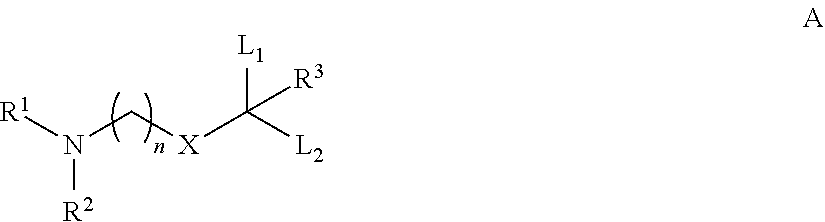
- the cationic lipids are illustrated by the Formula A:
- R 1 and R 2 are independently selected from H, (C 1 -C 6 )alkyl, heterocyclyl, and polyamine, wherein said alkyl, heterocyclyl and polyamine are optionally substituted with one to three substituents selected from R′, or R 1 and R 2 can be taken together with the nitrogen to which they are attached to form a monocyclic heterocycle with 4-7 members optionally containing, in addition to the nitrogen, one or two additional heteroatoms selected from N, O and S, said monocyclic heterocycle is optionally substituted with one to three substituents selected from R′;
- R 3 is selected from H and (C 1 -C 6 )alkyl, said alkyl optionally substituted with one to three substituents selected from R′;
- R′ is independently selected from halogen, R′′, OR′′, SR′′, CN, CO 2 R′′ and CON(R′′) 2 ;
- R′′ is independently selected from H and (C 1 -C 6 )alkyl, wherein said alkyl is optionally substituted with halogen and OH;
- n 0, 1, 2, 3, 4 or 5;
- X is selected from O, NR′′, (C ⁇ O)O, NR′′(C ⁇ O), O(C ⁇ O)O, NR′′(C ⁇ O)NR′′, O(C ⁇ O)NR′′, and NR′′(C ⁇ O)O;
- L 1 is selected from C 4 -C 24 alkyl and C 4 -C 24 alkenyl, said alkyl and alkenyl are optionally substituted with one or more substituents selected from R′;
- L 2 is selected from C 3 -C 9 alkyl and C 3 -C 9 alkenyl, said alkyl and alkenyl are optionally substituted with one or more substituents selected from R′;
- the invention features a compound having Formula A, wherein:
- R 1 and R 2 are each methyl
- R 3 is H
- n 3;
- X is (C ⁇ O)O
- L 1 is selected from C 4 -C 24 alkyl and C 4 -C 24 alkenyl
- L 2 is selected from C 3 -C 9 alkyl and C 3 -C 9 alkenyl
- Specific cationic lipids are:
- the cationic lipids disclosed are useful in the preparation of lipid nanoparticles.
- the cationic lipids disclosed are useful components in a lipid nanoparticle for the delivery of oligonucleotides.
- the cationic lipids disclosed are useful components in a lipid nanoparticle for the delivery of siRNA and miRNA.
- the cationic lipids disclosed are useful components in a lipid nanoparticle for the delivery of siRNA.
- the cationic lipids of the present invention may have asymmetric centers, chiral axes, and chiral planes (as described in: E. L. Eliel and S. H. Wilen, Stereochemistry of Carbon Compounds, John Wiley & Sons, New York, 1994, pages 1119-1190), and occur as racemates, racemic mixtures, and as individual diastereomers, with all possible isomers and mixtures thereof, including optical isomers, being included in the present invention.
- the cationic lipids disclosed herein may exist as tautomers and both tautomeric forms are intended to be encompassed by the scope of the invention, even though only one tautomeric structure is depicted.
- substituents and substitution patterns on the cationic lipids of the instant invention can be selected by one of ordinary skill in the art to provide cationic lipids that are chemically stable and that can be readily synthesized by techniques known in the art, as well as those methods set forth below, from readily available starting materials. If a substituent is itself substituted with more than one group, it is understood that these multiple groups may be on the same carbon or on different carbons, so long as a stable structure results.
- Si atoms can be incorporated into the cationic lipids of the instant invention by one of ordinary skill in the art to provide cationic lipids that are chemically stable and that can be readily synthesized by techniques known in the art from readily available starting materials.
- the atoms may exhibit their natural isotopic abundances, or one or more of the atoms may be artificially enriched in a particular isotope having the same atomic number, but an atomic mass or mass number different from the atomic mass or mass number predominantly found in nature.
- the present invention is meant to include all suitable isotopic variations of the compounds of Formula A.
- different isotopic forms of hydrogen (H) include protium ( 1 H) and deuterium ( 2 H).
- Protium is the predominant hydrogen isotope found in nature. Enriching for deuterium may afford certain therapeutic advantages, such as increasing in vivo half-life or reducing dosage requirements, or may provide a compound useful as a standard for characterization of biological samples.
- Isotopically-enriched compounds within Formula A can be prepared without undue experimentation by conventional techniques well known to those skilled in the art or by processes analogous to those described in the Scheme and Examples herein using appropriate isotopically-enriched reagents and/or intermediates.
- alkyl means a straight chain, cyclic or branched saturated aliphatic hydrocarbon having the specified number of carbon atoms.
- alkenyl means a straight chain, cyclic or branched unsaturated aliphatic hydrocarbon having the specified number of carbon atoms including but not limited to diene, triene and tetraene unsaturated aliphatic hydrocarbons.
- heterocyclyl or “heterocycle” means a 4- to 10-membered aromatic or nonaromatic heterocycle containing from 1 to 4 heteroatoms selected from the group consisting of O, N and S, and includes bicyclic groups.
- Heterocyclyl therefore includes, the following: benzoimidazolyl, benzofuranyl, benzofurazanyl, benzopyrazolyl, benzotriazolyl, benzothiophenyl, benzoxazolyl, carbazolyl, carbolinyl, cinnolinyl, furanyl, imidazolyl, indolinyl, indolyl, indolazinyl, indazolyl, isobenzofuranyl, isoindolyl, isoquinolyl, isothiazolyl, isoxazolyl, naphthpyridinyl, oxadiazolyl, oxazolyl, oxazoline, isoxazoline, oxetanyl, pyranyl, pyrazinyl, pyrazolyl, pyridazinyl, pyridopyridinyl, pyridazinyl, pyridyl, pyri
- polyamine means compounds having two or more amino groups. Examples include putrescine, cadaverine, spermidine, and spermine.
- halogen means Br, Cl, F and I.
- R 1 and R 2 are independently selected from H and (C 1 -C 6 )alkyl, wherein said alkyl is optionally substituted with one to three substituents selected from R ⁇ , or R 1 and R 2 can be taken together with the nitrogen to which they are attached to form a monocyclic heterocycle with 4-7 members optionally containing, in addition to the nitrogen, one or two additional heteroatoms selected from N, O and S, said monocyclic heterocycle is optionally substituted with one to three substituents selected from R′.
- R 1 and R 2 are independently selected from H, methyl, ethyl and propyl, wherein said methyl, ethyl and propyl are optionally substituted with one to three substituents selected from R′, or R 1 and R 2 can be taken together with the nitrogen to which they are attached to form a monocyclic heterocycle with 4-7 members optionally containing, in addition to the nitrogen, one or two additional heteroatoms selected from N, O and S, said monocyclic heterocycle is optionally substituted with one to three substituents selected from R′.
- R 1 and R 2 are independently selected from H, methyl, ethyl and propyl.
- R 1 and R 2 are each methyl.
- R 3 is independently selected from: H and methyl.
- R 3 is H.
- R′ is R′′.
- R′′ is independently selected from H, methyl, ethyl and propyl, wherein said methyl, ethyl and propyl are optionally substituted with one or more halogen and OH.
- R′′ is independently selected from H, methyl, ethyl and propyl.
- n 0, 1, 2, 3 or 4.
- n 2, 3 or 4.
- n 3.
- X is O, NR′′, (C ⁇ O)O, NR′′(C ⁇ O), O(C ⁇ O)O, NR′′(C ⁇ O)NR′′, O(C ⁇ O)NR′′, or NR′′(C ⁇ O)O.
- X is (C ⁇ O)O.
- L 1 is selected from C 4 -C 24 alkyl and C 4 -C 24 alkenyl, which are optionally substituted with halogen and OH.
- L 1 is selected from C 4 -C 24 alkyl and C 4 -C 24 alkenyl.
- L 1 is selected from C 4 -C 24 alkenyl.
- L 1 is selected from C 12 -C 24 alkenyl.
- L 1 is C 19 alkenyl.
- L 1 is:
- L 1 is:
- L 2 is selected from C 3 -C 9 alkyl and C 3 -C 9 alkenyl, which are optionally substituted with halogen and OH.
- L 2 is selected from C 5 -C 9 alkyl and C 5 -C 9 alkenyl, which are optionally substituted with halogen and OH.
- L 2 is selected from C 7 -C 9 alkyl and C 7 -C 9 alkenyl, which are optionally substituted with halogen and OH.
- L 2 is selected from C 3 -C 9 alkyl and C 3 -C 9 alkenyl.
- L 2 is selected from C 5 -C 9 alkyl and C 5 -C 9 alkenyl.
- L 2 is selected from C 7 -C 9 alkyl and C 7 -C 9 alkenyl.
- L 2 is C 3 -C 9 alkyl.
- L 2 is C 5 -C 9 alkyl.
- L 2 is C 7 -C 9 alkyl.
- L 2 is C 9 alkyl.
- heterocyclyl is pyrolidine, piperidine, morpholine, imidazole or piperazine.
- “monocyclic heterocyclyl” is pyrolidine, piperidine, morpholine, imidazole or piperazine.
- polyamine is putrescine, cadaverine, spermidine or spermine.
- alkyl is a straight chain saturated aliphatic hydrocarbon having the specified number of carbon atoms.
- alkenyl is a straight chain unsaturated aliphatic hydrocarbon having the specified number of carbon atoms.
- cationic lipids of Formula A include the free form of cationic lipids of Formula A, as well as the pharmaceutically acceptable salts and stereoisomers thereof.
- Some of the isolated specific cationic lipids exemplified herein are the protonated salts of amine cationic lipids.
- the term “free form” refers to the amine cationic lipids in non-salt form.
- the encompassed pharmaceutically acceptable salts not only include the isolated salts exemplified for the specific cationic lipids described herein, but also all the typical pharmaceutically acceptable salts of the free form of cationic lipids of Formula A.
- the free form of the specific salt cationic lipids described may be isolated using techniques known in the art.
- the free form may be regenerated by treating the salt with a suitable dilute aqueous base solution such as dilute aqueous NaOH, potassium carbonate, ammonia and sodium bicarbonate.
- a suitable dilute aqueous base solution such as dilute aqueous NaOH, potassium carbonate, ammonia and sodium bicarbonate.
- the free forms may differ from their respective salt forms somewhat in certain physical properties, such as solubility in polar solvents, but the acid and base salts are otherwise pharmaceutically equivalent to their respective free forms for purposes of the invention.
- the pharmaceutically acceptable salts of the instant cationic lipids can be synthesized from the cationic lipids of this invention which contain a basic or acidic moiety by conventional chemical methods.
- the salts of the basic cationic lipids are prepared either by ion exchange chromatography or by reacting the free base with stoichiometric amounts or with an excess of the desired salt-forming inorganic or organic acid in a suitable solvent or various combinations of solvents.
- the salts of the acidic compounds are formed by reactions with the appropriate inorganic or organic base.
- pharmaceutically acceptable salts of the cationic lipids of this invention include the conventional non-toxic salts of the cationic lipids of this invention as formed by reacting a basic instant cationic lipids with an inorganic or organic acid.
- conventional non-toxic salts include those derived from inorganic acids such as hydrochloric, hydrobromic, sulfuric, sulfamic, phosphoric, nitric and the like, as well as salts prepared from organic acids such as acetic, propionic, succinic, glycolic, stearic, lactic, malic, tartaric, citric, ascorbic, pamoic, maleic, hydroxymaleic, phenylacetic, glutamic, benzoic, salicylic, sulfanilic, 2-acetoxy-benzoic, fumaric, toluenesulfonic, methanesulfonic, ethane disulfonic, oxalic, isethionic, trifluoroacetic (
- suitable “pharmaceutically acceptable salts” refers to salts prepared form pharmaceutically acceptable non-toxic bases including inorganic bases and organic bases.
- Salts derived from inorganic bases include aluminum, ammonium, calcium, copper, ferric, ferrous, lithium, magnesium, manganic salts, manganous, potassium, sodium, zinc and the like. Particularly preferred are the ammonium, calcium, magnesium, potassium and sodium salts.
- Salts derived from pharmaceutically acceptable organic non-toxic bases include salts of primary, secondary and tertiary amines, substituted amines including naturally occurring substituted amines, cyclic amines and basic ion exchange resins, such as arginine, betaine caffeine, choline, N,N 1 -dibenzylethylenediamine, diethylamin, 2-diethylaminoethanol, 2-dimethylaminoethanol, ethanolamine, ethylenediamine, N-ethylmorpholine, N-ethylpiperidine, glucamine, glucosamine, histidine, hydrabamine, isopropylamine, lysine, methylglucamine, morpholine, piperazine, piperidine, polyamine resins, procaine, purines, theobromine, triethylamine, trimethylamine tripropylamine, tromethamine and the like.
- basic ion exchange resins such as arginine,
- the cationic lipids of the present invention are potentially internal salts or zwitterions, since under physiological conditions a deprotonated acidic moiety in the compound, such as a carboxyl group, may be anionic, and this electronic charge might then be balanced off internally against the cationic charge of a protonated or alkylated basic moiety, such as a quaternary nitrogen atom.
- 11,14-Eicosadienoic acid (11Z,14Z)- (50 g, 162 mmol), N,O-Dimethylhydroxylamine hydrochloride (31.6 g, 324 mmol), HOAt (44.1 g, 324 mmol), Et 3 N (45.2 mL, 324 mmol), and EDC (62.1 g, 324 mmol) were mixed in DCM (810 mL) and stirred overnight at ambient temperature.
- 11,14-eieosadienamide, N-methoxy-N-methyl-, (11Z,14Z)-1 (4 g, 11.38 mmol) was dissolved in dry THF (50.0 ml) in a 250 mL flask then 1 M nonylmagnesium bromide (22.76 ml, 22.76 mmol) was added under nitrogen at ambient temperature. After 10 min, the reaction was slowly quenched with excess sat. aq NH 4 Cl. The reaction was washed into a separatory funnel with hexane and water, shaken, the lower aqueous layer discarded, the upper layer dried with sodium sulfate, filtered, and evaporated to give crude ketone as a golden oil. The ketone was carried directly into the next reaction crude.
- Compound 3 is MC3 as described in WO 2010/054401, and WO 2010/144740 A1.
- Compound 4 is DLinKC2DMA as described in Nature Biotechnology, 2010, 28, 172-176, WO 2010/042877 A1, WO 2010/048536 A2, WO 2010/088537 A2, and WO 2009/127060 A1.
- lipid nanoparticle compositions of the instant invention are useful for the delivery of oligonucleotides, specifically siRNA and miRNA:
- the Lipid Nano-Particles are prepared by an impinging jet process.
- the particles are formed by mixing lipids dissolved in alcohol with siRNA dissolved in a citrate buffer.
- the mixing ratio of lipids to siRNA are targeted at 45-55% lipid and 65-45% siRNA.
- the lipid solution contains a novel cationic lipid of the instant invention, a helper lipid (cholesterol), PEG (e.g. PEG-C-DMA, PEG-DMG) lipid, and DSPC at a concentration of 5-15 mg/mL with a target of 9-12 mg/mL in an alcohol (for example ethanol).
- the ratio of the lipids has a mole percent range of 25-98 for the cationic lipid with a target of 35-65
- the helper lipid has a mole percent range from 0-75 with a target of 30-50
- the PEG lipid has a mole percent range from 1-15 with a target of 1-6
- the DSPC has a mole percent range of 0-15 with a target of 0-12.
- the siRNA solution contains one or more siRNA sequences at a concentration range from 0.3 to 1.0 mg/mL with a target of 0.3-0.9 mg/mL in a sodium citrate buffered salt solution with pH in the range of 3.5-5.
- the two liquids are heated to a temperature in the range of 15-40° C., targeting 30-40° C., and then mixed in an impinging jet mixer instantly forming the LNP.
- the teeID has a range from 0.25 to 1.0 mm and a total flow rate from 10-600 mL/min.
- the combination of flow rate and tubing ID has effect of controlling the particle size of the LNPs between 30 and 200 nm.
- the solution is then mixed with a buffered solution at a higher pH with a mixing ratio in the range of 1:1 to 1:3 vol:vol but targeting 1:2 vol:vol. This buffered solution is at a temperature in the range of 15-40° C., targeting 30-40° C.
- the mixed LNPs are held from 30 minutes to 2 hrs prior to an anion exchange filtration step.
- the temperature during incubating is in the range of 15-40° C., targeting 30-40° C.
- the solution is filtered through a 0.8 um filter containing an anion exchange separation step.
- This process uses tubing IDs ranging from 1 mm ID to 5 mm ID and a flow rate from 10 to 2000 mL/min.
- the LNPs are concentrated and diafiltered via an ultrafiltration process where the alcohol is removed and the citrate buffer is exchanged for the final buffer solution such as phosphate buffered saline.
- the ultrafiltration process uses a tangential flow filtration format (TFF). This process uses a membrane nominal molecular weight cutoff range from 30-500 KD.
- the membrane format can be hollow fiber or flat sheet cassette.
- the TFF processes with the proper molecular weight cutoff retains the LNP in the retentate and the filtrate or permeate contains the alcohol; citrate buffer; final buffer wastes.
- the TFF process is a multiple step process with an initial concentration to a siRNA concentration of 1-3 mg/mL. Following concentration, the LNPs solution is diafiltered against the final buffer for 10-20 volumes to remove the alcohol and perform buffer exchange. The material is then concentrated an additional 1-3 fold. The final steps of the LNP process are to sterile filter the concentrated LNP solution and vial the product.
- siRNA duplex concentrations are determined by Strong Anion-Exchange High-Performance Liquid Chromatography (SAX-HPLC) using Waters 2695 Alliance system (Water Corporation, Milford Mass.) with a 2996 PDA detector.
- SAX-HPLC Strong Anion-Exchange High-Performance Liquid Chromatography
- the LNPs otherwise referred to as RNAi Delivery Vehicles (RDVs)
- RDVs RNAi Delivery Vehicles
- Mobile phase is composed of A: 25 mM NaClO 4 , 10 mM Tris, 20% EtOH, pH 7.0 and B: 250 mM NaClO 4 , 10 mM Tris, 20% EtOH, pH 7.0 with liner gradient from 0-15 min and flow rate of 1 ml/min.
- the siRNA amount is determined by comparing to the siRNA standard curve.
- Fluorescence reagent SYBR Gold is employed for RNA quantitation to monitor the encapsulation rate of RDVs.
- RDVs with or without Triton X-100 are used to determine the free siRNA and total siRNA amount.
- the assay is performed using a SpectraMax M5e microplate spectrophotometer from Molecular Devices (Sunnyvale, Calif.). Samples are excited at 485 nm and fluorescence emission was measured at 530 nm. The siRNA amount is determined by comparing to the siRNA standard curve.
- Encapsulation rate (1 ⁇ free siRNA/total siRNA) ⁇ 100% 3) Particle Size and Polydispersity
- RDVs containing 1 ⁇ g siRNA are diluted to a final volume of 3 ml with 1 ⁇ PBS.
- the particle size and polydispersity of the samples is measured by a dynamic light scattering method using ZetaPALS instrument (Brookhaven Instruments Corporation, Holtsville, N.Y.).
- the scattered intensity is measured with He—Ne laser at 25° C. with a scattering angle of 90°.
- RDVs containing 1 ⁇ g siRNA are diluted to a final volume of 2 ml with 1 mM Tris buffer (pH 7.4). Electrophoretic mobility of samples is determined using ZetaPALS instrument (Brookhaven Instruments Corporation, Holtsville, N.Y.) with electrode and He—Ne laser as a light source. The Smoluchowski limit is assumed in the calculation of zeta potentials,
- lipid concentrations are determined by Reverse Phase High-Performance Liquid Chromatography (RP-HPLC) using Waters 2695 Alliance system (Water Corporation, Milford Mass.) with a Corona charged aerosol detector (CAD) (ESA Biosciences, Inc, Chelmsford, Mass.). Individual lipids in RDVs are analyzed using an Agilent Zorbax SB-C18 (50 ⁇ 4.6 mm, 1.8 ⁇ m particle size) column with CAD at 60° C. The mobile phase is composed of A: 0.1% TFA in H 2 O and B: 0.1% TFA in IPA.
- the gradient changes from 60% mobile phase A and 40% mobile phase B from time 0 to 40% mobile phase A and 60% mobile phase B at 1.00 min; 40% mobile phase A and 60% mobile phase B from 1.00 to 5.00 min; 40% mobile phase A and 60% mobile phase B from 5.00 min to 25% mobile phase A and 75% mobile phase B at 10.00 min; 25% mobile phase A and 75% mobile phase B from 10.00 min to 5% mobile phase A and 95% mobile phase B at 15.00 min; and 5% mobile phase A and 95% mobile phase B from 15.00 to 60% mobile phase A and 40% mobile phase B at 20.00 min with flow rate of 1 ml/min.
- the individual lipid concentration is determined by comparing to the standard curve with all the lipid components in the RDVs with a quadratic curve fit. The molar percentage of each lipid is calculated based on its molecular weight.
- Oligonucleotide synthesis is well known in the art. (See US patent applications: US 2006/0083780, US 2006/0240554, US 2008/0020058, US 2009/0263407 and US 2009/0285881 and PCT patent applications: WO 2009/086558, WO2009/127060, WO2009/132131, WO2010/042877, WO2010/054384, WO2010/054401, WO2010/054405 and WO2010/054406).
- the Luc and ApoB siRNA incorporated in the LNPs disclosed and utilized in the Examples were synthesized via standard solid phase procedures.
- the siRNA targets the mRNA transcript for the firefly ( Photinus pyralis ) luciferase gene (Accession #M15077).
- the primary sequence and chemical modification pattern of the luciferase siRNA is displayed above.
- the in vivo luciferase model employs a transgenic mouse in which the firefly luciferase coding sequence is present in all cells.
- ROSA26-LoxP-Stop-LoxP-Luc (LSL-Luc) transgenic mice licensed from the Dana Farber Cancer Institute are induced to express the Luciferase gene by first removing the LSL sequence with a recombinant Ad-Cre virus (Vector Biolabs). Due to the organo-tropic nature of the virus, expression is limited to the liver when delivered via tail vein injection. Luciferase expression levels in liver are quantitated by measuring light output, using an IVIS imager (Xenogen) following administration of the luciferin substrate (Caliper Life Sciences). Pre-dose luminescence levels are measured prior to administration of the RDVs.
- Luciferin in PBS 15 mg/mL is intraperitoneally (IP) injected in a volume of 150 ⁇ L. After a four minute incubation period mice are anesthetized with isoflurane and placed in the IVIS imager. The RDVs (containing siRNA) in PBS vehicle were tail vein injected n a volume of 0.2 mL. Final dose levels ranged from 0.1 to 0.5 mg/kg siRNA. PBS vehicle alone was dosed as a control. Mice were imaged 48 hours post dose using the method described above. Changes in luciferin light output directly correlate with luciferase mRNA levels and represent an indirect measure of luciferase siRNA activity.
- LNPs utilizing compounds in the nominal compositions described above were evaluated for in vivo efficacy and increases in alanine amino transferase and aspartate amino transferase in Sprague-Dawley (Crl:CD(SD) female rats (Charles River Labs).
- the siRNA targets the mRNA transcript for the ApoB gene (Accession #NM 019287).
- the primary sequence and chemical modification pattern of the ApoB siRNA is displayed above.
- the RDVs (containing siRNA) in PBS vehicle were tail vein injected in a volume of 1 to 1.5 mL. Infusion rate is approximately 3 ml/min. Five rats were used in each dosing group. After LNP administration, rats are placed in cages with normal diet and water present.
- liver tissue was homogenized and total RNA isolated using a Qiagen bead mill and the Qiagen miRNA-Easy RNA isolation kit following the manufacturer's instructions.
- Liver ApoB mRNA levels were determined by quantitative RT-PCR. Message was amplified from purified RNA utilizing a rat ApoB commercial probe set (Applied Biosystems Cat #RN01499054_m1). The PCR reaction was performed on an ABI 7500 instrument with a 96-well Fast Block. The ApoB mRNA level is normalized to the housekeeping PPIB (NM 011149) mRNA. PPIB mRNA levels were determined by RT-PCR using a commercial probe set (Applied Biosytems Cat. No.
- Results are expressed as a ratio of ApoB mRNA/PPIB mRNA. All mRNA data is expressed relative to the PBS control dose. Serum ALT and AST analysis were performed on the Siemens Advia 1800 Clinical Chemistry Analyzer utilizing the Siemens alanine aminotransferase (Cat #03039631) and aspartate aminotransferase (Cat #03039631) reagents. Similar efficacy was observed in rats dosed with Compound 2 containing RDV than with the RDV containing the cationic lipid DLinKC2DMA (Compound 4) or MC3 (Compound 3, FIG. 2 ).
- Liver tissue was weighed into 20-ml vials and homogenized in 9 v/w of water using a GenoGrinder 2000 (OPS Diagnostics, 1600 strokes/min, 5 min). A 50 ⁇ L aliquot of each tissue homogenate was mixed with 300 ⁇ L of extraction/protein precipitating solvent (50/50 acetonitrile/methanol containing 500 nM internal standard) and the plate was centrifuged to sediment precipitated protein. A volume of 200 ⁇ L of each supernatant was then transferred to separate wells of a 96-well plate and 10 ⁇ l samples were directly analyzed by LC/MS-MS.
- OPS Diagnostics 1600 strokes/min, 5 min.
- a 50 ⁇ L aliquot of each tissue homogenate was mixed with 300 ⁇ L of extraction/protein precipitating solvent (50/50 acetonitrile/methanol containing 500 nM internal standard) and the plate was centrifuged to sediment precipitated protein. A volume of 200 ⁇ L of each supernatant was
- Absolute quantification versus standards prepared and extracted from liver homogenate was performed using an Aria LX-2 HPLC system (Thermo Scientific) coupled to an API 4000 triple quadrupole mass spectrometer (Applied Biosystems). For each run, a total of 10 ⁇ L sample was injected onto a BDS Hypersil C8 HPLC column (Thermo, 50 ⁇ 2 mm, 3 ⁇ m) at ambient temperature.
- Mobile Phase A 95% H2O/5% methanol/10 mM ammonium formate/0.1% formic acid
- Mobile Phase B 40% methanol/60% n-propanol/10 mM ammonium formate/0.1% formic acid
- the flow rate was 0.5 mL/min and gradient elution profile was as follows: hold at 80% A for 0.25 min, linear ramp to 100% B over 1.6 min, hold at 100% B for 2.5 min, then return and hold at 80% A for 1.75 min. Total run time was 5.8 min.
- API 4000 source parameters were CAD: 4, CUR: 15, GS1: 65, GS2: 35, IS: 4000, TEM: 550, CXP: 15, DP: 60, EP: 10.
- Compound 2 containing RDV liver levels were lower than with the RDV containing the cationic lipid DLinKC2DMA (Compound 4) or MC3 (Compound 3, FIG. 3 ).
Landscapes
- Health & Medical Sciences (AREA)
- Chemical & Material Sciences (AREA)
- Organic Chemistry (AREA)
- Life Sciences & Earth Sciences (AREA)
- Engineering & Computer Science (AREA)
- Genetics & Genomics (AREA)
- General Health & Medical Sciences (AREA)
- Bioinformatics & Cheminformatics (AREA)
- Biomedical Technology (AREA)
- Public Health (AREA)
- Biotechnology (AREA)
- Animal Behavior & Ethology (AREA)
- Epidemiology (AREA)
- Pharmacology & Pharmacy (AREA)
- Medicinal Chemistry (AREA)
- Veterinary Medicine (AREA)
- General Engineering & Computer Science (AREA)
- Wood Science & Technology (AREA)
- Zoology (AREA)
- Physics & Mathematics (AREA)
- Molecular Biology (AREA)
- Biophysics (AREA)
- Microbiology (AREA)
- Plant Pathology (AREA)
- Biochemistry (AREA)
- Emergency Medicine (AREA)
- Optics & Photonics (AREA)
- Nanotechnology (AREA)
- Oil, Petroleum & Natural Gas (AREA)
- Pharmaceuticals Containing Other Organic And Inorganic Compounds (AREA)
- Medicinal Preparation (AREA)
- Medicines That Contain Protein Lipid Enzymes And Other Medicines (AREA)
- Organic Low-Molecular-Weight Compounds And Preparation Thereof (AREA)
Abstract
Description
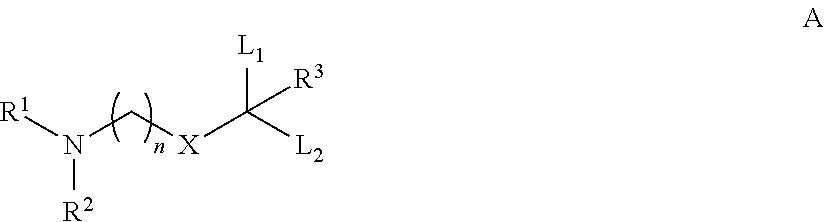
wherein:
- (20Z,23Z)-nonacosa-20,23-dien-10-yl4-(dimethylamino)butanoate (Compound 1); and
- (18Z)-heptacos-18-en-10-yl 4-(dimethylamino)butanoate (Compound 2);
or any pharmaceutically acceptable salt or stereoisomer thereof.


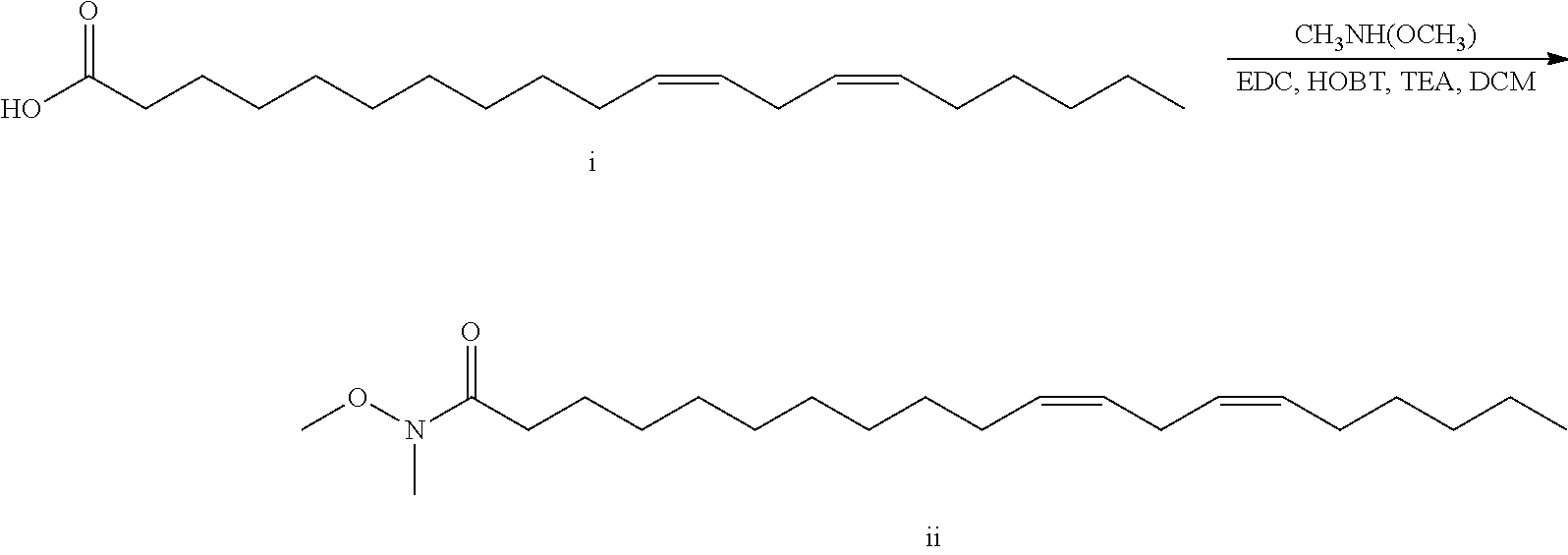
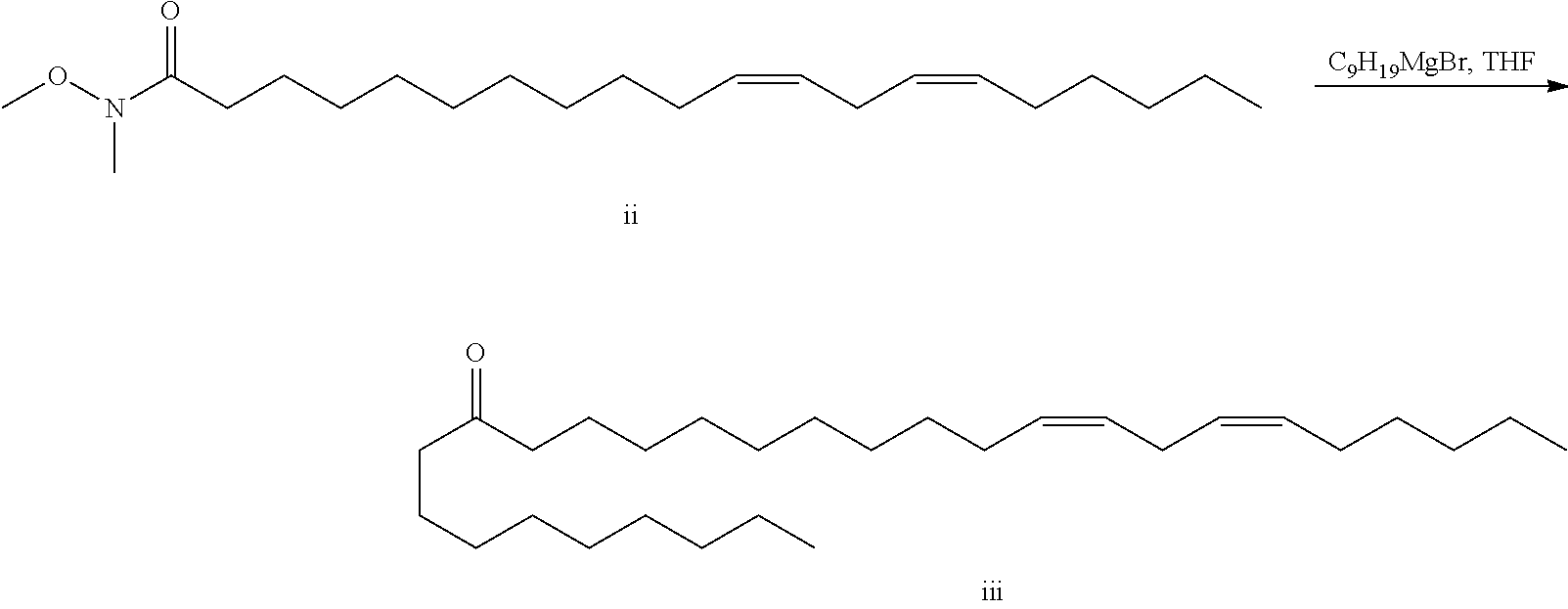
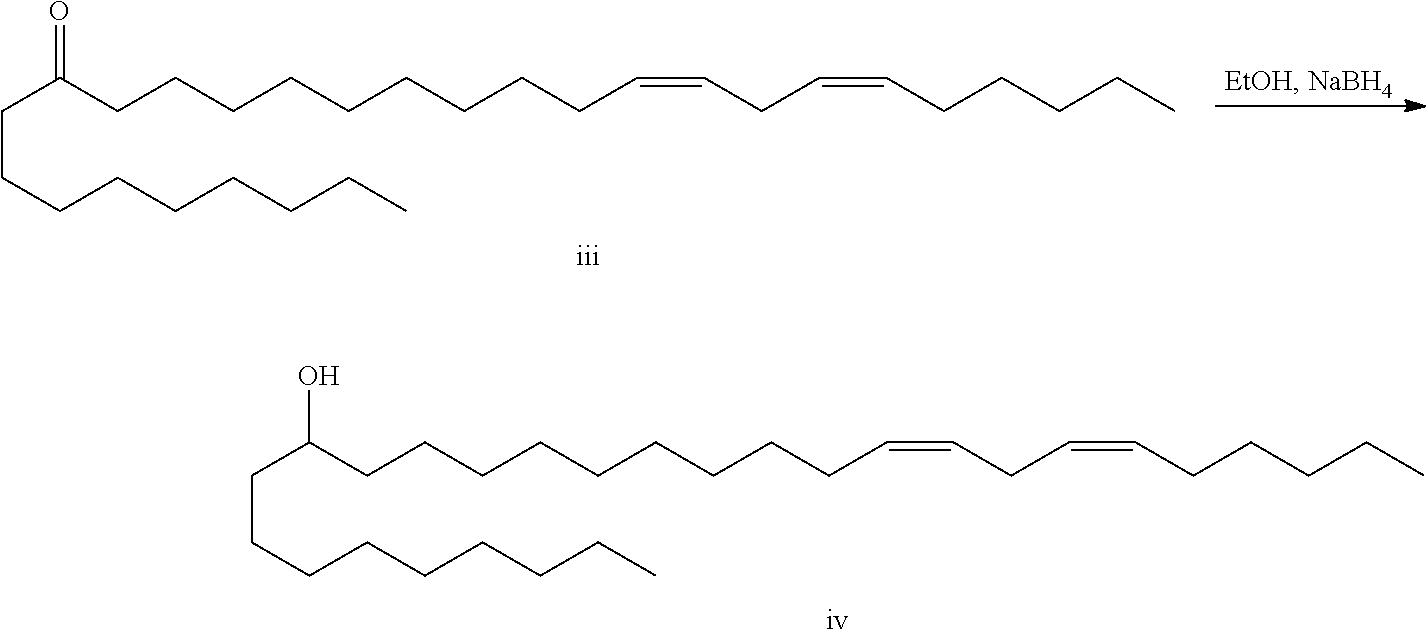




- Cationic Lipid/Cholesterol/PEG-DMG 56.6/38/5.4;
- Cationic Lipid/Cholesterol/PEG-DMG 60/38/2;
- Cationic Lipid/Cholesterol/PEG-DMG 67.3/29/3.7;
- Cationic Lipid/Cholesterol/PEG-DMG 49.3/47/3.7;
- Cationic Lipid/Cholesterol/PEG-DMG 50.3/44.3/5.4;
- Cationic Lipid/Cholesterol/PEG-C-DMA/
DSPC 40/48/2/10; - Cationic Lipid/Cholesterol/PEG-DMG/
DSPC 40/48/2/10; and - Cationic Lipid/Cholesterol/PEG-DMG/DSPC 58/30/2/10.
LNP Process Description:
Encapsulation rate=(1−free siRNA/total siRNA)×100%
3) Particle Size and Polydispersity
- Cationic Lipid/Cholesterol/PEG-DMG 60/38/2; and
- Cationic Lipid/Cholesterol/PEG-DMG DSPC 58/30/2/10.
| (SEQ. ID. NO.: 1) | |
| 5′-iB-A U AAGG CU A U GAAGAGA U ATT- | |
| (SEQ. ID. NO.: 2) | |
| 3′-UUUAUUCCGAUACUUCUC UAU-5′ | |
| AUGC - Ribose | |
| iB - Inverted deoxy abasic | |
| UC - 2′ Fluoro | |
| AGT - 2′ Deoxy | |
| AGU - 2′ OCH3 |
Nominal Composition
- Cationic Lipid/Cholesterol/PEG-DMG 60/38/2
- Cationic Lipid/Cholesterol/PEG-DMG/
DSPC 40/48/2/10 - Cationic Lipid/Cholesterol/PEG-DMG/DSPC 58/30/2/10
ApoB siRNA
| (SEQ ID NO.: 3) | |
| 5′-iB-CUUUAACAAUUCCUGAAAUTsT-iB-3′ | |
| (SEQ ID NO.: 4) | |
| 3′-UsUGAAAUUGUUAAGGACUsUsUsA-5′ | |
| AUGC - Ribose | |
| iB - Inverted deoxy abasic | |
| UC - 2′ Fluoro | |
| AGT - 2′ Deoxy | |
| AGU - 2′ OCH3 | |
| UsA - phophorothioate linkage |
Claims (4)
Priority Applications (1)
| Application Number | Priority Date | Filing Date | Title |
|---|---|---|---|
| US13/880,254 US9029590B2 (en) | 2010-10-21 | 2011-10-17 | Low molecular weight cationic lipids for oligonucleotide delivery |
Applications Claiming Priority (3)
| Application Number | Priority Date | Filing Date | Title |
|---|---|---|---|
| US40541310P | 2010-10-21 | 2010-10-21 | |
| PCT/US2011/056502 WO2012054365A2 (en) | 2010-10-21 | 2011-10-17 | Novel low molecular weight cationic lipids for oligonucleotide delivery |
| US13/880,254 US9029590B2 (en) | 2010-10-21 | 2011-10-17 | Low molecular weight cationic lipids for oligonucleotide delivery |
Related Parent Applications (1)
| Application Number | Title | Priority Date | Filing Date |
|---|---|---|---|
| PCT/US2011/056502 A-371-Of-International WO2012054365A2 (en) | 2010-10-21 | 2011-10-17 | Novel low molecular weight cationic lipids for oligonucleotide delivery |
Related Child Applications (1)
| Application Number | Title | Priority Date | Filing Date |
|---|---|---|---|
| US14/682,494 Continuation US9458090B2 (en) | 2010-10-21 | 2015-04-09 | Low molecular weight cationic lipids for oligonucleotide delivery |
Publications (2)
| Publication Number | Publication Date |
|---|---|
| US20130274504A1 US20130274504A1 (en) | 2013-10-17 |
| US9029590B2 true US9029590B2 (en) | 2015-05-12 |
Family
ID=45975815
Family Applications (4)
| Application Number | Title | Priority Date | Filing Date |
|---|---|---|---|
| US13/880,254 Active US9029590B2 (en) | 2010-10-21 | 2011-10-17 | Low molecular weight cationic lipids for oligonucleotide delivery |
| US14/682,494 Active US9458090B2 (en) | 2010-10-21 | 2015-04-09 | Low molecular weight cationic lipids for oligonucleotide delivery |
| US15/282,294 Active US9981907B2 (en) | 2010-10-21 | 2016-09-30 | Low molecular weight cationic lipids for oligonucleotide delivery |
| US15/926,936 Abandoned US20180208545A1 (en) | 2010-10-21 | 2018-03-20 | Novel low molecular weight cationic lipids for oligonucleotide delivery |
Family Applications After (3)
| Application Number | Title | Priority Date | Filing Date |
|---|---|---|---|
| US14/682,494 Active US9458090B2 (en) | 2010-10-21 | 2015-04-09 | Low molecular weight cationic lipids for oligonucleotide delivery |
| US15/282,294 Active US9981907B2 (en) | 2010-10-21 | 2016-09-30 | Low molecular weight cationic lipids for oligonucleotide delivery |
| US15/926,936 Abandoned US20180208545A1 (en) | 2010-10-21 | 2018-03-20 | Novel low molecular weight cationic lipids for oligonucleotide delivery |
Country Status (8)
| Country | Link |
|---|---|
| US (4) | US9029590B2 (en) |
| EP (2) | EP2629802B1 (en) |
| JP (1) | JP2013545727A (en) |
| KR (1) | KR20130124308A (en) |
| CN (1) | CN103153347A (en) |
| AU (1) | AU2011318289A1 (en) |
| CA (1) | CA2813024A1 (en) |
| WO (1) | WO2012054365A2 (en) |
Cited By (12)
| Publication number | Priority date | Publication date | Assignee | Title |
|---|---|---|---|---|
| US20150284317A1 (en) * | 2010-10-21 | 2015-10-08 | Sirna Therapeutics, Inc. | Novel low molecular weight cationic lipids for oligonucleotide delivery |
| US9868692B2 (en) | 2015-09-17 | 2018-01-16 | Modernatx, Inc. | Compounds and compositions for intracellular delivery of therapeutic agents |
| US10195156B2 (en) | 2015-12-22 | 2019-02-05 | Modernatx, Inc. | Compounds and compositions for intracellular delivery of agents |
| US10323076B2 (en) | 2013-10-03 | 2019-06-18 | Modernatx, Inc. | Polynucleotides encoding low density lipoprotein receptor |
| US10857105B2 (en) | 2017-03-15 | 2020-12-08 | MordernaTX, Inc. | Compounds and compositions for intracellular delivery of therapeutic agents |
| US11066355B2 (en) | 2019-09-19 | 2021-07-20 | Modernatx, Inc. | Branched tail lipid compounds and compositions for intracellular delivery of therapeutic agents |
| US11203569B2 (en) | 2017-03-15 | 2021-12-21 | Modernatx, Inc. | Crystal forms of amino lipids |
| US11246933B1 (en) | 2011-12-07 | 2022-02-15 | Alnylam Pharmaceuticals, Inc. | Biodegradable lipids for the delivery of active agents |
| US11583504B2 (en) | 2016-11-08 | 2023-02-21 | Modernatx, Inc. | Stabilized formulations of lipid nanoparticles |
| US11969506B2 (en) | 2017-03-15 | 2024-04-30 | Modernatx, Inc. | Lipid nanoparticle formulation |
| US12077501B2 (en) | 2017-06-14 | 2024-09-03 | Modernatx, Inc. | Compounds and compositions for intracellular delivery of agents |
| US12263248B2 (en) | 2018-09-19 | 2025-04-01 | Modernatx, Inc. | Compounds and compositions for intracellular delivery of therapeutic agents |
Families Citing this family (224)
| Publication number | Priority date | Publication date | Assignee | Title |
|---|---|---|---|---|
| EP2600901B1 (en) | 2010-08-06 | 2019-03-27 | ModernaTX, Inc. | A pharmaceutical formulation comprising engineered nucleic acids and medical use thereof |
| CN104531812A (en) | 2010-10-01 | 2015-04-22 | 现代治疗公司 | Engineered nucleic acids and methods of use thereof |
| US8710200B2 (en) | 2011-03-31 | 2014-04-29 | Moderna Therapeutics, Inc. | Engineered nucleic acids encoding a modified erythropoietin and their expression |
| US9464124B2 (en) | 2011-09-12 | 2016-10-11 | Moderna Therapeutics, Inc. | Engineered nucleic acids and methods of use thereof |
| BR112014007852B1 (en) | 2011-10-03 | 2021-11-03 | Moderna Therapeutics, Inc | MODIFIED ISOLATED POLYNUCLEOTIDE AND PHARMACEUTICAL COMPOSITION |
| PL2791160T3 (en) | 2011-12-16 | 2022-06-20 | Modernatx, Inc. | Modified mrna compositions |
| RS58077B1 (en) | 2012-02-24 | 2019-02-28 | Arbutus Biopharma Corp | Trialkyl cationic lipids and methods of use thereof |
| US10501512B2 (en) | 2012-04-02 | 2019-12-10 | Modernatx, Inc. | Modified polynucleotides |
| US9283287B2 (en) | 2012-04-02 | 2016-03-15 | Moderna Therapeutics, Inc. | Modified polynucleotides for the production of nuclear proteins |
| US9572897B2 (en) | 2012-04-02 | 2017-02-21 | Modernatx, Inc. | Modified polynucleotides for the production of cytoplasmic and cytoskeletal proteins |
| AU2013243949A1 (en) | 2012-04-02 | 2014-10-30 | Moderna Therapeutics, Inc. | Modified polynucleotides for the production of biologics and proteins associated with human disease |
| HK1206779A1 (en) | 2012-04-02 | 2016-01-15 | Modernatx, Inc. | Modified polynucleotides for the production of nuclear proteins |
| WO2013158579A1 (en) * | 2012-04-19 | 2013-10-24 | Merck Sharp & Dohme Corp. | Novel diester and triester based low molecular weight, biodegradable cationic lipids for oligonucleotide delivery |
| DK2922554T3 (en) | 2012-11-26 | 2022-05-23 | Modernatx Inc | Terminalt modificeret rna |
| EP2971010B1 (en) | 2013-03-14 | 2020-06-10 | ModernaTX, Inc. | Formulation and delivery of modified nucleoside, nucleotide, and nucleic acid compositions |
| US8980864B2 (en) | 2013-03-15 | 2015-03-17 | Moderna Therapeutics, Inc. | Compositions and methods of altering cholesterol levels |
| TW201534578A (en) | 2013-07-08 | 2015-09-16 | Daiichi Sankyo Co Ltd | Novel lipid |
| PT3019619T (en) | 2013-07-11 | 2021-11-11 | Modernatx Inc | COMPOSITIONS COMPRISING SYNTHETIC POLYNUCLEOTIDES ENCODING SYNTHETIC CRISPR AND SGARN-RELATED PROTEINS AND METHODS OF USE |
| EP3041938A1 (en) | 2013-09-03 | 2016-07-13 | Moderna Therapeutics, Inc. | Circular polynucleotides |
| US20160194625A1 (en) | 2013-09-03 | 2016-07-07 | Moderna Therapeutics, Inc. | Chimeric polynucleotides |
| US10023626B2 (en) | 2013-09-30 | 2018-07-17 | Modernatx, Inc. | Polynucleotides encoding immune modulating polypeptides |
| CN105873902B (en) | 2013-11-18 | 2019-03-08 | 阿克丘勒斯治疗公司 | Ionizable cationic lipids for RNA delivery |
| US9365610B2 (en) | 2013-11-18 | 2016-06-14 | Arcturus Therapeutics, Inc. | Asymmetric ionizable cationic lipid for RNA delivery |
| EP3594348B1 (en) | 2013-11-22 | 2021-09-08 | MiNA Therapeutics Limited | C/ebp alpha short activating rna compositions and methods of use |
| WO2015110957A2 (en) | 2014-01-21 | 2015-07-30 | De Beer Joel | Hybridosomes, compositions comprising the same, processes for their production and uses thereof |
| PL3981437T3 (en) | 2014-04-23 | 2025-02-24 | Modernatx, Inc. | Nucleic acid vaccines |
| US10182987B2 (en) | 2014-05-20 | 2019-01-22 | National University Corporation Hokkaido University | Lipid membrane structure for intracellular delivery of siRNA |
| EP3160938B1 (en) | 2014-06-25 | 2020-09-16 | Acuitas Therapeutics Inc. | Novel lipids and lipid nanoparticle formulations for delivery of nucleic acids |
| AU2015289583A1 (en) | 2014-07-16 | 2017-02-02 | Modernatx, Inc. | Chimeric polynucleotides |
| WO2016014846A1 (en) | 2014-07-23 | 2016-01-28 | Moderna Therapeutics, Inc. | Modified polynucleotides for the production of intrabodies |
| SG11201700828PA (en) | 2014-08-07 | 2017-03-30 | Takeda Pharmaceuticals Co | Cationic lipid |
| EP3209780A4 (en) | 2014-10-24 | 2018-09-19 | University of Maryland, Baltimore | Short non-coding protein regulatory rnas (sprrnas) and methods of use |
| AU2016285852B2 (en) | 2015-06-29 | 2020-12-17 | Acuitas Therapeutics Inc. | Lipids and lipid nanoparticle formulations for delivery of nucleic acids |
| MA46316A (en) | 2015-10-22 | 2021-03-24 | Modernatx Inc | HUMAN CYTOMEGALOVIRUS VACCINE |
| FI3368507T3 (en) | 2015-10-28 | 2023-03-21 | Acuitas Therapeutics Inc | New lipids and lipid nanoparticle preparations for delivery of nucleic acids |
| LT3386484T (en) | 2015-12-10 | 2022-06-10 | Modernatx, Inc. | Compositions and methods for delivery of therapeutic agents |
| SI3394093T1 (en) | 2015-12-23 | 2022-05-31 | Modernatx, Inc. | Methods of using ox40 ligand encoding polynucleotides |
| US20190241658A1 (en) | 2016-01-10 | 2019-08-08 | Modernatx, Inc. | Therapeutic mRNAs encoding anti CTLA-4 antibodies |
| CN109414408B (en) * | 2016-05-16 | 2022-03-29 | 得克萨斯州大学系统董事会 | Cationic sulfonamide amino lipids and amphiphilic zwitterionic amino lipids |
| US10526284B2 (en) | 2016-12-21 | 2020-01-07 | Arcturus Therapeutics, Inc. | Ionizable cationic lipid for RNA delivery |
| US10383952B2 (en) | 2016-12-21 | 2019-08-20 | Arcturus Therapeutics, Inc. | Ionizable cationic lipid for RNA delivery |
| IL301115A (en) | 2017-04-28 | 2023-05-01 | Acuitas Therapeutics Inc | New lipid carbonyl and lipid nanoparticle formulations for delivery of nucleic acids |
| US11421011B2 (en) | 2017-05-18 | 2022-08-23 | Modernatx, Inc. | Polynucleotides encoding tethered interleukin-12 (IL12) polypeptides and uses thereof |
| US20200268666A1 (en) | 2017-06-14 | 2020-08-27 | Modernatx, Inc. | Polynucleotides encoding coagulation factor viii |
| MA49421A (en) | 2017-06-15 | 2020-04-22 | Modernatx Inc | RNA FORMULATIONS |
| WO2019046809A1 (en) | 2017-08-31 | 2019-03-07 | Modernatx, Inc. | Methods of making lipid nanoparticles |
| EP3679140B1 (en) | 2017-09-08 | 2022-11-16 | MiNA Therapeutics Limited | Stabilized cebpa sarna compositions and methods of use |
| CA3075219A1 (en) | 2017-09-08 | 2019-03-14 | Mina Therapeutics Limited | Hnf4a sarna compositions and methods of use |
| WO2019094648A1 (en) | 2017-11-08 | 2019-05-16 | L.E.A.F. Holdings Group Llc | Platinum complexes and uses thereof |
| US11779584B2 (en) | 2018-02-07 | 2023-10-10 | L.E.A.F. Holdings Group Llc | Alpha polyglutamated pemetrexed and uses thereof |
| EP3749311A4 (en) | 2018-02-07 | 2022-07-06 | L.E.A.F Holdings Group LLC | GAMMA POLYGLUTAMATED PEMETREXED AND USES THEREOF |
| EP4242307A3 (en) | 2018-04-12 | 2023-12-27 | MiNA Therapeutics Limited | Sirt1-sarna compositions and methods of use |
| US12458597B2 (en) | 2018-05-03 | 2025-11-04 | L.E.A.F. Holdings Group Llc | Carotenoid compositions and uses thereof |
| CA3100050A1 (en) | 2018-05-11 | 2019-11-14 | Lupagen, Inc. | Systems and methods for closed loop, real-time modifications of patient cells |
| JP2021534101A (en) | 2018-08-09 | 2021-12-09 | ヴェルソー セラピューティクス, インコーポレイテッド | Oligonucleotide compositions for targeting CCR2 and CSF1R and their use |
| JP7640452B2 (en) | 2018-09-19 | 2025-03-05 | モデルナティエックス インコーポレイテッド | Highly pure PEGylated lipids and their uses |
| CA3113025A1 (en) | 2018-09-19 | 2020-03-26 | Modernatx, Inc. | Peg lipids and uses thereof |
| CA3113651A1 (en) | 2018-09-20 | 2020-03-26 | Modernatx, Inc. | Preparation of lipid nanoparticles and methods of administration thereof |
| IL322436A (en) | 2018-09-21 | 2025-09-01 | Acuitas Therapeutics Inc | Systems and methods for manufacturing lipid nanoparticles and liposomes |
| US20220001029A1 (en) * | 2018-11-09 | 2022-01-06 | Arbutus Biopharma Corporation | Lipid nanoparticle formulations |
| US12251470B2 (en) | 2018-11-09 | 2025-03-18 | Arbutus Biopharma Corporation | Lipid nanoparticle formulations |
| US20220040281A1 (en) | 2018-12-21 | 2022-02-10 | Curevac Ag | Rna for malaria vaccines |
| CN113474328B (en) | 2019-01-11 | 2025-07-11 | 爱康泰生治疗公司 | Lipids for lipid nanoparticle delivery of active agents |
| EP4491229A3 (en) | 2019-02-08 | 2025-05-14 | CureVac SE | Coding rna administered into the suprachoroidal space in the treatment of ophtalmic diseases |
| US20220211740A1 (en) | 2019-04-12 | 2022-07-07 | Mina Therapeutics Limited | Sirt1-sarna compositions and methods of use |
| EP3986452A1 (en) | 2019-06-18 | 2022-04-27 | CureVac AG | Rotavirus mrna vaccine |
| CA3147875A1 (en) | 2019-07-19 | 2021-01-28 | Flagship Pioneering Innovations Vi, Llc | Recombinase compositions and methods of use |
| CN114555127A (en) | 2019-08-06 | 2022-05-27 | L.E.A.F.控股集团公司 | Method for preparing polyglutamated antifolates and use of compositions thereof |
| KR20220047319A (en) | 2019-08-14 | 2022-04-15 | 큐어백 아게 | RNA Combinations and Compositions with Reduced Immunostimulatory Properties |
| WO2021061815A1 (en) | 2019-09-23 | 2021-04-01 | Omega Therapeutics, Inc. | COMPOSITIONS AND METHODS FOR MODULATING HEPATOCYTE NUCLEAR FACTOR 4-ALPHA (HNF4α) GENE EXPRESSION |
| JP2022548320A (en) | 2019-09-23 | 2022-11-17 | オメガ セラピューティクス, インコーポレイテッド | Compositions and methods for modulating apolipoprotein B (APOB) gene expression |
| AU2021216658A1 (en) | 2020-02-04 | 2022-06-23 | CureVac SE | Coronavirus vaccine |
| CN116096886A (en) | 2020-03-11 | 2023-05-09 | 欧米茄治疗公司 | Compositions and methods for modulating fork-box P3 (FOXP 3) gene expression |
| US20230134550A1 (en) | 2020-03-24 | 2023-05-04 | Generation Bio Co. | Non-viral dna vectors and uses thereof for expressing gaucher therapeutics |
| CA3172572A1 (en) | 2020-03-24 | 2021-09-30 | Generation Bio Co. | Non-viral dna vectors and uses thereof for expressing factor ix therapeutics |
| MX2022014607A (en) | 2020-05-20 | 2023-03-15 | Flagship Pioneering Innovations Vi Llc | Immunogenic compositions and uses thereof. |
| IL298362A (en) | 2020-05-20 | 2023-01-01 | Flagship Pioneering Innovations Vi Llc | Corona virus antigen compositions and their uses |
| WO2021243301A2 (en) | 2020-05-29 | 2021-12-02 | Flagship Pioneering Innovations Vi, Llc. | Trem compositions and methods relating thereto |
| BR112022024248A2 (en) | 2020-05-29 | 2023-10-10 | CureVac SE | NUCLEIC ACID-BASED COMBINATION VACCINES |
| AU2021278984A1 (en) | 2020-05-29 | 2022-11-17 | Flagship Pioneering Innovations Vi, Llc | Trem compositions and methods relating thereto |
| EP4182297B1 (en) | 2020-07-16 | 2025-09-03 | Acuitas Therapeutics, Inc. | Cationic lipids for use in lipid nanoparticles |
| US20230272432A1 (en) | 2020-07-27 | 2023-08-31 | Anjarium Biosciences Ag | Compositions of dna molecules, methods of making therefor, and methods of use thereof |
| US20230272052A1 (en) | 2020-07-31 | 2023-08-31 | CureVac SE | Nucleic acid encoded antibody mixtures |
| AU2021320426A1 (en) | 2020-08-06 | 2023-03-23 | Modernatx, Inc. | Compositions for the delivery of payload molecules to airway epithelium |
| CA3170743A1 (en) | 2020-08-31 | 2022-03-03 | Susanne RAUCH | Multivalent nucleic acid based coronavirus vaccines |
| TW202218669A (en) | 2020-09-03 | 2022-05-16 | 美商旗艦先鋒創新有限責任公司 | Immunogenic compositions and uses thereof |
| GB2603454A (en) | 2020-12-09 | 2022-08-10 | Ucl Business Ltd | Novel therapeutics for the treatment of neurodegenerative disorders |
| WO2022137133A1 (en) | 2020-12-22 | 2022-06-30 | Curevac Ag | Rna vaccine against sars-cov-2 variants |
| WO2022135993A2 (en) | 2020-12-22 | 2022-06-30 | Curevac Ag | Pharmaceutical composition comprising lipid-based carriers encapsulating rna for multidose administration |
| US20240175020A1 (en) | 2020-12-23 | 2024-05-30 | Flagship Pioneering Innovations Vi, Llc | Compositions of modified trems and uses thereof |
| CA3170747A1 (en) | 2021-01-27 | 2022-08-04 | Moritz THRAN | Method of reducing the immunostimulatory properties of in vitro transcribed rna |
| US11524023B2 (en) | 2021-02-19 | 2022-12-13 | Modernatx, Inc. | Lipid nanoparticle compositions and methods of formulating the same |
| MX2023011400A (en) | 2021-03-26 | 2023-10-09 | Glaxosmithkline Biologicals Sa | Immunogenic compositions. |
| AU2022246144A1 (en) | 2021-03-26 | 2023-09-21 | Mina Therapeutics Limited | Tmem173 sarna compositions and methods of use |
| CA3171429A1 (en) | 2021-03-31 | 2022-09-30 | Alexander SCHWENGER | Syringes containing pharmaceutical compositions comprising rna |
| JP2024512669A (en) | 2021-03-31 | 2024-03-19 | フラグシップ パイオニアリング イノベーションズ ブイ,インコーポレーテッド | Tanotransmission polypeptides and their use in the treatment of cancer |
| US20240358852A1 (en) | 2021-04-20 | 2024-10-31 | Anjarium Biosciences Ag | Compositions of dna molecules encoding amylo-alpha-1, 6-glucosidase, 4-alpha-glucanotransferase, methods of making thereof, and methods of use thereof |
| US20240216535A1 (en) | 2021-04-27 | 2024-07-04 | Generation Bio Co. | Non-viral dna vectors expressing anti-coronavirus antibodies and uses thereof |
| JP2024515788A (en) | 2021-04-27 | 2024-04-10 | ジェネレーション バイオ カンパニー | Non-viral DNA vectors expressing therapeutic antibodies and uses thereof |
| CA3171589A1 (en) | 2021-05-03 | 2022-11-03 | Moritz THRAN | Improved nucleic acid sequence for cell type specific expression |
| CA3173953A1 (en) | 2021-06-11 | 2023-12-10 | Tyson D. BOWEN | Rna polymerase iii promoters and methods of use |
| WO2023283359A2 (en) | 2021-07-07 | 2023-01-12 | Omega Therapeutics, Inc. | Compositions and methods for modulating secreted frizzled receptor protein 1 (sfrp1) gene expression |
| WO2023009547A1 (en) | 2021-07-26 | 2023-02-02 | Flagship Pioneering Innovations Vi, Llc | Trem compositions and uses thereof |
| WO2023014974A1 (en) | 2021-08-06 | 2023-02-09 | University Of Iowa Research Foundation | Double stranded mrna vaccines |
| US20240398933A1 (en) | 2021-09-03 | 2024-12-05 | CureVac SE | Novel lipid nanoparticles for delivery of nucleic acids comprising phosphatidylserine |
| CA3230031A1 (en) | 2021-09-03 | 2023-03-09 | Patrick Baumhof | Novel lipid nanoparticles for delivery of nucleic acids |
| CA3229889A1 (en) | 2021-09-03 | 2023-03-09 | Glaxosmithkline Biologicals Sa | Substitution of nucleotide bases in self-amplifying messenger ribonucleic acids |
| CN115772089B (en) * | 2021-09-07 | 2025-06-10 | 广州谷森制药有限公司 | Cationic lipid compounds |
| EP4271818B1 (en) | 2021-09-17 | 2024-07-31 | Flagship Pioneering Innovations VI, LLC | Compositions and methods for producing circular polyribonucleotides |
| AU2022370530A1 (en) | 2021-10-18 | 2024-05-02 | Flagship Pioneering Innovations Vi, Llc | Compositions and methods for purifying polyribonucleotides |
| US20250027108A1 (en) | 2021-10-29 | 2025-01-23 | CureVac SE | Improved circular rna for expressing therapeutic proteins |
| AU2022383068A1 (en) | 2021-11-08 | 2024-05-02 | Orna Therapeutics, Inc. | Lipid nanoparticle compositions for delivering circular polynucleotides |
| WO2023086465A1 (en) | 2021-11-12 | 2023-05-19 | Modernatx, Inc. | Compositions for the delivery of payload molecules to airway epithelium |
| AU2022397292A1 (en) | 2021-11-24 | 2024-05-30 | Flagship Pioneering Innovations Vi, Llc | Varicella-zoster virus immunogen compositions and their uses |
| EP4436598A2 (en) | 2021-11-24 | 2024-10-02 | Flagship Pioneering Innovations VI, LLC | Immunogenic compositions and their uses |
| IL313004A (en) | 2021-11-24 | 2024-07-01 | Flagship Pioneering Innovations Vi Llc | Immunogen compositions of the corona virus and their uses |
| WO2023099884A1 (en) | 2021-12-01 | 2023-06-08 | Mina Therapeutics Limited | Pax6 sarna compositions and methods of use |
| GB202117758D0 (en) | 2021-12-09 | 2022-01-26 | Ucl Business Ltd | Therapeutics for the treatment of neurodegenerative disorders |
| WO2023114943A2 (en) | 2021-12-16 | 2023-06-22 | Acuitas Therapeutics, Inc. | Lipids for use in lipid nanoparticle formulations |
| WO2023115013A1 (en) | 2021-12-17 | 2023-06-22 | Flagship Pioneering Innovations Vi, Llc | Methods for enrichment of circular rna under denaturing conditions |
| EP4453201A1 (en) | 2021-12-22 | 2024-10-30 | Flagship Pioneering Innovations VI, LLC | Compositions and methods for purifying polyribonucleotides |
| JP2025500358A (en) | 2021-12-23 | 2025-01-09 | フラッグシップ パイオニアリング イノベーションズ シックス,エルエルシー | Circular polyribonucleotides encoding antifusogenic polypeptides |
| JP2025504404A (en) | 2022-01-14 | 2025-02-12 | アンジャリウム バイオサイエンシズ エージー | Compositions of DNA molecules encoding factor VIII, methods of making same, and methods of use thereof - Patents.com |
| EP4469091A1 (en) | 2022-01-28 | 2024-12-04 | CureVac SE | Nucleic acid encoded transcription factor inhibitors |
| US20250235531A1 (en) | 2022-02-09 | 2025-07-24 | Modernatx, Inc. | Mucosal administration methods and formulations |
| CN114230521B (en) * | 2022-02-22 | 2022-05-31 | 中国科学院基础医学与肿瘤研究所(筹) | Ionizable cationic compound and application of compound thereof |
| JP2025508467A (en) | 2022-02-24 | 2025-03-26 | アイオー バイオテック エーピーエス | Nucleotide Delivery for Cancer Therapy |
| WO2023170435A1 (en) | 2022-03-07 | 2023-09-14 | Mina Therapeutics Limited | Il10 sarna compositions and methods of use |
| CA3245737A1 (en) | 2022-03-14 | 2023-09-21 | Generation Bio Co. | Heterologous prime boost vaccine compositions and methods of use |
| KR20240166554A (en) | 2022-03-25 | 2024-11-26 | 세일 바이오메디슨스, 인크. | Novel ionizable lipids and lipid nanoparticles, and methods of using the same |
| WO2023196634A2 (en) | 2022-04-08 | 2023-10-12 | Flagship Pioneering Innovations Vii, Llc | Vaccines and related methods |
| WO2023220083A1 (en) | 2022-05-09 | 2023-11-16 | Flagship Pioneering Innovations Vi, Llc | Trem compositions and methods of use for treating proliferative disorders |
| EP4522753A2 (en) | 2022-05-13 | 2025-03-19 | Flagship Pioneering Innovations VII, LLC | Double stranded dna compositions and related methods |
| JP2025517508A (en) | 2022-05-25 | 2025-06-05 | キュアバック エスイー | Nucleic Acid-Based Vaccines |
| US20250352666A1 (en) | 2022-06-07 | 2025-11-20 | Generation Bio Co. | Lipid nanoparticle compositions and uses thereof |
| EP4539876A2 (en) | 2022-06-18 | 2025-04-23 | GlaxoSmithKline Biologicals S.A. | Recombinant rna molecules comprising untranslated regions or segments encoding spike protein from the omicron strain of severe acute respiratory coronavirus-2 |
| EP4544043A1 (en) | 2022-06-22 | 2025-04-30 | Flagship Pioneering Innovations VI, LLC | Compositions of modified trems and uses thereof |
| WO2024006960A1 (en) | 2022-06-29 | 2024-01-04 | Juno Therapeutics, Inc. | Lipid nanoparticles for delivery of nucleic acids |
| IL318711A (en) | 2022-08-01 | 2025-03-01 | Flagship Pioneering Innovations Vii Llc | Immunomodulatory proteins and related methods |
| CN120112633A (en) | 2022-08-12 | 2025-06-06 | 生命编辑治疗股份有限公司 | RNA-guided nucleases and active fragments and variants thereof and methods of use |
| EP4569112A1 (en) | 2022-08-12 | 2025-06-18 | Remix Therapeutics Inc. | Methods and compositions for modulating splicing at alternative splice sites |
| WO2024040222A1 (en) | 2022-08-19 | 2024-02-22 | Generation Bio Co. | Cleavable closed-ended dna (cedna) and methods of use thereof |
| EP4581012A2 (en) | 2022-08-31 | 2025-07-09 | Sail Biomedicines, Inc. | Novel ionizable lipids and lipid nanoparticles and methods of using the same |
| EP4342460A1 (en) | 2022-09-21 | 2024-03-27 | NovoArc GmbH | Lipid nanoparticle with nucleic acid cargo |
| AU2023353931A1 (en) | 2022-09-26 | 2025-03-20 | Glaxosmithkline Biologicals Sa | Influenza virus vaccines |
| WO2024077191A1 (en) | 2022-10-05 | 2024-04-11 | Flagship Pioneering Innovations V, Inc. | Nucleic acid molecules encoding trif and additionalpolypeptides and their use in treating cancer |
| DE202023106198U1 (en) | 2022-10-28 | 2024-03-21 | CureVac SE | Nucleic acid-based vaccine |
| CN120513299A (en) | 2022-10-31 | 2025-08-19 | 旗舰创业创新第六有限责任公司 | Compositions and methods for purifying polyribonucleotides |
| CN120435298A (en) | 2022-11-08 | 2025-08-05 | 旗舰创业创新第六有限责任公司 | Compositions and methods for producing cyclic polyribonucleotides |
| WO2024102677A1 (en) | 2022-11-08 | 2024-05-16 | Orna Therapeutics, Inc. | Circular rna compositions |
| WO2024102730A1 (en) | 2022-11-08 | 2024-05-16 | Orna Therapeutics, Inc. | Lipids and nanoparticle compositions for delivering polynucleotides |
| WO2024102762A1 (en) | 2022-11-08 | 2024-05-16 | Orna Therapeutics, Inc. | Lipids and lipid nanoparticle compositions for delivering polynucleotides |
| IL320873A (en) | 2022-12-01 | 2025-07-01 | Generation Bio Co | Novel polyglycerol-conjugated lipids and lipid nanoparticle compositions comprising the same |
| WO2024119103A1 (en) | 2022-12-01 | 2024-06-06 | Generation Bio Co. | Lipid nanoparticles comprising nucleic acids and lipid-anchored polymers |
| EP4626444A2 (en) | 2022-12-01 | 2025-10-08 | Generation Bio Co. | Lipid nanoparticles comprising nucleic acids, ionizable lipids, sterols, lipid anchored polymers and helper lipids, their uses |
| CN120615013A (en) | 2022-12-01 | 2025-09-09 | 世代生物公司 | Stealth lipid nanoparticle compositions for cell targeting |
| CN120693181A (en) | 2022-12-08 | 2025-09-23 | 瑞科德治疗公司 | Lipid nanoparticle compositions and uses thereof |
| TW202430215A (en) | 2022-12-14 | 2024-08-01 | 美商旗艦先鋒創新有限責任(Vii)公司 | Compositions and methods for delivery of therapeutic agents to bone |
| TW202440929A (en) | 2022-12-14 | 2024-10-16 | 加拿大商普羅維登斯治療控股公司 | Compositions and methods for infectious diseases |
| EP4637812A1 (en) | 2022-12-19 | 2025-10-29 | GlaxoSmithKline Biologicals S.A. | Hepatitis b compositions |
| WO2024134199A1 (en) | 2022-12-22 | 2024-06-27 | Mina Therapeutics Limited | Chemically modified sarna compositions and methods of use |
| US20240238473A1 (en) | 2023-01-09 | 2024-07-18 | Beth Israel Deaconess Medical Center, Inc. | Recombinant nucleic acid molecules and their use in wound healing |
| WO2024151687A1 (en) | 2023-01-09 | 2024-07-18 | Flagship Pioneering Innovations V, Inc. | Genetic switches and their use in treating cancer |
| US20240252520A1 (en) | 2023-01-09 | 2024-08-01 | Beth Israel Deaconess Medical Center, Inc. | Therapeutic agents and their use for treating chronic wounds |
| EP4648794A2 (en) | 2023-01-09 | 2025-11-19 | Flagship Pioneering Innovations VII, LLC | Vaccines and related methods |
| EP4658239A1 (en) | 2023-02-03 | 2025-12-10 | GlaxoSmithKline Biologicals S.A. | Rna formulation |
| TW202438515A (en) | 2023-02-06 | 2024-10-01 | 美商旗艦先鋒創新有限責任(Vii)公司 | Immunomodulatory compositions and related methods |
| IL322468A (en) | 2023-02-13 | 2025-09-01 | Flagship Pioneering Innovations Vii Llc | Cleavable linker-containing ionizable lipids and lipid carriers for therapeutic compositions |
| GB202302092D0 (en) | 2023-02-14 | 2023-03-29 | Glaxosmithkline Biologicals Sa | Analytical method |
| WO2024173828A1 (en) | 2023-02-17 | 2024-08-22 | Flagship Pioneering Innovations Vii, Llc | Dna compositions comprising modified uracil |
| KR20250153220A (en) | 2023-02-17 | 2025-10-24 | 플래그쉽 파이어니어링 이노베이션스 Vii, 엘엘씨 | DNA composition containing a modified cytosine |
| DE112024001143T5 (en) | 2023-03-08 | 2025-12-18 | CureVac SE | NEW LIPID NANOPARTICLE FORMULAS FOR NUCLEAN ACID RELEASE |
| CN121358494A (en) | 2023-03-15 | 2026-01-16 | 旗舰创业创新第六有限责任公司 | Immunogenic compositions and their uses |
| AU2024235803A1 (en) | 2023-03-15 | 2025-09-25 | Flagship Pioneering Innovations Vi, Llc | Compositions comprising polyribonucleotides and uses thereof |
| WO2024205657A2 (en) | 2023-03-29 | 2024-10-03 | Orna Therapeutics, Inc. | Lipids and lipid nanoparticle compositions for delivering polynucleotides |
| WO2024216191A1 (en) | 2023-04-12 | 2024-10-17 | Flagship Pioneering Innovations Vi, Llc | Modified trems, compositions, and related methods thereof |
| CN121219411A (en) | 2023-04-12 | 2025-12-26 | 旗舰先锋创新Vi有限责任公司 | TREM used for the correction of missense mutations |
| WO2024220746A2 (en) | 2023-04-21 | 2024-10-24 | Flagship Pioneering Innovations Vii, Llc | Rnai agents targeting fatty acid synthase and related methods |
| WO2024223724A1 (en) | 2023-04-27 | 2024-10-31 | Glaxosmithkline Biologicals Sa | Influenza virus vaccines |
| WO2024223728A1 (en) | 2023-04-27 | 2024-10-31 | Glaxosmithkline Biologicals Sa | Influenza virus vaccines |
| WO2024233308A2 (en) | 2023-05-05 | 2024-11-14 | Orna Therapeutics, Inc. | Circular rna compositions and methods |
| WO2024230934A1 (en) | 2023-05-11 | 2024-11-14 | CureVac SE | Therapeutic nucleic acid for the treatment of ophthalmic diseases |
| WO2024243438A2 (en) | 2023-05-23 | 2024-11-28 | Omega Therapeutics, Inc. | Compositions and methods for reducing cxcl9, cxcl10, and cxcl11 gene expression |
| US12311033B2 (en) | 2023-05-31 | 2025-05-27 | Capstan Therapeutics, Inc. | Lipid nanoparticle formulations and compositions |
| WO2024258829A1 (en) | 2023-06-12 | 2024-12-19 | Flagship Pioneering Innovations Vii, Llc | Sars-cov-2 vaccine compositions and related methods |
| WO2025006684A1 (en) | 2023-06-28 | 2025-01-02 | Flagship Pioneering Innovations Vi, Llc | Circular polyribonucleotides encoding antifusogenic polypeptides |
| WO2025011529A2 (en) | 2023-07-07 | 2025-01-16 | Shanghai Circode Biomed Co., Ltd. | Circular rna vaccines for seasonal flu and methods of uses |
| WO2025024486A2 (en) | 2023-07-25 | 2025-01-30 | Flagship Pioneering Innovations Vii, Llc | Cas endonucleases and related methods |
| WO2025022367A2 (en) | 2023-07-27 | 2025-01-30 | Life Edit Therapeutics, Inc. | Rna-guided nucleases and active fragments and variants thereof and methods of use |
| WO2025042786A1 (en) | 2023-08-18 | 2025-02-27 | Flagship Pioneering Innovations Vi, Llc | Compositions comprising circular polyribonucleotides and uses thereof |
| WO2025045142A1 (en) | 2023-08-29 | 2025-03-06 | Shanghai Circode Biomed Co., Ltd. | Circular rna encoding vegf polypeptides, formulations, and methods of uses |
| WO2025049690A1 (en) | 2023-08-29 | 2025-03-06 | Orna Therapeutics, Inc. | Circular polyethylene glycol lipids |
| WO2025046121A1 (en) | 2023-09-01 | 2025-03-06 | Novoarc Gmbh | Lipid nanoparticle with nucleic acid cargo and ionizable lipid |
| EP4520345A1 (en) | 2023-09-06 | 2025-03-12 | Myneo Nv | Product |
| WO2025054236A2 (en) | 2023-09-06 | 2025-03-13 | Flagship Pioneering Innovations Vii, Llc | Sars-cov-2 vaccine compositions and related methods |
| WO2025052180A2 (en) | 2023-09-07 | 2025-03-13 | Axelyf ehf. | Lipids and lipid nanoparticles |
| WO2025064475A2 (en) | 2023-09-18 | 2025-03-27 | Flagship Pioneering Innovations Vii, Llc | Ionizable lipidoid compositions and therapeutic uses thereof |
| WO2025072331A1 (en) | 2023-09-26 | 2025-04-03 | Flagship Pioneering Innovations Vii, Llc | Cas nucleases and related methods |
| WO2025083619A1 (en) | 2023-10-18 | 2025-04-24 | Life Edit Therapeutics, Inc. | Rna-guided nucleases and acive fragments and variants thereof and methods of use |
| WO2025096807A2 (en) | 2023-10-31 | 2025-05-08 | Flagship Pioneering Innovations Vii, Llc | Novel therapeutic dna forms |
| WO2025101501A1 (en) | 2023-11-07 | 2025-05-15 | Orna Therapeutics, Inc. | Circular rna compositions |
| US20250162981A1 (en) | 2023-11-14 | 2025-05-22 | Flagship Pioneering Innovations Vii, Llc | Ionizable lipidoid compositions and therapeutic uses thereof |
| TW202523695A (en) | 2023-11-22 | 2025-06-16 | 美商旗艦先鋒創新有限責任(Vii)公司 | Methods and compositions for treating non-alcoholic fatty liver disease |
| US12364773B2 (en) | 2023-12-01 | 2025-07-22 | Recode Therapeutics, Inc. | Lipid nanoparticle compositions and uses thereof |
| WO2025117877A2 (en) | 2023-12-01 | 2025-06-05 | Flagship Pioneering Innovations Vii, Llc | Cas nucleases and related methods |
| WO2025132839A1 (en) | 2023-12-21 | 2025-06-26 | Glaxosmithkline Biologicals Sa | Influenza virus vaccines |
| WO2025137646A1 (en) | 2023-12-22 | 2025-06-26 | Recode Therapeutics, Inc. | Gene editing methods and compositions for treating cystic fibrosis |
| WO2025147545A1 (en) | 2024-01-03 | 2025-07-10 | Juno Therapeutics, Inc. | Lipid nanoparticles for delivery of nucleic acids and related methods and uses |
| WO2025160334A1 (en) | 2024-01-26 | 2025-07-31 | Flagship Pioneering Innovations Vii, Llc | Immunoreceptor inhibitory proteins and related methods |
| WO2025169954A1 (en) * | 2024-02-09 | 2025-08-14 | 旭化成株式会社 | Method for concentrating lipid nanoparticle-containing liquid, solvent exchange method for lipid nanoparticle-containing liquid, and method for producing lipid nanoparticle concentrated liquid |
| WO2025174908A1 (en) | 2024-02-12 | 2025-08-21 | Life Edit Therapeutics, Inc. | Novel rna-guided nucleases and proteins for polymerase editing |
| WO2025194019A1 (en) | 2024-03-14 | 2025-09-18 | Flagship Pioneering Innovations Vii, Llc | Methods for treating liver fibrosis and non-alcoholic fatty liver disease |
| WO2025194138A1 (en) | 2024-03-14 | 2025-09-18 | Tessera Therapeutics, Inc. | St1cas9 compositions and methods for modulating a genome |
| GB202404607D0 (en) | 2024-03-29 | 2024-05-15 | Glaxosmithkline Biologicals Sa | RNA formulation |
| WO2025217275A2 (en) | 2024-04-10 | 2025-10-16 | Flagship Pioneering Innovations Vii, Llc | Immune cell targeted compositions and related methods |
| WO2025229572A1 (en) | 2024-05-01 | 2025-11-06 | Glaxosmithkline Biologicals Sa | Epstein-barr virus antigen-encoding messenger ribonucleic acid and antigen protein vaccines |
| US20250353881A1 (en) | 2024-05-16 | 2025-11-20 | Flagship Pioneering Innovations Vii, Llc | Immunoreceptor inhibitory proteins and related methods |
| WO2025245188A2 (en) | 2024-05-21 | 2025-11-27 | Flagship Pioneering Innovations Vii, Llc | Methods of treating liver steatosis and non-alcoholic fatty liver disease |
| WO2025245111A1 (en) | 2024-05-22 | 2025-11-27 | Flagship Pioneering Innovations Vii, Llc | Immunoreceptor targeting proteins and related methods |
| WO2025259931A1 (en) | 2024-06-14 | 2025-12-18 | Orbital Therapeutics, Inc. | Compositions and methods for rna circularization |
| WO2026006203A2 (en) | 2024-06-24 | 2026-01-02 | Orbital Therapeutics, Inc. | Compositions and methods for making circular rna |
| WO2026003754A1 (en) | 2024-06-25 | 2026-01-02 | Life Edit Therapeutics, Inc. | Novel reverse transcriptases and uses thereof |
| US20260000702A1 (en) | 2024-06-26 | 2026-01-01 | Flagship Pioneering Innovations Vii, Llc | Therapeutic circular dna forms |
| WO2026003582A2 (en) | 2024-06-27 | 2026-01-02 | Axelyf ehf. | Lipids and lipid nanoparticles |
Citations (9)
| Publication number | Priority date | Publication date | Assignee | Title |
|---|---|---|---|---|
| US2536079A (en) * | 1946-07-23 | 1951-01-02 | Schering Corp | Alkyl-substituted carbamates |
| US3155658A (en) * | 1960-12-21 | 1964-11-03 | Gen Mills Inc | Aminohydroxy fatty amides |
| US3454627A (en) * | 1964-11-25 | 1969-07-08 | Monsanto Res Corp | Cyclic oxyalkyl compounds |
| GB1277947A (en) * | 1968-08-22 | 1972-06-14 | Armour Ind Chem Co | Compositions and method for controlling insect pests |
| JP2001011038A (en) * | 1999-06-25 | 2001-01-16 | Fuji Photo Film Co Ltd | New isocyanate and semicarbazide each having secondary alkyl chain and their synthesis |
| EP1219597B1 (en) | 2000-12-28 | 2007-02-14 | Kao Corporation | Process for production of ether amine |
| US20100069814A1 (en) | 2008-09-16 | 2010-03-18 | Borgia Anthony V | System and method for utilizing microbubbles and liposomes as viral sequestering agents |
| WO2010054401A1 (en) | 2008-11-10 | 2010-05-14 | Alnylam Pharmaceuticals, Inc. | Novel lipids and compositions for the delivery of therapeutics |
| US20100254904A1 (en) | 1993-11-30 | 2010-10-07 | Bristol-Myers Squibb Medical Imaging, Inc. | Novel therapeutic delivery systems |
Family Cites Families (24)
| Publication number | Priority date | Publication date | Assignee | Title |
|---|---|---|---|---|
| WO2005120152A2 (en) | 2004-06-07 | 2005-12-22 | Protiva Biotherapeutics, Inc. | Cationic lipids and methods of use |
| CA2597724A1 (en) | 2005-02-14 | 2007-08-02 | Sirna Therapeutics, Inc. | Cationic lipids and formulated molecular compositions containing them |
| US7404969B2 (en) | 2005-02-14 | 2008-07-29 | Sirna Therapeutics, Inc. | Lipid nanoparticle based compositions and methods for the delivery of biologically active molecules |
| EP3100718B1 (en) | 2008-01-02 | 2019-11-27 | Arbutus Biopharma Corporation | Improved compositions and methods for the delivery of nucleic acids |
| AU2009238175C1 (en) | 2008-04-15 | 2023-11-30 | Arbutus Biopharma Corporation | Novel lipid formulations for nucleic acid delivery |
| US20090263407A1 (en) | 2008-04-16 | 2009-10-22 | Abbott Laboratories | Cationic Lipids and Uses Thereof |
| US20100076055A1 (en) | 2008-04-16 | 2010-03-25 | Abbott Laboratories | Cationic Lipids and Uses Thereof |
| US20100104629A1 (en) | 2008-04-16 | 2010-04-29 | Abbott Laboratories | Cationic lipids and uses thereof |
| US20100055168A1 (en) | 2008-04-16 | 2010-03-04 | Abbott Laboratories | Cationic lipids and uses thereof |
| US20100055169A1 (en) | 2008-04-16 | 2010-03-04 | Abbott Laboratories | Cationic lipids and uses thereof |
| US20090285881A1 (en) | 2008-04-16 | 2009-11-19 | Abbott Laboratories | Cationic lipids and uses thereof |
| WO2009132131A1 (en) | 2008-04-22 | 2009-10-29 | Alnylam Pharmaceuticals, Inc. | Amino lipid based improved lipid formulation |
| US20110224447A1 (en) | 2008-08-18 | 2011-09-15 | Bowman Keith A | Novel Lipid Nanoparticles and Novel Components for Delivery of Nucleic Acids |
| US20100099738A1 (en) | 2008-09-10 | 2010-04-22 | Abbott Laboratories | Polyethylene glycol lipid conjugates and uses thereof |
| TW201019963A (en) | 2008-09-10 | 2010-06-01 | Abbott Lab | Polyethylene glycol lipid conjugates and uses thereof |
| EP2350043B9 (en) | 2008-10-09 | 2014-08-20 | TEKMIRA Pharmaceuticals Corporation | Improved amino lipids and methods for the delivery of nucleic acids |
| CA3222620A1 (en) * | 2008-10-20 | 2010-04-29 | Alnylam Pharmaceuticals, Inc. | Compositions and methods for inhibiting expression of transthyretin |
| WO2010048536A2 (en) | 2008-10-23 | 2010-04-29 | Alnylam Pharmaceuticals, Inc. | Processes for preparing lipids |
| WO2010054384A1 (en) | 2008-11-10 | 2010-05-14 | Alnylam Pharmaceuticals, Inc. | Lipids and compositions for the delivery of therapeutics |
| US20120101148A1 (en) | 2009-01-29 | 2012-04-26 | Alnylam Pharmaceuticals, Inc. | lipid formulation |
| CA2754043A1 (en) | 2009-03-12 | 2010-09-16 | Alnylam Pharmaceuticals, Inc. | Lipid formulated compositions and methods for inhibiting expression of eg5 and vegf genes |
| CA2764609C (en) | 2009-06-10 | 2018-10-02 | Alnylam Pharmaceuticals, Inc. | Improved cationic lipid of formula i |
| ES3053320T3 (en) * | 2010-06-03 | 2026-01-21 | Alnylam Pharmaceuticals Inc | Biodegradable lipids for the delivery of active agents |
| US9029590B2 (en) * | 2010-10-21 | 2015-05-12 | Sirna Therapeutics, Inc. | Low molecular weight cationic lipids for oligonucleotide delivery |
-
2011
- 2011-10-17 US US13/880,254 patent/US9029590B2/en active Active
- 2011-10-17 CN CN2011800500153A patent/CN103153347A/en active Pending
- 2011-10-17 JP JP2013534981A patent/JP2013545727A/en active Pending
- 2011-10-17 AU AU2011318289A patent/AU2011318289A1/en not_active Abandoned
- 2011-10-17 EP EP11834914.1A patent/EP2629802B1/en active Active
- 2011-10-17 WO PCT/US2011/056502 patent/WO2012054365A2/en not_active Ceased
- 2011-10-17 KR KR1020137009957A patent/KR20130124308A/en not_active Withdrawn
- 2011-10-17 EP EP18204838.9A patent/EP3485913A1/en not_active Withdrawn
- 2011-10-17 CA CA2813024A patent/CA2813024A1/en not_active Abandoned
-
2015
- 2015-04-09 US US14/682,494 patent/US9458090B2/en active Active
-
2016
- 2016-09-30 US US15/282,294 patent/US9981907B2/en active Active
-
2018
- 2018-03-20 US US15/926,936 patent/US20180208545A1/en not_active Abandoned
Patent Citations (9)
| Publication number | Priority date | Publication date | Assignee | Title |
|---|---|---|---|---|
| US2536079A (en) * | 1946-07-23 | 1951-01-02 | Schering Corp | Alkyl-substituted carbamates |
| US3155658A (en) * | 1960-12-21 | 1964-11-03 | Gen Mills Inc | Aminohydroxy fatty amides |
| US3454627A (en) * | 1964-11-25 | 1969-07-08 | Monsanto Res Corp | Cyclic oxyalkyl compounds |
| GB1277947A (en) * | 1968-08-22 | 1972-06-14 | Armour Ind Chem Co | Compositions and method for controlling insect pests |
| US20100254904A1 (en) | 1993-11-30 | 2010-10-07 | Bristol-Myers Squibb Medical Imaging, Inc. | Novel therapeutic delivery systems |
| JP2001011038A (en) * | 1999-06-25 | 2001-01-16 | Fuji Photo Film Co Ltd | New isocyanate and semicarbazide each having secondary alkyl chain and their synthesis |
| EP1219597B1 (en) | 2000-12-28 | 2007-02-14 | Kao Corporation | Process for production of ether amine |
| US20100069814A1 (en) | 2008-09-16 | 2010-03-18 | Borgia Anthony V | System and method for utilizing microbubbles and liposomes as viral sequestering agents |
| WO2010054401A1 (en) | 2008-11-10 | 2010-05-14 | Alnylam Pharmaceuticals, Inc. | Novel lipids and compositions for the delivery of therapeutics |
Non-Patent Citations (16)
| Title |
|---|
| Antunes et al., Polymer-vesicle association. Advances in Colloid and Intefact Science 2009, 147-148: 18-35. |
| CAS No. 1026858-30-9, entered STN Jun. 10, 2008. * |
| CAS No. 111025-35-5, entered STN Oct. 31, 1987. * |
| CAS No. 93314-21-7, entered STN Dec. 18, 1984. * |
| CAS No. 95008-63-2, entered STN Mar. 3, 1985. * |
| CAS Registry, CAS No. 127112-61-2, entered STN May 11, 1990. * |
| English translation of JP2001-0011038. * |
| Faustino et al., New urea-based surfactants derived from alpha, omega-amino acids, J. Phys. Chem. B. Jan. 20, 2009; 113(4): 977-82. |
| Hrabalek et al., "Esters of 6-aminohexanoic Adcid as Skin Permeation Enhancers: The Effect of Branching in the Alkanol Moiety," Journal of Pharmaceutical Sciences, 94(7), 1494-1499, 2005. * |
| Koynova et al., Cationic Lipids: Molecular Structure/Transfection Activity Relationships and Interactions with Biomembranes, Topics in Current Chemistry 2010, 296: 51-93; published online Jun. 2, 2010, Abstract, pp. 63, Fig 11, 1st row, 4th and 6th compound. |
| Lebel et al., "The Stereochemistry of Additions to Olefins. III. The Prins Reaction with cis and trans octene," Journal of Organic Chemistry, 28, 615-20, 1963. * |
| Li et al., "Lipid-based Nanoparticles for Nucleic Acid Delivery," 24(3), 438-449, 2007. * |
| Nantz et al., The Benefit of Hydrophobic domain Asymmetry on the Efficacy of Transfection as measured by in Vivo Imaging. Mol. Pharm. Jun. 7, 2010, 7(3): 786-794; p. 793, Table 33A, lipid 37. |
| Wasungu et al., Cationic lipids, lipoplexes and intracellular delivery of genes, Journal of Controlled Release 2006, 116(2):255-264; p. 20 Fig 2. |
| Wells et al., Nonionic Urea Surfactants: Influence of Hydrocarbon Chain Length and Positional Isomerism on the Thermotropic and Lyotropic and Lyotropic Phase Behavior, J. Phys. Chem B. 2006, 110, 5112-5119. |
| Zhi et al., Transfection efficiency of cationic lipids with different hydrophobic domains in gene delivery, Bioconjug Chem. Apr. 21, 2010, 21(4); 563-577; p. 568, 569; Fig 20. |
Cited By (41)
| Publication number | Priority date | Publication date | Assignee | Title |
|---|---|---|---|---|
| US9981907B2 (en) * | 2010-10-21 | 2018-05-29 | Sirna Therapeutics, Inc. | Low molecular weight cationic lipids for oligonucleotide delivery |
| US9458090B2 (en) * | 2010-10-21 | 2016-10-04 | Sirna Therapeutics, Inc. | Low molecular weight cationic lipids for oligonucleotide delivery |
| US20170022146A1 (en) * | 2010-10-21 | 2017-01-26 | Sirna Therapeutics, Inc. | Novel low molecular weight cationic lipids for oligonucleotide delivery |
| US20150284317A1 (en) * | 2010-10-21 | 2015-10-08 | Sirna Therapeutics, Inc. | Novel low molecular weight cationic lipids for oligonucleotide delivery |
| US11679158B2 (en) | 2011-12-07 | 2023-06-20 | Alnylam Pharmaceuticals, Inc. | Biodegradable lipids for the delivery of active agents |
| US12343398B2 (en) | 2011-12-07 | 2025-07-01 | Alnylam Pharmaceuticals, Inc. | Biodegradable lipids for the delivery of active agents |
| US12239709B2 (en) | 2011-12-07 | 2025-03-04 | Alnylam Pharmaceuticals, Inc. | Biodegradable lipids for the delivery of active agents |
| US12350338B2 (en) | 2011-12-07 | 2025-07-08 | Alnylam Pharmaceuticals, Inc. | Biodegradable lipids for the delivery of active agents |
| US11246933B1 (en) | 2011-12-07 | 2022-02-15 | Alnylam Pharmaceuticals, Inc. | Biodegradable lipids for the delivery of active agents |
| US11633480B2 (en) | 2011-12-07 | 2023-04-25 | Alnylam Pharmaceuticals, Inc. | Biodegradable lipids for the delivery of active agents |
| US12364762B2 (en) | 2011-12-07 | 2025-07-22 | Alnylam Pharmaceuticals, Inc. | Biodegradable lipids for the delivery of active agents |
| US11633479B2 (en) | 2011-12-07 | 2023-04-25 | Alnylam Pharmaceuticals, Inc. | Biodegradable lipids for the delivery of active agents |
| US11612657B2 (en) | 2011-12-07 | 2023-03-28 | Alnylam Pharmaceuticals, Inc. | Biodegradable lipids for the delivery of active agents |
| US11590229B2 (en) | 2011-12-07 | 2023-02-28 | Alnylam Pharmaceuticals, Inc. | Biodegradable lipids for the delivery of active agents |
| US11400158B2 (en) | 2011-12-07 | 2022-08-02 | Alnylam Pharmaceuticals, Inc. | Biodegradable lipids for the delivery of active agents |
| US11382979B2 (en) | 2011-12-07 | 2022-07-12 | Alnylam Pharmaceuticals, Inc. | Biodegradable lipids for the delivery of active agents |
| US10323076B2 (en) | 2013-10-03 | 2019-06-18 | Modernatx, Inc. | Polynucleotides encoding low density lipoprotein receptor |
| US11220476B2 (en) | 2015-09-17 | 2022-01-11 | Modernatx, Inc. | Compounds and compositions for intracellular delivery of therapeutic agents |
| US9868693B2 (en) | 2015-09-17 | 2018-01-16 | Modernatx, Inc. | Compounds and compositions for intracellular delivery of therapeutic agents |
| US12404232B2 (en) | 2015-09-17 | 2025-09-02 | Modernatx, Inc. | Compounds and compositions for intracellular delivery of therapeutic agents |
| US10266485B2 (en) | 2015-09-17 | 2019-04-23 | Modernatx, Inc. | Compounds and compositions for intracellular delivery of therapeutic agents |
| US9867888B2 (en) | 2015-09-17 | 2018-01-16 | Modernatx, Inc. | Compounds and compositions for intracellular delivery of therapeutic agents |
| US9868692B2 (en) | 2015-09-17 | 2018-01-16 | Modernatx, Inc. | Compounds and compositions for intracellular delivery of therapeutic agents |
| US9868691B2 (en) | 2015-09-17 | 2018-01-16 | Modernatx, Inc. | Compounds and compositions for intracellular delivery of therapeutic agents |
| US10442756B2 (en) | 2015-09-17 | 2019-10-15 | Modernatx, Inc. | Compounds and compositions for intracellular delivery of therapeutic agents |
| US12151995B2 (en) | 2015-09-17 | 2024-11-26 | Modernatx, Inc. | Compounds and compositions for intracellular delivery of therapeutic agents |
| US10392341B2 (en) | 2015-09-17 | 2019-08-27 | Modernatx, Inc. | Compounds and compositions for intracellular delivery of therapeutic agents |
| US10195156B2 (en) | 2015-12-22 | 2019-02-05 | Modernatx, Inc. | Compounds and compositions for intracellular delivery of agents |
| US12396961B2 (en) | 2015-12-22 | 2025-08-26 | Modernatx, Inc. | Compounds and compositions for intracellular delivery of agents |
| US10799463B2 (en) | 2015-12-22 | 2020-10-13 | Modernatx, Inc. | Compounds and compositions for intracellular delivery of agents |
| US12144895B2 (en) | 2016-11-08 | 2024-11-19 | Modernatx, Inc. | Stabilized formulations of lipid nanoparticles |
| US11583504B2 (en) | 2016-11-08 | 2023-02-21 | Modernatx, Inc. | Stabilized formulations of lipid nanoparticles |
| US11969506B2 (en) | 2017-03-15 | 2024-04-30 | Modernatx, Inc. | Lipid nanoparticle formulation |
| US10857105B2 (en) | 2017-03-15 | 2020-12-08 | MordernaTX, Inc. | Compounds and compositions for intracellular delivery of therapeutic agents |
| US11203569B2 (en) | 2017-03-15 | 2021-12-21 | Modernatx, Inc. | Crystal forms of amino lipids |
| US12324859B2 (en) | 2017-03-15 | 2025-06-10 | Modernatx, Inc. | Compounds and compositions for intracellular delivery of therapeutic agents |
| US12077501B2 (en) | 2017-06-14 | 2024-09-03 | Modernatx, Inc. | Compounds and compositions for intracellular delivery of agents |
| US12263248B2 (en) | 2018-09-19 | 2025-04-01 | Modernatx, Inc. | Compounds and compositions for intracellular delivery of therapeutic agents |
| US12312293B2 (en) | 2019-09-19 | 2025-05-27 | Modernatx, Inc. | Branched tail lipid compounds and compositions for intracellular delivery of therapeutic agents |
| US11597698B2 (en) | 2019-09-19 | 2023-03-07 | Modernatx, Inc. | Branched tail lipid compounds and compositions for intracellular delivery of therapeutic agents |
| US11066355B2 (en) | 2019-09-19 | 2021-07-20 | Modernatx, Inc. | Branched tail lipid compounds and compositions for intracellular delivery of therapeutic agents |
Also Published As
| Publication number | Publication date |
|---|---|
| AU2011318289A1 (en) | 2013-03-07 |
| US20130274504A1 (en) | 2013-10-17 |
| EP2629802A4 (en) | 2014-06-25 |
| KR20130124308A (en) | 2013-11-13 |
| WO2012054365A3 (en) | 2012-08-02 |
| EP2629802A2 (en) | 2013-08-28 |
| EP2629802B1 (en) | 2019-12-04 |
| US20150284317A1 (en) | 2015-10-08 |
| US20180208545A1 (en) | 2018-07-26 |
| CA2813024A1 (en) | 2012-04-26 |
| WO2012054365A2 (en) | 2012-04-26 |
| JP2013545727A (en) | 2013-12-26 |
| US9458090B2 (en) | 2016-10-04 |
| US20170022146A1 (en) | 2017-01-26 |
| EP3485913A1 (en) | 2019-05-22 |
| US9981907B2 (en) | 2018-05-29 |
| CN103153347A (en) | 2013-06-12 |
Similar Documents
| Publication | Publication Date | Title |
|---|---|---|
| US9981907B2 (en) | Low molecular weight cationic lipids for oligonucleotide delivery | |
| US10337014B2 (en) | Low molecular weight cyclic amine containing cationic lipids for oligonucleotide delivery | |
| US9725720B2 (en) | Low molecular weight cationic lipids for oligonucleotide delivery | |
| US8748667B2 (en) | Low molecular weight cationic lipids for oligonucleotide delivery | |
| US9044512B2 (en) | Amino alcohol cationic lipids for oligonucleotide delivery | |
| WO2013016058A1 (en) | Novel bis-nitrogen containing cationic lipids for oligonucleotide delivery |
Legal Events
| Date | Code | Title | Description |
|---|---|---|---|
| AS | Assignment |
Owner name: MERCK SHARP & DOHME CORP., NEW JERSEY Free format text: ASSIGNMENT OF ASSIGNORS INTEREST;ASSIGNORS:COLLETTI, STEVEN L.;STANTON, MATTHEW G.;REEL/FRAME:030244/0418 Effective date: 20111010 |
|
| AS | Assignment |
Owner name: SIRNA THERAPEUTICS, INC., MASSACHUSETTS Free format text: ASSIGNMENT OF ASSIGNORS INTEREST;ASSIGNOR:MERCK SHARP & DOHME CORP.;REEL/FRAME:032724/0894 Effective date: 20140324 |
|
| STCF | Information on status: patent grant |
Free format text: PATENTED CASE |
|
| CC | Certificate of correction | ||
| AS | Assignment |
Owner name: SIRNA THERAPEUTICS, INC., MASSACHUSETTS Free format text: ASSIGNMENT OF ASSIGNORS INTEREST;ASSIGNOR:MERCK SHARP & DOHM CORP.;REEL/FRAME:037030/0740 Effective date: 20140324 Owner name: MERCK SHARP & DOHM CORP., NEW JERSEY Free format text: ASSIGNMENT OF ASSIGNORS INTEREST;ASSIGNORS:COLLETTI, STEVEN L.;STANTON, MATTHEW G.;REEL/FRAME:037030/0655 Effective date: 20111010 |
|
| MAFP | Maintenance fee payment |
Free format text: PAYMENT OF MAINTENANCE FEE, 4TH YEAR, LARGE ENTITY (ORIGINAL EVENT CODE: M1551); ENTITY STATUS OF PATENT OWNER: LARGE ENTITY Year of fee payment: 4 |
|
| MAFP | Maintenance fee payment |
Free format text: PAYMENT OF MAINTENANCE FEE, 8TH YEAR, LARGE ENTITY (ORIGINAL EVENT CODE: M1552); ENTITY STATUS OF PATENT OWNER: LARGE ENTITY Year of fee payment: 8 |