WO2024173828A1 - Dna compositions comprising modified uracil - Google Patents
Dna compositions comprising modified uracil Download PDFInfo
- Publication number
- WO2024173828A1 WO2024173828A1 PCT/US2024/016205 US2024016205W WO2024173828A1 WO 2024173828 A1 WO2024173828 A1 WO 2024173828A1 US 2024016205 W US2024016205 W US 2024016205W WO 2024173828 A1 WO2024173828 A1 WO 2024173828A1
- Authority
- WO
- WIPO (PCT)
- Prior art keywords
- dsdna
- molecule
- sequence
- dsdna molecule
- chemically modified
- Prior art date
- Legal status (The legal status is an assumption and is not a legal conclusion. Google has not performed a legal analysis and makes no representation as to the accuracy of the status listed.)
- Ceased
Links
Classifications
-
- C—CHEMISTRY; METALLURGY
- C12—BIOCHEMISTRY; BEER; SPIRITS; WINE; VINEGAR; MICROBIOLOGY; ENZYMOLOGY; MUTATION OR GENETIC ENGINEERING
- C12N—MICROORGANISMS OR ENZYMES; COMPOSITIONS THEREOF; PROPAGATING, PRESERVING, OR MAINTAINING MICROORGANISMS; MUTATION OR GENETIC ENGINEERING; CULTURE MEDIA
- C12N15/00—Mutation or genetic engineering; DNA or RNA concerning genetic engineering, vectors, e.g. plasmids, or their isolation, preparation or purification; Use of hosts therefor
- C12N15/09—Recombinant DNA-technology
- C12N15/11—DNA or RNA fragments; Modified forms thereof; Non-coding nucleic acids having a biological activity
- C12N15/113—Non-coding nucleic acids modulating the expression of genes, e.g. antisense oligonucleotides; Antisense DNA or RNA; Triplex- forming oligonucleotides; Catalytic nucleic acids, e.g. ribozymes; Nucleic acids used in co-suppression or gene silencing
-
- A—HUMAN NECESSITIES
- A61—MEDICAL OR VETERINARY SCIENCE; HYGIENE
- A61K—PREPARATIONS FOR MEDICAL, DENTAL OR TOILETRY PURPOSES
- A61K48/00—Medicinal preparations containing genetic material which is inserted into cells of the living body to treat genetic diseases; Gene therapy
- A61K48/005—Medicinal preparations containing genetic material which is inserted into cells of the living body to treat genetic diseases; Gene therapy characterised by an aspect of the 'active' part of the composition delivered, i.e. the nucleic acid delivered
- A61K48/0066—Manipulation of the nucleic acid to modify its expression pattern, e.g. enhance its duration of expression, achieved by the presence of particular introns in the delivered nucleic acid
-
- C—CHEMISTRY; METALLURGY
- C12—BIOCHEMISTRY; BEER; SPIRITS; WINE; VINEGAR; MICROBIOLOGY; ENZYMOLOGY; MUTATION OR GENETIC ENGINEERING
- C12N—MICROORGANISMS OR ENZYMES; COMPOSITIONS THEREOF; PROPAGATING, PRESERVING, OR MAINTAINING MICROORGANISMS; MUTATION OR GENETIC ENGINEERING; CULTURE MEDIA
- C12N15/00—Mutation or genetic engineering; DNA or RNA concerning genetic engineering, vectors, e.g. plasmids, or their isolation, preparation or purification; Use of hosts therefor
- C12N15/09—Recombinant DNA-technology
- C12N15/11—DNA or RNA fragments; Modified forms thereof; Non-coding nucleic acids having a biological activity
-
- C—CHEMISTRY; METALLURGY
- C12—BIOCHEMISTRY; BEER; SPIRITS; WINE; VINEGAR; MICROBIOLOGY; ENZYMOLOGY; MUTATION OR GENETIC ENGINEERING
- C12N—MICROORGANISMS OR ENZYMES; COMPOSITIONS THEREOF; PROPAGATING, PRESERVING, OR MAINTAINING MICROORGANISMS; MUTATION OR GENETIC ENGINEERING; CULTURE MEDIA
- C12N15/00—Mutation or genetic engineering; DNA or RNA concerning genetic engineering, vectors, e.g. plasmids, or their isolation, preparation or purification; Use of hosts therefor
- C12N15/09—Recombinant DNA-technology
- C12N15/11—DNA or RNA fragments; Modified forms thereof; Non-coding nucleic acids having a biological activity
- C12N15/111—General methods applicable to biologically active non-coding nucleic acids
-
- C—CHEMISTRY; METALLURGY
- C12—BIOCHEMISTRY; BEER; SPIRITS; WINE; VINEGAR; MICROBIOLOGY; ENZYMOLOGY; MUTATION OR GENETIC ENGINEERING
- C12N—MICROORGANISMS OR ENZYMES; COMPOSITIONS THEREOF; PROPAGATING, PRESERVING, OR MAINTAINING MICROORGANISMS; MUTATION OR GENETIC ENGINEERING; CULTURE MEDIA
- C12N15/00—Mutation or genetic engineering; DNA or RNA concerning genetic engineering, vectors, e.g. plasmids, or their isolation, preparation or purification; Use of hosts therefor
- C12N15/09—Recombinant DNA-technology
- C12N15/63—Introduction of foreign genetic material using vectors; Vectors; Use of hosts therefor; Regulation of expression
-
- C—CHEMISTRY; METALLURGY
- C12—BIOCHEMISTRY; BEER; SPIRITS; WINE; VINEGAR; MICROBIOLOGY; ENZYMOLOGY; MUTATION OR GENETIC ENGINEERING
- C12N—MICROORGANISMS OR ENZYMES; COMPOSITIONS THEREOF; PROPAGATING, PRESERVING, OR MAINTAINING MICROORGANISMS; MUTATION OR GENETIC ENGINEERING; CULTURE MEDIA
- C12N15/00—Mutation or genetic engineering; DNA or RNA concerning genetic engineering, vectors, e.g. plasmids, or their isolation, preparation or purification; Use of hosts therefor
- C12N15/09—Recombinant DNA-technology
- C12N15/63—Introduction of foreign genetic material using vectors; Vectors; Use of hosts therefor; Regulation of expression
- C12N15/79—Vectors or expression systems specially adapted for eukaryotic hosts
- C12N15/85—Vectors or expression systems specially adapted for eukaryotic hosts for animal cells
-
- C—CHEMISTRY; METALLURGY
- C12—BIOCHEMISTRY; BEER; SPIRITS; WINE; VINEGAR; MICROBIOLOGY; ENZYMOLOGY; MUTATION OR GENETIC ENGINEERING
- C12P—FERMENTATION OR ENZYME-USING PROCESSES TO SYNTHESISE A DESIRED CHEMICAL COMPOUND OR COMPOSITION OR TO SEPARATE OPTICAL ISOMERS FROM A RACEMIC MIXTURE
- C12P19/00—Preparation of compounds containing saccharide radicals
- C12P19/26—Preparation of nitrogen-containing carbohydrates
- C12P19/28—N-glycosides
- C12P19/30—Nucleotides
- C12P19/34—Polynucleotides, e.g. nucleic acids, oligoribonucleotides
-
- C—CHEMISTRY; METALLURGY
- C12—BIOCHEMISTRY; BEER; SPIRITS; WINE; VINEGAR; MICROBIOLOGY; ENZYMOLOGY; MUTATION OR GENETIC ENGINEERING
- C12N—MICROORGANISMS OR ENZYMES; COMPOSITIONS THEREOF; PROPAGATING, PRESERVING, OR MAINTAINING MICROORGANISMS; MUTATION OR GENETIC ENGINEERING; CULTURE MEDIA
- C12N2310/00—Structure or type of the nucleic acid
- C12N2310/30—Chemical structure
- C12N2310/33—Chemical structure of the base
- C12N2310/335—Modified T or U
-
- C—CHEMISTRY; METALLURGY
- C12—BIOCHEMISTRY; BEER; SPIRITS; WINE; VINEGAR; MICROBIOLOGY; ENZYMOLOGY; MUTATION OR GENETIC ENGINEERING
- C12N—MICROORGANISMS OR ENZYMES; COMPOSITIONS THEREOF; PROPAGATING, PRESERVING, OR MAINTAINING MICROORGANISMS; MUTATION OR GENETIC ENGINEERING; CULTURE MEDIA
- C12N2800/00—Nucleic acids vectors
- C12N2800/10—Plasmid DNA
- C12N2800/106—Plasmid DNA for vertebrates
- C12N2800/107—Plasmid DNA for vertebrates for mammalian
-
- C—CHEMISTRY; METALLURGY
- C12—BIOCHEMISTRY; BEER; SPIRITS; WINE; VINEGAR; MICROBIOLOGY; ENZYMOLOGY; MUTATION OR GENETIC ENGINEERING
- C12N—MICROORGANISMS OR ENZYMES; COMPOSITIONS THEREOF; PROPAGATING, PRESERVING, OR MAINTAINING MICROORGANISMS; MUTATION OR GENETIC ENGINEERING; CULTURE MEDIA
- C12N2800/00—Nucleic acids vectors
- C12N2800/95—Protection of vectors from inactivation by agents such as antibodies or enzymes, e.g. using polymers
Definitions
- R 1 is selected from the group consisting of -(CH 2 )OH; -I; -Br; -CHO; -COOH; -aminoallyl; -S-methyl; and -propargylamino. 6.
- the chemically modified uridine nucleotide comprises 5-hydroxymethyluridine, 5-aminoallyluridine, 5-bromouridine, 5- iodouridine, 5-propargylaminouridine, 5-formyluridine, 5-carboxyuridine, or 5- methylthiouridine. 7.
- a double stranded DNA (dsDNA) molecule comprising a chemically modified uridine nucleotide, wherein the chemically modified uridine nucleotide comprises 5- hydroxymethyluridine.
- a double stranded DNA (dsDNA) molecule comprising a chemically modified uridine nucleotide, wherein the chemically modified uridine nucleotide comprises 5-bromouridine.
- a double stranded DNA (dsDNA) molecule comprising a chemically modified uridine nucleotide, wherein the chemically modified uridine nucleotide comprises 5-iodouridine.
- a double stranded DNA (dsDNA) molecule comprising a chemically modified uridine nucleotide, wherein the chemically modified uridine nucleotide comprises 5- propargylaminouridine.
- a double stranded DNA (dsDNA) molecule comprising a chemically modified uridine nucleotide, wherein the chemically modified uridine nucleotide comprises 5-formyluridine. 19. The dsDNA molecule of any of embodiments 1-6, wherein the chemically modified uridine nucleotide comprises 5-carboxyuridine. 20. A double stranded DNA (dsDNA) molecule comprising a chemically modified uridine nucleotide, wherein the chemically modified uridine nucleotide comprises 5-carboxyuridine. 21. The dsDNA molecule of any of embodiments 1-6, wherein the chemically modified uridine nucleotide comprises 5-methylthiouridine. 22.
- a double stranded DNA (dsDNA) molecule comprising a chemically modified uridine nucleotide, wherein the chemically modified uridine nucleotide comprises 5-methylthiouridine.
- dsDNA double stranded DNA
- dsDNA double stranded DNA
- 23. A double stranded DNA (dsDNA) molecule comprising: a promoter sequence and a therapeutic payload sequence operably linked to the promoter sequence, and 317838840.1 4 Attorney Docket No. F2128-7008WO a chemically modified uridine nucleotide which is 5-formyluridine, situated in the therapeutic payload sequence, wherein the dsDNA molecule is closed-ended linear DNA.
- the dsDNA molecule of any of embodiments 1-23, wherein the dsDNA molecule is circular or linear. 25.
- dsDNA The dsDNA molecule of any of embodiments 1-24, wherein the dsDNA molecule is linear.
- 26. The dsDNA molecule of embodiment 25, wherein the dsDNA molecule is closed-ended linear.
- dsDNA A double stranded DNA (dsDNA) molecule comprising: a chemically modified uridine nucleotide chosen from 5-hydroxymethyluridine, 5- propargylaminouridine, 5-carboxyuridine, 5-methylthiouridine, or 5-formyluridine, wherein the dsDNA molecule is closed-ended linear DNA.
- the dsDNA molecule of any of the preceding embodiments wherein at least 1%, at least 5%, at least 10%, at least 15%, at least 20%, at least 25%, at least 50%, or at least 75% of uridine and thymidine positions in the dsDNA molecule comprise the chemically modified uridine nucleotide. 29.
- the dsDNA molecule of any of the preceding embodiments wherein 1%-75% (e.g., 1- 5%, 5-10%, 10-15%, 15-20%, 20-25%, 25-30%, 30-35%, 35-40%, 40-45%, 45-50%, 50%-55%, 55-60%, 60-65%, 65-70%, or 70-75%) of uridine and thymidine positions in the dsDNA molecule comprise the chemically modified uridine nucleotide.
- 1%-75% e.g., 1- 5%, 5-10%, 10-15%, 15-20%, 20-25%, 25-30%, 30-35%, 35-40%, 40-45%, 45-50%, 50%-55%, 55-60%, 60-65%, 65-70%, or 70-75
- uridine and thymidine positions in the dsDNA molecule comprise the chemically modified uridine nucleotide.
- F2128-7008WO uridine and thymidine positions in the dsDNA molecule comprise the chemically modified uridine nucleotide.
- a double stranded DNA (dsDNA) molecule comprising a chemically modified uridine nucleotide, wherein at least 1%, at least 5%, at least 10%, at least 15%, at least 20%, at least 25%, at least 50%, at least 75%, or at least 90% of uridine and thymidine positions in the dsDNA molecule comprise the chemically modified uridine nucleotide.
- a double stranded DNA (dsDNA) molecule comprising a chemically modified uridine nucleotide, wherein 1%-100% (e.g., 1-5%, 5-10%, 10-15%, 15-20%, 20-25%, 25-30%, 30-35%, 35-40%, 40-45%, 45-50%, 50%-55%, 55-60%, 60-65%, 65-70%, 70-75%, 75-80%, 80-85%, 85- 90%, 90-95%, or 95-100%) of uridine and thymidine positions in the dsDNA molecule comprise the chemically modified uridine nucleotide. 34.
- the dsDNA molecule of any of embodiments 1-8 or 24-33 wherein 1%-100% (e.g., 1- 5%, 5-10%, 10-15%, 15-20%, 20-25%, 25-30%, 30-35%, 35-40%, 40-45%, 45-50%, 50%-55%, 55-60%, 60-65%, 65-70%, 70-75%, 75-80%, 80-85%, 85-90%, 90-95%, or 95-100%) of uridine and thymidine positions in the dsDNA molecule comprise the chemically modified uridine nucleotide, wherein the chemically modified uridine nucleotide comprises 5- hydroxymethyluridine. 35.
- 1%-100% e.g., 1- 5%, 5-10%, 10-15%, 15-20%, 20-25%, 25-30%, 30-35%, 35-40%, 40-45%, 45-50%, 50%-55%, 55-60%, 60-65%, 65-70%, 70-75%, 75-80%, 80-85%, 85-90%, 90-95%, or 95-
- the dsDNA molecule of any of embodiments 1-6, 9, 10, 24-26, or 28-33, wherein 1%- 100% (e.g., 1-5%, 5-10%, 10-15%, 15-20%, 20-25%, 25-30%, 30-35%, 35-40%, 40-45%, 45- 50%, 50%-55%, 55-60%, 60-65%, 65-70%, 70-75%, 75-80%, 80-85%, 85-90%, 90-95%, or 95- 100%) of uridine and thymidine positions in the dsDNA molecule comprise the chemically modified uridine nucleotide, wherein the chemically modified uridine nucleotide comprises 5- aminoallyluridine. 37.
- the dsDNA molecule of any of embodiments 1-6, 11, 12, 24-26, or 28-33, wherein 1%- 100% (e.g., 1-5%, 5-10%, 10-15%, 15-20%, 20-25%, 25-30%, 30-35%, 35-40%, 40-45%, 45- 50%, 50%-55%, 55-60%, 60-65%, 65-70%, 70-75%, 75-80%, 80-85%, 85-90%, 90-95%, or 95- 100%) of uridine and thymidine positions in the dsDNA molecule comprise the chemically modified uridine nucleotide, wherein the chemically modified uridine nucleotide comprises 5- bromouridine.
- the dsDNA molecule of any of embodiments 1-6, 9, 10, 24-26, or 28-33, wherein at least 1%, at least 5%, at least 10%, at least 15%, at least 20%, at least 25%, at least 50%, at least 75%, or at least 90% of uridine and thymidine positions in the dsDNA molecule comprise the chemically modified uridine nucleotide, wherein the chemically modified uridine nucleotide comprises 5-bromouridine. 40.
- Attorney Docket No. F2128-7008WO 50%, 50%-55%, 55-60%, 60-65%, 65-70%, 70-75%, 75-80%, 80-85%, 85-90%, 90-95%, or 95- 100%) of uridine and thymidine positions in the dsDNA molecule comprise the chemically modified uridine nucleotide, wherein the chemically modified uridine nucleotide comprises 5- iodouridine. 41.
- 1%-100% e.g., 1-5%, 5-10%, 10-15%, 15-20%, 20-25%, 25-30%, 30-35%, 35-40%, 40-45%, 45-50%, 50%-55%, 55-60%, 60-65%, 65-70%, 70-75%, 75-80%, 80-85%, 85-90%, 90-95%,
- 1%-100% e.g., 1-5%, 5-10%, 10-15%, 15-20%, 20-25%, 25-30%, 30-35%, 35-40%, 40-45%, 45-50%, 50%-55%, 55-60%, 60-65%, 65-70%, 70-75%, 75-80%, 80-85%, 85-90%, 90-95%, or 95-
- the dsDNA molecule of any of the preceding embodiments which comprises a contiguous region of 200 nucleotides in which at least 1%, at least 5%, at least 10%, at least 15%, at least 20%, at least 25%, at least 50%, at least 75%, or at least 90% of uridine and thymidine positions in the contiguous region comprise the chemically modified uridine nucleotide. 49.
- the dsDNA molecule of any of the preceding embodiments which comprises a contiguous region of 500 nucleotides in which at least 1%, at least 5%, at least 10%, at least 15%, at least 20%, at least 25%, at least 50%, at least 75%, or at least 90% of uridine and thymidine positions in the contiguous region comprise the chemically modified uridine nucleotide.
- 317838840.1 9 Attorney Docket No. F2128-7008WO 50.
- the dsDNA molecule of any of the preceding embodiments which comprises a contiguous region of 1000 nucleotides in which at least 1%, at least 5%, at least 10%, at least 15%, at least 20%, at least 25%, at least 50%, at least 75%, or at least 90% of uridine and thymidine positions in the contiguous region comprise the chemically modified uridine nucleotide. 51.
- the dsDNA molecule of any of the preceding embodiments which comprises a contiguous region of 200 nucleotides in which 1%-100% (e.g., 1-5%, 5-10%, 10-15%, 15-20%, 20-25%, 25-30%, 30-35%, 35-40%, 40-45%, 45-50%, 50%-55%, 55-60%, 60-65%, 65-70%, 70- 75%, 75-80%, 80-85%, 85-90%, 90-95%, or 95-100%) of uridine and thymidine positions in the contiguous region comprise the chemically modified uridine nucleotide. 52.
- the dsDNA molecule of any of the preceding embodiments which comprises a contiguous region of 500 nucleotides in which 1%-100% (e.g., 1-5%, 5-10%, 10-15%, 15-20%, 20-25%, 25-30%, 30-35%, 35-40%, 40-45%, 45-50%, 50%-55%, 55-60%, 60-65%, 65-70%, 70- 75%, 75-80%, 80-85%, 85-90%, 90-95%, or 95-100%) of uridine and thymidine positions in the contiguous region comprise the chemically modified uridine nucleotide. 53.
- the dsDNA molecule of any of the preceding embodiments which comprises a contiguous region of 1000 nucleotides in which 1%-100% (e.g., 1-5%, 5-10%, 10-15%, 15-20%, 20-25%, 25-30%, 30-35%, 35-40%, 40-45%, 45-50%, 50%-55%, 55-60%, 60-65%, 65-70%, 70- 75%, 75-80%, 80-85%, 85-90%, 90-95%, or 95-100%) of uridine and thymidine positions in the contiguous region comprise the chemically modified uridine nucleotide. 54.
- 1%-100% e.g., 1-5%, 5- 10%, 10-15%, 15-20%, 20-25%, 25-30%, 30-35%, 35-40%, 40-45%, 45-50%, 50%-55%, 55- 60%, 60-65%, 65-7
- dsDNA molecule of any of embodiments 1-6, 21, 22, or 24-26, wherein the dsDNA molecule comprises a sense strand and an antisense strand, wherein at least 1%, at least 5%, at least 10%, at least 15%, at least 20%, at least 25%, at least 50%, at least 75%, or at least 90% of 317838840.1 11
- Attorney Docket No. F2128-7008WO uridine and thymidine positions in the sense strand of the dsDNA molecule comprise the chemically modified uridine nucleotide, wherein the chemically modified uridine nucleotide comprises 5-methylthiouridine.
- the dsDNA molecule of any of the preceding embodiments wherein the dsDNA molecule comprises a sense strand and an antisense strand, and wherein the antisense strand comprises fewer chemically modified uridine nucleotides than the sense strand contains.
- the dsDNA molecule of any of the preceding embodiments wherein the dsDNA molecule comprises a sense strand and an antisense strand, and wherein the antisense strand is substantially free of chemically modified uridine nucleotides.
- the dsDNA molecule further comprises a second chemically modified uridine nucleotide.
- the dsDNA molecule of embodiment 62 wherein: i) the chemically modified uridine nucleotide comprises 5-hydroxymethyluridine and the second chemically modified uridine nucleotide comprises 5-aminoallyluridine; ii) the chemically modified uridine nucleotide comprises 5-hydroxymethyluridine and the second chemically modified uridine nucleotide comprises 5-bromouridine; iii) the chemically modified uridine nucleotide comprises 5-hydroxymethyluridine and the second chemically modified uridine nucleotide comprises 5-iodouridine; iv) the chemically modified uridine nucleotide comprises 5-hydroxymethyluridine and the second chemically modified uridine nucleotide comprises 5-propargylaminouridine; v) the chemically modified uridine nucleotide comprises 5-hydroxymethyluridine and the second chemically modified uridine nucleotide comprises 5-formyluridine; vi) the chemically modified uridine nucleotide comprises 5-hydroxymethyl
- the chemically modified uridine nucleotide comprises 5-aminoallyluridine and the second chemically modified uridine nucleotide comprises 5-iodouridine; ix) the chemically modified uridine nucleotide comprises 5-aminoallyluridine and the second chemically modified uridine nucleotide comprises 5-propargylaminouridine; x) the chemically modified uridine nucleotide comprises 5-aminoallyluridine and the second chemically modified uridine nucleotide comprises 5-formyluridine; xi) the chemically modified uridine nucleotide comprises 5-aminoallyluridine and the second chemically modified uridine nucleotide comprises 5-carboxyuridine; xii) the chemically modified uridine nucleotide comprises 5-bromouridine and the second chemically modified uridine nucleotide comprises 5-iodouridine; xiii) the chemically modified uridine nucleo
- the chemically modified uridine nucleotide comprises 5-methylthiouridine and the second chemically modified uridine nucleotide comprises 5-aminoallyluridine; xxiv) the chemically modified uridine nucleotide comprises 5-methylthiouridine and the second chemically modified uridine nucleotide comprises 5-bromouridine; xxv) the chemically modified uridine nucleotide comprises 5-methylthiouridine and the second chemically modified uridine nucleotide comprises 5-iodouridine; xxvi) the chemically modified uridine nucleotide comprises 5-methylthiouridine and the second chemically modified uridine nucleotide comprises 5-propargylaminouridine; xxvii) the chemically modified uridine nucleotide comprises 5-methylthiouridine and the second chemically modified uridine nucleotide comprises 5-formyluridine; or xxviii) the chemically modified uridine nucleotide comprises 5-methylthiouridine and the second chemically modified uridine nu
- the dsDNA molecule of any of the preceding embodiments wherein at least 80%, at least 85%, at least 90%, at least 95%, at least 98%, at least 99%, or 100% of the sugars of the dsDNA molecule are deoxyribose sugars.
- the dsDNA molecule of any of the preceding embodiments wherein all positions in the dsDNA molecule comprise a deoxyribose sugar. 67.
- the dsDNA molecule of any of the preceding embodiments which comprises a chemical modification of a phosphate group. 68.
- the dsDNA molecule of any of the preceding embodiments which comprises a chemical modification of a sugar, e.g., a 2’-deoxy-2’-fluoro (2’-F) nucleotide or a 2’-O-methyl (2’-O-Me) nucleotide. 317838840.1 14 Attorney Docket No. F2128-7008WO 69.
- the dsDNA molecule of any of the preceding embodiments which comprises one or more of: i) a promoter sequence (wherein optionally the promoter sequence is in the double stranded region); ii) a payload sequence (e.g., a therapeutic payload sequence) operably linked to the promoter sequence; iii) a heterologous functional sequence, e.g., a nuclear targeting sequence or a regulatory sequence; iv) a maintenance sequence; and/or v) an origin of replication. 70.
- the dsDNA molecule of embodiment 69 which comprises: i, ii, and iii; i, ii, and iv; i, ii, and v; i, ii, iii, and iv; i, ii, iii, and v; i, ii, iv, and v; or i, ii, iii, iv, and v. 71.
- the dsDNA molecule of any of the preceding embodiments which comprises one, two, or all of: i) a heterologous functional sequence, e.g., a nuclear targeting sequence or a regulatory sequence; ii) a maintenance sequence; or iii) an origin of replication.
- a heterologous functional sequence e.g., a nuclear targeting sequence or a regulatory sequence
- a maintenance sequence e.g., a maintenance sequence
- an origin of replication e.g., a nuclear targeting sequence or a regulatory sequence.
- a CT3 sequence e.g., a sequence of AATTCTCCTCCCCACCTTCCCCACCCTCCCCA (SEQ ID NO: 55)
- a nucleic acid sequence having at least 75%, 80%, 85%, 90%, 95%, 96%, 97%, 98%, or 99% sequence identity thereto.
- hnRNPK protein e.g., a human hnRNPK protein
- the dsDNA molecule of any of the preceding embodiments which comprises a payload sequence, wherein the payload sequence encodes a polypeptide (e.g., a protein).
- the DNA molecule of any of the preceding embodiments which comprises a therapeutic payload sequence, wherein at least 1%, at least 5%, at least 10%, at least 15%, at least 20%, at least 25%, at least 50%, at least 75%, at least 90%, or at least 95% of uridine and thymidine positions in the therapeutic payload sequence comprise the chemically modified uridine nucleotide. 79.
- the dsDNA molecule of any of the preceding embodiments which comprises a therapeutic payload sequence, wherein 1%-100% (e.g., 1-5%, 5-10%, 10-15%, 15-20%, 20-25%, 25-30%, 30-35%, 35-40%, 40-45%, 45-50%, 50%-55%, 55-60%, 60-65%, 65-70%, 70-75%, 75- 317838840.1 16
- 1%-100% e.g., 1-5%, 5-10%, 10-15%, 15-20%, 20-25%, 25-30%, 30-35%, 35-40%, 40-45%, 45-50%, 50%-55%, 55-60%, 60-65%, 65-70%, 70-75%, 75- 317838840.1 16
- Attorney Docket No. F2128-7008WO 80%, 80-85%, 85-90%, 90-95%, or 95%-100%) of uridine and thymidine positions in the therapeutic payload sequence comprise the chemically modified uridine nucleotide. 80.
- the DNA molecule of any of the preceding embodiments which comprises a payload sequence, wherien the payload sequence encodes an RNA (e.g., an mRNA, a tRNA, lncRNA, miRNA, rRNA, snRNA, microRNA, siRNA, piRNA, snoRNA, snRNA, exRNA, scaRNA, Y RNA, or hnRNA), wherein optionally the payload sequence encodes a functional RNA (e.g., a miRNA, siRNA, or tRNA).
- RNA e.g., an mRNA, a tRNA, lncRNA, miRNA, rRNA, snRNA, microRNA, siRNA, piRNA, snoRNA, snRNA, exRNA, scaRNA, Y RNA, or hnRNA
- a functional RNA e.g., a miRNA, siRNA, or tRNA
- the dsDNA molecule of any of the preceding embodiments, wherein the dsDNA molecule can be replicated (e.g., by a DNA polymerase native to a cell comprising the dsDNA molecule).
- the dsDNA molecule of any of the preceding embodiments, wherein the dsDNA molecule is linear and can be circularized.
- the dsDNA molecule of any of the preceding embodiments, wherein the dsDNA molecule or a portion thereof can be integrated into the genome.
- the dsDNA molecule of any of the preceding embodiments, wherein the dsDNA molecule can be concatemerized.
- the dsDNA molecule of any of the preceding embodiments which comprises a payload sequence, wherein the payload sequence is heterologous to a target cell.
- the dsDNA molecule of any of the preceding embodiments which comprises a sense strand and an antisense strand.
- the dsDNA molecule of embodiment 91, wherein the antisense strand comprises one or more chemically modified nucleotides.
- the dsDNA molecule of embodiment 91 or 92, wherein the sense strand does not comprise any chemically modified nucleotides.
- 94 The dsDNA molecule of embodiment 91 or 92, wherein the sense strand comprises one or more chemically modified nucleotides. 95.
- the dsDNA molecule of embodiment 95 or 96 wherein one or more of the chemically modified nucleotides comprises a phosphorothioate bond. 317838840.1 18 Attorney Docket No. F2128-7008WO 98.
- the dsDNA molecule of any of the preceding embodiments which has at least 15 nucleotides, at least 30 nucleotides, at least 50 nucleotides, at least 75 nucleotides, 100 nucleotides, at least 200 nucleotides, at least 300 nucleotides, at least 500 nucleotides, at least 750 nucleotides, at least 1,000 nucleotides, at least 2,000 nucleotides, at least 3,000 nucleotides, at least 4,000 nucleotides, at least 5,000 nucleotides, at least 6,000 nucleotides, at least 7,000 nucleotides, at least 8,000 nucleotides, at least 9,000 nucleotides, at least 10,000 nucleotides, at least 11,000 nucleotides, at least 12,000 nucleotides, at least 15,000 nucleotides, at least 20,000 nucleotides, at least 25,000 nucleotides, at least 30,000 nucleotides
- the dsDNA molecule of any of the preceding embodiments which, when contacted to HEKa cells, e.g., in an assay as described herein, results in one or both of: (i) a reduction of a measure of interferon signaling relative to a control DNA molecule, e.g., at least a 2-, 4-, 6-, 7, or 8-fold reduction, wherein the measure of interferon signaling is an average fold-change of IFN ⁇ mRNA and CXCL10 mRNA relative to a control DNA molecule; or (ii) a reduction of a measure of inflammatory cytokine signaling relative to a control DNA molecule, e.g., at least a 2-, 4-, 5-, or 6-fold reduction, wherein the measure of inflammatory cytokine signaling is the average fold-change of IL6 mRNA and TNF ⁇ mRNA relative to a control DNA molecule, wherein
- the dsDNA molecule of any of the preceding embodiments which, when contacted to HEKa cells, e.g., in an assay as described herein, results in one or both of: (i) a reduction of a measure of interferon signaling relative to a control DNA molecule, e.g., at least a 20-, 40-, 50-, or 60-fold reduction, wherein the measure of interferon signaling is an average fold-change of IFN ⁇ mRNA and CXCL10 mRNA relative to a control DNA molecule; or (ii) a reduction of a measure of inflammatory cytokine signaling relative to a control DNA molecule, e.g., at least a 5-, 10-, 12-, or 15-fold reduction, wherein the measure of inflammatory cytokine signaling is the average fold-change of IL6 mRNA and TNF ⁇ mRNA relative to a control DNA molecule, wherein the control DNA molecule comprises the same sequence, same strandedness
- F2128-7008WO a lower level of CXCL10 mRNA compared to a control DNA molecule (e.g., at least 55%, at least 50%, at least 40%, at least 30%, at least 20%, or at least 10% lower), or a lower level of IL6 mRNA compared to a control DNA molecule (e.g., at least 60%, at least 50%, at least 40%, at least 30%, at least 20%, or at least 10% lower), a lower level of interferon beta (IFNB) mRNA compared to a control DNA molecule (e.g., at least 25%, at least 20%, at least 15%, or at least 10% lower), a lower level of interferon lambda (IFNL) mRNA compared to a control DNA molecule (e.g., at least 35%, at least 30%, at least 20%, or at least 10% lower), wherein the control DNA molecule comprises the same sequence, same strandedness, and same circular or linear character as the dsDNA molecule, but comprises unmodified
- the dsDNA molecule of any of the preceding embodiments which encodes a protein, and which, when contacted to U937 cells, e.g., in an assay as described herein, results in expression at a level at least 50%, at least 60%, at least 70%, at least 75%, at least 100%, at least 125%, at least 150%, at least 175%, at least 180%, at least 185%, or at least 190% of the expression of a control DNA, wherein the control DNA molecule comprises the same sequence, same strandedness, and same circular or linear character as the dsDNA molecule, but comprises unmodified thymidine nucleotides in place of the chemically modified uridine nucleotides. 106.
- the dsDNA molecule of any of the preceding embodiments which comprises a therapeutic payload sequence, and which, when contacted to U937 cells, results in expression of the therapeutic payload sequence at a level at least 50%, at least 60%, at least 70%, at least 75%, at least 100%, at least 125%, at least 150%, at least 175%, at least 180%, at least 185%, or at least 190% of the expression of the therapeutic payload sequence of a control DNA, wherein the control DNA molecule comprises the same sequence, same strandedness, and same circular or linear character as the dsDNA molecule, but comprises unmodified thymidine nucleotides in place of the chemically modified uridine nucleotides. 107.
- the dsDNA molecule of any of the preceding embodiments which encodes a protein, and which, when contacted to THP-1 cells, e.g., in an assay as described herein, results in 317838840.1 21
- Attorney Docket No. F2128-7008WO expression at a level at least 50%, at least 75%, at least 80%, at least 90%, or at least 95% of the expression of a control DNA, wherein the control DNA molecule comprises the same sequence, same strandedness, and same circular or linear character as the dsDNA molecule, but comprises unmodified thymidine nucleotides in place of the chemically modified uridine nucleotides.
- the dsDNA molecule of any of the preceding embodiments which comprises a therapeutic payload sequence, and which, when contacted to THP-1 cells, results in expression of the therapeutic payload sequence at a level at least 50%, at least 75%, at least 80%, at least 90%, or at least 95% of the expression of the therapeutic payload sequence of a control DNA, wherein the control DNA molecule comprises the same sequence, same strandedness, and same circular or linear character as the dsDNA molecule, but comprises unmodified thymidine nucleotides in place of the chemically modified uridine nucleotides. 109.
- the dsDNA molecule of any of the preceding embodiments which encodes a protein, and which, when contacted to HEKa cells, e.g., in an assay described herein, results in expression at a level at least 50%, at least 75%, at least 80%, at least 90%, at least 95%, at least 100%, at least 125%, or at least 150% of the expression of a control DNA, wherein the control DNA molecule comprises the same sequence, same strandedness, and same circular or linear character as the dsDNA molecule, but comprises unmodified thymidine nucleotides in place of the chemically modified uridine nucleotides. 110.
- the dsDNA molecule of embodiment 111, wherein one or both of the upstream exonuclease-resistant DNA end form and downstream exonuclease-resistant DNA end form are open ends. 113.
- the dsDNA molecule of embodiment 111 or 112 wherein the upstream DNA end form comprises a Y-adaptor configuration, and the downstream DNA end form comprises a Y-adaptor configuration.
- the upstream exonuclease-resistant DNA end form and downstream exonuclease-resistant DNA end form are blunt ends or sticky ends.
- 116. The dsDNA molecule of embodiment 111, wherein one or both of the upstream exonuclease-resistant DNA end form and downstream exonuclease-resistant DNA end form are closed ends. 117.
- the dsDNA molecule of embodiment 111 wherein one or both of the upstream exonuclease-resistant DNA end form and downstream exonuclease-resistant DNA end form comprise a loop. 118.
- the dsDNA molecule of any of embodiments 111-118, wherein the upstream DNA end form (e.g., upstream exonuclease-resistant DNA end form) comprises one or more chemically modified nucleotides. 317838840.1 23 Attorney Docket No. F2128-7008WO 120.
- the upstream exonuclease- resistant DNA end form comprises at least 1, 2, 3, 4, 5, 6, 7, 8, 9, or 10 phosphorothioate bonds (e.g., between the 1, 2, 3, 4, 5, 6, 7, 8, 9, or 10 terminal nucleotides of the upstream exonuclease- resistant DNA end form, e.g., on the first strand, the second strand, or both of the first and second strands).
- the upstream exonuclease- resistant DNA end form comprises at least 3 phosphorothioate bonds (e.g., between the 1, 2, 3, 4, 5, 6, 7, 8, 9, or 10 terminal nucleotides of the upstream exonuclease-resistant DNA end form, e.g., on the first strand, the second strand, or both of the first and second strands).
- the upstream exonuclease- resistant DNA end form comprises at least 6 phosphorothioate bonds (e.g., between the 1, 2, 3, 4, 5, 6, 7, 8, 9, or 10 terminal nucleotides of the upstream exonuclease-resistant DNA end form, e.g., on the first strand, the second strand, or both of the first and second strands).
- the downstream exonuclease-resistant DNA end form comprises at least 1, 2, 3, 4, 5, 6, 7, 8, 9, or 10 phosphorothioate bonds (e.g., between the 1, 2, 3, 4, 5, 6, 7, 8, 9, or 10 terminal nucleotides of the downstream exonuclease-resistant DNA end form, e.g., on the first strand, the second strand, or both of the first and second strands).
- the dsDNA molecule of embodiment 111, wherein one or both of the upstream exonuclease-resistant DNA end form and the downstream exonuclease-resistant DNA end form comprises a Y-adaptor configuration. 317838840.1 25 Attorney Docket No.
- F2128-7008WO 131 The dsDNA molecule of embodiment 130, wherein every nucleotide in the Y-adaptor is a chemically modified nucleotide.
- 132. The dsDNA molecule of any of embodiments 111-131, wherein one or both of the upstream exonuclease-resistant DNA end form and the downstream exonuclease-resistant DNA end form comprises one or more of: a nuclear targeting sequence, a maintenance sequence, a sequence that binds an endogenous polypeptide in a target cell. 133.
- 136. The dsDNA molecule of any of embodiments 111-135, wherein the downstream exonuclease-resistant DNA end form is resistant to endonuclease digestion. 317838840.1 26 Attorney Docket No. F2128-7008WO 137.
- the dsDNA molecule of any of embodiments 111-138, wherein the double stranded region is resistant to immune sensor recognition.
- the dsDNA molecule of embodiment 111 wherein one or both of the upstream exonuclease-resistant DNA end form and downstream exonuclease-resistant DNA end form are open ends (e.g., blunt ends, sticky ends, or Y-adaptors).
- the dsDNA molecule of embodiment 145 wherein the closed end comprises one or more (e.g., at least 1, 2, 3, 4, 5, 6, 7, 8, 9, 10, 15, 20, 25, 30, 40, or 50) nucleotides that are not hybridized (e.g., are not part of a double-stranded region).
- ITR inverted terminal repeat
- the dsDNA molecule of any of embodiments 111-151, wherein the upstream DNA end form, the downstream DNA end form, or both, comprises a protelomerase sequence, wherein optionally the dsDNA comprises no chemically modified nucleotides. 317838840.1 28 Attorney Docket No. F2128-7008WO 153.
- the dsDNA molecule of embodiment 152 wherein one or more of the protelomerase sequences comprise (e.g., in 5’-to-3’ order) the nucleic acid sequences TATCAGCACACAATTGCCCATTATACGC (SEQ ID NO: 56) and GCGTATAATGGGCAATTGTGTGCTGATA (SEQ ID NO: 57), or nucleic acid sequences having at least 75%, 80%, 85%, 90%, 95%, 96%, 97%, 98%, or 99% sequence identity thereto. 154.
- the dsDNA molecule of embodiment 152 or 153 wherein one or more of the protelomerase sequences comprise (e.g., in 5’-to-3’ order) the nucleic acid sequences TATCAGCACACAATAGTCCATTATACGC (SEQ ID NO: 58) and GCGTATAATGGACTATTGTGTGCTGATA (SEQ ID NO: 59), or nucleic acid sequences having at least 75%, 80%, 85%, 90%, 95%, 96%, 97%, 98%, or 99% sequence identity thereto. 155.
- dsDNA molecule of embodiment 158 wherein one or more of the protelomerase sequences further comprise (e.g., in 5’-to-3’ order) the nucleic acid sequences: (i) TAGTATAAAAAACTGT (SEQ ID NO: 77) and ACAGTTTTTTATACTA (SEQ ID NO: 78), (ii) TAGTATACAAAAGATT (SEQ ID NO: 79) and AATCTTTTGTATACTA (SEQ ID NO: 80), (iii) TAGTATATATATCTCT (SEQ ID NO: 81) and AGAGATATATATACTA (SEQ ID NO: 82), or (iv) TAGTATAAAAAAAATT (SEQ ID NO: 83) and AATTTTTTTTATACTA (SEQ ID NO: 84); 317838840.1 30 Attorney Docket No.
- 160. The dsDNA molecule of any of embodiments 152-159, wherein the protelomerase sequences are produced by TelN protelomerase, ResT protelomerase, Tel PY54 protelomerase, or TelK protelomerase digestion. 161.
- the dsDNA molecule of any of embodiments 152-159, wherein the protelomerase sequences are not produced by TelN protelomerase digestion.
- the dsDNA molecule of any of embodiments 152-159, wherein the protelomerase sequences are not produced by Tel PY54 protelomerase digestion. 163.
- PRS protelomerase recognition sequence
- the dsDNA molecule of embodiment 152 wherein the protelomerase sequence is produced from a first protelomerase recognition sequence (PRS) and a second PRS that are recognized by a Tel PY54 protelomerase or TelK protelomerase.
- PRS protelomerase recognition sequence
- 172. The dsDNA molecule of any of embodiments 111-171, wherein one or both of the upstream exonuclease-resistant DNA end form and the downstream exonuclease-resistant DNA end form comprises at least one chemically modified nucleotide (e.g., comprises a chemical modification on every sense strand nucleotide and every antisense strand nucleotide). 173.
- the double-stranded region encodes a payload sequence
- the sense strand for the payload sequence comprises one or more chemically modified nucleotides (e.g., phosphorothioate modified nucleotides).
- the dsDNA molecule of any of the preceding embodiments which was not produced by nick translation. 178.
- the dsDNA molecule of any of the preceding embodiments which does not encode a viral protein. 182.
- the dsDNA molecule of any of the preceding embodiments which encodes only mammalian, e.g., human, proteins. 183.
- a pharmaceutical composition comprising the dsDNA molecule of any of the preceding embodiments. 184.
- the pharmaceutical composition of embodiment 183 or 184, wherein the dsDNA molecule is unencapsidated.
- the pharmaceutical composition of any of embodiments 183-191 which is essentially free of open-ended double stranded DNA. 193.
- the pharmaceutical composition of any of embodiments 183-192 which is essentially free of microorganisms. 194.
- the pharmaceutical composition of any of embodiments 183-193, which is is essentially free of bacterial proteins. 317838840.1 34 Attorney Docket No. F2128-7008WO 195.
- the pharmaceutical composition of any of embodiments 183-196 wherein the pharmaceutical composition comprises a plurality of the dsDNA molecules, and wherein at least 50%, at least 60%, at least 70%, at least 80%, or at least 90% of dsDNA molecules in the pharmaceutical composition have the same length in nucleotides.
- the pharmaceutical composition comprises a plurality of the dsDNA molecules, wherein the dsDNAs molecules comprise a therapeutic payload sequence, and wherein the therapeutic payload sequences of dsDNA molecules in the pharmaceutical composition have substantially the same length in nucleotides (e.g., the therapeutic payload sequences of dsDNA molecules in the pharmaceutical composition have the same length in nucleotides).
- a pharmaceutical composition comprising a plurality of dsDNA molecules according to any of embodiments 1-182.
- the pharmaceutical composition of embodiment 206 wherein the plurality comprises: a) a first sub-population of dsDNA molecules according to any of embodiments 1-182, wherein all the dsDNA molecules in the first sub-population have the same DNA sequence, and b) at least one additional dsDNA molecule according to any of embodiments 1-182, wherein the additional dsDNA molecule has a different DNA sequence from the dsDNA molecules in the first sub-population. 317838840.1 36 Attorney Docket No. F2128-7008WO 208.
- dsDNA molecules of the plurality comprise an amplicon region beginning at the start codon for the encoded polypeptide of the dsDNA molecules and extending 200 base pairs to 210 base pairs, 210 base pairs to 220 base pairs, 220 base pairs to 230 base pairs, 230 base pairs to 240 base pairs, or 240 base pairs to 250 base pairs in the direction of transcription. 215.
- any of embodiments 213-215 wherein the plurality comprises: a) a first sub-population of dsDNA molecules according to any of embodiments 1-182, wherein each amplicon region in the first sub-population has the same DNA sequence, and b) at least one additional dsDNA molecule according to any of embodiments 1-182, wherein the amplicon region of the additional dsDNA molecule has a different DNA sequence from the amplicon region in the first sub-population. 217.
- the pharmaceutical composition of any of embodiments 216-220, wherein 20%-30%, 30%- 40%, 40%-50%, 50%-60%, 60%-70%, 70%-75%, 75%-80%, or 80%-85% of dsDNA molecules in the pharmaceutical composition are part of the first sub-population.
- 225 The pharmaceutical composition of any of embodiments 208-224, wherein the dsDNA molecules in the pharmaceutical composition have an average of 0.01-0.1, e.g., 0.01-0.05 or 0.05-0.1, insertions per kilobase relative to the desired DNA sequence. 226.
- the pharmaceutical composition of any of embodiments 208-225 wherein the dsDNA molecules in the pharmaceutical composition have an average of less than 0.2, less than 0.17, less than 0.15, or less than 0.14 deletions per kilobase relative to the desired DNA sequence. 227.
- composition of any of embodiments 208-237 wherein in an amplicon region, on average at least 98%, at least 98.371%, at least 99%, at least 99.5%, at least 99.6%, at least 99.7%, at least 99.8%, or at least 99.887% of the positions that are adenine in the desired DNA sequence are adenine in the dsDNA molecules in the pharmaceutical composition. 239.
- the pharmaceutical composition of any of embodiments 208-238 wherein in an amplicon region, on average 98%-99.89%, e.g., 98%-99%, 99%-99.89%, 99.5%-99.89%, 99.7%-99.89%, or 99.8%-99.89%, of the positions that are adenine in the desired DNA sequence are adenine in the dsDNA molecules in the pharmaceutical composition.
- the pharmaceutical composition of any of embodiments 208-239, wherein in an amplicon region, on average less than 0.01%, less than 0.007%, less than 0.005%, or less than 0.002% of the positions that are adenine in the desired DNA sequence are cytosine in the dsDNA molecules in the pharmaceutical composition.
- composition of any of embodiments 208-240, wherein in an amplicon region, on average 0.0015%-0.01%, e.g., 0.0015%-0.007%, 0.007%-0.01%, 0.0015%- 0.005%, or 0.002%-0.007%, of the positions that are adenine in the desired DNA sequence are cytosine in the dsDNA molecules in the pharmaceutical composition. 242.
- composition of any of embodiments 208-241, wherein in an amplicon region, on average less than 0.5%, less than 0.427%, less than 0.4%, less than 0.2%, less than 0.1%, less than 0.08%, or less than 0.077% of the positions that are adenine in the desired DNA sequence are guanine in the dsDNA molecules in the pharmaceutical composition.
- 317838840.1 41 Attorney Docket No. F2128-7008WO 243.
- compositions 208-243 wherein in an amplicon region, on average less than 2%, less than 1.2%, less than 1.178%, less than 1%, less than 0.5%, less than 0.1%, less than 0.05%, or less than 0.02% of the positions that are adenine in the desired DNA sequence are thymine or chemically modified uridine nucleotide in the dsDNA molecules in the pharmaceutical composition. 245.
- the pharmaceutical composition of any of embodiments 208-246, wherein in an amplicon region, on average 0.01%-0.02%, e.g., 0.01%-0.015%, 0.015%-0.02%, or 0.011%- 0.015%, of the positions that are adenine in the desired DNA sequence are deleted in the dsDNA molecules in the pharmaceutical composition. 248.
- compositions 208-247 wherein in an amplicon region, on average less than 0.01%, less than 0.005%, less than 0.003%, less than 0.0025%, or less than 0.002% of the positions that are adenine in the desired DNA sequence 317838840.1 42
- Attorney Docket No. F2128-7008WO comprise one or more inserted nucleotides 5’ or 3’ of the adenine in the dsDNA molecules in the pharmaceutical composition. 249.
- compositions 208-248, wherein in an amplicon region, on average 0.0015%-0.01%, e.g., 0.0015%-0.005%, 0.005%-0.01%, 0.0015%- 0.003%, or 0.0015%-0.0025%, of the positions that are adenine in the desired DNA sequence comprise one or more inserted nucleotides 5’ or 3’ of the adenine in the dsDNA molecules in the pharmaceutical composition. 250.
- compositions 208-249 wherein in an amplicon region, on average at least 98%, at least 99%, at least 99.5%, at least 99.7%, at least 99.753%, at least 99.9%, at least 99.91%, or at least 99.918% of the positions that are cytosine in the desired DNA sequence are cytosine in the dsDNA molecules in the pharmaceutical composition. 251.
- compositions 208-250 wherein in an amplicon region, on average 98%-99.92%, e.g., 98%-99%, 99%-99.92%, 99.5%-99.92%, 99.7%-99.92%, 99.91%-99.92%, or 99.753%-99.918%, of the positions that are cytosine in the desired DNA sequence are cytosine in the dsDNA molecules in the pharmaceutical composition. 252.
- composition of any of embodiments 208-252, wherein in an amplicon region, on average 0.015%-0.05%, e.g., 0.015%-0.03%, 0.03%-0.05%, 0.015%-0.04%, 0.015%-0.02%, 0.015%-0.018%, or 0.016%-0.03%, of the positions that are cytosine in the desired DNA sequence are adenine in the dsDNA molecules in the pharmaceutical composition.
- 0.015%-0.05% e.g., 0.015%-0.03%, 0.03%-0.05%, 0.015%-0.04%, 0.015%-0.02%, 0.015%-0.018%, or 0.016%-0.03%
- the pharmaceutical composition of any of embodiments 208-254, wherein in an amplicon region, on average 0.006%-0.01%, e.g., 0.006%-0.008%, 0.008%-0.01%, 0.006%-0.009%, or 0.007%-0.008%, of the positions that are cytosine in the desired DNA sequence are guanine in the dsDNA molecules in the pharmaceutical composition. 256.
- compositions 208-255 wherein in an amplicon region, on average less than 0.5%, less than 0.2%, less than 0.191%, less than 0.15%, less than 0.1%, less than 0.05%, or less than 0.042% of the positions that are cytosine in the desired DNA sequence are thymine or chemically modified uridine nucleotide in the dsDNA molecules in the pharmaceutical composition. 257.
- composition of any of embodiments 208-256 wherein in an amplicon region, on average 0.04%-0.5%, e.g., 0.04%-0.2%, 0.2%-0.5%, 0.04%-0.15%, 0.04%- 0.1%, 0.04%-0.05%, or 0.042%-0.191%, of the positions that are cytosine in the desired DNA sequence are thymine or chemically modified uridine nucleotide in the dsDNA molecules in the pharmaceutical composition. 258.
- F2128-7008WO 260 The pharmaceutical composition of any of embodiments 208-259, wherein in an amplicon region, on average less than 0.01%, less than 0.005%, less than 0.003%, less than 0.0025%, or less than 0.002% of the positions that are cytosine in the desired DNA sequence comprise one or more inserted nucleotides 5’ or 3’ of the cytosine in the dsDNA molecules in the pharmaceutical composition. 261.
- composition of any of embodiments 208-260 wherein in an amplicon region, on average 0.0015%-0.01%, e.g., 0.0015%-0.005%, 0.005%-0.01%, 0.0015%- 0.003%, or 0.0015%-0.0025%, of the positions that are cytosine in the desired DNA sequence comprise one or more inserted nucleotides 5’ or 3’ of the cytosine in the dsDNA molecules in the pharmaceutical composition. 262.
- composition of any of embodiments 208-261, wherein in an amplicon region, on average at least 98%, at least 99%, at least 99.5%, at least 99.7%, at least 99.778%, at least 99.8%, at least 99.9%, or at least 99.91% of the positions that are guanine in the desired DNA sequence are guanine in the dsDNA molecules in the pharmaceutical composition. 263.
- composition of any of embodiments 208-262 wherein in an amplicon region, on average 98%-99.92%, e.g., 98%-99%, 99%-99.92%, 99.5%-99.92%, 99.7%-99.92%, 99.8%-99.92%, 99.9%-99.92%, or 99.778%-99.91%, of the positions that are guanine in the desired DNA sequence are guanine in the dsDNA molecules in the pharmaceutical composition. 264.
- composition of any of embodiments 208-263 wherein in an amplicon region, on average less than 0.5%, less than 0.2%, less than 0.18%, less than 0.165%, less than 1%, less than 0.75%, less than 0.05%, or less than 0.046% of the positions that are guanine in the desired DNA sequence are adenine in the dsDNA molecules in the pharmaceutical composition.
- 317838840.1 45 Attorney Docket No. F2128-7008WO 265.
- the pharmaceutical composition of any of embodiments 208-264 wherein in an amplicon region, on average 0.04%-0.5%, e.g., 0.04%-0.2%, 0.2%-0.5%, 0.04%-0.18%, 0.04%- 0.05%, or 0.046%-0.165%, of the positions that are guanine in the desired DNA sequence are adenine in the dsDNA molecules in the pharmaceutical composition.
- the pharmaceutical composition of any of embodiments 208-265, wherein in an amplicon region, on average less than 0.05, less than 0.02%, less than 0.01%, or less than 0.009% of the positions that are guanine in the desired DNA sequence are cytosine in the dsDNA molecules in the pharmaceutical composition. 267.
- composition of any of embodiments 208-266, wherein in an amplicon region, on average 0.0085%-0.05%, e.g., 0.0085%-0.02%, 0.02%-0.05%, 0.0085%-0.01%, or 0.009%-0.01%, of the positions that are guanine in the desired DNA sequence are cytosine in the dsDNA molecules in the pharmaceutical composition. 268.
- compositions 208-267 wherein in an amplicon region, on average less than 0.05%, less than 0.02%, less than 0.019%, less than 0.015%, or less than 0.011% of the positions that are guanine in the desired DNA sequence are thymine or chemically modified uridine nucleotide in the dsDNA molecules in the pharmaceutical composition. 269.
- composition of any of embodiments 208-268, wherein in an amplicon region, on average 0.01%-0.05%, e.g., 0.01%-0.03%, 0.03%-0.05%, 0.01%-0.02% or 0.011%-0.019%, of the positions that are guanine in the desired DNA sequence are thymine or chemically modified uridine nucleotide in the dsDNA molecules in the pharmaceutical composition. 270.
- composition of any of embodiments 208-270, wherein in an amplicon region, on average 0.015%-0.05%, e.g., 0.015%-0.03%, 0.03%-0.05%, 0.015%-0.02%, or 0.019%-0.022%, of the positions that are guanine in the desired DNA sequence are deleted in the dsDNA molecules in the pharmaceutical composition. 272.
- composition of any of embodiments 208-271, wherein in an amplicon region, on average less than 0.01%, less than 0.007%, less than 0.005%, or less than 0.004% of the positions that are guanine in the desired DNA sequence comprise one or more inserted nucleotides 5’ or 3’ of the guanine in the dsDNA molecules in the pharmaceutical composition. 273.
- composition of any of embodiments 208-272 wherein in an amplicon region, on average 0.0035%-0.01%, e.g., 0.0035%-0.007%, 0.007%-0.01%, or 0.0035%-0.005%, of the positions that are guanine in the desired DNA sequence comprise one or more inserted nucleotides 5’ or 3’ of the guanine in the dsDNA molecules in the pharmaceutical composition. 274.
- composition of any of embodiments 208-273 wherein in an amplicon region, on average at least 98%, at least 98.5%, at least 98.511%, at least 99%, at least 99.5%, at least 99.9%, or at least 99.904% of the positions that are thymine or chemically modified uridine nucleotide in the desired DNA sequence are thymine or chemically modified uridine nucleotide in the dsDNA molecules in the pharmaceutical composition. 275.
- composition of any of embodiments 208-274 wherein in an amplicon region, on average 98%-99.91%, e.g., 98%-99%, 99%-99.91%, 98.5%-99.91%, 99.5%-99.1%, or 98.511%-99.904%, of the positions that are thymine or chemically modified uridine nucleotide in the desired DNA sequence are thymine or chemically modified uridine nucleotide in the dsDNA molecules in the pharmaceutical composition.
- 317838840.1 47 Attorney Docket No. F2128-7008WO 276.
- composition of any of embodiments 208-275, wherein in an amplicon region, on average less than 2%, less than 1.5%, less than 1.023%, less than 1%, less than 0.05%, less than 0.03%, or less than 0.023% of the positions that are thymine or chemically modified uridine nucleotide in the desired DNA sequence are adenine in the dsDNA molecules in the pharmaceutical composition. 277.
- composition of any of embodiments 208-276 wherein in an amplicon region, on average 0.02%-2%, e.g., 0.02%-1%, 1%-2%, 0.02%-1.5%, 0.02%-0.05%, 0.02%-0.03%, or 0.023%-1.203%, of the positions that are thymine or chemically modified uridine nucleotide in the desired DNA sequence are adenine in the dsDNA molecules in the pharmaceutical composition. 278.
- compositions 208-277 wherein in an amplicon region, on average less than 1%, less than 0.5%, less than 0.422%, less than 0.1%, less than 0.05%, or less than 0.047% of the positions that are thymine or chemically modified uridine nucleotide in the desired DNA sequence are cytosine in the dsDNA molecules in the pharmaceutical composition. 279.
- composition of any of embodiments 208-278 wherein in an amplicon region, on average 0.045%-1%, e.g., 0.045%-0.5%, 0.5%-1%, 0.045%-0.1%, 0.045%-0.05%, or 0.047%-0.422%, of the positions that are thymine or chemically modified uridine nucleotide in the desired DNA sequence are cytosine in the dsDNA molecules in the pharmaceutical composition. 280.
- 317838840.1 48 Attorney Docket No. F2128-7008WO 281.
- composition of any of embodiments 208-280 wherein in an amplicon region, on average 0.012%-0.1%, e.g., 0.012%-0.05%, 0.05%-0.1%, 0.012%-0.02%, 0.012%-0.015%, 0.012%-0.013%, or 0.013%-0.016%, of the positions that are thymine or chemically modified uridine nucleotide in the desired DNA sequence are guanine in the dsDNA molecules in the pharmaceutical composition. 282.
- composition of any of embodiments 208-281, wherein in an amplicon region, on average less than 0.1%, less than 0.05%, less than 0.02%, less than 0.016%, less than 0.015%, or less than 0.01% of the positions that are thymine or chemically modified uridine nucleotide in the desired DNA sequence are deleted in the dsDNA molecules in the pharmaceutical composition. 283.
- composition of any of embodiments 208-282 wherein in an amplicon region, on average 0.009%-0.1%, e.g., 0.009%-0.05%, 0.05%-0.1%, 0.009%-0.02%, 0.009%-0.01%, or 0.01%-0.016%, of the positions that are thymine or chemically modified uridine nucleotide in the desired DNA sequence are deleted in the dsDNA molecules in the pharmaceutical composition. 284.
- composition of any of embodiments 208-283, wherein in an amplicon region, on average less than 0.01%, less than 0.005%, less than 0.003%, less than 0.0025%, or less than 0.002% of the positions that are thymine or chemically modified uridine nucleotide in the desired DNA sequence comprise one or more inserted nucleotides 5’ or 3’ of the thymine or chemically modified uridine nucleotide in the dsDNA molecules in the pharmaceutical composition. 285.
- composition of any of embodiments 208-284 wherein in an amplicon region, on average 0.0015%-0.01%, e.g., 0.0015%-0.005%, 0.005%-0.01%, 0.0015%- 0.003%, or 0.0015%-0.0025%, of the positions that are thymine or chemically modified uridine nucleotide in the desired DNA sequence comprise one or more inserted nucleotides 5’ or 3’ of the thymine or chemically modified uridine nucleotide in the dsDNA molecules in the pharmaceutical composition.
- 317838840.1 49 Attorney Docket No. F2128-7008WO 286.
- the pharmaceutical composition of embodiment 206-285 wherein, when the plurality of dsDNA molecules is introduced into a cell, the cell transcribes the dsDNA molecules to produce a plurality of RNA molecules, the plurality of RNA molecules comprising: a) a first sub-population of RNA molecules, wherein all the RNA molecules in the first sub-population have the same RNA sequence, and b) at least one additional RNA molecule, wherein the additional RNA molecule has a different RNA sequence from the RNA molecules in the first sub-population. 287.
- composition of any of embodiments 206-291 wherein, when the plurality of dsDNA molecules is introduced into a cell, the cell transcribes the dsDNA molecules to produce a plurality of RNA molecules, the plurality of RNA molecules comprising: an amplicon region beginning at the start codon for the encoded polypeptide of the dsDNA molecules and extending at least 200 base pairs, at least 210 base pairs, at least 220 base pairs, at 317838840.1 50 Attorney Docket No. F2128-7008WO least 230 base pairs, at least 240 base pairs, or at least 250 base pairs in the direction of transcription. 293.
- the pharmaceutical composition of any of embodiments 206-292 when the plurality of dsDNA molecules is introduced into a cell, the cell transcribes the dsDNA molecules to produce a plurality of RNA molecules, the plurality of RNA molecules comprising: an amplicon region beginning at the start codon for the encoded polypeptide of the dsDNA molecules and extending 200 base pairs to 210 base pairs, 210 base pairs to 220 base pairs, 220 base pairs to 230 base pairs, 230 base pairs to 240 base pairs, or 240 base pairs to 250 base pairs in the direction of transcription. 294.
- composition of any of embodiments 206-293 when the plurality of dsDNA molecules is introduced into a cell, the cell transcribes the dsDNA molecules to produce a plurality of RNA molecules, the plurality of RNA molecules comprising: an amplicon region beginning at the start codon for the encoded polypeptide of the dsDNA molecules and extending 230 base pairs in the direction of transcription. 295.
- RNA molecules comprises: a) a first sub-population of RNA molecules, wherein each amplicon region in the first sub-population has the same RNA sequence, and b) at least one additional RNA molecule, wherein the amplicon region of the additional RNA molecule has a different RNA sequence from the amplicon region in the first sub- population.
- 296 The pharmaceutical composition of embodiment 295, wherein the amplicon region of the first sub-population of RNA molecules has a desired RNA sequence.
- 297 The pharmaceutical composition of embodiment 296, wherein the amplicon region of the additional RNA molecule has one or more errors relative to the desired RNA sequence. 317838840.1 51 Attorney Docket No.
- the pharmaceutical composition of embodiment 297, wherein the one or more errors comprises one or more of a substitution, an insertion, or a deletion. 299.
- the pharmaceutical composition of any of embodiments 295-299, wherein 10%-20%, 20%- 30%, 30%-40%, 40%-50%, 50%-60%, 60%-70%, 70%-75%, or 75%-80% of the RNA molecules are part of the first sub-population. 301.
- RNA molecules in the plurality have an average of less than 10, less than 9, less than 8, less than 7, less than 6, less than 5, less than 4, less than 3, less than 2, or less than 0.94 substitutions per kilobase relative to the desired RNA sequence.
- 302. The pharmaceutical composition of any of embodiments 287-301 wherein the RNA molecules in the plurality have an average of 0.93-10, e.g., 0.93-1, 1-3, 3-5, 5-7, 7-9, 0.93-3, or 0.94-9.15, substitutions per kilobase relative to the desired RNA sequence.
- 0.93-10 e.g., 0.93-1, 1-3, 3-5, 5-7, 7-9, 0.93-3, or 0.94-9.15, substitutions per kilobase relative to the desired RNA sequence.
- RNA molecules in the plurality have an average of less than 1, less than 0.5, less than 0.2, less than 0.13, less than 0.1, less than 0.09, or less than 0.08 insertions per kilobase relative to the desired RNA sequence.
- 304 The pharmaceutical composition of any of embodiments 287-303, wherein the RNA molecules in the plurality have an average of 0.07-1, e.g., 0.07-0.1, 0.1-0.5, 0.5-1, or 0.07-0.15, insertions per kilobase relative to the desired RNA sequence.
- 0.07-1 e.g., 0.07-0.1, 0.1-0.5, 0.5-1, or 0.07-0.15
- RNA molecules in the plurality have an average of less than 1, less than 0.5, less than 0.4, less than 317838840.1 52 Attorney Docket No. F2128-7008WO 0.31, less than 0.3, less than 0.25, or less than 0.2 deletions per kilobase relative to the desired RNA sequence. 306.
- RNA molecules in the plurality have an average of less than 10, less than 9.95, less than 9, less than 7, less than 5, less than 3, less than 2, less than 1.5, or less than 1.22 errors per kilobase relative to the desired RNA sequence. 308.
- RNA molecules in the plurality have an average of less than 20, less than 15, less than 10, less than 5, less than 4, less than 3, less than 2.5, or less than 2.04 mismatches per RNA molecule relative to the desired RNA sequence.
- RNA molecules in the plurality have an average of 2-20, e.g., 2-5, 5-10, 10-15, 15-20, 2-3, or 2.04- 19.89, mismatches per RNA molecule relative to the desired RNA sequence. 311.
- RNA molecules in the plurality have an average of less than 1, less than 0.5, less than 0.4, less than 0.3, less than 0.29, less than 0.2, or less than 0.17 insertions per RNA molecule relative to the desired RNA sequence. 317838840.1 53 Attorney Docket No. F2128-7008WO 312.
- RNA molecules in the plurality have an average of less than 1, less than 0.8, less than 0.7, less than 0.68, less than 0.5, or less than 0.44 deletions per RNA molecule relative to the desired RNA sequence. 314.
- RNA molecules in the plurality have an average of less than 21, less than 20.86, less than 15, less than 10, less than 5, less than 3, or less than 2.65 errors per RNA molecule relative to the desired RNA sequence.
- 316 The pharmaceutical composition of any of embodiments 287-315, wherein the RNA molecules in the plurality have an average of 2.64-21, e.g., 2.64-5, 5-10, 10-15, 15-21, or 2.65- 20.86, errors per RNA molecule relative to the desired RNA sequence.
- 317 The pharmaceutical composition of any of embodiments 286-316, wherein the cell is a HEKa cell. 318.
- 317838840.1 54 Attorney Docket No. F2128-7008WO 319.
- 1%- 100% e.g., 1-5%, 5-10%, 10-15%, 15-20%, 20-25%, 25-30%, 30-35%, 35-40%, 40-45%, 45- 50%, 50%-55%, 55-60%, 60-65%, 65-70%, 70-75%, 75-80%, 80-85%, 85-90%, 90-95%, or 95%-100% of uridine and thymidine positions in the
- composition of any of embodiments 206-320 wherein at least 50% of the dsDNA molecules of the plurality have the chemically modified uridine nucleotide in 1%- 100% (e.g., 1-5%, 5-10%, 10-15%, 15-20%, 20-25%, 25-30%, 30-35%, 35-40%, 40-45%, 45- 50%, 50%-55%, 55-60%, 60-65%, 65-70%, 70-75%, 75-80%, 80-85%, 85-90%, 90-95%, or 95%-100%) of uridine and thymidine positions in the dsDNA molecule. 322.
- 1%- 100% e.g., 1-5%, 5-10%, 10-15%, 15-20%, 20-25%, 25-30%, 30-35%, 35-40%, 40-45%, 45- 50%, 50%-55%, 55-60%, 60-65%, 65-70%, 70-75%, 75-80%, 80-85%, 85-90%, 90-95%, or 95%-100% of uridine and thymidine positions in the
- 1%- 100% e.g., 1-5%, 5-10%, 10-15%, 15-20%, 20-25%, 25-30%, 30-35%, 35-40%, 40-45%, 45- 50%, 50%-55%, 55-60%, 60-65%, 65-70%, 70-75%, 75-80%, 80-85%, 85-90%, 90-95%, or 95%-100% of uridine and thymidine positions in
- a method of expressing a heterologous payload in a target cell comprising: (i) introducing into a target cell a dsDNA molecule of any of embodiments 1-182, wherein the dsDNA molecule encodes a heterologous payload; and 317838840.1 55 Attorney Docket No. F2128-7008WO (ii) maintaining (e.g., incubating) the cell under conditions suitable for expressing the heterologous payload from the dsDNA molecule; thereby expressing the heterologous payload in the target cell. 325.
- a method of expressing a therapeutic payload in a target cell comprising: (i) introducing into a target cell the dsDNA molecule of any of the embodiments 1-182, wherein the dsDNA molecule comprises a therapeutic payload sequence; and (ii) maintaining (e.g., incubating) the cell under conditions suitable for expressing a therapeutic payload from the therapeutic payload sequence of the dsDNA molecule; thereby expressing the therapeutic payload in the target cell.
- a method of delivering a heterologous payload to a target cell comprising: introducing into a target cell the dsDNA molecule of any of embodiments 1-182, wherein the double-stranded region of the dsDNA molecule comprises a sequence encoding a heterologous payload; thereby delivering the heterologous payload to the target cell.
- a method of delivering a therapeutic payload to a target cell comprising: introducing into a target cell the dsDNA molecule of any of embodiments 1-182, wherein the dsDNA molecule comprises a therapeutic payload sequence encoding a therapeutic payload; thereby delivering the therapeutic payload to the target cell.
- a method of modulating (e.g., increasing or decreasing) a biological activity in a target cell comprising: (i) introducing into a target cell a dsDNA molecule of any of embodiments 1-182, wherein the dsDNA molecule encodes a heterologous payload that modulates a biological activity in the target cell; and (ii) maintaining (e.g., incubating) the cell under conditions suitable for expressing the heterologous payload from the dsDNA molecule; thereby modulating the biological activity in the target cell.
- 317838840.1 56 Attorney Docket No. F2128-7008WO 329.
- the method of embodiment 328, wherein the heterologous payload increases the biological activity in the target cell. 330.
- a method of modulating (e.g., increasing or decreasing) a biological activity in a target cell comprising: (i) introducing into a target cell a dsDNA molecule of any of embodiments 1-182, wherein dsDNA molecule comprises a therapeutic payload sequence encoding a therapeutic payload that modulates a biological activity in the target cell; and (ii) maintaining (e.g., incubating) the cell under conditions suitable for expressing the therapeutic payload from the dsDNA molecule; thereby modulating the biological activity in the target cell.
- the therapeutic payload increases the biological activity in the target cell.
- the therapeutic payload decreases the biological activity in the target cell.
- the biological activity comprises cell growth, cell metabolism, cell signaling, cell movement, specialization, interactions, division, transport, homeostasis, osmosis, or diffusion.
- the cell is an animal cell, e.g., a mammalian cell, e.g., a human cell.
- 336 The method of any of embodiments 324-335, which is performed ex vivo or in vivo. 337.
- a method of treating cell, tissue, or a subject in need thereof comprising: 317838840.1 57 Attorney Docket No. F2128-7008WO administering to the cell, tissue, or subject the dsDNA molecule of any of embodiments 1-182, or the pharmaceutical composition of any of embodiments 183-323, wherein the double- stranded region of the dsDNA molecule encodes a heterologous payload; thereby treating the cell, tissue, or subject. 338.
- a method of treating a cell, tissue, or subject in need thereof comprising: administering to the cell, tissue, or subject the dsDNA molecule of any of embodiments 1-182, or the pharmaceutical composition of any of embodiments 183-323; thereby treating the cell, tissue, or subject. 339.
- a method of making or manufacturing a double stranded DNA (dsDNA) molecule comprising: (a) providing a composition comprising a DNA template (e.g., a plasmid), a forward primer, a reverse primer, a DNA polymerase, unmodified deoxyribose nucleotides, and a chemically modified uridine nucleotide having a substitution other than hydrogen or a methyl group at carbon 5 of the uridine; and (b) performing a polymerase chain reaction on the composition of (a), thereby making or manufacturing the dsDNA molecule, wherein optionally the dsDNA molecule is a dsDNA molecule of any of embodiments 1-182. 340.
- a DNA template e.g., a plasmid
- a forward primer e.g., a reverse primer
- a DNA polymerase unmodified deoxyribose nucleotides
- a chemically modified uridine nucleotide having
- the method further comprises purification of the dsDNA molecule, e.g., wherein purification comprises use of a DNA purification column or agarose gel purification.
- the DNA polymerase comprises a KOD polymerase, a KOD Xtreme polymerase, a Deep Vent polymerase, or a KOD Multi & Epi (KME) polymerase.
- the unmodified deoxyribose nucleotides comprise dATP, dCTP, dTTP, and/or dGTP. 317838840.1 58 Attorney Docket No. F2128-7008WO 343.
- any of embodiments 339-344 wherein the method further comprises (e.g., after step (b)): (c) incubating the dsDNA molecule with a protelomerase, e.g., a TelN protelomerase. 346.
- a protelomerase e.g., a TelN protelomerase.
- the method further comprises: (i) incubating the dsDNA molecule with a restriction enzyme that cleaves the restriction enzyme recognition sequence, thereby making a cleaved dsDNA molecule; (ii) incubating the cleaved dsDNA molecule with a DNA ligase, e.g., a T3 DNA ligase, thereby making a ligated dsDNA molecule; and/or (iii) optionally, incubating the ligated dsDNA molecule with an exonuclease, e.g., a T5 exonuclease. 348.
- a restriction enzyme that cleaves the restriction enzyme recognition sequence, thereby making a cleaved dsDNA molecule
- a DNA ligase e.g., a T3 DNA ligase
- any of embodiments 339-347 the method further comprising: (d) ligating: the dsDNA molecule to a hairpin DNA molecule comprising: a loop region and a double-stranded region comprising one or more chemically modified nucleotides.
- 349 The method of any of embodiments 339-348, the method further comprising ligating: 317838840.1 59 Attorney Docket No. F2128-7008WO the dsDNA molecule to a self-annealed DNA molecule comprising a first region and a second region, wherein the first region is hybridized to the second region. 350.
- the method of embodiment 349, wherein the self-annealed DNA molecule further comprises a loop between the first region and the second region.
- the loop comprises a heterologous functional sequence, e.g., a nuclear targeting sequence (e.g., a CT3 sequence); or a regulatory sequence.
- a heterologous functional sequence e.g., a nuclear targeting sequence (e.g., a CT3 sequence); or a regulatory sequence.
- the self-annealed DNA molecule does not comprise any nucleotides that are not hybridized (e.g., wherein all nucleotides of the self- annealed DNA molecule are hybridized to another nucleotide). 353.
- any of embodiments 348-352 which further comprises ligating a second hairpin DNA molecule to the dsDNA molecule, wherein the second hairpin DNA molecule comprises a loop region and a double-stranded region, wherein optionally the second hairpin DNA molecule comprises one or more chemically modified nucleotides in one or both of the loop region or the double stranded region. 354.
- a method of making or manufacturing a TDSC comprising: a) providing the dsDNA molecule made by a method of any of embodiments 339-353, wherein the dsDNA molecule comprises closed ends; b) incubating the TDSC with a double stranded DNA exonuclease, e.g., Exonuclease III, e.g., e.g., 1 ⁇ L of Exonuclease III per 5 ⁇ g of DNA in 50 ⁇ L, for 1 hour at 37 °C, e.g., as described in Example 2; c) optionally, purifying the TDSC treated in step b), e.g., by Silica membrane column, e.g., as described in Example 2, thereby making or manufacturing the TDSC.
- a double stranded DNA exonuclease e.g., Exonuclease III, e.g., e.g., 1 ⁇ L of
- dsDNA molecule produced by the method of any of embodiments 339-354. 317838840.1 60 Attorney Docket No. F2128-7008WO Definitions
- amplicon region refers to a particular contiguous region of a DNA molecule or an RNA molecule. In some embodiments, the amplicon region may be used as a template for PCR, using a first PCR primer and a second PCR primer that flank the amplicon region.
- an amplicon region that is 200 base pairs in length can be used to refer to a double stranded region of 200 base pairs or a single stranded region of 200 nucleotides.
- antibody refers to a molecule that specifically binds to, or is immunologically reactive with, a particular antigen and includes at least the variable domain of a heavy chain, and normally includes at least the variable domains of a heavy chain and of a light chain of an immunoglobulin.
- Antibodies and antigen-binding fragments, variants, or derivatives thereof include, but are not limited to, polyclonal, monoclonal, multispecific, human, humanized, primatized, or chimeric antibodies, heteroconjugate antibodies (e.g., bi- tri- and quad-specific antibodies, diabodies, triabodies, and tetrabodies), single-domain antibodies (sdAb), epitope- binding fragments, e.g., Fab, Fab' and F(ab').sub.2, Fd, Fvs, single-chain Fvs (scFv), rlgG, single-chain antibodies, disulfide-linked Fvs (sdFv), nanobody, fragments including either a VL or VH domain, fragments produced by an Fab expression library, and anti-idiotypic (anti-Id) antibodies.
- heteroconjugate antibodies e.g., bi- tri- and quad-specific antibodies, diabodies, triabodies, and tetrabodies
- Antibodies described herein can be of any type (e.g., IgG, IgE, IgM, IgD, IgA, and IgY), class (e.g., IgG1, IgG2, IgG3, IgG4, IgA1 and IgA2) or subclass of immunoglobulin molecule.
- class e.g., IgG1, IgG2, IgG3, IgG4, IgA1 and IgA2
- subclass of immunoglobulin molecule e.g., IgG1, IgG2, IgG3, IgG4, IgA1 and IgA2
- mAb monoclonal antibody
- Fab and F(ab')2 fragments lack the Fc fragment of an intact antibody.
- the term “carrier” means a compound, composition, reagent, or molecule that facilitates or promotes the transport or delivery of a composition (e.g., a dsDNA molecule described herein) into a cell.
- a carrier may be a partially or completely encapsulating agent.
- chemically modified nucleotide as used herein with respect to DNAs, refers to a nucleotide comprising one or more structural differences relative to the canonical deoxyribonucleotides (i.e., G, T, C, and A).
- a chemically modified nucleotide may have (relative to a canonical nucleotide) a chemically modified nucleobase, a chemically modified sugar, a chemically modified phosphodiester linkage, or a combination thereof. No particular process of making is implied; for instance, a chemically modified nucleotide can be produced directly by chemical synthesis, or by covalently modifying a canonical nucleotide.
- the term “chemically modified uridine nucleotide” as used herein with respect to DNAs refers to a chemically modified nucleotide wherein the nucleobase comprises a monocyclic 6-member ring in which carbon 4 is covalently bound to an oxygen through a double bond, wherein the nucleobase of the chemically modified uridine nucleotide comprises one or more structural differences relative to canonical uracil and thymine nucleobases.
- the C-5 position of the nucleobase can have a substitution other than H or a methyl group.
- the chemically modified uridine nucleotide further comprises a chemical modification on the sugar or phosphodiester linkage. No particular process of making is implied.
- closed end refers to a portion of a DNA molecule positioned at one end of a double-stranded region, in which all nucleotides within the portion of the DNA molecule are covalently attached to adjacent nucleotides on either side.
- a closed end may, in some embodiments, include a loop comprising one or more nucleotides that are not hybridized to another nucleotide. In some embodiments, every nucleotide of the closed end is hybridized to another nucleotide.
- a dsDNA molecule comprises a first closed end (e.g., upstream of a heterologous object sequence) and a second closed end (e.g., downstream of a heterologous object sequence).
- the term “open end” refers to a portion of a DNA molecule positioned at one end of a double-stranded region, in which at least one nucleotide (a “terminal nucleotide”) is covalently attached to exactly one other nucleotide.
- the terminal nucleotide comprises a free 5’ phosphate.
- the terminal nucleotide comprises a free 3’ OH.
- a dsDNA molecule comprising a first DNA strand and a second DNA strand
- the open end comprises a first terminal nucleotide on the first DNA strand and a second terminal nucleotide on the second DNA strand.
- a dsDNA molecule comprises a first open end (e.g., upstream of a heterologous object sequence) and a second open end (e.g., downstream of a heterologous object sequence).
- the open end comprises a blunt end, a sticky end, or a Y-adaptor.
- the term “desired DNA sequence” refers to the DNA sequence that a user intends to produce.
- the desired DNA sequence is the sequence of an amplicon region in a PCR template.
- a DNA molecule has a desired DNA sequence throughout its whole length.
- a DNA molecule may have a desired DNA sequence in a specified region (e.g., an amplicon region) of the DNA molecule and have one or more errors outside that region.
- the term “desired RNA sequence” refers to the RNA sequence that a user intends to produce.
- the desired RNA sequence is the sequence produced by error-free transcription of a desired DNA sequence.
- an RNA molecule has a desired RNA sequence throughout its whole length, while in other embodiments, an RNA molecule may have a desired RNA sequence in a specified region (e.g., an amplicon region) of the RNA molecule and have one or more errors outside that region.
- a specified region e.g., an amplicon region
- the term “DNA” refers to any compound and/or substance that comprises at least two (e.g., at least 10, at least 20, at least 50, at least 100) covalently linked deoxyribonucleotides.
- the DNA is a single oligonucleotide chain, while in other embodiments, the DNA comprises a plurality of oligonucleotide chains, while in yet other embodiments the DNA is a portion of an oligonucleotide chain.
- DNA is a compound and/or substance that is or can be incorporated into an oligonucleotide chain via a phosphodiester linkage.
- the DNA comprises solely canonical 317838840.1 63 Attorney Docket No. F2128-7008WO nucleotides.
- the DNA comprises one or more chemically modified nucleotides.
- the DNA was prepared by one or more of: isolation from a natural source, enzymatic synthesis by polymerization based on a complementary template (in vivo or in vitro), reproduction in a recombinant cell or system, and chemical synthesis.
- the term “DNA end form” refers to a structure comprising DNA that is situated at an end of a dsDNA molecule (e.g., a TDSC). In some embodiments, the DNA end form comprises a closed end.
- the DNA end form comprises an open end.
- the DNA end form comprises a hairpin, a loop, a Y-adaptor, a blunt end, or a sticky end.
- the DNA end form may comprise one or both of a single stranded region and a double stranded region.
- the DNA end form may comprise canonical nucleotides, chemically modified nucleotides, or a combination thereof.
- the DNA end form comprises between 3-100 nucleotides.
- the dsDNA molecule comprises a first DNA end form at a first end and a second DNA end form at a second end.
- the first DNA end form and the second DNA end form of a dsDNA molecule are the same type. In some embodiments, the first DNA end form and the second DNA end form of a dsDNA molecule are different types.
- the term “error” refers to a nucleotide sequence difference in a nucleic acid sequence relative to a desired RNA or DNA sequence. In some embodiments, the error is a substitution, an insertion, or a deletion. In some embodiments, the error may be introduced by PCR. In some embodiments, the error may be introduced by a polymerase, e.g., a DNA polymerase or an RNA polymerase.
- the term “exonuclease-resistant”, when used to describe a DNA means that the DNA, if it comprises closed ends, is resistant to the exonuclease assay described in Example 2, and if it comprises an open end (e.g., two open ends), is resistant to the exonuclease assay described in Example 3.
- the term “heterologous”, when used to describe a first element in reference to a second element means that the first element and second element do not exist in 317838840.1 64 Attorney Docket No.
- a heterologous polypeptide, nucleic acid molecule, construct or sequence refers to (a) a polypeptide, nucleic acid molecule or portion of a polypeptide or nucleic acid molecule sequence that is not native to a cell in which it is expressed, (b) a polypeptide or nucleic acid molecule or portion of a polypeptide or nucleic acid molecule that has been altered or mutated relative to its native state, or (c) a polypeptide or nucleic acid molecule with an altered expression as compared to the native expression levels under similar conditions.
- a heterologous regulatory sequence e.g., promoter, enhancer
- a heterologous domain of a polypeptide or nucleic acid sequence e.g., a DNA binding domain of a polypeptide or nucleic acid encoding a DNA binding domain of a polypeptide
- a heterologous nucleic acid molecule may exist in a native host cell genome, but may have an altered expression level or have a different sequence or both.
- heterologous nucleic acid molecules may not be endogenous to a host cell or host genome but instead may have been introduced into a host cell by transformation (e.g., transfection, electroporation), wherein the added molecule may integrate into the host genome or can exist as extra-chromosomal genetic material either transiently (e.g., mRNA) or semi-stably for more than one generation (e.g., episomal viral vector, plasmid or other self-replicating vector).
- heterologous functional sequence refers to a nucleic acid sequence that is heterologous to an adjacent (e.g., directly adjacent) nucleic acid sequence and has one or more biological function.
- the biological function comprises targeting to an organelle, e.g., nuclear targeting.
- the heterologous functional sequence comprises a nuclear targeting sequence or a regulatory sequence.
- increasing and decreasing refer to modulating resulting in, respectively, greater or lesser amounts, of function, expression, or activity of a metric relative to a reference.
- the amount of the metric described herein may be increased or decreased in a subject by at least 5%, 10%, 15%, 20%, 25%, 30%, 35%, 40%, 45%, 50%, 55%, 60%, 65%, 70%, 75%, 80%, 85%, 90%, 317838840.1 65
- the amount of the metric described herein may be increased or decreased in a subject by at least 5%, 10%, 15%, 20%, 25%, 30%, 35%, 40%, 45%, 50%, 55%, 60%, 65%, 70%, 75%, 80%, 85%, 90%, 317838840.1 65
- the amount of the metric described herein may be increased or decreased in a subject by at least 5%, 10%, 15%, 20%, 25%, 30%, 35%, 40%, 45%, 50%, 55%, 60%, 65%, 70%, 75%, 80%, 85%, 90%, 317838840.1 65
- the metric is measured subsequent to administration at a time that the administration has had the recited effect, e.g., at least one day, one week, one month, 3 months, or 6 months, after a treatment regimen has begun.
- linear in reference to a dsDNA molecule (e.g., TDSC) described herein, means a nucleic acid comprising two DNA strands or portions of strands which hybridize with each other (thereby forming a double stranded region), wherein the structure comprises two ends.
- An end may be a closed end or an open end.
- the two strands that hybridize with each other may be partially or completely complementary.
- a linear dsDNA molecule consists of a single strand of DNA that is circular under denaturing conditions, wherein under physiological conditions a first portion of the strand hybridizes to a second portion of the strand (thereby forming a double stranded region), and the linear dsDNA molecule comprises a first closed end comprising a first loop and a second closed end comprising a second loop.
- the term “loop” refers to a nucleic acid sequence that is single stranded. A loop is connected at both ends by a double stranded region referred to as a “stem”, to form a “stem-loop”.
- maintenance sequence is a DNA sequence or motif that enables or facilitates retention of a DNA molecule in the nucleus through cell division.
- a maintenance sequence typically enables replication and/or transcription of DNA in the nucleus by interacting with proteins that facilitate chromatin looping.
- An example of a maintenance sequence is a scaffold/matrix attached region (S/MAR element).
- a “nuclear targeting sequence” is a DNA sequence that enables or facilitates DNA entry into a target cell nucleus.
- a "pharmaceutical composition” or “pharmaceutical preparation” is a composition or preparation which is indicated for animal, e.g., human or veterinary pharmaceutical use, for example, non-human animal or human prophylactic or therapeutic use.
- a pharmaceutical preparation comprises an active agent having a biological effect on a cell or tissue of a subject, e.g., having pharmacological activity or an effect in the mitigation, treatment, 317838840.1 66 Attorney Docket No. F2128-7008WO or prevention of disease, in combination with a pharmaceutically acceptable excipient or diluent.
- a pharmaceutical composition also means a finished dosage form or formulation of a prophylactic or therapeutic composition.
- peptide As used herein, the terms “peptide,” “polypeptide,” and “protein” are used interchangeably and refer to a compound comprising amino acid residues covalently linked by peptide bonds, or by means other than peptide bonds.
- a protein or peptide must contain at least two amino acids, and no limitation is placed on the maximum number of amino acids that can comprise a protein’s or peptide’s sequence.
- Polypeptides include any peptide or protein comprising two or more amino acids joined to each other by peptide bonds or by means other than peptide bonds.
- a polypeptide comprises a non-canonical amino acid residue.
- the term “propargylamino” refers to the functional group of - C ⁇ CCH 2 NH 2 .
- protelomerase sequence refers to a nucleotide sequence capable of being generated by a protelomerase that joins a first protelomerase recognition sequence (PRS) to a second PRS.
- the protelomerase sequence was produced by a process involving protelomerase, and in other embodiments the protelomerase sequence was produced by a process that does not involve protelomerase (e.g., by solid phase synthesis).
- a “sense strand” of a dsDNA is a strand which has the same sequence as an mRNA or pre-mRNA which encodes for a functional protein, and does not serve as a template for transcription.
- An “antisense strand” of a dsDNA is a strand that has a sequence complementary to an mRNA or pre-mRNA which encodes for a functional protein and/or can serve as a template for transcription.
- double stranded DNA molecule or dsDNA molecule means a DNA composition comprising two complementary chains of deoxyribonucleotides that base pair to each other.
- the two complementary strands may have perfect complementarity or may have one or more mismatches, e.g., forming bulges.
- Either of the two strands may, in some embodiments, have paired regions of self-complementarity that form intramolecular/intrastrand 317838840.1 67
- Attorney Docket No. F2128-7008WO double stranded motifs in a folded configuration for example, may form hairpin loops, junctions, bulges or internal loops.
- the dsDNA molecule is circular or linear. In some embodiments, the dsDNA molecule comprises one or two closed ends. In some embodiments (e.g., in a dsDNA molecule with closed ends) the two complementary chains of deoxyribonucleotides are covalently linked. In some embodiments, the dsDNA molecule is a TDSC.
- TDSC therapeutic double stranded construct
- a TDSC does not comprise a plasmid backbone sequence (e.g., does not comprise a bacterial origin of replication).
- a TDSC does not comprise a viral capsid or a viral envelope.
- the TDSC comprises a closed end or an open end (e.g., a blunt end or a sticky end).
- the TDSC is suitable for administration to a human subject.
- the term “terminal nucleotide” refers to a nucleotide that is covalently attached to exactly one other nucleotide.
- the terminal nucleotide comprises a free 5’ phosphate.
- the terminal nucleotide comprises a free 3’ OH.
- treatment refers to the medical management of a subject with the intent to improve, ameliorate, stabilize (i.e., not worsen), prevent or cure a disease, pathological condition, or disorder.
- This term includes active treatment (treatment directed to improve the disease, pathological condition, or disorder), causal treatment (treatment directed to the cause of the associated disease, pathological condition, or disorder), palliative treatment (treatment designed for the relief of symptoms), preventative treatment (treatment directed to minimizing or partially or completely inhibiting the development of the associated disease, pathological condition, or disorder); and supportive treatment (treatment employed to supplement another therapy).
- Treatment also includes diminishment of the extent of the disease or condition; preventing spread of the disease or condition; delay or slowing the progress of the disease or condition; amelioration or palliation of the disease or condition; and remission (whether partial or total), whether detectable or undetectable.
- “Ameliorating” or “palliating” a disease or condition means that the extent and/or undesirable clinical manifestations of the disease, disorder, or condition are lessened and/or time course of the progression is slowed or lengthened, as compared to the extent or time course in the absence of treatment.
- Treatment 317838840.1 68 Attorney Docket No. F2128-7008WO can also mean prolonging survival as compared to expected survival if not receiving treatment.
- Y-adaptor refers to a nucleic acid structure comprising a first nucleic acid region and a second nucleic acid region which are complementary (e.g., perfectly complementary) to each other; the first and second regions may hybridize to form a double stranded region.
- the first nucleic acid region is covalently linked to a third nucleic acid region
- the second nucleic acid region is covalently linked to a fourth nucleic acid region
- the third and fourth nucleic acid regions are not substantially complementary to each other; the third and fourth regions may be single stranded.
- the first nucleic acid region is 3’ of the third nucleic acid region and the second nucleic acid region is 5’ of the fourth nucleic acid region.
- the third and fourth regions may be situated on the same side of the double stranded regions.
- the Y-adaptor may be part of a dsDNA molecule.
- FIGS.1A-1B are a series of diagrams showing exemplary covalently-closed DNA end forms that can be included in a dsDNA molecule, e.g., therapeutic double-stranded construct (TDSC), as described herein (e.g., at one or both ends of the dsDNA molecule).
- TDSC therapeutic double-stranded construct
- Shown in (A) are exemplary dsDNA molecules, e.g., TDSCs, comprising no loop ends (e.g., protelomerase sequences), inverted terminal repeats (ITRs), or hairpins at the ends, which can be made up of unmodified nucleotides (white symbols) or may comprise chemically modified nucleotides (gray symbols).
- Chemically modified nucleotides can include nucleotides modified, for example, in the backbone, sugar, or base, or nucleotides that are conjugated to a peptide or protein.
- both of the DNA strands are unmodified.
- both of the DNA strands are chemically modified.
- the antisense strand is chemically modified.
- the sense strand is chemically modified.
- the solid-line box indicates a dsDNA molecule that is covalently closed with hairpins at the ends, e.g., a linear, covalently closed dsDNA molecule with end forms comprising phosphorothioate modifications.
- FIG.2 is a series of diagrams showing double-stranded DNA constructs, including exemplary dsDNA molecules, e.g., TDSCs, comprising exemplary DNA end forms (e.g., at one or both ends) that are not covalently closed.
- exemplary dsDNA molecules e.g., TDSCs
- can comprise a Y end e.g., a Y adaptor, e.g., as described herein).
- the DNA end forms can, in some instances, be made up of unmodified nucleotides (white symbols). In some instances, the DNA end forms comprise chemically modified nucleotides (gray symbols). Chemically modified nucleotides can include nucleotides modified, for example, in the backbone, sugar, or base, or nucleotides that are conjugated to a peptide or protein. In some instances, both of the DNA strands are unmodified. In some instances, both of the DNA strands are chemically modified. In some instances, the antisense strand is chemically modified. In some instances, the sense strand is chemically modified.
- FIG.3 depicts gel electrophoresis images of PCR products from reactions using KOD Xtreme polymerase and various amounts of 5-hydroxymethyl-dUTP and unmodified dTTP. For example, 25% incorporation represents a 1:3 ratio of 5-hydroxymethyl-dUTP to unmodified dTTP in the PCR reaction.
- the dashed-line box indicates the desired product.
- FIG.4 is a diagram depicting production of covalently closed linear dsDNA molecules with end forms comprising phosphorothioate modifications.
- FIG.4 discloses SEQ ID NOS 115- 116, respectively, in order of appearance.
- FIG.5 is a diagram depicting production of covalently closed linear dsDNA molecules with TelN end forms.
- FIG.5 discloses SEQ ID NOS 117-118, 59 and 58, respectively in order of appearance.
- FIG.6 is a diagram depicting circular dsDNA molecules with or without chemical modifications.
- FIG.7 is a diagram depicting an exemplary method of production of circular dsDNA molecules.
- a linear dsDNA molecule may be contacted with a restriction enzyme (e.g., KpnI) that creates compatible sticky ends which may then be joined to each other by ligation, producing a circular dsDNA.
- FIG.7 discloses SEQ ID NOS 119, 121, 120 and 122, respectively, in order of appearance.
- FIGs.8 and 9 show fragment analyzer traces of circular dsDNA produced in a reaction using 25% 5-hydroxymethyluridine (FIG.8) or 75% 5-hydroxymethyluridine (FIG.9).
- FIGs.10 and 11 show fragment analyzer traces of linear covalently closed dsDNA molecules with end forms comprising phosphorothioate modifications produced in a reaction using 25% 5-hydroxymethyluridine (FIG.10) or 75% 5-hydroxymethyluridine (FIG.11).
- FIGs.12 and 13 show fragment analyzer traces of linear covalently closed dsDNA molecules with TelN end forms produced in a reaction using 25% 5-hydroxymethyluridine (FIG.
- FIG.14. is a graph showing the proportion of U937, THP-1, and HEKa cells expressing mCherry following lipofection with a circular dsDNA construct comprising 5- hydroxymethyluridine modifications, relative to cells lipofected with an unmodified dsDNA construct.
- FIG.15 is a scatterplot showing the innate immune response of HEKa cells to linear, covalently closed dsDNA molecules comprising six phosphorothioate modifications in each end form, as shown in FIG.4, and containing 5-hydroxymethyluridine, 5-formyluridine, or other modifications, or dsDNA molecules comprising unmodified thymines instead of modified uridines.
- X-axis represents reduction in interferon signaling, as defined as the average fold- change reduction of markers IFNB and CXCL10 relative to dsDNA comprising unmodified thymines instead of modified uridines.
- Y-axis represents reduction in inflammatory cytokine signaling, as defined as the average fold-change reduction of markers IL6 and TNFa relative to dsDNA comprising unmodified thymines instead of modified uridines.
- FIG.16 is a scatterplot showing the innate immune response and reporter gene expression of linear, covalently closed dsDNA molecules comprising six phosphorothioate modifications in each end form, as shown in FIG.4, and containing 5-hydroxymethyluridine, 5-formyluridine, and other chemical modifications.
- X-axis represents reduction in innate immune signaling, as defined as the average fold-change reduction of markers IFNB, CXCL10, IL6, and TNFa relative to dsDNA comprising unmodified thymines instead of modified uridines.
- Y-axis represents relative reporter gene expression, as defined as the proportion of mCherry+ cells relative to control dsDNA comprising unmodified thymines instead of modified uridines.
- FIG.17 is a gel electrophoresis image showing DNA products produced by PCR with 100% 5-hydroxymethyl-dUTP substitution for dTTP in the PCR reaction (indicated with “M”), or unmodified dTTP (i.e., 0% 5-hydroxymethyl-dUTP) in the PCR reaction (indicated with “U”).
- FIGS.18A-18C are graphs depicting expression of mCherry in HEKa cells transduced with a circular dsDNA construct produced in a reaction using unmodified dTTP (Unmod), 75% 5-hydroxymethyluridine (HMU75), or 100% 5-hydroxymethyluridine (HMU100).
- FIG.18A shows the percentage of mCherry+ cells
- FIG.18B shows the mean fluorescence intensity (MFI) of expression in mCherry+ cells
- FIG.18C shows the total fluorescence intensity of mCherry+ cells over background.
- FIGS.19A-19D are graphs depicting the innate immune response of a circular dsDNA construct produced in a reaction using unmodified dTTP (Unmod), 75% 5-hydroxymethyluridine (HMU75), or 100% 5-hydroxymethyluridine (HMU100).
- Unmod unmodified dTTP
- HMU75 75% 5-hydroxymethyluridine
- HMU100 100% 5-hydroxymethyluridine
- CXCL10 FIG. 19A
- IFNB interferon beta
- IL6 FIG.19C
- IFNL interferon lambda
- FIG.20 is a pair of graphs showing the function (here, ability to produce a protein, in this case mCherry) of hemi-modified dsDNA molecules produced in a reaction using 100% 5- hydroxymethyluridine (5hmU100), 100% 5-methylthiouridine (5mtU100), or 25% 5- formyluridine (5fU25), and circular dsDNA (cdsDNA) molecules produced in reaction using 75% 5-hydroxymethyluridine (5hmU75) or 100% 5-hydroxymethyluridine (5hmU100). Function was measured as total fluorescence over background (left panel) or % mCherry+ cells (right panel).
- FIG.21 is a pair of graphs showing the immune steath characteristics of hemi-modified dsDNA molecules produced in a reaction using 100% 5-hydroxymethyluridine (5hmU100), 100% 5-methylthiouridine (5mtU100), or 25% 5-formyluridine (5fU25), and circular dsDNA molecules produced in reaction using 75% 5-hydroxymethyluridine (5hmU75) or 100% 5- hydroxymethyluridine (5hmU100), based on IL6 levels (left panel) or CXCL10 levels (right panel).
- P6 unmodified indicates a closed end dsDNA with phosphorothioate but lacking modified nucleobases. 317838840.1 72 Attorney Docket No.
- compositions and methods for providing an effector e.g., a therapeutic effector, to a cell, tissue or subject, e.g., in vivo or in vitro.
- the effector may be a DNA sequence, a polypeptide, e.g., a therapeutic protein; or an RNA, e.g., a regulatory RNA or an mRNA.
- Chemically modified nucleotides A dsDNA molecule described herein may comprise a chemically modified nucleotide, such as a chemically modified uridine nucleotide.
- the chemically modified uridine nucleotides described herein increase the “stealth” of a dsDNA molecule to an immune response, while supporting expression of a gene on the dsDNA molecule.
- exemplary chemically modified uridine nucleotides are provided below.
- a nucleobase comprised by 5-hydroxymethyluridine is shown below as Formula II.
- a nucleobase comprised by 5-aminoallyluridine is shown below as Formula III.
- a nucleobase comprised by 5-bromouridine is shown below as Formula IV. 317838840.1 73
- Formula V Attorney Docket No. F2128-7008WO
- a nucleobase comprised by 5-iodouridine is shown below as Formula V.
- a nucleobase comprised by 5-propargylaminouridine is shown below as Formula VI.
- a nucleobase comprised by 5-formyluridine is shown below as Formula VII. 317838840.1 74
- Attorney Docket No. F2128-7008WO A nucleobase comprised by 5-carboxyuridine is shown below as Formula VIII.
- a nucleobase comprised by 5-methylthiouridine is shown below as Formula IX.
- the dsDNA molecules described herein may have chemical modifications of the nucleobases, sugars, and/or the phosphate backbone (e.g., as shown in FIGS.1A-2).
- a chemically modified nucleotide has the same base-pairing specificity as the unmodified nucleotide, e.g., a chemically modified adenine “A” can base-pair with thymine “T”.
- chemical modifications e.g., one or more modifications
- the dsDNA molecule comprises at least one chemical modification.
- Examples of chemical modifications to DNA useful in the methods described herein include, e.g., 5-hydroxymethyluridine (5-hydroxymethyl-2’-deoxyuridine, 5hmU), 5- aminoallyluridine (5-aminoallyl-2’-deoxyuridine), 5-bromouridine (5-bromo-2’-deoxyuridine), 5-iodouridine (5-iodo-2’-deoxyuridine), 5-propargylaminouridine (5-propargylamino-2’- deoxyuridine), 5-formyluridine (5-formyl-2’-deoxyuridine, 5-fU), 5-carboxyuridine (5-carboxy- 2’-deoxyuridine), or 5-methylthiouridine (5-methylthio-2’-deoxyuridine, 5mtU).
- dsDNA molecule as described herein may comprise a phosphorothioate-modified nucleotide.
- a DNA end form e.g., an exonuclease-resistant DNA end form
- the dsDNA molecules described herein may include S and R phosphorothioate modified nucleotide linkages.
- the phosphorothioate linkages are made according to Iwamoto et al, 2017, Nature Biotechnology, Volume 35:845-851. Briefly, monomers of nucleoside 3’-oxazaphospholidine derivates undergo stereocontrolled oligonucleotide synthesis with iterative capping and sulfurization to create stereocontrolled phosphorothioate linkages. The final sample is analyzed by reverse-phase high- performance liquid chromatography (RP-HPLC) and Ultraperformance liquid chromatography mass spectrometry (UPLC/MS) to determine stereochemistry of the modification.
- RP-HPLC reverse-phase high- performance liquid chromatography
- UPLC/MS Ultraperformance liquid chromatography mass spectrometry
- a dsDNA molecule described herein, or one strand (e.g., the sense strand or the antisense strand) of the dsDNA molecule comprises between 1-100% chemically modified nucleotides, between 1%-90% chemically modified nucleotides, between 1%-80% chemically modified nucleotides, between 1%-70% chemically modified nucleotides, between 317838840.1 76 Attorney Docket No.
- F2128-7008WO 1%-60% chemically modified nucleotides between 1%-50% chemically modified nucleotides, between 1%-40% chemically modified nucleotides, between 1%-30% chemically modified nucleotides, between 1%-20% chemically modified nucleotides, between 1%-15% chemically modified nucleotides, between 1%-10% chemically modified nucleotides, between 20%-90% chemically modified nucleotides, between 20%-80% chemically modified nucleotides.
- a dsDNA molecule described herein, or one strand (e.g., the sense strand or the antisense strand) of the dsDNA molecule comprises at least 1% chemically modified nucleotides, at least 5% chemically modified nucleotides; at least 10% chemically modified nucleotides; at least 15% chemically modified nucleotides; at least 20% chemically modified nucleotides; at least 25% chemically modified nucleotides; at least 30% chemically modified nucleotides; at least 40% chemically modified nucleotides; at least 50% chemically modified nucleotides; at least 60% chemically modified nucleotides; at least 70% chemically modified nucleotides; at least 80% chemically modified nucleotides; at least 85% chemically modified nucleotides; at least 90% chemically modified nucleotides; at least 92% chemically modified nucleotides; at least 95% chemically modified nucleotides; at least 97% chemically modified nucle
- a dsDNA molecule described herein, or one strand (e.g., the sense strand or the antisense strand) of the dsDNA molecule comprises chemically modified nucleotides at between 0-100%, 10%-100%, 20%-100%, 30%-100%, 40%-100%, 50%-100%, 60%-100%, or 10%-50% of uridines and thymidines.
- chemically modified nucleotides e.g., modifications described herein, can be introduced in the dsDNA molecules described herein throughout the entire sequence; within an element of a sequence, e.g., an element described herein; at a 5'- or 3'- end; and/or between the last 10, 8, 6, 5, 4, 3, or 2 nucleotides at the 5’- or 3’- end.
- a dsDNA molecule as described herein comprises chemically modified nucleotides on only one strand (e.g., as shown in FIG.1A).
- a dsDNA molecule as described herein comprises chemically modified nucleotides on the antisense strand.
- a dsDNA molecule as described herein comprises chemically modified nucleotides on the sense strand. In some embodiments, a dsDNA molecule as described herein comprises chemically modified nucleotides on both strands (e.g., as shown in FIGS.1A and 2). In certain embodiments, both strands comprise chemical modifications at the same positions (e.g., 317838840.1 77 Attorney Docket No. F2128-7008WO chemically modified nucleotides on one strand are base-paired with chemically modified nucleotides on the opposite strand, and/or non-chemically modified nucleotides on one strand are base-paired with non-chemically modified nucleotides on the opposite strand).
- the entirety of both strands are composed of chemically modified nucleotides.
- the two strands of a dsDNA molecule as described herein comprise different chemical modification patterns (e.g., one or more chemically modified nucleotides on one strand are base-paired with non-chemically modified nucleotides on the other strand).
- a dsDNA molecule as described herein comprises one or more double-stranded regions in which both strands are chemically modified, and/or one or more double-stranded regions in which neither strand is chemically modified.
- a dsDNA molecule as described herein comprises one or more double-stranded regions in which one strand is chemically modified and the other is not.
- a dsDNA molecule as described herein comprises one or more DNA end forms (e.g., exonuclease-resistant DNA end forms, e.g., covalently closed DNA end forms or non-covalently closed DNA end forms, e.g., as described herein) that each comprise one or more chemically-modified nucleotides (e.g., on one or both strands of the DNA end form).
- a dsDNA molecule comprises a double-stranded region flanked by non-covalently closed exonuclease-resistant DNA end forms comprising chemically-modified nucleotides, e.g., as described herein (e.g., in FIG.2).
- a dsDNA molecule described herein has one or more chemical modification that disrupts the ability of a portion of the dsDNA molecule to form a double stranded structure, e.g., a dsDNA molecule described herein has one or more chemical modification on a nucleotide present in a region having intramolecular complementarity.
- a dsDNA molecule described herein has one or more chemical modification that disrupts base pairing of regions of intramolecular complementarity relative to the unmodified sequence of the dsDNA molecule.
- the chemically modified nucleotides used herein have a reduced propensity to base-pair with chemically modified nucleotides compared to the propensity of unmodified nucleotides to base pair with unmodified nucleotides.
- the chemically modified nucleotides used herein have an increased propensity to base-pair with unmodified nucleotides compared to modified nucleotides.
- a chemically modified dsDNA molecule described herein exhibits decreased recognition by DNA sensors in a host tissue or subject compared to an unmodified dsDNA molecule of the same sequence, e.g., at least 10%, at least 20%, at least 30%, at least 40%, at least 50%, at least 60%, at least 70%, at least 80%, at least 90%, at least 95% or more decreased recognition by DNA sensors in a host tissue or subject compared to an unmodified dsDNA molecule of the same sequence.
- a chemically modified dsDNA molecule described herein exhibits decreased degradation by DNA nucleases compared to an unmodified dsDNA molecule of the same sequence, e.g., at least 10%, at least 20%, at least 30%, at least 40%, at least 50%, at least 60%, at least 70%, at least 80%, at least 90%, at least 95% or more decreased degradation by DNA nucleases in a host tissue or subject compared to an unmodified dsDNA molecule.
- a chemically modified dsDNA molecule described herein shows decreased activation of the innate immune system in a target/host tissue or subject compared to an unmodified dsDNA molecule of the same sequence, e.g., at least 10%, at least 20%, at least 30%, at least 40%, at least 50%, at least 60%, at least 70%, at least 80%, at least 90%, at least 95% or more decreased activation of the innate immune system in a target/host tissue or subject compared to an unmodified dsDNA molecule of the same sequence.
- a dsDNA molecule comprising chemically modified nucleotides described herein exhibits any of the following properties in a target/host tissue or subject compared to dsDNA of the same sequence that does not comprise chemically modified nucleotides (unmodified dsDNA): increased integration of exogenous construct in genome of target cell; increased retention in a target cell through replication; reduced secondary or tertiary structure formation; reduced interaction with innate immune sensors; reduced interaction with nucleases; enhanced stability; enhanced longevity; reduced toxicity; enhanced delivery; increased expression; increased transport across membranes; increased binding to DNA binding moieties such as nuclear DNA binding proteins, transcription factors, chaperones, DNA polymerases.
- any of the above listed properties is modulated at least 10%, at least 20%, at least 30%, at least 40%, at least 50%, at least 60%, at least 70%, at least 80%, at least 90%, at least 95% or more in a target/host tissue or subject compared to an unmodified dsDNA of the same sequence.
- 317838840.1 79 Attorney Docket No. F2128-7008WO Elements of DNA constructs
- the dsDNA molecules or nucleic acids comprising dsDNA described herein contain elements sufficient to deliver an effector sequence to a target cell, tissue or subject.
- the effector sequence is a DNA sequence.
- the dsDNA molecule drives expression of an effector, e.g., comprises a promoter and a sequence encoding an RNA or a polypeptide, e.g., a therapeutic RNA or polypeptide.
- the DNA constructs described herein further contain one or both of: a nuclear targeting sequence and a maintenance sequence. While many of the embodiments herein refer to a TDSC, it is understood that as applicable an embodiment that refers to a TDSC may also apply to a nucleic acid comprising dsDNA. Exonuclease-resistant DNA end forms
- the dsDNA molecules described herein comprise a DNA end form at each end of the double-stranded DNA molecule.
- the DNA end forms described herein can, in some instances, comprise a closed end, wherein every nucleotide of the DNA end form is covalently attached to two other nucleotides of the DNA end form.
- the DNA end forms described herein comprise an open end comprising at least one nucleotide that is only covalently attached to one other nucleotide of the DNA end form.
- the DNA end forms are generally exonuclease resistant.
- a DNA end form comprising a closed end e.g., a covalently closed end
- a DNA end form comprising an open end is resistant to the exonuclease assay described in Example 3.
- an exonuclease-resistant DNA end form comprises a DNA hairpin.
- a hairpin generally comprises a single-stranded loop region covalently attached at both the 5’ and 3’ ends to a double-stranded stalk region.
- the single-stranded loop region comprises one or more nucleotides (e.g., 1-2, 2-5, 5-10, 10-15, 15-20, 20-25, 25-30, 30-35, or 35-40 nucleotides) that are not hybridized to another nucleotide.
- Exemplary hairpin structures, and exemplary dsDNA molecules comprising hairpins, are shown in FIG.1A. 317838840.1 80 Attorney Docket No. F2128-7008WO
- the single-stranded loop region comprises one or more functional elements (e.g., a nuclear import sequence (e.g., a CT3 ssDNA sequence), or a regulatory sequence.
- a functional element comprised in the single-stranded loop region is heterologous to one or more other elements of the DNA end form and/or a dsDNA molecule comprising the DNA end form.
- the single-stranded loop region of a hairpin loop is less than about 5, 10, 15, 20, 25, 26, 27, 28, 29, or 30 nucleotides in length.
- the hairpin is comprised in a dsDNA molecule having a doggybone conformation.
- the hairpin comprises a protelomerase sequence (e.g., as described herein).
- the protelomerase sequence is produced by TelN protelomerase, ResT protelomerase, Tel PY54 protelomerase, or TelK protelomerase digestion. In embodiments, the protelomerase sequence is less than about 15, 20, 25, 26, 27, 28, 29, or 30 nucleotides in length. In embodiments, the protelomerase sequences are between about 28 (e.g., 25, 26, 27, 28, 29, 30, 31, 32, 33, 34, or 35) nucleotides and about 56 (e.g., 50, 51, 52, 53, 54, 55, 56, 57, 58, 59, or 60) nucleotides in length.
- the protelomerase sequence is produced by TelN protelomerase, ResT protelomerase, Tel PY54 protelomerase, or TelK protelomerase digestion. In embodiments, the protelomerase sequence is less than about 15, 20, 25, 26, 27, 28, 29, or 30 nucleotides in length. In embodiments, the protelomerase sequences are between about 28 (e.g., 25, 26,
- the protelomerase sequences are greater than about 56 (e.g., greater than 50, 51, 52, 53, 54, 55, 56, 57, 58, 59, 60, 65, 70, 75, 80, 90, or 100) nucleotides in length.
- a hairpin can be attached to one or both ends of a double-stranded DNA molecule, for example, by ligation (e.g., as described herein).
- a dsDNA molecule as described herein comprises, at one or both ends, a DNA hairpin loop.
- the upstream exonuclease-resistant DNA end form of a dsDNA molecule as described herein comprises a DNA hairpin loop.
- the downstream exonuclease-resistant DNA end form of a dsDNA molecule as described herein comprises a DNA hairpin loop.
- a DNA hairpin loop comprises one or more unmodified nucleotides.
- a DNA hairpin loop consists entirely of unmodified nucleotides.
- a DNA hairpin loop comprises one or more chemically modified nucleotides (e.g., phosphorothioate-modified nucleotides, e.g., as described herein).
- a DNA hairpin loop consists entirely of chemically modified nucleotides (e.g., phosphorothioate-modified nucleotides, e.g., as described herein).
- the single-stranded loop region of a DNA hairpin loop comprises one or more chemically modified nucleotides (e.g., phosphorothioate-modified nucleotides, e.g., 317838840.1 81 Attorney Docket No. F2128-7008WO as described herein).
- the single-stranded loop region of a DNA hairpin loop consists entirely of chemically modified nucleotides (e.g., phosphorothioate-modified nucleotides, e.g., as described herein).
- the single-stranded loop region of a DNA hairpin loop comprises one or more unmodified nucleotides.
- the single-stranded loop region of a DNA hairpin loop consists entirely of unmodified nucleotides.
- the double-stranded stalk region of a DNA hairpin loop comprises one or more unmodified nucleotides.
- the double-stranded stalk region of a DNA hairpin loop consists entirely of unmodified nucleotides.
- the double-stranded stalk region of a DNA hairpin loop comprises one or more chemically modified nucleotides (e.g., phosphorothioate-modified nucleotides, e.g., as described herein).
- the double-stranded stalk region are modified nucleotides (e.g., phosphorothioate-modified nucleotides, e.g., as described herein).
- the double- stranded stalk region of a DNA hairpin loop consists entirely of chemically modified nucleotides (e.g., phosphorothioate-modified nucleotides, e.g., as described herein).
- the single-stranded loop region of a DNA hairpin loop comprises one or more chemically modified nucleotides (e.g., phosphorothioate-modified nucleotides, e.g., as described herein) and the double-stranded stalk region comprises one or more unmodified nucleotides.
- at least 50%, 60%, 70%, 75%, 80%, 85%, 90%, 95%, 96%, 97%, or 99% of the nucleotides in the single-stranded loop region are chemically modified nucleotides (e.g., phosphorothioate-modified nucleotides, e.g., as described herein).
- the single-stranded loop region of a DNA hairpin loop consists entirely of chemically modified nucleotides (e.g., phosphorothioate-modified nucleotides, e.g., as described herein) and the double-stranded stalk region consists entirely of unmodified nucleotides.
- Y-Adaptors In some embodiments, an exonuclease-resistant DNA end form as described herein comprises a Y-adaptor. As described herein, a Y-adaptor generally comprises a pair of single- 317838840.1 82 Attorney Docket No.
- a Y-adaptor is produced by attaching a hairpin loop comprising a single-stranded region comprising a cleavable moiety to the end of a double-stranded DNA region (e.g., via ligation).
- a single-stranded DNA region (e.g., one or both single-stranded DNA regions) of a Y-adaptor comprises one or more chemically modified nucleotides (e.g., phosphorothioate-modified nucleotides, e.g., as described herein).
- nucleotides in the single- stranded DNA region are chemically modified nucleotides (e.g., phosphorothioate-modified nucleotides, e.g., as described herein).
- a single-stranded DNA region (e.g., one or both single-stranded DNA regions) of a Y-adaptor consists entirely of chemically modified nucleotides (e.g., phosphorothioate-modified nucleotides, e.g., as described herein).
- a single-stranded DNA region (e.g., one or both single-stranded DNA regions) of a Y-adaptor comprises one or more unmodified nucleotides.
- a single-stranded DNA region (e.g., one or both single-stranded DNA regions) of a Y-adaptor comprises one or more chemically modified nucleotides (e.g., phosphorothioate-modified nucleotides, e.g., as described herein) and a double-stranded DNA region of the Y-adaptor comprises one or more unmodified nucleotides.
- nucleotides in the single-stranded DNA region or regions are chemically modified nucleotides (e.g., phosphorothioate-modified nucleotides, e.g., as described herein).
- a single- stranded DNA region (e.g., one or both single-stranded DNA regions) of a Y-adaptor consists entirely of chemically modified nucleotides (e.g., phosphorothioate-modified nucleotides, e.g., as described herein) and the double-stranded DNA region of the Y-adaptor consists entirely of unmodified nucleotides.
- a dsDNA molecule as described herein comprises an exonuclease- resistant DNA end form that is covalently closed but does not include a hairpin loop.
- every nucleotide of a covalently-closed DNA end form is hybridized to another nucleotide.
- the covalently-closed DNA end form comprises a first region and a second region, wherein the first region is capable of hybridizing in its entirety to the second region (e.g., wherein the first region is complementary to the second region) and wherein the 3’ end of the first region is covalently attached to the 5’ end of the second region.
- a covalently-closed DNA end form as described herein can be attached to one end of a dsDNA molecule as described herein, e.g., by ligation.
- a dsDNA molecule as described herein comprises an exonuclease- resistant DNA end form that is not covalently closed.
- the DNA end form comprises a blunt end (e.g., a blunt end comprising one or more chemical modifications as described herein) or a sticky end (e.g., a sticky end comprising one or more chemical modifications as described herein).
- the open DNA end form is produced by nuclease digestion of a covalently closed DNA end form, such as a DNA hairpin.
- the DNA hairpin comprises a double-stranded stalk region comprising a cleavable moiety on each strand, and the DNA hairpin is then contacted with an enzyme capable of cleaving the cleavable moieties. In embodiments, this results in the formation of a sticky end comprising an overhang.
- the overhang is digested with an enzyme (e.g., a single-stranded specific nuclease, e.g., a Mung Bean nuclease) to form a blunt end.
- a DNA end form comprising a blunt end comprises one or more chemically modified nucleotides (e.g., phosphorothioate-modified nucleotides, e.g., as described herein).
- at least 50%, 60%, 70%, 75%, 80%, 85%, 90%, 95%, 96%, 97%, or 99% of the nucleotides in the DNA end form comprising a blunt end are chemically modified nucleotides (e.g., phosphorothioate-modified nucleotides, e.g., as described herein).
- the DNA end form comprising a blunt end consists entirely of chemically modified nucleotides (e.g., phosphorothioate-modified nucleotides, e.g., as described herein).
- the terminal base pair of the DNA end form comprising a blunt end comprises a 317838840.1 84 Attorney Docket No. F2128-7008WO chemically modified nucleotide (e.g., one or both nucleotides of the base pair are chemically modified), e.g., a phosphorothioate-modified nucleotide, e.g., as described herein.
- a plurality of base pairs (e.g., 2, 3, 4, 5, or 6 base pairs) at the terminal end of the DNA end form comprise chemically modified nucleotides (e.g., one or both nucleotides of the base pair are chemically modified), e.g., phosphorothioate-modified nucleotides, e.g., as described herein.
- the three base pairs at the terminal end of the DNA end form comprise chemically modified nucleotides (e.g., one or both nucleotides of the base pair are chemically modified), e.g., phosphorothioate-modified nucleotides, e.g., as described herein.
- the six base pairs at the terminal end of the DNA end form comprise chemically modified nucleotides (e.g., one or both nucleotides of the base pair are chemically modified), e.g., phosphorothioate-modified nucleotides, e.g., as described herein.
- a DNA end form comprising a sticky end comprises one or more chemically modified nucleotides (e.g., phosphorothioate-modified nucleotides, e.g., as described herein).
- nucleotides in the DNA end form comprising a sticky end are chemically modified nucleotides (e.g., phosphorothioate-modified nucleotides, e.g., as described herein).
- the DNA end form comprising a sticky end consists entirely of chemically modified nucleotides (e.g., phosphorothioate-modified nucleotides, e.g., as described herein).
- a terminal nucleotide of the DNA end form comprising a sticky end comprises a chemically modified nucleotide (e.g., one or both nucleotides of the base pair are chemically modified), e.g., a phosphorothioate-modified nucleotide, e.g., as described herein.
- the overhang region of the sticky end of a DNA end form comprises one or more chemically modified nucleotide, e.g., phosphorothioate-modified nucleotides, e.g., as described herein.
- a dsDNA molecule as described herein comprises an exonuclease- resistant DNA end form comprising an inverted terminal repeat (ITR).
- the ITR is an ITR from a virus, e.g., an adenovirus or an adeno-associated virus (AAV).
- the ITR comprises a nucleic acid sequence having at least 75%, 80%, 85%, 90%, 95%, 96%, 97%, 98%, 99%, or 100% sequence identity to an ITR sequence from a virus, e.g., an 317838840.1 85 Attorney Docket No.
- the ITR comprises an origin of replication (e.g., a viral origin of replication).
- a dsDNA molecule as described herein comprises an exonuclease-resistant DNA end form comprising an ITR (e.g., as described herein) at each end.
- a dsDNA molecule does not comprise an ITR. Promoters and Other Regulatory Sequences
- the dsDNA molecule described herein may contain a promoter (a DNA sequence at which RNA polymerase and transcription factors bind to, directly or indirectly, to initiate transcription) operably linked to an effector sequence.
- a promoter may be found in nature operably linked to the effector sequence, or may be heterologous to the effector sequence.
- a promoter described herein may be native to the target cell or tissue, or heterologous to the target cell or tissue.
- a promoter may be constitutive, inducible and/or tissue-specific.
- constitutive promoters examples include the retroviral Rous sarcoma virus (RSV) LTR promoter (optionally with the RSV enhancer), the cytomegalovirus (CMV) promoter (optionally with the CMV enhancer) (see, e.g., Boshart et al, Cell, 41:521-530 (1985), the SV40 promoter, the dihydrofolate reductase promoter, the beta-actin promoter, the phosphoglycerol kinase (PGK) promoter, and the EF1alpha promoter.
- RSV Rous sarcoma virus
- CMV cytomegalovirus
- PGK phosphoglycerol kinase
- Inducible promoters allow regulation of expression and can be regulated by exogenously supplied compounds, environmental factors such as temperature, or the presence of a specific physiological state, e.g., acute phase, a particular differentiation state of the cell, or in replicating cells only.
- Inducible promoters and inducible systems are available from a variety of sources. Examples of inducible promoters regulated by exogenously supplied promoters include the zinc- inducible sheep metallothionine (MT) promoter, the dexamethasone (Dex)-inducible mouse mammary tumor virus (MMTV) promoter, the T7 polymerase promoter system (WO 98/10088); the ecdysone insect promoter (No et al., Proc. Natl.
- the native promoter for the sequence encoding the effector can be used.
- the regulatory sequences impart tissue-specific gene expression capabilities.
- the tissue-specific regulatory sequences bind tissue-specific transcription factors that induce transcription in a tissue specific manner. Such tissue-specific regulatory sequences (e.g., promoters, enhancers, etc.) are known in the art.
- tissue-specific regulatory sequences include, but are not limited to the following tissue specific promoters: a liver-specific thyroxin binding globulin (TBG) promoter, an insulin promoter, a glucagon promoter, a somatostatin promoter, a pancreatic polypeptide (PPY) promoter, a synapsin-1 (Syn) promoter, a creatine kinase (MCK) promoter, a mammalian desmin (DES) promoter, a alpha-myosin heavy chain (a-MHC) promoter, or a cardiac Troponin T (cTnT) promoter.
- TSG liver-specific thyroxin binding globulin
- PY pancreatic polypeptide
- PPY pancreatic polypeptide
- Syn synapsin-1
- MCK creatine kinase
- DES mammalian desmin
- a-MHC alpha-myosin heavy chain
- Beta-actin promoter hepatitis B virus core promoter, Sandig et al., Gene Ther., 3:1002-9 (1996); alpha-fetoprotein (AFP) promoter, Arbuthnot et al., Hum. Gene Ther., 7:1503-14 (1996)), bone osteocalcin promoter (Stein et al., Mol. Biol. Rep., 24:185-96 (1997)); bone sialoprotein promoter (Chen et al., J. Bone Miner. Res., 11:654-64 (1996)), CD2 promoter (Hansal et al., J.
- AFP alpha-fetoprotein
- Immunol., 161:1063-8 (1998); immunoglobulin heavy chain promoter; T cell receptoralpha.-chain promoter, neuronal such as neuron-specific enolase (NSE) promoter (Andersen et al., Cell. Mol. Neurobiol., 13:503-15 (1993)), neurofilament light-chain gene promoter (Piccioli et al., Proc. Natl. Acad. Sci. USA, 88:5611-5 (1991)), and the neuron-specific vgf gene promoter (Piccioli et al., Neuron, 15:373-84 (1995)), among others which will be known to the skilled artisan.
- NSE neuron-specific enolase
- tissue/cell specific promoters are listed in Table 1: Table 1: Tissue or cell specific promoters Tissue/Cell Promoter Accession Number; Human 5- 317838840.1 87 Attorney Docket No. F2128-7008WO Tissue/Cell Promoter Accession Number; Human Genome Coordinate (hg38) -
- the constructs described herein may also include other native or heterologous expression control elements, such as enhancer elements, polyadenylation sites or Kozak consensus sequences. 317838840.1 88 Attorney Docket No.
- the effector sequence of a dsDNA molecule described herein may be, e.g., a functional DNA sequence, e.g., a therapeutically functional DNA sequence; a DNA sequence encoding a therapeutic peptide, polypeptide or protein; or a DNA sequence encoding a therapeutic RNA (e.g., a non-coding RNA).
- a therapeutic payload sequence is an effector sequence described herein.
- a therapeutic payload sequence may be used to express the therapeutic payload encoded by the therapeutic payload sequence.
- An effector sequence may be used to express the effector encoded by the effector sequence.
- a therapeutic payload is an effector described herein.
- a therapeutically functional DNA sequence may be a DNA sequence that forms a functional structure, e.g., a DNA sequence comprising a DNA aptamer, DNAzyme or allele- specific oligonucleotide (a DNA ASO).
- a therapeutically functional DNA sequence may not have a promoter operably linked.
- a dsDNA molecule described herein may include one or a plurality of functional DNA sequences, e.g., 2, 3, 4, 5, 6, or more sequences, which may be the same or different.
- Polypeptide effectors A DNA sequence encoding a therapeutic polypeptide may be a DNA sequence encoding one or more effector which is a peptide, protein, or combinations thereof.
- the DNA sequence encodes an mRNA.
- the peptide or protein may be: a DNA binding protein; an RNA binding protein; a transporter; a transcription factor; a translation factor; a ribosomal protein; a chromatin remodeling factor; an epigenetic modifying factor; an antigen; a hormone; an enzyme (such as a nuclease, e.g., an endonuclease, e.g., a nuclease element of a CRISPR system, e.g., a Cas9, dCas9, aCas9-nickase, Cpf/Cas12a); a Crispr-linked enzyme, e.g.
- a base editor or prime editor e.g., a mobile genetic element protein (e.g., a transposase, a retrotransposase, a recombinase, an integrase); a gene writer; a polymerase; a methylase; a demethylase; an acetylase; a deacetylase; a kinase; a phosphatase; a ligase; a deubiquitinase; a protease; an integrase; a recombinase; a topoisomerase; a gyrase; a helicase; a lysosomal acid hydrolase); an antibody (e.g., an intact antibody, a fragment thereof, or a nanobody); a signaling peptide; a receptor ligand; a receptor; a clotting factor; a coagulation factor; a structural protein; a
- a dsDNA molecule described herein may include one or a plurality of sequences encoding a polypeptide, e.g., 2, 3, 4, 5, 6, or more sequences encoding a polypeptide. Each of the plurality may encode the same or different protein.
- a dsDNA molecule described herein may include multiple sequences encoding multiple proteins, e.g., a plurality of proteins in a biological pathway.
- a dsDNA molecule may include a plurality of sequences encoding a polypeptide, e.g., 2, 3, 4, 5, 6, or more sequences encoding a polypeptide, separated by a self- cleaving peptide, e.g., P2A, T2A, E2A or F2A.
- self-cleaving peptides are 18-22 amino acids long, and can induce ribosomal skipping during protein translation so that two polypeptides can be encoded in the same transcript.
- Each of the polypeptides may encode the same or different protein.
- a dsDNA molecule may include a promoter followed by a sequence encoding a first polypeptide of interest, a sequence encoding a 2A self-cleaving peptide, a sequence encoding a second polypeptide of interest, and a polyA site.
- a dsDNA molecule may include a promoter followed by a sequence encoding the first polypeptide of interest, a first 2A self-cleaving peptide, a second polypeptide of interest, a sequence encoding a second 2A self-cleaving peptide, a sequence encoding a third polypeptide of interest, and a polyA site.
- RNA effectors may be a DNA sequence encoding a non-coding RNA, e.g., one or more of a short interfering RNA (siRNA), a microRNA (miRNA), long non-coding RNA, a piwi-interacting RNA (piRNA), a small nucleolar RNA (snoRNA), a small Cajal body-specific RNA (scaRNA), a transfer RNA (tRNA), a ribosomal RNA (rRNA), an RNA aptamer, and a small nuclear RNA (snRNA).
- siRNA short interfering RNA
- miRNA microRNA
- piRNA piwi-interacting RNA
- snoRNA small nucleolar RNA
- scaRNA small Cajal body-specific RNA
- tRNA transfer RNA
- rRNA ribosomal RNA
- the dsDNA molecule disclosed herein comprises one or more expression sequences that encode a regulatory RNA, e.g., an RNA that modifies expression of an 317838840.1 90 Attorney Docket No. F2128-7008WO endogenous gene and/or an exogenous gene.
- the dsDNA molecule or sequence disclosed herein can comprise a sequence that is antisense to a regulatory nucleic acid like a non-coding RNA, such as, but not limited to, tRNA, lncRNA, miRNA, rRNA, snRNA, microRNA, siRNA, piRNA, snoRNA, snRNA, exRNA, scaRNA, Y RNA, and hnRNA.
- the regulatory nucleic acid targets a host gene.
- a regulatory nucleic acid may include, but is not limited to, a nucleic acid that hybridizes to an endogenous gene, e.g., an antisense RNA, a guide RNA, a nucleic acid that hybridizes to an exogenous nucleic acid such as a viral DNA or RNA, nucleic acid that hybridizes to an RNA, nucleic acid that interferes with gene transcription, nucleic acid that interferes with RNA translation, nucleic acid that stabilizes RNA or destabilizes RNA such as through targeting for degradation, and nucleic acid that modulates a DNA or RNA binding factor.
- the sequence is an miRNA.
- the regulatory nucleic acid targets a sense strand of a host gene. In some embodiments, the regulatory nucleic acid targets an antisense strand of a host gene. In some embodiments, the dsDNA molecule encodes a guide RNA. Guide RNA sequences are generally designed to have a sequence having a length of between 15-30 nucleotides (e.g., 17, 19, 20, 21, 24 nucleotides) that is complementary to the targeted nucleic acid sequence, and a region that facilitates complex formation (e.g., with a tracrRNA or a nuclease). Custom gRNA generators and algorithms are available commercially for use in the design of effective guide RNAs.
- sgRNA single guide RNA
- sgRNA single guide RNA
- tracrRNA for binding the nuclease
- crRNA to guide the nuclease to the sequence targeted for editing
- sgRNAs have also been demonstrated to be effective in genome editing; see, for example, Hendel et al. (2015) Nature Biotechnol., 985-991.
- the gRNA may recognize specific DNA sequences (e.g., sequences adjacent to or within a promoter, enhancer, silencer, or repressor of a gene).
- the gRNA is used as part of a CRISPR system for gene editing.
- the dsDNA molecule or sequence disclosed herein may be designed to include one or multiple sequences encoding guide RNA sequences corresponding to a desired target DNA sequence; see, for example, Cong et al. (2013) Science, 339:819-823; Ran et al. (2013) Nature Protocols, 8:2281-2308. 317838840.1 91 Attorney Docket No. F2128-7008WO
- a dsDNA molecule or sequence disclosed herein may encode certain regulatory nucleic acids that can inhibit gene expression through the biological process of RNA interference (RNAi).
- RNAi RNA interference
- RNAi molecules comprise RNA or RNA-like structures typically containing 15-50 base pairs (such as about 18-25 base pairs) and having a nucleobase sequence identical (complementary) or nearly identical (substantially complementary) to a coding sequence in an expressed target gene within the cell.
- RNAi molecules include, but are not limited to: short interfering RNAs (siRNAs), double-strand RNAs (dsRNA), micro RNAs (miRNAs), short hairpin RNAs (shRNA), meroduplexes, and dicer substrates (U.S. Pat. Nos.8,084,5998,349,809 and 8,513,207), RNA antisense oligonucleotides (RNA ASOs).
- the dsDNA molecule or sequence disclosed herein comprises a sequence comprising a sense strand of a lncRNA. In one embodiment, the dsDNA molecule or sequence disclosed herein comprises a sequence encoding an antisense strand of a lncRNA.
- the dsDNA molecule or sequence disclosed herein may encode a regulatory nucleic acid substantially complementary, or fully complementary, to a fragment of an endogenous gene or gene product (e.g., mRNA).
- the regulatory nucleic acids may complement sequences at the boundary between introns and exons, in between exons, or adjacent to exon, to prevent the maturation of newly-generated nuclear RNA transcripts of specific genes into mRNA for transcription.
- the regulatory nucleic acids that are complementary to specific genes can hybridize with the mRNA for that gene and prevent its translation.
- the antisense regulatory nucleic acid can be DNA, RNA, or a derivative or hybrid thereof.
- the regulatory nucleic acid comprises a protein-binding site that can bind to a protein that participates in regulation of expression of an endogenous gene or an exogenous gene.
- the degree of identity of the regulatory nucleic acid to the targeted transcript should be at least 75%, at least 80%, at least 85%, at least 90%, or at least 95%.
- a dsDNA molecule or sequence disclosed herein may encode a micro-RNA (miRNA) molecule identical to about 5 to about 30 contiguous nucleotides of a target gene.
- miRNA micro-RNA
- the miRNA sequence targets a mRNA and commences with the dinucleotide AA, 317838840.1 92
- Attorney Docket No. F2128-7008WO comprises a GC-content of about 30-70% (about 30-60%, about 40-60%, or about 45%-55%), and does not have a high percentage identity to any nucleotide sequence other than the target in the genome of the mammal in which it is to be introduced, for example as determined by standard BLAST search.
- the dsDNA molecule or sequence disclosed herein encodes at least one miRNA, e.g., 2, 3, 4, 5, 6, or more.
- the dsDNA molecule or sequence disclosed herein comprises a sequence that encodes an miRNA having at least about 75%, 80%, 85%, 90% 95%, 96%, 97%, 98%, 99% or 100% nucleotide sequence identity to any one of the nucleotide sequences or a sequence that is complementary to a target sequence.
- Lists of known miRNA sequences can be found in databases maintained by research organizations, such as Wellcome Trust Sanger Institute, Penn Center for Bioinformatics, Memorial Sloan Kettering Cancer Center, and European Molecule Biology Laboratory, among others.
- Known effective siRNA sequences and cognate binding sites are also well represented in the relevant literature.
- RNAi molecules are readily designed by technologies known in the art.
- the dsDNA molecule or sequence disclosed herein may modulate expression of RNA encoded by a gene. Because multiple genes can share some degree of sequence homology with each other, in some embodiments, the dsDNA molecule or sequence disclosed herein can be designed to target a class of genes with sufficient sequence homology. In some embodiments, the dsDNA molecule or sequence disclosed herein can contain a sequence that has complementarity to sequences that are shared amongst different gene targets or are unique for a specific gene target.
- the dsDNA molecule or sequence disclosed herein can be designed to target conserved regions of an RNA sequence having homology between several genes thereby targeting several genes in a gene family (e.g., different gene isoforms, splice variants, mutant genes, etc.). In some embodiments, the dsDNA molecule or sequence disclosed herein can be designed to target a sequence that is unique to a specific RNA sequence of a single gene.
- the effector sequence encoding a regulatory RNA has a length less than 5000 bps (e.g., less than about 5000 bps, 4000 bps, 3000 bps, 2000 bps, 1000 bps, 900 bps, 800 bps, 700 bps, 600 bps, 500 bps, 400 bps, 300 bps, 200 bps, 100 bps, 50 bps, 40 bps, 30 bps, 20 bps, 10 bps, or less).
- the effector sequence has, independently or in addition to, a length greater than 10 bps (e.g., at least about 10 bps, 20 bps, 30 bps, 40 bps, 50 317838840.1 93 Attorney Docket No.
- a dsDNA molecule or sequence disclosed herein comprises one or more of the features described hereinabove, e.g., one or more structural DNA sequence, a sequence encoding one or more peptides or proteins, a sequence encoding one or more regulatory element, a sequence encoding one or more regulatory nucleic acids, e.g., one or more non-coding RNAs, other expression sequences, and any combination of the aforementioned.
- a construct described herein may have one or a plurality of effector sequences, e.g., 2, 3, 4, 5 or more effector sequences. In the case of a plurality of effector sequences in a single construct, the effector sequences may be the same or different.
- a dsDNA molecule can include an effector sequence that is a structural DNA and a second effector sequence that is a DNA sequence encoding a functional RNA or polypeptide.
- the dsDNA molecule includes a therapeutically functional, structural DNA sequence.
- the dsDNA molecule includes a promoter and a sequence encoding a therapeutic peptide, polypeptide, or protein described herein.
- the dsDNA molecule includes a promoter and a sequence encoding a regulatory RNA described herein.
- the effector sequence that encodes a polypeptide or protein is codon optimized, e.g., codon optimized for expression in a mammal, e.g., a human.
- codon optimization means modifying a nucleic acid sequence for enhanced expression in the host cells of interest by replacing at least one codon (e.g., one or more, e.g., 1, 2, 3, 4, 5, 10, 15, 20, 25, 50, or more codons; e.g., at least 1%, 5%, 10%, 20%, 25%, 50%, 60%, 70%, 80%, 90% or 100%) of the native sequence with codons that are more frequently or most frequently used in the genes of that host cell while maintaining the native amino acid sequence.
- codon optimization means modifying a nucleic acid sequence for enhanced expression in the host cells of interest by replacing at least one codon (e.g., one or more, e.g., 1, 2, 3, 4, 5, 10, 15, 20, 25, 50, or more codons; e.g., at least 1%, 5%, 10%
- Codon usage tables are available, for example, at the "Codon Usage Database” available at http://www.kazusa.or.jp/codon/. These tables can be adapted in a number of ways, see, e.g., Nakamura et al., 2000, Nucl. Acids Res.28:292. Computer algorithms for codon optimizing a particular sequence for expression in a particular host cell are also available, such as Gene Forge. 317838840.1 94 Attorney Docket No.
- a dsDNA molecule or nucleic acid comprising dsDNA may include a nuclear targeting sequence (NTS) that facilitates transport of DNA from the cytoplasm into the nucleus of a cell.
- NTS nuclear targeting sequence
- An NTS includes binding sites to proteins (e.g., transcription factors, chaperones, etc.) which bind to importin which transports cargo into the nucleus via the nuclear pore complex.
- an NTS may function generally (e.g. SV40 enhancer NTS).
- NTS may be cell or tissue specific, e.g., containing binding sites for transcription factors expressed in unique cell types that may target a dsDNA molecule described herein to the nucleus in a cell-specific manner (e.g., SRF, Nkx3).
- An NTS can be functional in multiple locations in a dsDNA molecule described herein, e.g., before the promoter and/or after the effector sequence.
- An NTS may be viral or non-viral derived. NTSs are described, e.g., in Le Guen et al. 2021. Nucleic Acids Vol.24: 477-486.
- NTS nuclear targeting sequences
- V iral SV40 5’-cccaagaagaagaggaaagtc-3’ SEQ ID NO: 1
- N on-viral 3NF 5’-ctggggactttccagcctggggactttccagctgggactttccagg-3’ SEQ ID NO: 85
- the NTS has a sequence according to Table 2, or a functional sequence having at least 80%, at least 90%, at least 95%, at least 96%, at least 97%, at least 98%, or at least 99% identity thereto.
- a dsDNA molecule is capable of being imported into the nucleus, e.g., by a nuclear import protein.
- the dsDNA molecule can be bound by a nuclear import protein.
- a dsDNA molecule comprises a recognition sequence for a nuclear import protein.
- an exonuclease-resistant DNA end form (e.g., comprised in a dsDNA molecule) comprises a recognition sequence for a nuclear import protein.
- Exemplary import proteins include, e.g., basic helix–loop–helix (bHLH) proteins, heterogeneous nuclear ribonucleoprotein (hnRNP) isoforms, or nuclear factor I (NFI) proteins.
- the import protein comprises an importin.
- the import protein comprises a Ran binding protein.
- the import protein comprises a homeobox transcription factor.
- the import factor specifically binds an E-box, a DTS, a promoter, a telomere, an ATTT motif, a cell cycle regulatory unit (CCRU), a CT3 sequence, an S/MAR, a topoisomerase II consensus sequence, an ARS consensus sequence, a 3NF, or a viral ori.
- Maintenance sequence A dsDNA molecule disclosed herein may include a maintenance sequence that supports or enables sustained gene expression through successive rounds of cell division and/or progenitor differentiation in a host cell for a dsDNA molecule of the invention.
- a maintenance sequence is a nuclear scaffold/matrix attachment region (S/MAR).
- S/MAR elements are diverse, AT-rich sequences ranging from 60-500 bp that are conserved across species, thought to anchor chromatin to nuclear matrix proteins during interphase (Bode et al. 2003. Chromosome Res 11, 435–445).
- An S/MAR can be incorporated into a dsDNA molecule described herein to facilitate long-term transgene expression and extra-chromosomal maintenance.
- the maintenance sequence is human interferon-beta MAR (5’tataattcactggaattttttttgtgtatggtatgacatatgggttcccttttattttttacatataaatatatttccctgtttttctaaaaagaaaaagatcattttcccattgtaaaatgccatattttttttcataggtcacttacata-3’(SEQ ID NO: 39)), or a functional sequence having at least 80%, at least 90%, at least 95%, or at least 98% identity thereto.
- a dsDNA molecule described herein is capable of replicating in a mammalian cell, e.g., human cell.
- a dsDNA molecule described herein is maintained in a host cell, tissue or subject through at least one cell division.
- a dsDNA molecule described herein is maintained in a host cell, tissue or subject through at least 2, 3, 4, 5, 6, 7, 8, 10, 15, 20, 40, 50 or more cell divisions.
- a dsDNA molecule disclosed herein may also include other control elements operably linked to the effector sequence, e.g., the sequence encoding an effector, in a manner which permits its transport, localization, transcription, translation and/or expression in a target cell, or which promotes its degradation or repression of expression in a non-target cell.
- operably linked sequences include both expression control sequences that are contiguous with the sequence encoding the effector and expression control sequences that act in trans or at a distance to control the sequence encoding the effector.
- the precise nature of regulatory sequences needed for gene expression in host cells may vary between species, tissues or cell types, but in general may include, as necessary, 5' non-transcribed and 5' non-translated sequences involved with the initiation of transcription and translation respectively, such as a TATA box, capping sequence, CAAT sequence, enhancer elements and the like. Regulatory sequences may also include enhancer sequences or upstream activator sequences as desired.
- the constructs described herein may optionally include 5' leader or signal sequences.
- the dsDNA molecule disclosed herein is at least about 20 nucleotides, at least about 30 nucleotides, at least about 40 nucleotides, at least about 50 nucleotides, at least about 75 nucleotides, at least about 100 nucleotides, at least about 200 nucleotides, at least about 300 nucleotides, at least about 500 nucleotides, at least about 1000 nucleotides, at least about 2000 nucleotides, at least about 3000 nucleotides, at least about 4000 nucleotides, at least about 5000 nucleotides, at least about 6000 nucleotides, at least about 7000 nucleotides, at least about 8000 nucleotides, at least about 9000 nucleotides, at least about 10,000 nucleotides, at least about 11,000 nucleotides, at least about 12,000 nucleotides, at least about 20,000 nucleotides, at least about
- the dsDNA molecule disclosed herein is between 20-30, 30-40, 40-50, 50-75, 75-100, 100-200, 200-300, 300-500, 500-1000, 1000-2000, 2000-3000, 3000-4000, 4000-5000, 5000-6000, 6000-7000, 7000-8000, 8000-9000, 9000-10,000, 10,000-11,000, 11,000-12,000, 10,000-20,000, 20,000-30,000, 30,000-40,000, or 40,000-50,000 nucleotides in length.
- the size of a dsDNA molecule 317838840.1 97 Attorney Docket No. F2128-7008WO disclosed herein is a length sufficient to encode useful polypeptides or RNAs.
- a dsDNA molecule comprises an exonuclease-resistant DNA end form (e.g., as described herein).
- the DNA end form is at least 2, 3, 4, 5, 10, 15, 20, 25, 30, 40, 50, 60, 70, 80, 90, or 100 nucleotides in length.
- the DNA end form is less than 10, 15, 20, 25, 30, 40, 50, 60, 70, 80, 90, or 100 nucleotides in length. In some embodiments, the DNA end form is 2-5, 5-10, 10-15, 15-20, 20-25, 25-30, 30-35, 35-40, 40-45, 45-50, 50-55, 55-60, 60-70, 70-80, 80-90, or 90-100 nucleotides in length.
- a dsDNA molecule comprises double stranded region encoding an effector (e.g., a polypeptide or RNA, e.g., as described herein), e.g., positioned between two exonuclease-resistant DNA end forms.
- an effector e.g., a polypeptide or RNA, e.g., as described herein
- the double stranded region is at least 10, 15, 20, 25, 30, 40, 50, 60, 70, 80, 90, 100, 200, 300, 400, 500, 600, 700, 800, 900, 1000, 2000, 3000, 4000, 5000, 6000, 7000, 8000, 9000, 10,000, 20,000, 30,000, 40,000, or 50,000 nucleotides in length. In some embodiments, the double stranded region is less than 50, 60, 70, 80, 90, 100, 200, 300, 400, 500, 600, 700, 800, 900, 1000, 2000, 3000, 4000, 5000, 6000, 7000, 8000, 9000, 10,000, 20,000, 30,000, 40,000, or 50,000 nucleotides in length.
- the double stranded region is 10-15, 15-20, 20-25, 25-30, 30-35, 35-40, 40-45, 45- 50, 50-55, 55-60, 60-70, 70-80, 80-90, 90-100, 100-200, 200-300, 300-400, 400-500, 500-600, 600-700, 700-800, 800-900, 900-1000, 1000-2000, 2000-3000, 3000-4000, 4000-5000, 5000- 6000, 6000-7000, 7000-8000, 8000-9000, 9000-10,000, 10,000-20,000, 20,000-30,000, 30,000- 40,000, or 40,000 to 50,000 nucleotides in length.
- a dsDNA molecule described herein may have less than a threshold level of single stranded structures.
- the dsDNA molecule does not comprise more than 20, 18, 16, 14, 12, 10, 8, 7, 5, 4, 3, 2, or 1 single stranded region longer than 100, 80, 70, 60, 50, 40, 30, 20 or 10 bases, e.g., does not comprise single stranded regions longer than 100, 80, 70, 60, 50, 40, 30, 20 or 10 bases.
- double stranded regions formed by a dsDNA molecule described herein is determined as described by Xayaphoummine et al.2005. Kinefold web server for RNA/DNA folding path and structure prediction including pseudoknots and knots.
- a dsDNA form described herein is asymmetrically modified, where one strand comprises chemically modified nucleobases and the other strand is substantially free of chemically modified nucleobases.
- the hemi- modified DNA may be completely free of chemically modified nucleotides on the antisense strand, and in other embodiments, the hemi-modified DNA may comprise a few chemical modifications (such as backbone modifications, e.g., phosphorothioate) on the antisense strand.
- the hemi-modified DNA molecule comprises chemically modified nucleotides (e.g., nuclotides comprising chemically modified nucleobases) on the sense strand.
- the hemi-modified DNA molecule comprises chemically modified uridine nucleotides on the sense strand.
- a dsDNA molecule as described herein is produced from a plasmid assembled to contain the desired elements described herein.
- the plasmid template can be assembled, for example, using Golden Gate cloning for assembly of multiple DNA fragments in a defined linear order in a recipient vector using a one-pot assembly procedure.
- Golden Gate cloning is described in Marillonnet & Grützner, 2020, Synthetic DNA assembly using golden gate cloning and the hierarchical modular cloning pipeline, Current Protocols in Molecular Biology, 130:e115.
- a plasmid template is linearized, for example, by digestion with a nuclease (e.g., a restriction endonuclease) or by PCR amplification of a linear nucleic acid sequence from the plasmid template. 317838840.1 99 Attorney Docket No. F2128-7008WO
- a dsDNA molecule comprising chemical modifications on one strand is produced by amplification of one strand (e.g., from a plasmid template) using a dNTP mixture comprising one or more chemically modified nucleotides and a primer that can amplify one strand of the dsDNA molecule sequence.
- the opposite strand (e.g., an unmodified strand or a differently chemically modified strand, e.g., as described herein, for example, in FIGS.1A-2) is produced in a separate amplification reaction, e.g., using a dNTP mixture comprising unmodified nucleotides or a different set of chemically modified nucleotides, and a primer that can amplify the opposite strand of the dsDNA molecule sequence.
- a separate amplification reaction e.g., using a dNTP mixture comprising unmodified nucleotides or a different set of chemically modified nucleotides, and a primer that can amplify the opposite strand of the dsDNA molecule sequence.
- a dsDNA molecule comprising the same chemical modification(s) on both strand is produced by amplification of the dsDNA molecule strands (e.g., from a plasmid template) using a dNTP mixture comprising one or more chemically modified nucleotides and primers that can amplify both strand of the dsDNA molecule sequence.
- an exonuclease-resistant DNA end form e.g., as described herein
- is introduced e.g., attached to one or both ends of a dsDNA molecule.
- the DNA end form is attached to an end of the dsDNA molecule by ligation.
- attachment e.g., ligation
- the DNA end form e.g., a covalently closed DNA end form
- exonuclease resistance of the attached DNA end form is confirmed, for example, by incubating the dsDNA molecule in the presence of an exonuclease (e.g., Exonuclease III and/or Mung Bean Nuclease), e.g., as described in Examples 2 and 3.
- exonuclease resistance of the attached DNA end form is confirmed, for example, by incubating the dsDNA molecule in the presence of Exonuclease III.
- the DNA end form comprises a blunt end, sticky end, or Y- adaptor (e.g., as described herein), and the exonuclease resistance of the attached DNA end form is confirmed by incubating the dsDNA molecule in the presence of Exonuclease III and (e.g., subsequently, prior to, or concurrently) Mung Bean nuclease.
- the DNA end form is attached to the end of the dsDNA molecule in a nascent form (e.g., a non-covalently closed DNA end form may be attached to the dsDNA molecule as a hairpin.
- the nascent form of the DNA end form may be further modified (e.g., cleaved) to produce the final DNA end form.
- a non- covalently closed DNA end form may be produced by cleavage of a nascent form, e.g., by a nuclease.
- a nascent form comprising an overhang or sticky end can be 317838840.1 100 Attorney Docket No. F2128-7008WO converted to a blunt end by digestion with a single strand-specific nuclease, e.g., a Mung Bean nuclease.
- a nascent form comprising a hairpin comprising a cleavable moiety in its single-stranded loop region is converted to a Y-adaptor by cleavage of the cleavable moiety.
- the method further comprises formulating the enriched or purified dsDNA molecule for pharmaceutical use, e.g., formulating the dsDNA molecule with a pharmaceutically acceptable excipient and/or with a carrier, e.g., an LNP.
- a method described herein comprises enriching or purifying the dsDNA molecule.
- the enriching or purifying includes substantially removing from the dsDNA molecule one or more impurity selected from: endotoxin, mononucleotides, chemically modified mononucleotides, single stranded DNA, DNA fragments or truncations, and proteins (e.g., enzymes, e.g., ligases, restriction enzymes).
- impurity selected from: endotoxin, mononucleotides, chemically modified mononucleotides, single stranded DNA, DNA fragments or truncations, and proteins (e.g., enzymes, e.g., ligases, restriction enzymes).
- the dsDNA molecule may be enriched or purified from impurities or byproducts selected from the group consisting of: endotoxin, mononucleotides, chemically modified mononucleotides, single stranded DNA, circular DNA, proteins (e.g., enzymes, e.g., ligases, restriction enzymes), DNA fragments or truncations.
- the purified dsDNA molecule is substantially free of process byproducts and impurities, e.g., process byproducts or impurities described herein.
- a pharmaceutical composition comprising a dsDNA molecule described herein is substantially free of impurities or process byproducts, e.g., selected from the group consisting of: endotoxin, mononucleotides, chemically modified mononucleotides, DNA fragments or truncations, and proteins (e.g., enzymes, e.g., ligases, restriction enzymes).
- the pharmaceutical composition is substantially free of circular DNA.
- the pharmaceutical composition is substantially free of RNA.
- the pharmaceutical composition is substantially free of single stranded DNA (ssDNA).
- the pharmaceutical composition is substantially free of DNA fragments.
- the pharmaceutical composition is substantially free of open- ended double stranded DNA. In some embodiments, the pharmaceutical composition is substantially free of microorganisms. In some embodiments, the pharmaceutical composition is substantially free of bacterial proteins. In some embodiments, the pharmaceutical composition is substantially free of bacterial DNA. 317838840.1 101 Attorney Docket No. F2128-7008WO In some embodiments, all dsDNA molecules in the pharmaceutical composition have substantially the same length in nucleotides (e.g., all dsDNA moleclues in the pharmaceutical composition have the same length in nucleotides).
- At least 50%, at least 60%, at least 70%, at least 80%, or at least 90% of dsDNA molecules in the pharmaceutical composition have the same length in nucleotides.
- the therapeutic payload sequences of dsDNA molecules in the pharmaceutical composition have substantially the same length in nucleotides (e.g., the therapeutic payload sequences of dsDNA molecules in the pharmaceutical composition have the same length in nucleotides).
- all dsDNA molecules in the pharmaceutical composition have a length of between 100, 200, 500, or 1000 nucleotides of each other.
- all dsDNA molecules in the pharmaceutical composition have a length of between 500-1000, 1000-2000, 2000-3000, 3000- 4000, 4000-5000, 5000-6000, 6000-7000, 7000-8000, 8000-9000, 9000-10000, 10000-11000, or 11000-12000 nucleotides.
- all dsDNA molecules in the pharmaceutical composition encode substantially the same effector (e.g., all dsDNA molecules in the pharmaceutical composition encode the same effector).
- all dsDNA molecules in the pharmaceutical composition have substantially the same sequence (e.g., all dsDNA molecules in the pharmaceutical composition have the same sequence).
- a pharmaceutical composition comprises a plurality of dsDNA molecules described herein, wherein the dsDNA molecules of the plurality comprise an amplicon region beginning at the start codon for the encoded polypeptide of the dsDNA molecules and extending 200 base pairs to 210 base pairs, 210 base pairs to 220 base pairs, 220 base pairs to 230 base pairs, 230 base pairs to 240 base pairs, or 240 base pairs to 250 base pairs in the direction of transcription.
- the pharmaceutical composition comprises a first sub-population of dsDNA molecules, wherein each amplicon region in the first sub- population has the same DNA sequence, e.g., a desired sequence, and at least one additional dsDNA molecule, wherein the amplicon region of the additional dsDNA molecule has a different DNA sequence from the amplicon region in the first sub-population, e.g., the amplicon region of the additional dsDNA molecule has one or more errors relative to the desired DNA sequence.
- at least 70%, between 20% and 70%, or 20% or less of the dsDNA molecules are part of the first sub-population.
- the dsDNA molecules in the pharmaceutical composition have an average of at least 5, between 1 and 5, or less than 1 317838840.1 102 Attorney Docket No. F2128-7008WO substitutions per kilobase relative to the desired DNA sequence. In some embodiments, the dsDNA molecules in the pharmaceutical composition have an average of at least 0.1, between 0.05 and 0.1, or less than 0.05 insertions per kilobase relative to the desired DNA sequence. In some embodiments, the dsDNA molecules in the pharmaceutical composition have an average of at least 0.25, between 0.15 and 0.25, or less than 0.15 deletions per kilobase relative to the desired DNA sequence.
- a pharmaceutical composition comprises a plurality of dsDNA molecules described herein.
- the cell transcribes the dsDNA molecules to produce a plurality of RNA molecules, the plurality of RNA molecules comprising an amplicon region beginning at the start codon for the encoded polypeptide of the dsDNA molecules and extending at least 200 base pairs, at least 210 base pairs, at least 220 base pairs, at least 230 base pairs, at least 240 base pairs, or at least 250 base pairs in the direction of transcription.
- the plurality of RNA molecules comprises a first sub-population of RNA molecules, wherein each amplicon region in the first sub-population has the same RNA sequence, e.g., a desired RNA sequence, and at least one additional RNA molecule, wherein the amplicon region of the additional RNA molecule has a different RNA sequence from the amplicon region in the first sub-population, e.g., wherein the amplicon region of the additional RNA molecule has one or more errors relative to the desired RNA sequence.
- at least 70%, between 20% and 70%, or 20% or less of the RNA molecules are part of the first sub-population.
- the RNA molecules in the pharmaceutical composition have an average of at least 5, between 1 and 5, or less than 1 substitutions per kilobase relative to the desired RNA sequence. In some embodiments, the RNA molecules in the pharmaceutical composition have an average of at least 0.1, between 0.05 and 0.1, or less than 0.05 insertions per kilobase relative to the desired RNA sequence. In some embodiments, the RNA molecules in the pharmaceutical composition have an average of at least 0.25, between 0.15 and 0.25, or less than 0.15 deletions per kilobase relative to the desired RNA sequence. 317838840.1 103 Attorney Docket No.
- the pharmaceutical composition is substantially free of a given impurity or process byproduct, e.g., the pharmaceutical composition is free of the impurity or process byproduct.
- purification involves reduction, e.g., partial reduction or complete reduction, of one or more contaminants.
- a dsDNA molecule is formulated with a lipid based carrier, e.g., a lipid nanoparticle (LNP), e.g., as described in Example 1.
- LNP lipid nanoparticle
- the dsDNA molecule may be sequenced to confirm the desired, designed sequence.
- other structural analysis of the dsDNA molecule e.g., restriction enzyme analysis
- a chemically modified dsDNA molecule described herein may be produced by a number of methods, including methods routine in the art.
- a chemically modified dsDNA molecule can be produced by performing polymerase chain reaction on a DNA template in the presence of unmodified and chemically modified nucleotides and a suitable polymerase.
- suitable polymerases are described in Examples 5 and 11 and include KOD polymerase (710864, Sigma Aldrich), KOD Xtreme polymerase (719753, Sigma Aldrich), Deep Vent polymerase (M0258, NEB), and KOD Multi & Epi (KME) polymerase (TYB-KME-101, Diagnocine).
- KOD polymerase 710864, Sigma Aldrich
- KOD Xtreme polymerase 719753, Sigma Aldrich
- Deep Vent polymerase M0258, NEB
- KME KOD Multi & Epi
- a wide variety of polymerases are available, e.g., from commercial sources.
- the present disclosure provides a method of making a chemically modified dsDNA molecule, the method comprising performing PCR on a DNA template using a polymerase chosen from KOD polymerase (710864, Sigma Aldrich), KOD Xtreme polymerase (719753, Sigma Aldrich), Deep Vent polymerase (M0258, NEB), and KOD Multi & Epi (KME) polymerase (TYB-KME-101, Diagnocine) in the presence of unmodified and chemically modified nucleotides.
- a polymerase chosen from KOD polymerase (710864, Sigma Aldrich), KOD Xtreme polymerase (719753, Sigma Aldrich), Deep Vent polymerase (M0258, NEB), and KOD Multi & Epi (KME) polymerase (TYB-KME-101, Diagnocine
- the dNTPs in the PCR reaction are substantially free of, e.g., free of, unmodified thymidine nucleotides.
- a chemically modified dsDNA molecule may also be produced by a method that does not comprise performing polymerase chain reaction. For instance, direct chemical synthesis may be used. 317838840.1 104 Attorney Docket No. F2128-7008WO
- a chemically modified dsDNA molecule may be produced by providing a dsDNA molecule and chemically modifying nucleotides of the dsDNA molecule. For instance, a dsDNA molecule may be contacted with an enzyme, resulting in a chemically modified dsDNA molecule.
- the enzyme converts an unmodified nucleotide into a chemically modified nucleotide. In some embodiments, the enzyme converts a chemically modified nucleotide into a differently modified nucleotide.
- Pharmaceutical compositions The present disclosure includes a dsDNA molecule and related compositions in combination with one or more pharmaceutically acceptable excipients and/or carriers. Pharmaceutical compositions may optionally comprise one or more additional active substances, e.g., therapeutically and/or prophylactically active substances. Pharmaceutical compositions of the present invention are generally sterile and/or pyrogen-free.
- a dsDNA molecule described herein may be formulated without a carrier, e.g., the dsDNA molecule described herein may be administered to a host cell, tissue or subject “naked”.
- a naked formulation may include pharmaceutical excipients or diluents but lacks a carrier.
- Pharmaceutically acceptable excipients or diluents may comprise an inactive substance that serves as a vehicle or medium for the compositions described herein, such as any one of the inactive ingredients approved by the United States Food and Drug Administration (FDA) and listed in the Inactive Ingredient Database, which is incorporated by reference herein.
- FDA United States Food and Drug Administration
- Non- limiting examples of pharmaceutically acceptable excipients or diluents include solvents, aqueous solvents, non-aqueous solvents, tonicity agents, dispersion media, cryoprotectants, diluents, suspension aids, surface active agents, isotonic agents, thickening agents, emulsifying agents, preservatives, hyaluronidases, dispersing agents, preservatives, lubricants, granulating agents, disintegrating agents, binding agents, antioxidants, buffering agents (e.g., phosphate buffered saline (PBS)), lubricating agents, oils, and mixtures thereof.
- solvents e.g., phosphate buffered saline (PBS)
- PBS phosphate buffered saline
- Non-limiting examples of carriers include carbohydrate carriers (e.g., an anhydride- modified phytoglycogen or glycogen-type material, GalNAc), nanoparticles (e.g., a nanoparticle that encapsulates or is covalently linked to the dsDNA molecule, gold nanoparticles, silica nanoparticles), lipid particles (e.g., liposomes, lipid nanoparticles), cationic carriers (e.g., a cationic lipopolymer or transfection reagent), fusosomes, non-nucleated cells (e.g., ex vivo differentiated reticulocytes), nucleated cells, exosomes, protein carriers (e.g., a protein covalently linked to the dsDNA molecule), peptides (e.g., cell-penetrating peptides), materials (e.g., graphene oxide), single pure lipids (e.g.
- carbohydrate carriers e.g
- the dsDNA molecule compositions, constructs and systems described herein can be formulated in liposomes or other similar vesicles.
- Liposomes are spherical vesicle structures composed of a uni- or multilamellar lipid bilayer surrounding internal aqueous compartments and a relatively impermeable outer lipophilic phospholipid bilayer. Liposomes may be anionic, neutral or cationic.
- Liposomes are biocompatible, nontoxic, can deliver both hydrophilic and lipophilic drug molecules, protect their cargo from degradation by plasma enzymes, and transport their load across biological membranes and the blood brain barrier (BBB) (see, e.g., Spuch and Navarro, Journal of Drug Delivery, vol.2011, Article ID 469679, 12 pages, 2011. doi:10.1155/2011/469679 for review).
- Vesicles can be made from several different types of lipids; however, phospholipids are most commonly used to generate liposomes as drug carriers. Methods for preparation of multilamellar vesicle lipids are known in the art (see for example U.S. Pat.
- vesicle formation can be spontaneous when a lipid film is mixed with an aqueous solution, it can also be expedited by applying force in the form of shaking by using a homogenizer, sonicator, or an extrusion apparatus (see, e.g., Spuch and Navarro, Journal of Drug Delivery, vol.2011, Article ID 469679, 12 pages, 2011. doi:10.1155/2011/469679 for 317838840.1 106 Attorney Docket No. F2128-7008WO review).
- Extruded lipids can be prepared by extruding through filters of decreasing size, as described in Templeton et al., Nature Biotech, 15:647-652, 1997, the teachings of which relating to extruded lipid preparation are incorporated herein by reference.
- Exosomes can also be used as drug delivery vehicles for the compositions and systems described herein. For a review, see Ha et al. July 2016. Acta Pharmaceutica Sinica B. Volume 6, Issue 4, Pages 287-296; https://doi.org/10.1016/j.apsb.2016.02.001.
- Ex vivo differentiated red blood cells can also be used as a carrier for an agent (e.g., a dsDNA molecule) described herein.
- Fusosome compositions e.g., as described in WO2018208728, can also be used as carriers to deliver the dsDNA molecules described herein.
- Lipid nanoparticles are carriers made of ionizable lipids. LNPs are taken up by cells via endocytosis, and their properties allow endosomal escape, which allows release of the cargo into the cytoplasm of a target cell. In addition to ionizable lipids, LNPs may contain a helper lipid to promote cell binding, cholesterol to fill the gaps between the lipids, and/or a polyethylene glycol (PEG) to reduce opsonization by serum proteins and reticuloendothelial clearance.
- PEG polyethylene glycol
- Lipid nanoparticles in some embodiments, comprise one or more ionic lipids, such as non-cationic lipids (e.g., neutral or anionic, or zwitterionic lipids); one or more conjugated lipids (such as PEG-conjugated lipids or lipids conjugated to polymers described in Table 5 of WO2019217941; incorporated herein by reference in its entirety); one or more sterols (e.g., cholesterol); and, optionally, one or more targeting molecules (e.g., conjugated receptors, receptor ligands, antibodies); or combinations of the foregoing.
- ionic lipids such as non-cationic lipids (e.g., neutral or anionic, or zwitterionic lipids)
- conjugated lipids such as PEG-conjugated lipids or lipids conjugated to polymers described in Table 5 of WO2019217941; incorporated herein by reference in its entirety
- sterols e.g.
- Lipids that can be used in nanoparticle formations include, for example those described in Table 4 of WO2019217941, which is incorporated by reference— e.g., a lipid-containing nanoparticle can comprise one or more of the lipids in Table 4 of 317838840.1 107 Attorney Docket No. F2128-7008WO WO2019217941.
- Lipid nanoparticles can include additional elements, such as polymers, such as the polymers described in Table 5 of WO2019217941, incorporated by reference.
- conjugated lipids when present, can include one or more of PEG- diacylglycerol (DAG) (such as l-(monomethoxy-polyethyleneglycol)-2,3- dimyristoylglycerol (PEG-DMG)), PEG-dialkyloxypropyl (DAA), PEG-phospholipid, PEG- ceramide (Cer), a pegylated phosphatidylethanoloamine (PEG-PE), PEG succinate diacylglycerol (PEGS-DAG) (such as 4-0-(2',3'-di(tetradecanoyloxy)propyl-l-0-(w- methoxy(polyethoxy)ethyl) butanedioate (PEG-S-DMG)), PEG dialkoxypropylcarbam, N- (carbonyl-methoxypoly ethylene glycol 2000)- 1 ,2-distearoyl-sn
- DAG P
- sterols that can be incorporated into lipid nanoparticles include one or more of cholesterol or cholesterol derivatives, such as those in W02009/127060 or US2010/0130588, which are incorporated by reference. Additional exemplary sterols include phytosterols, including those described in Eygeris et al (2020), dx.doi.org/10.1021/acs.nanolett.0c01386, incorporated herein by reference.
- the lipid particle comprises an ionizable lipid, a non-cationic lipid, a conjugated lipid that inhibits aggregation of particles, and a sterol. The amounts of these components can be varied independently and to achieve desired properties.
- the lipid nanoparticle comprises an ionizable lipid is in an amount from about 20 mol % to about 90 mol % of the total lipids (in other embodiments it may be 20-70% (mol), 30-60% (mol) or 40-50% (mol); about 50 mol % to about 90 mol % of the total lipid present in the lipid nanoparticle), a non-cationic lipid in an amount from about 5 mol % to about 30 mol % of the total lipids, a conjugated lipid in an amount from about 0.5 mol % to about 20 mol % of the total lipids, and a sterol in an amount from about 20 mol % to about 50 mol % of the total lipids.
- the ratio of total lipid to nucleic acid can be varied as desired.
- the total lipid to nucleic acid (mass or weight) ratio can be from about 10: 1 to about 30: 1.
- the lipid to nucleic acid ratio (mass/mass ratio; w/w ratio) can be in the range of from about 1:1 to about 25:1, from about 10:1 to about 14:1, from about 3:1 to about 15:1, from about 4:1 to about 10:1, from about 5:1 to about 9:1, or about 6:1 to about 9:1.
- the amounts of lipids and nucleic acid can be adjusted to provide a desired N/P ratio, for 317838840.1 108 Attorney Docket No.
- the lipid nanoparticle formulation’s overall lipid content can range from about 5 mg/ml to about 30 mg/mL.
- Some non-limiting example of lipid compounds that may be used (e.g., in combination with other lipid components) to form lipid nanoparticles for the delivery of compositions described herein, e.g., nucleic acid described herein includes, (i) a DNA to a DNA composition described herein to the liver and/or hepatocyte cells. deliver a DNA composition described herein to the liver and/or hepatocyte cells.
- F2128-7008WO Formula (v) is used to deliver a DNA cells. is used to deliver a DNA composition described herein to the liver and/or hepatocyte cells. to deliver a DNA composition described herein to the liver and/or hepatocyte cells. 317838840.1 110 Attorney Docket No. F2128-7008WO In some embodiments an LNP comprising Formula (ix) is used to deliver a DNA composition described herein to the liver and/or hepatocyte cells.
- R 1 is H or Me
- R 3 is Ci-3 alkyl
- R 2 is Ci-3 alkyl
- R 2 taken together with the nitrogen atom to which it is attached and 1-3 carbon atoms of X 2 form a 4-, 5-, or 6-membered ring
- X 1 is NR 1
- Y 1 is C2-12 alkylene
- Y 2 is selected from (in either orientation)
- n is 0 to 3
- R 4 is Ci-15 alkyl
- Z 1 is Ci-6 alkylene or a direct bond, or absent, provided that if Z 1 is
- R 5 is C5-9 alkyl or C6-10 alkoxy
- R 6 is C5-9 alkyl or C6-10 alkoxy
- W is methylene or a direct bond
- an LNP comprising Formula (xii) is used to deliver a DNA composition described herein to the liver and/or hepatocyte cells.
- 317838840.1 112 Attorney Docket No. F2128-7008WO a compound of . described herein to the liver and/or hepatocyte cells.
- LNP comprising a formulation of Formula (xvi) is used to deliver a DNA composition described herein to the lung endothelial cells.
- an LNP comprising a formulation of Formula (xvii), (xviii), or (xix) is used to deliver a DNA composition described herein to the lung endothelial cells.
- 317838840.1 113 Attorney Docket No.
- a lipid compound used to form lipid nanoparticles for the delivery of compositions described herein, e.g., nucleic acid described herein is made by one of the following reactions: (a) 317838840.1 114 Attorney Docket No. F2128-7008WO + (xx)(b) is provided in an LNP that comprises an ionizable lipid.
- the ionizable lipid is heptadecan-9-yl 8-((2-hydroxyethyl)(6-oxo-6-(undecyloxy)hexyl)amino)octanoate (SM-102); e.g., as described in Example 1 of US9,867,888 (incorporated by reference herein in its entirety).
- the ionizable lipid is 9Z,12Z)-3-((4,4-bis(octyloxy)butanoyl)oxy)-2-((((3- (diethylamino)propoxy)carbonyl)oxy)methyl)propyl octadeca-9,12-dienoate (LP01), e.g., as synthesized in Example 13 of WO2015/095340 (incorporated by reference herein in its entirety).
- the ionizable lipid is Di((Z)-non-2-en-1-yl) 9-((4- dimethylamino)butanoyl)oxy)heptadecanedioate (L319), e.g. as synthesized in Example 7, 8, or 9 of US2012/0027803 (incorporated by reference herein in its entirety).
- the ionizable lipid is 1,1'-((2-(4-(2-((2-(Bis(2-hydroxydodecyl)amino)ethyl)(2-hydroxydodecyl) amino)ethyl)piperazin-1-yl)ethyl)azanediyl)bis(dodecan-2-ol) (C12-200), e.g., as synthesized in Examples 14 and 16 of WO2010/053572 (incorporated by reference herein in its entirety).
- the ionizable lipid is Imidazole cholesterol ester (ICE) lipid (3S, 10R, 13R, 17R)-10, 13-dimethyl-17- ((R)-6-methylheptan-2-yl)-2, 3, 4, 7, 8, 9, 10, 11, 12, 13, 14, 15, 16, 17-tetradecahydro-lH- cyclopenta[a]phenanthren-3-yl 3-(1H-imidazol-4-yl)propanoate, e.g., Structure (I) from WO2020/106946 (incorporated by reference herein in its entirety).
- ICE Imidazole cholesterol ester
- an ionizable lipid may be a cationic lipid, an ionizable cationic lipid, e.g., a cationic lipid that can exist in a positively charged or neutral form depending on pH, or an amine-containing lipid that can be readily protonated.
- the cationic lipid is a lipid capable of being positively charged, e.g., under physiological conditions.
- Exemplary cationic lipids include one or more amine group(s) which bear the positive charge.
- the lipid particle comprises a cationic lipid in formulation with one or more of neutral lipids, ionizable amine-containing lipids, biodegradable alkyne lipids, steroids, phospholipids including polyunsaturated lipids, structural lipids (e.g., sterols), PEG, cholesterol and polymer conjugated lipids.
- the cationic lipid may be an ionizable cationic lipid.
- An exemplary cationic lipid as disclosed herein may have an effective pKa over 6.0.
- a lipid nanoparticle may comprise a second cationic lipid having a different 317838840.1 115 Attorney Docket No.
- a lipid nanoparticle may comprise between 40 and 60 mol percent of a cationic lipid, a neutral lipid, a steroid, a polymer conjugated lipid, and a therapeutic agent, e.g., a nucleic acid described herein, encapsulated within or associated with the lipid nanoparticle.
- the nucleic acid is co-formulated with the cationic lipid.
- the nucleic acid may be adsorbed to the surface of an LNP, e.g., an LNP comprising a cationic lipid.
- the nucleic acid may be encapsulated in an LNP, e.g., an LNP comprising a cationic lipid.
- the lipid nanoparticle may comprise a targeting moiety, e.g., coated with a targeting agent.
- the LNP formulation is biodegradable.
- a lipid nanoparticle comprising one or more lipid described herein, e.g., Formula (i), (ii), (ii), (vii) and/or (ix) encapsulates at least 1%, at least 5%, at least 10%, at least 20%, at least 30%, at least 40%, at least 50%, at least 60%, at least 70%, at least 80%, at least 90%, at least 92%, at least 95%, at least 97%, at least 98% or 100% of a dsDNA molecule described herein.
- Exemplary ionizable lipids that can be used in lipid nanoparticle formulations include, without limitation, those listed in Table 1 of WO2019051289, incorporated herein by reference.
- Additional exemplary lipids include, without limitation, one or more of the following formulae: X of US2016/0311759; I of US20150376115 or in US2016/0376224; I, II or III of US20160151284; I, IA, II, or IIA of US20170210967; I-c of US20150140070; A of US2013/0178541; I of US2013/0303587 or US2013/0123338; I of US2015/0141678; II, III, IV, or V of US2015/0239926; I of US2017/0119904; I or II of WO2017/117528; A of US2012/0149894; A of US2015/0057373; A of WO2013/116126; A of US2013/0090372; A of US2013/0274523; A of US2013/0274504; A of US2013/0053572; A of W02013/016058; A of W02012/162210; I of US2008/042973
- the ionizable lipid is MC3 (6Z,9Z,28Z,3 lZ)-heptatriaconta- 6,9,28,3 l-tetraen-l9-yl-4-(dimethylamino) butanoate (DLin-MC3-DMA or MC3), e.g., as described in Example 9 of WO2019051289A9 (incorporated by reference herein in its entirety).
- the ionizable lipid is the lipid ATX-002, e.g., as described in Example 10 of WO2019051289A9 (incorporated by reference herein in its entirety).
- the ionizable lipid is (l3Z,l6Z)-A,A-dimethyl-3- nonyldocosa-l3, l6-dien-l-amine (Compound 32), e.g., as described in Example 11 of WO2019051289A9 (incorporated by reference herein in its entirety).
- the ionizable lipid is Compound 6 or Compound 22, e.g., as described in Example 12 of WO2019051289A9 (incorporated by reference herein in its entirety).
- non-cationic lipids include, but are not limited to, distearoyl-sn-glycero- phosphoethanolamine, distearoylphosphatidylcholine (DSPC), dioleoylphosphatidylcholine (DOPC), dipalmitoylphosphatidylcholine (DPPC), dioleoylphosphatidylglycerol (DOPG), dipalmitoylphosphatidylglycerol (DPPG), dioleoyl-phosphatidylethanolamine (DOPE), palmitoyloleoylphosphatidylcholine (POPC), palmitoyloleoylphosphatidylethanolamine (POPE), dioleoyl-phosphatidylethanolamine 4-(N-maleimidomethyl)-cyclohexane- 1 - carboxylate (DOPE-mal), dipalmitoyl phosphatidyl ethanolamine (DPPE), dimyristoylphosphoethanolamine
- acyl groups in these lipids are preferably acyl groups derived from fatty acids having C10-C24 carbon chains, e.g., lauroyl, myristoyl, paimitoyl, stearoyl, or oleoyl.
- Additional exemplary lipids include, without limitation, those described in Kim et al. (2020) dx.doi.org/10.1021/acs.nanolett.0c01386, incorporated herein by reference.
- Such lipids include, in some embodiments, plant lipids found to improve liver transfection with mRNA (e.g., DGTS).
- non-cationic lipids suitable for use in the lipid nanoparticles include, without limitation, nonphosphorous lipids such as, e.g., stearylamine, dodeeylamine, hexadecylamine, acetyl palmitate, glycerol ricinoleate, hexadecyl stereate, isopropyl myristate, amphoteric acrylic polymers, triethanolamine-lauryl sulfate, alkyl-aryl sulfate polyethyloxylated fatty acid amides, dioctadecyl dimethyl ammonium bromide, ceramide, sphingomyelin, and the like.
- nonphosphorous lipids such as, e.g., stearylamine, dodeeylamine, hexadecylamine, acetyl palmitate, glycerol ricinoleate, hexadecyl
- non-cationic lipids are described in WO2017/099823 or US patent publication US2018/0028664, the contents of which is incorporated herein by reference in their entirety.
- the non-cationic lipid is oleic acid or a compound of Formula I, II, or IV of US2018/0028664, incorporated herein by reference in its entirety.
- the non-cationic lipid can comprise, for example, 0-30% (mol) of the total lipid present in the lipid nanoparticle. In some embodiments, the non-cationic lipid content is 5-20% (mol) or 10-15% (mol) of the total lipid present in the lipid nanoparticle.
- the molar ratio of ionizable lipid to the neutral lipid ranges from about 2:1 to about 8:1 (e.g., about 2:1, 3:1, 4:1, 5:1, 6:1, 7:1, or 8:1).
- the lipid nanoparticles do not comprise any phospholipids.
- the lipid nanoparticle can further comprise a component, such as a sterol, to provide membrane integrity.
- a sterol that can be used in the lipid nanoparticle is cholesterol and derivatives thereof.
- Non-limiting examples of cholesterol derivatives include polar analogues such as 5a-choiestanol, 53-coprostanol, choiesteryl-(2 , - hydroxy)-ethyl ether, choiesteryl-(4'- hydroxy)-butyl ether, and 6-ketocholestanol; non-polar analogues such as 5a-cholestane, cholestenone, 5a-cholestanone, 5p-cholestanone, and cholesteryl decanoate; and mixtures thereof.
- the cholesterol derivative is a 317838840.1 118 Attorney Docket No.
- the component providing membrane integrity such as a sterol
- such a component is 20-50% (mol) 30- 40% (mol) of the total lipid content of the lipid nanoparticle.
- the lipid nanoparticle can comprise a polyethylene glycol (PEG) or a conjugated lipid molecule. Generally, these are used to inhibit aggregation of lipid nanoparticles and/or provide steric stabilization.
- PEG polyethylene glycol
- exemplary conjugated lipids include, but are not limited to, PEG-lipid conjugates, polyoxazoline (POZ)-lipid conjugates, polyamide-lipid conjugates (such as ATTA-lipid conjugates), cationic-polymer lipid (CPL) conjugates, and mixtures thereof.
- the conjugated lipid molecule is a PEG-lipid conjugate, for example, a (methoxy polyethylene glycol)-conjugated lipid.
- PEG-lipid conjugates include, but are not limited to, PEG-diacylglycerol (DAG) (such as l-(monomethoxy-polyethyleneglycol)-2,3-dimyristoylglycerol (PEG-DMG)), PEG-dialkyloxypropyl (DAA), PEG-phospholipid, PEG-ceramide (Cer), a pegylated phosphatidylethanoloamine (PEG-PE), PEG succinate diacylglycerol (PEGS-DAG) (such as 4-0- (2',3'-di(tetradecanoyloxy)propyl-l-0-(w-methoxy(polyethoxy)ethyl) butanedioate (PEG-S- DMG)), PEG dialkoxypropylcarbam, N-(carbonyl-methoxypolyethylene glycol 2000)-l,2- distearoyl-sn-glycero-3-
- exemplary PEG-lipid conjugates are described, for example, in US5,885,6l3, US6,287,59l, US2003/0077829, US2003/0077829, US2005/0175682, US2008/0020058, US2011/0117125, US2010/0130588, US2016/0376224, US2017/0119904, and US/099823, the contents of all of which are incorporated herein by reference in their entirety.
- a PEG-lipid is a compound of Formula III, III-a-I, III-a-2, III-b-1, III-b-2, or V of US2018/0028664, the content of which is incorporated herein by reference in its entirety.
- a PEG-lipid is of Formula II of US20150376115 or US2016/0376224, the content of both of which is incorporated herein by reference in its entirety.
- the PEG-DAA conjugate can be, for example, PEG-dilauryloxypropyl, PEG- dimyristyloxypropyl, PEG- dipalmityloxypropyl, or PEG-distearyloxypropyl.
- the PEG-lipid can be one or more of PEG- 317838840.1 119 Attorney Docket No.
- the PEG-lipid comprises PEG-DMG, 1,2- dimyristoyl-sn-glycero-3-phosphoethanolamine-N- [methoxy(polyethylene glycol)-2000].
- the PEG-lipid comprises a structure selected from: used in place of PEG-lipid.
- polyoxazoline (POZ)-lipid conjugates, polyamide-lipid conjugates (such as ATTA-lipid conjugates), and cationic-polymer lipid (GPL) conjugates can be used in place of or in addition to the PEG-lipid.
- conjugated lipids i.e., PEG-lipids, (POZ)-lipid conjugates, ATTA-lipid conjugates and cationic polymer-lipids are described in the PCT and LIS patent applications listed in Table 2 of WO2019051289A9, the contents of all of which are incorporated herein by reference in their entirety. 317838840.1 120 Attorney Docket No. F2128-7008WO
- the PEG or the conjugated lipid can comprise 0-20% (mol) of the total lipid present in the lipid nanoparticle.
- PEG or the conjugated lipid content is 0.5- 10% or 2-5% (mol) of the total lipid present in the lipid nanoparticle.
- the lipid particle can comprise 30-70% ionizable lipid by mole or by total weight of the composition, 0-60% cholesterol by mole or by total weight of the composition, 0- 30% non-cationic-lipid by mole or by total weight of the composition and 1-10% conjugated lipid by mole or by total weight of the composition.
- the composition comprises 30- 40% ionizable lipid by mole or by total weight of the composition, 40-50% cholesterol by mole or by total weight of the composition, and 10- 20% non-cationic-lipid by mole or by total weight of the composition.
- the composition is 50-75% ionizable lipid by mole or by total weight of the composition, 20-40% cholesterol by mole or by total weight of the composition, and 5 to 10% non-cationic-lipid, by mole or by total weight of the composition and 1-10% conjugated lipid by mole or by total weight of the composition.
- the composition may contain 60-70% ionizable lipid by mole or by total weight of the composition, 25-35% cholesterol by mole or by total weight of the composition, and 5-10% non-cationic-lipid by mole or by total weight of the composition.
- the composition may also contain up to 90% ionizable lipid by mole or by total weight of the composition and 2 to 15% non-cationic lipid by mole or by total weight of the composition.
- the formulation may also be a lipid nanoparticle formulation, for example comprising 8-30% ionizable lipid by mole or by total weight of the composition, 5- 30% non- cationic lipid by mole or by total weight of the composition, and 0-20% cholesterol by mole or by total weight of the composition; 4-25% ionizable lipid by mole or by total weight of the composition, 4-25% non-cationic lipid by mole or by total weight of the composition, 2 to 25% cholesterol by mole or by total weight of the composition, 10 to 35% conjugate lipid by mole or by total weight of the composition, and 5% cholesterol by mole or by total weight of the composition; or 2-30% ionizable lipid by mole or by total weight of the composition, 2-30% non-cationic lipid by mole or by total weight of the composition, 1 to 15% cholesterol by mole or by total weight of the composition, 2 to 35% conjugate lipid by mole or by total weight of the composition, and 1-20% cholesterol by mole or by total weight of the
- the lipid particle formulation comprises ionizable lipid, phospholipid, cholesterol and a PEG-ylated lipid in a molar ratio of 50: 10:38.5: 1.5. In some other embodiments, the lipid particle formulation comprises ionizable lipid, cholesterol and a PEG-ylated lipid in a molar ratio of 60:38.5: 1.5. In some embodiments, the lipid particle comprises ionizable lipid, non-cationic lipid (e.g.
- phospholipid e.g., cholesterol
- sterol e.g., cholesterol
- PEG-ylated lipid where the molar ratio of lipids ranges from 20 to 70 mole percent for the ionizable lipid, with a target of 40-60, the mole percent of non-cationic lipid ranges from 0 to 30, with a target of 0 to 15, the mole percent of sterol ranges from 20 to 70, with a target of 30 to 50, and the mole percent of PEG-ylated lipid ranges from 1 to 6, with a target of 2 to 5.
- the lipid particle comprises ionizable lipid / non-cationic- lipid / sterol / conjugated lipid at a molar ratio of 50: 10:38.5: 1.5.
- the disclosure provides a lipid nanoparticle formulation comprising phospholipids, lecithin, phosphatidylcholine and phosphatidylethanolamine.
- one or more additional compounds can also be included. Those compounds can be administered separately, or the additional compounds can be included in the lipid nanoparticles of the invention.
- the lipid nanoparticles can contain other compounds in addition to the nucleic acid or at least a second nucleic acid, different than the first.
- LNPs are directed to specific tissues by the addition of targeting domains.
- biological ligands may be displayed on the surface of LNPs to enhance interaction with cells displaying cognate receptors, thus driving association with and cargo delivery to tissues wherein cells express the receptor.
- the biological ligand may be a ligand that drives delivery to the liver, e.g., LNPs that display GalNAc result in delivery of nucleic acid cargo to hepatocytes that display asialoglycoprotein receptor (ASGPR).
- ASGPR asialoglycoprotein receptor
- the work of Akinc et al. Mol Ther 18(7):1357-1364 (2010) teaches the conjugation of a trivalent GalNAc ligand to a PEG-lipid (GalNAc-PEG-DSG) to yield LNPs dependent on ASGPR for 317838840.1 122 Attorney Docket No. F2128-7008WO observable LNP cargo effect (see, e.g., FIG.6 of Akinc et al.2010, supra).
- ligand- displaying LNP formulations e.g., incorporating folate, transferrin, or antibodies
- WO2017223135 which is incorporated herein by reference in its entirety, in addition to the references used therein, namely Kolhatkar et al., Curr Drug Discov Technol.20118:197-206; Musacchio and Torchilin, Front Biosci.201116:1388-1412; Yu et al., Mol Membr Biol.2010 27:286-298; Patil et al., Crit Rev Ther Drug Carrier Syst.200825:1-61 ; Benoit et al., Biomacromolecules.201112:2708-2714; Zhao et al., Expert Opin Drug Deliv.20085:309-319; Akinc et al., Mol Ther.201018:1357-1364; Srinivasan et al., Methods Mol Biol.2012820:105- 116; Ben-Arie
- LNPs are selected for tissue-specific activity by the addition of a Selective ORgan Targeting (SORT) molecule to a formulation comprising traditional components, such as ionizable cationic lipids, amphipathic phospholipids, cholesterol and poly(ethylene glycol) (PEG) lipids.
- SORT Selective ORgan Targeting
- Nat Nanotechnol 15(4):313- 320 demonstrate that the addition of a supplemental “SORT” component precisely alters the in vivo RNA delivery profile and mediates tissue-specific (e.g., lungs, liver, spleen) gene delivery and editing as a function of the percentage and biophysical property of the SORT molecule.
- the LNPs comprise biodegradable, ionizable lipids.
- the LNPs comprise (9Z,l2Z)-3-((4,4-bis(octyloxy)butanoyl)oxy)-2-((((3- (diethylamino)propoxy)carbonyl)oxy)methyl)propyl octadeca-9,l2-dienoate, also called 3- ((4,4- bis(octyloxy)butanoyl)oxy)-2-(((3-(diethylamino)propoxy)carbonyl)oxy)methyl)propyl (9Z,l2Z)-octadeca-9,l2-dienoate) or another ionizable lipid.
- the term cationic and ionizable in the context of LNP lipids is interchangeable, e.g., wherein ionizable lipids are cationic depending on the pH.
- the average LNP diameter of the LNP formulation may be between 10s of nm and 100s of nm, e.g., measured by dynamic light scattering (DLS). In some 317838840.1 123 Attorney Docket No.
- the average LNP diameter of the LNP formulation may be from about 40 nm to about 150 nm, such as about 40 nm, 45 nm, 50 nm, 55 nm, 60 nm, 65 nm, 70 nm, 75 nm, 80 nm, 85 nm, 90 nm, 95 nm, 100 nm, 105 nm, 110 nm, 115 nm, 120 nm, 125 nm, 130 nm, 135 nm, 140 nm, 145 nm, or 150 nm.
- the average LNP diameter of the LNP formulation may be from about 50 nm to about 100 nm, from about 50 nm to about 90 nm, from about 50 nm to about 80 nm, from about 50 nm to about 70 nm, from about 50 nm to about 60 nm, from about 60 nm to about 100 nm, from about 60 nm to about 90 nm, from about 60 nm to about 80 nm, from about 60 nm to about 70 nm, from about 70 nm to about 100 nm, from about 70 nm to about 90 nm, from about 70 nm to about 80 nm, from about 80 nm to about 100 nm, from about 80 nm to about 90 nm, or from about 90 nm to about 100 nm.
- the average LNP diameter of the LNP formulation may be from about 70 nm to about 100 nm. In a particular embodiment, the average LNP diameter of the LNP formulation may be about 80 nm. In some embodiments, the average LNP diameter of the LNP formulation may be about 100 nm. In some embodiments, the average LNP diameter of the LNP formulation ranges from about l mm to about 500 mm, from about 5 mm to about 200 mm, from about 10 mm to about 100 mm, from about 20 mm to about 80 mm, from about 25 mm to about 60 mm, from about 30 mm to about 55 mm, from about 35 mm to about 50 mm, or from about 38 mm to about 42 mm.
- a LNP may, in some instances, be relatively homogenous.
- a polydispersity index may be used to indicate the homogeneity of a LNP, e.g., the particle size distribution of the lipid nanoparticles.
- a small (e.g., less than 0.3) polydispersity index generally indicates a narrow particle size distribution.
- a LNP may have a polydispersity index from about 0 to about 0.25, such as 0.01, 0.02, 0.03, 0.04, 0.05, 0.06, 0.07, 0.08, 0.09, 0.10, 0.11, 0.12, 0.13, 0.14, 0.15, 0.16, 0.17, 0.18, 0.19, 0.20, 0.21, 0.22, 0.23, 0.24, or 0.25.
- the polydispersity index of a LNP may be from about 0.10 to about 0.20.
- the zeta potential of a LNP may be used to indicate the electrokinetic potential of the composition.
- the zeta potential may describe the surface charge of an LNP. Lipid nanoparticles with relatively low charges, positive or negative, are generally desirable, as more highly charged species may interact undesirably with cells, tissues, and other elements in the body.
- the zeta potential of a LNP may be from about -10 mV to about +20 mV, from about -10 mV to about +15 mV, from about -10 mV to about +10 mV, from about -10 mV to about +5 mV, from about -10 mV to about 0 mV, from about -10 mV 317838840.1 124 Attorney Docket No.
- the efficiency of encapsulation of a protein and/or nucleic acid describes the amount of protein and/or nucleic acid that is encapsulated or otherwise associated with a LNP after preparation, relative to the initial amount provided.
- the encapsulation efficiency is desirably high (e.g., close to 100%).
- the encapsulation efficiency may be measured, for example, by comparing the amount of protein or nucleic acid in a solution containing the lipid nanoparticle before and after breaking up the lipid nanoparticle with one or more organic solvents or detergents.
- An anion exchange resin may be used to measure the amount of free protein or nucleic acid in a solution.
- Fluorescence may be used to measure the amount of free protein and/or nucleic acid in a solution.
- the encapsulation efficiency of a protein and/or nucleic acid may be at least 50%, for example 50%, 55%, 60%, 65%, 70%, 75%, 80%, 85%, 90%, 91%, 92%, 93%, 94%, 95%, 96%, 97%, 98%, 99%, or 100%.
- the encapsulation efficiency may be at least 80%.
- the encapsulation efficiency may be at least 90%.
- the encapsulation efficiency may be at least 95%.
- a LNP may optionally comprise one or more coatings.
- a LNP may be formulated in a capsule, film, or table having a coating.
- a capsule, film, or tablet including a composition described herein may have any useful size, tensile strength, hardness or density. Additional exemplary lipids, formulations, methods, and characterization of LNPs are taught by WO2020061457, which is incorporated herein by reference in its entirety. See also: Hou et al. Lipid nanoparticles for mRNA delivery. Nat Rev Mater (2021). https://doi.org/10.1038/s41578-021-00358-0. In some embodiments, in vitro or ex vivo cell lipofections are performed using Lipofectamine MessengerMax (Thermo Fisher) or TransIT-mRNA Transfection Reagent (Mirus Bio).
- LNPs are formulated using the GenVoy_ILM ionizable lipid mix (Precision NanoSystems). In certain embodiments, LNPs are formulated using 2,2 ⁇ dilinoleyl ⁇ 4 ⁇ 317838840.1 125 Attorney Docket No. F2128-7008WO dimethylaminoethyl ⁇ [1,3] ⁇ dioxolane (DLin ⁇ KC2 ⁇ DMA) or dilinoleylmethyl ⁇ 4 ⁇ dimethylaminobutyrate (DLin-MC3-DMA or MC3), the formulation and in vivo use of which are taught in Jayaraman et al.
- LNP formulations optimized for the delivery of CRISPR-Cas systems e.g., Cas9-gRNA RNP, gRNA, Cas9 mRNA
- WO2019067992 and WO2019067910 both incorporated by reference.
- Additional specific LNP formulations useful for delivery of nucleic acids are described in US8158601 and US8168775, both incorporated by reference, which include formulations used in patisiran, sold under the name ONPATTRO. The following embodiments are contemplated: A.
- a lipid nanoparticle comprising a dsDNA molecule, sequence or composition described herein.
- the LNP of any of embodiments A-C further comprising one or more neutral lipid, e.g., DSPC, DPPC, DMPC, DOPC, POPC, DOPE, SM, a steroid, e.g., cholesterol, and/or one or more polymer conjugated lipid, e.g., a pegylated lipid, e.g., PEG-DAG, PEG-PE, PEG-S- DAG, PEG-cer or a PEG dialkyoxypropylcarbamate.
- an LNP preparation comprising a dsDNA molecule described herein can be targeted to the desired cell type by surface decoration with targeting effectors.
- Such targeting effectors include, e.g., cell specific receptor ligands that bind a target cell; antibodies or other binders against a target cell; centryins; cell penetrating peptides; peptides that enable endosomal escape (e.g., GALA, KALA). See, e.g., Tables 1 and 2 of Tai & Gao.2017. Adv Drug Deliv Rev.110-111:157-168, for a review.
- an LNP preparation comprising a dsDNA molecule described herein can be co-administered with an adjuvant, e.g., co-delivered in the same preparation with an adjuvant.
- a dsDNA molecule described herein is introduced into a cell, tissue or subject by any suitable route.
- Administration to a target cell or tissue may be by methods known in the art such as transfection, e.g., transient or stable transfection using reagents (e.g., liposomal, calcium phosphate) or physical means (e.g., electroporation, gene gun, microinjection, microfluidic fluid shear, cell squeezing).
- reagents e.g., liposomal, calcium phosphate
- physical means e.g., electroporation, gene gun, microinjection, microfluidic fluid shear, cell squeezing.
- Other methods are described, e.g., in Rad et al.2021. Adv. Mater.33:2005363, which is incorporated herein by reference.
- Administration to a subject may be by parenteral (e.g., intravenous, intramuscular, intraperitoneal, subcutaneous, or intracranial) route; by topical administration, transdermal administration or transcutaneous administration.
- parenteral e.g., intravenous, intramuscular, intraperitoneal, subcutaneous, or intracranial
- suitable routes include oral, rectal, transmucosal, intranasal, inhalation (e.g., via an aerosol), buccal (e.g., sublingual), vaginal, intrathecal, intraocular, transdermal, intraendothelial, in utero (or in ovo), intrapleural, intracerebral, intraarticular, topical, intralymphatic.
- dsDNA molecule described herein can be used in therapeutic or health applications for a subject, e.g., a human or non-human animal.
- a subject e.g., a human or non-human animal.
- pharmaceutical compositions are principally directed to pharmaceutical compositions which are suitable for administration to humans, it will be understood by the skilled artisan that such compositions are generally suitable for administration to any other animal.
- the subject can be any animal, e.g., a mammal, e.g., a human or non-human mammal.
- the subject is a vertebrate animal (e.g., mammal, bird, fish, reptile, or amphibian).
- the subject is a human.
- the method subject is a non-human mammal.
- the subject is a non-human mammal is such as a non-human primate (e.g., monkeys, apes), ungulate (e.g., cattle, buffalo, sheep, goat, pig, camel, llama, alpaca, deer, horses, donkeys), carnivore (e.g., dog, cat), rodent (e.g., rat, mouse), or lagomorph (e.g., rabbit).
- a non-human primate e.g., monkeys, apes
- ungulate e.g., cattle, buffalo, sheep, goat, pig, camel, llama, alpaca, deer, horses, donkeys
- carnivore e.g., dog, cat
- the subject is a bird, such as a member of the avian taxa Galliformes (e.g., chickens, turkeys, pheasants, quail), Anseriformes (e.g., ducks, geese), Paleaognathae (e.g., ostriches, emus), Columbiformes (e.g., pigeons, doves), or Psittaciformes (e.g., parrots).
- avian taxa Galliformes e.g., chickens, turkeys, pheasants, quail
- Anseriformes e.g., ducks, geese
- Paleaognathae e.g., ostriches, emus
- Columbiformes e.g., pigeons, doves
- Psittaciformes e.g., par
- the subject is an invertebrate such as an arthropod (e.g., insects, arachnids, crustaceans), a nematode, an annelid, a helminth, or a mollusk.
- an arthropod e.g., insects, arachnids, crustaceans
- a nematode e.g., an annelid, a helminth, or a mollusk.
- a DNA described herein is provided at a dose of about 0.1-100 mg/kg of the DNA.
- a dsDNA molecule described herein imparts a biological effect of the effector, e.g., expression of a therapeutic polypeptide, on a host cell, tissue or subject over a time period of at least 2, 3, 4, 5, 6 days or a week; at least 8, 9, 10, 12, 14 days or two weeks; at least 16, 18, 20 days or 3 weeks; at least 22, 24, 25, 27, 28 days or a month; at least 2 months, 3 months, 4 months, 5 months, 6 months or more; between one week and 6 months, between 1 month to 6 months, between 3 months to 6 months.
- a dsDNA molecule described herein imparts a biological effect of the effector, e.g., expression of a therapeutic polypeptide, on a host cell, tissue or subject over a time period of at least 1 cell divisions of the host cell.
- a dsDNA molecule described herein can be used to deliver an effector, e.g., an effector described herein, to a cell, tissue or subject. 317838840.1 128 Attorney Docket No. F2128-7008WO
- a dsDNA molecule described herein can be used to modulate (e.g., increase or decrease) a biological parameter in a cell, tissue or subject.
- the biological parameter may be an increase or decrease in gene expression of a subject gene in a target cell, tissue or subject.
- a dsDNA molecule described herein can be used to treat a cell, tissue or subject in need thereof by administering a dsDNA molecule described herein to such cell, tissue or subject.
- the subject has or has been diagnosed with a condition that can be treated with an effector encoded in the dsDNA.
- the present disclosure provides a method of modulating (e.g., increasing or decreasing) a biological activity in a target cell, the method comprising: (i) providing a target cell comprising a dsDNA molecule as described herein, wherein the dsDNA molecule encodes a heterologous payload that modulates a biological activity in the target cell; and (ii) maintaining (e.g., incubating) the cell under conditions suitable for expressing the heterologous payload from the dsDNA molecule; thereby modulating the biological activity in the target cell.
- the dsDNA molecule delivers an effector to a cell chosen from a immune cell (e.g., a T cell or a monocyte), a cancer cell (e.g., an osteosarcoma cell), a HEK293 cell, a hepatocyte, or an epidermal cell (e.g., a keratinocyte).
- a immune cell e.g., a T cell or a monocyte
- a cancer cell e.g., an osteosarcoma cell
- HEK293 cell e.g., a hepatocyte
- epidermal cell e.g., a keratinocyte
- Example 1 Formulation of a dsDNA molecule (e.g., TDSC) with LNP
- Example 2 Determining exonuclease resistance for a dsDNA molecule comprising closed ends
- Example 3 Determining exonuclease resistance for a dsDNA molecule comprising an open end (e.g., two open ends)
- Example 4 Design and assembly of a plasmid template for production of double-stranded DNA (dsDNA) molecules
- Example 5 Production of dsDNA molecules with chemical modifications
- Example 6 Assessment of reporter gene expression in vitro
- Example 7 Assessment of innate immune response in cells in vitro
- Example 8 Quantification of DNA chemical modifications in vitro 317838840.1 129 Attorney Docket No.
- Example 9 Validation of chemically modified DNA sequences in cells
- Example 10 Design and assembly of a plasmid template for production of double-stranded DNA (dsDNA) molecules
- Example 11 Production of dsDNA molecules with chemical modifications
- Example 12 Assessment of reporter gene expression in vitro
- Example 13 Assessment of innate immune response in cells in vitro
- Example 14 Assessment of reporter gene expression in vitro
- Example 15 Assessment of innate immune response in cells in vitro
- Example 16 Assessment of mutations during production of dsDNA molecules
- Example 1 Formulation of a dsDNA molecule (e.g., TDSC) with LNP This example describes how to formulate the constructs made as described herein with a lipid nanoparticle (LNP).
- LNP lipid nanoparticle
- Nucleic acid constructs are combined with lipid components via microfluidic devices according to the method of Chen et al.2012. J Am Chem Soc. Volume 134, Issue 16:6948-6951. Briefly, the microfluidic devices are fabricated in polydimethylsiloxane (PDMS) according to standard lithographic procedures (McDonald & Whitesides.2002. Accounts Chem Res Volume 35, Issue 7:491-499).
- the lipid components typically containing cationic lipids, cholesterol, helper lipids, polyethylene glycol modified lipids, and lipids facilitating targeting moiety conjugation (optional), are combined and solubilized in 90% ethanol.
- the nucleic acid constructs are dissolved in buffer.
- the nucleic acid solution, the lipid solution, and phosphate buffer saline (PBS) are injected into the microfluidic device.
- the freshly prepared LNPs are dialyzed against PBS buffer using membranes with MWCO of 3.5kD to remove ethanol and exchange buffer.
- the LNPs are characterized in terms of effective diameter, polydispersity, and zeta potential using dynamic light scattering (DLS) (ZetaPALS, Brookhaven Instruments, NY, 15-mW laser, incident beam 676 nm); and total nucleic acid concentration is determined by lysing the particles and using Quant-iTTM 1X dsDNA Assay Kits, High Sensitivity (HS) and Broad Range (BR) according to the manufacturer protocols (ThermoFisher Scientific, Q33232). 317838840.1 130 Attorney Docket No.
- DLS dynamic light scattering
- HS High Sensitivity
- BR Broad Range
- F2128-7008WO Example 2 Determining exonuclease resistance for a dsDNA molecule comprising closed ends This example describes how to test if a dsDNA molecule comprising closed ends (e.g., an adaptor-ligated linear dsDNA construct) is Exonuclease III (M0206, New England Biolabs Inc.) resistant. The dsDNA molecule is tested next to a non-nuclease control.
- a dsDNA molecule comprising closed ends e.g., an adaptor-ligated linear dsDNA construct
- Exonuclease III M0206, New England Biolabs Inc.
- the non-nuclease control contains DNA with the identical sequence to the dsDNA molecule of interest except that it underwent the adaptor ligation protocol that is used to add the exonuclease-resistant DNA end form to the dsDNA molecule, but without an adaptor oligonucleotide added to the mixture.1 ⁇ L of Exonuclease III (at a starting concentration of 100 units/uL) is added per 5 ⁇ g of DNA in 50 ⁇ L. The tubes are mixed well and spun down. The tubes are run on the thermocycler for 1 hour at 37 °C, and heat inactivated at 70 °C for 30 minutes.
- the samples are purified via the Nucleospin® Gel and PCR Clean-up kit (catalog # 740609, Macherey-Nagel) using a vacuum manifold according to manufacturer protocols. Briefly, the elution buffer is warmed to 70 °C.2x volumes of NTI binding buffer are added to 1x volume of Exo III-treated DNA. The samples are mixed until evenly distributed and left at room temperature for 5 minutes. The column on the vacuum manifold is secured, valve opened, and vacuum turned on.375 ⁇ L DNA-NTI mix is added to 2x columns and allowed to fully pass through each column.700 ⁇ L of NTC wash buffer is added twice. The column is removed from the vacuum manifold and placed into a collection tube.
- the assembly is centrifuged at 11,000 xg for 1 minute.
- the column is placed into a new low bind microcentrifuge tube, 25 ⁇ L of prewarmed buffer is added, and the assembly is incubated at 70 °C for 5 min.
- the assembly is centrifuged at 11,000 xg for 1 min.
- the incubation and elution steps are repeated a second time.
- the collected DNA is quantified by dsDNA BR Qubit (Q32850, Thermo Fisher Scientific) on the Qubit 4 Fluorometer (Q33226, Thermo Fisher Scientific) according to manufacturer protocols.
- the samples are loaded into E-Gel EX, 1% Agarose Gel (G402021, Thermo Fisher Scientific) in individual wells at an amount of 16 ng of DNA per well.
- the ladder (10488090, Thermo Fisher Scientific) is loaded at 2 ⁇ l into the left most lane of the gel.
- the gel is run through the E-Gel Power Snap Electrophoresis System according to manufacturer protocols (G8100, G8200, Thermo Fisher Scientific). After the gel is run, the exonuclease-resistant dsDNA molecule is visible at the molecular weight corresponding to the full-length DNA plus closed- adapter sequence.
- a dsDNA molecule will be considered exonuclease-resistant in this assay if at 317838840.1 131 Attorney Docket No. F2128-7008WO least 95% of the product that appears in the gel in that lane corresponds to the full-length dsDNA molecule.
- Example 3 Determining exonuclease resistance for a dsDNA molecule comprising an open end (e.g., two open ends) This example describes how to test if a dsDNA molecule comprising an open end (e.g., an adaptor-ligated linear dsDNA construct) is Exonuclease III (M0206, New England Biolabs Inc.) resistant.
- the dsDNA molecule is tested next to a non-nuclease control.
- the non-nuclease control contains DNA with the identical sequence to the dsDNA molecule of interest except that it underwent the adaptor ligation protocol that is used to add the exonuclease-resistant DNA end form to the dsDNA molecule, but without an adaptor oligonucleotide added to the mixture.2 units of Exonuclease III are added per 200 ng of DNA (at 10 ng/ul), in a 20 ul reaction. The tubes are mixed well and spun down. The tubes are run on the thermocycler for 30 min at 37 °C.
- the samples are loaded into E-Gel EX, 1% Agarose Gel (G402021, Thermo Fisher Scientific) in individual wells at an amount of 20 ng of DNA per well.
- the ladder (10488090, Thermo Fisher Scientific) is loaded at 2 ⁇ l into the left most lane of the gel.
- the gel is run through the E-Gel Power Snap Electrophoresis System according to manufacturer protocols (G8100, G8200, Thermo Fisher Scientific). After the gel is run, the exonuclease-resistant dsDNA molecule is visible at the molecular weight corresponding to the full-length DNA plus closed- adapter sequence.
- a dsDNA molecule will be considered exonuclease-resistant in this assay if at least 95% of the product that appears in the gel in that lane corresponds to the full-length dsDNA molecule.
- Example 4 Design and assembly of a plasmid template for production of double-stranded DNA (dsDNA) molecules This example describes production of a plasmid template for a dsDNA molecule. In this example, a construct template was designed with the following specific sequence components.
- Example 5 Production of dsDNA molecules with chemical modifications This Example demonstrates preparation of dsDNA molecules containing uridine nucleotides with chemical modifications at the carbon 5 position (C-5 position), such as 5- hydroxymethyl-2’-deoxyuridine (5-hydroxymethyluridine). 317838840.1 133 Attorney Docket No. F2128-7008WO Plasmid DNA (10ng/50 ul PCR reaction) was used as a template for PCR amplification using KOD polymerase (710864, Sigma Aldrich) or KOD Xtreme (KODX) polymerase (719753, Sigma Aldrich).
- KOD polymerase 710864, Sigma Aldrich
- KODX KOD Xtreme
- PCR reaction conditions for each enzyme included: a. For the KOD polymerase, MgSO 4 at a final concentration of 2 mM. b. 100 mM unmodified dNTP solution set (N0446, New England Biolabs), at a final concentration of 200 ⁇ M. c. Modified deoxynucleoside triphosphates (e.g.
- dNTP complementary to chemically modified uridine nucleotides
- the cognate dNTP is dTTP.
- a reaction designed for 25% incorporation would be 50 ⁇ M chemically modified dUTP (e.g., comprising 5-hydroxymethyluridine) and 150 ⁇ M unmodified dTTP, whereas a 75% incorporation would be 150 ⁇ M chemically modified dUTP (e.g., comprising 5- hydroxymethyluridine) and 50 ⁇ M unmodified dTTP.
- d. Forward and reverse primers at a final concentration of 300 ⁇ M.
- primers contained either a phosphate group for improved ligation efficiency or a TelN recognition sequence.
- primers contained additional sequences useful in downstream processes: a. Nicking enzyme(s) recognition sequence; b. Restriction enzyme recognition sequence (e.g.
- FIG.3 shows the successful incorporation of 5-hydroxymethyl-dUTP into a PCR product at a range of input concentrations.
- the numbers shown in the figure legend of FIG.3 represent the incorporation percentage of chemically modified dUTP in the original PCR master mix. For example, 25% incorporation represents a 1:3 ratio of 5-hydroxymethyl-dUTP to unmodified dTTP in the PCR reaction.
- FIG.4 depicts production of covalently closed linear dsDNA molecules with end forms comprising phosphorothioate modifications.
- dsDNA molecules with end forms comprising phosphorothioate modifications up to 10 ⁇ g in 50 ⁇ L of PCR DNA per reaction was added to the NEBNext Ultra II End Repair/dA-Tailing buffer (8 ⁇ L) and enzyme (3 ⁇ L) mixes (E7546L) and incubated, first at 20°C for 30 min, then at 65°C for 30 min.
- NEBNext Ultra II ligation module components were added, including ligation mix (30 ⁇ L), ligation enhancer (1 ⁇ L), and 3 ⁇ L of a 100 ⁇ M solution containing the phosphorothioated DNA adapter to be ligated. This reaction was incubated >1 hr (typically overnight). The ligated PCR- adapter solution was then purified by Nucleospin Midi columns, quantified by Nanodrop, and any non-ligated PCR was removed with Exonuclease III (NEB M0206) for one hour at 37°C.
- FIG.5 depicts production of covalently closed linear dsDNA molecules with TelN end forms.
- FIG.6 is a diagram depicting circular dsDNA molecules
- FIG.7 depicts production of circular dsDNA molecules.
- T5 exonuclease was used to digest linear dsDNA but not circular dsDNA.
- DNA was purified using DNA purification columns. Other similar methods may also be used, for instance agarose gel purification.
- Analysis of the composition and purity of the resultant dsDNA molecules was performed on an Agilent 5300 Fragment Analyzer using the CRISPR Discovery Kit (DNF-930-K1000CP).
- the dsDNA inlet buffer and running gel with intercalating dye was prepared fresh each day, while the marker tray with mineral oil overlay and capillary conditioning solution were prepared fresh each month.
- the buffers were prepared to the manufacturer’s specifications. Circular dsDNA molecules were diluted in water to a final concentration of 100 pg/uL.
- FIGs.8-13 show fragment analyzer traces of dsDNA molecules with 5- hydroxymethyluridine modifications, wherein the dsDNA molecules were produced in reactions designed for two different incorporation concentrations.
- FIGs.8 and 9 show circular dsDNA molecules, produced in a reaction using 25% 5-hydroxymethyluridine (FIG.8) or 75% 5- hydroxymethyluridine (FIG.9) and purified as described above.
- FIGs.10 and 11 show linear, covalently closed dsDNA molecules with end forms comprising phosphorothioate modifications, produced in a reaction using 25% 5-hydroxymethyluridine (FIG.10) or 75% 5- hydroxymethyluridine (FIG.11) and purified as described above.
- FIGs.12 and 13 show linear covalently closed dsDNA molecules with TelN end forms, produced in a reaction using 25% 5- hydroxymethyluridine (FIG.12) or 75% 5-hydroxymethyluridine (FIG.13) and purified as 317838840.1 136 Attorney Docket No. F2128-7008WO described above. In each trace, a single peak (indicated with an arrow) is clearly visible.
- Example 6 Assessment of reporter gene expression in vitro This example demonstrates detection and quantification of gene expression using chemically modified dsDNA molecules in cultured cells. Experimental dsDNA molecules and controls were administered via lipid transfection (lipofection). Lipofection for DNA was performed using the Lipofectamine3000 transfection reagent (# L3000001, ThermoFisher) in HEKa, HepG2, HEK293, THP-1, U937, and U2OS cells according to manufacturer's instructions.
- a 1:2:3 ratio of DNA:P3000:Lipofectamine3000 was used for all DNA constructs and controls.10,000 cells were pre-seeded into each well of 96-well plates one day before transfection. Transfection was performed when cells reached roughly 80 to 90% confluence.
- 3X Lipofectamine3000 was first diluted in 5 uL of Opti-MEMTM I Reduced Serum Medium (#31985070, ThermoFisher). DNA was diluted in 5 uL Opti-MEMTM I Reduced Serum Medium with 2X P3000 reagent. The DNA was then added into the Lipofectamine3000 containing Opti-MEMTM I Reduced Serum Medium and mixed gently by pipetting.
- the DNA- Lipofectamine3000 complex was added to target cells with full culture medium in a dropwise manner to different areas of the well.
- the plate was gently rocked back-and-forth and side-to- side to evenly distribute the DNA-Lipofectamine3000 complex.
- cells were incubated in a CO2 tissue culture incubator, and culture medium was changed 6 to 8 hours after transfection.
- To determine expression of constructs encoding the fluorescent reporter mCherry cells were first washed with PBS before flow cytometric analysis. All flow cytometry was performed on MACSQuant VYB by Miltenyi.
- a yellow laser (wavelength 561 nm) was used for excitation and a 615/620 nm emission filter was used.20,000 events were recorded for each sample and data were analyzed using Flowjo V.9.0 software. Cells were first gated on FSC-A and SSC-A plot to remove cell debris. The population was further plotted on an FSC-A and FSC-H plot to circumscribe the single cell population. Finally, a bivariate plot 317838840.1 137 Attorney Docket No. F2128-7008WO between the fluorescent signal expressing and non-expressing cells was used to determine the percentage of expressing cells. A distribution of expressing cells was used to determine the level of expression within each cell. Expression analysis was performed at multiple time points.
- FIG.14 shows that dsDNA chemically modified with 5-hydroxymethyluridine supported expression of a reporter protein.
- dsDNA retained function, as defined by detectable expression of the reporter protein mCherry.
- circular dsDNA molecules produced in a reaction with 75% 5- hydroxymethyluridine were about 95% and 193% (respectively) as functional as unmodified control dsDNA, as defined by the relative percentage of mCherry+ cells relative to unmodified control dsDNA.
- Example 7 Assessment of innate immune response in cells in vitro. This example demonstrates the effect of chemically modified dsDNA molecules on the innate immune response of cultured cells. Experimental constructs were prepared as in Examples 4 and 5 above, then administered to cells as in Example 6 above. qPCR was performed to determine the RNA level of cytokines IFN-b, IL-6, TNF-a, and CXCL10 in the cells lipofected with the dsDNA.
- the probe- primer sets used in qPCR were human IFN-b (forward sequence: CTTGGATTCCTACAAAGAAGCAGC (SEQ ID NO: 41); reverse sequence: TCCTCCTTCTGGAACTGCTGCA) (SEQ ID NO: 42); human IL-6 (forward sequence: AGACAGCCACTCACCTCTTCAG (SEQ ID NO: 43); reverse sequence: TTCTGCCAGTGCCTCTTTGCTG (SEQ ID NO: 44)); human TNF-a (forward sequence: CTCTTCTGCCTGCTGCACTTTG (SEQ ID NO: 47); reverse sequence: ATGGGCTACAGGCTTGTCACTC (SEQ ID NO: 48)); human CXCL10 (forward sequence: GGTGAGAAGAGATGTCTGAATCC (SEQ ID NO: 49); reverse sequence: GTCCATCCTTGGAAGCACTGCA (SEQ ID NO: 50)); human CCL20 (forward sequence: AAGTTGTCTGTGTGCGCAAATCC (SEQ ID NO: 51); reverse sequence: CCATTCCA
- FIG.15 shows the innate immune response of HEKa cells to linear, covalently closed dsDNA molecules comprising six phosphorothioate modifications in each end form, as shown in FIG.4, and containing various modifications at the C-5 position of uridine.
- innate immune response was visualized as a scatter plot in which the X-axis represents reduction in interferon signaling, as defined as the average fold-change reduction of markers IFNB and CXCL10 relative to dsDNA comprising unmodified thymines instead of modified uridines, and in which the Y-axis represents reduction in inflammatory cytokine signaling, as defined as the average fold-change reduction of markers IL6 and TNFa relative to dsDNA comprising unmodified thymines instead of modified uridines.
- dsDNA comprising 5-hydroxymethyluridine produced in a reaction using 75% 5-hydroxymethyluridine
- 5-formyluridine produced in a reaction using 25% 5-formyluridine
- FIG.16 shows the innate immune response and reporter gene expression of linear, covalently closed dsDNA molecules comprising six phosphorothioate modifications in each end form, as shown in FIG.4, and containing various chemical modifications, including dsDNA molecules produced in a reaction using 75% 5-hydroxymethyluridine and dsDNA molecules produced in a reaction using 25% 5-formyluridine.
- Each distinct chemically modified dsDNA was visualized as a point in a scatter plot in which the X-axis represents reduction in innate immune signaling, as defined as the average fold-change reduction of markers IFNB, CXCL10, IL6, and TNFa relative to DNA comprising unmodified thymines instead of modified uridines, and in which the Y-axis represents relative reporter gene expression, as defined as the proportion of mCherry+ cells relative to control dsDNA comprising unmodified thymines instead of modified uridines.
- Incorporation of 5-hydroxymethyluridine or 5-formyluridine diminished 317838840.1 139 Attorney Docket No.
- Example 8 Quantification of DNA chemical modifications in vitro This example describes the quantification of modified uridines within chemically modified dsDNA.
- Purified dsDNA molecules with chemically modified uridines e.g., 5- hydroxymethyluridine
- the proportion of modified uridines is quantified by liquid chromatography coupled to tandem mass spectrometry (LC-MS/MS) as previously described for cytosines in Bachman et al., 2014, Nature Chemistry volume 6 issue 12 pages 1049-1055). Briefly, DNA is degraded to nucleosides via incubation with DNA Degradase Plus (Zymo Research).
- F2128-7008WO Purified dsDNA constructs with native or chemically modified uridines are prepared as described in Examples 4 and 5 and delivered to cells via lipofection as described in Example 6 above. Following transfection, DNA and RNA are simultaneously extracted from cells (AllPrep DNA/RNA Kit, Qiagen) and converted into libraries for next-generation sequencing (Illumina). Demultiplexed reads are mapped to the sequence of the chemically modified dsDNA constructs as described in Langmead and Salzberg, 2012, Nature Methods volume 9 pages 357-359. Mutations are identified via standard variant calling programs.
- native or chemically modified uridines e.g., 5- hydroxymethyluridine
- Example 10 Design and assembly of a plasmid template for production of double-stranded DNA (dsDNA) molecules
- dsDNA double-stranded DNA
- This example describes production of a plasmid template for a dsDNA molecule.
- a construct template was designed with the following specific sequence components.
- NTS SV40 enhancer: 5’- GGTGTGGAAAGTCCCCAGGCTCCCCAGCAGGCAGAAGTATGCAAAGCATGC ATCTCAATTAGTCAGCAACCA -3’ (SEQ ID NO: 86) • • Maintenance sequence: human interferon- ⁇ MAR 5’tataattcactggaattttttttgtgtatggtatgacatatgggttcccttttattttttacatataaatatatttccctgtttttctaaaaa agaaaaagatcatcatttttcccattgtaaaatgccatatttttttttcataggtcacttacata3’ (SEQ ID NO: 39) • Second strand motif: AAV2 wildtype ITR 5’aggaacccctagtgatggagttggccactccctctgcgcgcgcgcgcgcgc
- Example 11 Production of dsDNA molecules with chemical modifications This Example demonstrates preparation of dsDNA molecules containing uridine nucleotides with chemical modifications at the carbon 5 position (C-5 position), such as dsDNA molecules produced in a reaction with 100% incorporation of 5-hydroxymethyl-2’-deoxyuridine (5-hydroxymethyluridine).
- KME KOD Multi & Epi
- KOD polymerase (710864, Sigma Aldrich), KOD Xtreme (KODX) polymerase (719753, Sigma Aldrich) may also be used.
- the product versions used were purchased as constitutive components, rather than in a mastermix format, to ensure precise ratios of modified nucleotides to standard dNTPs.
- KOD polymerase MgSO 4 at a final concentration of 2 mM and reaction buffer at a final concentration of 1x.
- KODX buffer at a final concentration of 1x. g. 100 mM unmodified dNTP solution set (N0446, New England Biolabs), at a final concentration of 200 ⁇ M.
- Modified deoxynucleoside triphosphates e.g. comprising 5- hydroxymethyluridine, N-2059, Trilink Biotechnologies
- the cognate dNTP is dTTP.
- a reaction designed for 25% incorporation would be 50 ⁇ M chemically modified dUTP (e.g., comprising 5-hydroxymethyluridine) and 150 ⁇ M unmodified dTTP, whereas a 75% incorporation would be 150 ⁇ M chemically modified dUTP (e.g., comprising 5- hydroxymethyluridine) and 50 ⁇ M unmodified dTTP.100% incorporation entails complete replacement of the original dNTP with the modified dNTP (e.g., complete replacement of dTTP with 5-hydroxymethyl-dUTP).
- Forward and reverse primers at a final concentration of 300 nM. 317838840.1 143 Attorney Docket No.
- primers contained additional sequences useful in downstream processes: a. Nicking enzyme(s) recognition sequence; b. Restriction enzyme recognition sequence (e.g. BsaI, R3733, New England Biolabs), used to create sticky ends in the DNA after restriction enzyme digestion and thereby facilitate DNA circularization; and c. Additional bases (e.g., 5’-CCGTGGTCCTTC-3’ (SEQ ID NO: 40)) to increase restriction enzyme digestion efficiency.
- FIG.17 shows the successful PCR amplification of a DNA product in which thymidine was completely replaced with 5-hydroxymethyluridine in the amplified sequence (i.e., 100% substitution of dTTP with 5-hydroxymethyl-dUTP in PCR reaction).
- the relative position of modified (M) and unmodified (U) DNA in the gel confirms that 100% incorporation of 5- hydroxymethyluridine did not affect the size of the amplified product, while the band intensity demonstrates efficient polymerization of the modified DNA.
- PCR products were purified using a ⁇ PULSE tangential flow filtration system (Formulatrix) with a 100 kDa MWCO membrane chip, then quantified by Nanodrop A260.
- purified PCR product was digested, in an overnight reaction, using the restriction enzyme corresponding to the restriction enzyme recognition sequence, e.g. BsaI.
- Digested DNA was circularized using T3 DNA ligase (M0317, New England Biolabs) for one hour at 26°C. The ligase was denatured by heating to 65°C for 15-45 minutes.
- Non-circularized DNA was degraded by incubating the DNA with T5 exonuclease (M0663L, New England Biolabs) for one hour at 37°C. DNA was purified using Nucleospin Midi columns and quantified by Nanodrop A260. 317838840.1 144 Attorney Docket No. F2128-7008WO The methods described in this Example and Example 5 may also be used to synthesize linear, covalently closed dsDNA with complete replacement of thymidine with 5- hydroxymethyluridine (100% 5-hydroxymethyluridine incorporation).
- Example 12 Assessment of reporter gene expression in vitro This example demonstrates detection and quantification of gene expression using dsDNA molecules, e.g., produced in a reaction with 100% incorporation of 5-hydroxymethyluridine, in cultured cells.
- Experimental dsDNA molecules and controls were administered via lipid transfection (lipofection). Lipofection for DNA was performed using the Lipofectamine3000 transfection reagent (# L3000001, ThermoFisher) in HEKa cells according to manufacturers’ instructions. A 1:2:3 ratio of DNA:P3000:Lipofectamine3000 was used for all DNA constructs and controls. 10,000 to 30,000 cells were pre-seeded into each well of 96-well plates one day before transfection.
- the plate was gently rocked back-and-forth and side-to-side to evenly distribute the DNA-Lipofectamine3000 complex. Following transfection, cells were incubated in a CO 2 tissue culture incubator, and culture medium was changed 6 to 8 hours after transfection. To determine expression of constructs encoding the fluorescent reporter mCherry, cells were first washed with PBS before dissociation with 0.25% Trypsin (#25200056, ThermoFisher) to get single cell suspension. Cells were then stained with the live/dead fixable yellow dead cell stain kit (#L34959, ThermoFisher) and fixed with 4% PFA (#J61899.AP, ThermoFisher) according to manufacturers’ instructions.
- Cells were first gated on FSC-A and SSC-A plot to remove cell debris. The population was further plotted on an FSC-A and FSC-H plot to circumscribe the single cell population. Cell viability was evaluated based on the signal intensity of the fixable live/dead yellow dye. Cells with low signal intensity were gated as live cells, while the population with high signal intensity was gated as dead cells. Finally, a bivariate plot between the fluorescent signal-expressing and non-expressing cells was used to determine the percentage of expressing cells in the live cell population. A distribution of expressing cells was used to determine the level of expression within each cell. Expression analysis was performed at 2 days post transfection.
- FIGS.18A-18C show that circular dsDNA chemically modified with 5- hydroxymethyluridine at both 75% and 100% incorporation supported expression of a reporter protein.
- 5-hydroxymethyluridine-modified dsDNA retained function, as defined by detectable expression of the reporter protein mCherry.
- complete substitution of thymidine with 5-hydroxymethyluridine i.e., 100% incorporation of 5-hydroxymethyl-dUTP in the PCR reaction
- Example 13 Assessment of innate immune response in cells in vitro This example demonstrates the effect of chemically modified dsDNA molecules, e.g., produced in a reaction with 100% incorporation of 5-hydroxymethyluridine, on the innate immune response of cultured cells.
- Experimental constructs were prepared as in Examples 10 and 11 above, then administered to cells as in Example 12 above.
- qPCR was performed on cells to determine the RNA level of a panel of proinflammatory cytokines, including human IFNL1, CXCL8, TNF, IL6, IFNB1, CCL2, IL23, CXCL10, CXCL1, CCL5, IL1B, IL5, IL1A, CXCL2, and IL17C.
- Human GAPDH was used as an endogenous control for analysis.
- Primer sequences can be found in Table 3. Briefly, mRNA was extracted from cells using the PicoPure RNA Isolation Kit (ThermoFisher #KIT0204) according to the manufacturer’s instructions. cDNA was synthesized 317838840.1 146 Attorney Docket No. F2128-7008WO using the RNA to cDNA EcoDryTM Premix (Oligo dT) (Takara #639542) kit following the manufacturer’s instructions. The analyses were performed using the QuantStudio7 Flex Real- time PCR System with SYBR Select Master Mix from Life Technologies Corporation. RNA expression was normalized to GAPDH and expressed as fold-change relative to the relevant vehicle control. Table 3. Primer sequences used in qPCR quantification of immune markers.
- Example 14 Assessment of reporter gene expression in vitro This example demonstrates detection and quantification of gene expression using hemi- modified, covalently closed dsDNA molecules comprising loop ends.
- the hemi-modified dsDNA molecules comprise chemically modified uridine nucleobases, e.g., 5- 317838840.1 148 Attorney Docket No.
- hemi-modified dsDNA molecules comprise phosphorothioate modifications near the loop ends.
- Experimental DNA molecules and controls were administered via lipid transfection (lipofection). Lipofection for DNA was performed using the Lipofectamine3000 transfection reagent (# L3000001, ThermoFisher) in HEKa cells.
- a 1:2:3 ratio of DNA:P3000:Lipofectamine3000 was used for all DNA constructs and controls.10,000 to 30,000 cells were pre-seeded into each well of 96-well plates one day before transfection. Transfection was performed when cells reached roughly 80 to 90% confluence.
- 3X Lipofectamine3000 was first diluted in 5 uL of Opti-MEMTM I Reduced Serum Medium (#31985070, ThermoFisher). DNA was diluted in 5 uL Opti-MEMTM I Reduced Serum Medium with 2X P3000 reagent.
- the DNA was then added into the Lipofectamine3000 containing Opti-MEMTM I Reduced Serum Medium and mixed gently by pipetting. After incubating for 15 minutes at room temperature, the DNA-Lipofectamine3000 complex was added to target cells with full culture medium in a dropwise manner to different areas of the well. The plate was gently rocked back-and-forth and side-to-side to evenly distribute the DNA- Lipofectamine3000 complex. Following transfection, cells were incubated in a CO 2 tissue culture incubator, and culture medium was changed 6 to 8 hours after transfection.
- a yellow laser (wavelength 561 nm) was used for excitation and the YL2 620/15 emission filter was used.
- a violet (405 nm) laser with the VL3 (603/48) filter was used.10,000 events were recorded for each sample and data were analyzed using Flowjo V.9.0 software. Cells were first gated on FSC-A and SSC-A plot to remove cell debris. The population was further plotted on an FSC-A and FSC-H plot to circumscribe the single cell population. Cell viability was evaluated based on the signal intensity of the fixable live/dead yellow dye.
- FIG.20 shows that hemi-modified dsDNA molecules comprising various chemically modified uridine nucleotides were functional, as defined by detectable expression of the reporter protein mCherry.
- the proportion of mCherry+ cells and the total fluorescence intensity of cells transfected with hemi-modified dsDNA molecules comprising chemically modified uridine nucleotides, e.g., 5-hydroxymethyluridine or 5-methylthiouridine, were greater than or comparable to control covalently closed dsDNA (comprising phosphorothioate modifications but not chemically modified nucleobases; “P6 unmodified”) and unmodified circular dsDNA.
- hemi-modified dsDNA with 100% chemical modification e.g., 5hmU
- Example 15 Assessment of innate immune response in cells in vitro. This example demonstrates the effect of hemi-modified dsDNA molecules, as described in Example 14, on the innate immune response of cultured cells. Experimental constructs were administered to cells as in Example 14 above. qPCR was performed on cells to determine the RNA level of proinflammatory cytokines, including human IL6, CXCL10. Human GAPDH was used as an endogenous control for analysis. Primer sequences can be found in the Table 4.
- FIG.21 sh hemically modified uridine nucleotides led to reduced innate immune response relative to control covalently closed dsDNA (comprising phosphorothioate modifications but not chemically modified nucleobases; “P6 unmodified”) and unmodified circular dsDNA.
- Example 16 Assessment of mutations during production of dsDNA molecules This Example demonstrates quantification of mutational rates during production of dsDNA molecules comprising chemically modified uridine nucleotides.
- dsDNA molecules comprising 5-hydroxymethyluridine or 5-formyluridine were produced as described in Examples 5 and 6.
- plasmid DNA encoding mCherry was used a template for PCR amplification using KOD Multi & Epi polymerase (Toyobo, #KME- 101).
- dNTP solution set 100 mM unmodified dNTP solution set (N0446, New England Biolabs), at a final concentration of 200 ⁇ M.
- Modified deoxynucleoside triphosphates e.g. comprising 5- hydroxymethyluridine, N-2059, Trilink Biotechnologies
- dTTP cognate dNTP
- the reaction designed for 5-hydroxymethyluridine at 75% incorporation included 150 ⁇ M of 5-hydroxymethyl-dUTP and 50 ⁇ M unmodified dTTP.
- the reaction designed for 5-formyluridine at 25% incorporation included 50 ⁇ M of 5-formyl-dUTP and 150 ⁇ M unmodified dTTP.
- the PCR products were purified using standard DNA purification columns.
- the PCR products were sequenced using Illumina MiSeq with paired-end reads, and the profile of mutations (e.g., substitutions, deletions, and insertions) of the amplicons (which were 230 nucleotides in length) were analyzed via a custom analysis pipeline. Briefly, raw sequencing reads were validated and processed with FastQC, MultiQC, and fastp, respectively. Overlapping forward and reverse reads were merged, allowing correction of up to 2 mismatches between reads, and unmerged and unpaired reads were discarded.
- Merged reads that pass all filters were mapped to the reference sequence using the mem algorithm of the program bwa under default settings.
- a custom Python script was used to filter out mapped reads that: (1) contained soft- clipped bases or map to regions outside the known amplicon location, (2) contained CIGAR string elements besides M, I, and D, or (3) had any SAM bitwise flags set other than 16. Thereafter, custom scripts were used to evaluate mapped reads that passed filtering and to calculate error rate metrics. For each read, the number, location, and length of all base mismatches, insertions, and deletions was quantified, enabling determination of the total edit distance for each read from a given sample.
- PCR products from a reaction with 75% 5-hydroxymethyluridine exhibited a mutational profile proportional to that of control PCR products (from a reaction with only unmodified dTTP).
- Table 5 Mutational profile of PCR amplicons from a reaction using unmodified dTTP, 75% 5- hydroxymethyluridine (5hmU75), or 25% 5-formyluridine (5fU25).
- Proportion correct +++ ⁇ 0.7; 0.7 > ++ > 0.2; - ⁇ 0.2.
- Substitution per kilobase +++ ⁇ 5; 5 > ++ > 1; - ⁇ 1.
- Insertion per kilobase +++ ⁇ 0.1; 0.1 > ++ > 0.05; - ⁇ 0.05.
- Deletion per kilobase +++ ⁇ 0.25; 0.25 > ++ > 0.15; - ⁇ 0.15.
- Substitution per dsDNA molecule +++ ⁇ 10; 10 > ++ > 2; - ⁇ 2.
- Insertion per dsDNA molecule +++ ⁇ 0.2; 0.2 > ++ > 0.1; - ⁇ 0.1.
- Deletion per dsDNA molecule +++ ⁇ 0.5; 0.5 > ++ > 0.3; - ⁇ 0.3.
- Modification Proportion Substitution Insertion per Deletion per Substitution Insertion Deletion correct per kilobase kilobase kilobase per dsDNA per dsDNA per dsDNA PCR amplicons produced from a reaction using unmodified dTTP, 75% 5-hydroxymethyluridine (5hmU75), or 25% 5-formyluridine (5fU25).
- each column represents the true base (adenine (A), cytosine (C), guanine (G), or thymine (T)), and each row represents the called base (A, C, G, T, unknown base (“N”), deletion (“del”) or insertion (“insert”)).
- a uracil base (U) is recognized as a thymine during sequencing, and therefore, a T in Tables 7-9 corresponds to a T or U in the original chemically modified DNA.
- Tables 7-9 The legend for Tables 7-9 is as follows: ++++ ⁇ 99.5%; 99.5% > +++ ⁇ 0.15%; 0.15% > ++ > 0.05%; - ⁇ 0.05%.
- Table 7. Percentages of nucleotide base calling in PCR amplicons produced using unmodified dTTP.
- True base 317838840.1 153 Attorney Docket No. F2128-7008WO Insert - - - - Table 8. 75% 5- hydroxymethyluridine.
- RNA extracted from cells transfected with circular dsDNA molecules produced with 5- hydroxymethyluridine at 75% incorporation were proportional between cells transfected with circular dsDNA molecules produced with 5- hydroxymethyluridine at 75% incorporation, and those transfected with circular dsDNA molecules produced using unmodified dTTP.
- Table 10 Mutational profile of RNA extracted from cells transfected with circular dsDNA molecules produced using unmodified dTTP, 75% 5-hydroxymethyluridine (5hmU75), or 25% 5-formyluridine (5fU25).
- Proportion correct +++ ⁇ 0.7; 0.7 > ++ > 0.2; - ⁇ 0.2.
- Substitution per kilobase +++ ⁇ 5; 5 > ++ > 1; - ⁇ 1.
- Insertion per kilobase +++ ⁇ 0.1; 0.1 > ++ > 0.05; - ⁇ 0.05. Deletion per kilobase: +++ ⁇ 0.25; 0.25 > ++ > 0.15; - ⁇ 0.15. Substitution per dsDNA molecule: +++ ⁇ 10; 10 > ++ > 2; - ⁇ 2. Insertion per dsDNA molecule: +++ ⁇ 0.2; 0.2 > ++ > 0.1; - ⁇ 0.1. Deletion per dsDNA molecule: +++ ⁇ 0.5; 0.5 > ++ > 0.3; - ⁇ 0.3.
Landscapes
- Health & Medical Sciences (AREA)
- Life Sciences & Earth Sciences (AREA)
- Genetics & Genomics (AREA)
- Engineering & Computer Science (AREA)
- Chemical & Material Sciences (AREA)
- Biomedical Technology (AREA)
- Organic Chemistry (AREA)
- Biotechnology (AREA)
- Wood Science & Technology (AREA)
- Zoology (AREA)
- Molecular Biology (AREA)
- General Engineering & Computer Science (AREA)
- Bioinformatics & Cheminformatics (AREA)
- Biochemistry (AREA)
- General Health & Medical Sciences (AREA)
- Microbiology (AREA)
- Biophysics (AREA)
- Plant Pathology (AREA)
- Physics & Mathematics (AREA)
- Medicinal Chemistry (AREA)
- Pharmacology & Pharmacy (AREA)
- Epidemiology (AREA)
- Animal Behavior & Ethology (AREA)
- Public Health (AREA)
- Veterinary Medicine (AREA)
- Chemical Kinetics & Catalysis (AREA)
- General Chemical & Material Sciences (AREA)
- Pharmaceuticals Containing Other Organic And Inorganic Compounds (AREA)
- Saccharide Compounds (AREA)
Abstract
Description
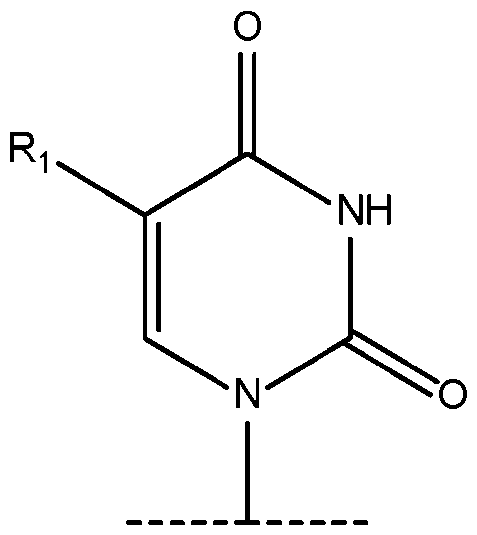
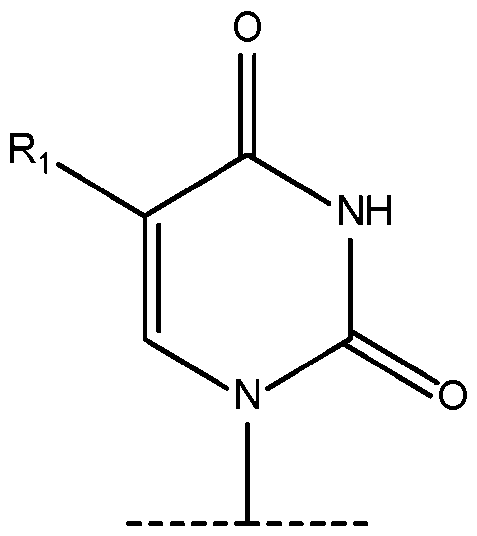

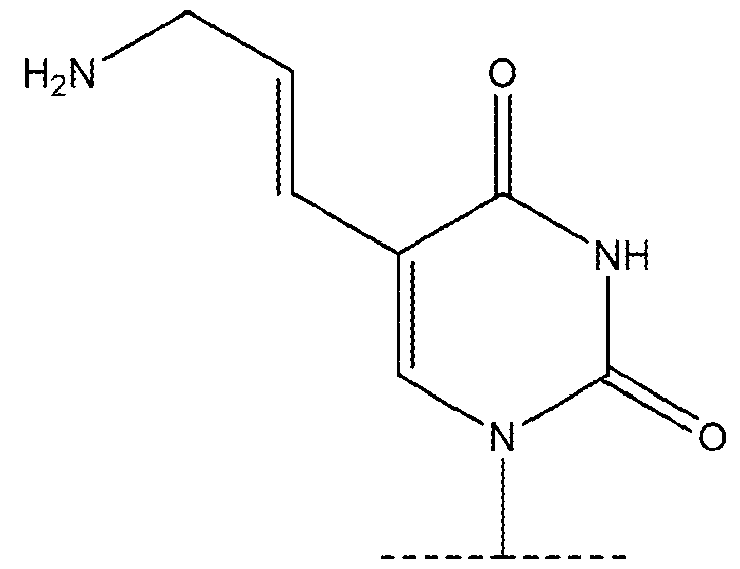


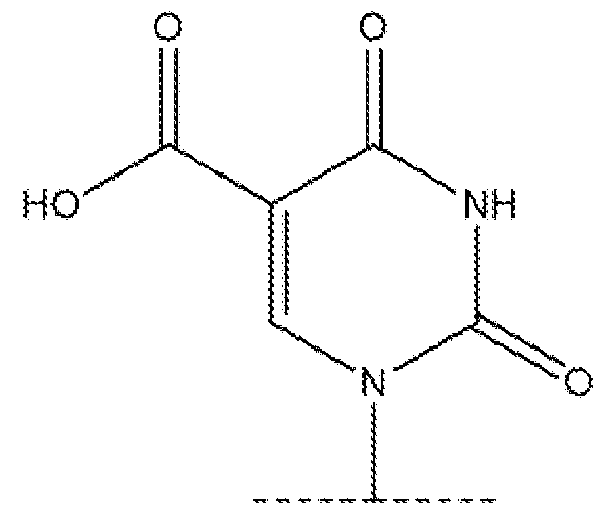


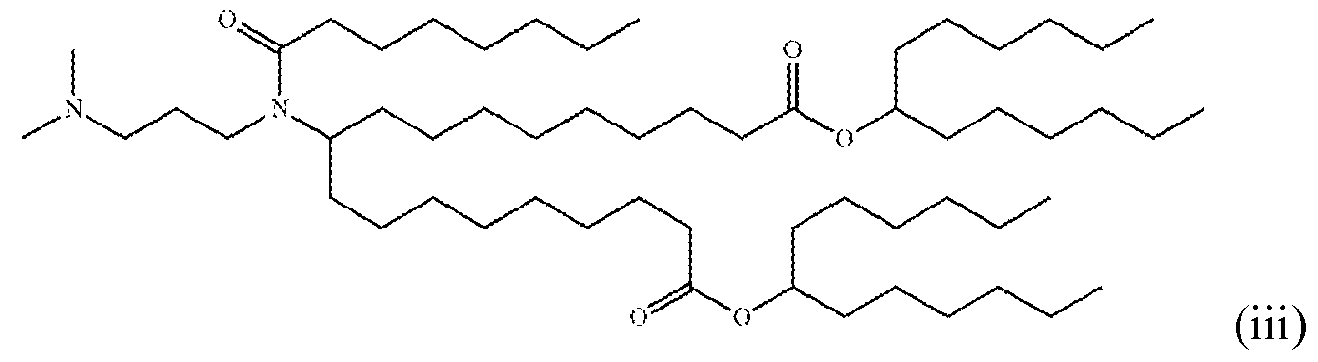
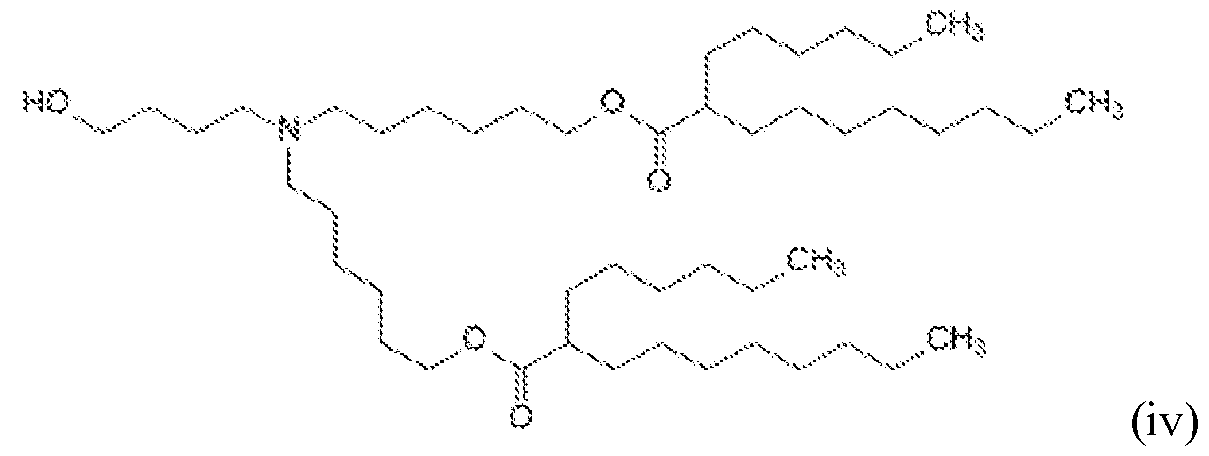

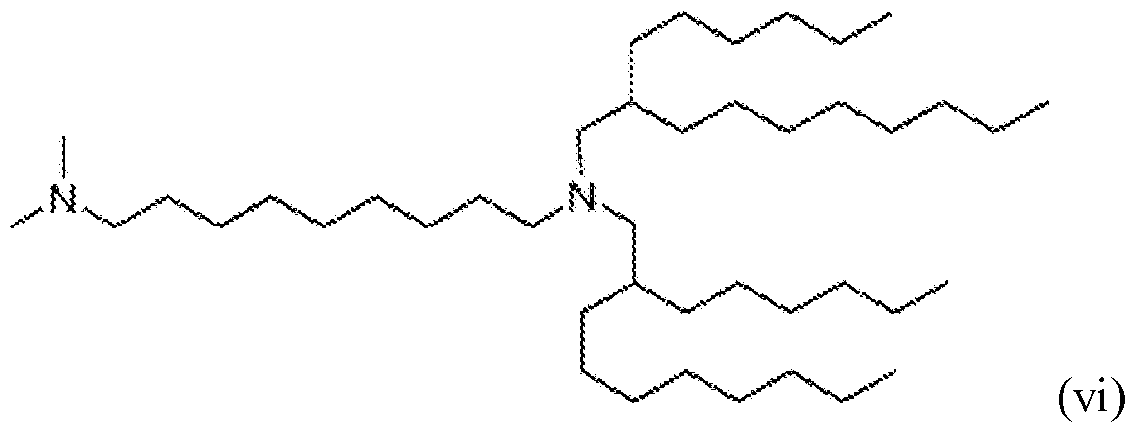

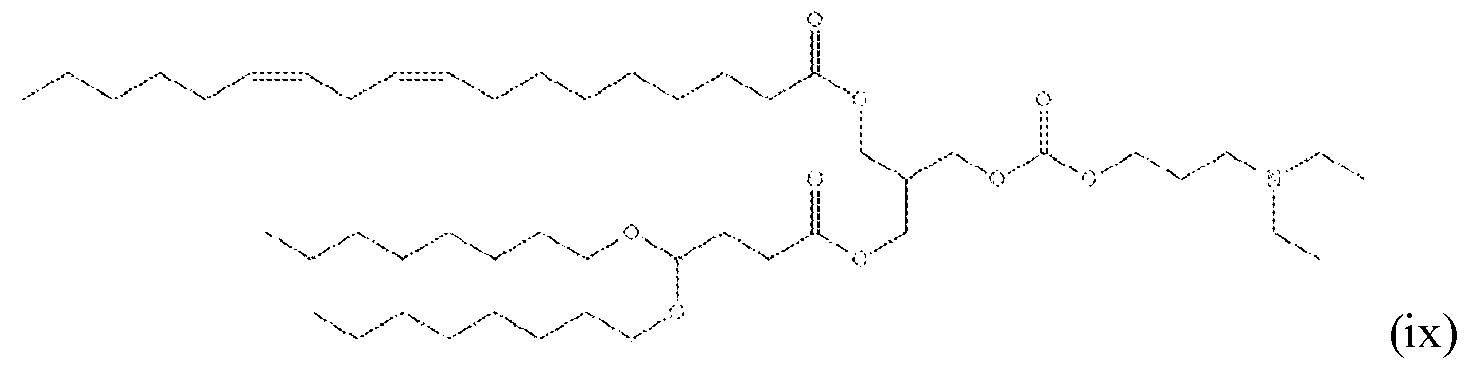





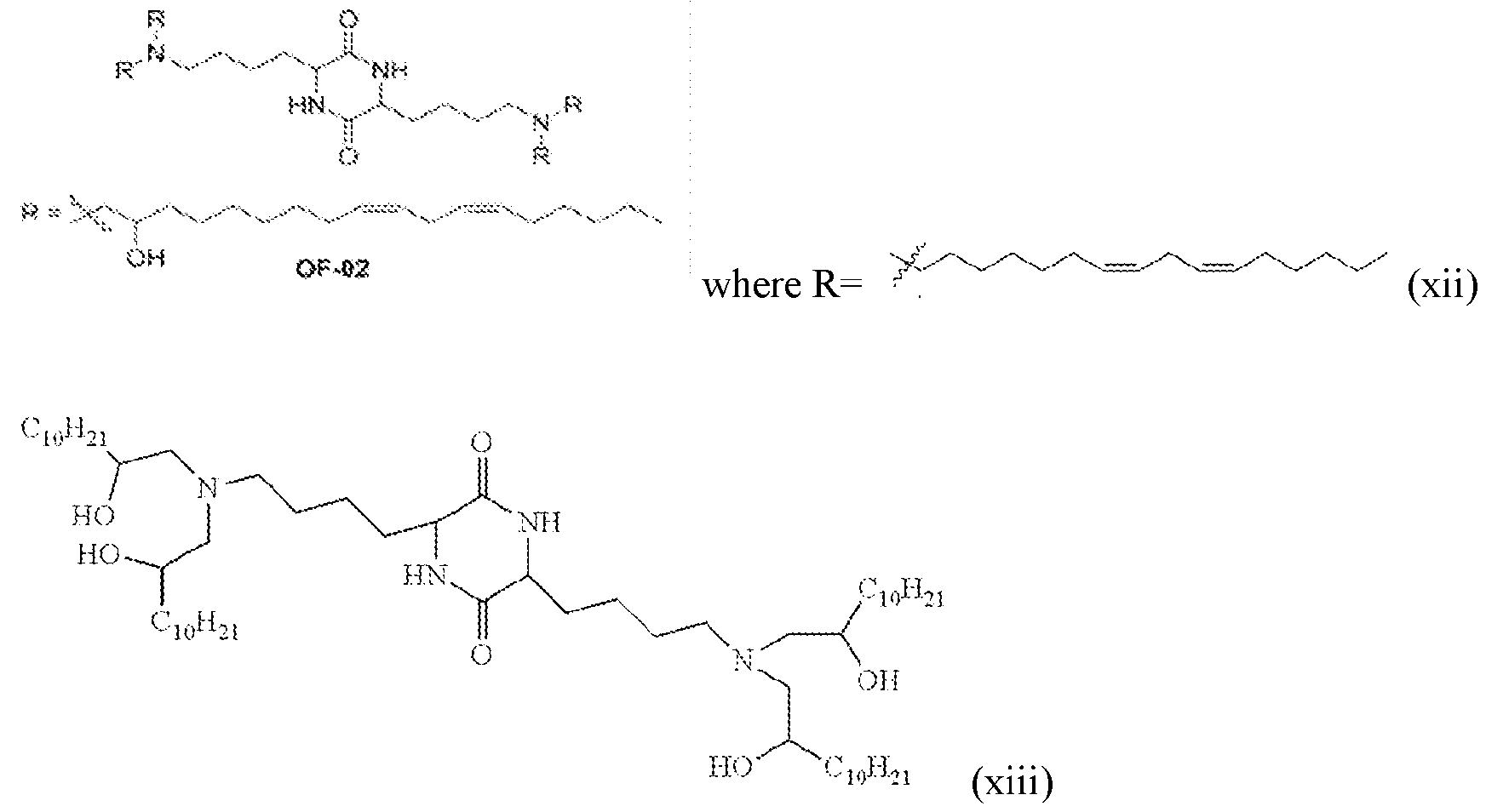


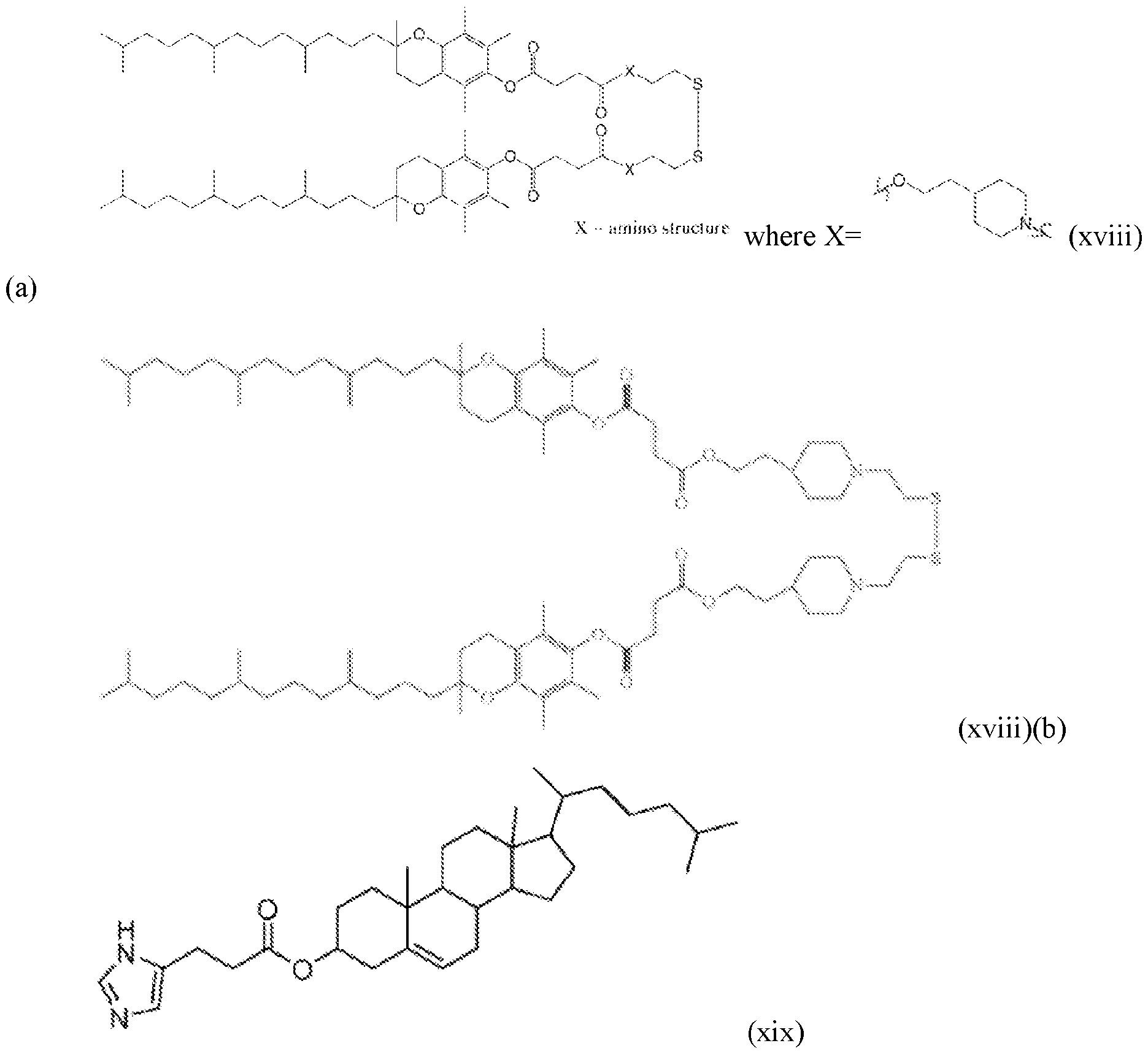


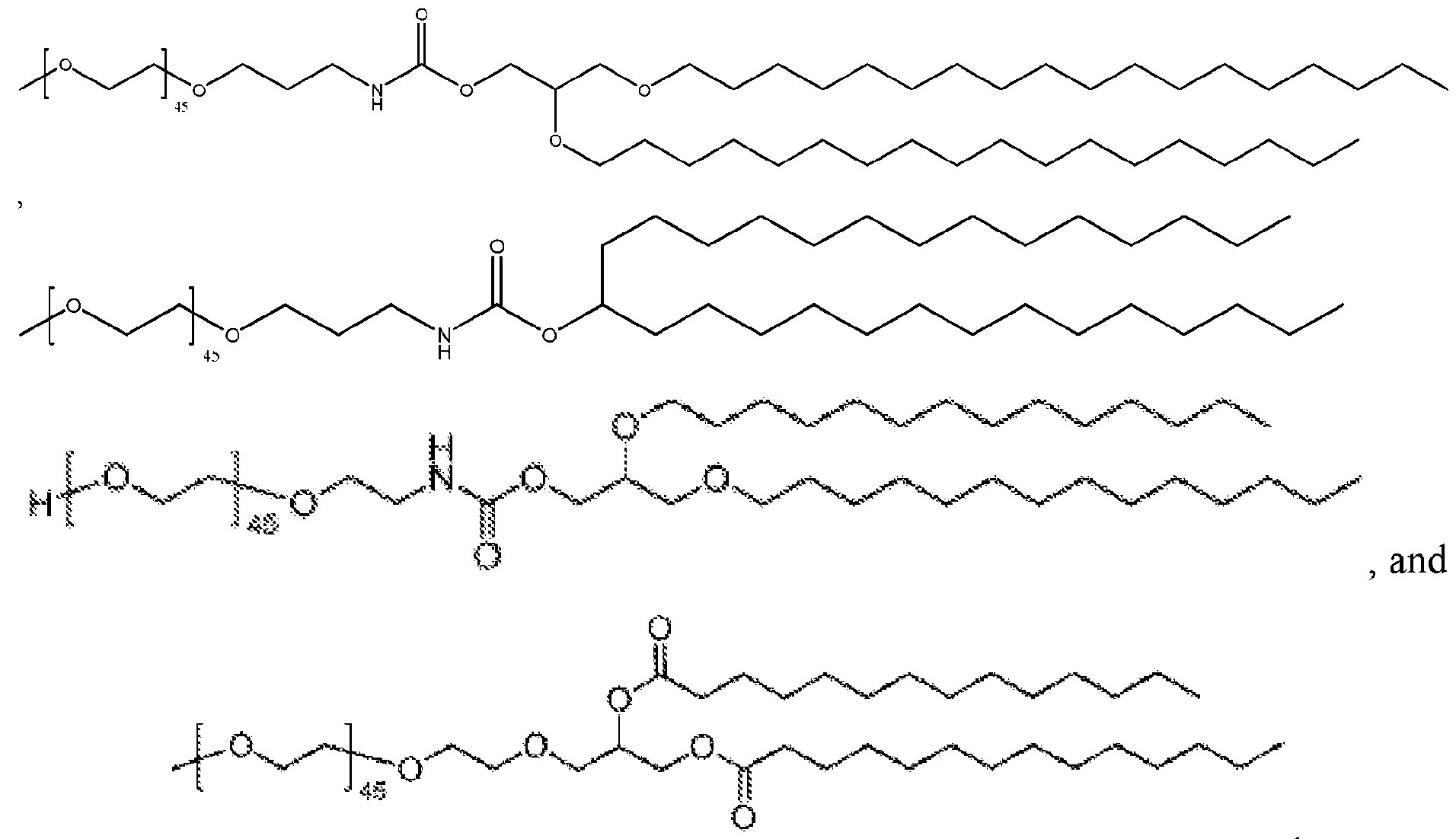


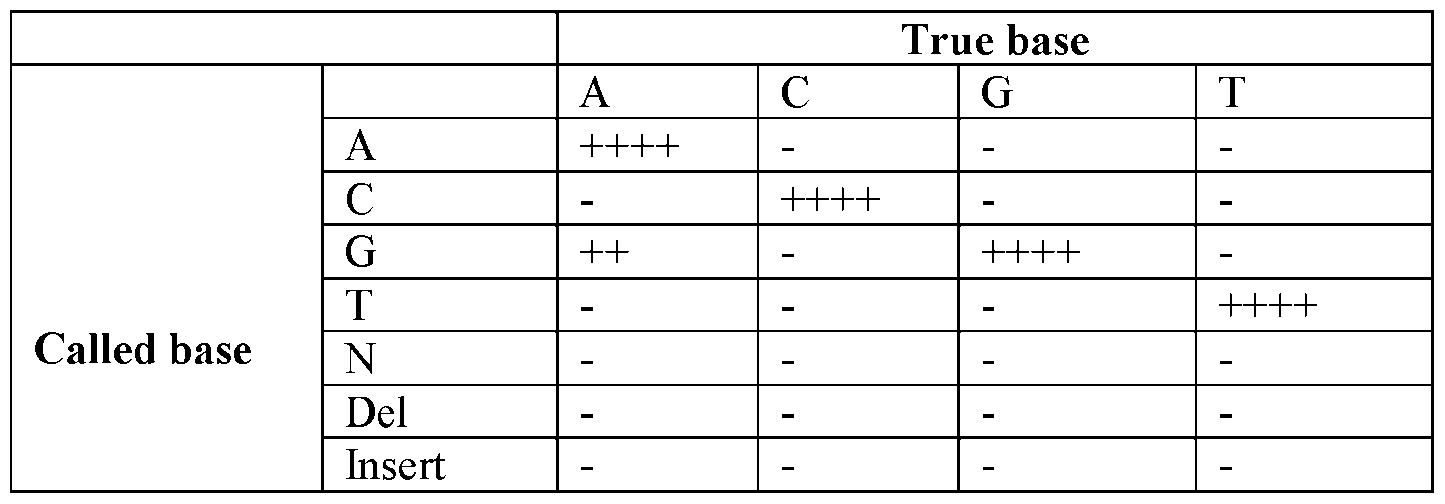
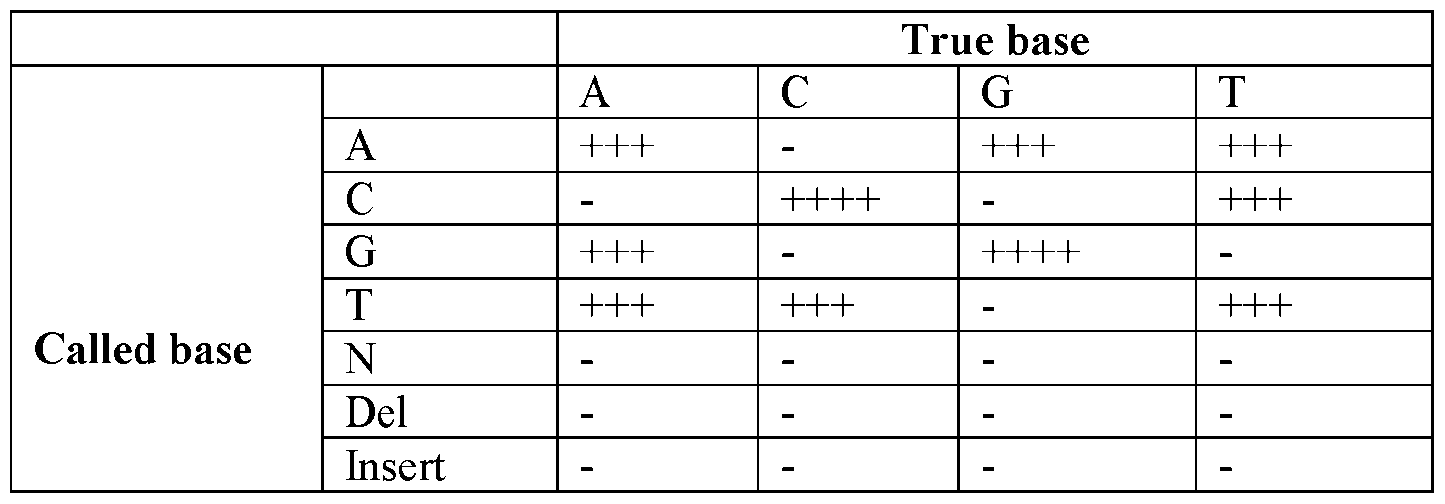

Claims

Priority Applications (5)
| Application Number | Priority Date | Filing Date | Title |
|---|---|---|---|
| KR1020257030530A KR20250151437A (en) | 2023-02-17 | 2024-02-16 | DNA composition containing modified uracil |
| AU2024222598A AU2024222598A1 (en) | 2023-02-17 | 2024-02-16 | Dna compositions comprising modified uracil |
| EP24713828.2A EP4665405A1 (en) | 2023-02-17 | 2024-02-16 | Dna compositions comprising modified uracil |
| IL322201A IL322201A (en) | 2023-02-17 | 2024-02-16 | Dna compositions comprising modified uracil |
| CN202480010955.7A CN120857948A (en) | 2023-02-17 | 2024-02-16 | DNA compositions containing modified uracil |
Applications Claiming Priority (6)
| Application Number | Priority Date | Filing Date | Title |
|---|---|---|---|
| US202363485793P | 2023-02-17 | 2023-02-17 | |
| US63/485,793 | 2023-02-17 | ||
| US202363587561P | 2023-10-03 | 2023-10-03 | |
| US63/587,561 | 2023-10-03 | ||
| US202363594802P | 2023-10-31 | 2023-10-31 | |
| US63/594,802 | 2023-10-31 |
Publications (1)
| Publication Number | Publication Date |
|---|---|
| WO2024173828A1 true WO2024173828A1 (en) | 2024-08-22 |
Family
ID=90458069
Family Applications (1)
| Application Number | Title | Priority Date | Filing Date |
|---|---|---|---|
| PCT/US2024/016205 Ceased WO2024173828A1 (en) | 2023-02-17 | 2024-02-16 | Dna compositions comprising modified uracil |
Country Status (8)
| Country | Link |
|---|---|
| US (1) | US20240285805A1 (en) |
| EP (1) | EP4665405A1 (en) |
| KR (1) | KR20250151437A (en) |
| CN (1) | CN120857948A (en) |
| AU (1) | AU2024222598A1 (en) |
| IL (1) | IL322201A (en) |
| TW (1) | TW202438089A (en) |
| WO (1) | WO2024173828A1 (en) |
Cited By (2)
| Publication number | Priority date | Publication date | Assignee | Title |
|---|---|---|---|---|
| WO2025096807A2 (en) | 2023-10-31 | 2025-05-08 | Flagship Pioneering Innovations Vii, Llc | Novel therapeutic dna forms |
| WO2026006577A1 (en) | 2024-06-26 | 2026-01-02 | Flagship Pioneering Innovations Vii, Llc | Therapeutic circular dna forms |
Citations (90)
| Publication number | Priority date | Publication date | Assignee | Title |
|---|---|---|---|---|
| US99823A (en) | 1870-02-15 | Improved indigo soap | ||
| WO1998010088A1 (en) | 1996-09-06 | 1998-03-12 | Trustees Of The University Of Pennsylvania | An inducible method for production of recombinant adeno-associated viruses utilizing t7 polymerase |
| US5885613A (en) | 1994-09-30 | 1999-03-23 | The University Of British Columbia | Bilayer stabilizing components and their use in forming programmable fusogenic liposomes |
| US6287591B1 (en) | 1997-05-14 | 2001-09-11 | Inex Pharmaceuticals Corp. | Charged therapeutic agents encapsulated in lipid particles containing four lipid components |
| US20030077829A1 (en) | 2001-04-30 | 2003-04-24 | Protiva Biotherapeutics Inc.. | Lipid-based formulations |
| US6693086B1 (en) | 1998-06-25 | 2004-02-17 | National Jewish Medical And Research Center | Systemic immune activation method using nucleic acid-lipid complexes |
| US20050175682A1 (en) | 2003-09-15 | 2005-08-11 | Protiva Biotherapeutics, Inc. | Polyethyleneglycol-modified lipid compounds and uses thereof |
| US20060008378A1 (en) | 2004-04-30 | 2006-01-12 | Kunihiro Imai | Sterilization method |
| US20080020058A1 (en) | 2005-02-14 | 2008-01-24 | Sirna Therapeutics, Inc. | Lipid nanoparticle based compositions and methods for the delivery of biologically active molecules |
| US20080042973A1 (en) | 2006-07-10 | 2008-02-21 | Memsic, Inc. | System for sensing yaw rate using a magnetic field sensor and portable electronic devices using the same |
| WO2009127060A1 (en) | 2008-04-15 | 2009-10-22 | Protiva Biotherapeutics, Inc. | Novel lipid formulations for nucleic acid delivery |
| WO2009132131A1 (en) | 2008-04-22 | 2009-10-29 | Alnylam Pharmaceuticals, Inc. | Amino lipid based improved lipid formulation |
| US20100062967A1 (en) | 2004-12-27 | 2010-03-11 | Silence Therapeutics Ag | Coated lipid complexes and their use |
| WO2010053572A2 (en) | 2008-11-07 | 2010-05-14 | Massachusetts Institute Of Technology | Aminoalcohol lipidoids and uses thereof |
| US20110076335A1 (en) | 2009-07-01 | 2011-03-31 | Protiva Biotherapeutics, Inc. | Novel lipid formulations for delivery of therapeutic agents to solid tumors |
| US20110117125A1 (en) | 2008-01-02 | 2011-05-19 | Tekmira Pharmaceuticals Corporation | Compositions and methods for the delivery of nucleic acids |
| US20110256175A1 (en) | 2008-10-09 | 2011-10-20 | The University Of British Columbia | Amino lipids and methods for the delivery of nucleic acids |
| US8084599B2 (en) | 2004-03-15 | 2011-12-27 | City Of Hope | Methods and compositions for the specific inhibition of gene expression by double-stranded RNA |
| US20120027803A1 (en) | 2010-06-03 | 2012-02-02 | Alnylam Pharmaceuticals, Inc. | Biodegradable lipids for the delivery of active agents |
| US20120027796A1 (en) | 2008-11-10 | 2012-02-02 | Alnylam Pharmaceuticals, Inc. | Novel lipids and compositions for the delivery of therapeutics |
| US20120058144A1 (en) | 2008-11-10 | 2012-03-08 | Alnylam Pharmaceuticals, Inc. | Lipids and compositions for the delivery of therapeutics |
| US8158601B2 (en) | 2009-06-10 | 2012-04-17 | Alnylam Pharmaceuticals, Inc. | Lipid formulation |
| US20120101478A1 (en) | 2010-10-21 | 2012-04-26 | Allergan, Inc. | Dual Cartridge Mixer Syringe |
| US8168775B2 (en) | 2008-10-20 | 2012-05-01 | Alnylam Pharmaceuticals, Inc. | Compositions and methods for inhibiting expression of transthyretin |
| US20120128767A1 (en) | 2008-05-01 | 2012-05-24 | Lee William W | Therapeutic calcium phosphate particles and methods of making and using same |
| US20120149894A1 (en) | 2009-08-20 | 2012-06-14 | Mark Cameron | Novel cationic lipids with various head groups for oligonucleotide delivery |
| US20120202871A1 (en) | 2009-07-01 | 2012-08-09 | Protiva Biotherapeutics, Inc. | Cationic lipids and methods for the delivery of therapeutic agents |
| WO2012162210A1 (en) | 2011-05-26 | 2012-11-29 | Merck Sharp & Dohme Corp. | Ring constrained cationic lipids for oligonucleotide delivery |
| US8349809B2 (en) | 2008-12-18 | 2013-01-08 | Dicerna Pharmaceuticals, Inc. | Single stranded extended dicer substrate agents and methods for the specific inhibition of gene expression |
| US20130022649A1 (en) | 2009-12-01 | 2013-01-24 | Protiva Biotherapeutics, Inc. | Snalp formulations containing antioxidants |
| WO2013016058A1 (en) | 2011-07-22 | 2013-01-31 | Merck Sharp & Dohme Corp. | Novel bis-nitrogen containing cationic lipids for oligonucleotide delivery |
| US20130053572A1 (en) | 2010-01-22 | 2013-02-28 | Steven L. Colletti | Novel Cationic Lipids for Oligonucleotide Delivery |
| US20130090372A1 (en) | 2010-06-04 | 2013-04-11 | Brian W. Budzik | Novel Low Molecular Weight Cationic Lipids for Oligonucleotide Delivery |
| US20130116307A1 (en) | 2010-05-12 | 2013-05-09 | Protiva Biotherapeutics Inc. | Novel cyclic cationic lipids and methods of use |
| US20130123338A1 (en) | 2010-05-12 | 2013-05-16 | Protiva Biotherapeutics, Inc. | Novel cationic lipids and methods of use thereof |
| US20130178541A1 (en) | 2010-09-20 | 2013-07-11 | Matthew G. Stanton | Novel low molecular weight cationic lipids for oligonucleotide delivery |
| US20130189351A1 (en) | 2010-08-31 | 2013-07-25 | Novartis Ag | Lipids suitable for liposomal delivery of protein coding rna |
| US20130195920A1 (en) | 2011-12-07 | 2013-08-01 | Alnylam Pharmaceuticals, Inc. | Biodegradable lipids for the delivery of active agents |
| WO2013116126A1 (en) | 2012-02-01 | 2013-08-08 | Merck Sharp & Dohme Corp. | Novel low molecular weight, biodegradable cationic lipids for oligonucleotide delivery |
| US8513207B2 (en) | 2008-12-18 | 2013-08-20 | Dicerna Pharmaceuticals, Inc. | Extended dicer substrate agents and methods for the specific inhibition of gene expression |
| US20130274523A1 (en) | 2010-09-30 | 2013-10-17 | John A. Bawiec, III | Low molecular weight cationic lipids for oligonucleotide delivery |
| US20130274504A1 (en) | 2010-10-21 | 2013-10-17 | Steven L. Colletti | Novel Low Molecular Weight Cationic Lipids For Oligonucleotide Delivery |
| US20130303587A1 (en) | 2010-06-30 | 2013-11-14 | Protiva Biotherapeutics, Inc. | Non-liposomal systems for nucleic acid delivery |
| US20130323269A1 (en) | 2010-07-30 | 2013-12-05 | Muthiah Manoharan | Methods and compositions for delivery of active agents |
| US20130338210A1 (en) | 2009-12-07 | 2013-12-19 | Alnylam Pharmaceuticals, Inc. | Compositions for nucleic acid delivery |
| US20140039032A1 (en) | 2011-12-12 | 2014-02-06 | Kyowa Hakko Kirin Co., Ltd. | Lipid nano particles comprising cationic lipid for drug delivery system |
| US20140200257A1 (en) | 2011-01-11 | 2014-07-17 | Alnylam Pharmaceuticals, Inc. | Pegylated lipids and their use for drug delivery |
| WO2014136086A1 (en) | 2013-03-08 | 2014-09-12 | Novartis Ag | Lipids and lipid compositions for the delivery of active agents |
| US20140308304A1 (en) | 2011-12-07 | 2014-10-16 | Alnylam Pharmaceuticals, Inc. | Lipids for the delivery of active agents |
| US20150005363A1 (en) | 2011-12-07 | 2015-01-01 | Alnylam Pharmaceuticals, Inc. | Branched Alkyl And Cycloalkyl Terminated Biodegradable Lipids For The Delivery Of Active Agents |
| US20150057373A1 (en) | 2012-03-27 | 2015-02-26 | Sirna Therapeutics, Inc | DIETHER BASED BIODEGRADABLE CATIONIC LIPIDS FOR siRNA DELIVERY |
| US20150064242A1 (en) | 2012-02-24 | 2015-03-05 | Protiva Biotherapeutics, Inc. | Trialkyl cationic lipids and methods of use thereof |
| US20150141678A1 (en) | 2013-11-18 | 2015-05-21 | Arcturus Therapeutics, Inc. | Ionizable cationic lipid for rna delivery |
| WO2015073587A2 (en) | 2013-11-18 | 2015-05-21 | Rubius Therapeutics, Inc. | Synthetic membrane-receiver complexes |
| US20150140070A1 (en) | 2013-10-22 | 2015-05-21 | Shire Human Genetic Therapies, Inc. | Lipid formulations for delivery of messenger rna |
| WO2015095340A1 (en) | 2013-12-19 | 2015-06-25 | Novartis Ag | Lipids and lipid compositions for the delivery of active agents |
| US20150203446A1 (en) | 2011-09-27 | 2015-07-23 | Takeda Pharmaceutical Company Limited | Di-aliphatic substituted pegylated lipids |
| US20150239926A1 (en) | 2013-11-18 | 2015-08-27 | Arcturus Therapeutics, Inc. | Asymmetric ionizable cationic lipid for rna delivery |
| WO2015153102A1 (en) | 2014-04-01 | 2015-10-08 | Rubius Therapeutics, Inc. | Methods and compositions for immunomodulation |
| US20150376115A1 (en) | 2014-06-25 | 2015-12-31 | Acuitas Therapeutics Inc. | Novel lipids and lipid nanoparticle formulations for delivery of nucleic acids |
| US20160151284A1 (en) | 2013-07-23 | 2016-06-02 | Protiva Biotherapeutics, Inc. | Compositions and methods for delivering messenger rna |
| US20160317458A1 (en) | 2013-12-19 | 2016-11-03 | Luis Brito | Lipids and Lipid Compositions for the Delivery of Active Agents |
| WO2016183482A1 (en) | 2015-05-13 | 2016-11-17 | Rubius Therapeutics, Inc. | Membrane-receiver complex therapeutics |
| US20160376224A1 (en) | 2015-06-29 | 2016-12-29 | Acuitas Therapeutics, Inc. | Lipids and lipid nanoparticle formulations for delivery of nucleic acids |
| US20170119904A1 (en) | 2015-10-28 | 2017-05-04 | Acuitas Therapeutics, Inc. | Novel lipids and lipid nanoparticle formulations for delivery of nucleic acids |
| WO2017099823A1 (en) | 2015-12-10 | 2017-06-15 | Modernatx, Inc. | Compositions and methods for delivery of therapeutic agents |
| WO2017117528A1 (en) | 2015-12-30 | 2017-07-06 | Acuitas Therapeutics, Inc. | Lipids and lipid nanoparticle formulations for delivery of nucleic acids |
| US9708628B2 (en) | 2011-11-18 | 2017-07-18 | Nof Corporation | Cationic lipid having improved intracellular kinetics |
| WO2017123646A1 (en) | 2016-01-11 | 2017-07-20 | Rubius Therapeutics, Inc. | Compositions and methods related to multimodal therapeutic cell systems for cancer indications |
| US20170210967A1 (en) | 2010-12-06 | 2017-07-27 | Schlumberger Technology Corporation | Compositions and methods for well completions |
| WO2017152149A1 (en) * | 2016-03-03 | 2017-09-08 | University Of Massachusetts | Closed-ended linear duplex dna for non-viral gene transfer |
| WO2017173054A1 (en) | 2016-03-30 | 2017-10-05 | Intellia Therapeutics, Inc. | Lipid nanoparticle formulations for crispr/cas components |
| WO2017223135A1 (en) | 2016-06-24 | 2017-12-28 | Modernatx, Inc. | Lipid nanoparticles |
| WO2018009838A1 (en) | 2016-07-07 | 2018-01-11 | Rubius Therapeutics, Inc. | Compositions and methods related to therapeutic cell systems expressing exogenous rna |
| US9867888B2 (en) | 2015-09-17 | 2018-01-16 | Modernatx, Inc. | Compounds and compositions for intracellular delivery of therapeutic agents |
| WO2018081480A1 (en) | 2016-10-26 | 2018-05-03 | Acuitas Therapeutics, Inc. | Lipid nanoparticle formulations |
| WO2018102740A1 (en) | 2016-12-02 | 2018-06-07 | Rubius Therapeutics, Inc. | Compositions and methods related to cell systems for penetrating solid tumors |
| WO2018151829A1 (en) | 2017-02-17 | 2018-08-23 | Rubius Therapeutics, Inc. | Functionalized erythroid cells |
| US10086013B2 (en) | 2011-10-27 | 2018-10-02 | Massachusetts Institute Of Technology | Amino acid-, peptide- and polypeptide-lipids, isomers, compositions, and uses thereof |
| WO2018208728A1 (en) | 2017-05-08 | 2018-11-15 | Flagship Pioneering, Inc. | Compositions for facilitating membrane fusion and uses thereof |
| WO2019051289A1 (en) | 2017-09-08 | 2019-03-14 | Generation Bio Co. | Lipid nanoparticle formulations of non-viral, capsid-free dna vectors |
| WO2019067992A1 (en) | 2017-09-29 | 2019-04-04 | Intellia Therapeutics, Inc. | Formulations |
| WO2019067910A1 (en) | 2017-09-29 | 2019-04-04 | Intellia Therapeutics, Inc. | Polynucleotides, compositions, and methods for genome editing |
| US20190240349A1 (en) | 2015-06-19 | 2019-08-08 | Massachusetts Institute Of Technology | Alkenyl substituted 2,5-piperazinediones, compositions, and uses thereof |
| WO2019217941A1 (en) | 2018-05-11 | 2019-11-14 | Beam Therapeutics Inc. | Methods of suppressing pathogenic mutations using programmable base editor systems |
| WO2020061457A1 (en) | 2018-09-20 | 2020-03-26 | Modernatx, Inc. | Preparation of lipid nanoparticles and methods of administration thereof |
| WO2020081938A1 (en) | 2018-10-18 | 2020-04-23 | Acuitas Therapeutics, Inc. | Lipids for lipid nanoparticle delivery of active agents |
| WO2020106946A1 (en) | 2018-11-21 | 2020-05-28 | Translate Bio, Inc. | TREATMENT OF CYSTIC FIBROSIS BY DELIVERY OF NEBULIZED mRNA ENCODING CFTR |
| WO2020219876A1 (en) | 2019-04-25 | 2020-10-29 | Intellia Therapeutics, Inc. | Ionizable amine lipids and lipid nanoparticles |
| WO2022263807A1 (en) * | 2021-06-14 | 2022-12-22 | Genefirst Limited | Methods, compositions, and kits for preparing sequencing library |
-
2024
- 2024-02-16 WO PCT/US2024/016205 patent/WO2024173828A1/en not_active Ceased
- 2024-02-16 AU AU2024222598A patent/AU2024222598A1/en active Pending
- 2024-02-16 US US18/444,238 patent/US20240285805A1/en active Pending
- 2024-02-16 IL IL322201A patent/IL322201A/en unknown
- 2024-02-16 KR KR1020257030530A patent/KR20250151437A/en active Pending
- 2024-02-16 TW TW113105493A patent/TW202438089A/en unknown
- 2024-02-16 EP EP24713828.2A patent/EP4665405A1/en active Pending
- 2024-02-16 CN CN202480010955.7A patent/CN120857948A/en active Pending
Patent Citations (98)
| Publication number | Priority date | Publication date | Assignee | Title |
|---|---|---|---|---|
| US99823A (en) | 1870-02-15 | Improved indigo soap | ||
| US5885613A (en) | 1994-09-30 | 1999-03-23 | The University Of British Columbia | Bilayer stabilizing components and their use in forming programmable fusogenic liposomes |
| WO1998010088A1 (en) | 1996-09-06 | 1998-03-12 | Trustees Of The University Of Pennsylvania | An inducible method for production of recombinant adeno-associated viruses utilizing t7 polymerase |
| US6287591B1 (en) | 1997-05-14 | 2001-09-11 | Inex Pharmaceuticals Corp. | Charged therapeutic agents encapsulated in lipid particles containing four lipid components |
| US6693086B1 (en) | 1998-06-25 | 2004-02-17 | National Jewish Medical And Research Center | Systemic immune activation method using nucleic acid-lipid complexes |
| US20030077829A1 (en) | 2001-04-30 | 2003-04-24 | Protiva Biotherapeutics Inc.. | Lipid-based formulations |
| US20050175682A1 (en) | 2003-09-15 | 2005-08-11 | Protiva Biotherapeutics, Inc. | Polyethyleneglycol-modified lipid compounds and uses thereof |
| US8084599B2 (en) | 2004-03-15 | 2011-12-27 | City Of Hope | Methods and compositions for the specific inhibition of gene expression by double-stranded RNA |
| US20060008378A1 (en) | 2004-04-30 | 2006-01-12 | Kunihiro Imai | Sterilization method |
| US20100062967A1 (en) | 2004-12-27 | 2010-03-11 | Silence Therapeutics Ag | Coated lipid complexes and their use |
| US20080020058A1 (en) | 2005-02-14 | 2008-01-24 | Sirna Therapeutics, Inc. | Lipid nanoparticle based compositions and methods for the delivery of biologically active molecules |
| US20080042973A1 (en) | 2006-07-10 | 2008-02-21 | Memsic, Inc. | System for sensing yaw rate using a magnetic field sensor and portable electronic devices using the same |
| US20110117125A1 (en) | 2008-01-02 | 2011-05-19 | Tekmira Pharmaceuticals Corporation | Compositions and methods for the delivery of nucleic acids |
| WO2009127060A1 (en) | 2008-04-15 | 2009-10-22 | Protiva Biotherapeutics, Inc. | Novel lipid formulations for nucleic acid delivery |
| US20100130588A1 (en) | 2008-04-15 | 2010-05-27 | Protiva Biotherapeutics, Inc. | Novel lipid formulations for nucleic acid delivery |
| WO2009132131A1 (en) | 2008-04-22 | 2009-10-29 | Alnylam Pharmaceuticals, Inc. | Amino lipid based improved lipid formulation |
| US20120128767A1 (en) | 2008-05-01 | 2012-05-24 | Lee William W | Therapeutic calcium phosphate particles and methods of making and using same |
| US20110256175A1 (en) | 2008-10-09 | 2011-10-20 | The University Of British Columbia | Amino lipids and methods for the delivery of nucleic acids |
| US8168775B2 (en) | 2008-10-20 | 2012-05-01 | Alnylam Pharmaceuticals, Inc. | Compositions and methods for inhibiting expression of transthyretin |
| WO2010053572A2 (en) | 2008-11-07 | 2010-05-14 | Massachusetts Institute Of Technology | Aminoalcohol lipidoids and uses thereof |
| US20120027796A1 (en) | 2008-11-10 | 2012-02-02 | Alnylam Pharmaceuticals, Inc. | Novel lipids and compositions for the delivery of therapeutics |
| US20120058144A1 (en) | 2008-11-10 | 2012-03-08 | Alnylam Pharmaceuticals, Inc. | Lipids and compositions for the delivery of therapeutics |
| US8513207B2 (en) | 2008-12-18 | 2013-08-20 | Dicerna Pharmaceuticals, Inc. | Extended dicer substrate agents and methods for the specific inhibition of gene expression |
| US8349809B2 (en) | 2008-12-18 | 2013-01-08 | Dicerna Pharmaceuticals, Inc. | Single stranded extended dicer substrate agents and methods for the specific inhibition of gene expression |
| US8158601B2 (en) | 2009-06-10 | 2012-04-17 | Alnylam Pharmaceuticals, Inc. | Lipid formulation |
| US20120202871A1 (en) | 2009-07-01 | 2012-08-09 | Protiva Biotherapeutics, Inc. | Cationic lipids and methods for the delivery of therapeutic agents |
| US20110076335A1 (en) | 2009-07-01 | 2011-03-31 | Protiva Biotherapeutics, Inc. | Novel lipid formulations for delivery of therapeutic agents to solid tumors |
| US20120149894A1 (en) | 2009-08-20 | 2012-06-14 | Mark Cameron | Novel cationic lipids with various head groups for oligonucleotide delivery |
| US20130022649A1 (en) | 2009-12-01 | 2013-01-24 | Protiva Biotherapeutics, Inc. | Snalp formulations containing antioxidants |
| US20130338210A1 (en) | 2009-12-07 | 2013-12-19 | Alnylam Pharmaceuticals, Inc. | Compositions for nucleic acid delivery |
| US20130053572A1 (en) | 2010-01-22 | 2013-02-28 | Steven L. Colletti | Novel Cationic Lipids for Oligonucleotide Delivery |
| US20130123338A1 (en) | 2010-05-12 | 2013-05-16 | Protiva Biotherapeutics, Inc. | Novel cationic lipids and methods of use thereof |
| US20130116307A1 (en) | 2010-05-12 | 2013-05-09 | Protiva Biotherapeutics Inc. | Novel cyclic cationic lipids and methods of use |
| US20120027803A1 (en) | 2010-06-03 | 2012-02-02 | Alnylam Pharmaceuticals, Inc. | Biodegradable lipids for the delivery of active agents |
| US20130090372A1 (en) | 2010-06-04 | 2013-04-11 | Brian W. Budzik | Novel Low Molecular Weight Cationic Lipids for Oligonucleotide Delivery |
| US20130303587A1 (en) | 2010-06-30 | 2013-11-14 | Protiva Biotherapeutics, Inc. | Non-liposomal systems for nucleic acid delivery |
| US20130323269A1 (en) | 2010-07-30 | 2013-12-05 | Muthiah Manoharan | Methods and compositions for delivery of active agents |
| US20130189351A1 (en) | 2010-08-31 | 2013-07-25 | Novartis Ag | Lipids suitable for liposomal delivery of protein coding rna |
| US20130178541A1 (en) | 2010-09-20 | 2013-07-11 | Matthew G. Stanton | Novel low molecular weight cationic lipids for oligonucleotide delivery |
| US20130274523A1 (en) | 2010-09-30 | 2013-10-17 | John A. Bawiec, III | Low molecular weight cationic lipids for oligonucleotide delivery |
| US20130274504A1 (en) | 2010-10-21 | 2013-10-17 | Steven L. Colletti | Novel Low Molecular Weight Cationic Lipids For Oligonucleotide Delivery |
| US20120101478A1 (en) | 2010-10-21 | 2012-04-26 | Allergan, Inc. | Dual Cartridge Mixer Syringe |
| US20170210967A1 (en) | 2010-12-06 | 2017-07-27 | Schlumberger Technology Corporation | Compositions and methods for well completions |
| US20140200257A1 (en) | 2011-01-11 | 2014-07-17 | Alnylam Pharmaceuticals, Inc. | Pegylated lipids and their use for drug delivery |
| WO2012162210A1 (en) | 2011-05-26 | 2012-11-29 | Merck Sharp & Dohme Corp. | Ring constrained cationic lipids for oligonucleotide delivery |
| WO2013016058A1 (en) | 2011-07-22 | 2013-01-31 | Merck Sharp & Dohme Corp. | Novel bis-nitrogen containing cationic lipids for oligonucleotide delivery |
| US20150203446A1 (en) | 2011-09-27 | 2015-07-23 | Takeda Pharmaceutical Company Limited | Di-aliphatic substituted pegylated lipids |
| US10086013B2 (en) | 2011-10-27 | 2018-10-02 | Massachusetts Institute Of Technology | Amino acid-, peptide- and polypeptide-lipids, isomers, compositions, and uses thereof |
| US9708628B2 (en) | 2011-11-18 | 2017-07-18 | Nof Corporation | Cationic lipid having improved intracellular kinetics |
| US20140308304A1 (en) | 2011-12-07 | 2014-10-16 | Alnylam Pharmaceuticals, Inc. | Lipids for the delivery of active agents |
| US20150005363A1 (en) | 2011-12-07 | 2015-01-01 | Alnylam Pharmaceuticals, Inc. | Branched Alkyl And Cycloalkyl Terminated Biodegradable Lipids For The Delivery Of Active Agents |
| US20130195920A1 (en) | 2011-12-07 | 2013-08-01 | Alnylam Pharmaceuticals, Inc. | Biodegradable lipids for the delivery of active agents |
| US20140039032A1 (en) | 2011-12-12 | 2014-02-06 | Kyowa Hakko Kirin Co., Ltd. | Lipid nano particles comprising cationic lipid for drug delivery system |
| WO2013116126A1 (en) | 2012-02-01 | 2013-08-08 | Merck Sharp & Dohme Corp. | Novel low molecular weight, biodegradable cationic lipids for oligonucleotide delivery |
| US20150064242A1 (en) | 2012-02-24 | 2015-03-05 | Protiva Biotherapeutics, Inc. | Trialkyl cationic lipids and methods of use thereof |
| US20150057373A1 (en) | 2012-03-27 | 2015-02-26 | Sirna Therapeutics, Inc | DIETHER BASED BIODEGRADABLE CATIONIC LIPIDS FOR siRNA DELIVERY |
| WO2014136086A1 (en) | 2013-03-08 | 2014-09-12 | Novartis Ag | Lipids and lipid compositions for the delivery of active agents |
| US20160151284A1 (en) | 2013-07-23 | 2016-06-02 | Protiva Biotherapeutics, Inc. | Compositions and methods for delivering messenger rna |
| US20150140070A1 (en) | 2013-10-22 | 2015-05-21 | Shire Human Genetic Therapies, Inc. | Lipid formulations for delivery of messenger rna |
| US20150239926A1 (en) | 2013-11-18 | 2015-08-27 | Arcturus Therapeutics, Inc. | Asymmetric ionizable cationic lipid for rna delivery |
| WO2015073587A2 (en) | 2013-11-18 | 2015-05-21 | Rubius Therapeutics, Inc. | Synthetic membrane-receiver complexes |
| US20150141678A1 (en) | 2013-11-18 | 2015-05-21 | Arcturus Therapeutics, Inc. | Ionizable cationic lipid for rna delivery |
| US9644180B2 (en) | 2013-11-18 | 2017-05-09 | Rubius Therapeutics, Inc. | Synthetic membrane-receiver complexes |
| US20160311759A1 (en) | 2013-12-19 | 2016-10-27 | Luis Brito | Lipids and Lipid Compositions for the Delivery of Active Agents |
| US20160317458A1 (en) | 2013-12-19 | 2016-11-03 | Luis Brito | Lipids and Lipid Compositions for the Delivery of Active Agents |
| WO2015095340A1 (en) | 2013-12-19 | 2015-06-25 | Novartis Ag | Lipids and lipid compositions for the delivery of active agents |
| WO2015153102A1 (en) | 2014-04-01 | 2015-10-08 | Rubius Therapeutics, Inc. | Methods and compositions for immunomodulation |
| US20150376115A1 (en) | 2014-06-25 | 2015-12-31 | Acuitas Therapeutics Inc. | Novel lipids and lipid nanoparticle formulations for delivery of nucleic acids |
| WO2016183482A1 (en) | 2015-05-13 | 2016-11-17 | Rubius Therapeutics, Inc. | Membrane-receiver complex therapeutics |
| US20190240349A1 (en) | 2015-06-19 | 2019-08-08 | Massachusetts Institute Of Technology | Alkenyl substituted 2,5-piperazinediones, compositions, and uses thereof |
| US20160376224A1 (en) | 2015-06-29 | 2016-12-29 | Acuitas Therapeutics, Inc. | Lipids and lipid nanoparticle formulations for delivery of nucleic acids |
| US10221127B2 (en) | 2015-06-29 | 2019-03-05 | Acuitas Therapeutics, Inc. | Lipids and lipid nanoparticle formulations for delivery of nucleic acids |
| US9867888B2 (en) | 2015-09-17 | 2018-01-16 | Modernatx, Inc. | Compounds and compositions for intracellular delivery of therapeutic agents |
| US20170119904A1 (en) | 2015-10-28 | 2017-05-04 | Acuitas Therapeutics, Inc. | Novel lipids and lipid nanoparticle formulations for delivery of nucleic acids |
| WO2017099823A1 (en) | 2015-12-10 | 2017-06-15 | Modernatx, Inc. | Compositions and methods for delivery of therapeutic agents |
| US20180028664A1 (en) | 2015-12-10 | 2018-02-01 | Modernatx, Inc. | Compositions and methods for delivery of agents |
| WO2017117528A1 (en) | 2015-12-30 | 2017-07-06 | Acuitas Therapeutics, Inc. | Lipids and lipid nanoparticle formulations for delivery of nucleic acids |
| WO2017123646A1 (en) | 2016-01-11 | 2017-07-20 | Rubius Therapeutics, Inc. | Compositions and methods related to multimodal therapeutic cell systems for cancer indications |
| WO2017123644A1 (en) | 2016-01-11 | 2017-07-20 | Rubius Therapeutics, Inc. | Compositions and methods related to multimodal therapeutic cell systems for immune indications |
| WO2017152149A1 (en) * | 2016-03-03 | 2017-09-08 | University Of Massachusetts | Closed-ended linear duplex dna for non-viral gene transfer |
| WO2017173054A1 (en) | 2016-03-30 | 2017-10-05 | Intellia Therapeutics, Inc. | Lipid nanoparticle formulations for crispr/cas components |
| US20190136231A1 (en) | 2016-03-30 | 2019-05-09 | Intellia Therapeutics, Inc. | Lipid nanoparticle formulations for crispr/cas components |
| WO2017223135A1 (en) | 2016-06-24 | 2017-12-28 | Modernatx, Inc. | Lipid nanoparticles |
| WO2018009838A1 (en) | 2016-07-07 | 2018-01-11 | Rubius Therapeutics, Inc. | Compositions and methods related to therapeutic cell systems expressing exogenous rna |
| WO2018081480A1 (en) | 2016-10-26 | 2018-05-03 | Acuitas Therapeutics, Inc. | Lipid nanoparticle formulations |
| WO2018102740A1 (en) | 2016-12-02 | 2018-06-07 | Rubius Therapeutics, Inc. | Compositions and methods related to cell systems for penetrating solid tumors |
| WO2018151829A1 (en) | 2017-02-17 | 2018-08-23 | Rubius Therapeutics, Inc. | Functionalized erythroid cells |
| WO2018208728A1 (en) | 2017-05-08 | 2018-11-15 | Flagship Pioneering, Inc. | Compositions for facilitating membrane fusion and uses thereof |
| WO2019051289A9 (en) | 2017-09-08 | 2019-05-23 | Generation Bio Co. | Lipid nanoparticle formulations of non-viral, capsid-free dna vectors |
| WO2019051289A1 (en) | 2017-09-08 | 2019-03-14 | Generation Bio Co. | Lipid nanoparticle formulations of non-viral, capsid-free dna vectors |
| WO2019067910A1 (en) | 2017-09-29 | 2019-04-04 | Intellia Therapeutics, Inc. | Polynucleotides, compositions, and methods for genome editing |
| WO2019067992A1 (en) | 2017-09-29 | 2019-04-04 | Intellia Therapeutics, Inc. | Formulations |
| WO2019217941A1 (en) | 2018-05-11 | 2019-11-14 | Beam Therapeutics Inc. | Methods of suppressing pathogenic mutations using programmable base editor systems |
| WO2020061457A1 (en) | 2018-09-20 | 2020-03-26 | Modernatx, Inc. | Preparation of lipid nanoparticles and methods of administration thereof |
| WO2020081938A1 (en) | 2018-10-18 | 2020-04-23 | Acuitas Therapeutics, Inc. | Lipids for lipid nanoparticle delivery of active agents |
| WO2020106946A1 (en) | 2018-11-21 | 2020-05-28 | Translate Bio, Inc. | TREATMENT OF CYSTIC FIBROSIS BY DELIVERY OF NEBULIZED mRNA ENCODING CFTR |
| WO2020219876A1 (en) | 2019-04-25 | 2020-10-29 | Intellia Therapeutics, Inc. | Ionizable amine lipids and lipid nanoparticles |
| WO2022263807A1 (en) * | 2021-06-14 | 2022-12-22 | Genefirst Limited | Methods, compositions, and kits for preparing sequencing library |
Non-Patent Citations (60)
| Title |
|---|
| "Delivery Technologies,or Biopharmaceuticals: Peptides, Proteins, Nucleic Acids and Vaccines", 21 December 2009, WILEY |
| AKINC ET AL., MOL THER, vol. 18, no. 7, 2010, pages 1357 - 1364 |
| ANDERSEN ET AL., CELL. MOL. NEUROBIOL., vol. 13, 1993, pages 503 - 15 |
| ARBUTHNOT ET AL., HUM. GENE THER., vol. 7, 1996, pages 1503 - 14 |
| BACHMAN ET AL., NATURE CHEMISTRY, vol. 6, 2014, pages 1049 - 1055 |
| BARBARA MICHALSKA ET AL: "PCR synthesis of double stranded DNA labeled with 5-bromouridine. A step towards finding a bromonucleoside for clinical trials", JOURNAL OF PHARMACEUTICAL AND BIOMEDICAL ANALYSIS, ELSEVIER B.V, AMSTERDAM, NL, vol. 56, no. 4, 22 July 2011 (2011-07-22), pages 671 - 677, XP028269933, ISSN: 0731-7085, [retrieved on 20110730], DOI: 10.1016/J.JPBA.2011.07.036 * |
| BENOIT, BIOMACROMOLECULES, vol. 12, 2011, pages 2708 - 2714 |
| BODE ET AL., CHROMOSOME RES, vol. 11, 2003, pages 435 - 445 |
| BOSHART ET AL., CELL, vol. 41, 1985, pages 521 - 530 |
| CHEN ET AL., J AM CHEM SOC., vol. 134, 2012, pages 6948 - 6951 |
| CHEN ET AL., J. BONE MINER. RES., vol. 11, 1996, pages 654 - 64 |
| CHENG ET AL., NAT NANOTECHNOL, vol. 15, no. 4, 2020, pages 313 - 320 |
| CONG ET AL., SCIENCE, vol. 339, 2013, pages 819 - 823 |
| GEBAUERSKERRA, ANNUAL REVIEW OF PHARMACOLOGY AND TOXICOLOGY, vol. 60, no. 1, 2020, pages 391 - 415 |
| GOSSEN ET AL., PROC. NATL. ACAD. SCI. USA, vol. 89, 1992, pages 5547 - 5551 |
| GOSSEN ET AL., SCIENCE, vol. 268, 1995, pages 1766 - 1769 |
| HA ET AL., ACTA PHARMACEUTICA SINICA B., vol. 6, July 2016 (2016-07-01), pages 287 - 296, Retrieved from the Internet <URL:https://doi.org/10.1016/j.apsb.2016.02.001> |
| HANSAL ET AL., J. IMMUNOL., vol. 161, 1998, pages 1063 - 8 |
| HARVEY ET AL., CURR. OPIN. CHEM. BIOL., vol. 2, 1998, pages 512 - 518 |
| HENDEL ET AL., NATURE BIOTECHNOL., 2015, pages 985 - 991 |
| HOU ET AL.: "Lipid nanoparticles for mRNA delivery", NAT REV MATER, 2021, Retrieved from the Internet <URL:https://d0i.0rg/l0.1038/s41578-021-00358-0> |
| HUANG ET AL., NATURE COMMUNICATIONS, vol. 8, 2017, pages 423 |
| IWAMOTO ET AL., NATURE BIOTECHNOLOGY, vol. 35, 2017, pages 845 - 851 |
| JAYARAMAN ET AL., ANGEW CHEM INT ED ENGL, vol. 51, no. 34, 2012, pages 8529 - 8533 |
| KIM ET AL., METHODS MOL BIOL., vol. 721, 2011, pages 339 - 353 |
| KOLHATKAR ET AL., CURR DRUG DISCOV TECHNOL., vol. 8, 2011, pages 197 - 206 |
| LAGANA ET AL., METHODS MOL. BIO., vol. 1269, 2015, pages 393 - 412 |
| LANGMEADSALZBERG, NATURE METHODS, vol. 9, 2012, pages 357 - 359 |
| LE GUEN ET AL., NUCLEIC ACIDS, vol. 24, 2021, pages 477 - 486 |
| MAGARI ET AL., J. CLIN. INVEST., vol. 100, 1997, pages 2865 - 2872 |
| MCDONALDWHITESIDES, ACCOUNTS CHEM RES, vol. 35, 2002, pages 491 - 499 |
| MUSACCHIOTORCHILIN, FRONT BIOSCI., vol. 16, 2011, pages 1388 - 1412 |
| NAKAMURA ET AL., NUCL. ACIDS RES., vol. 28, 2000, pages 292 |
| NARWADE ET AL., NUCLEIC ACIDS RESEARCH, vol. 47, 2019, pages 7247 - 7261 |
| NO ET AL., PROC. NATL. ACAD. SCI. USA, vol. 93, 1996, pages 3346 - 3351 |
| PATIL ET AL., CRIT REV THER DRUG CARRIER SYST., vol. 25, 2008, pages 1 - 61 |
| PEER ET AL., PROC NATL ACAD SCI USA., vol. 104, 2007, pages 4095 - 4100 |
| PEER ET AL., SCIENCE, vol. 319, 2008, pages 627 - 630 |
| PEER, J CONTROL RELEASE., vol. 20, 2010, pages 63 - 68 |
| PEERLIEBERMAN, GENE THER., vol. 18, 2011, pages 1127 - 1133 |
| PICCIOLI ET AL., NEURON, vol. 15, 1995, pages 373 - 84 |
| PICCIOLI ET AL., PROC. NATL. ACAD. SCI. USA, vol. 88, 1991, pages 5611 - 5 |
| PU ET AL.: "An in-vitro DNA phosphorothioate modification reaction", MOLMICROBIOL, vol. 113, 2020, pages 452 - 463 |
| RAD ET AL., ADV. MATER., vol. 33, 2021, pages 2005363 |
| RAN ET AL., NATURE PROTOCOLS, vol. 8, 2013, pages 2281 - 2308 |
| SANDIG ET AL., GENE THER., vol. 3, 1996, pages 1002 - 9 |
| SHI ET AL., PROC NATL ACAD SCI USA., vol. 111, no. 28, 2014, pages 10131 - 10136 |
| SONG ET AL., NAT BIOTECHNOL., vol. 23, 2005, pages 709 - 717 |
| SPUCHNAVARRO, JOURNAL OF DRUG DELIVERY, vol. 2011, 2011, pages 12 |
| SRINIVASAN ET AL., METHODS MOL BIOL., vol. 757, 2012, pages 497 - 507 |
| STEIN ET AL., MOL. BIOL. REP., vol. 24, 1997, pages 185 - 96 |
| SUBRAMANYA ET AL., MOL THER., vol. 18, 2010, pages 2028 - 2037 |
| TAIGAO, ADV DRUG DELIV REV., vol. 110-111, 2017, pages 157 - 168 |
| TEMPLETON ET AL., NATURE BIOTECH, vol. 15, 1997, pages 647 - 652 |
| VARGASON ET AL., NAT BIOMED ENG, vol. 5, 2021, pages 951 - 967 |
| WANG ET AL., GENE THER., vol. 4, 1997, pages 432 - 441 |
| WANG ET AL., NAT. BIOTECH., vol. 15, 1997, pages 239 - 243 |
| XAYAPHOUMMINE: "Kinefold web server for RNA/DNA folding path and structure prediction including pseudolrnots and knots", NUCLEIC ACIDS RESEARCH, vol. 33, 2005, pages W605 - 610 |
| YU ET AL., MOL MEMBR BIOL., vol. 27, 2010, pages 286 - 298 |
| ZHAO ET AL., EXPERT OPIN DRUG DELIV., vol. 5, 2008, pages 309 - 319 |
Cited By (2)
| Publication number | Priority date | Publication date | Assignee | Title |
|---|---|---|---|---|
| WO2025096807A2 (en) | 2023-10-31 | 2025-05-08 | Flagship Pioneering Innovations Vii, Llc | Novel therapeutic dna forms |
| WO2026006577A1 (en) | 2024-06-26 | 2026-01-02 | Flagship Pioneering Innovations Vii, Llc | Therapeutic circular dna forms |
Also Published As
| Publication number | Publication date |
|---|---|
| US20240285805A1 (en) | 2024-08-29 |
| KR20250151437A (en) | 2025-10-21 |
| IL322201A (en) | 2025-09-01 |
| TW202438089A (en) | 2024-10-01 |
| AU2024222598A1 (en) | 2025-07-31 |
| CN120857948A (en) | 2025-10-28 |
| EP4665405A1 (en) | 2025-12-24 |
Similar Documents
| Publication | Publication Date | Title |
|---|---|---|
| JP7581405B2 (en) | Lipid Nanoparticle Formulations for CRISPR/CAS Components | |
| WO2021178898A9 (en) | Host defense suppressing methods and compositions for modulating a genome | |
| JP7631215B2 (en) | Compositions and methods comprising TTR guide RNA and a polynucleotide encoding an RNA-guided DNA binder | |
| US20240285805A1 (en) | Dna compositions comprising modified uracil | |
| US12303526B2 (en) | DNA compositions and related methods | |
| US20240293582A1 (en) | Dna compositions comprising modified cytosine | |
| EP4522753A2 (en) | Double stranded dna compositions and related methods | |
| CN118401663A (en) | DNA compositions and related methods | |
| WO2025096807A2 (en) | Novel therapeutic dna forms | |
| US20260000702A1 (en) | Therapeutic circular dna forms | |
| WO2023225471A2 (en) | Helitron compositions and methods | |
| HK40110980A (en) | Engineered casx repressor systems | |
| HK40119835A (en) | Compositions and methods for the targeting of pcsk9 | |
| EA048813B1 (en) | COMPOSITIONS AND METHODS FOR EDITING THE TTR GENE AND TREATING TRANSTHYRETIN AMYLOIDOSIS (ATTR) | |
| HK40005508A (en) | Lipid nanoparticle formulations for crispr/cas components |
Legal Events
| Date | Code | Title | Description |
|---|---|---|---|
| 121 | Ep: the epo has been informed by wipo that ep was designated in this application |
Ref document number: 24713828 Country of ref document: EP Kind code of ref document: A1 |
|
| WWE | Wipo information: entry into national phase |
Ref document number: 322201 Country of ref document: IL Ref document number: AU2024222598 Country of ref document: AU Ref document number: 823479 Country of ref document: NZ |
|
| WWP | Wipo information: published in national office |
Ref document number: 823479 Country of ref document: NZ |
|
| ENP | Entry into the national phase |
Ref document number: 2024222598 Country of ref document: AU Date of ref document: 20240216 Kind code of ref document: A |
|
| WWE | Wipo information: entry into national phase |
Ref document number: 202480010955.7 Country of ref document: CN |
|
| ENP | Entry into the national phase |
Ref document number: 2025546623 Country of ref document: JP Kind code of ref document: A |
|
| WWE | Wipo information: entry into national phase |
Ref document number: 2025546623 Country of ref document: JP |
|
| ENP | Entry into the national phase |
Ref document number: 1020257030530 Country of ref document: KR Free format text: ST27 STATUS EVENT CODE: A-0-1-A10-A15-NAP-PA0105 (AS PROVIDED BY THE NATIONAL OFFICE) |
|
| WWE | Wipo information: entry into national phase |
Ref document number: 2024713828 Country of ref document: EP |
|
| NENP | Non-entry into the national phase |
Ref country code: DE |
|
| WWP | Wipo information: published in national office |
Ref document number: 1020257030530 Country of ref document: KR |
|
| WWP | Wipo information: published in national office |
Ref document number: 202480010955.7 Country of ref document: CN |
|
| ENP | Entry into the national phase |
Ref document number: 2024713828 Country of ref document: EP Effective date: 20250917 |
|
| WWP | Wipo information: published in national office |
Ref document number: 2024713828 Country of ref document: EP |