EP2600901B1 - A pharmaceutical formulation comprising engineered nucleic acids and medical use thereof - Google Patents
A pharmaceutical formulation comprising engineered nucleic acids and medical use thereof Download PDFInfo
- Publication number
- EP2600901B1 EP2600901B1 EP11815407.9A EP11815407A EP2600901B1 EP 2600901 B1 EP2600901 B1 EP 2600901B1 EP 11815407 A EP11815407 A EP 11815407A EP 2600901 B1 EP2600901 B1 EP 2600901B1
- Authority
- EP
- European Patent Office
- Prior art keywords
- mrna
- subject
- composition
- csf
- cell
- Prior art date
- Legal status (The legal status is an assumption and is not a legal conclusion. Google has not performed a legal analysis and makes no representation as to the accuracy of the status listed.)
- Active
Links
Images


Classifications
-
- A—HUMAN NECESSITIES
- A61—MEDICAL OR VETERINARY SCIENCE; HYGIENE
- A61K—PREPARATIONS FOR MEDICAL, DENTAL OR TOILETRY PURPOSES
- A61K38/00—Medicinal preparations containing peptides
- A61K38/16—Peptides having more than 20 amino acids; Gastrins; Somatostatins; Melanotropins; Derivatives thereof
- A61K38/17—Peptides having more than 20 amino acids; Gastrins; Somatostatins; Melanotropins; Derivatives thereof from animals; from humans
- A61K38/19—Cytokines; Lymphokines; Interferons
- A61K38/193—Colony stimulating factors [CSF]
-
- A—HUMAN NECESSITIES
- A61—MEDICAL OR VETERINARY SCIENCE; HYGIENE
- A61K—PREPARATIONS FOR MEDICAL, DENTAL OR TOILETRY PURPOSES
- A61K31/00—Medicinal preparations containing organic active ingredients
- A61K31/33—Heterocyclic compounds
- A61K31/395—Heterocyclic compounds having nitrogen as a ring hetero atom, e.g. guanethidine or rifamycins
-
- A—HUMAN NECESSITIES
- A61—MEDICAL OR VETERINARY SCIENCE; HYGIENE
- A61K—PREPARATIONS FOR MEDICAL, DENTAL OR TOILETRY PURPOSES
- A61K31/00—Medicinal preparations containing organic active ingredients
- A61K31/33—Heterocyclic compounds
- A61K31/395—Heterocyclic compounds having nitrogen as a ring hetero atom, e.g. guanethidine or rifamycins
- A61K31/495—Heterocyclic compounds having nitrogen as a ring hetero atom, e.g. guanethidine or rifamycins having six-membered rings with two or more nitrogen atoms as the only ring heteroatoms, e.g. piperazine or tetrazines
-
- A—HUMAN NECESSITIES
- A61—MEDICAL OR VETERINARY SCIENCE; HYGIENE
- A61K—PREPARATIONS FOR MEDICAL, DENTAL OR TOILETRY PURPOSES
- A61K31/00—Medicinal preparations containing organic active ingredients
- A61K31/70—Carbohydrates; Sugars; Derivatives thereof
- A61K31/7088—Compounds having three or more nucleosides or nucleotides
-
- A—HUMAN NECESSITIES
- A61—MEDICAL OR VETERINARY SCIENCE; HYGIENE
- A61K—PREPARATIONS FOR MEDICAL, DENTAL OR TOILETRY PURPOSES
- A61K31/00—Medicinal preparations containing organic active ingredients
- A61K31/70—Carbohydrates; Sugars; Derivatives thereof
- A61K31/7088—Compounds having three or more nucleosides or nucleotides
- A61K31/7115—Nucleic acids or oligonucleotides having modified bases, i.e. other than adenine, guanine, cytosine, uracil or thymine
-
- A—HUMAN NECESSITIES
- A61—MEDICAL OR VETERINARY SCIENCE; HYGIENE
- A61K—PREPARATIONS FOR MEDICAL, DENTAL OR TOILETRY PURPOSES
- A61K38/00—Medicinal preparations containing peptides
- A61K38/04—Peptides having up to 20 amino acids in a fully defined sequence; Derivatives thereof
- A61K38/12—Cyclic peptides, e.g. bacitracins; Polymyxins; Gramicidins S, C; Tyrocidins A, B or C
- A61K38/13—Cyclosporins
-
- A—HUMAN NECESSITIES
- A61—MEDICAL OR VETERINARY SCIENCE; HYGIENE
- A61K—PREPARATIONS FOR MEDICAL, DENTAL OR TOILETRY PURPOSES
- A61K38/00—Medicinal preparations containing peptides
- A61K38/16—Peptides having more than 20 amino acids; Gastrins; Somatostatins; Melanotropins; Derivatives thereof
- A61K38/17—Peptides having more than 20 amino acids; Gastrins; Somatostatins; Melanotropins; Derivatives thereof from animals; from humans
- A61K38/19—Cytokines; Lymphokines; Interferons
- A61K38/195—Chemokines, e.g. RANTES
-
- A—HUMAN NECESSITIES
- A61—MEDICAL OR VETERINARY SCIENCE; HYGIENE
- A61K—PREPARATIONS FOR MEDICAL, DENTAL OR TOILETRY PURPOSES
- A61K38/00—Medicinal preparations containing peptides
- A61K38/16—Peptides having more than 20 amino acids; Gastrins; Somatostatins; Melanotropins; Derivatives thereof
- A61K38/17—Peptides having more than 20 amino acids; Gastrins; Somatostatins; Melanotropins; Derivatives thereof from animals; from humans
- A61K38/22—Hormones
- A61K38/28—Insulins
-
- A—HUMAN NECESSITIES
- A61—MEDICAL OR VETERINARY SCIENCE; HYGIENE
- A61K—PREPARATIONS FOR MEDICAL, DENTAL OR TOILETRY PURPOSES
- A61K39/00—Medicinal preparations containing antigens or antibodies
- A61K39/395—Antibodies; Immunoglobulins; Immune serum, e.g. antilymphocytic serum
- A61K39/39533—Antibodies; Immunoglobulins; Immune serum, e.g. antilymphocytic serum against materials from animals
- A61K39/3955—Antibodies; Immunoglobulins; Immune serum, e.g. antilymphocytic serum against materials from animals against proteinaceous materials, e.g. enzymes, hormones, lymphokines
-
- A—HUMAN NECESSITIES
- A61—MEDICAL OR VETERINARY SCIENCE; HYGIENE
- A61K—PREPARATIONS FOR MEDICAL, DENTAL OR TOILETRY PURPOSES
- A61K48/00—Medicinal preparations containing genetic material which is inserted into cells of the living body to treat genetic diseases; Gene therapy
- A61K48/005—Medicinal preparations containing genetic material which is inserted into cells of the living body to treat genetic diseases; Gene therapy characterised by an aspect of the 'active' part of the composition delivered, i.e. the nucleic acid delivered
- A61K48/0066—Manipulation of the nucleic acid to modify its expression pattern, e.g. enhance its duration of expression, achieved by the presence of particular introns in the delivered nucleic acid
-
- A—HUMAN NECESSITIES
- A61—MEDICAL OR VETERINARY SCIENCE; HYGIENE
- A61K—PREPARATIONS FOR MEDICAL, DENTAL OR TOILETRY PURPOSES
- A61K48/00—Medicinal preparations containing genetic material which is inserted into cells of the living body to treat genetic diseases; Gene therapy
- A61K48/0075—Medicinal preparations containing genetic material which is inserted into cells of the living body to treat genetic diseases; Gene therapy characterised by an aspect of the delivery route, e.g. oral, subcutaneous
-
- A—HUMAN NECESSITIES
- A61—MEDICAL OR VETERINARY SCIENCE; HYGIENE
- A61K—PREPARATIONS FOR MEDICAL, DENTAL OR TOILETRY PURPOSES
- A61K48/00—Medicinal preparations containing genetic material which is inserted into cells of the living body to treat genetic diseases; Gene therapy
- A61K48/0083—Medicinal preparations containing genetic material which is inserted into cells of the living body to treat genetic diseases; Gene therapy characterised by an aspect of the administration regime
-
- A—HUMAN NECESSITIES
- A61—MEDICAL OR VETERINARY SCIENCE; HYGIENE
- A61P—SPECIFIC THERAPEUTIC ACTIVITY OF CHEMICAL COMPOUNDS OR MEDICINAL PREPARATIONS
- A61P3/00—Drugs for disorders of the metabolism
-
- A—HUMAN NECESSITIES
- A61—MEDICAL OR VETERINARY SCIENCE; HYGIENE
- A61P—SPECIFIC THERAPEUTIC ACTIVITY OF CHEMICAL COMPOUNDS OR MEDICINAL PREPARATIONS
- A61P37/00—Drugs for immunological or allergic disorders
-
- A—HUMAN NECESSITIES
- A61—MEDICAL OR VETERINARY SCIENCE; HYGIENE
- A61P—SPECIFIC THERAPEUTIC ACTIVITY OF CHEMICAL COMPOUNDS OR MEDICINAL PREPARATIONS
- A61P43/00—Drugs for specific purposes, not provided for in groups A61P1/00-A61P41/00
-
- C—CHEMISTRY; METALLURGY
- C07—ORGANIC CHEMISTRY
- C07K—PEPTIDES
- C07K14/00—Peptides having more than 20 amino acids; Gastrins; Somatostatins; Melanotropins; Derivatives thereof
- C07K14/435—Peptides having more than 20 amino acids; Gastrins; Somatostatins; Melanotropins; Derivatives thereof from animals; from humans
- C07K14/575—Hormones
- C07K14/62—Insulins
-
- C—CHEMISTRY; METALLURGY
- C07—ORGANIC CHEMISTRY
- C07K—PEPTIDES
- C07K14/00—Peptides having more than 20 amino acids; Gastrins; Somatostatins; Melanotropins; Derivatives thereof
- C07K14/435—Peptides having more than 20 amino acids; Gastrins; Somatostatins; Melanotropins; Derivatives thereof from animals; from humans
- C07K14/665—Peptides having more than 20 amino acids; Gastrins; Somatostatins; Melanotropins; Derivatives thereof from animals; from humans derived from pro-opiomelanocortin, pro-enkephalin or pro-dynorphin
- C07K14/68—Melanocyte-stimulating hormone [MSH]
- C07K14/685—Alpha-melanotropin
-
- A—HUMAN NECESSITIES
- A61—MEDICAL OR VETERINARY SCIENCE; HYGIENE
- A61K—PREPARATIONS FOR MEDICAL, DENTAL OR TOILETRY PURPOSES
- A61K38/00—Medicinal preparations containing peptides
-
- A—HUMAN NECESSITIES
- A61—MEDICAL OR VETERINARY SCIENCE; HYGIENE
- A61K—PREPARATIONS FOR MEDICAL, DENTAL OR TOILETRY PURPOSES
- A61K48/00—Medicinal preparations containing genetic material which is inserted into cells of the living body to treat genetic diseases; Gene therapy
Definitions
- RNAs are synthesized from four basic ribonucleotides: ATP, CTP, UTP and GTP, but may contain post-transcriptionally modified nucleotides. Further, approximately one hundred different nucleoside modifications have been identified in RNA ( Rozenski, J, Crain, P, and McCloskey, J. (1999). The RNA Modification Database: 1999 update. Nucl Acids Res 27: 196-197 ). The role of nucleoside modifications on the immuno-stimulatory potential and on the translation efficiency of RNA, however, is unclear.
- US2008/0025944 A1 describes a method for immune-stimulation involving the administration of a mRNA encoding an antigen of a pathogen or tumour antigen; and an 'adjuvant' component, which may be a protein or an mRNA such as a cytokine, a cytokine mRNA, a CpG DNA, an adjuvo-viral mRNA and an adjuvant RNA.
- US2008/0025944 A1 also provides background on earlier immune-stimulation methods, such as DNA vaccines, wherein the DNA may be introduced by, e.g., calcium phosphate transfection, polyprene transfection, protoplast fusion, electroporation, microinjection, lipofection or using DNA viruses.
- DNA vaccines such as DNA vaccines, wherein the DNA may be introduced by, e.g., calcium phosphate transfection, polyprene transfection, protoplast fusion, electroporation, microinjection, lipofection or using DNA viruses.
- modified nucleic acids encoding insulin or granulocyte colony-stimulating factor (G-CSF).
- the modified nucleic acids comprise mRNA.
- the modified mRNA mmRNA
- the mmRNA comprises at least two nucleoside modifications. In certain embodiments, these nucleoside modifications are 5-methylcytosin and pseudouridine.
- formulations comprising the modified nucleic acids described herein.
- the formulations further comprise a pharmaceutically acceptable carrier.
- the carrier is formulated for systemic or local administration.
- the administration is oral or topical.
- the compositions comprise naked modified nucleic acids.
- the modified nucleic acids are complexed or encapsulated.
- the pharmaceutical formulations provided herein are for use in a therapeutic method.
- the disease is associated with one or more cellular and/or molecular changes affecting, for example, the level, activity, and/or localization of precursors of insulin or granulocyte colony-stimulating factor (G-CSF), or a partially or fully processed form of these precursors.
- the formulation is for administration to a subject having or being suspected of having a disease, wherein the formulation comprising a modified nucleic acid described herein is for administration in an amount sufficient to modulate one or more activities associated with G-CSF or insulin to treat the disease.
- the invention provides a pharmaceutical formulation comprising: (i) an effective amount of a synthetic messenger ribonucleic acid (mRNA) encoding a granulocyte colony-stimulating factor (G-CSF) polypeptide, said mRNA comprising at least two modifications; and (ii) a pharmaceutically acceptable carrier, wherein i) the mRNA comprises pseudouridine, 5'methyl-cytidine or a combination thereof, or ii) wherein the mRNA does not comprise a substantial amount of a nucleotide or nucleotides selected from the group consisting of uridine, cytidine, and a combination of uridine and cytidine, and wherein the formulation is for use in a therapeutic method comprising repeated intravenous administration to a mammalian subject in need thereof.
- mRNA synthetic messenger ribonucleic acid
- G-CSF granulocyte colony-stimulating factor
- the G-CSF polypeptide comprises: (a) the amino acid sequence of SEQ ID NOs: 13 or 14; (b) an amino acid sequence at least 95% identical to SEQ ID NOs: 13 or 14; (c) a fragment of SEQ ID NOs: 13 or 14; (d) the amino acid sequence encoded by the nucleic acid of SEQ ID NO: 2 or SEQ ID NO: 17; or (e) the amino acid sequence encoded by a nucleic acid at least 95% identical to SEQ ID NO: 2 or SEQ ID NO: 17.
- the pharmaceutical formulation provided herein further comprise a lipid-based transfection reagent.
- the synthetic messenger ribonucleic acid (mRNA) encoding a granulocyte colony-stimulating factor (G-CSF) polypeptide lacks at least one destabilizing element.
- the invention provides a kit comprising a pharmaceutical formulation of the invention and AMD3100 (1,1'-[1,4-phenylene-bis(methylene)]-bis-1,4,8,11-tetraazacyclotetradecane), in one or more containers, and instructions for use thereof.
- AMD3100 (1,1'-[1,4-phenylene-bis(methylene)]-bis-1,4,8,11-tetraazacyclotetradecane
- the pharmaceutical formulation of the invention consists essentially of: (i) an effective amount of a synthetic messenger ribonucleic acid (mRNA) encoding a granulocyte colony-stimulating factor (G-CSF) polypeptide; (ii) a cell penetration agent; and (iii) a pharmaceutically acceptable carrier, wherein i) the mRNA comprises pseudouridine, 5'methyl- cytidine or a combination thereof, or ii) wherein the mRNA does not comprise a substantial amount of a nucleotide or nucleotides selected from the group consisting of uridine, cytidine, and a combination of uridine and cytidine, and wherein the formulation is suitable for repeated intravenous administration to a mammalian subject in need thereof.
- mRNA synthetic messenger ribonucleic acid
- G-CSF granulocyte colony-stimulating factor
- the invention provides the pharmaceutical formulation, for use in accordance with the therapeutic method of the invention, wherein said method is for obtaining progenitor and/or stem cells from a mammalian subject, comprising the steps of: (a) administering to the subject said composition in an amount effective to mobilize the progenitor and/or stem cells into the peripheral blood of the subject; followed by (b) harvesting the progenitor and/or stem cells.
- the mRNA or a pharmaceutically acceptable salt thereof is administered to the subject in the dosage range of about 1.0 ⁇ g/kg- 100 mg/kg of body weight.
- the subject is human.
- compositions are administered to the subject by an intravenous route.
- an effective amount of AMD3100 (1,1'-[1,4-phenylene-bis(methylene)]-bis-1,4,8,11-tetraazacyclotetradecane) is administered to the subject after administering the composition.
- the composition is administered at least twice but fewer than ten times prior to administering the AMD3100.
- the composition further comprises a synthetic messenger ribonucleic acid (mRNA) encoding i) a macrophage inflammatory protein (MIP) polypeptide or ii) an antibody that prevents EGF binding by EGFR.
- mRNA messenger ribonucleic acid
- MIP macrophage inflammatory protein
- the invention further provides an amount of a synthetic messenger ribonucleic acid (mRNA) as defined in the pharmaceutical formulation of invention effective to enhance mobilization of hematopoietic stem cells and progenitor cells (HSPC), and an effective amount of AMD3100 (1,1'-[1,4-phenylene-bis(methylene)]-bis-1,4,8,11-tetraazacyclotetradecane), for use in a therapeutic method comprising repeated intravenous administration of said formulation to a mammalian subject in need thereof, wherein said method is an improved regimen for mobilizing hematopoietic stem and progenitor cells in a mammalian subject in need thereof.
- mRNA synthetic messenger ribonucleic acid
- compositions comprising: (i) an effective amount of a synthetic messenger ribonucleic acid (mRNA) encoding an insulin polypeptide, said mRNA comprising at least two nucleoside modifications; and (ii) a pharmaceutically acceptable carrier, wherein i) the mRNA comprises pseudouridine, 5'methyl-cytidine or a combination thereof, or ii) wherein the mRNA does not comprise a substantial amount of a nucleotide or nucleotides selected from the group consisting of uridine, cytidine, and a combination of uridine and cytidine, and wherein the formulation for use in a therapeutic method comprising repeated intravenous administration or intramuscular administration to a mammalian subject in need thereof.
- mRNA synthetic messenger ribonucleic acid
- pharmaceutical formulations comprising synthetic messenger ribonucleic acid (mRNA) encoding an insulin polypeptide
- the insulin polypeptide comprises: (a) the amino acid sequence of SEQ ID NOs: 15 or 16; (b) an amino acid sequence at least 95% identical to SEQ ID NOs: 15 or 16; (c) a fragment of SEQ ID NOs: 15 or 16; (d) the amino acid sequence encoded by the nucleic acid of SEQ ID NOs: 3 or 4, or SEQ ID NO: 21 or 23; or (e) the amino acid sequence encoded by a nucleic acid at least 95% identical to SEQ ID NOs: 3 or 4, or SEQ ID NO: 21or 23.
- the pharmaceutical formulations further comprise a lipid-based transfection reagent.
- the pharmaceutical formulation for use in accordance with the invention may be for use in regulating carbohydrate and lipid metabolism in a mammalian subject in need thereof.
- exogenous nucleic acids particularly viral nucleic acids
- IFN interferon
- a nucleic acid e.g., a ribonucleic acid (RNA) inside a cell, either in vivo or ex vivo, such as to cause intracellular translation of the nucleic acid and production of the encoded protein.
- RNA ribonucleic acid
- nucleic acids characterized by integration into a target cell are generally imprecise in their expression levels, deleteriously transferable to progeny and neighbor cells, and suffer from the substantial risk of mutation.
- nucleic acids encoding useful polypeptides capable of modulating a cell's function and/or activity are provided herein in part, and methods of making and using these nucleic acids and polypeptides. As described herein, these nucleic acids are capable of reducing the innate immune activity of a population of cells into which they are introduced, thus increasing the efficiency of protein production in that cell population. Further, one or more additional advantageous activities and/or properties of the nucleic acids and proteins of the invention are described.
- modified nucleic acids encoding the precursors of melanocyte- stimulating hormone (MSH), insulin, and granulocyte colony-stimulating factor (G-CSF), or partially or fully processed forms of these precursors.
- the modified nucleic acids comprise mRNA.
- the modified mRNA (mmRNA) is derived from cDNA.
- the mmRNA comprises at least two nucleoside modifications. In certain embodiments, these nucleoside modifications are 5-methylcytosin and pseudouridine.
- the mmRNA comprises a 5' cap structure and a 3' poly-A tail.
- the 5' cap structure is a Cap 1 structure.
- the poly-A tail comprises at least 10, 20, 30, 40, 50, 60, 70, 80, 90, 100, 110, 120, 130, 140, or 150 nucleotides.
- compositions comprising the modified nucleic acids described herein.
- the compositions further comprise a pharmaceutically acceptable carrier.
- the carrier is formulated for systemic or local administration.
- the administration is oral or topical.
- the compositions comprise naked modified nucleic acids.
- the modified nucleic acids are complexed or encapsulated.
- the modified nucleic acids may be complexed in liposomal form or may be encapsulated in a nanoparticle.
- the modified nucleic acids, the complex or the nanoparticle further comprise one or more targeting moieties. These moieties can be used to target delivery in vivo to certain organs, tissues or cells.
- the nucleic acids and compositions may be used in treating a subject having or being suspected of having a disease, the methods comprising administering to a subject in need of such treatment a composition described herein in an amount sufficient to treat the disease.
- the disease is associated with one or more cellular and/or molecular changes affecting, for example, the level, activity, and/or localization of precursors of melanocyte-stimulating hormone (MSH), insulin, and granulocyte colony-stimulating factor (G-CSF), or a partially or fully processed form of these precursors.
- MSH melanocyte-stimulating hormone
- G-CSF granulocyte colony-stimulating factor
- Cellular and/or molecular changes may affect transcription, translation, posttranslational modification, processing, folding, intra-and/or extracellular trafficking, intra-and/or extracellular stability/turnover, and/or signaling of one or more molecules associated with MSH, G-CSF or insulin activity.
- activities associated with MSH, G-CSF or insulin are compromised, e.g . 90%, 80%,70%, 60%, 50%, 40%, 30%, 20%, 10%, 5% or less of wild-type activity.
- the one or more defects resulting in reduced activity may be exhibited by the cell in which MSH, G-CSF or insulin are generated and/or may be exhibited by the cell on which MSH, G-CSF or insulin act.
- a composition comprising a modified nucleic acid described herein is administered to a subject having or being suspected of having a disease in an amount sufficient to modulate one or more activities associated with MSH, G-CSF or insulin to treat the disease.
- G-CSF glycosylation
- MSH amidation
- pro-opiomelanocortin if not fully processed may give rise to adrenocorticotropic hormone (ACTH) which is MC2R-specific, while MC1R has the highest affinity to ⁇ -MSH, which is identical to the first 13 amino acids at the amino terminal of ACTH.
- ACTH adrenocorticotropic hormone
- Precursors and final cleavage products can have different physiological effects.
- type 2 diabetes an elevated proinsulin-to-insulin ratio in blood circulation has been detected, likely as a consequence of compromised proteolytic processing of insulin precursor.
- the polypeptide product that is effective for a particular treatment must usually be predetermined because the proteins if administered do not undergo any additional processing.
- any modification that is vital for activity must also be present on the recombinant protein because they will not be added by the host when the recombinant proteins are administered.
- Recombinant protein production and purification is expensive and labor intensive.
- Protein expression host systems may harbor pathogens (e.g . viruses) that may contaminate the purified product.
- pathogens e.g . viruses
- Proteins and particularly protein modifications are inherently unstable and require specific storage conditions and generally have a short shelf life.
- recombinant proteins must be further modified, particularly by pegylation to avoid rapid degradation in vivo. For example, Filgrastim was readily degraded in vivo and made repeated daily injections necessary during the course of chemotherapy.
- modified mRNA molecules described herein do not share these problems. In comparison to recombinant proteins, they exhibit increased stability for shipping, handling and storage, are easy to mass produce, and when translated from the modified mRNA, the polypeptide can undergo an array of cell- and/or tissue-specific posttranslational processing, folding and modification.
- Insulin is produced in the pancreas by ⁇ -cells of the islets of Langerhans and released upon increase of the blood glucose level. Insulin signaling modulates cellular glucose uptake and storage (as glycogen) in the liver, muscle, and fat tissue by regulating membrane glucose transporters.
- pro insulin is synthesized as a single chain, a 110 amino acid proprecursor that contains a 24 amino acid signal sequence and an 86 amino acid proinsulin.
- Insulin is synthesized from the proinsulin precursor molecule by the action of proteolytic enzymes, prohormone convertases PC1 and PC2 and exoprotease carboxypeptidase E.
- the proinsulin peptide undergoes further proteolysis to generate mature insulin, a 51 amino acid (molecular weight: 5,808 Da) disulfide-linked dimer that consists of a 30 amino acid B chain (amino acid 25-54) bound to a 21 amino acid A chain (amino acid 90 - 110).
- the 34 amino acid intervening peptide (amino acid 55-89) that connects the B and A chains and allows for the correct formation of the intra-chain disulphide bonds is referred to as the C-peptide.
- Human proinsulin shares 84% and 80% amino acid sequence identity with rat and bovine proinsulin, respectively. Most of the sequence variation between species occurs in the region of the C-peptide.
- Type 2 and type 1 diabetes mellitus are associated with an increased risk for microvascular complications such as retinopathy, nephropathy, and peripheral neuropathy.
- Patients with type 1 diabetes depend on external insulin (commonly injected subcutaneously) because they lack the insulin hormone.
- Patients with type 2 diabetes are often insulin resistant. Over 40% of patients with Type 2 diabetes require insulin as part of their diabetes management plan.
- an elevated proinsulin-to-insulin ratio in blood circulation has been detected, likely as a consequence of compromised proteolytic processing of insulin precursor.
- Proinsulin stimulates amylin secretion by ⁇ -cells and amyloid formation in pancreatic islets.
- Insulin has been shown to be produced inside the brain and reduced levels of these proteins are linked to Alzheimer's disease. De la Monte SM et al. J. Alzheimers Dis. 7: 45-61 (2005 ), Steen E et al. J. Alzheimers Dis. 7: 63-80 (2005 ). Insulin in the brain enhances learning and memory. Benedict C et al. Psychoneuroendocrinology 29: 1326-34 (2004 ).
- Neonatal diabetes developing within the first few weeks or months of life, is a very rare condition with an incidence of 1 in 300,000 to 500,000 live births.
- ND can be a potentially devastating metabolic disorder characterized by mild to severe hyperglycemia with low levels of circulating insulin.
- Disease presentation can be transient, transient neonatal diabetes (TND) or permanent, permanent neonatal diabetes (PND).
- TND transient, transient neonatal diabetes
- PND permanent, permanent neonatal diabetes
- Over 50% of TND cases are associated with abnormalities of an imprinted region on chromosome 6q24, whereas mutations in the two subunits Kir6.2 and SUR1) of the ATP-sensitive K + channel of pancreatic ⁇ -cell s are a common cause of both TND and PND.
- Mutations are either inherited in an autosomal dominant manner or occur de novo.
- the mutations are in critical regions of the preproinsulin molecule and are predicted to prevent normal folding and progression of proinsulin in the insulin secretory pathway.
- the abnormally folded proinsulin molecule may induce the unfolded protein response and undergo degradation in the endoplasmic reticulum, leading to severe endoplasmic reticulum stress and potentially ⁇ cell death by apoptosis.
- Akita and Kunststoff mouse models that have dominant-acting missense mutations in the Ins2 gene show loss of ⁇ cell function and mass and one of the human missense mutations is identical to that in the Akita mouse model.
- the human missense mutations generate polypeptides that display unpaired reactive cysteine residues and are very likely to act in a dominant manner analogous to the Akita and/or Kunststoff mouse Ins2 mutations to disrupt insulin biosynthesis and induce endoplasmic reticulum (ER) stress.
- ER endoplasmic reticulum
- a composition comprising a modified nucleic acid encoding an insulin precursor or a partially or fully processed form thereof may be used for treating a subject having neonatal diabetes, wherein the composition is for administration to a subject in an amount sufficient to treat neonatal diabetes.
- a composition comprising a modified nucleic acid encoding an insulin precursor or a partially or fully processed form thereof may be used for preventing the development of neonatal diabetes, or delaying the onset of neonatal diabetes in a subject suspected of developing neonatal diabetes, wherein the composition is for administration to a subject in an amount sufficient to prevent the development of neonatal diabetes, or to delay the onset of neonatal diabetes.
- the subject is an infant.
- the infant is less than one month old, less than two months old, less than three months old, less than four months old, less than five months old, or less than one year old.
- the subject suspected of developing early onset obesity was genetically tested for the presence of one or more mutations in the insulin gene.
- testing comprises DNA sequencing of one or more regions of the subject's insulin gene.
- G-CSF Granulocyte colony-stimulating factor
- Granulocyte colony-stimulating factor (G-CSF, GCSF, CSF 3) is a cytokine growth factor produced primarily by monocytes and macrophages (and neutrophils, fibroblasts, endothelial cells, and bone marrow stromal cells) upon activation by endotoxin, TNF- ⁇ , IFN- ⁇ (and IL-1, IL-17 and GM-CSF) to stimulate the bone marrow (hematopoietic progenitors of neutrophil/granulocyte lineage) to produce granulocytes and stem cells for release into the blood.
- G-CSF Granulocyte colony-stimulating factor
- G-CSF also stimulates the survival, proliferation, differentiation, and function of neutrophil precursors and mature neutrophils via Janus kinase (JAK)/signal transducer and activator of transcription (STAT), Ras /mitogen-activated protein kinase (MAPK) and phosphatidylinositol 3-kinase (PI3K)/protein kinase B (Akt) signal transduction pathways.
- JK Janus kinase
- STAT Janus kinase
- MAPK Ras /mitogen-activated protein kinase
- PI3K phosphatidylinositol 3-kinase
- Akt protein kinase B
- G-CSF can target endothelial cells to stimulate proliferation and migration.
- G-CSF has two forms, a 174- and 180-amino-acid-long protein. The 174-amino acid polypeptide is more abundant in vivo and shows higher biological activity.
- G-CSF mRNA is unstable and it is thought that the presence of a G-CSF factor stem-loop destabilizing element enhances the rate of shortening of the poly(A) tail. Putland RA et al. Mol Cell Biol 22: 1664-1673 (2002 ).
- G-CSF long form including signal peptide
- G-CSF The 174-amino acid form of G-CSF has been used in recombinant from for the development of pharmaceutical products.
- Recombinant human G-CSF is synthesized in E. coli.
- Filgrastim Neuropogen®, Nivestim®, Ratiograstim®, Zarzio®
- PEG-filgrastim a pegylated form, Neulasta®
- Filgrastim is a non-glycosylated 175 amino acid polypeptide (identical to human G-CSF except for the addition of an N-terminal methionine that is necessary for expression in E coli ). and has a molecular weight of 18,800 Da.
- G-CSF isolated from a human cell is glycosylated.
- G-CSF (175 amino acid form, Filgrastim) is set forth in (SEQ ID No: 14):
- lenograstim Another form of recombinant human G-CSF, called lenograstim (Granocyte®), is synthesized in Chinese Hamster Ovary (CHO) cells. As this is a mammalian cell expression system, lenograstim is indistinguishable from the 174-amino acid natural human G-CSF. Recombinant G-CSF has been used in humans for over ten years and is generally well tolerated.
- G-CSF stimulates the production of white blood cells (WBC).
- WBC white blood cells
- the G-CSF-receptor (CD114, G-CSFR) is present on precursor cells in the bone marrow (of neutrophilic granulocyte lineage) and initiates proliferation and differentiation into mature granulocytes in response to stimulation by G-CSF.
- G-CSF can enhance the survival and activate the immunological functions of mature neutrophils.
- G-CSF is also a potent inducer of hematopoietic stem cells (HSCs) mobilization from the bone marrow into the bloodstream.
- HSCs hematopoietic stem cells
- Recombinant G-CSF is used to increase the number of hematopoietic stem cells (HSC) in the blood of a donor before collection by leukapheresis for use in hematopoietic stem cell transplantation. It may also be given to the recipient, to compensate for conditioning regimens. Recipients may be given chemotherapy or irradiation to aid the eradication of the patient's disease prior to the infusion of HSC and/or to suppress immune reactions. Recombinant forms of G-CSF are used in cancer patients to accelerate recovery from neutropenia (low white blood cell count) after chemotherapy, allowing higher-intensity treatment regimens.
- HSC hematopoietic stem cells
- Chemotherapy can cause myelosuppression and unacceptably low levels of white blood cells, making patients prone to infections and sepsis. Complications associated with a low white blood cell count are the most common causes of dose reductions or delays in chemotherapy.
- Filgrastim (Neupogen®) was approved in 1991 by the U.S. FDA for the treatment of patients suffering from chemotherapy-induced neutropenia. In 1993, lenograstim (Granocyte®) was approved in Europe.
- a composition comprising a modified nucleic acid encoding a G-CSF precursor or a partially or fully processed form thereof may be used for increasing the number of hematopoietic stem cells (HSC) in the blood, wherein the composition is for administration to a HSC donor subject in an amount sufficient to increase the number of HSCs.
- HSCs derived from the donor subject are used for allogenic HSC transplantation into a recipient subject.
- the blood of the donor subject is collected by leukapheresis.
- an increase in the number of HSCs is determined by analysis of the blood of the donor subject.
- a composition comprising a modified nucleic acid encoding a G-CSF precursor or a partially or fully processed form thereof may be used to to accelerate recovery from neutropenia, wherein the composition is for administration to a subject in an amount sufficient to accelerate recovery from neutropenia.
- the subject in need of recovery is a cancer patient.
- the cancer patient has undergone a conditioning regimen.
- the conditioning regiment comprises chemotherapy or irradiation.
- a composition comprising a modified nucleic acid encoding a G-CSF precursor or a partially or fully processed form thereof may be used to prevent infection and/or sepsis in a subject at risk of developing infection and/or sepsis, wherein the composition is for administration to the subject in an amount sufficient to prevent infection and/or sepsis.
- the subject at risk of developing infection and/or sepsis is a cancer patient.
- the cancer patient has undergone a conditioning regimen.
- the conditioning regiment comprises chemotherapy or irradiation.
- a composition comprising a modified nucleic acid encoding a G-CSF precursor or a partially or fully processed form thereof may be used to treat infection and/or sepsis in a subject, wherein the composition is for administration to the subject in an amount sufficient to treat an infection and/or sepsis.
- the subject in need of treatment is a cancer patient.
- the cancer patient has undergone a conditioning regimen.
- the conditioning regiment comprises chemotherapy or irradiation.
- a composition comprising a modified nucleic acid encoding a G-CSF precursor or a partially or fully processed form thereof may be used to prevent a dose reduction and/or delay in chemotherapy and/or irradiation therapy during the treatment of a cancer patient, wherein the composition is for administration to the subject in an amount sufficient to prevent a dose reduction and/or delay in chemotherapy and/or irradiation therapy during the treatment.
- the cancer patient exhibits neutropenia.
- the cancer patient is at risk to develop an infection and/or sepsis.
- Neutropenia is also considered a major factor in delayed wound healing.
- Wound healing proceeds through three phases: an inflammatory phase, a proliferative phase, and a remodeling phase.
- a moist environment is generated in which granulocytes cleanse and free the wound from cellular debris, foreign bodies, and bacteria, aided by macrophages that stimulate endothelial cell and fibroblast migration.
- the migration event initiates angiogenesis and fibroplasias.
- fibroblasts appear that facilitate wound contraction and restructuring of the extracellular matrix.
- the wound is supplied with nutrients and oxygen and catabolites are removed.
- the remodeling phase begins 20-30 days after injury and may continue for 12-24 months thereafter. It involves collagen degradation and synthesis of new repair matrix components.
- Fibroblasts transform into myofibroblasts that provide the contractile capacity necessary to reduce scarring. If a wound does not heal within 2-4 weeks it can become chronic. Delayed wound healing represents a major clinical problem for patients receiving radiotherapy, chemotherapy, steroids, and/or ultraviolet radiation. Further, patients with microvascular disorders, such as diabetes, can suffer from delayed wound healing. In these patients, neutropenia and neutrophil dysfunction can lead to severe or chronic bacterial infections. Poor wound healing remains a difficult clinical problem.
- G-CSF has been proved to be efficient in treating neutropenia in a number of clinical settings.
- G-CSF stimulates the production of polymorphonuclear neutrophils (PMN) and also enhances PMN function.
- PMN polymorphonuclear neutrophils
- G-CSF may enhance PMN function by a number of different ways, e.g . by (i) enhancing CD11b and Fc ⁇ Ri expression; (ii) enhancing PMN adhesion; (iii) phagocytosis; (iv) degranulation; and (v) chemokinesis.
- G-CSF may also modulate peripheral mature PMN activation and/or regulate PMN chemokine responsiveness. Anderlini P et al.
- G-CSF recombinant human G-CSF
- G-CSF has also been shown to improve incisional wound healing in animal models of third degree bums. Eroglu E et al. Tohoku J Exp Med 204:11-16 (2004 ).
- Plasmid DNA encoding hG-CSF gene was successfully delivered into surgical wound sites, resulting in G-CSF expression. Both local and systemic gene delivery with either plasmid DNA alone (naked DNA) or with cationic liposome DNA complexes specifically to sites of wounded skin was performed. Meuli M et al. J Invest Dermatology 116, 131-135 (2001 ).
- a composition comprising a modified nucleic acid encoding a G-CSF precursor or a partially or fully processed form thereof may be used to accelerate wound healing, wherein the composition is for administration to the subject in an amount sufficient to accelerate wound healing.
- the subject exhibits neutropenia.
- the subject exhibits neutrophil dysfunction.
- the subject exhibits severe or chronic bacterial infections.
- the subject has received or is receiving a therapy.
- the therapy is radiotherapy, chemotherapy, steroids, or ultraviolet radiation.
- the patient suffers from a microvascular disorder.
- the microvascular disorder is diabetes.
- the wound is an ulcer.
- the wound is a diabetic foot ulcer.
- the subject has one or more bum wounds.
- the administration is local or systemic.
- the administration is subcutaneous.
- the administration is topical.
- G-CSF can also act on neuronal cells as a neurotrophic factor in the central nervous system (CNS).
- CNS central nervous system
- the G-CSF-receptor is expressed by neurons in the brain and spinal cord.
- G-CSF has been shown to decrease infectious episodes and acute inflammatory response in patients with a variety of brain pathologies, including brain tumors, acute traumatic brain injury, and cerebral hemorrhage.
- Schneider A et al. J Clin Invest 115:2083-2098 2005
- Kawada H et al. Circulation 113:701-710 2006 ).
- G-CSF Recombinant G-CSF is currently under investigation for cerebral ischemia (stroke) in a clinical phase IIb (AXIS 2: AX200 for the Treatment of Ischemic Stroke, NCT00927836 Sygnis Bioscience, Germany).
- AXIS 2 AX200 for the Treatment of Ischemic Stroke, NCT00927836 Sygnis Bioscience, Germany.
- G-CSF was found to be neuroprotective in experimental models of thromboembolic stroke (thromboembolic occlusion (TE) of the middle cerebral artery in male Wistar rats) when given early after TE.
- TE thromboembolic occlusion
- G-CSF's neuroprotective and regenerative properties are likely a result of a combination of anti-apoptotic activity on neurons, stimulation of neurogenesis, enhancement of vessel formation, mobilization of bone marrow derived cells and systemic anti-inflammatory effects.
- G-CSF receptor and G-CSF itself are expressed in alpha motoneurons.
- G-CSF has been shown to protect motoneurons from apoptosis, and to improve outcome in a SOD1(G93A) transgenic mouse model for the motorneuron disease amyotrophic lateral sclerosis (ALS, Lou Gehrig's disease), which affects 5 out of 100,000 people worldwide. Henriques et al. BMC Neuroscience 11:25 (2010 ).
- AD Alzheimer's disease
- AD affects more than 12 million patients worldwide.
- AD brains develop neurofibrillary tangles and senile plaques.
- ⁇ -Amyloid (A ⁇ ) is the major extracellular component of the senile plaques. Mattson, MP Nature 430:631-639 (2004 ), Blennow K et al. Lancet 368:387-403 (2006 ).
- Clinical treatments for AD are largely symptomatic and none are capable of stopping the progression of AD.
- Acetylcholinesterase inhibitors improve cognitive ability and psychotropic drugs modify patient behaviors.
- Treatments that focus on delaying the onset of symptoms and slowing the rate of disease progression include (i) tacrine (Cognex®), the first FDA-approved drug for AD therapy; (ii) memantine (Namenda®), an N-methyl-D-aspartate antagonist; and (iii) antioxidants such as vitamin E.
- Other AD therapies include anti-amyloid immunotherapy, amyloid vaccination, and the use of secretase inhibitors that prevent the formation of A ⁇ and neurofibrillary tangles. However, these therapies all cause side effects and clinical problems. Francis PT et al. Trends Pharmacol Sci. 26:104-111 (2005 ), Schenk D Nat. Rev. Neurosci. 3:824-828 (2002 ), Citron M Nat. Rev.
- G-CSF induced stem cell release from the bone marrow stimulated neurogenesis surrounding the A ⁇ plaques in mouse brains, and improved the neurological function of AD mice, judged by the enhanced levels of acetylcholine in the brains of Tg2576 mice.
- a composition comprising a modified nucleic acid encoding a G-CSF precursor or a partially or fully processed form thereof may be used in treating a subject exhibiting acute brain pathology, wherein the composition is for administration to the subject in an amount sufficient to treat the acute brain pathology.
- the acute brain pathology is acute traumatic brain injury, cerebral hemorrhage or cerebral ischemia (stroke).
- the modified nucleic acid encoding a G-CSF precursor or a partially or fully processed form thereof is administered immediately after or shortly after the subject exhibits an acute brain pathology.
- the modified nucleic acid encoding a G-CSF precursor or a partially or fully processed form thereof is administered directly into the brain. In other embodiments, administration is systemic.
- a composition comprising a modified nucleic acid encoding a G-CSF precursor or a partially or fully processed form thereof may be used in treating a subject having a neurodegenerative disease, wherein the composition is for administration to the subject in an amount sufficient to treat the neurodegenerative disease.
- a composition comprising a modified nucleic acid encoding a G-CSF precursor or a partially or fully processed form thereof may be used in preventing the development of a neurodegenerative disease, or delaying the onset of a neurodegenerative disease in a subject suspected of developing neurodegenerative disease, wherein the composition is for administration to the subject in an amount sufficient to prevent the development of the neurodegenerative disease, or to delay the onset of the neurodegenerative disease.
- the subject is an adult over 40, 50, 60, or 70 year of age.
- the neurodegenerative disease is a motomeuron disease.
- the motomeuron disease is amyotrophic lateral sclerosis (ALS, Lou Gehrig's disease).
- the disease is Alzheimer's disease (AD).
- the modified nucleic acid encoding a G-CSF precursor or a partially or fully processed form thereof is administered directly into the brain. In other embodiments, administration is systemic.
- G-CSF has been shown to improve cardiac function after myocardial infarction (MI) by mobilizing bone marrow cells and/or by protecting cardiomyocytes from apoptotic cell death.
- MI myocardial infarction
- G-CSF has also been tested for its role in collateral artery growth (arteriogenesis) in a murine MI model.
- arteriogenesis collateral artery growth
- G-CSF administration after MI stimulates arteriogenesis, attenuates ischemic cardiomyopathy and results in a significant improvement of post-MI survival.
- a composition comprising a modified nucleic acid encoding a G-CSF precursor or a partially or fully processed form thereof may be used for treating a subject having myocardial infarction (MI), wherein the composition is for administration to the subject in an amount sufficient to treat MI.
- MI myocardial infarction
- a composition comprising a modified nucleic acid encoding a G-CSF precursor or a partially or fully processed form thereof may be used for improving cardiac function in a subject having myocardial infarction (MI), wherein the composition is for administration to the subject in an amount sufficient to improve cardiac function.
- MI myocardial infarction
- a composition comprising a modified nucleic acid encoding a G-CSF precursor or a partially or fully processed form thereof may be used for protecting cardiomyocytes from apoptotic cell death in a subject having myocardial infarction (MI), wherein the composition is for administration to the subject in an amount sufficient to protect cardiomyocytes from apoptotic cell death.
- MI myocardial infarction
- a composition comprising a modified nucleic acid encoding a G-CSF precursor or a partially or fully processed form thereof may be used for promoting collateral artery growth (arteriogenesis) in a subject having myocardial infarction (MI), wherein the composition is for administration to the subject in an amount sufficient to promote collateral artery growth (arteriogenesis).
- the modified nucleic acid encoding a G-CSF precursor or a partially or fully processed form thereof is administered directly into myocardium. In other embodiments, administration is systemic.
- G-CSF also exerts anti-inflammatory and pro-Th2 effects.
- G-CSF when administered at the onset of clinical signs, provided durable protection from experimental autoimmune encephalomyelitis (EAE), a murine model (SJL/J mice) for multiple sclerosis that is driven by Th1-oriented auto-aggressive cells.
- EAE experimental autoimmune encephalomyelitis
- SJL/J mice murine model for multiple sclerosis that is driven by Th1-oriented auto-aggressive cells.
- G-CSF reduces the T cell infiltration and autoimmune inflammation within the CNS.
- G-CSF-treated mice displayed limited demyelination, reduced recruitment of T cells to the CNS, very discrete autoimmune inflammation, and low levels of CNS mRNA levels of cytokines and chemokines.
- G-CSF also limited the production of TNF- ⁇ , a cytokine associated with early CNS infiltration and neurological deficit.
- a composition comprising a modified nucleic acid encoding a G-CSF precursor or a partially or fully processed form thereof may be used for treating a subject having an autoimmune disease, wherein the composition is for administration to the subject in an amount sufficient to treat the autoimmune disease.
- the autoimmune disease is multiple sclerosis (MS) or systemic lupus.
- nucleic acids including RNAs such as mRNAs that contain one or more modified nucleosides (termed “modified nucleic acids”), which have useful properties including the lack of a substantial induction of the innate immune response of a cell into which the mRNA is introduced. Because these modified nucleic acids enhance the efficiency of protein production, intracellular retention of nucleic acids, and viability of contacted cells, as well as possess reduced immunogenicity, these nucleic acids having these properties are termed “enhanced nucleic acids” herein.
- nucleic acid in its broadest sense, includes any compound and/or substance that is or can be incorporated into an oligonucleotide chain.
- exemplary nucleic acids for use in accordance with the present disclosure include, but are not limited to, one or more of DNA, RNA, hybrids thereof, RNAi-inducing agents, RNAi agents, siRNAs, shRNAs, miRNAs, antisense RNAs, ribozymes, catalytic DNA, RNAs that induce triple helix formation, aptamers, vectors, etc., described in detail herein.
- modified nucleic acids containing a translatable region and one, two, or more than two different nucleoside modifications.
- the modified nucleic acid exhibits reduced degradation in a cell into which the nucleic acid is introduced, relative to a corresponding unmodified nucleic acid.
- exemplary nucleic acids include ribonucleic acids (RNAs), deoxyribonucleic acids (DNAs), threose nucleic acids (TNAs), glycol nucleic acids (GNAs), peptide nucleic acids (PNAs), locked nucleic acids (LNAs) or a hybrid thereof.
- the modified nucleic acid includes messenger RNAs (mRNAs). As described herein, the nucleic acids of the invention do not substantially induce an innate immune response of a cell into which the mRNA is introduced.
- modified nucleosides include pyridin-4-one ribonucleoside, 5-aza-uridine, 2-thio-5-aza-uridine, 2-thiouridine, 4-thio-pseudouridine, 2-thio-pseudouridine, 5-hydroxyuridine, 3-methyluridine, 5-carboxymethyl-uridine, 1-carboxymethyl-pseudouridine, 5-propynyl-uridine, 1-propynyl-pseudouridine, 5-taurinomethyluridine, 1-taurinomethyl-pseudouridine, 5-taurinomethyl-2-thio-uridine, 1-taurinomethyl-4-thio-uridine, 5-methyl-uridine, 1-methyl-pseudouridine, 4-thio-1-methyl-pseudouridine, 2-thio-1-methyl-pseudouridine, 1-methyl-1-deaza-pseudouridine, 2-thio-1-methyl-1-methyl-1-
- modified nucleosides include 5-aza-cytidine, pseudoisocytidine, 3-methyl-cytidine, N4-acetylcytidine, 5-formylcytidine, N4-methylcytidine, 5-hydroxymethylcytidine, 1-methyl-pseudoisocytidine, pyrrolo-cytidine, pyrrolo-pseudoisocytidine, 2-thio-cytidine, 2-thio-5-methyl-cytidine, 4-thio-pseudoisocytidine, 4-thio-1-methyl-pseudoisocytidine, 4-thio-1-methyl-1-deaza-pseudoisocytidine, 1-methyl-1-deaza-pseudoisocytidine, zebularine, 5-aza-zebularine, 5-methyl-zebularine, 5-aza-2-thio-zebularine, 2-thio-zebula
- modified nucleosides include 2-aminopurine, 2, 6-diaminopurine, 7-deaza-adenine, 7-deaza-8-aza-adenine, 7-deaza-2-aminopurine, 7-deaza-8-aza-2-aminopurine, 7-deaza-2,6-diaminopurine, 7-deaza-8-aza-2,6-diaminopurine, 1-methyladenosine, N6-methyladenosine, N 6-isopentenyladenosine, N6-(cis-hydroxyisopentenyl)adenosine, 2-methylthio-N6-(cis-hydroxyisopentenyl) adenosine, N6-glycinylcarbamoyladenosine, N6-threonylcarbamoyladenosine, 2-methylthio-N 6-threonyl carbamoyladenosine, N6,N6-dimethyladen
- the disclosure provides a modified nucleic acid containing a degradation domain, which is capable of being acted on in a directed manner within a cell.
- modified nucleosides include inosine, 1-methyl-inosine, wyosine, wybutosine, 7-deaza-guanosine, 7-deaza-8-aza-guanosine, 6-thio-guanosine, 6-thio-7-deaza-guanosine, 6-thio-7-deaza-8-aza-guanosine, 7-methyl-guanosine, 6-thio-7-methyl-guanosine, 7-methylinosine, 6-methoxy-guanosine, 1-methylguanosine, N2-methylguanosine, N2,N2-dimethylguanosine, 8-oxo-guanosine, 7-methyl-8-oxo-guanosine, 1-methyl-6-thio-guanosine, N2-methyl-6-thio-guanosine, and N2,N2-dimethyl-6-thio-guanosine.
- nucleic acid is optional, and are beneficial in some embodiments.
- a 5' untranslated region (UTR) and/or a 3'UTR are provided, wherein either or both may independently contain one or more different nucleoside modifications.
- nucleoside modifications may also be present in the translatable region.
- nucleic acids containing a Kozak sequence are also provided.
- nucleic acids containing one or more intronic nucleotide sequences capable of being excised from the nucleic acid.
- nucleic acids containing an internal ribosome entry site may act as the sole ribosome binding site, or may serve as one of multiple ribosome binding sites of an mRNA.
- An mRNA containing more than one functional ribosome binding site may encode several peptides or polypeptides that are translated independently by the ribosomes ("multicistronic mRNA").
- multicistronic mRNA When nucleic acids are provided with an IRES, further optionally provided is a second translatable region. Examples of IRES sequences that can be used according to the invention include without limitation, those from picornaviruses ( e.g .
- FMDV pest viruses
- CFFV pest viruses
- PV polio viruses
- ECMV encephalomyocarditis viruses
- FMDV foot-and-mouth disease viruses
- HCV hepatitis C viruses
- CSFV classical swine fever viruses
- MLV murine leukemia virus
- SIV simian immune deficiency viruses
- CrPV cricket paralysis viruses
- innate immune response includes a cellular response to exogenous single stranded nucleic acids, generally of viral or bacterial origin, which involves the induction of cytokine expression and release, particularly the interferons, and cell death. Protein synthesis is also reduced during the innate cellular immune response. While it is advantageous to eliminate the innate immune response in a cell, the invention provides modified mRNAs that substantially reduce the immune response, including interferon signaling, without entirely eliminating such a response. In some embodiments, the immune response is reduced by 10%, 20%, 30%, 40%, 50%, 60%, 70%, 80%, 90%, 95%, 99%, 99.9%, or greater than 99.9% as compared to the immune response induced by a corresponding unmodified nucleic acid.
- Such a reduction can be measured by expression or activity level of Type 1 interferons or the expression of interferon-regulated genes such as the toll-like receptors (e.g ., TLR7 and TLR8).
- Reduction of innate immune response can also be measured by decreased cell death following one or more administrations of modified RNAs to a cell population; e.g ., cell death is 10%, 25%, 50%, 75%, 85%, 90%, 95%, or over 95% less than the cell death frequency observed with a corresponding unmodified nucleic acid.
- cell death may affect fewer than 50%, 40%, 30%, 20%, 10%, 5%, 1%, 0.1%, 0.01% or fewer than 0.01% of cells contacted with the modified nucleic acids.
- the invention provides for the repeated introduction (e.g ., transfection) of modified nucleic acids into a target cell population, e.g., in vitro, ex vivo, or in vivo.
- the step of contacting the cell population may be repeated one or more times (such as two, three, four, five or more than five times).
- the step of contacting the cell population with the modified nucleic acids is repeated a number of times sufficient such that a predetermined efficiency of protein translation in the cell population is achieved. Given the reduced cytotoxicity of the target cell population provided by the nucleic acid modifications, such repeated transfections are achievable in a diverse array of cell types.
- nucleic acids that encode variant polypeptides, which have a certain identity with a reference polypeptide sequence.
- identity refers to a relationship between the sequences of two or more peptides, as determined by comparing the sequences. In the art, “identity” also means the degree of sequence relatedness between peptides, as determined by the number of matches between strings of two or more amino acid residues. “Identity” measures the percent of identical matches between the smaller of two or more sequences with gap alignments (if any) addressed by a particular mathematical model or computer program (i.e., "algorithms"). Identity of related peptides can be readily calculated by known methods.
- Such methods include, but are not limited to, those described in Computational Molecular Biology, Lesk, A. M., ed., Oxford University Press, New York, 1988 ; Biocomputing: Informatics and Genome Projects, Smith, D. W., ed., Academic Press, New York, 1993 ; Computer Analysis of Sequence Data, Part 1, Griffin, A. M., and Griffin, H. G., eds., Humana Press, New Jersey, 1994 ; Sequence Analysis in Molecular Biology, von Heinje, G., Academic Press, 1987 ; Sequence Analysis Primer, Gribskov, M. and Devereux, J., eds., M. Stockton Press, New York, 1991 ; and Carillo et al., SIAM J. Applied Math. 48, 1073 (1988 ).
- the polypeptide variant has the same or a similar activity as the reference polypeptide.
- the variant has an altered activity (e.g ., increased or decreased) relative to a reference polypeptide.
- variants of a particular polynucleotide or polypeptide will have at least about 40%, 45%, 50%, 55%, 60%, 65%, 70%, 75%, 80%, 85%, 90%, 91%, 92%, 93%, 94%, 95%, 96%, 97%, 98%, 99% or more sequence identity to that particular reference polynucleotide or polypeptide as determined by sequence alignment programs and parameters described herein and known to those skilled in the art.
- protein fragments, functional protein domains, and homologous proteins are also described herein.
- any protein fragment of a reference protein meaning a polypeptide sequence at least one amino acid residue shorter than a reference polypeptide sequence but otherwise identical
- any protein that includes a stretch of about 20, about 30, about 40, about 50, or about 100 amino acids which are about 40%, about 50%, about 60%, about 70%, about 80%, about 90%, about 95%, about 98%, or about 100% identical to any of the sequences described herein can be utilized.
- a protein sequence to be utilized includes 2, 3, 4, 5, 6, 7, 8, 9, 10, or more mutations as shown in any of the sequences provided or referenced herein.
- polynucleotide libraries containing nucleoside modifications wherein the polynucleotides individually contain a first nucleic acid sequence encoding a polypeptide, such as an antibody, protein binding partner, scaffold protein, and other polypeptides known in the art.
- a polypeptide such as an antibody, protein binding partner, scaffold protein, and other polypeptides known in the art.
- the polynucleotides are mRNA in a form suitable for direct introduction into a target cell host, which in tum synthesizes the encoded polypeptide.
- multiple variants of a protein are produced and tested to determine the best variant in terms of pharmacokinetics, stability, biocompatibility, and/or biological activity, or a biophysical property such as expression level.
- a library may contain 10, 10 2 , 10 3 , 10 4 , 10 5 , 10 6 , 10 7 , 10 8 , 10 9 , or over 10 9 possible variants (including substitutions, deletions of one or more residues, and insertion of one or more residues).
- Polypeptide-nucleic acid complexes are Polypeptide-nucleic acid complexes.
- Proper protein translation involves the physical aggregation of a number of polypeptides and nucleic acids associated with the mRNA.
- Provided by the disclosure are complexes containing conjugates of protein and nucleic acids, containing a translatable mRNA having one or more nucleoside modifications (e.g ., at least two different nucleoside modifications) and one or more polypeptides bound to the mRNA.
- the proteins are provided in an amount effective to prevent or reduce an innate immune response of a cell into which the complex is introduced.
- Modified nucleic acids may a protein-binding partner or a receptor on the surface of the cell, which functions to target the cell to a specific tissue space or to interact with a specific moiety, either in vivo or in vitro.
- Suitable protein-binding partners include antibodies and functional fragments thereof, scaffold proteins, or peptides.
- modified nucleic acids can be employed to direct the synthesis and extracellular localization of lipids, carbohydrates, or other biological moieties.
- Untranslatable modified nucleic acids are Untranslatable modified nucleic acids; vaccines.
- mRNAs having sequences that are substantially not translatable. Such mRNA is effective as a vaccine when administered to a mammalian subject.
- modified nucleic acids that contain one or more noncoding regions. Such modified nucleic acids are generally not translated, but are capable of binding to and sequestering one or more translational machinery component such as a ribosomal protein or a transfer RNA (tRNA), thereby effectively reducing protein expression in the cell.
- the modified nucleic acid may contain a small nucleolar RNA (sno-RNA), micro RNA (miRNA), small interfering RNA (siRNA) or Piwi-interacting RNA (piRNA).
- modified nucleosides when introduced into modified nucleic acids activate the innate immune response.
- modified nucleic acids e.g ., modified RNAs
- the activated modified mRNAs contain a translatable region which encodes for a polypeptide sequence useful as a vaccine, thus providing the ability to be a self-adjuvant.
- Nucleic acids for use in accordance with the invention may be prepared according to any available technique including, but not limited to chemical synthesis, enzymatic synthesis, which is generally termed in vitro transcription, enzymatic or chemical cleavage of a longer precursor, etc.
- Methods of synthesizing RNAs are known in the art (see, e.g., Gait, M.J. (ed.) Oligonucleotide synthesis: a practical approach, Oxford (Oxfordshire), Washington, DC: IRL Press, 1984 ; and Herdewijn, P. (ed.) Oligonucleotide synthesis: methods and applications, Methods in Molecular Biology, v. 288 (Clifton, N.J.) Totowa, N.J.: Humana Press, 2005 ; both of which are incorporated herein by reference).
- Modified nucleic acids need not be uniformly modified along the entire length of the molecule. Different nucleotide modifications and/or backbone structures may exist at various positions in the nucleic acid. One of ordinary skill in the art will appreciate that the nucleotide analogs or other modification(s) may be located at any position(s) of a nucleic acid such that the function of the nucleic acid is not substantially decreased. A modification may also be a 5' or 3' terminal modification.
- the nucleic acids may contain at a minimum one and at maximum 100% modified nucleotides, or any intervening percentage, such as at least 50% modified nucleotides, at least 80% modified nucleotides, or at least 90% modified nucleotides.
- the length of a modified mRNA of the present invention is greater than 30 nucleotides in length.
- the RNA molecule is greater than 35, 40, 45, 50, 60, 75, 100, 125, 150, 175, 200, 250, 300, 350, 400, 450, 500, 600, 700, 800, 900, 1000, 1100, 1200, 1300, 1400, 1500, 1800, 2000, 3000, 4000, or 5000 nucleotides, or greater than 5000 nucleotides.
- compositions, methods, kits, and reagents for treatment or prevention of disease or conditions in humans and other mammals are provided.
- the active therapeutic agent of the invention is an effective amount of a synthetic mRNA encoding a G-CSF polypeptide or an insulin polypeptide, said mRNA comprising at least two modifications are defined by the appended claims.
- active therapeutic agents including modified nucleic acids, cells containing modified nucleic acids or polypeptides translated from the modified nucleic acids, polypeptides translated from modified nucleic acids, and cells contacted with cells containing modified nucleic acids or polypeptides translated from the modified nucleic acids.
- Such translation can be in vivo, ex vivo, in culture, or in vitro.
- the cell population is contacted with an effective amount of a composition containing a nucleic acid that has at least one nucleoside modification, and a translatable region encoding the recombinant polypeptide.
- the population is contacted under conditions such that the nucleic acid is localized into one or more cells of the cell population and the recombinant polypeptide is translated in the cell from the nucleic acid.
- an effective amount of the composition is provided based, at least in part, on the target tissue, target cell type, means of administration, physical characteristics of the nucleic acid (e.g., size, and extent of modified nucleosides), and other determinants.
- an effective amount of the composition provides efficient protein production in the cell, preferably more efficient than a composition containing a corresponding unmodified nucleic acid. Increased efficiency may be demonstrated by increased cell transfection (i.e., the percentage of cells transfected with the nucleic acid), increased protein translation from the nucleic acid, decreased nucleic acid degradation (as demonstrated, e.g ., by increased duration of protein translation from a modified nucleic acid), or reduced innate immune response of the host cell.
- aspects of the invention are directed to a composition containing a nucleic acid that has at least two nucleoside modifications and a translatable region encoding the recombinant G-CSF or insulin polypeptide, for use in methods of inducing in vivo translation of a recombinant polypeptide in a mammalian subject in need thereof.
- an effective amount of the is for administration to the subject using repeated intravenous administration.
- Alternative delivery methods are disclosed herein.
- the nucleic acid is provided in an amount and under other conditions such that the nucleic acid is localized into a cell of the subject and the recombinant polypeptide is translated in the cell from the nucleic acid.
- the cell in which the nucleic acid is localized, or the tissue in which the cell is present, may be targeted with one or more than one rounds of nucleic acid administration.
- compositions containing modified nucleic acids are formulated for administration intramuscularly, transarterially, intraocularly, vaginally, rectally, intraperitoneally, intravenously, intranasally, subcutaneously, endoscopically, transdermally, or intrathecally. In some embodiments, the composition is formulated for extended release.
- Topical delivery applied to the skin.
- the skin is an ideal target site for nucleic acid delivery. It is readily accessible, and gene expression may be restricted not only to the skin, potentially avoiding nonspecific toxicity, but also to specific layers and cell types within the skin.
- the site of cutaneous expression of the delivered nucleic acid will depend on the route of nucleic acid delivery. Three routes are commonly considered to deliver nucleic acids to the skin: (i) topical application ( e.g . for local/regional treatment); (ii) intradermal injection ( e.g . for local/regional treatment); and (iii) systemic delivery (e.g . for treatment of dermatologic diseases that affect both cutaneous and extracutaneous regions). Nucleic acids can be delivered to the skin by several different approaches.
- wound management may further comprise steps carried out either prior to, concurrent with or post administration of the modified nucleic acids.
- steps may involve cleaning and preparing the wound bed to facilitate wound healing and obtain closure of the wound.
- Several strategies may be used in order to promote wound healing and achieve wound closure including, but not limited to: (i) debridement, optionally repeated, sharp debridement (surgical removal of dead or infected tissue from a wound), optionally including chemical debriding agents, such as enzymes, to remove necrotic tissue; (ii) wound dressings to provide the wound with a moist, warm environment and to promote tissue repair and healing.
- Examples of materials that are used in formulating wound dressings include: hydrogels (e.g ., Aquasorb®; Duoderm®), hydrocolloids (e.g., Aquacel®; Comfeel®), foams ( e.g., LYOfoam®; Spyrosorb®), and alginates ( e.g ., AlgiSite®; Curasorb®); (iii) additional growth factors to stimulate cell division and proliferation and to promote wound healing e.g.
- a skin graft may be necessary to obtain coverage of clean, non-healing wounds.
- skin grafts that may be used for soft-tissue coverage include: autologous skin grafts, cadaveric skin graft, bioengineered skin substitutes ( e.g ., Apligraf®; Dermagraft®).
- wound dressing formulations comprising hydrogels (e.g., Aquasorb®; Duoderm®), hydrocolloids (e.g., Aquacel®; Comfeel®), foams (e.g., LYOfoam®; Spyrosorb®), and/or alginates (e.g ., AlgiSite®; Curasorb®) further comprise modified nucleic acids encoding for a G-CSF precursor or a partially or fully processed form described herein.
- hydrogels e.g., Aquasorb®; Duoderm®
- hydrocolloids e.g., Aquacel®; Comfeel®
- foams e.g., LYOfoam®; Spyrosorb®
- alginates e.g ., AlgiSite®; Curasorb®
- skin grafts comprising autologous skin grafts, cadaveric skin graft, or bioengineered skin substitutes (e.g ., Apligraf®; Dermagraft®) further comprise modified nucleic acids encoding for a G-CSF precursor or a partially or fully processed form described herein.
- modified nucleic acids encoding for a G-CSF precursor or a partially or fully processed form described herein may be intermixed with the wound dressing formulations and/or skin grafts or may be applied separately, e.g . by soaking or spraying.
- the subject to whom the therapeutic agent is administered suffers from or is at risk of developing a disease, disorder, or deleterious condition.
- GWAS genome-wide association studies
- nucleic acids encoding G-CSF are administered to subjects in need of G-CSF administration.
- Subjects in need of G-CSF administration may, for example, have low levels white blood cells, e.g. a neutropenic patient, G-CSF may be administered in healthy donors to boost the white blood cell count, or G-CSF may be administered to stimulate or mobilize hematopoietic stem cells ((HSC) in a subject for any reason.
- HSC hematopoietic stem cells
- whole blood of a subject may be analyzed using a complete blood count (CBC).
- CBC complete blood count
- a CBC test may comprise one or more of the following:
- the administered modified nucleic acid directs production of one or more recombinant polypeptides that provide a functional activity which is substantially absent in the cell in which the recombinant polypeptide is translated.
- the missing functional activity may be enzymatic, structural, or gene regulatory in nature.
- the administered modified nucleic acid directs production of one or more recombinant polypeptides that increases ( e.g ., synergistically) a functional activity which is present but substantially deficient in the cell in which the recombinant polypeptide is translated.
- the administered modified nucleic acid directs production of one or more recombinant polypeptides that replace a polypeptide (or multiple polypeptides) that is substantially absent in the cell in which the recombinant polypeptide is translated. Such absence may be due to genetic mutation of the encoding gene or regulatory pathway thereof.
- the recombinant polypeptide increases the level of an endogenous protein in the cell to a desirable level; such an increase may bring the level of the endogenous protein from a subnormal level to a normal level, or from a normal level to a super-normal level.
- the recombinant polypeptide functions to antagonize the activity of an endogenous protein present in, on the surface of, or secreted from the cell.
- the activity of the endogenous protein is deleterious to the subject, for example, do to mutation of the endogenous protein resulting in altered activity or localization.
- the recombinant polypeptide antagonizes, directly or indirectly, the activity of a biological moiety present in, on the surface of, or secreted from the cell.
- antagonized biological moieties include lipids (e.g., cholesterol), a lipoprotein (e.g., low density lipoprotein), a nucleic acid, a carbohydrate, a protein toxin such as shiga and tetanus toxins, or a small molecule toxin such as botulinum, cholera, and diphtheria toxins. Additionally, the antagonized biological molecule may be an endogenous protein that exhibits an undesirable activity, such as a cytotoxic or cytostatic activity.
- the recombinant proteins described herein are engineered for localization within the cell, potentially within a specific compartment such as the nucleus, or are engineered for secretion from the cell or translocation to the plasma membrane of the cell.
- modified nucleic acids are provided to express a protein-binding partner or a receptor on the surface of the cell, which functions to target the cell to a specific tissue space or to interact with a specific moiety, either in vivo or in vitro.
- Suitable protein-binding partners include antibodies and functional fragments thereof, scaffold proteins, or peptides.
- modified nucleic acids can be employed to direct the synthesis and extracellular localization of lipids, carbohydrates, or other biological moieties.
- a useful feature of the modified nucleic acids of the invention is the capacity to reduce the innate immune response of a cell to an exogenous nucleic acid.
- the cell is contacted with a first composition that contains a first dose of a first exogenous nucleic acid including a translatable region and at least one nucleoside modification, and the level of the innate immune response of the cell to the first exogenous nucleic acid is determined.
- the cell is contacted with a second composition, which includes a second dose of the first exogenous nucleic acid, the second dose containing a lesser amount of the first exogenous nucleic acid as compared to the first dose.
- the cell is contacted with a first dose of a second exogenous nucleic acid.
- the second exogenous nucleic acid may contain one or more modified nucleosides, which may be the same or different from the first exogenous nucleic acid or, alternatively, the second exogenous nucleic acid may not contain modified nucleosides.
- the steps of contacting the cell with the first composition and/or the second composition may be repeated one or more times. Additionally, efficiency of protein production (e.g., protein translation) in the cell is optionally determined, and the cell may be re-transfected with the first and/or second composition repeatedly until a target protein production efficiency is achieved.
- the invention provides formulations for use in treating or preventing a symptom of diseases characterized by missing or aberrant protein activity, by replacing the missing protein activity or overcoming the aberrant protein activity. Because of the rapid initiation of protein production following introduction of modified mRNAs, as compared to viral DNA vectors, the compounds of the present invention are particularly advantageous for use in treating acute diseases such as sepsis, stroke, and myocardial infarction. Moreover, the lack of transcriptional regulation of the modified mRNAs of the invention is advantageous in that accurate titration of protein production is achievable.
- Modified mRNAs and their encoded polypeptides in accordance with the present invention are used for therapeutic purposes.
- modified mRNAs and their encoded polypeptides in accordance with the present invention may be used for treatment of any of a variety of diseases, disorders, and/or conditions, including but not limited to one or more of the following: autoimmune disorders (e.g . diabetes, lupus, multiple sclerosis, psoriasis, rheumatoid arthritis); inflammatory disorders ( e.g . arthritis, pelvic inflammatory disease); infectious diseases ( e.g. viral infections ( e.g., HIV, HCV, RSV), bacterial infections, fungal infections, sepsis); neurological disorders ( e.g .
- autoimmune disorders e.g . diabetes, lupus, multiple sclerosis, psoriasis, rheumatoid arthritis
- inflammatory disorders e.g . arthritis, pelvic inflammatory disease
- infectious diseases e.g. viral
- cardiovascular disorders e.g . atherosclerosis, hypercholesterolemia, thrombosis
- Diseases characterized by dysfunctional or aberrant protein activity include cystic fibrosis, sickle cell anemia, epidermolysis bullosa, amyotrophic lateral sclerosis, and glucose-6-phosphate dehydrogenase deficiency.
- the present invention and disclosure provides formulations for use in treating such conditions or diseases in a subject by introducing nucleic acid or cell-based therapeutics containing the modified nucleic acids provided herein, wherein the modified nucleic acids encode for a protein that antagonizes or otherwise overcomes the aberrant protein activity present in the cell of the subject.
- a dysfunctional protein are the missense mutation variants of the cystic fibrosis transmembrane conductance regulator (CFTR) gene, which produce a dysfunctional protein variant of CFTR protein, which causes cystic fibrosis.
- CFTR cystic fibrosis transmembrane conductance regulator
- cystic fibrosis Diseases characterized by missing (or substantially diminished such that proper protein function does not occur) protein activity include cystic fibrosis, Niemann-Pick type C, ⁇ thalassemia major, Duchenne muscular dystrophy, Hurler Syndrome, Hunter Syndrome, and Hemophilia A. Such proteins may not be present, or are essentially non-functional.
- the present disclosure provides a method for treating such conditions or diseases in a subject by introducing nucleic acid or cell-based therapeutics containing the modified nucleic acids provided herein, wherein the modified nucleic acids encode for a protein that replaces the protein activity missing from the target cells of the subject.
- a dysfunctional protein are the nonsense mutation variants of the cystic fibrosis transmembrane conductance regulator (CFTR) gene, which produce a nonfunctional protein variant of CFTR protein, which causes cystic fibrosis.
- CFTR cystic fibrosis transmembrane conductance regulator
- the disclosure provides methods of treating cystic fibrosis in a mammalian subject by contacting a cell of the subject with a modified nucleic acid having a translatable region that encodes a functional CFTR polypeptide, under conditions such that an effective amount of the CTFR polypeptide is present in the cell.
- Preferred target cells are epithelial, endothelial and mesothelial cells, such as the lung, and methods of administration are determined in view of the target tissue; i.e., for lung delivery, the RNA molecules are formulated for administration by inhalation.
- the present disclosure provides a method for treating hyperlipidemia in a subject, by introducing into a cell population of the subject with a modified mRNA molecule encoding Sortilin, a protein recently characterized by genomic studies, thereby ameliorating the hyperlipidemia in a subject.
- the SORT1 gene encodes a trans-Golgi network (TON) transmembrane protein called Sortilin.
- TON trans-Golgi network
- Genetic studies have shown that one of five individuals has a single nucleotide polymorphism, rs12740374, in the lp13 locus of the SORT 1 gene that predisposes them to having low levels of low-density lipoprotein (LDL) and very-low-density lipoprotein (VLDL).
- LDL low-density lipoprotein
- VLDL very-low-density lipoprotein
- the target mammalian cell may be a precursor cell and the alteration may involve driving differentiation into a lineage, or blocking such differentiation.
- the target mammalian cell may be a differentiated cell, and the cell fate alteration includes driving de-differentiation into a pluripotent precursor cell, or blocking such de-differentiation, such as the dedifferentiation of cancer cells into cancer stem cells.
- effective amounts of mRNAs encoding a cell fate inductive polypeptide is introduced into a target cell under conditions such that an alteration in cell fate is induced.
- the modified mRNAs are useful to reprogram a subpopulation of cells from a first phenotype to a second phenotype.
- Such a reprogramming may be temporary or permanent.
- the reprogramming induces a target cell to adopt an intermediate phenotype.
- the methods of the present invention are particularly useful to generate induced pluripotent stem cells (iPS cells) because of the high efficiency of transfection, the ability to re-transfect cells, and the tenability of the amount of recombinant polypeptides produced in the target cells. Further, the use of iPS cells generated using the methods described herein is expected to have a reduced incidence of teratoma formation.
- iPS cells induced pluripotent stem cells
- a target cell population containing one or more precursor cell types is contacted with a composition having an effective amount of a modified mRNA encoding a polypeptide, under conditions such that the polypeptide is translated and reduces the differentiation of the precursor cell.
- the target cell population contains injured tissue in a mammalian subject or tissue affected by a surgical procedure.
- the precursor cell is, e.g., a stromal precursor cell, a neural precursor cell, or a mesenchymal precursor cell.
- modified nucleic acids that encode one or more differentiation factors Gata4, Mef2c and Tbx4. These mRNA-generated factors are introduced into fibroblasts and drive the reprogramming into cardiomyocytes.
- Such a reprogramming can be performed in vivo, by contacting an mRNA-containing patch or other material to damaged cardiac tissue to facilitate cardiac regeneration. Such a process promotes cardiomyocyte genesis as opposed to fibrosis.
- mRNAs that encode cytostatic or cytotoxic polypeptides.
- the mRNA introduced into the target pathogenic organism contains modified nucleosides or other nucleic acid sequence modifications that the mRNA is translated exclusively, or preferentially, in the target pathogenic organism, to reduce possible off-target effects of the therapeutic.
- Such methods are useful for removing pathogenic organisms from biological material, including blood, semen, eggs, and transplant materials including embryos, tissues, and organs.
- the invention provides targeting moieties that are capable of targeting the modified mRNAs to preferentially bind to and enter the target pathogenic cell.
- the methods provided herein are useful for enhancing protein product yield in a cell culture process.
- introduction of the modified mRNAs described herein results in increased protein production efficiency relative to a corresponding unmodified nucleic acid.
- Such increased protein production efficiency can be demonstrated, e.g ., by showing increased cell transfection, increased protein translation from the nucleic acid, decreased nucleic acid degradation, and/or reduced innate immune response of the host cell.
- Protein production can be measured by ELISA, and protein activity can be measured by various functional assays known in the art.
- the protein production may be generated in a continuous or a fed-batch mammalian process.
- a specific polypeptide in a cell line or collection of cell lines of potential interest particularly an engineered protein such as a protein variant of a reference protein having a known activity.
- an engineered protein such as a protein variant of a reference protein having a known activity.
- a method of optimizing expression of an engineered protein in a target cell by providing a plurality of target cell types, and independently contacting with each of the plurality of target cell types a modified mRNA encoding an engineered polypeptide. Additionally, culture conditions may be altered to increase protein production efficiency.
- the presence and/or level of the engineered polypeptide in the plurality of target cell types is detected and/or quantitated, allowing for the optimization of an engineered polypeptide's expression by selection of an efficient target cell and cell culture conditions relating thereto.
- Such methods are particularly useful when the engineered polypeptide contains one or more post-translational modifications or has substantial tertiary structure, situations which often complicate efficient protein production.
- the modified mRNAs described herein are useful to silence (i.e., prevent or substantially reduce) expression of one or more target genes in a cell population.
- a modified mRNA encoding a polypeptide capable of directing sequence-specific histone H3 methylation is introduced into the cells in the population under conditions such that the polypeptide is translated and reduces gene transcription of a target gene via histone H3 methylation and subsequent heterochromatin formation.
- the silencing mechanism is performed on a cell population present in a mammalian subject.
- a useful target gene is a mutated Janus Kinase-2 family member, wherein the mammalian subject expresses the mutant target gene suffers from a myeloproliferative disease resulting from aberrant kinase activity.
- RNA-induced transcriptional silencing RNA-induced transcriptional silencing
- RDRC RNA-directed RNA polymerase complex
- the fission yeast RDRC complex is composed of an RNA-dependent RNA Polymerase Rdp1, a putative RNA helicase Hrr1, and a polyA polymerase family protein Cid12. These two complexes require the Dicer ribonuclease and Clr4 histone H3 methyltransferase for activity. Together, Ago1 binds siRNA molecules generated through Dicer-mediated cleavage of Rdp1 co-transcriptionally generated dsRNA transcripts and allows for the sequence-specific direct association of Chp1, Tas3, Hrr1, and Clr4 to regions of DNA destined for methylation and histone modification and subsequent compaction into transcriptionally silenced heterochromatin.
- sequence-specific trans silencing is possible through co-transfection with double-stranded siRNAs for specific regions of DNA and concomitant RNAi-directed silencing of the siRNA ribonuclease Eril ( Buhler et al. Cell 2006, 125, 873-886 ).
- a method for antagonizing a biological pathway in a cell by contacting the cell with an effective amount of a composition comprising a modified nucleic acid encoding a recombinant polypeptide, under conditions such that the nucleic acid is localized into the cell and the recombinant polypeptide is capable of being translated in the cell from the nucleic acid, wherein the recombinant polypeptide inhibits the activity of a polypeptide functional in the biological pathway.
- Exemplary biological pathways are those defective in an autoimmune or inflammatory disorder such as multiple sclerosis, rheumatoid arthritis, psoriasis, lupus erythematosus, ankylosing spondylitis colitis, or Crohn's disease; in particular, antagonism of the IL-12 and IL-23 signaling pathways are of particular utility.
- antagonism of the IL-12 and IL-23 signaling pathways are of particular utility.
- chemokine receptors CXCR-4 and CCR-5 are required for, e.g., HIV entry into host cells ( Arenzana-Seisdedos F et al. (1996) Nature383:400 ).
- agonizing a biological pathway in a cell by contacting the cell with an effective amount of a modified nucleic acid encoding a recombinant polypeptide under conditions such that the nucleic acid is localized into the cell and the recombinant polypeptide is capable of being translated in the cell from the nucleic acid, and the recombinant polypeptide induces the activity of a polypeptide functional in the biological pathway.
- exemplary agonized biological pathways include pathways that modulate cell fate determination. Such agonization is reversible or, alternatively, irreversible.
- Methods of the present disclosure enhance nucleic acid delivery into a cell population, in vivo, ex vivo, or in culture.
- a cell culture containing a plurality of host cells e.g ., eukaryotic cells such as yeast or mammalian cells
- the composition also generally contains a transfection reagent or other compound that increases the efficiency of enhanced nucleic acid uptake into the host cells.
- the enhanced nucleic acid exhibits enhanced retention in the cell population, relative to a corresponding unmodified nucleic acid.
- the retention of the enhanced nucleic acid is greater than the retention of the unmodified nucleic acid. In some embodiments, it is at least about 50%, 75%, 90%, 95%, 100%, 150%, 200% or more than 200% greater than the retention of the unmodified nucleic acid. Such retention advantage may be achieved by one round of transfection with the enhanced nucleic acid, or may be obtained following repeated rounds of transfection.
- the enhanced nucleic acid is delivered to a target cell population with one or more additional nucleic acids. Such delivery may be at the same time, or the enhanced nucleic acid is delivered prior to delivery of the one or more additional nucleic acids.
- the additional one or more nucleic acids may be modified nucleic acids or unmodified nucleic acids. It is understood that the initial presence of the enhanced nucleic acids does not substantially induce an innate immune response of the cell population and, moreover, that the innate immune response will not be activated by the later presence of the unmodified nucleic acids. In this regard, the enhanced nucleic acid may not itself contain a translatable region, if the protein desired to be present in the target cell population is translated from the unmodified nucleic acids.
- the present invention provides enhanced nucleic acids, and complexes containing enhanced nucleic acids associated with other deliverable moieties.
- the present invention provides pharmaceutical compositions comprising one or more enhanced nucleic acids, or one or more such complexes, and one or more pharmaceutically acceptable excipients as defined by the appended claims.
- Pharmaceutical compositions may optionally comprise one or more additional therapeutically active substances.
- compositions are administered to humans.
- active ingredient generally refers to an enhanced nucleic acid to be delivered as described herein.
- compositions suitable for administration to humans are principally directed to pharmaceutical compositions which are suitable for administration to humans, it will be understood by the skilled artisan that such compositions are generally suitable for administration to animals of all sorts. Modification of pharmaceutical compositions suitable for administration to humans in order to render the compositions suitable for administration to various animals is well understood, and the ordinarily skilled veterinary pharmacologist can design and/or perform such modification with merely ordinary, if any, experimentation.
- Subjects to which administration of the pharmaceutical compositions is contemplated include, but are not limited to, humans and/or other primates; mammals, including commercially relevant mammals such as cattle, pigs, horses, sheep, cats, dogs, mice, and/or rats; and/or birds, including commercially relevant birds such as chickens, ducks, geese, and/or turkeys.
- Formulations of the pharmaceutical compositions described herein may be prepared by any method known or hereafter developed in the art of pharmacology. In general, such preparatory methods include the step of bringing the active ingredient into association with an excipient and/or one or more other accessory ingredients, and then, if necessary and/or desirable, shaping and/or packaging the product into a desired single- or multi-dose unit.
- a pharmaceutical composition in accordance with the invention may be prepared, packaged, and/or sold in bulk, as a single unit dose, and/or as a plurality of single unit doses.
- a "unit dose" is discrete amount of the pharmaceutical composition comprising a predetermined amount of the active ingredient.
- the amount of the active ingredient is generally equal to the dosage of the active ingredient which would be administered to a subject and/or a convenient fraction of such a dosage such as, for example, one-half or one-third of such a dosage.
- Relative amounts of the active ingredient, the pharmaceutically acceptable excipient, and/or any additional ingredients in a pharmaceutical composition in accordance with the invention will vary, depending upon the identity, size, and/or condition of the subject treated and further depending upon the route by which the composition is to be administered.
- the composition may comprise between 0.1% and 100% (w/w) active ingredient.
- compositions may additionally comprise a pharmaceutically acceptable excipient, which, as used herein, includes any and all solvents, dispersion media, diluents, or other liquid vehicles, dispersion or suspension aids, surface active agents, isotonic agents, thickening or emulsifying agents, preservatives, solid binders, lubricants and the like, as suited to the particular dosage form desired.
- a pharmaceutically acceptable excipient includes any and all solvents, dispersion media, diluents, or other liquid vehicles, dispersion or suspension aids, surface active agents, isotonic agents, thickening or emulsifying agents, preservatives, solid binders, lubricants and the like, as suited to the particular dosage form desired.
- Remington's The Science and Practice of Pharmacy 21st Edition, A. R. Gennaro (Lippincott, Williams & Wilkins, Baltimore, MD, 2006 ; incorporated herein by reference) discloses various excipients used in
- a pharmaceutically acceptable excipient is at least 95%, at least 96%, at least 97%, at least 98%, at least 99%, or 100% pure.
- an excipient is approved for use in humans and for veterinary use.
- an excipient is approved by United States Food and Drug Administration.
- an excipient is pharmaceutical grade.
- an excipient meets the standards of the United States Pharmacopoeia (USP), the European Pharmacopoeia (EP), the British Pharmacopoeia, and/or the International Pharmacopoeia.
- compositions used in the manufacture of pharmaceutical compositions include, but are not limited to, inert diluents, dispersing and/or granulating agents, surface active agents and/or emulsifiers, disintegrating agents, binding agents, preservatives, buffering agents, lubricating agents, and/or oils. Such excipients may optionally be included in pharmaceutical formulations. Excipients such as cocoa butter and suppository waxes, coloring agents, coating agents, sweetening, flavoring, and/or perfuming agents can be present in the composition, according to the judgment of the formulator.
- Exemplary diluents include, but are not limited to, calcium carbonate, sodium carbonate, calcium phosphate, dicalcium phosphate, calcium sulfate, calcium hydrogen phosphate, sodium phosphate lactose, sucrose, cellulose, microcrystalline cellulose, kaolin, mannitol, sorbitol, inositol, sodium chloride, dry starch, cornstarch, powdered sugar, etc., and/or combinations thereof.
- Exemplary granulating and/or dispersing agents include, but are not limited to, potato starch, corn starch, tapioca starch, sodium starch glycolate, clays, alginic acid, guar gum, citrus pulp, agar, bentonite, cellulose and wood products, natural sponge, cation-exchange resins, calcium carbonate, silicates, sodium carbonate, cross-linked poly(vinyl-pyrrolidone) (crospovidone), sodium carboxymethyl starch (sodium starch glycolate), carboxymethyl cellulose, cross-linked sodium carboxymethyl cellulose (croscarmellose), methylcellulose, pregelatinized starch (starch 1500), microcrystalline starch, water insoluble starch, calcium carboxymethyl cellulose, magnesium aluminum silicate (Veegum), sodium lauryl sulfate, quaternary ammonium compounds, etc., and/or combinations thereof.
- crospovidone cross-linked poly(vinyl-pyrrolidone)
- Exemplary surface active agents and/or emulsifiers include, but are not limited to, natural emulsifiers (e.g . acacia, agar, alginic acid, sodium alginate, tragacanth, chondrux, cholesterol, xanthan, pectin, gelatin, egg yolk, casein, wool fat, cholesterol, wax, and lecithin), colloidal clays (e.g . bentonite [aluminum silicate] and Veegum® [magnesium aluminum silicate]), long chain amino acid derivatives, high molecular weight alcohols ( e.g .
- natural emulsifiers e.g acacia, agar, alginic acid, sodium alginate, tragacanth, chondrux, cholesterol, xanthan, pectin, gelatin, egg yolk, casein, wool fat, cholesterol, wax, and lecithin
- colloidal clays e.g . bentonite [alum
- stearyl alcohol cetyl alcohol, oleyl alcohol, triacetin monostearate, ethylene glycol distearate, glyceryl monostearate, and propylene glycol monostearate, polyvinyl alcohol), carbomers (e.g . carboxy polymethylene, polyacrylic acid, acrylic acid polymer, and carboxyvinyl polymer), carrageenan, cellulosic derivatives (e.g . carboxymethylcellulose sodium, powdered cellulose, hydroxymethyl cellulose, hydroxypropyl cellulose, hydroxypropyl methylcellulose, methylcellulose), sorbitan fatty acid esters ( e.g .
- polyoxyethylene monostearate [Myrj®45], polyoxyethylene hydrogenated castor oil, polyethoxylated castor oil, polyoxymethylene stearate, and Solutol®), sucrose fatty acid esters, polyethylene glycol fatty acid esters ( e.g. Cremophor®), polyoxyethylene ethers, ( e.g.
- polyoxyethylene lauryl ether [Brij®30]), poly(vinyl-pyrrolidone), diethylene glycol monolaurate, triethanolamine oleate, sodium oleate, potassium oleate, ethyl oleate, oleic acid, ethyl laurate, sodium lauryl sulfate, Pluronic®F 68, Poloxamer®188, cetrimonium bromide, cetylpyridinium chloride, benzalkonium chloride, docusate sodium, etc. and/or combinations thereof.
- Exemplary binding agents include, but are not limited to, starch (e.g . cornstarch and starch paste); gelatin; sugars (e.g . sucrose, glucose, dextrose, dextrin, molasses, lactose, lactitol, mannitol,); natural and synthetic gums (e.g .
- acacia sodium alginate, extract of Irish moss, panwar gum, ghatti gum, mucilage of isapol husks, carboxymethylcellulose, methylcellulose, ethylcellulose, hydroxyethylcellulose, hydroxypropyl cellulose, hydroxypropyl methylcellulose, microcrystalline cellulose, cellulose acetate, poly(vinyl-pyrrolidone), magnesium aluminum silicate (Veegum®), and larch arabogalactan); alginates; polyethylene oxide; polyethylene glycol; inorganic calcium salts; silicic acid; polymethacrylates; waxes; water; alcohol; etc .; and combinations thereof.
- Exemplary preservatives may include, but are not limited to, antioxidants, chelating agents, antimicrobial preservatives, antifungal preservatives, alcohol preservatives, acidic preservatives, and/or other preservatives.
- Exemplary antioxidants include, but are not limited to, alpha tocopherol, ascorbic acid, acorbyl palmitate, butylated hydroxyanisole, butylated hydroxytoluene, monothioglycerol, potassium metabisulfite, propionic acid, propyl gallate, sodium ascorbate, sodium bisulfite, sodium metabisulfite, and/or sodium sulfite.
- Exemplary chelating agents include ethylenediaminetetraacetic acid (EDTA), citric acid monohydrate, disodium edetate, dipotassium edetate, edetic acid, fumaric acid, malic acid, phosphoric acid, sodium edetate, tartaric acid, and/or trisodium edetate.
- EDTA ethylenediaminetetraacetic acid
- citric acid monohydrate disodium edetate
- dipotassium edetate dipotassium edetate
- edetic acid fumaric acid, malic acid, phosphoric acid, sodium edetate, tartaric acid, and/or trisodium edetate.
- antimicrobial preservatives include, but are not limited to, benzalkonium chloride, benzethonium chloride, benzyl alcohol, bronopol, cetrimide, cetylpyridinium chloride, chlorhexidine, chlorobutanol, chlorocresol, chloroxylenol, cresol, ethyl alcohol, glycerin, hexetidine, imidurea, phenol, phenoxyethanol, phenylethyl alcohol, phenylmercuric nitrate, propylene glycol, and/or thimerosal.
- Exemplary antifungal preservatives include, but are not limited to, butyl paraben, methyl paraben, ethyl paraben, propyl paraben, benzoic acid, hydroxybenzoic acid, potassium benzoate, potassium sorbate, sodium benzoate, sodium propionate, and/or sorbic acid.
- Exemplary alcohol preservatives include, but are not limited to, ethanol, polyethylene glycol, phenol, phenolic compounds, bisphenol, chlorobutanol, hydroxybenzoate, and/or phenylethyl alcohol.
- Exemplary acidic preservatives include, but are not limited to, vitamin A, vitamin C, vitamin E, beta-carotene, citric acid, acetic acid, dehydroacetic acid, ascorbic acid, sorbic acid, and/or phytic acid.
- preservatives include, but are not limited to, tocopherol, tocopherol acetate, deteroxime mesylate, cetrimide, butylated hydroxyanisol (BHA), butylated hydroxytoluened (BHT), ethylenediamine, sodium lauryl sulfate (SLS), sodium lauryl ether sulfate (SLES), sodium bisulfite, sodium metabisulfite, potassium sulfite, potassium metabisulfite, Glydant Plus®, Phenonip®, methylparaben, Germall®115, Germaben®II, NeoloneTM, KathonTM, and/or Euxyl®.
- Exemplary buffering agents include, but are not limited to, citrate buffer solutions, acetate buffer solutions, phosphate buffer solutions, ammonium chloride, calcium carbonate, calcium chloride, calcium citrate, calcium glubionate, calcium gluceptate, calcium gluconate, D-gluconic acid, calcium glycerophosphate, calcium lactate, propanoic acid, calcium levulinate, pentanoic acid, dibasic calcium phosphate, phosphoric acid, tribasic calcium phosphate, calcium hydroxide phosphate, potassium acetate, potassium chloride, potassium gluconate, potassium mixtures, dibasic potassium phosphate, monobasic potassium phosphate, potassium phosphate mixtures, sodium acetate, sodium bicarbonate, sodium chloride, sodium citrate, sodium lactate, dibasic sodium phosphate, monobasic sodium phosphate, sodium phosphate mixtures, tromethamine, magnesium hydroxide, aluminum hydroxide, alginic acid, pyrogen-free water, isotonic
- Exemplary lubricating agents include, but are not limited to, magnesium stearate, calcium stearate, stearic acid, silica, talc, malt, glyceryl behanate, hydrogenated vegetable oils, polyethylene glycol, sodium benzoate, sodium acetate, sodium chloride, leucine, magnesium lauryl sulfate, sodium lauryl sulfate, etc., and combinations thereof.
- oils include, but are not limited to, almond, apricot kernel, avocado, babassu, bergamot, black current seed, borage, cade, camomile, canola, caraway, carnauba, castor, cinnamon, cocoa butter, coconut, cod liver, coffee, corn, cotton seed, emu, eucalyptus, evening primrose, fish, flaxseed, geraniol, gourd, grape seed, hazel nut, hyssop, isopropyl myristate, jojoba, kukui nut, lavandin, lavender, lemon, litsea cubeba, macademia nut, mallow, mango seed, meadowfoam seed, mink, nutmeg, olive, orange, orange roughy, palm, palm kernel, peach kernel, peanut, poppy seed, pumpkin seed, rapeseed, rice bran, rosemary, safflower, sandalwood, sasquana, savoury
- oils include, but are not limited to, butyl stearate, caprylic triglyceride, capric triglyceride, cyclomethicone, diethyl sebacate, dimethicone 360, isopropyl myristate, mineral oil, octyldodecanol, oleyl alcohol, silicone oil, and/or combinations thereof.
- Liquid dosage forms for oral and parenteral administration include, but are not limited to, pharmaceutically acceptable emulsions, microemulsions, solutions, suspensions, syrups, and/or elixirs.
- liquid dosage forms may comprise inert diluents commonly used in the art such as, for example, water or other solvents, solubilizing agents and emulsifiers such as ethyl alcohol, isopropyl alcohol, ethyl carbonate, ethyl acetate, benzyl alcohol, benzyl benzoate, propylene glycol, 1,3-butylene glycol, dimethylformamide, oils (in particular, cottonseed, groundnut, corn, germ, olive, castor, and sesame oils), glycerol, tetrahydrofurfuryl alcohol, polyethylene glycols and fatty acid esters of sorbitan, and mixtures thereof.
- inert diluents commonly used in the art such as, for example,
- oral compositions can include adjuvants such as wetting agents, emulsifying and suspending agents, sweetening, flavoring, and/or perfuming agents.
- adjuvants such as wetting agents, emulsifying and suspending agents, sweetening, flavoring, and/or perfuming agents.
- compositions are mixed with solubilizing agents such as Cremophor®, alcohols, oils, modified oils, glycols, polysorbates, cyclodextrins, polymers, and/or combinations thereof.
- Injectable preparations for example, sterile injectable aqueous or oleaginous suspensions may be formulated according to the known art using suitable dispersing agents, wetting agents, and/or suspending agents.
- Sterile injectable preparations may be sterile injectable solutions, suspensions, and/or emulsions in nontoxic parenterally acceptable diluents and/or solvents, for example, as a solution in 1,3-butanediol.
- the acceptable vehicles and solvents that may be employed are water, Ringer's solution, U.S.P., and isotonic sodium chloride solution.
- Sterile, fixed oils are conventionally employed as a solvent or suspending medium.
- any bland fixed oil can be employed including synthetic mono- or diglycerides.
- Fatty acids such as oleic acid can be used in the preparation of injectables.
- Injectable formulations can be sterilized, for example, by filtration through a bacterial-retaining filter, and/or by incorporating sterilizing agents in the form of sterile solid compositions which can be dissolved or dispersed in sterile water or other sterile injectable medium prior to use.
- the rate of drug release can be controlled.
- biodegradable polymers include poly(orthoesters) and poly(anhydrides).
- Depot injectable formulations are prepared by entrapping the drug in liposomes or microemulsions which are compatible with body tissues.
- compositions for rectal or vaginal administration are typically suppositories which can be prepared by mixing compositions with suitable non-irritating excipients such as cocoa butter, polyethylene glycol or a suppository wax which are solid at ambient temperature but liquid at body temperature and therefore melt in the rectum or vaginal cavity and release the active ingredient.
- suitable non-irritating excipients such as cocoa butter, polyethylene glycol or a suppository wax which are solid at ambient temperature but liquid at body temperature and therefore melt in the rectum or vaginal cavity and release the active ingredient.
- Solid dosage forms for oral administration include capsules, tablets, pills, powders, and granules.
- an active ingredient is mixed with at least one inert, pharmaceutically acceptable excipient such as sodium citrate or dicalcium phosphate and/or fillers or extenders ( e.g .
- starches lactose, sucrose, glucose, mannitol, and silicic acid
- binders e.g . carboxymethylcellulose, alginates, gelatin, polyvinylpyrrolidinone, sucrose, and acacia
- humectants e.g. glycerol
- disintegrating agents e.g. agar, calcium carbonate, potato or tapioca starch, alginic acid, certain silicates, and sodium carbonate
- solution retarding agents e.g. paraffin
- absorption accelerators e.g. quaternary ammonium compounds
- wetting agents e.g. cetyl alcohol and glycerol monostearate
- absorbents e.g.
- the dosage form may comprise buffering agents.
- Solid compositions of a similar type may be employed as fillers in soft and hard-filled gelatin capsules using such excipients as lactose or milk sugar as well as high molecular weight polyethylene glycols and the like.
- Solid dosage forms of tablets, dragees, capsules, pills, and granules can be prepared with coatings and shells such as enteric coatings and other coatings well known in the pharmaceutical formulating art. They may optionally comprise opacifying agents and can be of a composition that they release the active ingredient(s) only, or preferentially, in a certain part of the intestinal tract, optionally, in a delayed manner. Examples of embedding compositions which can be used include polymeric substances and waxes.
- Solid compositions of a similar type may be employed as fillers in soft and hard-filled gelatin capsules using such excipients as lactose or milk sugar as well as high molecular weight polyethylene glycols and the like.
- Dosage forms for topical and/or transdermal administration of a composition may include ointments, pastes, creams, lotions, gels, powders, solutions, sprays, inhalants and/or patches.
- an active ingredient is admixed under sterile conditions with a pharmaceutically acceptable excipient and/or any needed preservatives and/or buffers as may be required.
- the present disclosure contemplates the use of transdermal patches, which often have the added advantage of providing controlled delivery of a compound to the body.
- dosage forms may be prepared, for example, by dissolving and/or dispensing the compound in the proper medium.
- rate may be controlled by either providing a rate controlling membrane and/or by dispersing the compound in a polymer matrix and/or gel.
- Suitable devices for use in delivering intradermal pharmaceutical compositions described herein include short needle devices such as those described in U.S. Patents 4,886,499 ; 5,190,521 ; 5,328,483 ; 5,527,288 ; 4,270,537 ; 5,015,235 ; 5,141,496 ; and 5,417,662 .
- Intradermal compositions may be administered by devices which limit the effective penetration length of a needle into the skin, such as those described in PCT publication WO 99/34850 and functional equivalents thereof. Jet injection devices which deliver liquid compositions to the dermis via a liquid jet injector and/or via a needle which pierces the stratum corneum and produces a jet which reaches the dermis are suitable.
- Jet injection devices are described, for example, in U.S. Patents 5,480,381 ; 5,599,302 ; 5,334,144 ; 5,993,412 ; 5,649,912 ; 5,569,189 ; 5,704,911 ; 5,383,851 ; 5,893,397 ; 5,466,220 ; 5,339,163 ; 5,312,335 ; 5,503,627 ; 5,064,413 ; 5,520,639 ; 4,596,556 ; 4,790,824 ; 4,941,880 ; 4,940,460 ; and PCT publications WO 97/37705 and WO 97/13537 .
- Ballistic powder/particle delivery devices which use compressed gas to accelerate vaccine in powder form through the outer layers of the skin to the dermis are suitable.
- conventional syringes may be used in the classical mantoux method of intradermal administration.
- Formulations suitable for topical administration include, but are not limited to, liquid and/or semi liquid preparations such as liniments, lotions, oil in water and/or water in oil emulsions such as creams, ointments and/or pastes, and/or solutions and/or suspensions.
- Topically-administrable formulations may, for example, comprise from about 1% to about 10% (w/w) active ingredient, although the concentration of active ingredient may be as high as the solubility limit of the active ingredient in the solvent.
- Formulations for topical administration may further comprise one or more of the additional ingredients described herein.
- a pharmaceutical composition may be prepared, packaged, and/or sold in a formulation suitable for pulmonary administration via the buccal cavity.
- a formulation may comprise dry particles which comprise the active ingredient and which have a diameter in the range from about 0.5 nm to about 7 nm or from about 1 nm to about 6 nm.
- Such compositions are suitably in the form of dry powders for administration using a device comprising a dry powder reservoir to which a stream of propellant may be directed to disperse the powder and/or using a self propelling solvent/powder dispensing container such as a device comprising the active ingredient dissolved and/or suspended in a low-boiling propellant in a sealed container.
- Such powders comprise particles wherein at least 98% of the particles by weight have a diameter greater than 0.5 nm and at least 95% of the particles by number have a diameter less than 7 nm. Alternatively, at least 95% of the particles by weight have a diameter greater than 1 nm and at least 90% of the particles by number have a diameter less than 6 nm.
- Dry powder compositions may include a solid fine powder diluent such as sugar and are conveniently provided in a unit dose form.
- Low boiling propellants generally include liquid propellants having a boiling point of below 65 °F at atmospheric pressure. Generally the propellant may constitute 50% to 99.9% (w/w) of the composition, and active ingredient may constitute 0.1 % to 20% (w/w) of the composition.
- a propellant may further comprise additional ingredients such as a liquid nonionic and/or solid anionic surfactant and/or a solid diluent (which may have a particle size of the same order as particles comprising the active ingredient).
- compositions formulated for pulmonary delivery may provide an active ingredient in the form of droplets of a solution and/or suspension.
- Such formulations may be prepared, packaged, and/or sold as aqueous and/or dilute alcoholic solutions and/or suspensions, optionally sterile, comprising active ingredient, and may conveniently be administered using any nebulization and/or atomization device.
- Such formulations may further comprise one or more additional ingredients including, but not limited to, a flavoring agent such as saccharin sodium, a volatile oil, a buffering agent, a surface active agent, and/or a preservative such as methylhydroxybenzoate.
- Droplets provided by this route of administration may have an average diameter in the range from about 0.1 nm to about 200 nm.
- Formulations described herein as being useful for pulmonary delivery are useful for intranasal delivery of a pharmaceutical composition.
- Another formulation suitable for intranasal administration is a coarse powder comprising the active ingredient and having an average particle from about 0.2 ⁇ m to 500 ⁇ m. Such a formulation is administered in the manner in which snuff is taken, i.e. by rapid inhalation through the nasal passage from a container of the powder held close to the nose.
- Formulations suitable for nasal administration may, for example, comprise from about as little as 0.1% (w/w) and as much as 100% (w/w) of active ingredient, and may comprise one or more of the additional ingredients described herein.
- a pharmaceutical composition may be prepared, packaged, and/or sold in a formulation suitable for buccal administration. Such formulations may, for example, be in the form of tablets and/or lozenges made using conventional methods, and may, for example, 0.1% to 20% (w/w) active ingredient, the balance comprising an orally dissolvable and/or degradable composition and, optionally, one or more of the additional ingredients described herein.
- formulations suitable for buccal administration may comprise a powder and/or an aerosolized and/or atomized solution and/or suspension comprising active ingredient.
- Such powdered, aerosolized, and/or aerosolized formulations when dispersed, may have an average particle and/or droplet size in the range from about 0.1 nm to about 200 nm, and may further comprise one or more of any additional ingredients described herein.
- a pharmaceutical composition may be prepared, packaged, and/or sold in a formulation suitable for ophthalmic administration.
- Such formulations may, for example, be in the form of eye drops including, for example, a 0.1/1.0% (w/w) solution and/or suspension of the active ingredient in an aqueous or oily liquid excipient.
- Such drops may further comprise buffering agents, salts, and/or one or more other of any additional ingredients described herein.
- Other opthalmically-administrable formulations which are useful include those which comprise the active ingredient in microcrystalline form and/or in a liposomal preparation. Ear drops and/or eye drops are contemplated herein.
- the present invention provides a pharmaceutical formulation comprising modified mRNAs for use in a therapeutic method, as defined in the appended claims.
- the formulation is for repeated intravenous administration to a subject in need thereof.
- nucleic acids, proteins or complexes, or pharmaceutical, imaging, diagnostic, or prophylactic compositions thereof may be administered to a subject using any amount and any route of administration effective for preventing, treating, diagnosing, or imaging a disease, disorder, and/or condition (e.g ., a disease, disorder, and/or condition relating to working memory deficits).
- a disease, disorder, and/or condition e.g ., a disease, disorder, and/or condition relating to working memory deficits.
- the exact amount required will vary from subject to subject, depending on the species, age, and general condition of the subject, the severity of the disease, the particular composition, its mode of administration, its mode of activity, and the like.
- compositions in accordance with the invention are typically formulated in dosage unit form for ease of administration and uniformity of dosage. It will be understood, however, that the total daily usage of the compositions of the present invention will be decided by the attending physician within the scope of sound medical judgment.
- the specific therapeutically effective, prophylactially effective, or appropriate imaging dose level for any particular patient will depend upon a variety of factors including the disorder being treated and the severity of the disorder; the activity of the specific compound employed; the specific composition employed; the age, body weight, general health, sex and diet of the patient; the time of administration, route of administration, and rate of excretion of the specific compound employed; the duration of the treatment; drugs used in combination or coincidental with the specific compound employed; and like factors well known in the medical arts.
- kits for conveniently and/or effectively carrying out the medical use of the present invention.
- kits will comprise sufficient amounts and/or numbers of components to allow a user to perform multiple treatments of a subject(s) and/or to perform multiple experiments.
- therapeutic agent refers to any agent that, when administered to a subject, has a therapeutic, diagnostic, and/or prophylactic effect and/or elicits a desired biological and/or pharmacological effect.
- animal refers to any member of the animal kingdom. In some embodiments, “animal” refers to humans at any stage of development. In some embodiments, “animal” refers to non-human animals at any stage of development. In certain embodiments, the non-human animal is a mammal ( e.g ., a rodent, a mouse, a rat, a rabbit, a monkey, a dog, a cat, a sheep, cattle, a primate, or a pig). In some embodiments, animals include, but are not limited to, mammals, birds, reptiles, amphibians, fish, and worms. In some embodiments, the animal is a transgenic animal, genetically-engineered animal, or a clone.
- association with means that the moieties are physically associated or connected with one another, either directly or via one or more additional moieties that serves as a linking agent, to form a structure that is sufficiently stable so that the moieties remain physically associated under the conditions in which the structure is used, e.g ., physiological conditions.
- biologically active refers to a characteristic of any substance that has activity in a biological system and/or organism. For instance, a substance that, when administered to an organism, has a biological effect on that organism, is considered to be biologically active.
- a nucleic acid is biologically active
- a portion of that nucleic acid that shares at least one biological activity of the whole nucleic acid is typically referred to as a “biologically active” portion.
- conserved refers to nucleotides or amino acid residues of a polynucleotide sequence or amino acid sequence, respectively, that are those that occur unaltered in the same position of two or more related sequences being compared. Nucleotides or amino acids that are relatively conserved are those that are conserved amongst more related sequences than nucleotides or amino acids appearing elsewhere in the sequences. In some embodiments, two or more sequences are said to be "completely conserved” if they are 100% identical to one another.
- two or more sequences are said to be "highly conserved” if they are at least 70% identical, at least 80% identical, at least 90% identical, or at least 95% identical to one another. In some embodiments, two or more sequences are said to be “highly conserved” if they are about 70% identical, about 80% identical, about 90% identical, about 95%, about 98%, or about 99% identical to one another. In some embodiments, two or more sequences are said to be "conserved” if they are at least 30% identical, at least 40% identical, at least 50% identical, at least 60% identical, at least 70% identical, at least 80% identical, at least 90% identical, or at least 95% identical to one another.
- two or more sequences are said to be "conserved” if they are about 30% identical, about 40% identical, about 50% identical, about 60% identical, about 70% identical, about 80% identical, about 90% identical, about 95% identical, about 98% identical, or about 99% identical to one another.
- expression of a nucleic acid sequence refers to one or more of the following events: (1) production of an RNA template from a DNA sequence (e.g ., by transcription); (2) processing of an RNA transcript (e.g ., by splicing, editing, 5' cap formation, and/or 3' end processing); (3) translation of an RNA into a polypeptide or protein; and (4) post-translational modification of a polypeptide or protein.
- a "functional" biological molecule is a biological molecule in a form in which it exhibits a property and/or activity by which it is characterized.
- homology refers to the overall relatedness between polymeric molecules, e.g. between nucleic acid molecules (e.g. DNA molecules and/or RNA molecules) and/or between polypeptide molecules.
- polymeric molecules are considered to be "homologous" to one another if their sequences are at least 25%, at least 30%, at least 35%, at least 40%, at least 45%, at least 50%, at least 55%, at least 60%, at least 65%, at least 70%, at least 75%, at least 80%, at least 85%, at least 90%, at least 95%, or at least 99% identical.
- polymeric molecules are considered to be "homologous" to one another if their sequences are at least 25%, at least 30%, at least 35%, at least 40%, at least 45%, at least 50%, at least 55%, at least 60%, at least 65%, at least 70%, at least 75%, at least 80%, at least 85%, at least 90%, at least 95%, or at least 99% similar.
- the term “homologous” necessarily refers to a comparison between at least two sequences (nucleotides sequences or amino acid sequences).
- two nucleotide sequences are considered to be homologous if the polypeptides they encode are at least about 50% identical, at least about 60% identical, at least about 70% identical, at least about 80% identical, or at least about 90% identical for at least one stretch of at least about 20 amino acids.
- homologous nucleotide sequences are characterized by the ability to encode a stretch of at least 4-5 uniquely specified amino acids. Both the identity and the approximate spacing of these amino acids relative to one another must be considered for nucleotide sequences to be considered homologous. For nucleotide sequences less than 60 nucleotides in length, homology is determined by the ability to encode a stretch of at least 4-5 uniquely specified amino acids.
- two protein sequences are considered to be homologous if the proteins are at least about 50% identical, at least about 60% identical, at least about 70% identical, at least about 80% identical, or at least about 90% identical for at least one stretch of at least about 20 amino acids.
- Identity refers to the overall relatedness between polymeric molecules, e.g., between nucleic acid molecules (e.g. DNA molecules and/or RNA molecules) and/or between polypeptide molecules. Calculation of the percent identity of two nucleic acid sequences, for example, can be performed by aligning the two sequences for optimal comparison purposes (e.g., gaps can be introduced in one or both of a first and a second nucleic acid sequences for optimal alignment and non-identical sequences can be disregarded for comparison purposes).
- the length of a sequence aligned for comparison purposes is at least 30%, at least 40%, at least 50%, at least 60%, at least 70%, at least 80%, at least 90%, at least 95%, or 100% of the length of the reference sequence.
- the nucleotides at corresponding nucleotide positions are then compared. When a position in the first sequence is occupied by the same nucleotide as the corresponding position in the second sequence, then the molecules are identical at that position.
- the percent identity between the two sequences is a function of the number of identical positions shared by the sequences, taking into account the number of gaps, and the length of each gap, which needs to be introduced for optimal alignment of the two sequences.
- the comparison of sequences and determination of percent identity between two sequences can be accomplished using a mathematical algorithm.
- the percent identity between two nucleotide sequences can be determined using methods such as those described in Computational Molecular Biology, Lesk, A. M., ed., Oxford University Press, New York, 1988 ; Biocomputing: Informatics and Genome Projects, Smith, D. W., ed., Academic Press, New York, 1993 ; Sequence Analysis in Molecular Biology, von Heinje, G., Academic Press, 1987 ; Computer Analysis of Sequence Data, Part I, Griffin, A. M., and Griffin, H. G., eds., Humana Press, New Jersey, 1994 ; and Sequence Analysis Primer, Gribskov, M.
- the percent identity between two nucleotide sequences can be determined using the algorithm of Meyers and Miller (CABIOS, 1989, 4:11-17 ), which has been incorporated into the ALIGN program (version 2.0) using a PAM120 weight residue table, a gap length penalty of 12 and a gap penalty of 4.
- the percent identity between two nucleotide sequences can, alternatively, be determined using the GAP program in the GCG software package using an NWSgapdna.CMP matrix.
- Methods commonly employed to determine percent identity between sequences include, but are not limited to those disclosed in Carillo, H., and Lipman, D., SIAM J Applied Math., 48:1073 (1988 ). Techniques for determining identity are codified in publicly available computer programs. Exemplary computer software to determine homology between two sequences include, but are not limited to, GCG program package, Devereux, J., et al., Nucleic Acids Research, 12(1), 387 (1984 )), BLASTP, BLASTN, and FASTA Atschul, S. F. et al., J Malec. Biol., 215, 403 (1990 )).
- Inhibit expression of a gene means to cause a reduction in the amount of an expression product of the gene.
- the expression product can be an RNA transcribed from the gene (e.g., an mRNA) or a polypeptide translated from an mRNA transcribed from the gene.
- a reduction in the level of an mRNA results in a reduction in the level of a polypeptide translated therefrom.
- the level of expression may be determined using standard techniques for measuring mRNA or protein.
- in vitro refers to events that occur in an artificial environment, e.g., in a test tube or reaction vessel, in cell culture, in a Petri dish, etc., rather than within an organism ( e.g ., animal, plant, or microbe).
- In vivo refers to events that occur within an organism ( e.g ., animal, plant, or microbe).
- Isolated refers to a substance or entity that has been (1) separated from at least some of the components with which it was associated when initially produced (whether in nature or in an experimental setting), and/or (2) produced, prepared, and/or manufactured by the hand of man. Isolated substances and/or entities may be separated from at least about 10%, about 20%, about 30%, about 40%, about 50%, about 60%, about 70%, about 80%, about 90%, or more of the other components with which they were initially associated.
- isolated agents are more than about 80%, about 85%, about 90%, about 91%, about 92%, about 93%, about 94%, about 95%, about 96%, about 97%, about 98%, about 99%, or more than about 99% pure.
- a substance is "pure" if it is substantially free of other components.
- Similarity refers to the overall relatedness between polymeric molecules, e.g. between nucleic acid molecules (e.g. DNA molecules and/or RNA molecules) and/or between polypeptide molecules. Calculation of percent similarity of polymeric molecules to one another can be performed in the same manner as a calculation of percent identity, except that calculation of percent similarity takes into account conservative substitutions as is understood in the art.
- Subject refers to any organism to which a composition in accordance with the invention may be administered, e.g ., for experimental, diagnostic, prophylactic, and/or therapeutic purposes.
- Typical subjects include animals (e.g., mammals such as mice, rats, rabbits, non-human primates, and humans) and/or plants.
- the term “substantially” refers to the qualitative condition of exhibiting total or near-total extent or degree of a characteristic or property of interest.
- One of ordinary skill in the biological arts will understand that biological and chemical phenomena rarely, if ever, go to completion and/or proceed to completeness or achieve or avoid an absolute result.
- the term “substantially” is therefore used herein to capture the potential lack of completeness inherent in many biological and chemical phenomena.
- an individual who is "susceptible to" a disease, disorder, and/or condition has not been diagnosed with and/or may not exhibit symptoms of the disease, disorder, and/or condition.
- an individual who is susceptible to a disease, disorder, and/or condition may be characterized by one or more of the following: (1) a genetic mutation associated with development of the disease, disorder, and/or condition; (2) a genetic polymorphism associated with development of the disease, disorder, and/or condition; (3) increased and/or decreased expression and/or activity of a protein and/or nucleic acid associated with the disease, disorder, and/or condition; (4) habits and/or lifestyles associated with development of the disease, disorder, and/or condition; (5) a family history of the disease, disorder, and/or condition; and (6) exposure to and/or infection with a microbe associated with development of the disease, disorder, and/or condition.
- an individual who is susceptible to a disease, disorder, and/or condition will develop the disease, disorder, and/or condition. In some embodiments, an individual who is susceptible to a disease, disorder, and/or condition will not develop the disease, disorder, and/or condition.
- therapeutically effective amount means an amount of an agent to be delivered (e.g., nucleic acid, drug, therapeutic agent, diagnostic agent, prophylactic agent, etc.) that is sufficient, when administered to a subject suffering from or susceptible to a disease, disorder, and/or condition, to treat, improve symptoms of, diagnose, prevent, and/or delay the onset of the disease, disorder, and/or condition.
- an agent to be delivered e.g., nucleic acid, drug, therapeutic agent, diagnostic agent, prophylactic agent, etc.
- Transcription factor refers to a DNA-binding protein that regulates transcription of DNA into RNA, for example, by activation or repression of transcription. Some transcription factors effect regulation of transcription alone, while others act in concert with other proteins. Some transcription factor can both activate and repress transcription under certain conditions. In general, transcription factors bind a specific target sequence or sequences highly similar to a specific consensus sequence in a regulatory region of a target gene. Transcription factors may regulate transcription of a target gene alone or in a complex with other molecules.
- treating refers to partially or completely alleviating, ameliorating, improving, relieving, delaying onset of, inhibiting progression of, reducing severity of, and/or reducing incidence of one or more symptoms or features of a particular disease, disorder, and/or condition.
- treating cancer may refer to inhibiting survival, growth, and/or spread of a tumor.
- Treatment may be administered to a subject who does not exhibit signs of a disease, disorder, and/or condition and/or to a subject who exhibits only early signs of a disease, disorder, and/or condition for the purpose of decreasing the risk of developing pathology associated with the disease, disorder, and/or condition.
- Unmodified refers to the protein or agent prior to being modified.
- modified mRNA encoding G-CSF on autoimmune disease is tested using an MRL- lpr / lpr mouse model, a genetic model of the human autoimmune disease systemic lupus erythematosus. Six-week-old female MRL-lpr/lpr mice are maintained under specific pathogen-free conditions. Modified mRNA encoding G-CSF or recombinant human G-CSF (Amgen, Thousand Oaks, CA) is injected s.c. every 6 wk for five consecutive days, starting at 9 wk of age.
- mice at this age have no albuminuria, they have detectable anti-nucleosome but no anti-dsDNA antibodies, which is typical of the onset of the autoantibody response in young lupus mice.
- two doses of recombinant G-CSF are used: 10 ⁇ g/kg and 200 ⁇ g/kg, while the other control group receives the carrier solution (5% dextrose in sterile H 2 0), according to Zavala, F et al. J Immunol 163:5125 (1999 ). Renal disease is evaluated by the development of albuminuria and histological modifications of the kidney. Albuminuria was measured colorimetrically using commercially available sticks, with albumin concentrations over 1 mg/ml considered positive.
- Kidney histology is performed on mice killed at 20 wk of age. The kidneys are removed, fixed in 3.6% paraformaldehyde in PBS, and included in paraffin. Sections of 5 ⁇ m are stained with hematoxylin-eosin and analyzed for glomerulonephritis. Evaluation of the Ig deposits in the glomeruli is performed on frozen kidneys frozen. Spleen and bone marrow cells are analyzed by FACS. Cytokine production by splenocytes and cytokine concentrations in serum are measured.
- nucleic acid sequence for ACTH1- 17 resulting in human alpha-melanocyte stimulating hormone (a-MSH) is set forth in SEQ ID NO. 2:
- nucleic acid sequence for ⁇ -MSH mRNA is set forth in SEQ ID NO. 19:
- nucleic acid sequence for an exemplary ⁇ -MSH modified mRNA is set forth in SEQ ID NO. 20:
- the amino acid sequence of ACTH1-17 is set forth in SEQ ID No. 9: SYSMEHFRWGKPVGKKR.
- the C-terminal end contains amino acids necessary for amidation of aMSH (GKK).
- Melanocyte-stimulating hormone ( ⁇ MSH) is a 13 amino acid peptide derived from pro-opiomelanocortin (POMC), a pro-hormone that is post-translationally processed.
- POMC contains a signal peptide (amino acid residues 1-26) and a sorting peptide (amino acid residues 27-52) that direct POMC to the lumen of the endoplasmic reticulum (ER) where it is processed by hormone convertases (PC1 and PC2).
- ⁇ MSH Native ⁇ MSH is produced via cleavage of ACTH1-17 to ACTH1-13, followed by amidation of the carboxyl terminus (the signal for amidation is located at amino acids 14-16 of ACTH (Gly, Lys, Lys)) and acetylation of the amino terminus.
- the release of ⁇ MSH from the cell occurs in response to certain stimuli with some constitutive secretion activity.
- Figure 1b shows an Enzyme-linked immunosorbent assay (ELISA) for Human alpha-Melanocyte Stimulating Hormone (a-MSH) of in vitro transfected Human Melanocyte cells.
- ELISA Enzyme-linked immunosorbent assay
- RNAiMAX RNAiMAX
- RNA vial was then mixed with the RNAiMAX vial and incubated for 20-30 at room temperature before being added to the cells in a drop-wise fashion.
- Secreted ⁇ -MSH concentration in the culture medium was measured at 18, 24, and 48 hours post-transfection for each of the 6 concentrations.
- Secretion of ⁇ -MSH from transfected human melanocytes was quantified using an ELISA kit from Phoenix Pharmaceuticals following the manufacturers recommended instructions.
- ⁇ -MSH shows a dose response, with 1000ng mmRNA showing the best response. Also, production peaked at 48 hours after transfection.
- mmRNA ⁇ -MSH Unmodified mRNA ⁇ -MSH Control non-specific RNA (total yeast RNA) Control: Vehicle
- a patch of skin is shaved in the mid lumbar region and the compounds are applied to the skin. For 10 days, every 12 hours, the shaved patch is photographed (20 total photographs). The beginning and ending body weights are measured.
- the nucleic acid sequence of mouse proinsulin is set forth in SEQ ID NO. 3:
- the nucleic acid sequence of human proinsulin is set forth in SEQ ID NO. 4:
- the nucleic acid sequence of mouse proinsulin mRNA is set forth in SEQ ID NO. 21:
- mice proinsulin exemplary modified mRNA is set forth in SEQ ID NO. 22:
- nucleic acid sequence of human proinsulin mRNA is set forth in SEQ ID NO. 23:
- nucleic acid sequence of an exemplary human proinsulin modified mRNA is set forth in SEQ ID NO. 24:
- the proinsulin contains a signal peptide that must be cleaved for the protein to be secreted.
- the amino acid sequence of mouse insulin is set forth in SEQ ID NO: 15:
- amino acid sequence of human insulin is set forth in SEQ ID NO: 16:
- Figure 1c shows an Enzyme-linked immunosorbent assay (ELISA) for Mouse Insulin of in vitro transfected Human Keratinocyte cells. Keratinocytes were grown in EpiLife medium with Supplement S7 from Invitrogen until they reached a confluence of 50-70%. Cells were transfected with 0, 100, 250, 500, 1000, and 1500 ng mmRNA complexed with RNAiMAX from Invitrogen. The RNA:RNAiMAX complex was formed by first incubating the RNA with Supplement-free EpiLife media in a 5X volumetric dilution for 10 minutes at room temperature.
- ELISA Enzyme-linked immunosorbent assay
- RNAiMAX reagent was incubated with Supplement-free EpiLife Media in a 10X volumetric dilution for 10 minutes at room temperature.
- the RNA vial was then mixed with the RNAiMAX vial and incubated for 20-30 at room temperature before being added to the cells in a drop-wise fashion.
- Secreted mu-Insulin concentration in the culture medium was measured at 6, 12, 24, and 36 hours post-transfection for each of the 6 concentrations.
- Secretion of Mouse Insulin from transfected human keratinocytes was quantified using an ELISA kit from Millipore following the manufacturers recommended instructions.
- Mouse Insulin shows a dose response, with 1500ng mmRNA showing the best response. Also, production peaked between 24 and 36 hours after transfection.
- Figure 3 shows human keratinocytes transfected with 0 or 250 ng of Mouse Insulin.
- Cells were grown in EpiLife Media with Supplement S7 from Invitrogen according to standard protocols in 24-well collagen-coated plates. Cells were fixed with 4% paraformaldehyde in PBS and permeabilized with 0.1% Triton X-100 in PBS for 5-10 minutes at room temperature. Cells were then washed 3X with room temperature PBS. Insulin protein staining was performed using Insulin mouse monoclonal antibody D6C4 (ab8304, abcam, Cambridge, MA) and goat polyclonal secondary antibody to mouse IgG conjugated to DyLight® 594 (ab97017, abcam) according to the manufacturer's recommended dilutions.
- Nuclear DNA staining was performed with DAPI dye from Invitrogen.
- the cellular actin cytoskeleton was stained using AlexaFluor488-conjugated phalloidin from Invitrogen. Insulin protein is translated and localized to the cytoplasm upon Insulin mmRNA transfection. The picture was taken 18 hours after transfection.
- mice are tested before a high fat diet challenge and 8 weeks after a high fat diet challenge. Mice are fasted for 16 hours and transferred to a procedure room midway through the light phase of the light/dark cycle. Blood is obtained from a tail cut and blood glucose levels are measured by a glucometer (One-touch Ultra II) and additional blood is processed for plasma that is later used to determine the fasting insulin levels. The mice receive 2g/kg body weight of glucose by oral gavage. 15, 30, 60, and 120 minutes after the administration of glucose, blood is collected to measure the glucose concentration and to prepare plasma samples for measuring insulin levels. All of the plasma samples are frozen after collection and assayed simultaneously by electrochemiluminscence (MA2400 Mouse/Rat insulin kit K152BZC, MesoScale Discovery) according to the manufacturer's recommendations.
- electrochemiluminscence MA2400 Mouse/Rat insulin kit K152BZC, MesoScale Discovery
Landscapes
- Health & Medical Sciences (AREA)
- Life Sciences & Earth Sciences (AREA)
- Chemical & Material Sciences (AREA)
- Medicinal Chemistry (AREA)
- General Health & Medical Sciences (AREA)
- Veterinary Medicine (AREA)
- Pharmacology & Pharmacy (AREA)
- Animal Behavior & Ethology (AREA)
- Public Health (AREA)
- Epidemiology (AREA)
- Engineering & Computer Science (AREA)
- Bioinformatics & Cheminformatics (AREA)
- Gastroenterology & Hepatology (AREA)
- Proteomics, Peptides & Aminoacids (AREA)
- Molecular Biology (AREA)
- Immunology (AREA)
- Zoology (AREA)
- Organic Chemistry (AREA)
- Genetics & Genomics (AREA)
- Endocrinology (AREA)
- Biochemistry (AREA)
- Diabetes (AREA)
- Biotechnology (AREA)
- Toxicology (AREA)
- Biophysics (AREA)
- Chemical Kinetics & Catalysis (AREA)
- General Chemical & Material Sciences (AREA)
- Nuclear Medicine, Radiotherapy & Molecular Imaging (AREA)
- Microbiology (AREA)
- Mycology (AREA)
- Hematology (AREA)
- Obesity (AREA)
- Pharmaceuticals Containing Other Organic And Inorganic Compounds (AREA)
- Medicines That Contain Protein Lipid Enzymes And Other Medicines (AREA)
Description
- Naturally occurring RNAs are synthesized from four basic ribonucleotides: ATP, CTP, UTP and GTP, but may contain post-transcriptionally modified nucleotides. Further, approximately one hundred different nucleoside modifications have been identified in RNA (Rozenski, J, Crain, P, and McCloskey, J. (1999). The RNA Modification Database: 1999 update. Nucl Acids Res 27: 196-197). The role of nucleoside modifications on the immuno-stimulatory potential and on the translation efficiency of RNA, however, is unclear.
-
US2008/0025944 A1 describes a method for immune-stimulation involving the administration of a mRNA encoding an antigen of a pathogen or tumour antigen; and an 'adjuvant' component, which may be a protein or an mRNA such as a cytokine, a cytokine mRNA, a CpG DNA, an adjuvo-viral mRNA and an adjuvant RNA.US2008/0025944 A1 also provides background on earlier immune-stimulation methods, such as DNA vaccines, wherein the DNA may be introduced by, e.g., calcium phosphate transfection, polyprene transfection, protoplast fusion, electroporation, microinjection, lipofection or using DNA viruses. However, there are risks associated with, e.g., integration of the DNA into the host genome. The use of mRNA-based vaccines is also described, and the associated problems, e.g., RNA instability, are outlined. - There is a need in the art for biological modalities to address the modulation of intracellular translation of nucleic acids.
- Unless explained otherwise, all technical and scientific terms used herein have the same meaning as commonly understood to one of ordinary skill in the art to which this disclosure belongs.
- The invention is defined in the appended claims. In addition to the invention, further embodiments of the disclosure are provided herein. Provided herein are modified nucleic acids encoding insulin or granulocyte colony-stimulating factor (G-CSF). The modified nucleic acids comprise mRNA. In particular embodiments, the modified mRNA (mmRNA) is derived from cDNA. The mmRNA comprises at least two nucleoside modifications. In certain embodiments, these nucleoside modifications are 5-methylcytosin and pseudouridine.
- Further, provided herein are formulations comprising the modified nucleic acids described herein. In certain embodiments, the formulations further comprise a pharmaceutically acceptable carrier. In certain embodiments, the carrier is formulated for systemic or local administration. In certain embodiments, the administration is oral or topical. In certain embodiments, the compositions comprise naked modified nucleic acids. In other embodiments, the modified nucleic acids are complexed or encapsulated.
- The pharmaceutical formulations provided herein are for use in a therapeutic method.. In specific embodiments, the disease is associated with one or more cellular and/or molecular changes affecting, for example, the level, activity, and/or localization of precursors of insulin or granulocyte colony-stimulating factor (G-CSF), or a partially or fully processed form of these precursors. In certain embodiments, the formulation is for administration to a subject having or being suspected of having a disease, wherein the formulation comprising a modified nucleic acid described herein is for administration in an amount sufficient to modulate one or more activities associated with G-CSF or insulin to treat the disease.
- The invention provides a pharmaceutical formulation comprising: (i) an effective amount of a synthetic messenger ribonucleic acid (mRNA) encoding a granulocyte colony-stimulating factor (G-CSF) polypeptide, said mRNA comprising at least two modifications; and (ii) a pharmaceutically acceptable carrier, wherein i) the mRNA comprises pseudouridine, 5'methyl-cytidine or a combination thereof, or ii) wherein the mRNA does not comprise a substantial amount of a nucleotide or nucleotides selected from the group consisting of uridine, cytidine, and a combination of uridine and cytidine, and wherein the formulation is for use in a therapeutic method comprising repeated intravenous administration to a mammalian subject in need thereof. In certain embodiments, the G-CSF polypeptide comprises: (a) the amino acid sequence of SEQ ID NOs: 13 or 14; (b) an amino acid sequence at least 95% identical to SEQ ID NOs: 13 or 14; (c) a fragment of SEQ ID NOs: 13 or 14; (d) the amino acid sequence encoded by the nucleic acid of SEQ ID NO: 2 or SEQ ID NO: 17; or (e) the amino acid sequence encoded by a nucleic acid at least 95% identical to SEQ ID NO: 2 or SEQ ID NO: 17. In some embodiments, the pharmaceutical formulation provided herein further comprise a lipid-based transfection reagent. In some embodiments, the synthetic messenger ribonucleic acid (mRNA) encoding a granulocyte colony-stimulating factor (G-CSF) polypeptide lacks at least one destabilizing element.
- The invention provides a kit comprising a pharmaceutical formulation of the invention and AMD3100 (1,1'-[1,4-phenylene-bis(methylene)]-bis-1,4,8,11-tetraazacyclotetradecane), in one or more containers, and instructions for use thereof.
- The pharmaceutical formulation of the invention consists essentially of: (i) an effective amount of a synthetic messenger ribonucleic acid (mRNA) encoding a granulocyte colony-stimulating factor (G-CSF) polypeptide; (ii) a cell penetration agent; and (iii) a pharmaceutically acceptable carrier, wherein i) the mRNA comprises pseudouridine, 5'methyl- cytidine or a combination thereof, or ii) wherein the mRNA does not comprise a substantial amount of a nucleotide or nucleotides selected from the group consisting of uridine, cytidine, and a combination of uridine and cytidine, and wherein the formulation is suitable for repeated intravenous administration to a mammalian subject in need thereof.
- The invention provides the pharmaceutical formulation, for use in accordance with the therapeutic method of the invention, wherein said method is for obtaining progenitor and/or stem cells from a mammalian subject, comprising the steps of: (a) administering to the subject said composition in an amount effective to mobilize the progenitor and/or stem cells into the peripheral blood of the subject; followed by (b) harvesting the progenitor and/or stem cells. In certain embodiments, the mRNA or a pharmaceutically acceptable salt thereof is administered to the subject in the dosage range of about 1.0 µg/kg- 100 mg/kg of body weight. In some embodiments, the subject is human. In certain embodiments, compositions are administered to the subject by an intravenous route. In some embodiments, an effective amount of AMD3100 (1,1'-[1,4-phenylene-bis(methylene)]-bis-1,4,8,11-tetraazacyclotetradecane) is administered to the subject after administering the composition. In some embodiments, the composition is administered at least twice but fewer than ten times prior to administering the AMD3100. In some embodiments the composition further comprises a synthetic messenger ribonucleic acid (mRNA) encoding i) a macrophage inflammatory protein (MIP) polypeptide or ii) an antibody that prevents EGF binding by EGFR.
- The invention further provides an amount of a synthetic messenger ribonucleic acid (mRNA) as defined in the pharmaceutical formulation of invention effective to enhance mobilization of hematopoietic stem cells and progenitor cells (HSPC), and an effective amount of AMD3100 (1,1'-[1,4-phenylene-bis(methylene)]-bis-1,4,8,11-tetraazacyclotetradecane), for use in a therapeutic method comprising repeated intravenous administration of said formulation to a mammalian subject in need thereof, wherein said method is an improved regimen for mobilizing hematopoietic stem and progenitor cells in a mammalian subject in need thereof.
- Further provided herein are pharmaceutical formulations comprising: (i) an effective amount of a synthetic messenger ribonucleic acid (mRNA) encoding an insulin polypeptide, said mRNA comprising at least two nucleoside modifications; and (ii) a pharmaceutically acceptable carrier, wherein i) the mRNA comprises pseudouridine, 5'methyl-cytidine or a combination thereof, or ii) wherein the mRNA does not comprise a substantial amount of a nucleotide or nucleotides selected from the group consisting of uridine, cytidine, and a combination of uridine and cytidine, and wherein the formulation for use in a therapeutic method comprising repeated intravenous administration or intramuscular administration to a mammalian subject in need thereof. In certain embodiments, pharmaceutical formulations comprising synthetic messenger ribonucleic acid (mRNA) encoding an insulin polypeptide are provided, wherein the insulin polypeptide comprises: (a) the amino acid sequence of SEQ ID NOs: 15 or 16; (b) an amino acid sequence at least 95% identical to SEQ ID NOs: 15 or 16; (c) a fragment of SEQ ID NOs: 15 or 16; (d) the amino acid sequence encoded by the nucleic acid of SEQ ID NOs: 3 or 4, or SEQ ID NO: 21 or 23; or (e) the amino acid sequence encoded by a nucleic acid at least 95% identical to SEQ ID NOs: 3 or 4, or SEQ ID NO: 21or 23. In certain embodiments, the pharmaceutical formulations further comprise a lipid-based transfection reagent.
- The pharmaceutical formulation for use in accordance with the invention may be for use in regulating carbohydrate and lipid metabolism in a mammalian subject in need thereof.
-
-
Figure 1 depicts graphs showing human G-CSF (a), α-MSH (b) and mouse insulin (c) secretion into the media (pg/ml) measured by ELISA following transfection of human keratinocytes with various amounts of modified mRNA. -
Figure 2 depicts a photograph showing human G-CSF expression in human cells following transfection with modified mRNA as measured by immunofluorescence. -
Figure 3 depicts a photograph showing mouse insulin expression in human cells following transfection with modified mRNA as measured by immunofluorescence. -
Figure 4 depicts bar graphs of complete blood count and granulocyte lineage cell types of a mouse following intravenous injection of modified huG-CSF mRNA. -
Figure 5 depicts bar graphs of erythrocyte and lymphocyte lineage cell types of a mouse following intravenous injection of modified huG-CSF mRNA. - The invention is defined in the appended claims. The invention and further disclosures provided herein are described below.
- In general, exogenous nucleic acids, particularly viral nucleic acids, introduced into cells induce an innate immune response, resulting in interferon (IFN) production and cell death. However, it is of great interest for therapeutics, diagnostics, reagents and for biological assays to deliver a nucleic acid, e.g., a ribonucleic acid (RNA) inside a cell, either in vivo or ex vivo, such as to cause intracellular translation of the nucleic acid and production of the encoded protein. Of particular importance is the delivery and function of a non-integrative nucleic acid, as nucleic acids characterized by integration into a target cell are generally imprecise in their expression levels, deleteriously transferable to progeny and neighbor cells, and suffer from the substantial risk of mutation. Provided herein in part are nucleic acids encoding useful polypeptides capable of modulating a cell's function and/or activity, and methods of making and using these nucleic acids and polypeptides. As described herein, these nucleic acids are capable of reducing the innate immune activity of a population of cells into which they are introduced, thus increasing the efficiency of protein production in that cell population. Further, one or more additional advantageous activities and/or properties of the nucleic acids and proteins of the invention are described.
- Provided herein in accordance with the disclosure are modified nucleic acids encoding the precursors of melanocyte- stimulating hormone (MSH), insulin, and granulocyte colony-stimulating factor (G-CSF), or partially or fully processed forms of these precursors. In certain embodiments, the modified nucleic acids comprise mRNA. In particular embodiments, the modified mRNA (mmRNA) is derived from cDNA. In certain embodiments, the mmRNA comprises at least two nucleoside modifications. In certain embodiments, these nucleoside modifications are 5-methylcytosin and pseudouridine. In some embodiments, around 25%, around 50%, around 75%, or up to and including 100% of cytosine and uridine nucleotides of the modified nucleic acid are modified nucleotides. In certain embodiments, the mmRNA comprises a 5' cap structure and a 3' poly-A tail. In specific embodiments, the 5' cap structure is a
Cap 1 structure. In specific embodiments, the poly-A tail comprises at least 10, 20, 30, 40, 50, 60, 70, 80, 90, 100, 110, 120, 130, 140, or 150 nucleotides. - Further, provided herein are compositions comprising the modified nucleic acids described herein. In certain embodiments, the compositions further comprise a pharmaceutically acceptable carrier. In certain embodiments, the carrier is formulated for systemic or local administration. In certain embodiments, the administration is oral or topical. In certain embodiments, the compositions comprise naked modified nucleic acids. In other embodiments, the modified nucleic acids are complexed or encapsulated. For example, the modified nucleic acids may be complexed in liposomal form or may be encapsulated in a nanoparticle. In certain embodiments, the modified nucleic acids, the complex or the nanoparticle further comprise one or more targeting moieties. These moieties can be used to target delivery in vivo to certain organs, tissues or cells.
- The nucleic acids and compositions may be used in treating a subject having or being suspected of having a disease, the methods comprising administering to a subject in need of such treatment a composition described herein in an amount sufficient to treat the disease. In specific embodiments, the disease is associated with one or more cellular and/or molecular changes affecting, for example, the level, activity, and/or localization of precursors of melanocyte-stimulating hormone (MSH), insulin, and granulocyte colony-stimulating factor (G-CSF), or a partially or fully processed form of these precursors. Cellular and/or molecular changes may affect transcription, translation, posttranslational modification, processing, folding, intra-and/or extracellular trafficking, intra-and/or extracellular stability/turnover, and/or signaling of one or more molecules associated with MSH, G-CSF or insulin activity. In certain embodiments, activities associated with MSH, G-CSF or insulin are compromised, e.g. 90%, 80%,70%, 60%, 50%, 40%, 30%, 20%, 10%, 5% or less of wild-type activity. For signaling molecules, such as hormones, whether they are autocrine or paracrine, the one or more defects resulting in reduced activity may be exhibited by the cell in which MSH, G-CSF or insulin are generated and/or may be exhibited by the cell on which MSH, G-CSF or insulin act. In certain embodiments, a composition comprising a modified nucleic acid described herein is administered to a subject having or being suspected of having a disease in an amount sufficient to modulate one or more activities associated with MSH, G-CSF or insulin to treat the disease.
- A major drawback of many current treatments for diseases described herein is the necessity to produce MSH, insulin, and G-CSF as polypeptides. Polypeptides are ordinarily expressed in and isolated from mammalian or bacterial cultures. Bacterial cultures and many cancer-derived cell culture systems do not faithfully recapitulate post-translational modifications, such as e.g. glycosylation (G-CSF) and amidation (MSH) and protein precursors may not be fully processed. In some instances, the lack of posttranslational modification and processing influences the activity of the final protein product, its localization and/or its target specificity. For example, pro-opiomelanocortin (POMC) if not fully processed may give rise to adrenocorticotropic hormone (ACTH) which is MC2R-specific, while MC1R has the highest affinity to α-MSH, which is identical to the first 13 amino acids at the amino terminal of ACTH. Precursors and final cleavage products can have different physiological effects. In
type 2 diabetes, an elevated proinsulin-to-insulin ratio in blood circulation has been detected, likely as a consequence of compromised proteolytic processing of insulin precursor. For production of recombinant proteins, the polypeptide product that is effective for a particular treatment must usually be predetermined because the proteins if administered do not undergo any additional processing. Any modification that is vital for activity must also be present on the recombinant protein because they will not be added by the host when the recombinant proteins are administered. Recombinant protein production and purification is expensive and labor intensive. Protein expression host systems may harbor pathogens (e.g. viruses) that may contaminate the purified product. Proteins and particularly protein modifications are inherently unstable and require specific storage conditions and generally have a short shelf life. To be efficacious, recombinant proteins must be further modified, particularly by pegylation to avoid rapid degradation in vivo. For example, Filgrastim was readily degraded in vivo and made repeated daily injections necessary during the course of chemotherapy. Only site-specific pegylation at the N-terminus of G-CSF (PEG-Filgrastim,U.S. Patent Nos. 5,824,784 and7,090,835 ) made the product stable enough to be given at less frequent intervals. Still, site-specific pegylation remains difficult because it can lead to loss of activity, loss of target specificity and/or protein aggregation. Veronese et al. Bioconjugate Chem. 18:1824-1830 (2007). - The modified mRNA molecules described herein do not share these problems. In comparison to recombinant proteins, they exhibit increased stability for shipping, handling and storage, are easy to mass produce, and when translated from the modified mRNA, the polypeptide can undergo an array of cell- and/or tissue-specific posttranslational processing, folding and modification.
- Insulin is produced in the pancreas by β-cells of the islets of Langerhans and released upon increase of the blood glucose level. Insulin signaling modulates cellular glucose uptake and storage (as glycogen) in the liver, muscle, and fat tissue by regulating membrane glucose transporters. In β-cells pro insulin is synthesized as a single chain, a 110 amino acid proprecursor that contains a 24 amino acid signal sequence and an 86 amino acid proinsulin. Insulin is synthesized from the proinsulin precursor molecule by the action of proteolytic enzymes, prohormone convertases PC1 and PC2 and exoprotease carboxypeptidase E. Following removal of the signal peptide, the proinsulin peptide undergoes further proteolysis to generate mature insulin, a 51 amino acid (molecular weight: 5,808 Da) disulfide-linked dimer that consists of a 30 amino acid B chain (amino acid 25-54) bound to a 21 amino acid A chain (amino acid 90 - 110). The 34 amino acid intervening peptide (amino acid 55-89) that connects the B and A chains and allows for the correct formation of the intra-chain disulphide bonds is referred to as the C-peptide. Human proinsulin shares 84% and 80% amino acid sequence identity with rat and bovine proinsulin, respectively. Most of the sequence variation between species occurs in the region of the C-peptide.
- Low insulin levels or lack of insulin are associated with
type 2 andtype 1 diabetes mellitus, respectively. These conditions are associated with an increased risk for microvascular complications such as retinopathy, nephropathy, and peripheral neuropathy. Patients withtype 1 diabetes depend on external insulin (commonly injected subcutaneously) because they lack the insulin hormone. Patients withtype 2 diabetes are often insulin resistant. Over 40% of patients withType 2 diabetes require insulin as part of their diabetes management plan. Intype 2 diabetes, an elevated proinsulin-to-insulin ratio in blood circulation has been detected, likely as a consequence of compromised proteolytic processing of insulin precursor. Proinsulin stimulates amylin secretion by β-cells and amyloid formation in pancreatic islets. Insulin has been shown to be produced inside the brain and reduced levels of these proteins are linked to Alzheimer's disease. De la Monte SM et al. J. Alzheimers Dis. 7: 45-61 (2005), Steen E et al. J. Alzheimers Dis. 7: 63-80 (2005). Insulin in the brain enhances learning and memory. Benedict C et al. Psychoneuroendocrinology 29: 1326-34 (2004). - Neonatal diabetes (ND), developing within the first few weeks or months of life, is a very rare condition with an incidence of 1 in 300,000 to 500,000 live births. ND can be a potentially devastating metabolic disorder characterized by mild to severe hyperglycemia with low levels of circulating insulin. Disease presentation can be transient, transient neonatal diabetes (TND) or permanent, permanent neonatal diabetes (PND). Over 50% of TND cases are associated with abnormalities of an imprinted region on chromosome 6q24, whereas mutations in the two subunits Kir6.2 and SUR1) of the ATP-sensitive K+ channel of pancreatic β-cell s are a common cause of both TND and PND. Few cases of PND are associated with mutations in the genes encoding glucokinase (GCK) and insulin promoter factor-1 (IPF-1), and rare mutations in GLIS3, TCF2, and EIF2AK3. Spontaneous mutations are common in ND, with 80% of the mutations in KCNJI 1 (encoding Kir6.2) occurring de novo. Missense mutations in insulin and its precursors, preproinsulin and proinsulin, affecting insulin structure and biosynthesis are also a cause of ND. Støy J et al. PNAS 104 :15040-15044 (2007), Polak M et al. Diabetes 57 : 1115-1119 (2008), Colombo C et al. J Clin Invest. 118:2148-2156 (2008), Nishi, M et al J Diabetes Invest 2: 92-100. (2011). Mutations are either inherited in an autosomal dominant manner or occur de novo. The mutations are in critical regions of the preproinsulin molecule and are predicted to prevent normal folding and progression of proinsulin in the insulin secretory pathway. The abnormally folded proinsulin molecule may induce the unfolded protein response and undergo degradation in the endoplasmic reticulum, leading to severe endoplasmic reticulum stress and potentially β cell death by apoptosis. Akita and Munich mouse models that have dominant-acting missense mutations in the Ins2 gene show loss of β cell function and mass and one of the human missense mutations is identical to that in the Akita mouse model. The human missense mutations generate polypeptides that display unpaired reactive cysteine residues and are very likely to act in a dominant manner analogous to the Akita and/or Munich mouse Ins2 mutations to disrupt insulin biosynthesis and induce endoplasmic reticulum (ER) stress.
- A composition comprising a modified nucleic acid encoding an insulin precursor or a partially or fully processed form thereof may be used for treating a subject having neonatal diabetes, wherein the composition is for administration to a subject in an amount sufficient to treat neonatal diabetes.
- A composition comprising a modified nucleic acid encoding an insulin precursor or a partially or fully processed form thereof may be used for preventing the development of neonatal diabetes, or delaying the onset of neonatal diabetes in a subject suspected of developing neonatal diabetes, wherein the composition is for administration to a subject in an amount sufficient to prevent the development of neonatal diabetes, or to delay the onset of neonatal diabetes. In certain embodiments, the subject is an infant. In some embodiments, the infant is less than one month old, less than two months old, less than three months old, less than four months old, less than five months old, or less than one year old.
- In certain embodiments, the subject suspected of developing early onset obesity was genetically tested for the presence of one or more mutations in the insulin gene. In certain embodiments, testing comprises DNA sequencing of one or more regions of the subject's insulin gene.
- Granulocyte colony-stimulating factor (G-CSF, GCSF, CSF 3) is a cytokine growth factor produced primarily by monocytes and macrophages (and neutrophils, fibroblasts, endothelial cells, and bone marrow stromal cells) upon activation by endotoxin, TNF-α, IFN-γ (and IL-1, IL-17 and GM-CSF) to stimulate the bone marrow (hematopoietic progenitors of neutrophil/granulocyte lineage) to produce granulocytes and stem cells for release into the blood. G-CSF also stimulates the survival, proliferation, differentiation, and function of neutrophil precursors and mature neutrophils via Janus kinase (JAK)/signal transducer and activator of transcription (STAT), Ras /mitogen-activated protein kinase (MAPK) and phosphatidylinositol 3-kinase (PI3K)/protein kinase B (Akt) signal transduction pathways. G-CSF can target endothelial cells to stimulate proliferation and migration. G-CSF has two forms, a 174- and 180-amino-acid-long protein. The 174-amino acid polypeptide is more abundant in vivo and shows higher biological activity. In unstimulated cells G-CSF mRNA is unstable and it is thought that the presence of a G-CSF factor stem-loop destabilizing element enhances the rate of shortening of the poly(A) tail. Putland RA et al. Mol Cell Biol 22: 1664-1673 (2002).
- The amino acid sequence of G-CSF (long form including signal peptide) is set forth in (SEQ ID No: 13):

- The 174-amino acid form of G-CSF has been used in recombinant from for the development of pharmaceutical products. Recombinant human G-CSF is synthesized in E. coli. Filgrastim (Neupogen®, Nivestim®, Ratiograstim®, Zarzio®) and PEG-filgrastim (a pegylated form, Neulasta®) are two commercially-available forms of rhG-CSF (recombinant human G-CSF). Filgrastim is a non-glycosylated 175 amino acid polypeptide (identical to human G-CSF except for the addition of an N-terminal methionine that is necessary for expression in E coli). and has a molecular weight of 18,800 Da. G-CSF isolated from a human cell is glycosylated.
- The amino acid sequence of G-CSF (175 amino acid form, Filgrastim) is set forth in (SEQ ID No: 14):

- Another form of recombinant human G-CSF, called lenograstim (Granocyte®), is synthesized in Chinese Hamster Ovary (CHO) cells. As this is a mammalian cell expression system, lenograstim is indistinguishable from the 174-amino acid natural human G-CSF. Recombinant G-CSF has been used in humans for over ten years and is generally well tolerated.
- G-CSF stimulates the production of white blood cells (WBC). The G-CSF-receptor (CD114, G-CSFR) is present on precursor cells in the bone marrow (of neutrophilic granulocyte lineage) and initiates proliferation and differentiation into mature granulocytes in response to stimulation by G-CSF. In addition, G-CSF can enhance the survival and activate the immunological functions of mature neutrophils. G-CSF is also a potent inducer of hematopoietic stem cells (HSCs) mobilization from the bone marrow into the bloodstream. Recombinant G-CSF is used to increase the number of hematopoietic stem cells (HSC) in the blood of a donor before collection by leukapheresis for use in hematopoietic stem cell transplantation. It may also be given to the recipient, to compensate for conditioning regimens. Recipients may be given chemotherapy or irradiation to aid the eradication of the patient's disease prior to the infusion of HSC and/or to suppress immune reactions. Recombinant forms of G-CSF are used in cancer patients to accelerate recovery from neutropenia (low white blood cell count) after chemotherapy, allowing higher-intensity treatment regimens. Chemotherapy can cause myelosuppression and unacceptably low levels of white blood cells, making patients prone to infections and sepsis. Complications associated with a low white blood cell count are the most common causes of dose reductions or delays in chemotherapy. Link et al. Cancer 92: 1354-1367 (2001), Lyman et al. J Clin Oncol. 21:4524-4531 (2003), Lyman et al. Am J Med. 112:406-411(2002). Filgrastim (Neupogen®) was approved in 1991 by the U.S. FDA for the treatment of patients suffering from chemotherapy-induced neutropenia. In 1993, lenograstim (Granocyte®) was approved in Europe.
- A composition comprising a modified nucleic acid encoding a G-CSF precursor or a partially or fully processed form thereof may be used for increasing the number of hematopoietic stem cells (HSC) in the blood, wherein the composition is for administration to a HSC donor subject in an amount sufficient to increase the number of HSCs. In certain embodiments, the HSCs derived from the donor subject are used for allogenic HSC transplantation into a recipient subject. In certain embodiments, the blood of the donor subject is collected by leukapheresis. In some embodiments, an increase in the number of HSCs is determined by analysis of the blood of the donor subject.
- A composition comprising a modified nucleic acid encoding a G-CSF precursor or a partially or fully processed form thereof may be used to to accelerate recovery from neutropenia, wherein the composition is for administration to a subject in an amount sufficient to accelerate recovery from neutropenia. In certain embodiments, the subject in need of recovery is a cancer patient. In certain embodiments, the cancer patient has undergone a conditioning regimen. In some embodiments, the conditioning regiment comprises chemotherapy or irradiation.
- A composition comprising a modified nucleic acid encoding a G-CSF precursor or a partially or fully processed form thereof may be used to prevent infection and/or sepsis in a subject at risk of developing infection and/or sepsis, wherein the composition is for administration to the subject in an amount sufficient to prevent infection and/or sepsis. In certain embodiments, the subject at risk of developing infection and/or sepsis is a cancer patient. In certain embodiments, the cancer patient has undergone a conditioning regimen. In some embodiments, the conditioning regiment comprises chemotherapy or irradiation.
- A composition comprising a modified nucleic acid encoding a G-CSF precursor or a partially or fully processed form thereof may be used to treat infection and/or sepsis in a subject, wherein the composition is for administration to the subject in an amount sufficient to treat an infection and/or sepsis. In certain embodiments, the subject in need of treatment is a cancer patient. In certain embodiments, the cancer patient has undergone a conditioning regimen. In some embodiments, the conditioning regiment comprises chemotherapy or irradiation.
- A composition comprising a modified nucleic acid encoding a G-CSF precursor or a partially or fully processed form thereof may be used to prevent a dose reduction and/or delay in chemotherapy and/or irradiation therapy during the treatment of a cancer patient, wherein the composition is for administration to the subject in an amount sufficient to prevent a dose reduction and/or delay in chemotherapy and/or irradiation therapy during the treatment. In certain embodiments, the cancer patient exhibits neutropenia. In certain embodiments, the cancer patient is at risk to develop an infection and/or sepsis.
- Neutropenia is also considered a major factor in delayed wound healing. Wound healing proceeds through three phases: an inflammatory phase, a proliferative phase, and a remodeling phase. During the inflammatory phase a moist environment is generated in which granulocytes cleanse and free the wound from cellular debris, foreign bodies, and bacteria, aided by macrophages that stimulate endothelial cell and fibroblast migration. The migration event initiates angiogenesis and fibroplasias. During the proliferative phase, fibroblasts appear that facilitate wound contraction and restructuring of the extracellular matrix. The wound is supplied with nutrients and oxygen and catabolites are removed. The remodeling phase begins 20-30 days after injury and may continue for 12-24 months thereafter. It involves collagen degradation and synthesis of new repair matrix components. Fibroblasts transform into myofibroblasts that provide the contractile capacity necessary to reduce scarring. If a wound does not heal within 2-4 weeks it can become chronic. Delayed wound healing represents a major clinical problem for patients receiving radiotherapy, chemotherapy, steroids, and/or ultraviolet radiation. Further, patients with microvascular disorders, such as diabetes, can suffer from delayed wound healing. In these patients, neutropenia and neutrophil dysfunction can lead to severe or chronic bacterial infections. Poor wound healing remains a difficult clinical problem.
- G-CSF has been proved to be efficient in treating neutropenia in a number of clinical settings. G-CSF stimulates the production of polymorphonuclear neutrophils (PMN) and also enhances PMN function. G-CSF may enhance PMN function by a number of different ways, e.g. by (i) enhancing CD11b and FcγRi expression; (ii) enhancing PMN adhesion; (iii) phagocytosis; (iv) degranulation; and (v) chemokinesis. G-CSF may also modulate peripheral mature PMN activation and/or regulate PMN chemokine responsiveness. Anderlini P et al. Blood 88: 2819-2825 (1996), Betsuyacu T et al. J Clin Invest 103: 825-832 (1999), Hakanson L et al. Br J Haematol 98: 603-611 (1997), Gericke GH et al. J Leukocyte Biol 57: 455-61 (1995), Hoglund M et al. Eur J Haematol 58: 195-202 (1997), Xu S et al. Br J Haematol 93: 558-68 (1996), Yong KL Br J Haematol 94: 40-7 (1996), Metcalf D et al. Blood 88: 3755-3764 (1996). Favorable effects of subcutaneous application of recombinant G-CSF have been reported, including reduction of bacterial translocation due to bum wound sepsis and acceleration of wound healing in neutropenic patient using recombinant human G-CSF (hG-CSF). Yalcin O et al. Surg Today 27: 154-158 (1997), Harada T et al Bums 24: 120-122 (1998), Cody DT et al. Head Neck 21: 172-175 (1999). G-CSF has also been shown to improve incisional wound healing in animal models of third degree bums. Eroglu E et al. Tohoku J Exp Med 204:11-16 (2004). Plasmid DNA encoding hG-CSF gene was successfully delivered into surgical wound sites, resulting in G-CSF expression. Both local and systemic gene delivery with either plasmid DNA alone (naked DNA) or with cationic liposome DNA complexes specifically to sites of wounded skin was performed. Meuli M et al. J Invest Dermatology 116, 131-135 (2001).
- A composition comprising a modified nucleic acid encoding a G-CSF precursor or a partially or fully processed form thereof may be used to accelerate wound healing, wherein the composition is for administration to the subject in an amount sufficient to accelerate wound healing. In certain embodiments, the subject exhibits neutropenia. In certain embodiments, the subject exhibits neutrophil dysfunction. In certain embodiments, the subject exhibits severe or chronic bacterial infections. In certain embodiments, the subject has received or is receiving a therapy. In certain embodiments, the therapy is radiotherapy, chemotherapy, steroids, or ultraviolet radiation. In certain embodiments, the patient suffers from a microvascular disorder. In some embodiments, the microvascular disorder is diabetes. In some embodiments, the wound is an ulcer. In a specific embodiment, the wound is a diabetic foot ulcer. In certain embodiments, the subject has one or more bum wounds. In certain embodiments, the administration is local or systemic. In certain embodiments, the administration is subcutaneous. In certain embodiments, the administration is topical.
- G-CSF can also act on neuronal cells as a neurotrophic factor in the central nervous system (CNS). The G-CSF-receptor is expressed by neurons in the brain and spinal cord. G-CSF has been shown to decrease infectious episodes and acute inflammatory response in patients with a variety of brain pathologies, including brain tumors, acute traumatic brain injury, and cerebral hemorrhage. Shyu WC Circulation 110:1847-1854 (2004), Schneider A et al. J Clin Invest 115:2083-2098 (2005), Kawada H et al. Circulation 113:701-710 (2006). Recombinant G-CSF is currently under investigation for cerebral ischemia (stroke) in a clinical phase IIb (AXIS 2: AX200 for the Treatment of Ischemic Stroke, NCT00927836 Sygnis Bioscience, Germany). As a neuroprotectant G-CSF is considered to be more effective in the early phase of cerebral ischemia and during reperfusion. G-CSF was found to be neuroprotective in experimental models of thromboembolic stroke (thromboembolic occlusion (TE) of the middle cerebral artery in male Wistar rats) when given early after TE. Kollmar R Exp & Transl Stroke Med 2:9 (2010). G-CSF's neuroprotective and regenerative properties are likely a result of a combination of anti-apoptotic activity on neurons, stimulation of neurogenesis, enhancement of vessel formation, mobilization of bone marrow derived cells and systemic anti-inflammatory effects. G-CSF receptor and G-CSF itself are expressed in alpha motoneurons. G-CSF has been shown to protect motoneurons from apoptosis, and to improve outcome in a SOD1(G93A) transgenic mouse model for the motorneuron disease amyotrophic lateral sclerosis (ALS, Lou Gehrig's disease), which affects 5 out of 100,000 people worldwide. Henriques et al. BMC Neuroscience 11:25 (2010).
- G-CSF has also been proposed as a candidate for the treatment of Alzheimer's disease (AD). Tsai KJ et al. J Exp Med. 204:1273-80 (2007). AD affects more than 12 million patients worldwide. AD brains develop neurofibrillary tangles and senile plaques. β-Amyloid (Aβ) is the major extracellular component of the senile plaques. Mattson, MP Nature 430:631-639 (2004), Blennow K et al. Lancet 368:387-403 (2006). Clinical treatments for AD are largely symptomatic and none are capable of stopping the progression of AD. Acetylcholinesterase inhibitors improve cognitive ability and psychotropic drugs modify patient behaviors. Treatments that focus on delaying the onset of symptoms and slowing the rate of disease progression include (i) tacrine (Cognex®), the first FDA-approved drug for AD therapy; (ii) memantine (Namenda®), an N-methyl-D-aspartate antagonist; and (iii) antioxidants such as vitamin E. Other AD therapies include anti-amyloid immunotherapy, amyloid vaccination, and the use of secretase inhibitors that prevent the formation of Aβ and neurofibrillary tangles. However, these therapies all cause side effects and clinical problems. Francis PT et al. Trends Pharmacol Sci. 26:104-111 (2005), Schenk D Nat. Rev. Neurosci. 3:824-828 (2002), Citron M Nat. Rev. Neurosci. 5:677-685 (2004). Animal studies employing Aβ aggregate-induced AD mouse models suggest that G-CSF treatment has potential applications in AD. G-CSF induced stem cell release from the bone marrow, stimulated neurogenesis surrounding the Aβ plaques in mouse brains, and improved the neurological function of AD mice, judged by the enhanced levels of acetylcholine in the brains of Tg2576 mice. Tsai KJ et al. J Exp Med. 204: 1273-80 (2007).
- A composition comprising a modified nucleic acid encoding a G-CSF precursor or a partially or fully processed form thereof may be used in treating a subject exhibiting acute brain pathology, wherein the composition is for administration to the subject in an amount sufficient to treat the acute brain pathology. In certain embodiments, the acute brain pathology is acute traumatic brain injury, cerebral hemorrhage or cerebral ischemia (stroke). In certain embodiments, the modified nucleic acid encoding a G-CSF precursor or a partially or fully processed form thereof is administered immediately after or shortly after the subject exhibits an acute brain pathology. In certain embodiments, the modified nucleic acid encoding a G-CSF precursor or a partially or fully processed form thereof is administered directly into the brain. In other embodiments, administration is systemic.
- A composition comprising a modified nucleic acid encoding a G-CSF precursor or a partially or fully processed form thereof may be used in treating a subject having a neurodegenerative disease, wherein the composition is for administration to the subject in an amount sufficient to treat the neurodegenerative disease.
- A composition comprising a modified nucleic acid encoding a G-CSF precursor or a partially or fully processed form thereof may be used in preventing the development of a neurodegenerative disease, or delaying the onset of a neurodegenerative disease in a subject suspected of developing neurodegenerative disease, wherein the composition is for administration to the subject in an amount sufficient to prevent the development of the neurodegenerative disease, or to delay the onset of the neurodegenerative disease. In certain embodiments, the subject is an adult over 40, 50, 60, or 70 year of age. In certain embodiments, the neurodegenerative disease is a motomeuron disease. In specific embodiments, the motomeuron disease is amyotrophic lateral sclerosis (ALS, Lou Gehrig's disease). In other embodiments, the disease is Alzheimer's disease (AD). In certain embodiments, the modified nucleic acid encoding a G-CSF precursor or a partially or fully processed form thereof is administered directly into the brain. In other embodiments, administration is systemic.
- G-CSF has been shown to improve cardiac function after myocardial infarction (MI) by mobilizing bone marrow cells and/or by protecting cardiomyocytes from apoptotic cell death. G-CSF has also been tested for its role in collateral artery growth (arteriogenesis) in a murine MI model. G-CSF administration after MI stimulates arteriogenesis, attenuates ischemic cardiomyopathy and results in a significant improvement of post-MI survival. Deindl E et al. FASEB J 20:956-958 (2006).
- A composition comprising a modified nucleic acid encoding a G-CSF precursor or a partially or fully processed form thereof may be used for treating a subject having myocardial infarction (MI), wherein the composition is for administration to the subject in an amount sufficient to treat MI.
- A composition comprising a modified nucleic acid encoding a G-CSF precursor or a partially or fully processed form thereof may be used for improving cardiac function in a subject having myocardial infarction (MI), wherein the composition is for administration to the subject in an amount sufficient to improve cardiac function.
- A composition comprising a modified nucleic acid encoding a G-CSF precursor or a partially or fully processed form thereof may be used for protecting cardiomyocytes from apoptotic cell death in a subject having myocardial infarction (MI), wherein the composition is for administration to the subject in an amount sufficient to protect cardiomyocytes from apoptotic cell death.
- A composition comprising a modified nucleic acid encoding a G-CSF precursor or a partially or fully processed form thereof may be used for promoting collateral artery growth (arteriogenesis) in a subject having myocardial infarction (MI), wherein the composition is for administration to the subject in an amount sufficient to promote collateral artery growth (arteriogenesis). In certain embodiments, the modified nucleic acid encoding a G-CSF precursor or a partially or fully processed form thereof is administered directly into myocardium. In other embodiments, administration is systemic.
- G-CSF also exerts anti-inflammatory and pro-Th2 effects. G-CSF, when administered at the onset of clinical signs, provided durable protection from experimental autoimmune encephalomyelitis (EAE), a murine model (SJL/J mice) for multiple sclerosis that is driven by Th1-oriented auto-aggressive cells. G-CSF reduces the T cell infiltration and autoimmune inflammation within the CNS. G-CSF-treated mice displayed limited demyelination, reduced recruitment of T cells to the CNS, very discrete autoimmune inflammation, and low levels of CNS mRNA levels of cytokines and chemokines. G-CSF also limited the production of TNF-α, a cytokine associated with early CNS infiltration and neurological deficit. Zavala F et al. J Immunol 168: 2011-2019 (2002). Treatment with G-CSF has also been shown to protect mice from the development of spontaneous systemic lupus, another autoimmune disease. Zavala, F et al. J Immunol 163:5125 (1999).
- A composition comprising a modified nucleic acid encoding a G-CSF precursor or a partially or fully processed form thereof may be used for treating a subject having an autoimmune disease, wherein the composition is for administration to the subject in an amount sufficient to treat the autoimmune disease. In certain embodiments, the autoimmune disease is multiple sclerosis (MS) or systemic lupus.
- This disclosure provides nucleic acids, including RNAs such as mRNAs that contain one or more modified nucleosides (termed "modified nucleic acids"), which have useful properties including the lack of a substantial induction of the innate immune response of a cell into which the mRNA is introduced. Because these modified nucleic acids enhance the efficiency of protein production, intracellular retention of nucleic acids, and viability of contacted cells, as well as possess reduced immunogenicity, these nucleic acids having these properties are termed "enhanced nucleic acids" herein.
- The term "nucleic acid," in its broadest sense, includes any compound and/or substance that is or can be incorporated into an oligonucleotide chain. Exemplary nucleic acids for use in accordance with the present disclosure include, but are not limited to, one or more of DNA, RNA, hybrids thereof, RNAi-inducing agents, RNAi agents, siRNAs, shRNAs, miRNAs, antisense RNAs, ribozymes, catalytic DNA, RNAs that induce triple helix formation, aptamers, vectors, etc., described in detail herein.
- Provided are modified nucleic acids containing a translatable region and one, two, or more than two different nucleoside modifications. In some embodiments, the modified nucleic acid exhibits reduced degradation in a cell into which the nucleic acid is introduced, relative to a corresponding unmodified nucleic acid. Exemplary nucleic acids include ribonucleic acids (RNAs), deoxyribonucleic acids (DNAs), threose nucleic acids (TNAs), glycol nucleic acids (GNAs), peptide nucleic acids (PNAs), locked nucleic acids (LNAs) or a hybrid thereof. In preferred embodiments, the modified nucleic acid includes messenger RNAs (mRNAs). As described herein, the nucleic acids of the invention do not substantially induce an innate immune response of a cell into which the mRNA is introduced.
- In some embodiments, modified nucleosides include pyridin-4-one ribonucleoside, 5-aza-uridine, 2-thio-5-aza-uridine, 2-thiouridine, 4-thio-pseudouridine, 2-thio-pseudouridine, 5-hydroxyuridine, 3-methyluridine, 5-carboxymethyl-uridine, 1-carboxymethyl-pseudouridine, 5-propynyl-uridine, 1-propynyl-pseudouridine, 5-taurinomethyluridine, 1-taurinomethyl-pseudouridine, 5-taurinomethyl-2-thio-uridine, 1-taurinomethyl-4-thio-uridine, 5-methyl-uridine, 1-methyl-pseudouridine, 4-thio-1-methyl-pseudouridine, 2-thio-1-methyl-pseudouridine, 1-methyl-1-deaza-pseudouridine, 2-thio-1-methyl-1-deaza-pseudouridine, dihydrouridine, dihydropseudouridine, 2-thio-dihydrouridine, 2-thio-dihydropseudouridine, 2-methoxyuridine, 2-methoxy-4-thio-uridine, 4-methoxy-pseudouridine, and 4-methoxy-2-thio-pseudouridine.
- In some embodiments, modified nucleosides include 5-aza-cytidine, pseudoisocytidine, 3-methyl-cytidine, N4-acetylcytidine, 5-formylcytidine, N4-methylcytidine, 5-hydroxymethylcytidine, 1-methyl-pseudoisocytidine, pyrrolo-cytidine, pyrrolo-pseudoisocytidine, 2-thio-cytidine, 2-thio-5-methyl-cytidine, 4-thio-pseudoisocytidine, 4-thio-1-methyl-pseudoisocytidine, 4-thio-1-methyl-1-deaza-pseudoisocytidine, 1-methyl-1-deaza-pseudoisocytidine, zebularine, 5-aza-zebularine, 5-methyl-zebularine, 5-aza-2-thio-zebularine, 2-thio-zebularine, 2-methoxy-cytidine, 2-methoxy-5-methyl-cytidine, 4-methoxy-pseudoisocytidine, and 4-methoxy-1-methyl-pseudoisocytidine.
- In other embodiments, modified nucleosides include 2-aminopurine, 2, 6-diaminopurine, 7-deaza-adenine, 7-deaza-8-aza-adenine, 7-deaza-2-aminopurine, 7-deaza-8-aza-2-aminopurine, 7-deaza-2,6-diaminopurine, 7-deaza-8-aza-2,6-diaminopurine, 1-methyladenosine, N6-methyladenosine, N 6-isopentenyladenosine, N6-(cis-hydroxyisopentenyl)adenosine, 2-methylthio-N6-(cis-hydroxyisopentenyl) adenosine, N6-glycinylcarbamoyladenosine, N6-threonylcarbamoyladenosine, 2-methylthio-N 6-threonyl carbamoyladenosine, N6,N6-dimethyladenosine, 7-methyladenine, 2-methylthio-adenine, and 2-methoxy-adenine.
- In certain embodiments it is desirable to intracellularly degrade a modified nucleic acid introduced into the cell, for example if precise timing of protein production is desired. Thus, the disclosure provides a modified nucleic acid containing a degradation domain, which is capable of being acted on in a directed manner within a cell.
- In other embodiments, modified nucleosides include inosine, 1-methyl-inosine, wyosine, wybutosine, 7-deaza-guanosine, 7-deaza-8-aza-guanosine, 6-thio-guanosine, 6-thio-7-deaza-guanosine, 6-thio-7-deaza-8-aza-guanosine, 7-methyl-guanosine, 6-thio-7-methyl-guanosine, 7-methylinosine, 6-methoxy-guanosine, 1-methylguanosine, N2-methylguanosine, N2,N2-dimethylguanosine, 8-oxo-guanosine, 7-methyl-8-oxo-guanosine, 1-methyl-6-thio-guanosine, N2-methyl-6-thio-guanosine, and N2,N2-dimethyl-6-thio-guanosine.
- Other components of nucleic acid are optional, and are beneficial in some embodiments. For example, a 5' untranslated region (UTR) and/or a 3'UTR are provided, wherein either or both may independently contain one or more different nucleoside modifications. In such embodiments, nucleoside modifications may also be present in the translatable region. Also provided are nucleic acids containing a Kozak sequence.
- Additionally, provided are nucleic acids containing one or more intronic nucleotide sequences capable of being excised from the nucleic acid.
- Further, provided are nucleic acids containing an internal ribosome entry site (IRES). An IRES may act as the sole ribosome binding site, or may serve as one of multiple ribosome binding sites of an mRNA. An mRNA containing more than one functional ribosome binding site may encode several peptides or polypeptides that are translated independently by the ribosomes ("multicistronic mRNA"). When nucleic acids are provided with an IRES, further optionally provided is a second translatable region. Examples of IRES sequences that can be used according to the invention include without limitation, those from picornaviruses (e.g. FMDV), pest viruses (CFFV), polio viruses (PV), encephalomyocarditis viruses (ECMV), foot-and-mouth disease viruses (FMDV), hepatitis C viruses (HCV), classical swine fever viruses (CSFV), murine leukemia virus (MLV), simian immune deficiency viruses (SIV) or cricket paralysis viruses (CrPV).
- The term "innate immune response" includes a cellular response to exogenous single stranded nucleic acids, generally of viral or bacterial origin, which involves the induction of cytokine expression and release, particularly the interferons, and cell death. Protein synthesis is also reduced during the innate cellular immune response. While it is advantageous to eliminate the innate immune response in a cell, the invention provides modified mRNAs that substantially reduce the immune response, including interferon signaling, without entirely eliminating such a response. In some embodiments, the immune response is reduced by 10%, 20%, 30%, 40%, 50%, 60%, 70%, 80%, 90%, 95%, 99%, 99.9%, or greater than 99.9% as compared to the immune response induced by a corresponding unmodified nucleic acid. Such a reduction can be measured by expression or activity level of
Type 1 interferons or the expression of interferon-regulated genes such as the toll-like receptors (e.g., TLR7 and TLR8). Reduction of innate immune response can also be measured by decreased cell death following one or more administrations of modified RNAs to a cell population; e.g., cell death is 10%, 25%, 50%, 75%, 85%, 90%, 95%, or over 95% less than the cell death frequency observed with a corresponding unmodified nucleic acid. Moreover, cell death may affect fewer than 50%, 40%, 30%, 20%, 10%, 5%, 1%, 0.1%, 0.01% or fewer than 0.01% of cells contacted with the modified nucleic acids. - The invention provides for the repeated introduction (e.g., transfection) of modified nucleic acids into a target cell population, e.g., in vitro, ex vivo, or in vivo. The step of contacting the cell population may be repeated one or more times (such as two, three, four, five or more than five times). In some embodiments, the step of contacting the cell population with the modified nucleic acids is repeated a number of times sufficient such that a predetermined efficiency of protein translation in the cell population is achieved. Given the reduced cytotoxicity of the target cell population provided by the nucleic acid modifications, such repeated transfections are achievable in a diverse array of cell types.
- Provided are nucleic acids that encode variant polypeptides, which have a certain identity with a reference polypeptide sequence. The term "identity" as known in the art, refers to a relationship between the sequences of two or more peptides, as determined by comparing the sequences. In the art, "identity" also means the degree of sequence relatedness between peptides, as determined by the number of matches between strings of two or more amino acid residues. "Identity" measures the percent of identical matches between the smaller of two or more sequences with gap alignments (if any) addressed by a particular mathematical model or computer program (i.e., "algorithms"). Identity of related peptides can be readily calculated by known methods. Such methods include, but are not limited to, those described in Computational Molecular Biology, Lesk, A. M., ed., Oxford University Press, New York, 1988; Biocomputing: Informatics and Genome Projects, Smith, D. W., ed., Academic Press, New York, 1993; Computer Analysis of Sequence Data, ; Sequence Analysis in Molecular Biology, von Heinje, G., Academic Press, 1987; Sequence Analysis Primer, Gribskov, M. and Devereux, J., eds., M. Stockton Press, New York, 1991; and Carillo et al., SIAM J. Applied Math. 48, 1073 (1988).
- In some embodiments, the polypeptide variant has the same or a similar activity as the reference polypeptide. Alternatively, the variant has an altered activity (e.g., increased or decreased) relative to a reference polypeptide. Generally, variants of a particular polynucleotide or polypeptide will have at least about 40%, 45%, 50%, 55%, 60%, 65%, 70%, 75%, 80%, 85%, 90%, 91%, 92%, 93%, 94%, 95%, 96%, 97%, 98%, 99% or more sequence identity to that particular reference polynucleotide or polypeptide as determined by sequence alignment programs and parameters described herein and known to those skilled in the art.
- As recognized by those skilled in the art, protein fragments, functional protein domains, and homologous proteins are also described herein. For example, provided herein is any protein fragment of a reference protein (meaning a polypeptide sequence at least one amino acid residue shorter than a reference polypeptide sequence but otherwise identical) 5, 10, 15, 20, 25, 30, 35, 40, 45, 50, 55, 60, 70, 80, 90, 100 or greater than 100 amino acids in length In another example, any protein that includes a stretch of about 20, about 30, about 40, about 50, or about 100 amino acids which are about 40%, about 50%, about 60%, about 70%, about 80%, about 90%, about 95%, about 98%, or about 100% identical to any of the sequences described herein can be utilized. In certain embodiments, a protein sequence to be utilized includes 2, 3, 4, 5, 6, 7, 8, 9, 10, or more mutations as shown in any of the sequences provided or referenced herein.
- Also provided are polynucleotide libraries containing nucleoside modifications, wherein the polynucleotides individually contain a first nucleic acid sequence encoding a polypeptide, such as an antibody, protein binding partner, scaffold protein, and other polypeptides known in the art. Preferably, the polynucleotides are mRNA in a form suitable for direct introduction into a target cell host, which in tum synthesizes the encoded polypeptide.
- In certain embodiments, multiple variants of a protein, each with different amino acid modification(s), are produced and tested to determine the best variant in terms of pharmacokinetics, stability, biocompatibility, and/or biological activity, or a biophysical property such as expression level. Such a library may contain 10, 102, 103, 104, 105, 106, 107, 108, 109, or over 109 possible variants (including substitutions, deletions of one or more residues, and insertion of one or more residues).
- Proper protein translation involves the physical aggregation of a number of polypeptides and nucleic acids associated with the mRNA. Provided by the disclosure are complexes containing conjugates of protein and nucleic acids, containing a translatable mRNA having one or more nucleoside modifications (e.g., at least two different nucleoside modifications) and one or more polypeptides bound to the mRNA. Generally, the proteins are provided in an amount effective to prevent or reduce an innate immune response of a cell into which the complex is introduced.
- Modified nucleic acids may a protein-binding partner or a receptor on the surface of the cell, which functions to target the cell to a specific tissue space or to interact with a specific moiety, either in vivo or in vitro. Suitable protein-binding partners include antibodies and functional fragments thereof, scaffold proteins, or peptides. Additionally, modified nucleic acids can be employed to direct the synthesis and extracellular localization of lipids, carbohydrates, or other biological moieties.
- As described herein, provided are mRNAs having sequences that are substantially not translatable. Such mRNA is effective as a vaccine when administered to a mammalian subject.
- Also provided are modified nucleic acids that contain one or more noncoding regions. Such modified nucleic acids are generally not translated, but are capable of binding to and sequestering one or more translational machinery component such as a ribosomal protein or a transfer RNA (tRNA), thereby effectively reducing protein expression in the cell. The modified nucleic acid may contain a small nucleolar RNA (sno-RNA), micro RNA (miRNA), small interfering RNA (siRNA) or Piwi-interacting RNA (piRNA).
- Additionally, certain modified nucleosides, or combinations thereof, when introduced into modified nucleic acids activate the innate immune response. Such activating modified nucleic acids, e.g., modified RNAs, are useful as adjuvants when combined with polypeptide or other vaccines. In certain embodiments, the activated modified mRNAs contain a translatable region which encodes for a polypeptide sequence useful as a vaccine, thus providing the ability to be a self-adjuvant.
- Nucleic acids for use in accordance with the invention may be prepared according to any available technique including, but not limited to chemical synthesis, enzymatic synthesis, which is generally termed in vitro transcription, enzymatic or chemical cleavage of a longer precursor, etc. Methods of synthesizing RNAs are known in the art (see, e.g., Gait, M.J. (ed.) Oligonucleotide synthesis: a practical approach, Oxford (Oxfordshire), Washington, DC: IRL Press, 1984; and Herdewijn, P. (ed.) Oligonucleotide synthesis: methods and applications, Methods in Molecular Biology, v. 288 (Clifton, N.J.) Totowa, N.J.: Humana Press, 2005; both of which are incorporated herein by reference).
- Modified nucleic acids need not be uniformly modified along the entire length of the molecule. Different nucleotide modifications and/or backbone structures may exist at various positions in the nucleic acid. One of ordinary skill in the art will appreciate that the nucleotide analogs or other modification(s) may be located at any position(s) of a nucleic acid such that the function of the nucleic acid is not substantially decreased. A modification may also be a 5' or 3' terminal modification. The nucleic acids may contain at a minimum one and at maximum 100% modified nucleotides, or any intervening percentage, such as at least 50% modified nucleotides, at least 80% modified nucleotides, or at least 90% modified nucleotides.
- Generally, the length of a modified mRNA of the present invention is greater than 30 nucleotides in length. In another embodiment, the RNA molecule is greater than 35, 40, 45, 50, 60, 75, 100, 125, 150, 175, 200, 250, 300, 350, 400, 450, 500, 600, 700, 800, 900, 1000, 1100, 1200, 1300, 1400, 1500, 1800, 2000, 3000, 4000, or 5000 nucleotides, or greater than 5000 nucleotides.
- Provided are compositions, methods, kits, and reagents for treatment or prevention of disease or conditions in humans and other mammals. The active therapeutic agent of the invention is an effective amount of a synthetic mRNA encoding a G-CSF polypeptide or an insulin polypeptide, said mRNA comprising at least two modifications are defined by the appended claims. Also disclosed are active therapeutic agents including modified nucleic acids, cells containing modified nucleic acids or polypeptides translated from the modified nucleic acids, polypeptides translated from modified nucleic acids, and cells contacted with cells containing modified nucleic acids or polypeptides translated from the modified nucleic acids.
- Provided are methods of inducing translation of a recombinant polypeptide in a cell population using the modified nucleic acids described herein. Such translation can be in vivo, ex vivo, in culture, or in vitro. The cell population is contacted with an effective amount of a composition containing a nucleic acid that has at least one nucleoside modification, and a translatable region encoding the recombinant polypeptide. The population is contacted under conditions such that the nucleic acid is localized into one or more cells of the cell population and the recombinant polypeptide is translated in the cell from the nucleic acid.
- An effective amount of the composition is provided based, at least in part, on the target tissue, target cell type, means of administration, physical characteristics of the nucleic acid (e.g., size, and extent of modified nucleosides), and other determinants. In general, an effective amount of the composition provides efficient protein production in the cell, preferably more efficient than a composition containing a corresponding unmodified nucleic acid. Increased efficiency may be demonstrated by increased cell transfection (i.e., the percentage of cells transfected with the nucleic acid), increased protein translation from the nucleic acid, decreased nucleic acid degradation (as demonstrated, e.g., by increased duration of protein translation from a modified nucleic acid), or reduced innate immune response of the host cell.
- Aspects of the invention are directed to a composition containing a nucleic acid that has at least two nucleoside modifications and a translatable region encoding the recombinant G-CSF or insulin polypeptide, for use in methods of inducing in vivo translation of a recombinant polypeptide in a mammalian subject in need thereof. Therein, an effective amount of the is for administration to the subject using repeated intravenous administration. Alternative delivery methods are disclosed herein. The nucleic acid is provided in an amount and under other conditions such that the nucleic acid is localized into a cell of the subject and the recombinant polypeptide is translated in the cell from the nucleic acid. The cell in which the nucleic acid is localized, or the tissue in which the cell is present, may be targeted with one or more than one rounds of nucleic acid administration.
- Other aspects of the disclosure relate to transplantation of cells containing modified nucleic acids to a mammalian subject. Administration of cells to mammalian subjects is known to those of ordinary skill in the art, such as local implantation (e.g., topical or subcutaneous administration), organ delivery or systemic injection (e.g., intravenous injection or inhalation), as is the formulation of cells in pharmaceutically acceptable carrier. Compositions containing modified nucleic acids are formulated for administration intramuscularly, transarterially, intraocularly, vaginally, rectally, intraperitoneally, intravenously, intranasally, subcutaneously, endoscopically, transdermally, or intrathecally. In some embodiments, the composition is formulated for extended release.
- The skin is an ideal target site for nucleic acid delivery. It is readily accessible, and gene expression may be restricted not only to the skin, potentially avoiding nonspecific toxicity, but also to specific layers and cell types within the skin. The site of cutaneous expression of the delivered nucleic acid will depend on the route of nucleic acid delivery. Three routes are commonly considered to deliver nucleic acids to the skin: (i) topical application (e.g. for local/regional treatment); (ii) intradermal injection (e.g. for local/regional treatment); and (iii) systemic delivery (e.g. for treatment of dermatologic diseases that affect both cutaneous and extracutaneous regions). Nucleic acids can be delivered to the skin by several different approaches. Most have been shown to work for DNA, such as, topical application of non-cationic liposome-DNA complex, cationic liposome-DNA complex, particle-mediated (gene gun), puncture-mediated gene transfections, and viral delivery approaches. After gene delivery, gene products have been detected in a number of skin cell types, including but not limited to basal keratinocytes, sebaceous gland cells, dermal fibroblasts and dermal macrophages.
- For wound treatment, e.g. of wounds exhibiting delayed healing, comprising administration of modified nucleic acids encoding for a G-CSF precursor or a partially or fully processed form thereof, wound management may further comprise steps carried out either prior to, concurrent with or post administration of the modified nucleic acids. For example, steps may involve cleaning and preparing the wound bed to facilitate wound healing and obtain closure of the wound. Several strategies may be used in order to promote wound healing and achieve wound closure including, but not limited to: (i) debridement, optionally repeated, sharp debridement (surgical removal of dead or infected tissue from a wound), optionally including chemical debriding agents, such as enzymes, to remove necrotic tissue; (ii) wound dressings to provide the wound with a moist, warm environment and to promote tissue repair and healing. Examples of materials that are used in formulating wound dressings include: hydrogels (e.g., Aquasorb®; Duoderm®), hydrocolloids (e.g., Aquacel®; Comfeel®), foams (e.g., LYOfoam®; Spyrosorb®), and alginates (e.g., AlgiSite®; Curasorb®); (iii) additional growth factors to stimulate cell division and proliferation and to promote wound healing e.g. becaplermin (Regranex gel®), a human recombinant platelet-derived growth factor that is approved by the FDA for the treatment of neuropathic foot ulcers; (iv) soft-tissue wound coverage, a skin graft may be necessary to obtain coverage of clean, non-healing wounds. Examples of skin grafts that may be used for soft-tissue coverage include: autologous skin grafts, cadaveric skin graft, bioengineered skin substitutes (e.g., Apligraf®; Dermagraft®).
- In certain embodiments of the disclosure, wound dressing formulations comprising hydrogels (e.g., Aquasorb®; Duoderm®), hydrocolloids (e.g., Aquacel®; Comfeel®), foams (e.g., LYOfoam®; Spyrosorb®), and/or alginates (e.g., AlgiSite®; Curasorb®) further comprise modified nucleic acids encoding for a G-CSF precursor or a partially or fully processed form described herein.
- In certain embodiments of the disclosure, skin grafts comprising autologous skin grafts, cadaveric skin graft, or bioengineered skin substitutes (e.g., Apligraf®; Dermagraft®) further comprise modified nucleic acids encoding for a G-CSF precursor or a partially or fully processed form described herein.
- The modified nucleic acids encoding for a G-CSF precursor or a partially or fully processed form described herein may be intermixed with the wound dressing formulations and/or skin grafts or may be applied separately, e.g. by soaking or spraying.
- The subject to whom the therapeutic agent is administered suffers from or is at risk of developing a disease, disorder, or deleterious condition. Provided are methods of identifying, diagnosing, and classifying subjects on these bases, which may include clinical diagnosis, biomarker levels, genome-wide association studies (GWAS), and other methods known in the art.
- In certain embodiments, nucleic acids encoding G-CSF are administered to subjects in need of G-CSF administration. Subjects in need of G-CSF administration may, for example, have low levels white blood cells, e.g. a neutropenic patient, G-CSF may be administered in healthy donors to boost the white blood cell count, or G-CSF may be administered to stimulate or mobilize hematopoietic stem cells ((HSC) in a subject for any reason. To assess, for example, whether a subject is in need of G-CSF administration and/or to assess the activity of administered G-CSF in vivo, whole blood of a subject may be analyzed using a complete blood count (CBC). A CBC test may comprise one or more of the following:
- a. White blood cell (WBC) count: A count of the actual number of white blood cells per volume of blood.
- b. White blood cell differential: Acount of the types of white blood cells present in the blood: neutrophils, lymphocytes, monocytes, eosinophils, and basophils.
- c. Red blood cell (RBC) count: A count of the actual number of red blood cells per volume of blood.
- d. Hemoglobin level: A measure of the amount of oxygen-carrying protein in the blood.
- e. Hematocrit level: A measures of the percentage of red blood cells in a given volume of whole blood.
- f. P latelet count: A count of the number of platelets in a given volume of blood.
- g. Mean platelet volume (MPV): A measurement of the average size of platelets. Newly produced platelets are larger and an increased MPV occurs when increased numbers of platelets are being produced in the bone marrow.
- h. Mean corpuscular volume (MCV): A measurement of the average size of RBCs (e.g. RBCs are larger than normal (macrocytic) or RBCs are smaller than normal (microcytic)) .
- i. Mean corpuscular hemoglobin (MCH): A calculation of the average amount of oxygen-carrying hemoglobin inside a red blood cell.
- j. Mean corpuscular hemoglobin concentration (MCHC): A calculation of the average concentration of hemoglobin inside a red cell (e.g. decreased MCHC values (hypochromia) or increased MCHC values (hyperchromia)).
- k. Red cell distribution width (RDW): A calculation of the variation in the size of RBCs (e.g. amount of variation (anisocytosis) in RBC size and/or variation in shape (poikilocytosis) may cause an increase in the RDW).
- In certain embodiments, the administered modified nucleic acid directs production of one or more recombinant polypeptides that provide a functional activity which is substantially absent in the cell in which the recombinant polypeptide is translated. For example, the missing functional activity may be enzymatic, structural, or gene regulatory in nature. In related embodiments, the administered modified nucleic acid directs production of one or more recombinant polypeptides that increases (e.g., synergistically) a functional activity which is present but substantially deficient in the cell in which the recombinant polypeptide is translated.
- In other embodiments, the administered modified nucleic acid directs production of one or more recombinant polypeptides that replace a polypeptide (or multiple polypeptides) that is substantially absent in the cell in which the recombinant polypeptide is translated. Such absence may be due to genetic mutation of the encoding gene or regulatory pathway thereof. In some embodiments, the recombinant polypeptide increases the level of an endogenous protein in the cell to a desirable level; such an increase may bring the level of the endogenous protein from a subnormal level to a normal level, or from a normal level to a super-normal level.
- Alternatively, the recombinant polypeptide functions to antagonize the activity of an endogenous protein present in, on the surface of, or secreted from the cell. Usually, the activity of the endogenous protein is deleterious to the subject, for example, do to mutation of the endogenous protein resulting in altered activity or localization. Additionally, the recombinant polypeptide antagonizes, directly or indirectly, the activity of a biological moiety present in, on the surface of, or secreted from the cell. Examples of antagonized biological moieties include lipids (e.g., cholesterol), a lipoprotein (e.g., low density lipoprotein), a nucleic acid, a carbohydrate, a protein toxin such as shiga and tetanus toxins, or a small molecule toxin such as botulinum, cholera, and diphtheria toxins. Additionally, the antagonized biological molecule may be an endogenous protein that exhibits an undesirable activity, such as a cytotoxic or cytostatic activity.
- The recombinant proteins described herein are engineered for localization within the cell, potentially within a specific compartment such as the nucleus, or are engineered for secretion from the cell or translocation to the plasma membrane of the cell.
- In embodiments of the disclosure, modified nucleic acids are provided to express a protein-binding partner or a receptor on the surface of the cell, which functions to target the cell to a specific tissue space or to interact with a specific moiety, either in vivo or in vitro. Suitable protein-binding partners include antibodies and functional fragments thereof, scaffold proteins, or peptides. Additionally, modified nucleic acids can be employed to direct the synthesis and extracellular localization of lipids, carbohydrates, or other biological moieties.
- As described herein, a useful feature of the modified nucleic acids of the invention is the capacity to reduce the innate immune response of a cell to an exogenous nucleic acid. Provided are methods for performing the titration, reduction or elimination of the immune response in a cell or a population of cells. In some embodiments, the cell is contacted with a first composition that contains a first dose of a first exogenous nucleic acid including a translatable region and at least one nucleoside modification, and the level of the innate immune response of the cell to the first exogenous nucleic acid is determined. Subsequently, the cell is contacted with a second composition, which includes a second dose of the first exogenous nucleic acid, the second dose containing a lesser amount of the first exogenous nucleic acid as compared to the first dose. Alternatively, the cell is contacted with a first dose of a second exogenous nucleic acid. The second exogenous nucleic acid may contain one or more modified nucleosides, which may be the same or different from the first exogenous nucleic acid or, alternatively, the second exogenous nucleic acid may not contain modified nucleosides. The steps of contacting the cell with the first composition and/or the second composition may be repeated one or more times. Additionally, efficiency of protein production (e.g., protein translation) in the cell is optionally determined, and the cell may be re-transfected with the first and/or second composition repeatedly until a target protein production efficiency is achieved.
- The invention provides formulations for use in treating or preventing a symptom of diseases characterized by missing or aberrant protein activity, by replacing the missing protein activity or overcoming the aberrant protein activity. Because of the rapid initiation of protein production following introduction of modified mRNAs, as compared to viral DNA vectors, the compounds of the present invention are particularly advantageous for use in treating acute diseases such as sepsis, stroke, and myocardial infarction. Moreover, the lack of transcriptional regulation of the modified mRNAs of the invention is advantageous in that accurate titration of protein production is achievable.
- Modified mRNAs and their encoded polypeptides in accordance with the present invention are used for therapeutic purposes. In some embodiments, modified mRNAs and their encoded polypeptides in accordance with the present invention may be used for treatment of any of a variety of diseases, disorders, and/or conditions, including but not limited to one or more of the following: autoimmune disorders (e.g. diabetes, lupus, multiple sclerosis, psoriasis, rheumatoid arthritis); inflammatory disorders (e.g. arthritis, pelvic inflammatory disease); infectious diseases (e.g. viral infections (e.g., HIV, HCV, RSV), bacterial infections, fungal infections, sepsis); neurological disorders (e.g. Alzheimer's disease, Huntington's disease; autism; Duchenne muscular dystrophy); cardiovascular disorders (e.g. atherosclerosis, hypercholesterolemia, thrombosis, clotting disorders, angiogenic disorders such as macular degeneration); proliferative disorders (e.g. cancer, benign neoplasms); respiratory disorders (e.g. chronic obstructive pulmonary disease); digestive disorders (e.g. inflammatory bowel disease, ulcers); musculoskeletal disorders (e.g. fibromyalgia, arthritis); endocrine, metabolic, and nutritional disorders (e.g. diabetes, osteoporosis); urological disorders (e.g. renal disease); psychological disorders (e.g. depression, schizophrenia); skin disorders (e.g. wounds, eczema); blood and lymphatic disorders (e.g. anemia, hemophilia); etc.
- Diseases characterized by dysfunctional or aberrant protein activity include cystic fibrosis, sickle cell anemia, epidermolysis bullosa, amyotrophic lateral sclerosis, and glucose-6-phosphate dehydrogenase deficiency. The present invention and disclosure provides formulations for use in treating such conditions or diseases in a subject by introducing nucleic acid or cell-based therapeutics containing the modified nucleic acids provided herein, wherein the modified nucleic acids encode for a protein that antagonizes or otherwise overcomes the aberrant protein activity present in the cell of the subject.
- Specific examples of a dysfunctional protein are the missense mutation variants of the cystic fibrosis transmembrane conductance regulator (CFTR) gene, which produce a dysfunctional protein variant of CFTR protein, which causes cystic fibrosis.
- Diseases characterized by missing (or substantially diminished such that proper protein function does not occur) protein activity include cystic fibrosis, Niemann-Pick type C, β thalassemia major, Duchenne muscular dystrophy, Hurler Syndrome, Hunter Syndrome, and Hemophilia A. Such proteins may not be present, or are essentially non-functional. The present disclosure provides a method for treating such conditions or diseases in a subject by introducing nucleic acid or cell-based therapeutics containing the modified nucleic acids provided herein, wherein the modified nucleic acids encode for a protein that replaces the protein activity missing from the target cells of the subject. Specific examples of a dysfunctional protein are the nonsense mutation variants of the cystic fibrosis transmembrane conductance regulator (CFTR) gene, which produce a nonfunctional protein variant of CFTR protein, which causes cystic fibrosis.
- Thus, the disclosure provides methods of treating cystic fibrosis in a mammalian subject by contacting a cell of the subject with a modified nucleic acid having a translatable region that encodes a functional CFTR polypeptide, under conditions such that an effective amount of the CTFR polypeptide is present in the cell. Preferred target cells are epithelial, endothelial and mesothelial cells, such as the lung, and methods of administration are determined in view of the target tissue; i.e., for lung delivery, the RNA molecules are formulated for administration by inhalation.
- In another embodiment, the present disclosure provides a method for treating hyperlipidemia in a subject, by introducing into a cell population of the subject with a modified mRNA molecule encoding Sortilin, a protein recently characterized by genomic studies, thereby ameliorating the hyperlipidemia in a subject. The SORT1 gene encodes a trans-Golgi network (TON) transmembrane protein called Sortilin. Genetic studies have shown that one of five individuals has a single nucleotide polymorphism, rs12740374, in the lp13 locus of the
SORT 1 gene that predisposes them to having low levels of low-density lipoprotein (LDL) and very-low-density lipoprotein (VLDL). Each copy of the minor allele, present in about 30% of people, alters LDL cholesterol by 8 mg/dL, while two copies of the minor allele, present in about 5% of the population, lowers LDL cholesterol 16 mg/dL. Carriers of the minor allele have also been shown to have a 40% decreased risk of myocardial infarction. Functional in vivo studies in mice describes that overexpression of SORT1 in mouse liver tissue led to significantly lower LDL-cholesterol levels, as much as 80% lower, and that silencing SORT1 increased LDL cholesterol approximately 200% (Musunuru K et al. From noncoding variant to phenotype via SORT1 at the lp13 cholesterol locus. Nature 2010; 466: 714-721). - Provided are methods of inducing an alteration in cell fate in a target mammalian cell. The target mammalian cell may be a precursor cell and the alteration may involve driving differentiation into a lineage, or blocking such differentiation. Alternatively, the target mammalian cell may be a differentiated cell, and the cell fate alteration includes driving de-differentiation into a pluripotent precursor cell, or blocking such de-differentiation, such as the dedifferentiation of cancer cells into cancer stem cells. In situations where a change in cell fate is desired, effective amounts of mRNAs encoding a cell fate inductive polypeptide is introduced into a target cell under conditions such that an alteration in cell fate is induced. In some embodiments, the modified mRNAs are useful to reprogram a subpopulation of cells from a first phenotype to a second phenotype. Such a reprogramming may be temporary or permanent. Optionally, the reprogramming induces a target cell to adopt an intermediate phenotype.
- Additionally, the methods of the present invention are particularly useful to generate induced pluripotent stem cells (iPS cells) because of the high efficiency of transfection, the ability to re-transfect cells, and the tenability of the amount of recombinant polypeptides produced in the target cells. Further, the use of iPS cells generated using the methods described herein is expected to have a reduced incidence of teratoma formation.
- Also provided are methods of reducing cellular differentiation in a target cell population. For example, a target cell population containing one or more precursor cell types is contacted with a composition having an effective amount of a modified mRNA encoding a polypeptide, under conditions such that the polypeptide is translated and reduces the differentiation of the precursor cell. In non-limiting embodiments, the target cell population contains injured tissue in a mammalian subject or tissue affected by a surgical procedure. The precursor cell is, e.g., a stromal precursor cell, a neural precursor cell, or a mesenchymal precursor cell.
- In a specific embodiment, provided are modified nucleic acids that encode one or more differentiation factors Gata4, Mef2c and Tbx4. These mRNA-generated factors are introduced into fibroblasts and drive the reprogramming into cardiomyocytes. Such a reprogramming can be performed in vivo, by contacting an mRNA-containing patch or other material to damaged cardiac tissue to facilitate cardiac regeneration. Such a process promotes cardiomyocyte genesis as opposed to fibrosis.
- Provided herein are methods for targeting pathogenic microorganisms, such as bacteria, yeast, protozoa, helminthes and the like, using modified mRNAs that encode cytostatic or cytotoxic polypeptides. Preferably the mRNA introduced into the target pathogenic organism contains modified nucleosides or other nucleic acid sequence modifications that the mRNA is translated exclusively, or preferentially, in the target pathogenic organism, to reduce possible off-target effects of the therapeutic. Such methods are useful for removing pathogenic organisms from biological material, including blood, semen, eggs, and transplant materials including embryos, tissues, and organs.
- Provided herein are methods for targeting pathogenic or diseased cells, particularly cancer cells, using modified mRNAs that encode cytostatic or cytotoxic polypeptides. Preferably the mRNA introduced into the target pathogenic cell contains modified nucleosides or other nucleic acid sequence modifications that the mRNA is translated exclusively, or preferentially, in the target pathogenic cell, to reduce possible off-target effects of the therapeutic. Alternatively, the invention provides targeting moieties that are capable of targeting the modified mRNAs to preferentially bind to and enter the target pathogenic cell.
- The methods provided herein are useful for enhancing protein product yield in a cell culture process. In a cell culture containing a plurality of host cells, introduction of the modified mRNAs described herein results in increased protein production efficiency relative to a corresponding unmodified nucleic acid. Such increased protein production efficiency can be demonstrated, e.g., by showing increased cell transfection, increased protein translation from the nucleic acid, decreased nucleic acid degradation, and/or reduced innate immune response of the host cell. Protein production can be measured by ELISA, and protein activity can be measured by various functional assays known in the art. The protein production may be generated in a continuous or a fed-batch mammalian process.
- Additionally, it is useful to optimize the expression of a specific polypeptide in a cell line or collection of cell lines of potential interest, particularly an engineered protein such as a protein variant of a reference protein having a known activity. In one embodiment, provided is a method of optimizing expression of an engineered protein in a target cell, by providing a plurality of target cell types, and independently contacting with each of the plurality of target cell types a modified mRNA encoding an engineered polypeptide. Additionally, culture conditions may be altered to increase protein production efficiency. Subsequently, the presence and/or level of the engineered polypeptide in the plurality of target cell types is detected and/or quantitated, allowing for the optimization of an engineered polypeptide's expression by selection of an efficient target cell and cell culture conditions relating thereto. Such methods are particularly useful when the engineered polypeptide contains one or more post-translational modifications or has substantial tertiary structure, situations which often complicate efficient protein production.
- The modified mRNAs described herein are useful to silence (i.e., prevent or substantially reduce) expression of one or more target genes in a cell population. A modified mRNA encoding a polypeptide capable of directing sequence-specific histone H3 methylation is introduced into the cells in the population under conditions such that the polypeptide is translated and reduces gene transcription of a target gene via histone H3 methylation and subsequent heterochromatin formation. In some embodiments, the silencing mechanism is performed on a cell population present in a mammalian subject. By way of non-limiting example, a useful target gene is a mutated Janus Kinase-2 family member, wherein the mammalian subject expresses the mutant target gene suffers from a myeloproliferative disease resulting from aberrant kinase activity.
- Co-administration of modified mRNAs and siRNAs are also provided herein. As demonstrated in yeast, sequence-specific trans silencing is an effective mechanism for altering cell function. Fission yeast require two RNAi complexes for siRNA-mediated heterochromatin assembly: the RNA-induced transcriptional silencing (RITS) complex and the RNA-directed RNA polymerase complex (RDRC) (Motamedi et al. Cell 2004, 119, 789-802). In fission yeast, the RITS complex contains the siRNA binding Argonaute family protein Ago1, a chromodomain protein Chp1, and Tas3. The fission yeast RDRC complex is composed of an RNA-dependent RNA Polymerase Rdp1, a putative RNA helicase Hrr1, and a polyA polymerase family protein Cid12. These two complexes require the Dicer ribonuclease and Clr4 histone H3 methyltransferase for activity. Together, Ago1 binds siRNA molecules generated through Dicer-mediated cleavage of Rdp1 co-transcriptionally generated dsRNA transcripts and allows for the sequence-specific direct association of Chp1, Tas3, Hrr1, and Clr4 to regions of DNA destined for methylation and histone modification and subsequent compaction into transcriptionally silenced heterochromatin. While this mechanism functions in cis- with centromeric regions of DNA, sequence-specific trans silencing is possible through co-transfection with double-stranded siRNAs for specific regions of DNA and concomitant RNAi-directed silencing of the siRNA ribonuclease Eril (Buhler et al. Cell 2006, 125, 873-886).
- The rapid translation of modified mRNAs introduced into cells provides a desirable mechanism of modulating target biological pathways. Such modulation includes antagonism or agonism of a given pathway. In one embodiment, a method is provided for antagonizing a biological pathway in a cell by contacting the cell with an effective amount of a composition comprising a modified nucleic acid encoding a recombinant polypeptide, under conditions such that the nucleic acid is localized into the cell and the recombinant polypeptide is capable of being translated in the cell from the nucleic acid, wherein the recombinant polypeptide inhibits the activity of a polypeptide functional in the biological pathway. Exemplary biological pathways are those defective in an autoimmune or inflammatory disorder such as multiple sclerosis, rheumatoid arthritis, psoriasis, lupus erythematosus, ankylosing spondylitis colitis, or Crohn's disease; in particular, antagonism of the IL-12 and IL-23 signaling pathways are of particular utility. (See Kikly K, Liu L, Na S, Sedgwick JD (2006) Curr. Opin. Immunol. 18 (6): 670-5). Further, provided are modified nucleic acids encoding an antagonist for chemokine receptors; chemokine receptors CXCR-4 and CCR-5 are required for, e.g., HIV entry into host cells (Arenzana-Seisdedos F et al. (1996) Nature383:400).
- Alternatively, provided are methods of agonizing a biological pathway in a cell by contacting the cell with an effective amount of a modified nucleic acid encoding a recombinant polypeptide under conditions such that the nucleic acid is localized into the cell and the recombinant polypeptide is capable of being translated in the cell from the nucleic acid, and the recombinant polypeptide induces the activity of a polypeptide functional in the biological pathway. Exemplary agonized biological pathways include pathways that modulate cell fate determination. Such agonization is reversible or, alternatively, irreversible.
- Methods of the present disclosure enhance nucleic acid delivery into a cell population, in vivo, ex vivo, or in culture. For example, a cell culture containing a plurality of host cells (e.g., eukaryotic cells such as yeast or mammalian cells) is contacted with a composition that contains an enhanced nucleic acid having at least one nucleoside modification and, optionally, a translatable region. The composition also generally contains a transfection reagent or other compound that increases the efficiency of enhanced nucleic acid uptake into the host cells. The enhanced nucleic acid exhibits enhanced retention in the cell population, relative to a corresponding unmodified nucleic acid. The retention of the enhanced nucleic acid is greater than the retention of the unmodified nucleic acid. In some embodiments, it is at least about 50%, 75%, 90%, 95%, 100%, 150%, 200% or more than 200% greater than the retention of the unmodified nucleic acid. Such retention advantage may be achieved by one round of transfection with the enhanced nucleic acid, or may be obtained following repeated rounds of transfection.
- In some embodiments, the enhanced nucleic acid is delivered to a target cell population with one or more additional nucleic acids. Such delivery may be at the same time, or the enhanced nucleic acid is delivered prior to delivery of the one or more additional nucleic acids. The additional one or more nucleic acids may be modified nucleic acids or unmodified nucleic acids. It is understood that the initial presence of the enhanced nucleic acids does not substantially induce an innate immune response of the cell population and, moreover, that the innate immune response will not be activated by the later presence of the unmodified nucleic acids. In this regard, the enhanced nucleic acid may not itself contain a translatable region, if the protein desired to be present in the target cell population is translated from the unmodified nucleic acids.
- The present invention provides enhanced nucleic acids, and complexes containing enhanced nucleic acids associated with other deliverable moieties. Thus, the present invention provides pharmaceutical compositions comprising one or more enhanced nucleic acids, or one or more such complexes, and one or more pharmaceutically acceptable excipients as defined by the appended claims. Pharmaceutical compositions may optionally comprise one or more additional therapeutically active substances. In some embodiments, compositions are administered to humans. For the purposes of the present disclosure, the phrase "active ingredient" generally refers to an enhanced nucleic acid to be delivered as described herein.
- Although the descriptions of pharmaceutical compositions provided herein are principally directed to pharmaceutical compositions which are suitable for administration to humans, it will be understood by the skilled artisan that such compositions are generally suitable for administration to animals of all sorts. Modification of pharmaceutical compositions suitable for administration to humans in order to render the compositions suitable for administration to various animals is well understood, and the ordinarily skilled veterinary pharmacologist can design and/or perform such modification with merely ordinary, if any, experimentation. Subjects to which administration of the pharmaceutical compositions is contemplated include, but are not limited to, humans and/or other primates; mammals, including commercially relevant mammals such as cattle, pigs, horses, sheep, cats, dogs, mice, and/or rats; and/or birds, including commercially relevant birds such as chickens, ducks, geese, and/or turkeys.
- Formulations of the pharmaceutical compositions described herein may be prepared by any method known or hereafter developed in the art of pharmacology. In general, such preparatory methods include the step of bringing the active ingredient into association with an excipient and/or one or more other accessory ingredients, and then, if necessary and/or desirable, shaping and/or packaging the product into a desired single- or multi-dose unit.
- A pharmaceutical composition in accordance with the invention may be prepared, packaged, and/or sold in bulk, as a single unit dose, and/or as a plurality of single unit doses. As used herein, a "unit dose" is discrete amount of the pharmaceutical composition comprising a predetermined amount of the active ingredient. The amount of the active ingredient is generally equal to the dosage of the active ingredient which would be administered to a subject and/or a convenient fraction of such a dosage such as, for example, one-half or one-third of such a dosage.
- Relative amounts of the active ingredient, the pharmaceutically acceptable excipient, and/or any additional ingredients in a pharmaceutical composition in accordance with the invention will vary, depending upon the identity, size, and/or condition of the subject treated and further depending upon the route by which the composition is to be administered. By way of example, the composition may comprise between 0.1% and 100% (w/w) active ingredient.
- Pharmaceutical formulations may additionally comprise a pharmaceutically acceptable excipient, which, as used herein, includes any and all solvents, dispersion media, diluents, or other liquid vehicles, dispersion or suspension aids, surface active agents, isotonic agents, thickening or emulsifying agents, preservatives, solid binders, lubricants and the like, as suited to the particular dosage form desired. Remington's The Science and Practice of Pharmacy, 21st Edition, A. R. Gennaro (Lippincott, Williams & Wilkins, Baltimore, MD, 2006; incorporated herein by reference) discloses various excipients used in formulating pharmaceutical compositions and known techniques for the preparation thereof. Except insofar as any conventional excipient medium is incompatible with a substance or its derivatives, such as by producing any undesirable biological effect or otherwise interacting in a deleterious manner with any other component(s) of the pharmaceutical composition, its use is contemplated to be within the scope of this invention.
- In some embodiments, a pharmaceutically acceptable excipient is at least 95%, at least 96%, at least 97%, at least 98%, at least 99%, or 100% pure. In some embodiments, an excipient is approved for use in humans and for veterinary use. In some embodiments, an excipient is approved by United States Food and Drug Administration. In some embodiments, an excipient is pharmaceutical grade. In some embodiments, an excipient meets the standards of the United States Pharmacopoeia (USP), the European Pharmacopoeia (EP), the British Pharmacopoeia, and/or the International Pharmacopoeia.
- Pharmaceutically acceptable excipients used in the manufacture of pharmaceutical compositions include, but are not limited to, inert diluents, dispersing and/or granulating agents, surface active agents and/or emulsifiers, disintegrating agents, binding agents, preservatives, buffering agents, lubricating agents, and/or oils. Such excipients may optionally be included in pharmaceutical formulations. Excipients such as cocoa butter and suppository waxes, coloring agents, coating agents, sweetening, flavoring, and/or perfuming agents can be present in the composition, according to the judgment of the formulator.
- Exemplary diluents include, but are not limited to, calcium carbonate, sodium carbonate, calcium phosphate, dicalcium phosphate, calcium sulfate, calcium hydrogen phosphate, sodium phosphate lactose, sucrose, cellulose, microcrystalline cellulose, kaolin, mannitol, sorbitol, inositol, sodium chloride, dry starch, cornstarch, powdered sugar, etc., and/or combinations thereof.
- Exemplary granulating and/or dispersing agents include, but are not limited to, potato starch, corn starch, tapioca starch, sodium starch glycolate, clays, alginic acid, guar gum, citrus pulp, agar, bentonite, cellulose and wood products, natural sponge, cation-exchange resins, calcium carbonate, silicates, sodium carbonate, cross-linked poly(vinyl-pyrrolidone) (crospovidone), sodium carboxymethyl starch (sodium starch glycolate), carboxymethyl cellulose, cross-linked sodium carboxymethyl cellulose (croscarmellose), methylcellulose, pregelatinized starch (starch 1500), microcrystalline starch, water insoluble starch, calcium carboxymethyl cellulose, magnesium aluminum silicate (Veegum), sodium lauryl sulfate, quaternary ammonium compounds, etc., and/or combinations thereof.
- Exemplary surface active agents and/or emulsifiers include, but are not limited to, natural emulsifiers (e.g. acacia, agar, alginic acid, sodium alginate, tragacanth, chondrux, cholesterol, xanthan, pectin, gelatin, egg yolk, casein, wool fat, cholesterol, wax, and lecithin), colloidal clays (e.g. bentonite [aluminum silicate] and Veegum® [magnesium aluminum silicate]), long chain amino acid derivatives, high molecular weight alcohols (e.g. stearyl alcohol, cetyl alcohol, oleyl alcohol, triacetin monostearate, ethylene glycol distearate, glyceryl monostearate, and propylene glycol monostearate, polyvinyl alcohol), carbomers (e.g. carboxy polymethylene, polyacrylic acid, acrylic acid polymer, and carboxyvinyl polymer), carrageenan, cellulosic derivatives (e.g. carboxymethylcellulose sodium, powdered cellulose, hydroxymethyl cellulose, hydroxypropyl cellulose, hydroxypropyl methylcellulose, methylcellulose), sorbitan fatty acid esters (e.g. polyoxyethylene sorbitan monolaurate [Tween®20], polyoxyethylene sorbitan [Tween®60], polyoxyethylene sorbitan monooleate [Tween®80], sorbitan monopalmitate [Span®40], sorbitan monostearate [Span®60], sorbitan tristearate [Span®65], glyceryl monooleate, sorbitan monooleate [Span®80]), polyoxyethylene esters (e.g. polyoxyethylene monostearate [Myrj®45], polyoxyethylene hydrogenated castor oil, polyethoxylated castor oil, polyoxymethylene stearate, and Solutol®), sucrose fatty acid esters, polyethylene glycol fatty acid esters (e.g. Cremophor®), polyoxyethylene ethers, (e.g. polyoxyethylene lauryl ether [Brij®30]), poly(vinyl-pyrrolidone), diethylene glycol monolaurate, triethanolamine oleate, sodium oleate, potassium oleate, ethyl oleate, oleic acid, ethyl laurate, sodium lauryl sulfate, Pluronic®F 68, Poloxamer®188, cetrimonium bromide, cetylpyridinium chloride, benzalkonium chloride, docusate sodium, etc. and/or combinations thereof.
- Exemplary binding agents include, but are not limited to, starch (e.g. cornstarch and starch paste); gelatin; sugars (e.g. sucrose, glucose, dextrose, dextrin, molasses, lactose, lactitol, mannitol,); natural and synthetic gums (e.g. acacia, sodium alginate, extract of Irish moss, panwar gum, ghatti gum, mucilage of isapol husks, carboxymethylcellulose, methylcellulose, ethylcellulose, hydroxyethylcellulose, hydroxypropyl cellulose, hydroxypropyl methylcellulose, microcrystalline cellulose, cellulose acetate, poly(vinyl-pyrrolidone), magnesium aluminum silicate (Veegum®), and larch arabogalactan); alginates; polyethylene oxide; polyethylene glycol; inorganic calcium salts; silicic acid; polymethacrylates; waxes; water; alcohol; etc.; and combinations thereof.
- Exemplary preservatives may include, but are not limited to, antioxidants, chelating agents, antimicrobial preservatives, antifungal preservatives, alcohol preservatives, acidic preservatives, and/or other preservatives. Exemplary antioxidants include, but are not limited to, alpha tocopherol, ascorbic acid, acorbyl palmitate, butylated hydroxyanisole, butylated hydroxytoluene, monothioglycerol, potassium metabisulfite, propionic acid, propyl gallate, sodium ascorbate, sodium bisulfite, sodium metabisulfite, and/or sodium sulfite. Exemplary chelating agents include ethylenediaminetetraacetic acid (EDTA), citric acid monohydrate, disodium edetate, dipotassium edetate, edetic acid, fumaric acid, malic acid, phosphoric acid, sodium edetate, tartaric acid, and/or trisodium edetate. Exemplary antimicrobial preservatives include, but are not limited to, benzalkonium chloride, benzethonium chloride, benzyl alcohol, bronopol, cetrimide, cetylpyridinium chloride, chlorhexidine, chlorobutanol, chlorocresol, chloroxylenol, cresol, ethyl alcohol, glycerin, hexetidine, imidurea, phenol, phenoxyethanol, phenylethyl alcohol, phenylmercuric nitrate, propylene glycol, and/or thimerosal. Exemplary antifungal preservatives include, but are not limited to, butyl paraben, methyl paraben, ethyl paraben, propyl paraben, benzoic acid, hydroxybenzoic acid, potassium benzoate, potassium sorbate, sodium benzoate, sodium propionate, and/or sorbic acid. Exemplary alcohol preservatives include, but are not limited to, ethanol, polyethylene glycol, phenol, phenolic compounds, bisphenol, chlorobutanol, hydroxybenzoate, and/or phenylethyl alcohol. Exemplary acidic preservatives include, but are not limited to, vitamin A, vitamin C, vitamin E, beta-carotene, citric acid, acetic acid, dehydroacetic acid, ascorbic acid, sorbic acid, and/or phytic acid. Other preservatives include, but are not limited to, tocopherol, tocopherol acetate, deteroxime mesylate, cetrimide, butylated hydroxyanisol (BHA), butylated hydroxytoluened (BHT), ethylenediamine, sodium lauryl sulfate (SLS), sodium lauryl ether sulfate (SLES), sodium bisulfite, sodium metabisulfite, potassium sulfite, potassium metabisulfite, Glydant Plus®, Phenonip®, methylparaben, Germall®115, Germaben®II, Neolone™, Kathon™, and/or Euxyl®.
- Exemplary buffering agents include, but are not limited to, citrate buffer solutions, acetate buffer solutions, phosphate buffer solutions, ammonium chloride, calcium carbonate, calcium chloride, calcium citrate, calcium glubionate, calcium gluceptate, calcium gluconate, D-gluconic acid, calcium glycerophosphate, calcium lactate, propanoic acid, calcium levulinate, pentanoic acid, dibasic calcium phosphate, phosphoric acid, tribasic calcium phosphate, calcium hydroxide phosphate, potassium acetate, potassium chloride, potassium gluconate, potassium mixtures, dibasic potassium phosphate, monobasic potassium phosphate, potassium phosphate mixtures, sodium acetate, sodium bicarbonate, sodium chloride, sodium citrate, sodium lactate, dibasic sodium phosphate, monobasic sodium phosphate, sodium phosphate mixtures, tromethamine, magnesium hydroxide, aluminum hydroxide, alginic acid, pyrogen-free water, isotonic saline, Ringer's solution, ethyl alcohol, etc., and/or combinations thereof.
- Exemplary lubricating agents include, but are not limited to, magnesium stearate, calcium stearate, stearic acid, silica, talc, malt, glyceryl behanate, hydrogenated vegetable oils, polyethylene glycol, sodium benzoate, sodium acetate, sodium chloride, leucine, magnesium lauryl sulfate, sodium lauryl sulfate, etc., and combinations thereof.
- Exemplary oils include, but are not limited to, almond, apricot kernel, avocado, babassu, bergamot, black current seed, borage, cade, camomile, canola, caraway, carnauba, castor, cinnamon, cocoa butter, coconut, cod liver, coffee, corn, cotton seed, emu, eucalyptus, evening primrose, fish, flaxseed, geraniol, gourd, grape seed, hazel nut, hyssop, isopropyl myristate, jojoba, kukui nut, lavandin, lavender, lemon, litsea cubeba, macademia nut, mallow, mango seed, meadowfoam seed, mink, nutmeg, olive, orange, orange roughy, palm, palm kernel, peach kernel, peanut, poppy seed, pumpkin seed, rapeseed, rice bran, rosemary, safflower, sandalwood, sasquana, savoury, sea buckthorn, sesame, shea butter, silicone, soybean, sunflower, tea tree, thistle, tsubaki, vetiver, walnut, and wheat germ oils. Exemplary oils include, but are not limited to, butyl stearate, caprylic triglyceride, capric triglyceride, cyclomethicone, diethyl sebacate, dimethicone 360, isopropyl myristate, mineral oil, octyldodecanol, oleyl alcohol, silicone oil, and/or combinations thereof.
- Liquid dosage forms for oral and parenteral administration include, but are not limited to, pharmaceutically acceptable emulsions, microemulsions, solutions, suspensions, syrups, and/or elixirs. In addition to active ingredients, liquid dosage forms may comprise inert diluents commonly used in the art such as, for example, water or other solvents, solubilizing agents and emulsifiers such as ethyl alcohol, isopropyl alcohol, ethyl carbonate, ethyl acetate, benzyl alcohol, benzyl benzoate, propylene glycol, 1,3-butylene glycol, dimethylformamide, oils (in particular, cottonseed, groundnut, corn, germ, olive, castor, and sesame oils), glycerol, tetrahydrofurfuryl alcohol, polyethylene glycols and fatty acid esters of sorbitan, and mixtures thereof. Besides inert diluents, oral compositions can include adjuvants such as wetting agents, emulsifying and suspending agents, sweetening, flavoring, and/or perfuming agents. In certain embodiments for parenteral administration, compositions are mixed with solubilizing agents such as Cremophor®, alcohols, oils, modified oils, glycols, polysorbates, cyclodextrins, polymers, and/or combinations thereof.
- Injectable preparations, for example, sterile injectable aqueous or oleaginous suspensions may be formulated according to the known art using suitable dispersing agents, wetting agents, and/or suspending agents. Sterile injectable preparations may be sterile injectable solutions, suspensions, and/or emulsions in nontoxic parenterally acceptable diluents and/or solvents, for example, as a solution in 1,3-butanediol. Among the acceptable vehicles and solvents that may be employed are water, Ringer's solution, U.S.P., and isotonic sodium chloride solution. Sterile, fixed oils are conventionally employed as a solvent or suspending medium. For this purpose any bland fixed oil can be employed including synthetic mono- or diglycerides. Fatty acids such as oleic acid can be used in the preparation of injectables.
- Injectable formulations can be sterilized, for example, by filtration through a bacterial-retaining filter, and/or by incorporating sterilizing agents in the form of sterile solid compositions which can be dissolved or dispersed in sterile water or other sterile injectable medium prior to use.
- In order to prolong the effect of an active ingredient, it is often desirable to slow the absorption of the active ingredient from subcutaneous or intramuscular injection. This may be accomplished by the use of a liquid suspension of crystalline or amorphous material with poor water solubility. The rate of absorption of the drug then depends upon its rate of dissolution which, in turn, may depend upon crystal size and crystalline form. Alternatively, delayed absorption of a parenterally administered drug form is accomplished by dissolving or suspending the drug in an oil vehicle. Injectable depot forms are made by forming microencapsule matrices of the drug in biodegradable polymers such as polylactide-polyglycolide. Depending upon the ratio of drug to polymer and the nature of the particular polymer employed, the rate of drug release can be controlled. Examples of other biodegradable polymers include poly(orthoesters) and poly(anhydrides). Depot injectable formulations are prepared by entrapping the drug in liposomes or microemulsions which are compatible with body tissues.
- Compositions for rectal or vaginal administration are typically suppositories which can be prepared by mixing compositions with suitable non-irritating excipients such as cocoa butter, polyethylene glycol or a suppository wax which are solid at ambient temperature but liquid at body temperature and therefore melt in the rectum or vaginal cavity and release the active ingredient. Solid dosage forms for oral administration include capsules, tablets, pills, powders, and granules. In such solid dosage forms, an active ingredient is mixed with at least one inert, pharmaceutically acceptable excipient such as sodium citrate or dicalcium phosphate and/or fillers or extenders (e.g. starches, lactose, sucrose, glucose, mannitol, and silicic acid), binders (e.g. carboxymethylcellulose, alginates, gelatin, polyvinylpyrrolidinone, sucrose, and acacia), humectants (e.g. glycerol), disintegrating agents (e.g. agar, calcium carbonate, potato or tapioca starch, alginic acid, certain silicates, and sodium carbonate), solution retarding agents (e.g. paraffin), absorption accelerators (e.g. quaternary ammonium compounds), wetting agents (e.g. cetyl alcohol and glycerol monostearate), absorbents (e.g. kaolin and bentonite clay), and lubricants (e.g. talc, calcium stearate, magnesium stearate, solid polyethylene glycols, sodium lauryl sulfate), and mixtures thereof. In the case of capsules, tablets and pills, the dosage form may comprise buffering agents.
- Solid compositions of a similar type may be employed as fillers in soft and hard-filled gelatin capsules using such excipients as lactose or milk sugar as well as high molecular weight polyethylene glycols and the like. Solid dosage forms of tablets, dragees, capsules, pills, and granules can be prepared with coatings and shells such as enteric coatings and other coatings well known in the pharmaceutical formulating art. They may optionally comprise opacifying agents and can be of a composition that they release the active ingredient(s) only, or preferentially, in a certain part of the intestinal tract, optionally, in a delayed manner. Examples of embedding compositions which can be used include polymeric substances and waxes. Solid compositions of a similar type may be employed as fillers in soft and hard-filled gelatin capsules using such excipients as lactose or milk sugar as well as high molecular weight polyethylene glycols and the like.
- Dosage forms for topical and/or transdermal administration of a composition may include ointments, pastes, creams, lotions, gels, powders, solutions, sprays, inhalants and/or patches. Generally, an active ingredient is admixed under sterile conditions with a pharmaceutically acceptable excipient and/or any needed preservatives and/or buffers as may be required. Additionally, the present disclosure contemplates the use of transdermal patches, which often have the added advantage of providing controlled delivery of a compound to the body. Such dosage forms may be prepared, for example, by dissolving and/or dispensing the compound in the proper medium. Alternatively or additionally, rate may be controlled by either providing a rate controlling membrane and/or by dispersing the compound in a polymer matrix and/or gel.
- Suitable devices for use in delivering intradermal pharmaceutical compositions described herein include short needle devices such as those described in
U.S. Patents 4,886,499 ;5,190,521 ;5,328,483 ;5,527,288 ;4,270,537 ;5,015,235 ;5,141,496 ; and5,417,662 . Intradermal compositions may be administered by devices which limit the effective penetration length of a needle into the skin, such as those described inPCT publication WO 99/34850 U.S. Patents 5,480,381 ;5,599,302 ;5,334,144 ;5,993,412 ;5,649,912 ;5,569,189 ;5,704,911 ;5,383,851 ;5,893,397 ;5,466,220 ;5,339,163 ;5,312,335 ;5,503,627 ;5,064,413 ;5,520,639 ;4,596,556 ;4,790,824 ;4,941,880 ;4,940,460 ; andPCT publications WO 97/37705 WO 97/13537 - Formulations suitable for topical administration include, but are not limited to, liquid and/or semi liquid preparations such as liniments, lotions, oil in water and/or water in oil emulsions such as creams, ointments and/or pastes, and/or solutions and/or suspensions. Topically-administrable formulations may, for example, comprise from about 1% to about 10% (w/w) active ingredient, although the concentration of active ingredient may be as high as the solubility limit of the active ingredient in the solvent. Formulations for topical administration may further comprise one or more of the additional ingredients described herein.
- A pharmaceutical composition may be prepared, packaged, and/or sold in a formulation suitable for pulmonary administration via the buccal cavity. Such a formulation may comprise dry particles which comprise the active ingredient and which have a diameter in the range from about 0.5 nm to about 7 nm or from about 1 nm to about 6 nm. Such compositions are suitably in the form of dry powders for administration using a device comprising a dry powder reservoir to which a stream of propellant may be directed to disperse the powder and/or using a self propelling solvent/powder dispensing container such as a device comprising the active ingredient dissolved and/or suspended in a low-boiling propellant in a sealed container. Such powders comprise particles wherein at least 98% of the particles by weight have a diameter greater than 0.5 nm and at least 95% of the particles by number have a diameter less than 7 nm. Alternatively, at least 95% of the particles by weight have a diameter greater than 1 nm and at least 90% of the particles by number have a diameter less than 6 nm. Dry powder compositions may include a solid fine powder diluent such as sugar and are conveniently provided in a unit dose form.
- Low boiling propellants generally include liquid propellants having a boiling point of below 65 °F at atmospheric pressure. Generally the propellant may constitute 50% to 99.9% (w/w) of the composition, and active ingredient may constitute 0.1 % to 20% (w/w) of the composition. A propellant may further comprise additional ingredients such as a liquid nonionic and/or solid anionic surfactant and/or a solid diluent (which may have a particle size of the same order as particles comprising the active ingredient).
- Pharmaceutical compositions formulated for pulmonary delivery may provide an active ingredient in the form of droplets of a solution and/or suspension. Such formulations may be prepared, packaged, and/or sold as aqueous and/or dilute alcoholic solutions and/or suspensions, optionally sterile, comprising active ingredient, and may conveniently be administered using any nebulization and/or atomization device. Such formulations may further comprise one or more additional ingredients including, but not limited to, a flavoring agent such as saccharin sodium, a volatile oil, a buffering agent, a surface active agent, and/or a preservative such as methylhydroxybenzoate. Droplets provided by this route of administration may have an average diameter in the range from about 0.1 nm to about 200 nm.
- Formulations described herein as being useful for pulmonary delivery are useful for intranasal delivery of a pharmaceutical composition. Another formulation suitable for intranasal administration is a coarse powder comprising the active ingredient and having an average particle from about 0.2 µm to 500 µm. Such a formulation is administered in the manner in which snuff is taken, i.e. by rapid inhalation through the nasal passage from a container of the powder held close to the nose.
- Formulations suitable for nasal administration may, for example, comprise from about as little as 0.1% (w/w) and as much as 100% (w/w) of active ingredient, and may comprise one or more of the additional ingredients described herein. A pharmaceutical composition may be prepared, packaged, and/or sold in a formulation suitable for buccal administration. Such formulations may, for example, be in the form of tablets and/or lozenges made using conventional methods, and may, for example, 0.1% to 20% (w/w) active ingredient, the balance comprising an orally dissolvable and/or degradable composition and, optionally, one or more of the additional ingredients described herein. Alternately, formulations suitable for buccal administration may comprise a powder and/or an aerosolized and/or atomized solution and/or suspension comprising active ingredient. Such powdered, aerosolized, and/or aerosolized formulations, when dispersed, may have an average particle and/or droplet size in the range from about 0.1 nm to about 200 nm, and may further comprise one or more of any additional ingredients described herein.
- A pharmaceutical composition may be prepared, packaged, and/or sold in a formulation suitable for ophthalmic administration. Such formulations may, for example, be in the form of eye drops including, for example, a 0.1/1.0% (w/w) solution and/or suspension of the active ingredient in an aqueous or oily liquid excipient. Such drops may further comprise buffering agents, salts, and/or one or more other of any additional ingredients described herein. Other opthalmically-administrable formulations which are useful include those which comprise the active ingredient in microcrystalline form and/or in a liposomal preparation. Ear drops and/or eye drops are contemplated herein.
- General considerations in the formulation and/or manufacture of pharmaceutical agents may be found, for example, in Remington: The Science and Practice of Pharmacy 21st ed., Lippincott Williams & Wilkins, 2005.
- The present invention provides a pharmaceutical formulation comprising modified mRNAs for use in a therapeutic method, as defined in the appended claims. The formulation is for repeated intravenous administration to a subject in need thereof. The disclosure further provides that nucleic acids, proteins or complexes, or pharmaceutical, imaging, diagnostic, or prophylactic compositions thereof, may be administered to a subject using any amount and any route of administration effective for preventing, treating, diagnosing, or imaging a disease, disorder, and/or condition (e.g., a disease, disorder, and/or condition relating to working memory deficits). The exact amount required will vary from subject to subject, depending on the species, age, and general condition of the subject, the severity of the disease, the particular composition, its mode of administration, its mode of activity, and the like. Compositions in accordance with the invention are typically formulated in dosage unit form for ease of administration and uniformity of dosage. It will be understood, however, that the total daily usage of the compositions of the present invention will be decided by the attending physician within the scope of sound medical judgment. The specific therapeutically effective, prophylactially effective, or appropriate imaging dose level for any particular patient will depend upon a variety of factors including the disorder being treated and the severity of the disorder; the activity of the specific compound employed; the specific composition employed; the age, body weight, general health, sex and diet of the patient; the time of administration, route of administration, and rate of excretion of the specific compound employed; the duration of the treatment; drugs used in combination or coincidental with the specific compound employed; and like factors well known in the medical arts.
- The invention provides a variety of kits for conveniently and/or effectively carrying out the medical use of the present invention. Typically kits will comprise sufficient amounts and/or numbers of components to allow a user to perform multiple treatments of a subject(s) and/or to perform multiple experiments.
- Therapeutic Agent: The term "therapeutic agent" refers to any agent that, when administered to a subject, has a therapeutic, diagnostic, and/or prophylactic effect and/or elicits a desired biological and/or pharmacological effect.
- Animal: As used herein, the term "animal" refers to any member of the animal kingdom. In some embodiments, "animal" refers to humans at any stage of development. In some embodiments, "animal" refers to non-human animals at any stage of development. In certain embodiments, the non-human animal is a mammal (e.g., a rodent, a mouse, a rat, a rabbit, a monkey, a dog, a cat, a sheep, cattle, a primate, or a pig). In some embodiments, animals include, but are not limited to, mammals, birds, reptiles, amphibians, fish, and worms. In some embodiments, the animal is a transgenic animal, genetically-engineered animal, or a clone.
- Approximately: As used herein, the term "approximately" or "about," as applied to one or more values of interest, refers to a value that is similar to a stated reference value. In certain embodiments, the term "approximately" or "about" refers to a range of values that fall within 25%, 20%, 19%, 18%, 17%, 16%, 15%, 14%, 13%, 12%, 11%, 10%, 9%, 8%, 7%, 6%, 5%, 4%, 3%, 2%, 1%, or less in either direction (greater than or less than) of the stated reference value unless otherwise stated or otherwise evident from the context (except where such number would exceed 100% of a possible value).
- Associated with: As used herein, the terms "associated with," "conjugated," "linked," "attached," and "tethered," when used with respect to two or more moieties, means that the moieties are physically associated or connected with one another, either directly or via one or more additional moieties that serves as a linking agent, to form a structure that is sufficiently stable so that the moieties remain physically associated under the conditions in which the structure is used, e.g., physiological conditions.
- Biologically active: As used herein, the phrase "biologically active" refers to a characteristic of any substance that has activity in a biological system and/or organism. For instance, a substance that, when administered to an organism, has a biological effect on that organism, is considered to be biologically active. In particular embodiments, where a nucleic acid is biologically active, a portion of that nucleic acid that shares at least one biological activity of the whole nucleic acid is typically referred to as a "biologically active" portion.
- Conserved: As used herein, the term "conserved" refers to nucleotides or amino acid residues of a polynucleotide sequence or amino acid sequence, respectively, that are those that occur unaltered in the same position of two or more related sequences being compared. Nucleotides or amino acids that are relatively conserved are those that are conserved amongst more related sequences than nucleotides or amino acids appearing elsewhere in the sequences. In some embodiments, two or more sequences are said to be "completely conserved" if they are 100% identical to one another. In some embodiments, two or more sequences are said to be "highly conserved" if they are at least 70% identical, at least 80% identical, at least 90% identical, or at least 95% identical to one another. In some embodiments, two or more sequences are said to be "highly conserved" if they are about 70% identical, about 80% identical, about 90% identical, about 95%, about 98%, or about 99% identical to one another. In some embodiments, two or more sequences are said to be "conserved" if they are at least 30% identical, at least 40% identical, at least 50% identical, at least 60% identical, at least 70% identical, at least 80% identical, at least 90% identical, or at least 95% identical to one another. In some embodiments, two or more sequences are said to be "conserved" if they are about 30% identical, about 40% identical, about 50% identical, about 60% identical, about 70% identical, about 80% identical, about 90% identical, about 95% identical, about 98% identical, or about 99% identical to one another.
- Expression: As used herein, "expression" of a nucleic acid sequence refers to one or more of the following events: (1) production of an RNA template from a DNA sequence (e.g., by transcription); (2) processing of an RNA transcript (e.g., by splicing, editing, 5' cap formation, and/or 3' end processing); (3) translation of an RNA into a polypeptide or protein; and (4) post-translational modification of a polypeptide or protein.
- Functional: As used herein, a "functional" biological molecule is a biological molecule in a form in which it exhibits a property and/or activity by which it is characterized.
- Homology: As used herein, the term "homology" refers to the overall relatedness between polymeric molecules, e.g. between nucleic acid molecules (e.g. DNA molecules and/or RNA molecules) and/or between polypeptide molecules. In some embodiments, polymeric molecules are considered to be "homologous" to one another if their sequences are at least 25%, at least 30%, at least 35%, at least 40%, at least 45%, at least 50%, at least 55%, at least 60%, at least 65%, at least 70%, at least 75%, at least 80%, at least 85%, at least 90%, at least 95%, or at least 99% identical. In some embodiments, polymeric molecules are considered to be "homologous" to one another if their sequences are at least 25%, at least 30%, at least 35%, at least 40%, at least 45%, at least 50%, at least 55%, at least 60%, at least 65%, at least 70%, at least 75%, at least 80%, at least 85%, at least 90%, at least 95%, or at least 99% similar. The term "homologous" necessarily refers to a comparison between at least two sequences (nucleotides sequences or amino acid sequences). In accordance with the invention, two nucleotide sequences are considered to be homologous if the polypeptides they encode are at least about 50% identical, at least about 60% identical, at least about 70% identical, at least about 80% identical, or at least about 90% identical for at least one stretch of at least about 20 amino acids. In some embodiments, homologous nucleotide sequences are characterized by the ability to encode a stretch of at least 4-5 uniquely specified amino acids. Both the identity and the approximate spacing of these amino acids relative to one another must be considered for nucleotide sequences to be considered homologous. For nucleotide sequences less than 60 nucleotides in length, homology is determined by the ability to encode a stretch of at least 4-5 uniquely specified amino acids. In accordance with the invention, two protein sequences are considered to be homologous if the proteins are at least about 50% identical, at least about 60% identical, at least about 70% identical, at least about 80% identical, or at least about 90% identical for at least one stretch of at least about 20 amino acids.
- Identity: As used herein, the term "identity" refers to the overall relatedness between polymeric molecules, e.g., between nucleic acid molecules (e.g. DNA molecules and/or RNA molecules) and/or between polypeptide molecules. Calculation of the percent identity of two nucleic acid sequences, for example, can be performed by aligning the two sequences for optimal comparison purposes (e.g., gaps can be introduced in one or both of a first and a second nucleic acid sequences for optimal alignment and non-identical sequences can be disregarded for comparison purposes). In certain embodiments, the length of a sequence aligned for comparison purposes is at least 30%, at least 40%, at least 50%, at least 60%, at least 70%, at least 80%, at least 90%, at least 95%, or 100% of the length of the reference sequence. The nucleotides at corresponding nucleotide positions are then compared. When a position in the first sequence is occupied by the same nucleotide as the corresponding position in the second sequence, then the molecules are identical at that position. The percent identity between the two sequences is a function of the number of identical positions shared by the sequences, taking into account the number of gaps, and the length of each gap, which needs to be introduced for optimal alignment of the two sequences. The comparison of sequences and determination of percent identity between two sequences can be accomplished using a mathematical algorithm. For example, the percent identity between two nucleotide sequences can be determined using methods such as those described in Computational Molecular Biology, Lesk, A. M., ed., Oxford University Press, New York, 1988; Biocomputing: Informatics and Genome Projects, Smith, D. W., ed., Academic Press, New York, 1993; Sequence Analysis in Molecular Biology, von Heinje, G., Academic Press, 1987; Computer Analysis of Sequence Data, Part I, Griffin, A. M., and Griffin, H. G., eds., Humana Press, New Jersey, 1994; and Sequence Analysis Primer, Gribskov, M. and Devereux, J., eds., M Stockton Press, New York, 1991. For example, the percent identity between two nucleotide sequences can be determined using the algorithm of Meyers and Miller (CABIOS, 1989, 4:11-17), which has been incorporated into the ALIGN program (version 2.0) using a PAM120 weight residue table, a gap length penalty of 12 and a gap penalty of 4. The percent identity between two nucleotide sequences can, alternatively, be determined using the GAP program in the GCG software package using an NWSgapdna.CMP matrix. Methods commonly employed to determine percent identity between sequences include, but are not limited to those disclosed in Carillo, H., and Lipman, D., SIAM J Applied Math., 48:1073 (1988). Techniques for determining identity are codified in publicly available computer programs. Exemplary computer software to determine homology between two sequences include, but are not limited to, GCG program package, Devereux, J., et al., Nucleic Acids Research, 12(1), 387 (1984)), BLASTP, BLASTN, and FASTA Atschul, S. F. et al., J Malec. Biol., 215, 403 (1990)).
- Inhibit expression of a gene: As used herein, the phrase "inhibit expression of a gene" means to cause a reduction in the amount of an expression product of the gene. The expression product can be an RNA transcribed from the gene (e.g., an mRNA) or a polypeptide translated from an mRNA transcribed from the gene. Typically a reduction in the level of an mRNA results in a reduction in the level of a polypeptide translated therefrom. The level of expression may be determined using standard techniques for measuring mRNA or protein.
- In vitro: As used herein, the term "in vitro" refers to events that occur in an artificial environment, e.g., in a test tube or reaction vessel, in cell culture, in a Petri dish, etc., rather than within an organism (e.g., animal, plant, or microbe).
- In vivo: As used herein, the term "in vivo" refers to events that occur within an organism (e.g., animal, plant, or microbe).
- Isolated: As used herein, the term "isolated" refers to a substance or entity that has been (1) separated from at least some of the components with which it was associated when initially produced (whether in nature or in an experimental setting), and/or (2) produced, prepared, and/or manufactured by the hand of man. Isolated substances and/or entities may be separated from at least about 10%, about 20%, about 30%, about 40%, about 50%, about 60%, about 70%, about 80%, about 90%, or more of the other components with which they were initially associated. In some embodiments, isolated agents are more than about 80%, about 85%, about 90%, about 91%, about 92%, about 93%, about 94%, about 95%, about 96%, about 97%, about 98%, about 99%, or more than about 99% pure. As used herein, a substance is "pure" if it is substantially free of other components.
- Similarity: As used herein, the term "similarity" refers to the overall relatedness between polymeric molecules, e.g. between nucleic acid molecules (e.g. DNA molecules and/or RNA molecules) and/or between polypeptide molecules. Calculation of percent similarity of polymeric molecules to one another can be performed in the same manner as a calculation of percent identity, except that calculation of percent similarity takes into account conservative substitutions as is understood in the art.
- Subject: As used herein, the term "subject" or "patient" refers to any organism to which a composition in accordance with the invention may be administered, e.g., for experimental, diagnostic, prophylactic, and/or therapeutic purposes. Typical subjects include animals (e.g., mammals such as mice, rats, rabbits, non-human primates, and humans) and/or plants.
- Substantially: As used herein, the term "substantially" refers to the qualitative condition of exhibiting total or near-total extent or degree of a characteristic or property of interest. One of ordinary skill in the biological arts will understand that biological and chemical phenomena rarely, if ever, go to completion and/or proceed to completeness or achieve or avoid an absolute result. The term "substantially" is therefore used herein to capture the potential lack of completeness inherent in many biological and chemical phenomena.
- Suffering from: An individual who is "suffering from" a disease, disorder, and/or condition has been diagnosed with or displays one or more symptoms of a disease, disorder, and/or condition.
- Susceptible to: An individual who is "susceptible to" a disease, disorder, and/or condition has not been diagnosed with and/or may not exhibit symptoms of the disease, disorder, and/or condition. In some embodiments, an individual who is susceptible to a disease, disorder, and/or condition (for example, cancer) may be characterized by one or more of the following: (1) a genetic mutation associated with development of the disease, disorder, and/or condition; (2) a genetic polymorphism associated with development of the disease, disorder, and/or condition; (3) increased and/or decreased expression and/or activity of a protein and/or nucleic acid associated with the disease, disorder, and/or condition; (4) habits and/or lifestyles associated with development of the disease, disorder, and/or condition; (5) a family history of the disease, disorder, and/or condition; and (6) exposure to and/or infection with a microbe associated with development of the disease, disorder, and/or condition. In some embodiments, an individual who is susceptible to a disease, disorder, and/or condition will develop the disease, disorder, and/or condition. In some embodiments, an individual who is susceptible to a disease, disorder, and/or condition will not develop the disease, disorder, and/or condition.
- Therapeutically effective amount: As used herein, the term "therapeutically effective amount" means an amount of an agent to be delivered (e.g., nucleic acid, drug, therapeutic agent, diagnostic agent, prophylactic agent, etc.) that is sufficient, when administered to a subject suffering from or susceptible to a disease, disorder, and/or condition, to treat, improve symptoms of, diagnose, prevent, and/or delay the onset of the disease, disorder, and/or condition.
- Transcription factor: As used herein, the term "transcription factor" refers to a DNA-binding protein that regulates transcription of DNA into RNA, for example, by activation or repression of transcription. Some transcription factors effect regulation of transcription alone, while others act in concert with other proteins. Some transcription factor can both activate and repress transcription under certain conditions. In general, transcription factors bind a specific target sequence or sequences highly similar to a specific consensus sequence in a regulatory region of a target gene. Transcription factors may regulate transcription of a target gene alone or in a complex with other molecules.
- Treating: As used herein, the term "treating" refers to partially or completely alleviating, ameliorating, improving, relieving, delaying onset of, inhibiting progression of, reducing severity of, and/or reducing incidence of one or more symptoms or features of a particular disease, disorder, and/or condition. For example, "treating" cancer may refer to inhibiting survival, growth, and/or spread of a tumor. Treatment may be administered to a subject who does not exhibit signs of a disease, disorder, and/or condition and/or to a subject who exhibits only early signs of a disease, disorder, and/or condition for the purpose of decreasing the risk of developing pathology associated with the disease, disorder, and/or condition.
- Unmodified: As used herein, "unmodified" refers to the protein or agent prior to being modified.
- The scope of the present invention is as set forth in the appended claims.
of remission with weight recovery, and subsequent relapses or chronic disease. Clinical symptoms are scored, e.g. no symptoms, flaccid tail, impairment of righting reflex or abnormal gait, severe hind limb weakness, complete hind limb paralysis, or paraplegia, moribund. Various concentrations of modified mRNA encoding G-CSF are administered. As a control recombinant human G-CSF (Amgen, Thousand Oaks, CA) is injected s.c. at 200 µg/kg/day. The excipient consists of 5% dextrose insterile H 20. The disease is followed histologically and immunohistochemically. TNF-α concentration in serum is measured, cytokine and chemokine levels and the T cell autoreactive response is assessed. - The effects of modified mRNA encoding G-CSF on autoimmune disease is tested using an MRL-lpr/lpr mouse model, a genetic model of the human autoimmune disease systemic lupus erythematosus. Six-week-old female MRL-lpr/lpr mice are maintained under specific pathogen-free conditions. Modified mRNA encoding G-CSF or recombinant human G-CSF (Amgen, Thousand Oaks, CA) is injected s.c. every 6 wk for five consecutive days, starting at 9 wk of age. Mice at this age have no albuminuria, they have detectable anti-nucleosome but no anti-dsDNA antibodies, which is typical of the onset of the autoantibody response in young lupus mice. As controls, two doses of recombinant G-CSF are used: 10 µg/kg and 200 µg/kg, while the other control group receives the carrier solution (5% dextrose in sterile H20), according to Zavala, F et al. J Immunol 163:5125 (1999). Renal disease is evaluated by the development of albuminuria and histological modifications of the kidney. Albuminuria was measured colorimetrically using commercially available sticks, with albumin concentrations over 1 mg/ml considered positive. Kidney histology is performed on mice killed at 20 wk of age. The kidneys are removed, fixed in 3.6% paraformaldehyde in PBS, and included in paraffin. Sections of 5 µm are stained with hematoxylin-eosin and analyzed for glomerulonephritis. Evaluation of the Ig deposits in the glomeruli is performed on frozen kidneys frozen. Spleen and bone marrow cells are analyzed by FACS. Cytokine production by splenocytes and cytokine concentrations in serum are measured.
- The nucleic acid sequence for ACTH1- 17 resulting in human alpha-melanocyte stimulating hormone (a-MSH) is set forth in SEQ ID NO. 2:

- The nucleic acid sequence for α-MSH mRNA is set forth in SEQ ID NO. 19:

- The nucleic acid sequence for an exemplary α-MSH modified mRNA (mmRNA) is set forth in SEQ ID NO. 20:

- The amino acid sequence of ACTH1-17 is set forth in SEQ ID No. 9: SYSMEHFRWGKPVGKKR. The C-terminal end contains amino acids necessary for amidation of aMSH (GKK). Melanocyte-stimulating hormone (αMSH) is a 13 amino acid peptide derived from pro-opiomelanocortin (POMC), a pro-hormone that is post-translationally processed. POMC contains a signal peptide (amino acid residues 1-26) and a sorting peptide (amino acid residues 27-52) that direct POMC to the lumen of the endoplasmic reticulum (ER) where it is processed by hormone convertases (PC1 and PC2). Native αMSH is produced via cleavage of ACTH1-17 to ACTH1-13, followed by amidation of the carboxyl terminus (the signal for amidation is located at amino acids 14-16 of ACTH (Gly, Lys, Lys)) and acetylation of the amino terminus. The release of αMSH from the cell occurs in response to certain stimuli with some constitutive secretion activity. Yin P et al. Gene Therapy 10: 348-355(2003).
Figure 1b shows an Enzyme-linked immunosorbent assay (ELISA) for Human alpha-Melanocyte Stimulating Hormone (a-MSH) of in vitro transfected Human Melanocyte cells. Melanocytes were grown in Medium 254 with supplement MHGS-2 from Invitrogen until they reached a confluence of 50-70%. Cells were transfected with 0, 50, 100, 250, 500, or 1000 ng mmRNA complexed with RNAiMAX from Invitrogen. The RNA:RNAiMAX complex was formed by first incubating the RNA with Supplement-free Medium 254 media in a 5X volumetric dilution for 10 minutes at room temperature. In a second vial, RNAiMAX reagent was incubated with Supplement-free Medium 254 Media in a 10X volumetric dilution for 10 minutes at room temperature. The RNA vial was then mixed with the RNAiMAX vial and incubated for 20-30 at room temperature before being added to the cells in a drop-wise fashion. Secreted α-MSH concentration in the culture medium was measured at 18, 24, and 48 hours post-transfection for each of the 6 concentrations. Secretion of α-MSH from transfected human melanocytes was quantified using an ELISA kit from Phoenix Pharmaceuticals following the manufacturers recommended instructions. α-MSH shows a dose response, with 1000ng mmRNA showing the best response. Also, production peaked at 48 hours after transfection. These data show that α-MSH mmRNA (SEQ ID NO: 2) is capable of being translated in Human Melanocytes cells and that α-MSH is transported out of the cells and released into the extracellular environment. - Mice (DBA/2 males approx. 8 weeks old (20 total mice), group housed) are topically treated (Dosing regimen: 3X/day for 3 days) with αMSH mmRNA (SEQ ID NO. 2) at 50µg/dose to stimulate melanin production. Group Size: N=5 for each treatment group.
-
Study compound mmRNA α-MSH Control: Unmodified mRNA α-MSH Control Scramble Control Vehicle Total Mice Shave and topical dosing, n=5 Shave and topical dosing, n=5 Shave and topical dosing, n=5 Shave and topical dosing, n=5 20 - mmRNA α-MSH
Unmodified mRNA α-MSH
Control: non-specific RNA (total yeast RNA)
Control: Vehicle - Diet: Regular chow diet: Pico Rodent Chow (5053).
- A patch of skin is shaved in the mid lumbar region and the compounds are applied to the skin. For 10 days, every 12 hours, the shaved patch is photographed (20 total photographs). The beginning and ending body weights are measured.
- The nucleic acid sequence of mouse proinsulin is set forth in SEQ ID NO. 3:

- The nucleic acid sequence of human proinsulin is set forth in SEQ ID NO. 4:


- The nucleic acid sequence of mouse proinsulin mRNA is set forth in SEQ ID NO. 21:

- The nucleic acid sequence of mouse proinsulin exemplary modified mRNA (mmRNA) is set forth in SEQ ID NO. 22:

- The nucleic acid sequence of human proinsulin mRNA is set forth in SEQ ID NO. 23:


- The nucleic acid sequence of an exemplary human proinsulin modified mRNA (mmRNA) is set forth in SEQ ID NO. 24:

- The proinsulin contains a signal peptide that must be cleaved for the protein to be secreted. The amino acid sequence of mouse insulin is set forth in SEQ ID NO: 15:

- The amino acid sequence of human insulin is set forth in SEQ ID NO: 16:


-
Figure 1c shows an Enzyme-linked immunosorbent assay (ELISA) for Mouse Insulin of in vitro transfected Human Keratinocyte cells. Keratinocytes were grown in EpiLife medium with Supplement S7 from Invitrogen until they reached a confluence of 50-70%. Cells were transfected with 0, 100, 250, 500, 1000, and 1500 ng mmRNA complexed with RNAiMAX from Invitrogen. The RNA:RNAiMAX complex was formed by first incubating the RNA with Supplement-free EpiLife media in a 5X volumetric dilution for 10 minutes at room temperature. In a second vial, RNAiMAX reagent was incubated with Supplement-free EpiLife Media in a 10X volumetric dilution for 10 minutes at room temperature. The RNA vial was then mixed with the RNAiMAX vial and incubated for 20-30 at room temperature before being added to the cells in a drop-wise fashion. Secreted mu-Insulin concentration in the culture medium was measured at 6, 12, 24, and 36 hours post-transfection for each of the 6 concentrations. Secretion of Mouse Insulin from transfected human keratinocytes was quantified using an ELISA kit from Millipore following the manufacturers recommended instructions. Mouse Insulin shows a dose response, with 1500ng mmRNA showing the best response. Also, production peaked between 24 and 36 hours after transfection. These data show that mu-Insulin mmRNA (SEQ ID NO: 3) is capable of being translated in Human Keratinocyte cells and that mu-Insulin is transported out of the cells and released into the extracellular environment. -
Figure 3 shows human keratinocytes transfected with 0 or 250 ng of Mouse Insulin. Cells were grown in EpiLife Media with Supplement S7 from Invitrogen according to standard protocols in 24-well collagen-coated plates. Cells were fixed with 4% paraformaldehyde in PBS and permeabilized with 0.1% Triton X-100 in PBS for 5-10 minutes at room temperature. Cells were then washed 3X with room temperature PBS. Insulin protein staining was performed using Insulin mouse monoclonal antibody D6C4 (ab8304, abcam, Cambridge, MA) and goat polyclonal secondary antibody to mouse IgG conjugated to DyLight® 594 (ab97017, abcam) according to the manufacturer's recommended dilutions. Nuclear DNA staining was performed with DAPI dye from Invitrogen. The cellular actin cytoskeleton was stained using AlexaFluor488-conjugated phalloidin from Invitrogen. Insulin protein is translated and localized to the cytoplasm upon Insulin mmRNA transfection. The picture was taken 18 hours after transfection. - Mice (Streptozotocin-induced diabetic C57BL/6NTac mice, 10-12 weeks old, group housed, 96 total mice) are IV injected with mouse pro insulin or human pro insulin mmRNA (SEQ ID NOs: 3 and 4) to analyze glucohomeostasis. Group Size: N=8 for each treatment group.
-
Treatment Day Dosing Acute study with recovery mmRNA hProinsulin 1, 8 50 µg Dose 1 mmRNA mProinsulin 1, 8 0.5 µg Dose 2 mmRNA mProinsulin 1, 8 5 µg Dose 3 mmRNA mProinsulin 1, 8 50 µg Dose 4 mmRNA mProinsulin 1, 8 100 µg Control: unmodified mRNA mProinsulin 1, 8 50 µg Control: scramble (yeast total mRNA) 1, 8 50 µg Control: vehicle only 1, 8 50 µg Sub-chronic study Dose 1 mmRNA mProinsulin 1-5 50 µg Control: unmodified mRNA mProinsulin 1-5 50 µg Control: non-specific RNA (yeast total RNA) 1-5 50 µg Control: vehicle only 1-5 50 µg -
- Acute: IV in tail vein once, testing conducted 6 hours later
- Sub-chronic: IV in tail vein once daily for 5 days, testing conducted 6 hours after final injection
- Diet: Mice were given a high fat diet (HFD) (Research Diets D12492)
- Whole blood is collected via the retro-orbital sinus and triglycerides are assessed on a hand held meter (CardioChek, PTS Inc. Indianapolis, IN) with test strips specific for triglyceride measurements, using approximately 20 µl of blood. Samples are tested in mice under three different conditions: fasted and freely fed on a regular diet, and fasted after 8 weeks of a high fat diet.
- Mice are tested before a high fat diet challenge and 8 weeks after a high fat diet challenge. Mice are fasted for 16 hours and transferred to a procedure room midway through the light phase of the light/dark cycle. Blood is obtained from a tail cut and blood glucose levels are measured by a glucometer (One-touch Ultra II) and additional blood is processed for plasma that is later used to determine the fasting insulin levels. The mice receive 2g/kg body weight of glucose by oral gavage. 15, 30, 60, and 120 minutes after the administration of glucose, blood is collected to measure the glucose concentration and to prepare plasma samples for measuring insulin levels. All of the plasma samples are frozen after collection and assayed simultaneously by electrochemiluminscence (MA2400 Mouse/Rat insulin kit K152BZC, MesoScale Discovery) according to the manufacturer's recommendations.
-
- C-GSF (underlined) in pJ204 (SEQ ID NO: 5):


- Human Insulin(underlined) in pJ204 (SEQ ID NO: 6):
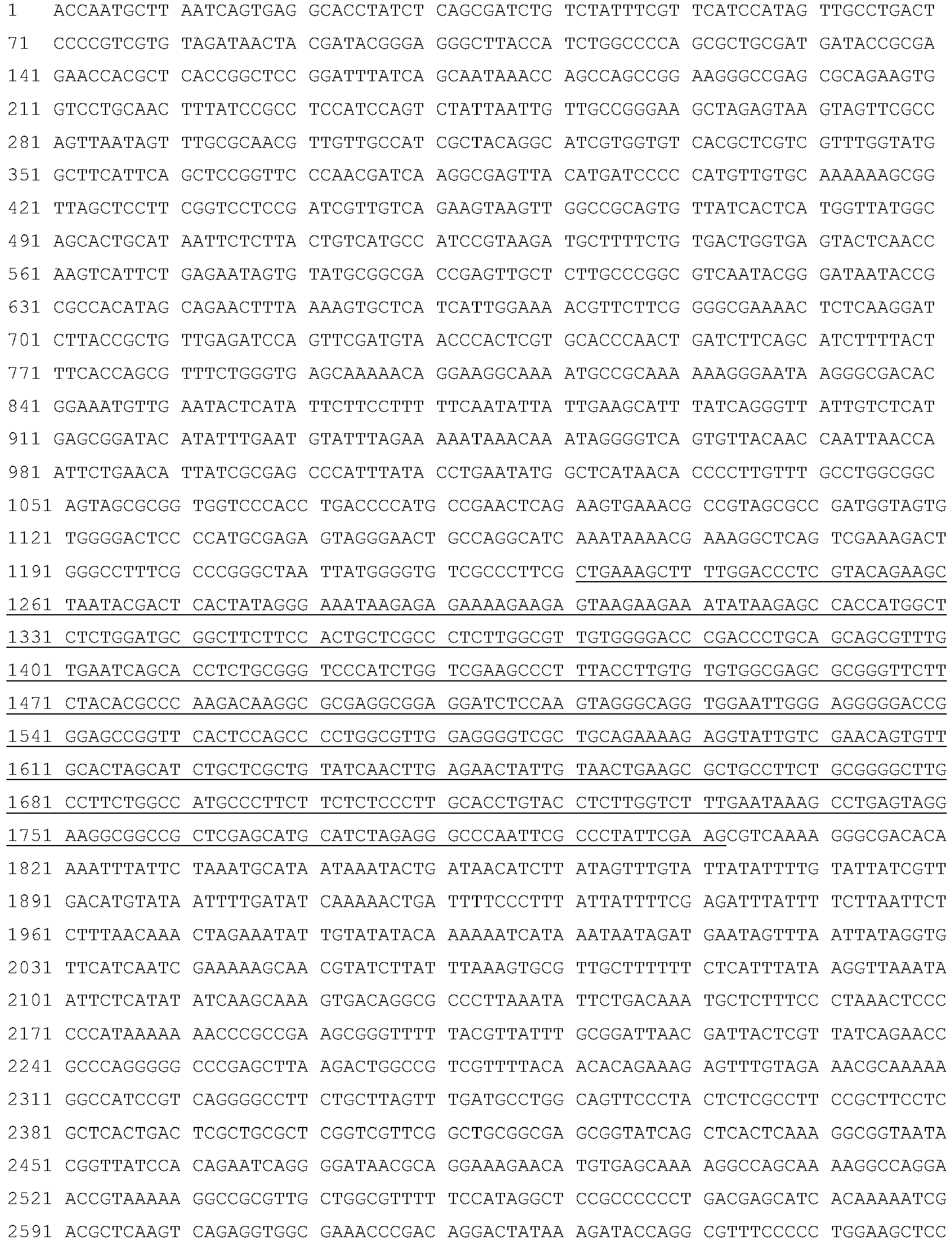

- Mouse Insulin (underlined) in pJ204 (SEQ ID NO: 7):
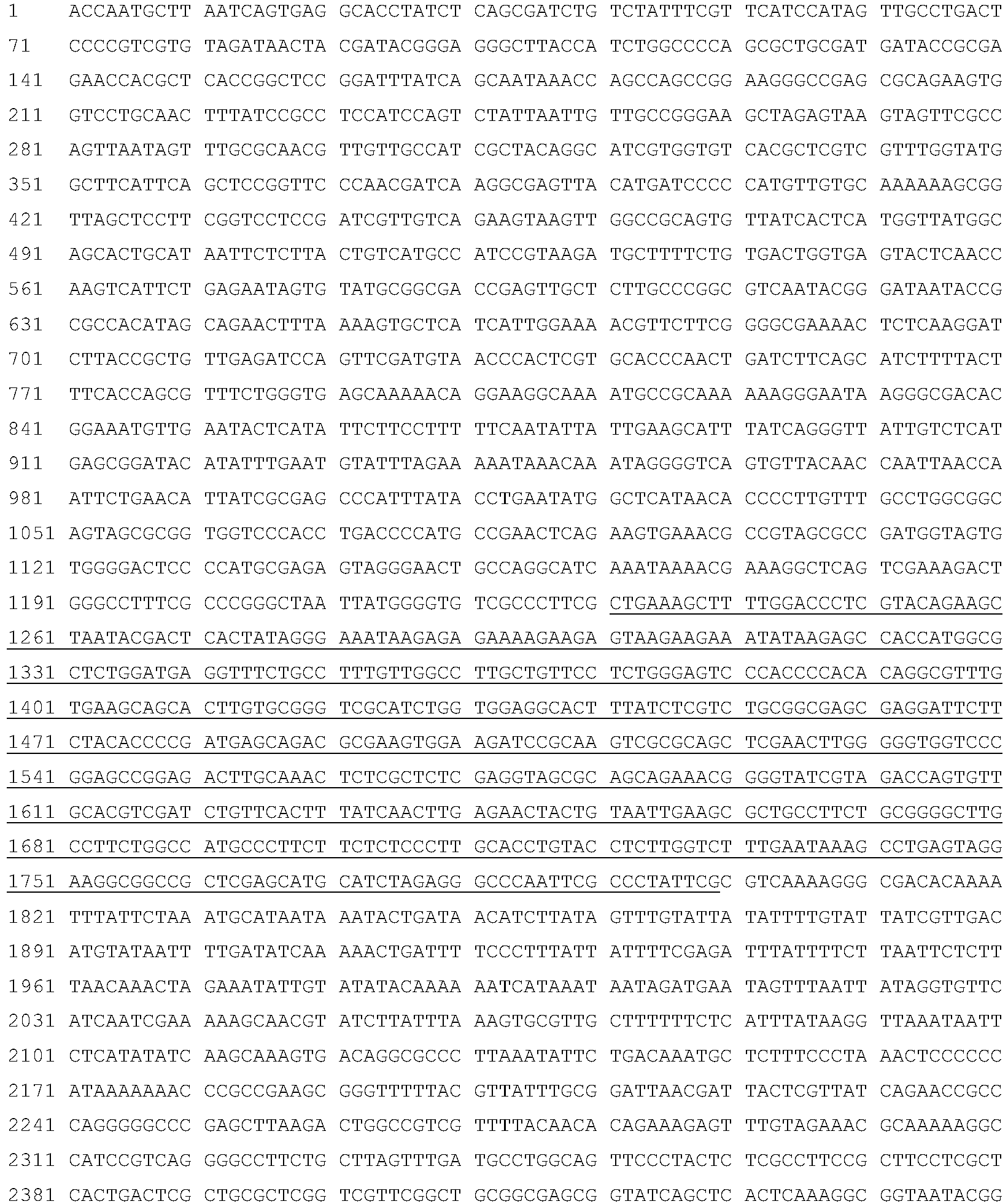

- Human alpha-MSH (underlined) in pJ204 (SEQ ID NO: 8):


Claims (13)
- A pharmaceutical formulation comprising:i) an effective amount of a synthetic messenger ribonucleic acid (mRNA) encoding a granulocyte colony-stimulating factor (G-CSF) polypeptide or an insulin polypeptide, said mRNA comprising at least two nucleoside modifications; andii) a pharmaceutically acceptable carrier,
wherein i) the mRNA comprises pseudouridine, 5-methyl-cytidine or a combination thereof, or ii) wherein the mRNA does not comprise a substantial amount of a nucleotide or nucleotides selected from the group consisting of cytidine, and a combination of uridine and cytidine,
and wherein the formulation is for use in a therapeutic method comprising repeated intravenous administration of said formulation to a mammalian subject in need thereof. - The pharmaceutical formulation of claim 1 for the use of claim 1, wherein said encoded G-CSF polypeptide comprises:a) the amino acid sequence of SEQ ID NOs: 13 or 14;b) an amino acid sequence at least 95% identical to SEQ ID NOs: 13 or 14;c) a fragment of SEQ ID NOs: 13 or 14;d) the amino acid sequence encoded by the nucleic acid of SEQ ID NO: 2 or SEQ ID NO: 17; ore) the amino acid sequence encoded by a nucleic acid at least 95% identical to SEQ ID NO: 2 or SEQ ID NO: 17.
- The pharmaceutical formulation of claim 1 for the use of claim 1, further comprising a lipid-based transfection reagent.
- The pharmaceutical formulation of claim 1 for the use of claim 1, wherein the mRNA lacks at least one destabilizing element.
- A kit comprising the pharmaceutical formulation of claim 1 and AMD3100 (1,1 '-[1,4-phenylene-bis(methylene)]-bis-1,4,8,11-tetraazacyclotetradecane), in one or more containers, and instructions for use thereof.
- The pharmaceutical formulation of claim 1 for the use of claim 1 consisting essentially of:i) an effective amount of a synthetic messenger ribonucleic acid (mRNA) encoding a granulocyte colony-stimulating factor (G-CSF) polypeptide;ii) a cell penetration agent; andiii) a pharmaceutically acceptable carrier,
wherein i) the mRNA comprises pseudouridine, 5'methyl-cytidine or a combination thereof, or ii) wherein the mRNA does not comprise a substantial amount of a nucleotide or nucleotides selected from the group consisting of cytidine, and a combination of uridine and cytidine, and
wherein the formulation is suitable for repeated intravenous administration to a mammalian subject in need thereof. - A composition comprising a synthetic messenger ribonucleic acid (mRNA) as defined as in claim 1, for use in the method as defined in claim 1, wherein said method is for obtaining progenitor and/or stem cells from a mammalian subject, said method comprising the steps of: (a) administering to the subject said composition in an amount effective to mobilize the progenitor and/or stem cells into the peripheral blood of the subject; followed by (b) harvesting the progenitor and/or stem cells.
- The composition of claim 7 for the use of claim 7 wherein the mRNA or a pharmaceutically acceptable salt thereof is administered to the subject in the dosage range of about 1.0 µg/kg- 100 mg/kg of body weight.
- The composition of claim 7 for the use of claim 7, wherein the subject is human.
- The composition of claim 7 for the use of claim 7, wherein the composition is administered to the subject by an intravenous route.
- The composition of claim 7 for the use of claim 7, further comprising the step of administering an effective amount of AMD3100 (1,1'-[1,4-phenylene-bis(methylene)]-bis-1,4,8,11-tetraazacyclotetradecane) to the subject after administering the composition, wherein optionally the composition is administered at least twice but fewer than ten times prior to administering the AMD3100.
- The composition of claim 7 for the use of claim 7, wherein the composition further comprises a synthetic messenger ribonucleic acid (mRNA) encoding i) a macrophage inflammatory protein (MIP) polypeptide or ii) an antibody that prevents EGF binding by EGFR.
- An amount of a synthetic messenger ribonucleic acid (mRNA) as defined as in claim 1 effective to enhance mobilization of hematopoietic stem cells and progenitor cells (HSPC), and an effective amount of AMD3100 (1,1'-[1,4-phenylene-bis(methylene)]-bis-1,4,8,11-tetraazacyclotetradecane), for use in a the method as defined in claim 1, wherein said method is an improved regimen for mobilizing hematopoietic stem and progenitor cells in a mammalian subject in need thereof.
Priority Applications (1)
| Application Number | Priority Date | Filing Date | Title |
|---|---|---|---|
| EP19165276.7A EP3578205A1 (en) | 2010-08-06 | 2011-08-05 | A pharmaceutical formulation comprising engineered nucleic acids and medical use thereof |
Applications Claiming Priority (2)
| Application Number | Priority Date | Filing Date | Title |
|---|---|---|---|
| US40105210P | 2010-08-06 | 2010-08-06 | |
| PCT/US2011/046861 WO2012019168A2 (en) | 2010-08-06 | 2011-08-05 | Engineered nucleic acids and methods of use thereof |
Related Child Applications (1)
| Application Number | Title | Priority Date | Filing Date |
|---|---|---|---|
| EP19165276.7A Division EP3578205A1 (en) | 2010-08-06 | 2011-08-05 | A pharmaceutical formulation comprising engineered nucleic acids and medical use thereof |
Publications (3)
| Publication Number | Publication Date |
|---|---|
| EP2600901A2 EP2600901A2 (en) | 2013-06-12 |
| EP2600901A4 EP2600901A4 (en) | 2014-07-16 |
| EP2600901B1 true EP2600901B1 (en) | 2019-03-27 |
Family
ID=45560107
Family Applications (2)
| Application Number | Title | Priority Date | Filing Date |
|---|---|---|---|
| EP11815407.9A Active EP2600901B1 (en) | 2010-08-06 | 2011-08-05 | A pharmaceutical formulation comprising engineered nucleic acids and medical use thereof |
| EP19165276.7A Withdrawn EP3578205A1 (en) | 2010-08-06 | 2011-08-05 | A pharmaceutical formulation comprising engineered nucleic acids and medical use thereof |
Family Applications After (1)
| Application Number | Title | Priority Date | Filing Date |
|---|---|---|---|
| EP19165276.7A Withdrawn EP3578205A1 (en) | 2010-08-06 | 2011-08-05 | A pharmaceutical formulation comprising engineered nucleic acids and medical use thereof |
Country Status (4)
| Country | Link |
|---|---|
| US (6) | US8822663B2 (en) |
| EP (2) | EP2600901B1 (en) |
| CA (1) | CA2807552A1 (en) |
| WO (1) | WO2012019168A2 (en) |
Families Citing this family (247)
| Publication number | Priority date | Publication date | Assignee | Title |
|---|---|---|---|---|
| US9012219B2 (en) | 2005-08-23 | 2015-04-21 | The Trustees Of The University Of Pennsylvania | RNA preparations comprising purified modified RNA for reprogramming cells |
| EP4174179B1 (en) | 2005-08-23 | 2025-05-07 | The Trustees of the University of Pennsylvania | Rna containing modified nucleosides and methods of use thereof |
| DE102005046490A1 (en) | 2005-09-28 | 2007-03-29 | Johannes-Gutenberg-Universität Mainz | New nucleic acid molecule comprising promoter, a transcriptable nucleic acid sequence, a first and second nucleic acid sequence for producing modified RNA with transcriptional stability and translational efficiency |
| ES2666559T3 (en) | 2009-12-01 | 2018-05-07 | Translate Bio, Inc. | Delivery of mrna for the augmentation of proteins and enzymes in human genetic diseases |
| KR102171849B1 (en) | 2009-12-07 | 2020-10-30 | 더 트러스티스 오브 더 유니버시티 오브 펜실바니아 | Rna preparations comprising purified modified rna for reprogramming cells |
| US9006417B2 (en) | 2010-06-30 | 2015-04-14 | Protiva Biotherapeutics, Inc. | Non-liposomal systems for nucleic acid delivery |
| LT3243526T (en) | 2010-07-06 | 2020-02-10 | Glaxosmithkline Biologicals S.A. | Delivery of rna to trigger multiple immune pathways |
| BR112013000244A2 (en) | 2010-07-06 | 2016-05-17 | Novartis Ag | lipid liposomes having advantageous pka for administration of rna |
| PT2591114T (en) | 2010-07-06 | 2016-08-02 | Glaxosmithkline Biologicals Sa | Immunisation of large mammals with low doses of rna |
| EP2600901B1 (en) | 2010-08-06 | 2019-03-27 | ModernaTX, Inc. | A pharmaceutical formulation comprising engineered nucleic acids and medical use thereof |
| EP4066857B1 (en) | 2010-08-31 | 2022-12-21 | GlaxoSmithKline Biologicals SA | Pegylated liposomes for delivery of immunogen-encoding rna |
| CN104531812A (en) | 2010-10-01 | 2015-04-22 | 现代治疗公司 | Engineered nucleic acids and methods of use thereof |
| EP3520813B1 (en) | 2010-10-11 | 2023-04-19 | GlaxoSmithKline Biologicals S.A. | Antigen delivery platforms |
| WO2012075040A2 (en) | 2010-11-30 | 2012-06-07 | Shire Human Genetic Therapies, Inc. | mRNA FOR USE IN TREATMENT OF HUMAN GENETIC DISEASES |
| US8710200B2 (en) | 2011-03-31 | 2014-04-29 | Moderna Therapeutics, Inc. | Engineered nucleic acids encoding a modified erythropoietin and their expression |
| BR112013031553A2 (en) | 2011-06-08 | 2020-11-10 | Shire Human Genetic Therapies, Inc. | compositions, mrna encoding a gland and its use, use of at least one mrna molecule and a vehicle for transfer and use of an mrna encoding for exogenous protein |
| US11896636B2 (en) | 2011-07-06 | 2024-02-13 | Glaxosmithkline Biologicals Sa | Immunogenic combination compositions and uses thereof |
| US10323236B2 (en) | 2011-07-22 | 2019-06-18 | President And Fellows Of Harvard College | Evaluation and improvement of nuclease cleavage specificity |
| US9464124B2 (en) | 2011-09-12 | 2016-10-11 | Moderna Therapeutics, Inc. | Engineered nucleic acids and methods of use thereof |
| BR112014007852B1 (en) | 2011-10-03 | 2021-11-03 | Moderna Therapeutics, Inc | MODIFIED ISOLATED POLYNUCLEOTIDE AND PHARMACEUTICAL COMPOSITION |
| JP6073916B2 (en) | 2011-12-05 | 2017-02-01 | ファクター バイオサイエンス インコーポレイテッド | Methods and products for transfecting cells |
| US8497124B2 (en) | 2011-12-05 | 2013-07-30 | Factor Bioscience Inc. | Methods and products for reprogramming cells to a less differentiated state |
| US20140343129A1 (en) * | 2011-12-14 | 2014-11-20 | Moderna Therapeutics, Inc. | Modified nucleic acids, and acute care uses thereof |
| PL2791160T3 (en) | 2011-12-16 | 2022-06-20 | Modernatx, Inc. | Modified mrna compositions |
| EP2798064B1 (en) | 2011-12-30 | 2016-08-31 | Cellscript, Llc | Making and using in vitro-synthesized ssrna for introducing into mammalian cells to induce a biological or biochemical effect |
| AU2013243949A1 (en) * | 2012-04-02 | 2014-10-30 | Moderna Therapeutics, Inc. | Modified polynucleotides for the production of biologics and proteins associated with human disease |
| US10501512B2 (en) | 2012-04-02 | 2019-12-10 | Modernatx, Inc. | Modified polynucleotides |
| HK1206779A1 (en) * | 2012-04-02 | 2016-01-15 | Modernatx, Inc. | Modified polynucleotides for the production of nuclear proteins |
| US10501513B2 (en) | 2012-04-02 | 2019-12-10 | Modernatx, Inc. | Modified polynucleotides for the production of oncology-related proteins and peptides |
| US9283287B2 (en) | 2012-04-02 | 2016-03-15 | Moderna Therapeutics, Inc. | Modified polynucleotides for the production of nuclear proteins |
| US9572897B2 (en) | 2012-04-02 | 2017-02-21 | Modernatx, Inc. | Modified polynucleotides for the production of cytoplasmic and cytoskeletal proteins |
| CA2876155C (en) | 2012-06-08 | 2022-12-13 | Ethris Gmbh | Pulmonary delivery of mrna to non-lung target cells |
| EP2859102A4 (en) | 2012-06-08 | 2016-05-11 | Shire Human Genetic Therapies | Nuclease resistant polynucleotides and uses thereof |
| US9512456B2 (en) | 2012-08-14 | 2016-12-06 | Modernatx, Inc. | Enzymes and polymerases for the synthesis of RNA |
| AU2013337651B2 (en) | 2012-11-01 | 2018-12-13 | Factor Bioscience Inc. | Methods and products for expressing proteins in cells |
| DK2922554T3 (en) * | 2012-11-26 | 2022-05-23 | Modernatx Inc | Terminalt modificeret rna |
| AU2013374345A1 (en) | 2013-01-17 | 2015-08-06 | Moderna Therapeutics, Inc. | Signal-sensor polynucleotides for the alteration of cellular phenotypes |
| HK1220122A1 (en) * | 2013-03-09 | 2017-04-28 | Modernatx, Inc. | Heterologous untranslated regions for mrna |
| EP2968391A1 (en) | 2013-03-13 | 2016-01-20 | Moderna Therapeutics, Inc. | Long-lived polynucleotide molecules |
| EP2971010B1 (en) | 2013-03-14 | 2020-06-10 | ModernaTX, Inc. | Formulation and delivery of modified nucleoside, nucleotide, and nucleic acid compositions |
| HUE055044T2 (en) | 2013-03-14 | 2021-10-28 | Translate Bio Inc | Methods and compositions for delivering mrna coded antibodies |
| EP4446413A3 (en) | 2013-03-14 | 2024-12-18 | Translate Bio, Inc. | Methods for purification of messenger rna |
| WO2014153052A2 (en) | 2013-03-14 | 2014-09-25 | Shire Human Genetic Therapies, Inc. | Cftr mrna compositions and related methods and uses |
| US10077439B2 (en) | 2013-03-15 | 2018-09-18 | Modernatx, Inc. | Removal of DNA fragments in mRNA production process |
| WO2014144767A1 (en) | 2013-03-15 | 2014-09-18 | Moderna Therapeutics, Inc. | Ion exchange purification of mrna |
| US11377470B2 (en) | 2013-03-15 | 2022-07-05 | Modernatx, Inc. | Ribonucleic acid purification |
| US10138507B2 (en) | 2013-03-15 | 2018-11-27 | Modernatx, Inc. | Manufacturing methods for production of RNA transcripts |
| US8980864B2 (en) | 2013-03-15 | 2015-03-17 | Moderna Therapeutics, Inc. | Compositions and methods of altering cholesterol levels |
| ES2795249T3 (en) | 2013-03-15 | 2020-11-23 | Translate Bio Inc | Synergistic enhancement of nucleic acid delivery through mixed formulations |
| DE102013005361A1 (en) | 2013-03-28 | 2014-10-02 | Eberhard Karls Universität Tübingen Medizinische Fakultät | polyribonucleotide |
| PT3019619T (en) | 2013-07-11 | 2021-11-11 | Modernatx Inc | COMPOSITIONS COMPRISING SYNTHETIC POLYNUCLEOTIDES ENCODING SYNTHETIC CRISPR AND SGARN-RELATED PROTEINS AND METHODS OF USE |
| CA2919828C (en) | 2013-07-30 | 2022-07-19 | Phaserx, Inc. | Block copolymers and their conjugates or complexes with oligonucleotides |
| US9163284B2 (en) | 2013-08-09 | 2015-10-20 | President And Fellows Of Harvard College | Methods for identifying a target site of a Cas9 nuclease |
| EP3041938A1 (en) * | 2013-09-03 | 2016-07-13 | Moderna Therapeutics, Inc. | Circular polynucleotides |
| US9340799B2 (en) | 2013-09-06 | 2016-05-17 | President And Fellows Of Harvard College | MRNA-sensing switchable gRNAs |
| US10023626B2 (en) | 2013-09-30 | 2018-07-17 | Modernatx, Inc. | Polynucleotides encoding immune modulating polypeptides |
| EP3052511A4 (en) | 2013-10-02 | 2017-05-31 | Moderna Therapeutics, Inc. | Polynucleotide molecules and uses thereof |
| WO2015051214A1 (en) | 2013-10-03 | 2015-04-09 | Moderna Therapeutics, Inc. | Polynucleotides encoding low density lipoprotein receptor |
| EP4036241A1 (en) | 2013-10-22 | 2022-08-03 | Translate Bio, Inc. | Cns delivery of mrna and uses thereof |
| CN105658242A (en) | 2013-10-22 | 2016-06-08 | 夏尔人类遗传性治疗公司 | MRNA therapy for phenylketonuria |
| ES2707966T3 (en) | 2013-10-22 | 2019-04-08 | Translate Bio Inc | MRNA therapy for the deficiency in argininosuccinate synthesis |
| AU2014340155B2 (en) | 2013-10-22 | 2018-11-01 | Massachusetts Institute Of Technology | Lipid formulations for delivery of messenger RNA |
| KR102726294B1 (en) | 2014-01-31 | 2024-11-06 | 팩터 바이오사이언스 인크. | Methods and products for nucleic acid production and delivery |
| PL3981437T3 (en) | 2014-04-23 | 2025-02-24 | Modernatx, Inc. | Nucleic acid vaccines |
| CN106164248B (en) | 2014-04-25 | 2019-10-15 | 川斯勒佰尔公司 | Purification of messenger RNA |
| CN106659731A (en) | 2014-05-30 | 2017-05-10 | 夏尔人类遗传性治疗公司 | Topical compositions and methods for treating wounds |
| EP3157573A4 (en) | 2014-06-19 | 2018-02-21 | Moderna Therapeutics, Inc. | Alternative nucleic acid molecules and uses thereof |
| JP6599373B2 (en) | 2014-06-24 | 2019-10-30 | シャイアー ヒューマン ジェネティック セラピーズ インコーポレイテッド | Stereochemically enriched compositions for delivery of nucleic acids |
| US9668980B2 (en) | 2014-07-02 | 2017-06-06 | Rana Therapeutics, Inc. | Encapsulation of messenger RNA |
| EP3169335B8 (en) | 2014-07-16 | 2019-10-09 | ModernaTX, Inc. | Circular polynucleotides |
| US10077453B2 (en) | 2014-07-30 | 2018-09-18 | President And Fellows Of Harvard College | CAS9 proteins including ligand-dependent inteins |
| EP3226912B1 (en) | 2014-12-05 | 2021-01-20 | Translate Bio, Inc. | Messenger rna therapy for treatment of articular disease |
| IL253149B2 (en) | 2014-12-29 | 2023-11-01 | Novartis Ag | Methods for preparing cells expressing a chimeric receptor antigen |
| WO2016118697A1 (en) | 2015-01-21 | 2016-07-28 | Phaserx, Inc. | Methods, compositions, and systems for delivering therapeutic and diagnostic agents into cells |
| EP3543339A1 (en) | 2015-02-13 | 2019-09-25 | Factor Bioscience Inc. | Nucleic acid products and methods of administration thereof |
| US10758558B2 (en) | 2015-02-13 | 2020-09-01 | Translate Bio Ma, Inc. | Hybrid oligonucleotides and uses thereof |
| JP6895892B2 (en) | 2015-03-19 | 2021-06-30 | トランスレイト バイオ, インコーポレイテッド | MRNA treatment for Pompe disease |
| CA2981708C (en) | 2015-04-03 | 2024-09-10 | Propagenix Inc. | Ex vivo proliferation of epithelial cells |
| JP7114457B2 (en) | 2015-04-17 | 2022-08-08 | ザ トラスティーズ オブ ザ ユニバーシティ オブ ペンシルバニア | Methods for Improving Efficacy and Growth of Chimeric Antigen Receptor-Expressing Cells |
| SG11201708681SA (en) * | 2015-04-30 | 2017-11-29 | Curevac Ag | Method for in vitro transcription using an immobilized restriction enzyme |
| AU2016297014B2 (en) | 2015-07-21 | 2021-06-17 | Novartis Ag | Methods for improving the efficacy and expansion of immune cells |
| US11364292B2 (en) | 2015-07-21 | 2022-06-21 | Modernatx, Inc. | CHIKV RNA vaccines |
| ES2937963T3 (en) | 2015-07-21 | 2023-04-03 | Modernatx Inc | Infectious disease vaccines |
| HK1256498A1 (en) | 2015-07-30 | 2019-09-27 | Modernatx, Inc. | Concatemeric peptide epitope rnas |
| US11564893B2 (en) | 2015-08-17 | 2023-01-31 | Modernatx, Inc. | Methods for preparing particles and related compositions |
| DK3347450T3 (en) * | 2015-09-11 | 2021-05-31 | Propagenix Inc | EX VIVO PROLIFERATION OF EPITHEL CELLS |
| AU2016324463B2 (en) | 2015-09-17 | 2022-10-27 | Modernatx, Inc. | Polynucleotides containing a stabilizing tail region |
| WO2017049286A1 (en) | 2015-09-17 | 2017-03-23 | Moderna Therapeutics, Inc. | Polynucleotides containing a morpholino linker |
| ES2810701T5 (en) | 2015-10-05 | 2024-07-11 | Modernatx Inc | Procedures for the therapeutic administration of messenger ribonucleic acid drugs |
| WO2017066573A1 (en) | 2015-10-14 | 2017-04-20 | Shire Human Genetic Therapies, Inc. | Modification of rna-related enzymes for enhanced production |
| MA46080A (en) | 2015-10-22 | 2019-07-10 | Modernatx Inc | NUCLEIC ACID VACCINES AGAINST VARICELLA ZONA VIRUS (VZV) |
| MA46316A (en) | 2015-10-22 | 2021-03-24 | Modernatx Inc | HUMAN CYTOMEGALOVIRUS VACCINE |
| AU2016342376A1 (en) | 2015-10-22 | 2018-06-07 | Modernatx, Inc. | Sexually transmitted disease vaccines |
| WO2017070624A1 (en) | 2015-10-22 | 2017-04-27 | Modernatx, Inc. | Tropical disease vaccines |
| EP4349404A3 (en) | 2015-10-22 | 2024-06-19 | ModernaTX, Inc. | Respiratory virus vaccines |
| US10167457B2 (en) | 2015-10-23 | 2019-01-01 | President And Fellows Of Harvard College | Nucleobase editors and uses thereof |
| EP3368089B1 (en) | 2015-10-26 | 2025-11-05 | Translate Bio Ma, Inc. | Nanoparticle formulations for delivery of nucleic acid complexes |
| LT3386484T (en) | 2015-12-10 | 2022-06-10 | Modernatx, Inc. | Compositions and methods for delivery of therapeutic agents |
| SI3394093T1 (en) | 2015-12-23 | 2022-05-31 | Modernatx, Inc. | Methods of using ox40 ligand encoding polynucleotides |
| US10465190B1 (en) | 2015-12-23 | 2019-11-05 | Modernatx, Inc. | In vitro transcription methods and constructs |
| SG11201805449PA (en) | 2015-12-28 | 2018-07-30 | Novartis Ag | Methods of making chimeric antigen receptor -expressing cells |
| WO2017123242A1 (en) * | 2016-01-15 | 2017-07-20 | Ding Enyu | A universal nucleic acid drug vector enhancing mrna stability and translatability |
| US10407469B2 (en) | 2016-04-01 | 2019-09-10 | Northwestern University | Programmable polypeptide and nucleic acid nanoparticles |
| CA3020343A1 (en) | 2016-04-08 | 2017-10-12 | Translate Bio, Inc. | Multimeric coding nucleic acid and uses thereof |
| WO2017201342A1 (en) | 2016-05-18 | 2017-11-23 | Modernatx, Inc. | Polynucleotides encoding jagged1 for the treatment of alagille syndrome |
| JP7088911B2 (en) | 2016-05-18 | 2022-06-21 | モデルナティエックス インコーポレイテッド | Polynucleotide encoding relaxin |
| US10835583B2 (en) | 2016-06-13 | 2020-11-17 | Translate Bio, Inc. | Messenger RNA therapy for the treatment of ornithine transcarbamylase deficiency |
| US12385034B2 (en) | 2016-06-24 | 2025-08-12 | Modernatx, Inc. | Methods and apparatus for filtration |
| MX2019000205A (en) | 2016-07-07 | 2019-09-23 | Rubius Therapeutics Inc | Compositions and methods related to therapeutic cell systems expressing exogenous rna. |
| KR20250103795A (en) | 2016-08-03 | 2025-07-07 | 프레지던트 앤드 펠로우즈 오브 하바드 칼리지 | Adenosine nucleobase editors and uses thereof |
| EP3497214B1 (en) | 2016-08-09 | 2023-06-28 | President and Fellows of Harvard College | Programmable cas9-recombinase fusion proteins and uses thereof |
| JP2019528284A (en) | 2016-08-17 | 2019-10-10 | ファクター バイオサイエンス インコーポレイテッド | Nucleic acid product and method of administration thereof |
| JP7308143B2 (en) | 2016-08-19 | 2023-07-13 | ホワイトヘッド・インスティテュート・フォー・バイオメディカル・リサーチ | Methods for Editing DNA Methylation |
| WO2018039438A1 (en) | 2016-08-24 | 2018-03-01 | President And Fellows Of Harvard College | Incorporation of unnatural amino acids into proteins using base editing |
| CA3035910A1 (en) | 2016-09-07 | 2018-03-15 | Flagship Pioneering, Inc. | Methods and compositions for modulating gene expression |
| AU2017326423B2 (en) | 2016-09-14 | 2023-11-09 | Modernatx, Inc. | High purity RNA compositions and methods for preparation thereof |
| AU2017342543B2 (en) | 2016-10-14 | 2024-06-27 | President And Fellows Of Harvard College | AAV delivery of nucleobase editors |
| EP3528821A4 (en) | 2016-10-21 | 2020-07-01 | ModernaTX, Inc. | VACCINE AGAINST THE HUMANE CYTOMEGALOVIRUS |
| US10925958B2 (en) | 2016-11-11 | 2021-02-23 | Modernatx, Inc. | Influenza vaccine |
| ES3035746T3 (en) * | 2016-11-23 | 2025-09-08 | Mayo Found Medical Education & Res | Particle-mediated delivery of inhibitory rna |
| WO2018107088A2 (en) | 2016-12-08 | 2018-06-14 | Modernatx, Inc. | Respiratory virus nucleic acid vaccines |
| EP3551218A4 (en) | 2016-12-12 | 2020-12-09 | Whitehead Institute for Biomedical Research | REGULATION OF TRANSCRIPTION BY CTCF LOOP ANCHORS |
| EP3555289A1 (en) | 2016-12-13 | 2019-10-23 | ModernaTX, Inc. | Rna affinity purification |
| US10745677B2 (en) | 2016-12-23 | 2020-08-18 | President And Fellows Of Harvard College | Editing of CCR5 receptor gene to protect against HIV infection |
| WO2018126084A1 (en) | 2016-12-30 | 2018-07-05 | Phaserx, Inc. | Branched peg molecules and related compositions and methods |
| EP3565891B1 (en) | 2017-01-09 | 2023-04-12 | Whitehead Institute for Biomedical Research | Methods of altering gene expression by perturbing transcription factor multimers that structure regulatory loops |
| US10093706B2 (en) | 2017-01-30 | 2018-10-09 | Indiana University Research And Technology Corporation | Dominant positive hnRNP-E1 polypeptide compositions and methods |
| WO2018151816A1 (en) | 2017-02-16 | 2018-08-23 | Modernatx, Inc. | High potency immunogenic compositions |
| MX2019010155A (en) | 2017-02-27 | 2020-12-10 | Translate Bio Inc | Novel codon-optimized cftr mrna. |
| US12390514B2 (en) | 2017-03-09 | 2025-08-19 | President And Fellows Of Harvard College | Cancer vaccine |
| EP3592853A1 (en) | 2017-03-09 | 2020-01-15 | President and Fellows of Harvard College | Suppression of pain by gene editing |
| US11542496B2 (en) | 2017-03-10 | 2023-01-03 | President And Fellows Of Harvard College | Cytosine to guanine base editor |
| US11752206B2 (en) | 2017-03-15 | 2023-09-12 | Modernatx, Inc. | Herpes simplex virus vaccine |
| US11576961B2 (en) | 2017-03-15 | 2023-02-14 | Modernatx, Inc. | Broad spectrum influenza virus vaccine |
| US11045540B2 (en) | 2017-03-15 | 2021-06-29 | Modernatx, Inc. | Varicella zoster virus (VZV) vaccine |
| EP3595713A4 (en) | 2017-03-15 | 2021-01-13 | ModernaTX, Inc. | RESPIRATORY SYNCYTIAL VIRUS VACCINE |
| EP3595676A4 (en) | 2017-03-17 | 2021-05-05 | Modernatx, Inc. | RNA-BASED VACCINES AGAINST ZOONOTIC DISEASES |
| BR112019019655A2 (en) | 2017-03-23 | 2020-04-22 | Harvard College | nucleobase editors comprising nucleic acid programmable dna binding proteins |
| JP7303743B2 (en) | 2017-04-05 | 2023-07-05 | アスガード セラピューティクス エービー | Compositions, methods and uses thereof for reprogramming cells into dendritic cells or antigen-presenting cells |
| US11905525B2 (en) | 2017-04-05 | 2024-02-20 | Modernatx, Inc. | Reduction of elimination of immune responses to non-intravenous, e.g., subcutaneously administered therapeutic proteins |
| EP3385373A1 (en) | 2017-04-05 | 2018-10-10 | Centro de Neurociências e Biologia Celular | Compositions for reprogramming cells into dendritic cells or antigen presenting cells, methods and uses thereof |
| CA3060514A1 (en) | 2017-04-20 | 2018-10-25 | Atyr Pharma, Inc. | Compositions and methods for treating lung inflammation |
| WO2018209320A1 (en) | 2017-05-12 | 2018-11-15 | President And Fellows Of Harvard College | Aptazyme-embedded guide rnas for use with crispr-cas9 in genome editing and transcriptional activation |
| WO2018213476A1 (en) | 2017-05-16 | 2018-11-22 | Translate Bio, Inc. | Treatment of cystic fibrosis by delivery of codon-optimized mrna encoding cftr |
| MA49421A (en) | 2017-06-15 | 2020-04-22 | Modernatx Inc | RNA FORMULATIONS |
| US11732274B2 (en) | 2017-07-28 | 2023-08-22 | President And Fellows Of Harvard College | Methods and compositions for evolving base editors using phage-assisted continuous evolution (PACE) |
| EP3668971B8 (en) | 2017-08-18 | 2024-05-29 | ModernaTX, Inc. | Rna polymerase variants |
| WO2019036685A1 (en) | 2017-08-18 | 2019-02-21 | Modernatx, Inc. | Methods for hplc analysis |
| EP3668977A4 (en) | 2017-08-18 | 2021-04-21 | Modernatx, Inc. | Analytical hplc methods |
| US11319532B2 (en) | 2017-08-30 | 2022-05-03 | President And Fellows Of Harvard College | High efficiency base editors comprising Gam |
| WO2019046809A1 (en) | 2017-08-31 | 2019-03-07 | Modernatx, Inc. | Methods of making lipid nanoparticles |
| WO2019055807A1 (en) | 2017-09-14 | 2019-03-21 | Modernatx, Inc. | Zika virus rna vaccines |
| AU2018352592C1 (en) | 2017-10-16 | 2025-09-25 | Beam Therapeutics, Inc. | Uses of adenosine base editors |
| CA3078270A1 (en) | 2017-10-25 | 2019-05-02 | Novartis Ag | Methods of making chimeric antigen receptor-expressing cells |
| US12406749B2 (en) | 2017-12-15 | 2025-09-02 | The Broad Institute, Inc. | Systems and methods for predicting repair outcomes in genetic engineering |
| US11167043B2 (en) | 2017-12-20 | 2021-11-09 | Translate Bio, Inc. | Composition and methods for treatment of ornithine transcarbamylase deficiency |
| EP3746090A4 (en) | 2018-01-29 | 2021-11-17 | ModernaTX, Inc. | RSV RNA VACCINES |
| US12157760B2 (en) | 2018-05-23 | 2024-12-03 | The Broad Institute, Inc. | Base editors and uses thereof |
| EP3802790A4 (en) | 2018-06-07 | 2022-03-23 | The Brigham and Women's Hospital, Inc. | METHODS FOR GENERATION OF HEMATOPOIETIC STEM CELLS |
| US12522807B2 (en) | 2018-07-09 | 2026-01-13 | The Broad Institute, Inc. | RNA programmable epigenetic RNA modifiers and uses thereof |
| CN112512559B (en) | 2018-07-26 | 2025-02-28 | Atyr医药公司 | Compositions and methods for treating NRP2-related diseases |
| KR20210060480A (en) | 2018-08-24 | 2021-05-26 | 트랜슬레이트 바이오 인코포레이티드 | Method for purifying messenger RNA |
| CA3111076A1 (en) | 2018-08-30 | 2020-03-05 | Tenaya Therapeutics, Inc. | Cardiac cell reprogramming with myocardin and ascl1 |
| EP3844267B1 (en) | 2018-08-31 | 2025-06-25 | Novartis AG | Methods of making chimeric antigen receptor-expressing cells |
| EP3844265A2 (en) | 2018-08-31 | 2021-07-07 | Novartis AG | Methods of making chimeric antigen receptor-expressing cells |
| MA53608A (en) * | 2018-09-13 | 2021-07-21 | Modernatx Inc | POLYNUCLEOTIDES ENCODED FOR THE E1-ALPHA, E1-BETA AND E2 SUBUNITS OF THE BRANCHED-CHAIN ALPHA-KETOACID DEHYDROGENASE COMPLEX FOR THE TREATMENT OF LEUCINOSIS |
| CA3113025A1 (en) | 2018-09-19 | 2020-03-26 | Modernatx, Inc. | Peg lipids and uses thereof |
| JP7640452B2 (en) | 2018-09-19 | 2025-03-05 | モデルナティエックス インコーポレイテッド | Highly pure PEGylated lipids and their uses |
| CA3113651A1 (en) | 2018-09-20 | 2020-03-26 | Modernatx, Inc. | Preparation of lipid nanoparticles and methods of administration thereof |
| US12331320B2 (en) | 2018-10-10 | 2025-06-17 | The Research Foundation For The State University Of New York | Genome edited cancer cell vaccines |
| WO2020092453A1 (en) | 2018-10-29 | 2020-05-07 | The Broad Institute, Inc. | Nucleobase editors comprising geocas9 and uses thereof |
| CA3120647A1 (en) | 2018-11-21 | 2020-05-28 | Translate Bio, Inc. | Treatment of cystic fibrosis by delivery of nebulized mrna encoding cftr |
| US12042527B2 (en) | 2019-01-08 | 2024-07-23 | Modernatx, Inc. | Use of mRNAs encoding OX40L, IL-23 and IL-36gamma in combination with immune checkpoint blockade for treating particular cancers |
| US12351837B2 (en) | 2019-01-23 | 2025-07-08 | The Broad Institute, Inc. | Supernegatively charged proteins and uses thereof |
| US11351242B1 (en) | 2019-02-12 | 2022-06-07 | Modernatx, Inc. | HMPV/hPIV3 mRNA vaccine composition |
| CN113795579A (en) | 2019-02-20 | 2021-12-14 | 摩登纳特斯有限公司 | RNA polymerase variants for co-transcriptional capping |
| US11851694B1 (en) | 2019-02-20 | 2023-12-26 | Modernatx, Inc. | High fidelity in vitro transcription |
| EP3938507A4 (en) | 2019-03-11 | 2023-02-22 | ModernaTX, Inc. | Fed-batch in vitro transcription process |
| US12070495B2 (en) | 2019-03-15 | 2024-08-27 | Modernatx, Inc. | HIV RNA vaccines |
| CN114127285B (en) | 2019-03-19 | 2024-09-10 | 布罗德研究所股份有限公司 | Methods and compositions for editing nucleotide sequences |
| WO2020210678A1 (en) | 2019-04-12 | 2020-10-15 | Novartis Ag | Methods of making chimeric antigen receptor-expressing cells |
| EP3956349A1 (en) | 2019-04-17 | 2022-02-23 | The Broad Institute, Inc. | Adenine base editors with reduced off-target effects |
| CN114450265B (en) | 2019-07-03 | 2024-12-24 | 菲克特生物科学股份有限公司 | Cationic lipids and their uses |
| US20230137971A1 (en) | 2019-07-11 | 2023-05-04 | Tenaya Therapeutics Inc. | Cardiac cell reprogramming with micrornas and other factors |
| US10501404B1 (en) | 2019-07-30 | 2019-12-10 | Factor Bioscience Inc. | Cationic lipids and transfection methods |
| WO2021061815A1 (en) | 2019-09-23 | 2021-04-01 | Omega Therapeutics, Inc. | COMPOSITIONS AND METHODS FOR MODULATING HEPATOCYTE NUCLEAR FACTOR 4-ALPHA (HNF4α) GENE EXPRESSION |
| US12435330B2 (en) | 2019-10-10 | 2025-10-07 | The Broad Institute, Inc. | Methods and compositions for prime editing RNA |
| KR20220105161A (en) | 2019-11-25 | 2022-07-26 | 아스가르드 테라퓨틱스 아베 | Compositions, methods and uses for reprogramming cells into type 2 dendritic cell components for antigen presentation |
| CA3163104A1 (en) | 2019-11-26 | 2021-06-03 | Novartis Ag | Chimeric antigen receptors and uses thereof |
| MX2022010685A (en) | 2020-02-27 | 2022-09-23 | Novartis Ag | Methods of making chimeric antigen receptor-expressing cells. |
| CN115552022A (en) | 2020-03-02 | 2022-12-30 | 特纳亚治疗股份有限公司 | MicroRNA-controlled gene vector expressed by cardiac muscle cells |
| EP4135739A4 (en) * | 2020-04-15 | 2024-05-15 | Cartesian Therapeutics, Inc. | MANIPULATED CELLS THAT SECRET THERAPEUTIC ENZYMES |
| IL297419B2 (en) | 2020-04-22 | 2025-02-01 | BioNTech SE | Coronavirus vaccine |
| DE112021002672T5 (en) | 2020-05-08 | 2023-04-13 | President And Fellows Of Harvard College | METHODS AND COMPOSITIONS FOR EDIT BOTH STRANDS SIMULTANEOUSLY OF A DOUBLE STRANDED NUCLEOTIDE TARGET SEQUENCE |
| WO2021229502A1 (en) | 2020-05-15 | 2021-11-18 | Crispr Therapeutics Ag | Messenger rna encoding cas9 for use in genome-editing systems |
| CN112126616B (en) * | 2020-06-30 | 2022-06-07 | 电子科技大学 | Larix gmelinii protoplast separation purification and transient expression method |
| JP2023545346A (en) | 2020-08-18 | 2023-10-30 | オンチレス・ファーマ・インコーポレイテッド | Modified porcine pancreatic elastase protein |
| US11406703B2 (en) | 2020-08-25 | 2022-08-09 | Modernatx, Inc. | Human cytomegalovirus vaccine |
| CN117177766A (en) | 2020-10-26 | 2023-12-05 | 佩奇大学 | Vaccine platform |
| WO2022106860A1 (en) | 2020-11-20 | 2022-05-27 | Pécsi Tudományegyetem | Recombinant peptides for use in therapy |
| CN117295753A (en) | 2020-12-04 | 2023-12-26 | 基那奥生物公司 | Compositions and methods for delivering nucleic acids to cells |
| US12329811B2 (en) | 2021-01-11 | 2025-06-17 | Modernatx, Inc. | Seasonal RNA influenza virus vaccines |
| US11524023B2 (en) | 2021-02-19 | 2022-12-13 | Modernatx, Inc. | Lipid nanoparticle compositions and methods of formulating the same |
| US20240216530A1 (en) | 2021-03-03 | 2024-07-04 | Yale University | Compositions and Methods for Treating Skeletal Muscle Disease |
| US20220363937A1 (en) | 2021-05-14 | 2022-11-17 | Armstrong World Industries, Inc. | Stabilization of antimicrobial coatings |
| KR20240043747A (en) | 2021-07-02 | 2024-04-03 | 예일 유니버시티 | Compositions and methods for treating cancer |
| AU2022339767A1 (en) | 2021-08-30 | 2024-04-11 | Lassen Therapeutics, Inc. | Anti-il-11rα antibodies |
| US20250127917A1 (en) | 2021-08-31 | 2025-04-24 | Yale University | Compositions and methods for treating cancers |
| JP2024539512A (en) | 2021-10-22 | 2024-10-28 | セイル バイオメディシンズ インコーポレイテッド | MRNA Vaccine Compositions |
| IL312452A (en) | 2021-11-01 | 2024-06-01 | Tome Biosciences Inc | Single construct platform for simultaneous delivery of gene editing machinery and nucleic acid cargo |
| CN118488834A (en) | 2021-11-23 | 2024-08-13 | 赛欧生物医药股份有限公司 | Bacteria-derived lipid compositions and uses thereof |
| US12186387B2 (en) | 2021-11-29 | 2025-01-07 | BioNTech SE | Coronavirus vaccine |
| JP2025500373A (en) | 2021-12-20 | 2025-01-09 | セイル バイオメディシンズ インコーポレイテッド | Composition for MRNA treatment |
| US12529047B1 (en) | 2021-12-21 | 2026-01-20 | Modernatx, Inc. | mRNA quantification methods |
| WO2023122764A1 (en) | 2021-12-22 | 2023-06-29 | Tome Biosciences, Inc. | Co-delivery of a gene editor construct and a donor template |
| WO2023168401A1 (en) | 2022-03-03 | 2023-09-07 | Yale University | Compositions and methods for treating disease |
| WO2023205744A1 (en) | 2022-04-20 | 2023-10-26 | Tome Biosciences, Inc. | Programmable gene insertion compositions |
| WO2023215831A1 (en) | 2022-05-04 | 2023-11-09 | Tome Biosciences, Inc. | Guide rna compositions for programmable gene insertion |
| WO2023225670A2 (en) | 2022-05-20 | 2023-11-23 | Tome Biosciences, Inc. | Ex vivo programmable gene insertion |
| EP4532771A2 (en) | 2022-05-25 | 2025-04-09 | Flagship Pioneering Innovations VII, LLC | Compositions and methods for modulation of tumor suppressors and oncogenes |
| CA3253436A1 (en) | 2022-05-25 | 2023-11-30 | Flagship Pioneering Innovations Vii, Llc | Compositions and methods for modulation of immune responses |
| US20250319115A1 (en) | 2022-05-25 | 2025-10-16 | Flagship Pioneering Innovations Vii, Llc | Compositions and Methods for Modulating Cytokines |
| CA3253328A1 (en) | 2022-05-25 | 2023-11-30 | Flagship Pioneering Innovations Vii, Llc | Compositions and methods for modulating genetic drivers |
| CA3254388A1 (en) | 2022-05-25 | 2023-11-30 | Flagship Pioneering Innovations Vii, Llc | Compositions and methods for modulating circulating factors |
| US11878055B1 (en) | 2022-06-26 | 2024-01-23 | BioNTech SE | Coronavirus vaccine |
| WO2024020587A2 (en) | 2022-07-22 | 2024-01-25 | Tome Biosciences, Inc. | Pleiopluripotent stem cell programmable gene insertion |
| KR20250067174A (en) | 2022-09-15 | 2025-05-14 | 노파르티스 아게 | Treatment of autoimmune disorders using chimeric antigen receptor therapy |
| EP4615424A1 (en) | 2022-11-10 | 2025-09-17 | Sail Biomedicines, Inc. | Rna compositions comprising lipid nanoparticles or lipid reconstructed natural messenger packs |
| TW202430215A (en) | 2022-12-14 | 2024-08-01 | 美商旗艦先鋒創新有限責任(Vii)公司 | Compositions and methods for delivery of therapeutic agents to bone |
| WO2024138194A1 (en) | 2022-12-22 | 2024-06-27 | Tome Biosciences, Inc. | Platforms, compositions, and methods for in vivo programmable gene insertion |
| EP4646432A1 (en) | 2023-01-06 | 2025-11-12 | Lassen Therapeutics, Inc. | Anti-il-18bp antibodies |
| JP2026503273A (en) | 2023-01-06 | 2026-01-28 | ラッセン・セラピューティクス・インコーポレイテッド | Anti-IL-18BP antibody |
| AU2024212425A1 (en) | 2023-01-27 | 2025-08-07 | Sail Biomedicines, Inc. | A modified lipid composition and uses thereof |
| WO2024220712A2 (en) | 2023-04-19 | 2024-10-24 | Sail Biomedicines, Inc. | Vaccine compositions |
| CN121463947A (en) | 2023-04-19 | 2026-02-03 | 赛欧生物医药股份有限公司 | Delivery of polynucleotides from lipid nanoparticles comprising RNA and ionizable lipids |
| WO2024220752A2 (en) | 2023-04-19 | 2024-10-24 | Sail Biomedicines, Inc. | Rna therapeutic compositions |
| WO2024234006A1 (en) | 2023-05-11 | 2024-11-14 | Tome Biosciences, Inc. | Systems, compositions, and methods for targeting liver sinusodial endothelial cells (lsecs) |
| WO2024238723A1 (en) | 2023-05-16 | 2024-11-21 | Omega Therapeutics, Inc. | Methods and compositions for modulating pcsk9 expression |
| WO2024238726A1 (en) | 2023-05-16 | 2024-11-21 | Omega Therapeutics, Inc. | Methods and compositions for modulating methylation of a target gene |
| WO2025019742A1 (en) | 2023-07-19 | 2025-01-23 | Omega Therapeutics, Inc. | Methods and compositions for modulating ctnnb1 expression |
| WO2025050069A1 (en) | 2023-09-01 | 2025-03-06 | Tome Biosciences, Inc. | Programmable gene insertion using engineered integration enzymes |
| WO2025194138A1 (en) | 2024-03-14 | 2025-09-18 | Tessera Therapeutics, Inc. | St1cas9 compositions and methods for modulating a genome |
| US20250332260A1 (en) | 2024-04-10 | 2025-10-30 | Garuda Therapeutics, Inc. | Immune compatible cells for allogeneic cell therapies to cover global, ethnic, or disease-specific populations |
| EP4677108A1 (en) | 2024-04-22 | 2026-01-14 | Basecamp Research Ltd | Method and compositions for detecting off-target editing |
| WO2025224182A2 (en) | 2024-04-23 | 2025-10-30 | Basecamp Research Ltd | Single construct platform for simultaneous delivery of gene editing machinery and nucleic acid cargo |
| WO2025233431A1 (en) | 2024-05-07 | 2025-11-13 | Immatics Biotechnologies Gmbh | Heteromeric proteins comprising three heteromerization improving substitution, production, combinations and applications thereof |
| WO2025235563A1 (en) | 2024-05-07 | 2025-11-13 | Omega Therapeutics, Inc. | Epigenetic modulation for upregulation of genes |
Family Cites Families (1169)
| Publication number | Priority date | Publication date | Assignee | Title |
|---|---|---|---|---|
| US2008526A (en) | 1932-11-03 | 1935-07-16 | Wappler Frederick Charles | Method and means for treating living tissue |
| US3467096A (en) | 1966-04-12 | 1969-09-16 | Ferrell S Horn | Multiple hypodermic syringe arrangement |
| BE757653A (en) | 1969-10-21 | 1971-04-16 | Ugine Kuhlmann | NEW DRUGS DERIVED FROM NUCLEIC ACIDS AND METHODS FOR THEIR PREPARATION |
| BE786542A (en) | 1971-07-22 | 1973-01-22 | Dow Corning | SUCTION DEVICE ALLOWING TO OBTAIN CELL SAMPLES |
| US3906092A (en) | 1971-11-26 | 1975-09-16 | Merck & Co Inc | Stimulation of antibody response |
| US4270537A (en) | 1979-11-19 | 1981-06-02 | Romaine Richard A | Automatic hypodermic syringe |
| US4399216A (en) | 1980-02-25 | 1983-08-16 | The Trustees Of Columbia University | Processes for inserting DNA into eucaryotic cells and for producing proteinaceous materials |
| US4458066A (en) | 1980-02-29 | 1984-07-03 | University Patents, Inc. | Process for preparing polynucleotides |
| US5132418A (en) | 1980-02-29 | 1992-07-21 | University Patents, Inc. | Process for preparing polynucleotides |
| US4500707A (en) | 1980-02-29 | 1985-02-19 | University Patents, Inc. | Nucleosides useful in the preparation of polynucleotides |
| US4411657A (en) | 1980-05-19 | 1983-10-25 | Anibal Galindo | Hypodermic needle |
| US4668777A (en) | 1981-03-27 | 1987-05-26 | University Patents, Inc. | Phosphoramidite nucleoside compounds |
| US4415732A (en) | 1981-03-27 | 1983-11-15 | University Patents, Inc. | Phosphoramidite compounds and processes |
| US4973679A (en) | 1981-03-27 | 1990-11-27 | University Patents, Inc. | Process for oligonucleo tide synthesis using phosphormidite intermediates |
| JPS57163234A (en) | 1981-04-01 | 1982-10-07 | Fuji Photo Film Co Ltd | Photosensitive composition |
| US4401796A (en) | 1981-04-30 | 1983-08-30 | City Of Hope Research Institute | Solid-phase synthesis of polynucleotides |
| US4373071A (en) | 1981-04-30 | 1983-02-08 | City Of Hope Research Institute | Solid-phase synthesis of polynucleotides |
| US4474569A (en) | 1982-06-28 | 1984-10-02 | Denver Surgical Developments, Inc. | Antenatal shunt |
| US4588585A (en) | 1982-10-19 | 1986-05-13 | Cetus Corporation | Human recombinant cysteine depleted interferon-β muteins |
| US4737462A (en) | 1982-10-19 | 1988-04-12 | Cetus Corporation | Structural genes, plasmids and transformed cells for producing cysteine depleted muteins of interferon-β |
| US4816567A (en) | 1983-04-08 | 1989-03-28 | Genentech, Inc. | Recombinant immunoglobin preparations |
| US4579849A (en) | 1984-04-06 | 1986-04-01 | Merck & Co., Inc. | N-alkylguanine acyclonucleosides as antiviral agents |
| US4957735A (en) | 1984-06-12 | 1990-09-18 | The University Of Tennessee Research Corporation | Target-sensitive immunoliposomes- preparation and characterization |
| US4959314A (en) | 1984-11-09 | 1990-09-25 | Cetus Corporation | Cysteine-depleted muteins of biologically active proteins |
| US5036006A (en) | 1984-11-13 | 1991-07-30 | Cornell Research Foundation, Inc. | Method for transporting substances into living cells and tissues and apparatus therefor |
| US5116943A (en) | 1985-01-18 | 1992-05-26 | Cetus Corporation | Oxidation-resistant muteins of Il-2 and other protein |
| CA1288073C (en) | 1985-03-07 | 1991-08-27 | Paul G. Ahlquist | Rna transformation vector |
| US4596556A (en) | 1985-03-25 | 1986-06-24 | Bioject, Inc. | Hypodermic injection apparatus |
| EP0204401A1 (en) | 1985-04-09 | 1986-12-10 | Biogen, Inc. | Method of improving the yield of polypeptides produced in a host cell by stabilizing mRNA |
| US4810643A (en) | 1985-08-23 | 1989-03-07 | Kirin- Amgen Inc. | Production of pluripotent granulocyte colony-stimulating factor |
| US5017691A (en) | 1986-07-03 | 1991-05-21 | Schering Corporation | Mammalian interleukin-4 |
| US5153319A (en) | 1986-03-31 | 1992-10-06 | University Patents, Inc. | Process for preparing polynucleotides |
| US4879111A (en) | 1986-04-17 | 1989-11-07 | Cetus Corporation | Treatment of infections with lymphokines |
| US4886499A (en) | 1986-12-18 | 1989-12-12 | Hoffmann-La Roche Inc. | Portable injection appliance |
| GB8704027D0 (en) | 1987-02-20 | 1987-03-25 | Owen Mumford Ltd | Syringe needle combination |
| US4941880A (en) | 1987-06-19 | 1990-07-17 | Bioject, Inc. | Pre-filled ampule and non-invasive hypodermic injection device assembly |
| US4790824A (en) | 1987-06-19 | 1988-12-13 | Bioject, Inc. | Non-invasive hypodermic injection device |
| US4940460A (en) | 1987-06-19 | 1990-07-10 | Bioject, Inc. | Patient-fillable and non-invasive hypodermic injection device assembly |
| US6090591A (en) | 1987-07-31 | 2000-07-18 | The Board Of Trustees Of The Leland Stanford Junior University | Selective amplification of target polynucleotide sequences |
| JP2774121B2 (en) | 1987-07-31 | 1998-07-09 | ザ ボード オブ トラスティーズ オブ ザ リーランド スタンフォード ジュニア ユニバーシティ | Selective amplification of target polynucleotide sequence |
| AU624601B2 (en) | 1988-01-21 | 1992-06-18 | Genentech Inc. | Amplification and detection of nucleic acid sequences |
| CA1340807C (en) | 1988-02-24 | 1999-11-02 | Lawrence T. Malek | Nucleic acid amplification process |
| JP2650159B2 (en) | 1988-02-24 | 1997-09-03 | アクゾ・ノベル・エヌ・ベー | Nucleic acid amplification method |
| EP0336562B1 (en) | 1988-03-04 | 1995-06-14 | Cancer Research Campaign Technology Ltd. | Improvements relating to antigens |
| US5339163A (en) | 1988-03-16 | 1994-08-16 | Canon Kabushiki Kaisha | Automatic exposure control device using plural image plane detection areas |
| JPH02503867A (en) | 1988-04-15 | 1990-11-15 | プロテイン デザイン ラブズ インコーポレーテッド | IL-2 receptor-specific chimeric antibody |
| US5021335A (en) | 1988-06-17 | 1991-06-04 | The Board Of Trustees Of The Leland Stanford Junior University | In situ transcription in cells and tissues |
| US5168038A (en) | 1988-06-17 | 1992-12-01 | The Board Of Trustees Of The Leland Stanford Junior University | In situ transcription in cells and tissues |
| US5130238A (en) | 1988-06-24 | 1992-07-14 | Cangene Corporation | Enhanced nucleic acid amplification process |
| US5759802A (en) | 1988-10-26 | 1998-06-02 | Tonen Corporation | Production of human serum alubumin A |
| FR2638359A1 (en) | 1988-11-03 | 1990-05-04 | Tino Dalto | SYRINGE GUIDE WITH ADJUSTMENT OF DEPTH DEPTH OF NEEDLE IN SKIN |
| US5047524A (en) | 1988-12-21 | 1991-09-10 | Applied Biosystems, Inc. | Automated system for polynucleotide synthesis and purification |
| US5262530A (en) | 1988-12-21 | 1993-11-16 | Applied Biosystems, Inc. | Automated system for polynucleotide synthesis and purification |
| US5530101A (en) | 1988-12-28 | 1996-06-25 | Protein Design Labs, Inc. | Humanized immunoglobulins |
| EP1026253B2 (en) | 1989-03-21 | 2012-12-19 | Vical Incorporated | Expression of exogenous polynucleotide sequences in a vertebrate |
| US6673776B1 (en) | 1989-03-21 | 2004-01-06 | Vical Incorporated | Expression of exogenous polynucleotide sequences in a vertebrate, mammal, fish, bird or human |
| US6214804B1 (en) | 1989-03-21 | 2001-04-10 | Vical Incorporated | Induction of a protective immune response in a mammal by injecting a DNA sequence |
| US5693622A (en) | 1989-03-21 | 1997-12-02 | Vical Incorporated | Expression of exogenous polynucleotide sequences cardiac muscle of a mammal |
| US6867195B1 (en) | 1989-03-21 | 2005-03-15 | Vical Incorporated | Lipid-mediated polynucleotide administration to reduce likelihood of subject's becoming infected |
| US5703055A (en) | 1989-03-21 | 1997-12-30 | Wisconsin Alumni Research Foundation | Generation of antibodies through lipid mediated DNA delivery |
| US5012818A (en) | 1989-05-04 | 1991-05-07 | Joishy Suresh K | Two in one bone marrow surgical needle |
| IE66597B1 (en) | 1989-05-10 | 1996-01-24 | Akzo Nv | Method for the synthesis of ribonucleic acid (RNA) |
| US5240855A (en) | 1989-05-12 | 1993-08-31 | Pioneer Hi-Bred International, Inc. | Particle gun |
| US5332671A (en) | 1989-05-12 | 1994-07-26 | Genetech, Inc. | Production of vascular endothelial cell growth factor and DNA encoding same |
| CA2020958C (en) | 1989-07-11 | 2005-01-11 | Daniel L. Kacian | Nucleic acid sequence amplification methods |
| US5545522A (en) | 1989-09-22 | 1996-08-13 | Van Gelder; Russell N. | Process for amplifying a target polynucleotide sequence using a single primer-promoter complex |
| US5215899A (en) | 1989-11-09 | 1993-06-01 | Miles Inc. | Nucleic acid amplification employing ligatable hairpin probe and transcription |
| US5064413A (en) | 1989-11-09 | 1991-11-12 | Bioject, Inc. | Needleless hypodermic injection device |
| NO904633L (en) | 1989-11-09 | 1991-05-10 | Molecular Diagnostics Inc | AMPLIFICATION OF NUCLEIC ACIDS BY TRANSCRIPABLE HAIRNEL PROBE. |
| US5312335A (en) | 1989-11-09 | 1994-05-17 | Bioject Inc. | Needleless hypodermic injection device |
| US5633076A (en) | 1989-12-01 | 1997-05-27 | Pharming Bv | Method of producing a transgenic bovine or transgenic bovine embryo |
| US5697901A (en) | 1989-12-14 | 1997-12-16 | Elof Eriksson | Gene delivery by microneedle injection |
| US5194370A (en) | 1990-05-16 | 1993-03-16 | Life Technologies, Inc. | Promoter ligation activated transcription amplification of nucleic acid sequences |
| WO1992001813A1 (en) | 1990-07-25 | 1992-02-06 | Syngene, Inc. | Circular extension for generating multiple nucleic acid complements |
| US5190521A (en) | 1990-08-22 | 1993-03-02 | Tecnol Medical Products, Inc. | Apparatus and method for raising a skin wheal and anesthetizing skin |
| US6140496A (en) | 1990-10-09 | 2000-10-31 | Benner; Steven Albert | Precursors for deoxyribonucleotides containing non-standard nucleosides |
| US5527288A (en) | 1990-12-13 | 1996-06-18 | Elan Medical Technologies Limited | Intradermal drug delivery device and method for intradermal delivery of drugs |
| US6100024A (en) | 1991-02-08 | 2000-08-08 | Promega Corporation | Methods and compositions for nucleic acid detection by target extension and probe amplification |
| DE10199067I2 (en) | 1991-03-18 | 2006-03-16 | Univ New York | Human Tumor Necrosis Factor Specific Monoclonal and Chimeric Antibodies |
| US5426180A (en) | 1991-03-27 | 1995-06-20 | Research Corporation Technologies, Inc. | Methods of making single-stranded circular oligonucleotides |
| JP3370324B2 (en) | 1991-04-25 | 2003-01-27 | 中外製薬株式会社 | Reshaped human antibodies to human interleukin-6 receptor |
| US5169766A (en) | 1991-06-14 | 1992-12-08 | Life Technologies, Inc. | Amplification of nucleic acid molecules |
| US5199441A (en) | 1991-08-20 | 1993-04-06 | Hogle Hugh H | Fine needle aspiration biopsy apparatus and method |
| GB9118204D0 (en) | 1991-08-23 | 1991-10-09 | Weston Terence E | Needle-less injector |
| SE9102652D0 (en) | 1991-09-13 | 1991-09-13 | Kabi Pharmacia Ab | INJECTION NEEDLE ARRANGEMENT |
| US5298422A (en) | 1991-11-06 | 1994-03-29 | Baylor College Of Medicine | Myogenic vector systems |
| US5824307A (en) | 1991-12-23 | 1998-10-20 | Medimmune, Inc. | Human-murine chimeric antibodies against respiratory syncytial virus |
| WO1993014778A1 (en) | 1992-01-23 | 1993-08-05 | Vical, Inc. | Ex vivo gene transfer |
| US5328483A (en) | 1992-02-27 | 1994-07-12 | Jacoby Richard M | Intradermal injection device with medication and needle guard |
| JP3368603B2 (en) | 1992-02-28 | 2003-01-20 | オリンパス光学工業株式会社 | Gene therapy treatment device |
| US6174666B1 (en) | 1992-03-27 | 2001-01-16 | The United States Of America As Represented By The Department Of Health And Human Services | Method of eliminating inhibitory/instability regions from mRNA |
| US6132419A (en) | 1992-05-22 | 2000-10-17 | Genetronics, Inc. | Electroporetic gene and drug therapy |
| US5514545A (en) | 1992-06-11 | 1996-05-07 | Trustees Of The University Of Pennsylvania | Method for characterizing single cells based on RNA amplification for diagnostics and therapeutics |
| US6670178B1 (en) | 1992-07-10 | 2003-12-30 | Transkaryotic Therapies, Inc. | In Vivo production and delivery of insulinotropin for gene therapy |
| US5383851A (en) | 1992-07-24 | 1995-01-24 | Bioject Inc. | Needleless hypodermic injection device |
| ES2104160T3 (en) | 1992-07-31 | 1997-10-01 | Behringwerke Ag | METHOD FOR INTRODUCING DEFINED SEQUENCES AT THE 3 'END OF POLYNUCLEOTIDES. |
| US5273525A (en) | 1992-08-13 | 1993-12-28 | Btx Inc. | Injection and electroporation apparatus for drug and gene delivery |
| US5569189A (en) | 1992-09-28 | 1996-10-29 | Equidyne Systems, Inc. | hypodermic jet injector |
| US5334144A (en) | 1992-10-30 | 1994-08-02 | Becton, Dickinson And Company | Single use disposable needleless injector |
| AU5665694A (en) | 1992-11-04 | 1994-05-24 | Denver Biomaterials Inc. | Apparatus for removal of pleural effusion fluid |
| ATE139900T1 (en) | 1992-11-13 | 1996-07-15 | Idec Pharma Corp | THERAPEUTIC USE OF CHIMERIC AND LABELED ANTIBODIES AGAINST HUMAN B LYMPHOCYTE RESTRICTED DIFFERENTIATION ANTIGEN FOR THE TREATMENT OF B CELL LYMPHOMA |
| US5736137A (en) | 1992-11-13 | 1998-04-07 | Idec Pharmaceuticals Corporation | Therapeutic application of chimeric and radiolabeled antibodies to human B lymphocyte restricted differentiation antigen for treatment of B cell lymphoma |
| DK0678122T3 (en) | 1993-01-12 | 2000-03-06 | Biogen Inc | Recombinant anti-VLA4 antibody molecules |
| FR2703253B1 (en) | 1993-03-30 | 1995-06-23 | Centre Nat Rech Scient | APPLICATOR OF ELECTRIC PULSES FOR TREATING BIOLOGICAL TISSUES. |
| US7135312B2 (en) | 1993-04-15 | 2006-11-14 | University Of Rochester | Circular DNA vectors for synthesis of RNA and DNA |
| US5773244A (en) | 1993-05-19 | 1998-06-30 | Regents Of The University Of California | Methods of making circular RNA |
| US6541498B2 (en) | 1993-05-20 | 2003-04-01 | Texas Biotechnology | Benzenesulfonamides and the use thereof to modulate the activity of endothelin |
| US5851829A (en) | 1993-07-16 | 1998-12-22 | Dana-Farber Cancer Institute | Method of intracellular binding of target molecules |
| US5672491A (en) | 1993-09-20 | 1997-09-30 | The Leland Stanford Junior University | Recombinant production of novel polyketides |
| US6432711B1 (en) | 1993-11-03 | 2002-08-13 | Diacrin, Inc. | Embryonic stem cells capable of differentiating into desired cell lines |
| US6096503A (en) | 1993-11-12 | 2000-08-01 | The Scripps Research Institute | Method for simultaneous identification of differentially expresses mRNAs and measurement of relative concentrations |
| US5840299A (en) | 1994-01-25 | 1998-11-24 | Athena Neurosciences, Inc. | Humanized antibodies against leukocyte adhesion molecule VLA-4 |
| US7435802B2 (en) | 1994-01-25 | 2008-10-14 | Elan Pharaceuticals, Inc. | Humanized anti-VLA4 immunoglobulins |
| EP0668350B2 (en) | 1994-02-16 | 2008-12-03 | The Government of the United States of America, as represented by the Secretary, Department of Health and Human Services | Melanoma associated antigenic polypeptide, epitopes thereof and vaccines against melanoma |
| WO1995024176A1 (en) | 1994-03-07 | 1995-09-14 | Bioject, Inc. | Ampule filling device |
| IL112820A0 (en) | 1994-03-07 | 1995-05-26 | Merck & Co Inc | Coordinate in vivo gene expression |
| US5466220A (en) | 1994-03-08 | 1995-11-14 | Bioject, Inc. | Drug vial mixing and transfer device |
| US5965720A (en) | 1994-03-18 | 1999-10-12 | Lynx Therapeutics, Inc. | Oligonucleotide N3'→P5' phosphoramidates |
| WO1995026204A1 (en) | 1994-03-25 | 1995-10-05 | Isis Pharmaceuticals, Inc. | Immune stimulation by phosphorothioate oligonucleotide analogs |
| US5457041A (en) | 1994-03-25 | 1995-10-10 | Science Applications International Corporation | Needle array and method of introducing biological substances into living cells using the needle array |
| US6074642A (en) | 1994-05-02 | 2000-06-13 | Alexion Pharmaceuticals, Inc. | Use of antibodies specific to human complement component C5 for the treatment of glomerulonephritis |
| DE69535543T2 (en) | 1994-05-18 | 2008-04-30 | Bayer Bioscience Gmbh | FOR ENZYMES WHO HAVE THE ABILITY TO SYNTHESIZE LINEAR ALPHA 1,4-GLUCANE IN PLANTS, MUSHROOMS, AND MICROORGANISMS, ENCODING DNA SEQUENCES |
| EP0802980A1 (en) | 1994-06-02 | 1997-10-29 | Chiron Corporation | Nucleic acid immunization using a virus-based infection/transfection system |
| GB9412230D0 (en) | 1994-06-17 | 1994-08-10 | Celltech Ltd | Interleukin-5 specific recombiant antibodies |
| US6239116B1 (en) | 1994-07-15 | 2001-05-29 | University Of Iowa Research Foundation | Immunostimulatory nucleic acid molecules |
| ATE306930T1 (en) | 1994-08-12 | 2005-11-15 | Immunomedics Inc | IMMUNE CONJUGATES AND HUMAN ANTIBODIES SPECIFIC FOR B-CELL LYMPHOMA AND LEUKEMIA CELLS |
| US5824784A (en) | 1994-10-12 | 1998-10-20 | Amgen Inc. | N-terminally chemically modified protein compositions and methods |
| US5665545A (en) | 1994-11-28 | 1997-09-09 | Akzo Nobel N.V. | Terminal repeat amplification method |
| US5641665A (en) | 1994-11-28 | 1997-06-24 | Vical Incorporated | Plasmids suitable for IL-2 expression |
| US5588960A (en) | 1994-12-01 | 1996-12-31 | Vidamed, Inc. | Transurethral needle delivery device with cystoscope and method for treatment of urinary incontinence |
| US5807718A (en) | 1994-12-02 | 1998-09-15 | The Scripps Research Institute | Enzymatic DNA molecules |
| WO1996021023A1 (en) | 1995-01-06 | 1996-07-11 | Centrum Voor Plantenveredelings- En Reproduktieonderzoek (Cpro - Dlo) | Dna sequences encoding carbohydrate polymer synthesizing enzymes and method for producing transgenic plants |
| US5599302A (en) | 1995-01-09 | 1997-02-04 | Medi-Ject Corporation | Medical injection system and method, gas spring thereof and launching device using gas spring |
| US5795587A (en) | 1995-01-23 | 1998-08-18 | University Of Pittsburgh | Stable lipid-comprising drug delivery complexes and methods for their production |
| US5824497A (en) | 1995-02-10 | 1998-10-20 | Mcmaster University | High efficiency translation of mRNA molecules |
| DE69629326D1 (en) | 1995-02-15 | 2003-09-11 | Joseph Eldor | Spinal needle with several holes |
| EP0735144B1 (en) | 1995-03-28 | 2002-06-05 | Japan Science and Technology Corporation | Method for molecular indexing of genes using restriction enzymes |
| US5869230A (en) | 1995-03-30 | 1999-02-09 | Beth Israel Hospital Association | Gene transfer into the kidney |
| US5986054A (en) | 1995-04-28 | 1999-11-16 | The Hospital For Sick Children, Hsc Research And Development Limited Partnership | Genetic sequences and proteins related to alzheimer's disease |
| FR2733762B1 (en) | 1995-05-02 | 1997-08-01 | Genset Sa | METHOD FOR THE SPECIFIC COUPLING OF THE HAIR OF THE 5 'END OF A RNAM FRAGMENT AND PREPARATION OF RNAM AND COMPLETE DNA |
| US5700642A (en) | 1995-05-22 | 1997-12-23 | Sri International | Oligonucleotide sizing using immobilized cleavable primers |
| US5730723A (en) | 1995-10-10 | 1998-03-24 | Visionary Medical Products Corporation, Inc. | Gas pressured needle-less injection device and method |
| US6051429A (en) | 1995-06-07 | 2000-04-18 | Life Technologies, Inc. | Peptide-enhanced cationic lipid transfections |
| US6111095A (en) | 1995-06-07 | 2000-08-29 | Merck & Co., Inc. | Capped synthetic RNA, analogs, and aptamers |
| US5889136A (en) | 1995-06-09 | 1999-03-30 | The Regents Of The University Of Colorado | Orthoester protecting groups in RNA synthesis |
| US5766903A (en) | 1995-08-23 | 1998-06-16 | University Technology Corporation | Circular RNA and uses thereof |
| US6265389B1 (en) | 1995-08-31 | 2001-07-24 | Alkermes Controlled Therapeutics, Inc. | Microencapsulation and sustained release of oligonucleotides |
| AU7073096A (en) | 1995-09-19 | 1997-04-09 | University Of Massachusetts | Inhibited biological degradation of oligodeoxynucleotides |
| US5830879A (en) | 1995-10-02 | 1998-11-03 | St. Elizabeth's Medical Center Of Boston, Inc. | Treatment of vascular injury using vascular endothelial growth factor |
| US6265387B1 (en) | 1995-10-11 | 2001-07-24 | Mirus, Inc. | Process of delivering naked DNA into a hepatocyte via bile duct |
| EP0771873A3 (en) | 1995-10-27 | 1998-03-04 | Takeda Chemical Industries, Ltd. | Neuronal cell-specific receptor protein |
| CU22584A1 (en) | 1995-11-17 | 1999-11-03 | Centro Inmunologia Molecular | PHARMACEUTICAL COMPOSITIONS CONTAINING A MONOCLONAL ANTIBODY THAT RECOGNIZES THE CD6 HUMAN LEUKOCYTARY DIFFERENTIATION ANTIGEN AND ITS USES FOR THE DIAGNOSIS AND TREATMENT OF PSORIASIS |
| US6090382A (en) | 1996-02-09 | 2000-07-18 | Basf Aktiengesellschaft | Human antibodies that bind human TNFα |
| US5962271A (en) | 1996-01-03 | 1999-10-05 | Cloutech Laboratories, Inc. | Methods and compositions for generating full-length cDNA having arbitrary nucleotide sequence at the 3'-end |
| US5893397A (en) | 1996-01-12 | 1999-04-13 | Bioject Inc. | Medication vial/syringe liquid-transfer apparatus |
| US6261584B1 (en) | 1996-02-02 | 2001-07-17 | Alza Corporation | Sustained delivery of an active agent using an implantable system |
| US6395292B2 (en) | 1996-02-02 | 2002-05-28 | Alza Corporation | Sustained delivery of an active agent using an implantable system |
| AU1874397A (en) | 1996-02-16 | 1997-09-02 | Stichting Rega Vzw | Hexitol containing oligonucleotides and their use in antisense strategies |
| US6534312B1 (en) | 1996-02-22 | 2003-03-18 | Merck & Co., Inc. | Vaccines comprising synthetic genes |
| US6090391A (en) | 1996-02-23 | 2000-07-18 | Aviron | Recombinant tryptophan mutants of influenza |
| US6300487B1 (en) | 1996-03-19 | 2001-10-09 | Cell Therapuetics, Inc. | Mammalian lysophosphatidic acid acyltransferase |
| SE9601245D0 (en) | 1996-03-29 | 1996-03-29 | Pharmacia Ab | Chimeric superantigens and their use |
| TW517061B (en) | 1996-03-29 | 2003-01-11 | Pharmacia & Amp Upjohn Ab | Modified/chimeric superantigens and their use |
| GB9607549D0 (en) | 1996-04-11 | 1996-06-12 | Weston Medical Ltd | Spring-powered dispensing device |
| US5712127A (en) | 1996-04-29 | 1998-01-27 | Genescape Inc. | Subtractive amplification |
| US5853719A (en) | 1996-04-30 | 1998-12-29 | Duke University | Methods for treating cancers and pathogen infections using antigen-presenting cells loaded with RNA |
| AU3230797A (en) | 1996-06-05 | 1998-01-05 | Chiron Corporation | Dna encoding dp. 75 and a process for its use |
| US7329741B2 (en) | 1996-06-05 | 2008-02-12 | Chiron Corporation | Polynucleotides that hybridize to DP-75 and their use |
| JP2000516445A (en) | 1996-06-21 | 2000-12-12 | メルク エンド カンパニー インコーポレーテッド | Vaccines containing synthetic genes |
| JP2002515786A (en) | 1996-06-28 | 2002-05-28 | ソントラ メディカル,エル.ピー. | Ultrasound enhancement of transdermal delivery |
| US5939262A (en) | 1996-07-03 | 1999-08-17 | Ambion, Inc. | Ribonuclease resistant RNA preparation and utilization |
| US5677124A (en) | 1996-07-03 | 1997-10-14 | Ambion, Inc. | Ribonuclease resistant viral RNA standards |
| US7288266B2 (en) | 1996-08-19 | 2007-10-30 | United States Of America As Represented By The Secretary, Department Of Health And Human Services | Liposome complexes for increased systemic delivery |
| US5849546A (en) | 1996-09-13 | 1998-12-15 | Epicentre Technologies Corporation | Methods for using mutant RNA polymerases with reduced discrimination between non-canonical and canonical nucleoside triphosphates |
| US6114148C1 (en) | 1996-09-20 | 2012-05-01 | Gen Hospital Corp | High level expression of proteins |
| DE69735375T3 (en) | 1996-09-24 | 2010-09-02 | Tanox, Inc., Houston | GENE FAMILY OF APOPTOSIS-RELATED PEPTIDES, THEREFORE, ENCODED PEPTIDES AND METHOD FOR THE PRODUCTION THEREOF |
| US6214966B1 (en) | 1996-09-26 | 2001-04-10 | Shearwater Corporation | Soluble, degradable poly(ethylene glycol) derivatives for controllable release of bound molecules into solution |
| US6610661B1 (en) | 1996-10-11 | 2003-08-26 | The Regents Of The University Of California | Immunostimulatory polynucleotide/immunomodulatory molecule conjugates |
| EP0839912A1 (en) | 1996-10-30 | 1998-05-06 | Instituut Voor Dierhouderij En Diergezondheid (Id-Dlo) | Infectious clones of RNA viruses and vaccines and diagnostic assays derived thereof |
| GB9623051D0 (en) | 1996-11-06 | 1997-01-08 | Schacht Etienne H | Delivery of DNA to target cells in biological systems |
| US5980887A (en) | 1996-11-08 | 1999-11-09 | St. Elizabeth's Medical Center Of Boston | Methods for enhancing angiogenesis with endothelial progenitor cells |
| US5759179A (en) | 1996-12-31 | 1998-06-02 | Johnson & Johnson Medical, Inc. | Needle and valve assembly for use with a catheter |
| RU2233878C2 (en) | 1997-01-21 | 2004-08-10 | Дзе Дженерал Хоспитал Корпорейшн | Method for selection of desirable protein and nucleic acid, agents for its realization |
| EP0855184A1 (en) | 1997-01-23 | 1998-07-29 | Grayson B. Dr. Lipford | Pharmaceutical composition comprising a polynucleotide and an antigen especially for vaccination |
| US6228640B1 (en) | 1997-02-07 | 2001-05-08 | Cem Cezayirli | Programmable antigen presenting cell of CD34 lineage |
| US6696291B2 (en) | 1997-02-07 | 2004-02-24 | Merck & Co., Inc. | Synthetic HIV gag genes |
| US6251665B1 (en) | 1997-02-07 | 2001-06-26 | Cem Cezayirli | Directed maturation of stem cells and production of programmable antigen presenting dentritic cells therefrom |
| DE69836206T2 (en) | 1997-02-07 | 2007-08-23 | Merck & Co., Inc. | SYNTHETIC HIV GAG GENES |
| US6406705B1 (en) | 1997-03-10 | 2002-06-18 | University Of Iowa Research Foundation | Use of nucleic acids containing unmethylated CpG dinucleotide as an adjuvant |
| US6306393B1 (en) | 1997-03-24 | 2001-10-23 | Immunomedics, Inc. | Immunotherapy of B-cell malignancies using anti-CD22 antibodies |
| US6261281B1 (en) | 1997-04-03 | 2001-07-17 | Electrofect As | Method for genetic immunization and introduction of molecules into skeletal muscle and immune cells |
| US5914269A (en) | 1997-04-04 | 1999-06-22 | Isis Pharmaceuticals, Inc. | Oligonucleotide inhibition of epidermal growth factor receptor expression |
| WO1998047913A2 (en) | 1997-04-18 | 1998-10-29 | The University Of Medicine And Dentistry Of New Jersey | Inhibition of hiv-1 replication by a tat rna-binding domain peptide analog |
| US5958688A (en) | 1997-04-28 | 1999-09-28 | The Trustees Of The University Of Pennsylvania | Characterization of mRNA patterns in neurites and single cells for medical diagnosis and therapeutics |
| US6235883B1 (en) | 1997-05-05 | 2001-05-22 | Abgenix, Inc. | Human monoclonal antibodies to epidermal growth factor receptor |
| US5989911A (en) | 1997-05-09 | 1999-11-23 | University Of Massachusetts | Site-specific synthesis of pseudouridine in RNA |
| US5993412A (en) | 1997-05-19 | 1999-11-30 | Bioject, Inc. | Injection apparatus |
| US6124091A (en) | 1997-05-30 | 2000-09-26 | Research Corporation Technologies, Inc. | Cell growth-controlling oligonucleotides |
| US6589940B1 (en) | 1997-06-06 | 2003-07-08 | Dynavax Technologies Corporation | Immunostimulatory oligonucleotides, compositions thereof and methods of use thereof |
| CA2293489C (en) | 1997-06-06 | 2009-09-29 | The Regents Of The University Of California | Inhibitors of dna immunostimulatory sequence activity |
| CA2294988C (en) | 1997-07-01 | 2015-11-24 | Isis Pharmaceuticals Inc. | Compositions and methods for the delivery of oligonucleotides via the alimentary canal |
| US5994511A (en) | 1997-07-02 | 1999-11-30 | Genentech, Inc. | Anti-IgE antibodies and methods of improving polypeptides |
| CA2296798A1 (en) | 1997-07-21 | 1999-02-04 | Morten Soegaard | Directed cytolysis of target cells, agents and compositions causing cytolysis, and compounds that can be used to produce the agents |
| CA2298811A1 (en) | 1997-07-31 | 1999-02-11 | St. Elizabeth's Medical Center Of Boston, Inc. | Method for the treatment of grafts |
| ES2389519T3 (en) | 1997-09-18 | 2012-10-26 | The Trustees Of The University Of Pennsylvania | Attenuated vif DNA immunization cassettes for genetic vaccines |
| AU9319398A (en) | 1997-09-19 | 1999-04-05 | Sequitur, Inc. | Sense mrna therapy |
| US6004573A (en) | 1997-10-03 | 1999-12-21 | Macromed, Inc. | Biodegradable low molecular weight triblock poly(lactide-co-glycolide) polyethylene glycol copolymers having reverse thermal gelation properties |
| JP2001519162A (en) | 1997-10-07 | 2001-10-23 | ユニバーシティ・オブ・メリーランド・バイオテクノロジー・インスティチュート | Method for introducing and expressing RNA in animal cells |
| AP1219A (en) | 1997-10-20 | 2003-10-22 | Gtc Biotherapeutics Inc | Novel modified MSP-1 nucleic acid sequences and methods for increasing mRNA levels and protein expression in cell systems. |
| US6019747A (en) | 1997-10-21 | 2000-02-01 | I-Flow Corporation | Spring-actuated infusion syringe |
| JP2001520889A (en) | 1997-10-24 | 2001-11-06 | バレンティス,インコーポレイティド | Methods for preparing polynucleotide transfection complexes |
| ATE243045T1 (en) | 1997-11-20 | 2003-07-15 | Vical Inc | TREATMENT OF CANCER BY USING CYTOKINE-EXPRESSING POLYNUCLEOTIDES AND COMPOSITIONS THEREOF |
| US7655777B2 (en) | 1997-11-24 | 2010-02-02 | Monsanto Technology Llc | Nucleic acid molecules associated with the tocopherol pathway |
| ZA9811377B (en) | 1997-12-12 | 1999-08-27 | Expression Genetics Inc | Positively charged poly[alpha-(omega-aminoalkyl) glycolic acid[ for the delivery of a bioactive agent via tissue and cellular uptake. |
| US6517869B1 (en) | 1997-12-12 | 2003-02-11 | Expression Genetics, Inc. | Positively charged poly(alpha-(omega-aminoalkyl)lycolic acid) for the delivery of a bioactive agent via tissue and cellular uptake |
| WO1999033982A2 (en) | 1997-12-23 | 1999-07-08 | Chiron Corporation | Human genes and gene expression products i |
| US6383811B2 (en) | 1997-12-30 | 2002-05-07 | Mirus Corporation | Polyampholytes for delivering polyions to a cell |
| US6835393B2 (en) | 1998-01-05 | 2004-12-28 | University Of Washington | Enhanced transport using membrane disruptive agents |
| US8287483B2 (en) | 1998-01-08 | 2012-10-16 | Echo Therapeutics, Inc. | Method and apparatus for enhancement of transdermal transport |
| WO1999034857A1 (en) | 1998-01-08 | 1999-07-15 | Sontra Medical, Inc. | Sonophoretic enhanced transdermal transport |
| IT1298087B1 (en) | 1998-01-08 | 1999-12-20 | Fiderm S R L | DEVICE FOR CHECKING THE PENETRATION DEPTH OF A NEEDLE, IN PARTICULAR APPLICABLE TO A SYRINGE FOR INJECTIONS |
| US6365346B1 (en) | 1998-02-18 | 2002-04-02 | Dade Behring Inc. | Quantitative determination of nucleic acid amplification products |
| US5955310A (en) | 1998-02-26 | 1999-09-21 | Novo Nordisk Biotech, Inc. | Methods for producing a polypeptide in a bacillus cell |
| US6432925B1 (en) | 1998-04-16 | 2002-08-13 | John Wayne Cancer Institute | RNA cancer vaccine and methods for its use |
| US6429301B1 (en) | 1998-04-17 | 2002-08-06 | Whitehead Institute For Biomedical Research | Use of a ribozyme to join nucleic acids and peptides |
| GB9808327D0 (en) | 1998-04-20 | 1998-06-17 | Chiron Spa | Antidiotypic compounds |
| CN1177931C (en) | 1998-04-23 | 2004-12-01 | 宝生物工程株式会社 | DNA synthesis method |
| US6395253B2 (en) | 1998-04-23 | 2002-05-28 | The Regents Of The University Of Michigan | Microspheres containing condensed polyanionic bioactive agents and methods for their production |
| US20020064517A1 (en) | 1998-04-30 | 2002-05-30 | Stewart A. Cederholm-Williams | Fibrin sealant as a transfection/transformation vehicle for gene therapy |
| US20090208418A1 (en) | 2005-04-29 | 2009-08-20 | Innexus Biotechnology Internaltional Ltd. | Superantibody synthesis and use in detection, prevention and treatment of disease |
| IL139761A0 (en) | 1998-05-20 | 2002-02-10 | Expression Genetics Inc | A hepatocyte targeting polyethylene glyco-grafted poly-l-lysine polymeric gene carrier |
| US6503231B1 (en) | 1998-06-10 | 2003-01-07 | Georgia Tech Research Corporation | Microneedle device for transport of molecules across tissue |
| US7091192B1 (en) | 1998-07-01 | 2006-08-15 | California Institute Of Technology | Linear cyclodextrin copolymers |
| EP1117720A4 (en) | 1998-07-13 | 2001-11-14 | Expression Genetics Inc | Polyester analogue of poly-l-lysine as a soluble, biodegradable gene delivery carrier |
| EP2428250A1 (en) | 1998-07-13 | 2012-03-14 | Genetronics, Inc. | Skin and muscle-targeted gene therapy by pulsed electrical field |
| US6222030B1 (en) | 1998-08-03 | 2001-04-24 | Agilent Technologies, Inc. | Solid phase synthesis of oligonucleotides using carbonate protecting groups and alpha-effect nucleophile deprotection |
| EP1946775A3 (en) | 1998-08-11 | 2008-08-06 | Biogen Idec Inc. | Combination therapies for B-cell lymphomas comprising administration of anti-CD20 antibody |
| GB9817662D0 (en) | 1998-08-13 | 1998-10-07 | Crocker Peter J | Substance delivery |
| US20090017533A1 (en) | 1998-09-29 | 2009-01-15 | Shire Human Genetic Therapies, Inc., A Delaware Corporation | Optimized messenger rna |
| US6924365B1 (en) | 1998-09-29 | 2005-08-02 | Transkaryotic Therapies, Inc. | Optimized messenger RNA |
| JP2002528109A (en) | 1998-11-03 | 2002-09-03 | エール ユニバーシティ | Multi-domain polynucleotide molecule sensor |
| DK1131096T3 (en) | 1998-11-09 | 2010-05-17 | Biogen Idec Inc | Anti-CD20 antibody therapy in patients receiving bone marrow or peripheral blood stem cell transplants |
| CA2350058C (en) | 1998-11-09 | 2015-10-13 | Idec Pharmaceuticals Corporation | Treatment of hematologic malignancies associated with circulating tumor cells using chimeric anti-cd20 antibody |
| AU2023400A (en) | 1998-11-12 | 2000-05-29 | Children's Medical Center Corporation | Compositions and methods for inhibiting angiogenesis using trna and fragments thereof |
| US6210931B1 (en) | 1998-11-30 | 2001-04-03 | The United States Of America As Represented By The Secretary Of Agriculture | Ribozyme-mediated synthesis of circular RNA |
| US20040171980A1 (en) | 1998-12-18 | 2004-09-02 | Sontra Medical, Inc. | Method and apparatus for enhancement of transdermal transport |
| CA2356542A1 (en) | 1998-12-23 | 2000-07-06 | Human Genome Sciences, Inc. | Peptidoglycan recognition proteins |
| US6365583B1 (en) | 1999-02-02 | 2002-04-02 | Anormed, Inc. | Methods to enhance white blood cell count |
| US6255476B1 (en) | 1999-02-22 | 2001-07-03 | Pe Corporation (Ny) | Methods and compositions for synthesis of labelled oligonucleotides and analogs on solid-supports |
| CA2364921A1 (en) | 1999-02-22 | 2000-08-31 | European Molecular Biology Laboratory | Translation system |
| US7629311B2 (en) | 1999-02-24 | 2009-12-08 | Edward Lewis Tobinick | Methods to facilitate transmission of large molecules across the blood-brain, blood-eye, and blood-nerve barriers |
| JP2002537102A (en) | 1999-02-26 | 2002-11-05 | カイロン コーポレイション | Microemulsion with adsorbed polymer and fine particles |
| WO2001077137A1 (en) | 2000-04-12 | 2001-10-18 | Human Genome Sciences, Inc. | Albumin fusion proteins |
| EP1165798A2 (en) | 1999-03-29 | 2002-01-02 | Statens Serum Institut | Nucleotide construct with optimised codons for an hiv genetic vaccine based on a primary, early hiv isolate and synthetic envelope |
| US7217762B1 (en) | 1999-04-09 | 2007-05-15 | Invitrogen Corporation | Process for the preparation of monodisperse polymer particles |
| CA2904259C (en) | 1999-05-07 | 2016-11-15 | Genentech, Inc. | Use of rituximab to treat vasculitis |
| US8663692B1 (en) | 1999-05-07 | 2014-03-04 | Pharmasol Gmbh | Lipid particles on the basis of mixtures of liquid and solid lipids and method for producing same |
| US6346382B1 (en) | 1999-06-01 | 2002-02-12 | Vanderbilt University | Human carbamyl phosphate synthetase I polymorphism and diagnostic methods related thereto |
| AU4332399A (en) | 1999-06-04 | 2000-12-28 | Cheng-Ming Chuong | Rna polymerase chain reaction |
| US6611707B1 (en) | 1999-06-04 | 2003-08-26 | Georgia Tech Research Corporation | Microneedle drug delivery device |
| US6743211B1 (en) | 1999-11-23 | 2004-06-01 | Georgia Tech Research Corporation | Devices and methods for enhanced microneedle penetration of biological barriers |
| US6303573B1 (en) | 1999-06-07 | 2001-10-16 | The Burnham Institute | Heart homing peptides and methods of using same |
| EP1196558A1 (en) | 1999-06-08 | 2002-04-17 | Aventis Pasteur | Immunostimulant oligonucleotide |
| JP4286483B2 (en) | 1999-06-09 | 2009-07-01 | イムノメディクス, インコーポレイテッド | Immunotherapy for autoimmune diseases using antibodies targeting B cells |
| US6949245B1 (en) | 1999-06-25 | 2005-09-27 | Genentech, Inc. | Humanized anti-ErbB2 antibodies and treatment with anti-ErbB2 antibodies |
| IL147179A0 (en) | 1999-06-30 | 2002-08-14 | Advanced Cell Tech Inc | Cytoplasmic transfer to de-differentiate recipient cells |
| US6514948B1 (en) | 1999-07-02 | 2003-02-04 | The Regents Of The University Of California | Method for enhancing an immune response |
| CA2378653A1 (en) | 1999-07-09 | 2001-01-18 | American Home Products Corporation | Methods and compositions for preventing the formation of aberrant rna during transcription of a plasmid sequence |
| US8557244B1 (en) | 1999-08-11 | 2013-10-15 | Biogen Idec Inc. | Treatment of aggressive non-Hodgkins lymphoma with anti-CD20 antibody |
| ATE354655T1 (en) | 1999-08-24 | 2007-03-15 | Medarex Inc | HUMAN ANTIBODIES TO CTLA-4 AND THEIR USES |
| US20050112141A1 (en) | 2000-08-30 | 2005-05-26 | Terman David S. | Compositions and methods for treatment of neoplastic disease |
| US20040106567A1 (en) | 1999-09-07 | 2004-06-03 | Hagstrom James E. | Intravascular delivery of non-viral nucleic acid |
| ES2238799T3 (en) | 1999-09-09 | 2005-09-01 | Curevac Gmbh | RNA-M TRANSFER. |
| WO2001021810A1 (en) | 1999-09-17 | 2001-03-29 | Aventis Pasteur Limited | Chlamydia antigens and corresponding dna fragments and uses thereof |
| US6623457B1 (en) | 1999-09-22 | 2003-09-23 | Becton, Dickinson And Company | Method and apparatus for the transdermal administration of a substance |
| WO2002064799A2 (en) | 1999-09-28 | 2002-08-22 | Transkaryotic Therapies, Inc. | Optimized messenger rna |
| AU7863200A (en) | 1999-10-06 | 2001-05-10 | Quark Biotech, Inc. | Method for enrichment of natural antisense messenger rna |
| US7060291B1 (en) | 1999-11-24 | 2006-06-13 | Transave, Inc. | Modular targeted liposomal delivery system |
| US6613026B1 (en) | 1999-12-08 | 2003-09-02 | Scimed Life Systems, Inc. | Lateral needle-less injection apparatus and method |
| US6277974B1 (en) | 1999-12-14 | 2001-08-21 | Cogent Neuroscience, Inc. | Compositions and methods for diagnosing and treating conditions, disorders, or diseases involving cell death |
| US6245929B1 (en) | 1999-12-20 | 2001-06-12 | General Electric Company | Catalyst composition and method for producing diaryl carbonates, using bisphosphines |
| KR20010102300A (en) | 1999-12-22 | 2001-11-15 | 간디 지오프레이 에이치. | Alpha-olefin polymerization catalyst system which contains an aromatic silane compound |
| AU2764801A (en) | 2000-01-07 | 2001-07-24 | University Of Washington | Enhanced transport of agents using membrane disruptive agents |
| WO2001051661A2 (en) | 2000-01-13 | 2001-07-19 | Amsterdam Support Diagnostics B.V. | A universal nucleic acid amplification system for nucleic acids in a sample |
| WO2001055341A2 (en) | 2000-01-31 | 2001-08-02 | The Regents Of The University Of California | Immunomodulatory polynucleotides in treatment of an infection by an intracellular pathogen |
| WO2001055306A2 (en) | 2000-01-31 | 2001-08-02 | Human Genome Sciences, Inc. | Nucleic acids, proteins, and antibodies |
| WO2001062827A2 (en) | 2000-02-22 | 2001-08-30 | Shearwater Corporation | N-maleimidyl polymer derivatives |
| DE1257584T1 (en) | 2000-02-24 | 2003-05-28 | Lilly Co Eli | HUMANIZED ANTIBODIES THAT DETECT AMYLOID BETA PEPTID |
| JP4987205B2 (en) | 2000-03-03 | 2012-07-25 | ジェネトロニクス, インコーポレイテッド | Nucleic acid preparations for gene delivery and methods of use |
| EP1276702A2 (en) | 2000-03-31 | 2003-01-22 | Genentech, Inc. | Compositions and methods for detecting and quantifying gene expression |
| EP1283722A1 (en) | 2000-03-31 | 2003-02-19 | Idec Pharmaceuticals Corporation | Combined use of anti-cytokine antibodies or antagonists and anti-cd20 for the treatment of b cell lymphoma |
| US6565572B2 (en) | 2000-04-10 | 2003-05-20 | Sdgi Holdings, Inc. | Fenestrated surgical screw and method |
| US6368801B1 (en) | 2000-04-12 | 2002-04-09 | Molecular Staging, Inc. | Detection and amplification of RNA using target-mediated ligation of DNA by RNA ligase |
| US20010046496A1 (en) | 2000-04-14 | 2001-11-29 | Brettman Lee R. | Method of administering an antibody |
| US6375972B1 (en) | 2000-04-26 | 2002-04-23 | Control Delivery Systems, Inc. | Sustained release drug delivery devices, methods of use, and methods of manufacturing thereof |
| US7871598B1 (en) | 2000-05-10 | 2011-01-18 | Novartis Ag | Stable metal ion-lipid powdered pharmaceutical compositions for drug delivery and methods of use |
| US20040229271A1 (en) | 2000-05-19 | 2004-11-18 | Williams Richard B. | Compositions and methods for the identification and selection of nucleic acids and polypeptides |
| WO2001092523A2 (en) | 2000-05-30 | 2001-12-06 | Curagen Corporation | Human polynucleotides and polypeptides encoded thereby |
| EP1292331A2 (en) | 2000-06-07 | 2003-03-19 | Biosynexus Incorporated | Immunostimulatory rna/dna hybrid molecules |
| DK1292615T3 (en) | 2000-06-23 | 2007-02-19 | Wyeth Corp | Modified morbillivirus V proteins |
| WO2002002606A2 (en) | 2000-07-03 | 2002-01-10 | Chiron S.P.A. | Immunisation against chlamydia pneumoniae |
| US6440096B1 (en) | 2000-07-14 | 2002-08-27 | Becton, Dickinson And Co. | Microdevice and method of manufacturing a microdevice |
| AU7569501A (en) | 2000-07-21 | 2002-02-05 | Glaxo Group Ltd | Codon-optimized papilloma virus sequences |
| US6902734B2 (en) | 2000-08-07 | 2005-06-07 | Centocor, Inc. | Anti-IL-12 antibodies and compositions thereof |
| US20040142474A1 (en) | 2000-09-14 | 2004-07-22 | Expression Genetics, Inc. | Novel cationic lipopolymer as a biocompatible gene delivery agent |
| US6696038B1 (en) | 2000-09-14 | 2004-02-24 | Expression Genetics, Inc. | Cationic lipopolymer as biocompatible gene delivery agent |
| AU2001290078A1 (en) | 2000-09-20 | 2002-04-02 | Ruggero Della Bitta | Stem cell therapy |
| CN1549730A (en) | 2000-10-04 | 2004-11-24 | ���������Ǵ�ѧ�й��� | Composition and methods of use of flavivirus and pestivirus capsid proteins |
| US6998115B2 (en) | 2000-10-10 | 2006-02-14 | Massachusetts Institute Of Technology | Biodegradable poly(β-amino esters) and uses thereof |
| US7202226B2 (en) | 2000-10-23 | 2007-04-10 | Detroit R & D | Augmentation of wound healing by elF-4E mRNA and EGF mRNA |
| US20030077604A1 (en) | 2000-10-27 | 2003-04-24 | Yongming Sun | Compositions and methods relating to breast specific genes and proteins |
| US20020132788A1 (en) | 2000-11-06 | 2002-09-19 | David Lewis | Inhibition of gene expression by delivery of small interfering RNA to post-embryonic animal cells in vivo |
| US7521054B2 (en) | 2000-11-17 | 2009-04-21 | The United States Of America As Represented By The Department Of Health And Human Services | Reduction of the nonspecific animal toxicity of immunotoxins by mutating the framework regions of the Fv to lower the isoelectric point |
| WO2002046477A2 (en) | 2000-12-07 | 2002-06-13 | Chiron Corporation | Endogenous retroviruses up-regulated in prostate cancer |
| US7708915B2 (en) | 2004-05-06 | 2010-05-04 | Castor Trevor P | Polymer microspheres/nanospheres and encapsulating therapeutic proteins therein |
| US20020130430A1 (en) | 2000-12-29 | 2002-09-19 | Castor Trevor Percival | Methods for making polymer microspheres/nanospheres and encapsulating therapeutic proteins and other products |
| CN1524088B (en) | 2001-01-19 | 2012-11-07 | 维洛诺瓦蒂夫公司 | Viruses that cause respiratory disease in susceptible mammals |
| EP1224943A1 (en) | 2001-01-19 | 2002-07-24 | Crucell Holland B.V. | Fibronectin as a tumor marker detected by phage antibodies |
| US20040110191A1 (en) | 2001-01-31 | 2004-06-10 | Winkler Matthew M. | Comparative analysis of nucleic acids using population tagging |
| CA2437737A1 (en) | 2001-02-14 | 2002-08-22 | Stephen D. Ginsberg | Methods and compositions of amplifying rna |
| US6652886B2 (en) | 2001-02-16 | 2003-11-25 | Expression Genetics | Biodegradable cationic copolymers of poly (alkylenimine) and poly (ethylene glycol) for the delivery of bioactive agents |
| DE10109897A1 (en) | 2001-02-21 | 2002-11-07 | Novosom Ag | Optional cationic liposomes and their use |
| US7232425B2 (en) | 2001-03-02 | 2007-06-19 | Sorenson Development, Inc. | Apparatus and method for specific interstitial or subcutaneous diffusion and dispersion of medication |
| ATE404679T1 (en) | 2001-03-09 | 2008-08-15 | Gene Stream Pty Ltd | NEW EXPRESSION VECTORS |
| JP2002262882A (en) | 2001-03-12 | 2002-09-17 | Nisshinbo Ind Inc | RNA amplification method |
| FR2822164B1 (en) | 2001-03-19 | 2004-06-18 | Centre Nat Rech Scient | POLYPEPTIDES DERIVED FROM POLYMERASE RNAS, AND USES THEREOF |
| US6520949B2 (en) | 2001-04-02 | 2003-02-18 | Martin St. Germain | Method and apparatus for administering fluid to animals subcutaneously |
| DE10119005A1 (en) | 2001-04-18 | 2002-10-24 | Roche Diagnostics Gmbh | Process for protein expression starting from stabilized linear short DNA in cell-free in vitro transcription / translation systems with exonuclease-containing lysates or in a cellular system containing exonucleases |
| US20030171253A1 (en) | 2001-04-19 | 2003-09-11 | Averil Ma | Methods and compositions relating to modulation of A20 |
| EP1383556B9 (en) | 2001-04-21 | 2008-03-19 | Curevac GmbH | INJECTION DEVICE FOR ADMINISTERING mRNA |
| WO2002086134A2 (en) | 2001-04-23 | 2002-10-31 | Amaxa Gmbh | Buffer solution for electroporation and a method comprising the use of the same |
| US7560424B2 (en) | 2001-04-30 | 2009-07-14 | Zystor Therapeutics, Inc. | Targeted therapeutic proteins |
| US6777187B2 (en) | 2001-05-02 | 2004-08-17 | Rubicon Genomics, Inc. | Genome walking by selective amplification of nick-translate DNA library and amplification from complex mixtures of templates |
| WO2002090225A2 (en) | 2001-05-08 | 2002-11-14 | Magnatech International, L.P. | Electronic length control wire pay-off system and method |
| US20050137155A1 (en) | 2001-05-18 | 2005-06-23 | Sirna Therapeutics, Inc. | RNA interference mediated treatment of Parkinson disease using short interfering nucleic acid (siNA) |
| US8137911B2 (en) | 2001-05-22 | 2012-03-20 | Cellscript, Inc. | Preparation and use of single-stranded transcription substrates for synthesis of transcription products corresponding to target sequences |
| EP1404860B8 (en) | 2001-05-30 | 2013-12-25 | The Scripps Research Institute | Delivery system for nucleic acids |
| ES2340499T3 (en) | 2001-06-05 | 2010-06-04 | Curevac Gmbh | TUMOR ANTIGEN ARNM STABILIZED WITH AN INCREASED G / C CONTENT. |
| WO2002102839A2 (en) | 2001-06-18 | 2002-12-27 | Novartis Ag | Novel g-protein coupled receptors and dna sequences thereof |
| US7547551B2 (en) | 2001-06-21 | 2009-06-16 | University Of Antwerp. | Transfection of eukaryontic cells with linear polynucleotides by electroporation |
| US7785610B2 (en) | 2001-06-21 | 2010-08-31 | Dynavax Technologies Corporation | Chimeric immunomodulatory compounds and methods of using the same—III |
| US20040175789A1 (en) | 2001-06-26 | 2004-09-09 | Umesh Bhatia | G protein coupled receptors and dna sequences thereof |
| SE0102327D0 (en) | 2001-06-28 | 2001-06-28 | Active Biotech Ab | A novel engineered superantigen for human therapy |
| US20040236092A1 (en) | 2001-07-13 | 2004-11-25 | Roman Dziarski | Peptidologlycan recognition protein encoding nucleic acids and methods of use thereof |
| US6586524B2 (en) | 2001-07-19 | 2003-07-01 | Expression Genetics, Inc. | Cellular targeting poly(ethylene glycol)-grafted polymeric gene carrier |
| US7169750B2 (en) * | 2001-07-31 | 2007-01-30 | Anormed, Inc. | Methods to mobilize progenitor/stem cells |
| CN102302493B (en) | 2001-07-31 | 2015-08-12 | 健赞股份有限公司 | The method of activation of progenitor cells/stem cell |
| AU2002312543A1 (en) | 2001-08-01 | 2003-02-17 | University Of Utah, Technology Transfer Office | Isoform-selective inhibitors and activators of pde3 cyclic |
| EP1423519A2 (en) | 2001-08-27 | 2004-06-02 | Novartis AG | G-protein coupled receptor and dna sequences thereof |
| US20040142325A1 (en) | 2001-09-14 | 2004-07-22 | Liat Mintz | Methods and systems for annotating biomolecular sequences |
| AR045702A1 (en) | 2001-10-03 | 2005-11-09 | Chiron Corp | COMPOSITIONS OF ASSISTANTS. |
| DE10148886A1 (en) | 2001-10-04 | 2003-04-30 | Avontec Gmbh | Inhibition of STAT-1 |
| US7276489B2 (en) | 2002-10-24 | 2007-10-02 | Idera Pharmaceuticals, Inc. | Modulation of immunostimulatory properties of oligonucleotide-based compounds by optimal presentation of 5′ ends |
| DE60231901D1 (en) | 2001-11-14 | 2009-05-20 | Toyo Boseki | DNA SYNTHESIS ENGINES, FACTORS ASSOCIATED WITH DNA POLYMERASE, AND USE THEREOF |
| US20030138419A1 (en) | 2001-11-16 | 2003-07-24 | The University Of Tennessee Research Corporation | Recombinant antibody fusion proteins and methods for detection of apoptotic cells |
| JP2005510251A (en) | 2001-11-29 | 2005-04-21 | ノバルティス アクチエンゲゼルシャフト | Evaluation method and prognostication method of sarcoidosis |
| CA2409775C (en) | 2001-12-03 | 2010-07-13 | F. Hoffmann-La Roche Ag | Reversibly modified thermostable enzymes for dna synthesis and amplification in vitro |
| JP4646315B2 (en) | 2001-12-07 | 2011-03-09 | ノバルティス バクシンズ アンド ダイアグノスティックス,インコーポレーテッド | Endogenous retroviruses up-regulated in prostate cancer |
| AU2002351332A1 (en) | 2001-12-07 | 2003-06-23 | Chiron Corporation | Endogenous retrovirus polypeptides linked to oncogenic transformation |
| US20060275747A1 (en) | 2001-12-07 | 2006-12-07 | Hardy Stephen F | Endogenous retrovirus up-regulated in prostate cancer |
| US20050107589A1 (en) | 2001-12-17 | 2005-05-19 | Gung-Wei Chirn | Novel g-protein coupled receptors and dna sequences thereof |
| DE10162480A1 (en) | 2001-12-19 | 2003-08-07 | Ingmar Hoerr | The application of mRNA for use as a therapeutic agent against tumor diseases |
| KR100990810B1 (en) | 2001-12-21 | 2010-10-29 | 알콘, 인코퍼레이티드 | Use of Synthetic Inorganic Nanoparticles as Carriers for Ophthalmic and Ophthalmic Drugs |
| WO2003059381A2 (en) | 2002-01-18 | 2003-07-24 | Curevac Gmbh | Immunogenic preparations and vaccines on the basis of mrna |
| WO2003066649A1 (en) | 2002-02-04 | 2003-08-14 | Biomira Inc. | Immunostimulatory, covalently lipidated oligonucleotides |
| DE60325334D1 (en) | 2002-02-05 | 2009-01-29 | Genentech Inc | PROTEIN PURIFICATION |
| FR2835749B1 (en) | 2002-02-08 | 2006-04-14 | Inst Nat Sante Rech Med | PHARMACEUTICAL COMPOSITION IMPROVING IN VIVO GENE TRANSFER |
| DE10207178A1 (en) | 2002-02-19 | 2003-09-04 | Novosom Ag | Components for the production of amphoteric liposomes |
| AR038568A1 (en) | 2002-02-20 | 2005-01-19 | Hoffmann La Roche | ANTI-A BETA ANTIBODIES AND ITS USE |
| US7354742B2 (en) | 2002-02-22 | 2008-04-08 | Ortho-Mcneil Pharmaceutical, Inc. | Method for generating amplified RNA |
| NZ535690A (en) | 2002-02-26 | 2009-04-30 | Maxygen Inc | Novel flavivirus antigens |
| EP1916001B1 (en) | 2002-03-04 | 2011-05-25 | Imclone LLC | Human antibodies specific to KDR and uses thereof |
| EP1485070A1 (en) | 2002-03-13 | 2004-12-15 | Novartis AG | Pharmaceutical microparticles |
| US7074596B2 (en) | 2002-03-25 | 2006-07-11 | Board Of Supervisors Of Louisiana State University And Agricultural And Mechanical College | Synthesis and use of anti-reverse mRNA cap analogues |
| ES2734652T3 (en) | 2002-04-04 | 2019-12-11 | Zoetis Belgium S A | Immunostimulatory oligonucleotides containing G and U |
| AU2003226820A1 (en) | 2002-04-17 | 2003-10-27 | Novartis Ag | Method for the identification of inhibitors of the binding of are-containing mrn a and an hur protein |
| GB0209539D0 (en) | 2002-04-26 | 2002-06-05 | Avecia Ltd | Monomer Polymer and process |
| EP1361277A1 (en) | 2002-04-30 | 2003-11-12 | Centre National De La Recherche Scientifique (Cnrs) | Optimization of transgene expression in mammalian cells |
| ES2916174T3 (en) | 2002-05-02 | 2022-06-28 | Wyeth Holdings Llc | Calicheamicin-derived transporter conjugates |
| US7374930B2 (en) | 2002-05-21 | 2008-05-20 | Expression Genetics, Inc. | GLP-1 gene delivery for the treatment of type 2 diabetes |
| US20040018525A1 (en) * | 2002-05-21 | 2004-01-29 | Bayer Aktiengesellschaft | Methods and compositions for the prediction, diagnosis, prognosis, prevention and treatment of malignant neoplasma |
| DE10224200C1 (en) | 2002-05-31 | 2003-08-21 | Artus Ges Fuer Molekularbiolog | Replicating RNA, useful, after reverse transcription, for analysis on microarrays, comprises conversion to cDNA then reverse transcription of this to form antisense sequences |
| US7198899B2 (en) | 2002-06-03 | 2007-04-03 | Chiron Corporation | Use of NRG4, or inhibitors thereof, in the treatment of colon and pancreatic cancers |
| SE0201907D0 (en) | 2002-06-19 | 2002-06-19 | Atos Medical Ab | Patches for tracheostoma valves |
| EP2338478B1 (en) | 2002-06-28 | 2014-07-23 | Protiva Biotherapeutics Inc. | Method for producing liposomes |
| KR20060019501A (en) | 2002-07-01 | 2006-03-03 | 더 케네쓰 에스. 워렌 인스티튜트 인코포레이티드 | Recombinant tissue protective cytokines and nucleic acids encoding them for protecting, repairing and enhancing response cells, tissues and organs |
| DE10229872A1 (en) | 2002-07-03 | 2004-01-29 | Curevac Gmbh | Immune stimulation through chemically modified RNA |
| GB0215509D0 (en) | 2002-07-04 | 2002-08-14 | Novartis Ag | Marker genes |
| AR040575A1 (en) | 2002-07-16 | 2005-04-13 | Advisys Inc | OPTIMIZED SYNTHETIC PLASMIDS IN EXPRESSION CODONS IN MAMMERS |
| WO2004010106A2 (en) | 2002-07-24 | 2004-01-29 | Ptc Therapeutics, Inc. | METHODS FOR IDENTIFYING SMALL MOLEDULES THAT MODULATE PREMATURE TRANSLATION TERMINATION AND NONSENSE MEDIATED mRNA DECAY |
| EP1393745A1 (en) | 2002-07-29 | 2004-03-03 | Hybridon, Inc. | Modulation of immunostimulatory properties of oligonucleotide-based compounds by optimal presentation of 5'ends |
| EP1386925A1 (en) | 2002-07-31 | 2004-02-04 | Girindus AG | Method for preparing oligonucleotides |
| US6653468B1 (en) | 2002-07-31 | 2003-11-25 | Isis Pharmaceuticals, Inc. | Universal support media for synthesis of oligomeric compounds |
| EP1873180B1 (en) | 2002-08-14 | 2014-05-07 | Novartis AG | Ophthalmic device made from a radiation-curable prepolymer |
| CN104383554B (en) | 2002-09-06 | 2018-06-08 | 天蓝制药公司 | For transmitting the polymer based on cyclodextrin of therapeutic agent |
| CA2497980C (en) | 2002-09-09 | 2011-06-21 | Nektar Therapeutics Al, Corporation | Method for preparing water-soluble polymer derivatives bearing a terminal carboxylic acid |
| US7534872B2 (en) | 2002-09-27 | 2009-05-19 | Syngen, Inc. | Compositions and methods for the use of FMOC derivatives in DNA/RNA synthesis |
| NZ568769A (en) | 2002-10-17 | 2010-04-30 | Genmab As | Human monoclonal antibodies against CD20 |
| WO2004038018A1 (en) | 2002-10-22 | 2004-05-06 | Eisai Co., Ltd. | Gene expressed specifically in dopamine-producing neuron precursor cells after termination of division |
| US7413857B2 (en) | 2002-11-21 | 2008-08-19 | Epicentre Technologies | Methods for using riboprimers for strand displacement replication of target sequences |
| US7491234B2 (en) | 2002-12-03 | 2009-02-17 | Boston Scientific Scimed, Inc. | Medical devices for delivery of therapeutic agents |
| DK2289936T3 (en) | 2002-12-16 | 2017-07-31 | Genentech Inc | IMMUNGLOBULIN VARIATIONS AND APPLICATIONS THEREOF |
| WO2004058159A2 (en) | 2002-12-23 | 2004-07-15 | Dynavax Technologies Corporation | Branched immunomodulatory compounds and methods of using the same |
| US7169892B2 (en) | 2003-01-10 | 2007-01-30 | Astellas Pharma Inc. | Lipid-peptide-polymer conjugates for long blood circulation and tumor specific drug delivery systems |
| WO2004067728A2 (en) | 2003-01-17 | 2004-08-12 | Ptc Therapeutics | Methods and systems for the identification of rna regulatory sequences and compounds that modulate their function |
| CA2514184C (en) | 2003-01-21 | 2016-04-12 | Ptc Therapeutics, Inc. | Methods for identifying compounds that modulate untranslated region-dependent gene expression and methods of using same |
| US9068234B2 (en) | 2003-01-21 | 2015-06-30 | Ptc Therapeutics, Inc. | Methods and agents for screening for compounds capable of modulating gene expression |
| US8426194B2 (en) | 2003-01-21 | 2013-04-23 | Ptc Therapeutics, Inc. | Methods and agents for screening for compounds capable of modulating VEGF expression |
| US20040147027A1 (en) | 2003-01-28 | 2004-07-29 | Troy Carol M. | Complex for facilitating delivery of dsRNA into a cell and uses thereof |
| WO2004071439A2 (en) | 2003-02-10 | 2004-08-26 | Elan Pharmaceuticals, Inc. | Immunoglobulin formulation and method of preparation thereof |
| US20040167090A1 (en) | 2003-02-21 | 2004-08-26 | Monahan Sean D. | Covalent modification of RNA for in vitro and in vivo delivery |
| CA2450289A1 (en) | 2003-03-20 | 2005-05-19 | Imclone Systems Incorporated | Method of producing an antibody to epidermal growth factor receptor |
| US7320961B2 (en) | 2003-03-24 | 2008-01-22 | Abbott Laboratories | Method for treating a disease, disorder or adverse effect caused by an elevated serum concentration of an UGT1A1 substrate |
| US7704712B2 (en) | 2003-03-25 | 2010-04-27 | Stratagene California | DNA polymerase fusions and uses thereof |
| US20040242502A1 (en) | 2003-04-08 | 2004-12-02 | Galenica Pharmaceuticals, Inc. | Semi-synthetic saponin analogs with carrier and immune stimulatory activities for DNA and RNA vaccines |
| RU2358762C9 (en) | 2003-04-09 | 2016-10-10 | Джинентех, Инк. | Treatment of autoimmune diseases in patient suffering from inadequate response to tnf-alpha inhibitor |
| CA2524356C (en) | 2003-05-05 | 2015-03-10 | Smadar Cohen | Injectable cross-linked polymeric preparations and uses thereof |
| EP2077121B1 (en) | 2003-05-06 | 2011-02-09 | Syntonix Pharmaceuticals, Inc. | Clotting factor VII-Fc chimeric proteins for treatment of a hemostatic disorder |
| TWI353991B (en) | 2003-05-06 | 2011-12-11 | Syntonix Pharmaceuticals Inc | Immunoglobulin chimeric monomer-dimer hybrids |
| US7348004B2 (en) | 2003-05-06 | 2008-03-25 | Syntonix Pharmaceuticals, Inc. | Immunoglobulin chimeric monomer-dimer hybrids |
| US9567591B2 (en) | 2003-05-15 | 2017-02-14 | Mello Biotechnology, Inc. | Generation of human embryonic stem-like cells using intronic RNA |
| GB0313132D0 (en) | 2003-06-06 | 2003-07-09 | Ich Productions Ltd | Peptide ligands |
| WO2005009346A2 (en) | 2003-06-24 | 2005-02-03 | Mirus Corporation | Inhibition of gene function by delivery of polynucleotide-based gene expression inhibitors to mammalian cells in vivo |
| GB0316089D0 (en) | 2003-07-09 | 2003-08-13 | Xo Bioscience Ltd | Differentiation method |
| US8592197B2 (en) | 2003-07-11 | 2013-11-26 | Novavax, Inc. | Functional influenza virus-like particles (VLPs) |
| US7575572B2 (en) | 2003-07-15 | 2009-08-18 | Spinal Generations, Llc | Method and device for delivering medicine to bone |
| US20050013870A1 (en) | 2003-07-17 | 2005-01-20 | Toby Freyman | Decellularized extracellular matrix of conditioned body tissues and uses thereof |
| DK1648998T3 (en) | 2003-07-18 | 2015-01-05 | Amgen Inc | Specific binding agents for hepatocyte growth factor |
| DE10335833A1 (en) | 2003-08-05 | 2005-03-03 | Curevac Gmbh | Transfection of blood cells with mRNA for immune stimulation and gene therapy |
| US8668926B1 (en) | 2003-09-15 | 2014-03-11 | Shaker A. Mousa | Nanoparticle and polymer formulations for thyroid hormone analogs, antagonists, and formulations thereof |
| US7135010B2 (en) | 2003-09-30 | 2006-11-14 | Damage Control Surgical Technologies, Inc. | Method and apparatus for rapid deployment chest drainage |
| PL1673473T3 (en) | 2003-10-06 | 2011-12-30 | Novartis Ag | Use of genetic polymorphisms that associate with efficacy of treatment of inflammatory disease |
| DE10347710B4 (en) | 2003-10-14 | 2006-03-30 | Johannes-Gutenberg-Universität Mainz | Recombinant vaccines and their use |
| US20050130201A1 (en) | 2003-10-14 | 2005-06-16 | Dharmacon, Inc. | Splint-assisted enzymatic synthesis of polyribounucleotides |
| DK2380910T3 (en) | 2003-11-05 | 2015-10-19 | Roche Glycart Ag | Antigen binding molecules with increased Fc receptor binding affinity and effector function |
| WO2005047536A2 (en) | 2003-11-13 | 2005-05-26 | Novartis Ag | Detection of genomic amplification and deletion in cancer |
| US20070054278A1 (en) | 2003-11-18 | 2007-03-08 | Applera Corporation | Polymorphisms in nucleic acid molecules encoding human enzyme proteins, methods of detection and uses thereof |
| US7699852B2 (en) | 2003-11-19 | 2010-04-20 | Zimmer Spine, Inc. | Fenestrated bone tap and method |
| US20050153333A1 (en) | 2003-12-02 | 2005-07-14 | Sooknanan Roy R. | Selective terminal tagging of nucleic acids |
| US8304183B2 (en) | 2005-11-30 | 2012-11-06 | Cellscript, Inc. | Selective terminal tagging of nucleic acids |
| CA2548822C (en) | 2003-12-08 | 2015-08-11 | Gel-Del Technologies, Inc. | Mucoadhesive drug delivery devices and methods of making and using thereof |
| US7674884B2 (en) | 2003-12-10 | 2010-03-09 | Novimmune S.A. | Neutralizing antibodies and methods of use thereof |
| WO2005084180A2 (en) | 2003-12-19 | 2005-09-15 | University Of Cincinnati | Polyamides and polyamide complexes for delivery of oligonucleotide decoys |
| ES2967485T3 (en) | 2003-12-23 | 2024-04-30 | Genentech Inc | New anti-IL 13 antibodies and their uses |
| WO2005072710A2 (en) | 2004-01-28 | 2005-08-11 | Johns Hopkins University | Drugs and gene carrier particles that rapidly move through mucous barriers |
| US20070224635A1 (en) | 2004-01-30 | 2007-09-27 | Maxygen Holdings, Ltd. | Regulated Stop Codon Readthrough |
| US7309487B2 (en) | 2004-02-09 | 2007-12-18 | George Inana | Methods and compositions for detecting and treating retinal diseases |
| EP3101034A1 (en) | 2004-02-12 | 2016-12-07 | Morphotek, Inc. | Monoclonal antibodies that specifically bind to folate receptor alpha |
| US20070265220A1 (en) | 2004-03-15 | 2007-11-15 | City Of Hope | Methods and compositions for the specific inhibition of gene expression by double-stranded RNA |
| EP3269738A1 (en) | 2004-03-24 | 2018-01-17 | Chugai Seiyaku Kabushiki Kaisha | Subtypes of humanized antibody against interleukin-6 receptor |
| WO2005098433A2 (en) | 2004-04-01 | 2005-10-20 | Novartis Ag | Diagnostic assays for alzheimer’s disease |
| JP5848861B2 (en) | 2004-04-20 | 2016-01-27 | ジェンマブ エー/エスGenmab A/S | Human monoclonal antibody against CD20 |
| ES2246694B1 (en) | 2004-04-29 | 2007-05-01 | Instituto Cientifico Y Tecnologico De Navarra, S.A. | PEGILATED NANOPARTICLES. |
| US20080119645A1 (en) | 2004-05-05 | 2008-05-22 | Isis Pharmaceuticals, Inc. | Amidites and Methods of Rna Synthesis |
| EP1765294B1 (en) | 2004-05-12 | 2008-09-24 | Baxter International Inc. | Nucleic acid microspheres, production and delivery thereof |
| CA2568772A1 (en) | 2004-06-01 | 2005-12-15 | San Diego State University Foundation | Expression system based on recombinant vesicular stomatitis virus synthesizing t7 rna polymerase |
| WO2005120152A2 (en) | 2004-06-07 | 2005-12-22 | Protiva Biotherapeutics, Inc. | Cationic lipids and methods of use |
| EP1766035B1 (en) | 2004-06-07 | 2011-12-07 | Protiva Biotherapeutics Inc. | Lipid encapsulated interfering rna |
| CA2608862C (en) | 2004-06-11 | 2020-05-05 | Trustees Of Tufts College | Silk-based drug delivery system |
| WO2006046978A2 (en) | 2004-06-28 | 2006-05-04 | Argos Therapeutics, Inc. | Cationic peptide-mediated transformation |
| KR101146160B1 (en) | 2004-06-30 | 2012-07-16 | 넥타르 테라퓨틱스 | Polymer-factor ix moiety conjugates |
| CA2574088C (en) | 2004-07-21 | 2013-09-17 | Alnylam Pharmaceuticals, Inc. | Oligonucleotides comprising a modified or non-natural nucleobase |
| DE102004035227A1 (en) | 2004-07-21 | 2006-02-16 | Curevac Gmbh | mRNA mixture for vaccination against tumor diseases |
| US7603349B1 (en) | 2004-07-29 | 2009-10-13 | Yahoo! Inc. | User interfaces for search systems using in-line contextual queries |
| GB0417487D0 (en) | 2004-08-05 | 2004-09-08 | Novartis Ag | Organic compound |
| US7291208B2 (en) | 2004-08-13 | 2007-11-06 | Gore Enterprise Holdings, Inc. | Grooved active and passive adsorbent filters |
| SE0402025D0 (en) | 2004-08-13 | 2004-08-13 | Active Biotech Ab | Treatment of hyperproliferative disease with superantigens in combination with another anticancer agent |
| CA2478458A1 (en) | 2004-08-20 | 2006-02-20 | Michael Panzara | Treatment of pediatric multiple sclerosis |
| HUE024999T2 (en) | 2004-08-26 | 2016-02-29 | Engeneic Molecular Delivery Pty Ltd | Delivering functional nucleic acids to mammalian cells via bacterially-derived, intact minicells |
| DE102004042546A1 (en) * | 2004-09-02 | 2006-03-09 | Curevac Gmbh | Combination therapy for immune stimulation |
| US7501486B2 (en) | 2004-09-07 | 2009-03-10 | Burnham Institute For Medical Research | Peptides that selectively home to heart vasculature and related conjugates and methods |
| US8663599B1 (en) | 2004-10-05 | 2014-03-04 | Gp Medical, Inc. | Pharmaceutical composition of nanoparticles |
| JPWO2006041088A1 (en) | 2004-10-12 | 2008-05-15 | 株式会社ティッシュターゲティングジャパン | Brain transitional bone marrow progenitor cells |
| JP2008515992A (en) | 2004-10-13 | 2008-05-15 | ピーティーシー セラピューティクス,インコーポレーテッド | Use of prescribed compounds for the manufacture of medicaments for the prevention / treatment of diseases caused by somatic mutations |
| US8057821B2 (en) | 2004-11-03 | 2011-11-15 | Egen, Inc. | Biodegradable cross-linked cationic multi-block copolymers for gene delivery and methods of making thereof |
| WO2006047842A2 (en) | 2004-11-08 | 2006-05-11 | K.U. Leuven Research And Development | Modified nucleosides for rna interference |
| JP2008520742A (en) | 2004-11-23 | 2008-06-19 | ピーティーシー セラピューティクス, インコーポレイテッド | Carbazole derivatives, carboline derivatives and indole derivatives useful for inhibition of VEGF production |
| US7964571B2 (en) | 2004-12-09 | 2011-06-21 | Egen, Inc. | Combination of immuno gene therapy and chemotherapy for treatment of cancer and hyperproliferative diseases |
| ES2407979T3 (en) | 2004-12-10 | 2013-06-17 | Kala Pharmaceuticals, Inc. | Functionalized poly (ether-anhydride) block copolymers |
| US9068969B2 (en) | 2004-12-28 | 2015-06-30 | Ptc Therapeutics, Inc. | Cell based methods and systems for the identification of RNA regulatory sequences and compounds that modulate their functions |
| US8535702B2 (en) | 2005-02-01 | 2013-09-17 | Boston Scientific Scimed, Inc. | Medical devices having porous polymeric regions for controlled drug delivery and regulated biocompatibility |
| US8329178B2 (en) * | 2005-02-18 | 2012-12-11 | Dana-Farber Cancer Institute, Inc. | Antibodies against CXCR4 and methods of use thereof |
| EP2287608B1 (en) | 2005-03-11 | 2014-01-08 | Firalis SAS | Biomarkers for cardiovascular side-effects induced by cox-2 inhibitory compounds |
| US8415325B2 (en) | 2005-03-31 | 2013-04-09 | University Of Delaware | Cell-mediated delivery and targeted erosion of noncovalently crosslinked hydrogels |
| AU2006235258A1 (en) | 2005-04-07 | 2006-10-19 | Novartis Vaccines And Diagnostics Inc. | Cancer-related genes |
| EP2062591A1 (en) | 2005-04-07 | 2009-05-27 | Novartis Vaccines and Diagnostics, Inc. | CACNA1E in cancer diagnosis detection and treatment |
| WO2006110776A2 (en) | 2005-04-12 | 2006-10-19 | Nektar Therapeutics Al, Corporation | Polyethylene glycol cojugates of antimicrobial agents |
| WO2006116458A2 (en) | 2005-04-26 | 2006-11-02 | Coley Pharmaceutical Gmbh | Modified oligoribonucleotide analogs with enhances immunostimulatory activity |
| PL2161336T5 (en) | 2005-05-09 | 2017-10-31 | Ono Pharmaceutical Co | Human monoclonal antibodies to programmed death 1(PD-1) and methods for treating cancer using anti-PD-1 antibodies alone or in combination with other immunotherapeutics |
| US20070072175A1 (en) | 2005-05-13 | 2007-03-29 | Biogen Idec Ma Inc. | Nucleotide array containing polynucleotide probes complementary to, or fragments of, cynomolgus monkey genes and the use thereof |
| US20060265771A1 (en) | 2005-05-17 | 2006-11-23 | Lewis David L | Monitoring microrna expression and function |
| DE102005023170A1 (en) | 2005-05-19 | 2006-11-23 | Curevac Gmbh | Optimized formulation for mRNA |
| MX2007015107A (en) | 2005-06-03 | 2008-02-15 | Genentech Inc | Method of producing antibodies with modified fucosylation level. |
| US7550264B2 (en) | 2005-06-10 | 2009-06-23 | Datascope Investment Corporation | Methods and kits for sense RNA synthesis |
| MX2007016314A (en) | 2005-06-16 | 2008-03-10 | Nektar Therapeutics Al Corp | Conjugates having a degradable linkage and polymeric reagents useful in preparing such conjugates. |
| US8202835B2 (en) | 2005-06-17 | 2012-06-19 | Yitzchak Hillman | Disease treatment via antimicrobial peptides or their inhibitors |
| CN102016814B (en) | 2005-06-17 | 2013-10-23 | 北卡罗来纳大学查珀尔希尔分校 | Nanoparticle fabrication methods, systems, and materials |
| US8101385B2 (en) | 2005-06-30 | 2012-01-24 | Archemix Corp. | Materials and methods for the generation of transcripts comprising modified nucleotides |
| CA2613442C (en) | 2005-06-30 | 2016-08-23 | Archemix Corp. | Materials and methods for the generation of fully 2'-modified nucleic acid transcripts |
| US20080220471A1 (en) | 2005-07-27 | 2008-09-11 | Genentech, Inc. | Vectors and Methods Using Same |
| EP4174179B1 (en) | 2005-08-23 | 2025-05-07 | The Trustees of the University of Pennsylvania | Rna containing modified nucleosides and methods of use thereof |
| US9012219B2 (en) | 2005-08-23 | 2015-04-21 | The Trustees Of The University Of Pennsylvania | RNA preparations comprising purified modified RNA for reprogramming cells |
| US20070048741A1 (en) | 2005-08-24 | 2007-03-01 | Getts Robert C | Methods and kits for sense RNA synthesis |
| EP1928492B1 (en) | 2005-09-01 | 2011-02-23 | Celgene Corporation | Immunological uses of immunodulatory compounds for vaccine and anti-infections disease therapy |
| EP2308505A3 (en) | 2005-09-01 | 2011-11-30 | Novartis Vaccines and Diagnostics GmbH | Multiple vaccines including serogroup C meningococcus |
| US8420605B2 (en) | 2005-09-07 | 2013-04-16 | The University Of Strathclyde | Hydrogel compositions |
| US20120021042A1 (en) | 2005-09-15 | 2012-01-26 | Steffen Panzner | Efficient Method For Loading Amphoteric Liposomes With Nucleic Acid Active Substances |
| DE102005046490A1 (en) | 2005-09-28 | 2007-03-29 | Johannes-Gutenberg-Universität Mainz | New nucleic acid molecule comprising promoter, a transcriptable nucleic acid sequence, a first and second nucleic acid sequence for producing modified RNA with transcriptional stability and translational efficiency |
| US20070087437A1 (en) | 2005-10-14 | 2007-04-19 | Jifan Hu | Methods for rejuvenating cells in vitro and in vivo |
| US8697087B2 (en) | 2005-11-04 | 2014-04-15 | Novartis Ag | Influenza vaccines including combinations of particulate adjuvants and immunopotentiators |
| US20070105124A1 (en) | 2005-11-08 | 2007-05-10 | Getts Robert C | Methods and kits for nucleic acid amplification |
| WO2007057167A2 (en) | 2005-11-18 | 2007-05-24 | Bioline Limited | A method for enhancing enzymatic dna polymerase reactions |
| WO2007059782A1 (en) | 2005-11-28 | 2007-05-31 | Genmab A/S | Recombinant monovalent antibodies and methods for production thereof |
| TWI389709B (en) | 2005-12-01 | 2013-03-21 | Novartis Ag | Transdermal therapeutic system |
| US8603457B2 (en) | 2005-12-02 | 2013-12-10 | University Of Rochester | Nonsense suppression and genetic codon alteration by targeted modification |
| EP1954252B1 (en) | 2005-12-02 | 2016-02-03 | GlaxoSmithKline Biologicals SA | Nanoparticles for use in immunogenic compositions |
| WO2007069090A2 (en) | 2005-12-06 | 2007-06-21 | Centre National De La Recherche Scientifique | Cell penetrating peptides for intracellular delivery of molecules |
| US7579318B2 (en) | 2005-12-06 | 2009-08-25 | Centre De La Recherche De La Scientifique | Cell penetrating peptides for intracellular delivery of molecules |
| EP2546359A1 (en) | 2005-12-08 | 2013-01-16 | Novartis AG | Effects of inhibitors of FGFR3 on gene transcription |
| EP1970446B1 (en) | 2005-12-13 | 2011-08-03 | Kyoto University | Nuclear reprogramming factor |
| JP2009519033A (en) | 2005-12-16 | 2009-05-14 | ディアト | Cell penetrating peptide conjugates for delivering nucleic acids to cells |
| CN101432300A (en) | 2006-01-13 | 2009-05-13 | 宾夕法尼亚州立大学托管会 | Vaccines and immunotherapeutics using codon optimized IL-15 and methods for using the same |
| US20070178103A1 (en) | 2006-01-30 | 2007-08-02 | Fey Georg H | CD19-specific immunotoxin and treatment method |
| US8476234B2 (en) | 2006-02-03 | 2013-07-02 | Prolor Biotech Inc. | Long-acting coagulation factors and methods of producing same |
| US9458444B2 (en) | 2006-02-03 | 2016-10-04 | Opko Biologics Ltd. | Long-acting coagulation factors and methods of producing same |
| US8946155B2 (en) | 2006-02-03 | 2015-02-03 | Opko Biologics Ltd. | Long-acting polypeptides and methods of producing and administering same |
| DE102006007433A1 (en) | 2006-02-17 | 2007-08-23 | Curevac Gmbh | Adjuvant in the form of a lipid-modified nucleic acid |
| JP5295785B2 (en) | 2006-02-20 | 2013-09-18 | エファ・ユニバーシティ・インダストリー・コラボレイション・ファウンデイション | Cell membrane permeable peptide |
| CN101420984B (en) | 2006-02-21 | 2013-01-02 | 尼克塔治疗公司 | Block degradable polymer and conjugate prepared therefrom |
| US20080038278A1 (en) | 2006-02-24 | 2008-02-14 | Jingsong Cao | GPAT3 encodes a mammalian, microsomal acyl-coa:glycerol 3- phosphate acyltransferase |
| CA2643322C (en) | 2006-02-24 | 2015-07-21 | Novartis Ag | Microparticles containing biodegradable polymer and cationic polysaccharide for use in immunogenic compositions |
| CA3127202A1 (en) | 2006-02-28 | 2007-09-07 | Biogen Ma Inc. | Methods of treating inflammatory and autoimmune diseases with natalizumab |
| US7910152B2 (en) | 2006-02-28 | 2011-03-22 | Advanced Cardiovascular Systems, Inc. | Poly(ester amide)-based drug delivery systems with controlled release rate and morphology |
| GB0605217D0 (en) | 2006-03-15 | 2006-04-26 | Novartis Ag | Method and compositions for assessing acute rejection |
| US8231907B2 (en) | 2006-03-21 | 2012-07-31 | Morehouse School Of Medicine | Nanoparticles for delivery of active agents |
| ES2776100T3 (en) | 2006-03-31 | 2020-07-29 | Massachusetts Inst Technology | System for targeted delivery of therapeutic agents |
| WO2007123793A2 (en) | 2006-04-04 | 2007-11-01 | Stc.Unm | Swellable particles for drug delivery |
| CA2649325C (en) | 2006-04-14 | 2019-01-08 | Epicentre Technologies Corporation | Kits and methods for generating 5' capped rna |
| EP1852127A1 (en) | 2006-05-02 | 2007-11-07 | Charité - Universitätsmedizin Berlin | Use of a B-cell-depleting antibody for treatment of polyoma virus infections |
| US8367113B2 (en) | 2006-05-15 | 2013-02-05 | Massachusetts Institute Of Technology | Polymers for functional particles |
| AU2007253254B2 (en) | 2006-05-24 | 2013-01-17 | Merck Serono Sa | Cladribine regimen for treating multiple sclerosis |
| ES2570334T3 (en) | 2006-06-02 | 2016-05-17 | Harvard College | Surface protein remodeling |
| JP5605895B2 (en) | 2006-07-04 | 2014-10-15 | ゲンマブ エー/エス | CD20 binding molecule for treating COPD |
| EP2295045A1 (en) | 2006-07-07 | 2011-03-16 | Aarhus Universitet | Nanoparticles for nucleic acid delivery |
| ES2346812T3 (en) | 2006-07-12 | 2010-10-20 | Novartis Ag | CURRENTLY CRUSHABLE COPOLYMERS FOR THE MANUFACTURE OF CONTACT LENSES. |
| KR20090039748A (en) | 2006-07-20 | 2009-04-22 | 노파르티스 아게 | AMBI-2 inhibitors for the treatment, diagnosis or detection of cancer |
| US8728527B2 (en) | 2006-07-24 | 2014-05-20 | Luminus Biosciences, Inc. | Solid nanoparticle formulation of water insoluble pharmaceutical substances with reduced ostwald ripening |
| EP2049665A2 (en) | 2006-07-28 | 2009-04-22 | Applera Corporation | Dinucleotide mrna cap analogs |
| EP2046954A2 (en) | 2006-07-31 | 2009-04-15 | Curevac GmbH | NUCLEIC ACID OF FORMULA (I): GIXmGn, OR (II): CIXmCn, IN PARTICULAR AS AN IMMUNE-STIMULATING AGENT/ADJUVANT |
| DE102006035618A1 (en) | 2006-07-31 | 2008-02-07 | Curevac Gmbh | Nucleic acid of the formula (I): GlXmGn, in particular as immunostimulating adjuvant |
| CN101500595A (en) | 2006-08-07 | 2009-08-05 | 健赞股份有限公司 | Combination therapy |
| US8658211B2 (en) | 2006-08-18 | 2014-02-25 | Arrowhead Madison Inc. | Polyconjugates for in vivo delivery of polynucleotides |
| US20080076701A1 (en) | 2006-08-18 | 2008-03-27 | Nastech Pharmaceutical Company Inc. | Dicer substrate rna peptide conjugates and methods for rna therapeutics |
| JP5775260B2 (en) | 2006-09-06 | 2015-09-09 | シー3 ジアン インコーポレイテッド | Selectively targeted antimicrobial peptides and uses thereof |
| EA017203B1 (en) | 2006-09-07 | 2012-10-30 | Круселл Холланд Б.В. | HUMAN BINDING MOLECULES, HOW TO NEUTRALIZE THE H5N1 FLU VIRUS, AND THEIR USE |
| ATE498393T1 (en) | 2006-09-08 | 2011-03-15 | Univ Johns Hopkins | COMPOSITIONS FOR INTENSIVATING TRANSPORT THROUGH THE MUCOSA |
| US8454948B2 (en) | 2006-09-14 | 2013-06-04 | Medgenics Medical Israel Ltd. | Long lasting drug formulations |
| GB0619182D0 (en) | 2006-09-29 | 2006-11-08 | Leuven K U Res & Dev | Oligonucleotide arrays |
| AU2007303205A1 (en) | 2006-10-03 | 2008-04-10 | Tekmira Pharmaceuticals Corporation | Lipid containing formulations |
| CN101583379B (en) | 2006-10-05 | 2013-04-03 | 约翰斯霍普金斯大学 | Water-dispersible oral, parenteral and topical formulations of poorly water-soluble drugs using superior polymeric nanoparticles |
| DE102006051516A1 (en) * | 2006-10-31 | 2008-05-08 | Curevac Gmbh | (Base) modified RNA to increase the expression of a protein |
| US8414927B2 (en) | 2006-11-03 | 2013-04-09 | Boston Scientific Scimed, Inc. | Cross-linked polymer particles |
| US7999087B2 (en) | 2006-11-15 | 2011-08-16 | Agilent Technologies, Inc. | 2′-silyl containing thiocarbonate protecting groups for RNA synthesis |
| US8242258B2 (en) | 2006-12-03 | 2012-08-14 | Agilent Technologies, Inc. | Protecting groups for RNA synthesis |
| US8399007B2 (en) | 2006-12-05 | 2013-03-19 | Landec Corporation | Method for formulating a controlled-release pharmaceutical formulation |
| WO2008068631A2 (en) | 2006-12-06 | 2008-06-12 | Novartis Ag | Vaccines including antigen from four strains of influenza virus |
| US9034348B2 (en) | 2006-12-11 | 2015-05-19 | Chi2Gel Ltd. | Injectable chitosan mixtures forming hydrogels |
| ME02335B (en) | 2006-12-18 | 2013-04-30 | Acceleron Pharma Inc | ACTIVIN ACTRII ANTAGONISTS AND THEIR USES FOR THE TREATMENT OF ANEMIA |
| CA2671925A1 (en) | 2006-12-21 | 2008-07-10 | Stryker Corporation | Sustained-release formulations comprising crystals, macromolecular gels, and particulate suspensions of biologic agents |
| EP2104739B1 (en) | 2006-12-21 | 2013-06-19 | Novozymes Inc. | Modified messenger rna stabilizing sequences for expressing genes in bacterial cells |
| CA2673029C (en) | 2006-12-22 | 2017-03-28 | Archemix Corp. | Materials and methods for the generation of transcripts comprising modified nucleotides |
| DE102006061015A1 (en) | 2006-12-22 | 2008-06-26 | Curevac Gmbh | Process for the purification of RNA on a preparative scale by HPLC |
| US8338166B2 (en) | 2007-01-04 | 2012-12-25 | Lawrence Livermore National Security, Llc | Sorting, amplification, detection, and identification of nucleic acid subsequences in a complex mixture |
| DE102007001370A1 (en) | 2007-01-09 | 2008-07-10 | Curevac Gmbh | RNA-encoded antibodies |
| WO2008091799A2 (en) | 2007-01-22 | 2008-07-31 | The Trustees Of Columbia University In The City Of New York | Cell-based methods for identifying inhibitors of parkinson's disease-associated lrrk2 mutants |
| CN107011431B (en) | 2007-01-30 | 2020-11-06 | 埃皮瓦克斯公司 | Regulatory T cell epitopes, compositions and uses thereof |
| TW201803890A (en) | 2007-02-02 | 2018-02-01 | 艾瑟勒朗法瑪公司 | Variants derived from ActRIIB and their uses |
| US8859229B2 (en) | 2007-02-02 | 2014-10-14 | Yale University | Transient transfection with RNA |
| WO2008096370A2 (en) * | 2007-02-05 | 2008-08-14 | Natco Pharma Limited | An efficient and novel purification method of recombinant hg-csf |
| US8333799B2 (en) | 2007-02-12 | 2012-12-18 | C. R. Bard, Inc. | Highly flexible stent and method of manufacture |
| US8242087B2 (en) | 2007-02-27 | 2012-08-14 | K.U.Leuven Research & Development | Phosphate modified nucleosides useful as substrates for polymerases and as antiviral agents |
| PT2126093E (en) | 2007-03-02 | 2012-12-03 | Boehringer Ingelheim Pharma | Improvement of protein production |
| EP1964922A1 (en) | 2007-03-02 | 2008-09-03 | Boehringer Ingelheim Pharma GmbH & Co. KG | Improvement of protein production |
| EP2120876B1 (en) | 2007-03-05 | 2015-03-04 | Washington University | Nanoparticle delivery systems for membrane-integrating peptides |
| WO2008115504A2 (en) | 2007-03-20 | 2008-09-25 | Millennium Pharmaceuticals, Inc. | Nucleic acids encoding humanized immunoglobulin that binds a4b7 integrin |
| WO2008134545A1 (en) | 2007-04-27 | 2008-11-06 | Echo Therapeutics, Inc. | Skin permeation device for analyte sensing or transdermal drug delivery |
| DK2152290T3 (en) | 2007-04-30 | 2014-08-18 | Glaxosmithkline Llc | PROCEDURES FOR ADMINISTRATION OF ANTI-IL-5 ANTIBODIES |
| US8703204B2 (en) | 2007-05-03 | 2014-04-22 | Bend Research, Inc. | Nanoparticles comprising a cholesteryl ester transfer protein inhibitor and anon-ionizable polymer |
| CN101674853B (en) | 2007-05-04 | 2013-03-27 | 玛瑞纳生物技术有限公司 | Amino acid lipids and uses thereof |
| US7682789B2 (en) | 2007-05-04 | 2010-03-23 | Ventana Medical Systems, Inc. | Method for quantifying biomolecules conjugated to a nanoparticle |
| US8728491B2 (en) | 2007-05-07 | 2014-05-20 | Alba Therapeutics Corporation | Transcutaneous delivery of therapeutic agents |
| JP5296328B2 (en) | 2007-05-09 | 2013-09-25 | 独立行政法人理化学研究所 | Single-stranded circular RNA and method for producing the same |
| EP2476689B1 (en) | 2007-05-10 | 2015-10-21 | Agilent Technologies, Inc. | Thiocarbon-protecting groups for RNA synthesis |
| CA2685222C (en) | 2007-05-14 | 2017-12-19 | Medimmune, Llc | Methods of reducing eosinophil levels |
| WO2008144365A2 (en) | 2007-05-17 | 2008-11-27 | Novartis Ag | Method for making dry powder compositions containing ds-rna based on supercritical fluid technology |
| EA200901550A1 (en) | 2007-05-22 | 2010-10-29 | Новартис Аг | METHODS OF TREATMENT, DIAGNOSIS AND DETECTION ASSOCIATED WITH FGF21 DISTURBANCES |
| WO2008151058A2 (en) | 2007-05-30 | 2008-12-11 | The General Hospital Corporation | Methods of generating pluripotent cells from somatic cells |
| DK2160464T3 (en) | 2007-05-30 | 2014-08-04 | Univ Northwestern | NUCLEIC ACID FUNCTIONALIZED NANOPARTICLES FOR THERAPEUTIC APPLICATIONS |
| PT2167523E (en) | 2007-06-19 | 2014-09-22 | Univ Louisiana State | Synthesis and use of anti-reverse phosphorothioate analogs of the messenger rna cap |
| CA2707436C (en) | 2007-06-29 | 2014-01-28 | Epicentre Technologies Corporation | Copy dna and sense rna |
| US8367318B2 (en) | 2007-07-23 | 2013-02-05 | Dharmacon, Inc. | Screening of micro-RNA cluster inhibitor pools |
| US20090042825A1 (en) | 2007-08-06 | 2009-02-12 | Majed Matar | Composition, method of preparation & application of concentrated formulations of condensed nucleic acids with a cationic lipopolymer |
| US9144546B2 (en) | 2007-08-06 | 2015-09-29 | Clsn Laboratories, Inc. | Nucleic acid-lipopolymer compositions |
| WO2009024599A1 (en) | 2007-08-23 | 2009-02-26 | Novartis Ag | Methods for detecting oligonucleotides |
| US20110243931A1 (en) | 2007-09-02 | 2011-10-06 | Thomas Friess | Combination therapy with type i and type ii anti-cd20 antibodies |
| WO2009030254A1 (en) | 2007-09-04 | 2009-03-12 | Curevac Gmbh | Complexes of rna and cationic peptides for transfection and for immunostimulation |
| US8506928B2 (en) | 2007-09-07 | 2013-08-13 | The Regents Of The University Of California | Methods and compounds for targeting tissues |
| US20110086904A1 (en) | 2007-09-17 | 2011-04-14 | The Trustees Of The University Of Pennsylvania | GENERATION OF HYPERSTABLE mRNAs |
| CA2700536A1 (en) | 2007-09-26 | 2009-04-02 | Oregon Health & Science University | Cyclic undecapeptides and derivatives as multiple sclerosis therapies |
| EP2535419A3 (en) | 2007-09-26 | 2013-05-29 | Intrexon Corporation | Synthetic 5'UTRs, expression vectors, and methods for increasing transgene expression |
| EP2042193A1 (en) | 2007-09-28 | 2009-04-01 | Biomay AG | RNA Vaccines |
| HUE035101T2 (en) | 2007-09-28 | 2018-05-02 | Pfizer | Cancer Cell Targeting Using Nanoparticles |
| US8470560B2 (en) | 2007-10-03 | 2013-06-25 | The United States Of America As Represented By The Secretary Of The Army | CR-2 binding peptide P28 as molecular adjuvant for DNA vaccines |
| WO2009046738A1 (en) | 2007-10-09 | 2009-04-16 | Curevac Gmbh | Composition for treating lung cancer, particularly of non-small lung cancers (nsclc) |
| WO2009046739A1 (en) | 2007-10-09 | 2009-04-16 | Curevac Gmbh | Composition for treating prostate cancer (pca) |
| AU2008314647B2 (en) | 2007-10-12 | 2013-03-21 | Massachusetts Institute Of Technology | Vaccine nanotechnology |
| US20090098118A1 (en) | 2007-10-15 | 2009-04-16 | Thomas Friess | Combination therapy of a type ii anti-cd20 antibody with an anti-bcl-2 active agent |
| EP2205277B1 (en) | 2007-10-22 | 2017-07-26 | Genmab A/S | Novel antibody therapies |
| MX2010004813A (en) | 2007-11-01 | 2010-10-04 | Univ Rochester | Recombinant factor viii having increased stability. |
| CA2705263A1 (en) | 2007-11-09 | 2009-05-14 | Novartis Ag | Combination therapy with an antagonist anti-cd 40 antibody and cyclophosphamide, doxorubicin, vincristine and prednisone (chop) for treatment of b-cell malignancies |
| US8470771B2 (en) | 2007-11-14 | 2013-06-25 | Institute Of Microbiology, Chinese Academy Of Sciences | Method and medicament for inhibiting the infection of influenza virus |
| WO2009068649A2 (en) | 2007-11-30 | 2009-06-04 | Glaxo Group Limited | Antigen-binding constructs |
| EP2848688A1 (en) | 2007-12-10 | 2015-03-18 | Alnylam Pharmaceuticals, Inc. | Compositions and methods for inhibiting expression of factor VII gene |
| CN101939428B (en) | 2007-12-11 | 2014-05-07 | 斯克利普斯研究所 | Compositions and methods involving mRNA translation enhancers |
| EP2229459B1 (en) | 2007-12-13 | 2014-08-27 | Alnylam Pharmaceuticals, Inc. | Methods and compositions for prevention or treatment of RSV infection |
| EP2072618A1 (en) | 2007-12-14 | 2009-06-24 | Johannes Gutenberg-Universität Mainz | Use of RNA for reprogramming somatic cells |
| CN101945667A (en) | 2007-12-21 | 2011-01-12 | 健泰科生物技术公司 | Therapy of rituximab-refractory rheumatoid arthritis patients |
| EP2248906A4 (en) | 2008-01-23 | 2012-07-11 | Ajinomoto Kk | Method of producing l-amino acid |
| US20100297750A1 (en) | 2008-01-24 | 2010-11-25 | Toru Natsume | Polynucleotide or analogue thereof, and gene expression regulation method using the polynucleotide or the analogue thereof |
| KR101483715B1 (en) | 2008-01-31 | 2015-01-19 | 큐어백 게엠바하 | NUCLEIC ACIDS COMPRISING FORMULA (NuGlXmGnNv)a AND DERIVATIVES THEREOF AS AN IMMUNOSTIMULATING AGENTS/ADJUVANTS |
| US20100330677A1 (en) | 2008-02-11 | 2010-12-30 | Cambridge Enterprise Limited | Improved Reprogramming of Mammalian Cells, and Cells Obtained |
| US8343140B2 (en) | 2008-02-13 | 2013-01-01 | Intarcia Therapeutics, Inc. | Devices, formulations, and methods for delivery of multiple beneficial agents |
| DE102008009920A1 (en) | 2008-02-15 | 2009-08-20 | Aj Innuscreen Gmbh | Mobile device for nucleic acid isolation |
| US20120027813A1 (en) | 2008-02-22 | 2012-02-02 | Novartis Vaccines And Diagnostics Srl | Adjuvanted influenza vaccines for pediatric use |
| US8506966B2 (en) | 2008-02-22 | 2013-08-13 | Novartis Ag | Adjuvanted influenza vaccines for pediatric use |
| US20100004313A1 (en) | 2008-02-29 | 2010-01-07 | Tbd | Modified Poloxamers for Gene Expression and Associated Methods |
| CA2716919C (en) | 2008-03-14 | 2015-01-20 | Biocon Limited | An anti-cd6 monoclonal antibody and use thereof |
| EP2271699A1 (en) | 2008-03-14 | 2011-01-12 | Egen, Inc. | Biodegradable cross-linked branched poly (alkylene imines) |
| US9834600B2 (en) | 2008-03-28 | 2017-12-05 | Glaxosmithkline Llc | Methods of treatment of eosinophilic bronchitis with an anti-IL-5 antibody |
| AU2009238175C1 (en) | 2008-04-15 | 2023-11-30 | Arbutus Biopharma Corporation | Novel lipid formulations for nucleic acid delivery |
| WO2009127230A1 (en) | 2008-04-16 | 2009-10-22 | Curevac Gmbh | MODIFIED (m)RNA FOR SUPPRESSING OR AVOIDING AN IMMUNOSTIMULATORY RESPONSE AND IMMUNOSUPPRESSIVE COMPOSITION |
| KR20110042152A (en) | 2008-04-25 | 2011-04-25 | 노쓰웨스턴유니버시티 | Nanostructures suitable for sequestering cholesterol |
| US20110112040A1 (en) | 2008-04-28 | 2011-05-12 | President And Fellows Of Harvard College | Supercharged proteins for cell penetration |
| BRPI0913012B1 (en) | 2008-04-30 | 2021-12-14 | The Government Of The United States Of America As Represented By The Secretary Of The Department Of Health And Human Services, Centers For Disease Control And Prevention | CHIMERA NUCLEIC ACID CHIMERA, METHODS FOR DETECTING A DENGUE VIRUS ANTIBODY IN A PATIENT SAMPLE, AND FOR PRODUCING VIRAL PARTICLES THAT EXPRESS PRM AND DENGUE VIRUS PROTEINS, USE OF CHIMERIC VIRUS AND FLAVIVIRUSES OR VIRAL PARTICLES |
| US9394538B2 (en) | 2008-05-07 | 2016-07-19 | Shi-Lung Lin | Development of universal cancer drugs and vaccines |
| US8231609B2 (en) | 2008-05-08 | 2012-07-31 | Minipumps, Llc | Drug-delivery pumps and methods of manufacture |
| US8697098B2 (en) | 2011-02-25 | 2014-04-15 | South Dakota State University | Polymer conjugated protein micelles |
| CA3065577C (en) | 2008-05-13 | 2022-05-31 | Phaserx, Inc. | Diblock copolymers and polynucleotide complexes thereof for delivery into cells |
| JP5689413B2 (en) | 2008-05-21 | 2015-03-25 | ライニッシュ フリードリッヒ−ウィルヘルムズ−ユニバーシタット ボン | 5 'triphosphate oligonucleotide having blunt ends and uses thereof |
| FR2931824B1 (en) | 2008-05-29 | 2014-11-28 | Centre Nat Rech Scient | PROCESS FOR RNA SYNTHESIS THROUGH CHEMICAL. |
| ATE548381T1 (en) | 2008-05-29 | 2012-03-15 | Hanall Biopharma Co Ltd | MODIFIED ERYTHROPOIETIN (EPO) POLYPEPTIDES WITH INCREASED PROTEASE RESISTANCE AND PHARMACEUTICAL COMPOSITIONS THEREOF |
| WO2009148528A2 (en) | 2008-05-30 | 2009-12-10 | Millennium Pharmaceuticals, Inc. | Assessment of chromosomal alterations to predict clinical outcome of bortezomib treatment |
| PL215513B1 (en) | 2008-06-06 | 2013-12-31 | Univ Warszawski | New borane phosphate analogs of dinucleotides, their application, RNA particle, method of obtaining RNA and method of obtaining peptides or protein |
| TWI451876B (en) | 2008-06-13 | 2014-09-11 | Lilly Co Eli | Pegylated insulin lispro compounds |
| US8613951B2 (en) | 2008-06-16 | 2013-12-24 | Bind Therapeutics, Inc. | Therapeutic polymeric nanoparticles with mTor inhibitors and methods of making and using same |
| PL2285350T3 (en) | 2008-06-16 | 2018-03-30 | Pfizer Inc. | Methods for the preparation of targeting agent functionalized diblock copolymers for use in fabrication of therapeutic nanoparticles |
| ES2765240T3 (en) | 2008-06-16 | 2020-06-08 | Pfizer | Drug-loaded polymeric nanoparticles and manufacturing procedures and use thereof |
| US20100009424A1 (en) | 2008-07-14 | 2010-01-14 | Natasha Forde | Sonoporation systems and methods |
| JP5781929B2 (en) | 2008-07-15 | 2015-09-24 | ノバルティス アーゲー | Immunogenic amphiphilic peptide composition |
| WO2010009065A2 (en) | 2008-07-15 | 2010-01-21 | Novartis Ag | Amphipathic peptide compositions |
| WO2010025510A1 (en) | 2008-09-03 | 2010-03-11 | Xenome Ltd | Libraries of peptide conjugates and methods for making them |
| JP5714490B2 (en) | 2008-09-06 | 2015-05-07 | ケムジーンズ コーポレーション | Methods for preparing oligonucleotides by RNA synthesis, phosphoramidites for synthetic RNA in the reverse direction, and bond formation in the 5 'to 3' direction for synthesis of RNA oligomers |
| US20120100558A1 (en) | 2008-09-08 | 2012-04-26 | Hanash Samir M | Lung cancer diagnosis |
| US20100087337A1 (en) | 2008-09-10 | 2010-04-08 | Bind Biosciences, Inc. | High Throughput Fabrication of Nanoparticles |
| AR073295A1 (en) | 2008-09-16 | 2010-10-28 | Genentech Inc | METHODS TO TREAT PROGRESSIVE MULTIPLE SCLEROSIS. MANUFACTURING ARTICLE. |
| WO2010033906A2 (en) | 2008-09-19 | 2010-03-25 | President And Fellows Of Harvard College | Efficient induction of pluripotent stem cells using small molecule compounds |
| WO2010037408A1 (en) | 2008-09-30 | 2010-04-08 | Curevac Gmbh | Composition comprising a complexed (m)rna and a naked mrna for providing or enhancing an immunostimulatory response in a mammal and uses thereof |
| WO2010042490A1 (en) | 2008-10-06 | 2010-04-15 | Boston Medical Center Corporation | A single lentiviral vector system for induced pluripotent (ips) stem cells derivation |
| EP2350043B9 (en) | 2008-10-09 | 2014-08-20 | TEKMIRA Pharmaceuticals Corporation | Improved amino lipids and methods for the delivery of nucleic acids |
| US8535655B2 (en) | 2008-10-10 | 2013-09-17 | Polyactiva Pty Ltd. | Biodegradable polymer—bioactive moiety conjugates |
| US8343498B2 (en) | 2008-10-12 | 2013-01-01 | Massachusetts Institute Of Technology | Adjuvant incorporation in immunonanotherapeutics |
| WO2010047765A2 (en) | 2008-10-20 | 2010-04-29 | Massachussetts Institute Of Technology | Nanostructures for drug delivery |
| WO2010047839A1 (en) | 2008-10-25 | 2010-04-29 | Aura Biosciences | Modified plant virus particles and uses therefor |
| MX353900B (en) | 2008-11-07 | 2018-02-01 | Massachusetts Inst Technology | Aminoalcohol lipidoids and uses thereof. |
| CN111909020A (en) | 2008-11-10 | 2020-11-10 | 阿布特斯生物制药公司 | Lipids and compositions for delivery of therapeutic agents |
| US8734853B2 (en) | 2008-11-17 | 2014-05-27 | University Of North Texas Health Science Center At Fort Worth | HDL particles for delivery of nucleic acids |
| EP2191840A1 (en) | 2008-11-28 | 2010-06-02 | Sanofi-Aventis | Antitumor combinations containing antibodies recognizing specifically CD38 and melphalan |
| AU2009324534B2 (en) | 2008-12-10 | 2015-07-30 | Alnylam Pharmaceuticals, Inc. | GNAQ targeted dsRNA compositions and methods for inhibiting expression |
| EP2196476A1 (en) | 2008-12-10 | 2010-06-16 | Novartis Ag | Antibody formulation |
| WO2010068918A2 (en) | 2008-12-12 | 2010-06-17 | The Regents Of The University Of California | Novel targets for treatment of hypercholesterolemia |
| US8563041B2 (en) | 2008-12-12 | 2013-10-22 | Bind Therapeutics, Inc. | Therapeutic particles suitable for parenteral administration and methods of making and using same |
| US20100216804A1 (en) | 2008-12-15 | 2010-08-26 | Zale Stephen E | Long Circulating Nanoparticles for Sustained Release of Therapeutic Agents |
| JP2012515217A (en) | 2009-01-16 | 2012-07-05 | グラクソスミスクライン・リミテッド・ライアビリティ・カンパニー | Cancer treatment using a combination of bendamustine and anti-CD20 antibody |
| WO2010084371A1 (en) | 2009-01-26 | 2010-07-29 | Mitoprod | Novel circular interfering rna molecules |
| US20120101148A1 (en) | 2009-01-29 | 2012-04-26 | Alnylam Pharmaceuticals, Inc. | lipid formulation |
| WO2010088927A1 (en) | 2009-02-09 | 2010-08-12 | Curevac Gmbh | Use of pei for the improvement of endosomal release and expression of transfected nucleic acids, complexed with cationic or polycationic compounds |
| US20140141089A1 (en) | 2009-02-11 | 2014-05-22 | Colorado School Of Mines | Nanoparticles, Compositions Thereof, and Methods of Use, and Methods of Making the Same |
| WO2010098861A1 (en) | 2009-02-24 | 2010-09-02 | The Scripps Research Institute | Reengineering mrna primary structure for enhanced protein production |
| WO2010102065A1 (en) | 2009-03-05 | 2010-09-10 | Bend Research, Inc. | Pharmaceutical compositions of dextran polymer derivatives |
| WO2010141135A2 (en) | 2009-03-05 | 2010-12-09 | Trustees Of Boston University | Bacteriophages expressing antimicrobial peptides and uses thereof |
| US8569065B2 (en) | 2009-03-13 | 2013-10-29 | Egen, Inc. | Compositions and methods for the delivery of biologically active RNAs |
| JP5782602B2 (en) | 2009-03-20 | 2015-09-24 | シーエルエスエヌ ラボラトリーズ、インコーポレイテッド | Polyamine derivatives |
| WO2010111290A1 (en) | 2009-03-23 | 2010-09-30 | University Of Utah Research Foundation | Methods and compositions related to modified guanine bases for controlling off-target effects in rna interference |
| JP5622254B2 (en) | 2009-03-31 | 2014-11-12 | 国立大学法人東京大学 | Double-stranded ribonucleic acid polyion complex |
| PL3281947T3 (en) | 2009-04-03 | 2020-07-27 | The University Of Chicago | Compositions and methods related to protein a (spa) variants |
| EP3427755B1 (en) | 2009-04-13 | 2020-10-21 | INSERM - Institut National de la Santé et de la Recherche Médicale | Hpv particles and uses thereof |
| CA2758548A1 (en) | 2009-04-17 | 2010-10-21 | Biogen Idec Ma Inc. | Compositions and methods to treat acute myelogenous leukemia |
| WO2010123501A1 (en) | 2009-04-22 | 2010-10-28 | Massachusetts Institute Of Technology | Innate immune suppression enables repeated delivery of long rna molecules |
| CA2758290C (en) | 2009-04-27 | 2018-04-10 | Novartis Ag | Antagonistic activin receptor iib (actriib) antibodies for increasing muscle growth |
| US8715736B2 (en) | 2009-04-30 | 2014-05-06 | Florida Agricultural And Mechanical University | Nanoparticle formulations for skin delivery |
| US8287910B2 (en) | 2009-04-30 | 2012-10-16 | Intezyne Technologies, Inc. | Polymeric micelles for polynucleotide encapsulation |
| KR20240015723A (en) | 2009-05-05 | 2024-02-05 | 알닐람 파마슈티칼스 인코포레이티드 | Lipid compositions |
| DE202009007116U1 (en) | 2009-05-18 | 2010-10-14 | Amoena Medizin-Orthopädie-Technik GmbH | Anti decubitus cushions |
| US8574835B2 (en) | 2009-05-29 | 2013-11-05 | Life Technologies Corporation | Scaffolded nucleic acid polymer particles and methods of making and using |
| EP2440556A1 (en) | 2009-06-10 | 2012-04-18 | Vertex Pharmaceuticals Incorporated | Inhibitors of phosphatidylinositol 3-kinase |
| CA2764609C (en) | 2009-06-10 | 2018-10-02 | Alnylam Pharmaceuticals, Inc. | Improved cationic lipid of formula i |
| CN102458366B (en) | 2009-06-15 | 2015-02-11 | 阿尔尼拉姆医药品有限公司 | Lipid-formulated DSRNA targeting the PCSK9 gene |
| US20110097329A1 (en) | 2009-06-26 | 2011-04-28 | Massachusetts Institute Of Technology | Compositions and methods for treating cancer and modulating stress granule formation |
| WO2011000106A1 (en) | 2009-07-01 | 2011-01-06 | Protiva Biotherapeutics, Inc. | Improved cationic lipids and methods for the delivery of therapeutic agents |
| EP2449114B9 (en) | 2009-07-01 | 2017-04-19 | Protiva Biotherapeutics Inc. | Novel lipid formulations for delivery of therapeutic agents to solid tumors |
| CA2766907A1 (en) | 2009-07-06 | 2011-01-13 | Novartis Ag | Self replicating rna molecules and uses thereof |
| DK2459231T3 (en) | 2009-07-31 | 2016-09-05 | Ethris Gmbh | RNA with a combination of unmodified and modified nucleotides for protein expression |
| EP2281579A1 (en) | 2009-08-05 | 2011-02-09 | BioNTech AG | Vaccine composition comprising 5'-Cap modified RNA |
| US20110053829A1 (en) | 2009-09-03 | 2011-03-03 | Curevac Gmbh | Disulfide-linked polyethyleneglycol/peptide conjugates for the transfection of nucleic acids |
| US20110070227A1 (en) | 2009-09-18 | 2011-03-24 | Anna-Marie Novotney-Barry | Treatment of Autoimmune and Inflammatory Diseases |
| US8859284B2 (en) | 2009-10-22 | 2014-10-14 | The United States Of America, As Represented By The Secretary Of The Navy | Delivery of nanoparticles to neurons |
| US8449916B1 (en) | 2009-11-06 | 2013-05-28 | Iowa State University Research Foundation, Inc. | Antimicrobial compositions and methods |
| WO2011060250A1 (en) | 2009-11-13 | 2011-05-19 | Bend Research, Inc. | Cationic dextran polymer derivatives |
| US9415113B2 (en) | 2009-11-18 | 2016-08-16 | University Of Washington | Targeting monomers and polymers having targeting blocks |
| US8530429B2 (en) | 2009-11-24 | 2013-09-10 | Arch Cancer Therapeutics, Inc. | Brain tumor targeting peptides and methods |
| ES2666559T3 (en) | 2009-12-01 | 2018-05-07 | Translate Bio, Inc. | Delivery of mrna for the augmentation of proteins and enzymes in human genetic diseases |
| DE102009056884B4 (en) | 2009-12-03 | 2021-03-18 | Novartis Ag | Vaccine Adjuvants and Improved Methods for Making Same |
| US20110245756A1 (en) | 2009-12-03 | 2011-10-06 | Rishi Arora | Devices for material delivery, electroporation, sonoporation, and/or monitoring electrophysiological activity |
| PT3326643T (en) | 2009-12-06 | 2021-07-12 | Bioverativ Therapeutics Inc | Factor viii-fc chimeric and hybrid polypeptides, and methods of use thereof |
| AU2010328336B2 (en) | 2009-12-07 | 2017-03-02 | Arbutus Biopharma Corporation | Compositions for nucleic acid delivery |
| KR102171849B1 (en) | 2009-12-07 | 2020-10-30 | 더 트러스티스 오브 더 유니버시티 오브 펜실바니아 | Rna preparations comprising purified modified rna for reprogramming cells |
| US20130189741A1 (en) | 2009-12-07 | 2013-07-25 | Cellscript, Inc. | Compositions and methods for reprogramming mammalian cells |
| WO2011069528A1 (en) | 2009-12-09 | 2011-06-16 | Curevac Gmbh | Lyophilization of nucleic acids in lactate-containing solutions |
| WO2011069529A1 (en) | 2009-12-09 | 2011-06-16 | Curevac Gmbh | Mannose-containing solution for lyophilization, transfection and/or injection of nucleic acids |
| JP5891175B2 (en) | 2009-12-11 | 2016-03-22 | バインド セラピューティックス インコーポレイテッド | Stable formulation against lyophilization of therapeutic particles |
| EP2515942B1 (en) | 2009-12-15 | 2020-02-12 | Pfizer Inc. | Therapeutic polymeric nanoparticle compositions with high glass transition temperature or high molecular weight copolymers |
| EP2512487A4 (en) | 2009-12-15 | 2013-08-07 | Therapeutic polymeric nanoparticles comprising corticosteroids and methods of making and using same | |
| DE102009058769A1 (en) | 2009-12-16 | 2011-06-22 | MagForce Nanotechnologies AG, 10589 | Temperature-dependent activation of catalytic nucleic acids for controlled drug release |
| EP2512522A4 (en) | 2009-12-16 | 2013-09-25 | Brigham & Womens Hospital | PARTICULARS FOR THE DELIVERY OF SEVERAL ACTIVE SUBSTANCES |
| WO2011075656A1 (en) | 2009-12-18 | 2011-06-23 | The University Of British Columbia | Methods and compositions for delivery of nucleic acids |
| EP2338520A1 (en) | 2009-12-21 | 2011-06-29 | Ludwig Maximilians Universität | Conjugate with targeting ligand and use of same |
| KR101762466B1 (en) | 2009-12-23 | 2017-07-27 | 노파르티스 아게 | Lipids, lipid compositions, and methods of using them |
| WO2011088309A1 (en) | 2010-01-14 | 2011-07-21 | Regulus Therapeutics Inc. | Microrna compositions and methods |
| CN102869774B (en) | 2010-02-24 | 2018-02-09 | 箭头研究公司 | Composition for targeted delivery siRNA |
| EP2538929A4 (en) | 2010-02-25 | 2014-07-09 | Univ Johns Hopkins | PROLONGED DELIVERY OF THERAPEUTIC AGENTS TO AN OCULAR COMPARTMENT |
| WO2011112608A1 (en) | 2010-03-08 | 2011-09-15 | University Of Rochester | Synthesis of nanoparticles using reducing gases |
| JP2013521805A (en) | 2010-03-16 | 2013-06-13 | ユニバーシティ・オブ・ユタ・リサーチ・ファウンデイション | Cleavageable modifications to reducing poly (amidoethyleneimine) to enhance nucleotide delivery |
| WO2011116072A1 (en) | 2010-03-16 | 2011-09-22 | Escape Therapeutics, Inc. | Hybrid hydrogel scaffold compositions and methods of use |
| US20110230816A1 (en) | 2010-03-18 | 2011-09-22 | Tyco Healthcare Group Lp | Gels for Transdermal Delivery |
| US9149432B2 (en) | 2010-03-19 | 2015-10-06 | Massachusetts Institute Of Technology | Lipid vesicle compositions and methods of use |
| GB201005005D0 (en) | 2010-03-25 | 2010-05-12 | Angeletti P Ist Richerche Bio | New vaccine |
| WO2011119262A1 (en) | 2010-03-26 | 2011-09-29 | Cerulean Pharma Inc. | Methods and systems for generating nanoparticles |
| WO2011120053A1 (en) | 2010-03-26 | 2011-09-29 | Mersana Therapeutics, Inc. | Modified polymers for delivery of polynucleotides, method of manufacture, and methods of use thereof |
| US20110247090A1 (en) | 2010-04-02 | 2011-10-06 | Intrexon Corporation | Synthetic 5'UTRs, Expression Vectors, and Methods for Increasing Transgene Expression |
| EP2555794A4 (en) | 2010-04-05 | 2014-01-15 | Univ Chicago | PROTEIN A (SPA) ANTIBODY COMPOSITIONS AND METHODS AS AN IMMUNE RESPONSE AMPLIFIER |
| WO2011127316A1 (en) | 2010-04-07 | 2011-10-13 | Novartis Ag | Method for generating a parvovirus b19 virus-like particle |
| EP2558074B1 (en) | 2010-04-08 | 2018-06-06 | The Trustees of Princeton University | Preparation of lipid nanoparticles |
| CA2795695A1 (en) | 2010-04-09 | 2011-10-13 | The University Of Tokyo | Microrna-controlled recombinant vaccinia virus and use thereof |
| CN104959052B (en) | 2010-04-09 | 2018-07-13 | 帕西拉制药有限公司 | The method for synthesizing membrane vesicle for preparing major diameter |
| KR101196667B1 (en) | 2010-04-15 | 2012-11-02 | 포항공과대학교 산학협력단 | A DELEVERY SYSTEM OF ANTI-CANCER AGENT USING pH SENSITIVE METAL NANOPARTICLE |
| EP2377938A1 (en) | 2010-04-16 | 2011-10-19 | Eukarys | Capping-prone RNA polymerase enzymes and their applications |
| EP3540059A1 (en) | 2010-04-16 | 2019-09-18 | Nuevolution A/S | Bi-functional complexes and methods for making and using such complexes |
| WO2011130624A2 (en) | 2010-04-16 | 2011-10-20 | Immune Disease Institute, Inc. | Sustained polypeptide expression from synthetic, modified rnas and uses thereof |
| WO2011133868A2 (en) | 2010-04-22 | 2011-10-27 | Alnylam Pharmaceuticals, Inc. | Conformationally restricted dinucleotide monomers and oligonucleotides |
| CA2796965C (en) | 2010-04-28 | 2019-04-16 | Kimberly-Clark Worldwide, Inc. | Method for increasing permeability of an epithelial barrier |
| US20130156845A1 (en) | 2010-04-29 | 2013-06-20 | Alnylam Pharmaceuticals, Inc. | Lipid formulated single stranded rna |
| JP2013524840A (en) | 2010-04-30 | 2013-06-20 | ノバルティス アーゲー | Predictive markers useful in the treatment of fragile X syndrome (FXS) |
| WO2011143230A1 (en) | 2010-05-10 | 2011-11-17 | Alnylam Pharmaceuticals | Methods and compositions for delivery of active agents |
| WO2011141705A1 (en) | 2010-05-12 | 2011-11-17 | Protiva Biotherapeutics, Inc. | Novel cationic lipids and methods of use thereof |
| WO2011141704A1 (en) | 2010-05-12 | 2011-11-17 | Protiva Biotherapeutics, Inc | Novel cyclic cationic lipids and methods of use |
| EP2387999A1 (en) | 2010-05-21 | 2011-11-23 | CureVac GmbH | Histidine-containing solution for transfection and/or injection of nucleic acids and uses thereof |
| JP2013531634A (en) | 2010-05-24 | 2013-08-08 | メルク・シャープ・エンド・ドーム・コーポレイション | Novel aminoalcohol cationic lipids for oligonucleotide delivery |
| EP2575767B1 (en) | 2010-06-04 | 2017-01-04 | Sirna Therapeutics, Inc. | Novel low molecular weight cationic lipids for oligonucleotide delivery |
| WO2011157715A1 (en) | 2010-06-14 | 2011-12-22 | F. Hoffmann-La Roche Ag | Cell-penetrating peptides and uses therof |
| WO2011163121A1 (en) | 2010-06-21 | 2011-12-29 | Alnylam Pharmaceuticals, Inc. | Multifunctional copolymers for nucleic acid delivery |
| US10478483B2 (en) | 2010-06-25 | 2019-11-19 | Glaxosmithkline Biologicals Sa | Combinations of meningococcal factor H binding proteins |
| CN103079592B (en) | 2010-07-01 | 2015-10-21 | 浦项工科大学校产学协力团 | Methods of treating and diagnosing cancer using microvesicles derived from cells |
| SG186290A1 (en) | 2010-07-02 | 2013-01-30 | Univ Chicago | Compositions and methods related to protein a (spa) variants |
| PT2591114T (en) | 2010-07-06 | 2016-08-02 | Glaxosmithkline Biologicals Sa | Immunisation of large mammals with low doses of rna |
| BR112013000244A2 (en) | 2010-07-06 | 2016-05-17 | Novartis Ag | lipid liposomes having advantageous pka for administration of rna |
| LT3243526T (en) | 2010-07-06 | 2020-02-10 | Glaxosmithkline Biologicals S.A. | Delivery of rna to trigger multiple immune pathways |
| US9192661B2 (en) | 2010-07-06 | 2015-11-24 | Novartis Ag | Delivery of self-replicating RNA using biodegradable polymer particles |
| EP2590676B1 (en) | 2010-07-06 | 2016-08-17 | GlaxoSmithKline Biologicals SA | Virion-like delivery particles for self-replicating rna molecules |
| EP2590625B1 (en) | 2010-07-06 | 2017-09-20 | GlaxoSmithKline Biologicals SA | Cationic oil-in-water emulsions |
| US9770463B2 (en) | 2010-07-06 | 2017-09-26 | Glaxosmithkline Biologicals Sa | Delivery of RNA to different cell types |
| WO2012006623A1 (en) | 2010-07-09 | 2012-01-12 | Biogen Idec Hemophilia Inc. | Systems for factor viii processing and methods thereof |
| CN103140237A (en) | 2010-07-09 | 2013-06-05 | 比奥根艾迪克依蒙菲利亚公司 | Factor ix polypeptides and methods of use thereof |
| US20130177523A1 (en) | 2010-07-13 | 2013-07-11 | University Of Utah Research Foundation | Gold particles and methods of making and using the same in cancer treatment |
| GB201012410D0 (en) | 2010-07-23 | 2010-09-08 | Medical Res Council | Intracellular immunity |
| ES2558106T3 (en) | 2010-07-30 | 2016-02-02 | Curevac Ag | Formation of nucleic acid complexes with disulfide-cross-linked cationic components for transfection and immunostimulation |
| EP2600901B1 (en) | 2010-08-06 | 2019-03-27 | ModernaTX, Inc. | A pharmaceutical formulation comprising engineered nucleic acids and medical use thereof |
| WO2012021516A2 (en) | 2010-08-09 | 2012-02-16 | The Trustees Of The University Of Pennsylvania | Nanoparticle-oligonucletide hybrid structures and methods of use thereof |
| WO2012019630A1 (en) | 2010-08-13 | 2012-02-16 | Curevac Gmbh | Nucleic acid comprising or coding for a histone stem-loop and a poly(a) sequence or a polyadenylation signal for increasing the expression of an encoded protein |
| CA2808965C (en) | 2010-08-20 | 2020-01-07 | Novartis Ag | Soluble needle arrays for delivery of influenza vaccines |
| US20130142868A1 (en) | 2010-08-20 | 2013-06-06 | University Of Washington | Circumferential Aerosol Device for Delivering Drugs to Olfactory Epithelium and Brain |
| JP5756858B2 (en) | 2010-08-20 | 2015-07-29 | セルリアン・ファーマ・インコーポレイテッド | Composites, particles, compositions and related methods |
| EP4066857B1 (en) | 2010-08-31 | 2022-12-21 | GlaxoSmithKline Biologicals SA | Pegylated liposomes for delivery of immunogen-encoding rna |
| PL4066819T3 (en) | 2010-08-31 | 2023-06-05 | Glaxosmithkline Biologicals Sa | Small liposomes for delivery of immunogen-encoding rna |
| JP2013541510A (en) | 2010-08-31 | 2013-11-14 | メルク・シャープ・エンド・ドーム・コーポレイション | Novel single chemical and oligonucleotide delivery method |
| AU2011296065B2 (en) | 2010-08-31 | 2016-01-28 | International Aids Vaccine Initiative | Human immunodeficiency virus (HIV)-neutralizing antibodies |
| WO2012031046A2 (en) | 2010-08-31 | 2012-03-08 | Novartis Ag | Lipids suitable for liposomal delivery of protein-coding rna |
| WO2012031205A2 (en) | 2010-09-03 | 2012-03-08 | The Brigham And Women's Hospital, Inc. | Lipid-polymer hybrid particles |
| JP5793194B2 (en) | 2010-09-09 | 2015-10-14 | ザ・ユニバーシティ・オブ・シカゴThe University Of Chicago | Methods and compositions involving protective staphylococcal antigens |
| US20130236419A1 (en) | 2010-09-09 | 2013-09-12 | The University Of Chicago | Compositions and methods related to attenuated staphylococcal strains |
| US10307372B2 (en) | 2010-09-10 | 2019-06-04 | The Johns Hopkins University | Rapid diffusion of large polymeric nanoparticles in the mammalian brain |
| US8466122B2 (en) | 2010-09-17 | 2013-06-18 | Protiva Biotherapeutics, Inc. | Trialkyl cationic lipids and methods of use thereof |
| AU2011305617A1 (en) | 2010-09-20 | 2013-02-21 | Sirna Therapeutics, Inc. | Novel low molecular weight cationic lipids for oligonucleotide delivery |
| US20130183718A1 (en) | 2010-09-21 | 2013-07-18 | RibpxX GmbH | Method for Synthesizing RNA using DNA Template |
| US20130280334A1 (en) | 2010-09-24 | 2013-10-24 | Massachusetts Institute Of Technology | Nanostructured Gels Capable of Controlled Release of Encapsulated Agents |
| WO2012050975A2 (en) | 2010-09-29 | 2012-04-19 | The University Of North Carolina At Chapel Hill | Novel circular mammalian rna molecules and uses thereof |
| CN103260611A (en) | 2010-09-30 | 2013-08-21 | 默沙东公司 | Low molecular weight cationic lipids for oligonucleotide delivery |
| CN104531812A (en) | 2010-10-01 | 2015-04-22 | 现代治疗公司 | Engineered nucleic acids and methods of use thereof |
| US10078075B2 (en) | 2011-12-09 | 2018-09-18 | Vanderbilt University | Integrated organ-on-chip systems and applications of the same |
| EP3520813B1 (en) | 2010-10-11 | 2023-04-19 | GlaxoSmithKline Biologicals S.A. | Antigen delivery platforms |
| US9029590B2 (en) | 2010-10-21 | 2015-05-12 | Sirna Therapeutics, Inc. | Low molecular weight cationic lipids for oligonucleotide delivery |
| BR112013009649A2 (en) | 2010-10-29 | 2016-07-12 | Merck Sharp & Dohme | immunogenic composition, methods for eliciting a protective immune response in a human patient and for providing human immune protection against disease, and use of a composition |
| US20120121718A1 (en) | 2010-11-05 | 2012-05-17 | The Johns Hopkins University | Compositions and methods relating to reduced mucoadhesion |
| CN103201386A (en) | 2010-11-09 | 2013-07-10 | 加利福尼亚大学董事会 | Skin-penetrating and cell-entry (SPACE) peptides and methods of use thereof |
| KR102364214B1 (en) | 2010-11-12 | 2022-02-17 | 더 트러스티스 오브 더 유니버시티 오브 펜실바니아 | Consensus prostate antigens nucleic acid molecule encoding the same and vaccine and uses comprising the same |
| DK2640426T3 (en) | 2010-11-16 | 2016-05-02 | Selecta Biosciences Inc | Immunostimulating Oligonucleotides |
| PT2640842T (en) | 2010-11-17 | 2018-10-12 | Providence Health & Services Oregon D/B/A Providence Portland Medical Center | Methods and compositions for inducing an immune response to egfrviii |
| WO2012068470A2 (en) | 2010-11-19 | 2012-05-24 | Idera Pharmaceuticals, Inc. | Immune regulatory oligonucleotide (iro) compounds to modulate toll-like receptor based immune response |
| WO2012075040A2 (en) | 2010-11-30 | 2012-06-07 | Shire Human Genetic Therapies, Inc. | mRNA FOR USE IN TREATMENT OF HUMAN GENETIC DISEASES |
| WO2012072096A1 (en) | 2010-12-03 | 2012-06-07 | Biontech Ag | Method for cellular rna expression |
| AU2011358150B2 (en) | 2010-12-16 | 2016-11-03 | Sprna Gmbh | Pharmaceutical composition consisting of RNA having alkali metal as counter ion and formulated with dications |
| US8501930B2 (en) | 2010-12-17 | 2013-08-06 | Arrowhead Madison Inc. | Peptide-based in vivo siRNA delivery system |
| WO2012088381A2 (en) | 2010-12-22 | 2012-06-28 | President And Fellows Of Harvard College | Continuous directed evolution |
| WO2012089225A1 (en) | 2010-12-29 | 2012-07-05 | Curevac Gmbh | Combination of vaccination and inhibition of mhc class i restricted antigen presentation |
| CA2976966C (en) | 2010-12-29 | 2021-11-09 | F. Hoffmann-La Roche Ag | Small molecule conjugates for intracellular delivery of nucleic acids |
| US10364440B2 (en) | 2011-01-04 | 2019-07-30 | Brown University | Nanotubes as carriers of nucleic acids into cells |
| WO2012094574A2 (en) | 2011-01-06 | 2012-07-12 | The Johns Hopkins University | Stabilized polyribonucleotide nanoparticles |
| US20140080766A1 (en) | 2011-01-07 | 2014-03-20 | Massachusetts Institute Of Technology | Compositions and methods for macromolecular drug delivery |
| EP3202760B1 (en) | 2011-01-11 | 2019-08-21 | Alnylam Pharmaceuticals, Inc. | Pegylated lipids and their use for drug delivery |
| US20120189700A1 (en) | 2011-01-19 | 2012-07-26 | Zoraida Aguilar | Nanoparticle Based Immunological Stimulation |
| EP2667898A1 (en) | 2011-01-26 | 2013-12-04 | Cenix Bioscience GmbH | Delivery system and conjugates for compound delivery via naturally occurring intracellular transport routes |
| US10363309B2 (en) | 2011-02-04 | 2019-07-30 | Case Western Reserve University | Targeted nanoparticle conjugates |
| WO2012109121A1 (en) | 2011-02-07 | 2012-08-16 | Purdue Research Foundation | Carbohydrate nanoparticles for prolonged efficacy of antimicrobial peptide |
| WO2012116715A1 (en) | 2011-03-02 | 2012-09-07 | Curevac Gmbh | Vaccination in newborns and infants |
| US20120207840A1 (en) | 2011-02-10 | 2012-08-16 | Aura Biosciences, Inc. | Virion Derived Protein Nanoparticles For Delivering Diagnostic Or Therapeutic Agents For The Treatment Of Non-Melanoma Skin Cancer |
| CA2826904A1 (en) | 2011-02-14 | 2012-08-23 | Swift Biosciences, Inc. | Polynucleotide primers and probes |
| JP6054308B2 (en) | 2011-02-15 | 2016-12-27 | メリマック ファーマシューティカルズ, インコーポレイテッドMerrimack Pharmaceuticals, Inc. | Compositions and methods for delivering nucleic acids to cells |
| US20140081012A1 (en) | 2011-02-15 | 2014-03-20 | The University Of North Carolina At Chapel Hill | Nanoparticle, liposomes, polymers, agents and proteins modified with reversible linkers |
| EP2489371A1 (en) | 2011-02-18 | 2012-08-22 | Instituto Nacional de Investigacion y Tecnologia Agraria y Alimentaria | Carrier peptides for drug delivery |
| WO2012113413A1 (en) | 2011-02-21 | 2012-08-30 | Curevac Gmbh | Vaccine composition comprising complexed immunostimulatory nucleic acids and antigens packaged with disulfide-linked polyethyleneglycol/peptide conjugates |
| US8865881B2 (en) | 2011-02-22 | 2014-10-21 | California Institute Of Technology | Delivery of proteins using adeno-associated virus (AAV) vectors |
| US8696637B2 (en) | 2011-02-28 | 2014-04-15 | Kimberly-Clark Worldwide | Transdermal patch containing microneedles |
| WO2012116714A1 (en) | 2011-03-02 | 2012-09-07 | Curevac Gmbh | Vaccination in elderly patients |
| CA2828844C (en) | 2011-03-02 | 2020-07-14 | Novartis Ag | Combination vaccines with lower doses of antigen and/or adjuvant |
| WO2012122318A2 (en) | 2011-03-07 | 2012-09-13 | Massachusetts Institute Of Technology | Methods for transfecting cells with nucleic acids |
| WO2012125680A1 (en) | 2011-03-16 | 2012-09-20 | Novartis Ag | Methods of treating vasculitis using an il-17 binding molecule |
| CA2829988A1 (en) | 2011-03-17 | 2012-09-20 | Novartis Ag | Fgfr and ligands thereof as biomarkers for breast cancer in hr positive subjects |
| WO2012125987A2 (en) | 2011-03-17 | 2012-09-20 | Massachusetts Institute Of Technology | Delivery system |
| WO2012129483A1 (en) | 2011-03-24 | 2012-09-27 | Novartis Ag | Adjuvant nanoemulsions with phospholipids |
| CN103476949A (en) | 2011-03-28 | 2013-12-25 | 诺瓦提斯公司 | Markers associated with cyclin-dependent kinase inhibitors |
| DK2691443T3 (en) | 2011-03-28 | 2021-05-03 | Massachusetts Inst Technology | CONJUGIATED LIPOMERS AND USES OF THESE |
| US8710200B2 (en) | 2011-03-31 | 2014-04-29 | Moderna Therapeutics, Inc. | Engineered nucleic acids encoding a modified erythropoietin and their expression |
| EP3460064B8 (en) | 2011-04-03 | 2024-03-20 | The General Hospital Corporation d/b/a Massachusetts General Hospital | Efficient protein expression in vivo using modified rna (mod-rna) |
| US9284343B2 (en) | 2011-04-04 | 2016-03-15 | The United States Of America, As Represented By The Secretary, Department Of Health And Human Services | 2′-O-aminooxymethyl nucleoside derivatives for use in the synthesis and modification of nucleosides, nucleotides and oligonucleotides |
| WO2012142132A1 (en) | 2011-04-11 | 2012-10-18 | Life Technologies Corporation | Polymer particles and methods of making and using same |
| WO2012142240A1 (en) | 2011-04-13 | 2012-10-18 | The Trustees Of The University Of Pennsylvania | Coated mesoporous nanoparticles |
| WO2013158127A1 (en) | 2012-04-16 | 2013-10-24 | Molecular Transfer, Inc. | Agents for improved delivery of nucleic acids to eukaryotic cells |
| US20140178894A1 (en) | 2011-04-20 | 2014-06-26 | Novartis Forschungsstiftung, Zweigniederlassung | Culture medium suitable for the culture of undifferentiated cells |
| EP2701734B1 (en) | 2011-04-26 | 2019-09-25 | Molecular Express, Inc. | Liposomal formulations |
| WO2012149536A1 (en) | 2011-04-28 | 2012-11-01 | The Henry M. Jackson Foundation For The Advancement Of Military Medicine, Inc. | Neutralizing antibodies to nipah and hendra virus |
| CN103687590A (en) | 2011-04-28 | 2014-03-26 | Stc·Unm公司 | Porous nanoparticle supported lipid bilayers (protocells) for targeted drug delivery and methods of use thereof |
| MX2013012596A (en) | 2011-04-29 | 2014-08-21 | Selecta Biosciences Inc | SYNTHETIC TOLEROGENIC NANOPORTERS TO GENERATE CD8 + T REGULATORS LYMPHOCYTES. |
| WO2012149246A1 (en) | 2011-04-29 | 2012-11-01 | Novartis Ag | Methods of treating squamous cell carcinoma related applications |
| CN103826459B (en) | 2011-05-02 | 2017-05-10 | 韦恩州立大学 | Protein-induced pluripotent cell technology and its use |
| UA116189C2 (en) | 2011-05-02 | 2018-02-26 | Мілленніум Фармасьютікалз, Інк. | COMPOSITION OF ANTI-α4β7 ANTIBODY |
| CN102324051A (en) | 2011-05-04 | 2012-01-18 | 候万春 | Electronic bank card capable of bearing magnetic-stripe card |
| US8945588B2 (en) | 2011-05-06 | 2015-02-03 | The University Of Chicago | Methods and compositions involving protective staphylococcal antigens, such as EBH polypeptides |
| WO2012152810A1 (en) | 2011-05-10 | 2012-11-15 | Basf Se | Oil-in-water emulsions |
| WO2012153297A1 (en) | 2011-05-11 | 2012-11-15 | Ramot At Tel-Aviv University Ltd. | Targeted polymeric conjugates and uses thereof |
| ES2762224T3 (en) | 2011-05-12 | 2020-05-22 | Yissum Res Dev Co Of Hebrew Univ Jerusalem Ltd | Liposomes Comprising Polymer Conjugated Lipids and Related Uses |
| US20140072657A1 (en) | 2011-05-12 | 2014-03-13 | Helmut Vockner | Novel pharmaceutical formulation |
| AU2012255971A1 (en) | 2011-05-13 | 2013-05-02 | Novartis Ag | Pre-fusion RSV F antigens |
| US8691750B2 (en) | 2011-05-17 | 2014-04-08 | Axolabs Gmbh | Lipids and compositions for intracellular delivery of biologically active compounds |
| WO2012158736A1 (en) | 2011-05-17 | 2012-11-22 | modeRNA Therapeutics | Engineered nucleic acids and methods of use thereof for non-human vertebrates |
| US8978170B2 (en) | 2011-05-20 | 2015-03-17 | Kohler Co. | Toilet installation system and method |
| RU2670745C9 (en) | 2011-05-24 | 2018-12-13 | Бионтех Рна Фармасьютикалс Гмбх | Individualised vaccines for cancer |
| EP2714926B1 (en) | 2011-05-25 | 2015-07-22 | Novartis AG | Biomarkers for lung cancer |
| WO2012166923A2 (en) | 2011-05-31 | 2012-12-06 | Bind Biosciences | Drug loaded polymeric nanoparticles and methods of making and using same |
| CA2837852A1 (en) | 2011-06-02 | 2012-12-06 | Novartis Ag | Biomarkers for hedgehog inhibitor therapy |
| CN103857387B (en) | 2011-06-02 | 2017-03-15 | 加利福尼亚大学董事会 | Membrane-encapsulated nanoparticles and methods of use |
| WO2012168259A1 (en) | 2011-06-06 | 2012-12-13 | Novartis Forschungsstiftung, Zweigniederlassung | Protein tyrosine phosphatase, non-receptor type 11 (ptpn11) and triple-negative breast cancer |
| ES2663360T3 (en) | 2011-06-08 | 2018-04-12 | Translate Bio, Inc. | Cleavable lipids |
| BR112013031553A2 (en) | 2011-06-08 | 2020-11-10 | Shire Human Genetic Therapies, Inc. | compositions, mrna encoding a gland and its use, use of at least one mrna molecule and a vehicle for transfer and use of an mrna encoding for exogenous protein |
| US8636696B2 (en) | 2011-06-10 | 2014-01-28 | Kimberly-Clark Worldwide, Inc. | Transdermal device containing microneedles |
| PE20140576A1 (en) | 2011-06-10 | 2014-05-24 | Novartis Ag | BOVINE VACCINES AND METHODS |
| WO2012168491A1 (en) | 2011-06-10 | 2012-12-13 | Novartis Ag | Pharmaceutical formulations of pcsk9 antagonists |
| WO2012170607A2 (en) | 2011-06-10 | 2012-12-13 | Novartis Ag | Use of pcsk9 antagonists |
| US8916696B2 (en) | 2011-06-12 | 2014-12-23 | City Of Hope | Aptamer-mRNA conjugates for targeted protein or peptide expression and methods for their use |
| WO2012172495A1 (en) | 2011-06-14 | 2012-12-20 | Novartis Ag | Compositions and methods for antibodies targeting tem8 |
| CN103717249B (en) | 2011-06-15 | 2017-03-22 | 克洛恩泰克制药股份公司 | Injection needle and device |
| MX2013014789A (en) | 2011-06-16 | 2014-01-20 | Novartis Ag | Soluble proteins for use as therapeutics. |
| CN106995488A (en) | 2011-06-20 | 2017-08-01 | 高等教育联邦系统-匹兹堡大学 | The H1N1 influenza antigens of the width reactivity of calculation optimization |
| WO2013003475A1 (en) | 2011-06-27 | 2013-01-03 | Cellscript, Inc. | Inhibition of innate immune response |
| CA2837214C (en) | 2011-06-28 | 2021-06-01 | Inovio Pharmaceuticals, Inc. | A minimally invasive dermal electroporation device |
| PL2726099T3 (en) | 2011-07-01 | 2018-12-31 | Novartis Ag | Method for treating metabolic disorders |
| US20140165542A1 (en) | 2011-07-01 | 2014-06-19 | Caleb S. Loftin | Emission control devices for air intake systems |
| WO2013003887A1 (en) | 2011-07-04 | 2013-01-10 | Commonwealth Scientific And Industrial Research Organisation | Nucleic acid complex |
| MX350258B (en) | 2011-07-06 | 2017-08-31 | Novartis Ag | Cationic oil-in-water emulsions. |
| CA2841047A1 (en) | 2011-07-06 | 2013-01-10 | Novartis Ag | Immunogenic compositions and uses thereof |
| RU2014104090A (en) | 2011-07-06 | 2015-08-20 | Новартис Аг | LIPOSOMES WITH AN EFFECTIVE N: P RATIO FOR DELIVERY OF PHK MOLECULES |
| US9655845B2 (en) | 2011-07-06 | 2017-05-23 | Glaxosmithkline Biologicals, S.A. | Oil-in-water emulsions that contain nucleic acids |
| US11896636B2 (en) | 2011-07-06 | 2024-02-13 | Glaxosmithkline Biologicals Sa | Immunogenic combination compositions and uses thereof |
| US8975302B2 (en) | 2011-07-07 | 2015-03-10 | Life Technologies Corporation | Polymer particles, nucleic acid polymer particles and methods of making and using the same |
| US20130012566A1 (en) | 2011-07-10 | 2013-01-10 | Aura Biosciences, Inc. | Virion Derived Protein Nanoparticles For Delivering Diagnostic Or Therapeutic Agents For The Treatment of Alopecia |
| EP2758458A4 (en) | 2011-07-10 | 2015-10-21 | Harvard College | COMPOSITIONS AND METHODS FOR SELF-PRODUCTION OF POLYMERS WITH COMPLEMENTARY MACROSCOPIC AND MICROSCOPIC DEPOSITS |
| WO2013009717A1 (en) | 2011-07-10 | 2013-01-17 | Elisabet De Los Pinos | Virion derived protein nanoparticles for delivering diagnostic or therapeutic agents for the treatment of skin-related diseases |
| GB2492999A (en) | 2011-07-20 | 2013-01-23 | Univ Central Lancashire | Neutron detector |
| US20140148503A1 (en) | 2011-07-20 | 2014-05-29 | University Of Iowa Research Foundation | Nucleic acid aptamers |
| CN103732211B (en) | 2011-07-21 | 2017-03-01 | 禾大国际股份公开有限公司 | Branched polyether block polyamides copolymer and its manufacture and use method |
| WO2013016460A1 (en) | 2011-07-25 | 2013-01-31 | Novartis Ag | Compositions and methods for assessing functional immunogenicity of parvovirus vaccines |
| US9493549B2 (en) | 2011-07-25 | 2016-11-15 | The Rockefeller University | Antibodies directed toward the HIV-1 GP120 CD4 binding site with increased potency and breadth |
| WO2013019648A1 (en) | 2011-07-29 | 2013-02-07 | Selecta Biosciences, Inc. | Control of antibody responses to synthetic nanocarriers |
| CA2845259A1 (en) | 2011-08-15 | 2013-02-21 | The University Of Chicago | Compositions and methods related to antibodies to staphylococcal protein a |
| BR112014004585A2 (en) | 2011-08-26 | 2017-06-13 | Arrowhead Res Corp | polyvinyl ester polymers for in vivo nucleic acid release |
| US9126966B2 (en) | 2011-08-31 | 2015-09-08 | Protiva Biotherapeutics, Inc. | Cationic lipids and methods of use thereof |
| SI2750707T1 (en) | 2011-08-31 | 2019-02-28 | Glaxosmithkline Biologicals Sa | Pegylated liposomes for delivery of immunogen-encoding rna |
| EP2750712A2 (en) | 2011-08-31 | 2014-07-09 | Mallinckrodt LLC | Nanoparticle peg modification with h-phosphonates |
| US20140206682A1 (en) | 2011-09-01 | 2014-07-24 | Novartis Pharmaceuticals Uk Limited | Compounds and compositions as pdgfr kinase inhibitors |
| BR112014005103A2 (en) | 2011-09-02 | 2017-07-04 | Novartis Ag | organic compositions for treating diseases associated with hsf1 |
| US9464124B2 (en) | 2011-09-12 | 2016-10-11 | Moderna Therapeutics, Inc. | Engineered nucleic acids and methods of use thereof |
| EP2755986A4 (en) | 2011-09-12 | 2015-05-20 | Moderna Therapeutics Inc | MODIFIED NUCLEIC ACIDS AND METHODS OF USE |
| WO2013039861A2 (en) | 2011-09-12 | 2013-03-21 | modeRNA Therapeutics | Engineered nucleic acids and methods of use thereof |
| US9358284B2 (en) | 2011-09-14 | 2016-06-07 | Glaxosmithkline Biologicals Sa | Methods for making saccharide-protein glycoconjugates |
| EA201490636A1 (en) | 2011-09-16 | 2014-08-29 | Дзе Трастиз Оф Дзе Юниверсити Оф Пенсильвания | T-CELLS DESIGNED WITH THE HELP OF RNA FOR THE TREATMENT OF MALIGNOUS NON-FORMATIONS |
| US20150017245A1 (en) | 2011-09-22 | 2015-01-15 | Bind Therapeutics, Inc. | Methods of treating cancers with therapeutic nanoparticles |
| US9375388B2 (en) | 2011-09-23 | 2016-06-28 | Indian Institute Of Technology, Bombay | Nanoparticle based cosmetic composition |
| US9006400B2 (en) | 2011-09-26 | 2015-04-14 | Novartis Ag | Fibroblast growth factor-21-Fc fusion proteins |
| US9458214B2 (en) | 2011-09-26 | 2016-10-04 | Novartis Ag | Dual function fibroblast growth factor 21 proteins |
| JP6250543B2 (en) | 2011-09-27 | 2017-12-20 | アルニラム・ファーマシューティカルズ・インコーポレーテッド | Dialiphatic substituted PEGylated lipids |
| WO2013045505A1 (en) | 2011-09-28 | 2013-04-04 | Novartis Ag | Biomarkers for raas combination therapy |
| BR112014007852B1 (en) | 2011-10-03 | 2021-11-03 | Moderna Therapeutics, Inc | MODIFIED ISOLATED POLYNUCLEOTIDE AND PHARMACEUTICAL COMPOSITION |
| WO2013055971A1 (en) | 2011-10-11 | 2013-04-18 | Arizona Board Of Regents For And On Behalf Of Arizona State University | Polymers for delivering a substance into a cell |
| CA2872033A1 (en) | 2011-10-11 | 2013-04-18 | Novartis Ag | Recombinant self-replicating polycistronic rna molecules |
| WO2014066811A1 (en) | 2012-10-25 | 2014-05-01 | The Johns Hopkins University | Bioreducible poly (b-amino ester)s for sirna delivery |
| EP2766407B1 (en) | 2011-10-12 | 2018-06-27 | The Curators Of The University Of Missouri | Pentablock polymers |
| EP3653222A1 (en) | 2011-10-14 | 2020-05-20 | Novartis AG | Antibodies and methods for wnt pathway-related diseases |
| CA2852064A1 (en) | 2011-10-14 | 2013-04-18 | Stc.Unm | Porous nanoparticle-supported lipid bilayers (protocells) for targeted delivery including transdermal delivery of cargo and methods thereof |
| PT3597644T (en) | 2011-10-18 | 2021-11-03 | Dicerna Pharmaceuticals Inc | Amine cationic lipids and uses thereof |
| JP2015501178A (en) | 2011-10-18 | 2015-01-15 | ミセル テクノロジーズ,インク. | Medical device for drug delivery |
| JP6162705B2 (en) | 2011-10-20 | 2017-07-12 | ノバルティス アーゲー | Biomarkers predicting responsiveness to treatment with alpha 7 nicotinic acetylcholine receptor activators |
| CA2852857A1 (en) | 2011-10-20 | 2013-04-25 | Novartis Ag | Adjuvanted influenza b virus vaccines for pediatric priming |
| EP2770980A4 (en) | 2011-10-25 | 2015-11-04 | Univ British Columbia | LIPID NANOPARTICLES OF LIMITED SIZE AND METHOD THEREFOR |
| US20130110043A1 (en) | 2011-10-26 | 2013-05-02 | Nanopass Technologies Ltd. | Microneedle Intradermal Drug Delivery Device with Auto-Disable Functionality |
| NZ747501A (en) | 2011-10-27 | 2020-05-29 | Massachusetts Inst Technology | Amino acid derivatives functionalized on the n-terminal capable of forming drug encapsulating microspheres |
| US9550053B2 (en) | 2011-10-27 | 2017-01-24 | Kimberly-Clark Worldwide, Inc. | Transdermal delivery of high viscosity bioactive agents |
| WO2013062140A1 (en) | 2011-10-28 | 2013-05-02 | Kyoto University | Method for efficiently inducing differentiation of pluripotent stem cells into hepatic lineage cells |
| AU2012328457A1 (en) | 2011-10-28 | 2014-04-24 | Presage Biosciences, Inc. | Methods for drug delivery |
| CA2951856A1 (en) | 2011-10-28 | 2013-05-02 | Integritybio Inc. | Protein formulations containing amino acids |
| CA3078979C (en) | 2011-10-31 | 2022-10-11 | Genentech, Inc. | Formulation comprising an anti-il13 antibody having extended stability |
| ES2694154T3 (en) | 2011-10-31 | 2018-12-18 | Mallinckrodt Llc | Compositions of combinatorial liposomes for the treatment of cancer |
| JP6133883B2 (en) | 2011-11-04 | 2017-05-24 | 日東電工株式会社 | Method for producing lipid nanoparticles for drug delivery |
| SG11201401964TA (en) | 2011-11-04 | 2014-05-29 | Agency Science Tech & Res | Self-assembled composite ultrasmall peptide-polymer hydrogels |
| US9872870B2 (en) | 2011-11-04 | 2018-01-23 | University Of Notre Dame Du Lac | Multifunctional micellar nanoparticle-based drug and targeting agent system |
| US9579338B2 (en) | 2011-11-04 | 2017-02-28 | Nitto Denko Corporation | Method of producing lipid nanoparticles for drug delivery |
| EP3252075A1 (en) | 2011-11-04 | 2017-12-06 | Novartis AG | Low density lipoprotein-related protein 6 (lrp6) - half life extender constructs |
| US20130116408A1 (en) | 2011-11-05 | 2013-05-09 | Aura Biosciences, Inc. | Virion Derived Protein Nanoparticles For Delivering Radioisotopes For The Diagnosis And Treatment Of Malignant And Systemic Disease And The Monitoring Of Therapy |
| US20130115247A1 (en) | 2011-11-05 | 2013-05-09 | Aura Biosciences, Inc. | Virion Derived Protein Nanoparticles For Delivering Radioisotopes For The Diagnosis And Treatment Of Malignant And Systemic Disease And The Monitoring Of Therapy |
| WO2013068431A1 (en) | 2011-11-08 | 2013-05-16 | Novartis Forschungsstiftung, Zweigniederlassung, Friedrich Miescher Institute For Biomedical Research | New treatment for neurodegenerative diseases |
| US20140294732A1 (en) | 2011-11-08 | 2014-10-02 | Novartis Forschungsstiftung, Zweigniederlassung, Friedrich Miescher Institute | Early diagnostic of neurodegenerative diseases |
| WO2013070872A1 (en) | 2011-11-08 | 2013-05-16 | The Board Of Trustees Of The University Of Arkansas | Methods and compositions for x-ray induced release from ph sensitive liposomes |
| EP2776459A1 (en) | 2011-11-08 | 2014-09-17 | Novartis Forschungsstiftung, Zweigniederlassung Friedrich Miescher Institute For Biomedical Research | Rod cell-specific promoter |
| WO2013070653A1 (en) | 2011-11-09 | 2013-05-16 | Board Of Trustees Michigan State University | Metallic nanoparticle synthesis with carbohydrate capping agent |
| WO2013071047A1 (en) | 2011-11-11 | 2013-05-16 | Children's Medical Center Corporation | Compositions and methods for in vitro transcription of rna |
| US9777043B2 (en) | 2011-11-11 | 2017-10-03 | Variation Biotechnologies Inc. | Compositions and methods for treatment of cytomegalovirus |
| BR112014011560A2 (en) | 2011-11-14 | 2017-05-09 | Novartis Ag | immunogenic complexes of polyanionic carbomers and env polypeptides, and methods of manufacture and use thereof |
| KR20140091695A (en) | 2011-11-15 | 2014-07-22 | 노파르티스 아게 | Combination of a phosphoinositide 3-kinase inhibitor and a modulator of the janus kinase 2-signal transducer and activator of transcription 5 pathway |
| IL277958B2 (en) | 2011-11-18 | 2023-11-01 | Regeneron Pharma | Polymer protein microparticles |
| EP2783014A1 (en) | 2011-11-21 | 2014-10-01 | Novartis AG | Methods of treating psoriatic arthritis (psa) using il-17 antagonists and psa response or non- response alleles |
| WO2013078199A2 (en) | 2011-11-23 | 2013-05-30 | Children's Medical Center Corporation | Methods for enhanced in vivo delivery of synthetic, modified rnas |
| EP2785326A2 (en) | 2011-11-29 | 2014-10-08 | The University of North Carolina at Chapel Hill | Geometrically engineered particles and methods for modulating macrophage or immune responses |
| CA2857501C (en) | 2011-11-30 | 2020-06-23 | 3M Innovative Properties Company | Microneedle device having a peptide therapeutic agent and an amino acid, methods of making and using the same |
| US9364549B2 (en) | 2011-11-30 | 2016-06-14 | Andreas Voigt | Hydrophobic drug-delivery material, method for manufacturing thereof and methods for delivery of a drug-delivery composition |
| WO2013082529A1 (en) | 2011-12-02 | 2013-06-06 | Yale University | Enzymatic synthesis of poly(amine-co-esters) and methods of use thereof for gene delivery |
| WO2013082470A1 (en) | 2011-12-02 | 2013-06-06 | Pegasus Laboratories, Inc. | Amphipathic lipid-based sustained release compositions |
| US20130142781A1 (en) | 2011-12-02 | 2013-06-06 | Invivo Therapeutics Corporation | Peg based hydrogel for peripheral nerve injury applications and compositions and method of use of synthetic hydrogel sealants |
| KR102055772B1 (en) | 2011-12-05 | 2019-12-13 | 나노 프리시전 메디컬, 인코포레이티드 | Device having titania nanotube membrane for drug delivery |
| JP6073916B2 (en) | 2011-12-05 | 2017-02-01 | ファクター バイオサイエンス インコーポレイテッド | Methods and products for transfecting cells |
| US8497124B2 (en) | 2011-12-05 | 2013-07-30 | Factor Bioscience Inc. | Methods and products for reprogramming cells to a less differentiated state |
| JP6305343B2 (en) | 2011-12-07 | 2018-04-04 | アルニラム・ファーマシューティカルズ・インコーポレーテッド | Branched alkyl and cycloalkyl terminated biodegradable lipids for the delivery of active agents |
| WO2013086373A1 (en) | 2011-12-07 | 2013-06-13 | Alnylam Pharmaceuticals, Inc. | Lipids for the delivery of active agents |
| GB201121070D0 (en) | 2011-12-07 | 2012-01-18 | Isis Innovation | composition for delivery of biotherapeutics |
| ES2921724T1 (en) | 2011-12-07 | 2022-08-31 | Alnylam Pharmaceuticals Inc | Biodegradable lipids for the administration of active agents |
| US10087422B2 (en) | 2011-12-09 | 2018-10-02 | President And Fellows Of Harvard College | Organ chips and uses thereof |
| WO2013086526A1 (en) | 2011-12-09 | 2013-06-13 | The Regents Of The University Of California | Liposomal drug encapsulation |
| US9725687B2 (en) | 2011-12-09 | 2017-08-08 | President And Fellows Of Harvard College | Integrated human organ-on-chip microphysiological systems |
| WO2013090294A1 (en) | 2011-12-12 | 2013-06-20 | The Trustees Of The University Of Pennsylvania | Proteins comprising mrsa pbp2a and fragments thereof, nucleic acids encoding the same, and compositions and their use to prevent and treat mrsa infections |
| TWI594767B (en) | 2011-12-12 | 2017-08-11 | 協和醱酵麒麟有限公司 | Lipid nano particles comprising cationic lipid for drug delivery system |
| AU2012353463B2 (en) | 2011-12-12 | 2017-08-24 | Kyowa Hakko Kirin Co., Ltd. | Lipid nanoparticles containing combinations of cationic lipids |
| EP2604253A1 (en) | 2011-12-13 | 2013-06-19 | Otto Glatter | Water-in-oil emulsions and methods for their preparation |
| SMT202000676T1 (en) | 2011-12-13 | 2021-01-05 | Engeneic Molecular Delivery Pty Ltd | Bacterially derived, intact minicells for delivery of therapeutic agents to brain tumors |
| US20150000936A1 (en) | 2011-12-13 | 2015-01-01 | Schlumberger Technology Corporation | Energization of an element with a thermally expandable material |
| US20140343129A1 (en) | 2011-12-14 | 2014-11-20 | Moderna Therapeutics, Inc. | Modified nucleic acids, and acute care uses thereof |
| EP2791364A4 (en) | 2011-12-14 | 2015-11-11 | Moderna Therapeutics Inc | METHODS OF RESPONSE TO A BIOLOGICAL THREAT |
| US20140349320A1 (en) | 2011-12-15 | 2014-11-27 | The Trustees Of The University Of Pennsylvania | Using Adaptive Immunity to Detect Drug Resistance |
| WO2013087083A1 (en) | 2011-12-15 | 2013-06-20 | Biontech Ag | Particles comprising single stranded rna and double stranded rna for immunomodulation |
| WO2013090601A2 (en) | 2011-12-16 | 2013-06-20 | Massachusetts Institute Of Technology | Compact nanoparticles for biological applications |
| ES2924032T3 (en) | 2011-12-16 | 2022-10-04 | Novartis Ag | Passive Powder Aerosolization Apparatus |
| WO2013090842A2 (en) | 2011-12-16 | 2013-06-20 | Allergan, Inc. | Ophthalmic compositions comprising polyvinyl capralactam-polyvinyl acetate-polyethylene glycol graft copolymers |
| PL2791160T3 (en) | 2011-12-16 | 2022-06-20 | Modernatx, Inc. | Modified mrna compositions |
| WO2013087914A1 (en) | 2011-12-16 | 2013-06-20 | Synthon Biopharmaceuticals B.V. | EXPRESSION OF SECRETORY IgA ANTIBODIES IN DUCKWEED |
| CA2859205A1 (en) | 2011-12-16 | 2013-06-20 | Massachusetts Institute Of Technology | Alpha-aminoamidine polymers and uses thereof |
| ES2627856T3 (en) | 2011-12-19 | 2017-07-31 | The University Of Sydney | Peptide Hydrogel Composite |
| US9241829B2 (en) | 2011-12-20 | 2016-01-26 | Abbott Medical Optics Inc. | Implantable intraocular drug delivery apparatus, system and method |
| JP2015510495A (en) | 2011-12-21 | 2015-04-09 | モデルナ セラピューティクス インコーポレイテッドModerna Therapeutics,Inc. | Methods for extending the viability or longevity of an organ or organ graft |
| EP2793941A1 (en) | 2011-12-23 | 2014-10-29 | F.Hoffmann-La Roche Ag | Articles of manufacture and methods for co-administration of antibodies |
| WO2013101908A1 (en) | 2011-12-27 | 2013-07-04 | Massachusetts Institute Of Technology | Microneedle devices and uses thereof |
| BR112014016223A8 (en) | 2011-12-29 | 2017-07-04 | Novartis Ag | adjuvant combinations of meningococcal h-factor binding proteins |
| EP2797634A4 (en) | 2011-12-29 | 2015-08-05 | Moderna Therapeutics Inc | MODIFIED mRNA ENCODING POLYPEPTIDES PENETRATING IN CELLS |
| EP2798064B1 (en) | 2011-12-30 | 2016-08-31 | Cellscript, Llc | Making and using in vitro-synthesized ssrna for introducing into mammalian cells to induce a biological or biochemical effect |
| WO2013103659A1 (en) | 2012-01-04 | 2013-07-11 | Board Of Supervisors Of Louisiana State University And Agricultural And Mechanical College | Stabilizing rna by incorporating chain-terminating nucleosides at the 3'-terminus |
| AU2013207423B2 (en) | 2012-01-06 | 2017-10-12 | Gemphire Therapeutics Inc. | Methods of reducing risk of cardiovascular disease |
| US20150030576A1 (en) | 2012-01-10 | 2015-01-29 | Moderna Therapeutics, Inc. | Methods and compositions for targeting agents into and across the blood-brain barrier |
| WO2013109713A1 (en) | 2012-01-18 | 2013-07-25 | The General Hospital Corporation | Targeting rnas to microvesicles |
| US20150017703A1 (en) | 2012-01-26 | 2015-01-15 | Life Technologies Corporation | Methods for increasing the infectivity of viruses |
| CN108977412A (en) | 2012-01-26 | 2018-12-11 | 生命科技公司 | Method for improving viral infection |
| EP2623121A1 (en) | 2012-01-31 | 2013-08-07 | Bayer Innovation GmbH | Pharmaceutical composition comprising a polymeric carrier cargo complex and an antigen |
| WO2013113326A1 (en) | 2012-01-31 | 2013-08-08 | Curevac Gmbh | Pharmaceutical composition comprising a polymeric carrier cargo complex and at least one protein or peptide antigen |
| WO2013113325A1 (en) | 2012-01-31 | 2013-08-08 | Curevac Gmbh | Negatively charged nucleic acid comprising complexes for immunostimulation |
| CN104245745B (en) | 2012-02-09 | 2017-03-29 | 生命技术公司 | Hydrophilic polymer particle and its preparation method |
| WO2013120498A1 (en) | 2012-02-15 | 2013-08-22 | Curevac Gmbh | Nucleic acid comprising or coding for a histone stem-loop and a poly(a) sequence or a polyadenylation signal for increasing the expression of an encoded allergenic antigen or an autoimmune self-antigen |
| WO2013120500A1 (en) | 2012-02-15 | 2013-08-22 | Curevac Gmbh | Nucleic acid comprising or coding for a histone stem-loop and a poly(a) sequence or a polyadenylation signal for increasing the expression of an encoded tumour antigen |
| WO2013120497A1 (en) | 2012-02-15 | 2013-08-22 | Curevac Gmbh | Nucleic acid comprising or coding for a histone stem-loop and a poly(a) sequence or a polyadenylation signal for increasing the expression of an encoded therapeutic protein |
| WO2013120499A1 (en) | 2012-02-15 | 2013-08-22 | Curevac Gmbh | Nucleic acid comprising or coding for a histone stem-loop and a poly (a) sequence or a polyadenylation signal for increasing the expression of an encoded pathogenic antigen |
| US20140037573A1 (en) | 2012-02-22 | 2014-02-06 | Cerulean Pharma Inc. | Conjugates, particles, compositions, and related methods |
| US20130243867A1 (en) | 2012-02-23 | 2013-09-19 | University Of South Florida (A Florida Non-Profit Corporation) | Micelle compositions and methods for their use |
| WO2013130535A1 (en) | 2012-02-27 | 2013-09-06 | Newgen Biopharma Corporation | Topical delivery of hormonal and non hormonal nano formulations, methods of making and using the same |
| JP6407726B2 (en) | 2012-03-01 | 2018-10-24 | アムゲン リサーチ (ミュンヘン) ゲーエムベーハーAMGEN Research(Munich)GmbH | Long-life polypeptide binding molecule |
| US20150094259A1 (en) | 2012-03-13 | 2015-04-02 | University Of Kwazulu-Natal | Transdermal Delivery Devices |
| US10322089B2 (en) | 2012-03-14 | 2019-06-18 | The Board Of Trustees Of The Leland Stanford Junior University | Nanoparticles, nanoparticle delivery methods, and systems of delivery |
| CA2867381C (en) | 2012-03-16 | 2016-09-20 | The Johns Hopkins University | Controlled release formulations for the delivery of hif-1 inhibitors |
| JP6527331B2 (en) | 2012-03-16 | 2019-06-05 | メルク パテント ゲゼルシャフト ミット ベシュレンクテル ハフツングMerck Patent Gesellschaft mit beschraenkter Haftung | Target-directed amino acid lipid |
| US10159743B2 (en) | 2012-03-16 | 2018-12-25 | The Johns Hopkins University | Non-linear multiblock copolymer-drug conjugates for the delivery of active agents |
| US9610346B2 (en) | 2012-03-23 | 2017-04-04 | International Aids Vaccine Initiative | Recombinant viral vectors |
| WO2013142349A1 (en) | 2012-03-23 | 2013-09-26 | University Of Chicago | Compositions and methods related to staphylococcal sbi |
| WO2013143555A1 (en) | 2012-03-26 | 2013-10-03 | Biontech Ag | Rna formulation for immunotherapy |
| EP2830991A1 (en) | 2012-03-26 | 2015-02-04 | President and Fellows of Harvard College | Lipid-coated nucleic acid nanostructures of defined shape |
| CA2866955A1 (en) | 2012-03-27 | 2013-10-03 | Curevac Gmbh | Artificial nucleic acid molecules |
| EP2830594B1 (en) | 2012-03-27 | 2018-05-09 | Sirna Therapeutics, Inc. | DIETHER BASED BIODEGRADABLE CATIONIC LIPIDS FOR siRNA DELIVERY |
| ES2660129T3 (en) | 2012-03-27 | 2018-03-20 | Curevac Ag | Artificial nucleic acid molecules comprising a 5'UTR-TOP |
| MX362981B (en) | 2012-03-27 | 2019-02-28 | Curevac Ag | Artificial nucleic acid molecules for improved protein or peptide expression. |
| JP6211054B2 (en) | 2012-03-29 | 2017-10-11 | シャイアー ヒューマン ジェネティック セラピーズ インコーポレイテッド | Lipid-induced neutral nanoparticles |
| US10501512B2 (en) | 2012-04-02 | 2019-12-10 | Modernatx, Inc. | Modified polynucleotides |
| US20150050354A1 (en) | 2012-04-02 | 2015-02-19 | Moderna Therapeutics, Inc. | Modified polynucleotides for the treatment of otic diseases and conditions |
| HK1206779A1 (en) | 2012-04-02 | 2016-01-15 | Modernatx, Inc. | Modified polynucleotides for the production of nuclear proteins |
| AU2013243949A1 (en) | 2012-04-02 | 2014-10-30 | Moderna Therapeutics, Inc. | Modified polynucleotides for the production of biologics and proteins associated with human disease |
| US9283287B2 (en) | 2012-04-02 | 2016-03-15 | Moderna Therapeutics, Inc. | Modified polynucleotides for the production of nuclear proteins |
| US20140275229A1 (en) | 2012-04-02 | 2014-09-18 | Moderna Therapeutics, Inc. | Modified polynucleotides encoding udp glucuronosyltransferase 1 family, polypeptide a1 |
| EP3563872A1 (en) | 2012-04-05 | 2019-11-06 | Massachusetts Institute Of Technology | Immunostimulatory compositions and methods of use thereof |
| EP2833926A4 (en) | 2012-04-05 | 2015-11-25 | Univ Florida | NEUROPHILE NANOPARTICLES |
| WO2013152351A2 (en) | 2012-04-06 | 2013-10-10 | The Trustees Of Columbia University In The City Of New York | Fusion polypeptides and methods of use thereof |
| WO2013153550A2 (en) | 2012-04-08 | 2013-10-17 | Theracoat Ltd | Reverse thermal hydrogel preparations for use in the treatment of disorders of the urothelium |
| NZ700397A (en) | 2012-04-11 | 2016-02-26 | Intezyne Technologies Inc | Block copolymers for stable micelles |
| EP3939572B1 (en) | 2012-04-12 | 2024-03-27 | Yale University | Vehicles for controlled delivery of different pharmaceutical agents |
| WO2013154766A1 (en) | 2012-04-13 | 2013-10-17 | New York University | Microrna control of ldl receptor pathway |
| WO2013155513A1 (en) | 2012-04-13 | 2013-10-17 | President And Fellows Of Harvard College | Devices and methods for in vitro aerosol delivery |
| AU2012377385A1 (en) | 2012-04-18 | 2014-01-23 | Arrowhead Research Corporation | Poly(acrylate) polymers for in vivo nucleic acid delivery |
| WO2013158579A1 (en) | 2012-04-19 | 2013-10-24 | Merck Sharp & Dohme Corp. | Novel diester and triester based low molecular weight, biodegradable cationic lipids for oligonucleotide delivery |
| EP2841056A4 (en) | 2012-04-23 | 2015-09-16 | Massachusetts Inst Technology | COATED PARTICLES LAYER BY LAYER STABLE |
| AU2013251696B2 (en) | 2012-04-25 | 2018-11-15 | Sanofi | MicroRNA compounds and methods for modulating miR-21 activity |
| EP4008355A1 (en) | 2012-05-03 | 2022-06-08 | Kala Pharmaceuticals, Inc. | Pharmaceutical nanoparticles showing improved mucosal transport |
| WO2013166498A1 (en) | 2012-05-04 | 2013-11-07 | The Johns Hopkins University | Lipid-based drug carriers for rapid penetration through mucus linings |
| WO2013173657A1 (en) | 2012-05-16 | 2013-11-21 | Micell Technologies, Inc. | Low burst sustained release lipophilic and biologic agent compositions |
| WO2013173582A1 (en) | 2012-05-17 | 2013-11-21 | The United States Of America, As Represented By The Secretary, Department Of Health And Human Services | Hepatitis c virus neutralizing antibody |
| WO2013173693A1 (en) | 2012-05-18 | 2013-11-21 | The United States Of America, As Represented By The Secretary, Department Of Health And Human Services | Nanoparticles with enhanced entry into cancer cells |
| KR20150020180A (en) | 2012-05-23 | 2015-02-25 | 더 오하이오 스테이트 유니버시티 | Lipid nanoparticle compositions for antisense oligonucleotides delivery |
| EP3498267A1 (en) | 2012-05-25 | 2019-06-19 | CureVac AG | Reversible immobilization and/or controlled release of nucleic acid containing nanoparticles by (biodegradable) polymer coatings |
| EP2858708B1 (en) | 2012-06-06 | 2020-07-29 | Loma Vista Medical, Inc. | Inflatable medical devices |
| DK3489220T3 (en) | 2012-06-08 | 2021-09-06 | Nitto Denko Corp | LIPIDES FOR THERAPEUTIC MEDIUM DELIVERY FORMULATIONS |
| CA2876155C (en) | 2012-06-08 | 2022-12-13 | Ethris Gmbh | Pulmonary delivery of mrna to non-lung target cells |
| CA2873274C (en) | 2012-06-08 | 2021-06-01 | Ethris Gmbh | Pulmonary delivery of messenger rna |
| US20150218252A1 (en) | 2012-06-20 | 2015-08-06 | President And Fellows Of Harvard College | Self-assembling peptides, peptide nanostructures and uses thereof |
| ES2658972T3 (en) | 2012-06-20 | 2018-03-13 | University Of Waterloo | Mucoadhesive nanoparticle administration system |
| WO2014004436A2 (en) | 2012-06-27 | 2014-01-03 | Merck Sharp & Dohme Corp. | Crystalline anti-human il-23 antibodies |
| US9150841B2 (en) | 2012-06-29 | 2015-10-06 | Shire Human Genetic Therapies, Inc. | Cells for producing recombinant iduronate-2-sulfatase |
| US9956291B2 (en) | 2012-07-10 | 2018-05-01 | Shaker A. Mousa | Nanoformulation and methods of use of thyroid receptor beta1 agonists for liver targeting |
| WO2014014890A1 (en) | 2012-07-16 | 2014-01-23 | Nanoderm Sciences, Inc. | Targeted therapeutic nanoparticles |
| EP2687252A1 (en) | 2012-07-17 | 2014-01-22 | Sanofi-Aventis Deutschland GmbH | Drug delivery device |
| EP2687251A1 (en) | 2012-07-17 | 2014-01-22 | Sanofi-Aventis Deutschland GmbH | Drug delivery device |
| CN103566377A (en) | 2012-07-18 | 2014-02-12 | 上海博笛生物科技有限公司 | Targeted immunotherapy for cancer |
| WO2014015334A1 (en) | 2012-07-20 | 2014-01-23 | Brown University | System and methods for nanostructure protected delivery of treatment agent and selective release thereof |
| EP2877600B1 (en) | 2012-07-24 | 2019-04-10 | President and Fellows of Harvard College | Self-assembly of nucleic acid nanostructures |
| GB201213624D0 (en) | 2012-07-27 | 2012-09-12 | Univ Ulster The | Method and system for production of conjugated nanoparticles |
| WO2014015422A1 (en) | 2012-07-27 | 2014-01-30 | Ontario Institute For Cancer Research | Cellulose-based nanoparticles for drug delivery |
| WO2014024193A1 (en) | 2012-08-07 | 2014-02-13 | Prodel Pharma Ltd. | Compositions and methods for rapid transmucosal delivery of pharmaceutical ingredients |
| US9931418B2 (en) | 2012-08-07 | 2018-04-03 | Northeastern University | Compositions for the delivery of RNA and drugs into cells |
| EP2882474A4 (en) | 2012-08-08 | 2016-05-11 | Presage Biosciences Inc | Extrusion methods and devices for drug delivery |
| CN104582747B (en) | 2012-08-08 | 2016-12-21 | 南洋理工大学 | For manufacturing the method for the hydrogel fines with living cells and for manufacturing the compositions of tissue engineering bracket |
| CN104736181A (en) | 2012-08-10 | 2015-06-24 | 北德克萨斯大学健康科学中心 | Drug delivery vehicle comprising conjugates between targeting polyamino acids and fatty acids |
| CA2884870C (en) | 2012-08-13 | 2022-03-29 | Massachusetts Institute Of Technology | Amine-containing lipidoids and uses thereof |
| WO2014027006A1 (en) | 2012-08-13 | 2014-02-20 | Edko Pazarlama Tanitim Ticaret Limited Sirketi | Bioadhesive formulations for use in drug delivery |
| CA2881605A1 (en) | 2012-08-14 | 2014-02-20 | Aaron FROESE | Internal structured self assembling liposomes |
| WO2014028209A1 (en) | 2012-08-14 | 2014-02-20 | The Trustees Of The University Of Pennsylvania | Stabilizing shear-thinning hydrogels |
| US9512456B2 (en) | 2012-08-14 | 2016-12-06 | Modernatx, Inc. | Enzymes and polymerases for the synthesis of RNA |
| AU2013302526B2 (en) | 2012-08-15 | 2018-03-22 | The University Of Chicago | Exosome-based therapeutics against neurodegenerative disorders |
| US10179134B2 (en) | 2012-09-05 | 2019-01-15 | Creighton University | Polymeric nanoparticles in a thermosensitive gel for coital-independent vaginal prophylaxis of HIV |
| US8703197B2 (en) | 2012-09-13 | 2014-04-22 | International Business Machines Corporation | Branched polyamines for delivery of biologically active materials |
| CA2885193C (en) | 2012-09-17 | 2021-04-27 | Bind Therapeutics, Inc. | Process for preparing therapeutic nanoparticles |
| WO2014047649A1 (en) | 2012-09-24 | 2014-03-27 | The Regents Of The University Of California | Methods for arranging and packing nucleic acids for unusual resistance to nucleases and targeted delivery for gene therapy |
| US20150246137A1 (en) | 2012-09-27 | 2015-09-03 | The University Of North Carolina At Chapel Hill | Lipid coated nanoparticles containing agents having low aqueous and lipid solubilities and methods thereof |
| WO2014093924A1 (en) | 2012-12-13 | 2014-06-19 | Moderna Therapeutics, Inc. | Modified nucleic acid molecules and uses thereof |
| WO2014053880A1 (en) | 2012-10-04 | 2014-04-10 | Centre National De La Recherche Scientifique | Cell penetrating peptides for intracellular delivery of molecules |
| WO2014053879A1 (en) | 2012-10-04 | 2014-04-10 | Centre National De La Recherche Scientifique | Cell penetrating peptides for intracellular delivery of molecules |
| US20140100178A1 (en) | 2012-10-04 | 2014-04-10 | Aslam Ansari | Composition and methods for site-specific drug delivery to treat malaria and other liver diseases |
| WO2014053881A1 (en) | 2012-10-04 | 2014-04-10 | Centre National De La Recherche Scientifique | Cell penetrating peptides for intracellular delivery of molecules |
| CN104812372A (en) | 2012-10-04 | 2015-07-29 | 约翰内斯堡金山大学 | Liposomal medicine delivery system |
| EP2716655A1 (en) | 2012-10-04 | 2014-04-09 | Institut Pasteur | Neutralizing antibodies directed against Hepatitis C virus ectodomain glycoprotein E2 |
| WO2014053882A1 (en) | 2012-10-04 | 2014-04-10 | Centre National De La Recherche Scientifique | Cell penetrating peptides for intracellular delivery of molecules |
| EP2716689A1 (en) | 2012-10-05 | 2014-04-09 | National University of Ireland, Galway | Polymer comprising a plurality of branches having at least one disulfide group and/or at least one vinyl group |
| WO2014064534A2 (en) | 2012-10-05 | 2014-05-01 | Chrontech Pharma Ab | Injection needle, device, immunogenic compositions and method of use |
| WO2014059022A1 (en) | 2012-10-09 | 2014-04-17 | The Brigham And Women's Hospital, Inc. | Nanoparticles for targeted delivery of multiple therapeutic agents and methods of use |
| US20140106260A1 (en) | 2012-10-11 | 2014-04-17 | The Trustees Of The University Of Pennsylvania | Core-shell nanoparticulate compositions and methods |
| CA2887727A1 (en) | 2012-10-16 | 2014-04-24 | Endocyte, Inc. | Drug delivery conjugates containing unnatural amino acids and methods for using |
| HUE051577T2 (en) | 2012-10-18 | 2021-03-01 | Univ Rockefeller | Anti-HIV antibodies that provide broad neutralization |
| CN104918639B (en) | 2012-10-22 | 2018-01-26 | 萨拜格Rfa公司 | System for being delivered to therapeutic agent in living cells and nucleus |
| WO2014066912A1 (en) | 2012-10-26 | 2014-05-01 | Vanderbilt University | Polymeric nanoparticles |
| JP2016503394A (en) | 2012-10-26 | 2016-02-04 | エヌライフ、セラピューティックス、ソシエダッド、リミターダNlife Therapeutics, S.L. | Compositions and methods for selective delivery of oligonucleotide molecules to cell types |
| WO2014066898A1 (en) | 2012-10-26 | 2014-05-01 | The Johns Hopkins University | A layer-by-layer approach to co-deliver dna and sirna via aunps: a potential platform for modifying release kinetics |
| EP2912180A1 (en) | 2012-10-29 | 2015-09-02 | Technische Universität Dortmund | T7 rna polymerase variants and methods of using the same |
| AU2013337651B2 (en) | 2012-11-01 | 2018-12-13 | Factor Bioscience Inc. | Methods and products for expressing proteins in cells |
| WO2014071072A2 (en) | 2012-11-02 | 2014-05-08 | Pungente Michael D | Novel cationic carotenoid-based lipids for cellular nucleic acid uptake |
| EP2914723B1 (en) | 2012-11-05 | 2018-06-13 | Fondazione Centro San Raffaele | Novel targets in multiple myeloma and other disorders |
| WO2014074289A1 (en) | 2012-11-06 | 2014-05-15 | Rochal Industries, Llp | Delivery of biologically-active agents using volatile, hydrophobic solvents |
| US9975916B2 (en) | 2012-11-06 | 2018-05-22 | President And Fellows Of Harvard College | Compositions and methods relating to complex nucleic acid nanostructures |
| WO2014072997A1 (en) | 2012-11-07 | 2014-05-15 | Council Of Scientific & Industrial Research | Nanocomplex containing amphipathic peptide useful for efficient transfection of biomolecules |
| US9572893B2 (en) | 2012-11-07 | 2017-02-21 | Council Of Scientific And Industrial Research | Nanocomplex containing cationic peptide for biomolecule delivery |
| BR112015010318A2 (en) | 2012-11-08 | 2017-08-22 | Albumedix As | ALBUMIN VARIANTS |
| EP4566672A3 (en) | 2012-11-08 | 2025-08-13 | Clearside Biomedical Inc. | Methods for the treatment of ocular disease in human subjects |
| MX2015005831A (en) | 2012-11-08 | 2015-09-24 | Eleven Biotherapeutics Inc | Il-6 antagonists and uses thereof. |
| TW201428101A (en) | 2012-11-08 | 2014-07-16 | Inviragen Inc | Compositions, methods and uses for dengue virus serotype-4 constructs |
| WO2014071963A1 (en) | 2012-11-09 | 2014-05-15 | Biontech Ag | Method for cellular rna expression |
| WO2014072468A1 (en) | 2012-11-09 | 2014-05-15 | Velin-Pharma A/S | Compositions for pulmonary delivery |
| AU2013343864B2 (en) | 2012-11-09 | 2019-04-04 | BioNTech SE | Method for cellular RNA expression |
| US9200119B2 (en) | 2012-11-09 | 2015-12-01 | Momentive Performance Materials Inc. | Silicon-containing zwitterionic linear copolymer composition |
| AU2013341711A1 (en) | 2012-11-12 | 2015-05-21 | Redwood Bioscience, Inc. | Compounds and methods for producing a conjugate |
| GB201220354D0 (en) | 2012-11-12 | 2012-12-26 | Medpharm Ltd | Dermal compositions |
| EP2916862B1 (en) | 2012-11-12 | 2020-01-08 | GenVec, Inc. | Malaria antigens and methods of use |
| US9943608B2 (en) | 2012-11-13 | 2018-04-17 | Baylor College Of Medicine | Multi-arm biodegradable polymers for nucleic acid delivery |
| US9310374B2 (en) | 2012-11-16 | 2016-04-12 | Redwood Bioscience, Inc. | Hydrazinyl-indole compounds and methods for producing a conjugate |
| WO2014078636A1 (en) | 2012-11-16 | 2014-05-22 | President And Fellows Of Harvard College | Nucleic acid hydrogel self-assembly |
| EP2919760A4 (en) | 2012-11-19 | 2016-08-03 | Technion Res & Dev Foundation | LIPOSOMES FOR DISTRIBUTION IN VIVO |
| EP2732825B1 (en) | 2012-11-19 | 2015-07-01 | Invivogen | Conjugates of a TLR7 and/or TLR8 agonist and a TLR2 agonist |
| US20140141037A1 (en) | 2012-11-20 | 2014-05-22 | Novartis Ag | Rsv f prefusion trimers |
| WO2014081849A1 (en) | 2012-11-20 | 2014-05-30 | Phasebio Pharmaceuticals, Inc. | Formulations of active agents for sustained release |
| WO2014081299A1 (en) | 2012-11-22 | 2014-05-30 | Tagworks Pharmaceuticals B.V. | Activatable liposomes |
| FI2922574T3 (en) | 2012-11-22 | 2023-08-11 | Tagworks Pharmaceuticals B V | Chemically cleavable group |
| WO2014081300A1 (en) | 2012-11-22 | 2014-05-30 | Tagworks Pharmaceuticals B.V. | Channel protein activatable liposomes |
| DK2922554T3 (en) | 2012-11-26 | 2022-05-23 | Modernatx Inc | Terminalt modificeret rna |
| US20150315541A1 (en) | 2012-12-13 | 2015-11-05 | Moderna Therapeutics, Inc. | Modified polynucleotides for altering cell phenotype |
| AU2014204826A1 (en) | 2013-01-10 | 2015-07-09 | Seqirus UK Limited | Influenza virus immunogenic compositions and uses thereof |
| AU2013374345A1 (en) | 2013-01-17 | 2015-08-06 | Moderna Therapeutics, Inc. | Signal-sensor polynucleotides for the alteration of cellular phenotypes |
| HK1220122A1 (en) | 2013-03-09 | 2017-04-28 | Modernatx, Inc. | Heterologous untranslated regions for mrna |
| EP2968397A4 (en) | 2013-03-12 | 2016-12-28 | Moderna Therapeutics Inc | DIAGNOSIS AND TREATMENT OF FIBROSIS |
| EP2968391A1 (en) | 2013-03-13 | 2016-01-20 | Moderna Therapeutics, Inc. | Long-lived polynucleotide molecules |
| EP2971010B1 (en) | 2013-03-14 | 2020-06-10 | ModernaTX, Inc. | Formulation and delivery of modified nucleoside, nucleotide, and nucleic acid compositions |
| WO2014144711A1 (en) | 2013-03-15 | 2014-09-18 | Moderna Therapeutics, Inc. | Analysis of mrna heterogeneity and stability |
| WO2014144767A1 (en) | 2013-03-15 | 2014-09-18 | Moderna Therapeutics, Inc. | Ion exchange purification of mrna |
| US20160032273A1 (en) | 2013-03-15 | 2016-02-04 | Moderna Therapeutics, Inc. | Characterization of mrna molecules |
| US10138507B2 (en) | 2013-03-15 | 2018-11-27 | Modernatx, Inc. | Manufacturing methods for production of RNA transcripts |
| US11377470B2 (en) | 2013-03-15 | 2022-07-05 | Modernatx, Inc. | Ribonucleic acid purification |
| US10077439B2 (en) | 2013-03-15 | 2018-09-18 | Modernatx, Inc. | Removal of DNA fragments in mRNA production process |
| US8980864B2 (en) | 2013-03-15 | 2015-03-17 | Moderna Therapeutics, Inc. | Compositions and methods of altering cholesterol levels |
| PT3019619T (en) | 2013-07-11 | 2021-11-11 | Modernatx Inc | COMPOSITIONS COMPRISING SYNTHETIC POLYNUCLEOTIDES ENCODING SYNTHETIC CRISPR AND SGARN-RELATED PROTEINS AND METHODS OF USE |
| EP3041938A1 (en) | 2013-09-03 | 2016-07-13 | Moderna Therapeutics, Inc. | Circular polynucleotides |
| US20160194625A1 (en) | 2013-09-03 | 2016-07-07 | Moderna Therapeutics, Inc. | Chimeric polynucleotides |
| US9925277B2 (en) | 2013-09-13 | 2018-03-27 | Modernatx, Inc. | Polynucleotide compositions containing amino acids |
| US10023626B2 (en) | 2013-09-30 | 2018-07-17 | Modernatx, Inc. | Polynucleotides encoding immune modulating polypeptides |
| EP3052479A4 (en) | 2013-10-02 | 2017-10-25 | Moderna Therapeutics, Inc. | Polynucleotide molecules and uses thereof |
| WO2015051214A1 (en) | 2013-10-03 | 2015-04-09 | Moderna Therapeutics, Inc. | Polynucleotides encoding low density lipoprotein receptor |
| CA2927393A1 (en) | 2013-10-18 | 2015-04-23 | Moderna Therapeutics, Inc. | Compositions and methods for tolerizing cellular systems |
| EP3092250A4 (en) | 2014-01-08 | 2017-05-24 | Moderna Therapeutics, Inc. | Polynucleotides for the in vivo production of antibodies |
-
2011
- 2011-08-05 EP EP11815407.9A patent/EP2600901B1/en active Active
- 2011-08-05 US US13/204,609 patent/US8822663B2/en active Active
- 2011-08-05 CA CA2807552A patent/CA2807552A1/en not_active Abandoned
- 2011-08-05 EP EP19165276.7A patent/EP3578205A1/en not_active Withdrawn
- 2011-08-05 WO PCT/US2011/046861 patent/WO2012019168A2/en not_active Ceased
-
2014
- 2014-05-06 US US14/270,736 patent/US9181319B2/en active Active
-
2015
- 2015-10-08 US US14/878,286 patent/US9447164B2/en active Active
-
2016
- 2016-08-26 US US15/248,053 patent/US9937233B2/en active Active
-
2018
- 2018-03-07 US US15/914,615 patent/US20190030129A1/en not_active Abandoned
-
2021
- 2021-11-17 US US17/528,588 patent/US20220273766A1/en not_active Abandoned
Non-Patent Citations (1)
| Title |
|---|
| None * |
Also Published As
| Publication number | Publication date |
|---|---|
| US20220273766A1 (en) | 2022-09-01 |
| US8822663B2 (en) | 2014-09-02 |
| EP3578205A1 (en) | 2019-12-11 |
| WO2012019168A3 (en) | 2012-07-05 |
| CA2807552A1 (en) | 2012-02-09 |
| US20190030129A1 (en) | 2019-01-31 |
| US20160024171A1 (en) | 2016-01-28 |
| US20140243399A1 (en) | 2014-08-28 |
| EP2600901A2 (en) | 2013-06-12 |
| US9937233B2 (en) | 2018-04-10 |
| WO2012019168A2 (en) | 2012-02-09 |
| US20120065252A1 (en) | 2012-03-15 |
| EP2600901A4 (en) | 2014-07-16 |
| US20170143796A1 (en) | 2017-05-25 |
| US9447164B2 (en) | 2016-09-20 |
| US9181319B2 (en) | 2015-11-10 |
Similar Documents
| Publication | Publication Date | Title |
|---|---|---|
| EP2600901B1 (en) | A pharmaceutical formulation comprising engineered nucleic acids and medical use thereof | |
| US12409226B2 (en) | Delivery and formulation of engineered nucleic acids | |
| EP3431485B1 (en) | Engineered nucleic acids and methods of use thereof | |
| RU2588650C2 (en) | Pharmaceutical preparation containing recombinant human chorionic gonadotropin | |
| EP3384938A1 (en) | Engineered nucleic acids and methods of use thereof | |
| US20160022774A1 (en) | Diagnosis and treatment of fibrosis | |
| KR102658666B1 (en) | Gonadotropin production method | |
| EP4566614A1 (en) | DRY EYE REMEDY CONTAINING DNA OLIGONUCLEOTIDE SELECTIVELY BINDING TO IFN-y | |
| CN112402454A (en) | Immunobiological application of preactivated mesenchymal stem cells in the treatment of skin wounds |
Legal Events
| Date | Code | Title | Description |
|---|---|---|---|
| PUAI | Public reference made under article 153(3) epc to a published international application that has entered the european phase |
Free format text: ORIGINAL CODE: 0009012 |
|
| 17P | Request for examination filed |
Effective date: 20130306 |
|
| AK | Designated contracting states |
Kind code of ref document: A2 Designated state(s): AL AT BE BG CH CY CZ DE DK EE ES FI FR GB GR HR HU IE IS IT LI LT LU LV MC MK MT NL NO PL PT RO RS SE SI SK SM TR |
|
| DAX | Request for extension of the european patent (deleted) | ||
| RIN1 | Information on inventor provided before grant (corrected) |
Inventor name: AFEYAN, NOUBAR, B. Inventor name: BANCEL, STEPHANE Inventor name: SCHRUM, JASON |
|
| A4 | Supplementary search report drawn up and despatched |
Effective date: 20140613 |
|
| RIC1 | Information provided on ipc code assigned before grant |
Ipc: A61K 31/7088 20060101ALI20140606BHEP Ipc: A61K 31/7115 20060101ALI20140606BHEP Ipc: A61K 38/13 20060101ALI20140606BHEP Ipc: A61K 48/00 20060101AFI20140606BHEP Ipc: A61K 31/395 20060101ALI20140606BHEP Ipc: A61K 38/19 20060101ALI20140606BHEP Ipc: A61P 37/00 20060101ALI20140606BHEP Ipc: A61K 38/28 20060101ALI20140606BHEP Ipc: A61P 43/00 20060101ALI20140606BHEP |
|
| RAP1 | Party data changed (applicant data changed or rights of an application transferred) |
Owner name: BANCEL, STEPHANE Owner name: MODERNA THERAPEUTICS, INC. Owner name: SCHRUM, JASON Owner name: AFEYAN, NOUBAR B. |
|
| RIN1 | Information on inventor provided before grant (corrected) |
Inventor name: AFEYAN, NOUBAR, B. Inventor name: EJEBE, KENECHI Inventor name: BANCEL, STEPHANE Inventor name: SCHRUM, JASON |
|
| RAP1 | Party data changed (applicant data changed or rights of an application transferred) |
Owner name: MODERNA THERAPEUTICS, INC. |
|
| RAP1 | Party data changed (applicant data changed or rights of an application transferred) |
Owner name: MODERNA THERAPEUTICS, INC. |
|
| RIN1 | Information on inventor provided before grant (corrected) |
Inventor name: AFEYAN, NOUBAR, B. Inventor name: EJEBE, KENECHI Inventor name: BANCEL, STEPHANE Inventor name: SCHRUM, JASON |
|
| RIN1 | Information on inventor provided before grant (corrected) |
Inventor name: SCHRUM, JASON Inventor name: EJEBE, KENECHI Inventor name: BANCEL, STEPHANE Inventor name: AFEYAN, NOUBAR, B. |
|
| STAA | Information on the status of an ep patent application or granted ep patent |
Free format text: STATUS: EXAMINATION IS IN PROGRESS |
|
| 17Q | First examination report despatched |
Effective date: 20161102 |
|
| RAP1 | Party data changed (applicant data changed or rights of an application transferred) |
Owner name: MODERNATX, INC. |
|
| GRAP | Despatch of communication of intention to grant a patent |
Free format text: ORIGINAL CODE: EPIDOSNIGR1 |
|
| STAA | Information on the status of an ep patent application or granted ep patent |
Free format text: STATUS: GRANT OF PATENT IS INTENDED |
|
| INTG | Intention to grant announced |
Effective date: 20181002 |
|
| GRAS | Grant fee paid |
Free format text: ORIGINAL CODE: EPIDOSNIGR3 |
|
| GRAA | (expected) grant |
Free format text: ORIGINAL CODE: 0009210 |
|
| STAA | Information on the status of an ep patent application or granted ep patent |
Free format text: STATUS: THE PATENT HAS BEEN GRANTED |
|
| AK | Designated contracting states |
Kind code of ref document: B1 Designated state(s): AL AT BE BG CH CY CZ DE DK EE ES FI FR GB GR HR HU IE IS IT LI LT LU LV MC MK MT NL NO PL PT RO RS SE SI SK SM TR |
|
| REG | Reference to a national code |
Ref country code: GB Ref legal event code: FG4D |
|
| REG | Reference to a national code |
Ref country code: CH Ref legal event code: EP |
|
| RAP2 | Party data changed (patent owner data changed or rights of a patent transferred) |
Owner name: MODERNATX, INC. |
|
| REG | Reference to a national code |
Ref country code: AT Ref legal event code: REF Ref document number: 1112244 Country of ref document: AT Kind code of ref document: T Effective date: 20190415 |
|
| REG | Reference to a national code |
Ref country code: IE Ref legal event code: FG4D |
|
| REG | Reference to a national code |
Ref country code: DE Ref legal event code: R096 Ref document number: 602011057596 Country of ref document: DE |
|
| PG25 | Lapsed in a contracting state [announced via postgrant information from national office to epo] |
Ref country code: FI Free format text: LAPSE BECAUSE OF FAILURE TO SUBMIT A TRANSLATION OF THE DESCRIPTION OR TO PAY THE FEE WITHIN THE PRESCRIBED TIME-LIMIT Effective date: 20190327 Ref country code: SE Free format text: LAPSE BECAUSE OF FAILURE TO SUBMIT A TRANSLATION OF THE DESCRIPTION OR TO PAY THE FEE WITHIN THE PRESCRIBED TIME-LIMIT Effective date: 20190327 Ref country code: NO Free format text: LAPSE BECAUSE OF FAILURE TO SUBMIT A TRANSLATION OF THE DESCRIPTION OR TO PAY THE FEE WITHIN THE PRESCRIBED TIME-LIMIT Effective date: 20190627 Ref country code: LT Free format text: LAPSE BECAUSE OF FAILURE TO SUBMIT A TRANSLATION OF THE DESCRIPTION OR TO PAY THE FEE WITHIN THE PRESCRIBED TIME-LIMIT Effective date: 20190327 |
|
| REG | Reference to a national code |
Ref country code: NL Ref legal event code: MP Effective date: 20190327 |
|
| PG25 | Lapsed in a contracting state [announced via postgrant information from national office to epo] |
Ref country code: RS Free format text: LAPSE BECAUSE OF FAILURE TO SUBMIT A TRANSLATION OF THE DESCRIPTION OR TO PAY THE FEE WITHIN THE PRESCRIBED TIME-LIMIT Effective date: 20190327 Ref country code: NL Free format text: LAPSE BECAUSE OF FAILURE TO SUBMIT A TRANSLATION OF THE DESCRIPTION OR TO PAY THE FEE WITHIN THE PRESCRIBED TIME-LIMIT Effective date: 20190327 Ref country code: BG Free format text: LAPSE BECAUSE OF FAILURE TO SUBMIT A TRANSLATION OF THE DESCRIPTION OR TO PAY THE FEE WITHIN THE PRESCRIBED TIME-LIMIT Effective date: 20190627 Ref country code: HR Free format text: LAPSE BECAUSE OF FAILURE TO SUBMIT A TRANSLATION OF THE DESCRIPTION OR TO PAY THE FEE WITHIN THE PRESCRIBED TIME-LIMIT Effective date: 20190327 Ref country code: GR Free format text: LAPSE BECAUSE OF FAILURE TO SUBMIT A TRANSLATION OF THE DESCRIPTION OR TO PAY THE FEE WITHIN THE PRESCRIBED TIME-LIMIT Effective date: 20190628 Ref country code: LV Free format text: LAPSE BECAUSE OF FAILURE TO SUBMIT A TRANSLATION OF THE DESCRIPTION OR TO PAY THE FEE WITHIN THE PRESCRIBED TIME-LIMIT Effective date: 20190327 |
|
| REG | Reference to a national code |
Ref country code: AT Ref legal event code: MK05 Ref document number: 1112244 Country of ref document: AT Kind code of ref document: T Effective date: 20190327 |
|
| PG25 | Lapsed in a contracting state [announced via postgrant information from national office to epo] |
Ref country code: EE Free format text: LAPSE BECAUSE OF FAILURE TO SUBMIT A TRANSLATION OF THE DESCRIPTION OR TO PAY THE FEE WITHIN THE PRESCRIBED TIME-LIMIT Effective date: 20190327 Ref country code: PT Free format text: LAPSE BECAUSE OF FAILURE TO SUBMIT A TRANSLATION OF THE DESCRIPTION OR TO PAY THE FEE WITHIN THE PRESCRIBED TIME-LIMIT Effective date: 20190727 Ref country code: AL Free format text: LAPSE BECAUSE OF FAILURE TO SUBMIT A TRANSLATION OF THE DESCRIPTION OR TO PAY THE FEE WITHIN THE PRESCRIBED TIME-LIMIT Effective date: 20190327 Ref country code: IT Free format text: LAPSE BECAUSE OF FAILURE TO SUBMIT A TRANSLATION OF THE DESCRIPTION OR TO PAY THE FEE WITHIN THE PRESCRIBED TIME-LIMIT Effective date: 20190327 Ref country code: CZ Free format text: LAPSE BECAUSE OF FAILURE TO SUBMIT A TRANSLATION OF THE DESCRIPTION OR TO PAY THE FEE WITHIN THE PRESCRIBED TIME-LIMIT Effective date: 20190327 Ref country code: SK Free format text: LAPSE BECAUSE OF FAILURE TO SUBMIT A TRANSLATION OF THE DESCRIPTION OR TO PAY THE FEE WITHIN THE PRESCRIBED TIME-LIMIT Effective date: 20190327 Ref country code: RO Free format text: LAPSE BECAUSE OF FAILURE TO SUBMIT A TRANSLATION OF THE DESCRIPTION OR TO PAY THE FEE WITHIN THE PRESCRIBED TIME-LIMIT Effective date: 20190327 Ref country code: ES Free format text: LAPSE BECAUSE OF FAILURE TO SUBMIT A TRANSLATION OF THE DESCRIPTION OR TO PAY THE FEE WITHIN THE PRESCRIBED TIME-LIMIT Effective date: 20190327 |
|
| PG25 | Lapsed in a contracting state [announced via postgrant information from national office to epo] |
Ref country code: SM Free format text: LAPSE BECAUSE OF FAILURE TO SUBMIT A TRANSLATION OF THE DESCRIPTION OR TO PAY THE FEE WITHIN THE PRESCRIBED TIME-LIMIT Effective date: 20190327 Ref country code: PL Free format text: LAPSE BECAUSE OF FAILURE TO SUBMIT A TRANSLATION OF THE DESCRIPTION OR TO PAY THE FEE WITHIN THE PRESCRIBED TIME-LIMIT Effective date: 20190327 |
|
| PG25 | Lapsed in a contracting state [announced via postgrant information from national office to epo] |
Ref country code: AT Free format text: LAPSE BECAUSE OF FAILURE TO SUBMIT A TRANSLATION OF THE DESCRIPTION OR TO PAY THE FEE WITHIN THE PRESCRIBED TIME-LIMIT Effective date: 20190327 Ref country code: IS Free format text: LAPSE BECAUSE OF FAILURE TO SUBMIT A TRANSLATION OF THE DESCRIPTION OR TO PAY THE FEE WITHIN THE PRESCRIBED TIME-LIMIT Effective date: 20190727 |
|
| REG | Reference to a national code |
Ref country code: DE Ref legal event code: R097 Ref document number: 602011057596 Country of ref document: DE |
|
| PG25 | Lapsed in a contracting state [announced via postgrant information from national office to epo] |
Ref country code: DK Free format text: LAPSE BECAUSE OF FAILURE TO SUBMIT A TRANSLATION OF THE DESCRIPTION OR TO PAY THE FEE WITHIN THE PRESCRIBED TIME-LIMIT Effective date: 20190327 |
|
| PLBE | No opposition filed within time limit |
Free format text: ORIGINAL CODE: 0009261 |
|
| STAA | Information on the status of an ep patent application or granted ep patent |
Free format text: STATUS: NO OPPOSITION FILED WITHIN TIME LIMIT |
|
| PG25 | Lapsed in a contracting state [announced via postgrant information from national office to epo] |
Ref country code: SI Free format text: LAPSE BECAUSE OF FAILURE TO SUBMIT A TRANSLATION OF THE DESCRIPTION OR TO PAY THE FEE WITHIN THE PRESCRIBED TIME-LIMIT Effective date: 20190327 |
|
| 26N | No opposition filed |
Effective date: 20200103 |
|
| PG25 | Lapsed in a contracting state [announced via postgrant information from national office to epo] |
Ref country code: TR Free format text: LAPSE BECAUSE OF FAILURE TO SUBMIT A TRANSLATION OF THE DESCRIPTION OR TO PAY THE FEE WITHIN THE PRESCRIBED TIME-LIMIT Effective date: 20190327 |
|
| PG25 | Lapsed in a contracting state [announced via postgrant information from national office to epo] |
Ref country code: CH Free format text: LAPSE BECAUSE OF NON-PAYMENT OF DUE FEES Effective date: 20190831 Ref country code: MC Free format text: LAPSE BECAUSE OF FAILURE TO SUBMIT A TRANSLATION OF THE DESCRIPTION OR TO PAY THE FEE WITHIN THE PRESCRIBED TIME-LIMIT Effective date: 20190327 Ref country code: LU Free format text: LAPSE BECAUSE OF NON-PAYMENT OF DUE FEES Effective date: 20190805 Ref country code: LI Free format text: LAPSE BECAUSE OF NON-PAYMENT OF DUE FEES Effective date: 20190831 |
|
| REG | Reference to a national code |
Ref country code: BE Ref legal event code: MM Effective date: 20190831 |
|
| PG25 | Lapsed in a contracting state [announced via postgrant information from national office to epo] |
Ref country code: IE Free format text: LAPSE BECAUSE OF NON-PAYMENT OF DUE FEES Effective date: 20190805 |
|
| PG25 | Lapsed in a contracting state [announced via postgrant information from national office to epo] |
Ref country code: BE Free format text: LAPSE BECAUSE OF NON-PAYMENT OF DUE FEES Effective date: 20190831 |
|
| PG25 | Lapsed in a contracting state [announced via postgrant information from national office to epo] |
Ref country code: CY Free format text: LAPSE BECAUSE OF FAILURE TO SUBMIT A TRANSLATION OF THE DESCRIPTION OR TO PAY THE FEE WITHIN THE PRESCRIBED TIME-LIMIT Effective date: 20190327 |
|
| PG25 | Lapsed in a contracting state [announced via postgrant information from national office to epo] |
Ref country code: MT Free format text: LAPSE BECAUSE OF FAILURE TO SUBMIT A TRANSLATION OF THE DESCRIPTION OR TO PAY THE FEE WITHIN THE PRESCRIBED TIME-LIMIT Effective date: 20190327 Ref country code: HU Free format text: LAPSE BECAUSE OF FAILURE TO SUBMIT A TRANSLATION OF THE DESCRIPTION OR TO PAY THE FEE WITHIN THE PRESCRIBED TIME-LIMIT; INVALID AB INITIO Effective date: 20110805 |
|
| PG25 | Lapsed in a contracting state [announced via postgrant information from national office to epo] |
Ref country code: MK Free format text: LAPSE BECAUSE OF FAILURE TO SUBMIT A TRANSLATION OF THE DESCRIPTION OR TO PAY THE FEE WITHIN THE PRESCRIBED TIME-LIMIT Effective date: 20190327 |
|
| P01 | Opt-out of the competence of the unified patent court (upc) registered |
Effective date: 20230418 |
|
| PGFP | Annual fee paid to national office [announced via postgrant information from national office to epo] |
Ref country code: DE Payment date: 20250730 Year of fee payment: 15 |
|
| PGFP | Annual fee paid to national office [announced via postgrant information from national office to epo] |
Ref country code: GB Payment date: 20250731 Year of fee payment: 15 |
|
| PGFP | Annual fee paid to national office [announced via postgrant information from national office to epo] |
Ref country code: FR Payment date: 20250808 Year of fee payment: 15 |