JP2025500373A - Composition for MRNA treatment - Google Patents
Composition for MRNA treatment Download PDFInfo
- Publication number
- JP2025500373A JP2025500373A JP2024537488A JP2024537488A JP2025500373A JP 2025500373 A JP2025500373 A JP 2025500373A JP 2024537488 A JP2024537488 A JP 2024537488A JP 2024537488 A JP2024537488 A JP 2024537488A JP 2025500373 A JP2025500373 A JP 2025500373A
- Authority
- JP
- Japan
- Prior art keywords
- therapeutic composition
- mrna
- mrna therapeutic
- lipid
- lpmp
- Prior art date
- Legal status (The legal status is an assumption and is not a legal conclusion. Google has not performed a legal analysis and makes no representation as to the accuracy of the status listed.)
- Pending
Links
Classifications
-
- A—HUMAN NECESSITIES
- A61—MEDICAL OR VETERINARY SCIENCE; HYGIENE
- A61K—PREPARATIONS FOR MEDICAL, DENTAL OR TOILETRY PURPOSES
- A61K9/00—Medicinal preparations characterised by special physical form
- A61K9/48—Preparations in capsules, e.g. of gelatin, of chocolate
- A61K9/50—Microcapsules having a gas, liquid or semi-solid filling; Solid microparticles or pellets surrounded by a distinct coating layer, e.g. coated microspheres, coated drug crystals
- A61K9/51—Nanocapsules; Nanoparticles
- A61K9/5107—Excipients; Inactive ingredients
- A61K9/5123—Organic compounds, e.g. fats, sugars
-
- A—HUMAN NECESSITIES
- A61—MEDICAL OR VETERINARY SCIENCE; HYGIENE
- A61K—PREPARATIONS FOR MEDICAL, DENTAL OR TOILETRY PURPOSES
- A61K31/00—Medicinal preparations containing organic active ingredients
- A61K31/33—Heterocyclic compounds
- A61K31/395—Heterocyclic compounds having nitrogen as a ring hetero atom, e.g. guanethidine or rifamycins
- A61K31/435—Heterocyclic compounds having nitrogen as a ring hetero atom, e.g. guanethidine or rifamycins having six-membered rings with one nitrogen as the only ring hetero atom
- A61K31/47—Quinolines; Isoquinolines
- A61K31/485—Morphinan derivatives, e.g. morphine, codeine
-
- A—HUMAN NECESSITIES
- A61—MEDICAL OR VETERINARY SCIENCE; HYGIENE
- A61K—PREPARATIONS FOR MEDICAL, DENTAL OR TOILETRY PURPOSES
- A61K31/00—Medicinal preparations containing organic active ingredients
- A61K31/33—Heterocyclic compounds
- A61K31/395—Heterocyclic compounds having nitrogen as a ring hetero atom, e.g. guanethidine or rifamycins
- A61K31/54—Heterocyclic compounds having nitrogen as a ring hetero atom, e.g. guanethidine or rifamycins having six-membered rings with at least one nitrogen and one sulfur as the ring hetero atoms, e.g. sulthiame
- A61K31/5415—Heterocyclic compounds having nitrogen as a ring hetero atom, e.g. guanethidine or rifamycins having six-membered rings with at least one nitrogen and one sulfur as the ring hetero atoms, e.g. sulthiame ortho- or peri-condensed with carbocyclic ring systems, e.g. phenothiazine, chlorpromazine, piroxicam
-
- A—HUMAN NECESSITIES
- A61—MEDICAL OR VETERINARY SCIENCE; HYGIENE
- A61K—PREPARATIONS FOR MEDICAL, DENTAL OR TOILETRY PURPOSES
- A61K38/00—Medicinal preparations containing peptides
-
- A—HUMAN NECESSITIES
- A61—MEDICAL OR VETERINARY SCIENCE; HYGIENE
- A61K—PREPARATIONS FOR MEDICAL, DENTAL OR TOILETRY PURPOSES
- A61K39/00—Medicinal preparations containing antigens or antibodies
- A61K39/0005—Vertebrate antigens
-
- A—HUMAN NECESSITIES
- A61—MEDICAL OR VETERINARY SCIENCE; HYGIENE
- A61K—PREPARATIONS FOR MEDICAL, DENTAL OR TOILETRY PURPOSES
- A61K39/00—Medicinal preparations containing antigens or antibodies
- A61K39/39—Medicinal preparations containing antigens or antibodies characterised by the immunostimulating additives, e.g. chemical adjuvants
-
- A—HUMAN NECESSITIES
- A61—MEDICAL OR VETERINARY SCIENCE; HYGIENE
- A61K—PREPARATIONS FOR MEDICAL, DENTAL OR TOILETRY PURPOSES
- A61K45/00—Medicinal preparations containing active ingredients not provided for in groups A61K31/00 - A61K41/00
- A61K45/06—Mixtures of active ingredients without chemical characterisation, e.g. antiphlogistics and cardiaca
-
- A—HUMAN NECESSITIES
- A61—MEDICAL OR VETERINARY SCIENCE; HYGIENE
- A61K—PREPARATIONS FOR MEDICAL, DENTAL OR TOILETRY PURPOSES
- A61K48/00—Medicinal preparations containing genetic material which is inserted into cells of the living body to treat genetic diseases; Gene therapy
- A61K48/0008—Medicinal preparations containing genetic material which is inserted into cells of the living body to treat genetic diseases; Gene therapy characterised by an aspect of the 'non-active' part of the composition delivered, e.g. wherein such 'non-active' part is not delivered simultaneously with the 'active' part of the composition
- A61K48/0025—Medicinal preparations containing genetic material which is inserted into cells of the living body to treat genetic diseases; Gene therapy characterised by an aspect of the 'non-active' part of the composition delivered, e.g. wherein such 'non-active' part is not delivered simultaneously with the 'active' part of the composition wherein the non-active part clearly interacts with the delivered nucleic acid
- A61K48/0041—Medicinal preparations containing genetic material which is inserted into cells of the living body to treat genetic diseases; Gene therapy characterised by an aspect of the 'non-active' part of the composition delivered, e.g. wherein such 'non-active' part is not delivered simultaneously with the 'active' part of the composition wherein the non-active part clearly interacts with the delivered nucleic acid the non-active part being polymeric
-
- A—HUMAN NECESSITIES
- A61—MEDICAL OR VETERINARY SCIENCE; HYGIENE
- A61K—PREPARATIONS FOR MEDICAL, DENTAL OR TOILETRY PURPOSES
- A61K9/00—Medicinal preparations characterised by special physical form
- A61K9/14—Particulate form, e.g. powders, Processes for size reducing of pure drugs or the resulting products, Pure drug nanoparticles
- A61K9/19—Particulate form, e.g. powders, Processes for size reducing of pure drugs or the resulting products, Pure drug nanoparticles lyophilised, i.e. freeze-dried, solutions or dispersions
-
- A—HUMAN NECESSITIES
- A61—MEDICAL OR VETERINARY SCIENCE; HYGIENE
- A61P—SPECIFIC THERAPEUTIC ACTIVITY OF CHEMICAL COMPOUNDS OR MEDICINAL PREPARATIONS
- A61P35/00—Antineoplastic agents
-
- C—CHEMISTRY; METALLURGY
- C07—ORGANIC CHEMISTRY
- C07K—PEPTIDES
- C07K14/00—Peptides having more than 20 amino acids; Gastrins; Somatostatins; Melanotropins; Derivatives thereof
- C07K14/435—Peptides having more than 20 amino acids; Gastrins; Somatostatins; Melanotropins; Derivatives thereof from animals; from humans
- C07K14/52—Cytokines; Lymphokines; Interferons
- C07K14/54—Interleukins [IL]
- C07K14/55—IL-2
-
- C—CHEMISTRY; METALLURGY
- C07—ORGANIC CHEMISTRY
- C07K—PEPTIDES
- C07K16/00—Immunoglobulins [IGs], e.g. monoclonal or polyclonal antibodies
- C07K16/18—Immunoglobulins [IGs], e.g. monoclonal or polyclonal antibodies against material from animals or humans
- C07K16/24—Immunoglobulins [IGs], e.g. monoclonal or polyclonal antibodies against material from animals or humans against cytokines, lymphokines or interferons
- C07K16/241—Tumor Necrosis Factors
-
- C—CHEMISTRY; METALLURGY
- C07—ORGANIC CHEMISTRY
- C07K—PEPTIDES
- C07K16/00—Immunoglobulins [IGs], e.g. monoclonal or polyclonal antibodies
- C07K16/18—Immunoglobulins [IGs], e.g. monoclonal or polyclonal antibodies against material from animals or humans
- C07K16/28—Immunoglobulins [IGs], e.g. monoclonal or polyclonal antibodies against material from animals or humans against receptors, cell surface antigens or cell surface determinants
- C07K16/2803—Immunoglobulins [IGs], e.g. monoclonal or polyclonal antibodies against material from animals or humans against receptors, cell surface antigens or cell surface determinants against the immunoglobulin superfamily
-
- C—CHEMISTRY; METALLURGY
- C07—ORGANIC CHEMISTRY
- C07K—PEPTIDES
- C07K16/00—Immunoglobulins [IGs], e.g. monoclonal or polyclonal antibodies
- C07K16/18—Immunoglobulins [IGs], e.g. monoclonal or polyclonal antibodies against material from animals or humans
- C07K16/28—Immunoglobulins [IGs], e.g. monoclonal or polyclonal antibodies against material from animals or humans against receptors, cell surface antigens or cell surface determinants
- C07K16/2803—Immunoglobulins [IGs], e.g. monoclonal or polyclonal antibodies against material from animals or humans against receptors, cell surface antigens or cell surface determinants against the immunoglobulin superfamily
- C07K16/2818—Immunoglobulins [IGs], e.g. monoclonal or polyclonal antibodies against material from animals or humans against receptors, cell surface antigens or cell surface determinants against the immunoglobulin superfamily against CD28 or CD152
-
- C—CHEMISTRY; METALLURGY
- C07—ORGANIC CHEMISTRY
- C07K—PEPTIDES
- C07K16/00—Immunoglobulins [IGs], e.g. monoclonal or polyclonal antibodies
- C07K16/18—Immunoglobulins [IGs], e.g. monoclonal or polyclonal antibodies against material from animals or humans
- C07K16/28—Immunoglobulins [IGs], e.g. monoclonal or polyclonal antibodies against material from animals or humans against receptors, cell surface antigens or cell surface determinants
- C07K16/2887—Immunoglobulins [IGs], e.g. monoclonal or polyclonal antibodies against material from animals or humans against receptors, cell surface antigens or cell surface determinants against CD20
-
- C—CHEMISTRY; METALLURGY
- C12—BIOCHEMISTRY; BEER; SPIRITS; WINE; VINEGAR; MICROBIOLOGY; ENZYMOLOGY; MUTATION OR GENETIC ENGINEERING
- C12N—MICROORGANISMS OR ENZYMES; COMPOSITIONS THEREOF; PROPAGATING, PRESERVING, OR MAINTAINING MICROORGANISMS; MUTATION OR GENETIC ENGINEERING; CULTURE MEDIA
- C12N15/00—Mutation or genetic engineering; DNA or RNA concerning genetic engineering, vectors, e.g. plasmids, or their isolation, preparation or purification; Use of hosts therefor
- C12N15/09—Recombinant DNA-technology
- C12N15/87—Introduction of foreign genetic material using processes not otherwise provided for, e.g. co-transformation
- C12N15/88—Introduction of foreign genetic material using processes not otherwise provided for, e.g. co-transformation using microencapsulation, e.g. using amphiphile liposome vesicle
-
- A—HUMAN NECESSITIES
- A61—MEDICAL OR VETERINARY SCIENCE; HYGIENE
- A61K—PREPARATIONS FOR MEDICAL, DENTAL OR TOILETRY PURPOSES
- A61K39/00—Medicinal preparations containing antigens or antibodies
- A61K2039/51—Medicinal preparations containing antigens or antibodies comprising whole cells, viruses or DNA/RNA
- A61K2039/53—DNA (RNA) vaccination
-
- A—HUMAN NECESSITIES
- A61—MEDICAL OR VETERINARY SCIENCE; HYGIENE
- A61K—PREPARATIONS FOR MEDICAL, DENTAL OR TOILETRY PURPOSES
- A61K39/00—Medicinal preparations containing antigens or antibodies
- A61K2039/555—Medicinal preparations containing antigens or antibodies characterised by a specific combination antigen/adjuvant
- A61K2039/55511—Organic adjuvants
- A61K2039/55555—Liposomes; Vesicles, e.g. nanoparticles; Spheres, e.g. nanospheres; Polymers
Landscapes
- Health & Medical Sciences (AREA)
- Chemical & Material Sciences (AREA)
- Life Sciences & Earth Sciences (AREA)
- General Health & Medical Sciences (AREA)
- Medicinal Chemistry (AREA)
- Organic Chemistry (AREA)
- Immunology (AREA)
- Public Health (AREA)
- Pharmacology & Pharmacy (AREA)
- Veterinary Medicine (AREA)
- Animal Behavior & Ethology (AREA)
- Genetics & Genomics (AREA)
- Epidemiology (AREA)
- Engineering & Computer Science (AREA)
- Molecular Biology (AREA)
- Biochemistry (AREA)
- Bioinformatics & Cheminformatics (AREA)
- Biophysics (AREA)
- Proteomics, Peptides & Aminoacids (AREA)
- Microbiology (AREA)
- Biomedical Technology (AREA)
- Biotechnology (AREA)
- Zoology (AREA)
- Chemical Kinetics & Catalysis (AREA)
- General Chemical & Material Sciences (AREA)
- Mycology (AREA)
- Physics & Mathematics (AREA)
- General Engineering & Computer Science (AREA)
- Wood Science & Technology (AREA)
- Nuclear Medicine, Radiotherapy & Molecular Imaging (AREA)
- Optics & Photonics (AREA)
- Nanotechnology (AREA)
- Emergency Medicine (AREA)
- Toxicology (AREA)
- Plant Pathology (AREA)
- Gastroenterology & Hepatology (AREA)
- Pharmaceuticals Containing Other Organic And Inorganic Compounds (AREA)
- Medicines That Contain Protein Lipid Enzymes And Other Medicines (AREA)
- Medicinal Preparation (AREA)
- Medicines Containing Plant Substances (AREA)
Abstract
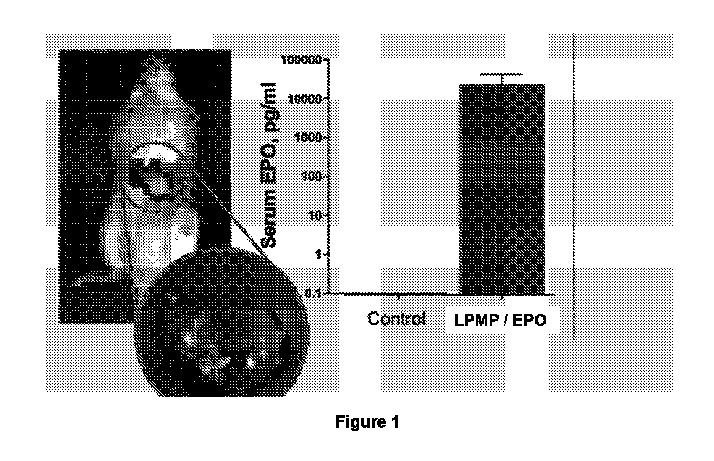
【課題】より効果的で、容易に拡張可能で、かつ安定したRNA治療剤(癌ワクチンなど)送達のための強化されたRNA送達システムを提供する。
【解決手段】天然の脂質およびイオン化可能な脂質を含む脂質再構成植物メッセンジャーパック(LPMP)内に製剤化された、一つまたは複数の腫瘍抗原性、免疫原性、またはシグナル伝達ポリペプチドをコードする一つまたは複数のポリヌクレオチドを含むmRNA治療組成物が、本明細書に開示される。本開示はまた、イオン化可能な脂質の存在下で精製されたPMP脂質を含む膜を再構成して、イオン化可能な脂質を含むLPMPを生成すること、および一つまたは複数の腫瘍抗原性または免疫原性ポリペプチドをコードする一つまたは複数のポリヌクレオチドをLPMPに充填することを含む、mRNA治療組成物を作製する方法を含む。
【選択図】図1
The present invention provides an enhanced RNA delivery system for more effective, easily scalable, and stable delivery of RNA therapeutics (such as cancer vaccines).
[0010] Disclosed herein is an mRNA therapeutic composition comprising one or more polynucleotides encoding one or more tumor antigenic, immunogenic, or signaling polypeptides formulated in a lipid-reconstituted plant messenger pack (LPMP) comprising natural lipids and ionizable lipids. The disclosure also includes a method of making the mRNA therapeutic composition comprising reconstituting a membrane comprising purified PMP lipids in the presence of ionizable lipids to produce a LPMP comprising ionizable lipids, and loading the LPMP with one or more polynucleotides encoding one or more tumor antigenic or immunogenic polypeptides.
[Selected Figure] Figure 1
Description
(関連出願の相互参照)
本出願は、2021年12月20日に出願された米国仮特許出願第63/291,686号、2022年3月16日に出願された米国仮特許出願第63/320,664号および2022年8月26日に出願された米国仮特許出願第63/401,214号に対する優先権の利益を主張するものであり、その全てが参照によりその全体が本明細書に組み込まれる。
CROSS-REFERENCE TO RELATED APPLICATIONS
This application claims the benefit of priority to U.S. Provisional Patent Application No. 63/291,686, filed December 20, 2021, U.S. Provisional Patent Application No. 63/320,664, filed March 16, 2022, and U.S. Provisional Patent Application No. 63/401,214, filed August 26, 2022, all of which are incorporated by reference in their entireties herein.
市販または開発中のワクチン(例えば、癌ワクチン)は、典型的には、微生物全体、タンパク質抗原、ペプチド、多糖類またはデオキシリボ核酸(DNA)ワクチンおよびそれらの組み合わせをベースとする。治療剤としてのRNAポリヌクレオチドの使用は、新しい台頭しつつある分野である。 Vaccines available on the market or in development (e.g. cancer vaccines) are typically based on whole microorganisms, protein antigens, peptides, polysaccharides or deoxyribonucleic acid (DNA) vaccines and combinations thereof. The use of RNA polynucleotides as therapeutic agents is a new and emerging field.
したがって、より効果的で、容易に拡張可能で、かつ安定したRNA治療剤(癌ワクチンなど)送達のための強化されたRNA送達システムを開発する必要がある。 Therefore, there is a need to develop enhanced RNA delivery systems for more effective, easily scalable, and stable delivery of RNA therapeutics (such as cancer vaccines).
一態様では、一つまたは複数の抗原性(例えば、腫瘍抗原性)ポリペプチドまたはシグナル伝達ポリペプチドをコードする一つまたは複数のポリヌクレオチドを含むmRNA治療用組成物が本明細書に提供される。一つまたは複数のポリヌクレオチドは、天然の脂質およびイオン化可能な脂質を含む脂質再構成植物メッセンジャーパック(LPMP)内で製剤化される。イオン化可能な脂質は、以下に列挙される特徴:
(i)少なくとも2つのイオン化可能なアミン、
(ii)少なくとも3つの脂質尾部であって、前記脂質尾部の各々が、少なくとも6個の炭素原子の長さである、脂質尾部、
(iii)約4.5~約7.5のpKa、
(iv)少なくとも二個の原子の鎖によって分けられたイオン化可能なアミンおよびヘテロ有機基、ならびに
(v)少なくとも10のN:P比、のうちの二つ以上を有する。
In one aspect, provided herein is an mRNA therapeutic composition comprising one or more polynucleotides encoding one or more antigenic (e.g., tumor antigenic) or signaling polypeptides. The one or more polynucleotides are formulated in a lipid reconstituted plant messenger pack (LPMP) comprising natural lipids and ionizable lipids. The ionizable lipids have the following characteristics listed below:
(i) at least two ionizable amines;
(ii) at least three lipid tails, each of said lipid tails being at least six carbon atoms in length;
(iii) a pKa of about 4.5 to about 7.5;
(iv) an ionizable amine and a heteroorganic group separated by a chain of at least two atoms; and (v) an N:P ratio of at least 10.
別の態様では、mRNA治療用組成物を作製する方法が、本明細書に提供される。方法は、イオン化可能な脂質の存在下で精製されたPMP脂質を含む膜を再構成して、イオン化可能な脂質を含む脂質再構成植物メッセンジャーパック(LPMP)を生成することを含む。イオン化可能な脂質は、以下に列挙される特徴:
(i)少なくとも2つのイオン化可能なアミン、
(ii)少なくとも3つの脂質尾部であって、前記脂質尾部の各々が、少なくとも6個の炭素原子の長さである、脂質尾部、
(iii)約4.5~約7.5のpKa、
(iv)少なくとも二個の原子の鎖によって分けられたイオン化可能なアミンおよびヘテロ有機基、ならびに
(v)少なくとも10のN:P比、のうちの二つ以上を有する。
In another aspect, provided herein is a method of making an mRNA therapeutic composition. The method comprises reconstituting a membrane comprising purified PMP lipids in the presence of an ionizable lipid to produce a lipid-reconstituted plant messenger pack (LPMP) comprising an ionizable lipid. The ionizable lipid has the following characteristics listed below:
(i) at least two ionizable amines;
(ii) at least three lipid tails, each of said lipid tails being at least six carbon atoms in length;
(iii) a pKa of about 4.5 to about 7.5;
(iv) an ionizable amine and a heteroorganic group separated by a chain of at least two atoms; and (v) an N:P ratio of at least 10.
方法は、一つまたは複数の抗原性(例えば、腫瘍抗原性)ポリペプチドまたはシグナル伝達ポリペプチドをコードする一つまたは複数のポリヌクレオチドをLPMPに充填することをさらに含む。 The method further includes loading the LPMP with one or more polynucleotides encoding one or more antigenic (e.g., tumor antigenic) or signaling polypeptides.
一部の実施形態では、ポリヌクレオチドは、一つまたは複数の野生型または操作された抗原(もしくは抗原に対する抗体)をコードするポリヌクレオチド構築物である。抗原は、腫瘍、例えば、腫瘍特異的抗原、腫瘍関連抗原、腫瘍新抗原、またはそれらの組み合わせに由来し得る。 In some embodiments, the polynucleotide is a polynucleotide construct that encodes one or more wild-type or engineered antigens (or antibodies to antigens). The antigens can be derived from a tumor, e.g., tumor-specific antigens, tumor-associated antigens, tumor neoantigens, or combinations thereof.
一部の実施形態では、ポリヌクレオチドによってコードされるポリペプチドは、p53、ART-4、BAGE、ss-カテニン/m、Bcr-abL CAMEL、CAP-1、CASP-8、CDC27/m、CDK4/m、CEA、CLAUDIN-12、C-MYC、CT、Cyp-B、DAM、ELF2M、ETV6-AML1、G250、GAGE、GnT-V、Gap 100、(HAGE、HER-2/neu、HPV-E7、HPV-E6、HAST-2、hTERTまたはhTRT)、LAGE、LDLR/FUT、MAGE-A、好ましくはMAGE-A1、MAGE-A2、MAGE-A3、MAGE-A4、MAGE-A5、MAGE-A6、MAGE-A7、MAGE-A8、MAGE-A9、MAGE-A10、MAGE-A11、もしくはMAGE-A12、MAGE-B、MAGE-C、MART-1/Melan-A、MC1R、ミオシン/m、MUC1、MUM-1、-2、-3、NA88-A、NF1、NY-ESO-1、NY-BR-1、pl90マイナーBCR-abL、Plac-1、Pml/RARa、PRAME、プロテイナーゼ3、PSA、PSM、RAGE、RU1もしくはRU2、SAGE、SART-1もしくはS ART-3、SCGB3A2、SCP1、SCP2、SCP3、SSX、SURVIVIN、TEL/AML1、TPI/m、TRP-1、TRP-2、TRP-2/INT2、TPTE、WT、WTWT-1、またはそれらの組み合わせを含む抗原性(例えば、腫瘍抗原性)ポリペプチドまたはシグナル伝達ポリペプチドである。 In some embodiments, the polypeptide encoded by the polynucleotide is selected from the group consisting of p53, ART-4, BAGE, ss-catenin/m, Bcr-abL CAMEL, CAP-1, CASP-8, CDC27/m, CDK4/m, CEA, CLAUDIN-12, C-MYC, CT, Cyp-B, DAM, ELF2M, ETV6-AML1, G250, GAGE, GnT-V, Gap 100, (HAGE, HER-2/neu, HPV-E7, HPV-E6, HAST-2, hTERT or hTRT), LAGE, LDLR/FUT, MAGE-A, preferably MAGE-A1, MAGE-A2, MAGE-A3, MAGE-A4, MAGE-A5, MAGE-A6, MAGE-A7, MAGE-A8, MAGE-A9, MAGE-A10, MAGE-A11, or MAGE E-A12, MAGE-B, MAGE-C, MART-1/Melan-A, MC1R, myosin/m, MUC1, MUM-1, -2, -3, NA88-A, NF1, NY-ESO-1, NY-BR-1, p190 minor BCR-abL, Plac-1, Pml/RARa, PRAME, proteinase 3, PSA, PSM, RAGE, RU1 or RU2, SAGE, SART-1 or S An antigenic (e.g., tumor antigenic) or signaling polypeptide including ART-3, SCGB3A2, SCP1, SCP2, SCP3, SSX, SURVIVIN, TEL/AML1, TPI/m, TRP-1, TRP-2, TRP-2/INT2, TPTE, WT, WTWT-1, or a combination thereof.
一部の実施形態では、ポリヌクレオチドによってコードされるポリペプチドは、CD2、CD3、CD4、CD8、CD11b、CD14、CD16、CD19、CD20、CD22、CD25、CD27、CD33、CD37、CD38、CD40、CD44、CD45、CD47、CD52、CD56、CD70、CD79、CD137、4-IBB、5T4、AGS-5、AGS-16、アンジオポイエチン2、B7.1、B7.2、B7DC、B7H1、B7H2、B7H3、BT-062、BTLA、CAIX、癌胎児性抗原、CTLA4、Cripto、ED-B、ErbBl、ErbB2、ErbB3、ErbB4、EGFL7、EpCAM、EphA2、EphA3、EphB2、FAP、フィブロネクチン、葉酸受容体、ガングリオシドGM3、GD2、グルココルチコイド誘導腫瘍壊死因子受容体(GITR)、gplOO、gpA33、GPNMB、HLA、HLA-DR、ICOS、IGF1R、インテグリンαν、インテグリンανβ、LAG-3、Lewis Y、メソテリン、c-MET、MN炭酸脱水酵素IX、MUC1、MUC16、Nectin-4、KGD2、NOTCH、OX40、OX40L、PD-1、PDL1、PSCA、PSMA、RANKL、ROR1、ROR2、SLC44A4、シンデカン-1、TACI、TAG-72、テネイシン、TIM3、TRAILR1、TRAILR2、VEGFR-1、VEGFR-2、VEGFR-3、およびそのバリアントを含む抗原性(例えば、腫瘍抗原性)ポリペプチドまたはシグナル伝達ポリペプチドである。 In some embodiments, the polypeptide encoded by the polynucleotide is selected from the group consisting of CD2, CD3, CD4, CD8, CD11b, CD14, CD16, CD19, CD20, CD22, CD25, CD27, CD33, CD37, CD38, CD40, CD44, CD45, CD47, CD52, CD56, CD70, CD79, CD137, 4-IBB, 5T4, AGS-5, AGS-16, angiopoietin 2, B7.1, B7.2, B7DC, B7H1, B7H2, B7H3, BT-0, and/or BT-1. 62, BTLA, CAIX, carcinoembryonic antigen, CTLA4, Cripto, ED-B, ErbBl, ErbB2, ErbB3, ErbB4, EGFL7, EpCAM, EphA2, EphA3, EphB2, FAP, fibronectin, folate receptor, ganglioside GM3, GD2, glucocorticoid-induced tumor necrosis factor receptor (GITR), gplOO, gpA33, GPNMB, HLA, HLA-DR, ICOS, IGF1R, integrin αν, integrin ανβ, LAG-3, Lewis Antigenic (e.g., tumor antigenic) or signaling polypeptides including Y, mesothelin, c-MET, MN carbonic anhydrase IX, MUC1, MUC16, Nectin-4, KGD2, NOTCH, OX40, OX40L, PD-1, PDL1, PSCA, PSMA, RANKL, ROR1, ROR2, SLC44A4, syndecan-1, TACI, TAG-72, tenascin, TIM3, TRAILR1, TRAILR2, VEGFR-1, VEGFR-2, VEGFR-3, and variants thereof.
一部の実施形態では、ポリヌクレオチドによってコードされるポリペプチドは、IL-1α、IL-1 β、IL-1ra、IL-2、IL-3、IL-4、IL-5、IL-6、IL-7、IL-8、IL-9、IL-10、IL-11、IL-12、IL-13、IL-14、IL-15、IL-16、IL-17A、IL-17B、IL-17C、IL-17D、IL-17E、IL-17F、IL-18、IL-19、IL-20、IL-21、IL-22、IL-23、IL-24、IL-25、IL-26、IL-27、IL-28A/B、IL-29、IL-30、IL-31、IL-32、IL-33、IL-35、TGF-β、GM-CSF、M-CSF、G-CSF、TNF-α、TNF-β、LAF、TCGF、BCGF、TRF、BAF、BDG、MP、LIF、OSM、TMF、PDGF、IFN-α、IFN-β、IFN-γ、ウテログロビン、Foxp3、CXCL1、CXCL2、CXCL3、CXCL4、CXCL5、CXCL6、CXCL7、CXCL8、CXCL9、CXCL10、CXCL11、CXCL12、CXCL13、CXCL14、CXCL15、CXCL16、CCL1、CCL2、CCL3、CCL4、CCL5、CCL6、CCL7、CCL8、CCL9/10、CCL11、CCL12、CCL13、CCL14、CCL15、CCL16、CCL17、CCL18、CCL19、CCL20、CCL21、CCL22、CCL23、CCL24、CCL25、CCL26、CCL27、CCL28、XCL1、XCL2、CX3CL1およびそれらのバリアントを含む抗原性(例えば、腫瘍抗原性)ポリペプチドまたはシグナル伝達ポリペプチドである。 In some embodiments, the polypeptide encoded by the polynucleotide is IL-1α, IL-1 β, IL-1ra, IL-2, IL-3, IL-4, IL-5, IL-6, IL-7, IL-8, IL-9, IL-10, IL-11, IL-12, IL-13, IL-14, IL-15, IL-16, IL-17A, IL-17B, IL-17C, IL-17D, IL-17E, IL-17F, IL-18, IL-19, IL-20, IL-21, IL-22, IL- 23.I L-24, IL-25, IL-26, IL-27, IL-28A/B, IL-29, IL-30, IL-31, IL-32, IL-33, IL-35, TGF-β, GM-CSF, M-CS F, G-CSF, TNF-α, TNF-β, LAF, TCGF, BCGF, TRF, BAF, BDG, MP, LIF, OSM, TMF, PDGF, IFN-α, IFN-β, IFN-γ, Ute Loglobin, Foxp3, CXCL1, CXCL2, CXCL3, CXCL4, CXCL5, CXCL6, CXCL7, CXCL8, CXCL9, CXCL10, CXCL11, CXCL1 2, CXCL13, CXCL14, CXCL15, CXCL16, CCL1, CCL2, CCL3, CCL4, CCL5, CCL6, CCL7, CCL8, CCL9/10, CCL11, CC CCL1, CCL2, CCL3, CCL4, CCL5, CCL6, CCL7, CCL8, CCL9, CCL10, CCL11, CCL12, CCL13, CCL14, CCL15, CCL16, CCL17, CCL18, CCL19, CCL20, CCL21, CCL22, CCL23, CCL24, CCL25, CCL26, CCL27, CCL28, XCL1, XCL2, CX3CL1 and variants thereof (e.g., tumor antigenic) polypeptide or signal transduction polypeptide.
一部の実施形態では、ポリヌクレオチドによってコードされるポリペプチドは、IL-2ペプチド、IL-2-Ra、tdTomato、Creリコンビナーゼ、GFP、eGFP、抗CD19、CD20、CAR-T、抗HER2、エタネルセプト(エンブレル)、ヒュミラ、エリスロポエチン、エポジェン、フィルグラスチム、キイトルーダ、リツキシマブ、ロミプロスチム、サルグラモスチム、またはその断片もしくはサブユニットである。一実施形態では、ポリペプチドは、IL-2ペプチド、またはその断片もしくはサブユニットである。一実施形態では、ポリペプチドは、エリスロポエチンもしくはエポジェン、またはその断片もしくはサブユニットである。 In some embodiments, the polypeptide encoded by the polynucleotide is an IL-2 peptide, IL-2-Ra, tdTomato, Cre recombinase, GFP, eGFP, anti-CD19, CD20, CAR-T, anti-HER2, etanercept (Enbrel), Humira, erythropoietin, epogen, filgrastim, Keytruda, rituximab, romiplostim, sargramostim, or a fragment or subunit thereof. In one embodiment, the polypeptide is an IL-2 peptide, or a fragment or subunit thereof. In one embodiment, the polypeptide is erythropoietin or epogen, or a fragment or subunit thereof.
一部の実施形態では、ポリヌクレオチドによってコードされるポリペプチドは、IL-15ペプチド、IL-15-Ra、またはその断片もしくはサブユニットである。一実施形態では、ポリペプチドは、IL-15ペプチド、またはその断片もしくはサブユニットである。 In some embodiments, the polypeptide encoded by the polynucleotide is an IL-15 peptide, IL-15-Ra, or a fragment or subunit thereof. In one embodiment, the polypeptide is an IL-15 peptide, or a fragment or subunit thereof.
一部の実施形態では、腫瘍抗原性ポリペプチドは、癌腫、肉腫、黒色腫、リンパ腫、白血病、およびそれらの組み合わせからなる群から選択される腫瘍抗原を含む。一実施形態では、腫瘍抗原性ポリペプチドは、肺癌抗原を含む。 In some embodiments, the tumor antigenic polypeptide comprises a tumor antigen selected from the group consisting of carcinoma, sarcoma, melanoma, lymphoma, leukemia, and combinations thereof. In one embodiment, the tumor antigenic polypeptide comprises a lung cancer antigen.
一部の実施形態では、ポリヌクレオチドは、mRNA、siRNAもしくはsiRNA前駆体、マイクロRNA(miRNA)もしくはmiRNA前駆体、プラスミド、ダイサー基質低分子干渉RNA(dsiRNA)、小ヘアピンRNA(shRNA)、非対称干渉RNA(aiRNA)、ペプチド核酸(PNA)、モルホリノ、ロックド核酸(LNA)、ピウィ相互作用RNA(piRNA)、リボザイム、デオキシリボザイム(DNAザイム)、アプタマー、環状RNA(circRNA)、ガイドRNA(gRNA)、またはこれらのRNAのいずれかをコードするDNA分子であってもよい。一実施形態では、ポリヌクレオチドは、mRNAである。 In some embodiments, the polynucleotide may be an mRNA, an siRNA or siRNA precursor, a microRNA (miRNA) or miRNA precursor, a plasmid, a dicer substrate small interfering RNA (dsiRNA), a small hairpin RNA (shRNA), an asymmetric interfering RNA (aiRNA), a peptide nucleic acid (PNA), a morpholino, a locked nucleic acid (LNA), a piRNA, a ribozyme, a deoxyribozyme (DNAzyme), an aptamer, a circular RNA (circRNA), a guide RNA (gRNA), or a DNA molecule encoding any of these RNAs. In one embodiment, the polynucleotide is an mRNA.
一実施形態では、ポリヌクレオチドは、表I~IIIのいずれか1つに提供されるIL-2分子のアミノ酸配列に対して少なくとも85%、90%、95%、96%、97%、98%、99%、または100%の同一性を有するアミノ酸配列を含むIL-2分子をコードするmRNAである。 In one embodiment, the polynucleotide is an mRNA encoding an IL-2 molecule comprising an amino acid sequence having at least 85%, 90%, 95%, 96%, 97%, 98%, 99%, or 100% identity to the amino acid sequence of an IL-2 molecule provided in any one of Tables I-III.
一実施形態では、ポリヌクレオチドは、表IVに提供されるIL-15分子のアミノ酸配列に対して少なくとも85%、90%、95%、96%、97%、98%、99%、または100%の同一性を有するアミノ酸配列を含むIL-15またはIL-15RA分子をコードするmRNAである。一実施形態では、ポリヌクレオチドは、表IVに提供されるIL-15またはIL-15RA分子の核酸配列に対して少なくとも85%、90%、95%、96%、97%、98%、99%、または100%の同一性を有する核酸配列を含むIL-15分子をコードするmRNAである。 In one embodiment, the polynucleotide is an mRNA encoding an IL-15 or IL-15RA molecule comprising an amino acid sequence having at least 85%, 90%, 95%, 96%, 97%, 98%, 99%, or 100% identity to the amino acid sequence of an IL-15 molecule provided in Table IV. In one embodiment, the polynucleotide is an mRNA encoding an IL-15 molecule comprising a nucleic acid sequence having at least 85%, 90%, 95%, 96%, 97%, 98%, 99%, or 100% identity to the nucleic acid sequence of an IL-15 or IL-15RA molecule provided in Table IV.
一部の実施形態では、mRNAは、(a)DNA分子、または(b)RNA分子に由来する。mRNAでは、Tは、Uで任意選択的に置換される。 In some embodiments, the mRNA is derived from (a) a DNA molecule, or (b) an RNA molecule. In the mRNA, T is optionally replaced with U.
一部の実施形態では、mRNAは、DNA分子に由来する。DNA分子は、プロモーターをさらに含み得る。一部の実施形態では、プロモーターは、T7プロモーター、T3プロモーター、またはSP6プロモーターである。一部の実施形態では、プロモーターは、5’UTRに位置する。 In some embodiments, the mRNA is derived from a DNA molecule. The DNA molecule may further include a promoter. In some embodiments, the promoter is a T7 promoter, a T3 promoter, or an SP6 promoter. In some embodiments, the promoter is located in the 5'UTR.
一部の実施形態では、mRNAは、RNA分子に由来する。RNA分子は、自己複製RNA分子であってもよい。 In some embodiments, the mRNA is derived from an RNA molecule. The RNA molecule may be a self-replicating RNA molecule.
一部の実施形態では、mRNAは、RNA分子である。RNA分子は、5’キャップをさらに含んでもよい。5’キャップは、キャップ1構造、キャップ1(m6A)構造、キャップ2構造、キャップ3構造、キャップ0構造、または任意のその組み合わせを有し得る。 In some embodiments, the mRNA is an RNA molecule. The RNA molecule may further include a 5' cap. The 5' cap may have a cap1 structure, a cap1 (m6A) structure, a cap2 structure, a cap3 structure, a cap0 structure, or any combination thereof.
一部の実施形態では、ポリヌクレオチドは、IL-2分子をコードするmRNAである。一実施形態では、IL-2分子は、天然に存在するIL-2分子、天然に存在するIL-2分子の断片、またはそのバリアントを含む。一実施形態では、IL-2分子は、天然に存在するIL-2分子のバリアント(例えば、本明細書に記載されるIL-2バリアント)、またはその断片を含む。 In some embodiments, the polynucleotide is an mRNA encoding an IL-2 molecule. In one embodiment, the IL-2 molecule comprises a naturally occurring IL-2 molecule, a fragment of a naturally occurring IL-2 molecule, or a variant thereof. In one embodiment, the IL-2 molecule comprises a variant of a naturally occurring IL-2 molecule (e.g., an IL-2 variant described herein), or a fragment thereof.
一部の実施形態では、ポリヌクレオチドは、IL-15分子をコードするmRNAである。一実施形態では、IL-15分子は、天然に存在するIL-15分子、天然に存在するIL-15分子の断片、またはそのバリアントを含む。一実施形態では、IL-15分子は、天然に存在するIL-15分子のバリアント(例えば、本明細書に記載されるIL-15バリアント)、またはその断片を含む。一実施形態では、ポリヌクレオチドは、IL-15スーパーアゴニスト、IL-15分子、IL-15RA分子、またはそれらの組み合わせをコードするmRNAである。 In some embodiments, the polynucleotide is an mRNA encoding an IL-15 molecule. In one embodiment, the IL-15 molecule comprises a naturally occurring IL-15 molecule, a fragment of a naturally occurring IL-15 molecule, or a variant thereof. In one embodiment, the IL-15 molecule comprises a variant of a naturally occurring IL-15 molecule (e.g., an IL-15 variant described herein), or a fragment thereof. In one embodiment, the polynucleotide is an mRNA encoding an IL-15 superagonist, an IL-15 molecule, an IL-15RA molecule, or a combination thereof.
一部の実施形態では、mRNAは、5’非翻訳領域(UTR)および/または3’UTRを含む。 In some embodiments, the mRNA includes a 5' untranslated region (UTR) and/or a 3' UTR.
一部の実施形態では、mRNAは、5’UTRを含む。5’UTRは、コザック配列を含み得る。 In some embodiments, the mRNA comprises a 5'UTR. The 5'UTR may comprise a Kozak sequence.
一部の実施形態では、mRNAは、3’UTRを含む。一部の実施形態では、3’UTRは、スプリットのアミノ末端エンハンサー(AES)に由来する一つまたは複数の配列を含む。一部の実施形態では、3’UTRは、ミトコンドリアによりコードされた12S rRNA(mtRNRl)に由来する配列を含む。 In some embodiments, the mRNA comprises a 3'UTR. In some embodiments, the 3'UTR comprises one or more sequences derived from a split amino-terminal enhancer (AES). In some embodiments, the 3'UTR comprises a sequence derived from a mitochondrially encoded 12S rRNA (mtRNRl).
一部の実施形態では、mRNAは、ポリ(A)配列を含む。一実施形態では、ポリ(A)配列は、30個のアデノシン残基の配列、10個のヌクレオチドのリンカー配列、および70個のアデノシン残基の配列からなる110個のヌクレオチド配列である。 In some embodiments, the mRNA comprises a poly(A) sequence. In one embodiment, the poly(A) sequence is a 110 nucleotide sequence consisting of a sequence of 30 adenosine residues, a linker sequence of 10 nucleotides, and a sequence of 70 adenosine residues.
一部の実施形態では、ポリヌクレオチドは、脂質再構成植物メッセンジャーパック(LPMP)によって封入される。一部の実施形態では、ポリヌクレオチドは、LPMPの表面に包埋される。一部の実施形態では、ポリヌクレオチドは、LPMPの表面にコンジュゲートされる。 In some embodiments, the polynucleotide is encapsulated by a lipid reconstituted plant messenger pack (LPMP). In some embodiments, the polynucleotide is embedded on the surface of the LPMP. In some embodiments, the polynucleotide is conjugated to the surface of the LPMP.
一部の実施形態では、LPMPは、脂質押し出しを含む方法によって生成される。一部の実施形態では、LPMPは、水相を含むマイクロ流体装置においてPMPの脂質抽出物を含む溶液を処理して、それによってLPMPを生成することを含む方法によって生成される。一部の実施形態では、水相は、ポリヌクレオチドを含む。 In some embodiments, the LPMPs are produced by a method comprising lipid extrusion. In some embodiments, the LPMPs are produced by a method comprising processing a solution comprising a lipid extract of the PMP in a microfluidic device comprising an aqueous phase, thereby producing the LPMPs. In some embodiments, the aqueous phase comprises a polynucleotide.
一部の実施形態では、LPMPの天然脂質は、レモンまたは藻類から抽出される。 In some embodiments, the natural lipids of the LPMP are extracted from lemon or algae.
一部の実施形態では、LPMPのイオン化可能な脂質は、1,1’-((2-(4-(2-((2-(ビス(2-ヒドロキシドデシル)アミノ)エチル)(2-ヒドロキシドデシル)アミノ)エチル)ピペラジン-1-イル)エチル)アザンジイル)ビス(ドデカン-2-オール)(C12-200)、MD1(cKK-E12)、OF2、EPC、ZA3-Ep10、TT3、LP01、5A2-SC8、脂質5、SM-102(脂質H)、およびALC-315からなる群から選択される。 In some embodiments, the ionizable lipid of the LPMP is selected from the group consisting of 1,1'-((2-(4-(2-((2-(bis(2-hydroxydodecyl)amino)ethyl)(2-hydroxydodecyl)amino)ethyl)piperazin-1-yl)ethyl)azanediyl)bis(dodecan-2-ol) (C12-200), MD1 (cKK-E12), OF2, EPC, ZA3-Ep10, TT3, LP01, 5A2-SC8, lipid 5, SM-102 (lipid H), and ALC-315.
一実施形態では、イオン化可能な脂質は、C12-200である。 In one embodiment, the ionizable lipid is C12-200.
一部の実施形態では、イオン化可能な脂質は、
一部の実施形態では、再構成は、ステロールの存在下で行われ、それによって、天然の脂質、イオン化可能な脂質、およびステロールを含むLPMPが生成される。一部の実施形態では、ステロールは、コレステロールまたはシトステロールである。 In some embodiments, the reconstitution is performed in the presence of a sterol, thereby producing an LPMP that includes a natural lipid, an ionizable lipid, and a sterol. In some embodiments, the sterol is cholesterol or sitosterol.
一部の実施形態では、再構成は、PEG化脂質(またはPEG-脂質コンジュゲート)の存在下で行われ、それによって、天然の脂質、イオン化可能な脂質、およびPEG-脂質コンジュゲートを含むLPMPが生成される。一部の実施形態では、PEG-脂質コンジュゲートは、C14-PEG2k、C18-PEG2k、またはDMPE-PEG2kである。一部の実施形態では、PEG-脂質コンジュゲートは、PEG-DMGまたはPEG-PEである。一部の実施形態では、PEG-DMGは、PEG2000-DMGまたはPEG2000-PEである。 In some embodiments, the reconstitution is performed in the presence of a PEGylated lipid (or a PEG-lipid conjugate), thereby producing an LPMP that includes a native lipid, an ionizable lipid, and a PEG-lipid conjugate. In some embodiments, the PEG-lipid conjugate is C14-PEG2k, C18-PEG2k, or DMPE-PEG2k. In some embodiments, the PEG-lipid conjugate is PEG-DMG or PEG-PE. In some embodiments, the PEG-DMG is PEG2000-DMG or PEG2000-PE.
一部の実施形態では、LPMPは、ステロールおよびポリエチレングリコール(PEG)-脂質コンジュゲートをさらに含む。 In some embodiments, the LPMP further comprises a sterol and a polyethylene glycol (PEG)-lipid conjugate.
一部の実施形態では、LPMPは、
約20モル%~約50モル%のイオン化可能な脂質、
約20モル%~約60モル%の天然の脂質、
約7モル%~約20モル%のステロール、および
約0.5モル%~約3モル%のポリエチレングリコール(PEG)-脂質コンジュゲートを含む、前記実施形態のいずれか一つのmRNA治療組成物。
In some embodiments, the LPMP is
about 20 mol % to about 50 mol % of an ionizable lipid;
about 20 mol % to about 60 mol % naturally occurring lipids;
about 7 mol % to about 20 mol % of a sterol, and
The mRNA therapeutic composition of any of the preceding embodiments, comprising about 0.5 mol % to about 3 mol % of a polyethylene glycol (PEG)-lipid conjugate.
一部の実施形態では、LPMPは、
約35モル%のイオン化可能な脂質、
約50モル%の天然の脂質、
約12.5モル%の前記ステロール、および
約2.5モル%のポリエチレングリコール(PEG)-脂質コンジュゲートを含む、実施形態39のmRNA治療組成物。
In some embodiments, the LPMP is
about 35 mole % ionizable lipids;
About 50 mol % natural lipids,
about 12.5 mole % of said sterol, and
The mRNA therapeutic composition of embodiment 39, comprising about 2.5 mol % of a polyethylene glycol (PEG)-lipid conjugate.
一実施形態では、LPMPは、約35:50:12.5:2.5のモル比でイオン化可能な脂質:天然脂質:ステロール:PEG脂質を含む。一実施形態では、LPMPは、約35:20:42.5:2.5のモル比でイオン化可能な脂質:天然脂質:ステロール:PEG脂質を含む。 In one embodiment, the LPMP comprises a molar ratio of about 35:50:12.5:2.5 of ionizable lipids:natural lipids:sterols:PEG lipids. In one embodiment, the LPMP comprises a molar ratio of about 35:20:42.5:2.5 of ionizable lipids:natural lipids:sterols:PEG lipids.
一部の実施形態では、LPMPは、
レモンまたは藻類から抽出された天然の脂質、
C12-200、
コレステロール、および
DMPE-PEG2kを含む。
In some embodiments, the LPMP is
Natural lipids extracted from lemons or algae,
C12-200,
Cholesterol, and DMPE-PEG2k.
一実施形態では、LPMPは、
レモンから抽出された天然の脂質、
C12-200、
コレステロール、および
DMPE-PEG2kを含む。LPMPは、約35:50:12.5:2.5のモル比でC12-200:レモン脂質:コレステロール:DMPE-PEG2kを含んでもよい。
In one embodiment, the LPMP is
Natural lipids extracted from lemons.
C12-200,
Cholesterol, and
The LPMP may comprise C12-200:Lemon lipid:Cholesterol:DMPE-PEG2k in a molar ratio of about 35:50:12.5:2.5.
一実施形態では、LPMPは、
藻類から抽出された天然の脂質、
C12-200、
コレステロール、および
DMPE-PEG2kを含む。LPMPは、約35:20:42.5:2.5のモル比でC12-200:藻類脂質:コレステロール:DMPE-PEG2kを含んでもよい。
In one embodiment, the LPMP is
Natural lipids extracted from algae,
C12-200,
The LPMP may comprise C12-200:algal lipid:cholesterol:DMPE-PEG2k in a molar ratio of about 35:20:42.5:2.5.
一部の実施形態では、LPMPは、リポプレックス、リポソーム、脂質ナノ粒子、ポリマー系担体、エクソソーム、ラメラ体、ミセル、およびエマルションからなる群から選択される親油性部分である。一実施形態では、LPMPは、カチオン性リポソーム、ナノリポソーム、プロテオリポソーム、単層リポソーム、多層リポソーム、セラミド含有ナノリポソーム、および多胞リポソームからなる群から選択されるリポソームである。一実施形態では、LPMPは、脂質ナノ粒子である。 In some embodiments, the LPMP is a lipophilic moiety selected from the group consisting of lipoplexes, liposomes, lipid nanoparticles, polymeric carriers, exosomes, lamellar bodies, micelles, and emulsions. In one embodiment, the LPMP is a liposome selected from the group consisting of cationic liposomes, nanoliposomes, proteoliposomes, unilamellar liposomes, multilamellar liposomes, ceramide-containing nanoliposomes, and multivesicular liposomes. In one embodiment, the LPMP is a lipid nanoparticle.
一部の実施形態では、LPMPは、約200nm未満のサイズを有する。一実施形態では、LPMPは、約150nm未満のサイズを有する。一実施形態では、LPMPは、約100nm未満のサイズを有する。一実施形態では、LPMPは、約55nm~約80nmのサイズを有する。 In some embodiments, the LPMPs have a size of less than about 200 nm. In one embodiment, the LPMPs have a size of less than about 150 nm. In one embodiment, the LPMPs have a size of less than about 100 nm. In one embodiment, the LPMPs have a size of about 55 nm to about 80 nm.
一部の実施形態では、mRNA治療用組成物は、約50:1~約10:1の総脂質:ポリヌクレオチド重量比を有する。一実施形態では、mRNA治療用組成物は、約44:1~約24:1の総脂質:ポリヌクレオチド重量比を有する。一実施形態では、mRNA治療用組成物は、約40:1~約28:1の総脂質:ポリヌクレオチド重量比を有する。一実施形態では、mRNA治療用組成物は、約38:1~約30:1の総脂質:ポリヌクレオチド重量比を有する。一実施形態では、mRNA治療用組成物は、約37:1~約33:1の総脂質:ポリヌクレオチド重量比を有する。 In some embodiments, the mRNA therapeutic composition has a total lipid:polynucleotide weight ratio of about 50:1 to about 10:1. In one embodiment, the mRNA therapeutic composition has a total lipid:polynucleotide weight ratio of about 44:1 to about 24:1. In one embodiment, the mRNA therapeutic composition has a total lipid:polynucleotide weight ratio of about 40:1 to about 28:1. In one embodiment, the mRNA therapeutic composition has a total lipid:polynucleotide weight ratio of about 38:1 to about 30:1. In one embodiment, the mRNA therapeutic composition has a total lipid:polynucleotide weight ratio of about 37:1 to about 33:1.
一部の実施形態では、mRNA治療用組成物、例えば、水相は、HEPESまたはTRIS緩衝液をさらに含む。HEPESまたはTRIS緩衝液は、約7.0~約8.5のpHを有してもよい。HEPESまたはTRIS緩衝液は、約7mg/mL~約15mg/mLの濃度であり得る。水相は、約2.0mg/mL~約4.0mg/mLのNaClをさらに含んでもよい。 In some embodiments, the mRNA therapeutic composition, e.g., the aqueous phase, further comprises a HEPES or TRIS buffer. The HEPES or TRIS buffer may have a pH of about 7.0 to about 8.5. The HEPES or TRIS buffer may be at a concentration of about 7 mg/mL to about 15 mg/mL. The aqueous phase may further comprise about 2.0 mg/mL to about 4.0 mg/mL NaCl.
一部の実施形態では、mRNA治療用組成物、例えば、水相は、水、PBS、またはクエン酸緩衝液を含む。一実施形態では、水相は、約3.2のpHを有するクエン酸緩衝液を含む。 In some embodiments, the mRNA therapeutic composition, e.g., the aqueous phase, comprises water, PBS, or a citrate buffer. In one embodiment, the aqueous phase comprises a citrate buffer having a pH of about 3.2.
一部の実施形態では、水相および脂質溶液は、3:1の体積比で混合される。 In some embodiments, the aqueous phase and lipid solution are mixed in a volume ratio of 3:1.
一部の実施形態では、mRNA治療用組成物は、一つまたは複数の凍結保護剤をさらに含む。一つまたは複数の凍結保護剤は、スクロース、グリセロール、またはその組み合わせであってもよい。一実施形態では、mRNA治療用組成物は、約70mg/mL~約110mg/mLの濃度のスクロースおよび約50mg/mL~約70mg/mLの濃度のグリセロールの組み合わせを含む。 In some embodiments, the mRNA therapeutic composition further comprises one or more cryoprotectants. The one or more cryoprotectants may be sucrose, glycerol, or a combination thereof. In one embodiment, the mRNA therapeutic composition comprises a combination of sucrose at a concentration of about 70 mg/mL to about 110 mg/mL and glycerol at a concentration of about 50 mg/mL to about 70 mg/mL.
一部の実施形態では、mRNA治療用組成物は、凍結乾燥組成物である。凍結乾燥mRNA治療用組成物は、一つまたは複数の凍結乾燥保護剤を含み得る。凍結乾燥mRNA治療用組成物は、ポロキサマー、ソルビン酸カリウム、スクロース、または任意のその組み合わせを含み得る。一実施形態では、凍結乾燥mRNA治療用組成物は、ポロキサマー、例えば、ポロキサマー188を含む。 In some embodiments, the mRNA therapeutic composition is a lyophilized composition. The lyophilized mRNA therapeutic composition may include one or more lyoprotectants. The lyophilized mRNA therapeutic composition may include a poloxamer, potassium sorbate, sucrose, or any combination thereof. In one embodiment, the lyophilized mRNA therapeutic composition includes a poloxamer, e.g., poloxamer 188.
一部の実施形態では、mRNA治療用組成物は、凍結乾燥組成物である。一実施形態では、凍結乾燥mRNA治療用組成物は、約0.01~約1.0%w/wのポリヌクレオチドを含む。一実施形態では、凍結乾燥mRNA治療用組成物は、約1.0~約5.0%w/wの脂質を含む。一実施形態では、凍結乾燥mRNA治療用組成物は、約0.5~約2.5%w/wのTRIS緩衝液を含む。一実施形態では、凍結乾燥mRNA治療用組成物は、約0.75~約2.75%w/wのNaClを含む。一実施形態では、凍結乾燥mRNA治療用組成物は、約85~約95%w/wの糖、例えば、スクロースを含む。一実施形態では、凍結乾燥mRNA治療用組成物は、約0.01~約1.0%w/wのポロキサマー、例えば、ポロキサマー188を含む。一実施形態では、凍結乾燥mRNA治療用組成物は、約1.0~約5.0%w/wのソルビン酸カリウムを含む。 In some embodiments, the mRNA therapeutic composition is a lyophilized composition. In one embodiment, the lyophilized mRNA therapeutic composition comprises about 0.01 to about 1.0% w/w polynucleotide. In one embodiment, the lyophilized mRNA therapeutic composition comprises about 1.0 to about 5.0% w/w lipid. In one embodiment, the lyophilized mRNA therapeutic composition comprises about 0.5 to about 2.5% w/w TRIS buffer. In one embodiment, the lyophilized mRNA therapeutic composition comprises about 0.75 to about 2.75% w/w NaCl. In one embodiment, the lyophilized mRNA therapeutic composition comprises about 85 to about 95% w/w sugar, e.g., sucrose. In one embodiment, the lyophilized mRNA therapeutic composition comprises about 0.01 to about 1.0% w/w poloxamer, e.g., poloxamer 188. In one embodiment, the lyophilized mRNA therapeutic composition comprises about 1.0 to about 5.0% w/w potassium sorbate.
別の態様では、対象においてmRNA治療剤を送達する方法であって、本発明の上記の態様で考察されるmRNA治療用組成物を対象に投与することを含む方法が本明細書に提供される。 In another aspect, provided herein is a method of delivering an mRNA therapeutic in a subject, the method comprising administering to the subject an mRNA therapeutic composition as contemplated in the above aspect of the invention.
別の態様では、対象において免疫応答を誘導する方法であって、本発明の上記の態様で考察されるmRNA治療用組成物を対象に投与することを含む方法が本明細書に提供される。 In another aspect, provided herein is a method of inducing an immune response in a subject, the method comprising administering to the subject an mRNA therapeutic composition as contemplated in the above aspect of the invention.
別の態様では、対象における癌を治療または予防する方法であって、本発明の上記の態様で考察されるmRNA治療用組成物を対象に投与することを含む方法が本明細書に提供される。 In another aspect, provided herein is a method of treating or preventing cancer in a subject, the method comprising administering to the subject an mRNA therapeutic composition as contemplated in the above aspect of the invention.
mRNA治療剤を送達する方法、免疫反応を誘導する方法、および癌を治療または予防する方法に関する本発明のこれらの態様では、mRNA治療用組成物は、経口、静脈内、皮内、筋肉内、鼻腔内、眼内、もしくは直腸、および/または皮下投与によって投与され得る。ある特定の実施形態では、mRNA治療用組成物は、経口、静脈内、筋肉内、および/または皮下投与によって投与される。 In these aspects of the invention relating to methods of delivering mRNA therapeutics, inducing an immune response, and treating or preventing cancer, the mRNA therapeutic composition may be administered orally, intravenously, intradermally, intramuscularly, intranasally, intraocularly, or rectally, and/or subcutaneously. In certain embodiments, the mRNA therapeutic composition is administered orally, intravenously, intramuscularly, and/or subcutaneously.
一部の実施形態では、mRNA治療組成物は、約0.001mg/kg~約0.5mg/kg(例えば、約0.005mg/kg~約0.5mg、約0.006mg/kg~約0.5mg/kg、または0.01mg/kg~約0.4mg/kg)のポリヌクレオチド(例えば、mRNA)を対象に送達するのに十分な投与量レベルで投与される。一部の実施形態では、mRNA治療組成物は、約0.006mg/kg、約0.01mg/kg、約0.02mg/kg、約0.03mg/kg、約0.04mg/kg、約0.05mg/kg、約0.06mg/kg、約0.07mg/kg、約0.08mg/kg、約0.09mg/kg、約0.1mg/kg、約0.2mg/kg、約0.3mg/kg、または約0.4mg/kgのポリヌクレオチド(例えば、mRNA)を対象に送達するのに十分な投与量レベルで投与される。一部の実施形態では、mRNA治療組成物は、約0.0001mg/kg~約0.0005mg/kg(例えば、約0.0003mg/kg~約0.002mg/kg)のポリヌクレオチド(例えば、mRNA)を対象に送達するのに十分な投与量レベルで投与される。 In some embodiments, the mRNA therapeutic composition is administered at a dosage level sufficient to deliver about 0.001 mg/kg to about 0.5 mg/kg (e.g., about 0.005 mg/kg to about 0.5 mg, about 0.006 mg/kg to about 0.5 mg/kg, or 0.01 mg/kg to about 0.4 mg/kg) of polynucleotide (e.g., mRNA) to a subject. In some embodiments, the mRNA therapeutic composition is administered at a dosage level sufficient to deliver about 0.006 mg/kg, about 0.01 mg/kg, about 0.02 mg/kg, about 0.03 mg/kg, about 0.04 mg/kg, about 0.05 mg/kg, about 0.06 mg/kg, about 0.07 mg/kg, about 0.08 mg/kg, about 0.09 mg/kg, about 0.1 mg/kg, about 0.2 mg/kg, about 0.3 mg/kg, or about 0.4 mg/kg of polynucleotide (e.g., mRNA) to the subject. In some embodiments, the mRNA therapeutic composition is administered at a dosage level sufficient to deliver about 0.0001 mg/kg to about 0.0005 mg/kg (e.g., about 0.0003 mg/kg to about 0.002 mg/kg) of polynucleotide (e.g., mRNA) to the subject.
一部の実施形態では、mRNA治療用組成物は、対象に一回、二回、三回、四回、またはそれ以上投与される。一部の実施形態では、mRNA治療用組成物は、対象に一回または二回投与される。一部の実施形態では、mRNA治療用組成物は、対象に四回投与される。 In some embodiments, the mRNA therapeutic composition is administered to the subject one, two, three, four, or more times. In some embodiments, the mRNA therapeutic composition is administered to the subject one or two times. In some embodiments, the mRNA therapeutic composition is administered to the subject four times.
一部の実施形態では、方法は、追加の治療剤を対象に投与することをさらに含む。 In some embodiments, the method further includes administering an additional therapeutic agent to the subject.
一部の実施形態では、追加の治療剤は、抗癌治療剤である。 In some embodiments, the additional therapeutic agent is an anti-cancer therapeutic agent.
一部の実施形態では、追加の治療剤は、免疫原性治療剤である。 In some embodiments, the additional therapeutic agent is an immunogenic therapeutic agent.
一部の実施形態では、追加の治療剤は、シグナル伝達治療剤である。 In some embodiments, the additional therapeutic agent is a signal transduction therapeutic agent.
一部の実施形態では、追加の治療剤は、慢性疼痛を治療および/または予防する治療剤である。一実施形態では、追加の治療剤は、ブプレノルフィンなどのオピオイド鎮痛剤、メロキシカムSRなどの非ステロイド系抗炎症薬(NSAID)、またはそれらの組み合わせである。 In some embodiments, the additional therapeutic agent is a therapeutic agent that treats and/or prevents chronic pain. In one embodiment, the additional therapeutic agent is an opioid analgesic, such as buprenorphine, a nonsteroidal anti-inflammatory drug (NSAID), such as meloxicam SR, or a combination thereof.
一部の実施形態では、追加の治療剤は、mRNA治療組成物の投与の前、同時、または後に投与される。 In some embodiments, the additional therapeutic agent is administered prior to, concurrently with, or after administration of the mRNA therapeutic composition.
定義
本明細書で使用される場合、「有効量」、「有効濃度」、または「有効な濃度」という用語は、列挙された結果をもたらすか、または標的生物内もしくは標的生物上の標的レベル(例えば、所定のレベルまたは閾値レベル)に達するのに十分なLPMPまたは核酸組成物の量を指す。
Definitions As used herein, the terms "effective amount,""effectiveconcentration," or "effective concentration" refer to an amount of an LPMP or nucleic acid composition sufficient to produce a recited result or to reach a target level (e.g., a predetermined level or threshold level) in or on a target organism.
本明細書で使用される場合、「治療剤」という用語は、動物、例えば、哺乳類(例えば、ヒト)、動物病原体、または病原体ベクターに作用することができる薬剤、例えば、抗真菌剤、抗菌剤、殺ウイルス剤、抗ウイルス剤、殺虫剤、殺線虫剤、抗寄生虫剤、または防虫剤を指す。 As used herein, the term "therapeutic agent" refers to an agent capable of acting on an animal, e.g., a mammal (e.g., a human), an animal pathogen, or a pathogen vector, e.g., an antifungal, antibacterial, virucidal, antiviral, insecticidal, nematicidal, antiparasitic, or insect repellent.
本明細書で定義されるように、「核酸」および「ポリヌクレオチド」という用語は、交換可能であり、長さ(例えば、少なくとも2、3、4、5、6、7、8、9、10、20、30、40、50、100、150、200、250、500、1000、またはそれ以上の核酸)に関わらず、直鎖もしくは分岐鎖、一本鎖もしくは二本鎖、またはそのハイブリッドであるRNAまたはDNAを指す。この用語はまた、RNA/DNAハイブリッドを包含する。ヌクレオチドは、典型的には、ホスホジエステル結合によって核酸中で連結されるが、「核酸」という用語はまた、他のタイプの結合または骨格(例えば、とりわけ、ホスホラミド、ホスホロチオエート、ホスホロジチオエート、O-メチルホスホロアミデート、モルホリノ、ロックド核酸(LNA)、グリセロール核酸(GNA)、トレオス核酸(TNA)、およびペプチド核酸(PNA)結合または骨格)を有する核酸類似体も包含する。核酸は、一本鎖、二本鎖であってもよく、または一本鎖配列と二本鎖配列の両方の部分を含有してもよい。核酸は、デオキシリボヌクレオチドおよびリボヌクレオチドの任意の組み合わせ、ならびに例えば、アデニン、チミン、シトシン、グアニン、ウラシル、および修飾塩基または非標準塩基(例えば、ヒポキサンチン、キサンチン、7-メチルグアニン、5,6-ジヒドロウラシル、5-メチルシトシン、および5ヒドロキシメチルシトシンを含む)を含む塩基の任意の組み合わせを含有し得る。 As defined herein, the terms "nucleic acid" and "polynucleotide" are interchangeable and refer to RNA or DNA that is linear or branched, single or double stranded, or a hybrid thereof, regardless of length (e.g., at least 2, 3, 4, 5, 6, 7, 8, 9, 10, 20, 30, 40, 50, 100, 150, 200, 250, 500, 1000, or more nucleic acids). The term also encompasses RNA/DNA hybrids. Nucleotides are typically linked in nucleic acids by phosphodiester bonds, but the term "nucleic acid" also encompasses nucleic acid analogs having other types of bonds or backbones (e.g., phosphoramide, phosphorothioate, phosphorodithioate, O-methyl phosphoramidate, morpholino, locked nucleic acid (LNA), glycerol nucleic acid (GNA), threos nucleic acid (TNA), and peptide nucleic acid (PNA) bonds or backbones, among others). Nucleic acids may be single-stranded, double-stranded, or contain portions of both single-stranded and double-stranded sequences. Nucleic acids may contain any combination of deoxyribonucleotides and ribonucleotides, and any combination of bases, including, for example, adenine, thymine, cytosine, guanine, uracil, and modified or non-standard bases, including, for example, hypoxanthine, xanthine, 7-methylguanine, 5,6-dihydrouracil, 5-methylcytosine, and 5 hydroxymethylcytosine.
本明細書で使用される場合、「ペプチド」、「タンパク質」または「ポリペプチド」という用語は、長さ(例えば、少なくとも2、3、4、5、6、7、10、12、14、16、18、20、25、30、40、50、100個、またはそれ以上のアミノ酸)、翻訳後修飾(例えば、グリコシル化またはリン酸化)の存在もしくは不存在、または例えば、ペプチドに共有結合した一つもしくは複数の非アミノアシル基(例えば、糖、脂質など)の存在に関わらず、天然または非天然に存在するアミノ酸(D-アミノ酸もしくはL-アミノ酸のいずれか)の任意の鎖を包含し、例えば、天然のタンパク質、合成、もしくは組換えポリペプチドおよびペプチド、ハイブリッド分子、ペプトイド、またはペプチドミメティックを含む。 As used herein, the terms "peptide," "protein," or "polypeptide" encompass any chain of naturally or non-naturally occurring amino acids (either D- or L-amino acids), regardless of length (e.g., at least 2, 3, 4, 5, 6, 7, 10, 12, 14, 16, 18, 20, 25, 30, 40, 50, 100, or more amino acids), the presence or absence of post-translational modifications (e.g., glycosylation or phosphorylation), or the presence of, for example, one or more non-aminoacyl groups (e.g., sugars, lipids, etc.) covalently attached to the peptide, including, for example, naturally occurring proteins, synthetic, or recombinant polypeptides and peptides, hybrid molecules, peptoids, or peptidomimetics.
本明細書で使用される場合、二つの配列間の「パーセント同一性」は、Altschul et al., (1990) J. Mol. Biol. 215:403-410に記載される、BLAST 2.0アルゴリズムによって決定される。BLAST分析を行うためのソフトウェアは、国立バイオテクノロジー情報センターを通じて公開されている。 As used herein, the "percent identity" between two sequences is determined by the BLAST 2.0 algorithm described in Altschul et al., (1990) J. Mol. Biol. 215:403-410. Software for performing BLAST analyses is publicly available through the National Center for Biotechnology Information.
本明細書で使用される場合、「植物」という用語は、植物全体、植物器官、植物組織、種子、植物細胞、種子、およびその子孫を指す。植物細胞には、種子、懸濁培養物、胚、毛様体領域、カルス組織、葉、根、新芽、配偶体、胞子体、花粉、および微小胞子由来の細胞が含まれるが、これらに限定されない。植物部分には、以下の、根、茎、新芽、葉、花粉、種子、果実、収穫された産物、腫瘍組織、樹液(例えば、木部汁液および師部汁液)、ならびに様々な形態の細胞および培養物(例えば、単一細胞、原生生物、胚、およびカルス組織)を含むが、これらに限定されない分化した組織および未分化の組織が含まれる。植物組織は、植物内、または植物器官、組織、もしくは細胞培養物内にあってもよい。 As used herein, the term "plant" refers to whole plants, plant organs, plant tissues, seeds, plant cells, seeds, and their progeny. Plant cells include, but are not limited to, cells derived from seeds, suspension cultures, embryos, ciliate regions, callus tissue, leaves, roots, shoots, gametophytes, sporophytes, pollen, and microspores. Plant parts include differentiated and undifferentiated tissues, including, but not limited to, the following: roots, stems, shoots, leaves, pollen, seeds, fruits, harvested products, tumor tissue, sap (e.g., xylem sap and phloem sap), and various forms of cells and cultures (e.g., single cells, protists, embryos, and callus tissue). Plant tissues may be within a plant or within a plant organ, tissue, or cell culture.
本明細書で使用される場合、「修飾されたPMP」または「修飾されたLPMP」という用語は、非修飾PMPまたはLPMPと比べて、PMPもしくはLPMP、またはその部分もしくは構成成分の細胞取り込み(例えば、動物細胞取り込み、植物細胞取り込み、細菌細胞取り込み、または真菌細胞取り込み)を増加させることができる、PMPまたはLPMPによる異種機能性剤(例えば、農薬または治療剤)の細胞への送達を可能にするか、または増加させることができる、かつ/あるいは異種機能性剤(例えば、農薬または治療剤)の充填(例えば、充填効率または充填能力)を可能にするか、または増加させることができる、一つまたは複数の異種薬剤(例えば、一つまたは複数の外因性脂質、例えば、イオン化可能な脂質、例えば、イオン化可能な脂質ならびにステロールおよび/またはPEG化脂質を含むPMPまたはLPMP)を含む複数のPMPまたはLPMPを含む組成物を指す。PMPまたはLPMPは、インビトロまたはインビボで修飾され得る。 As used herein, the term "modified PMP" or "modified LPMP" refers to a composition comprising a plurality of PMPs or LPMPs containing one or more heterologous agents (e.g., a PMP or LPMP containing one or more exogenous lipids, e.g., an ionizable lipid, e.g., an ionizable lipid and a sterol and/or a PEGylated lipid) that can increase cellular uptake (e.g., animal cell uptake, plant cell uptake, bacterial cell uptake, or fungal cell uptake) of the PMP or LPMP, or a portion or component thereof, can enable or increase delivery of a heterologous functional agent (e.g., agrochemical or therapeutic agent) to a cell by the PMP or LPMP, and/or can enable or increase loading (e.g., loading efficiency or loading capacity) of a heterologous functional agent (e.g., agrochemical or therapeutic agent) relative to an unmodified PMP or LPMP. The PMP or LPMP may be modified in vitro or in vivo.
本明細書で使用される場合、「非修飾PMP」または「非修飾LPMP」という用語は、PMPの細胞取り込み(例えば、動物細胞取り込み、植物細胞取り込み、細菌細胞取り込み、または真菌細胞取り込み)を増加させることができる異種細胞取り込み剤を欠く複数のPMPまたはLPMPを含む組成物を指す。 As used herein, the term "unmodified PMP" or "unmodified LPMP" refers to a composition comprising a plurality of PMPs or LPMPs that lack a heterologous cell uptake agent that can increase cellular uptake of the PMPs (e.g., animal cell uptake, plant cell uptake, bacterial cell uptake, or fungal cell uptake).
本明細書で使用される場合、「細胞取り込み」という用語は、動物細胞、植物細胞、細菌細胞、または真菌細胞などの細胞による、PMPもしくはLPMPまたはその部分もしくは構成成分(例えば、PMPまたはLPMPによって担持されるポリヌクレオチド)の取り込みを指す。例えば、取り込みは、細胞外環境から細胞膜、細胞壁、細胞外基質に、もしくは細胞膜、細胞壁、細胞外基質を横切った、または細胞の細胞内環境への、PMP(例えば、LPMP)またはその構成成分の部分の移送を含み得る。PMP(例えば、LPMP)の細胞取り込みは、能動的または受動的な細胞機序を介して生じ得る。細胞取り込みには、PMP(例えば、LPMP)全体が、細胞によって取り込まれる、例えば、エンドサイトーシスによって取り込まれる態様が含まれる。一部の実施形態では、一つまたは複数のポリヌクレオチドは、エンドサイトーシスおよびエンドソームエスケープ後に標的細胞の細胞質に曝露される。一部の実施形態では、修飾されたLPMP(例えば、イオン化可能な脂質を含むLPMP、例えば、イオン化可能な脂質ならびにステロールおよび/またはPEG化脂質を含むLPMP)は、非修飾LPMPと比較して、エンドソームエスケープの増加した速度を有する。細胞取り込みはまた、PMP(例えば、LPMP)が、標的細胞の膜と融合する態様を含む。一部の実施形態では、一つまたは複数のポリヌクレオチドは、膜融合後に標的細胞の細胞質に曝露される。一部の実施形態では、LPMPは、非修飾LPMPと比較して、標的細胞の膜との融合速度が増加している(例えば、より融合性である)。 As used herein, the term "cellular uptake" refers to the uptake of a PMP or LPMP or a portion or component thereof (e.g., a polynucleotide carried by a PMP or LPMP) by a cell, such as an animal cell, a plant cell, a bacterial cell, or a fungal cell. For example, uptake can include the transfer of a portion of a PMP (e.g., an LPMP) or a component thereof from the extracellular environment to or across a cell membrane, cell wall, extracellular matrix, or into the intracellular environment of a cell. Cellular uptake of a PMP (e.g., an LPMP) can occur through active or passive cellular mechanisms. Cellular uptake includes aspects in which the entire PMP (e.g., an LPMP) is taken up by the cell, e.g., by endocytosis. In some embodiments, one or more polynucleotides are exposed to the cytoplasm of the target cell after endocytosis and endosomal escape. In some embodiments, the modified LPMP (e.g., an LPMP comprising an ionizable lipid, e.g., an LPMP comprising an ionizable lipid and a sterol and/or a PEGylated lipid) has an increased rate of endosomal escape compared to an unmodified LPMP. Cellular uptake also includes aspects in which the PMP (e.g., an LPMP) fuses with the membrane of a target cell. In some embodiments, the one or more polynucleotides are exposed to the cytoplasm of the target cell after membrane fusion. In some embodiments, the LPMP has an increased rate of fusion with the membrane of a target cell (e.g., is more fusogenic) compared to an unmodified LPMP.
本明細書で使用される場合、「細胞透過剤」という用語は、薬剤と接触していない細胞と比較して、細胞取り込みの増加を促進する様式で、細胞(例えば、動物細胞、植物細胞、細菌細胞、または真菌細胞)の細胞壁、細胞外基質、または細胞膜の特性(例えば、透過性)を変化させる薬剤を指す。 As used herein, the term "cell permeabilizing agent" refers to an agent that alters the properties (e.g., permeability) of the cell wall, extracellular matrix, or cell membrane of a cell (e.g., an animal cell, a plant cell, a bacterial cell, or a fungal cell) in a manner that promotes increased cellular uptake compared to cells not contacted with the agent.
本明細書で使用される場合、「植物細胞外小胞」、「植物EV」、または「EV」という用語は、植物に天然に存在する囲まれた脂質二重層構造を指す。任意選択的に、植物EVは、一つまたは複数の植物EVマーカーを含む。本明細書で使用される場合、「植物EVマーカー」という用語は、添付に列挙される植物EVマーカーのいずれかを含むが、これらに限定されない、植物タンパク質、植物核酸、植物小分子、植物脂質、またはその組み合わせなどの植物と天然に関連する構成成分を指す。ある場合では、植物EVマーカーは、植物EVの識別マーカーであるが、殺虫剤ではない。ある場合では、植物EVマーカーは、植物EVの識別マーカーであり、殺虫剤でもある(例えば、複数のPMPもしくはLPMPと会合するか、もしくはそれによって封入されるか、または複数のPMPもしくはLPMPと直接的に会合されないか、もしくはそれによって封入されないかのいずれか)。 As used herein, the term "plant extracellular vesicles", "plant EVs", or "EVs" refers to enclosed lipid bilayer structures naturally occurring in plants. Optionally, the plant EVs contain one or more plant EV markers. As used herein, the term "plant EV marker" refers to a component that is naturally associated with a plant, such as a plant protein, a plant nucleic acid, a plant small molecule, a plant lipid, or a combination thereof, including, but not limited to, any of the plant EV markers listed in the appendix. In some cases, the plant EV marker is an identity marker for a plant EV but is not an insecticide. In some cases, the plant EV marker is both an identity marker for a plant EV and an insecticide (e.g., either associated with or encapsulated by multiple PMPs or LPMPs, or not directly associated with or encapsulated by multiple PMPs or LPMPs).
本明細書で使用される場合、「植物メッセンジャーパック」または「PMP」という用語は、植物源もしくはセグメント、部分、またはその抽出物と関連する脂質または非脂質構成成分(例えば、ペプチド、核酸、または小分子)を含む、植物源もしくはセグメント、部分、またはその抽出物に由来し(例えば、濃縮される、単離されるか、または精製される)、植物、植物部分、または植物細胞、原料植物からの一つまたは複数の混入物または望ましくない構成成分を取り除いている濃縮物または単離物から濃縮されている、単離されているか、または精製されている、直径約5~2000nm(例えば、少なくとも5~1000nm、少なくとも5~500nm、少なくとも400~500nm、少なくとも25~250nm、少なくとも50~150nm、または少なくとも70~120nm)である、脂質構造(例えば、脂質二重層、単層、多層構造、例えば、小胞脂質構造)を指す。PMPは、天然に存在するEVの高度に精製された調製物であってもよい。好ましくは、原料植物から少なくとも1%の混入物または望ましくない構成要素が除去される(例えば、原料植物、例えば、植物細胞壁の構成成分、ペクチン、植物小器官(例えば、ミトコンドリア、色素体などの葉緑体、白色体もしくはアミロプラスト、および核)、植物クロマチン(例えば、植物染色体)、または植物分子凝集体(例えば、タンパク質凝集体、タンパク質-核酸凝集体、リポタンパク質凝集体、もしくはリピドタンパク質構造)からの一つまたは複数の混入物または望ましくない構成成分の少なくとも2%、5%、10%、15%、20%、25%、30%、40%、45%、50%、55%、60%、70%、80%、90%、95%、96%、98%、99%、または100%)。好ましくは、PMPは、重量(w/w)、分光イメージング(透過率%)、または伝導度(S/m)によって測定される、原料植物からの一つまたは複数の混入物または望ましくない構成成分と比較して、少なくとも30%純粋(例えば、少なくとも40%純粋、少なくとも50%純粋、少なくとも60%純粋、少なくとも70%純粋、少なくとも80%純粋、少なくとも90%純粋、少なくとも99%純粋、または100%純粋)である。 As used herein, the term "plant messenger pack" or "PMP" refers to lipid structures (e.g., lipid bilayer, monolayer, multilayer structures, e.g., vesicular lipid structures) that are about 5-2000 nm in diameter (e.g., at least 5-1000 nm, at least 5-500 nm, at least 400-500 nm, at least 25-250 nm, at least 50-150 nm, or at least 70-120 nm) that are derived from a plant source or segment, part, or extract thereof (e.g., enriched, isolated, or purified) and that contain lipid or non-lipid components (e.g., peptides, nucleic acids, or small molecules) associated with the plant source or segment, part, or extract thereof, and that have been enriched, isolated, or purified from a plant, plant part, or plant cell, concentrate or isolate that has been stripped of one or more contaminants or undesirable components from the source plant. PMPs may be highly purified preparations of naturally occurring EVs. Preferably, at least 1% of contaminants or undesirable components are removed from the source plant (e.g., at least 2%, 5%, 10%, 15%, 20%, 25%, 30%, 40%, 45%, 50%, 55%, 60%, 70%, 80%, 90%, 95%, 96%, 98%, 99%, or 100% of one or more contaminants or undesirable components from the source plant, e.g., plant cell wall components, pectin, plant organelles (e.g., mitochondria, chloroplasts such as plastids, leucoplasts or amyloplasts, and nuclei), plant chromatin (e.g., plant chromosomes), or plant molecular aggregates (e.g., protein aggregates, protein-nucleic acid aggregates, lipoprotein aggregates, or lipid-protein structures). Preferably, the PMP is at least 30% pure (e.g., at least 40% pure, at least 50% pure, at least 60% pure, at least 70% pure, at least 80% pure, at least 90% pure, at least 99% pure, or 100% pure) compared to one or more contaminants or undesirable components from the source plant as measured by weight (w/w), spectroscopic imaging (% transmittance), or conductivity (S/m).
脂質再構成PMP(LPMP)が本明細書で使用される。「脂質再構成PMP」および「LPMP」という用語は、植物源に由来する(例えば、濃縮される、単離または精製される)脂質構造(例えば、脂質二重層、単層、多層構造、例えば、小胞脂質構造)に由来するPMPを指し、脂質構造は、本明細書に記載される通り、破壊され(例えば脂質抽出によって破壊され)、標準的な方法を使用して液相(例えば、カーゴを含有する液相)中で再構築または再構成され、例えば、脂質膜水和および/または溶媒注入を含む方法によって再構成され、LPMPが生成される。方法は、所望される場合、例えば、再構成LPMPのサイズを低減するために、超音波処理、凍結/融解処理、および/または脂質押出成形をさらに含み得る。あるいは、LPMPは、マイクロ流体装置(NanoAssemblr(登録商標)IGNITE(商標)マイクロ流体機器(Precision NanoSystems)など)を使用して生成されてもよい。 Lipid-reconstituted PMPs (LPMPs) are used herein. The terms "lipid-reconstituted PMPs" and "LPMPs" refer to PMPs derived from lipid structures (e.g., lipid bilayers, monolayers, multilayers, e.g., vesicular lipid structures) derived from (e.g., enriched, isolated, or purified) plant sources, which lipid structures are disrupted (e.g., disrupted by lipid extraction) as described herein, and reconstituted or reconstituted in a liquid phase (e.g., a liquid phase containing cargo) using standard methods, e.g., by methods including lipid film hydration and/or solvent injection to produce LPMPs. The methods may further include, if desired, sonication, freeze/thaw processing, and/or lipid extrusion, e.g., to reduce the size of the reconstituted LPMPs. Alternatively, LPMPs may be produced using a microfluidic device (such as the NanoAssemblr® IGNITE™ microfluidic device (Precision NanoSystems)).
本明細書で使用される場合、「カチオン性脂質」という用語は、カチオン基(例えば、カチオン性頭部基)を含有する、正に荷電している両親媒性分子(例えば、脂質またはリピドイド)を指す。 As used herein, the term "cationic lipid" refers to a positively charged amphipathic molecule (e.g., a lipid or lipidoid) that contains a cationic group (e.g., a cationic head group).
本明細書で使用される場合、「イオン化可能な脂質」という用語は、所与の状態(例えば、pH)下で、イオン化され得る、例えば、解離されて、一つまたは複数の電荷を有する種を生成し得る基(例えば、頭部基)を含有する両親媒性分子(例えば、脂質またはリピドイド、例えば、合成脂質またはリピドイド)を指す。例としては、イオン化可能な脂質は、生理学的pH(例えば、約7.0のpH)などの選択されたpHで正味の正の電荷を担持し得る。このシナリオでは、荷電基(例えば、正に荷電した脂質、すなわちカチオン性脂質)を含有する分子は、イオン化可能な脂質とみなされ得る。 As used herein, the term "ionizable lipid" refers to an amphipathic molecule (e.g., a lipid or lipidoid, e.g., a synthetic lipid or lipidoid) that contains a group (e.g., a head group) that can be ionized under given conditions (e.g., pH), e.g., dissociated to generate a species having one or more charges. By way of example, an ionizable lipid can carry a net positive charge at a selected pH, such as physiological pH (e.g., a pH of about 7.0). In this scenario, a molecule that contains a charged group (e.g., a positively charged lipid, i.e., a cationic lipid) can be considered an ionizable lipid.
驚くべきことに、複数の不飽和部位、例えば、少なくとも二つまたは三つの不飽和部位を有するアルキル鎖を含むイオン化可能な脂質は、膜流動性が増加した脂質粒子を形成するのに特に有用であることが見出された。本明細書での使用に適した多数のイオン化可能な脂質および関連する類似体は、米国特許公開第20060083780号および第20060240554号、米国特許第5,208,036号、第5,264,618号、第5,279,833号、第5,283,185号、第5,753,613号および第5,785,992号、ならびにPCT公開第96/10390号に記載されており、それらの開示は、すべての目的のために参照によりその全体が本明細書に組み込まれる。 Surprisingly, it has been found that ionizable lipids containing alkyl chains with multiple unsaturation sites, e.g., at least two or three unsaturation sites, are particularly useful for forming lipid particles with increased membrane fluidity. Numerous ionizable lipids and related analogs suitable for use herein are described in U.S. Patent Publication Nos. 20060083780 and 20060240554, U.S. Patent Nos. 5,208,036, 5,264,618, 5,279,833, 5,283,185, 5,753,613 and 5,785,992, and PCT Publication No. 96/10390, the disclosures of which are incorporated herein by reference in their entireties for all purposes.
一部の実施形態では、イオン化可能な脂質は、pHに応じて正に荷電した形態で存在するように解離することができるようにイオン化可能である。イオン化可能な脂質のイオン化は、異なるpH条件下でイオン化可能な脂質を含む脂質ナノ粒子の表面電荷に影響を与える。脂質ナノ粒子の表面電荷は、順に、その血漿タンパク質吸収、血液クリアランス、および組織分布(Semple, S.C., et al., Adv. Drug Deliv Rev 32:3-17 (1998))ならびに核酸の細胞内送達に影響し得るエンドソーム溶解性非二重層構造(Hafez, I.M., et al., Gene Ther 8: 1188-1196 (2001))を形成するその能力に影響し得る。 In some embodiments, the ionizable lipid is ionizable such that it can dissociate to exist in a positively charged form depending on the pH. The ionization of the ionizable lipid affects the surface charge of the lipid nanoparticles comprising the ionizable lipid under different pH conditions. The surface charge of the lipid nanoparticles can in turn affect their plasma protein absorption, blood clearance, and tissue distribution (Semple, S.C., et al., Adv. Drug Deliv Rev 32:3-17 (1998)) as well as their ability to form endosomolytic non-bilayer structures that can affect intracellular delivery of nucleic acids (Hafez, I.M., et al., Gene Ther 8: 1188-1196 (2001)).
一部の実施形態では、イオン化可能な脂質は、例えば、生理学的pH(例えば、pH約7)で概して中性であるが、酸性pHまたは塩基性pHで正味の電荷を担持することができる脂質である。一実施形態では、イオン化可能な脂質は、pH約7で概して中性であるが、酸性pHで正味の電荷を担持することができる脂質である。一実施形態では、イオン化可能な脂質は、pH約7で概して中性であるが、塩基性pHで正味の電荷を担持することができる脂質である。 In some embodiments, the ionizable lipid is, for example, a lipid that is generally neutral at physiological pH (e.g., pH about 7) but can carry a net charge at acidic or basic pH. In one embodiment, the ionizable lipid is a lipid that is generally neutral at pH about 7 but can carry a net charge at acidic pH. In one embodiment, the ionizable lipid is a lipid that is generally neutral at pH about 7 but can carry a net charge at basic pH.
一部の実施形態では、イオン化可能な脂質は、生理学的pH(例えば、pH約7)で正味の電荷を概して担持するカチオン性脂質またはアニオン性脂質を含まない。 In some embodiments, the ionizable lipids do not include cationic or anionic lipids, which generally carry a net charge at physiological pH (e.g., pH about 7).
本明細書で使用される場合、「リピドイド」という用語は、脂質の一つまたは複数の特徴を有する分子を指す。 As used herein, the term "lipidoid" refers to a molecule that has one or more characteristics of a lipid.
本明細書で使用される場合、「安定なLPMP製剤」という用語は、一定の期間(例えば、少なくとも24時間、少なくとも48時間、少なくとも1週間、少なくとも2週間、少なくとも3週間、少なくとも4週間、少なくとも30日間、少なくとも60日間、または少なくとも90日間)に渡り、任意選択的に、規定された温度範囲(例えば、少なくとも24℃(例えば、少なくとも24℃、25℃、26℃、27℃、28℃、29℃、もしくは30℃の温度)、少なくとも20℃(例えば、少なくとも20℃、21℃、22℃、もしくは23℃)、少なくとも4℃(例えば、少なくとも5℃、10℃、もしくは15℃)、少なくとも-20℃(例えば、少なくとも-20℃、-15℃、-10℃、-5℃、もしくは0℃)、または-80℃(例えば、少なくとも-80℃、-70℃、-60℃、-50℃、-40℃、もしくは-30℃))で、LPMP製剤(例えば、産生もしくは製剤化時)におけるLPMP数と比較して、最初のLPMP数(例えば、溶液1mL当たりのLPMP)の少なくとも5%(例えば、少なくとも5%、10%、15%、20%、25%、30%、35%、40%、45%、50%、55%、60%、65%、70%、75%、80%、85%、90%、95%、もしくは100%)を保持するか、または任意選択的に、規定された温度範囲(例えば、少なくとも24℃(例えば、少なくとも24℃、25°C、26°C、27°C、28°C、29°C、もしくは30℃)、少なくとも20℃(例えば、少なくとも20℃、21°C、22°C、もしくは23℃)、少なくとも4℃(例えば、少なくとも5℃、10℃、もしくは15℃)、少なくとも-20℃(例えば、少なくとも-20℃、-15°C、-10°C、-5°C、もしくは0℃)、または-80℃(例えば、少なくとも-80℃、-70°C、-60°C、-50°C、-40°C、もしくは-30℃)の温度)で、LPMP(例えば、産生もしくは製剤化時)の最初の活性と比較して、その活性(例えば、LPMP内で製剤されたmRNAの細胞壁透過活性および/もしくは活性)の少なくとも5%(例えば、少なくとも5%、10%、15%、20%、25%、30%、35%、40%、45%、50%、55%、60%、65%、70%、75%、80%、85%、90%、95%、もしくは100%)を保持する、LPMP組成物を指す。 As used herein, the term "stable LPMP formulation" refers to a formulation that is stable over a period of time (e.g., at least 24 hours, at least 48 hours, at least 1 week, at least 2 weeks, at least 3 weeks, at least 4 weeks, at least 30 days, at least 60 days, or at least 90 days), and optionally, at a defined temperature range (e.g., at least 24°C (e.g., at least 24°C, 25°C, 26°C, 27°C, 28°C, 29°C, or 30°C), at least 20°C (e.g., at least 20°C, 21°C, 22°C, or 23 ... at least 5% (e.g., at least 5%, 10%, 15%, 20%, 25%, 30%, 35%, 40%, 45%, 50%, 55%) of the initial LPMP number (e.g., LPMPs per mL of solution) compared to the number of LPMPs in the LPMP formulation (e.g., at the time of production or formulation) at 4° C. (e.g., at least 5° C., 10° C., or 15° C.), at least −20° C. (e.g., at least −20° C., −15° C., −10° C., −5° C., or 0° C.), or −80° C. (e.g., at least −80° C., −70° C., −60° C., −50° C., −40° C., or −30° C.); 60%, 65%, 70%, 75%, 80%, 85%, 90%, 95%, or 100%, or, optionally, within a defined temperature range (e.g., at least 24° C. (e.g., at least 24° C., 25° C., 26° C., 27° C., 28° C., 29° C., or 30° C.), at least 20° C. (e.g., at least 20° C., 21° C., 22° C., or 23° C.), at least 4° C. (e.g., at least 5° C., 10° C., or 15° C.), at least −20° C. (e.g., at least −20° C., −15° C., −10° C., −5° C., or 0° C.), and refers to a LPMP composition that retains at least 5% (e.g., at least 5%, 10%, 15%, 20%, 25%, 30%, 35%, 40%, 45%, 50%, 55%, 60%, 65%, 70%, 75%, 80%, 85%, 90%, 95%, or 100%) of its activity (e.g., cell wall permeation activity and/or activity of the mRNA formulated within the LPMP) compared to the initial activity of the LPMP (e.g., upon production or formulation) at a temperature of -80°C (e.g., at least -80°C, -70°C, -60°C, -50°C, -40°C, or -30°C).
身体の細胞機構を安全に指示して、ほぼすべての対象の癌タンパク質またはその断片を産生することができるmRNA治療用組成物(例えば、RNA、例えば、mRNAの核酸癌ワクチン)を、本明細書において特徴とする。mRNA治療用組成物は、例えば、挿入突然変異形成の可能性をリスクにすることなく、細胞性免疫および液性免疫の両方を含む癌に対してバランスの取れた免疫応答を誘導するために使用され得る。これらのmRNA治療用組成物は、天然の脂質およびイオン化可能な脂質を含む脂質再構成植物メッセンジャーパック(LPMP)内に製剤化された、一つまたは複数の抗原性(例えば、腫瘍抗原性)ポリペプチドまたはシグナル伝達ポリペプチドをコードする一つまたは複数のポリヌクレオチド(例えば、メッセンジャーRNA(mRNA)などのRNA)を含む。PMPは、植物細胞外小胞(EV)、またはそのセグメント、部分、もしくは抽出物から全体的または部分的に生成される脂質アセンブリである。LPMPは、脂質構造に由来するPMPであり、脂質構造は、破壊され、液相で再構築または再構成される。 Featured herein are mRNA therapeutic compositions (e.g., RNA, e.g., mRNA nucleic acid cancer vaccines) that can safely direct the body's cellular machinery to produce nearly any cancer protein of interest or fragments thereof. The mRNA therapeutic compositions can be used, for example, to induce a balanced immune response against cancer, including both cellular and humoral immunity, without risking the possibility of insertional mutagenesis. These mRNA therapeutic compositions include one or more polynucleotides (e.g., RNA, such as messenger RNA (mRNA)) that encode one or more antigenic (e.g., tumor antigenic) or signaling polypeptides, formulated within lipid-reconstituted plant messenger packs (LPMPs) that include natural lipids and ionizable lipids. PMPs are lipid assemblies that are generated in whole or in part from plant extracellular vesicles (EVs), or segments, parts, or extracts thereof. LPMPs are PMPs that are derived from lipid structures, which are disrupted and reconstituted or reconstituted in the liquid phase.
本開示はまた、イオン化可能な脂質の存在下で精製されたPMP脂質を含む膜を再構成して、イオン化可能な脂質を含むLPMPを生成すること、および一つまたは複数の抗原性(例えば、腫瘍抗原性)またはシグナル伝達ポリペプチドをコードする一つまたは複数のポリヌクレオチドをLPMPに充填することを含む、mRNA治療用組成物を作製する方法を含む。 The present disclosure also includes a method of making an mRNA therapeutic composition, comprising reconstituting a membrane containing purified PMP lipids in the presence of an ionizable lipid to produce an LPMP containing an ionizable lipid, and loading the LPMP with one or more polynucleotides encoding one or more antigenic (e.g., tumor antigenic) or signaling polypeptides.
脂質再構成植物メッセンジャーパック(LPMP)
植物メッセンジャーパック(PMP)
PMPは、植物EV、またはそのセグメント、部分、もしくは抽出物(例えば、脂質抽出物)を含む脂質(例えば、脂質二重層、単層、または多層構造)構造である。植物EVは、植物で天然に生じ、直径が約5~2000nmである、囲まれた脂質二重層構造を指す。植物EVは、様々な植物生合成経路に由来し得る。天然で、植物EVは、植物アポプラストなどの植物の細胞内区画および細胞外区画、細胞膜の外側に位置し、連続した細胞壁および細胞外空間によって形成される区画に見出すことができる。あるいは、PMPは、植物細胞からの分泌時に細胞培養培地中に見られる濃縮された植物EVであり得る。植物EVは、植物から分離することができ、それによって、本明細書にさらに記述される様々な方法によってPMPをもたらすことができる。さらに、PMPは、任意選択的に、インビボまたはインビトロで導入され得る治療剤を含み得る。
Lipid Reconstituted Plant Messenger Pack (LPMP)
Plant Messenger Pack (PMP)
PMPs are lipid (e.g., lipid bilayer, monolayer, or multilayer) structures comprising plant EVs, or segments, parts, or extracts thereof (e.g., lipid extracts). Plant EVs refer to enclosed lipid bilayer structures that occur naturally in plants and are approximately 5-2000 nm in diameter. Plant EVs can be derived from various plant biosynthetic pathways. In nature, plant EVs can be found in intracellular and extracellular compartments of plants, such as the plant apoplast, a compartment located outside the cell membrane and formed by the continuous cell wall and extracellular space. Alternatively, PMPs can be concentrated plant EVs found in cell culture medium upon secretion from plant cells. Plant EVs can be isolated from plants, thereby resulting in PMPs by various methods further described herein. Additionally, PMPs can optionally include therapeutic agents that can be introduced in vivo or in vitro.
PMPは、植物EV、またはそのセグメント、部分、もしくは抽出物を含み得る。任意選択的に、PMPは、植物EVに由来する脂質に加えて、外因性脂質(例えば、ステロール(例えば、コレステロールもしくはシトステロール)、イオン化可能な脂質、および/またはPEG化脂質)も含み得る。一部の実施形態では、植物EVは、直径約5~1000nmである。例えば、PMPは、約5~50nm、約50~100nm、約100~150nm、約150~200nm、約200~250nm、約250~300nm、約300~350nm、約350~400nm、約400~450nm、約450~500nm、約500~550nm、約550~600nm、約600~650nm、約650~700nm、約700~750nm、約750~800nm、約800~850nm、約850~900nm、約900~950nm、約950~1000nm、約1000~1250nm、約1250~1500nm、約1500~1750nm、または約1750~2000nmの平均直径を有する植物EV、またはそのセグメント、部分、もしくは抽出物を含み得る。ある場合では、PMPは、約5~950nm、約5~900nm、約5~850nm、約5~800nm、約5~750nm、約5~700nm、約5~650nm、約5~600nm、約5~550nm、約5~500nm、約5~450nm、約5~400nm、約5~350nm、約5~300nm、約5~250nm、約5~200nm、約5~150nm、約5~100nm、約5~50nm、または約5~25nmの平均直径を有する植物EV、またはそのセグメント、部分、もしくは抽出物を含む。ある特定の場合では、植物EV、またはそのセグメント、部分、もしくは抽出物は、約50~200nmの平均直径を有する。ある特定の場合では、植物EV、またはそのセグメント、部分、もしくは抽出物は、約50~300nmの平均直径を有する。ある特定の場合では、植物EV、またはそのセグメント、部分、もしくは抽出物は、約200~500nmの平均直径を有する。ある特定の場合では、植物EV、またはそのセグメント、部分、もしくは抽出物は、約30~150nmの平均直径を有する。 The PMP may comprise a plant EV, or a segment, part, or extract thereof. Optionally, the PMP may also comprise exogenous lipids (e.g., sterols (e.g., cholesterol or sitosterol), ionizable lipids, and/or PEGylated lipids) in addition to lipids derived from the plant EV. In some embodiments, the plant EV is about 5-1000 nm in diameter. For example, the PMP may be about 5-50 nm, about 50-100 nm, about 100-150 nm, about 150-200 nm, about 200-250 nm, about 250-300 nm, about 300-350 nm, about 350-400 nm, about 400-450 nm, about 450-500 nm, about 500-550 nm, about 550-600 nm, about 600-650 nm, about 650-700 nm, about The plant EV may comprise a plant EV having an average diameter of 700-750 nm, about 750-800 nm, about 800-850 nm, about 850-900 nm, about 900-950 nm, about 950-1000 nm, about 1000-1250 nm, about 1250-1500 nm, about 1500-1750 nm, or about 1750-2000 nm, or a segment, part, or extract thereof. In some cases, the PMP comprises a plant EV, or a segment, part, or extract thereof, having an average diameter of about 5-950 nm, about 5-900 nm, about 5-850 nm, about 5-800 nm, about 5-750 nm, about 5-700 nm, about 5-650 nm, about 5-600 nm, about 5-550 nm, about 5-500 nm, about 5-450 nm, about 5-400 nm, about 5-350 nm, about 5-300 nm, about 5-250 nm, about 5-200 nm, about 5-150 nm, about 5-100 nm, about 5-50 nm, or about 5-25 nm. In certain cases, the plant EV, or a segment, part, or extract thereof, has an average diameter of about 50-200 nm. In certain cases, the plant EV, or a segment, part, or extract thereof, has an average diameter of about 50-300 nm. In certain cases, the plant EVs, or segments, parts, or extracts thereof, have an average diameter of about 200-500 nm. In certain cases, the plant EVs, or segments, parts, or extracts thereof, have an average diameter of about 30-150 nm.
ある場合では、PMPは、少なくとも5nm、少なくとも50nm、少なくとも100nm、少なくとも150nm、少なくとも200nm、少なくとも250nm、少なくとも300nm、少なくとも350nm、少なくとも400nm、少なくとも450nm、少なくとも500nm、少なくとも550nm、少なくとも600nm、少なくとも650nm、少なくとも700nm、少なくとも750nm、少なくとも800nm、少なくとも850nm、少なくとも900nm、少なくとも950nm、または少なくとも1000nmの平均直径を有する植物EV、またはそのセグメント、部分、もしくは抽出物を含んでもよい。ある場合では、PMPは、1000nm未満、950nm未満、900nm未満、850nm未満、800nm未満、750nm未満、700nm未満、650nm未満、600nm未満、550nm未満、500nm未満、450nm未満、400nm未満、350nm未満、300nm未満、250nm未満、200nm未満、150nm未満、100nm未満、または50nm未満の平均直径を有する植物EV、またはそのセグメント、部分、もしくは抽出物を含む。当該技術分野で標準的な様々な方法(例えば、動的光散乱法)を使用して、植物EV、またはそのセグメント、部分、もしくは抽出物の粒子直径を測定することができる。 In some cases, the PMP may comprise a plant EV, or a segment, portion, or extract thereof, having an average diameter of at least 5 nm, at least 50 nm, at least 100 nm, at least 150 nm, at least 200 nm, at least 250 nm, at least 300 nm, at least 350 nm, at least 400 nm, at least 450 nm, at least 500 nm, at least 550 nm, at least 600 nm, at least 650 nm, at least 700 nm, at least 750 nm, at least 800 nm, at least 850 nm, at least 900 nm, at least 950 nm, or at least 1000 nm. In some cases, the PMP comprises a plant EV, or a segment, part, or extract thereof, having an average diameter of less than 1000 nm, less than 950 nm, less than 900 nm, less than 850 nm, less than 800 nm, less than 750 nm, less than 700 nm, less than 650 nm, less than 600 nm, less than 550 nm, less than 500 nm, less than 450 nm, less than 400 nm, less than 350 nm, less than 300 nm, less than 250 nm, less than 200 nm, less than 150 nm, less than 100 nm, or less than 50 nm. Various methods standard in the art (e.g., dynamic light scattering) can be used to measure the particle diameter of the plant EV, or a segment, part, or extract thereof.
ある場合では、PMPは、77nm2~3.2×106nm2(例えば、77~100nm2、100~1000nm2、1000~1×104nm2、1×104~1×105nm2、1×105~1×106nm2、または1×106~3.2×106nm2)の平均表面積を有する植物EV、またはそのセグメント、部分、もしくは抽出物を含み得る。ある場合では、PMPは、65nm3~5.3×108nm3(例えば、65~100nm3、100~1000nm3、1000~1×104nm3、1×104~1×105nm3、1×10⁵~1×10⁶nm3、1×10⁶~1×10⁷nm3、1×10⁷~1×10⁸nm3、1×10⁸~5.3×10⁸nm3)の平均体積を有する植物EV、またはそのセグメント、部分、もしくは抽出物を含み得る。ある場合では、PMPは、少なくとも77nm2(例えば、少なくとも77nm2、少なくとも100nm2、少なくとも1000nm2、少なくとも1×10⁴nm2、少なくとも1×10⁵nm2、少なくとも1×10⁶nm2、または少なくとも2×10⁶nm2)の平均表面積を有する植物EV、またはそのセグメント、部分、もしくは抽出物を含み得る。ある場合では、PMPは、少なくとも65nm3(例えば、少なくとも65nm3、少なくとも100nm3、少なくとも1000nm3、少なくとも1×104nm3、少なくとも1×105nm3、少なくとも1×106nm3、少なくとも1×107nm3、少なくとも1×108nm3、少なくとも2×108nm3、少なくとも3×108nm3、少なくとも4×108nm3、または少なくとも5×108nm3の平均体積を有する植物EV、またはそのセグメント、部分、もしくは抽出物を含み得る。 In some cases, the PMP may comprise a plant EV , or a segment, portion, or extract thereof , having an average surface area of 77 nm to 3.2× 10 nm (e.g., 77-100 nm , 100-1000 nm , 1000-1× 10 nm, 1 × 10 to 1× 10 nm, 1×10 to 1× 10 nm, 1×10 to 1 × 10 nm, or 1× 10 to 3.2×10 nm ) . In some cases, the PMP may comprise a plant EV , or a segment, portion, or extract thereof, having an average volume of 65 nm to 5.3×10 nm (e.g., 65-100 nm , 100-1000 nm , 1000-1 × 10 nm, 1 × 10 to 1× 10 nm, 1× 10 to 1× 10 nm , 1× 10 to 1 × 10 nm, 1×10 to 1× 10 nm, 1×10 to 1×10 nm, 1× 10 to 5.3× 10 nm). In some cases, the PMP may comprise a plant EV, or a segment, portion, or extract thereof , having an average surface area of at least 77 nm2 (e.g., at least 77 nm2 , at least 100 nm2 , at least 1000 nm2 , at least 1x10⁴ nm2 , at least 1x10⁵ nm2 , at least 1x10⁶ nm2, or at least 2x10⁶ nm2 ) . In some cases, the PMP may comprise a plant EV , or a segment, portion, or extract thereof, having an average volume of at least 65 nm ( e.g., at least 65 nm , at least 100 nm , at least 1000 nm , at least 1× 10 nm , at least 1× 10 nm, at least 1× 10 nm , at least 1× 10 nm, at least 1×10 nm, at least 2× 10 nm, at least 3 ×10 nm, at least 4× 10 nm, or at least 5× 10 nm ) .
ある場合では、PMPは、植物EVまたはそのセグメント、抽出物、もしくは部分と同じサイズを有し得る。あるいは、PMPは、PMPが生成される初期植物EVとは異なるサイズを有してもよい。例えば、PMPは、直径約5~2000nmの直径を有してもよい。例えば、PMPは、約5~50nm、約50~100nm、約100~150nm、約150~200nm、約200~250nm、約250~300nm、約300~350nm、約350~400nm、約400~450nm、約450~500nm、約500~550nm、約550~600nm、約600~650nm、約650~700nm、約700~750nm、約750~800nm、約800~850nm、約850~900nm、約900~950nm、約950~1000nm、約1000~1200nm、約1200~1400nm、約1400~1600nm、約1600~1800nm、または約1800~2000nmの平均直径を有し得る。ある場合では、PMPは、少なくとも5nm、少なくとも50nm、少なくとも100nm、少なくとも150nm、少なくとも200nm、少なくとも250nm、少なくとも300nm、少なくとも350nm、少なくとも400nm、少なくとも450nm、少なくとも500nm、少なくとも550nm、少なくとも600nm、少なくとも650nm、少なくとも700nm、少なくとも750nm、少なくとも800nm、少なくとも850nm、少なくとも900nm、少なくとも950nm、少なくとも1000nm、少なくとも1200nm、少なくとも1400nm、少なくとも1600nm、少なくとも1800nm、または約2000nmの平均直径を有してもよい。当該技術分野で標準的な様々な方法(例えば、動的光散乱法)を使用して、PMPの粒子直径を測定することができる。ある場合では、PMPのサイズは、治療剤の負荷後、またはPMPへの他の修飾後に決定される。 In some cases, the PMP may have the same size as the plant EV or a segment, extract, or portion thereof. Alternatively, the PMP may have a different size than the initial plant EV from which the PMP is generated. For example, the PMP may have a diameter of about 5-2000 nm in diameter. For example, the PMP may have a diameter of about 5-50 nm, about 50-100 nm, about 100-150 nm, about 150-200 nm, about 200-250 nm, about 250-300 nm, about 300-350 nm, about 350-400 nm, about 400-450 nm, about 450-500 nm, about 500-550 nm, about 550-600 nm, about 600-650 nm, about 650 It may have an average diameter of up to 700 nm, about 700-750 nm, about 750-800 nm, about 800-850 nm, about 850-900 nm, about 900-950 nm, about 950-1000 nm, about 1000-1200 nm, about 1200-1400 nm, about 1400-1600 nm, about 1600-1800 nm, or about 1800-2000 nm. In some cases, the PMP may have an average diameter of at least 5 nm, at least 50 nm, at least 100 nm, at least 150 nm, at least 200 nm, at least 250 nm, at least 300 nm, at least 350 nm, at least 400 nm, at least 450 nm, at least 500 nm, at least 550 nm, at least 600 nm, at least 650 nm, at least 700 nm, at least 750 nm, at least 800 nm, at least 850 nm, at least 900 nm, at least 950 nm, at least 1000 nm, at least 1200 nm, at least 1400 nm, at least 1600 nm, at least 1800 nm, or about 2000 nm. Various methods standard in the art (e.g., dynamic light scattering) can be used to measure the particle diameter of the PMP. In some cases, the size of the PMP is determined after loading with a therapeutic agent or other modifications to the PMP.
ある場合では、PMPは、77nm2~1.3×107nm2(例えば、77~100nm2、100~1000nm2、1000~1×104nm2、1×104~1×105nm2、1×105~1×106nm2、または1×106~1.3×107nm2)の平均表面積を有してもよい。ある場合では、PMPは、65nm3~4.2×10⁹nm3(例えば、65~100nm3、100~1000nm3、1000~1×10⁴nm3、1×10⁴~1×10⁵nm3、1×10⁵~1×10⁶nm3、1×10⁶~1×10⁷nm3、1×10⁷~1×10⁸nm3、1×10⁸~1×10⁹nm3、または1×10⁹~4.2×10⁹nm3)の平均体積を有してもよい。ある場合では、PMPは、少なくとも77nm2(例えば、少なくとも77nm2、少なくとも100nm2、少なくとも1000nm2、少なくとも1×10⁴nm2、少なくとも1×10⁵nm2、少なくとも1×10⁶nm2、または少なくとも1×10⁷nm2)の平均表面積を有する。ある場合では、PMPは、少なくとも65nm3(例えば、少なくとも65nm3、少なくとも100nm3、少なくとも1000nm3、少なくとも1×104nm3、少なくとも1×105nm3、少なくとも1×106nm3、少なくとも1×107nm3、少なくとも1×108nm3、少なくとも1×109nm3、少なくとも2×109nm3、少なくとも3×109nm3、または少なくとも4×109nm3)の平均体積を有する。 In some cases, the PMPs may have an average surface area of 77 nm to 1.3× 10 nm (e.g., 77 to 100 nm , 100 to 1000 nm , 1000 to 1× 10 nm, 1× 10 to 1×10 nm, 1 × 10 to 1× 10 nm, 1× 10 to 1× 10 nm, or 1×10 to 1.3× 10 nm ) . In some cases, the PMPs may have an average volume of 65 nm to 4.2× 10 nm (e.g., 65 to 100 nm , 100 to 1000 nm , 1000 to 1× 10 nm, 1× 10 to 1× 10 nm, 1 × 10 to 1× 10 nm, 1×10 to 1× 10 nm , 1× 10 to 1 × 10 nm, 1× 10 to 1× 10 nm , 1× 10 to 1 × 10 nm, 1×10 to 4.2×10). In some cases, the PMPs have an average surface area of at least 77 nm 2 (e.g., at least 77 nm 2 , at least 100 nm 2 , at least 1000 nm 2 , at least 1×10 4 nm 2 , at least 1×10 5 nm 2 , at least 1×10 6 nm 2 , or at least 1×10 7 nm 2 ). In some cases, the PMPs have an average volume of at least 65 nm (e.g., at least 65 nm , at least 100 nm , at least 1000 nm, at least 1x10 nm , at least 1x10 nm, at least 1x10 nm , at least 1x10 nm, at least 1x10 nm, at least 1x10 nm , at least 1x10 nm, at least 2x10 nm , at least 3x10 nm, or at least 4x10 nm ).
ある場合では、PMPは、インタクトな植物EVを含んでもよい。あるいは、PMPは、植物EVの小胞の全表面積のセグメント、部分、または抽出物(例えば、小胞の全表面積の100%未満(例えば、90%未満、80%未満、70%未満、60%未満、50%未満、40%未満、30%未満、20%未満、10%未満、10%未満、5%未満、または1%未満)を含むセグメント、部分、または抽出物)を含んでもよい。セグメント、部分、または抽出物は、円周セグメント、球状セグメント(例えば、半球)、曲線セグメント、直線セグメント、または平坦なセグメントなどの任意の形状であってもよい。セグメントが、小胞の球状セグメントである場合、球状セグメントは、一対の平行線に沿った球状小胞の分割から生じるもの、または一対の非平行線に沿った球状小胞の分割から生じるものを表し得る。したがって、複数のPMPは、複数のインタクトな植物EV、複数の植物EVセグメント、部分、もしくは抽出物、またはインタクトな植物EVと植物EVのセグメントの混合物を含み得る。当業者であれば、インタクトな植物EVとセグメント化植物EVの比が、使用される特定の単離方法に依存することを理解するであろう。例えば、植物、またはその部分を粉砕またはブレンドすることは、真空浸透などの非破壊抽出方法よりも高い割合の植物EVセグメント、部分、または抽出物を含有するPMPを生成し得る。 In some cases, the PMP may include intact plant EV. Alternatively, the PMP may include a segment, portion, or extract of the total surface area of a vesicle of a plant EV (e.g., a segment, portion, or extract that includes less than 100% (e.g., less than 90%, 80%, 70%, 60%, 50%, 40%, 30%, 20%, 10%, 10%, 5%, or 1%) of the total surface area of the vesicle). The segment, portion, or extract may be of any shape, such as a circumferential segment, a spherical segment (e.g., a hemisphere), a curved segment, a straight segment, or a flat segment. When the segment is a spherical segment of a vesicle, the spherical segment may represent one that results from the division of a spherical vesicle along a pair of parallel lines or one that results from the division of a spherical vesicle along a pair of non-parallel lines. Thus, the PMPs may include intact plant EVs, plant EV segments, parts, or extracts, or a mixture of intact plant EVs and plant EV segments. One of skill in the art will appreciate that the ratio of intact plant EV to segmented plant EV will depend on the particular isolation method used. For example, grinding or blending a plant, or parts thereof, may produce a PMP containing a higher percentage of plant EV segments, parts, or extracts than non-destructive extraction methods such as vacuum infiltration.
PMPが、植物EVのセグメント、部分、または抽出物を含む場合、EVセグメント、部分、または抽出物は、インタクトな小胞の平均表面積よりも小さい平均表面積(例えば、77nm2、100nm2、1000nm2、1×10⁴nm2、1×10⁵nm2、1×10⁶nm2、または3.2×10⁶nm2未満の平均表面積)を有してもよい。ある場合では、EVセグメント、部分、または抽出物は、70nm2、60nm2、50nm2、40nm2、30nm2、20nm2、または10nm2未満の表面積を有する。ある場合では、PMPは、インタクトな小胞の平均体積よりも小さい平均体積(例えば、65nm3、100nm3、1000nm3、1×10⁴nm3、1×10⁵nm3、1×10⁶nm3、1×10⁷nm3、1×10⁸nm3、または5.3×10⁸nm3未満の平均体積)を有する、植物EV、またはそのセグメント、部分、もしくは抽出物を含んでもよい。 When the PMP comprises a segment, portion, or extract of a plant EV, the EV segment, portion, or extract may have an average surface area less than that of an intact vesicle (e.g., an average surface area less than 77 nm2 , 100 nm2 , 1000 nm2, 1x10⁴ nm2 , 1x10⁵ nm2 , 1x10⁶ nm2 , or 3.2x10⁶ nm2 ). In some cases, the EV segment, portion, or extract has a surface area less than 70 nm2 , 60 nm2 , 50 nm2 , 40 nm2 , 30 nm2 , 20 nm2 , or 10 nm2 . In some cases, the PMP may include a plant EV, or a segment, portion , or extract thereof , having an average volume smaller than the average volume of an intact vesicle (e.g., an average volume less than 65 nm3 , 100 nm3 , 1000 nm3 , 1x10⁴ nm3, 1x10⁵ nm3 , 1x10⁶ nm3, 1x10⁷ nm3, 1x10⁸ nm3, or 5.3x10⁸ nm3 ).
PMPが、植物EVの抽出物を含む場合、例えば、PMPが、植物EVから抽出された(例えば、クロロホルムを用いて)脂質を含む場合、PMPは、植物EVから抽出された(例えば、クロロホルムを用いて)脂質の少なくとも1%、2%、5%、10%、20%、30%、40%、50%、60%、70%、80%、90%、95%、99%、または99%超を含み得る。複数のPMPは、植物EVセグメントおよび/もしくは植物EV抽出脂質またはその混合物を含み得る。 When the PMP comprises an extract of plant EV, for example when the PMP comprises lipids extracted from plant EV (e.g., with chloroform), the PMP may comprise at least 1%, 2%, 5%, 10%, 20%, 30%, 40%, 50%, 60%, 70%, 80%, 90%, 95%, 99%, or greater than 99% of lipids extracted from plant EV (e.g., with chloroform). Multiple PMPs may comprise plant EV segments and/or plant EV extracted lipids or mixtures thereof.
PMPの生成
PMPは、植物組織または植物細胞を含む、植物、またはその一部に天然で生じる、植物EV、またはそのセグメント、部分もしくは抽出物(例えば、脂質抽出物)から生成されてもよい。PMPを生成するための例示的な方法は、(a)植物またはその一部から初期試料を用意すること(植物またはその一部は、EVを含む)、および(b)初期試料から粗PMP画分を単離すること(粗PMP画分は、初期試料中のレベルと比較して、低減したレベルの、植物またはその一部からの少なくとも一つの混入物または望ましくない構成成分を有する)を含む。方法は、粗PMP画分を精製し、それによって複数の純粋なPMPを生成することを含む追加の工程(c)をさらに含み得、複数の純粋なPMPは、粗EV画分中のレベルと比較して、低減したレベルの、植物またはその一部からの少なくとも一つの混入物または望ましくない構成成分を有する。各生成工程は、以下でさらに詳細に考察される。PMPの単離および精製に関する例示的な方法は、例えば、Rutter and Innes, Plant Physiol. 173(1):728-741, 2017; Rutter et al, Bio. Protoc. 7(17): e2533, 2017; Regente et al, J of Exp. Biol. 68(20):5485-5496, 2017; Mu et al, Mol. Nutr. Food Res., 58, 1561-1573, 2014、およびRegente et al, FEBS Letters . 583: 3363-3366, 2009において見られ、それらの各々は参照により本明細書に組み込まれる。
Production of PMPs PMPs may be produced from plant EVs, or segments, parts or extracts thereof (e.g., lipid extracts) that occur naturally in plants, or parts thereof, including plant tissues or plant cells. An exemplary method for producing PMPs includes (a) providing an initial sample from a plant or part thereof, the plant or part thereof including EVs, and (b) isolating a crude PMP fraction from the initial sample, the crude PMP fraction having a reduced level of at least one contaminant or undesirable component from the plant or part thereof compared to the level in the initial sample. The method may further include an additional step (c) including purifying the crude PMP fraction, thereby producing a plurality of pure PMPs, the plurality of pure PMPs having a reduced level of at least one contaminant or undesirable component from the plant or part thereof compared to the level in the crude EV fraction. Each production step is discussed in more detail below. Exemplary methods for isolating and purifying PMPs are described, for example, in Rutter and Innes, Plant Physiol. 173(1):728-741, 2017; Rutter et al, Bio. Protoc. 7(17): e2533, 2017; Regente et al, J of Exp. Biol. 68(20):5485-5496, 2017; Mu et al, Mol. Nutr. Food Res., 58, 1561-1573, 2014, and Regente et al, FEBS Letters. 583: 3363-3366, 2009, each of which is incorporated herein by reference.
ある場合では、複数のPMPは、(a)植物またはその一部から初期試料を用意すること(植物またはその一部は、EVを含む)、(b)初期試料から粗PMP画分を単離すること(粗PMP画分は、初期試料中のレベルと比較して、低減したレベル(例えば、少なくとも1%、2%、5%、10%、15%、20%、25%、30%、40%、45%、50%、55%、60%、70%、80%、90%、95%、96%、98%、99%、または100%減少しているレベル)の、植物またはその一部からの少なくとも一つの混入物または望ましくない構成成分を有する)、および(c)粗PMP画分を精製し、それによって複数の純粋なPMPを生成すること(複数の純粋なPMPは、粗EV画分中のレベルと比較して、減少したレベル(例えば、少なくとも1%、2%、5%、10%、15%、20%、25%、30%、40%、45%、50%、55%、60%、70%、80%、90%、95%、96%、98%、99%、または100%減少しているレベル)の、植物またはその一部からの少なくとも一つの混入物または望ましくない構成成分を有する)、の工程を含むプロセスによって植物から単離されてもよい。 In some cases, the plurality of PMPs may be prepared by (a) providing an initial sample from a plant or part thereof, the plant or part thereof including EVs; (b) isolating a crude PMP fraction from the initial sample, the crude PMP fraction comprising a reduced level (e.g., at least 1%, 2%, 5%, 10%, 15%, 20%, 25%, 30%, 40%, 45%, 50%, 55%, 60%, 70%, 80%, 90%, 95%, 96%, 98%, 99%, or 100% reduced level) of at least one contaminant or undesirable component from the plant or part thereof compared to the level in the initial sample. and (c) purifying the crude PMP fraction, thereby producing a plurality of pure PMPs, the plurality of pure PMPs having a reduced level (e.g., at least 1%, 2%, 5%, 10%, 15%, 20%, 25%, 30%, 40%, 45%, 50%, 55%, 60%, 70%, 80%, 90%, 95%, 96%, 98%, 99%, or 100% reduced level) of at least one contaminant or undesirable component from the plant or part thereof, as compared to the level in the crude EV fraction.
PMPは、様々な植物から生成される植物EV、またはそのセグメント、部分、もしくは抽出物を含み得る。PMPは、被子植物(単子葉および双子葉植物)、裸子植物、シダ類、イワヒバ科、ツクシ、古生マツバラン類、ヒカゲノカズラ科、藻類(例えば、単細胞または多細胞、例えば、古色素体類)、またはコケ類を含むが、これらに限定されない、植物(維管束または非維管束)の任意の属から生成され得る。ある特定の場合では、PMPは、維管束植物、例えば、単子葉もしくは双子葉植物または裸子植物を使用して産生され得る。例えば、PMPは、アルファルファ、リンゴ、シロイヌナズナ、バナナ、大麦、アブラナ種(例えば、シロイヌナズナもしくはセイヨウアブラナ)、キャノーラ、トウゴマの種子、チコリー、キク、クローバー、ココア、コーヒー、綿、綿実、トウモロコシ、クランべ、クランベリー、キュウリ、デンドロビウム、ヤマノイモ属、ユーカリ、フェスキュ、亜麻、グラジオラス、ライラック、亜麻仁、キビ、マスクメロン、マスタード、エンバク、アブラヤシ、菜種、パパイヤ、ピーナッツ、パイナップル、観葉植物、インゲンマメ属、ジャガイモ、菜種種子、米、ライ麦、ライグラス、ベニバナ、ゴマ、モロコシ、大豆、テンサイ、サトウキビ、ヒマワリ、イチゴ、タバコ、トマト、芝草、小麦もしくはレタスなどの植物作物、セロリ、ブロッコリー、カリフラワー、ウリ科植物、リンゴ、ナシ、モモ、オレンジ、グレープフルーツ、レモン、ライム、アーモンド、ペカン、ウォールナッツ、ヘーゼルなどの果実およびナッツの木、ブドウ、キウイ、ホップなどのツル植物、キイチゴ、ブラックベリー、グースベリーなどの低木果樹およびイバラ、トネリコ、マツ、モミ、カエデ、オーク、クリ、ポプラなどの森林樹を、アルファルファ、キャノーラ、トウゴマの種子、トウモロコシ、綿、クランべ、亜麻、亜麻仁、マスタード、アブラヤシ、菜種、ピーナッツ、ジャガイモ、米、ベニバナ、ゴマ、大豆、テンサイ、ヒマワリ、タバコ、トマト、または小麦と共に使用して生成され得る。 PMPs may include plant EVs, or segments, parts, or extracts thereof, produced from a variety of plants. PMPs may be produced from any genus of plant (vascular or non-vascular), including, but not limited to, angiosperms (monocotyledons and dicotyledons), gymnosperms, ferns, Selaginellaceae, Horsetail, archaeophytes, Lycopodidae, algae (e.g., unicellular or multicellular, e.g., archaeoplastids), or mosses. In certain cases, PMPs may be produced using vascular plants, e.g., monocotyledons or dicotyledons, or gymnosperms. For example, PMPs may be detected in alfalfa, apple, Arabidopsis, banana, barley, canola seeds (e.g., Arabidopsis thaliana or Brassica napus), canola, castor seed, chicory, chrysanthemum, clover, cocoa, coffee, cotton, cottonseed, corn, crambe, cranberry, cucumber, dendrobium, yam, eucalyptus, fescue, flax, gladiolus, lilac, linseed, millet, muskmelon, mustard, oats, oil palm, rapeseed, papaya, peanuts, pineapple, ornamental plants, Phaseolus spp., potato, rapeseed, rice, rye, ryegrass, safflower, sesame, sorghum, soybean, sugar beet, sugarcane, sunflower, strawberry, tobacco, tomato, turfgrass, wheat Or plant crops such as lettuce, celery, broccoli, cauliflower, cucurbits, fruit and nut trees such as apple, pear, peach, orange, grapefruit, lemon, lime, almond, pecan, walnut, hazel, vines such as grapes, kiwi, hops, shrubs such as raspberry, blackberry, gooseberry, and forest trees such as bramble, ash, pine, fir, maple, oak, chestnut, poplar, along with alfalfa, canola, castor seed, corn, cotton, crambe, flax, linseed, mustard, oil palm, rapeseed, peanut, potato, rice, safflower, sesame, soybean, sugar beet, sunflower, tobacco, tomato, or wheat.
PMPは、植物全体(例えば、ロゼット全体または実生全体)を使用して、または代替的に一つまたは複数の植物の一部(例えば、葉、種子、根、果実、野菜、花粉、師部汁液、もしくは木部汁液)から生成されてもよい。例えば、PMPは、苗条栄養器官/構造(例えば、葉、幹、もしくは塊茎)、根、花および花の器官/構造(例えば、花粉、苞、苞葉、萼片、花弁、雄ずい、心皮、葯、もしくは胚珠)、種子(胚、胚乳、もしくは種皮を含む)、果実(成熟子房)、樹液(例えば、師部もしくは木部汁液)、植物組織(例えば、導管組織、粉砕された組織、腫瘍組織など)、ならびに細胞(例えば、単一細胞、原生生物、胚、カルス組織、孔辺細胞、卵細胞など)、またはその子孫を使用して生成され得る。例えば、単離工程は、(a)植物、またはその一部を用意することを含んでもよい。一部の例では、植物の一部は、シロイヌナズナの葉である。植物は、発生のいずれの段階にあってもよい。例えば、PMPは、実生、例えば、1週齢、2週齢、3週齢、4週齢、5週齢、6週齢、7週齢、または8週齢の実生(例えば、シロイヌナズナの実生)を使用して生成され得る。他の例示的なPMPとしては、根(例えば、ショウガの根)、果汁(例えば、グレープフルーツジュース)、野菜(例えば、ブロッコリー)、花粉(例えば、オリーブの花粉)、師部汁液(例えば、シロイヌナズナの師部汁液)、または木部汁液(例えば、トマトの植物木部汁液)を使用して生成されるPMPを挙げることができる。 PMPs may be produced using whole plants (e.g., whole rosettes or whole seedlings) or alternatively from one or more plant parts (e.g., leaves, seeds, roots, fruits, vegetables, pollen, phloem sap, or xylem sap). For example, PMPs may be produced using shoot vegetative organs/structures (e.g., leaves, stems, or tubers), roots, flowers and floral organs/structures (e.g., pollen, bracts, bracts, sepals, petals, stamens, carpels, anthers, or ovules), seeds (including embryos, endosperm, or seed coats), fruits (mature ovaries), sap (e.g., phloem or xylem sap), plant tissues (e.g., vascular tissue, crushed tissue, tumor tissue, etc.), and cells (e.g., single cells, protists, embryos, callus tissue, guard cells, egg cells, etc.), or progeny thereof. For example, the isolating step may include (a) providing a plant, or a part thereof. In some examples, the plant part is an Arabidopsis thaliana leaf. The plant may be at any stage of development. For example, PMPs may be produced using seedlings, such as 1-week-old, 2-week-old, 3-week-old, 4-week-old, 5-week-old, 6-week-old, 7-week-old, or 8-week-old seedlings (e.g., Arabidopsis thaliana seedlings). Other exemplary PMPs may include PMPs produced using roots (e.g., ginger root), fruit juice (e.g., grapefruit juice), vegetables (e.g., broccoli), pollen (e.g., olive pollen), phloem sap (e.g., Arabidopsis thaliana phloem sap), or xylem sap (e.g., tomato plant xylem sap).
一部の実施形態では、PMPは、藻類またはレモンから生成される。 In some embodiments, the PMP is produced from algae or lemon.
PMPは、様々な方法によって、植物、またはその一部を使用して生成することができる。植物のEV含有アポプラスト画分、またはそうでなければ分泌されたEVを含むPMPを含有する細胞外画分(例えば、細胞培養培地)の放出を可能にする任意の方法が、本方法に適している。EVは、破壊的(例えば、植物、もしくは任意の植物の一部の粉砕もしくは混合)方法、または非破壊的(植物もしくは任意の植物の一部の洗浄もしくは真空浸透)方法のいずれかによって、植物または植物の一部から分離され得る。例えば、植物、またはその一部は、EVを植物または植物の一部から単離し、それによってPMPを生成するために、真空浸透、粉砕、混合、またはそれらの組み合わせであってもよい。例えば、単離工程は、植物(例えば、小胞単離緩衝液)を真空浸透させて、アポプラスト画分を放出し、収集することを含んでもよい。あるいは、単離工程は、EVを放出し、それによってPMPを生成するための植物の粉砕または混合を含んでもよい。 PMPs can be produced using plants, or parts thereof, by a variety of methods. Any method that allows the release of the EV-containing apoplastic fraction of the plant, or an extracellular fraction (e.g., cell culture medium) that contains PMPs, including otherwise secreted EVs, is suitable for the present method. EVs can be isolated from the plant or plant parts by either disruptive (e.g., grinding or mixing the plant, or any plant parts) or non-disruptive (washing or vacuum infiltration of the plant or any plant parts) methods. For example, the plant, or parts thereof, can be vacuum infiltrated, ground, mixed, or a combination thereof, to isolate EVs from the plant or plant parts, thereby producing PMPs. For example, the isolation step can include vacuum infiltrating the plant (e.g., vesicle isolation buffer) to release and collect the apoplastic fraction. Alternatively, the isolation step can include grinding or mixing the plant to release EVs, thereby producing PMPs.
植物EVを単離し、それによってPMPを生成する際、PMPは、粗PMP画分(例えば、アポプラスト画分)に分離または収集され得る。例えば、分離工程は、遠心分離(例えば、差動遠心分離もしくは超遠心分離)および/または濾過を使用して、複数のPMPを粗PMP画分に分離して、植物組織破片または植物細胞を含む、大きな混入物から植物PMP含有画分を分離することを含み得る。したがって、粗PMP画分は、植物または植物の一部からの初期試料と比較して、減少した数の植物組織破片または植物細胞を含む、大きな混入物を有することになる。使用される方法に応じて、粗PMP画分は、植物または植物の一部からの初期試料と比較して、減少したレベルの植物細胞小器官(例えば、核、ミトコンドリア、または葉緑体)をさらに含んでもよい。 When isolating plant EVs and thereby producing PMPs, the PMPs may be separated or collected into a crude PMP fraction (e.g., an apoplastic fraction). For example, the separation step may include separating the PMPs into a crude PMP fraction using centrifugation (e.g., differential centrifugation or ultracentrifugation) and/or filtration to separate the plant PMP-containing fraction from larger contaminants, including plant tissue debris or plant cells. Thus, the crude PMP fraction will have a reduced number of large contaminants, including plant tissue debris or plant cells, compared to the initial sample from the plant or plant part. Depending on the method used, the crude PMP fraction may further include reduced levels of plant cell organelles (e.g., nuclei, mitochondria, or chloroplasts) compared to the initial sample from the plant or plant part.
ある場合では、単離工程は、遠心分離(例えば、差動遠心分離もしくは超遠心分離)および/または濾過を使用して、複数のPMPを粗PMP画分に分離して、植物細胞または細胞破片からPMP含有画分を分離することを含み得る。このような場合では、粗PMP画分は、原料植物または植物の一部からの初期試料と比較して、減少した数の植物細胞または細胞破片を有することになる。 In some cases, the isolation step may include separating the PMPs into a crude PMP fraction using centrifugation (e.g., differential centrifugation or ultracentrifugation) and/or filtration to separate the PMP-containing fraction from the plant cells or cell debris. In such cases, the crude PMP fraction will have a reduced number of plant cells or cell debris compared to the initial sample from the source plant or plant part.
粗PMP画分を、さらなる精製方法によってさらに精製して、複数の純粋なPMPを生成することができる。例えば、粗PMP画分は、超遠心分離によって、例えば、密度勾配(イオジキサノールもしくはスクロース)を使用して、および/または凝集化した構成成分を除去するための他のアプローチ(例えば、沈殿もしくはサイズ排除クロマトグラフィー)を使用して、他の植物構成成分から分離することができる。得られた純粋なPMPは、前の分離工程中に生成された一つまたは複数の画分と比較して、または予め確立された閾値レベル、例えば、市販の出荷規格と比較して、減少したレベルの、原料植物からの混入物または他の望ましくない構成成分(例えば、タンパク質凝集体、核酸凝集体、タンパク質-核酸凝集体、遊離リポタンパク質、リピド-タンパク質構造などの一つまたは複数の非PMP構成成分)、核、細胞壁構成成分、細胞小器官、またはその組み合わせ)を有してもよい。例えば、純粋なPMPは、初期試料中のレベルと比較して、減少したレベル(例えば、約5%、10%、15%、20%、30%、40%、50%、60%、70%、80%、90%、100%、もしくは100%超、または約2倍、4倍、5倍、10倍、20倍、25倍、50倍、75倍、100倍、もしくは100倍超)の、植物小器官または細胞壁構成成分を有してもよい。ある場合では、純粋なPMPは、タンパク質凝集体、核酸凝集体、タンパク質-核酸凝集体、遊離リポタンパク質、リピド-タンパク質構造)、核、細胞壁構成成分、細胞小器官、またはその組み合わせなどの一つまたは複数の非PMP構成成分を実質的に含まない(例えば、検出不可能なレベルを有する)。PMPは、例えば、1×109、5x109、1x1010、5x1010、5x1010、1x1011、2x1011、3x1011、4x1011、5x1011、6x1011、7x1011、8x1011、9x1011、1x1012、2x1012、3x1012、4x1012、5x1012、6x1012、7x1012、8x1012、9x1012、1×1013、または1×1013PMP/mL超の濃度であってもよい。 The crude PMP fraction can be further purified by additional purification methods to produce a plurality of pure PMPs. For example, the crude PMP fraction can be separated from other plant components by ultracentrifugation, using, for example, a density gradient (iodixanol or sucrose), and/or using other approaches to remove aggregated components (e.g., precipitation or size exclusion chromatography). The resulting pure PMPs may have reduced levels of contaminants or other undesirable components from the source plant (e.g., one or more non-PMP components such as protein aggregates, nucleic acid aggregates, protein-nucleic acid aggregates, free lipoproteins, lipid-protein structures, nuclei, cell wall components, organelles, or combinations thereof) compared to one or more fractions produced during a previous separation step, or compared to a pre-established threshold level, e.g., a commercially available release specification. For example, a pure PMP may have a reduced level (e.g., about 5%, 10%, 15%, 20%, 30%, 40%, 50%, 60%, 70%, 80%, 90%, 100%, or more than 100%, or about 2-fold, 4-fold, 5-fold, 10-fold, 20-fold, 25-fold, 50-fold, 75-fold, 100-fold, or more than 100-fold) of a plant organelle or cell wall component as compared to the level in the initial sample. In some cases, a pure PMP is substantially free (e.g., has undetectable levels) of one or more non-PMP components, such as protein aggregates, nucleic acid aggregates, protein-nucleic acid aggregates, free lipoproteins, lipid-protein structures), nuclei, cell wall components, organelles, or a combination thereof. The PMPs may be at a concentration of, for example, 1x10 , 5x10 , 1x10 , 5x10 , 5x10 , 1x10 , 2x10 , 3x10 , 4x10 , 5x10, 6x10, 7x10 , 8x10 , 9x10, 1x10 , 2x10, 3x10 , 4x10 , 5x10 , 6x10 , 7x10 , 8x10 , 9x10 , 1x10 , or greater than 1x10 PMPs / mL .
例えば、タンパク質凝集体は、PMPから除去されてもよい。例えば、PMPは、溶液中のタンパク質凝集体を沈殿させるために、ある範囲のpH(例えば、pHプローブを使用して測定される)を通して採取され得る。pHは、例えば、水酸化ナトリウムまたは塩酸の添加により、例えば、pH3、pH5、pH7、pH9、またはpH11に調整することができる。溶液が、指定されるpHになると、濾過して粒子を除去することができる。あるいは、PMPは、ポリミン-Pまたはプラストール2640などの荷電ポリマーの添加を使用して凝集され得る。簡潔に述べると、ポリミン-Pまたはプラストール2640は、溶液に添加され、羽根車を用いて混合される。次いで、溶液を濾過して、粒子を除去することができる。あるいは、凝集体は、塩濃度を増加させることによって可溶化することができる。例えば、NaClは、例えば、1mol/Lになるまで、PMPに添加することができる。次いで、溶液を濾過して、PMPを単離することができる。あるいは、凝集体は、温度を上昇させることによって可溶化される。例えば、PMPは、溶液が、例えば、50℃の均一な温度に達するまで、混合下で5分間加熱され得る。次いで、PMP混合物を濾過して、PMPを単離することができる。あるいは、PMP溶液からの可溶性混入物は、標準的な手法に従ってサイズ排除クロマトグラフィーカラムによって分離することができ、PMPは、第一の画分で溶出するが、タンパク質およびリボ核タンパク質ならびに一部のリポタンパク質は、後で溶出される。タンパク質凝集体除去の効率は、BCA/ブラッドフォードタンパク質定量を介してタンパク質凝集体の除去の前後のタンパク質濃度を測定し、比較することによって決定することができる。 For example, protein aggregates may be removed from the PMP. For example, the PMP may be taken through a range of pH (e.g., measured using a pH probe) to precipitate protein aggregates in the solution. The pH may be adjusted, for example, to pH 3, pH 5, pH 7, pH 9, or pH 11, by the addition of, for example, sodium hydroxide or hydrochloric acid. Once the solution is at the specified pH, it may be filtered to remove particles. Alternatively, the PMP may be aggregated using the addition of a charged polymer, such as Polymin-P or Plastol 2640. Briefly, Polymin-P or Plastol 2640 is added to the solution and mixed with an impeller. The solution may then be filtered to remove particles. Alternatively, the aggregates may be solubilized by increasing the salt concentration. For example, NaCl may be added to the PMP, for example, until 1 mol/L. The solution may then be filtered to isolate the PMP. Alternatively, the aggregates may be solubilized by increasing the temperature. For example, the PMPs can be heated under mixing for 5 minutes until the solution reaches a uniform temperature, for example, 50° C. The PMP mixture can then be filtered to isolate the PMPs. Alternatively, soluble contaminants from the PMP solution can be separated by a size-exclusion chromatography column according to standard procedures, with the PMPs eluting in the first fraction, while proteins and ribonucleoproteins and some lipoproteins are eluted later. The efficiency of protein aggregate removal can be determined by measuring and comparing protein concentrations before and after removal of protein aggregates via BCA/Bradford protein determination.
本明細書に記載される作製方法はいずれかも、当該技術分野で公知の任意の定量的または定性的な方法で補足されて、作製プロセスの任意の工程でPMPを特徴付けるか、または同定することができる。PMPは、PMP収率、PMP濃度、PMP純度、PMP組成、またはPMPサイズを推定するための様々な分析方法によって特徴付けられ得る。PMPは、顕微鏡(例えば、透過電子顕微鏡)、動的光散乱、ナノ粒子追跡、分光法(例えば、フーリエ変換赤外分析)、または質量分析(タンパク質および脂質分析)などの、PMPの可視化、定量、または定性的特徴付け(例えば、組成物の同定)を可能にする、当該技術分野で公知の多数の方法によって評価することができる。ある特定の場合では、方法(例えば、質量分析)を使用して、添付に開示されるマーカーなどのPMP上に存在する植物EVマーカーを同定してもよい。PMP画分の分析および特徴付けを助けるために、PMPは、さらに標識または染色することができる。例えば、PMPは、3,3’-ジヘキシルオキサカルボシアニンヨウ化物(DIOC6)、蛍光親油性色素、PKH67(Sigma Aldrich)、Alexa Fluor(登録商標)488(Thermo Fisher Scientific)、またはDyLight(商標)800(Thermo Fisher)を用いて染色することができる。精巧な形態のナノ粒子追跡が存在しない場合、この比較的単純なアプローチは、総膜含有量を定量化し、PMPの濃度を間接的に測定するために使用することができる(Rutter and Innes, Plant Physiol. 173(1): 728-741, 2017; Rutter et al, Bio. Protoc. 7(17): e2533, 2017)。より正確な測定のため、およびPMPのサイズ分布を評価するために、ナノ粒子追跡を使用することができる。 Any of the production methods described herein can be supplemented with any quantitative or qualitative methods known in the art to characterize or identify PMPs at any step of the production process. PMPs can be characterized by various analytical methods to estimate PMP yield, PMP concentration, PMP purity, PMP composition, or PMP size. PMPs can be evaluated by a number of methods known in the art that allow visualization, quantification, or qualitative characterization (e.g., composition identification) of PMPs, such as microscopy (e.g., transmission electron microscopy), dynamic light scattering, nanoparticle tracking, spectroscopy (e.g., Fourier transform infrared analysis), or mass spectrometry (protein and lipid analysis). In certain cases, methods (e.g., mass spectrometry) may be used to identify plant EV markers present on PMPs, such as the markers disclosed in the appendix. PMPs can be further labeled or stained to aid in the analysis and characterization of PMP fractions. For example, PMPs can be stained with 3,3'-dihexyloxacarbocyanine iodide (DIOC 6 ), the fluorescent lipophilic dye, PKH67 (Sigma Aldrich), Alexa Fluor® 488 (Thermo Fisher Scientific), or DyLight™ 800 (Thermo Fisher). In the absence of sophisticated forms of nanoparticle tracking, this relatively simple approach can be used to quantify total membrane content and indirectly measure the concentration of PMPs (Rutter and Innes, Plant Physiol. 173(1): 728-741, 2017; Rutter et al, Bio. Protoc. 7(17): e2533, 2017). For more precise measurements and to assess the size distribution of PMPs, nanoparticle tracking can be used.
生成プロセス中、PMPは、PMPが、対照または初期試料中のEVレベルと比較して、増加した濃度(例えば、約5%、10%、15%、20%、30%、40%、50%、60%、70%、80%、90%、100%、もしくは100%超、または約2倍、4倍、5倍、10倍、20倍、25倍、50倍、75倍、100倍、もしくは100倍超)であるように、任意選択的に調製することができる。PMPは、約0.01%~約100%、約1%~約99.9%、約0.1%~約10%、約1%~約25%、約10%~約50%、約50%~約99%、または約75%~約100%のうちのいずれか一つなどの、約0.1%~約100%のPMP組成物を構成し得る。ある場合では、組成物は、例えば、重量/体積、PMPタンパク質組成物の割合、および/または脂質組成物の割合によって測定される(例えば、蛍光標識脂質を測定することによって)、0.1%、0.5%、1%、5%、10%、20%、30%、40%、50%、60%、70%、80%、90%、95%、またはそれ以上のPMPのうちの少なくともいずれかを含む。ある場合では、濃縮された薬剤は、市販製品として使用され、例えば、最終ユーザーが、実質的により低い濃度の有効成分を有する希釈された薬剤を使用し得る。一部の実施形態では、組成物は、農業濃縮製剤、例えば、超低体積濃縮製剤として製剤化される。 During the production process, the PMP can be optionally prepared such that the PMP is at an increased concentration (e.g., about 5%, 10%, 15%, 20%, 30%, 40%, 50%, 60%, 70%, 80%, 90%, 100%, or greater than 100%, or about 2-fold, 4-fold, 5-fold, 10-fold, 20-fold, 25-fold, 50-fold, 75-fold, 100-fold, or greater than 100-fold) compared to the EV level in the control or initial sample. The PMP can comprise about 0.1% to about 100% of the PMP composition, such as any one of about 0.01% to about 100%, about 1% to about 99.9%, about 0.1% to about 10%, about 1% to about 25%, about 10% to about 50%, about 50% to about 99%, or about 75% to about 100%. In some cases, the composition comprises at least 0.1%, 0.5%, 1%, 5%, 10%, 20%, 30%, 40%, 50%, 60%, 70%, 80%, 90%, 95% or more PMP, e.g., as measured by weight/volume, percentage of PMP protein composition, and/or percentage of lipid composition (e.g., by measuring fluorescently labeled lipids). In some cases, the concentrated agent is used as a commercial product, e.g., the end user may use a diluted agent having a substantially lower concentration of active ingredient. In some embodiments, the composition is formulated as an agricultural concentrate, e.g., an ultra-low volume concentrate.
脂質再構成植物メッセンジャーパック(LPMP)
脂質再構成PMP(LPMP)が本明細書で使用される。LPMPは、植物源に由来する(例えば、濃縮される、単離または精製される)脂質構造(例えば、脂質二重層、単層、多層構造、例えば、小胞脂質構造)に由来するPMPを指し、脂質構造は、本明細書に記載される通り、破壊され(例えば脂質抽出によって破壊され)、標準的な方法を使用して液相(例えば、カーゴを含有する液相)中で再構築または再構成され、例えば、脂質膜水和および/または溶媒注入を含む方法によって再構成され、LPMPが生成される。方法は、所望される場合、例えば、再構成LPMPのサイズを低減するために、超音波処理、凍結/融解処理、および/または脂質押出成形をさらに含み得る。あるいは、LPMPは、マイクロ流体装置(NanoAssemblr(登録商標)IGNITE(商標)マイクロ流体機器(Precision NanoSystems)など)を使用して生成されてもよい。
Lipid Reconstituted Plant Messenger Pack (LPMP)
Lipid reconstituted PMP (LPMP) is used herein. LPMP refers to PMP derived from lipid structures (e.g., lipid bilayers, monolayers, multilayers, e.g., vesicular lipid structures) derived from plant sources (e.g., enriched, isolated or purified), which lipid structures are disrupted (e.g., disrupted by lipid extraction) as described herein, and reconstituted or reconstituted in a liquid phase (e.g., a liquid phase containing cargo) using standard methods, e.g., by methods including lipid film hydration and/or solvent injection to produce LPMP. The method may further include, if desired, sonication, freeze/thaw treatment, and/or lipid extrusion, e.g., to reduce the size of the reconstituted LPMP. Alternatively, LPMP may be produced using a microfluidic device (such as NanoAssemblr® IGNITE™ microfluidic device (Precision NanoSystems)).
一部の実施形態では、LPMPは、(a)複数の精製されたPMP(例えば、本明細書の節IAに記載されるように精製されたPMP)を用意する工程、(b)複数のPMPを処理して、脂質膜を生成する工程、(c)有機溶媒または溶媒の組み合わせで脂質膜を再構成し、それによって脂質溶液を生成する工程、および(d)水相を含むマイクロ流体装置中で工程(c)の脂質溶液を処理し、それによってLPMPを生成する工程を含むプロセスによって生成される。 In some embodiments, the LPMPs are produced by a process that includes: (a) providing a plurality of purified PMPs (e.g., PMPs purified as described in Section IA herein); (b) processing the plurality of PMPs to produce a lipid membrane; (c) reconstituting the lipid membrane with an organic solvent or combination of solvents, thereby producing a lipid solution; and (d) processing the lipid solution of step (c) in a microfluidic device that includes an aqueous phase, thereby producing the LPMPs.
ある場合では、脂質膜を生成するために複数のPMPを処理することは、複数のPMPから脂質を抽出すること、例えば、Bligh-Dyer法(Bligh and Dyer, J Biolchem Physiol, 37: 911-917, 1959)を使用して脂質を抽出することを含む。抽出された脂質は、ストック溶液、例えば、クロロホルム:メタノール中の溶液として提供されてもよい。脂質膜を生成することは、例えば、不活性ガス(例えば、窒素)の流れによる溶媒の蒸発を含んでもよい。 In some cases, processing the plurality of PMPs to produce a lipid film includes extracting lipids from the plurality of PMPs, e.g., extracting lipids using the Bligh-Dyer method (Bligh and Dyer, J Biolchem Physiol, 37: 911-917, 1959). The extracted lipids may be provided as a stock solution, e.g., a solution in chloroform:methanol. Producing a lipid film may include, e.g., evaporating the solvent with a stream of inert gas (e.g., nitrogen).
天然の脂質
LPMPは、植物源(例えば、レモンまたは藻類)由来の脂質構造に由来する10%~100%の脂質を含んでもよく、例えば、植物源由来の脂質構造に由来する少なくとも10%、少なくとも20%、少なくとも30%、少なくとも40%、少なくとも50%、少なくとも60%、少なくとも70%、少なくとも80%、少なくとも90%、少なくとも95%、または100%の脂質を含有してもよい。LPMPは、植物源(例えば、レモンまたは藻類)由来の脂質構造に存在する脂質種の全てまたは画分を含んでもよく、例えば、植物源由来の脂質構造に存在する少なくとも10%、少なくとも20%、少なくとも30%、少なくとも40%、少なくとも50%、少なくとも60%、少なくとも70%、少なくとも80%、少なくとも90%、または100%の脂質種を含有してもよい。LPMPは、植物源(例えば、レモンまたは藻類)由来の脂質構造に存在するタンパク質種のいずれも含まないか、その画分、またはすべてを含んでもよく、例えば、植物源(例えば、レモンまたは藻類)由来の脂質構造に存在するタンパク質種の0%、1%未満、5%未満、10%未満、15%未満、20%未満、30%未満、40%未満、50%未満、60%未満、70%未満、80%未満、90%未満、100%未満、または100%を含有してもよい。ある場合では、LPMPの脂質二重層は、タンパク質を含有しない。ある場合では、LPMPの脂質構造は、植物源由来の脂質構造と比較して、低減された量のタンパク質を含有する。
A natural lipid LPMP may comprise 10%-100% lipids derived from lipid structures derived from a plant source (e.g., lemon or algae), for example, may contain at least 10%, at least 20%, at least 30%, at least 40%, at least 50%, at least 60%, at least 70%, at least 80%, at least 90%, at least 95%, or 100% lipids derived from lipid structures derived from a plant source. The LPMP may comprise all or a fraction of the lipid species present in lipid structures derived from a plant source (e.g., lemon or algae), for example, may contain at least 10%, at least 20%, at least 30%, at least 40%, at least 50%, at least 60%, at least 70%, at least 80%, at least 90%, or 100% lipid species present in lipid structures derived from a plant source. LPMPs may contain none, a fraction, or all of the protein species present in lipid structures derived from plant sources (e.g., lemon or algae), for example, may contain 0%, less than 1%, less than 5%, less than 10%, less than 15%, less than 20%, less than 30%, less than 40%, less than 50%, less than 60%, less than 70%, less than 80%, less than 90%, less than 100%, or 100% of the protein species present in lipid structures derived from plant sources (e.g., lemon or algae). In some cases, the lipid bilayer of an LPMP does not contain protein. In some cases, the lipid structures of an LPMP contain reduced amounts of protein compared to lipid structures derived from plant sources.
一部の実施形態では、LPMPの天然脂質は、レモンまたは藻類から抽出される。 In some embodiments, the natural lipids of the LPMP are extracted from lemon or algae.
外因性脂質
LPMPは、非修飾LPMPと比較して、細胞取り込み(例えば、動物細胞の取り込み(例えば、哺乳類細胞の取り込み、例えば、ヒト細胞の取り込み)、植物細胞の取り込み、細菌細胞の取り込み、または真菌細胞の取り込み)を増加させることができる異種剤(例えば、細胞透過剤)を含有するように修飾されてもよい。例えば、修飾LPMPは、イオン化可能な脂質などの植物細胞透過剤を含んでもよく(例えば、植物細胞透過剤で充填されてもよく、例えば、封入されてもよく、もしくはコンジュゲートされてもよい)、または植物細胞透過剤と共に製剤化されてもよい(例えば、植物細胞透過剤を含む溶液中に懸濁もしくは再懸濁されてもよい)。修飾LPMPの各々は、少なくとも1%、5%、10%、20%、30%、40%、50%、60%、70%、80%、90%、または90%超のイオン化可能な脂質を含んでもよい。
Exogenous lipid LPMPs may be modified to contain a heterologous agent (e.g., a cell penetrating agent) that can increase cellular uptake (e.g., animal cell uptake (e.g., mammalian cell uptake, e.g., human cell uptake), plant cell uptake, bacterial cell uptake, or fungal cell uptake) compared to unmodified LPMPs. For example, the modified LPMPs may include a plant cell penetrating agent, such as an ionizable lipid (e.g., may be loaded, e.g., encapsulated or conjugated, with a plant cell penetrating agent) or may be formulated with a plant cell penetrating agent (e.g., may be suspended or resuspended in a solution containing a plant cell penetrating agent). Each of the modified LPMPs may include at least 1%, 5%, 10%, 20%, 30%, 40%, 50%, 60%, 70%, 80%, 90%, or more than 90% ionizable lipid.
LPMPは、一つまたは複数の外因性脂質、例えば、植物に対して外因性である脂質(例えば、LPMPが生成される植物または植物の一部ではない供給源に由来する)を含んでもよい。LPMPの脂質組成物は、0%、1%未満、または少なくとも1%、2%、5%、10%、15%、20%、25%、30%、40%、50%、60%、70%、80%、90%、95%、もしくは95%超の外因性脂質を含んでもよい。一部の例では、外因性脂質(例えば、イオン化可能な脂質)は、調製物中の総脂質の25%または40%(w/w)の量で添加される。一部の例では、外因性脂質は、工程(b)の前に調製物に加えられ、例えば、工程(b)の前に抽出されたPMP脂質と混合される。 LPMPs may include one or more exogenous lipids, e.g., lipids that are exogenous to the plant (e.g., derived from a source that is not the plant or part of the plant from which the LPMP is produced). The lipid composition of the LPMP may include 0%, less than 1%, or at least 1%, 2%, 5%, 10%, 15%, 20%, 25%, 30%, 40%, 50%, 60%, 70%, 80%, 90%, 95%, or more than 95% exogenous lipids. In some examples, the exogenous lipids (e.g., ionizable lipids) are added in an amount of 25% or 40% (w/w) of the total lipids in the preparation. In some examples, the exogenous lipids are added to the preparation prior to step (b), e.g., mixed with the extracted PMP lipids prior to step (b).
例示的な外因性脂質としては、イオン化可能な脂質が挙げられる。 Exemplary exogenous lipids include ionizable lipids.
外因性脂質はまた、カチオン性脂質を含んでもよい。 The exogenous lipids may also include cationic lipids.
ある場合では、外因性脂質は、1,1’-((2-(4-(2-((2-(ビス(2-ヒドロキシドデシル)アミノ)エチル)(2-ヒドロキシドデシル)アミノ)エチル)ピペラジン-1-イル)エチル)アザンジイル)ビス(ドデカン-2-オール)(C12-200)、DLin-MC3-DMA(MC3)、ジオレオイル-3-トリメチルアンモニウムプロパン(DODAP)、DC-コレステロール、DOTAP、エチルPC、GL67、DLin-KC2-DMA(KC2)、MD1(cKK-E12)、OF2、EPC、ZA3-Ep10、TT3、LP01、5A2-SC8、脂質5(Moderna)、カチオン性スルホンアミドアミノ脂質、両親媒性双性イオン性アミノ脂質、DODAC、DOBAQ、YSK05、DOBAT, DOBAQ、DOPAT、DOMPAQ、DOAAQ、DMAP-BLP、DLinDMA、DODMA、DOTMA、DSDMA、DOSPA、DODAC、DOBAQ、DMRIE、DOTAP-コレステロール、GL67A、および98N12-5、またはそれらの組み合わせから選択されるイオン化可能な脂質またはカチオン性脂質であってもよい。 In some cases, the exogenous lipid is 1,1'-((2-(4-(2-((2-(bis(2-hydroxydodecyl)amino)ethyl)(2-hydroxydodecyl)amino)ethyl)piperazin-1-yl)ethyl)azanediyl)bis(dodecan-2-ol) (C12-200), DLin-MC3-DMA (MC3), dioleoyl-3-trimethylammonium propane (DODAP), DC-cholesterol, DOTAP, ethyl PC, GL67, DLin-KC2-DMA (KC2), MD1 (cKK-E12), OF2, EPC, ZA3-Ep10, TT3, LP01, 5A2-SC8, lipid 5 (Moderna), cationic sulfonamide amino lipids, amphipathic zwitterionic amino lipids, DODAC, DOBAQ, YSK05, DOBAT, The ionizable lipid or cationic lipid may be selected from DOBAQ, DOPAT, DOMPAQ, DOAAQ, DMAP-BLP, DLinDMA, DODMA, DOTMA, DSDMA, DOSPA, DODAC, DOBAQ, DMRIE, DOTAP-cholesterol, GL67A, and 98N12-5, or combinations thereof.
一部の実施形態では、外因性脂質は、C12-200、MC3、DODAP、DC-コレステロール、DOTAP、エチルPC、GL67、KC2、MD1、OF2、EPC、ZA3-Ep10、TT3、LP01、5A2-SC8、脂質5(Moderna)、カチオン性スルホンアミドアミノ脂質、および両親媒性双性イオン性アミノ脂質またはその組み合わせから選択されるイオン化可能な脂質またはカチオン性脂質であってもよい。一部の実施形態では、イオン化可能な脂質は、C12-200、MC3、DODAP、およびDC-コレステロールまたはその組み合わせから選択される。ある場合では、イオン化可能な脂質は、イオン化可能な脂質である。一部の実施形態では、イオン化可能な脂質は、1,1‘-((2-(4-(2-((2-(ビス(2-ヒドロキシドデシル)アミノ)エチル)(2-ヒドロキシドデシル)アミノ)エチル)ピペラジン-1-イル)エチル)アザンジイル)ビス(ドデカン-2-オール)(C12-200)または(6Z,9Z,28Z,31Z)-ヘプタトリアコンタ-6,9,28,31-テトラエン-19-イル4-(ジメチルアミノ)ブタノエート、DLin-MC3-DMA(MC3)である。ある場合では、外因性脂質は、カチオン性脂質である。一部の実施形態では、カチオン性脂質は、DC-コレステロールまたはジオレオイル-3-トリメチルアンモニウムプロパン(DOTAP)である。 In some embodiments, the exogenous lipid may be an ionizable lipid or a cationic lipid selected from C12-200, MC3, DODAP, DC-cholesterol, DOTAP, ethyl PC, GL67, KC2, MD1, OF2, EPC, ZA3-Ep10, TT3, LP01, 5A2-SC8, lipid 5 (Moderna), cationic sulfonamide amino lipids, and amphipathic zwitterionic amino lipids or combinations thereof. In some embodiments, the ionizable lipid is selected from C12-200, MC3, DODAP, and DC-cholesterol or combinations thereof. In some cases, the ionizable lipid is an ionizable lipid. In some embodiments, the ionizable lipid is 1,1'-((2-(4-(2-((2-(bis(2-hydroxydodecyl)amino)ethyl)(2-hydroxydodecyl)amino)ethyl)piperazin-1-yl)ethyl)azanediyl)bis(dodecan-2-ol) (C12-200) or (6Z,9Z,28Z,31Z)-heptatriaconta-6,9,28,31-tetraen-19-yl 4-(dimethylamino)butanoate, DLin-MC3-DMA (MC3). In some cases, the exogenous lipid is a cationic lipid. In some embodiments, the cationic lipid is DC-cholesterol or dioleoyl-3-trimethylammoniumpropane (DOTAP).
ある場合では、LPMPは、少なくとも1%、5%、10%、20%、30%、40%、50%、60%、70%、80%、90%、または90%超のイオン化可能な脂質を含む。 In some cases, the LPMP comprises at least 1%, 5%, 10%, 20%, 30%, 40%, 50%, 60%, 70%, 80%, 90%, or more than 90% ionizable lipids.
ある場合では、LPMPは、少なくとも0.1%、1%、5%、10%、15%、20%、25%、30%、35%、40%、45%、50%、55%、60%、65%、70%、75% 80%、85%、90%、または90%超のイオン化可能な脂質、例えば、1%-10%、10%-20%、20%-30%、30%-40%、40%-50%、50%-60%、60%-70%、70%-80%、または80%~90%のイオン化可能な脂質、例えば、約30%~75%のイオン化可能な脂質(例えば、約30%~75%のイオン化可能な脂質)のモル比を含む。一部の実施形態では、LPMPは、25%のC12-200を含む。一部の実施形態では、LPMPは、35%のC12-200のモル比を含む。一部の実施形態では、LPMPは、50%のC12-200のモル比を含む。一部の実施形態では、LPMPは、40%のMC3を含む。一部の実施形態では、LPMPは、50%のC12-200のモル比を含む。一部の実施形態では、LPMPは、20%または40%のDC-コレステロールを含む。一部の実施形態では、LPMPは、25%または40%のDOTAPを含む。 In some cases, the LPMP comprises a molar ratio of at least 0.1%, 1%, 5%, 10%, 15%, 20%, 25%, 30%, 35%, 40%, 45%, 50%, 55%, 60%, 65%, 70%, 75% 80%, 85%, 90%, or greater than 90% ionizable lipid, e.g., 1%-10%, 10%-20%, 20%-30%, 30%-40%, 40%-50%, 50%-60%, 60%-70%, 70%-80%, or 80%-90% ionizable lipid, e.g., about 30%-75% ionizable lipid (e.g., about 30%-75% ionizable lipid). In some embodiments, the LPMP comprises 25% C12-200. In some embodiments, the LPMP comprises a molar ratio of 35% C12-200. In some embodiments, the LPMP comprises a molar ratio of 50% C12-200. In some embodiments, the LPMP comprises 40% MC3. In some embodiments, the LPMP comprises a molar ratio of 50% C12-200. In some embodiments, the LPMP comprises 20% or 40% DC-cholesterol. In some embodiments, the LPMP comprises 25% or 40% DOTAP.
薬剤は、LPMP全体の取り込みを増加させることができる、またはLPMPによって担持されるLPMPの部分もしくは構成成分(例えば、mRNA治療剤)の取り込みを増加させることができる。細胞取り込みが増加する程度は、組成物が送達される植物または植物の一部、LPMP製剤、およびLPMPになされる他の修飾に応じて変化し得、例えば、修飾LPMPは、非修飾LPMPと比較して、少なくとも1%、2%、5%、10%、15%、20%、30%、40%、50%、60%、70%、80%、90%、または100%の増加した細胞取り込み(例えば、動物細胞の取り込み、植物細胞の取り込み、細菌細胞の取り込み、または真菌細胞の取り込み)を有し得る。ある場合では、増加した細胞取り込みは、非修飾LPMPと比較して、少なくとも2倍、4倍、5倍、10倍、100倍、または1000倍の増加した細胞取り込みである。 The agent can increase the uptake of the LPMP as a whole, or can increase the uptake of a portion or component of the LPMP carried by the LPMP (e.g., an mRNA therapeutic agent). The degree to which cellular uptake is increased can vary depending on the plant or part of the plant to which the composition is delivered, the LPMP formulation, and other modifications made to the LPMP, for example, a modified LPMP can have at least 1%, 2%, 5%, 10%, 15%, 20%, 30%, 40%, 50%, 60%, 70%, 80%, 90%, or 100% increased cellular uptake (e.g., animal cell uptake, plant cell uptake, bacterial cell uptake, or fungal cell uptake) compared to unmodified LPMP. In some cases, the increased cellular uptake is at least 2-fold, 4-fold, 5-fold, 10-fold, 100-fold, or 1000-fold increased cellular uptake compared to unmodified LPMP.
一部の実施形態では、イオン化可能な脂質で修飾されたLPMPは、イオン化可能な脂質で修飾されていないLPMPよりも、負に荷電したポリヌクレオチドをより効率的に封入する。一部の態様では、イオン化可能な脂質で修飾されたLPMPは、イオン化可能な脂質で修飾されていないLPMPと比較して、変化した生体内分布を有する。一部の態様では、イオン化可能な脂質で修飾されたLPMPは、イオン化可能な脂質で修飾されていないLPMPと比較して、標的細胞のエンドソーム膜との変化した(例えば、増加した)融合を有する。 In some embodiments, LPMPs modified with ionizable lipids encapsulate negatively charged polynucleotides more efficiently than LPMPs not modified with ionizable lipids. In some aspects, LPMPs modified with ionizable lipids have altered biodistribution compared to LPMPs not modified with ionizable lipids. In some aspects, LPMPs modified with ionizable lipids have altered (e.g., increased) fusion with endosomal membranes of target cells compared to LPMPs not modified with ionizable lipids.
イオン化可能な脂質
一部の実施形態では、イオン化可能な脂質は、以下に列挙される特徴:
(i)少なくとも2つのイオン化可能なアミン(例えば、少なくとも2つ、少なくとも3つ、少なくとも4つ、少なくとも5つ、少なくとも6つ、または6つ超のイオン化可能なアミン、例えば、2、3、4、5、6、7、8、9、10、11、12、もしくは12個超のイオン化可能なアミン)、
(ii)少なくとも3つの脂質尾部(例えば、少なくとも3つ、少なくとも4つ、少なくとも5つ、少なくとも6つ、または6つ超の脂質尾部、例えば、2、3、4、5、6、7、8、9、10、11、12、または12個超の脂質尾部)(脂質尾部の各々は、独立して、少なくとも6個の炭素原子長(例えば、少なくとも6個、少なくとも7個、少なくとも8個、少なくとも9個、少なくとも10個、少なくとも11個、少なくとも12個、少なくとも13個、少なくとも14個、少なくとも15個、少なくとも16個、少なくとも17個、少なくとも18個、または18個超の炭素原子長、例えば、6個、7、8、9、10、11、12、13、14、15、16、17、18、19、20、21、22、23、24、25個、または25個超の炭素原子長)である)、
(iii)約4.5~約7.5の酸解離定数(pKa)(例えば、約4.5、4.6、4.7、4.8、4.9、5.0、5.1、5.2、5.3、5.4、5.5、5.6、5.7、5.8、5.9、6.0、6.1、6.2、6.3、6.4、6.5、6.6、6.7、6.8、6.9、7.0、7.1、7.2、7.3、7.4、または7.5のpKa(例えば、約6.5~約7.5のpKa(例えば、約6.5、6.6、6.7、6.8、6.9、7.0、7.1、7.2、7.3、7.4、もしくは7.5のpKa))、
(iv)イオン化可能なアミンおよびヘテロ有機基、ならびに
(v)少なくとも10のN:P(イオン化可能な脂質のアミン:mRNAのリン酸塩)比、のうちの少なくとも一つ(例えば、一つ、二つ、三つ、四つ、または五つすべて)を有する。
Ionizable Lipids In some embodiments, the ionizable lipids have the characteristics listed below:
(i) at least two ionizable amines (e.g., at least two, at least three, at least four, at least five, at least six, or more than six ionizable amines, e.g., 2, 3, 4, 5, 6, 7, 8, 9, 10, 11, 12, or more than 12 ionizable amines);
(ii) at least three lipid tails (e.g., at least three, at least four, at least five, at least six, or more than six lipid tails, e.g., 2, 3, 4, 5, 6, 7, 8, 9, 10, 11, 12, or more than 12 lipid tails) (each of the lipid tails is independently at least 6 carbon atoms in length (e.g., at least 6, at least 7, at least 8, at least 9, at least 10, at least 11, at least 12, at least 13, at least 14, at least 15, at least 16, at least 17, at least 18, or more than 18 carbon atoms in length, e.g., 6, 7, 8, 9, 10, 11, 12, 13, 14, 15, 16, 17, 18, 19, 20, 21, 22, 23, 24, 25, or more than 25 carbon atoms in length));
(iii) an acid dissociation constant (pKa) of about 4.5 to about 7.5 (e.g., a pKa of about 4.5, 4.6, 4.7, 4.8, 4.9, 5.0, 5.1, 5.2, 5.3, 5.4, 5.5, 5.6, 5.7, 5.8, 5.9, 6.0, 6.1, 6.2, 6.3, 6.4, 6.5, 6.6, 6.7, 6.8, 6.9, 7.0, 7.1, 7.2, 7.3, 7.4, or 7.5 (e.g., a pKa of about 6.5 to about 7.5 (e.g., a pKa of about 6.5, 6.6, 6.7, 6.8, 6.9, 7.0, 7.1, 7.2, 7.3, 7.4, or 7.5));
(iv) ionizable amines and heteroorganic groups; and (v) an N:P (ionizable lipid amines:mRNA phosphate) ratio of at least 10 (e.g., one, two, three, four, or all five).
一部の実施形態では、イオン化可能な脂質は、1‘-((2-(4-(2-((2-(ビス(2-ヒドロキシドデシル)アミノ)エチル)(2-ヒドロキシドデシル)アミノ)エチル)ピペラジン-1-イル)エチル)アザンジイル)ビス(ドデカン-2-オール)(C12-200)、MD1(cKK-E12)、OF2、EPC、ZA3-Ep10、TT3、LP01、5A2-SC8、脂質5(Moderna)、および98N12-5から選択されない。 In some embodiments, the ionizable lipid is not selected from 1'-((2-(4-(2-((2-(bis(2-hydroxydodecyl)amino)ethyl)(2-hydroxydodecyl)amino)ethyl)piperazin-1-yl)ethyl)azanediyl)bis(dodecan-2-ol) (C12-200), MD1 (cKK-E12), OF2, EPC, ZA3-Ep10, TT3, LP01, 5A2-SC8, lipid 5 (Moderna), and 98N12-5.
一部の実施形態では、イオン化可能な脂質は、1,1’-((2-(4-(2-((2-(ビス(2-ヒドロキシドデシル)アミノ)エチル)(2-ヒドロキシドデシル)アミノ)エチル)ピペラジン-1-イル)エチル)アザンジイル)ビス(ドデカン-2-オール)(C12-200)、MD1(cKK-E12)、OF2、EPC、ZA3-Ep10、TT3、LP01、5A2-SC8、脂質5、SM-102(脂質H)、およびALC-315からなる群から選択される。 In some embodiments, the ionizable lipid is selected from the group consisting of 1,1'-((2-(4-(2-((2-(bis(2-hydroxydodecyl)amino)ethyl)(2-hydroxydodecyl)amino)ethyl)piperazin-1-yl)ethyl)azanediyl)bis(dodecan-2-ol) (C12-200), MD1 (cKK-E12), OF2, EPC, ZA3-Ep10, TT3, LP01, 5A2-SC8, lipid 5, SM-102 (lipid H), and ALC-315.
一部の実施形態では、イオン化可能な脂質は、イオン化可能なアミンおよびヘテロ有機基である。一部の実施形態では、ヘテロ有機基は、ヒドロキシルである。一部の実施形態では、ヘテロ有機基は、水素結合ドナーを含む。一部の実施形態では、ヘテロ有機基は、水素結合アクセプターを含む。一部の実施形態では、ヘテロ有機基は、-OH、-SH、-(CO)H、-CO2H、-NH2、-CONH2、任意選択的に置換されたC1-C6アルコキシ、またはフッ素である。 In some embodiments, the ionizable lipid is an ionizable amine and a heteroorganic group. In some embodiments, the heteroorganic group is hydroxyl. In some embodiments, the heteroorganic group comprises a hydrogen bond donor. In some embodiments, the heteroorganic group comprises a hydrogen bond acceptor. In some embodiments, the heteroorganic group is -OH, -SH, -(CO)H, -CO2H , -NH2 , -CONH2 , optionally substituted C1 - C6 alkoxy, or fluorine.
一部の実施形態では、イオン化可能な脂質は、少なくとも二個の原子の鎖によって分離されたイオン化可能なアミンおよびヘテロ有機基である。 In some embodiments, the ionizable lipid is an ionizable amine and a heteroorganic group separated by a chain of at least two atoms.
一部の実施形態では、イオン化可能な脂質は、以下の式I:
一部の実施形態では、LPMPの脂質膜は、少なくとも35%の式Iの脂質、例えば、少なくとも40%、45%、50%、55%、60%、65%、70%、75% 80%、85%、90%、または90%超の式Iの脂質、例えば、35%~40%、40%-50%、50%-60%、60%-70%、70%-80%、または80%~90%の式Iの脂質を含む。 In some embodiments, the lipid membrane of the LPMP comprises at least 35% lipid of formula I, e.g., at least 40%, 45%, 50%, 55%, 60%, 65%, 70%, 75% 80%, 85%, 90%, or more than 90% lipid of formula I, e.g., 35%-40%, 40%-50%, 50%-60%, 60%-70%, 70%-80%, or 80%-90% lipid of formula I.
ある場合では、LPMPは、少なくとも1%、5%、10%、20%、30%、40%、50%、60%、70%、80%、90%、または90%超のイオン化可能な脂質を含む。 In some cases, the LPMP comprises at least 1%, 5%, 10%, 20%, 30%, 40%, 50%, 60%, 70%, 80%, 90%, or more than 90% ionizable lipids.
ある場合では、LPMPは、少なくとも0.1%、1%、5%、10%、15%、20%、25%、30%、35%、40%、45%、50%、55%、60%、65%、70%、75% 80%、85%、90%、または90%超のイオン化可能な脂質、例えば、1%~10%、10%-20%、20%-30%、30%-40%、40%-50%、50%-60%、60%-70%、70%-80%、または80%~90%のイオン化可能な脂質、例えば、約25%~75%のイオン化可能な脂質(例えば、約25%~75%のイオン化可能な脂質)のモル比を含む。 In some cases, the LPMP comprises at least 0.1%, 1%, 5%, 10%, 15%, 20%, 25%, 30%, 35%, 40%, 45%, 50%, 55%, 60%, 65%, 70%, 75% 80%, 85%, 90%, or greater than 90% ionizable lipid, e.g., 1%-10%, 10%-20%, 20%-30%, 30%-40%, 40%-50%, 50%-60%, 60%-70%, 70%-80%, or 80%-90% ionizable lipid, e.g., about 25%-75% ionizable lipid (e.g., about 25%-75% ionizable lipid).
本明細書に記載されるイオン化可能な脂質は、一つまたは複数(例えば、1、2、3、4、5、または6つ)の脂質尾部で置換された本明細書に記載のアミンコアを含み得る。一部の実施形態では、本明細書に記載されるイオン化可能な脂質は、少なくとも3つの脂質尾部を含む。脂質尾部は、C8-C18炭化水素(例えば、C6-C18-アルキルまたはC6-C18-アルカノイル)であってもよい。アミンコアは、窒素原子で一つまたは複数の脂質尾部で置換されてもよい(例えば、窒素原子に結合した一個の水素原子は、脂質尾部で置換されてもよい)。 The ionizable lipids described herein may comprise an amine core described herein substituted with one or more (e.g., 1, 2, 3, 4, 5, or 6) lipid tails. In some embodiments, the ionizable lipids described herein comprise at least three lipid tails. The lipid tails may be C8 - C18 hydrocarbons (e.g., C6 - C18 -alkyl or C6 - C18 -alkanoyl). The amine core may be substituted at the nitrogen atom with one or more lipid tails (e.g., one hydrogen atom attached to the nitrogen atom may be replaced with a lipid tail).
一部の実施形態では、アミンコアは、
一部の実施形態では、アミンコアは、
一部の実施形態では、アミンコアは、
一部の実施形態では、アミンコアは、
一部の実施形態では、アミンコアは、
一部の実施形態では、アミンコアは、
一部の実施形態では、アミンコアは、
一部の実施形態では、アミンコアは、
mRNA治療用組成物ならびにその作製方法および使用方法における使用に適した他の脂質としては、国際特許公開第2016/118725号に記載される脂質が挙げられ、それは、参照によりその全体が本明細書に組み込まれる。 Other lipids suitable for use in the mRNA therapeutic compositions and methods of making and using same include those described in International Patent Publication No. WO 2016/118725, which is incorporated herein by reference in its entirety.
ある特定の実施形態では、mRNA治療用組成物ならびにその作製方法および使用方法は、
mRNA治療用組成物ならびにその作製方法および使用方法における使用に適した他の脂質としては、国際特許公開第2016/118724号に記載される脂質が挙げられ、それは、参照によりその全体が本明細書に組み込まれる。 Other lipids suitable for use in the mRNA therapeutic compositions and methods of making and using same include those described in International Patent Publication No. WO 2016/118724, which is incorporated herein by reference in its entirety.
ある特定の実施形態では、mRNA治療用組成物ならびにその作製方法および使用方法は、
mRNA治療用組成物ならびにその作製方法および使用方法における使用に適した他の脂質としては、14,25-ジトリデシル15,18,21,24-テトラアザ-オクタトリアコンタンの式を有する脂質、およびその薬学的に許容される塩が挙げられる。 Other lipids suitable for use in the mRNA therapeutic compositions and methods of making and using same include lipids having the formula 14,25-ditridecyl 15,18,21,24-tetraaza-octatriacontane, and pharma- ceutically acceptable salts thereof.
mRNA治療用組成物ならびにその作製方法および使用方法における使用に適した他の脂質としては、国際特許公開第2013/063468号および第2016/205691号に記載される脂質が挙げられ、その各々は、参照によりその全体が本明細書に組み込まれる。 Other lipids suitable for use in the mRNA therapeutic compositions and methods of making and using same include those described in International Patent Publications WO 2013/063468 and WO 2016/205691, each of which is incorporated herein by reference in its entirety.
一部の実施形態では、mRNA治療用組成物ならびにその作製方法および使用方法は、以下の式の脂質:
ある特定の実施形態では、mRNA治療用組成物ならびにその作製方法および使用方法は、
ある特定の実施形態では、mRNA治療用組成物ならびにその作製方法および使用方法は、
ある特定の実施形態では、mRNA治療用組成物ならびにその作製方法および使用方法は、
ある特定の実施形態では、mRNA治療用組成物ならびにその作製方法および使用方法は、
mRNA治療用組成物ならびにその作製方法および使用方法における使用に適した他の脂質としては、国際特許公開第2015/184256号に記載される脂質が挙げられ、それは、参照によりその全体が本明細書に組み込まれる。一部の実施形態では、mRNA治療用組成物ならびにその作製方法および使用方法は、以下の式の脂質:
ある特定の実施形態では、mRNA治療用組成物ならびにその作製方法および使用方法は、
mRNA治療用組成物ならびにその作製方法および使用方法における使用に適した他の脂質としては、国際特許公開第2016/004202号に記載される脂質が挙げられ、それは、参照によりその全体が本明細書に組み込まれる。 Other lipids suitable for use in the mRNA therapeutic compositions and methods of making and using same include those described in International Patent Publication No. WO 2016/004202, which is incorporated herein by reference in its entirety.
一部の実施形態では、mRNA治療用組成物ならびにその作製方法および使用方法は、
一部の実施形態では、mRNA治療用組成物ならびにその作製方法および使用方法は、
一部の実施形態では、mRNA治療用組成物ならびにその作製方法および使用方法は、
mRNA治療用組成物ならびにその作製方法および使用方法における使用に適した他の脂質としては、米国仮特許出願第62/758,179号に記載される脂質が挙げられ、それは、参照によりその全体が本明細書に組み込まれる。 Other lipids suitable for use in the mRNA therapeutic compositions and methods of making and using same include those described in U.S. Provisional Patent Application No. 62/758,179, which is incorporated herein by reference in its entirety.
一部の実施形態では、mRNA治療用組成物ならびにその作製方法および使用方法は、以下の式の脂質:
一部の実施形態では、mRNA治療用組成物ならびにその作製方法および使用方法は、以下の式の脂質:
一部の実施形態では、mRNA治療用組成物ならびにその作製方法および使用方法は、以下の式の脂質:
一部の実施形態では、mRNA治療用組成物ならびにその作製方法および使用方法は、以下の式の脂質:
mRNA治療用組成物ならびにその作製方法および使用方法における使用に適した他の脂質としては、J. McClellan, M. C. King、Cell 2010, 141, 210-217およびWhitehead et al., Nature Communications (2014) 5:4277に記載される脂質が挙げられ、その全体が参照により本明細書に組み込まれる。 Other lipids suitable for use in the mRNA therapeutic compositions and methods of making and using same include those described in J. McClellan, M. C. King, Cell 2010, 141, 210-217 and Whitehead et al., Nature Communications (2014) 5:4277, which are incorporated herein by reference in their entirety.
ある特定の実施形態では、mRNA治療用組成物の脂質ならびにその作製方法および使用方法は、
mRNA治療用組成物ならびにその作製方法および使用方法における使用に適した他の脂質としては、国際特許公開第2015/199952号に記載される脂質が挙げられ、それは、参照によりその全体が本明細書に組み込まれる。 Other lipids suitable for use in the mRNA therapeutic compositions and methods of making and using same include those described in International Patent Publication No. WO 2015/199952, which is incorporated herein by reference in its entirety.
一部の実施形態では、mRNA治療用組成物ならびにその作製方法および使用方法は、
一部の実施形態では、mRNA治療用組成物ならびにその作製方法および使用方法は、
一部の実施形態では、mRNA治療用組成物ならびにその作製方法および使用方法は、
一部の実施形態では、mRNA治療用組成物ならびにその作製方法および使用方法は、
一部の実施形態では、mRNA治療用組成物ならびにその作製方法および使用方法は、
一部の実施形態では、mRNA治療用組成物ならびにその作製方法および使用方法は、
一部の実施形態では、mRNA治療用組成物ならびにその作製方法および使用方法は、
一部の実施形態では、mRNA治療用組成物ならびにその作製方法および使用方法は、
一部の実施形態では、mRNA治療用組成物ならびにその作製方法および使用方法は、
一部の実施形態では、mRNA治療用組成物ならびにその作製方法および使用方法は、
一部の実施形態では、mRNA治療用組成物ならびにその作製方法および使用方法は、
一部の実施形態では、mRNA治療用組成物ならびにその作製方法および使用方法は、
一部の実施形態では、mRNA治療用組成物ならびにその作製方法および使用方法は、
mRNA治療用組成物ならびにその作製方法および使用方法における使用に適した他の脂質としては、国際特許公開第2017/004143号に記載される脂質が挙げられ、それは、参照によりその全体が本明細書に組み込まれる。 Other lipids suitable for use in the mRNA therapeutic compositions and methods of making and using same include those described in International Patent Publication No. WO 2017/004143, which is incorporated herein by reference in its entirety.
一部の実施形態では、mRNA治療用組成物ならびにその作製方法および使用方法は、
一部の実施形態では、mRNA治療用組成物ならびにその作製方法および使用方法は、
一部の実施形態では、mRNA治療用組成物ならびにその作製方法および使用方法は、
一部の実施形態では、mRNA治療用組成物ならびにその作製方法および使用方法は、
一部の実施形態では、mRNA治療用組成物ならびにその作製方法および使用方法は、
一部の実施形態では、mRNA治療用組成物ならびにその作製方法および使用方法は、
一部の実施形態では、mRNA治療用組成物ならびにその作製方法および使用方法は、
一部の実施形態では、mRNA治療用組成物ならびにその作製方法および使用方法は、
一部の実施形態では、mRNA治療用組成物ならびにその作製方法および使用方法は、
一部の実施形態では、mRNA治療用組成物ならびにその作製方法および使用方法は、
一部の実施形態では、mRNA治療用組成物ならびにその作製方法および使用方法は、
一部の実施形態では、mRNA治療用組成物ならびにその作製方法および使用方法は、
一部の実施形態では、mRNA治療用組成物ならびにその作製方法および使用方法は、
一部の実施形態では、mRNA治療用組成物ならびにその作製方法および使用方法は、
一部の実施形態では、mRNA治療用組成物ならびにその作製方法および使用方法は、
一部の実施形態では、mRNA治療用組成物ならびにその作製方法および使用方法は、
一部の実施形態では、mRNA治療用組成物ならびにその作製方法および使用方法は、
mRNA治療用組成物ならびにその作製方法および使用方法における使用に適した他の脂質としては、国際特許公開第2017/075531号に記載される脂質が挙げられ、それは、参照によりその全体が本明細書に組み込まれる。 Other lipids suitable for use in the mRNA therapeutic compositions and methods of making and using same include those described in International Patent Publication No. WO 2017/075531, which is incorporated herein by reference in its entirety.
一部の実施形態では、mRNA治療用組成物ならびにその作製方法および使用方法は、以下の式の脂質:
mRNA治療用組成物ならびにその作製方法および使用方法における使用に適した他の脂質としては、国際特許公開第2017/117528号に記載される脂質が挙げられ、それは、参照によりその全体が本明細書に組み込まれる。一部の実施形態では、mRNA治療用組成物ならびにその作製方法および使用方法は、
一部の実施形態では、mRNA治療用組成物ならびにその作製方法および使用方法は、
一部の実施形態では、mRNA治療用組成物ならびにその作製方法および使用方法は、
mRNA治療用組成物ならびにその作製方法および使用方法における使用に適した他の脂質としては、国際特許公開第2017/049245号に記載される脂質が挙げられ、それは、参照によりその全体が本明細書に組み込まれる。 Other lipids suitable for use in the mRNA therapeutic compositions and methods of making and using same include those described in International Patent Publication No. WO 2017/049245, which is incorporated herein by reference in its entirety.
一部の実施形態では、mRNA治療用組成物の脂質ならびにその作製方法および使用方法は、以下の式:
ある特定の実施形態では、mRNA治療用組成物ならびにその作製方法および使用方法は、
ある特定の実施形態では、mRNA治療用組成物ならびにその作製方法および使用方法は、
ある特定の実施形態では、mRNA治療用組成物ならびにその作製方法および使用方法は、
ある特定の実施形態では、mRNA治療用組成物ならびにその作製方法および使用方法は、
mRNA治療用組成物ならびにその作製方法および使用方法における使用に適した他の脂質としては、国際特許公開第2017/173054号および第2015/095340号に記載される脂質が挙げられ、それは、参照によりその全体が本明細書に組み込まれる。ある特定の実施形態では、mRNA治療用組成物ならびにその作製方法および使用方法は、
ある特定の実施形態では、mRNA治療用組成物ならびにその作製方法および使用方法は、
ある特定の実施形態では、mRNA治療用組成物ならびにその作製方法および使用方法は、
ある特定の実施形態では、mRNA治療用組成物ならびにその作製方法および使用方法は、
一部の実施形態では、本明細書に記載されるLPMPは、国際公開第2016118724号、WO2016118725、WO2016187531、WO2017176974、WO2018078053、WO2019027999、WO2019036030、WO2019089828、WO2019099501、WO2020072605、WO2020081938、WO2020118041、WO2020146805、または国際公開第2020219876号に記載されるイオン化可能な脂質を含んでもよく、それらに記載される通り、製剤化されてもよく、またはそれらに記載される組成物を含むか、もしくは組成物で構成されてもよく、その各々は、その全体が参照により組み込まれる。 In some embodiments, the LPMPs described herein may comprise, be formulated as described, or comprise or consist of a composition described in, an ionizable lipid as described in WO2016118724, WO2016118725, WO2016187531, WO2017176974, WO2018078053, WO2019027999, WO2019036030, WO2019089828, WO2019099501, WO2020072605, WO2020081938, WO2020118041, WO2020146805, or WO2020219876, each of which is incorporated by reference in its entirety.
他の脂質および他の薬剤
外因性脂質は、細胞透過剤であってもよく、LPMPによる細胞へのポリペプチドの送達を増加させることができてもよく、および/またはポリペプチドの充填(例えば、充填効率もしくは充填能)を増加させることができてもよい。さらなる例示的な外因性脂質としては、ステロールおよびPEG化脂質が挙げられる。
Other Lipids and Other Agents Exogenous lipids may be cell penetrating agents, may increase the delivery of a polypeptide to a cell by an LPMP, and/or may increase the loading (e.g., loading efficiency or loading capacity) of a polypeptide. Further exemplary exogenous lipids include sterols and PEGylated lipids.
LPMPは、LPMPの機能的および構造的特徴をさらに変化させるために、他の構成成分(例えば、脂質、例えば、ステロール、例えば、コレステロール、または小分子)で修飾されてもよい。例えば、LPMPは、LPMPの安定性(例えば、室温で少なくとも一日間、および/または4℃で少なくとも一週間安定)を増加させる安定化分子でさらに修飾され得る。 LPMPs may be modified with other components (e.g., lipids, e.g., sterols, e.g., cholesterol, or small molecules) to further alter the functional and structural characteristics of the LPMP. For example, LPMPs may be further modified with stabilizing molecules that increase the stability of the LPMP (e.g., stable at room temperature for at least one day and/or stable at 4°C for at least one week).
一部の実施形態では、LPMPは、ステロール、例えば、シトステロール、シトスタノール、β-シトステロール、7α-ヒドロキシコレステロール、プレグネノロン、コレステロール(例えば、植物から単離されたヒツジコレステロールまたはコレステロール)、スチグマステロール、カンペステロール、フコステロール、または任意のステロールの類似体(例えば、グリコシド、エステル、もしくはペプチド)で修飾される。一部の例では、外因性ステロールは、工程(b)の前に調製物に加えられ、例えば、工程(b)の前に抽出されたPMP脂質と混合される。外因性ステロールは、調製物中の総脂質およびステロールの例えば、1%、5%、10%、20%、30%、40%、50%、60%、70%、80%、90%、または90%超(w/w)の量で添加されてもよい。 In some embodiments, the LPMP is modified with a sterol, e.g., sitosterol, sitostanol, β-sitosterol, 7α-hydroxycholesterol, pregnenolone, cholesterol (e.g., ovine cholesterol or cholesterol isolated from a plant), stigmasterol, campesterol, fucosterol, or any sterol analog (e.g., glycoside, ester, or peptide). In some examples, the exogenous sterol is added to the preparation prior to step (b), e.g., mixed with the extracted PMP lipid prior to step (b). The exogenous sterol may be added in an amount of, e.g., 1%, 5%, 10%, 20%, 30%, 40%, 50%, 60%, 70%, 80%, 90%, or more than 90% (w/w) of the total lipids and sterols in the preparation.
一部の実施形態では、ステロールは、コレステロールまたはシトステロールである。ある場合では、LPMPは、少なくとも1%、5%、10%、15%、20%、25%、30%、35%、40%、45%、50%、55%、60%、または60%超のステロール(例えば、コレステロールまたはシトステロール)、例えば、1%~10%、10%-20%、20%-30%、30%-40%、40%-50%、または50%~60%のモル比のステロールを含む。一部の実施形態では、LPMPは、約35%~50%のステロール(例えば、コレステロールまたはシトステロール)、例えば、約36%、38.5%、42.5%、または46.5%のモル比のステロールを含む。一部の実施形態では、LPMPは、約20%~40%のモル比のステロールを含む。 In some embodiments, the sterol is cholesterol or sitosterol. In some cases, the LPMP comprises at least 1%, 5%, 10%, 15%, 20%, 25%, 30%, 35%, 40%, 45%, 50%, 55%, 60%, or more than 60% sterol (e.g., cholesterol or sitosterol), e.g., 1%-10%, 10%-20%, 20%-30%, 30%-40%, 40%-50%, or 50%-60% molar ratio of sterol. In some embodiments, the LPMP comprises about 35%-50% sterol (e.g., cholesterol or sitosterol), e.g., about 36%, 38.5%, 42.5%, or 46.5% molar ratio of sterol. In some embodiments, the LPMP comprises about 20%-40% molar ratio of sterol.
一部の実施形態では、ステロールで修飾されているLPMPは、ステロールで修飾されていないLPMPと比較して、変化した安定性(例えば、増加した安定性)を有する。一部の態様では、ステロールで修飾されているLPMPは、ステロールで修飾されていないLPMPと比較して、標的細胞の膜とのより速い融合速度を有する。 In some embodiments, LPMPs that are modified with sterols have altered stability (e.g., increased stability) compared to LPMPs that are not modified with sterols. In some aspects, LPMPs that are modified with sterols have a faster fusion rate with the membrane of a target cell compared to LPMPs that are not modified with sterols.
ある場合では、LPMPは、外因性脂質および外因性ステロールを含む。 In some cases, the LPMP includes exogenous lipids and exogenous sterols.
一部の実施形態では、LPMPは、PEG化脂質で修飾される。ポリエチレングリコール(PEG)の長さは、1kDa~10kDaで変化することができ、一部の態様では、2kDaの長さを有するPEGが使用される。一部の実施形態では、PEG化脂質は、C14-PEG2k、C18-PEG2k、またはDMPE-PEG2kである。ある場合では、LPMPは、少なくとも0.1%、0.2%、0.3%、0.4%、0.5%、0.6%、0.7%、0.8%、0.9%、1%、1.1%、1.2%、1.3%、1.4%、1.5%、1.6%、1.7%、1.8%、1.9%、2%、2.1%、2.2%、2.3%、2.4%、2.5%、2.6%、2.7%、2.8%、2.9%、3%、3.5%、4%、4.5%、5%、10%、20%、30%、40%、50%、または50%超のPEG化脂質(例えば、C14-PEG2k、C18-PEG2k、またはDMPE-PEG2k)、例えば、0.1%~0.5%、0.5%~1%、1%~1.5%、1.5%~2.5%、2.5%~3.5%、3.5%~5%、5%~10%、10%~20%、20%~30%、30%~40%、または30%~50%のモル比のPEG化脂質を含む。一部の実施形態では、LPMPは、約0.1%~10%のモル比のPEG化脂質(例えば、C14-PEG2k、C18-PEG2k、またはDMPE-PEG2k)、例えば、約1%~3%のPEG化脂質、例えば、約1.5%または約2.5%のPEG化脂質を含む。一部の実施形態では、PEG化脂質で修飾されているLPMPは、PEG化脂質で修飾されていないLPMPと比較して、変化した安定性(例えば、増加した安定性)を有する。一部の実施形態では、PEG化脂質で修飾されているLPMPは、PEG化脂質で修飾されていないLPMPと比較して、変化した粒子サイズを有する。一部の実施形態では、PEG化脂質で修飾されているLPMPは、PEG化脂質で修飾されていないLPMPと比較して、貪食されないようである。PEG化脂質の添加はまた、GI管の安定性に影響を与え、粘液を通した粒子移入を増強し得る。PEGは、標的化部分を結合する方法として使用されてもよい。 In some embodiments, the LPMP is modified with a PEGylated lipid. The length of the polyethylene glycol (PEG) can vary from 1 kDa to 10 kDa, and in some aspects, PEGs having a length of 2 kDa are used. In some embodiments, the PEGylated lipid is C14-PEG2k, C18-PEG2k, or DMPE-PEG2k. In some cases, the LPMP is at least 0.1%, 0.2%, 0.3%, 0.4%, 0.5%, 0.6%, 0.7%, 0.8%, 0.9%, 1%, 1.1%, 1.2%, 1.3%, 1.4%, 1.5%, 1.6%, 1.7%, 1.8%, 1.9%, 2%, 2.1%, 2.2%, 2.3%, 2.4%, 2.5%, 2.6%, 2.7%, 2.8%, 2.9%, 3%, 3.5%, 4%, 4.5%, 5%, 10%, 20%, 22%, 24%, 26%, 28%, 29%, 30%, 31%, 32%, 33%, 34%, 35%, 36%, 37%, 38%, 39%, 40%, 41%, 42%, 43%, 44%, 45%, 46%, 47%, 48%, 49%, 50%, 51%, 52%, 53%, 54%, 55%, 56%, 57%, 58%, 59%, 60%, 61%, 62%, 63%, 64%, 65%, 66%, 67%, 68%, 69%, 70%, 71%, 72%, 73%, 74%, 75%, 76%, 77%, 78%, 79%, 80%, 81%, 82%, 83%, 84%, 85%, 86%, 87%, 88%, 89%, 90%, 91%, 92%, 93%, 94%, 95%, 96%, 97%, 98%, 99%, 100%, 102%, 104%, 105%, 106%, 107%, 1 0%, 30%, 40%, 50%, or greater than 50% PEGylated lipid (e.g., C14-PEG2k, C18-PEG2k, or DMPE-PEG2k), for example, a molar ratio of PEGylated lipid between 0.1% and 0.5%, between 0.5% and 1%, between 1% and 1.5%, between 1.5% and 2.5%, between 2.5% and 3.5%, between 3.5% and 5%, between 5% and 10%, between 10% and 20%, between 20% and 30%, between 30% and 40%, or between 30% and 50%. In some embodiments, the LPMP comprises about 0.1%-10% molar ratio of PEGylated lipid (e.g., C14-PEG2k, C18-PEG2k, or DMPE-PEG2k), e.g., about 1%-3% PEGylated lipid, e.g., about 1.5% or about 2.5% PEGylated lipid. In some embodiments, the LPMP modified with PEGylated lipid has altered stability (e.g., increased stability) compared to LPMP not modified with PEGylated lipid. In some embodiments, the LPMP modified with PEGylated lipid has altered particle size compared to LPMP not modified with PEGylated lipid. In some embodiments, the LPMP modified with PEGylated lipid is less likely to be phagocytosed compared to LPMP not modified with PEGylated lipid. The addition of PEGylated lipid may also affect stability in the GI tract and enhance particle translocation through mucus. PEG may be used as a method of attaching a targeting moiety.
一部の実施形態では、LPMPは、イオン化可能な脂質(例えば、C12-200またはMC3)ならびにステロール(例えば、コレステロールもしくはシトステロール)とPEG化脂質(例えば、C14-PEG2k、C18-PEG2k、もしくはDMPE-PEG2k)の一方または両方で修飾される。 In some embodiments, the LPMP is modified with an ionizable lipid (e.g., C12-200 or MC3) and one or both of a sterol (e.g., cholesterol or sitosterol) and a PEGylated lipid (e.g., C14-PEG2k, C18-PEG2k, or DMPE-PEG2k).
一部の実施形態では、修飾LPMPは、約5%~50%のモル比のLPMP脂質(例えば、約10%~20%のLPMP脂質、例えば、約10%、12.5%、16%、または20%のLPMP脂質)、約30%~75%のイオン化可能な脂質(例えば、約35%または約50%のイオン化可能な脂質)、約35%~50%のステロール(例えば、約36%、38.5%、42.5%、または46.5%のステロール)、および約0.1%~10%のPEG化脂質(例えば、約1%~3%のPEG化脂質、例えば、約1.5%または約2.5%のPEG化脂質)を含む。 In some embodiments, the modified LPMP comprises a molar ratio of about 5% to 50% LPMP lipid (e.g., about 10% to 20% LPMP lipid, e.g., about 10%, 12.5%, 16%, or 20% LPMP lipid), about 30% to 75% ionizable lipid (e.g., about 35% or about 50% ionizable lipid), about 35% to 50% sterol (e.g., about 36%, 38.5%, 42.5%, or 46.5% sterol), and about 0.1% to 10% PEGylated lipid (e.g., about 1% to 3% PEGylated lipid, e.g., about 1.5% or about 2.5% PEGylated lipid).
一部の実施形態では、修飾LPMPは、約5%~60%のモル比のLPMP脂質(例えば、約10%~20%、20%-30%、30%-40%、40%-50%、または50%~60%のLPMP脂質、例えば、約10%、12.5%、16%、20%、30%、40%、50%、または60%のLPMP脂質)、約25%~75%のイオン化可能な脂質(例えば、約35%または約50%のイオン化可能な脂質)、約10%~50%のステロール(例えば、約10%、12.5%、14%、16%、18%、20%、36%、38.5%、42.5%、または46.5%のステロール)、および約0.1%~10%のPEG化脂質(例えば、約0.5%~5%のPEG化脂質、例えば、約1%~3%のPEG化脂質、または約1.5%もしくは約2.5%のPEG化脂質)を含む。 In some embodiments, the modified LPMP comprises a molar ratio of about 5% to 60% LPMP lipid (e.g., about 10% to 20%, 20%-30%, 30%-40%, 40%-50%, or 50% to 60% LPMP lipid, e.g., about 10%, 12.5%, 16%, 20%, 30%, 40%, 50%, or 60% LPMP lipid), about 25% to 75% ionizable lipid (e.g., about 35% or about 50% LPMP lipid), about 25% to 75% ionizable lipid (e.g., about 25% to 75% ionizable lipid), about 25% to 75% ionizable lipid (e.g., about 25% to 75% ionizable lipid), about 25% to 75% ionizable lipid (e.g., about 25% to 75% ionizable lipid), about 25% to 75% ionizable lipid, ... ionizable lipid), about 10% to 50% sterol (e.g., about 10%, 12.5%, 14%, 16%, 18%, 20%, 36%, 38.5%, 42.5%, or 46.5% sterol), and about 0.1% to 10% PEGylated lipid (e.g., about 0.5% to 5% PEGylated lipid, e.g., about 1% to 3% PEGylated lipid, or about 1.5% or about 2.5% PEGylated lipid).
一部の実施形態では、イオン化可能な脂質、LPMP脂質、ステロール、およびPEG化脂質は、修飾されたPMPの脂質の、それぞれ、約25%~75%、約20%~60%、約10%~45%、および約0.5%~5%を占める。 In some embodiments, the ionizable lipid, LPMP lipid, sterol, and PEGylated lipid comprise about 25%-75%, about 20%-60%, about 10%-45%, and about 0.5%-5%, respectively, of the lipids of the modified PMP.
一部の実施形態では、イオン化可能な脂質、LPMP脂質、ステロール、およびPEG化脂質は、修飾されたPMPの脂質の、それぞれ、約30%~75%、約20%~50%、約10%~45%、および約1%~5%を占める。 In some embodiments, the ionizable lipid, LPMP lipid, sterol, and PEGylated lipid comprise about 30%-75%, about 20%-50%, about 10%-45%, and about 1%-5%, respectively, of the lipids of the modified PMP.
一部の実施形態では、イオン化可能な脂質、LPMP脂質、ステロール、およびPEG化脂質は、修飾されたPMPの脂質の、それぞれ、約35%~75%、約20%~50%、約10%~45%、および約1%~5%を占める。 In some embodiments, the ionizable lipid, LPMP lipid, sterol, and PEGylated lipid comprise about 35%-75%, about 20%-50%, about 10%-45%, and about 1%-5%, respectively, of the lipids of the modified PMP.
一部の実施形態では、イオン化可能な脂質、LPMP脂質、ステロール、およびPEG化脂質は、約35:50:12.5:2.5のモル比で製剤化される。 In some embodiments, the ionizable lipid, LPMP lipid, sterol, and PEGylated lipid are formulated in a molar ratio of about 35:50:12.5:2.5.
一部の実施形態では、イオン化可能な脂質、LPMP脂質、ステロール、およびPEG化脂質は、約35:50:11.5:3.5のモル比で製剤化される。 In some embodiments, the ionizable lipid, LPMP lipid, sterol, and PEGylated lipid are formulated in a molar ratio of about 35:50:11.5:3.5.
一部の実施形態では、イオン化可能な脂質、LPMP脂質、ステロール、およびPEG化脂質は、約35:20:42.5:2.5のモル比で製剤化される。 In some embodiments, the ionizable lipid, LPMP lipid, sterol, and PEGylated lipid are formulated in a molar ratio of about 35:20:42.5:2.5.
一部の実施形態では、イオン化可能な脂質(および/またはカチオン性脂質)ならびにステロールおよび/またはPEG化脂質で修飾されているLPMPは、イオン化可能な脂質(および/またはカチオン性脂質)ならびにステロールおよび/またはPEG化脂質で修飾されていないLPMPより、負に荷電したカーゴ(例えば、核酸)をより効率的に封入する。修飾LPMPは、少なくとも5%、10%、15%、20%、30%、40%、50%、60%、70%、80%、90%、95%、98%、99%、または99%超である、カーゴ(例えば、核酸、例えば、RNAまたはDNA)についての封入効率を有してもよく、例えば、5%~30%、30%-50%、50%-70%、70%-80%、80%-90%、90%-95%、または95%~100%の封入効率を有してもよい。 In some embodiments, LPMPs modified with ionizable lipids (and/or cationic lipids) and sterols and/or PEGylated lipids more efficiently encapsulate negatively charged cargo (e.g., nucleic acids) than LPMPs not modified with ionizable lipids (and/or cationic lipids) and sterols and/or PEGylated lipids. The modified LPMPs may have an encapsulation efficiency for cargo (e.g., nucleic acids, e.g., RNA or DNA) that is at least 5%, 10%, 15%, 20%, 30%, 40%, 50%, 60%, 70%, 80%, 90%, 95%, 98%, 99%, or greater than 99%, e.g., 5%-30%, 30%-50%, 50%-70%, 70%-80%, 80%-90%, 90%-95%, or 95%-100%.
修飾LPMPの細胞取り込みは、当該技術分野で公知の様々な方法によって測定することができる。例えば、LPMP、またはその構成成分は、取り込みを確認するために、単離された細胞中で検出され得るマーカー(例えば、蛍光マーカー)で標識され得る。 Cellular uptake of modified LPMP can be measured by a variety of methods known in the art. For example, the LPMP, or a component thereof, can be labeled with a marker (e.g., a fluorescent marker) that can be detected in isolated cells to confirm uptake.
一部の実施形態では、本明細書に提供されるLPMP製剤は、二つ以上の異なる修飾LPMPを含み、例えば、異なる非修飾LPMP(例えば、二つ以上の異なる植物源由来の非修飾LPMP)に由来する修飾LPMPを含み、ならびに/あるいは異なる種ならびに/または異なる比のイオン化可能な脂質、ステロール、および/もしくはPEG化脂質を含む修飾LPMPを含む。 In some embodiments, the LPMP formulations provided herein include two or more different modified LPMPs, e.g., modified LPMPs derived from different unmodified LPMPs (e.g., unmodified LPMPs from two or more different plant sources), and/or modified LPMPs that include different species and/or different ratios of ionizable lipids, sterols, and/or PEGylated lipids.
ある場合では、脂質膜が溶解される有機溶媒は、ジメチルホルムアミド:メタノール(DMF:MeOH)である。あるいは、有機溶媒または溶媒の組み合わせは、例えば、アセトニトリル、アセトン、エタノール、メタノール、ジメチルホルムアミド、テトラヒドロフラン、1-ブタノール、ジメチルスルホキシド、アセトニトリル:エタノール、アセトニトリル:メタノール、アセトン:メタノール、メチルtert-ブチルエーテル:プロパノール、テトラヒドロフラン:メタノール、ジメチルスルホキシド:メタノール、またはジメチルホルムアミド:メタノールであってもよい。 In some cases, the organic solvent in which the lipid film is dissolved is dimethylformamide:methanol (DMF:MeOH). Alternatively, the organic solvent or solvent combination may be, for example, acetonitrile, acetone, ethanol, methanol, dimethylformamide, tetrahydrofuran, 1-butanol, dimethylsulfoxide, acetonitrile:ethanol, acetonitrile:methanol, acetone:methanol, methyl tert-butyl ether:propanol, tetrahydrofuran:methanol, dimethylsulfoxide:methanol, or dimethylformamide:methanol.
水相は、任意の適当な溶液、例えば、クエン酸緩衝液(例えば、約3.2のpHを有するクエン酸緩衝液)、水、またはリン酸緩衝生理食塩水(PBS)であってもよい。水相は、核酸(例えば、siRNAもしくはsiRNA前駆体(例えば、dsRNA)、miRNAもしくはmiRNA前駆体、mRNA、またはプラスミド(pDNA))あるいは小分子をさらに含んでもよい。 The aqueous phase may be any suitable solution, such as a citrate buffer (e.g., a citrate buffer having a pH of about 3.2), water, or phosphate buffered saline (PBS). The aqueous phase may further comprise a nucleic acid (e.g., siRNA or a siRNA precursor (e.g., dsRNA), miRNA or a miRNA precursor, mRNA, or a plasmid (pDNA)) or a small molecule.
脂質溶液および水相は、任意の適当な比でマイクロ流体装置内で混合されてもよい。一部の例では、水相および脂質溶液は、3:1の体積比で混合される。 The lipid solution and the aqueous phase may be mixed in the microfluidic device in any suitable ratio. In some examples, the aqueous phase and the lipid solution are mixed in a volume ratio of 3:1.
LPMPは、任意選択的に、さらなる薬剤、例えば、細胞透過剤、治療剤、ポリヌクレオチド、ポリペプチド、または小分子を含んでもよい。LPMPは、例えば、薬剤を封入すること、脂質二重層構造に薬剤を組み込むこと、または薬剤の脂質二重層構造の表面との会合(例えば、コンジュゲート化による)によって、標的植物への薬剤の送達を可能にするための様々な方法でさらなる薬剤を担持または会合させることができる。核酸分子は、インビボ(例えば、植物体中)またはインビトロ(例えば、組織培養中、細胞培養中、もしくは合成的に組み込まれた)のいずれかでLPMPに組み込まれ得る。 The LPMP may optionally include an additional agent, e.g., a cell-penetrating agent, a therapeutic agent, a polynucleotide, a polypeptide, or a small molecule. The LPMP may carry or associate with the additional agent in a variety of ways to enable delivery of the agent to the target plant, e.g., by encapsulating the agent, incorporating the agent into the lipid bilayer structure, or associating the agent with the surface of the lipid bilayer structure (e.g., by conjugation). Nucleic acid molecules may be incorporated into the LPMP either in vivo (e.g., in planta) or in vitro (e.g., in tissue culture, cell culture, or synthetically incorporated).
ゼータ電位
イオン化可能な脂質(例えば、C12-200またはMC3)および任意選択的に、カチオン性脂質(例えば、DC-コレステロールまたはDOTAP)を含むLPMPは、例えば、カーゴの非存在下のとき-30mV超、カーゴの非存在下のとき-20mV超、-5mV超、0mV超、または約30mvのゼータ電位を有してもよい。一部の例では、LPMPは、負のゼータ電位、例えば、カーゴの非存在下のとき、0mV未満、-10mV未満、-20mV未満、-30mV未満、-40mV未満、または-50mV未満のゼータ電位を有する。一部の例では、LPMPは、正のゼータ電位、例えば、カーゴの非存在下のとき、0mV超、10mV超、20mV超、30mV超、40mV超、または50mV超のゼータ電位を有する。一部の例では、LPMPは、約0のゼータ電位を有する。
Zeta Potential LPMPs comprising an ionizable lipid (e.g., C12-200 or MC3) and optionally a cationic lipid (e.g., DC-cholesterol or DOTAP) may have a zeta potential of, for example, greater than -30 mV in the absence of cargo, greater than -20 mV, greater than -5 mV, greater than 0 mV, or about 30 mV in the absence of cargo. In some examples, LPMPs have a negative zeta potential, for example, a zeta potential of less than 0 mV, less than -10 mV, less than -20 mV, less than -30 mV, less than -40 mV, or less than -50 mV in the absence of cargo. In some examples, LPMPs have a positive zeta potential, for example, a zeta potential of more than 0 mV, more than 10 mV, more than 20 mV, more than 30 mV, more than 40 mV, or more than 50 mV in the absence of cargo. In some instances, the LPMP has a zeta potential of about zero.
LPMPのゼータ電位は、当該技術分野で公知の任意の方法を使用して測定され得る。ゼータ電位は、概して、間接的に測定され、例えば、当該技術分野で公知の方法および技術、例えば、電気泳動移動度または動的電気泳動移動度を使用して得られたデータから理論モデルを使用して計算される。電気泳動移動度は、典型的には、マイクロ電気泳動、電気泳動光散乱、または調整可能な抵抗パルス感知を使用して測定される。電気泳動光散乱は、動的光散乱に基づく。典型的には、ゼータ電位は、光子相関分光法または準弾性光散乱としても知られる動的光散乱(DLS)測定からアクセス可能である。 The zeta potential of the LPMP may be measured using any method known in the art. Zeta potential is generally measured indirectly, e.g., calculated using theoretical models from data obtained using methods and techniques known in the art, e.g., electrophoretic mobility or dynamic electrophoretic mobility. Electrophoretic mobility is typically measured using microelectrophoresis, electrophoretic light scattering, or tunable resistive pulse sensing. Electrophoretic light scattering is based on dynamic light scattering. Typically, the zeta potential is accessible from dynamic light scattering (DLS) measurements, also known as photon correlation spectroscopy or quasi-elastic light scattering.
植物EVマーカー
mRNA治療用組成物中のLPMPならびにその作製方法および使用方法は、植物EVを使用して生成されるLPMPを同定する、および/またはそのセグメント、部分、もしくは抽出物を含む、広範なマーカーを有してもよい。本明細書で使用される場合、「植物EVマーカー」という用語は、植物タンパク質、植物核酸、植物小分子、植物脂質、またはその組み合わせなどの植物と天然に関連し、植物体中の植物EV内または上に取り込まれる構成成分を指す。植物EVマーカーの例は、例えば、Rutter and Innes, Plant Physiol. 173(1):728-741, 2017; Raimondo et al., Oncotarget. 6(23): 19514, 2015; Ju et al., Mol. Therapy. 21(7):1345-1357, 2013; Wang et al., Molecular Therapy. 22(3): 522-534, 2014;およびRegente et al, J of Exp. Biol. 68(20): 5485-5496, 2017において見ることができ、その各々は、参照により本明細書に組み込まれる。
Plant EV Markers The LPMPs in mRNA therapeutic compositions and methods of making and using them may have a wide range of markers that identify the LPMPs produced using plant EVs and/or include segments, portions, or extracts thereof. As used herein, the term "plant EV marker" refers to a component that is naturally associated with a plant and is incorporated into or on a plant EV in a plant body, such as a plant protein, a plant nucleic acid, a plant small molecule, a plant lipid, or a combination thereof. Examples of plant EV markers are described, for example, in Rutter and Innes, Plant Physiol. 173(1):728-741, 2017; Raimondo et al., Oncotarget. 6(23): 19514, 2015; Ju et al., Mol. Therapy. 21(7):1345-1357, 2013; Wang et al., Molecular Therapy. 22(3):522-534, 2014; and Regente et al., J of Exp. Biol. 68(20):5485-5496, 2017, each of which is incorporated herein by reference.
適当な植物EVマーカーのさらなる例としては、国際特許出願公開第2021/041301号に記載され、列挙されるものが挙げられ、それは、参照によりその全体が本明細書に組み込まれる。 Further examples of suitable plant EV markers include those described and listed in International Patent Application Publication No. WO 2021/041301, which is incorporated herein by reference in its entirety.
薬剤(例えば、核酸)の充填
LPMPを、治療剤(例えば、核酸分子)を含むよう修飾して、mRNA治療用組成物が形成される。LPMPは、例えば、薬剤を封入すること、脂質二重層構造に構成成分を組み込むこと、またはLPMPの脂質二重層構造の表面との構成成分の会合(例えば、コンジュゲート化による)によって、標的生物(例えば、標的動物)への薬剤の送達を可能にするための様々な方法でこのような薬剤を担持または会合させることができる。ある場合では、薬剤は、本明細書に記載されるように、LPMP製剤中に含まれる。
Agent (e.g., nucleic acid) loaded LPMPs are modified to include a therapeutic agent (e.g., a nucleic acid molecule) to form an mRNA therapeutic composition. The LPMP can carry or associate with such agents in a variety of ways to enable delivery of the agent to a target organism (e.g., a target animal), for example, by encapsulating the agent, incorporating the component into the lipid bilayer structure, or associating the component with the surface of the lipid bilayer structure of the LPMP (e.g., by conjugation). In some cases, the agent is included in the LPMP formulation as described herein.
薬剤は、LPMPと薬剤との間の直接的または間接的な会合を可能にする当該技術分野で公知の任意の方法によって、LPMP内または上に組み込まれるか、または充填され得る。薬剤は、インビボ方法(例えば、植物体中、例えば、薬剤を含むトランスジェニック植物からのLPMPの生成を通して)、またはインビトロ(例えば、組織培養中、もしくは細胞培養中)、あるいはインビボ方法とインビトロ方法の両方によってLPMPに組み込まれ得る。 The drug may be incorporated or loaded into or onto the LPMP by any method known in the art that allows for direct or indirect association between the LPMP and the drug. The drug may be incorporated into the LPMP by in vivo methods (e.g., through the generation of the LPMP in planta, e.g., from a transgenic plant that contains the drug), or in vitro (e.g., in tissue culture or cell culture), or both in vivo and in vitro methods.
ある場合では、LPMPは、インビトロで充填される。物質は、これらに限定されないが、物理的、化学的、および/または生物学的方法(例えば、組織培養中もしくは細胞培養中)を使用して、LPMP上またはLPMP内に充填されてもよい(例えば、それによって封入されてもよい)。例えば、薬剤は、エレクトロポレーション、超音波処理、受動的拡散、撹拌、脂質抽出、または押し出しのうちの一つまたは複数によってLPMPに導入されてもよい。ある場合では、薬剤は、マイクロ流体装置を使用して、例えば、LPMP脂質が有機相で提供され、異種機能性剤が水相で提供され、有機相および水相がマイクロ流体装置中で組み合わされて、異種機能性剤を含むLPMPを生成する方法を使用して、LPMPに組み込まれる。充填されたLPMPは、HPLC(例えば、小分子を評価するため)、免疫ブロッティング(例えば、タンパク質を評価するため)、および/または定量的PCR(例えば、ヌクレオチドを評価するため)などの様々な方法を使用して充填された薬剤の存在またはレベルを確認するために評価することができる。しかしながら、LPMPへの対象の物質の装填は、上述の方法に限定されないことは、当業者によって理解されるべきである。 In some cases, the LPMP is loaded in vitro. Substances may be loaded onto or within the LPMP (e.g., encapsulated by) using, but not limited to, physical, chemical, and/or biological methods (e.g., in tissue culture or cell culture). For example, agents may be introduced into the LPMP by one or more of electroporation, sonication, passive diffusion, agitation, lipid extraction, or extrusion. In some cases, agents are incorporated into the LPMP using a microfluidic device, e.g., a method in which the LPMP lipids are provided in an organic phase and the heterogeneous functional agent is provided in an aqueous phase, and the organic and aqueous phases are combined in the microfluidic device to produce an LPMP containing the heterogeneous functional agent. The loaded LPMP can be evaluated to confirm the presence or level of the loaded agent using a variety of methods, such as HPLC (e.g., to evaluate small molecules), immunoblotting (e.g., to evaluate proteins), and/or quantitative PCR (e.g., to evaluate nucleotides). However, it should be understood by those skilled in the art that loading of a target substance into an LPMP is not limited to the above-mentioned methods.
ある場合では、薬剤は、LPMPにコンジュゲートされてもよく、ここで、薬剤はLPMPに間接的または直接的に連結または結合される。例えば、一つまたは複数の薬剤は、一つまたは複数の薬剤が、LPMPの脂質二重層に直接的に結合(例えば、共有結合またはイオン結合によって)されるように、LPMPに化学的に連結され得る。ある場合では、LPMPへの様々な薬剤のコンジュゲーションは、最初に、適当な溶媒中で適切な架橋剤(例えば、N-エチルカルボジイミド(「EDC」)、これは概して、一級アミンとのアミド結合のためのカルボキシル活性化剤として利用され、リン酸基とも反応する)と一つまたは複数の薬剤を混合することによって達成することができる。薬剤が架橋剤に付着することを可能にするのに十分なインキュベーション期間後、次いで、架橋剤/薬剤混合物をLPMPと組み合わせ、さらにインキュベーション期間後、スクロース勾配(例えば、8、30、45、および60%スクロース勾配)に供して、遊離薬剤および遊離LPMPをLPMPにコンジュゲートされた薬剤から分離することができる。混合物をスクロース勾配と合わせる工程、および付随する遠心分離工程の一部として、次いで、薬剤にコンジュゲートされたLPMPは、スクロース勾配のバンドとして見られ、その結果、コンジュゲートされたLPMPを収集し、洗浄し、本明細書に記載される使用に適当な溶液中に溶解することができる。 In some cases, the agent may be conjugated to the LPMP, where the agent is indirectly or directly linked or bound to the LPMP. For example, one or more agents may be chemically linked to the LPMP such that the one or more agents are directly bound (e.g., by covalent or ionic bonds) to the lipid bilayer of the LPMP. In some cases, conjugation of various agents to the LPMP can be accomplished by first mixing the agent or agents with a suitable crosslinker (e.g., N-ethylcarbodiimide ("EDC"), which is generally utilized as a carboxyl activator for amide bonds with primary amines and also reacts with phosphate groups) in a suitable solvent. After a period of incubation sufficient to allow the agent to attach to the crosslinker, the crosslinker/agent mixture can then be combined with the LPMP and, after a further incubation period, subjected to a sucrose gradient (e.g., 8, 30, 45, and 60% sucrose gradient) to separate the free agent and the free LPMP from the agent conjugated to the LPMP. As part of combining the mixture with the sucrose gradient and the accompanying centrifugation step, the LPMP conjugated to the drug is then seen as a band in the sucrose gradient, and the conjugated LPMP can then be collected, washed, and dissolved in a suitable solution for use as described herein.
ある場合では、LPMPは、例えば、植物へのLPMPの送達前および送達後に、薬剤と安定的に関連付けられる。あるいは、LPMPは、マイクロ流体装置(NanoAssemblr(登録商標)IGNITE(商標)マイクロ流体機器(Precision NanoSystems)など)を使用して生成されてもよい。 In some cases, the LPMP is stably associated with the drug, for example, before and after delivery of the LPMP to the plant. Alternatively, the LPMP may be generated using a microfluidic device (such as the NanoAssemblr® IGNITE™ microfluidic device (Precision NanoSystems)).
LPMPは充填され得るか、またはLPMPは、特定の薬剤または使用に応じて、様々な濃度の薬剤と共に製剤化され得る。例えば、ある場合では、本明細書に開示されるLPMP製剤が、約0.001、0.01、0.1、1.0、2、3、4、5、6、7、8、9、10、15、20、30、40、50、60、70、80、90、または95(もしくは約0.001~95の任意の範囲)またはそれ以上の重量%の薬剤を含むように、LPMPは、装填されるか、またはLPMPは、製剤化される。ある場合では、LPMP製剤が、約95、90、80、70、60、50、40、30、20、15、10、9、8、7、6、5、4、3、2、1.0、0.1、0.01、0.001(もしくは約95~0.001の任意の範囲)またはそれ以下の重量%の薬剤を含むように、LPMPは、装填されるか、またはLPMPは、製剤化される。例えば、LPMP製剤は、約0.001~約0.01重量%、約0.01~約0.1重量%、約0.1~約1重量%、約1~約5重量%、または約5~約10重量%、約10~約20重量%の薬剤を含み得る。ある場合では、LPMPは、約1、5、10、50、100、200、または500、1,000、2,000(もしくは約1~2,000の任意の範囲)またはそれ以上のμg/mlの薬剤と共に、充填され得るか、またはLPMPは製剤化される。本発明のLPMPは、約2,000、1,000、500、200、100、50、10、5、1(もしくは約2,000~1の任意の範囲)またはそれ以下のμg/mlの薬剤と共に、充填され得るか、またはLPMPは、製剤化され得る。 LPMPs may be loaded or formulated with various concentrations of agents depending on the particular agent or use. For example, in some cases, LPMPs may be loaded or formulated such that the LPMP formulations disclosed herein contain about 0.001, 0.01, 0.1, 1.0, 2, 3, 4, 5, 6, 7, 8, 9, 10, 15, 20, 30, 40, 50, 60, 70, 80, 90, or 95 (or any range between about 0.001 and 95) or more weight percent agent. In some cases, the LPMP is loaded or formulated such that the LPMP formulation contains about 95, 90, 80, 70, 60, 50, 40, 30, 20, 15, 10, 9, 8, 7, 6, 5, 4, 3, 2, 1.0, 0.1, 0.01, 0.001 (or any range between about 95-0.001) or less by weight of the agent. For example, the LPMP formulation may contain about 0.001 to about 0.01%, about 0.01 to about 0.1%, about 0.1 to about 1%, about 1 to about 5%, or about 5 to about 10%, about 10 to about 20% by weight of the agent. In some cases, the LPMP may be loaded or the LPMP may be formulated with about 1, 5, 10, 50, 100, 200, or 500, 1,000, 2,000 (or any range from about 1 to 2,000) or more μg/ml of drug. The LPMP of the present invention may be loaded or the LPMP may be formulated with about 2,000, 1,000, 500, 200, 100, 50, 10, 5, 1 (or any range from about 2,000 to 1) or less μg/ml of drug.
ある場合では、本明細書に開示されるLPMP製剤が、少なくとも0.001重量%、少なくとも0.01重量%、少なくとも0.1重量%、少なくとも1.0重量%、少なくとも2重量%、少なくとも3重量%、少なくとも4重量%、少なくとも5重量%、少なくとも6重量%、少なくとも7重量%、少なくとも8重量%、少なくとも9重量%、少なくとも10重量%、少なくとも15重量%、少なくとも20重量%、少なくとも30重量%、少なくとも40重量%、少なくとも50重量%、少なくとも60重量%、少なくとも70重量%、少なくとも80重量%、少なくとも90重量%、または少なくとも95重量%の薬剤を含むように、LPMPは充填されるか、またはLPMPは製剤化される。ある場合では、LPMPは、少なくとも1μg/ml、少なくとも5μg/ml、少なくとも10μg/ml、少なくとも50μg/ml、少なくとも100μg/ml、少なくとも200μg/ml、少なくとも500μg/ml、少なくとも1,000μg/ml、少なくとも2,000μg/mlの薬剤と共に、充填され得るか、またはLPMPは、製剤化され得る。 In some cases, the LPMP is loaded or formulated such that the LPMP formulations disclosed herein contain at least 0.001%, at least 0.01%, at least 0.1%, at least 1.0%, at least 2%, at least 3%, at least 4%, at least 5%, at least 6%, at least 7%, at least 8%, at least 9%, at least 10%, at least 15%, at least 20%, at least 30%, at least 40%, at least 50%, at least 60%, at least 70%, at least 80%, at least 90%, or at least 95% by weight of drug. In some cases, the LPMP may be loaded or formulated with at least 1 μg/ml, at least 5 μg/ml, at least 10 μg/ml, at least 50 μg/ml, at least 100 μg/ml, at least 200 μg/ml, at least 500 μg/ml, at least 1,000 μg/ml, or at least 2,000 μg/ml of drug.
ある場合では、LPMPは、薬剤を含むか、または薬剤からなる溶液中にLPMPを懸濁すること、例えば、激しく混合することによってLPMPを懸濁または再懸濁することによって、薬剤と共に製剤化される。薬剤(例えば、細胞透過剤、例えば、核酸、酵素、界面活性剤、イオン、蛍光、または双性イオン性液体、またはイオン化可能な脂質)は、例えば、1%未満または少なくとも1%、5%、10%、20%、30%、40%、50%、60%、70%、80%、90%、もしくは100%の溶液を含んでもよい。 In some cases, the LPMP is formulated with an agent by suspending the LPMP in a solution that contains or consists of the agent, e.g., by suspending or resuspending the LPMP by vigorous mixing. The agent (e.g., a cell permeation agent, e.g., a nucleic acid, an enzyme, a detergent, an ionic, fluorescent, or zwitterionic liquid, or an ionizable lipid) may comprise, for example, less than 1% or at least 1%, 5%, 10%, 20%, 30%, 40%, 50%, 60%, 70%, 80%, 90%, or 100% of the solution.
医薬製剤
修飾LPMPは、例えば、動物(例えば、ヒト)への投与のために、医薬組成物(すなわち、mRNA治療用組成物)に製剤化される。医薬組成物は、薬学的に許容し得る希釈剤、担体、および/または賦形剤と共に動物(例えば、ヒト)に投与されてもよい。投与様式および投与量に応じて、本明細書に記載される方法の医薬組成物は、容易な送達を可能にするために適当な医薬組成物に製剤化される。単回用量は、必要に応じて単位投与形態であってもよい。
Pharmaceutical Formulations The modified LPMPs are formulated into pharmaceutical compositions (i.e., mRNA therapeutic compositions), for example, for administration to animals (e.g., humans). The pharmaceutical compositions may be administered to animals (e.g., humans) with pharmaceutically acceptable diluents, carriers, and/or excipients. Depending on the mode of administration and the dosage, the pharmaceutical compositions of the methods described herein are formulated into suitable pharmaceutical compositions to allow for easy delivery. A single dose may be in unit dosage form, if desired.
LPMP/mRNA治療用組成物は、例えば、動物への経口投与、静脈内投与(例えば、注射もしくは点滴)、筋肉内投与、または皮下投与用に製剤化されてもよい。注射用製剤については、様々な有効な医薬担体が、当該技術分野で公知である(例えば、Remington: The Science and Practice of Pharmacy, 22nd ed., (2012)およびASHP Handbook on Injectable Drugs, 18th ed., (2014)を参照されたい)。 The LPMP/mRNA therapeutic composition may be formulated, for example, for oral, intravenous (e.g., injection or infusion), intramuscular, or subcutaneous administration to an animal. For injectable formulations, a variety of effective pharmaceutical carriers are known in the art (see, for example, Remington: The Science and Practice of Pharmacy, 22nd ed., (2012) and ASHP Handbook on Injectable Drugs, 18th ed., (2014)).
適当な薬学的に許容し得る担体および賦形剤は、採用される用量および濃度でレシピエントに無毒性である。許容可能な担体および賦形剤は、リン酸塩、クエン酸塩、HEPESおよびTAEなどの緩衝液、アスコルビン酸およびメチオニンなどの酸化防止剤、塩化ヘキサメトニウム、塩化オクタデシルジメチルベンジルアンモニウム、レゾルシノール、および塩化ベンザルコニウムなどの保存剤、ヒト血清アルブミン、ゼラチン、デキストラン、および免疫グロブリンなどのタンパク質、ポリビニルピロリドンなどの親水性ポリマー、グリシン、グルタミン、ヒスチジン、およびリジンなどのアミノ酸、ならびにグルコース、マンノース、スクロース、およびソルビトールなどの炭水化物を含んでもよい。LPMP/mRNA治療用組成物は、従来の医薬慣習に従って製剤化されてもよい。製剤中の化合物の濃度は、投与されるべき有効な薬剤(例えば、LPMPおよび核酸)の投与量、および投与経路を含む、多くの因子に応じて変動する。 Suitable pharma- ceutically acceptable carriers and excipients are non-toxic to recipients at the dosages and concentrations employed. Acceptable carriers and excipients may include buffers such as phosphate, citrate, HEPES and TAE, antioxidants such as ascorbic acid and methionine, preservatives such as hexamethonium chloride, octadecyldimethylbenzylammonium chloride, resorcinol and benzalkonium chloride, proteins such as human serum albumin, gelatin, dextran and immunoglobulins, hydrophilic polymers such as polyvinylpyrrolidone, amino acids such as glycine, glutamine, histidine and lysine, and carbohydrates such as glucose, mannose, sucrose and sorbitol. LPMP/mRNA therapeutic compositions may be formulated according to conventional pharmaceutical practice. The concentration of the compound in the formulation will vary depending on many factors, including the dosage of the active agent (e.g., LPMP and nucleic acid) to be administered, and the route of administration.
動物への経口投与については、LPMP/mRNA治療用組成物は、経口製剤の形態で調製することができる。経口使用のための製剤は、無毒性の薬学的に許容し得る賦形剤との混合物中に有効成分を含有する錠剤、カプレット、カプセル剤、シロップ、または経口液体投薬形態を含み得る。これらの賦形剤は、例えば、不活性な希釈剤または充填剤(例えば、スクロース、ソルビトール、糖、マンニトール、微結晶セルロース、ジャガイモでんぷんを含むでんぷん、炭酸カルシウム、塩化ナトリウム、ラクトース、リン酸カルシウム、硫酸カルシウム、もしくはリン酸ナトリウム)、造粒剤および崩壊剤(例えば、微結晶セルロースを含むセルロース誘導体、ジャガイモでんぷんを含むでんぷん、クロスカルメロースナトリウム、アルギン酸塩、もしくはアルギン酸)、結合剤(例えば、スクロース、グルコース、ソルビトール、アカシア、アルギン酸、アルギン酸ナトリウム、ゼラチン、でんぷん、アルファ化でんぷん、微結晶セルロース、ケイ酸マグネシウムアルミニウム、カルボキシメチルセルロースナトリウム、メチルセルロース、ヒドロキシプロピルメチルセルロース、エチルセルロース、ポリビニルピロリドン、もしくはポリエチレングリコール)、ならびに平滑剤、滑剤、および抗接着剤(例えば、ステアリン酸マグネシウム、ステアリン酸亜鉛、ステアリン酸、シリカ、水素化植物油、もしくはタルク)であってもよい。他の薬学的に許容し得る賦形剤は、着色剤、香味剤、可塑剤、保水剤、緩衝剤などであり得る。経口使用のための製剤はまた、チュアブル錠剤、非チュアブル錠剤、カプレット、カプセル剤(例えば、有効成分が、不活性な固体希釈剤と混合されている、硬質ゼラチンカプセル剤として、または有効成分が、水もしくは油媒体と混合されている、軟質ゼラチンカプセル剤として)として単位投薬形態で提供されてもよい。本明細書に開示される組成物はまた、即時放出製剤、延長放出、または徐放製剤をさらに含んでもよい。 For oral administration to animals, the LPMP/mRNA therapeutic composition can be prepared in the form of an oral formulation. Formulations for oral use can include tablets, caplets, capsules, syrups, or oral liquid dosage forms containing the active ingredient in a mixture with non-toxic pharmaceutically acceptable excipients. These excipients may be, for example, inert diluents or fillers (e.g., sucrose, sorbitol, sugar, mannitol, microcrystalline cellulose, starch including potato starch, calcium carbonate, sodium chloride, lactose, calcium phosphate, calcium sulfate, or sodium phosphate), granulating and disintegrating agents (e.g., cellulose derivatives including microcrystalline cellulose, starch including potato starch, croscarmellose sodium, alginates, or alginic acid), binding agents (e.g., sucrose, glucose, sorbitol, acacia, alginic acid, sodium alginate, gelatin, starch, pregelatinized starch, microcrystalline cellulose, magnesium aluminum silicate, sodium carboxymethylcellulose, methylcellulose, hydroxypropylmethylcellulose, ethylcellulose, polyvinylpyrrolidone, or polyethylene glycol), and smoothing agents, lubricants, and antiadhesives (e.g., magnesium stearate, zinc stearate, stearic acid, silica, hydrogenated vegetable oils, or talc). Other pharma- ceutically acceptable excipients may be colorants, flavoring agents, plasticizers, humectants, buffers, etc. Formulations for oral use may also be provided in unit dosage form as chewable tablets, non-chewable tablets, caplets, capsules (e.g., as hard gelatin capsules in which the active ingredient is mixed with an inert solid diluent, or as soft gelatin capsules in which the active ingredient is mixed with a water or oil medium). The compositions disclosed herein may also further include immediate release, extended release, or sustained release formulations.
動物への非経口投与については、LPMP/mRNA治療用組成物は、液体溶液または懸濁液の形態で製剤化され、非経口投与経路(例えば、皮下、静脈内、または筋肉内)によって投与されてもよい。医薬組成物は、注射または注入のため製剤化され得る。非経口投与用の医薬組成物は、無菌の溶液または任意の薬学的に許容し得る液体をビヒクルとして使用して製剤化することができる。薬学的に許容し得るビヒクルとしては、滅菌水、生理食塩水、または細胞培養培地(例えば、ダルベッコ改変イーグル培地(DMEM)、α改変イーグル培地(α-MEM)、およびF-12培地)が挙げられるが、これらに限定されない。製剤化方法は、当該技術分野で公知であり、例えば、Gibson (ed.) Pharmaceutical Preformulation and Formulation (2nd ed.) Taylor & Francis Group、CRC Press (2009)を参照されたい。 For parenteral administration to animals, the LPMP/mRNA therapeutic composition may be formulated in the form of a liquid solution or suspension and administered by a parenteral route of administration (e.g., subcutaneous, intravenous, or intramuscular). The pharmaceutical composition may be formulated for injection or infusion. Pharmaceutical compositions for parenteral administration can be formulated using a sterile solution or any pharma- ceutical acceptable liquid as a vehicle. Pharmaceutically acceptable vehicles include, but are not limited to, sterile water, saline, or cell culture media (e.g., Dulbecco's Modified Eagle's Medium (DMEM), alpha modified Eagle's medium (α-MEM), and F-12 medium). Formulation methods are known in the art, see, for example, Gibson (ed.) Pharmaceutical Preformulation and Formulation (2nd ed.) Taylor & Francis Group, CRC Press (2009).
ポリヌクレオチド
LPMP/mRNA治療用組成物は、一つまたは複数の野生型または操作されたタンパク質、ペプチド、もしくはポリペプチドをコードする、一つまたは複数の核酸分子、例えば、ポリヌクレオチドを含む。例示的なポリヌクレオチド、例えば、ポリヌクレオチド構築物は、抗原をコードするRNAポリヌクレオチド、例えば、mRNAを含む。
Polynucleotides LPMP/mRNA therapeutic compositions include one or more nucleic acid molecules, e.g., polynucleotides, that encode one or more wild-type or engineered proteins, peptides, or polypeptides. Exemplary polynucleotides, e.g., polynucleotide constructs, include RNA polynucleotides, e.g., mRNAs, that encode antigens.
本明細書で使用され得るポリペプチドの例としては、酵素(例えば、代謝リコンビナーゼ、ヘリカーゼ、インテグラーゼ、RNAse、DNAse、もしくはユビキチン化タンパク質)、孔形成タンパク質、シグナル伝達リガンド、細胞透過性ペプチド、転写因子、受容体、抗体、ナノボディ、遺伝子編集タンパク質(例えば、CRISPR-Casシステム、TALEN、もしくはジンクフィンガー)、リボタンパク質、タンパク質アプタマー、またはシャペロンを挙げることができる。 Examples of polypeptides that may be used herein include enzymes (e.g., metabolic recombinases, helicases, integrases, RNAses, DNAses, or ubiquitinating proteins), pore-forming proteins, signaling ligands, cell-penetrating peptides, transcription factors, receptors, antibodies, nanobodies, gene editing proteins (e.g., CRISPR-Cas systems, TALENs, or zinc fingers), riboproteins, protein aptamers, or chaperones.
本明細書に含まれるポリペプチドは、天然に存在するポリペプチドまたは組換え産生されたバリアントを含んでもよい。ある場合では、ポリペプチドは、機能的断片またはそのバリアント(例えば、酵素的に活性な断片もしくはそのバリアント)であってもよい。例えば、ポリペプチドは、例えば、特定の領域にわたって、または配列全体にわたって、本明細書に記載されるポリペプチドまたは天然に存在するポリペプチドの配列に対して、少なくとも70%、71%、72%、73%、74%、75%、76%、77%、78%、79%、80%、81%、82%、83%、84%、85%、86%、87%、88%、89%、90%、91%、92%、93%、94%、95%、96%、97%、98%、または99%の同一性を有する、本明細書に記載されるポリペプチドのいずれかの機能的に活性なバリアントであってもよい。ある場合では、ポリペプチドは、対象のタンパク質と少なくとも50%(例えば、少なくとも50%、60%、70%、80%、90%、95%、97%、99%、またはそれ以上)の同一性を有してもよい。 The polypeptides included herein may include naturally occurring polypeptides or recombinantly produced variants. In some cases, the polypeptide may be a functional fragment or variant thereof (e.g., an enzymatically active fragment or variant thereof). For example, the polypeptide may be a functionally active variant of any of the polypeptides described herein that has at least 70%, 71%, 72%, 73%, 74%, 75%, 76%, 77%, 78%, 79%, 80%, 81%, 82%, 83%, 84%, 85%, 86%, 87%, 88%, 89%, 90%, 91%, 92%, 93%, 94%, 95%, 96%, 97%, 98%, or 99% identity to the sequences of the polypeptides described herein or naturally occurring polypeptides, e.g., over a specific region or over the entire sequence. In some cases, a polypeptide may have at least 50% (e.g., at least 50%, 60%, 70%, 80%, 90%, 95%, 97%, 99%, or more) identity to a protein of interest.
LPMP/mRNA治療用組成物は、1個のポリペプチド、2個、3個、4個、5個、10個、15個、20個、またはそれ以上のポリペプチドのうち少なくとも約1個などの、任意の数またはタイプ(例えば、クラス)のポリペプチドを含んでもよい。LPMP/mRNA治療用組成物中の各ポリペプチドの適当な濃度は、有効性、ポリペプチドの安定性、製剤中の別個のポリペプチドの数、および製剤の適用方法などの要因に依存する。ある場合では、液体製剤中の各ポリペプチドは、約0.1ng/mL~約100mg/mLである。ある場合では、固体製剤中の各ポリペプチドは、約0.1ng/g~約100mg/gである。 The LPMP/mRNA therapeutic composition may include any number or type (e.g., class) of polypeptides, such as at least about one of one polypeptide, two, three, four, five, ten, fifteen, twenty, or more polypeptides. The appropriate concentration of each polypeptide in the LPMP/mRNA therapeutic composition depends on factors such as efficacy, stability of the polypeptide, the number of distinct polypeptides in the formulation, and the method of application of the formulation. In some cases, each polypeptide in a liquid formulation is about 0.1 ng/mL to about 100 mg/mL. In some cases, each polypeptide in a solid formulation is about 0.1 ng/g to about 100 mg/g.
ペプチドをコードする核酸
ある場合では、LPMP/mRNA治療用組成物は、ポリペプチドをコードする異種核酸を含む。ポリペプチドをコードする核酸は、約10~約50,000ヌクレオチド長(nt)、約25~約100nt、約50~約150nt、約100~約200nt、約150~約250nt、約200~約300nt、約250~約350nt、約300~約500nt、約10~約1000nt、約50~約1000nt、約100~約1000nt、約1000~約2000nt、約2000~約3000nt、約3000~約4000nt、約4000~約5000nt、約5000~約6000nt、約6000~約7000nt、約7000~約8000nt、約8000~約9000nt、約9000~約10,000nt、約10,000~約15,000nt、約10,000~約20,000nt、約10,000~約25,000nt、約10,000~約30,000nt、約10,000~約40,000nt、約10,000~約45,000nt、約10,000~約50,000nt、またはその間の任意の範囲を有してもよい。
Nucleic Acids Encoding Peptides In some cases, the LPMP/mRNA therapeutic composition comprises a heterologous nucleic acid encoding a polypeptide. The nucleic acid encoding the polypeptide can be from about 10 to about 50,000 nucleotides in length (nt), from about 25 to about 100 nt, from about 50 to about 150 nt, from about 100 to about 200 nt, from about 150 to about 250 nt, from about 200 to about 300 nt, from about 250 to about 350 nt, from about 300 to about 500 nt, from about 10 to about 1000 nt, from about 50 to about 1000 nt, from about 1000 to about 2000 nt, from about 2000 to about 3000 nt, from about 3000 to about 4000 nt, from about 4000 to about 5000 nt, from about 5 ... The length of the cyclic nucleotide may be from about 1,000 to about 6,000 nt, from about 6,000 to about 7,000 nt, from about 7,000 to about 8,000 nt, from about 8,000 to about 9,000 nt, from about 9,000 to about 10,000 nt, from about 10,000 to about 15,000 nt, from about 10,000 to about 20,000 nt, from about 10,000 to about 25,000 nt, from about 10,000 to about 30,000 nt, from about 10,000 to about 40,000 nt, from about 10,000 to about 45,000 nt, from about 10,000 to about 50,000 nt, or any range therebetween.
LPMP/mRNA治療用組成物はまた、対象の核酸配列の活性なバリアントを含んでもよい。ある場合では、核酸のバリアントは、例えば、特定された領域にわたって、または配列全体にわたって、対象の核酸の配列と少なくとも70%、71%、72%、73%、74%、75%、76%、77%、78%、79%、80%、81%、82%、83%、84%、85%、86%、87%、88%、89%、90%、91%、92%、93%、94%、95%、96%、97%、98%、または99%の同一性を有する。ある場合では、本発明は、本明細書に記載される核酸バリアントによってコードされる活性ポリペプチドを含む。ある場合では、核酸のバリアントによってコードされる活性ポリペプチドは、例えば、特定された領域にわたって、またはアミノ酸配列全体にわたって、対象のポリペプチドの配列または天然に由来するポリペプチド配列と少なくとも70%、71%、72%、73%、74%、75%、76%、77%、78%、79%、80%、81%、82%、83%、84%、85%、86%、87%、88%、89%、90%、91%、92%、93%、94%、95%、96%、97%、98%、または99%の同一性を有する。 LPMP/mRNA therapeutic compositions may also include active variants of the subject nucleic acid sequences. In some cases, the nucleic acid variants have at least 70%, 71%, 72%, 73%, 74%, 75%, 76%, 77%, 78%, 79%, 80%, 81%, 82%, 83%, 84%, 85%, 86%, 87%, 88%, 89%, 90%, 91%, 92%, 93%, 94%, 95%, 96%, 97%, 98%, or 99% identity to the subject nucleic acid sequence, e.g., over a specified region or over the entire sequence. In some cases, the invention includes active polypeptides encoded by the nucleic acid variants described herein. In some cases, the active polypeptide encoded by the nucleic acid variant has at least 70%, 71%, 72%, 73%, 74%, 75%, 76%, 77%, 78%, 79%, 80%, 81%, 82%, 83%, 84%, 85%, 86%, 87%, 88%, 89%, 90%, 91%, 92%, 93%, 94%, 95%, 96%, 97%, 98%, or 99% identity to the subject polypeptide sequence or naturally occurring polypeptide sequence, e.g., over a specified region or over the entire amino acid sequence.
タンパク質をコードする核酸を発現するためのある特定の方法は、適切なプロモーターの制御下で、昆虫、酵母、植物、細菌、または他の細胞を含む細胞における発現を伴い得る。発現ベクターは、複製起源、好適なプロモーターおよびエンハンサー、ならびに他の5’または3’隣接非転写配列などの非転写エレメント、ならびに5’または3’非翻訳配列、例えば、必要なリボソーム結合部位、ポリアデニル化部位、スプライスドナーおよびアクセプター部位、ならびに終結配列を含み得る。SV40ウイルスゲノムに由来するDNA配列、例えば、SV40起源、早期プロモーター、エンハンサー、スプライス、およびポリアデニル化部位を使用して、異種DNA配列の発現に必要な他の遺伝子エレメントを提供し得る。細菌、真菌、酵母、および哺乳類細胞宿主と使用するための適切なクローニングおよび発現ベクターは、Green et al.,Molecular Cloning: A Laboratory Manual, Fourth Edition、Cold Spring Harbor Laboratory Press, 2012に記載されている。 Certain methods for expressing nucleic acids encoding proteins may involve expression in cells, including insect, yeast, plant, bacterial, or other cells, under the control of an appropriate promoter. Expression vectors may include non-transcribed elements such as an origin of replication, a suitable promoter and enhancer, and other 5' or 3' flanking non-transcribed sequences, as well as 5' or 3' non-translated sequences, such as necessary ribosome binding sites, polyadenylation sites, splice donor and acceptor sites, and termination sequences. DNA sequences derived from the SV40 viral genome, such as SV40 origin, early promoter, enhancer, splice, and polyadenylation sites, may be used to provide other genetic elements required for expression of heterologous DNA sequences. Suitable cloning and expression vectors for use with bacterial, fungal, yeast, and mammalian cell hosts are described in Green et al. , Molecular Cloning: A Laboratory Manual, Fourth Edition, Cold Spring Harbor Laboratory Press, 2012.
組換え法を使用した遺伝子修飾は、当該技術分野で一般的に公知である。所望の遺伝子をコードする核酸配列は、例えば、遺伝子を発現する細胞からライブラリーをスクリーニングすること、遺伝子を含むことが知られているベクターから遺伝子を導出すること、または標準的な技術を使用して、それを含有する細胞および組織から直接単離することなど、当該技術分野で公知の組換え方法を使用して取得することができる。あるいは、対象の遺伝子は、クローニングされるのではなく合成的に生成され得る。 Genetic modification using recombinant methods is generally known in the art. A nucleic acid sequence encoding a desired gene can be obtained using recombinant methods known in the art, such as, for example, by screening libraries from cells expressing the gene, by deriving the gene from a vector known to contain the gene, or by isolating it directly from cells and tissues containing it using standard techniques. Alternatively, the gene of interest can be produced synthetically rather than cloned.
天然核酸または合成核酸の発現は、典型的には、対象の遺伝子をコードする核酸をプロモーターに作動可能に連結し、構築物を発現ベクターに組み込むことによって達成される。発現ベクターは、細菌における複製および発現に好適であり得る。発現ベクターはまた、真核生物における複製および統合に好適であり得る。典型的なクローニングベクターは、所望の核酸配列の発現に有用な転写および翻訳ターミネーター、開始配列、ならびにプロモーターを含有する。 Expression of natural or synthetic nucleic acids is typically accomplished by operably linking a nucleic acid encoding a gene of interest to a promoter and incorporating the construct into an expression vector. Expression vectors may be suitable for replication and expression in bacteria. Expression vectors may also be suitable for replication and integration in eukaryotes. Typical cloning vectors contain transcription and translation terminators, initiation sequences, and promoters useful for expression of the desired nucleic acid sequence.
さらなるプロモーターエレメント、例えば、エンハンサーは、転写開始の頻度を調節する。典型的には、これらは、開始部位の上流の領域30~110塩基対(bp)に位置するが、多数のプロモーターが、開始部位の下流に機能的エレメントも含有することが最近示されている。プロモーターエレメント間の間隔は、エレメントが互いに対して反転または移動されるとき、プロモーター機能が保持されるように、しばしば可撓性である。チミジンキナーゼ(tk)プロモーターでは、プロモーターエレメント間の間隔は、活性が低下し始める前に50bp離れて増加させることができる。プロモーターに応じて、個々のエレメントは、転写を活性化するために協働的または独立して機能し得るようである。 Additional promoter elements, e.g. enhancers, regulate the frequency of transcription initiation. Typically, these are located in the region 30-110 base pairs (bp) upstream of the start site, although a number of promoters have recently been shown to also contain functional elements downstream of the start site. The spacing between promoter elements is often flexible, such that promoter function is retained when elements are inverted or moved relative to one another. In the thymidine kinase (tk) promoter, the spacing between promoter elements can be increased to 50 bp apart before activity begins to decline. Depending on the promoter, individual elements appear to be able to function cooperatively or independently to activate transcription.
適当なプロモーターの一例は、即時早期サイトメガロウイルス(CMV)プロモーター配列である。このプロモーター配列は、それと作動可能に連結された任意のポリヌクレオチド配列の高レベルの発現をもたらすことができる強力な構成的プロモーター配列である。適当なプロモーターの別の例は、伸長成長因子1α(EF-1α)である。しかしながら、サルウイルス40(SV40)早期プロモーター、マウス乳腺腫瘍ウイルス(MMTV)、ヒト免疫不全ウイルス(HIV)末端長反復配列(LTR)プロモーター、MoMuLVプロモーター、鳥白血病ウイルスプロモーター、エプスタインバールウイルス即時早期プロモーター、ラウス肉腫ウイルスプロモーター、ならびに非限定的に、アクチンプロモーター、ミオシンプロモーター、ヘモグロビンプロモーター、およびクレアチンキナーゼプロモーターなどのヒト遺伝子プロモーターを含むが、これらに限定されない、他の構成的プロモーター配列も使用されてもよい。 One example of a suitable promoter is the immediate early cytomegalovirus (CMV) promoter sequence. This promoter sequence is a strong constitutive promoter sequence capable of producing high levels of expression of any polynucleotide sequence operably linked thereto. Another example of a suitable promoter is the elongation growth factor 1 alpha (EF-1 alpha). However, other constitutive promoter sequences may also be used, including, but not limited to, the simian virus 40 (SV40) early promoter, mouse mammary tumor virus (MMTV), human immunodeficiency virus (HIV) long terminal repeat (LTR) promoter, MoMuLV promoter, avian leukosis virus promoter, Epstein-Barr virus immediate early promoter, Rous sarcoma virus promoter, and human gene promoters such as, but not limited to, the actin promoter, the myosin promoter, the hemoglobin promoter, and the creatine kinase promoter.
あるいは、プロモーターは、誘導性プロモーターであってもよい。誘導性プロモーターの使用は、そのような発現が望ましいとき、作動可能に連結されるポリヌクレオチド配列の発現をオンにすることができる分子スイッチ、または発現が望ましくないとき、発現をオフにすることができる分子スイッチをもたらす。誘導性プロモーターの例としては、メタロチオニンプロモーター、グルココルチコイドプロモーター、プロゲステロンプロモーター、およびテトラサイクリンプロモーターが挙げられるが、これらに限定されない。 Alternatively, the promoter may be an inducible promoter. Use of an inducible promoter provides a molecular switch that can turn on expression of an operably linked polynucleotide sequence when such expression is desired, or turn off expression when expression is undesirable. Examples of inducible promoters include, but are not limited to, metallothionine promoters, glucocorticoid promoters, progesterone promoters, and tetracycline promoters.
導入されるべき発現ベクターはまた、選択可能なマーカー遺伝子もしくはレポーター遺伝子のいずれか、または両方を含有して、ウイルスベクターを通してトランスフェクトまたは感染されるように試みられる細胞集団からの発現細胞の同定および選択を容易にすることができる。他の態様では、選択可能なマーカーは、DNAの別個の片上に担持され、同時トランスフェクション手法で使用され得る。選択可能なマーカーとレポーター遺伝子の両方は、宿主細胞における発現を可能にするために、適切な調節配列に隣接してもよい。有用な選択可能なマーカーには、例えば、neoなどの抗生物質耐性遺伝子が含まれる。 The expression vector to be introduced can also contain either a selectable marker gene or a reporter gene, or both, to facilitate identification and selection of expressing cells from a population of cells attempted to be transfected or infected through the viral vector. In other aspects, the selectable marker can be carried on a separate piece of DNA and used in a co-transfection procedure. Both the selectable marker and the reporter gene may be flanked by appropriate regulatory sequences to allow expression in the host cell. Useful selectable markers include, for example, antibiotic resistance genes such as neo.
レポーター遺伝子は、潜在的に形質転換された細胞を識別し、制御配列の機能性を評価するために使用され得る。一般に、レポーター遺伝子は、レシピエント源に存在しないか、またはレシピエント源によって発現され、その発現が、いくつかの容易に検出可能な特性、例えば、酵素活性によって現れるポリペプチドをコードする遺伝子である。レポーター遺伝子の発現は、DNAがレシピエント細胞に導入された後の適当な時点でアッセイされる。適当なレポーター遺伝子は、ルシフェラーゼ、ベータ-ガラクトシダーゼ、クロラムフェニコールアセチルトランスフェラーゼ、分泌アルカリホスファターゼ、または緑色蛍光タンパク質遺伝子をコードする遺伝子を含み得る(例えば、Ui-Tei et al., FEBS Letters 479:79-82, 2000)。適当な発現系は周知であり、公知の技術を使用して調製されてもよく、または商業的に取得されてもよい。一般に、レポーター遺伝子の最高レベルの発現を示す最小の5’隣接領域を有する構築物は、プロモーターとして同定される。かかるプロモーター領域は、レポーター遺伝子に連結されてもよく、プロモーター駆動転写を調節する能力について薬剤を評価するために使用されてもよい。 Reporter genes can be used to identify potentially transformed cells and to evaluate the functionality of control sequences. Generally, a reporter gene is a gene that is absent from or expressed by the recipient source and encodes a polypeptide whose expression is manifested by some easily detectable property, e.g., enzymatic activity. Expression of the reporter gene is assayed at a suitable time after the DNA is introduced into the recipient cells. Suitable reporter genes may include genes encoding luciferase, beta-galactosidase, chloramphenicol acetyltransferase, secreted alkaline phosphatase, or green fluorescent protein genes (e.g., Ui-Tei et al., FEBS Letters 479:79-82, 2000). Suitable expression systems are well known and may be prepared using known techniques or obtained commercially. Generally, the construct with the smallest 5' flanking region that exhibits the highest level of expression of the reporter gene is identified as the promoter. Such promoter regions may be linked to reporter genes and used to evaluate drugs for their ability to modulate promoter-driven transcription.
ある場合では、生物は、一つまたは複数のタンパク質の発現を変化させるために遺伝子修飾されてもよい。一つまたは複数のタンパク質の発現は、特定の時間、例えば、生物の発生または分化状態の間修飾されてもよい。一例において、一つまたは複数のタンパク質、例えば、活性、構造、または機能に影響を及ぼすタンパク質の発現を変化させるための組成物が提供される。一つまたは複数のタンパク質の発現は、特定の位置に制限されてもよく、または生物全体にわたって広く広がり得る。 In some cases, an organism may be genetically modified to alter expression of one or more proteins. Expression of one or more proteins may be modified for a particular time, e.g., during the developmental or differentiation state of the organism. In one example, a composition is provided for altering expression of one or more proteins, e.g., a protein that affects activity, structure, or function. Expression of one or more proteins may be restricted to a particular location or may be widespread throughout the organism.
mRNA
LPMP/mRNA治療用組成物は、mRNA分子、例えば、ポリペプチドをコードするmRNA分子を含んでもよい。mRNA分子は、合成および修飾(例えば、化学的に)され得る。mRNA分子は、インビトロで化学的に合成または転写され得る。mRNA分子は、プラスミド、例えば、ウイルスベクター、細菌ベクター、または真核生物発現ベクター上に配置され得る。一部の例では、mRNA分子は、トランスフェクション、エレクトロポレーション、または形質導入(例えば、アデノウイルスもしくはレンチウイルス形質導入)によって細胞に送達され得る。
mRNA
The LPMP/mRNA therapeutic composition may include an mRNA molecule, e.g., an mRNA molecule that encodes a polypeptide. The mRNA molecule may be synthesized and modified (e.g., chemically). The mRNA molecule may be chemically synthesized or transcribed in vitro. The mRNA molecule may be placed on a plasmid, e.g., a viral vector, a bacterial vector, or a eukaryotic expression vector. In some examples, the mRNA molecule may be delivered to a cell by transfection, electroporation, or transduction (e.g., adenoviral or lentiviral transduction).
ある場合では、本明細書に記載される対象の修飾されたRNA剤は、修飾されたヌクレオシドまたはヌクレオチドを有する。かかる修飾は公知であり、例えば、国際公開第2012/019168号に記載されている。追加の修飾は、例えば、国際公開第2015/038892号WO 2015/038892; WO 2015/089511; WO 2015/196130; WO 2015/196118 および国際公開第2015/196128 A2号に記載されており、それらは参照によりその全体が本明細書に組み込まれる。 In some cases, the subject modified RNA agents described herein have modified nucleosides or nucleotides. Such modifications are known and are described, for example, in WO 2012/019168. Additional modifications are described, for example, in WO 2015/038892; WO 2015/038892; WO 2015/089511; WO 2015/196130; WO 2015/196118 and WO 2015/196128 A2, which are incorporated by reference in their entireties.
ある場合では、対象のポリペプチドをコードする修飾されたRNAは、一つまたは複数の末端修飾、例えば、5’キャップ構造および/またはポリAテール(例えば、100~200ヌクレオチド長)を有する。5’キャップ構造は、CapO、Capl、ARCA、イノシン、Nl-メチル-グアノシン、2’フルオロ-グアノシン、7-デアザ-グアノシン、8-オキソ-グアノシン、2-アミノ-グアノシン、LNA-グアノシン、および2-アジド-グアノシンからなる群から選択され得る。ある場合では、修飾されたRNAはまた、少なくとも一つのコザック配列を含む5’UTR、および3’UTRを含有する。かかる修飾は公知であり、例えば、国際公開第2012/135805号および国際公開第2013/052523号に記載されており、それらは参照によりその全体が本明細書に組み込まれる。追加の終結修飾は、例えば、国際公開第2014/164253号および国際公開第2016/011306、国際公開第2012/045075号、および国際公開第2014/093924号に記載されており、それらは参照によりその全体が本明細書に組み込まれる。少なくとも一つの化学修飾を含み得るキャップされたRNA分子(例えば、修飾されたmRNA)を合成するためのキメラ酵素は、国際公開第2014/028429号に記載されており、その全体が参照により本明細書に組み込まれる。 In some cases, the modified RNA encoding the polypeptide of interest has one or more terminal modifications, such as a 5' cap structure and/or a polyA tail (e.g., 100-200 nucleotides in length). The 5' cap structure may be selected from the group consisting of CapO, Capl, ARCA, inosine, Nl-methyl-guanosine, 2'fluoro-guanosine, 7-deaza-guanosine, 8-oxo-guanosine, 2-amino-guanosine, LNA-guanosine, and 2-azido-guanosine. In some cases, the modified RNA also contains a 5' UTR that includes at least one Kozak sequence, and a 3' UTR. Such modifications are known and are described, for example, in WO 2012/135805 and WO 2013/052523, which are incorporated by reference in their entireties. Additional termination modifications are described, for example, in WO 2014/164253 and WO 2016/011306, WO 2012/045075, and WO 2014/093924, which are incorporated by reference in their entireties. Chimeric enzymes for synthesizing capped RNA molecules (e.g., modified mRNAs) that may contain at least one chemical modification are described in WO 2014/028429, which is incorporated by reference in its entirety.
ある場合では、修飾されたmRNA(mmRNA)は、ポリA結合タンパク質と5’末端結合タンパク質との間の相互作用を支援する翻訳能力のある分子を生成するために、環化または連結されてもよい。環化または連結の機序は、少なくとも3つの異なる経路、1)化学的、2)酵素的および3)リボザイム触媒を介して生じ得る。新たに形成された5’-/3’-結合は、分子内または分子間であってもよい。かかる修飾は、例えば、国際公開第2013/151736号に記載されている。 In some cases, modified mRNA (mmRNA) may be circularized or ligated to generate a translation-competent molecule that supports the interaction between polyA-binding protein and 5'-end binding protein. The mechanism of circularization or ligation may occur via at least three different routes: 1) chemical, 2) enzymatic, and 3) ribozyme catalysis. The newly formed 5'-/3'-linkage may be intramolecular or intermolecular. Such modifications are described, for example, in WO 2013/151736.
修飾されたRNAを作製および精製する方法は公知であり、当該技術分野で開示されている。例えば、修飾されたRNAは、インビトロ転写(IVT)酵素合成のみを使用して作製される。IVTポリヌクレオチドを作製する方法は、当該技術分野で公知であり、国際公開第2013/151666号、WO 2013/151668、WO 2013/151663、WO 2013/151669、WO 2013/151670、WO 2013/151664、WO 2013/151665、WO 2013/151671、WO 2013/151672、WO 2013/151667 および国際公開第2013/151736号に記載されており、それらは参照によりその全体が本明細書に組み込まれる。精製方法は、RNA転写物が表面に結合するような条件下で、試料を複数のチミジンもしくはその誘導体および/または複数のウラシルもしくはその誘導体(ポリT/U)に連結された表面と接触させることによって、ポリAテールを含むRNA転写物を精製すること、および拡張可能な方法(国際公開第2014/144767号)を介して最大10,000ヌクレオチド長のより長いRNAの分離を可能にするイオン(例えば、陰イオン)交換クロマトグラフィーを使用して、表面から精製されたRNA転写物を溶出すること(国際公開第2014/152031号)、および修飾されたmRNA試料をDNAse処理(国際公開第2014/152030号)に供することを含む。 Methods for producing and purifying modified RNA are known and disclosed in the art. For example, modified RNA is produced using only in vitro transcription (IVT) enzymatic synthesis. Methods for producing IVT polynucleotides are known in the art and described in WO 2013/151666, WO 2013/151668, WO 2013/151663, WO 2013/151669, WO 2013/151670, WO 2013/151664, WO 2013/151665, WO 2013/151671, WO 2013/151672, WO 2013/151667 and WO 2013/151736, which are incorporated herein by reference in their entirety. The purification method includes purifying RNA transcripts containing a polyA tail by contacting the sample with a surface linked to multiple thymidines or derivatives thereof and/or multiple uracils or derivatives thereof (polyT/U) under conditions such that the RNA transcripts bind to the surface, and eluting the purified RNA transcripts from the surface using ion (e.g., anion) exchange chromatography that allows for the separation of longer RNAs up to 10,000 nucleotides in length via a scalable method (WO 2014/144767) (WO 2014/152031), and subjecting the modified mRNA sample to DNAse treatment (WO 2014/152030).
修飾されたRNAの製剤は、公知であり、例えば、国際公開第2013/090648号に記載されている。例えば、製剤は、ナノ粒子、ポリ(乳酸-co-グリコール酸)(PLGA)微粒子、リピドイド、リポプレックス、リポソーム、ポリマー、炭水化物(単純な糖を含む)、カチオン性脂質、フィブリンゲル、フィブリンヒドロゲル、フィブリン接着剤、フィブリンシーラント、フィブリノーゲン、トロンビン、急速に排除される脂質ナノ粒子(reLNP)およびその組み合わせであってもよいが、これらに限定されない。 Formulations of modified RNA are known and are described, for example, in WO 2013/090648. For example, the formulation may be, but is not limited to, nanoparticles, poly(lactic-co-glycolic acid) (PLGA) microparticles, lipidoids, lipoplexes, liposomes, polymers, carbohydrates (including simple sugars), cationic lipids, fibrin gels, fibrin hydrogels, fibrin glues, fibrin sealants, fibrinogen, thrombin, rapidly cleared lipid nanoparticles (reLNPs) and combinations thereof.
ヒト疾患、抗体、ウイルス、および様々なインビボ設定の分野におけるポリペプチドをコードする修飾されたRNAは公知であり、例えば、国際公開第2013/151666号の表6、WO 2013/151668、WO 2013/151663、WO 2013/151669、WO 2013/151670、WO 2013/151664、WO 2013/151665、WO 2013/151736; 国際公開第2013/151672号の表6および7、国際公開第 2013/151671号の表6、178および179、国際公開第2013/151667号の表6、185および186に開示され、それらは、その全体が参照により本明細書に組み込まれる。前述のいずれかは、IVTポリヌクレオチド、キメラポリヌクレオチドまたは環状ポリヌクレオチドとして合成されてもよく、各々は、一つまたは複数の修飾されたヌクレオチドまたは末端修飾を含んでもよい。 Modified RNAs encoding polypeptides in the fields of human disease, antibodies, viruses, and various in vivo settings are known and are disclosed, for example, in Table 6 of WO 2013/151666, WO 2013/151668, WO 2013/151663, WO 2013/151669, WO 2013/151670, WO 2013/151664, WO 2013/151665, WO 2013/151736; Tables 6 and 7 of WO 2013/151672, Tables 6, 178 and 179 of WO 2013/151671, and Tables 6, 185 and 186 of WO 2013/151667, which are incorporated herein by reference in their entireties. Any of the foregoing may be synthesized as an IVT polynucleotide, a chimeric polynucleotide, or a circular polynucleotide, each of which may contain one or more modified nucleotides or terminal modifications.
阻害性RNA
ある場合では、LPMP/mRNA治療用組成物は、阻害性RNA分子、例えば、RNA干渉(RNAi)経路を介して作用する阻害性RNA分子を含む。ある場合では、阻害性RNA分子は、植物での遺伝子発現のレベルを減少させ、および/または植物でのタンパク質のレベルを減少させる。ある場合では、阻害性RNA分子は、植物遺伝子の発現を阻害する。例えば、阻害性RNA分子は、植物の遺伝子を標的とする短い干渉RNAもしくはその前駆体、小ヘアピンRNA、および/またはマイクロRNAもしくはその前駆体を含み得る。特定のRNA分子は、RNA干渉(RNAi)の生物学的プロセスを介して遺伝子発現を阻害することができる。RNAi分子は、典型的には、15~50塩基対(例えば、約18~25塩基対)を含有し、細胞内で発現された標的遺伝子のコード配列と同一(もしくは相補的)またはほぼ同一(もしくは実質的に相補的)な核酸塩基配列を有するRNAまたはRNA様構造を含む。RNAi分子としては、限定されないが、短い干渉RNA(siRNA)、二本鎖RNA(dsRNA)、小ヘアピンRNA(shRNA)、メロ二本鎖、ダイサー基質、および多価RNA干渉が挙げられる(米国特許第8,084,599号、第8,349,809号、第8,513,207号および第9,200,276号、これらは参照によりその全体が本明細書に組み込まれる)。阻害性RNA分子は、インビトロで化学的に合成または転写され得る。
Inhibitory RNA
In some cases, the LPMP/mRNA therapeutic composition includes an inhibitory RNA molecule, e.g., an inhibitory RNA molecule that acts via the RNA interference (RNAi) pathway. In some cases, the inhibitory RNA molecule reduces the level of gene expression in the plant and/or reduces the level of a protein in the plant. In some cases, the inhibitory RNA molecule inhibits the expression of a plant gene. For example, the inhibitory RNA molecule can include a short interfering RNA or precursor thereof, a small hairpin RNA, and/or a microRNA or precursor thereof that targets a gene in the plant. Certain RNA molecules can inhibit gene expression through the biological process of RNA interference (RNAi). RNAi molecules typically contain 15-50 base pairs (e.g., about 18-25 base pairs) and include RNA or RNA-like structures that have a nucleobase sequence that is identical (or complementary) or nearly identical (or substantially complementary) to the coding sequence of a target gene expressed in a cell. RNAi molecules include, but are not limited to, short interfering RNA (siRNA), double-stranded RNA (dsRNA), small hairpin RNA (shRNA), meroduplex, dicer substrate, and multivalent RNA interference (U.S. Patent Nos. 8,084,599, 8,349,809, 8,513,207, and 9,200,276, which are incorporated herein by reference in their entireties). Inhibitory RNA molecules can be chemically synthesized or transcribed in vitro.
阻害性RNA分子の追加的な例には、国際特許出願公開第2021/041301号に詳細に記載されるものが含まれ、これは、参照によりその全体が本明細書に組み込まれる。 Additional examples of inhibitory RNA molecules include those described in detail in International Patent Application Publication No. WO 2021/041301, which is incorporated herein by reference in its entirety.
遺伝子編集
ある場合では、LPMP/mRNA治療用組成物は、遺伝子編集システムの構成要素を含み得る。例えば、薬剤は、植物の遺伝子に修飾(例えば、挿入、欠失(例えば、ノックアウト)、転座、逆位、点変異、または他の変異)を導入し得る。例示的な遺伝子編集システムとしては、ジンクフィンガーヌクレアーゼ(ZFN)、転写活性化因子様エフェクターベースのヌクレアーゼ(TALEN)、およびクラスター化された制御間隔の短い回文リピート(CRISPR)システムが挙げられる。ZFN、TALEN、およびCRISPRベースの方法は、例えば、Gaj et al., Trends Biotechnol 31(7):397-405, 2013に記載されている。
Gene Editing In some cases, the LPMP/mRNA therapeutic composition may include components of a gene editing system. For example, the agent may introduce modifications (e.g., insertions, deletions (e.g., knockouts), translocations, inversions, point mutations, or other mutations) into the plant's genes. Exemplary gene editing systems include zinc finger nucleases (ZFNs), transcription activator-like effector-based nucleases (TALENs), and clustered regulatory interspaced short palindromic repeats (CRISPR) systems. ZFN, TALEN, and CRISPR-based methods are described, for example, in Gaj et al., Trends Biotechnol 31(7):397-405, 2013.
遺伝子編集システムの構成成分およびプロセスに関する更なる説明は、国際特許出願公開第2021/041301号に見出すことができ、これは、参照によりその全体が本明細書に組み込まれる。 Further description of the components and processes of the gene editing system can be found in International Patent Application Publication No. WO 2021/041301, which is incorporated herein by reference in its entirety.
mRNA治療剤
LPMP/mRNA治療用組成物は、癌と闘うなどの治療目的のために、一つまたは複数の抗原性ポリペプチドまたはシグナル伝達ポリペプチドをコードする一つまたは複数のポリヌクレオチド(例えば、mRNA)を含む。一つまたは複数のポリヌクレオチド(例えば、mRNA)は、一つまたは複数の抗原性(例えば、腫瘍抗原性)またはシグナル伝達ポリペプチドをコードする。
mRNA Therapeutic Agents LPMP/mRNA therapeutic compositions include one or more polynucleotides (e.g., mRNA) that encode one or more antigenic or signaling polypeptides for therapeutic purposes, such as combating cancer. The one or more polynucleotides (e.g., mRNA) encode one or more antigenic (e.g., tumor antigenic) or signaling polypeptides.
腫瘍抗原およびシグナル伝達治療剤
癌または腫瘍としては、限定されないが、新生物、悪性腫瘍、転移、または制御不能な細胞増殖によって特徴付けられることにより癌性とみなされる任意の疾患もしくは障害が挙げられる。癌は、原発性癌または転移性癌であり得る。本発明に従って治療され得る特定の癌としては、以下に記載されるものが挙げられるが、これらに限定されない(そのような障害の概説については、Fishman et al, 1985, Medicine, 2d Ed., J.B. Lippincott Co., Philadelphiaを参照されたい)。癌としては、これらに限定されないが、胆道癌、膀胱癌、神経膠芽腫および髄芽腫を含む脳癌、乳癌、子宮頸癌、絨毛癌、結腸癌、子宮内膜癌、食道癌、胃癌、急性リンパ球性白血病および骨髄性白血病を含む血液学的新生物、多発性骨髄腫、AIDS関連白血病および成人T細胞白血病リンパ腫、ボーエン病およびパジェット病を含む上皮内新生物、肝癌、肺癌、ホジキン病およびリンパ球性リンパ腫を含むリンパ腫、神経芽細胞腫、扁平上皮癌を含む口腔癌、上皮細胞から生じるものを含む卵巣癌、間質細胞、生殖細胞および間葉系細胞、膵癌、前立腺癌、直腸癌、平滑筋肉腫を含む肉腫、横紋筋肉腫、脂肪肉腫、線維肉腫、および骨肉腫、黒色腫を含む皮膚癌、カポジ肉腫、基底細胞癌、および扁平上皮癌、セミノーマなどの胚腫瘍を含む精巣癌、非セミノーマ、奇形腫、絨毛癌、間質性腫瘍および生殖細胞腫瘍、甲状腺腺癌および髄様癌を含む甲状腺癌、ならびに腺癌およびウィルムス腫瘍を含む腎癌が挙げられる。一般的に遭遇する癌としては、乳癌、前立腺癌、肺癌、卵巣癌、結腸直腸癌、および脳癌が挙げられる。
Tumor antigens and signaling therapeutic agents Cancer or tumors include, but are not limited to, neoplasms, malignancies, metastases, or any disease or disorder characterized by uncontrolled cell proliferation and thus considered cancerous. Cancers can be primary or metastatic cancers. Specific cancers that can be treated according to the present invention include, but are not limited to, those described below (for a review of such disorders, see Fishman et al, 1985, Medicine, 2d Ed., J.B. Lippincott Co., Philadelphia). Cancers include, but are not limited to, biliary tract cancer, bladder cancer, brain cancer including glioblastoma and medulloblastoma, breast cancer, cervical cancer, choriocarcinoma, colon cancer, endometrial cancer, esophageal cancer, gastric cancer, hematological neoplasms including acute lymphocytic leukemia and myeloid leukemia, multiple myeloma, AIDS-related leukemia and adult T-cell leukemia lymphoma, intraepithelial neoplasms including Bowen's disease and Paget's disease, liver cancer, lung cancer, lymphomas including Hodgkin's disease and lymphocytic lymphoma, neuroblastoma, oral cancer including squamous cell carcinoma, These include ovarian cancer, including those arising from epithelial cells, stromal cells, germ cells and mesenchymal cells, pancreatic cancer, prostate cancer, rectal cancer, sarcomas, including leiomyosarcoma, rhabdomyosarcoma, liposarcoma, fibrosarcoma and osteosarcoma, skin cancer, including melanoma, Kaposi's sarcoma, basal cell carcinoma and squamous cell carcinoma, testicular cancer, including germinal tumors such as seminoma, non-seminoma, teratoma, choriocarcinoma, stromal tumor and germ cell tumor, thyroid cancer, including thyroid adenocarcinoma and medullary carcinoma, and renal cancer, including adenocarcinoma and Wilms' tumor. Commonly encountered cancers include breast cancer, prostate cancer, lung cancer, ovarian cancer, colorectal cancer and brain cancer.
一部の実施形態では、癌は、非小細胞肺癌(NSCLC)、小細胞肺癌、黒色腫、膀胱尿路上皮癌、HPV陰性頭頸部扁平上皮癌(HNSCC)、およびマイクロサテライト高(MSI H)/ミスマッチ修復(MMR)欠損である固形悪性腫瘍からなる群から選択される。一部の実施形態では、NSCLCは、EGFR感受性変異および/またはALK転座を欠く。一部の実施形態では、マイクロサテライト高(MSI H)/ミスマッチ修復(MMR)欠損である固形悪性腫瘍は、結腸直腸癌、胃腺癌、食道腺癌、および子宮内膜癌からなる群から選択される。一部の実施形態では、癌は、膵臓、腹膜、大腸、小腸、胆管、肺、子宮内膜、卵巣、生殖管、消化管、子宮頸部、胃、尿路、結腸、直腸、ならびに造血組織およびリンパ組織の癌から選択される。一部の実施形態では、癌は、結腸直腸癌である。 In some embodiments, the cancer is selected from the group consisting of non-small cell lung cancer (NSCLC), small cell lung cancer, melanoma, bladder urothelial carcinoma, HPV-negative head and neck squamous cell carcinoma (HNSCC), and solid malignancies that are microsatellite high (MSI H)/mismatch repair (MMR) deficient. In some embodiments, the NSCLC lacks an EGFR-sensitive mutation and/or an ALK translocation. In some embodiments, the solid malignancies that are microsatellite high (MSI H)/mismatch repair (MMR) deficient are selected from the group consisting of colorectal cancer, gastric adenocarcinoma, esophageal adenocarcinoma, and endometrial cancer. In some embodiments, the cancer is selected from cancers of the pancreas, peritoneum, large intestine, small intestine, bile duct, lung, endometrium, ovary, reproductive tract, digestive tract, cervix, stomach, urinary tract, colon, rectum, and hematopoietic and lymphatic tissues. In some embodiments, the cancer is colorectal cancer.
一部の実施形態では、抗原性(例えば、腫瘍抗原性)またはシグナル伝達ポリペプチドは、p53、ART-4、BAGE、ss-カテニン/m、Bcr-abL CAMEL、CAP-1、CASP-8、CDC27/m、CDK4/m、CEA、CLAUDIN-12、C-MYC、CT、Cyp-B、DAM、ELF2M、ETV6-AML1、G250、GAGE、GnT-V、Gap 100、HAGE、HER-2/neu、HPV-E7、HPV-E6、HAST-2、hTERT(またはhTRT)、LAGE、LDLR/FUT、MAGE-A、好ましくはMAGE-A1、MAGE-A2、MAGE-A3、MAGE-A4、MAGE-A5、MAGE-A6、MAGE-A7、MAGE-A8、MAGE-A9、MAGE-A10、MAGE-A11、またはMAGE-A12、MAGE-B、MAGE-C、MART-1/Melan-A、MC1R、ミオシン/m、MUC1、MUM-1、-2、-3、NA88-A、NF1、NY-ESO-1、NY-BR-1、pl90マイナーBCR-abL、Plac-1、Pml/RARa、PRAME、プロテイナーゼ3、PSA、PSM、RAGE、RU1またはRU2、SAGE、SART-1またはS ART-3、SCGB3A2、SCP1、SCP2、SCP3、SSX、スルビビン、TEL/AML1、TPI/m、TRP-1、TRP-2、TRP-2/INT2、TPTE、WT、WT-1、またはその組み合わせを含む。 In some embodiments, the antigenic (e.g., tumor antigenic) or signaling polypeptide is selected from the group consisting of p53, ART-4, BAGE, ss-catenin/m, Bcr-abL CAMEL, CAP-1, CASP-8, CDC27/m, CDK4/m, CEA, CLAUDIN-12, C-MYC, CT, Cyp-B, DAM, ELF2M, ETV6-AML1, G250, GAGE, GnT-V, Gap 100, HAGE, HER-2/neu, HPV-E7, HPV-E6, HAST-2, hTERT (or hTRT), LAGE, LDLR/FUT, MAGE-A, preferably MAGE-A1, MAGE-A2, MAGE-A3, MAGE-A4, MAGE-A5, MAGE-A6, MAGE-A7, MAGE-A8, MAGE-A9, MAGE-A10, MAGE-A11, or MAGE E-A12, MAGE-B, MAGE-C, MART-1/Melan-A, MC1R, myosin/m, MUC1, MUM-1, -2, -3, NA88-A, NF1, NY-ESO-1, NY-BR-1, p190 minor BCR-abL, Plac-1, Pml/RARa, PRAME, proteinase 3, PSA, PSM, RAGE, RU1 or RU2, SAGE, SART-1 or S ART-3, SCGB3A2, SCP1, SCP2, SCP3, SSX, survivin, TEL/AML1, TPI/m, TRP-1, TRP-2, TRP-2/INT2, TPTE, WT, WT-1, or combinations thereof.
一部の実施形態では、腫瘍抗原は、以下の抗原:CD2、CD3、CD4、CD8、CD11b、CD14、CD16、CD19、CD20、CD22、CD25、CD27、CD33、CD37、CD38、CD40、CD44、CD45、CD47、CD52、CD56、CD70、CD79、CD137、4-IBB、5T4、AGS-5、AGS-16、アンジオポイエチン2、B7.1、B7.2、B7DC、B7H1、B7H2、B7H3、BT-062、BTLA、CAIX、癌胎児性抗原、CTLA4、Cripto、ED-B、ErbBl、ErbB2、ErbB3、ErbB4、 EGFL7、EpCAM、EphA2、EphA3、EphB2、FAP、フィブロネクチン、葉酸受容体、ガングリオシドGM3、GD2、グルココルチコイド誘導腫瘍壊死因子受容体(GITR)、gplOO、gpA33、GPNMB、HLA、HLA-DR、ICOS、IGF1R、インテグリンαν、インテグリンανβ、LAG-3、Lewis Y、メソテリン、c-MET、MN炭酸脱水酵素IX、MUC1、MUC16、Nectin-4、KGD2、NOTCH、OX40、OX40L、PD-1、PDL1、PSCA、PSMA、RANKL、ROR1、ROR2、SLC44A4、シンデカン-1、TACI、TAG-72、テネイシン、TIM3、TRAILR1、TRAILR2、VEGFR-1、VEGFR-2、VEGFR-3、およびそのバリアントのうちの1つである。 In some embodiments, the tumor antigen is one of the following antigens: CD2, CD3, CD4, CD8, CD11b, CD14, CD16, CD19, CD20, CD22, CD25, CD27, CD33, CD37, CD38, CD40, CD44, CD45, CD47, CD52, CD56, CD70, CD79, CD137, 4-IBB, 5T4, AGS-5, AGS-16, angiopoietin 2, B7.1, B7.2, B7DC, B7H1, B7H2, B7H3, BT-062, BTLA, CAIX, carcinoembryonic antigen, CTLA4, Cripto, ED-B, ErbBl, ErbB2, ErbB3, ErbB4, EGFL7, EpCAM, EphA2, EphA3, EphB2, FAP, fibronectin, folate receptor, ganglioside GM3, GD2, glucocorticoid-induced tumor necrosis factor receptor (GITR), gplOO, gpA33, GPNMB, HLA, HLA-DR, ICOS, IGF1R, integrin αν, integrin ανβ, LAG-3, Lewis Y, mesothelin, c-MET, MN carbonic anhydrase IX, MUC1, MUC16, Nectin-4, KGD2, NOTCH, OX40, OX40L, PD-1, PDL1, PSCA, PSMA, RANKL, ROR1, ROR2, SLC44A4, syndecan-1, TACI, TAG-72, tenascin, TIM3, TRAILR1, TRAILR2, VEGFR-1, VEGFR-2, VEGFR-3, and one of their variants.
一部の実施形態では、抗原性ポリペプチド、腫瘍抗原性ポリペプチド、またはシグナル伝達ポリペプチドは、IL-2ペプチド、IL-2-Ra、tdTomato、Creリコンビナーゼ、GFP、eGFP、抗CD19、CD20、CAR-T、抗HER2、エタネルセプト(エンブレル)、ヒュミラ、エリスロポエチン、エポジェン、フィルグラスチム、キイトルーダ、リツキシマブ、ロミプロスチム、サルグラモスチム、またはその断片もしくはサブユニットである。一実施形態では、ポリペプチドは、IL-2ペプチド、またはその断片もしくはサブユニットである。一実施形態では、ポリペプチドは、エリスロポエチンもしくはエポジェン、またはその断片もしくはサブユニットである。 In some embodiments, the antigenic polypeptide, tumor antigenic polypeptide, or signaling polypeptide is an IL-2 peptide, IL-2-Ra, tdTomato, Cre recombinase, GFP, eGFP, anti-CD19, CD20, CAR-T, anti-HER2, etanercept (Enbrel), Humira, erythropoietin, epogen, filgrastim, Keytruda, rituximab, romiplostim, sargramostim, or a fragment or subunit thereof. In one embodiment, the polypeptide is an IL-2 peptide, or a fragment or subunit thereof. In one embodiment, the polypeptide is erythropoietin or epogen, or a fragment or subunit thereof.
一部の実施形態では、ポリヌクレオチドによってコードされるポリペプチドは、IL-1α、IL-1 β、IL-1ra、IL-2、IL-3、IL-4、IL-5、IL-6、IL-7、IL-8、IL-9、IL-10、IL-11、IL-12、IL-13、IL-14、IL-15、IL-16、IL-17A、IL-17B、IL-17C、IL-17D、IL-17E、IL-17F、IL-18、IL-19、IL-20、IL-21、IL-22、IL-23、IL-24、IL-25、IL-26、IL-27、IL-28A/B、IL-29、IL-30、IL-31、IL-32、IL-33、IL-35, TGF-β、GM-CSF、M-CSF、G-CSF、TNF-α、TNF-β、LAF、TCGF、BCGF、TRF、BAF、BDG、MP、LIF、OSM、TMF、PDGF、IFN-α、IFN-β、IFN-γ、ウテログロビン、Foxp3、CXCL1、CXCL2、CXCL3、CXCL4、CXCL5、CXCL6、CXCL7、CXCL8、CXCL9、CXCL10、CXCL11、CXCL12、CXCL13、CXCL14、CXCL15、CXCL16、CCL1、CCL2、CCL3、CCL4、CCL5、CCL6、CCL7、CCL8、CCL9/10、CCL11、CCL12、CCL13、CCL14、CCL15、CCL16、CCL17、CCL18、CCL19、CCL20、CCL21、CCL22、CCL23、CCL24、CCL25、CCL26、CCL27、CCL28、XCL1、XCL2、CX3CL1またはその断片、サブユニット、もしくはバリアントを含む抗原性(例えば、腫瘍抗原性)またはシグナル伝達ポリペプチドである。 In some embodiments, the polypeptide encoded by the polynucleotide is IL-1α, IL-1 β, IL-1ra, IL-2, IL-3, IL-4, IL-5, IL-6, IL-7, IL-8, IL-9, IL-10, IL-1 1, IL-12, IL-13, IL-14, IL-15, IL-16, IL-17A, IL-17B, IL-17C, IL-17D, IL-17E, IL-17F, IL-18, IL-19, IL-20, IL-21, IL-22, IL-23, IL-24, IL- 25, IL-26, IL-27, IL-28A/B, IL-29, IL-30, IL-31, IL-32, IL-33, IL-35, TGF-β, GM-CSF, M-CSF, G-CSF, TNF-α, TNF-β, LAF, TCGF, BCGF, TRF, BAF, BDG, MP, LIF, OSM, TMF, PDGF, IFN-α, IFN-β, IFN-γ, uteroglobin, Fox p3, CXCL1, CXCL2, CXCL3, CXCL4, CXCL5, CXCL6, CXCL7, CXCL8, CXCL9, CXCL10, CXCL11, CXCL12, CXCL13, CXCL14, CXCL15, CXCL16, CCL1, CC L2, CCL3, CCL4, CCL5, CCL6, CCL7, CCL8, CCL9/10, CCL11, CCL12, CCL13, CCL14, CCL15, CCL16, CCL17, CCL18, CCL19, CCL20, CCL21, CCL22, CCL23, CCL24, CCL25, CCL26, An antigenic (e.g., tumor antigenic) or signaling polypeptide comprising CCL27, CCL28, XCL1, XCL2, CX3CL1, or a fragment, subunit, or variant thereof.
一部の実施形態では、ポリヌクレオチドによってコードされるポリペプチドは、IL-15ペプチド、IL-15-Ra、またはその断片もしくはサブユニットである。一実施形態では、ポリペプチドは、IL-15ペプチド、またはその断片もしくはサブユニットである。 In some embodiments, the polypeptide encoded by the polynucleotide is an IL-15 peptide, IL-15-Ra, or a fragment or subunit thereof. In one embodiment, the polypeptide is an IL-15 peptide, or a fragment or subunit thereof.
一部の実施形態では、抗原性ポリペプチド、腫瘍抗原性ポリペプチド、またはシグナル伝達ポリペプチドは、癌腫、肉腫、黒色腫、リンパ腫、白血病、およびそれらの組み合わせからなる群から選択される腫瘍抗原を含む。 In some embodiments, the antigenic polypeptide, tumor antigenic polypeptide, or signaling polypeptide comprises a tumor antigen selected from the group consisting of carcinoma, sarcoma, melanoma, lymphoma, leukemia, and combinations thereof.
一実施形態では、腫瘍抗原性ポリペプチドは、黒色腫抗原を含む。一実施形態では、腫瘍抗原性ポリペプチドは、前立腺癌抗原を含む。一実施形態では、腫瘍抗原性ポリペプチドは、HPV16陽性頭頸部癌抗原を含む。一実施形態では、腫瘍抗原性ポリペプチドは、乳癌抗原を含む。一実施形態では、腫瘍抗原性ポリペプチドは、卵巣癌抗原を含む。一実施形態では、腫瘍抗原性ポリペプチドは、肺癌抗原を含む。一実施形態では、腫瘍抗原性ポリペプチドは、NSCLC抗原を含む。 In one embodiment, the tumor antigenic polypeptide comprises a melanoma antigen. In one embodiment, the tumor antigenic polypeptide comprises a prostate cancer antigen. In one embodiment, the tumor antigenic polypeptide comprises an HPV16 positive head and neck cancer antigen. In one embodiment, the tumor antigenic polypeptide comprises a breast cancer antigen. In one embodiment, the tumor antigenic polypeptide comprises an ovarian cancer antigen. In one embodiment, the tumor antigenic polypeptide comprises a lung cancer antigen. In one embodiment, the tumor antigenic polypeptide comprises a NSCLC antigen.
一部の実施形態では、抗原は、自己抗原性ポリペプチドもしくは免疫原性バリアント、またはその免疫原性断片である。一部の実施形態では、自己抗原性ポリペプチドは、典型的には細胞上で発現され、免疫系によって自己抗原として認識される抗原を含む。一部の実施形態では、自己抗原性ポリペプチドは、多発性硬化症抗原性ポリペプチド、関節リウマチ抗原性ポリペプチド、ループス抗原性ポリペプチド、セリアック病抗原性ポリペプチド、シェーグレン症候群抗原性ポリペプチド、または強直性脊椎炎抗原性ポリペプチド、またはそれらの組み合わせを含む。 In some embodiments, the antigen is an autoantigenic polypeptide or immunogenic variant, or an immunogenic fragment thereof. In some embodiments, the autoantigenic polypeptide comprises an antigen that is typically expressed on a cell and recognized by the immune system as an autoantigen. In some embodiments, the autoantigenic polypeptide comprises a multiple sclerosis antigenic polypeptide, a rheumatoid arthritis antigenic polypeptide, a lupus antigenic polypeptide, a celiac disease antigenic polypeptide, a Sjogren's syndrome antigenic polypeptide, or ankylosing spondylitis antigenic polypeptide, or a combination thereof.
免疫増強因子mRNA
一部の実施形態では、一つまたは複数のポリヌクレオチドは、一つまたは複数の対象の癌抗原に対する免疫応答を刺激または強化するポリペプチドをコードするmRNAを含む。対象の癌抗原に対する免疫応答を強化する該mRNAは、本明細書では、化学修飾mRNA(mmRNA)を含む、免疫増強因子mRNA構築物または免疫増強因子mRNAと呼ばれる。免疫増強因子は、対象における対象抗原に対する免疫応答を強化する。強化した免疫応答は、細胞応答、体液性応答、またはその両方であり得る。本明細書で使用される場合、「細胞性」免疫応答は、T細胞に関与するか、またはT細胞によって媒介される免疫応答を包含することが意図され、一方で「液性」免疫応答は、B細胞に関与するか、またはB細胞によって媒介される免疫応答を包含することが意図される。免疫増強因子は、例えば、
(i)I型インターフェロン経路シグナル伝達を刺激すること、
(ii)NFkB経路シグナル伝達を刺激すること、
(iii)炎症反応を刺激すること、
(iv)サイトカイン産生を刺激すること、または
(v)樹状細胞の発生、活性、または動員を刺激すること、および
(vi)(i)~(vi)のいずれかの組み合わせ、によって、免疫応答を強化することができる。
Immune enhancing factor mRNA
In some embodiments, the one or more polynucleotides include an mRNA encoding a polypeptide that stimulates or enhances an immune response to one or more cancer antigens of a subject. The mRNA that enhances an immune response to a cancer antigen of a subject is referred to herein as an immune enhancer mRNA construct or immune enhancer mRNA, including chemically modified mRNA (mmRNA). The immune enhancer enhances the immune response to a target antigen in a subject. The enhanced immune response can be a cellular response, a humoral response, or both. As used herein, a "cellular" immune response is intended to encompass an immune response that involves or is mediated by T cells, while a "humoral" immune response is intended to encompass an immune response that involves or is mediated by B cells. An immune enhancer can be, for example,
(i) stimulating type I interferon pathway signaling;
(ii) stimulating NFkB pathway signaling;
(iii) stimulating an inflammatory response;
(iv) stimulating cytokine production; or (v) stimulating the development, activity, or recruitment of dendritic cells; and (vi) any combination of (i)-(vi).
本明細書で使用される場合、「I型インターフェロン経路シグナル伝達を刺激すること」は、I型インターフェロンシグナル伝達経路の一つまたは複数の構成要素を活性化すること(例えば、かかる構成要素のリン酸化もしくは二量体化などを修飾して経路を活性化すること)、インターフェロン感受性応答エレメント(ISRE)からの転写を刺激すること、および/またはI型インターフェロン(例えば、IFN-a、IFN-β、IFN-ε、IFN-K、および/またはIFN-co)の産生もしくは分泌を刺激することを包含することが意図される。本明細書で使用される場合、「NFkB経路シグナル伝達を刺激すること」は、NFkBシグナル伝達経路の一つまたは複数の構成要素を活性化すること(例えば、かかる構成要素のリン酸化もしくは二量体化などを修飾して経路を活性化すること)、NFkB部位からの転写を刺激すること、および/または発現がNFkBによって制御される遺伝子産物の産生を刺激することを包含することが意図される。本明細書で使用される場合、「炎症反応を刺激すること」は、炎症性サイトカイン(I型インターフェロン、IL-6、および/またはTNFaを含むが、これらに限定されない)の産生を刺激することを包含することが意図される。本明細書で使用される場合、「樹状細胞の発生、活性、または動員を刺激すること」は、樹状細胞の成熟、増殖、および/または機能活性を直接的または間接的に刺激することを包含することが意図される。 As used herein, "stimulating type I interferon pathway signaling" is intended to encompass activating one or more components of the type I interferon signaling pathway (e.g., modifying the phosphorylation or dimerization, etc., of such components to activate the pathway), stimulating transcription from an interferon sensitivity response element (ISRE), and/or stimulating the production or secretion of a type I interferon (e.g., IFN-a, IFN-β, IFN-ε, IFN-K, and/or IFN-co). As used herein, "stimulating NFkB pathway signaling" is intended to encompass activating one or more components of the NFkB signaling pathway (e.g., modifying the phosphorylation or dimerization, etc., of such components to activate the pathway), stimulating transcription from an NFkB site, and/or stimulating the production of a gene product whose expression is controlled by NFkB. As used herein, "stimulating an inflammatory response" is intended to include stimulating the production of inflammatory cytokines, including, but not limited to, type I interferon, IL-6, and/or TNFa. As used herein, "stimulating the development, activity, or recruitment of dendritic cells" is intended to include directly or indirectly stimulating the maturation, proliferation, and/or functional activity of dendritic cells.
一部の実施形態では、mRNAは、例えば、適応免疫を誘導すること(例えば、I型インターフェロン産生を刺激すること)、炎症反応を刺激すること、FkBシグナル伝達を刺激すること、および/または対象における樹状細胞(DC)の発生、活性、もしくは動員を刺激することによって、それを必要とする対象において免疫応答を刺激または増強する(例えば、対象における免疫応答を増強する)ポリペプチドをコードする。一部の実施形態では、免疫増強因子mRNAのそれを必要とする対象への投与は、対象における細胞性免疫(例えば、T細胞媒介性免疫)、体液性免疫(例えば、B細胞媒介性免疫)、または細胞性免疫と液性免疫の両方を強化する。一部の実施形態では、免疫増強因子mRNAの投与は、サイトカイン産生(例えば、炎症性サイトカイン産生)を刺激し、癌抗原特異的CD8+エフェクター細胞応答を刺激し、抗原特異的CD4+ヘルパー細胞応答を刺激し、エフェクターメモリーCD62L10 T細胞集団を増加させ、B細胞活性を刺激し、または前述の応答の組み合わせを含む抗原特異的抗体産生を刺激する。一部の実施形態では、免疫増強因子mRNAの投与は、サイトカイン産生(例えば、炎症性サイトカイン産生)を刺激し、抗原特異的CD8+エフェクター細胞応答を刺激する。一部の実施形態では、免疫増強因子mRNAの投与は、サイトカイン産生(例えば、炎症性サイトカイン産生)を刺激し、抗原特異的CD4+ヘルパー細胞応答を刺激する。一部の実施形態では、免疫増強因子mRNAの投与は、サイトカイン産生(例えば、炎症性サイトカイン産生)を刺激し、エフェクターメモリーCD62L10 T細胞集団を増加させる。一部の実施形態では、免疫増強因子mRNAの投与は、サイトカイン産生(例えば、炎症性サイトカイン産生)を刺激し、B細胞活性を刺激するか、または抗原特異的抗体産生を刺激する。 In some embodiments, the mRNA encodes a polypeptide that stimulates or enhances an immune response in a subject in need thereof (e.g., enhances an immune response in a subject), for example, by inducing adaptive immunity (e.g., stimulating type I interferon production), stimulating an inflammatory response, stimulating FkB signaling, and/or stimulating the development, activity, or recruitment of dendritic cells (DCs) in the subject. In some embodiments, administration of the immune enhancer mRNA to a subject in need thereof enhances cellular immunity (e.g., T cell-mediated immunity), humoral immunity (e.g., B cell-mediated immunity), or both cellular and humoral immunity in the subject. In some embodiments, administration of the immune enhancer mRNA stimulates cytokine production (e.g., inflammatory cytokine production), stimulates a cancer antigen-specific CD8 + effector cell response, stimulates an antigen-specific CD4 + helper cell response, increases effector memory CD62L10 T cell populations, stimulates B cell activity, or stimulates antigen-specific antibody production, including combinations of the foregoing responses. In some embodiments, administration of the immune enhancer mRNA stimulates cytokine production (e.g., inflammatory cytokine production) and stimulates an antigen-specific CD8 + effector cell response. In some embodiments, administration of the immune enhancer mRNA stimulates cytokine production (e.g., inflammatory cytokine production) and stimulates an antigen-specific CD4 + helper cell response. In some embodiments, administration of the immune enhancer mRNA stimulates cytokine production (e.g., inflammatory cytokine production) and increases effector memory CD62L10 T cell populations. In some embodiments, administration of the immune enhancer mRNA stimulates cytokine production (e.g., inflammatory cytokine production), stimulates B cell activity, or stimulates antigen-specific antibody production.
一実施形態では、免疫増強因子は、癌抗原特異的CD8+エフェクター細胞応答(細胞性免疫)を増加させる。例えば、免疫増強因子は、限定されないが、CD8+T細胞増殖およびCD8+T細胞サイトカイン産生を含む、抗原特異的CD8+エフェクター細胞活性の一つまたは複数の指標を増加させることができる。例えば、一実施形態では、免疫増強因子は、抗原特異的CD8+T細胞によるIFN-γ、TNFa、および/またはIL-2の産生を増加させる。様々な実施形態では、免疫増強因子は、(免疫増強因子の非存在下でのCD8+T細胞サイトカイン産生と比較して)抗原に応答して、CD8+T細胞サイトカイン産生(例えば、IFN-γ、TNFa、および/またはIL-2産生)を、少なくとも5%または少なくとも10%または少なくとも15%または少なくとも20%または少なくとも25%または少なくとも30%)または少なくとも35%または少なくとも40%または少なくとも45%または少なくとも50%増加させることができる。例えば、処置された対象から得られたT細胞は、癌抗原でインビトロにて刺激され得、CD8+T細胞サイトカイン産生は、インビトロで評価され得る。CD8+T細胞サイトカイン産生は、サイトカイン産生の分泌レベルの測定(例えば、ELISAまたは上清中のサイトカインの量を決定するための当該技術分野で公知の他の好適な方法によって)、および/またはサイトカインの細胞内染色(ICS)陽性であるCD8+T細胞の割合の決定を含むが、これらに限定されない、当該技術分野で公知の標準的な方法によって決定することができる。例えば、IFN-γ、TNFa、および/またはJL-2の発現のためのCD8+T細胞の細胞内染色(ICS)は、当該技術分野で公知の方法によって実施され得る。一実施形態では、免疫増強因子は、抗原に応答して、一つまたは複数のサイトカイン(例えば、IFN-γ、TNFa、および/またはIL-2)についてICSで陽性であるCD8+T細胞の割合を(免疫増強因子の非存在下でサイトカインについてICSで陽性であるCD8+T細胞の割合と比較して)少なくとも5%または少なくとも10%または少なくとも15%>または少なくとも20%または少なくとも25%または少なくとも30%>または少なくとも35%または少なくとも40%または少なくとも45%または少なくとも50%増加させる。 In one embodiment, the immune enhancing agent increases a cancer antigen-specific CD8 + effector cell response (cell-mediated immunity). For example, the immune enhancing agent can increase one or more indices of antigen-specific CD8+ effector cell activity, including, but not limited to, CD8 + T cell proliferation and CD8+ T cell cytokine production. For example, in one embodiment, the immune enhancing agent increases production of IFN-γ, TNFa, and/or IL-2 by antigen-specific CD8+ T cells. In various embodiments, the immune enhancing agent can increase CD8+ T cell cytokine production (e.g., IFN-γ, TNFa, and/or IL-2 production) in response to an antigen by at least 5%, or at least 10%, or at least 15%, or at least 20%, or at least 25%, or at least 30%), or at least 35%, or at least 40%, or at least 45%, or at least 50% (compared to CD8+ T cell cytokine production in the absence of the immune enhancing agent). For example, T cells obtained from a treated subject can be stimulated in vitro with a cancer antigen and CD8+ T cell cytokine production can be assessed in vitro. CD8+ T cell cytokine production can be determined by standard methods known in the art, including, but not limited to, measuring the secretion level of cytokine production (e.g., by ELISA or other suitable methods known in the art for determining the amount of cytokine in the supernatant), and/or determining the percentage of CD8+ T cells that are positive for intracellular staining (ICS) of cytokines. For example, intracellular staining (ICS) of CD8+ T cells for expression of IFN-γ, TNFa, and/or JL-2 can be performed by methods known in the art. In one embodiment, the immune enhancing agent increases the percentage of CD8+ T cells that are ICS positive for one or more cytokines (e.g., IFN-γ, TNFa, and/or IL-2) in response to an antigen by at least 5%, or at least 10%, or at least 15%>, or at least 20%, or at least 25%, or at least 30%>, or at least 35%, or at least 40%, or at least 45%, or at least 50% (compared to the percentage of CD8+ T cells that are ICS positive for a cytokine in the absence of the immune enhancing agent).
一実施形態では、免疫増強因子は、免疫増強因子の非存在下でのCD8+T細胞の割合と比較して、総T細胞集団(例えば、脾臓T細胞および/またはPBMC)間のCD8+T細胞の割合を増加させる。例えば、免疫増強因子は、免疫増強因子の非存在下でのCD8+T細胞の割合と比較して、総T細胞集団間のCD8+T細胞の割合を、少なくとも5%、または少なくとも10%、または少なくとも15%、または少なくとも20%、または少なくとも25%、または少なくとも30%)、または少なくとも35%、または少なくとも40%、または少なくとも45%、または少なくとも50%増加させることができる。総T細胞集団間のCD8+T細胞の総割合は、蛍光活性化セルソーティング(FACS)または磁気活性セルソーティング(MACS)を含むがこれらに限定されない、当該技術分野で公知の標準的な方法によって決定することができる。 In one embodiment, the immune enhancing agent increases the percentage of CD8+ T cells among the total T cell population (e.g., splenic T cells and/or PBMCs) compared to the percentage of CD8+ T cells in the absence of the immune enhancing agent. For example, the immune enhancing agent can increase the percentage of CD8+ T cells among the total T cell population by at least 5%, or at least 10%, or at least 15%, or at least 20%, or at least 25%, or at least 30%, or at least 35%, or at least 40%, or at least 45%, or at least 50%, compared to the percentage of CD8+ T cells in the absence of the immune enhancing agent. The total percentage of CD8+ T cells among the total T cell population can be determined by standard methods known in the art, including, but not limited to, fluorescence activated cell sorting (FACS) or magnetic activated cell sorting (MACS).
一実施形態では、免疫増強因子は、免疫増強因子の非存在下での腫瘍体積と比較して、免疫増強因子の存在下のインビボでの腫瘍体積の減少によって決定される腫瘍特異的免疫細胞応答を増加させる。例えば、免疫増強因子は、免疫増強因子の非存在下での腫瘍体積と比較して、腫瘍体積を少なくとも5%、または少なくとも10%、または少なくとも15%、または少なくとも20%、または少なくとも25%、または少なくとも30%、または少なくとも35%、または少なくとも40%、または少なくとも45%、または少なくとも50%減少させることができる。腫瘍体積の測定は、当該技術分野で十分に確立された方法によって決定することができる。別の実施形態では、免疫増強因子は、例えば、免疫増強因子の非存在下での抗原特異的抗体産生と比較して、抗原特異的抗体産生の量を増加させることによって、B細胞活性(体液性免疫応答)を増加させる。例えば、免疫増強因子は、免疫増強因子の非存在下での抗原特異的抗体産生と比較して、抗原特異的抗体産生を少なくとも5%、または少なくとも10%、または少なくとも15%、または少なくとも20%、または少なくとも25%)、または少なくとも30%>、または少なくとも35%、または少なくとも40%、または少なくとも45%、または少なくとも50%増加させることができる。一実施形態では、抗原特異的IgG産生が評価される。抗原特異的抗体産生は、試料(例えば、血清試料)中の抗原特異的抗体(例えば、IgG)のレベルを測定するELISA、RIAなどを含むが、これらに限定されない、当該技術分野で十分に確立された方法によって評価することができる。 In one embodiment, the immune enhancing agent increases a tumor-specific immune cell response as determined by a reduction in tumor volume in vivo in the presence of the immune enhancing agent compared to the tumor volume in the absence of the immune enhancing agent. For example, the immune enhancing agent can reduce tumor volume by at least 5%, or at least 10%, or at least 15%, or at least 20%, or at least 25%, or at least 30%, or at least 35%, or at least 40%, or at least 45%, or at least 50% compared to the tumor volume in the absence of the immune enhancing agent. Measurement of tumor volume can be determined by methods well established in the art. In another embodiment, the immune enhancing agent increases B cell activity (humoral immune response), for example, by increasing the amount of antigen-specific antibody production compared to antigen-specific antibody production in the absence of the immune enhancing agent. For example, the immune enhancing agent can increase antigen-specific antibody production by at least 5%, or at least 10%, or at least 15%, or at least 20%, or at least 25%, or at least 30%, or at least 35%, or at least 40%, or at least 45%, or at least 50%, compared to antigen-specific antibody production in the absence of the immune enhancing agent. In one embodiment, antigen-specific IgG production is assessed. Antigen-specific antibody production can be assessed by methods well established in the art, including, but not limited to, ELISA, RIA, etc., which measure the level of antigen-specific antibodies (e.g., IgG) in a sample (e.g., a serum sample).
一実施形態では、免疫増強因子は、エフェクターメモリーCD62L10 T細胞集団を増加させる。例えば、免疫増強因子は、CD8+T細胞間のCD62L10 T細胞の総%を増加させることができる。他の機能の中でも特に、エフェクターメモリーCD62L10 T細胞集団は、リンパ球内輸送において重要な機能を有することが示されている(例えば、Schenkel, J.M. and Masopust, D. (2014) Immunity 41 :886-897を参照されたい)。様々な実施形態では、免疫増強因子は、抗原に応答して、CD8+T細胞間のエフェクターメモリーCD62L10 T細胞の総割合を、(免疫増強因子の非存在下でCD8+T細胞間のCD62L10 T細胞の総割合と比較して)少なくとも5%、または少なくとも10%、または少なくとも15%、または少なくとも20%、または少なくとも25%、または少なくとも30%、または少なくとも35%、または少なくとも40%、または少なくとも45%、または少なくとも50%増加させることができる。CD8+T細胞のうちのエフェクターメモリーCD62L10 T細胞の総割合は、蛍光活性化セルソーティング(FACS)または磁気活性セルソーティング(MACS)を含むがこれらに限定されない、当該技術分野で公知の標準的な方法によって決定することができる。 In one embodiment, the immune enhancing agent increases the effector memory CD62L 10 T cell population. For example, the immune enhancing agent can increase the total % of CD62L 10 T cells among CD8+ T cells. Among other functions, the effector memory CD62L 10 T cell population has been shown to have an important function in intralymphoid trafficking (see, e.g., Schenkel, J.M. and Masopust, D. (2014) Immunity 41:886-897). In various embodiments, the immune enhancing agent can increase the total percentage of effector memory CD62L10 T cells among CD8+ T cells in response to an antigen (compared to the total percentage of CD62L10 T cells among CD8+ T cells in the absence of the immune enhancing agent) by at least 5%, or at least 10%, or at least 15%, or at least 20%, or at least 25%, or at least 30%, or at least 35%, or at least 40%, or at least 45%, or at least 50%. The total percentage of effector memory CD62L10 T cells among CD8 + T cells can be determined by standard methods known in the art, including, but not limited to, fluorescence activated cell sorting (FACS) or magnetic activated cell sorting (MACS).
癌抗原に対する免疫応答を強化する免疫増強因子mRNAの能力は、当該技術分野で公知のマウスモデルシステムで評価することができる。一実施形態では、免疫能力のあるマウスモデルシステムを使用する。一実施形態では、マウスモデルシステムは、C57/B16マウスを含む。別の実施形態では、マウスモデルシステムは、BalbCマウスまたはCD1マウスを含む(例えば、B細胞応答、例えば抗原特異的抗体応答を評価するために)。一実施形態では、免疫増強因子ポリペプチドは、少なくとも一つのToll様受容体(TLR)の下流で機能し、それによって免疫応答を強化する。したがって、一実施形態では、免疫増強因子は、TLRではないが、受容体自体の下流のTLRシグナル伝達経路内の分子である。 The ability of the immune enhancer mRNA to enhance the immune response to a cancer antigen can be evaluated in mouse model systems known in the art. In one embodiment, an immune competent mouse model system is used. In one embodiment, the mouse model system includes C57/B16 mice. In another embodiment, the mouse model system includes BalbC mice or CD1 mice (e.g., to evaluate B cell responses, e.g., antigen-specific antibody responses). In one embodiment, the immune enhancer polypeptide functions downstream of at least one Toll-like receptor (TLR), thereby enhancing the immune response. Thus, in one embodiment, the immune enhancer is not a TLR, but a molecule in the TLR signaling pathway downstream of the receptor itself.
一実施形態では、免疫増強因子をコードするmRNAは、一つまたは複数の修飾された核酸塩基を含み得る。適切な修正について、以下でさらに考察する。 In one embodiment, the mRNA encoding the immune enhancing factor may include one or more modified nucleobases. Suitable modifications are discussed further below.
一実施形態では、免疫増強因子をコードするmRNAは、LPMP製剤に製剤化される。一実施形態では、mRNAは、癌抗原をコードする。一実施形態では、LPMP/mRNA製剤は、対象における癌抗原に対する免疫応答を強化するために対象に投与される。 In one embodiment, an mRNA encoding an immune enhancing factor is formulated into an LPMP formulation. In one embodiment, the mRNA encodes a cancer antigen. In one embodiment, the LPMP/mRNA formulation is administered to a subject to enhance an immune response to a cancer antigen in the subject.
I型インターフェロンを刺激する免疫増強因子mRNA
一部の実施形態では、本開示は、I型インターフェロン経路シグナル伝達を刺激または強化することによって、対象抗原に対する免疫応答を刺激または強化し、それによって、I型インターフェロン(IFN)産生を刺激または強化するポリペプチドをコードする免疫増強因子mRNAを提供する。
Immune enhancing factor mRNA that stimulates type I interferon
In some embodiments, the present disclosure provides immune enhancer mRNAs that encode polypeptides that stimulate or enhance an immune response to an antigen of interest by stimulating or enhancing type I interferon pathway signaling, thereby stimulating or enhancing type I interferon (IFN) production.
I型IFN経路シグナル伝達に関与する多くの構成要素が確立されており、これには、STING、インターフェロン調節因子、例えばIRF1、IRF3、IRF5、IRF7、IRF8、およびIRF9、TBK1、IKKi、MyD88、ならびにTRAMが含まれる。I型IFN経路シグナル伝達に関与する追加の構成要素としては、TRAF3TRAF6、IRAK-1、IRAK-4、TRIF、IPS-1、TLR-3、TLR-4、TLR-7、TLR-8、TLR-9、RIG-1、DAI、およびIFI16が挙げられる。 Many components involved in type I IFN pathway signaling have been established, including STING, interferon regulatory factors such as IRF1, IRF3, IRF5, IRF7, IRF8, and IRF9, TBK1, IKKi, MyD88, and TRAM. Additional components involved in type I IFN pathway signaling include TRAF3TRAF6, IRAK-1, IRAK-4, TRIF, IPS-1, TLR-3, TLR-4, TLR-7, TLR-8, TLR-9, RIG-1, DAI, and IFI16.
したがって、一実施形態では、免疫増強因子mRNAは、I型IFN経路シグナル伝達に関与する前述の構成要素のいずれかをコードする。 Thus, in one embodiment, the immune enhancing factor mRNA encodes any of the aforementioned components involved in type I IFN pathway signaling.
抗原提示細胞の促進剤
一部の実施形態では、LPMP/mRNA治療用組成物は、例えば非APCを擬似-APCに変換することによって、抗原提示細胞(APC)の産生を促進するための薬剤と組み合わせることができる。抗原提示は、免疫応答の開始、増幅、および持続時間における重要な工程である。このプロセスでは、抗原の断片は、
Promoters of Antigen Presenting Cells In some embodiments, LPMP/mRNA therapeutic compositions can be combined with agents to promote the production of antigen presenting cells (APCs), for example, by converting non-APCs into pseudo-APCs. Antigen presentation is a key step in the initiation, amplification, and duration of an immune response. In this process, fragments of antigens are
抗原特異的免疫応答をもたらすT細胞に対する主要組織適合性複合体(MHC)またはヒト白血球抗原(HLA)を通して提示される。免疫予防および療法については、この応答の強化が有効性の改善に重要である。LPMP/mRNA治療用組成物は、効率的な抗原提示をもたらすように設計または強化され得る。APCの処理および提示を強化するための一つの方法は、抗原提示細胞(APC)に対するLPMP/mRNA治療用組成物のより良好な標的化を提供することである。別のアプローチは、免疫刺激製剤および/または構成成分を用いてAPC細胞を活性化することを含む。あるいは、非APCをAPCになるように再プログラムする方法は、LPMP/mRNA治療用組成物とともに使用されてもよい。重要なことに、mRNA製剤を取り込み、その治療作用の標的であるほとんどの細胞は、APCではない。したがって、これらの細胞をAPCに変換する方法を設計することは、有効性に有益であろう。LPMP/mRNA治療用組成物、例えばmRNAワクチンを細胞に送達する一方で、非APCのAPCへのシフトを促進するための方法およびアプローチが本明細書に提供される。一部の実施形態では、APC再プログラミング分子をコードするmRNAは、LPMP/mRNA治療用組成物に含まれるか、またはLPMP/mRNA治療用組成物と同時投与される。 Antigens are presented through major histocompatibility complexes (MHC) or human leukocyte antigens (HLA) to T cells that provide an antigen-specific immune response. For immunoprophylaxis and therapy, enhancing this response is important to improving efficacy. LPMP/mRNA therapeutic compositions can be designed or enhanced to provide efficient antigen presentation. One way to enhance APC processing and presentation is to provide better targeting of LPMP/mRNA therapeutic compositions to antigen-presenting cells (APCs). Another approach involves activating APC cells with immune stimulating preparations and/or components. Alternatively, methods to reprogram non-APCs to become APCs may be used with LPMP/mRNA therapeutic compositions. Importantly, most cells that take up mRNA preparations and are targets of their therapeutic action are not APCs. Therefore, designing methods to convert these cells into APCs would be beneficial to efficacy. Provided herein are methods and approaches to promote the shift of non-APCs to APCs while delivering LPMP/mRNA therapeutic compositions, such as mRNA vaccines, to cells. In some embodiments, the mRNA encoding the APC reprogramming molecule is included in or co-administered with the LPMP/mRNA therapeutic composition.
APC再プログラミング分子は、本明細書で使用される場合、非APC細胞におけるAPC様表現型への遷移を促進する分子である。APC様表現型は、MHCクラスII処理を可能にする特性である。したがって、APC様表現型を有するAPC細胞は、一つまたは複数の外因性分子(APC再プログラミング分子)を有する細胞であり、一つまたは複数の外因性分子を有しない同じ細胞と比較して、MHCクラスII処理能力が強化されている。一部の実施形態では、APC再プログラミング分子は、CUT A(MHCクラスII発現の中心的調節因子)、CLIP、HLA-DO、HLA-DMなどのシャペロンタンパク質(MHCクラスIIへの抗原断片の装填のエンハンサー)、および/またはCD40、CD80、CD86などの副刺激分子(T細胞抗原認識およびT細胞活性化のエンハンサー)である。 APC reprogramming molecules, as used herein, are molecules that promote the transition to an APC-like phenotype in non-APC cells. The APC-like phenotype is a property that allows for MHC class II processing. Thus, an APC cell with an APC-like phenotype is a cell that has one or more exogenous molecules (APC reprogramming molecules) and has enhanced MHC class II processing capabilities compared to the same cell without the one or more exogenous molecules. In some embodiments, the APC reprogramming molecules are CUT A (a central regulator of MHC class II expression), chaperone proteins such as CLIP, HLA-DO, HLA-DM (enhancers of antigen fragment loading into MHC class II), and/or costimulatory molecules such as CD40, CD80, CD86 (enhancers of T cell antigen recognition and T cell activation).
CIITAタンパク質は、クラスIIプロモーター領域と会合するDNA結合タンパク質の保存されたセットと相互作用することによって、MHCクラスII遺伝子の転写の活性化を強化する転写活性化因子である(Steimle et aL, 1993、Cell 75 : 135-146)。CIITAの転写活性化機能は、アミノ末端酸性ドメイン(アミノ酸26~137)にマッピングされている。CIITAと相互作用するタンパク質をコードする核酸分子は、CIITA相互作用タンパク質104(本明細書ではCIP104とも呼ばれる)と呼ばれる。CITTAとCIP104の両方が、MHCクラスIIプロモーターからの転写を増強することが示されており、したがって、本発明のAPC再プログラミング分子として有用である。一部の実施形態では、APC再プログラミング分子は、全長CIITA、CIP 104、または他の関連分子もしくはその活性断片、例えば、CIITAのアミノ酸26~137、またはそれらと少なくとも80%の配列同一性を有し、MHCクラスII遺伝子の転写活性化を強化する能力を維持するアミノ酸である。 The CIITA protein is a transcriptional activator that enhances activation of transcription of MHC class II genes by interacting with a conserved set of DNA-binding proteins associated with class II promoter regions (Steimle et al., 1993, Cell 75:135-146). The transcriptional activation function of CIITA has been mapped to the amino-terminal acidic domain (amino acids 26-137). Nucleic acid molecules encoding proteins that interact with CIITA are referred to as CIITA-interacting protein 104 (also referred to herein as CIP104). Both CITTA and CIP104 have been shown to enhance transcription from MHC class II promoters and are therefore useful as APC reprogramming molecules of the present invention. In some embodiments, the APC reprogramming molecule is full-length CIITA, CIP 104, or other related molecules or active fragments thereof, such as amino acids 26-137 of CIITA, or amino acids having at least 80% sequence identity thereto that maintain the ability to enhance transcriptional activation of MHC class II genes.
一部の実施形態では、LPMP/mRNA治療用組成物は、場合によってはメモリー抗原とも呼ばれるリコール抗原を含み得る。リコール抗原は、個体が以前に遭遇しており、既存のメモリーリンパ球が存在する抗原である。一部の実施形態では、リコール抗原は、インフルエンザ抗原などの個体が遭遇した可能性が高い感染性疾患抗原であり得る。リコール抗原は、より強い免疫応答を促進するのに役立つ。 In some embodiments, the LPMP/mRNA therapeutic composition may include a recall antigen, sometimes referred to as a memory antigen. A recall antigen is an antigen that an individual has previously encountered and for which there are existing memory lymphocytes. In some embodiments, the recall antigen may be an infectious disease antigen that the individual has likely encountered, such as an influenza antigen. Recall antigens help promote a stronger immune response.
LPMP/mRNA治療用組成物に含めるために選択される抗原またはネオエピトープは、典型的には、高親和性結合ペプチドである。一部の実施形態では、抗原またはネオエピトープは、野生型ペプチドよりも高い親和性でHLAタンパク質に結合する。抗原またはネオエピトープは、一部の実施形態では、少なくとも5000nM未満、少なくとも500nM未満、少なくとも250nM未満、少なくとも200nM未満、少なくとも150nM未満、少なくとも100nM未満、少なくとも50nM未満、またはそれ以下のIC50を有する。典型的には、予測されるIC50<50nMを有するペプチドは、概して、中程度から高度の親和性結合ペプチドとみなされ、HLA結合の生化学アッセイを使用して経験的にそれらの親和性を試験するために選択される。 The antigens or neoepitopes selected for inclusion in the LPMP/mRNA therapeutic composition are typically high affinity binding peptides. In some embodiments, the antigens or neoepitopes bind to HLA proteins with higher affinity than the wild-type peptide. The antigens or neoepitopes, in some embodiments, have an IC50 of at least 5000 nM, at least 500 nM, at least 250 nM, at least 200 nM, at least 150 nM, at least 100 nM, at least 50 nM, or less. Typically, peptides with a predicted IC50<50 nM are generally considered to be medium to high affinity binding peptides and are selected to test their affinity empirically using biochemical assays of HLA binding.
癌抗原は、個別化された癌抗原であってもよい。LPMP/mRNA治療用組成物は、ネオエピトープまたは対象特異的エピトープもしくは抗原と呼ばれる、腫瘍に特異的な一つもしくは複数の既知の癌抗原または各対象に特異的な癌抗原をコードするRNAを含み得る。「対象特異的癌抗原」は、特定の患者の腫瘍において発現されるものとして特定されている抗原である。対象特異的癌抗原は、概して腫瘍試料中に典型的に存在することもあるが、存在しないこともある。非癌性細胞では発現されないか、もしくはほとんど発現されないか、または非癌性細胞における発現が、癌性細胞におけるものと比較して十分に低減され、ワクチン接種時に誘発される免疫応答を誘発する腫瘍関連抗原は、ネオエピトープと呼ばれる。腫瘍関連抗原のようなネオエピトープは、身体にとって完全に外来性であり、したがって、健康な組織に対する免疫応答を生じさせないか、または免疫系の保護成分によってマスクされる。一部の実施形態では、ネオエピトープをベースとするLPMP/mRNA治療用組成物は、かかるワクチン製剤が患者の特異的腫瘍に対する特異性を最大化することになるため、望ましい。突然変異由来ネオエピトープは、点突然変異、タンパク質中の異なるアミノ酸をもたらす非同義変異、終止コドンが改変または欠失され、C末端に新規の腫瘍特異的配列を有するより長いタンパク質の翻訳をもたらすリードスルー変異、成熟mRNA中のイントロンの包含、ひいては固有の腫瘍特異的タンパク質配列をもたらすスプライス部位変異、2つのタンパク質の接合部で腫瘍特異的配列を有するキメラタンパク質を生じさせる染色体再構成(すなわち、遺伝子融合)、新規の腫瘍特異的タンパク質配列を有する新しいオープンリーディングフレームにつながるフレームシフト変異または欠失、および転座から生じ得る。 The cancer antigen may be an individualized cancer antigen. The LPMP/mRNA therapeutic composition may contain RNA encoding one or more known tumor-specific cancer antigens or cancer antigens specific to each subject, referred to as neoepitopes or subject-specific epitopes or antigens. A "subject-specific cancer antigen" is an antigen that has been identified as being expressed in a particular patient's tumor. Subject-specific cancer antigens may be typically present in tumor samples in general, but may also be absent. A tumor-associated antigen that is not expressed or is barely expressed in non-cancerous cells, or whose expression in non-cancerous cells is sufficiently reduced compared to that in cancerous cells to elicit an immune response that is elicited upon vaccination, is referred to as a neoepitope. Neoepitopes, such as tumor-associated antigens, are completely foreign to the body and therefore do not generate an immune response against healthy tissues or are masked by protective components of the immune system. In some embodiments, a neoepitope-based LPMP/mRNA therapeutic composition is desirable, as such a vaccine formulation will maximize specificity for a patient's specific tumor. Mutation-derived neoepitopes can result from point mutations, nonsynonymous mutations resulting in different amino acids in the protein, read-through mutations in which a stop codon is altered or deleted resulting in translation of a longer protein with a novel tumor-specific sequence at the C-terminus, splice site mutations resulting in the inclusion of an intron in the mature mRNA and thus a unique tumor-specific protein sequence, chromosomal rearrangements (i.e., gene fusions) that give rise to chimeric proteins with tumor-specific sequences at the junction of two proteins, frameshift mutations or deletions that lead to new open reading frames with novel tumor-specific protein sequences, and translocations.
したがって、一部の実施形態では、LPMP/mRNA治療用組成物は、フレームシフト変異および組み換えからなる群から選択される変異、または本明細書に記載される他の変異のいずれかを含む、少なくとも1つの癌抗原を含む。一部の実施形態では、LPMP/mRNA治療用組成物は、フレームシフト変異および組み換えからなる群から選択される変異、または本明細書に記載される他の変異のいずれかを含む、少なくとも1つの免疫原性ポリペプチドを含む。一部の実施形態では、LPMP/mRNA治療用組成物は、フレームシフト変異および組み換えからなる群から選択される変異、または本明細書に記載される他の変異のいずれかを含む、少なくとも1つのシグナル伝達ポリペプチドを含む。 Thus, in some embodiments, the LPMP/mRNA therapeutic composition comprises at least one cancer antigen comprising a mutation selected from the group consisting of a frameshift mutation and a recombination, or any of the other mutations described herein. In some embodiments, the LPMP/mRNA therapeutic composition comprises at least one immunogenic polypeptide comprising a mutation selected from the group consisting of a frameshift mutation and a recombination, or any of the other mutations described herein. In some embodiments, the LPMP/mRNA therapeutic composition comprises at least one signaling polypeptide comprising a mutation selected from the group consisting of a frameshift mutation and a recombination, or any of the other mutations described herein.
核酸配列
一部の実施形態では、ポリヌクレオチドは、一つまたは複数の野生型または操作された抗原(もしくは抗原に対する抗体)をコードするポリヌクレオチド構築物である。一部の実施形態では、ポリヌクレオチドは、抗原性ポリペプチドもしくは免疫原性バリアント、またはその免疫原性断片を含む。抗原は、腫瘍、例えば、腫瘍特異的抗原、腫瘍関連抗原、腫瘍新抗原、またはそれらの組み合わせに由来し得る。一部の実施形態では、ポリヌクレオチドは、分泌サイトカイン、サイトカイン受容体複合体、ホルモン、または免疫増強因子などのシグナル伝達タンパク質または抗癌タンパク質を含む。
In some embodiments, the polynucleotide is a polynucleotide construct that encodes one or more wild-type or engineered antigens (or antibodies to antigens). In some embodiments, the polynucleotide comprises an antigenic polypeptide or immunogenic variant, or an immunogenic fragment thereof. The antigen may be derived from a tumor, e.g., a tumor-specific antigen, a tumor-associated antigen, a tumor neo-antigen, or a combination thereof. In some embodiments, the polynucleotide comprises a signaling protein or an anti-cancer protein, such as a secreted cytokine, a cytokine receptor complex, a hormone, or an immune enhancer.
一部の実施形態では、ポリヌクレオチドは、mRNA、siRNAもしくはsiRNA前駆体、マイクロRNA(miRNA)もしくはmiRNA前駆体、プラスミド、ダイサー基質低分子干渉RNA(dsiRNA)、小ヘアピンRNA(shRNA)、非対称干渉RNA(aiRNA)、ペプチド核酸(PNA)、モルホリノ、ロックド核酸(LNA)、ピウィ相互作用RNA(piRNA)、リボザイム、デオキシリボザイム(DNAザイム)、アプタマー、環状RNA(circRNA)、ガイドRNA(gRNA)、またはこれらのRNAのいずれかをコードするDNA分子であってもよい。一実施形態では、ポリヌクレオチドは、mRNAである。 In some embodiments, the polynucleotide may be an mRNA, an siRNA or siRNA precursor, a microRNA (miRNA) or miRNA precursor, a plasmid, a dicer substrate small interfering RNA (dsiRNA), a small hairpin RNA (shRNA), an asymmetric interfering RNA (aiRNA), a peptide nucleic acid (PNA), a morpholino, a locked nucleic acid (LNA), a piRNA, a ribozyme, a deoxyribozyme (DNAzyme), an aptamer, a circular RNA (circRNA), a guide RNA (gRNA), or a DNA molecule encoding any of these RNAs. In one embodiment, the polynucleotide is an mRNA.
一部の実施形態では、ポリヌクレオチドは、p53、ART-4、BAGE、ss-カテニン/m、Bcr-abL CAMEL、CAP-1、CASP-8、CDC27/m、CDK4/m、CEA、CLAUDIN-12、C-MYC、CT、Cyp-B、DAM、ELF2M、ETV6-AML1、G250、GAGE、GnT-V、Gap 100、HAGE、HER-2/neu、HPV-E7、HPV-E6、HAST-2、hTERT(またはhTRT)、LAGE、LDLR/FUT、MAGE-A、好ましくはMAGE-A1、MAGE-A2、MAGE-A3、MAGE-A4、MAGE-A5、MAGE-A6、MAGE-A7、MAGE-A8、MAGE-A9、MAGE-A10、MAGE-A11、またはMAGE-A12、MAGE-B、MAGE-C、MART-1/Melan-A、MC1R、ミオシン/m、MUC1、MUM-1、-2、-3、NA88-A、NF1、NY-ESO-1、NY-BR-1、pl90マイナーBCR-abL、Plac-1、Pml/RARa、PRAME、プロテイナーゼ3、PSA、PSM、RAGE、RU1またはRU2、SAGE、SART-1またはS ART-3、SCGB3A2、SCP1、SCP2、SCP3、SSX、スルビビン、TEL/AML1、TPI/m、TRP-1、TRP-2、TRP-2/INT2、TPTE、WT、WT-1、またはその組み合わせを含むポリペプチドをコードする。 In some embodiments, the polynucleotide is selected from the group consisting of p53, ART-4, BAGE, ss-catenin/m, Bcr-abL CAMEL, CAP-1, CASP-8, CDC27/m, CDK4/m, CEA, CLAUDIN-12, C-MYC, CT, Cyp-B, DAM, ELF2M, ETV6-AML1, G250, GAGE, GnT-V, Gap 100, HAGE, HER-2/neu, HPV-E7, HPV-E6, HAST-2, hTERT (or hTRT), LAGE, LDLR/FUT, MAGE-A, preferably MAGE-A1, MAGE-A2, MAGE-A3, MAGE-A4, MAGE-A5, MAGE-A6, MAGE-A7, MAGE-A8, MAGE-A9, MAGE-A10, MAGE-A11, or MAGE E-A12, MAGE-B, MAGE-C, MART-1/Melan-A, MC1R, myosin/m, MUC1, MUM-1, -2, -3, NA88-A, NF1, NY-ESO-1, NY-BR-1, p190 minor BCR-abL, Plac-1, Pml/RARa, PRAME, proteinase 3, PSA, PSM, RAGE, RU1 or RU2, SAGE, SART-1 or S ART-3, SCGB3A2, SCP1, SCP2, SCP3, SSX, survivin, TEL/AML1, TPI/m, TRP-1, TRP-2, TRP-2/INT2, TPTE, WT, WT-1, or a combination thereof.
一部の実施形態では、ポリヌクレオチドは、IL-2ペプチド、IL-2-Ra、tdTomato、Creリコンビナーゼ、GFP、eGFP、抗CD19、CD20、CAR-T、抗HER2、エタネルセプト(エンブレル)、ヒュミラ、エリスロポエチン、エポジェン、フィルグラスチム、キイトルーダ、リツキシマブ、ロミプロスチム、サルグラモスチム、またはそのバリアント、断片、もしくはサブユニットをコードする。例示的な配列としては、表9に示される配列が挙げられる。 In some embodiments, the polynucleotide encodes an IL-2 peptide, IL-2-Ra, tdTomato, Cre recombinase, GFP, eGFP, anti-CD19, CD20, CAR-T, anti-HER2, etanercept (Enbrel), Humira, erythropoietin, epogen, filgrastim, Keytruda, rituximab, romiplostim, sargramostim, or a variant, fragment, or subunit thereof. Exemplary sequences include those shown in Table 9.
一部の実施形態では、ポリヌクレオチドは、IL-15ペプチド、IL-15-Ra、またはその断片もしくはサブユニットをコードする。一実施形態では、ポリペプチドは、IL-15ペプチド、またはその断片もしくはサブユニットである。例示的な配列としては、表9に示される配列が挙げられる。 In some embodiments, the polynucleotide encodes an IL-15 peptide, IL-15-Ra, or a fragment or subunit thereof. In one embodiment, the polypeptide is an IL-15 peptide, or a fragment or subunit thereof. Exemplary sequences include those shown in Table 9.
一部の実施形態では、ポリヌクレオチドは、IL-1α、IL-1 β、IL-1ra、IL-2、IL-3、IL-4、IL-5、IL-6、IL-7、IL-8、IL-9、IL-10、IL-11、IL-12、IL-13、IL-14、IL-15、IL-16、IL-17A、IL-17B、IL-17C、IL-17D、IL-17E、IL-17F、IL-18、IL-19、IL-20、IL-21、IL-22、IL-23、IL-24、IL-25、IL-26、IL-27、IL-28A/B、IL-29、IL-30、IL-31、IL-32、IL-33、IL-35, TGF-β、GM-CSF、M-CSF、G-CSF、TNF-α、TNF-β、LAF、TCGF、BCGF、TRF、BAF、BDG、MP、LIF、OSM、TMF、PDGF、IFN-α、IFN-β、IFN-γ、ウテログロビン、Foxp3、CXCL1、CXCL2、CXCL3、CXCL4、CXCL5、CXCL6、CXCL7、CXCL8、CXCL9、CXCL10、CXCL11、CXCL12、CXCL13、CXCL14、CXCL15、CXCL16、CCL1、CCL2、CCL3、CCL4、CCL5、CCL6、CCL7、CCL8、CCL9/10、CCL11、CCL12、CCL13、CCL14、CCL15、CCL16、CCL17、CCL18、CCL19、CCL20、CCL21、CCL22、CCL23、CCL24、CCL25、CCL26、CCL27、CCL28、XCL1、XCL2、CX3CL1、またはその断片、サブユニット、もしくはバリアントをコードする。 In some embodiments, the polynucleotide is IL-1α, IL-1 β, IL-1ra, IL-2, IL-3, IL-4, IL-5, IL-6, IL-7, IL-8, IL-9, IL-10, IL-1 1, IL-12, IL-13, IL-14, IL-15, IL-16, IL-17A, IL-17B, IL-17C, IL-17D, IL-17E, IL-17F, IL-18, IL-19, IL-20, IL-21, IL-22, IL-23, IL-24, IL- 25, IL-26, IL-27, IL-28A/B, IL-29, IL-30, IL-31, IL-32, IL-33, IL-35, TGF-β, GM-CSF, M-CSF, G-CSF, TNF-α, TNF-β, LAF, TCGF, BCGF, TRF, BAF, BDG, MP, LIF, OSM, TMF, PDGF, IFN-α, IFN-β, IFN-γ, utelog Robin, Foxp3, CXCL1, CXCL2, CXCL3, CXCL4, CXCL5, CXCL6, CXCL7, CXCL8, CXCL9, CXCL10, CXCL11, CXCL12, CXCL13, CXCL14, CXCL15, CXCL16, CCL1, CCL2, CCL3, CCL4, CCL5, CCL6, CCL7, CCL8, CCL9/10, CCL11, CCL12, CCL13, CCL14, CCL15, CCL16, CCL17, CCL18, CCL19, CCL20, CCL21, CCL22, CCL23, CCL24, Encodes CCL25, CCL26, CCL27, CCL28, XCL1, XCL2, CX3CL1, or a fragment, subunit, or variant thereof.
抗原バリアントまたは他のポリペプチドバリアントは、そのアミノ酸配列が、野生型、天然、または参照配列とは異なる分子を指す。ポリペプチドバリアントは、天然配列または参照配列と比較して、アミノ酸配列内のある特定の位置に置換、欠失、および/または挿入を有し得る。通常、バリアントは、野生型、天然または参照配列と少なくとも50%の同一性を有する。一部の実施形態では、バリアントは、野生型、天然、または参照配列と少なくとも80%、または少なくとも90%の同一性を共有する。 An antigen variant or other polypeptide variant refers to a molecule whose amino acid sequence differs from a wild-type, naturally occurring, or reference sequence. A polypeptide variant may have substitutions, deletions, and/or insertions at certain positions within the amino acid sequence compared to the native or reference sequence. Typically, a variant has at least 50% identity with the wild-type, naturally occurring, or reference sequence. In some embodiments, a variant shares at least 80%, or at least 90% identity with the wild-type, naturally occurring, or reference sequence.
本開示の核酸によってコードされるバリアントポリペプチドは、例えば、対象における、それらの免疫原性を増強し、それらの発現を増強し、および/またはそれらの安定性もしくはPK/PD特性を改善する、多数の望ましい特性のいずれかを付与するアミノ酸変化を含有し得る。バリアント抗原/ポリペプチドは、日常的な変異誘発技術を使用して作製され、必要に応じてアッセイされて、それらが所望の特性を有するかどうかを決定することができる。発現レベルおよび免疫原性を決定するためのアッセイは、当該技術分野で周知であり、そのようなアッセイの例は、実施例の項に記載される。同様に、タンパク質バリアントのPK/PD特性は、当該技術分野で認識されている技術を使用して、例えば、経時的にワクチン接種された対象における抗原の発現を決定することによって、および/または誘導された免疫応答の耐久性を調べることによって測定することができる。バリアント核酸によってコードされるタンパク質(複数可)の安定性は、熱安定性または尿素変性時の安定性をアッセイすることによって測定されてもよく、またはインシリコ予測を使用して測定されてもよい。こうした実験およびインシリコ決定の方法は、当該技術分野で公知である。 Variant polypeptides encoded by the nucleic acids of the present disclosure may contain amino acid changes that confer any of a number of desirable properties, for example, enhancing their immunogenicity, enhancing their expression, and/or improving their stability or PK/PD properties in a subject. Variant antigens/polypeptides can be made using routine mutagenesis techniques and assayed as needed to determine whether they have the desired properties. Assays for determining expression levels and immunogenicity are well known in the art, and examples of such assays are described in the Examples section. Similarly, the PK/PD properties of protein variants can be measured using art-recognized techniques, for example, by determining expression of antigens in vaccinated subjects over time and/or by examining the durability of the induced immune response. The stability of the protein(s) encoded by the variant nucleic acids may be measured by assaying for thermal stability or stability upon urea denaturation, or may be measured using in silico predictions. Methods for such experiments and in silico determinations are known in the art.
「同一性」という用語は、配列を比較することによって決定される、二つ以上のポリペプチド(例えば、抗原、抗癌タンパク質もしくはシグナル伝達タンパク質)またはポリヌクレオチド(核酸)の配列間の関係を指す。同一性はまた、一連の二つ以上のアミノ酸残基または核酸残基間の一致の数によって決定される配列間またはその間の配列関連性の程度を指す。同一性は、特定の数学的モデルまたはコンピュータプログラム(例えば、「アルゴリズム」)によって指定されるギャップアライメント(存在する場合)を有する二つ以上の配列のうちの小さい方の間の同一一致の割合を測定する。関連する抗原、タンパク質、または核酸の同一性は、公知の方法によって容易に計算することができる。ポリペプチドまたはポリヌクレオチド配列に適用する場合の「同一性の割合(%)」は、配列を整列させ、必要に応じてギャップを導入して最大パーセント同一性を達成した後の、第二の配列のアミノ酸配列または核酸配列の残基と同一である候補アミノ酸配列または核酸配列の残基(アミノ酸残基もしくは核酸残基)の割合として定義される。アライメントのための方法およびコンピュータプログラムは、当該技術分野で周知である。同一性は、同一性パーセントの計算に依存するが、計算において導入されるギャップおよびペナルティによって値が異なる場合があることが理解される。概して、特定のポリヌクレオチドまたはポリペプチド(例えば、抗原、抗癌タンパク質、またはシグナル伝達タンパク質)のバリアントは、本明細書に記載され、当業者に公知の配列アライメントプログラムおよびパラメーターによって決定される、その特定の参照ポリヌクレオチドまたはポリペプチドと少なくとも40%、45%、50%、55%、60%、65%、70%、75%、80%、85%、90%、91%、92%、93%、94%、95%、96%、97%、98%、99% であるが100%未満の配列同一性を有する。アライメントのためのこのようなツールには、BLASTスイート(Stephen F. Altschul, et al (1997), “Gapped BLAST and PSI-BLAST: a new generation of protein database search programs”, Nucleic Acids Res. 25:3389-3402)のものが含まれる。別の一般的な局所アライメント技術は、スミス-ウォーターマンアルゴリズム(Smith, T.F. & Waterman, M.S. (1981) “Identification of common molecular subsequences.” J. Mol. Biol. 147:195-197)に基づく。動的プログラミングに基づく一般的なグローバルアライメント技術は、ニードルマン-ブンシュアルゴリズム(Needleman, S.B. & Wunsch、C.D. (1970) “A general method applicable to the search for similarities in the amino acid sequences of two proteins.” J. Mol. Biol. 48:443-453)である。より最近では、ニードルマン-ブンシュアルゴリズムを含む他の最適なグローバルアライメント方法よりも速く、ヌクレオチド配列およびタンパク質配列のグローバルアライメントを意図して産生する、高速最適グローバル配列アライメントアルゴリズム(FOGSAA)が開発されている。 The term "identity" refers to the relationship between the sequences of two or more polypeptides (e.g., antigens, anti-cancer proteins, or signaling proteins) or polynucleotides (nucleic acids), as determined by comparing the sequences. Identity also refers to the degree of sequence relatedness between or among sequences, as determined by the number of matches between a series of two or more amino acid or nucleic acid residues. Identity measures the percentage of identical matches between the smaller of two or more sequences, with gap alignment (if any) specified by a particular mathematical model or computer program (e.g., an "algorithm"). The identity of related antigens, proteins, or nucleic acids can be readily calculated by known methods. "Percentage of identity" as applied to polypeptide or polynucleotide sequences is defined as the percentage of residues (amino acid or nucleic acid residues) of a candidate amino acid or nucleic acid sequence that are identical to the residues of the amino acid or nucleic acid sequence of a second sequence, after aligning the sequences and introducing gaps, if necessary, to achieve the maximum percent identity. Methods and computer programs for alignment are well known in the art. It is understood that identity depends on the calculation of percent identity, but the value may vary depending on the gaps and penalties introduced in the calculation. Generally, a variant of a particular polynucleotide or polypeptide (e.g., an antigen, an anti-cancer protein, or a signaling protein) has at least 40%, 45%, 50%, 55%, 60%, 65%, 70%, 75%, 80%, 85%, 90%, 91%, 92%, 93%, 94%, 95%, 96%, 97%, 98%, 99% but less than 100% sequence identity to that particular reference polynucleotide or polypeptide as determined by sequence alignment programs and parameters described herein and known to those of skill in the art. Such tools for alignment include those in the BLAST suite (Stephen F. Altschul, et al (1997), "Gapped BLAST and PSI-BLAST: a new generation of protein database search programs", Nucleic Acids Res. 25:3389-3402). Another common local alignment technique is based on the Smith-Waterman algorithm (Smith, T. F. & Waterman, M. S. (1981) "Identification of common molecular subsequences." J. Mol. Biol. 147:195-197). A common global alignment technique based on dynamic programming is the Needleman-Wunsch algorithm (Needleman, S.B. & Wunsch, C.D. (1970) "A general method applicable to the search for similarities in the amino acid sequences of two proteins." J. Mol. Biol. 48:443-453). More recently, the Fast Optimal Global Sequence Alignment Algorithm (FOGSAA) has been developed, which is intended to produce global alignments of nucleotide and protein sequences faster than other optimal global alignment methods, including the Needleman-Wunsch algorithm.
したがって、参照配列、特に、本明細書に開示されるポリペプチド(例えば、抗原またはシグナル伝達タンパク質)配列に関して置換、挿入および/または付加、欠失、ならびに共有結合修飾を含有するペプチドまたはポリペプチドをコードするポリヌクレオチドは、本開示の範囲内に含まれる。例えば、一つまたは複数のリジンなどの配列タグまたはアミノ酸は、ペプチド配列に(例えば、N末端またはC末端で)付加することができる。配列タグは、ペプチド検出、精製または局在化に使用することができる。リジンは、ペプチド溶解度を増加させるため、またはビオチン化を可能にするために使用することができる。あるいは、ペプチドまたはタンパク質のアミノ酸配列のカルボキシ末端領域およびアミノ末端領域に位置するアミノ酸残基は、切断型配列をもたらすように任意選択的に欠失されてもよい。ある特定のアミノ酸(例えば、C末端残基またはN末端残基)は、例えば、可溶性または固体支持体に連結されたより大きな配列の一部としての配列の発現など、配列の使用に応じて代替的に欠失されてもよい。一部の実施形態では、シグナル配列、終結配列、膜貫通型ドメイン、リンカー、多量体形成ドメイン(例えば、フォールドン領域など)などの配列(またはそれをコードする)は、同一または類似の機能を達成する代替配列で置換されてもよい。一部の実施形態では、タンパク質のコア中の空洞は、例えば、より大きなアミノ酸を導入することによって、安定性を改善するために満たすことができる。他の実施形態では、埋め込み水素結合ネットワークは、安定性を改善するために疎水性残基で置換されてもよい。さらに他の実施形態では、グリコシル化部位は、除去され、適切な残基で置換されてもよい。こうした配列は、当業者に容易に識別可能である。本明細書に提供される配列の一部は、例えば、RNA(例えば、mRNA)ワクチンの調製に使用する前に、欠失され得る配列タグまたは末端ペプチド配列(例えば、N末端またはC末端に)を含有することも理解されるべきである。 Thus, polynucleotides encoding peptides or polypeptides containing substitutions, insertions and/or additions, deletions, and covalent modifications with respect to a reference sequence, particularly a polypeptide (e.g., antigen or signaling protein) sequence disclosed herein, are included within the scope of the present disclosure. For example, sequence tags or amino acids such as one or more lysines can be added to the peptide sequence (e.g., at the N-terminus or C-terminus). Sequence tags can be used for peptide detection, purification, or localization. Lysines can be used to increase peptide solubility or to enable biotinylation. Alternatively, amino acid residues located in the carboxy- and amino-terminal regions of a peptide or protein amino acid sequence can be optionally deleted to result in a truncated sequence. Certain amino acids (e.g., C- or N-terminal residues) can be alternatively deleted depending on the use of the sequence, such as, for example, expression of the sequence as part of a larger sequence linked to a soluble or solid support. In some embodiments, sequences (or encoding thereof), such as signal sequences, termination sequences, transmembrane domains, linkers, multimerization domains (e.g., foldon regions, etc.), can be replaced with alternative sequences that achieve the same or similar functions. In some embodiments, cavities in the protein core can be filled to improve stability, for example, by introducing larger amino acids. In other embodiments, buried hydrogen bond networks can be replaced with hydrophobic residues to improve stability. In still other embodiments, glycosylation sites can be removed and replaced with appropriate residues. Such sequences are readily identifiable to one of skill in the art. It should also be understood that some of the sequences provided herein contain sequence tags or terminal peptide sequences (e.g., at the N- or C-terminus) that can be deleted, for example, prior to use in the preparation of an RNA (e.g., mRNA) vaccine.
当業者によって認識されるように、タンパク質断片、機能的タンパク質ドメイン、および相同タンパク質はまた、対象のコロナウイルス抗原の範囲内であるとみなされる。例えば、参照タンパク質の任意のタンパク質断片(参照抗原配列よりも少なくとも一つのアミノ酸残基分だけ短いが、そうでなければ同一である、ポリペプチド配列を意味する)が、本明細書に提供されるが、ただし、断片は、免疫原性であり、コロナウイルスに対する防御的免疫反応を付与することを条件とする。参照タンパク質と同一であるが、切断されているバリアントに加えて、一部の実施形態では、抗原は、本明細書に提供または参照される配列のいずれかに示されるように、2、3、4、5、6、7、8、9、10個、またはそれ以上の変異を含む。抗原/抗原性ポリペプチドは、約4、6、または8アミノ酸から全長タンパク質までの長さの範囲であり得る。 As will be appreciated by those of skill in the art, protein fragments, functional protein domains, and homologous proteins are also considered to be within the scope of the subject coronavirus antigens. For example, any protein fragment (meaning a polypeptide sequence that is at least one amino acid residue shorter than the reference antigen sequence but otherwise identical) of a reference protein is provided herein, provided that the fragment is immunogenic and confers a protective immune response against coronavirus. In addition to variants that are identical to the reference protein but are truncated, in some embodiments, the antigen contains 2, 3, 4, 5, 6, 7, 8, 9, 10, or more mutations as shown in any of the sequences provided or referenced herein. Antigens/antigenic polypeptides can range in length from about 4, 6, or 8 amino acids up to the full-length protein.
一部の実施形態では、ポリヌクレオチドは、mRNAである。メッセンジャーRNA(mRNA)は、(少なくとも一つの)タンパク質(アミノ酸の天然に存在する、天然に存在しない、または修飾ポリマー)をコードし、コードされたタンパク質をインビトロ、インビボ、インサイチュ、またはエクスビボで産生するように翻訳され得る任意のRNAである。当業者であれば、別段の記載がない限り、本出願に記載される核酸配列は、代表的なDNA配列中の「T」を列挙し得るが、配列が、RNA(例えば、mRNA)を表す場合、「T」は、「U」に置換されることを理解するであろう。したがって、本明細書の特定の配列識別番号によって開示され、特定されるDNAのいずれかはまた、DNAに相補的な対応するRNA(例えば、mRNA)配列も開示し、DNA配列の各「T」は、「U」で置換される。 In some embodiments, the polynucleotide is an mRNA. Messenger RNA (mRNA) is any RNA that encodes (at least one) protein (a naturally occurring, non-naturally occurring, or modified polymer of amino acids) and can be translated to produce the encoded protein in vitro, in vivo, in situ, or ex vivo. Those of skill in the art will understand that unless otherwise stated, the nucleic acid sequences described in this application may recite a "T" in a representative DNA sequence, but when the sequence represents an RNA (e.g., an mRNA), the "T" is replaced with a "U". Thus, any of the DNAs disclosed and identified by a particular sequence identification number herein also discloses the corresponding RNA (e.g., mRNA) sequence that is complementary to the DNA, with each "T" in the DNA sequence replaced with a "U".
一部の実施形態では、ポリヌクレオチド(例えば、mRNA)は、抗原、腫瘍抗原、またはシグナル伝達ポリペプチドをコードするオープンリーディングフレーム(ORF)を有する。オープンリーディングフレーム(ORF)は、開始コドン(例えば、メチオニン(ATGまたはAUG))から始まり、終止コドン(例えば、TAA、TAGもしくはTGA、またはUAA、UAGもしくはUGA)で終わるDNAまたはRNAの連続ストレッチである。ORFは、典型的にはタンパク質をコードする。配列は、追加のエレメント、例えば、5’UTRおよび3’UTRをさらに含み得る。 In some embodiments, a polynucleotide (e.g., an mRNA) has an open reading frame (ORF) that encodes an antigen, tumor antigen, or signaling polypeptide. An open reading frame (ORF) is a continuous stretch of DNA or RNA that begins with a start codon (e.g., methionine (ATG or AUG)) and ends with a stop codon (e.g., TAA, TAG, or TGA, or UAA, UAG, or UGA). ORFs typically encode proteins. The sequence may further include additional elements, e.g., 5'UTR and 3'UTR.
一部の実施形態では、RNA(例えば、mRNA)は、5’UTR、3’UTR、ポリ(A)テール、および/または5’キャップ類似体をさらに含む。 In some embodiments, the RNA (e.g., mRNA) further comprises a 5'UTR, a 3'UTR, a poly(A) tail, and/or a 5' cap analog.
一部の実施形態では、mRNAは、5’非翻訳領域(UTR)および/または3’UTRを含む。 In some embodiments, the mRNA includes a 5' untranslated region (UTR) and/or a 3' UTR.
一部の実施形態では、mRNAは、(a)DNA分子、または(b)RNA分子に由来する。mRNAでは、Tは、Uで任意選択的に置換される。 In some embodiments, the mRNA is derived from (a) a DNA molecule, or (b) an RNA molecule. In the mRNA, T is optionally replaced with U.
一部の実施形態では、mRNAは、DNA分子に由来する。DNA分子は、プロモーターをさらに含み得る。一部の実施形態では、プロモーターは、T7プロモーター、T3プロモーター、またはSP6プロモーターである。一部の実施形態では、プロモーターは、5’UTRに位置する。 In some embodiments, the mRNA is derived from a DNA molecule. The DNA molecule may further include a promoter. In some embodiments, the promoter is a T7 promoter, a T3 promoter, or an SP6 promoter. In some embodiments, the promoter is located in the 5'UTR.
一部の実施形態では、mRNAは、RNA分子である。RNA分子は、自己複製RNA分子であってもよい。 In some embodiments, the mRNA is an RNA molecule. The RNA molecule may be a self-replicating RNA molecule.
一部の実施形態では、mRNAは、RNA分子である。RNA分子は、5’キャップをさらに含んでもよい。5’キャップは、キャップ1構造、キャップ1(m6A)構造、キャップ2構造、キャップ3構造、キャップ0構造、または任意のその組み合わせを有し得る。 In some embodiments, the mRNA is an RNA molecule. The RNA molecule may further include a 5' cap. The 5' cap may have a cap1 structure, a cap1 (m6A) structure, a cap2 structure, a cap3 structure, a cap0 structure, or any combination thereof.
一部の実施形態では、ポリヌクレオチドは、IL-2分子をコードするmRNAである。一実施形態では、IL-2分子は、天然に存在するIL-2分子、天然に存在するIL-2分子の断片、またはそのバリアントを含む。一実施形態では、IL-2分子は、天然に存在するIL-2分子のバリアント(例えば、本明細書に記載されるIL-2バリアント)、またはその断片を含む。 In some embodiments, the polynucleotide is an mRNA encoding an IL-2 molecule. In one embodiment, the IL-2 molecule comprises a naturally occurring IL-2 molecule, a fragment of a naturally occurring IL-2 molecule, or a variant thereof. In one embodiment, the IL-2 molecule comprises a variant of a naturally occurring IL-2 molecule (e.g., an IL-2 variant described herein), or a fragment thereof.
一実施形態では、ポリヌクレオチドは、表I~IIIのいずれか1つに提供されるIL-2分子のアミノ酸配列に対して少なくとも85%、90%、95%、96%、97%、98%、99%、または100%の同一性を有するアミノ酸配列を含むIL-2分子をコードするmRNAである。 In one embodiment, the polynucleotide is an mRNA encoding an IL-2 molecule comprising an amino acid sequence having at least 85%, 90%, 95%, 96%, 97%, 98%, 99%, or 100% identity to the amino acid sequence of an IL-2 molecule provided in any one of Tables I-III.
一部の実施形態では、ポリヌクレオチドは、IL-15分子をコードするmRNAである。一実施形態では、IL-15分子は、天然に存在するIL-15分子、天然に存在するIL-15分子の断片、またはそのバリアントを含む。一実施形態では、IL-15分子は、天然に存在するIL-15分子のバリアント(例えば、本明細書に記載されるIL-15バリアント)、またはその断片を含む。 In some embodiments, the polynucleotide is an mRNA encoding an IL-15 molecule. In one embodiment, the IL-15 molecule comprises a naturally occurring IL-15 molecule, a fragment of a naturally occurring IL-15 molecule, or a variant thereof. In one embodiment, the IL-15 molecule comprises a variant of a naturally occurring IL-15 molecule (e.g., an IL-15 variant described herein), or a fragment thereof.
一実施形態では、ポリヌクレオチドは、表IVに提供されるIL-15分子のアミノ酸配列と少なくとも85%、90%、95%、96%、97%、98%、99%、または100%の同一性を有するアミノ酸配列を含むIL-15分子をコードするmRNAである。 In one embodiment, the polynucleotide is an mRNA encoding an IL-15 molecule comprising an amino acid sequence having at least 85%, 90%, 95%, 96%, 97%, 98%, 99%, or 100% identity to the amino acid sequence of an IL-15 molecule provided in Table IV.
一部の実施形態では、mRNAは、5’非翻訳領域(UTR)および/または3’UTRを含む。 In some embodiments, the mRNA includes a 5' untranslated region (UTR) and/or a 3' UTR.
一部の実施形態では、mRNAは、5’UTRを含む。5’UTRは、コザック配列を含み得る。 In some embodiments, the mRNA comprises a 5'UTR. The 5'UTR may comprise a Kozak sequence.
一部の実施形態では、mRNAは、3’UTRを含む。一部の実施形態では、3’UTRは、スプリットのアミノ末端エンハンサー(AES)に由来する一つまたは複数の配列を含む。一部の実施形態では、3’UTRは、ミトコンドリアによりコードされた12S rRNA(mtRNRl)に由来する配列を含む。 In some embodiments, the mRNA comprises a 3'UTR. In some embodiments, the 3'UTR comprises one or more sequences derived from a split amino-terminal enhancer (AES). In some embodiments, the 3'UTR comprises a sequence derived from a mitochondrially encoded 12S rRNA (mtRNRl).
一部の実施形態では、mRNAは、ポリ(A)配列を含む。一実施形態では、ポリ(A)配列は、30個のアデノシン残基の配列、10個のヌクレオチドのリンカー配列、および70個のアデノシン残基の配列からなる110個のヌクレオチド配列である。
安定化エレメント
天然に存在する真核生物mRNA分子は、5’-キャップ構造または3’-ポリ(A)テールなどの他の構造的特徴に加えて、その5’-末端(5’UTR)および/またはそれらの3’-末端(3’UTR)に非翻訳領域(UTR)を含むが、これらに限定されない安定化エレメントを含有し得る。5’UTRと3’UTRの両方は、典型的にはゲノムDNAから転写され、未成熟mRNAのエレメントである。5’-キャップおよび3’-ポリ(A)テールなどの成熟mRNAの特徴的構造的特性は、通常、mRNAプロセシング中に転写された(未成熟)mRNAに付加される。
Stabilizing Elements Naturally occurring eukaryotic mRNA molecules may contain stabilizing elements, including but not limited to untranslated regions (UTRs) at their 5'-ends (5'UTR) and/or their 3'-ends (3'UTR), in addition to other structural features such as a 5'-cap structure or a 3'-poly(A) tail. Both the 5'UTR and the 3'UTR are typically transcribed from genomic DNA and are elements of the premature mRNA. The characteristic structural features of mature mRNAs, such as the 5'-cap and the 3'-poly(A) tail, are usually added to the transcribed (premature) mRNA during mRNA processing.
一部の実施形態では、ポリヌクレオチドは、少なくとも一つの改変、少なくとも一つの5’末端キャップを有する抗原性、腫瘍抗原性、またはシグナル伝達ポリペプチドをコードするオープンリーディングフレームを有し、脂質ナノ粒子内で製剤化される。ポリヌクレオチドの5’-キャッピングは、以下の化学RNAキャップ類似体を使用したインビトロでの転写反応中に同時に完了させ、製造会社のプロトコルによる5’-グアノシンキャップ構造:3’-O-Me-m7G(5’)ppp(5’) G [ARCAキャップ]G(5’)ppp(5’)A; G(5’)ppp(5’)G; m7G(5’)ppp(5’)A;m7G(5’)ppp(5’)G(New England BioLabs, Ipswich, MA)を生成することができる。修飾RNAの5’-キャッピングは、ワクシニアウイルスキャッピング酵素を転写後に使用して完了し、「キャップ0」構造:m7G(5’)ppp(5’)G(New England BioLabs, Ipswich, MA)を生成することができる。キャップ1構造は、ワクシニアウイルスキャッピング酵素と2’-0メチル-トランスフェラーゼの両方を使用して生成され、m7G(5’)ppp(5’)G-2’-O-メチルを生成することができる。キャップ2構造は、キャップ1の構造から生成され、続いて2’-Oメチル-トランスフェラーゼを使用して5’-アンティピナルチメートヌクレオチドの2’-0-メチル化が行われてもよい。キャップ3構造は、キャップ2の構造から生成され、続いて2’-Oメチル-トランスフェラーゼを使用して5’-プレアンティピナルチメートヌクレオチドの2’-O-メチル化が行われてもよい。酵素は、組換え源に由来し得る。 In some embodiments, the polynucleotide has an open reading frame encoding an antigenic, tumor antigenic, or signaling polypeptide with at least one modification, at least one 5'-end cap, and is formulated in a lipid nanoparticle. 5'-capping of the polynucleotide can be completed simultaneously during the in vitro transcription reaction using the following chemical RNA cap analogs to generate a 5'-guanosine cap structure according to the manufacturer's protocol: 3'-O-Me-m7G(5')ppp(5') G [ARCA cap] G(5')ppp(5')A; G(5')ppp(5')G; m7G(5')ppp(5')A; m7G(5')ppp(5')G (New England BioLabs, Ipswich, MA). 5'-capping of modified RNAs can be completed post-transcriptionally using Vaccinia Virus Capping Enzyme to generate the "Cap 0" structure: m7G(5')ppp(5')G (New England BioLabs, Ipswich, MA). Cap 1 structures can be generated using both Vaccinia Virus Capping Enzyme and a 2'-0 methyl-transferase to generate m7G(5')ppp(5')G-2'-O-methyl. Cap 2 structures can be generated from the Cap 1 structure, followed by 2'-0-methylation of the 5'-antipinaltimete nucleotide using a 2'-O methyl-transferase. Cap 3 structures can be generated from the Cap 2 structure, followed by 2'-O-methylation of the 5'-preantipinaltimete nucleotide using a 2'-O methyl-transferase. The enzymes can be derived from recombinant sources.
3’-ポリ(A)テールは、典型的には、転写されたmRNAの3’末端に付加されたアデニンヌクレオチドのストレッチである。それは、ある場合では、最大約400個のアデニンヌクレオチドを含み得る。一部の実施形態では、3’-ポリ(A)テールの長さは、個々のmRNAの安定性に関して必須エレメントであり得る。 The 3'-poly(A) tail is typically a stretch of adenine nucleotides added to the 3' end of a transcribed mRNA. It may contain up to about 400 adenine nucleotides in some cases. In some embodiments, the length of the 3'-poly(A) tail may be an essential element for the stability of an individual mRNA.
一部の実施形態では、ポリヌクレオチドは、安定化エレメントを含む。安定化エレメントは、例えば、ヒストンステムループを含み得る。32kDaタンパク質であるステム-ループ結合タンパク質(SLBP)が、特定されている。これは、核と細胞質の両方におけるヒストンメッセージの3’末端のヒストンステムループと関連する。その発現レベルは、細胞周期によって調節され、ヒストンmRNAレベルも上昇するとき、S期の間にピークとなる。タンパク質は、U7 snRNPによるヒストンプレmRNAの効率的な3’末端プロセシングに必須であることが示されている。SLBPは、処理後にステムループと関連付けられ続け、次いで、細胞質において、成熟ヒストンmRNAのヒストンタンパク質への翻訳を刺激する。SLBPのRNA結合ドメインは、後生動物および原生動物を介して保存され、ヒストンステム-ループへのその結合は、ループの構造に依存する。最小結合部位は、ステム-ループに対して5’に少なくとも三個のヌクレオチドおよび3’に二個のヌクレオチドを含む。 In some embodiments, the polynucleotide comprises a stabilizing element. The stabilizing element may comprise, for example, a histone stem loop. A 32 kDa protein, stem-loop binding protein (SLBP), has been identified. It associates with histone stem loops at the 3' end of histone messages in both the nucleus and the cytoplasm. Its expression level is regulated by the cell cycle, peaking during S phase when histone mRNA levels also rise. The protein has been shown to be essential for efficient 3' end processing of histone pre-mRNAs by U7 snRNP. SLBP remains associated with the stem loop after processing and then stimulates translation of mature histone mRNA into histone protein in the cytoplasm. The RNA binding domain of SLBP is conserved through metazoans and protozoans, and its binding to histone stem-loops depends on the structure of the loop. The minimal binding site contains at least three nucleotides 5' and two nucleotides 3' to the stem-loop.
一部の実施形態では、ポリヌクレオチド(例えば、mRNA)は、コード領域、少なくとも一つのヒストンステムループ、および任意選択的に、ポリ(A)配列またはポリアデニル化シグナルを含む。ポリ(A)配列またはポリアデニル化シグナルは、概して、コードされたタンパク質の発現レベルを強化すべきである。コードされたタンパク質は、一部の実施形態では、ヒストンタンパク質、レポータータンパク質(例えば、ルシフェラーゼ、GFP、EGFP、b-ガラクトシダーゼ、EGFP)、またはマーカーもしくは選択タンパク質(例えば、アルファ-グロビン、ガラクトキナーゼおよびキサンチン:グアニンホスホリボシルトランスフェラーゼ(GPT))ではない。 In some embodiments, the polynucleotide (e.g., mRNA) comprises a coding region, at least one histone stem loop, and, optionally, a poly(A) sequence or polyadenylation signal. The poly(A) sequence or polyadenylation signal should generally enhance the expression level of the encoded protein. The encoded protein, in some embodiments, is not a histone protein, a reporter protein (e.g., luciferase, GFP, EGFP, b-galactosidase, EGFP), or a marker or selection protein (e.g., alpha-globin, galactokinase, and xanthine:guanine phosphoribosyltransferase (GPT)).
一部の実施形態では、ポリヌクレオチド(例えば、mRNA)は、ポリ(A)配列またはポリアデニル化シグナルと少なくとも一つのヒストンステムループとの組み合わせを含むが、両方とも天然での代替的な機序を表すが、相乗的に作用して、個々のエレメントのいずれかで観察されるレベルを超えてタンパク質発現を増加させる。ポリ(A)と少なくとも一つのヒストンステム-ループの組み合わせの相乗効果は、エレメントの順序またはポリ(A)配列の長さに依存しない。一部の実施形態では、RNA(例えば、mRNA)は、ヒストン下流エレメント(HDE)を含まない。「ヒストン下流エレメント」(HDE)は、天然に存在するステム-ループ3’のおよそ15~20ヌクレオチドのプリンリッチポリヌクレオチド伸長を含み、これは、ヒストンプレmRNAの成熟ヒストンmRNAへのプロセシングに関与するU7 snRNAの結合部位を表す。一部の実施形態では、核酸は、イントロンを含まない。 In some embodiments, the polynucleotide (e.g., mRNA) comprises a combination of a poly(A) sequence or a polyadenylation signal and at least one histone stem-loop, both of which represent alternative mechanisms in nature, but act synergistically to increase protein expression above levels observed with either of the individual elements. The synergistic effect of the combination of poly(A) and at least one histone stem-loop is independent of the order of the elements or the length of the poly(A) sequence. In some embodiments, the RNA (e.g., mRNA) does not comprise a histone downstream element (HDE). A "histone downstream element" (HDE) comprises a purine-rich polynucleotide stretch of approximately 15-20 nucleotides 3' of a naturally occurring stem-loop, which represents a binding site for U7 snRNA involved in processing of histone pre-mRNA to mature histone mRNA. In some embodiments, the nucleic acid does not comprise an intron.
ポリヌクレオチド(例えば、mRNA)は、修飾もしくは非修飾であってもよく、または活性化もしくは不活化されてもよい、エンハンサーおよび/またはプロモーター配列を含有してもよく、または含有しなくてもよい。一部の実施形態では、ヒストンステム-ループは、概して、ヒストン遺伝子に由来し、構造のループを形成する短い配列からなる、スペーサーによって分離された二つの隣接する部分的または完全に逆相補的な配列の分子内塩基対形成を含む。不対ループ領域は、典型的には、ステムループエレメントのいずれかと塩基対形成することができない。これは、多くのRNA二次構造の主要な構成成分であるように、RNAにおいてより頻繁に起こるが、一本鎖DNAにも存在し得る。ステム-ループ構造の安定性は、概して、対形成された領域の長さ、ミスマッチまたはバルジの数、および塩基組成に依存する。一部の実施形態では、ホブル塩基対形成(非ワトソン・クリック塩基対形成)が生じ得る。一部の実施形態では、少なくとも一つのヒストンステム-ループ配列は、15~45長のヌクレオチドを含む。 A polynucleotide (e.g., mRNA) may or may not contain enhancer and/or promoter sequences, which may be modified or unmodified, or may be activated or inactivated. In some embodiments, a histone stem-loop generally comprises intramolecular base pairing of two adjacent partially or completely reverse-complementary sequences separated by a spacer, which is generally derived from a histone gene and consists of a short sequence that forms a loop of the structure. The unpaired loop region is typically unable to base pair with either of the stem-loop elements. This occurs more frequently in RNA, as it is a major component of many RNA secondary structures, but can also occur in single-stranded DNA. The stability of the stem-loop structure generally depends on the length of the paired region, the number of mismatches or bulges, and the base composition. In some embodiments, hobble base pairing (non-Watson-Crick base pairing) can occur. In some embodiments, at least one histone stem-loop sequence comprises 15-45 nucleotides in length.
一部の実施形態では、ポリヌクレオチド(例えば、mRNA)は、除去された一つまたは複数のAUリッチな配列を有する。AURESと呼ばれることもあるこれらの配列は、3’UTRに見られる不安定化配列である。AURESは、RNAワクチンから除去されてもよい。あるいは、AURESは、RNAワクチンに残ってもよい。 In some embodiments, the polynucleotide (e.g., mRNA) has one or more AU-rich sequences removed. These sequences, sometimes referred to as AURES, are destabilizing sequences found in the 3'UTR. The AURES may be removed from the RNA vaccine. Alternatively, the AURES may remain in the RNA vaccine.
シグナルペプチド
一部の実施形態では、ポリヌクレオチド(例えば、mRNA)は、コロナウイルス抗原に融合されたシグナルペプチドをコードするORFを有する。タンパク質のN末端の15~60アミノ酸を含むシグナルペプチドは、典型的には、分泌経路上の膜にわたる転座に必要とされ、したがって、真核生物と原核生物の両方における分泌経路へのほとんどのタンパク質の侵入を普遍的に制御する。真核生物では、新生前駆体タンパク質(プレタンパク質)のシグナルペプチドは、リボソームを粗小胞体(ER)膜に向け、プロセシングのために成長ペプチド鎖のそれを超えた輸送を開始する。ERプロセシングは、成熟タンパク質を産生し、シグナルペプチドは、典型的には、宿主細胞のER常在シグナルペプチダーゼによって前駆体タンパク質から切断されるか、またはそれらは、切断されず、膜アンカーとして機能する。シグナルペプチドはまた、細胞膜へのタンパク質の標的化を促進し得る。シグナルペプチドは、15~60アミノ酸長を有してもよい。例えば、シグナルペプチドは、15、16、17、18、19、20、21、22、23、24、25、26、27、28、29、30、31、32、33、34、35、36、37、38、39、40、41、42、43、44、45、46、47、48、49、50、51、52、53、54、55、56、57、58、59、または60アミノ酸長を有してもよい。一部の実施形態では、シグナルペプチドは、20~60、25-60、30-60、35-60、40-60、45-60、50-60、55-60、15-55、20-55、25-55、30-55、35-55、40-55、45-55、50-55、15-50、20-50、25-50、30-50、35-50、40-50、45-50、15-45、20-45、25-45、30-45、35-45、40-45、15-40、20-40、25-40、30-40、35-40、15-35、20-35、25-35、30-35、15-30、20-30、25-30、15-25、20-25、または15~20アミノ酸長を有する。
Signal Peptides In some embodiments, the polynucleotide (e.g., mRNA) has an ORF encoding a signal peptide fused to a coronavirus antigen. Signal peptides, which include 15-60 amino acids at the N-terminus of a protein, are typically required for translocation across membranes on the secretory pathway and thus universally control the entry of most proteins into the secretory pathway in both eukaryotes and prokaryotes. In eukaryotes, the signal peptide of a nascent precursor protein (preprotein) targets the ribosome to the rough endoplasmic reticulum (ER) membrane and initiates transport of the growing peptide chain across it for processing. ER processing produces a mature protein, and the signal peptide is typically cleaved from the precursor protein by an ER-resident signal peptidase of the host cell, or they are not cleaved and function as a membrane anchor. Signal peptides may also facilitate targeting of the protein to the cell membrane. Signal peptides may have a length of 15-60 amino acids. For example, the signal peptide may have a length of 15, 16, 17, 18, 19, 20, 21, 22, 23, 24, 25, 26, 27, 28, 29, 30, 31, 32, 33, 34, 35, 36, 37, 38, 39, 40, 41, 42, 43, 44, 45, 46, 47, 48, 49, 50, 51, 52, 53, 54, 55, 56, 57, 58, 59, or 60 amino acids. In some embodiments, the signal peptide is 20-60, 25-60, 30-60, 35-60, 40-60, 45-60, 50-60, 55-60, 15-55, 20-55, 25-55, 30-55, 35-55, 40-55, 45-55, 50-55, 15-50, 20-50, 25-50, 30-50, 35-50, 40 -50, 45-50, 15-45, 20-45, 25-45, 30-45, 35-45, 40-45, 15-40, 20-40, 25-40, 30-40, 35-40, 15-35, 20-35, 25-35, 30-35, 15-30, 20-30, 25-30, 15-25, 20-25, or 15 to 20 amino acids in length.
異種遺伝子(天然でコロナウイルス抗原以外の遺伝子の発現を調節する)からのシグナルペプチドは、当該技術分野で公知であり、所望の特性について試験され、次いで本開示の核酸に組み込まれ得る。一部の実施形態では、シグナルペプチドは、参照によりその全体が組み込まれる国際公開第2021/154763号に記載されるものを含んでもよい。 Signal peptides from heterologous genes (which naturally regulate expression of genes other than coronavirus antigens) are known in the art and can be tested for desired properties and then incorporated into the nucleic acids of the present disclosure. In some embodiments, signal peptides can include those described in WO 2021/154763, which is incorporated by reference in its entirety.
融合タンパク質
一部の実施形態では、ポリヌクレオチド(例えば、mRNA)は、抗原性融合タンパク質をコードする。したがって、コードされた抗原または複数の抗原は、一緒に結合された二つ以上のタンパク質(例えば、タンパク質および/またはタンパク質断片)を含み得る。あるいは、タンパク質抗原が融合されるタンパク質は、それ自体に対する強い免疫応答を促進しないが、むしろコロナウイルス抗原に対する強い免疫応答を促進する。抗原融合タンパク質は、一部の実施形態では、各々の元のタンパク質からの機能的特性を保持する。
Fusion Proteins In some embodiments, the polynucleotide (e.g., mRNA) encodes an antigenic fusion protein. Thus, the encoded antigen or antigens may comprise two or more proteins (e.g., proteins and/or protein fragments) linked together. Alternatively, the protein to which the protein antigen is fused does not promote a strong immune response against itself, but rather promotes a strong immune response against the coronavirus antigen. The antigen fusion protein, in some embodiments, retains functional properties from each original protein.
スキャフォールド部分
ポリヌクレオチド(例えば、mRNA)は、一部の実施形態では、スキャフォールド部分に連結されたコロナウイルス抗原を含む融合タンパク質をコードする。一部の実施形態では、かかるスキャフォールド部分は、本開示の核酸によってコードされる抗原に所望の特性を付与する。例えば、スキャフォールドタンパク質は、例えば、抗原の構造を変更すること、抗原の取り込みおよびプロセシングを変更すること、ならびに/または抗原を結合パートナーに結合させることによって、抗原の免疫原性を改善してもよい。
Scaffold Moiety A polynucleotide (e.g., an mRNA) in some embodiments encodes a fusion protein that includes a coronavirus antigen linked to a scaffold moiety. In some embodiments, such a scaffold moiety confers a desired property to the antigen encoded by the nucleic acid of the present disclosure. For example, the scaffold protein may improve the immunogenicity of the antigen, for example, by altering the structure of the antigen, altering the uptake and processing of the antigen, and/or binding the antigen to a binding partner.
一部の実施形態では、スキャフォールド部分は、免疫系の様々な細胞との最適な相互作用に非常に好適なサイズ範囲である直径10~150nmで、高度に対称的であり、安定しており、構造的に組織化されたタンパク質ナノ粒子に自己組織化することができるタンパク質である。 In some embodiments, the scaffold moiety is a protein that can self-assemble into highly symmetric, stable, and structurally organized protein nanoparticles with diameters of 10-150 nm, a size range highly suitable for optimal interaction with various cells of the immune system.
一部の実施形態では、細菌タンパク質プラットフォームを使用してもよい。これらの自己組織化タンパク質の非限定的な例としては、フェリチン、ルマジンおよびエンカプスリンが挙げられる。 In some embodiments, bacterial protein platforms may be used. Non-limiting examples of these self-assembling proteins include ferritin, lumazine, and encapsulin.
フェリチンは、その主な機能が、細胞内鉄貯蔵であるタンパク質である。フェリチンは、24個のサブユニットから成り、各々が、四つのアルファ-ヘリックス束からなり、八面体対称性を有する四次構造に自己組織化する(Cho K.J. et al. J Mol Biol. 2009; 390:83-98)。フェリチンのいくつかの高分解能構造が決定され、これにより、ヘリコバクター・ピロリ・フェリチンが24個の同一のプロトマーで成ることが確認されたが、動物では、単独で組み立てられるか、または異なる比率で24個のサブユニットの粒子に組み合わせることができるフェリチン軽鎖および重鎖が存在する(Granier T. et al. J Biol Inorg Chem. 2003; 8:105-111; Fawson D.M. et al. Nature. 1991; 349:541-544)。フェリチンは、強固な熱安定性および化学的安定性を有するナノ粒子に自己組織化する。したがって、フェリチンナノ粒子は、抗原を担持し、曝露するのに十分に適している。 Ferritin is a protein whose main function is intracellular iron storage. It consists of 24 subunits, each of which consists of four alpha-helical bundles and self-assembles into a quaternary structure with octahedral symmetry (Cho K.J. et al. J Mol Biol. 2009; 390:83-98). Several high-resolution structures of ferritin have been determined, confirming that Helicobacter pylori ferritin consists of 24 identical protomers, whereas in animals there are ferritin light and heavy chains that can assemble alone or combine in different ratios into particles of 24 subunits (Granier T. et al. J Biol Inorg Chem. 2003; 8:105-111; Fawson D.M. et al. Nature. 1991; 349:541-544). Ferritin self-assembles into nanoparticles with robust thermal and chemical stability. Ferritin nanoparticles are therefore well suited to carry and expose antigens.
フマジンシンターゼ(FS)はまた、抗原表示のためのナノ粒子プラットフォームとして十分に適している。リボフラビンの生合成における最後から二番目の触媒工程に関与するFSは、古細菌、細菌、真菌、植物、および真正細菌を含む広範な生物に存在する酵素である(Weber S.E. Flavins and Flavoproteins. Methods and Protocols, Series: Methods in Molecular Biology. 2014)。FS単量体は、150アミノ酸長であり、その側面に隣接するタンデムアルファらせん体とともにベータシートからなる。FSについては、ホモペンタマーから、直径150Aのカプシドを形成する12個の五量体の対称的なアセンブリまでの、その形態学的汎用性を示している、多数の異なる四次構造が報告されている。100個を超えるサブユニットのFSケージさえも記載されている(Zhang X. et al. J Mol Biol. 2006; 362:753-770)。 Fumagine synthase (FS) is also well suited as a nanoparticle platform for antigen display. FS, involved in the penultimate catalytic step in the biosynthesis of riboflavin, is an enzyme present in a wide range of organisms, including archaea, bacteria, fungi, plants, and eubacteria (Weber S.E. Flavins and Flavoproteins. Methods and Protocols, Series: Methods in Molecular Biology. 2014). The FS monomer is 150 amino acids long and consists of a beta sheet with tandem alpha helices flanking its sides. A number of different quaternary structures have been reported for FS, showing its morphological versatility, ranging from a homopentamer to a symmetric assembly of 12 pentamers that form a capsid with a diameter of 150A. Even FS cages of more than 100 subunits have been described (Zhang X. et al. J Mol Biol. 2006; 362:753-770).
サーモフィア・サーモトガ・マリティマから単離された新規のタンパク質ケージナノ粒子であるエンカプスリンも、自己組織化ナノ粒子の表面上に抗原を提示するためのプラットフォームとして使用され得る。エンカプスリンは、それぞれ、20nmおよび24nmの内径および外径を有する薄く、かつ正二十面体のT=1対称なケージ構造を有する、同一の31kDaモノマーの60コピーから組み立てられる(Sutter M. et al. Nat Struct Mol Biol. 2008, 15: 939-947)。T.マリティマにおけるエンカプスリンの正確な機能は、まだ明確には理解されていないが、その結晶構造は、最近解明されており、その機能は、酸化ストレス応答に関与するDyP(ペルオキシダーゼ脱色色素)およびFlp(フェリチン様タンパク質)などのタンパク質を封入する細胞区画と仮定されている(Rahmanpour R. et al. FEBS J. 2013, 280: 2097-2104)。 Encapsulin, a novel protein cage nanoparticle isolated from the thermophile Thermotoga maritima, can also be used as a platform for presenting antigens on the surface of self-assembled nanoparticles. Encapsulin is assembled from 60 copies of identical 31 kDa monomers with a thin, icosahedral, T=1 symmetric cage structure with inner and outer diameters of 20 nm and 24 nm, respectively (Sutter M. et al. Nat Struct Mol Biol. 2008, 15: 939-947). T. The exact function of encapsulin in D. maritima is not yet clearly understood, but its crystal structure has recently been elucidated and its function has been hypothesized to be a cellular compartment that encapsulates proteins such as DyP (peroxidase bleaching pigment) and Flp (ferritin-like protein) involved in oxidative stress response (Rahmanpour R. et al. FEBS J. 2013, 280: 2097-2104).
一部の実施形態では、ポリヌクレオチドは、フォールドンドメインに融合されたコロナウイルス抗原(例えば、SARS-CoV-2 Sタンパク質)をコードする。フォールドンドメインは、例えば、バクテリオファージT4フィブリチンから得られてもよい(例えば、Tao Y, et al. Structure. 1997 Jun 15; 5(6):789-98を参照)。 In some embodiments, the polynucleotide encodes a coronavirus antigen (e.g., SARS-CoV-2 S protein) fused to a foldon domain. The foldon domain may be obtained, for example, from bacteriophage T4 fibritin (see, e.g., Tao Y, et al. Structure. 1997 Jun 15; 5(6):789-98).
リンカーおよび切断可能なペプチド
一部の実施形態では、ポリヌクレオチド(例えば、mRNA)は、本明細書において融合タンパク質と称される、二つ以上のポリペプチドをコードする。一部の実施形態では、mRNAは、融合タンパク質の少なくとも一つまたは各ドメインの間に位置するリンカーをさらにコードする。リンカーは、例えば、切断可能なリンカーまたはタンパク質分解酵素感受性リンカーであり得る。一部の実施形態では、リンカーは、F2Aリンカー、P2Aリンカー、T2Aリンカー、E2Aリンカー、およびその組み合わせからなる群から選択される。2Aペプチドと呼ばれる自己切断ペプチドリンカーのこのファミリーは、当該技術分野で説明されている(例えば、Kim, J.H. et al. (2011) PLoS ONE 6:el8556を参照)。一部の実施形態では、リンカーは、F2Aリンカーである。一部の実施形態では、融合タンパク質は、構造:ドメイン-リンカー-ドメイン-リンカー-ドメインを有する、介在するリンカーを有する三つのドメインを含有する。
Linkers and Cleavable Peptides In some embodiments, a polynucleotide (e.g., an mRNA) encodes two or more polypeptides, referred to herein as a fusion protein. In some embodiments, the mRNA further encodes a linker located between at least one or each domain of the fusion protein. The linker can be, for example, a cleavable linker or a protease-sensitive linker. In some embodiments, the linker is selected from the group consisting of an F2A linker, a P2A linker, a T2A linker, an E2A linker, and combinations thereof. This family of self-cleaving peptide linkers, called 2A peptides, has been described in the art (see, e.g., Kim, J.H. et al. (2011) PLoS ONE 6:el8556). In some embodiments, the linker is an F2A linker. In some embodiments, the fusion protein contains three domains with an intervening linker having the structure: domain-linker-domain-linker-domain.
当該技術分野で公知の切断可能なリンカーは、本開示に関連して使用され得る。そのようなリンカーの例としては、F2Aリンカー、T2Aリンカー、P2Aリンカー、E2Aリンカーが挙げられる(例えば、参照によりその全体が本明細書に組み込まれる、国際公開第2017/127750号を参照のこと)。当業者であれば、他の当該技術分野で認識されているリンカーが、本開示の構築物(例えば、本開示の核酸によってコードされる)での使用に好適であり得ることを理解するであろう。同様に、当業者であれば、他のポリシストロニック構築物(同じ分子内で別々に一つより多くの抗原/ポリペプチドをコードするmRNA)が、本明細書に提供される使用に好適であり得ることを理解するであろう。 Cleavable linkers known in the art may be used in connection with the present disclosure. Examples of such linkers include F2A linkers, T2A linkers, P2A linkers, E2A linkers (see, e.g., International Publication No. WO 2017/127750, which is incorporated by reference in its entirety). One of skill in the art will understand that other art-recognized linkers may be suitable for use in the constructs of the present disclosure (e.g., encoded by the nucleic acids of the present disclosure). Similarly, one of skill in the art will understand that other polycistronic constructs (mRNAs encoding more than one antigen/polypeptide separately within the same molecule) may be suitable for use as provided herein.
配列最適化
一部の実施形態では、本開示の抗原、腫瘍抗原、シグナル伝達または抗癌タンパク質をコードするORFは、コドン最適化される。コドン最適化方法は、当該技術分野で公知である。例えば、本明細書に提供される配列の任意の一つまたは複数のORFは、コドン最適化されてもよい。コドン最適化を、一部の実施形態では、使用して、標的生物および宿主生物におけるコドン頻度を一致させて、適切なフォールディングを確実にし得るか、GC含量をバイアスして、mRNA安定性を増加させ得るか、もしくは二次構造を低減させ得る、遺伝子構築もしくは発現を損ない得るタンデム反復コドンもしくは塩基実行を最小化し得る、転写制御領域および翻訳制御領域をカスタマイズし得る、タンパク質輸送配列を挿入もしくは除去し得る、コードされたタンパク質(例えば、グリコシル化部位)において翻訳後修飾部位を除去/付加し得る、タンパク質ドメインを付加し得る、除去し得るか、もしくはシャッフルし得る、制限酵素部位を挿入し得るか、もしくは削除し得る、リボソーム結合部位およびmRNA分解部位を修飾し得る、翻訳速度を調整して、タンパク質の様々なドメインを適切にフォールディングすることを可能にし得るか、またはポリヌクレオチド内の問題となる二次構造を低減し得るか、もしくは除去し得る。コドン最適化ツール、アルゴリズムおよびサービスは、当該技術分野で公知であり、非限定的な例としては、GeneArt(Life Technologies)、DNA2.0(Menlo Park CA)および/または専有方法のサービスが挙げられる。一部の実施形態では、オープンリーディングフレーム(ORF)配列は、最適化アルゴリズムを使用して最適化される。
Sequence optimization In some embodiments, the ORFs encoding the antigens, tumor antigens, signal transduction or anti-cancer proteins of the present disclosure are codon-optimized. Codon optimization methods are known in the art. For example, any one or more ORFs of the sequences provided herein may be codon-optimized. Codon optimization may be used in some embodiments to match codon frequencies in target and host organisms to ensure proper folding, bias GC content to increase mRNA stability or reduce secondary structures, minimize tandem repeat codons or base runs that may impair gene assembly or expression, customize transcriptional and translational control regions, insert or remove protein trafficking sequences, remove/add post-translational modification sites in the encoded protein (e.g., glycosylation sites), add, remove, or shuffle protein domains, insert or delete restriction enzyme sites, modify ribosome binding sites and mRNA degradation sites, adjust translation rates to allow various domains of a protein to fold properly, or reduce or remove problematic secondary structures within a polynucleotide. Codon optimization tools, algorithms and services are known in the art, non-limiting examples include GeneArt (Life Technologies), DNA2.0 (Menlo Park Calif.) and/or proprietary services. In some embodiments, open reading frame (ORF) sequences are optimized using an optimization algorithm.
一部の実施形態では、コドン最適化配列は、天然に生じる、または野生型配列ORF(例えば、コロナウイルス抗原をコードする天然に生じる、もしくは野生型mRNA配列)と95%未満の配列同一性を共有する。一部の実施形態では、コドン最適化配列は、天然に存在する、または野生型配列(例えば、コロナウイルス抗原をコードする天然に存在する、もしくは野生型mRNA配列)と90%未満の配列同一性を共有する。一部の実施形態では、コドン最適化配列は、天然に存在する、または野生型配列(例えば、コロナウイルス抗原をコードする天然に存在する、もしくは野生型mRNA配列)と85%未満の配列同一性を共有する。一部の実施形態では、コドン最適化配列は、天然に存在する、または野生型配列(例えば、コロナウイルス抗原をコードする天然に存在する、もしくは野生型mRNA配列)と80%未満の配列同一性を共有する。一部の実施形態では、コドン最適化配列は、天然に存在する、または野生型配列(例えば、コロナウイルス抗原をコードする天然に存在する、もしくは野生型mRNA配列)と75%未満の配列同一性を共有する。 In some embodiments, the codon-optimized sequence shares less than 95% sequence identity with a naturally occurring or wild-type sequence ORF (e.g., a naturally occurring or wild-type mRNA sequence encoding a coronavirus antigen). In some embodiments, the codon-optimized sequence shares less than 90% sequence identity with a naturally occurring or wild-type sequence (e.g., a naturally occurring or wild-type mRNA sequence encoding a coronavirus antigen). In some embodiments, the codon-optimized sequence shares less than 85% sequence identity with a naturally occurring or wild-type sequence (e.g., a naturally occurring or wild-type mRNA sequence encoding a coronavirus antigen). In some embodiments, the codon-optimized sequence shares less than 80% sequence identity with a naturally occurring or wild-type sequence (e.g., a naturally occurring or wild-type mRNA sequence encoding a coronavirus antigen). In some embodiments, the codon-optimized sequence shares less than 75% sequence identity with a naturally occurring or wild-type sequence (e.g., a naturally occurring or wild-type mRNA sequence encoding a coronavirus antigen).
一部の実施形態では、コドン最適化配列は、天然に存在する、または野生型配列(例えば、コロナウイルス抗原をコードする天然に存在する、もしくは野生型mRNA配列)と65%~85%(例えば、約67%~約85%または約67%~約80%)の配列同一性を共有する。一部の実施形態では、コドン最適化配列は、天然に存在する、または野生型配列(例えば、コロナウイルス抗原をコードする天然に存在する、もしくは野生型mRNA配列)と65%~75%または約80%の配列同一性を共有する。 In some embodiments, the codon-optimized sequence shares 65% to 85% (e.g., about 67% to about 85% or about 67% to about 80%) sequence identity with a naturally occurring or wild-type sequence (e.g., a naturally occurring or wild-type mRNA sequence encoding a coronavirus antigen). In some embodiments, the codon-optimized sequence shares 65% to 75% or about 80% sequence identity with a naturally occurring or wild-type sequence (e.g., a naturally occurring or wild-type mRNA sequence encoding a coronavirus antigen).
一部の実施形態では、コドン最適化配列は、非コドン最適化配列によってコードされるコロナウイルス抗原と同じくらいの免疫原性であるか、またはより高い(例えば、少なくとも10%、少なくとも20%、少なくとも30%、少なくとも40%、少なくとも50%、少なくとも100%、もしくは少なくとも200%以上)免疫原性である抗原をコードする。哺乳類宿主細胞にトランスフェクトされたとき、修飾されたmRNAは、12~18時間、または18時間超、例えば、24、36、48、60、72時間、または72時間超の安定性を有し、哺乳類宿主細胞によって発現することができる。 In some embodiments, the codon-optimized sequence encodes an antigen that is as immunogenic or more immunogenic (e.g., at least 10%, at least 20%, at least 30%, at least 40%, at least 50%, at least 100%, or at least 200% or more) than a coronavirus antigen encoded by a non-codon-optimized sequence. When transfected into a mammalian host cell, the modified mRNA has a stability of 12-18 hours, or more than 18 hours, e.g., 24, 36, 48, 60, 72 hours, or more than 72 hours, and can be expressed by the mammalian host cell.
一部の実施形態では、コドン最適化RNAは、G/Cのレベルが強化されているRNAであってもよい。核酸分子(例えば、mRNA)のG/C含有量は、RNAの安定性に影響を与え得る。増加した量のグアニン(G)残基および/またはシトシン(C)残基を有するRNAは、大量のアデニン(A)ヌクレオチドおよびチミン(T)ヌクレオチドまたはウラシル(U)ヌクレオチドを含有するRNAよりも機能的に安定であり得る。例として、国際公開第02/098443号は、翻訳された領域における配列修飾によって安定化されたmRNAを含有する医薬組成物を開示している。遺伝子コードの縮重により、修飾は、結果として生じるアミノ酸を変化させることなく、より高いRNA安定性を促進するものに既存のコドンを置換することによって機能する。アプローチは、RNAのコード領域に限定される。 In some embodiments, the codon-optimized RNA may be an RNA with an enhanced level of G/C. The G/C content of a nucleic acid molecule (e.g., mRNA) may affect the stability of the RNA. RNA with an increased amount of guanine (G) and/or cytosine (C) residues may be more functionally stable than RNA containing large amounts of adenine (A) and thymine (T) or uracil (U) nucleotides. By way of example, WO 02/098443 discloses pharmaceutical compositions containing mRNA stabilized by sequence modifications in the translated region. Due to the degeneracy of the genetic code, the modifications work by replacing existing codons with ones that promote greater RNA stability without changing the resulting amino acid. The approach is limited to the coding region of the RNA.
化学的に修飾されていないヌクレオチド
一部の実施形態では、ポリヌクレオチド(例えば、mRNA)は、化学的に修飾されず、アデノシン、グアノシン、シトシンおよびウリジンからなる標準的なリボヌクレオチドを含む。一部の実施形態では、ポリヌクレオチド(例えば、mRNA)のヌクレオチドおよびヌクレオシドは、転写RNAに存在するもの(例えば、A、G、C、またはU)などの標準的なヌクレオシド残基を含む。一部の実施形態では、ポリヌクレオチド(例えば、mRNA)のヌクレオチドおよびヌクレオシドは、DNAに存在するもの(例えば、dA、dG、dC、またはdT)などの標準的なデオキシリボヌクレオシドを含む。
Chemically Unmodified Nucleotides In some embodiments, a polynucleotide (e.g., mRNA) is not chemically modified and comprises standard ribonucleotides consisting of adenosine, guanosine, cytosine and uridine. In some embodiments, the nucleotides and nucleosides of a polynucleotide (e.g., mRNA) comprise standard nucleoside residues such as those present in transcribed RNA (e.g., A, G, C, or U). In some embodiments, the nucleotides and nucleosides of a polynucleotide (e.g., mRNA) comprise standard deoxyribonucleosides such as those present in DNA (e.g., dA, dG, dC, or dT).
化学修飾
ポリヌクレオチド(例えば、mRNA)は、一部の実施形態では、コロナウイルス抗原をコードするオープンリーディングフレームを有するRNAを含み、核酸は、当該技術分野で公知の標準(非修飾)または修飾され得るヌクレオチドおよび/またはヌクレオシドを含む。一部の実施形態では、ポリヌクレオチド(例えば、mRNA)のヌクレオチドおよびヌクレオシドは、修飾されたヌクレオチドまたはヌクレオシドを含む。かかる修飾されたヌクレオチドおよびヌクレオシドは、天然に存在する修飾されたヌクレオチドおよびヌクレオシド、または非天然に存在する修飾されたヌクレオチドおよびヌクレオシドであり得る。かかる修飾は、当該技術分野で認識されるヌクレオチドおよび/またはヌクレオシドの糖、骨格、または核酸塩基部分における修飾を含み得る。
Chemical Modifications A polynucleotide (e.g., mRNA) in some embodiments comprises an RNA having an open reading frame encoding a coronavirus antigen, and the nucleic acid comprises nucleotides and/or nucleosides that can be standard (unmodified) or modified as known in the art. In some embodiments, the nucleotides and nucleosides of a polynucleotide (e.g., mRNA) comprise modified nucleotides or nucleosides. Such modified nucleotides and nucleosides can be naturally occurring modified nucleotides and nucleosides or non-naturally occurring modified nucleotides and nucleosides. Such modifications can include art-recognized modifications in the sugar, backbone, or nucleobase moieties of the nucleotides and/or nucleosides.
ポリヌクレオチド(例えば、mRNA)の核酸は、標準的なヌクレオチドおよびヌクレオシド、天然に生じるヌクレオチドおよびヌクレオシド、非天然に生じるヌクレオチドおよびヌクレオシド、または任意のその組み合わせを含み得る。 The nucleic acid of a polynucleotide (e.g., mRNA) can contain standard nucleotides and nucleosides, naturally occurring nucleotides and nucleosides, non-naturally occurring nucleotides and nucleosides, or any combination thereof.
ポリヌクレオチドの核酸(例えば、DNA核酸およびmRNA核酸などのRNA核酸)は、一部の実施形態では、様々な(二つより多くの)異なるタイプの標準的および/または修飾されたヌクレオチドならびにヌクレオシドを含む。一部の実施形態では、核酸の特定の領域は、一つ、二つ、またはそれ以上の(任意選択的に、異なる)タイプの標準的なヌクレオチドおよび/または修飾されたヌクレオチドならびにヌクレオシドを含有する。 The nucleic acids of a polynucleotide (e.g., DNA nucleic acids and RNA nucleic acids such as mRNA nucleic acids) in some embodiments contain a variety (more than two) different types of standard and/or modified nucleotides and nucleosides. In some embodiments, a particular region of a nucleic acid contains one, two, or more (optionally different) types of standard and/or modified nucleotides and nucleosides.
一部の実施形態では、細胞または生物に導入された修飾されたRNA核酸(例えば、修飾されたmRNA核酸)は、標準的なヌクレオチドおよびヌクレオシドを含む非修飾核酸と比較して、それぞれ、細胞または生物における低減した分解を示す。 In some embodiments, modified RNA nucleic acids (e.g., modified mRNA nucleic acids) introduced into a cell or organism exhibit reduced degradation in the cell or organism, respectively, compared to unmodified nucleic acids that contain standard nucleotides and nucleosides.
一部の実施形態では、細胞または生物に導入された修飾されたRNA核酸(例えば、修飾されたmRNA核酸)は、標準的なヌクレオチドおよびヌクレオシドを含む非修飾核酸と比較して、それぞれ、細胞または生物における低減した免疫原性(例えば、低減した自然免疫応答)を示し得る。 In some embodiments, modified RNA nucleic acids (e.g., modified mRNA nucleic acids) introduced into a cell or organism may exhibit reduced immunogenicity (e.g., reduced innate immune response) in the cell or organism, respectively, compared to unmodified nucleic acids containing standard nucleotides and nucleosides.
核酸(例えば、mRNA核酸などのRNA核酸)は、一部の実施形態では、所望の機能または特性を達成するために核酸の合成中または合成後に導入される非天然の修飾されたヌクレオチドを含む。修飾は、ヌクレオチド間結合、プリンもしくはピリミジン塩基、または糖上に存在してもよい。修飾は、鎖の末端もしくは鎖内の任意の他の場所に、化学合成を用いてまたはポリメラーゼ酵素を用いて導入されてもよい。核酸の領域のいずれかは、化学的に修飾されてもよい。 Nucleic acids (e.g., RNA nucleic acids, such as mRNA nucleic acids) in some embodiments contain non-naturally occurring modified nucleotides that are introduced during or after synthesis of the nucleic acid to achieve a desired function or property. Modifications may be present on the internucleotide linkage, the purine or pyrimidine base, or the sugar. Modifications may be introduced at the end of the chain or anywhere else within the chain, using chemical synthesis or using a polymerase enzyme. Any region of the nucleic acid may be chemically modified.
本開示は、核酸(例えば、mRNA核酸などのRNA核酸)の修飾されたヌクレオシドおよびヌクレオチドを提供する。「ヌクレオシド」は、有機塩基(例えば、プリンもしくはピリミジン)またはその誘導体(本明細書では「核酸塩基」とも呼ばれる)と組み合わせた糖分子(例えば、ペントースもしくはリボース)またはその誘導体を含有する化合物を指す。「ヌクレオチド」は、リン酸基を含むヌクレオシドを指す。修飾されたヌクレオチドは、例えば、化学的、酵素的、または組み換え的に、一つまたは複数の修飾または非天然のヌクレオシドを含むように、任意の有用な方法によって合成され得る。核酸は、連結されたヌクレオシドの領域または複数の領域を含み得る。こうした領域は、可変骨格結合を有してもよい。結合は、標準的なホスホジエステル結合であってもよく、その場合、核酸は、ヌクレオチドの領域を含むことになる。 The present disclosure provides modified nucleosides and nucleotides of nucleic acids (e.g., RNA nucleic acids such as mRNA nucleic acids). A "nucleoside" refers to a compound containing a sugar molecule (e.g., pentose or ribose) or a derivative thereof in combination with an organic base (e.g., a purine or pyrimidine) or a derivative thereof (also referred to herein as a "nucleobase"). A "nucleotide" refers to a nucleoside that includes a phosphate group. Modified nucleotides can be synthesized by any useful method, e.g., chemically, enzymatically, or recombinantly, to include one or more modified or non-natural nucleosides. A nucleic acid can include a region or regions of linked nucleosides. Such regions may have variable backbone linkages. The linkages may be standard phosphodiester linkages, in which case the nucleic acid will include a region of nucleotides.
修飾されたヌクレオチド塩基対形成は、標準的なアデノシン-チミン、アデノシン-ウラシル、またはグアノシン-シトシン塩基対だけでなく、非標準的または修飾された塩基を含むヌクレオチドおよび/または修飾されたヌクレオチドの間に形成される塩基対も含有し、水素結合ドナーおよび水素結合アクセプターの配置が、例えば、少なくとも一つの化学修飾を有する核酸において、非標準塩基と標準塩基との間、または二つの相補的な非標準塩基構造との間の水素結合を可能にする。こうした非標準的な塩基対形成の一例は、修飾されたヌクレオチドイノシンとアデニン、シトシンまたはウラシルとの間の塩基対形成である。塩基/糖またはリンカーの任意の組み合わせは、本開示の核酸に組み込まれてもよい。 Modified nucleotide base pairing includes not only standard adenosine-thymine, adenosine-uracil, or guanosine-cytosine base pairs, but also base pairs formed between nucleotides containing non-standard or modified bases and/or modified nucleotides, where the arrangement of hydrogen bond donors and hydrogen bond acceptors allows for hydrogen bonding between a non-standard base and a standard base, or between two complementary non-standard base structures, for example, in a nucleic acid having at least one chemical modification. One example of such non-standard base pairing is base pairing between the modified nucleotide inosine and adenine, cytosine, or uracil. Any combination of base/sugar or linker may be incorporated into the nucleic acids of the present disclosure.
一部の実施形態では、ポリヌクレオチド(例えば、mRNA)は、核酸の一つもしくは複数またはすべてのウリジン位置にウリジンを含む。一部の実施形態では、mRNAは、特定の修飾のために均一に修飾される(例えば、完全に修飾され、配列全体にわたって修飾される)。例えば、核酸は、1-メチル-プソイドウリジンで均一に修飾することができ、これは、mRNA配列中の全てのウリジン残基が、1-メチル-プソイドウリジンで置換されていることを意味する。同様に、核酸は、上記の修飾された残基などの修飾された残基での置換によって、配列に存在する任意のタイプのヌクレオシド残基に対して均一に修飾され得る。 In some embodiments, a polynucleotide (e.g., an mRNA) contains a uridine at one or more or all uridine positions in a nucleic acid. In some embodiments, an mRNA is uniformly modified for a particular modification (e.g., fully modified, modified throughout the entire sequence). For example, a nucleic acid can be uniformly modified with 1-methyl-pseudouridine, meaning that all uridine residues in the mRNA sequence are replaced with 1-methyl-pseudouridine. Similarly, a nucleic acid can be uniformly modified for any type of nucleoside residue present in the sequence by substitution with a modified residue, such as those modified residues described above.
ポリヌクレオチド(例えば、mRNA)の核酸は、分子の全長に沿って部分的または完全に修飾され得る。例えば、一つまたは複数もしくはすべてまたは所与のタイプのヌクレオチド(例えば、プリンもしくはピリミジン、またはA、G、U、Cの任意の一つまたは複数、またはすべて)は、本開示の核酸、またはその所定の配列領域(例えば、ポリ(A)テールを含むか、またはポリ(A)テールを除外しているmRNA中)で均一に修飾され得る。一部の実施形態では、本開示の核酸(またはその配列領域)中のすべてのヌクレオチドXは、修飾されたヌクレオチドであり、式中、Xは、ヌクレオチドA、G、U、Cのうちのいずれか一つ、または組み合わせA+G、A+U、A+C、G+U、G+C、U+C、A+G+U、A+G+C、G+U+CもしくはA+G+Cのうちのいずれか一つであってもよい。 The nucleic acids of a polynucleotide (e.g., an mRNA) may be partially or completely modified along the entire length of the molecule. For example, one or more or all or a given type of nucleotide (e.g., a purine or pyrimidine, or any one or more or all of A, G, U, C) may be uniformly modified in a nucleic acid of the present disclosure, or in a given sequence region thereof (e.g., in an mRNA, including or excluding a poly(A) tail). In some embodiments, every nucleotide X in a nucleic acid of the present disclosure (or in a sequence region thereof) is a modified nucleotide, where X may be any one of the nucleotides A, G, U, C, or any one of the combinations A+G, A+U, A+C, G+U, G+C, U+C, A+G+U, A+G+C, G+U+C, or A+G+C.
核酸は、約1%~約100%の修飾されたヌクレオチド(全体的なヌクレオチド含有量に関して、または一つまたは複数のタイプのヌクレオチド、すなわち、A、G、UもしくはCのうちの任意の一つまたは複数に関して)あるいは任意の介在する割合(例えば、1%~20%、1%~25%、1%~50%、1%~60%、1%~70%、1%~80%、1%~90%、1%~95%、10%~20%、10%~25%、10%~50%、10%~60%、10%~70%、10%~80%、10%~90%、10%~95%、10%~100%、20%~25%、20%~50%、20%~60%、20%~70%、20%~80%、20%~90%、20%~95%、20%~100%、50%~60%、50%~70%、 50%~80%、50%~90%、50%~95%、50%~100%、70%~80%、70%~90%、70%~95%、70%~100%、80%~90%、80%~95%、80%~100%、90%~95%、90%~100%、および95%~100%)で含有し得る。当然のことながら、任意の残りの割合は、非修飾A、G、U、またはCの存在によって説明される。 Nucleic acids may contain from about 1% to about 100% modified nucleotides (with respect to overall nucleotide content or with respect to any one or more types of nucleotides, i.e., A, G, U, or C) or any intervening percentage (e.g., 1%-20%, 1%-25%, 1%-50%, 1%-60%, 1%-70%, 1%-80%, 1%-90%, 1%-10 ... 0%, 1% to 95%, 10% to 20%, 10% to 25%, 10% to 50%, 10% to 60%, 10% to 70%, 10% to 80%, 10% to 90%, 10% to 95%, 10% to 100% , 20% to 25%, 20% to 50%, 20% to 60%, 20% to 70%, 20% to 80%, 20% to 90%, 20% to 95%, 20% to 100%, 50% to 60%, 50% to 70%, 50%-80%, 50%-90%, 50%-95%, 50%-100%, 70%-80%, 70%-90%, 70%-95%, 70%-100%, 80%-90%, 80%-95%, 80%-100%, 90%-95%, 90%-100%, and 95%-100%). Of course, any remaining percentages are accounted for by the presence of unmodified A, G, U, or C.
mRNAは、最小1%および最大100%の修飾されたヌクレオチド、または任意の介在する割合、例えば、少なくとも5%の修飾されたヌクレオチド、少なくとも10%の修飾されたヌクレオチド、少なくとも25%の修飾されたヌクレオチド、少なくとも50%の修飾されたヌクレオチド、少なくとも80%の修飾されたヌクレオチド、または少なくとも90%の修飾されたヌクレオチドを含有してもよい。例えば、核酸は、修飾されたウラシルまたはシトシンなどの修飾されたピリミジンを含有してもよい。一部の実施形態では、核酸中のウラシルの少なくとも5%、少なくとも10%、少なくとも25%、少なくとも50%、少なくとも80%、少なくとも90%、または100%は、修飾されたウラシル(例えば、5-置換ウラシル)で置換される。修飾されたウラシルは、単一の固有の構造を有する化合物によって置き換えられてもよく、または異なる構造(例えば、2、3、4、もしくはそれ以上の固有の構造)を有する複数の化合物によって置き換えられてもよい。一部の実施形態では、核酸中のシトシンの少なくとも5%、少なくとも10%、少なくとも25%、少なくとも50%、少なくとも80%、少なくとも90%、または100%は、修飾されたシトシン(例えば、5-置換シトシン)で置換される。修飾されたシトシンは、単一の固有の構造を有する化合物によって置き換えられてもよく、または異なる構造(例えば、2、3、4、もしくはそれ以上の固有の構造)を有する複数の化合物によって置き換えられてもよい。 The mRNA may contain a minimum of 1% and a maximum of 100% modified nucleotides, or any intervening percentage, e.g., at least 5% modified nucleotides, at least 10% modified nucleotides, at least 25% modified nucleotides, at least 50% modified nucleotides, at least 80% modified nucleotides, or at least 90% modified nucleotides. For example, the nucleic acid may contain modified pyrimidines such as modified uracil or cytosine. In some embodiments, at least 5%, at least 10%, at least 25%, at least 50%, at least 80%, at least 90%, or 100% of the uracils in the nucleic acid are replaced with modified uracils (e.g., 5-substituted uracils). The modified uracils may be replaced by a compound having a single unique structure, or by multiple compounds having different structures (e.g., two, three, four, or more unique structures). In some embodiments, at least 5%, at least 10%, at least 25%, at least 50%, at least 80%, at least 90%, or 100% of the cytosines in the nucleic acid are substituted with modified cytosines (e.g., 5-substituted cytosines). The modified cytosines may be replaced by a compound having a single unique structure, or may be replaced by multiple compounds having different structures (e.g., two, three, four, or more unique structures).
非翻訳領域(UTR)
ポリヌクレオチド(例えば、mRNA)は、非翻訳領域として作用または機能する一つまたは複数の領域または部分を含み得る。mRNAが、少なくとも一つの対象のタンパク質をコードするように設計される場合、ポリヌクレオチドは、これらの非翻訳領域(UTR)のうちの一つまたは複数を含み得る。核酸配列の野生型非翻訳領域は、転写されるが、翻訳されない。mRNAでは、5’UTRは、転写開始部位で始まり、開始コドンに続くが、開始コドンは含まず、一方で、3’UTRは、終止コドンの直後に始まり、転写終結シグナルまで続く。核酸分子の安定性および翻訳に関して、UTRが果たす調節的役割に関する証拠が増えつつある。UTRの調節特性は、とりわけ、分子の安定性を強化するために、本開示のポリヌクレオチドに組み込まれ得る。特定の特性は、望ましくない器官部位に誤って向けられる場合、転写物の制御された下方制御を確実にするために組み込まれ得る。様々な5’UTR配列および3’UTR配列が、当該技術分野で公知であり、利用可能である。
Untranslated Regions (UTRs)
A polynucleotide (e.g., mRNA) may contain one or more regions or portions that act or function as non-translated regions. When an mRNA is designed to code at least one protein of interest, the polynucleotide may contain one or more of these non-translated regions (UTRs). Wild-type non-translated regions of a nucleic acid sequence are transcribed but not translated. In an mRNA, the 5'UTR begins at the transcription initiation site and follows but does not include the initiation codon, while the 3'UTR begins immediately after the stop codon and continues until the transcription termination signal. There is growing evidence regarding the regulatory role that UTRs play in the stability and translation of nucleic acid molecules. The regulatory properties of UTRs may be incorporated into the polynucleotides of the present disclosure, inter alia, to enhance the stability of the molecule. Certain properties may be incorporated to ensure controlled downregulation of the transcript if it is misdirected to an undesired organ site. A variety of 5'UTR and 3'UTR sequences are known and available in the art.
5’UTRは、開始コドン(リボソームによって翻訳されるmRNA転写物の第一のコドン)からすぐ上流(5’)にあるmRNAの領域である。5’UTRは、タンパク質をコードしない(非コードである)。天然の5’UTRは、翻訳開始において役割を果たす特性を有する。それらは、リボソームが、多くの遺伝子の翻訳を開始するプロセスに関与することが一般的に知られているコザック配列のような特性を有する。コザック配列は、コンセンサスCCR(A/G)CCAUGGを有し、式中、Rは、開始コドン(AUG)の上流の三つの塩基のプリン(アデニンまたはグアニン)であり、その後に別の「G」が続く。5’UTRはまた、伸長因子結合に関与する二次構造を形成することが知られている。 The 5'UTR is the region of an mRNA immediately upstream (5') from the start codon (the first codon of an mRNA transcript that is translated by the ribosome). 5'UTRs do not code for proteins (they are non-coding). Naturally occurring 5'UTRs have properties that play a role in translation initiation. They have properties such as the Kozak sequence, which is commonly known to be involved in the process by which the ribosome initiates the translation of many genes. The Kozak sequence has the consensus CCR(A/G)CCAUGG, where R is a purine (adenine or guanine) three bases upstream of the start codon (AUG), followed by another "G". 5'UTRs are also known to form secondary structures involved in elongation factor binding.
一部の実施形態では、5’UTRは、異種UTRであり、すなわち、異なるORFに関連する自然界で見られるUTRである。別の実施形態では、5’UTRは、合成UTRであり、すなわち、自然界では生じない。合成UTRは、その特性を改善するために変異されたUTRを含み、例えば、遺伝子発現を増加させるだけでなく、完全に合成であるUTRも含む。例示的な5’UTRとしては、アフリカツメガエルもしくはヒト由来のa-グロビンまたはb-グロビン(8278063、9012219)、ヒトチトクロームb-245ポリペプチド、およびヒドロキシステロイド(17b)脱水素酵素、ならびにタバコエッチウイルス(米国特許第8278063号、第9012219号、参照によりその全体が本明細書に組み込まれる)が挙げられる。CMV即時早期1(IE1)遺伝子(US2014/0206753、国際公開第2013/185069号、参照によりその全体が本明細書に組み込まれる)、配列GGGAUCCUACC(国際公開第2014/144196号)も使用され得る。別の実施形態では、TOP遺伝子の5’UTRは、5’TOPモチーフ(オリゴピリミジン管)を欠くTOP遺伝子の5’UTR(例えば、国際公開第2015/101414、国際公開第2015/101415号、国際公開第2015/062738号、国際公開第2015/024667号、国際公開第2015/024667号)であり、リボソームタンパク質ラージ32(L32)遺伝子に由来する5’UTRエレメント(国際公開第2015/101414号、国際公開第2015/101415号、国際公開第2015/062738号)、ヒドロキシステロイド(17-b)脱水素酵素4遺伝子(HSD17B4)の5’UTRに由来する5’UTRエレメント(国際公開第2015/024667号)、またはATP5A1の5’UTRに由来する5’UTRエレメント(国際公開第2015/024667号)が使用され得る。一部の実施形態では、内部リボソーム侵入部位(IRES)が、5’UTRの代わりに使用される。 In some embodiments, the 5'UTR is a heterologous UTR, i.e., a UTR found in nature associated with a different ORF. In another embodiment, the 5'UTR is a synthetic UTR, i.e., does not occur in nature. Synthetic UTRs include UTRs that have been mutated to improve their properties, e.g., to increase gene expression, but also include UTRs that are completely synthetic. Exemplary 5'UTRs include a-globin or b-globin from Xenopus or human (8278063, 9012219), human cytochrome b-245 polypeptide, and hydroxysteroid (17b) dehydrogenase, and tobacco etch virus (U.S. Patent Nos. 8,278,063, 9,012,219, incorporated herein by reference in their entireties). The CMV immediate early 1 (IE1) gene (US2014/0206753, WO2013/185069, incorporated herein by reference in its entirety), sequence GGGAUCCUACC (WO2014/144196) may also be used. In another embodiment, the 5'UTR of the TOP gene is a 5'UTR of the TOP gene lacking the 5' TOP motif (oligopyrimidine tract) (e.g., WO2015/101414, WO2015/101415, WO2015/062738, WO2015/024667, WO2015/024667), and the 5'UTR element from the ribosomal protein large 32 (L32) gene. 5'UTR elements derived from the 5'UTR of the hydroxysteroid (17-b) dehydrogenase 4 gene (HSD17B4) (WO 2015/024667), or the 5'UTR element derived from the 5'UTR of ATP5A1 (WO 2015/024667) may be used. In some embodiments, an internal ribosome entry site (IRES) is used in place of the 5'UTR.
3’UTRは、終止コドン(翻訳の終結をシグナル伝達するmRNA転写物のコドン)からすぐ下流(3’)にあるmRNAの領域である。3’UTRは、タンパク質をコードしない(非コードである)。天然型または野生型の3’UTRは、それらに包埋されたアデノシンおよびウリジンの伸長を有することが知られている。これらのAUリッチな特性は、高い回転率を有する遺伝子において特に一般的である。それらの配列特性および機能的特性に基づいて、AUリッチなエレメント(ARE)は、三つのクラスに分けられ得(Chen et al, 1995)、Class I AREは、Uリッチな領域内にAUUUAモチーフのいくつかの分散されたコピーを含有する。C-MycおよびMyoDは、IクラスAREを含有する。クラスII AREは、二つ以上の重複するUUAUUUA(U/A)(U/A)九量体を有する。このタイプのAREを含有する分子は、GM-CSFおよびTNF-αを含む。クラスIII ARESは、十分に定義されていない。これらのUリッチな領域は、AUUUAモチーフを含有しない。c-Junおよびミオゲニンは、このクラスの二つのよく研究された例である。 The 3'UTR is the region of an mRNA immediately downstream (3') from the stop codon (the codon of the mRNA transcript that signals the end of translation). The 3'UTR does not code for a protein (it is non-coding). Native or wild-type 3'UTRs are known to have stretches of adenosines and uridines embedded in them. These AU-rich features are particularly common in genes with high turnover rates. Based on their sequence and functional properties, AU-rich elements (AREs) can be divided into three classes (Chen et al, 1995), with Class I AREs containing several dispersed copies of the AUUUA motif within the U-rich region. C-Myc and MyoD contain Class I AREs. Class II AREs have two or more overlapping UUAUUUA(U/A)(U/A) nonamers. Molecules that contain this type of ARE include GM-CSF and TNF-α. Class III ARES are less well defined. Their U-rich regions do not contain the AUUUA motif. c-Jun and myogenin are two well-studied examples of this class.
AREに結合するほとんどのタンパク質は、メッセンジャーを不安定化させることが知られているが、ELAVファミリー、特に、HuRのメンバーは、mRNAの安定性を増加させることが報告されている。HuRは、三つのクラスすべてのAREに結合する。HuR特異的結合部位を核酸分子の3’UTRに操作すると、HuR結合、ひいてはインビボでのメッセージの安定化がもたらされる。 Although most proteins that bind to AREs are known to destabilize the messenger, members of the ELAV family, particularly HuR, have been reported to increase mRNA stability. HuR binds to all three classes of AREs. Engineering a HuR-specific binding site into the 3'UTR of a nucleic acid molecule results in HuR binding and therefore stabilization of the message in vivo.
3’UTR AUリッチなエレメント(ARE)の導入、除去または修飾を使用して、ポリヌクレオチド(例えば、mRNA)の安定性を調節することができる。特定の核酸を操作するとき、AREの一つまたは複数のコピーを導入して、本開示の核酸の安定性を低下させ、それによって翻訳を減少させ、結果として生じるタンパク質の産生を減少させることができる。同様に、AREは、細胞内安定性を増加させ、したがって、結果として生じるタンパク質の翻訳および産生を増加させるために、特定および除去または変異され得る。トランスフェクション実験は、本開示の核酸を使用して関連する細胞株で行うことができ、タンパク質産生は、トランスフェクション後の様々な時点でアッセイすることができる。例えば、細胞は、異なるAREを操作している分子を用いて、ELISAキットを使用することによって、関連するタンパク質にトランスフェクトされ、トランスフェクションの6時間、12時間、24時間、48時間、および7日後に産生されたタンパク質をアッセイすることができる。 Introduction, removal or modification of 3'UTR AU-rich elements (AREs) can be used to modulate the stability of polynucleotides (e.g., mRNAs). When engineering a particular nucleic acid, one or more copies of an ARE can be introduced to reduce the stability of the nucleic acid of the present disclosure, thereby reducing translation and reducing the production of the resulting protein. Similarly, AREs can be identified and removed or mutated to increase intracellular stability and thus increase translation and production of the resulting protein. Transfection experiments can be performed in relevant cell lines using the nucleic acids of the present disclosure, and protein production can be assayed at various time points after transfection. For example, cells can be transfected with the relevant protein by using an ELISA kit with molecules engineering different AREs, and the protein produced can be assayed 6 hours, 12 hours, 24 hours, 48 hours, and 7 days after transfection.
3’UTRは、異種または合成であってもよい。 The 3'UTR may be heterologous or synthetic.
当業者であれば、異種または合成である5’UTRが、任意の所望される3’UTR配列とともに使用され得ることを理解するであろう。例えば、異種5’UTRは、異種3’UTRを有する合成3’UTRとともに使用され得る。 One of skill in the art will appreciate that heterologous or synthetic 5'UTRs can be used with any desired 3'UTR sequence. For example, a heterologous 5'UTR can be used with a synthetic 3'UTR having a heterologous 3'UTR.
非UTR配列は、核酸内の領域または小領域として使用されてもよい。例えば、イントロンまたはイントロン配列の部分は、本開示の核酸配列の領域に組み込まれてもよい。イントロン配列の組み込みは、タンパク質産生ならびに核酸レベルを増加させ得る。 Non-UTR sequences may be used as regions or subregions within a nucleic acid. For example, introns or portions of intron sequences may be incorporated into regions of the nucleic acid sequences of the present disclosure. Incorporation of intron sequences may increase protein production as well as nucleic acid levels.
特性の組み合わせは、隣接領域に含まれてもよく、他の特性内に含有されてもよい。例えば、ORFは、強力なコザック翻訳開始シグナルを含有し得る5’UTRおよび/またはポリAテールの鋳型付加のためのオリゴ(dT)配列を含有し得る3’UTRに隣接し得る。5’UTRは、米国特許出願公開第2010/0293625号およびPCT/US2014/069155号に記載される5’UTRなどの同じおよび/または異なる遺伝子からの第一のポリヌクレオチド断片および第二のポリヌクレオチド断片を含んでもよく、それらは参照によりその全体が本明細書に組み込まれる。任意の遺伝子由来の任意のUTRは、核酸配列の領域に組み込まれてもよいことを理解すべきである。さらに、任意の公知の遺伝子の複数の野生型UTRを利用してもよい。また、野生型領域のバリアントではない人工UTRを提供することも、本開示の範囲内である。これらのUTRまたはその部分は、それらが選択された転写物と同じ配向に配置されてもよく、または配向もしくは位置を変更されてもよい。したがって、5’または3’UTRは、反転、短縮、延長され得、一つまたは複数の他の5’UTRまたは3’UTRで作製され得る。本明細書で使用される場合、UTR配列に関する「変更された」という用語は、UTRが、参照配列に関して何らかの方法で変化されていることを意味する。例えば、3’UTRまたは5’UTRは、上記で教示されたように配向または位置の変化によって、野生型またはネイティブUTRに対して変化し得るか、またはさらなるヌクレオチドの包含、ヌクレオチドの欠失、ヌクレオチドの交換または転位によって変化し得る。「修飾した」UTR(3’または5’のいずれにしても)を生成するこれらの変更のいずれかは、バリアントUTRを含む。 A combination of features may be included in adjacent regions or may be contained within other features. For example, an ORF may be flanked by a 5'UTR that may contain a strong Kozak translation initiation signal and/or a 3'UTR that may contain an oligo(dT) sequence for templated addition of a polyA tail. The 5'UTR may include a first polynucleotide fragment and a second polynucleotide fragment from the same and/or different genes, such as the 5'UTRs described in U.S. Patent Application Publication Nos. 2010/0293625 and PCT/US2014/069155, which are incorporated herein by reference in their entirety. It should be understood that any UTR from any gene may be incorporated into a region of a nucleic acid sequence. Additionally, multiple wild-type UTRs of any known gene may be utilized. It is also within the scope of the present disclosure to provide artificial UTRs that are not variants of the wild-type region. These UTRs or portions thereof may be placed in the same orientation as the transcript from which they were selected, or may be oriented or repositioned. Thus, the 5' or 3' UTR may be inverted, shortened, extended, or made with one or more other 5' or 3' UTRs. As used herein, the term "altered" with respect to a UTR sequence means that the UTR has been altered in some way with respect to a reference sequence. For example, the 3' or 5' UTR may be altered relative to the wild-type or native UTR by a change in orientation or position as taught above, or by the inclusion of additional nucleotides, deletion of nucleotides, exchange or rearrangement of nucleotides. Any of these alterations that produce a "modified" UTR (whether 3' or 5') include variant UTRs.
一部の実施形態では、5’UTRまたは3’UTRなどの二重、三重または四重UTRが使用され得る。本明細書で使用される場合、「二重」UTRは、同じUTRの二つのコピーが、直列または実質的に直列のいずれかでコードされるものである。例えば、二重ベータ-グロビン3’UTRは、米国特許公開第2010/0129877号に記載されるように使用されてもよく、その内容は、参照によりその全体が本明細書に組み込まれる。 In some embodiments, double, triple or quadruple UTRs, such as 5'UTRs or 3'UTRs, may be used. As used herein, a "double" UTR is one in which two copies of the same UTR are encoded, either in tandem or substantially in tandem. For example, double beta-globin 3'UTRs may be used as described in U.S. Patent Publication No. 2010/0129877, the contents of which are incorporated herein by reference in their entirety.
また、パターン化されたUTRを有することも、本開示の範囲内である。本明細書で使用される場合、「パターン形成されたUTR」は、1回、2回、または3回超繰り返されたABABABもしくはAABBAABBAABBもしくはABCABCABCまたはそのバリアントなどの、繰り返しまたは交互のパターンを反映するUTRである。これらのパターンでは、各文字A、B、またはCは、ヌクレオチドレベルで異なるUTRを表す。 It is also within the scope of this disclosure to have patterned UTRs. As used herein, a "patterned UTR" is a UTR that reflects a repeating or alternating pattern, such as ABABAB or AABBAABBAABB or ABCABCABC or variants thereof repeated once, twice, or more than three times. In these patterns, each letter A, B, or C represents a UTR that differs at the nucleotide level.
一部の実施形態では、隣接領域は、タンパク質が、共通の機能、構造、特性または特徴を共有する転写物のファミリーから選択される。例えば、対象のポリペプチドは、特定の細胞、組織または発生中のある時点で発現されるタンパク質のファミリーに属し得る。これらの遺伝子のいずれかからのUTRは、同じまたは異なるタンパク質ファミリーの任意の他のUTRと交換されて、新しいポリヌクレオチドを生成し得る。本明細書で使用される場合、「タンパク質のファミリー」は、最も広い意味で使用され、少なくとも一つの機能、構造、特性、局在化、起源、または発現パターンを共有する対象の二つ以上のポリペプチドの群を指す。 In some embodiments, the flanking regions are selected from a family of transcripts in which the proteins share a common function, structure, property or characteristic. For example, a polypeptide of interest may belong to a family of proteins expressed in a particular cell, tissue or at a certain time during development. A UTR from any of these genes may be exchanged with any other UTR of the same or a different protein family to generate a new polynucleotide. As used herein, "family of proteins" is used in the broadest sense and refers to a group of two or more polypeptides of interest that share at least one function, structure, property, localization, origin, or expression pattern.
非翻訳領域はまた、翻訳エンハンサーエレメント(TEE)を含んでもよい。非限定的な例として、TEEは、その全体が参照により本明細書に組み込まれる米国特許出願第2009/0226470号に記載されるもの、および当該技術分野で既知のものを含み得る。本明細書に記載されるポリヌクレオチドをコードするRNA cDNAのインビトロ転写は、インビトロ転写(IVT)システムを使用して転写され得る。RNAのインビトロ転写は、当該技術分野で公知であり、国際公開第2014/152027号に記載されており、参照によりその全体が本明細書に組み込まれる。一部の実施形態では、本開示のRNAは、国際公開第2018/053209号および国際公開第2019/036682号に記載される方法のうちの任意の一つまたは複数に従って調製され、その各々は、参照により本明細書に組み込まれる。 The untranslated region may also include a translational enhancer element (TEE). As a non-limiting example, the TEE may include those described in U.S. Patent Application No. 2009/0226470, which is incorporated herein by reference in its entirety, and those known in the art. In vitro transcription of the RNA cDNA encoding the polynucleotides described herein may be transcribed using an in vitro transcription (IVT) system. In vitro transcription of RNA is known in the art and described in WO 2014/152027, which is incorporated herein by reference in its entirety. In some embodiments, the RNA of the present disclosure is prepared according to any one or more of the methods described in WO 2018/053209 and WO 2019/036682, each of which is incorporated herein by reference.
一部の実施形態では、RNA転写物は、インビトロ転写反応において非増幅直線化DNA鋳型を使用して生成され、RNA転写物を生成する。一部の実施形態では、鋳型DNAは、単離DNAである。一部の実施形態では、鋳型DNAは、cDNAである。一部の実施形態では、cDNAは、RNAポリヌクレオチド、例えば、非限定的な、コロナウイルスmRNAの逆転写によって形成される。一部の実施形態では、細胞、例えば、細菌細胞、例えば、大腸菌、例えば、DH-1細胞は、プラスミドDNA鋳型でトランスフェクトされる。一部の実施形態では、トランスフェクトされた細胞を培養して、プラスミドDNAを複製し、次いで単離され、精製される。一部の実施形態では、DNA鋳型は、RNAポリメラーゼプロモーター、例えば、対象の遺伝子の5’側に位置し、作動可能に連結されたT7プロモーターを含む。 In some embodiments, RNA transcripts are generated using an unamplified linearized DNA template in an in vitro transcription reaction to generate an RNA transcript. In some embodiments, the template DNA is isolated DNA. In some embodiments, the template DNA is cDNA. In some embodiments, the cDNA is formed by reverse transcription of an RNA polynucleotide, such as, but not limited to, a coronavirus mRNA. In some embodiments, cells, such as bacterial cells, such as E. coli, such as DH-1 cells, are transfected with a plasmid DNA template. In some embodiments, the transfected cells are cultured to replicate the plasmid DNA, which is then isolated and purified. In some embodiments, the DNA template comprises an RNA polymerase promoter, such as a T7 promoter operably linked 5' to a gene of interest.
一部の実施形態では、インビトロ転写鋳型は、5’非翻訳(UTR)領域をコードし、オープンリーディングフレームを含有し、3’UTRおよびポリ(A)テールをコードする。インビトロ転写鋳型の特定の核酸配列組成物および長さは、鋳型によってコードされるmRNAに依存する。 In some embodiments, the in vitro transcription template encodes a 5' untranslated (UTR) region, contains an open reading frame, encodes a 3' UTR and a poly(A) tail. The particular nucleic acid sequence composition and length of the in vitro transcription template depends on the mRNA encoded by the template.
「5’非翻訳領域」(UTR)は、ポリペプチドをコードしない開始コドン(すなわち、リボソームによって翻訳されるmRNA転写物の第一のコドン)から直接上流(すなわち、5’)にあるmRNAの領域を指す。RNA転写物が生成されるとき、5’UTRは、プロモーター配列を含み得る。かかるプロモーター配列は、当該技術分野で公知である。そのようなプロモーター配列は、本開示のワクチンには存在しないことは、理解されるべきである。 "5' untranslated region" (UTR) refers to the region of an mRNA directly upstream (i.e., 5') from the start codon (i.e., the first codon of an mRNA transcript that is translated by a ribosome) that does not code for a polypeptide. When an RNA transcript is generated, the 5'UTR may contain a promoter sequence. Such promoter sequences are known in the art. It should be understood that such promoter sequences are not present in the vaccines of the present disclosure.
「3’非翻訳領域」(UTR)は、ポリペプチドをコードしない終始コドン(すなわち、翻訳の終始をシグナル伝達するmRNA転写物のコドン)から直接下流(すなわち、3’)にあるmRNAの領域を指す。 "3' untranslated region" (UTR) refers to the region of an mRNA that is directly downstream (i.e., 3') from a stop codon (i.e., a codon in an mRNA transcript that signals the termination of translation) that does not code for a polypeptide.
「オープンリーディングフレーム」は、開始コドン(例えば、メチオニン(ATG))から始まり、終止コドン(例えば、TAA、TAGまたはTGA)で終わるDNAの連続的伸長であり、ポリペプチドをコードする。 An "open reading frame" is a continuous stretch of DNA that begins with a start codon (e.g., methionine (ATG)) and ends with a stop codon (e.g., TAA, TAG, or TGA) and encodes a polypeptide.
「ポリ(A)テール」は、複数の連続的なアデノシン一リン酸を含有する3’UTRから下流、例えば、すぐ下流(すなわち、3’)にあるmRNAの領域である。ポリ(A)テールは、10~300個のアデノシン一リン酸を含み得る。例えば、ポリ(A)テールは、10、20、30、40、50、60、70、80、90、100、110、120、130、140、150、160、170、180、190、200、210、220、230、240、250、260、270、280、290または300個のアデノシン一リン酸を含み得る。一部の実施形態では、ポリ(A)テールは、50~250個のアデノシン一リン酸を含む。関連する生物学的環境(例えば、細胞内、インビボ)では、ポリ(A)テールは、例えば、細胞質内の酵素分解からmRNAを保護するように機能し、転写終結を目的とし、および/または核および翻訳からのmRNAの輸送を助ける。 A "poly(A) tail" is a region of an mRNA downstream, e.g., immediately downstream (i.e., 3'), from the 3'UTR that contains multiple consecutive adenosine monophosphates. A poly(A) tail can contain 10-300 adenosine monophosphates. For example, a poly(A) tail can contain 10, 20, 30, 40, 50, 60, 70, 80, 90, 100, 110, 120, 130, 140, 150, 160, 170, 180, 190, 200, 210, 220, 230, 240, 250, 260, 270, 280, 290, or 300 adenosine monophosphates. In some embodiments, a poly(A) tail contains 50-250 adenosine monophosphates. In relevant biological environments (e.g., inside a cell, in vivo), the poly(A) tail functions, for example, to protect the mRNA from enzymatic degradation in the cytoplasm, direct transcription termination, and/or aid in the transport of the mRNA from the nucleus and translation.
一部の実施形態では、核酸は、200~3,000個のヌクレオチドを含む。例えば、核酸は、200~500、200~1000、200~1500、200~3000、500~1000、500~1500、500~2000、500~3000、1000~1500、1000~2000、1000~3000、1500~3000、または2000~3000個のヌクレオチドを含み得る。 In some embodiments, the nucleic acid comprises 200-3,000 nucleotides. For example, the nucleic acid may comprise 200-500, 200-1000, 200-1500, 200-3000, 500-1000, 500-1500, 500-2000, 500-3000, 1000-1500, 1000-2000, 1000-3000, 1500-3000, or 2000-3000 nucleotides.
インビトロ転写系は、典型的には、転写緩衝液、三リン酸ヌクレオチド(NTP)、RNase阻害剤、およびポリメラーゼを含む。 An in vitro transcription system typically includes a transcription buffer, nucleotide triphosphates (NTPs), an RNase inhibitor, and a polymerase.
NTPは、社内で製造されてもよく、供給源から選択されてもよく、または本明細書に記載されるように合成されてもよい。NTPは、天然および非天然(修飾)NTPを含む本明細書に記載されるものから選択され得るが、これらに限定されない。 NTPs may be manufactured in-house, selected from a source, or synthesized as described herein. NTPs may be selected from, but are not limited to, those described herein, including natural and non-natural (modified) NTPs.
任意の数のRNAポリメラーゼまたはバリアントが、本開示の方法で使用され得る。ポリメラーゼは、限定されないが、ファージRNAポリメラーゼ、例えば、T7 RNAポリメラーゼ、T3 RNAポリメラーゼ、SP6 RNAポリメラーゼ、および/または変異ポリメラーゼ、例えば、非限定的に、化学修飾された核酸および/またはヌクレオチドを含む修飾された核酸および/または修飾されたヌクレオチドを組み込むことができるポリメラーゼから選択され得る。一部の実施形態は、DNaseの使用を除外する。 Any number of RNA polymerases or variants may be used in the methods of the present disclosure. The polymerase may be selected from, but is not limited to, a phage RNA polymerase, such as, for example, T7 RNA polymerase, T3 RNA polymerase, SP6 RNA polymerase, and/or a mutant polymerase, such as, but not limited to, a polymerase capable of incorporating modified nucleic acids and/or modified nucleotides, including chemically modified nucleic acids and/or nucleotides. Some embodiments exclude the use of a DNase.
一部の実施形態では、RNA転写物は、酵素キャッピングを介してキャッピングされる。一部の実施形態では、ポリヌクレオチド(例えば、mRNA)は、5’末端キャップ、例えば、7mG(5’)ppp(5’)NlmpNpを含む。 In some embodiments, the RNA transcript is capped via enzymatic capping. In some embodiments, the polynucleotide (e.g., mRNA) includes a 5' end cap, e.g., 7mG(5')ppp(5')NlmpNp.
化学合成
固相化学合成。ポリヌクレオチド(例えば、mRNA)は、固相技術を使用して全体的または部分的に製造され得る。核酸の固相化学合成は、分子が固体支持体上に固定化され、反応物溶液中で段階的に合成される自動方法である。固相合成は、核酸配列における化学修飾の部位特異的導入に有用である。
Chemical synthesis Solid-phase chemical synthesis. Polynucleotides (e.g., mRNA) can be produced in whole or in part using solid-phase techniques. Solid-phase chemical synthesis of nucleic acids is an automated method in which molecules are immobilized on a solid support and synthesized stepwise in a reactant solution. Solid-phase synthesis is useful for site-specific introduction of chemical modifications in nucleic acid sequences.
液相化学合成 モノマー構成ブロックの逐次的付加によるポリヌクレオチド(例えば、mRNA)の合成は、液相で行われてもよい。 Liquid Phase Chemical Synthesis The synthesis of polynucleotides (e.g., mRNA) by sequential addition of monomer building blocks may be carried out in liquid phase.
合成方法の組み合わせ。上で考察された合成方法は各々、それ自体の利点および制限を有する。これらの方法を組み合わせて制限を克服する試みが行われている。こうした方法の組み合わせは、本開示の範囲内である。酵素ライゲーションと組み合わせた固相または液相化学合成の使用は、化学合成のみでは得られない長鎖核酸を生成する効率的な方法を提供する。 Combinations of synthetic methods. Each of the synthetic methods discussed above has its own advantages and limitations. Attempts have been made to combine these methods to overcome the limitations. Such combinations of methods are within the scope of this disclosure. The use of solid-phase or solution-phase chemical synthesis in combination with enzymatic ligation provides an efficient method for generating long chain nucleic acids that cannot be obtained by chemical synthesis alone.
核酸領域または小領域のライゲーション
リガーゼによる核酸の組み立ても、使用され得る。DNAまたはRNAリガーゼは、ホスホジエステル結合の形成を介してポリヌクレオチド鎖の5’末端および3’末端の分子間ライゲーションを促進する。キメラポリヌクレオチドおよび/または環状核酸などの核酸は、一つまたは複数の領域または小領域のライゲーションによって調製されてもよい。DNA断片は、リガーゼ触媒反応によって結合されて、異なる機能を有する組換えDNAを生成することができる。二つのオリゴデオキシヌクレオチド、一つは5’ホスホリル基を有し、もう一つは遊離3’ヒドロキシル基を有し、DNAリガーゼの基質として機能する。
Ligation of nucleic acid regions or subregions Assembly of nucleic acids by ligase can also be used. DNA or RNA ligase promotes intermolecular ligation of the 5' and 3' ends of a polynucleotide chain through the formation of a phosphodiester bond. Nucleic acids such as chimeric polynucleotides and/or circular nucleic acids may be prepared by ligation of one or more regions or subregions. DNA fragments can be joined by ligase-catalyzed reactions to generate recombinant DNAs with different functions. Two oligodeoxynucleotides, one with a 5' phosphoryl group and the other with a free 3' hydroxyl group, serve as substrates for DNA ligase.
精製
本明細書に記載される核酸の精製には、核酸のクリーンアップ、品質保証および品質管理が含まれ得るが、これらに限定されない。クリーンアップは、限定されるものではないが、AGENCOURT(登録商標)ビーズ(Beckman Coulter Genomics、Danvers、MA)、ポリ-Tビーズ、LNATMオリゴ-T捕捉プローブ(EXIQON(登録商標)Inc、Vedbaek、Denmark)、または強陰イオン交換HPLC、弱陰イオン交換HPLC、逆相HPLC(RP-HPLC)、および疎水性相互作用HPLC(HIC-HPLC)などのHPLCベースの精製方法などの当該技術分野で公知の方法によって行われ得る。「精製された核酸」などの核酸に関連して使用されるとき、「精製された」という用語は、少なくとも一つの混入物から分離されるものを指す。「混入物」は、別のものを不適合、不純または劣ったものにする任意の物質である。したがって、精製された核酸(例えば、DNAおよびRNA)は、天然で見出されるものとは異なる形態もしくは設定で、または処理もしくは精製方法に供される前に存在した形態もしくは設定とは異なる形態もしくは設定で存在する。
Purification Purification of nucleic acids as described herein can include, but is not limited to, nucleic acid cleanup, quality assurance and quality control. Cleanup can be performed by methods known in the art, such as, but not limited to, AGENCORT® beads (Beckman Coulter Genomics, Danvers, MA), poly-T beads, LNATM oligo-T capture probes (EXIQON® Inc, Vedbaek, Denmark), or HPLC-based purification methods such as strong anion exchange HPLC, weak anion exchange HPLC, reversed phase HPLC (RP-HPLC), and hydrophobic interaction HPLC (HIC-HPLC). When used in relation to nucleic acids, such as "purified nucleic acid," the term "purified" refers to something that is separated from at least one contaminant. A "contaminant" is any substance that renders another incompatible, impure, or inferior. Thus, purified nucleic acids (e.g., DNA and RNA) are present in a form or setting that is different from that found in nature or that was present prior to being subjected to a processing or purification method.
品質保証および/または品質管理チェックは、非限定的に、ゲル電気泳動、UV吸光度、または分析HPLCなどの方法を使用して行われてもよい。 Quality assurance and/or quality control checks may be performed using methods such as, but not limited to, gel electrophoresis, UV absorbance, or analytical HPLC.
一部の実施形態では、核酸は、逆転写酵素-PCRを含むが、これに限定されない方法により配列決定されてもよい。 In some embodiments, the nucleic acid may be sequenced by methods including, but not limited to, reverse transcriptase-PCR.
定量化
一部の実施形態では、ポリヌクレオチド(例えば、mRNA)は、エクソソーム内で、または一種または複数の体液からもたらされたとき、定量化され得る。体液は、抹消血、血清、血漿、腹水、尿、脳脊髄液(CSF)、唾液、唾液、骨髄、滑液、房水、羊水、耳垢、乳、気管支肺胞洗浄液、精液、前立腺液、ウシの体液または射精液、汗、糞便、毛髪、涙、嚢胞液、胸水および腹水、心膜液、リンパ液、粥状液、乳糜、胆汁、間質液、月経、膿、皮脂、嘔吐物、膣分泌物、粘膜分泌物、糞便液、膵液、洞腔の洗浄液、気管支肺吸引液、胞胚腔液、および臍帯血を含む。あるいは、エクソソームは、肺、心臓、膵臓、胃、腸、膀胱、腎臓、卵巣、精巣、皮膚、結腸、乳房、前立腺、脳、食道、肝臓、および胎盤からなる群から選択される器官から採取され得る。
Quantification In some embodiments, polynucleotides (e.g., mRNA) may be quantified when present within exosomes or from one or more bodily fluids, including peripheral blood, serum, plasma, ascites, urine, cerebrospinal fluid (CSF), saliva, saliva, bone marrow, synovial fluid, aqueous humor, amniotic fluid, earwax, milk, bronchoalveolar lavage fluid, semen, prostatic fluid, bovine fluid or ejaculate, sweat, feces, hair, tears, cyst fluid, pleural and peritoneal fluid, pericardial fluid, lymph, chyme, chyle, bile, interstitial fluid, menses, pus, sebum, vomit, vaginal secretions, mucosal secretions, fecal fluid, pancreatic juice, lavage fluid of sinus cavities, bronchopulmonary aspirate, blastocyst fluid, and umbilical cord blood. Alternatively, exosomes may be obtained from an organ selected from the group consisting of lung, heart, pancreas, stomach, intestine, bladder, kidney, ovary, testis, skin, colon, breast, prostate, brain, esophagus, liver, and placenta.
アッセイは、構築物特異的プローブ、サイトメトリー、qRT-PCR、リアルタイムPCR、PCR、フローサイトメトリー、電気泳動、質量分析、またはその組み合わせを使用して行われてもよく、一方、エクソソームは、酵素結合免疫吸着アッセイ(ELISA)法などの免疫組織化学法を使用して単離されてもよい。エクソソームはまた、サイズ排除クロマトグラフィー、密度勾配遠心分離、差動遠心分離、ナノ膜限外濾過、免疫吸収性捕捉、親和性精製、マイクロ流体分離、またはその組み合わせによって単離されてもよい。 Assays may be performed using construct-specific probes, cytometry, qRT-PCR, real-time PCR, PCR, flow cytometry, electrophoresis, mass spectrometry, or a combination thereof, while exosomes may be isolated using immunohistochemistry methods such as enzyme-linked immunosorbent assay (ELISA) methods. Exosomes may also be isolated by size-exclusion chromatography, density gradient centrifugation, differential centrifugation, nanomembrane ultrafiltration, immunosorbent capture, affinity purification, microfluidic separation, or a combination thereof.
これらの方法により、調査者は、残っている核酸または送達された核酸のレベルをリアルタイムで監視することができる。これは、本開示の核酸が、一部の実施形態では、構造的修飾または化学修飾により内因性形態とは異なるため、可能である。 These methods allow investigators to monitor the levels of remaining or delivered nucleic acid in real time. This is possible because the nucleic acids of the present disclosure, in some embodiments, differ from endogenous forms by structural or chemical modifications.
一部の実施形態では、核酸は、非限定的に、紫外線可視分光法(UV/Vis)などの方法を使用して定量されてもよい。UV/Vis分光計の非限定的な例は、NANODROP(登録商標)分光計(ThermoFisher、Waltham、MA)である。定量化された核酸は、核酸が適切なサイズであり得るかどうかを決定し、核酸の分解が生じていないことを確認するために分析されてもよい。核酸の分解は、アガロースゲル電気泳動、非限定的に、強陰イオン交換HPLC、弱陰イオン交換HPLC、逆相HPLC(RP-HPLC)、および疎水性相互作用HPLC(HIC-HPLC)、液体クロマトグラフィー質量分析(LCMS)、キャピラリー電気泳動(CE)およびキャピラリーゲル電気泳動(CGE)などのHPLCベースの精製方法などの方法によってチェックされ得る。 In some embodiments, the nucleic acid may be quantified using methods such as, but not limited to, ultraviolet-visible spectroscopy (UV/Vis). A non-limiting example of a UV/Vis spectrometer is the NANODROP® spectrometer (ThermoFisher, Waltham, MA). The quantified nucleic acid may be analyzed to determine whether the nucleic acid may be of the appropriate size and to ensure that no degradation of the nucleic acid has occurred. Nucleic acid degradation may be checked by methods such as agarose gel electrophoresis, HPLC-based purification methods such as, but not limited to, strong anion exchange HPLC, weak anion exchange HPLC, reversed-phase HPLC (RP-HPLC), and hydrophobic interaction HPLC (HIC-HPLC), liquid chromatography mass spectrometry (LCMS), capillary electrophoresis (CE) and capillary gel electrophoresis (CGE).
治療方法
ヒトおよび他の哺乳動物における癌の予防および/または治療のための組成物(例えば、医薬組成物)、方法、キット、および試薬が本明細書に提供される。LPMP/mRNA製剤は、治療剤または予防剤として使用することができる。これらは、癌を予防および/または治療するために医薬品に使用され得る。
Methods of Treatment Provided herein are compositions (e.g., pharmaceutical compositions), methods, kits, and reagents for the prevention and/or treatment of cancer in humans and other mammals. LPMP/mRNA formulations can be used as therapeutic or prophylactic agents. They can be used in medicines to prevent and/or treat cancer.
一実施形態では、LPMP/mRNA治療用組成物は、癌からの予防的保護を提供するために使用される。癌からの予防的保護は、LPMP/mRNA治療用組成物(ワクチンとして)の投与後に達成することができる。ワクチンは1回、2回、3回、4回またはそれ以上投与することができるが、ワクチンを1回(任意選択で、その後に単回のブースター)投与しても十分である可能性が高い。癌を有する個体にワクチンを投与して、治療応答を達成させることがより望ましい。投与は、それに応じて調整される必要があり得る。 In one embodiment, the LPMP/mRNA therapeutic composition is used to provide prophylactic protection from cancer. Prophylactic protection from cancer can be achieved following administration of the LPMP/mRNA therapeutic composition (as a vaccine). The vaccine can be administered once, twice, three times, four times or more, although a single administration of the vaccine (optionally followed by a single booster) is likely to be sufficient. It is more desirable to administer the vaccine to an individual with cancer to achieve a therapeutic response. Dosing may need to be adjusted accordingly.
一部の実施形態では、LPMP/mRNA治療用組成物(ワクチンとして)は、最大2ヶ月、最大3ヶ月、最大4ヶ月、最大5ヶ月、最大6ヶ月、最大7ヶ月、最大8ヶ月、最大9ヶ月、最大10ヶ月、最大11ヶ月、最大1年、最大1年半、最大2年、最大3年、または最大4年間のスケジュールで投与される。スケジュールは、同じであっても、または変更してもよい。一部の実施形態では、スケジュールは、最初の3週間は毎週であり、その後は毎月である。 In some embodiments, the LPMP/mRNA therapeutic composition (as a vaccine) is administered on a schedule of up to 2 months, up to 3 months, up to 4 months, up to 5 months, up to 6 months, up to 7 months, up to 8 months, up to 9 months, up to 10 months, up to 11 months, up to 1 year, up to 1.5 years, up to 2 years, up to 3 years, or up to 4 years. The schedule may be the same or may vary. In some embodiments, the schedule is weekly for the first 3 weeks and monthly thereafter.
LPMP/mRNA治療用組成物(ワクチンとして)は、任意の経路で投与されてもよい。一部の実施形態では、ワクチンは、EVI経路またはIV経路によって投与される。 The LPMP/mRNA therapeutic composition (as a vaccine) may be administered by any route. In some embodiments, the vaccine is administered by the EVI or IV route.
治療中の任意の時点で、患者は、ワクチンの突然変異がまだ適切であるかどうかを判定するために検査されてもよい。その分析に基づいて、ワクチンは、一つもしくは複数の異なる突然変異を含むように、または一つもしくは複数の突然変異を除去するように調整または再構成されてもよい。 At any point during treatment, the patient may be tested to determine whether the vaccine mutations are still appropriate. Based on that analysis, the vaccine may be adjusted or reformulated to include one or more different mutations or to remove one or more mutations.
治療組成物および予防組成物
ヒトおよび他の哺乳動物における癌の予防、治療、または診断のための組成物(例えば、医薬組成物)、方法、キット、および試薬が、本明細書に提供される。
Therapeutic and Prophylactic Compositions Provided herein are compositions (eg, pharmaceutical compositions), methods, kits, and reagents for the prevention, treatment, or diagnosis of cancer in humans and other mammals.
一部の実施形態では、LPMP/mRNA治療組成物(ワクチンとして)は、免疫エフェクター細胞のプライミングに使用することができ、例えば、エクスビボで末梢血単核細胞(PBMC)を活性化し、次いで、対象に注入(再注入)される。 In some embodiments, the LPMP/mRNA therapeutic composition (as a vaccine) can be used to prime immune effector cells, for example, by activating peripheral blood mononuclear cells (PBMCs) ex vivo and then infused (re-infused) into a subject.
例示的な実施形態では、LPMP/mRNA治療組成物は、対象(例えば、ヒト対象などの哺乳動物対象)に投与することができ、RNAポリヌクレオチドは、インビボで翻訳されて、抗原性ポリペプチドを産生する。 In an exemplary embodiment, the LPMP/mRNA therapeutic composition can be administered to a subject (e.g., a mammalian subject, such as a human subject), and the RNA polynucleotide is translated in vivo to produce an antigenic polypeptide.
LPMP/mRNA治療組成物は、細胞、組織、または生物におけるポリペプチド(例えば、抗原、腫瘍抗原、またはシグナル伝達タンパク質)の翻訳のために誘導され得る。例示的な実施形態では、そのような翻訳はインビボで起こるが、かかる翻訳が、エクスビボで、培養下で、またはインビトロで起こる実施形態が想定され得る。例示的な実施形態では、細胞、組織、または生物を、抗原性(例えば、腫瘍抗原性)またはシグナル伝達ポリペプチドをコードする少なくとも一つの翻訳可能な領域を有するポリヌクレオチドを含有するLPMP/mRNA治療組成物を含有する有効量の組成物と接触させる。 The LPMP/mRNA therapeutic composition can induce translation of a polypeptide (e.g., an antigen, tumor antigen, or signaling protein) in a cell, tissue, or organism. In exemplary embodiments, such translation occurs in vivo, although embodiments in which such translation occurs ex vivo, in culture, or in vitro can be envisioned. In exemplary embodiments, a cell, tissue, or organism is contacted with an effective amount of a composition containing a LPMP/mRNA therapeutic composition that contains a polynucleotide having at least one translatable region that encodes an antigenic (e.g., tumor antigenic) or signaling polypeptide.
「有効量」のLPMP/mRNA治療組成物は、標的組織、標的細胞型、投与手段、ポリヌクレオチドの物理的特徴(例えば、修飾ヌクレオシドのサイズ、および程度)、およびLPMP/mRNA治療組成物の他の成分、ならびに他の決定因子に少なくとも部分的に基づいて提供される。概して、有効量のLPMP/mRNA治療組成物は、細胞内の抗原またはポリペプチド産生の関数としての誘導またはブーストされた免疫応答を提供し、好ましくは、同じ抗原またはポリペプチドをコードする対応する非修飾ポリヌクレオチドを含有する組成物よりも効率的である。抗原産生の増加は、細胞トランスフェクションの増加(LPMP/mRNA治療組成物でトランスフェクトされた細胞の割合)、ポリヌクレオチドからのタンパク質翻訳の増加、核酸分解の減少(例えば、修飾されたポリヌクレオチドからのタンパク質翻訳の期間の延長によって示される)、または宿主細胞の治療剤もしくは抗原特異的免疫応答の変化によって示され得る。 An "effective amount" of a LPMP/mRNA therapeutic composition is provided based at least in part on the target tissue, the target cell type, the means of administration, the physical characteristics of the polynucleotide (e.g., size and extent of modified nucleosides), and other components of the LPMP/mRNA therapeutic composition, as well as other determinants. In general, an effective amount of a LPMP/mRNA therapeutic composition provides an induced or boosted immune response as a function of intracellular antigen or polypeptide production, preferably more efficient than a composition containing a corresponding unmodified polynucleotide encoding the same antigen or polypeptide. Increased antigen production may be indicated by increased cell transfection (percentage of cells transfected with the LPMP/mRNA therapeutic composition), increased protein translation from the polynucleotide, decreased nucleic acid degradation (e.g., indicated by an increased period of protein translation from a modified polynucleotide), or a change in the therapeutic agent or antigen-specific immune response of the host cell.
一部の実施形態では、LPMP/mRNA治療組成物は、癌の治療に使用され得る。 In some embodiments, the LPMP/mRNA therapeutic composition may be used to treat cancer.
LPMP/mRNA治療組成物は、健康な個体に、または癌の初期にもしくは症状の発症後の能動的癌の間に、能動免疫スキームの一部として予防的または治療的に投与されてもよい。一部の実施形態では、細胞、組織、または対象に提供されるLPMP/mRNA治療組成物の量は、免疫予防に有効な量であり得る。 The LPMP/mRNA therapeutic composition may be administered prophylactically or therapeutically to healthy individuals, or as part of an active immunization scheme, either at the onset of cancer or during active cancer after the onset of symptoms. In some embodiments, the amount of LPMP/mRNA therapeutic composition provided to a cell, tissue, or subject may be an amount effective for immunoprophylaxis.
LPMP/mRNA治療組成物は、他の予防化合物または治療化合物と共に投与されてもよい。非限定的な例として、予防化合物または治療化合物は、免疫増強因子、アジュバントまたはブースターであってもよい。本明細書で使用される場合、ワクチンなどの組成物を指すとき、「ブースター」という用語は、予防的(ワクチン)組成物の余分な投与を指す。ブースター(またはブースターワクチン)は、予防組成物の早期投与後に投与されてもよい。予防組成物の初回投与とブースターとの間の投与時間は、非限定的に、1分間、2分間、3分間、4分間、5分間、6分間、7分間、8分間、9分間、10分間、15分間、20分間、35分間、40分間、45分間、50分間、55分間、1時間、2時間、3時間、4時間、5時間、6時間、7時間、8時間、9時間、10時間、11時間、12時間、13時間、14時間、15時間、16時間、17時間、18時間、19時間、20時間、21時間、22時間、23時間、1日間、36時間、2日間、3日間、4日間、5日間、6日間、1週間、10日間、2週間、3週間、1ヶ月間、2ヶ月間、3ヶ月間、4ヶ月間、5ヶ月間、6ヶ月間、7ヶ月間、8ヶ月間、9ヶ月間、10ヶ月間、11ヶ月間、1年間、18ヶ月間、2年間、3年間、4年間、5年間、6年間、7年間、8年間、9年間、10年間、11年間、12年間、13年間、14年間、15年間、16年間、17年間、18年間、19年間、20年間、25年間、30年間、35年間、40年間、45年間、50年間、55年間、60年間、65年間、70年間、75年間、80年間、85年間、90年間、95年間または99年間超であってもよい。例示的な実施形態では、予防組成物の初回投与とブースターとの間の投与時間は、非限定的に、1週間、2週間、3週間、1ヶ月間、2ヶ月間、3ヶ月間、6ヶ月間、または1年間であってもよい。 The LPMP/mRNA therapeutic composition may be administered with other prophylactic or therapeutic compounds. As a non-limiting example, the prophylactic or therapeutic compound may be an immune enhancer, adjuvant, or booster. As used herein, when referring to a composition such as a vaccine, the term "booster" refers to an extra administration of a prophylactic (vaccine) composition. A booster (or booster vaccine) may be administered following an earlier administration of the prophylactic composition. The administration time between the first administration of the prophylactic composition and the booster can be, but is not limited to, 1 minute, 2 minutes, 3 minutes, 4 minutes, 5 minutes, 6 minutes, 7 minutes, 8 minutes, 9 minutes, 10 minutes, 15 minutes, 20 minutes, 35 minutes, 40 minutes, 45 minutes, 50 minutes, 55 minutes, 1 hour, 2 hours, 3 hours, 4 hours, 5 hours, 6 hours, 7 hours, 8 hours, 9 hours, 10 hours, 11 hours, 12 hours, 13 hours, 14 hours, 15 hours, 16 hours, 17 hours, 18 hours, 19 hours, 20 hours, 21 hours, 22 hours, 23 hours, 1 day, 36 hours, 2 days, 3 days, 4 days, 5 days, 6 days, 1 week, 10 days, It may be 2 weeks, 3 weeks, 1 month, 2 months, 3 months, 4 months, 5 months, 6 months, 7 months, 8 months, 9 months, 10 months, 11 months, 1 year, 18 months, 2 years, 3 years, 4 years, 5 years, 6 years, 7 years, 8 years, 9 years, 10 years, 11 years, 12 years, 13 years, 14 years, 15 years, 16 years, 17 years, 18 years, 19 years, 20 years, 25 years, 30 years, 35 years, 40 years, 45 years, 50 years, 55 years, 60 years, 65 years, 70 years, 75 years, 80 years, 85 years, 90 years, 95 years or more than 99 years. In exemplary embodiments, the administration time between the first dose of the prophylactic composition and the booster may be, but is not limited to, 1 week, 2 weeks, 3 weeks, 1 month, 2 months, 3 months, 6 months, or 1 year.
一実施形態では、LPMP/mRNA治療組成物は、当該技術分野で公知のワクチンの投与と同様に、筋肉内または皮内投与されてもよい。 In one embodiment, the LPMP/mRNA therapeutic composition may be administered intramuscularly or intradermally, similar to the administration of vaccines known in the art.
LPMP/mRNA治療組成物は、癌の重症度または満たされていない医学的必要性の程度もしくはレベルに応じて、様々な状況で利用され得る。非限定的な例として、LPMP/mRNA治療組成物は、任意の病期の癌を治療するために利用され得る。LPMP/mRNA治療組成物は、市販の抗癌ワクチンよりもはるかに大きな抗体力価、T細胞応答を産生し、早期応答を産生するという点で優れた特性を有する。理論に束縛されることを意図するものではないが、本発明者らは、LPMP/mRNA治療組成物が、mRNAとして、LPMP/mRNA治療組成物が天然細胞機構を利用するため、翻訳時に適切なタンパク質立体構造を産生するようにより良好に設計されていると仮定する。エクスビボで製造され、望ましくない細胞応答を誘発し得る従来のワクチンとは異なり、LPMP/mRNA治療組成物は、より天然の様式で細胞系に提示される。 LPMP/mRNA therapeutic compositions may be utilized in a variety of settings depending on the severity of the cancer or the degree or level of unmet medical need. As a non-limiting example, LPMP/mRNA therapeutic compositions may be utilized to treat cancer at any stage. LPMP/mRNA therapeutic compositions have superior properties in terms of generating much greater antibody titers, T cell responses, and generating early responses than commercially available anti-cancer vaccines. Without intending to be bound by theory, the inventors hypothesize that LPMP/mRNA therapeutic compositions are better designed to generate the proper protein conformation upon translation because, as mRNA, LPMP/mRNA therapeutic compositions utilize the natural cellular machinery. Unlike conventional vaccines that are manufactured ex vivo and may induce undesirable cellular responses, LPMP/mRNA therapeutic compositions are presented to cell systems in a more natural manner.
LPMP/mRNA治療組成物が治療し得る癌の非限定的なリストを以下に示す。ペプチドエピトープまたは抗原は、これらの癌または腫瘍の任意の抗原に由来し得る。かかるエピトープは、癌または腫瘍抗原と呼ばれる。癌細胞は、腫瘍進行の異なる段階の間に細胞表面分子を特異的に発現し得る。例えば、癌細胞は、良性状態で細胞表面抗原を発現し得るが、転移時にその特定の細胞表面抗原を下方制御する。したがって、腫瘍または癌抗原は、任意の病期の癌の進行中に産生される抗原を包含し得ることが想定される。本発明の方法は、これらの変化に適応するように調整することができる。例えば、いくつかの異なるLPMP/mRNA治療組成物が、特定の患者に対して生成され得る。例えば、第一のワクチンは治療開始時に使用されてもよい。後の時点で、新規のLPMP/mRNA治療組成物を生成して患者に投与してもよく、これが異なる抗原が発現される原因となっている。 A non-limiting list of cancers that LPMP/mRNA therapeutic compositions can treat is given below. Peptide epitopes or antigens can be derived from any antigen of these cancers or tumors. Such epitopes are called cancer or tumor antigens. Cancer cells can differentially express cell surface molecules during different stages of tumor progression. For example, cancer cells can express a cell surface antigen in a benign state, but downregulate that particular cell surface antigen upon metastasis. It is therefore envisioned that tumor or cancer antigens can encompass antigens produced during the progression of any stage of cancer. The methods of the present invention can be tailored to accommodate these changes. For example, several different LPMP/mRNA therapeutic compositions can be generated for a particular patient. For example, a first vaccine may be used at the beginning of treatment. At a later time, a new LPMP/mRNA therapeutic composition may be generated and administered to the patient, causing different antigens to be expressed.
任意選択的に一つまたは複数の薬学的に許容される賦形剤と組み合わせた、LPMP/mRNA治療組成物を含む医薬組成物が、本明細書に提供される。 Provided herein is a pharmaceutical composition comprising an LPMP/mRNA therapeutic composition, optionally in combination with one or more pharma- ceutically acceptable excipients.
LPMP/mRNA治療組成物は、単独で、または一つもしくは複数の他の成分と併せて製剤化または投与され得る。例えば、LPMP/mRNA治療組成物は、免疫増強因子(例えば、アジュバント)を含むが、これらに限定されない、他の構成成分を含み得る。一部の実施形態では、LPMP/mRNA治療組成物は、免疫増強因子またはアジュバントを含まない(すなわち、免疫増強因子またはアジュバントフリーである)。 The LPMP/mRNA therapeutic composition may be formulated or administered alone or in combination with one or more other components. For example, the LPMP/mRNA therapeutic composition may include other components, including, but not limited to, immune enhancing factors (e.g., adjuvants). In some embodiments, the LPMP/mRNA therapeutic composition does not include an immune enhancing factor or adjuvant (i.e., immune enhancing factor or adjuvant free).
他の実施形態では、LPMP/mRNA治療組成物は、患者の治療に有用な任意の他の療法と組み合わせてもよい。例えば、患者は、LPMP/mRNA治療組成物および抗癌治療剤で治療され得る。したがって、一実施形態では、本発明の方法は、一つまたは複数の癌治療剤と併せて、例えば、抗癌治療剤、従来の癌ワクチン、化学療法、放射線療法などと併せて(例えば、同時に、または全体的な治療処置の一部として)使用することができる。変化し得る癌治療のパラメータには、非限定的に、投薬量、投与のタイミングもしくは期間または療法が含まれ得、癌治療は、投薬量、タイミング、または期間が変化し得る。癌の別の治療は、手術であり、これは単独で利用しても、または従来の治療法のいずれかと組み合わせて利用してもよい。有用であることが知られているか、あるいは癌の予防もしくは治療に使用されてきたか、または現在使用されている任意の薬剤または療法(例えば、従来の癌ワクチン、化学療法、放射線療法、手術、ホルモン療法、および/または生物学的療法/免疫療法)を、本明細書に記載の本発明による本発明の組成物と組み合わせて使用することができる。医療分野の当業者であれば、対象に対する適切な治療を決定することができる。 In other embodiments, the LPMP/mRNA therapeutic composition may be combined with any other therapy useful in treating a patient. For example, a patient may be treated with a LPMP/mRNA therapeutic composition and an anti-cancer therapeutic agent. Thus, in one embodiment, the method of the present invention may be used in conjunction with one or more cancer therapeutic agents, for example, in conjunction with anti-cancer therapeutic agents, conventional cancer vaccines, chemotherapy, radiation therapy, etc. (e.g., simultaneously or as part of an overall treatment procedure). Parameters of the cancer treatment that may be varied may include, but are not limited to, dosage, timing or duration of administration or therapy, and the cancer treatment may vary in dosage, timing, or duration. Another treatment for cancer is surgery, which may be used alone or in combination with any of the conventional therapies. Any agent or therapy known to be useful or that has been or is currently used in the prevention or treatment of cancer (e.g., conventional cancer vaccines, chemotherapy, radiation therapy, surgery, hormonal therapy, and/or biological therapy/immunotherapy) may be used in combination with the compositions of the present invention according to the present invention described herein. Those skilled in the medical field can determine the appropriate treatment for a subject.
かかる薬剤の例(すなわち、抗癌治療剤)としては、以下に限定されないが、DNA相互作用剤、例えば、以下に限定されないが、アルキル化剤(例えば、ナイトロジェンマスタード、例えば、クロラムブシル、シクロホスファミド、イソファミド、メクロレタミン、メルファラン、ウラシル・マスタード;チオテパなどのアジリジン;ブスルファンなどのメタンスルホン酸エステル;カルムスチン、ロムスチン、ストレプトゾシンなどのニトロソ尿素、シスプラチン、カルボプラチンなどの白金錯体;生体還元性アルキル化剤、例えばマイトマイシンおよびプロカルバジン、ダカルバジンならびにアルトレタミン);DNA鎖切断剤、例えば、 ブレオマイシン;インターカレーショントポイソメラーゼII阻害剤、例えば、挿入剤、例えばアムサクリン、ダクチノマイシン、ダウノルビシン、ドキソルビシン、イダルビシン、ミトキサントロン、および非挿入剤、例えば、エトポシドおよびテニポシド;非インターカレーショントポイソメラーゼII阻害剤、例えば、エトポシドおよびテニポセド;ならびにDNA小溝結合剤、例えば、プリカミジン;代謝拮抗物質、例えば、以下に限定されないが、メトトレキサートおよびトリメトレキサートなどの葉酸拮抗剤;ピリミジンアンタゴニスト、例えばフルオロウラシル、フルオロデオキシウリジン、CB3717、アザシチジンおよびフロクシウリジン;プリンアンタゴニスト、例えばメルカプトプリン、6-チオグアニン、ペントスタチン;シタラビンおよびフルダラビンなどの糖修飾類似体;およびヒドロキシ尿素などのリボヌクレオチドレダクターゼ阻害剤;チューブリン相互作用剤、例えば、以下に限定されないが、コルヒチン、ビンクリスチンおよびビンブラスチン、アルカロイドとパクリタキセルおよびサイトキサンの両方、ホルモン剤、例えば、以下に限定されないが、エストロゲン、コンジュゲートされたエストロゲンならびにエチニルエストラジオールおよびジエチルスチルベステロール、クロルトリアニセンおよびイデネストロール;プロゲスチン、例えばヒドロキシプロゲステロンカプロアート、メドロキシプロゲステロン、およびメゲストロール;ならびにテストステロン、プロピオン酸テストステロンなどのアンドロゲン;フルオキシメステロン、メチルテストステロン;副腎皮質ホルモン剤、例えば、プレドニゾン、デキサメタゾン、メチルプレドニゾロン、およびプレドニゾロン;黄体形成ホルモン放出ホルモン剤または性腺刺激ホルモン放出ホルモンアンタゴニスト、例えば、酢酸ロイプロリドおよび酢酸ゴセレリン;抗ホルモン抗原、例えば、以下に限定されないが、タモキシフェンなどの抗エストロゲン剤、フルタミドなどの抗アンドロゲン剤;ならびにミトタンおよびアミノグルテチミドなどの抗副腎剤;サイトカイン、例えば、以下に限定されないが、IL-1.アルファ、IL-1 β、IL-2、IL-3、IL-4、IL-5、IL-6、IL-7、IL-8、IL-9、IL-10、IL-11、IL-12、IL-13、IL-18、TGF-β、GM-CSF、M-CSF、G-CSF、TNF-a、TNF-β、LAF、TCGF、BCGF、TRF、BAF、BDG、MP、LIF、OSM、TMF、PDGF、IFN-a、IFN-β、IFN-.γ、およびウテログロビン(米国特許第5,696,092号);抗血管新生剤、例えば、以下に限定されないが、VEGFを阻害する薬剤(例えば、他の中和抗体)、可溶性受容体構築物、チロシンキナーゼ阻害剤、アンチセンス戦略、RNAアプタマー、およびVEGFまたはVEGF受容体に対するリボザイム、免疫毒素および凝固剤、腫瘍ワクチン、ならびに抗体が挙げられる。かかる薬剤(すなわち、抗癌治療剤)の別の例には、限定されないが、IL-15または組換えIL-15を含むサイトカインが含まれる。 Examples of such agents (i.e., anti-cancer therapeutics) include, but are not limited to, DNA interacting agents, such as, but not limited to, alkylating agents (e.g., nitrogen mustards, e.g., chlorambucil, cyclophosphamide, isofamide, mechlorethamine, melphalan, uracil mustard; aziridines such as thiotepa; methanesulfonate esters such as busulfan; nitrosoureas such as carmustine, lomustine, streptozocin, platinum complexes such as cisplatin, carboplatin; bioreductive alkylating agents, e.g., mitomycin and procarbazine, dacarbazine, and altretamine); DNA strand breaking agents, e.g., bleomycin; intercalating topoisomerase II inhibitors, such as intercalating agents, e.g., amsacrine, dactinomycin, daunorubicin, doxorubicin, idarubicin, mitoxantrone, and non-intercalating agents, e.g., etoposide and teniposide; non-intercalating topoisomerase II inhibitors, e.g., etoposide and teniposide; and DNA minor groove binders, e.g., plicamidin; antimetabolites, such as, but not limited to, methotrexate and trimetrexate. pyrimidine antagonists, such as fluorouracil, fluorodeoxyuridine, CB3717, azacytidine and floxiridine; purine antagonists, such as mercaptopurine, 6-thioguanine, pentostatin; sugar-modified analogs, such as cytarabine and fludarabine; and ribonucleotide reductase inhibitors, such as hydroxyurea; tubulin interacting agents, such as, but not limited to, colchicine, vincristine and vinblastine, alkaloids and paclitaxel. Both Ritaxel and Cytoxan, hormonal agents, including but not limited to, estrogens, conjugated estrogens and ethinyl estradiol and diethylstilbesterol, chlortrianisene and idenestrol; progestins, including hydroxyprogesterone caproate, medroxyprogesterone, and megestrol; and androgens, such as testosterone, testosterone propionate; fluoxymesterone, methyltestosterone; corticosteroids, including prednisone, dexamethasone, methylprednisolone, and prednisolone; luteinizing hormone releasing hormone agents or gonadotropin releasing hormone antagonists, including leuprolide acetate and goserelin acetate; antihormonal antigens, including but not limited to, antiestrogens, such as tamoxifen, antiandrogens, such as flutamide; and antiadrenal agents, such as mitotane and aminoglutethimide; cytokines, including but not limited to, IL-1. Alpha, IL-1 β, IL-2, IL-3, IL-4, IL-5, IL-6, IL-7, IL-8, IL-9, IL-10, IL-11, IL-12, IL-13, IL-18, TGF-β, GM-CSF, M - CSF, G-CSF, TNF-a, TNF-β, LAF, TCGF, BCGF, TRF, BAF, BDG, MP, LIF, OSM, TMF, PDGF, IFN-a, IFN-β, IFN-. gamma, and uteroglobin (U.S. Patent No. 5,696,092); anti-angiogenic agents, including, but not limited to, agents that inhibit VEGF (e.g., other neutralizing antibodies), soluble receptor constructs, tyrosine kinase inhibitors, antisense strategies, RNA aptamers, and ribozymes against VEGF or VEGF receptors, immunotoxins and coagulants, tumor vaccines, and antibodies. Another example of such agents (i.e., anti-cancer therapeutics) includes cytokines, including, but not limited to, IL-15 or recombinant IL-15.
抗癌治療剤の具体的な例としては、以下に限定されないが、アシビシン、アクラルビシン、塩酸コダゾール、アクロニン、アドゼレシン、アルデスロイキン、アルトレタミン、アンボマイシン、酢酸アメタントロン、アミノグルテチミド、アムサクリン、アナストロゾール、アントラマイシン、アスパラギナーゼ、アスペルリン、アザシチジン、アゼテパ、アゾトマイシン、バチマスタット、ベンゾデパ、ビカルタミド、塩酸ビサントレン、ジメシル酸ビスナフィド、ビゼレシン、硫酸ブレオマイシン、ブリキナルナトリウム、ブロピリミン、ブスルファン、カクチノマイシン、カルステロン、カラセミド、カルベチマー、カルボプラチン、カルムスチン、塩酸カルビシン、カルゼレシン、セデフィンゴール、クロラムブシル、シロレマイシン、シスプラチン、クラドリビン、メシル酸クリスナトール、シクロホスファミド、シタラビン、ダカルバジン、ダクチノマイシン、塩酸ダウノルビシン、デシタビン、デキソルマプラチン、デザグアニン、メシル酸デザグアニン、ジアジクォン、ドセタキセル、ドキソルビシン、塩酸ドキソルビシン、ドロロキシフェン、クエン酸ドロロキシフェン、プロピオン酸ドロモスタノロン、ズアゾマイシン、エダトレキセート、塩酸エフロミチン、エルサミトルシン、エンロプラチン、エンプロマート、エピプロピジン、塩酸エピルビシン、エルブロゾール、塩酸エソルビシン、エストラムスチン、リン酸エストラムスチンナトリウム、エタニダゾール、エトポシド、リン酸エトポシド、エトプリン、塩酸ファドロゾール、ファザラビン、フェンレチニド、フロクスウリジン、リン酸フルダラビン、フルオロウラシル、フルロシタビン、ホスキドン、フォストリエシンナトリウム、ゲムシタビン、塩酸ゲムシタビン、ヒドロキシ尿素、塩酸イダルビシン、イホスファミド、イルモホシン、インターロイキンII(組換えインターロイキンIIまたはrIL-2を含む)、インターフェロンアルファ-2a、インターフェロンアルファ-2b、インターフェロンアルファ-nl、インターフェロンアルファ-n3、インターフェロンベータ-I a、インターフェロンガンマ-I b、イプロプラチン、塩酸イリノテカン、酢酸ランレオチド、レトロゾール、酢酸ロイプロリド、塩酸リアロゾール、ロメトレキソールナトリウム、ロムスチン、塩酸ロソキサントロン、マソプロコール、マイタンシン、塩酸メクロレタミン、酢酸メゲストロール、酢酸メレンゲストロール、メルファラン、メノガリル、メルカプトプリン、メトトレキサート、メトトレキサートナトリウム、メトプリン、メツレデパ、ミチンドミド、ミトカルシン、ミトクロミン、ミトジリン、ミトマルシン、ミトマイシン、ミトスペル、ミトーテン、塩酸ミトキサントロン、ミコフェノール酸、ノコダゾール、ノガラマイシン、オルマプラチン、オキシスラン、パクリタキセル、ペガスパルガーゼ、ペリオマイシン、ペンタムスチン、硫酸ペプロマイシン、ペルホスファミド、ピポブロマン、ピポスルファン、塩酸ピロキサントロン、プリカマイシン、プロメスタン、ポルフィマーナトリウム、ポルフィロマイシン、プレドニムスチン、塩酸プロカルバジン、ピューロマイシン、塩酸ピューロマイシン、ピラゾフリン、リボプリン、ログレトイミド、サフィンゴール、塩酸サフィンゴール、セムスチン、シムトラゼン、スパルホサートナトリウム、スパルソマイシン、塩酸スピロゲルマニウム、スピロムスチン、スピロプラチン、ストレプトニグリン、ストレプトゾシン、スロフェヌル、タリソマイシン、テコガランナトリウム、テガフール、塩酸テロキサントロン、テモポルフィン、テニポシド、テルオキシロン、テストラクトン、チアミプリン、チオグアニン、チオテパ、チアゾフリン、チラパザミン、クエン酸トレミフェン、酢酸トレストロン、リン酸トリシリビン、トリメトレキサート、グルクロン酸トリメトレキサート、トリプトレリン、塩酸ツブロゾール、ウラシルマスタード、ウレデパ、バプレオチド、ベルテポルフィン、硫酸ビンブラスチン、硫酸ビンクリスチン、ビンデシン、硫酸ビンデシン、硫酸ビネピジン、硫酸ビングリシナート、硫酸ビンロイロシン、酒石酸ビノレルビン、硫酸ビンロシジン、硫酸ビンゾリジン、ボロゾール、ゼニプラチン、ジノスタチン、および塩酸ゾルビシンが挙げられる。 Specific examples of anticancer therapeutic agents include, but are not limited to, acivicin, aclarubicin, codazole hydrochloride, acronine, adzelesin, aldesleukin, altretamine, ambomycin, amethanthrone acetate, aminoglutethimide, amsacrine, anastrozole, anthramycin, asparaginase, asperlin, azacytidine, azetepa, azotomycin, batimastat, benzodepa, bicalutamide, bisantrene hydrochloride, bisnafide dimesylate, bizelesin, and bleoma sulfate. Isin, briquinal sodium, bropirimine, busulfan, cactinomycin, calsterone, caracemide, carbetimer, carboplatin, carmustine, carubicin hydrochloride, carzelesin, cedefingol, chlorambucil, ciloremycin, cisplatin, cladribine, crisnatol mesylate, cyclophosphamide, cytarabine, dacarbazine, dactinomycin, daunorubicin hydrochloride, decitabine, dexorumaplatin, desaguanine, desaguanine mesylate, diaziquone, Docetaxel, doxorubicin, doxorubicin hydrochloride, droloxifene, droloxifene citrate, dromostanolone propionate, zuazomycin, edatrexate, eflomitine hydrochloride, elsamitrucin, enloplatin, enpromate, epipropidine, epirubicin hydrochloride, elbrozole, esorubicin hydrochloride, estramustine, estramustine sodium phosphate, etanidazole, etoposide, etoposide phosphate, etoprine, fadrozole hydrochloride, fazarabine, phen Retinides, floxuridine, fludarabine phosphate, fluorouracil, flurocitabine, foskidone, fostriecin sodium, gemcitabine, gemcitabine hydrochloride, hydroxyurea, idarubicin hydrochloride, ifosfamide, irmofosine, interleukin II (including recombinant interleukin II or rIL-2), interferon alpha-2a, interferon alpha-2b, interferon alpha-nl, interferon alpha-n3, interferon beta-Ia, interferon gamma-I b, iproplatin, irinotecan hydrochloride, lanreotide acetate, letrozole, leuprolide acetate, liarozole hydrochloride, lometrexol sodium, lomustine, losoxantrone hydrochloride, masoprocol, maytansine, mechlorethamine hydrochloride, megestrol acetate, melengestrol acetate, melphalan, menogaril, mercaptopurine, methotrexate, methotrexate sodium, metoprine, meturedepa, mitindomide, mitocalcin, mitochromine, mitodilline, mitomarcine, mitomarcine Syn, Mitosper, Mitotene, Mitoxantrone hydrochloride, Mycophenolic acid, Nocodazole, Nogalamycin, Ormaplatin, Oxisuran, Paclitaxel, Pegaspargase, Periomycin, Pentamustine, Peplomycin sulfate, Perfosfamide, Pipobroman, Piposulfan, Piroxantrone hydrochloride, Plicamycin, Promestane, Porfimer sodium, Porfiromycin, Prednimustine, Procarbazine hydrochloride, Puromycin, Puromycin hydrochloride, Pyrazofurin, Ribopurin, logretoimide, safingol, safingol hydrochloride, semustine, simtrazene, sparfosate sodium, sparsomycin, spirogermanium hydrochloride, spiromustine, spiroplatin, streptonigrin, streptozocin, sulofenur, tallysomycin, tecogalan sodium, tegafur, teroxantrone hydrochloride, temoporfin, teniposide, teroxiron, testolactone, thiamiprine, thioguanine, thiotepa, tiazofurin, tirapazamine, trefoil citrate These include miphene, trestrone acetate, triciribine phosphate, trimetrexate, trimetrexate glucuronate, triptorelin, tuburozole hydrochloride, uracil mustard, uredepa, vapreotide, verteporfin, vinblastine sulfate, vincristine sulfate, vindesine, vindesine sulfate, vinepidine sulfate, vinglicinate sulfate, vinleurosine sulfate, vinorelbine tartrate, vinrocidine sulfate, vinzolidine sulfate, vorozole, zeniplatin, zinostatin, and zorubicin hydrochloride.
他の抗癌薬としては、以下に限定されないが、20-epi-1,25ジヒドロキシビタミンD3;5-エチニルウラシル;血管新生阻害剤;抗背方化形態形成タンパク質;ara-CDP-DL-PTBA;BCR/ABLアンタゴニスト;CaRest M3;CARN 700;カゼインキナーゼ阻害剤(ICOS);クロトリマゾール;コリスマイシンA;コリスマイシンB;コンブレタスタチンA4;クランベシジン816;クリプトフィシン8;キュラシンA;デヒドロジデムニンB;ジデムニンB;ジヒドロ-5-アザシチジン;ジヒドロタキソール、ズオカルマイシンSA;カハラリドF;ラメラリン-Nトリアセテート;ロイプロリド+エストロゲン+プロゲステロン;リソクリンアミド7;モノホスホリルリピドA+ミオバクテリウム細胞壁sk;N-アセチルジナリン;N-置換ベンズアミド;O6-ベンジルグアニン;プラセチンA;プラセチンB;白金錯体;白金化合物;白金トリアミン錯体;レニウムRe 186エチドロネート;RIIレチンアミド;ルビギノンB1;SarCNU;サルコフィトールA;サルグラモスチム;老化誘導阻害剤1;スピカマイシンD;タリムスチン;5-フルオロウラシル;トロンボポイエチン;チモトリナン;甲状腺刺激ホルモン;バリオリンB;サリドマイド;ベラレソール;ベラミン;ベルジン;ベルテポルフィン;ビノレルビン;ビンキサルチン;ビタキシン;ザノテロン;ゼニプラチンおよびジラスコルブが挙げられる。 Other anticancer drugs include, but are not limited to, 20-epi-1,25 dihydroxyvitamin D3; 5-ethynyluracil; angiogenesis inhibitors; anti-dorsal morphogenetic protein; ara-CDP-DL-PTBA; BCR/ABL antagonists; CaRest M3; CARN 700;Casein kinase inhibitor (ICOS);Clotrimazole;Colismycin A;Colismycin B;Combretastatin A4;Crambecidin 816;Cryptophycin 8;Curacine A;Dehydrodidemnin B;Didemnin B;Dihydro-5-azacytidine;Dihydrotaxol,Duocarmycin SA;Kahalide F;Lamellarin-N triacetate;Leuprolide + estrogen + progesterone;Lysoclinamide 7;Monophosphoryl lipid A + Myobacterium cell wall sk;N-acetyldinarine;N-substituted benzamide;O6-benzylguanine;Plasetin A;Plasetin B;Platinum complexes;Platinum compounds;Platinum triamine complexes;Rhenium Re 186 etidronate; RII retinamide; Rubiginone B1; SarCNU; Sarcophytol A; Sargramostim; Senescence induction inhibitor 1; Spicamycin D; Talimustine; 5-fluorouracil; Thrombopoietin; Thymotrin; Thyroid stimulating hormone; Variolin B; Thalidomide; Veraresol; Veramine; Verdine; Verteporfin; Vinorelbine; Vinxartin; Vitaxin; Zanoterone; Zeniplatin and Zilascorub.
本発明はまた、癌細胞を破壊するためのX線、ガンマ線、および他の放射線源の使用を含む放射線療法と組み合わせた、LPMP/mRNA治療組成物を含む組成物の投与を包含する。一部の実施形態では、放射線治療は、外部ビーム放射線または遠隔療法として投与され、放射線は遠隔源から向けられる。他の実施形態では、放射線治療は、内部療法または近接照射療法として投与され、放射性源は、体内の癌細胞または腫瘍塊の近くに配置される。 The present invention also encompasses administration of compositions comprising LPMP/mRNA therapeutic compositions in combination with radiation therapy, including the use of x-rays, gamma rays, and other radiation sources to destroy cancer cells. In some embodiments, radiation therapy is administered as external beam radiation or teletherapy, where radiation is directed from a distant source. In other embodiments, radiation therapy is administered as internal therapy or brachytherapy, where a radioactive source is placed in the body near the cancer cells or tumor mass.
特定の実施形態では、適切な抗癌レジメンは、癌のタイプに応じて選択される。例えば、卵巣癌を有する患者は、以下に限定されないが、腹腔内放射線療法、例えばP32療法、腹部および骨盤の全放射線療法、シスプラチン、パクリタキセル(タキソール)またはドセタキセル(タキソテール)とシスプラチンまたはカルボプラチンの組み合わせ、シクロホスファミドとシスプラチンの組み合わせ、シクロホスファミドとカルボプラチンの組み合わせ、5-FUとロイコボリン、エトポシド、リポソームドキソルビシン、ゲムシタビンまたはトポテカンの組み合わせを含めた卵巣癌療法に有用な、予防または治療有効量の、一つまたは複数の他の薬剤の予防的または治療有効量と組み合わせて、予防または治療有効量の、LPMP/mRNA治療組成物を含む組成物を投与され得る。癌治療ならびにそれらの投与量、投与経路、および推奨される用法は、当該技術分野で公知であり、Physician’s Desk Reference(56th ed.,2002)などの文献に記載されている。 In certain embodiments, the appropriate anti-cancer regimen is selected depending on the type of cancer. For example, a patient with ovarian cancer may be administered a prophylactically or therapeutically effective amount of a composition comprising a LPMP/mRNA therapeutic composition in combination with a prophylactically or therapeutically effective amount of one or more other agents useful in ovarian cancer therapy, including, but not limited to, intraperitoneal radiation therapy, e.g., P32 therapy, total abdominal and pelvic radiation therapy, combinations of cisplatin, paclitaxel (taxol) or docetaxel (taxotere) with cisplatin or carboplatin, combinations of cyclophosphamide with cisplatin, combinations of cyclophosphamide with carboplatin, combinations of 5-FU with leucovorin, etoposide, liposomal doxorubicin, gemcitabine or topotecan. Cancer treatments and their dosages, routes of administration, and recommended usage are known in the art and described in such publications as the Physician's Desk Reference (56th ed., 2002).
一部の実施形態では、LPMP/mRNA治療組成物は、免疫チェックポイント調節因子などのT細胞活性化剤と共に投与される。免疫チェックポイント調節因子は、刺激性チェックポイント分子および阻害性チェックポイント分子の両方、すなわち、抗CTLA4抗体および抗PD1抗体を含む。刺激性チェックポイント阻害剤は、チェックポイントプロセスを促進させることによって機能する。いくつかの刺激性チェックポイント分子は、腫瘍壊死因子(T F)受容体スーパーファミリー-CD27、CD40、OX40、GITR、およびCD137のメンバーであり、他の分子は、B7-CD28スーパーファミリー-CD28およびICOSに属する。OX40(CD134)は、エフェクターT細胞およびメモリーT細胞の増殖に関与する。抗OX40モノクローナル抗体は、進行癌の治療に有効であることが示されている。MEDI0562は、ヒト化OX40作動薬である。GITR、グルココルチコイド誘導T FRファミリー関連遺伝子は、T細胞増殖に関与する。GITRに対するいくつかの抗体は、抗腫瘍応答を促進することが示されている。ICOS、誘導性T細胞共刺激薬は、T細胞エフェクター機能において重要である。CD27は、ナイーブT細胞の抗原特異的増殖を支持し、T細胞およびB細胞記憶の生成に関与する。いくつかの拮抗的抗CD27抗体が開発中である。CD122は、インターロイキン-2受容体ベータサブユニットである。KTR-214は、CD122バイアスされた免疫刺激性サイトカインである。 In some embodiments, the LPMP/mRNA therapeutic composition is administered with a T cell activator, such as an immune checkpoint modulator. Immune checkpoint modulators include both stimulatory and inhibitory checkpoint molecules, i.e., anti-CTLA4 and anti-PD1 antibodies. Stimulatory checkpoint inhibitors function by promoting checkpoint processes. Some stimulatory checkpoint molecules are members of the tumor necrosis factor (TF) receptor superfamily-CD27, CD40, OX40, GITR, and CD137, while others belong to the B7-CD28 superfamily-CD28 and ICOS. OX40 (CD134) is involved in the proliferation of effector and memory T cells. Anti-OX40 monoclonal antibodies have been shown to be effective in the treatment of advanced cancers. MEDI0562 is a humanized OX40 agonist. GITR, a glucocorticoid-induced TFR family-related gene, is involved in T cell proliferation. Several antibodies against GITR have been shown to promote antitumor responses. ICOS, inducible T cell costimulator, is important in T cell effector function. CD27 supports antigen-specific proliferation of naive T cells and participates in the generation of T cell and B cell memory. Several antagonistic anti-CD27 antibodies are in development. CD122 is the interleukin-2 receptor beta subunit. KTR-214 is a CD122-biased immunostimulatory cytokine.
阻害性チェックポイント分子としては、PD-1、TEVI-3、VISTA、A2AR、B7-H3、B7-H4、BTLA、CTLA-4、IDO、KIR およびLAG3、PDL1、PDL2、B7-H3、B7-H4、BTLA、HVEM、TIM3、GAL9、LAG3、VISTA、KIR、2B4、CD160、CGEN-15049、CHK 1、CHK2、A2aR、B-7 ファミリーリガンド、またはそれらの組み合わせが挙げられるが、これらに限定されない。チェックポイントタンパク質のリガンドとしては、CTLA-4PDL1、PDL2、PD1、B7-H3、B7-H4、BTLA、HVEM、TIM3、GAL9、LAG3、VISTA、KIR、2B4、CD 160、CGEN-15049、CHK 1、CHK2、A2aR、およびB-7ファミリーリガンドが挙げられるが、これらに限定されない。一部の実施形態では、抗PD-1抗体は、BMS-936558(ニボルマブ)である。他の実施形態では、抗CTLA-4抗体は、イピリムマブ(以前はMDX-010およびMDX-101として知られていた商標Yervoy)である。 Inhibitory checkpoint molecules include, but are not limited to, PD-1, TEVI-3, VISTA, A2AR, B7-H3, B7-H4, BTLA, CTLA-4, IDO, KIR and LAG3, PDL1, PDL2, B7-H3, B7-H4, BTLA, HVEM, TIM3, GAL9, LAG3, VISTA, KIR, 2B4, CD160, CGEN-15049, CHK 1, CHK2, A2aR, B-7 family ligands, or combinations thereof. Ligands for checkpoint proteins include, but are not limited to, CTLA-4PDL1, PDL2, PD1, B7-H3, B7-H4, BTLA, HVEM, TIM3, GAL9, LAG3, VISTA, KIR, 2B4, CD 160, CGEN-15049, CHK 1, CHK2, A2aR, and B-7 family ligands. In some embodiments, the anti-PD-1 antibody is BMS-936558 (nivolumab). In other embodiments, the anti-CTLA-4 antibody is ipilimumab (brand name Yervoy, formerly known as MDX-010 and MDX-101).
LPMP/mRNA治療組成物および抗癌治療剤を組み合わせて、免疫治療応答をさらに強化することができる。LPMP/mRNA治療組成物および他の治療剤は、同時にまたは順次投与されてもよい。他の治療剤が同時に投与されるとき、それらは、同じ製剤または別個の製剤で投与することができるが、同時に投与される。他の治療剤およびLPMP/mRNA治療組成物の投与が一時的に分けられるとき、他の治療剤を互いに順次投与し、LPMP/mRNA治療用組成物と共に投与する。これらの化合物の投与間の時間の区分は、数分であってもよく、またはより長くてもよく、例えば、数時間、数日、数週間、数ヶ月であってもよい。例えば、一部の実施形態では、これらの化合物の投与間の時間の区分は、1時間、2時間、3時間、4時間、5時間、6時間、8時間、12時間、24時間、またはそれ以上である。一部の実施形態では、これらの化合物の投与間の時間の区分は、2日、3日、4日、5日、6日、または7日、またはそれ以上である。一部の実施形態では、LPMP/mRNA治療組成物は、抗癌治療剤の前に投与される。一部の実施形態では、LPMP/mRNA治療組成物は、抗癌治療剤の後に投与される。 The LPMP/mRNA therapeutic composition and the anti-cancer therapeutic agent can be combined to further enhance the immune therapeutic response. The LPMP/mRNA therapeutic composition and the other therapeutic agent may be administered simultaneously or sequentially. When the other therapeutic agents are administered simultaneously, they can be administered in the same formulation or in separate formulations, but are administered simultaneously. When the administration of the other therapeutic agent and the LPMP/mRNA therapeutic composition is temporally separated, the other therapeutic agents are administered sequentially with each other and with the LPMP/mRNA therapeutic composition. The time separation between the administration of these compounds may be a few minutes or may be longer, for example, hours, days, weeks, or months. For example, in some embodiments, the time separation between the administration of these compounds is 1 hour, 2 hours, 3 hours, 4 hours, 5 hours, 6 hours, 8 hours, 12 hours, 24 hours, or more. In some embodiments, the time separation between the administration of these compounds is 2 days, 3 days, 4 days, 5 days, 6 days, or 7 days, or more. In some embodiments, the LPMP/mRNA therapeutic composition is administered before the anti-cancer therapeutic agent. In some embodiments, the LPMP/mRNA therapeutic composition is administered after the anti-cancer therapeutic agent.
他の治療剤としては、抗癌治療剤、アジュバント、サイトカイン、抗体、抗原などが挙げられるが、これらに限定されない。 Other therapeutic agents include, but are not limited to, anti-cancer therapeutic agents, adjuvants, cytokines, antibodies, antigens, etc.
治療剤はまた、慢性疼痛および/または慢性疼痛の症状を治療および/または予防することができるものを含んでもよく、限定されないが、以下が挙げられる:
(i)モルヒネ、ヘロイン、ヒドロモルホン、オキシモルホン、レボルファノール、レバロルファン、メタドン、メペリジン、フェンタニル、コカイン、コデイン、ジヒドロコデイン、オキシコドン、ヒドロコドン、プロポキシフェン、ナルメフェン、ナロルフィン、ナロキソン、ナルトレキソン、ブプレノルフィン、ブトルファノール、ナルブフィンまたはペンタゾシンなどのオピオイド鎮痛剤、
(ii)アスピリン、ジクロフェナク、ジフルシナール、エトドラク、フェンブフェン、フェノプロフェン、フルフェニサール、フルルビプロフェン、イブプロフェン、インドメタシン、ケトプロフェン、ケトロラク、メクロフェナム酸、メフェナム酸、ナブメトン、ナプロキセン、オキサプロジン、フェニルブタゾン、ピロキシカム、スリンダク、トルメチンもしくはゾメピラック、モービック(メロキシカムSR)、またはその薬学的に許容される塩などの非ステロイド性抗炎症薬(NSAID)、
(iii)アモバルビタール、アプロバルビタール、ブタバルビタール、ブタルビタール、メトバルビタール、メタルビタール、メトヘキシタール、ペントバルビタール、フェノバルビタール、セコバルビタール、タルブタール、チアマリルもしくはチオペンタール、またはその薬学的に許容される塩などのバルビツート鎮痛剤、
(iv)クロルジアゼポキシド、クロラゼプ酸、ジアゼパム、フルラゼパム、ロラゼパム、オキサゼパム、テマゼパム、もしくはトリアゾラム、またはその薬学的に許容される塩などの鎮痛作用を有するベンゾジアゼピン、
(v)鎮痛作用を有するH1拮抗薬、例えば、ジフェンヒドラミン、ピリラミン、プロメタジン、クロルフェニラミンもしくはクロルシクリジン、またはその薬学的に許容される塩、
(vi)鎮痛剤、例えば、グルテチミド、メプロバメート、メタカロンもしくはジクロラールフェナゾンまたはその薬学的に許容される塩、
(vii)骨格筋弛緩薬、例えば、バクロフェン、カリソプロドール、クロルゾキサゾン、シクロベンザプリン、メトカルバモールもしくはオルフレナジン、またはその薬学的に許容される塩、
(viii)デキストロメトルファン((+)-3-ヒドロキシ-N-メチルモルヒナン)またはその代謝物デキストロファン((+)-3-ヒドロキシ-N-メチルモルフィナン)、ケタミン、メマンチン、ピロロキノリンキノン、もしくはシス-4-(ホスホノメチル)-2-ピペリジンカルボン酸、またはその薬学的に許容される塩などのNMDA受容体拮抗薬、
(ix)ドキサゾシン、タムスロシン、クロニジンまたは4-アミノ-6,7-ジメトキシ-2-(5-メタンスルホンアミド-1,2,3,4-テトラヒドロイソキノール-2-)イル)-5-(2-ピリジル)キナゾリンなどのα-アドレナリン作動薬、
(x)デシプラミン、イミプラミン、アミトリプチリン、またはノルトリプチリンなどの三環系抗うつ薬、
(xi)カルバマゼピンまたはバルプロエートなどの抗痙攣薬、
(xii)タキキニン(NK)拮抗薬、特にNK-3、NK-2またはNK-1拮抗薬、例えば(αR、9R)-7-[3,5-ビス(トリフルオロメチル)ベンジル]-8,9,10,11-テトラヒドロ-9-メチル-5-(4-メチルフェニル)-7H-[1,4]ジアゾシノ[2,1-g][1,7]ナフトリジン-6-13-ジオン(TAK-637)、5-[[(2R、3S)-2-[(1R)-1-[3,5-ビス(トリフルオロメチル)フェニル]エトキシ-3-(4-フルオロフェニル)-4-)モルホリニル]メチル]-1、2-ジヒドロ-3H-1,2,4-トリアゾール-3-オン(MK-869)、ラネピタント、ダピタントまたは3-[[2-メトキシ-5-(トリフルオロメトキシ)フェニル〕メチルアミ]-2-フェニル-ピペリジン(2S、3S)、
(xiii)ムスカリン拮抗薬、例えば、オキシブチン、トルテロジン、プロピベリン、塩化トロスピウム、またはダリフェナシン、
(xiv)COX-2阻害剤、例えばセレコキシブ、ロフェコキシブ、またはバルデコキシブ、
(xv)非選択的COX阻害剤、好ましくはニトロフルビプロフェン(HCT-1026)などのGI保護を有するもの、
(xvi)コールタール鎮痛剤、特にパラセタモール、
(xvii)ドロペリドールなどの神経弛緩薬、
(xviii)バニロイド受容体作動薬(例えば、レシニフェラトキシン)または拮抗薬(例えば、カプサゼピン)、
(xix)プロプラノロールなどのベータ-アドレナリン作動薬、
(xx)メキシレチンなどの局所麻酔薬、
(xxi)コルチコステロイド、例えばデキサメタゾン、
(xxii)セロトニン受容体作動薬または拮抗薬、
(xxiii)コリン作動性(ニコチン性)鎮痛剤、
(xxiv)トラマドールTM、
(xxv)シルデナフィル、バルデナフィル、またはタダラフィルなどのPDEV阻害剤。
Therapeutic agents may also include those capable of treating and/or preventing chronic pain and/or symptoms of chronic pain, including, but not limited to:
(i) an opioid analgesic such as morphine, heroin, hydromorphone, oxymorphone, levorphanol, levallorphan, methadone, meperidine, fentanyl, cocaine, codeine, dihydrocodeine, oxycodone, hydrocodone, propoxyphene, nalmefene, nalorphine, naloxone, naltrexone, buprenorphine, butorphanol, nalbuphine or pentazocine;
(ii) nonsteroidal anti-inflammatory drugs (NSAIDs) such as aspirin, diclofenac, diflucinal, etodolac, fenbufen, fenoprofen, flufenisal, flurbiprofen, ibuprofen, indomethacin, ketoprofen, ketorolac, meclofenamic acid, mefenamic acid, nabumetone, naproxen, oxaprozin, phenylbutazone, piroxicam, sulindac, tolmetin or zomepirac, Mobic (meloxicam SR), or a pharma- ceutically acceptable salt thereof;
(iii) barbiturate analgesics such as amobarbital, aprobarbital, butabarbital, butalbital, methobarbital, metharbital, methohexital, pentobarbital, phenobarbital, secobarbital, talbutal, thiamaryl or thiopental, or a pharma- ceutically acceptable salt thereof;
(iv) analgesic benzodiazepines such as chlordiazepoxide, clorazepate, diazepam, flurazepam, lorazepam, oxazepam, temazepam, or triazolam, or a pharma- ceutically acceptable salt thereof;
(v) H1 antagonists having analgesic properties, such as diphenhydramine, pyrilamine, promethazine, chlorpheniramine or chlorcyclizine, or a pharma- ceutically acceptable salt thereof;
(vi) analgesics, such as glutethimide, meprobamate, methaqualone or dichloralphenazone or a pharma- ceutically acceptable salt thereof;
(vii) a skeletal muscle relaxant, such as baclofen, carisoprodol, chlorzoxazone, cyclobenzaprine, methocarbamol or orphrenazine, or a pharma- ceutically acceptable salt thereof;
(viii) NMDA receptor antagonists such as dextromethorphan ((+)-3-hydroxy-N-methylmorphinan) or its metabolite dextrorphan ((+)-3-hydroxy-N-methylmorphinan), ketamine, memantine, pyrroloquinoline quinone, or cis-4-(phosphonomethyl)-2-piperidine carboxylic acid, or a pharma- ceutically acceptable salt thereof;
(ix) α-adrenergic agonists such as doxazosin, tamsulosin, clonidine or 4-amino-6,7-dimethoxy-2-(5-methanesulfonamido-1,2,3,4-tetrahydroisoquinol-2-)yl)-5-(2-pyridyl)quinazoline;
(x) tricyclic antidepressants such as desipramine, imipramine, amitriptyline, or nortriptyline,
(xi) anticonvulsants such as carbamazepine or valproate,
(xii) tachykinin (NK) antagonists, in particular NK-3, NK-2 or NK-1 antagonists, such as (αR,9R)-7-[3,5-bis(trifluoromethyl)benzyl]-8,9,10,11-tetrahydro-9-methyl-5-(4-methylphenyl)-7H-[1,4]diazocino[2,1-g][1,7]naphtholidine-6-13-dione (TAK-637), 5-[[(2R,3S)-2 -[(1R)-1-[3,5-bis(trifluoromethyl)phenyl]ethoxy-3-(4-fluorophenyl)-4-)morpholinyl]methyl]-1,2-dihydro-3H-1,2,4-triazol-3-one (MK-869), lanepitant, dapitant or 3-[[2-methoxy-5-(trifluoromethoxy)phenyl]methylami]-2-phenyl-piperidine (2S, 3S),
(xiii) muscarinic antagonists, such as oxybutin, tolterodine, propiverine, trospium chloride, or darifenacin;
(xiv) COX-2 inhibitors, such as celecoxib, rofecoxib, or valdecoxib,
(xv) non-selective COX inhibitors, preferably those with GI protection such as nitroflurbiprofen (HCT-1026);
(xvi) coal tar analgesics, especially paracetamol,
(xvii) neuroleptics, such as droperidol,
(xviii) vanilloid receptor agonists (e.g., resiniferatoxin) or antagonists (e.g., capsazepine);
(xix) beta-adrenergic agonists, such as propranolol,
(xx) local anesthetics such as mexiletine,
(xxi) corticosteroids, such as dexamethasone,
(xxii) serotonin receptor agonists or antagonists,
(xxiii) cholinergic (nicotinic) analgesics,
(xxiv) tramadol TM,
(xxv) PDEV inhibitors such as sildenafil, vardenafil, or tadalafil.
一部の実施形態では、提供される方法は、LPMP/mRNA治療組成物を、免疫チェックポイント調節因子と組み合わせて投与することを含む。一部の実施形態では、免疫チェックポイント調節因子、例えば、抗PD-1抗体などのチェックポイント阻害剤は、対象に100~300mgを送達するのに十分な投与量レベルで投与される。一部の実施形態では、免疫チェックポイント調節因子、例えば、抗PD-1抗体などのチェックポイント阻害剤は、対象に200mgを送達するのに十分な投与量レベルで投与される。一部の実施形態では、免疫チェックポイント調節因子、例えば、抗PD-1抗体などのチェックポイント阻害剤は、静脈内注入によって投与される。一部の実施形態では、免疫チェックポイント調節因子は、対象に二回、三回、四回、またはそれ以上投与される。一部の実施形態では、免疫チェックポイント調節因子は、LPMP/mRNA治療組成物の投与と同じ日に対象に投与される。 In some embodiments, the methods provided include administering a LPMP/mRNA therapeutic composition in combination with an immune checkpoint modulator. In some embodiments, the immune checkpoint modulator, e.g., a checkpoint inhibitor such as an anti-PD-1 antibody, is administered at a dosage level sufficient to deliver 100-300 mg to the subject. In some embodiments, the immune checkpoint modulator, e.g., a checkpoint inhibitor such as an anti-PD-1 antibody, is administered at a dosage level sufficient to deliver 200 mg to the subject. In some embodiments, the immune checkpoint modulator, e.g., a checkpoint inhibitor such as an anti-PD-1 antibody, is administered by intravenous infusion. In some embodiments, the immune checkpoint modulator is administered to the subject two, three, four, or more times. In some embodiments, the immune checkpoint modulator is administered to the subject on the same day as administration of the LPMP/mRNA therapeutic composition.
LPMP/mRNA治療組成物は、一つまたは複数の薬学的に許容される賦形剤と組み合わせて製剤化または投与されてもよい。一部の実施形態では、LPMP/mRNA治療組成物は、例えば、治療活性物質、予防活性物質、または両方の組み合わせなどの少なくとも一つの追加の活性物質を含む。LPMP/mRNA治療組成物は、滅菌、パイロジェンフリー、または滅菌およびパイロジェンフリーの両方であってもよい。ワクチン組成物などの医薬品の製剤化および/または製造における一般的な考慮事項は、例えば、Remington: The Science and Practice of Pharmacy 21st ed.,Lippincott Williams & Wilkins,2005(その全体が参照により本明細書に組み込まれる)で確認することができる。 LPMP/mRNA therapeutic compositions may be formulated or administered in combination with one or more pharma- ceutically acceptable excipients. In some embodiments, LPMP/mRNA therapeutic compositions include at least one additional active agent, such as, for example, a therapeutic active agent, a prophylactic active agent, or a combination of both. LPMP/mRNA therapeutic compositions may be sterile, pyrogen-free, or both sterile and pyrogen-free. General considerations in the formulation and/or manufacture of pharmaceuticals, such as vaccine compositions, can be found, for example, in Remington: The Science and Practice of Pharmacy 21st ed., Lippincott Williams & Wilkins, 2005, which is incorporated herein by reference in its entirety.
一部の実施形態では、LPMP/mRNA治療組成物は、ヒト、ヒト患者、または対象に投与される。「有効成分」という語句は、概して、LPMP/mRNA治療組成物またはその中に含有されるポリヌクレオチド、例えば、抗原性ポリペプチドまたは治療用ポリペプチドをコードするRNAポリヌクレオチド(例えば、mRNAポリヌクレオチド)を指す。 In some embodiments, the LPMP/mRNA therapeutic composition is administered to a human, human patient, or subject. The phrase "active ingredient" generally refers to the LPMP/mRNA therapeutic composition or a polynucleotide contained therein, e.g., an RNA polynucleotide (e.g., an mRNA polynucleotide) that encodes an antigenic or therapeutic polypeptide.
本明細書に記載されるLPMP/mRNA治療組成物の製剤は、薬理学の技術分野で公知または今後開発される任意の方法によって調製され得る。概して、こうした調製方法は、有効成分(例えば、mRNAポリヌクレオチド)を賦形剤および/または一つもしくは複数の他の副成分と会合させ、次いで、必要および/または要望に応じて、生成物を所望の単回投与単位または複数回投与単位に分割、成形、および/または包装する工程を含む。 Formulations of the LPMP/mRNA therapeutic compositions described herein may be prepared by any method known or hereafter developed in the art of pharmacology. Generally, such methods of preparation include the steps of bringing into association an active ingredient (e.g., an mRNA polynucleotide) with an excipient and/or one or more other accessory ingredients, and then dividing, shaping, and/or packaging the product into desired single or multiple dosage units as necessary and/or desired.
LPMP/mRNA治療組成物は、(1)安定性を増加させ、(2)細胞トランスフェクションを増加させ、(3)持続放出または遅延放出(例えば、デポー製剤から)を可能にし、(4)生体内分布を変更し(例えば、特定の組織または細胞型に対する標的化)、(5)インビボでコードされたタンパク質の翻訳を増加させ、かつ/または(6)インビボでコードされたタンパク質(抗原)の放出プロファイルを変更するように、一つまたは複数の賦形剤を使用して製剤化することができる。任意のおよび全ての溶媒、分散媒、希釈剤、または他の液体ビヒクル、分散または懸濁補助剤、表面活性剤、等張剤、増粘剤または乳化剤、保存剤などの従来の賦形剤に加えて、賦形剤としては、限定されるものではないが、リピドイド、リポソーム、脂質ナノ粒子、ポリマー、リポプレックス、コアシェルナノ粒子、ペプチド、タンパク質、(例えば、対象への移植のための)癌RNAワクチンが導入された細胞、ヒアルロニダーゼ、ナノ粒子模倣体およびその組み合わせを挙げることができる。 LPMP/mRNA therapeutic compositions can be formulated with one or more excipients to (1) increase stability, (2) increase cell transfection, (3) allow sustained or delayed release (e.g., from a depot formulation), (4) modify biodistribution (e.g., targeting to a specific tissue or cell type), (5) increase translation of the encoded protein in vivo, and/or (6) modify the release profile of the encoded protein (antigen) in vivo. In addition to conventional excipients such as any and all solvents, dispersion media, diluents, or other liquid vehicles, dispersion or suspension aids, surfactants, isotonicity agents, thickening or emulsifying agents, preservatives, etc., excipients can include, but are not limited to, lipidoids, liposomes, lipid nanoparticles, polymers, lipoplexes, core-shell nanoparticles, peptides, proteins, cells transfected with a cancer RNA vaccine (e.g., for implantation into a subject), hyaluronidase, nanoparticle mimics, and combinations thereof.
キット
本発明はまた、本明細書に記載されるmRNA治療用組成物を有する容器を含むキットを提供する。キットは、本発明の方法に従って、mRNA治療用組成物を対象に適用または送達するための指示材料をさらに含んでもよい。当業者であれば、本発明の方法においてmRNA治療用組成物を適用するための指示書は、任意の形態の指示書であり得ることを理解するであろう。こうした指示書には、書面による指示材料(ラベル、小冊子、パンフレットなど)、口頭の指示材料(音声カセットもしくはCDなど)、またはビデオ指示書(ビデオテープもしくはDVDなど)が含まれるが、これらに限定されない。
The present invention also provides a kit comprising a container with the mRNA therapeutic composition described herein. The kit may further comprise an instruction material for applying or delivering the mRNA therapeutic composition to a subject according to the method of the present invention. Those skilled in the art will understand that the instruction for applying the mRNA therapeutic composition in the method of the present invention can be any form of instruction. Such instruction includes, but is not limited to, written instruction material (such as a label, a booklet, a pamphlet, etc.), oral instruction material (such as an audio cassette or CD), or video instruction (such as a videotape or DVD).
実施形態1. mRNA治療組成物であって、
一つまたは複数の抗原性(例えば、腫瘍抗原性)ポリペプチドまたはシグナル伝達ポリペプチドをコードする一つまたは複数のポリヌクレオチドを含み、
天然の脂質およびイオン化可能な脂質を含む脂質再構成植物メッセンジャーパック(LPMP)内に製剤化され、前記イオン化可能な脂質が、以下に挙げられる特徴:
(i)少なくとも2つのイオン化可能なアミン、
(ii)少なくとも3つの脂質尾部であって、前記脂質尾部の各々が、少なくとも6個の炭素原子の長さである、脂質尾部、
(iii)約4.5~約7.5のpKa、
(iv)少なくとも二個の原子の鎖によって分けられたイオン化可能なアミンおよびヘテロ有機基、ならびに
(v)少なくとも10のN:P比、のうちの二つ以上を有する、mRNA治療組成物。
Embodiment 1. An mRNA therapeutic composition comprising:
one or more polynucleotides encoding one or more antigenic (e.g., tumor antigenic) or signaling polypeptides;
The lipid reconstituted plant messenger pack (LPMP) is formulated with natural lipids and ionizable lipids, the ionizable lipids having the following characteristics:
(i) at least two ionizable amines;
(ii) at least three lipid tails, each of said lipid tails being at least six carbon atoms in length;
(iii) a pKa of about 4.5 to about 7.5;
(iv) an ionizable amine and a heteroorganic group separated by a chain of at least two atoms; and (v) an N:P ratio of at least 10.
実施形態2. 天然脂質が、レモンまたは藻類から抽出される、実施形態1のmRNA治療組成物。 Embodiment 2. The mRNA therapeutic composition of embodiment 1, wherein the natural lipids are extracted from lemon or algae.
実施形態3. LPMPが、ステロールおよびポリエチレングリコール(PEG)-脂質コンジュゲートをさらに含む、実施形態1のmRNA治療組成物。 Embodiment 3. The mRNA therapeutic composition of embodiment 1, wherein the LPMP further comprises a sterol and a polyethylene glycol (PEG)-lipid conjugate.
実施形態4. LPMPが、約35:50:12.5:2.5のモル比でイオン化可能な脂質:天然脂質:ステロール:PEG脂質を含む、実施形態3のmRNA治療組成物。 Embodiment 4. The mRNA therapeutic composition of embodiment 3, wherein the LPMP comprises a molar ratio of ionizable lipid:natural lipid:sterol:PEG lipid of about 35:50:12.5:2.5.
実施形態5. LPMPが、約35:20:42.5:2.5のモル比でイオン化可能な脂質:天然脂質:ステロール:PEG脂質を含む、実施形態3のmRNA治療組成物。 Embodiment 5. The mRNA therapeutic composition of embodiment 3, wherein the LPMP comprises a molar ratio of ionizable lipid:natural lipid:sterol:PEG lipid of about 35:20:42.5:2.5.
実施形態6. イオン化可能な脂質が、1,1’-((2-(4-(2-((2-(ビス(2-ヒドロキシドデシル)アミノ)エチル)(2-ヒドロキシドデシル)アミノ)エチル)ピペラジン-1-イル)エチル)アザンジイル)ビス(ドデカン-2-オール)(C12-200)、MD1(cKK-E12)、OF2、EPC、ZA3-Ep10、TT3、LP01、5A2-SC8、脂質5、SM-102(脂質H)、およびALC-315からなる群から選択される、実施形態1のmRNA治療組成物。 Embodiment 6. The mRNA therapeutic composition of embodiment 1, wherein the ionizable lipid is selected from the group consisting of 1,1'-((2-(4-(2-((2-(bis(2-hydroxydodecyl)amino)ethyl)(2-hydroxydodecyl)amino)ethyl)piperazin-1-yl)ethyl)azanediyl)bis(dodecan-2-ol) (C12-200), MD1 (cKK-E12), OF2, EPC, ZA3-Ep10, TT3, LP01, 5A2-SC8, lipid 5, SM-102 (lipid H), and ALC-315.
実施形態7. イオン化可能な脂質が、
実施形態8. ポリペプチドが、腫瘍特異的抗原、腫瘍関連抗原、腫瘍新抗原、またはそれらの組み合わせを含む、実施形態1のmRNA治療組成物。 Embodiment 8. The mRNA therapeutic composition of embodiment 1, wherein the polypeptide comprises a tumor-specific antigen, a tumor-associated antigen, a tumor neoantigen, or a combination thereof.
実施形態9. ポリペプチドが、p53、ART-4、BAGE、ss-カテニン/m、Bcr-abL CAMEL、CAP-1、CASP-8、CDC27/m、CDK4/m、CEA、CLAUDIN-12、C-MYC、CT、Cyp-B、DAM、ELF2M、ETV6-AML1、G250、GAGE、GnT-V、Gap 100、HAGE、HER-2/neu、HPV-E7、HPV-E6、HAST-2、hTERT(またはhTRT)、LAGE、LDLR/FUT、MAGE-A、好ましくはMAGE-A1、MAGE-A2、MAGE-A3、MAGE-A4、MAGE-A5、MAGE-A6、MAGE-A7、MAGE-A8、MAGE-A9、MAGE-A10、MAGE-A11、またはMAGE-A12、MAGE-B、MAGE-C、MART-1/Melan-A、MC1R、ミオシン/m、MUC1、MUM-1、-2、-3、NA88-A、NF1、NY-ESO-1、NY-BR-1、pl90マイナーBCR-abL、Plac-1、Pml/RARa、PRAME、プロテイナーゼ3、PSA、PSM、RAGE、RU1 もしくはRU2、SAGE、SART-1もしくはS ART-3、SCGB3A2、SCP1、SCP2、SCP3、SSX、スルビビン、TEL/AML1、TPI/m、TRP-1、TRP-2、TRP-2/INT2、TPTE、WT、WT-1、またはその組み合わせを含む、実施形態1のmRNA治療組成物。 Embodiment 9. The polypeptide is selected from the group consisting of p53, ART-4, BAGE, ss-catenin/m, Bcr-abL CAMEL, CAP-1, CASP-8, CDC27/m, CDK4/m, CEA, CLAUDIN-12, C-MYC, CT, Cyp-B, DAM, ELF2M, ETV6-AML1, G250, GAGE, GnT-V, Gap 100, HAGE, HER-2/neu, HPV-E7, HPV-E6, HAST-2, hTERT (or hTRT), LAGE, LDLR/FUT, MAGE-A, preferably MAGE-A1, MAGE-A2, MAGE-A3, MAGE-A4, MAGE-A5, MAGE-A6, MAGE-A7, MAGE-A8, MAGE-A9, MAGE-A10, MAGE -A11, or MAGE-A12, MAGE-B, MAGE-C, MART-1/Melan-A, MC1R, myosin/m, MUC1, MUM-1, -2, -3, NA88-A, NF1, NY-ESO-1, NY-BR-1, p190 minor BCR-abL, Plac-1, Pml/RARa, PRAME, proteinase 3, PSA, PSM, RAGE, RU1 Or the mRNA therapeutic composition of embodiment 1, which includes RU2, SAGE, SART-1 or SART-3, SCGB3A2, SCP1, SCP2, SCP3, SSX, survivin, TEL/AML1, TPI/m, TRP-1, TRP-2, TRP-2/INT2, TPTE, WT, WT-1, or a combination thereof.
実施形態10. 前記ポリペプチドが、CD2、CD3、CD4、CD8、CD11b、CD14、CD16、CD19、CD20、CD22、CD25、CD27、CD33、CD37、CD38、CD40、CD44、CD45、CD47、CD52、CD56、CD70、CD79、CD137、4-IBB、5T4、AGS-5、AGS-16、アンジオポイエチン2、B7.1、B7.2、B7DC、B7H1、B7H2、B7H3、BT-062、BTLA、CAIX、癌胎児性抗原、CTLA4、Cripto、ED-B、ErbBl、ErbB2、ErbB3、ErbB4、EGFL7、EpCAM、EphA2、EphA3、EphB2、FAP、フィブロネクチン、葉酸受容体、ガングリオシドGM3、GD2、グルココルチコイド誘導腫瘍壊死因子受容体(GITR)、gplOO、gpA33、GPNMB、HLA、HLA-DR、ICOS、IGF1R、インテグリンαν、インテグリンανβ、LAG-3、Lewis Y、メソテリン、c-MET、MN炭酸脱水酵素IX、MUC1、MUC16、Nectin-4、KGD2、NOTCH、OX40、OX40L、PD-1、PDL1、PSCA、PSMA、RANKL、ROR1、ROR2、SLC44A4、シンデカン-1、TACI、TAG-72、テネイシン、TIM3、TRAILR1、TRAILR2,VEGFR-1、VEGFR-2、VEGFR-3、およびそのバリアントを含む、実施形態1のmRNA治療組成物。 Embodiment 10. The polypeptide is selected from the group consisting of CD2, CD3, CD4, CD8, CD11b, CD14, CD16, CD19, CD20, CD22, CD25, CD27, CD33, CD37, CD38, CD40, CD44, CD45, CD47, CD52, CD56, CD70, CD79, CD137, 4-IBB, 5T4, AGS-5, AGS-16, angiopoietin 2, B7.1, B7.2, B7DC, B7H1, B7H2, B7H3, BT-062, BTLA, CAIX, Carcinoembryonic antigen, CTLA4, Cripto, ED-B, ErbBl, ErbB2, ErbB3, ErbB4, EGFL7, EpCAM, EphA2, EphA3, EphB2, FAP, fibronectin, folate receptor, ganglioside GM3, GD2, glucocorticoid-induced tumor necrosis factor receptor (GITR), gplOO, gpA33, GPNMB, HLA, HLA-DR, ICOS, IGF1R, integrin αν, integrin ανβ, LAG-3, Lewis The mRNA therapeutic composition of embodiment 1, comprising Y, mesothelin, c-MET, MN carbonic anhydrase IX, MUC1, MUC16, Nectin-4, KGD2, NOTCH, OX40, OX40L, PD-1, PDL1, PSCA, PSMA, RANKL, ROR1, ROR2, SLC44A4, syndecan-1, TACI, TAG-72, tenascin, TIM3, TRAILR1, TRAILR2, VEGFR-1, VEGFR-2, VEGFR-3, and variants thereof.
実施形態11. ポリペプチドが、IL-2ペプチド、IL-2-Ra、tdTomato、Creリコンビナーゼ、GFP、eGFP、抗CD19、CD20、CAR-T、抗HER2、エタネルセプト(エンブレル)、ヒュミラ、エリスロポエチン、エポジェン、フィルグラスチム、キイトルーダ、リツキシマブ、ロミプロスチム、サルグラモスチム、またはその断片もしくはサブユニットである、実施形態1のmRNA治療組成物。 Embodiment 11. The mRNA therapeutic composition of embodiment 1, wherein the polypeptide is IL-2 peptide, IL-2-Ra, tdTomato, Cre recombinase, GFP, eGFP, anti-CD19, CD20, CAR-T, anti-HER2, etanercept (Enbrel), Humira, erythropoietin, epogen, filgrastim, Keytruda, rituximab, romiplostim, sargramostim, or a fragment or subunit thereof.
実施形態12.ポリヌクレオチドが、表I~IIIのいずれか一つに提供されるIL-2分子のアミノ酸配列と少なくとも85%、90%、95%、96%、97%、98%、99%、または100%の同一性を有するアミノ酸配列を含むIL-2分子をコードするmRNAである、実施形態1のmRNA治療組成物。 Embodiment 12. The mRNA therapeutic composition of embodiment 1, wherein the polynucleotide is an mRNA encoding an IL-2 molecule comprising an amino acid sequence having at least 85%, 90%, 95%, 96%, 97%, 98%, 99%, or 100% identity to an amino acid sequence of an IL-2 molecule provided in any one of Tables I-III.
実施形態13. 腫瘍抗原性ポリペプチドが、癌腫、肉腫、黒色腫、リンパ腫、白血病、およびそれらの組み合わせからなる群から選択される腫瘍抗原を含む、実施形態1のmRNA治療組成物。 Embodiment 13. The mRNA therapeutic composition of embodiment 1, wherein the tumor antigenic polypeptide comprises a tumor antigen selected from the group consisting of carcinoma, sarcoma, melanoma, lymphoma, leukemia, and combinations thereof.
実施形態14. 腫瘍抗原性ポリペプチドが、肺癌抗原を含む、実施形態13のmRNA治療組成物。 Embodiment 14. The mRNA therapeutic composition of embodiment 13, wherein the tumor antigenic polypeptide comprises a lung cancer antigen.
実施形態15. ポリヌクレオチドが、mRNAであり、mRNAが、
(a)DNA分子、または
(b)TがUで置換されているRNA分子、に由来する、実施形態1のmRNA治療組成物。
Embodiment 15. The polynucleotide is an mRNA, the mRNA being
2. The mRNA therapeutic composition of embodiment 1, derived from: (a) a DNA molecule; or (b) an RNA molecule in which T is replaced with U.
実施形態16. DNA分子が、プロモーターをさらに含む、実施形態15のmRNA治療組成物。 Embodiment 16. The mRNA therapeutic composition of embodiment 15, wherein the DNA molecule further comprises a promoter.
実施形態17. プロモーターが、5’UTRに位置する、実施形態16のmRNA治療組成物。 Embodiment 17. The mRNA therapeutic composition of embodiment 16, wherein the promoter is located in the 5'UTR.
実施形態18. プロモーターが、T7プロモーター、T3プロモーター、またはSP6プロモーターである、実施形態15のmRNA治療組成物。 Embodiment 18. The mRNA therapeutic composition of embodiment 15, wherein the promoter is a T7 promoter, a T3 promoter, or an SP6 promoter.
実施形態19. RNA分子が、自己複製RNA分子である、実施形態15のmRNA治療組成物。 Embodiment 19. The mRNA therapeutic composition of embodiment 15, wherein the RNA molecule is a self-replicating RNA molecule.
実施形態20. RNA分子が、5’キャップをさらに含む、実施形態15または実施形態19のmRNA治療組成物。 Embodiment 20. The mRNA therapeutic composition of embodiment 15 or embodiment 19, wherein the RNA molecule further comprises a 5' cap.
実施形態21. 5’キャップが、キャップ1構造、キャップ1(m6A)構造、キャップ2構造、キャップ3構造、キャップ0構造、または任意のその組み合わせを有する、実施形態20のmRNA治療組成物。 Embodiment 21. The mRNA therapeutic composition of embodiment 20, wherein the 5' cap has a cap1 structure, a cap1(m6A) structure, a cap2 structure, a cap3 structure, a cap0 structure, or any combination thereof.
実施形態22. IL-2分子が、天然に存在するIL-2分子、天然に存在するIL-2分子の断片、またはそのバリアントを含む、実施形態12のmRNA治療組成物。 Embodiment 22. The mRNA therapeutic composition of embodiment 12, wherein the IL-2 molecule comprises a naturally occurring IL-2 molecule, a fragment of a naturally occurring IL-2 molecule, or a variant thereof.
実施形態23. IL-2分子が、天然に存在するIL-2分子のバリアント、またはその断片を含む、実施形態22のmRNA治療組成物。 Embodiment 23. The mRNA therapeutic composition of embodiment 22, wherein the IL-2 molecule comprises a variant of a naturally occurring IL-2 molecule, or a fragment thereof.
実施形態24. mRNAが、5’非翻訳領域(UTR)および/または3’UTRを含む、実施形態15のmRNA治療組成物。 Embodiment 24. The mRNA therapeutic composition of embodiment 15, wherein the mRNA comprises a 5' untranslated region (UTR) and/or a 3'UTR.
実施形態25. 5’UTRが、コザック配列を含む、実施形態24のmRNA治療組成物。 Embodiment 25. The mRNA therapeutic composition of embodiment 24, wherein the 5'UTR comprises a Kozak sequence.
実施形態26. 3’UTRが、分割のアミノ末端エンハンサー(AES)に由来する配列を含む、実施形態24のmRNA治療組成物。 Embodiment 26. The mRNA therapeutic composition of embodiment 24, wherein the 3'UTR comprises a sequence derived from an amino-terminal enhancer of cleavage (AES).
実施形態27. 3’UTRは、ミトコンドリアによりコードされた12S rRNA(mtRNRl)に由来する配列を含む、実施形態24のmRNA治療組成物。 Embodiment 27. The mRNA therapeutic composition of embodiment 24, wherein the 3'UTR comprises a sequence derived from mitochondrially encoded 12S rRNA (mtRNRl).
実施形態28. mRNAが、ポリ(A)配列を含む、実施形態15のmRNA治療組成物。 Embodiment 28. The mRNA therapeutic composition of embodiment 15, wherein the mRNA comprises a poly(A) sequence.
実施形態29. ポリ(A)配列が、30個のアデノシン残基の配列、10個のヌクレオチドのリンカー配列、および70個のアデノシン残基の配列からなる110個のヌクレオチド配列である、実施形態28のmRNA治療組成物。 Embodiment 29. The mRNA therapeutic composition of embodiment 28, wherein the poly(A) sequence is a 110 nucleotide sequence consisting of a sequence of 30 adenosine residues, a linker sequence of 10 nucleotides, and a sequence of 70 adenosine residues.
実施形態30. LPMPが、リポプレックス、リポソーム、脂質ナノ粒子、ポリマー系担体、エクソソーム、ラメラ体、ミセル、およびエマルションからなる群から選択される親油性部分である、実施形態1のmRNA治療組成物。 Embodiment 30. The mRNA therapeutic composition of embodiment 1, wherein the LPMP is a lipophilic moiety selected from the group consisting of lipoplexes, liposomes, lipid nanoparticles, polymeric carriers, exosomes, lamellar bodies, micelles, and emulsions.
実施形態31. LPMPが、カチオン性リポソーム、ナノリポソーム、プロテオリポソーム、単層リポソーム、多層リポソーム、セラミド含有ナノリポソーム、および多胞リポソームからなる群から選択されるリポソームである、実施形態1のmRNA治療組成物。 Embodiment 31. The mRNA therapeutic composition of embodiment 1, wherein the LPMP is a liposome selected from the group consisting of cationic liposomes, nanoliposomes, proteoliposomes, unilamellar liposomes, multilamellar liposomes, ceramide-containing nanoliposomes, and multivesicular liposomes.
実施形態32. LPMPが脂質ナノ粒子である、実施形態1のmRNA治療組成物。 Embodiment 32. The mRNA therapeutic composition of embodiment 1, wherein the LPMP is a lipid nanoparticle.
実施形態33. LPMPが、約200nm未満のサイズを有する、実施形態1のmRNA治療組成物。 Embodiment 33. The mRNA therapeutic composition of embodiment 1, wherein the LPMP has a size of less than about 200 nm.
実施形態34. LPMPが、約150nm未満のサイズを有する、実施形態33のmRNA治療組成物。 Embodiment 34. The mRNA therapeutic composition of embodiment 33, wherein the LPMP has a size of less than about 150 nm.
実施形態35. LPMPが、約100nm未満のサイズを有する、実施形態33のmRNA治療組成物。 Embodiment 35. The mRNA therapeutic composition of embodiment 33, wherein the LPMP has a size of less than about 100 nm.
実施形態36. 脂質ナノ粒子が、約55nm~約80nmのサイズを有する、実施形態32のmRNA治療組成物。 Embodiment 36. The mRNA therapeutic composition of embodiment 32, wherein the lipid nanoparticles have a size of about 55 nm to about 80 nm.
実施形態37. PEG-脂質コンジュゲートが、PEG-DMGまたはPEG-PEである、実施形態3のmRNA治療組成物。 Embodiment 37. The mRNA therapeutic composition of embodiment 3, wherein the PEG-lipid conjugate is PEG-DMG or PEG-PE.
実施形態38. PEG-DMGが、PEG2000-DMGまたはPEG2000-PEである、実施形態37のmRNA治療組成物。 Embodiment 38. The mRNA therapeutic composition of embodiment 37, wherein the PEG-DMG is PEG2000-DMG or PEG2000-PE.
実施形態39. LPMPが、
約20モル%~約50モル%のイオン化可能な脂質、
約20モル%~約60モル%の天然の脂質、
約7モル%~約20モル%のステロール、および
約0.5モル%~約3モル%のポリエチレングリコール(PEG)-脂質コンジュゲートを含む、前記実施形態のいずれか一つのmRNA治療組成物。
Embodiment 39. The LPMP comprises:
about 20 mol % to about 50 mol % of an ionizable lipid;
about 20 mol % to about 60 mol % naturally occurring lipids;
about 7 mol % to about 20 mol % of a sterol, and
The mRNA therapeutic composition of any of the preceding embodiments, comprising about 0.5 mol % to about 3 mol % of a polyethylene glycol (PEG)-lipid conjugate.
実施形態40. LPMPが、
約35モル%のイオン化可能な脂質、
約50モル%の天然の脂質、
約12.5モル%のステロール、および
約2.5モル%のポリエチレングリコール(PEG)-脂質コンジュゲートを含む、実施形態39のmRNA治療組成物。
Embodiment 40. The LPMP comprises:
about 35 mole % ionizable lipids;
About 50 mol % natural lipids,
about 12.5 mole % sterol, and
The mRNA therapeutic composition of embodiment 39, comprising about 2.5 mol % of a polyethylene glycol (PEG)-lipid conjugate.
実施形態41. mRNA治療組成物が、約50:1~約10:1の総脂質:ポリヌクレオチド重量比を有する、前記実施形態のいずれか一つのmRNA治療組成物。 Embodiment 41. The mRNA therapeutic composition of any one of the preceding embodiments, wherein the mRNA therapeutic composition has a total lipid:polynucleotide weight ratio of about 50:1 to about 10:1.
実施形態42. mRNA治療組成物が、約44:1~約24:1の総脂質:ポリヌクレオチド重量比を有する、実施形態41のmRNA治療組成物。 Embodiment 42. The mRNA therapeutic composition of embodiment 41, wherein the mRNA therapeutic composition has a total lipid:polynucleotide weight ratio of about 44:1 to about 24:1.
実施形態43. mRNA治療組成物が、約40:1~約28:1の総脂質:ポリヌクレオチド重量比を有する、実施形態41のmRNA治療組成物。 Embodiment 43. The mRNA therapeutic composition of embodiment 41, wherein the mRNA therapeutic composition has a total lipid:polynucleotide weight ratio of about 40:1 to about 28:1.
実施形態44. mRNA治療組成物が、約38:1~約30:1の総脂質:ポリヌクレオチド重量比を有する、実施形態41のmRNA治療組成物。 Embodiment 44. The mRNA therapeutic composition of embodiment 41, wherein the mRNA therapeutic composition has a total lipid:polynucleotide weight ratio of about 38:1 to about 30:1.
実施形態45. mRNA治療組成物が、約37:1~約33:1の総脂質:ポリヌクレオチド重量比を有する、実施形態41のmRNA治療組成物。 Embodiment 45. The mRNA therapeutic composition of embodiment 41, wherein the mRNA therapeutic composition has a total lipid:polynucleotide weight ratio of about 37:1 to about 33:1.
実施形態46. 約7.0~約8.5のpHでHEPESまたはTRIS緩衝液をさらに含む、実施形態1のmRNA治療組成物。 Embodiment 46. The mRNA therapeutic composition of embodiment 1, further comprising a HEPES or TRIS buffer at a pH of about 7.0 to about 8.5.
実施形態47. HEPESまたはTRIS緩衝液が、約7mg/mL~約15mg/mLの濃度である、実施形態46のmRNA治療組成物。 Embodiment 47. The mRNA therapeutic composition of embodiment 46, wherein the HEPES or TRIS buffer is at a concentration of about 7 mg/mL to about 15 mg/mL.
実施形態48. 約2.0mg/mL~約4.0mg/mLのNaClをさらに含む、実施形態46または47のmRNA治療組成物。 Embodiment 48. The mRNA therapeutic composition of embodiment 46 or 47, further comprising about 2.0 mg/mL to about 4.0 mg/mL NaCl.
実施形態49. 一つまたは複数の凍結保護剤をさらに含む、実施形態1のmRNA治療組成物。 Embodiment 49. The mRNA therapeutic composition of embodiment 1, further comprising one or more cryoprotectants.
実施形態50. 一つまたは複数の凍結保護剤が、スクロース、グリセロール、およびその組み合わせからなる群から選択される、実施形態49のmRNA治療組成物。 Embodiment 50. The mRNA therapeutic composition of embodiment 49, wherein the one or more cryoprotectants are selected from the group consisting of sucrose, glycerol, and combinations thereof.
実施形態51. mRNA治療組成物が、約70mg/mL~約110mg/mLの濃度のスクロースと約50mg/mL~約70mg/mLの濃度のグリセロールの組み合わせを含む、実施形態50のmRNA治療組成物。 Embodiment 51. The mRNA therapeutic composition of embodiment 50, wherein the mRNA therapeutic composition comprises a combination of sucrose at a concentration of about 70 mg/mL to about 110 mg/mL and glycerol at a concentration of about 50 mg/mL to about 70 mg/mL.
実施形態52. mRNA治療剤が、凍結乾燥組成物である、実施形態1のmRNA治療組成物。 Embodiment 52. The mRNA therapeutic composition of embodiment 1, wherein the mRNA therapeutic is a lyophilized composition.
実施形態53. 凍結乾燥mRNA治療組成物が、一つまたは複数の凍結乾燥保護剤を含む、実施形態52のmRNA治療組成物。 Embodiment 53. The mRNA therapeutic composition of embodiment 52, wherein the lyophilized mRNA therapeutic composition comprises one or more lyoprotectants.
実施形態54. 凍結乾燥mRNA治療組成物が、ポロキサマー、ソルビン酸カリウム、スクロース、または任意のその組み合わせを含む、実施形態53のmRNA治療組成物。 Embodiment 54. The mRNA therapeutic composition of embodiment 53, wherein the lyophilized mRNA therapeutic composition comprises poloxamer, potassium sorbate, sucrose, or any combination thereof.
実施形態55. ポロキサマーが、ポロキサマー188である、実施形態54のmRNA治療組成物。 Embodiment 55. The mRNA therapeutic composition of embodiment 54, wherein the poloxamer is poloxamer 188.
実施形態56. 凍結乾燥mRNA治療組成物が、約0.01~約1.0% w/wのポリヌクレオチドを含む、実施形態52~55のいずれか一つのmRNA治療組成物。 Embodiment 56. The mRNA therapeutic composition of any one of embodiments 52 to 55, wherein the lyophilized mRNA therapeutic composition comprises about 0.01 to about 1.0% w/w polynucleotide.
実施形態57. 凍結乾燥mRNA治療組成物が、約1.0~約5.0% w/wの脂質を含む、実施形態52~55のいずれか一つのmRNA治療組成物。 Embodiment 57. The mRNA therapeutic composition of any one of embodiments 52 to 55, wherein the lyophilized mRNA therapeutic composition comprises about 1.0 to about 5.0% w/w lipid.
実施形態58.凍結乾燥mRNA治療組成物が、約0.5~約2.5% w/wのTRIS緩衝液を含む、実施形態52~55のいずれか一つのmRNA治療組成物。 Embodiment 58. The mRNA therapeutic composition of any one of embodiments 52 to 55, wherein the lyophilized mRNA therapeutic composition comprises about 0.5 to about 2.5% w/w TRIS buffer.
実施形態59. 凍結乾燥mRNA治療組成物が、約0.75~約2.75% w/wのNaClを含む、実施形態52~55のいずれか一つのmRNA治療組成物。 Embodiment 59. The mRNA therapeutic composition of any one of embodiments 52 to 55, wherein the lyophilized mRNA therapeutic composition comprises about 0.75 to about 2.75% w/w NaCl.
実施形態60.凍結乾燥mRNA治療組成物が、約85~約95% w/wの糖を含む、実施形態52~55のいずれか一つのmRNA治療組成物。 Embodiment 60. The mRNA therapeutic composition of any one of embodiments 52 to 55, wherein the lyophilized mRNA therapeutic composition comprises about 85 to about 95% w/w sugar.
実施形態61.糖がスクロースである、実施形態60のmRNA治療組成物。 Embodiment 61. The mRNA therapeutic composition of embodiment 60, wherein the sugar is sucrose.
実施形態62.凍結乾燥mRNA治療組成物が、約0.01~約1.0% w/wのポロキサマーを含む、実施形態52~55のいずれか一つのmRNA治療組成物。 Embodiment 62. The mRNA therapeutic composition of any one of embodiments 52 to 55, wherein the lyophilized mRNA therapeutic composition comprises about 0.01 to about 1.0% w/w poloxamer.
実施形態63. ポロキサマーが、ポロキサマー188である、実施形態62のmRNA治療組成物。 Embodiment 63. The mRNA therapeutic composition of embodiment 62, wherein the poloxamer is poloxamer 188.
実施形態64. 凍結乾燥mRNA治療組成物が、約1.0~約5.0% w/wのソルビン酸カリウムを含む、実施形態52~55のいずれか一つのmRNA治療組成物。 Embodiment 64. The mRNA therapeutic composition of any one of embodiments 52 to 55, wherein the lyophilized mRNA therapeutic composition comprises about 1.0 to about 5.0% w/w potassium sorbate.
実施形態65. mRNA治療組成物を作製する方法であって、
イオン化可能な脂質の存在下で精製されたPMP脂質を含む膜を再構成して、前記イオン化可能な脂質を含む脂質再構成植物メッセンジャーパック(LPMP)を生成することであって、前記イオン化可能な脂質が、以下に挙げられる特徴:
(i)少なくとも2つのイオン化可能なアミン、
(ii)少なくとも3つの脂質尾部であって、前記脂質尾部の各々が、少なくとも6個の炭素原子の長さである、脂質尾部、
(iii)約4.5~約7.5のpKa、
(iv)少なくとも二個の原子の鎖によって分けられたイオン化可能なアミンおよびヘテロ有機基、ならびに
(v)少なくとも10のN:P比、のうちの二つ以上を有することと、
一つまたは複数の抗原性(例えば、腫瘍抗原性)またはシグナル伝達ポリペプチドをコードする一つまたは複数のポリヌクレオチドを前記LPMPに充填することと、を含む、方法。
Embodiment 65. A method of making an mRNA therapeutic composition, comprising:
Reconstituting a membrane comprising the purified PMP lipids in the presence of an ionizable lipid to produce a lipid reconstituted plant messenger pack (LPMP) comprising said ionizable lipid, said ionizable lipid having the following characteristics:
(i) at least two ionizable amines;
(ii) at least three lipid tails, each of said lipid tails being at least six carbon atoms in length;
(iii) a pKa of about 4.5 to about 7.5;
(iv) an ionizable amine and a heteroorganic group separated by a chain of at least two atoms; and (v) an N:P ratio of at least 10;
and loading said LPMP with one or more polynucleotides encoding one or more antigenic (eg, tumor antigenic) or signaling polypeptides.
実施形態66. 対象においてmRNA治療剤を送達する方法であって、
実施形態1~64のいずれか一つのmRNA治療組成物を対象に投与することを含む、方法。
Embodiment 66. A method of delivering an mRNA therapeutic in a subject, comprising:
A method comprising administering to a subject the mRNA therapeutic composition of any one of embodiments 1-64.
実施形態67. 対象における免疫応答を誘導する方法であって、
実施形態1~64のいずれか一つのmRNA治療組成物を対象に投与することを含む、方法。
Embodiment 67. A method of inducing an immune response in a subject, comprising:
A method comprising administering to a subject the mRNA therapeutic composition of any one of embodiments 1-64.
実施形態68. 対象における癌を治療または予防する方法であって、
実施形態1~64のいずれか一つのmRNA治療組成物を対象に投与することを含む、方法。
Embodiment 68. A method of treating or preventing cancer in a subject, comprising:
A method comprising administering to a subject the mRNA therapeutic composition of any one of embodiments 1-64.
実施形態69. mRNA治療組成物が、経口、静脈内、皮内、筋肉内、鼻腔内、眼内、直腸、空腸内、腫瘍内、および/または皮下投与によって投与される、実施形態66~68のいずれか一つの方法。 Embodiment 69. The method of any one of embodiments 66-68, wherein the mRNA therapeutic composition is administered by oral, intravenous, intradermal, intramuscular, intranasal, intraocular, rectal, intrajejunal, intratumoral, and/or subcutaneous administration.
実施形態70. mRNA治療組成物が、経口投与、静脈内投与、筋肉内投与、および/または皮下投与によって投与される、実施形態69の方法。 Embodiment 70. The method of embodiment 69, wherein the mRNA therapeutic composition is administered orally, intravenously, intramuscularly, and/or subcutaneously.
実施形態71. mRNA治療組成物が、約0.006mg/kg~約0.5mg/kgのポリヌクレオチド(例えば、mRNA)を対象に送達するのに十分な投与量レベルで投与される、実施形態66~68のいずれか一つの方法。 Embodiment 71. The method of any one of embodiments 66-68, wherein the mRNA therapeutic composition is administered at a dosage level sufficient to deliver about 0.006 mg/kg to about 0.5 mg/kg of polynucleotide (e.g., mRNA) to the subject.
実施形態72. mRNA治療組成物が、約0.01mg/kg、約0.05mg/kg、または約0.1mg/kgのポリヌクレオチド(例えば、mRNA)を対象に送達するのに十分な投与量レベルで投与される、実施形態71の方法。 Embodiment 72. The method of embodiment 71, wherein the mRNA therapeutic composition is administered at a dosage level sufficient to deliver about 0.01 mg/kg, about 0.05 mg/kg, or about 0.1 mg/kg of polynucleotide (e.g., mRNA) to the subject.
実施形態72. mRNA治療組成物が、対象に1回、2回、3回、4回、またはそれ以上投与される、実施形態67または68の方法。 Embodiment 72. The method of embodiment 67 or 68, wherein the mRNA therapeutic composition is administered to the subject one, two, three, four or more times.
実施形態73. mRNA治療組成物が、対象に1回または2回投与される、実施形態72の方法。 Embodiment 73. The method of embodiment 72, wherein the mRNA therapeutic composition is administered once or twice to the subject.
実施形態74. 追加の治療剤を前記対象に投与することをさらに含む、実施形態66~68のいずれか一つの方法。 Embodiment 74. The method of any one of embodiments 66-68, further comprising administering to the subject an additional therapeutic agent.
実施形態75. 追加の治療剤が、抗癌治療剤である、実施形態74の方法。 Embodiment 75. The method of embodiment 74, wherein the additional therapeutic agent is an anti-cancer therapeutic agent.
実施形態76. 追加の治療剤が、慢性疼痛を治療および/または予防する治療剤である、実施形態75の方法。 Embodiment 76. The method of embodiment 75, wherein the additional therapeutic agent is a therapeutic agent for treating and/or preventing chronic pain.
実施形態77. 追加の治療剤が、ブプレノルフィン、メロキシカムSR、またはそれらの組み合わせである、実施形態76の方法。 Embodiment 77. The method of embodiment 76, wherein the additional therapeutic agent is buprenorphine, meloxicam SR, or a combination thereof.
実施形態78. 追加の治療剤が、mRNA治療組成物の投与の前、同時、または後に投与される、実施形態74の方法。 Embodiment 78. The method of embodiment 74, wherein an additional therapeutic agent is administered prior to, simultaneously with, or after administration of the mRNA therapeutic composition.
実施形態79. mRNA治療組成物が、対象に3回または4回投与される、実施形態72の方法。 Embodiment 79. The method of embodiment 72, wherein the mRNA therapeutic composition is administered to the subject three or four times.
実施形態80. mRNA治療組成物が、約0.006mg/kg、約0.02mg/kg、約0.2mg/kg、約0.4mg/kg、または約0.5mg/kgのポリヌクレオチド(例えば、mRNA)を対象に送達するのに十分な投与量レベルで投与される、実施形態71の方法。 Embodiment 80. The method of embodiment 71, wherein the mRNA therapeutic composition is administered at a dosage level sufficient to deliver about 0.006 mg/kg, about 0.02 mg/kg, about 0.2 mg/kg, about 0.4 mg/kg, or about 0.5 mg/kg of polynucleotide (e.g., mRNA) to the subject.
実施形態81. mRNA治療組成物が、約0.006mg/kg、約0.01mg/kg、約0.02mg/kg、約0.05mg/kg、約0.1mg/kg、または約0.4mg/kgのポリヌクレオチド(例えば、mRNA)を対象に送達するのに十分な投与量レベルで投与される、実施形態71の方法。 Embodiment 81. The method of embodiment 71, wherein the mRNA therapeutic composition is administered at a dosage level sufficient to deliver about 0.006 mg/kg, about 0.01 mg/kg, about 0.02 mg/kg, about 0.05 mg/kg, about 0.1 mg/kg, or about 0.4 mg/kg of polynucleotide (e.g., mRNA) to the subject.
実施形態82. mRNA治療組成物が、約0.0003mg/kg~約0.002mg/kgのポリヌクレオチド(例えば、mRNA)を対象に送達するのに十分な投与量レベルで投与される、実施形態66~68の方法。 Embodiment 82. The method of embodiments 66-68, wherein the mRNA therapeutic composition is administered at a dosage level sufficient to deliver about 0.0003 mg/kg to about 0.002 mg/kg of polynucleotide (e.g., mRNA) to the subject.
実施形態83. mRNA治療組成物が、約0.0003mg/kg~約0.5mg/kgのポリヌクレオチドを対象に送達するのに十分な投与量レベルで、対象に1回、2回、3回、4回、またはそれ以上投与される、実施形態82の方法。 Embodiment 83. The method of embodiment 82, wherein the mRNA therapeutic composition is administered to the subject once, twice, three times, four times, or more at a dosage level sufficient to deliver about 0.0003 mg/kg to about 0.5 mg/kg of the polynucleotide to the subject.
実施形態84. ポリヌクレオチドが、表9または実施例1~9のいずれか一つに提供されるIL-15分子のアミノ酸配列と少なくとも85%、90%、95%、96%、97%、98%、99%、または100%の同一性を有するアミノ酸配列を含むIL-15および/またはIL-15Ra分子をコードするmRNAである、実施形態66~68のmRNA治療組成物。 Embodiment 84. The mRNA therapeutic composition of embodiments 66-68, wherein the polynucleotide is an mRNA encoding an IL-15 and/or IL-15Ra molecule comprising an amino acid sequence having at least 85%, 90%, 95%, 96%, 97%, 98%, 99%, or 100% identity to the amino acid sequence of an IL-15 molecule provided in Table 9 or any one of Examples 1-9.
実施形態85. IL-15分子が、天然に存在するIL-15分子、天然に存在するIL-15分子の断片、またはそのバリアントを含む、実施形態84のmRNA治療組成物。 Embodiment 85. The mRNA therapeutic composition of embodiment 84, wherein the IL-15 molecule comprises a naturally occurring IL-15 molecule, a fragment of a naturally occurring IL-15 molecule, or a variant thereof.
実施形態86. IL-15Ra分子が、天然に存在するIL-15Ra分子、天然に存在するIL-15Ra分子の断片、またはそのバリアントを含む、実施形態84のmRNA治療組成物。 Embodiment 86. The mRNA therapeutic composition of embodiment 84, wherein the IL-15Ra molecule comprises a naturally occurring IL-15Ra molecule, a fragment of a naturally occurring IL-15Ra molecule, or a variant thereof.
実施形態87. mRNA治療組成物が、T細胞および/またはNK細胞の増殖または活性化を誘導する、実施形態66~68の方法。 Embodiment 87. The method of embodiments 66-68, wherein the mRNA therapeutic composition induces proliferation or activation of T cells and/or NK cells.
実施形態88. mRNA治療組成物が、T細胞および/またはNK細胞の増殖または活性化を調節する、実施形態66~68の方法。 Embodiment 88. The method of embodiments 66-68, wherein the mRNA therapeutic composition modulates proliferation or activation of T cells and/or NK cells.
実施形態89. mRNA治療組成物が、CD4 T細胞および/またはCD8 T細胞の増殖または活性化を調節する、実施形態88の方法。 Embodiment 89. The method of embodiment 88, wherein the mRNA therapeutic composition regulates the proliferation or activation of CD4 T cells and/or CD8 T cells.
実施形態90. mRNA治療組成物が、血液中、リンパ節中、脾臓中、またはそれらの任意の組み合わせにおけるT細胞および/またはNK細胞の増殖または活性化を調節する、実施形態88の方法。 Embodiment 90. The method of embodiment 88, wherein the mRNA therapeutic composition modulates proliferation or activation of T cells and/or NK cells in the blood, lymph nodes, spleen, or any combination thereof.
実施形態91. mRNA治療組成物が、特定の器官、例えば肺、腸、または皮膚におけるT細胞および/またはNK細胞の増殖または活性化を調節する、実施形態88の方法。 Embodiment 91. The method of embodiment 88, wherein the mRNA therapeutic composition regulates the proliferation or activation of T cells and/or NK cells in a particular organ, such as the lung, gut, or skin.
実施形態92. mRNA治療組成物が、投与後6時間、24時間、2日、3日、4日、5日、6日、7日、8日、9日、10日、13日、またはそれ以上の間、T細胞および/またはNK細胞の増殖または活性化を調節する、実施形態88の方法。 Embodiment 92. The method of embodiment 88, wherein the mRNA therapeutic composition modulates T cell and/or NK cell proliferation or activation for 6 hours, 24 hours, 2 days, 3 days, 4 days, 5 days, 6 days, 7 days, 8 days, 9 days, 10 days, 13 days, or more after administration.
実施形態93. mRNA治療組成物が、グランザイムB/パーフォリン、CD25(IL-2Ra)、TNF-アルファ、IL-15、IL-6、IL-8、IL-12、GM-CSF、G-CSF、IL-1、IL-2、IL-4、IL-5、IL-8、IL-9、IL-10、IL-13、IL-17、IL-33、PD-L1、CCL2、CCL3、CCL4、CXCL1、CXCL2、CXCL10(IP-10)、CCL20、CD40、TNF-β、LAF、TCGF、BCGF、TRF、BAF、BDG、MP、LIF、OSM、TMF、PDGF、IFN-a、IFN-β、IFN-γまたはそれらの任意の組み合わせの活性または発現を調節する、実施形態66~68の方法。 Embodiment 93. The method of embodiments 66-68, wherein the mRNA therapeutic composition modulates the activity or expression of granzyme B/perforin, CD25 (IL-2Ra), TNF-alpha, IL-15, IL-6, IL-8, IL-12, GM-CSF, G-CSF, IL-1, IL-2, IL-4, IL-5, IL-8, IL-9, IL-10, IL-13, IL-17, IL-33, PD-L1, CCL2, CCL3, CCL4, CXCL1, CXCL2, CXCL10 (IP-10), CCL20, CD40, TNF-β, LAF, TCGF, BCGF, TRF, BAF, BDG, MP, LIF, OSM, TMF, PDGF, IFN-a, IFN-β, IFN-γ, or any combination thereof.
実施形態94. mRNA治療組成物が、投与後6時間、24時間、2日、3日、4日、5日、6日、7日、8日、9日、10日、13日、15日、20日間、またはそれ以上の間、免疫応答を調節する、実施形態93の方法。 Embodiment 94. The method of embodiment 93, wherein the mRNA therapeutic composition modulates an immune response for 6 hours, 24 hours, 2 days, 3 days, 4 days, 5 days, 6 days, 7 days, 8 days, 9 days, 10 days, 13 days, 15 days, 20 days, or more after administration.
実施形態95. mRNA治療組成物が、血液中、またはT細胞および/もしくはNK細胞上の投与後の免疫応答の活性または発現を調節する、実施形態94に記載の方法。 Embodiment 95. The method of embodiment 94, wherein the mRNA therapeutic composition modulates the activity or expression of an immune response after administration in blood or on T cells and/or NK cells.
ここで一般的に説明する本発明について、本発明のある特定の態様および実施形態の例示のみを目的として含まれ、本発明を限定することを意図するものではない、以下の実施例を参照することによって、より容易に理解されるであろう。 The invention generally described herein will be more readily understood by reference to the following examples, which are included solely for the purpose of illustrating certain aspects and embodiments of the invention and are not intended to limit the invention.
実施例1:LPMPの調製および修飾、ならびにmRNAを用いたLPMPの製剤化 Example 1: Preparation and modification of LPMP, and formulation of LPMP with mRNA
植物メッセンジャーパック(PMP)の調製、脂質再構成植物メッセンジャーパック(LPMP)を調製するためのPMPの修飾、およびmRNAを用いたPMPおよびLPMPの製剤化は、参照によりその全体が本明細書に組み込まれる、国際特許出願公開第2021/041301号に開示される方法を利用して達成されてもよい。 Preparation of plant messenger packs (PMPs), modification of PMPs to prepare lipid reconstituted plant messenger packs (LPMPs), and formulation of PMPs and LPMPs with mRNA may be accomplished utilizing the methods disclosed in International Patent Application Publication No. WO 2021/041301, the entirety of which is incorporated herein by reference.
特に、実施例1. 植物からの植物メッセンジャーパックの単離、実施例2. 精製された植物メッセンジャーパック(PMP)の生成、実施例3. 植物メッセンジャーパックの特徴決定、実施例4. 植物メッセンジャーパック安定性の特徴決定、実施例5. PMPのカーゴでの充填、実施例6. イオン性液体を用いたPMPの製剤化によるPMP細胞取り込みの増加、実施例7. イオン化可能な脂質を使用したPMPの修飾、実施例8. マイクロ流体を用いたLPMPの製剤化、実施例9.イオン化可能な脂質を使用した脂質-再構成PMPへのmRNAの装填および送達、実施例10. イオン化可能な脂質修飾ありおよびなしの、天然および再構成PMPの細胞取り込み、実施例11. カチオン性脂質を用いたPMPの製剤化によるPMP細胞取り込みの増加、実施例12. カチオン性脂質を使用したPMPの修飾、実施例13.カチオン性脂質を使用した脂質-再構成PMPへのmRNA装填および送達、実施例14. カチオン性脂質修飾ありおよびなしの、天然および再構成PMPの細胞取り込み、実施例15. カチオン性脂質GL67およびエチルPCを使用した充填の改善、実施例16. mRNA充填のための脂質比の最適化、および実施例17. プラスミド充填のための脂質比の最適化を含む、国際特許出願公開第2021/041301号の実施例1~17に開示されるすべての実験プロトコルは、参照によりその全体が本明細書に組み込まれる。 In particular, the present invention relates to: Example 1. Isolation of plant messenger packs from plants; Example 2. Production of purified plant messenger packs (PMPs); Example 3. Characterization of plant messenger packs; Example 4. Characterization of plant messenger pack stability; Example 5. Loading of PMPs with cargo; Example 6. Increasing PMP cellular uptake by formulating PMPs with ionic liquids; Example 7. Modification of PMPs using ionizable lipids; Example 8. Formulation of LPMPs using microfluidics; Example 9. Loading and delivery of mRNA into lipid-reconstituted PMPs using ionizable lipids; Example 10. Cellular uptake of native and reconstituted PMPs with and without ionizable lipid modification; Example 11. Increasing PMP cellular uptake by formulating PMPs with cationic lipids; Example 12. Modification of PMPs using cationic lipids; Example 13. Loading and delivery of mRNA into lipid-reconstituted PMPs using cationic lipids; Example 14. All experimental protocols disclosed in Examples 1-17 of International Patent Application Publication No. WO 2021/041301, including cellular uptake of native and reconstituted PMPs with and without cationic lipid modification, Example 15. Improved loading using cationic lipids GL67 and ethyl PC, Example 16. Optimization of lipid ratios for mRNA loading, and Example 17. Optimization of lipid ratios for plasmid loading, are incorporated herein by reference in their entirety.
実施例2:mRNA治療組成物の調製
ポリヌクレオチドの製造および特徴決定
ポリヌクレオチドおよび/またはその一部もしくは領域の製造は、参照によりその全体が本明細書に組み込まれる、国際特許出願公開第2014/152027号に教示される方法を利用して達成されてもよい。精製方法には、参照によりその全体が本明細書に組み込まれる、国際特許出願公開第2014/152030号および国際特許出願公開第2014/152031号において教示されるものが挙げられ得る。ポリヌクレオチドの検出および特徴決定方法は、参照によりその全体が本明細書に組み込まれる、国際特許出願公開第2014/144039号に教示されるように行われてもよい。ポリヌクレオチドの特徴決定は、ポリヌクレオチドマッピング、逆転写酵素配列決定、電荷分布分析、RNA不純物の検出、または前述の二つ以上の任意の組み合わせを使用して達成され得る。「特徴決定すること」は、例えば、RNA転写物配列を決定すること、RNA転写物の純度を決定すること、またはRNA転写物の電荷不均一性を決定することを含む。このような方法は、例えば、参照によりその全体が本明細書に組み込まれる、国際特許出願公開第2014/144711号および国際特許出願公開第2014/144767号に教示される。
Example 2: Preparation of mRNA Therapeutic Compositions Polynucleotide Production and Characterization Production of polynucleotides and/or portions or regions thereof may be accomplished utilizing the methods taught in International Patent Application Publication No. WO 2014/152027, which is incorporated herein by reference in its entirety. Purification methods may include those taught in International Patent Application Publication No. WO 2014/152030 and International Patent Application Publication No. WO 2014/152031, which is incorporated herein by reference in its entirety. Polynucleotide detection and characterization methods may be performed as taught in International Patent Application Publication No. WO 2014/144039, which is incorporated herein by reference in its entirety. Characterization of polynucleotides may be accomplished using polynucleotide mapping, reverse transcriptase sequencing, charge distribution analysis, detection of RNA impurities, or any combination of two or more of the foregoing. "Characterizing" includes, for example, determining the RNA transcript sequence, determining the purity of the RNA transcript, or determining the charge heterogeneity of the RNA transcript. Such methods are taught, for example, in International Patent Application Publication Nos. WO 2014/144711 and WO 2014/144767, which are incorporated by reference in their entireties.
mRNA設計および修飾のさらなる詳細は、国際公開第2021/154763号および国際公開第2021/188969号に見ることができ、その全体が参照により本明細書に組み込まれる。 Further details of mRNA design and modifications can be found in WO 2021/154763 and WO 2021/188969, which are incorporated by reference in their entireties.
mRNAを用いたLPMPの製剤化
一般プロトコルおよび実験設計
植物メッセンジャーパック(PMP)の調製、および脂質再構成植物メッセンジャーパック(LPMP)を調製するためのPMPの修飾、ならびにmRNAを含むPMPおよびLPMPの製剤化のプロトコルおよび詳細な実験手法は、国際特許出願公開第WO2021/041301号の実施例1~17に開示されるすべての実験プロトコルを列挙する実施例1で考察されており、それらすべては参照によりその全体が本明細書に組み込まれる。PMP、LPMP、および本実施例のmRNAを用いて製剤化したPMPまたはLPMPを調製するとき、これらのプロトコルおよび詳細な実験手法に従った。
Formulation of LPMP with mRNA
General protocol and experimental design
Protocols and detailed experimental procedures for the preparation of plant messenger packs (PMPs) and modification of PMPs to prepare lipid reconstituted plant messenger packs (LPMPs), as well as formulation of PMPs and LPMPs with mRNA, are discussed in Example 1, which lists all of the experimental protocols disclosed in Examples 1-17 of International Patent Application Publication No. WO2021/041301, all of which are incorporated herein by reference in their entireties. These protocols and detailed experimental procedures were followed when preparing the PMPs, LPMPs, and PMPs or LPMPs formulated with mRNA in this example.
簡潔に述べると、レモンおよび藻類からの粗植物メッセンジャーパック(PMP)の単離および精製、ならびにこれらのPMPの特徴決定は、以下に記載された植物源の実験設計とプロトコルに従った。実施例1:植物からの植物メッセンジャーパックの単離、実施例2:精製された植物メッセンジャーパック(PMP)の生成、実施例3:植物メッセンジャーパックの特徴決定、および実施例4:植物メッセンジャーパックの安定性の特徴決定、参照によりその全体が本明細書に組み込まれる、国際特許出願公開第WO2021/041301号のすべて。 Briefly, the isolation and purification of crude plant messenger pak (PMP) from lemon and algae, and characterization of these PMPs, followed the experimental design and protocols of the plant source described below: Example 1: Isolation of Plant Messenger Pak from Plants, Example 2: Production of Purified Plant Messenger Pak (PMP), Example 3: Characterization of Plant Messenger Pak, and Example 4: Characterization of Stability of Plant Messenger Pak, all of International Patent Application Publication No. WO2021/041301, which is incorporated herein by reference in its entirety.
コレステロールおよびPEG脂質を用いた天然PMPまたは再構成レモンもしくは藻類LPMPの修飾は、以下に記載される植物源の実験設計およびプロトコルに従った。実施例6:イオン性液体を用いたPMPの製剤化によるPMP細胞取り込みの増加、実施例7:イオン化可能な脂質を使用したPMPの修飾、実施例10:イオン化可能な脂質修飾ありおよびなしの、天然および再構成PMPの細胞取り込み、実施例11:カチオン性脂質を用いたPMPの製剤化によるPMP細胞取り込みの増加、実施例12:カチオン性脂質を使用したPMPの修飾、および実施例14:カチオン性脂質修飾ありおよびなしの、天然および再構成PMPの細胞取り込み、参照によりその全体が本明細書に組み込まれる、国際特許出願公開第WO2021/041301号のすべて。 Modification of native PMP or reconstituted lemon or algae LPMP with cholesterol and PEG lipids followed the experimental design and protocols of the plant source described below. Example 6: Increasing PMP cellular uptake by formulating PMP with ionic liquids, Example 7: Modification of PMP with ionizable lipids, Example 10: Cellular uptake of native and reconstituted PMP with and without ionizable lipid modification, Example 11: Increasing PMP cellular uptake by formulating PMP with cationic lipids, Example 12: Modification of PMP with cationic lipids, and Example 14: Cellular uptake of native and reconstituted PMP with and without cationic lipid modification, all of International Patent Application Publication No. WO2021/041301, which is incorporated herein by reference in its entirety.
PMPおよびmRNAを含むレモン-脂質-または藻類-脂質-再構成LPMPの製剤化は、以下に記載した核酸充填の実験設計およびプロトコルに従った。実施例5:PMPのカーゴでの充填、実施例8:マイクロ流体を用いたLPMPの製剤化、実施例9:イオン化可能な脂質を使用した脂質-再構成PMPへのmRNAの充填および送達、実施例13:カチオン性脂質を使用した脂質-再構成PMPへのmRNAの充填および送達、実施例15:カチオン性脂質GL67およびエチルPCを使用した充填の改善、実施例16:mRNA充填のための脂質比の最適化、および実施例17:プラスミド充填のための脂質比の最適化、参照によりその全体が本明細書に組み込まれる国際特許出願公開第WO 2021/041301号のすべて。 Formulation of lemon-lipid- or algae-lipid-reconstituted LPMPs containing PMPs and mRNA followed the experimental design and protocols for nucleic acid loading described in: Example 5: Loading of PMPs with cargo, Example 8: Formulation of LPMPs using microfluidics, Example 9: Loading and delivery of mRNA into lipid-reconstituted PMPs using ionizable lipids, Example 13: Loading and delivery of mRNA into lipid-reconstituted PMPs using cationic lipids, Example 15: Improved loading using cationic lipids GL67 and ethyl PC, Example 16: Optimization of lipid ratios for mRNA loading, and Example 17: Optimization of lipid ratios for plasmid loading, all of International Patent Application Publication No. WO 2021/041301, which is incorporated herein by reference in its entirety.
例示的なLPMP組成物
脂質再構成植物メッセンジャーパック(LPMP)の例示的な組成は、以下の通りである:
・ 93~97%の、(レモン、藻類、またはWolffia)から抽出された脂質
・ 0.5~2.0%のPEG-PE
・ 2.5~5%のコレステロールまたはシトステロール
・ 3:1比の脂質とインスリン
Exemplary LPMP Compositions
An exemplary composition of the lipid reconstituted plant messenger pack (LPMP) is as follows:
93-97% lipids extracted from (lemon, algae, or Wolffia) 0.5-2.0% PEG-PE
2.5-5% cholesterol or sitosterol 3:1 ratio of lipids to insulin
レモンに由来する脂質再構成植物メッセンジャーパック(LPMP)(recLemon LPMP)の例示的な組成を、表1で、従来のLNPと比較して提供する。
LPMP/mRNAの製剤
本実施例は、LPMP/mRNA製剤用のmRNAを封入するための、イオン化可能な脂質、ステロール、およびPEG脂質を用いて製剤化したレモン脂質および藻類脂質再構成LPMPの製剤を記載する。例えば、以下の表2に示す通り、レモン脂質再構成LPMPを含むLPMP/mRNA製剤を、典型的にはAと称し、藻類脂質再構成LPMPを含むLPMP/mRNA製剤を、典型的にはBと称す。
This example describes the formulation of lemon lipid and algal lipid reconstituted LPMPs formulated with ionizable lipids, sterols, and PEG lipids to encapsulate mRNA for LPMP/mRNA formulations. For example, as shown in Table 2 below, a LPMP/mRNA formulation comprising lemon lipid reconstituted LPMPs is typically referred to as A, and a LPMP/mRNA formulation comprising algal lipid reconstituted LPMPs is typically referred to as B.
本実施例では、レモンおよび藻類PMP脂質をPMP天然脂質として使用し、C12-200[1,1‘-((2-(4-(2-((2-(ビス(2-ヒドロキシドデシル)アミノ)エチル)(2-ヒドロキシドデシル)アミノ)エチル)ピペラジン-1-イル)エチル)アザンジイル)ビス(ドデカン-2-オール)]をイオン化可能な脂質として使用し、コレステロール(14:0)をステロールとして使用し、DMPE-PEG2kをモデルPEG化脂質として使用した。 In this example, lemon and algae PMP lipids were used as the PMP native lipids, C12-200 [1,1'-((2-(4-(2-((2-(bis(2-hydroxydodecyl)amino)ethyl)(2-hydroxydodecyl)amino)ethyl)piperazin-1-yl)ethyl)azanediyl)bis(dodecan-2-ol)] was used as the ionizable lipid, cholesterol (14:0) was used as the sterol, and DMPE-PEG2k was used as the model PEGylated lipid.
LNP製剤 LNP(脂質ナノ粒子)製剤を対照として調製して、イオン化可能な脂質:構造脂質:ステロール:PEG脂質(C12-200:DOPE:コレステロール(14:0):DMPE-PEG2k)を、それぞれ、35:16:46.5:2.5のモル比で得た。この製剤を調製するために、上記の脂質をエタノール中に可溶化し、上記のモル比で混合し、エタノール(有機相)中で希釈して、5.5mMの総脂質濃度を得た。mRNA溶液(水相)を、RNAseを含まない水および100mMのクエン酸緩衝液pH3で調製し、最終濃度50mMのクエン酸緩衝液を得た。製剤は、イオン化可能な脂質とmRNAの比率をイオン化可能な脂質窒素:mRNAリン酸(N:P)で15:1に維持した。 LNP formulation An LNP (lipid nanoparticle) formulation was prepared as a control to obtain a molar ratio of ionizable lipids:structural lipids:sterols:PEG lipids (C12-200:DOPE:cholesterol (14:0):DMPE-PEG2k) of 35:16:46.5:2.5, respectively. To prepare this formulation, the lipids were solubilized in ethanol, mixed in the molar ratios described above, and diluted in ethanol (organic phase) to obtain a total lipid concentration of 5.5 mM. An mRNA solution (aqueous phase) was prepared in RNAse-free water and 100 mM citrate buffer pH 3 to obtain a final concentration of 50 mM citrate buffer. The formulation maintained a ratio of ionizable lipids to mRNA of 15:1 ionizable lipid nitrogen:mRNA phosphate (N:P).
LPMP製剤 再構成したレモン(recLemon)LPMP製剤を調製して、イオン化可能な脂質:天然脂質:ステロール:PEG脂質(C12-200:レモン脂質:コレステロール(14:0):DMPE-PEG2k)を、それぞれ、35:50:12.5:2.5のモル比で得た。この製剤を調製するために、上記の脂質を、4:1のDMF:メタノール中で可溶化したレモン脂質を除いてエタノール中で可溶化した。次いで、脂質を上記のモル比で混合し、希釈して、5.5mMの総脂質濃度を得た。mRNA溶液(水相)を、RNAseを含まない水および100mMのクエン酸緩衝液pH3で調製し、最終濃度50mMのクエン酸緩衝液を得た。 LPMP Formulation A reconstituted lemon (recLemon) LPMP formulation was prepared to give a molar ratio of 35:50:12.5:2.5 of ionizable lipids:natural lipids:sterols:PEG lipids (C12-200:lemon lipids:cholesterol (14:0):DMPE-PEG2k), respectively. To prepare this formulation, the lipids were solubilized in ethanol except for the lemon lipids, which were solubilized in 4:1 DMF:methanol. The lipids were then mixed in the molar ratios given above and diluted to give a total lipid concentration of 5.5 mM. The mRNA solution (aqueous phase) was prepared in RNAse-free water and 100 mM citrate buffer pH 3 to give a final concentration of 50 mM citrate buffer.
再構成した藻類(recAlgae)LPMP製剤を調製して、イオン化可能な脂質:天然脂質:ステロール:PEG脂質(C12-200:藻類脂質:コレステロール(14:0):DMPE-PEG2k)を、それぞれ、35:20:42.5:2.5のモル比で得た。この製剤を調製するために、上記の脂質を、4:1のDMF:メタノール中で可溶化した藻類脂質を除いてエタノール中で可溶化した。次いで、脂質を上記のモル比で混合し、希釈して、5.5mMの総脂質濃度を得た。mRNA溶液(水相)を、RNAseを含まない水および100mMのクエン酸緩衝液pH3で調製し、最終濃度50mMのクエン酸緩衝液を得た。 A reconstituted algal (recAlgae) LPMP formulation was prepared to give a molar ratio of 35:20:42.5:2.5 of ionizable lipids:natural lipids:sterols:PEG lipids (C12-200:algal lipids:cholesterol (14:0):DMPE-PEG2k), respectively. To prepare this formulation, the lipids above were solubilized in ethanol, except for the algal lipids, which were solubilized in 4:1 DMF:methanol. The lipids were then mixed in the molar ratios above and diluted to give a total lipid concentration of 5.5 mM. The mRNA solution (aqueous phase) was prepared in RNAse-free water and 100 mM citrate buffer pH 3 to give a final concentration of 50 mM citrate buffer.
脂質混合物およびmRNA溶液を、NanoAssemblr Ignite(Precision Nanosystems)上で、それぞれ、体積比1:3で、総流量9mL/分で混合した。次いで、得られた製剤を、スライドA-LyzerG2透析カセット(10k MWCO)に充填し、穏やかに撹拌しながら室温で4時間、200倍の試料体積の1×PBS中で透析した。PBS溶液をリフレッシュし、製剤を穏やかに撹拌しながら4℃で少なくとも14時間さらに透析した。次いで、透析した製剤を回収し、3000×gでの遠心分離(Amicon Ultra遠心分離フィルター、100k MWCO)によって濃縮した。 The lipid mixture and mRNA solution were mixed on a NanoAssemblr Ignite (Precision Nanosystems) in a volume ratio of 1:3, respectively, at a total flow rate of 9 mL/min. The resulting formulation was then loaded into a Slide A-Lyzer G2 dialysis cassette (10k MWCO) and dialyzed in 200x sample volume of 1x PBS for 4 hours at room temperature with gentle agitation. The PBS solution was refreshed and the formulation was further dialyzed for at least 14 hours at 4°C with gentle agitation. The dialyzed formulation was then collected and concentrated by centrifugation at 3000xg (Amicon Ultra centrifugal filter, 100k MWCO).
濃縮した粒子は、Zetasizer Ultra(Malvern Panalytical社)を使用して、サイズ、多分散性、および粒子濃度について特徴付けた。mRNA封入効率を、Quant-iT RiboGreen RNA Assay Kit(ThermoFisher Scientific)によって特徴付けた。粒子を所望のmRNA濃度に希釈して、PBS中の最終10%スクロース溶液を得た。次いで、製剤を液体窒素中で急速凍結した。 The concentrated particles were characterized for size, polydispersity, and particle concentration using a Zetasizer Ultra (Malvern Panalytical). mRNA encapsulation efficiency was characterized by Quant-iT RiboGreen RNA Assay Kit (ThermoFisher Scientific). Particles were diluted to the desired mRNA concentration to obtain a final 10% sucrose solution in PBS. The formulation was then flash frozen in liquid nitrogen.
得られたmRNAを含む製剤を、表2に示す。
実施例3. マウスにおけるLPMP/mRNA製剤の投与
指定されていない場合、LPMP/mRNA製剤を、実施例2に記載されるものに従って調製した。本実施例で使用したEPO mRNAのコーディング部分は以下の通りである。
AUGGGCGUGCACGAGUGCCCCGCCUGGCUGUGGCUGCUGCUGAGCCUGCUGAGCCUGCCCCUGGGCCUGCCCGUGCUGGGCGCCCCCCCCCGGCUGAUCUGCGACAGCCGGGUGCUGGAGCGGUACCUGCUGGAGGCCAAGGAGGCCGAGAACAUCACCACCGGCUGCGCCGAGCACUGCAGCCUGAACGAGAACAUCACCGUGCCCGACACCAAGGUGAACUUCUACGCCUGGAAGCGGAUGGAGGUGGGCCAGCAGGCCGUGGAGGUGUGGCAGGGCCUGGCCCUGCUGAGCGAGGCCGUGCUGCGGGGCCAGGCCCUGCUGGUGAACAGCAGCCAGCCCUGGGAGCCCCUGCAGCUGCACGUGGACAAGGCCGUGAGCGGCCUGCGGAGCCUGACCACCCUGCUGCGGGCCCUGGGCGCCCAGAAGGAGGCCAUCAGCCCCCCCGACGCCGCCAGCGCCGCCCCCCUGCGGACCAUCACCGCCGACACCUUCCGGAAGCUGUUCCGGGUGUACAGCAACUUCCUGCGGGGCAAGCUGAAGCUGUACACCGGCGAGGCCUGCCGGACCGGCGACCGGUGA
Example 3. Administration of LPMP/mRNA formulations in mice Unless specified, LPMP/mRNA formulations were prepared according to those described in Example 2. The coding portion of the EPO mRNA used in this example is as follows:
AUGGGCGUGCACGAGUGCCCCGCCUGGCUGUGGCUGCUGCUGAGCCUGCUGAGCCUGCCCCCUGGGCCUGCCC GUGCUGGGCGCCCCCCCCGGCUGAUCUGCGACAGCCGGGUGCUGGAGCGGUACCUGCUGGAGGCCAAGGAGG CCGAGAACAUCACCACCGGCUGCGCCGAGCACUGCAGCCUGAACGAGAACAUCACCGUGCCCGACACCAAGGU GAACUUCUACGCCUGGAAGCGGAUGGAGGUGGGCCAGCAGGCCGUGGAGGUGUGGCAGGGCCUGGCCCUGCUG AGCGAGGCCGUGCUGCGGGGCCAGGCCCUGCUGGUGAACAGCAGCCAGCCCUGGGAGCCCCUGCAGCUGCAC GUGGACAAGGCCGUGAGCGGCCUGCGGAGCCUGACCACCCUGCUGCGGGCCCUGGGCGCCCAGAAGGAGGCCA UCAGCCCCCCCGACGCCGCCAGCGCCGCCCCCCUGCGGACCAUCACCGCCGACACCUUCCGGAAGCUGUUCCG GGUGUACAGCAACUUCCUGCGGGGCAAGCUGAAGCUGUACACCGGCGAGGCCUGCCGGACCGGCGACCGGUGA
図1は、レモンから誘導され、CreリコンビナーゼmRNAを含む再構成LPMP(recPMP)で経口的に処置したAi9(トマトレッドloxP)マウスの血清中のpg/mLで表すエリスロポエチン(EPO)の発現レベルを示す。Ai9マウスは、loxPに隣接する停止カセットを含み、これは赤色蛍光タンパク質tdTomatoの転写を防止する。これらのマウスは、Creレポーター株として使用される:tdTomato蛍光は、Cre媒介性組み換え後に視認可能である。したがって、蛍光は、Cre mRNAが送達されたことを示す。 Figure 1 shows the expression levels of erythropoietin (EPO) in pg/mL in serum of Ai9 (Tomato Red loxP) mice orally treated with reconstituted LPMP (recPMP) derived from lemon and containing Cre recombinase mRNA. Ai9 mice contain a loxP-flanked stop cassette, which prevents transcription of the red fluorescent protein tdTomato. These mice are used as a Cre reporter strain: tdTomato fluorescence is visible after Cre-mediated recombination. Thus, the fluorescence indicates that Cre mRNA was delivered.
図2は、レモンから湯堂され、CreリコンビナーゼmRNAを含むrecLPMPで処置したAi9(トマトレッドloxP)マウスの脾臓からトランスフェクトされたインビボ免疫細胞(CD-4細胞、CD-8細胞、またはB細胞)の割合を示す。対照:対照としての脂質ナノ粒子(LNP)、またはリン酸緩衝生理食塩水(PBS)。 Figure 2 shows the percentage of in vivo immune cells (CD-4 cells, CD-8 cells, or B cells) transfected from the spleens of Ai9 (Tomato Red loxP) mice treated with recLPMPs derived from lemon and containing Cre recombinase mRNA. Controls: lipid nanoparticles (LNPs) as control, or phosphate buffered saline (PBS).
図9は、再構成されたレモンLPMP/EPO mRNAのマウスへの経口(空腸内)送達後の血清中のEPOの発現を示す。再構成されたレモンLPMP/EPO mRNA製剤の経口投与は、広範囲のタンパク質に必要な治療用量を超えるレベルでタンパク質を強力に発現させた。 Figure 9 shows EPO expression in serum following oral (intrajejunal) delivery of reconstituted lemon LPMP/EPO mRNA to mice. Oral administration of reconstituted lemon LPMP/EPO mRNA formulations robustly expressed proteins at levels above the therapeutic dose required for a wide range of proteins.
図10は、CreリコンビナーゼmRNAを含む静脈内投与(IV)された再構成レモンLPMPで処置したトマトレッドloxPマウス細胞における、脾細胞、肺細胞、および骨髄細胞(循環免疫細胞および前駆細胞)の親集団中のトマトレッド陽性細胞(インビボでトランスフェクトされた免疫細胞)の頻度を示す。CreリコンビナーゼmRNAの静脈内投与により、インビボで前例のない割合の、マウスの脾臓、肺、および骨髄中の免疫細胞および常在細胞がトランスフェクトされた。樹状細胞、マクロファージ、空域内の免疫細胞(肺胞マクロファージ)、および非免疫細胞(内皮、間質、上皮細胞)でも高レベルのトランスフェクションが観察された。 Figure 10 shows the frequency of Tomato Red positive cells (in vivo transfected immune cells) in parent populations of splenocytes, lung cells, and bone marrow cells (circulating immune cells and progenitor cells) in Tomato Red loxP mouse cells treated with intravenously (IV) reconstituted Lemon LPMP containing Cre recombinase mRNA. Intravenous administration of Cre recombinase mRNA transfected an unprecedented proportion of immune and resident cells in the mouse spleen, lung, and bone marrow in vivo. High levels of transfection were also observed in dendritic cells, macrophages, immune cells in the airspace (alveolar macrophages), and non-immune cells (endothelial, interstitial, and epithelial cells).
実施例4.非ヒト霊長類におけるLPMP/EPO mRNA製剤の筋肉内および皮下投与
用法
EPO mRNAを含む再構成されたレモンLPMPの筋肉内および皮下投与の有効性を試験する非末端非ヒト霊長類(NHP)試験の用法を表3~5に示す。試験はカニクイザルで実施された。投与前の投薬は、1用量のブプレノルフィン(0.03mg/kg/IM)および1用量のメロキシカムSR(0.6mg/kg、SC)を含む。
製剤化および特徴決定
本実施例は、LPMP/mRNAワクチン製剤用のmRNA(例えば、2:1 eGFP:EPO)を封入するための、イオン化可能な脂質、ステロール、およびPEG脂質を用いて製剤化したレモン脂質再構成LPMPの製剤を記載する。
Formulation and Characterization This example describes the preparation of lemon lipid-reconstituted LPMP formulated with ionizable lipids, sterols, and PEG lipids to encapsulate mRNA (e.g., 2:1 eGFP:EPO) for a LPMP/mRNA vaccine formulation.
それぞれ、35:16:46.5:2.5のモル比のイオン化可能な脂質:構造脂質:ステロール:PEG-脂質(C12-200:DOPE:コレステロール:14:0 PEG2000 PE)で構成される脂質ナノ粒子(LNP)製剤を、実施例2に従い製剤化した。脂質をエタノール中で可溶化した。これらの脂質を指示されたモル比で混合し、エタノール(有機相)中で12.5mMの総脂質濃度に希釈し、mRNA溶液(水相)をRNAseを含まない水および100mMのクエン酸緩衝液pH3で調製し、最終濃度を50mMのクエン酸緩衝液とした。製剤の、イオン化可能な脂質の、mRNAに対するN:P比は、15:1で維持された。 Lipid nanoparticle (LNP) formulations consisting of ionizable lipid:structural lipid:sterol:PEG-lipid (C12-200:DOPE:cholesterol:14:0 PEG2000 PE) in molar ratios of 35:16:46.5:2.5, respectively, were formulated according to Example 2. The lipids were solubilized in ethanol. The lipids were mixed in the indicated molar ratios and diluted in ethanol (organic phase) to a total lipid concentration of 12.5 mM, and the mRNA solution (aqueous phase) was prepared in RNAse-free water and 100 mM citrate buffer pH 3 to a final concentration of 50 mM citrate buffer. The N:P ratio of ionizable lipid to mRNA in the formulation was maintained at 15:1.
それぞれ、35:50:12.5:2.5のモル比のイオン化可能な脂質:天然脂質:ステロール:PEG脂質(C12-200:レモン脂質:コレステロール:14:0 PEG2000 PE)で構成される、再構成したレモンLPMP(recPMP1)を、実施例2に従い調製した。脂質を、4:1のDMF:メタノール中で可溶化したレモン脂質を除いてエタノール中で可溶化した。次いで、製剤を上記の通りに処理した。 Reconstituted lemon LPMP (recPMP1) was prepared according to Example 2, consisting of a molar ratio of ionizable lipid:natural lipid:sterol:PEG lipid (C12-200:lemon lipid:cholesterol:14:0 PEG2000 PE) of 35:50:12.5:2.5, respectively. Lipids were solubilized in ethanol, except for lemon lipid, which was solubilized in 4:1 DMF:methanol. The formulations were then processed as described above.
脂質混合物およびmRNA溶液を、NANOASSEMBLR(登録商標)IGNITE(商標)(Precision Nanosystems)上で、それぞれ、体積比1:3で、総流量9mL/分で混合した。次いで、得られた製剤を、スライドA-LyzerG2透析カセット(10k MWCO)に充填し、室温で2時間、1×PBSに対して透析した。PBS溶液をリフレッシュし、製剤を穏やかに撹拌しながら4℃で少なくとも14時間さらに透析した。次いで、透析した製剤を回収し、150ml/分の固定供給流量で、Sartorius VIVAFLOW(登録商標)50Rカセット(100k MWCO)を使用した接線流濾過(TFF)によって濃縮した。次いで、TFFで濃縮した製剤を、AMICON(登録商標)Ultra遠心分離フィルター(100k MWCO)を使用した3000×gでの遠心分離によってさらに濃縮した。濃縮された製剤を、Zetasizer Ultra(Malvern Panalytical)を使用してサイズ、多分散性、および粒子濃度について特徴決定し、Quant-iT(商標) RIBOGREEN(登録商標)RNA Assay Kit(ThermoFisher Scientific)を使用してmRNA封入効率について特徴決定した。 The lipid mixture and mRNA solution were mixed on a NANOASSEMBLR® IGNITE™ (Precision Nanosystems) in a volume ratio of 1:3, respectively, at a total flow rate of 9 mL/min. The resulting formulation was then loaded into a Slide A-Lyzer G2 dialysis cassette (10k MWCO) and dialyzed against 1×PBS for 2 hours at room temperature. The PBS solution was refreshed and the formulation was further dialyzed for at least 14 hours at 4° C. with gentle agitation. The dialyzed formulation was then collected and concentrated by tangential flow filtration (TFF) using a Sartorius VIVAFLOW® 50R cassette (100k MWCO) at a fixed feed flow rate of 150 ml/min. The TFF concentrated formulations were then further concentrated by centrifugation at 3000×g using AMICON® Ultra centrifugal filters (100k MWCO). The concentrated formulations were characterized for size, polydispersity, and particle concentration using a Zetasizer Ultra (Malvern Panalytical) and for mRNA encapsulation efficiency using the Quant-iT ™ RIBOGREEN® RNA Assay Kit (ThermoFisher Scientific).
粒子特徴解析データを図3Aおよび図3Bならびに表6に示す。
用量投与
各用量を表3~5に従って投与した。各用量は、最近測定された体重に基づいており、用量体積≧1mLの場合は四捨五入して0.1mLの桁とし、用量体積<1mLの場合は四捨五入して0.01mLの桁とした。用量投与の時間を使用して、試料採取時点の標的時間を決定する。
Dose Administration Each dose was administered according to Tables 3-5. Each dose was based on the most recently measured body weight, rounded to the nearest 0.1 mL for dose volumes > 1 mL, and rounded to the nearest 0.01 mL for dose volumes < 1 mL. The time of dose administration is used to determine the target time for sample collection.
エリスロポエチン(EPO)およびサイトカイン/ケモカインの処理および分析
血漿を標識されたクライオチューブに入れ、分析まで名目上-80℃で保存した。試料を、MSDを介してエリスロポエチン(EPO)およびサイトカイン/ケモカインについて分析した。
Processing and Analysis of Erythropoietin (EPO) and Cytokines/Chemokines Plasma was placed into labeled cryotubes and stored at nominally −80° C. until analysis. Samples were analyzed for erythropoietin (EPO) and cytokines/chemokines via MSD.
-NHP炎症性パネル6サイトカイン用のV-plexマルチプレックスキット:IFN-γ、IL-113、IL-2、IL-6、IL-8、IL-10(重複)。 - NHP Inflammatory Panel V-plex multiplex kit for 6 cytokines: IFN-γ, IL-113, IL-2, IL-6, IL-8, IL-10 (duplicate).
-NHPケモカインパネル10ケモカイン用のV-plexマルチプレックスキット: エオタキシン-3、IL-8、IL-8(HA)、IP-10、MCP-1、MCP-4、MDC、MIP-1α、MIP-113、TARC(重複)。 -NHP Chemokine Panel V-plex multiplex kit for 10 chemokines: Eotaxin-3, IL-8, IL-8 (HA), IP-10, MCP-1, MCP-4, MDC, MIP-1α, MIP-113, TARC (overlap).
フローサイトメトリーの処理および分析
2mLの血液を採取し、フローサイトメトリーのために処理した。全血試料に、フローサイトメトリー染色手法を施した。試料を、表7に示す抗体で染色した。
染色後、試料の半分をCytoFLEX LXフローサイトメーター上で直ちに固定解除した。データを以下のパラメータについて分析した:CD4 T細胞(CD3+CD4+CD16-)、CD8 T細胞(CD3+CD8+CD16-)、NKT細胞(CD3+CD16+)、NK細胞(CD3-CD16+CD14+)、B細胞(CD20+CD8+CD3-)、DC(HLA-DR+CD11b+ CD14+)/(HLA-DR+CD11b+CD14-CD16+)、単球(HLA-DR-CD16-CD14-)、および好中球(CD11b+ HLA-DR-CD16-CD14-)。 After staining, half of the samples were immediately unfixed on a CytoFLEX LX flow cytometer. Data were analyzed for the following parameters: CD4 T cells (CD3+CD4+CD16-), CD8 T cells (CD3+CD8+CD16-), NKT cells (CD3+CD16+), NK cells (CD3-CD16+CD14+), B cells (CD20+CD8+CD3-), DCs (HLA-DR+CD11b+CD14+)/(HLA-DR+CD11b+CD14-CD16+), monocytes (HLA-DR-CD16-CD14-), and neutrophils (CD11b+HLA-DR-CD16-CD14-).
染色した試料の残りの半分を、BD固定緩衝液または2% PFAを使用して、光から離れた氷上で20分間固定し、PBSで洗浄し、PBS中に再懸濁し、5±3℃で保存した。 The remaining half of the stained samples were fixed using BD fixation buffer or 2% PFA for 20 min on ice away from light, washed with PBS, resuspended in PBS, and stored at 5±3°C.
結果
EPO mRNAを含む再構成されたレモンLPMPの筋肉内および皮下投与により、広範囲のタンパク質に対する治療用量を超える非ヒト霊長類における発現レベルを達成した。重要なことに、これらの結果は、非全身投与経路を通して達成された。
Results: Intramuscular and subcutaneous administration of reconstituted lemon LPMP containing EPO mRNA achieved expression levels in non-human primates that exceed therapeutic doses for a wide range of proteins. Importantly, these results were achieved through a non-systemic route of administration.
図4は、NHPにおけるEPO mRNAを含む再構成されたレモンLPMPの反復投与後の血清中のエリスロポエチン(EPO)の発現を示すものであり、ここで、再構成されたレモンLPMPは、1日目に0.1mg/kg、8日目に0.05mg/kgの用量で筋肉内(IM)投与された。投与前、ならびに投与後6、12、および24時間のヒトエリスロポエチン(hEPO)の濃度を示した。 Figure 4 shows serum erythropoietin (EPO) expression following repeated administration of reconstituted lemon LPMP containing EPO mRNA in NHPs, where reconstituted lemon LPMP was administered intramuscularly (IM) at a dose of 0.1 mg/kg on day 1 and 0.05 mg/kg on day 8. Human erythropoietin (hEPO) concentrations are shown before administration and at 6, 12, and 24 hours after administration.
図5および図6は、NHPにおけるEPO mRNAを含む再構成されたレモンLPMPの反復投与後の血清中のEPOの発現を示したものであり、ここで、再構成されたレモンLPMPは、1日目に0.1mg/kg、8日目に0.05mg/kg、および15日目に0.05mg/kg(図5)または1日目に0.1mg/kg、8日目に0.05mg/kg、および15日目に0.01mg/kg(図6)の用量で筋肉内(IM)投与された。 Figures 5 and 6 show serum EPO expression following repeated administration of reconstituted lemon LPMP containing EPO mRNA in NHPs, where reconstituted lemon LPMP was administered intramuscularly (IM) at doses of 0.1 mg/kg on day 1, 0.05 mg/kg on day 8, and 0.05 mg/kg on day 15 (Figure 5) or 0.1 mg/kg on day 1, 0.05 mg/kg on day 8, and 0.01 mg/kg on day 15 (Figure 6).
図7は、EPO mRNAを含む再構成されたレモンLPMPの反復投与後のEPOの発現を示したものであり、ここで、再構成されたレモンLPMPは、1日目に0.1mg/kg、8日目に0.05mg/kg、および15日目に0.01mg/kgの用量で皮下投与(SubQ)された。投与前、ならびに投与後6、12、および24時間の血清中のhEPOの濃度を示した。 Figure 7 shows EPO expression after repeated dosing of reconstituted lemon LPMP containing EPO mRNA, where the reconstituted lemon LPMP was administered subcutaneously (SubQ) at doses of 0.1 mg/kg on day 1, 0.05 mg/kg on day 8, and 0.01 mg/kg on day 15. Serum hEPO concentrations are shown before dosing and 6, 12, and 24 hours after dosing.
図8は、EPOを含む再構成されたレモンLPMPの反復投与後にEPO mRNAの発現が測定されたNHP試験の結果を示したものであり、ここで、再構成されたレモンLPMPは、1日目に0.1mg/kg、8日目に0.05mg/kg、および15日目に0.05mg/kgの用量でSubQ投与された。投与前、ならびに投与後6、12、および24時間の血清中のhEPOの濃度を示した。 Figure 8 shows the results of an NHP study in which EPO mRNA expression was measured after repeated dosing of reconstituted lemon LPMP with EPO, where the reconstituted lemon LPMP was administered SubQ at doses of 0.1 mg/kg on day 1, 0.05 mg/kg on day 8, and 0.05 mg/kg on day 15. Serum hEPO concentrations are shown before dosing and 6, 12, and 24 hours after dosing.
実施例5. recLemon LPMP/GFP mRNA製剤の筋肉内および皮下送達により、インビボの免疫細胞がトランスフェクトされた
図11は、筋肉内投与(IM;上のパネル)または皮下投与(SubQ;下のパネル)したGFP mRNAを含む再構成されたレモンLPMPで処置されたカニクイザルにおけるGFP陽性免疫細胞(CD4 T細胞、CD8 T細胞、およびB細胞)の割合を示す。
Example 5. Intramuscular and subcutaneous delivery of recLemon LPMP/GFP mRNA formulations transfected immune cells in vivo. FIG. 11 shows the percentage of GFP-positive immune cells (CD4 T cells, CD8 T cells, and B cells) in cynomolgus monkeys treated with reconstituted Lemon LPMP containing GFP mRNA administered intramuscularly (IM; top panel) or subcutaneously (SubQ; bottom panel).
実施例6. recLemon LPMP/mRNA製剤を用いたMC-38腫瘍に対する抗腫瘍応答のIL-2誘導
本実施例は、mRNA(例えば、IL-2のmRNA)を封入するための、イオン化可能な脂質(C12-200)、ステロール(コレステロール)、およびPEG脂質(DMPE-PEG2k)で再構成されたレモン脂質を含むrecLemon LPMP/mRNA製剤を記載する。本実施例で試験されたrecLemon LPMP/mRNA製剤を、実施例2に従って調製した。本実施例で使用したIL-2 mRNAのコーディング部分は以下の通りである。
MYRMQLLSCI ALSLALVTNS APTSSSTKKT QLQLEHLLLD LQMILNGINN YKNPKLTRML TFKFYMPKKA TELKHLQCLE EELKPLEEVL NLAQSKNFHL RPRDLISNIN VIVLELKGSE TTFMCEYADE TATIVEFLNR WITFCQSIIS TLT
Example 6. IL-2 Induction of an Anti-Tumor Response Against MC-38 Tumors Using a recLemon LPMP/mRNA Formulation This example describes a recLemon LPMP/mRNA formulation comprising lemon lipid reconstituted with an ionizable lipid (C12-200), a sterol (cholesterol), and a PEG lipid (DMPE-PEG2k) to encapsulate mRNA (e.g., IL-2 mRNA). The recLemon LPMP/mRNA formulation tested in this example was prepared according to Example 2. The coding portion of the IL-2 mRNA used in this example is as follows:
MYRMQLLSCI ALSLALVTNS APTSSSSTKKT QLQLEHLLLD LQMILNGINN YKNPKLTRML TFKFYMPKKA TELKHLQCLE EELKPLEEVL NLAQSKNFHL RPRDLISNIN VIVLELKGSE TTFMCEYADE TATIVEFLNR WITFCQSIIS TLT
処置スケジュール
recLemon LPMP/mRNA製剤の抗腫瘍応答を、結腸直腸腺癌ネズミモデル(MC38)で評価した。recLemon LPMP/mRNA製剤の皮下送達および評価の設計をスキーム1に示す。
スキーム1に示されるように、MC38腫瘍細胞をフラスコ内で増殖させ、次いで、マウス(C57Bl6Jマウス野生型マウス)の背部領域に50μl当たり1.5×10⁶個の細胞で皮下移植するために採取した。腫瘍は、約20日かかる約150mm3に達するまで増殖させた。マウス(25gのマウス)に、第一および第二の投与では5μgで、第三の投与では2μgで、および第四の投与では5μgで、腫瘍周辺に(腫瘍の隣に皮下で)投与した。 As shown in Scheme 1, MC38 tumor cells were grown in flasks and then harvested for subcutaneous implantation into the dorsal region of mice (C57B16J wild type mice) at 1.5x10⁶ cells per 50μl. Tumors were allowed to grow until they reached approximately 150mm3 , which took approximately 20 days. Mice (25g mice) were dosed peritumorally (subcutaneously next to the tumor) with 5μg for the first and second doses, 2μg for the third dose, and 5μg for the fourth dose.
腫瘍測定および生存率
腫瘍体積測定は、MC38腫瘍細胞の移植の7日後に行われ、その後、1日おきに測定された。
Tumor Measurements and Survival Tumor volume measurements were performed 7 days after implantation of MC38 tumor cells and every other day thereafter.
図12Aは、5μgのrecLemon LPMP/IL-2 mRNA製剤の第一および第二の腫瘍周辺に対する投与後のマウスにおけるMC38腫瘍細胞の移植後の日数ごとに測定された腫瘍体積を示す。図12Aに示されるように、recLemon LPMP/IL-2 mRNA製剤を腫瘍周辺へ送達する最初の2回の投与は、腫瘍退縮を既に誘発し、腫瘍増殖を有意に減少させた。図12Bは、recLemon LPMP/IL-2 mRNA製剤の全四回の腫瘍周辺に対する投与後のマウスにおけるMC38腫瘍細胞の移植後の日数ごとに測定された腫瘍体積を示す。図12Cは、recLemon LPMP/IL-2 mRNA製剤の四つすべての腫瘍周辺投与後のMC38腫瘍細胞の移植後の日数ごとのマウスの生存率を示す。全体的に、図は、マウスへのrecLemon LPMP/IL-2 mRNA製剤の腫瘍周辺送達が、腫瘍増殖を低減し、生存率を増加させることによって、マウスの結腸直腸腺癌腫瘍を減少させたことを示す。 Figure 12A shows the tumor volume measured by days after implantation of MC38 tumor cells in mice after the first and second peritumoral administration of 5 μg of recLemon LPMP/IL-2 mRNA formulation. As shown in Figure 12A, the first two doses of peritumoral delivery of recLemon LPMP/IL-2 mRNA formulation already induced tumor regression and significantly reduced tumor growth. Figure 12B shows the tumor volume measured by days after implantation of MC38 tumor cells in mice after all four peritumoral administrations of recLemon LPMP/IL-2 mRNA formulation. Figure 12C shows the survival rate of mice by days after implantation of MC38 tumor cells after all four peritumoral administrations of recLemon LPMP/IL-2 mRNA formulation. Overall, the figure shows that peritumoral delivery of recLemon LPMP/IL-2 mRNA formulations to mice reduced colorectal adenocarcinoma tumors in mice by reducing tumor growth and increasing survival.
投与後4時間の血清サイトカイン/ケモカイン分析
血清プロファイルは、対応するELISAキットによって、4回目の投与から4時間後にケモカイン、炎症性およびTh1サイトカイン応答に偏った。
Serum cytokine/chemokine analysis 4 hours post-dose Serum profile was biased towards chemokine, inflammatory and Th1 cytokine responses 4 hours after the fourth dose by corresponding ELISA kits.
図13Aは、用量5μgのrecLemon LPMP/IL-2 mRNA製剤の4回目の腫瘍周辺に対する投与から4時間後のマウスの血清中のIL-2レベルを示す。図13B~13Gは、用量5μgのrecLemon LPMP/IL-2 mRNA製剤の4回目の腫瘍周辺に対する投与から4時間後のマウスの血清中のIL4(図13B)、IL5(図13C)、IFNγ(図13D)、TNFα(図13E)、IL6(図13F)、およびCXCL1(KC)(図13G)のレベルを示す。結果は、recLemon LPMP/IL-2 mRNA製剤が全身的にIL-2レベルを増加させ、注射の4時間後に抗腫瘍サイトカインプロファイルを誘導したことを示す。Th2サイトカイン(IL4、IL5)は少なかった。IL17の差次的発現は検出されなかった。 Figure 13A shows IL-2 levels in serum of mice 4 hours after the fourth peritumoral administration of a 5 μg dose of the recLemon LPMP/IL-2 mRNA formulation. Figures 13B-13G show IL4 (Figure 13B), IL5 (Figure 13C), IFNγ (Figure 13D), TNFα (Figure 13E), IL6 (Figure 13F), and CXCL1 (KC) (Figure 13G) levels in serum of mice 4 hours after the fourth peritumoral administration of a 5 μg dose of the recLemon LPMP/IL-2 mRNA formulation. The results show that the recLemon LPMP/IL-2 mRNA formulation increased IL-2 levels systemically and induced an antitumor cytokine profile 4 hours after injection. Th2 cytokines (IL4, IL5) were low. No differential expression of IL17 was detected.
投与後48時間の血清サイトカイン/ケモカイン分析
血清プロファイルを、対応するELISAキットによって、2回目の投与の48時間後にサイトカイン応答に偏った。
Serum cytokine/chemokine analysis 48 hours post-dose Serum profiles were biased towards cytokine responses 48 hours after the second dose by corresponding ELISA kits.
図14A~14Cは、用量5μgのrecLemon LPMP/IL-2 mRNA製剤用量の2回目の腫瘍周辺に対する投与から48時間後のマウスの血清中のIL6(図14A)、IFNγ(図14B)、およびTNFα(図14C)のレベルを示す。結果は、recLemon LPMP/IL-2 mRNA製剤が、注射の2日後に持続した抗腫瘍サイトカインプロファイルを誘導したことを示す。 Figures 14A-14C show the levels of IL6 (Figure 14A), IFNγ (Figure 14B), and TNFα (Figure 14C) in the serum of mice 48 hours after the second peritumoral administration of a 5 μg dose of the recLemon LPMP/IL-2 mRNA formulation. The results show that the recLemon LPMP/IL-2 mRNA formulation induced an antitumor cytokine profile that persisted 2 days after injection.
本実施例は、サイトカインをコードするmRNAを局所的に送達し、機能的全身レベルに達するように使用されるLPMP/mRNA製剤の能力を示す。recLemon LPMP/IL-2 mRNA製剤は、インビボ(全身レベルを含む)でのIL-2の産生を誘導し、抗腫瘍免疫応答を増加させ、腫瘍増殖を減少させた。特に、低用量のrecLemon LPMP/IL-2 mRNA製剤は、腫瘍増殖を減少させた。recLemon LPMP/IL-2 mRNA製剤は、腫瘍担持宿主においてサイトカインプロファイルを誘導し、これは免疫細胞の動員を促進し、抗腫瘍応答に好都合である。 This example demonstrates the ability of the LPMP/mRNA formulation used to deliver cytokine-encoding mRNA locally and to reach functional systemic levels. The recLemon LPMP/IL-2 mRNA formulation induced the production of IL-2 in vivo (including systemic levels), increased anti-tumor immune responses, and reduced tumor growth. In particular, low doses of the recLemon LPMP/IL-2 mRNA formulation reduced tumor growth. The recLemon LPMP/IL-2 mRNA formulation induced a cytokine profile in tumor-bearing hosts that promoted immune cell recruitment and favored an anti-tumor response.
実施例7. LPMP/mRNA製剤を用いたナイーブマウスにおけるIL-2発現の持続性
実施例6では、腫瘍担持マウスモデルにおけるrecLemon LPMP/mRNA製剤(0.2mg/kg)の3回投与が、インビボでIL-2を発現させ、投与後4時間で全身レベルに到達させ、ベンチマークと比較して有意に高いレベルのIFNγ、TNFα、およびIL-6を含むIL-2シグナル伝達のすぐ下流に高レベルのサイトカインを誘導し、腫瘍サイズを減少させ、処置マウスの生存率を増加させることができることが示された。
Example 7. Sustained IL-2 Expression in Naive Mice with LPMP/mRNA Formulation Example 6 demonstrated that three doses of recLemon LPMP/mRNA formulation (0.2 mg/kg) in a tumor-bearing mouse model can express IL-2 in vivo, reach systemic levels 4 hours after dosing, induce high levels of cytokines immediately downstream of IL-2 signaling, including significantly higher levels of IFNγ, TNFα, and IL-6 compared to benchmarks, reduce tumor size, and increase survival of treated mice.
この実施例では、recLemon LPMP/mRNA製剤を実施例6に従って調製した。 In this example, the recLemon LPMP/mRNA formulation was prepared according to Example 6.
本実施例は、非腫瘍担持マウスモデルにおけるrecLemon LPMP/mRNA製剤(0.4mg/kg)の1回投与が、インビボでIL-2を発現させることができ、投与後48時間までIL-2タンパク質と比較して高い全身レベルに到達することができ、IL-2シグナル伝達(IFNγ、TNFα)のすぐ下流の高レベルのサイトカイン、および低レベルのT細胞抗炎症性サイトカインを増加させることができ、表面IL-2Rαの増加と共に、少なくとも6日間持続するT細胞への持続的な効果(IFNγを分泌する準備ができている約10M多くのT細胞およびCD8 T細胞)を有していたことを実証した。 This example demonstrated that a single dose of recLemon LPMP/mRNA formulation (0.4 mg/kg) in a non-tumor-bearing mouse model was able to express IL-2 in vivo, reach high systemic levels relative to IL-2 protein up to 48 hours after dosing, increase high levels of cytokines immediately downstream of IL-2 signaling (IFNγ, TNFα) and low levels of T cell anti-inflammatory cytokines, along with an increase in surface IL-2Rα, and had a sustained effect on T cells (approximately 10M more T cells and CD8 T cells ready to secrete IFNγ) that lasted for at least 6 days.
これらの結論を図15、図16A~16B、および図17に示した。 These conclusions are shown in Figures 15, 16A-16B, and 17.
実施例8. LPMP/mRNA製剤に装填するための追加のmRNA設計 Example 8. Additional mRNA designs for loading into LPMP/mRNA formulations
LPMP/mRNA製剤に装填するための追加のmRNA設計を、ペイロードをコードする配列を含む以下のスキーム2に示す。
追加のペイロードおよび関連する疾患を表8に示す。
ペイロードの例示的な配列を表9に示す。
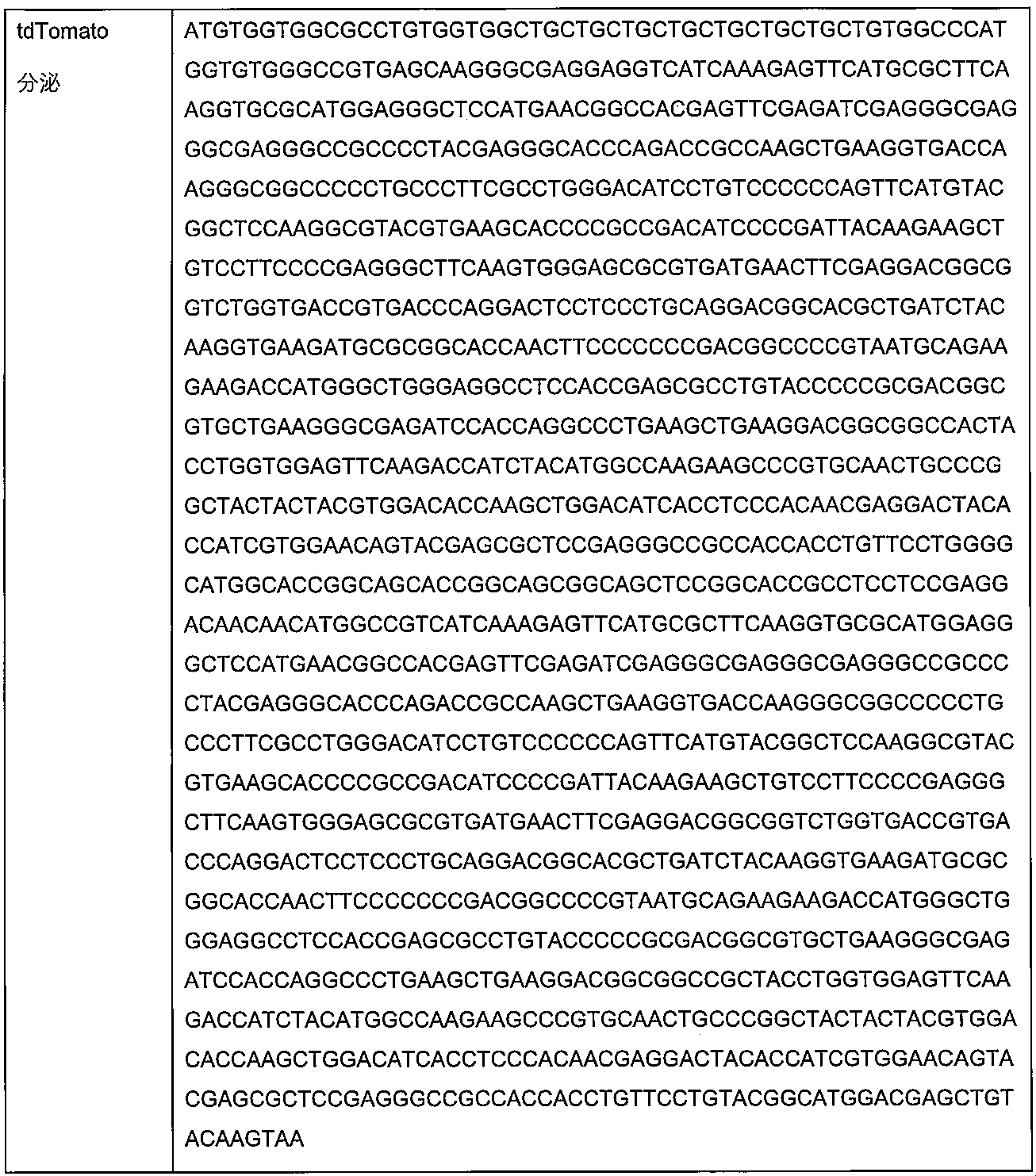
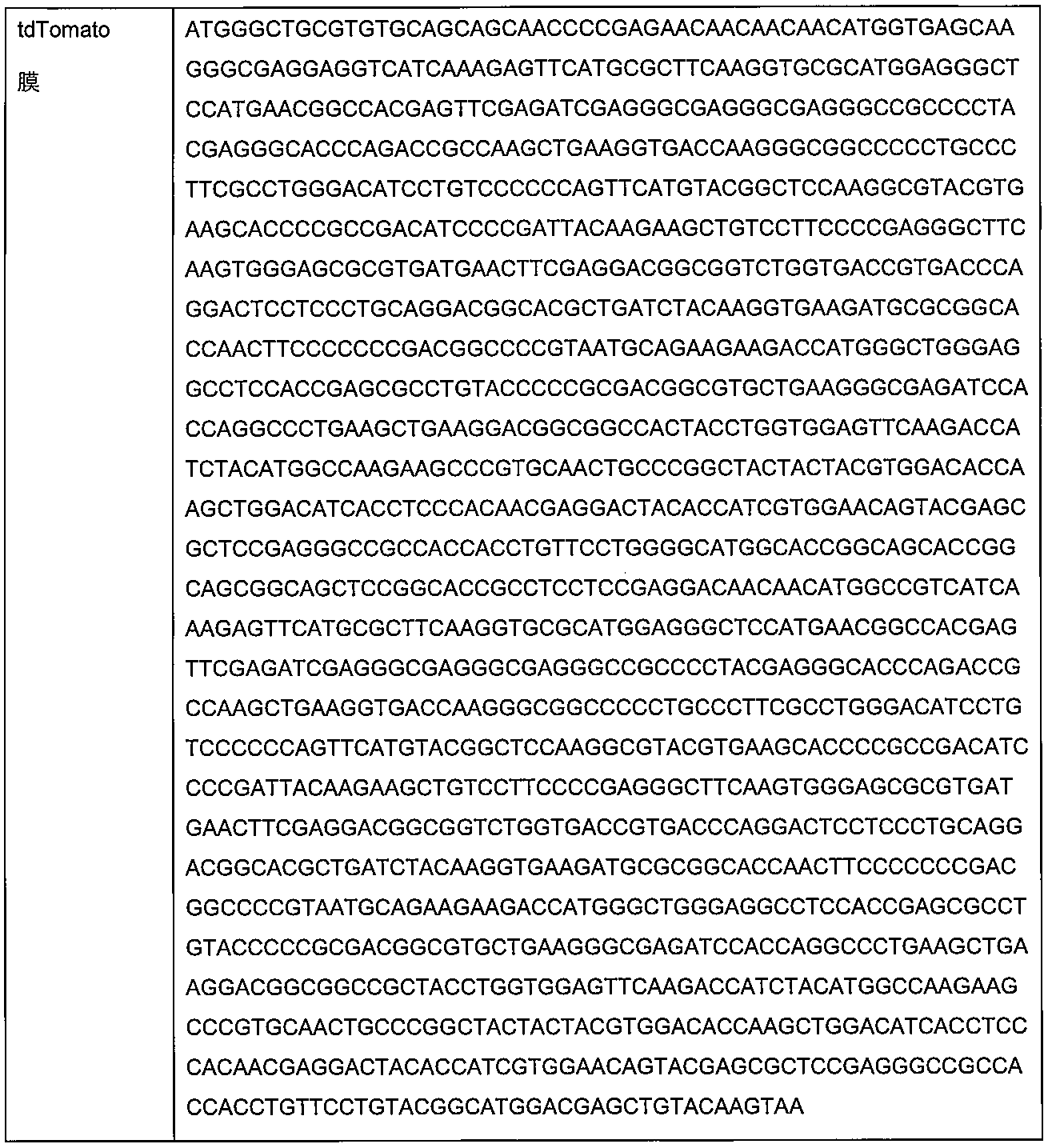
実施例9. LPMP/mRNA製剤を用いたナイーブマウスにおけるIL-15発現
本実施例は、mRNA(例えば、IL-15のmRNA)を封入するための、イオン化可能な脂質(C12-200)、ステロール(コレステロール)、およびPEG脂質(DMPE-PEG2k)で再構成されたレモン脂質を含むrecLemon LPMP/mRNA製剤を記載する。本実施例で試験されたrecLemon LPMP/mRNA製剤を、実施例2に従って調製した。本実施例で使用したIL-15 mRNAのコーディング部分は以下の通りである。
MRISKPHLRS ISIQCYLCLL LNSHFLTEAG IHVFILGCFS AGLPKTEANW VNVISDLKKI EDLIQSMHID ATLYTESDVH PSCKVTAMKC FLLELQVISL ESGDASIHDT VENLIILANN SLSSNGNVTE SGCKECEELE EKNIKEFLQS FVHIVQMFIN TS
あるいは
ATGAGAATTTCGAAACCACATTTGAGAAGTATTTCCATCCAGTGCTACTTGTGTTTACTTCTAAACAGTCATTTTCTAACTGAAGCTGGCATTCATGTCTTCATTTTGGGCTGTTTCAGTGCAGGGCTTCCTAAAACAGAAGCCAACTGGGTGAATGTAATAAGTGATTTGAAAAAAATTGAAGATCTTATTCAATCTATGCATATTGATGCTACTTTATATACGGAAAGTGATGTTCACCCCAGTTGCAAAGTAACAGCAATGAAGTGCTTTCTCTTGGAGTTACAAGTTATTTCACTTGAGTCCGGAGATGCAAGTATTCATGATACAGTAGAAAATCTGATCATCCTAGCAAACAACAGTTTGTCTTCTAATGGGAATGTAACAGAATCTGGATGCAAAGAATGTGAGGAACTGGAGGAAAAAAATATTAAAGAATTTTTGCAGAGTTTTGTACATATTGTCCAAATGTTCATCAACACTTCTTGA
Example 9. IL-15 Expression in Naive Mice Using LPMP/mRNA Formulations This example describes a recLemon LPMP/mRNA formulation that includes lemon lipid reconstituted with an ionizable lipid (C12-200), a sterol (cholesterol), and a PEG lipid (DMPE-PEG2k) to encapsulate mRNA (e.g., IL-15 mRNA). The recLemon LPMP/mRNA formulation tested in this example was prepared according to Example 2. The coding portion of the IL-15 mRNA used in this example is as follows:
MRISKPHLRS ISIQCYLCLL LNSHFLTEAG IHVFILGCFS AGLPKTEANW VNVISDLKKI EDLIQSMHID ATLYTESDVH PSCKVTAMKC FLLELQVISL ESGDASIHDT VENLIILANN SLSSNGNVTE SGCKECEELE EKNIKEFLQS FVHIVQMFIN TS
Or ATGAGAATTTCGAAAACCACATTTGAGAAGTATTTCCATCCAGTGCTACTTGTGTTTA CTTCTAAACAGTCATTTTCTAACTGAAGCTGGCATTCATGTCTTCATTTTGGGCTGTTTCAG TGCAGGGCTTCCTAAAACAGAAGCCAACTGGGTGAATGTAATAAGTGATTTGAAAAAAAATT GAAGATCTTATTCAATCTATGCATATTGATGCTACTTTATACGGAAAGTGATGTTCACCC CAGTTGCAAAGTAACAGCAATGAAGTGCTTTCTCTTGGAGTTACAAGTTATTTCACTTGAG TCCGGAGATGCAAGTATTCATGATACAGTAGAAAATCTGATCCATCCTAGCAAACAACAGTTT GTCTTCTAATGGGAATGTAACAGAATCTGGATGCAAAGAATGTGAGGAACTGGAGGAAAAAAA ATATTAAAGAATTTTTGCAGAGTTTTGTACATATTGTCCAAATGTTCATCAACACTTCTTGA
この例では、recLemon LPMP/mRNA製剤(10μgのIL-15 mRNA)の筋肉内投与時のin vivoでのIL-15のレベル、および全身サイトカインに対するその効果を測定し、T細胞およびNK細胞のin vivoでの増殖および細胞内サイトカイン産生(筋肉内投与の6日後および10日後のCD8 T細胞、CD4 T細胞、およびNK細胞の数)に対するrecLemon LPMP/mRNA製剤(10μgのIL-15 mRNA)の筋肉内送達の効果を評価した。試験は、BotaMouse_212で行われた。投与スケジュールを以下のチャートに示し、スキーム3に例示する。

本実施例は、マウスにおけるrecLemon LPMP/mRNA製剤(IL-15)の単回投与が、インビボでIL-15を発現し、投与後72時間まで高い全身レベルに到達することができ、T細胞サイトカインIFNγの放出を誘導することができ、免疫応答を増強するその役割を強調し、血清中の炎症性サイトカインおよびケモカインの産生を誘導することができ、脾臓内のCD4+およびCD8+T細胞ならびにNK細胞の両方の絶対数を増加させたことを実証した。マウスにおけるrecLemon LPMP/mRNA製剤(IL-15)の単回筋肉内投与は、投与後10日目に脾臓内のNK細胞からのIL-2Ra発現およびIFNγ産生を増加させることができた。 This example demonstrated that a single administration of recLemon LPMP/mRNA formulation (IL-15) in mice was able to express IL-15 in vivo and reach high systemic levels up to 72 hours after administration, was able to induce the release of T cell cytokine IFNγ, highlighting its role in enhancing immune responses, was able to induce the production of inflammatory cytokines and chemokines in serum, and increased the absolute numbers of both CD4+ and CD8+ T cells and NK cells in the spleen. A single intramuscular administration of recLemon LPMP/mRNA formulation (IL-15) in mice was able to increase IL-2Ra expression and IFNγ production from NK cells in the spleen 10 days after administration.
これらの結論を図18~22に示した。 These conclusions are shown in Figures 18 to 22.
実施例10. LPMP/mRNA製剤を用いたナイーブNHPにおけるIL-15およびIL-2の発現
本実施例は、mRNA(例えば、IL-15またはIL-2のmRNA)を封入するための、イオン化可能な脂質(C12-200)、ステロール(コレステロール)、およびPEG脂質(DMPE-PEG2k)で再構成されたレモン脂質を含むrecLemon LPMP/mRNA製剤を記載する。本実施例で試験されたrecLemon LPMP/mRNA製剤を、実施例2に従って調製した。本実施例で使用したIL-2 mRNAのコーディング部分は以下の通りである。
MYRMQLLSCI ALSLALVTNS APTSSSTKKT QLQLEHLLLD LQMILNGINN YKNPKLTRML TFKFYMPKKA TELKHLQCLE EELKPLEEVL NLAQSKNFHL RPRDLISNIN VIVLELKGSE TTFMCEYADE TATIVEFLNR WITFCQSIIS TLT
Example 10. Expression of IL-15 and IL-2 in Naive NHPs Using LPMP/mRNA Formulations This example describes a recLemon LPMP/mRNA formulation that includes lemon lipid reconstituted with an ionizable lipid (C12-200), a sterol (cholesterol), and a PEG lipid (DMPE-PEG2k) to encapsulate mRNA (e.g., IL-15 or IL-2 mRNA). The recLemon LPMP/mRNA formulation tested in this example was prepared according to Example 2. The coding portion of the IL-2 mRNA used in this example is as follows:
MYRMQLLSCI ALSLALVTNS APTSSSSTKKT QLQLEHLLLD LQMILNGINN YKNPKLTRML TFKFYMPKKA TELKHLQCLE EELKPLEEVL NLAQSKNFHL RPRDLISNIN VIVLELKGSE TTFMCEYADE TATIVEFLNR WITFCQSIIS TLT
本実施例で使用したIL-15 mRNAのコーディング部分は以下の通りである。
MRISKPHLRS ISIQCYLCLL LNSHFLTEAG IHVFILGCFS AGLPKTEANW VNVISDLKKI EDLIQSMHID ATLYTESDVH PSCKVTAMKC FLLELQVISL ESGDASIHDT VENLIILANN SLSSNGNVTE SGCKECEELE EKNIKEFLQS FVHIVQMFIN TS
The coding portion of the IL-15 mRNA used in this example is as follows:
MRISKPHLRS ISIQCYLCLL LNSHFLTEAG IHVFILGCFS AGLPKTEANW VNVISDLKKI EDLIQSMHID ATLYTESDVH PSCKVTAMKC FLLELQVISL ESGDASIHDT VENLIILANN SLSSNGNVTE SGCKECEELE EKNIKEFLQS FVHIVQMFIN TS
この例では、recLemon LPMP/mRNA製剤(IL-15 mRNAまたはIL-2 mRNA)の筋肉内投与の効果を測定した。試験は、非ヒト霊長類(NHP)において行われた。投与スケジュールを以下のチャートに示し、スキーム4に例示する。
本実施例は、NHPにおけるrecLemon LPMP/mRNA製剤(IL-15)の単回筋肉内投与が、T細胞およびNK細胞上のIL-2Ra(CD25)のレベルの上昇、ならびに投与後24時間(1日目)における、血中でグランザイムB/パーフォリンおよびIFNγを産生するCD8 T細胞およびNK細胞の高頻度をもたらすことを実証した。投与から4日後、recLemon LPMP/mRNA製剤(IL-15およびIL-2)の単回筋肉内投与は、血中の、T細胞およびNK細胞の増殖、ならびにこれらの細胞におけるグランザイムBおよびIFNγのレベルの上昇を増加させた。投与から4日後、recLemon LPMP/mRNA製剤(IL-15)の単回筋肉内投与は、血中のT細胞およびNK細胞上のIL-2Ra(CD25)を増加させた。投与から8日後、recLemon LPMP/mRNA製剤(IL-15およびIL-2)の単回筋肉内投与は、グランザイムB/パーフォリンを産生するCD8 T細胞およびNK細胞の循環頻度の増加、ならびに血中のNK細胞上のIL-2Ra(CD25)の発現の増加をもたらす。投与後8日目の血中のCD8 T細胞におけるIFNγの頻度の増加、およびCD8 T細胞およびNK細胞の頻度の増加が、recLemon LPMP/IL-15に応答して見出された。投与から13日後、recLemon LPMP/mRNA製剤(IL-15およびIL-2)の単回筋肉内投与に応答して循環T細胞およびNK細胞の数の増加が検出され、免疫細胞の長期にわたる増殖を示した。recLemon LPMP/mRNA製剤(IL-15)の単回筋肉内投与に応答して、T細胞およびNK細胞上のIL-2Ra(CD25)の発現の増加が、投与後13日目に血液中に見出され、免疫細胞の長期にわたる活性化を示した。4時間、6時間、24時間、4日(96時間)、8日(192時間)、および13日(312時間)で測定されたIL-15およびIL-2のサイトカインレベルは、recLemon LPMP/mRNA製剤(IL-15およびIL-2)の単回筋肉内投与が、それらのそれぞれの免疫サイトカインの全身発現を増加させ、IL-15 mRNAが、複数日間IL-15の発現の長期にわたる増加をもたらすことを示す(図33A)。recLemon LPMP/mRNA製剤(IL-15およびIL-2)の単回筋肉内投与後13日にわたるCD56+NK細胞の増殖は、NHPの血液中の投与後4日目のピークを示す。4時間、6時間、24時間、4日(96時間)、8日(192時間)、および13日(312時間)で測定された炎症性サイトカイン(IP-10、IFNγ、IL-6)の全身レベルは、recLemon LPMP/mRNA製剤(IL-15およびIL-2)の単回筋肉内投与が、免疫応答を示すレベルを増加させたが、毒性を示す発現レベルは増加させないことを明らかにする(図35)。投与後6時間で測定されたIL-15産生の全身レベルは、ネズミモデル(図36A)における投与量に基づく予想レベルが、非ヒト霊長類モデルにおける用量に基づく類似のレベルに対応し、複数の投与量および動物モデルにわたって一貫性を示すことを示す。 This example demonstrated that a single intramuscular administration of recLemon LPMP/mRNA formulation (IL-15) in NHPs resulted in increased levels of IL-2Ra (CD25) on T cells and NK cells, and high frequencies of CD8 T cells and NK cells producing Granzyme B/perforin and IFNγ in the blood 24 hours (day 1) after administration. After 4 days of administration, a single intramuscular administration of recLemon LPMP/mRNA formulation (IL-15 and IL-2) increased proliferation of T cells and NK cells, and increased levels of Granzyme B and IFNγ in these cells in the blood. After 4 days of administration, a single intramuscular administration of recLemon LPMP/mRNA formulation (IL-15) increased IL-2Ra (CD25) on T cells and NK cells in the blood. After 8 days of administration, a single intramuscular administration of recLemon LPMP/mRNA formulation (IL-15 and IL-2) results in an increase in the frequency of circulating CD8 T cells and NK cells producing granzyme B/perforin, as well as an increase in the expression of IL-2Ra (CD25) on NK cells in the blood. An increase in the frequency of IFNγ in CD8 T cells in the blood, as well as an increase in the frequency of CD8 T cells and NK cells, was found in response to recLemon LPMP/IL-15 after 8 days of administration. After 13 days of administration, an increase in the number of circulating T cells and NK cells was detected in response to a single intramuscular administration of recLemon LPMP/mRNA formulation (IL-15 and IL-2), indicating a prolonged expansion of immune cells. In response to a single intramuscular administration of recLemon LPMP/mRNA formulation (IL-15), increased expression of IL-2Ra (CD25) on T cells and NK cells was found in the blood 13 days after administration, indicating prolonged activation of immune cells. IL-15 and IL-2 cytokine levels measured at 4 hours, 6 hours, 24 hours, 4 days (96 hours), 8 days (192 hours), and 13 days (312 hours) indicate that a single intramuscular administration of recLemon LPMP/mRNA formulation (IL-15 and IL-2) increases systemic expression of their respective immune cytokines, and IL-15 mRNA results in a prolonged increase in expression of IL-15 for multiple days (FIG. 33A). Proliferation of CD56+ NK cells over 13 days following a single intramuscular administration of recLemon LPMP/mRNA formulations (IL-15 and IL-2) shows a peak in the blood of NHPs at 4 days post-administration. Systemic levels of inflammatory cytokines (IP-10, IFNγ, IL-6) measured at 4 hours, 6 hours, 24 hours, 4 days (96 hours), 8 days (192 hours), and 13 days (312 hours) reveal that a single intramuscular administration of recLemon LPMP/mRNA formulations (IL-15 and IL-2) increases levels indicative of immune response but not toxicity (FIG. 35). Systemic levels of IL-15 production measured 6 hours post-administration show that predicted levels based on dose in the murine model (FIG. 36A) correspond to similar levels based on dose in the non-human primate model, demonstrating consistency across multiple doses and animal models.
前述の発明は、理解の明瞭化の目的で、例示および実施例によってある程度詳細に説明されてきたが、説明および実施例は、本発明の範囲を限定するものとして解釈されるべきではない。本明細書に引用されるすべての特許および科学文献の開示は、参照によりその全体が明示的に組み込まれる。他の実施形態は、特許請求の範囲内である。 The foregoing invention has been described in some detail by way of illustration and example, for purposes of clarity of understanding, but the illustrations and examples should not be construed as limiting the scope of the invention. The disclosures of all patent and scientific literature cited herein are expressly incorporated by reference in their entirety. Other embodiments are within the scope of the claims.
Claims (96)
一つまたは複数の抗原性、腫瘍抗原性、またはシグナル伝達ポリペプチドをコードする一つまたは複数のポリヌクレオチドを含み、
天然の脂質およびイオン化可能な脂質を含む脂質再構成植物メッセンジャーパック(LPMP)内に製剤化され、前記イオン化可能な脂質が、以下に挙げられる特徴:
(i)少なくとも2つのイオン化可能なアミン、
(ii)少なくとも3つの脂質尾部であって、前記脂質尾部の各々が、少なくとも6個の炭素原子の長さである、脂質尾部、
(iii)約4.5~約7.5のpKa、
(iv)少なくとも二個の原子の鎖によって分けられたイオン化可能なアミンおよびヘテロ有機基、ならびに
(v)少なくとも10のN:P比、のうちの二つ以上を有する、mRNA治療組成物。 1. An mRNA therapeutic composition comprising:
one or more polynucleotides encoding one or more antigenic, tumor antigenic, or signaling polypeptides;
The lipid reconstituted plant messenger pack (LPMP) is formulated with natural lipids and ionizable lipids, the ionizable lipids having the following characteristics:
(i) at least two ionizable amines;
(ii) at least three lipid tails, each of said lipid tails being at least six carbon atoms in length;
(iii) a pKa of about 4.5 to about 7.5;
(iv) an ionizable amine and a heteroorganic group separated by a chain of at least two atoms; and (v) an N:P ratio of at least 10.
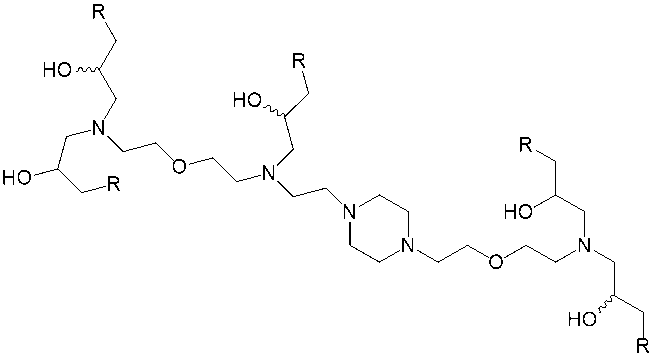
(a)DNA分子、または
(b)TがUで置換されているRNA分子、に由来する、請求項1に記載のmRNA治療組成物。 The polynucleotide is an mRNA,
2. The mRNA therapeutic composition of claim 1, derived from: (a) a DNA molecule; or (b) an RNA molecule in which T is replaced with U.
約20モル%~約50モル%の前記イオン化可能な脂質、
約20モル%~約60モル%の天然の脂質、
約7モル%~約20モル%のステロール、および
約0.5モル%~約3モル%のポリエチレングリコール(PEG)-脂質コンジュゲートを含む、前記実施形態のいずれか一つのmRNA治療組成物。 The LPMP is
about 20 mol % to about 50 mol % of said ionizable lipid;
about 20 mol % to about 60 mol % naturally occurring lipids;
about 7 mol % to about 20 mol % of a sterol, and
The mRNA therapeutic composition of any of the preceding embodiments, comprising about 0.5 mol % to about 3 mol % of a polyethylene glycol (PEG)-lipid conjugate.
約35モル%の前記イオン化可能な脂質、
約50モル%の天然の脂質、
約12.5モル%の前記ステロール、および
約2.5モル%のポリエチレングリコール(PEG)-脂質コンジュゲートを含む、実施形態39のmRNA治療組成物。 The LPMP is
about 35 mole % of said ionizable lipid;
About 50 mol % natural lipids,
about 12.5 mole % of said sterol, and
The mRNA therapeutic composition of embodiment 39, comprising about 2.5 mol % of a polyethylene glycol (PEG)-lipid conjugate.
イオン化可能な脂質の存在下で精製されたPMP脂質を含む膜を再構成して、前記イオン化可能な脂質を含む脂質再構成植物メッセンジャーパック(LPMP)を生成することであって、前記イオン化可能な脂質が、以下に挙げられる特徴:
(i)少なくとも2つのイオン化可能なアミン、
(ii)少なくとも3つの脂質尾部であって、前記脂質尾部の各々が、少なくとも6個の炭素原子の長さである、脂質尾部、
(iii)約4.5~約7.5のpKa、
(iv)少なくとも二個の原子の鎖によって分けられたイオン化可能なアミンおよびヘテロ有機基、ならびに
(v)少なくとも10のN:P比、のうちの二つ以上を有することと、
一つまたは複数の抗原性、腫瘍抗原性、またはシグナル伝達ポリペプチドをコードする一つまたは複数のポリヌクレオチドを前記LPMPに充填することと、を含む、方法。 1. A method of making an mRNA therapeutic composition, comprising:
Reconstituting a membrane comprising the purified PMP lipids in the presence of an ionizable lipid to produce a lipid reconstituted plant messenger pack (LPMP) comprising said ionizable lipid, said ionizable lipid having the following characteristics:
(i) at least two ionizable amines;
(ii) at least three lipid tails, each of said lipid tails being at least six carbon atoms in length;
(iii) a pKa of about 4.5 to about 7.5;
(iv) an ionizable amine and a heteroorganic group separated by a chain of at least two atoms; and (v) an N:P ratio of at least 10;
and loading said LPMP with one or more polynucleotides encoding one or more antigenic, tumor antigenic, or signaling polypeptides.
請求項1~64のいずれか一項に記載のmRNA治療組成物を前記対象に投与することとを含む、方法。 1. A method of delivering an mRNA therapeutic in a subject, comprising:
and administering to the subject an mRNA therapeutic composition described in any one of claims 1-64.
請求項1~64のいずれか一項に記載のmRNA治療組成物を前記対象に投与することとを含む、方法。 1. A method of inducing an immune response in a subject, comprising:
and administering to the subject an mRNA therapeutic composition described in any one of claims 1-64.
請求項1~64のいずれか一項に記載のmRNA治療組成物を前記対象に投与することとを含む、方法。 1. A method of treating or preventing cancer in a subject, comprising:
and administering to the subject an mRNA therapeutic composition described in any one of claims 1-64.
Applications Claiming Priority (7)
| Application Number | Priority Date | Filing Date | Title |
|---|---|---|---|
| US202163291686P | 2021-12-20 | 2021-12-20 | |
| US63/291,686 | 2021-12-20 | ||
| US202263320664P | 2022-03-16 | 2022-03-16 | |
| US63/320,664 | 2022-03-16 | ||
| US202263401214P | 2022-08-26 | 2022-08-26 | |
| US63/401,214 | 2022-08-26 | ||
| PCT/US2022/053492 WO2023122080A1 (en) | 2021-12-20 | 2022-12-20 | Compositions comprising mrna and lipid reconstructed plant messenger packs |
Publications (2)
| Publication Number | Publication Date |
|---|---|
| JP2025500373A true JP2025500373A (en) | 2025-01-09 |
| JPWO2023122080A5 JPWO2023122080A5 (en) | 2026-01-06 |
Family
ID=85150693
Family Applications (1)
| Application Number | Title | Priority Date | Filing Date |
|---|---|---|---|
| JP2024537488A Pending JP2025500373A (en) | 2021-12-20 | 2022-12-20 | Composition for MRNA treatment |
Country Status (7)
| Country | Link |
|---|---|
| EP (1) | EP4452239A1 (en) |
| JP (1) | JP2025500373A (en) |
| KR (1) | KR20240134324A (en) |
| AU (1) | AU2022421841A1 (en) |
| CA (1) | CA3241014A1 (en) |
| MX (1) | MX2024007594A (en) |
| WO (1) | WO2023122080A1 (en) |
Families Citing this family (5)
| Publication number | Priority date | Publication date | Assignee | Title |
|---|---|---|---|---|
| EP4615424A1 (en) * | 2022-11-10 | 2025-09-17 | Sail Biomedicines, Inc. | Rna compositions comprising lipid nanoparticles or lipid reconstructed natural messenger packs |
| WO2025042786A1 (en) | 2023-08-18 | 2025-02-27 | Flagship Pioneering Innovations Vi, Llc | Compositions comprising circular polyribonucleotides and uses thereof |
| WO2025106930A1 (en) | 2023-11-17 | 2025-05-22 | Sail Biomedicines, Inc. | Circular polyribonucleotides encoding glucagon-like peptide 2 (glp-2) and uses thereof |
| WO2025106915A1 (en) | 2023-11-17 | 2025-05-22 | Sail Biomedicines, Inc. | Circular polyribonucleotides encoding glucagon-like peptide 1 (glp-1) and uses thereof |
| WO2025179198A1 (en) | 2024-02-23 | 2025-08-28 | Sail Biomedicines, Inc. | Circular polyribonucleotides and unmodified linear rnas with reduced immunogenicity |
Family Cites Families (80)
| Publication number | Priority date | Publication date | Assignee | Title |
|---|---|---|---|---|
| US5208036A (en) | 1985-01-07 | 1993-05-04 | Syntex (U.S.A.) Inc. | N-(ω, (ω-1)-dialkyloxy)- and N-(ω, (ω-1)-dialkenyloxy)-alk-1-yl-N,N,N-tetrasubstituted ammonium lipids and uses therefor |
| US5279833A (en) | 1990-04-04 | 1994-01-18 | Yale University | Liposomal transfection of nucleic acids into animal cells |
| US5264618A (en) | 1990-04-19 | 1993-11-23 | Vical, Inc. | Cationic lipids for intracellular delivery of biologically active molecules |
| US5283185A (en) | 1991-08-28 | 1994-02-01 | University Of Tennessee Research Corporation | Method for delivering nucleic acids into cells |
| US5753613A (en) | 1994-09-30 | 1998-05-19 | Inex Pharmaceuticals Corporation | Compositions for the introduction of polyanionic materials into cells |
| EP1179340A3 (en) | 1994-09-30 | 2003-05-07 | INEX Pharmaceutical Corp. | Compositions for the introduction of polyanionic materials into cells |
| US5696092A (en) | 1995-03-07 | 1997-12-09 | George Washington University | Methods and compositions for inhibiting metastasis of epithelial cell-derived cancers |
| ES2340499T3 (en) | 2001-06-05 | 2010-06-04 | Curevac Gmbh | TUMOR ANTIGEN ARNM STABILIZED WITH AN INCREASED G / C CONTENT. |
| AU2005222965B8 (en) | 2004-03-15 | 2010-07-01 | City Of Hope | Methods and compositions for the specific inhibition of gene expression by double-stranded RNA |
| WO2005120152A2 (en) | 2004-06-07 | 2005-12-22 | Protiva Biotherapeutics, Inc. | Cationic lipids and methods of use |
| CA2597724A1 (en) | 2005-02-14 | 2007-08-02 | Sirna Therapeutics, Inc. | Cationic lipids and formulated molecular compositions containing them |
| US9012219B2 (en) | 2005-08-23 | 2015-04-21 | The Trustees Of The University Of Pennsylvania | RNA preparations comprising purified modified RNA for reprogramming cells |
| DE102005046490A1 (en) | 2005-09-28 | 2007-03-29 | Johannes-Gutenberg-Universität Mainz | New nucleic acid molecule comprising promoter, a transcriptable nucleic acid sequence, a first and second nucleic acid sequence for producing modified RNA with transcriptional stability and translational efficiency |
| CN101977510A (en) | 2007-06-29 | 2011-02-16 | 联邦科学技术研究组织 | Methods for degrading toxic compounds |
| EP2535419A3 (en) | 2007-09-26 | 2013-05-29 | Intrexon Corporation | Synthetic 5'UTRs, expression vectors, and methods for increasing transgene expression |
| CN101939428B (en) | 2007-12-11 | 2014-05-07 | 斯克利普斯研究所 | Compositions and methods involving mRNA translation enhancers |
| KR20110110776A (en) | 2008-12-18 | 2011-10-07 | 다이서나 파마수이티컬, 인크. | Extended Dicer Substrate Formulations and Methods for Specific Inhibition of Gene Expression |
| US20100249214A1 (en) | 2009-02-11 | 2010-09-30 | Dicerna Pharmaceuticals | Multiplex dicer substrate rna interference molecules having joining sequences |
| CA2764158A1 (en) | 2009-06-01 | 2010-12-09 | Halo-Bio Rnai Therapeutics, Inc. | Polynucleotides for multivalent rna interference, compositions and methods of use thereof |
| EP2600901B1 (en) | 2010-08-06 | 2019-03-27 | ModernaTX, Inc. | A pharmaceutical formulation comprising engineered nucleic acids and medical use thereof |
| CN104531812A (en) | 2010-10-01 | 2015-04-22 | 现代治疗公司 | Engineered nucleic acids and methods of use thereof |
| US8710200B2 (en) | 2011-03-31 | 2014-04-29 | Moderna Therapeutics, Inc. | Engineered nucleic acids encoding a modified erythropoietin and their expression |
| BR112013031553A2 (en) | 2011-06-08 | 2020-11-10 | Shire Human Genetic Therapies, Inc. | compositions, mrna encoding a gland and its use, use of at least one mrna molecule and a vehicle for transfer and use of an mrna encoding for exogenous protein |
| BR112014007852B1 (en) | 2011-10-03 | 2021-11-03 | Moderna Therapeutics, Inc | MODIFIED ISOLATED POLYNUCLEOTIDE AND PHARMACEUTICAL COMPOSITION |
| NZ747501A (en) | 2011-10-27 | 2020-05-29 | Massachusetts Inst Technology | Amino acid derivatives functionalized on the n-terminal capable of forming drug encapsulating microspheres |
| PL2791160T3 (en) | 2011-12-16 | 2022-06-20 | Modernatx, Inc. | Modified mrna compositions |
| AU2013243949A1 (en) | 2012-04-02 | 2014-10-30 | Moderna Therapeutics, Inc. | Modified polynucleotides for the production of biologics and proteins associated with human disease |
| HK1206779A1 (en) | 2012-04-02 | 2016-01-15 | Modernatx, Inc. | Modified polynucleotides for the production of nuclear proteins |
| CA2876155C (en) | 2012-06-08 | 2022-12-13 | Ethris Gmbh | Pulmonary delivery of mrna to non-lung target cells |
| US9512456B2 (en) | 2012-08-14 | 2016-12-06 | Modernatx, Inc. | Enzymes and polymerases for the synthesis of RNA |
| WO2014093924A1 (en) | 2012-12-13 | 2014-06-19 | Moderna Therapeutics, Inc. | Modified nucleic acid molecules and uses thereof |
| HK1220122A1 (en) | 2013-03-09 | 2017-04-28 | Modernatx, Inc. | Heterologous untranslated regions for mrna |
| ES2795249T3 (en) | 2013-03-15 | 2020-11-23 | Translate Bio Inc | Synergistic enhancement of nucleic acid delivery through mixed formulations |
| US10077439B2 (en) | 2013-03-15 | 2018-09-18 | Modernatx, Inc. | Removal of DNA fragments in mRNA production process |
| US10138507B2 (en) | 2013-03-15 | 2018-11-27 | Modernatx, Inc. | Manufacturing methods for production of RNA transcripts |
| WO2014144711A1 (en) | 2013-03-15 | 2014-09-18 | Moderna Therapeutics, Inc. | Analysis of mrna heterogeneity and stability |
| WO2014144767A1 (en) | 2013-03-15 | 2014-09-18 | Moderna Therapeutics, Inc. | Ion exchange purification of mrna |
| US20160032273A1 (en) | 2013-03-15 | 2016-02-04 | Moderna Therapeutics, Inc. | Characterization of mrna molecules |
| US11377470B2 (en) | 2013-03-15 | 2022-07-05 | Modernatx, Inc. | Ribonucleic acid purification |
| CN105451779A (en) | 2013-08-21 | 2016-03-30 | 库瑞瓦格股份公司 | Method for increasing expression of RNA-encoded proteins |
| US9925277B2 (en) | 2013-09-13 | 2018-03-27 | Modernatx, Inc. | Polynucleotide compositions containing amino acids |
| WO2015062738A1 (en) | 2013-11-01 | 2015-05-07 | Curevac Gmbh | Modified rna with decreased immunostimulatory properties |
| EP3053585A1 (en) | 2013-12-13 | 2016-08-10 | Moderna Therapeutics, Inc. | Alternative nucleic acid molecules and uses thereof |
| PL3083556T3 (en) | 2013-12-19 | 2020-06-29 | Novartis Ag | Lipids and lipid compositions for the delivery of active agents |
| CA2927254C (en) | 2013-12-30 | 2023-10-24 | Curevac Ag | Artificial nucleic acid molecules |
| KR102399799B1 (en) | 2013-12-30 | 2022-05-18 | 큐어백 아게 | Artificial nucleic acid molecules |
| CN106659731A (en) | 2014-05-30 | 2017-05-10 | 夏尔人类遗传性治疗公司 | Topical compositions and methods for treating wounds |
| US20170175129A1 (en) | 2014-06-19 | 2017-06-22 | Moderna Therapeutics, Inc. | Alternative nucleic acid molecules and uses thereof |
| WO2015196118A1 (en) | 2014-06-19 | 2015-12-23 | Moderna Therapeutics, Inc. | Alternative nucleic acid molecules and uses thereof |
| EP3157573A4 (en) | 2014-06-19 | 2018-02-21 | Moderna Therapeutics, Inc. | Alternative nucleic acid molecules and uses thereof |
| EP3160938B1 (en) | 2014-06-25 | 2020-09-16 | Acuitas Therapeutics Inc. | Novel lipids and lipid nanoparticle formulations for delivery of nucleic acids |
| US9840479B2 (en) | 2014-07-02 | 2017-12-12 | Massachusetts Institute Of Technology | Polyamine-fatty acid derived lipidoids and uses thereof |
| AU2015289573A1 (en) | 2014-07-17 | 2017-02-02 | Modernatx, Inc | Terminal modifications of polynucleotides |
| EP3247363A4 (en) | 2015-01-21 | 2018-10-03 | Moderna Therapeutics, Inc. | Lipid nanoparticle compositions |
| WO2016118725A1 (en) | 2015-01-23 | 2016-07-28 | Moderna Therapeutics, Inc. | Lipid nanoparticle compositions |
| US10369122B2 (en) | 2015-05-21 | 2019-08-06 | Ohio State Innovation Foundation | Benzene-1,3,5-tricarboxamide derivatives and uses thereof |
| HRP20230494T1 (en) | 2015-06-19 | 2023-08-04 | Massachusetts Institute Of Technology | Alkenyl substituted 2,5-piperazinediones and their use in compositions for delivering an agent to a subject or cell |
| AU2016285852B2 (en) | 2015-06-29 | 2020-12-17 | Acuitas Therapeutics Inc. | Lipids and lipid nanoparticle formulations for delivery of nucleic acids |
| ES2969082T3 (en) | 2015-09-17 | 2024-05-16 | Modernatx Inc | Compounds and compositions for intracellular administration of therapeutic agents |
| FI3368507T3 (en) | 2015-10-28 | 2023-03-21 | Acuitas Therapeutics Inc | New lipids and lipid nanoparticle preparations for delivery of nucleic acids |
| WO2017117528A1 (en) | 2015-12-30 | 2017-07-06 | Acuitas Therapeutics, Inc. | Lipids and lipid nanoparticle formulations for delivery of nucleic acids |
| EP3405579A1 (en) | 2016-01-22 | 2018-11-28 | Modernatx, Inc. | Messenger ribonucleic acids for the production of intracellular binding polypeptides and methods of use thereof |
| CA3018978A1 (en) | 2016-03-30 | 2017-10-05 | Intellia Therapeutics, Inc. | Lipid nanoparticle formulations for crispr/cas components |
| US10457631B2 (en) | 2016-04-06 | 2019-10-29 | Ohio State Innovation Foundation | Biodegradable amino-ester nanomaterials for nucleic acid delivery |
| AU2017326423B2 (en) | 2016-09-14 | 2023-11-09 | Modernatx, Inc. | High purity RNA compositions and methods for preparation thereof |
| KR20190093816A (en) | 2016-10-26 | 2019-08-26 | 큐어백 아게 | Lipid nanoparticle mRNA vaccine |
| WO2019027999A1 (en) | 2017-07-31 | 2019-02-07 | Ohio State Innovation Foundation | Biomimetic nanomaterials and uses thereof |
| WO2019036030A1 (en) | 2017-08-17 | 2019-02-21 | Acuitas Therapeutics, Inc. | Lipids for use in lipid nanoparticle formulations |
| EP3668971B8 (en) | 2017-08-18 | 2024-05-29 | ModernaTX, Inc. | Rna polymerase variants |
| WO2019089828A1 (en) | 2017-10-31 | 2019-05-09 | Acuitas Therapeutics, Inc. | Lamellar lipid nanoparticles |
| WO2019099501A1 (en) | 2017-11-14 | 2019-05-23 | Ohio State Innovation Foundation | Benzene-1,3,5-tricarboxamide derived ester lipids and uses thereof |
| TW202028170A (en) | 2018-10-02 | 2020-08-01 | 美商英特利亞醫療公司 | Ionizable amine lipids |
| US20210395188A1 (en) | 2018-10-18 | 2021-12-23 | Acuitas Therapeutics, Inc. | Lipids for lipid nanoparticle delivery of active agents |
| IL314386A (en) | 2018-12-05 | 2024-09-01 | Intellia Therapeutics Inc | Modified amine lipids |
| CN113474328B (en) | 2019-01-11 | 2025-07-11 | 爱康泰生治疗公司 | Lipids for lipid nanoparticle delivery of active agents |
| KR20250152113A (en) | 2019-04-25 | 2025-10-22 | 인텔리아 테라퓨틱스, 인크. | Ionizable amine lipids and lipid nanoparticles |
| BR112022003021A2 (en) | 2019-08-24 | 2022-07-19 | Flagship Pioneering Innovations Vi Llc | MODIFICATION OF LIPID LOADED PLANT MESSENGER PACKAGES |
| KR20220133224A (en) | 2020-01-28 | 2022-10-04 | 모더나티엑스, 인크. | coronavirus RNA vaccine |
| BR112022018819A2 (en) | 2020-03-20 | 2022-11-29 | Biontech Us Inc | VACCINES AGAINST CORONAVIRUS AND METHODS OF USE |
| US20240298649A1 (en) * | 2021-06-14 | 2024-09-12 | Flagship Pioneering Innovations Vi, Llc | Modification of plant messenger packs |
-
2022
- 2022-12-20 JP JP2024537488A patent/JP2025500373A/en active Pending
- 2022-12-20 CA CA3241014A patent/CA3241014A1/en active Pending
- 2022-12-20 WO PCT/US2022/053492 patent/WO2023122080A1/en not_active Ceased
- 2022-12-20 KR KR1020247024391A patent/KR20240134324A/en active Pending
- 2022-12-20 EP EP22850881.8A patent/EP4452239A1/en active Pending
- 2022-12-20 AU AU2022421841A patent/AU2022421841A1/en active Pending
-
2024
- 2024-06-18 MX MX2024007594A patent/MX2024007594A/en unknown
Also Published As
| Publication number | Publication date |
|---|---|
| CA3241014A1 (en) | 2023-06-29 |
| WO2023122080A1 (en) | 2023-06-29 |
| EP4452239A1 (en) | 2024-10-30 |
| AU2022421841A1 (en) | 2024-06-27 |
| MX2024007594A (en) | 2024-11-08 |
| KR20240134324A (en) | 2024-09-09 |
Similar Documents
| Publication | Publication Date | Title |
|---|---|---|
| JP7625568B2 (en) | Cancer Vaccines | |
| JP7089003B2 (en) | Methods for reducing the immunogenicity of RNA | |
| JP2025071108A (en) | RNA cancer vaccine | |
| JP7207786B2 (en) | Interleukin 21 protein (IL21) mutants and their applications | |
| JP2025500373A (en) | Composition for MRNA treatment | |
| ES2968880T3 (en) | Chimeric antigen receptor (CAR) that binds BCMA, and uses thereof | |
| JP2023164537A (en) | RNA cancer vaccine | |
| JP2025001671A (en) | Personalized cancer vaccine epitope selection | |
| Fu et al. | mRNA vaccines in the context of cancer treatment: from concept to application | |
| WO2017059902A1 (en) | 3' utr sequences for stabilization of rna | |
| US20230114808A1 (en) | Therapeutic rna for prostate cancer | |
| JP2024539512A (en) | MRNA Vaccine Compositions | |
| CN121463947A (en) | Delivery of polynucleotides from lipid nanoparticles comprising RNA and ionizable lipids | |
| CN111448320A (en) | Cell membrane penetrating peptides | |
| CN118742296A (en) | Compositions comprising mRNA and lipid-reconstructed plant messenger packages | |
| WO2024220752A2 (en) | Rna therapeutic compositions | |
| CN120241980A (en) | An off-the-shelf in vivo in situ CAR based on circular RNA combined with tumor vaccine and its application | |
| CN121464216A (en) | Compositions and methods for inducing antigen-specific immunity against KRAS mutant cells | |
| CN118175992A (en) | mRNA vaccine composition | |
| CA3092860A1 (en) | Nucleic acid molecules and methods of using the same |
Legal Events
| Date | Code | Title | Description |
|---|---|---|---|
| A521 | Request for written amendment filed |
Free format text: JAPANESE INTERMEDIATE CODE: A523 Effective date: 20251222 |
|
| A621 | Written request for application examination |
Free format text: JAPANESE INTERMEDIATE CODE: A621 Effective date: 20251222 |