The present application is a divisional application of the following applications: application date: 24 days 5 month 2007; application No.: 200780027882.9(PCT/US 2007/069662); the invention name is as follows: as above.
This application claims priority to U.S. provisional application serial No. 60/808,834, filed on 26.2006.
Detailed Description
The following definitions and methods are provided to better illustrate the present invention and to guide those of ordinary skill in the art in the practice of the present invention. Unless otherwise indicated, terms are to be understood in accordance with their ordinary usage by those of ordinary skill in the relevant art. The definition of common terms of Molecular biology can also be found in Rieger et al, Glossary of Genetics: Classical and Molecular, 5 th edition, Springer-Verlag: New York, 1991; and Lewis, Genes V, Oxford University Press: New York, 1994.
The term "corn" as used herein refers to maize (Zea mays), including all plant species that can be mated with maize, including wild maize species.
The term "comprising" as used herein means "including but not limited to".
A transgenic "event" is generated by transforming plant cells with heterologous DNA (i.e., a nucleic acid construct containing the transgene of interest), regenerating the population of plants resulting from the insertion of the transgene into the plant genome, and selecting for a particular plant characterized by insertion into a particular genomic location. The term "event" refers to the original transformant and progeny of the transformant containing the heterologous DNA. The term "event" also refers to progeny produced by a sexual outcross between a transformant and another variety containing heterologous DNA. Even after repeated backcrossing with the backcross parents, the insert DNA and flanking DNA from the transformed parent are present in the same chromosomal location in the progeny of the cross. The term "event" also refers to DNA of the original transformant containing the inserted DNA and flanking genomic sequences immediately adjacent to the inserted DNA, which is expected to be transferred to progeny that receive the inserted DNA containing the transgene of interest as a result of a sexual cross of one parental line containing the inserted DNA (e.g., the original transformant and progeny resulting from selfing) with the parental line not containing the inserted DNA. The present invention relates to event MON89034DNA, plant cells, tissues, seeds and processed products derived from MON 89034.
It is also understood that two different transgenic plants may also be mated to produce progeny containing two independently segregating added foreign genes. Selfing of suitable progeny can produce plants that are homozygous for the two added exogenous genes. Backcrossing of parental plants and outcrossing with non-transgenic plants is also contemplated, as is asexual propagation. Descriptions of other Breeding Methods commonly used for different traits and crops can be found in one of several references, such as Fehr, in Breeding Methods for clinical Development, Wilcox J. ed., American Society of agronology, Madison Wis (1987).
A "probe" is an isolated nucleic acid to which is attached a conventional detectable label or reporter molecule, such as a radioisotope, ligand, chemiluminescent agent or enzyme. Such a probe is complementary to a target nucleic acid strand, and for purposes of the present invention, is complementary to the genomic DNA strand of corn event MON89034, whether it is from a corn plant or from a sample comprising DNA of the event. Probes of the invention include not only deoxyribonucleic or ribonucleic acids, but also polyamides and other probe materials that specifically bind to a target DNA sequence and can be used to detect the presence of the target DNA sequence.
"primers" are isolated nucleic acids that anneal to a complementary target DNA strand by nucleic acid hybridization to form a hybrid between the primer and the target DNA strand, followed by extension along the target DNA strand by a polymerase, such as a DNA polymerase. Primer pairs of the present invention refer to their use to amplify a target nucleic acid sequence, for example, by Polymerase Chain Reaction (PCR) or other conventional nucleic acid amplification methods.
The probe and primer are generally 11 or more nucleotides in length, preferably 18 or more nucleotides, more preferably 24 or more nucleotides, and most preferably 30 or more nucleotides. These probes and primers hybridize specifically to the target sequence under high stringency hybridization conditions. Preferably, the probes and primers according to the present invention have complete sequence similarity with the target sequence, although probes that differ from the target sequence and retain the ability to hybridize to the target sequence can be designed by conventional methods.
Methods for preparing and using probes and primers are described, for example, in Molecular Cloning, A Laboratory Manual, 2 nd edition, volumes 1-3, edited by Sambrook et al, Cold Spring Harbor Laboratory Press, Cold Spring Harbor, NY,1989 (hereinafter, "Sambrook et al, 1989"); current Protocols in Molecular Biology, edited by Ausubel et al, Greene Publishing and Wiley-Interscience, New York,1992 (periodic updates) (hereinafter, "Ausubel et al, 1992"); and Innis et al, PCRrotocols: A guides to Methods and Applications, Academic Press: San Diego, 1990. PCR Primer pairs can be derived from known sequences, for example, by using a computer program intended for this purpose, such as Primer (version 0.5,
1991,Whitehead Institute for Biomedical Research,Cambridge,MA)。
primers and probes based on the flanking DNA and insertion sequences disclosed herein can be used to confirm (and, if necessary, correct) the disclosed sequences by conventional methods, e.g., by recloning and sequencing these sequences.
The nucleic acid probes and primers of the invention hybridize to a target DNA sequence under stringent conditions. Any conventional nucleic acid hybridization or amplification method can be used to identify the presence of DNA for a transgenic event in a sample. In certain instances, a nucleic acid molecule or fragment thereof is capable of specifically hybridizing to other nucleic acid molecules. Herein, two nucleic acid molecules are said to be capable of specifically hybridizing to each other if they are capable of forming an antiparallel double-stranded nucleic acid structure. If the nucleic acid molecules show complete complementarity, one nucleic acid molecule is referred to as the "complement" of another nucleic acid molecule. Herein, molecules are said to exhibit "perfect complementarity" when each nucleotide of the molecule is complementary to a nucleotide of another molecule. Two molecules are said to be "minimally complementary" if they can hybridize to each other with sufficient stability to allow them to remain annealed to each other under at least conventional "low stringency" conditions. Similarly, molecules are said to be "complementary" if they can hybridize to each other with sufficient stability to allow them to remain annealed to each other under conventional "high stringency" conditions. Conventional stringent conditions are described by Sambrook et al, 1989 and Haymes et al, in: nucleic Acid Hybridization, A Practical Approach, IRL Press, Washington, DC (1985). Thus, deviations from complete complementarity are allowed, provided that these deviations do not completely preclude the ability of the molecules to form double-stranded structures. In order for a nucleic acid molecule to be useful as a primer or probe, it need only be sufficiently complementary in sequence to be able to form a stable double-stranded structure at the particular solvent and salt concentrations used.
In this context, a substantially homologous DNA sequence refers to a nucleic acid sequence: it will hybridize specifically under high stringency conditions to the complement of the nucleic acid sequence to which it is being compared. Suitable stringency conditions for facilitating DNA hybridization, such as 6.0 XSSC at about 45 ℃ followed by a wash with 2.0 XSSC at 50 ℃, are known to those skilled in the art or can be found in Current Protocols in Molecular Biology, John Wiley & Sons, N.Y. (1989), 6.3.1-6.3.6. For example, the salt concentration in the washing step can be selected from the low stringency 50 ℃ about 2.0 XSSC to the high stringency 50 ℃ about 0.2 XSSC. In addition, the temperature of the washing step can also be raised from low stringency conditions at room temperature of about 22 ℃ to high stringency conditions of about 65 ℃. Both temperature and salt concentration are variable, or either temperature or salt concentration may be held constant while the other variable is varied. In a preferred embodiment, a nucleic acid of the invention specifically hybridizes to one or more of the nucleic acid molecules set forth in SEQ ID NOS: 1 and 2, or complements thereof, or fragments of either, under moderately stringent conditions (e.g., about 2.0 XSSC and about 65 ℃). In a particularly preferred embodiment, the nucleic acid of the invention specifically hybridizes under high stringency conditions with one or more of the nucleic acid molecules shown in SEQ ID NO:1 and SEQ ID NO:2, or the complement or fragment of either. In one aspect of the invention, preferred marker nucleic acid molecules of the invention have the nucleic acid sequences shown in SEQ ID NO. 1 and SEQ ID NO. 2 or complements thereof or fragments of either. In a further aspect of the invention, preferred marker nucleic acid molecules of the invention share between 80% and 100% or between 90% and 100% sequence identity with the nucleic acid sequences shown in SEQ ID NO:1 and SEQ ID NO:2 or the complement thereof or a fragment of either. In a further aspect of the invention, preferred marker nucleic acid molecules of the invention share 95% to 100% sequence identity with the sequences shown in SEQ ID NO:1 and SEQ ID NO:2 or complements thereof or fragments of either. 1 and 2 can be used as markers in plant breeding methods to identify progeny of genetic crosses similar to the methods described for simple sequence repeat DNA marker analysis in "DNA markers: Protocols, applications, and reviews (1997)173-185, Cregan et al, editions, Wiley-Liss NY"; said documents are hereby incorporated by reference in their entirety. Hybridization of the probe to the target DNA molecule can be detected by any of a number of methods known to those skilled in the art, which may include, but are not limited to, fluorescent labeling, radioactive labeling, antibody-based labeling, and chemiluminescent labeling.
With respect to amplification of a target nucleotide sequence (e.g., by PCR) using a particular pair of amplification primers, "stringent conditions" refer to conditions such that: in a DNA thermal amplification reaction, the primer pair is made to hybridize only to the target nucleic acid sequence to which the primer having the corresponding wild-type sequence (or its complement) should bind and preferably produces a unique amplification product, an amplicon.
The term "specific for (target sequence)" means that the probe or primer hybridizes under stringent hybridization conditions only to the target sequence in a sample containing the target sequence.
As used herein, "amplified DNA" or "amplicon" refers to the nucleic acid amplification product of a target nucleic acid sequence that is part of a nucleic acid template. For example, to determine whether a corn plant results from a sexual cross containing transgenic event genomic DNA of a corn plant of the invention, a nucleic acid amplification method can be performed on DNA extracted from a corn plant tissue sample using a primer pair comprising a flanking sequence in the plant genome immediately adjacent to the insertion site into which the heterologous DNA was inserted and a second primer derived from the insertion of the heterologous DNA to produce an amplicon diagnostic for the presence of the event DNA. The amplicon has a length and has a sequence that is also diagnostic for the event. The length of the amplicon can be within the combined length of the primer pair plus one nucleotide base pair, preferably plus about 50 nucleotide base pairs, more preferably plus about 250 nucleotide base pairs, and even more preferably plus about 450 nucleotide base pairs. Alternatively, the primer pair may be derived from flanking sequences on both sides of the inserted DNA so as to produce an amplicon comprising the entire inserted nucleotide sequence. Members of a primer pair derived from a plant genomic sequence can be located a distance from the inserted DNA molecule that can range from one nucleotide base pair up to about twenty thousand nucleotide base pairs. The use of the term "amplicon" specifically excludes primer dimers that may form in a DNA thermal amplification reaction.
Nucleic acid amplification can be achieved by any of a variety of nucleic acid amplification methods known in the art, including Polymerase Chain Reaction (PCR). A variety of amplification Methods are known in the art, and are described, inter alia, in U.S. Pat. Nos. 4,683,195 and 4,683,202 and PCR Protocols, A Guide to Methods and Applications, edited by Innis et al, Academic Press, San Diego, 1990. PCR amplification methods have been developed to amplify genomic DNA of up to 22kb and phage DNA of up to 42kb (Cheng et al, Proc. Natl. Acad. Sci. USA91: 5695-. These methods, as well as other methods known in the art of DNA amplification, can be used to practice the present invention. The heterologous DNA insert or flanking sequence from corn event MON89034 and the seed samples deposited with the ATCC accession number can be tested (and corrected if necessary) as follows: these sequences from the events are amplified using primers derived from the sequences provided herein, followed by standard DNA sequencing of PCR amplicons or cloned DNA.
Amplicons produced by these methods can be detected by a variety of techniques. One such method is Genetic Bit Analysis (Nikiforov et al, Nucleic Acid Res.22:4167-4175,1994) in which DNA oligonucleotides are designed which overlap both the adjacent flanking genomic DNA sequence and the inserted DNA sequence. Oligonucleotides are immobilized in wells of a microtiter plate. After PCR of the region of interest (using one primer at the insert and one at the adjacent flanking genomic sequence), the single stranded PCR product can be hybridized to an immobilized oligonucleotide and used as a template for a single base extension reaction using a DNA polymerase and a labeled ddNTP specific for the next desired base. The reader may be fluorescent or ELISA-based. The signal indicates the presence of the inserted/flanking sequence due to successful amplification, hybridization and single base extension.
Another method is pyrosequencing technology (pyrosequencing technology) described by Winge (Innov. Pharma. Tech.00:18-24, 2000). In this method, oligonucleotides are designed that overlap the junction of adjacent genomic DNA and insert DNA. The oligonucleotides are hybridized to single-stranded PCR products from the region of interest (one primer located at the insert sequence and the other primer located at the flanking genomic sequence) and incubated in the presence of DNA polymerase, ATP, sulfurylase, luciferase, apyrase, adenosine 5' phosphate sulfate, and luciferin. dNTPs were added separately and the optical signal generated by incorporation was measured. The light signal indicates the presence of the transgene insert/flanking sequence due to successful amplification, hybridization and single or multiple base extension.
Fluorescence polarization as described by Chen et al (Genome Res.9:492-498,1999) is one method that may be used to detect the amplicons of the present invention. This method was used to design oligonucleotides that overlap the genomic flanking and insert DNA junction regions. The oligonucleotides are hybridized to single-stranded PCR products from the region of interest (one primer located at the insert DNA sequence and the other primer located at the flanking genomic DNA sequence) and incubated in the presence of a DNA polymerase and a fluorescently labeled ddNTP. Single base extension results in the incorporation of ddntps. Incorporation can be measured from polarization changes using a fluorometer. Polarization changes indicate the presence of the transgene insert/flanking sequence due to successful amplification, hybridization, and single base extension.
(PE Applied Biosystems, Foster City, CA) is described as a method for detecting and quantifying the presence of DNA sequencesAnd are fully understood by the manufacturer's specifications. Briefly, a FRET oligonucleotide probe is designed that overlaps the genomic flanking and inserted DNA junction. The FRET probe and PCR primers (one primer located at the inserted DNA sequence and one primer located at the flanking genomic sequence) are cycled in the presence of a thermostable polymerase and dNTPs. Hybridization of the FRET probe results in cleavage of the fluorescent moiety from the quenching moiety on the FRET probe and release of the fluorescent moiety. The fluorescent signal indicates the presence of flanking sequences/transgene insert due to successful amplification and hybridization.
Molecular beacons have been described as useful for sequence detection as described by Tyangi et al (Nature Biotech.14:303-308, 1996). Briefly, a FRET oligonucleotide probe is designed that overlaps the flanking genomic and insert DNA junction regions. The unique structure of the FRET probe allows it to contain a secondary structure that keeps the fluorescent and quenching moieties in close proximity. The FRET probe and PCR primers (one primer located at the inserted DNA sequence and one primer located at the flanking genomic sequence) are cycled in the presence of a thermostable polymerase and dNTPs. Following successful PCR amplification, the hybridization of the FRET probe to the target sequence results in the removal of the probe secondary structure and the spatial separation of the fluorescent and quenching moieties, which results in the generation of a fluorescent signal. The fluorescent signal indicates the presence of flanking sequences/transgene insert due to successful amplification and hybridization.
Other described methods, such as microfluidization (U.S. patent publication No. 2006068398, U.S. patent No. 6,544,734), provide methods and devices for separating and amplifying DNA samples. Optical dyes are used for the detection and quantification of specific DNA molecules (WO/05017181). The detection can then be carried out using nanotube devices containing electrical sensors for detecting DNA molecules (WO/06024023) or nanobeads which bind specific DNA molecules.
DNA detection kits are provided using the compositions disclosed herein. The kit is useful for identifying corn event MON89034DNA in a sample and is applicable at least to methods of breeding corn plants containing suitable event DNA. The kit contains DNA primers and/or probes homologous or complementary to a segment selected from the sequences shown in SEQ ID NO. 1-7, or DNA primers or probes homologous or complementary to DNA contained in a transgenic genetic element of DNA shown in the sequence listing. These DNA sequences can be used in DNA amplification reactions or as probes in DNA hybridization methods to detect the presence of polynucleotides that are diagnostic for the presence of target DNA in a sample. The predetermined amplicon produced in the thermal amplification reaction diagnoses the presence of DNA corresponding to PTO-7455 genomic DNA in the sample. If hybridization is selective, hybridization of the detection probe to the biological sample diagnoses the presence of MON89034 transgenic event DNA in the sample. Typically, the sample is corn or a corn product or a byproduct of corn applications.
The present invention provides transgenic corn plants, plant progeny and plant cells, referred to as corn event MON89034, and seeds produced by the plants. Representative seeds for growing a plant, producing progeny, obtaining cells, or producing a set of such seeds containing a transgenic corn event have been deposited with the American Type Culture Collection (ATCC) at 28 months 3 and 2006 and obtained under accession number PTA-7455.
The plants and cells, and products and the like produced by these embodiments, contain DNA diagnostic for the presence of DNA derived from any cell from transgenic corn event MON89034 in any biological sample. This is because these two new sequences are contained in transgenic corn event MON89034 cells. The diagnostic DNA comprises a nucleotide sequence selected from the group consisting of SEQ ID NO 1, SEQ ID NO 2, SEQ ID NO 3, SEQ ID NO 4 and SEQ ID NO 5. The relationship of these sequences is described in more detail herein and in the legend to fig. 1 and with reference to fig. 1.
Corn plants grown from seeds homozygous for DNA diagnostic for transgenic corn event MON89034 are also within the scope of the invention. It is also within the scope of the present invention for the corn plants to be grown from seeds that are heterozygous for the DNA diagnostic for transgenic corn event MON89034, provided that these seeds also contain the diagnostic DNA sequence. Cells, seeds and tissues produced by these plants containing diagnostic DNA are also within the scope of the invention.
Corn plants and corn plant cells and the like containing DNA diagnostic for transgenic corn event MON89034 exhibit resistance to lepidopteran insect infestation. These cells and plants contain DNA encoding an insecticidal protein (insecticide, poison) Cry2Ab and DNA having the nucleotide sequences of SEQ ID NO:1 and SEQ ID NO:2, which form part of the plant cell genome. These plants and plant cells also contain DNA encoding a pesticidal protein (pesticide, toxin) cry1a.105. These proteins may be referred to as first and second insecticidal proteins, respectively or in reverse. Expression of these proteins is achieved by regulatory components/genetic elements embedded in expression cassettes for the expression of each of the DNA sequences encoding these toxins and described fully herein and in the legend to FIG. 1 and with reference to FIG. 1 and the sequence shown in SEQ ID NO. 5. Maize plants and maize plant cells containing these sequences are effective in protecting plants from lepidopteran pests, whether heterozygous or homozygous for the allele in which these coding sequences are present.
The present invention also provides an amplicon producible by the sequences described herein that is diagnostic for the presence of DNA derived from transgenic corn event MON89034DNA in a biological sample. The amplicon diagnostic for the presence of transgenic corn event MON89034DNA in a biological sample comprises at least one polynucleotide segment consisting of the nucleotide sequence set forth in SEQ ID No. 1 or SEQ ID No. 2. These amplicons can be produced from any biological sample containing at least about 0.5 femtomolar (femto-mole) or about 0.5 picogram of DNA derived from transgenic corn event MON89034 using the primer sequences described below. The biological sample source of DNA corresponding to transgenic corn event MON89034 can be corn flour, corn oil, corn cake, corn seed, corn germ, corn starch, corn flour, and the like, derived from the transgenic event.
The invention also provides isolated polynucleotide molecules having contiguous nucleotide sequences, such as those shown in SEQ ID NO. 5. These contiguous nucleotide sequences comprise: (1) about 11 to about 12000 nucleotides and any length therebetween, and further comprises contiguous nucleotides as represented by nucleotides 1-11 or 9-20 in SEQ ID NO. 1 and nucleotides 1-11 or 9-20 as represented in SEQ ID NO. 2; (2) any contiguous nucleotide sequence of about 11 to about 2000 nucleotides as set forth in SEQ ID NO. 3 and any length therebetween, and further comprising contiguous nucleotides as set forth at nucleotides 1-11 and 9-20 as set forth in SEQ ID NO. 1; any contiguous nucleotide sequence as shown in about 11 to about 914 nucleotides in SEQ ID NO. 4 and any length therebetween, and further comprising contiguous nucleotides as shown in nucleotides 1-11 and 9-20 in SEQ ID NO. 2. These isolated polynucleotide molecules are useful in DNA amplification methods to produce one or more amplicons from a biological sample comprising corn DNA. Detection of this amplicon diagnoses the presence of transgenic corn event MON89034DNA in the sample. The isolated polynucleotide molecule may also be used in a variety of nucleotide detection methods for detecting the presence of DNA derived from transgenic corn event MON89034 in a biological sample. In particular, polynucleotide probes comprising at least about 11 contiguous nucleotides as set forth in SEQ ID NO. 1 or SEQ ID NO. 2 can be used as probes in such methods for detecting transgenic event MON89034DNA in a sample. The complementary sequences of these isolated polynucleotide molecules may also be used in the same detection and/or amplification methods.
The invention also provides a kit for detecting the presence of DNA derived from transgenic corn event MON89034 in a biological sample. A kit using a probe polynucleotide molecule containing at least about 11 to about 12000 contiguous nucleotides, having significant homology, or significant complementarity to a segment of nucleotides comprising the sequence shown in SEQ ID No. 5 should be useful for detecting the presence of MON89034DNA in a sample. The probe molecule should contain at least one sequence as shown in SEQ ID NO 1 and SEQ ID NO 2. The sequences shown in SEQ ID NOs 1 and 2 may also be referred to as junction sequences, i.e., sequences at either end of the transgenic DNA inserted into a maize plant to produce transgenic maize event MON 89034. These sequences are arbitrarily referred to as the 5 'and 3' ends, respectively, and contain portions of the inserted DNA sequence and portions of the flanking maize genomic sequence. For example, SEQ ID NO 1 provides the 3' end of the maize genomic sequence flanking the 5' end of the insert DNA at its 5' half, and the 5' end of the insert DNA is provided by the 3' end half of the sequence shown in SEQ ID NO 1. SEQ ID NO 2 provides the 3' end of the inserted DNA in its 5' half and the 5' end of the maize genomic sequence flanking the 3' end of the inserted DNA in its 3' half. In the native maize genome, SEQ ID NO:5, flanking sequences at the 5 'end of the inserted DNA and flanking sequences at the 3' end of the inserted DNA are joined, and SEQ ID NO:3 (21 nucleotides other than the 3' terminus of SEQ ID NO: 3) and a first primer molecule that hybridizes to the complement of the sequence set forth in SEQ ID NO:4 (20 nucleotides not at the 5' end of SEQ ID NO:4) will produce an amplicon in a thermal amplification reaction of DNA whose template is non-MON 89034DNA, this amplicon was used to diagnose the absence of insert DNA in MON89034, and when MON89034DNA was used as a template, the same primers will produce an amplicon slightly larger than 12000 nucleotides (depending on the position of the primers in the flanking sequences shown in SEQ ID NO:3 and SEQ ID NO: 4). Other embodiments are also provided.
Kits for detecting the junction sequence of maize event MON89034, SEQ ID NO 1 or SEQ ID NO 2, in a biological sample are provided. The kit contains a polynucleotide probe and a primer pair for nucleic acid amplification reaction, wherein the polynucleotide probe is a sequence selected from SEQ ID NO. 1 or SEQ ID NO. 2 or a complement thereof, or is completely complementary with the sequence. The primer pair can be referred to as a first primer consisting of at least about 15 to about 50 contiguous nucleotides of the maize genomic portion of SEQ ID NO. 3 and a second primer consisting of at least about 15 to about 50 contiguous nucleotides complementary to the heterologous insert DNA portion of SEQ ID NO. 5. A first primer of a pair of polynucleotide primers specifically hybridizes to a reverse complement sequence corresponding to the sequence set forth in SEQ ID NO. 3 from about nucleotide position 1 to about 2050, and a second primer of the pair of polynucleotide primers specifically hybridizes to the sequence set forth in SEQ ID NO. 5 from about nucleotide position 2060 to about nucleotide position 12,208, the primer pairs extending relative to each other to form an amplicon comprising SEQ ID NO. 1, the amplicon being diagnostic for the presence of MON89034 event DNA in the sample. The different primer pairs can be referred to as a first primer consisting of at least about 15 to about 50 contiguous nucleotides complementary to the corn genomic portion of SEQ ID No. 4 and a second primer consisting of at least about 15 to about 50 contiguous nucleotides of the heterologous insert DNA portion of SEQ ID No. 5. A first primer of a polynucleotide primer pair specifically hybridizes to a reverse complement sequence corresponding to the sequence represented by about nucleotide 1 to about nucleotide 11,370 in SEQ ID No. 5 and a second primer of a polynucleotide primer pair specifically hybridizes to the sequence represented by about nucleotide 1 to about nucleotide 914 in SEQ ID No. 4, said primer pairs extending relative to each other to form an amplicon comprising SEQ ID No. 2, said amplicon being diagnostic for the presence of MON89034 event DNA in said sample.
These primer pairs can be used to produce amplicons comprising SEQ ID NO. 1 or SEQ ID NO. 2, as the case may be, and thus diagnose the presence of MON89034DNA in a biological sample. These amplicons are capable of detecting the presence of a junction sequence diagnostic for corn event MON89034 in a biological sample.
Also provided are methods of generating and detecting amplicons that are diagnostic for transgenic corn event MON89034DNA in a biological sample comprising corn DNA. The method includes contacting a biological sample with two or more primers together in a nucleic acid amplification reaction, performing the nucleic acid amplification reaction, and then detecting the amplicons. The presence of an amplicon is diagnostic for said event DNA in the sample as long as the amplicon contains at least one contiguous sequence of nucleotides about 1-11 or 9-20 of SEQ ID NO 1 and SEQ ID NO 2, or the complement of those positions.
Other methods may also be used to detect a nucleotide sequence that is diagnostic for the presence of transgenic corn event MON89034 in a biological sample. For example, a biological sample suspected of containing MON89034DNA is contacted with a probe that hybridizes under stringent hybridization conditions to one or more of the nucleotide sequences set forth in SEQ ID NO. 1 or SEQ ID NO. 2, and the sample and probe are subjected to stringent hybridization conditions; hybridization of the probe to the nucleotide sequence is then detected. Detecting the presence of MON89034DNA in the hybridization diagnostic sample.
The invention also provides primer polynucleotides for producing an amplicon diagnostic for the presence of corn event MON89034DNA in a biological sample in a thermal amplification reaction. Typically, primer pairs are provided, and for convenience, the members of a primer pair are referred to as a first primer and a second primer. The first primer may consist of at least about 15 contiguous nucleotides of the maize genomic portion shown in SEQ ID NO. 3, and the second primer may consist of at least about 15 contiguous nucleotides complementary to the heterologous insert DNA portion shown in SEQ ID NO. 5. These 2 primers should produce an amplicon in a thermal amplification reaction using template DNA derived from corn event MON89034DNA having the polynucleotide sequence shown in SEQ ID NO. 1. Alternatively, the first primer may consist of at least about 15 contiguous nucleotides of the maize genomic portion of SEQ ID NO. 4 and the second primer may consist of at least about 15 contiguous nucleotides complementary to the heterologous insert DNA portion of SEQ ID NO. 5. These 2 primers should produce an amplicon in a thermal amplification reaction using template DNA derived from corn event MON89034DNA comprising the polynucleotide sequence shown in SEQ ID No. 2.
An alternative method of detecting a junction sequence (e.g., SEQ ID NO:1 or SEQ ID NO:2) of corn event MON89034 in a biological sample comprising corn DNA consists of: contacting the sample with a polynucleotide probe that hybridizes under stringent hybridization conditions to one of the junction sequences, and subjecting the sample and probe to stringent hybridization conditions; detecting hybridization of the probe to the junction sequence. Detection of binding/hybridization of the probe to the junction sequence is indicative of the presence of MON89034DNA in the biological sample. Stably transformed maize plants whose DNA when subjected to the methods described herein results in a DNA amplicon comprising SEQ ID NO 1 or SEQ ID NO 2 are within the scope of the present invention. Specifically, exemplary primer sequences-primer pair sequences, are set forth in the examples herein as well as SEQ ID NO 6 and SEQ ID NO 7.
An alternative method of detecting the presence of corn event MON89034DNA in a biological sample may consist of the steps of: contacting a sample probe that hybridizes to MON89034DNA under stringent hybridization conditions but does not hybridize under stringent hybridization conditions to corn plant genomic DNA that is not MON89034DNA, subjecting the sample and probe to stringent hybridization conditions, and detecting hybridization of the probe to MON89034 DNA. Probes according to this embodiment are, or are complementary to, a sequence selected from SEQ ID NO 1 and SEQ ID NO 2. Hybridization of the detection probe to the sample diagnoses the presence of corn event MON89034 polynucleotide in the sample. The biological sample can be any sample containing MON89034DNA including, but not limited to, corn oil, corn meal, corn flour, corn gluten, corn tortillas, corn starch, corn steep liquor, corn tissue, corn cells, corn kernel, corn pollen, corn root tissue, DDGS, and even ethanol produced as a byproduct of such transgenic corn fermentation, provided that the sample contains at least a detectable amount of a polynucleotide diagnostic for the presence of the MON89034 event in the sample. The polynucleotide probe may be any nucleotide selected from the group consisting of deoxyribonucleic acids, ribonucleic acids, and nucleotide analogs, and may be labeled with at least one fluorophore, a radioemitting isotope-containing molecule, or a hapten-type molecule that can be specifically detected with an antibody or other binding-type reaction.
A corn variety containing DNA diagnostic for the presence of the transgenic event MON89034 can be obtained by mating a corn plant containing transgenic corn event MON89034DNA with a corn plant not containing event MON89034 to produce a hybrid corn plant containing DNA diagnostic for the event. The hybrid corn plant containing DNA diagnostic for transgenic corn event MON89034 is within the scope of the invention, as are the seeds produced by the hybrid (so long as it contains DNA diagnostic for transgenic corn event MON 89034), as well as the pollen, ovule, seed, root or leaf of hybrid corn plant MON89034 (i.e., in so far as they contain the diagnostic DNA sequence), and the progeny produced by these embodiments.
The present invention provides a method of protecting a maize plant from lepidopteran insect infestation, comprising providing in the diet of a target lepidopteran pest one or more transgenic maize plant cells, each maize plant cell containing in its genome a polynucleotide corresponding to both the sequences set forth in SEQ ID NO 1 and SEQ ID NO 2, and a contiguous nucleotide sequence set forth in SEQ ID NO 5 between SEQ ID NO 1 and SEQ ID NO 2. Target lepidopteran insects feeding on such transgenic corn plant cells are inhibited from further feeding on corn plants derived from the corn plant cells.
The present invention also provides compositions that are toxic to target lepidopteran pests of corn plants. Providing a transgenic plant cell composition in a target lepidopteran pest diet, wherein each transgenic corn plant cell contains in its genome a polynucleotide corresponding to a contiguous nucleotide sequence as set forth in SEQ ID No. 5 between SEQ ID No. 1 and SEQ ID No. 2 in conjunction with sequences set forth in both SEQ ID No. 1 and SEQ ID No. 2, the composition being effective to provide protection to the corn plant or corn plant cell from lepidopteran insect infestation as long as the corn plant or cell expresses cry1a.105 and/or Cry2Ab2 from an expression cassette contained in the contiguous nucleotide sequence. These compositions in the form of transgenic corn seeds have been deposited with the American type culture Collection under accession number PTA-9708. These insect-resistant maize plants or parts thereof will contain the following DNA in the genome of these plant cells: it has at least one nucleotide sequence selected from the group consisting of SEQ ID NO 1, SEQ ID NO 2, SEQ ID NO 3, SEQ ID NO 4 and SEQ ID NO 5. Progeny and seeds of the insect-resistant maize plant, wherein the progeny and seeds have the diagnostic sequences set forth herein, are also included within the scope of the present invention. These insect-resistant corn plants can be produced by a method comprising the steps of: transgenic corn plant event MON89034 was crossed with different corn plants and insect resistant progeny were selected by analyzing at least one nucleotide sequence selected from the group consisting of SEQ ID No. 1, SEQ ID No. 2, SEQ ID No. 3, SEQ ID No. 4, and SEQ ID No. 5.
Insect-resistant transgenic corn event MON89034 may be combined with other corn transgenic varieties, for example corn resistant to herbicides such as glyphosate, glufosinate, dicamba, and the like, or corn resistant to rootworm insects due to insertion of sequences encoding proteins such as PS149B1 and modified Cry3Bb, or other transgenic corn varieties resistant to lepidopteran insect infestation due to insertion of sequences encoding other toxin proteins such as VIP3A, Cry1Ab, and Cry1Fa, and the like. Various combinations of all of these different transgenic events are bred with the maize plant of the invention (i.e., the MON89034 event) to provide improved hybrid transgenic maize varieties that are resistant to coleopteran and lepidopteran infestation and are resistant to selected herbicides. These varieties exhibit yield enhancement and drought tolerance characteristics compared to non-transgenic varieties and transgenic varieties with individual traits.
A method is provided for producing a corn plant resistant to insect infestation, wherein the corn plant contains an insecticidally effective amount of a toxin-encoding sequence as set forth in SEQ ID NO. 5. The method comprises extracting toxin coding sequences from transgenic corn event MON89034 and introducing the coding sequences, individually or together, into one or more corn cells to produce transgenic corn cells comprising the one or more toxin coding sequences. The transgenic corn cells are then grown (regenerated) into transgenic corn plants containing one or more coding sequences, which then exhibit resistance to insect infestation.
The present invention provides a method for determining the zygosity of DNA of a transgenic corn plant containing corn event MON89034DNA relative to DNA diagnostic for the presence of said MON89034DNA in a biological sample. The method consists of the following steps: as a first step, the sample is contacted with 3 different primers comprising SEQ ID No. 6, SEQ ID No. 7 and SEQ ID No. 10 which together when used in a nucleic acid amplification reaction comprising corn event MON89034DNA produce a first amplicon diagnostic for corn event MON89034 and when used in a nucleic acid amplification reaction comprising corn genomic DNA other than MON89034DNA produce a second amplicon diagnostic for corn genomic DNA other than MON89034 DNA. The subsequent steps consist of: a nucleic acid amplification reaction was performed and amplicons generated during the thermal amplification reaction were compared. Detecting the presence of both amplicons diagnoses the zygosity of the sample. Detection of only the first amplicon indicates that the sample contains only MON89034DNA, i.e., a homozygous sample. Detection of only the second amplicon indicates that the sample does not contain MON89034 DNA. The simultaneous detection of the first and second amplicons in the sample indicates that (1) the sample contains heterozygous DNA relative to a pure sample containing only heterozygous starting material, or (2) the sample contains homozygous and heterozygous starting sample DNA, or (3) the sample contains some combination of samples that are homozygous, heterozygous, and/or non-MON 89034 DNA.
The invention also provides a growing maize plant comprising DNA diagnostic for a transgenic DNA segment inserted into the genome of a maize plant cell. The DNA in the genome of the maize cell comprises any or all of the sequences selected from:
(a) a nucleotide sequence as shown in SEQ ID NO. 5;
(b) two nucleotide sequences as shown in SEQ ID NO 1 and SEQ ID NO 2;
(c) a nucleotide sequence as shown in SEQ ID NO. 3; and
(d) the nucleotide sequence shown in SEQ ID NO. 4.
The following examples are included to demonstrate certain preferred embodiments of the invention. It should be appreciated by those of skill in the art that the techniques disclosed in the examples which follow represent methods discovered by the inventor to be effective in the practice of the invention, and thus can be considered to constitute preferred modes for its practice. However, those of skill in the art should, in light of the present disclosure, appreciate that many changes can be made in the specific embodiments which are disclosed and still obtain a like or similar result without departing from the spirit and scope of the invention.
Examples
Example 1
This example illustrates the construction and molecular characterization of transgenic corn event MON 89034.
The agrobacterium-mediated inbred corn line transformation procedure was performed using the plasmid construct pMON38850 (the expression cassette is shown in figure 1) to produce the corn plant MON 89034. The transformation method used is similar to that described in U.S. Pat. No. 6,603,061. The plasmid construct pMON38850 contains a linked plant expression cassette with the regulatory genetic elements necessary for expression of cry1a.105 insecticidal protein in maize plant cells. Corn cells are regenerated into whole corn plants consisting of at least about 23,000 different transgenic events. Individual transgenic events (plants) showing plant expression cassette integrity and resistance to feeding damage to lepidopteran larvae were selected from the event population. Maize plants containing in their genome the linked plant expression cassette of pMON38850 are an aspect of the invention. After gross analysis of these transgenic events, MON89034 transgenic events were selected based on their molecular characteristics and the absence of any undesirable phenotypic or agronomic defect effects.
The sequence of the transgenic genetic element comprised in the MON89034 maize genome is shown in figure 1, consisting of the following elements each operably linked to each other. First, the part of the right border Region (RB) of Agrobacterium tumefaciens (Agrobacterium tumefaciens) was marked at the arbitrarily determined 5' end of the sequence, i.e.close to the left central part of the segment shown in FIG. 1. This is followed by an expression cassette consisting in order of: an enhanced CaMV35S promoter element (referred to herein as P-CaMV35Sen, located at position 2350-2651 on SEQ ID NO: 5); the untranslated leader sequence of the wheat chlorophyll A/B binding protein (referred to herein as L-Ta. lhcb1, located at position 2678-2738 of SEQ ID NO: 5); the rice actin intron sequence (referred to herein as I-Os. Act1, located at position 2755-3234 of SEQ ID NO: 5); a non-natural sequence (located at position 3244-6777 of SEQ ID NO: 5) encoding the chimeric gene Cry1A.105; the 3' termination region of wheat (referred to herein as T-Ta. Hsp17-1:1:1, at position 6809-7018 of SEQ ID NO: 5). The combination of elements of the above-mentioned non-border sequences, when used together in maize plants, is used to cause cry1a.105 insecticidal protein expression. These elements are then linked in sequence to another expression cassette consisting of the following elements: the figwort mosaic promoter (located at position 7086-7649 of SEQ ID NO: 5), the maize Hsp70 leader sequence (referred to herein as HSP70 or I-Hsp70, located at position 7672-8475 of SEQ ID NO: 5) and the maize chloroplast transit peptide coding sequence (referred to herein as CTP2 or TS-SSU-CTP, located at position 8492-8892 of SEQ ID NO: 5). These operably linked segments are then linked to a nucleotide sequence encoding the insecticidal protein Cry2Ab (located at position 8893-10800 of SEQ ID NO: 5) which is linked at its 3 'end to the 3' untranslated region of the nopaline synthase gene of Agrobacterium tumefaciens (referred to herein as T-AGRtu. NOs-1:1:13, located at position 10827-11377 of SEQ ID NO: 5). These elements flanking Cry2Ab coding sequence are used together to direct Cry2Ab expression when present in a maize plant. The Cry2Ab expression cassette was then followed in sequence by a nucleotide sequence consisting of a sufficient portion of the Left Border (LB) region of agrobacterium tumefaciens.
The DNA molecule used as a primer in the DNA amplification method may be derived from the sequence of the genetic element of the transgene insert contained in the MON89034 event. These primer molecules can be used as part of a primer set that also comprises DNA primer molecules derived from the event genome flanking the transgene insert.
A portion of the pMON38850 plasmid DNA, consisting of two linked plant expression cassettes (the first cassette encoding cry1a.105 and the second cassette encoding Cry2Ab, where each cassette is interchangeable with respect to a certain expression cassette, whether referred to as the first or the second cassette), between the left and right border segments and the border segment, was inserted into the maize genome, resulting in transgenic maize plant event MON89034, which was characterized by detailed molecular analysis. These analyses were performed to identify events containing only a single and complete insert segment (consisting of the border and the number of integration sites required between the borders (number of integration sites in the maize genome)), copy number (number of T-DNA copies in one locus) and integrity of the inserted gene expression cassette (i.e. without any rearrangement or sequence variation from the sequence known to be present in plasmid pMON 38850). The DNA molecular probe used comprises the complete Cry1A.105 coding region and the corresponding regulatory elements, the promoter, intron and polyadenylation sequence of the plant expression cassette, and the plasmid pMON38850 framework DNA region. Data from all event analyses indicated that MON89034 contained a single T-DNA insertion and 1 copy of the cry1a.105 expression cassette. No additional elements from the transformation vector pMON38850, either linked or unlinked to the complete gene expression cassette, were detected in the MON89034 genome. Finally, PCR and DNA sequence analysis were performed to determine the 5 'and 3' insert-plant genome junction, to examine the element composition in the insert (see, e.g., fig. 1), and to determine the complete sequence of the DNA inserted into the maize plant genome that produced transgenic maize event MON 89034. The entire insert, along with portions of the maize genomic flanking sequences at either end of the insert DNA, are shown in the sequence shown in SEQ ID NO 5.
Genomic DNA of MON89034 and non-transgenic DNA of corn other than MON89034 (control DNA) were first extracted from corn seeds by processing the seeds (up to 200 seeds) into fine powder in a Harbil 5G-HD paint shaker (Harbil Inc, Cincinnati, Ohio). Briefly, powdered seeds were extracted with extraction buffer (EM Science catalog No. 3700, EM Science, Gibbstown, New Jersey, USA) and DNA was precipitated from the solution with isopropanol (Sigma catalog No. I-0398, Sigma, St. Louis, MO, USA). The precipitated DNA was poured into a microcentrifuge tube containing 70% ethanol. The DNA in the microcentrifuge tube was precipitated at maximum speed (about 14,000rpm) for about 5 minutes, dried under vacuum, and redissolved in TE buffer (pH 8.0). The DNA was then stored in a 4 ℃ refrigerator. The method can be modified by one skilled in the art to extract DNA from individual corn seeds.
Representative methods for identifying event MON89034 in a sample are described in event-specific endpoint Taqman PCR, and examples of conditions for which are described in tables 1 and 2. The DNA primers used for this determination were the primers SQ2842(SEQ ID NO:6), SQ2843(SEQ ID NO:7), 6FAMTMMarker primers PB880(SEQ ID NO:14) and VICTMThe labeled primers PB2931(SEQ ID NO:15), 6FAM and VIC are fluorescent dye products of Applied Biosystems (Foster City, CA) and are linked to DNA primers. For the Taqman MGB probe, the 5 '-ectonuclease activity of Taq DNA polymerase cleaves the probe between the fluorophore and the quencher from the 5' -end. Upon hybridization to the target DNA strand, the quencher and fluorophore are sufficiently separated in three dimensions to produce a fluorescent (fluorophore excitation wavelength) signal.
SQ2842(SEQ ID NO:6) and SQ2843(SEQ ID NO:7) when used in these reaction methods with PB880(SEQ ID NO:14) produced a DNA amplicon that was diagnostic for event MON89034 DNA. Controls for this analysis should include a positive control from corn containing event MON89034DNA, a negative control from non-transgenic corn or transgenic corn not containing event MON89034, and a negative control without template DNA.
SQ1564(SEQ ID NO:17) and SQ1565(SEQ ID NO:18) when used in these reaction methods with PB351(SEQ ID NO:21) produced an amplicon that was diagnostic for Cry1A.105 in MON 89034.
These assays were optimized for use in an Applied Biosystems GeneAmp PCR System 9700 or Stratagene Robocycler, MJ Engine, Perkin-Elmer9700 or Eppendorf Mastercycler Gradient thermocycler. Other methods and devices known to those skilled in the art for producing amplicons that identify event MON89034DNA are within the skill of the art.
Any probe that specifically binds to SEQ ID No. 1 or the full complement thereof in a biological sample and contains at least 11 contiguous nucleotides as set forth in SEQ ID No. 1, or optionally the reverse complement of the sequence in SEQ ID No. 1, can be used to diagnose the presence of corn event MON89034DNA in the sample as long as binding can be detected. Any probe that specifically binds to SEQ ID No. 2 or the full complement thereof in a biological sample and contains at least 11 contiguous nucleotides as set forth in SEQ ID No. 2, or optionally the reverse complement of the sequence in SEQ ID No. 2, can be used to diagnose the presence of corn event MON89034DNA in the sample as long as binding can be detected.
Any primer pair used or designed for the production of an amplicon from a biological sample comprising corn DNA and an amplicon comprising either or optionally both of SEQ ID NO 1 or SEQ ID NO 2 is considered to be within the scope of the present invention. For use in the invention disclosed herein, any such amplicon comprising either or both of SEQ ID No. 1 or SEQ ID No. 2 is diagnostic for the presence of corn event MON89034DNA in said biological sample. The following examples are provided for reference by those skilled in the art.
TABLE 1 maize MON89034 event-specific endpoint Taqman PCR
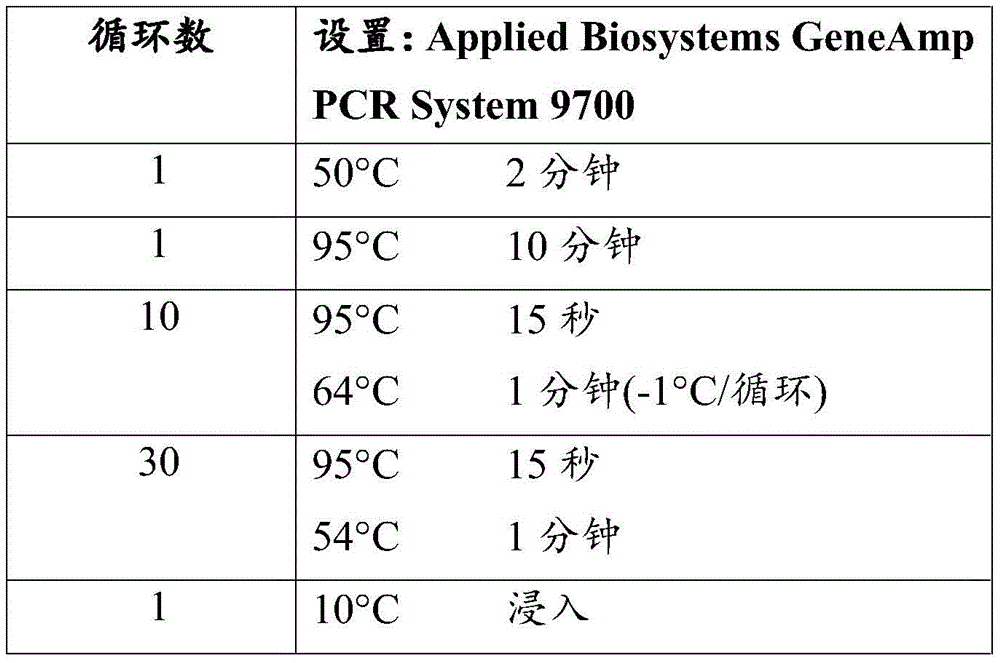
Any method for thermal cycling can be used to set up and perform DNA amplification, including manually or electrically operated temperature steps and cycles. The following cycling parameters have been successfully performed using a Stratagene Robocycler, MJ Engine, Perkin-Elmer9700 or Eppendorf Mastercycler Gradient thermocycler or an Applied Biosystems GeneAmp PCR System 9700 or MJ Research DNA Engine PTC-225 thermocycler. The thermocycler cycles in the computational mode when PCR is performed using Eppendorf Mastercycler Gradient or MJ Engine. When Perkin-Elmer9700 is used, the cycle conditions are carried out at the maximum temperature rise rate.
TABLE 2 determination of bondability thermal cycler conditions
Example 2
This example illustrates the identification of a corn plant containing DNA diagnostic for transgenic corn event MON89034 in its genome, and the determination of zygosity of the corn plant.
Methods for identifying homozygous and heterozygous progeny containing event MON89034DNA in their genomes are described in the zygosity assay, the conditions for which are exemplified in tables 3 and 4. Exemplary DNA primers for use in zygosity assays are the primers SQ2842(SEQ ID NO:6), SQ2843(SEQ ID NO:7), SQ6523(SEQ ID NO:10), SQ6524(SEQ ID NO:11), 6FAMTMMarker primers PB880(SEQ ID NO:14) and VICTMMarker primer PB2931(SEQ ID NO: 15). As shown above, 6FAM and VIC are fluorescent staining products of Applied Biosystems (Foster City, Calif.) ligated with DNA primers.
When SQ2842(SEQ ID NO:6), SQ2843(SEQ ID NO:7), SQ6523(SEQ ID NO:10), SQ6524(SEQ ID NO:11) are used together in a thermal amplification reaction in which a biological sample containing template DNA contains DNA diagnostic for the presence of corn event MON89034 in the sample, DNA amplicons of the corn DNA (independent of whether the corn DNA was derived from a non-transgenic sample or some other transgenic sample) are produced that are used to diagnose non-corn event MON89034 DNA. Alternatively, the reaction will produce two different DNA amplicons from a biological sample containing DNA derived from the maize genome that is heterozygous for the allele corresponding to the insert DNA present in transgenic maize event MON 89034. These two different amplicons would correspond to a first amplicon derived from the wild-type corn genomic locus and a second amplicon diagnostic for the presence of corn event MON89034 DNA. A corn DNA sample that produces only a single amplicon corresponding to the second amplicon described for the heterozygous genome diagnoses the presence of corn event MON89034 in the sample and a diagnosis determines that the corn DNA used as the template was produced from corn seeds that are homozygous for the allele corresponding to the transgenic corn event MON89034 insert DNA. Controls for this analysis should include positive controls from homozygous and heterozygous corn containing event MON89034DNA, negative controls from non-transgenic corn or any other transgenic corn variety, and negative controls without template DNA. The assay was optimized for use in a Stratagene Robocycler, MJ Engine, Perkin-Elmer9700 or Eppendorf Mastercycler Gradient thermocycler. Other methods and means known to those skilled in the art for producing amplicons that identify the zygosity of progeny of a cross produced with MON89034 plants are included within the scope of the art.
TABLE 3 measurement of Adaptation reaction solution
DNA amplification in the Stratagene Robocycler, MJ Engine, Perkin-Elmer9700 or Eppendorf Mastercycler Gradient thermocycler or Applied Biosystems GeneAmp PCR System 9700 or MJ Research DNA Engine PTC-225 thermocycler has successfully run the following cycle parameters. When using the Eppendorf Mastercycler Gradient or MJ Engine, the loop is run in a computational mode. When using Perkin-Elmer9700, the cycle was run at the maximum ramp rate.
TABLE 4 determination of bondability thermal cycler conditionsa
a: PCR System 9700 Using Applied Biosystems GeneAmp
Seeds corresponding to transgenic event MON89034 have been deposited at the American Type Culture Collection (ATCC),10801University Boulevard, Manassas, va.20110 under the budapest treaty at 3.28.2006. ATCC accession number or patent deposit number PTA-7455. The deposit will be deposited at the depository for 30 years, or 5 years after the last request, or the validity period of the deposited patent, whichever is longer, and replaced within that period as needed.
Having illustrated and described the principles of the invention in detail, it should be apparent to those skilled in the art that the invention can be modified in arrangement and detail without departing from such principles. We claim all modifications that come within the spirit and scope of the following claims.
All publications and published patent documents cited in this specification are herein incorporated by reference to the same extent as if each individual publication or patent application was specifically and individually indicated to be incorporated by reference.
<110> MONSANTO TECHNOLOGY LLC
Anderson, HEATHER
Douglas, Jennifer
GROAT, JEANNA
JOHNSON, SCOTT
KELLY, REBECCA
KORTE, JOHN
RICE, JAMES
<120> maize plants and seeds corresponding to transgenic event MON89034 and methods for detecting same
<130> 11899.0260.00PC00
<150> PCT/US2007/069662
<151> 2007-05-24
<150> 60/808,834
<151> 2006-05-26
<160> 22
<170> PatentIn version 3.3
<210> 1
<211> 21
<212> DNA
<213> Artificial
<220>
<223> 5' joining sequence; 2051-2071 corresponding to SEQ ID NO 5
<400> 1
aatgagtatg atggatcagc a 21
<210> 2
<211> 20
<212> DNA
<213> Artificial
<220>
<223> 3' joining sequence; 11295-11314 corresponding to SEQ ID NO 5
<400> 2
actcattgca tccccggaaa 20
<210> 3
<211> 2071
<212> DNA
<213> Artificial
<220>
<223> 5' flanking sequence plus adaptor sequence; 1-2071 corresponding to SEQ ID NO 5
<400> 3
aatatttaaa aatggaagta atactatatt aaaatgattc atgtggaact cctgcgcttc 60
tttttgaagt ttcaaaaggg agctttcagg gtcgcttaga gtttgtttgg ttggaaatac 120
aagcgaaaag agagctaatg agggggacat ccatattttc tatggtgttt gaataagagt 180
cacgcgggaa taagatgaac accgaaacaa tttttttgta gctacgtggt tccaaaaaat 240
cgagtagacg gtgtcgcttc cacctcatac tacttcaacc tcaaaccaca catccttacg 300
cgcccgccgg tgtctccgtc gtctcaagtt ctcaacatac ctacacatgt aaccactacc 360
ggtctttgtc atgtttcgaa agaagattac aggtcctcta gaagagagga cgcggggtgg 420
cgagaaagct ggggaagaaa aaggctagta catatgattg gtctgtgaac ctgtgaggtg 480
ggtaggtagg taggtggaga tttttgttaa ctggtgttgt tgacggactc gaacggggcc 540
gggcgtgtgg tgtggctagc tgtggtggtt tgctcgccag ccagccagcc acacatcagc 600
gagcatgcag agcttaagca tgtatgtacg gatcggcttg cttagcggtt aagggtgtgt 660
ttggtttggc ttttggcttt ggcttttgcc ccctaaaagc caaaagccaa ccaagggtgt 720
atttggtttg acttttggct tttggctttt gtcccctaaa agccaaaagc caaacaaagg 780
gttagatcta ggaagcagct ttttctaaaa gctggctttc tcacagtgca aatctgaaag 840
cacccctgaa cctgctttta gtggcttttc gaatggaact gtgaaaacat atatcgaaga 900
acttttaacg acttttagtg gtttccacca aacagtttag ctttttaacg gcttacagcc 960
tacaacagct ttttccacag ctcacagccc acagcaactt ttttcacagc cacagcccaa 1020
ccaaacagac cccaaagggc tgaatccagg aagcagcttt ttctaaaagc cgactttctc 1080
gtagtgtaaa actgaaaaca cccctggacc tgcttttagt ggcttttgga tggaactgtg 1140
aaaacatata tcgaagaact tttaacgact tttagtggtt tccaccaaac gatttctagc 1200
tttttaacag cacacagcct acaacagctt ttttcacagc tcacagccca caacaacttt 1260
ttctacagcc acaacccaac caaacggacc ctaaggcggc cgagcgagcg caaagcgtcg 1320
tcagctttga ttgccatgcc atctcctgct ccacttgtct ctctggccgt cgtcagccac 1380
catccaacaa ggccggtgct actggcggct cctaggtaga cgacgacgac gacgacacct 1440
ccaccgttcg ccgccgtcca ctcaccaatc aacacggaac gcccaaaaca cacacacacg 1500
cacgctgggg agggaaaaaa aggcagagac atatgcgtgc gtcgctgcat tattgtacgc 1560
gatcgaatgg catctctctc actctctctc ctccctttat taatctggta ctggctagct 1620
ggtccggcga caccgacgtg tcagctccgt cgcgcgcgtc cgtccgtccg ctggagcgga 1680
cacggaccgc ggcgtctgtc gatcgccggc tcgccgcagc gcagctacct agcacgctca 1740
cgcatgctac actgcctaca cgcacacggc cggcccaaaa gcgttccctg ccgcctgccg 1800
gccggctttt ttattattat tggaacatga ggctatttct cctcccacac gggctacgac 1860
gtgagcacga gtactgggat ccccggatcc gccctctctg tccctgctgc tactccagcc 1920
actgaaatgt tgtcagatga aacagcagag ccgatctccg cacggaaacc catgcacggc 1980
cattcaaatt caggtgccca cgtacgtcag ggtgctgctg ctactactat caagccaata 2040
aaaggatggt aatgagtatg atggatcagc a 2071
<210> 4
<211> 914
<212> DNA
<213> Artificial
<220>
<223> 3' flanking sequence plus adaptor sequence; 11295-12208 corresponding to SEQ ID NO 5
<400> 4
actcattgca tccccggaaa ttatgttttt ttaaaaacca cggtattata gataccgtgt 60
tattttttga gtattggaaa tttcatttca acccaaagtt tcttcatggc acatctagct 120
tttgcctaat accatgtagg gctacatctt aaaaatctat actactatat taaagctgca 180
ggggtagcct gtctccacct ggttctgcct cgagccaatc taaaccgtcc atctatatcc 240
atcaaatcag caccgtccgg tccgtgcgca cctcctctcc cgctattcag ttgcatactt 300
gcagcaggtt ctccctcctc accatttcct ctgcctcctc tctcgctcac tggtcagatt 360
catcctgcct ctcccgcatg cgctccctcc ccatgccccg tctcgcacta tcgccacacc 420
tcaccgcggg gagacgaaga cggtggacgc atcctcacct cctccgctag ttgtcgctct 480
tccatcctct tcaacaactt ctacataggg agaggcggtt cggcgtcccg acgccgccgc 540
ttctcccctc cccatggagg acgagaacat cgacctcggc ggcgggggcg atgcctccgc 600
tctgcataga ggagggttgt agtggcaagc agcaatgcca acaccgaggc gggccaagac 660
taggcaacaa taggacggca cgcccggttg tcagcgaggt ggcggcatcg tgtgccgcta 720
ccgaacaaca tctccggcgc tggagtcggt gagttactgc gccacccgga cgccctcaat 780
gcactgatat ctacccggtc tccatcgccg cccttcctcc cttccctctc cctgtgcctc 840
cctctcttgc cctctccctt ccaactgctc ccgccccagc cctagcccaa ccacctcccg 900
cgcagggtca ccaa 914
<210> 5
<211> 12208
<212> DNA
<213> Artificial
<220>
<223> 5 'flanking sequence plus inserted DNA sequence plus 3' flanking sequence
<400> 5
aatatttaaa aatggaagta atactatatt aaaatgattc atgtggaact cctgcgcttc 60
tttttgaagt ttcaaaaggg agctttcagg gtcgcttaga gtttgtttgg ttggaaatac 120
aagcgaaaag agagctaatg agggggacat ccatattttc tatggtgttt gaataagagt 180
cacgcgggaa taagatgaac accgaaacaa tttttttgta gctacgtggt tccaaaaaat 240
cgagtagacg gtgtcgcttc cacctcatac tacttcaacc tcaaaccaca catccttacg 300
cgcccgccgg tgtctccgtc gtctcaagtt ctcaacatac ctacacatgt aaccactacc 360
ggtctttgtc atgtttcgaa agaagattac aggtcctcta gaagagagga cgcggggtgg 420
cgagaaagct ggggaagaaa aaggctagta catatgattg gtctgtgaac ctgtgaggtg 480
ggtaggtagg taggtggaga tttttgttaa ctggtgttgt tgacggactc gaacggggcc 540
gggcgtgtgg tgtggctagc tgtggtggtt tgctcgccag ccagccagcc acacatcagc 600
gagcatgcag agcttaagca tgtatgtacg gatcggcttg cttagcggtt aagggtgtgt 660
ttggtttggc ttttggcttt ggcttttgcc ccctaaaagc caaaagccaa ccaagggtgt 720
atttggtttg acttttggct tttggctttt gtcccctaaa agccaaaagc caaacaaagg 780
gttagatcta ggaagcagct ttttctaaaa gctggctttc tcacagtgca aatctgaaag 840
cacccctgaa cctgctttta gtggcttttc gaatggaact gtgaaaacat atatcgaaga 900
acttttaacg acttttagtg gtttccacca aacagtttag ctttttaacg gcttacagcc 960
tacaacagct ttttccacag ctcacagccc acagcaactt ttttcacagc cacagcccaa 1020
ccaaacagac cccaaagggc tgaatccagg aagcagcttt ttctaaaagc cgactttctc 1080
gtagtgtaaa actgaaaaca cccctggacc tgcttttagt ggcttttgga tggaactgtg 1140
aaaacatata tcgaagaact tttaacgact tttagtggtt tccaccaaac gatttctagc 1200
tttttaacag cacacagcct acaacagctt ttttcacagc tcacagccca caacaacttt 1260
ttctacagcc acaacccaac caaacggacc ctaaggcggc cgagcgagcg caaagcgtcg 1320
tcagctttga ttgccatgcc atctcctgct ccacttgtct ctctggccgt cgtcagccac 1380
catccaacaa ggccggtgct actggcggct cctaggtaga cgacgacgac gacgacacct 1440
ccaccgttcg ccgccgtcca ctcaccaatc aacacggaac gcccaaaaca cacacacacg 1500
cacgctgggg agggaaaaaa aggcagagac atatgcgtgc gtcgctgcat tattgtacgc 1560
gatcgaatgg catctctctc actctctctc ctccctttat taatctggta ctggctagct 1620
ggtccggcga caccgacgtg tcagctccgt cgcgcgcgtc cgtccgtccg ctggagcgga 1680
cacggaccgc ggcgtctgtc gatcgccggc tcgccgcagc gcagctacct agcacgctca 1740
cgcatgctac actgcctaca cgcacacggc cggcccaaaa gcgttccctg ccgcctgccg 1800
gccggctttt ttattattat tggaacatga ggctatttct cctcccacac gggctacgac 1860
gtgagcacga gtactgggat ccccggatcc gccctctctg tccctgctgc tactccagcc 1920
actgaaatgt tgtcagatga aacagcagag ccgatctccg cacggaaacc catgcacggc 1980
cattcaaatt caggtgccca cgtacgtcag ggtgctgctg ctactactat caagccaata 2040
aaaggatggt aatgagtatg atggatcagc aatgagtatg atggtcaata tggagaaaaa 2100
gaaagagtaa ttaccaattt tttttcaatt caaaaatgta gatgtccgca gcgttattat 2160
aaaatgaaag tacattttga taaaacgaca aattacgatc cgtcgtattt ataggcgaaa 2220
gcaataaaca aattattcta attcggaaat ctttatttcg acgtgtctac attcacgtcc 2280
aaatgggggc ttagatgaga aacttcacga tttggcgcgc caaagcttgg tcgagtggaa 2340
gctagctttc cgatcctacc tgtcacttca tcaaaaggac agtagaaaag gaaggtggct 2400
cctacaaatg ccatcattgc gataaaggaa aggccatcgt tgaagatgcc tctgccgaca 2460
gtggtcccaa agatggaccc ccacccacga ggagcatcgt ggaaaaagaa gacgttccaa 2520
ccacgtcttc aaagcaagtg gattgatgtg atatctccac tgacgtaagg gatgacgcac 2580
aatcccacta tccttcgcaa gacccttcct ctatataagg aagttcattt catttggaga 2640
ggacacgctg acaagctgac tctagcagat cctctagaac catcttccac acactcaagc 2700
cacactattg gagaacacac agggacaaca caccataaga tccaagggag gcctccgccg 2760
ccgccggtaa ccaccccgcc cctctcctct ttctttctcc gttttttttt ccgtctcggt 2820
ctcgatcttt ggccttggta gtttgggtgg gcgagaggcg gcttcgtgcg cgcccagatc 2880
ggtgcgcggg aggggcggga tctcgcggct ggggctctcg ccggcgtgga tccggcccgg 2940
atctcgcggg gaatggggct ctcggatgta gatctgcgat ccgccgttgt tgggggagat 3000
gatggggggt ttaaaatttc cgccgtgcta aacaagatca ggaagagggg aaaagggcac 3060
tatggtttat atttttatat atttctgctg cttcgtcagg cttagatgtg ctagatcttt 3120
ctttcttctt tttgtgggta gaatttgaat ccctcagcat tgttcatcgg tagtttttct 3180
tttcatgatt tgtgacaaat gcagcctcgt gcggagcttt tttgtaggta gaagtgatca 3240
accatggaca acaacccaaa catcaacgag tgcatcccgt acaactgcct cagcaaccct 3300
gaggtcgagg tgctcggcgg tgagcgcatc gagaccggtt acacccccat cgacatctcc 3360
ctctccctca cgcagttcct gctcagcgag ttcgtgccag gcgctggctt cgtcctgggc 3420
ctcgtggaca tcatctgggg catctttggc ccctcccagt gggacgcctt cctggtgcaa 3480
atcgagcagc tcatcaacca gaggatcgag gagttcgcca ggaaccaggc catcagccgc 3540
ctggagggcc tcagcaacct ctaccaaatc tacgctgaga gcttccgcga gtgggaggcc 3600
gaccccacta acccagctct ccgcgaggag atgcgcatcc agttcaacga catgaacagc 3660
gccctgacca ccgccatccc actcttcgcc gtccagaact accaagtccc gctcctgtcc 3720
gtgtacgtcc aggccgccaa cctgcacctc agcgtgctga gggacgtcag cgtgtttggc 3780
cagaggtggg gcttcgacgc cgccaccatc aacagccgct acaacgacct caccaggctg 3840
atcggcaact acaccgacca cgctgtccgc tggtacaaca ctggccgtcc tggacattgt 3900
gtccctcttc ccgaactacg actcccgcac ctacccgatc cgcaccgtgt cccaactgac 3960
ccgcgaaatc tacaccaacc ccgtcctgga gaacttcgac ggtagcttca ggggcagcgc 4020
ccagggcatc gagggctcca tcaggagccc acacctgatg gacatcctca acagcatcac 4080
tatctacacc gatgcccacc gcggcgagta ctactggtcc ggccaccaga tcatggcctc 4140
cccggtcggc ttcagcggcc ccgagtttac ctttcctctc tacggcacga tgggcaacgc 4200
cgctccacaa caacgcatcg tcgctcagct gggccagggc gtctaccgca ccctgagctc 4260
caccctgtac cgcaggccct tcaacatcgg tatcaacaac cagcagctgt ccgtcctgga 4320
tggcactgag ttcgcctacg gcacctcctc caacctgccc tccgctgtct accgcaagag 4380
cggcacggtg gattccctgg acgagatccc accacagaac aacaatgtgc cccccaggca 4440
gggtttttcc cacaggctca gccacgtgtc catgttccgc tccggcttca gcaactcgtc 4500
cgtgagcatc atcagagctc ctatgttctc ttggatacac cgtagtgctg agttcaacaa 4560
catcattgca tccgacagca ttactcaaat acccttggtg aaagcacata cacttcagtc 4620
aggtactact gttgtcagag gtccagggtt tacaggagga gacattcttc gtcgcacaag 4680
tggaggaccc tttgcttaca ctattgttaa catcaatggc caattgcccc aaaggtatcg 4740
tgcaagaatc cgctatgcct ctactacaaa tctcaggatc tacgtgactg ttgcaggtga 4800
aaggatcttt gctggtcagt tcaacaagac tatggatacc ggtgaccctt tgacattcca 4860
atcttttagc tacgcaacta tcaacacagc ttttacattc ccaatgagcc agagtagctt 4920
cacagtaggt gctgacactt tcagctcagg gaatgaagtt tacatcgaca ggtttgaatt 4980
gattccagtt actgcaaccc tcgaggctga gtacaacctt gagagagccc agaaggctgt 5040
gaacgccctc tttacctcca ccaatcagct tggcttgaaa actaacgtta ctgactatca 5100
cattgaccaa gtgtccaact tggtcaccta ccttagcgat gagttctgcc tcgacgagaa 5160
gcgtgaactc tccgagaaag ttaaacacgc caagcgtctc agcgacgaga ggaatctctt 5220
gcaagactcc aacttcaaag acatcaacag gcagccagaa cgtggttggg gtggaagcac 5280
cgggatcacc atccaaggag gcgacgatgt gttcaaggag aactacgtca ccctctccgg 5340
aactttcgac gagtgctacc ctacctactt gtaccagaag atcgatgagt ccaaactcaa 5400
agccttcacc aggtatcaac ttagaggcta catcgaagac agccaagacc ttgaaatcta 5460
ctcgatcagg tacaatgcca agcacgagac cgtgaatgtc ccaggtactg gttccctctg 5520
gccactttct gcccaatctc ccattgggaa gtgtggagag cctaacagat gcgctccaca 5580
ccttgagtgg aatcctgact tggactgctc ctgcagggat ggcgagaagt gtgcccacca 5640
ttctcatcac ttctccttgg acatcgatgt gggatgtact gacctgaatg aggacctcgg 5700
agtctgggtc atcttcaaga tcaagaccca agacggacac gcaagacttg gcaaccttga 5760
gtttctcgaa gagaaaccat tggtcggtga agctctcgct cgtgtgaaga gagcagagaa 5820
gaagtggagg gacaaacgtg agaaactcga atgggaaact aacatcgttt acaaggaggc 5880
caaagagtcc gtggatgctt tgttcgtgaa ctcccaatat gatcagttgc aagccgacac 5940
caacatcgcc atgatccacg ccgcagacaa acgtgtgcac agcattcgtg aggcttactt 6000
gcctgagttg tccgtgatcc ctggtgtgaa cgctgccatc ttcgaggaac ttgagggacg 6060
tatctttacc gcattctcct tgtacgatgc cagaaacgtc atcaagaacg gtgacttcaa 6120
caatggcctc agctgctgga atgtgaaagg tcatgtggac gtggaggaac agaacaatca 6180
gcgttccgtc ctggttgtgc ctgagtggga agctgaagtg tcccaagagg ttagagtctg 6240
tccaggtaga ggctacattc tccgtgtgac cgcttacaag gagggatacg gtgagggttg 6300
cgtgaccatc cacgagatcg agaacaacac cgacgagctt aagttctcca actgcgtcga 6360
ggaagaaatc tatcccaaca acaccgttac ttgcaacgac tacactgtga atcaggaaga 6420
gtacggaggt gcctacacta gccgtaacag aggttacaac gaagctcctt ccgttcctgc 6480
tgactatgcc tccgtgtacg aggagaaatc ctacacagat ggcagacgtg agaacccttg 6540
cgagttcaac agaggttaca gggactacac accacttcca gttggctatg ttaccaagga 6600
gcttgagtac tttcctgaga ccgacaaagt gtggatcgag atcggtgaaa ccgagggaac 6660
cttcatcgtg gacagcgtgg agcttctctt gatggaggaa taatgagatc tatcgattct 6720
agaaggcctg aattctgcat gcgtttggac gtatgctcat tcaggttgga gccaatttgg 6780
ttgatgtgtg tgcgagttct tgcgagtctg atgagacatc tctgtattgt gtttctttcc 6840
ccagtgtttt ctgtacttgt gtaatcggct aatcgccaac agattcggcg atgaataaat 6900
gagaaataaa ttgttctgat tttgagtgca aaaaaaaagg aattagatct gtgtgtgttt 6960
tttggatccc cggggcggcc gcgttaacaa gcttgagctc aggatttagc agcattccag 7020
attgggttca atcaacaagg tacgagccat atcactttat tcaaattggt atcgccaaaa 7080
ccaagaagga actcccatcc tcaaaggttt gtaaggaaga attctcagtc caaagcctca 7140
acaaggtcag ggtacagagt ctccaaacca ttagccaaaa gctacaggag atcaatgaag 7200
aatcttcaat caaagtaaac tactgttcca gcacatgcat catggtcagt aagtttcaga 7260
aaaagacatc caccgaagac ttaaagttag tgggcatctt tgaaagtaat cttgtcaaca 7320
tcgagcagct ggcttgtggg gaccagacaa aaaaggaatg gtgcagaatt gttaggcgca 7380
cctaccaaaa gcatctttgc ctttattgca aagataaagc agattcctct agtacaagtg 7440
gggaacaaaa taacgtggaa aagagctgtc ctgacagccc actcactaat gcgtatgacg 7500
aacgcagtga cgaccacaaa agaattccct ctatataaga aggcattcat tcccatttga 7560
aggatcatca gatactcaac caatccttct aggatctacc gtcttcggta cgcgctcact 7620
ccgccctctg cctttgttac tgccacgttt ctctgaatgc tctcttgtgt ggtgattgct 7680
gagagtggtt tagctggatc tagaattaca ctctgaaatc gtgttctgcc tgtgctgatt 7740
acttgccgtc ctttgtagca gcaaaatata gggacatggt agtacgaaac gaagatagaa 7800
cctacacagc aatacgagaa atgtgtaatt tggtgcttag cggtatttat ttaagcacat 7860
gttggtgtta tagggcactt ggattcagaa gtttgctgtt aatttaggca caggcttcat 7920
actacatggg tcaatagtat agggattcat attataggcg atactataat aatttgttcg 7980
tctgcagagc ttattatttg ccaaaattag atattcctat tctgtttttg tttgtgtgct 8040
gttaaattgt taacgcctga aggaataaat ataaatgacg aaattttgat gtttatctct 8100
gctcctttat tgtgaccata agtcaagatc agatgcactt gttttaaata ttgttgtctg 8160
aagaaataag tactgacagt attttgatgc attgatctgc ttgtttgttg taacaaaatt 8220
taaaaataaa gagtttcctt tttgttgctc tccttacctc ctgatggtat ctagtatcta 8280
ccaactgaca ctatattgct tctctttaca tacgtatctt gctcgatgcc ttctccctag 8340
tgttgaccag tgttactcac atagtctttg ctcatttcat tgtaatgcag ataccaagcg 8400
gcctctagag gatcagcatg gcgcccaccg tgatgatggc ctcgtcggcc accgccgtcg 8460
ctccgttcca ggggctcaag tccaccgcca gcctccccgt cgcccgccgc tcctccagaa 8520
gcctcggcaa cgtcagcaac ggcggaagga tccggtgcat gcaggtaaca aatgcatcct 8580
agctagtagt tctttgcatt gcagcagctg cagctagcga gttagtaata ggaagggaac 8640
tgatgatcca tgcatggact gatgtgtgtt gcccatccca tcccatttcc caaccccaaa 8700
cgaaccaaaa cacacgtact acgtgcaggt gtggccggcc tacggcaaca agaagttcga 8760
gacgctgtcg tacctgccgc cgctgtcgac cggcgggcgc atccgctgca tgcaggccat 8820
ggacaactcc gtcctgaact ctggtcgcac caccatctgc gacgcctaca acgtcgcggc 8880
gcatgatcca ttcagcttcc agcacaagag cctcgacact gttcagaagg agtggacgga 8940
gtggaagaag aacaaccaca gcctgtacct ggaccccatc gtcggcacgg tggccagctt 9000
ccttctcaag aaggtcggct ctctcgtcgg gaagcgcatc ctctcggaac tccgcaacct 9060
gatctttcca tctggctcca ccaacctcat gcaagacatc ctcagggaga ccgagaagtt 9120
tctcaaccag cgcctcaaca ctgataccct tgctcgcgtc aacgctgagc tgacgggtct 9180
gcaagcaaac gtggaggagt tcaaccgcca agtggacaac ttcctcaacc ccaaccgcaa 9240
tgcggtgcct ctgtccatca cttcttccgt gaacaccatg caacaactgt tcctcaaccg 9300
cttgcctcag ttccagatgc aaggctacca gctgctcctg ctgccactct ttgctcaggc 9360
tgccaacctg cacctctcct tcattcgtga cgtgatcctc aacgctgacg agtggggcat 9420
ctctgcagcc acgctgagga cctaccgcga ctacctgaag aactacacca gggactactc 9480
caactattgc atcaacacct accagtcggc cttcaagggc ctcaatacga ggcttcacga 9540
catgctggag ttcaggacct acatgttcct gaacgtgttc gagtacgtca gcatctggtc 9600
gctcttcaag taccagagcc tgctggtgtc cagcggcgcc aacctctacg ccagcggctc 9660
tggtccccaa caaactcaga gcttcaccag ccaggactgg ccattcctgt attcgttgtt 9720
ccaagtcaac tccaactacg tcctcaacgg cttctctggt gctcgcctct ccaacacctt 9780
ccccaacatt gttggcctcc ccggctccac cacaactcat gctctgcttg ctgccagagt 9840
gaactactcc ggcggcatct cgagcggcga cattggtgca tcgccgttca accagaactt 9900
caactgctcc accttcctgc cgccgctgct caccccgttc gtgaggtcct ggctcgacag 9960
cggctccgac cgcgagggcg tggccaccgt caccaactgg caaaccgagt ccttcgagac 10020
cacccttggc ctccggagcg gcgccttcac ggcgcgtgga aattctaact acttccccga 10080
ctacttcatc aggaacatct ctggtgttcc tctcgtcgtc cgcaacgagg acctccgccg 10140
tccactgcac tacaacgaga tcaggaacat cgcctctccg tccgggacgc ccggaggtgc 10200
aagggcgtac atggtgagcg tccataacag gaagaacaac atccacgctg tgcatgagaa 10260
cggctccatg atccacctgg cgcccaatga ttacaccggc ttcaccatct ctccaatcca 10320
cgccacccaa gtgaacaacc agacacgcac cttcatctcc gagaagttcg gcaaccaggg 10380
cgactccctg aggttcgagc agaacaacac caccgccagg tacaccctgc gcggcaacgg 10440
caacagctac aacctgtacc tgcgcgtcag ctccattggc aactccacca tcagggtcac 10500
catcaacggg agggtgtaca cagccaccaa tgtgaacacg acgaccaaca atgatggcgt 10560
caacgacaac ggcgcccgct tcagcgacat caacattggc aacgtggtgg ccagcagcaa 10620
ctccgacgtc ccgctggaca tcaacgtgac cctgaactct ggcacccagt tcgacctcat 10680
gaacatcatg ctggtgccaa ctaacatctc gccgctgtac tgataggagc tctgatcccc 10740
atgggaattc ccgatcgttc aaacatttgg caataaagtt tcttaagatt gaatcctgtt 10800
gccggtcttg cgatgattat catataattt ctgttgaatt acgttaagca tgtaataatt 10860
aacatgtaat gcatgacgtt atttatgaga tgggttttta tgattagagt cccgcaatta 10920
tacatttaat acgcgataga aaacaaaata tagcgcgcaa actaggataa attatcgcgc 10980
gcggtgtcat ctatgttact agatcgggga tatccccggg gcggccgcgg ggaattcggt 11040
accaagcttt ggcgcgccaa atcgtgaagt ttctcatcta agcccccatt tggacgtgaa 11100
tgtagacacg tcgaaataaa gatttccgaa ttagaataat ttgtttattg ctttcgccta 11160
taaatacgac ggatcgtaat ttgtcgtttt atcaaaatgt actttcattt tataataacg 11220
ctgcggacat ctacattttt gaattgaaaa aaaattggta attactcttt ctttttctcc 11280
atattgacca tcatactcat tgcatccccg gaaattatgt ttttttaaaa accacggtat 11340
tatagatacc gtgttatttt ttgagtattg gaaatttcat ttcaacccaa agtttcttca 11400
tggcacatct agcttttgcc taataccatg tagggctaca tcttaaaaat ctatactact 11460
atattaaagc tgcaggggta gcctgtctcc acctggttct gcctcgagcc aatctaaacc 11520
gtccatctat atccatcaaa tcagcaccgt ccggtccgtg cgcacctcct ctcccgctat 11580
tcagttgcat acttgcagca ggttctccct cctcaccatt tcctctgcct cctctctcgc 11640
tcactggtca gattcatcct gcctctcccg catgcgctcc ctccccatgc cccgtctcgc 11700
actatcgcca cacctcaccg cggggagacg aagacggtgg acgcatcctc acctcctccg 11760
ctagttgtcg ctcttccatc ctcttcaaca acttctacat agggagaggc ggttcggcgt 11820
cccgacgccg ccgcttctcc cctccccatg gaggacgaga acatcgacct cggcggcggg 11880
ggcgatgcct ccgctctgca tagaggaggg ttgtagtggc aagcagcaat gccaacaccg 11940
aggcgggcca agactaggca acaataggac ggcacgcccg gttgtcagcg aggtggcggc 12000
atcgtgtgcc gctaccgaac aacatctccg gcgctggagt cggtgagtta ctgcgccacc 12060
cggacgccct caatgcactg atatctaccc ggtctccatc gccgcccttc ctcccttccc 12120
tctccctgtg cctccctctc ttgccctctc ccttccaact gctcccgccc cagccctagc 12180
ccaaccacct cccgcgcagg gtcaccaa 12208
<210> 6
<211> 22
<212> DNA
<213> Artificial
<220>
<223> synthetic sequence; 2034-2055 corresponding to SEQ ID NO:5
<400> 6
gccaataaaa ggatggtaat ga 22
<210> 7
<211> 23
<212> DNA
<213> Artificial
<220>
<223> synthetic sequence; 11345-11367 corresponding to SEQ ID NO 5
<400> 7
ctttttctcc atattgacca tca 23
<210> 8
<211> 20
<212> DNA
<213> Artificial
<220>
<223> synthetic sequence
<400> 8
ggtatccctc cagaccagca 20
<210> 9
<211> 24
<212> DNA
<213> Artificial
<220>
<223> synthetic sequence
<400> 9
gtggactcct tctggatgtt gtaa 24
<210> 10
<211> 21
<212> DNA
<213> Artificial
<220>
<223> synthetic sequence
<400> 10
gtcagggtgc tgctgctgct a 21
<210> 11
<211> 23
<212> DNA
<213> Artificial
<220>
<223> synthetic sequence
<400> 11
ggtttaagaa ccattttgct ccc 23
<210> 12
<211> 24
<212> DNA
<213> Artificial
<220>
<223> synthetic sequence; 2003-2026 corresponding to SEQ ID NO. 5
<400> 12
tacgtcaggg tgctgctgct acta 24
<210> 13
<211> 24
<212> DNA
<213> Artificial
<220>
<223> synthetic sequence
<400> 13
atratttycg gggatgcaac caac 24
<210> 14
<211> 16
<212> DNA
<213> Artificial
<220>
<223> synthetic sequence; 2061-2076 corresponding to SEQ ID NO:5
<400> 14
atggatcagc aatgag 16
<210> 15
<211> 26
<212> DNA
<213> Artificial
<220>
<223> synthetic sequence
<400> 15
ctgtcaagcc aataaaaggg ttgttt 26
<210> 16
<211> 26
<212> DNA
<213> Artificial
<220>
<223> synthetic sequence
<400> 16
ctgtcaagcc aataaaaggg ttgttt 26
<210> 17
<211> 20
<212> DNA
<213> Artificial
<220>
<223> synthetic sequence
<400> 17
caactcgtcc gtgagcatca 20
<210> 18
<211> 24
<212> DNA
<213> Artificial
<220>
<223> synthetic sequence; reverse complement of the sequence corresponding to 4605-4628 of SEQ ID NO 5
<400> 18
aactcagcac tacggtgtat ccaa 24
<210> 19
<211> 16
<212> DNA
<213> Artificial
<220>
<223> synthetic sequence
<400> 19
gcctgccgca gaccaa 16
<210> 20
<211> 22
<212> DNA
<213> Artificial
<220>
<223> synthetic sequence
<400> 20
caatgcagag ctcagcttca tc 22
<210> 21
<211> 17
<212> DNA
<213> Artificial
<220>
<223> synthetic sequence; 4587-4603 corresponding to SEQ ID NO 5
<400> 21
cagagctcct atgttct 17
<210> 22
<211> 26
<212> DNA
<213> Artificial
<220>
<223> synthetic sequence
<400> 22
tccagtacgt gcagtccctc ctccct 26