US9978957B2 - Materials for organic electroluminescent devices - Google Patents
Materials for organic electroluminescent devices Download PDFInfo
- Publication number
- US9978957B2 US9978957B2 US15/281,480 US201615281480A US9978957B2 US 9978957 B2 US9978957 B2 US 9978957B2 US 201615281480 A US201615281480 A US 201615281480A US 9978957 B2 US9978957 B2 US 9978957B2
- Authority
- US
- United States
- Prior art keywords
- group
- formula
- atoms
- organic
- radicals
- Prior art date
- Legal status (The legal status is an assumption and is not a legal conclusion. Google has not performed a legal analysis and makes no representation as to the accuracy of the status listed.)
- Active
Links
- 0 CC1*2*c(*C(****3)=C3*3)c3*(*)c2-c2*(*)****2*1 Chemical compound CC1*2*c(*C(****3)=C3*3)c3*(*)c2-c2*(*)****2*1 0.000 description 10
- GEDOYYDMCZUHNW-UHFFFAOYSA-N Brc(cc1)cc2c1c(cccc1)c1c1ccccc21 Chemical compound Brc(cc1)cc2c1c(cccc1)c1c1ccccc21 GEDOYYDMCZUHNW-UHFFFAOYSA-N 0.000 description 9
- IQXGGEHZNNWDBK-UHFFFAOYSA-N CC1(C)C2=C(C=C3C(=C2)CC2=C3C=CC=C2)C2=C\C=C/C=C\21 Chemical compound CC1(C)C2=C(C=C3C(=C2)CC2=C3C=CC=C2)C2=C\C=C/C=C\21 IQXGGEHZNNWDBK-UHFFFAOYSA-N 0.000 description 7
- YKYHPAHKVQVYFW-UHFFFAOYSA-N CC1(C)C2=C(C=C3C(=C2)N(C2=C/C4=C5C=CC=CC5=C5C=CC=CC5=C4/C=C\2)C2=C3C=C(Br)C=C2)C2=C\C=C/C=C\21 Chemical compound CC1(C)C2=C(C=C3C(=C2)N(C2=C/C4=C5C=CC=CC5=C5C=CC=CC5=C4/C=C\2)C2=C3C=C(Br)C=C2)C2=C\C=C/C=C\21 YKYHPAHKVQVYFW-UHFFFAOYSA-N 0.000 description 3
- UAVZDBIKIOWDQF-UHFFFAOYSA-N CC(C)(c1ccccc1-c1c2)c1cc1c2c2ccccc2[nH]1 Chemical compound CC(C)(c1ccccc1-c1c2)c1cc1c2c2ccccc2[nH]1 UAVZDBIKIOWDQF-UHFFFAOYSA-N 0.000 description 2
- AKSLFVKLHADYPL-UHFFFAOYSA-N CC(C)(c1ccccc1-c1c2)c1cc1c2c2ccccc2[n]1-c(cc1)cc2c1c(cccc1)c1c1c2cccc1 Chemical compound CC(C)(c1ccccc1-c1c2)c1cc1c2c2ccccc2[n]1-c(cc1)cc2c1c(cccc1)c1c1c2cccc1 AKSLFVKLHADYPL-UHFFFAOYSA-N 0.000 description 2
- BHGRRAGBZQSCSC-UHFFFAOYSA-N CC1(C)C2=C(C=C3C(=C2)N(C2=CC4=C5C=CC=CC5=C5C=CC=CC5=C4C=C2)C2=C3C=C(C3=CC=C4C5=CC=CC=C5C5=CC=CC=C5C4=C3)C=C2)C2=C\C=C/C=C\21 Chemical compound CC1(C)C2=C(C=C3C(=C2)N(C2=CC4=C5C=CC=CC5=C5C=CC=CC5=C4C=C2)C2=C3C=C(C3=CC=C4C5=CC=CC=C5C5=CC=CC=C5C4=C3)C=C2)C2=C\C=C/C=C\21 BHGRRAGBZQSCSC-UHFFFAOYSA-N 0.000 description 2
- MYBJTQQKLSWEAU-UHFFFAOYSA-N CC1(C)C2=CC3=C(C=C2C2=C1C=CC=C2)C1=C(C=CC=C1)N3C1=CC2=C(C=C1)N(C1=C/C3=C4C=CC=CC4=C4C=CC=CC4=C3/C=C\1)C1=CC3=C(C=C12)C1=C\C=C/C=C\1C3(C)C Chemical compound CC1(C)C2=CC3=C(C=C2C2=C1C=CC=C2)C1=C(C=CC=C1)N3C1=CC2=C(C=C1)N(C1=C/C3=C4C=CC=CC4=C4C=CC=CC4=C3/C=C\1)C1=CC3=C(C=C12)C1=C\C=C/C=C\1C3(C)C MYBJTQQKLSWEAU-UHFFFAOYSA-N 0.000 description 2
- TVNYMSUBQKKXND-UHFFFAOYSA-N CC1(C)C2=CC=CC=C2C2=C1C=C1C(=C2)C2=C(C=CC(C3=CC4=C(C=C3)N(C3=CC=CC=C3)C3=CC5=C(C=C34)C3=CC=CC=C3C5(C)C)=C2)N1C1=CC=CC=C1 Chemical compound CC1(C)C2=CC=CC=C2C2=C1C=C1C(=C2)C2=C(C=CC(C3=CC4=C(C=C3)N(C3=CC=CC=C3)C3=CC5=C(C=C34)C3=CC=CC=C3C5(C)C)=C2)N1C1=CC=CC=C1 TVNYMSUBQKKXND-UHFFFAOYSA-N 0.000 description 2
- QNGVEVOZKYHNGL-UHFFFAOYSA-N ClC1=NC(C2=CC=CC=C2)=CC(C2=CC=CC=C2)=N1 Chemical compound ClC1=NC(C2=CC=CC=C2)=CC(C2=CC=CC=C2)=N1 QNGVEVOZKYHNGL-UHFFFAOYSA-N 0.000 description 2
- JWJQEUDGBZMPAX-UHFFFAOYSA-N OB(O)C1=CC2=C(C=C1)N(C1=CC=CC=C1)C1=C2C=CC=C1 Chemical compound OB(O)C1=CC2=C(C=C1)N(C1=CC=CC=C1)C1=C2C=CC=C1 JWJQEUDGBZMPAX-UHFFFAOYSA-N 0.000 description 2
- ZPQCOYMHTAJDPD-UHFFFAOYSA-N B.BrC1=CC=C2C3=CC=CC=C3C3=CC=CC=C3C2=C1.CC1(C)C2=C(C=C3C(=C2)CC2=C3C=CC=C2)C2=C/C=C/C=C\21.CC1(C)C2=C(C=C3C(=C2)N(C2=C/C4=C5C=CC=CC5=C5C=CC=CC5=C4/C=C\2)C2=C3C=CC=C2)C2=C\C=C/C=C\21 Chemical compound B.BrC1=CC=C2C3=CC=CC=C3C3=CC=CC=C3C2=C1.CC1(C)C2=C(C=C3C(=C2)CC2=C3C=CC=C2)C2=C/C=C/C=C\21.CC1(C)C2=C(C=C3C(=C2)N(C2=C/C4=C5C=CC=CC5=C5C=CC=CC5=C4/C=C\2)C2=C3C=CC=C2)C2=C\C=C/C=C\21 ZPQCOYMHTAJDPD-UHFFFAOYSA-N 0.000 description 1
- RXXLGBHPADXNNT-UHFFFAOYSA-N B=NS.BBB(B(B)B)B(B(B(B)B)B(B)B)B(B(B(B)B)B(B)B)B(B(B)B)B(B)B.BrC1=CC=CC=C1.CC1(C)C2=C(C=C3C(=C2)CC2=C3C=C(Br)C=C2)C2=C/C=C/C=C\21.CC1(C)C2=C(C=C3C(=C2)CC2=C3C=C(C3=C/C=C4/C5=CC=CC=C5C5=CC=CC=C5/C4=C\3)C=C2)C2=C/C=C/C=C\21.CC1(C)C2=C(C=C3C(=C2)CC2=C3C=CC=C2)C2=C/C=C/C=C\21.CC1(C)C2=C(C=C3C(=C2)N(C2=CC=CC=C2)C2=C3C=C(C3=C/C=C4/C5=CC=CC=C5C5=CC=CC=C5/C4=C\3)C=C2)C2=C\C=C/C=C\21.CC1(C)OB(C2=CC=C3C4=CC=CC=C4C4=CC=CC=C4C3=C2)OC1(C)C Chemical compound B=NS.BBB(B(B)B)B(B(B(B)B)B(B)B)B(B(B(B)B)B(B)B)B(B(B)B)B(B)B.BrC1=CC=CC=C1.CC1(C)C2=C(C=C3C(=C2)CC2=C3C=C(Br)C=C2)C2=C/C=C/C=C\21.CC1(C)C2=C(C=C3C(=C2)CC2=C3C=C(C3=C/C=C4/C5=CC=CC=C5C5=CC=CC=C5/C4=C\3)C=C2)C2=C/C=C/C=C\21.CC1(C)C2=C(C=C3C(=C2)CC2=C3C=CC=C2)C2=C/C=C/C=C\21.CC1(C)C2=C(C=C3C(=C2)N(C2=CC=CC=C2)C2=C3C=C(C3=C/C=C4/C5=CC=CC=C5C5=CC=CC=C5/C4=C\3)C=C2)C2=C\C=C/C=C\21.CC1(C)OB(C2=CC=C3C4=CC=CC=C4C4=CC=CC=C4C3=C2)OC1(C)C RXXLGBHPADXNNT-UHFFFAOYSA-N 0.000 description 1
- BKAQARAPWRMCAX-UHFFFAOYSA-N B=NS.BBB(B)B(B(B)B)B(B(B)B)B(B)B.CC1(C)C2=C(C=C3C(=C2)N(C2=C/C4=C5C=CC=CC5=C5C=CC=CC5=C4/C=C\2)C2=C3C=C(Br)C=C2)C2=C/C=C/C=C\21.CC1(C)C2=C(C=C3C(=C2)N(C2=C/C4=C5C=CC=CC5=C5C=CC=CC5=C4/C=C\2)C2=C3C=C(C3=CC=CC=C3)C=C2)C2=C/C=C/C=C\21.CC1(C)C2=C(C=C3C(=C2)N(C2=C/C4=C5C=CC=CC5=C5C=CC=CC5=C4/C=C\2)C2=C3C=CC=C2)C2=C/C=C/C=C\21 Chemical compound B=NS.BBB(B)B(B(B)B)B(B(B)B)B(B)B.CC1(C)C2=C(C=C3C(=C2)N(C2=C/C4=C5C=CC=CC5=C5C=CC=CC5=C4/C=C\2)C2=C3C=C(Br)C=C2)C2=C/C=C/C=C\21.CC1(C)C2=C(C=C3C(=C2)N(C2=C/C4=C5C=CC=CC5=C5C=CC=CC5=C4/C=C\2)C2=C3C=C(C3=CC=CC=C3)C=C2)C2=C/C=C/C=C\21.CC1(C)C2=C(C=C3C(=C2)N(C2=C/C4=C5C=CC=CC5=C5C=CC=CC5=C4/C=C\2)C2=C3C=CC=C2)C2=C/C=C/C=C\21 BKAQARAPWRMCAX-UHFFFAOYSA-N 0.000 description 1
- ALLSMWYYMZQTQP-UHFFFAOYSA-N B=NS.BrC1=CC=CC=C1.CC1(C)C2=C(C=C3C(=C2)CC2=C3C=C(Br)C=C2)C2=C/C=C/C=C\21.CC1(C)C2=C(C=C3C(=C2)CC2=C3C=C(C3=CC=C4C5=CC=CC=C5C5=CC=CC=C5C4=C3)C=C2)C2=C/C=C/C=C\21.CC1(C)C2=C(C=C3C(=C2)CC2=C3C=CC=C2)C2=C/C=C/C=C\21.CC1(C)C2=C(C=C3C(=C2)N(C2=CC=CC=C2)C2=C3C=C(C3=CC=C4C5=CC=CC=C5C5=CC=CC=C5C4=C3)C=C2)C2=C\C=C/C=C\21.CC1(C)OB(C2=CC=C3C4=CC=CC=C4C4=CC=CC=C4C3=C2)OC1(C)C Chemical compound B=NS.BrC1=CC=CC=C1.CC1(C)C2=C(C=C3C(=C2)CC2=C3C=C(Br)C=C2)C2=C/C=C/C=C\21.CC1(C)C2=C(C=C3C(=C2)CC2=C3C=C(C3=CC=C4C5=CC=CC=C5C5=CC=CC=C5C4=C3)C=C2)C2=C/C=C/C=C\21.CC1(C)C2=C(C=C3C(=C2)CC2=C3C=CC=C2)C2=C/C=C/C=C\21.CC1(C)C2=C(C=C3C(=C2)N(C2=CC=CC=C2)C2=C3C=C(C3=CC=C4C5=CC=CC=C5C5=CC=CC=C5C4=C3)C=C2)C2=C\C=C/C=C\21.CC1(C)OB(C2=CC=C3C4=CC=CC=C4C4=CC=CC=C4C3=C2)OC1(C)C ALLSMWYYMZQTQP-UHFFFAOYSA-N 0.000 description 1
- QNFKJCXFHAGHLI-UHFFFAOYSA-M BB(B)B(B)B(B(B(B)B)B(B)B)B(B(B)B)B(B)B.CC1(C)C2=C(C=C3C(=C2)N(C2=C/C4=C5C=CC=CC5=C5C=CC=CC5=C4/C=C\2)C2=C3C=C(Br)C=C2)C2=C/C=C/C=C\21.CC1(C)C2=C(C=C3C(=C2)N(C2=C/C4=C5C=CC=CC5=C5C=CC=CC5=C4/C=C\2)C2=C3C=C(N3C4=C(C=CC=C4)C4=C3C=CC=C4)C=C2)C2=C\C=C/C=C\21.O=COO[Rb].[RbH] Chemical compound BB(B)B(B)B(B(B(B)B)B(B)B)B(B(B)B)B(B)B.CC1(C)C2=C(C=C3C(=C2)N(C2=C/C4=C5C=CC=CC5=C5C=CC=CC5=C4/C=C\2)C2=C3C=C(Br)C=C2)C2=C/C=C/C=C\21.CC1(C)C2=C(C=C3C(=C2)N(C2=C/C4=C5C=CC=CC5=C5C=CC=CC5=C4/C=C\2)C2=C3C=C(N3C4=C(C=CC=C4)C4=C3C=CC=C4)C=C2)C2=C\C=C/C=C\21.O=COO[Rb].[RbH] QNFKJCXFHAGHLI-UHFFFAOYSA-M 0.000 description 1
- CRTGVZQFGPMWLQ-UHFFFAOYSA-N BB(B)B(B)B(B(B)B)B(B(B(B)B)B(B)B)B(B(B)B)B(B)B.CC1(C)C2=C(C=C3C(=C2)N(C2=C/C4=C5C=CC=CC5=C5C=CC=CC5=C4/C=C\2)C2=C3C=C(B3OC(C)(C)C(C)(C)O3)C=C2)C2=C/C=C/C=C\21.CC1(C)C2=C(C=C3C(=C2)N(C2=C/C4=C5C=CC=CC5=C5C=CC=CC5=C4/C=C\2)C2=C3C=C(Br)C=C2)C2=C/C=C/C=C\21.CC1(C)C2=C(C=C3C(=C2)N(C2=C/C4=C5C=CC=CC5=C5C=CC=CC5=C4/C=C\2)C2=C3C=C(C3=NC(C4=CC=CC=C4)=NC(C4=CC=CC=C4)=N3)C=C2)C2=C/C=C/C=C\21.CC1(C)OB(B2OC(C)(C)C(C)(C)O2)OC1(C)C.ClC1=NC(C2=CC=CC=C2)=NC(C2=CC=CC=C2)=N1.[Pd] Chemical compound BB(B)B(B)B(B(B)B)B(B(B(B)B)B(B)B)B(B(B)B)B(B)B.CC1(C)C2=C(C=C3C(=C2)N(C2=C/C4=C5C=CC=CC5=C5C=CC=CC5=C4/C=C\2)C2=C3C=C(B3OC(C)(C)C(C)(C)O3)C=C2)C2=C/C=C/C=C\21.CC1(C)C2=C(C=C3C(=C2)N(C2=C/C4=C5C=CC=CC5=C5C=CC=CC5=C4/C=C\2)C2=C3C=C(Br)C=C2)C2=C/C=C/C=C\21.CC1(C)C2=C(C=C3C(=C2)N(C2=C/C4=C5C=CC=CC5=C5C=CC=CC5=C4/C=C\2)C2=C3C=C(C3=NC(C4=CC=CC=C4)=NC(C4=CC=CC=C4)=N3)C=C2)C2=C/C=C/C=C\21.CC1(C)OB(B2OC(C)(C)C(C)(C)O2)OC1(C)C.ClC1=NC(C2=CC=CC=C2)=NC(C2=CC=CC=C2)=N1.[Pd] CRTGVZQFGPMWLQ-UHFFFAOYSA-N 0.000 description 1
- IOPQERQQZZREDR-UHFFFAOYSA-N BrC1=CC(C2=CC=CC=C2)=CC(C2=CC=CC=C2)=C1 Chemical compound BrC1=CC(C2=CC=CC=C2)=CC(C2=CC=CC=C2)=C1 IOPQERQQZZREDR-UHFFFAOYSA-N 0.000 description 1
- DVTDTJRMYOMSKK-UHFFFAOYSA-N BrC1=CC2=C3C=C(Br)C=CC3=C3C=CC=CC3=C2C=C1 Chemical compound BrC1=CC2=C3C=C(Br)C=CC3=C3C=CC=CC3=C2C=C1 DVTDTJRMYOMSKK-UHFFFAOYSA-N 0.000 description 1
- HUKGONYTPRPAJT-UHFFFAOYSA-N BrC1=CC2=C3C=C(C4=CC=CC=C4)C=CC3=C3C=CC=CC3=C2C=C1 Chemical compound BrC1=CC2=C3C=C(C4=CC=CC=C4)C=CC3=C3C=CC=CC3=C2C=C1 HUKGONYTPRPAJT-UHFFFAOYSA-N 0.000 description 1
- BPGPBYGXGRDFQG-UHFFFAOYSA-N BrC1=CC2=C3C=CC=CC3=C3C=C(Br)C=CC3=C2C=C1 Chemical compound BrC1=CC2=C3C=CC=CC3=C3C=C(Br)C=CC3=C2C=C1 BPGPBYGXGRDFQG-UHFFFAOYSA-N 0.000 description 1
- KXYKBLDZTGRHAC-UHFFFAOYSA-N BrC1=CC2=C3C=CC=CC3=C3N=CC=NC3=C2C=C1 Chemical compound BrC1=CC2=C3C=CC=CC3=C3N=CC=NC3=C2C=C1 KXYKBLDZTGRHAC-UHFFFAOYSA-N 0.000 description 1
- LWGFHXMGCPVZRL-UHFFFAOYSA-N BrC1=CC=C2C3=CC=CC=C3C3=CC=CC=C3C2=C1.CC1(C)C2=C(C=C3C(=C2)CC2=C3C=CC=C2)C2=C/C=C/C=C\21.CC1(C)C2=C(C=C3C(=C2)N(C2=C/C4=C5C=CC=CC5=C5C=CC=CC5=C4/C=C\2)C2=C3C=CC=C2)C2=C\C=C/C=C\21 Chemical compound BrC1=CC=C2C3=CC=CC=C3C3=CC=CC=C3C2=C1.CC1(C)C2=C(C=C3C(=C2)CC2=C3C=CC=C2)C2=C/C=C/C=C\21.CC1(C)C2=C(C=C3C(=C2)N(C2=C/C4=C5C=CC=CC5=C5C=CC=CC5=C4/C=C\2)C2=C3C=CC=C2)C2=C\C=C/C=C\21 LWGFHXMGCPVZRL-UHFFFAOYSA-N 0.000 description 1
- HNZUKQQNZRMNGS-UHFFFAOYSA-N BrC1=CC=CC(C2=NC(C3=CC=CC=C3)=NC(C3=CC=CC=C3)=N2)=C1 Chemical compound BrC1=CC=CC(C2=NC(C3=CC=CC=C3)=NC(C3=CC=CC=C3)=N2)=C1 HNZUKQQNZRMNGS-UHFFFAOYSA-N 0.000 description 1
- XIWWHUAOOZIREN-UHFFFAOYSA-N BrC1=CC=CC2=C3C=CC=CC3=C3C=CC=CC3=C12 Chemical compound BrC1=CC=CC2=C3C=CC=CC3=C3C=CC=CC3=C12 XIWWHUAOOZIREN-UHFFFAOYSA-N 0.000 description 1
- PHBZPTIEXGWWLL-UHFFFAOYSA-N C1=CC2=C(C=C1)C1=C(C=C3C(=C1)C1=C(/C=C\C=C/1)N3C1=CC3=C4C=CC=CC4=C4C=CC=CC4=C3C=C1)C2.C1=CC=C(C2=CC=C3C(=C2)C2=C(C4=C(/C=C\2)N(C2=CC=CC=C2)C2=C4C=CC=C2)N3C2=CC3=C4C=CC=CC4=C4C=CC=CC4=C3C=C2)C=C1.CC1(C)C2=C(C=CC=C2)N(C2=CC=CC=C2)C2=C1C=C1C(=C2)C2=C(/C=C\C(F)=C/2)N1C1=CC2=C3C=CC=CC3=C3C=CC=CC3=C2C=C1 Chemical compound C1=CC2=C(C=C1)C1=C(C=C3C(=C1)C1=C(/C=C\C=C/1)N3C1=CC3=C4C=CC=CC4=C4C=CC=CC4=C3C=C1)C2.C1=CC=C(C2=CC=C3C(=C2)C2=C(C4=C(/C=C\2)N(C2=CC=CC=C2)C2=C4C=CC=C2)N3C2=CC3=C4C=CC=CC4=C4C=CC=CC4=C3C=C2)C=C1.CC1(C)C2=C(C=CC=C2)N(C2=CC=CC=C2)C2=C1C=C1C(=C2)C2=C(/C=C\C(F)=C/2)N1C1=CC2=C3C=CC=CC3=C3C=CC=CC3=C2C=C1 PHBZPTIEXGWWLL-UHFFFAOYSA-N 0.000 description 1
- MEVOBMMCHCEFRP-UHFFFAOYSA-N C1=CC=C(C2(C3=CC=CC=C3)C3=C(C=C4C(=C3)CC3=C4C=CC=C3)C3C/C=C\C=C/32)C=C1 Chemical compound C1=CC=C(C2(C3=CC=CC=C3)C3=C(C=C4C(=C3)CC3=C4C=CC=C3)C3C/C=C\C=C/32)C=C1 MEVOBMMCHCEFRP-UHFFFAOYSA-N 0.000 description 1
- OTAOYFXPTGVGLX-UHFFFAOYSA-N C1=CC=C(C2(C3=CC=CC=C3)C3=C(C=C4C(=C3)N(C3=CC=C5C6=CC=CC=C6C6=CC=CC=C6C5=C3)C3=C4C=CC=C3)C3=C\C=C/C=C\32)C=C1 Chemical compound C1=CC=C(C2(C3=CC=CC=C3)C3=C(C=C4C(=C3)N(C3=CC=C5C6=CC=CC=C6C6=CC=CC=C6C5=C3)C3=C4C=CC=C3)C3=C\C=C/C=C\32)C=C1 OTAOYFXPTGVGLX-UHFFFAOYSA-N 0.000 description 1
- KMWCZXTVYRDXLY-UHFFFAOYSA-N C1=CC=C(C2(C3=CC=CC=C3)C3=C(C=CC=C3)C3=C2/C=C\C2=C3N(C3=CC4=C5C=CC=CC5=C5C=CC=CC5=C4C=C3)C3=CC=CC=C32)C=C1.C1=CC=C(N2C3=C(C=CC=C3)C3=C2/C=C\C2=C3N(C3=CC4=C5C=CC=CC5=C5C=CC=CC5=C4C=C3)C3=CC=CC=C32)C=C1.C1=CC=C2C(=C1)C1=C(C3=C(/C=C\1)SC1=C3C=CC=C1)N2C1=CC2=C3C=CC=CC3=C3C=CC=CC3=C2C=C1.CC1(C)C2=C(C=CC=C2)C2=C1/C=C\C1=C2N(C2=CC3=C4C=CC=CC4=C4C=CC=CC4=C3C=C2)C2=CC=CC=C21 Chemical compound C1=CC=C(C2(C3=CC=CC=C3)C3=C(C=CC=C3)C3=C2/C=C\C2=C3N(C3=CC4=C5C=CC=CC5=C5C=CC=CC5=C4C=C3)C3=CC=CC=C32)C=C1.C1=CC=C(N2C3=C(C=CC=C3)C3=C2/C=C\C2=C3N(C3=CC4=C5C=CC=CC5=C5C=CC=CC5=C4C=C3)C3=CC=CC=C32)C=C1.C1=CC=C2C(=C1)C1=C(C3=C(/C=C\1)SC1=C3C=CC=C1)N2C1=CC2=C3C=CC=CC3=C3C=CC=CC3=C2C=C1.CC1(C)C2=C(C=CC=C2)C2=C1/C=C\C1=C2N(C2=CC3=C4C=CC=CC4=C4C=CC=CC4=C3C=C2)C2=CC=CC=C21 KMWCZXTVYRDXLY-UHFFFAOYSA-N 0.000 description 1
- KHXMAIVRSFQAEV-UHFFFAOYSA-N C1=CC=C(C2(C3=CC=CC=C3)C3=C(C=CC=C3)C3=C2C=C2C(=C3)C3=C(/C=C\C(N4C5=CC=CC=C5C5=C4C=CC=C5)=C/3)N2C2=CC3=C4C=CC=CC4=C4C=CC=CC4=C3C=C2)C=C1.CC1(C)C2=C(C=CC=C2)C2=C1C=C1C(=C2)C2=C(/C=C3C(=C/2)\N(C2=CC=CC=C2)C2=C(C=CC=C2)C\3(C)C)N1C1=CC2=C3C=CC=CC3=C3C=CC=CC3=C2C=C1.CC1(C)C2=C(C=CC=C2)C2=C1C=C1C(=C2)C2=C(/C=C\C(C3=NC(C4=CC=CC=C4)=NC(C4=CC=CC=C4)=N3)=C/2)N1C1=CC=CC2=C3C=CC=CC3=C3C=CC=CC3=C12 Chemical compound C1=CC=C(C2(C3=CC=CC=C3)C3=C(C=CC=C3)C3=C2C=C2C(=C3)C3=C(/C=C\C(N4C5=CC=CC=C5C5=C4C=CC=C5)=C/3)N2C2=CC3=C4C=CC=CC4=C4C=CC=CC4=C3C=C2)C=C1.CC1(C)C2=C(C=CC=C2)C2=C1C=C1C(=C2)C2=C(/C=C3C(=C/2)\N(C2=CC=CC=C2)C2=C(C=CC=C2)C\3(C)C)N1C1=CC2=C3C=CC=CC3=C3C=CC=CC3=C2C=C1.CC1(C)C2=C(C=CC=C2)C2=C1C=C1C(=C2)C2=C(/C=C\C(C3=NC(C4=CC=CC=C4)=NC(C4=CC=CC=C4)=N3)=C/2)N1C1=CC=CC2=C3C=CC=CC3=C3C=CC=CC3=C12 KHXMAIVRSFQAEV-UHFFFAOYSA-N 0.000 description 1
- OHQCBNROQFRXTQ-UHFFFAOYSA-N C1=CC=C(C2(C3=CC=CC=C3)C3=CC4=C(C=C3C3=C2C=CC=C3)C2=CC=CC=C2N4C2=CC=C3C4=CC=CC=C4C4=CC=CC=C4C3=C2)C=C1.CC1(C)C2=C(C=CC=C2)C2=C1C1=C(/C=C\2)N(C2=CC3=C4C=CC=CC4=C4C=CC=CC4=C3C=C2)C2=CC=CC=C21.CC1(C)C2=C(C=CC=C2)C2=C1C=C1C(=C2)C(C2=CC=CC=C2)(C2=CC=CC=C2)C2=C(C=CC=C2)N1C1=CC2=C3C=CC=CC3=C3C=CC=CC3=C2C=C1.CC1(C)C2=CC3=C(C=C2N(C2=CC4=C5C=CC=CC5=C5C=CC=CC5=C4C=C2)C2=C1C=CC=C2)C(C)(C)C1=C3C=CC=C1 Chemical compound C1=CC=C(C2(C3=CC=CC=C3)C3=CC4=C(C=C3C3=C2C=CC=C3)C2=CC=CC=C2N4C2=CC=C3C4=CC=CC=C4C4=CC=CC=C4C3=C2)C=C1.CC1(C)C2=C(C=CC=C2)C2=C1C1=C(/C=C\2)N(C2=CC3=C4C=CC=CC4=C4C=CC=CC4=C3C=C2)C2=CC=CC=C21.CC1(C)C2=C(C=CC=C2)C2=C1C=C1C(=C2)C(C2=CC=CC=C2)(C2=CC=CC=C2)C2=C(C=CC=C2)N1C1=CC2=C3C=CC=CC3=C3C=CC=CC3=C2C=C1.CC1(C)C2=CC3=C(C=C2N(C2=CC4=C5C=CC=CC5=C5C=CC=CC5=C4C=C2)C2=C1C=CC=C2)C(C)(C)C1=C3C=CC=C1 OHQCBNROQFRXTQ-UHFFFAOYSA-N 0.000 description 1
- OIFVVYUOAFRHQH-UHFFFAOYSA-N C1=CC=C(C2(C3=CC=CC=C3)C3=CC4=C(C=C3C3=C2C=CC=C3)C2=CC=CC=C2N4C2=CC=CC3=C4C=CC=CC4=C4C=CC=CC4=C23)C=C1.C1=CC=C(C2=CC=C3C(=C2)C2=C(C=C4C(=C2)C2=C(C=CC=C2)C4(C2=CC=CC=C2)C2=CC=CC=C2)N3C2=CC=CC3=C4C=CC=CC4=C4C=CC=CC4=C23)C=C1.CC1(C)C2=CC3=C(C=C2C2=C1C=C(C1=CC(C4=CC=CC=C4)=CC(C4=CC=CC=C4)=C1)C=C2)C1=CC(C2=CC(C4=CC=CC=C4)=CC(C4=CC=CC=C4)=C2)=CC=C1N3C1=CC=C2C3=CC=CC=C3C3=CC=CC=C3C2=C1.CC1(C)C2=CC3=C(C=C2C2=C1C=CC=C2)C1=CC(C2=CC(C4=CC=CC=C4)=CC(C4=CC=CC=C4)=C2)=CC=C1N3C1=CC=CC2=C3C=CC=CC3=C3C=CC=CC3=C12 Chemical compound C1=CC=C(C2(C3=CC=CC=C3)C3=CC4=C(C=C3C3=C2C=CC=C3)C2=CC=CC=C2N4C2=CC=CC3=C4C=CC=CC4=C4C=CC=CC4=C23)C=C1.C1=CC=C(C2=CC=C3C(=C2)C2=C(C=C4C(=C2)C2=C(C=CC=C2)C4(C2=CC=CC=C2)C2=CC=CC=C2)N3C2=CC=CC3=C4C=CC=CC4=C4C=CC=CC4=C23)C=C1.CC1(C)C2=CC3=C(C=C2C2=C1C=C(C1=CC(C4=CC=CC=C4)=CC(C4=CC=CC=C4)=C1)C=C2)C1=CC(C2=CC(C4=CC=CC=C4)=CC(C4=CC=CC=C4)=C2)=CC=C1N3C1=CC=C2C3=CC=CC=C3C3=CC=CC=C3C2=C1.CC1(C)C2=CC3=C(C=C2C2=C1C=CC=C2)C1=CC(C2=CC(C4=CC=CC=C4)=CC(C4=CC=CC=C4)=C2)=CC=C1N3C1=CC=CC2=C3C=CC=CC3=C3C=CC=CC3=C12 OIFVVYUOAFRHQH-UHFFFAOYSA-N 0.000 description 1
- LQYCUGMGMPXFQG-UHFFFAOYSA-N C1=CC=C(C2=C/C3=C(\C=C/2)N(C2=CC4=C5C=CC=CC5=C5C=CC=CC5=C4C=C2)C2=CC4=C(C=C23)C2=C(C=CC=C2)O4)C=C1.CC1(C)C2=CC3=C(C=C2C2=C1C=C(C1=NC(C4=CC=CC=C4)=NC(C4=CC=CC=C4)=N1)C=C2)C1=CC=CC=C1N3C1=CC2=C3C=CC=CC3=C3C=CC=CC3=C2C=C1.CC1(C)C2=CC3=C(C=C2C2=C1C=C(N1C4=CC=CC=C4C4=C1C=CC=C4)C=C2)C1=CC=CC=C1N3C1=CC2=C3C=CC=CC3=C3C=CC=CC3=C2C=C1 Chemical compound C1=CC=C(C2=C/C3=C(\C=C/2)N(C2=CC4=C5C=CC=CC5=C5C=CC=CC5=C4C=C2)C2=CC4=C(C=C23)C2=C(C=CC=C2)O4)C=C1.CC1(C)C2=CC3=C(C=C2C2=C1C=C(C1=NC(C4=CC=CC=C4)=NC(C4=CC=CC=C4)=N1)C=C2)C1=CC=CC=C1N3C1=CC2=C3C=CC=CC3=C3C=CC=CC3=C2C=C1.CC1(C)C2=CC3=C(C=C2C2=C1C=C(N1C4=CC=CC=C4C4=C1C=CC=C4)C=C2)C1=CC=CC=C1N3C1=CC2=C3C=CC=CC3=C3C=CC=CC3=C2C=C1 LQYCUGMGMPXFQG-UHFFFAOYSA-N 0.000 description 1
- CMJPTRKZIJMPHD-UHFFFAOYSA-N C1=CC=C(C2=CC(C3=CC=CC=C3)=CC(C3(C4=CC=CC=C4)C4=CC5=C(C=C4C4=C3C=CC=C4)C3=CC=CC=C3N5C3=CC=C4C5=CC=CC=C5C5=CC=CC=C5C4=C3)=C2)C=C1.C1=CC=C(N2C3=C(C=CC=C3)C3=C2C=CC2=C3N(C3=CC=CC=C3)C3=C2/C=C(C2=CC4=C5C=CC=CC5=C5C=CC=CC5=C4C=C2)\C=C/3)C=C1.CC1(C)C2=C(C=CC(C3=CC4=C5C=CC=CC5=C5C=CC=CC5=C4C=C3)=C2)N(C2=CC=CC=C2)C2=C1C1=C(C=C2)C2=C(C=CC=C2)O1.CC1(C)C2=CC3=C(C=C2C2=C1C=C(C1=CC(C4=CC=CC=C4)=CC(C4=CC=CC=C4)=C1)C=C2)C1=CC=CC=C1N3C1=CC=CC2=C3C=CC=CC3=C3C=CC=CC3=C12 Chemical compound C1=CC=C(C2=CC(C3=CC=CC=C3)=CC(C3(C4=CC=CC=C4)C4=CC5=C(C=C4C4=C3C=CC=C4)C3=CC=CC=C3N5C3=CC=C4C5=CC=CC=C5C5=CC=CC=C5C4=C3)=C2)C=C1.C1=CC=C(N2C3=C(C=CC=C3)C3=C2C=CC2=C3N(C3=CC=CC=C3)C3=C2/C=C(C2=CC4=C5C=CC=CC5=C5C=CC=CC5=C4C=C2)\C=C/3)C=C1.CC1(C)C2=C(C=CC(C3=CC4=C5C=CC=CC5=C5C=CC=CC5=C4C=C3)=C2)N(C2=CC=CC=C2)C2=C1C1=C(C=C2)C2=C(C=CC=C2)O1.CC1(C)C2=CC3=C(C=C2C2=C1C=C(C1=CC(C4=CC=CC=C4)=CC(C4=CC=CC=C4)=C1)C=C2)C1=CC=CC=C1N3C1=CC=CC2=C3C=CC=CC3=C3C=CC=CC3=C12 CMJPTRKZIJMPHD-UHFFFAOYSA-N 0.000 description 1
- FYEDJKLLJNMVFP-UHFFFAOYSA-N C1=CC=C(C2=CC(C3=CC=CC=C3)=CC(C3=CC=C4C(=C3)C3=C(C=C5C(=C3)C3=C(C=CC=C3)C5(C3=CC=CC=C3)C3=CC=CC=C3)N4C3=CC4=C5C=CC=CC5=C5C=CC=CC5=C4C=C3)=C2)C=C1.C1=CC=C(C2=CC(C3=CC=CC=C3)=CC(C3=CC=C4C5=CC=CC=C5C5=CC=C(N6C7=CC=C(C8=CC(C9=CC=CC=C9)=CC(C9=CC=CC=C9)=C8)C=C7C7=C6C=C6C(=C7)C7=C(C=CC=C7)C6(C6=CC=CC=C6)C6=CC=CC=C6)C=C5C4=C3)=C2)C=C1.C1=CC=C(C2=CC=C3C4=CC=CC=C4C4=CC=C(N5C6=CC=C(C7=CC(C8=CC=CC=C8)=CC(C8=CC=CC=C8)=C7)C=C6C6=C5C=C5C(=C6)C6=C(C=CC=C6)C5(C5=CC=CC=C5)C5=CC=CC=C5)C=C4C3=C2)C=C1 Chemical compound C1=CC=C(C2=CC(C3=CC=CC=C3)=CC(C3=CC=C4C(=C3)C3=C(C=C5C(=C3)C3=C(C=CC=C3)C5(C3=CC=CC=C3)C3=CC=CC=C3)N4C3=CC4=C5C=CC=CC5=C5C=CC=CC5=C4C=C3)=C2)C=C1.C1=CC=C(C2=CC(C3=CC=CC=C3)=CC(C3=CC=C4C5=CC=CC=C5C5=CC=C(N6C7=CC=C(C8=CC(C9=CC=CC=C9)=CC(C9=CC=CC=C9)=C8)C=C7C7=C6C=C6C(=C7)C7=C(C=CC=C7)C6(C6=CC=CC=C6)C6=CC=CC=C6)C=C5C4=C3)=C2)C=C1.C1=CC=C(C2=CC=C3C4=CC=CC=C4C4=CC=C(N5C6=CC=C(C7=CC(C8=CC=CC=C8)=CC(C8=CC=CC=C8)=C7)C=C6C6=C5C=C5C(=C6)C6=C(C=CC=C6)C5(C5=CC=CC=C5)C5=CC=CC=C5)C=C4C3=C2)C=C1 FYEDJKLLJNMVFP-UHFFFAOYSA-N 0.000 description 1
- UDUWFCXUXFULNB-UHFFFAOYSA-N C1=CC=C(C2=CC(C3=CC=CC=C3)=CC(C3=CC=C4C(=C3)C3=C(C=C5C(=C3)C3=C(C=CC=C3)C53C5=CC=CC=C5C5=C3C=CC=C5)N4C3=CC=C4C5=CC=CC=C5C5=CC=CC=C5C4=C3)=C2)C=C1.CC1(C)C2=C(C=CC=C2)C2=C/C3=C(\C=C/21)N(C1=CC=C2C4=CC=CC=C4C4=CC=CC=C4C2=C1)C1=C3C=C(F)C=C1.CC1(C)C2=C(C=CC=C2)C2=C1C=C1C(=C2)C2=C(/C=C\C(N(C3=CC=CC=C3)C3=CC=CC=C3)=C/2)N1C1=CC2=C3C=CC=CC3=C3C=CC=CC3=C2C=C1 Chemical compound C1=CC=C(C2=CC(C3=CC=CC=C3)=CC(C3=CC=C4C(=C3)C3=C(C=C5C(=C3)C3=C(C=CC=C3)C53C5=CC=CC=C5C5=C3C=CC=C5)N4C3=CC=C4C5=CC=CC=C5C5=CC=CC=C5C4=C3)=C2)C=C1.CC1(C)C2=C(C=CC=C2)C2=C/C3=C(\C=C/21)N(C1=CC=C2C4=CC=CC=C4C4=CC=CC=C4C2=C1)C1=C3C=C(F)C=C1.CC1(C)C2=C(C=CC=C2)C2=C1C=C1C(=C2)C2=C(/C=C\C(N(C3=CC=CC=C3)C3=CC=CC=C3)=C/2)N1C1=CC2=C3C=CC=CC3=C3C=CC=CC3=C2C=C1 UDUWFCXUXFULNB-UHFFFAOYSA-N 0.000 description 1
- DQQHNDPEUXLPSX-UHFFFAOYSA-N C1=CC=C(C2=CC(C3=CC=CC=C3)=CC(C3=CC=C4C5=CC=CC=C5C5=CC=C(N6C7=CC=CC=C7C7=C6C=C6C(=C7)C7=C(C=CC=C7)C6(C6=CC=CC=C6)C6=CC=CC=C6)C=C5C4=C3)=C2)C=C1.CC1(C)C2=CC3=C(C=C2C2=C1C=CC=C2)C1=C(/C=C\C(C2=C(C4=CC=CC=C4)N=C4C5=CC=CC=C5C5=CC=CC=C5C4=N2)=C/1)N3C1=CC=CC=C1.CC1(C)C2=CC3=C(C=C2C2=C1C=CC=C2)C1=C(/C=C\C(C2=NC4=C5C=CC=CC5=C5C=CC=CC5=C4N=C2)=C/1)N3C1=CC(C2=CC=CC=C2)=CC(C2=CC=CC=C2)=C1 Chemical compound C1=CC=C(C2=CC(C3=CC=CC=C3)=CC(C3=CC=C4C5=CC=CC=C5C5=CC=C(N6C7=CC=CC=C7C7=C6C=C6C(=C7)C7=C(C=CC=C7)C6(C6=CC=CC=C6)C6=CC=CC=C6)C=C5C4=C3)=C2)C=C1.CC1(C)C2=CC3=C(C=C2C2=C1C=CC=C2)C1=C(/C=C\C(C2=C(C4=CC=CC=C4)N=C4C5=CC=CC=C5C5=CC=CC=C5C4=N2)=C/1)N3C1=CC=CC=C1.CC1(C)C2=CC3=C(C=C2C2=C1C=CC=C2)C1=C(/C=C\C(C2=NC4=C5C=CC=CC5=C5C=CC=CC5=C4N=C2)=C/1)N3C1=CC(C2=CC=CC=C2)=CC(C2=CC=CC=C2)=C1 DQQHNDPEUXLPSX-UHFFFAOYSA-N 0.000 description 1
- VEOQQZNTENMONJ-PWCQTSIFSA-N C1=CC=C(C2=CC(C3=CC=CC=C3)=CC(C3=NC(C4=CC(C5=CC=CC=C5)=CC(C5=CC=CC=C5)=C4)=NC(C4=CC5=C(C=C4)C4=C(/C=C\C=C/4)C54C5=C(C=CC=C5)C5=C4C=CC=C5)=N3)=C2)C=C1.[3H]S[3H] Chemical compound C1=CC=C(C2=CC(C3=CC=CC=C3)=CC(C3=NC(C4=CC(C5=CC=CC=C5)=CC(C5=CC=CC=C5)=C4)=NC(C4=CC5=C(C=C4)C4=C(/C=C\C=C/4)C54C5=C(C=CC=C5)C5=C4C=CC=C5)=N3)=C2)C=C1.[3H]S[3H] VEOQQZNTENMONJ-PWCQTSIFSA-N 0.000 description 1
- KQMIOINTHPKPFP-UHFFFAOYSA-N C1=CC=C(C2=CC(C3=CC=CC=C3)=CC(N3C4=CC=CC=C4C4=C3C=C3C(=C4)C4=C(C=CC=C4)N3C3=CC4=C5C=CC=CC5=C5C=CC=CC5=C4C=C3)=C2)C=C1.C1=CC=C(C2=CC=CC(C3=NC(N4C5=CC6=C(C=C5C5=C4C=CC=C5)C4=CC=CC=C4N6C4=CC=C5C6=CC=CC=C6C6=CC=CC=C6C5=C4)=NC(C4=CC=CC(C5=CC=CC=C5)=C4)=N3)=C2)C=C1.C1=CC=C(C2=NC(C3=CC=CC=C3)=NC(N3C4=CC=CC=C4C4=C3C=C3C(=C4)C4=C(C=CC=C4)N3C3=CC=C4C5=CC=CC=C5C5=CC=CC=C5C4=C3)=N2)C=C1.C1=CC=C(N2C3=C(C=CC=C3)C3=C2/C=C\C(N2C4=CC=CC=C4C4=C2C=C2C(=C4)C4=C(C=CC=C4)N2C2=CC4=C5C=CC=CC5=C5C=CC=CC5=C4C=C2)=C/3)C=C1 Chemical compound C1=CC=C(C2=CC(C3=CC=CC=C3)=CC(N3C4=CC=CC=C4C4=C3C=C3C(=C4)C4=C(C=CC=C4)N3C3=CC4=C5C=CC=CC5=C5C=CC=CC5=C4C=C3)=C2)C=C1.C1=CC=C(C2=CC=CC(C3=NC(N4C5=CC6=C(C=C5C5=C4C=CC=C5)C4=CC=CC=C4N6C4=CC=C5C6=CC=CC=C6C6=CC=CC=C6C5=C4)=NC(C4=CC=CC(C5=CC=CC=C5)=C4)=N3)=C2)C=C1.C1=CC=C(C2=NC(C3=CC=CC=C3)=NC(N3C4=CC=CC=C4C4=C3C=C3C(=C4)C4=C(C=CC=C4)N3C3=CC=C4C5=CC=CC=C5C5=CC=CC=C5C4=C3)=N2)C=C1.C1=CC=C(N2C3=C(C=CC=C3)C3=C2/C=C\C(N2C4=CC=CC=C4C4=C2C=C2C(=C4)C4=C(C=CC=C4)N2C2=CC4=C5C=CC=CC5=C5C=CC=CC5=C4C=C2)=C/3)C=C1 KQMIOINTHPKPFP-UHFFFAOYSA-N 0.000 description 1
- CWHIAGBYGUNXET-UHFFFAOYSA-N C1=CC=C(C2=CC3=C(C=C2)CC2=C3/C=C\C=C/2)C=C1 Chemical compound C1=CC=C(C2=CC3=C(C=C2)CC2=C3/C=C\C=C/2)C=C1 CWHIAGBYGUNXET-UHFFFAOYSA-N 0.000 description 1
- ACLNDIWMFKKVPI-UHFFFAOYSA-N C1=CC=C(C2=CC=C3C(=C2)C2=C(C4=C(/C=C\2)SC2=C4C=CC=C2)N3C2=CC3=C4C=CC=CC4=C4C=CC=CC4=C3C=C2)C=C1.C1=CC=C(C2=CC=C3C(=C2)C2=C(C=C4SC5=C(C=CC=C5)C4=C2)N3C2=CC=C3C4=CC=CC=C4C4=CC=CC=C4C3=C2)C=C1.CC1(C)C2=CC3=C(C=C2C2=C1C=CC=C2)C1=CC(C2=NC(C4=CC=CC=C4)=NC(C4=CC=CC=C4)=N2)=CC=C1N3C1=CC=C2C3=CC=CC=C3C3=CC=CC=C3C2=C1 Chemical compound C1=CC=C(C2=CC=C3C(=C2)C2=C(C4=C(/C=C\2)SC2=C4C=CC=C2)N3C2=CC3=C4C=CC=CC4=C4C=CC=CC4=C3C=C2)C=C1.C1=CC=C(C2=CC=C3C(=C2)C2=C(C=C4SC5=C(C=CC=C5)C4=C2)N3C2=CC=C3C4=CC=CC=C4C4=CC=CC=C4C3=C2)C=C1.CC1(C)C2=CC3=C(C=C2C2=C1C=CC=C2)C1=CC(C2=NC(C4=CC=CC=C4)=NC(C4=CC=CC=C4)=N2)=CC=C1N3C1=CC=C2C3=CC=CC=C3C3=CC=CC=C3C2=C1 ACLNDIWMFKKVPI-UHFFFAOYSA-N 0.000 description 1
- ARNWXJWRHMZLHA-UHFFFAOYSA-N C1=CC=C(C2=CC=C3C(=C2)C2=C(C=C4C(=C2)C2=C(C=CC(C5=CC=CC=C5)=C2)N4C2=CC=CC=C2)N3C2=CC=CC3=C4C=CC=CC4=C4C=CC=CC4=C23)C=C1.C1=CC=C(C2=CC=C3C(=C2)C2=C(C=C4C(=C2)C2=C(C=CC=C2)N4C2=CC=CC=C2)N3C2=CC=CC3=C4C=CC=CC4=C4C=CC=CC4=C23)C=C1.C1=CC=C(N(C2=CC=CC=C2)C2=CC=C3C(=C2)C2=C(C=C4C(=C2)C2=C(C=CC=C2)N4C2=CC=CC=C2)N3C2=CC=CC3=C4C=CC=CC4=C4C=CC=CC4=C23)C=C1.C1=CC=C(N2C3=CC4=C(C=C3C3=C2C=CC=C3)C2=CC=CC=C2N4C2=CC=CC3=C4C=CC=CC4=C4C=CC=CC4=C23)C=C1 Chemical compound C1=CC=C(C2=CC=C3C(=C2)C2=C(C=C4C(=C2)C2=C(C=CC(C5=CC=CC=C5)=C2)N4C2=CC=CC=C2)N3C2=CC=CC3=C4C=CC=CC4=C4C=CC=CC4=C23)C=C1.C1=CC=C(C2=CC=C3C(=C2)C2=C(C=C4C(=C2)C2=C(C=CC=C2)N4C2=CC=CC=C2)N3C2=CC=CC3=C4C=CC=CC4=C4C=CC=CC4=C23)C=C1.C1=CC=C(N(C2=CC=CC=C2)C2=CC=C3C(=C2)C2=C(C=C4C(=C2)C2=C(C=CC=C2)N4C2=CC=CC=C2)N3C2=CC=CC3=C4C=CC=CC4=C4C=CC=CC4=C23)C=C1.C1=CC=C(N2C3=CC4=C(C=C3C3=C2C=CC=C3)C2=CC=CC=C2N4C2=CC=CC3=C4C=CC=CC4=C4C=CC=CC4=C23)C=C1 ARNWXJWRHMZLHA-UHFFFAOYSA-N 0.000 description 1
- OSUAARWKWDPUIB-UHFFFAOYSA-N C1=CC=C(C2=CC=C3C(=C2)C2=C(C=C4C(=C2)C2=C(C=CC=C2)N4C2=CC=CC=C2)N3C2=CC=C3C4=CC=CC=C4C4=CC=CC=C4C3=C2)C=C1.C1=CC=C(C2=NC(C3=CC=CC=C3)=NC(N3C4=CC5=C(C=C4C4=C3C=CC=C4)C3=CN=CC=C3N5C3=CC=C4C5=CC=CC=C5C5=CC=CC=C5C4=C3)=N2)C=C1.C1=CC=C(C2=NC(C3=CC=CC=C3)=NC(N3C4=CC=CC=C4C4=C3C=C3C(=C4)C4=C(C=CC=C4)N3C3=C4C5=CC=CC=C5C5=CC=CC=C5C4=CC=C3)=N2)C=C1.C1=CC=C(N(C2=CC=CC=C2)C2=CC3=C(C=C2)N(C2=CC=CC=C2)C2=CC4=C(C=C23)C2=CC=CC=C2N4C2=CC=CC3=C4C=CC=CC4=C4C=CC=CC4=C23)C=C1 Chemical compound C1=CC=C(C2=CC=C3C(=C2)C2=C(C=C4C(=C2)C2=C(C=CC=C2)N4C2=CC=CC=C2)N3C2=CC=C3C4=CC=CC=C4C4=CC=CC=C4C3=C2)C=C1.C1=CC=C(C2=NC(C3=CC=CC=C3)=NC(N3C4=CC5=C(C=C4C4=C3C=CC=C4)C3=CN=CC=C3N5C3=CC=C4C5=CC=CC=C5C5=CC=CC=C5C4=C3)=N2)C=C1.C1=CC=C(C2=NC(C3=CC=CC=C3)=NC(N3C4=CC=CC=C4C4=C3C=C3C(=C4)C4=C(C=CC=C4)N3C3=C4C5=CC=CC=C5C5=CC=CC=C5C4=CC=C3)=N2)C=C1.C1=CC=C(N(C2=CC=CC=C2)C2=CC3=C(C=C2)N(C2=CC=CC=C2)C2=CC4=C(C=C23)C2=CC=CC=C2N4C2=CC=CC3=C4C=CC=CC4=C4C=CC=CC4=C23)C=C1 OSUAARWKWDPUIB-UHFFFAOYSA-N 0.000 description 1
- SOPBQEWDKREHSK-UHFFFAOYSA-N C1=CC=C(C2=CC=CC(C3=NC(N4C5=CC6=C(C=C5C5=C4C=CC=C5)C4=CC=CC=C4N6C4=CC=C5C6=CC=CC=C6C6=CC=CC=C6C5=C4)=NC(C4=CC(C5=CC=CC=C5)=CC(C5=CC=CC=C5)=C4)=N3)=C2)C=C1.CC1(C)C2=CC3=C(C=C2C2=C1C=CC=C2)C1=C(/C=C\C(C2=CC4=C5C=C(C6=CC=CC=C6)C=CC5=C5C=CC=CC5=C4C=C2)=C/1)N3C1=NC(C2=CC=CC=C2)=NC(C2=CC=CC=C2)=N1.CC1(C)C2=CC3=C(C=C2C2=C1C=CC=C2)C1=C(/C=C\C(C2=NC4=C5N=CC=NC5=C5N=CC=NC5=C4N=C2)=C/1)N3C1=NC(C2=CC=CC=C2)=NC(C2=CC=CC=C2)=N1 Chemical compound C1=CC=C(C2=CC=CC(C3=NC(N4C5=CC6=C(C=C5C5=C4C=CC=C5)C4=CC=CC=C4N6C4=CC=C5C6=CC=CC=C6C6=CC=CC=C6C5=C4)=NC(C4=CC(C5=CC=CC=C5)=CC(C5=CC=CC=C5)=C4)=N3)=C2)C=C1.CC1(C)C2=CC3=C(C=C2C2=C1C=CC=C2)C1=C(/C=C\C(C2=CC4=C5C=C(C6=CC=CC=C6)C=CC5=C5C=CC=CC5=C4C=C2)=C/1)N3C1=NC(C2=CC=CC=C2)=NC(C2=CC=CC=C2)=N1.CC1(C)C2=CC3=C(C=C2C2=C1C=CC=C2)C1=C(/C=C\C(C2=NC4=C5N=CC=NC5=C5N=CC=NC5=C4N=C2)=C/1)N3C1=NC(C2=CC=CC=C2)=NC(C2=CC=CC=C2)=N1 SOPBQEWDKREHSK-UHFFFAOYSA-N 0.000 description 1
- UMCJDZCHWPZAAJ-MNYXATJNSA-N C1=CC=C(C2=NC(C3=CC=CC=C3)=NC(C3=CC4=C(C=C3)C3=C(/C=C\C=C/3)C43C4=C(C=CC=C4)C4=C3C=CC=C4)=N2)C=C1.[3H]S Chemical compound C1=CC=C(C2=NC(C3=CC=CC=C3)=NC(C3=CC4=C(C=C3)C3=C(/C=C\C=C/3)C43C4=C(C=CC=C4)C4=C3C=CC=C4)=N2)C=C1.[3H]S UMCJDZCHWPZAAJ-MNYXATJNSA-N 0.000 description 1
- AOOXGGPBGORPTJ-UHFFFAOYSA-N C1=CC=C(N2C3=C(/C=C(C4=CC5=C6C=CC=CC6=C6C=CC=CC6=C5C=C4)\C=C/3)C3=C2C2=C(C=C3)OC3=C2C=CC=C3)C=C1.CC1(C)C2=CC3=C(C=C2C2=C1C=C(C1=NC=CC=N1)C=C2)C1=CC=CC=C1N3C1=CC2=C3C=CC=CC3=C3C=CC=CC3=C2C=C1.CC1(C)C2=CC3=C(C=C2C2=C1C=C(N(C1=CC=CC=C1)C1=CC=CC=C1)C=C2)C1=CC=CC=C1N3C1=CC2=C3C=CC=CC3=C3C=CC=CC3=C2C=C1.CC1(C)C2=CC3=C(C=C2C2=C1C=C(N1C4=CC=CC=C4C4=C1C=CC=C4)C=C2)C1=CC=CC=C1N3C1=CC2=C3C=CC=CC3=C3C=CC=CC3=C2C=C1 Chemical compound C1=CC=C(N2C3=C(/C=C(C4=CC5=C6C=CC=CC6=C6C=CC=CC6=C5C=C4)\C=C/3)C3=C2C2=C(C=C3)OC3=C2C=CC=C3)C=C1.CC1(C)C2=CC3=C(C=C2C2=C1C=C(C1=NC=CC=N1)C=C2)C1=CC=CC=C1N3C1=CC2=C3C=CC=CC3=C3C=CC=CC3=C2C=C1.CC1(C)C2=CC3=C(C=C2C2=C1C=C(N(C1=CC=CC=C1)C1=CC=CC=C1)C=C2)C1=CC=CC=C1N3C1=CC2=C3C=CC=CC3=C3C=CC=CC3=C2C=C1.CC1(C)C2=CC3=C(C=C2C2=C1C=C(N1C4=CC=CC=C4C4=C1C=CC=C4)C=C2)C1=CC=CC=C1N3C1=CC2=C3C=CC=CC3=C3C=CC=CC3=C2C=C1 AOOXGGPBGORPTJ-UHFFFAOYSA-N 0.000 description 1
- UXCXCGGWHIVAFQ-UHFFFAOYSA-N C1=CC=C(N2C3=C(/C=C(C4=CC5=C6C=CC=CC6=C6C=CC=CC6=C5C=C4)\C=C/3)C3=C2C2=C(C=C3)SC3=C2C=CC=C3)C=C1.CC1(C)C2=C(C=CC(C3=CC4=C5C=CC=CC5=C5C=CC=CC5=C4C=C3)=C2)N(C2=CC=CC=C2)C2=C1/C=C1/C3=C(C=CC=C3)C(C)(C)/C1=C/2.CC1(C)C2=C(C=CC=C2)C2=C/C3=C(\C=C/21)OC1=C(C=C(C2=CC4=C5C=CC=CC5=C5C=CC=CC5=C4C=C2)C=C1)N3C1=CC=CC=C1.CC1(C)C2=CC3=C(C=C2C2=C1C=C(C1=NC(C4=CC=CC=C4)=NC(C4=CC=CC=C4)=N1)C=C2)C1=CC=CC=C1N3C1=CC2=C3C=CC=CC3=C3C=CC=CC3=C2C=C1 Chemical compound C1=CC=C(N2C3=C(/C=C(C4=CC5=C6C=CC=CC6=C6C=CC=CC6=C5C=C4)\C=C/3)C3=C2C2=C(C=C3)SC3=C2C=CC=C3)C=C1.CC1(C)C2=C(C=CC(C3=CC4=C5C=CC=CC5=C5C=CC=CC5=C4C=C3)=C2)N(C2=CC=CC=C2)C2=C1/C=C1/C3=C(C=CC=C3)C(C)(C)/C1=C/2.CC1(C)C2=C(C=CC=C2)C2=C/C3=C(\C=C/21)OC1=C(C=C(C2=CC4=C5C=CC=CC5=C5C=CC=CC5=C4C=C2)C=C1)N3C1=CC=CC=C1.CC1(C)C2=CC3=C(C=C2C2=C1C=C(C1=NC(C4=CC=CC=C4)=NC(C4=CC=CC=C4)=N1)C=C2)C1=CC=CC=C1N3C1=CC2=C3C=CC=CC3=C3C=CC=CC3=C2C=C1 UXCXCGGWHIVAFQ-UHFFFAOYSA-N 0.000 description 1
- WAFBYNNGWVSJLP-UHFFFAOYSA-N C1=CC=C(N2C3=C(C=C(C4=CC5=C6C=CC=CC6=C6C=CC=CC6=C5C=C4)C=C3)C3=C2C2=C(C=C3)C(C3=CC=CC=C3)(C3=CC=CC=C3)C3=C2/C=C\C=C/3)C=C1.CC1(C)C2=C(C=CC(C3=CC4=C5C=CC=CC5=C5C=CC=CC5=C4C=C3)=C2)N(C2=CC=CC=C2)C2=C1C=CC1=C2C2=C(/C=C\C=C/2)C1(C)C.CC1(C)C2=CC3=C(C=C2N(C2=CC4=C5C=CC=CC5=C5C=CC=CC5=C4C=C2)C2=C1C=CC=C2)C1=CC=CC=C1N3C1=CC=CC=C1.CC1(C)C2=CC3=C(C=C2N(C2=NC(C4=CC=CC=C4)=NC(C4=CC=CC=C4)=N2)C2=C1C=CC=C2)C1=CC=CC=C1N3C1=CC=C2C3=CC=CC=C3C3=CC=CC=C3C2=C1 Chemical compound C1=CC=C(N2C3=C(C=C(C4=CC5=C6C=CC=CC6=C6C=CC=CC6=C5C=C4)C=C3)C3=C2C2=C(C=C3)C(C3=CC=CC=C3)(C3=CC=CC=C3)C3=C2/C=C\C=C/3)C=C1.CC1(C)C2=C(C=CC(C3=CC4=C5C=CC=CC5=C5C=CC=CC5=C4C=C3)=C2)N(C2=CC=CC=C2)C2=C1C=CC1=C2C2=C(/C=C\C=C/2)C1(C)C.CC1(C)C2=CC3=C(C=C2N(C2=CC4=C5C=CC=CC5=C5C=CC=CC5=C4C=C2)C2=C1C=CC=C2)C1=CC=CC=C1N3C1=CC=CC=C1.CC1(C)C2=CC3=C(C=C2N(C2=NC(C4=CC=CC=C4)=NC(C4=CC=CC=C4)=N2)C2=C1C=CC=C2)C1=CC=CC=C1N3C1=CC=C2C3=CC=CC=C3C3=CC=CC=C3C2=C1 WAFBYNNGWVSJLP-UHFFFAOYSA-N 0.000 description 1
- JSIBTJUNSBDXGO-UHFFFAOYSA-N C1=CC=C(N2C3=C(C=C4C(=C3)C3(C5=C4C=CC=C5)C4=C(C=CC=C4)C4=C3C=CC=C4)C3=C2/C=C\C(C2=CC4=C5C=CC=CC5=C5C=CC=CC5=C4C=C2)=C/3)C=C1.C1=CC=C(N2C3=CC=C(C4=CC5=C6C=CC=CC6=C6C=CC=CC6=C5C=C4)C=C3C3=C2C=C2C(=C3)C3=C(C=CC=C3)C2(C2=CC=CC=C2)C2=CC=CC=C2)C=C1.CC1(C)C2=C(C=CC=C2)C2=C1C1=C(/C=C\2)N(C2=CC=CC=C2)C2=CC=C(C3=CC4=C5C=CC=CC5=C5C=CC=CC5=C4C=C3)C=C21 Chemical compound C1=CC=C(N2C3=C(C=C4C(=C3)C3(C5=C4C=CC=C5)C4=C(C=CC=C4)C4=C3C=CC=C4)C3=C2/C=C\C(C2=CC4=C5C=CC=CC5=C5C=CC=CC5=C4C=C2)=C/3)C=C1.C1=CC=C(N2C3=CC=C(C4=CC5=C6C=CC=CC6=C6C=CC=CC6=C5C=C4)C=C3C3=C2C=C2C(=C3)C3=C(C=CC=C3)C2(C2=CC=CC=C2)C2=CC=CC=C2)C=C1.CC1(C)C2=C(C=CC=C2)C2=C1C1=C(/C=C\2)N(C2=CC=CC=C2)C2=CC=C(C3=CC4=C5C=CC=CC5=C5C=CC=CC5=C4C=C3)C=C21 JSIBTJUNSBDXGO-UHFFFAOYSA-N 0.000 description 1
- FUWQOLBXSGLEAX-UHFFFAOYSA-N C1=CC=C(N2C3=C(C=CC=C3)C(C3=CC=CC=C3)(C3=CC=CC=C3)C3=C/C4=C(\C=C/32)C2=C(C=CC=C2)N4C2=CC3=C4C=CC=CC4=C4C=CC=CC4=C3C=C2)C=C1.C1=CC=C(N2C3=CC4=C(C=C3C3=C2C=CC=C3)N(C2=CC=CC=C2)C2=C4/C=C(C3=CC4=C5C=CC=CC5=C5C=CC=CC5=C4C=C3)\C=C/2)C=C1.CC1(C)C2=CC3=C(C=C2C2=C1C=C(C1=CC(C4=CC=CC=C4)=CC(C4=CC=CC=C4)=C1)C=C2)C1=CC=CC=C1N3C1=CC2=C3C=CC=CC3=C3C=CC=CC3=C2C=C1 Chemical compound C1=CC=C(N2C3=C(C=CC=C3)C(C3=CC=CC=C3)(C3=CC=CC=C3)C3=C/C4=C(\C=C/32)C2=C(C=CC=C2)N4C2=CC3=C4C=CC=CC4=C4C=CC=CC4=C3C=C2)C=C1.C1=CC=C(N2C3=CC4=C(C=C3C3=C2C=CC=C3)N(C2=CC=CC=C2)C2=C4/C=C(C3=CC4=C5C=CC=CC5=C5C=CC=CC5=C4C=C3)\C=C/2)C=C1.CC1(C)C2=CC3=C(C=C2C2=C1C=C(C1=CC(C4=CC=CC=C4)=CC(C4=CC=CC=C4)=C1)C=C2)C1=CC=CC=C1N3C1=CC2=C3C=CC=CC3=C3C=CC=CC3=C2C=C1 FUWQOLBXSGLEAX-UHFFFAOYSA-N 0.000 description 1
- ZVLKVJBFRKDAQJ-UHFFFAOYSA-N C1=CC=C(N2C3=C(C=CC=C3)C(C3=CC=CC=C3)(C3=CC=CC=C3)C3=C/C4=C(\C=C/32)C2=C(C=CC=C2)N4C2=CC3=C4C=CC=CC4=C4C=CC=CC4=C3C=C2)C=C1.CC1(C)C2=C(C=CC=C2)C2=C1C1=C(/C=C\2)N(C2=CC3=C4C=CC=CC4=C4C=CC=CC4=C3C=C2)C2=CC=CC=C21.CC1(C)C2=C(C=CC=C2)C2=C1C=C1C(=C2)C(C2=CC=CC=C2)(C2=CC=CC=C2)C2=C(C=CC=C2)N1C1=CC2=C3C=CC=CC3=C3C=CC=CC3=C2C=C1.CC1(C)C2=CC3=C(C=C2N(C2=CC4=C5C=CC=CC5=C5C=CC=CC5=C4C=C2)C2=C1C=CC=C2)C(C)(C)C1=C3C=CC=C1 Chemical compound C1=CC=C(N2C3=C(C=CC=C3)C(C3=CC=CC=C3)(C3=CC=CC=C3)C3=C/C4=C(\C=C/32)C2=C(C=CC=C2)N4C2=CC3=C4C=CC=CC4=C4C=CC=CC4=C3C=C2)C=C1.CC1(C)C2=C(C=CC=C2)C2=C1C1=C(/C=C\2)N(C2=CC3=C4C=CC=CC4=C4C=CC=CC4=C3C=C2)C2=CC=CC=C21.CC1(C)C2=C(C=CC=C2)C2=C1C=C1C(=C2)C(C2=CC=CC=C2)(C2=CC=CC=C2)C2=C(C=CC=C2)N1C1=CC2=C3C=CC=CC3=C3C=CC=CC3=C2C=C1.CC1(C)C2=CC3=C(C=C2N(C2=CC4=C5C=CC=CC5=C5C=CC=CC5=C4C=C2)C2=C1C=CC=C2)C(C)(C)C1=C3C=CC=C1 ZVLKVJBFRKDAQJ-UHFFFAOYSA-N 0.000 description 1
- IWJHSHRNUQQKPQ-UHFFFAOYSA-N C1=CC=C(N2C3=C(C=CC=C3)C(C3=CC=CC=C3)(C3=CC=CC=C3)C3=C/C4=C(\C=C/32)C2=C(C=CC=C2)N4C2=CC3=C4C=CC=CC4=C4C=CC=CC4=C3C=C2)C=C1.CCCC1(CCC)C2=CC=CC=C2N(C2=CC=CC=C2)C2=C1C1=C(C=C2)N(C2=CC=C3C4=CC=CC=C4C4=CC=CC=C4C3=C2)C2=C1C=CC=C2.CCCCCC1(CCCCC)C2=C(C=CC=C2)C2=C1C1=C(C=C2)N(C2=CC3=C4C=CC=CC4=C4C=CC=CC4=C3C=C2)C2=CC=CC=C21 Chemical compound C1=CC=C(N2C3=C(C=CC=C3)C(C3=CC=CC=C3)(C3=CC=CC=C3)C3=C/C4=C(\C=C/32)C2=C(C=CC=C2)N4C2=CC3=C4C=CC=CC4=C4C=CC=CC4=C3C=C2)C=C1.CCCC1(CCC)C2=CC=CC=C2N(C2=CC=CC=C2)C2=C1C1=C(C=C2)N(C2=CC=C3C4=CC=CC=C4C4=CC=CC=C4C3=C2)C2=C1C=CC=C2.CCCCCC1(CCCCC)C2=C(C=CC=C2)C2=C1C1=C(C=C2)N(C2=CC3=C4C=CC=CC4=C4C=CC=CC4=C3C=C2)C2=CC=CC=C21 IWJHSHRNUQQKPQ-UHFFFAOYSA-N 0.000 description 1
- XLFIOXCMFUOHRS-UHFFFAOYSA-N C1=CC=C(N2C3=C(C=CC=C3)C(C3=CC=CC=C3)(C3=CC=CC=C3)C3=C2C=C2C(=C3)OC3=C(C=CC=C3)N2C2=CC3=C4C=CC=CC4=C4C=CC=CC4=C3C=C2)C=C1.CC1(C)C2=C(C=CC=C2)C(C)(C)C2=C1C=C1OC3=C(C=CC=C3)N(C3=CC4=C5C=CC=CC5=C5C=CC=CC5=C4C=C3)C1=C2.CC1(C)C2=C(C=CC=C2)C2=C1C=C1C(=C2)OC2=C(C=CC=C2)N1C1=CC2=C3C=CC=CC3=C3C=CC=CC3=C2C=C1.CC1(C)C2=C(C=CC=C2)N(C2=CC=CC=C2)C2=C1C=C1OC3=C(C=CC=C3)N(C3=CC4=C5C=CC=CC5=C5C=CC=CC5=C4C=C3)C1=C2.CC1(C)C2=C(C=CC=C2)SC2=C1C=C1OC3=C(C=CC=C3)N(C3=CC4=C5C=CC=CC5=C5C=CC=CC5=C4C=C3)C1=C2 Chemical compound C1=CC=C(N2C3=C(C=CC=C3)C(C3=CC=CC=C3)(C3=CC=CC=C3)C3=C2C=C2C(=C3)OC3=C(C=CC=C3)N2C2=CC3=C4C=CC=CC4=C4C=CC=CC4=C3C=C2)C=C1.CC1(C)C2=C(C=CC=C2)C(C)(C)C2=C1C=C1OC3=C(C=CC=C3)N(C3=CC4=C5C=CC=CC5=C5C=CC=CC5=C4C=C3)C1=C2.CC1(C)C2=C(C=CC=C2)C2=C1C=C1C(=C2)OC2=C(C=CC=C2)N1C1=CC2=C3C=CC=CC3=C3C=CC=CC3=C2C=C1.CC1(C)C2=C(C=CC=C2)N(C2=CC=CC=C2)C2=C1C=C1OC3=C(C=CC=C3)N(C3=CC4=C5C=CC=CC5=C5C=CC=CC5=C4C=C3)C1=C2.CC1(C)C2=C(C=CC=C2)SC2=C1C=C1OC3=C(C=CC=C3)N(C3=CC4=C5C=CC=CC5=C5C=CC=CC5=C4C=C3)C1=C2 XLFIOXCMFUOHRS-UHFFFAOYSA-N 0.000 description 1
- OGWXOZZLGXTABW-UHFFFAOYSA-N C1=CC=C(N2C3=C(C=CC=C3)C3(C4=CC=CC=C4C4=C3C=CC=C4)C3=C2C=C2C(=C3)OC3=C(C=CC=C3)N2C2=CC3=C4C=CC=CC4=C4C=CC=CC4=C3C=C2)C=C1.C1=CC=C(N2C3=C(C=CC=C3)C3=C2/C=C\C2=C3C3=CC=CC=C3N2C2=CC3=C4C=CC=CC4=C4C=CC=CC4=C3C=C2)C=C1.CC1(C)C2=C(C=CC=C2)C2=C1/C=C\C1=C2C2=CC=CC=C2N1C1=CC2=C3C=CC=CC3=C3C=CC=CC3=C2C=C1 Chemical compound C1=CC=C(N2C3=C(C=CC=C3)C3(C4=CC=CC=C4C4=C3C=CC=C4)C3=C2C=C2C(=C3)OC3=C(C=CC=C3)N2C2=CC3=C4C=CC=CC4=C4C=CC=CC4=C3C=C2)C=C1.C1=CC=C(N2C3=C(C=CC=C3)C3=C2/C=C\C2=C3C3=CC=CC=C3N2C2=CC3=C4C=CC=CC4=C4C=CC=CC4=C3C=C2)C=C1.CC1(C)C2=C(C=CC=C2)C2=C1/C=C\C1=C2C2=CC=CC=C2N1C1=CC2=C3C=CC=CC3=C3C=CC=CC3=C2C=C1 OGWXOZZLGXTABW-UHFFFAOYSA-N 0.000 description 1
- HPYWTJFFOORVGD-UHFFFAOYSA-N C1=CC=C(N2C3=C(C=CC=C3)C3=C2C2=C(/C=C\3)N(C3=CC4=C5C=CC=CC5=C5C=CC=CC5=C4C=C3)C3=CC=CC=C32)C=C1.C1=CC=C2C(=C1)C1=C(/C=C\C3=C1C1=C(C=CC=C1)S3)N2C1=CC2=C3C=CC=CC3=C3C=CC=CC3=C2C=C1.CC1(C)C2=C(C=CC=C2)C(C)(C)C2=C1/C=C\C1=C2C2=CC=CC=C2N1C1=CC2=C3C=CC=CC3=C3C=CC=CC3=C2C=C1 Chemical compound C1=CC=C(N2C3=C(C=CC=C3)C3=C2C2=C(/C=C\3)N(C3=CC4=C5C=CC=CC5=C5C=CC=CC5=C4C=C3)C3=CC=CC=C32)C=C1.C1=CC=C2C(=C1)C1=C(/C=C\C3=C1C1=C(C=CC=C1)S3)N2C1=CC2=C3C=CC=CC3=C3C=CC=CC3=C2C=C1.CC1(C)C2=C(C=CC=C2)C(C)(C)C2=C1/C=C\C1=C2C2=CC=CC=C2N1C1=CC2=C3C=CC=CC3=C3C=CC=CC3=C2C=C1 HPYWTJFFOORVGD-UHFFFAOYSA-N 0.000 description 1
- DIDIVWAQOUPWAF-UHFFFAOYSA-N C1=CC=C(N2C3=C(C=CC=C3)C3=C2C=C2C(=C3)N(C3=CC4=C5C=CC=CC5=C5C=CC=CC5=C4C=C3)C3=C2/C=C\C=C/3)C=C1.CC1(C)C2=C(C=CC=C2)N(C2=CC=CC=C2)C2=C1C=C1C(=C2)C2=C(/C=C\C=C/2)N1C1=CC2=C3C=CC=CC3=C3C=CC=CC3=C2C=C1.CC1(C)C2=CC3=C(C=C2C2=C1C=CC=C2)C1=C(C=CC(C2=CC4=C5C=CC=CC5=C5C=CC(C6=CC=CC=C6)=CC5=C4C=C2)=C1)N3C1=CC(C2=CC=CC=C2)=CC(C2=CC=CC=C2)=C1 Chemical compound C1=CC=C(N2C3=C(C=CC=C3)C3=C2C=C2C(=C3)N(C3=CC4=C5C=CC=CC5=C5C=CC=CC5=C4C=C3)C3=C2/C=C\C=C/3)C=C1.CC1(C)C2=C(C=CC=C2)N(C2=CC=CC=C2)C2=C1C=C1C(=C2)C2=C(/C=C\C=C/2)N1C1=CC2=C3C=CC=CC3=C3C=CC=CC3=C2C=C1.CC1(C)C2=CC3=C(C=C2C2=C1C=CC=C2)C1=C(C=CC(C2=CC4=C5C=CC=CC5=C5C=CC(C6=CC=CC=C6)=CC5=C4C=C2)=C1)N3C1=CC(C2=CC=CC=C2)=CC(C2=CC=CC=C2)=C1 DIDIVWAQOUPWAF-UHFFFAOYSA-N 0.000 description 1
- NPNGJUWKHRYIGR-UHFFFAOYSA-N C1=CC=C(N2C3=C(C=CC=C3)SC3=C2/C=C\C2=C3C3=CC=CC=C3N2C2=CC3=C4C=CC=CC4=C4C=CC=CC4=C3C=C2)C=C1.C1=CC=C(N2C3=C(C=CC=C3)SC3=C2/C=C\C2=C3C3=CC=CC=C3N2C2=CC3=C4C=CC=CC4=C4C=CC=CC4=C3C=C2)C=C1.CC1(C)C2=C(C=CC=C2)OC2=C1C1=C(/C=C\2)N(C2=CC3=C4C=CC=CC4=C4C=CC=CC4=C3C=C2)C2=CC=CC=C21 Chemical compound C1=CC=C(N2C3=C(C=CC=C3)SC3=C2/C=C\C2=C3C3=CC=CC=C3N2C2=CC3=C4C=CC=CC4=C4C=CC=CC4=C3C=C2)C=C1.C1=CC=C(N2C3=C(C=CC=C3)SC3=C2/C=C\C2=C3C3=CC=CC=C3N2C2=CC3=C4C=CC=CC4=C4C=CC=CC4=C3C=C2)C=C1.CC1(C)C2=C(C=CC=C2)OC2=C1C1=C(/C=C\2)N(C2=CC3=C4C=CC=CC4=C4C=CC=CC4=C3C=C2)C2=CC=CC=C21 NPNGJUWKHRYIGR-UHFFFAOYSA-N 0.000 description 1
- VIZKACMFHXFXHH-UHFFFAOYSA-N C1=CC=C(N2C3=CC4=C(C=C3C(C3=CC=CC=C3)(C3=CC=CC=C3)C3=C2C=CC=C3)N(C2=CC=CC=C2)C2=C4C=C(C3=CC=C4C5=CC=CC=C5C5=CC=CC=C5C4=C3)C=C2)C=C1.CC1(C)C2=CC3=C(C=C2C2=C1C=C(C1=CC4=C5C=CC=CC5=C5C=CC=CC5=C4C=C1)C=C2)C1=C(/C=C\C=C/1)N3C1=CC=CC=C1.CC1(C)C2=CC3=C(C=C2C2=C1C=CC=C2)C1=CC2=C(C=C1N3C1=CN=C3C(=N1)C1=NC(C4=CC=CC=C4)=C(C4=CC=CC=C4)N=C1C1=NC(C4=CC=CC=C4)=C(C4=CC=CC=C4)N=C31)C(C)(C)C1=C2C=CC=C1 Chemical compound C1=CC=C(N2C3=CC4=C(C=C3C(C3=CC=CC=C3)(C3=CC=CC=C3)C3=C2C=CC=C3)N(C2=CC=CC=C2)C2=C4C=C(C3=CC=C4C5=CC=CC=C5C5=CC=CC=C5C4=C3)C=C2)C=C1.CC1(C)C2=CC3=C(C=C2C2=C1C=C(C1=CC4=C5C=CC=CC5=C5C=CC=CC5=C4C=C1)C=C2)C1=C(/C=C\C=C/1)N3C1=CC=CC=C1.CC1(C)C2=CC3=C(C=C2C2=C1C=CC=C2)C1=CC2=C(C=C1N3C1=CN=C3C(=N1)C1=NC(C4=CC=CC=C4)=C(C4=CC=CC=C4)N=C1C1=NC(C4=CC=CC=C4)=C(C4=CC=CC=C4)N=C31)C(C)(C)C1=C2C=CC=C1 VIZKACMFHXFXHH-UHFFFAOYSA-N 0.000 description 1
- NZHLRBJBFMPHNT-UHFFFAOYSA-N C1=CC=C(N2C3=CC=C4C(=C3OC3=C2C=CC=C3)C2=C(/C=C\C(C3=CC5=C6C=CC=CC6=C6C=CC=CC6=C5C=C3)=C/2)N4C2=CC=CC=C2)C=C1.C1=CC=C(N2C3=CC=C4SC5=C(C=CC=C5)OC4=C3C3=C2/C=C\C(C2=CC4=C5C=CC=CC5=C5C=CC=CC5=C4C=C2)=C/3)C=C1.CC1(C)C2=C(C=C(C3=CC=CC=C3)C=C2)C2=C/C3=C(\C=C/21)N(C1=CC2=C4C=CC=CC4=C4C=CC=CC4=C2C=C1)C1=CC=C(C2=CC=CC=C2)C=C13.CC1=CC=CC=C1N(C1=CC2=C(C=C1)C1=C/C3=C(\C=C/1C2(C)C)N(C1=CC2=C4C=CC=CC4=C4C=CC=CC4=C2C=C1)C1=CC=CC=C13)C1=C(C)C=CC=C1 Chemical compound C1=CC=C(N2C3=CC=C4C(=C3OC3=C2C=CC=C3)C2=C(/C=C\C(C3=CC5=C6C=CC=CC6=C6C=CC=CC6=C5C=C3)=C/2)N4C2=CC=CC=C2)C=C1.C1=CC=C(N2C3=CC=C4SC5=C(C=CC=C5)OC4=C3C3=C2/C=C\C(C2=CC4=C5C=CC=CC5=C5C=CC=CC5=C4C=C2)=C/3)C=C1.CC1(C)C2=C(C=C(C3=CC=CC=C3)C=C2)C2=C/C3=C(\C=C/21)N(C1=CC2=C4C=CC=CC4=C4C=CC=CC4=C2C=C1)C1=CC=C(C2=CC=CC=C2)C=C13.CC1=CC=CC=C1N(C1=CC2=C(C=C1)C1=C/C3=C(\C=C/1C2(C)C)N(C1=CC2=C4C=CC=CC4=C4C=CC=CC4=C2C=C1)C1=CC=CC=C13)C1=C(C)C=CC=C1 NZHLRBJBFMPHNT-UHFFFAOYSA-N 0.000 description 1
- YILPHCQAHCGBFC-UHFFFAOYSA-N C1=CC=C2C(=C1)C1=C(/C=C\C3=C1SC1=C3C=CC=C1)N2C1=CC=CC2=C3C=CC=CC3=C3C=CC=CC3=C12.C1=CC=C2C(=C1)C1=C(C=CC3=C1OC1=C3C=CC=C1)N2C1=CC=CC2=C3C=CC=CC3=C3C=CC=CC3=C12.C1=CC=C2C(=C1)SC1=C2C=C2C(=C1)N(C1=C3C4=CC=CC=C4C4=CC=CC=C4C3=CC=C1)C1=C2C=CC=C1.CC1(C)C2=CC=CC=C2C2=C1C=C1C(=C2)C2=C(C=CC(C3=CC=CC=C3)=C2)N1C1=C2C3=CC=CC=C3C3=CC=CC=C3C2=CC=C1 Chemical compound C1=CC=C2C(=C1)C1=C(/C=C\C3=C1SC1=C3C=CC=C1)N2C1=CC=CC2=C3C=CC=CC3=C3C=CC=CC3=C12.C1=CC=C2C(=C1)C1=C(C=CC3=C1OC1=C3C=CC=C1)N2C1=CC=CC2=C3C=CC=CC3=C3C=CC=CC3=C12.C1=CC=C2C(=C1)SC1=C2C=C2C(=C1)N(C1=C3C4=CC=CC=C4C4=CC=CC=C4C3=CC=C1)C1=C2C=CC=C1.CC1(C)C2=CC=CC=C2C2=C1C=C1C(=C2)C2=C(C=CC(C3=CC=CC=C3)=C2)N1C1=C2C3=CC=CC=C3C3=CC=CC=C3C2=CC=C1 YILPHCQAHCGBFC-UHFFFAOYSA-N 0.000 description 1
- KYNAKDZWMBHZEU-UHFFFAOYSA-N C1=CC=C2C(=C1)C1=C(C=CC3=C1SC1=C3C=CC=C1)N2C1=CC=CC2=C3C=CC=CC3=C3C=CC=CC3=C12.CC1(C)C2=C(C=CC(N(C3=CC=CC=C3)C3=CC=C(C4=CC=CC=C4)C=C3)=C2)C2=C/C3=C(\C=C/21)N(C1=CC=C2C4=CC=CC=C4C4=CC=CC=C4C2=C1)C1=CC=CC=C13.CC1(C)C2=C(C=CC(N(C3=CC=CC=C3)C3=CC=CC=C3)=C2)C2=C/C3=C(\C=C/21)N(C1=CC=CC2=C4C=CC=CC4=C4C=CC=CC4=C12)C1=CC=CC=C13.CC1(C)C2=C(C=CC=C2)N(C2=CC=CC=C2)C2=CC=C3C(=C21)C1=C(/C=C\C(C2=CC4=C5C=CC=CC5=C5C=CC=CC5=C4C=C2)=C/1)N3C1=CC=CC=C1 Chemical compound C1=CC=C2C(=C1)C1=C(C=CC3=C1SC1=C3C=CC=C1)N2C1=CC=CC2=C3C=CC=CC3=C3C=CC=CC3=C12.CC1(C)C2=C(C=CC(N(C3=CC=CC=C3)C3=CC=C(C4=CC=CC=C4)C=C3)=C2)C2=C/C3=C(\C=C/21)N(C1=CC=C2C4=CC=CC=C4C4=CC=CC=C4C2=C1)C1=CC=CC=C13.CC1(C)C2=C(C=CC(N(C3=CC=CC=C3)C3=CC=CC=C3)=C2)C2=C/C3=C(\C=C/21)N(C1=CC=CC2=C4C=CC=CC4=C4C=CC=CC4=C12)C1=CC=CC=C13.CC1(C)C2=C(C=CC=C2)N(C2=CC=CC=C2)C2=CC=C3C(=C21)C1=C(/C=C\C(C2=CC4=C5C=CC=CC5=C5C=CC=CC5=C4C=C2)=C/1)N3C1=CC=CC=C1 KYNAKDZWMBHZEU-UHFFFAOYSA-N 0.000 description 1
- ZQBCYSKLMOHFRO-UHFFFAOYSA-N C1=CC=C2C(=C1)C1=C(C=CC=C1)C21C2=C(C=C3C(=C2)CC2=C3C=CC=C2)C2=C\C=C/C=C\21 Chemical compound C1=CC=C2C(=C1)C1=C(C=CC=C1)C21C2=C(C=C3C(=C2)CC2=C3C=CC=C2)C2=C\C=C/C=C\21 ZQBCYSKLMOHFRO-UHFFFAOYSA-N 0.000 description 1
- IVVHQSUKMXSOGO-UHFFFAOYSA-N C1=CC=C2C(=C1)C1=C(C=CC=C1)N2C1=CC2=C3C=CC=CC3=C3/C=C(N4C5=C(C=CC=C5)C5=C4C=CC=C5)\C=C/C3=C2C=C1 Chemical compound C1=CC=C2C(=C1)C1=C(C=CC=C1)N2C1=CC2=C3C=CC=CC3=C3/C=C(N4C5=C(C=CC=C5)C5=C4C=CC=C5)\C=C/C3=C2C=C1 IVVHQSUKMXSOGO-UHFFFAOYSA-N 0.000 description 1
- GOMQHMDUMBXMSS-UHFFFAOYSA-N C1=CC=C2C(=C1)C1=CC=CC=C1C1=CC(N3C4=CC5=C(C=C4C4=C3C=CC=C4)C3=C\C=C/C=C\3C53C4=CC=CC=C4C4=C3C=CC=C4)=CC=C21 Chemical compound C1=CC=C2C(=C1)C1=CC=CC=C1C1=CC(N3C4=CC5=C(C=C4C4=C3C=CC=C4)C3=C\C=C/C=C\3C53C4=CC=CC=C4C4=C3C=CC=C4)=CC=C21 GOMQHMDUMBXMSS-UHFFFAOYSA-N 0.000 description 1
- YSKMVGOWJZIQLB-UHFFFAOYSA-N C1=CC=C2C(=C1)C1=CC=CC=C1C1=NC(N3C4=C(C=CC=C4)C4=C3C=C3C(=C4)C4=C(C=CC=C4)C34C3=C(C=CC=C3)C3=C4C=CC=C3)=CN=C21.CC1(C)C2=C(C=C3C(=C2)N(C2=NC(C4=CC=CC=C4)=CC(C4=CC=CC=C4)=N2)C2=C3C=C(C3=CC=C4C5=CC=CC=C5C5=CC=CC=C5C4=C3)C=C2)C2=C/C=C/C=C\21.CC1(C)C2=C(C=CC=C2)C2=C1C=C1C(=C2)C2=C(/C=C\C(C3=CC(C4=CC5=C6C=CC=CC6=C6C=CC=CC6=C5C=C4)=CC=C3)=C/2)N1C1=CC=CC=C1.CC1(C)C2=CC3=C(C=C2C2=C1C=CC=C2)C1=C(C=CC=C1)N3C1=CN=C2C(=N1)C1=NC(C3=CC=CC=C3)=C(C3=CC=CC=C3)N=C1C1=NC(C3=CC=CC=C3)=C(C3=CC=CC=C3)N=C21 Chemical compound C1=CC=C2C(=C1)C1=CC=CC=C1C1=NC(N3C4=C(C=CC=C4)C4=C3C=C3C(=C4)C4=C(C=CC=C4)C34C3=C(C=CC=C3)C3=C4C=CC=C3)=CN=C21.CC1(C)C2=C(C=C3C(=C2)N(C2=NC(C4=CC=CC=C4)=CC(C4=CC=CC=C4)=N2)C2=C3C=C(C3=CC=C4C5=CC=CC=C5C5=CC=CC=C5C4=C3)C=C2)C2=C/C=C/C=C\21.CC1(C)C2=C(C=CC=C2)C2=C1C=C1C(=C2)C2=C(/C=C\C(C3=CC(C4=CC5=C6C=CC=CC6=C6C=CC=CC6=C5C=C4)=CC=C3)=C/2)N1C1=CC=CC=C1.CC1(C)C2=CC3=C(C=C2C2=C1C=CC=C2)C1=C(C=CC=C1)N3C1=CN=C2C(=N1)C1=NC(C3=CC=CC=C3)=C(C3=CC=CC=C3)N=C1C1=NC(C3=CC=CC=C3)=C(C3=CC=CC=C3)N=C21 YSKMVGOWJZIQLB-UHFFFAOYSA-N 0.000 description 1
- MWNXDYUUTRPHJW-UHFFFAOYSA-N C1=CC=C2C(=C1)OC1=C2C=C2C(=C1)CC1=C2C=CC=C1 Chemical compound C1=CC=C2C(=C1)OC1=C2C=C2C(=C1)CC1=C2C=CC=C1 MWNXDYUUTRPHJW-UHFFFAOYSA-N 0.000 description 1
- YWYZOOLIZSLOEZ-UHFFFAOYSA-N C1=CC=C2C(=C1)OC1=C2C=C2C(=C1)N(C1=CC=C3C4=CC=CC=C4C4=CC=CC=C4C3=C1)C1=C2C=CC=C1 Chemical compound C1=CC=C2C(=C1)OC1=C2C=C2C(=C1)N(C1=CC=C3C4=CC=CC=C4C4=CC=CC=C4C3=C1)C1=C2C=CC=C1 YWYZOOLIZSLOEZ-UHFFFAOYSA-N 0.000 description 1
- XJRAPWXGPMNGLI-UHFFFAOYSA-N C1=CC=C2C(=C1)SC1=C2C=C2C(=C1)NC1=C2C=CC=C1 Chemical compound C1=CC=C2C(=C1)SC1=C2C=C2C(=C1)NC1=C2C=CC=C1 XJRAPWXGPMNGLI-UHFFFAOYSA-N 0.000 description 1
- DFHSHOVHUWCGSL-UHFFFAOYSA-N C1=CC=C2C(=C1)SC1C=C3C(=CC21)C1=C(C=CC=C1)N3C1=CC=C2C3=CC=CC=C3C3=CC=CC=C3C2=C1 Chemical compound C1=CC=C2C(=C1)SC1C=C3C(=CC21)C1=C(C=CC=C1)N3C1=CC=C2C3=CC=CC=C3C3=CC=CC=C3C2=C1 DFHSHOVHUWCGSL-UHFFFAOYSA-N 0.000 description 1
- YBQALSLWAMFWDK-UHFFFAOYSA-N C1C2=[Y][Y]=N[Y]=C2CC2=C1[Y]=[Y]1C[Y]3=[Y][Y]=[Y][Y]4=C3C1=[Y]2C4 Chemical compound C1C2=[Y][Y]=N[Y]=C2CC2=C1[Y]=[Y]1C[Y]3=[Y][Y]=[Y][Y]4=C3C1=[Y]2C4 YBQALSLWAMFWDK-UHFFFAOYSA-N 0.000 description 1
- MEMUMOARBROUQL-UHFFFAOYSA-N C1C2=[Y][Y]=[Y][Y]=C2CC2=C1[Y]=[Y]1C[Y]3=C4C1=[Y]2C[Y]4=[Y][Y]=[Y]3.C1C2=[Y][Y]=[Y][Y]=C2CC2=C1[Y]=[Y]1C[Y]3=[Y][Y]=[Y][Y]4=C3C1=[Y]2C4.C1C2=[Y][Y]=[Y][Y]=C2CC2=C1[Y]=[Y]C1=C2C2=C(C1)[Y]=[Y][Y]=[Y]2.C1C2=[Y][Y]=[Y][Y]=C2CC2=C1[Y]=[Y]C1=C2C2=[Y][Y]=[Y][Y]=C2C1 Chemical compound C1C2=[Y][Y]=[Y][Y]=C2CC2=C1[Y]=[Y]1C[Y]3=C4C1=[Y]2C[Y]4=[Y][Y]=[Y]3.C1C2=[Y][Y]=[Y][Y]=C2CC2=C1[Y]=[Y]1C[Y]3=[Y][Y]=[Y][Y]4=C3C1=[Y]2C4.C1C2=[Y][Y]=[Y][Y]=C2CC2=C1[Y]=[Y]C1=C2C2=C(C1)[Y]=[Y][Y]=[Y]2.C1C2=[Y][Y]=[Y][Y]=C2CC2=C1[Y]=[Y]C1=C2C2=[Y][Y]=[Y][Y]=C2C1 MEMUMOARBROUQL-UHFFFAOYSA-N 0.000 description 1
- OVWCBYZDNNZGHZ-UHFFFAOYSA-N C1C2=[Y][Y]=[Y][Y]=C2CC2=C1[Y]=[Y]1C[Y]3=[Y][Y]=[Y][Y]4=C3C1=[Y]2C4 Chemical compound C1C2=[Y][Y]=[Y][Y]=C2CC2=C1[Y]=[Y]1C[Y]3=[Y][Y]=[Y][Y]4=C3C1=[Y]2C4 OVWCBYZDNNZGHZ-UHFFFAOYSA-N 0.000 description 1
- XQDXYWXTDMXOOF-UHFFFAOYSA-N CC1(C)C2=C(C=C3C(=C2)CC2=C3C=CC=C2)C2=C1C=C1NC3=C(C=CC=C3)C1=C2 Chemical compound CC1(C)C2=C(C=C3C(=C2)CC2=C3C=CC=C2)C2=C1C=C1NC3=C(C=CC=C3)C1=C2 XQDXYWXTDMXOOF-UHFFFAOYSA-N 0.000 description 1
- OXSGUHVIHAUQTN-UHFFFAOYSA-N CC1(C)C2=C(C=C3C(=C2)N(C2=C/C4=C5C=CC=CC5=C5C=CC=CC5=C4/C=C\2)C2=C3C=C(C3=CC(C4=CC=CC=C4)=CC(C4=CC=CC=C4)=C3)C=C2)C2=C\C=C/C=C\21 Chemical compound CC1(C)C2=C(C=C3C(=C2)N(C2=C/C4=C5C=CC=CC5=C5C=CC=CC5=C4/C=C\2)C2=C3C=C(C3=CC(C4=CC=CC=C4)=CC(C4=CC=CC=C4)=C3)C=C2)C2=C\C=C/C=C\21 OXSGUHVIHAUQTN-UHFFFAOYSA-N 0.000 description 1
- ABKLCXXBALUTFB-UHFFFAOYSA-N CC1(C)C2=C(C=C3C(=C2)N(C2=C/C4=C5C=CC=CC5=C5C=CC=CC5=C4/C=C\2)C2=C3C=C(C3=CC(C4=CC=CC=C4)=NC(C4=CC=CC=C4)=C3)C=C2)C2=C\C=C/C=C\21 Chemical compound CC1(C)C2=C(C=C3C(=C2)N(C2=C/C4=C5C=CC=CC5=C5C=CC=CC5=C4/C=C\2)C2=C3C=C(C3=CC(C4=CC=CC=C4)=NC(C4=CC=CC=C4)=C3)C=C2)C2=C\C=C/C=C\21 ABKLCXXBALUTFB-UHFFFAOYSA-N 0.000 description 1
- ULNGFYSVKGJRON-UHFFFAOYSA-N CC1(C)C2=C(C=C3C(=C2)N(C2=C/C4=C5C=CC=CC5=C5C=CC=CC5=C4/C=C\2)C2=C3C=C(C3=CC(C4=NC=CC=N4)=CC(C4=NC=CC=N4)=C3)C=C2)C2=C\C=C/C=C\21 Chemical compound CC1(C)C2=C(C=C3C(=C2)N(C2=C/C4=C5C=CC=CC5=C5C=CC=CC5=C4/C=C\2)C2=C3C=C(C3=CC(C4=NC=CC=N4)=CC(C4=NC=CC=N4)=C3)C=C2)C2=C\C=C/C=C\21 ULNGFYSVKGJRON-UHFFFAOYSA-N 0.000 description 1
- JLELPSOHFWEJMS-UHFFFAOYSA-N CC1(C)C2=C(C=C3C(=C2)N(C2=C/C4=C5C=CC=CC5=C5C=CC=CC5=C4/C=C\2)C2=C3C=C(C3=CC=C4C(=C3)C3=C(C=CC=C3)N4C3=CC=CC=C3)C=C2)C2=C\C=C/C=C\21 Chemical compound CC1(C)C2=C(C=C3C(=C2)N(C2=C/C4=C5C=CC=CC5=C5C=CC=CC5=C4/C=C\2)C2=C3C=C(C3=CC=C4C(=C3)C3=C(C=CC=C3)N4C3=CC=CC=C3)C=C2)C2=C\C=C/C=C\21 JLELPSOHFWEJMS-UHFFFAOYSA-N 0.000 description 1
- JFKMHFVVOYJRAN-UHFFFAOYSA-N CC1(C)C2=C(C=C3C(=C2)N(C2=C/C4=C5C=CC=CC5=C5C=CC=CC5=C4/C=C\2)C2=C3C=C(C3=CC=C4SC5=C(C=CC=C5)C4=C3)C=C2)C2=C\C=C/C=C\21 Chemical compound CC1(C)C2=C(C=C3C(=C2)N(C2=C/C4=C5C=CC=CC5=C5C=CC=CC5=C4/C=C\2)C2=C3C=C(C3=CC=C4SC5=C(C=CC=C5)C4=C3)C=C2)C2=C\C=C/C=C\21 JFKMHFVVOYJRAN-UHFFFAOYSA-N 0.000 description 1
- IPAWZKOLUHZTNA-UHFFFAOYSA-N CC1(C)C2=C(C=C3C(=C2)N(C2=C/C4=C5C=CC=CC5=C5C=CC=CC5=C4/C=C\2)C2=C3C=C(C3=CC=CC=C3)C=C2)C2=C\C=C/C=C\21 Chemical compound CC1(C)C2=C(C=C3C(=C2)N(C2=C/C4=C5C=CC=CC5=C5C=CC=CC5=C4/C=C\2)C2=C3C=C(C3=CC=CC=C3)C=C2)C2=C\C=C/C=C\21 IPAWZKOLUHZTNA-UHFFFAOYSA-N 0.000 description 1
- HBPSEMGKUYTCEQ-UHFFFAOYSA-N CC1(C)C2=C(C=C3C(=C2)N(C2=C/C4=C5C=CC=CC5=C5C=CC=CC5=C4/C=C\2)C2=C3C=C(C3=NC(C4=CC=CC=C4)=CC(C4=CC=CC=C4)=N3)C=C2)C2=C\C=C/C=C\21 Chemical compound CC1(C)C2=C(C=C3C(=C2)N(C2=C/C4=C5C=CC=CC5=C5C=CC=CC5=C4/C=C\2)C2=C3C=C(C3=NC(C4=CC=CC=C4)=CC(C4=CC=CC=C4)=N3)C=C2)C2=C\C=C/C=C\21 HBPSEMGKUYTCEQ-UHFFFAOYSA-N 0.000 description 1
- RJGJIABQIULVNT-UHFFFAOYSA-N CC1(C)C2=C(C=C3C(=C2)N(C2=C/C4=C5C=CC=CC5=C5C=CC=CC5=C4/C=C\2)C2=C3C=C(C3=NC(C4=CC=CC=C4)=NC(C4=CC=CC=C4)=C3)C=C2)C2=C\C=C/C=C\21 Chemical compound CC1(C)C2=C(C=C3C(=C2)N(C2=C/C4=C5C=CC=CC5=C5C=CC=CC5=C4/C=C\2)C2=C3C=C(C3=NC(C4=CC=CC=C4)=NC(C4=CC=CC=C4)=C3)C=C2)C2=C\C=C/C=C\21 RJGJIABQIULVNT-UHFFFAOYSA-N 0.000 description 1
- OHMHJPSLVDSJOL-UHFFFAOYSA-N CC1(C)C2=C(C=C3C(=C2)N(C2=C/C4=C5C=CC=CC5=C5C=CC=CC5=C4/C=C\2)C2=C3C=C(N(C3=CC=CC=C3)C3=CC=CC=C3)C=C2)C2=C\C=C/C=C\21 Chemical compound CC1(C)C2=C(C=C3C(=C2)N(C2=C/C4=C5C=CC=CC5=C5C=CC=CC5=C4/C=C\2)C2=C3C=C(N(C3=CC=CC=C3)C3=CC=CC=C3)C=C2)C2=C\C=C/C=C\21 OHMHJPSLVDSJOL-UHFFFAOYSA-N 0.000 description 1
- QJLGEAUESZOURJ-UHFFFAOYSA-N CC1(C)C2=C(C=C3C(=C2)N(C2=C/C4=C5C=CC=CC5=C5C=CC=CC5=C4/C=C\2)C2=C3C=C(N3C4=C(C=CC=C4)C4=C3C=CC(C3=CC=CC=C3)=C4)C=C2)C2=C\C=C/C=C\21 Chemical compound CC1(C)C2=C(C=C3C(=C2)N(C2=C/C4=C5C=CC=CC5=C5C=CC=CC5=C4/C=C\2)C2=C3C=C(N3C4=C(C=CC=C4)C4=C3C=CC(C3=CC=CC=C3)=C4)C=C2)C2=C\C=C/C=C\21 QJLGEAUESZOURJ-UHFFFAOYSA-N 0.000 description 1
- MUJNTBFEFACDIS-UHFFFAOYSA-N CC1(C)C2=C(C=C3C(=C2)N(C2=C/C=C4/C5=C(C=CC=C5)C(C)(C)/C4=C\2)C2=C3C=C(C3=CC=C4C5=CC=CC=C5C5=CC=CC=C5C4=C3)C=C2)C2=C/C=C/C=C\21.CC1(C)C2=C(C=C3C(=C2)N(C2=C/C=C4/OC5=C(C=CC=C5)/C4=C\2)C2=C3C=C(C3=CC=C4C5=CC=CC=C5C5=CC=CC=C5C4=C3)C=C2)C2=C/C=C/C=C\21.CC1(C)C2=C(C=C3C(=C2)N(C2=CC(C4=CC=CC=C4)=CC(C4=CC=CC=C4)=C2)C2=C3C=C(C3=CC=C4C5=CC=CC=C5C5=CC=CC=C5C4=C3)C=C2)C2=C\C=C/C=C\21 Chemical compound CC1(C)C2=C(C=C3C(=C2)N(C2=C/C=C4/C5=C(C=CC=C5)C(C)(C)/C4=C\2)C2=C3C=C(C3=CC=C4C5=CC=CC=C5C5=CC=CC=C5C4=C3)C=C2)C2=C/C=C/C=C\21.CC1(C)C2=C(C=C3C(=C2)N(C2=C/C=C4/OC5=C(C=CC=C5)/C4=C\2)C2=C3C=C(C3=CC=C4C5=CC=CC=C5C5=CC=CC=C5C4=C3)C=C2)C2=C/C=C/C=C\21.CC1(C)C2=C(C=C3C(=C2)N(C2=CC(C4=CC=CC=C4)=CC(C4=CC=CC=C4)=C2)C2=C3C=C(C3=CC=C4C5=CC=CC=C5C5=CC=CC=C5C4=C3)C=C2)C2=C\C=C/C=C\21 MUJNTBFEFACDIS-UHFFFAOYSA-N 0.000 description 1
- XQFXPHKTIRKHDF-UHFFFAOYSA-N CC1(C)C2=C(C=C3C(=C2)N(C2=C/C=C4C(=C/2)\C2=C(C=CC=C2)N\4C2=CC=CC=C2)C2=C3C=C(C3=CC=C4C5=CC=CC=C5C5=CC=CC=C5C4=C3)C=C2)C2=C/C=C/C=C\21.CC1(C)C2=C(C=C3C(=C2)N(C2=CC(C4=CC=CC=C4)=CC=C2)C2=C3C=C(C3=CC=C4C5=CC=CC=C5C5=CC=CC=C5C4=C3)C=C2)C2=C/C=C/C=C\21.CC1(C)C2=C(C=C3C(=C2)N(C2=CC=CC=C2)C2=C3C=C(C3=CN=C4C5=NC=CN=C5C5=NC=CN=C5C4=N3)C=C2)C2=C\C=C/C=C\21 Chemical compound CC1(C)C2=C(C=C3C(=C2)N(C2=C/C=C4C(=C/2)\C2=C(C=CC=C2)N\4C2=CC=CC=C2)C2=C3C=C(C3=CC=C4C5=CC=CC=C5C5=CC=CC=C5C4=C3)C=C2)C2=C/C=C/C=C\21.CC1(C)C2=C(C=C3C(=C2)N(C2=CC(C4=CC=CC=C4)=CC=C2)C2=C3C=C(C3=CC=C4C5=CC=CC=C5C5=CC=CC=C5C4=C3)C=C2)C2=C/C=C/C=C\21.CC1(C)C2=C(C=C3C(=C2)N(C2=CC=CC=C2)C2=C3C=C(C3=CN=C4C5=NC=CN=C5C5=NC=CN=C5C4=N3)C=C2)C2=C\C=C/C=C\21 XQFXPHKTIRKHDF-UHFFFAOYSA-N 0.000 description 1
- GCJPZPJWPCEDIJ-UHFFFAOYSA-N CC1(C)C2=C(C=C3C(=C2)N(C2=C4\C5=CC=CC=C5C5=CC=CC=C5\C4=C\C=C\2)C2=C3C=CC=C2)C2=C\C=C/C=C\21 Chemical compound CC1(C)C2=C(C=C3C(=C2)N(C2=C4\C5=CC=CC=C5C5=CC=CC=C5\C4=C\C=C\2)C2=C3C=CC=C2)C2=C\C=C/C=C\21 GCJPZPJWPCEDIJ-UHFFFAOYSA-N 0.000 description 1
- MNBFLQIUJOVVAM-UHFFFAOYSA-N CC1(C)C2=C(C=C3C(=C2)N(C2=CC(C4=CC=CC=C4)=CC(C4=CC=CC=C4)=C2)C2=C3C=C(C3=CC=C4C5=CC=CC=C5C5=CC=CC=C5C4=C3)C=C2)C2=C\C=C/C=C\21 Chemical compound CC1(C)C2=C(C=C3C(=C2)N(C2=CC(C4=CC=CC=C4)=CC(C4=CC=CC=C4)=C2)C2=C3C=C(C3=CC=C4C5=CC=CC=C5C5=CC=CC=C5C4=C3)C=C2)C2=C\C=C/C=C\21 MNBFLQIUJOVVAM-UHFFFAOYSA-N 0.000 description 1
- PHMONNHRCPHLLR-UHFFFAOYSA-N CC1(C)C2=C(C=C3C(=C2)N(C2=CC(C4=NC(C5=CC=CC=C5)=NC(C5=CC=CC=C5)=N4)=CC=C2)C2=C3C=C(C3=CC=C4C5=CC=CC=C5C5=CC=CC=C5C4=C3)C=C2)C2=C\C=C/C=C\21 Chemical compound CC1(C)C2=C(C=C3C(=C2)N(C2=CC(C4=NC(C5=CC=CC=C5)=NC(C5=CC=CC=C5)=N4)=CC=C2)C2=C3C=C(C3=CC=C4C5=CC=CC=C5C5=CC=CC=C5C4=C3)C=C2)C2=C\C=C/C=C\21 PHMONNHRCPHLLR-UHFFFAOYSA-N 0.000 description 1
- XRPFEUMCRMGBBQ-UHFFFAOYSA-N CC1(C)C2=C(C=C3C(=C2)N(C2=CC4=C5C=C(C6=CC=CC=C6)C=CC5=C5C=CC=CC5=C4C=C2)C2=C3C=CC=C2)C2=C\C=C/C=C\21 Chemical compound CC1(C)C2=C(C=C3C(=C2)N(C2=CC4=C5C=C(C6=CC=CC=C6)C=CC5=C5C=CC=CC5=C4C=C2)C2=C3C=CC=C2)C2=C\C=C/C=C\21 XRPFEUMCRMGBBQ-UHFFFAOYSA-N 0.000 description 1
- ZJLAOUNWEQCMTQ-UHFFFAOYSA-N CC1(C)C2=C(C=C3C(=C2)N(C2=CC4=C5C=CC=CC5=C5C=CC=CC5=C4C=C2)C2=C3C=C(C3=CC=CC=N3)C=C2)C2=C\C=C/C=C\21 Chemical compound CC1(C)C2=C(C=C3C(=C2)N(C2=CC4=C5C=CC=CC5=C5C=CC=CC5=C4C=C2)C2=C3C=C(C3=CC=CC=N3)C=C2)C2=C\C=C/C=C\21 ZJLAOUNWEQCMTQ-UHFFFAOYSA-N 0.000 description 1
- LQGKJQIVNRMVJG-UHFFFAOYSA-N CC1(C)C2=C(C=C3C(=C2)N(C2=CC=C4C(=C2)C2=CC=CC=C2C2=NC=CN=C42)C2=C3C=CC=C2)C2=C\C=C/C=C\21 Chemical compound CC1(C)C2=C(C=C3C(=C2)N(C2=CC=C4C(=C2)C2=CC=CC=C2C2=NC=CN=C42)C2=C3C=CC=C2)C2=C\C=C/C=C\21 LQGKJQIVNRMVJG-UHFFFAOYSA-N 0.000 description 1
- CUHPVRYOLWFMNU-UHFFFAOYSA-N CC1(C)C2=C(C=C3C(=C2)N(C2=CC=C4C5=CC=CC=C5C5=CC=CC=C5C4=C2)C2=C3C=CC=C2)C2=C/C3=C(\C=C/21)N(C1=CC(C2=CC=CC=C2)=CC(C2=CC=CC=C2)=C1)C1=C3C=CC=C1.CC1(C)C2=CC3=C(C=C2C2=C1C=CC=C2)C1=C(C=CC(C2=CC4=C5C=CC=CC5=C5C=CC=CC5=C4C=C2)=C1)N3C1=NC(C2=CC(C3=CC=CC=C3)=CC=C2)=CC(C2=CC(C3=CC=CC=C3)=CC=C2)=N1.CC1(C)C2=CC3=C(C=C2C2=C1C=CC=C2)C1=C(C=CC(C2=CC4=C5C=CC=CC5=C5C=CC=CC5=C4C=C2)=C1)N3C1=NC(C2=CC(C3=CC=CC=C3)=CC=C2)=NC(C2=CC(C3=CC=CC=C3)=CC=C2)=N1 Chemical compound CC1(C)C2=C(C=C3C(=C2)N(C2=CC=C4C5=CC=CC=C5C5=CC=CC=C5C4=C2)C2=C3C=CC=C2)C2=C/C3=C(\C=C/21)N(C1=CC(C2=CC=CC=C2)=CC(C2=CC=CC=C2)=C1)C1=C3C=CC=C1.CC1(C)C2=CC3=C(C=C2C2=C1C=CC=C2)C1=C(C=CC(C2=CC4=C5C=CC=CC5=C5C=CC=CC5=C4C=C2)=C1)N3C1=NC(C2=CC(C3=CC=CC=C3)=CC=C2)=CC(C2=CC(C3=CC=CC=C3)=CC=C2)=N1.CC1(C)C2=CC3=C(C=C2C2=C1C=CC=C2)C1=C(C=CC(C2=CC4=C5C=CC=CC5=C5C=CC=CC5=C4C=C2)=C1)N3C1=NC(C2=CC(C3=CC=CC=C3)=CC=C2)=NC(C2=CC(C3=CC=CC=C3)=CC=C2)=N1 CUHPVRYOLWFMNU-UHFFFAOYSA-N 0.000 description 1
- OEODLLJNMIVRGA-UHFFFAOYSA-N CC1(C)C2=C(C=C3C(=C2)N(C2=CC=C4C5=CC=CC=C5C5=CC=CC=C5C4=C2)C2=C3C=CC=C2)C2=C1C=C1C(=C2)C2=C(C=CC=C2)N1C1=CC=C2C3=CC=CC=C3C3=CC=CC=C3C2=C1 Chemical compound CC1(C)C2=C(C=C3C(=C2)N(C2=CC=C4C5=CC=CC=C5C5=CC=CC=C5C4=C2)C2=C3C=CC=C2)C2=C1C=C1C(=C2)C2=C(C=CC=C2)N1C1=CC=C2C3=CC=CC=C3C3=CC=CC=C3C2=C1 OEODLLJNMIVRGA-UHFFFAOYSA-N 0.000 description 1
- XPPQWYLDKIPMLL-UHFFFAOYSA-N CC1(C)C2=C(C=C3C(=C2)N(C2=CC=CC=C2)C2=C3C=C(B3OC(C)(C)C(C)(C)O3)C=C2)C2=C\C=C/C=C\21 Chemical compound CC1(C)C2=C(C=C3C(=C2)N(C2=CC=CC=C2)C2=C3C=C(B3OC(C)(C)C(C)(C)O3)C=C2)C2=C\C=C/C=C\21 XPPQWYLDKIPMLL-UHFFFAOYSA-N 0.000 description 1
- YAZMYROYZCAVHM-UHFFFAOYSA-N CC1(C)C2=C(C=C3C(=C2)N(C2=CC=CC=C2)C2=C3C=C(C3=CC=CC(C4=CC=C5C6=CC=CC=C6C6=CC=CC=C6C5=C4)=C3)C=C2)C2=C/C=C/C=C\21.CC1(C)C2=C(C=C3C(=C2)N(C2=CC=CC=C2)C2=C3C=C(C3=CN=C4C5=CC=CC=C5C5=CC=CC=C5C4=N3)C=C2)C2=C/C=C/C=C\21.CC1(C)C2=C(C=C3C(=C2)N(C2=NC(C4=CC=CC=C4)=NC(C4=CC=CC=C4)=N2)C2=C3C=C(C3=CC=CC(C4=CC=C5C6=CC=CC=C6C6=CC=CC=C6C5=C4)=C3)C=C2)C2=C\C=C/C=C\21 Chemical compound CC1(C)C2=C(C=C3C(=C2)N(C2=CC=CC=C2)C2=C3C=C(C3=CC=CC(C4=CC=C5C6=CC=CC=C6C6=CC=CC=C6C5=C4)=C3)C=C2)C2=C/C=C/C=C\21.CC1(C)C2=C(C=C3C(=C2)N(C2=CC=CC=C2)C2=C3C=C(C3=CN=C4C5=CC=CC=C5C5=CC=CC=C5C4=N3)C=C2)C2=C/C=C/C=C\21.CC1(C)C2=C(C=C3C(=C2)N(C2=NC(C4=CC=CC=C4)=NC(C4=CC=CC=C4)=N2)C2=C3C=C(C3=CC=CC(C4=CC=C5C6=CC=CC=C6C6=CC=CC=C6C5=C4)=C3)C=C2)C2=C\C=C/C=C\21 YAZMYROYZCAVHM-UHFFFAOYSA-N 0.000 description 1
- FXGBOGGZBLUOJF-UHFFFAOYSA-N CC1(C)C2=C(C=C3C(=C2)N(C2=CC=CC=C2)C2=C3C=CC=C2)C2=C/C3=C(\C=C/21)N(C1=CC=CC=C1)C1=C3C=CC=C1 Chemical compound CC1(C)C2=C(C=C3C(=C2)N(C2=CC=CC=C2)C2=C3C=CC=C2)C2=C/C3=C(\C=C/21)N(C1=CC=CC=C1)C1=C3C=CC=C1 FXGBOGGZBLUOJF-UHFFFAOYSA-N 0.000 description 1
- CMMGYBBXYMFJAK-UHFFFAOYSA-N CC1(C)C2=C(C=C3C(=C2)N(C2=CN=C4C5=CC=CC=C5C5=CC=CC=C5C4=N2)C2=C3C=CC=C2)C2=C\C=C/C=C\21 Chemical compound CC1(C)C2=C(C=C3C(=C2)N(C2=CN=C4C5=CC=CC=C5C5=CC=CC=C5C4=N2)C2=C3C=CC=C2)C2=C\C=C/C=C\21 CMMGYBBXYMFJAK-UHFFFAOYSA-N 0.000 description 1
- RJHQGIXQRMSIMK-UHFFFAOYSA-N CC1(C)C2=C(C=C3C(=C2)N(C2=NC(C4=CC=CC=C4)=CC(C4=CC=CC=C4)=N2)C2=C3C=C(C3=CC=C4C5=CC=CC=C5C5=CC=CC=C5C4=C3)C=C2)C2=C\C=C/C=C\21 Chemical compound CC1(C)C2=C(C=C3C(=C2)N(C2=NC(C4=CC=CC=C4)=CC(C4=CC=CC=C4)=N2)C2=C3C=C(C3=CC=C4C5=CC=CC=C5C5=CC=CC=C5C4=C3)C=C2)C2=C\C=C/C=C\21 RJHQGIXQRMSIMK-UHFFFAOYSA-N 0.000 description 1
- IATKAQDRTKBFQB-UHFFFAOYSA-N CC1(C)C2=C(C=C3C(=C2)N(C2=NC(C4=CC=CC=C4)=NC(C4=CC=CC=C4)=N2)C2=C3C=C(C3=CC=C4C5=CC=CC=C5C5=CC=CC=C5C4=C3)C=C2)C2=C\C=C/C=C\21 Chemical compound CC1(C)C2=C(C=C3C(=C2)N(C2=NC(C4=CC=CC=C4)=NC(C4=CC=CC=C4)=N2)C2=C3C=C(C3=CC=C4C5=CC=CC=C5C5=CC=CC=C5C4=C3)C=C2)C2=C\C=C/C=C\21 IATKAQDRTKBFQB-UHFFFAOYSA-N 0.000 description 1
- PMCWZLZDAYIZJZ-UHFFFAOYSA-N CC1(C)C2=C(C=CC(C3=CC4=C5C=CC=CC5=C5C=CC=CC5=C4C=C3)=C2)N(C2=CC=CC=C2)C2=C1/C=C1/C3=C(C=CC=C3)S/C1=C/2.CC1(C)C2=CC3=C(C=C2C2=C1C=CC=C2)C1=CC(C2=NC=CC=C2)=CC=C1N3C1=CC2=C3C=CC=CC3=C3C=CC=CC3=C2C=C1.CC1(C)C2=CC3=C(C=C2C2=C1C=CC=C2)C1=CC(C2=NC=CC=N2)=CC=C1N3C1=CC2=C3C=CC=CC3=C3C=CC=CC3=C2C=C1 Chemical compound CC1(C)C2=C(C=CC(C3=CC4=C5C=CC=CC5=C5C=CC=CC5=C4C=C3)=C2)N(C2=CC=CC=C2)C2=C1/C=C1/C3=C(C=CC=C3)S/C1=C/2.CC1(C)C2=CC3=C(C=C2C2=C1C=CC=C2)C1=CC(C2=NC=CC=C2)=CC=C1N3C1=CC2=C3C=CC=CC3=C3C=CC=CC3=C2C=C1.CC1(C)C2=CC3=C(C=C2C2=C1C=CC=C2)C1=CC(C2=NC=CC=N2)=CC=C1N3C1=CC2=C3C=CC=CC3=C3C=CC=CC3=C2C=C1 PMCWZLZDAYIZJZ-UHFFFAOYSA-N 0.000 description 1
- CVKUYBVWRPCJIK-UHFFFAOYSA-N CC1(C)C2=C(C=CC(C3=CC4=C5C=CC=CC5=C5C=CC=CC5=C4C=C3)=C2)N(C2=CC=CC=C2)C2=C1C1=C(C=C2)C2=C(C=CC=C2)N1C1=CC=CC=C1.CC1(C)C2=C(C=CC=C2)C2=C1C1=C(C=C2)N(C2=CC=CC=C2)C2=C(C=C(C3=CC4=C5C=CC=CC5=C5C=CC=CC5=C4C=C3)C=C2)C1(C)C.CC1(C)C2=CC3=C(C=C2C2=C1C=C(C1=CC=CS1)C=C2)C1=CC=CC=C1N3C1=CC2=C3C=CC=CC3=C3C=CC=CC3=C2C=C1.CC1(C)C2=CC=CC=C2N(C2=CC3=C4C=CC=CC4=C4C=CC=CC4=C3C=C2)C2=C1C1=C(C=C2)N(C2=CC=C3C4=CC=CC=C4C4=CC=CC=C4C3=C2)C2=C1C=CC=C2 Chemical compound CC1(C)C2=C(C=CC(C3=CC4=C5C=CC=CC5=C5C=CC=CC5=C4C=C3)=C2)N(C2=CC=CC=C2)C2=C1C1=C(C=C2)C2=C(C=CC=C2)N1C1=CC=CC=C1.CC1(C)C2=C(C=CC=C2)C2=C1C1=C(C=C2)N(C2=CC=CC=C2)C2=C(C=C(C3=CC4=C5C=CC=CC5=C5C=CC=CC5=C4C=C3)C=C2)C1(C)C.CC1(C)C2=CC3=C(C=C2C2=C1C=C(C1=CC=CS1)C=C2)C1=CC=CC=C1N3C1=CC2=C3C=CC=CC3=C3C=CC=CC3=C2C=C1.CC1(C)C2=CC=CC=C2N(C2=CC3=C4C=CC=CC4=C4C=CC=CC4=C3C=C2)C2=C1C1=C(C=C2)N(C2=CC=C3C4=CC=CC=C4C4=CC=CC=C4C3=C2)C2=C1C=CC=C2 CVKUYBVWRPCJIK-UHFFFAOYSA-N 0.000 description 1
- DOSGUSZTPSZLBU-UHFFFAOYSA-N CC1(C)C2=C(C=CC(C3=CC4=C5C=CC=CC5=C5C=CC=CC5=C4C=C3)=C2)N(C2=CC=CC=C2)C2=C1C1=C(C=C2)C2=C(C=CC=C2)N1C1=CC=CC=C1.CC1(C)C2=CC3=C(C=C2N(C2=CC4=C5C=CC=CC5=C5C=CC=CC5=C4C=C2)C2=C1C=CC=C2)C1(C2=CC=CC=C2C2=C1C=CC=C2)C1=C3C=CC=C1.CC1(C)C2=CC3=C(C=C2N(C2=CC=C4C5=CC=C(C6=CC=CC=C6)C=C5C5=CC=C(C6=CC=CC=C6)C=C5C4=C2)C2=C1C=CC=C2)C(C)(C)C1=C3C=CC=C1.FC1(F)C2=C(C=CC=C2)C2=C1C=C1C(=C2)C2=C(/C=C\C=C/2)N1C1=CC2=C3C=CC=CC3=C3C=CC=CC3=C2C=C1 Chemical compound CC1(C)C2=C(C=CC(C3=CC4=C5C=CC=CC5=C5C=CC=CC5=C4C=C3)=C2)N(C2=CC=CC=C2)C2=C1C1=C(C=C2)C2=C(C=CC=C2)N1C1=CC=CC=C1.CC1(C)C2=CC3=C(C=C2N(C2=CC4=C5C=CC=CC5=C5C=CC=CC5=C4C=C2)C2=C1C=CC=C2)C1(C2=CC=CC=C2C2=C1C=CC=C2)C1=C3C=CC=C1.CC1(C)C2=CC3=C(C=C2N(C2=CC=C4C5=CC=C(C6=CC=CC=C6)C=C5C5=CC=C(C6=CC=CC=C6)C=C5C4=C2)C2=C1C=CC=C2)C(C)(C)C1=C3C=CC=C1.FC1(F)C2=C(C=CC=C2)C2=C1C=C1C(=C2)C2=C(/C=C\C=C/2)N1C1=CC2=C3C=CC=CC3=C3C=CC=CC3=C2C=C1 DOSGUSZTPSZLBU-UHFFFAOYSA-N 0.000 description 1
- YLVYVQZURYMQPS-UHFFFAOYSA-N CC1(C)C2=C(C=CC(C3=CC4=C5C=CC=CC5=C5C=CC=CC5=C4C=C3)=C2)N(C2=CC=CC=C2)C2=C1C=CC1=C2C2=C(/C=C\C=C/2)N1C1=CC=CC=C1.CC1(C)C2=C(C=CC(C3=CC4=C5C=CC=CC5=C5C=CC=CC5=C4C=C3)=C2)N(C2=CC=CC=C2)C2=C1C=CC1=C2C2=C(/C=C\C=C/2)O1.CC1(C)C2=CC3=C(C=C2C2=C1C=CC=C2)C1=C(/C=C\C(C2=CC=C4C5=CC=CC=C5C5=CC=C(C6=CC7=C(C=C6)N(C6=CC=CC=C6)C6=CC8=C(C=C67)C6=C(C=CC=C6)C8(C)C)C=C5C4=C2)=C/1)N3C1=CC=CC=C1 Chemical compound CC1(C)C2=C(C=CC(C3=CC4=C5C=CC=CC5=C5C=CC=CC5=C4C=C3)=C2)N(C2=CC=CC=C2)C2=C1C=CC1=C2C2=C(/C=C\C=C/2)N1C1=CC=CC=C1.CC1(C)C2=C(C=CC(C3=CC4=C5C=CC=CC5=C5C=CC=CC5=C4C=C3)=C2)N(C2=CC=CC=C2)C2=C1C=CC1=C2C2=C(/C=C\C=C/2)O1.CC1(C)C2=CC3=C(C=C2C2=C1C=CC=C2)C1=C(/C=C\C(C2=CC=C4C5=CC=CC=C5C5=CC=C(C6=CC7=C(C=C6)N(C6=CC=CC=C6)C6=CC8=C(C=C67)C6=C(C=CC=C6)C8(C)C)C=C5C4=C2)=C/1)N3C1=CC=CC=C1 YLVYVQZURYMQPS-UHFFFAOYSA-N 0.000 description 1
- OCIWNMJVVPIRCP-UHFFFAOYSA-N CC1(C)C2=C(C=CC(N(C3=CC=CC=C3)C3=CC=CC=C3)=C2)C2=C1C=C1C(=C2)C2=C(/C=C\C(N(C3=CC=CC=C3)C3=CC=CC=C3)=C/2)N1C1=CC2=C3C=CC=CC3=C3C=CC=CC3=C2C=C1.CC1(C)C2=C(C=CC=C2)C2=C1C=C1C(=C2)C2=C(/C=C\C(N(C3=CC=CC=C3)C3=CC=CC=C3)=C/2)N1C1=CC=CC2=C3C=CC=CC3=C3C=CC=CC3=C12.CC1(C)C2=CC3=C(C=C2C2=C1C=C(C1=CC=CC=C1)C=C2)C1=CC=CC=C1N3C1=CC=CC2=C3C=CC=CC3=C3C=CC=CC3=C12 Chemical compound CC1(C)C2=C(C=CC(N(C3=CC=CC=C3)C3=CC=CC=C3)=C2)C2=C1C=C1C(=C2)C2=C(/C=C\C(N(C3=CC=CC=C3)C3=CC=CC=C3)=C/2)N1C1=CC2=C3C=CC=CC3=C3C=CC=CC3=C2C=C1.CC1(C)C2=C(C=CC=C2)C2=C1C=C1C(=C2)C2=C(/C=C\C(N(C3=CC=CC=C3)C3=CC=CC=C3)=C/2)N1C1=CC=CC2=C3C=CC=CC3=C3C=CC=CC3=C12.CC1(C)C2=CC3=C(C=C2C2=C1C=C(C1=CC=CC=C1)C=C2)C1=CC=CC=C1N3C1=CC=CC2=C3C=CC=CC3=C3C=CC=CC3=C12 OCIWNMJVVPIRCP-UHFFFAOYSA-N 0.000 description 1
- GYEPOMZUVIIIHA-UHFFFAOYSA-N CC1(C)C2=C(C=CC=C2)C2=C/C3=C(\C=C/21)N(C1=CC=C2C4=CC=CC=C4C4=CC=CC=C4C2=C1)C1=C3C=C(C2=CC(C3=CC=CC=C3)=CC(C3=CC=CC=C3)=C2)C=C1.CC1(C)C2=CC3=C(C=C2C2=C1C=C1C(=C2)C2=C(C=CC=C2)N1C1=CC2=C(C=C1)N(C1=CC=CC=C1)C1=C2C=CC=C1)C1=C(C=CC=C1)N3C1=CC=C2C3=CC=CC=C3C3=CC=CC=C3C2=C1.CC1(C)C2=CC3=C(C=C2C2=C1C=C1C(=C2)C2=C(C=CC=C2)N1C1=CC2=C(C=C1)OC1=C2C=CC=C1)C1=C(C=CC=C1)N3C1=CC=C2C3=CC=CC=C3C3=CC=CC=C3C2=C1.CC1(C)C2=CC3=C(C=C2C2=C1C=C1C(=C2)C2=C(C=CC=C2)N1C1=CC=CC=C1)C1=C(C=CC=C1)N3C1=CC=C2C3=CC=CC=C3C3=CC=CC=C3C2=C1 Chemical compound CC1(C)C2=C(C=CC=C2)C2=C/C3=C(\C=C/21)N(C1=CC=C2C4=CC=CC=C4C4=CC=CC=C4C2=C1)C1=C3C=C(C2=CC(C3=CC=CC=C3)=CC(C3=CC=CC=C3)=C2)C=C1.CC1(C)C2=CC3=C(C=C2C2=C1C=C1C(=C2)C2=C(C=CC=C2)N1C1=CC2=C(C=C1)N(C1=CC=CC=C1)C1=C2C=CC=C1)C1=C(C=CC=C1)N3C1=CC=C2C3=CC=CC=C3C3=CC=CC=C3C2=C1.CC1(C)C2=CC3=C(C=C2C2=C1C=C1C(=C2)C2=C(C=CC=C2)N1C1=CC2=C(C=C1)OC1=C2C=CC=C1)C1=C(C=CC=C1)N3C1=CC=C2C3=CC=CC=C3C3=CC=CC=C3C2=C1.CC1(C)C2=CC3=C(C=C2C2=C1C=C1C(=C2)C2=C(C=CC=C2)N1C1=CC=CC=C1)C1=C(C=CC=C1)N3C1=CC=C2C3=CC=CC=C3C3=CC=CC=C3C2=C1 GYEPOMZUVIIIHA-UHFFFAOYSA-N 0.000 description 1
- DNXVFGUTDCMJQA-UHFFFAOYSA-N CC1(C)C2=C(C=CC=C2)C2=C/C3=C(\C=C/21)N(C1=CC=CC=C1)C1=C(C=C(C2=CC4=C5C=CC=CC5=C5C=CC=CC5=C4C=C2)C=C1)N3C1=CC=CC=C1.CC1(C)C2=C(C=CC=C2)C2=C/C3=C(\C=C/21)N(C1=CC=CC=C1)C1=C(C=C(C2=CC4=C5C=CC=CC5=C5C=CC=CC5=C4C=C2)C=C1)O3.CC1(C)C2=C(C=CC=C2)C2=C/C3=C(\C=C/21)N(C1=CC=CC=C1)C1=C(C=C(C2=CC4=C5C=CC=CC5=C5C=CC=CC5=C4C=C2)C=C1)S3.CCCCCCC1(CCCCC)C2=CC3=C(C=C2C2=C1C=CC=C2)C1=CC=CC=C1N3C1=CC2=C3C=CC=CC3=C3C=CC=CC3=C2C=C1 Chemical compound CC1(C)C2=C(C=CC=C2)C2=C/C3=C(\C=C/21)N(C1=CC=CC=C1)C1=C(C=C(C2=CC4=C5C=CC=CC5=C5C=CC=CC5=C4C=C2)C=C1)N3C1=CC=CC=C1.CC1(C)C2=C(C=CC=C2)C2=C/C3=C(\C=C/21)N(C1=CC=CC=C1)C1=C(C=C(C2=CC4=C5C=CC=CC5=C5C=CC=CC5=C4C=C2)C=C1)O3.CC1(C)C2=C(C=CC=C2)C2=C/C3=C(\C=C/21)N(C1=CC=CC=C1)C1=C(C=C(C2=CC4=C5C=CC=CC5=C5C=CC=CC5=C4C=C2)C=C1)S3.CCCCCCC1(CCCCC)C2=CC3=C(C=C2C2=C1C=CC=C2)C1=CC=CC=C1N3C1=CC2=C3C=CC=CC3=C3C=CC=CC3=C2C=C1 DNXVFGUTDCMJQA-UHFFFAOYSA-N 0.000 description 1
- GUQMOJZAWGYZHL-UHFFFAOYSA-N CC1(C)C2=C(C=CC=C2)C2=C1/C=C\C1=C2N(C2=C3C4=CC=CC=C4C4=CC=CC=C4C3=CC=C2)C2=CC=CC=C21.CC1(C)C2=C(C=CC=C2)C2=C1C1=C(C=C2)N(C2=NC3=C4C=CC=CC4=C4C=CC=CC4=C3N=C2)C2=CC=CC=C21.CC1(C)C2=C(C=CC=C2)C2=C1C=C1C(=C2)C(C2=CC=CC=C2)(C2=CC=CC=C2)C2=C(C=CC=C2)N1C1=CC2=C3C=CC=CC3=C3C=CC=CC3=C2C=C1.CC1(C)C2=CC3=C(C=C2C2=C1C=CC=C2)C1=CC(C2=CC(C4=CC=CC=C4)=CC(C4=CC=CC=C4)=C2)=CC=C1N3C1=NC2=C3C=CC=CC3=C3C=CC=CC3=C2N=C1 Chemical compound CC1(C)C2=C(C=CC=C2)C2=C1/C=C\C1=C2N(C2=C3C4=CC=CC=C4C4=CC=CC=C4C3=CC=C2)C2=CC=CC=C21.CC1(C)C2=C(C=CC=C2)C2=C1C1=C(C=C2)N(C2=NC3=C4C=CC=CC4=C4C=CC=CC4=C3N=C2)C2=CC=CC=C21.CC1(C)C2=C(C=CC=C2)C2=C1C=C1C(=C2)C(C2=CC=CC=C2)(C2=CC=CC=C2)C2=C(C=CC=C2)N1C1=CC2=C3C=CC=CC3=C3C=CC=CC3=C2C=C1.CC1(C)C2=CC3=C(C=C2C2=C1C=CC=C2)C1=CC(C2=CC(C4=CC=CC=C4)=CC(C4=CC=CC=C4)=C2)=CC=C1N3C1=NC2=C3C=CC=CC3=C3C=CC=CC3=C2N=C1 GUQMOJZAWGYZHL-UHFFFAOYSA-N 0.000 description 1
- STTJXVSQOFNNIY-UHFFFAOYSA-N CC1(C)C2=C(C=CC=C2)C2=C1C=C1C(=C2)C2=C(/C=C\C(C3=CC=C(N4C5=C(C=CC=C5)C5=C4C=CC=C5)C=C3)=C/2)N1C1=CC2=C3C=CC=CC3=C3C=CC=CC3=C2C=C1.CC1(C)C2=C(C=CC=C2)C2=C1C=C1C(=C2)C2=C(/C=C\C=C/2)N1C1=CC(C2=CC=C3C4=CC=CC=C4C4=CC=CC=C4C3=C2)=CC=C1.CC1(C)C2=C(C=CC=C2)C2=C1C=C1C(=C2)C2=C(/C=C\C=C/2)N1C1=CC=C(C2=CC3=C(C=C2)N(C2=CC=C4C5=CC=CC=C5C5=CC=CC=C5C4=C2)C2=C3C=CC=C2)C=C1 Chemical compound CC1(C)C2=C(C=CC=C2)C2=C1C=C1C(=C2)C2=C(/C=C\C(C3=CC=C(N4C5=C(C=CC=C5)C5=C4C=CC=C5)C=C3)=C/2)N1C1=CC2=C3C=CC=CC3=C3C=CC=CC3=C2C=C1.CC1(C)C2=C(C=CC=C2)C2=C1C=C1C(=C2)C2=C(/C=C\C=C/2)N1C1=CC(C2=CC=C3C4=CC=CC=C4C4=CC=CC=C4C3=C2)=CC=C1.CC1(C)C2=C(C=CC=C2)C2=C1C=C1C(=C2)C2=C(/C=C\C=C/2)N1C1=CC=C(C2=CC3=C(C=C2)N(C2=CC=C4C5=CC=CC=C5C5=CC=CC=C5C4=C2)C2=C3C=CC=C2)C=C1 STTJXVSQOFNNIY-UHFFFAOYSA-N 0.000 description 1
- RTKMSRRQLODWAB-UHFFFAOYSA-N CC1(C)C2=C(C=CC=C2)C2=C1C=C1C(=C2)C2=C(/C=C\C(C3=C\C4=C(/C=C\3)N(C3=CC(C5=CC(C6=CC=CC=C6)=CC(C6=CC=CC=C6)=C5)=CC=C3)C3=C4C=CC=C3)=C/2)N1C1=CC2=C3C=CC=CC3=C3C=CC=CC3=C2C=C1.CC1(C)C2=C(C=CC=C2)C2=C1C=C1C(=C2)C2=C(C=CC=C2)N1C1=CC2=C3C=CC=CC3=C3C=C(N4C5=C(C=CC=C5)C5=C4/C=C\C=C/5)C=CC3=C2C=C1 Chemical compound CC1(C)C2=C(C=CC=C2)C2=C1C=C1C(=C2)C2=C(/C=C\C(C3=C\C4=C(/C=C\3)N(C3=CC(C5=CC(C6=CC=CC=C6)=CC(C6=CC=CC=C6)=C5)=CC=C3)C3=C4C=CC=C3)=C/2)N1C1=CC2=C3C=CC=CC3=C3C=CC=CC3=C2C=C1.CC1(C)C2=C(C=CC=C2)C2=C1C=C1C(=C2)C2=C(C=CC=C2)N1C1=CC2=C3C=CC=CC3=C3C=C(N4C5=C(C=CC=C5)C5=C4/C=C\C=C/5)C=CC3=C2C=C1 RTKMSRRQLODWAB-UHFFFAOYSA-N 0.000 description 1
- KGXLPTMJUQSMOZ-UHFFFAOYSA-N CC1(C)C2=C(C=CC=C2)C2=C1C=C1C(=C2)C2=C(/C=C\C(C3=C\C4=C(/C=C\3)N(C3=CC=C5C6=CC=CC=C6C6=CC=CC=C6C5=C3)C3=C4C=CC=C3)=C/2)N1C1=CC(C2=CC=CC=C2)=CC=C1.CC1(C)C2=CC3=C(C=C2C2=C1C=CC=C2)C1=C(/C=C\C(C2=C\C4=C(/C=C\2)N(C2=CC5=C6C=CC=CC6=C6C=CC=CC6=C5C=C2)C2=CC5=C(C=C24)C2=C(C=CC=C2)C5(C)C)=C/1)N3C1=CC(C2=CC=CC=C2)=CC(C2=CC=CC=C2)=C1.CC1(C)C2=CC3=C(C=C2C2=C1C=CC=C2)C1=C(/C=C\C(C2=C\C4=C(/C=C\2)N(C2=CC5=C6C=CC=CC6=C6C=CC=CC6=C5C=C2)C2=CC5=C(C=C24)C2=C(C=CC=C2)C5(C)C)=C/1)N3C1=CC2=C3C=CC=CC3=C3C=CC=CC3=C2C=C1 Chemical compound CC1(C)C2=C(C=CC=C2)C2=C1C=C1C(=C2)C2=C(/C=C\C(C3=C\C4=C(/C=C\3)N(C3=CC=C5C6=CC=CC=C6C6=CC=CC=C6C5=C3)C3=C4C=CC=C3)=C/2)N1C1=CC(C2=CC=CC=C2)=CC=C1.CC1(C)C2=CC3=C(C=C2C2=C1C=CC=C2)C1=C(/C=C\C(C2=C\C4=C(/C=C\2)N(C2=CC5=C6C=CC=CC6=C6C=CC=CC6=C5C=C2)C2=CC5=C(C=C24)C2=C(C=CC=C2)C5(C)C)=C/1)N3C1=CC(C2=CC=CC=C2)=CC(C2=CC=CC=C2)=C1.CC1(C)C2=CC3=C(C=C2C2=C1C=CC=C2)C1=C(/C=C\C(C2=C\C4=C(/C=C\2)N(C2=CC5=C6C=CC=CC6=C6C=CC=CC6=C5C=C2)C2=CC5=C(C=C24)C2=C(C=CC=C2)C5(C)C)=C/1)N3C1=CC2=C3C=CC=CC3=C3C=CC=CC3=C2C=C1 KGXLPTMJUQSMOZ-UHFFFAOYSA-N 0.000 description 1
- CSJLMGAXUFOZEA-UHFFFAOYSA-N CC1(C)C2=C(C=CC=C2)C2=C1C=C1C(=C2)C2=C(/C=C\C(C3=C\C4=C(/C=C\3)N(C3=CC=C5C6=CC=CC=C6C6=CC=CC=C6C5=C3)C3=C4C=CC=C3)=C/2)N1C1=CC2=C3C=CC=CC3=C3C=CC=CC3=C2C=C1.CC1(C)C2=C(C=CC=C2)C2=C1C=C1C(=C2)C2=C(/C=C\C(C3=C\C4=C(/C=C\3)N(C3=CC=C5C6=CC=CC=C6C6=CC=CC=C6C5=C3)C3=C4C=CC=C3)=C/2)N1C1=CC=CC=C1 Chemical compound CC1(C)C2=C(C=CC=C2)C2=C1C=C1C(=C2)C2=C(/C=C\C(C3=C\C4=C(/C=C\3)N(C3=CC=C5C6=CC=CC=C6C6=CC=CC=C6C5=C3)C3=C4C=CC=C3)=C/2)N1C1=CC2=C3C=CC=CC3=C3C=CC=CC3=C2C=C1.CC1(C)C2=C(C=CC=C2)C2=C1C=C1C(=C2)C2=C(/C=C\C(C3=C\C4=C(/C=C\3)N(C3=CC=C5C6=CC=CC=C6C6=CC=CC=C6C5=C3)C3=C4C=CC=C3)=C/2)N1C1=CC=CC=C1 CSJLMGAXUFOZEA-UHFFFAOYSA-N 0.000 description 1
- PWCKJYMIHIQYPC-UHFFFAOYSA-N CC1(C)C2=C(C=CC=C2)C2=C1C=C1C(=C2)C2=C(/C=C\C(C3=C\C4=C(/C=C\3)N(C3=CC=CC=C3)C3=C4C=CC=C3)=C/2)N1C1=CC2=C3C=CC(C4=CC=CC=C4)=CC3=C3C=C(C4=CC=CC=C4)C=CC3=C2C=C1.CC1(C)C2=C(C=CC=C2)C2=C1C=C1C(=C2)C2=C(/C=C\C(C3=C\C4=C(/C=C\3)N(C3=CC=CC=C3)C3=C4C=CC=C3)=C/2)N1C1=NC2=C3C=CC=CC3=C3C=CC=CC3=C2N=C1 Chemical compound CC1(C)C2=C(C=CC=C2)C2=C1C=C1C(=C2)C2=C(/C=C\C(C3=C\C4=C(/C=C\3)N(C3=CC=CC=C3)C3=C4C=CC=C3)=C/2)N1C1=CC2=C3C=CC(C4=CC=CC=C4)=CC3=C3C=C(C4=CC=CC=C4)C=CC3=C2C=C1.CC1(C)C2=C(C=CC=C2)C2=C1C=C1C(=C2)C2=C(/C=C\C(C3=C\C4=C(/C=C\3)N(C3=CC=CC=C3)C3=C4C=CC=C3)=C/2)N1C1=NC2=C3C=CC=CC3=C3C=CC=CC3=C2N=C1 PWCKJYMIHIQYPC-UHFFFAOYSA-N 0.000 description 1
- WSOUDEUVTXLVFY-UHFFFAOYSA-N CC1(C)C2=C(C=CC=C2)C2=C1C=C1C(=C2)C2=C(/C=C\C(N3C4=CC=C(C5=CC=CC=C5)C=C4C4=C3C=CC(C3=CC=CC=C3)=C4)=C/2)N1C1=CC2=C3C=CC=CC3=C3C=CC=CC3=C2C=C1.CC1(C)C2=CC3=C(C=C2C2=C1C=CC=C2)C1=CC(C2=NC(C4=CC=CC=C4)=NC(C4=CC=CC=C4)=N2)=CC=C1N3C1=CN=C2C3=CC=CC=C3C3=CC=CC=C3C2=N1.CC1(C)C2=CC3=C(C=C2C2=C1C=CC=C2)C1=CC2=C(C=C1N3C1=CC=C3C4=CC(C5=CC=CC=C5)=CC=C4C4=CC=CC=C4C3=C1)C(C)(C)C1=C2C=CC=C1 Chemical compound CC1(C)C2=C(C=CC=C2)C2=C1C=C1C(=C2)C2=C(/C=C\C(N3C4=CC=C(C5=CC=CC=C5)C=C4C4=C3C=CC(C3=CC=CC=C3)=C4)=C/2)N1C1=CC2=C3C=CC=CC3=C3C=CC=CC3=C2C=C1.CC1(C)C2=CC3=C(C=C2C2=C1C=CC=C2)C1=CC(C2=NC(C4=CC=CC=C4)=NC(C4=CC=CC=C4)=N2)=CC=C1N3C1=CN=C2C3=CC=CC=C3C3=CC=CC=C3C2=N1.CC1(C)C2=CC3=C(C=C2C2=C1C=CC=C2)C1=CC2=C(C=C1N3C1=CC=C3C4=CC(C5=CC=CC=C5)=CC=C4C4=CC=CC=C4C3=C1)C(C)(C)C1=C2C=CC=C1 WSOUDEUVTXLVFY-UHFFFAOYSA-N 0.000 description 1
- MSAIRFCDXYRFFL-UHFFFAOYSA-N CC1(C)C2=C(C=CC=C2)C2=C1C=C1C(=C2)C2=C(/C=C\C=C/2)N1C1=CC(C2=NC=C3C(=N2)C2=CN=CN=C2C2=NC=CN=C32)=CC=C1.CC1(C)C2=C(C=CC=C2)C2=C1C=C1C(=C2)C2=C(/C=C\C=C/2)N1C1=CC2=C(C=C1)N(C1=CC=CC=C1)C1=C2C=C(C2=CC=C3C4=CC=CC=C4C4=CC=CC=C4C3=C2)C=C1.CC1(C)C2=C(C=CC=C2)C2=C1C=C1C(=C2)C2=C(/C=C\C=C/2)N1C1=CC2=C(C=C1)OC1=C2C=C(C2=CC=C3C4=CC=CC=C4C4=CC=CC=C4C3=C2)C=C1 Chemical compound CC1(C)C2=C(C=CC=C2)C2=C1C=C1C(=C2)C2=C(/C=C\C=C/2)N1C1=CC(C2=NC=C3C(=N2)C2=CN=CN=C2C2=NC=CN=C32)=CC=C1.CC1(C)C2=C(C=CC=C2)C2=C1C=C1C(=C2)C2=C(/C=C\C=C/2)N1C1=CC2=C(C=C1)N(C1=CC=CC=C1)C1=C2C=C(C2=CC=C3C4=CC=CC=C4C4=CC=CC=C4C3=C2)C=C1.CC1(C)C2=C(C=CC=C2)C2=C1C=C1C(=C2)C2=C(/C=C\C=C/2)N1C1=CC2=C(C=C1)OC1=C2C=C(C2=CC=C3C4=CC=CC=C4C4=CC=CC=C4C3=C2)C=C1 MSAIRFCDXYRFFL-UHFFFAOYSA-N 0.000 description 1
- OKRPRQCQJDKMNM-UHFFFAOYSA-N CC1(C)C2=C(C=CC=C2)C2=C1C=C1C(=C2)C2=C(C=CC(C3=CC=C4C5=CC=C(C6=C/C7=C(\C=C/6)N(C6=CC=CC=C6)C6=C7C=CC=C6)C=C5C5=CC=CC=C5C4=C3)=C2)N1C1=CC=CC=C1.CC1(C)C2=C(C=CC=C2)C2=C1C=C1C(=C2)C2=C(C=CC(C3=CC=C4C5=CC=C(N6C7=C(C=CC=C7)C7=C6C=CC=C7)C=C5C5=CC=CC=C5C4=C3)=C2)N1C1=CC=CC=C1.CC1(C)C2=C(C=CC=C2)C2=C1C=C1C(=C2)C2=C(C=CC=C2)N1C1=CC2=C3C=CC=CC3=C3C=C(N4C5=C(C=C(C6=CC=CC=C6)C=C5)C5=C4/C=C\C(C4=CC=CC=C4)=C/5)C=CC3=C2C=C1 Chemical compound CC1(C)C2=C(C=CC=C2)C2=C1C=C1C(=C2)C2=C(C=CC(C3=CC=C4C5=CC=C(C6=C/C7=C(\C=C/6)N(C6=CC=CC=C6)C6=C7C=CC=C6)C=C5C5=CC=CC=C5C4=C3)=C2)N1C1=CC=CC=C1.CC1(C)C2=C(C=CC=C2)C2=C1C=C1C(=C2)C2=C(C=CC(C3=CC=C4C5=CC=C(N6C7=C(C=CC=C7)C7=C6C=CC=C7)C=C5C5=CC=CC=C5C4=C3)=C2)N1C1=CC=CC=C1.CC1(C)C2=C(C=CC=C2)C2=C1C=C1C(=C2)C2=C(C=CC=C2)N1C1=CC2=C3C=CC=CC3=C3C=C(N4C5=C(C=C(C6=CC=CC=C6)C=C5)C5=C4/C=C\C(C4=CC=CC=C4)=C/5)C=CC3=C2C=C1 OKRPRQCQJDKMNM-UHFFFAOYSA-N 0.000 description 1
- GZRRULVEVMNWEK-UHFFFAOYSA-N CC1(C)C2=C(C=CC=C2)C2=C1C=C1C(=C2)C2=C(C=CC(C3=CC=C4C5=CC=CC=C5C5=CC=C(C6=C/C=C7C(=C/6)\C6=C(C=CC=C6)N\7C6=CC=CC=C6)C=C5C4=C3)=C2)N1C1=CC=CC=C1.CC1(C)C2=C(C=CC=C2)C2=C1C=C1C(=C2)C2=C(C=CC(C3=CC=C4C5=CC=CC=C5C5=CC=C(N6C7=C(C=CC=C7)C7=C6C=CC=C7)C=C5C4=C3)=C2)N1C1=CC=CC=C1.CC1(C)C2=CC3=C(C=C2C2=C1C=CC=C2)C1=C(/C=C\C(C2=CC=C4C5=CC=C(C6=CC7=C(C=C6)N(C6=CC=CC=C6)C6=CC8=C(C=C67)C6=C(C=CC=C6)C8(C)C)C=C5C5=CC=CC=C5C4=C2)=C/1)N3C1=CC=CC=C1 Chemical compound CC1(C)C2=C(C=CC=C2)C2=C1C=C1C(=C2)C2=C(C=CC(C3=CC=C4C5=CC=CC=C5C5=CC=C(C6=C/C=C7C(=C/6)\C6=C(C=CC=C6)N\7C6=CC=CC=C6)C=C5C4=C3)=C2)N1C1=CC=CC=C1.CC1(C)C2=C(C=CC=C2)C2=C1C=C1C(=C2)C2=C(C=CC(C3=CC=C4C5=CC=CC=C5C5=CC=C(N6C7=C(C=CC=C7)C7=C6C=CC=C7)C=C5C4=C3)=C2)N1C1=CC=CC=C1.CC1(C)C2=CC3=C(C=C2C2=C1C=CC=C2)C1=C(/C=C\C(C2=CC=C4C5=CC=C(C6=CC7=C(C=C6)N(C6=CC=CC=C6)C6=CC8=C(C=C67)C6=C(C=CC=C6)C8(C)C)C=C5C5=CC=CC=C5C4=C2)=C/1)N3C1=CC=CC=C1 GZRRULVEVMNWEK-UHFFFAOYSA-N 0.000 description 1
- OPTZWCAAPJGGIO-UHFFFAOYSA-N CC1(C)C2=C(C=CC=C2)C2=C1C=C1C(=C2)C2=C(C=CC=C2)N1C1=CC=C2C(=C1)C1=CC(C3=CC=CC=C3)=C(C3=CC=CC=C3)C=C1C1=CC(C3=CC=CC=C3)=C(C3=CC=CC=C3)C=C21.CC1(C)C2=CC3=C(C=C2C2=C1C=CC=C2)C1=CC(C2=CC=CC=C2)=CC=C1N3C1=CC=C2C3=CC=CC=C3C3=CC=CC=C3C2=C1.CC1(C)C2=CC3=C(C=C2C2=C1C=CC=C2)C1=CC(C2=NC(C4=CC=CC=C4)=NC(C4=CC=CC(C5=CC=CC=C5)=C4)=N2)=CC=C1N3C1=CC=C2C3=CC=CC=C3C3=CC=CC=C3C2=C1 Chemical compound CC1(C)C2=C(C=CC=C2)C2=C1C=C1C(=C2)C2=C(C=CC=C2)N1C1=CC=C2C(=C1)C1=CC(C3=CC=CC=C3)=C(C3=CC=CC=C3)C=C1C1=CC(C3=CC=CC=C3)=C(C3=CC=CC=C3)C=C21.CC1(C)C2=CC3=C(C=C2C2=C1C=CC=C2)C1=CC(C2=CC=CC=C2)=CC=C1N3C1=CC=C2C3=CC=CC=C3C3=CC=CC=C3C2=C1.CC1(C)C2=CC3=C(C=C2C2=C1C=CC=C2)C1=CC(C2=NC(C4=CC=CC=C4)=NC(C4=CC=CC(C5=CC=CC=C5)=C4)=N2)=CC=C1N3C1=CC=C2C3=CC=CC=C3C3=CC=CC=C3C2=C1 OPTZWCAAPJGGIO-UHFFFAOYSA-N 0.000 description 1
- RPRCVCFYQHSPED-UHFFFAOYSA-N CC1(C)C2=C(C=CC=C2)C2=C\C=C(N(C3=CC4=C(C=C3)C3=CC=CC=C3C43C4=C(C=CC=C4)C4=C3C=CC=C4)C3=CC=CC=C3C3=CC=CC=C3)/C=C\21 Chemical compound CC1(C)C2=C(C=CC=C2)C2=C\C=C(N(C3=CC4=C(C=C3)C3=CC=CC=C3C43C4=C(C=CC=C4)C4=C3C=CC=C4)C3=CC=CC=C3C3=CC=CC=C3)/C=C\21 RPRCVCFYQHSPED-UHFFFAOYSA-N 0.000 description 1
- PJKGTGDBAYONDX-UHFFFAOYSA-N CC1(C)C2=C(C=CC=C2)OC2=C1C=C1C(=C2)C2=C(C=CC=C2)N1C1=CC2=C3C=CC=CC3=C3C=CC=CC3=C2C=C1.CC1(C)C2=C(C=CC=C2)OC2=C1C=C1C(=C2)N(C2=CC3=C4C=CC=CC4=C4C=CC=CC4=C3C=C2)C2=C1C=CC=C2.CC1(C)C2=CC3=C(C=C2C2=C1C=CC=C2)C1=CC(N2C4=C(C=CC=C4)C4=C2C=CC=C4)=CC=C1N3C1=CC2=C3C=CC=CC3=C3C=CC=CC3=C2C=C1 Chemical compound CC1(C)C2=C(C=CC=C2)OC2=C1C=C1C(=C2)C2=C(C=CC=C2)N1C1=CC2=C3C=CC=CC3=C3C=CC=CC3=C2C=C1.CC1(C)C2=C(C=CC=C2)OC2=C1C=C1C(=C2)N(C2=CC3=C4C=CC=CC4=C4C=CC=CC4=C3C=C2)C2=C1C=CC=C2.CC1(C)C2=CC3=C(C=C2C2=C1C=CC=C2)C1=CC(N2C4=C(C=CC=C4)C4=C2C=CC=C4)=CC=C1N3C1=CC2=C3C=CC=CC3=C3C=CC=CC3=C2C=C1 PJKGTGDBAYONDX-UHFFFAOYSA-N 0.000 description 1
- QSAZJBYTDYIEIB-UHFFFAOYSA-N CC1(C)C2=CC3=C(C=C2C2=C1/C=C\C=C/2)C1=CC(C2=NC(C4=CC=CC=C4)=NC(C4=CC=CC=C4)=N2)=CC=C1N3C1=CC=CC=C1 Chemical compound CC1(C)C2=CC3=C(C=C2C2=C1/C=C\C=C/2)C1=CC(C2=NC(C4=CC=CC=C4)=NC(C4=CC=CC=C4)=N2)=CC=C1N3C1=CC=CC=C1 QSAZJBYTDYIEIB-UHFFFAOYSA-N 0.000 description 1
- KBGJPIKAXZTLFI-UHFFFAOYSA-N CC1(C)C2=CC3=C(C=C2C2=C1C=C(C#N)C=C2)C1=CC=CC=C1N3C1=CC2=C3C=CC=CC3=C3C=CC=CC3=C2C=C1.CC1(C)C2=CC3=C(C=C2C2=C1C=C(C1=CC4=C(C=CC=C4)O1)C=C2)C1=CC=CC=C1N3C1=CC2=C3C=CC=CC3=C3C=CC=CC3=C2C=C1.CC1(C)C2=CC3=C(C=C2C2=C1C=C(C1=CC4=C(C=CC=C4)S1)C=C2)C1=CC=CC=C1N3C1=CC2=C3C=CC=CC3=C3C=CC=CC3=C2C=C1.CC1(C)C2=CC3=C(C=C2C2=C1C=C(C1=CC=CO1)C=C2)C1=CC=CC=C1N3C1=CC2=C3C=CC=CC3=C3C=CC=CC3=C2C=C1 Chemical compound CC1(C)C2=CC3=C(C=C2C2=C1C=C(C#N)C=C2)C1=CC=CC=C1N3C1=CC2=C3C=CC=CC3=C3C=CC=CC3=C2C=C1.CC1(C)C2=CC3=C(C=C2C2=C1C=C(C1=CC4=C(C=CC=C4)O1)C=C2)C1=CC=CC=C1N3C1=CC2=C3C=CC=CC3=C3C=CC=CC3=C2C=C1.CC1(C)C2=CC3=C(C=C2C2=C1C=C(C1=CC4=C(C=CC=C4)S1)C=C2)C1=CC=CC=C1N3C1=CC2=C3C=CC=CC3=C3C=CC=CC3=C2C=C1.CC1(C)C2=CC3=C(C=C2C2=C1C=C(C1=CC=CO1)C=C2)C1=CC=CC=C1N3C1=CC2=C3C=CC=CC3=C3C=CC=CC3=C2C=C1 KBGJPIKAXZTLFI-UHFFFAOYSA-N 0.000 description 1
- AVZCDJGVFKPIRZ-UHFFFAOYSA-N CC1(C)C2=CC3=C(C=C2C2=C1C=C(C1=CC=CC=C1)C=C2)C1=CC=CC=C1N3C1=CC2=C3C=CC=CC3=C3C=CC=CC3=C2C=C1.CC1(C)C2=CC3=C(C=C2C2=C1C=C(C1=CC=CC=N1)C=C2)C1=CC=CC=C1N3C1=CC2=C3C=CC=CC3=C3C=CC=CC3=C2C=C1.CC1(C)C2=CC3=C(C=C2C2=C1C=C(F)C=C2)C1=CC=CC=C1N3C1=CC2=C3C=CC=CC3=C3C=CC=CC3=C2C=C1.CC1=CC2=C(C=C1)C1=CC3=C(C=C1C2(C)C)N(C1=CC2=C4C=CC=CC4=C4C=CC=CC4=C2C=C1)C1=CC=CC=C13 Chemical compound CC1(C)C2=CC3=C(C=C2C2=C1C=C(C1=CC=CC=C1)C=C2)C1=CC=CC=C1N3C1=CC2=C3C=CC=CC3=C3C=CC=CC3=C2C=C1.CC1(C)C2=CC3=C(C=C2C2=C1C=C(C1=CC=CC=N1)C=C2)C1=CC=CC=C1N3C1=CC2=C3C=CC=CC3=C3C=CC=CC3=C2C=C1.CC1(C)C2=CC3=C(C=C2C2=C1C=C(F)C=C2)C1=CC=CC=C1N3C1=CC2=C3C=CC=CC3=C3C=CC=CC3=C2C=C1.CC1=CC2=C(C=C1)C1=CC3=C(C=C1C2(C)C)N(C1=CC2=C4C=CC=CC4=C4C=CC=CC4=C2C=C1)C1=CC=CC=C13 AVZCDJGVFKPIRZ-UHFFFAOYSA-N 0.000 description 1
- GBMPICWRRCHWNU-UHFFFAOYSA-N CC1(C)C2=CC3=C(C=C2C2=C1C=CC=C2)C1=C(C=CC(B2OC(C)(C)C(C)(C)O2)=C1)N3C1=CC=CC=C1.S Chemical compound CC1(C)C2=CC3=C(C=C2C2=C1C=CC=C2)C1=C(C=CC(B2OC(C)(C)C(C)(C)O2)=C1)N3C1=CC=CC=C1.S GBMPICWRRCHWNU-UHFFFAOYSA-N 0.000 description 1
- OBWYQQTVHPALBE-UHFFFAOYSA-N CC1(C)C2=CC3=C(C=C2C2=C1C=CC=C2)C1=C(C=CC=C1)N3C1=CC=C(C2=CC=C(N3C4=C(C=CC=C4)C4C=C5C(=CC43)C(C)(C)C3=C5C=CC=C3)C=C2)C=C1 Chemical compound CC1(C)C2=CC3=C(C=C2C2=C1C=CC=C2)C1=C(C=CC=C1)N3C1=CC=C(C2=CC=C(N3C4=C(C=CC=C4)C4C=C5C(=CC43)C(C)(C)C3=C5C=CC=C3)C=C2)C=C1 OBWYQQTVHPALBE-UHFFFAOYSA-N 0.000 description 1
- KOUXVOWUTGOFRK-UHFFFAOYSA-N CC1(C)C2=CC3=C(C=C2C2=C1C=CC=C2)C1=CC(C2=CC4=C(C=C2)N(C2=C/C5=C6C=CC=CC6=C6C=CC=CC6=C5/C=C\2)C2=CC5=C(C=C24)C2=C\C=C/C=C\2C5(C)C)=CC=C1N3C1=CC=CC=C1 Chemical compound CC1(C)C2=CC3=C(C=C2C2=C1C=CC=C2)C1=CC(C2=CC4=C(C=C2)N(C2=C/C5=C6C=CC=CC6=C6C=CC=CC6=C5/C=C\2)C2=CC5=C(C=C24)C2=C\C=C/C=C\2C5(C)C)=CC=C1N3C1=CC=CC=C1 KOUXVOWUTGOFRK-UHFFFAOYSA-N 0.000 description 1
- GSPMLLAALWTJRS-UHFFFAOYSA-N CC1(C)C2=CC3=C(C=C2C2=C1C=CC=C2)C1=CC(C2=CC4=C(C=CC=C4)O2)=CC=C1N3C1=CC2=C3C=CC=CC3=C3C=CC=CC3=C2C=C1.CC1(C)C2=CC3=C(C=C2C2=C1C=CC=C2)C1=CC(C2=CC=CS2)=CC=C1N3C1=CC2=C3C=CC=CC3=C3C=CC=CC3=C2C=C1.CCC1(CC)C2=CC3=C(C=C2C2=C1C=CC=C2)C1=C(C=CC=C1)N3C1=CC=C2C3=CC=CC=C3C3=CC=CC=C3C2=C1 Chemical compound CC1(C)C2=CC3=C(C=C2C2=C1C=CC=C2)C1=CC(C2=CC4=C(C=CC=C4)O2)=CC=C1N3C1=CC2=C3C=CC=CC3=C3C=CC=CC3=C2C=C1.CC1(C)C2=CC3=C(C=C2C2=C1C=CC=C2)C1=CC(C2=CC=CS2)=CC=C1N3C1=CC2=C3C=CC=CC3=C3C=CC=CC3=C2C=C1.CCC1(CC)C2=CC3=C(C=C2C2=C1C=CC=C2)C1=C(C=CC=C1)N3C1=CC=C2C3=CC=CC=C3C3=CC=CC=C3C2=C1 GSPMLLAALWTJRS-UHFFFAOYSA-N 0.000 description 1
- SAQKKQVPFVPQDJ-UHFFFAOYSA-N CC1(C)C2=CC3=C(C=C2C2=C1C=CC=C2)C1C=CC=CC1N3C1=CC2=C3\C=C(N4C5=CC6=C(C=C5C5=C4C=CC=C5)C4=C\C=C/C=C\4C6(C)C)/C=C\C3=C3/C=CC=C/C3=C\2C=C1 Chemical compound CC1(C)C2=CC3=C(C=C2C2=C1C=CC=C2)C1C=CC=CC1N3C1=CC2=C3\C=C(N4C5=CC6=C(C=C5C5=C4C=CC=C5)C4=C\C=C/C=C\4C6(C)C)/C=C\C3=C3/C=CC=C/C3=C\2C=C1 SAQKKQVPFVPQDJ-UHFFFAOYSA-N 0.000 description 1
- HWBJTDLWNYXLRO-UHFFFAOYSA-N CC1(C)C2=CC=CC=C2C2=C1/C=C1C(=C/2)\C2=C(C=CC=C2)N\1C1=CC2=C3C=CC=CC3=C3C=C(N4C5=C(C=CC=C5)C5=C4CC4C(=C5)C5=C(C=CC=C5)C4(C)C)C=CC3=C2C=C1 Chemical compound CC1(C)C2=CC=CC=C2C2=C1/C=C1C(=C/2)\C2=C(C=CC=C2)N\1C1=CC2=C3C=CC=CC3=C3C=C(N4C5=C(C=CC=C5)C5=C4CC4C(=C5)C5=C(C=CC=C5)C4(C)C)C=CC3=C2C=C1 HWBJTDLWNYXLRO-UHFFFAOYSA-N 0.000 description 1
- KEDDRJFGRGASEJ-UHFFFAOYSA-N CC1(C)C2=CC=CC=C2C2=C1C=C1C(=C2)C2=C(/C=C\C=C/2)N1C1=CC(C2=CC=CC=C2)=CC(C2=CC=CC=C2)=C1 Chemical compound CC1(C)C2=CC=CC=C2C2=C1C=C1C(=C2)C2=C(/C=C\C=C/2)N1C1=CC(C2=CC=CC=C2)=CC(C2=CC=CC=C2)=C1 KEDDRJFGRGASEJ-UHFFFAOYSA-N 0.000 description 1
- RGTWCCOQVAMEIV-UHFFFAOYSA-N CC1(C)C2=CC=CC=C2C2=C1C=C1C(=C2)C2=C(/C=C\C=C/2)N1C1=CC(C2=NC(C3=CC=CC=C3)=NC(C3=CC=CC=C3)=N2)=CC=C1 Chemical compound CC1(C)C2=CC=CC=C2C2=C1C=C1C(=C2)C2=C(/C=C\C=C/2)N1C1=CC(C2=NC(C3=CC=CC=C3)=NC(C3=CC=CC=C3)=N2)=CC=C1 RGTWCCOQVAMEIV-UHFFFAOYSA-N 0.000 description 1
- YNXIIZKXLNDTCY-UHFFFAOYSA-N CC1(C)C2=CC=CC=C2C2=C1C=C1C(=C2)C2=C(C=CC=C2)N1C1=NC(C2=CC=CC=C2)=CC(C2=CC=CC=C2)=N1 Chemical compound CC1(C)C2=CC=CC=C2C2=C1C=C1C(=C2)C2=C(C=CC=C2)N1C1=NC(C2=CC=CC=C2)=CC(C2=CC=CC=C2)=N1 YNXIIZKXLNDTCY-UHFFFAOYSA-N 0.000 description 1
- YQIQKTOKMDHBSP-UHFFFAOYSA-N CC1(C)C2=CC=CC=C2C2=C1C=C1C(=C2)C2=C(C=CC=C2)N1C1=NC(C2=CC=CC=C2)=NC(C2=CC=CC=C2)=N1 Chemical compound CC1(C)C2=CC=CC=C2C2=C1C=C1C(=C2)C2=C(C=CC=C2)N1C1=NC(C2=CC=CC=C2)=NC(C2=CC=CC=C2)=N1 YQIQKTOKMDHBSP-UHFFFAOYSA-N 0.000 description 1
- IZDRERJIFNUMCZ-UHFFFAOYSA-N CC1(C)C2=CC=CC=C2C2=C1C=C1C(=C2)C2=C(C=CN=C2)N1C1=CC=C2C3=CC=CC=C3C3=CC=CC=C3C2=C1 Chemical compound CC1(C)C2=CC=CC=C2C2=C1C=C1C(=C2)C2=C(C=CN=C2)N1C1=CC=C2C3=CC=CC=C3C3=CC=CC=C3C2=C1 IZDRERJIFNUMCZ-UHFFFAOYSA-N 0.000 description 1
- NNVAMBHIPUGHRP-UHFFFAOYSA-N CC1(C)C2=CC=CC=C2C2=C1C=C1NC3=C(C=NC=C3)C1=C2 Chemical compound CC1(C)C2=CC=CC=C2C2=C1C=C1NC3=C(C=NC=C3)C1=C2 NNVAMBHIPUGHRP-UHFFFAOYSA-N 0.000 description 1
- QZMJFWCWMYBBCB-UHFFFAOYSA-N CC1(C)C2=CC=CC=C2C2=CC3=C(C=C21)C/C1=C/C2=C(\C=C/31)C1=CC=CC=C1C2(C)C Chemical compound CC1(C)C2=CC=CC=C2C2=CC3=C(C=C21)C/C1=C/C2=C(\C=C/31)C1=CC=CC=C1C2(C)C QZMJFWCWMYBBCB-UHFFFAOYSA-N 0.000 description 1
- QNDXWIHODQKUJE-UHFFFAOYSA-N CC1(C)C2=CC=CC=C2C2=CC3=C(C=C21)N(C1=CC=C2C4=CC=CC=C4C4=CC=CC=C4C2=C1)/C1=C/C2=C(\C=C/31)C1=CC=CC=C1C2(C)C Chemical compound CC1(C)C2=CC=CC=C2C2=CC3=C(C=C21)N(C1=CC=C2C4=CC=CC=C4C4=CC=CC=C4C2=C1)/C1=C/C2=C(\C=C/31)C1=CC=CC=C1C2(C)C QNDXWIHODQKUJE-UHFFFAOYSA-N 0.000 description 1
- OGKKCWUVSUTXAP-UHFFFAOYSA-N CC1(C)c(cc(c(c2c3ccc(-[n]4c5ccccc5c5c4cccc5)c2)c2)[n]3-c(cc3)cc4c3c(cccc3)c3c3ccccc43)c2-c2ccccc12 Chemical compound CC1(C)c(cc(c(c2c3ccc(-[n]4c5ccccc5c5c4cccc5)c2)c2)[n]3-c(cc3)cc4c3c(cccc3)c3c3ccccc43)c2-c2ccccc12 OGKKCWUVSUTXAP-UHFFFAOYSA-N 0.000 description 1
- FDIXGWRDECPYMH-UHFFFAOYSA-N CC1=CC(C)=C(N2C3=CC=CC4=C3[Pt]3(C5=C2C=CC=C5C2=N3C=CC=C2)N2=CC=CC=C42)C(C)=C1 Chemical compound CC1=CC(C)=C(N2C3=CC=CC4=C3[Pt]3(C5=C2C=CC=C5C2=N3C=CC=C2)N2=CC=CC=C42)C(C)=C1 FDIXGWRDECPYMH-UHFFFAOYSA-N 0.000 description 1
- VMPLMOXGWULJTH-UHFFFAOYSA-N CC1=CC=C(N(C2=CC=C(C)C=C2)C2=CC3=C(C=C2)C2=C(C=C(N(C4=CC=C(C)C=C4)C4=CC=C(C)C=C4)C=C2)C32C3=C(C=CC(N(C4=CC=C(C)C=C4)C4=CC=C(C)C=C4)=C3)C3=C2/C=C(N(C2=CC=C(C)C=C2)C2=CC=C(C)C=C2)\C=C/3)C=C1 Chemical compound CC1=CC=C(N(C2=CC=C(C)C=C2)C2=CC3=C(C=C2)C2=C(C=C(N(C4=CC=C(C)C=C4)C4=CC=C(C)C=C4)C=C2)C32C3=C(C=CC(N(C4=CC=C(C)C=C4)C4=CC=C(C)C=C4)=C3)C3=C2/C=C(N(C2=CC=C(C)C=C2)C2=CC=C(C)C=C2)\C=C/3)C=C1 VMPLMOXGWULJTH-UHFFFAOYSA-N 0.000 description 1
- RVICSUOIBUJDOX-UHFFFAOYSA-N CC1=CC=CN2=C1C1=CC=CC=C1[Ir]2 Chemical compound CC1=CC=CN2=C1C1=CC=CC=C1[Ir]2 RVICSUOIBUJDOX-UHFFFAOYSA-N 0.000 description 1
- UKWOXPOLLIJKQZ-UHFFFAOYSA-N ClC1=CC(C2=CC=CC=C2)=NC(C2=CC=CC=C2)=C1 Chemical compound ClC1=CC(C2=CC=CC=C2)=NC(C2=CC=CC=C2)=C1 UKWOXPOLLIJKQZ-UHFFFAOYSA-N 0.000 description 1
- MJDDVTZXYXHTRY-UHFFFAOYSA-N ClC1=CC(C2=CC=CC=C2)=NC(C2=CC=CC=C2)=N1 Chemical compound ClC1=CC(C2=CC=CC=C2)=NC(C2=CC=CC=C2)=N1 MJDDVTZXYXHTRY-UHFFFAOYSA-N 0.000 description 1
- DKWOKFABUXTMKH-UHFFFAOYSA-N ClC1=CC(C2=NC=CC=N2)=CC(C2=NC=CC=N2)=C1 Chemical compound ClC1=CC(C2=NC=CC=N2)=CC(C2=NC=CC=N2)=C1 DKWOKFABUXTMKH-UHFFFAOYSA-N 0.000 description 1
- DDGPPAMADXTGTN-UHFFFAOYSA-N ClC1=NC(C2=CC=CC=C2)=NC(C2=CC=CC=C2)=N1 Chemical compound ClC1=NC(C2=CC=CC=C2)=NC(C2=CC=CC=C2)=N1 DDGPPAMADXTGTN-UHFFFAOYSA-N 0.000 description 1
- FEYJCWNQZBKYKT-UHFFFAOYSA-N ClC1=NC2=C3C=CC=CC3=C3C=CC=CC3=C2N=C1 Chemical compound ClC1=NC2=C3C=CC=CC3=C3C=CC=CC3=C2N=C1 FEYJCWNQZBKYKT-UHFFFAOYSA-N 0.000 description 1
- MRBZYVMZUBUDAX-UHFFFAOYSA-N OB(O)C1=CC(C2=CC=CC=C2)=CC(C2=CC=CC=C2)=C1 Chemical compound OB(O)C1=CC(C2=CC=CC=C2)=CC(C2=CC=CC=C2)=C1 MRBZYVMZUBUDAX-UHFFFAOYSA-N 0.000 description 1
- CSLSCVHILGCSTE-UHFFFAOYSA-N OB(O)C1=CC=C2SC3=C(C=CC=C3)C2=C1 Chemical compound OB(O)C1=CC=C2SC3=C(C=CC=C3)C2=C1 CSLSCVHILGCSTE-UHFFFAOYSA-N 0.000 description 1
- UMLDUMMLRZFROX-UHFFFAOYSA-N OB(O)C1=NC=CC=C1 Chemical compound OB(O)C1=NC=CC=C1 UMLDUMMLRZFROX-UHFFFAOYSA-N 0.000 description 1
- DMBHHRLKUKUOEG-UHFFFAOYSA-N [H]N(C1=CC=CC=C1)C1=CC=CC=C1 Chemical compound [H]N(C1=CC=CC=C1)C1=CC=CC=C1 DMBHHRLKUKUOEG-UHFFFAOYSA-N 0.000 description 1
- FQHFBFXXYOQXMN-UHFFFAOYSA-M [Li]1OC2=CC=CC3=CC=CN1=C32 Chemical compound [Li]1OC2=CC=CC3=CC=CN1=C32 FQHFBFXXYOQXMN-UHFFFAOYSA-M 0.000 description 1
Classifications
-
- H01L51/0072—
-
- C—CHEMISTRY; METALLURGY
- C07—ORGANIC CHEMISTRY
- C07D—HETEROCYCLIC COMPOUNDS
- C07D209/00—Heterocyclic compounds containing five-membered rings, condensed with other rings, with one nitrogen atom as the only ring hetero atom
- C07D209/56—Ring systems containing three or more rings
- C07D209/80—[b, c]- or [b, d]-condensed
- C07D209/94—[b, c]- or [b, d]-condensed containing carbocyclic rings other than six-membered
-
- C—CHEMISTRY; METALLURGY
- C07—ORGANIC CHEMISTRY
- C07D—HETEROCYCLIC COMPOUNDS
- C07D209/00—Heterocyclic compounds containing five-membered rings, condensed with other rings, with one nitrogen atom as the only ring hetero atom
- C07D209/56—Ring systems containing three or more rings
- C07D209/96—Spiro-condensed ring systems
-
- C—CHEMISTRY; METALLURGY
- C07—ORGANIC CHEMISTRY
- C07D—HETEROCYCLIC COMPOUNDS
- C07D221/00—Heterocyclic compounds containing six-membered rings having one nitrogen atom as the only ring hetero atom, not provided for by groups C07D211/00 - C07D219/00
- C07D221/02—Heterocyclic compounds containing six-membered rings having one nitrogen atom as the only ring hetero atom, not provided for by groups C07D211/00 - C07D219/00 condensed with carbocyclic rings or ring systems
- C07D221/04—Ortho- or peri-condensed ring systems
- C07D221/18—Ring systems of four or more rings
-
- C—CHEMISTRY; METALLURGY
- C07—ORGANIC CHEMISTRY
- C07D—HETEROCYCLIC COMPOUNDS
- C07D265/00—Heterocyclic compounds containing six-membered rings having one nitrogen atom and one oxygen atom as the only ring hetero atoms
- C07D265/28—1,4-Oxazines; Hydrogenated 1,4-oxazines
- C07D265/34—1,4-Oxazines; Hydrogenated 1,4-oxazines condensed with carbocyclic rings
-
- C—CHEMISTRY; METALLURGY
- C07—ORGANIC CHEMISTRY
- C07D—HETEROCYCLIC COMPOUNDS
- C07D401/00—Heterocyclic compounds containing two or more hetero rings, having nitrogen atoms as the only ring hetero atoms, at least one ring being a six-membered ring with only one nitrogen atom
- C07D401/02—Heterocyclic compounds containing two or more hetero rings, having nitrogen atoms as the only ring hetero atoms, at least one ring being a six-membered ring with only one nitrogen atom containing two hetero rings
- C07D401/04—Heterocyclic compounds containing two or more hetero rings, having nitrogen atoms as the only ring hetero atoms, at least one ring being a six-membered ring with only one nitrogen atom containing two hetero rings directly linked by a ring-member-to-ring-member bond
-
- C—CHEMISTRY; METALLURGY
- C07—ORGANIC CHEMISTRY
- C07D—HETEROCYCLIC COMPOUNDS
- C07D403/00—Heterocyclic compounds containing two or more hetero rings, having nitrogen atoms as the only ring hetero atoms, not provided for by group C07D401/00
- C07D403/02—Heterocyclic compounds containing two or more hetero rings, having nitrogen atoms as the only ring hetero atoms, not provided for by group C07D401/00 containing two hetero rings
- C07D403/04—Heterocyclic compounds containing two or more hetero rings, having nitrogen atoms as the only ring hetero atoms, not provided for by group C07D401/00 containing two hetero rings directly linked by a ring-member-to-ring-member bond
-
- C—CHEMISTRY; METALLURGY
- C07—ORGANIC CHEMISTRY
- C07D—HETEROCYCLIC COMPOUNDS
- C07D403/00—Heterocyclic compounds containing two or more hetero rings, having nitrogen atoms as the only ring hetero atoms, not provided for by group C07D401/00
- C07D403/02—Heterocyclic compounds containing two or more hetero rings, having nitrogen atoms as the only ring hetero atoms, not provided for by group C07D401/00 containing two hetero rings
- C07D403/10—Heterocyclic compounds containing two or more hetero rings, having nitrogen atoms as the only ring hetero atoms, not provided for by group C07D401/00 containing two hetero rings linked by a carbon chain containing aromatic rings
-
- C—CHEMISTRY; METALLURGY
- C07—ORGANIC CHEMISTRY
- C07D—HETEROCYCLIC COMPOUNDS
- C07D403/00—Heterocyclic compounds containing two or more hetero rings, having nitrogen atoms as the only ring hetero atoms, not provided for by group C07D401/00
- C07D403/14—Heterocyclic compounds containing two or more hetero rings, having nitrogen atoms as the only ring hetero atoms, not provided for by group C07D401/00 containing three or more hetero rings
-
- C—CHEMISTRY; METALLURGY
- C07—ORGANIC CHEMISTRY
- C07D—HETEROCYCLIC COMPOUNDS
- C07D405/00—Heterocyclic compounds containing both one or more hetero rings having oxygen atoms as the only ring hetero atoms, and one or more rings having nitrogen as the only ring hetero atom
- C07D405/02—Heterocyclic compounds containing both one or more hetero rings having oxygen atoms as the only ring hetero atoms, and one or more rings having nitrogen as the only ring hetero atom containing two hetero rings
- C07D405/04—Heterocyclic compounds containing both one or more hetero rings having oxygen atoms as the only ring hetero atoms, and one or more rings having nitrogen as the only ring hetero atom containing two hetero rings directly linked by a ring-member-to-ring-member bond
-
- C—CHEMISTRY; METALLURGY
- C07—ORGANIC CHEMISTRY
- C07D—HETEROCYCLIC COMPOUNDS
- C07D409/00—Heterocyclic compounds containing two or more hetero rings, at least one ring having sulfur atoms as the only ring hetero atoms
- C07D409/02—Heterocyclic compounds containing two or more hetero rings, at least one ring having sulfur atoms as the only ring hetero atoms containing two hetero rings
- C07D409/04—Heterocyclic compounds containing two or more hetero rings, at least one ring having sulfur atoms as the only ring hetero atoms containing two hetero rings directly linked by a ring-member-to-ring-member bond
-
- C—CHEMISTRY; METALLURGY
- C07—ORGANIC CHEMISTRY
- C07D—HETEROCYCLIC COMPOUNDS
- C07D471/00—Heterocyclic compounds containing nitrogen atoms as the only ring hetero atoms in the condensed system, at least one ring being a six-membered ring with one nitrogen atom, not provided for by groups C07D451/00 - C07D463/00
- C07D471/02—Heterocyclic compounds containing nitrogen atoms as the only ring hetero atoms in the condensed system, at least one ring being a six-membered ring with one nitrogen atom, not provided for by groups C07D451/00 - C07D463/00 in which the condensed system contains two hetero rings
- C07D471/04—Ortho-condensed systems
-
- C—CHEMISTRY; METALLURGY
- C07—ORGANIC CHEMISTRY
- C07D—HETEROCYCLIC COMPOUNDS
- C07D487/00—Heterocyclic compounds containing nitrogen atoms as the only ring hetero atoms in the condensed system, not provided for by groups C07D451/00 - C07D477/00
- C07D487/02—Heterocyclic compounds containing nitrogen atoms as the only ring hetero atoms in the condensed system, not provided for by groups C07D451/00 - C07D477/00 in which the condensed system contains two hetero rings
- C07D487/04—Ortho-condensed systems
-
- C—CHEMISTRY; METALLURGY
- C07—ORGANIC CHEMISTRY
- C07D—HETEROCYCLIC COMPOUNDS
- C07D487/00—Heterocyclic compounds containing nitrogen atoms as the only ring hetero atoms in the condensed system, not provided for by groups C07D451/00 - C07D477/00
- C07D487/12—Heterocyclic compounds containing nitrogen atoms as the only ring hetero atoms in the condensed system, not provided for by groups C07D451/00 - C07D477/00 in which the condensed system contains three hetero rings
- C07D487/14—Ortho-condensed systems
-
- C—CHEMISTRY; METALLURGY
- C07—ORGANIC CHEMISTRY
- C07D—HETEROCYCLIC COMPOUNDS
- C07D491/00—Heterocyclic compounds containing in the condensed ring system both one or more rings having oxygen atoms as the only ring hetero atoms and one or more rings having nitrogen atoms as the only ring hetero atoms, not provided for by groups C07D451/00 - C07D459/00, C07D463/00, C07D477/00 or C07D489/00
- C07D491/02—Heterocyclic compounds containing in the condensed ring system both one or more rings having oxygen atoms as the only ring hetero atoms and one or more rings having nitrogen atoms as the only ring hetero atoms, not provided for by groups C07D451/00 - C07D459/00, C07D463/00, C07D477/00 or C07D489/00 in which the condensed system contains two hetero rings
- C07D491/04—Ortho-condensed systems
- C07D491/044—Ortho-condensed systems with only one oxygen atom as ring hetero atom in the oxygen-containing ring
- C07D491/048—Ortho-condensed systems with only one oxygen atom as ring hetero atom in the oxygen-containing ring the oxygen-containing ring being five-membered
-
- C—CHEMISTRY; METALLURGY
- C07—ORGANIC CHEMISTRY
- C07D—HETEROCYCLIC COMPOUNDS
- C07D491/00—Heterocyclic compounds containing in the condensed ring system both one or more rings having oxygen atoms as the only ring hetero atoms and one or more rings having nitrogen atoms as the only ring hetero atoms, not provided for by groups C07D451/00 - C07D459/00, C07D463/00, C07D477/00 or C07D489/00
- C07D491/02—Heterocyclic compounds containing in the condensed ring system both one or more rings having oxygen atoms as the only ring hetero atoms and one or more rings having nitrogen atoms as the only ring hetero atoms, not provided for by groups C07D451/00 - C07D459/00, C07D463/00, C07D477/00 or C07D489/00 in which the condensed system contains two hetero rings
- C07D491/04—Ortho-condensed systems
- C07D491/044—Ortho-condensed systems with only one oxygen atom as ring hetero atom in the oxygen-containing ring
- C07D491/052—Ortho-condensed systems with only one oxygen atom as ring hetero atom in the oxygen-containing ring the oxygen-containing ring being six-membered
-
- C—CHEMISTRY; METALLURGY
- C07—ORGANIC CHEMISTRY
- C07D—HETEROCYCLIC COMPOUNDS
- C07D495/00—Heterocyclic compounds containing in the condensed system at least one hetero ring having sulfur atoms as the only ring hetero atoms
- C07D495/02—Heterocyclic compounds containing in the condensed system at least one hetero ring having sulfur atoms as the only ring hetero atoms in which the condensed system contains two hetero rings
- C07D495/04—Ortho-condensed systems
-
- C—CHEMISTRY; METALLURGY
- C07—ORGANIC CHEMISTRY
- C07D—HETEROCYCLIC COMPOUNDS
- C07D497/00—Heterocyclic compounds containing in the condensed system at least one hetero ring having oxygen and sulfur atoms as the only ring hetero atoms
- C07D497/02—Heterocyclic compounds containing in the condensed system at least one hetero ring having oxygen and sulfur atoms as the only ring hetero atoms in which the condensed system contains two hetero rings
- C07D497/04—Ortho-condensed systems
-
- C—CHEMISTRY; METALLURGY
- C07—ORGANIC CHEMISTRY
- C07D—HETEROCYCLIC COMPOUNDS
- C07D498/00—Heterocyclic compounds containing in the condensed system at least one hetero ring having nitrogen and oxygen atoms as the only ring hetero atoms
- C07D498/02—Heterocyclic compounds containing in the condensed system at least one hetero ring having nitrogen and oxygen atoms as the only ring hetero atoms in which the condensed system contains two hetero rings
- C07D498/04—Ortho-condensed systems
-
- C—CHEMISTRY; METALLURGY
- C07—ORGANIC CHEMISTRY
- C07D—HETEROCYCLIC COMPOUNDS
- C07D498/00—Heterocyclic compounds containing in the condensed system at least one hetero ring having nitrogen and oxygen atoms as the only ring hetero atoms
- C07D498/02—Heterocyclic compounds containing in the condensed system at least one hetero ring having nitrogen and oxygen atoms as the only ring hetero atoms in which the condensed system contains two hetero rings
- C07D498/10—Spiro-condensed systems
-
- C—CHEMISTRY; METALLURGY
- C07—ORGANIC CHEMISTRY
- C07D—HETEROCYCLIC COMPOUNDS
- C07D513/00—Heterocyclic compounds containing in the condensed system at least one hetero ring having nitrogen and sulfur atoms as the only ring hetero atoms, not provided for in groups C07D463/00, C07D477/00 or C07D499/00 - C07D507/00
- C07D513/02—Heterocyclic compounds containing in the condensed system at least one hetero ring having nitrogen and sulfur atoms as the only ring hetero atoms, not provided for in groups C07D463/00, C07D477/00 or C07D499/00 - C07D507/00 in which the condensed system contains two hetero rings
- C07D513/04—Ortho-condensed systems
-
- C—CHEMISTRY; METALLURGY
- C09—DYES; PAINTS; POLISHES; NATURAL RESINS; ADHESIVES; COMPOSITIONS NOT OTHERWISE PROVIDED FOR; APPLICATIONS OF MATERIALS NOT OTHERWISE PROVIDED FOR
- C09K—MATERIALS FOR MISCELLANEOUS APPLICATIONS, NOT PROVIDED FOR ELSEWHERE
- C09K11/00—Luminescent, e.g. electroluminescent, chemiluminescent materials
- C09K11/02—Use of particular materials as binders, particle coatings or suspension media therefor
- C09K11/025—Use of particular materials as binders, particle coatings or suspension media therefor non-luminescent particle coatings or suspension media
-
- C—CHEMISTRY; METALLURGY
- C09—DYES; PAINTS; POLISHES; NATURAL RESINS; ADHESIVES; COMPOSITIONS NOT OTHERWISE PROVIDED FOR; APPLICATIONS OF MATERIALS NOT OTHERWISE PROVIDED FOR
- C09K—MATERIALS FOR MISCELLANEOUS APPLICATIONS, NOT PROVIDED FOR ELSEWHERE
- C09K11/00—Luminescent, e.g. electroluminescent, chemiluminescent materials
- C09K11/06—Luminescent, e.g. electroluminescent, chemiluminescent materials containing organic luminescent materials
-
- H01L51/0054—
-
- H01L51/0058—
-
- H01L51/006—
-
- H01L51/0061—
-
- H01L51/0067—
-
- H01L51/0071—
-
- H01L51/0074—
-
- H—ELECTRICITY
- H10—SEMICONDUCTOR DEVICES; ELECTRIC SOLID-STATE DEVICES NOT OTHERWISE PROVIDED FOR
- H10K—ORGANIC ELECTRIC SOLID-STATE DEVICES
- H10K50/00—Organic light-emitting devices
- H10K50/10—OLEDs or polymer light-emitting diodes [PLED]
- H10K50/11—OLEDs or polymer light-emitting diodes [PLED] characterised by the electroluminescent [EL] layers
-
- H—ELECTRICITY
- H10—SEMICONDUCTOR DEVICES; ELECTRIC SOLID-STATE DEVICES NOT OTHERWISE PROVIDED FOR
- H10K—ORGANIC ELECTRIC SOLID-STATE DEVICES
- H10K85/00—Organic materials used in the body or electrodes of devices covered by this subclass
- H10K85/60—Organic compounds having low molecular weight
- H10K85/615—Polycyclic condensed aromatic hydrocarbons, e.g. anthracene
- H10K85/622—Polycyclic condensed aromatic hydrocarbons, e.g. anthracene containing four rings, e.g. pyrene
-
- H—ELECTRICITY
- H10—SEMICONDUCTOR DEVICES; ELECTRIC SOLID-STATE DEVICES NOT OTHERWISE PROVIDED FOR
- H10K—ORGANIC ELECTRIC SOLID-STATE DEVICES
- H10K85/00—Organic materials used in the body or electrodes of devices covered by this subclass
- H10K85/60—Organic compounds having low molecular weight
- H10K85/615—Polycyclic condensed aromatic hydrocarbons, e.g. anthracene
- H10K85/626—Polycyclic condensed aromatic hydrocarbons, e.g. anthracene containing more than one polycyclic condensed aromatic rings, e.g. bis-anthracene
-
- H—ELECTRICITY
- H10—SEMICONDUCTOR DEVICES; ELECTRIC SOLID-STATE DEVICES NOT OTHERWISE PROVIDED FOR
- H10K—ORGANIC ELECTRIC SOLID-STATE DEVICES
- H10K85/00—Organic materials used in the body or electrodes of devices covered by this subclass
- H10K85/60—Organic compounds having low molecular weight
- H10K85/631—Amine compounds having at least two aryl rest on at least one amine-nitrogen atom, e.g. triphenylamine
- H10K85/633—Amine compounds having at least two aryl rest on at least one amine-nitrogen atom, e.g. triphenylamine comprising polycyclic condensed aromatic hydrocarbons as substituents on the nitrogen atom
-
- H—ELECTRICITY
- H10—SEMICONDUCTOR DEVICES; ELECTRIC SOLID-STATE DEVICES NOT OTHERWISE PROVIDED FOR
- H10K—ORGANIC ELECTRIC SOLID-STATE DEVICES
- H10K85/00—Organic materials used in the body or electrodes of devices covered by this subclass
- H10K85/60—Organic compounds having low molecular weight
- H10K85/631—Amine compounds having at least two aryl rest on at least one amine-nitrogen atom, e.g. triphenylamine
- H10K85/636—Amine compounds having at least two aryl rest on at least one amine-nitrogen atom, e.g. triphenylamine comprising heteroaromatic hydrocarbons as substituents on the nitrogen atom
-
- H—ELECTRICITY
- H10—SEMICONDUCTOR DEVICES; ELECTRIC SOLID-STATE DEVICES NOT OTHERWISE PROVIDED FOR
- H10K—ORGANIC ELECTRIC SOLID-STATE DEVICES
- H10K85/00—Organic materials used in the body or electrodes of devices covered by this subclass
- H10K85/60—Organic compounds having low molecular weight
- H10K85/649—Aromatic compounds comprising a hetero atom
- H10K85/654—Aromatic compounds comprising a hetero atom comprising only nitrogen as heteroatom
-
- H—ELECTRICITY
- H10—SEMICONDUCTOR DEVICES; ELECTRIC SOLID-STATE DEVICES NOT OTHERWISE PROVIDED FOR
- H10K—ORGANIC ELECTRIC SOLID-STATE DEVICES
- H10K85/00—Organic materials used in the body or electrodes of devices covered by this subclass
- H10K85/60—Organic compounds having low molecular weight
- H10K85/649—Aromatic compounds comprising a hetero atom
- H10K85/657—Polycyclic condensed heteroaromatic hydrocarbons
-
- H—ELECTRICITY
- H10—SEMICONDUCTOR DEVICES; ELECTRIC SOLID-STATE DEVICES NOT OTHERWISE PROVIDED FOR
- H10K—ORGANIC ELECTRIC SOLID-STATE DEVICES
- H10K85/00—Organic materials used in the body or electrodes of devices covered by this subclass
- H10K85/60—Organic compounds having low molecular weight
- H10K85/649—Aromatic compounds comprising a hetero atom
- H10K85/657—Polycyclic condensed heteroaromatic hydrocarbons
- H10K85/6572—Polycyclic condensed heteroaromatic hydrocarbons comprising only nitrogen in the heteroaromatic polycondensed ring system, e.g. phenanthroline or carbazole
-
- H—ELECTRICITY
- H10—SEMICONDUCTOR DEVICES; ELECTRIC SOLID-STATE DEVICES NOT OTHERWISE PROVIDED FOR
- H10K—ORGANIC ELECTRIC SOLID-STATE DEVICES
- H10K85/00—Organic materials used in the body or electrodes of devices covered by this subclass
- H10K85/60—Organic compounds having low molecular weight
- H10K85/649—Aromatic compounds comprising a hetero atom
- H10K85/657—Polycyclic condensed heteroaromatic hydrocarbons
- H10K85/6574—Polycyclic condensed heteroaromatic hydrocarbons comprising only oxygen in the heteroaromatic polycondensed ring system, e.g. cumarine dyes
-
- H—ELECTRICITY
- H10—SEMICONDUCTOR DEVICES; ELECTRIC SOLID-STATE DEVICES NOT OTHERWISE PROVIDED FOR
- H10K—ORGANIC ELECTRIC SOLID-STATE DEVICES
- H10K85/00—Organic materials used in the body or electrodes of devices covered by this subclass
- H10K85/60—Organic compounds having low molecular weight
- H10K85/649—Aromatic compounds comprising a hetero atom
- H10K85/657—Polycyclic condensed heteroaromatic hydrocarbons
- H10K85/6576—Polycyclic condensed heteroaromatic hydrocarbons comprising only sulfur in the heteroaromatic polycondensed ring system, e.g. benzothiophene
-
- C—CHEMISTRY; METALLURGY
- C09—DYES; PAINTS; POLISHES; NATURAL RESINS; ADHESIVES; COMPOSITIONS NOT OTHERWISE PROVIDED FOR; APPLICATIONS OF MATERIALS NOT OTHERWISE PROVIDED FOR
- C09K—MATERIALS FOR MISCELLANEOUS APPLICATIONS, NOT PROVIDED FOR ELSEWHERE
- C09K2211/00—Chemical nature of organic luminescent or tenebrescent compounds
- C09K2211/10—Non-macromolecular compounds
- C09K2211/1018—Heterocyclic compounds
- C09K2211/1025—Heterocyclic compounds characterised by ligands
- C09K2211/1029—Heterocyclic compounds characterised by ligands containing one nitrogen atom as the heteroatom
-
- C—CHEMISTRY; METALLURGY
- C09—DYES; PAINTS; POLISHES; NATURAL RESINS; ADHESIVES; COMPOSITIONS NOT OTHERWISE PROVIDED FOR; APPLICATIONS OF MATERIALS NOT OTHERWISE PROVIDED FOR
- C09K—MATERIALS FOR MISCELLANEOUS APPLICATIONS, NOT PROVIDED FOR ELSEWHERE
- C09K2211/00—Chemical nature of organic luminescent or tenebrescent compounds
- C09K2211/10—Non-macromolecular compounds
- C09K2211/1018—Heterocyclic compounds
- C09K2211/1025—Heterocyclic compounds characterised by ligands
- C09K2211/1044—Heterocyclic compounds characterised by ligands containing two nitrogen atoms as heteroatoms
-
- C—CHEMISTRY; METALLURGY
- C09—DYES; PAINTS; POLISHES; NATURAL RESINS; ADHESIVES; COMPOSITIONS NOT OTHERWISE PROVIDED FOR; APPLICATIONS OF MATERIALS NOT OTHERWISE PROVIDED FOR
- C09K—MATERIALS FOR MISCELLANEOUS APPLICATIONS, NOT PROVIDED FOR ELSEWHERE
- C09K2211/00—Chemical nature of organic luminescent or tenebrescent compounds
- C09K2211/10—Non-macromolecular compounds
- C09K2211/1018—Heterocyclic compounds
- C09K2211/1025—Heterocyclic compounds characterised by ligands
- C09K2211/1059—Heterocyclic compounds characterised by ligands containing three nitrogen atoms as heteroatoms
-
- C—CHEMISTRY; METALLURGY
- C09—DYES; PAINTS; POLISHES; NATURAL RESINS; ADHESIVES; COMPOSITIONS NOT OTHERWISE PROVIDED FOR; APPLICATIONS OF MATERIALS NOT OTHERWISE PROVIDED FOR
- C09K—MATERIALS FOR MISCELLANEOUS APPLICATIONS, NOT PROVIDED FOR ELSEWHERE
- C09K2211/00—Chemical nature of organic luminescent or tenebrescent compounds
- C09K2211/10—Non-macromolecular compounds
- C09K2211/1018—Heterocyclic compounds
- C09K2211/1025—Heterocyclic compounds characterised by ligands
- C09K2211/1088—Heterocyclic compounds characterised by ligands containing oxygen as the only heteroatom
-
- C—CHEMISTRY; METALLURGY
- C09—DYES; PAINTS; POLISHES; NATURAL RESINS; ADHESIVES; COMPOSITIONS NOT OTHERWISE PROVIDED FOR; APPLICATIONS OF MATERIALS NOT OTHERWISE PROVIDED FOR
- C09K—MATERIALS FOR MISCELLANEOUS APPLICATIONS, NOT PROVIDED FOR ELSEWHERE
- C09K2211/00—Chemical nature of organic luminescent or tenebrescent compounds
- C09K2211/10—Non-macromolecular compounds
- C09K2211/1018—Heterocyclic compounds
- C09K2211/1025—Heterocyclic compounds characterised by ligands
- C09K2211/1092—Heterocyclic compounds characterised by ligands containing sulfur as the only heteroatom
-
- H01L51/5012—
-
- H01L51/5016—
-
- H01L51/5056—
-
- H01L51/5072—
-
- H01L51/5096—
-
- H—ELECTRICITY
- H10—SEMICONDUCTOR DEVICES; ELECTRIC SOLID-STATE DEVICES NOT OTHERWISE PROVIDED FOR
- H10K—ORGANIC ELECTRIC SOLID-STATE DEVICES
- H10K2101/00—Properties of the organic materials covered by group H10K85/00
- H10K2101/10—Triplet emission
-
- H—ELECTRICITY
- H10—SEMICONDUCTOR DEVICES; ELECTRIC SOLID-STATE DEVICES NOT OTHERWISE PROVIDED FOR
- H10K—ORGANIC ELECTRIC SOLID-STATE DEVICES
- H10K50/00—Organic light-emitting devices
- H10K50/10—OLEDs or polymer light-emitting diodes [PLED]
- H10K50/14—Carrier transporting layers
- H10K50/15—Hole transporting layers
-
- H—ELECTRICITY
- H10—SEMICONDUCTOR DEVICES; ELECTRIC SOLID-STATE DEVICES NOT OTHERWISE PROVIDED FOR
- H10K—ORGANIC ELECTRIC SOLID-STATE DEVICES
- H10K50/00—Organic light-emitting devices
- H10K50/10—OLEDs or polymer light-emitting diodes [PLED]
- H10K50/14—Carrier transporting layers
- H10K50/16—Electron transporting layers
-
- H—ELECTRICITY
- H10—SEMICONDUCTOR DEVICES; ELECTRIC SOLID-STATE DEVICES NOT OTHERWISE PROVIDED FOR
- H10K—ORGANIC ELECTRIC SOLID-STATE DEVICES
- H10K50/00—Organic light-emitting devices
- H10K50/10—OLEDs or polymer light-emitting diodes [PLED]
- H10K50/18—Carrier blocking layers
-
- Y—GENERAL TAGGING OF NEW TECHNOLOGICAL DEVELOPMENTS; GENERAL TAGGING OF CROSS-SECTIONAL TECHNOLOGIES SPANNING OVER SEVERAL SECTIONS OF THE IPC; TECHNICAL SUBJECTS COVERED BY FORMER USPC CROSS-REFERENCE ART COLLECTIONS [XRACs] AND DIGESTS
- Y02—TECHNOLOGIES OR APPLICATIONS FOR MITIGATION OR ADAPTATION AGAINST CLIMATE CHANGE
- Y02E—REDUCTION OF GREENHOUSE GAS [GHG] EMISSIONS, RELATED TO ENERGY GENERATION, TRANSMISSION OR DISTRIBUTION
- Y02E10/00—Energy generation through renewable energy sources
- Y02E10/50—Photovoltaic [PV] energy
- Y02E10/549—Organic PV cells
Definitions
- the present invention describes triphenylene derivatives, in particular for use as triplet matrix materials in organic electroluminescent devices.
- the invention furthermore relates to a process for the preparation of the compounds according to the invention and to electronic devices comprising same.
- OLEDs organic electroluminescent devices
- the structure of organic electroluminescent devices (OLEDs) in which organic semiconductors are employed as functional materials is described, for example, in U.S. Pat. No. 4,539,507, U.S. Pat. No. 5,151,629, EP 0676461 and WO 98/27136.
- the emitting materials employed here are frequently organometallic complexes, which exhibit phosphorescence instead of fluorescence (M. A. Baldo et al., Appl. Phys. Lett. 1999, 75, 4-6).
- organometallic compounds for quantum-mechanical reasons, an up to four-fold energy and power efficiency is possible using organometallic compounds as phosphorescence emitters.
- the properties of phosphorescent OLEDs are not determined only by the triplet emitters employed.
- the other materials used such as, for example, matrix materials or hole-blocking materials, are also of particular importance here. Improvements in these materials can thus also result in significant improvements in the OLED properties.
- indolocarbazole derivatives for example in accordance with WO 2007/063754 or WO 2008/056746
- indenocarbazole derivatives for example in accordance with WO 2010/136109 or WO 2011/000455
- electron-deficient heteroaromatic compounds such as triazine
- triphenylene derivatives for example in accordance with JP 2006/143845 or WO 2006/047119
- matrix materials for phosphorescent emitters are used, there is still a need for improvement on use of these matrix materials, in particular with respect to the efficiency, the lifetime and the operating voltage of the device.
- the object of the present invention is the provision of compounds which are suitable for use in a fluorescent or, in particular, in a phosphorescent OLED, for example as matrix material or as electron-transport or hole-blocking material.
- the object of the present invention is to provide matrix materials which are also suitable for red- and green- and optionally also for blue-phosphorescent OLEDs and which result in good efficiency, a long lifetime and low operating voltage.
- the properties of the matrix materials have a significant influence the lifetime and efficiency of the organic electroluminescent device.
- electroluminescent devices which comprise compounds of the following formula (1), formula (2) or formula (3) have improvements over the prior art, in particular on use as matrix materials for phosphorescent dopants, but also on use as electron-transport or as hole-blocking compounds.
- the present invention therefore relates to a compound of the following formula (1), formula (2), formula (3) or formula (4),
- R 2 has the meanings given above and furthermore:
- An aryl group in the sense of this invention contains 6 to 60 C atoms; a heteroaryl group in the sense of this invention contains 2 to 60 C atoms and at least one heteroatom, with the proviso that the sum of C atoms and heteroatoms is at least 5.
- the heteroatoms are preferably selected from N, O and/or S.
- An aryl group or heteroaryl group here is taken to mean either a simple aromatic ring, i.e.
- Aromatic rings linked to one another by a single bond such as, for example, biphenyl, are, by contrast, not referred to as an aryl or heteroaryl group, but instead as an aromatic ring system.
- An aromatic ring system in the sense of this invention contains 6 to 80 C atoms in the ring system.
- a heteroaromatic ring system in the sense of this invention contains 2 to 60 C atoms and at least one heteroatom in the ring system, with the proviso that the sum of C atoms and heteroatoms is at least 5.
- the heteroatoms are preferably selected from N, O and/or S.
- An aromatic or heteroaromatic ring system in the sense of this invention is intended to be taken to mean a system which does not necessarily contain only aryl or heteroaryl groups, but instead in which, in addition, a plurality of aryl or heteroaryl groups may be connected by a non-aromatic unit (preferably less than 10% of the atoms other than H), such as, for example, a C, N or O atom.
- a non-aromatic unit preferably less than 10% of the atoms other than H
- systems such as fluorene, 9,9′-spirobifluorene, 9,9-diarylfluorene, triarylamine, diaryl ether, stilbene, etc., are also intended to be taken to be aromatic ring systems in the sense of this invention, as are systems in which two or more aryl groups are connected, for example, by a short alkyl group.
- aromatic rings linked to one another by a single bond such as, for example, biphenyl, are referred to as an aromatic ring system in the sense of this application.
- an aliphatic hydrocarbon radical or an alkyl group or an alkenyl or alkynyl group which may typically contain 1 to 40 or also 1 to 20 C atoms and in which, in addition, individual H atoms or CH 2 groups may be substituted by the above-mentioned groups, is preferably taken to mean the radicals methyl, ethyl, n-propyl, i-propyl, n-butyl, i-butyl, s-butyl, t-butyl, 2-methylbutyl, n-pentyl, s-pentyl, cyclo-pentyl, n-hexyl, cyclohexyl, n-heptyl, cycloheptyl, n-octyl, cyclooctyl, 2-ethylhexyl, trifluoromethyl, pentafluoroethyl, 2,2,2-triflu
- An alkoxy group having 1 to 40 C atoms is preferably taken to mean methoxy, trifluoromethoxy, ethoxy, n-propoxy, i-propoxy, n-butoxy, i-butoxy, s-butoxy, t-butoxy, n-pentoxy, s-pentoxy, 2-methylbutoxy, n-hexoxy, cyclohexyloxy, n-heptoxy, cycloheptyloxy, n-octyloxy, cyclooctyloxy, 2-ethylhexyloxy, pentafluoroethoxy and 2,2,2-trifluoro-ethoxy.
- a thioalkyl group having 1 to 40 C atoms is taken to mean, in particular, methylthio, ethylthio, n-propylthio, i-propylthio, n-butylthio, i-butylthio, s-butylthio, t-butylthio, n-pentylthio, s-pentylthio, n-hexylthio, cyclo-hexylthio, n-heptylthio, cycloheptylthio, n-octylthio, cyclooctylthio, 2-ethyl-hexylthio, trifluoromethylthio, pentafluoroethylthio, 2,2,2-trifluoroethylthio, ethenylthio, propenylthio, butenylthio, pentenylthio, cycl
- alkyl, alkenyl, alkynyl, alkoxy or thioalkyl groups in accordance with the present invention may be straight-chain, branched or cyclic, where one or more non-adjacent CH 2 groups may be replaced by the above-mentioned groups; furthermore, one or more H atoms may also be replaced by D, F, Cl, Br, I, CN or NO 2 , preferably F, CI or CN, further preferably F or CN, particularly preferably CN.
- An aromatic or heteroaromatic ring system having 5-80 aromatic ring atoms, which may also in each case be substituted by the above-mentioned radicals and which may be linked via any desired positions on the aromatic or heteroaromatic group, is taken to mean, in particular, groups derived from benzene, naphthalene, anthracene, benzanthracene, phenanthrene, benzophenanthrene, pyrene, chrysene, perylene, fluoranthene, naphthacene, pentacene, benzopyrene, biphenyl, biphenylene, terphenyl, triphenylene, fluorene, spirobifluorene, dihydrophenanthrene, dihydropyrene, tetrahydropyrene, cis- or trans-indenofluorene, cis- or trans-indenocarbazole, cis- or trans-indolocarbazole,
- E is selected from a single bond or a divalent bridge selected from N(R 1 ), C(R 1 ) 2 and O.
- E is particularly preferably selected from a single bond, N(R 1 ) or C(R 1 ) 2 .
- E very particularly preferably stands for a single bond.
- X 1 is selected from the group consisting of NR 1 or S. X 1 particularly preferably stands for NR 1 .
- X 2 is selected from the group consisting of C(R 1 ) 2 , NR 1 or S, particularly preferably C(R 1 ) 2 or NR 1 , very particularly preferably C(R 1 ) 2 .
- X 1 stands for N(R 1 )
- X 2 stands for C(R 1 ) 2
- E particularly preferably simultaneously stands for a single bond.
- R 1 then preferably stands for an aromatic or heteroaromatic ring system having 5 to 60 aromatic ring atoms, preferably having 6 to 24 aromatic ring atoms, which may also be substituted by one or more radicals R 2 .
- R 1 then preferably stands for a straight-chain alkyl group having 1 to 20 C atoms or a branched or cyclic alkyl group having 3 to 20 C atoms, each of which may be substituted by one or more radicals R 2 , where one or more non-adjacent CH 2 groups may be replaced by R 2 C ⁇ CR 2 , C ⁇ C, Si(R 2 ) 2 , C ⁇ O, O, S or CONR 2 and where one or more H atoms may be replaced by D, F or CN, or an aromatic or heteroaromatic ring system having 5 to 60 aromatic ring atoms, which may also be substituted by one or more radicals R 2 .
- Y stands for C if a group X 2 is bonded to this group Y, or stands, identically or differently on each occurrence, for CR if no group X 2 is bonded to this group Y.
- X stands for CR 2
- X stands for C if the group Ar 1 or the remainder of the molecule is bonded to this X.
- Preferred embodiments of the compounds of the formula (1), (2), (3) or (4) are the compounds of the following formulae (1a), (2a), (3a) and (4a),
- the compound of the formula (1) is selected from the following general structures (1b) to (1i):
- X 2 is preferably selected from C(R 1 ) 2 , N(R 1 ), O and S.
- R 1 here which are bonded to the same C atom may also, together with the atom to which they are bonded, form an aliphatic, aromatic or heteroaromatic ring system, for example a fluorene.
- X 2 particularly preferably stands for NR 1 or C(R 1 ) 2 , very particularly preferably for C(R 1 ) 2 .
- the compound according to the invention contains at least one group R or R 1 of the formula (5).
- at least one group X 1 and/or X 2 stands for NR 1 , where the group R 1 stands for a group of the formula (5).
- at least one group R stands for a group of the formula (5).
- the compound of the formula (1), formula (2), formula (3) or formula (4) contains one, two or three groups of the formula (5), particularly preferably one or two groups of the formula (5), very particularly preferably precisely one group of the formula (5).
- the group of the formula (5) is a group of the following formula (5a),
- Preferred embodiments of the formula (5a) are therefore the structures of the following formula (5b) and particularly preferred embodiments are the structures of the following formula (5c),
- Ar 1 preferably stands for a divalent aromatic or heteroaromatic ring system having 6 to 24 aromatic ring atoms, which preferably contains no condensed aryl or heteroaryl group having more than two six-membered rings condensed directly onto one another.
- Preferred groups Ar 1 are selected from the group consisting of ortho-, meta- or para-phenylene, ortho-, meta- or para-biphenyl, ortho-, meta- or para-terphenyl, ortho-, meta- or para-quaterphenyl, furan, benzofuran, dibenzofuran, pyrrole, indole, carbazole or dibenzothiophene.
- radicals R which are not equal to H or D and which do not stand for a group of the formula (4) are present in the compound of the general formula (1) to (4), these radicals are preferably selected from the group consisting of N(Ar) 2 , preferably diphenylamino, a substituted or unsubstituted arylamine, a straight-chain alkyl group having 1 to 20 C atoms, preferably 1 to 10 C atoms, a branched alkyl group having 3 to 20 C atoms, preferably 1 to 10 C atoms, or an aromatic or heteroaromatic ring system having 5 to 40 ring atoms, which may be substituted by one or more radicals R 2 .
- Ar or the aromatic or heteroaromatic ring system here is preferably selected from substituted or unsubstituted phenyl, naphthyl, pyridine, triazine, pyrimidine, benzimidazole, thiophene, triphenylamine or combinations of these groups, each of which may be substituted by one or more radicals R 2 .
- the compounds according to the invention can be prepared by synthesis steps known to the person skilled in the art, such as, for example, bromination, Suzuki coupling, Hartwig-Buchwald coupling, etc.
- the synthesis of a compound of the formula (1), formula (2), formula (3) or formula (4) in which the group of the formula (5) is bonded to the nitrogen atom is shown diagrammatically in Scheme 1, where the introduction of the triphenylene group preferably takes place via a Hartwig-Buchwald coupling with palladium catalysis.
- Substituted compounds can be prepared entirely analogously, as can compounds which contain other bridging atoms instead of the carbon atom or compounds which contain a group Ar 1 between the indenocarbazole and the triphenylene. Further substituents may also be introduced by sub-sequent bromination, followed by a coupling reaction, for example a Suzuki coupling or Hartwig-Buchwald coupling.
- Substituted compounds can be prepared entirely analogously, as can compounds which contain other bridging atoms instead of the carbon atom or nitrogen atom or compounds which contain a group Ar 1 between the indenocarbazole and the triphenylene.
- the invention furthermore relates to a process for the preparation of a compound according to the invention, characterised by the steps:
- Suitable as metal-catalysed coupling reaction are, for example, Hartwig-Buchwald, Suzuki, Negishi, Kumada, Stille couplings and other coupling reactions.
- the present invention furthermore relates to mixtures comprising at least one compound according to the invention and at least one further compound.
- the further compound can be, for example, a fluorescent or phosphorescent dopant if the compound according to the invention is used as matrix material, in particular a phosphorescent dopant. Suitable dopants are indicated below in connection with the organic electroluminescent devices and are also preferred for the mixtures according to the invention.
- solutions or formulations of the compounds or mixtures according to the invention are necessary. It may be preferred to use mixtures of two or more solvents. Suitable and preferred solvents are, for example, toluene, anisole, o-, m- or p-xylene, methyl benzoate, dimethylanisole, mesitylene, tetralin, veratrol, THF, methyl-THF, THP, chlorobenzene, dioxane or mixtures of these solvents.
- the present invention therefore furthermore relates to a formulation, in particular a solution, a suspension or a mini-emulsion, comprising at least one compound or mixture according to the invention and one or more solvents, in particular organic solvents.
- a formulation in particular a solution, a suspension or a mini-emulsion
- solvents in particular organic solvents.
- An electronic device here is taken to mean a device which comprises at least one layer which comprises at least one organic compound.
- the component here may also comprise inorganic materials or also layers built up entirely from inorganic materials.
- the present invention therefore furthermore relates to the use of the compounds or mixtures according to the invention in an electronic device, in particular in an organic electroluminescent device.
- the present invention still furthermore relates to an electronic device comprising at least one of the compounds or mixtures according to the invention mentioned above.
- the preferences stated above for the compound also apply to the electronic devices.
- the electronic device is preferably selected from the group consisting of organic electroluminescent devices (OLEDs, PLEDs), organic integrated circuits (O-ICs), organic field-effect transistors (O-FETs), organic thin-film transistors (O-TFTs), organic light-emitting transistors (O-LETs), organic solar cells (O-SCs), organic dye-sensitised solar cells, organic optical detectors, organic photoreceptors, organic field-quench devices (O-FQDs), light-emitting electrochemical cells (LECs), organic laser diodes (O-lasers) and “organic plasmon emitting devices” (D. M. Koller et al., Nature Photonics 2008, 1-4), preferably organic electroluminescent devices (OLEDs, PLEDs), in particular phosphorescent OLEDs.
- OLEDs organic electroluminescent devices
- O-ICs organic integrated circuits
- O-FETs organic field-effect transistors
- OF-TFTs organic thin-film
- the organic electroluminescent device comprises cathode, anode and at least one emitting layer. Apart from these layers, it may also comprise further layers, for example in each case one or more hole-injection layers, hole-transport layers, hole-blocking layers, electron-transport layers, electron-injection layers, exciton-blocking layers, electron-blocking layers and/or charge-generation layers. It is likewise possible for interlayers, which have, for example, an exciton-blocking function, to be introduced between two emitting layers. However, it should be pointed out that each of these layers does not necessarily have to be present.
- the organic electroluminescent device here may comprise one emitting layer, or it may comprise a plurality of emitting layers.
- a plurality of emission layers are present, these preferably have in total a plurality of emission maxima between 380 nm and 750 nm, resulting overall in white emission, i.e. various emitting compounds which are able to fluoresce or phosphoresce are used in the emitting layers.
- various emitting compounds which are able to fluoresce or phosphoresce are used in the emitting layers.
- Particular preference is given to systems having three emitting layers, where the three layers exhibit blue, green and orange or red emission (for the basic structure see, for example, WO 2005/011013).
- These can be fluorescent or phosphorescent emission layers or hybrid systems, in which fluorescent and phosphorescent emission layers are combined with one another.
- the compound according to the invention in accordance with the embodiments indicated above can be employed in various layers, depending on the precise structure.
- an organic electroluminescent device comprising a compound of the formula (1), formula (2), formula (3), formula (4) or in accordance with the preferred embodiments as matrix material for fluorescent or phosphorescent emitters, in particular for phosphorescent emitters, and/or in a hole-blocking layer and/or in an electron-transport layer and/or in an electron-blocking or exciton-blocking layer and/or in a hole-transport layer, depending on the precise substitution.
- the preferred embodiments indicated above also apply to the use of the materials in organic electronic devices.
- the compound of the formula (1), formula (2), formula (3), formula (4) or in accordance with the preferred embodiments is employed as matrix material for a fluorescent or phosphorescent compound, in particular for a phosphorescent compound, in an emitting layer.
- the organic electroluminescent device here may comprise one emitting layer, or it may comprise a plurality of emitting layers, where at least one emitting layer comprises at least one compound according to the invention as matrix material.
- the compound of the formula (1), formula (2), formula (3), formula (4) or in accordance with the preferred embodiments is employed as matrix material for an emitting compound in an emitting layer, it is preferably employed in combination with one or more phosphorescent materials (triplet emitters).
- Phosphorescence in the sense of this invention is taken to mean the luminescence from an excited state having relatively high spin multiplicity, i.e. a spin state>1, in particular from an excited triplet state.
- all luminescent transition-metal complexes and luminescent lanthanide complexes are to be regarded as phosphorescent compounds.
- the mixture comprising the compound of the formula (1), formula (2), formula (3), formula (4) or in accordance with the preferred embodiments and the emitting compound comprises between 99 and 1% by vol., preferably between 98 and 10% by vol., particularly preferably between 97 and 60% by vol., in particular between 95 and 80% by vol., of the compound of the formula (1), formula (2), formula (3), formula (4) or in accordance with the preferred embodiments, based on the entire mixture comprising emitter and matrix material.
- the mixture comprises between 1 and 99% by vol., preferably between 2 and 90% by vol., particularly preferably between 3 and 40% by vol., in particular between 5 and 20% by vol., of the emitter, based on the entire mixture comprising emitter and matrix material.
- a further preferred embodiment of the present invention is the use of the compound of the formula (1), formula (2), formula (3), formula (4) or in accordance with the preferred embodiments as matrix material for a phosphorescent emitter in combination with a further matrix material.
- Particularly suitable matrix materials which can be employed in combination with the compounds of the formula (1), formula (2), formula (3), formula (4) or in accordance with the preferred embodiments are aromatic ketones, aromatic phosphine oxides or aromatic sulfoxides or sulfones, for example in accordance with WO 2004/013080, WO 2004/093207, WO 2006/005627 or WO 2010/006680, triarylamines, carbazole derivatives, for example CBP (N,N-biscarbazolylbiphenyl) or the carbazole derivatives disclosed in WO 2005/039246, US 2005/0069729, JP 2004/288381, EP 1205527 or WO 2008/086851, indolocarbazole derivatives, for example
- Suitable phosphorescent compounds are, in particular, compounds which emit light, preferably in the visible region, on suitable excitation and in addition contain at least one atom having an atomic number greater than 20, preferably greater than 38 and less than 84, particularly preferably greater than 56 and less than 80, in particular a metal having this atomic number.
- the phosphorescence emitters used are preferably compounds which contain copper, molybdenum, tungsten, rhenium, ruthenium, osmium, rhodium, iridium, palladium, platinum, silver, gold or europium, in particular compounds which contain iridium or platinum.
- all luminescent compounds which contain the above-mentioned metals are regarded as phosphorescent compounds.
- Examples of the emitters described above are revealed by the applications WO 00/70655, WO 2001/41512, WO 2002/02714, WO 2002/15645, EP 1191613, EP 1191612, EP 1191614, WO 05/033244, WO 05/019373, US 2005/0258742, WO 2009/146770, WO 2010/015307, WO 2010/031485, WO 2010/054731, WO 2010/054728, WO 2010/086089, WO 2010/099852, WO 2010/102709, WO 2011/032626 and WO 2011/066898. Furthermore suitable are the complexes in accordance with the unpublished applications EP 10006208.2 and DE 102010027317.1.
- the organic electroluminescent device according to the invention does not comprise a separate hole-injection layer and/or hole-transport layer and/or hole-blocking layer and/or electron-transport layer, i.e. the emitting layer is directly adjacent to the hole-injection layer or the anode, and/or the emitting layer is directly adjacent to the electron-transport layer or the electron-injection layer or the cathode, as described, for example, in WO 2005/053051. It is furthermore possible to use a metal complex which is identical or similar to the metal complex in the emitting layer as hole-transport or hole-injection material directly adjacent to the emitting layer, as described, for example, in WO 2009/030981.
- the compound of the formula (1), formula (2), formula (3), formula (4) or in accordance with the preferred embodiments is employed as electron-transport material in an electron-transport or electron-injection layer.
- the compound of the formula (1), formula (2), formula (3), formula (4) or in accordance with the preferred embodiments is employed in a hole-blocking layer.
- an organic electroluminescent device characterised in that one or more layers are coated by means of a sublimation process, in which the materials are vapour-deposited in vacuum sublimation units at an initial pressure of less than 10 ⁇ 6 mbar, preferably less than 10 ⁇ 6 mbar.
- the initial pressure it is also possible for the initial pressure to be even lower or higher, for example less than 10 ⁇ 7 mbar.
- an organic electroluminescent device characterised in that one or more layers are coated by means of the OVPD (organic vapour phase deposition) process or with the aid of carrier-gas sublimation, in which the materials are applied at a pressure between 10 ⁇ 6 mbar and 1 bar.
- OVPD organic vapour phase deposition
- carrier-gas sublimation in which the materials are applied at a pressure between 10 ⁇ 6 mbar and 1 bar.
- OVJP organic vapour jet printing
- an organic electroluminescent device characterised in that one or more layers are produced from solution, such as, for example, by spin coating, or by means of any desired printing process, such as, for example, ink-jet printing, LITI (light induced thermal imaging, thermal transfer printing), screen printing, flexographic printing, offset printing or nozzle printing.
- Soluble compounds which are obtained, for example, by suitable substitution, are necessary for this purpose. These processes are also particularly suitable for oligomers, dendrimers and polymers.
- hybrid processes in which, for example, one or more layers are applied from solution and one or more further layers are applied by vapour deposition.
- Step 1 7-Bromo-12,12-dimethyl-10-triphenylen-2-yl-10,12-dihydro-10-azaindeno[2,1-b]fluorene
- Step 2 12,12-Dimethyl-7-phenyl-10-triphenylen-2-yl-10,12-dihydro-10-azaindeno[2,1-b]fluorene (B15)
- Step 1 12,12-Dimethyl-7-(4,4,5,5-tetramethyl-1,3,2-dioxaborolan-2-yl)-10-triphenylen-2-yl-10,12-dihydro-10-azaindeno[2,1-b]fluorene
- Step 1 7-Bromo-12,12-dimethyl-10,12-dihydro-10-azaindeno[2,1-b]-fluorene
- Step 3 Synthesis of 12,12-dimethyl-10-phenyl-7-triphenylen-2-yl-10,12-dihydro-10-azaindeno[2,1-b]fluorene (B29)
- the reaction mixture is washed with water, the aqueous phase is extracted with toluene, and the combined organic phases are dried over sodium sulfate.
- the solvent is removed in a rotary evaporator, and the residue is extracted with hot toluene, giving 10.7 g (18.3 mmol, 93%) of the product having an HPLC purity>99.9%.
- OLEDs according to the invention and OLEDs in accordance with the prior art are produced by a general process in accordance with WO 2004/058911, which is adapted to the circumstances described here (layer-thickness variation, materials).
- Examples V1 to E24 The data for various OLEDs are presented in Examples V1 to E24 below (see Tables 1 and 2).
- Glass plates coated with structured ITO (indium tin oxide) in a thickness of 50 nm are coated with 20 nm of PEDOT:PSS (poly(3,4-ethylenedioxythiophene) poly(styrenesulfonate), purchased as CLEVIOSTM P VP AI 4083 from Heraeus Precious Metals GmbH, Ger-many, applied by spin coating from aqueous solution) for improved processing.
- PEDOT:PSS poly(3,4-ethylenedioxythiophene) poly(styrenesulfonate
- CLEVIOSTM P VP AI 4083 from Heraeus Precious Metals GmbH, Ger-many, applied by spin coating from aqueous solution
- the OLEDs have in principle the following layer structure: substrate/hole-transport layer (HTL)/interlayer (IL)/electron-blocking layer (EBL)/emission layer (EML)/optional hole-blocking layer (HBL)/electron-transport layer (ETL)/optional electron-injection layer (EIL) and finally a cathode.
- the cathode is formed by an aluminium layer with a thickness of 100 nm.
- the precise structure of the OLEDs is shown in Table 1.
- the materials required for the production of the OLEDs are shown in Table 3.
- the emission layer here always consists of at least one matrix material (host material) and an emitting dopant (emitter), which is admixed with the matrix material or matrix materials in a certain proportion by volume by co-evaporation.
- the OLEDs are characterised by standard methods. For this purpose, the electroluminescence spectra, the current efficiency (measured in cd/A), the power efficiency (measured in Im/W) and the external quantum efficiency (EQE, measured in percent) as a function of the luminous density, calculated from current/voltage/luminous density characteristic lines (IUL characteristic lines) assuming Lambert emission characteristics, and the lifetime are determined.
- the electroluminescence spectra are determined at a luminous density of 1000 cd/m 2 , and the CIE 1931 x and y colour coordinates are calculated therefrom.
- U1000 in Table 2 denotes the voltage required for a luminous density of 1000 cd/m 2 .
- CE1000 and PE1000 denote the current efficiency and power efficiency achieved at 1000 cd/m 2 .
- EQE1000 denotes the external quantum efficiency at an operating luminous density of 1000 cd/m 2 .
- the lifetime LT is defined as the time after which the luminous density drops from the initial luminous density L0 to a certain proportion L1 on operation at constant current.
- Examples V1-V10 are comparative examples in accordance with the prior art
- Examples E1-E24 show data of OLEDs comprising materials according to the invention.
- material TPCbz1 is compared with material B3 according to the invention on use as second matrix component in combination with ST1, it is apparent that replacement of carbazole by indenocarbazole causes a slight improvement in the power efficiency, but in particular a significant improvement in the lifetime by about 70% (Examples V7 and E6).
- a biphenyl material BIC2
- triphenylene material B3
Landscapes
- Chemical & Material Sciences (AREA)
- Organic Chemistry (AREA)
- Engineering & Computer Science (AREA)
- Materials Engineering (AREA)
- Physics & Mathematics (AREA)
- Spectroscopy & Molecular Physics (AREA)
- Optics & Photonics (AREA)
- Electroluminescent Light Sources (AREA)
- Nitrogen Condensed Heterocyclic Rings (AREA)
- Plural Heterocyclic Compounds (AREA)
- Other In-Based Heterocyclic Compounds (AREA)
- Heterocyclic Carbon Compounds Containing A Hetero Ring Having Nitrogen And Oxygen As The Only Ring Hetero Atoms (AREA)
- Heterocyclic Carbon Compounds Containing A Hetero Ring Having Oxygen Or Sulfur (AREA)
- Nitrogen And Oxygen Or Sulfur-Condensed Heterocyclic Ring Systems (AREA)
- Low-Molecular Organic Synthesis Reactions Using Catalysts (AREA)
- Nitrogen- Or Sulfur-Containing Heterocyclic Ring Compounds With Rings Of Six Or More Members (AREA)
- Indole Compounds (AREA)
Abstract
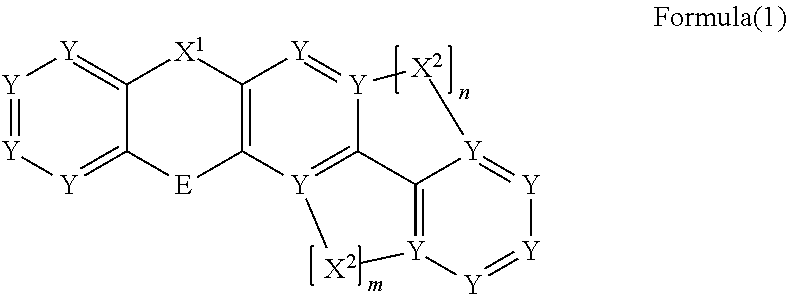
Description

where the following applies to the symbols and indices used:
- Y is C if a group X2 is bonded to this group Y, or is on each occurrence, identically or differently, CR or N if no group X2 is bonded to this group Y;
- E is a single bond or a divalent bridge selected from N(R1), B(R1), C(R1)2, O, Si(R1)2, C═NR1, C═C(R1)2, S, S═O, SO2, P(R1) and P(═O)R1;
- X1, X2 is on each occurrence, identically or differently, a divalent bridge selected from N(R1), B(R1), O, C(R1)2, Si(R1)2, C═NR1, C═C(R1)2, S, S═O, SO2, P(R1) and P(═O)R1; with the proviso that X1 and X2 do not simultaneously stand for O;
- R, R1 is on each occurrence, identically or differently, H, D, F, Cl, Br, I, N(R2)2, N(Ar)2, C(═O)Ar, P(═O)Ar2, S(═O)Ar, S(═O)2Ar, CR2═CR2Ar, CN, NO2, Si(R2)3, B(OR2)2, OSO2R2, a straight-chain alkyl, alkoxy or thioalkoxy group having 1 to 40 C atoms or a branched or cyclic alkyl, alkoxy or thioalkoxy group having 3 to 40 C atoms, each of which may be substituted by one or more radicals R2, where one or more non-adjacent CH2 groups may be replaced by R2C═CR2, C═C, Si(R2)2, C═O, C═NR2, P(═O)(R2), SO, SO2, NR2, O, S or CONR2 and where one or more H atoms may be replaced by D, F, Cl, Br, I, CN or NO2, or an aromatic or heteroaromatic ring system having 5 to 60 aromatic ring atoms, which may in each case be substituted by one or more radicals R2, or an aryloxy or heteroaryloxy group having 5 to 40 aromatic ring atoms, which may in each case be substituted by one or more radicals R2, or an aralkyl or heteroaralkyl group having 5 to 40 aromatic ring atoms, which may in each case be substituted by one or more radicals R2, or a combination of these systems; two or more substituents R here together with the atoms to which they are bonded, or two substituents R1 together with the atom to which they are bonded, may also form a mono- or poly-cyclic, aliphatic or aromatic ring system with one another;
- Ar is on each occurrence, identically or differently, an aromatic or heteroaromatic ring system, preferably an aryl or heteroaryl group having 5 to 40 ring atoms, which may be substituted by one or more radicals R3;
- R2 is on each occurrence, identically or differently, H, D, F, Cl, Br, I, N(R3)2, N(Ar)2, C(═O)Ar, P(═O)Ar2, S(═O)Ar, S(═O)2Ar, CR3═CR3Ar, CN, NO2, Si(R3)3, B(OR3)2, OSO2R3, a straight-chain alkyl, alkoxy or thioalkoxy group having 1 to 40 C atoms or a branched or cyclic alkyl, alkoxy or thioalkoxy group having 3 to 40 C atoms, each of which may be substituted by one or more radicals R3, where one or more non-adjacent CH2 groups may be replaced by R3C═CR3, C═C, Si(R3)2, C═O, C═NR3, P(═O)(R3), SO, SO2, NR3, O, S or CONR3 and where one or more H atoms may be replaced by D, F, Cl, Br, I, CN or NO2, or an aromatic or heteroaromatic ring system having 5 to 60 aromatic ring atoms, which may in each case be substituted by one or more radicals R3, or an aryloxy or heteroaryloxy group having 5 to 40 aromatic ring atoms, which may be substituted by one or more radicals R3, or an aralkyl or heteroaralkyl group having 5 to 40 aromatic ring atoms, which may be substituted by one or more radicals R3, or a combination of these systems;
- R3 is on each occurrence, identically or differently, H, D or an aliphatic hydrocarbon radical having 1 to 20 C atoms or an aryl or heteroaryl group having 5 to 40 ring atoms or a combination of these groups;
- n, m are, identically or differently on each occurrence, 0 or 1, with the proviso that n+m=1 or 2;
characterised in that at least one group R and/or R1 is present which stands for a group of the following formula (5),
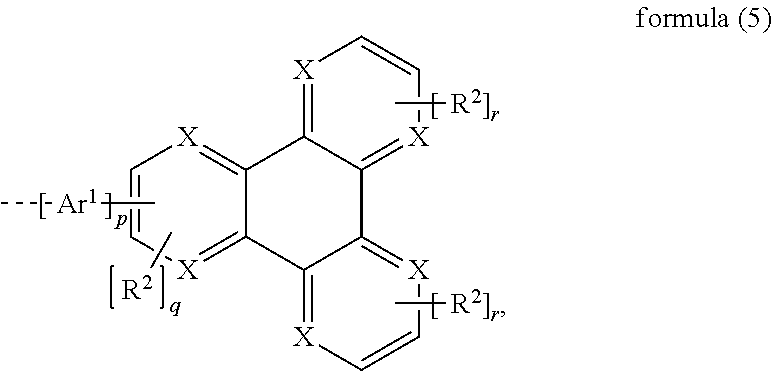
where the dashed bond indicates the linking of the group of the formula (5), R2 has the meanings given above and furthermore:
- X is C if the group Ar1 or the remainder of the molecule is bonded to this X, and is on each occurrence, identically or differently, CR2 or N in the other cases;
- Ar1 is a divalent aromatic or heteroaromatic ring system having 5 to 40 aromatic ring atoms, which may be substituted by one or more radicals R2;
- p is on each occurrence, identically or differently, 0 or 1;
- q, r is on each occurrence, identically or differently, 0, 1 or 2.

where the symbols and indices used have the meanings given above. In particular, the symbols used have the preferred meanings given above.

where the symbols and indices used have the meanings given above, in particular the preferred meanings given above.
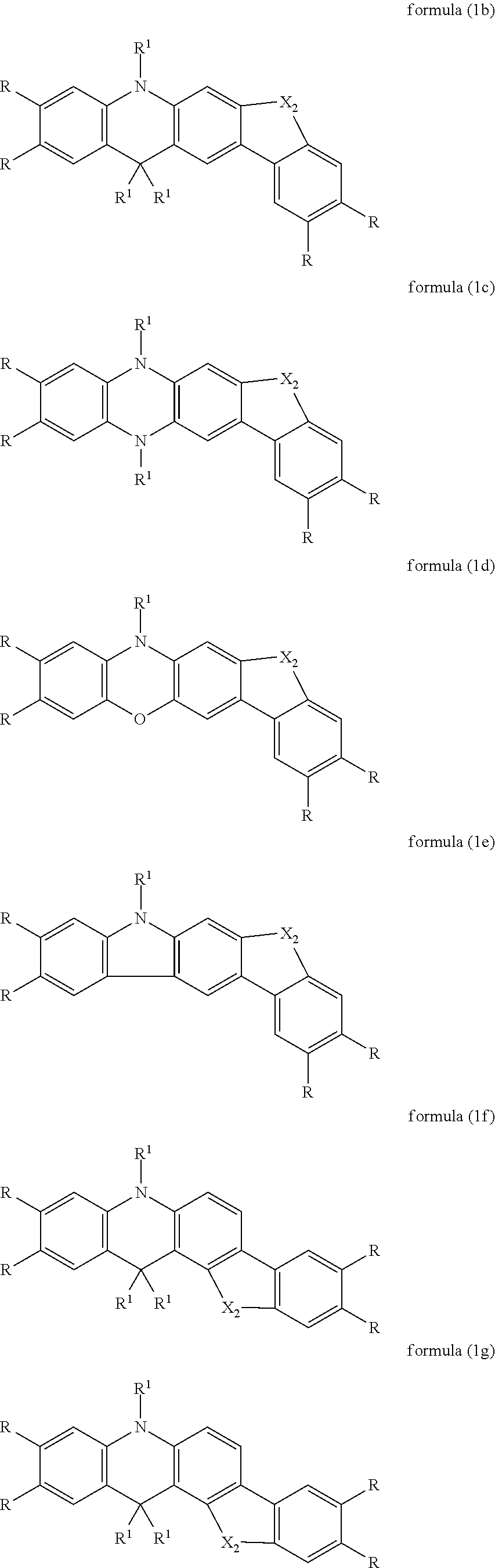
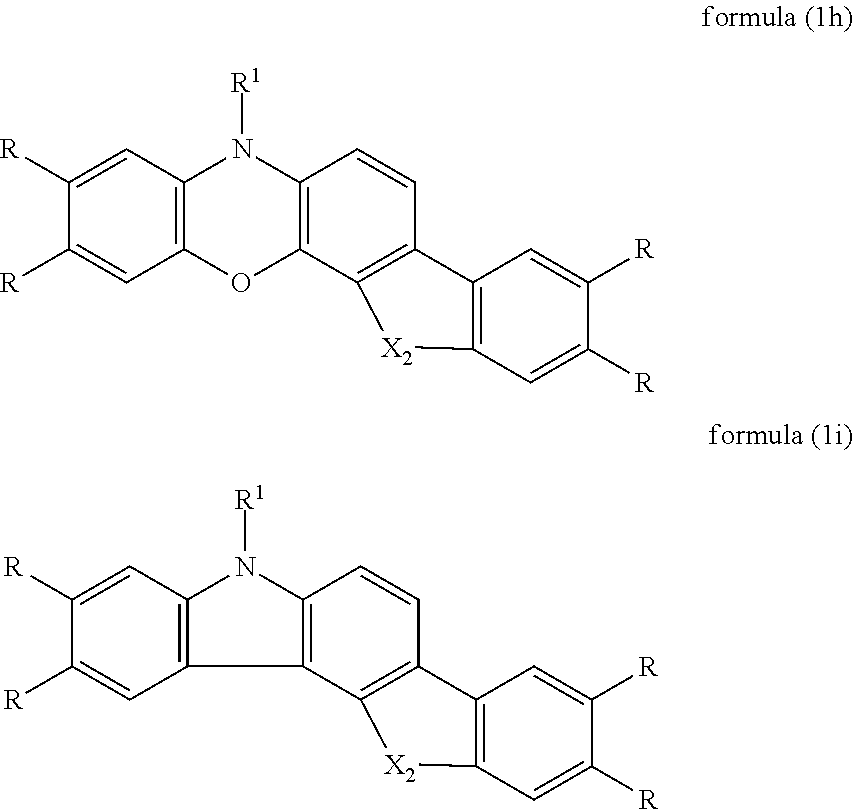
where the symbols and indices have the meanings indicated above and where X2 is preferably selected from C(R1)2, N(R1), O and S. Two radicals R1 here which are bonded to the same C atom may also, together with the atom to which they are bonded, form an aliphatic, aromatic or heteroaromatic ring system, for example a fluorene.
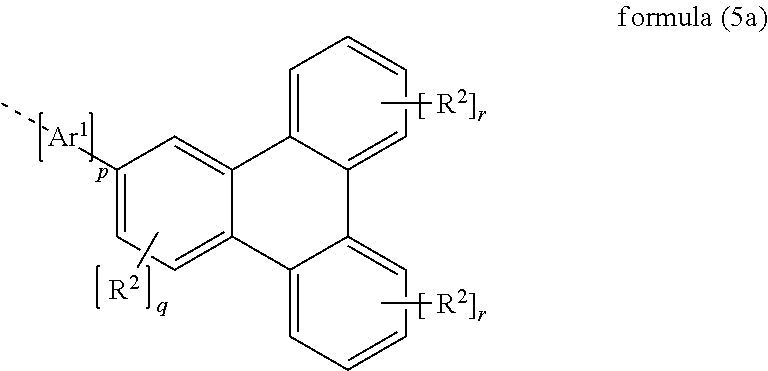
where the symbols and indices used have the meanings given above, i.e. the triphenylene unit is bonded via the 2-position.
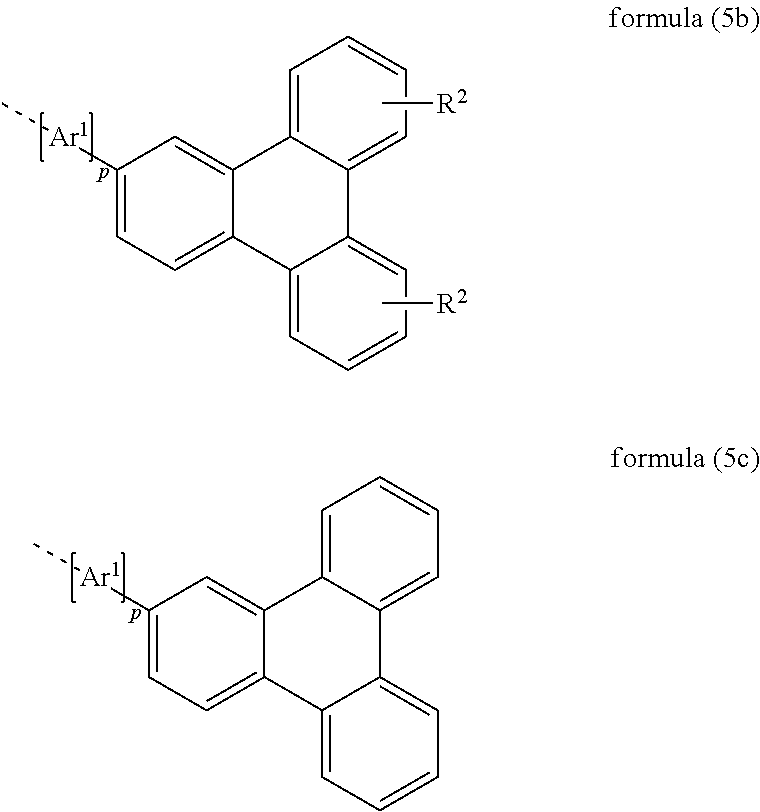
where the symbols and indices used have the meanings given above.
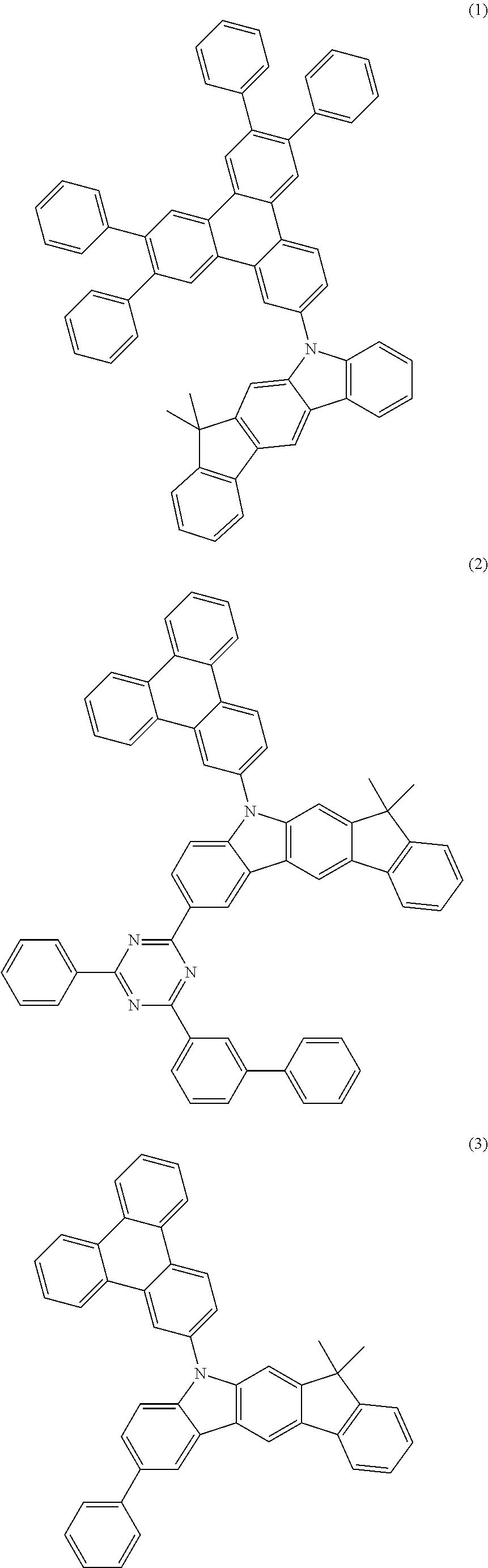
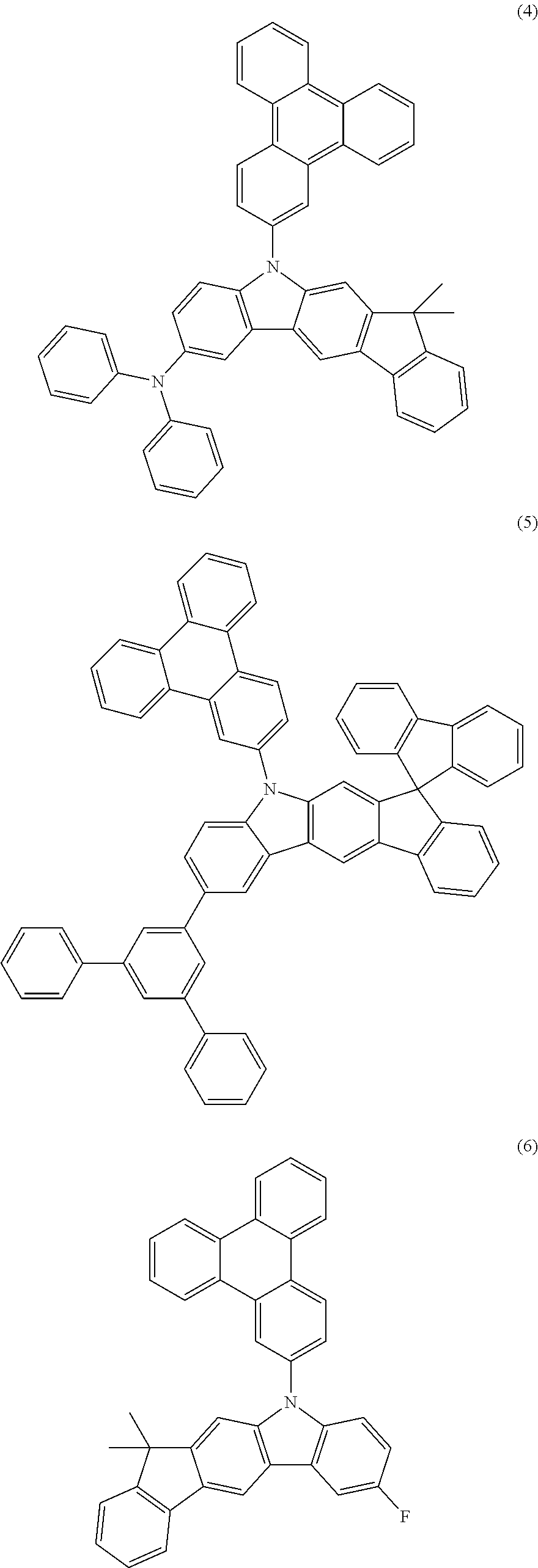
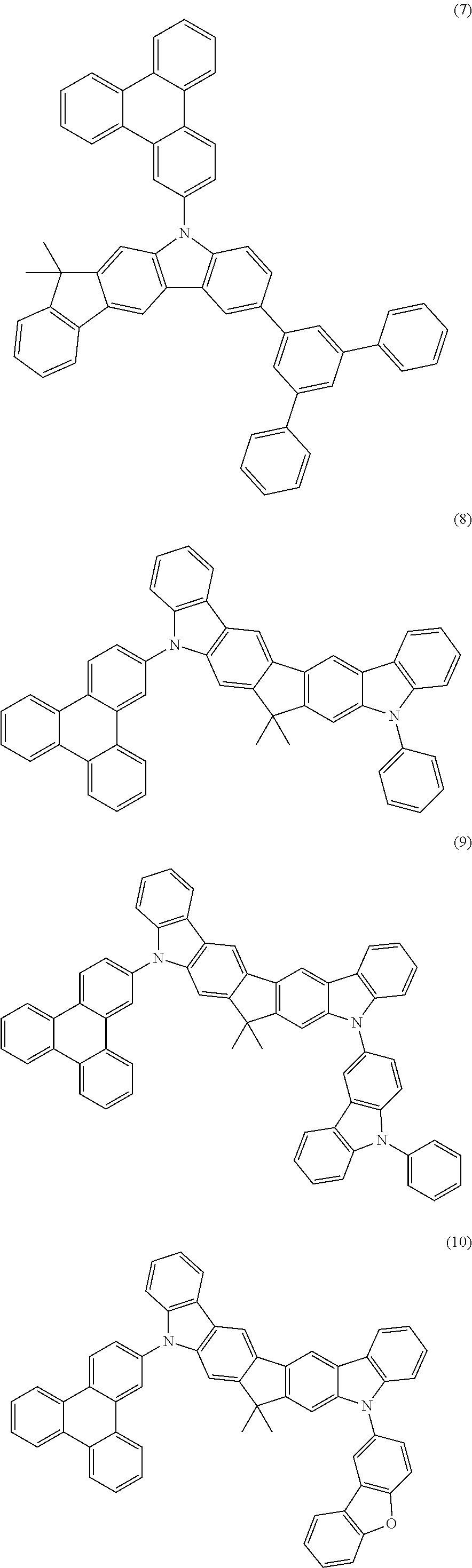
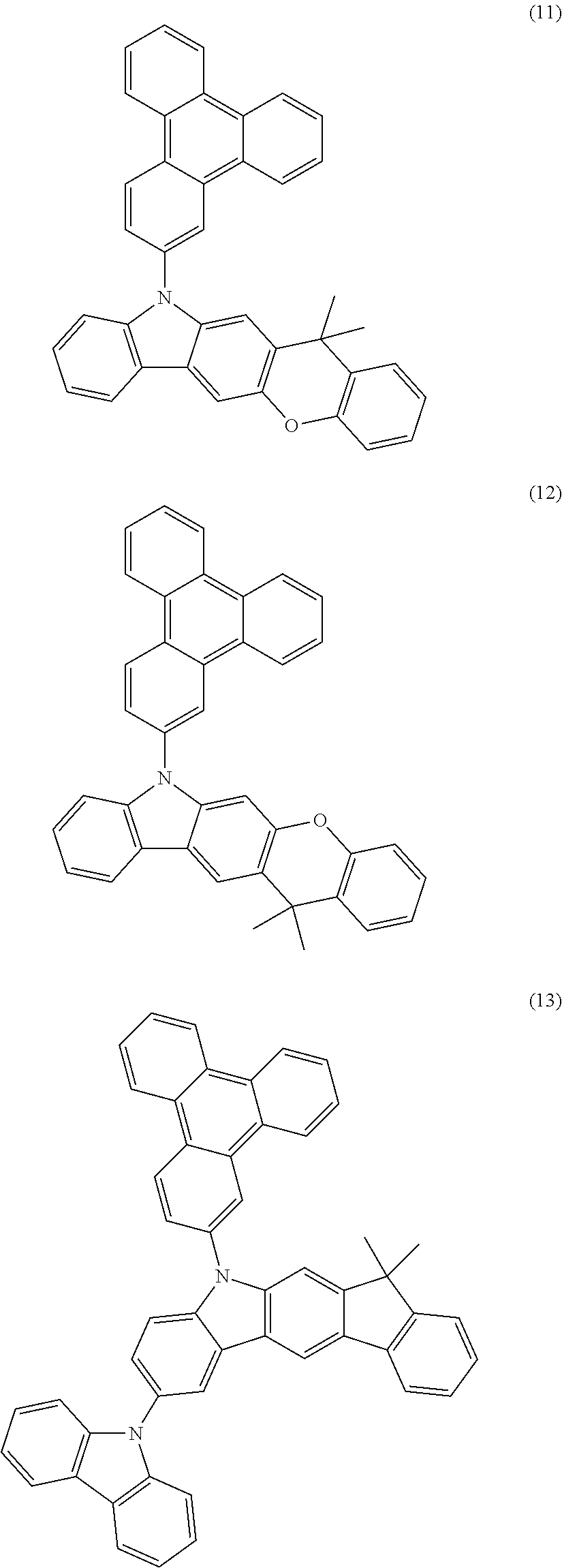
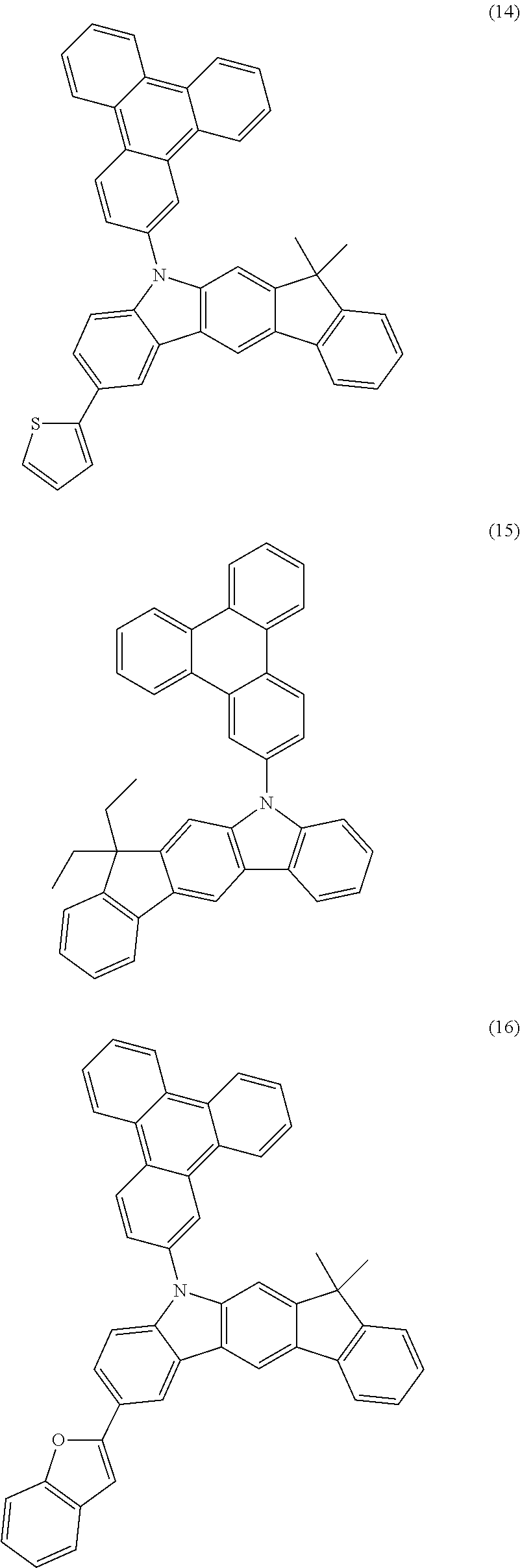


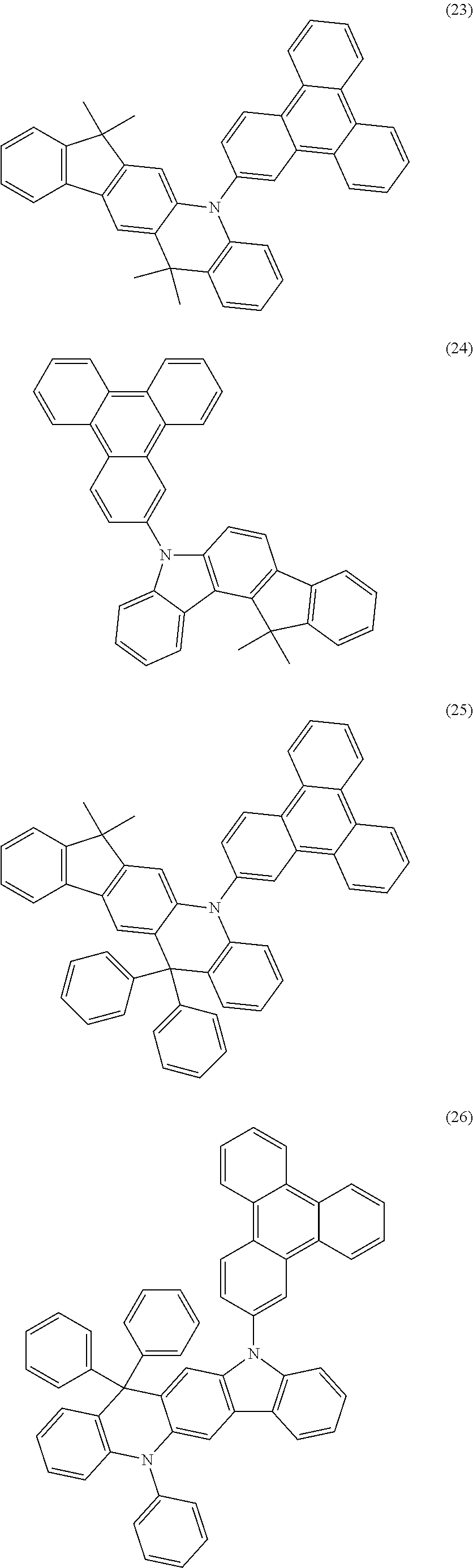
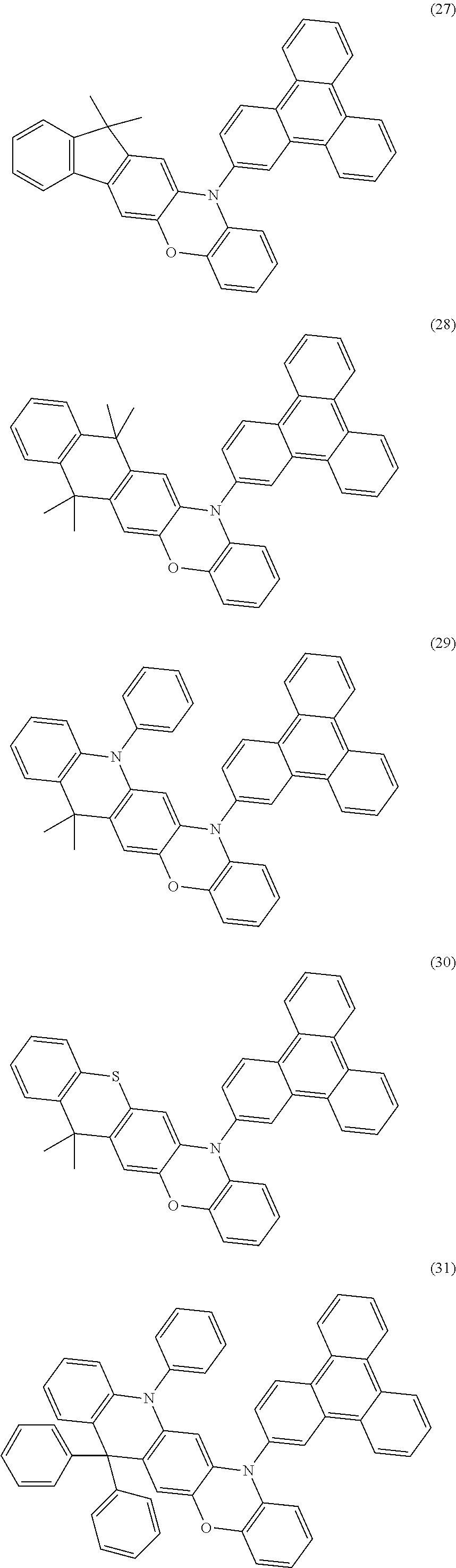
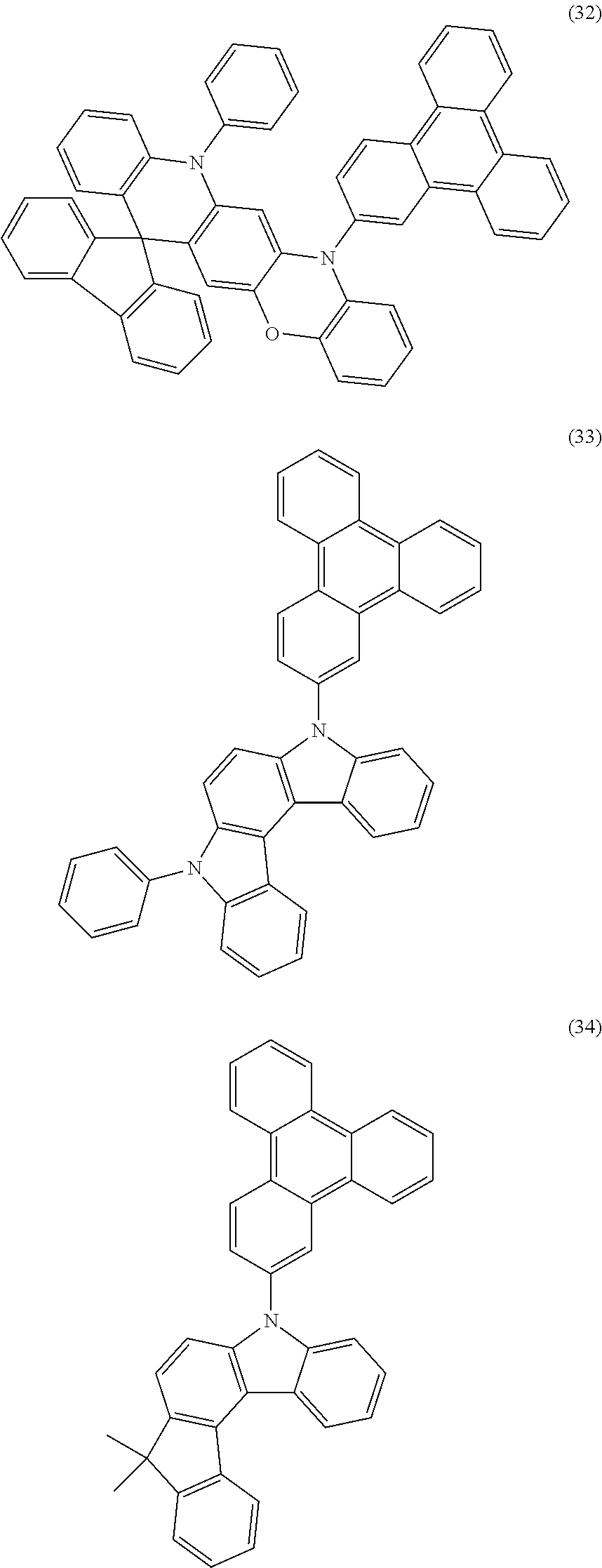

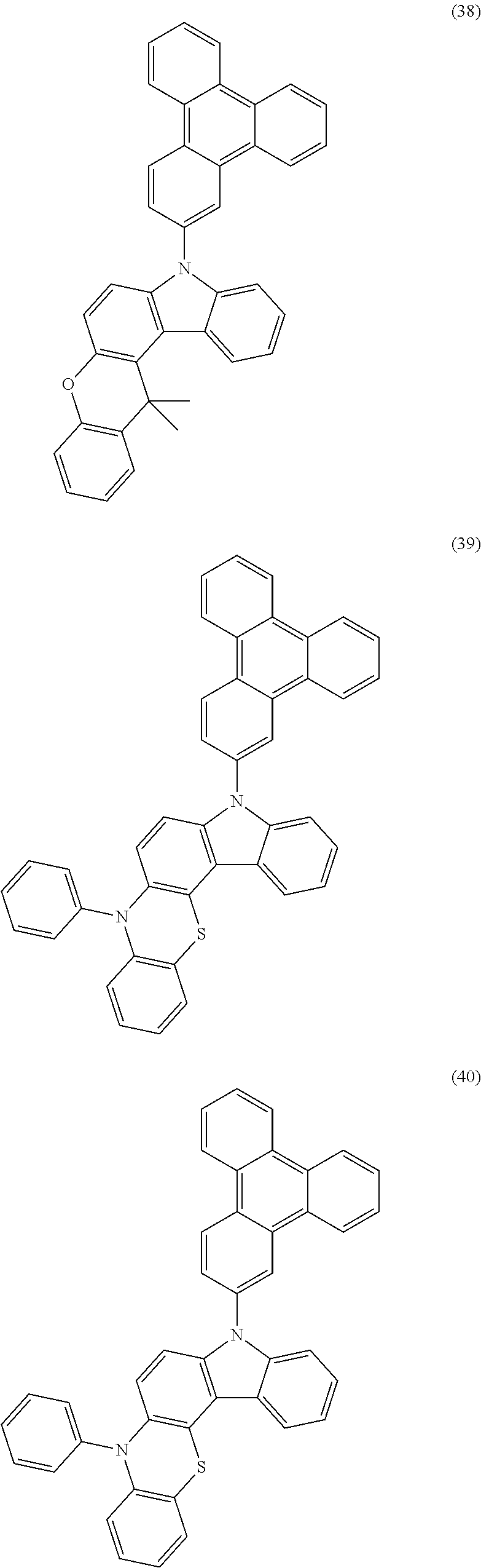
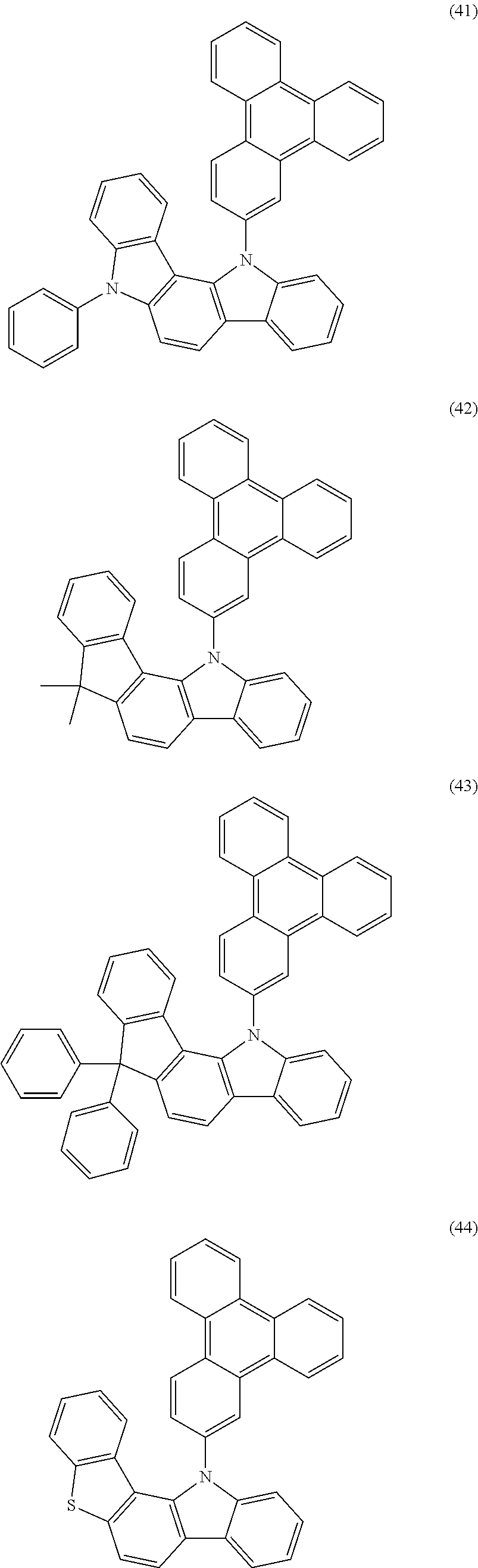
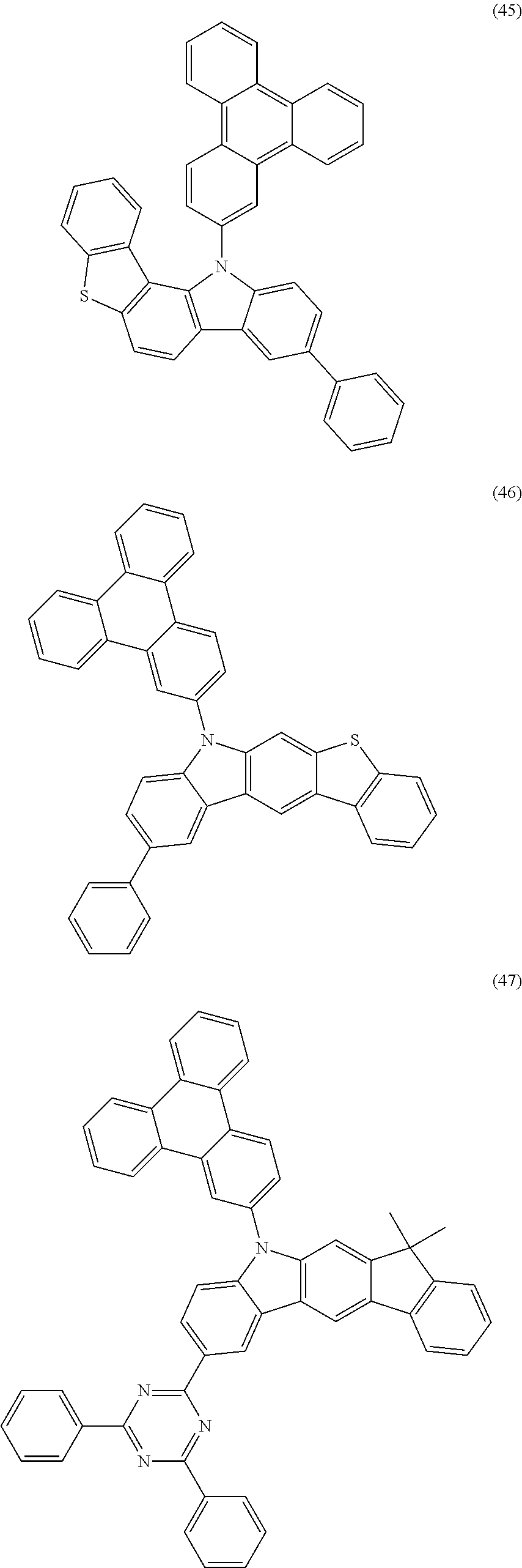
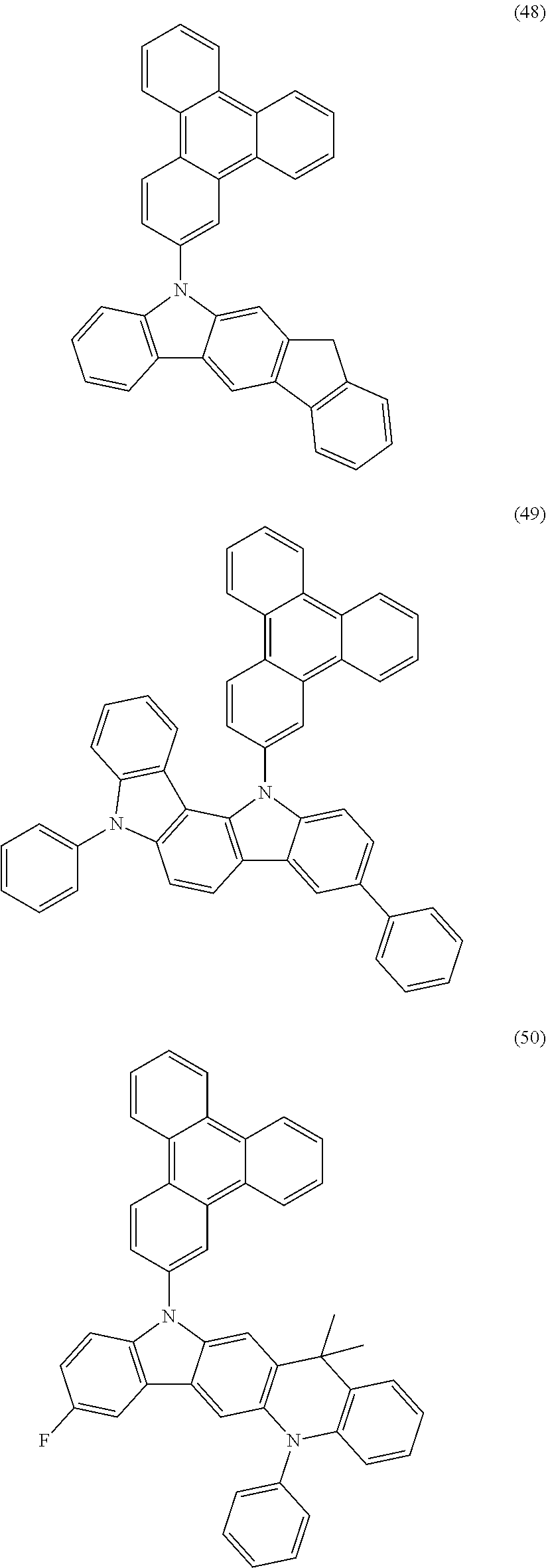
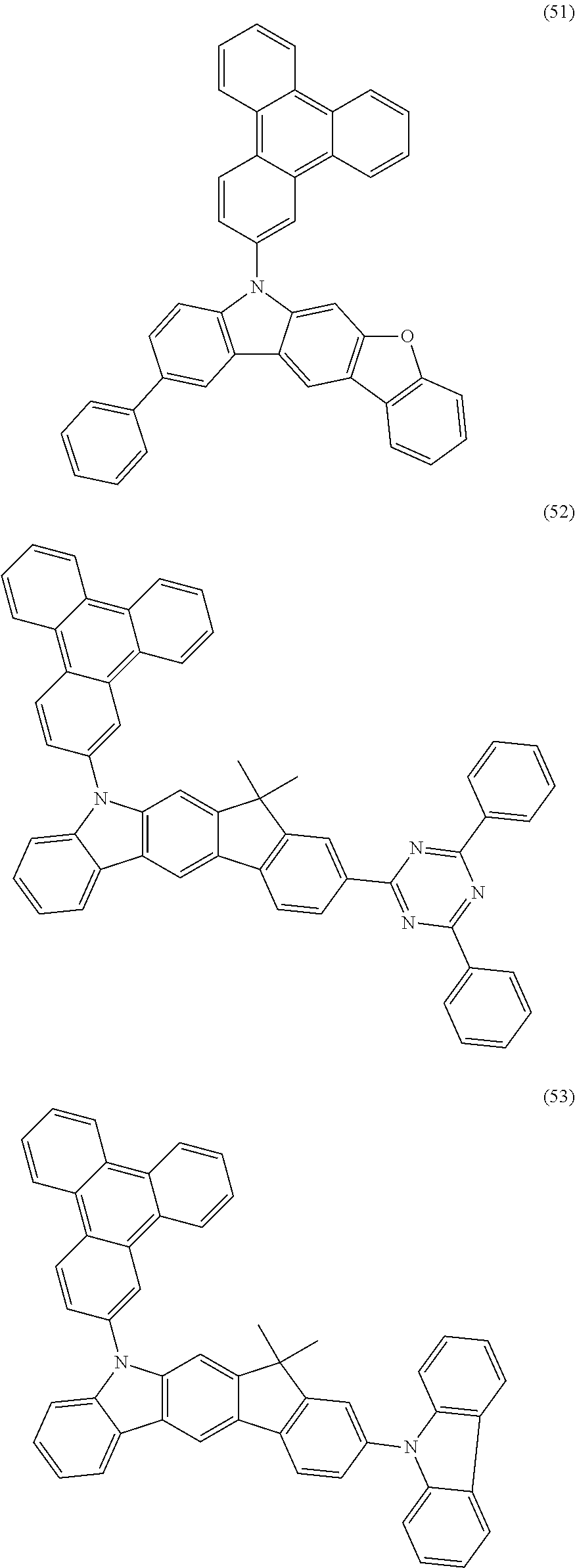
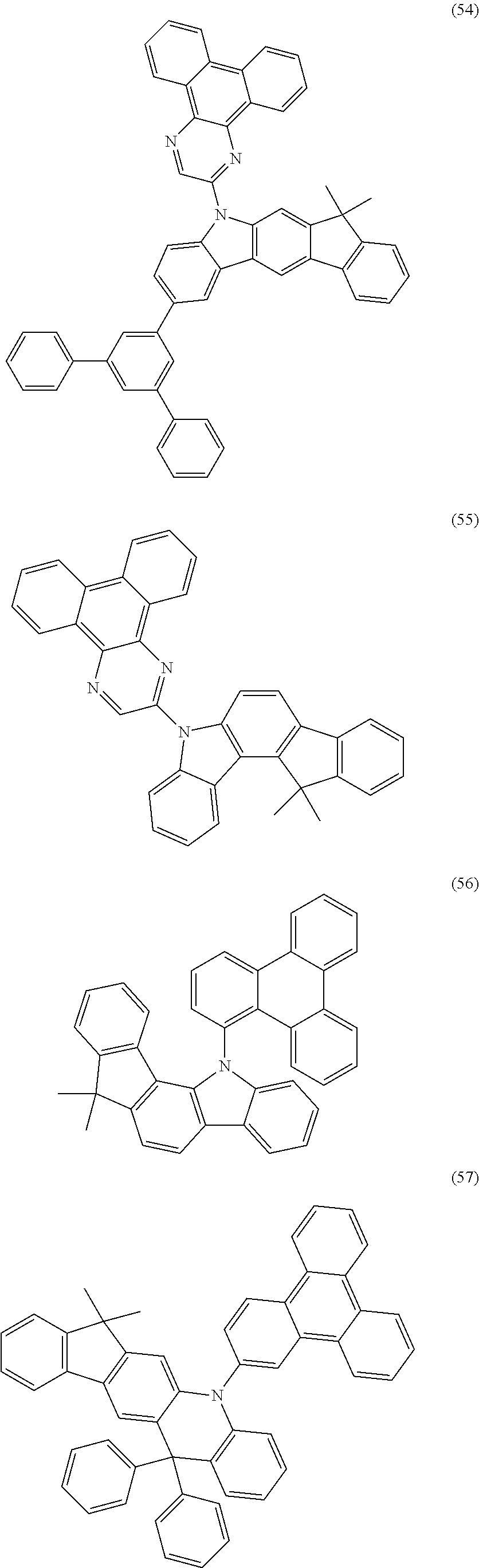

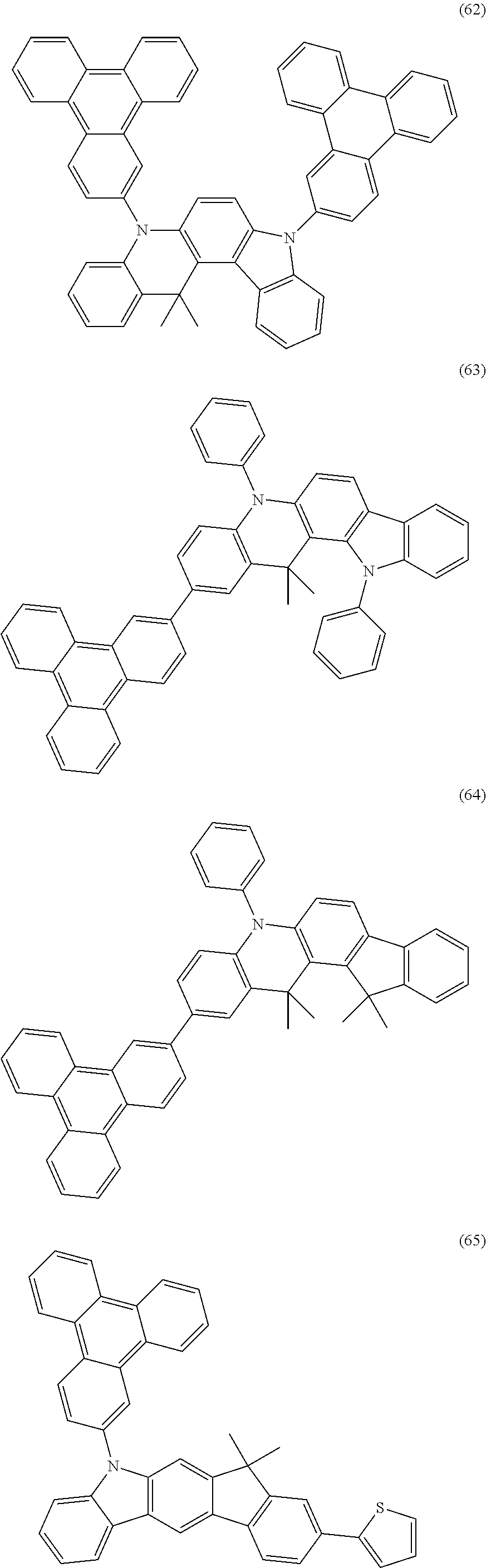

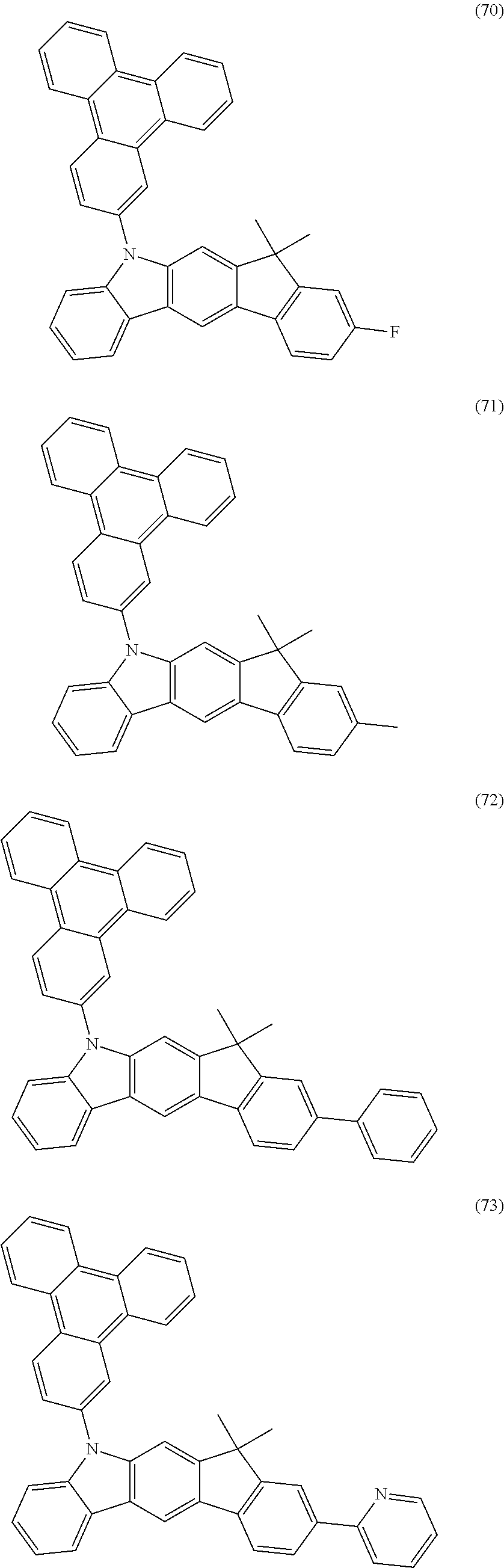


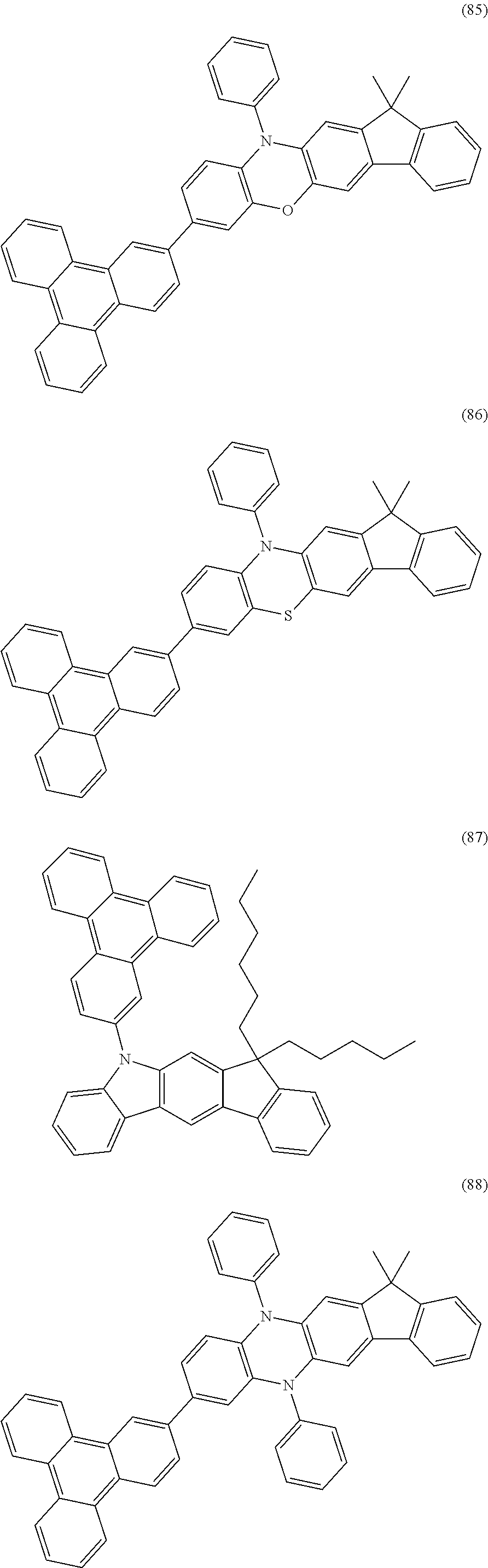
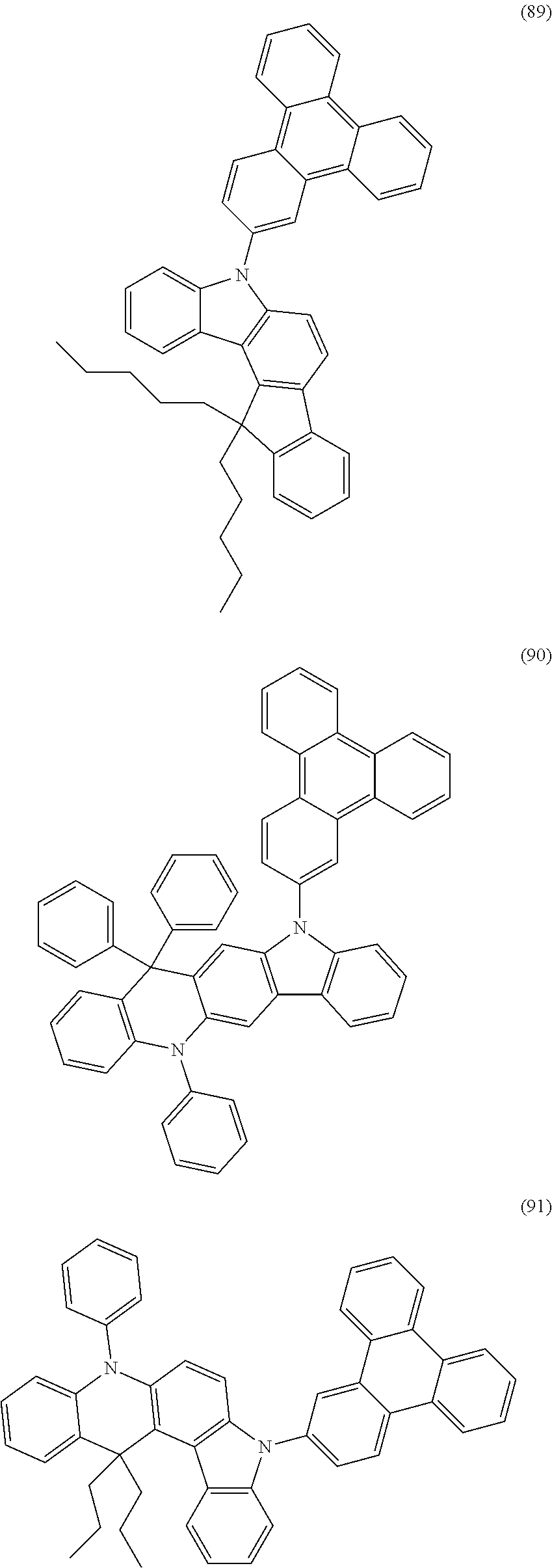
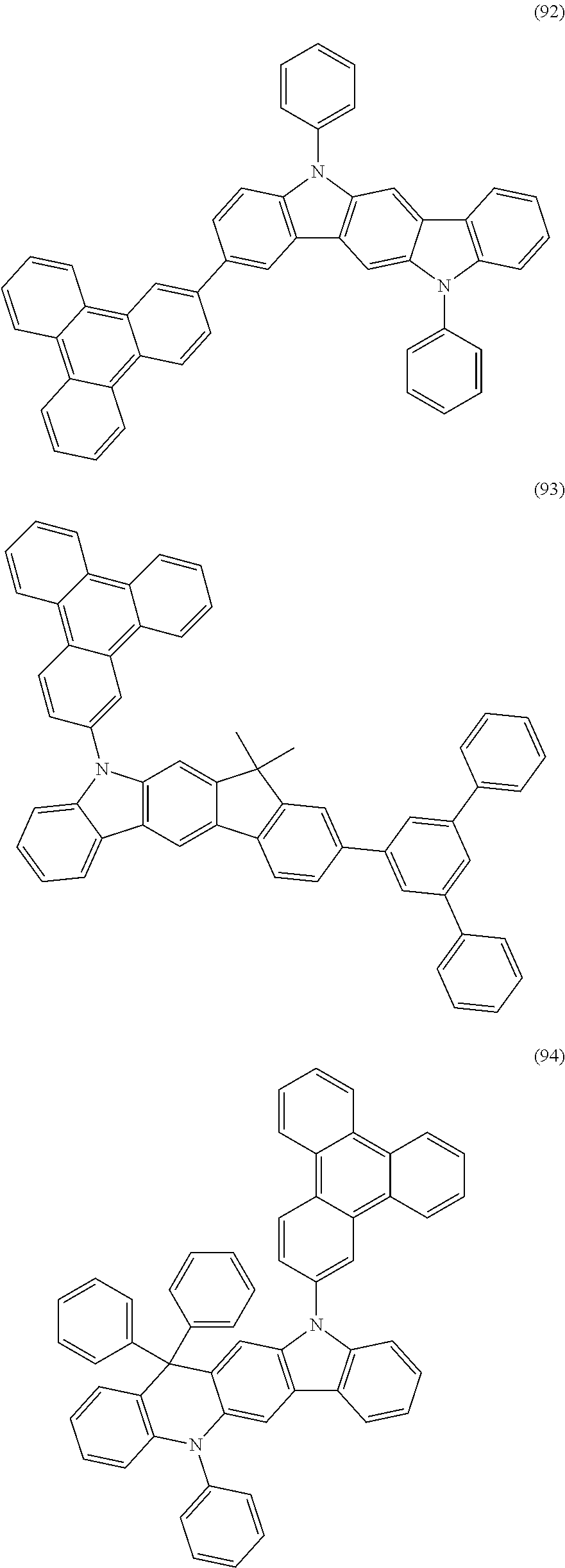
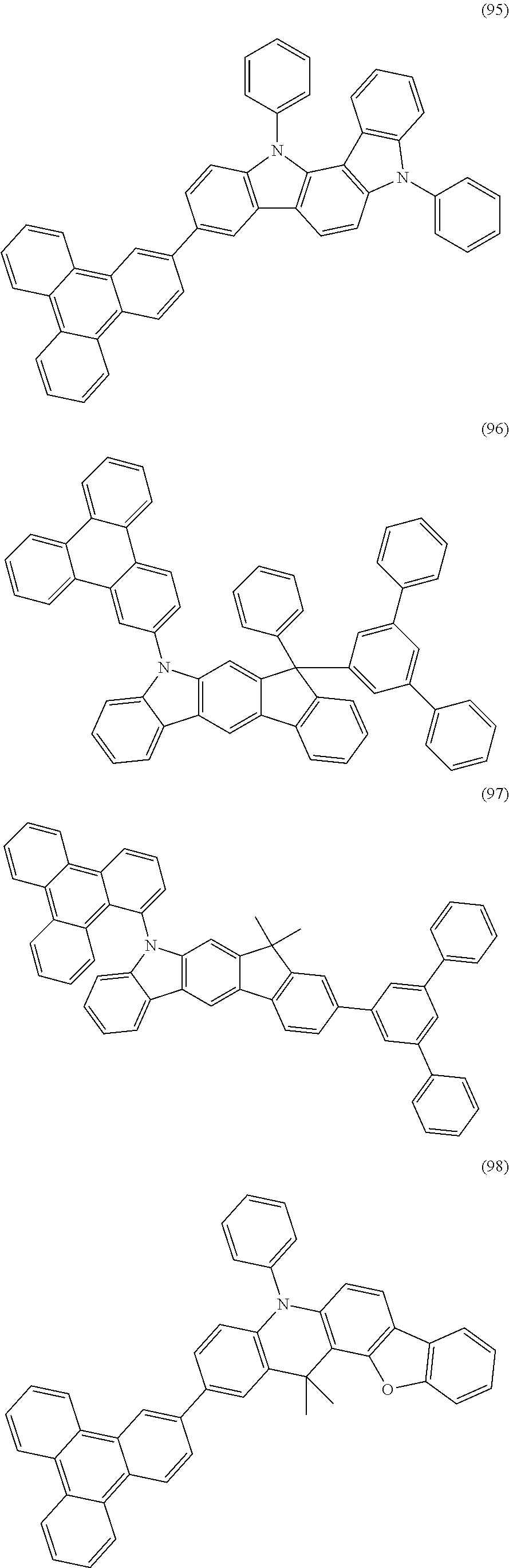
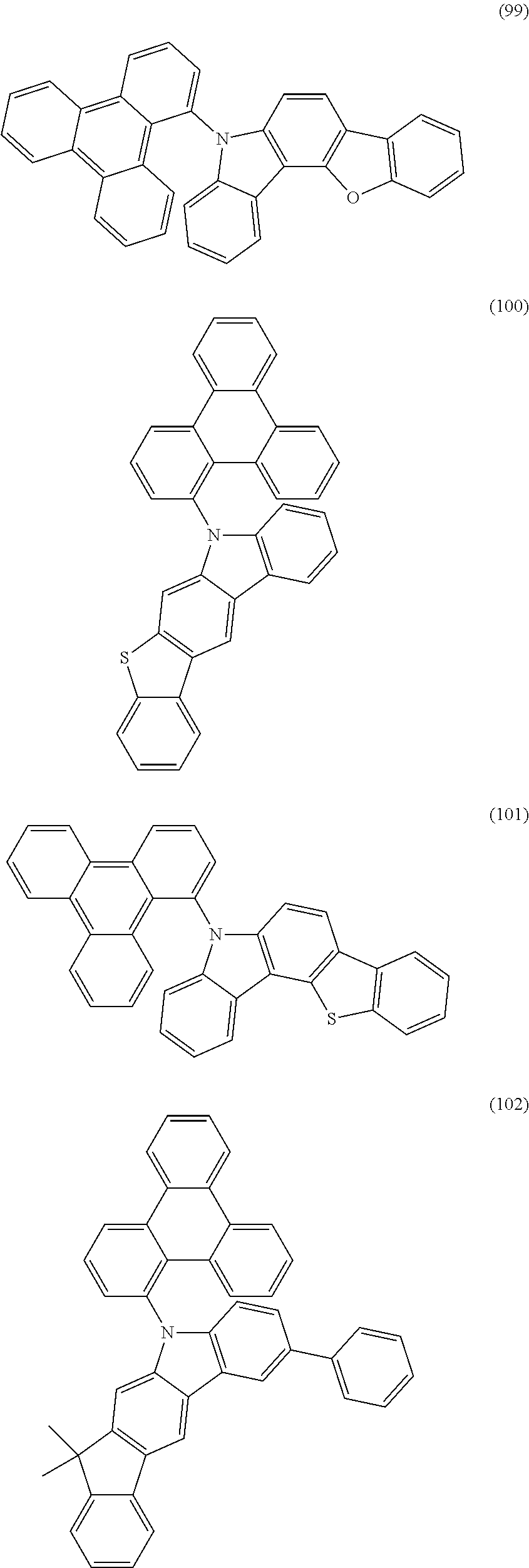
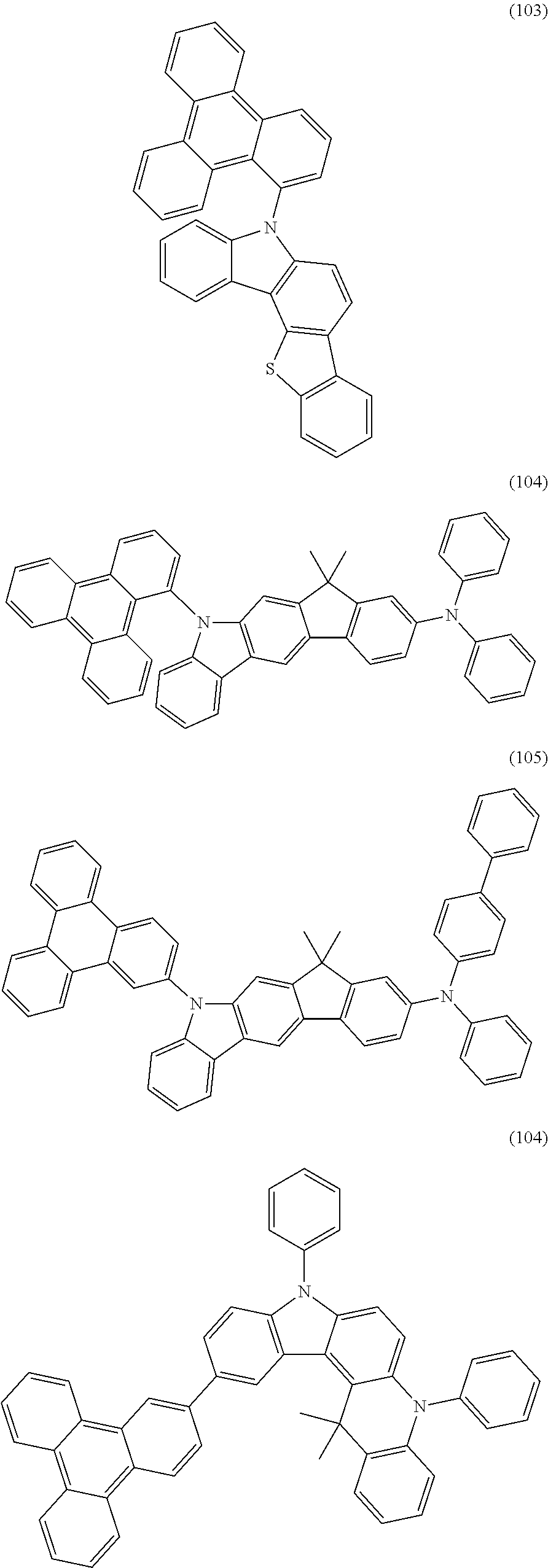
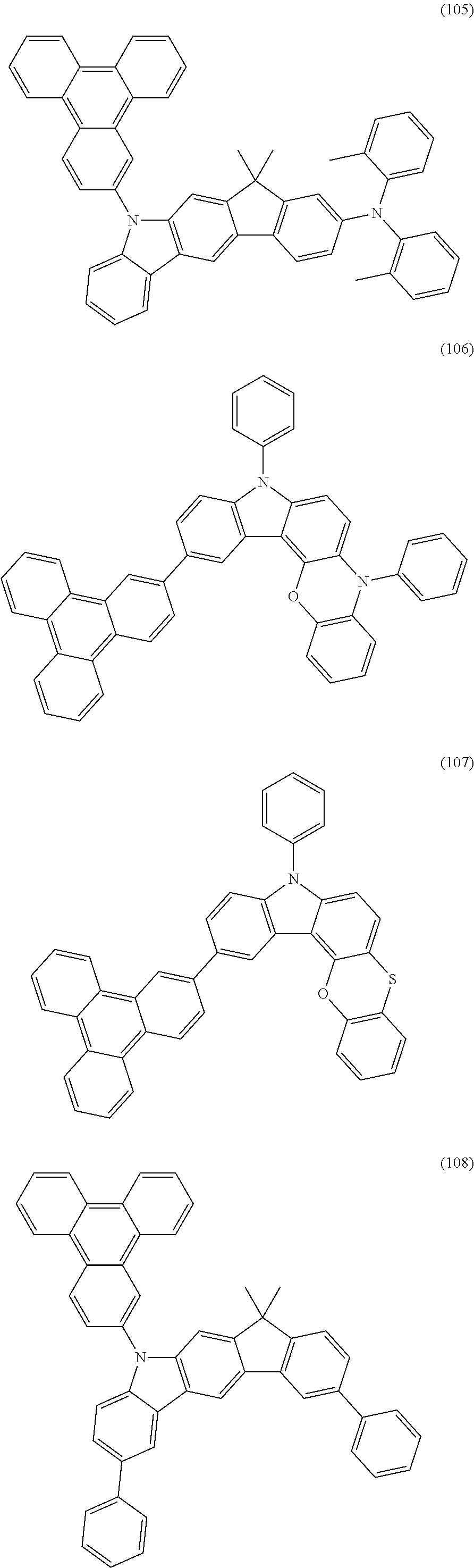
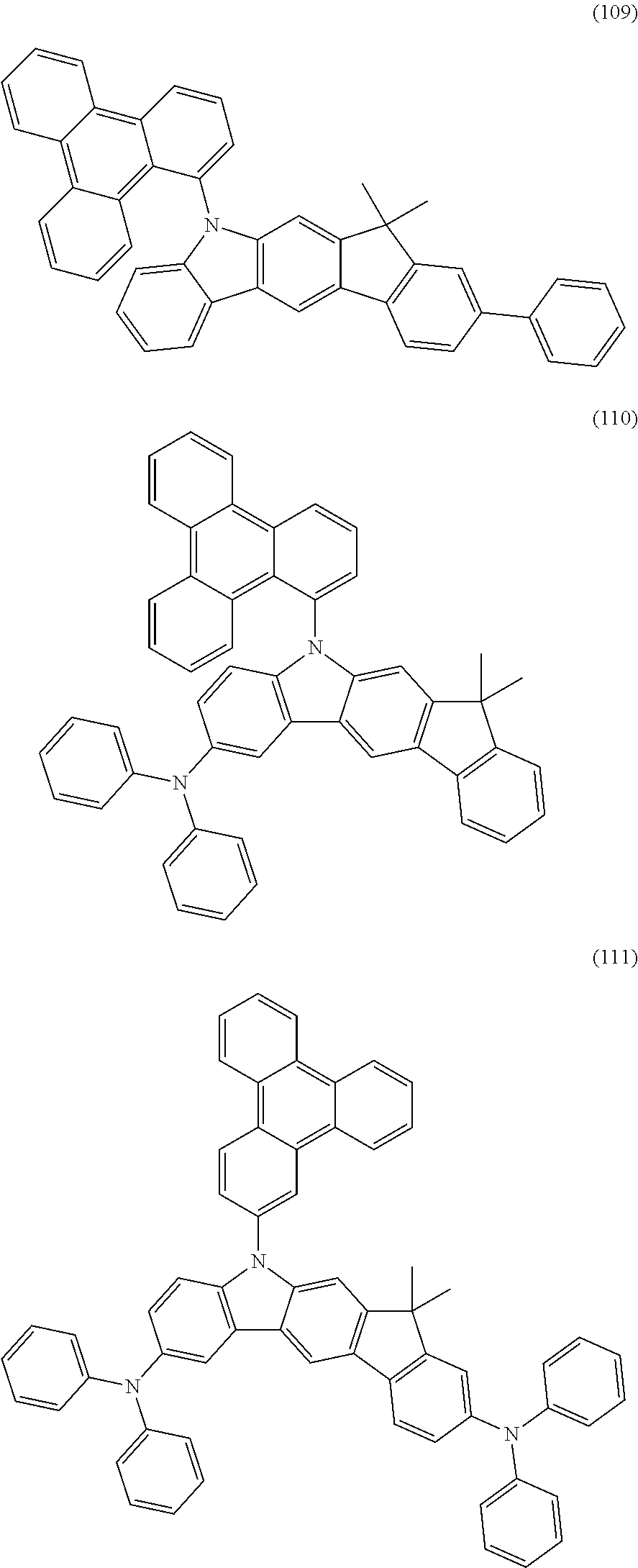

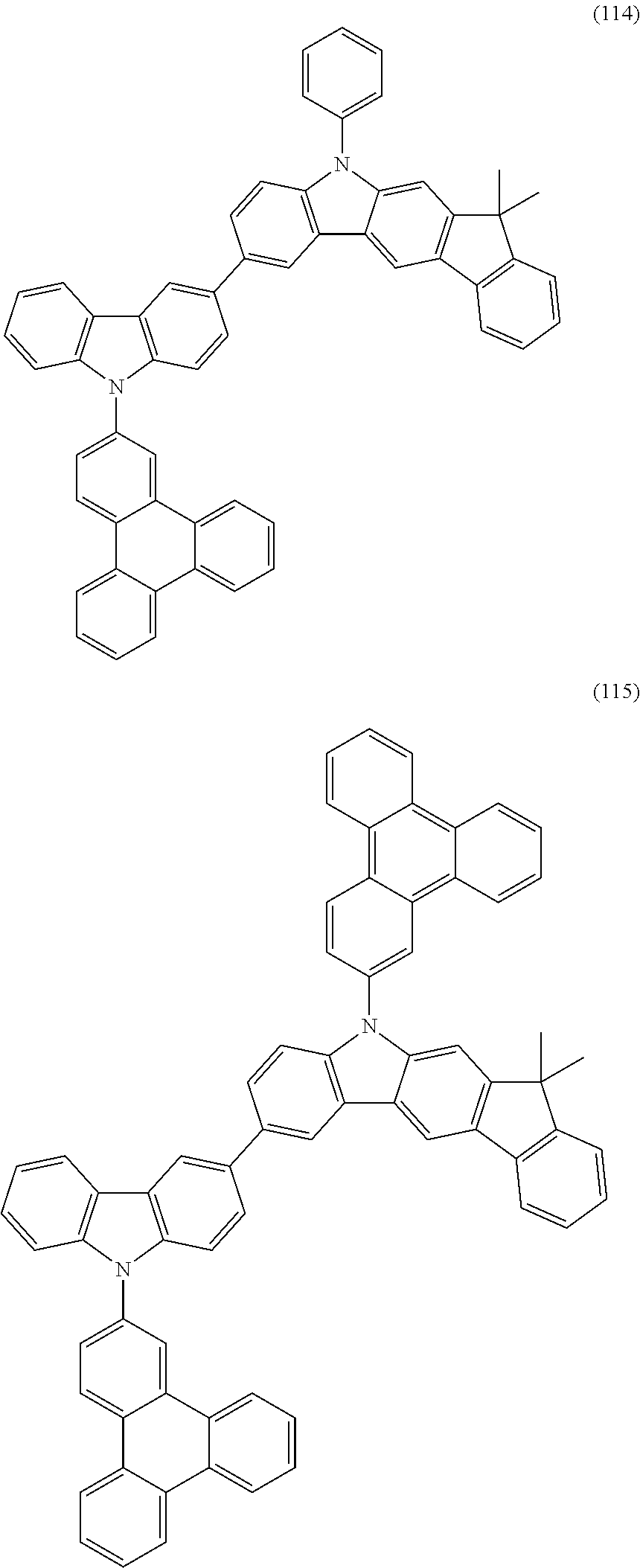
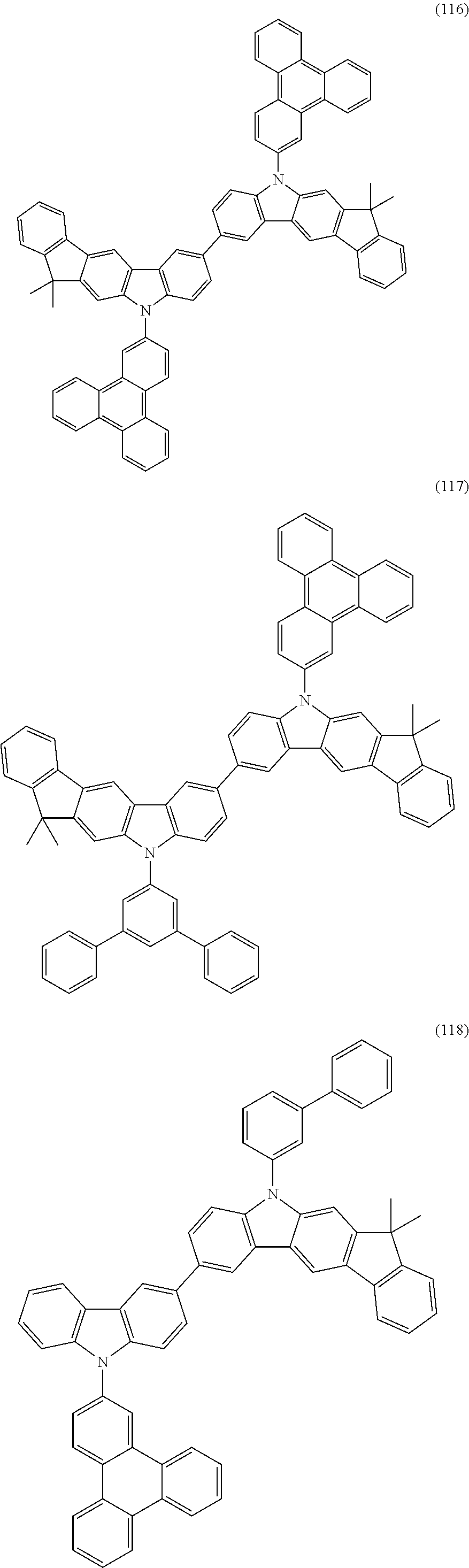
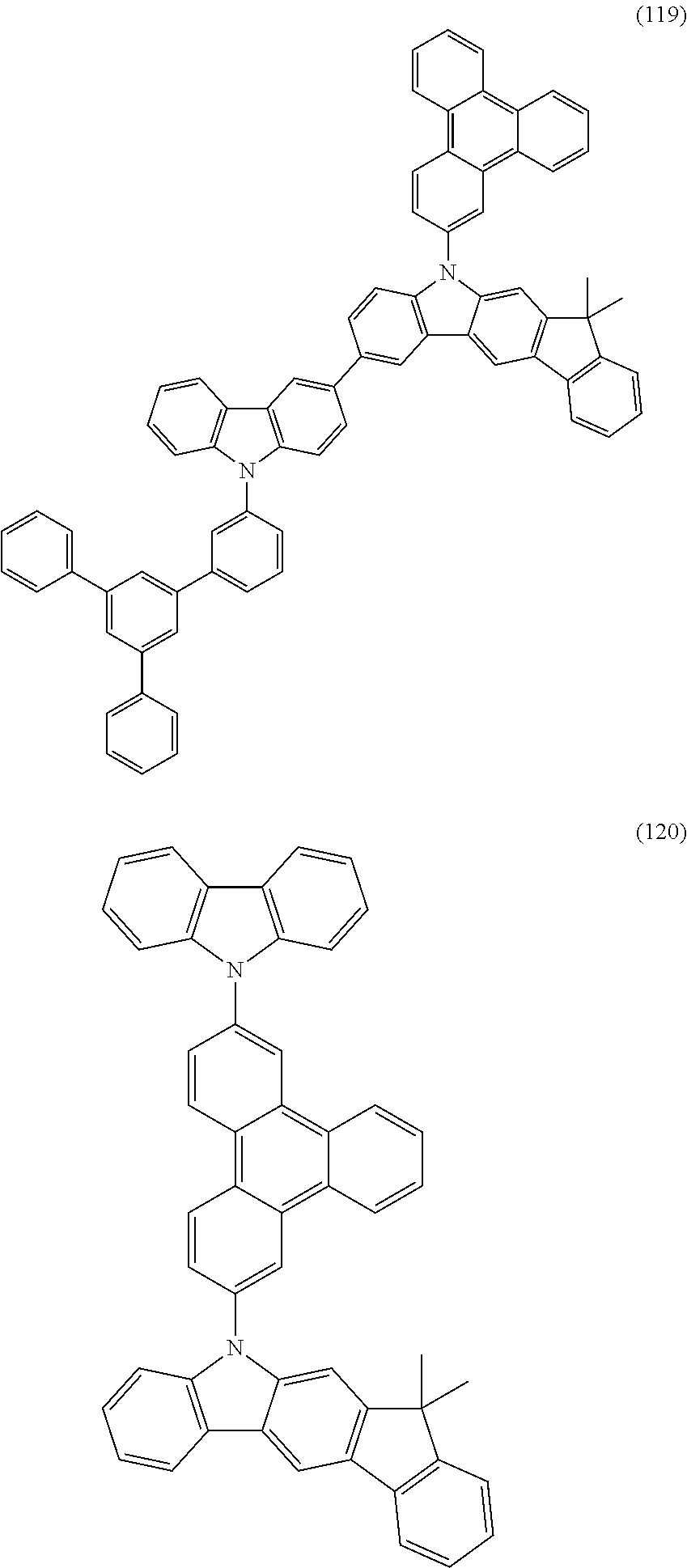
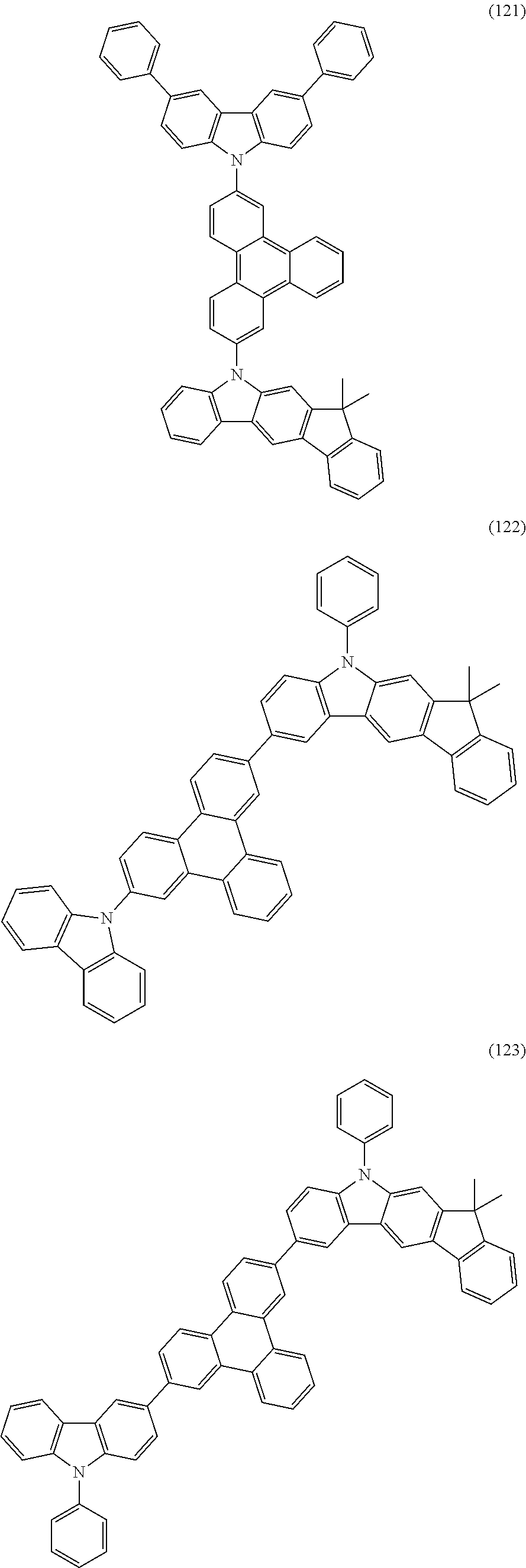

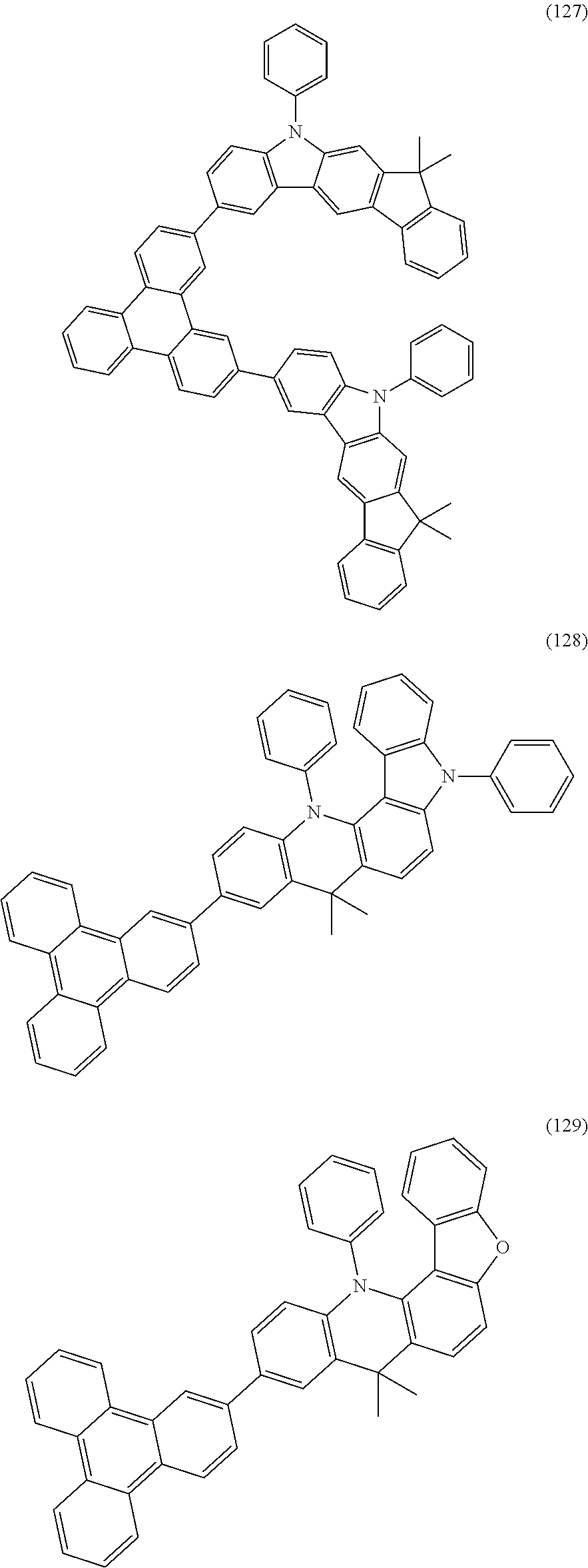
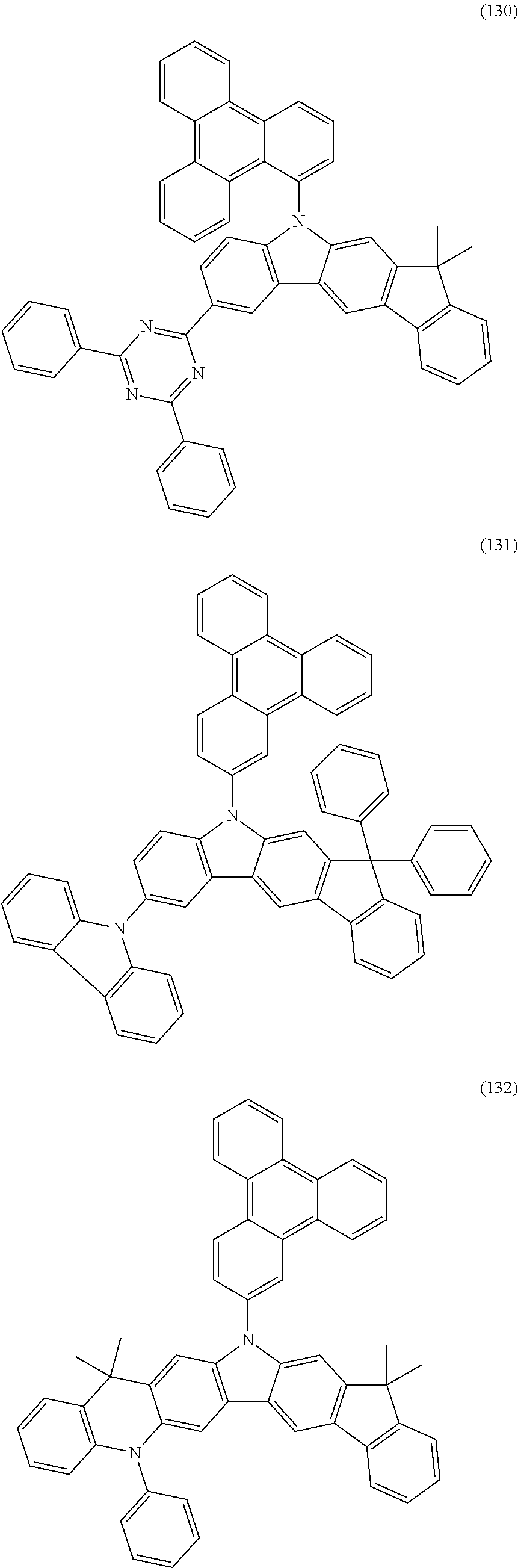
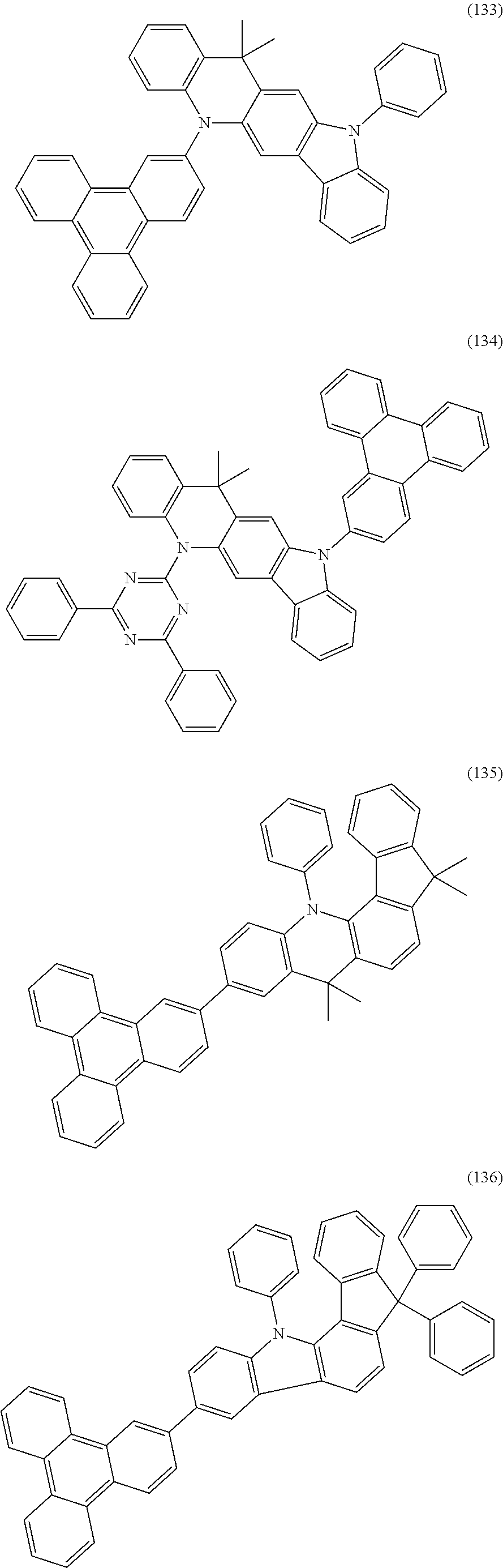


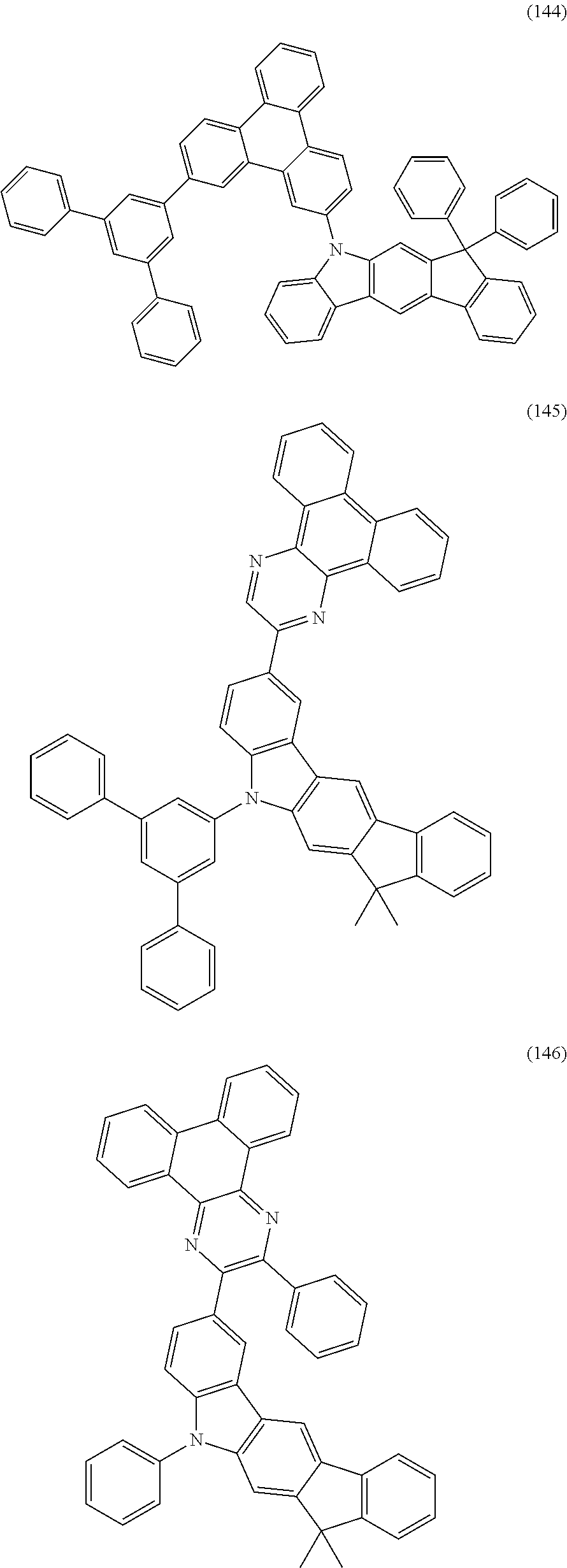
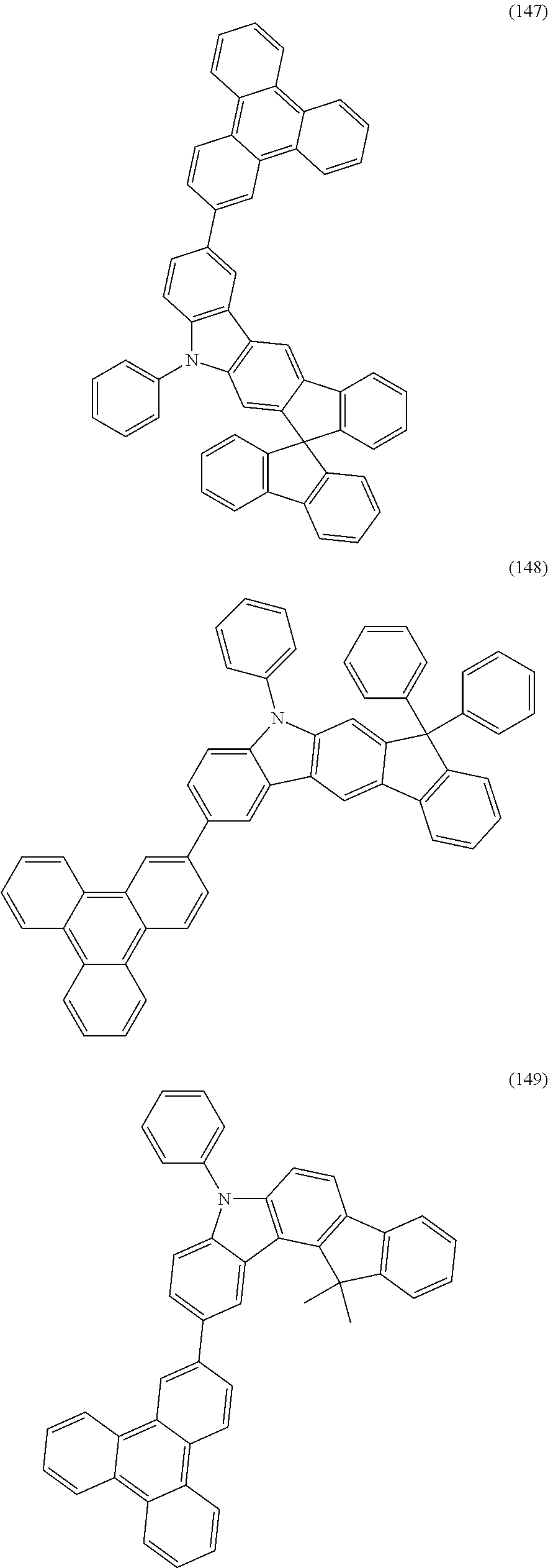
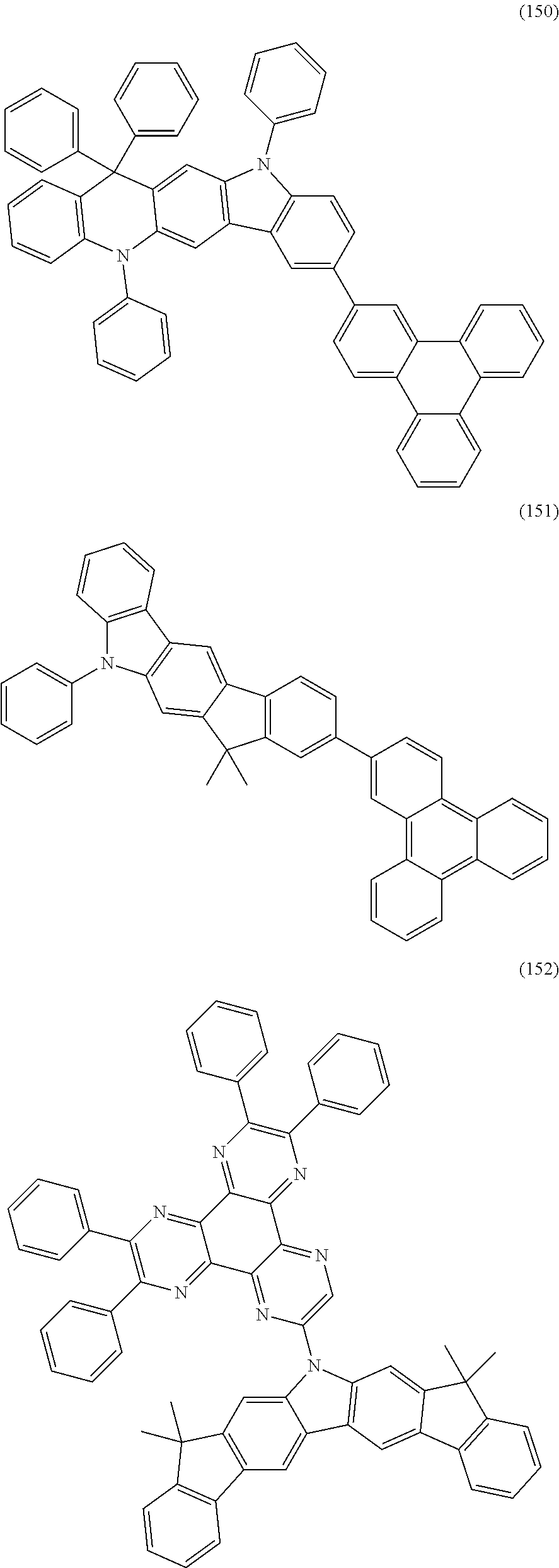
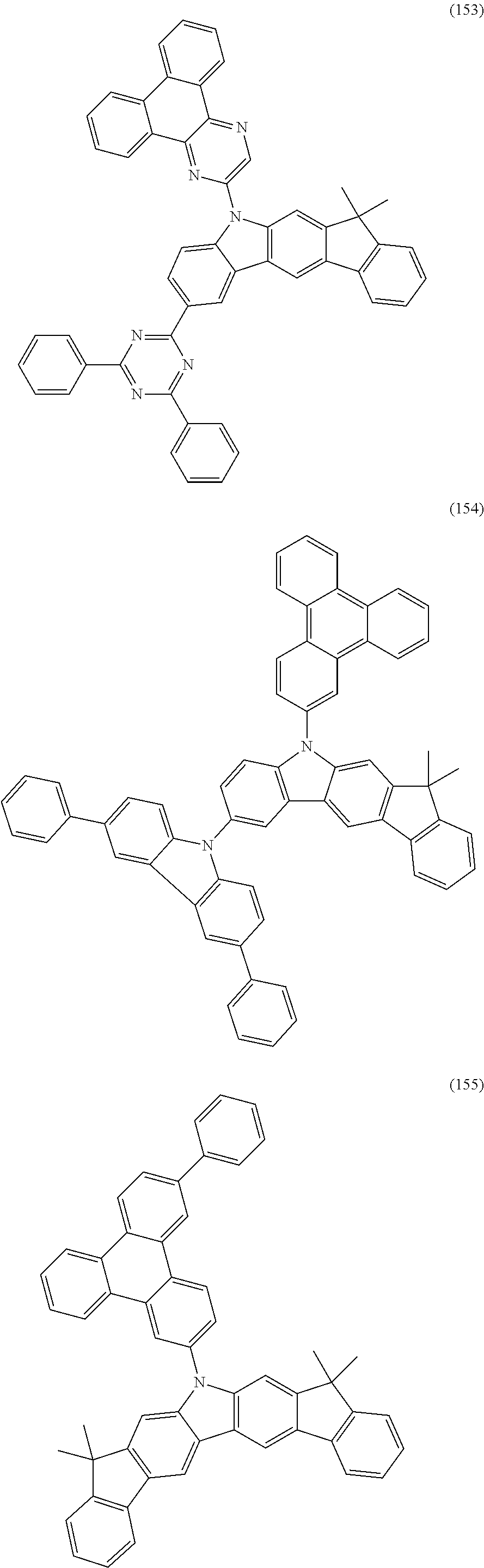


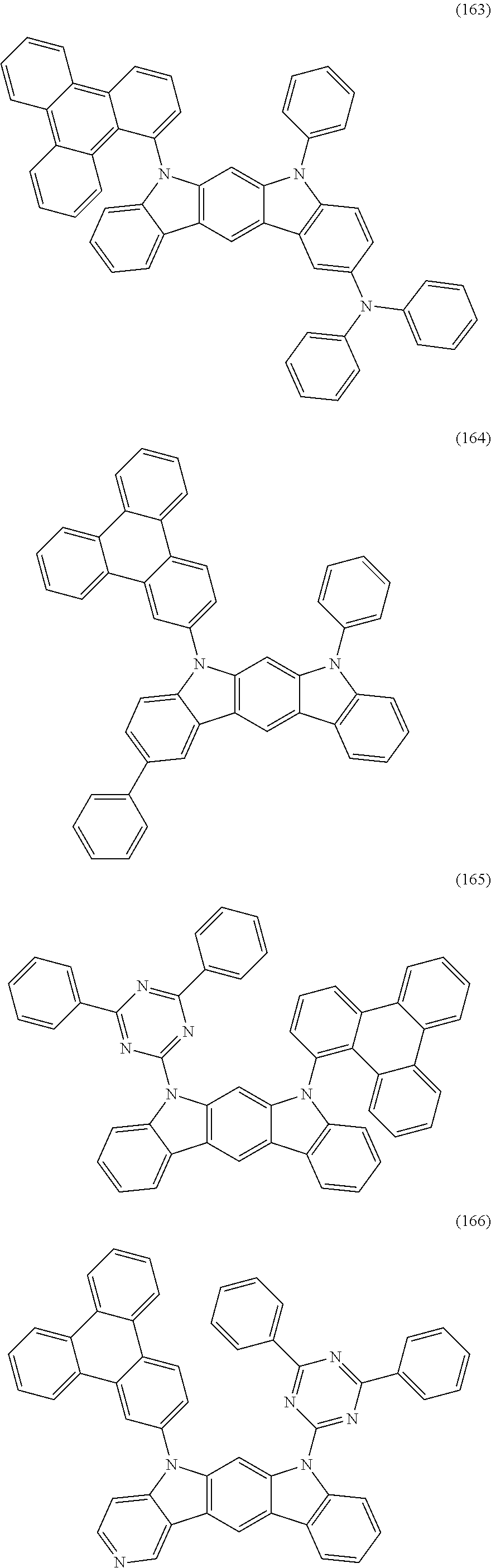

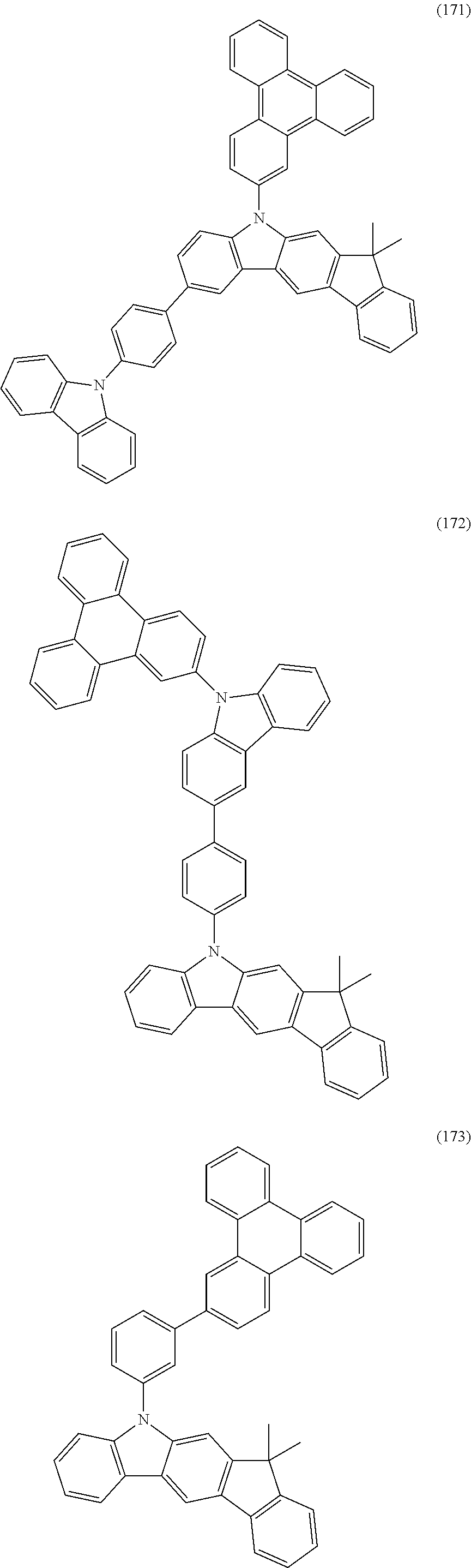
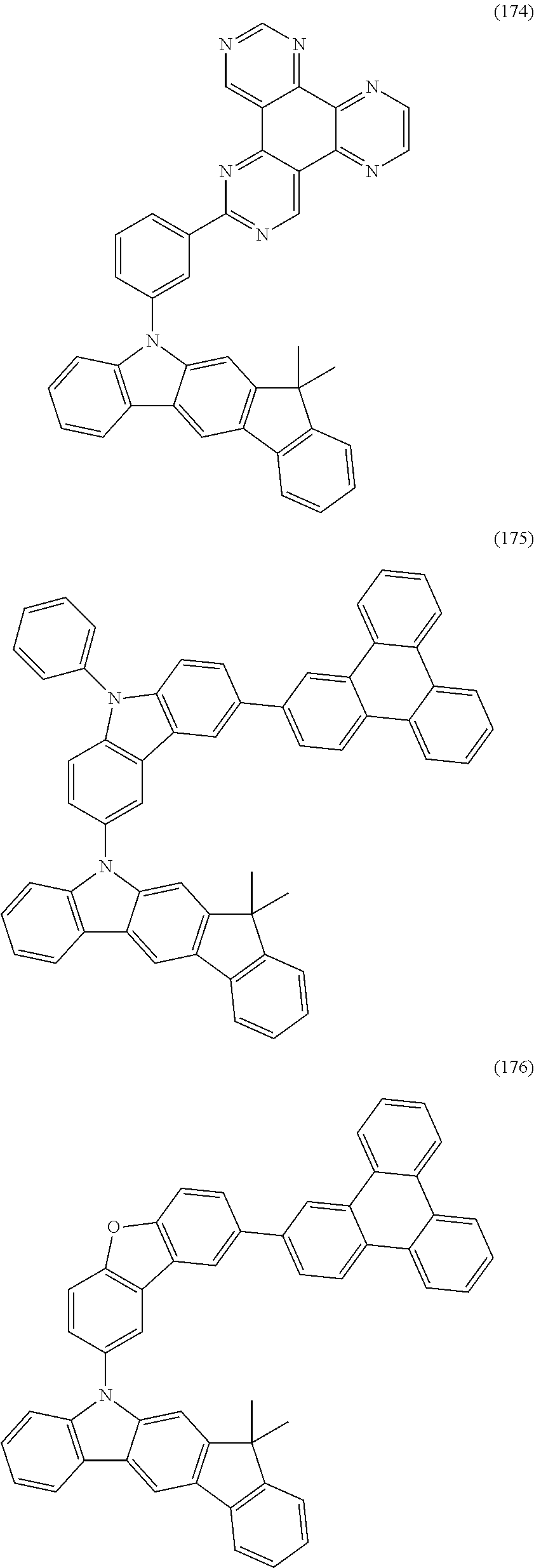
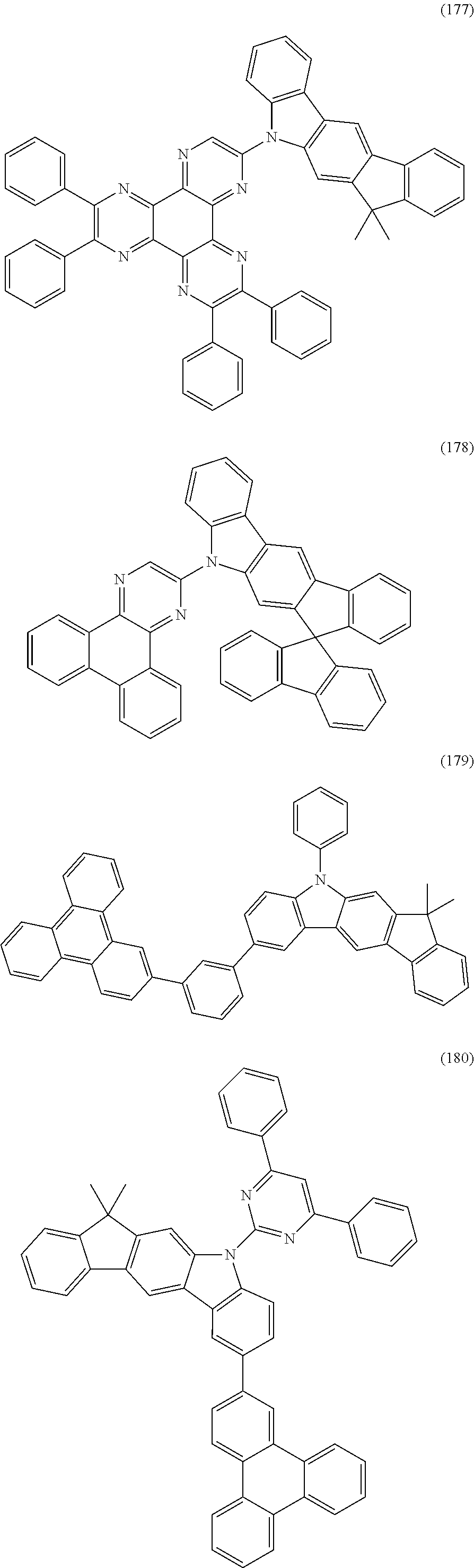

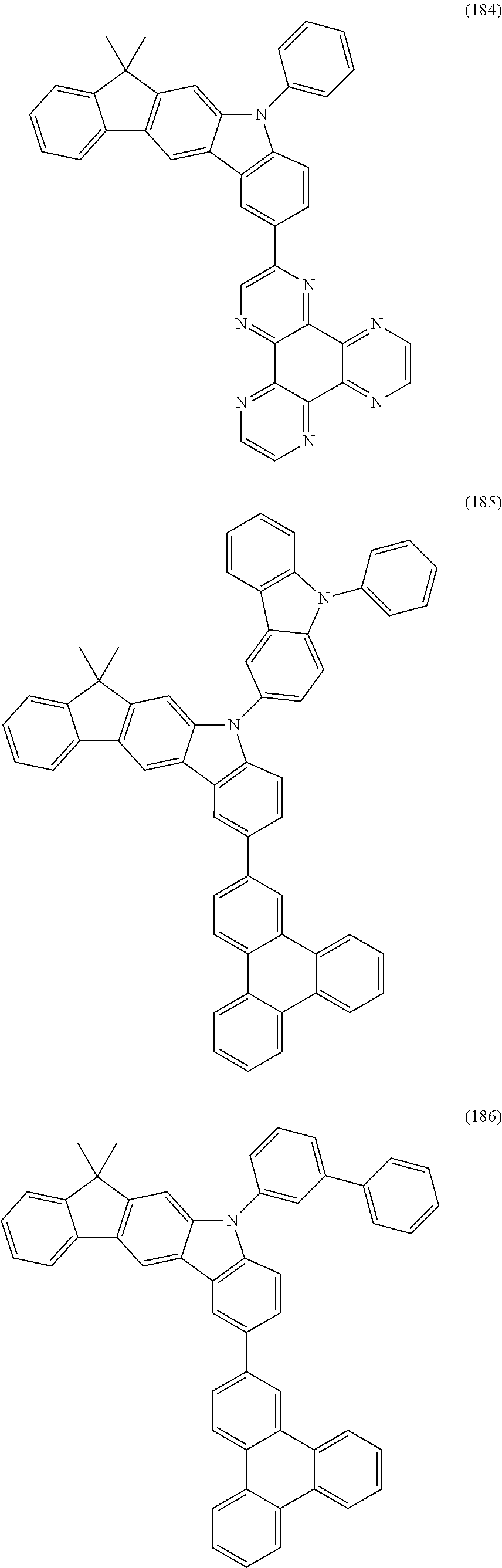
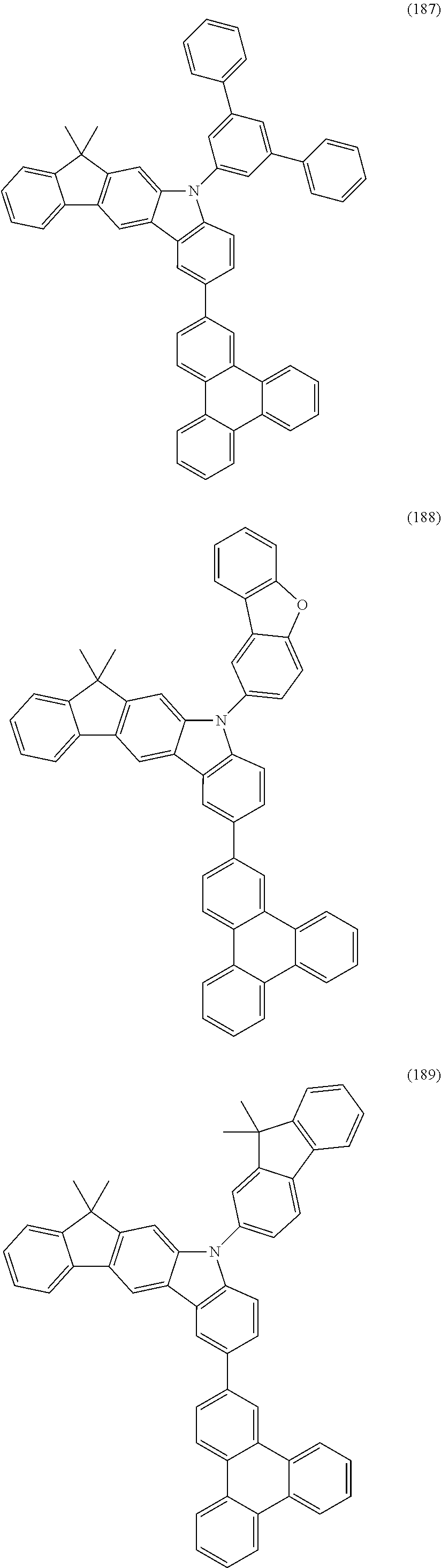

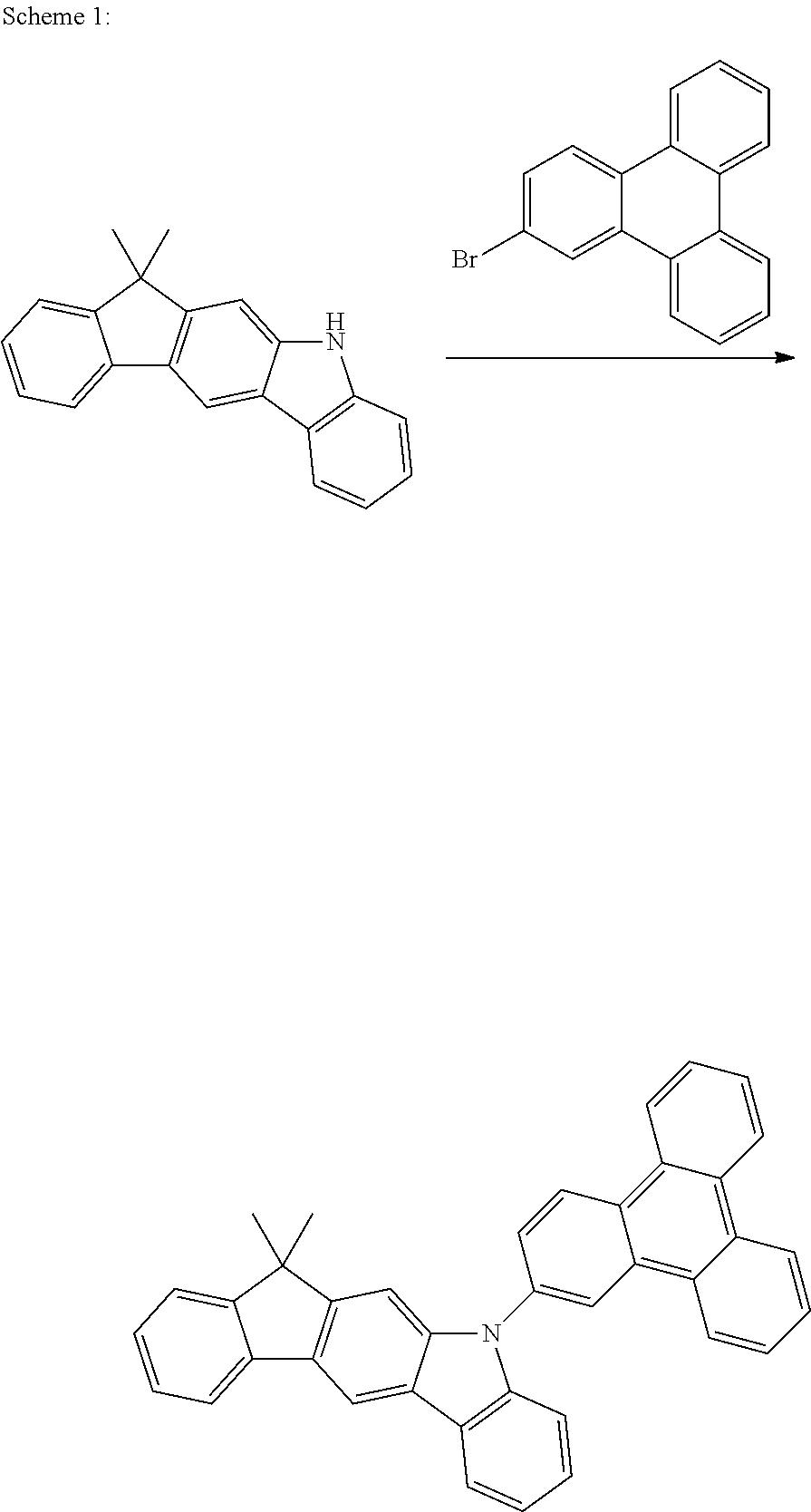
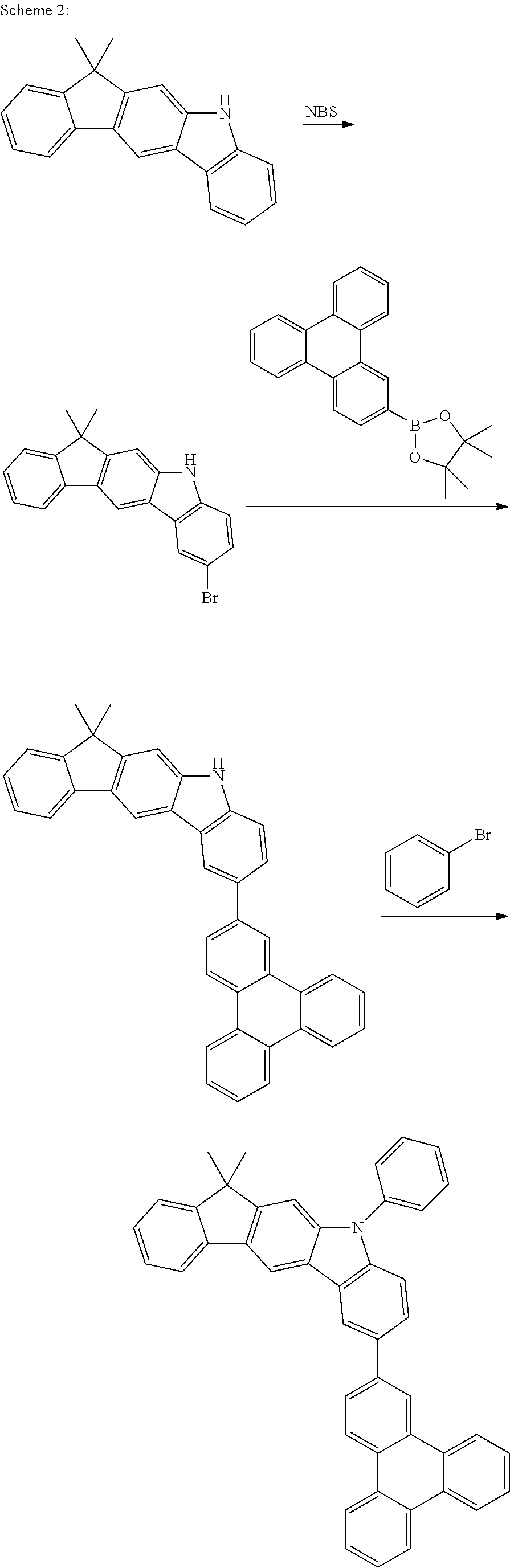
- a) synthesis of the skeleton of the formula (1), (2), (3) or (4) which does not yet contain a group of the formula (5); and
- b) introduction of the group of the formula (5) by a metal-catalysed coupling reaction.
- 1. The power efficiency of corresponding devices increases compared with systems in accordance with the prior art.
- 2. The stability of corresponding devices increases compared with systems in accordance with the prior art, which is evident, in particular, in a significantly longer lifetime.
- 3. At the same time, the organic electroluminescent devices according to the invention have a reduced operating voltage.
- 4. The organic electroluminescent devices according to the invention have very high efficiency. The improved efficiency is possibly attributable to improved electron injection from the electron-transport layer into the emitting layer.
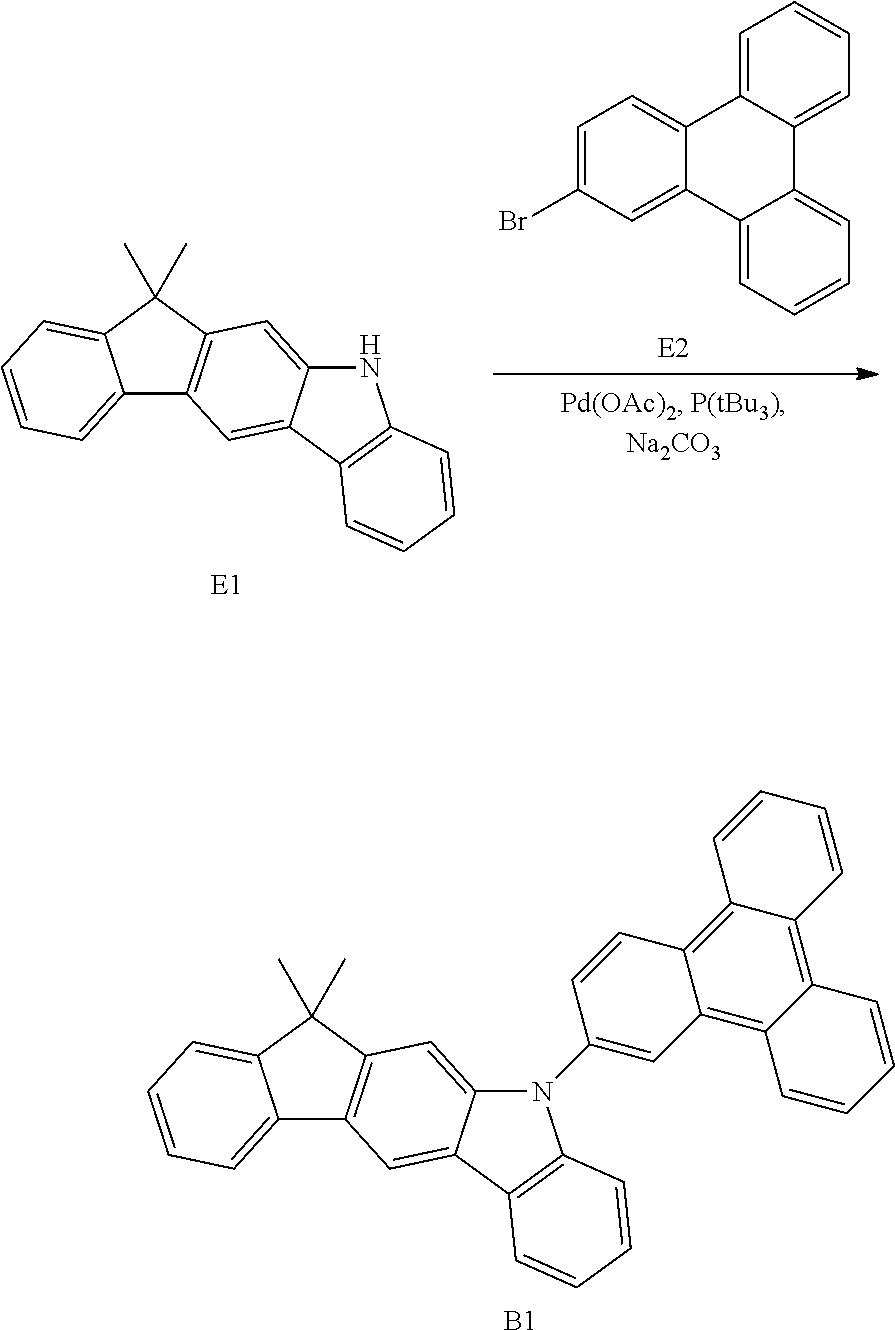

| Starting | Starting | |||
| Ex. | materials | material 2 | Product | Yield |
| B2 |
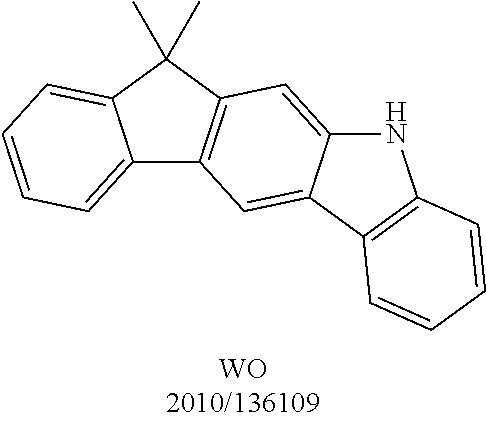 |
 |
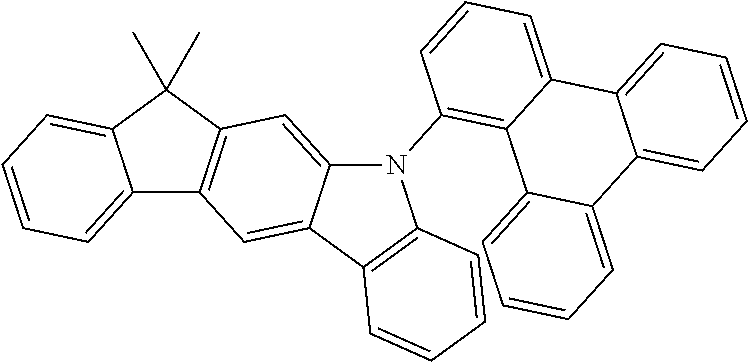 |
76% |
| B3 |
 |
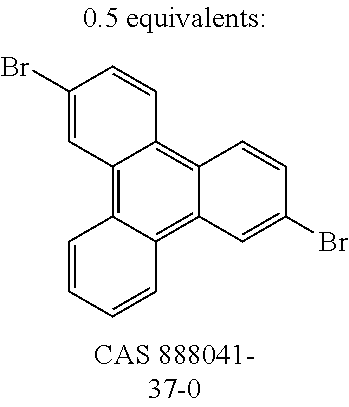 |
 |
71% |
| B4 |
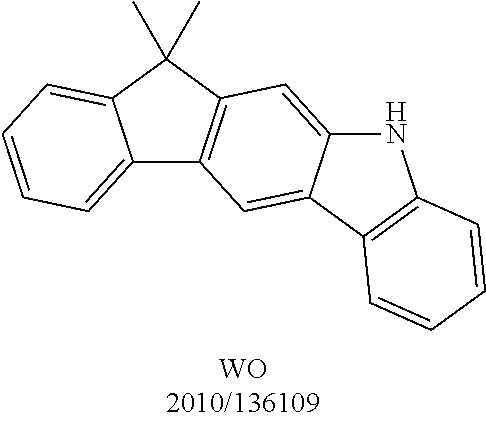 |
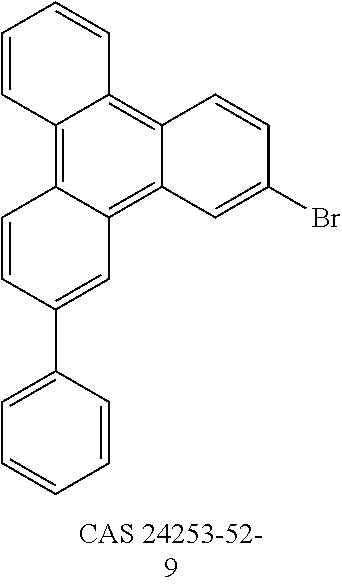 |
 |
85% |
| B5 |
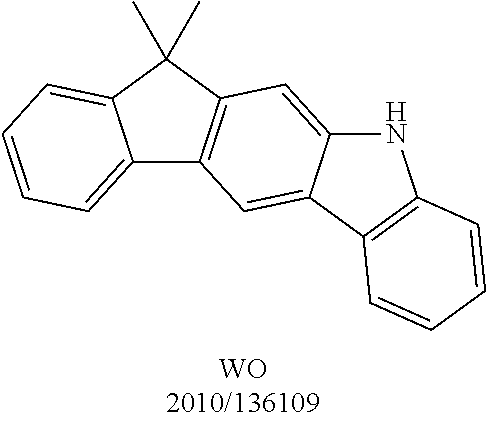 |
 |
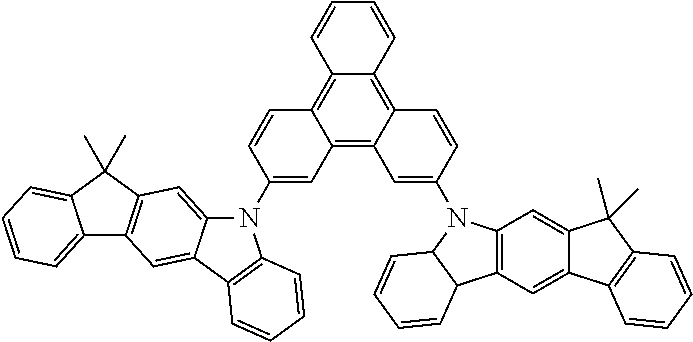 |
78% |
| B6 |
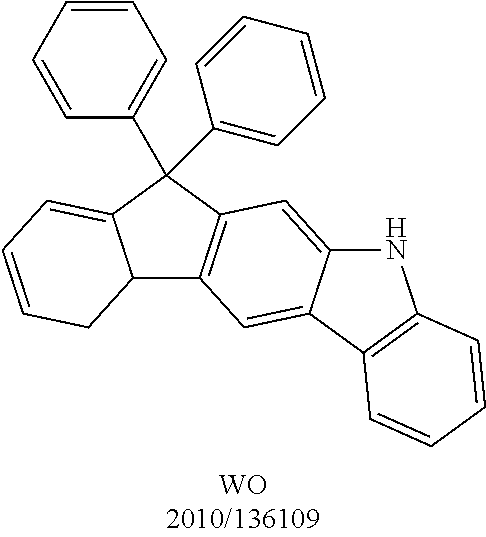 |
 |
 |
91% |
| B7 |
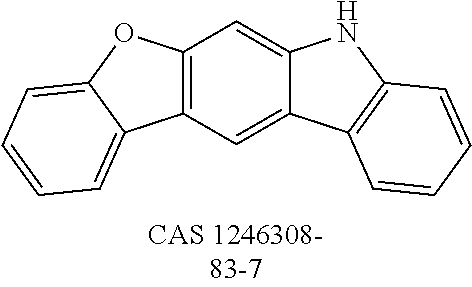 |
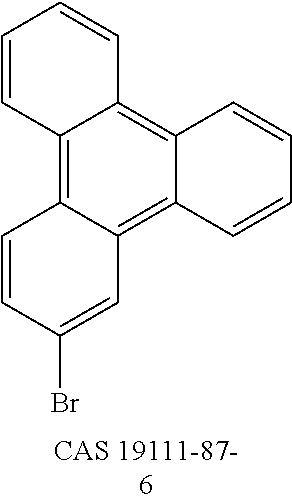 |
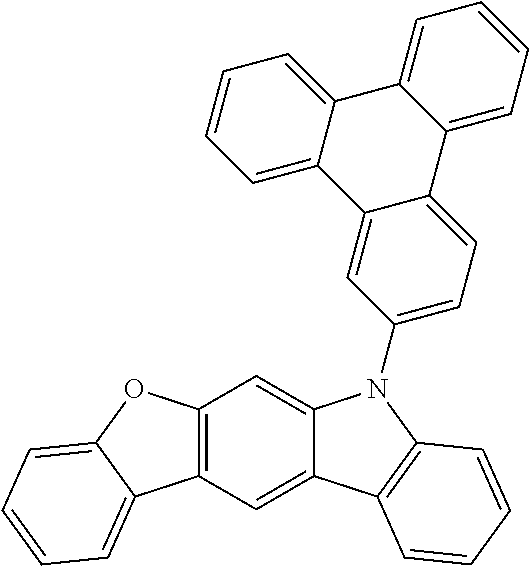 |
85% |
| B8 |
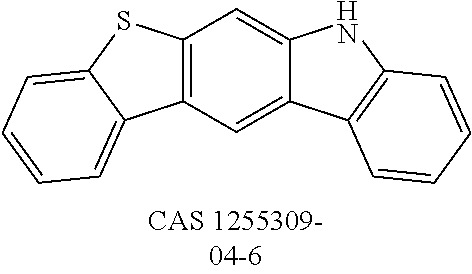 |
 |
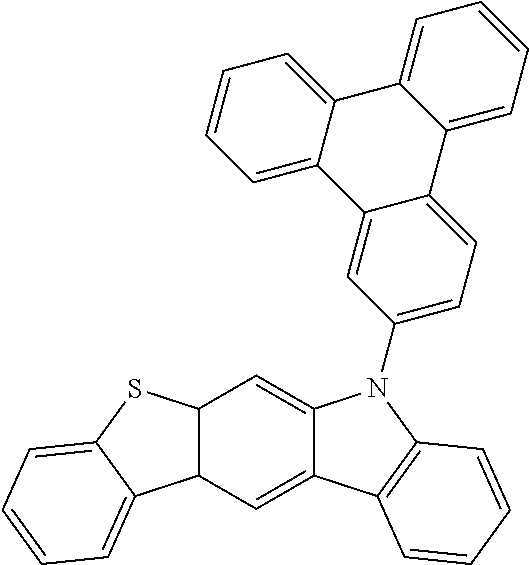 |
87% |
| B9 |
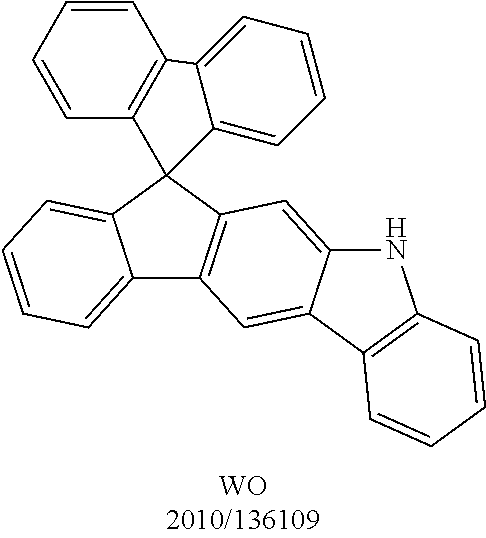 |
 |
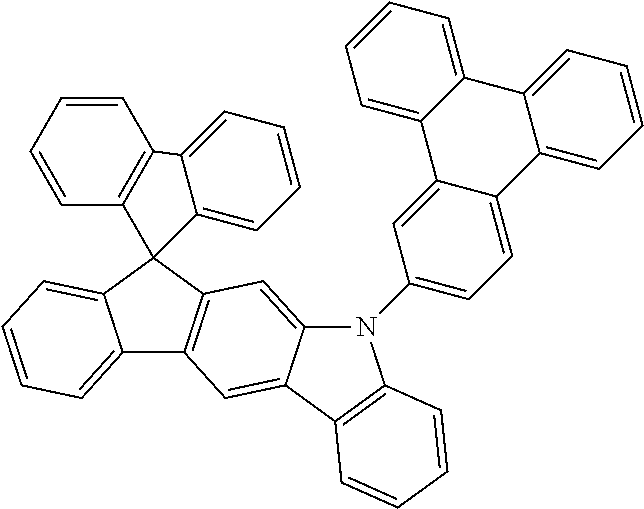 |
75% |
| B10 |
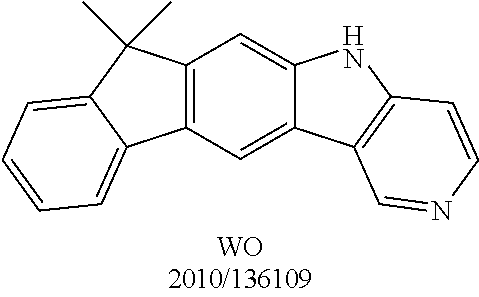 |
 |
 |
88% |
| B11 |
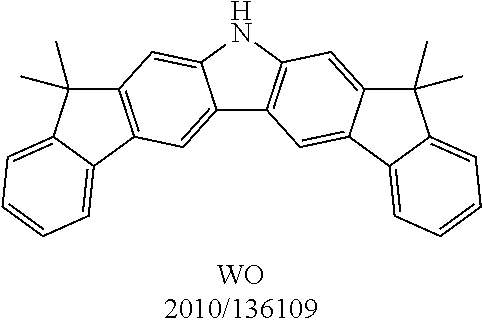 |
 |
 |
92% |
| B12 |
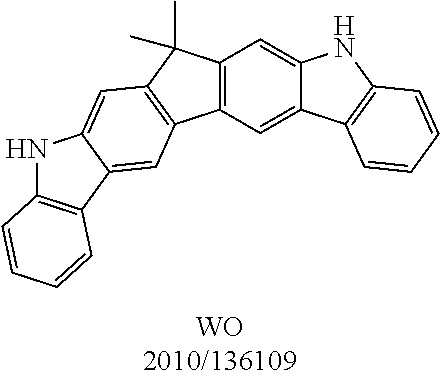 |
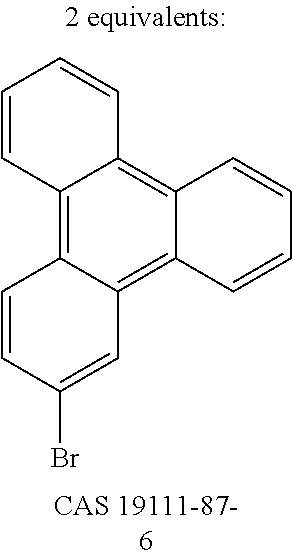 |
 |
73% |
| B13 |
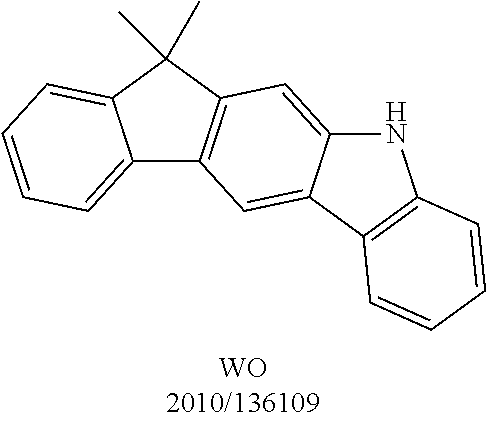 |
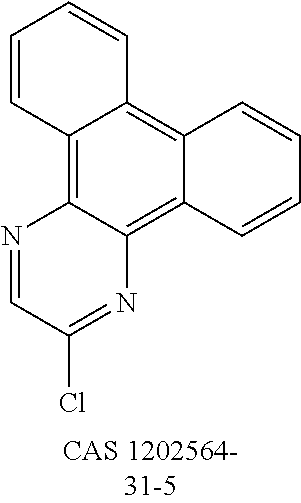 |
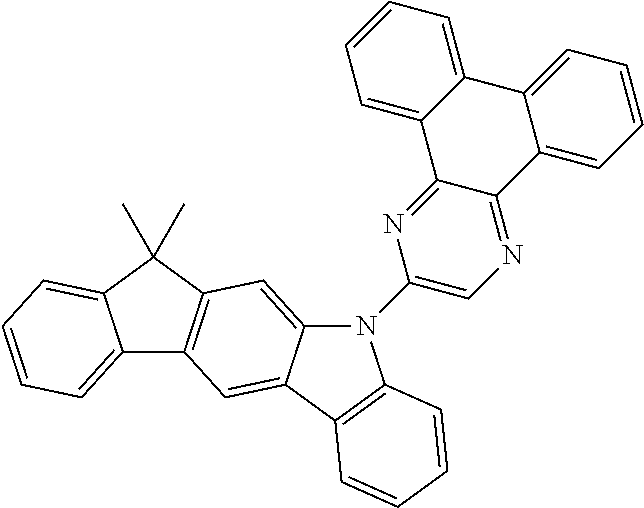 |
84% |
| B14 |
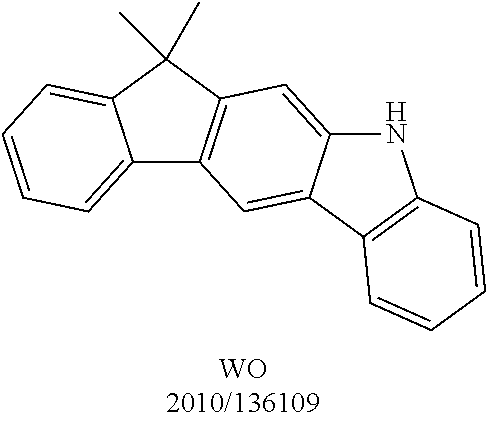 |
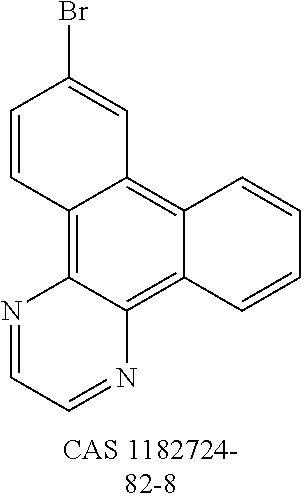 |
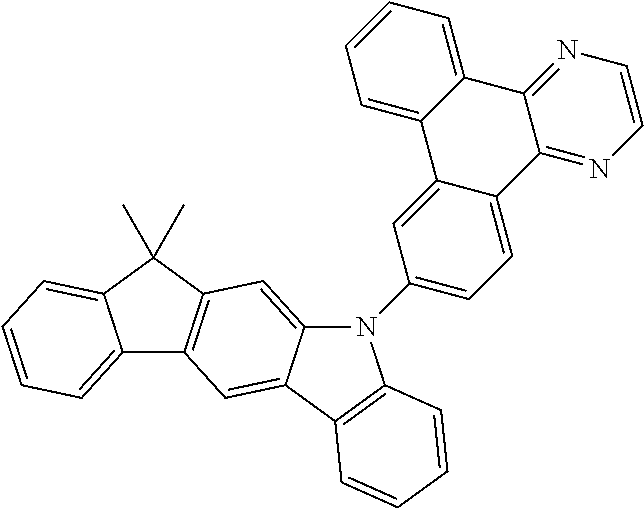 |
89% |
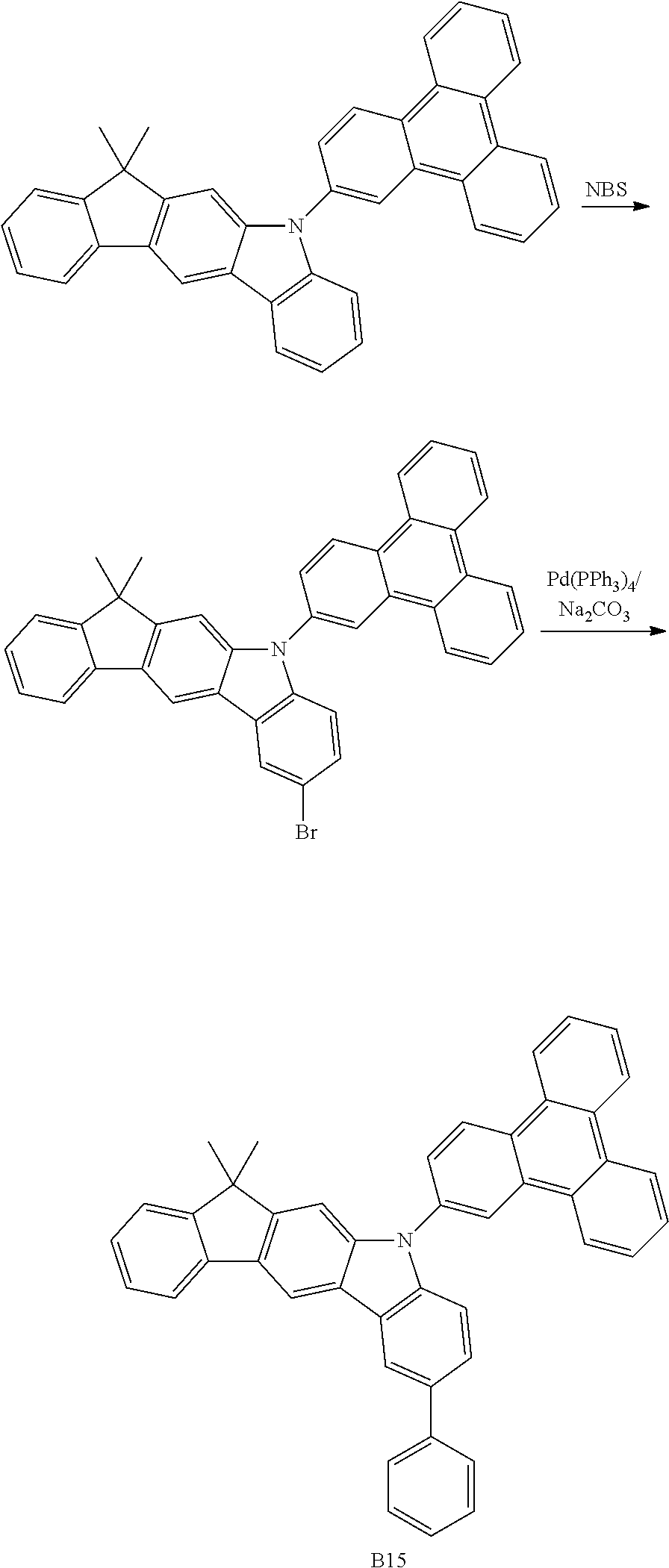
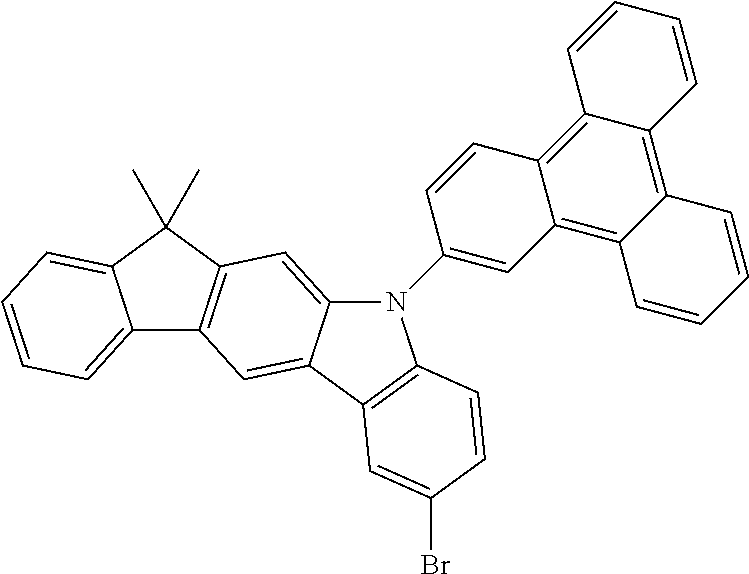
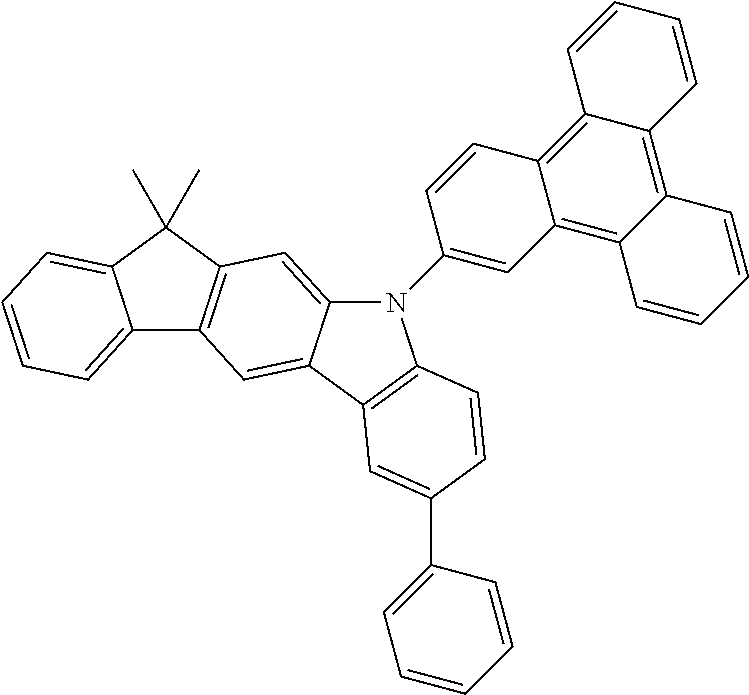
| Ex. | Starting material | Product | Yield |
| B15 |
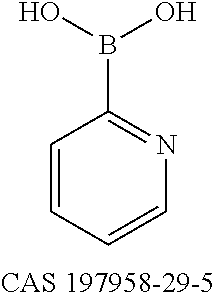 |
 |
83% |
| B16 |
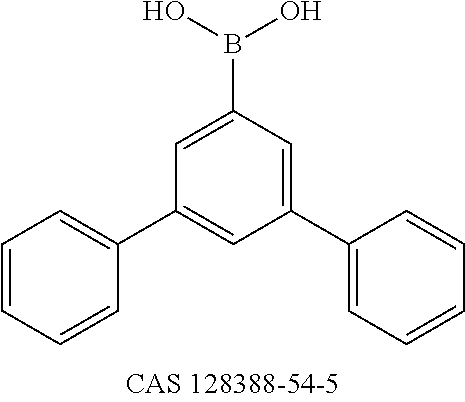 |
 |
88% |
| B17 |
 |
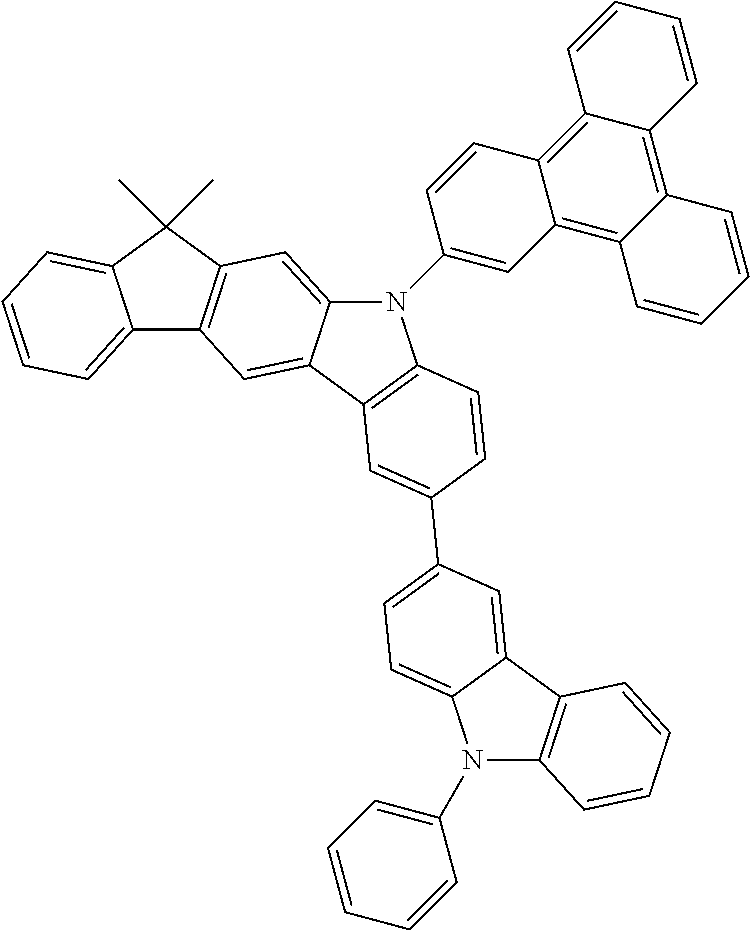 |
90% |
| B18 |
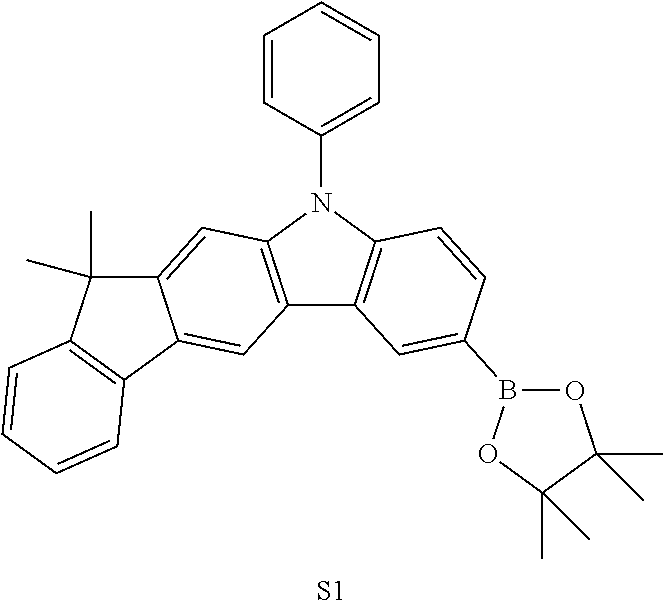 |
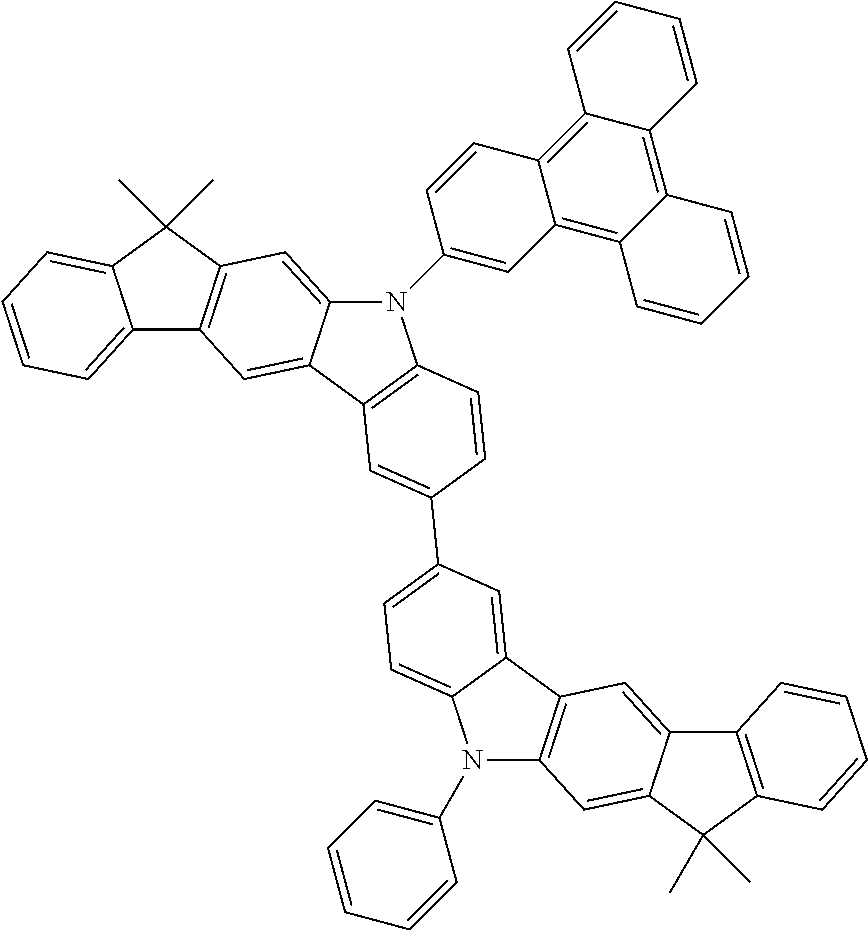 |
78% |
| B19 |
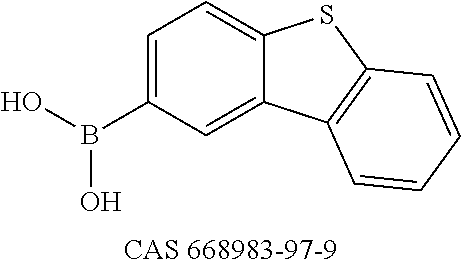 |
 |
91% |

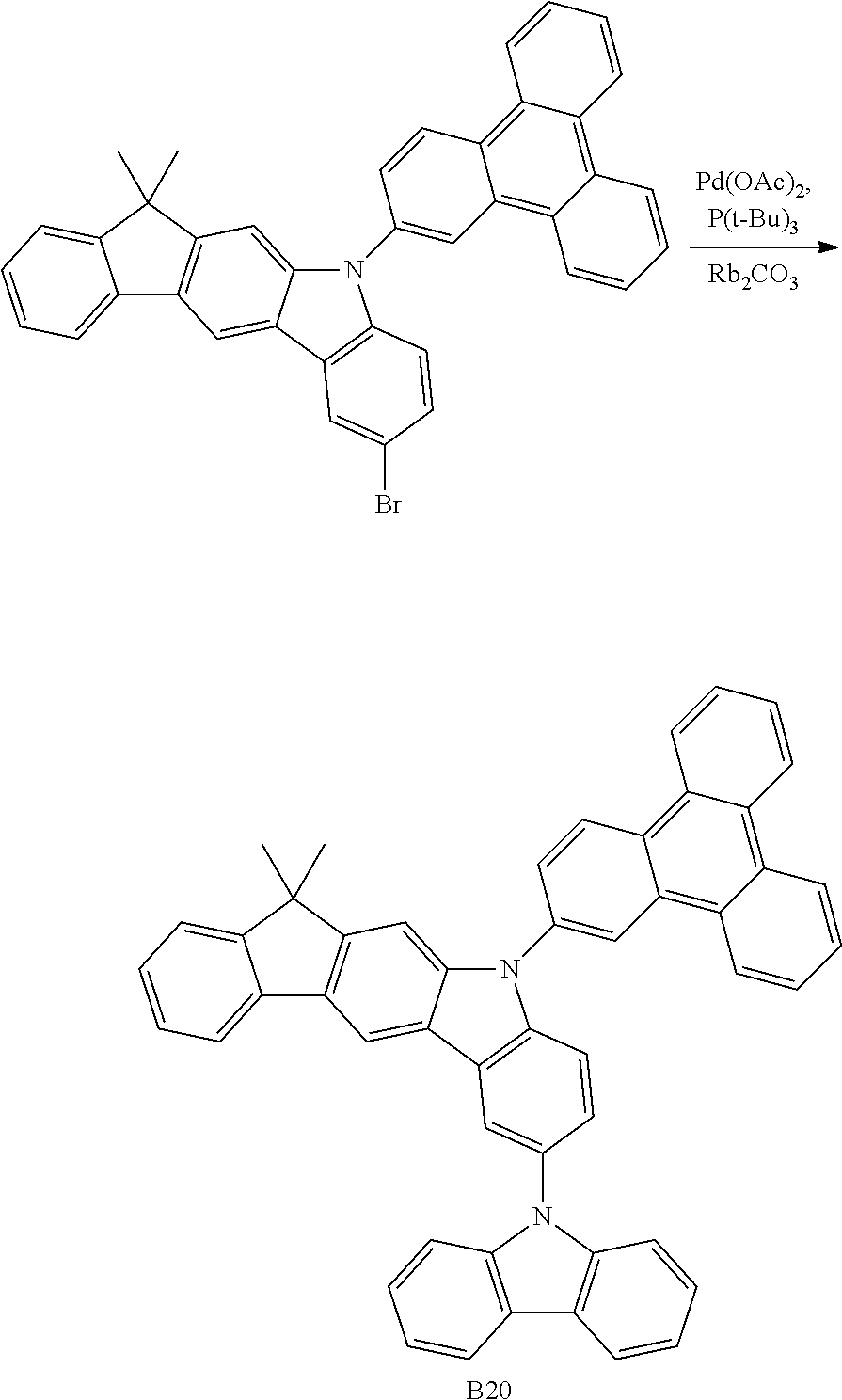
| Ex | Starting material | Product | Yield |
| B21 |
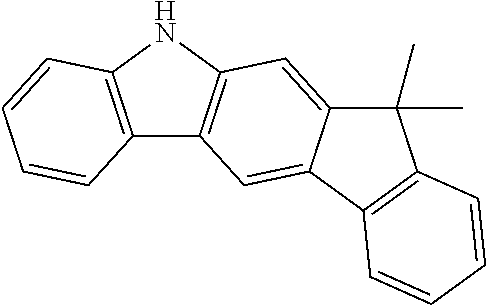 |
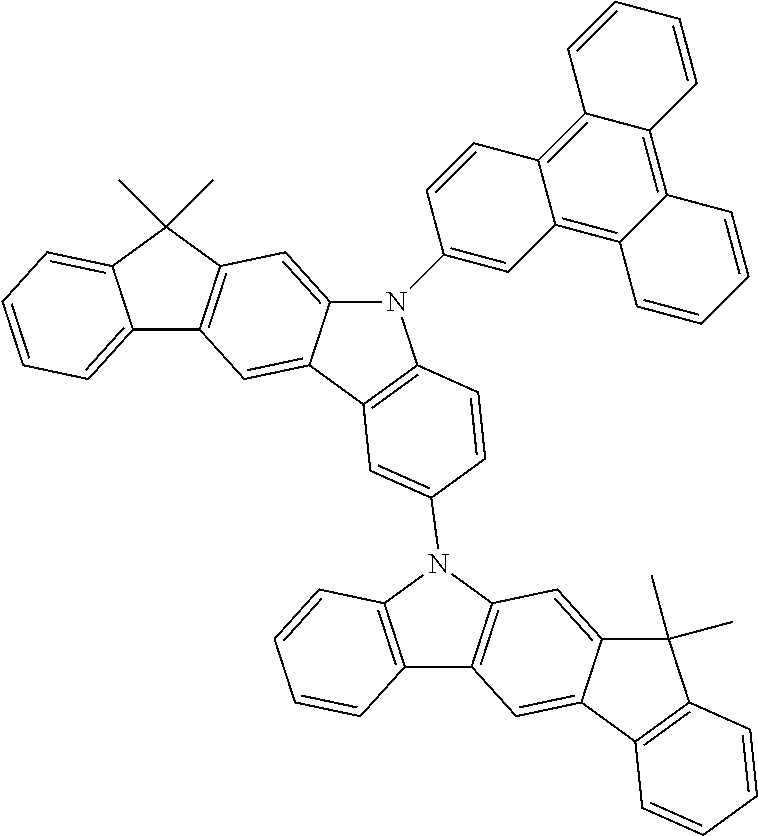 |
92% |
| B22 |
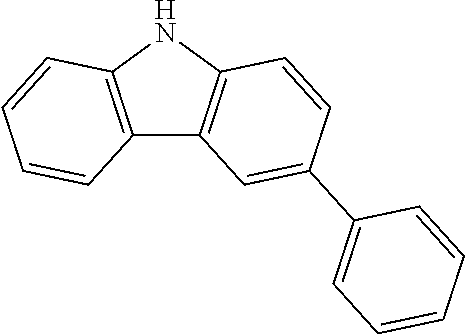 |
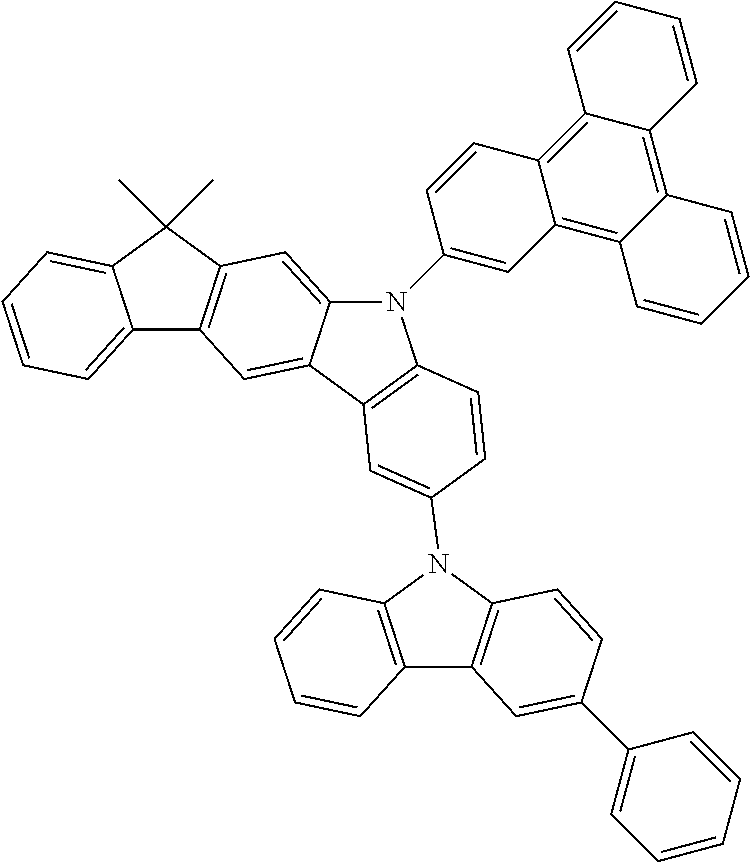 |
87% |
| B23 |
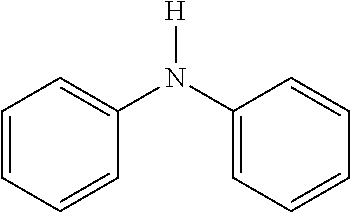 |
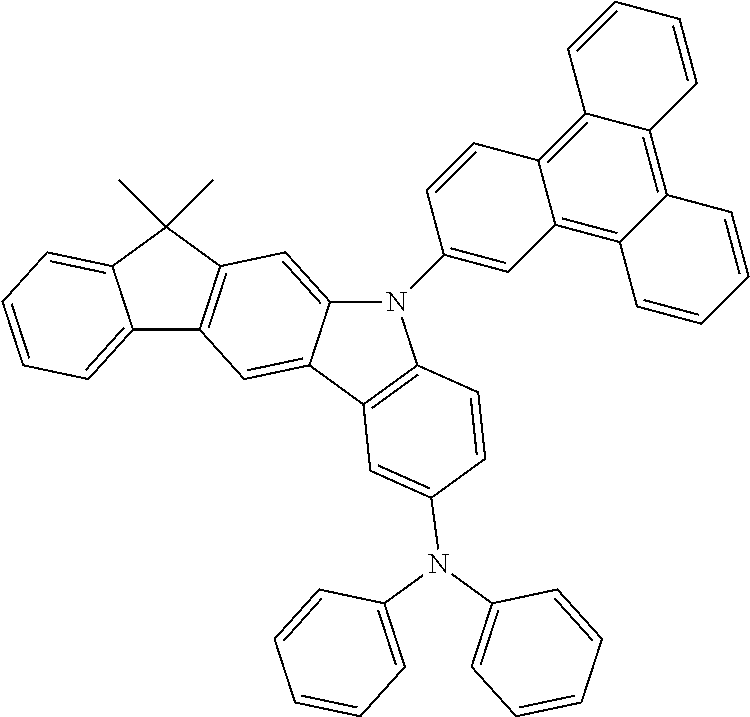 |
74% |
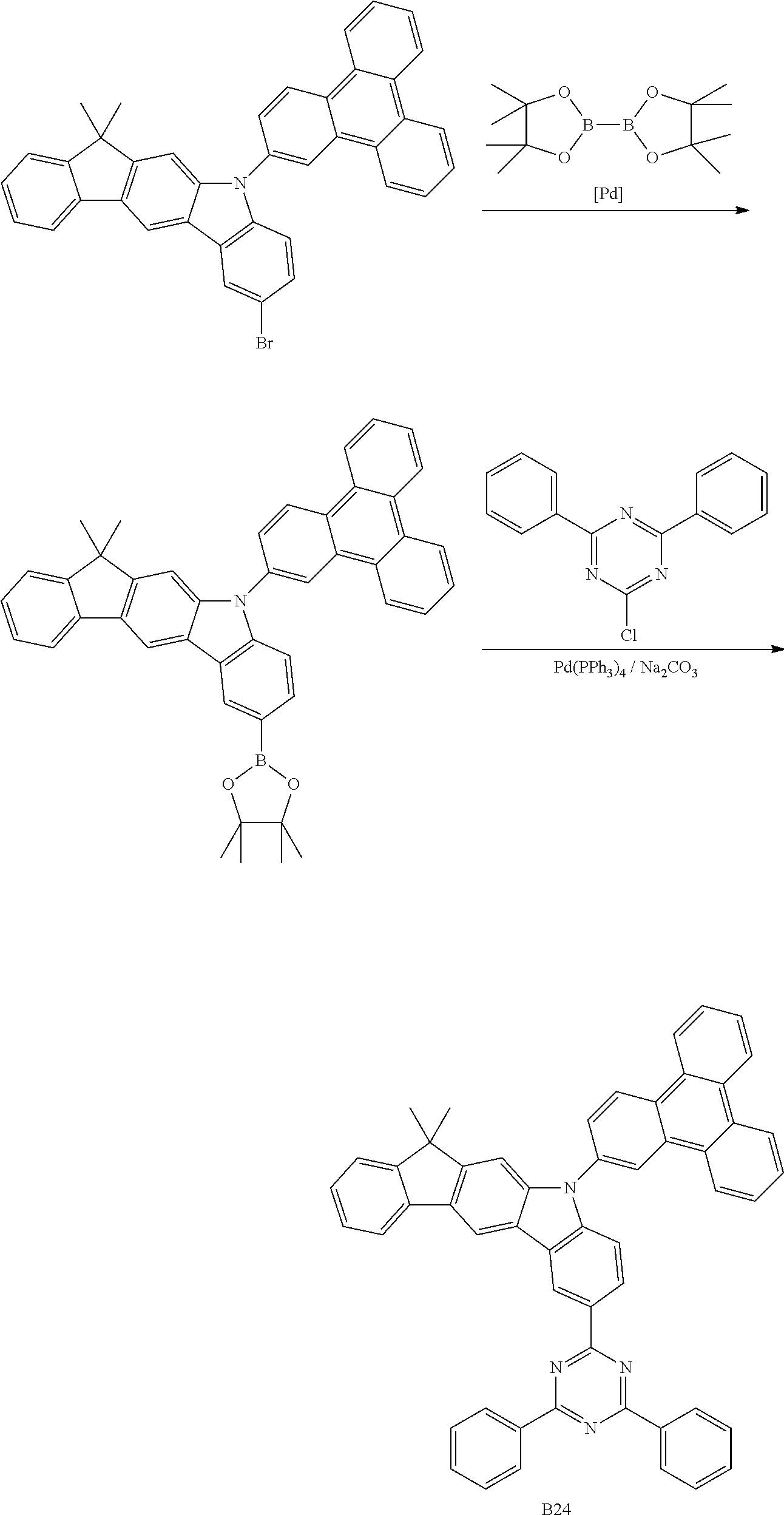
| Ex. | Starting material | Product | Yield |
| B25 |
 |
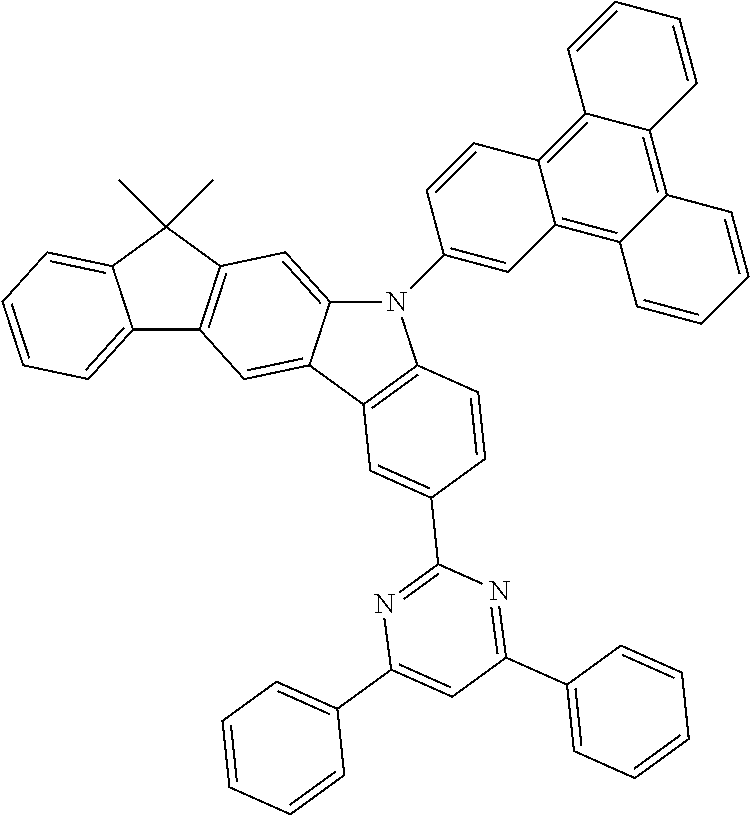 |
86% |
| B26 |
 |
 |
90% |
| B27 |
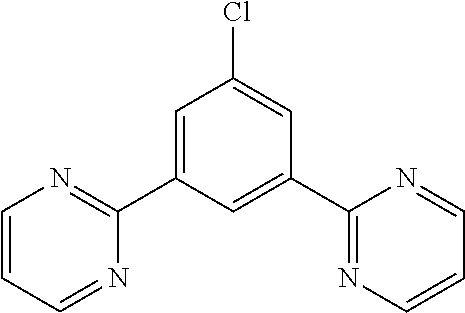 |
 |
78% |
| B28 |
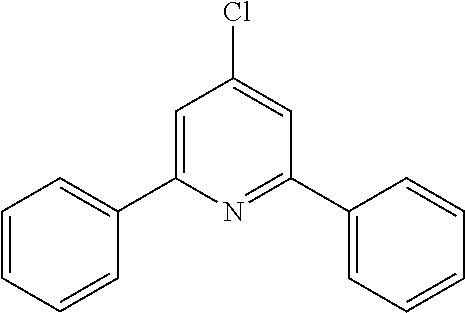 |
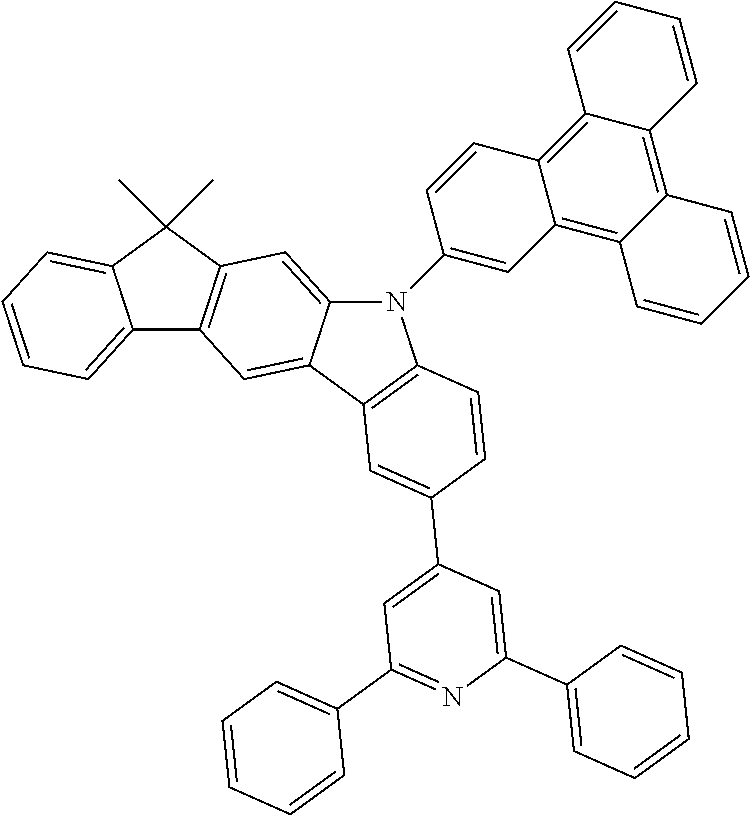 |
87% |

| Ex. | Starting material | Product | Yield |
| B30 |
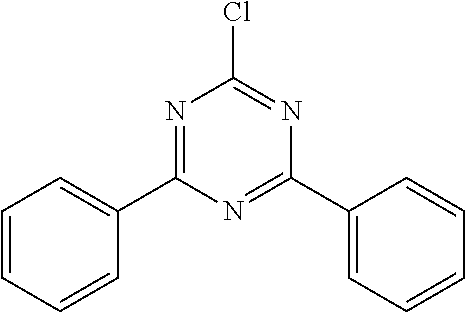 |
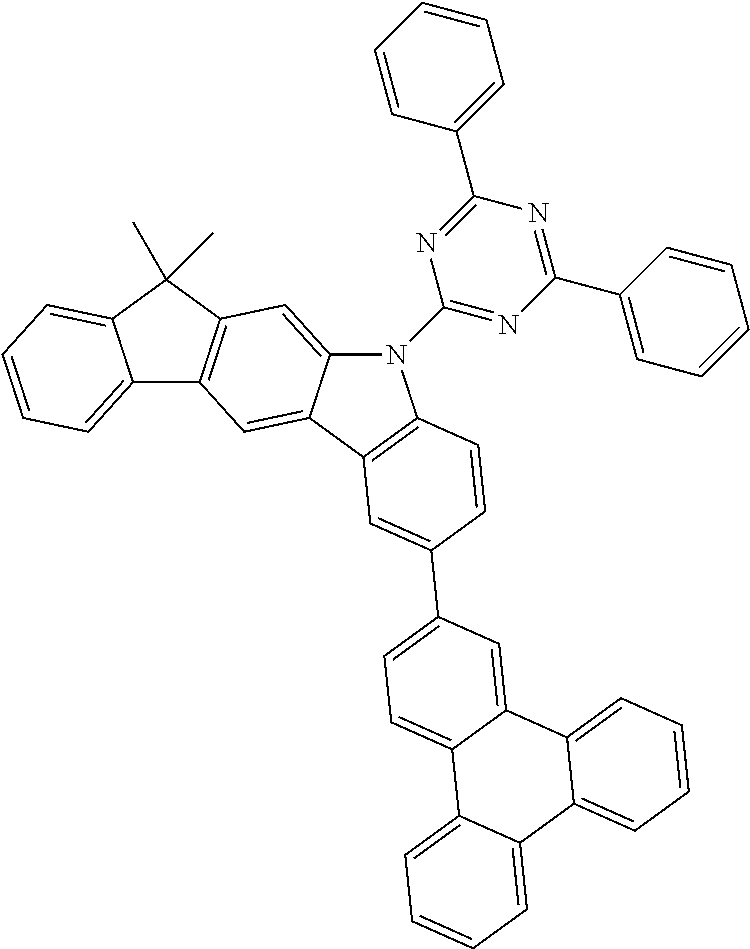 |
84% |
| B31 |
 |
 |
88% |
| B32 |
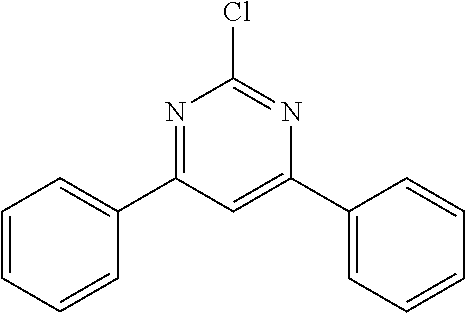 |
 |
71% |
| B33 |
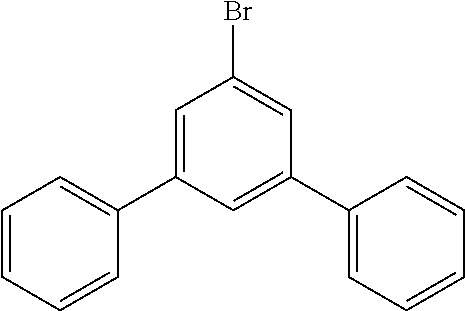 |
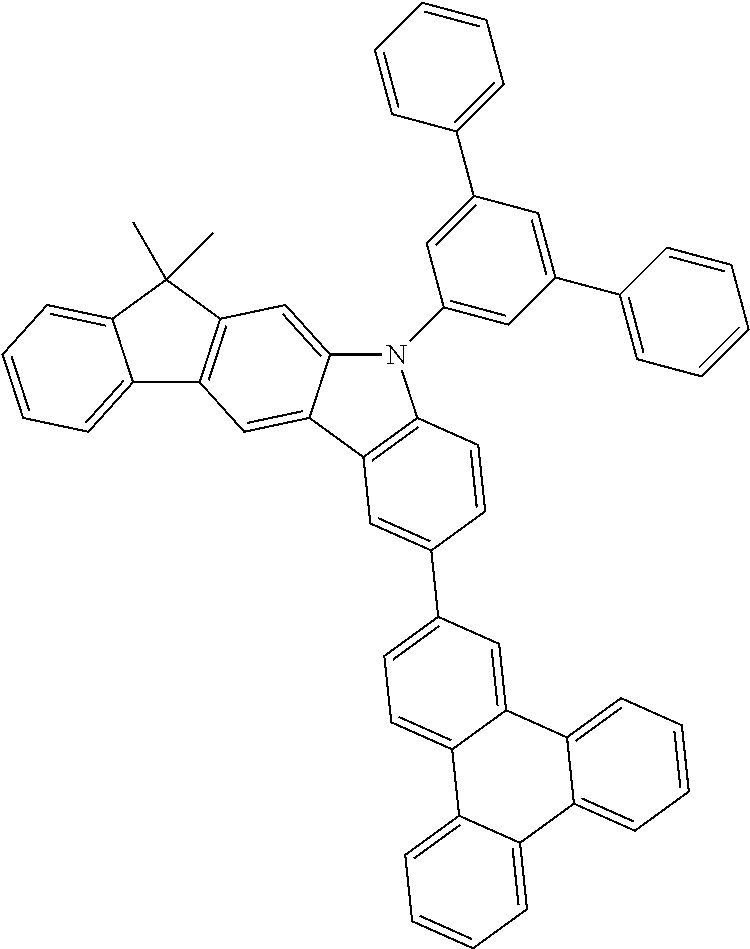 |
92% |
| B34 |
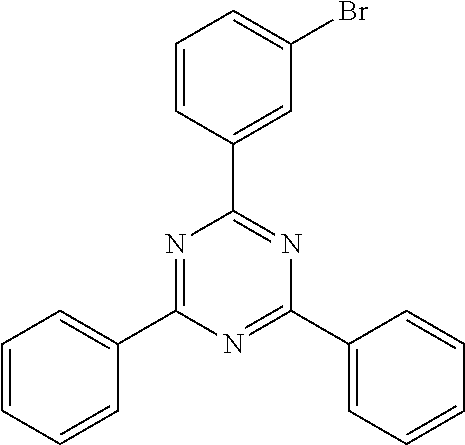 |
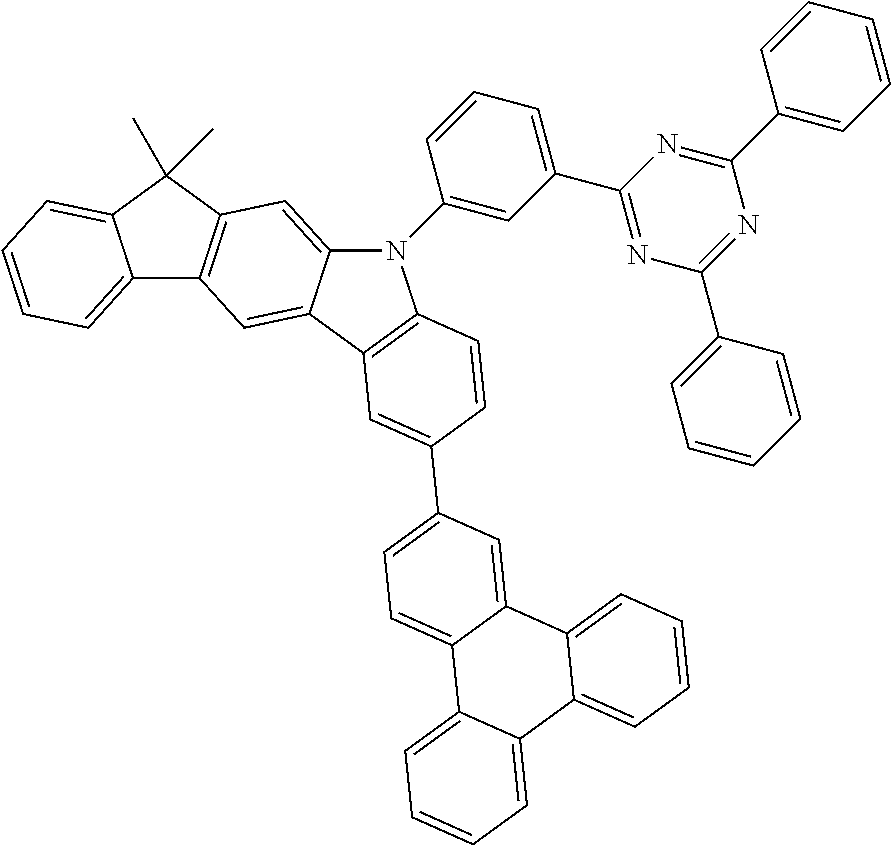 |
92% |
| TABLE 1 |
| Structure of the OLEDs |
| HTL | IL | EBL | HBL | ||||
| Thick- | Thick- | Thick- | EML | Thick- | ETL | ||
| Ex. | ness | ness | ness | Thickness | ness | Thickness | EL |
| V1 | SpA1 | HATCN | SpMA1 | IC1:BIC1:TEG1 | IC1 | ST1:LiQ | — |
| 70 nm | 5 nm | 90 nm | (60%:30%:10%) 30 nm | 10 nm | (50%:50%) 30 nm | ||
| V2 | SpA1 | HATCN | BPA1 | ST1:BIC2:TEG1 | ST1 | ST1:LiQ | — |
| 70 nm | 5 nm | 90 nm | (30%:60%:10%) 30 nm | 10 nm | (50%:50%) 30 nm | ||
| V3 | SpA1 | HATCN | SpMA1 | IC1:IC3:TEG1 | IC1 | ST1:LiQ | — |
| 70 nm | 5 nm | 90 nm | (70%:20%:10%) 30 nm | 10 nm | (50%:50%) 30 nm | ||
| V4 | SpA1 | HATCN | SpMA1 | IC5:TER1 | — | ST2:LiQ | — |
| 90 nm | 5 nm | 130 nm | (92%:8%) 40 nm | (50%:50%) 40 nm | |||
| V5 | SpA1 | HATCN | SpMA1 | IC1:TEG1 | — | ST1:LiQ | — |
| 70 nm | 5 nm | 90 nm | (90%:10%) 30 nm | (50%:50%) 40 nm | |||
| V6 | SpA1 | HATCN | SpMA1 | ST1:IC4:TEG1 | IC1 | ST1:LiQ | — |
| 70 nm | 5 nm | 90 nm | (25%:60%:15%) 30 nm | 10 nm | (50%:50%) 30 nm | ||
| V7 | SpA1 | HATCN | SpMA1 | ST1:TPCbz1:TEG1 | IC1 | ST1:LiQ | — |
| 70 nm | 5 nm | 90 nm | (25%:60%:15%) 30 nm | 10 nm | (50%:50%) 30 nm | ||
| V8 | SpA1 | HATCN | SpMA1 | IC2:TEG1 | — | ST1:LiQ | — |
| 70 nm | 5 nm | 90 nm | (90%:10%) 30 nm | (50%:50%) 40 nm | |||
| V9 | SpA1 | HATCN | SpMA1 | IC5:TEG1 | — | ST1:LiQ | — |
| 70 nm | 5 nm | 90 nm | (90%:10%) 30 nm | (50%:50%) 40 nm | |||
| V10 | SpA1 | HATCN | SpMA1 | IC6:TEG1 | — | ST1:LiQ | — |
| 70 nm | 5 nm | 90 nm | (90%:10%) 30 nm | (50%:50%) 40 nm | |||
| E1 | SpA1 | HATCN | SpMA1 | ST1:B1:TEG1 | IC1 | ST1:LiQ | — |
| 70 nm | 5 nm | 90 nm | (25%:60%:15%) 30 nm | 10 nm | (50%:50%) 30 nm | ||
| E2 | SpA1 | HATCN | SpMA1 | ST1:B2:TEG1 | IC1 | ST1:LiQ | — |
| 70 nm | 5 nm | 90 nm | (25%:60%:15%) 30 nm | 10 nm | (50%:50%) 30 nm | ||
| E3 | SpA1 | HATCN | SpMA1 | ST1:B4:TEG1 | IC1 | ST1:LiQ | — |
| 70 nm | 5 nm | 90 nm | (25%:60%:15%) 30 nm | 10 nm | (50%:50%) 30 nm | ||
| E4 | SpA1 | HATCN | SpMA1 | IC1:B17:TEG1 | IC1 | ST1:LiQ | — |
| 70 nm | 5 nm | 90 nm | (60%:35%:5%) 30 nm | 10 nm | (50%:50%) 30 nm | ||
| E5 | SpA1 | HATCN | SpMA1 | IC1:B18:TEG1 | IC1 | ST1:LiQ | — |
| 70 nm | 5 nm | 90 nm | (60%:35%:5%) 30 nm | 10 nm | (50%:50%) 30 nm | ||
| E6 | SpA1 | HATCN | BPA1 | ST1:B3:TEG1 | ST1 | ST1:LiQ | — |
| 70 nm | 5 nm | 90 nm | (30%:60%:10%) 30 nm | 10 nm | (50%:50%) 30 nm | ||
| E7 | SpA1 | HATCN | SpMA1 | ST1:B29:TEG1 | IC1 | ST1:LiQ | — |
| 70 nm | 5 nm | 90 nm | (25%:60%:15%) 30 nm | 10 nm | (50%:50%) 30 nm | ||
| E8 | SpA1 | HATCN | SpMA1 | IC1:B12:TEG1 | IC1 | ST1:LiQ | — |
| 70 nm | 5 nm | 90 nm | (70%:20%:10%) 30 nm | 10 nm | (50%:50%) 30 nm | ||
| E9 | SpA1 | HATCN | SpMA1 | ST1:B10:TEG1 | IC1 | ST1:LiQ | — |
| 70 nm | 5 nm | 90 nm | (25%:60%:15%) 30 nm | 10 nm | (50%:50%) 30 nm | ||
| E10 | SpA1 | HATCN | SpMA1 | ST1:B7:TEG1 | IC1 | ST1:LiQ | — |
| 70 nm | 5 nm | 90 nm | (25%:60%:15%) 30 nm | 10 nm | (50%:50%) 30 nm | ||
| E11 | SpA1 | HATCN | SpMA1 | ST1:B8:TEG1 | IC1 | ST1:LiQ | — |
| 70 nm | 5 nm | 90 nm | (25%:60%:15%) 30 nm | 10 nm | (50%:50%) 30 nm | ||
| E12 | SpA1 | HATCN | SpMA1 | IC1:B21:TEG1 | IC1 | ST1:LiQ | — |
| 70 nm | 5 nm | 90 nm | (30%:60%:10%) 30 nm | 10 nm | (50%:50%) 30 nm | ||
| E13 | SpA1 | HATCN | SpMA1 | IC1:B20:TEG1 | IC1 | ST1:LiQ | — |
| 70 nm | 5 nm | 90 nm | (30%:60%:10%) 30 nm | 10 nm | (50%:50%) 30 nm | ||
| E14 | SpA1 | HATCN | SpMA1 | IC1:B19:TEG1 | IC1 | ST1:LiQ | — |
| 70 nm | 5 nm | 90 nm | (30%:60%:10%) 30 nm | 10 nm | (50%:50%) 30 nm | ||
| E15 | SpA1 | HATCN | SpMA1 | B24:TEG1 | — | ST1:LiQ | — |
| 70 nm | 5 nm | 90 nm | (90%:10%) 30 nm | (50%:50%) 40 nm | |||
| E16 | SpA1 | HATCN | SpMA1 | B25:TEG1 | — | ST1:LiQ | — |
| 70 nm | 5 nm | 90 nm | (90%:10%) 30 nm | (50%:50%) 40 nm | |||
| E17 | SpA1 | HATCN | SpMA1 | B30:TEG1 | — | ST1:LiQ | — |
| 70 nm | 5 nm | 90 nm | (90%:10%) 30 nm | (50%:50%) 40 nm | |||
| E18 | SpA1 | HATCN | SpMA1 | B32:TEG1 | — | ST1:LiQ | — |
| 70 nm | 5 nm | 90 nm | (90%:10%) 30 nm | (50%:50%) 40 nm | |||
| E19 | SpA1 | HATCN | SpMA1 | B34:TEG1 | — | ST1:LiQ | — |
| 70 nm | 5 nm | 90 nm | (90%:10%) 30 nm | (50%:50%) 40 nm | |||
| E20 | SpA1 | HATCN | SpMA1 | B34:TER1 | — | ST2:LiQ | — |
| 90 nm | 5 nm | 130 nm | (92%:8%) 40 nm | (50%:50%) 40 nm | |||
| E21 | SpA1 | HATCN | SpMA1 | B13:TER1 | — | ST2:LiQ | — |
| 90 nm | 5 nm | 130 nm | (92%:8%) 40 nm | (50%:50%) 40 nm | |||
| E22 | SpA1 | HATCN | SpMA1 | IC1:B11:TEG1 | IC1 | ST1:LiQ | — |
| 70 nm | 5 nm | 90 nm | (30%:60%:10%) 30 nm | 10 nm | (50%:50%) 30 nm | ||
| E23 | SpA1 | HATCN | SpMA1 | ST1:IC4:TEG1 | B30 | ST1:LiQ | — |
| 70 nm | 5 nm | 90 nm | (25%:60%:15%) 30 nm | 10 nm | (50%:50%) 30 nm | ||
| E24 | SpA1 | HATCN | SpMA1 | IC1:TEG1 | — | B13 | LiQ |
| 70 nm | 5 nm | 90 nm | (90%:10%) 30 nm | 40 nm | 3 nm | ||
| TABLE 2 |
| Data for the OLEDs |
| U1000 | CE1000 | PE1000 | EQE | CIE x/y at | L1 | LT | ||
| Ex. | (V) | (cd/A) | (lm/W) | 1000 | 1000 cd/m2 | L0 | % | (h) |
| V1 | 3.6 | 51 | 44 | 14.1% | 0.34/0.62 | 10000 cd/m2 | 70 | 240 |
| V2 | 3.8 | 51 | 43 | 14.3% | 0.33/0.63 | 10000 cd/m2 | 70 | 210 |
| V3 | 3.2 | 54 | 54 | 15.1% | 0.33/0.62 | 10000 cd/m2 | 80 | 190 |
| V4 | 4.5 | 11.2 | 7.8 | 12.1% | 0.67/0.33 | 4000 cd/m2 | 80 | 410 |
| V5 | 3.5 | 57 | 52 | 16.2% | 0.34/0.62 | 10000 cd/m2 | 70 | 160 |
| V6 | 3.5 | 56 | 50 | 15.7% | 0.34/0.62 | 10000 cd/m2 | 70 | 350 |
| V7 | 3.8 | 50 | 42 | 13.9% | 0.33/0.63 | 10000 cd/m2 | 70 | 190 |
| V8 | 3.5 | 59 | 52 | 16.4% | 0.33/0.62 | 10000 cd/m2 | 70 | 160 |
| V9 | 3.3 | 53 | 51 | 14.8% | 0.33/0.61 | 10000 cd/m2 | 70 | 150 |
| V10 | 3.6 | 57 | 49 | 15.8% | 0.33/0.62 | 10000 cd/m2 | 70 | 150 |
| E1 | 3.5 | 60 | 54 | 16.7% | 0.34/0.62 | 10000 cd/m2 | 70 | 420 |
| E2 | 3.5 | 57 | 52 | 16.1% | 0.35/0.62 | 10000 cd/m2 | 70 | 410 |
| E3 | 3.6 | 56 | 50 | 15.8% | 0.34/0.62 | 10000 cd/m2 | 70 | 430 |
| E4 | 3.4 | 60 | 55 | 16.7% | 0.33/0.63 | 10000 cd/m2 | 70 | 450 |
| E5 | 3.6 | 56 | 48 | 15.5% | 0.33/0.62 | 10000 cd/m2 | 70 | 330 |
| E6 | 3.7 | 53 | 45 | 14.7% | 0.33/0.62 | 10000 cd/m2 | 70 | 320 |
| E7 | 3.6 | 57 | 51 | 16.0% | 0.34/0.63 | 10000 cd/m2 | 70 | 370 |
| E8 | 3.3 | 61 | 57 | 16.9% | 0.33/0.62 | 10000 cd/m2 | 80 | 230 |
| E9 | 3.5 | 51 | 49 | 14.3% | 0.33/0.63 | 10000 cd/m2 | 70 | 370 |
| E10 | 3.6 | 57 | 50 | 15.8% | 0.32/0.62 | 10000 cd/m2 | 70 | 370 |
| E11 | 3.6 | 55 | 48 | 15.2% | 0.34/0.62 | 10000 cd/m2 | 70 | 400 |
| E12 | 3.5 | 50 | 44 | 13.9% | 0.33/0.62 | 10000 cd/m2 | 70 | 380 |
| E13 | 3.5 | 55 | 50 | 15.3% | 0.33/0.62 | 10000 cd/m2 | 70 | 390 |
| E14 | 3.4 | 60 | 55 | 16.7% | 0.33/0.63 | 10000 cd/m2 | 70 | 360 |
| E15 | 3.5 | 60 | 54 | 16.5% | 0.33/0.63 | 10000 cd/m2 | 70 | 130 |
| E16 | 3.5 | 59 | 52 | 16.3% | 0.33/0.62 | 10000 cd/m2 | 70 | 140 |
| E17 | 3.6 | 56 | 49 | 15.5% | 0.32/0.62 | 10000 cd/m2 | 70 | 190 |
| E18 | 3.5 | 61 | 55 | 17.0% | 0.33/0.62 | 10000 cd/m2 | 70 | 140 |
| E19 | 3.4 | 54 | 50 | 15.2% | 0.33/0.62 | 10000 cd/m2 | 70 | 200 |
| E20 | 4.6 | 10.7 | 7.3 | 11.6% | 0.67/0.33 | 4000 cd/m2 | 80 | 510 |
| E21 | 4.2 | 11.8 | 8.7 | 12.8% | 0.67/0.33 | 4000 cd/m2 | 80 | 380 |
| E22 | 3.6 | 59 | 51 | 16.4% | 0.34/0.62 | 10000 cd/m2 | 70 | 350 |
| E23 | 3.5 | 55 | 49 | 15.4% | 0.34/0.62 | 10000 cd/m2 | 70 | 380 |
| E24 | 3.7 | 56 | 49 | 15.7% | 0.33/0.63 | 10000 cd/m2 | 70 | 190 |
| TABLE 3 |
| Structural formulae of the materials for the OLEDs |
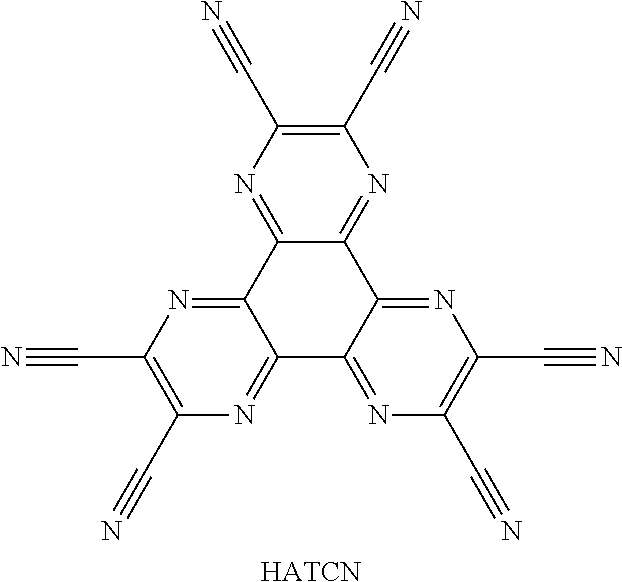 |
 |
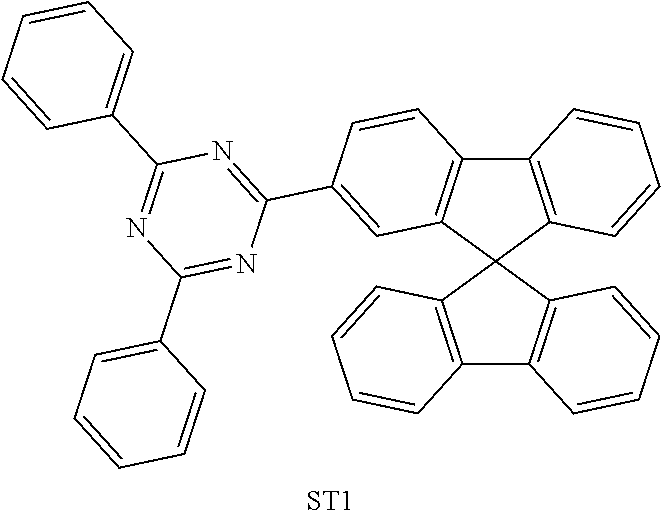 |
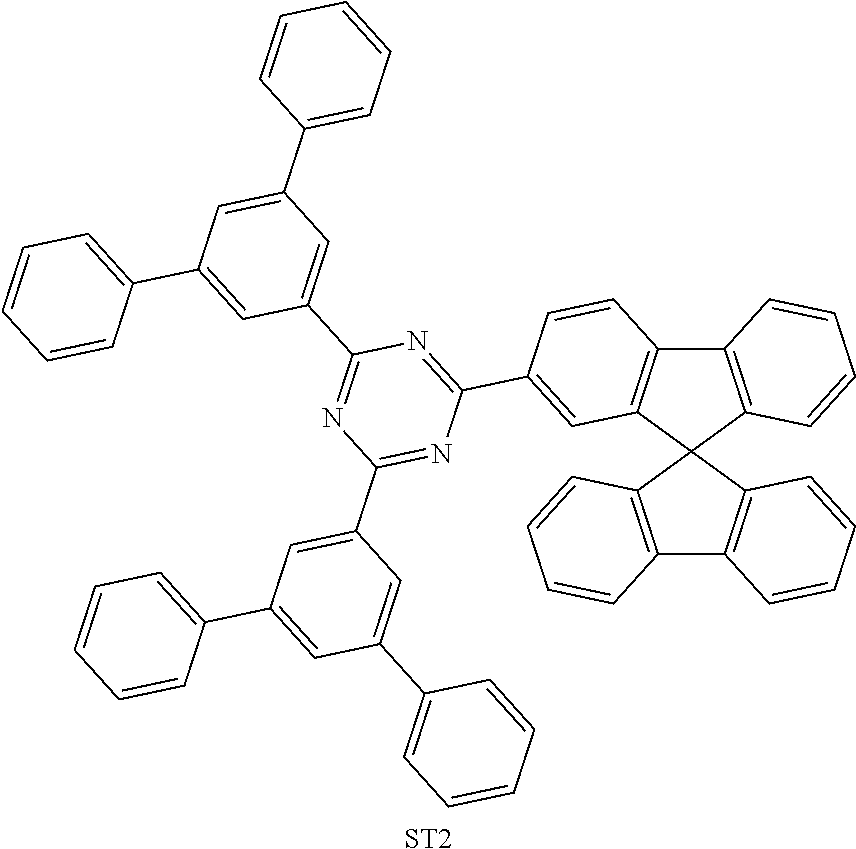 |
 |
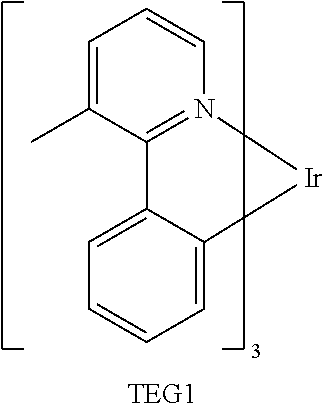 |
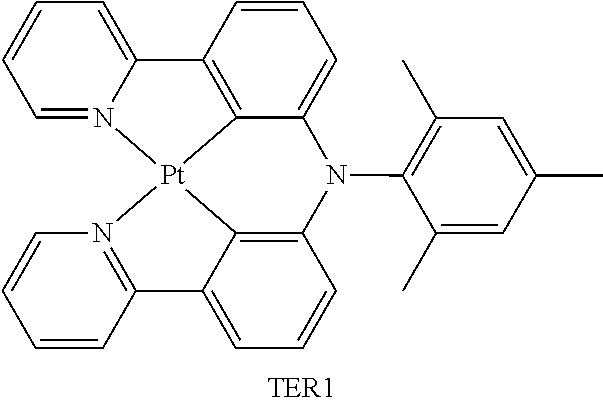 |
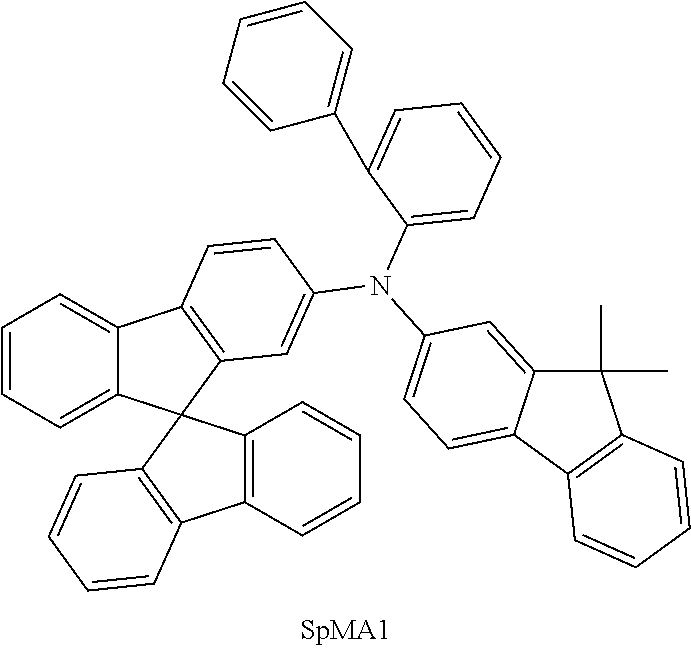 |
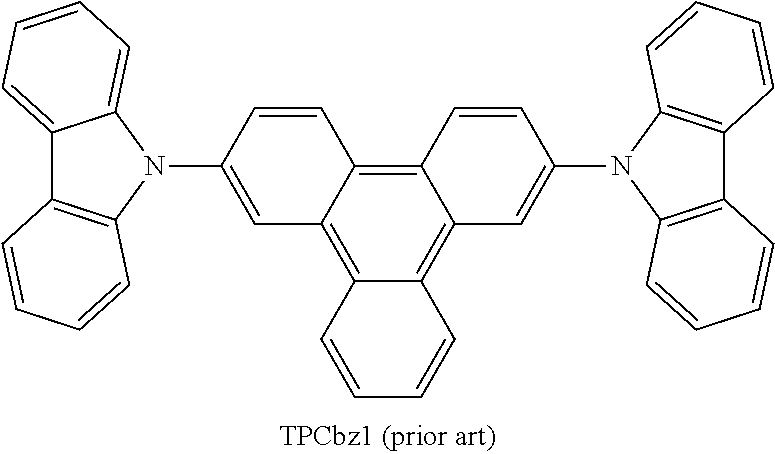 |
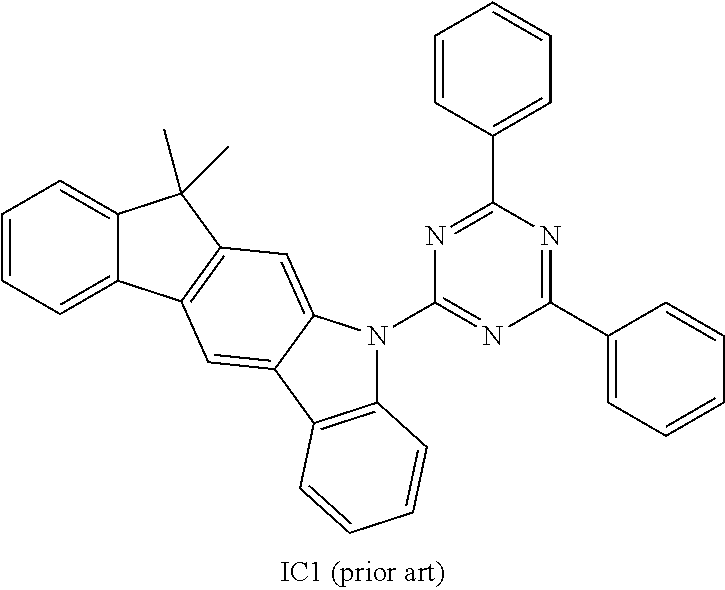 |
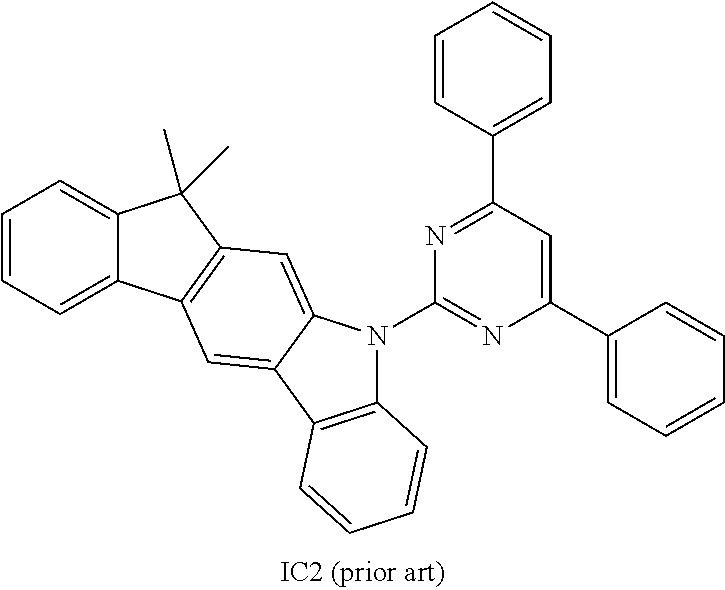 |
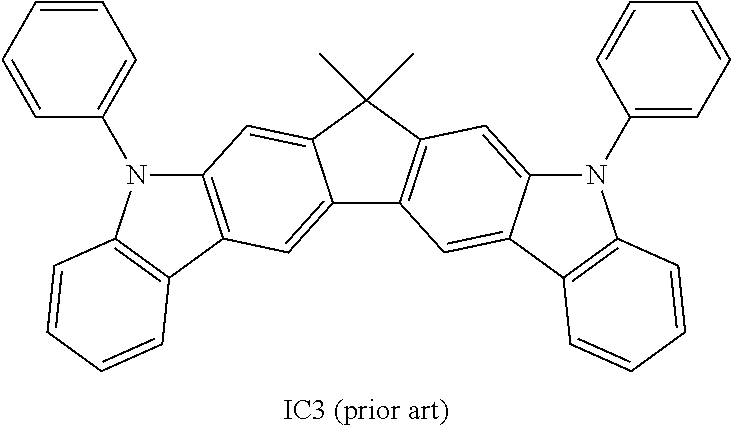 |
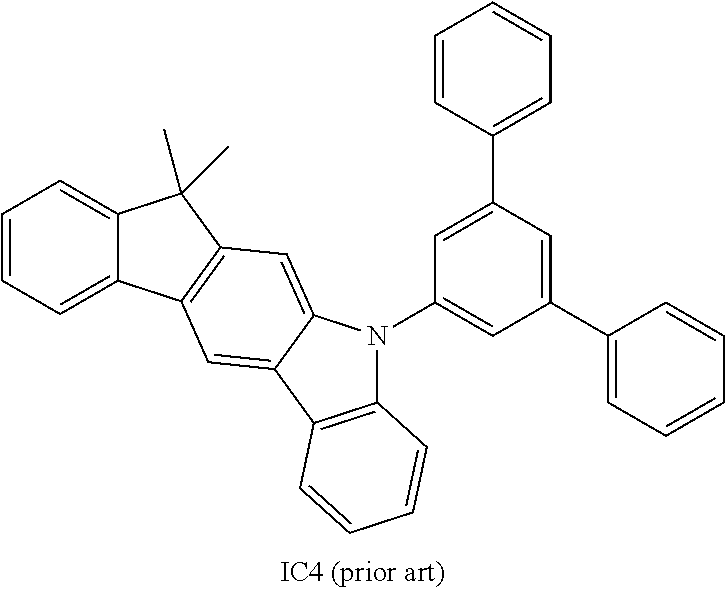 |
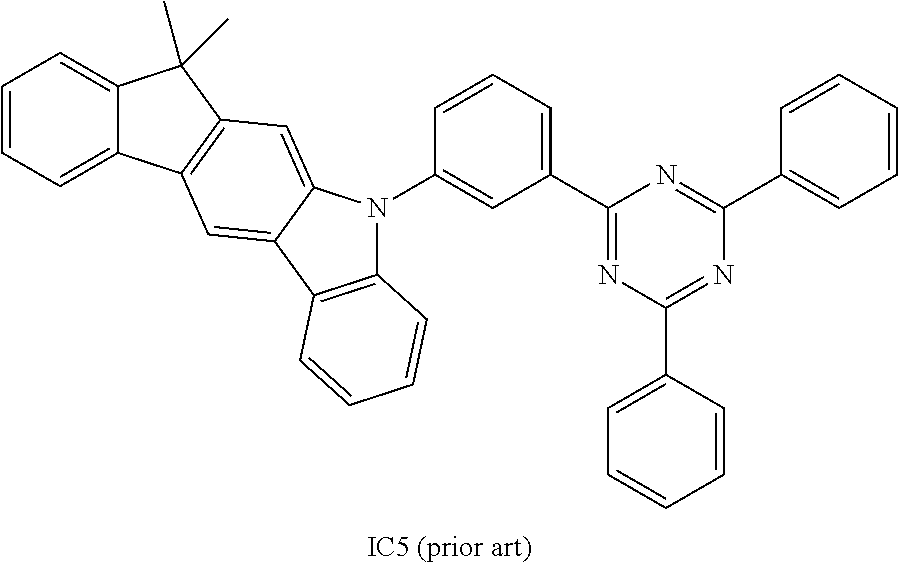 |
 |
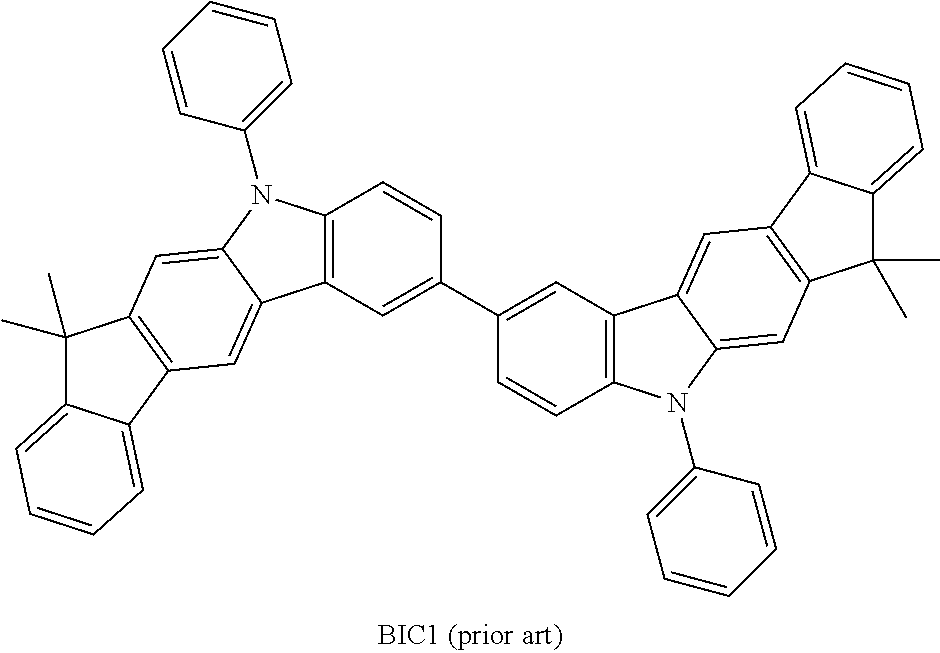 |
 |
Claims (9)


Priority Applications (1)
| Application Number | Priority Date | Filing Date | Title |
|---|---|---|---|
| US15/281,480 US9978957B2 (en) | 2011-10-20 | 2016-09-30 | Materials for organic electroluminescent devices |
Applications Claiming Priority (6)
| Application Number | Priority Date | Filing Date | Title |
|---|---|---|---|
| EP11008426.6 | 2011-10-20 | ||
| EP11008426 | 2011-10-20 | ||
| EP11008426 | 2011-10-20 | ||
| PCT/EP2012/003981 WO2013056776A1 (en) | 2011-10-20 | 2012-09-24 | Materials for organic electroluminescent devices |
| US201414352709A | 2014-04-18 | 2014-04-18 | |
| US15/281,480 US9978957B2 (en) | 2011-10-20 | 2016-09-30 | Materials for organic electroluminescent devices |
Related Parent Applications (2)
| Application Number | Title | Priority Date | Filing Date |
|---|---|---|---|
| US14/352,709 Continuation US9515266B2 (en) | 2011-10-20 | 2012-09-24 | Materials for organic electroluminescent devices |
| PCT/EP2012/003981 Continuation WO2013056776A1 (en) | 2011-10-20 | 2012-09-24 | Materials for organic electroluminescent devices |
Publications (2)
| Publication Number | Publication Date |
|---|---|
| US20170018722A1 US20170018722A1 (en) | 2017-01-19 |
| US9978957B2 true US9978957B2 (en) | 2018-05-22 |
Family
ID=46934512
Family Applications (2)
| Application Number | Title | Priority Date | Filing Date |
|---|---|---|---|
| US14/352,709 Active US9515266B2 (en) | 2011-10-20 | 2012-09-24 | Materials for organic electroluminescent devices |
| US15/281,480 Active US9978957B2 (en) | 2011-10-20 | 2016-09-30 | Materials for organic electroluminescent devices |
Family Applications Before (1)
| Application Number | Title | Priority Date | Filing Date |
|---|---|---|---|
| US14/352,709 Active US9515266B2 (en) | 2011-10-20 | 2012-09-24 | Materials for organic electroluminescent devices |
Country Status (6)
| Country | Link |
|---|---|
| US (2) | US9515266B2 (en) |
| EP (1) | EP2768808B1 (en) |
| JP (1) | JP6165746B2 (en) |
| KR (2) | KR101903216B1 (en) |
| CN (1) | CN103889952A (en) |
| WO (1) | WO2013056776A1 (en) |
Families Citing this family (158)
| Publication number | Priority date | Publication date | Assignee | Title |
|---|---|---|---|---|
| KR20130053846A (en) * | 2011-11-16 | 2013-05-24 | 롬엔드하스전자재료코리아유한회사 | Novel organic electroluminescence compounds and organic electroluminescence device using the same |
| KR20130112342A (en) * | 2012-04-03 | 2013-10-14 | 롬엔드하스전자재료코리아유한회사 | Novel carbazole compounds and organic electroluminescence device containing the same |
| US10032995B2 (en) | 2013-02-07 | 2018-07-24 | Kyulux, Inc. | Compound having diazatriphenylene ring structure, and organic electroluminescent device |
| KR102238075B1 (en) * | 2013-05-03 | 2021-04-07 | 가부시키가이샤 한도오따이 에네루기 켄큐쇼 | Heterocyclic compound, light-emitting element, display module, lighting module, light-emitting device, display device, lighting device, and electronic device |
| WO2014199637A1 (en) * | 2013-06-11 | 2014-12-18 | 出光興産株式会社 | Material for organic electroluminescent elements, organic electroluminescent element using same, and electronic device |
| JP2016179943A (en) * | 2013-07-11 | 2016-10-13 | 出光興産株式会社 | Compound and organic electroluminescence device using the same |
| KR101627743B1 (en) * | 2013-08-07 | 2016-06-07 | 제일모직 주식회사 | Compound, light emitting diode, organic optoelectric device, and display device |
| JP2015118958A (en) * | 2013-12-16 | 2015-06-25 | 三星ディスプレイ株式會社Samsung Display Co.,Ltd. | Material for organic electroluminescence device and organic electroluminescence device using the same |
| KR102362339B1 (en) * | 2014-02-21 | 2022-02-11 | 메르크 파텐트 게엠베하 | Materials for organic electroluminescent devices |
| WO2015142036A1 (en) * | 2014-03-17 | 2015-09-24 | Rohm And Haas Electronic Materials Korea Ltd. | Electron buffering material and organic electroluminescent device comprising the same |
| KR20150108330A (en) * | 2014-03-17 | 2015-09-25 | 롬엔드하스전자재료코리아유한회사 | Electron buffering material and organic electroluminescent device comprising the same |
| WO2015139808A1 (en) | 2014-03-18 | 2015-09-24 | Merck Patent Gmbh | Organic electroluminescent device |
| JP6556764B2 (en) | 2014-06-25 | 2019-08-07 | メルク パテント ゲーエムベーハー | Materials for organic electroluminescent devices |
| KR102317448B1 (en) * | 2014-07-17 | 2021-10-28 | 삼성디스플레이 주식회사 | Condensed-cyclic compound and organic light-emitting device including the same |
| CN104262282B (en) * | 2014-08-30 | 2016-08-24 | 上海珂力恩特化学材料有限公司 | Blue-light semiconductor material containing indeno phenoxazine and preparation method thereof and the organic luminescent device being made up of this material |
| JP2016082239A (en) * | 2014-10-16 | 2016-05-16 | 株式会社半導体エネルギー研究所 | Light emitting element, light emitting device, electronic apparatus and lighting device |
| KR102384649B1 (en) * | 2014-11-10 | 2022-04-11 | 삼성디스플레이 주식회사 | Organic light-emitting device |
| WO2016079944A1 (en) * | 2014-11-18 | 2016-05-26 | 保土谷化学工業株式会社 | Organic electroluminescent element |
| KR102385230B1 (en) | 2014-11-19 | 2022-04-12 | 삼성디스플레이 주식회사 | Organic light emitting device |
| KR102363260B1 (en) | 2014-12-19 | 2022-02-16 | 삼성디스플레이 주식회사 | Organic light emitting device |
| US10164194B2 (en) * | 2015-01-26 | 2018-12-25 | Luminescence Technology Corporation | Compound for organic electroluminescent device |
| JP6772188B2 (en) | 2015-02-03 | 2020-10-21 | メルク、パテント、ゲゼルシャフト、ミット、ベシュレンクテル、ハフツングMerck Patent GmbH | Metal complex |
| KR101748942B1 (en) * | 2015-02-24 | 2017-06-20 | 주식회사 엘지화학 | Hetero-cyclic compound and organic light emitting device comprising the same |
| KR102338908B1 (en) | 2015-03-03 | 2021-12-14 | 삼성디스플레이 주식회사 | An organic light emitting device |
| CN105047830B (en) * | 2015-05-29 | 2017-07-21 | 上海道亦化工科技有限公司 | A kind of organic electroluminescence device |
| CN104927839B (en) * | 2015-05-29 | 2017-05-03 | 上海道亦化工科技有限公司 | Organic electroluminescent compound with spiral structure |
| JP2018525331A (en) | 2015-06-10 | 2018-09-06 | メルク パテント ゲーエムベーハー | Materials for organic electroluminescent devices |
| US9997725B2 (en) * | 2015-06-25 | 2018-06-12 | Semiconductor Energy Laboratory Co., Ltd. | Heterocyclic compound, light-emitting element, light-emitting device, electronic device, and lighting device |
| CN105001229B (en) * | 2015-07-07 | 2018-02-02 | 上海道亦化工科技有限公司 | A kind of organic electroluminescent compounds and its device with spiro structure |
| CN107710444A (en) * | 2015-07-08 | 2018-02-16 | 株式会社半导体能源研究所 | Light emitting element, display device, electronic device, and lighting device |
| CN107922359A (en) | 2015-07-30 | 2018-04-17 | 默克专利有限公司 | Material for organic electroluminescence device |
| KR20180042146A (en) | 2015-08-28 | 2018-04-25 | 이데미쓰 고산 가부시키가이샤 | Compound, material for organic electroluminescence device, organic electroluminescence device and electronic apparatus |
| US11302872B2 (en) * | 2015-09-09 | 2022-04-12 | Universal Display Corporation | Organic electroluminescent materials and devices |
| EP3368520B1 (en) | 2015-10-27 | 2023-04-26 | Merck Patent GmbH | Materials for organic electroluminescent devices |
| KR102591635B1 (en) | 2015-10-27 | 2023-10-20 | 삼성디스플레이 주식회사 | An organic light emitting device |
| KR102537438B1 (en) * | 2015-11-24 | 2023-05-30 | 삼성디스플레이 주식회사 | Compound and Organic light emitting device comprising same |
| KR102552273B1 (en) | 2015-11-26 | 2023-07-07 | 삼성디스플레이 주식회사 | Condensed cyclic compound and organic light emitting device comprising the same |
| KR102399570B1 (en) | 2015-11-26 | 2022-05-19 | 삼성디스플레이 주식회사 | Organic light emitting device |
| US11910707B2 (en) | 2015-12-23 | 2024-02-20 | Samsung Display Co., Ltd. | Organic light-emitting device |
| KR20170127101A (en) | 2016-05-10 | 2017-11-21 | 삼성디스플레이 주식회사 | Organic light emitting device |
| US10840458B2 (en) | 2016-05-25 | 2020-11-17 | Universal Display Corporation | Organic electroluminescent materials and devices |
| JPWO2017209297A1 (en) * | 2016-06-02 | 2019-04-18 | 国立大学法人名古屋大学 | Triarylene compound and method for producing the same |
| US10957857B2 (en) | 2016-07-27 | 2021-03-23 | Lg Chem Ltd. | Multicyclic compound and organic light emitting device including the same |
| CN106397398A (en) * | 2016-08-31 | 2017-02-15 | 北京绿人科技有限责任公司 | Organic compound and application thereof to organic electroluminescent devices |
| CN109844978B (en) * | 2016-10-19 | 2022-06-14 | 保土谷化学工业株式会社 | Indenocarbazole compound and organic electroluminescent element |
| US11345687B2 (en) | 2016-11-09 | 2022-05-31 | Merck Patent Gmbh | Materials for organic electroluminescent devices |
| KR20190086028A (en) | 2016-12-05 | 2019-07-19 | 메르크 파텐트 게엠베하 | Materials for organic electroluminescent devices |
| EP3548486B1 (en) | 2016-12-05 | 2021-10-27 | Merck Patent GmbH | Materials for organic electroluminescent devices |
| CN109790118A (en) * | 2016-12-13 | 2019-05-21 | 广州华睿光电材料有限公司 | Conjugated polymer and its application in organic electronic device |
| CN106831861A (en) * | 2017-03-01 | 2017-06-13 | 武汉华星光电技术有限公司 | A kind of fluorenes and carbazole analog derivative and phosphorescent organic electroluminescent device |
| WO2018127465A1 (en) | 2017-01-04 | 2018-07-12 | Merck Patent Gmbh | Materials for organic electroluminescent devices |
| US11407766B2 (en) | 2017-01-30 | 2022-08-09 | Merck Patent Gmbh | Materials for organic electroluminescent devices |
| TW201835075A (en) * | 2017-02-14 | 2018-10-01 | 德商麥克專利有限公司 | Material for organic electroluminescent device |
| KR101856586B1 (en) * | 2017-06-13 | 2018-05-10 | (주)위즈켐 | Preparation method of 13-Bromo-10H-phenanthro[9,10-b]carbazole |
| KR102653073B1 (en) | 2017-10-24 | 2024-03-29 | 메르크 파텐트 게엠베하 | Materials for organic electroluminescent devices |
| TWI811290B (en) | 2018-01-25 | 2023-08-11 | 德商麥克專利有限公司 | Materials for organic electroluminescent devices |
| JP7322075B2 (en) | 2018-06-07 | 2023-08-07 | メルク パテント ゲーエムベーハー | organic electroluminescent device |
| WO2020011686A1 (en) | 2018-07-09 | 2020-01-16 | Merck Patent Gmbh | Materials for organic electroluminescent devices |
| KR20210089205A (en) | 2018-11-06 | 2021-07-15 | 메르크 파텐트 게엠베하 | 5,6-diphenyl-5,6-dihydrodibenz[C,E][1,2]azaphosphorine and 6-phenyl-6H-dibenzo[C,E][ as organic electroluminescent materials for OLEDs 1,2]thiazine-5,5-dioxide derivatives and similar compounds |
| CN113195500B (en) | 2018-11-15 | 2024-05-17 | 默克专利有限公司 | Material for organic electroluminescent device |
| TW202039493A (en) | 2018-12-19 | 2020-11-01 | 德商麥克專利有限公司 | Materials for organic electroluminescent devices |
| US20220162205A1 (en) | 2019-03-12 | 2022-05-26 | Merck Patent Gmbh | Materials for organic electroluminescent devices |
| KR20210141593A (en) | 2019-03-20 | 2021-11-23 | 메르크 파텐트 게엠베하 | Materials for organic electroluminescent devices |
| WO2020193447A1 (en) | 2019-03-25 | 2020-10-01 | Merck Patent Gmbh | Materials for organic electroluminescent devices |
| CN114222738B (en) | 2019-08-26 | 2024-05-17 | 默克专利有限公司 | Materials for organic electroluminescent devices |
| US12108665B2 (en) | 2019-09-02 | 2024-10-01 | Merck Kgaa | Materials for organic electroluminescent devices |
| TW202122558A (en) | 2019-09-03 | 2021-06-16 | 德商麥克專利有限公司 | Materials for organic electroluminescent devices |
| CN114401945A (en) | 2019-09-20 | 2022-04-26 | 默克专利有限公司 | Peri-condensed heterocyclic compounds as materials for electronic devices |
| KR102516810B1 (en) * | 2019-09-30 | 2023-03-30 | 삼성에스디아이 주식회사 | Compound for organic optoelectronic device, composition for organic optoelectronic device, organic optoelectronic device and display device |
| WO2021078710A1 (en) | 2019-10-22 | 2021-04-29 | Merck Patent Gmbh | Materials for organic electroluminescent devices |
| WO2021078831A1 (en) | 2019-10-25 | 2021-04-29 | Merck Patent Gmbh | Compounds that can be used in an organic electronic device |
| TW202136471A (en) | 2019-12-17 | 2021-10-01 | 德商麥克專利有限公司 | Materials for organic electroluminescent devices |
| JP7620631B2 (en) | 2019-12-18 | 2025-01-23 | メルク パテント ゲゼルシャフト ミット ベシュレンクテル ハフツング | Aromatic Compounds for Organic Electroluminescent Devices |
| KR20220116008A (en) | 2019-12-19 | 2022-08-19 | 메르크 파텐트 게엠베하 | Polycyclic compound for organic electroluminescent device |
| CN115052865A (en) | 2020-01-29 | 2022-09-13 | 默克专利有限公司 | Benzimidazole Derivatives |
| KR102350041B1 (en) * | 2020-02-24 | 2022-01-11 | 한국교통대학교 산학협력단 | Indenocabazole derivative compound for organic electroluminescent device and organic electroluminescent device comprising the same |
| EP4110884B1 (en) | 2020-02-25 | 2024-11-20 | Merck Patent GmbH | Use of heterocyclic compounds in an organic electronic device |
| WO2021175706A1 (en) | 2020-03-02 | 2021-09-10 | Merck Patent Gmbh | Use of sulfone compounds in an organic electronic device |
| KR20220154751A (en) | 2020-03-17 | 2022-11-22 | 메르크 파텐트 게엠베하 | Heterocyclic compounds for organic electroluminescent devices |
| WO2021185712A1 (en) | 2020-03-17 | 2021-09-23 | Merck Patent Gmbh | Heteroaromatic compounds for organic electroluminescent devices |
| KR20220158017A (en) | 2020-03-24 | 2022-11-29 | 메르크 파텐트 게엠베하 | Materials for Electronic Devices |
| US20230157171A1 (en) | 2020-03-26 | 2023-05-18 | Merck Patent Gmbh | Cyclic compounds for organic electroluminescent devices |
| WO2021198213A1 (en) | 2020-04-02 | 2021-10-07 | Merck Patent Gmbh | Materials for organic electroluminescent devices |
| US20230183269A1 (en) | 2020-04-06 | 2023-06-15 | Merck Patent Gmbh | Polycyclic compounds for organic electroluminescent devices |
| JP2023531470A (en) | 2020-06-29 | 2023-07-24 | メルク パテント ゲゼルシャフト ミット ベシュレンクテル ハフツング | Heteroaromatic compounds for organic electroluminescent devices |
| CN115916794A (en) | 2020-06-29 | 2023-04-04 | 默克专利有限公司 | Heterocyclic Compounds for Organic Electroluminescent Devices |
| EP4192832A1 (en) | 2020-08-06 | 2023-06-14 | Merck Patent GmbH | Materials for organic electroluminescent devices |
| US12433160B2 (en) | 2020-08-18 | 2025-09-30 | Merck Patent Gmbh | Materials for organic electroluminescent devices |
| EP4200289A1 (en) | 2020-08-19 | 2023-06-28 | Merck Patent GmbH | Materials for organic electroluminescent devices |
| TW202222748A (en) | 2020-09-30 | 2022-06-16 | 德商麥克專利有限公司 | Compounds usable for structuring of functional layers of organic electroluminescent devices |
| TW202229215A (en) | 2020-09-30 | 2022-08-01 | 德商麥克專利有限公司 | Compounds for structuring of functional layers of organic electroluminescent devices |
| US20230389423A1 (en) | 2020-10-16 | 2023-11-30 | Merck Patent Gmbh | Heterocyclic compounds for organic electroluminescent devices |
| EP4229145B1 (en) | 2020-10-16 | 2025-07-23 | Merck Patent GmbH | Compounds comprising heteroatoms for organic electroluminescent devices |
| EP4244228A1 (en) | 2020-11-10 | 2023-09-20 | Merck Patent GmbH | Sulfurous compounds for organic electroluminescent devices |
| KR20230116023A (en) | 2020-12-02 | 2023-08-03 | 메르크 파텐트 게엠베하 | Heterocyclic compounds for organic electroluminescent devices |
| WO2022122682A2 (en) | 2020-12-10 | 2022-06-16 | Merck Patent Gmbh | Materials for organic electroluminescent devices |
| WO2022124367A1 (en) | 2020-12-11 | 2022-06-16 | 日鉄ケミカル&マテリアル株式会社 | Material for organic electroluminescent element and organic electroluminescent element |
| US20240008354A1 (en) | 2020-12-11 | 2024-01-04 | Nippon Steel Chemical & Material Co., Ltd. | Organic electroluminescent element |
| KR20230119115A (en) | 2020-12-11 | 2023-08-16 | 닛테츠 케미컬 앤드 머티리얼 가부시키가이샤 | organic electroluminescent device |
| KR20230122094A (en) | 2020-12-18 | 2023-08-22 | 메르크 파텐트 게엠베하 | Indolo[3.2.1-JK]carbazole-6-carbonitrile derivatives as blue fluorescent emitters for use in OLEDs |
| US20240124769A1 (en) | 2020-12-18 | 2024-04-18 | Merck Patent Gmbh | Nitrogenous compounds for organic electroluminescent devices |
| EP4263746B1 (en) | 2020-12-18 | 2025-10-01 | Merck Patent GmbH | Nitrogenous heteroaromatic compounds for organic electroluminescent devices |
| EP4274827A1 (en) | 2021-01-05 | 2023-11-15 | Merck Patent GmbH | Materials for organic electroluminescent devices |
| WO2022157343A1 (en) | 2021-01-25 | 2022-07-28 | Merck Patent Gmbh | Nitrogenous compounds for organic electroluminescent devices |
| US20240188429A1 (en) | 2021-03-02 | 2024-06-06 | Merck Patent Gmbh | Compounds for organic electroluminescent devices |
| KR20230158657A (en) | 2021-03-18 | 2023-11-21 | 메르크 파텐트 게엠베하 | Heteroaromatic compounds for organic electroluminescent devices |
| KR20240005782A (en) | 2021-04-29 | 2024-01-12 | 메르크 파텐트 게엠베하 | Materials for organic electroluminescent devices |
| CN117279902A (en) | 2021-04-29 | 2023-12-22 | 默克专利有限公司 | Materials for organic electroluminescent devices |
| WO2022229234A1 (en) | 2021-04-30 | 2022-11-03 | Merck Patent Gmbh | Nitrogenous heterocyclic compounds for organic electroluminescent devices |
| DE112022003409A5 (en) | 2021-07-06 | 2024-05-23 | MERCK Patent Gesellschaft mit beschränkter Haftung | MATERIALS FOR ORGANIC ELECTROLUMINESCENCE DEVICES |
| WO2023041454A1 (en) | 2021-09-14 | 2023-03-23 | Merck Patent Gmbh | Boronic heterocyclic compounds for organic electroluminescent devices |
| KR20240075872A (en) | 2021-09-28 | 2024-05-29 | 메르크 파텐트 게엠베하 | Materials for Electronic Devices |
| WO2023052313A1 (en) | 2021-09-28 | 2023-04-06 | Merck Patent Gmbh | Materials for electronic devices |
| KR20240075888A (en) | 2021-09-28 | 2024-05-29 | 메르크 파텐트 게엠베하 | Materials for Electronic Devices |
| WO2023052275A1 (en) | 2021-09-28 | 2023-04-06 | Merck Patent Gmbh | Materials for electronic devices |
| CN118159623A (en) | 2021-10-27 | 2024-06-07 | 默克专利有限公司 | Boron- and nitrogen-containing heterocyclic compounds for organic electroluminescent devices |
| EP4437814A1 (en) | 2021-11-25 | 2024-10-02 | Merck Patent GmbH | Materials for electronic devices |
| EP4448527A1 (en) | 2021-12-13 | 2024-10-23 | Merck Patent GmbH | Materials for organic electroluminescent devices |
| KR20240128020A (en) | 2021-12-21 | 2024-08-23 | 메르크 파텐트 게엠베하 | Method for producing deuterated organic compounds |
| US20250163035A1 (en) | 2022-02-09 | 2025-05-22 | Merck Patent Gmbh | Materials for organic electroluminescent devices |
| US20250160204A1 (en) | 2022-02-14 | 2025-05-15 | Merck Patent Gmbh | Materials for electronic devices |
| CN118696106A (en) | 2022-02-23 | 2024-09-24 | 默克专利有限公司 | Nitrogen-containing heterocyclic compounds for organic electroluminescent devices |
| EP4482843A1 (en) | 2022-02-23 | 2025-01-01 | Merck Patent GmbH | Aromatic hetreocycles for organic electroluminescent devices |
| EP4519383B1 (en) | 2022-05-06 | 2026-01-14 | Merck Patent GmbH | Cyclic compounds for organic electroluminescent devices |
| EP4526279A1 (en) | 2022-05-18 | 2025-03-26 | Merck Patent GmbH | Process for preparing deuterated organic compounds |
| CN119325755A (en) | 2022-06-20 | 2025-01-17 | 默克专利有限公司 | Organic heterocyclic compounds for optoelectronic devices |
| CN119325756A (en) | 2022-06-20 | 2025-01-17 | 默克专利有限公司 | Heterocyclic compounds for optoelectronic devices |
| KR20250037489A (en) | 2022-07-11 | 2025-03-17 | 메르크 파텐트 게엠베하 | Materials for electronic devices |
| WO2024061948A1 (en) | 2022-09-22 | 2024-03-28 | Merck Patent Gmbh | Nitrogen-containing hetreocycles for organic electroluminescent devices |
| CN119894856A (en) | 2022-09-22 | 2025-04-25 | 默克专利有限公司 | Nitrogen-containing compounds for organic electroluminescent devices |
| CN120152954A (en) | 2022-11-01 | 2025-06-13 | 默克专利有限公司 | Nitrogen-containing heterocyclic compounds for organic electroluminescent devices |
| WO2024132993A1 (en) | 2022-12-19 | 2024-06-27 | Merck Patent Gmbh | Materials for electronic devices |
| WO2024133048A1 (en) | 2022-12-20 | 2024-06-27 | Merck Patent Gmbh | Method for preparing deuterated aromatic compounds |
| WO2024149694A1 (en) | 2023-01-10 | 2024-07-18 | Merck Patent Gmbh | Nitrogenous heterocycles for organic electroluminescent devices |
| CN120569385A (en) | 2023-01-17 | 2025-08-29 | 默克专利有限公司 | Heterocyclic compounds for organic electroluminescent devices |
| WO2024184050A1 (en) | 2023-03-07 | 2024-09-12 | Merck Patent Gmbh | Cyclic nitrogen compounds for organic electroluminescent devices |
| EP4683925A1 (en) | 2023-03-20 | 2026-01-28 | Merck Patent GmbH | Materials for organic electroluminescent devices |
| WO2024218109A1 (en) | 2023-04-20 | 2024-10-24 | Merck Patent Gmbh | Materials for electronic devices |
| WO2024240725A1 (en) | 2023-05-25 | 2024-11-28 | Merck Patent Gmbh | Tris[1,2,4]triazolo[1,5-a:1',5'-c:1'',5''-e][1,3,5]triazine derivatives for use in organic electroluminescent devices |
| CN121264197A (en) | 2023-06-12 | 2026-01-02 | 默克专利有限公司 | Organic heterocyclic compounds for optoelectronic devices |
| WO2025003084A1 (en) | 2023-06-28 | 2025-01-02 | Merck Patent Gmbh | Dicyanoaryl compounds for organic electroluminescent devices |
| EP4486099A1 (en) | 2023-06-30 | 2025-01-01 | Merck Patent GmbH | Compounds for organic electroluminescent devices |
| WO2025021855A1 (en) | 2023-07-27 | 2025-01-30 | Merck Patent Gmbh | Materials for organic light-emitting devices and organic sensors |
| WO2025045851A1 (en) | 2023-08-30 | 2025-03-06 | Merck Patent Gmbh | Materials for organic light-emitting devices |
| WO2025045843A1 (en) | 2023-08-30 | 2025-03-06 | Merck Patent Gmbh | Materials for organic light-emitting devices |
| WO2025045842A1 (en) | 2023-08-30 | 2025-03-06 | Merck Patent Gmbh | Materials for organic light-emitting devices |
| WO2025045935A1 (en) | 2023-08-31 | 2025-03-06 | Merck Patent Gmbh | Cyano group-containing aromatic compounds for organic electroluminescent devices |
| WO2025109056A1 (en) | 2023-11-24 | 2025-05-30 | Merck Patent Gmbh | Oxygen-containing heterocycles for organic electroluminescent devices |
| WO2025119821A1 (en) | 2023-12-05 | 2025-06-12 | Merck Patent Gmbh | Material composition for organic electroluminescent devices |
| WO2025132547A1 (en) | 2023-12-21 | 2025-06-26 | Merck Patent Gmbh | Mechanochemical method for deuterating organic compounds |
| WO2025132551A1 (en) | 2023-12-22 | 2025-06-26 | Merck Patent Gmbh | Materials for electronic devices |
| WO2025181097A1 (en) | 2024-02-29 | 2025-09-04 | Merck Patent Gmbh | Nitrogen-containing hetreocycles for organic electroluminescent devices |
| WO2025181044A1 (en) | 2024-02-29 | 2025-09-04 | Merck Patent Gmbh | Nitrogen-containing compounds for organic electroluminescent devices |
| WO2025181124A1 (en) | 2024-03-01 | 2025-09-04 | Merck Patent Gmbh | Materials for organic electroluminescent devices |
| WO2025210013A1 (en) | 2024-04-04 | 2025-10-09 | Merck Patent Gmbh | Compounds for electronic devices, in particular compounds for oleds |
| WO2026008710A1 (en) | 2024-07-05 | 2026-01-08 | Merck Patent Gmbh | Cyclic silicon compounds for organic electroluminescent devices |
| WO2026017607A1 (en) | 2024-07-15 | 2026-01-22 | Merck Patent Gmbh | Organic light-emitting device |
| WO2026022016A1 (en) | 2024-07-22 | 2026-01-29 | Merck Patent Gmbh | Materials for organic light-emitting devices |
Citations (12)
| Publication number | Priority date | Publication date | Assignee | Title |
|---|---|---|---|---|
| KR20090006520A (en) | 2007-07-12 | 2009-01-15 | 홍성술 | Gas detector |
| WO2010083359A2 (en) | 2009-01-16 | 2010-07-22 | Universal Display Corporation | New materials with aza-dibenzothiophene or aza-dibenzofuran core for pholed |
| WO2010107244A2 (en) | 2009-03-20 | 2010-09-23 | Dow Advanced Display Materials, Ltd. | Novel organic electroluminescent compounds and organic electroluminescent device using the same |
| WO2010136109A1 (en) | 2009-05-29 | 2010-12-02 | Merck Patent Gmbh | Materials for organic electroluminescent devices |
| WO2011000455A1 (en) | 2009-06-30 | 2011-01-06 | Merck Patent Gmbh | Materials for organic electroluminescence devices |
| KR20110043270A (en) | 2009-10-21 | 2011-04-27 | (주)씨에스엘쏠라 | Organic light emitting compound and organic light emitting device having same |
| WO2012039561A1 (en) | 2010-09-20 | 2012-03-29 | Rohm And Haas Electronic Materials Korea Ltd. | Novel organic electroluminescent compounds and organic electroluminescent device using the same |
| WO2012095143A1 (en) | 2011-01-13 | 2012-07-19 | Merck Patent Gmbh | Compounds for organic electroluminescent devices |
| JP2012140365A (en) | 2010-12-28 | 2012-07-26 | Idemitsu Kosan Co Ltd | Condensed polycyclic compound, material for organic electroluminescent element, and organic electroluminescent element using the material |
| EP2599851A2 (en) | 2010-07-30 | 2013-06-05 | Rohm And Haas Electronic Materials Korea Ltd. | Organic electroluminescent device employing organic light emitting compound as light emitting material |
| US20130286036A1 (en) | 2012-04-26 | 2013-10-31 | Myongji University Industry and Academia Corporation Foundation | Apparatus and method for producing makeup avatar |
| JP2013544759A (en) | 2010-09-20 | 2013-12-19 | ローム・アンド・ハース・エレクトロニック・マテリアルズ・コリア・リミテッド | Novel organic electroluminescent compound and organic electroluminescent device using the same |
Family Cites Families (71)
| Publication number | Priority date | Publication date | Assignee | Title |
|---|---|---|---|---|
| US4539507A (en) | 1983-03-25 | 1985-09-03 | Eastman Kodak Company | Organic electroluminescent devices having improved power conversion efficiencies |
| US5151629A (en) | 1991-08-01 | 1992-09-29 | Eastman Kodak Company | Blue emitting internal junction organic electroluminescent device (I) |
| JPH07133483A (en) | 1993-11-09 | 1995-05-23 | Shinko Electric Ind Co Ltd | Organic light emitting material for EL device and EL device |
| EP0676461B1 (en) | 1994-04-07 | 2002-08-14 | Covion Organic Semiconductors GmbH | Spiro compounds and their application as electroluminescence materials |
| DE19652261A1 (en) | 1996-12-16 | 1998-06-18 | Hoechst Ag | Aryl-substituted poly (p-arylenevinylenes), process for their preparation and their use in electroluminescent devices |
| ATE311877T1 (en) | 1998-02-24 | 2005-12-15 | Taiho Pharmaceutical Co Ltd | LP(A)-REDUCING AGENTS AND INHIBITORS OF APOPROTEIN (A) PRODUCTION |
| FR2781644B1 (en) | 1998-07-30 | 2000-10-13 | Centre Nat Rech Scient | PROCESS FOR FEEDING AQUATIC ANIMALS |
| WO2000070655A2 (en) | 1999-05-13 | 2000-11-23 | The Trustees Of Princeton University | Very high efficiency organic light emitting devices based on electrophosphorescence |
| KR100946314B1 (en) | 1999-12-01 | 2010-03-09 | 더 트러스티즈 오브 프린스턴 유니버시티 | Organic light emitting device comprising a phosphorescent organo metallic compound |
| US6660410B2 (en) | 2000-03-27 | 2003-12-09 | Idemitsu Kosan Co., Ltd. | Organic electroluminescence element |
| US20020121638A1 (en) | 2000-06-30 | 2002-09-05 | Vladimir Grushin | Electroluminescent iridium compounds with fluorinated phenylpyridines, phenylpyrimidines, and phenylquinolines and devices made with such compounds |
| CN101924190B (en) | 2000-08-11 | 2012-07-04 | 普林斯顿大学理事会 | Organometallic compounds and emission-shifting organic electrophosphorescence |
| JP4154138B2 (en) | 2000-09-26 | 2008-09-24 | キヤノン株式会社 | Light emitting element, display device and metal coordination compound |
| JP4154140B2 (en) | 2000-09-26 | 2008-09-24 | キヤノン株式会社 | Metal coordination compounds |
| JP4154139B2 (en) | 2000-09-26 | 2008-09-24 | キヤノン株式会社 | Light emitting element |
| EP1370619B1 (en) | 2001-03-10 | 2006-06-21 | MERCK PATENT GmbH | Solutions and dispersions of organic semiconductors |
| DE10141624A1 (en) | 2001-08-24 | 2003-03-06 | Covion Organic Semiconductors | Solutions of polymeric semiconductors |
| ITRM20020411A1 (en) | 2002-08-01 | 2004-02-02 | Univ Roma La Sapienza | SPIROBIFLUORENE DERIVATIVES, THEIR PREPARATION AND USE. |
| JP2006511939A (en) | 2002-12-23 | 2006-04-06 | コビオン・オーガニック・セミコンダクターズ・ゲーエムベーハー | Organic electroluminescence device |
| JP4411851B2 (en) | 2003-03-19 | 2010-02-10 | コニカミノルタホールディングス株式会社 | Organic electroluminescence device |
| JP5318347B2 (en) | 2003-04-15 | 2013-10-16 | メルク パテント ゲーエムベーハー | Mixture of matrix material and organic semiconductor capable of emitting light, use thereof, and electronic component comprising said mixture |
| EP2236579B1 (en) | 2003-04-23 | 2014-04-09 | Konica Minolta Holdings, Inc. | Organic electroluminescent element and display |
| DE10333232A1 (en) | 2003-07-21 | 2007-10-11 | Merck Patent Gmbh | Organic electroluminescent element |
| DE10338550A1 (en) | 2003-08-19 | 2005-03-31 | Basf Ag | Transition metal complexes with carbene ligands as emitters for organic light-emitting diodes (OLEDs) |
| DE10345572A1 (en) | 2003-09-29 | 2005-05-19 | Covion Organic Semiconductors Gmbh | metal complexes |
| US7795801B2 (en) | 2003-09-30 | 2010-09-14 | Konica Minolta Holdings, Inc. | Organic electroluminescent element, illuminator, display and compound |
| JP2007512692A (en) | 2003-11-25 | 2007-05-17 | メルク パテント ゲーエムベーハー | Organic electroluminescence device |
| US7790890B2 (en) | 2004-03-31 | 2010-09-07 | Konica Minolta Holdings, Inc. | Organic electroluminescence element material, organic electroluminescence element, display device and illumination device |
| DE102004023277A1 (en) | 2004-05-11 | 2005-12-01 | Covion Organic Semiconductors Gmbh | New material mixtures for electroluminescence |
| US7598388B2 (en) | 2004-05-18 | 2009-10-06 | The University Of Southern California | Carbene containing metal complexes as OLEDs |
| JP4862248B2 (en) | 2004-06-04 | 2012-01-25 | コニカミノルタホールディングス株式会社 | Organic electroluminescence element, lighting device and display device |
| ITRM20040352A1 (en) | 2004-07-15 | 2004-10-15 | Univ Roma La Sapienza | OLIGOMERIC DERIVATIVES OF SPIROBIFLUORENE, THEIR PREPARATION AND THEIR USE. |
| US20060088728A1 (en) * | 2004-10-22 | 2006-04-27 | Raymond Kwong | Arylcarbazoles as hosts in PHOLEDs |
| JP2006143845A (en) * | 2004-11-18 | 2006-06-08 | Konica Minolta Holdings Inc | Material for organic electroluminescent element, organic electroluminescent element, lighting equipment and display device |
| CN101171320B (en) | 2005-05-03 | 2013-04-10 | 默克专利有限公司 | Organic electroluminescent device |
| EP1956022B1 (en) | 2005-12-01 | 2012-07-25 | Nippon Steel Chemical Co., Ltd. | Compound for organic electroluminescent element and organic electroluminescent element |
| DE102006025777A1 (en) | 2006-05-31 | 2007-12-06 | Merck Patent Gmbh | New materials for organic electroluminescent devices |
| US8062769B2 (en) | 2006-11-09 | 2011-11-22 | Nippon Steel Chemical Co., Ltd. | Indolocarbazole compound for use in organic electroluminescent device and organic electroluminescent device |
| WO2009030981A2 (en) | 2006-12-28 | 2009-03-12 | Universal Display Corporation | Long lifetime phosphorescent organic light emitting device (oled) structures |
| DE102007002714A1 (en) | 2007-01-18 | 2008-07-31 | Merck Patent Gmbh | New materials for organic electroluminescent devices |
| DE102007053771A1 (en) | 2007-11-12 | 2009-05-14 | Merck Patent Gmbh | Organic electroluminescent devices |
| US7862908B2 (en) | 2007-11-26 | 2011-01-04 | National Tsing Hua University | Conjugated compounds containing hydroindoloacridine structural elements, and their use |
| KR100987822B1 (en) * | 2007-12-17 | 2010-10-13 | (주)씨에스엘쏠라 | Organic light emitting compound and organic light emitting device having the same |
| EP2301926B1 (en) * | 2008-06-05 | 2018-11-21 | Idemitsu Kosan Co., Ltd. | Halogen compound, polycyclic compound, and organic electroluminescence element comprising the polycyclic compound |
| DE102008027005A1 (en) | 2008-06-05 | 2009-12-10 | Merck Patent Gmbh | Organic electronic device containing metal complexes |
| DE102008033943A1 (en) | 2008-07-18 | 2010-01-21 | Merck Patent Gmbh | New materials for organic electroluminescent devices |
| DE102008036247A1 (en) | 2008-08-04 | 2010-02-11 | Merck Patent Gmbh | Electronic devices containing metal complexes |
| DE102008036982A1 (en) | 2008-08-08 | 2010-02-11 | Merck Patent Gmbh | Organic electroluminescent device |
| DE102008048336A1 (en) | 2008-09-22 | 2010-03-25 | Merck Patent Gmbh | Mononuclear neutral copper (I) complexes and their use for the production of optoelectronic devices |
| KR101506919B1 (en) | 2008-10-31 | 2015-03-30 | 롬엔드하스전자재료코리아유한회사 | Novel compounds for organic electronic material and organic electronic device using the same |
| DE102008056688A1 (en) | 2008-11-11 | 2010-05-12 | Merck Patent Gmbh | Materials for organic electroluminescent devices |
| KR20110097612A (en) | 2008-11-11 | 2011-08-31 | 메르크 파텐트 게엠베하 | Organic electroluminescent devices |
| DE102008057050B4 (en) | 2008-11-13 | 2021-06-02 | Merck Patent Gmbh | Materials for organic electroluminescent devices |
| DE102008057051B4 (en) | 2008-11-13 | 2021-06-17 | Merck Patent Gmbh | Materials for organic electroluminescent devices |
| DE102009007038A1 (en) | 2009-02-02 | 2010-08-05 | Merck Patent Gmbh | metal complexes |
| DE102009011223A1 (en) | 2009-03-02 | 2010-09-23 | Merck Patent Gmbh | metal complexes |
| DE102009013041A1 (en) | 2009-03-13 | 2010-09-16 | Merck Patent Gmbh | Materials for organic electroluminescent devices |
| KR101477613B1 (en) * | 2009-03-31 | 2014-12-30 | 롬엔드하스전자재료코리아유한회사 | Novel compounds for organic electronic materials and organic electronic devices containing them |
| DE102009041414A1 (en) | 2009-09-16 | 2011-03-17 | Merck Patent Gmbh | metal complexes |
| DE102009048791A1 (en) | 2009-10-08 | 2011-04-14 | Merck Patent Gmbh | Materials for organic electroluminescent devices |
| DE102009057167A1 (en) | 2009-12-05 | 2011-06-09 | Merck Patent Gmbh | Electronic device containing metal complexes |
| DE102010005697A1 (en) | 2010-01-25 | 2011-07-28 | Merck Patent GmbH, 64293 | Connections for electronic devices |
| DE102010012738A1 (en) | 2010-03-25 | 2011-09-29 | Merck Patent Gmbh | Materials for organic electroluminescent devices |
| DE102010019306B4 (en) | 2010-05-04 | 2021-05-20 | Merck Patent Gmbh | Organic electroluminescent devices |
| DE102010027317A1 (en) | 2010-07-16 | 2012-01-19 | Merck Patent Gmbh | metal complexes |
| KR101423066B1 (en) * | 2010-09-17 | 2014-07-25 | 롬엔드하스전자재료코리아유한회사 | Novel organic electroluminescent compounds and organic electroluminescent device using the same |
| DE102010048608A1 (en) | 2010-10-15 | 2012-04-19 | Merck Patent Gmbh | Materials for organic electroluminescent devices |
| KR101531612B1 (en) * | 2010-12-02 | 2015-06-25 | 제일모직 주식회사 | Compound for organic photoelectric device and organic photoelectric device including the same |
| KR20120065214A (en) * | 2010-12-10 | 2012-06-20 | (주)씨에스엘쏠라 | Organic light compound and organic light device using the same |
| KR101486561B1 (en) * | 2010-12-31 | 2015-01-26 | 제일모직 주식회사 | Compound for organic photoelectric device and organic photoelectric device including the same |
| KR101399636B1 (en) * | 2011-03-11 | 2014-05-28 | (주)씨에스엘쏠라 | Organic light compound and organic light device using the same |
-
2012
- 2012-09-24 EP EP12766002.5A patent/EP2768808B1/en active Active
- 2012-09-24 WO PCT/EP2012/003981 patent/WO2013056776A1/en not_active Ceased
- 2012-09-24 KR KR1020147013340A patent/KR101903216B1/en active Active
- 2012-09-24 JP JP2014536126A patent/JP6165746B2/en active Active
- 2012-09-24 US US14/352,709 patent/US9515266B2/en active Active
- 2012-09-24 KR KR1020187027253A patent/KR102059793B1/en active Active
- 2012-09-24 CN CN201280051351.4A patent/CN103889952A/en active Pending
-
2016
- 2016-09-30 US US15/281,480 patent/US9978957B2/en active Active
Patent Citations (17)
| Publication number | Priority date | Publication date | Assignee | Title |
|---|---|---|---|---|
| KR20090006520A (en) | 2007-07-12 | 2009-01-15 | 홍성술 | Gas detector |
| WO2010083359A2 (en) | 2009-01-16 | 2010-07-22 | Universal Display Corporation | New materials with aza-dibenzothiophene or aza-dibenzofuran core for pholed |
| US20130060037A1 (en) | 2009-01-16 | 2013-03-07 | Universal Display Corporation | Materials with aza-dibenzothiophene or aza-dibenzofuran core for pholed |
| WO2010107244A2 (en) | 2009-03-20 | 2010-09-23 | Dow Advanced Display Materials, Ltd. | Novel organic electroluminescent compounds and organic electroluminescent device using the same |
| US20120068170A1 (en) | 2009-05-29 | 2012-03-22 | Merck Patent Gmbh | Materials for organic electroluminescent devices |
| WO2010136109A1 (en) | 2009-05-29 | 2010-12-02 | Merck Patent Gmbh | Materials for organic electroluminescent devices |
| US20120097899A1 (en) | 2009-06-30 | 2012-04-26 | Amir Hossain Parham | Materials for organic electroluminescent devices |
| WO2011000455A1 (en) | 2009-06-30 | 2011-01-06 | Merck Patent Gmbh | Materials for organic electroluminescence devices |
| KR20110043270A (en) | 2009-10-21 | 2011-04-27 | (주)씨에스엘쏠라 | Organic light emitting compound and organic light emitting device having same |
| EP2599851A2 (en) | 2010-07-30 | 2013-06-05 | Rohm And Haas Electronic Materials Korea Ltd. | Organic electroluminescent device employing organic light emitting compound as light emitting material |
| JP2013539206A (en) | 2010-07-30 | 2013-10-17 | ローム・アンド・ハース・エレクトロニック・マテリアルズ・コリア・リミテッド | Electroluminescent device using electroluminescent compound as luminescent material |
| US20140054564A1 (en) | 2010-07-30 | 2014-02-27 | Rohm And Haas Electronic Materials Korea Ltd. | Electroluminescent device using electroluminescent compound as luminescent material |
| WO2012039561A1 (en) | 2010-09-20 | 2012-03-29 | Rohm And Haas Electronic Materials Korea Ltd. | Novel organic electroluminescent compounds and organic electroluminescent device using the same |
| JP2013544759A (en) | 2010-09-20 | 2013-12-19 | ローム・アンド・ハース・エレクトロニック・マテリアルズ・コリア・リミテッド | Novel organic electroluminescent compound and organic electroluminescent device using the same |
| JP2012140365A (en) | 2010-12-28 | 2012-07-26 | Idemitsu Kosan Co Ltd | Condensed polycyclic compound, material for organic electroluminescent element, and organic electroluminescent element using the material |
| WO2012095143A1 (en) | 2011-01-13 | 2012-07-19 | Merck Patent Gmbh | Compounds for organic electroluminescent devices |
| US20130286036A1 (en) | 2012-04-26 | 2013-10-31 | Myongji University Industry and Academia Corporation Foundation | Apparatus and method for producing makeup avatar |
Non-Patent Citations (1)
| Title |
|---|
| International Search Report for PCT/EP2012/003981 dated Nov. 19, 2012. |
Also Published As
| Publication number | Publication date |
|---|---|
| US9515266B2 (en) | 2016-12-06 |
| KR20140081879A (en) | 2014-07-01 |
| US20140275530A1 (en) | 2014-09-18 |
| US20170018722A1 (en) | 2017-01-19 |
| KR102059793B1 (en) | 2019-12-27 |
| KR101903216B1 (en) | 2018-10-01 |
| EP2768808A1 (en) | 2014-08-27 |
| KR20180108862A (en) | 2018-10-04 |
| EP2768808B1 (en) | 2017-11-15 |
| JP2015501304A (en) | 2015-01-15 |
| CN103889952A (en) | 2014-06-25 |
| WO2013056776A1 (en) | 2013-04-25 |
| JP6165746B2 (en) | 2017-07-19 |
Similar Documents
| Publication | Publication Date | Title |
|---|---|---|
| US9978957B2 (en) | Materials for organic electroluminescent devices | |
| US9818948B2 (en) | Carbazole derivatives for organic electroluminescence devices | |
| US9324954B2 (en) | Materials for organic electroluminescent devices | |
| US11538995B2 (en) | Materials for organic electroluminescent devices | |
| US11098019B2 (en) | Materials for organic electroluminescent devices | |
| US10749117B2 (en) | Materials for electronic devices | |
| US11309497B2 (en) | Materials for organic electroluminescent devices | |
| US8835626B2 (en) | Materials for organic electroluminescent devices | |
| US9876181B2 (en) | Materials for organic electroluminescent devices | |
| US8785636B2 (en) | Substituted indoloacridines for organic electroluminescent devices | |
| US9620722B2 (en) | Materials for organic electroluminescent devices | |
| US9985226B2 (en) | Triphenylene-based materials for organic electroluminescent devices | |
| US9929354B2 (en) | 9,9′-spirobixanthene derivatives for electroluminescent devices | |
| US9118022B2 (en) | Organic electroluminescent device | |
| US10032992B2 (en) | Compounds for organic electroluminescent devices | |
| US12486230B2 (en) | Materials for organic electroluminescent devices | |
| US10000694B2 (en) | Materials for organic electroluminescent devices | |
| US20180219156A1 (en) | Materials for organic electroluminescent devices | |
| US20170141327A1 (en) | Materials for organic electroluminescent devices | |
| US20180370938A1 (en) | Materials for organic electroluminescent devices | |
| US20150340627A1 (en) | Materials for electronic devices | |
| US20230147279A1 (en) | Heterocyclic compounds for organic electroluminescent devices | |
| US9593087B2 (en) | Materials for organic electroluminescent devices | |
| US20190352318A1 (en) | Materials for organic electroluminescent devices | |
| US20220069231A1 (en) | Materials for organic electroluminescent devices |
Legal Events
| Date | Code | Title | Description |
|---|---|---|---|
| AS | Assignment |
Owner name: MERCK PATENT GMBH, GERMANY Free format text: ASSIGNMENT OF ASSIGNORS INTEREST;ASSIGNORS:JATSCH, ANJA;ANEMIAN, REMI MANOUK;SCHROEDER, BERND;AND OTHERS;REEL/FRAME:041101/0887 Effective date: 20150401 |
|
| STCF | Information on status: patent grant |
Free format text: PATENTED CASE |
|
| MAFP | Maintenance fee payment |
Free format text: PAYMENT OF MAINTENANCE FEE, 4TH YEAR, LARGE ENTITY (ORIGINAL EVENT CODE: M1551); ENTITY STATUS OF PATENT OWNER: LARGE ENTITY Year of fee payment: 4 |
|
| FEPP | Fee payment procedure |
Free format text: MAINTENANCE FEE REMINDER MAILED (ORIGINAL EVENT CODE: REM.); ENTITY STATUS OF PATENT OWNER: LARGE ENTITY |