EP3004337B1 - Methods for engineering t cells for immunotherapy by using rna-guided cas nuclease system - Google Patents
Methods for engineering t cells for immunotherapy by using rna-guided cas nuclease system Download PDFInfo
- Publication number
- EP3004337B1 EP3004337B1 EP14714278.0A EP14714278A EP3004337B1 EP 3004337 B1 EP3004337 B1 EP 3004337B1 EP 14714278 A EP14714278 A EP 14714278A EP 3004337 B1 EP3004337 B1 EP 3004337B1
- Authority
- EP
- European Patent Office
- Prior art keywords
- cells
- cell
- rna
- cas9
- dna
- Prior art date
- Legal status (The legal status is an assumption and is not a legal conclusion. Google has not performed a legal analysis and makes no representation as to the accuracy of the status listed.)
- Active
Links
Images


Classifications
-
- C—CHEMISTRY; METALLURGY
- C12—BIOCHEMISTRY; BEER; SPIRITS; WINE; VINEGAR; MICROBIOLOGY; ENZYMOLOGY; MUTATION OR GENETIC ENGINEERING
- C12N—MICROORGANISMS OR ENZYMES; COMPOSITIONS THEREOF; PROPAGATING, PRESERVING, OR MAINTAINING MICROORGANISMS; MUTATION OR GENETIC ENGINEERING; CULTURE MEDIA
- C12N15/00—Mutation or genetic engineering; DNA or RNA concerning genetic engineering, vectors, e.g. plasmids, or their isolation, preparation or purification; Use of hosts therefor
- C12N15/09—Recombinant DNA-technology
- C12N15/63—Introduction of foreign genetic material using vectors; Vectors; Use of hosts therefor; Regulation of expression
- C12N15/79—Vectors or expression systems specially adapted for eukaryotic hosts
- C12N15/85—Vectors or expression systems specially adapted for eukaryotic hosts for animal cells
-
- A—HUMAN NECESSITIES
- A61—MEDICAL OR VETERINARY SCIENCE; HYGIENE
- A61K—PREPARATIONS FOR MEDICAL, DENTAL OR TOILETRY PURPOSES
- A61K40/00—Cellular immunotherapy
- A61K40/10—Cellular immunotherapy characterised by the cell type used
- A61K40/11—T-cells, e.g. tumour infiltrating lymphocytes [TIL] or regulatory T [Treg] cells; Lymphokine-activated killer [LAK] cells
-
- A—HUMAN NECESSITIES
- A61—MEDICAL OR VETERINARY SCIENCE; HYGIENE
- A61K—PREPARATIONS FOR MEDICAL, DENTAL OR TOILETRY PURPOSES
- A61K40/00—Cellular immunotherapy
- A61K40/20—Cellular immunotherapy characterised by the effect or the function of the cells
- A61K40/22—Immunosuppressive or immunotolerising
-
- A—HUMAN NECESSITIES
- A61—MEDICAL OR VETERINARY SCIENCE; HYGIENE
- A61K—PREPARATIONS FOR MEDICAL, DENTAL OR TOILETRY PURPOSES
- A61K40/00—Cellular immunotherapy
- A61K40/30—Cellular immunotherapy characterised by the recombinant expression of specific molecules in the cells of the immune system
- A61K40/31—Chimeric antigen receptors [CAR]
-
- A—HUMAN NECESSITIES
- A61—MEDICAL OR VETERINARY SCIENCE; HYGIENE
- A61K—PREPARATIONS FOR MEDICAL, DENTAL OR TOILETRY PURPOSES
- A61K40/00—Cellular immunotherapy
- A61K40/30—Cellular immunotherapy characterised by the recombinant expression of specific molecules in the cells of the immune system
- A61K40/32—T-cell receptors [TCR]
-
- A—HUMAN NECESSITIES
- A61—MEDICAL OR VETERINARY SCIENCE; HYGIENE
- A61K—PREPARATIONS FOR MEDICAL, DENTAL OR TOILETRY PURPOSES
- A61K40/00—Cellular immunotherapy
- A61K40/40—Cellular immunotherapy characterised by antigens that are targeted or presented by cells of the immune system
- A61K40/41—Vertebrate antigens
- A61K40/418—Antigens related to induction of tolerance to non-self
-
- A—HUMAN NECESSITIES
- A61—MEDICAL OR VETERINARY SCIENCE; HYGIENE
- A61K—PREPARATIONS FOR MEDICAL, DENTAL OR TOILETRY PURPOSES
- A61K40/00—Cellular immunotherapy
- A61K40/40—Cellular immunotherapy characterised by antigens that are targeted or presented by cells of the immune system
- A61K40/41—Vertebrate antigens
- A61K40/42—Cancer antigens
- A61K40/4202—Receptors, cell surface antigens or cell surface determinants
- A61K40/421—Immunoglobulin superfamily
- A61K40/4211—CD19 or B4
-
- A—HUMAN NECESSITIES
- A61—MEDICAL OR VETERINARY SCIENCE; HYGIENE
- A61P—SPECIFIC THERAPEUTIC ACTIVITY OF CHEMICAL COMPOUNDS OR MEDICINAL PREPARATIONS
- A61P31/00—Antiinfectives, i.e. antibiotics, antiseptics, chemotherapeutics
- A61P31/12—Antivirals
-
- A—HUMAN NECESSITIES
- A61—MEDICAL OR VETERINARY SCIENCE; HYGIENE
- A61P—SPECIFIC THERAPEUTIC ACTIVITY OF CHEMICAL COMPOUNDS OR MEDICINAL PREPARATIONS
- A61P35/00—Antineoplastic agents
-
- C—CHEMISTRY; METALLURGY
- C12—BIOCHEMISTRY; BEER; SPIRITS; WINE; VINEGAR; MICROBIOLOGY; ENZYMOLOGY; MUTATION OR GENETIC ENGINEERING
- C12N—MICROORGANISMS OR ENZYMES; COMPOSITIONS THEREOF; PROPAGATING, PRESERVING, OR MAINTAINING MICROORGANISMS; MUTATION OR GENETIC ENGINEERING; CULTURE MEDIA
- C12N5/00—Undifferentiated human, animal or plant cells, e.g. cell lines; Tissues; Cultivation or maintenance thereof; Culture media therefor
- C12N5/06—Animal cells or tissues; Human cells or tissues
- C12N5/0602—Vertebrate cells
- C12N5/0634—Cells from the blood or the immune system
- C12N5/0636—T lymphocytes
-
- C—CHEMISTRY; METALLURGY
- C12—BIOCHEMISTRY; BEER; SPIRITS; WINE; VINEGAR; MICROBIOLOGY; ENZYMOLOGY; MUTATION OR GENETIC ENGINEERING
- C12N—MICROORGANISMS OR ENZYMES; COMPOSITIONS THEREOF; PROPAGATING, PRESERVING, OR MAINTAINING MICROORGANISMS; MUTATION OR GENETIC ENGINEERING; CULTURE MEDIA
- C12N5/00—Undifferentiated human, animal or plant cells, e.g. cell lines; Tissues; Cultivation or maintenance thereof; Culture media therefor
- C12N5/06—Animal cells or tissues; Human cells or tissues
- C12N5/0602—Vertebrate cells
- C12N5/0634—Cells from the blood or the immune system
- C12N5/0636—T lymphocytes
- C12N5/0637—Immunosuppressive T lymphocytes, e.g. regulatory T cells or Treg
-
- C—CHEMISTRY; METALLURGY
- C12—BIOCHEMISTRY; BEER; SPIRITS; WINE; VINEGAR; MICROBIOLOGY; ENZYMOLOGY; MUTATION OR GENETIC ENGINEERING
- C12N—MICROORGANISMS OR ENZYMES; COMPOSITIONS THEREOF; PROPAGATING, PRESERVING, OR MAINTAINING MICROORGANISMS; MUTATION OR GENETIC ENGINEERING; CULTURE MEDIA
- C12N5/00—Undifferentiated human, animal or plant cells, e.g. cell lines; Tissues; Cultivation or maintenance thereof; Culture media therefor
- C12N5/06—Animal cells or tissues; Human cells or tissues
- C12N5/0602—Vertebrate cells
- C12N5/0634—Cells from the blood or the immune system
- C12N5/0636—T lymphocytes
- C12N5/0638—Cytotoxic T lymphocytes [CTL] or lymphokine activated killer cells [LAK]
-
- C—CHEMISTRY; METALLURGY
- C12—BIOCHEMISTRY; BEER; SPIRITS; WINE; VINEGAR; MICROBIOLOGY; ENZYMOLOGY; MUTATION OR GENETIC ENGINEERING
- C12N—MICROORGANISMS OR ENZYMES; COMPOSITIONS THEREOF; PROPAGATING, PRESERVING, OR MAINTAINING MICROORGANISMS; MUTATION OR GENETIC ENGINEERING; CULTURE MEDIA
- C12N9/00—Enzymes; Proenzymes; Compositions thereof; Processes for preparing, activating, inhibiting, separating or purifying enzymes
- C12N9/14—Hydrolases (3)
- C12N9/16—Hydrolases (3) acting on ester bonds (3.1)
- C12N9/22—Ribonucleases [RNase]; Deoxyribonucleases [DNase]
-
- A—HUMAN NECESSITIES
- A61—MEDICAL OR VETERINARY SCIENCE; HYGIENE
- A61K—PREPARATIONS FOR MEDICAL, DENTAL OR TOILETRY PURPOSES
- A61K2239/00—Indexing codes associated with cellular immunotherapy of group A61K40/00
- A61K2239/46—Indexing codes associated with cellular immunotherapy of group A61K40/00 characterised by the cancer treated
- A61K2239/48—Blood cells, e.g. leukemia or lymphoma
-
- A—HUMAN NECESSITIES
- A61—MEDICAL OR VETERINARY SCIENCE; HYGIENE
- A61K—PREPARATIONS FOR MEDICAL, DENTAL OR TOILETRY PURPOSES
- A61K40/00—Cellular immunotherapy
- A61K40/50—Cellular immunotherapy characterised by the use of allogeneic cells
-
- C—CHEMISTRY; METALLURGY
- C12—BIOCHEMISTRY; BEER; SPIRITS; WINE; VINEGAR; MICROBIOLOGY; ENZYMOLOGY; MUTATION OR GENETIC ENGINEERING
- C12N—MICROORGANISMS OR ENZYMES; COMPOSITIONS THEREOF; PROPAGATING, PRESERVING, OR MAINTAINING MICROORGANISMS; MUTATION OR GENETIC ENGINEERING; CULTURE MEDIA
- C12N2510/00—Genetically modified cells
Definitions
- RNA-guided endonucleases in particular Cas9/CRISPR system
- the engineered T-cells are also intended to express chimeric antigen receptors (CAR) to redirect their immune activity towards malignant or infected cells.
- CAR chimeric antigen receptors
- Adoptive immunotherapy which involves the transfer of autologous antigen-specific T cells generated ex vivo, is a promising strategy to treat viral infections and cancer.
- the T cells used for adoptive immunotherapy can be generated either by expansion of antigen-specific T cells or redirection of T cells through genetic engineering (Park, Rosenberg et al. 2011). Transfer of viral antigen specific T cells is a well-established procedure used for the treatment of transplant associated viral infections and rare viral-related malignancies. Similarly, isolation and transfer of tumor specific T cells has been shown to be successful in treating melanoma.
- CARs transgenic T cell receptors or chimeric antigen receptors
- CARs are synthetic receptors consisting of a targeting moiety that is associated with one or more signaling domains in a single fusion molecule.
- the binding moiety of a CAR consists of an antigen-binding domain of a single-chain antibody (scFv), comprising the light and variable fragments of a monoclonal antibody joined by a flexible linker. Binding moieties based on receptor or ligand domains have also been used successfully.
- the signaling domains for first generation CARs are derived from the cytoplasmic region of the CD3zeta or the Fc receptor gamma chains.
- First generation CARs have been shown to successfully redirect T cell cytotoxicity, however, they failed to provide prolonged expansion and anti-tumor activity in vivo.
- Signaling domains from co-stimulatory molecules including CD28, OX-40 (CD134), and 4-1BB (CD137) have been added alone (second generation) or in combination (third generation) to enhance survival and increase proliferation of CAR modified T cells.
- CARs have successfully allowed T cells to be redirected against antigens expressed at the surface of tumor cells from various malignancies including lymphomas and solid tumors (Jena, Dotti et al. 2010).
- T lymphocytes are recovered from patients, genetically modified or selected ex vivo, cultivated in vitro in order to amplify the number of cells if necessary and finally infused into the patient.
- the host may be manipulated in other ways that support the engraftment of the T cells or their participation in an immune response, for example pre-conditioning (with radiation or chemotherapy) and administration of lymphocyte growth factors (such as IL-2).
- lymphocyte growth factors such as IL-2
- Each patient receives an individually fabricated treatment, using the patient's own lymphocytes (i.e. an autologous therapy).
- allogeneic therapeutic cells could be pre-manufactured, characterized in detail, and available for immediate administration to patients.
- allogeneic it is meant that the cells are obtained from individuals belonging to the same species but are genetically dissimilar.
- HvG host versus graft rejection
- TCR T-cell receptors
- RNA-guided Cas nuclease system (Gasiunas, Barrangou et al. 2012; Jinek, Chylinski et al. 2012) or more simply as CRISPR, involves a Cas endonuclease coupled with a guide RNA molecules that have the ability to drive said nuclease to some specific genome sequences.
- the endonuclease has the ability to cleave the DNA.
- the CRISPR/CRISPR-associated (Cas) system involves 1) retention of foreign genetic material, called “spacers", in clustered arrays in the host genome, 2) expression of short guiding RNAs (crRNAs) from the spacers, 3) binding of the crRNAs to specific portions of the foreign DNA called protospacers and 4) degradation of protospacers by CRISPR-associated nucleases (Cas).
- the specificity of binding to the foreign DNA is controlled by the non-repetitive spacer elements in the pre-crRNA, which upon transcription along with the tracrRNA, directs the Cas9 nuclease to the protospacer:crRNA heteroduplex and induces double-strand breakage (DSB) formation. Additionally, the Cas9 nuclease cuts the DNA only if a specific sequence known as protospacer adjacent motif (PAM) is present immediately downstream of the protospacer sequence, whose canonical sequence in S. pyogenes is 5' - NGG -3',where N refers to any nucleotide.
- PAM protospacer adjacent motif
- RNA-guided Cas9 is able to efficiently introduce precise double stranded breaks at endogenous genomic loci in mammalian cells with high efficiencies and minimal off-target effects (Cong et al. 2013, Mali et al. 2013, Cho et al. 2013).
- mutant forms of Cas9 nuclease have been developed to take advantage of their features for additional applications in genome engineering and transcriptional regulation.
- one mutant form of Cas9 nuclease functions as a nickase (Jinek et al. 2012), generating a break in complementary strand of DNA rather than both strands as with the wild-type Cas9.
- This allows repair of the DNA template using a high-fidelity pathway rather than NHEJ, which prevents formation of indels at the targeted locus, and possibly other locations in the genome to reduce possible off-target/toxicity effects while maintaining ability to undergo homologous recombination (Cong et al ., 2013).
- paired nicking has been shown to reduce off-target activity by 50- to 1,500 fold in cell lines and to facilitate gene knockout in mouse zygote without losing on-target cleavage efficiency (Ran et al., 2013).
- RNA-guided endonucleases such as the Cas9/CRISPR system appears to be an attractive approach for genetically engineering mammalian cells, the use thereof in primary cells, in particular in T-Cells, is significantly hurdled by the fact that:
- the present application aims to provide solutions to these limitations in order to efficiently implement RNA-guided endonucleases into T-cells.
- the present invention relates to a method of preparing T-cells for immunotherapy comprising the steps of:
- the present invention thus discloses methods to engineer T cells, in particular allogeneic T cells obtainable from donors, to make them suitable for immunotherapy purposes, by using RNA-guided endonucleases such as Cas9/CRISPR.
- the methods of the present invention more particularly allow the precise modification of the genome of T-cells relevant for immunotherapy by inactivating or replacing genes involved in MHC recognition and/or immune checkpoint proteins.
- they provide specific relevant targets sequences in the genome for the guide RNA to inactivate components of TCR without provoking death of the cells.
- the modified cells relevant for immunotherapy further comprise exogenous recombinant polynucleotides encoding single-chain and multi-subunit chimeric antigen receptor (CARs) for specific cell recognition. More particularly, modified T-cells for treating lymphoma are made available bearing CAR directed against CD19 antigen.
- CARs chimeric antigen receptor
- isolated cells or cell lines comprising the genetic modifications set forth in the detailed description, examples and figures, as well as any of the proteins, polypeptides or vectors useful to implement RNA-guided endonucleases in T-cells.
- modified T-cells can be used as therapeutic products, ideally as an "off the shelf” product, in methods for treating or preventing cancer, infections or auto-immune disease.
- RNA-guided endonuclease such as Cas9 to genetically modify T-cells for producing cells suitable in cell therapy.
- the method of the invention concerns a method of preparing T-cells for immunotherapy comprising the step of:
- RNA-guided endonuclease is meant a polypeptide which endonuclease activity and specificity depend on its association with a RNA molecule.
- this RNA molecule has the ability to hybridize said target sequence and to mediate the endonuclease activity of said endonuclease.
- An example of RNA-guided endonuclease is cas9 as part of the Cas9/CRISPR system.
- Cas9 also named Csn1 (COG3513) is a large protein that participates in both crRNA biogenesis and in the destruction of invading DNA. Cas9 has been described in different bacterial species such as S . thermophilus (Sapranauskas, Gasiunas et al. 2011), listeria innocua (Gasiunas, Barrangou et al. 2012; Jinek, Chylinski et al. 2012) and S. Pyogenes (Deltcheva, Chylinski et al. 2011).
- the large Cas9 protein (>1200 amino acids) contains two predicted nuclease domains, namely HNH (McrA-like) nuclease domain that is located in the middle of the protein and a splitted RuvC-like nuclease domain (RNase H fold) (Haft, Selengut et al. 2005; Makarova, Grishin et al. 2006).
- Cas9 is also meant an engineered endonuclease or a homologue of Cas9 which is capable of processing target nucleic acid sequence.
- Cas9 can induce a cleavage in the nucleic acid target sequence which can correspond to either a double-stranded break or a single-stranded break.
- Cas9 variant can be a Cas9 endonuclease that does not naturally exist in nature and that is obtained by protein engineering or by random mutagenesis.
- Cas9 variants according to the method of the invention can for example be obtained by mutations i.e. deletions from, or insertions or substitutions of at least one residue in the amino acid sequence of a S.
- Cas9 variants remain functional, i.e. they retain the capacity of processing a target nucleic acid sequence.
- Cas9 variant can also be homologues of S . pyogenes Cas9 which can comprise deletions from, or insertions or substitutions of, at least one residue within the amino acid sequence of S . pyogenes Cas9. Any combination of deletion, insertion, and substitution may also be made to arrive at the final construct, provided that the final construct possesses the desired activity, in particular the capacity of binding a guide RNA or nucleic acid target sequence.
- RuvC/RNaseH motif includes proteins that show wide spectra of nucleolytic functions, acting both on RNA and DNA (RNaseH, RuvC, DNA transposases and retroviral integrases and PIWI domain of Argonaut proteins).
- the RuvC catalytic domain of the Cas9 (SEQ ID NO. 4) protein can be characterized by the sequence motif: D-[I/L]-G-X-X-S-X-G-W-A, wherein X represents any one of the natural 20 amino acids and [I/L] represents isoleucine or leucine (SEQ ID NO: 1).
- the method of the present invention relates to Cas9 variant which comprises at least D-[I/L]-G-X-X-S-X-G-W-A sequence, wherein X represents any one of the natural 20 amino acids and [I/L] represents isoleucine or leucine (SEQ ID NO: 1).
- HNH motif is characteristic of many nucleases that act on double-stranded DNA including colicins, restriction enzymes and homing endonucleases.
- the domain HNH (SMART ID: SM00507, SCOP nomenclature:HNH family) is associated with a range of DNA binding proteins, performing a variety of binding and cutting functions (Gorbalenya 1994; Shub, Goodrich-Blair et al. 1994).
- Several of the proteins are hypothetical or putative proteins of no well-defined function.
- the ones with known function are involved in a range of cellular processes including bacterial toxicity, homing functions in groups I and II introns and inteins, recombination, developmentally controlled DNA rearrangement, phage packaging, and restriction endonuclease activity (Dalgaard, Klar et al. 1997). These proteins are found in viruses, archaebacteria, eubacteria, and eukaryotes.
- the HNH motif is often associated with endonuclease domains of self-propagating elements like inteins, Group I, and Group II introns (Gorbalenya 1994; Dalgaard, Klar et al. 1997).
- the HNH domain can be characterized by the presence of a conserved Asp/His residue flanked by conserved His (amino-terminal) and His/Asp/Glu (carboxy-terminal) residues at some distance.
- a substantial number of these proteins can also have a CX2C motif on either side of the central Asp/His residue.
- the HNH motif appears as a central hairpin of twisted ⁇ -strand, which are flanked on each side by an ⁇ helix (Kleanthous, Kuhlmann et al. 1999).
- the large HNH domain of Cas9 is represented by SEQ ID NO.5.
- the HNH motif can be characterized by the sequence motif: Y-X-X-D-H-X-X-P-X-S-X-X-X-D-X-S, wherein X represents any one of the natural 20 amino acids (SEQ ID NO: 2).
- the method of the present invention may involve a Cas9 variant which comprises at least Y-X-X-D-H-X-X-P-X-S-X-X-X-D-X-S sequence wherein X represents any one of the natural 20 amino acids (SEQ ID NO: 2).
- This invention can be of particular interest to easily do targeted multiplex gene modifications and to create an inducible nuclease system by introduction of the guide RNA to the Cas9 cells.
- the inventors have established that Cas9 protein can be divided into two separate split Cas9 RuvC and HNH domains which can process target nucleic acid sequence together or separately with the guide RNA.
- the RuvC and HNH domains from different RNA guided endonucleases or Cas homologues may be assembled to improve nuclease efficiency or specificity.
- the domains from different species can be either split into two proteins or fused to each other to form a variant Cas protein.
- the Cas9 split system is deemed particularly suitable for an inducible method of genome targeting and to avoid the potential toxic effect of the Cas9 overexpression within the cell. Indeed, as disclosed herein, a first split Cas9 domain can be introduced into the cell. Then, the complementary split part of Cas9 can be introduced into the cell, such that the two split parts reassemble into the cell to reconstitute a functional Cas9 protein at the desired time.
- the reduction of the size of the split Cas9 compared to wild type Cas9 ease the vectorization and the delivery into the cell, for example, by using cell penetrating peptides.
- Re-arranging domains from different Cas proteins allows to modulate the specificity and nuclease activity, for instance, by targeting PAM motifs that are slightly different from S. pyogenes Cas9
- Split Cas9 is meant here a reduced or truncated form of a Cas9 protein or Cas9 variant, which comprises either a RuvC or HNH domain, but not both of these domains.
- Such “Split Cas9” can be used independently with guide RNA or in a complementary fashion, like for instance, one Split Cas9 providing a RuvC domain and another providing the HNH domain.
- Different split RNA guided endonucleases may be used together having either RuvC and/or NHN domains.
- Each Cas9 split domain can be derived from the same or from different Cas9 homologues. Many homologues of Cas9 have been identified in genome databases.
- Said Cas9 split domains (RuvC and HNH domains) can be simultaneously or sequentially introduced into the cell such that said split Cas9 domain(s) process the target nucleic acid sequence in the cell.
- Said Cas9 split domains and guide RNA can be introduced into the cell by using transfection methods as described below.
- only one split Cas9 domain referred to as compact Cas9 is introduced into said cell.
- the split Cas9 domain comprising the RuvC motif as described above is capable of cleaving a target nucleic acid sequence independently of split domain comprising the HNH motif.
- the guideRNA does not need the presence of the HNH domain to bind to the target nucleic acid sequence and is sufficiently stable to be bound by the RuvC split domain.
- said split Cas9 domain alone is capable of nicking said target nucleic acid sequence.
- Each split domain can be fused to at least one active domain in the N-terminal and/or C-terminal end, said active domain can be selected from the group consisting of: nuclease (e.g. endonuclease or exonuclease), polymerase, kinase, phosphatase, methylase, demethylase, acetylase, desacetylase, topoisomerase, integrase, transposase, ligase, helicase, recombinase, transcriptional activator(e.g. VP64, VP16), transcriptional inhibitor (e. g; KRAB), DNA end processing enzyme (e.g. Trex2, Tdt), reporter molecule (e.g. fluorescent proteins, IacZ, luciferase).
- nuclease e.g. endonuclease or exonuclease
- polymerase kinase
- HNH domain is responsible for nicking of one strand of the target double-stranded DNA and the RuvC-like RNaseH fold domain is involved in nicking of the other strand (comprising the PAM motif) of the double-stranded nucleic acid target (Jinek, Chylinski et al. 2012).
- these two domains result in blunt cleavage of the invasive DNA within the same target sequence (proto-spacer) in the immediate vicinity of the PAM (Jinek, Chylinski et al. 2012).
- Cas 9 can be a nickase and induces a nick event within different target sequences.
- Cas9 or split Cas9 can comprise mutation(s) in the catalytic residues of either the HNH or RuvC-like domains, to induce a nick event within different target sequences.
- the catalytic residues of the Cas9 protein are those corresponding to amino acids D10, D31, H840, H868, N882 and N891 or aligned positions using CLUSTALW method on homologues of Cas Family members. Any of these residues can be replaced by any other amino acids, preferably by alanine residue.
- Mutation in the catalytic residues means either substitution by another amino acids, or deletion or addition of amino acids that induce the inactivation of at least one of the catalytic domain of cas9. (cf..).
- Cas9 or split Cas9 may comprise one or several of the above mutations.
- split Cas9 comprises only one of the two RuvC and HNH catalytic domains.
- Cas9 from different species, Cas9 homologues, Cas9 engineered and functional variant thereof can be used.
- the method of the invention envisions the use of any RNA guided endonuclease or split RNA guided endonucleases variants to perform nucleic acid cleavage in a genetic sequence of interest.
- said Cas9 variants have an amino acid sequence sharing at least 70 %, preferably at least 80 %, more preferably at least 90%, and even more preferably 95 % identity with Cas9 of S .
- Pyogenes COG3513 - SEQ ID NO.3
- Cas9 or split Cas9 lack of endonucleolytic activity.
- the resulting Cas9 or split Cas9 is co-expressed with guide RNA designed to comprises a complementary sequence of the target nucleic acid sequence.
- Expression of Cas9 lacking endonucleolytic activity yields to specific silencing of the gene of interest.
- This system is named CRISPR interference (CRISPRi) (Qi, Larson et al. 2013).
- silencing it is meant that the gene of interest is not expressed in a functional protein form. The silencing may occur at the transcriptional or the translational step.
- the silencing may occur by directly blocking transcription, more particularly by blocking transcription elongation or by targeting key cis-acting motifs within any promoter, sterically blocking the association of their cognate trans-acting transcription factors.
- the Cas9 lacking endonucleolytic activity comprises both non-functional HNH and RuvC domains.
- the Cas9 or split Cas9 polypeptide comprises inactivating mutations in the catalytic residues of both the RuvC-like and HNH domains.
- the catalytic residues required for cleavage Cas9 activity can be D10, D31, H840, H865, H868, N882 and N891 of Cas9 of S .
- Cas9 or each split domains can be fused to at least one active domain in the N-terminal and/or C-terminal end.
- Said active domain can be selected from the group consisting of: nuclease (e.g. endonuclease or exonuclease), polymerase, kinase, phosphatase, methylase, demethylase, acetylase, desacetylase, topoisomerase, integrase, transposase, ligase, helicase, recombinase, transcriptional activator(e.g. VP64, VP16), transcriptional inhibitor (e.g; KRAB), DNA end processing enzyme (e.g. Trex2, Tdt), reporter molecule (e.g. fluorescent proteins, IacZ, luciferase).
- nuclease e.g. endonuclease or exonuclease
- polymerase kinas
- the inventors Given the potential toxicity of the RNA guided endonuclease within the T-cells, due to possible unspecific interactions with various RNAs in the cell and expectable off-site targeting, the inventors have sought for solutions to induce the nuclease activity of the RNA-guided endonuclease transiently, ideally during the life-span of the guide RNA in the cells.
- the RNA-guided endonuclease can be expressed under a stabilized or inactive form, which is made active upon activation by an enzyme produced by the T-cell or destabilization of its polypeptide structure inside the T-cell.
- Conditional protein stability can be obtained for instance by fusion of the endonuclease to a stabilizing/destabilizing protein based, as a non-limiting example, on the FKBP/rapamycin system, where protein conformational change induced by a small molecule.
- Chemical or light induced dimerization of a protein partner fused to the endonuclease protein can also be used to lock or unlock the endonuclease.
- each split can be fused to a partner protein.
- Both partner proteins will dimerize upon addition of a small molecule and reconstitute, in living cells, an active endonuclease.
- Such systems can be based, as non-limiting example, on the use of FKBB/FRB as dimerization partners and rapamycin as a small molecule.
- protein that can undergo a major conformational change upon binding to a small molecule or metabolite inserted in the endonuclease protein (1 polypeptide chain composed of 2 "splits"). Binding (or not) of the small molecule will switch the Cas9 between an active and inactive conformation.
- Such systems can be based, as non-limiting example, on the use of calmodulin and Ca2+.
- Each half of the split endonuclease can also be fused to a partner protein sensitive to light.
- a partner protein sensitive to light can rely, as non-limiting example, on blue light with the Cryptochrome 2 (CRY2) and CIB1 as fusion partners or on ultraviolet light with the ultraviolet-B photoreceptor UVR8 and COP1 fusion partners. Both light and chemical may also be combined by using, for instance, the Phytochrome B and PIF6 partners (red light association, far red light dissociation) and an exogenous PCB chromophore.
- the method of the present invention comprises providing an engineered guide RNA.
- Guide RNA corresponds to a nucleic acid sequence comprising a complementary sequence.
- said guide RNA correspond to a crRNA and tracrRNA which can be used separately or fused together.
- the CRISPR targeting RNA (crRNA) targeting sequences are transcribed from DNA sequences known as protospacers.
- Protospacers are clustered in the bacterial genome in a group called a CRISPR array.
- the protospacers are short sequences ( ⁇ 20bp) of known foreign DNA separated by a short palindromic repeat and kept like a record against future encounters.
- the CRISPR array is transcribed and the RNA is processed to separate the individual recognition sequences between the repeats.
- the spacer-containing CRISPR locus is transcribed in a long pre-crRNA.
- the processing of the CRISPR array transcript (pre-crRNA) into individual crRNAs is dependent on the presence of a trans-activating crRNA (tracrRNA) that has sequence complementary to the palindromic repeat.
- tracrRNA trans-activating crRNA
- the tracrRNA hybridizes to the repeat regions separating the spacers of the pre-crRNA, initiating dsRNA cleavage by endogenous RNase III, which is followed by a second cleavage event within each spacer by Cas9, producing mature crRNAs that remain associated with the tracrRNA and Cas9 and form the Cas9-tracrRNA:crRNA complex.
- Engineered crRNA with tracrRNA is capable of targeting a selected nucleic acid sequence, obviating the need of RNase III and the crRNA processing in general (Jinek, Chylinski et al. 2012).
- crRNA is engineered to comprise a sequence complementary to a portion of a target nucleic acid such that it is capable of targeting, preferably cleaving the target nucleic acid sequence.
- the crRNA comprises a sequence of 5 to 50 nucleotides, preferably 12 nucleotides which is complementary to the target nucleic acid sequence.
- the crRNA is a sequence of at least 30 nucleotides which comprises at least 10 nucleotides, preferably 12 nucleotides complementary to the target nucleic acid sequence.
- crRNA can be engineered to comprise a larger sequence complementary to a target nucleic acid.
- the inventors showed that the RuvC split Cas9 domain is able to cleave the target nucleic acid sequence only with a guide RNA.
- the guide RNA can bind the target nucleic acid sequence in absence of the HNH split Cas9 domain.
- the crRNA can be designed to comprise a larger complementary sequence, preferably more than 20 bp, to increase the annealing between DNA-RNA duplex without the need to have the stability effect of the HNH split domain binding.
- the crRNA can comprise a complementary sequence to a target nucleic acid sequence of more than 20 bp. Such crRNA allow increasing the specificity of the Cas9 activity.
- the crRNA may also comprise a complementary sequence followed by 4-10 nucleotides on the 5'end to improve the efficiency of targeting (Cong, Ran et al. 2013; Mali, Yang et al. 2013).
- the complementary sequence of the crRNA is followed in 3'end by a nucleic acid sequence named repeat sequences or 3'extension sequence.
- the crRNA can be engineered to recognize different target nucleic acid sequences simultaneously.
- same crRNA comprises at least two distinct sequences complementary to a portion of the different target nucleic acid sequences.
- said complementary sequences are spaced by a repeat sequence.
- said guide RNA is born by a peptide nucleic acid (PNA) or Locked Nucleic Acid (LNA), in particular to improve stability of said guide RNA in the T-cells.
- PNA peptide nucleic acid
- LNA Locked Nucleic Acid
- any potential selected target nucleic acid sequence in the present invention may have a specific sequence on its 3' end, named the protospacer adjacent motif or protospacer associated motif (PAM).
- the PAM is present in the targeted nucleic acid sequence but not in the crRNA that is produced to target it.
- the proto-spacer adjacent motif (PAM) may correspond to 2 to 5 nucleotides starting immediately or in the vicinity of the proto-spacer at the leader distal end.
- the sequence and the location of the PAM vary among the different systems.
- PAM motif can be for examples NNAGAA, NAG, NGG, NGGNG, AWG, CC, CC, CCN, TCN, TTC as non-limiting examples (Shah SA, RNA biology 2013).
- the S . pyogenes system requires an NGG sequence, where N can be any nucleotides.
- S . thermophilus Type II systems require NGGNG (Horvath and Barrangou 2010) and NNAGAAW (Deveau, Barrangou et al. 2008), while different S . mutant systems tolerate NGG or NAAR (Van der Ploeg 2009).
- PAM is not restricted to the region adjacent to the proto-spacer but can also be part of the proto-spacer (Mojica, Diez-Villasenor et al. 2009).
- the Cas9 protein can be engineered not to recognize any PAM motif or to recognize a non-natural PAM motif.
- the selected target sequence may comprise a smaller or a larger PAM motif with any combinations of amino acids.
- the selected target sequence comprise a PAM motif which comprises at least 3, preferably, 4, more preferably 5 nucleotides recognized by the Cas9 variant.
- the crRNA can be engineered to recognize different target nucleic acid sequences simultaneously.
- same crRNA comprises at least two distinct sequences complementary to a portion of the different target nucleic acid sequences.
- said complementary sequences are spaced by a repeat sequence.
- the crRNA as disclosed herein can also be modified to increase its stability of the secondary structure and/or its binding affinity for Cas9.
- the crRNA can comprise a 2', 3'-cyclic phosphate.
- the 2', 3'-cyclic phosphate terminus seems to be involved in many cellular processes i.e. tRNA splicing, endonucleolytic cleavage by several ribonucleases, in self-cleavage by RNA ribozyme and in response to various cellular stress including accumulation of unfolded protein in the endoplasmatic reticulum and oxidative stress (Schutz, Hesselberth et al. 2010).
- the 2', 3'-cyclic phosphate enhances the crRNA stability or its affinity/specificity for Cas9.
- the modified crRNA comprising a 2', 3'-cyclic phosphate
- the methods for genome engineering based on the CRISPR/cas system Jinek, Chylinski et al. 2012; Cong, Ran et al. 2013; Mali, Yang et al. 2013 using the modified crRNA.
- the guide RNA may also comprise a Trans-activating CRISPR RNA (TracrRNA).
- Trans-activating CRISPR RNA provided herein are characterized by an anti-repeat sequence capable of base-pairing with at least a part of the 3' extension sequence of crRNA to form a tracrRNA:crRNA also named guide RNA (gRNA).
- TracrRNA comprises a sequence complementary to a region of the crRNA.
- a guide RNA comprising a fusion of crRNA and tracrRNA that forms a hairpin that mimics the tracrRNA-crRNA complex (Jinek, Chylinski et al. 2012; Cong, Ran et al. 2013; Mali, Yang et al.
- the guide RNA may comprise two distinct sequences complementary to a portion of the two target nucleic acid sequences, preferably spaced by a repeat sequence.
- Endonucleolytic breaks are known to stimulate the rate of homologous recombination. Therefore, also disclosed herein is a method for inducing homologous gene targeting in the nucleic acid target sequence by using a RNA guided endonuclease. This method can further comprise the step of providing an exogeneous nucleic acid to the cell (e.g. donor DNA) comprising at least a sequence homologous to a portion of the target nucleic acid sequence, such that homologous recombination occurs between the target nucleic acid sequence and said exogeneous nucleic acid.
- the cell e.g. donor DNA
- Said exogenous nucleic acid may comprise first and second portions which are homologous to region 5' and 3' of the target nucleic acid sequence, respectively. Said exogenous nucleic acid in these embodiments also comprises a third portion positioned between the first and the second portion which comprises no homology with the regions 5' and 3' of the target nucleic acid sequence. Following cleavage of the target nucleic acid sequence, a homologous recombination event is stimulated between the target nucleic acid sequence and the exogenous nucleic acid.
- homologous sequences of at least 50 bp, preferably more than 100 bp and more preferably more than 200 bp are used within said donor matrix.
- the homologous sequence is preferably from 200 bp to 6000 bp, more preferably from 1000 bp to 2000 bp.
- shared nucleic acid homologies are located in regions flanking upstream and downstream the site of the break and the nucleic acid sequence to be introduced should be located between the two arms.
- exogenous nucleic acid can be used to knock-out a gene, e.g. when exogenous nucleic acid is located within the open reading frame of said gene, or to introduce new sequences or genes of interest. Sequence insertions by using such exogenous nucleic acid can be used to modify a targeted existing gene, by correction or replacement of said gene (allele swap as a non-limiting example), or to up- or down-regulate the expression of the targeted gene (promoter swap as non-limiting example), said targeted gene correction or replacement.
- the inventors have considered any means known in the art to allow delivery inside cells or subcellular compartments of agents/chemicals and molecules (proteins and nucleic acids) can be used including liposomal delivery means, polymeric carriers, chemical carriers, lipoplexes, polyplexes, dendrimers, nanoparticles, emulsion, natural endocytosis or phagocytose pathway as non-limiting examples, as well as physical methods such as electroporation.
- polynucleotides encoding the RNA guided endonuclease of the present invention are transfected in mRNA form, which is introduced directly into the cells, for example by electroporation.
- the inventors have determined different optimal conditions for mRNA electroporation in T-cell displayed in Table 1.
- the inventor used the cytoPulse technology which allows, by the use of pulsed electric fields, to transiently permeabilize living cells for delivery of material into the cells.
- the technology based on the use of PulseAgile (Harvard Apparatus, Holliston, MA 01746 USA) electroporation waveforms grants the precise control of pulse duration, intensity as well as the interval between pulses ( U.S.
- the invention relates to a method of transforming T cell comprising contacting said T cell with RNA and applying to T cell an agile pulse sequence consisting of:
- RNA-guided endonuclease retains its activity and can readily associate with the guide RNA.
- a NLS an amino acid sequence which acts to drive the protein to the cell nucleus through the Nuclear Pore Complex can be fused to the RNA guided endonuclease in order to improve its delivery efficiency.
- a NLS consists of one or more short sequences of positively charged amino acids such as lysines or arginines such as those from the known proteins SV40 large T antigen - PKKKRKV - , nucleoplasmin -KR[PAATKKAGOA]KKKK-, p54 - RIRKKLR- , SOX9 - PRRRK -, NS5A - PPRKKRTVV-.
- Non alloreactive T cells are not alloreactive T cells.
- T cell receptors are cell surface receptors that participate in the activation of T cells in response to the presentation of antigen.
- the TCR is generally made from two chains, alpha and beta, which assemble to form a heterodimer and associates with the CD3-transducing subunits to form the T-cell receptor complex present on the cell surface.
- Each alpha and beta chain of the TCR consists of an immunoglobulin-like N-terminal variable (V) and constant (C) region, a hydrophobic transmembrane domain, and a short cytoplasmic region.
- V immunoglobulin-like N-terminal variable
- C constant
- the variable region of the alpha and beta chains are generated by V(D)J recombination, creating a large diversity of antigen specificities within the population of T cells.
- T cells are activated by processed peptide fragments in association with an MHC molecule, introducing an extra dimension to antigen recognition by T cells, known as MHC restriction.
- Recognition of MHC disparities between the donor and recipient through the T cell receptor leads to T cell proliferation and the potential development of GVHD.
- GVHD normal surface expression of the TCR depends on the coordinated synthesis and assembly of all seven components of the complex (Ashwell and Klusner 1990).
- the inactivation of TCRalpha or TCRbeta can result in the elimination of the TCR from the surface of T cells preventing recognition of alloantigen and thus GVHD.
- TCR disruption generally results in the elimination of the CD3 signaling component and alters the means of further T cell expansion.
- RNA guided endonuclease as previously described in a method for engineering non-alloreactive T-cells, for their use in immunotherapy.
- This method more particularly comprises the steps of modifying T-cells as previously described by inactivating at least one component of the T-cell receptor (TCR) by using a RNA guided endonuclease associated with a specific guide RNA.
- TCR T-cell receptor
- Engraftment of allogeneic T-cells is possible by inactivating at least one gene encoding a TCR component.
- TCR is rendered not functional in the cells by inactivating TCR alpha gene and/or TCR beta gene(s).
- TCR inactivation in allogeneic T-cells aims to prevent or reduce GvHD.
- the genetic modification of the method relies on the expression, in provided cells to engineer, of the RNA guided endonuclease such that same catalyzes cleavage in one targeted gene thereby inactivating said targeted gene.
- the nucleic acid strand breaks caused by the endonuclease are commonly repaired through the distinct mechanisms of homologous recombination or non-homologous end joining (NHEJ).
- NHEJ non-homologous end joining
- NHEJ non-homologous end joining
- the inventors have determined appropriate target sequences within the 3 exons encoding TCR, allowing a significant reduction of toxicity, while retaining cleavage efficiency.
- the preferred target sequences are noted in Table 2 (+ for lower ratio of TCR negative cells, ++ for intermediate ratio, +++ for higher ratio).
- Table 2 appropriate target sequences for the guide RNA using Cas9 in T-cells Exon TCR Position Strand Target genomic sequence SEQ ID efficiency Ex1 78 -1 GAGAATCAAAATCGGTGAATAGG 6 +++ Ex3 26 1 TTCAAAACCTGTCAGTGATTGGG 7 +++ Ex1 153 1 TGTGCTAGACATGAGGTCTATGG 8 +++ Ex3 74 -1 CGTCATGAGCAGATTAAACCCGG 9 +++ Ex1 4 -1 TCAGGGTTCTGGATATCTGTGGG 10 +++ Ex1 5 -1 GTCAGGGTTCTGGATATCTGTGG 11 +++ Ex3 33 -1 TTCGGAACCCAATCACTGACAGG 12 +++ Ex3 60 -1 TAAACCCGGCCACTTTCAGGAGG 13 +++ Ex1 200 -1 AAAGTCAGATTTGTTGCTCCAGG 14 ++ Ex1 102 1 AACAAATGTGTCACAAAGTAAGG 15 ++ Ex1 39 -1 TGGATTTAGAGTCTCTCAGCTGG 16 ++ Ex1 59
- T-cells also permits their enrichment in or ex vivo, as T-cells which express the drug resistance gene, will survive and multiply relative to drug sensitive cells.
- a method of engineering allogeneic and drug resistance T-cells resistant for immunotherapy comprising:
- the method comprises the step of inactivating at least one gene encoding a T-Cell Receptor (TCR) component, while further modifying said T-cell to confer a resistance to a drug, more particularly a chemotherapy agent.
- the resistance to a drug can be conferred to a T-cell by expressing a drug resistance gene.
- Variant alleles of several genes such as dihydrofolate reductase (DHFR), inosine monophosphate dehydrogenase 2 (IMPDH2), calcineurin or methylguanine transferase (MGMT) have been identified to confer drug resistance to a cell.
- Said drug resistance gene can be expressed in the cell either by introducing a transgene encoding said gene into the cell or by integrating said drug resistance gene into the genome of the cell by homologous recombination.
- the resistance to a drug can be conferred to a T-cell by inactivating one or more gene(s) responsible for the cell's sensitivity to the drug (drug sensitizing gene(s)), such as the hypoxanthine-guanine phosphoribosyl transferase (HPRT) gene (Genbank: M26434.1).
- HPRT hypoxanthine-guanine phosphoribosyl transferase
- HPRT hypoxanthine-guanine phosphoribosyl transferase
- HPRT hypoxanthine-guanine phosphoribosyl transferase
- HPRT hypoxanthine-guanine phosphoribosyl transferase
- HPRT hypoxanthine-guanine phosphoribosyl transferase
- said drug resistance can be conferred to the T-cell by the expression of at least one drug resistance gene.
- Said drug resistance gene refers to a nucleic acid sequence that encodes "resistance" to an agent, such as a chemotherapeutic agent (e.g. methotrexate).
- a chemotherapeutic agent e.g. methotrexate
- the expression of the drug resistance gene in a cell permits proliferation of the cells in the presence of the agent to a greater extent than the proliferation of a corresponding cell without the drug resistance gene.
- a drug resistance gene as used herein can encode resistance to anti-metabolite, methotrexate, vinblastine, cisplatin, alkylating agents, anthracyclines, cytotoxic antibiotics, anti-immunophilins, their analogs or derivatives, and the like.
- DHFR Dihydrofolate reductase
- DHFR is an enzyme involved in regulating the amount of tetrahydrofolate in the cell and is essential to DNA synthesis.
- Folate analogs such as methotrexate (MTX) inhibit DHFR and are thus used as anti-neoplastic agents in clinic.
- MTX methotrexate
- the drug resistance gene as used herein can be a nucleic acid sequence encoding a mutant form of human wild type DHFR (GenBank: AAH71996.1) which comprises at least one mutation conferring resistance to an anti-folate treatment, such as methotrexate.
- mutant form of DHFR comprises at least one mutated amino acid at position G15, L22, F31 or F34, preferably at positions L22 or F31 ((Schweitzer, Dicker et al. 1990); International application WO94/24277 ; US patent US6,642,043 ).
- antifolate agent refers to a molecule directed to interfere with the folate metabolic pathway at some level.
- antifolate agents include, e.g., methotrexate (MTX); aminopterin; trimetrexate (NeutrexinTM); edatrexate; N10-propargyl-5,8- dideazafolic acid (CB3717); ZD1694 (Tumodex), 5,8-dideazaisofolic acid (IAHQ); 5,10- dideazatetrahydrofolic acid (DDATHF); 5-deazafolic acid; PT523 (N alpha-(4-amino-4- deoxypteroyl)-N delta-hemiphthaloyl-L-ornithine); 10-ethyl-10-deazaaminopterin (DDATHF, lomatrexol); piritrexim; 10-EDAM; ZD1694; GW1843; Pemetrexate and
- IMPDH2 ionisine-5'- monophosphate dehydrogenase II
- the mutant or modified form of IMPDH2 is a IMPDH inhibitor resistance gene.
- IMPDH inhibitors can be mycophenolic acid (MPA) or its prodrug mycophenolate mofetil (MMF).
- MMF prodrug mycophenolate mofetil
- the mutant IMPDH2 can comprises at least one, preferably two mutations in the MAP binding site of the wild type human IMPDH2 (NP_000875.2) that lead to a significantly increased resistance to IMPDH inhibitor.
- the mutations are preferably at positions T333 and/or S351 (Yam, Jensen et al. 2006; Sangiolo, Lesnikova et al. 2007; Jonnalagadda, Brown et al. 2013).
- the threonine residue at position 333 is replaced with an isoleucine residue and the serine residue at position 351 is replaced with a tyrosine residue.
- Calcineurin is an ubiquitously expressed serine/threonine protein phosphatase that is involved in many biological processes and which is central to T-cell activation. Calcineurin is a heterodimer composed of a catalytic subunit (CnA; three isoforms) and a regulatory subunit (CnB; two isoforms). After engagement of the T-cell receptor, calcineurin dephosphorylates the transcription factor NFAT, allowing it to translocate to the nucleus and active key target gene such as IL2.
- CnA catalytic subunit
- CnB regulatory subunit
- the drug resistance gene can be a nucleic acid sequence encoding a mutant form of calcineurin resistant to calcineurin inhibitor such as FK506 and/or CsA.
- said mutant form can comprise at least one mutated amino acid of the wild type calcineurin heterodimer a at positions: V314, Y341, M347, T351, W352, L354, K360, preferably double mutations at positions T351 and L354 or V314 and Y341.
- Correspondence of amino acid positions described herein is frequently expressed in terms of the positions of the amino acids of the form of wild-type human calcineurin heterodimer (GenBank: ACX34092.1).
- said mutant form can comprise at least one mutated amino acid of the wild type calcineurin heterodimer b at positions: V120, N123, L124 or K125, preferably double mutations at positions L124 and K125.
- Correspondence of amino acid positions described herein is frequently expressed in terms of the positions of the amino acids of the form of wild-type human calcineurin heterodimer b polypeptide (GenBank: ACX34095.1).
- AGT is 0(6)-methylguanine methyltransferase (MGMT) encoding human alkyl guanine transferase (hAGT).
- AGT is a DNA repair protein that confers resistance to the cytotoxic effects of alkylating agents, such as nitrosoureas and temozolomide (TMZ).
- 6-benzylguanine (6-BG) is an inhibitor of AGT that potentiates nitrosourea toxicity and is co-administered with TMZ to potentiate the cytotoxic effects of this agent.
- 6-BG 6-benzylguanine
- 6-BG 6-benzylguanine
- Several mutant forms of MGMT that encode variants of AGT are highly resistant to inactivation by 6-BG, but retain their ability to repair DNA damage (Maze, Kurpad et al. 1999).
- AGT mutant form can comprise a mutated amino acid of the wild type AGT position P140 (UniProtKB: P16455).
- MDR1 multidrug resistance protein 1
- P-GP P-glycoprotein
- NP_000918 nucleic acid sequence that encodes MDR-1
- Drug resistance gene can also be cytotoxic antibiotics, such as ble gene or mcrA gene. Ectopic expression of ble gene or mcrA in an immune cell gives a selective advantage when exposed to the chemotherapeutic agent, respectively the bleomycine or the mitomycin C.
- the method of the present invention provides the possible optional steps of:
- An immunosuppressive agent is an agent that suppresses immune function by one of several mechanisms of action.
- an immunosuppressive agent is a role played by a compound which is exhibited by a capability to diminish the extent and/or voracity of an immune response.
- an immunosuppressive agent can be a calcineurin inhibitor, a target of rapamycin, an interleukin-2 ⁇ -chain blocker, an inhibitor of inosine monophosphate dehydrogenase, an inhibitor of dihydrofolic acid reductase, a corticosteroid or an immunosuppressive antimetabolite.
- Classical cytotoxic immunosuppressants act by inhibiting DNA synthesis.
- targets for immunosuppressive agent can be a receptor for an immunosuppressive agent such as: CD52, glucocorticoid receptor (GR), a FKBP family gene member and a cyclophilin family gene member.
- glucocorticoid receptor This class of steroid hormones binds to the glucocorticoid receptor (GR) present in the cytosol of T cells resulting in the translocation into the nucleus and the binding of specific DNA motifs that regulate the expression of a number of genes involved in the immunologic process.
- Treatment of T cells with glucocorticoid steroids results in reduced levels of cytokine production leading to T cell anergy and interfering in T cell activation.
- Alemtuzumab also known as CAMPATH1-H, is a humanized monoclonal antibody targeting CD52, a 12 amino acid glycosylphosphatidyl-inositol- (GPI) linked glycoprotein (Waldmann and Hale 2005).
- CD52 is expressed at high levels on T and B lymphocytes and lower levels on monocytes while being absent on granulocytes and bone marrow precursors.
- Treatment with Alemtuzumab a humanized monoclonal antibody directed against CD52, has been shown to induce a rapid depletion of circulating lymphocytes and monocytes. It is frequently used in the treatment of T cell lymphomas and in certain cases as part of a conditioning regimen for transplantation.
- the use of immunosuppressive drugs will also have a detrimental effect on the introduced therapeutic T cells. Therefore, to effectively use an adoptive immunotherapy approach in these conditions, the introduced cells would need to be resistant to the immunosuppressive treatment.
- said gene of step (b), specific for an immunosuppressive treatment is CD52
- the immunosuppressive treatment of step (d) comprises a humanized antibody targeting CD52 antigen.
- said gene of step (b), specific for an immunosuppressive treatment is a glucocorticoid receptor (GR) and the immunosuppressive treatment of step d) comprises a corticosteroid such as dexamethasone.
- said target gene of step (b), specific for an immunosuppressive treatment is a FKBP family gene member or a variant thereof and the immunosuppressive treatment of step (d) comprises FK506 also known as Tacrolimus or fujimycin.
- said FKBP family gene member is FKBP12 or a variant thereof.
- said gene of step (b), specific for an immunosuppressive treatment is a cyclophilin family gene member or a variant thereof and the immunosuppressive treatment of step (d) comprises cyclosporine.
- the genetic modification step of the method relies on the inactivation of two genes selected from the group consisting of CD52 and GR, CD52 and TCR alpha, CDR52 and TCR beta, GR and TCR alpha, GR and TCR beta, TCR alpha and TCR beta.
- the genetic modification step of the method relies on the inactivation of more than two genes.
- the genetic modification is preferably operated ex-vivo using at least two RNA guides targeting the different genes.
- T-cell can be derived from a stem cell.
- the stem cells can be adult stem cells, non-human embryonic stem cells, more particularly non-human stem cells, cord blood stem cells, progenitor cells, bone marrow stem cells, induced non-human pluripotent stem cells, non-human totipotent stem cells or hematopoietic stem cells.
- Representative human cells are CD34+ cells.
- the T-cells provided herein can be selected from the group consisting of inflammatory T-lymphocytes, cytotoxic T-lymphocytes, regulatory T-lymphocytes or helper T-lymphocytes.
- said cell can be derived from the group consisting of CD4+ T-lymphocytes and CD8+ T-lymphocytes.
- a source of cells Prior to expansion and genetic modification of the cells, a source of cells can be obtained from a subject through a variety of non-limiting methods. T cells can be obtained from a number of non-limiting sources, including peripheral blood mononuclear cells, bone marrow, lymph node tissue, cord blood, thymus tissue, tissue from a site of infection, ascites, pleural effusion, spleen tissue, and tumors. In certain embodiments of the present method of the invention, any number of T cell lines available and known to those skilled in the art, may be used.
- said cell can be derived from a healthy donor, from a patient diagnosed with cancer or from a patient diagnosed with an infection.
- said cell is part of a mixed population of cells which present different phenotypic characteristics.
- a cell line obtained from a transformed T- cell according to the method previously described. Modified cells resistant to an immunosuppressive treatment and susceptible to be obtained by the previous method are also provided herein.
- Immune checkpoints means a group of molecules expressed by T cells. These molecules effectively serve as “brakes” to down-modulate or inhibit an immune response.
- Immune checkpoint molecules include, but are not limited to Programmed Death 1 (PD-1, also known as PDCD1 or CD279, accession number: NM_005018), Cytotoxic T-Lymphocyte Antigen 4 (CTLA-4, also known as CD152, GenBank accession number AF414120.1), LAG3 (also known as CD223, accession number: NM_002286.5), Tim3 (also known as HAVCR2, GenBank accession number: JX049979.1), BTLA (also known as CD272, accession number: NM_181780.3), BY55 (also known as CD160, GenBank accession number: CR541888.1), TIGIT (also known as IVSTM3, accession number: NM_173799), LAIR1 (also known as CD305, Gen
- PD-1 also known as PDCD1 or CD279
- CTLA-4 is a cell-surface protein expressed on certain CD4 and CD8 T cells; when engaged by its ligands (B7-1 and B7-2) on antigen presenting cells, T-cell activation and effector function are inhibited.
- the present invention relates to a method of engineering T-cells, especially for immunotherapy, comprising genetically modifying T-cells by inactivating at least one protein involved in the immune check-point, in particular PD1 and/or CTLA-4 or any immune-checkpoint proteins referred to in Table 3.
- At least two genes encoding immune checkpoint proteins are inactivated, selected from the group consisting of: CTLA4, PPP2CA, PPP2CB, PTPN6, PTPN22, PDCD1, LAG3, HAVCR2, BTLA, CD160, TIGIT, CD96, CRTAM, LAIR1, SIGLEC7, SIGLEC9, CD244, TNFRSF10B, TNFRSF10A, CASP8, CASP10, CASP3, CASP6, CASP7, FADD, FAS, TGFBRII, TGFRBRI, SMAD2, SMAD3, SMAD4, SMAD10, SKI, SKIL, TGIF1, IL10RA, IL10RB, HMOX2, IL6R, IL6ST, EIF2AK4, CSK, PAG1, SIT1, FOXP3, PRDM1, BATF, GUCY1A2, GUCY1A3, GUCY1B2, GUCY1B3.
- the above immune checkpoint protein inactivation is combined with the previous proposed inactivation, in particular of TCR components.
- said engineered T-cell comprises two inactivated genes selected from the group consisting of CD52 and GR, CD52 and TCR alpha, CDR52 and TCR beta, GR and TCR alpha, GR and TCR beta, TCR alpha and TCR beta, PD1 and TCR alpha, PD1 and TCR beta, CTLA-4 and TCR beta, LAG3 and TCR alpha, LAG3 and TCR beta, Tim3 and TCR alpha, Tim3 and TCR beta, BTLA and TCR alpha, BTLA and TCR beta, BY55 and TCR alpha, BY55 and TCR beta, TIGIT and TCR alpha, TIGIT and TCR beta, B7H5 and TCR alpha, B7H5 and TCR beta, LAIR1 and TCR alpha, LAIR1 and TCR alpha, SIGLEC10 and TCR alpha, SIGLEC10 and TCR beta, 2B4 and TCR alpha, 2B4 and TCR alpha, 2B4 and
- Adoptive immunotherapy which involves the transfer of autologous antigen-specific T cells generated ex vivo, is a promising strategy to treat viral infections and cancer.
- the T cells used for adoptive immunotherapy can be generated either by expansion of antigen-specific T cells or redirection of T cells through genetic engineering (Park, Rosenberg et al. 2011). Transfer of viral antigen specific T cells is a well-established procedure used for the treatment of transplant associated viral infections and rare viral-related malignancies. Similarly, isolation and transfer of tumor specific T cells has been shown to be successful in treating melanoma.
- Table 3 List of genes encoding immune checkpoint proteins.
- Pathway Genes that can be inactivated In the pathway Co-inhibitory receptors CTLA4 (CD152) CTLA4, PPP2CA, PPP2CB, PTPN6,PTPN22 PDCD1 (PD-1, CD279) PDCD1 CD223 (lag3) LAG3 HAVCR2 (tim3) HAVCR2 BTLA(cd272) BTLA CD160(by55) CD160 IgSF family TIGIT CD96 CRTAM LAIR1(cd305) LAIR1 SIGLECs SIGLEC7 SIGLEC9 CD244(2b4) CD244 Death receptors TRAIL TNFRSF10B, TNFRSF10A, CASP8, CASP10, CASP3, CASP6, CASP7 FAS FADD, FAS Cytokine signalling TGF-beta signaling TGFBRII, TGFBRI, SMAD2, SMAD3, SMAD4, SMAD10, SKI, SKIL, TGIF1 IL10 signalling IL10RA,
- CARs transgenic T cell receptors or chimeric antigen receptors
- CARs are synthetic receptors consisting of a targeting moiety that is associated with one or more signaling domains in a single fusion molecule.
- the binding moiety of a CAR consists of an antigen-binding domain of a single-chain antibody (scFv), comprising the light and variable fragments of a monoclonal antibody joined by a flexible linker. Binding moieties based on receptor or ligand domains have also been used successfully.
- the signaling domains for first generation CARs are derived from the cytoplasmic region of the CD3zeta or the Fc receptor gamma chains.
- First generation CARs have been shown to successfully redirect T cell cytotoxicity, however, they failed to provide prolonged expansion and anti-tumor activity in vivo.
- Signaling domains from co-stimulatory molecules including CD28, OX-40 (CD134), and 4-1BB (CD137) have been added alone (second generation) or in combination (third generation) to enhance survival and increase proliferation of CAR modified T cells.
- CARs have successfully allowed T cells to be redirected against antigens expressed at the surface of tumor cells from various malignancies including lymphomas and solid tumors (Jena, Dotti et al. 2010).
- the method of the present invention further includes the possibility of expressing a chimeric antigen receptor as described in the literature in engineered T-cells as described herein.
- CD19 is an attractive target for immunotherapy because the vast majority of B-acute lymphoblastic leukemia (B-ALL) uniformly express CD19, whereas expression is absent on non-hematopoietic cells, as well as myeloid, erythroid, and T cells, and bone marrow stem cells. Clinical trials targeting CD19 on B-cell malignancies are underway with encouraging anti-tumor responses. Most infuse T cells genetically modified to express a chimeric antigen receptor (CAR) with specificity derived from the scFv region of a CD19-specific mouse monoclonal antibody FMC63 (Nicholson, Lenton et al. 1997; Cooper, Topp et al. 2003; Cooper, Jena et al. 2012) (International application: WO2013/126712 ).
- CAR chimeric antigen receptor
- single-chain chimeric antigen receptor to be expressed in the genetically engineered T-cells is a single polypeptide that comprises at least one extracellular ligand binding domain, a transmembrane domain and at least one signal transducing domain, wherein said extracellular ligand binding domain comprises a scFV derived from the specific anti-CD19 monoclonal antibody 4G7.
- this CAR Once transduced into the T-cell, for instance by using retroviral or lentiviral transduction, this CAR contributes to the recognition of CD19 antigen present at the surface of malignant B-cells involved in lymphoma or leukemia.
- chimeric antigen receptor can also be introduced in the T-cells disclosed herein, such as CAR bearing antigen receptors directed against multiple myeloma or lymphoblastic leukemia antigen markers, such as TNFRSF17 (UNIPROT Q02223), SLAMF7 (UNIPROT Q9NQ25), GPRC5D (UNIPROT Q9NZD1), FKBP11 (UNIPROT Q9NYL4), KAMP3, ITGA8 (UNIPROT P53708), and FCRL5 (UNIPROT Q68SN8).
- CAR bearing antigen receptors directed against multiple myeloma or lymphoblastic leukemia antigen markers such as TNFRSF17 (UNIPROT Q02223), SLAMF7 (UNIPROT Q9NQ25), GPRC5D (UNIPROT Q9NZD1), FKBP11 (UNIPROT Q9NYL4), KAMP3, ITGA8 (UNIPROT P53708), and FCRL5 (UNIPROT Q68SN8)
- the antigen of the target can be from any cluster of differentiation molecules (e.g. CD16, CD64, CD78, CD96,CLL1, CD116, CD117, CD71, CD45, CD71, CD123 and CD138), a tumor-associated surface antigen, such as ErbB2 (HER2/neu), carcinoembryonic antigen (CEA), epithelial cell adhesion molecule (EpCAM), epidermal growth factor receptor (EGFR), EGFR variant III (EGFRvIII), CD19, CD20, CD30, CD40, disialoganglioside GD2, ductal-epithelial mucine, gp36, TAG-72, glycosphingolipids, glioma-associated antigen, ⁇ -human chorionic gonadotropin, alphafetoprotein (AFP), lectin-reactive AFP, thyroglobulin, RAGE-1, MN-CA IX, human telomerase reverse transcriptase, RU1, RU2
- Chimeric antigen receptors from the prior art introduced in T-cells have been formed of single chain polypeptides that necessitate serial appending of signaling domains.
- signaling domains by moving signaling domains from their natural juxtamembrane position may interfere with their function.
- the applicant recently designed a multi-chain CAR derived from Fc ⁇ RI to allow normal juxtamembrane position of all relevant signaling domains.
- the high affinity IgE binding domain of Fc ⁇ RI alpha chain is replaced by an extracellular ligand-binding domain such as scFv to redirect T-cell specificity against cell targets and the N and/or C-termini tails of Fc ⁇ RI beta chain are used to place costimulatory signals in normal juxtamembrane positions.
- the CAR expressed by the engineered T-cell according to the method of the invention can be a multi-chain chimeric antigen receptor (CAR) particularly adapted to the production and expansion of engineered T-cells provided herein.
- CAR multi-chain chimeric antigen receptor
- Such multi-chain CARs comprise at least two of the following components:
- ligands binding domains and signaling domains are born on separate polypeptides.
- the different polypeptides are anchored into the membrane in a close proximity allowing interactions with each other.
- the signaling and co-stimulatory domains can be in juxtamembrane positions (i.e. adjacent to the cell membrane on the internal side of it), which is deemed to allow improved function of co-stimulatory domains.
- the multi-subunit architecture also offers more flexibility and possibilities of designing CARs with more control on T-cell activation. For instance, it is possible to include several extracellular antigen recognition domains having different specificity to obtain a multi-specific CAR architecture. It is also possible to control the relative ratio between the different subunits into the multi-chain CAR. This type of architecture has been recently described by the applicant in PCT/US2013/058005 .
- the assembly of the different chains as part of a single multi-chain CAR is made possible, for instance, by using the different alpha, beta and gamma chains of the high affinity receptor for IgE (Fc ⁇ RI) (Metzger, Alcaraz et al. 1986) to which are fused the signaling and co-stimulatory domains.
- the gamma chain comprises a transmembrane region and cytoplasmic tail containing one immunoreceptor tyrosine-based activation motif (ITAM) (Cambier 1995).
- ITAM immunoreceptor tyrosine-based activation motif
- the multi-chain CAR can comprise several extracellular ligand-binding domains, to simultaneously bind different elements in target thereby augmenting immune cell activation and function.
- the extracellular ligand-binding domains can be placed in tandem on the same transmembrane polypeptide, and optionally can be separated by a linker. Said different extracellular ligand-binding domains can be placed on different transmembrane polypeptides composing the multi-chain CAR.
- Also disclosed herein is a population of multi-chain CARs comprising each one different extracellular ligand binding domains.
- a method of engineering immune cells comprising providing an immune cell and expressing at the surface of said cell a population of multi-chain CAR each one comprising different extracellular ligand binding domains.
- a method of engineering an immune cell comprising providing an immune cell and introducing into said cell polynucleotides encoding polypeptides composing a population of multi-chain CAR each one comprising different extracellular ligand binding domains.
- the method of engineering an immune cell may comprises expressing at the surface of the cell at least a part of Fc ⁇ RI beta and/or gamma chain fused to a signal-transducing domain and several part of Fc ⁇ RI alpha chains fused to different extracellular ligand binding domains.
- Said method may comprise introducing into said cell at least one polynucleotide which encodes a part of Fc ⁇ RI beta and/or gamma chain fused to a signal-transducing domain and several Fc ⁇ RI alpha chains fused to different extracellular ligand biniding domains.
- population of multi-chain CARs it is meant at least two, three, four, five, six or more multi-chain CARs each one comprising different extracellular ligand binding domains.
- the different extracellular ligand binding domains can preferably simultaneously bind different elements in target thereby augmenting immune cell activation and function.
- an isolated immune cell which comprises a population of multi-chain CARs each one comprising different extracellular ligand binding domains.
- the signal transducing domain or intracellular signaling domain of the multi-chain CAR is responsible for intracellular signaling following the binding of extracellular ligand binding domain to the target resulting in the activation of the immune cell and immune response.
- the signal transducing domain is responsible for the activation of at least one of the normal effector functions of the immune cell in which the multi-chain CAR is expressed.
- the effector function of a T cell can be a cytolytic activity or helper activity including the secretion of cytokines.
- signal transducing domain refers to the portion of a protein which transduces the effector signal function signal and directs the cell to perform a specialized function.
- Preferred examples of signal transducing domain for use in single or multi-chain CAR can be the cytoplasmic sequences of the Fc receptor or T cell receptor and co-receptors that act in concert to initiate signal transduction following antigen receptor engagement, as well as any derivate or variant of these sequences and any synthetic sequence that as the same functional capability.
- Signal transduction domain comprises two distinct classes of cytoplasmic signaling sequence, those that initiate antigen-dependent primary activation, and those that act in an antigen-independent manner to provide a secondary or co-stimulatory signal.
- Primary cytoplasmic signaling sequence can comprise signaling motifs which are known as immunoreceptor tyrosine-based activation motifs of ITAMs.
- ITAMs are well defined signaling motifs found in the intracytoplasmic tail of a variety of receptors that serve as binding sites for syk/zap70 class tyrosine kinases.
- ITAM used in the method of the invention can include as non-limiting examples those derived from TCRzeta, FcRgamma, FcRbeta, FcRepsilon, CD3gamma, CD3delta, CD3epsilon, CD5, CD22, CD79a, CD79b and CD66d.
- the signaling transducing domain of the multi-chain CAR can comprise the CD3zeta signaling domain, or the intracytoplasmic domain of the Fc ⁇ RI beta or gamma chains.
- the signal transduction domain of the multi-chain CAR disclosed herein comprises a co-stimulatory signal molecule.
- a co-stimulatory molecule is a cell surface molecule other than an antigen receptor or their ligands that is required for an efficient immune response.
- Ligand binding-domains can be any antigen receptor previously used, and referred to, with respect to single- chain CAR referred to in the literature, in particular scFv from monoclonal antibodies.
- the T cells can be activated and expanded generally using methods as described, for example, in U.S. Patents 6,352,694 ; 6,534,055 ; 6,905,680 ; 6,692,964 ; 5,858,358 ; 6,887,466 ; 6,905,681 ; 7,144,575 ; 7,067,318 ; 7,172,869 ; 7,232,566 ; 7,175,843 ; 5,883,223 ; 6,905,874 ; 6,797,514 ; 6,867,041 ; and U.S. Patent Application Publication No. 20060121005 .
- T cells can be expanded in vitro or in vivo.
- the T cells provided herein are expanded by contact with a surface having attached thereto an agent that stimulates a CD3 TCR complex associated signal and a ligand that stimulates a co-stimulatory molecule on the surface of the T cells.
- T cell populations may be stimulated in vitro such as by contact with an anti-CD3 antibody, or antigen-binding fragment thereof, or an anti-CD2 antibody immobilized on a surface, or by contact with a protein kinase C activator (e.g., bryostatin) in conjunction with a calcium ionophore.
- a protein kinase C activator e.g., bryostatin
- a ligand that binds the accessory molecule is used for co-stimulation of an accessory molecule on the surface of the T cells.
- a population of T cells can be contacted with an anti-CD3 antibody and an anti-CD28 antibody, under conditions appropriate for stimulating proliferation of the T cells.
- an anti-CD3 antibody and an anti-CD28 antibody may be in solution or coupled to a surface.
- the ratio of particles to cells may depend on particle size relative to the target cell.
- the cells such as T cells, may be combined with agent-coated beads, the beads and the cells are subsequently separated, and then the cells are cultured. Alternatively, prior to culture, the agent-coated beads and cells are not separated but are cultured together.
- Cell surface proteins may be ligated by allowing paramagnetic beads to which anti-CD3 and anti-CD28 are attached (3x28 beads) to contact the T cells.
- the cells for example, 4 to 10 T cells
- beads for example, DYNABEADS ® M-450 CD3/CD28 T paramagnetic beads at a ratio of 1:1
- a buffer preferably PBS (without divalent cations such as, calcium and magnesium).
- PBS without divalent cations such as, calcium and magnesium
- any cell concentration may be used.
- the mixture may be cultured for several hours (about 3 hours) to about 14 days or any hourly integer value in between. Alternatively, the mixture may be cultured for 21 days.
- Conditions appropriate for T cell culture include an appropriate media (e.g., Minimal Essential Media or RPMI Media 1640 or, X-vivo 5, (Lonza)) that may contain factors necessary for proliferation and viability, including serum (e.g., fetal bovine or human serum), interleukin-2 (IL-2), insulin, IFN-g , 1L-4, 1L-7, GM-CSF, -10, - 2, 1 L-15, TGFp, and TNF- or any other additives for the growth of cells known to the skilled artisan.
- Other additives for the growth of cells include, but are not limited to, surfactant, plasmanate, and reducing agents such as N-acetyl-cysteine and 2-mercaptoethanoi.
- Media can include RPMI 1640, A1M-V, DMEM, MEM, ⁇ -MEM, F-12, X-Vivo 1 , and X-Vivo 20, Optimizer, with added amino acids, sodium pyruvate, and vitamins, either serum-free or supplemented with an appropriate amount of serum (or plasma) or a defined set of hormones, and/or an amount of cytokine(s) sufficient for the growth and expansion of T cells.
- Antibiotics e.g., penicillin and streptomycin, are included only in experimental cultures, not in cultures of cells that are to be infused into a subject.
- the target cells are maintained under conditions necessary to support growth, for example, an appropriate temperature (e.g., 37° C) and atmosphere (e.g., air plus 5% C02) .
- T cells that have been exposed to varied stimulation times may exhibit different characteristics
- said cells can be expanded by co-culturing with tissue or cells.
- Said cells can also be expanded in vivo, for example in the subject's blood after administrating said cell into the subject.
- T-cells obtainable by the different methods described above are intended to be used as a medicament for treating, among others, cancer, infections or immune diseases in a patient in need thereof.
- Said treatment can be ameliorating, curative or prophylactic. It may be either part of an autologous immunotherapy or part of an allogenic immunotherapy treatment.
- autologous it is meant that cells, cell line or population of cells used for treating patients are originating from said patient or from a Human Leucocyte Antigen (HLA) compatible donor.
- HLA Human Leucocyte Antigen
- allogeneic is meant that the cells or population of cells used for treating patients are not originating from said patient but from a donor.
- the method of the invention is particularly suited for preparing T-cells for allogenic immunotherapy, insofar as it enables the transformation of T-cells, typically obtained from donors, into non-alloreactive cells. This may be done under standard protocols and reproduced as many times as needed.
- the resulted modified T cells may be pooled and administrated to one or several patients, being made available as an "off the shelf" therapeutic product. Cells that can be used with the disclosed methods are described in the previous section.
- Cancers are preferably leukemias and lymphomas, which have liquid tumors, but may also concern solid tumors.
- Types of cancers to be treated with the CARs disclosed herein include, but are not limited to, carcinoma, blastoma, and sarcoma, and certain leukemia or lymphoid malignancies, benign and malignant tumors, and malignancies e.g., sarcomas, carcinomas, and melanomas.
- sarcomas e.g., sarcomas, carcinomas, and melanomas.
- adults tumors/cancers and pediatric tumors/cancers are also included.
- the present T-cells when armed with specific CARs directed against patient's own immune cells, allow the inhibition or regulation of said cells, which is a key step for treating auto-immune disease, such as rheumatoid polyarthritis, systemic lupus erythematosus, Sjogren's syndrome, scleroderma, fibromyalgia, myositis, ankylosing spondylitis, insulin dependent diabetes of type I, Hashimoto's thyroiditis, Addison's disease, Crohn's disease, Celiac's disease, amyotrophic lateral sclerosis (ALS) and multiple sclerosis (MS).
- auto-immune disease such as rheumatoid polyarthritis, systemic lupus erythematosus, Sjogren's syndrome, scleroderma, fibromyalgia, myositis, ankylosing spondylitis, insulin dependent diabetes of type I, Ha
- the treatment can take place in combination with one or more therapies selected from the group of antibodies therapy, chemotherapy, cytokines therapy, dendritic cell therapy, gene therapy, hormone therapy, laser light therapy and radiation therapy.
- therapies selected from the group of antibodies therapy, chemotherapy, cytokines therapy, dendritic cell therapy, gene therapy, hormone therapy, laser light therapy and radiation therapy.
- the method of the present invention preferably involves cells or population of cells, which have been made resistant to at least one immunosuppressive agent due to the inactivation of a gene encoding a receptor for such immunosuppressive agent.
- the immunosuppressive treatment should help the selection and expansion of the T-cells according to the invention within the patient.
- said T cells can undergo robust in vivo T cell expansion upon administration to a patient, and can persist in the body fluids for an extended amount of time, preferably for a week, more preferably for 2 weeks, even more preferably for at least one month.
- the T-cells provided herein are expected to persist during these periods, their life span into the patient's body are intended not to exceed a year, preferably 6 months, more preferably 2 months, and even more preferably one month.
- the administration of the cells or population of cells provided herein may be carried out in any convenient manner, including by aerosol inhalation, injection, ingestion, transfusion, implantation or transplantation.
- the compositions described herein may be administered to a patient subcutaneously, intradermaliy, intratumorally, intranodally, intramedullary, intramuscularly, by intravenous or intralymphatic injection, or intraperitoneally.
- the cell compositions provided herein are preferably administered by intravenous injection.
- the administration of the cells or population of cells can consist of the administration of 10 4 -10 9 cells per kg body weight, preferably 10 5 to 10 6 cells/kg body weight including all integer values of cell numbers within those ranges.
- the cells or population of cells can be administrated in one or more doses.
- said effective amount of cells are administrated as a single dose.
- said effective amount of cells are administrated as more than one dose over a period time. Timing of administration is within the judgment of managing physician and depends on the clinical condition of the patient.
- the cells or population of cells may be obtained from any source, such as a blood bank or a donor. While individual needs vary, determination of optimal ranges of effective amounts of a given cell type for a particular disease or conditions within the skill of the art.
- An effective amount means an amount which provides a therapeutic or prophylactic benefit.
- the dosage administrated will be dependent upon the age, health and weight of the recipient, kind of concurrent treatment, if any, frequency of treatment and the nature of the effect desired.
- Said effective amount of cells or composition comprising those cells may be administrated parenterally.
- Said administration can be an intravenous administration.
- Said administration can be directly done by injection within a tumor.
- cells are administered to a patient in conjunction with (e.g., before, simultaneously or following) any number of relevant treatment modalities, including but not limited to treatment with agents such as antiviral therapy, cidofovir and interleukin-2, Cytarabine (also known as ARA-C) or nataliziimab treatment for MS patients or efaliztimab treatment for psoriasis patients or other treatments for PML patients.
- agents such as antiviral therapy, cidofovir and interleukin-2, Cytarabine (also known as ARA-C) or nataliziimab treatment for MS patients or efaliztimab treatment for psoriasis patients or other treatments for PML patients.
- the T cells provided herein may be used in combination with chemotherapy, radiation, immunosuppressive agents, such as cyclosporin, azathioprine, methotrexate, mycophenolate, and FK506, antibodies, or other immunoablative agents such as CAMPATH, anti-CD3 antibodies or other antibody therapies, cytoxin, fludaribine, cyclosporin, FK506, rapamycin, mycoplienolic acid, steroids, FR901228, cytokines, and irradiation.
- immunosuppressive agents such as cyclosporin, azathioprine, methotrexate, mycophenolate, and FK506, antibodies
- immunoablative agents such as CAMPATH, anti-CD3 antibodies or other antibody therapies
- cytoxin fludaribine
- cyclosporin FK506, rapamycin
- mycoplienolic acid steroids
- steroids FR901228
- cytokines irradiation
- the cell compositions disclosed herein may be administered to a patient in conjunction with (e.g., before, simultaneously or following) bone marrow transplantation, T cell ablative therapy using either chemotherapy agents such as, fludarabine, external-beam radiation therapy (XRT), cyclophosphamide, or antibodies such as OKT3 or CAMPATH.
- chemotherapy agents such as, fludarabine, external-beam radiation therapy (XRT), cyclophosphamide, or antibodies such as OKT3 or CAMPATH.
- B-cell ablative therapy such as agents that react with CD20, e.g., Rituxan.
- subjects may undergo standard treatment with high dose chemotherapy followed by peripheral blood stem cell transplantation.
- subjects receive an infusion of the expanded immune cells. Expanded cells can be administered before or following surgery.
- Said modified cells obtained by any one of the methods described here can be used for treating patients in need thereof against Host versus Graft (HvG) rejection and Graft versus Host Disease (GvHD); therefore disclosed herein is a method of treating patients in need thereof against Host versus Graft (HvG) rejection and Graft versus Host Disease (GvHD) comprising treating said patient by administering to said patient an effective amount of modified cells comprising inactivated TCR alpha and/or TCR beta genes.
- Viral vectors include retrovirus, adenovirus, parvovirus (e. g. adenoassociated viruses), coronavirus, negative strand RNA viruses such as orthomyxovirus (e. g., influenza virus), rhabdovirus (e. g., rabies and vesicular stomatitis virus), paramyxovirus (e. g. measles and Sendai), positive strand RNA viruses such as picornavirus and alphavirus, and double-stranded DNA viruses including adenovirus, herpesvirus (e. g., Herpes Simplex virus types 1 and 2, Epstein-Barr virus, cytomegalovirus), and poxvirus (e.
- orthomyxovirus e. g., influenza virus
- rhabdovirus e. g., rabies and vesicular stomatitis virus
- paramyxovirus e. g. measles and Sendai
- viruses include Norwalk virus, togavirus, flavivirus, reoviruses, papovavirus, hepadnavirus, and hepatitis virus, for example.
- retroviruses include: avian leukosis-sarcoma, mammalian C-type, B-type viruses, D type viruses, HTLV-BLV group, lentivirus, spumavirus ( Coffin, J. M., Retroviridae: The viruses and their replication, In Fundamental Virology, Third Edition, B. N. Fields, et al., Eds., Lippincott-Raven Publishers, Philadelphia, 1996 ).
- cell lines can be selected from the group consisting of CHO-K1 cells; HEK293 cells; Caco2 cells; U2-OS cells; NIH 3T3 cells; NSO cells; SP2 cells; CHO-S cells; DG44 cells; K-562 cells, U-937 cells; MRC5 cells; IMR90 cells; Jurkat cells; HepG2 cells; HeLa cells; HT-1080 cells; HCT-116 cells; Hu-h7 cells; Huvec cells; Molt 4 cells.
- All these cell lines can be modified by the method of the present invention to provide cell line models to produce, express, quantify, detect, study a gene or a protein of interest; these models can also be used to screen biologically active molecules of interest in research and production and various fields such as chemical, biofuels, therapeutics and agronomy as non-limiting examples.
- Example 1 General method to engineer human allogeneic cells for immunotherapy
- RNA guided endonuclease is particularly advantageous to achieve double gene inactivations in T-cells by merely introducing two distinct guide-RNA (gRNA), each targeting one gene, such as TCRalpha and CD52 genes.
- gRNA guide-RNA
- the gRNA may be transcribed from DNA sequences stably integrated into the genome using retroviral vectors. It has been found by the inventors that transiently expressing Cas9 from mRNA resulted into high transformation rate and was less harmful to T-cells. Then, inactivated T cells are sorted using magnetic beads.
- T cells still expressing the targeted gene can be removed by fixation on a solid surface, and inactivated cells are not exposed of the stress of being passed through a column. This gentle method increases the concentration of properly engineered T-cells.
- sequence encoding the Cas9 from S.pyogenes was synthesized de novo (GeneCust) and flanked by 3xNLS and a HA tag at the C-terminus (pCLS22972 (SEQ ID NO. 53)).
- Sequences encoding the gRNA targeting the respective 20 bp sequences (5' to 3') in the TCRa gene (SEQ ID NO.54) and the CD52 gene (SEQ ID NO. 55) were cloned in pUC57 derived plasmid downstream an U6 promoter leading to respectively pCLS24029 (SEQ ID NO. 56) and pCLS24027 (SEQ ID NO. 57) plasmid vectors.
- RNA encoding CAS9 was produced and polyadenylated using the mMessage mMachine T7 Ultra kit (Life technologies) following the manufacturer's instructions.
- the RNA was subsequently purified with RNeasy columns (Qiagen), eluted in electroporation buffer, and quantified (Nanodrop ND-1000 spectrophotometer) by measuring absorbance at 260 nm. Quality of the RNA was verified on a denaturing formaldehyde/MOPS agarose gel.
- T lymphocytes cells were transfected by electrotransfer of mRNA coding for the CAS9 and plasmids coding for gRNA using an AgilePulse MAX system (Harvard Apparatus) 4 days after activation (Dynabeads® Human T-Activator CD3/CD28, Life technologies). Briefly, T-cells were preactivated several days (3-5) pre-transfection with anti-CD3/CD28 coated beads and IL2.
- T-cells were washed in cytoporation medium T (Harvard Apparatus), activation beads were removed by decanting the T-cells suspension from a tube inserted in an EasySep magnet (StemCell technologies). T-cells were then pelleted, resuspended in cytoporation medium T at 25x10 6 cells/ml. 5x10 6 cells were mixed with 10 ⁇ g of the mRNA encoding the CAS9 and the plasmids encoding the gRNA targeting TCRa or into a 0.4 cm cuvette.
- the electroporation consisted of two 0.1 ms pulses at 1200 V followed by four 0.2 ms pulses at 130 V. Following electroporation, T-cells were diluted into culture medium and incubated at 37 °C/ 5% CO 2 for 24 hours before another medium change. 3 days post electroporation, T-cells were stained with a fixable viability dye eFluor-780 and a PE or APC-conjugated goat anti mouse IgG F(ab')2 fragment specific to assess the cell surface expression of the TCRa or the CD52 respectively. Knock-out of either the TCR ⁇ or CD52 genes was analyzed (MACSQuant) by flow cytometry. The results are displayed in figures 5 and 6 , which show that TCR and CD52 genes have been respectively inactivated in a significant proportion of the analyzed cells.
- Example 3 Functional analysis of the engineered T-cells electroporated with a monocistronic mRNA encoding for an anti-CD19 single chain chimeric antigen receptor (CAR):
- T-cells previously targeted using Cas9 and the specific guide RNA targeting TCR ⁇ , were further transfected with 10 ⁇ g of RNA encoding an anti-CD19 CAR. 24 hours later, T cells were incubated for 4 hours with CD19 expressing Daudi cells.
- CD107a a marker of cytotoxic granule release by T lymphocytes (called degranulation) was measured by flow cytometry analysis (Betts, Brenchley et al. 2003).
- T cells preactivated several days (3-5) with anti-CD3/CD28 coated beads and IL2 were resuspended in cytoporation buffer T, and electroporated in 0.4cm cuvettes without mRNA or with 10 ⁇ g of mRNA encoding a single chain CAR 24 hours post electroporation, cells were stained with a fixable viability dye eFluor-780 and a PE-conjugated goat anti mouse IgG F(ab')2 fragment specific to assess the cell surface expression of the CAR on the live cells.
- the data is shown in the figure 20.
- A indicates that the vast majority of the live T cells electroporated with the monocitronic mRNA described previously express the CAR at their surface.
- T cells were cocultured with Daudi (CD19 + ) cells for 6 hours and analyzed by flow cytometry to detect the expression of the degranulation marker CD107a at their surface (Betts, Brenchley et al. 2003).
- TCR ⁇ -negative cells and TCR ⁇ -positive T-cells had the same ability to degranulate in response to PMA /ionomycin (positive control) or CD19+ Daudi cells.
- CD107 upregulation is dependent on the presence of a CD19+.
Landscapes
- Health & Medical Sciences (AREA)
- Life Sciences & Earth Sciences (AREA)
- Engineering & Computer Science (AREA)
- General Health & Medical Sciences (AREA)
- Biomedical Technology (AREA)
- Chemical & Material Sciences (AREA)
- Genetics & Genomics (AREA)
- Organic Chemistry (AREA)
- Bioinformatics & Cheminformatics (AREA)
- Wood Science & Technology (AREA)
- Zoology (AREA)
- Biotechnology (AREA)
- Immunology (AREA)
- Animal Behavior & Ethology (AREA)
- Veterinary Medicine (AREA)
- Public Health (AREA)
- Epidemiology (AREA)
- General Engineering & Computer Science (AREA)
- Microbiology (AREA)
- Biochemistry (AREA)
- Cell Biology (AREA)
- Hematology (AREA)
- Molecular Biology (AREA)
- Medicinal Chemistry (AREA)
- General Chemical & Material Sciences (AREA)
- Nuclear Medicine, Radiotherapy & Molecular Imaging (AREA)
- Chemical Kinetics & Catalysis (AREA)
- Pharmacology & Pharmacy (AREA)
- Physics & Mathematics (AREA)
- Plant Pathology (AREA)
- Biophysics (AREA)
- Virology (AREA)
- Communicable Diseases (AREA)
- Oncology (AREA)
- Micro-Organisms Or Cultivation Processes Thereof (AREA)
- Medicines Containing Material From Animals Or Micro-Organisms (AREA)
Description
- Disclosed herein are methods of developing genetically engineered, preferably non-alloreactive T-cells for immunotherapy. This method involves the use of RNA-guided endonucleases, in particular Cas9/CRISPR system, to specifically target a selection of key genetic loci in T-cells. The engineered T-cells are also intended to express chimeric antigen receptors (CAR) to redirect their immune activity towards malignant or infected cells. The invention opens the way to standard and affordable adoptive immunotherapy strategies using T-Cells for treating cancer, viral infections and auto-immune diseases.
- Adoptive immunotherapy, which involves the transfer of autologous antigen-specific T cells generated ex vivo, is a promising strategy to treat viral infections and cancer. The T cells used for adoptive immunotherapy can be generated either by expansion of antigen-specific T cells or redirection of T cells through genetic engineering (Park, Rosenberg et al. 2011). Transfer of viral antigen specific T cells is a well-established procedure used for the treatment of transplant associated viral infections and rare viral-related malignancies. Similarly, isolation and transfer of tumor specific T cells has been shown to be successful in treating melanoma.
- Novel specificities in T cells have been successfully generated through the genetic transfer of transgenic T cell receptors or chimeric antigen receptors (CARs) (Jena, Dotti et al. 2010). CARs are synthetic receptors consisting of a targeting moiety that is associated with one or more signaling domains in a single fusion molecule. In general, the binding moiety of a CAR consists of an antigen-binding domain of a single-chain antibody (scFv), comprising the light and variable fragments of a monoclonal antibody joined by a flexible linker. Binding moieties based on receptor or ligand domains have also been used successfully. The signaling domains for first generation CARs are derived from the cytoplasmic region of the CD3zeta or the Fc receptor gamma chains. First generation CARs have been shown to successfully redirect T cell cytotoxicity, however, they failed to provide prolonged expansion and anti-tumor activity in vivo. Signaling domains from co-stimulatory molecules including CD28, OX-40 (CD134), and 4-1BB (CD137) have been added alone (second generation) or in combination (third generation) to enhance survival and increase proliferation of CAR modified T cells. CARs have successfully allowed T cells to be redirected against antigens expressed at the surface of tumor cells from various malignancies including lymphomas and solid tumors (Jena, Dotti et al. 2010).
- The current protocol for treatment of patients using adoptive immunotherapy is based on autologous cell transfer. In this approach, T lymphocytes are recovered from patients, genetically modified or selected ex vivo, cultivated in vitro in order to amplify the number of cells if necessary and finally infused into the patient. In addition to lymphocyte infusion, the host may be manipulated in other ways that support the engraftment of the T cells or their participation in an immune response, for example pre-conditioning (with radiation or chemotherapy) and administration of lymphocyte growth factors (such as IL-2). Each patient receives an individually fabricated treatment, using the patient's own lymphocytes (i.e. an autologous therapy). Autologous therapies face substantial technical and logistic hurdles to practical application, their generation requires expensive dedicated facilities and expert personnel, they must be generated in a short time following a patient's diagnosis, and in many cases, pretreatment of the patient has resulted in degraded immune function, such that the patient's lymphocytes may be poorly functional and present in very low numbers. Because of these hurdles, each patient's autologous cell preparation is effectively a new product, resulting in substantial variations in efficacy and safety.
- Ideally, one would like to use a standardized therapy in which allogeneic therapeutic cells could be pre-manufactured, characterized in detail, and available for immediate administration to patients. By allogeneic it is meant that the cells are obtained from individuals belonging to the same species but are genetically dissimilar. However, the use of allogeneic cells presently has many drawbacks. In immune-competent hosts allogeneic cells are rapidly rejected, a process termed host versus graft rejection (HvG), and this substantially limits the efficacy of the transferred cells. In immune-incompetent hosts, allogeneic cells are able to engraft, but their endogenous T-cell receptors (TCR) specificities recognize the host tissue as foreign, resulting in graft versus host disease (GvHD), which can lead to serious tissue damage and death.
- In order to effectively obtain allogeneic cells, the inventors previously disclosed a method to genetically engineer T-Cells, in which different effector genes, in particular those encoding T-cell receptors, were inactivated by using specific TAL-nucleases, better known under the trade mark TALEN™ (Cellectis, 8, rue de la Croix Jarry, 75013 PARIS). This method has proven to be highly efficiency in primary cells using RNA transfection as part of a platform allowing the mass production of allogeneic T-cells (
WO 2013/176915 ). - Recently, a new genome engineering tool has been developed based on the components of the type II prokaryotic CRISPR (Clustered Regularly Interspaced Short palindromic Repeats) adaptive immune system of the bacteria S. pyogenes. This multicomponent system referred to as RNA-guided Cas nuclease system (Gasiunas, Barrangou et al. 2012; Jinek, Chylinski et al. 2012) or more simply as CRISPR, involves a Cas endonuclease coupled with a guide RNA molecules that have the ability to drive said nuclease to some specific genome sequences. Where the RNA guide hybridizes the genome sequence, the endonuclease has the ability to cleave the DNA. The CRISPR/CRISPR-associated (Cas) system involves 1) retention of foreign genetic material, called "spacers", in clustered arrays in the host genome, 2) expression of short guiding RNAs (crRNAs) from the spacers, 3) binding of the crRNAs to specific portions of the foreign DNA called protospacers and 4) degradation of protospacers by CRISPR-associated nucleases (Cas). The specificity of binding to the foreign DNA is controlled by the non-repetitive spacer elements in the pre-crRNA, which upon transcription along with the tracrRNA, directs the Cas9 nuclease to the protospacer:crRNA heteroduplex and induces double-strand breakage (DSB) formation. Additionally, the Cas9 nuclease cuts the DNA only if a specific sequence known as protospacer adjacent motif (PAM) is present immediately downstream of the protospacer sequence, whose canonical sequence in S. pyogenes is 5' - NGG -3',where N refers to any nucleotide. Later on, it has been demonstrated that the expression of a single chimeric crRNA:tracrRNA transcript, which normally is expressed as two different RNAs in the native type II CRISPR system, is sufficient to direct the Cas9 nuclease to sequence-specifically cleave target DNA sequences. By adapting the endogenous type II CRISPR/Cas system from S. pyogenes for use in mammalian cells, several groups have independently shown that RNA-guided Cas9 is able to efficiently introduce precise double stranded breaks at endogenous genomic loci in mammalian cells with high efficiencies and minimal off-target effects (Cong et al. 2013, Mali et al. 2013, Cho et al. 2013). In addition, several mutant forms of Cas9 nuclease have been developed to take advantage of their features for additional applications in genome engineering and transcriptional regulation. For instance, one mutant form of Cas9 nuclease functions as a nickase (Jinek et al. 2012), generating a break in complementary strand of DNA rather than both strands as with the wild-type Cas9. This allows repair of the DNA template using a high-fidelity pathway rather than NHEJ, which prevents formation of indels at the targeted locus, and possibly other locations in the genome to reduce possible off-target/toxicity effects while maintaining ability to undergo homologous recombination (Cong et al., 2013). Most recently, paired nicking has been shown to reduce off-target activity by 50- to 1,500 fold in cell lines and to facilitate gene knockout in mouse zygote without losing on-target cleavage efficiency (Ran et al., 2013).
- Although RNA-guided endonucleases, such as the Cas9/CRISPR system appears to be an attractive approach for genetically engineering mammalian cells, the use thereof in primary cells, in particular in T-Cells, is significantly hurdled by the fact that:
- T-cells are adversely affected by the introduction of DNA in their cytoplasm: high rate of apoptosis is observed when transforming cells with DNA vectors;
- CRISPR system requires stable expression of Cas9 in the cells. However, prolonged expression of Cas9 in living cells may lead to chromosomal defects;
- Specificity of current RNA-guided endonuclease is determined only by sequences comprising 11 nucleotides (N12-20NGG, where NGG represents the PAM), which makes it very difficult to identify target sequences in desired loci that are unique in the genome.
- The present application aims to provide solutions to these limitations in order to efficiently implement RNA-guided endonucleases into T-cells.
- The present invention relates to a method of preparing T-cells for immunotherapy comprising the steps of:
- (a) Genetically modifying T-cells by introduction into the cells and/or expression in the cells of at least:
- a RNA-guided endonuclease; and
- a specific guide RNA that directs said endonuclease to at least one targeted locus in the T-cell genome,
- (b) expanding the resulting cells in vitro.
- The present invention thus discloses methods to engineer T cells, in particular allogeneic T cells obtainable from donors, to make them suitable for immunotherapy purposes, by using RNA-guided endonucleases such as Cas9/CRISPR.
- The methods of the present invention more particularly allow the precise modification of the genome of T-cells relevant for immunotherapy by inactivating or replacing genes involved in MHC recognition and/or immune checkpoint proteins. In particular, they provide specific relevant targets sequences in the genome for the guide RNA to inactivate components of TCR without provoking death of the cells.
- According to several preferred embodiments, the modified cells relevant for immunotherapy further comprise exogenous recombinant polynucleotides encoding single-chain and multi-subunit chimeric antigen receptor (CARs) for specific cell recognition. More particularly, modified T-cells for treating lymphoma are made available bearing CAR directed against CD19 antigen.
- Also disclosed herein are isolated cells or cell lines comprising the genetic modifications set forth in the detailed description, examples and figures, as well as any of the proteins, polypeptides or vectors useful to implement RNA-guided endonucleases in T-cells.
- As a result of the invention, modified T-cells can be used as therapeutic products, ideally as an "off the shelf" product, in methods for treating or preventing cancer, infections or auto-immune disease.
-
-
Figure 1 : Schematic representation of the normal relationship between T-cells and antigen presenting cell. -
Figure 2 : Schematic representation of the genetically modified therapeutic T-cells provided by the method of the invention against the patient's tumor cells. -
Figure 3 : Schematic representation of a multi-subunit CAR, which can introduced into the RNA guided endonuclease engineered T-cells according to the method of the invention. -
Figure 4 : Schematic representation of one example of the method of engineering human allogenic cells for immunotherapy. -
Figure 5 : Flow cytometry analysis of the activity of CRISPR system in T cells with respect to TCR gene (experimental results from example 2) - 5 x10⁶ T cells were transfected with 10 µg Cas9 mRNA + 10 µg plasmid DNA expressing sgRNA specific for TRAC genes under the control of U6 promoter in the presence of a caspase inhibitor. Readout: 3 days post transfection, flow cytometry analysis using TCRαβ antibody. Controls: untransfected cells. -
Figure 6 : Flow cytometry analysis of the activity of CRISPR system in T cells with respect to CD52 gene (experimental results from example 2) - 5x10⁶ T cells were transfected with 10µg Cas9 mRNA + 10 µg plasmid DNA expressing sgRNA specific for CD52 genes under the control of U6 promoter in the presence of a caspase inhibitor. Readout: 3 days post transfection, flow cytometry analysis using CD52 antibody. Controls: untransfected cells. - Table 1 : Different cytopulse programs used to determine the minimal voltage required for electroporation in PBMC derived T-cells.
- Table 2: Different cytopulse programs used to determine the minimal voltage required for electroporation in PBMC derived T-cells.
- Table 3: Target sequences for non-genotoxic Cas9/CRISPR disruption of TCRα.
- Unless specifically defined herein, all technical and scientific terms used have the same meaning as commonly understood by a skilled artisan in the fields of gene therapy, biochemistry, genetics, and molecular biology.
- All methods and materials similar or equivalent to those described herein can be used in the practice or testing of the present invention, with suitable methods and materials being described herein. Further, the materials, methods, and examples are illustrative only and are not intended to be limiting, unless otherwise specified.
- The practice of the present invention will employ, unless otherwise indicated, conventional techniques of cell biology, cell culture, molecular biology, transgenic biology, microbiology, recombinant DNA, and immunology, which are within the skill of the art. Such techniques are explained fully in the literature. See, for example, Current Protocols in Molecular Biology (Frederick M. AUSUBEL, 2000, Wiley and son Inc, Library of Congress, USA); Molecular Cloning: A Laboratory Manual, Third Edition, (Sambrook et al, 2001, Cold Spring Harbor, New York: Cold Spring Harbor Laboratory Press); Oligonucleotide Synthesis (M. J. Gait ed., 1984);
Mullis et al. U.S. Pat. No. 4,683,195 ; Nucleic Acid Hybridization (B. D. Harries & S. J. Higgins eds. 1984); Transcription And Translation (B. D. Hames & S. J. Higgins eds. 1984); Culture Of Animal Cells (R. I. Freshney, Alan R. Liss, Inc., 1987); Immobilized Cells And Enzymes (IRL Press, 1986); B. Perbal, A Practical Guide To Molecular Cloning (1984); the series, Methods In ENZYMOLOGY (J. Abelson and M. Simon, eds.-in-chief, Academic Press, Inc., New York), specifically, Vols.154 and 155 (Wu et al. eds.) and Vol. 185, "Gene Expression Technology" (D. Goeddel, ed.); Gene Transfer Vectors For Mammalian Cells (J. H. Miller and M. P. Calos eds., 1987, Cold Spring Harbor Laboratory); Immunochemical Methods In Cell And Molecular Biology (Mayer and Walker, eds., Academic Press, London, 1987); Handbook Of Experimental Immunology, Volumes I-IV (D. M. Weir and C. C. Blackwell, eds., 1986); and Manipulating the Mouse Embryo, (Cold Spring Harbor Laboratory Press, Cold Spring Harbor, N.Y., 1986). - In a general aspect, disclosed herein are methods for new adoptive immunotherapy strategies in treating cancer and infections.
- As a main objective of the invention is the use of RNA-guided endonuclease, such as Cas9 to genetically modify T-cells for producing cells suitable in cell therapy.
- The method of the invention concerns a method of preparing T-cells for immunotherapy comprising the step of:
- (a) Genetically modifying T-cells by introduction into the cells and/or expression into the cells of at least:
- a RNA-guided endonuclease; and
- a specific guide RNA that directs said endonuclease to at least one targeted locus in the T-cell genome
- (b) expanding the resulting cells.
- By "RNA-guided endonuclease" is meant a polypeptide which endonuclease activity and specificity depend on its association with a RNA molecule. The full sequence of this RNA molecule or more generally a fragment of this RNA molecule, which is a sequence preferably longer than 8 nucleic acid bases, more preferably longer than 10 nucleic acid bases, even more preferably longer than 12 nucleic acid bases, has the ability to specify a target sequence in the genome. In general, this RNA molecule has the ability to hybridize said target sequence and to mediate the endonuclease activity of said endonuclease. An example of RNA-guided endonuclease is cas9 as part of the Cas9/CRISPR system.
- Cas9, also named Csn1 (COG3513) is a large protein that participates in both crRNA biogenesis and in the destruction of invading DNA. Cas9 has been described in different bacterial species such as S. thermophilus (Sapranauskas, Gasiunas et al. 2011), listeria innocua (Gasiunas, Barrangou et al. 2012; Jinek, Chylinski et al. 2012) and S. Pyogenes (Deltcheva, Chylinski et al. 2011). The large Cas9 protein (>1200 amino acids) contains two predicted nuclease domains, namely HNH (McrA-like) nuclease domain that is located in the middle of the protein and a splitted RuvC-like nuclease domain (RNase H fold) (Haft, Selengut et al. 2005; Makarova, Grishin et al. 2006).
- By "Cas9" is also meant an engineered endonuclease or a homologue of Cas9 which is capable of processing target nucleic acid sequence. In particular embodiment of the method of the invetion, Cas9 can induce a cleavage in the nucleic acid target sequence which can correspond to either a double-stranded break or a single-stranded break. Cas9 variant can be a Cas9 endonuclease that does not naturally exist in nature and that is obtained by protein engineering or by random mutagenesis. Cas9 variants according to the method of the invention can for example be obtained by mutations i.e. deletions from, or insertions or substitutions of at least one residue in the amino acid sequence of a S. pyogenes Cas9 endonuclease (COG3513 - SEQ ID NO.3). In the method of the present invention, such Cas9 variants remain functional, i.e. they retain the capacity of processing a target nucleic acid sequence. Cas9 variant can also be homologues of S. pyogenes Cas9 which can comprise deletions from, or insertions or substitutions of, at least one residue within the amino acid sequence of S. pyogenes Cas9. Any combination of deletion, insertion, and substitution may also be made to arrive at the final construct, provided that the final construct possesses the desired activity, in particular the capacity of binding a guide RNA or nucleic acid target sequence.
- RuvC/RNaseH motif includes proteins that show wide spectra of nucleolytic functions, acting both on RNA and DNA (RNaseH, RuvC, DNA transposases and retroviral integrases and PIWI domain of Argonaut proteins). In the method of the present invention the RuvC catalytic domain of the Cas9 (SEQ ID NO. 4) protein can be characterized by the sequence motif: D-[I/L]-G-X-X-S-X-G-W-A, wherein X represents any one of the natural 20 amino acids and [I/L] represents isoleucine or leucine (SEQ ID NO: 1). In other terms, the method of the present invention relates to Cas9 variant which comprises at least D-[I/L]-G-X-X-S-X-G-W-A sequence, wherein X represents any one of the natural 20 amino acids and [I/L] represents isoleucine or leucine (SEQ ID NO: 1).
- HNH motif is characteristic of many nucleases that act on double-stranded DNA including colicins, restriction enzymes and homing endonucleases. The domain HNH (SMART ID: SM00507, SCOP nomenclature:HNH family) is associated with a range of DNA binding proteins, performing a variety of binding and cutting functions (Gorbalenya 1994; Shub, Goodrich-Blair et al. 1994). Several of the proteins are hypothetical or putative proteins of no well-defined function. The ones with known function are involved in a range of cellular processes including bacterial toxicity, homing functions in groups I and II introns and inteins, recombination, developmentally controlled DNA rearrangement, phage packaging, and restriction endonuclease activity (Dalgaard, Klar et al. 1997). These proteins are found in viruses, archaebacteria, eubacteria, and eukaryotes. Interestingly, as with the LAGLI-DADG and the GIY-YIG motifs, the HNH motif is often associated with endonuclease domains of self-propagating elements like inteins, Group I, and Group II introns (Gorbalenya 1994; Dalgaard, Klar et al. 1997). The HNH domain can be characterized by the presence of a conserved Asp/His residue flanked by conserved His (amino-terminal) and His/Asp/Glu (carboxy-terminal) residues at some distance. A substantial number of these proteins can also have a CX2C motif on either side of the central Asp/His residue. Structurally, the HNH motif appears as a central hairpin of twisted β-strand, which are flanked on each side by an α helix (Kleanthous, Kuhlmann et al. 1999). The large HNH domain of Cas9 is represented by SEQ ID NO.5. In the method of the present invention, the HNH motif can be characterized by the sequence motif: Y-X-X-D-H-X-X-P-X-S-X-X-X-D-X-S, wherein X represents any one of the natural 20 amino acids (SEQ ID NO: 2). The method of the present invention may involve a Cas9 variant which comprises at least Y-X-X-D-H-X-X-P-X-S-X-X-X-D-X-S sequence wherein X represents any one of the natural 20 amino acids (SEQ ID NO: 2).
- This invention can be of particular interest to easily do targeted multiplex gene modifications and to create an inducible nuclease system by introduction of the guide RNA to the Cas9 cells. For the purpose of the present invention, the inventors have established that Cas9 protein can be divided into two separate split Cas9 RuvC and HNH domains which can process target nucleic acid sequence together or separately with the guide RNA.
- Also the RuvC and HNH domains from different RNA guided endonucleases or Cas homologues may be assembled to improve nuclease efficiency or specificity. The domains from different species can be either split into two proteins or fused to each other to form a variant Cas protein. The Cas9 split system is deemed particularly suitable for an inducible method of genome targeting and to avoid the potential toxic effect of the Cas9 overexpression within the cell. Indeed, as disclosed herein, a first split Cas9 domain can be introduced into the cell. Then, the complementary split part of Cas9 can be introduced into the cell, such that the two split parts reassemble into the cell to reconstitute a functional Cas9 protein at the desired time.
- The reduction of the size of the split Cas9 compared to wild type Cas9 ease the vectorization and the delivery into the cell, for example, by using cell penetrating peptides. Re-arranging domains from different Cas proteins, allows to modulate the specificity and nuclease activity, for instance, by targeting PAM motifs that are slightly different from S. pyogenes Cas9
- The previous characterization of the RuvC and HNH domains has prompted the inventors to engineer Cas9 protein to create split Cas9 protein. Surprisingly, the inventors showed that these two split Cas9 could process together or separately the nucleic acid target. This observation allows developing a new Cas9 system using split Cas9 protein. Each split Cas9 domains can be prepared and used separately. Thus, this split system displays several advantages for vectorization and delivery of the RNA guided endonuclease in T-cells, allowing delivering a shorter and/or inactive protein, and is particularly suitable to induce genome engineering in T-cells at the desired time and thus limiting the potential toxicity of an integrated Cas9 nuclease.
- By "Split Cas9" is meant here a reduced or truncated form of a Cas9 protein or Cas9 variant, which comprises either a RuvC or HNH domain, but not both of these domains. Such "Split Cas9" can be used independently with guide RNA or in a complementary fashion, like for instance, one Split Cas9 providing a RuvC domain and another providing the HNH domain. Different split RNA guided endonucleases may be used together having either RuvC and/or NHN domains.
- Each Cas9 split domain can be derived from the same or from different Cas9 homologues. Many homologues of Cas9 have been identified in genome databases.
- Disclosed herein is as a method of genome engineering with the steps of:
- (a) selecting a target nucleic acid sequence, optionally comprising a PAM motif in the cell;
- (b) providing a guide RNA comprising a sequence complementary to the target nucleic acid sequence;
- (c) providing at least one split Cas9 domain;
- (d) introducing into the cell the guide RNA and said split Cas9 domain(s), such that split Cas9 domain(s) processes the target nucleic acid sequence in the cell.
- Said Cas9 split domains (RuvC and HNH domains) can be simultaneously or sequentially introduced into the cell such that said split Cas9 domain(s) process the target nucleic acid sequence in the cell. Said Cas9 split domains and guide RNA can be introduced into the cell by using transfection methods as described below.
- In another aspect of the method of the invention, only one split Cas9 domain, referred to as compact Cas9 is introduced into said cell. Indeed, surprisingly the inventors showed that the split Cas9 domain comprising the RuvC motif as described above is capable of cleaving a target nucleic acid sequence independently of split domain comprising the HNH motif. Thus, they could establish that the guideRNA does not need the presence of the HNH domain to bind to the target nucleic acid sequence and is sufficiently stable to be bound by the RuvC split domain. In a preferred embodiment, said split Cas9 domain alone is capable of nicking said target nucleic acid sequence.
- Each split domain can be fused to at least one active domain in the N-terminal and/or C-terminal end, said active domain can be selected from the group consisting of: nuclease (e.g. endonuclease or exonuclease), polymerase, kinase, phosphatase, methylase, demethylase, acetylase, desacetylase, topoisomerase, integrase, transposase, ligase, helicase, recombinase, transcriptional activator(e.g. VP64, VP16), transcriptional inhibitor (e. g; KRAB), DNA end processing enzyme (e.g. Trex2, Tdt), reporter molecule (e.g. fluorescent proteins, IacZ, luciferase).
- HNH domain is responsible for nicking of one strand of the target double-stranded DNA and the RuvC-like RNaseH fold domain is involved in nicking of the other strand (comprising the PAM motif) of the double-stranded nucleic acid target (Jinek, Chylinski et al. 2012). However, in wild-type Cas9, these two domains result in blunt cleavage of the invasive DNA within the same target sequence (proto-spacer) in the immediate vicinity of the PAM (Jinek, Chylinski et al. 2012). Cas 9 can be a nickase and induces a nick event within different target sequences.
- As non-limiting example, Cas9 or split Cas9 can comprise mutation(s) in the catalytic residues of either the HNH or RuvC-like domains, to induce a nick event within different target sequences. As non-limiting example, the catalytic residues of the Cas9 protein are those corresponding to amino acids D10, D31, H840, H868, N882 and N891 or aligned positions using CLUSTALW method on homologues of Cas Family members. Any of these residues can be replaced by any other amino acids, preferably by alanine residue. Mutation in the catalytic residues means either substitution by another amino acids, or deletion or addition of amino acids that induce the inactivation of at least one of the catalytic domain of cas9. (cf.. In a particular embodiment of the method of the invention, Cas9 or split Cas9 may comprise one or several of the above mutations. In another particular embodiment of the method of the invention, split Cas9 comprises only one of the two RuvC and HNH catalytic domains. In the method of the present invention, Cas9 from different species, Cas9 homologues, Cas9 engineered and functional variant thereof can be used. The method of the invention envisions the use of any RNA guided endonuclease or split RNA guided endonucleases variants to perform nucleic acid cleavage in a genetic sequence of interest.
- Preferably, said Cas9 variants have an amino acid sequence sharing at least 70 %, preferably at least 80 %, more preferably at least 90%, and even more preferably 95 % identity with Cas9 of S. Pyogenes (COG3513 - SEQ ID NO.3).
- In another aspect of the method of the present invention, Cas9 or split Cas9 lack of endonucleolytic activity. The resulting Cas9 or split Cas9 is co-expressed with guide RNA designed to comprises a complementary sequence of the target nucleic acid sequence. Expression of Cas9 lacking endonucleolytic activity yields to specific silencing of the gene of interest. This system is named CRISPR interference (CRISPRi) (Qi, Larson et al. 2013). By silencing, it is meant that the gene of interest is not expressed in a functional protein form. The silencing may occur at the transcriptional or the translational step. According to the method of the present invention, the silencing may occur by directly blocking transcription, more particularly by blocking transcription elongation or by targeting key cis-acting motifs within any promoter, sterically blocking the association of their cognate trans-acting transcription factors. The Cas9 lacking endonucleolytic activity comprises both non-functional HNH and RuvC domains. In particular, the Cas9 or split Cas9 polypeptide comprises inactivating mutations in the catalytic residues of both the RuvC-like and HNH domains. For example, the catalytic residues required for cleavage Cas9 activity can be D10, D31, H840, H865, H868, N882 and N891 of Cas9 of S. Pyogenes (COG3513 - SEQ ID NO.3) or aligned positions using CLUSTALW method on homologues of Cas Family members. The residues comprised in HNH or RuvC motifs can be those described in the above paragraph. Any of these residues can be replaced by any one of the other amino acids, preferably by alanine residue. Mutation in the catalytic residues means either substitution by another amino acids, or deletion or addition of amino acids that induce the inactivation of at least one of the catalytic domain of cas9.
- In another particular embodiment of the method of the invention, Cas9 or each split domains can be fused to at least one active domain in the N-terminal and/or C-terminal end. Said active domain can be selected from the group consisting of: nuclease (e.g. endonuclease or exonuclease), polymerase, kinase, phosphatase, methylase, demethylase, acetylase, desacetylase, topoisomerase, integrase, transposase, ligase, helicase, recombinase, transcriptional activator(e.g. VP64, VP16), transcriptional inhibitor (e.g; KRAB), DNA end processing enzyme (e.g. Trex2, Tdt), reporter molecule (e.g. fluorescent proteins, IacZ, luciferase).
- Given the potential toxicity of the RNA guided endonuclease within the T-cells, due to possible unspecific interactions with various RNAs in the cell and expectable off-site targeting, the inventors have sought for solutions to induce the nuclease activity of the RNA-guided endonuclease transiently, ideally during the life-span of the guide RNA in the cells.
- As a primary solution, the RNA-guided endonuclease can be expressed under a stabilized or inactive form, which is made active upon activation by an enzyme produced by the T-cell or destabilization of its polypeptide structure inside the T-cell. Conditional protein stability can be obtained for instance by fusion of the endonuclease to a stabilizing/destabilizing protein based, as a non-limiting example, on the FKBP/rapamycin system, where protein conformational change induced by a small molecule.
- Chemical or light induced dimerization of a protein partner fused to the endonuclease protein can also be used to lock or unlock the endonuclease.
- In the situation where the RNA guided endonuclease is split in two polypeptides as suggested before, each split can be fused to a partner protein. Both partner proteins will dimerize upon addition of a small molecule and reconstitute, in living cells, an active endonuclease. Such systems can be based, as non-limiting example, on the use of FKBB/FRB as dimerization partners and rapamycin as a small molecule. As another example, protein that can undergo a major conformational change upon binding to a small molecule or metabolite inserted in the endonuclease protein (1 polypeptide chain composed of 2 "splits"). Binding (or not) of the small molecule will switch the Cas9 between an active and inactive conformation. Such systems can be based, as non-limiting example, on the use of calmodulin and Ca2+.
- Each half of the split endonuclease can also be fused to a partner protein sensitive to light. Such systems can rely, as non-limiting example, on blue light with the Cryptochrome 2 (CRY2) and CIB1 as fusion partners or on ultraviolet light with the ultraviolet-B photoreceptor UVR8 and COP1 fusion partners. Both light and chemical may also be combined by using, for instance, the Phytochrome B and PIF6 partners (red light association, far red light dissociation) and an exogenous PCB chromophore.
- The method of the present invention comprises providing an engineered guide RNA. Guide RNA corresponds to a nucleic acid sequence comprising a complementary sequence. Preferably, said guide RNA correspond to a crRNA and tracrRNA which can be used separately or fused together.
- In natural type II CRISPR system, the CRISPR targeting RNA (crRNA) targeting sequences are transcribed from DNA sequences known as protospacers. Protospacers are clustered in the bacterial genome in a group called a CRISPR array. The protospacers are short sequences (∼20bp) of known foreign DNA separated by a short palindromic repeat and kept like a record against future encounters. To create the crRNA, the CRISPR array is transcribed and the RNA is processed to separate the individual recognition sequences between the repeats. The spacer-containing CRISPR locus is transcribed in a long pre-crRNA. The processing of the CRISPR array transcript (pre-crRNA) into individual crRNAs is dependent on the presence of a trans-activating crRNA (tracrRNA) that has sequence complementary to the palindromic repeat. The tracrRNA hybridizes to the repeat regions separating the spacers of the pre-crRNA, initiating dsRNA cleavage by endogenous RNase III, which is followed by a second cleavage event within each spacer by Cas9, producing mature crRNAs that remain associated with the tracrRNA and Cas9 and form the Cas9-tracrRNA:crRNA complex. Engineered crRNA with tracrRNA is capable of targeting a selected nucleic acid sequence, obviating the need of RNase III and the crRNA processing in general (Jinek, Chylinski et al. 2012).
- In the method of the present invention, crRNA is engineered to comprise a sequence complementary to a portion of a target nucleic acid such that it is capable of targeting, preferably cleaving the target nucleic acid sequence. In a particular embodiment, the crRNA comprises a sequence of 5 to 50 nucleotides, preferably 12 nucleotides which is complementary to the target nucleic acid sequence. In a more particular embodiment, the crRNA is a sequence of at least 30 nucleotides which comprises at least 10 nucleotides, preferably 12 nucleotides complementary to the target nucleic acid sequence.
- In another aspect, crRNA can be engineered to comprise a larger sequence complementary to a target nucleic acid. Indeed, the inventors showed that the RuvC split Cas9 domain is able to cleave the target nucleic acid sequence only with a guide RNA. Thus, the guide RNA can bind the target nucleic acid sequence in absence of the HNH split Cas9 domain. The crRNA can be designed to comprise a larger complementary sequence, preferably more than 20 bp, to increase the annealing between DNA-RNA duplex without the need to have the stability effect of the HNH split domain binding. Thus, the crRNA can comprise a complementary sequence to a target nucleic acid sequence of more than 20 bp. Such crRNA allow increasing the specificity of the Cas9 activity.
- The crRNA may also comprise a complementary sequence followed by 4-10 nucleotides on the 5'end to improve the efficiency of targeting (Cong, Ran et al. 2013; Mali, Yang et al. 2013). In preferred embodiment, the complementary sequence of the crRNA is followed in 3'end by a nucleic acid sequence named repeat sequences or 3'extension sequence.
- Co-expression of several crRNA with distinct complementary regions to two different genes targeted both genes can be used simultaneously. Thus, in particular embodiment, the crRNA can be engineered to recognize different target nucleic acid sequences simultaneously. In this case, same crRNA comprises at least two distinct sequences complementary to a portion of the different target nucleic acid sequences. In a preferred embodiment, said complementary sequences are spaced by a repeat sequence.
- As a further embodiment of the method of the present invention, said guide RNA is born by a peptide nucleic acid (PNA) or Locked Nucleic Acid (LNA), in particular to improve stability of said guide RNA in the T-cells.
- Any potential selected target nucleic acid sequence in the present invention may have a specific sequence on its 3' end, named the protospacer adjacent motif or protospacer associated motif (PAM). The PAM is present in the targeted nucleic acid sequence but not in the crRNA that is produced to target it. Preferably, the proto-spacer adjacent motif (PAM) may correspond to 2 to 5 nucleotides starting immediately or in the vicinity of the proto-spacer at the leader distal end. The sequence and the location of the PAM vary among the different systems. PAM motif can be for examples NNAGAA, NAG, NGG, NGGNG, AWG, CC, CC, CCN, TCN, TTC as non-limiting examples (Shah SA, RNA biology 2013). Different Type II systems have differing PAM requirements. For example, the S. pyogenes system requires an NGG sequence, where N can be any nucleotides. S. thermophilus Type II systems require NGGNG (Horvath and Barrangou 2010) and NNAGAAW (Deveau, Barrangou et al. 2008), while different S. mutant systems tolerate NGG or NAAR (Van der Ploeg 2009). PAM is not restricted to the region adjacent to the proto-spacer but can also be part of the proto-spacer (Mojica, Diez-Villasenor et al. 2009). In a particular embodiment, the Cas9 protein can be engineered not to recognize any PAM motif or to recognize a non-natural PAM motif. In this case, the selected target sequence may comprise a smaller or a larger PAM motif with any combinations of amino acids. In a preferred embodiment, the selected target sequence comprise a PAM motif which comprises at least 3, preferably, 4, more preferably 5 nucleotides recognized by the Cas9 variant.
- Coexpression of several crRNA with distinct complementary regions to two different genes targeted both genes can be used simultaneously. Thus, in particular embodiment, the crRNA can be engineered to recognize different target nucleic acid sequences simultaneously. In this case, same crRNA comprises at least two distinct sequences complementary to a portion of the different target nucleic acid sequences. In a preferred embodiment, said complementary sequences are spaced by a repeat sequence.
- The crRNA as disclosed herein can also be modified to increase its stability of the secondary structure and/or its binding affinity for Cas9. In a particular embodiment, the crRNA can comprise a 2', 3'-cyclic phosphate. The 2', 3'-cyclic phosphate terminus seems to be involved in many cellular processes i.e. tRNA splicing, endonucleolytic cleavage by several ribonucleases, in self-cleavage by RNA ribozyme and in response to various cellular stress including accumulation of unfolded protein in the endoplasmatic reticulum and oxidative stress (Schutz, Hesselberth et al. 2010). The inventors have speculated that the 2', 3'-cyclic phosphate enhances the crRNA stability or its affinity/specificity for Cas9. Thus, disclosed herein is the modified crRNA comprising a 2', 3'-cyclic phosphate, and the methods for genome engineering based on the CRISPR/cas system (Jinek, Chylinski et al. 2012; Cong, Ran et al. 2013; Mali, Yang et al. 2013) using the modified crRNA.
- The guide RNA may also comprise a Trans-activating CRISPR RNA (TracrRNA). Trans-activating CRISPR RNA provided herein are characterized by an anti-repeat sequence capable of base-pairing with at least a part of the 3' extension sequence of crRNA to form a tracrRNA:crRNA also named guide RNA (gRNA). TracrRNA comprises a sequence complementary to a region of the crRNA. A guide RNA comprising a fusion of crRNA and tracrRNA that forms a hairpin that mimics the tracrRNA-crRNA complex (Jinek, Chylinski et al. 2012; Cong, Ran et al. 2013; Mali, Yang et al. 2013) can be used to direct Cas9 endonuclease-mediated cleavage of target nucleic acid. The guide RNA may comprise two distinct sequences complementary to a portion of the two target nucleic acid sequences, preferably spaced by a repeat sequence.
- Endonucleolytic breaks are known to stimulate the rate of homologous recombination. Therefore, also disclosed herein is a method for inducing homologous gene targeting in the nucleic acid target sequence by using a RNA guided endonuclease. This method can further comprise the step of providing an exogeneous nucleic acid to the cell (e.g. donor DNA) comprising at least a sequence homologous to a portion of the target nucleic acid sequence, such that homologous recombination occurs between the target nucleic acid sequence and said exogeneous nucleic acid.
- Said exogenous nucleic acid may comprise first and second portions which are homologous to region 5' and 3' of the target nucleic acid sequence, respectively. Said exogenous nucleic acid in these embodiments also comprises a third portion positioned between the first and the second portion which comprises no homology with the regions 5' and 3' of the target nucleic acid sequence. Following cleavage of the target nucleic acid sequence, a homologous recombination event is stimulated between the target nucleic acid sequence and the exogenous nucleic acid. Preferably, homologous sequences of at least 50 bp, preferably more than 100 bp and more preferably more than 200 bp are used within said donor matrix. Therefore, the homologous sequence is preferably from 200 bp to 6000 bp, more preferably from 1000 bp to 2000 bp. Indeed, shared nucleic acid homologies are located in regions flanking upstream and downstream the site of the break and the nucleic acid sequence to be introduced should be located between the two arms.
- Depending on the location of the target nucleic acid sequence wherein break event has occurred, such exogenous nucleic acid can be used to knock-out a gene, e.g. when exogenous nucleic acid is located within the open reading frame of said gene, or to introduce new sequences or genes of interest. Sequence insertions by using such exogenous nucleic acid can be used to modify a targeted existing gene, by correction or replacement of said gene (allele swap as a non-limiting example), or to up- or down-regulate the expression of the targeted gene (promoter swap as non-limiting example), said targeted gene correction or replacement.
- The inventors have considered any means known in the art to allow delivery inside cells or subcellular compartments of agents/chemicals and molecules (proteins and nucleic acids) can be used including liposomal delivery means, polymeric carriers, chemical carriers, lipoplexes, polyplexes, dendrimers, nanoparticles, emulsion, natural endocytosis or phagocytose pathway as non-limiting examples, as well as physical methods such as electroporation.
- According to the invention, polynucleotides encoding the RNA guided endonuclease of the present invention are transfected in mRNA form, which is introduced directly into the cells, for example by electroporation. The inventors have determined different optimal conditions for mRNA electroporation in T-cell displayed in Table 1. The inventor used the cytoPulse technology which allows, by the use of pulsed electric fields, to transiently permeabilize living cells for delivery of material into the cells. The technology, based on the use of PulseAgile (Harvard Apparatus, Holliston, MA 01746 USA) electroporation waveforms grants the precise control of pulse duration, intensity as well as the interval between pulses (
U.S. patent 6,010,613 andWO2004083379 ). All these parameters can be modified in order to reach the best conditions for high transfection efficiency with minimal mortality. Basically, the first high electric field pulses allow pore formation, while subsequent lower electric field pulses allow to move the polynucleotide into the cell. In one aspect of the present invention, the inventors describe the steps that led to achievement of >95% transfection efficiency of mRNA in T cells, and the use of the electroporation protocol to transiently express different kind of proteins in T cells. In particular the invention relates to a method of transforming T cell comprising contacting said T cell with RNA and applying to T cell an agile pulse sequence consisting of: - (a) one electrical pulse with a voltage range from 2250 to 3000 V per centimeter, a pulse width of 0.1 ms and a pulse interval of 0.2 to 10 ms between the electrical pulses of step (a) and (b);
- (b) one electrical pulse with a voltage range from 2250 to 3000 V with a pulse width of 100 ms and a pulse interval of 100 ms between the electrical pulse of step (b) and the first electrical pulse of step (c) ; and
- (c) 4 electrical pulses with a voltage of 325 V with a pulse width of 0.2 ms and a pulse interval of 2 ms between each of 4 electrical pulses.
- (a) one electrical pulse with a voltage of 2250, 2300, 2350, 2400, 2450, 2500, 2550, 2400, 2450, 2500, 2600, 2700, 2800, 2900 or 3000V per centimeter, a pulse width of 0.1 ms and a pulse interval of 0.2, 0.5, 1, 2, 3, 4, 5, 6, 7, 8, 9 or 10 ms between the electrical pulses of step (a) and (b);
- (b) one electrical pulse with a voltage range from 2250, of 2250, 2300, 2350, 2400, 2450, 2500, 2550, 2400, 2450, 2500, 2600, 2700, 2800, 2900 or 3000V with a pulse width of 100 ms and a pulse interval of 100 ms between the electrical pulse of step (b) and the first electrical pulse of step (c); and
- (c) 4 electrical pulses with a voltage of 325 V with a pulse width of 0.2 ms and a pulse interval of 2 ms between each of 4 electrical pulses.
- The inventors have shown that following transfer into the cell cytoplasm, the RNA-guided endonuclease retains its activity and can readily associate with the guide RNA.
- A NLS, an amino acid sequence which acts to drive the protein to the cell nucleus through the Nuclear Pore Complex can be fused to the RNA guided endonuclease in order to improve its delivery efficiency. Typically, a NLS consists of one or more short sequences of positively charged amino acids such as lysines or arginines such as those from the known proteins SV40 large T antigen - PKKKRKV - , nucleoplasmin -KR[PAATKKAGOA]KKKK-, p54 - RIRKKLR- , SOX9 - PRRRK -, NS5A - PPRKKRTVV-.
- T cell receptors (TCR) are cell surface receptors that participate in the activation of T cells in response to the presentation of antigen. The TCR is generally made from two chains, alpha and beta, which assemble to form a heterodimer and associates with the CD3-transducing subunits to form the T-cell receptor complex present on the cell surface. Each alpha and beta chain of the TCR consists of an immunoglobulin-like N-terminal variable (V) and constant (C) region, a hydrophobic transmembrane domain, and a short cytoplasmic region. As for immunoglobulin molecules, the variable region of the alpha and beta chains are generated by V(D)J recombination, creating a large diversity of antigen specificities within the population of T cells. However, in contrast to immunoglobulins that recognize intact antigen, T cells are activated by processed peptide fragments in association with an MHC molecule, introducing an extra dimension to antigen recognition by T cells, known as MHC restriction. Recognition of MHC disparities between the donor and recipient through the T cell receptor leads to T cell proliferation and the potential development of GVHD. It has been shown that normal surface expression of the TCR depends on the coordinated synthesis and assembly of all seven components of the complex (Ashwell and Klusner 1990). The inactivation of TCRalpha or TCRbeta can result in the elimination of the TCR from the surface of T cells preventing recognition of alloantigen and thus GVHD. However, TCR disruption generally results in the elimination of the CD3 signaling component and alters the means of further T cell expansion.
- As one major objective of the present invention is the use of RNA guided endonuclease as previously described in a method for engineering non-alloreactive T-cells, for their use in immunotherapy.
- This method more particularly comprises the steps of modifying T-cells as previously described by inactivating at least one component of the T-cell receptor (TCR) by using a RNA guided endonuclease associated with a specific guide RNA.
- Engraftment of allogeneic T-cells is possible by inactivating at least one gene encoding a TCR component. TCR is rendered not functional in the cells by inactivating TCR alpha gene and/or TCR beta gene(s). TCR inactivation in allogeneic T-cells aims to prevent or reduce GvHD.
- By inactivating a gene it is intended that the gene of interest is not expressed in a functional protein form. In particular embodiments, the genetic modification of the method relies on the expression, in provided cells to engineer, of the RNA guided endonuclease such that same catalyzes cleavage in one targeted gene thereby inactivating said targeted gene. The nucleic acid strand breaks caused by the endonuclease are commonly repaired through the distinct mechanisms of homologous recombination or non-homologous end joining (NHEJ). However, NHEJ is an imperfect repair process that often results in changes to the DNA sequence at the site of the cleavage. Mechanisms involve rejoining of what remains of the two DNA ends through direct re-ligation (Critchlow and Jackson 1998) or via the so-called microhomology-mediated end joining (Betts, Brenchley et al. 2003; Ma, Kim et al. 2003). Repair via non-homologous end joining (NHEJ) often results in small insertions or deletions and can be used for the creation of specific gene knockouts. Said modification may be a substitution, deletion, or addition of at least one nucleotide. Cells in which a cleavage-induced mutagenesis event, i.e. a mutagenesis event consecutive to an NHEJ event, has occurred can be identified and/or selected by well-known method in the art.
- The inventors have determined appropriate target sequences within the 3 exons encoding TCR, allowing a significant reduction of toxicity, while retaining cleavage efficiency. The preferred target sequences are noted in Table 2 (+ for lower ratio of TCR negative cells, ++ for intermediate ratio, +++ for higher ratio).
Table 2: appropriate target sequences for the guide RNA using Cas9 in T-cells Exon TCR Position Strand Target genomic sequence SEQ ID efficiency Ex1 78 -1 GAGAATCAAAATCGGTGAATAGG 6 +++ Ex3 26 1 TTCAAAACCTGTCAGTGATTGGG 7 +++ Ex1 153 1 TGTGCTAGACATGAGGTCTATGG 8 +++ Ex3 74 -1 CGTCATGAGCAGATTAAACCCGG 9 +++ Ex1 4 -1 TCAGGGTTCTGGATATCTGTGGG 10 +++ Ex1 5 -1 GTCAGGGTTCTGGATATCTGTGG 11 +++ Ex3 33 -1 TTCGGAACCCAATCACTGACAGG 12 +++ Ex3 60 -1 TAAACCCGGCCACTTTCAGGAGG 13 +++ Ex1 200 -1 AAAGTCAGATTTGTTGCTCCAGG 14 ++ Ex1 102 1 AACAAATGTGTCACAAAGTAAGG 15 ++ Ex1 39 -1 TGGATTTAGAGTCTCTCAGCTGG 16 ++ Ex1 59 -1 TAGGCAGACAGACTTGTCACTGG 17 ++ Ex1 22 -1 AGCTGGTACACGGCAGGGTCAGG 18 ++ Ex1 21 -1 GCTGGTACACGGCAGGGTCAGGG 19 ++ Ex1 28 -1 TCTCTCAGCTGGTACACGGCAGG 20 ++ Ex3 25 1 TTTCAAAACCTGTCAGTGATTGG 21 ++ Ex3 63 -1 GATTAAACCCGGCCACTTTCAGG 22 ++ Ex2 17 -1 CTCGACCAGCTTGACATCACAGG 23 ++ Ex1 32 -1 AGAGTCTCTCAGCTGGTACACGG 24 ++ Ex1 27 -1 CTCTCAGCTGGTACACGGCAGGG 25 ++ Ex2 12 1 AAGTTCCTGTGATGTCAAGCTGG 26 ++ Ex3 55 1 ATCCTCCTCCTGAAAGTGGCCGG 27 ++ Ex3 86 1 TGCTCATGACGCTGCGGCTGTGG 28 ++ Ex1 146 1 ACAAAACTGTGCTAGACATGAGG 29 + Ex1 86 -1 ATTTGTTTGAGAATCAAAATCGG 30 + Ex2 3 -1 CATCACAGGAACTTTCTAAAAGG 31 + Ex2 34 1 GTCGAGAAAAGCTTTGAAACAGG 32 + Ex3 51 -1 CCACTTTCAGGAGGAGGATTCGG 33 + Ex3 18 -1 CTGACAGGTTTTGAAAGTTTAGG 34 + Ex2 43 1 AGCTTTGAAACAGGTAAGACAGG 35 + Ex1 236 -1 TGGAATAATGCTGTTGTTGAAGG 36 + Ex1 182 1 AGAGCAACAGTGCTGTGGCCTGG 37 + Ex3 103 1 CTGTGGTCCAGCTGAGGTGAGGG 38 + Ex3 97 1 CTGCGGCTGTGGTCCAGCTGAGG 39 + Ex3 104 1 TGTGGTCCAGCTGAGGTGAGGGG 40 + Ex1 267 1 CTTCTTCCCCAGCCCAGGTAAGG 41 + Ex1 15 -1 ACACGGCAGGGTCAGGGTTCTGG 42 + Ex1 177 1 CTTCAAGAGCAACAGTGCTGTGG 43 + Ex1 256 -1 CTGGGGAAGAAGGTGTCTTCTGG 44 + Ex3 56 1 TCCTCCTCCTGAAAGTGGCCGGG 45 + Ex3 80 1 TTAATCTGCTCATGACGCTGCGG 46 + Ex3 57 -1 ACCCGGCCACTTTCAGGAGGAGG 47 + Ex1 268 1 TTCTTCCCCAGCCCAGGTAAGGG 48 + Ex1 266 -1 CTTACCTGGGCTGGGGAAGAAGG 49 + Ex1 262 1 GACACCTTCTTCCCCAGCCCAGG 50 + Ex3 102 1 GCTGTGGTCCAGCTGAGGTGAGG 51 + Ex3 51 1 CCGAATCCTCCTCCTGAAAGTGG 52 + - To improve cancer therapy and selective engraftment of allogeneic T-cells, drug resistance can be conferred to the engineered T-cells to protect them from the toxic side effects of chemotherapy or immunosuppressive agents. Indeed, the inventors have observed that most patients were treated with chemotherapy and immune depleting agents as a standard of care, prior to trials involving T-cell immunotherapy. Also they found that they could take advantage of these treatments to help the selection of the engineered T-cells, either by adding chemotherapy drugs in culture media for expansion of the cells ex-vivo prior to treatment, or by obtaining a selective expansion of the engineered T-cells in-vivo in patients under chemotherapy or immunosuppressive treatments.
- Also the drug resistance of T-cells also permits their enrichment in or ex vivo, as T-cells which express the drug resistance gene, will survive and multiply relative to drug sensitive cells. In particular, disclosed herein is a method of engineering allogeneic and drug resistance T-cells resistant for immunotherapy comprising:
- (a) Providing a T-cell;
- (b) Selecting at least one drug;
- (c) Modifying T-cell to confer drug resistance to said T-cell;
- (d) Expanding said engineered T-cell in the presence of said drug, and optionally The preceding steps may be combined with the steps previously described of:
- (e) Modifying said T-cell by inactivating at least one gene encoding a T-cell receptor (TCR) component;
- (f) Sorting the transformed T-cells, which do not express TCR on their cell surface;
- Thus, according to one aspect of the method of the present invention, the method comprises the step of inactivating at least one gene encoding a T-Cell Receptor (TCR) component, while further modifying said T-cell to confer a resistance to a drug, more particularly a chemotherapy agent. The resistance to a drug can be conferred to a T-cell by expressing a drug resistance gene. Variant alleles of several genes such as dihydrofolate reductase (DHFR), inosine monophosphate dehydrogenase 2 (IMPDH2), calcineurin or methylguanine transferase (MGMT) have been identified to confer drug resistance to a cell. Said drug resistance gene can be expressed in the cell either by introducing a transgene encoding said gene into the cell or by integrating said drug resistance gene into the genome of the cell by homologous recombination.
- The resistance to a drug can be conferred to a T-cell by inactivating one or more gene(s) responsible for the cell's sensitivity to the drug (drug sensitizing gene(s)), such as the hypoxanthine-guanine phosphoribosyl transferase (HPRT) gene (Genbank: M26434.1). In particular HPRT can be inactivated in engineered T-cells to confer resistance to a cytostatic metabolite, the 6-thioguanine (6TG) which is converted by HPRT to cytotoxic thioguanine nucleotide and which is currently used to treat patients with cancer, in particular leukemias (Hacke, Treger et al. 2013). Another example if the inactivation of the CD3 normally expressed at the surface of the T-cell can confer resistance to anti-CD3 antibodies such as teplizumab.
- Otherwise, said drug resistance can be conferred to the T-cell by the expression of at least one drug resistance gene. Said drug resistance gene refers to a nucleic acid sequence that encodes "resistance" to an agent, such as a chemotherapeutic agent (e.g. methotrexate). In other words, the expression of the drug resistance gene in a cell permits proliferation of the cells in the presence of the agent to a greater extent than the proliferation of a corresponding cell without the drug resistance gene. A drug resistance gene as used herein can encode resistance to anti-metabolite, methotrexate, vinblastine, cisplatin, alkylating agents, anthracyclines, cytotoxic antibiotics, anti-immunophilins, their analogs or derivatives, and the like.
- Several drug resistance genes have been identified that can potentially be used to confer drug resistance to targeted cells (Takebe, Zhao et al. 2001; Sugimoto, Tsukahara et al. 2003; Zielske, Reese et al. 2003; Nivens, Felder et al. 2004; Bardenheuer, Lehmberg et al. 2005; Kushman, Kabler et al. 2007).
- One example of drug resistance gene can also be a mutant or modified form of Dihydrofolate reductase (DHFR). DHFR is an enzyme involved in regulating the amount of tetrahydrofolate in the cell and is essential to DNA synthesis. Folate analogs such as methotrexate (MTX) inhibit DHFR and are thus used as anti-neoplastic agents in clinic. Different mutant forms of DHFR which have increased resistance to inhibition by anti-folates used in therapy have been described. In a particular embodiment, the drug resistance gene as used herein can be a nucleic acid sequence encoding a mutant form of human wild type DHFR (GenBank: AAH71996.1) which comprises at least one mutation conferring resistance to an anti-folate treatment, such as methotrexate. In particular embodiment, mutant form of DHFR comprises at least one mutated amino acid at position G15, L22, F31 or F34, preferably at positions L22 or F31 ((Schweitzer, Dicker et al. 1990); International application
WO94/24277 US patent US6,642,043 ). - As used herein, "antifolate agent" or "folate analogs" refers to a molecule directed to interfere with the folate metabolic pathway at some level. Examples of antifolate agents include, e.g., methotrexate (MTX); aminopterin; trimetrexate (Neutrexin™); edatrexate; N10-propargyl-5,8- dideazafolic acid (CB3717); ZD1694 (Tumodex), 5,8-dideazaisofolic acid (IAHQ); 5,10- dideazatetrahydrofolic acid (DDATHF); 5-deazafolic acid; PT523 (N alpha-(4-amino-4- deoxypteroyl)-N delta-hemiphthaloyl-L-ornithine); 10-ethyl-10-deazaaminopterin (DDATHF, lomatrexol); piritrexim; 10-EDAM; ZD1694; GW1843; Pemetrexate and PDX (10-propargyl-10- deazaaminopterin).
- Another example of drug resistance gene can also be a mutant or modified form of ionisine-5'- monophosphate dehydrogenase II (IMPDH2), a rate-limiting enzyme in the de novo synthesis of guanosine nucleotides. The mutant or modified form of IMPDH2 is a IMPDH inhibitor resistance gene. IMPDH inhibitors can be mycophenolic acid (MPA) or its prodrug mycophenolate mofetil (MMF). The mutant IMPDH2 can comprises at least one, preferably two mutations in the MAP binding site of the wild type human IMPDH2 (NP_000875.2) that lead to a significantly increased resistance to IMPDH inhibitor. The mutations are preferably at positions T333 and/or S351 (Yam, Jensen et al. 2006; Sangiolo, Lesnikova et al. 2007; Jonnalagadda, Brown et al. 2013). In a particular embodiment, the threonine residue at position 333 is replaced with an isoleucine residue and the serine residue at position 351 is replaced with a tyrosine residue.
- Another drug resistance gene is the mutant form of calcineurin. Calcineurin (PP2B) is an ubiquitously expressed serine/threonine protein phosphatase that is involved in many biological processes and which is central to T-cell activation. Calcineurin is a heterodimer composed of a catalytic subunit (CnA; three isoforms) and a regulatory subunit (CnB; two isoforms). After engagement of the T-cell receptor, calcineurin dephosphorylates the transcription factor NFAT, allowing it to translocate to the nucleus and active key target gene such as IL2. FK506 in complex with FKBP12, or cyclosporine A (CsA) in complex with CyPA block NFAT access to calcineurin's active site, preventing its dephosphorylation and thereby inhibiting T-cell activation (Brewin, Mancao et al. 2009). The drug resistance gene can be a nucleic acid sequence encoding a mutant form of calcineurin resistant to calcineurin inhibitor such as FK506 and/or CsA. In a particular embodiment, said mutant form can comprise at least one mutated amino acid of the wild type calcineurin heterodimer a at positions: V314, Y341, M347, T351, W352, L354, K360, preferably double mutations at positions T351 and L354 or V314 and Y341. Correspondence of amino acid positions described herein is frequently expressed in terms of the positions of the amino acids of the form of wild-type human calcineurin heterodimer (GenBank: ACX34092.1).
- In another particular embodiment, said mutant form can comprise at least one mutated amino acid of the wild type calcineurin heterodimer b at positions: V120, N123, L124 or K125, preferably double mutations at positions L124 and K125. Correspondence of amino acid positions described herein is frequently expressed in terms of the positions of the amino acids of the form of wild-type human calcineurin heterodimer b polypeptide (GenBank: ACX34095.1).
- Another drug resistance gene is 0(6)-methylguanine methyltransferase (MGMT) encoding human alkyl guanine transferase (hAGT). AGT is a DNA repair protein that confers resistance to the cytotoxic effects of alkylating agents, such as nitrosoureas and temozolomide (TMZ). 6-benzylguanine (6-BG) is an inhibitor of AGT that potentiates nitrosourea toxicity and is co-administered with TMZ to potentiate the cytotoxic effects of this agent. Several mutant forms of MGMT that encode variants of AGT are highly resistant to inactivation by 6-BG, but retain their ability to repair DNA damage (Maze, Kurpad et al. 1999). In a particular embodiment, AGT mutant form can comprise a mutated amino acid of the wild type AGT position P140 (UniProtKB: P16455).
- Another drug resistance gene can be multidrug resistance protein 1 (MDR1) gene. This gene encodes a membrane glycoprotein, known as P-glycoprotein (P-GP) involved in the transport of metabolic byproducts across the cell membrane. The P-Gp protein displays broad specificity towards several structurally unrelated chemotherapy agents. Thus, drug resistance can be conferred to cells by the expression of nucleic acid sequence that encodes MDR-1 (NP_000918).
- Drug resistance gene can also be cytotoxic antibiotics, such as ble gene or mcrA gene. Ectopic expression of ble gene or mcrA in an immune cell gives a selective advantage when exposed to the chemotherapeutic agent, respectively the bleomycine or the mitomycin C.
- With respect to the immunosuppressive agents, the method of the present invention provides the possible optional steps of:
- (a) Providing a T-cell, preferably from a cell culture or from a blood sample;
- (b) Selecting a gene in said T-cell expressing a target for an immunosuppressive agent;
- (c) Introducing into said T-cell RNA guided endonuclease able to selectively inactivate by DNA cleavage, preferably by double-strand break, said gene encoding a target for said immunosuppressive agent,
- (d) Expanding said cells, optionally in presence of said immunosuppressive agent.
- An immunosuppressive agent is an agent that suppresses immune function by one of several mechanisms of action. In other words, an immunosuppressive agent is a role played by a compound which is exhibited by a capability to diminish the extent and/or voracity of an immune response. As non-limiting example, an immunosuppressive agent can be a calcineurin inhibitor, a target of rapamycin, an interleukin-2 α-chain blocker, an inhibitor of inosine monophosphate dehydrogenase, an inhibitor of dihydrofolic acid reductase, a corticosteroid or an immunosuppressive antimetabolite. Classical cytotoxic immunosuppressants act by inhibiting DNA synthesis. Others may act through activation of T-cells or by inhibiting the activation of helper cells. The method according to the invention allows conferring immunosuppressive resistance to T cells for immunotherapy by inactivating the target of the immunosuppressive agent in T cells. As non limiting examples, targets for immunosuppressive agent can be a receptor for an immunosuppressive agent such as: CD52, glucocorticoid receptor (GR), a FKBP family gene member and a cyclophilin family gene member.
- In immunocompetent hosts, allogeneic cells are normally rapidly rejected by the host immune system. It has been demonstrated that, allogeneic leukocytes present in nonirradiated blood products will persist for no more than 5 to 6 days. (Boni, Muranski et al. 2008). Thus, to prevent rejection of allogeneic cells, the host's immune system must be effectively suppressed. Glucocorticoidsteroids are widely used therapeutically for immunosuppression (Coutinho and Chapman 2011). This class of steroid hormones binds to the glucocorticoid receptor (GR) present in the cytosol of T cells resulting in the translocation into the nucleus and the binding of specific DNA motifs that regulate the expression of a number of genes involved in the immunologic process. Treatment of T cells with glucocorticoid steroids results in reduced levels of cytokine production leading to T cell anergy and interfering in T cell activation. Alemtuzumab, also known as CAMPATH1-H, is a humanized monoclonal antibody targeting CD52, a 12 amino acid glycosylphosphatidyl-inositol- (GPI) linked glycoprotein (Waldmann and Hale 2005). CD52 is expressed at high levels on T and B lymphocytes and lower levels on monocytes while being absent on granulocytes and bone marrow precursors. Treatment with Alemtuzumab, a humanized monoclonal antibody directed against CD52, has been shown to induce a rapid depletion of circulating lymphocytes and monocytes. It is frequently used in the treatment of T cell lymphomas and in certain cases as part of a conditioning regimen for transplantation. However, in the case of adoptive immunotherapy the use of immunosuppressive drugs will also have a detrimental effect on the introduced therapeutic T cells. Therefore, to effectively use an adoptive immunotherapy approach in these conditions, the introduced cells would need to be resistant to the immunosuppressive treatment.
- As a preferred embodiment of the above steps, said gene of step (b), specific for an immunosuppressive treatment, is CD52, and the immunosuppressive treatment of step (d) comprises a humanized antibody targeting CD52 antigen. As another embodiment, said gene of step (b), specific for an immunosuppressive treatment, is a glucocorticoid receptor (GR) and the immunosuppressive treatment of step d) comprises a corticosteroid such as dexamethasone. As another embodiment, said target gene of step (b), specific for an immunosuppressive treatment, is a FKBP family gene member or a variant thereof and the immunosuppressive treatment of step (d) comprises FK506 also known as Tacrolimus or fujimycin. As another embodiment, said FKBP family gene member is FKBP12 or a variant thereof. As another embodiment, said gene of step (b), specific for an immunosuppressive treatment, is a cyclophilin family gene member or a variant thereof and the immunosuppressive treatment of step (d) comprises cyclosporine.
- In a particular embodiment of the method of the invention, the genetic modification step of the method relies on the inactivation of two genes selected from the group consisting of CD52 and GR, CD52 and TCR alpha, CDR52 and TCR beta, GR and TCR alpha, GR and TCR beta, TCR alpha and TCR beta. In another embodiment, the genetic modification step of the method relies on the inactivation of more than two genes. The genetic modification is preferably operated ex-vivo using at least two RNA guides targeting the different genes.
- By inactivating a gene it is intended that the gene of interest is not expressed in a functional protein form.
- Also disclosed herein is an isolated T cell obtained according to any one of the methods previously described. Said T-cell can be derived from a stem cell. The stem cells can be adult stem cells, non-human embryonic stem cells, more particularly non-human stem cells, cord blood stem cells, progenitor cells, bone marrow stem cells, induced non-human pluripotent stem cells, non-human totipotent stem cells or hematopoietic stem cells. Representative human cells are CD34+ cells. The T-cells provided herein can be selected from the group consisting of inflammatory T-lymphocytes, cytotoxic T-lymphocytes, regulatory T-lymphocytes or helper T-lymphocytes. In another embodiment, said cell can be derived from the group consisting of CD4+ T-lymphocytes and CD8+ T-lymphocytes. Prior to expansion and genetic modification of the cells, a source of cells can be obtained from a subject through a variety of non-limiting methods. T cells can be obtained from a number of non-limiting sources, including peripheral blood mononuclear cells, bone marrow, lymph node tissue, cord blood, thymus tissue, tissue from a site of infection, ascites, pleural effusion, spleen tissue, and tumors. In certain embodiments of the present method of the invention, any number of T cell lines available and known to those skilled in the art, may be used. In another embodiment, said cell can be derived from a healthy donor, from a patient diagnosed with cancer or from a patient diagnosed with an infection. In another embodiment, said cell is part of a mixed population of cells which present different phenotypic characteristics. Also disclosed herein is a cell line obtained from a transformed T- cell according to the method previously described. Modified cells resistant to an immunosuppressive treatment and susceptible to be obtained by the previous method are also provided herein.
- It will be understood by those of ordinary skill in the art, that the term "immune checkpoints" means a group of molecules expressed by T cells. These molecules effectively serve as "brakes" to down-modulate or inhibit an immune response. Immune checkpoint molecules include, but are not limited to Programmed Death 1 (PD-1, also known as PDCD1 or CD279, accession number: NM_005018), Cytotoxic T-Lymphocyte Antigen 4 (CTLA-4, also known as CD152, GenBank accession number AF414120.1), LAG3 (also known as CD223, accession number: NM_002286.5), Tim3 (also known as HAVCR2, GenBank accession number: JX049979.1), BTLA (also known as CD272, accession number: NM_181780.3), BY55 (also known as CD160, GenBank accession number: CR541888.1), TIGIT (also known as IVSTM3, accession number: NM_173799), LAIR1 (also known as CD305, GenBank accession number: CR542051.1, , SIGLEC10 (GeneBank accession number: AY358337.1), 2B4 (also known as CD244, accession number: NM_001166664.1), PPP2CA, PPP2CB, PTPN6, PTPN22, CD96, CRTAM, SIGLEC7, SIGLEC9, TNFRSF10B, TNFRSF10A, CASP8, CASP10, CASP3, CASP6, CASP7, FADD, FAS, TGFBRII, TGFRBRI, SMAD2, SMAD3, SMAD4, SMAD10, SKI, SKIL, TGIF1, IL10RA, IL10RB, HMOX2, IL6R, IL6ST, EIF2AK4, CSK, PAG1, SIT1, FOXP3, PRDM1, BATF, GUCY1A2, GUCY1A3, GUCY1B2, GUCY1B3 which directly inhibit immune cells. For example, CTLA-4 is a cell-surface protein expressed on certain CD4 and CD8 T cells; when engaged by its ligands (B7-1 and B7-2) on antigen presenting cells, T-cell activation and effector function are inhibited. Thus the present invention relates to a method of engineering T-cells, especially for immunotherapy, comprising genetically modifying T-cells by inactivating at least one protein involved in the immune check-point, in particular PD1 and/or CTLA-4 or any immune-checkpoint proteins referred to in Table 3.
- As disclosed herein, at least two genes encoding immune checkpoint proteins are inactivated, selected from the group consisting of: CTLA4, PPP2CA, PPP2CB, PTPN6, PTPN22, PDCD1, LAG3, HAVCR2, BTLA, CD160, TIGIT, CD96, CRTAM, LAIR1, SIGLEC7, SIGLEC9, CD244, TNFRSF10B, TNFRSF10A, CASP8, CASP10, CASP3, CASP6, CASP7, FADD, FAS, TGFBRII, TGFRBRI, SMAD2, SMAD3, SMAD4, SMAD10, SKI, SKIL, TGIF1, IL10RA, IL10RB, HMOX2, IL6R, IL6ST, EIF2AK4, CSK, PAG1, SIT1, FOXP3, PRDM1, BATF, GUCY1A2, GUCY1A3, GUCY1B2, GUCY1B3.
- As disclosed herein, the above immune checkpoint protein inactivation is combined with the previous proposed inactivation, in particular of TCR components.
- As disclosed herein, said engineered T-cell comprises two inactivated genes selected from the group consisting of CD52 and GR, CD52 and TCR alpha, CDR52 and TCR beta, GR and TCR alpha, GR and TCR beta, TCR alpha and TCR beta, PD1 and TCR alpha, PD1 and TCR beta, CTLA-4 and TCR alpha, CTLA-4 and TCR beta, LAG3 and TCR alpha, LAG3 and TCR beta, Tim3 and TCR alpha, Tim3 and TCR beta, BTLA and TCR alpha, BTLA and TCR beta, BY55 and TCR alpha, BY55 and TCR beta, TIGIT and TCR alpha, TIGIT and TCR beta, B7H5 and TCR alpha, B7H5 and TCR beta, LAIR1 and TCR alpha, LAIR1 and TCR beta, SIGLEC10 and TCR alpha, SIGLEC10 and TCR beta, 2B4 and TCR alpha, 2B4 and TCR beta and/or expresses a CAR or a multi-chain CAR.
- Adoptive immunotherapy, which involves the transfer of autologous antigen-specific T cells generated ex vivo, is a promising strategy to treat viral infections and cancer. The T cells used for adoptive immunotherapy can be generated either by expansion of antigen-specific T cells or redirection of T cells through genetic engineering (Park, Rosenberg et al. 2011). Transfer of viral antigen specific T cells is a well-established procedure used for the treatment of transplant associated viral infections and rare viral-related malignancies. Similarly, isolation and transfer of tumor specific T cells has been shown to be successful in treating melanoma.
Table 3: List of genes encoding immune checkpoint proteins. Pathway Genes that can be inactivated In the pathway Co-inhibitory receptors CTLA4 (CD152) CTLA4, PPP2CA, PPP2CB, PTPN6,PTPN22 PDCD1 (PD-1, CD279) PDCD1 CD223 (lag3) LAG3 HAVCR2 (tim3) HAVCR2 BTLA(cd272) BTLA CD160(by55) CD160 IgSF family TIGIT CD96 CRTAM LAIR1(cd305) LAIR1 SIGLECs SIGLEC7 SIGLEC9 CD244(2b4) CD244 Death receptors TRAIL TNFRSF10B, TNFRSF10A, CASP8, CASP10, CASP3, CASP6, CASP7 FAS FADD, FAS Cytokine signalling TGF-beta signaling TGFBRII, TGFBRI, SMAD2, SMAD3, SMAD4, SMAD10, SKI, SKIL, TGIF1 IL10 signalling IL10RA, IL10RB, HMOX2 IL6 signalling IL6R, IL6ST Prevention of TCR signalling CSK, PAG1 SIT1 Induced Treg induced Treg FOXP3 Transcription factors controlling exhaustion transcription factors controlling exhaustion PRDM1 (=blimp1, heterozygotes mice control chronic viral infection better than wt or conditional KO) BATF Hypoxia mediated tolerance iNOS induced guanylated cyclase GUCY1A2, GUCY1A3, GUCY1B2, GUCY1 B3 - Novel specificities in T cells have been successfully generated through the genetic transfer of transgenic T cell receptors or chimeric antigen receptors (CARs) (Jena, Dotti et al. 2010). CARs are synthetic receptors consisting of a targeting moiety that is associated with one or more signaling domains in a single fusion molecule. In general, the binding moiety of a CAR consists of an antigen-binding domain of a single-chain antibody (scFv), comprising the light and variable fragments of a monoclonal antibody joined by a flexible linker. Binding moieties based on receptor or ligand domains have also been used successfully. The signaling domains for first generation CARs are derived from the cytoplasmic region of the CD3zeta or the Fc receptor gamma chains. First generation CARs have been shown to successfully redirect T cell cytotoxicity, however, they failed to provide prolonged expansion and anti-tumor activity in vivo. Signaling domains from co-stimulatory molecules including CD28, OX-40 (CD134), and 4-1BB (CD137) have been added alone (second generation) or in combination (third generation) to enhance survival and increase proliferation of CAR modified T cells. CARs have successfully allowed T cells to be redirected against antigens expressed at the surface of tumor cells from various malignancies including lymphomas and solid tumors (Jena, Dotti et al. 2010).
- The method of the present invention further includes the possibility of expressing a chimeric antigen receptor as described in the literature in engineered T-cells as described herein.
- CD19 is an attractive target for immunotherapy because the vast majority of B-acute lymphoblastic leukemia (B-ALL) uniformly express CD19, whereas expression is absent on non-hematopoietic cells, as well as myeloid, erythroid, and T cells, and bone marrow stem cells. Clinical trials targeting CD19 on B-cell malignancies are underway with encouraging anti-tumor responses. Most infuse T cells genetically modified to express a chimeric antigen receptor (CAR) with specificity derived from the scFv region of a CD19-specific mouse monoclonal antibody FMC63 (Nicholson, Lenton et al. 1997; Cooper, Topp et al. 2003; Cooper, Jena et al. 2012) (International application:
WO2013/126712 ). - As an example of single-chain chimeric antigen receptor to be expressed in the genetically engineered T-cells according to the method of the present invention is a single polypeptide that comprises at least one extracellular ligand binding domain, a transmembrane domain and at least one signal transducing domain, wherein said extracellular ligand binding domain comprises a scFV derived from the specific anti-CD19 monoclonal antibody 4G7. Once transduced into the T-cell, for instance by using retroviral or lentiviral transduction, this CAR contributes to the recognition of CD19 antigen present at the surface of malignant B-cells involved in lymphoma or leukemia.
- Other examples of chimeric antigen receptor can also be introduced in the T-cells disclosed herein, such as CAR bearing antigen receptors directed against multiple myeloma or lymphoblastic leukemia antigen markers, such as TNFRSF17 (UNIPROT Q02223), SLAMF7 (UNIPROT Q9NQ25), GPRC5D (UNIPROT Q9NZD1), FKBP11 (UNIPROT Q9NYL4), KAMP3, ITGA8 (UNIPROT P53708), and FCRL5 (UNIPROT Q68SN8).
- As further examples, the antigen of the target can be from any cluster of differentiation molecules (e.g. CD16, CD64, CD78, CD96,CLL1, CD116, CD117, CD71, CD45, CD71, CD123 and CD138), a tumor-associated surface antigen, such as ErbB2 (HER2/neu), carcinoembryonic antigen (CEA), epithelial cell adhesion molecule (EpCAM), epidermal growth factor receptor (EGFR), EGFR variant III (EGFRvIII), CD19, CD20, CD30, CD40, disialoganglioside GD2, ductal-epithelial mucine, gp36, TAG-72, glycosphingolipids, glioma-associated antigen, β-human chorionic gonadotropin, alphafetoprotein (AFP), lectin-reactive AFP, thyroglobulin, RAGE-1, MN-CA IX, human telomerase reverse transcriptase, RU1, RU2 (AS), intestinal carboxyl esterase, mut hsp70-2, M-CSF, prostase, prostase specific antigen (PSA), PAP, NY-ESO-1, LAGA-1a, p53, prostein, PSMA, surviving and telomerase, prostate-carcinoma tumor antigen-1 (PCTA-1), MAGE, ELF2M, neutrophil elastase, ephrin B2, CD22, insulin growth factor (IGF1)-I, IGF-II, IGFI receptor, mesothelin, a major histocompatibility complex (MHC) molecule presenting a tumor-specific peptide epitope, 5T4, ROR1, Nkp30, NKG2D, tumor stromal antigens, the extra domain A (EDA) and extra domain B (EDB) of fibronectin and the A1 domain of tenascin-C (TnC A1) and fibroblast associated protein (fap); a lineage-specific or tissue specific antigen such as CD3, CD4, CD8, CD24, CD25, CD33, CD34, CD133, CD138, CTLA-4, B7-1 (CD80), B7-2 (CD86), GM-CSF, cytokine receptors, , endoglin, a major histocompatibility complex (MHC) molecule, BCMA (CD269, TNFRSF 17), or a virus-specific surface antigen such as an HIV-specific antigen (such as HIV gp120); an EBV-specific antigen, a CMV-specific antigen, a HPV-specific antigen, a Lasse Virus-specific antigen, an Influenza Virus-specific antigen as well as any derivate or variant of these surface markers. Antigens are not necessarily surface marker antigens but can be also endogenous small antigens presented by HLA class I at the surface of the cells.
- Chimeric antigen receptors from the prior art introduced in T-cells have been formed of single chain polypeptides that necessitate serial appending of signaling domains. However, by moving signaling domains from their natural juxtamembrane position may interfere with their function. To overcome this drawback, the applicant recently designed a multi-chain CAR derived from FcεRI to allow normal juxtamembrane position of all relevant signaling domains. In this new architecture, the high affinity IgE binding domain of FcεRI alpha chain is replaced by an extracellular ligand-binding domain such as scFv to redirect T-cell specificity against cell targets and the N and/or C-termini tails of FcεRI beta chain are used to place costimulatory signals in normal juxtamembrane positions.
- Accordingly, the CAR expressed by the engineered T-cell according to the method of the invention can be a multi-chain chimeric antigen receptor (CAR) particularly adapted to the production and expansion of engineered T-cells provided herein. Such multi-chain CARs comprise at least two of the following components:
- a) one polypeptide comprising the transmembrembrane domain of FcεRI alpha chain and an extracellular ligand-binding domain,
- b) one polypeptide comprising a part of N- and C- terminal cytoplasmic tail and the transmembrane domain of FcεRI beta chain and/or
- c) at least two polypeptides comprising each a part of intracytoplasmic tail and the transmembrane domain of FcεRI gamma chain, whereby different polypeptides multimerize together spontaneously to form dimeric, trimeric or tetrameric CAR.
- According to such architectures, ligands binding domains and signaling domains are born on separate polypeptides. The different polypeptides are anchored into the membrane in a close proximity allowing interactions with each other. In such architectures, the signaling and co-stimulatory domains can be in juxtamembrane positions (i.e. adjacent to the cell membrane on the internal side of it), which is deemed to allow improved function of co-stimulatory domains. The multi-subunit architecture also offers more flexibility and possibilities of designing CARs with more control on T-cell activation. For instance, it is possible to include several extracellular antigen recognition domains having different specificity to obtain a multi-specific CAR architecture. It is also possible to control the relative ratio between the different subunits into the multi-chain CAR. This type of architecture has been recently described by the applicant in
PCT/US2013/058005 . - The assembly of the different chains as part of a single multi-chain CAR is made possible, for instance, by using the different alpha, beta and gamma chains of the high affinity receptor for IgE (FcεRI) (Metzger, Alcaraz et al. 1986) to which are fused the signaling and co-stimulatory domains. The gamma chain comprises a transmembrane region and cytoplasmic tail containing one immunoreceptor tyrosine-based activation motif (ITAM) (Cambier 1995).
- The multi-chain CAR can comprise several extracellular ligand-binding domains, to simultaneously bind different elements in target thereby augmenting immune cell activation and function. The extracellular ligand-binding domains can be placed in tandem on the same transmembrane polypeptide, and optionally can be separated by a linker. Said different extracellular ligand-binding domains can be placed on different transmembrane polypeptides composing the multi-chain CAR. Also disclosed herein is a population of multi-chain CARs comprising each one different extracellular ligand binding domains. In particular, there is disclosed a method of engineering immune cells comprising providing an immune cell and expressing at the surface of said cell a population of multi-chain CAR each one comprising different extracellular ligand binding domains. Also provided herein is a method of engineering an immune cell comprising providing an immune cell and introducing into said cell polynucleotides encoding polypeptides composing a population of multi-chain CAR each one comprising different extracellular ligand binding domains. The method of engineering an immune cell may comprises expressing at the surface of the cell at least a part of FcεRI beta and/or gamma chain fused to a signal-transducing domain and several part of FcεRI alpha chains fused to different extracellular ligand binding domains. Said method may comprise introducing into said cell at least one polynucleotide which encodes a part of FcεRI beta and/or gamma chain fused to a signal-transducing domain and several FcεRI alpha chains fused to different extracellular ligand biniding domains. By population of multi-chain CARs, it is meant at least two, three, four, five, six or more multi-chain CARs each one comprising different extracellular ligand binding domains. The different extracellular ligand binding domains can preferably simultaneously bind different elements in target thereby augmenting immune cell activation and function.
- Also disclosed herein is an isolated immune cell which comprises a population of multi-chain CARs each one comprising different extracellular ligand binding domains.
- The signal transducing domain or intracellular signaling domain of the multi-chain CAR is responsible for intracellular signaling following the binding of extracellular ligand binding domain to the target resulting in the activation of the immune cell and immune response. In other words, the signal transducing domain is responsible for the activation of at least one of the normal effector functions of the immune cell in which the multi-chain CAR is expressed. For example, the effector function of a T cell can be a cytolytic activity or helper activity including the secretion of cytokines.
- In the present application, the term "signal transducing domain" refers to the portion of a protein which transduces the effector signal function signal and directs the cell to perform a specialized function.
- Preferred examples of signal transducing domain for use in single or multi-chain CAR can be the cytoplasmic sequences of the Fc receptor or T cell receptor and co-receptors that act in concert to initiate signal transduction following antigen receptor engagement, as well as any derivate or variant of these sequences and any synthetic sequence that as the same functional capability. Signal transduction domain comprises two distinct classes of cytoplasmic signaling sequence, those that initiate antigen-dependent primary activation, and those that act in an antigen-independent manner to provide a secondary or co-stimulatory signal. Primary cytoplasmic signaling sequence can comprise signaling motifs which are known as immunoreceptor tyrosine-based activation motifs of ITAMs. ITAMs are well defined signaling motifs found in the intracytoplasmic tail of a variety of receptors that serve as binding sites for syk/zap70 class tyrosine kinases. Examples of ITAM used in the method of the invention can include as non-limiting examples those derived from TCRzeta, FcRgamma, FcRbeta, FcRepsilon, CD3gamma, CD3delta, CD3epsilon, CD5, CD22, CD79a, CD79b and CD66d. In a preferred embodiment, the signaling transducing domain of the multi-chain CAR can comprise the CD3zeta signaling domain, or the intracytoplasmic domain of the FcεRI beta or gamma chains.
- In particular embodiment the signal transduction domain of the multi-chain CAR disclosed herein comprises a co-stimulatory signal molecule. A co-stimulatory molecule is a cell surface molecule other than an antigen receptor or their ligands that is required for an efficient immune response.
- Ligand binding-domains can be any antigen receptor previously used, and referred to, with respect to single- chain CAR referred to in the literature, in particular scFv from monoclonal antibodies.
- Bispecific or multi-specific CARs as described in
WO 2014/4011988 - Whether prior to or after genetic modification of the T cells, the T cells can be activated and expanded generally using methods as described, for example, in
U.S. Patents 6,352,694 ;6,534,055 ;6,905,680 ;6,692,964 ;5,858,358 ;6,887,466 ;6,905,681 ;7,144,575 ;7,067,318 ;7,172,869 ;7,232,566 ;7,175,843 ;5,883,223 ;6,905,874 ;6,797,514 ;6,867,041 ; andU.S. Patent Application Publication No. 20060121005 . T cells can be expanded in vitro or in vivo. - Generally, the T cells provided herein are expanded by contact with a surface having attached thereto an agent that stimulates a CD3 TCR complex associated signal and a ligand that stimulates a co-stimulatory molecule on the surface of the T cells.
- In particular, T cell populations may be stimulated in vitro such as by contact with an anti-CD3 antibody, or antigen-binding fragment thereof, or an anti-CD2 antibody immobilized on a surface, or by contact with a protein kinase C activator (e.g., bryostatin) in conjunction with a calcium ionophore. For co-stimulation of an accessory molecule on the surface of the T cells, a ligand that binds the accessory molecule is used. For example, a population of T cells can be contacted with an anti-CD3 antibody and an anti-CD28 antibody, under conditions appropriate for stimulating proliferation of the T cells. To stimulate proliferation of either CD4+ T cells or CD8+ T cells, an anti-CD3 antibody and an anti-CD28 antibody. For example, the agents providing each signal may be in solution or coupled to a surface. As those of ordinary skill in the art can readily appreciate, the ratio of particles to cells may depend on particle size relative to the target cell. As disclosed herein, the cells, such as T cells, may be combined with agent-coated beads, the beads and the cells are subsequently separated, and then the cells are cultured. Alternatively, prior to culture, the agent-coated beads and cells are not separated but are cultured together. Cell surface proteins may be ligated by allowing paramagnetic beads to which anti-CD3 and anti-CD28 are attached (3x28 beads) to contact the T cells. In one embodiment the cells (for example, 4 to 10 T cells) and beads (for example, DYNABEADS® M-450 CD3/CD28 T paramagnetic beads at a ratio of 1:1) are combined in a buffer, preferably PBS (without divalent cations such as, calcium and magnesium). Again, those of ordinary skill in the art can readily appreciate any cell concentration may be used. The mixture may be cultured for several hours (about 3 hours) to about 14 days or any hourly integer value in between. Alternatively, the mixture may be cultured for 21 days. Conditions appropriate for T cell culture include an appropriate media (e.g., Minimal Essential Media or RPMI Media 1640 or,
X-vivo 5, (Lonza)) that may contain factors necessary for proliferation and viability, including serum (e.g., fetal bovine or human serum), interleukin-2 (IL-2), insulin, IFN-g , 1L-4, 1L-7, GM-CSF, -10, - 2, 1 L-15, TGFp, and TNF- or any other additives for the growth of cells known to the skilled artisan. Other additives for the growth of cells include, but are not limited to, surfactant, plasmanate, and reducing agents such as N-acetyl-cysteine and 2-mercaptoethanoi. Media can include RPMI 1640, A1M-V, DMEM, MEM, α-MEM, F-12,X-Vivo 1 , and X-Vivo 20, Optimizer, with added amino acids, sodium pyruvate, and vitamins, either serum-free or supplemented with an appropriate amount of serum (or plasma) or a defined set of hormones, and/or an amount of cytokine(s) sufficient for the growth and expansion of T cells. Antibiotics, e.g., penicillin and streptomycin, are included only in experimental cultures, not in cultures of cells that are to be infused into a subject. The target cells are maintained under conditions necessary to support growth, for example, an appropriate temperature (e.g., 37° C) and atmosphere (e.g., air plus 5% C02) . T cells that have been exposed to varied stimulation times may exhibit different characteristics - As disclosed herein,, said cells can be expanded by co-culturing with tissue or cells. Said cells can also be expanded in vivo, for example in the subject's blood after administrating said cell into the subject.
- The T-cells obtainable by the different methods described above are intended to be used as a medicament for treating, among others, cancer, infections or immune diseases in a patient in need thereof.
- Said treatment can be ameliorating, curative or prophylactic. It may be either part of an autologous immunotherapy or part of an allogenic immunotherapy treatment. By autologous, it is meant that cells, cell line or population of cells used for treating patients are originating from said patient or from a Human Leucocyte Antigen (HLA) compatible donor. By allogeneic is meant that the cells or population of cells used for treating patients are not originating from said patient but from a donor.
- The method of the invention is particularly suited for preparing T-cells for allogenic immunotherapy, insofar as it enables the transformation of T-cells, typically obtained from donors, into non-alloreactive cells. This may be done under standard protocols and reproduced as many times as needed. The resulted modified T cells may be pooled and administrated to one or several patients, being made available as an "off the shelf" therapeutic product. Cells that can be used with the disclosed methods are described in the previous section.
- Said treatments are primarily to treat patients diagnosed with cancer, viral infection, autoimmune disorders or Graft versus Host Disease (GvHD). Cancers are preferably leukemias and lymphomas, which have liquid tumors, but may also concern solid tumors. Types of cancers to be treated with the CARs disclosed herein include, but are not limited to, carcinoma, blastoma, and sarcoma, and certain leukemia or lymphoid malignancies, benign and malignant tumors, and malignancies e.g., sarcomas, carcinomas, and melanomas. Adult tumors/cancers and pediatric tumors/cancers are also included.
- The present T-cells, when armed with specific CARs directed against patient's own immune cells, allow the inhibition or regulation of said cells, which is a key step for treating auto-immune disease, such as rheumatoid polyarthritis, systemic lupus erythematosus, Sjogren's syndrome, scleroderma, fibromyalgia, myositis, ankylosing spondylitis, insulin dependent diabetes of type I, Hashimoto's thyroiditis, Addison's disease, Crohn's disease, Celiac's disease, amyotrophic lateral sclerosis (ALS) and multiple sclerosis (MS).
- The treatment can take place in combination with one or more therapies selected from the group of antibodies therapy, chemotherapy, cytokines therapy, dendritic cell therapy, gene therapy, hormone therapy, laser light therapy and radiation therapy.
- Said treatments are particularly suited for patients undergoing immunosuppressive or chemotherapy treatments. Indeed, the method of the present invention preferably involves cells or population of cells, which have been made resistant to at least one immunosuppressive agent due to the inactivation of a gene encoding a receptor for such immunosuppressive agent. In this aspect, the immunosuppressive treatment should help the selection and expansion of the T-cells according to the invention within the patient.
- As disclosed herein, said T cells can undergo robust in vivo T cell expansion upon administration to a patient, and can persist in the body fluids for an extended amount of time, preferably for a week, more preferably for 2 weeks, even more preferably for at least one month. Although the T-cells provided herein are expected to persist during these periods, their life span into the patient's body are intended not to exceed a year, preferably 6 months, more preferably 2 months, and even more preferably one month.
- The administration of the cells or population of cells provided herein may be carried out in any convenient manner, including by aerosol inhalation, injection, ingestion, transfusion, implantation or transplantation. The compositions described herein may be administered to a patient subcutaneously, intradermaliy, intratumorally, intranodally, intramedullary, intramuscularly, by intravenous or intralymphatic injection, or intraperitoneally. In one embodiment, the cell compositions provided herein are preferably administered by intravenous injection.
- The administration of the cells or population of cells can consist of the administration of 104-109 cells per kg body weight, preferably 105 to 106 cells/kg body weight including all integer values of cell numbers within those ranges. The cells or population of cells can be administrated in one or more doses. In another embodiment, said effective amount of cells are administrated as a single dose. In another embodiment, said effective amount of cells are administrated as more than one dose over a period time. Timing of administration is within the judgment of managing physician and depends on the clinical condition of the patient. The cells or population of cells may be obtained from any source, such as a blood bank or a donor. While individual needs vary, determination of optimal ranges of effective amounts of a given cell type for a particular disease or conditions within the skill of the art. An effective amount means an amount which provides a therapeutic or prophylactic benefit. The dosage administrated will be dependent upon the age, health and weight of the recipient, kind of concurrent treatment, if any, frequency of treatment and the nature of the effect desired.
- Said effective amount of cells or composition comprising those cells may be administrated parenterally. Said administration can be an intravenous administration. Said administration can be directly done by injection within a tumor.
- As disclosed herein, cells are administered to a patient in conjunction with (e.g., before, simultaneously or following) any number of relevant treatment modalities, including but not limited to treatment with agents such as antiviral therapy, cidofovir and interleukin-2, Cytarabine (also known as ARA-C) or nataliziimab treatment for MS patients or efaliztimab treatment for psoriasis patients or other treatments for PML patients. In further embodiments, the T cells provided herein may be used in combination with chemotherapy, radiation, immunosuppressive agents, such as cyclosporin, azathioprine, methotrexate, mycophenolate, and FK506, antibodies, or other immunoablative agents such as CAMPATH, anti-CD3 antibodies or other antibody therapies, cytoxin, fludaribine, cyclosporin, FK506, rapamycin, mycoplienolic acid, steroids, FR901228, cytokines, and irradiation. These drugs inhibit either the calcium dependent phosphatase calcineurin (cyclosporine and FK506) or inhibit the p70S6 kinase that is important for growth factor induced signaling (rapamycin) (Liu et al., Cell 66:807-815, 1 1; Henderson et al., Immun. 73:316-321, 1991; Bierer et al., Citrr. Opin. mm n. 5:763-773, 93). The cell compositions disclosed herein may be administered to a patient in conjunction with (e.g., before, simultaneously or following) bone marrow transplantation, T cell ablative therapy using either chemotherapy agents such as, fludarabine, external-beam radiation therapy (XRT), cyclophosphamide, or antibodies such as OKT3 or CAMPATH. Alternatively, the cell compositions may be administered following B-cell ablative therapy such as agents that react with CD20, e.g., Rituxan. For example, in one embodiment, subjects may undergo standard treatment with high dose chemotherapy followed by peripheral blood stem cell transplantation. Sometimes, following the transplant, subjects receive an infusion of the expanded immune cells. Expanded cells can be administered before or following surgery. Said modified cells obtained by any one of the methods described here can be used for treating patients in need thereof against Host versus Graft (HvG) rejection and Graft versus Host Disease (GvHD); therefore disclosed herein is a method of treating patients in need thereof against Host versus Graft (HvG) rejection and Graft versus Host Disease (GvHD) comprising treating said patient by administering to said patient an effective amount of modified cells comprising inactivated TCR alpha and/or TCR beta genes.
-
- Amino acid residues in a polypeptide sequence are designated herein according to the one-letter code, in which, for example, Q means Gln or Glutamine residue, R means Arg or Arginine residue and D means Asp or Aspartic acid residue.
- Amino acid substitution means the replacement of one amino acid residue with another, for instance the replacement of an Arginine residue with a Glutamine residue in a peptide sequence is an amino acid substitution.
- Nucleotides are designated as follows: one-letter code is used for designating the base of a nucleoside: a is adenine, t is thymine, c is cytosine, and g is guanine. For the degenerated nucleotides, r represents g or a (purine nucleotides), k represents g or t, s represents g or c, w represents a or t, m represents a or c, y represents t or c (pyrimidine nucleotides), d represents g, a or t, v represents g, a or c, b represents g, t or c, h represents a, t or c, and n represents g, a, t or c.
- As used herein, "nucleic acid" or "polynucleotides" refers to nucleotides and/or polynucleotides, such as deoxyribonucleic acid (DNA) or ribonucleic acid (RNA), oligonucleotides, fragments generated by the polymerase chain reaction (PCR), and fragments generated by any of ligation, scission, endonuclease action, and exonuclease action. Nucleic acid molecules can be composed of monomers that are naturally-occurring nucleotides (such as DNA and RNA), or analogs of naturally-occurring nucleotides (e.g., enantiomeric forms of naturally-occurring nucleotides), or a combination of both. Modified nucleotides can have alterations in sugar moieties and/or in pyrimidine or purine base moieties. Sugar modifications include, for example, replacement of one or more hydroxyl groups with halogens, alkyl groups, amines, and azido groups, or sugars can be functionalized as ethers or esters. Moreover, the entire sugar moiety can be replaced with sterically and electronically similar structures, such as aza-sugars and carbocyclic sugar analogs. Examples of modifications in a base moiety include alkylated purines and pyrimidines, acylated purines or pyrimidines, or other well-known heterocyclic substitutes. Nucleic acid monomers can be linked by phosphodiester bonds or analogs of such linkages. Nucleic acids can be either single stranded or double stranded.
- by "polynucleotide successively comprising a first region of homology to sequences upstream of said double-stranded break, a sequence to be inserted in the genome of said cell and a second region of homology to sequences downstream of said double-stranded break" it is intended to mean a DNA construct or a matrix comprising a first and second portion that are homologous to regions 5' and 3' of a DNA target in situ. The DNA construct also comprises a third portion positioned between the first and second portion which comprise some homology with the corresponding DNA sequence in situ or alternatively comprise no homology with the regions 5' and 3' of the DNA target in situ. Following cleavage of the DNA target, a homologous recombination event is stimulated between the genome containing the targeted gene comprised in the locus of interest and this matrix, wherein the genomic sequence containing the DNA target is replaced by the third portion of the matrix and a variable part of the first and second portions of said matrix.
- by "DNA target", "DNA target sequence", "target DNA sequence", "nucleic acid target sequence", "target sequence", or "processing site" is intended a polynucleotide sequence that can be targeted and processed by a rare-cutting endonuclease. These terms refer to a specific DNA location, preferably a genomic location in a cell, but also a portion of genetic material that can exist independently to the main body of genetic material such as plasmids, episomes, virus, transposons or in organelles such as mitochondria as non-limiting example. As non-limiting examples of RNA guided target sequences, are those genome sequences that can hybridize the guide RNA which directs the RNA guided endonuclease to a desired locus.
- By " delivery vector" or " delivery vectors" is intended any delivery vector which can be used in the method of the present invention to put into cell contact (i.e "contacting") or deliver inside cells or subcellular compartments (i.e "introducing") agents/chemicals and molecules (proteins or nucleic acids) needed in the present invention. It includes, but is not limited to liposomal delivery vectors, viral delivery vectors, drug delivery vectors, chemical carriers, polymeric carriers, lipoplexes, polyplexes, dendrimers, microbubbles (ultrasound contrast agents), nanoparticles, emulsions or other appropriate transfer vectors. These delivery vectors allow delivery of molecules, chemicals, macromolecules (genes, proteins), or other vectors such as plasmids, or penetrating peptides. In these later cases, delivery vectors are molecule carriers.
- The terms "vector" or "vectors" refer to a nucleic acid molecule capable of transporting another nucleic acid to which it has been linked. A "vector" in the present invention includes, but is not limited to, a viral vector, a plasmid, a RNA vector or a linear or circular DNA or RNA molecule which may consists of a chromosomal, non-chromosomal, semi-synthetic or synthetic nucleic acids. Preferred vectors are those capable of autonomous replication (episomal vector) and/or expression of nucleic acids to which they are linked (expression vectors). Large numbers of suitable vectors are known to those of skill in the art and commercially available.
- Viral vectors include retrovirus, adenovirus, parvovirus (e. g. adenoassociated viruses), coronavirus, negative strand RNA viruses such as orthomyxovirus (e. g., influenza virus), rhabdovirus (e. g., rabies and vesicular stomatitis virus), paramyxovirus (e. g. measles and Sendai), positive strand RNA viruses such as picornavirus and alphavirus, and double-stranded DNA viruses including adenovirus, herpesvirus (e. g., Herpes
Simplex virus types - By "lentiviral vector" is meant HIV-Based lentiviral vectors that are very promising for gene delivery because of their relatively large packaging capacity, reduced immunogenicity and their ability to stably transduce with high efficiency a large range of different cell types. Lentiviral vectors are usually generated following transient transfection of three (packaging, envelope and transfer) or more plasmids into producer cells. Like HIV, lentiviral vectors enter the target cell through the interaction of viral surface glycoproteins with receptors on the cell surface. On entry, the viral RNA undergoes reverse transcription, which is mediated by the viral reverse transcriptase complex. The product of reverse transcription is a double-stranded linear viral DNA, which is the substrate for viral integration in the DNA of infected cells. By "integrative lentiviral vectors (or LV)", is meant such vectors as non limiting example, that are able to integrate the genome of a target cell. At the opposite by "non integrative lentiviral vectors (or NILV)" is meant efficient gene delivery vectors that do not integrate the genome of a target cell through the action of the virus integrase.
- Delivery vectors and vectors can be associated or combined with any cellular permeabilization techniques such as sonoporation or electroporation or derivatives of these techniques.
- By cell or cells is intended any eukaryotic living cells, primary cells and cell lines derived from these organisms for in vitro cultures.
- By "primary cell" or "primary cells" are intended cells taken directly from living tissue (i.e. biopsy material) and established for growth in vitro, that have undergone very few population doublings and are therefore more representative of the main functional components and characteristics of tissues from which they are derived from, in comparison to continuous tumorigenic or artificially immortalized cell lines.
- As non-limiting examples cell lines can be selected from the group consisting of CHO-K1 cells; HEK293 cells; Caco2 cells; U2-OS cells; NIH 3T3 cells; NSO cells; SP2 cells; CHO-S cells; DG44 cells; K-562 cells, U-937 cells; MRC5 cells; IMR90 cells; Jurkat cells; HepG2 cells; HeLa cells; HT-1080 cells; HCT-116 cells; Hu-h7 cells; Huvec cells;
Molt 4 cells. - All these cell lines can be modified by the method of the present invention to provide cell line models to produce, express, quantify, detect, study a gene or a protein of interest; these models can also be used to screen biologically active molecules of interest in research and production and various fields such as chemical, biofuels, therapeutics and agronomy as non-limiting examples.
- by "mutation" is intended the substitution, deletion, insertion of up to one, two, three, four, five, six, seven, eight, nine, ten, eleven, twelve, thirteen, fourteen, fifteen, twenty, twenty five, thirty, fourty, fifty, or more nucleotides/amino acids in a polynucleotide (cDNA, gene) or a polypeptide sequence. The mutation can affect the coding sequence of a gene or its regulatory sequence. It may also affect the structure of the genomic sequence or the structure/stability of the encoded mRNA.
- by "variant(s)", it is intended a repeat variant, a variant, a DNA binding variant, a TALE-nuclease variant, a polypeptide variant obtained by mutation or replacement of at least one residue in the amino acid sequence of the parent molecule.
- by "functional variant" is intended a catalytically active mutant of a protein or a protein domain; such mutant may have the same activity compared to its parent protein or protein domain or additional properties, or higher or lower activity.
- By "gene" is meant the basic unit of heredity, consisting of a segment of DNA arranged in a linear manner along a chromosome, which codes for a specific protein or segment of protein. A gene typically includes a promoter, a 5' untranslated region, one or more coding sequences (exons), optionally introns, a 3' untranslated region. The gene may further comprise a terminator, enhancers and/or silencers.
- As used herein, the term "locus" is the specific physical location of a DNA sequence (e.g. of a gene) on a chromosome. The term "locus" can refer to the specific physical location of a rare-cutting endonuclease target sequence on a chromosome. Such a locus can comprise a target sequence that is recognized and/or cleaved by a rare-cutting endonuclease disclosed herein. It is understood that the locus of interest of the present invention can not only qualify a nucleic acid sequence that exists in the main body of genetic material (i.e. in a chromosome) of a cell but also a portion of genetic material that can exist independently to said main body of genetic material such as plasmids, episomes, virus, transposons or in organelles such as mitochondria as non-limiting examples.
- The term "cleavage" refers to the breakage of the covalent backbone of a polynucleotide. Cleavage can be initiated by a variety of methods including, but not limited to, enzymatic or chemical hydrolysis of a phosphodiester bond. Both single-stranded cleavage and double-stranded cleavage are possible, and double-stranded cleavage can occur as a result of two distinct single-stranded cleavage events. Double stranded DNA, RNA, or DNA/RNA hybrid cleavage can result in the production of either blunt ends or staggered ends.
- By "fusion protein" is intended the result of a well-known process in the art consisting in the joining of two or more genes which originally encode for separate proteins or part of them, the translation of said "fusion gene" resulting in a single polypeptide with functional properties derived from each of the original proteins.
- "identity" refers to sequence identity between two nucleic acid molecules or polypeptides. Identity can be determined by comparing a position in each sequence which may be aligned for purposes of comparison. When a position in the compared sequence is occupied by the same base, then the molecules are identical at that position. A degree of similarity or identity between nucleic acid or amino acid sequences is a function of the number of identical or matching nucleotides at positions shared by the nucleic acid sequences. Various alignment algorithms and/or programs may be used to calculate the identity between two sequences, including FASTA, or BLAST which are available as a part of the GCG sequence analysis package (University of Wisconsin, Madison, Wis.), and can be used with, e.g., default setting. For example, polypeptides having at least 70%, 85%, 90%, 95%, 98% or 99% identity to specific polypeptides described herein and preferably exhibiting substantially the same functions, as well as polynucleotide encoding such polypeptides, are contemplated.
- "signal-transducing domain" or "co-stimulatory ligand" refers to a molecule on an antigen presenting cell that specifically binds a cognate co-stimulatory molecule on a T-cell, thereby providing a signal which, in addition to the primary signal provided by, for instance, binding of a TCR/CD3 complex with an MHC molecule loaded with peptide, mediates a T cell response, including, but not limited to, proliferation activation, differentiation and the like. A co-stimulatory ligand can include but is not limited to CD7, B7-1 (CD80), B7-2 (CD86), PD-L1, PD-L2, 4-1BBL, OX40L, inducible costimulatory igand (ICOS-L), intercellular adhesion molecule (ICAM, CD30L, CD40, CD70, CD83, HLA-G, MICA, M1CB, HVEM, lymphotoxin beta receptor, 3/TR6, ILT3, ILT4, an agonist or antibody that binds Toll ligand receptor and a ligand that specifically binds with B7-H3. A co-stimulatory ligand also encompasses, inter alia, an antibody that specifically binds with a co-stimulatory molecule present on a T cell, such as but not limited to, CD27, CD28, 4-IBB, OX40, CD30, CD40, PD-1, ICOS, lymphocyte function-associated antigen-1 (LFA-1), CD2, CD7, LTGHT, NKG2C, B7-H3, a ligand that specifically binds with CD83.
- A "co-stimulatory molecule" refers to the cognate binding partner on a Tcell that specifically binds with a co-stimulatory ligand, thereby mediating a co-stimulatory response by the cell, such as, but not limited to proliferation. Co-stimulatory molecules include, but are not limited to an MHC class I molecule, BTLA and Toll ligand receptor.
- A "co-stimulatory signal" as used herein refers to a signal, which in combination with primary signal, such as TCR/CD3 ligation, leads to T cell proliferation and/or upregulation or downregulation of key molecules.
- "bispecific antibody" refers to an antibody that has binding sites for two different antigens within a single antibody molecule. It will be appreciated by those skilled in the art that other molecules in addition to the canonical antibody structure may be constructed with two binding specificities. It will further be appreciated that antigen binding by bispecific antibodies may be simultaneous or sequential. Bispecific antibodies can be produced by chemical techniques (see e.g., Kranz et al. (1981) Proc. Natl. Acad. Sci. USA 78, 5807), by "polydoma" techniques (See
U.S. Pat. No. 4,474,893 ) or by recombinant DNA techniques, which all are known per se. As a non-limiting example, each binding domain comprises at least one variable region from an antibody heavy chain ("VH or H region"), wherein the VH region of the first binding domain specifically binds to the lymphocyte marker such as CD3, and the VH region of the second binding domain specifically binds to tumor antigen. - The term "extracellular ligand-binding domain" as used herein is defined as an oligo- or polypeptide that is capable of binding a ligand. Preferably, the domain will be capable of interacting with a cell surface molecule. For example, the extracellular ligand-binding domain may be chosen to recognize a ligand that acts as a cell surface marker on target cells associated with a particular disease state. Thus examples of cell surface markers that may act as ligands include those associated with viral, bacterial and parasitic infections, autoimmune disease and cancer cells.
- The term "subject" or "patient" as used herein includes all members of the animal kingdom including non-human primates and humans.
- Where a numerical limit or range is stated herein, the endpoints are included. Also, all values and subranges within a numerical limit or range are specifically included as if explicitly written out.
- Having generally described this invention, a further understanding can be obtained by reference to certain specific examples, which are provided herein for purposes of illustration only, and are not intended to be limiting unless otherwise specified.
- For a better understanding of the invention, method to engineer human allogenic cells for immunotherapy is illustrated in
Figure 4 . The method comprising a combination of one or several of the following steps: - 1. Providing T-cells from a cell culture or from a blood sample from one individual patient or from blood bank and activating said T cells using anti-CD3/C28 activator beads. The beads provide both the primary and co-stimulatory signals that are required for activation and expansion of T cells.
- 2. Transducing said cells with multi-chain CARs allow redirecting T cells against antigens expressed at the surface of target cells from various malignancies including lymphomas and solid tumors, in particular against the antigen CD19. To improve the function of co-stimulatory domain, the inventors have designed a multi-chain CAR derived from FcεRI as previously described. Transduction can be realized before or after the gene inactivations using the RNA guided endonuclease.
- 3. Engineering non alloreactive and optionally resistant T cells:
- a) It is possible to Inactivate TCR alpha in said cells to eliminate the TCR from the surface of the cell and prevent recognition of host tissue as foreign by TCR of allogenic and thus to avoid GvHD.
- b) It is also possible to inactive one gene encoding target for an immunosuppressive agent or a chemotherapy drug to render said cells resistant to immunosuppressive or chemotherapy treatment treatment to prevent graft rejection without affecting transplanted T cells. In this example, target of immunosuppressive agents is CD52 and immunosuppressive agent is a humanized monoclonal anti-CD52 antibody.
- As shown below by the inventors, the use of RNA guided endonuclease is particularly advantageous to achieve double gene inactivations in T-cells by merely introducing two distinct guide-RNA (gRNA), each targeting one gene, such as TCRalpha and CD52 genes. This can be done by electoporating T cells with mRNA encoding Cas9 and simultaneously transcription of DNA plasmids coding for the specific gRNA. Alternatively, the gRNA may be transcribed from DNA sequences stably integrated into the genome using retroviral vectors. It has been found by the inventors that transiently expressing Cas9 from mRNA resulted into high transformation rate and was less harmful to T-cells. Then, inactivated T cells are sorted using magnetic beads. For example, T cells still expressing the targeted gene (e.g. CD52) can be removed by fixation on a solid surface, and inactivated cells are not exposed of the stress of being passed through a column. This gentle method increases the concentration of properly engineered T-cells.
- 4. Expansion in vitro of engineered T-cells prior to administration to a patient or in vivo following administration to a patient through stimulation of CD3 complex. Before administration step, patients can be subjected to an immunosuppressive treatment such as CAMPATH1-H, a humanized monoclonal anti-CD52 antibody.
- 5. Optionally exposed said cells with bispecific antibodies ex vivo prior to administration to a patient or in vivo following administration to a patient to bring the engineered cells into proximity to a target antigen.
- The sequence encoding the Cas9 from S.pyogenes was synthesized de novo (GeneCust) and flanked by 3xNLS and a HA tag at the C-terminus (pCLS22972 (SEQ ID NO. 53)). Sequences encoding the gRNA targeting the respective 20 bp sequences (5' to 3') in the TCRa gene (SEQ ID NO.54) and the CD52 gene (SEQ ID NO. 55) were cloned in pUC57 derived plasmid downstream an U6 promoter leading to respectively pCLS24029 (SEQ ID NO. 56) and pCLS24027 (SEQ ID NO. 57) plasmid vectors.
- mRNA encoding CAS9 was produced and polyadenylated using the mMessage mMachine T7 Ultra kit (Life technologies) following the manufacturer's instructions. The RNA was subsequently purified with RNeasy columns (Qiagen), eluted in electroporation buffer, and quantified (Nanodrop ND-1000 spectrophotometer) by measuring absorbance at 260 nm. Quality of the RNA was verified on a denaturing formaldehyde/MOPS agarose gel.
- T lymphocytes cells were transfected by electrotransfer of mRNA coding for the CAS9 and plasmids coding for gRNA using an AgilePulse MAX system (Harvard Apparatus) 4 days after activation (Dynabeads® Human T-Activator CD3/CD28, Life technologies). Briefly, T-cells were preactivated several days (3-5) pre-transfection with anti-CD3/CD28 coated beads and IL2. One day before electroporation, culture medium was changed and cells were seeded at 106cells/ml; 24h later, T-cells were washed in cytoporation medium T (Harvard Apparatus), activation beads were removed by decanting the T-cells suspension from a tube inserted in an EasySep magnet (StemCell technologies). T-cells were then pelleted, resuspended in cytoporation medium T at 25x106 cells/ml. 5x10⁶ cells were mixed with 10 µg of the mRNA encoding the CAS9 and the plasmids encoding the gRNA targeting TCRa or into a 0.4 cm cuvette. The electroporation consisted of two 0.1 ms pulses at 1200 V followed by four 0.2 ms pulses at 130 V. Following electroporation, T-cells were diluted into culture medium and incubated at 37 °C/ 5% CO2 for 24 hours before another medium change. 3 days post electroporation, T-cells were stained with a fixable viability dye eFluor-780 and a PE or APC-conjugated goat anti mouse IgG F(ab')2 fragment specific to assess the cell surface expression of the TCRa or the CD52 respectively. Knock-out of either the TCRα or CD52 genes was analyzed (MACSQuant) by flow cytometry. The results are displayed in
figures 5 and6 , which show that TCR and CD52 genes have been respectively inactivated in a significant proportion of the analyzed cells. - To verify that genome engineering did not affect the ability of the engineered T-cells to present anti-tumor activity when provided with a chimeric antigen receptor (CAR CD19), The T-cells previously targeted using Cas9 and the specific guide RNA targeting TCRα, were further transfected with 10µg of RNA encoding an anti-CD19 CAR. 24 hours later, T cells were incubated for 4 hours with CD19 expressing Daudi cells. The cell surface upregulation of CD107a, a marker of cytotoxic granule release by T lymphocytes (called degranulation) was measured by flow cytometry analysis (Betts, Brenchley et al. 2003).
- 5X10⁶ T cells preactivated several days (3-5) with anti-CD3/CD28 coated beads and IL2 were resuspended in cytoporation buffer T, and electroporated in 0.4cm cuvettes without mRNA or with 10µg of mRNA encoding a single chain CAR
24 hours post electroporation, cells were stained with a fixable viability dye eFluor-780 and a PE-conjugated goat anti mouse IgG F(ab')2 fragment specific to assess the cell surface expression of the CAR on the live cells. The data is shown in the figure 20. A indicates that the vast majority of the live T cells electroporated with the monocitronic mRNA described previously express the CAR at their surface. 24 hours post electroporation, T cells were cocultured with Daudi (CD19+) cells for 6 hours and analyzed by flow cytometry to detect the expression of the degranulation marker CD107a at their surface (Betts, Brenchley et al. 2003). - The results showed that TCRα-negative cells and TCRα-positive T-cells had the same ability to degranulate in response to PMA /ionomycin (positive control) or CD19+ Daudi cells. CD107 upregulation is dependent on the presence of a CD19+. These data suggest that genome engineering using Cas9 had no negative impact on the ability of T cells to mount a controlled anti-tumor response.
-
- Arimondo, P. B., C. J. Thomas, et al. (2006). "Exploring the cellular activity of camptothecin-triple-helix-forming oligonucleotide conjugates." Mol Cell Biol 26(1): 324-33.
- Ashwell, J. D. and R. D. Klusner (1990). "Genetic and mutational analysis of the T-cell antigen receptor." Annu Rev Immunol 8: 139-67.
- Bardenheuer, W., K. Lehmberg, et al. (2005). "Resistance to cytarabine and gemcitabine and in vitro selection of transduced cells after retroviral expression of cytidine deaminase in human hematopoietic progenitor cells." Leukemia 19(12): 2281-8.
- Betts, M. R., J. M. Brenchley, et al. (2003). "Sensitive and viable identification of antigen-specific CD8+ T cells by a flow cytometric assay for degranulation." J Immunol Methods 281(1-2): 65-78.
- Boni, A., P. Muranski, et al. (2008). "Adoptive transfer of allogeneic tumor-specific T cells mediates effective regression of large tumors across major histocompatibility barriers." Blood 112(12): 4746-54.
- Brahmer, J. R., C. G. Drake, et al. (2010). "Phase I study of single-agent anti-programmed death-1 (MDX-1106) in refractory solid tumors: safety, clinical activity, pharmacodynamics, and immunologic correlates." J Clin Oncol 28(19): 3167-75.
- Cambier, J. C. (1995). "Antigen and Fc receptor signaling. The awesome power of the immunoreceptor tyrosine-based activation motif (ITAM)." J Immunol 155(7): 3281-5.
- Carrasco, Y. R. et al. (2001). "An endoplasmic reticulum retention function for the cytoplasmic tail of the human pre-T cell receptor (TCR) alpha chain: potential role in the regulation of cell surface pre-TCR expression levels." J Exp Med 193(9):1045-58.
- Cho, S.W. et al. (2013). "Targeted genome engineering in human cells with the Cas9 RNA-guided endonuclease". Nature Biotechnology 31: 230-232
- Cong, L., F. A. Ran, et al. (2013). "Multiplex genome engineering using CRISPR/Cas systems." Science 339(6121): 819-23
- Cooper, L.J.N. (2003). "T-cell clones can be rendered specific for CD19: toward the selective augmentation of the graft-versus-B-lineage leukemia effect". Blood 101(4):1637-1644.
- Coutinho, A. E. and K. E. Chapman (2011). "The anti-inflammatory and immunosuppressive effects of glucocorticoids, recent developments and mechanistic insights." Mol Cell Endocrinol 335(1): 2-13.
- Critchlow, S. E. and S. P. Jackson (1998). "DNA end-joining: from yeast to man." Trends Biochem Sci 23(10): 394-8.
- Dalgaard, J. Z., A. J. Klar, et al. (1997). "Statistical modeling and analysis of the LAGLIDADG family of site-specific endonucleases and identification of an intein that encodes a site-specific endonuclease of the HNH family." Nucleic Acids Res 25(22): 4626-38.
- Deltcheva, E., K. Chylinski, et al. (2011). "CRISPR RNA maturation by trans-encoded small RNA and host factor RNase III." Nature 471(7340): 602-7.
- Deveau, H., R. Barrangou, et al. (2008). "Phage response to CRISPR-encoded resistance in Streptococcus thermophilus." J Bacteriol 190(4): 1390-400
- Eisenschmidt, K., T. Lanio, et al. (2005). "Developing a programmed restriction endonuclease for highly specific DNA cleavage." Nucleic Acids Res 33(22): 7039-47.
- Gasiunas, G., R. Barrangou, et al. (2012). "Cas9-crRNA ribonucleoprotein complex mediates specific DNA cleavage for adaptive immunity in bacteria." Proc Natl Acad Sci USA 109(39): E2579-86.
- Geissler, R., H. Scholze, et al. (2011). "Transcriptional activators of human genes with programmable DNA-specificity." PLoS One 6(5): e19509.
- Gorbalenya, A. E. (1994). "Self-splicing group I and group II introns encode homologous (putative) DNA endonucleases of a new family." Protein Sci 3(7): 1117-20.
- Haft, D. H., J. Selengut, et al. (2005). "A guild of 45 CRISPR-associated (Cas) protein families and multiple CRISPR/Cas subtypes exist in prokaryotic genomes." PLoS Comput Biol 1(6): e60
- Howard, F. D., H. R. Rodewald, et al. (1990). "CD3 zeta subunit can substitute for the gamma subunit of Fc epsilon receptor type I in assembly and functional expression of the high-affinity IgE receptor: evidence for interreceptor complementation." Proc Natl Acad Sci U S A 87(18): 7015-9.
- Huang, P., A. Xiao, et al. (2011). "Heritable gene targeting in zebrafish using customized TALENs." Nat Biotechnol 29(8): 699-700.
- Jena, B., G. Dotti, et al. (2010). "Redirecting T-cell specificity by introducing a tumor-specific chimeric antigen receptor." Blood 116(7): 1035-44.
- Jinek, M., K. Chylinski, et al. (2012). "A programmable dual-RNA-guided DNA endonuclease in adaptive bacterial immunity." Science 337(6096): 816-21.
- Jonnalagadda, M., C. E. Brown, et al. (2013). "Engineering human T cells for resistance to methotrexate and mycophenolate mofetil as an in vivo cell selection strategy." PLoS One 8(6): e65519.
- Kleanthous, C., U. C. Kuhlmann, et al. (1999). "Structural and mechanistic basis of immunity toward endonuclease colicins." Nat Struct Biol 6(3): 243-52.
- Kushman, M. E., S. L. Kabler, et al. (2007). "Expression of human glutathione S-transferase P1 confers resistance to benzo[a]pyrene or benzo[a]pyrene-7,8-dihydrodiol mutagenesis, macromolecular alkylation and formation of stable N2-Gua-BPDE adducts in stably transfected V79MZ cells co-expressing hCYP1A1." Carcinogenesis 28(1): 207-14.
- Ma, J. L., E. M. Kim, et al. (2003). "Yeast Mre11 and Rad1 proteins define a Ku-independent mechanism to repair double-strand breaks lacking overlapping end sequences." Mol Cell Biol 23(23): 8820-8.
- Mak, A. N., P. Bradley, et al. (2012). "The crystal structure of TAL effector PthXo1 bound to its DNA target." Science 335(6069): 716-9.
- Makarova, K. S., N. V. Grishin, et al. (2006). "A putative RNA-interference-based immune system in prokaryotes: computational analysis of the predicted enzymatic machinery, functional analogies with eukaryotic RNAi, and hypothetical mechanisms of action." Biol Direct 1: 7
- Mali, P., L. Yang, et al. (2013). "RNA-guided human genome engineering via Cas9." Science 339(6121): 823-6.
- Metzger, H., G. Alcaraz, et al. (1986). "The receptor with high affinity for immunoglobulin E." Annu Rev Immunol 4: 419-70.
- Mojica, F. J., C. Diez-Villasenor, et al. (2009). "Short motif sequences determine the targets of the prokaryotic CRISPR defence system." Microbiology 155(Pt 3): 733-40
- Nicholson, I.C. (1997) "Construction and characterisation of a functional CD19 specific single chain Fv fragment for immunotherapy of B lineage leukaemia and lymphoma". Molecular Immunology 34(16):1157-1165.
- Nivens, M. C., T. Felder, et al. (2004). "Engineered resistance to camptothecin and antifolates by retroviral coexpression of tyrosyl DNA phosphodiesterase-I and thymidylate synthase." Cancer Chemother Pharmacol 53(2): 107-15
- Pang, S. S., R. Berry, et al. (2010). "The structural basis for autonomous dimerization of the pre-T-cell antigen receptor." Nature 467(7317): 844-8.
- Pardoll, D. and C. Drake (2012). "Immunotherapy earns its spot in the ranks of cancer therapy." J Exp Med 209(2): 201-9.
- Pardoll, D. M. (2012). "The blockade of immune checkpoints in cancer immunotherapy." Nat Rev Cancer 12(4): 252-64.
- Park, T. S., S. A. Rosenberg, et al. (2011). "Treating cancer with genetically engineered T cells." Trends Biotechnol 29(11): 550-7.
- Robert, C. and C. Mateus (2011). "[Anti-CTLA-4 monoclonal antibody: a major step in the treatment of metastatic melanoma]." Med Sci (Paris) 27(10): 850-8.
- Saint-Ruf, C., O. Lechner, et al. (1998). "Genomic structure of the human pre-T cell receptor alpha chain and expression of two mRNA isoforms." Eur J Immunol 28(11): 3824-31.
- Sangiolo, D., M. Lesnikova, et al. (2007). "Lentiviral vector conferring resistance to mycophenolate mofetil and sensitivity to ganciclovir for in vivo T-cell selection." Gene Ther 14(21): 1549-54.
- Sapranauskas, R., G. Gasiunas, et al. (2011). "The Streptococcus thermophilus CRISPR/Cas system provides immunity in Escherichia coli." Nucleic Acids Res 39(21): 9275-82.
- Schutz, K., J. R. Hesselberth, et al. (2010). "Capture and sequence analysis of RNAs with terminal 2',3'-cyclic phosphates." RNA 16(3): 621-31.
- Shub, D. A., H. Goodrich-Blair, et al. (1994). "Amino acid sequence motif of group I intron endonucleases is conserved in open reading frames of group II introns." Trends Biochem Sci 19(10): 402-4.
- Schweitzer, B. I., A. P. Dicker, et al. (1990). "Dihydrofolate reductase as a therapeutic target." Faseb J 4(8): 2441-52.
- Sugimoto, Y., S. Tsukahara, et al. (2003). "Drug-selected co-expression of P-glycoprotein and gp91 in vivo from an MDR1-bicistronic retrovirus vector Ha-MDR-IRES-gp91." J Gene Med 5(5): 366-76.
- Takebe, N., S. C. Zhao, et al. (2001). "Generation of dual resistance to 4-hydroperoxycyclophosphamide and methotrexate by retroviral transfer of the human .
- Van der Ploeg, J. R. (2009). "Analysis of CRISPR in Streptococcus mutans suggests frequent occurrence of acquired immunity against infection by M102-like bacteriophages." Microbiology 155(Pt 6): 1966-76
- von Boehmer, H. (2005). "Unique features of the pre-T-cell receptor alpha-chain: not just a surrogate." Nat Rev Immunol 5(7): 571-7.
- Waldmann, H. and G. Hale (2005). "CAMPATH: from concept to clinic." Philos Trans R Soc Lond B Biol Sci 360(1461): 1707-11.
- Yam, P., M. Jensen, et al. (2006). "Ex vivo selection and expansion of cells based on expression of a mutated
- Zielske, S. P., J. S. Reese, et al. (2003). "In vivo selection of MGMT(P140K) lentivirus-transduced human NOD/SCID repopulating cells without pretransplant irradiation conditioning." J Clin Invest 112(10): 1561-70
-
- <110> CELLECTIS CHOULIKA, André DUCHATEAU, Philippe POIROT, Laurent
- <120> METHODS FOR ENGINEERING T CELLS FOR IMMUNOTHERAPY BY USING RNA-GUIDED CAS NUCLEASE SYSTEM
- <130>
- <160> 57
- <170> PatentIn version 3.5
- <210> 1
<211> 10
<212> PRT
<213> artificial sequence - <220>
<223> RuvC motif - <220>
<221> misc_feature
<222> (2)..(2)
<223> Xaa can be any naturally occurring amino acid - <220>
<221> misc_feature
<222> (4)..(5)
<223> Xaa can be any naturally occurring amino acid - <220>
<221> misc_feature
<222> (7)..(7)
<223> Xaa can be any naturally occurring amino acid - <400> 1

- <210> 2
<211> 16
<212> PRT
<213> artificial sequence - <220>
<223> description of artificial sequence: synthetic polypeptide - <220>
<223> HNH motif - <220>
<221> misc_feature
<222> (2)..(3)
<223> Xaa can be any naturally occurring amino acid
<220>
<221> misc_feature
<222> (6)..(7)
<223> Xaa can be any naturally occurring amino acid - <220>
<221> misc_feature
<222> (9)..(9)
<223> Xaa can be any naturally occurring amino acid - <220>
<221> misc_feature
<222> (11)..(13)
<223> Xaa can be any naturally occurring amino acid - <220>
<221> misc_feature
<222> (15)..(15)
<223> Xaa can be any naturally occurring amino acid - <400> 2

- <210> 3
<211> 1368
<212> PRT
<213> Streptococcus pyogenes serotype M1 - <220>
<221> MISC_FEATURE
<223> Cas9 - <400> 3


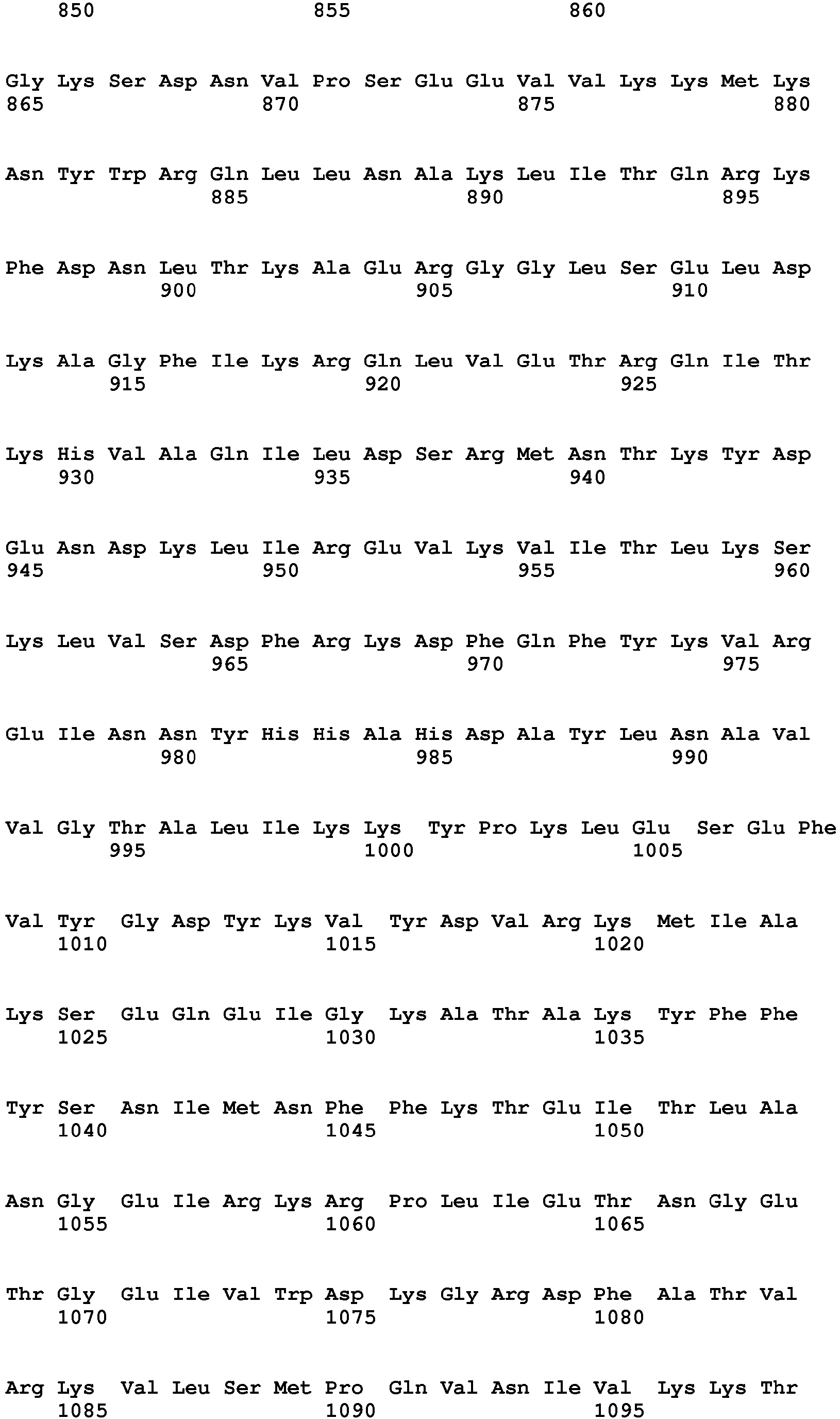


- <210> 4
<211> 166
<212> PRT
<213> artificial sequence - <220>
<223> description of artificial sequence: synthetic polypeptide - <220>
<223> RuvC domain of S. pyogenes Cas9 - <400> 4
165

- <210> 5
<211> 256
<212> PRT
<213> artificial sequence - <220>
<223> description of artificial sequence: synthetic polypeptide - <220>
<223> large version of HNH domain of S. pyogenes Cas9 - <400> 5


- <210> 6
- <211> 23
<212> DNA
<213> artificial sequence - <220>
<223> description of artificial sequence: synthetic polynucleotide - <220>
<223> Cas9 target TCR gene - <400> 6
gagaatcaaa atcggtgaat agg 23 - <210> 7
- <211> 23
<212> DNA
<213> artificial sequence - <220>
<223> description of artificial sequence: synthetic polynucleotide - <220>
<223> Cas9 target TCR gene - <400> 7
ttcaaaacct gtcagtgatt ggg 23 - <210> 8
- <211> 23
<212> DNA
<213> artificial sequence - <220>
<223> description of artificial sequence: synthetic polynucleotide - <220>
<223> Cas9 target TCR gene - <400> 8
tgtgctagac atgaggtcta tgg 23 - <210> 9
- <211> 23
<212> DNA
<213> artificial sequence - <220>
<223> description of artificial sequence: synthetic polynucleotide - <220>
<223> Cas9 target TCR gene - <400> 9
cgtcatgagc agattaaacc cgg 23 - <210> 10
- <211> 23
<212> DNA
<213> artificial sequence - <220>
<223> description of artificial sequence: synthetic polynucleotide - <220>
<223> Cas9 target TCR gene - <400> 10
tcagggttct ggatatctgt ggg 23 - <210> 11
- <211> 23
<212> DNA
<213> artificial sequence - <220>
<223> description of artificial sequence: synthetic polynucleotide - <220>
<223> Cas9 target TCR gene - <400> 11
gtcagggttc tggatatctg tgg 23 - <210> 12
- <211> 23
<212> DNA
<213> artificial sequence - <220>
<223> description of artificial sequence: synthetic polynucleotide - <220>
<223> Cas9 target TCR gene - <400> 12
ttcggaaccc aatcactgac agg 23 - <210> 13
- <211> 23
<212> DNA
<213> artificial sequence - <220>
<223> description of artificial sequence: synthetic polynucleotide - <220>
<223> Cas9 target TCR gene - <400> 13
taaacccggc cactttcagg agg 23 - <210> 14
- <211> 23
<212> DNA
<213> artificial sequence - <220>
<223> description of artificial sequence: synthetic polynucleotide - <220>
<223> Cas9 target TCR gene - <400> 14
aaagtcagat ttgttgctcc agg 23 - <210> 15
- <211> 23
<212> DNA
<213> artificial sequence - <220>
<223> description of artificial sequence: synthetic polynucleotide - <220>
<223> Cas9 target TCR gene - <400> 15
aacaaatgtg tcacaaagta agg 23 - <210> 16
- <211> 23
<212> DNA
<213> artificial sequence - <220>
<223> description of artificial sequence: synthetic polynucleotide - <220>
<223> Cas9 target TCR gene - <400> 16
tggatttaga gtctctcagc tgg 23 - <210> 17
- <211> 23
<212> DNA
<213> artificial sequence - <220>
<223> description of artificial sequence: synthetic polynucleotide - <220>
<223> Cas9 target TCR gene - <400> 17
taggcagaca gacttgtcac tgg 23 - <210> 18
- <211> 23
<212> DNA
<213> artificial sequence - <220>
<223> description of artificial sequence: synthetic polynucleotide - <220>
<223> Cas9 target TCR gene - <400> 18
agctggtaca cggcagggtc agg 23 - <210> 19
- <211> 23
<212> DNA
<213> artificial sequence - <220>
<223> description of artificial sequence: synthetic polynucleotide - <220>
<223> Cas9 target TCR gene - <400> 19
gctggtacac ggcagggtca ggg 23 - <210> 20
- <211> 23
<212> DNA
<213> artificial sequence - <220>
<223> description of artificial sequence: synthetic polynucleotide - <220>
<223> Cas9 target TCR gene - <400> 20
tctctcagct ggtacacggc agg 23 - <210> 21
- <211> 23
<212> DNA
<213> artificial sequence - <220>
<223> description of artificial sequence: synthetic polynucleotide - <220>
<223> Cas9 target TCR gene - <400> 21
tttcaaaacc tgtcagtgat tgg 23 - <210> 22
- <211> 23
<212> DNA
<213> artificial sequence - <220>
<223> description of artificial sequence: synthetic polynucleotide - <220>
<223> Cas9 target TCR gene - <400> 22
gattaaaccc ggccactttc agg 23 - <210> 23
- <211> 23
<212> DNA
<213> artificial sequence - <220>
<223> description of artificial sequence: synthetic polynucleotide - <220>
<223> Cas9 target TCR gene - <400> 23
ctcgaccagc ttgacatcac agg 23 - <210> 22
- <211> 24
<212> DNA
<213> artificial sequence - <220>
<223> description of artificial sequence: synthetic polynucleotide
<220>
<223> Cas9 target TCR gene - <400> 24
agagtctctc agctggtaca cgg 23 - <210> 25
- <211> 23
<212> DNA
<213> artificial sequence - <220>
<223> description of artificial sequence: synthetic polynucleotide - <220>
<223> Cas9 target TCR gene - <400> 25
ctctcagctg gtacacggca ggg 23 - <210> 26
- <211> 23
<212> DNA
<213> artificial sequence - <220>
<223> description of artificial sequence: synthetic polynucleotide - <220>
<223> Cas9 target TCR gene - <400> 26
aagttcctgt gatgtcaagc tgg 23 - <210> 27
- <211> 23
<212> DNA
<213> artificial sequence - <220>
<223> description of artificial sequence: synthetic polynucleotide - <220>
<223> Cas9 target TCR gene - <400> 27
atcctcctcc tgaaagtggc cgg 23 - <210> 28
- <211> 23
<212> DNA
<213> artificial sequence - <220>
<223> description of artificial sequence: synthetic polynucleotide
<220>
<223> Cas9 target TCR gene - <400> 28
tgctcatgac gctgcggctg tgg 23 - <210> 29
- <211> 23
<212> DNA
<213> artificial sequence - <220>
<223> description of artificial sequence: synthetic polynucleotide - <220>
<223> Cas9 target TCR gene - <400> 29
acaaaactgt gctagacatg agg 23 - <210> 30
- <211> 23
<212> DNA
<213> artificial sequence - <220>
<223> description of artificial sequence: synthetic polynucleotide - <220>
<223> Cas9 target TCR gene - <400> 30
atttgtttga gaatcaaaat cgg 23 - <210> 31
- <211> 23
<212> DNA
<213> artificial sequence - <220>
<223> description of artificial sequence: synthetic polynucleotide - <220>
<223> Cas9 target TCR gene - <400> 31
catcacagga actttctaaa agg 23 - <210> 32
- <211> 23
<212> DNA
<213> artificial sequence - <220>
<223> description of artificial sequence: synthetic polynucleotide - <220>
<223> Cas9 target TCR gene - <400> 32
gtcgagaaaa gctttgaaac agg 23 - <210> 33
- <211> 23
<212> DNA
<213> artificial sequence - <220>
<223> description of artificial sequence: synthetic polynucleotide - <220>
<223> Cas9 target TCR gene - <400> 33
ccactttcag gaggaggatt cgg 23 - <210> 34
- <211> 23
<212> DNA
<213> artificial sequence - <220>
<223> description of artificial sequence: synthetic polynucleotide - <220>
<223> Cas9 target TCR gene - <400> 34
ctgacaggtt ttgaaagttt agg 23 - <210> 35
- <211> 23
<212> DNA
<213> artificial sequence - <220>
<223> description of artificial sequence: synthetic polynucleotide - <220>
<223> Cas9 target TCR gene - <400> 35
agctttgaaa caggtaagac agg 23 - <210> 36
- <211> 23
<212> DNA
<213> artificial sequence
<220>
<223> description of artificial sequence: synthetic polynucleotide - <220>
<223> Cas9 target TCR gene - <400> 36
tggaataatg ctgttgttga agg 23 - <210> 37
- <211> 23
<212> DNA
<213> artificial sequence - <220>
<223> description of artificial sequence: synthetic polynucleotide - <220>
<223> Cas9 target TCR gene - <400> 37
agagcaacag tgctgtggcc tgg 23 - <210> 38
- <211> 23
<212> DNA
<213> artificial sequence - <220>
<223> description of artificial sequence: synthetic polynucleotide - <220>
<223> Cas9 target TCR gene - <400> 38
ctgtggtcca gctgaggtga ggg 23 - <210> 39
- <211> 23
<212> DNA
<213> artificial sequence - <220>
<223> description of artificial sequence: synthetic polynucleotide - <220>
<223> Cas9 target TCR gene - <400> 39
ctgcggctgt ggtccagctg agg 23 - <210> 40
- <211> 23
<212> DNA
<213> artificial sequence
<220>
<223> description of artificial sequence: synthetic polynucleotide - <220>
<223> Cas9 target TCR gene - <400> 40
tgtggtccag ctgaggtgag ggg 23 - <210> 41
- <211> 23
<212> DNA
<213> artificial sequence - <220>
<223> description of artificial sequence: synthetic polynucleotide - <220>
<223> Cas9 target TCR gene - <400> 41
cttcttcccc agcccaggta agg 23 - <210> 42
- <211> 23
<212> DNA
<213> artificial sequence - <220>
<223> description of artificial sequence: synthetic polynucleotide - <220>
<223> Cas9 target TCR gene - <400> 42
acacggcagg gtcagggttc tgg 23 - <210> 43
- <211> 23
<212> DNA
<213> artificial sequence - <220>
<223> description of artificial sequence: synthetic polynucleotide - <220>
<223> Cas9 target TCR gene - <400> 43
cttcaagagc aacagtgctg tgg 23 - <210> 44
- <211> 23
<212> DNA
<213> artificial sequence - <220>
<223> Cas9 target TCR gene - <220>
<223> description of artificial sequence: synthetic polynucleotide - <400> 44
ctggggaaga aggtgtcttc tgg 23 - <210> 45
- <211> 23
<212> DNA
<213> artificial sequence - <220>
<223> description of artificial sequence: synthetic polynucleotide - <220>
<223> Cas9 target TCR gene - <400> 45
tcctcctcct gaaagtggcc ggg 23 - <210> 46
- <211> 23
<212> DNA
<213> artificial sequence - <220>
<223> description of artificial sequence: synthetic polynucleotide - <220>
<223> Cas9 target TCR gene - <400> 46
ttaatctgct catgacgctg cgg 23 - <210> 47
- <211> 23
<212> DNA
<213> artificial sequence - <220>
<223> description of artificial sequence: synthetic polynucleotide - <220>
<223> Cas9 target TCR gene - <400> 47
acccggccac tttcaggagg agg 23 - <210> 48
- <211> 23
<212> DNA
<213> artificial sequence - <220>
<223> description of artificial sequence: synthetic polynucleotide - <220>
<223> Cas9 target TCR gene - <400> 48
ttcttcccca gcccaggtaa ggg 23 - <210> 49
- <211> 23
<212> DNA
<213> artificial sequence - <220>
<223> description of artificial sequence: synthetic polynucleotide - <220>
<223> Cas9 target TCR gene - <400> 49
cttacctggg ctggggaaga agg 23 - <210> 50
- <211> 23
<212> DNA
<213> artificial sequence - <220>
<223> description of artificial sequence: synthetic polynucleotide - <220>
<223> Cas9 target TCR gene - <400> 50
gacaccttct tccccagccc agg 23 - <210> 51
- <211> 23
<212> DNA
<213> artificial sequence - <220>
<223> description of artificial sequence: synthetic polynucleotide - <220>
<223> Cas9 target TCR gene - <400> 51
gctgtggtcc agctgaggtg agg 23 - <210> 52
<211> 23
<212> DNA
<213> artificial sequence - <220>
<223> description of artificial sequence: synthetic polynucleotide - <220>
<223> Cas9 target TCR gene - <400> 52
ccgaatcctc ctcctgaaag tgg 23 - <210> 53
- <211> 1410
<212> PRT
<213> artificial sequence - <220>
<223> description of artificial sequence: synthetic polypeptide - <220>
<223> Cas9 encoded by pCLS22972 - <400> 53
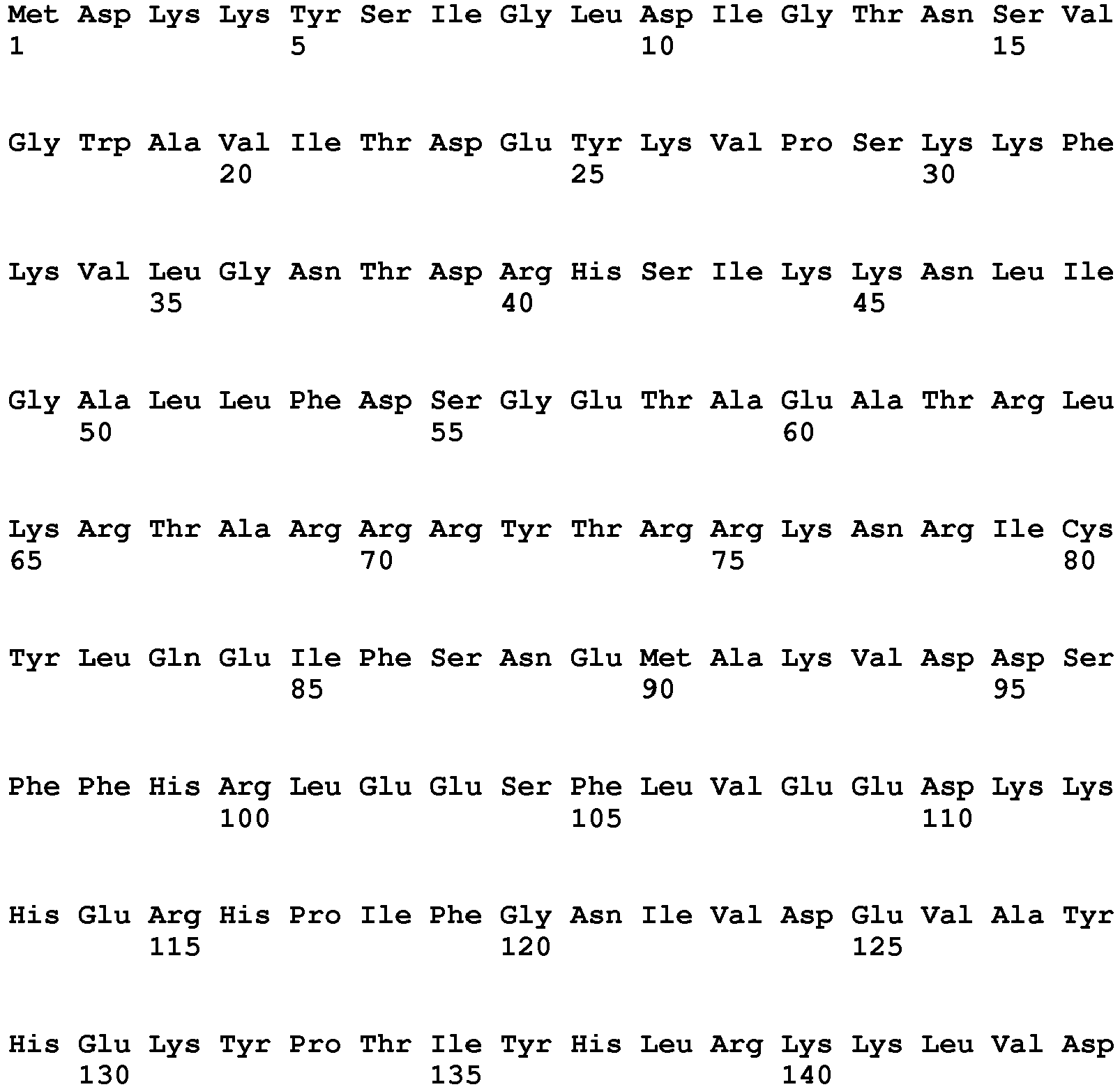


 Ala Asp
1410 - <210> 54
- <211> 20
<212> DNA
<213> artificial sequence - <220>
<223> Target TCRa - <400> 54
gtcagggttc tggatatctg 20 - <210> 55
- <211> 20
<212> DNA
<213> artificial sequence - <220>
<223> Target CD52 - <400> 55
ggaggctgat ggtgagtagg 20 - <210> 56
- <211> 496
<212> DNA
<213> artificial sequence - <220>
<223> description of artificial sequence: synthetic polynucleotide - <220>
<223> gRNA TCRa pCLS24029 - <400> 56

- <210> 57
- <211> 496
<212> DNA
<213> artificial sequence - <220>
<223> description of artificial sequence: synthetic polynucleotide
<220>
<223> gRNA CD52 pCLS24027 - <400> 57

| | | | ||||||||||
| Cytopulse program | Pulses | V | duration (ms) | Interval (ms) | Pulses | V | duration (ms) | Interval (ms) | Pulses | V | duration (ms) | Interval (ms) |
| 1 | 1 | 600 | 0.1 | 0.2 | 1 | 600 | 0.1 | 100 | 4 | 130 | 0.2 | 2 |
| 2 | 1 | 900 | 0.1 | 0.2 | 1 | 900 | 0.1 | 100 | 4 | 130 | 0.2 | 2 |
| 3 | 1 | 1200 | 0.1 | 0.2 | 1 | 1200 | 0.1 | 100 | 4 | 130 | 0.2 | 2 |
| 4 | 1 | 1200 | 0.1 | 10 | 1 | 900 | 0.1 | 100 | 4 | 130 | 0.2 | 2 |
| 5 | 1 | 900 | 0.1 | 20 | 1 | 600 | 0.1 | 100 | 4 | 130 | 0.2 | 2 |
Claims (28)
- A method of preparing T-cells for immunotherapy comprising the steps of:(a) Genetically modifying T-cells by introduction into the cells and/or expression in the cells of at least:- a RNA-guided endonuclease; and- a specific guide RNA that directs said endonuclease to at least one targeted locus in the T-cell genome,wherein said RNA-guided endonuclease is expressed from transfected mRNA, and said guide RNA is expressed in the cells as a transcript from a DNA vector;(b) expanding the resulting cells in vitro.
- A method according to claim 1, wherein said RNA-guided endonuclease comprises an amino acid sequence displaying at least 80 % amino acid sequence identity with the RuvC or HNH domains from Cas9 of S. Pyogenes (SEQ ID NO.1 or SEQ ID NO.2).
- A method according to claim 1 or 2, wherein RNA-guided endonuclease is Cas9.
- A method according to claim 2, wherein the RNA-guided endonuclease is split into at least 2 polypeptides, one comprising RuvC and another comprising HNH.
- A method according to claim 4, wherein RNA-guided endonuclease is expressed in a stabilized or inactive form, which is made active upon activation by an enzyme produced by the T-cell or destabilization of its polypeptide structure inside the T-cell.
- A method according to any one of claims 1 to 5, wherein the guide-RNA is expressed from a plasmid DNA.
- A method according to any one of claims 1 to 6, wherein said transfected mRNA is stabilized by including modified nucleic acid bases or polyadenylation sequences.
- A method according to any one of claims 1 to 6, wherein said transfected mRNA is stabilized by adjunction of ARCA (Anti-Reverse Cap Analog).
- A method according to any one of claims 1 to 6, wherein said transfected mRNA is stabilized by adjunction of 5' or 3' UTR.
- A method according to any one of claims 1 to 9, wherein said transfected mRNA is coupled with at least one cell-penetrating peptide.
- A method according to claim 10, wherein said cell- penetrating peptide is selected from penetratin, TAT, polyarginine peptide, pVEC, MPG, Transportan, Guanidium rich molecular transporter.
- A method according to claim 11, wherein said penetrating peptides comprises the amino acid sequences selected from RQIRIWFQNRRMRWRR ; RQIRIWFQNRRMRWRRC and/or RQIKIWFQNRRMKWKKC.
- A method according to any one of claims 1 to 12, wherein said mRNA is introduced into the cells by electroporation.
- A method according to claim 1 wherein said DNA vector is an episomal vector.
- A method according to claim 1, wherein said DNA vector comprises a U6 promoter for more efficient transcription of said guide RNA in the T-cells.
- A method according to claim 1, wherein said endonuclease RNA is transfected using liposomal vectors.
- A method according to any one of claims 1 to 16, wherein at least one targeted locus encodes a component of the T-cell receptor (TCR).
- A method according to claim 17, further comprising the step of sorting the transformed T-cells which do not express TCR on their cell surface.
- A method according to claim 17, wherein said component of the T-cell receptor is TCRα.
- A method according to claim 19, wherein said guide RNA specifically hybridizes a target sequence of TCRα selected from SEQ ID NO 6 to SEQ ID NO. 52 listed in Table 2.
- A method according to any one of claims 1 to 16, wherein at least one locus targeted by said RNA-guided endonuclease and guide RNA encodes an immune checkpoint protein selected from CTLA4, PPP2CA, PPP2CB, PTPN6, PTPN22, PDCD1, LAG3, HAVCR2, BTLA, CD160, TIGIT, CD96, CRTAM, LAIR1, SIGLEC7, SIGLEC9, CD244, TNFRSF10B, TNFRSF10A, CASP8, CASP10, CASP3, CASP6, CASP7, FADD, FAS, TGFBRII, TGFRBRI, SMAD2, SMAD3, SMAD4, SMAD10, SKI, SKIL, TGIF1, IL10RA, IL10RB, HMOX2, IL6R, IL6ST, EIF2AK4, CSK, PAG1, SIT1, FOXP3, PRDM1, BATF, GUCY1A2, GUCY1A3, GUCY1 B2 and GUCY1 B3.
- A method according to claim 20, wherein said locus targeted by said RNA-guided endonuclease and guide RNA encodes PD1 or CTLA-4.
- A method according to any one of claims 1 to 16, wherein at least one locus targeted by said RNA-guided endonuclease and guide RNA is a drug-sensitizing gene or a gene expressing a target for an immunosuppressive agent.
- The method according to claim 23, wherein said targeted locus is CD52, hypoxanthine-guanine phosphoribosyltransferase (HPRT) or a glucocorticoid receptor (GR).
- A method according to any one of claims 1 to 24, wherein homologous recombination is induced at said targeted locus to introduce an exogenous DNA or a mutation into the T-cell genome.
- A method according to any one of claims 1 to 25, further comprising introducing into said T-cells a chimeric antigen receptor (CAR).
- A method according to any one of claims 1 to 26, wherein said T-cells in step a) are derived from inflammatory T-lymphocytes, cytotoxic T-lymphocytes, regulatory T-lymphocytes or helper T-lymphocytes.
- The method according to claim 27, wherein said T-cells in step a) are derived from CD4+ T-lymphocytes and/or CD8+ T-lymphocytes.
Priority Applications (2)
| Application Number | Priority Date | Filing Date | Title |
|---|---|---|---|
| DK17183472.4T DK3309248T3 (en) | 2013-05-29 | 2014-04-01 | Method for manipulating T cells for immunotherapy using an RNA-guided CAS nuclease system |
| EP17183472.4A EP3309248B1 (en) | 2013-05-29 | 2014-04-01 | Methods for engineering t cells for immunotherapy by using rna-guided cas nuclease system |
Applications Claiming Priority (7)
| Application Number | Priority Date | Filing Date | Title |
|---|---|---|---|
| DKPA201370297 | 2013-05-29 | ||
| US201361888259P | 2013-10-08 | 2013-10-08 | |
| US201361907874P | 2013-11-22 | 2013-11-22 | |
| US201361907858P | 2013-11-22 | 2013-11-22 | |
| DKPA201370771 | 2013-12-13 | ||
| EP2014051458 | 2014-01-24 | ||
| PCT/EP2014/056534 WO2014191128A1 (en) | 2013-05-29 | 2014-04-01 | Methods for engineering t cells for immunotherapy by using rna-guided cas nuclease system |
Related Child Applications (1)
| Application Number | Title | Priority Date | Filing Date |
|---|---|---|---|
| EP17183472.4A Division EP3309248B1 (en) | 2013-05-29 | 2014-04-01 | Methods for engineering t cells for immunotherapy by using rna-guided cas nuclease system |
Publications (2)
| Publication Number | Publication Date |
|---|---|
| EP3004337A1 EP3004337A1 (en) | 2016-04-13 |
| EP3004337B1 true EP3004337B1 (en) | 2017-08-02 |
Family
ID=51988043
Family Applications (2)
| Application Number | Title | Priority Date | Filing Date |
|---|---|---|---|
| EP14714278.0A Active EP3004337B1 (en) | 2013-05-29 | 2014-04-01 | Methods for engineering t cells for immunotherapy by using rna-guided cas nuclease system |
| EP17183472.4A Active EP3309248B1 (en) | 2013-05-29 | 2014-04-01 | Methods for engineering t cells for immunotherapy by using rna-guided cas nuclease system |
Family Applications After (1)
| Application Number | Title | Priority Date | Filing Date |
|---|---|---|---|
| EP17183472.4A Active EP3309248B1 (en) | 2013-05-29 | 2014-04-01 | Methods for engineering t cells for immunotherapy by using rna-guided cas nuclease system |
Country Status (8)
| Country | Link |
|---|---|
| US (1) | US9890393B2 (en) |
| EP (2) | EP3004337B1 (en) |
| JP (1) | JP6608807B2 (en) |
| AU (1) | AU2014273490B2 (en) |
| CA (1) | CA2913830C (en) |
| DK (2) | DK3004337T3 (en) |
| ES (1) | ES2645393T3 (en) |
| WO (1) | WO2014191128A1 (en) |
Cited By (11)
| Publication number | Priority date | Publication date | Assignee | Title |
|---|---|---|---|---|
| US10166255B2 (en) | 2015-07-31 | 2019-01-01 | Regents Of The University Of Minnesota | Intracellular genomic transplant and methods of therapy |
| CN109652378A (en) * | 2018-12-29 | 2019-04-19 | 广州百暨基因科技有限公司 | A kind of universal CAR-T cell and its preparation method and application of function enhancing |
| US10799535B2 (en) | 2015-10-05 | 2020-10-13 | Precision Biosciences, Inc. | Engineered meganucleases with recognition sequences found in the human T cell receptor alpha constant region gene |
| US10912797B2 (en) | 2016-10-18 | 2021-02-09 | Intima Bioscience, Inc. | Tumor infiltrating lymphocytes and methods of therapy |
| CN112739817A (en) * | 2018-09-21 | 2021-04-30 | 佧珐药业有限公司 | T cells expressing chimeric receptors |
| US11098325B2 (en) | 2017-06-30 | 2021-08-24 | Intima Bioscience, Inc. | Adeno-associated viral vectors for gene therapy |
| US11268065B2 (en) | 2015-10-05 | 2022-03-08 | Precision Biosciences, Inc. | Genetically-modified cells comprising a modified human T cell receptor alpha constant region gene |
| US11345932B2 (en) | 2018-05-16 | 2022-05-31 | Synthego Corporation | Methods and systems for guide RNA design and use |
| US11377637B2 (en) | 2016-04-15 | 2022-07-05 | Memorial Sloan Kettering Cancer Center | Transgenic T cell and chimeric antigen receptor T cell compositions and related methods |
| US11786554B2 (en) | 2018-04-12 | 2023-10-17 | Precision Biosciences, Inc. | Optimized engineered nucleases having specificity for the human T cell receptor alpha constant region gene |
| US12448613B2 (en) | 2017-06-30 | 2025-10-21 | Precision Biosciences, Inc. | Genetically-modified T cells comprising a modified intron in the T cell receptor alpha gene |
Families Citing this family (340)
| Publication number | Priority date | Publication date | Assignee | Title |
|---|---|---|---|---|
| US10323236B2 (en) | 2011-07-22 | 2019-06-18 | President And Fellows Of Harvard College | Evaluation and improvement of nuclease cleavage specificity |
| WO2014100615A1 (en) | 2012-12-20 | 2014-06-26 | Purdue Research Foundation | Chimeric antigen receptor-expressing t cells as anti-cancer therapeutics |
| HRP20181648T1 (en) | 2013-04-16 | 2019-01-25 | Regeneron Pharmaceuticals, Inc. | TARGET GENOMIC TARGET MODIFICATION |
| ES2883131T3 (en) | 2013-05-29 | 2021-12-07 | Cellectis | Methods for modifying T cells for immunotherapy using the RNA-guided CAS nuclease system |
| US9163284B2 (en) | 2013-08-09 | 2015-10-20 | President And Fellows Of Harvard College | Methods for identifying a target site of a Cas9 nuclease |
| US9359599B2 (en) | 2013-08-22 | 2016-06-07 | President And Fellows Of Harvard College | Engineered transcription activator-like effector (TALE) domains and uses thereof |
| US9526784B2 (en) | 2013-09-06 | 2016-12-27 | President And Fellows Of Harvard College | Delivery system for functional nucleases |
| US9322037B2 (en) | 2013-09-06 | 2016-04-26 | President And Fellows Of Harvard College | Cas9-FokI fusion proteins and uses thereof |
| US9340799B2 (en) | 2013-09-06 | 2016-05-17 | President And Fellows Of Harvard College | MRNA-sensing switchable gRNAs |
| EP3842528A1 (en) | 2013-09-18 | 2021-06-30 | Kymab Limited | Methods, cells and organisms |
| US10584358B2 (en) | 2013-10-30 | 2020-03-10 | North Carolina State University | Compositions and methods related to a type-II CRISPR-Cas system in Lactobacillus buchneri |
| WO2015070083A1 (en) | 2013-11-07 | 2015-05-14 | Editas Medicine,Inc. | CRISPR-RELATED METHODS AND COMPOSITIONS WITH GOVERNING gRNAS |
| CA2929181A1 (en) | 2013-11-13 | 2015-05-21 | Novartis Ag | Mtor inhibitors for enhancing the immune response |
| US10801070B2 (en) | 2013-11-25 | 2020-10-13 | The Broad Institute, Inc. | Compositions and methods for diagnosing, evaluating and treating cancer |
| US11725237B2 (en) | 2013-12-05 | 2023-08-15 | The Broad Institute Inc. | Polymorphic gene typing and somatic change detection using sequencing data |
| MX388127B (en) | 2013-12-11 | 2025-03-19 | Regeneron Pharma | METHODS AND COMPOSITIONS FOR THE TARGETED MODIFICATION OF A GENOME. |
| US20150165054A1 (en) | 2013-12-12 | 2015-06-18 | President And Fellows Of Harvard College | Methods for correcting caspase-9 point mutations |
| KR20160097327A (en) | 2013-12-12 | 2016-08-17 | 더 브로드 인스티튜트, 인코퍼레이티드 | Crispr-cas systems and methods for altering expression of gene products, structural information and inducible modular cas enzymes |
| AU2014368898B2 (en) | 2013-12-20 | 2020-06-11 | Dana-Farber Cancer Institute, Inc. | Combination therapy with neoantigen vaccine |
| US10787654B2 (en) | 2014-01-24 | 2020-09-29 | North Carolina State University | Methods and compositions for sequence guiding Cas9 targeting |
| CN111705365B (en) | 2014-02-11 | 2024-12-17 | 科罗拉多州立大学董事会(法人团体) | CRISPR supported multiplex genome engineering |
| PL3105317T3 (en) | 2014-02-14 | 2019-02-28 | Cellectis | IMMUNOTHERAPY CELLS DESIGNED FOR TARGETING PRESENT ANTIGENES BOTH ON IMMUNE CELLS AND PATHOLOGICAL CELLS |
| US11439712B2 (en) | 2014-04-08 | 2022-09-13 | North Carolina State University | Methods and compositions for RNA-directed repression of transcription using CRISPR-associated genes |
| EP3129473B8 (en) | 2014-04-11 | 2020-12-23 | Cellectis | Method for generating immune cells resistant to arginine and/or tryptophan depleted microenvironment |
| JP2017513477A (en) * | 2014-04-14 | 2017-06-01 | マックスサイト インコーポレーティッド | Methods and compositions for modifying genomic DNA |
| JP2017513485A (en) * | 2014-04-18 | 2017-06-01 | エディタス・メディシン,インコーポレイテッド | CRISPR-CAS related methods, compositions and components for cancer immunotherapy |
| CA2954414A1 (en) | 2014-07-15 | 2016-01-21 | Juno Therapeutics, Inc. | Engineered cells for adoptive cell therapy |
| US10077453B2 (en) | 2014-07-30 | 2018-09-18 | President And Fellows Of Harvard College | CAS9 proteins including ligand-dependent inteins |
| EP3186375A4 (en) | 2014-08-28 | 2019-03-13 | North Carolina State University | NEW CAS9 PROTEINS AND GUIDING ELEMENTS FOR DNA TARGETING AND THE GENOME EDITION |
| ES2983094T3 (en) | 2014-10-31 | 2024-10-21 | Univ Pennsylvania | Alteration of gene expression in CAR-T cells and their uses |
| EP3025719B1 (en) | 2014-11-26 | 2018-09-26 | Miltenyi Biotec GmbH | Combination immunotherapy of antigen-recognizing receptors and hematopoietic cells for the treatment of diseases |
| GB201421096D0 (en) * | 2014-11-27 | 2015-01-14 | Imp Innovations Ltd | Genome editing methods |
| KR102763527B1 (en) | 2014-12-03 | 2025-02-05 | 애질런트 테크놀로지스, 인크. | Guide rna with chemical modifications |
| SG10201901707QA (en) | 2014-12-05 | 2019-03-28 | Memorial Sloan Kettering Cancer Center | Antibodies targeting b-cell maturation antigen and methods of use |
| WO2016090329A2 (en) | 2014-12-05 | 2016-06-09 | Memorial Sloan-Kettering Cancer Center | Antibodies targeting g-protein coupled receptor and methods of use |
| HUE057777T2 (en) * | 2014-12-05 | 2022-06-28 | Memorial Sloan Kettering Cancer Center | Chimeric antigen receptors targeting g-protein coupled receptor and uses thereof |
| CA2969870A1 (en) | 2014-12-05 | 2016-06-09 | Memorial Sloan-Kettering Cancer Center | Chimeric antigen receptors targeting b-cell maturation antigen and uses thereof |
| MY192062A (en) | 2014-12-05 | 2022-07-25 | Memorial Sloan Kettering Cancer Center | Chimeric antigen receptors targeting fc receptor-like 5 and uses thereof |
| EP3233095A2 (en) * | 2014-12-17 | 2017-10-25 | Cellectis | INHIBITORY CHIMERIC ANTIGEN RECEPTOR (iCAR OR N-CAR) EXPRESSING NON-T CELL TRANSDUCTION DOMAIN |
| US20190054117A1 (en) * | 2014-12-19 | 2019-02-21 | Novartis Ag | Dimerization switches and uses thereof |
| US10975442B2 (en) | 2014-12-19 | 2021-04-13 | Massachusetts Institute Of Technology | Molecular biomarkers for cancer immunotherapy |
| US10993997B2 (en) | 2014-12-19 | 2021-05-04 | The Broad Institute, Inc. | Methods for profiling the t cell repertoire |
| ES2869972T3 (en) * | 2015-01-26 | 2021-10-26 | Cellectis | MAb-Targeted Chimeric Antigen Receptor Systems for Sorting / Depleting Genomanipulated Immune Cells |
| SG11201706059SA (en) * | 2015-01-30 | 2017-08-30 | Univ California | Protein delivery in primary hematopoietic cells |
| WO2016124765A1 (en) * | 2015-02-06 | 2016-08-11 | Cellectis | Primary hematopoietic cells genetically engineered by slow release of nucleic acids using nanoparticles |
| SG11201706236SA (en) | 2015-02-06 | 2017-08-30 | Nat Univ Singapore | Methods for enhancing efficacy of therapeutic immune cells |
| US10676726B2 (en) | 2015-02-09 | 2020-06-09 | Duke University | Compositions and methods for epigenome editing |
| US20180245073A1 (en) * | 2015-02-23 | 2018-08-30 | Voyager Therapeutics, Inc. | Regulatable expression using adeno-associated virus (aav) |
| CA2978840A1 (en) * | 2015-03-11 | 2016-09-15 | Cellectis | Methods for engineering allogeneic t cell to increase their persistence and/or engraftment into patients |
| JP2018510657A (en) * | 2015-03-27 | 2018-04-19 | プレジデント アンド フェローズ オブ ハーバード カレッジ | Modified T cells and methods of making and using the same |
| CN108124453B (en) * | 2015-03-31 | 2022-04-05 | 爱克莱根科技公司 | Cas9 retroviral integrase and Cas9 recombinase system for targeted incorporation of DNA sequences into the genome of a cell or organism |
| ES2884838T3 (en) | 2015-04-06 | 2021-12-13 | Univ Leland Stanford Junior | Chemically modified guide RNA for CRISPR / CAS-mediated gene regulation |
| CN107980046B (en) | 2015-04-13 | 2021-12-24 | 辉瑞公司 | Chimeric antigen receptors targeting B cell maturation antigens |
| EP3284749B1 (en) * | 2015-04-13 | 2024-08-14 | The University of Tokyo | Set of polypeptides exhibiting nuclease activity or nickase activity with dependence on light or in presence of drug or suppressing or activating expression of target gene |
| CN107980059B (en) * | 2015-04-13 | 2022-11-11 | 美克斯细胞有限公司 | Methods and compositions for modifying genomic DNA |
| CA2988854A1 (en) | 2015-05-08 | 2016-11-17 | President And Fellows Of Harvard College | Universal donor stem cells and related methods |
| SG10201914069SA (en) | 2015-05-18 | 2020-03-30 | Tcr2 Therapeutics Inc | Compositions and methods for tcr reprogramming using fusion proteins |
| PE20180670A1 (en) | 2015-05-20 | 2018-04-19 | Broad Inst Inc | SHARED NEOANTIGENS |
| MX2017014776A (en) | 2015-05-20 | 2018-02-15 | Novartis Ag | Pharmaceutical combination of everolimus with dactolisib. |
| KR20220139447A (en) | 2015-05-29 | 2022-10-14 | 노쓰 캐롤라이나 스테이트 유니버시티 | Methods for screening bacteria, archaea, algae, and yeast using crispr nucleic acids |
| WO2016196388A1 (en) * | 2015-05-29 | 2016-12-08 | Juno Therapeutics, Inc. | Composition and methods for regulating inhibitory interactions in genetically engineered cells |
| US11155823B2 (en) | 2015-06-15 | 2021-10-26 | North Carolina State University | Methods and compositions for efficient delivery of nucleic acids and RNA-based antimicrobials |
| CA2989831A1 (en) | 2015-06-17 | 2016-12-22 | The Uab Research Foundation | Crispr/cas9 complex for genomic editing |
| CA2989858A1 (en) * | 2015-06-17 | 2016-12-22 | The Uab Research Foundation | Crispr/cas9 complex for introducing a functional polypeptide into cells of blood cell lineage |
| EP3310395A4 (en) * | 2015-06-18 | 2019-05-22 | Robert D. Bowles | Rna-guided transcriptional regulation and methods of using the same for the treatment of back pain |
| AU2016279062A1 (en) | 2015-06-18 | 2019-03-28 | Omar O. Abudayyeh | Novel CRISPR enzymes and systems |
| AU2016285724A1 (en) | 2015-06-29 | 2017-11-16 | Ionis Pharmaceuticals, Inc. | Modified CRISPR RNA and modified single CRISPR RNA and uses thereof |
| MA42895A (en) * | 2015-07-15 | 2018-05-23 | Juno Therapeutics Inc | MODIFIED CELLS FOR ADOPTIVE CELL THERAPY |
| US20170020922A1 (en) * | 2015-07-16 | 2017-01-26 | Batu Biologics Inc. | Gene editing for immunological destruction of neoplasia |
| WO2017015637A1 (en) | 2015-07-22 | 2017-01-26 | Duke University | High-throughput screening of regulatory element function with epigenome editing technologies |
| AU2016307050A1 (en) | 2015-08-11 | 2018-02-15 | Cellectis | Cells for immunotherapy engineered for targeting CD38 antigen and for CD38 gene inactivation |
| KR20240132120A (en) | 2015-08-25 | 2024-09-02 | 듀크 유니버시티 | Compositions and methods of improving specificity in genomic engineering using rna-guided endonucleases |
| WO2017040324A1 (en) * | 2015-08-28 | 2017-03-09 | The Trustees Of The University Of Pennsylvania | Methods and compositions for cells expressing a chimeric intracellular signaling molecule |
| US11091780B2 (en) | 2015-09-18 | 2021-08-17 | The Regents Of The University Of California | Methods for autocatalytic genome editing and neutralizing autocatalytic genome editing and compositions thereof |
| EP3349797A4 (en) | 2015-09-18 | 2019-06-12 | The General Hospital Corporation Dba Massachusetts General Hospital | LOCALIZED DELIVERY OF ANTICHIMIOREPULSION AGENT FOR THE TREATMENT OF CANCER |
| US11286480B2 (en) | 2015-09-28 | 2022-03-29 | North Carolina State University | Methods and compositions for sequence specific antimicrobials |
| EP3356520B1 (en) | 2015-10-02 | 2022-03-23 | The U.S.A. as represented by the Secretary, Department of Health and Human Services | Lentiviral protein delivery system for rna-guided genome editing |
| US12241053B2 (en) | 2015-10-09 | 2025-03-04 | The Brigham And Women's Hospital, Inc. | Modulation of novel immune checkpoint targets |
| EP4089175A1 (en) | 2015-10-13 | 2022-11-16 | Duke University | Genome engineering with type i crispr systems in eukaryotic cells |
| AU2016340078A1 (en) * | 2015-10-16 | 2018-04-12 | Temple University - Of The Commonwealth System Of Higher Education | Methods and compositions utilizing Cpf1 for RNA-guided gene editing |
| CN108290939B (en) | 2015-10-16 | 2023-01-13 | 纽约市哥伦比亚大学理事会 | Compositions and methods for inhibiting lineage specific antigens |
| WO2017070429A1 (en) * | 2015-10-22 | 2017-04-27 | Regents Of The University Of Minnesota | Methods involving editing polynucleotides that encode t cell receptor |
| US10167457B2 (en) | 2015-10-23 | 2019-01-01 | President And Fellows Of Harvard College | Nucleobase editors and uses thereof |
| WO2017075465A1 (en) | 2015-10-28 | 2017-05-04 | The Broad Institute Inc. | Compositions and methods for evaluating and modulating immune responses by detecting and targeting gata3 |
| WO2017075478A2 (en) | 2015-10-28 | 2017-05-04 | The Broad Institute Inc. | Compositions and methods for evaluating and modulating immune responses by use of immune cell gene signatures |
| WO2017075451A1 (en) | 2015-10-28 | 2017-05-04 | The Broad Institute Inc. | Compositions and methods for evaluating and modulating immune responses by detecting and targeting pou2af1 |
| AU2016349280B2 (en) * | 2015-11-04 | 2023-10-05 | The Trustees Of The University Of Pennsylvania | Methods and compositions for gene editing in hematopoietic stem cells |
| US11001622B2 (en) | 2015-11-19 | 2021-05-11 | The Brigham And Women's Hospital, Inc. | Method of treating autoimmune disease with lymphocyte antigen CD5-like (CD5L) protein |
| MX2018006767A (en) * | 2015-12-04 | 2019-03-14 | Novartis Ag | COMPOSITIONS AND METHODS FOR IMMUNOLOGICAL ONCOLOGY. |
| EP3383913A4 (en) | 2015-12-04 | 2019-10-30 | Memorial Sloan-Kettering Cancer Center | ANTIBODIES TARGETING FC 5 RECEPTOR TYPE PROTEIN AND METHODS OF USE |
| AU2016369490C1 (en) * | 2015-12-18 | 2021-12-23 | Sangamo Therapeutics, Inc. | Targeted disruption of the T cell receptor |
| WO2017112620A1 (en) | 2015-12-22 | 2017-06-29 | North Carolina State University | Methods and compositions for delivery of crispr based antimicrobials |
| CN106967685B (en) * | 2016-01-13 | 2020-06-02 | 北京马力喏生物科技有限公司 | Transgenic lymphocytes co-expressing anti-EGFRvIII chimeric antigen receptors and immune checkpoint inhibitory molecules and uses thereof |
| CN106967681B (en) * | 2016-01-13 | 2020-06-05 | 北京马力喏生物科技有限公司 | Therapeutic composition for the treatment of brain glioblastoma |
| US10259876B2 (en) | 2016-01-21 | 2019-04-16 | Pfizer Inc. | Chimeric antigen receptors targeting epidermal growth factor receptor variant III |
| SG11201807538PA (en) * | 2016-03-04 | 2018-09-27 | Editas Medicine Inc | Crispr-cpf1-related methods, compositions and components for cancer immunotherapy |
| EP3219799A1 (en) | 2016-03-17 | 2017-09-20 | IMBA-Institut für Molekulare Biotechnologie GmbH | Conditional crispr sgrna expression |
| WO2017177137A1 (en) * | 2016-04-07 | 2017-10-12 | Bluebird Bio, Inc. | Chimeric antigen receptor t cell compositions |
| EP3439675A4 (en) | 2016-04-08 | 2019-12-18 | Purdue Research Foundation | METHODS AND COMPOSITIONS FOR T CAR LYMPHOCYTE THERAPY |
| US20190127713A1 (en) | 2016-04-13 | 2019-05-02 | Duke University | Crispr/cas9-based repressors for silencing gene targets in vivo and methods of use |
| US10894093B2 (en) * | 2016-04-15 | 2021-01-19 | Cellectis | Method of engineering drug-specific hypersensitive t-cells for immunotherapy by gene inactivation |
| EP3446119A1 (en) | 2016-04-18 | 2019-02-27 | The Broad Institute Inc. | Improved hla epitope prediction |
| CN107304434A (en) * | 2016-04-25 | 2017-10-31 | 上海宇玫博生物科技有限公司 | A kind of difunctional novel carriers of immune cell therapy |
| WO2017193107A2 (en) * | 2016-05-06 | 2017-11-09 | Juno Therapeutics, Inc. | Genetically engineered cells and methods of making the same |
| US10767175B2 (en) | 2016-06-08 | 2020-09-08 | Agilent Technologies, Inc. | High specificity genome editing using chemically modified guide RNAs |
| US10017760B2 (en) | 2016-06-24 | 2018-07-10 | Inscripta, Inc. | Methods for generating barcoded combinatorial libraries |
| US11466291B2 (en) | 2016-07-06 | 2022-10-11 | Cellectis | Sequential gene editing in primary immune cells |
| JP7490211B2 (en) | 2016-07-19 | 2024-05-27 | デューク ユニバーシティ | Therapeutic Applications of CPF1-Based Genome Editing |
| CN109715668A (en) | 2016-08-02 | 2019-05-03 | T细胞受体治疗公司 | For using fusion protein to carry out the composition and method of TCR reprogramming |
| WO2018027036A1 (en) | 2016-08-03 | 2018-02-08 | Dipersio John F | Gene editing of car-t cells for the treatment of t cell malignancies with chimeric antigen receptors |
| US11078481B1 (en) | 2016-08-03 | 2021-08-03 | KSQ Therapeutics, Inc. | Methods for screening for cancer targets |
| KR20250103795A (en) | 2016-08-03 | 2025-07-07 | 프레지던트 앤드 펠로우즈 오브 하바드 칼리지 | Adenosine nucleobase editors and uses thereof |
| EP3497214B1 (en) | 2016-08-09 | 2023-06-28 | President and Fellows of Harvard College | Programmable cas9-recombinase fusion proteins and uses thereof |
| WO2018031762A1 (en) * | 2016-08-10 | 2018-02-15 | Duke University | Compositions, systems and methods for programming immune cell function through targeted gene regulation |
| CN109844118B (en) | 2016-08-12 | 2024-08-27 | 株式会社图尔金 | Manipulated immune modulators and altered immunity therefrom |
| WO2018035364A1 (en) | 2016-08-17 | 2018-02-22 | The Broad Institute Inc. | Product and methods useful for modulating and evaluating immune responses |
| WO2018039438A1 (en) | 2016-08-24 | 2018-03-01 | President And Fellows Of Harvard College | Incorporation of unnatural amino acids into proteins using base editing |
| US11078483B1 (en) | 2016-09-02 | 2021-08-03 | KSQ Therapeutics, Inc. | Methods for measuring and improving CRISPR reagent function |
| WO2018049025A2 (en) | 2016-09-07 | 2018-03-15 | The Broad Institute Inc. | Compositions and methods for evaluating and modulating immune responses |
| EP3512541A1 (en) | 2016-09-14 | 2019-07-24 | Janssen Biotech, Inc. | Chimeric antigen receptors comprising bcma-specific fibronectin type iii domains and uses thereof |
| WO2018064208A1 (en) | 2016-09-28 | 2018-04-05 | The Broad Institute, Inc. | Systematic screening and mapping of regulatory elements in non-coding genomic regions, methods, compositions, and applications thereof |
| EP3519433A1 (en) | 2016-10-03 | 2019-08-07 | Juno Therapeutics, Inc. | Hpv-specific binding molecules |
| US12447213B2 (en) | 2016-10-07 | 2025-10-21 | The Broad Institute, Inc. | Modulation of novel immune checkpoint targets |
| EP3848392A1 (en) | 2016-10-07 | 2021-07-14 | TCR2 Therapeutics Inc. | Compositions and methods for tcr reprogramming using fusion proteins |
| AU2017342543B2 (en) | 2016-10-14 | 2024-06-27 | President And Fellows Of Harvard College | AAV delivery of nucleobase editors |
| JP7274416B2 (en) * | 2016-10-19 | 2023-05-16 | セレクティス | Targeted gene insertion for improved immune cell therapy |
| WO2018073393A2 (en) | 2016-10-19 | 2018-04-26 | Cellectis | Tal-effector nuclease (talen) -modified allogenic cells suitable for therapy |
| US20230138915A1 (en) * | 2016-10-19 | 2023-05-04 | Cellectis | TAL- effector nuclease (TALEN) -MODIFIED ALLOGENIC CELLS SUITABLE FOR THERAPY |
| WO2018073391A1 (en) * | 2016-10-19 | 2018-04-26 | Cellectis | Targeted gene insertion for improved immune cells therapy |
| WO2018073394A1 (en) | 2016-10-19 | 2018-04-26 | Cellectis | Cell death inducing chimeric antigen receptors |
| WO2018080541A1 (en) | 2016-10-31 | 2018-05-03 | Seattle Children's Hospital (dba Seattle Children's Research Institute) | Method for treating autoimmune disease using cd4 t-cells with engineered stabilization of expression of endogennous foxp3 gene |
| DK3321280T3 (en) | 2016-11-10 | 2021-02-22 | Deutsches Krebsforschungszentrum Stiftung Des Oeffentlichen Rechts | IMMUNE MODULATORS FOR REDUCING IMMUNE RESISTANCE IN A MELANOME AND OTHER PROLIFERATIVE DISEASES |
| US20190263906A1 (en) | 2016-11-10 | 2019-08-29 | Deutsches Krebsforschungszentrum Stiftung des öffentlichen Rechts | Immune modulators for reducing immune-resistance in melanoma and other proliferative diseases |
| US12227578B2 (en) | 2016-11-11 | 2025-02-18 | The Broad Institute, Inc. | Modulation of intestinal epithelial cell differentiation, maintenance and/or function through T cell action |
| EP3545082A4 (en) | 2016-11-22 | 2020-07-01 | National University of Singapore | BLOCKING THE CD7 EXPRESSION AND CHIMERAL ANTIGENT RECEPTORS FOR THE IMMUNOTHERAPY OF T-CELL MALIGNOMAS |
| CA3044593A1 (en) | 2016-11-22 | 2018-05-31 | TCR2 Therapeutics Inc. | Compositions and methods for tcr reprogramming using fusion proteins |
| EP3544608A1 (en) | 2016-11-23 | 2019-10-02 | Novartis AG | Methods of enhancing immune response with everolimus, dactolisib or both |
| WO2018115887A1 (en) * | 2016-12-21 | 2018-06-28 | Ucl Business Plc | Therapeutic cells |
| US10745677B2 (en) | 2016-12-23 | 2020-08-18 | President And Fellows Of Harvard College | Editing of CCR5 receptor gene to protect against HIV infection |
| CN107760680B (en) * | 2016-12-28 | 2020-09-22 | 北京微旋基因技术有限公司 | sgRNA of specific targeting TIM-3 gene and method for specifically knocking out TIM-3 gene |
| US11549149B2 (en) | 2017-01-24 | 2023-01-10 | The Broad Institute, Inc. | Compositions and methods for detecting a mutant variant of a polynucleotide |
| WO2018140890A1 (en) * | 2017-01-29 | 2018-08-02 | Zequn Tang | Methods of immune modulation against foreign and/or auto antigens |
| TW201839136A (en) | 2017-02-06 | 2018-11-01 | 瑞士商諾華公司 | Composition and method for treating hemochromatosis |
| CN110612119B (en) | 2017-02-07 | 2024-10-29 | 西雅图儿童医院(Dba西雅图儿童研究所) | Phosphatidylether (PLE) CAR T cell tumor targeting (CTCT) agents |
| BR112019017120A8 (en) | 2017-02-17 | 2023-05-02 | Hutchinson Fred Cancer Res | COMBINATION THERAPIES FOR TREATMENT OF CANCER AND BCMA-RELATED AUTOIMMUNE DISORDERS |
| JP7386082B2 (en) | 2017-02-28 | 2023-11-24 | ブイオーアール バイオファーマ インコーポレーテッド | Compositions and methods for inhibition of lineage-specific proteins |
| US11850262B2 (en) | 2017-02-28 | 2023-12-26 | Purdue Research Foundation | Compositions and methods for CAR T cell therapy |
| US12390514B2 (en) | 2017-03-09 | 2025-08-19 | President And Fellows Of Harvard College | Cancer vaccine |
| EP3592853A1 (en) | 2017-03-09 | 2020-01-15 | President and Fellows of Harvard College | Suppression of pain by gene editing |
| US11542496B2 (en) | 2017-03-10 | 2023-01-03 | President And Fellows Of Harvard College | Cytosine to guanine base editor |
| BR112019018124A2 (en) * | 2017-03-22 | 2020-04-07 | Intellia Therapeutics Inc | compositions and methods for immunooncology |
| BR112019019655A2 (en) | 2017-03-23 | 2020-04-22 | Harvard College | nucleobase editors comprising nucleic acid programmable dna binding proteins |
| US11944643B2 (en) | 2017-03-31 | 2024-04-02 | Cellectis Sa | Universal anti-CD22 chimeric antigen receptor engineered immune cells |
| US11963966B2 (en) | 2017-03-31 | 2024-04-23 | Dana-Farber Cancer Institute, Inc. | Compositions and methods for treating ovarian tumors |
| US11913075B2 (en) | 2017-04-01 | 2024-02-27 | The Broad Institute, Inc. | Methods and compositions for detecting and modulating an immunotherapy resistance gene signature in cancer |
| CN111093691A (en) | 2017-04-03 | 2020-05-01 | 内恩疗法公司 | Protein antigens and their uses |
| WO2018191553A1 (en) | 2017-04-12 | 2018-10-18 | Massachusetts Eye And Ear Infirmary | Tumor signature for metastasis, compositions of matter methods of use thereof |
| EP3391907B8 (en) | 2017-04-20 | 2020-03-04 | iOmx Therapeutics AG | Intracellular kinase sik3 associated with resistance against anti-tumour immune responses, and uses thereof |
| US12275963B2 (en) | 2017-05-08 | 2025-04-15 | Toolgen Incorporated | Artificially manipulated immune cell |
| US12226479B2 (en) | 2017-05-11 | 2025-02-18 | The General Hospital Corporation | Methods and compositions of use of CD8+ tumor infiltrating lymphocyte subtypes and gene signatures thereof |
| US11166985B2 (en) | 2017-05-12 | 2021-11-09 | Crispr Therapeutics Ag | Materials and methods for engineering cells and uses thereof in immuno-oncology |
| MY201573A (en) | 2017-05-12 | 2024-03-02 | Crispr Therapeutics Ag | Materials and methods for engineering cells and uses thereof in immuno-oncology |
| WO2018209320A1 (en) | 2017-05-12 | 2018-11-15 | President And Fellows Of Harvard College | Aptazyme-embedded guide rnas for use with crispr-cas9 in genome editing and transcriptional activation |
| WO2018213726A1 (en) | 2017-05-18 | 2018-11-22 | The Broad Institute, Inc. | Systems, methods, and compositions for targeted nucleic acid editing |
| EP3630980B1 (en) | 2017-06-01 | 2023-11-01 | Innovative Cellular Therapeutics Holdings, Ltd. | Chimeric antigen receptor cell preparation and uses thereof |
| WO2018222935A1 (en) | 2017-06-02 | 2018-12-06 | Pfizer Inc. | Chimeric antigen receptors targeting flt3 |
| US11897953B2 (en) | 2017-06-14 | 2024-02-13 | The Broad Institute, Inc. | Compositions and methods targeting complement component 3 for inhibiting tumor growth |
| BR112019026625A2 (en) | 2017-06-15 | 2020-06-30 | The Regents Of The University Of California | targeted non-viral DNA inserts |
| KR20200019231A (en) * | 2017-06-22 | 2020-02-21 | 보드 오브 리전츠, 더 유니버시티 오브 텍사스 시스템 | Method for producing regulatory immune cells and uses thereof |
| US10011849B1 (en) | 2017-06-23 | 2018-07-03 | Inscripta, Inc. | Nucleic acid-guided nucleases |
| US9982279B1 (en) | 2017-06-23 | 2018-05-29 | Inscripta, Inc. | Nucleic acid-guided nucleases |
| US11235004B2 (en) | 2017-06-30 | 2022-02-01 | Innovative Cellular Therapeutics Holdings, Ltd. | Lymphocyte cell lines and uses thereof |
| WO2019002633A1 (en) | 2017-06-30 | 2019-01-03 | Cellectis | Cellular immunotherapy for repetitive administration |
| US12049643B2 (en) | 2017-07-14 | 2024-07-30 | The Broad Institute, Inc. | Methods and compositions for modulating cytotoxic lymphocyte activity |
| AU2018304173A1 (en) | 2017-07-17 | 2020-01-30 | Janssen Biotech, Inc. | Antigen binding regions against fibronectin type III domains and methods of using the same |
| US11732274B2 (en) | 2017-07-28 | 2023-08-22 | President And Fellows Of Harvard College | Methods and compositions for evolving base editors using phage-assisted continuous evolution (PACE) |
| US11319532B2 (en) | 2017-08-30 | 2022-05-03 | President And Fellows Of Harvard College | High efficiency base editors comprising Gam |
| US12404505B2 (en) | 2017-09-05 | 2025-09-02 | Regeneron Pharmaceuticals, Inc. | Delivery of a gene-editing system with a single retroviral particle and methods of generation and use |
| EP3686275A4 (en) * | 2017-09-18 | 2021-09-29 | Edigene Inc. | GENE-EDITING T-CELL AND USE OF IT |
| AU2018336791B2 (en) | 2017-09-19 | 2025-08-21 | Massachusetts Institute Of Technology | Compositions for chimeric antigen receptor T cell therapy and uses thereof |
| WO2019060746A1 (en) | 2017-09-21 | 2019-03-28 | The Broad Institute, Inc. | Systems, methods, and compositions for targeted nucleic acid editing |
| WO2019070755A1 (en) | 2017-10-02 | 2019-04-11 | The Broad Institute, Inc. | Methods and compositions for detecting and modulating an immunotherapy resistance gene signature in cancer |
| EP3692063A1 (en) | 2017-10-03 | 2020-08-12 | Juno Therapeutics, Inc. | Hpv-specific binding molecules |
| AU2018352592C1 (en) | 2017-10-16 | 2025-09-25 | Beam Therapeutics, Inc. | Uses of adenosine base editors |
| AU2018353112B2 (en) * | 2017-10-19 | 2024-11-14 | Cellectis | Targeted gene integration of NK inhibitors genes for improved immune cells therapy |
| SG11202003798TA (en) | 2017-10-27 | 2020-05-28 | Univ California | Targeted replacement of endogenous t cell receptors |
| JP2021501156A (en) * | 2017-10-27 | 2021-01-14 | ザ トラスティーズ オブ ザ ユニバーシティ オブ ペンシルバニア | Identification of epigenetic and transcriptional targets to prevent and reverse T cell exhaustion |
| CN111511370A (en) | 2017-11-01 | 2020-08-07 | 朱诺治疗学股份有限公司 | Antibodies and chimeric antigen receptors specific for B cell maturation antigens |
| PT3703750T (en) | 2017-11-01 | 2025-01-17 | Memorial Sloan Kettering Cancer Center | Chimeric antigen receptors specific for b-cell maturation antigen and encoding polynucleotides |
| JP7261232B2 (en) | 2017-11-01 | 2023-04-19 | アロジーン セラピューティクス,インコーポレイテッド | Modified caspase-9 polypeptides and methods of use thereof |
| CN109750035B (en) * | 2017-11-02 | 2020-06-05 | 上海邦耀生物科技有限公司 | sgRNA for targeting and guiding Cas9 protein to efficiently cleave TCR and B2M gene locus |
| MA50564A (en) | 2017-11-06 | 2020-09-16 | Hutchinson Fred Cancer Res | COMBINATION OF CELL THERAPY AND A GAMMA SECRETASE INHIBITOR |
| WO2019094955A1 (en) | 2017-11-13 | 2019-05-16 | The Broad Institute, Inc. | Methods and compositions for targeting developmental and oncogenic programs in h3k27m gliomas |
| WO2019094983A1 (en) | 2017-11-13 | 2019-05-16 | The Broad Institute, Inc. | Methods and compositions for treating cancer by targeting the clec2d-klrb1 pathway |
| WO2019118508A1 (en) | 2017-12-12 | 2019-06-20 | The Trustees Of The University Of Pennsylvania | Genetically modified immune cells targeting ny-eso-1 and methods of use thereof |
| US12406749B2 (en) | 2017-12-15 | 2025-09-02 | The Broad Institute, Inc. | Systems and methods for predicting repair outcomes in genetic engineering |
| WO2019126186A1 (en) | 2017-12-18 | 2019-06-27 | Neon Therapeutics, Inc. | Neoantigens and uses thereof |
| US11994512B2 (en) | 2018-01-04 | 2024-05-28 | Massachusetts Institute Of Technology | Single-cell genomic methods to generate ex vivo cell systems that recapitulate in vivo biology with improved fidelity |
| EP3508499A1 (en) | 2018-01-08 | 2019-07-10 | iOmx Therapeutics AG | Antibodies targeting, and other modulators of, an immunoglobulin gene associated with resistance against anti-tumour immune responses, and uses thereof |
| WO2019138354A1 (en) * | 2018-01-12 | 2019-07-18 | Curocell Inc. | Enhanced immune cells using dual shrna and composition including the same |
| US11311576B2 (en) | 2018-01-22 | 2022-04-26 | Seattle Children's Hospital | Methods of use for CAR T cells |
| PT110526B (en) | 2018-01-26 | 2021-02-04 | Univ Nova De Lisboa | ANTIBODY, FUNCTIONAL FRAGMENT OR PROBE OF THE SAME AGAINST TUMORAL ANTIGENS |
| SG11202006988WA (en) | 2018-02-01 | 2020-08-28 | Pfizer | Antibodies specific for cd70 and their uses |
| BR112020015662A2 (en) | 2018-02-01 | 2020-12-08 | Pfizer Inc. | CHEMICAL ANTIGEN RECEPTORS AIMED AT CD70 |
| EP3749695A4 (en) | 2018-02-06 | 2021-12-29 | Seattle Children's Hospital (DBA Seattle Children's Research Institute) | Fluorescein-specific cars exhibiting optimal t cell function against fl-ple labelled tumors |
| AU2019225174B2 (en) | 2018-02-23 | 2025-11-20 | Endocyte, Inc. | Sequencing method for CAR T cell therapy |
| US20200224160A1 (en) * | 2018-02-27 | 2020-07-16 | Sorrento Therapeutics, Inc. | Process for dna integration using rna-guided endonucleases |
| KR20200128116A (en) | 2018-02-28 | 2020-11-11 | 화이자 인코포레이티드 | IL-15 variants and uses thereof |
| EP3765040A4 (en) * | 2018-03-13 | 2021-12-01 | Regents of the University of Minnesota | LYMPHOHEMATOPOIETIC ENGINEERING USING CAS9 BASIC EDITORS |
| EP3775229A4 (en) | 2018-03-27 | 2021-12-15 | The Trustees Of The University Of Pennsylvania | MODIFIED IMMUNE CELLS WITH IMPROVED FUNCTIONS AND SCREENING PROCEDURES FOR THIS |
| BR112020020245A2 (en) | 2018-04-05 | 2021-04-06 | Editas Medicine, Inc. | METHODS OF PRODUCING CELLS EXPRESSING A RECOMBINANT RECEIVER AND RELATED COMPOSITIONS |
| EP3775237A1 (en) | 2018-04-05 | 2021-02-17 | Juno Therapeutics, Inc. | T cells expressing a recombinant receptor, related polynucleotides and methods |
| MX2020010460A (en) | 2018-04-05 | 2021-01-29 | Juno Therapeutics Inc | T-CELL RECEPTORS, AND ENGINEERED CELLS EXPRESSING THEM. |
| US11957695B2 (en) | 2018-04-26 | 2024-04-16 | The Broad Institute, Inc. | Methods and compositions targeting glucocorticoid signaling for modulating immune responses |
| CN112218882A (en) | 2018-04-27 | 2021-01-12 | 西雅图儿童医院(Dba西雅图儿童研究所) | FOXP3 in edited CD34+Expression in cells |
| EP3790962A1 (en) * | 2018-05-07 | 2021-03-17 | The Regents Of The University Of California | Compositions and methods for modifying regulatory t cells |
| CN112105420A (en) | 2018-05-11 | 2020-12-18 | 克里斯珀医疗股份公司 | Methods and compositions for treating cancer |
| WO2019222513A1 (en) * | 2018-05-17 | 2019-11-21 | Regents Of The University Of Minnesota | Drug-resistant immune cells and methods of use thereof |
| US12157760B2 (en) | 2018-05-23 | 2024-12-03 | The Broad Institute, Inc. | Base editors and uses thereof |
| EP3784776A4 (en) | 2018-05-23 | 2022-01-26 | National University of Singapore | BLOCKADE OF CD2 OBR SURFACE EXPRESSION AND EXPRESSION OF CHIMERIC ANTIGEN RECEPTORS FOR IMMUNOTHERAPY OF T-CELL MALIGNOS |
| WO2019232542A2 (en) | 2018-06-01 | 2019-12-05 | Massachusetts Institute Of Technology | Methods and compositions for detecting and modulating microenvironment gene signatures from the csf of metastasis patients |
| US12036240B2 (en) | 2018-06-14 | 2024-07-16 | The Broad Institute, Inc. | Compositions and methods targeting complement component 3 for inhibiting tumor growth |
| WO2019237398A1 (en) * | 2018-06-16 | 2019-12-19 | 深圳市博奥康生物科技有限公司 | Grna targeting sequence of specific target human cd272 gene and application thereof |
| WO2019246286A1 (en) | 2018-06-19 | 2019-12-26 | Neon Therapeutics, Inc. | Neoantigens and uses thereof |
| US12522807B2 (en) | 2018-07-09 | 2026-01-13 | The Broad Institute, Inc. | RNA programmable epigenetic RNA modifiers and uses thereof |
| US12460244B2 (en) | 2018-08-20 | 2025-11-04 | The Broad Institute, Inc. | Inhibitors of RNA-guided nuclease activity and uses thereof |
| US12391685B2 (en) | 2018-08-20 | 2025-08-19 | The Broad Institute, Inc. | Inhibitors of RNA-guided nuclease target binding and uses thereof |
| WO2020041387A1 (en) | 2018-08-20 | 2020-02-27 | The Brigham And Women's Hospital, Inc. | Degradation domain modifications for spatio-temporal control of rna-guided nucleases |
| EP4512890A3 (en) | 2018-08-28 | 2025-04-30 | Vor Biopharma, Inc. | Genetically engineered hermatopoietic stem cells and uses thereof |
| KR102879284B1 (en) | 2018-08-29 | 2025-10-31 | 난징 레전드 바이오테크 씨오., 엘티디. | Anti-mesothelin chimeric antigen receptor (CAR) constructs and uses thereof |
| US11845958B2 (en) * | 2018-09-05 | 2023-12-19 | Wisconsin Alumni Research Foundation | Genetically modified genes and cells, and methods of using same for silencing virus gene expression |
| US20200102370A1 (en) | 2018-09-28 | 2020-04-02 | Massachusetts Institute Of Technology | Collagen-localized immunomodulatory molecules and methods thereof |
| US12264313B2 (en) | 2018-10-01 | 2025-04-01 | North Carolina State University | Recombinant type I CRISPR-Cas system and uses thereof for genome modification and alteration of expression |
| WO2020072254A1 (en) | 2018-10-01 | 2020-04-09 | North Carolina State University | Recombinant type i crispr-cas system and uses thereof for killing target cells |
| WO2020072253A1 (en) | 2018-10-01 | 2020-04-09 | North Carolina State University | Recombinant type i crispr-cas system and uses thereof for screening for variant cells |
| US10711267B2 (en) | 2018-10-01 | 2020-07-14 | North Carolina State University | Recombinant type I CRISPR-Cas system |
| US20210382068A1 (en) | 2018-10-02 | 2021-12-09 | Dana-Farber Cancer Institute, Inc. | Hla single allele lines |
| SG11202103571XA (en) * | 2018-10-16 | 2021-05-28 | Intellia Therapeutics Inc | Compositions and methods for immunotherapy |
| WO2020081730A2 (en) | 2018-10-16 | 2020-04-23 | Massachusetts Institute Of Technology | Methods and compositions for modulating microenvironment |
| WO2020081922A1 (en) | 2018-10-18 | 2020-04-23 | University Of Utah Research Foundation | Rna-guided transcriptional regulation and methods of using the same for the treatment of back pain |
| WO2020092453A1 (en) | 2018-10-29 | 2020-05-07 | The Broad Institute, Inc. | Nucleobase editors comprising geocas9 and uses thereof |
| EP3873943A2 (en) | 2018-11-01 | 2021-09-08 | Juno Therapeutics, Inc. | Methods for treatment using chimeric antigen receptors specific for b-cell maturation antigen |
| EP3887507A1 (en) | 2018-11-30 | 2021-10-06 | Janssen Biotech, Inc. | Gamma delta t cells and uses thereof |
| WO2020131586A2 (en) | 2018-12-17 | 2020-06-25 | The Broad Institute, Inc. | Methods for identifying neoantigens |
| CN109722437B (en) * | 2018-12-29 | 2020-01-07 | 广州百暨基因科技有限公司 | Universal CAR-T cell and preparation method and application thereof |
| US11739156B2 (en) | 2019-01-06 | 2023-08-29 | The Broad Institute, Inc. Massachusetts Institute of Technology | Methods and compositions for overcoming immunosuppression |
| US12351837B2 (en) | 2019-01-23 | 2025-07-08 | The Broad Institute, Inc. | Supernegatively charged proteins and uses thereof |
| WO2020186101A1 (en) | 2019-03-12 | 2020-09-17 | The Broad Institute, Inc. | Detection means, compositions and methods for modulating synovial sarcoma cells |
| EP3942023A1 (en) | 2019-03-18 | 2022-01-26 | The Broad Institute, Inc. | Compositions and methods for modulating metabolic regulators of t cell pathogenicity |
| CN114127285B (en) | 2019-03-19 | 2024-09-10 | 布罗德研究所股份有限公司 | Methods and compositions for editing nucleotide sequences |
| CN114040775A (en) * | 2019-03-22 | 2022-02-11 | 光点治疗公司 | Targeted active gene editing agents and methods of use |
| CA3136551A1 (en) | 2019-04-12 | 2020-10-15 | Board Of Regents, The University Of Texas System | Methods for producing regulatory b cells and uses thereof |
| EP3956349A1 (en) | 2019-04-17 | 2022-02-23 | The Broad Institute, Inc. | Adenine base editors with reduced off-target effects |
| EP3962535A1 (en) | 2019-04-30 | 2022-03-09 | CRISPR Therapeutics AG | Allogeneic cell therapy of b cell malignancies using genetically engineered t cells targeting cd19 |
| US20220184131A1 (en) | 2019-05-01 | 2022-06-16 | Juno Therapeutics, Inc. | Cells expressing a recombinant receptor from a modified tgfbr2 locus, related polynucleotides and methods |
| BR112021021200A2 (en) | 2019-05-01 | 2021-12-21 | Juno Therapeutics Inc | Cells expressing a chimeric receptor from a modified cd247 locus, related polynucleotides, and methods |
| EP3736330A1 (en) | 2019-05-08 | 2020-11-11 | European Molecular Biology Laboratory | Modified adeno-associated virus (aav) particles for gene therapy |
| US20220235340A1 (en) | 2019-05-20 | 2022-07-28 | The Broad Institute, Inc. | Novel crispr-cas systems and uses thereof |
| US20220226464A1 (en) | 2019-05-28 | 2022-07-21 | Massachusetts Institute Of Technology | Methods and compositions for modulating immune responses |
| US11642409B2 (en) | 2019-06-26 | 2023-05-09 | Massachusetts Insttute of Technology | Immunomodulatory fusion protein-metal hydroxide complexes and methods thereof |
| AU2020311579A1 (en) | 2019-07-05 | 2022-02-03 | Iomx Therapeutics Ag | Antibodies binding IgC2 of IGSF11 (VSIG3) and uses thereof |
| US20220282333A1 (en) | 2019-08-13 | 2022-09-08 | The General Hospital Corporation | Methods for predicting outcomes of checkpoint inhibition and treatment thereof |
| US12421557B2 (en) | 2019-08-16 | 2025-09-23 | The Broad Institute, Inc. | Methods for predicting outcomes and treating colorectal cancer using a cell atlas |
| WO2021041486A1 (en) | 2019-08-27 | 2021-03-04 | Janssen Biotech, Inc. | Chimeric antigen receptor system and uses thereof |
| WO2021041922A1 (en) | 2019-08-30 | 2021-03-04 | The Broad Institute, Inc. | Crispr-associated mu transposase systems |
| WO2021061648A1 (en) | 2019-09-23 | 2021-04-01 | Massachusetts Institute Of Technology | Methods and compositions for stimulation of endogenous t cell responses |
| US12297426B2 (en) | 2019-10-01 | 2025-05-13 | The Broad Institute, Inc. | DNA damage response signature guided rational design of CRISPR-based systems and therapies |
| US12394502B2 (en) | 2019-10-02 | 2025-08-19 | The General Hospital Corporation | Method for predicting HLA-binding peptides using protein structural features |
| US11981922B2 (en) | 2019-10-03 | 2024-05-14 | Dana-Farber Cancer Institute, Inc. | Methods and compositions for the modulation of cell interactions and signaling in the tumor microenvironment |
| US12195725B2 (en) | 2019-10-03 | 2025-01-14 | Dana-Farber Cancer Institute, Inc. | Compositions and methods for modulating and detecting tissue specific TH17 cell pathogenicity |
| US11793787B2 (en) | 2019-10-07 | 2023-10-24 | The Broad Institute, Inc. | Methods and compositions for enhancing anti-tumor immunity by targeting steroidogenesis |
| US12435330B2 (en) | 2019-10-10 | 2025-10-07 | The Broad Institute, Inc. | Methods and compositions for prime editing RNA |
| US11844800B2 (en) | 2019-10-30 | 2023-12-19 | Massachusetts Institute Of Technology | Methods and compositions for predicting and preventing relapse of acute lymphoblastic leukemia |
| US11865168B2 (en) | 2019-12-30 | 2024-01-09 | Massachusetts Institute Of Technology | Compositions and methods for treating bacterial infections |
| US20230340537A1 (en) | 2020-01-17 | 2023-10-26 | The Broad Institute, Inc. | Small type ii-d cas proteins and methods of use thereof |
| US12165747B2 (en) | 2020-01-23 | 2024-12-10 | The Broad Institute, Inc. | Molecular spatial mapping of metastatic tumor microenvironment |
| BR112022017419A2 (en) | 2020-03-03 | 2022-10-18 | Janssen Biotech Inc | GAMMA-DELTA T CELLS AND USES THEREOF |
| WO2021183207A1 (en) | 2020-03-10 | 2021-09-16 | Massachusetts Institute Of Technology | COMPOSITIONS AND METHODS FOR IMMUNOTHERAPY OF NPM1c-POSITIVE CANCER |
| WO2021188384A1 (en) * | 2020-03-14 | 2021-09-23 | Berkeley Lights, Inc. | Methods of amplifying paired transcript sequences from single cells |
| US12433954B2 (en) | 2020-05-01 | 2025-10-07 | Massachusetts Institute Of Technology | Methods of activating anti-CD19 chimeric antigen receptor (CAR) T cells using amphiphilic ligand conjugates comprising CAR-targeting protein sequence motifs |
| WO2021221783A1 (en) | 2020-05-01 | 2021-11-04 | Massachusetts Institute Of Technology | Methods for identifying chimeric antigen receptor-targeting ligands and uses thereof |
| DE112021002672T5 (en) | 2020-05-08 | 2023-04-13 | President And Fellows Of Harvard College | METHODS AND COMPOSITIONS FOR EDIT BOTH STRANDS SIMULTANEOUSLY OF A DOUBLE STRANDED NUCLEOTIDE TARGET SEQUENCE |
| CN115835873A (en) | 2020-05-13 | 2023-03-21 | 朱诺治疗学股份有限公司 | Method for producing donor batch cells expressing recombinant receptors |
| EP3910331A1 (en) | 2020-05-15 | 2021-11-17 | iOmx Therapeutics AG | Intracellular kinase associated with resistance against t-cell mediated cytotoxicity, and uses thereof |
| WO2021257716A2 (en) | 2020-06-16 | 2021-12-23 | Bio-Techne Corporation | Engineered mad7 directed endonuclease |
| CN116234558A (en) | 2020-06-26 | 2023-06-06 | 朱诺治疗学有限公司 | Engineered T cells, related polynucleotides and methods for conditionally expressing recombinant receptors |
| EP4175668A1 (en) | 2020-07-06 | 2023-05-10 | iOmx Therapeutics AG | Antibodies binding igv of igsf11 (vsig3) and uses thereof |
| AU2021312871A1 (en) | 2020-07-21 | 2023-02-09 | Allogene Therapeutics, Inc. | Chimeric antigen receptors with enhanced signaling and activities and uses thereof |
| US20230174936A1 (en) * | 2020-08-14 | 2023-06-08 | Charité - Universitätsmedizin Berlin | Immunosuppressant-resistant t-cells for adoptive immunotherapy |
| EP3957720A1 (en) | 2020-08-21 | 2022-02-23 | Charité - Universitätsmedizin Berlin | Immunosuppressant-resistant t-cells for adoptive immunotherapy |
| EP4240756A1 (en) | 2020-11-04 | 2023-09-13 | Juno Therapeutics, Inc. | Cells expressing a chimeric receptor from a modified invariant cd3 immunoglobulin superfamily chain locus and related polynucleotides and methods |
| EP4244209A1 (en) | 2020-11-11 | 2023-09-20 | European Molecular Biology Laboratory | Modified viral particles for gene therapy |
| MX2023006395A (en) | 2020-12-03 | 2023-06-15 | Century Therapeutics Inc | GENETICALLY DESIGNED CELLS AND USES OF THESE. |
| US11661459B2 (en) | 2020-12-03 | 2023-05-30 | Century Therapeutics, Inc. | Artificial cell death polypeptide for chimeric antigen receptor and uses thereof |
| US20240175013A1 (en) * | 2020-12-14 | 2024-05-30 | Emendobio Inc. | Biallelic knockout of trac |
| EP4039808A1 (en) * | 2021-02-08 | 2022-08-10 | Ospedale San Raffaele S.r.l. | Guide rnas and uses thereof |
| KR20230165771A (en) | 2021-03-03 | 2023-12-05 | 주노 쎄러퓨티크스 인코퍼레이티드 | Combination of T cell therapy and DGK inhibitor |
| WO2022215978A1 (en) * | 2021-04-05 | 2022-10-13 | 주식회사 셀렌진 | Guide rna complementary to pdcd-1 gene and use thereof |
| CA3227103A1 (en) | 2021-07-30 | 2023-02-02 | Matthew P. GEMBERLING | Compositions and methods for modulating expression of frataxin (fxn) |
| EP4377460A1 (en) | 2021-07-30 | 2024-06-05 | Tune Therapeutics, Inc. | Compositions and methods for modulating expression of methyl-cpg binding protein 2 (mecp2) |
| US11884915B2 (en) | 2021-09-10 | 2024-01-30 | Agilent Technologies, Inc. | Guide RNAs with chemical modification for prime editing |
| PE20241173A1 (en) | 2021-10-14 | 2024-05-28 | Arsenal Biosciences Inc | IMMUNE CELLS THAT HAVE CO-EXPRESSED HCRNA AND LOGIC GATE SYSTEMS |
| WO2023081715A1 (en) | 2021-11-03 | 2023-05-11 | Viracta Therapeutics, Inc. | Combination of car t-cell therapy with btk inhibitors and methods of use thereof |
| WO2023081900A1 (en) | 2021-11-08 | 2023-05-11 | Juno Therapeutics, Inc. | Engineered t cells expressing a recombinant t cell receptor (tcr) and related systems and methods |
| WO2023137472A2 (en) | 2022-01-14 | 2023-07-20 | Tune Therapeutics, Inc. | Compositions, systems, and methods for programming t cell phenotypes through targeted gene repression |
| CA3247928A1 (en) | 2022-01-14 | 2023-07-20 | Tune Therapeutics, Inc. | Compositions, systems, and methods for programming t cell phenotypes through targeted gene activation |
| WO2023167575A1 (en) * | 2022-03-04 | 2023-09-07 | 주식회사 툴젠 | Low immunogenic stem cells, low immunogenic cells differentiated or derived from stem cells, and production method therefor |
| EP4502177A1 (en) | 2022-03-24 | 2025-02-05 | Nanjing Legend Biotech Co., Ltd. | Method for preparing dna library and detecting retroviral integration site |
| US20230372395A1 (en) | 2022-05-19 | 2023-11-23 | Massachusetts Institute Of Technology | Car cells targeting an inserted ligand |
| IL317874A (en) | 2022-06-24 | 2025-02-01 | Tune Therapeutics Inc | Compositions, systems, and methods for reducing low-density lipoprotein through targeted gene repression |
| WO2024015881A2 (en) | 2022-07-12 | 2024-01-18 | Tune Therapeutics, Inc. | Compositions, systems, and methods for targeted transcriptional activation |
| AU2023325407A1 (en) | 2022-08-19 | 2025-02-20 | Tune Therapeutics, Inc. | Compositions, systems, and methods for regulation of hepatitis b virus through targeted gene repression |
| KR20250061756A (en) | 2022-09-08 | 2025-05-08 | 주노 쎄러퓨티크스 인코퍼레이티드 | Combination of T cell therapy and continuous or intermittent DGK inhibitor administration |
| JP2025531268A (en) | 2022-09-19 | 2025-09-19 | チューン セラピューティクス インコーポレイテッド | Compositions, systems, and methods for modulating T cell function |
| EP4598949A1 (en) | 2022-10-07 | 2025-08-13 | The General Hospital Corporation | Methods and compositions for high-throughput discovery of peptide-mhc targeting binding proteins |
| EP4615960A1 (en) | 2022-11-09 | 2025-09-17 | C3S2 GmbH | Methods for manufacturing engineered immune cells |
| WO2024124044A1 (en) | 2022-12-07 | 2024-06-13 | The Brigham And Women’S Hospital, Inc. | Compositions and methods targeting sat1 for enhancing anti¬ tumor immunity during tumor progression |
| AU2024207657A1 (en) | 2023-01-12 | 2025-07-24 | National University Of Singapore | Blockade of cd8 expression and chimeric antigen receptors for immunotherapy of t-cell and nk-cell malignancies |
| WO2024163683A2 (en) | 2023-02-01 | 2024-08-08 | Tune Therapeutics, Inc. | Systems, compositions, and methods for modulating expression of methyl-cpg binding protein 2 (mecp2) and x-inactive specific transcript (xist) |
| WO2024163678A2 (en) | 2023-02-01 | 2024-08-08 | Tune Therapeutics, Inc. | Fusion proteins and systems for targeted activation of frataxin (fxn) and related methods |
| EP4658675A1 (en) | 2023-02-03 | 2025-12-10 | C3S2 GmbH | Methods for non-viral manufacturing of engineered immune cells |
| TW202511280A (en) | 2023-07-21 | 2025-03-16 | 義大利商博雷亞醫療有限責任公司 | Methods of preparing surface modified viral capsids |
| TW202519537A (en) | 2023-07-21 | 2025-05-16 | 義大利商博雷亞醫療有限責任公司 | Chemogenetic surface modified viral particles |
| LU504827B1 (en) | 2023-07-28 | 2025-01-28 | Univ Saarland | Compounds and compositions for use in the treatment of lung diseases |
| WO2025029835A1 (en) | 2023-07-31 | 2025-02-06 | Tune Therapeutics, Inc. | Compositions and methods for modulating il-2 gene expression |
| WO2025029840A1 (en) | 2023-07-31 | 2025-02-06 | Tune Therapeutics, Inc. | Compositions and methods for multiplexed activation and repression of t cell gene expression |
| WO2025038494A1 (en) | 2023-08-11 | 2025-02-20 | Tune Therapeutics, Inc. | Compositions, systems, and methods for lymphoid cell differentiation using targeted gene activation |
| WO2025059073A1 (en) | 2023-09-11 | 2025-03-20 | Tune Therapeutics, Inc. | Epigenetic editing methods and systems for differentiating stem cells |
| WO2025059533A1 (en) | 2023-09-13 | 2025-03-20 | The Broad Institute, Inc. | Crispr enzymes and systems |
| WO2025096638A2 (en) | 2023-10-30 | 2025-05-08 | Turnstone Biologics Corp. | Genetically modified tumor infilitrating lymphocytes and methods of producing and using the same |
| WO2025096907A1 (en) * | 2023-11-01 | 2025-05-08 | The Children's Medical Center Corporation | Methods and compositions for immunosuppressant resistant cellular therapies |
| WO2025097055A2 (en) | 2023-11-02 | 2025-05-08 | The Broad Institute, Inc. | Compositions and methods of use of t cells in immunotherapy |
| WO2025117544A1 (en) | 2023-11-29 | 2025-06-05 | The Broad Institute, Inc. | Engineered omega guide molecule and iscb compositions, systems, and methods of use thereof |
| WO2025137646A1 (en) | 2023-12-22 | 2025-06-26 | Recode Therapeutics, Inc. | Gene editing methods and compositions for treating cystic fibrosis |
| WO2025196087A1 (en) | 2024-03-19 | 2025-09-25 | Borea Therapeutics S.R.L. | Targeting tissues in the cns |
| WO2025212519A1 (en) | 2024-04-01 | 2025-10-09 | Moonlight Bio, Inc. | Dll3 binding proteins and uses thereof |
| US20250345431A1 (en) | 2024-05-10 | 2025-11-13 | Juno Therapeutics, Inc. | Genetically engineered t cells expressing a cd19 chimeric antigen receptor (car) and uses thereof for allogeneic cell therapy |
| WO2025260068A1 (en) | 2024-06-14 | 2025-12-18 | Tune Therapeutics, Inc. | Lipid nanoparticle formulation for delivery of nucleic acids to cells |
| WO2026015647A1 (en) | 2024-07-09 | 2026-01-15 | Tune Therapeutics, Inc. | Compositions, systems, and methods for cell differentiation using targeted gene activation of dll4 and/or vcam1 |
| WO2026025092A1 (en) | 2024-07-26 | 2026-01-29 | Juno Therapeutics, Inc. | Synthetic promoters for t cell expression |
Citations (2)
| Publication number | Priority date | Publication date | Assignee | Title |
|---|---|---|---|---|
| WO2013074916A1 (en) | 2011-11-18 | 2013-05-23 | Board Of Regents, The University Of Texas System | Car+ t cells genetically modified to eliminate expression of t- cell receptor and/or hla |
| WO2013176915A1 (en) | 2012-05-25 | 2013-11-28 | Roman Galetto | Methods for engineering allogeneic and immunosuppressive resistant t cell for immunotherapy |
Family Cites Families (22)
| Publication number | Priority date | Publication date | Assignee | Title |
|---|---|---|---|---|
| US4474893A (en) | 1981-07-01 | 1984-10-02 | The University of Texas System Cancer Center | Recombinant monoclonal antibodies |
| US4683195A (en) | 1986-01-30 | 1987-07-28 | Cetus Corporation | Process for amplifying, detecting, and/or-cloning nucleic acid sequences |
| US6352694B1 (en) | 1994-06-03 | 2002-03-05 | Genetics Institute, Inc. | Methods for inducing a population of T cells to proliferate using agents which recognize TCR/CD3 and ligands which stimulate an accessory molecule on the surface of the T cells |
| US5858358A (en) | 1992-04-07 | 1999-01-12 | The United States Of America As Represented By The Secretary Of The Navy | Methods for selectively stimulating proliferation of T cells |
| US6534055B1 (en) | 1988-11-23 | 2003-03-18 | Genetics Institute, Inc. | Methods for selectively stimulating proliferation of T cells |
| US6905680B2 (en) | 1988-11-23 | 2005-06-14 | Genetics Institute, Inc. | Methods of treating HIV infected subjects |
| AU6704794A (en) | 1993-04-13 | 1994-11-08 | Sloan-Kettering Institute For Cancer Research | Protection of human bone marrow from high dose antifolate therapy using mutated human dihydrofolate reductase dna |
| US7175843B2 (en) | 1994-06-03 | 2007-02-13 | Genetics Institute, Llc | Methods for selectively stimulating proliferation of T cells |
| US6692964B1 (en) | 1995-05-04 | 2004-02-17 | The United States Of America As Represented By The Secretary Of The Navy | Methods for transfecting T cells |
| US7067318B2 (en) | 1995-06-07 | 2006-06-27 | The Regents Of The University Of Michigan | Methods for transfecting T cells |
| US6010613A (en) | 1995-12-08 | 2000-01-04 | Cyto Pulse Sciences, Inc. | Method of treating materials with pulsed electrical fields |
| US6642043B1 (en) | 1996-03-12 | 2003-11-04 | Sloan-Kettering Institute For Cancer Research | Double mutants of dihydrofolate reductase and methods of using same |
| US7572631B2 (en) | 2000-02-24 | 2009-08-11 | Invitrogen Corporation | Activation and expansion of T cells |
| US6867041B2 (en) | 2000-02-24 | 2005-03-15 | Xcyte Therapies, Inc. | Simultaneous stimulation and concentration of cells |
| US6797514B2 (en) | 2000-02-24 | 2004-09-28 | Xcyte Therapies, Inc. | Simultaneous stimulation and concentration of cells |
| ES2302726T3 (en) | 2000-02-24 | 2008-08-01 | Invitrogen Corporation | STIMULATION AND SIMULTANEOUS CONCENTRATION OF CELLS. |
| CN1826408B (en) | 2003-03-14 | 2011-01-26 | 塞托·帕尔斯科技公司 | Large volume ex vivo electroporation method |
| US20060024331A1 (en) * | 2004-08-02 | 2006-02-02 | Ester Fernandez-Salas | Toxin compounds with enhanced membrane translocation characteristics |
| DK3246042T3 (en) * | 2009-11-02 | 2019-10-14 | Univ Emory | Drug-resistant immunotherapy for the treatment of cancer |
| US20130065314A1 (en) | 2011-08-25 | 2013-03-14 | Phytocentric Biotech Inc. | Algal transformation systems, compositions and methods |
| BR112014020499A2 (en) | 2012-02-22 | 2019-09-24 | Univ Pennsylvania | isolated nucleic acid sequence, t-cell, vector, and persistent t-cell population |
| WO2014011988A2 (en) | 2012-07-13 | 2014-01-16 | The Trustees Of The University Of Pennsylvania | Enhancing activity of car t cells by co-introducing a bispecific antibody |
-
2014
- 2014-04-01 EP EP14714278.0A patent/EP3004337B1/en active Active
- 2014-04-01 EP EP17183472.4A patent/EP3309248B1/en active Active
- 2014-04-01 WO PCT/EP2014/056534 patent/WO2014191128A1/en not_active Ceased
- 2014-04-01 AU AU2014273490A patent/AU2014273490B2/en active Active
- 2014-04-01 JP JP2016515681A patent/JP6608807B2/en active Active
- 2014-04-01 ES ES14714278.0T patent/ES2645393T3/en active Active
- 2014-04-01 US US14/892,934 patent/US9890393B2/en active Active
- 2014-04-01 DK DK14714278.0T patent/DK3004337T3/en active
- 2014-04-01 CA CA2913830A patent/CA2913830C/en active Active
- 2014-04-01 DK DK17183472.4T patent/DK3309248T3/en active
Patent Citations (2)
| Publication number | Priority date | Publication date | Assignee | Title |
|---|---|---|---|---|
| WO2013074916A1 (en) | 2011-11-18 | 2013-05-23 | Board Of Regents, The University Of Texas System | Car+ t cells genetically modified to eliminate expression of t- cell receptor and/or hla |
| WO2013176915A1 (en) | 2012-05-25 | 2013-11-28 | Roman Galetto | Methods for engineering allogeneic and immunosuppressive resistant t cell for immunotherapy |
Non-Patent Citations (17)
| Title |
|---|
| CHO ET AL.: "Targeted genome engineering in human cells with the Cas9 RNA-guided endonuclease (includes Supplementary information)", NATURE BIOTECHNOLOGY, vol. 31, no. 3, 2013, pages 230 - 232,1-11, XP002699850 |
| EBINA ET AL.: "Harnessing the CRISPR/Cas9 system to disrupt latent HIV-1 provirus", SCIENTIFIC REPORTS, vol. 3, August 2013 (2013-08-01), pages 1 - 7, XP055110157 |
| GAJ ET AL.: "ZFN, TALEN, and CRISPR/Cas-based methods for genome engineering", TRENDS IN BIOTECHNOLOGY, vol. 31, no. 7, 2013, pages 397 - 405, XP028571313 |
| JENA ET AL.: "Redirecting T- cell specificity by introducing a tumor-specific chimeric antigen receptor", BLOOD, vol. 116, no. 7, 19 August 2010 (2010-08-19), pages 1035 - 1044, XP055021403 |
| KOCHENDERFE R ET AL.: "Treating B- cell cancer with T cells ex pressing anti- CD 19 chimeric antigen receptors", NATURE REVIEWS CLINICAL ONCOLOGY, vol. 10, no. 5, May 2013 (2013-05-01), pages 267 - 276, XP009170183 |
| LLOYD ET AL.: "Beyond the Antigen Receptor : Editing the Genome of T-Cells for Cancer Adoptive Cellular Therapies", FRONTIERS IN IMMUNOLOGY, vol. 4, 5 August 2013 (2013-08-05), pages 1 - 7, XP055110101 |
| MALI ET AL.: "Cas9 as a versatile tool for engineering biology", NATURE METHODS, vol. 10, no. 10, 2013, pages 957 - 963, XP002718606 |
| MALI ET AL.: "RNA-Guided Human Genome Engineering via Cas9", SCIENCE, vol. 339, no. 6121, 2013, pages 823 - 826, XP055111247 |
| MANJUNATH ET AL.: "Newer Gene Editing Technologies toward HIV Gene Therapy", VIRUSES, vol. 5, no. 11, 2013, pages 2748 - 2766, XP055110267 |
| POIROT ET AL.: "128 T- Cell Engineering for Adoptive Immunotherapy Using TAL- Effector Nucleases (TALEN)", MOLECULAR THERAPY, vol. 21, no. S1, April 2013 (2013-04-01), pages S38, XP055485507 |
| RAN ET AL.: "In vivo genome editing using Staphylococcus aureus Cas9", HHS PUBLIC ACCESS AUTHOR M, vol. 520, no. 7546, 2015, pages 1 - 28, XP055485643 |
| TORIKAI ET AL.: "A foundation for universal T- cell based immunotherapy: T cells engineered to express a CD 19-specific chimeric-antigen-receptor and eliminate expression of endogenous TCR", BLOOD, vol. 119, no. 24, 2012, pages 1 - 17, XP055485469, Retrieved from the Internet <URL:https://www.ncbi.nlm.nih.gov/pmc/articles/PMC3382929/?report=printable> |
| WANG ET AL.: "One-step generation of mice carrying mutations in multiple genes by CRISPR/Cas-mediated genome engineering", CELL, vol. 153, no. 4, 2013, pages 1 - 9,S1-S4, XP055485583 |
| WANG HAOYI ET AL: "One-Step Generation of Mice Carrying Mutations in Multiple Genes by CRISPR/Cas-Mediated Genome Engineering", CELL, CELL PRESS, US, vol. 153, no. 4, 2 May 2013 (2013-05-02), pages 910 - 918, XP028538358, ISSN: 0092-8674, DOI: 10.1016/J.CELL.2013.04.025 * |
| WEI ET AL.: "TALEN or Cas9 - Rapid, Efficient and Specific Choices for Genome Modifications", JOURNAL OF GENETICS AND GENOMICS, vol. 40, no. 6, June 2013 (2013-06-01), pages 281 - 289, XP055071686 |
| Y ZHAO ET AL: "High-Efficiency Transfection of Primary Human and Mouse T Lymphocytes Using RNA Electroporation", MOLECULAR THERAPY, vol. 13, no. 1, 1 January 2006 (2006-01-01), GB, pages 151 - 159, XP055267774, ISSN: 1525-0016, DOI: 10.1016/j.ymthe.2005.07.688 * |
| ZHAO ET AL.: "High-efficiency transfection of primary human and mouse T lymphocytes using RNA electroporation", MOL. THER., vol. 13, no. 1, 2006, pages 151 - 159, XP055267774 |
Cited By (25)
| Publication number | Priority date | Publication date | Assignee | Title |
|---|---|---|---|---|
| US11266692B2 (en) | 2015-07-31 | 2022-03-08 | Regents Of The University Of Minnesota | Intracellular genomic transplant and methods of therapy |
| US11903966B2 (en) | 2015-07-31 | 2024-02-20 | Regents Of The University Of Minnesota | Intracellular genomic transplant and methods of therapy |
| US10406177B2 (en) | 2015-07-31 | 2019-09-10 | Regents Of The University Of Minnesota | Modified cells and methods of therapy |
| US11583556B2 (en) | 2015-07-31 | 2023-02-21 | Regents Of The University Of Minnesota | Modified cells and methods of therapy |
| US10166255B2 (en) | 2015-07-31 | 2019-01-01 | Regents Of The University Of Minnesota | Intracellular genomic transplant and methods of therapy |
| US11925664B2 (en) | 2015-07-31 | 2024-03-12 | Intima Bioscience, Inc. | Intracellular genomic transplant and methods of therapy |
| US11642374B2 (en) | 2015-07-31 | 2023-05-09 | Intima Bioscience, Inc. | Intracellular genomic transplant and methods of therapy |
| US11147837B2 (en) | 2015-07-31 | 2021-10-19 | Regents Of The University Of Minnesota | Modified cells and methods of therapy |
| US11642375B2 (en) | 2015-07-31 | 2023-05-09 | Intima Bioscience, Inc. | Intracellular genomic transplant and methods of therapy |
| US10799535B2 (en) | 2015-10-05 | 2020-10-13 | Precision Biosciences, Inc. | Engineered meganucleases with recognition sequences found in the human T cell receptor alpha constant region gene |
| US11266693B2 (en) | 2015-10-05 | 2022-03-08 | Precision Biosciences, Inc. | Nucleic acids encoding engineered meganucleases with recognition sequences found in the human T cell receptor alpha constant region gene |
| US11268065B2 (en) | 2015-10-05 | 2022-03-08 | Precision Biosciences, Inc. | Genetically-modified cells comprising a modified human T cell receptor alpha constant region gene |
| US12404316B2 (en) | 2016-04-15 | 2025-09-02 | Memorial Sloan Kettering Cancer Center | Transgenic T cell and chimeric antigen receptor T cell compositions and related methods |
| US11377637B2 (en) | 2016-04-15 | 2022-07-05 | Memorial Sloan Kettering Cancer Center | Transgenic T cell and chimeric antigen receptor T cell compositions and related methods |
| US10912797B2 (en) | 2016-10-18 | 2021-02-09 | Intima Bioscience, Inc. | Tumor infiltrating lymphocytes and methods of therapy |
| US11154574B2 (en) | 2016-10-18 | 2021-10-26 | Regents Of The University Of Minnesota | Tumor infiltrating lymphocytes and methods of therapy |
| US11098325B2 (en) | 2017-06-30 | 2021-08-24 | Intima Bioscience, Inc. | Adeno-associated viral vectors for gene therapy |
| US12448613B2 (en) | 2017-06-30 | 2025-10-21 | Precision Biosciences, Inc. | Genetically-modified T cells comprising a modified intron in the T cell receptor alpha gene |
| US11786554B2 (en) | 2018-04-12 | 2023-10-17 | Precision Biosciences, Inc. | Optimized engineered nucleases having specificity for the human T cell receptor alpha constant region gene |
| US11802296B2 (en) | 2018-05-16 | 2023-10-31 | Synthego Corporation | Methods and systems for guide RNA design and use |
| US11697827B2 (en) | 2018-05-16 | 2023-07-11 | Synthego Corporation | Systems and methods for gene modification |
| US11345932B2 (en) | 2018-05-16 | 2022-05-31 | Synthego Corporation | Methods and systems for guide RNA design and use |
| CN112739817B (en) * | 2018-09-21 | 2025-01-24 | 克莱格医学有限公司 | T cells expressing chimeric receptors |
| CN112739817A (en) * | 2018-09-21 | 2021-04-30 | 佧珐药业有限公司 | T cells expressing chimeric receptors |
| CN109652378A (en) * | 2018-12-29 | 2019-04-19 | 广州百暨基因科技有限公司 | A kind of universal CAR-T cell and its preparation method and application of function enhancing |
Also Published As
| Publication number | Publication date |
|---|---|
| EP3309248A1 (en) | 2018-04-18 |
| EP3004337A1 (en) | 2016-04-13 |
| JP6608807B2 (en) | 2019-11-20 |
| ES2645393T3 (en) | 2017-12-05 |
| DK3004337T3 (en) | 2017-11-13 |
| AU2014273490B2 (en) | 2019-05-09 |
| CA2913830C (en) | 2021-06-29 |
| AU2014273490A1 (en) | 2015-12-17 |
| JP2016525888A (en) | 2016-09-01 |
| CA2913830A1 (en) | 2014-12-04 |
| DK3309248T3 (en) | 2021-08-02 |
| US9890393B2 (en) | 2018-02-13 |
| WO2014191128A1 (en) | 2014-12-04 |
| EP3309248B1 (en) | 2021-06-09 |
| US20160272999A1 (en) | 2016-09-22 |
Similar Documents
| Publication | Publication Date | Title |
|---|---|---|
| US11959091B2 (en) | Methods for engineering T cells for immunotherapy by using RNA-guided Cas nuclease system | |
| EP3004337B1 (en) | Methods for engineering t cells for immunotherapy by using rna-guided cas nuclease system | |
| EP3569619B1 (en) | Method of producing cd123 specific car t cells for cancer immunotherapy | |
| EP2997133B1 (en) | Methods for engineering highly active t cell for immunotherapy | |
| EP2997132B1 (en) | Methods for engineering allogeneic and highly active t cell for immunotherapy | |
| EP2855666B1 (en) | Use of pre t alpha or functional variant thereof for expanding tcr alpha deficient t cells | |
| JP2019047801A (en) | Methods for engineering T cells for immunotherapy by using RNA-guided CAS nuclease system | |
| NO20161276A1 (en) | Celles for immunotherapy engineered for targeting antigen present both on immune cells and pathological cells. | |
| US20230201260A1 (en) | Methods for engineering allogeneic and highly active t cell for immunotheraphy | |
| HK1253706A1 (en) | Methods for engineering t cells for immunotherapy by using rna-guided cas nuclease system | |
| HK1253706B (en) | Methods for engineering t cells for immunotherapy by using rna-guided cas nuclease system | |
| HK1223399B (en) | Methods for engineering t cells for immunotherapy by using rna-guided cas nuclease system | |
| HK40067501A (en) | Methods for engineering allogeneic and highly active t cell for immunotheraphy | |
| HK40071469A (en) | Methods for engineering allogeneic and immunosuppressive resistant t cell for immunotherapy | |
| HK40001542A (en) | Methods for engineering allogeneic and immunosuppressive resistant t cell for immunotherapy | |
| HK40001542B (en) | Methods for engineering allogeneic and immunosuppressive resistant t cell for immunotherapy |
Legal Events
| Date | Code | Title | Description |
|---|---|---|---|
| PUAI | Public reference made under article 153(3) epc to a published international application that has entered the european phase |
Free format text: ORIGINAL CODE: 0009012 |
|
| 17P | Request for examination filed |
Effective date: 20151218 |
|
| AK | Designated contracting states |
Kind code of ref document: A1 Designated state(s): AL AT BE BG CH CY CZ DE DK EE ES FI FR GB GR HR HU IE IS IT LI LT LU LV MC MK MT NL NO PL PT RO RS SE SI SK SM TR |
|
| AX | Request for extension of the european patent |
Extension state: BA ME |
|
| 17Q | First examination report despatched |
Effective date: 20160502 |
|
| DAX | Request for extension of the european patent (deleted) | ||
| STAA | Information on the status of an ep patent application or granted ep patent |
Free format text: STATUS: EXAMINATION IS IN PROGRESS |
|
| GRAP | Despatch of communication of intention to grant a patent |
Free format text: ORIGINAL CODE: EPIDOSNIGR1 |
|
| STAA | Information on the status of an ep patent application or granted ep patent |
Free format text: STATUS: GRANT OF PATENT IS INTENDED |
|
| INTG | Intention to grant announced |
Effective date: 20170509 |
|
| RIN1 | Information on inventor provided before grant (corrected) |
Inventor name: CHOULIKA, ANDRE Inventor name: DUCHATEAU, PHILIPPE Inventor name: POIROT, LAURENT |
|
| GRAS | Grant fee paid |
Free format text: ORIGINAL CODE: EPIDOSNIGR3 |
|
| GRAA | (expected) grant |
Free format text: ORIGINAL CODE: 0009210 |
|
| STAA | Information on the status of an ep patent application or granted ep patent |
Free format text: STATUS: THE PATENT HAS BEEN GRANTED |
|
| REG | Reference to a national code |
Ref country code: HK Ref legal event code: DE Ref document number: 1223399 Country of ref document: HK |
|
| AK | Designated contracting states |
Kind code of ref document: B1 Designated state(s): AL AT BE BG CH CY CZ DE DK EE ES FI FR GB GR HR HU IE IS IT LI LT LU LV MC MK MT NL NO PL PT RO RS SE SI SK SM TR |
|
| REG | Reference to a national code |
Ref country code: CH Ref legal event code: EP Ref country code: AT Ref legal event code: REF Ref document number: 914511 Country of ref document: AT Kind code of ref document: T Effective date: 20170815 |
|
| REG | Reference to a national code |
Ref country code: IE Ref legal event code: FG4D |
|
| REG | Reference to a national code |
Ref country code: DE Ref legal event code: R096 Ref document number: 602014012534 Country of ref document: DE |
|
| REG | Reference to a national code |
Ref country code: NL Ref legal event code: FP |
|
| REG | Reference to a national code |
Ref country code: DK Ref legal event code: T3 Effective date: 20171106 |
|
| REG | Reference to a national code |
Ref country code: CH Ref legal event code: NV Representative=s name: BUGNION S.A., CH |
|
| REG | Reference to a national code |
Ref country code: ES Ref legal event code: FG2A Ref document number: 2645393 Country of ref document: ES Kind code of ref document: T3 Effective date: 20171205 |
|
| REG | Reference to a national code |
Ref country code: AT Ref legal event code: MK05 Ref document number: 914511 Country of ref document: AT Kind code of ref document: T Effective date: 20170802 |
|
| REG | Reference to a national code |
Ref country code: LT Ref legal event code: MG4D |
|
| PG25 | Lapsed in a contracting state [announced via postgrant information from national office to epo] |
Ref country code: AT Free format text: LAPSE BECAUSE OF FAILURE TO SUBMIT A TRANSLATION OF THE DESCRIPTION OR TO PAY THE FEE WITHIN THE PRESCRIBED TIME-LIMIT Effective date: 20170802 Ref country code: HR Free format text: LAPSE BECAUSE OF FAILURE TO SUBMIT A TRANSLATION OF THE DESCRIPTION OR TO PAY THE FEE WITHIN THE PRESCRIBED TIME-LIMIT Effective date: 20170802 Ref country code: FI Free format text: LAPSE BECAUSE OF FAILURE TO SUBMIT A TRANSLATION OF THE DESCRIPTION OR TO PAY THE FEE WITHIN THE PRESCRIBED TIME-LIMIT Effective date: 20170802 Ref country code: NO Free format text: LAPSE BECAUSE OF FAILURE TO SUBMIT A TRANSLATION OF THE DESCRIPTION OR TO PAY THE FEE WITHIN THE PRESCRIBED TIME-LIMIT Effective date: 20171102 Ref country code: SE Free format text: LAPSE BECAUSE OF FAILURE TO SUBMIT A TRANSLATION OF THE DESCRIPTION OR TO PAY THE FEE WITHIN THE PRESCRIBED TIME-LIMIT Effective date: 20170802 Ref country code: LT Free format text: LAPSE BECAUSE OF FAILURE TO SUBMIT A TRANSLATION OF THE DESCRIPTION OR TO PAY THE FEE WITHIN THE PRESCRIBED TIME-LIMIT Effective date: 20170802 |
|
| PG25 | Lapsed in a contracting state [announced via postgrant information from national office to epo] |
Ref country code: RS Free format text: LAPSE BECAUSE OF FAILURE TO SUBMIT A TRANSLATION OF THE DESCRIPTION OR TO PAY THE FEE WITHIN THE PRESCRIBED TIME-LIMIT Effective date: 20170802 Ref country code: IS Free format text: LAPSE BECAUSE OF FAILURE TO SUBMIT A TRANSLATION OF THE DESCRIPTION OR TO PAY THE FEE WITHIN THE PRESCRIBED TIME-LIMIT Effective date: 20171202 Ref country code: GR Free format text: LAPSE BECAUSE OF FAILURE TO SUBMIT A TRANSLATION OF THE DESCRIPTION OR TO PAY THE FEE WITHIN THE PRESCRIBED TIME-LIMIT Effective date: 20171103 Ref country code: LV Free format text: LAPSE BECAUSE OF FAILURE TO SUBMIT A TRANSLATION OF THE DESCRIPTION OR TO PAY THE FEE WITHIN THE PRESCRIBED TIME-LIMIT Effective date: 20170802 Ref country code: PL Free format text: LAPSE BECAUSE OF FAILURE TO SUBMIT A TRANSLATION OF THE DESCRIPTION OR TO PAY THE FEE WITHIN THE PRESCRIBED TIME-LIMIT Effective date: 20170802 Ref country code: BG Free format text: LAPSE BECAUSE OF FAILURE TO SUBMIT A TRANSLATION OF THE DESCRIPTION OR TO PAY THE FEE WITHIN THE PRESCRIBED TIME-LIMIT Effective date: 20171102 |
|
| REG | Reference to a national code |
Ref country code: HK Ref legal event code: GR Ref document number: 1223399 Country of ref document: HK |
|
| REG | Reference to a national code |
Ref country code: FR Ref legal event code: PLFP Year of fee payment: 5 |
|
| PG25 | Lapsed in a contracting state [announced via postgrant information from national office to epo] |
Ref country code: RO Free format text: LAPSE BECAUSE OF FAILURE TO SUBMIT A TRANSLATION OF THE DESCRIPTION OR TO PAY THE FEE WITHIN THE PRESCRIBED TIME-LIMIT Effective date: 20170802 Ref country code: CZ Free format text: LAPSE BECAUSE OF FAILURE TO SUBMIT A TRANSLATION OF THE DESCRIPTION OR TO PAY THE FEE WITHIN THE PRESCRIBED TIME-LIMIT Effective date: 20170802 |
|
| REG | Reference to a national code |
Ref country code: DE Ref legal event code: R026 Ref document number: 602014012534 Country of ref document: DE |
|
| PLBI | Opposition filed |
Free format text: ORIGINAL CODE: 0009260 |
|
| PLAX | Notice of opposition and request to file observation + time limit sent |
Free format text: ORIGINAL CODE: EPIDOSNOBS2 |
|
| PG25 | Lapsed in a contracting state [announced via postgrant information from national office to epo] |
Ref country code: SK Free format text: LAPSE BECAUSE OF FAILURE TO SUBMIT A TRANSLATION OF THE DESCRIPTION OR TO PAY THE FEE WITHIN THE PRESCRIBED TIME-LIMIT Effective date: 20170802 Ref country code: SM Free format text: LAPSE BECAUSE OF FAILURE TO SUBMIT A TRANSLATION OF THE DESCRIPTION OR TO PAY THE FEE WITHIN THE PRESCRIBED TIME-LIMIT Effective date: 20170802 Ref country code: EE Free format text: LAPSE BECAUSE OF FAILURE TO SUBMIT A TRANSLATION OF THE DESCRIPTION OR TO PAY THE FEE WITHIN THE PRESCRIBED TIME-LIMIT Effective date: 20170802 |
|
| 26 | Opposition filed |
Opponent name: BARKER BRETTELL LLP Effective date: 20180501 |
|
| PG25 | Lapsed in a contracting state [announced via postgrant information from national office to epo] |
Ref country code: SI Free format text: LAPSE BECAUSE OF FAILURE TO SUBMIT A TRANSLATION OF THE DESCRIPTION OR TO PAY THE FEE WITHIN THE PRESCRIBED TIME-LIMIT Effective date: 20170802 |
|
| PLBB | Reply of patent proprietor to notice(s) of opposition received |
Free format text: ORIGINAL CODE: EPIDOSNOBS3 |
|
| PG25 | Lapsed in a contracting state [announced via postgrant information from national office to epo] |
Ref country code: MC Free format text: LAPSE BECAUSE OF FAILURE TO SUBMIT A TRANSLATION OF THE DESCRIPTION OR TO PAY THE FEE WITHIN THE PRESCRIBED TIME-LIMIT Effective date: 20170802 |
|
| PG25 | Lapsed in a contracting state [announced via postgrant information from national office to epo] |
Ref country code: LU Free format text: LAPSE BECAUSE OF NON-PAYMENT OF DUE FEES Effective date: 20180401 |
|
| PLAB | Opposition data, opponent's data or that of the opponent's representative modified |
Free format text: ORIGINAL CODE: 0009299OPPO |
|
| R26 | Opposition filed (corrected) |
Opponent name: BARKER BRETTELL LLP Effective date: 20180501 |
|
| PLCK | Communication despatched that opposition was rejected |
Free format text: ORIGINAL CODE: EPIDOSNREJ1 |
|
| REG | Reference to a national code |
Ref country code: DE Ref legal event code: R100 Ref document number: 602014012534 Country of ref document: DE |
|
| PG25 | Lapsed in a contracting state [announced via postgrant information from national office to epo] |
Ref country code: MT Free format text: LAPSE BECAUSE OF NON-PAYMENT OF DUE FEES Effective date: 20180401 |
|
| PLBN | Opposition rejected |
Free format text: ORIGINAL CODE: 0009273 |
|
| STAA | Information on the status of an ep patent application or granted ep patent |
Free format text: STATUS: OPPOSITION REJECTED |
|
| PG25 | Lapsed in a contracting state [announced via postgrant information from national office to epo] |
Ref country code: TR Free format text: LAPSE BECAUSE OF FAILURE TO SUBMIT A TRANSLATION OF THE DESCRIPTION OR TO PAY THE FEE WITHIN THE PRESCRIBED TIME-LIMIT Effective date: 20170802 |
|
| 27O | Opposition rejected |
Effective date: 20191124 |
|
| PG25 | Lapsed in a contracting state [announced via postgrant information from national office to epo] |
Ref country code: PT Free format text: LAPSE BECAUSE OF FAILURE TO SUBMIT A TRANSLATION OF THE DESCRIPTION OR TO PAY THE FEE WITHIN THE PRESCRIBED TIME-LIMIT Effective date: 20170802 |
|
| PG25 | Lapsed in a contracting state [announced via postgrant information from national office to epo] |
Ref country code: CY Free format text: LAPSE BECAUSE OF FAILURE TO SUBMIT A TRANSLATION OF THE DESCRIPTION OR TO PAY THE FEE WITHIN THE PRESCRIBED TIME-LIMIT Effective date: 20170802 Ref country code: MK Free format text: LAPSE BECAUSE OF NON-PAYMENT OF DUE FEES Effective date: 20170802 Ref country code: HU Free format text: LAPSE BECAUSE OF FAILURE TO SUBMIT A TRANSLATION OF THE DESCRIPTION OR TO PAY THE FEE WITHIN THE PRESCRIBED TIME-LIMIT; INVALID AB INITIO Effective date: 20140401 |
|
| PG25 | Lapsed in a contracting state [announced via postgrant information from national office to epo] |
Ref country code: AL Free format text: LAPSE BECAUSE OF FAILURE TO SUBMIT A TRANSLATION OF THE DESCRIPTION OR TO PAY THE FEE WITHIN THE PRESCRIBED TIME-LIMIT Effective date: 20170802 |
|
| P01 | Opt-out of the competence of the unified patent court (upc) registered |
Effective date: 20230527 |
|
| PGFP | Annual fee paid to national office [announced via postgrant information from national office to epo] |
Ref country code: DK Payment date: 20250328 Year of fee payment: 12 Ref country code: NL Payment date: 20250325 Year of fee payment: 12 |
|
| PGFP | Annual fee paid to national office [announced via postgrant information from national office to epo] |
Ref country code: IE Payment date: 20250320 Year of fee payment: 12 |
|
| PGFP | Annual fee paid to national office [announced via postgrant information from national office to epo] |
Ref country code: DE Payment date: 20250411 Year of fee payment: 12 |
|
| PGFP | Annual fee paid to national office [announced via postgrant information from national office to epo] |
Ref country code: GB Payment date: 20250417 Year of fee payment: 12 Ref country code: ES Payment date: 20250512 Year of fee payment: 12 |
|
| PGFP | Annual fee paid to national office [announced via postgrant information from national office to epo] |
Ref country code: BE Payment date: 20250423 Year of fee payment: 12 Ref country code: IT Payment date: 20250409 Year of fee payment: 12 |
|
| PGFP | Annual fee paid to national office [announced via postgrant information from national office to epo] |
Ref country code: FR Payment date: 20250429 Year of fee payment: 12 |
|
| PGFP | Annual fee paid to national office [announced via postgrant information from national office to epo] |
Ref country code: CH Payment date: 20250501 Year of fee payment: 12 |