WO2025059073A1 - Epigenetic editing methods and systems for differentiating stem cells - Google Patents
Epigenetic editing methods and systems for differentiating stem cells Download PDFInfo
- Publication number
- WO2025059073A1 WO2025059073A1 PCT/US2024/046042 US2024046042W WO2025059073A1 WO 2025059073 A1 WO2025059073 A1 WO 2025059073A1 US 2024046042 W US2024046042 W US 2024046042W WO 2025059073 A1 WO2025059073 A1 WO 2025059073A1
- Authority
- WO
- WIPO (PCT)
- Prior art keywords
- seq
- target site
- grna
- set forth
- sequence
- Prior art date
- Legal status (The legal status is an assumption and is not a legal conclusion. Google has not performed a legal analysis and makes no representation as to the accuracy of the status listed.)
- Pending
Links
Classifications
-
- C—CHEMISTRY; METALLURGY
- C12—BIOCHEMISTRY; BEER; SPIRITS; WINE; VINEGAR; MICROBIOLOGY; ENZYMOLOGY; MUTATION OR GENETIC ENGINEERING
- C12N—MICROORGANISMS OR ENZYMES; COMPOSITIONS THEREOF; PROPAGATING, PRESERVING, OR MAINTAINING MICROORGANISMS; MUTATION OR GENETIC ENGINEERING; CULTURE MEDIA
- C12N5/00—Undifferentiated human, animal or plant cells, e.g. cell lines; Tissues; Cultivation or maintenance thereof; Culture media therefor
- C12N5/06—Animal cells or tissues; Human cells or tissues
- C12N5/0602—Vertebrate cells
- C12N5/0634—Cells from the blood or the immune system
- C12N5/0647—Haematopoietic stem cells; Uncommitted or multipotent progenitors
-
- C—CHEMISTRY; METALLURGY
- C12—BIOCHEMISTRY; BEER; SPIRITS; WINE; VINEGAR; MICROBIOLOGY; ENZYMOLOGY; MUTATION OR GENETIC ENGINEERING
- C12N—MICROORGANISMS OR ENZYMES; COMPOSITIONS THEREOF; PROPAGATING, PRESERVING, OR MAINTAINING MICROORGANISMS; MUTATION OR GENETIC ENGINEERING; CULTURE MEDIA
- C12N15/00—Mutation or genetic engineering; DNA or RNA concerning genetic engineering, vectors, e.g. plasmids, or their isolation, preparation or purification; Use of hosts therefor
- C12N15/09—Recombinant DNA-technology
- C12N15/11—DNA or RNA fragments; Modified forms thereof; Non-coding nucleic acids having a biological activity
- C12N15/113—Non-coding nucleic acids modulating the expression of genes, e.g. antisense oligonucleotides; Antisense DNA or RNA; Triplex- forming oligonucleotides; Catalytic nucleic acids, e.g. ribozymes; Nucleic acids used in co-suppression or gene silencing
-
- C—CHEMISTRY; METALLURGY
- C12—BIOCHEMISTRY; BEER; SPIRITS; WINE; VINEGAR; MICROBIOLOGY; ENZYMOLOGY; MUTATION OR GENETIC ENGINEERING
- C12N—MICROORGANISMS OR ENZYMES; COMPOSITIONS THEREOF; PROPAGATING, PRESERVING, OR MAINTAINING MICROORGANISMS; MUTATION OR GENETIC ENGINEERING; CULTURE MEDIA
- C12N15/00—Mutation or genetic engineering; DNA or RNA concerning genetic engineering, vectors, e.g. plasmids, or their isolation, preparation or purification; Use of hosts therefor
- C12N15/09—Recombinant DNA-technology
- C12N15/63—Introduction of foreign genetic material using vectors; Vectors; Use of hosts therefor; Regulation of expression
-
- C—CHEMISTRY; METALLURGY
- C12—BIOCHEMISTRY; BEER; SPIRITS; WINE; VINEGAR; MICROBIOLOGY; ENZYMOLOGY; MUTATION OR GENETIC ENGINEERING
- C12N—MICROORGANISMS OR ENZYMES; COMPOSITIONS THEREOF; PROPAGATING, PRESERVING, OR MAINTAINING MICROORGANISMS; MUTATION OR GENETIC ENGINEERING; CULTURE MEDIA
- C12N9/00—Enzymes; Proenzymes; Compositions thereof; Processes for preparing, activating, inhibiting, separating or purifying enzymes
- C12N9/14—Hydrolases (3)
- C12N9/16—Hydrolases (3) acting on ester bonds (3.1)
- C12N9/22—Ribonucleases [RNase]; Deoxyribonucleases [DNase]
-
- C—CHEMISTRY; METALLURGY
- C07—ORGANIC CHEMISTRY
- C07K—PEPTIDES
- C07K14/00—Peptides having more than 20 amino acids; Gastrins; Somatostatins; Melanotropins; Derivatives thereof
- C07K14/435—Peptides having more than 20 amino acids; Gastrins; Somatostatins; Melanotropins; Derivatives thereof from animals; from humans
- C07K14/46—Peptides having more than 20 amino acids; Gastrins; Somatostatins; Melanotropins; Derivatives thereof from animals; from humans from vertebrates
- C07K14/47—Peptides having more than 20 amino acids; Gastrins; Somatostatins; Melanotropins; Derivatives thereof from animals; from humans from vertebrates from mammals
- C07K14/4701—Peptides having more than 20 amino acids; Gastrins; Somatostatins; Melanotropins; Derivatives thereof from animals; from humans from vertebrates from mammals not used
- C07K14/4702—Regulators; Modulating activity
-
- C—CHEMISTRY; METALLURGY
- C07—ORGANIC CHEMISTRY
- C07K—PEPTIDES
- C07K2319/00—Fusion polypeptide
-
- C—CHEMISTRY; METALLURGY
- C07—ORGANIC CHEMISTRY
- C07K—PEPTIDES
- C07K2319/00—Fusion polypeptide
- C07K2319/70—Fusion polypeptide containing domain for protein-protein interaction
- C07K2319/71—Fusion polypeptide containing domain for protein-protein interaction containing domain for transcriptional activaation, e.g. VP16
-
- C—CHEMISTRY; METALLURGY
- C07—ORGANIC CHEMISTRY
- C07K—PEPTIDES
- C07K2319/00—Fusion polypeptide
- C07K2319/80—Fusion polypeptide containing a DNA binding domain, e.g. Lacl or Tet-repressor
-
- C—CHEMISTRY; METALLURGY
- C12—BIOCHEMISTRY; BEER; SPIRITS; WINE; VINEGAR; MICROBIOLOGY; ENZYMOLOGY; MUTATION OR GENETIC ENGINEERING
- C12N—MICROORGANISMS OR ENZYMES; COMPOSITIONS THEREOF; PROPAGATING, PRESERVING, OR MAINTAINING MICROORGANISMS; MUTATION OR GENETIC ENGINEERING; CULTURE MEDIA
- C12N2310/00—Structure or type of the nucleic acid
- C12N2310/10—Type of nucleic acid
- C12N2310/20—Type of nucleic acid involving clustered regularly interspaced short palindromic repeats [CRISPR]
-
- C—CHEMISTRY; METALLURGY
- C12—BIOCHEMISTRY; BEER; SPIRITS; WINE; VINEGAR; MICROBIOLOGY; ENZYMOLOGY; MUTATION OR GENETIC ENGINEERING
- C12N—MICROORGANISMS OR ENZYMES; COMPOSITIONS THEREOF; PROPAGATING, PRESERVING, OR MAINTAINING MICROORGANISMS; MUTATION OR GENETIC ENGINEERING; CULTURE MEDIA
- C12N2320/00—Applications; Uses
- C12N2320/30—Special therapeutic applications
- C12N2320/31—Combination therapy
-
- C—CHEMISTRY; METALLURGY
- C12—BIOCHEMISTRY; BEER; SPIRITS; WINE; VINEGAR; MICROBIOLOGY; ENZYMOLOGY; MUTATION OR GENETIC ENGINEERING
- C12N—MICROORGANISMS OR ENZYMES; COMPOSITIONS THEREOF; PROPAGATING, PRESERVING, OR MAINTAINING MICROORGANISMS; MUTATION OR GENETIC ENGINEERING; CULTURE MEDIA
- C12N2330/00—Production
- C12N2330/30—Production chemically synthesised
- C12N2330/31—Libraries, arrays
-
- C—CHEMISTRY; METALLURGY
- C12—BIOCHEMISTRY; BEER; SPIRITS; WINE; VINEGAR; MICROBIOLOGY; ENZYMOLOGY; MUTATION OR GENETIC ENGINEERING
- C12N—MICROORGANISMS OR ENZYMES; COMPOSITIONS THEREOF; PROPAGATING, PRESERVING, OR MAINTAINING MICROORGANISMS; MUTATION OR GENETIC ENGINEERING; CULTURE MEDIA
- C12N2501/00—Active agents used in cell culture processes, e.g. differentation
- C12N2501/60—Transcription factors
-
- C—CHEMISTRY; METALLURGY
- C12—BIOCHEMISTRY; BEER; SPIRITS; WINE; VINEGAR; MICROBIOLOGY; ENZYMOLOGY; MUTATION OR GENETIC ENGINEERING
- C12N—MICROORGANISMS OR ENZYMES; COMPOSITIONS THEREOF; PROPAGATING, PRESERVING, OR MAINTAINING MICROORGANISMS; MUTATION OR GENETIC ENGINEERING; CULTURE MEDIA
- C12N2501/00—Active agents used in cell culture processes, e.g. differentation
- C12N2501/998—Proteins not provided for elsewhere
-
- C—CHEMISTRY; METALLURGY
- C12—BIOCHEMISTRY; BEER; SPIRITS; WINE; VINEGAR; MICROBIOLOGY; ENZYMOLOGY; MUTATION OR GENETIC ENGINEERING
- C12N—MICROORGANISMS OR ENZYMES; COMPOSITIONS THEREOF; PROPAGATING, PRESERVING, OR MAINTAINING MICROORGANISMS; MUTATION OR GENETIC ENGINEERING; CULTURE MEDIA
- C12N2506/00—Differentiation of animal cells from one lineage to another; Differentiation of pluripotent cells
- C12N2506/03—Differentiation of animal cells from one lineage to another; Differentiation of pluripotent cells from non-embryonic pluripotent stem cells
-
- C—CHEMISTRY; METALLURGY
- C12—BIOCHEMISTRY; BEER; SPIRITS; WINE; VINEGAR; MICROBIOLOGY; ENZYMOLOGY; MUTATION OR GENETIC ENGINEERING
- C12N—MICROORGANISMS OR ENZYMES; COMPOSITIONS THEREOF; PROPAGATING, PRESERVING, OR MAINTAINING MICROORGANISMS; MUTATION OR GENETIC ENGINEERING; CULTURE MEDIA
- C12N2510/00—Genetically modified cells
Definitions
- the present disclosure relates in some aspects to DNA-targeting systems, such as CRISPR-Cas/guide RNA (gRNA) systems, that bind to or target a target site in a gene or regulatory element thereof in a stem cell.
- the provided DNA-targeting systems of the present disclosure promote differentiation of stem cells into hematopoietic progenitor cells.
- the present disclosure relates to the transcriptional activation of genes that promote hematopoietic progenitor cell differentiation.
- the present disclosure is directed to methods and uses related to the provided compositions, for example in facilitating hematopoietic progenitor cell differentiation without the provision of extrinsic differentiation signals.
- a DNA-targeting system comprising one or more DNA-targeting modules, wherein the one or more DNA-targeting modules target one or more transcription factor genes for promoting differentiation of stem cells to HPCs, and wherein each of the one or more DNA-targeting modules comprises a fusion protein comprising: (a) a DNA-binding domain that binds to a target site for one of the one or more transcription factor genes; and (b) at least one transcriptional activation domain that increases transcription of the one or more transcription factor genes.
- a DNA-targeting system comprising one or more DNA-targeting modules, wherein the one or more DNA-targeting modules target one or more transcription factor genes for promoting differentiation of stem cells to HPCs, and wherein each of the one or more DNA-targeting modules comprises a fusion protein comprising: (a) a DNA-binding domain that binds to a target site for one of the one or more transcription factor genes; and (b) at least one transcriptional activation domain that increases transcription of the one or more transcription factor genes, wherein the one or more transcription factor genes is at least three genes GATA3, GATA2 and LM02.
- a DNA-targeting system comprising one or more DNA-targeting modules, wherein the one or more DNA-targeting modules target one or more transcription factor genes for promoting differentiation of stem cells to HPCs, and wherein each of the one or more DNA-targeting modules comprises a fusion protein comprising: (a) a DNA-binding domain that binds to a target site for one of the one or more transcription factor genes, wherein the target site for at least one of the one or more transcription factor genes is a target site for LM02, and wherein the target site for LM02 is within a region defined by the following genomic coordinates: chrl 1:33,868,723 to chrl 1:33,869,125; and (b) at least one transcriptional activation domain that increases transcription of the one or more transcription factor genes.
- the one or more transcription factor genes are selected from the group consisting of CEBPA, CEBPD, CFOS, BMI1, FOXQ1, GATA2, GATA3, GFI1, GFI1B, HEY2, HOXB9, LM02, LYL1, RUNX3, NFE2, SIRT1, SPI1, TALI and ZEB2.
- 224742003140 is selected from the group consisting of CEBPA, CEBPD, CFOS, BMI1, FOXQ1, GATA2, GATA3, GFI1, GFI1B, HEY2, HOXB9, LM02, LYL1, RUNX3, NFE2, SIRT1, SPI1, TALI and ZEB2.
- the one or more transcription factor genes are further selected from the group consisting of CEBPA, CEBPD, CFOS, BMI1, FOXQ1, GATA2, GATA3, GFI1, GFI1B, HEY2, HOXB9, LYL1, RUNX3, NFE2, SIRT1, SPI1, TALI and ZEB2.
- a DNA-targeting system comprising one or more DNA-targeting modules for increasing transcription of one or more transcription factor genes, wherein each of the one or more DNA-targeting modules comprises a fusion protein comprising: (a) a DNA- binding domain that binds to a target site for one of the one or more transcription factor genes, wherein the one or more transcription factor genes are selected from the group consisting of CEBPA, CEBPD, CFOS, BMI1, FOXQ1, GATA2, GATA3, GFI1, GFI1B, HEY2, HOXB9, LM02, LYL1, RUNX3, NFE2, SIRT1, SPI1, TALI and ZEB2; and (b) at least one transcriptional activation domain that increases transcription of the one or more transcription factor genes.
- transient delivery of the DNA-targeting system to a stem cell promotes differentiation to a HPC. In some of any embodiments, transient delivery of the DNA-targeting system to a stem cell promotes differentiation to a CD34+ cell. In some of any embodiments, transient delivery of the DNA-targeting system to a stem cell promotes differentiation to a CD43+ cell. In some of any embodiments, transient delivery of the DNA- targeting system to a stem cell promotes differentiation to a CD34+/CD43+ cell. In some of any embodiments, the stem cell is an induced pluripotent stem cell (iPSC).
- iPSC induced pluripotent stem cell
- the one or more transcription factor genes are selected from the group consisting of BMI1, CEBPD, CFOS, GATA2, GATA3, HEY2, LM02, LYL1, TALI and ZEB2, optionally where the one or more transcription factor genes are selected from the group consisting of BMI1, CEBPD, GATA2, GATA3, HEY2, LM02, LYL1, and ZEB 2.
- the one or more DNA targeting modules is a plurality of DNA-targeting modules for increasing transcription of one or more transcription factor genes, wherein each DNA-targeting module targets a target site for one of the one or more genes.
- the plurality of DNA-targeting modules is 2, 3, 4, 6, 5, 7, 8, or 9 DNA-targeting modules, each targeting one of the one or more transcription factor genes.
- the plurality of DNA-targeting modules is 2 DNA-targeting modules, each targeting one of the one or more transcription factor genes.
- the one or more transcription factor genes is two genes selected from the group consisting of 224742003140
- the plurality of DNA- targeting modules is 3 DNA-targeting modules, each targeting one of the one or more transcription factor genes.
- the one or more transcription factor genes is three genes selected from the group consisting of BMI1, CEBPD, CFOS, GATA2, GATA3, HEY2, LM02, LYL1, TALI and ZEB2, optionally wherein the three genes are selected from the group consisting of BMI1, CEBPD, GATA2, GATA3, HEY2, LM02, LYL1, and ZEB2.
- the plurality of DNA-targeting modules is 4 DNA- targeting modules, each targeting one of the one or more transcription factor genes.
- the one or more transcription factor genes is four genes selected from the group consisting of BMI1, CEBPD, CFOS, GATA2, GATA3, HEY2, LM02, LYL1, TALI and ZEB2, optionally wherein the four genes are selected from the group consisting of BMI1, CEBPD, GATA2, GATA3, HEY2, LM02, LYL1, and ZEB2.
- the plurality of DNA-targeting modules is 5 DNA-targeting modules, each targeting one of the one or more transcription factor genes.
- the one or more transcription factor genes is five genes selected from the group consisting of BMI1, CEBPD, CFOS, GATA2, GATA3, HEY2, LM02, LYL1, TALI and ZEB2, optionally wherein the five genes are selected from the group consisting of BMI1, CEBPD, GATA2, GATA3, HEY2, LM02, LYL1, and ZEB2.
- the plurality of DNA-targeting modules is 6 DNA- targeting modules, each targeting one of the one or more transcription factor genes.
- the one or more transcription factor genes is six genes selected from the group consisting of BMI1, CEBPD, CFOS, GATA2, GATA3, HEY2, LM02, LYL1, TALI and ZEB2, optionally wherein the six genes are selected from the group consisting of BMI1, CEBPD, GATA2, GATA3, HEY2, LM02, LYL1, and ZEB2.
- the plurality of DNA-targeting modules is 7 DNA-targeting modules, each targeting one of the one or more transcription factor genes.
- the one or more transcription factor genes is seven genes selected from the group consisting of BMI1, CEBPD, CFOS, GATA2, GATA3, HEY2, LM02, LYL1, TALI and ZEB2, optionally wherein the seven genes are selected from the group consisting of BMI1, CEBPD, GATA2, GATA3, HEY2, LM02, LYL1, and ZEB2.
- the plurality of DNA-targeting modules is 8 DNA-targeting modules, each targeting one of the one or more transcription factor genes.
- the one or more transcription factor genes is eight genes selected from the group consisting of BMI1, CEBPD, CFOS, GATA2, GATA3, HEY2, LM02, LYL1, TALI and ZEB2, optionally wherein the genes are BMI1, CEBPD, GATA2, GATA3, HEY2, LM02, LYL1, and ZEB2.
- the plurality of DNA-targeting modules is 9 DNA-targeting modules is 9 DNA-targeting modules, each targeting one of the one or more transcription factor genes.
- the one or more transcription factor genes is nine genes selected from the group consisting of BMI1, CEBPD, CFOS, GATA2, GATA3, HEY2, LM02, LYL1, TALI and ZEB2.
- the target site for each of the one or more transcription factor genes is in the gene or a regulatory DNA element thereof.
- the regulatory DNA element is an enhancer or a promoter of the gene.
- the regulatory DNA element is a promoter of the gene.
- the target site for each of the one or more transcription factor genes is within 1000 base pairs of the transcription start site (TSS) of the gene.
- the target site for each of the one or more transcription factor genes is within 20 base pairs, 50 base pairs, 100 base pairs, 200 base pairs, 300 base pairs, 400 base pairs, 500 base pairs, 600 base pairs, or any value between any of the foregoing, of the TSS of the gene.
- the target site for each of the one or more transcription factor genes is within 550 base pairs upstream of the TSS of the gene.
- the target site for each of the one or more transcription factor genes is selected from: (a) a target site for GATA3 having the sequence set forth in SEQ ID NO:28 or SEQ ID NO: 89, a contiguous portion thereof of at least 14 nucleotides (nt), or a complementary sequence of any of the foregoing; (b) a target site for GATA2 having the sequence set forth in SEQ ID NO:29, SEQ ID NO: 85 or SEQ ID NO:87, a contiguous portion thereof of at least 14 nucleotides (nt), or a complementary sequence of any of the foregoing; (c) a target site for LM02 having the sequence set forth in any one of SEQ ID NOs:30, 80-82, and 94-113, 118, and 119, a contiguous portion thereof of at least 14 nucleotides (nt), or a complementary sequence of any of the foregoing; (d) a target site for ZEB2
- the target site for each of the one or more transcription factor genes is selected from: (a) a target site for GATA3 having the sequence set forth in SEQ ID NO:28 or SEQ ID NO: 89, a contiguous portion thereof of at least 14 nucleotides (nt), or a complementary sequence of any of the foregoing; (b) a target site for GATA2 having the sequence set forth in SEQ ID NO:29, SEQ ID NO: 85 or SEQ ID NO:87, a contiguous portion thereof of at least 14 nucleotides (nt), or a complementary sequence of any of the foregoing; (c) a target site for LM02 having the sequence set forth in SEQ ID NO:30, SEQ ID NO: 80, SEQ ID NO: 81 or SEQ ID NO: 82, a contiguous portion thereof of at least 14 nucleotides (nt), or a complementary sequence of any of the foregoing; (d) a target site for ZEB2 having the sequence set
- CFOS having the sequence set forth in SEQ ID NO:88, a contiguous portion thereof of at least 14 nucleotides (nt), or a complementary sequence of any of the foregoing.
- At least one of the one or more transcription factor genes is GATA3.
- the target site for at least one of the one or more transcription factor genes is a target site for GATA3 having the sequence set forth in SEQ ID NO:28 or SEQ ID NO: 89, a contiguous portion thereof of at least 14 nucleotides (nt), or a complementary sequence of any of the foregoing.
- At least one of the one or more transcription factor genes is GATA2.
- the target site for at least one of the one or more transcription factor genes is a target site for GATA2 having the sequence set forth in SEQ ID NO:29, SEQ ID NO: 85 or SEQ ID NO:87, a contiguous portion thereof of at least 14 nucleotides (nt), or a complementary sequence of any of the foregoing.
- At least one of the one or more transcription factor genes is LM02.
- the target site for at least one of the one or more transcription factor genes is a target site for LM02, and wherein the target site for LM02 is within one of the regions defined by the following genomic coordinates: (a) chrl 1:33,867,158 to chrl 1:33,873,567; (b) chrl l: 33,876,536 to chrl 1:33,878,097; (c) chrl 1:33,890,358 to chrl 1:33,896,210; (d) chrl l: 33,906,104 to chrl 1:33,908,030; (e) chrl l: 33,911,674 to chrl 1:33,913,494; (f) chrl 1:33,920,461 to chrl 1:33,922,
- the target site for at least one of the one or more transcription factor genes is a target site for LM02, and wherein the target site for LM02 is within a region defined by the following genomic coordinates: chrl 1:33,867, 158 to chrl 1:33,873,567.
- the target site for at least one of the one or more transcription factor genes is a target site for LM02, and wherein the target site for LM02 is within a region defined by the following genomic coordinates: chrl 1:33,867,215 to chrl 1:33,872,057.
- the target site for at least one of the one or more transcription factor genes is a target site for LM02, and wherein the target site for LM02 is within a region defined by the following genomic coordinates: chrl 1:33,868,723 to chrl 1:33,869,125.
- the target site for at least one of the one or more transcription factor genes is a target site for LM02, and wherein the target site for LM02 is within a region defined by the following genomic coordinates: chrl 1:33,868,723 to chrl 1:33,868,742.
- the target site for at least one of the one or more transcription factor genes is a target site for LM02 comprising the sequence set forth in any one of SEQ ID NOs: 30, 80-82, and 94-113, 118, and 119, a contiguous portion thereof of at least 14 nucleotides (nt), or a complementary sequence of any of the foregoing.
- the target site for at least one of the one or more transcription factor genes is a target site for LM02 comprising the sequence set forth in any one of SEQ ID NOs: 94-113, 118, and 119, a contiguous portion thereof of at least 14 nucleotides (nt), or a complementary sequence of any of the foregoing.
- the target site for LM02 comprises the sequence set forth in SEQ ID NO: 100 or SEQ ID NO: 101, a contiguous portion thereof of at least 14 nucleotides (nt), or a complementary sequence of any of the foregoing.
- the target site for LM02 comprises the sequence set forth in SEQ ID NO: 101, a contiguous portion thereof of at least 14 nucleotides (nt), or a complementary sequence of any of the foregoing. In some of any embodiments, the target site for LM02 comprises the sequence set forth in SEQ ID NO: 100, a contiguous portion thereof of at least 14 nucleotides (nt), or a complementary sequence of any of the foregoing.
- the target site for at least one of the one or more transcription factor genes is a target site for LM02 having the sequence set forth in SEQ ID NO:30, SEQ ID NO: 80, SEQ ID NO: 81 or SEQ ID NO: 82, a contiguous portion thereof of at least 14 nucleotides (nt), or a complementary sequence of any of the foregoing.
- one or more transcription factor genes is at least three genes GATA3, GATA2 and LM02.
- At least one of the one or more transcription factor genes is BMI1.
- the target site for at least one of the one or more transcription factor genes is a target site for BMI1 having the sequence set forth in SEQ ID NO: 34, a contiguous portion thereof of at least 14 nucleotides (nt), or a complementary sequence of any of the foregoing.
- At least one of the one or more transcription factor genes is CEBPD.
- the target site for at least one of the one or more transcription factor genes is a target site for CEBPD having the sequence set forth in SEQ ID NO:33, a contiguous portion thereof of at least 14 nucleotides (nt), or a complementary sequence of any of the foregoing.
- At least one of the one or more transcription factor genes is LYL1.
- the target site for at least one of the one or more transcription factor genes is a target site for LYL1 having the sequence set forth in SEQ ID NO:35 or SEQ ID NO: 83, a contiguous portion thereof of at least 14 nucleotides (nt), or a complementary sequence of any of the foregoing.
- the one or more transcription factor genes is at least six genes GATA3, GATA2, LM02, BMI, CEBPD, and LYL1.
- At least one of the one or more transcription factor genes is HEY2.
- the target site for at least one of the one or more transcription factor genes is a target site for HEY2 having the sequence set forth in SEQ ID NO: 32, a contiguous portion thereof of at least 14 nucleotides (nt), or a complementary sequence of any of the foregoing.
- At least one of the one or more transcription factor genes is ZEB2.
- the target site for at least one of the one or more transcription factor genes is a target site for ZEB2 having the sequence set forth in SEQ ID NO:31, a contiguous portion thereof of at least 14 nucleotides (nt), or a complementary sequence of any of the foregoing.
- At least one of the one or more transcription factor genes is TALI.
- the target site for at least one of the one or more transcription factor genes is a target site for TALI having the sequence set forth in SEQ ID NO:84 or SEQ ID NO:86, a contiguous portion thereof of at least 14 nucleotides (nt), or a complementary sequence of any of the foregoing.
- At least one of the one or more transcription factor genes is CFOS.
- the target site for at least one of the one or more transcription factor genes is a target site for CFOS having the sequence set forth in SEQ ID NO:88, a contiguous portion thereof of at least 14 nucleotides (nt), or a complementary sequence of any of the foregoing.
- the DNA-targeting system does not introduce a genetic disruption or a DNA break.
- the fusion protein of each DNA-targeting module comprises a DNA-binding domain selected from: a Clustered Regularly Interspaced Short Palindromic Repeats associated (Cas) protein or a variant thereof; a zinc finger protein (ZFP); a 224742003140 transcription activator-like effector (TALE); a meganuclease; a homing endonuclease; or an I- Scel enzyme or a variant thereof, optionally wherein the DNA-binding domain comprises a catalytically inactive variant of any of the foregoing, wherein, when the DNA-binding domain of the fusion protein comprises a Cas protein, the DNA-targeting system further comprises one or more gRNAs, each capable of targeting the Cas protein to the target site for one of the one or more transcription factor genes.
- Cas Clustered Regularly Interspaced Short Palindromic Repeats associated
- ZFP zinc finger protein
- TALE transcription activator-like effector
- the DNA-binding domain comprises a cat
- the DNA-binding domain of each of the one or more DNA-targeting modules is a Clustered Regularly Interspaced Short Palindromic Repeats associated (Cas) protein or variant thereof, and each of the one or more DNA-targeting modules further comprises one or more gRNAs for targeting the DNA-binding domain to the target site of one of the one or more transcription factor genes.
- the Cas protein or variant thereof is a deactivated (dCas) protein.
- a DNA targeting system comprising: (a) a fusion protein comprising a DNA-binding domain comprising a deactivated Cas (dCas) protein and at least one transcriptional activation domain; and (b) one or more gRNAs that target a target site for one or more transcription factor genes, wherein the DNA-targeting system increases transcription of the one or more transcription factor genes to promote differentiation of stem cells to HPCs.
- a fusion protein comprising a DNA-binding domain comprising a deactivated Cas (dCas) protein and at least one transcriptional activation domain
- gRNAs that target a target site for one or more transcription factor genes
- the one or more transcription factor genes are selected from the group consisting of CEBPA, CEBPD, CFOS, BMI1, FOXQ1, GATA2, GATA3, GFI1, GFI1B, HEY2, HOXB9, LM02, LYL1, RUNX3, NFE2, SIRT1, SPI1, TALI and ZEB2.
- a DNA targeting system comprising: (a) a fusion protein comprising a DNA-binding domain comprising a deactivated Cas (dCas) protein and at least one transcriptional activation domain; and (b) one or more gRNAs that target a target site for one or more transcription factor genes, wherein the one or more transcription factor genes are selected from the group consisting of CEBPA, CEBPD, CFOS, BMI1, FOXQ1, GATA2, GATA3, GFI1, GFI1B, HEY2, HOXB9, LM02, LYL1, RUNX3, NFE2, SIRT1, SPI1, TALI and ZEB2.
- a DNA targeting system comprising: (a) a fusion protein comprising a DNA- binding domain comprising a deactivated Cas (dCas) protein and at least one transcriptional activation domain; and (b) one or more gRNAs that target a target site for one or more transcription factor genes, wherein the DNA-targeting system increases transcription of the one or more transcription factor genes to promote differentiation of stem cells to HPCs, wherein the one or more transcription factors is at least three genes GATA3, GATA2 and LM02.
- a DNA targeting system comprising: (a) a fusion protein comprising a DNA- binding domain comprising a deactivated Cas (dCas) protein and at least one transcriptional activation domain; and (b) one or more gRNAs that target a target site for one or more transcription factor genes, wherein the target site for at least one of the one or more transcription factor genes is a target site for LM02, and wherein the target site for LM02 is within a region defined by the following genomic coordinates: chrl 1:33,868,723 to chrl 1:33,869,125, wherein the DNA-targeting system increases transcription of the one or more transcription factor genes to promote differentiation of stem cells to HPCs.
- dCas deactivated Cas
- the dCas protein lacks nuclease activity.
- the dCas protein is a dCas9 protein.
- the dCas9 protein is a Staphylococcus aureus dCas9 (dSaCas9) protein.
- the dSaCas9 comprises at least one amino acid mutation selected from D10A and N580A, with reference to numbering of positions of SEQ ID NO: 41.
- the dSaCas9 protein comprises the sequence set forth in SEQ ID NO: 280, or an amino acid sequence that has at least 90%, 91%, 92%, 93%, 94%, 95%, 96%, 97%, 98%, or 99% sequence identity thereto. In some of any embodiments, the dSaCas9 protein is set forth in SEQ ID NO: 280. In some of any embodiments, the dCas9 protein is a Streptococcus pyogenes dCas9 (dSpCas9) protein.
- the dSpCas9 protein comprises at least one amino acid mutation selected from D10A and H840A, with reference to numbering of positions of SEQ ID NO: 43.
- the dSpCas9 protein comprises the sequence set forth in SEQ ID NO: 281, or an amino acid sequence that has at least 90%, 91%, 92%, 93%, 94%, 95%, 96%, 97%, 98%, or 99% sequence identity thereto.
- the dSpCas9 protein is set forth in SEQ ID NO: 281.
- the one or more gRNAs comprise a gRNA spacer that is complementary to the target site of the gene.
- the gRNA is selected from: (a) a gRNA targeting a target site for GATA3 comprising a gRNA spacer sequence comprising the sequence set forth in SEQ ID NO: 19 or SEQ ID NO: 79, or a contiguous portion thereof of at least 14 nt; (b) a gRNA targeting a target site for GATA2 comprising a gRNA spacer sequence comprising the sequence set forth in SEQ ID NO: 20, SEQ ID NO: 75 or SEQ ID NO: 77, or a contiguous portion thereof of at least 14 nt; (c) a gRNA targeting a target site for LM02 comprising a gRNA spacer sequence comprising the sequence set forth in any one of SEQ ID NOs: 21, 70-72, 120-139, 144, and 145, or a contiguous portion
- the gRNA is selected from: (a) a gRNA targeting a target site for GATA3 comprising a gRNA spacer sequence comprising the sequence set forth in SEQ ID NO: 19 or SEQ ID NO: 79, or a contiguous portion thereof of at least 14 nt; (b) a gRNA targeting a target site for GATA2 comprising a gRNA spacer sequence comprising the sequence set forth in SEQ ID NO: 20, SEQ ID NO: 75 or SEQ ID NO: 77, or a contiguous portion thereof of at least 14 nt; (c) a gRNA targeting a target site for LM02 comprising a gRNA spacer sequence comprising the sequence set forth in SEQ ID NO: 126 or 127, or a contiguous portion thereof of at least 14 nt; (d) a gRNA targeting a target site for ZEB2 comprising a gRNA spacer sequence comprising the sequence set forth in SEQ ID NO: 22, or a
- the gRNA is selected from: (a) a gRNA targeting a target site for GATA3 comprising a gRNA spacer sequence comprising the sequence set forth in SEQ ID NO: 19 or SEQ ID NO: 79, or a contiguous portion thereof of at least 14 nt; (b) a gRNA targeting a target site for GATA2 comprising a gRNA spacer sequence comprising the sequence set forth in SEQ ID NO: 20, SEQ ID NO: 75 or SEQ ID NO: 77, or a contiguous portion thereof of at least 14 nt; (c) a gRNA targeting a target site for LM02 comprising a gRNA spacer sequence comprising the sequence set forth in SEQ ID NO: 21, SEQ ID NO: 70, SEQ ID NO:71 or SEQ ID NO:72, or a contiguous portion thereof of at least 14 nt; (d) a gRNA targeting a target site for ZEB2 comprising a gRNA spacer sequence
- the gRNA is selected from: (a) a gRNA targeting a target site for GATA3 comprising a gRNA spacer sequence comprising the sequence set forth in SEQ ID NO: 19 or SEQ ID NO: 79; (b) a gRNA targeting a target site for GATA2 comprising a gRNA spacer sequence comprising the sequence set forth in SEQ ID NO: 20, SEQ ID NO: 75 or SEQ ID NO: 77; (c) a gRNA targeting a target site for LMO2 comprising a gRNA spacer sequence comprising the sequence set forth in SEQ ID NO: 21, SEQ ID NO: 70, SEQ ID NO:71 or SEQ ID NO:72; (d) a gRNA targeting a target site for ZEB2 comprising a gRNA spacer sequence comprising the sequence set forth in SEQ ID NO: 22; (e) a gRNA targeting a target site for HEY2 comprising a gRNA spacer sequence comprising a gRNA spacer sequence comprising
- the gRNA comprises a spacer sequence between 14 nt and 24 nt, or between 16 nt and 22 nt in length. In some of any embodiments, the gRNA comprises a spacer sequence that is 18 nt, 19 nt, 20 nt, 21 nt, or 22 nt in length. In some of any embodiments, the gRNA further comprises a scaffold sequence set forth in SEQ ID NO: 91. In some of any embodiments, the gRNA further comprises a scaffold sequence set forth in SEQ ID NO: 93. In some of any embodiments, the gRNA further comprises 2’ MeO modified bases and/or phosphorothiate backbone modifications.
- the one or more transcription factor genes include GATA2, GATA3, LM02 and BMI1. In some of any embodiments, the one or more transcription factor genes include GATA2, GATA3, LM02 and LYLE In some of any embodiments, the one or more transcription factor genes include GATA2, GATA3, LM02 and CEBPD. In some of any embodiments, the DNA-targeting system targets a target site for each of the following transcription factor genes; GATA2, GATA3, LM02, BMI1, CEBPD, and LYLE 224742003140
- the DNA-targeting system targets a target site for each of the following transcription factor genes; GATA2, GATA3, LM02, BMI1, CEBPD, and TALI. In some of any embodiments, the DNA-targeting system targets a target site for each of the following transcription factor genes; GATA2, GATA3, LM02, BMI1, and TALI. In some of any embodiments, wherein the one or more transcription factor genes are BMI1, CEBPD, GATA2, GATA3, HEY2, LM02, LYL1, and ZEB2. In some of any embodiments, the one or more transcription factor genes include GATA2, GATA3, LM02, BMI1, CEBPD, LYL1, TALI, HEY2, and CFOS.
- the one or more transcription factor genes include GATA2, GATA3, LM02, BMI1, CEBPD, ZEB2, TALI, HEY2, and CFOS. In some of any embodiments, the one or more transcription factor genes include GATA2, GATA3, LM02, LYL1, CEBPD, ZEB2, TALI, HEY2, and CFOS.
- the at least one transcriptional activator effector domain is selected from the group consisting of: a VP64 domain, a p65 activation domain, a p300 domain, an Rta domain, a CBP domain, a VPR domain, a VPH domain, an HSF1 domain, a TET protein domain, optionally wherein the TET protein is TET1, a SunTag domain, or a domain, portion, variant, or truncation of any of the foregoing.
- the at least one transcriptional activator effector domain comprises at least one VP 16 domain, and/or a VP16 tetramer (“VP64”) or a variant thereof.
- the at least one transcriptional activator effector domain comprises a VP64 domain or a variant or portion thereof that exhibits transcriptional activation activity. In some of any embodiments, the at least one transcriptional activator effector domain is VP64. In some embodiments, the VP64 is positioned N-terminal and/or C-terminal to the DNA-binding domain. In some of any embodiments, the at least one transcriptional activator effector domain comprises two copies of VP64.
- the at least one transcriptional activator effector domain comprises the amino acid sequence set forth in SEQ ID NO: 47, a portion thereof, or an amino acid sequence that has at least 90%, 91%, 92%, 93%, 94%, 95%, 96%, 97%, 98%, or 99% sequence identity to SEQ ID NO: 47.
- the at least one transcriptional activator effector domain comprises the amino acid sequence set forth in SEQ ID NO: 48, a portion thereof, or an amino acid sequence that has at least 90%, 91%, 92%, 93%, 94%, 95%, 96%, 97%, 98%, or 99% sequence identity to SEQ ID NO: 48. 224742003140
- the fusion protein comprises the sequence set forth in SEQ ID NO: 49, or an amino acid sequence that has at least 90%, 91%, 92%, 93%, 94%, 95%, 96%, 97%, 98%, or 99% sequence identity thereto.
- gRNAs comprising two or more gRNAs, each selected from a gRNA that targets a target site for one or more transcription factor genes, wherein the one or more transcription factor genes are selected from the group consisting of CEBPA, CEBPD, CFOS, BMI1, FOXQ1, GATA2, GATA3, GFI1, GFI1B, HEY2, HOXB9, LM02, LYL1, RUNX3, NFE2, SIRT1, SPI1, TALI and ZEB2.
- gRNAs comprising two or more gRNAs, each selected from a gRNA that targets a target site for one or more transcription factor genes, wherein the one or more transcription factor genes is at least GATA3, GATA2 and LMO2.
- a combination of gRNAs comprising two or more gRNAs, each selected from a gRNA that targets a target site for one or more transcription factor genes, wherein the target site for at least one of the one or more transcription factor genes is a target site for LMO2, and wherein the target site for LM02 is within a region defined by the following genomic coordinates: chrl 1:33,868,723 to chrl 1:33,869,125.
- the target site for each of the one or more transcription factor genes is in the gene or a regulatory DNA element thereof.
- the regulatory DNA element is an enhancer or a promoter.
- the regulatory DNA element is a promoter of the gene.
- the target site for each of the one or more transcription factor genes is within 1000 base pairs of the transcription start site (TSS) of the gene.
- the target site for each of the one or more transcription factor genes is within 20 base pairs, 50 base pairs, 100 base pairs, 200 base pairs, 300 base pairs, 400 base pairs, 500 base pairs, 600 base pairs, or any value between any of the foregoing, of the TSS of the gene.
- the target site for each of the one or more transcription factor genes is with 550 base pairs upstream of the TSS of the gene.
- the combination of gRNAs comprises 2, 3, 4, 5, 6, 7, 8, or 9 different gRNAs, each that targets a target site of one of the one or more transcription factor genes.
- the combination of gRNAs comprise 3, 4, 5, 6, 7, 8, or 9
- the one or more transcription factor genes is two genes selected from the group consisting of BMI1, CEBPD, CFOS, GATA2, GATA3, HEY2, LM02, LYL1, TALI and ZEB2, optionally wherein the two genes are selected from the group consisting of BMI1, 224742003140
- the one or more transcription factor genes is three genes selected from the group consisting of BMI1, CEBPD, CFOS, GATA2, GATA3, HEY2, LM02, LYL1, TALI and ZEB2, optionally wherein the three genes are selected from the group consisting of BMI1, CEBPD, GATA2, GATA3, HEY2, LM02, LYL1, and ZEB2.
- the one or more transcription factor genes is four genes selected from the group consisting of BMI1, CEBPD, CFOS, GATA2, GATA3, HEY2, LM02, LYL1, TALI and ZEB2, optionally wherein the four genes are selected from the group consisting of BMI1, CEBPD, GATA2, GATA3, HEY2, LM02, LYL1, and ZEB2.
- the one or more transcription factor genes is five genes selected from the group consisting of BMI1, CEBPD, CFOS, GATA2, GATA3, HEY2, LM02, LYL1, TALI and ZEB2, optionally wherein the five genes are selected from the group consisting of BMI1, CEBPD, GATA2, GATA3, HEY2, LM02, LYL1, and ZEB2.
- the one or more transcription factor genes is six genes selected from the group consisting of BMI1, CEBPD, CFOS, GATA2, GATA3, HEY2, LM02, LYL1, TALI and ZEB2, optionally wherein the six genes are selected from the group consisting of BMI1, CEBPD, GATA2, GATA3, HEY2, LM02, LYL1, and ZEB2.
- the one or more transcription factor genes is seven genes selected from the group consisting of BMI1, CEBPD, CFOS, GATA2, GATA3, HEY2, LM02, LYL1, TALI and ZEB2, optionally wherein the seven genes are selected from the group consisting of BMI1, CEBPD, GATA2, GATA3, HEY2, LM02, LYL1, and ZEB2.
- the one or more transcription factor genes is eight genes selected from the group consisting of BMI1, CEBPD, CFOS, GATA2, GATA3, HEY2, LM02, LYL1, TALI and ZEB2, optionally wherein the genes are BMI1, CEBPD, GATA2, GATA3, HEY2, LM02, LYL1, and ZEB2. In some of any embodiments, the one or more transcription factor genes is nine genes selected from the group consisting of BMI1, CEBPD, CFOS, GATA2, GATA3, HEY2, LM02, LYL1, TALI and ZEB2.
- the target site for each of the one or more transcription factor genes is selected from: (a) a target site for GATA3 having the sequence set forth in SEQ ID NO:28 or SEQ ID NO: 89, a contiguous portion thereof of at least 14 nucleotides (nt), or a complementary sequence of any of the foregoing; (b) a target site for GATA2 having the sequence set forth in SEQ ID NO:29, SEQ ID NO: 85 or SEQ ID NO:87, a contiguous portion thereof of at least 14 nucleotides (nt), or a complementary sequence of any of 224742003140 the foregoing; (c) a target site for LM02 having the sequence set forth in any one of SEQ ID NOs:30, 80-82, 94-113, 118, and 119, a contiguous portion thereof of at least 14 nucleotides (nt), or a complementary sequence of any of the foregoing; (d) a target site for Z
- the target site for each of the one or more transcription factor genes is selected from: (a) a target site for GATA3 having the sequence set forth in SEQ ID NO:28 or SEQ ID NO: 89, a contiguous portion thereof of at least 14 nucleotides (nt), or a complementary sequence of any of the foregoing; (b) a target site for GATA2 having the sequence set forth in SEQ ID NO:29, SEQ ID NO: 85 or SEQ ID NO:87, a contiguous portion thereof of at least 14 nucleotides (nt), or a complementary sequence of any of the foregoing; (c) a target site for LM02 having the sequence set forth in SEQ ID NO: 100 or SEQ ID NO: 101, a contiguous portion thereof of at least 14 nucleotides (nt), or a complementary sequence of any of the foregoing; (d) a target site for ZEB2 having the sequence set forth in SEQ ID NO:31, a contiguous portion thereof
- the target site for each of the one or more transcription factor genes is selected from: (a) a target site for GATA3 having the sequence set forth in SEQ ID NO:28 or SEQ ID NO: 89, a contiguous portion thereof of at least 14 nucleotides (nt), or a complementary sequence of any of the foregoing; (b) a target site for GATA2 having the sequence set forth in SEQ ID NO:29, SEQ ID NO: 85 or SEQ ID NO:87, a contiguous portion thereof of at least 14 nucleotides (nt), or a complementary sequence of any of the foregoing; (c) a target site for LM02 having the sequence set forth in SEQ ID NO:30, SEQ ID NO: 80, SEQ ID NO: 81 or SEQ ID NO: 82, a contiguous portion thereof of at least 14 nucleotides (nt), or a complementary sequence of any of the foregoing; (d) a target site for ZEB2 having the sequence set
- At least one of the one or more transcription factor genes is GATA3.
- the target site for at least one of the one or more transcription factor genes is a target site for GATA3 having the sequence set forth in SEQ ID NO:28 or SEQ ID NO: 89, a contiguous portion thereof of at least 14 nucleotides (nt), or a complementary sequence of any of the foregoing.
- At least one of the one or more transcription factor genes is GATA2.
- the target site for at least one of the one or more transcription factor genes is a target site for GATA2 having the sequence set forth in SEQ ID NO:29, SEQ ID NO: 85 or SEQ ID NO:87, a contiguous portion thereof of at least 14 nucleotides (nt), or a complementary sequence of any of the foregoing.
- At least one of the one or more transcription factor genes is LM02.
- the target site for LM02 is within one of the regions defined by the following genomic coordinates: (a) chrl 1:33,867, 158 to chrl 1:33,873,567; (b) chrl l: 33,876,536 to chrl 1:33,878,097; (c) chrl 1:33,890,358 to chrl 1:33,896,210; (d) chrl l: 33,906,104 to chrl 1:33,908,030; (e) chrl l: 33,911,674 to chrl 1:33,913,494; (f) chrl 1:33,920,461 to chrl 1:33,922,260; or (g) chrl 1:33,929,929 to chrl 1:33:33,
- the target site for LM02 is within a region defined by the following genomic coordinates: chrl 1:33,867,158 to chrl 1:33,873,567. In some of any embodiments, the target site for LM02 is within a region defined by the following genomic coordinates: chrl 1:33,867,215 to chrl 1:33,872,057. In some of any embodiments, the target site for LM02 is within a region defined by the following genomic coordinates: chrl 1:33,868,723 to chrl 1:33,869,125.
- the target site for LM02 is within a region defined by the following genomic coordinates: chrl 1:33,868,723 to chrl 1:33,868,742.
- the target site for at least one of the one or more transcription factor genes is a target site for LM02 having the sequence set forth in any one of SEQ ID NOS: 30, 80-82, 94-113, 118, and 119, a contiguous portion thereof of at least 14 nucleotides (nt), or a complementary sequence of any of the foregoing.
- the target site for at least one of the one or more transcription factor genes is a target site for LM02 having the sequence set forth in SEQ ID NO: 100 or SEQ ID NO: 101, a contiguous portion thereof of at least 14 nucleotides (nt), or a complementary sequence of any of the foregoing.
- the target site for at least one of the one or more transcription factor genes is a target site for LM02 having the sequence set forth in SEQ ID NO: 224742003140
- the target site for at least one of the one or more transcription factor genes is a target site for LM02 having the sequence set forth in SEQ ID NO: 100, a contiguous portion thereof of at least 14 nucleotides (nt), or a complementary sequence of any of the foregoing.
- the target site for at least one of the one or more transcription factor genes is a target site for LM02 having the sequence set forth in SEQ ID NO:30, SEQ ID NO: 80, SEQ ID NO: 81 or SEQ ID NO: 82, a contiguous portion thereof of at least 14 nucleotides (nt), or a complementary sequence of any of the foregoing.
- one or more transcription factor genes is at least three genes GATA3, GATA2 and LM02.
- At least one of the one or more transcription factor genes is BMI1.
- the target site for at least one of the one or more transcription factor genes is a target site for BMI1 having the sequence set forth in SEQ ID NO: 34, a contiguous portion thereof of at least 14 nucleotides (nt), or a complementary sequence of any of the foregoing.
- At least one of the one or more transcription factor genes is CEBPD.
- the target site for at least one of the one or more transcription factor genes is a target site for CEBPD having the sequence set forth in SEQ ID NO:33, a contiguous portion thereof of at least 14 nucleotides (nt), or a complementary sequence of any of the foregoing.
- At least one of the one or more transcription factor genes is LYL1.
- the target site for at least one of the one or more transcription factor genes is a target site for LYL1 having the sequence set forth in SEQ ID NO:35 or SEQ ID NO: 83, a contiguous portion thereof of at least 14 nucleotides (nt), or a complementary sequence of any of the foregoing.
- one or more transcription factor genes is at least six genes GATA3, GATA2, LM02, BMI1, CEBPD, and LYL1.
- At least one of the one or more transcription factor genes is HEY2.
- the target site for at least one of the one or more transcription factor genes is a target site for HEY2 having the sequence set forth in SEQ ID NO: 32, a contiguous portion thereof of at least 14 nucleotides (nt), or a complementary sequence of any of the foregoing.
- At least one of the one or more transcription factor genes is ZEB2.
- the target site for at least one of the one or more transcription factor genes is a target site for ZEB2 having the sequence set forth in SEQ ID NO:31, a contiguous portion thereof of at least 14 nucleotides (nt), or a complementary sequence of any of the foregoing.
- At least one of the one or more transcription factor genes is TALI.
- the target site for at least one of the one or more transcription factor genes is a target site for TALI having the sequence set forth in SEQ ID NO:84 or SEQ ID NO:86, a contiguous portion thereof of at least 14 nucleotides (nt), or a complementary sequence of any of the foregoing.
- At least one of the one or more transcription factor genes is CFOS.
- the target site for at least one of the one or more transcription factor genes is a target site for CFOS having the sequence set forth in SEQ ID NO:88, a contiguous portion thereof of at least 14 nucleotides (nt), or a complementary sequence of any of the foregoing.
- the two or more gRNAs comprise a gRNA spacer that is complementary to the target site of the gene.
- the gRNA is selected from: (a) a gRNA targeting a target site for GATA3 comprising a gRNA spacer sequence comprising the sequence set forth in SEQ ID NO: 19 or SEQ ID NO: 79, or a contiguous portion thereof of at least 14 nt; (b) a gRNA targeting a target site for GATA2 comprising a gRNA spacer sequence comprising the sequence set forth in SEQ ID NO: 20, SEQ ID NO: 75 or SEQ ID NO: 77, or a contiguous portion thereof of at least 14 nt; (c) a gRNA targeting a target site for LM02 comprising a gRNA spacer sequence comprising the sequence set forth in any one of SEQ ID NOs: 21, 70-72, 120-139, 144, and 145, or a contiguous portion
- the gRNA is selected from: (a) a gRNA targeting a target site for GATA3 comprising a gRNA spacer sequence comprising the sequence set forth in SEQ ID NO: 19 or SEQ ID NO: 79, or a contiguous portion thereof of at least 14 nt; (b) a gRNA targeting a target site for GATA2 comprising a gRNA spacer sequence comprising the sequence set forth in SEQ ID NO: 20, SEQ ID NO: 75 or SEQ ID NO: 77, or a contiguous portion thereof of at least 14 nt; (c) a gRNA targeting a target site for LM02 comprising a gRNA spacer sequence comprising the sequence set forth in SEQ ID NO: 126 or SEQ ID NO: 127, or a contiguous portion thereof of at least 14 nt; (d) a gRNA targeting a target site for ZEB2 comprising a gRNA spacer sequence comprising the sequence set forth in SEQ ID NO
- the gRNA is selected from:(a) a gRNA targeting a target site for GATA3 comprising a gRNA spacer sequence comprising the sequence set forth in SEQ ID NO: 19 or SEQ ID NO: 79, or a contiguous portion thereof of at least 14 nt; (b) a gRNA targeting a target site for GATA2 comprising a gRNA spacer sequence comprising the sequence set forth in SEQ ID NO: 20, SEQ ID NO: 75 or SEQ ID NO: 77, or a contiguous portion thereof of at least 14 nt; (c) a gRNA targeting a target site for LM02 comprising a gRNA spacer sequence comprising the sequence set forth in SEQ ID NO: 21, SEQ ID NO: 70, SEQ ID NO:71 or SEQ ID NO:72, or a contiguous portion thereof of at least 14 nt; (d) a gRNA targeting a target site for ZEB2 comprising a gRNA spacer sequence
- a gRNA targeting a target site for TALI comprising a gRNA spacer sequence comprising the sequence set forth in SEQ ID NO: 74 or SEQ ID NO: 76, or a contiguous portion thereof of at least 14 nt
- a gRNA targeting a target site for BMI1 comprising a gRNA spacer sequence comprising the sequence set forth in SEQ ID NO: 25, or a contiguous portion thereof of at least 14 nt
- a gRNA targeting a target site for CFOS comprising a gRNA spacer sequence comprising the sequence set forth in SEQ ID NO: 78, or a contiguous portion thereof of at least 14 nt.
- the gRNA is selected from: (a) a gRNA targeting a target site for GATA3 comprising a gRNA spacer sequence comprising the sequence set forth in SEQ ID NO: 19 or SEQ ID NO: 79; (b) a gRNA targeting a target site for GATA2 comprising a gRNA spacer sequence comprising the sequence set forth in SEQ ID NO: 20, SEQ ID NO: 75 or SEQ ID NO: 77; (c) a gRNA targeting a target site for LM02 comprising a gRNA spacer sequence comprising the sequence set forth in any one of SEQ ID NOs: 21, 70-72, 120-139, 144, and 145; (d) a gRNA targeting a target site for ZEB2 comprising a gRNA spacer sequence comprising the sequence set forth in SEQ ID NO: 22; (e) a gRNA targeting a target site for 224742003140
- HEY2 comprising a gRNA spacer sequence comprising the sequence set forth in SEQ ID NO: 23;
- a gRNA targeting a target site for CEBPD comprising a gRNA spacer sequence comprising the sequence set forth in SEQ ID NO: 24;
- a gRNA targeting a target site for BMI1 comprising a gRNA spacer sequence comprising the sequence set forth in SEQ ID NO: 25;
- a gRNA targeting a target site for LYL1 comprising a gRNA spacer sequence comprising the sequence set forth in SEQ ID NO: 26 or SEQ ID NO:73;
- a gRNA targeting a target site for TALI comprising a gRNA spacer sequence comprising the sequence set forth in SEQ ID NO: 74 or SEQ ID NO: 76;
- a gRNA targeting a target site for BMI1 comprising a gRNA spacer sequence comprising the sequence set forth in SEQ ID NO: 25; or
- the gRNA is selected from: (a) a gRNA targeting a target site for GATA3 comprising a gRNA spacer sequence comprising the sequence set forth in SEQ ID NO: 19 or SEQ ID NO: 79; (b) a gRNA targeting a target site for GATA2 comprising a gRNA spacer sequence comprising the sequence set forth in SEQ ID NO: 20, SEQ ID NO: 75 or SEQ ID NO: 77; (c) a gRNA targeting a target site for LM02 comprising a gRNA spacer sequence comprising the sequence set forth in SEQ ID NO: 126 or SEQ ID NO: 127; (d) a gRNA targeting a target site for ZEB2 comprising a gRNA spacer sequence comprising the sequence set forth in SEQ ID NO: 22; (e) a gRNA targeting a target site for HEY2 comprising a gRNA spacer sequence comprising the sequence set forth in SEQ ID NO: 23; (f)
- the gRNA is selected from: (a) a gRNA targeting a target site for GATA3 comprising a gRNA spacer sequence comprising the sequence set forth in SEQ ID NO: 19 or SEQ ID NO: 79; (b) a gRNA targeting a target site for GATA2 comprising a gRNA spacer sequence comprising the sequence set forth in SEQ ID NO: 20, SEQ ID NO: 75 or SEQ ID NO: 224742003140
- a gRNA targeting a target site for LM02 comprising a gRNA spacer sequence comprising the sequence set forth in SEQ ID NO: 21, SEQ ID NO: 70, SEQ ID NO:71 or SEQ ID NO:72;
- a gRNA targeting a target site for ZEB2 comprising a gRNA spacer sequence comprising the sequence set forth in SEQ ID NO: 22;
- a gRNA targeting a target site for HEY2 comprising a gRNA spacer sequence comprising the sequence set forth in SEQ ID NO: 23;
- a gRNA targeting a target site for CEBPD comprising a gRNA spacer sequence comprising the sequence set forth in SEQ ID NO: 24;
- a gRNA targeting a target site for BMI1 comprising a gRNA spacer sequence comprising the sequence set forth in SEQ ID NO: 25;
- a gRNA targeting a target site for LYL1 comprising a gRNA spacer sequence
- the gRNA comprises a spacer sequence between 14 nt and 24 nt, or between 16 nt and 22 nt in length. In some of any embodiments, the gRNA comprises a spacer sequence that is 18 nt, 19 nt, 20 nt, 21 nt, or 22 nt in length. In some of any embodiments, the gRNA further comprises a scaffold sequence set forth in SEQ ID NO: 91. In some of any embodiments, the gRNA further comprises a scaffold sequence set forth in SEQ ID NO: 93. In some of any embodiments, the combination of gRNAs comprise 2, 3, 4, 5, 6, 7, 8, or 9 different gRNAs, optionally each comprising the same scaffold sequence.
- the combination of gRNAs comprise 3, 4, 5, 6, 7, 8, or 9 different gRNAs, optionally each comprising the same scaffold sequence.
- the gRNA further comprises 2’ MeO modified bases and/or phosphorothiate backbone modifications.
- the one or more transcription factor genes include GATA2, GATA3, LM02 and BMI1. In some of any embodiments, the one or more transcription factor genes include GATA2, GATA3, LM02 and LYLE In some of any embodiments, the one or more transcription factor genes include GATA2, GATA3, LM02 and CEBPD. In some of any embodiments, the one or more transcription factor genes include GATA2, GATA3, LM02, BMI1, CEBPD, and LYLE In some of any embodiments, the one or more transcription factor genes include GATA2, GATA3, LM02, BMI1, CEBPD, and TALI.
- the one or more transcription factor genes include GATA2, GATA3, LM02, BMI1, and LYL1. In some of any embodiments, the one or more transcription factor genes include BMI1, CEBPD, GATA2, GATA3, HEY2, LM02, LYL1, and ZEB2. In some of any embodiments, the one or more transcription factor genes include GATA2, GATA3, LM02, BMI1, CEBPD, LYL1, TALI, HEY2, and CFOS. In some of any embodiments, the one or more transcription factor genes include GATA2, GATA3, LM02, BMI1, CEBPD, ZEB2, TALI, HEY2, and CFOS. In some of any embodiments, the one or more transcription factor genes include GATA2, GATA3, LM02, LYL1, CEBPD, ZEB2, TALI, HEY2, and CFOS.
- a Cas-guide RNA (gRNA) combination comprising: (a) a fusion protein comprising a Clustered Regularly Interspaced Short Palindromic Repeats associated (Cas) protein or variant thereof fused to a transcriptional activation domain; and (b) a combination of gRNAs of some of any embodiments.
- the Cas protein or variant thereof is a deactivated (dCas) protein.
- the dCas protein lacks nuclease activity.
- the dCas protein is a dCas9 protein.
- the dCas9 protein is a Staphylococcus aureus dCas9 (dSaCas9) protein.
- the dSaCas9 comprises at least one amino acid mutation selected from D10A and N580A, with reference to numbering of positions of SEQ ID NO: 41.
- the dSaCas9 protein comprises the sequence set forth in SEQ ID NO: 42, or an amino acid sequence that has at least 90%, 91%, 92%, 93%, 94%, 95%, 96%, 97%, 98%, or 99% sequence identity thereto.
- the dSaCas9 protein is set forth in SEQ ID NO: 42.
- the dCas9 protein is a Streptococcus pyogenes dCas9 (dSpCas9) protein.
- the dSpCas9 protein comprises at least one amino acid mutation selected from D10A and H840A, with reference to numbering of positions of SEQ ID NO: 43.
- the dSpCas9 protein comprises the sequence set forth in SEQ ID NO: 44, or an amino acid sequence that has at least 90%, 91%, 92%, 93%, 94%, 95%, 96%, 97%, 98%, or 99% sequence identity thereto.
- the dSpCas9 protein is set forth in SEQ ID NO: 44.
- a polynucleotide encoding the DNA-targeting system of some of any embodiments is also provided herein. Also provided herein is a polynucleotide encoding at least one fusion protein of the DNA-targeting system of some of any embodiments. Also provided herein is a polynucleotide encoding at least one DNA-targeting module of the DNA-targeting system of some of any embodiments. Also provided herein is a polynucleotide encoding at least one gRNA 224742003140 of the combination of gRNAs of some of any embodiments. Also provided herein is a polynucleotide encoding the combination of gRNAs of some of any embodiments.
- a polynucleotide encoding at least one fusion protein of the DNA-targeting system of some of any embodiments and at least one gRNA of the combination of gRNAs of some of any embodiments. Also provided herein is a plurality of polynucleotides, wherein a polynucleotide encodes at least one fusion protein of the DNA-targeting system of some of any embodiments or Cas-gRNA combination of some of any embodiments and a further polynucleotide encodes at least one gRNA of the combination of gRNAs of some of any embodiments. Also provided herein is a polynucleotide encoding the fusion protein and at least one gRNA of the Cas-gRNA combination of some of any embodiments.
- a vector comprising the polynucleotide of some of any embodiments.
- a vector comprising the plurality of polynucleotides of some of any embodiments.
- the vector is a viral vector.
- the viral vector is an adeno-associated virus (AAV) vector.
- AAV adeno-associated virus
- the vector is a non-viral vector.
- the non-viral vector is selected from: a lipid, a nanoparticle, a liposome, an exosome, or a cell penetrating peptide.
- compositions comprising the DNA-targeting system of some of any embodiments, the Cas-gRNA combination of some of any embodiments, the polynucleotide of some of any embodiments, the plurality of polynucleotides of some of any embodiments, or the vector of some of any embodiments.
- the pharmaceutical composition comprises a pharmaceutically acceptable excipient.
- Also provided herein is a method of differentiating a population of stem cells comprising introducing the DNA-targeting system of some of any embodiments, the Cas-gRNA combination of some of any embodiments, the polynucleotide of some of any embodiments, the plurality of polynucleotides of some of any embodiments, the vector of some embodiments, or a combination thereof, into a population of stem cells, and culturing the stem cells under conditions for their differentiation. Also provided herein is a method of differentiating a population of stem cells comprising introducing the pharmaceutical composition of some of any embodiments into a population of stem cells and culturing the stem cells under conditions for their differentiation.
- the population of stem cells are induced pluripotent stem cells (iPSCs).
- iPSCs induced pluripotent stem cells
- cells of the population of stem cells differentiate into CD34+ cells.
- cells of the population of stem cells 224742003140 differentiate into CD43+ cells.
- cells of the population of stem cells differentiate into hematopoietic progenitor cells (HPCs).
- cells of the population of stem cells differentiate into CD45+ cells. In some of any embodiments, cells of the population of stem cells differentiate into CD5+CD7+ cells. In some of any embodiments, cells of the population of stem cells differentiate into lymphoid progenitor cells.
- cells of the population of stem cells differentiate into CD34+/CD43+ cells. In some of any embodiments, cells of the population of stem cells differentiate into CD34+/CD43+/CD235a- cells. In some of any embodiments, cells of the population of stem cells differentiate into CD34+, CD43+, and CD45+ cells. In some of any embodiments, cells of the population of stem cells differentiate into lymphoid cells. In some of any embodiments, cells of the population of stem cells differentiate into induced Natural Killer (iNK) cells. In some of any embodiments, cells of the population of stem cells differentiate into CD56+CD3- cells.
- iNK induced Natural Killer
- cells of the population of stem cells differentiate into cells that are characterized by one or more of the following: DNAM1+, NKG2D+, NKP30+ and/or CD16+. In some of any embodiments, cells of the population of stem cells differentiate into induced T (iT) cells. In some of any embodiments, cells of the population of stem cells differentiate into cells that are characterized by one or more of the following: CD45+, CD8A+, CD8B+, CD4+, and/or CD3+.
- the stem cells comprise cells engineered with a recombinant receptor, optionally a chimeric antigen receptor.
- the differentiated cells comprise cells that express a recombinant receptor, optionally a chimeric antigen receptor.
- HPCs hematopoietic progenitor cells
- the method comprising: (a) introducing any of the provided DNA-targeting system, Cas-gRNA combination, polynucleotide, plurality of polynucleotides, vector, or a combination thereof, into a population of induced pluripotent stem cells (iPSCs); and (b) culturing the iPSCs to differentiate cells of the population of iPSCs into hematopoietic progenitor cells (HPCs) to produce a population of cells comprising HPCs.
- iPSCs induced pluripotent stem cells
- HPCs hematopoietic progenitor cells
- the method comprising: (a) introducing a pharmaceutical composition as provided herein into a population of induced pluripotent stem cells (iPSCs); and (b) culturing the iPSCs to differentiate cells of the population of iPSCs into hematopoietic 224742003140 progenitor cells (HPCs) to produce a population of cells comprising HPCs.
- the iPSCs comprise cells engineered with a recombinant receptor.
- the recombinant receptor is a chimeric antigen receptor.
- the HPCs are CD34+ cells.
- the HPCs are CD43+ cells.
- the population of iPSCs are cultured for between 3 days and 12 days, such as between 4 days and 10 days or 5 days and 8 days. In some embodiments, the population of iPSCs are cultured for 5 days, 6 days, 7 days, or 8 days, or any value between any of the foregoing. In some embodiments, the population of iPSCs are cultured for 5 days. In some embodiments, the population of iPSCs are cultured for 6 days. In some embodiments, the population of iPSCs are cultured for 7 days.
- the culture is carried out on a population of iPSCs that have been introduced with the DNA-binding systems (e.g., by transient delivery) and cultured in a media that supports stem cell culture.
- An exemplary media for supporting stem cell culture includes mTESRTM Plus media (STEMCELL Technologies).
- the media does not include, and is not supplemented with, any other exogenous extrinsic factor for supporting or promoting differentiation of the iPSCs to HPCs.
- the culturing is carried out at a temperature to support growth and differentiation of the cells. In some embodiment, the temperature is or is about 32 °C to 40 °C, such as 35 °C to 39 °C. In some embodiments, the temperature is about 37 °C ⁇ 2 °C.
- Also provided herein is a population of hematopoietic progenitor cells produced by the method of some of any embodiments.
- lymphoid progenitor cells comprising culturing the population of HPCs produced by the method of some of any embodiments, or the population of some embodiments under conditions to differentiate cells of the population of HPCs to lymphoid progenitor cells (LPCs) to produce a population comprising LPCs.
- the lymphoid progenitor cells are CD45+ cells.
- the lymphoid progenitor cells are CD5+CD7+ cells.
- the LPCs express a recombinant receptor, optionally a chimeric antigen receptor.
- the population of HPCs are cultured for between 3 days and 12 days, such as between 4 days and 10 days or 6 224742003140 days and 8 days. In some embodiments, the population of HPCs are cultured for 5 days, 6 days, 7 days, or 8 days, or any value between any of the foregoing. In some embodiments, the population of HPCs are cultured for 6 days. In some embodiments, the population of HPCs are cultured for 7 days. In some embodiments, the population of HPCs are cultured for 8 days.
- the culturing is carried out in the further presence of one or more exogenous extrinsic factors to support the differentiation of cells of the population of HPCs into lymphoid progenitor cells.
- exogenous extrinsic factors to support the differentiation of cells of the population of HPCs into lymphoid progenitor cells.
- Various methods for supporting differentiation of HPCs into lymphoid progenitor cells are known to a skilled artisan, and include any of a variety of methods described herein.
- the culturing is carried out at a temperature to support growth and differentiation of the cells.
- the temperature is or is about 32 °C to 40 °C, such as 35 °C to 39 °C.
- the temperature is about 37 °C ⁇ 2 °C.
- LCs lymphoid cells
- the method comprising culturing the population of LPCs produced by the method of some of any embodiments or the population of LPCs of some embodiments under conditions to differentiate cells of the population of LPCs to lymphoid cells (LCs) to produce a population comprising LCs.
- a method of generating lymphoid cells (LCs) the method comprising culturing the population of HPCs produced by the method of some of any embodiments or the population of HPCs of some embodiments under conditions to differentiate cells of the population of HPCs to lymphoid cells (LCs) to produce a population comprising LCs.
- the lymphoid cells are induced Natural Killer (iNK) cells.
- the lymphoid cells are CD56+CD3- cells.
- the lymphoid cells are characterized by one or more of the following: DNAM1+, NKG2D+, NKP30+ and/or CD16+.
- the lymphoid cells are induced T (iT) cells.
- the LCs are characterized by one or more of the following: CD45+, CD8A+, CD8B+, CD4+, and/or CD3+.
- the LCs express a recombinant receptor, optionally a chimeric antigen receptor.
- the population of lymphoid progenitor cells are cultured for between 3 days and 12 days, such as between 4 days and 10 days or 6 days and 8 days. In some embodiments, the population of lymphoid progenitor cells are cultured for 5 days, 6 days, 7 days, or 8 days, or any value between any of the foregoing. In some embodiments, the population of lymphoid progenitor cells are cultured for 6 days. In some embodiments, the population of lymphoid progenitor cells are cultured for 7 days. In some embodiments, the 224742003140 population of lymphoid progenitor cells are cultured for 8 days.
- the culturing is carried out in the further presence of one or more exogenous extrinsic factors to support the differentiation of cells of the population of lymphoid progenitor cells into lymphoid cells.
- exogenous extrinsic factors to support the differentiation of cells of the population of lymphoid progenitor cells into lymphoid cells.
- Various methods for supporting differentiation of lymphoid progenitor cells into lymphoid cells are known to a skilled artisan, and include any of a variety of methods described herein.
- the culturing is carried out at a temperature to support growth and differentiation of the cells. In some embodiment, the temperature is or is about 32 °C to 40 °C, such as 35 °C to 39 °C. In some embodiments, the temperature is about 37 °C ⁇ 2 °C.
- certain available methods or reagents including commercial kits can be used to differentiate a population of HPCs to lymphoid cells, which then typically includes as part of an intermediate pathway of the process the differentiation to lymphoid progenitor cells.
- the culturing is carried out for a duration of about 10 days to 18 days, such as 12 days to 16 days. In some embodiments, the culturing is carried out for 10 days, 11 days, 12 days, 13 days, 14 days, 15 days, 16 days or any value between any of the foregoing.
- any of the methods of culturing the cells can include steps of replacing the media in the cells.
- the media can be supplemented with any necessary exogenous extrinsic factors, as necessary, to support the differentiation of cells as described.
- the method is carried out in vitro or ex vivo.
- the stem cells are human stem cells.
- the introducing is by transient delivery into the population of stem cells.
- the transient delivery comprises electroporation, transfection, or transduction.
- the introducing increases transcription of the one or more transcription factors selected from the group consisting of BMI1, CEBPD, CFOS, GATA2, GATA3, HEY2, LM02, LYL1, TALI and ZEB2.
- Also provided herein is a population of differentiated cells produced by the method of some of any embodiments.
- Also provided herein is a method of treating a disease or condition in a subject, the method comprising administering to the subject the population of the population of lymphoid cells of some embodiments or the population of differentiated cells of some embodiments. 224742003140
- FIG. 1 shows a schematic of differentiation of induced pluripotent stem cells (iPSCs) into effector cells with some of the progenitor cells to be differentiated into along the way.
- iPSCs induced pluripotent stem cells
- FIG. 2A shows the results of an activation screen of gRNAs with a DNA-targeting system for epigenetic transcriptional activation to identify transcription factors that regulate CD34 expression. Statistically significant hits are boxed and/or labeled.
- FIG. 2B shows the results of a repression screen of gRNAs with a DNA-targeting system for epigenetic transcriptional activation to identify transcription factors that regulate CD34 expression. Statistically significant hits are boxed and/or labeled.
- FIG. 3A-3B depict representative flow charts of CD34 expression for a multiplex screen of gRNAs with a DNA-targeting system for epigenetic transcriptional activation (FIG. 3A), along with some of the gRNAs that led to the largest shifts of CD34 expression (FIG. 3B).
- FIG. 4A-4I depict representative flow charts for cells evaluated at 5 days (D5) and 7 days (D7) post electroporation of gRNAs and a DNA-targeting system for epigenetic transcriptional activation (FIG. 4A and 4B respectively), along with graphs showing the combinations of gRNAs tested and the percent positive of live cells for CD34 (FIG. 4C), percent positive of live cells for CD43 (FIG. 4D), percent positive of live cells for both CD34 and CD43 (FIG. 4E), the number of live cells (FIG. 4F), the total number of cells CD34 positive (FIG. 4G), and the number of cells CD43 positive (FIG. 4H).
- FIG. 41 shows a representative flow chart for CD34 and CD43 surface markers on undifferentiated iPSCs.
- FIG. 5 shows HPC differentiation, as measured by CD34 expression, as compared to number of live HPCs per input iPSCs for HPCs 7 days (D7) post-delivery of a DNA-targeting system and one of six different combinations of multiplexed gRNAs targeting different combination of genes (A-F) by flow cytometry. These combinations were compared to how a DNA-targeting system targeting GATA2, GATA3, and LM02 (labeled “core”) has previously performed.
- FIG. 6A shows the percentage of live cells that are CD34 positive cells for lymphoid progenitor cells derived from one of three engineered iPSC lines (Line 1, 2, or 3) 7 days (D7) post-delivery of a DNA-targeting system and one the following: (a) non-targeting gRNA (NT), (b) core set of gRNAs (Core), or (c) core set of gRNAs and BMI1, CEBPD, and LYL1 -targeting gRNAs (Core+).
- FIG. 6B shows the number of live cells per well for lymphoid progenitor cells derived from one of three engineered iPSC lines (Line 1, 2, or 3) 7 days (D7) post-delivery of a 224742003140
- DNA-targeting system and one the following: (a) non-targeting gRNA (NT), (b) core set of gRNAs (Core), or (c) core set of gRNAs and BMI1, CEBPD, and LYL1 -targeting gRNAs (Core+).
- NT non-targeting gRNA
- Core core set of gRNAs
- BMI1 core set of gRNAs and BMI1, CEBPD
- LYL1 -targeting gRNAs Core+.
- 6C shows the number of live cells per well for CD34 positive lymphoid progenitor cells derived from one of three engineered iPSC lines (Line 1, 2, or 3) 7 days (D7) post-delivery of a DNA-targeting system and one the following: (a) non-targeting gRNA (NT), (b) core set of gRNAs (Core), or (c) core set of gRNAs and BMI1, CEBPD, and LYL1 -targeting gRNAs (Core+).
- FIG. 7A-7G depict the cell numbers of day 5 (D5) HPCs and day 7 (D7) HPCs incubated in lymphoid progenitor media (FIG. 7A and 7B, respectively), the percent of cells positive for CD45 for D5 HPCs and D7 HPCs incubated in lymphoid progenitor media (FIG. 7C and 7D, respectively) and the percent of CD45 positive cells that are positive for CD5 and CD7 for D5 HPCs and D7 HPCs incubated in lymphoid progenitor media (FIG. 7E and 7F, respectively).
- FIG. 7A-7G depict the cell numbers of day 5 (D5) HPCs and day 7 (D7) HPCs incubated in lymphoid progenitor media (FIG. 7A and 7B, respectively), the percent of cells positive for CD45 for D5 HPCs and D7 HPCs incubated in lymphoid progenitor media (FIG. 7C and 7D, respectively) and the
- FIG. 7G shows a representative flow plot for CD5 and CD7 expression on epiedited HPCs that were differentiated into lymphoid progenitors. All cells were incubated for either 5 or 7 days following delivery of DNA-targeting systems using: gRNAs targeting GATA3, GATA2, and LM02 (core), gRNAs targeting core + LYL1, gRNAs targeting GATA3, GATA2, LM02, ZEB2, HEY2, CEBPD, BMI, LYL1, TALI, and CFOS (all), or non-targeting gRNAs (NT).
- gRNAs targeting GATA3, GATA2, and LM02 core
- gRNAs targeting core + LYL1, gRNAs targeting GATA3, GATA2, LM02, ZEB2, HEY2, CEBPD, BMI, LYL1, TALI, and CFOS all
- NT non-targeting gRNAs
- FIG. 8A shows lymphoid progenitor cell (LPC) differentiation, as measured by CD45 expression by flow cytometry after 7 days of hematopoietic progenitor cell (HPC) differentiation followed by 6 days of LPC differentiation (D7+6), as compared to percentage of live CD34 positive cells after 7 days of HPC differentiation (D7) following delivery of a DNA- targeting system and one of six different combinations of multiplexed gRNAs targeting different combination of genes (A-F). These combinations are compared to how a DNA-targeting system targeting GATA2, GATA3, and LM02 (labeled “core”) has previously performed.
- LPC lymphoid progenitor cell
- FIG. 8B shows lymphoid progenitor cell (LPC) differentiation, as measured by CD45 expression by flow cytometry after 7 days of hematopoietic progenitor cell (HPC) differentiation followed by 6 days of LPC differentiation (D7+6) per input iPSC, as compared to number of live cells D7+6 following delivery of a DNA-targeting system and one of six different combinations of multiplexed gRNAs targeting different combination of genes (A-F). These combinations were compared to how a DNA-targeting system targeting GATA2, GATA3, and LM02 (labeled “core”) has previously performed.
- LPC lymphoid progenitor cell
- FIG. 9A-9I show the total number of cells for lymphoid progenitor cells derived from day 5 (D5) HPCs and day 7 (D7) HPCs incubated in natural killer (NK) cell differentiation media (FIG. 9A), and shows the percent of live cells that are CD45 positive cells (FIG. 9B), percent of CD45 positive cells that are positive for CD56 and negative for CD3 (FIG. 9C), the number of CD45 and CD56 positive cells that are negative for CD3 (FIG. 9D), the percent of CD56 positive and CD3 negative cells that are DNAM1 positive (FIG. 9E), the percent of CD56 positive and CD3 negative cells that are NKG2D positive (FIG.
- FIG. 9F shows the percent of CD56 positive and CD3 negative cells that are NKP30 positive (FIG. 9G), and the percent of CD56 positive and CD3 negative cells that are CD16 positive (FIG. 9H).
- FIG. 91 shows a representative flow plow of CD56 and CD3 surface expression on epi-edited HPCs that were differentiated into lymphoid progenitors before being differentiated into NK cells.
- FIG. 10A-10K depict functional assays for NK cells differentiated from day 7 (D7) and day 5 (D5) HPCs, including the results of a cell killing assay where NK cells differentiated from D7 HPCs were incubated and stimulated with tumor cells as targets and the target cell number was monitored for a first killing assay (FIG. 10A) before the NK cells were transferred to fresh tumor cells for a second killing assay (FIG. 10B).
- concentrations of IFNy, IL-2, and TNFa were measured from the supernatant of the killing assay shown in FIG. 10A (depicted in FIG. 10C, FIG. 10D, and FIG. 10E respectively).
- NK cells differentiated from epi-edited HPCs were also intracellularly stained for IL-2 and IFNy and the number of cells for each group of gRNAs that were positive for both was measured (FIG. 10F) with representative flow plots for cells that had been differentiated into HPCs using the core gRNAs (FIG. 10G), the core gRNAs plus CEBPD targeting gRNA (FIG. 10H), the core gRNAs plus LYL1 targeting gRNA (FIG. 101), the core gRNAs plus BMI1 targeting gRNA (FIG. 10J), and all gRNAs (FIG. 10K).
- FIG. 10L depicts a functional assay for NK cells differentiated following delivery of dCas9-2xVP64 mRNA and gRNAs that targeted either the core targets (GATA2, LM02, GATA3) or a different set of three targets: GATA2, LM02, and LYL1, along with the following controls: conventional NK cells that were not delivered DNA-targeting systems, mock T cells, CAR T cells, and no treatment (target cells only).
- FIG. 11 shows the LM02 gene region aligned with different informational tracks or annotations labeled (l)-(6).
- Information tracks or information include: (1) regulatory regions within the LM02 gene, where the transcriptional start site (TSS), enhancers, and DNA loops to 224742003140 the TSS are further labeled; (2) peaks corresponding to human hematopoietic stem cell (HSC) RNA-seq signal; (3) peaks corresponding to human ATAC-seq data in HSCs, CD34, CD8, or CD4 cells, as labeled; (4) ChlP-seq data for H3K27me3, H3K4me3, or H3K27ac, as depicted, in human HSCs; (5) DNA loops between H3K27ac (putative enhancers) from H3K27ac HiChlP- seq; and (6) transcriptional factor ChlP-seq data in human HSCs corresponding to the depicted transcriptional factors.
- TSS transcription
- Regions of interests used to design a LM02 guide RNA (gRNA) library are also highlighted as shaded boxes on the LM02 region. These seven regions correspond to following genomic coordinates in chromosome 11 (chrl l): (1) chrl 1:33,867,158 to chrl 1:33,873,567; (2) chrl l: 33,876,536 to chrl 1:33,878,097; (3) chrl 1:33,890,358 to chrl 1:33,896,210; (4) chrl l: 33,906,104 to chrl 1:33,908,030; (5) chrl l: 33,911,674 to chrl 1:33,913,494; (6) chrl 1:33,920,461 to chrl 1:33,922,260; and (7) chrl 1:33,929,929 to chrl 1:33,932,651.
- FIG. 12 shows the enrichment or depletion of LM02 guide RNAs (gRNAs) form a LM02 gRNA library screen following a CD34+ cell sort. Each dot corresponds to a tested LM02 gRNA from the library. Labeled gRNAs correspond to gRNAs that were significantly enriched (adjusted p-value, or padj, ⁇ 0.01).
- FIG. 13 shows the enriched gRNAs from the CD34+ cell sort from FIG. 13 aligned to the transcriptional start site (TSS) of the LM02 gene region and different informational tracks and annotations as depicted.
- TSS transcriptional start site
- FIG. 14 and FIG. 15 show the percentage of CD34+CD43+ cells (FIG. 14) or percentage of CD235a- cells within a CD34+CD43+ cell population (FIG. 15) for iPSCs following hematopoietic progenitor cell (HPC) differentiation for 7 days after delivery of a DNA-delivery system that included a dSpCas9-2xVP64 (SEQ ID NO: 40) and gRNAs targeting Core+ (GATA3, GATA2, BMI1, CEBPD, LYL1, and LM02) where the LMO2-targeting gRNA was either previously used reference gRNA or one of the depicted gRNAs upregulated in the LM02 gRNA library screen.
- HPC hematopoietic progenitor cell
- FIG. 16A and FIG. 16B show the percentage of CD5+CD7+ cells (FIG. 16A) or percentage of CD45+ cells (FIG. 16B) for iPSCs following hematopoietic progenitor cell (HPC) differentiation for 7 days then lymphoid progenitor cell (LPC) differentiation for an additional 6 days after delivery of a DNA-delivery system that included a dSpCas9-2xVP64 (SEQ ID NO: 40) and gRNAs targeting Core+ (GATA3, GATA2, BMI1, CEBPD, LYL1, and LM02) where 224742003140 the LM02-targeting gRNA was either previously used reference gRNA or one of the depicted gRNAs upregulated in the LM02 gRNA library screen.
- HPC hematopoietic progenitor cell
- LPC lymphoid progenitor cell
- FIG. 17A and FIG. 17B show the percentage of CD45+ cells (FIG. 17A) or percentage of CD56+CD3- cells (FIG. 17B) for iPSCs following hematopoietic progenitor cell (HPC) differentiation for 7 days, lymphoid progenitor cell (LPC) differentiation for 6 more days, and lymphocytic differentiation into induced Natural Killer (iNK) cells for 7 additional days after delivery of a DNA-delivery system that included a dSpCas9-2xVP64 (SEQ ID NO: 40) and gRNAs targeting Core+ (GATA3, GATA2, BMI1, CEBPD, LYL1, and LM02) where the LMO2-targeting gRNA was either previously used reference gRNA or one of the depicted gRNAs upregulated in the LM02 gRNA library screen.
- HPC hematopoietic progenitor cell
- LPC lymphoid progenitor cell
- iNK induced Natural
- FIG. 18A-18D show the cell viability, as measured by fold change in live cells, for hematopoietic progenitor cells (HPCs) (FIG. 18A), lymphoid progenitor cells (LPCs) (FIG. 18B), induced Natural Killer cells (iNK) (FIG. 18C), and all cells (overall) (FIG.
- HPCs hematopoietic progenitor cells
- LPCs lymphoid progenitor cells
- iNK induced Natural Killer cells
- all cells overall
- FIG. 19 shows the LM02 expression in iPSCs, as normalized to GAPDH, 4 days after delivery of a DNA-delivery system that included a dSpCas9-2xVP64 (SEQ ID NO: 40) and gRNAs targeting Core+ (GATA3, GATA2, BMI1, CEBPD, LYL1, and LM02) where the LMO2-targeting gRNA was either previously used reference gRNA (Reference) or one of the depicted gRNAs upregulated in the LM02 gRNA library screen.
- NT nontargeting gRNA
- No LM02 removal of a LMO2-targeting gRNA
- Cells Only was also used.
- FIG. 20 shows the percent expression of CD45+ T cells that were further positive for the indicated markers on the X axis after either 20 days (left) or 27 days (right) of T cell differentiation according to the Kaneko protocol.
- TCRab+ refers to cells that were positive for expressing a T-cell receptor.
- the DNA-targeting systems comprise one or more DNA- targeting modules, each composed of a fusion portion comprising: (a) a DNA-binding domain that binds to a target site for one or more transcription factor genes, and (b) at least one transcriptional activation domain that increases transcription of the one or more transcription factor genes.
- the one or more transcription factor genes are genes that lead to differentiation of stem cells into hematopoietic progenitor cells (HPCs).
- HPCs hematopoietic progenitor cells
- the increased transcription of the one or more transcription factor genes lead to differentiation of stem cells into HPCs.
- the one or more transcription factor genes are genes that lead to upregulation of CD34, CD43, and/or CD45.
- the one or more transcription factor genes are selected from the group consisting of BMI1, CEBPD, GATA2, GATA3, HEY2, LM02, LYL1, TALI, ZEB2, RUNX3, HOXB9, SIRT1, FOXQ1, GFI1, GFI1B, SPI1, and CFOS.
- the one or more HPC differentiation genes are selected from the group consisting of BMI1, CEBPD, GATA2, GATA3, HEY2, LM02, LYL1, TALI, and ZEB2.
- the one or more HPC differentiation genes comprise GATA2, GATA3, and LM02. In some embodiments, the one or more HPC differentiation genes comprise GATA2, GATA3, LMO2, and one or more additional HPC differentiation genes. In some embodiments, the one or more HPC differentiation genes comprise GATA2, GATA3, LMO2, BMI1, CEBPD, and LYLE In some embodiments, the target site for a gene may be within a regulatory region for the gene, such as a promotor or enhancer of the gene.
- the DNA-targeting systems are synthetic transcription factors that can increase (or upregulate) transcription of a gene in a targeted manner.
- the DNA-binding domain of the DNA-targeting system is a nuclease-inactive Clustered Regularly Interspaced Short Palindromic Repeats associated (Cas) protein (e.g., a dCas protein) or variant thereof complexed with a guide RNA (gRNA).
- gRNAs for targeting to a target site in one or more transcription factor genes or a regulatory DNA elements for the one or more transcription factor genes.
- CRISPR- Cas/gRNA combinations thereof composed of the gRNA and a nuclease inactivated Cas, such as a dCas9.
- polynucleotides encoding the DNA-targeting system or the fusion protein of the DNA-targeting system and vectors and cells containing the same.
- methods of using the DNA-targeting system for activating transcription of 224742003140 transcription factor genes in stem cells and promoting HPC differentiation are also provided herein.
- the DNA-targeting system includes a single DNA-targeting module for targeting activation or increased expression of a single gene.
- the gene is selected from the group genes consisting of BMI1, CEBPD, GATA2, GATA3, HEY2, LM02, LYL1, TALI, ZEB2, RUNX3, HOXB9, SIRT1, FOXQ1, GFI1, GFI1B, SPI1, and CFOS.
- the DNA-targeting system includes a plurality of DNA- targeting modules, in which each DNA-targeting module is for targeting activation or increased expression of a different gene.
- the DNA-targeting systems are multiplexed DNA-targeting systems, i.e.
- DNA-targeting system may include a multiplexed DNA targeting system that includes more than one DNA-targeting module.
- a multiplexed DNA targeting system comprises at least 2, at least 3, at least 4, at least 5, at least 6, at least 7, at least 8, at least 9, at least 10, at least 11, or at least 12 DNA-targeting modules.
- the plurality of DNA-targeting modules target activation of 2, 3, 4, 5, 6, 7, 8, 9, 10, 11, 12, 13, 14, 15, 16, or 17 genes, selected from BMI1, CEBPD, GATA2, GATA3, HEY2, LMO2, LYL1, TALI, ZEB2, RUNX3, HOXB9, SIRT1, FOXQ1, GFI1, GFI1B, SPI1, and CFOS.
- any two DNA-targeting modules of a DNA-targeting system comprise separate (i.e. non-overlapping) components.
- different DNA- targeting modules of a DNA-targeting system comprise separate (i.e. non-overlapping) components.
- a DNA-targeting system may comprise a first DNA-targeting module comprising a first fusion protein comprising a DNA-binding domain (e.g. a ZFN or TALE-based DNA-binding domain) that targets a first target site, and a second DNA-targeting module comprising a second fusion protein comprising a second DNA-binding domain (e.g. a ZFN or TALE-based DNA-binding domain) that targets a second target site.
- a DNA-targeting module may comprise a first DNA-targeting module comprising a first fusion protein comprising a DNA-binding domain (e.g. a ZFN or TALE-based DNA-binding domain) that targets a first target site, and a second DNA-targeting module comprising a second
- any two DNA-targeting modules of a DNA-targeting system may comprise shared (i.e. overlapping) components.
- different DNA- targeting modules of a DNA-targeting system comprise shared (i.e. overlapping) components.
- a DNA-targeting system may comprise a first DNA-targeting module comprising (a) a fusion protein comprising a Cas protein and a transcriptional effector (e.g.
- a first gRNA that complexes with the Cas protein and targets a first target site and a second DNA-targeting module comprising (a) the fusion protein of the first DNA-targeting module, and (b) a second gRNA that complexes with the Cas protein and 224742003140 targets a second target site.
- a second DNA-targeting module comprising (a) the fusion protein of the first DNA-targeting module, and (b) a second gRNA that complexes with the Cas protein and 224742003140 targets a second target site.
- different Cas protein variants e.g. SpCas9 and SaCas9 are compatible with different gRNA scaffold sequences and PAMs.
- the provided embodiments relate to compositions and methods for promoting lymphoid cell differentiation through transcriptional activation of one or more transcription factor genes.
- the methods can be used in connection with adoptive cell therapies.
- activating transcription of the one or more transcription factor genes modulates the expression of cell-surface makers.
- expression of a cell-surface marker is increased, such as CD34, CD43, and/or CD45 which are characteristic of HPCs.
- activation of the one or more transcription factor genes promotes stem cell differentiation into HPCs without the provision of extrinsic signaling ligands.
- HPCs The ability to differentiate HPCs from stem cells has tremendous therapeutic potential, including in regenerative medicine and adoptive cell therapy.
- Differentiating the stem cells into HPCs require intricate culturing conditions, such as frequent media changes, the use of co-culture with feeder cells, specialized culture vessels, and additives in the media, such as cytokines.
- the differentiation of stem cells to HPCs is highly sensitive to setup parameters (e.g. input cell number) and is therefore not reproducible or robust.
- differentiation from HPCs into effector cells is highly dependent on set up parameters, such as the quality of the HPCs, meaning that extensive optimization is needed after producing HPCs for the differentiation of the HPCs into effector cells.
- the simplified process of some of the provided embodiments for differentiation stem cells into HPCs will decrease the need for optimization for further differentiating the HPCs into effector cells and streamline the production of HPCs.
- the provided embodiments can be used to simplify the differentiation of HPCs from stem cells and to perform the differentiation quicker.
- the provided embodiments simplify the differentiation process in terms of reagents and labor.
- the provided embodiments can simplify differentiation process of stem cells into HPCs, improving scale-up to 3D cultures.
- DNA-targeting systems capable of specifically targeting a target site for one or more transcription factor genes, and activating transcription of the one or more transcription factor genes.
- the target site for a transcription factor gene is a target site in the gene or a regulatory DNA element thereof.
- targeting a transcription factor gene includes targeting a site within the gene or a site within a regulatory element for the gene.
- the DNA-targeting system for each transcription factor gene that is targeted, includes a fusion protein that comprises a DNA-binding domain that binds to the target site for the gene, and at least one effector domain for activating transcription of the gene.
- the at least one effector domain is a transcriptional activation domain for increasing transcription of the one or more transcription factor genes (e.g. activates or increases transcription of the one or more genes as compared to transcription of the gene in the absence of the DNA-targeting system), such as any effector domain for transcriptional activation described in Section I.E.
- the effector domain is a transcriptional activator effector domain, and the one or more genes transcription factor genes are genes that when activated lead to increased expression of CD34, CD43, and/or CD45 in the cell.
- the effector domain is a transcriptional activator effector domain
- the one or more transcription factor genes are selected from the group consisting of: BMI1, CEBPD, GATA2, GATA3, HEY2, LM02, LYL1, TALI, ZEB2, RUNX3, HOXB9, SIRT1, FOXQ1, GFI1, GFI1B, SPI1, and CFOS.
- the effector domain directly or indirectly leads to increased transcription of the gene.
- the effector domain induces, catalyzes or leads to transcription activation.
- the effector domain induces transcription activation.
- the effector domain comprises: a VP64 domain, a p65 activation domain, a p300 domain, an Rta domain, a CBP domain, a VPR domain, a VPH domain, an HSF1 domain, a TET protein domain, optionally wherein the TET protein is TET1, a SunTag domain, or a domain, portion, variant, or truncation of any of the foregoing.
- the effector domain is VP64.
- the DNA-targeting system includes a fusion protein comprising (a) at least one DNA-binding domain capable of being targeted to the target site; and (b) at least one effector domain capable of modulating transcription of the gene.
- the at least one effector domain is a transcriptional activation domain.
- the fusion protein can be any suitable fusion protein, for example as described in Section I.F.
- the DNA-binding domain comprises or is derived from a CRISPR associated (Cas) protein, a zinc finger protein (ZFP), a transcription activator-like effector (TALE), meganuclease, homing endonuclease, I-Scel enzyme, or variants thereof.
- the DNA-binding domain comprises a catalytically inactive (e.g. nucleaseinactive or nuclease-inactivated) variant of any of the foregoing.
- the DNA-binding domain comprises a deactivated Cas9 (dCas9) protein or variant thereof that is a 224742003140 catalytically inactivated so that it is inactive for nuclease activity and is not able to cleave the DNA.
- the DNA-binding domain can be any suitable DNA-binding domain, for example as described in Sections I.C and I.D.
- the DNA-binding domain comprises or is derived from a Cas protein or variant thereof, such as a nuclease-inactive Cas or dCas (e.g. dCas9, and the DNA- targeting system comprises one or more guide RNAs (gRNAs), such as a combination of gRNAs (e.g. two gRNAs or three gRNAs).
- gRNAs guide RNAs
- DNA-targeting systems provided herein comprise two, three, four, give, or six gRNAs.
- the gRNA comprises a spacer sequence that is capable of targeting and/or hybridizing to the target site.
- the gRNA is capable of complexing with the Cas protein or variant thereof.
- the gRNA directs or recruits the Cas protein or variant thereof to the target site.
- the gRNA can be any suitable gRNA, for example any gRNA described in section I.C.2.
- the DNA-targeting system is for increasing transcription of one or more genes, such as any described in Section I.B.
- the fusion protein is any as described herein, for example in Section I.F.
- the fusion protein of a DNA-targeting module thereof is a dCas9-VP64 fusion protein, such as a dCas9- 2xVP64 fusion protein.
- the DNA-targeting system contains at one or more DNA- targeting modules, where each DNA-targeting module of the system is a component of the DNA-targeting system that is independently capable of targeting one target site for a target gene.
- each DNA-targeting module includes (a) a DNA-binding domain capable of being targeted to the target site, and (b) an effector domain for modulating transcription of the gene.
- the DNA-targeting system comprises a single DNA-targeting module for targeted transcriptional modulation of a single gene.
- a DNA-targeting module is a zinc finger protein (ZFP)-based DNA-targeting module.
- ZFP zinc finger protein
- the DNA-binding domain of the fusion protein is an engineered zinc finger protein (eZFP).
- a DNA-targeting module is a transcription activator-like effector (TALE)-based DNA-targeting module.
- TALE transcription activator-like effector
- the DNA-binding domain of the fusion protein is an engineered TALE.
- a multiplexed epigenetic-modifying DNA targeting system comprises at least 2, at least 3, at least 4, at least 5, at least 6, at least 7, at least 8, at least 9, at least 10, at least 20, at least 30, or more DNA-targeting modules. In some embodiments, a multiplexed epigenetic-modifying DNA- targeting system comprises 2 DNA-targeting modules. In some embodiments, a multiplexed epigenetic-modifying DNA-targeting system comprises 3 DNA-targeting modules. In some embodiments, a multiplexed epigenetic -modifying DNA-targeting system comprises 4 DNA- targeting modules. In some embodiments, a multiplexed epigenetic-modifying DNA-targeting system comprises 5 DNA-targeting modules.
- a multiplexed epigenetic-modifying DNA-targeting system comprises 6 DNA-targeting modules. In some embodiments, a multiplexed epigenetic-modifying DNA-targeting system comprises 7 DNA-targeting modules. In some embodiments, a multiplexed epigenetic-modifying DNA-targeting system comprises 8 DNA-targeting modules. In some embodiments, a multiplexed epigenetic-modifying DNA- targeting system comprises 9 DNA-targeting modules. In some embodiments, a multiplexed epigenetic-modifying DNA-targeting system comprises 10 DNA-targeting modules.
- any two DNA-targeting modules of a DNA-targeting system can comprise separate (i.e. non-overlapping) components.
- a DNA-targeting system may comprise a first DNA-targeting module comprising a first fusion protein with a DNA- binding domain (e.g. a ZFN or TALE-based DNA-binding domain) that targets a first target site, and a second DNA-targeting module comprising a second fusion protein with a second DNA- 224742003140 binding domain (e.g. a ZFN or TALE-based DNA-binding domain) that targets a second target site.
- a DNA-targeting module comprising a first fusion protein with a DNA- binding domain (e.g. a ZFN or TALE-based DNA-binding domain) that targets a first target site
- a second DNA-targeting module comprising a second fusion protein with a second DNA- 224742003140 binding domain (e.g. a ZFN or TALE-based DNA-binding domain) that targets
- any two DNA-targeting modules of a DNA-targeting system can comprise shared (i.e. overlapping) components.
- a DNA-targeting system may comprise: i) a first DNA-targeting module comprising (a) a fusion protein comprising a Cas protein and an effector domain, and (b) a first gRNA that complexes with the Cas protein and targets a first target site, and ii) a second DNA-targeting module comprising (a) the fusion protein of the first DNA-targeting module, and (b) a second gRNA that complexes with the Cas protein and targets a second target site.
- an epigenetic-modifying DNA-targeting system comprising a plurality of DNA-targeting modules for modulating transcription of one or more genes.
- the plurality of DNA-targeting modules comprises a first DNA- targeting module for modulating transcription of a first gene of the one or more genes, and a second DNA-targeting module for modulating transcription of a second gene of the one or more genes.
- each DNA-targeting module comprises a fusion protein comprising: (a) a DNA-binding domain for targeting a target site of the target gene for the DNA-targeting module, and (b) at least one effector domain.
- each DNA- targeting module comprises a transcriptional activator effector domain for increasing transcription of the one or more genes.
- target sites for one or more transcription factor genes for promoting differentiation of stem cells to HPCs in which modulation of the one or more transcription factor genes promotes hematopoietic progenitor cell differentiation are provided herein.
- the target site is targeted using any of the provided DNA- targeting systems.
- the one or more target sites are for one or more transcription 224742003140 factor genes in which increased expression of the transcription factor genes promotes differentiation into hematopoietic progenitor cell.
- the one or more target sites is for one or more transcription factor genes in which increased expression of the genes promote CD34, CD43, and/or CD45 expression.
- the one or more target sites is for one or more transcription factor genes selected from the group consisting of BMI1, CEBPD, GATA2, GATA3, HEY2, LM02, LYL1, TALI, ZEB2, RUNX3, H0XB9, SIRT1, FOXQ1, GFI1, GFI1B, SPI1, and CFOS.
- the one or more target sites is for one or more transcription factor genes selected from the group consisting of BMI1, CEBPD, GATA2, GATA3, HEY2, LM02, LYL1, TALI, and ZEB2. In some embodiments, the one or more target sites is for one or more transcription factor genes selected from the group consisting of BMI1, CEBPD, GATA2, GATA3, LM02, and LYLE In some embodiments, the one or more target sites is for one or more transcription factor genes including GATA2, GATA3, and LM02. In some embodiments, the one or more target sites is for one or more transcription factor genes including GATA2, GATA3, LM02, and one or more additional transcription factor genes.
- the target site is targeted by a DNA-targeting system, such as by a DNA-targeting module of the DNA-targeting system, such as any described herein.
- the target site for a gene is in the gene or a regulatory DNA element thereof.
- provided herein are multiplexed DNA-targeting systems that target a combination of at one or more transcription factor genes or regulatory DNA elements thereof described herein.
- the DNA-targeting system targets to or binds to a target site in a gene or a regulatory element thereof, such as any described herein.
- the target site is located in a regulatory DNA element of a transcription factor gene such as any described.
- a regulatory DNA element is a sequence to which a gene regulatory protein may bind and affect transcription of the gene.
- the regulatory DNA element is a cis, trans, distal, proximal, upstream, or downstream regulatory DNA element of a gene.
- the regulatory DNA element is a promoter or enhancer of the gene.
- the target site is located within a promoter, enhancer, exon, intron, untranslated region (UTR), 5’ UTR, or 3’ UTR of the gene.
- the regulatory DNA element is a promoter.
- a promoter is a nucleotide sequence to which RNA polymerase binds to begin transcription of the gene.
- a promoter is a nucleotide sequence located within about 25bp, 50bp, 75bp, 224742003140 lOObp, about 5OObp, about lOOObp, or more, of a transcriptional start site of the gene.
- a promoter is within 5OObp of a transcriptional start site of the gene.
- the target site is located within a sequence of unknown or known function that is suspected of being able to control expression of a gene.
- the DNA-targeting system targets to or binds within about 25bp, within about 50bp, within about 75bp, within about lOObp, within about 250bp, within about 500bp, within about, 750bps, or within about lOOObp upstream of the transcriptional start site of the transcription factor gene. In some embodiments, the DNA-targeting system targets to or binds within about 25bp, within about 50bp, within about 75bp, within about lOObp, within about 250bp, within about 500bp, within about 750bps, or within about lOOObp upstream of the transcriptional start site of the transcription factor gene.
- the DNA- targeting system targets to or binds about 25bp- lOOObp upstream of the transcriptional start site of the transcription factor gene. In some embodiments, the DNA-targeting system targets to or binds within about 25bp upstream of the transcriptional start site of the transcription factor gene. In some embodiments, the DNA-targeting system targets to or binds within about 50bp upstream of the transcriptional start site of the transcription factor gene. In some embodiments, the DNA- targeting system targets to or binds within about 75bp upstream of the transcriptional start site of the transcription factor gene. In some embodiments, the DNA-targeting system targets to or binds within about lOObp upstream of the transcriptional start site of the transcription factor gene.
- the DNA-targeting system targets to or binds within about 250bp upstream of the transcriptional start site of the transcription factor gene. In some embodiments, the DNA-targeting system targets to or binds within about 500bp upstream of the transcriptional start site of the transcription factor gene. In some embodiments, the DNA-targeting system targets to or binds within about 750bp upstream of the transcriptional start site of the transcription factor gene. In some embodiments, the DNA-targeting system targets to or binds within about lOOObp upstream of the transcriptional start site of the transcription factor gene. In some embodiments, the target site is within the promoter of the transcription factor gene.
- the DNA-targeting system targets to or binds within about 20bp, within about 50bp, within about lOObp, within about 200bp, within about 300bp, within about 400bp, within about 500bp, or within about 600bps upstream of the transcriptional start site of the transcription factor gene. In some embodiments, the DNA-targeting system targets to or binds about 20bp-600bp upstream of the transcriptional start site of the transcription factor 224742003140 gene. In some embodiments, the DNA-targeting system targets to or binds within about 20bp upstream of the transcriptional start site of the transcription factor gene.
- the DNA-targeting system targets to or binds within about 50bp upstream of the transcriptional start site of the transcription factor gene. In some embodiments, the DNA-targeting system targets to or binds within about lOObp upstream of the transcriptional start site of the transcription factor gene. In some embodiments, the DNA-targeting system targets to or binds within about 200bp upstream of the transcriptional start site of the transcription factor gene. In some embodiments, the DNA-targeting system targets to or binds within about 300bp upstream of the transcriptional start site of the transcription factor gene. In some embodiments, the DNA- targeting system targets to or binds within about 400bp upstream of the transcriptional start site of the transcription factor gene.
- delivery of the DNA-targeting system increases transcription of transcription factor genes GATA2, GATA3, LM02, and one or more transcription factor genes selected from the group consisting of: BMI1, CEBPD, HEY2, LYL1, TALI, ZEB2, RUNX3, HOXB9, SIRT1, FOXQ1, GFI1, GFI1B, SPI1, and CFOS.
- GATA2, GATA3, LM02 transcription factor genes selected from the group consisting of: BMI1, CEBPD, HEY2, LYL1, TALI, ZEB2, RUNX3, HOXB9, SIRT1, FOXQ1, GFI1, GFI1B, SPI1, and CFOS.
- provided 224742003140 herein are target sites for one or more genes for which increased transcription promotes hematopoietic progenitor cell differentiation.
- delivery of the DNA- targeting system increases transcription of transcription factor genes GATA2, GATA3, LM02, and one or more transcription factor genes selected from the group consisting of: BMI1, CEBPD, and LYL1. In some embodiments, delivery of the DNA-targeting system increases transcription of transcription factor genes GATA2, GATA3, LM02, and one or more transcription factor genes selected from the group consisting of: BMI1, CEBPD, HEY2, LYL1, TALI, and ZEB2. In some embodiments, delivery of the DNA-targeting system increases transcription of transcription factor genes GATA2, GATA3, LM02, BMI1, CEBPD, HEY2, LYL1, TALI, and ZEB2.
- delivery of the DNA-targeting system increases transcription of transcription factor genes GATA2, GATA3, LM02, and one or more transcription factor genes selected from the group consisting of: BMI1, CEBPD, HEY2, LYL1, TALI, ZEB2, and CFOS. In some embodiments, delivery of the DNA-targeting system increases transcription of transcription factor genes GATA2, GATA3, LM02, BMI1, CEBPD, HEY2, LYL1, TALI, ZEB2, and CFOS. In some embodiments, delivery of the DNA-targeting system increases transcription of transcription factor genes in any combination listed in Table 1A and Table IB. In some embodiments, provided herein are target sites for one or more genes for which increased transcription promotes hematopoietic progenitor cell differentiation.
- the DNA-targeting system targets a target site.
- the DNA-targeting system targets a target site for one or more transcription factor genes, wherein the one or more transcription factor genes are selected from the group consisting of BMI1, CEBPD, GATA2, GATA3, HEY2, LM02, LYL1, TALI, ZEB2, RUNX3, HOXB9, SIRT1, FOXQ1, GFI1, GFI1B, SPI1, and CFOS.
- the DNA-targeting system targets a target site for one or more transcription factor genes, wherein the one or more transcription factor genes are selected from the group consisting of BMI1, CEBPD, GATA2, GATA3, HEY2, LM02, LYL1, TALI, and ZEB2.
- the DNA-targeting system targets a target site for each of the following transcription factor genes; BMI1, CEBPD, GATA2, GATA3, HEY2, LM02, LYL1, TALI, and ZEB2.
- the DNA- targeting system targets a target site for 2 or more of the following transcription factor genes; BMI1, CEBPD, GATA2, GATA3, HEY2, LM02, LYL1, TALI, and ZEB2.
- the DNA-targeting system targets a target site for 3 or more of the following transcription factor genes; BMI1, CEBPD, GATA2, GATA3, HEY2, LM02, LYL1, TALI, and 224742003140
- the DNA-targeting system targets a target site for 7 or more of the following transcription factor genes; BMI1, CEBPD, GATA2, GATA3, HEY2, LM02, LYL1, TALI, and ZEB2. In some embodiments, the DNA-targeting system targets a target site for 8 or more of the following transcription factor genes; BMI1, CEBPD, GATA2, GATA3, HEY2, LM02, LYL1, TALI, and ZEB2. In some embodiments, the DNA-targeting system targets a target site for each of the following transcription factor genes; BMI1, CEBPD, GATA2, GATA3, HEY2, LM02, LYL1, TALI, and ZEB2.
- the DNA-targeting system targets a target site for 2 or more of the following transcription factor genes; BMI1, CEBPD, GATA2, GATA3, LM02, and LYL1. In some embodiments, the DNA-targeting system targets a target site for 3 or more of the following transcription factor genes; BMI1, CEBPD, GATA2, GATA3, LM02, and LYL1. In some embodiments, the DNA-targeting system targets a target site for 4 or more of the following transcription factor genes; BMI1, CEBPD, GATA2, GATA3, LM02, and LYL1.
- the DNA-targeting system targets a target site for 5 or more of the following transcription factor genes; BMI1, CEBPD, GATA2, GATA3, LM02, and LYL1. In some embodiments, the DNA-targeting system targets a target site for each of the following transcription factor genes; BMI1, CEBPD, GATA2, GATA3, LM02, and LYL1.
- the DNA-targeting system targets a target site for one or more of the following transcription factor genes; GATA2, GATA3, and LM02, along with one or more transcription factor genes selected from the group consisting of BMI1, CEBPD, and LYL1. In some embodiments, the DNA-targeting system targets a target site for 2 or more of the following transcription factor genes; GATA2, GATA3, and LM02, along with one or more transcription factor genes selected from the group consisting of BMI1, CEBPD, and LYL1.
- the DNA-targeting system targets a target site for 2 or more of the following transcription factor genes; GATA2, GATA3, and LM02, along with 2 or more 224742003140 transcription factor genes selected from the group consisting of BMI1, CEBPD, and LYLl. In some embodiments, the DNA-targeting system targets a target site for each of the following transcription factor genes; GATA2, GATA3, and LM02, along with 2 or more transcription factor genes selected from the group consisting of BMI1, CEBPD, and LYLl. In some embodiments, the DNA-targeting system targets a target site for each of the following transcription factor genes; GATA2, GATA3, LM02, BMI1, CEBPD, and LYLl.
- the DNA-targeting system targets a target site for each of the following transcription factor genes; GATA2, GATA3, LM02, and LYLl. In some embodiments, the DNA-targeting system targets a target site for each of the following transcription factor genes; GATA2, GATA3, LM02, and BMI1. In some embodiments, the DNA-targeting system targets a target site for each of the following transcription factor genes; GATA2, GATA3, LM02, and CEBPD.
- the DNA-targeting system targets a target site for each of the following transcription factor genes; GATA2, GATA3, and LM02. In some embodiments, the DNA-targeting system targets a target site for each of the following transcription factor genes; GATA2, GATA3, and LM02, along with one or more transcription factor genes selected from the group consisting of BMI1, CEBPD, HEY2, LYLl, TALI, ZEB2, and CEOS. In some embodiments, the DNA-targeting system targets a target site for each of the following transcription factor genes; GATA2, GATA3, LM02, BMI1, CEBPD, LYLl, TALI, HEY2, and CEOS.
- the DNA-targeting system targets a target site for each of the following transcription factor genes; GATA2, GATA3, LM02, BMI1, CEBPD, ZEB2, TALI, HEY2, and CEOS. In some embodiments, the DNA-targeting system targets a target site for each of the following transcription factor genes; GATA2, GATA3, LM02, LYLl, CEBPD, ZEB2, TALI, HEY2, and CEOS. In some embodiments, the DNA-targeting system targets a target site for each of the following transcription factor genes; GATA2, GATA3, and LM02, along with one or more transcription factor genes selected from the group consisting of BMI1, CEBPD, HEY2, LYLl, TALI, and ZEB2.
- the DNA-targeting system targets a target site for each of the following transcription factor genes; GATA2, GATA3, and LM02, along with one or more transcription factor genes selected from the group consisting of BMI1, CEBPD, and TALI. In some embodiments, the DNA-targeting system targets a target site for each of the following transcription factor genes; GATA2, GATA3, LM02, BMI1, CEBPD, and TALI. In some embodiments, the DNA-targeting system targets a target site for 224742003140 each of the following transcription factor genes; GATA2, GATA3, LM02, BMI1, and TALI.
- the DNA-targeting system targets a target site for each of the following transcription factor genes; GATA2, GATA3, and LM02, along with one or more transcription factor genes selected from the group consisting of BMI1, CEBPD, and LYL1. In some embodiments, the DNA-targeting system targets a target site for each of the following transcription factor genes; GATA2, GATA3, BMI1, CEBPD, and LYL1. In some embodiments, the DNA-targeting system targets a target site for each of the following transcription factor genes; BMI1, CEBPD, and LYL1. In some embodiments, the DNA-targeting system targets a target site for each of the following transcription factor genes; BMI1 and LYL1.
- the DNA-targeting system targets a target site for each of the following transcription factor genes; BMI1 and CEBPD. In some embodiments, the DNA-targeting system targets a target site for each of the following transcription factor genes; CEBPD and LYL1. In some embodiments, the DNA-targeting system targets a target site for CEBPD. In some embodiments, the DNA-targeting system targets a target site for LYL1. In some embodiments, the DNA-targeting system targets a target site for BMI1. In some embodiments, the DNA- targeting system targets a target site for a combination of target sites for any of the combination of genes listed in Table 1A or Table IB.
- the DNA-targeting system targets a target site for each of the following transcription factor genes; LM02, GATA2, GATA3, BMI1, CEBPD, and LYL1. In some embodiments, the DNA-targeting system targets a target site for each of the following transcription factor genes; LM02, GATA3, BMI1, CEBPD, and LYL1. In some embodiments, the DNA-targeting system targets a target site for each of the following transcription factor genes; LM02, GATA2, BMI1, CEBPD, and LYL1. In some embodiments, the DNA-targeting system targets a target site for each of the following transcription factor genes; LM02, GATA2, GATA3, CEBPD, and LYL1.
- the DNA-targeting system targets a target site for each of the following transcription factor genes; LM02, GATA2, GATA3, BMI1, and LYL1. In some embodiments, the DNA-targeting system targets a target site for each of the following transcription factor genes; LM02, GATA2, GATA3, BMI1, and CEBPD.
- Table 1A Combinations of genes targeted by DNA-targeting system for increasing transcription of target genes 224742003140 224742003140 224742003140 224742003140
- the DNA-targeting system targets a target site for one or more genes selected from the group consisting of BMI1, CEBPD, GATA2, GATA3, HEY2, LM02, LYL1, TALI, ZEB2, RUNX3, HOXB9, SIRT1, FOXQ1, GFI1, GFI1B, SPI1, and CFOS.
- the target site comprises a sequence selected from any one of SEQ ID NOs: 28-35, 80-89, 94-113, 118, 119, and 252-256 or a contiguous portion thereof of at least 14 nucleotides, or a complementary sequence of any of the foregoing.
- the target site is a contiguous portion of any one of SEQ ID NOs: 28-35, 80-89, 94-113, 118, 119, and 252-256 that is 15, 16, 17, 18 or 19 nucleotides in length, or a complementary sequence of any of the foregoing.
- the target site is a sequence having at or at least 80%, 85%, 90%, 91%, 92%, 93%, 94%, 95%, 96%, 97%, 98%, 99%, 99.5%, 99.9%, or 100% sequence identity to all or a contiguous portion of a target site sequence described herein above.
- the target site is a sequence having at or at least 80%, 85%, 90%, 91%, 92%, 93%, 94%, 95%, 96%, 97%, 98%, 99%, 99.5%, 99.9%, or 100% sequence identity to all or a contiguous portion of a target site sequence as set forth in any one of SEQ ID NOs: 28-35, 80-89, 94-113, 118, 119, and 252-256.
- the target site is the sequence set forth in any one of SEQ ID NOs:28-35 and 252-256.
- the target site is the sequence set forth in any one of SEQ ID NOs:80-89.
- the target site is the sequence set forth in any one of SEQ ID NOs:94-l 13, 118, and 119.
- the DNA-targeting system targets a target site for GATA3.
- the target site comprises the sequence set forth in any one of SEQ ID NOs: 224742003140
- the target site is a contiguous portion of the sequence set forth in any one of SEQ ID NOs: 28, 89, and 252-256 that is 14, 15, 16, 17, 18 or 19 nucleotides in length. In some embodiments, the target site is the sequence set forth in any one of SEQ ID NOs: 28, 89, and 252-256.
- the target site comprises the sequence set forth in SEQ ID NO: 28, a contiguous portion thereof of at least 14 nucleotides, or a complementary sequence of SEQ ID NO: 28, or a sequence having at or at least 80%, 85%, 90%, 91%, 92%, 93%, 94%, 95%, 96%, 97%, 98%, 99%, 99.5%, 99.9%, or 100% sequence identity to SEQ ID NO: 28.
- the target site is a contiguous portion of the sequence set forth in SEQ ID NO: 28 that is 14, 15, 16, 17, 18 or 19 nucleotides in length.
- the target site is the sequence set forth in SEQ ID NO: 28.
- the target site comprises the sequence set forth in SEQ ID NO: 89, a contiguous portion thereof of at least 14 nucleotides, a complementary sequence of SEQ ID NO: 89, or a sequence having at or at least 80%, 85%, 90%, 91%, 92%, 93%, 94%, 95%, 96%, 97%, 98%, 99%, 99.5%, 99.9%, or 100% sequence identity to SEQ ID NO: 89.
- the target site is a contiguous portion of the sequence set forth in SEQ ID NO: 89 that is 14, 15, 16, 17, 18 or 19 nucleotides in length.
- the target site is the sequence set forth in SEQ ID NO: 89.
- the target site comprises the sequence set forth in SEQ ID NO: 252, a contiguous portion thereof of at least 14 nucleotides, a complementary sequence of SEQ ID NO: 252, or a sequence having at or at least 80%, 85%, 90%, 91%, 92%, 93%, 94%, 95%, 96%, 97%, 98%, 99%, 99.5%, 99.9%, or 100% sequence identity to SEQ ID NO: 252.
- the target site is a contiguous portion of the sequence set forth in SEQ ID NO: 252 that is 14, 15, 16, 17, 18 or 19 nucleotides in length.
- the target site is the sequence set forth in SEQ ID NO: 252.
- the target site comprises the sequence set forth in SEQ ID NO: 253, a contiguous portion thereof of at least 14 nucleotides, a complementary sequence of SEQ ID NO: 253, or a sequence having at or at least 80%, 85%, 90%, 91%, 92%, 93%, 94%, 95%, 96%, 97%, 98%, 99%, 99.5%, 99.9%, or 100% sequence identity to SEQ ID NO: 253.
- the target site is a contiguous portion of the sequence set forth in SEQ ID NO: 253 that is 14, 15, 16, 17, 18 or 19 nucleotides in length.
- the target site is the sequence set forth in SEQ ID NO: 253.
- the target site comprises the sequence set forth in SEQ ID NO: 254, a contiguous portion thereof of at least 14 nucleotides, a complementary sequence of SEQ ID NO: 254, or a sequence having at or at least 80%, 85%, 90%, 91%, 92%, 93%, 94%, 95%, 96%, 97%, 98%, 99%, 99.5%, 99.9%, or 100% sequence identity to SEQ ID NO: 254.
- the target site is a contiguous portion of the sequence set forth in SEQ ID NO: 254 that is 14, 15, 16, 17, 18 or 19 nucleotides in length.
- the target site is the sequence set forth in SEQ ID NO: 254.
- the target site comprises the sequence set forth in SEQ ID NO: 255, a contiguous portion thereof of at least 14 nucleotides, a complementary sequence of SEQ ID NO: 255, or a sequence having at or at least 80%, 85%, 90%, 91%, 92%, 93%, 94%, 95%, 96%, 97%, 98%, 99%, 99.5%, 99.9%, or 100% sequence identity to SEQ ID NO: 255.
- the target site is a contiguous portion of the sequence set forth in SEQ ID NO: 255 that is 14, 15, 16, 17, 18 or 19 nucleotides in length.
- the target site is the sequence set forth in SEQ ID NO: 255.
- the target site comprises the sequence set forth in SEQ ID NO: 256, a contiguous portion thereof of at least 14 nucleotides, a complementary sequence of SEQ ID NO: 256, or a sequence having at or at least 80%, 85%, 90%, 91%, 92%, 93%, 94%, 95%, 96%, 97%, 98%, 99%, 99.5%, 99.9%, or 100% sequence identity to SEQ ID NO: 256.
- the target site is a contiguous portion of the sequence set forth in SEQ ID NO: 256 that is 14, 15, 16, 17, 18 or 19 nucleotides in length.
- the target site is the sequence set forth in SEQ ID NO: 256.
- the DNA-targeting system targets a target site for GATA2.
- the target site comprises the sequence set forth in any one of SEQ ID NOs:29, 85, and 87, a contiguous portion thereof of at least 14 nucleotides, a complementary sequence of any of the foregoing, or a sequence having at or at least 80%, 85%, 90%, 91%, 92%, 93%, 94%, 95%, 96%, 97%, 98%, 99%, 99.5%, 99.9%, or 100% sequence identity to any of the foregoing.
- the target site is a contiguous portion of the sequence set forth in any one of SEQ ID NOs:29, 85, and 87 that is 14, 15, 16, 17, 18 or 19 nucleotides in length. In some embodiments, the target site is the sequence set forth in any one of SEQ ID NOs:29, 85, and 87.
- the target site comprises the sequence set forth in SEQ ID NO: 29, a contiguous portion thereof of at least 14 nucleotides, a complementary sequence of SEQ ID NO: 29, or a sequence having at or at least 80%, 85%, 90%, 91%, 92%, 93%, 94%, 95%, 96%, 97%, 98%, 99%, 99.5%, 99.9%, or 100% sequence identity to SEQ ID 224742003140
- the target site is a contiguous portion of the sequence set forth in SEQ ID NO: 29 that is 14, 15, 16, 17, 18 or 19 nucleotides in length. In some embodiments, the target site is the sequence set forth in the SEQ ID NO: 29. In some embodiments, the target site comprises the sequence set forth in SEQ ID NO: 85, a contiguous portion thereof of at least 14 nucleotides, a complementary sequence of SEQ ID NO: 85, or a sequence having at or at least 80%, 85%, 90%, 91%, 92%, 93%, 94%, 95%, 96%, 97%, 98%, 99%, 99.5%, 99.9%, or 100% sequence identity to SEQ ID NO: 85.
- the target site is a contiguous portion of the sequence set forth in SEQ ID NO: 85 that is 14, 15, 16, 17, 18 or 19 nucleotides in length. In some embodiments, the target site is the sequence set forth in the SEQ ID NO: 85. In some embodiments, the target site comprises the sequence set forth in SEQ ID NO: 87, a contiguous portion thereof of at least 14 nucleotides, or a complementary sequence of SEQ ID NO: 87, or a sequence having at or at least 80%, 85%, 90%, 91%, 92%, 93%, 94%, 95%, 96%, 97%, 98%, 99%, 99.5%, 99.9%, or 100% sequence identity to SEQ ID NO: 87.
- the target site is a contiguous portion of the sequence set forth in SEQ ID NO: 87 that is 14, 15, 16, 17, 18 or 19 nucleotides in length. In some embodiments, the target site is the sequence set forth in the SEQ ID NO: 87.
- the DNA-targeting system targets a target site for LM02.
- the target site for LM02 is within one of the regions defined by the following genomic coordinates: (a) chrl 1:33,867, 158 to chrl 1:33,873,567; (b) chrl l: 33,876,536 to chrl 1:33,878,097; (c) chrl 1:33,890,358 to chrl 1:33,896,210; (d) chrl l: 33,906, 104 to chrl 1 :33,908,030; (e) chrl 1:33,911 ,674 to chrl 1 :33,913,494; (f) chrl 1:33,920,461 to chrl 1:33,922,260; or (g) chrl 1:33,929,929 to chrl 1:33:33,
- the target site for LM02 is within a region defined by the following genomic coordinates: chrl 1:33,867,158 to chrl 1:33,873,567. In some embodiments, the target site for LM02 is within a region defined by the following genomic coordinates: chrl l: 33,876,536 to chrl 1:33,878,097. In some embodiments, the target site for LM02 is within a region defined by the following genomic coordinates: chrl 1:33,890,358 to chrl 1:33,896,210.
- the target site for LM02 is within a region defined by the following genomic coordinates: chrl l: 33,906,104 to chrl 1:33,908,030. In some embodiments, the target site for LM02 is within a region defined by the following genomic coordinates: chrl 1:33,911,674 to chrl 1:33,913,494. In some embodiments, the target site for LM02 is within a region defined by the following genomic coordinates: chrl 1:33,920,461 to chrl 1:33,922,260. In some 224742003140 embodiments, the target site for LM02 is within a region defined by the following genomic coordinates: chrl 1:33,929,929 to chrl 1:33,932,651.
- the target site for LM02 is within a region defined by the following genomic coordinates: chrl 1:33,867,158 to chrl 1:33,873,567.
- the region defined by the genomic coordinates chrl 1:33,867,158 to chrl 1:33,873,567 comprises the transcriptional start site (TSS) region, which is located between the following genomic coordinates: chrl 1:33,867,215 to chrl 1:33,872,057.
- TSS transcriptional start site
- the target site for LM02 is within the TSS region.
- the target site for LM02 is within a region defined by the following genomic coordinates: chrl 1:33,867,215 to chrl 1:33,872,057. In some embodiments, the target site for LM02 is within a region defined by the following genomic coordinates: chrl 1:33,868,723 to chrl 1:33,869,125. In some embodiments, the target site for LM02 is within a region defined by the following genomic coordinates: chrl 1:33,868,723 to chrl 1:33,868,742. In some embodiments, the target site for LM02 is within a region defined by the following genomic coordinates: chrl 1:33,869,106 to chrl 1:33,869,125.
- the DNA-targeting system targets a target site for LM02.
- the target site comprises the sequence set forth in any one of SEQ ID NOs: 30, 80-82, and 94-113, 118, and 119, a contiguous portion thereof of at least 14 nucleotides (nt), a complementary sequence of any of the foregoing, or a sequence having at or at least 80%, 85%, 90%, 91%, 92%, 93%, 94%, 95%, 96%, 97%, 98%, 99%, 99.5%, 99.9%, or 100% sequence identity to any of the foregoing.
- the target site comprises a contiguous portion of the sequence set forth in any one of SEQ ID NOs: 30, 80-82, and 94-113, 118, and 119 that is 14, 15, 16, 17, 18, or 19 nucleotides in length. In some embodiments, the target site comprises the sequence set forth in any one of SEQ ID NOs: 30, 80-82, and 94-113, 118, and 119.
- the DNA-targeting system targets a target site for LM02.
- the target site comprises the sequence set forth in any one of SEQ ID NOs: 30 and 80-82, a contiguous portion thereof of at least 14 nucleotides (nt), a complementary sequence of any of the foregoing, or a sequence having at or at least 80%, 85%, 90%, 91%, 92%, 93%, 94%, 95%, 96%, 97%, 98%, 99%, 99.5%, 99.9%, or 100% sequence identity to any of the foregoing.
- the target site comprises a contiguous portion of the sequence set forth in any one of SEQ ID NOs: 30 and 80-82 that is 14, 15, 16, 17, 18, or 19 nucleotides in length. In some embodiments, the target site is the sequence set forth in any one 224742003140 of SEQ ID NOs: 30 and 80-82.
- the target site comprises the sequence set forth in SEQ ID NO:30, a contiguous portion thereof of at least 14 nucleotides (nt), a complementary sequence of SEQ ID NO: 30, or a sequence having at or at least 80%, 85%, 90%, 91%, 92%, 93%, 94%, 95%, 96%, 97%, 98%, 99%, 99.5%, 99.9%, or 100% sequence identity to SEQ ID NO: 30.
- the target site comprises a contiguous portion of the sequence set forth SEQ ID NO: 30 that is 14, 15, 16, 17, 18, or 19 nucleotides in length.
- the target site is the sequence set forth in SEQ ID NO: 30.
- the target site comprises the sequence set forth in SEQ ID NO:80, a contiguous portion thereof of at least 14 nucleotides (nt), a complementary sequence of SEQ ID NO: 80, or a sequence having at or at least 80%, 85%, 90%, 91%, 92%, 93%, 94%, 95%, 96%, 97%, 98%, 99%, 99.5%, 99.9%, or 100% sequence identity to SEQ ID NO: 80.
- the target site comprises a contiguous portion of the sequence set forth SEQ ID NO: 80 that is 14, 15, 16, 17, 18, or 19 nucleotides in length.
- the target site is the sequence set forth in SEQ ID NO: 80.
- the target site comprises the sequence set forth in SEQ ID NO: 81, a contiguous portion thereof of at least 14 nucleotides (nt), a complementary sequence of SEQ ID NO: 81, or a sequence having at or at least 80%, 85%, 90%, 91%, 92%, 93%, 94%, 95%, 96%, 97%, 98%, 99%, 99.5%, 99.9%, or 100% sequence identity to SEQ ID NO: 81.
- the target site comprises a contiguous portion of the sequence set forth SEQ ID NO: 81 that is 14, 15, 16, 17, 18, or 19 nucleotides in length.
- the target site is the sequence set forth in SEQ ID NO: 81.
- the target site comprises the sequence set forth in SEQ ID NO:82, a contiguous portion thereof of at least 14 nucleotides (nt), a complementary sequence of SEQ ID NO: 82, or a sequence having at or at least 80%, 85%, 90%, 91%, 92%, 93%, 94%, 95%, 96%, 97%, 98%, 99%, 99.5%, 99.9%, or 100% sequence identity to SEQ ID NO: 82.
- the target site comprises a contiguous portion of the sequence set forth SEQ ID NO: 82 that is 14, 15, 16, 17, 18, or 19 nucleotides in length.
- the target site is the sequence set forth in SEQ ID NO: 82.
- the DNA-targeting system targets a target site for LM02.
- the target site comprises the sequence set forth in any one of SEQ ID NOs: 94-113, 118, and 119, a contiguous portion thereof of at least 14 nucleotides (nt), a complementary sequence of any of the foregoing, or a sequence having at or at least 80%, 85%, 90%, 91%, 92%, 93%, 94%, 95%, 96%, 97%, 98%, 99%, 99.5%, 99.9%, or 100% sequence 224742003140 identity to any of the foregoing.
- the target site comprises a contiguous portion of the sequence set forth in any one of SEQ ID NOs: 94-113, 118, and 119 that is 14, 15, 16, 17, 18, or 19 nucleotides in length.
- the target site is the sequence set forth in any one of SEQ ID NOs: 94-113, 118, and 119.
- the target site comprises any one of the sequences set forth in Table E2.
- gRNAs targeting the target site are enriched following a CD34+ cell sort.
- the target site comprises the sequence set forth in any one of SEQ ID NOs: 94-113, 118, and 119.
- the target site comprises the sequence set forth in any one of SEQ ID NOs: 94-113.
- the DNA-targeting system targets a target site for LM02.
- the target site comprises the sequence set forth in any one of SEQ ID NOs: 94-113, 118, and 119, a contiguous portion thereof of at least 14 nucleotides (nt), a complementary sequence of any of the foregoing, or a sequence having at or at least 80%, 85%, 90%, 91%, 92%, 93%, 94%, 95%, 96%, 97%, 98%, 99%, 99.5%, 99.9%, or 100% sequence identity to any of the foregoing.
- the target site comprises a contiguous portion of the sequence set forth in any one of SEQ ID NOs: 94-113, 118, and 119 that is 14, 15, 16, 17, 18, or 19 nucleotides long. In some embodiments, the target site is the sequence set forth in any one of SEQ ID NOs: 94-113, 118, and 119.
- the target site comprises the sequence set forth in SEQ ID NO: 94, a contiguous portion thereof of at least 14 nucleotides (nt), a complementary sequence of SEQ ID NO: 94, or a sequence having at or at least 80%, 85%, 90%, 91%, 92%, 93%, 94%, 95%, 96%, 97%, 98%, 99%, 99.5%, 99.9%, or 100% sequence identity to SEQ ID NO: 94.
- the target site comprises a contiguous portion of the sequence set forth in SEQ ID NO: 94 that is 14, 15, 16, 17, 18, or 19 nucleotides long.
- the target site is the sequence set forth in SEQ ID NO: 94.
- the target site comprises the sequence set forth in SEQ ID NO: 95, a contiguous portion thereof of at least 14 nucleotides (nt), a complementary sequence of SEQ ID NO: 95, or a sequence having at or at least 80%, 85%, 90%, 91%, 92%, 93%, 94%, 95%, 96%, 97%, 98%, 99%, 99.5%, 99.9%, or 100% sequence identity to SEQ ID NO: 95.
- the target site comprises a contiguous portion of the sequence set forth in SEQ ID NO: 95 that is 14, 15, 16, 17, 18, or 19 nucleotides long.
- the target site is the sequence set forth in SEQ ID NO: 95.
- the target site comprises the sequence set forth in SEQ ID NO: 96, a contiguous portion thereof of at least 14 nucleotides 224742003140
- the target site comprises a contiguous portion of the sequence set forth in SEQ ID NO: 96 that is 14, 15, 16, 17, 18, or 19 nucleotides long. In some embodiments, the target site is the sequence set forth in SEQ ID NO: 96.
- the target site comprises the sequence set forth in SEQ ID NO: 98, a contiguous portion thereof of at least 14 nucleotides (nt), a complementary sequence of SEQ ID NO: 98, or a sequence having at or at least 80%, 85%, 90%, 91%, 92%, 93%, 94%, 95%, 96%, 97%, 98%, 99%, 99.5%, 99.9%, or 100% sequence identity to SEQ ID NO: 98.
- the target site comprises a contiguous portion of the sequence set forth in SEQ ID NO: 98 that is 14, 15, 16, 17, 18, or 19 nucleotides long.
- the target site is the sequence set forth in SEQ ID NO: 98.1n some embodiments, the target site comprises the sequence set forth in SEQ ID NO: 99, a contiguous portion thereof of at least 14 nucleotides (nt), a complementary sequence of SEQ ID NO: 99, or a sequence having at or at least 80%, 85%, 90%, 91%, 92%, 93%, 94%, 95%, 96%, 97%, 98%, 99%, 99.5%, 99.9%, or 100% sequence identity to SEQ ID NO: 99. In some embodiments, the target site comprises a contiguous portion of the sequence set forth in SEQ ID NO: 99 that is 14, 15, 16, 17, 18, or 19 nucleotides long.
- the target site is the sequence set forth in SEQ ID NO: 99.
- the target site comprises the sequence set forth in SEQ ID NO: 100, a contiguous portion thereof of at least 14 nucleotides (nt), a complementary sequence of SEQ ID NO: 100, or a sequence having at or at least 80%, 85%, 90%, 91%, 92%, 93%, 94%, 95%, 96%, 97%, 98%, 99%, 99.5%, 99.9%, or 100% sequence identity to SEQ ID NO: 100.
- the target site comprises a contiguous portion of the sequence set forth in SEQ ID NO: 100 that is 14, 15, 16, 17, 18, or 19 nucleotides long.
- the target site is the sequence set forth in SEQ ID NO: 100.
- the target site comprises the sequence set forth in SEQ ID NO: 101, 224742003140 a contiguous portion thereof of at least 14 nucleotides (nt), a complementary sequence of SEQ ID NO: 101, or a sequence having at or at least 80%, 85%, 90%, 91%, 92%, 93%, 94%, 95%, 96%, 97%, 98%, 99%, 99.5%, 99.9%, or 100% sequence identity to SEQ ID NO: 101.
- the target site comprises a contiguous portion of the sequence set forth in SEQ ID NO: 101 that is 14, 15, 16, 17, 18, or 19 nucleotides long.
- the target site is the sequence set forth in SEQ ID NO: 101.
- the target site comprises the sequence set forth in SEQ ID NO: 102, a contiguous portion thereof of at least 14 nucleotides (nt), a complementary sequence of SEQ ID NO: 102, or a sequence having at or at least 80%, 85%, 90%, 91%, 92%, 93%, 94%, 95%, 96%, 97%, 98%, 99%, 99.5%, 99.9%, or 100% sequence identity to SEQ ID NO: 102.
- the target site comprises a contiguous portion of the sequence set forth in SEQ ID NO: 102 that is 14, 15, 16, 17, 18, or 19 nucleotides long.
- the target site is the sequence set forth in SEQ ID NO: 102.
- the target site comprises the sequence set forth in SEQ ID NO: 103, a contiguous portion thereof of at least 14 nucleotides (nt), a complementary sequence of SEQ ID NO: 103, or a sequence having at or at least 80%, 85%, 90%, 91%, 92%, 93%, 94%, 95%, 96%, 97%, 98%, 99%, 99.5%, 99.9%, or 100% sequence identity to SEQ ID NO: 103.
- the target site comprises a contiguous portion of the sequence set forth in SEQ ID NO: 103 that is 14, 15, 16, 17, 18, or 19 nucleotides long.
- the target site is the sequence set forth in SEQ ID NO: 103.
- the target site comprises the sequence set forth in SEQ ID NO: 104, a contiguous portion thereof of at least 14 nucleotides (nt), a complementary sequence of SEQ ID NO: 104, or a sequence having at or at least 80%, 85%, 90%, 91%, 92%, 93%, 94%, 95%, 96%, 97%, 98%, 99%, 99.5%, 99.9%, or 100% sequence identity to SEQ ID NO: 104.
- the target site comprises a contiguous portion of the sequence set forth in SEQ ID NO: 104 that is 14, 15, 16, 17, 18, or 19 nucleotides long.
- the target site is the sequence set forth in SEQ ID NO: 104.
- the target site comprises the sequence set forth in SEQ ID NO: 105, a contiguous portion thereof of at least 14 nucleotides (nt), a complementary sequence of SEQ ID NO: 105, or a sequence having at or at least 80%, 85%, 90%, 91%, 92%, 93%, 94%, 95%, 96%, 97%, 98%, 99%, 99.5%, 99.9%, or 100% sequence identity to SEQ ID NO: 105.
- the target site comprises a contiguous portion of the sequence set forth in SEQ ID NO: 105 that is 14, 15, 16, 17, 18, or 19 nucleotides long.
- the target site is the sequence set forth in SEQ ID NO: 105.
- the target site comprises the 224742003140 sequence set forth in SEQ ID NO: 106, a contiguous portion thereof of at least 14 nucleotides (nt), a complementary sequence of SEQ ID NO: 106, or a sequence having at or at least 80%, 85%, 90%, 91%, 92%, 93%, 94%, 95%, 96%, 97%, 98%, 99%, 99.5%, 99.9%, or 100% sequence identity to SEQ ID NO: 106.
- the target site comprises a contiguous portion of the sequence set forth in SEQ ID NO: 106 that is 14, 15, 16, 17, 18, or 19 nucleotides long.
- the target site is the sequence set forth in SEQ ID NO: 106.
- the target site comprises the sequence set forth in SEQ ID NO: 107, a contiguous portion thereof of at least 14 nucleotides (nt), a complementary sequence of SEQ ID NO: 107, or a sequence having at or at least 80%, 85%, 90%, 91%, 92%, 93%, 94%, 95%, 96%, 97%, 98%, 99%, 99.5%, 99.9%, or 100% sequence identity to SEQ ID NO: 107.
- the target site comprises a contiguous portion of the sequence set forth in SEQ ID NO: 107 that is 14, 15, 16, 17, 18, or 19 nucleotides long.
- the target site is the sequence set forth in SEQ ID NO: 107.
- the target site comprises the sequence set forth in SEQ ID NO: 108, a contiguous portion thereof of at least 14 nucleotides (nt), a complementary sequence of SEQ ID NO: 108, or a sequence having at or at least 80%, 85%, 90%, 91%, 92%, 93%, 94%, 95%, 96%, 97%, 98%, 99%, 99.5%, 99.9%, or 100% sequence identity to SEQ ID NO: 108.
- the target site comprises a contiguous portion of the sequence set forth in SEQ ID NO: 108 that is 14, 15, 16, 17, 18, or 19 nucleotides long.
- the target site is the sequence set forth in SEQ ID NO: 108.
- the target site comprises the sequence set forth in SEQ ID NO: 109, a contiguous portion thereof of at least 14 nucleotides (nt), a complementary sequence of SEQ ID NO: 109, or a sequence having at or at least 80%, 85%, 90%, 91%, 92%, 93%, 94%, 95%, 96%, 97%, 98%, 99%, 99.5%, 99.9%, or 100% sequence identity to SEQ ID NO: 109.
- the target site comprises a contiguous portion of the sequence set forth in SEQ ID NO: 109 that is 14, 15, 16, 17, 18, or 19 nucleotides long.
- the target site is the sequence set forth in SEQ ID NO: 109.
- the target site comprises the sequence set forth in SEQ ID NO: 110, a contiguous portion thereof of at least 14 nucleotides (nt), a complementary sequence of SEQ ID NO: 110, or a sequence having at or at least 80%, 85%, 90%, 91%, 92%, 93%, 94%, 95%, 96%, 97%, 98%, 99%, 99.5%, 99.9%, or 100% sequence identity to SEQ ID NO: 110.
- the target site comprises a contiguous portion of the sequence set forth in SEQ ID NO: 110 that is 14, 15, 16, 17, 18, or 19 nucleotides long.
- the target site is the sequence set forth in SEQ ID NO: 224742003140
- the target site comprises the sequence set forth in SEQ ID NO: 111, a contiguous portion thereof of at least 14 nucleotides (nt), a complementary sequence of SEQ ID NO: 111, or a sequence having at or at least 80%, 85%, 90%, 91%, 92%, 93%, 94%, 95%, 96%, 97%, 98%, 99%, 99.5%, 99.9%, or 100% sequence identity to SEQ ID NO: 111.
- the target site comprises a contiguous portion of the sequence set forth in SEQ ID NO: 111 that is 14, 15, 16, 17, 18, or 19 nucleotides long.
- the target site is the sequence set forth in SEQ ID NO: 112.
- the target site comprises the sequence set forth in SEQ ID NO: 113, a contiguous portion thereof of at least 14 nucleotides (nt), a complementary sequence of SEQ ID NO: 113, or a sequence having at or at least 80%, 85%, 90%, 91%, 92%, 93%, 94%, 95%, 96%, 97%, 98%, 99%, 99.5%, 99.9%, or 100% sequence identity to SEQ ID NO: 113.
- the target site comprises a contiguous portion of the sequence set forth in SEQ ID NO: 113 that is 14, 15, 16, 17, 18, or 19 nucleotides long.
- the target site is the sequence set forth in SEQ ID NO: 113.
- the target site comprises the sequence set forth in SEQ ID NO: 118, a contiguous portion thereof of at least 14 nucleotides (nt), a complementary sequence of SEQ ID NO: 118, or a sequence having at or at least 80%, 85%, 90%, 91%, 92%, 93%, 94%, 95%, 96%, 97%, 98%, 99%, 99.5%, 99.9%, or 100% sequence identity to SEQ ID NO: 118.
- the target site comprises a contiguous portion of the sequence set forth in SEQ ID NO: 118 that is 14, 15, 16, 17, 18, or 19 nucleotides long.
- the target site is the sequence set forth in SEQ ID NO: 118.1n some embodiments, the target site comprises the sequence set forth in SEQ ID NO: 119, a contiguous portion thereof of at least 14 nucleotides (nt), a complementary sequence of SEQ ID NO: 119, or a sequence having at or at least 80%, 85%, 90%, 91%, 92%, 93%, 94%, 95%, 96%, 97%, 98%, 99%, 99.5%, 99.9%, or 100% sequence identity to SEQ ID NO: 119. In some embodiments, the target site comprises a contiguous portion of the sequence set forth in SEQ ID NO: 119 that is 14, 15, 16, 17, 18, or 19 nucleotides long.
- the target site 224742003140 is the sequence set forth in SEQ ID NO: 119.
- the DNA-targeting system targets a target site for LM02.
- the target site comprises the sequence set forth in SEQ ID NO: 100 or SEQ ID NO: 101, a contiguous portion thereof of at least 14 nucleotides (nt), a complementary sequence of any of the foregoing, or a sequence having at or at least 80%, 85%, 90%, 91%, 92%, 93%, 94%, 95%, 96%, 97%, 98%, 99%, 99.5%, 99.9%, or 100% sequence identity to any of the foregoing.
- the target site comprises a contiguous portion of the sequence set forth in SEQ ID NO: 100 or SEQ ID NO: 101 that is 14, 15, 16, 17, 18, or 19 nucleotides long. In some embodiments, the target site is the sequence set forth in SEQ ID NO: 100 or SEQ ID NO: 101.
- the target site comprises the sequence set forth in SEQ ID NO: 100, a contiguous portion thereof of at least 14 nucleotides (nt), a complementary sequence of SEQ ID NO: 100, or a sequence having at or at least 80%, 85%, 90%, 91%, 92%, 93%, 94%, 95%, 96%, 97%, 98%, 99%, 99.5%, 99.9%, or 100% sequence identity to SEQ ID NO: 100.
- the target site is a contiguous portion of the sequence set forth in SEQ ID NO: 100 that is 14, 15, 16, 17, 18, or 19 nucleotides long.
- the target site is the sequence set forth in SEQ ID NO: 100.
- the target site comprises the sequence set forth in SEQ ID NO: 101, a contiguous portion thereof of at least 14 nucleotides (nt), a complementary sequence of SEQ ID NO: 101, or a sequence having at or at least 80%, 85%, 90%, 91%, 92%, 93%, 94%, 95%, 96%, 97%, 98%, 99%, 99.5%, 99.9%, or 100% sequence identity to SEQ ID NO: 101.
- the target site is a contiguous portion of the sequence set forth in SEQ ID NO: 101 that is 14, 15, 16, 17, 18, or 19 nucleotides long.
- the target site is the sequence set forth in SEQ ID NO: 101.
- the DNA-targeting system targets a target site for ZEB2.
- the target site comprises the sequence set forth in SEQ ID NO:31, a contiguous portion thereof of at least 14 nucleotides (nt), a complementary sequence of SEQ ID NO: 31, or a sequence having at or at least 80%, 85%, 90%, 91%, 92%, 93%, 94%, 95%, 96%, 97%, 98%, 99%, 99.5%, 99.9%, or 100% sequence identity to SEQ ID NO: 31.
- the target site is a contiguous portion of the sequence set forth in SEQ ID NO: 31 that is 14, 15, 16, 17, 18, or 19 nucleotides long.
- the target site is the sequence set forth in SEQ ID NO: 31.
- the DNA-targeting system targets a target site for HEY2.
- the target site comprises the sequence set forth in SEQ ID NO:32, a 224742003140 contiguous portion thereof of at least 14 nucleotides (nt), a complementary sequence of SEQ ID NO: 32, or a sequence having at or at least 80%, 85%, 90%, 91%, 92%, 93%, 94%, 95%, 96%, 97%, 98%, 99%, 99.5%, 99.9%, or 100% sequence identity to SEQ ID NO: 32.
- the target site is a contiguous portion of the sequence set forth in SEQ ID NO: 32 that is 14, 15, 16, 17, 18, or 19 nucleotides long.
- the target site is the sequence set forth in SEQ ID NO: 32.
- the DNA-targeting system targets a target site for CEBPD.
- the target site comprises the sequence set forth in SEQ ID NO:33, a contiguous portion thereof of at least 14 nucleotides (nt), a complementary sequence of SEQ ID NO: 33, or a sequence having at or at least 80%, 85%, 90%, 91%, 92%, 93%, 94%, 95%, 96%, 97%, 98%, 99%, 99.5%, 99.9%, or 100% sequence identity to SEQ ID NO: 33.
- the target site is a contiguous portion of the sequence set forth in SEQ ID NO: 33 that is 14, 15, 16, 17, 18, or 19 nucleotides long.
- the target site is the sequence set forth in SEQ ID NO: 33.
- the DNA-targeting system targets a target site for BMI1.
- the target site comprises the sequence set forth in SEQ ID NO:34, a contiguous portion thereof of at least 14 nucleotides (nt), a complementary sequence of SEQ ID NO: 34, or a sequence having at or at least 80%, 85%, 90%, 91%, 92%, 93%, 94%, 95%, 96%, 97%, 98%, 99%, 99.5%, 99.9%, or 100% sequence identity to SEQ ID NO: 34.
- the target site is a contiguous portion of the sequence set forth in SEQ ID NO: 34 that is 14, 15, 16, 17, 18, or 19 nucleotides long.
- the target site is the sequence set forth in SEQ ID NO: 34.
- the DNA-targeting system targets a target site for LYL1.
- the target site comprises the sequence set forth in SEQ ID NO:35 or SEQ ID NO:83, a contiguous portion thereof of at least 14 nucleotides (nt), a complementary sequence of any of the foregoing, or a sequence having at or at least 80%, 85%, 90%, 91%, 92%, 93%, 94%, 95%, 96%, 97%, 98%, 99%, 99.5%, 99.9%, or 100% sequence identity to any of the foregoing.
- the target site is a contiguous portion of the sequence set forth in SEQ ID NO: 35 or SEQ ID NO: 83 that is 14, 15, 16, 17, 18, or 19 nucleotides long. In some embodiments, the target site is the sequence set forth in SEQ ID NO: 35 or SEQ ID NO: 83. In some embodiments, the target site comprises the sequence set forth in SEQ ID NO:35, a contiguous portion thereof of at least 14 nucleotides (nt), a complementary sequence of SEQ ID 224742003140
- the target site is a contiguous portion of the sequence set forth in SEQ ID NO: 35 that is 14, 15, 16, 17, 18, or 19 nucleotides long. In some embodiments, the target site is the sequence set forth in SEQ ID NO: 35.
- the target site comprises the sequence set forth in SEQ ID NO:83, a contiguous portion thereof of at least 14 nucleotides (nt), a complementary sequence of SEQ ID NO: 83, or a sequence having at or at least 80%, 85%, 90%, 91%, 92%, 93%, 94%, 95%, 96%, 97%, 98%, 99%, 99.5%, 99.9%, or 100% sequence identity to SEQ ID NO: 83.
- the target site is a contiguous portion of the sequence set forth in SEQ ID NO: 83 that is 14, 15, 16, 17, 18, or 19 nucleotides long.
- the target site is the sequence set forth in SEQ ID NO: 83.
- the DNA-targeting system targets a target site for TALI.
- the target site comprises the sequence set forth in SEQ ID NO:84 or SEQ ID NO:86, a contiguous portion thereof of at least 14 nucleotides (nt), a complementary sequence of any of the foregoing, or a sequence having at or at least 80%, 85%, 90%, 91%, 92%, 93%, 94%, 95%, 96%, 97%, 98%, 99%, 99.5%, 99.9%, or 100% sequence identity to any of the foregoing.
- the target site is a contiguous portion of the sequence set forth in SEQ ID NO:84 or SEQ ID NO:86 that is 14, 15, 16, 17, 18, or 19 nucleotides long. In some embodiments, the target site is the sequence set forth in SEQ ID NO:84 or SEQ ID NO:86.
- the target site comprises the sequence set forth in SEQ ID NO:84, a contiguous portion thereof of at least 14 nucleotides (nt), a complementary sequence of SEQ ID NO: 84, or a sequence having at or at least 80%, 85%, 90%, 91%, 92%, 93%, 94%, 95%, 96%, 97%, 98%, 99%, 99.5%, 99.9%, or 100% sequence identity to SEQ ID NO: 84.
- the target site is a contiguous portion of the sequence set forth in SEQ ID NO: 84 that is 14, 15, 16, 17, 18, or 19 nucleotides long.
- the target site is the sequence set forth in SEQ ID NO: 84.
- the target site comprises the sequence set forth in SEQ ID NO:86, a contiguous portion thereof of at least 14 nucleotides (nt), a complementary sequence of SEQ ID NO: 86, or a sequence having at or at least 80%, 85%, 90%, 91%, 92%, 93%, 94%, 95%, 96%, 97%, 98%, 99%, 99.5%, 99.9%, or 100% sequence identity to SEQ ID NO: 86.
- the target site is a contiguous portion of the sequence set forth in SEQ ID NO: 86 that is 14, 15, 16, 17, 18, or 19 nucleotides long.
- the target site is the sequence set forth in SEQ ID NO: 86. 224742003140
- the DNA-targeting system targets a target site for CFOS.
- the target site comprises the sequence set forth in SEQ ID NO:88, a contiguous portion thereof of at least 14 nucleotides (nt), a complementary sequence of SEQ ID NO: 88, or a sequence having at or at least 80%, 85%, 90%, 91%, 92%, 93%, 94%, 95%, 96%, 97%, 98%, 99%, 99.5%, 99.9%, or 100% sequence identity to SEQ ID NO: 88.
- the target site is a contiguous portion of the sequence set forth in SEQ ID NO: 88 that is 14, 15, 16, 17, 18, or 19 nucleotides long.
- the target site is the sequence set forth in SEQ ID NO: 88.
- DNA-targeting systems based on CRISPR/Cas systems i.e. CRISPR/Cas-based DNA-targeting systems, that are able to bind to a target site for a target gene, or to a combination of target sites, e.g. for a combination of target genes.
- the CRISPR/Cas DNA-binding domain is nuclease inactive, such as includes a dCas (e.g. dCas9) so that the system binds to the target site for a target gene without mediating nucleic acid cleavage at the target site.
- the CRISPR/Cas-based DNA-targeting systems may be used to modulate expression of a target gene in a cell, such as a T cell.
- the target gene may include any as described herein, including any described above in Section I.B.
- the target site for the target gene may include any as described herein, including any described above in Section I.B.
- the CRISPR/Cas- based DNA-targeting system can include any known Cas enzyme, and generally a nucleaseinactive or dCas.
- the CRISPR/Cas-based DNA-targeting system includes a fusion protein of a nuclease-inactive Cas protein or a variant thereof and an effector domain, and at least one gRNA.
- the effector domain increases transcription of the one or more genes (e.g. the effector domain is a transcriptional activator, such as any described in Section I.E).
- the CRISPR system (also known as CRISPR/Cas system, or CRISPR-Cas system) refers to a conserved microbial nuclease system, found in the genomes of bacteria and archaea, that provides a form of acquired immunity against invading phages and plasmids.
- CRISPR Clustered Regularly Interspaced Short Palindromic Repeats
- spacers are short sequences of foreign DNA that are incorporated into the genome between CRISPR repeats, serving as a “memory” of past exposures.
- Spacers encode the DNA-targeting 224742003140 portion of RNA molecules that confer specificity for nucleic acid cleavage by the CRISPR system.
- CRISPR loci contain or are adjacent to one or more CRISPR-associated (Cas) genes, which can act as RNA-guided nucleases for mediating the cleavage, as well as non-protein coding DNA elements that encode RNA molecules capable of programming the specificity of the CRISPR-mediated nucleic acid cleavage.
- Cas CRISPR-associated
- RNA molecules and the Cas9 protein form a ribonucleoprotein (RNP) complex to direct Cas9 nuclease activity.
- the CRISPR RNA (crRNA) contains a spacer sequence that is complementary to a target nucleic acid sequence (target site), and that encodes the sequence specificity of the complex.
- the transactivating crRNA (tracrRNA) base-pairs to a portion of the crRNA and forms a structure that complexes with the Cas9 protein, forming a Cas/RNA RNP complex.
- Naturally occurring CRISPR/Cas systems have been engineered to allow efficient programming of Cas/RNA RNPs to target desired sequences in cells of interest, both for gene-editing and modulation of gene expression.
- the tracrRNA and crRNA have been engineered to form a single chimeric guide RNA molecule, commonly referred to as a guide RNA (gRNA), for example as described in WO 2013/176772, WO 2014/093661, WO 2014/093655, Jinek, M. et al. Science 337(6096):816-21 (2012), or Cong, L. et al. Science 339(6121): 819-23 (2013).
- the spacer sequence of the gRNA can be chosen by a user to target the Cas/gRNA RNP complex to a desired locus, e.g., a desired target site in the target gene.
- Cas proteins have also been engineered to be catalytically inactivated or nuclease inactive to allow targeting of Cas/gRNA RNPs without inducing cleavage at the target site. Mutations in Cas proteins can reduce or abolish nuclease activity of the Cas protein, rendering the Cas protein catalytically inactive. Cas proteins with reduced or abolished nuclease activity are referred to as deactivated Cas (dCas), or nuclease-inactive Cas (iCas) proteins, as referred to interchangeably herein.
- pyogenes contains silencing mutations of the RuvC and HNH nuclease domains (D10A and H840A), for example as described in WO 2013/176772, WO 2014/093661, Jinek, M. et al. Science 337(6096):816-21 (2012), and Qi, L. et al. Cell 152(5): 1173-83 (2013).
- Exemplary dCas variants derived from the Casl2 system i.e. Cpfl
- conserveed domains that mediate nucleic acid cleavage, such as RuvC and HNH endonuclease domains, are readily identifiable in 224742003140
- dCas-fusion proteins with transcriptional and/or epigenetic regulators have been used as a versatile platform for ectopically regulating gene expression in target cells. These include fusion of a Cas with an effector domain, such as a transcriptional activator or transcriptional repressor.
- a transcriptional activator such as VP64 (a polypeptide composed of four tandem copies of VP 16, a 16 amino acid transactivation domain of the Herpes simplex virus) can result in robust induction of gene expression.
- fusing dCas9 with a transcriptional repressor such as KRAB (Kruppel associated box) can result in robust repression of gene expression.
- a variety of dCas-fusion proteins with effector domains can be engineered for regulation of gene expression, for example as described in WO 2014/197748, WO 2016/130600, WO 2017/180915, WO 2021/226555, WO 2013/176772, WO 2014/152432, WO 2014/093661, WO 2021/247570, Adli, M. Nat. Commun. 9, 1911 (2016), Perez-Pinera, P. et al. Nat. Methods 10, 973-976 (2013), Mali, P. et al. Nat. Biotechnol. 31, 833-838 (2013), Maeder, M. L. et al. Nat. Methods 10, 977-979 (2013), Gilbert, L. A. et al. Cell 154(2):442-451 (2013), and Nunez, J.K. et al. Cell 184(9):2503-2519 (2021).
- a DNA-targeting system comprising a fusion protein comprising a DNA-binding domain comprising a nuclease-inactive Cas protein or variant thereof, and an effector domain for increasing transcription or inducing transcriptional activation (i.e. a transcriptional activator) when targeted to a target gene in a cell (e.g., an induced pluripotent stem cell).
- the dCas protein is any suitable dCas protein, such as any described in section I.C.l.
- the dCas protein is a dCas9 protein, such dSpCas9 or dSaCas9.
- the fusion protein is guided to a specific target site sequence of the target gene by the guide RNA, wherein the effector domain mediates targeted epigenetic modification to increase or activate transcription of the target gene.
- a combination of 224742003140 gRNAs guides the fusion protein to a combination of target site sequences in a combination of genes, wherein the effector domain mediates targeted epigenetic modification to increase or activate transcription of the combination of target genes. Any of a variety of effector domains that increase or activate transcription can be used as described further below.
- the DNA-binding domain comprises a CRISPR-associated (Cas) protein or variant thereof, or is derived from a Cas protein or variant thereof such as a Cas protein derived from or based on a naturally occurring Cas protein or portion thereof.
- the variant Cas protein comprises one or more modifications, mutations, or amino acid substitutions in comparison to the naturally occurring Cas protein.
- the Cas protein is nuclease-inactive (i.e. is a dCas protein).
- the Cas protein is derived from a Class 1 CRISPR system (i.e. multiple Cas protein system), such as a Type I, Type III, or Type IV CRISPR system.
- the Cas protein is derived from a Class 2 CRISPR system (i.e. single Cas protein system), such as a Type II, Type V, or Type VI CRISPR system.
- the Cas protein is from a Type V CRISPR system.
- CRISPR/Cas systems may be multi-protein systems or single effector protein systems.
- Multi-protein, or Class 1 CRISPR systems include Type I, Type III, and Type IV systems.
- Class 2 systems include a single effector molecule and include Type II, Type V, and Type VI.
- the DNA targeting system comprises components of CRISPR/Cas systems, such as a Type I, Type II, Type III, Type IV, Type V, or Type VI CRISPR system.
- the Cas protein is from a Class 1 CRISPR system (i.e., multiple Cas protein system), such as a Type I, Type III, or Type IV CRISPR system.
- the Cas protein is from a Class 2 CRISPR system (i.e., single Cas protein system), such as a Type II, Type V, or Type VI CRISPR system.
- Type I CRISPR/Cas systems employ a large multisubunit ribonucleoprotein (RNP) complex called Cascade that recognizes double-stranded DNA (dsDNA) targets. After target 224742003140 recognition and verification, Cascade recruits the signature protein Cas3, a fused helicase- nuclease, to degrade DNA.
- RNP ribonucleoprotein
- the Cas protein is derived from a Type II CRISPR system.
- the Cas protein is derived from a Cas9 protein or variant thereof, for example as described in WO 2013/176772, WO 2014/152432, WO 2014/093661, WO 2014/093655, Jinek, M. et al. Science 337(6096):816-21 (2012), Mali, P. et al. Science 339(6121):823-6 (2013), Cong, L. et al. Science 339(6121):819-23 (2013), Perez-Pinera, P. et al. Nat. Methods 10, 973-976 (2013), or Mali, P. et al. Nat.
- RNA molecules and the Cas9 protein form a ribonucleoprotein (RNP) complex to direct Cas9 nuclease activity.
- the CRISPR RNA (crRNA) contains a spacer sequence that is complementary to a target nucleic acid sequence (target site), and that encodes the sequence specificity of the complex.
- the transactivating crRNA (tracrRNA) base-pairs to a portion of the crRNA and forms a structure that complexes with the Cas9 protein, forming a Cas/RNA RNP complex.
- Cas9 mediates cleavage of target DNA if a correct protospacer-adjacent motif (PAM) is also present at the 3' end of the protospacer.
- PAM protospacer-adjacent motif
- the sequence must be immediately followed by the protospacer-adjacent motif (PAM), a short sequence recognized by the Cas9 nuclease that is required for DNA cleavage.
- the S. pyogenes CRISPR system may have the PAM sequence for this Cas9 (SpCas9) as 5'-NRG-3', where R is either A or G, and characterized the specificity of this system in human cells.
- SpCas9 the PAM sequence for this Cas9
- a unique capability of the CRISPR/Cas9 system is the straightforward ability to simultaneously target multiple distinct genomic loci by co-expressing a single Cas9 protein with two or more sgRNAs.
- the Streptococcus pyogenes Type II system typically prefers to use an “NGG” (SEQ ID NO: 45) sequence, where “N” can be any nucleotide, but also accepts other PAM sequences, such as “NAG” in engineered systems (Hsu et al., Nature Biotechnology (2013) doi:10.1038/nbt.2647).
- NmCas9 derived from Neisseria meningitidis
- NmCas9 normally has a native PAM of NNNNGATT (SEQ ID NO: 184), but has activity across a variety of PAMs, including a highly degenerate NNNNGNNN (SEQ ID NO: 272) PAM (Esvelt et al.
- the Cas9 derived from Campylobacter jejuni typically uses 5'-NNNNACAC-3' (SEQ ID NO: 273) or 5'-NNNNRYAC- 3' (SEQ ID NO: 185) PAM sequences, where “N” can be any nucleotide, “R” can be either 224742003140 guanine (G) or adenine (A), and “Y” can be either cytosine (C) or thymine (T).
- the PAM sequences for spacer targeting depends on the type, ortholog, variant or species of the Cas protein.
- the Cas protein is derived from a Cas9 protein or variant thereof, for example as described in WO 2013/176772, WO 2014/152432, WO 2014/093661, WO 2014/093655, Jinek, M. et al. Science 337(6096):816-21 (2012), Mali, P. et al. Science 339(6121):823-6 (2013), Cong, L. et al. Science 339(6121):819-23 (2013), Perez-Pinera, P. et al. Nat. Methods 10, 973-976 (2013), or Mali, P. et al. Nat. Biotechnol. 31, 833-838 (2013).
- the Cas9 protein comprises a sequence from a Cas9 molecule of S. aureus.
- the Cas9 protein comprises a sequence set forth in SEQ ID NO: 41 or SEQ ID NO: 274, or a variant thereof, such as an amino acid sequence that has at least 90%, 91%, 92%, 93%, 94%, 95%, 96%, 97%, 98%, or 99% sequence identity to SEQ ID NO: 41 or SEQ ID NO: 274.
- the Cas9 protein comprises a sequence from a Cas9 molecule of S. pyogenes.
- the Cas9 protein comprises a sequence set forth in SEQ ID NO: 41 or SEQ ID NO: 274, or a variant thereof, such as an amino acid sequence that has at least 90%, 91%, 92%, 93%, 94%, 95%, 96%, 97%, 98%, or 99% sequence identity to SEQ ID NO: 41 or SEQ ID NO: 274.
- the RNP complex is multimeric with a helicoid structure similar to Cascade.
- the Type III RNP complex recognizes complementary RNA sequences instead of dsDNA. RNA recognition stimulates a nonspecific DNA cleavage activity of the exemplary Type III Cas 10 nuclease that is part of the RNP complex, such that DNA cleavage is achieved cotranscriptionally.
- the Cas protein is from a Type V CRISPR system.
- Exemplary Cas proteins of a Type V CRISPR system include Casl2a (also known as Cpfl), Casl2b (also known as C2cl), Casl2e (also known as CasX), Casl2k (also known as C2c5), Casl4a, and Cas 14b.
- the Cas protein is from a Cas 12 protein (i.e., Cpfl) or variant thereof, for example as described in WO 2017/189308, WO2019/232069 and Zetsche et al. Cell. 163(3):759-71 (2015). 224742003140
- Exemplary Type V systems include those based on a Casl2 effector, and the C- terminus with only one RuvC endonuclease domain is the defining characteristic of the Type V systems.
- the RuvC nuclease domain cleaves dsDNA adjacent to protospacer adjacent motif (PAM) sequences and single- stranded DNA (ssDNA) nonspecifically.
- PAM protospacer adjacent motif
- ssDNA single- stranded DNA
- the Type V systems can be further divided into subtypes, each characterized by different signature proteins, PAM sequences, and properties.
- Non-limiting exemplary Cas proteins derived from Type V CRISPR systems include Casl2a (Cpfl), UnlCasl2fl, Casl2j (CasPhi, such as CasPhi-2), Casl2k, and CasMini.
- Type V-A includes, for example, Casl2a, which uses “TTTV” (SEQ ID NO: 183) PAM sequence, where “V” is adenine (A), cytosine (C), or guanine (G).
- Type V-F is includes, for example, Casl2f, which can use '"TTTR” (SEQ ID NO: 139), where “R” is G or A, or “TTTN” (SEQ ID NO: 276), where “N” is any nucleotide.
- Type V-K is includes, for example, Cas 12k, which uses “GGTT” (SEQ ID NO: 277) PAM sequence.
- the Cas 12a protein comprises a sequence from a Cas 12a molecule of Acidaminococcus sp, such as an AsCasl2a set forth in SEQ ID NO: 278 or SEQ ID NO: 279, or a variant thereof, such as an amino acid sequence that has at least 90%, 91%, 92%, 93%, 94%, 95%, 96%, 97%, 98%, or 99% sequence identity to SEQ ID NO: 278 or SEQ ID NO: 279.
- the dCas9 protein can comprise a sequence derived from a naturally occurring Cas9 molecule, or variant thereof. In some embodiments, the dCas9 protein can comprise a sequence derived from a naturally occurring Cas9 molecule of .S'. pyogenes, S. thermophilus, S. aureus, C. jejuni, N. meningitidis, F. novicida, S. canis, S. auricularis, or variant thereof. In some embodiments, the dCas9 protein comprises a sequence derived from a naturally occurring Cas9 molecule of .S', aureus. In some embodiments, the dCas9 protein comprises a sequence derived from a naturally occurring Cas9 molecule of .S', pyogenes.
- Non-limiting examples of Cas9 orthologs from other bacterial strains include but are not limited to: Cas proteins identified in Acaryochloris marina MBIC 11017; Acetohalobium arabaticum DSM 5501; Acidithiobacillus caldus; Acidithiobacillus ferrooxidans ATCC 23270; Alicyclobacillus acidocaldarius LAA1; Alicyclobacillus acidocaldarius subsp. Acidocaldarius DSM 446; Allochromatium vinosum DSM 180; Ammonifex degensii KC4; Anabaena variabilis ATCC 29413; Arthrospira maxima CS-328; Arthrospira platensis str.
- PCC 7822 Exiguobacterium sibiricum 255-15; Finegoldia magna ATCC 29328; Ktedonobacter racemifer DSM 44963; Lactobacillus delbrueckii subsp. Bulgaricus PB2003/044-T3-4; Lactobacillus salivarius ATCC 11741; Listeria innocua; Lyngbya sp. PCC 8106; Marinobacter sp.
- ELB 17 Methanohalobium evestigatum Z-7303; Microcystis phage Ma-LMMOl; Microcystis aeruginosa NIES-843; Microscilla marina ATCC 23134; Microcoleus chthonoplastes PCC 7420; Neisseria meningitidis; Nitrosococcus halophilus Nc4; Nocardiopsis rougevillei subsp. Dassonvillei DSM 43111; Nodularia spumigena CCY9414; Nostoc sp. PCC 7120; Oscillatoria sp.
- PCC 6506 Pelotomaculum_thermopropionicum SI; Petrotoga mobilis SJ95; Polaromonas naphthalenivorans CJ2; Polaromonas sp. JS666; Pseudoalteromonas haloplanktis TAC125;
- the DNA-targeting systems or fusion proteins comprise a Cas protein or variant thereof, such as a Cas protein or variant thereof set forth in any one of SEQ ID NOs: 41-44, 274, and 278-300, or an amino acid sequence that has at least 90%, 91%, 92%, 93%, 94%, 95%, 96%, 97%, 98%, or 99% sequence identity to any one of SEQ ID NOs: 41-44, 274, and 278-300.
- the Cas protein or variant thereof of any of the DNA- targeting systems or fusion proteins provided herein comprise a sequence set forth in any one of SEQ ID NOs: 41-44, 274, and 278-300.
- the Cas protein or variant thereof lacks an initial methionine residue.
- the Cas protein or variant thereof comprises an initial methionine residue.
- the Cas protein is a variant that lacks nuclease activity (i.e. is a dCas protein).
- the Cas protein is mutated so that nuclease activity is reduced or eliminated.
- Such Cas proteins are referred to as deactivated Cas or dead Cas (dCas) or nucleaseinactive Cas (iCas) proteins, as referred to interchangeably herein.
- the variant Cas protein is a variant Cas9 protein that lacks nuclease activity or that is a deactivated Cas9 (dCas9, or iCas9) protein.
- Cas proteins are engineered to be catalytically inactivated or nuclease inactive to allow targeting of Cas/gRNA RNPs without inducing cleavage at the target site. Mutations in Cas proteins can reduce or abolish nuclease activity of the Cas protein, rendering the Cas protein catalytically inactive. Cas proteins with reduced or abolished nuclease activity are referred to as deactivated Cas (dCas), or nuclease-inactive Cas (iCas) proteins, as referred to interchangeably herein.
- dCas deactivated Cas
- iCas nuclease-inactive Cas
- the dCas or iCas can still bind to target site in the DNA in a site- and/or sequence- specific manner, as long as it retains the ability to interact with the guide RNA (gRNA) which directs the Cas-gRNA combination to the target site.
- gRNA guide RNA
- the dCas or iCas exhibits reduced or no endodeoxyribonuclease activity.
- an exemplary dCas or iCas for example dCas9 or iCas9, exhibits less than about 20%, less than about 15%, less than about 10%, less than about 5%, less than about 1%, or less than about 0.1%, of the endodeoxyribonuclease activity of a wild-type Cas protein, e.g., a wild-type Cas9 protein.
- the dCas or iCas exhibits substantially no detectable endodeoxyribonuclease activity.
- an exemplary dCas or iCas for example dCas9 or iCas9, comprises one or more amino acid mutations, substitutions, deletions or insertions at a position corresponding to a position selected from DIO, G12, G17, E762, H840, N854, N863, H982, H983, A984, D986, and/or a A987, with reference to a wild-type Streptococcus pyogenes Cas9 (SpCas9), for example, with reference to numbering of positions of a SpCas9 sequence set forth in SEQ ID NO:43.
- SpCas9 wild-type Streptococcus pyogenes Cas9
- the dCas9 or iCas9 comprises one or more amino acid mutations, substitutions, deletions or insertions corresponding to D10A, G12A, G17A, E762A, H840A, N854A, N863A, H982A, H983A, A984A, and/or D986A, with reference to a wild-type Streptococcus pyogenes Cas9 (SpCas9), for example, with reference to numbering of positions of a SpCas9 sequence set forth in SEQ ID NO: 43.
- SpCas9 wild-type Streptococcus pyogenes Cas9
- dCas protein lacks an initial methionine residue. In some aspects, the dCas protein comprises an initial methionine residue.
- the dCas9 protein comprises a sequence derived from a naturally occurring Cas9 molecule, or variant thereof.
- the dCas9 protein can comprise a sequence derived from a naturally occurring Cas9 molecule of S. pyogenes, S. thermophilus, S. aureus, C. jejuni, N. meningitidis, F. novicida, S. canis, S. auricularis, or 224742003140 variant thereof.
- the dCas9 protein comprises a sequence derived from a naturally occurring Cas9 molecule of S. aureus.
- the dCas9 protein comprises a sequence derived from a naturally occurring Cas9 molecule of S. pyogenes. In some embodiments, the dCas9 protein comprises a sequence from a Cas9 molecule of C. jejuni.
- Exemplary deactivated Cas9 (dCas9) derived from S. pyogenes contains silencing mutations of the RuvC and HNH nuclease domains (D10A and H840A), for example as described in WO 2013/176772, WO 2014/093661, Jinek et al. Science 337(6096):816-21 (2012), and Qi et al. Cell 152(5): 1173-83 (2013).
- Exemplary dCas variants derived from the Casl2 system i.e. Cpfl
- WO 2017/189308 and Zetsche et al. Cell 163(3):759-71 (2015).
- Cas orthologues conserved domains that mediate nucleic acid cleavage, such as RuvC and HNH endonuclease domains, are readily identifiable in Cas orthologues, and can be mutated to produce inactive variants, for example as described in Zetsche et al. Cell 163(3):759-71 (2015).
- Other exemplary Cas orthologs or variants include engineered variants based on a Casl2f (also known as Casl4), including those described in Xu et al., Mol. Cell 81(20):4333-4345 (2021).
- the DNA-binding domain comprises a Cas-gRNA combination that includes (a) a Cas protein or a variant thereof and (b) at least one gRNA.
- the variant Cas protein lacks nuclease activity or is a deactivated Cas (dCas) protein.
- the gRNA is capable of complexing with the Cas protein or variant thereof.
- the gRNA comprises a gRNA spacer sequence that is capable of hybridizing to the target site or is complementary to the target site at a target gene.
- the variant Cas9 is a Staphylococcus aureus dCas9 protein (dSaCas9) that comprises at least one amino acid mutation selected from D10A and N580A, with reference to numbering of positions of SEQ ID NO:41.
- the variant Cas9 protein comprises the sequence set forth in SEQ ID NO:42 or SEQ ID NO: 280, or an amino acid sequence that has at least 90%, 91%, 92%, 93%, 94%, 95%, 96%, 97%, 98%, or 99% sequence identity thereto.
- the variant Cas9 protein comprises the sequence set forth in SEQ ID NO: 280, which lacks an initial methionine residue.
- the variant Cas9 protein comprises the sequence set forth in SEQ ID NO: 42, which includes an initial methionine residue.
- the Cas9 protein or variant thereof is derived from a Streptococcus pyogenes Cas9 (SpCas9) protein or a variant thereof.
- the variant Cas9 is a Streptococcus pyogenes dCas9 (dSpCas9) protein that comprises at least one amino acid mutation selected from D10A and H840A, with reference to numbering of positions of SEQ ID NO:43.
- the variant Cas9 protein comprises the sequence set forth in SEQ ID NO: 44 or SEQ ID NO: 281, or an amino acid sequence that has at least 90%, 91%, 92%, 93%, 94%, 95%, 96%, 97%, 98%, or 99% sequence identity thereto.
- the variant Cas9 protein comprises the sequence set forth in SEQ ID NO: 281, which lacks an initial methionine residue.
- the variant Cas9 protein comprises the sequence set forth in SEQ ID NO: 44, which includes an initial methionine residue.
- the Cas9 protein or variant thereof is a Campylobacter jejuni Cas9 (CjCas9) protein or a variant thereof.
- the variant Cas9 comprises at least one amino acid mutation compared to the sequence set forth in SEQ ID NO: 282 or 283.
- the variant Cas9 protein comprises the sequence set forth in SEQ ID NO: 294, or an amino acid sequence that has at least 90%, 91%, 92%, 93%, 94%, 95%, 96%, 97%, 98%, or 99% sequence identity thereto.
- the variant Cas9 protein comprises the sequence set forth in SEQ ID NO: 295, or an amino acid sequence that has at least 90%, 91%, 92%, 93%, 94%, 95%, 96%, 97%, 98%, or 99% sequence identity thereto.
- the variant Cas9 protein comprises the sequence set forth in SEQ ID NO: 295, which lacks an initial methionine residue.
- the variant Cas9 protein comprises the sequence set forth in SEQ ID NO: 294, which includes an initial methionine residue.
- the Cas protein or a variant thereof is a Casl2a protein or a variant thereof.
- the variant Cas protein is a variant Cas 12a protein that lacks nuclease activity or that is a deactivated Cas 12a (dCasl2a) protein.
- the Cas 12a protein or variant thereof is a Acidaminococcus sp.
- the variant Cas 12a is a Acidaminococcus sp.
- dCasl2a (dAsCasl2a) protein that comprises at least one amino acid mutation compared to the sequence set forth in SEQ ID NO: 278 or 279.
- the variant Cas 12a protein 224742003140 comprises the sequence set forth in SEQ ID NO: 284, or an amino acid sequence that has at least 90%, 91%, 92%, 93%, 94%, 95%, 96%, 97%, 98%, or 99% sequence identity thereto.
- the variant Casl2a protein comprises the sequence set forth in SEQ ID NO: 285, or an amino acid sequence that has at least 90%, 91%, 92%, 93%, 94%, 95%, 96%, 97%, 98%, or 99% sequence identity thereto.
- the variant Casl2a protein comprises the sequence set forth in SEQ ID NO: 285, which lacks an initial methionine residue. In some embodiments, the variant Casl2a protein comprises the sequence set forth in SEQ ID NO: 284, which includes an initial methionine residue.
- the Cas protein or a variant thereof is a CasPhi-2 protein or a variant thereof.
- the variant Cas protein is a variant CasPhi-2 protein that lacks nuclease activity or that is a deactivated CasPhi-2 (dCasPhi-2) protein.
- the variant CasPhi-2 comprises at least one amino acid mutation compared to the sequence set forth in SEQ ID NO: 286 or 287.
- the variant CasPhi-2 protein comprises the sequence set forth in SEQ ID NO: 288, or an amino acid sequence that has at least 90%, 91%, 92%, 93%, 94%, 95%, 96%, 97%, 98%, or 99% sequence identity thereto. In some embodiments, the variant CasPhi-2 protein comprises the sequence set forth in SEQ ID NO: 289, or an amino acid sequence that has at least 90%, 91%, 92%, 93%, 94%, 95%, 96%, 97%, 98%, or 99% sequence identity thereto. In some embodiments, the variant CasPhi-2 protein comprises the sequence set forth in SEQ ID NO: 289, which lacks an initial methionine residue. In some embodiments, the variant CasPhi-2 protein comprises the sequence set forth in SEQ ID NO: 288, which includes an initial methionine residue.
- the Cas protein or a variant thereof is a UnlCasl2fl protein or a variant thereof.
- the variant Cas protein is a variant UnlCasl2fl protein that lacks nuclease activity or that is a deactivated UnlCasl2fl (dUnlCasl2fl) protein.
- the variant UnlCasl2fl comprises at least one amino acid mutation compared to the sequence set forth in SEQ ID NO: 290 or 291.
- the variant UnlCasl2fl protein comprises the sequence set forth in SEQ ID NO: 292, or an amino acid sequence that has at least 90%, 91%, 92%, 93%, 94%, 95%, 96%, 97%, 98%, or 99% sequence identity thereto. In some embodiments, the variant UnlCasl2fl protein comprises the sequence set forth in SEQ ID NO: 293, or an amino acid sequence that has at least 90%, 91%, 92%, 93%, 94%, 95%, 96%, 97%, 98%, or 99% sequence identity thereto. In some embodiments, the variant UnlCasl2fl protein comprises the sequence set forth in SEQ ID NO: 224742003140
- the variant UnlCasl2fl protein comprises the sequence set forth in SEQ ID NO: 292, which includes an initial methionine residue.
- the Cas protein or a variant thereof is a Casl2k protein or a variant thereof.
- the Cas 12k protein comprises the sequence set forth in SEQ ID NO: 296, or an amino acid sequence that has at least 90%, 91%, 92%, 93%, 94%, 95%, 96%, 97%, 98%, or 99% sequence identity thereto.
- the Cas 12k protein comprises the sequence set forth in SEQ ID NO: 297, or an amino acid sequence that has at least 90%, 91%, 92%, 93%, 94%, 95%, 96%, 97%, 98%, or 99% sequence identity thereto.
- the Cas 12k protein comprises the sequence set forth in SEQ ID NO: 297, which lacks an initial methionine residue. In some embodiments, the Cas 12k protein comprises the sequence set forth in SEQ ID NO: 296, which includes an initial methionine residue.
- the Cas protein or a variant thereof is a CasMini protein or a variant thereof, such as an engineered Cas protein or variant based on a Casl2f (also known as Cas 14), including those described in Xu et al., Mol. Cell 81(20):4333-4345 (2021) or set forth in SEQ ID NO: 300.
- the variant Cas protein is a variant CasMini protein that lacks nuclease activity or that is a deactivated CasMini (dCasMini) protein.
- the variant CasMini comprises at least one amino acid mutation compared to the sequence set forth in SEQ ID NO: 300.
- the variant CasMini protein comprises the sequence set forth in SEQ ID NO: 300, or an amino acid sequence that has at least 90%, 91%, 92%, 93%, 94%, 95%, 96%, 97%, 98%, or 99% sequence identity thereto.
- the CasMini protein comprises the sequence set forth in SEQ ID NO: 300.
- the variant CasMini protein comprises the sequence set forth in SEQ ID NO: 298 or 299, or an amino acid sequence that has at least 90%, 91%, 92%, 93%, 94%, 95%, 96%, 97%, 98%, or 99% sequence identity thereto.
- the CasMini protein comprises the sequence set forth in SEQ ID NO: 299, which lacks an initial methionine residue. In some embodiments, the CasMini protein comprises the sequence set forth in SEQ ID NO: 298, which includes an initial methionine residue.
- the Cas protein (e.g. dCas9) is provided in combination or as a complex with one or more guide RNA (gRNA).
- gRNA guide RNA
- the gRNA is a nucleic acid that promotes the specific targeting or homing of the gRNA/Cas RNP complex to the target site 224742003140 of the target gene, such as any described above in Section LB.
- a target site of a gRNA may be referred to as a protospacer.
- gRNAs such as gRNAs that target or bind to a target site for a gene, such as in a target gene or regulatory DNA element thereof, such as any described herein, for example in Section I.B.
- the gRNA is capable of complexing with the Cas protein or variant thereof, such as any Cas protein or variant thereof described herein in Section I.C.l.
- the gRNA is capable of complexing with a fusion protein comprising a Cas protein or variant thereof, such as any fusion protein described herein in Section I.F.
- the gRNA comprises a gRNA spacer sequence (i.e.
- the gRNA comprises a scaffold sequence that complexes with or binds to the Cas protein.
- the scaffold is specific for a Cas protein.
- the scaffold is specific for SpCas9 or a dSpCas9.
- the scaffold comprises the nucleic acid sequence set forth in SEQ ID NO: 37 and SEQ ID NO: 182.
- the scaffold comprises the nucleic acid sequence set forth in SEQ ID NO: 90 and SEQ ID NO: 91.
- the scaffold is specific for a SaCas9 or a dSaCas9.
- the scaffold comprises the nucleic acid sequence set forth in SEQ ID NO: 92 and SEQ ID NO: 93.
- the gRNAs provided herein are chimeric gRNAs.
- gRNAs can be unimolecular (i.e. composed of a single RNA molecule), or modular (comprising more than one, and typically two, separate RNA molecules).
- Modular gRNAs can be engineered to be unimolecular, wherein sequences from the separate modular RNA molecules are comprised in a single gRNA molecule, sometimes referred to as a chimeric gRNA, synthetic gRNA, or single gRNA.
- the chimeric gRNA is a fusion of two noncoding RNA sequences: a crRNA sequence and a tracrRNA sequence, for example as described in WO 2013/176772, or Jinek, M. et al. Science 337(6096):816-21 (2012).
- the chimeric gRNA mimics the naturally occurring crRNA:tracrRNA duplex involved in the Type II Effector system, wherein the naturally occurring crRNA:tracrRNA duplex acts as a guide for the Cas9 protein.
- the spacer sequence of a gRNA is a polynucleotide sequence comprising at least a portion that has sufficient complementarity with the target site to hybridize 224742003140 with the target site in the target gene and direct sequence-specific binding of a Cas/gRNA complex to the sequence of the target site. Full complementarity is not necessarily required, provided there is sufficient complementarity to cause hybridization.
- the gRNA comprises a spacer sequence that is complementary, e.g., at least 80%, 85%, 90%, 95%, 98%, 99%, or 100% (e.g., fully complementary), to the target site.
- the strand of the target nucleic acid comprising the target site sequence may be referred to as the “complementary strand” of the target nucleic acid.
- a gRNA targets a target site in double- stranded DNA.
- the sequence of the target site may be defined by the sequence that the gRNA spacer hybridizes to, or by the sequence complementary to the sequence that the gRNA spacer hybridizes to.
- the sequence of the target site may be defined by the sequence that the gRNA spacer displaces in order to hybridize to the DNA.
- the sequence of the target site is the sequence that the gRNA hybridizes to.
- the gRNA spacer sequence is between about 14 nucleotides (nt) and about 26 nt, or between 16 nt and 22 nt in length. In some embodiments, the gRNA spacer sequence is 14 nt, 15 nt, 16 nt, 17 nt, 18 nt, 19 nt, 20 nt, 21 nt or 22 nt, 23 nt, 24 nt, 25 nt, or 26 nt in length. In some embodiments, the gRNA spacer sequence is 18 nt, 19 nt, 20 nt, 21 nt or 22 nt in length. In some embodiments, the gRNA spacer sequence is 20 nt in length.
- a target site of a gRNA may be referred to as a protospacer.
- the spacer is designed to target a protospacer with a specific protospacer-adjacent motif (PAM), i.e. a sequence immediately adjacent to the protospacer that contributes to and/or is required for Cas binding specificity.
- PAM protospacer-adjacent motif
- Different CRISPR/Cas systems have different PAM requirements for targeting.
- .S'. pyogenes Cas9 uses the PAM 5’-NGG-3’ (SEQ ID NO: 45), where N is any nucleotide.
- aureus Cas9 uses the PAM 5’- NNGRRT-3’ (SEQ ID NO: 46), where N is any nucleotide, and R is G or A.
- Cas proteins may use or be engineered to use different PAMs from those listed above.
- the protospacer-adjacent motif (PAM) of a gRNA for complexing with .S'. pyogenes Cas9 or variant thereof is NGG, as set forth in SEQ ID NO: 45.
- the PAM of a gRNA for complexing with .S', aureus Cas9 or variant thereof is NNGRRT, as set forth in SEQ ID NO: 46.
- the PAM of a gRNA for complexing with a Type V CRISPR/Cas system such as with Casl2a (also known as Cpfl) or variant thereof uses TTTV (SEQ ID NO: 183), where V is A, C, or G.
- N. 224742003140 meningitidis Cas9 uses the PAM 5'-NNNNGATT-3’ (SEQ ID NO: 184), where N is any nucleotide.
- C. jejuni Cas9 uses the PAM 5'-NNNNRYAC-3' (SEQ ID NO: 185), where N is any nucleotide, R is G or A, and Y is C or T.
- thermophilus Cas9 uses the PAM 5’-NNAGAAW-3’ (SEQ ID NO: 186), where N is any nucleotide and W is A or T.
- F. Novicida Cas9 uses the PAM 5’-NGG-3’ (SEQ ID NO: 45), where N is any nucleotide.
- T. denticola Cas9 uses the PAM 5’-NAAAAC-3’ (SEQ ID NO: 187), where N is any nucleotide.
- Cas proteins may use or be engineered to use different PAMs from those listed above.
- mutated SpCas9 proteins may use the PAMs 5’-NGG-3’ (SEQ ID NO:45), 5’-NGAN- 3’ (SEQ ID NO: 188), 5’-NGNG-3’ (SEQ ID NO: 189), 5’-NGAG-3’ (SEQ ID NO: 190), or 5’- NGCG-3’ (SEQ ID NO: 191), where N is any nucleotide.
- Methods for designing or identifying gRNA spacer sequences and/or protospacer sequences in a particular region are known.
- gRNA spacer sequences and/or protospacer sequences can be determined based on the type of Cas protein used and the associated PAM sequence.
- a spacer sequence may be selected to reduce the degree of secondary structure within the spacer sequence.
- Secondary structure may be determined by any suitable polynucleotide folding algorithm.
- the gRNA (including the guide sequence) will comprise the base uracil (U), whereas DNA encoding the gRNA molecule will comprise the base thymine (T). While not wishing to be bound by theory, it is believed that the complementarity of the guide sequence with the target sequence contributes to specificity of the interaction of the gRNA molecule/Cas molecule complex with a target nucleic acid. It is understood that in a guide sequence and target sequence pair, the uracil bases in the guide sequence will pair with the adenine bases in the target sequence.
- one, more than one, or all of the nucleotides of a gRNA can have a modification, e.g., to render the gRNA less susceptible to degradation and/or improve bio-compatibility.
- the backbone of the gRNA can be modified with a phosphorothioate, or other modification(s).
- a nucleotide of the gRNA can comprise a 2’ modification, e.g., a 2-acetylation, e.g., a 2’ methylation, or other modification(s).
- Methods for designing gRNAs and exemplary targeting domains can include those described in, e.g., International PCT Pub. Nos. WO 2014/197748, WO 2016/130600, WO 2017/180915, WO 2021/226555, WO 2013/176772, WO 2014/152432, WO 2014/093661, WO 224742003140
- the gRNA comprises scaffold sequences.
- the scaffold sequence in some cases including a crRNA sequence and/or a tracrRNA sequence
- different CRISPR/Cas systems have different gRNA scaffold sequences for associating with Cas protein.
- an exemplary scaffold sequence for S. aureus Cas9 comprises a sequence set forth in SEQ ID NO:93, or a sequence having at or at least 80%, 85%, 90%, 91%, 92%, 93%, 94%, 95%, 96%, 97%, 98%, 99%, 99.5%, 99.9%, or 100% sequence identity to SEQ ID NO:93.
- an exemplary scaffold sequence for S. aureus Cas9 comprises a sequence set forth in SEQ ID NO:93.
- an exemplary scaffold sequence for S. pyogenes Cas9 comprises a sequence set forth in SEQ ID NO:91, or a sequence having at or at least 80%, 85%, 90%, 91%, 92%, 93%, 94%, 95%, 96%, 97%, 98%, 99%, 99.5%, 99.9%, or 100% sequence identity to SEQ ID NO:91.
- an exemplary scaffold sequence for S. pyogenes Cas9 comprises a sequence set forth in SEQ ID NO:91.
- Casl2a comprises a sequence set forth in SEQ ID NO: 192, or a sequence having at or at least 80%, 85%, 90%, 91%, 92%, 93%, 94%, 95%, 96%, 97%, 98%, 99%, 99.5%, 99.9%, or 100% sequence identity to SEQ ID NO: 192.
- an exemplary scaffold sequence for CasPhi-2 comprises a sequence set forth in SEQ ID NO: 193, or a sequence having at or at least 80%, 85%, 90%, 91%, 92%, 93%, 94%, 95%, 96%, 97%, 98%, 99%, 99.5%, 99.9%, or 100% sequence identity to SEQ ID NO: 193.
- an exemplary scaffold sequence for UnlCasl2fl comprises a sequence set forth in any one of SEQ ID NOs:194-196, or a sequence having at or at least 80%, 85%, 90%, 91%, 92%, 93%, 94%, 95%, 96%, 97%, 98%, 99%, 99.5%, 99.9%, or 100% sequence identity to any one of SEQ ID NOs:194-196.
- an exemplary scaffold sequence for UnlCasl2fl comprises a sequence set forth in SEQ ID NO: 194 or a sequence having at or at least 80%, 85%, 90%, 91%, 92%, 93%, 94%, 95%, 96%, 97%, 98%, 99%, 99.5%, 99.9%, or 100% sequence identity to SEQ ID NO: 194.
- an exemplary scaffold sequence for UnlCasl2fl comprises a sequence set forth in SEQ ID NO: 195, or a sequence having at or at least 80%, 85%, 90%, 91%, 92%, 93%, 94%, 95%, 96%, 97%, 98%, 99%, 99.5%, 99.9%, or 100% sequence identity to SEQ ID NO: 195.
- an exemplary scaffold sequence for UnlCasl2fl comprises 224742003140 a sequence set forth in SEQ ID NO: 196, or a sequence having at or at least 80%, 85%, 90%, 91%, 92%, 93%, 94%, 95%, 96%, 97%, 98%, 99%, 99.5%, 99.9%, or 100% sequence identity to SEQ ID NO: 196.
- an exemplary scaffold sequence for C comprises 224742003140 a sequence set forth in SEQ ID NO: 196, or a sequence having at or at least 80%, 85%, 90%, 91%, 92%, 93%, 94%, 95%, 96%, 97%, 98%, 99%, 99.5%, 99.9%, or 100% sequence identity to SEQ ID NO: 196.
- an exemplary scaffold sequence for C comprises 224742003140 a sequence set forth in SEQ ID NO: 196, or a sequence having at or at least 80%, 85%, 90%, 91%, 92%, 93%, 94%, 95%
- jejuni Cas9 comprises a sequence set forth in SEQ ID NO: 197, or a sequence having at or at least 80%, 85%, 90%, 91%, 92%, 93%, 94%, 95%, 96%, 97%, 98%, 99%, 99.5%, 99.9%, or 100% sequence identity to SEQ ID NO: 197.
- an exemplary scaffold sequence for Casl2k comprises a sequence set forth in SEQ ID NO: 198, or a sequence having at or at least 80%, 85%, 90%, 91%, 92%, 93%, 94%, 95%, 96%, 97%, 98%, 99%, 99.5%, 99.9%, or 100% sequence identity to SEQ ID NO: 198.
- an exemplary scaffold sequence for CasMini comprises a sequence set forth in SEQ ID NO: 199, or a sequence having at or at least 80%, 85%, 90%, 91%, 92%, 93%, 94%, 95%, 96%, 97%, 98%, 99%, 99.5%, 99.9%, or 100% sequence identity to SEQ ID NO: 199.
- a gRNA provided herein targets a target site for a gene for transcriptional activation, such as any target site or gene described in Section I.B.
- a gRNA provided herein targets a target site for transcription factor genes, wherein the genes are selected from: BMI1, CEBPD, GATA2, GATA3, HEY2, LM02, LYL1, TALI and ZEB2.
- the gRNA targets a target site that comprises a sequence selected from any one of SEQ ID NOs: 28-35, 80-89, 94-113, 118,119, and 252-256, a contiguous portion thereof of at least 14 nucleotides, a complementary sequence of any of the foregoing, or a sequence having at or at least 80%, 85%, 90%, 91%, 92%, 93%, 94%, 95%, 96%, 97%, 98%, 99%, 99.5%, 99.9%, or 100% sequence identity to any of the foregoing.
- the target site is a contiguous portion of any one of SEQ ID NOs: 28-35, SO- 89, 94-113, 118, 119, and 252-256 that is 14, 15, 16, 17, 18 or 19 nucleotides in length. In some embodiments, the target site is set forth in any one of SEQ ID NOs: 28-35, 80-89, 94-113, 118, 119, and 252-256.
- the gRNA comprises a spacer sequence selected from any one of SEQ ID NOs: 19-26, 70-79, 120-139, 144, 145, and 257-261, or a contiguous portion thereof of at least 14 nt, or a sequence having at or at least 80%, 85%, 90%, 91%, 92%, 93%, 94%, 95%, 96%, 97%, 98%, 99%, 99.5%, 99.9%, or 100% sequence identity to any of the foregoing.
- the spacer sequence of the gRNA is a contiguous portion of any one of SEQ ID NOs: 19-26, 70-79, 120-139, 144, 145, and 257-261 that is 14, 15, 16, 17, 18 or 19 224742003140 nucleotides in length. In some embodiments, the spacer sequence of the gRNA is set forth in any one of SEQ ID NOs: 19-26, 70-79, 120-139, 144, 145, and 257-261.
- the gRNA comprises a sequence selected from any one of SEQ ID NOs: 1-8, 50-59, 146-165, 170, 171, and 262-266, or a sequence having at or at least 80%, 85%, 90%, 91%, 92%, 93%, 94%, 95%, 96%, 97%, 98%, 99%, 99.5%, 99.9%, or 100% sequence identity to any of the foregoing.
- the gRNA is a contiguous portion of any one of SEQ ID NOs: 1-8, 50-59, 146-165, 170, 171, and 262-266.
- the gRNA is set forth in any one of SEQ ID NOs: 1-8, 50-59, 146-165, 170, 171, and 262-266.
- the gRNA comprises modified nucleotides.
- the gRNA comprises a sequence selected from any one of SEQ ID NOs: 10-17, 60-69, 114-117, 140-143, 166-169, 172-181, and 267-271, or a sequence having at or at least 80%, 85%, 90%, 91%, 92%, 93%, 94%, 95%, 96%, 97%, 98%, 99%, 99.5%, 99.9%, or 100% sequence identity to any of the foregoing.
- the gRNA is a contiguous portion of any one of SEQ ID NOs: 10-17, 60-69, 114-117, 140-143, 166-169, 172-181, and 267-271. In some embodiments, the gRNA is set forth in any one of SEQ ID NOs: 10-17, 60-69, 114-117, 140-143, 166-169, 172-181, and 267-271.
- the gRNA targets a target site for GATA3.
- the gRNA targets the target site that comprises the sequence set forth in any one of SEQ ID NOs: 28, 89, and 252-256, a contiguous portion thereof of at least 14 nucleotides, or a complementary sequence of any of the foregoing, or a sequence having at or at least 80%, 85%, 90%, 91%, 92%, 93%, 94%, 95%, 96%, 97%, 98%, 99%, 99.5%, 99.9%, or 100% sequence identity to any of the foregoing.
- the target site is a contiguous portion of the sequence set forth in any one of SEQ ID NOs: 28, 89, and 252-256 that is 14, 15, 16, 17, 18 or 19 nucleotides in length. In some embodiments, the target site is the sequence set forth in any one of SEQ ID NOs: 28, 89, and 252-256.
- the target site comprises the sequence set forth in SEQ ID NO: 28, a contiguous portion thereof of at least 14 nucleotides, or a complementary sequence of SEQ ID NO: 28, or a sequence having at or at least 80%, 85%, 90%, 91%, 92%, 93%, 94%, 95%, 96%, 97%, 98%, 99%, 99.5%, 99.9%, or 100% sequence identity to SEQ ID NO: 28.
- the target site is a contiguous portion of the sequence set forth in SEQ ID NO: 28 that is 14, 15, 16, 17, 18 or 19 nucleotides in length.
- the target site is the sequence set forth in SEQ ID NO: 28.
- the target site comprises the sequence set forth in SEQ ID NO: 89, a contiguous portion thereof of at least 14 nucleotides, a complementary sequence of SEQ ID NO: 89, or a sequence having at or at least 80%, 85%, 90%, 91%, 92%, 93%, 94%, 95%, 96%, 97%, 98%, 99%, 99.5%, 99.9%, or 100% sequence identity to SEQ ID NO: 89.
- the target site is a contiguous portion of the sequence set forth in SEQ ID NO: 89 that is 14, 15, 16, 17, 18 or 19 nucleotides in length.
- the target site is the sequence set forth in SEQ ID NO: 89.
- the target site comprises the sequence set forth in SEQ ID NO: 252, a contiguous portion thereof of at least 14 nucleotides, a complementary sequence of SEQ ID NO: 252, or a sequence having at or at least 80%, 85%, 90%, 91%, 92%, 93%, 94%, 95%, 96%, 97%, 98%, 99%, 99.5%, 99.9%, or 100% sequence identity to SEQ ID NO: 252.
- the target site is a contiguous portion of the sequence set forth in SEQ ID NO: 252 that is 14, 15, 16, 17, 18 or 19 nucleotides in length.
- the target site is the sequence set forth in SEQ ID NO: 252.
- the target site comprises the sequence set forth in SEQ ID NO: 254, a contiguous portion thereof of at least 14 nucleotides, a complementary sequence of SEQ ID NO: 254, or a sequence having at or at least 80%, 85%, 90%, 91%, 92%, 93%, 94%, 95%, 96%, 97%, 98%, 99%, 99.5%, 99.9%, or 100% sequence identity to SEQ ID NO: 254.
- the target site is a contiguous portion of the sequence set forth in SEQ ID NO: 254 that is 14, 15, 16, 17, 18 or 19 nucleotides in length.
- the target site is the sequence set forth in SEQ ID NO: 254.
- the target site comprises the sequence set forth in SEQ ID NO: 255, a contiguous portion thereof of at least 14 nucleotides, a complementary sequence of SEQ ID NO: 255, or a sequence having at or at least 80%, 85%, 90%, 91%, 92%, 93%, 94%, 95%, 96%, 97%, 98%, 99%, 99.5%, 99.9%, or 100% sequence identity to SEQ ID NO: 255.
- the target site is a contiguous portion of the sequence set forth in SEQ ID NO: 255 that is 14, 15, 16, 17, 18 or 19 nucleotides in length.
- the target site is the sequence set forth in SEQ ID NO: 255.
- the gRNA targeting a target site for GATA3 comprises a spacer sequence set forth in any one of SEQ ID NOs: 19, 79, and 257-261, a contiguous portion thereof of at least 14 nt, or a sequence having at or at least 80%, 85%, 90%, 91%, 92%, 93%, 94%, 95%, 96%, 97%, 98%, 99%, 99.5%, 99.9%, or 100% sequence identity to any of the foregoing.
- the spacer sequence of the gRNA is a contiguous portion of the sequence set forth in any one of SEQ ID NOs: 19, 79, and 257-261 that is 14, 15, 16, 17, 18, or 19 nucleotides in length.
- the spacer sequence of the gRNA is set forth in any one of SEQ ID NOs: 19, 79, and 257-261.
- the spacer sequence comprises the sequence set forth in SEQ ID NO: 19, a contiguous portion thereof of at least 14 nt, or a sequence having at or at least 80%, 85%, 90%, 91%, 92%, 93%, 94%, 95%, 96%, 97%, 98%, 99%, 99.5%, 99.9%, or 100% sequence identity to SEQ ID NO: 19.
- the spacer sequence of the gRNA is a contiguous portion of SEQ ID NO: 19 that is 14, 15, 16, 17, 18, or 19 nucleotides in length.
- the spacer sequence of the gRNA is set forth in SEQ ID NO:79.
- the spacer sequence comprises the sequence set forth in SEQ ID NO:257, a contiguous portion thereof of at least 14 nt, or a sequence having at or at least 80%, 85%, 90%, 91%, 92%, 93%, 94%, 95%, 96%, 97%, 98%, 99%, 99.5%, 99.9%, or 100% sequence identity to SEQ ID NO:257.
- the spacer sequence of the gRNA is a contiguous portion of SEQ ID NO:257 that is 14, 15, 16, 17, 18, or 19 nucleotides in length.
- the spacer sequence of the gRNA is set forth in SEQ ID NO:257. 224742003140
- the spacer sequence comprises the sequence set forth in SEQ ID NO:258, a contiguous portion thereof of at least 14 nt, or a sequence having at or at least 80%, 85%, 90%, 91%, 92%, 93%, 94%, 95%, 96%, 97%, 98%, 99%, 99.5%, 99.9%, or 100% sequence identity to SEQ ID NO:258.
- the spacer sequence of the gRNA is a contiguous portion of SEQ ID NO:258 that is 14, 15, 16, 17, 18, or 19 nucleotides in length.
- the spacer sequence of the gRNA is set forth in SEQ ID NO:258.
- the spacer sequence comprises the sequence set forth in SEQ ID NO:259, a contiguous portion thereof of at least 14 nt, or a sequence having at or at least 80%, 85%, 90%, 91%, 92%, 93%, 94%, 95%, 96%, 97%, 98%, 99%, 99.5%, 99.9%, or 100% sequence identity to SEQ ID NO:259.
- the spacer sequence of the gRNA is a contiguous portion of SEQ ID NO:259 that is 14, 15, 16, 17, 18, or 19 nucleotides in length.
- the spacer sequence of the gRNA is set forth in SEQ ID NO:259.
- the spacer sequence comprises the sequence set forth in SEQ ID NO:261, a contiguous portion thereof of at least 14 nt, or a sequence having at or at least 80%, 85%, 90%, 91%, 92%, 93%, 94%, 95%, 96%, 97%, 98%, 99%, 99.5%, 99.9%, or 100% sequence identity to SEQ ID NO:261.
- the spacer sequence of the gRNA is a contiguous portion of SEQ ID NO:261 that is 14, 15, 16, 17, 18, or 19 nucleotides in length.
- the spacer sequence of the gRNA is set forth in SEQ ID NO:261.
- the gRNA targeting a target site for GATA3 comprises the sequence set forth in any one of SEQ ID NOs: 1, 59, and 262-266, or a sequence having at or at least 80%, 85%, 90%, 91%, 92%, 93%, 94%, 95%, 96%, 97%, 98%, 99%, 99.5%, 99.9%, or 100% sequence identity to any of the foregoing.
- the gRNA is a contiguous portion of the sequence set forth in any one of SEQ ID NOs: 1, 59, and 262-266.
- the gRNA is the sequence set forth in any one of SEQ ID NOs: 1, 59, and 262-266.
- the gRNA comprises the sequence set forth in SEQ ID NO: 1 or a sequence having at or at least 80%, 85%, 90%, 91%, 92%, 93%, 94%, 95%, 96%, 97%, 98%, 224742003140
- the gRNA is a contiguous portion of the sequence set forth in SEQ ID NO: 1.
- the gRNA is the sequence set forth in SEQ ID NO: 1.
- the gRNA comprises the sequence set forth in SEQ ID NO: 59 or a sequence having at or at least 80%, 85%, 90%, 91%, 92%, 93%, 94%, 95%, 96%, 97%, 98%, 99%, 99.5%, 99.9%, or 100% sequence identity to SEQ ID NO: 59.
- the gRNA is a contiguous portion of the sequence set forth in SEQ ID NO: 59.
- the gRNA is the sequence set forth in SEQ ID NO: 59. In some embodiments, the gRNA comprises the sequence set forth in SEQ ID NO: 262 or a sequence having at or at least 80%, 85%, 90%, 91%, 92%, 93%, 94%, 95%, 96%, 97%, 98%, 99%, 99.5%, 99.9%, or 100% sequence identity to SEQ ID NO: 262. In some embodiments, the gRNA is a contiguous portion of the sequence set forth in SEQ ID NO: 262. In some embodiments, the gRNA is the sequence set forth in SEQ ID NO: 262.
- the gRNA comprises the sequence set forth in SEQ ID NO: 263 or a sequence having at or at least 80%, 85%, 90%, 91%, 92%, 93%, 94%, 95%, 96%, 97%, 98%, 99%, 99.5%, 99.9%, or 100% sequence identity to SEQ ID NO: 263.
- the gRNA is a contiguous portion of the sequence set forth in SEQ ID NO: 263.
- the gRNA is the sequence set forth in SEQ ID NO: 263.
- the gRNA comprises the sequence set forth in SEQ ID NO: 264 or a sequence having at or at least 80%, 85%, 90%, 91%, 92%, 93%, 94%, 95%, 96%, 97%, 98%, 99%, 99.5%, 99.9%, or 100% sequence identity to SEQ ID NO: 264.
- the gRNA is a contiguous portion of the sequence set forth in SEQ ID NO: 264.
- the gRNA is the sequence set forth in SEQ ID NO: 264.
- the gRNA comprises the sequence set forth in SEQ ID NO: 265 or a sequence having at or at least 80%, 85%, 90%, 91%, 92%, 93%, 94%, 95%, 96%, 97%, 98%, 99%, 99.5%, 99.9%, or 100% sequence identity to SEQ ID NO: 265.
- the gRNA is a contiguous portion of the sequence set forth in SEQ ID NO: 265.
- the gRNA is the sequence set forth in SEQ ID NO: 265.
- the gRNA comprises the sequence set forth in SEQ ID NO: 266 or a sequence having at or at least 80%, 85%, 90%, 91%, 92%, 93%, 94%, 95%, 96%, 97%, 98%, 99%, 99.5%, 99.9%, or 100% sequence identity to SEQ ID NO: 266.
- the gRNA is a contiguous portion of the sequence set forth in SEQ ID NO: 266.
- the gRNA is the sequence set forth in SEQ ID NO: 266.
- the gRNA targeting a target site for GATA3 comprises 224742003140 modified nucleotides.
- the gRNA comprises a sequence set forth in any one of SEQ ID NOs: 10, 69, and 267-271 or a sequence having at or at least 80%, 85%, 90%, 91%, 92%, 93%, 94%, 95%, 96%, 97%, 98%, 99%, 99.5%, 99.9%, or 100% sequence identity to any of the foregoing.
- the gRNA is a contiguous portion of any one of SEQ ID NOs: 10, 69, and 267-271.
- the gRNA is the sequence set forth in any one of SEQ ID NOs: 10, 69, and 267-271. In some embodiments, the gRNA comprises a sequence set forth in SEQ ID NO: 10 or a sequence having at or at least 80%, 85%, 90%, 91%, 92%, 93%, 94%, 95%, 96%, 97%, 98%, 99%, 99.5%, 99.9%, or 100% sequence identity to SEQ ID NO: 10. In some embodiments, the gRNA is a contiguous portion of SEQ ID NO: 10. In some embodiments, the gRNA comprises a sequence set forth in SEQ ID NO: 10.
- the gRNA comprises a sequence set forth in SEQ ID NO: 69 or a sequence having at or at least 80%, 85%, 90%, 91%, 92%, 93%, 94%, 95%, 96%, 97%, 98%, 99%, 99.5%, 99.9%, or 100% sequence identity to SEQ ID NO: 69.
- the gRNA is a contiguous portion of SEQ ID NO: 69.
- the gRNA comprises a sequence set forth in SEQ ID NO: 69.
- the gRNA comprises a sequence set forth in SEQ ID NO: 267 or a sequence having at or at least 80%, 85%, 90%, 91%, 92%, 93%, 94%, 95%, 96%, 97%, 98%, 99%, 99.5%, 99.9%, or 100% sequence identity to SEQ ID NO: 267.
- the gRNA is a contiguous portion of SEQ ID NO: 267.
- the gRNA comprises a sequence set forth in SEQ ID NO: 267.
- the gRNA comprises a sequence set forth in SEQ ID NO: 268 or a sequence having at or at least 80%, 85%, 90%, 91%, 92%, 93%, 94%, 95%, 96%, 97%, 98%, 99%, 99.5%, 99.9%, or 100% sequence identity to SEQ ID NO: 268.
- the gRNA is a contiguous portion of SEQ ID NO: 268.
- the gRNA comprises a sequence set forth in SEQ ID NO: 268.
- the gRNA comprises a sequence set forth in SEQ ID NO: 269 or a sequence having at or at least 80%, 85%, 90%, 91%, 92%, 93%, 94%, 95%, 96%, 97%, 98%, 99%, 99.5%, 99.9%, or 100% sequence identity to SEQ ID NO: 269.
- the gRNA is a contiguous portion of SEQ ID NO: 269.
- the gRNA comprises a sequence set forth in SEQ ID NO: 269.
- the gRNA comprises a sequence set forth in SEQ ID NO: 270 or a sequence having at or at least 80%, 85%, 90%, 91%, 92%, 93%, 94%, 95%, 96%, 97%, 98%, 99%, 99.5%, 99.9%, or 100% sequence identity to SEQ ID NO: 270.
- the gRNA is a contiguous portion of SEQ ID NO: 270.
- the gRNA comprises 224742003140 a sequence set forth in SEQ ID NO: 270.
- the gRNA comprises a sequence set forth in SEQ ID NO: 271 or a sequence having at or at least 80%, 85%, 90%, 91%, 92%, 93%, 94%, 95%, 96%, 97%, 98%, 99%, 99.5%, 99.9%, or 100% sequence identity to SEQ ID NO: 271.
- the gRNA is a contiguous portion of SEQ ID NO: 271.
- the gRNA comprises a sequence set forth in SEQ ID NO: 271.
- the gRNA targets a target site for GATA2.
- the gRNA targets the target site that comprises the sequence set forth in any one of SEQ ID NOs:29, 85, and 87, a contiguous portion thereof of at least 14 nucleotides, or a complementary sequence of any of the foregoing, or a sequence having at or at least 80%, 85%, 90%, 91%, 92%, 93%, 94%, 95%, 96%, 97%, 98%, 99%, 99.5%, 99.9%, or 100% sequence identity to any of the foregoing.
- the target site is a contiguous portion of the sequence set forth in any one of SEQ ID NOs:29, 85, and 87 that is 14, 15, 16, 17, 18 or 19 nucleotides in length. In some embodiments, the target site is the sequence set forth in any one of SEQ ID NOs:29, 85, and 87.
- the target site comprises the sequence set forth in SEQ ID NO: 29, a contiguous portion thereof of at least 14 nucleotides, or a complementary sequence of SEQ ID NO: 29, or a sequence having at or at least 80%, 85%, 90%, 91%, 92%, 93%, 94%, 95%, 96%, 97%, 98%, 99%, 99.5%, 99.9%, or 100% sequence identity to SEQ ID NO: 29.
- the target site is a contiguous portion of the sequence set forth in SEQ ID NO: 29 that is 14, 15, 16, 17, 18 or 19 nucleotides in length.
- the target site is the sequence set forth in the SEQ ID NO: 29.
- the target site comprises the sequence set forth in SEQ ID NO: 85, a contiguous portion thereof of at least 14 nucleotides, or a complementary sequence of SEQ ID NO: 85, or a sequence having at or at least 80%, 85%, 90%, 91%, 92%, 93%, 94%, 95%, 96%, 97%, 98%, 99%, 99.5%, 99.9%, or 100% sequence identity to SEQ ID NO: 85.
- the target site is a contiguous portion of the sequence set forth in SEQ ID NO: 85 that is 14, 15, 16, 17, 18 or 19 nucleotides in length.
- the target site is the sequence set forth in the SEQ ID NO: 85.
- the target site comprises the sequence set forth in SEQ ID NO: 87, a contiguous portion thereof of at least 14 nucleotides, or a complementary sequence of SEQ ID NO: 87, or a sequence having at or at least 80%, 85%, 90%, 91%, 92%, 93%, 94%, 95%, 96%, 97%, 98%, 99%, 99.5%, 99.9%, or 100% sequence identity to SEQ ID NO: 87.
- the target site is a contiguous portion of the sequence set forth in SEQ ID NO: 87 that is 14, 15, 16, 17, 18 or 19 nucleotides in length.
- the 224742003140 target site is the sequence set forth in the SEQ ID NO: 87.
- the gRNA targeting a target site for GATA2 comprises a spacer sequence set forth in any one of SEQ ID NOs: 20, 75, and 77, or a contiguous portion thereof of at least 14 nt, or a sequence having at or at least 80%, 85%, 90%, 91%, 92%, 93%, 94%, 95%, 96%, 97%, 98%, 99%, 99.5%, 99.9%, or 100% sequence identity to any of the foregoing.
- the spacer sequence of the gRNA is a contiguous portion of any one of SEQ ID NOs: 20, 75, and 77 that is 14, 15, 16, 17, 18, or 19 nucleotides in length.
- the spacer sequence of the gRNA is set forth in any one of SEQ ID NOs: 20, 75, and 77.
- the gRNA comprises a spacer sequence set forth in SEQ ID NO: 20 or a contiguous portion thereof of at least 14 nt, or a sequence having at or at least 80%, 85%, 90%, 91%, 92%, 93%, 94%, 95%, 96%, 97%, 98%, 99%, 99.5%, 99.9%, or 100% sequence identity to SEQ ID NO: 20.
- the spacer sequence of the gRNA is a contiguous portion of the sequence set forth in SEQ ID NO: 20 that is 14, 15, 16, 17, 18, or 19 nucleotides in length.
- the spacer sequence of the gRNA is set forth in SEQ ID NO: 20.
- the gRNA comprises a spacer sequence set forth in SEQ ID NO: 75 or a contiguous portion thereof of at least 14 nt, or a sequence having at or at least 80%, 85%, 90%, 91%, 92%, 93%, 94%, 95%, 96%, 97%, 98%, 99%, 99.5%, 99.9%, or 100% sequence identity to SEQ ID NO: 75.
- the spacer sequence of the gRNA is a contiguous portion of the sequence set forth in SEQ ID NO: 75 that is 14, 15, 16, 17, 18, or 19 nucleotides in length.
- the spacer sequence of the gRNA is set forth in SEQ ID NO: 75.
- the gRNA comprises a spacer sequence set forth in SEQ ID NO: 77 or a contiguous portion thereof of at least 14 nt, or a sequence having at or at least 80%, 85%, 90%, 91%, 92%, 93%, 94%, 95%, 96%, 97%, 98%, 99%, 99.5%, 99.9%, or 100% sequence identity to SEQ ID NO: 77.
- the spacer sequence of the gRNA is a contiguous portion of the sequence set forth in SEQ ID NO: 77 that is 14, 15, 16, 17, 18, or 19 nucleotides in length.
- the spacer sequence of the gRNA is set forth in SEQ ID NO: 77.
- the gRNA targeting a target site for GATA2 comprises a sequence selected from any one of SEQ ID NOs: 2, 55, and 57 or a sequence having at or at least 80%, 85%, 90%, 91%, 92%, 93%, 94%, 95%, 96%, 97%, 98%, 99%, 99.5%, 99.9%, or 100% sequence identity to any of the foregoing.
- the gRNA is a contiguous portion of any one of SEQ ID NOs: 2, 55, and 57.
- the gRNA 224742003140 is the sequence set forth in any one of SEQ ID NOs: 2, 55, and 57.
- the gRNA comprises a sequence set forth in SEQ ID NO: 2, or a sequence having at or at least 80%, 85%, 90%, 91%, 92%, 93%, 94%, 95%, 96%, 97%, 98%, 99%, 99.5%, 99.9%, or 100% sequence identity to SEQ ID NO: 2.
- the gRNA is a contiguous portion of the sequence set forth in SEQ ID NO: 2.
- the gRNA is the sequence set forth in SEQ ID NO: 2.
- the gRNA comprises a sequence set forth in SEQ ID NO: 55, or a sequence having at or at least 80%, 85%, 90%, 91%, 92%, 93%, 94%, 95%, 96%, 97%, 98%, 99%, 99.5%, 99.9%, or 100% sequence identity to SEQ ID NO: 55.
- the gRNA is a contiguous portion of the sequence set forth in SEQ ID NO: 55.
- the gRNA is a sequence set forth in SEQ ID NO: 55.
- the gRNA comprises a sequence set forth in SEQ ID NO: 57, or a sequence having at or at least 80%, 85%, 90%, 91%, 92%, 93%, 94%, 95%, 96%, 97%, 98%, 99%, 99.5%, 99.9%, or 100% sequence identity to SEQ ID NO: 57.
- the gRNA is a contiguous portion of the sequence set forth in SEQ ID NO: 57.
- the gRNA is the sequence set forth in SEQ ID NO: 57.
- the gRNA targeting a target site for GATA2 comprises modified nucleotides.
- the gRNA comprises a sequence selected from any one of SEQ ID NOs: 11, 65, and 67 or a sequence having at or at least 80%, 85%, 90%, 91%, 92%, 93%, 94%, 95%, 96%, 97%, 98%, 99%, 99.5%, 99.9%, or 100% sequence identity to any of the foregoing.
- the gRNA is a contiguous portion of any one of SEQ ID NOs: 11, 65, and 67.
- the gRNA is set forth in the sequence set forth in any one of SEQ ID NOs: 11, 65, and 67.
- the gRNA comprises a sequence set forth in SEQ ID NO: 11 or a sequence having at or at least 80%, 85%, 90%, 91%, 92%, 93%, 94%, 95%, 96%, 97%, 98%, 99%, 99.5%, 99.9%, or 100% sequence identity to SEQ ID NO: 11.
- the gRNA is a contiguous portion of SEQ ID NO: 11.
- the gRNA is the sequence set forth in SEQ ID NO: 11.
- the gRNA comprises a sequence set forth in SEQ ID NO: 65 or a sequence having at or at least 80%, 85%, 90%, 91%, 92%, 93%, 94%, 95%, 96%, 97%, 98%, 99%, 99.5%, 99.9%, or 100% sequence identity to SEQ ID NO: 65.
- the gRNA is a contiguous portion of SEQ ID NO: 65.
- the gRNA is the sequence set forth in SEQ ID NO: 65.
- the gRNA comprises a sequence set forth in SEQ ID NO: 67 or a sequence having at or at least 80%, 85%, 90%, 91%, 92%, 93%, 94%, 95%, 96%, 97%, 98%, 224742003140
- the gRNA is a contiguous portion of SEQ ID NO: 11. In some embodiments, the gRNA is the sequence set forth in SEQ ID NO: 67.
- the gRNA targets a target site for LMO2, such as any target site for LMO2 described herein in Section I.B.
- the target site comprises the sequence set forth in SEQ ID NO: 100 or SEQ ID NO: 101, a contiguous portion thereof of at least 14 nucleotides (nt), a complementary sequence of any of the foregoing, or a sequence having at or at least 80%, 85%, 90%, 91%, 92%, 93%, 94%, 95%, 96%, 97%, 98%, 99%, 99.5%, 99.9%, or 100% sequence identity to any of the foregoing.
- the target site comprises a contiguous portion of the sequence set forth in SEQ ID NO: 100 or SEQ ID NO: 101 that is 14, 15, 16, 17, 18, or 19 nucleotides long. In some embodiments, the target site is the sequence set forth in SEQ ID NO: 100 or SEQ ID NO: 101.
- the target site comprises the sequence set forth in SEQ ID NO: 100, a contiguous portion thereof of at least 14 nucleotides (nt), a complementary sequence of SEQ ID NO: 100, or a sequence having at or at least 80%, 85%, 90%, 91%, 92%, 93%, 94%, 95%, 96%, 97%, 98%, 99%, 99.5%, 99.9%, or 100% sequence identity to SEQ ID NO: 100.
- the target site is a contiguous portion of the sequence set forth in SEQ ID NO: 100 that is 14, 15, 16, 17, 18, or 19 nucleotides long.
- the target site is the sequence set forth in SEQ ID NO: 100.
- the target site comprises the sequence set forth in SEQ ID NO: 101, a contiguous portion thereof of at least 14 nucleotides (nt), a complementary sequence of SEQ ID NO: 101, or a sequence having at or at least 80%, 85%, 90%, 91%, 92%, 93%, 94%, 95%, 96%, 97%, 98%, 99%, 99.5%, 99.9%, or 100% sequence identity to SEQ ID NO: 101.
- the target site is a contiguous portion of the sequence set forth in SEQ ID NO: 101 that is 14, 15, 16, 17, 18, or 19 nucleotides long.
- the target site is the sequence set forth in SEQ ID NO: 101.
- the gRNA targeting a target site for LM02 comprises a spacer sequence selected from any one of SEQ ID NOs: 21, 70-72, 120-139, 144, and 145, or a contiguous portion thereof of at least 14 nt, or a sequence having at or at least 80%, 85%, 90%, 91%, 92%, 93%, 94%, 95%, 96%, 97%, 98%, 99%, 99.5%, 99.9%, or 100% sequence identity to any of the foregoing.
- the spacer sequence of the gRNA is a contiguous portion of any one of SEQ ID NOs: 21, 70-72, 120-139, 144, and 145 that is 14, 15, 16, 17, 18, or 19 nucleotides in length. In some embodiments, the spacer sequence of the gRNA is set forth 224742003140 in any one of SEQ ID NOs: 21, 70-72, 120-139, 144, and 145.
- the gRNA comprises a spacer sequence set forth in SEQ ID NO: 21, or a contiguous portion thereof of at least 14 nt, or a sequence having at or at least 80%, 85%, 90%, 91%, 92%, 93%, 94%, 95%, 96%, 97%, 98%, 99%, 99.5%, 99.9%, or 100% sequence identity to SEQ ID NO: 21.
- the spacer sequence of the gRNA is a contiguous portion of SEQ ID NO: 21.
- the spacer sequence of the gRNA is set forth in SEQ ID NO: 21.
- the gRNA comprises a spacer sequence set forth in SEQ ID NO: 70, or a contiguous portion thereof of at least 14 nt, or a sequence having at or at least 80%, 85%, 90%, 91%, 92%, 93%, 94%, 95%, 96%, 97%, 98%, 99%, 99.5%, 99.9%, or 100% sequence identity to SEQ ID NO: 70.
- the spacer sequence of the gRNA is a contiguous portion of SEQ ID NO: 70.
- the spacer sequence of the gRNA is set forth in SEQ ID NO: 70.
- the gRNA comprises a spacer sequence set forth in SEQ ID NO: 71, or a contiguous portion thereof of at least 14 nt, or a sequence having at or at least 80%, 85%, 90%, 91%, 92%, 93%, 94%, 95%, 96%, 97%, 98%, 99%, 99.5%, 99.9%, or 100% sequence identity to SEQ ID NO: 71.
- the spacer sequence of the gRNA is a contiguous portion of SEQ ID NO: 71.
- the spacer sequence of the gRNA is set forth in SEQ ID NO: 71.
- the gRNA comprises a spacer sequence set forth in SEQ ID NO: 72, or a contiguous portion thereof of at least 14 nt, or a sequence having at or at least 80%, 85%, 90%, 91%, 92%, 93%, 94%, 95%, 96%, 97%, 98%, 99%, 99.5%, 99.9%, or 100% sequence identity to SEQ ID NO: 72.
- the spacer sequence of the gRNA is a contiguous portion of SEQ ID NO: 72.
- the spacer sequence of the gRNA is set forth in SEQ ID NO: 72.
- the gRNA comprises a spacer sequence set forth in SEQ ID NO: 120, or a contiguous portion thereof of at least 14 nt, or a sequence having at or at least 80%, 85%, 90%, 91%, 92%, 93%, 94%, 95%, 96%, 97%, 98%, 99%, 99.5%, 99.9%, or 100% sequence identity to SEQ ID NO:
- the spacer sequence of the gRNA is a contiguous portion of SEQ ID NO: 120. In some embodiments, the spacer sequence of the gRNA is set forth in SEQ ID NO:
- the gRNA comprises a spacer sequence set forth in SEQ ID NO:
- the spacer sequence of the gRNA is a contiguous portion of SEQ ID NO: 121.
- the spacer sequence of the 224742003140 gRNA is set forth in SEQ ID NO: 121.
- the gRNA comprises a spacer sequence set forth in SEQ ID NO: 122, or a contiguous portion thereof of at least 14 nt, or a sequence having at or at least 80%, 85%, 90%, 91%, 92%, 93%, 94%, 95%, 96%, 97%, 98%, 99%, 99.5%, 99.9%, or 100% sequence identity to SEQ ID NO: 122.
- the spacer sequence of the gRNA is a contiguous portion of SEQ ID NO: 122.
- the spacer sequence of the gRNA is set forth in SEQ ID NO: 122.
- the gRNA comprises a spacer sequence set forth in SEQ ID NO: 123, or a contiguous portion thereof of at least 14 nt, or a sequence having at or at least 80%, 85%, 90%, 91%, 92%, 93%, 94%, 95%, 96%, 97%, 98%, 99%, 99.5%, 99.9%, or 100% sequence identity to SEQ ID NO: 123.
- the spacer sequence of the gRNA is a contiguous portion of SEQ ID NO: 123.
- the spacer sequence of the gRNA is set forth in SEQ ID NO: 123.
- the gRNA comprises a spacer sequence set forth in SEQ ID NO: 124, or a contiguous portion thereof of at least 14 nt, or a sequence having at or at least 80%, 85%, 90%, 91%, 92%, 93%, 94%, 95%, 96%, 97%, 98%, 99%, 99.5%, 99.9%, or 100% sequence identity to SEQ ID NO: 124.
- the spacer sequence of the gRNA is a contiguous portion of SEQ ID NO: 124.
- the spacer sequence of the gRNA is set forth in SEQ ID NO: 124.
- the gRNA comprises a spacer sequence set forth in SEQ ID NO: 125, or a contiguous portion thereof of at least 14 nt, or a sequence having at or at least 80%, 85%, 90%, 91%, 92%, 93%, 94%, 95%, 96%, 97%, 98%, 99%, 99.5%, 99.9%, or 100% sequence identity to SEQ ID NO: 125.
- the spacer sequence of the gRNA is a contiguous portion of SEQ ID NO: 125.
- the spacer sequence of the gRNA is set forth in SEQ ID NO: 125.
- the gRNA comprises a spacer sequence set forth in SEQ ID NO: 126, or a contiguous portion thereof of at least 14 nt, or a sequence having at or at least 80%, 85%, 90%, 91%, 92%, 93%, 94%, 95%, 96%, 97%, 98%, 99%, 99.5%, 99.9%, or 100% sequence identity to SEQ ID NO: 126.
- the spacer sequence of the gRNA is a contiguous portion of SEQ ID NO: 126.
- the spacer sequence of the gRNA is set forth in SEQ ID NO: 126.
- the gRNA comprises a spacer sequence set forth in SEQ ID NO: 127, or a contiguous portion thereof of at least 14 nt, or a sequence having at or at least 80%, 85%, 90%, 91%, 92%, 93%, 94%, 95%, 96%, 97%, 98%, 99%, 99.5%, 99.9%, or 100% sequence identity to SEQ ID NO: 127.
- the spacer sequence of the gRNA is a contiguous portion of SEQ ID NO: 127.
- the spacer sequence 224742003140 of the gRNA is set forth in SEQ ID NO: 127.
- the gRNA comprises a spacer sequence set forth in SEQ ID NO: 128, or a contiguous portion thereof of at least 14 nt, or a sequence having at or at least 80%, 85%, 90%, 91%, 92%, 93%, 94%, 95%, 96%, 97%, 98%, 99%, 99.5%, 99.9%, or 100% sequence identity to SEQ ID NO: 128.
- the spacer sequence of the gRNA is a contiguous portion of SEQ ID NO: 128.
- the spacer sequence of the gRNA is set forth in SEQ ID NO: 128.
- the gRNA comprises a spacer sequence set forth in SEQ ID NO: 129, or a contiguous portion thereof of at least 14 nt, or a sequence having at or at least 80%, 85%, 90%, 91%, 92%, 93%, 94%, 95%, 96%, 97%, 98%, 99%, 99.5%, 99.9%, or 100% sequence identity to SEQ ID NO: 129.
- the spacer sequence of the gRNA is a contiguous portion of SEQ ID NO: 129.
- the spacer sequence of the gRNA is set forth in SEQ ID NO: 129.
- the gRNA comprises a spacer sequence set forth in SEQ ID NO: 130, or a contiguous portion thereof of at least 14 nt, or a sequence having at or at least 80%, 85%, 90%, 91%, 92%, 93%, 94%, 95%, 96%, 97%, 98%, 99%, 99.5%, 99.9%, or 100% sequence identity to SEQ ID NO: 130.
- the spacer sequence of the gRNA is a contiguous portion of SEQ ID NO: 130.
- the spacer sequence of the gRNA is set forth in SEQ ID NO: 130.
- the gRNA comprises a spacer sequence set forth in SEQ ID NO: 131, or a contiguous portion thereof of at least 14 nt, or a sequence having at or at least 80%, 85%, 90%, 91%, 92%, 93%, 94%, 95%, 96%, 97%, 98%, 99%, 99.5%, 99.9%, or 100% sequence identity to SEQ ID NO: 131.
- the spacer sequence of the gRNA is a contiguous portion of SEQ ID NO: 131.
- the spacer sequence of the gRNA is set forth in SEQ ID NO: 131.
- the gRNA comprises a spacer sequence set forth in SEQ ID NO: 132, or a contiguous portion thereof of at least 14 nt, or a sequence having at or at least 80%, 85%, 90%, 91%, 92%, 93%, 94%, 95%, 96%, 97%, 98%, 99%, 99.5%, 99.9%, or 100% sequence identity to SEQ ID NO: 132.
- the spacer sequence of the gRNA is a contiguous portion of SEQ ID NO: 132.
- the spacer sequence of the gRNA is set forth in SEQ ID NO: 132.
- the gRNA comprises a spacer sequence set forth in SEQ ID NO: 133, or a contiguous portion thereof of at least 14 nt, or a sequence having at or at least 80%, 85%, 90%, 91%, 92%, 93%, 94%, 95%, 96%, 97%, 98%, 99%, 99.5%, 99.9%, or 100% sequence identity to SEQ ID NO: 133.
- the spacer sequence of the gRNA is a contiguous portion of SEQ ID NO: 133.
- the spacer sequence 224742003140 of the gRNA is set forth in SEQ ID NO: 133.
- the gRNA comprises a spacer sequence set forth in SEQ ID NO: 134, or a contiguous portion thereof of at least 14 nt, or a sequence having at or at least 80%, 85%, 90%, 91%, 92%, 93%, 94%, 95%, 96%, 97%, 98%, 99%, 99.5%, 99.9%, or 100% sequence identity to SEQ ID NO: 134.
- the spacer sequence of the gRNA is a contiguous portion of SEQ ID NO: 134.
- the spacer sequence of the gRNA is set forth in SEQ ID NO: 134.
- the gRNA comprises a spacer sequence set forth in SEQ ID NO: 135, or a contiguous portion thereof of at least 14 nt, or a sequence having at or at least 80%, 85%, 90%, 91%, 92%, 93%, 94%, 95%, 96%, 97%, 98%, 99%, 99.5%, 99.9%, or 100% sequence identity to SEQ ID NO: 135.
- the spacer sequence of the gRNA is a contiguous portion of SEQ ID NO: 135.
- the spacer sequence of the gRNA is set forth in SEQ ID NO: 135.
- the gRNA comprises a spacer sequence set forth in SEQ ID NO: 136, or a contiguous portion thereof of at least 14 nt, or a sequence having at or at least 80%, 85%, 90%, 91%, 92%, 93%, 94%, 95%, 96%, 97%, 98%, 99%, 99.5%, 99.9%, or 100% sequence identity to SEQ ID NO: 136.
- the spacer sequence of the gRNA is a contiguous portion of SEQ ID NO: 136.
- the spacer sequence of the gRNA is set forth in SEQ ID NO: 136.
- the gRNA comprises a spacer sequence set forth in SEQ ID NO: 137, or a contiguous portion thereof of at least 14 nt, or a sequence having at or at least 80%, 85%, 90%, 91%, 92%, 93%, 94%, 95%, 96%, 97%, 98%, 99%, 99.5%, 99.9%, or 100% sequence identity to SEQ ID NO: 137.
- the spacer sequence of the gRNA is a contiguous portion of SEQ ID NO: 137.
- the spacer sequence of the gRNA is set forth in SEQ ID NO: 137.
- the gRNA comprises a spacer sequence set forth in SEQ ID NO: 138, or a contiguous portion thereof of at least 14 nt, or a sequence having at or at least 80%, 85%, 90%, 91%, 92%, 93%, 94%, 95%, 96%, 97%, 98%, 99%, 99.5%, 99.9%, or 100% sequence identity to SEQ ID NO: 138.
- the spacer sequence of the gRNA is a contiguous portion of SEQ ID NO: 138.
- the spacer sequence of the gRNA is set forth in SEQ ID NO: 138.
- the gRNA comprises a spacer sequence set forth in SEQ ID NO: 139, or a contiguous portion thereof of at least 14 nt, or a sequence having at or at least 80%, 85%, 90%, 91%, 92%, 93%, 94%, 95%, 96%, 97%, 98%, 99%, 99.5%, 99.9%, or 100% sequence identity to SEQ ID NO: 139.
- the spacer sequence of the gRNA is a contiguous portion of SEQ ID NO: 139.
- the spacer sequence 224742003140 of the gRNA is set forth in SEQ ID NO: 139.
- the gRNA comprises a spacer sequence set forth in SEQ ID NO: 144, or a contiguous portion thereof of at least 14 nt, or a sequence having at or at least 80%, 85%, 90%, 91%, 92%, 93%, 94%, 95%, 96%, 97%, 98%, 99%, 99.5%, 99.9%, or 100% sequence identity to SEQ ID NO: 144.
- the spacer sequence of the gRNA is a contiguous portion of SEQ ID NO: 144.
- the spacer sequence of the gRNA is set forth in SEQ ID NO: 144.
- the gRNA comprises a spacer sequence set forth in SEQ ID NO: 145, or a contiguous portion thereof of at least 14 nt, or a sequence having at or at least 80%, 85%, 90%, 91%, 92%, 93%, 94%, 95%, 96%, 97%, 98%, 99%, 99.5%, 99.9%, or 100% sequence identity to SEQ ID NO: 145.
- the spacer sequence of the gRNA is a contiguous portion of SEQ ID NO: 145.
- the spacer sequence of the gRNA is set forth in SEQ ID NO: 145.
- the gRNA targeting a target site for LM02 comprises a sequence selected from any one of SEQ ID NOs: 3, 50-52, 146-165, 170, and 171 or a sequence having at or at least 80%, 85%, 90%, 91%, 92%, 93%, 94%, 95%, 96%, 97%, 98%, 99%, 99.5%, 99.9%, or 100% sequence identity to any of the foregoing.
- the gRNA is a contiguous portion of any one of SEQ ID NOs: 3, 50-52, 146-165, 170, and 171.
- the gRNA is the sequence set forth in any one of SEQ ID NOs: 3, 50-52, 146-165, 170, and 171.
- the gRNA comprises the sequence set forth in SEQ ID NO: 3, or a sequence having at or at least 80%, 85%, 90%, 91%, 92%, 93%, 94%, 95%, 96%, 97%, 98%, 99%, 99.5%, 99.9%, or 100% sequence identity to SEQ ID NO: 3.
- the gRNA is a contiguous portion of SEQ ID NO: 3.
- the gRNA is the sequence set forth in SEQ ID NO: 3.
- the gRNA comprises the sequence set forth in SEQ ID NO: 50, or a sequence having at or at least 80%, 85%, 90%, 91%, 92%, 93%, 94%, 95%, 96%, 97%, 98%, 99%, 99.5%, 99.9%, or 100% sequence identity to SEQ ID NO: 50.
- the gRNA is a contiguous portion of SEQ ID NO: 50.
- the gRNA is the sequence set forth in SEQ ID NO: 50.
- the gRNA comprises the sequence set forth in SEQ ID NO: 51, or a sequence having at or at least 80%, 85%, 90%, 91%, 92%, 93%, 94%, 95%, 96%, 97%, 98%, 99%, 99.5%, 99.9%, or 100% sequence identity to SEQ ID NO: 51.
- the gRNA is a contiguous portion of SEQ ID NO: 51.
- the gRNA is the sequence set forth in SEQ ID NO: 51.
- the gRNA comprises the sequence set forth in 224742003140
- the gRNA is a contiguous portion of SEQ ID NO: 52. In some embodiments, the gRNA is the sequence set forth in SEQ ID NO: 52.
- the gRNA comprises the sequence set forth in SEQ ID NO: 146, or a sequence having at or at least 80%, 85%, 90%, 91%, 92%, 93%, 94%, 95%, 96%, 97%, 98%, 99%, 99.5%, 99.9%, or 100% sequence identity to SEQ ID NO: 146.
- the gRNA is a contiguous portion of SEQ ID NO: 146.
- the gRNA is the sequence set forth in SEQ ID NO: 146.
- the gRNA comprises the sequence set forth in SEQ ID NO: 147, or a sequence having at or at least 80%, 85%, 90%, 91%, 92%, 93%, 94%, 95%, 96%, 97%, 98%, 99%, 99.5%, 99.9%, or 100% sequence identity to SEQ ID NO: 147.
- the gRNA is a contiguous portion of SEQ ID NO: 147.
- the gRNA is the sequence set forth in SEQ ID NO: 147.
- the gRNA comprises the sequence set forth in SEQ ID NO: 148, or a sequence having at or at least 80%, 85%, 90%, 91%, 92%, 93%, 94%, 95%, 96%, 97%, 98%, 99%, 99.5%, 99.9%, or 100% sequence identity to SEQ ID NO: 148.
- the gRNA is a contiguous portion of SEQ ID NO: 148.
- the gRNA is the sequence set forth in SEQ ID NO: 148.
- the gRNA comprises the sequence set forth in SEQ ID NO: 149, or a sequence having at or at least 80%, 85%, 90%, 91%, 92%, 93%, 94%, 95%, 96%, 97%, 98%, 99%, 99.5%, 99.9%, or 100% sequence identity to SEQ ID NO: 149.
- the gRNA is a contiguous portion of SEQ ID NO: 149.
- the gRNA is the sequence set forth in SEQ ID NO: 149.
- the gRNA comprises the sequence set forth in SEQ ID NO: 150, or a sequence having at or at least 80%, 85%, 90%, 91%, 92%, 93%, 94%, 95%, 96%, 97%, 98%, 99%, 99.5%, 99.9%, or 100% sequence identity to SEQ ID NO: 150.
- the gRNA is a contiguous portion of SEQ ID NO: 150.
- the gRNA is the sequence set forth in SEQ ID NO: 150.
- the gRNA comprises the sequence set forth in SEQ ID NO: 151, or a sequence having at or at least 80%, 85%, 90%, 91%, 92%, 93%, 94%, 95%, 96%, 97%, 98%, 99%, 99.5%, 99.9%, or 100% sequence identity to SEQ ID NO: 151.
- the gRNA is a contiguous portion of SEQ ID NO: 151.
- the gRNA is the sequence set forth in SEQ ID NO: 151.
- the gRNA comprises the sequence set forth in SEQ ID NO: 152, or a sequence having at or at least 80%, 85%, 90%, 91%, 224742003140
- the gRNA is a contiguous portion of SEQ ID NO: 152. In some embodiments, the gRNA is the sequence set forth in SEQ ID NO: 152. In some embodiments, the gRNA comprises the sequence set forth in SEQ ID NO: 153, or a sequence having at or at least 80%, 85%, 90%, 91%, 92%, 93%, 94%, 95%, 96%, 97%, 98%, 99%, 99.5%, 99.9%, or 100% sequence identity to SEQ ID NO: 153.
- the gRNA is a contiguous portion of SEQ ID NO: 153. In some embodiments, the gRNA is the sequence set forth in SEQ ID NO: 153. In some embodiments, the gRNA comprises the sequence set forth in SEQ ID NO: 154, or a sequence having at or at least 80%, 85%, 90%, 91%, 92%, 93%, 94%, 95%, 96%, 97%, 98%, 99%, 99.5%, 99.9%, or 100% sequence identity to SEQ ID NO: 154. In some embodiments, the gRNA is a contiguous portion of SEQ ID NO: 154. In some embodiments, the gRNA is the sequence set forth in SEQ ID NO: 154.
- the gRNA comprises the sequence set forth in SEQ ID NO: 155, or a sequence having at or at least 80%, 85%, 90%, 91%, 92%, 93%, 94%, 95%, 96%, 97%, 98%, 99%, 99.5%, 99.9%, or 100% sequence identity to SEQ ID NO: 155.
- the gRNA is a contiguous portion of SEQ ID NO: 155.
- the gRNA is the sequence set forth in SEQ ID NO: 155.
- the gRNA comprises the sequence set forth in SEQ ID NO: 156, or a sequence having at or at least 80%, 85%, 90%, 91%, 92%, 93%, 94%, 95%, 96%, 97%, 98%, 99%, 99.5%, 99.9%, or 100% sequence identity to SEQ ID NO: 156.
- the gRNA is a contiguous portion of SEQ ID NO: 156.
- the gRNA is the sequence set forth in SEQ ID NO: 156.
- the gRNA comprises the sequence set forth in SEQ ID NO: 157, or a sequence having at or at least 80%, 85%, 90%, 91%, 92%, 93%, 94%, 95%, 96%, 97%, 98%, 99%, 99.5%, 99.9%, or 100% sequence identity to SEQ ID NO: 157.
- the gRNA is a contiguous portion of SEQ ID NO: 157.
- the gRNA is the sequence set forth in SEQ ID NO: 157.
- the gRNA comprises the sequence set forth in SEQ ID NO: 158, or a sequence having at or at least 80%, 85%, 90%, 91%, 92%, 93%, 94%, 95%, 96%, 97%, 98%, 99%, 99.5%, 99.9%, or 100% sequence identity to SEQ ID NO: 158.
- the gRNA is a contiguous portion of SEQ ID NO: 158.
- the gRNA is the sequence set forth in SEQ ID NO: 158.
- the gRNA comprises the sequence set forth in SEQ ID NO: 159, or a sequence having at or at least 80%, 85%, 90%, 91%, 92%, 93%, 94%, 95%, 96%, 97%, 98%, 99%, 224742003140
- the gRNA is a contiguous portion of SEQ ID NO: 159. In some embodiments, the gRNA is the sequence set forth in SEQ ID NO: 159. In some embodiments, the gRNA comprises the sequence set forth in SEQ ID NO: 160, or a sequence having at or at least 80%, 85%, 90%, 91%, 92%, 93%, 94%, 95%, 96%, 97%, 98%, 99%, 99.5%, 99.9%, or 100% sequence identity to SEQ ID NO: 160. In some embodiments, the gRNA is a contiguous portion of SEQ ID NO: 160.
- the gRNA is the sequence set forth in SEQ ID NO: 160. In some embodiments, the gRNA comprises the sequence set forth in SEQ ID NO: 161, or a sequence having at or at least 80%, 85%, 90%, 91%, 92%, 93%, 94%, 95%, 96%, 97%, 98%, 99%, 99.5%, 99.9%, or 100% sequence identity to SEQ ID NO: 161. In some embodiments, the gRNA is a contiguous portion of SEQ ID NO: 161. In some embodiments, the gRNA is the sequence set forth in SEQ ID NO: 161.
- the gRNA comprises the sequence set forth in SEQ ID NO: 162, or a sequence having at or at least 80%, 85%, 90%, 91%, 92%, 93%, 94%, 95%, 96%, 97%, 98%, 99%, 99.5%, 99.9%, or 100% sequence identity to SEQ ID NO: 162.
- the gRNA is a contiguous portion of SEQ ID NO: 162.
- the gRNA is the sequence set forth in SEQ ID NO: 162.
- the gRNA comprises the sequence set forth in SEQ ID NO: 163, or a sequence having at or at least 80%, 85%, 90%, 91%, 92%, 93%, 94%, 95%, 96%, 97%, 98%, 99%, 99.5%, 99.9%, or 100% sequence identity to SEQ ID NO: 163.
- the gRNA is a contiguous portion of SEQ ID NO: 163.
- the gRNA is the sequence set forth in SEQ ID NO: 163.
- the gRNA comprises the sequence set forth in SEQ ID NO: 165, or a sequence having at or at least 80%, 85%, 90%, 91%, 92%, 93%, 94%, 95%, 96%, 97%, 98%, 99%, 99.5%, 99.9%, or 100% sequence identity to SEQ ID NO: 165.
- the gRNA is a contiguous portion of SEQ ID NO: 165.
- the gRNA is the sequence set forth in SEQ ID NO: 165.
- the gRNA comprises the sequence set forth in SEQ ID NO: 170, or a sequence having at or at least 80%, 85%, 90%, 91%, 92%, 93%, 94%, 95%, 96%, 97%, 98%, 99%, 99.5%, 99.9%, or 100% sequence identity to SEQ 224742003140
- the gRNA is a contiguous portion of SEQ ID NO: 170. In some embodiments, the gRNA is the sequence set forth in SEQ ID NO: 170. In some embodiments, the gRNA comprises the sequence set forth in SEQ ID NO: 171, or a sequence having at or at least 80%, 85%, 90%, 91%, 92%, 93%, 94%, 95%, 96%, 97%, 98%, 99%, 99.5%, 99.9%, or 100% sequence identity to SEQ ID NO: 171. In some embodiments, the gRNA is a contiguous portion of SEQ ID NO: 171. In some embodiments, the gRNA is the sequence set forth in SEQ ID NO: 171.
- the gRNA targeting a target site for LMO2 comprises modified nucleotides.
- the gRNA comprises a sequence selected from any one of SEQ ID NOs: 12, 60-62, 114-117, 140-143, 166-169, and 172-181 or a sequence having at or at least 80%, 85%, 90%, 91%, 92%, 93%, 94%, 95%, 96%, 97%, 98%, 99%, 99.5%, 99.9%, or 100% sequence identity to any of the foregoing.
- the gRNA is a contiguous portion of the sequence set forth in any one of SEQ ID NOs: 12, 60-62, 114-117, 140-143, 166-169, and 172-181. In some embodiments, the gRNA is the sequence set forth in any one of SEQ ID NOs: 12, 60-62, 114-117, 140-143, 166-169, and 172-181. In some embodiments, the gRNA comprises the sequence set forth in SEQ ID NO: 12, or a sequence having at or at least 80%, 85%, 90%, 91%, 92%, 93%, 94%, 95%, 96%, 97%, 98%, 99%, 99.5%, 99.9%, or 100% sequence identity to SEQ ID NO: 12.
- the gRNA is a contiguous portion of the sequence set forth in SEQ ID NO: 12. In some embodiments, the gRNA is the sequence set forth in SEQ ID NO: 12. In some embodiments, the gRNA comprises the sequence set forth in SEQ ID NO: 60, or a sequence having at or at least 80%, 85%, 90%, 91%, 92%, 93%, 94%, 95%, 96%, 97%, 98%, 99%, 99.5%, 99.9%, or 100% sequence identity to SEQ ID NO: 60. In some embodiments, the gRNA is a contiguous portion of the sequence set forth in SEQ ID NO: 60. In some embodiments, the gRNA is the sequence set forth in SEQ ID NO: 60.
- the gRNA comprises the sequence set forth in SEQ ID NO: 61, or a sequence having at or at least 80%, 85%, 90%, 91%, 92%, 93%, 94%, 95%, 96%, 97%, 98%, 99%, 99.5%, 99.9%, or 100% sequence identity to SEQ ID NO: 61.
- the gRNA is a contiguous portion of the sequence set forth in SEQ ID NO: 61.
- the gRNA is the sequence set forth in SEQ ID NO: 61.
- the gRNA comprises the sequence set forth in SEQ ID NO: 62, or a sequence having at or at least 80%, 85%, 90%, 91%, 92%, 93%, 94%, 95%, 96%, 97%, 98%, 99%, 99.5%, 99.9%, or 100% sequence identity to SEQ ID NO: 62.
- the gRNA is a contiguous portion 224742003140 of the sequence set forth in SEQ ID NO: 62.
- the gRNA is the sequence set forth in SEQ ID NO: 62.
- the gRNA comprises the sequence set forth in SEQ ID NO: 114, or a sequence having at or at least 80%, 85%, 90%, 91%, 92%, 93%, 94%, 95%, 96%, 97%, 98%, 99%, 99.5%, 99.9%, or 100% sequence identity to SEQ ID NO: 114.
- the gRNA is a contiguous portion of the sequence set forth in SEQ ID NO: 114.
- the gRNA is the sequence set forth in SEQ ID NO: 114.
- the gRNA comprises the sequence set forth in SEQ ID NO: 115, or a sequence having at or at least 80%, 85%, 90%, 91%, 92%, 93%, 94%, 95%, 96%, 97%, 98%, 99%, 99.5%, 99.9%, or 100% sequence identity to SEQ ID NO: 115.
- the gRNA is a contiguous portion of the sequence set forth in SEQ ID NO: 115.
- the gRNA is the sequence set forth in SEQ ID NO: 115.
- the gRNA comprises the sequence set forth in SEQ ID NO: 116, or a sequence having at or at least 80%, 85%, 90%, 91%, 92%, 93%, 94%, 95%, 96%, 97%, 98%, 99%, 99.5%, 99.9%, or 100% sequence identity to SEQ ID NO: 116.
- the gRNA is a contiguous portion of the sequence set forth in SEQ ID NO: 116.
- the gRNA is the sequence set forth in SEQ ID NO: 116.
- the gRNA comprises the sequence set forth in SEQ ID NO: 117, or a sequence having at or at least 80%, 85%, 90%, 91%, 92%, 93%, 94%, 95%, 96%, 97%, 98%, 99%, 99.5%, 99.9%, or 100% sequence identity to SEQ ID NO: 117.
- the gRNA is a contiguous portion of the sequence set forth in SEQ ID NO: 117.
- the gRNA is the sequence set forth in SEQ ID NO: 117.
- the gRNA comprises the sequence set forth in SEQ ID NO: 140, or a sequence having at or at least 80%, 85%, 90%, 91%, 92%, 93%, 94%, 95%, 96%, 97%, 98%, 99%, 99.5%, 99.9%, or 100% sequence identity to SEQ ID NO: 140.
- the gRNA is a contiguous portion of the sequence set forth in SEQ ID NO: 140.
- the gRNA is the sequence set forth in SEQ ID NO: 140.
- the gRNA comprises the sequence set forth in SEQ ID NO: 141, or a sequence having at or at least 80%, 85%, 90%, 91%, 92%, 93%, 94%, 95%, 96%, 97%, 98%, 99%, 99.5%, 99.9%, or 100% sequence identity to SEQ ID NO: 141.
- the gRNA is a contiguous portion of the sequence set forth in SEQ ID NO: 141.
- the gRNA is the sequence set forth in SEQ ID NO: 141.
- the gRNA comprises the sequence set forth in SEQ ID NO: 142, or a sequence having at or at least 80%, 85%, 90%, 91%, 92%, 93%, 94%, 95%, 96%, 97%, 98%, 99%, 99.5%, 99.9%, or 100% sequence identity to SEQ 224742003140
- the gRNA is a contiguous portion of the sequence set forth in SEQ ID NO: 142. In some embodiments, the gRNA is the sequence set forth in SEQ ID NO: 142. In some embodiments, the gRNA comprises the sequence set forth in SEQ ID NO: 143, or a sequence having at or at least 80%, 85%, 90%, 91%, 92%, 93%, 94%, 95%, 96%, 97%, 98%, 99%, 99.5%, 99.9%, or 100% sequence identity to SEQ ID NO: 143. In some embodiments, the gRNA is a contiguous portion of the sequence set forth in SEQ ID NO: 143.
- the gRNA is the sequence set forth in SEQ ID NO: 143. In some embodiments, the gRNA comprises the sequence set forth in SEQ ID NO: 166, or a sequence having at or at least 80%, 85%, 90%, 91%, 92%, 93%, 94%, 95%, 96%, 97%, 98%, 99%, 99.5%, 99.9%, or 100% sequence identity to SEQ ID NO: 166. In some embodiments, the gRNA is a contiguous portion of the sequence set forth in SEQ ID NO: 166. In some embodiments, the gRNA is the sequence set forth in SEQ ID NO: 166.
- the gRNA comprises the sequence set forth in SEQ ID NO: 167, or a sequence having at or at least 80%, 85%, 90%, 91%, 92%, 93%, 94%, 95%, 96%, 97%, 98%, 99%, 99.5%, 99.9%, or 100% sequence identity to SEQ ID NO: 167.
- the gRNA is a contiguous portion of the sequence set forth in SEQ ID NO: 167.
- the gRNA is the sequence set forth in SEQ ID NO: 167.
- the gRNA comprises the sequence set forth in SEQ ID NO: 168, or a sequence having at or at least 80%, 85%, 90%, 91%, 92%, 93%, 94%, 95%, 96%, 97%, 98%, 99%, 99.5%, 99.9%, or 100% sequence identity to SEQ ID NO: 168.
- the gRNA is a contiguous portion of the sequence set forth in SEQ ID NO: 168.
- the gRNA is the sequence set forth in SEQ ID NO: 168.
- the gRNA comprises the sequence set forth in SEQ ID NO: 169, or a sequence having at or at least 80%, 85%, 90%, 91%, 92%, 93%, 94%, 95%, 96%, 97%, 98%, 99%, 99.5%, 99.9%, or 100% sequence identity to SEQ ID NO: 169.
- the gRNA is a contiguous portion of the sequence set forth in SEQ ID NO: 169.
- the gRNA is the sequence set forth in SEQ ID NO: 169.
- the gRNA comprises the sequence set forth in SEQ ID NO: 172, or a sequence having at or at least 80%, 85%, 90%, 91%, 92%, 93%, 94%, 95%, 96%, 97%, 98%, 99%, 99.5%, 99.9%, or 100% sequence identity to SEQ ID NO: 172.
- the gRNA is a contiguous portion of the sequence set forth in SEQ ID NO: 172.
- the gRNA is the sequence set forth in SEQ ID NO: 172.
- the gRNA comprises the sequence set forth in SEQ ID NO: 173, or a sequence having at or at least 80%, 85%, 90%, 91%, 92%, 93%, 94%, 95%, 96%, 97%, 98%, 224742003140
- the gRNA is a contiguous portion of the sequence set forth in SEQ ID NO: 173. In some embodiments, the gRNA is the sequence set forth in SEQ ID NO: 173. In some embodiments, the gRNA comprises the sequence set forth in SEQ ID NO: 174, or a sequence having at or at least 80%, 85%, 90%, 91%, 92%, 93%, 94%, 95%, 96%, 97%, 98%, 99%, 99.5%, 99.9%, or 100% sequence identity to SEQ ID NO: 174. In some embodiments, the gRNA is a contiguous portion of the sequence set forth in SEQ ID NO: 174.
- the gRNA is the sequence set forth in SEQ ID NO: 174. In some embodiments, the gRNA comprises the sequence set forth in SEQ ID NO: 175, or a sequence having at or at least 80%, 85%, 90%, 91%, 92%, 93%, 94%, 95%, 96%, 97%, 98%, 99%, 99.5%, 99.9%, or 100% sequence identity to SEQ ID NO: 175. In some embodiments, the gRNA is a contiguous portion of the sequence set forth in SEQ ID NO: 175. In some embodiments, the gRNA is the sequence set forth in SEQ ID NO: 175.
- the gRNA comprises the sequence set forth in SEQ ID NO: 176, or a sequence having at or at least 80%, 85%, 90%, 91%, 92%, 93%, 94%, 95%, 96%, 97%, 98%, 99%, 99.5%, 99.9%, or 100% sequence identity to SEQ ID NO: 176.
- the gRNA is a contiguous portion of the sequence set forth in SEQ ID NO: 176.
- the gRNA is the sequence set forth in SEQ ID NO: 176.
- the gRNA comprises the sequence set forth in SEQ ID NO: 177, or a sequence having at or at least 80%, 85%, 90%, 91%, 92%, 93%, 94%, 95%, 96%, 97%, 98%, 99%, 99.5%, 99.9%, or 100% sequence identity to SEQ ID NO: 177.
- the gRNA is a contiguous portion of the sequence set forth in SEQ ID NO: 177.
- the gRNA is the sequence set forth in SEQ ID NO: 177.
- the gRNA comprises the sequence set forth in SEQ ID NO: 178, or a sequence having at or at least 80%, 85%, 90%, 91%, 92%, 93%, 94%, 95%, 96%, 97%, 98%, 99%, 99.5%, 99.9%, or 100% sequence identity to SEQ ID NO: 178.
- the gRNA is a contiguous portion of the sequence set forth in SEQ ID NO: 178.
- the gRNA is the sequence set forth in SEQ ID NO: 178.
- the gRNA comprises the sequence set forth in SEQ ID NO: 179, or a sequence having at or at least 80%, 85%, 90%, 91%, 92%, 93%, 94%, 95%, 96%, 97%, 98%, 99%, 99.5%, 99.9%, or 100% sequence identity to SEQ ID NO: 179.
- the gRNA is a contiguous portion of the sequence set forth in SEQ ID NO: 179.
- the gRNA is the sequence set forth in SEQ ID NO: 179.
- the gRNA comprises the sequence set forth in SEQ ID NO: 180, or a sequence having at or at 224742003140 least 80%, 85%, 90%, 91%, 92%, 93%, 94%, 95%, 96%, 97%, 98%, 99%, 99.5%, 99.9%, or 100% sequence identity to SEQ ID NO: 180.
- the gRNA is a contiguous portion of the sequence set forth in SEQ ID NO: 180.
- the gRNA is the sequence set forth in SEQ ID NO: 180.
- the gRNA comprises the sequence set forth in SEQ ID NO: 181, or a sequence having at or at least 80%, 85%, 90%, 91%, 92%, 93%, 94%, 95%, 96%, 97%, 98%, 99%, 99.5%, 99.9%, or 100% sequence identity to SEQ ID NO: 181.
- the gRNA is a contiguous portion of the sequence set forth in SEQ ID NO: 181.
- the gRNA is the sequence set forth in SEQ ID NO: 181.
- the gRNA targets a target site for ZEB2.
- the target site comprises the sequence set forth in SEQ ID NO:31, a contiguous portion thereof of at least 14 nucleotides (nt), a complementary sequence of SEQ ID NO: 31, or a sequence having at or at least 80%, 85%, 90%, 91%, 92%, 93%, 94%, 95%, 96%, 97%, 98%, 99%, 99.5%, 99.9%, or 100% sequence identity to SEQ ID NO: 31.
- the target site is a contiguous portion of the sequence set forth in SEQ ID NO: 31 that is 14, 15, 16, 17, 18, or 19 nucleotides long.
- the target site is the sequence set forth in SEQ ID NO: 31.
- the gRNA targeting a target site for ZEB2 comprises a spacer sequence set forth in SEQ ID NO: 22, or a contiguous portion thereof of at least 14 nt, or a sequence having at or at least 80%, 85%, 90%, 91%, 92%, 93%, 94%, 95%, 96%, 97%, 98%, 99%, 99.5%, 99.9%, or 100% sequence identity to SEQ ID NO: 22.
- the spacer sequence of the gRNA is a contiguous portion of SEQ ID NO: 22.
- the spacer sequence of the gRNA is set forth in SEQ ID NO: 22.
- the gRNA targeting a target site for ZEB2 comprises a sequence set forth in SEQ ID NO: 4 or a sequence having at or at least 80%, 85%, 90%, 91%, 92%, 93%, 94%, 95%, 96%, 97%, 98%, 99%, 99.5%, 99.9%, or 100% sequence identity to SEQ ID NO: 4.
- the gRNA is a contiguous portion of SEQ ID NO: 4.
- the gRNA is the sequence set forth in SEQ ID NO: 4.
- the gRNA targeting a target site for ZEB2 comprises modified nucleotides.
- the gRNA comprises the sequence set forth in SEQ ID NO: 13 or a sequence having at or at least 80%, 85%, 90%, 91%, 92%, 93%, 94%, 95%, 96%, 97%, 98%, 99%, 99.5%, 99.9%, or 100% sequence identity to SEQ ID NO: 13.
- the gRNA is a contiguous portion of the sequence set forth in SEQ ID NO: 13.
- the gRNA is the sequence set forth in SEQ ID NO: 13.
- the gRNA targets a target site for HEY2.
- the target site comprises the sequence set forth in SEQ ID NO:32, a contiguous portion thereof of at least 14 nucleotides (nt), a complementary sequence of SEQ ID NO: 32, or a sequence having at or at least 80%, 85%, 90%, 91%, 92%, 93%, 94%, 95%, 96%, 97%, 98%, 99%, 99.5%, 99.9%, or 100% sequence identity to SEQ ID NO: 32.
- the target site is a contiguous portion of the sequence set forth in SEQ ID NO: 32 that is 14, 15, 16, 17, 18, or 19 nucleotides long.
- the target site is the sequence set forth in SEQ ID NO: 32.
- the gRNA targeting a target site for HEY2 comprises a spacer sequence set forth in SEQ ID NO: 23, or a contiguous portion thereof of at least 14 nt, or a sequence having at or at least 80%, 85%, 90%, 91%, 92%, 93%, 94%, 95%, 96%, 97%, 98%, 99%, 99.5%, 99.9%, or 100% sequence identity to SEQ ID NO: 23.
- the spacer sequence of the gRNA is a contiguous portion of SEQ ID NO: 23.
- the spacer sequence of the gRNA is set forth in SEQ ID NO: 23.
- the gRNA targeting a target site for HEY2 comprises a sequence set forth in SEQ ID NO: 5 or a sequence having at or at least 80%, 85%, 90%, 91%, 92%, 93%, 94%, 95%, 96%, 97%, 98%, 99%, 99.5%, 99.9%, or 100% sequence identity to SEQ ID NO: 5.
- the gRNA is a contiguous portion of SEQ ID NO: 5.
- the gRNA is the sequence set forth in SEQ ID NO: 5.
- the gRNA targeting a target site for HEY2 comprises modified nucleotides.
- the gRNA comprises the sequence set forth in SEQ ID NO: 14 or a sequence having at or at least 80%, 85%, 90%, 91%, 92%, 93%, 94%, 95%, 96%, 97%, 98%, 99%, 99.5%, 99.9%, or 100% sequence identity to SEQ ID NO: 14.
- the gRNA is a contiguous portion of the sequence set forth in SEQ ID NO: 14.
- the gRNA is the sequence set forth in SEQ ID NO: 14.
- the gRNA targets a target site for CEBPD.
- the target site comprises the sequence set forth in SEQ ID NO:33, a contiguous portion thereof of at least 14 nucleotides (nt), a complementary sequence of SEQ ID NO: 33, or a sequence having at or at least 80%, 85%, 90%, 91%, 92%, 93%, 94%, 95%, 96%, 97%, 98%, 99%, 99.5%, 99.9%, or 100% sequence identity to SEQ ID NO: 33.
- the 224742003140 target site is a contiguous portion of the sequence set forth in SEQ ID NO: 33 that is 14, 15, 16, 17, 18, or 19 nucleotides long.
- the target site is the sequence set forth in SEQ ID NO: 33.
- the gRNA targeting a target site for CEBPD comprises a spacer sequence set forth in SEQ ID NO: 24, or a contiguous portion thereof of at least 14 nt, or a sequence having at or at least 80%, 85%, 90%, 91%, 92%, 93%, 94%, 95%, 96%, 97%, 98%, 99%, 99.5%, 99.9%, or 100% sequence identity to SEQ ID NO: 24.
- the spacer sequence of the gRNA is a contiguous portion of SEQ ID NO: 24.
- the spacer sequence of the gRNA is set forth in SEQ ID NO: 24.
- the gRNA targeting a target site for CEBPD comprises a sequence set forth in SEQ ID NO: 6 or a sequence having at or at least 80%, 85%, 90%, 91%, 92%, 93%, 94%, 95%, 96%, 97%, 98%, 99%, 99.5%, 99.9%, or 100% sequence identity to SEQ ID NO: 6.
- the gRNA is a contiguous portion of SEQ ID NO: 6.
- the gRNA is the sequence set forth in SEQ ID NO: 6.
- the gRNA targeting a target site for CEBPD comprises modified nucleotides.
- the gRNA comprises the sequence set forth in SEQ ID NO: 15 or a sequence having at or at least 80%, 85%, 90%, 91%, 92%, 93%, 94%, 95%, 96%, 97%, 98%, 99%, 99.5%, 99.9%, or 100% sequence identity to SEQ ID NO: 15.
- the gRNA is a contiguous portion of the sequence set forth in SEQ ID NO: 15.
- the gRNA is the sequence set forth in SEQ ID NO: 15.
- the gRNA targets a target site for BMI1.
- the target site comprises the sequence set forth in SEQ ID NO:34, a contiguous portion thereof of at least 14 nucleotides (nt), a complementary sequence of SEQ ID NO: 34, or a sequence having at or at least 80%, 85%, 90%, 91%, 92%, 93%, 94%, 95%, 96%, 97%, 98%, 99%, 99.5%, 99.9%, or 100% sequence identity to SEQ ID NO: 34.
- the target site is a contiguous portion of the sequence set forth in SEQ ID NO: 34 that is 14, 15, 16, 17, 18, or 19 nucleotides long.
- the target site is the sequence set forth in SEQ ID NO: 34.
- the gRNA targeting a target site for BMI1 comprises a spacer sequence set forth in SEQ ID NO: 25, or a contiguous portion thereof of at least 14 nt, or a sequence having at or at least 80%, 85%, 90%, 91%, 92%, 93%, 94%, 95%, 96%, 97%, 98%, 99%, 99.5%, 99.9%, or 100% sequence identity to SEQ ID NO: 25.
- the 224742003140 spacer sequence of the gRNA is a contiguous portion of SEQ ID NO: 25.
- the spacer sequence of the gRNA is set forth in SEQ ID NO: 25.
- the gRNA targeting a target site for BMI1 comprises a sequence set forth in SEQ ID NO: 7 or a sequence having at or at least 80%, 85%, 90%, 91%, 92%, 93%, 94%, 95%, 96%, 97%, 98%, 99%, 99.5%, 99.9%, or 100% sequence identity to SEQ ID NO: 7.
- the gRNA is a contiguous portion of SEQ ID NO: 7.
- the gRNA is the sequence set forth in SEQ ID NO: 7.
- the gRNA targeting a target site for BMI1 comprises modified nucleotides.
- the gRNA comprises the sequence set forth in SEQ ID NO: 16 or a sequence having at or at least 80%, 85%, 90%, 91%, 92%, 93%, 94%, 95%, 96%, 97%, 98%, 99%, 99.5%, 99.9%, or 100% sequence identity to SEQ ID NO: 16.
- the gRNA is a contiguous portion of the sequence set forth in SEQ ID NO: 16.
- the gRNA is the sequence set forth in SEQ ID NO: 16.
- the gRNA targets a target site for LYL1.
- the target site comprises the sequence set forth in SEQ ID NO:35 or SEQ ID NO:83, a contiguous portion thereof of at least 14 nucleotides (nt), a complementary sequence of any of the foregoing, or a sequence having at or at least 80%, 85%, 90%, 91%, 92%, 93%, 94%, 95%, 96%, 97%, 98%, 99%, 99.5%, 99.9%, or 100% sequence identity to any of the foregoing.
- the target site is a contiguous portion of the sequence set forth in SEQ ID NO: 35 or SEQ ID NO: 83 that is 14, 15, 16, 17, 18, or 19 nucleotides long. In some embodiments, the target site is the sequence set forth in SEQ ID NO: 35 or SEQ ID NO: 83.
- the target site comprises the sequence set forth in SEQ ID NO:35, a contiguous portion thereof of at least 14 nucleotides (nt), a complementary sequence of SEQ ID NO: 35, or a sequence having at or at least 80%, 85%, 90%, 91%, 92%, 93%, 94%, 95%, 96%, 97%, 98%, 99%, 99.5%, 99.9%, or 100% sequence identity to SEQ ID NO: 35.
- the target site is a contiguous portion of the sequence set forth in SEQ ID NO: 35 that is 14, 15, 16, 17, 18, or 19 nucleotides long.
- the target site is the sequence set forth in SEQ ID NO: 35.
- the target site comprises the sequence set forth in SEQ ID NO:83, a contiguous portion thereof of at least 14 nucleotides (nt), a complementary sequence of SEQ ID NO: 83, or a sequence having at or at least 80%, 85%, 90%, 91%, 92%, 93%, 94%, 95%, 96%, 97%, 98%, 99%, 99.5%, 99.9%, or 100% sequence identity to SEQ ID NO: 83.
- the target site is a contiguous portion of the 224742003140 sequence set forth in SEQ ID NO: 83 that is 14, 15, 16, 17, 18, or 19 nucleotides long.
- the target site is the sequence set forth in SEQ ID NO: 83.
- the gRNA targeting a target site for LYL1 comprises a spacer sequence set forth in SEQ ID NO: 26 or SEQ ID NO: 73, or a contiguous portion thereof of at least 14 nt, or a sequence having at or at least 80%, 85%, 90%, 91%, 92%, 93%, 94%, 95%, 96%, 97%, 98%, 99%, 99.5%, 99.9%, or 100% sequence identity to SEQ ID NO: 26 or SEQ ID NO: 73.
- the spacer sequence of the gRNA is a contiguous portion of SEQ ID NO: 26 or SEQ ID NO: 73.
- the spacer sequence of the gRNA is set forth in SEQ ID NO: 26 or SEQ ID NO: 73.
- the gRNA comprises a spacer sequence set forth in SEQ ID NO: 26, or a contiguous portion thereof of at least 14 nt, or a sequence having at or at least 80%, 85%, 90%, 91%, 92%, 93%, 94%, 95%, 96%, 97%, 98%, 99%, 99.5%, 99.9%, or 100% sequence identity to SEQ ID NO: 26.
- the spacer sequence of the gRNA is a contiguous portion of SEQ ID NO: 26.
- the spacer sequence of the gRNA is set forth in SEQ ID NO: 26.
- the gRNA comprises a sequence set forth in SEQ ID NO: 8, or a sequence having at or at least 80%, 85%, 90%, 91%, 92%, 93%, 94%, 95%, 96%, 97%, 98%, 99%, 99.5%, 99.9%, or 100% sequence identity to SEQ ID NO: 8.
- the gRNA is a contiguous portion of SEQ ID NO: 8.
- the gRNA is the sequence set forth in SEQ ID NO: 8.
- the gRNA comprises a sequence set forth in SEQ ID NO: 53, or a sequence having at or at least 80%, 85%, 90%, 91%, 92%, 93%, 94%, 95%, 96%, 97%, 98%, 99%, 99.5%, 99.9%, or 100% sequence identity to SEQ ID NO: 53.
- the gRNA 224742003140 is a contiguous portion of SEQ ID NO: 53.
- the gRNA is the sequence set forth in SEQ ID NO: 53.
- the gRNA targeting a target site for LYL1 comprises modified nucleotides.
- the gRNA comprises the sequence set forth in SEQ ID NO: 17 or SEQ ID NO: 63, or a sequence having at or at least 80%, 85%, 90%, 91%, 92%, 93%, 94%, 95%, 96%, 97%, 98%, 99%, 99.5%, 99.9%, or 100% sequence identity to SEQ ID NO: 17 or SEQ ID NO: 63.
- the gRNA is a contiguous portion of the sequence set forth in SEQ ID NO: 17 or SEQ ID NO: 63.
- the gRNA is the sequence set forth in SEQ ID NO: 17 or SEQ ID NO: 63. In some embodiments, the gRNA comprises the sequence set forth in SEQ ID NO: 17, or a sequence having at or at least 80%, 85%, 90%, 91%, 92%, 93%, 94%, 95%, 96%, 97%, 98%, 99%, 99.5%, 99.9%, or 100% sequence identity to SEQ ID NO: 17. In some embodiments, the gRNA is a contiguous portion of the sequence set forth in SEQ ID NO: 17. In some embodiments, the gRNA is the sequence set forth in SEQ ID NO: 17.
- the gRNA comprises the sequence set forth in SEQ ID NO: 63, or a sequence having at or at least 80%, 85%, 90%, 91%, 92%, 93%, 94%, 95%, 96%, 97%, 98%, 99%, 99.5%, 99.9%, or 100% sequence identity to SEQ ID NO: 63.
- the gRNA is a contiguous portion of the sequence set forth in SEQ ID NO: 63.
- the gRNA is the sequence set forth in SEQ ID NO: 63.
- the gRNA targets a target site for TALI.
- the target site comprises the sequence set forth in SEQ ID NO:84 or SEQ ID NO:86, a contiguous portion thereof of at least 14 nucleotides (nt), a complementary sequence of any of the foregoing, or a sequence having at or at least 80%, 85%, 90%, 91%, 92%, 93%, 94%, 95%, 96%, 97%, 98%, 99%, 99.5%, 99.9%, or 100% sequence identity to any of the foregoing.
- the target site is a contiguous portion of the sequence set forth in SEQ ID NO:84 or SEQ ID NO:86 that is 14, 15, 16, 17, 18, or 19 nucleotides long. In some embodiments, the target site is the sequence set forth in SEQ ID NO:84 or SEQ ID NO:86.
- the target site comprises the sequence set forth in SEQ ID NO:84, a contiguous portion thereof of at least 14 nucleotides (nt), a complementary sequence of SEQ ID NO: 84, or a sequence having at or at least 80%, 85%, 90%, 91%, 92%, 93%, 94%, 95%, 96%, 97%, 98%, 99%, 99.5%, 99.9%, or 100% sequence identity to SEQ ID NO: 84.
- the target site is a contiguous portion of the sequence set forth in SEQ ID NO: 84 that is 14, 15, 16, 17, 18, or 19 nucleotides long.
- the target site is the 224742003140 sequence set forth in SEQ ID NO: 84.
- the target site comprises the sequence set forth in SEQ ID NO:86, a contiguous portion thereof of at least 14 nucleotides (nt), a complementary sequence of SEQ ID NO: 86, or a sequence having at or at least 80%, 85%, 90%, 91%, 92%, 93%, 94%, 95%, 96%, 97%, 98%, 99%, 99.5%, 99.9%, or 100% sequence identity to SEQ ID NO: 86.
- the target site is a contiguous portion of the sequence set forth in SEQ ID NO: 86 that is 14, 15, 16, 17, 18, or 19 nucleotides long.
- the target site is the sequence set forth in SEQ ID NO: 86.
- the gRNA targeting a target site for TALI comprises a spacer sequence set forth in SEQ ID NO: 74 or SEQ ID NO: 76, or a contiguous portion thereof of at least 14 nt, or a sequence having at or at least 80%, 85%, 90%, 91%, 92%, 93%, 94%, 95%, 96%, 97%, 98%, 99%, 99.5%, 99.9%, or 100% sequence identity to SEQ ID NO: 74 or SEQ ID NO: 76.
- the spacer sequence of the gRNA is a contiguous portion of SEQ ID NO: 74 or SEQ ID NO: 76.
- the spacer sequence of the gRNA is set forth in SEQ ID NO: 74 or SEQ ID NO: 76.
- the gRNA comprises a spacer sequence set forth in SEQ ID NO: 74, or a contiguous portion thereof of at least 14 nt, or a sequence having at or at least 80%, 85%, 90%, 91%, 92%, 93%, 94%, 95%, 96%, 97%, 98%, 99%, 99.5%, 99.9%, or 100% sequence identity to SEQ ID NO: 74.
- the spacer sequence of the gRNA is a contiguous portion of SEQ ID NO: 74.
- the spacer sequence of the gRNA is set forth in SEQ ID NO: 74.
- the gRNA comprises a spacer sequence set forth in SEQ ID NO: 76, or a contiguous portion thereof of at least 14 nt, or a sequence having at or at least 80%, 85%, 90%, 91%, 92%, 93%, 94%, 95%, 96%, 97%, 98%, 99%, 99.5%, 99.9%, or 100% sequence identity to SEQ ID NO: 76.
- the spacer sequence of the gRNA is a contiguous portion of SEQ ID NO: 76.
- the spacer sequence of the gRNA is set forth in SEQ ID NO: 76.
- the gRNA targeting a target site for TALI comprises a sequence set forth in SEQ ID NO: 54 or SEQ ID NO: 56, or a sequence having at or at least 80%, 85%, 90%, 91%, 92%, 93%, 94%, 95%, 96%, 97%, 98%, 99%, 99.5%, 99.9%, or 100% sequence identity to SEQ ID NO: 54 or SEQ ID NO: 56.
- the gRNA is a contiguous portion of SEQ ID NO: 54 or SEQ ID NO: 56.
- the gRNA is the sequence set forth in SEQ ID NO: 54 or SEQ ID NO: 56.
- the gRNA comprises a sequence set forth in SEQ ID NO: 54, or a sequence having at or at least 80%, 85%, 90%, 91%, 92%, 93%, 94%, 95%, 96%, 97%, 98%, 99%, 99.5%, 99.9%, or 100% sequence 224742003140 identity to SEQ ID NO: 54.
- the gRNA is a contiguous portion of SEQ ID NO: 54.
- the gRNA is the sequence set forth in SEQ ID NO: 54.
- the gRNA comprises a sequence set forth in SEQ ID NO: 56, or a sequence having at or at least 80%, 85%, 90%, 91%, 92%, 93%, 94%, 95%, 96%, 97%, 98%, 99%, 99.5%, 99.9%, or 100% sequence identity to SEQ ID NO: 56.
- the gRNA is a contiguous portion of SEQ ID NO: 56.
- the gRNA is the sequence set forth in SEQ ID NO: 56.
- the gRNA targeting a target site for TALI comprises modified nucleotides.
- the gRNA comprises the sequence set forth in SEQ ID NO: 64 or SEQ ID NO: 66, or a sequence having at or at least 80%, 85%, 90%, 91%, 92%, 93%, 94%, 95%, 96%, 97%, 98%, 99%, 99.5%, 99.9%, or 100% sequence identity to SEQ ID NO: 64 or SEQ ID NO: 66.
- the gRNA is a contiguous portion of the sequence set forth in SEQ ID NO: 64 or SEQ ID NO: 66.
- the gRNA is the sequence set forth in SEQ ID NO: 64 or SEQ ID NO: 66. In some embodiments, the gRNA comprises the sequence set forth in SEQ ID NO: 64, or a sequence having at or at least 80%, 85%, 90%, 91%, 92%, 93%, 94%, 95%, 96%, 97%, 98%, 99%, 99.5%, 99.9%, or 100% sequence identity to SEQ ID NO: 64. In some embodiments, the gRNA is a contiguous portion of the sequence set forth in SEQ ID NO: 64. In some embodiments, the gRNA is the sequence set forth in SEQ ID NO: 64.
- the gRNA comprises the sequence set forth in SEQ ID NO: 66, or a sequence having at or at least 80%, 85%, 90%, 91%, 92%, 93%, 94%, 95%, 96%, 97%, 98%, 99%, 99.5%, 99.9%, or 100% sequence identity to SEQ ID NO: 66.
- the gRNA is a contiguous portion of the sequence set forth in SEQ ID NO: 66.
- the gRNA is the sequence set forth in SEQ ID NO: 66.
- the gRNA targets a target site for CFOS.
- the target site comprises the sequence set forth in SEQ ID NO:88, a contiguous portion thereof of at least 14 nucleotides (nt), a complementary sequence of SEQ ID NO: 88, or a sequence having at or at least 80%, 85%, 90%, 91%, 92%, 93%, 94%, 95%, 96%, 97%, 98%, 99%, 99.5%, 99.9%, or 100% sequence identity to SEQ ID NO: 88.
- the target site is a contiguous portion of the sequence set forth in SEQ ID NO: 88 that is 14, 15, 16, 17, 18, or 19 nucleotides long.
- the target site is the sequence set forth in SEQ ID NO: 88.
- the gRNA targeting a target site for CFOS comprises a spacer 224742003140 sequence set forth in SEQ ID NO: 78, or a contiguous portion thereof of at least 14 nt, or a sequence having at or at least 80%, 85%, 90%, 91%, 92%, 93%, 94%, 95%, 96%, 97%, 98%, 99%, 99.5%, 99.9%, or 100% sequence identity to SEQ ID NO: 78.
- the spacer sequence of the gRNA is a contiguous portion of SEQ ID NO: 78.
- the spacer sequence of the gRNA is set forth in SEQ ID NO: 78.
- the gRNA targeting a target site for CFOS comprises a sequence set forth in SEQ ID NO: 58 or a sequence having at or at least 80%, 85%, 90%, 91%, 92%, 93%, 94%, 95%, 96%, 97%, 98%, 99%, 99.5%, 99.9%, or 100% sequence identity to SEQ ID NO: 58.
- the gRNA is a contiguous portion of SEQ ID NO: 58.
- the gRNA is the sequence set forth in SEQ ID NO: 58.
- the gRNAs are a combination of gRNAs that bind to target sites for any of the transcription factor genes or any of the combinations of transcription factor genes listed in Section I.B or set forth in Table 1A and Table IB.
- the combination of gRNAs comprises a first gRNA targeted to a first gene and a second gRNA targeted to a second gene.
- the combination of gRNAs comprises at least three gRNAs targeting at least three different genes.
- the DNA-binding domain comprises a zinc finger protein (ZFP); a transcription activator-like effector (TALE); a meganuclease; a homing endonuclease; or an LScel enzyme or a variant thereof.
- ZFP zinc finger protein
- TALE transcription activator-like effector
- the DNA-binding domain comprises a catalytically inactive variant of any of the foregoing.
- the fusion protein of the DNA-targeting system, or one or more DNA-targeting modules thereof comprises a DNA-binding domain described herein, such as a DNA-binding domain that is an engineered zinc finger protein (eZFP) or a TALE.
- a ZFP a zinc finger DNA binding protein, or zinc finger DNA binding domain
- a ZFP is a protein, or a domain within a larger protein, that binds DNA in a sequence-specific manner through one or more zinc fingers, which are regions of amino acid sequence within the binding domain whose structure is stabilized through coordination of a zinc ion.
- the term zinc finger DNA binding protein is often abbreviated as zinc finger protein or ZFP.
- the ZFPs are artificial, or engineered ZFPs (eZFPs), comprising ZFP domains targeting specific DNA sequences, typically 9-18 nucleotides long, generated by assembly of individual fingers.
- ZFPs include those in which a single finger domain is approximately 30 amino acids in length and contains an alpha helix containing two invariant histidine residues coordinated through zinc with two cysteines of a single beta turn, and having two, three, four, five, or six fingers.
- sequence-specificity of a ZFP may be altered by making amino acid substitutions at the four helix positions (-1, 2, 3, and 6) on a zinc finger recognition helix.
- the ZFP or ZFP-containing molecule is non-naturally occurring, e.g., is an eZFP that is engineered to bind to a target site of choice.
- zinc fingers are custom-designed (i.e. designed by the user), or obtained from a commercial source.
- Various methods for designing zinc finger proteins are available. For example, methods for designing zinc finger proteins to bind to a target DNA sequence of interest are described, for example in Liu, Q. et al., PNAS, 94(l l):5525-30 (1997); Wright, D.A. et al., Nat. Protoc., 1(3): 1637-52 (2006); Gersbach, C.A. et al., Acc. Chem. Res., 47(8):2309-18 (2014); Bhakta M.S. et al., Methods Mol.
- the fusion protein of the DNA-targeting system comprises an eZFP DNA-binding domain and an effector domain.
- TALEs Transcription activator-like effectors
- Xanthomonas bacteria proteins naturally found in Xanthomonas bacteria.
- TALEs comprise a plurality of repeated amino acid sequences, each repeat having binding specificity for one base in a target sequence.
- Each repeat comprises a pair of variable residues in position 12 and 13 (repeat variable diresidue; RVD) that determine the nucleotide specificity of the repeat.
- RVDs associated with recognition of the different nucleotides are HD for recognizing C, NG for recognizing T, NI for recognizing A, NN for recognizing G or A, NS for recognizing A, C, G or T, HG for recognizing T, IG for recognizing T, NK for recognizing G, HA for recognizing C, ND for recognizing C, HI for recognizing C, HN for recognizing G, NA for recognizing G, SN for recognizing G or A and YG for recognizing T, TL for recognizing A, VT for recognizing A or G and SW for recognizing A.
- RVDs can be mutated towards other amino acid residues in order to modulate their specificity towards nucleotides A, T, C and G and in particular to enhance this specificity.
- Binding domains with similar modular base-per-base nucleic acid binding properties can also be derived from different bacterial species. These alternative modular proteins may exhibit more sequence variability than TALE repeats.
- a “TALE DNA binding domain” or “TALE” is a polypeptide comprising one or more TALE repeat domains/units.
- the repeat domains each comprising a repeat variable diresidue (RVD), are involved in binding of the TALE to its cognate target DNA sequence.
- a single “repeat unit” (also referred to as a “repeat”) is typically 33-35 amino acids in length and exhibits at least some sequence homology with other TALE repeat sequences within a naturally occurring TALE protein.
- TALE proteins may be designed to bind to a target site using canonical or non-canonical RVDs within the repeat units. See, e.g., U.S. Pat. Nos. 8,586,526 and 9,458,205. 224742003140
- the fusion protein of the DNA-targeting system comprises a TALE DNA-binding domain and an effector domain.
- Zinc finger and TALE DNA-binding domains can be engineered to bind to a predetermined nucleotide sequence, for example via engineering (altering one or more amino acids) of the recognition helix region of a naturally occurring zinc finger protein, by engineering of the amino acids in a TALE repeat involved in DNA binding (the repeat variable diresidue or RVD region), or by systematic ordering of modular DNA-binding domains, such as TALE repeats or ZFP domains. Therefore, engineered zinc finger proteins or TALE proteins are proteins that are non-naturally occurring.
- Non-limiting examples of methods for engineering zinc finger proteins and TALEs are design and selection.
- a designed protein is a protein not occurring in nature whose design/composition results principally from rational criteria.
- Rational criteria for design include application of substitution rules and computerized algorithms for processing information in a database storing information of existing ZFP or TALE designs (canonical and non-canonical RVDs) and binding data. See, for example, U.S. Pat. Nos. 9,458,205; 8,586,526; 6,140,081; 6,453,242; and 6,534,261; see also WO 98/53058; WO 98/53059; WO 98/53060; WO 02/016536 and WO 03/016496.
- the DNA-targeting systems provided herein further include one or more effector domains, such as a transcriptional activator effector domain.
- a DNA-targeting system comprising a fusion protein comprising: (a) a DNA-binding domain capable of being targeted to a target site in a gene or regulatory DNA element thereof, such as any DNA-binding domain described above in Section I.C.l or Section I.D, and (b) at least one effector domain, such as any described herein.
- the effector domain is capable of increasing transcription of the gene, such as any of the genes described in Section I.B.
- the effector domain comprises a transcription activation domain.
- the effector domain activates, induces, catalyzes, or leads to increased transcription of a gene when ectopically recruited to the gene or DNA regulatory element thereof.
- the effector domain activates, induces, catalyzes, or leads to: transcription activation, transcription co-activation, transcription elongation, transcription de-repression, transcription factor release, polymerization, histone modification, histone acetylation, histone deacetylation, nucleosome remodeling, chromatin remodeling, 224742003140 reversal of heterochromatin formation, proteolysis, ubiquitination, deubiquitination, phosphorylation, dephosphorylation, DNA methylation, DNA demethylation, histone methylation, histone demethylation, or DNA base oxidation.
- the effector domain activates, induces, catalyzes or leads to transcription activation, transcription coactivation, or transcription elongation. In some embodiments, the effector domain induces transcription activation. In some embodiments, the effector domain has one of the aforementioned activities itself (i.e. acts directly). In some embodiments, the effector domain recruits and/or interacts with a polypeptide domain that has one of the aforementioned activities (i.e. acts indirectly).
- Gene expression of endogenous mammalian genes can be achieved by targeting a fusion protein comprising a DNA-binding domain, such as a dCas9, and an effector domain, such as a transcription activation domain, to mammalian genes or regulatory DNA elements thereof (e.g. a promoter or enhancer) via one or more gRNAs.
- a fusion protein comprising a DNA-binding domain, such as a dCas9, and an effector domain, such as a transcription activation domain, to mammalian genes or regulatory DNA elements thereof (e.g. a promoter or enhancer) via one or more gRNAs.
- a fusion protein comprising a DNA-binding domain, such as a dCas9, and an effector domain, such as a transcription activation domain, to mammalian genes or regulatory DNA elements thereof (e.g. a promoter or enhancer) via one or more gRNAs.
- effector domains for transcriptional activation
- a transcriptional activation domain comprises a domain of a protein selected from among VP64, p65, Rta, p300, CBP, VPR, VPH, HSF1, a TET protein (e.g. TET1), a partially or fully functional fragment or domain thereof, or a combination of any of the foregoing.
- a transcriptional activator domain further comprises at least one domain of a protein selected from among FOXO3 and NCOA3 that exhibits transcriptional activation, is capable of inducing or activating transcription from a gene, is a functional transcriptional activation domain, and/or has a function of transcription activation.
- a transcriptional activator domain further comprises at least one domain selected from among FOXO3 and NCOA3. 224742003140
- the transcriptional activation domain comprises a VP64 domain.
- dCas9-VP64 can be targeted to a target site by one or more gRNAs to activate a gene.
- VP64 is a polypeptide composed of four tandem copies of VP 16, a 16 amino acid transactivation domain of the Herpes simplex virus.
- VP64 domains, including in dCas fusion proteins, have been described, for example, in WO 2014/197748, WO 2013/176772, WO 2014/152432, and WO 2014/093661.
- the transcriptional activation domain comprises at least one VP 16 domain, or a VP 16 tetramer (“VP64”) or a variant thereof.
- the transcriptional activation domain comprises SEQ ID NO:47, or a portion thereof, or an amino acid sequence that has at least 90%, 91%, 92%, 93%, 94%, 95%, 96%, 97%, 98%, or 99% sequence identity to SEQ ID NO:47, or a portion thereof.
- the transcriptional activation domain comprises the sequence set forth in SEQ ID NO:47. In some embodiments, the transcriptional activation domain is set forth in SEQ ID NO:47.
- the transcriptional activation domain comprises SEQ ID NO:48, or a portion thereof, or an amino acid sequence that has at least 90%, 91%, 92%, 93%, 94%, 95%, 96%, 97%, 98%, or 99% sequence identity to SEQ ID NO:48, or a portion thereof.
- the transcriptional activation domain comprises the sequence set forth in SEQ ID NO:48.
- the transcriptional activation domain is set forth in SEQ ID NO:48.
- the transcriptional activation domain comprises a p65 activation domain (p65AD).
- P65AD is the principal transactivation domain of the 65kDa polypeptide of the nuclear form of the NF-KB transcription factor.
- An exemplary sequence of human transcription factor p65 is available at the Uniprot database under accession number Q04206.
- P65 domains, including in dCas fusion proteins, have been described, for example in WO 2017/180915 and Chavez, A. et al. Nat. Methods 12, 326-328 (2015).
- An exemplary p65 activation domain is set forth in SEQ ID NO:220.
- the transcriptional activation domain comprises SEQ ID NO:220, or a portion thereof, or an amino acid sequence that has at least 90%, 91%, 92%, 93%, 94%, 95%, 96%, 97%, 98%, or 99% sequence identity to SEQ ID NO:220, or a portion thereof. In some embodiments, the transcriptional activation domain is set forth in SEQ ID NO:220.
- the transcriptional activation domain comprises an R transactivator (Rta) domain.
- Rta is an immediate-early protein of Epstein-Barr virus (EBV), and is a transcriptional activator that induces lytic gene expression and triggers virus reactivation.
- EBV Epstein-Barr virus
- the Rta domain including in dCas fusion proteins, has been described, for example in WO 2017/180915 and Chavez, A. et al. Nat. Methods 12, 326-328 (2015).
- An exemplary Rta domain is set forth in SEQ ID NO:221.
- the transcriptional activation domain comprises SEQ ID NO: 221, or a portion thereof, or an amino acid sequence that has at least 90%, 91%, 92%, 93%, 94%, 95%, 96%, 97%, 98%, or 99% sequence identity to SEQ ID NO: 221, or a portion thereof.
- the transcriptional activation domain is set forth in SEQ ID NO: 221.
- the transcriptional activation domain comprises a CREB- binding protein (CBP) domain or a p300 domain.
- CBP refers to the CREB- binding protein encoded by the human CREBBP gene.
- CBP is a coactivator that interacts with cAMP-response element binding protein (CREB).
- p300 refers to the Histone acetyltransferase p300 protein encoded by the human EP300 gene, and is a coactivator closely related to CBP.
- CBP and p300 each interact with a variety of transcriptional activators to affect gene transcription (Gerritsen, M.E. et al. PNAS 94(7):2927-2932 (1997)).
- the transcriptional activation domain comprises a p300 domain.
- p300 domains (such as the catalytic core of p300) including in dCas fusion proteins for gene activation, has been described, for example, in WO 2016/130600, WO 2017/180915, and Hilton, I.B. et al., Nat. Biotechnol. 33(5):510-517 (2015).
- An exemplary human CBP sequence is set forth in SEQ ID NO:222.
- An exemplary human p300 sequence is set forth in SEQ ID NO:223.
- An exemplary p300 domain is set forth in SEQ ID NO:224.
- the transcriptional activation domain comprises any one of SEQ ID NOS:222-224, or a portion thereof, or an amino acid sequence that has at least 90%, 91%, 92%, 93%, 94%, 95%, 96%, 97%, 98%, or 99% sequence identity to any one of SEQ ID NOS: 222-224, or a portion thereof.
- the transcriptional activation domain comprises SEQ ID NO:222, or a portion thereof, or an amino acid sequence that has at least 90%, 91%, 92%, 93%, 94%, 95%, 96%, 97%, 98%, or 99% sequence identity to SEQ ID NO:223, or a portion thereof.
- the transcriptional activation domain is set forth in SEQ ID NO:224.
- the transcriptional activation domain comprises a HSF1 domain.
- HSF1 refers to the Heat shock factor protein 1 protein encoded by the human HSF1 gene. HSF1, including in dCas fusion proteins for gene activation, has been described, for example, in WO 2021/226555, WO 2015/089427, and Konermann et al. Nature 517(7536):583-8 (2015).
- An exemplary human HSF1 sequence is set forth in SEQ ID NO:226. 224742003140
- an exemplary HSF1 domain sequence is set forth in SEQ ID NO:225.
- the transcriptional activation domain comprises SEQ ID NO:225 or SEQ ID NO:226, or a portion thereof, or an amino acid sequence that has at least 90%, 91%, 92%, 93%, 94%, 95%, 96%, 97%, 98%, or 99% sequence identity to SEQ ID NO:225 or SEQ ID NO:226, or a portion thereof.
- the transcriptional activation domain comprises SEQ ID NO:226, or a portion thereof, or an amino acid sequence that has at least 90%, 91%, 92%, 93%, 94%, 95%, 96%, 97%, 98%, or 99% sequence identity to SEQ ID NO:226, or a portion thereof.
- the transcriptional activation domain is set forth in SEQ ID NO:225.
- the transcriptional activation domain comprises the tripartite activator VP64-p65-Rta (also known as VPR).
- VPR comprises three transcription activation domains (VP64, p65, and Rta) fused by short amino acid linkers, and can effectively upregulate target gene expression.
- VPR including in dCas fusion proteins for gene activation, has been described, for example, in WO 2021/226555 and Chavez, A. et al. Nat. Methods 12, 326-328 (2015).
- An exemplary VPR polypeptide is set forth in SEQ ID NO:227.
- the transcriptional activation domain comprises SEQ ID NO:227, or a portion thereof, or an amino acid sequence that has at least 90%, 91%, 92%, 93%, 94%, 95%, 96%, 97%, 98%, or 99% sequence identity to SEQ ID NO:227 or a portion thereof. In some embodiments, the transcriptional activation domain is set forth in SEQ ID NO:227.
- the transcriptional activation domain comprises VPH.
- VPH is a tripartite activator polypeptide comprising VP64, mouse p65, and HSF1.
- VPH including in dCas fusion proteins for gene activation, has been described, for example, in WO 2021/226555.
- An exemplary VPH polypeptide is set forth in SEQ ID NO:228.
- the transcriptional activation domain comprises SEQ ID NO:228, or a portion thereof, or an amino acid sequence that has at least 90%, 91%, 92%, 93%, 94%, 95%, 96%, 97%, 98%, or 99% sequence identity to SEQ ID NO:228, or a portion thereof.
- the transcriptional activation domain is set forth in SEQ ID NO:228.
- the transcriptional activation effector domain has demethylase activity.
- the effector domain may include an enzyme that remove methyl (CH3-) groups from nucleic acids, proteins (in particular histones), and other molecules.
- the effector domain may covert the methyl group to hydroxymethylcytosine in a mechanism for demethylating DNA.
- the transcriptional activation domain can convert the methyl group to hydroxymethylcytosine in a mechanism for demethylating DNA.
- the effector domain can 224742003140 catalyze this reaction.
- the transcriptional activation domain that catalyzes this reaction may comprise a domain from a TET protein, for example TET1 (Ten-eleven translocation methylcytosine dioxygenase 1).
- TET1 refers to the Methylcytosine dioxygenase TET1 protein encoded by the human TET1 gene.
- TET1 catalyzes the conversion of the modified genomic base 5-methylcytosine (5mC) into 5- hydroxymethylcytosine (5hmC) and plays a key role in active DNA demethylation.
- TET1 including in dCas fusion proteins for gene activation, has been described, for example, in WO 2021/226555.
- an exemplary human TET1 sequence is set forth in SEQ ID NO:229.
- An exemplary TET1 catalytic domain is set forth in SEQ ID NO:230.
- the transcriptional activation domain comprises SEQ ID NO:229 or SEQ ID NO:230, or a portion thereof, or an amino acid sequence that has at least 90%, 91%, 92%, 93%, 94%, 95%, 96%, 97%, 98%, or 99% sequence identity to SEQ ID NO:229 or SEQ ID NO:230, or a portion thereof.
- the transcriptional activation domain comprises SEQ ID NO:229, or a portion thereof, or an amino acid sequence that has at least 90%, 91%, 92%, 93%, 94%, 95%, 96%, 97%, 98%, or 99% sequence identity to SEQ ID NO:229, or a portion thereof.
- the transcriptional activation domain is set forth in SEQ ID NO:230.
- the effector domain may comprise a SunTag domain.
- SunTag is a repeating peptide array, which can recruit multiple copies of an antibody-fusion protein that binds the repeating peptide.
- the antibody-fusion protein may comprise an additional effector domain, such as a transcription activation domain (e.g. VP64), to induce increased transcription of the target gene.
- a transcription activation domain e.g. VP64
- SunTag including in dCas fusion proteins for gene activation, has been described, for example, in WO 2016/011070 and Tanenbaum, M. et al. Cell. 159(3):635-646 (2014).
- An exemplary SunTag effector domain includes a repeating GCN4 peptide having the amino acid sequence LLPKNYHLENEVARLKKLVGER (SEQ ID NO:231) separated by linkers having the amino acid sequence GGSGG (SEQ ID NO:232).
- the effector domain comprises the sequence set forth in SEQ ID NO:231, a domain thereof, a portion thereof, or a variant thereof, or an amino acid sequence that has at least 135%, 91%, 92%, 93%, 94%, 95%, 96%, 97%, 98%, or 99% sequence identity to any of the foregoing.
- the SunTag effector domain recruits an antibody-fusion protein that comprises a transcriptional activator effector domain (e.g. VP64) and binds the GCN4 peptide, thereby activating transcription at the target site and acting as a transcriptional activator effector domain.
- a transcriptional activator effector domain e.g. VP64
- a transcriptional activation domain comprises a FOXO3 domain, i.e. a domain from FOXO3.
- FOXO3 refers to the Forkhead box protein 03 encoded by the human FOXO3 gene.
- FOXO3 functions as a transcriptional activator that recognizes and binds to specific DNA sequences.
- An exemplary human FOXO3 sequence is set forth in SEQ ID NO:233.
- An exemplary FOXO3 domain sequence is set forth in SEQ ID NO:234 and SEQ ID NO:235.
- the transcriptional activation domain comprises a sequence set forth in any of SEQ ID NOS:233-235 or a domain or a portion thereof, such as a contiguous portion thereof of at least 10, 15, 20, 22, 25, 30, 35, 37, 40, 42, 45, 47, 49, 50, 55, 57, 60, 61, 62, 65, 70, 72, 75, 76, or 80 amino acids, such as at least 20 amino acids, or a variant thereof, or an amino acid sequence that has at least 90%, 91%, 92%, 93%, 94%, 95%, 96%, 97%, 98%, or 99% sequence identity to a sequence set forth in any of SEQ ID NOS: 233- 235 or a domain or a portion thereof, such as a contiguous portion thereof of at least 10, 15, 20, 22, 25, 30, 35, 37, 40, 42, 45, 47, 49, 50, 55, 57, 60, 61, 62, 65, 70, 72, 75, 76, or 80 amino acids, such as at least 20 amino acids, or
- the transcriptional activation domain is or comprises an amino acid sequence that has at least 90%, 91%, 92%, 93%, 94%, 95%, 96%, 97%, 98%, or 99% sequence identity to SEQ ID NO:234.
- the transcriptional activation domain comprises a contiguous portion of SEQ ID NO:233 that is at least 80 amino acids in length.
- the transcriptional activation domain comprises SEQ ID NO:234.
- the transcriptional activation domain is set forth in SEQ ID NO:234.
- the transcriptional activation domain is or comprises an amino acid sequence that has at least 90%, 91%, 92%, 93%, 94%, 95%, 96%, 97%, 98%, or 99% sequence identity to SEQ ID NO:235.
- the transcriptional activation domain comprises a contiguous portion of SEQ ID NO:233 that is at least 42 amino acids in length.
- the transcriptional activation domain comprises SEQ ID NO:235.
- the transcriptional activation domain is set forth in SEQ ID NO:235.
- the transcriptional 224742003140 activation domain comprises a sequence set forth in any one of SEQ ID NOs:236-238 or a domain or a portion thereof, such as a contiguous portion thereof of at least 10, 15, 20, 22, 25, 30, 35, 37, 40, 42, 45, 47, 49, 50, 55, 57, 60, 61, 62, 65, 70, 72, 75, 76, or 80 amino acids, such as at least 20 amino acids, or a variant thereof, or an amino acid sequence that has at least 90%, 91%, 92%, 93%, 94%, 95%, 96%, 97%, 98%, or 99% sequence identity to a sequence set forth in any of SEQ ID NOs:236-238 or a domain or a portion thereof, such as a contiguous portion thereof of at least 10, 15, 20, 22, 25, 30, 35, 37, 40, 42, 45, 47, 49, 50, 55, 57, 60, 61, 62, 65, 70, 72, 75, 76, or 80 amino acids, such as
- the transcriptional activation domain is or comprises an amino acid sequence that has at least 90%, 91%, 92%, 93%, 94%, 95%, 96%, 97%, 98%, or 99% sequence identity to SEQ ID NO:237.
- the transcriptional activation domain comprises a contiguous portion of SEQ ID NO:236 that is at least 80 amino acids in length.
- the transcriptional activation domain comprises SEQ ID NO:237.
- the transcriptional activation domain is set forth in SEQ ID NO:237.
- the transcriptional activation domain is or comprises an amino acid sequence that has at least 90%, 91%, 92%, 93%, 94%, 95%, 96%, 97%, 98%, or 99% sequence identity to SEQ ID NO:238.
- the transcriptional activation domain comprises a contiguous portion of SEQ ID NO:236 that is at least 49 amino acids in length.
- the transcriptional activation domain comprises SEQ ID NO:238.
- the transcriptional activation domain is set forth in SEQ ID NO:238.
- the transcriptional activation domain comprises a fusion of NCOA3 and FOXO3 domains as described herein, e.g. the NCOA3 domain set forth in SEQ ID NO: 238 and the FOXO3 domain set forth in SEQ ID NO: 235.
- the transcriptional activation domain comprises a fusion of two NCOA3 domains and one FOXO3. The fusion protein contains these domains can be arranged in any order.
- the transcriptional activation domain is arranged, from N terminus to C terminus, as follows: a first NCOA3 domain, a FOXO3 domain, and a second NCOA3 domain, also referred to as a NCOA3-FOXO3-NCOA3 domain (NFN).
- the NFN domain is or comprises an amino acid sequence that has at least 90%, 91%, 92%, 93%, 94%, 95%, 96%, 97%, 98%, or 99% sequence identity to SEQ ID NO: 239.
- the NFN domain comprises SEQ ID NO: 239.
- the NFN domain is SEQ ID NO: 224742003140
- the domains are either directly linked to each other, or they are linked via a linker, such as a peptide linker.
- the fusion protein comprises a transcriptional activation domain that is a NFN domain. In some embodiments, the fusion protein further comprises an additional transcriptional activation domain that is a VP64 domain. In some embodiments, the NFN and VP64 domains are either directly linked to each other, or they are linked via a linker, or they are separated by a DNA-binding domain. In some embodiments, the NFN and VP64 domains are separated by a DNA-binding domain.
- the DNA-targeting systems provided herein include fusion proteins.
- the fusion protein comprises: (a) a DNA-binding domain capable of being targeted to a target site for one or more genes, and (b) at least one transcriptional activator effector domain for increasing transcription of the one or more genes.
- the fusion protein comprises at least one of any of the DNA- binding domains described herein in Section I.C.1 or Section I.D, and at least one of any of the effector domains described herein.
- the fusion protein contains a CRISPR/Cas-based DNA-binding domain, such as described in Section I.C.I., and at least one effector domain for transcriptional activation, as described in section I.E.
- the fusion protein is targeted to a target site in a gene or regulatory element thereof, and leads to increased or activated transcription of the gene.
- the fusion protein is targeted to target sites in a combination of genes or regulatory elements thereof, and leads to increased or activated transcription of each of the genes.
- the DNA-binding domain and effector domain of the fusion protein are heterologous, i.e. the domains are from different species, or at least one of the domains is not found in nature.
- the fusion protein is an engineered fusion protein, i.e. the fusion protein is not found in nature.
- the at least one effector domain is fused to the N-terminus, the C-terminus, or both the N-terminus and the C-terminus, of the DNA-binding domain or a component thereof.
- the at least one effector domain may be fused to the DNA-binding domain directly, or via any intervening amino acid sequence, such as a linker sequence or a nuclear localization sequence (NLS). 224742003140
- the at least one effector domain of the fusion protein includes two different effector domains.
- the two different effector domains and the DNA-binding domain can be arranged in any order.
- each of the effector domains are N-terminal to the DNA-binding domain in which a first effector domain is fused to the N- terminus of the second effector domain and the second effector domain is fused to the N- terminus of the DNA-binding domain.
- the fusion protein of a provided DNA-binding system, or a DNA-targeting module thereof comprises from N- to C-terminal order: a first effector domain, a second effector domain and the DNA binding domain.
- the DNA-binding domain is between the effector domains, in which one effector domain is fused to the N-terminus of the DNA-binding domain and the other effector domain is fused to the C-terminus of the DNA-binding domain.
- the fusion protein of a provided DNA-binding system, or a DNA- targeting module thereof comprises from N- to C-terminal order: a first effector domain, a DNA-binding domain, and a second effector domain.
- one or more of the 224742003140 components may be fused to each other directly, or via any intervening amino acid sequence, such as via a linker sequence or a nuclear localization sequence (NLS).
- Linkers may include, for example, a GS linker.
- a linker may comprise repeats of a sequence, for example as represented by the formula (GGGGS)n, wherein n is an integer that represents the number of times the GGGGS sequence is repeated (e.g. between 1 and 10 times). The number of times a linker sequence is repeated can be adjusted to optimize the linker length and achieve appropriate separation of the functional domains.
- the linker is the (GGGGS)n linker, whereby n is an integer of 1 to 10. The number of times a linker sequence is repeated can be adjusted to optimize the linker length and achieve appropriate separation of the functional domains.
- the linker is the (GGGGS)n linker, whereby n is an integer of 1 to 10.
- Other examples of linkers may include, for example, GGGGG (SEQ ID NO:240), GGAGG (SEQ ID NO:241), GGGGSSS (SEQ ID NO:242), or GGGGAAA (SEQ ID NO:243).
- linker sequences can be used.
- the linker is EASGSGRASPGIPGSTR (SEQ ID NO:244).
- the linker is linker is GIHGVPAA (SEQ ID NO:245).
- the linker is 224742003140
- the linker is KRPAATKKAGQAKKKKASDAKSLTAWS (SEQ ID NO:247).
- the linker is an XTEN linker.
- an XTEN linker is a recombinant polypeptide (e.g., an unstructured recombinant peptide) lacking hydrophobic amino acid residues.
- Exemplary XTEN linkers are described in, for example, Schellenberger et al., Nature Biotechnology 27, 1186-1190 (2009) or WO 2021/247570.
- a linker comprises the sequence set forth in SEQ ID NO:248, or a portion thereof, or an amino acid sequence that has at least 90%, 91%, 92%, 93%, 94%, 95%, 96%, 97%, 98%, or 99% sequence identity to SEQ ID NO:248.
- a linker comprises the sequence set forth in SEQ ID NO:249, or a portion thereof, or an amino acid sequence that has at least 90%, 91%, 92%, 93%, 94%, 95%, 96%, 97%, 98%, or 99% sequence identity to any of the foregoing.
- the linker comprises the sequence set forth in SEQ ID NO:249, or a contiguous portion of SEQ ID NO:249 of at least 5, 10, orl5 amino acids.
- the linker consists of the sequence set forth in SEQ ID NO:249, or a contiguous portion of SEQ ID NO:249 of at least 5, 10 or 15 amino acids.
- the linker comprises the sequence set forth in SEQ ID NO:249. In some embodiments, the linker consists of the sequence set forth in SEQ ID NO:249.
- a linker comprises a linker described in WO 2021/247570.
- the fusion protein of the DNA-targeting system comprises one or more nuclear localization signals (NLS).
- a fusion protein described herein comprises one or more nuclear localization sequences (NLSs), such as about or more than about 1, 2, 3, 4, 5, 6, 7, 8, 9, 10, or more NLSs.
- NLSs nuclear localization sequences
- each may be selected independently of the others, such that a single NLS may be present in more than one copy and/or in combination with one or more 224742003140 other NLSs present in one or more copies.
- Non-limiting examples of NLSs include an NLS sequence derived from: the NLS of the SV40 virus large T-antigen, having the amino acid sequence PKKKRKV (SEQ ID NO: 200) the NLS from nucleoplasmin (e.g.
- the nucleoplasmin bipartite NLS with the sequence KRPAATKKAGQAKKKK (SEQ ID NO: 201)); the c-myc NLS having the amino acid sequence PAAKRVKLD (SEQ ID NO: 202) or RQRRNELKRSP (SEQ ID NO: 203); the hRNPAl M9 NLS having the sequence NQSSNFGPMKGGNFGGRSSGPYGGGGQYFAKPRNQGGY (SEQ ID NO: 204); the sequence RMRIZFKNKGKDTAELRRRRVEVSVELRKAKKDEQILKRRNV (SEQ ID NO: 205) of the IBB domain from importin-alpha; the sequences VSRKRPRP (SEQ ID NO: 206) and PPKKARED (SEQ ID NO: 207) of the myoma T protein; the sequence PQPKKKPL (SEQ ID NO: 208) of human p53; the sequence SALIKKKKKMAP (SEQ ID NO: 209) of mouse c- abl IV;
- the NLS may comprise a portion of any of the foregoing.
- the one or more NLSs are of sufficient strength to drive accumulation of the fusion protein in a detectable amount in the nucleus of a eukaryotic cell.
- strength of nuclear localization activity may derive from the number of NLSs in the fusion protein, the particular NLS(s) used, or a combination of these factors.
- Detection of accumulation in the nucleus may be performed by any suitable technique.
- a detectable marker may be fused to the fusion protein, such that location within a cell may be visualized, such as in combination with a means for detecting the location of the nucleus (e.g. a stain specific for the nucleus such as DAPI).
- the NLS is linked to the N-terminus or the C-terminus of the DNA-binding domain via a linker. In some embodiments, the NLS is linked to the N-terminus or 224742003140 the C-terminus of an effector domain via a linker.
- the linker may be any linker as described above.
- the N- or C-terminus of the fusion protein can be linked to a moiety for detection and/or purification.
- the moiety is or includes a Flag tag DYKDDDDK (SEQ ID NO: 216), a 3xFlag tag MDYKDHDGDYKDHDIDYKDDDDK (SEQ ID NO: 217), an HA tag YPYDVPDYA (SEQ ID NO: 218) or a His tag, such as HHHHHH (SEQ ID NO: 219).
- the fusion protein is a dCas-VP64 fusion protein, such as dSpCas9-2xVP64, which is a fusion of dSpCas9 fused to two copies of VP64.
- the fusion protein is dSpCas9-2xVP64.
- the fusion protein comprises the sequence set forth in SEQ ID NO:40, or an amino acid sequence that has at least 90%, 91%, 92%, 93%, 94%, 95%, 96%, 97%, 98%, or 99% sequence identity thereto.
- the fusion protein comprises the sequence set forth in SEQ ID NO:40.
- the fusion protein is encoded by the nucleotide sequence set forth in SEQ ID NO:49.
- the fusion protein is a dCas-VP64 fusion protein, such as dSaCas9-2xVP64, which is a fusion of dSaCas9 fused to two copies of VP64.
- the fusion protein is dSaCas9-2xVP64.
- the fusion protein comprises the sequence set forth in SEQ ID NO:302, or an amino acid sequence that has at least 90%, 91%, 92%, 93%, 94%, 95%, 96%, 97%, 98%, or 99% sequence identity thereto.
- the fusion protein comprises the sequence set forth in SEQ ID NO:302.
- the fusion protein is encoded by the nucleotide sequence set forth in SEQ ID NO:301.
- the fusion protein is a dCas-NFN-VP64 fusion protein, such as dSaCas9-NFN-VP64, which is a fusion of dSaCas9 fused to one copy of VP64 and one copy of NCOA3-FOXO3-NCOA3 (NFN).
- the fusion protein is dSaCas9- NFN-VP64.
- the fusion protein comprises the sequence set forth in SEQ ID NO:303, or an amino acid sequence that has at least 90%, 91%, 92%, 93%, 94%, 95%, 96%, 97%, 98%, or 99% sequence identity thereto.
- the fusion protein comprises the sequence set forth in SEQ ID NO:303.
- the fusion protein is encoded by the nucleotide sequence set forth in SEQ ID NO:304. 224742003140
- the fusion protein is a dCas-NFN-VP64 fusion protein, such as dSpCas9-NFN-VP64, which is a fusion of dSpCas9 fused to one copy of VP64 and one copy of NCOA3-FOXO3-NCOA3 (NFN).
- dSpCas9-NFN-VP64 which is a fusion of dSpCas9 fused to one copy of VP64 and one copy of NCOA3-FOXO3-NCOA3 (NFN).
- the fusion protein is a split protein, i.e. comprises two or more separate polypeptide domains that interact or self-assemble to form a functional fusion protein.
- the split fusion protein comprises a dCas9 and an effector domain.
- the fusion protein comprises a split dCas9-effector domain fusion protein.
- the split fusion protein is assembled from separate polypeptide domains comprising trans-splicing inteins. Interns are internal protein elements that self-excise from their host protein and catalyze ligation of flanking sequences with a peptide bond.
- the split fusion protein is assembled from a first polypeptide comprising an N-terminal intein and a second polypeptide comprising a C-terminal intein.
- the N terminal intein is the N terminal Npu Intein set forth in SEQ ID NO:250.
- the C terminal intein is the C terminal Npu intein set forth in SEQ ID NO:251.
- the split fusion protein comprises a split dCas9-effector domain fusion protein assembled from two polypeptides.
- the first polypeptide comprises an effector domain catalytic domain and an N-terminal fragment of dSpCas9, followed by an N terminal Npu Intein (effector domain-dSpCas9-573N)
- the second polypeptide comprises a C terminal Npu Intein, followed by a C-terminal fragment of dSpCas9 (dSpCas9-573C).
- the N- and C-terminal fragments of the fusion protein are split at position 573Glu of the SpCas9 molecule, with reference to SEQ ID NO: 43 (corresponding to residue 572Glu of the dSpCas9 molecule set forth in SEQ ID NO:44).
- the N- terminal Npu Intein (SEQ ID NO:250) and C-terminal Npu Intein (set forth in SEQ ID NO:251) may self-excise and ligate the two fragments, thereby forming the full-length dSpCas9-effector domain fusion protein when expressed in a cell.
- the polypeptides of a split protein may interact non-covalently to form a complex that recapitulates the activity of the non-split protein.
- two domains of a Cas enzyme expressed as separate polypeptides may be recruited by a gRNA to form a ternary complex that recapitulates the activity of the full-length Cas enzyme in complex with the gRNA, for example as described in Wright et al. PNAS 112(10):2984-2989 (2015).
- assembly of the split protein is inducible (e.g. light inducible, chemically inducible, small-molecule inducible).
- the two polypeptides of a split fusion protein may be delivered and/or expressed from separate vectors, such as any of the vectors described herein.
- the two polypeptides of a split fusion protein may be delivered to a cell and/or expressed from two separate AAV vectors, i.e. using a split AAV-based approach, for example as described in WO 2017/197238.
- polynucleotides encoding any of the DNA-targeting systems described herein in Section I or a portion or a component of any of the foregoing.
- the polynucleotides can encode any of the components of the DNA-targeting systems, and/or any nucleic acid or proteinaceous molecule necessary to carry out aspects of the methods of the disclosure.
- polynucleotides encoding any of the fusion proteins described herein for example in Section I.F.
- polynucleotides comprising the gRNAs described herein.
- the gRNA is transcribed from a genetic construct (i.e. vector or plasmid) in the target cell.
- the gRNA is produced by in vitro transcription and delivered to the target cell.
- the gRNA comprises one or more modified nucleotides for increased stability.
- the gRNA is delivered to the target cell pre-complexed as a RNP with the fusion protein.
- the Cas protein or variant thereof and at least one effector domain capable of increasing transcription of a gene is a dCas, such as dCas9.
- the dCas9 is a dSpCas9. Examples of such domains and fusion proteins include any as described in Section I.
- the polynucleotide encodes a dCas-VP64 fusion protein, such as dSpCas9-2xVP64.
- the polynucleotide comprises the sequence set forth in SEQ ID NO:49, or a sequence having at least about 80%, 85%, 90%, 91%, 92%, 93%, 94%, 95%, 96%, 97%, 98%, 99%, or 100% sequence identity thereto.
- the polynucleotide is set forth in SEQ ID NO:49.
- the polynucleotide encodes an amino acid sequence comprising SEQ ID NO:40, or a sequence having at least about 80%, 85%, 90%, 91%, 92%, 93%, 94%, 95%, 96%, 97%, 98%, 99%, or 100% sequence identity thereto.
- the polynucleotide encodes the amino acid sequence set forth in SEQ ID NO:40.
- the polynucleotide further encodes or comprises at least one gRNA.
- the polynucleotide encodes a dCas-NFN-VP64 fusion protein, such as dSaCas9-NFN-VP64.
- the polynucleotide comprises the sequence set forth in SEQ ID NO:304, or a sequence having at least about 80%, 85%, 90%, 91%, 92%, 93%, 94%, 95%, 96%, 97%, 98%, 99%, or 100% sequence identity thereto.
- the polynucleotide is set forth in SEQ ID NO:304.
- the vector comprises any of the provided polynucleotides.
- the vector comprises a genetic construct, such as a plasmid or an expression vector.
- the expression vector comprising the sequence encoding the fusion protein of a DNA-targeting system provided herein can further comprise a polynucleotide sequence encoding at least one gRNA.
- the sequence encoding the gRNA can be operably linked to at least one transcriptional control sequence for expression of the gRNA in the cell.
- DNA encoding the gRNA can be operably linked to a promoter sequence that is recognized by RNA polymerase III (Pol III).
- RNA polymerase III RNA polymerase III
- suitable Pol III promoters include, but are not limited to, mammalian U6, U3, Hl, and 7SL RNA promoters.
- the dCas is a dCas9, such as dSpCas9.
- the polynucleotide encodes a fusion protein that includes a dSpCas9 set forth in SEQ ID NO:44.
- the polynucleotide encodes the fusion protein and the at least one gRNA.
- the polynucleotide as provided herein can be codon optimized for efficient translation into protein in the eukaryotic cell or animal of interest.
- codons can be optimized for expression in humans, mice, rats, hamsters, cows, pigs, cats, dogs, fish, amphibians, plants, yeast, insects, and so forth. Programs for codon optimization are available as freeware. Commercial codon optimization programs are also available.
- a polynucleotide described herein can comprise one or more transcription and/or translation control elements.
- any of a number of suitable transcription and translation control elements including constitutive and inducible promoters, transcription enhancer elements, transcription terminators, etc. can be used in the expression vector.
- Non-limiting examples of suitable eukaryotic promoters include those from cytomegalovirus (CMV) immediate early, herpes simplex virus (HSV) thymidine kinase, early and late SV40, long terminal repeats (LTRs) from retrovirus, human elongation factor-1 promoter (EFl), a hybrid construct comprising the 224742003140 cytomegalovirus (CMV) enhancer fused to the chicken beta-actin promoter (CAG), murine stem cell virus promoter (MSCV), phosphoglycerate kinase- 1 locus promoter (PGK), and mouse metallothionein-I.
- CMV cytomegalovirus
- HSV herpes simplex virus
- LTRs long terminal repeats
- EFl human elongation factor-1 promoter
- CAG chicken beta-actin promoter
- MSCV murine stem cell virus promoter
- PGK phosphoglycerate kinase- 1 locus promoter
- RNA polymerase III promoters including for example U6 and Hl
- descriptions of and parameters for enhancing the use of such promoters are known in the art, and additional information and approaches are regularly being described; see, e.g., Ma, H. et al., Molecular Therapy — Nucleic Acids 3, el61 (2014) doi:10.1038/mtna.2014.12.
- the expression vector can also contain a ribosome binding site for translation initiation and a transcription terminator.
- the expression vector can also comprise appropriate sequences for amplifying expression.
- the expression vector can also include nucleotide sequences encoding non-native tags (e.g., histidine tag, hemagglutinin tag, green fluorescent protein, etc.) that are fused to the site-directed polypeptide, thus resulting in a fusion protein.
- Expression vectors contemplated include, but are not limited to, viral vectors based on vaccinia virus, poliovirus, adenovirus, adeno-associated virus, SV40, herpes simplex virus, human immunodeficiency virus, retrovirus (e.g., Murine Leukemia Virus, spleen necrosis virus, and vectors derived from retroviruses such as Rous Sarcoma Virus, Harvey Sarcoma Virus, avian leukosis virus, a lentivirus, human immunodeficiency virus, myeloproliferative sarcoma virus, and mammary tumor virus) and other recombinant vectors.
- retrovirus e.g., Murine Leukemia Virus, spleen necrosis virus, and vectors derived from retroviruses such as Rous Sarcoma Virus, Harvey Sarcoma Virus, avian leukosis virus, a lentivirus, human immunodeficiency virus, myeloprolif
- vectors contemplated for eukaryotic target cells include, but are not limited to, the vectors pXTl, pSG5, pSVK3, pBPV, pMSG, and pSVLSV40 (Pharmacia). Other vectors can be used so long as they are compatible with the host cell.
- the vector is a viral vector, such as an adeno-associated virus (AAV) vector, a retroviral vector, a lentiviral vector, or a gammaretroviral vector.
- the viral vector is an adeno-associated virus (AAV) vector.
- AAV adeno-associated virus
- 224742003140 the AAV vector is selected from among an AAV1, AAV2, AAV3, AAV4, AAV5, AAV6, AAV7, AAV8, or AAV9 vector.
- the vector is a lentiviral vector.
- the vector is a non-viral vector, for example a lipid nanoparticle, a liposome, an exosome, or a cell penetrating peptide.
- the vector comprises one vector, or two or more vectors.
- a vector described herein is or comprises a lipid nanoparticle (LNP).
- LNP lipid nanoparticle
- the LNP contains a polynucleotide that encodes a fusion protein as provided herein that includes (a) a DNA-binding domain capable of being targeted to a target site for one or more genes; and (b) at least one effector domain.
- the polynucleotide encodes each of the fusion proteins in a DNA-targeting system provided herein, for example in Section I.
- the LNP further comprises another polynucleotide comprising at least one gRNA.
- the at least one gRNA comprises a combination of gRNAs comprising two or more gRNAs, each selected from the gRNA that targets a target site or combination of target sites as disclosed herein, e.g., in Section I.B.
- the LNP comprises a polynucleotide encoding the fusion protein and further comprises another polynucleotide that is or comprises at least one gRNA, such as a combination of gRNAs.
- the polynucleotide encoding the fusion protein or each of the fusion proteins is an mRNA and the gRNA is provided as an RNA.
- any of the epigenetic-modifying DNA-targeting systems, gRNAs, Cas-gRNA combinations, polynucleotides, fusion proteins, or components thereof described herein, are incorporated in lipid nanoparticles (LNPs), such as for delivery.
- the lipid nanoparticle is a vector for delivery.
- the nanoparticle may comprise at least one lipid.
- the lipid may be selected from, but is not limited to, dLin-DMA, dLin-K-DMA, 98N12- 5, C12-200, dLin-MC3-DMA, dLin-KC2-DMA, 224742003140
- Lipid nanoparticles can be used for the delivery of encapsulated or associated (e.g., complexed) therapeutic agents, including nucleic acids and proteins, such as those encoding and/or comprising CRISPR/Cas systems. See, e.g., US Patent No. 10,723,692, US Patent No. 10,941,395, and WO 2015/035136.
- the provided methods involve use of a lipid nanoparticle (LNP) comprising mRNA, such as mRNA encoding a protein component of any of the provided DNA-targeting systems, for example any of the fusion proteins provided herein.
- LNP lipid nanoparticle
- the mRNA can be produced using methods known in the art such as in vitro transcription.
- the mRNA comprises a 5' cap.
- the 5’ cap is an altered nucleotide on the 5’ end of primary transcripts such as messenger RNA.
- the 5’ caps of the mRNA improves one or more of RNA stability and processing, mRNA metabolism, the processing and maturation of an RNA transcript in the nucleus, transport of mRNA from the nucleus to the cytoplasm, mRNA stability, and efficient translation of mRNA to protein.
- a 5’ cap can be a naturally- occurring 5’ cap or one that differs from a naturally-occurring cap of an mRNA.
- a 5’ cap may be any 5' cap known to a skilled artisan.
- the 5' cap is selected from the group consisting of an Anti-Reverse Cap Analog (ARCA) cap, a 7-methyl-guanosine (7mG) cap, a CleanCap® analog, a vaccinia cap, and analogs thereof.
- the 5’ cap may include, without limitation, an anti-reverse cap analogs (ARCA) (US7074596), 7-methyl- guanosine, CleanCap® analogs, such as Cap 1 analogs (Trilink; San Diego, CA), or enzymatically capped using, for example, a vaccinia capping enzyme or the like.
- the mRNA may be polyadenylated.
- the mRNA may contain various 5’ and 3’ untranslated sequence elements to enhance expression of the encoded protein and/or stability of the mRNA itself.
- Such elements can include, for example, posttranslational regulatory elements such as a woodchuck hepatitis virus post-transcriptional regulatory element (WPRE).
- WPRE woodchuck hepatitis virus post-transcriptional regulatory element
- the mRNA comprises at least one nucleoside modification.
- the mRNA may contain modifications of naturally-occurring nucleosides to nucleoside analogs. Any nucleoside analogs known in the art are envisioned. Such nucleoside analogs can include, for example, 224742003140 those described in US 8,278,036.
- the nucleoside modification is selected from the group consisting of a modification from uridine to pseudouridine and uridine to Nl- methyl pseudouridine. In particular embodiments of the method the nucleoside modification is from uridine to pseudouridine.
- LNPs useful for in the present methods comprise a cationic lipid selected from dLin-DMA ( 1 ,2-dilinoleyloxy-3 -dimethylaminopropane) , dLin-MC3 -DM A (dilinoleylmethyl-4-dimethylaminobutyrate), dLin-KC2-DMA (2,2-dilinoleyl-4-(2- dimethylaminoethyl)-[l,3]-dioxolane), DODMA (1,2- dioleyloxy-N,N-dimethyl-3- aminopropane), SS-OP (Bis[2-(4- ⁇ 2-[4-(cis-9 octadecenoyloxy )phenylacetoxy]ethyl ⁇ piperidinyl)ethyl] disulfide), and derivatives thereof.
- dLin-DMA 1 ,2-dilinoleyloxy-3 -dimethylaminopropan
- cationic lipids include methylpyridiyl-dialkyl acid (MPDACA), palmitoyl-oleoyl-nor-arginine (PONA), guanidino-dialkyl acid (GUADACA), 1,2- di-0-octadecenyl-3-trimethylammonium propane (DOTMA), 1,2- dioleoyl-3- trimethylammonium-propane (DOTAP), Bis ⁇ 2-[N-methyl-N-(a-D- tocopherolhemisuccinatepropyl)amino]ethyl ⁇ disulfide (SS-33/3AP05), Bis ⁇ 2-[4-(a-D- tocopherolhemisuccinateethyl)piperidyl] ethyl ⁇ disulfide (SS33/4PE15), Bis ⁇ 2-[4-(cis-9- octadecenoateethyl)-l-piperidinyl] ethyl ⁇ disulfide
- the molar concentration of the cationic lipid is from about 20% to about 80%, from about 30% to about 70%, from about 40% to about 60%, from about 45% to about 55%, or about 20%, about 25%, about 30%, about 35%, about 40%, about 45%, about 50%, about 55%, about 60%, about 65%, about 70%, about 75%, or about 80% of the total lipid molar concentration, wherein the total lipid molar concentration is the sum of the cationic lipid, the non-cationic lipid, and the lipid conjugate molar concentrations.
- the lipid nanoparticles comprise a molar ratio of cationic lipid to any of the polynucleotides of from about 1 to about 20, from about 2 to about 16, from about 4 to about 12, from about 6 to about 10, or about 1, about 2, about 3, about 4, about 5, about 6, about 7, about 8, about 9, about 10, about 11, about 12, about 13, about 14, about 15, about 16, about 17, about 18, about 19, or about 20.
- the lipid nanoparticles can comprise at least one non-cationic lipid.
- the molar concentration of the non-cationic lipids is from about 20% to about 80%, from about 30% to about 70%, from about 40% to about 70%, from about 40% to about 60%, from about 46% to about 50%, or about 20%, about 25%, about 30%, about 35%, about 40%, about 45%, about 48.5%, about 50%, about 55%, about 60%, about 65%, about 70%, about 75%, or about 80% of the total lipid molar concentration.
- Non-cationic lipids include, in some embodiments, phospholipids and steroids.
- phospholipids useful for the lipid nanoparticles described herein include, but are not limited to, l,2-Distearoyl-sn-glycero-3-phosphocholine (DSPC), 1,2- Didecanoyl-sn-glycero-3- phosphocholine (DDPC), l,2-Dierucoyl-sn-glycero-3- phosphate(Sodium Salt) (DEPA-NA), l,2-Dierucoyl-sn-glycero-3-phosphocholine (DEPC), 1,2- Dierucoyl-sn-glycero-3- phosphoethanolamine (DEPE), l,2-Dierucoyl-sn-glycero-3[Phospho- rac-(l-glycerol)(Sodium Salt) (DEPG-NA), l,2-Dilinoleoyl-sn-glycero-3-phosphocholine (DLOPC), 1,2-Dilauroyl-sn-
- DLPG-NA 1,2- Dilauroyl-sn-glycero-3[Phospho-rac-(l-glycerol%)(Sodium Salt)
- DLPG-NH4 1,2- Dilauroyl-sn-glycero-3- phosphoserine(Sodium Salt)
- DLPS-NA 1,2- Dilauroyl-sn-glycero-3- phosphoserine(Sodium Salt)
- DMPA-NA 1,2-Dimyristoyl-sn-glycero-3- phosphate(SodiumSalt)
- DMPC l,2-Dimyristoyl-sn-glycero-3-phosphocholine
- DMPE 1,2-Dimyristoyl-sn-glycero-3-phosphoethanolamine
- DMPG-NA 1,2-Dimyristoyl-sn-glycero- 3[Phospho-rac-(l- glycerol)(Sodium Salt)
- DMPG-NA 1,2-Dimyristoyl-sn-glycero- 3[Phospho-rac-(l- glycerol)(Sodium Salt)
- DMPG-NA 1,2-Dimyristoyl-sn-glycero-3[Phospho- rac-(l- glycerol)(Ammonium Salt) (DMPG-NH4)
- DMPG-NH4/NA 1,2-Dimyristoyl-sn-glycero-3[Phospho-rac-(l- glycerol)(Sodium/ Ammonium Salt)
- DMPS-NA 1,2-Dioleoyl-sn-glycero-3-phosphate(Sodium Salt)
- DPPA-NA Dipalmitoyl-sn-glycero-3-phosphate(Sodium Salt)
- DPPC 1,2- Dipalmitoyl-sn-glycero-3- phosphocholine
- DPPE 1,2-Dipalmitoyl-sn-glycero-3-phosphoethanolamine
- DPPG-NA 1,2- Dipalmitoyl-sn-glycero- 3[Phospho-rac-(l-glycerol)(Sodium Salt)
- DPPG-NA 1,2-Dipalmitoyl- sn-glycero- 3[Phospho-rac-(l-glycerol)(Ammonium Salt) (DPPG-NH4), 1,2-Dipalmitoyl-sn- glycero-3- phosphoserine(Sodium Salt) (DPPS-NA), l,2-Distearoyl-sn-glycero-3- phosphate(Sodium Salt) (DSPA-NA), l,2-Dist
- the non-cationic lipids comprised by the lipid nanoparticles include one or more steroids.
- Steroids useful for the lipid nanoparticles described herein include, but are not limited to, cholestanes such as cholesterol, cholanes such as cholic acid, pregnanes such as progesterone, androstanes such as testosterone, and estranes such as estradiol.
- steroids include, but are not limited to, cholesterol (ovine), cholesterol sulfate, desmosterol-d6, cholesterol-d7, lathosterol-d7, desmosterol, stigmasterol, lanosterol, dehydrocholesterol, dihydrolanosterol, zymosterol, lathosterol, zymosterol-d5, 14-demethyl-lanosterol, 14-demethyl- lanosterol-d6, 8(9)- dehydrocholesterol, 8(14)-dehydrocholesterol, diosgenin, DHEA sulfate, DHEA, lanosterol- d6, dihydrolanosterol-d7, campesterol-d6, sitosterol, lanosterol-95, Dihydro FF-MAS-d6, zymostenol-d7, zymostenol, sitostanol, campestanol, campesterol, 7- dehydrodesmosterol, pregnenol
- the lipid nanoparticles comprise cholesterol.
- the lipid nanoparticles comprise a lipid conjugate.
- lipid conjugates include, but are not limited to, ceramide PEG derivatives such as C8 PEG2000 ceramide, C16 PEG2000 ceramide, C8 PEG5000 ceramide, C16 PEG5000 ceramide, C8 PEG750 ceramide, and C16 PEG750 ceramide, phosphoethanolamine PEG derivatives such as 16:0 PEG5000PE, 14:0 PEG5000 PE, 18:0 PEG5000 PE, 18:1 PEG5000 PE, 16:0 PEG3000 PE, 14:0 PEG3000 PE, 18:0 PEG3000 PE, 18:1 PEG3000 PE, 16:0 PEG2000 PE, 14:0 PEG2000 PE, 18:0 PEG2000 PE, 18:1 PEG2000 PE 16:0 PEG1000 PE, 14:0 PEG1000 PE, 18:0 PEG1000 PE, 18:1 PEG 1000 PE, 16:0 PEG750 PE, 14:0 PEG
- lipid nanoparticle it is within the level of a skilled artisan to select the cationic lipids, non-cationic lipids and/or lipid conjugates which comprise the lipid nanoparticle, as well as the relative molar ratio of such lipids to each other, such as based upon the characteristics of the selected lipid(s), the nature of the delivery to the intended target cells, and the characteristics of the nucleic acids and/or proteins to be delivered. Additional considerations include, for example, the saturation of the alkyl chain, as well as the size, charge, pH, pKa, fusogenicity and toxicity of the selected lipid(s). Thus, the molar ratios of each individual component may be adjusted accordingly.
- the lipid nanoparticles for use in the method can be prepared by various techniques which are known to a skilled artisan. Nucleic acid-lipid particles and methods of preparation are disclosed in, for example, U.S. Patent Publication Nos. 20040142025 and 20070042031.
- the lipid nanoparticles will have a size within the range of about 25 to about 500 nm. In some embodiments, the lipid nanoparticles have a size from about 224742003140
- the size of the lipid nanoparticles may be determined by quasi-electric light scattering (QELS) as described in Bloomfield, Ann. Rev. Biophys. Bioeng., 10:421 A150 (1981).
- QELS quasi-electric light scattering
- a variety of methods are known in the art for producing a population of lipid nanoparticles of particular size ranges, for example, sonication or homogenization. One such method is described in U.S. Pat. No. 4,737,323.
- the lipid nanoparticles comprise a cell targeting molecule such as, for example, a targeting ligand (e.g., antibodies, scFv proteins, DART molecules, peptides, aptamers, and the like) anchored on the surface of the lipid nanoparticle that selectively binds the lipid nanoparticles to the targeted cell, such as any cell described herein, e.g. a T cell.
- a targeting ligand e.g., antibodies, scFv proteins, DART molecules, peptides, aptamers, and the like
- the vector exhibits immune cell or T cell tropism.
- pluralities of vectors that comprise any of the vectors described herein, and one or more additional vectors comprising one or more additional polynucleotides encoding an additional portion or an additional component of any of the DNA- targeting systems described herein, any of the gRNAs described herein, any of the fusion proteins described herein, or a portion or a component of any of the foregoing.
- pluralities of vectors that include: a first vector comprising any of the polynucleotides described herein; and a second vector comprising any of the polynucleotides described herein.
- vectors provided herein may be referred to as delivery vehicles.
- any of the DNA-targeting systems, components thereof, or polynucleotides disclosed herein can be packaged into or on the surface of delivery vehicles for delivery to cells.
- Delivery vehicles contemplated include, but are not limited to, nanospheres, liposomes, quantum dots, nanoparticles, polyethylene glycol particles, hydrogels, and micelles. As described in the art, a variety of targeting moieties can be used to enhance the preferential interaction of such vehicles with desired cell types or locations.
- Methods of introducing a nucleic acid into a host cell are known in the art, and any known method can be used to introduce a nucleic acid (e.g., an expression construct) into a cell. Suitable methods include, include e.g., viral or bacteriophage infection, transfection, conjugation, protoplast fusion, lipofection, electroporation, calcium phosphate precipitation, polyethyleneimine (PEI)-mediated transfection, DEAE-dextran mediated transfection, liposome- mediated transfection, particle gun technology, calcium phosphate precipitation, direct micro 224742003140 injection, nanoparticle-mediated nucleic acid delivery, and the like.
- PKI polyethyleneimine
- the composition may be delivered by mRNA delivery and ribonucleoprotein (RNP) complex delivery.
- RNP ribonucleoprotein
- Direct delivery of the RNP complex, including the DNA-binding domain complexed with the sgRNA, can eliminate the need for intracellular transcription and translation and can offer a robust platform for host cells with low transcriptional and translational activity.
- the RNP complexes can be introduced into the host cell by any of the methods known in the art.
- the method of introducing a nucleic acid into a host cell is a method comprising transient delivery, such as described in Section IV.
- Various methods for the introduction of polynucleotides are well known and may be used with the provided methods and compositions. Exemplary methods include those for transfer of polynucleotides encoding the DNA targeting systems provided herein, including via viral, e.g., retroviral or lentiviral, transduction, transposons, and electroporation. 224742003140
- polynucleotides can be cloned into a suitable vector, such as an expression vector or vectors.
- the expression vector can be any suitable recombinant expression vector, and can be used to transform or transfect any suitable cell.
- Suitable vectors include those designed for propagation and expansion or for expression or both, such as plasmids and viruses.
- retroviral vectors are derived from murine retroviruses.
- the retroviruses include those derived from any avian or mammalian cell source.
- the retroviruses typically are amphotropic, meaning that they are capable of infecting host cells of several species, including humans.
- the gene to be expressed replaces the retroviral gag, pol and/or env sequences.
- the vector is a lentiviral vector.
- the lentiviral vector is an integrase-deficient lentiviral vector.
- the lentiviral vector is a recombinant lentiviral vector.
- the lentivirus is selected or engineered for a desired tropism (e.g. for T cell or immune cell tropism). Methods of lentiviral production, transduction, and engineering are known, for example as described in Kasaraneni, N. et al. Sci. Rep. 8(1): 10990 (2016), Ghaleh, H.E.G. et al. Biomed. Pharmacother.
- recombinant nucleic acids are transferred into cells (e.g. T cells) via electroporation (see, e.g., Chicaybam et al, (2013) PloS ONE 8(3): e60298 and Van Tedeloo et al. (2000) Gene Therapy 7(16): 1431-1437).
- recombinant nucleic acids are transferred into cells via transposition (see, e.g., Manuri et al. (2010) Hum Gene Ther 21(4): 427-437; Sharma et al. (2013) Molec Ther Nucl Acids 2, e74; and Huang et al. (2009) Methods Mol Biol 506: 115-126).
- compositions such as pharmaceutical compositions and formulations for administration, that include any of the DNA-targeting systems described herein, for example in Section I, or any of the polynucleotides or vectors encoding the same, for example as described in Section II.
- the pharmaceutical composition contains one or more DNA-targeting systems provided herein or a component thereof.
- the pharmaceutical composition comprises one or more vectors, e.g., viral vectors that contain polynucleotides that encode one or more components of the DNA- targeting systems provided herein.
- Such compositions can be used in accord with the provided methods, and/or with the provided articles of manufacture or compositions, such as in the prevention or treatment of diseases, conditions, and disorders, or in detection, diagnostic, and prognostic methods.
- pharmaceutical formulation refers to a preparation which is in such form as to permit the biological activity of an active ingredient contained therein to be effective, and which contains no additional components which are unacceptably toxic to a subject or a cell to which the formulation would be administered.
- the pharmaceutical composition may further comprise a pharmaceutically acceptable excipient.
- the pharmaceutically acceptable excipient may be functional molecules as vehicles, adjuvants, carriers, or diluents.
- a “pharmaceutically acceptable carrier” refers to an ingredient in a pharmaceutical formulation, other than an active ingredient, which is nontoxic to a subject.
- a pharmaceutically acceptable carrier includes, but is not limited to, a buffer, excipient, stabilizer, or preservative.
- the choice of carrier is determined in part by the particular agent and/or by the method of administration. Accordingly, there are a variety of suitable formulations.
- the pharmaceutical composition can contain preservatives. Suitable preservatives may include, for example, methylparaben, propylparaben, sodium benzoate, and benzalkonium chloride. In some aspects, a mixture of two or more preservatives is used. The preservative or mixtures thereof are typically present in an amount of about 0.0001% to about 2% by weight of the total composition. Carriers are described, e.g., by Remington’s Pharmaceutical Sciences 16 th edition, Osol, A. Ed. (1980).
- Pharmaceutically acceptable carriers are generally nontoxic to recipients at the dosages and concentrations employed, and include, 224742003140 but are not limited to: buffers such as phosphate, citrate, and other organic acids; antioxidants including ascorbic acid and methionine; preservatives (such as octadecyldimethylbenzyl ammonium chloride; hexamethonium chloride; benzalkonium chloride; benzethonium chloride; phenol, butyl or benzyl alcohol; alkyl parabens such as methyl or propyl paraben; catechol; resorcinol; cyclohexanol; 3-pentanol; and m-cresol); low molecular weight (less than about 10 residues) polypeptides; proteins, such as serum albumin, gelatin, or immunoglobulins; hydrophilic polymers such as polyvinylpyrrolidone; amino acids such as glycine, glutamine, asparagine, his
- the pharmaceutically acceptable excipient may be a transfection facilitating agent, which may include surface active agents, such as immune- stimulating complexes (ISCOMS), Freunds incomplete adjuvant, LPS analog including monophosphoryl lipid A, muramyl peptides, quinone analogs, vesicles such as squalene and squalene, hyaluronic acid, lipids, liposomes, calcium ions, viral proteins, polyanions, polycations, or nanoparticles, or other known transfection facilitating agents.
- surface active agents such as immune- stimulating complexes (ISCOMS), Freunds incomplete adjuvant, LPS analog including monophosphoryl lipid A, muramyl peptides, quinone analogs, vesicles such as squalene and squalene, hyaluronic acid, lipids, liposomes, calcium ions, viral proteins, polyanions, polycations, or nanoparticles, or other known transfection facilitating agents.
- the transfection facilitating agent is a polyanion, polycation, including poly-L-glutamate (LGS), or lipid.
- the transfection facilitating agent is poly-L-glutamate.
- the transfection facilitating agent may also include surface active agents such as immune- stimulating complexes (ISCOMS), Freunds incomplete adjuvant, LPS analog including monophosphoryl lipid A, muramyl peptides, quinone analogs and vesicles such as squalene and squalene, and hyaluronic acid may also be used administered in conjunction with the genetic construct.
- ISCOMS immune- stimulating complexes
- LPS analog including monophosphoryl lipid A
- muramyl peptides muramyl peptides
- quinone analogs and vesicles such as squalene and squalene
- hyaluronic acid may also be used administered in conjunction with the genetic construct.
- the DNA vector encoding the DNA-targeting system may also include a transfection facilitating agent such as lipids, liposomes, including lecithin liposomes or other liposomes known in the art, as a DNA- liposome mixture (see for example WO9324640), calcium ions, viral proteins, polyanions, polycations, or nanoparticles, or other known transfection facilitating agents.
- the transfection facilitating agent is a polyanion, polycation, including poly-L- glutamate (LGS), or lipid. 224742003140
- compositions in some embodiments are provided as sterile liquid preparations, e.g., isotonic aqueous solutions, suspensions, emulsions, dispersions, or viscous compositions, which may in some aspects be buffered to a selected pH.
- sterile liquid preparations e.g., isotonic aqueous solutions, suspensions, emulsions, dispersions, or viscous compositions, which may in some aspects be buffered to a selected pH.
- Liquid preparations are normally easier to prepare than gels, other viscous compositions, and solid compositions. Additionally, liquid compositions are somewhat more convenient to administer, especially by injection. Viscous compositions, on the other hand, can be formulated within the appropriate viscosity range to provide longer contact periods with specific tissues.
- Liquid or viscous compositions can comprise carriers, which can be a solvent or dispersing medium containing, for example, water, saline, phosphate buffered saline, polyol (for example, glycerol, propylene glycol, liquid polyethylene glycol) and suitable mixtures thereof.
- carriers can be a solvent or dispersing medium containing, for example, water, saline, phosphate buffered saline, polyol (for example, glycerol, propylene glycol, liquid polyethylene glycol) and suitable mixtures thereof.
- Sterile injectable solutions can be prepared by incorporating the agent in a solvent, such as in admixture with a suitable carrier, diluent, or excipient such as sterile water, physiological saline, glucose, dextrose, or the like.
- a suitable carrier such as in admixture with a suitable carrier, diluent, or excipient such as sterile water, physiological saline, glucose, dextrose, or the like.
- a suitable carrier such as a suitable carrier, diluent, or excipient
- sterile water such as physiological saline, glucose, dextrose, or the like.
- the formulations to be used for in vivo or ex vivo administration or use are generally sterile. Sterility may be readily accomplished, e.g., by filtration through sterile filtration membranes.
- the pharmaceutical composition in some embodiments contains components in amounts effective to treat or prevent the disease or condition, such as a therapeutically effective or prophylactic ally effective amount.
- Therapeutic or prophylactic efficacy in some embodiments is monitored by periodic assessment of treated subjects. For repeated administrations over several days or longer, depending on the condition, the treatment is repeated until a desired suppression of disease symptoms occurs.
- other dosage regimens may be useful and can be determined.
- the desired dosage can be delivered by a single bolus administration of the composition, by multiple bolus administrations of the composition, or by continuous infusion administration of the composition.
- the provided DNA-targeting systems provided herein can be used to differentiate stem cells into hematopoietic progenitor cells.
- the differentiation is induced by transcriptional activation of the transcription factors BMI1, CEBPD, GATA2, GATA3, HEY2, LM02, LYL1, TALI, ZEB2, RUNX3, HOXB9, SIRT1, FOXQ1, GFI1, GFI1B, SPI1, and CFOS, leading to upregulation of CD34, CD43, and/or CD45 on induced pluripotent stem cells.
- the methods provided herein include use of one or more DNA-targeting system provided herein (e.g.
- the methods provided herein increase transcription of the one or more transcription factor genes selected from the group consisting of; BMI1, CEBPD, GATA2, GATA3, HEY2, LM02, LYL1, TALI, ZEB2, RUNX3, HOXB9, SIRT1, FOXQ1, GFI1, GFI1B, SPI1, and CFOS, in the population of stem cells.
- the methods provided herein increase transcription of BMI1, CEBPD, GATA2, GATA3, HEY2, LM02, LYL1, TALI or ZEB2 in the population of stem cells.
- the methods provided herein increase transcription of one or more transcription factor genes selected from the group consisting of; BMI1, CEBPD, GATA2, GATA3, HEY2, LM02, LYL1, TALI, and ZEB2 in the population of stem cells. In some embodiments, the methods provided herein increase transcription of the gene LM02 in the population of stem cells. In some embodiments, the methods provided herein increase transcription of the genes GATA2, GATA3, and LM02 in the population of stem cells. In some embodiments, the methods provided herein increase transcription of the genes GATA2, GATA3, LM02, BMI1, CEBPD, and LYLE In some embodiments, the methods provided herein increase transcription of any of the combination of genes described in section I.B.
- the increase in transcription in the population of cells is relative to the transcription levels of the genes in a comparable population of cells that has not been contacted with or introduced with the DNA- targeting system (or polynucleotides or vectors for delivery of same) provided herein.
- provided herein are methods of differentiating a population of stem cells in which the method involves introducing the DNA-targeting system into a population of stem cells. In some embodiments, provided herein are methods of differentiating a population of stem cells in which the method involves introducing any of the provided Cas-gRNA combination into a population of stem cells. In some embodiments, provided herein are methods of differentiating a population of stem cells in which the method involves introducing any of the provided polynucleotides into a population of stem cells. In some embodiments, provided herein are methods of differentiating a population of stem cells in which the method involves introducing any of the provided vectors into a population of stem cells.
- the vector is a lipid nanoparticle (LNP).
- LNP lipid nanoparticle
- the LNP contains a polynucleotide that encodes a fusion protein as provided herein that includes (a) a DNA-binding domain capable of being targeted to a target site of a target gene as described; and (b) at least one effector domain capable of reducing transcription of the gene.
- the DNA-binding domain is a Cas (e.g. dCas) and the LNP further includes a gRNA.
- the gRNA is encoded on the same polynucleotide as the fusion protein. In some embodiments, the gRNA is encoded or on a different polynucleotide as one polynucleotide encoding the fusion protein. In some embodiments, the polynucleotide encoding the fusion protein is an mRNA and the gRNA is provided as an RNA.
- the stem cells are pluripotent stem cells.
- the stem cells are induced pluripotent stem cells (iPSCs).
- the stem cells are derived from, such as differentiated from, iPSCs.
- the population of cells are or include hematopoietic progenitor cells (HPCs).
- the population of HPCs are differentiated from iPSCs.
- the population of cells are or include hematopoietic progenitor cells (HSCs).
- the population of HSCs are differentiated from iPSCs. 224742003140
- iPSC cells can be derived from human cells established by introducing the same four factors into human fibroblasts (Takahashi K, Yamanaka S., et al. Cell, (2007) 131: 861-872, herein incorporated by reference in its entirety).
- the iPSCs may be Nanog-iPS cells established by introducing the four factors, then selecting them by using the expression of Nanog as an index (Okita, K., Ichisaka, T., and Yamanaka, S. (2007). Nature 448, 313-317, herein incorporated by reference in its entirety).
- iPS cells can be prepared by a method free of C-Myc (Nakagawa M, Yamanaka S., et al. Nature Biotechnology, (2008) 26, 101-106, herein incorporated by reference in its entirety).
- iPS cells can be established by introducing six factors by a virus-free method (Okita K et al. Nat. Methods 2011 May; 8(5): 409-12, Okita K et al. Stem Cells. 31(3): 458-66, herein incorporated by reference in its entirety).
- iPSCs can be established by introducing the four factors OCT3/4, SOX2, NANOG, and LIN28, such as described by Thomson et al.
- the cells can be an iPSC cell line.
- human iPSC lines include RIKEN's HiPS-RIKEN-lA line, HiPS-RIKEN-2A line, HiPS-RIKEN-12A 224742003140 line, and Nips-B2 line, and Kyoto University's 253G1 line, 201B7 line, 409B2 line, 454E2 line, 606A1 line, 610B1 line, and 648A1 line.
- a hematopoietic stem cell is a multipotent stem cell that can differentiate into blood cells, including lymphocytes.
- a hematopoietic progenitor cell is a cell that has the ability to differentiate into blood cells but does not have the ability to self-renew as much as a stem cell.
- HSCs and HPCs are mainly present in bone marrow, but are also present in peripheral blood and cord blood and can be collected from each site.
- the hematopoietic stem cell may be a cell isolated from living tissues such as bone marrow, blood, or the like, or may be a cell prepared from an ES cell or an iPSC. Both hematopoietic stem cells (HSCs) and hematopoietic progenitor cells (HPCs) are cells that are CD34-positive and CD3-negative as cell markers (CD34+CD3- cells).
- a cell is a hematopoietic stem cell can be confirmed by the fact that it survives when transplanted and grafted to an animal, removed again, and then transplanted to another individual, which means that it has the ability to self-renew, in other words, that it is a “stem cell”, not a “progenitor cell”.
- iPSCs are cultured with a provided DNA-targeting system (or polynucleotides or vectors for delivery of same) under conditions to introduce DNA-targeting system (or polynucleotides or vectors for delivery of same) into stem cells of the population to promote hematopoietic progenitor cell differentiation.
- the HPCs express CD34.
- the HPCs express at least one marker from the group consisting of CD43, CD34, CD31, CD41, CD235 and CD45.
- HPCs express one or more of the cell surface markers selected from the group consisting of CD34, CD43, CD7, DLL4, CD144, and CD235.
- the HPCs express CD144, CD34, CD45, and CD7. In some embodiments, the HPCs express CD144, CD34, CD45, and CD7. In some embodiments, HPCs express CD34 and CD43. In some embodiments, HPCs express CD34 and CD43 and do not express CD235a.
- the methods lead to differentiation of stem cells in the population.
- the differentiated stem cells have an increase in expression of CD34 compared to CD34 expressed on iPSCs or other stem cells.
- the method further include isolating or enriching cells from the population of differentiated cells that are characterized by hematopoietic progenitor cell markers. In some embodiments, the method does not include isolating or enriching cells from the population of differentiated cells for cells characterized by hematopoietic progenitor cell markers. Any of a variety of immunoaffinity -based methods can be used to isolate or enrich cells. In some aspects, isolating or enriching the cells is by magnetic-activated cell sorting (MACS). In some aspects, isolating or enriching the cells is by flow cytometry. In some embodiments, the isolating or enriching is based on positive selection for markers expressed on the HPCs and/or based on negative selection for markers not expressed on the HPCs.
- MCS magnetic-activated cell sorting
- the differentiated HPCs express one or more of the markers selected from the group consisting of CD43, CD34, CD31, CD41, CD235 and CD45.
- the methods differentiate the population of stem cells into a population of cells that are enriched for cells that express one or more of the markers selected from the group consisting of CD43, CD34, CD31, CD41, CD235 and CD45. In some embodiments, at least about 10%, at least about 15%, at least about 20%, at least about 25%, at least about 30%, at least about 40%, at least about 50% or more of the cells in the population of cells are positive for one or more of the markers selected from the group consisting of CD43, CD34, CD31, CD41, CD235 and CD45. In some embodiments, the method further include isolating or enriching cells from the population of differentiated cells that are positive for one or more of the markers selected from the group consisting of CD43, CD34, CD31, CD41, CD235 and CD45.
- the differentiated HPCs express CD34.
- the methods differentiate the population of stem cells into a population of cells that are enriched for cells that express CD34. In some embodiments, at least about 10%, at least about 15%, at least about 20%, at least about 25%, at least about 30%, at least about 40%, at least about 50% or more of the cells in the population of cells are positive for CD34. In some embodiments, the method further includes isolating or enriching cells from the population of differentiated cells that are positive for the marker CD34.
- population of differentiated hematopoietic progenitor cells produced by any of the provided methods.
- a pharmaceutical composition comprising the population of differentiated hematopoietic progenitor cells.
- the differentiated HPCs provided by methods and composition provided herein can be further differentiated into lymphoid progenitor cells (LPCs or CLPs).
- HPCs produced by any of the provided methods are further differentiated into lymphoid progenitor cells and/or effector cells.
- HPCs produced by any of the provided methods are further differentiated into cells which have increased expression of CD45, CD5, CD7, CD3, and/or CD56 compared to HPCs that are not further differentiated.
- the HPCs produced by any of the provided methods are treated to media or methods to promote the differentiation of the HPCs to other cell types.
- the HPCs produced by any of the provided methods are treated to media or methods to promote the differentiation of the HPCs to lymphoid progenitor cells. In some embodiments, the HPCs produced by any of the provided methods are treated to media or methods to promote the differentiation of the HPCs to effector cells.
- effector cells include T cells, B cells, and natural killer (NK) cells or any subgroup thereof.
- effector cells include CD4 + T cells, CD8 + T cells, CD3 + T cells, NK cells, B cells, T like cells, NK-like cells or any subgroup thereof.
- the media or methods used to differentiate the HPCs produced by any of the provided methods may be commercially available media or kits that include methods on differentiating cells to effector cells.
- STEMdiffTM, StemSpanTM NK Cell Generation, or StemSpanTM T Cell kits are used to differentiated HPCs produced by any of the provided methods to lymphoid progenitor cells.
- STEMdiffTM, StemSpanTM NK Cell Generation, or StemSpanTM T Cell kits are used to differentiated HPCs produced by any of the provided methods to lymphoid progenitor cells before they are further differentiated into either NK cells, NK-like cells, T cells, or T-like cells.
- STEMdiffTM, StemSpanTM NK Cell Generation, or StemSpanTM T Cell kits are used to differentiated lymphoid cells differentiated from HPCs produced by any of the provided methods into either NK cells, NK-like cells, T cells, or T-like cells.
- STEMdiffTM or StemSpanTM T Cell kits are used to differentiated HPCs produced by any of the provided methods T cells or T-like cells.
- STEMdiffTM or StemSpanTM NK Cell Generation kits are used to differentiated HPCs produced by any of the provided methods to lymphoid progenitor cells.
- STEMdiffTM or 224742003140 are used to differentiated lymphoid progenitor cells.
- StemSpanTM NK Cell Generation kits are used to differentiated HPCs produced by any of the provided methods NK or NK-like cells.
- differentiation of HPCs produced by any of the provided methods may be differentiated into lymphoid progenitors, NK cells, or NK-like cells using NK cell differentiation media or methods such as any described in Zhu et al., “An improved method to produce clinical scale natural killer cells from human pluripotent stem cells,” biorx (2019), Zhu et al., “Pluripotent stem cell-derived NK cells with high-affinity noncleavable CD18a mediate improved antitumor activity,” Blood (2020) 135(6):399-410, and Knorr et al., “Clinical- scale derivation of natural killer cells from human pluripotent stem cells for cancer therapy,” Stem Cells Transl Med.
- HPC produced by any of the provided methods are first differentiated into lymphoid progenitor cells before being differentiated into NK or NK-like cells. In some embodiments, HPC produced by any of the provided methods are directly differentiated into NK or NK-like cells.
- differentiation of HPCs produced by any of the provided methods may be differentiated into lymphoid progenitors, T cells, or T-like cells using T cell differentiation media or methods such as any described in Flippe et al., “Rapid and Reproducible Differentiation of Hematopoietic and T Cell Progenitors From Pluripotent Stem Cells,” Front. Cell Dev.
- HPC produced by any of the provided methods are first differentiated into lymphoid progenitor cells before being differentiated into T cells or T-like cells. In some embodiments, HPC produced by any of the provided methods are directly differentiated into T cells or T-like cells.
- differentiation of HPCs produced by any of the provided methods may be differentiated into lymphoid progenitors, B cells, or B-like cells using B cell differentiation media or methods such as any described in Ramirez et al., “From hematopoietic 224742003140 progenitors to B cells: mechanisms of lineage restriction and commitment” Curr. Opin. Immunol. (2010) 2:177-84, Lai et al., “T and B lymphocyte differentiation from hematopoietic stem cell,” Semin. Immunol. (2008) 20(4); 207-212, all of which are hereby incorporated by reference in their entirety.
- HPC produced by any of the provided methods are first differentiated into lymphoid progenitor cells before being differentiated into B cells or B-like cells. In some embodiments, HPC produced by any of the provided methods are directly differentiated into B cells or B-like cells.
- the differentiated hematopoietic progenitor cells provided by methods and compositions of certain aspects can be used in a variety of applications. These include but are not limited to further differentiating the hematopoietic progenitor cells into lymphoid cells before transplantation or implantation of the lymphoid cells in vivo.
- the differentiated lymphoid cells can be administered to a subject for treating a disease or condition.
- differentiated lymphoid cells exhibit cytotoxic killing activity for target cells associated with the disease or condition, and can thereby treat the disease or condition.
- a skilled artisan is readily familiar with techniques to differentiate hematopoietic progenitor cells into other lymphoid cells that can be used in various therapies and assays.
- a skilled artisan is readily familiar with cytotoxic cell therapies and methods of preparing and using the same.
- the provided hematopoietic progenitor cells can be used in any of such methods.
- nucleotides or amino acid positions “correspond to” nucleotides or amino acid positions in a disclosed sequence refers to nucleotides or amino acid positions identified upon alignment with the disclosed sequence to maximize identity using a standard alignment algorithm, such as the GAP algorithm.
- a standard alignment algorithm such as the GAP algorithm.
- a “gene,” includes a DNA region encoding a gene product.
- the gene typically refers to coding and/or transcribed sequences.
- the sequence of a gene is typically present at a fixed chromosomal position or locus on a chromosome in the cell.
- a “regulatory element” or “DNA regulatory element,” which terms are used interchangeably herein, in reference to a gene refers to DNA regions which regulate the production of a gene product, whether or not such regulatory sequences are adjacent to coding and/or transcribed sequences. Accordingly, a regulatory element includes, but is not necessarily limited to, promoter sequences, terminators, translational regulatory sequences such as ribosome binding sites and internal ribosome entry sites, enhancers, silencers, insulators, boundary elements, replication origins, matrix attachment sites and locus control regions.
- a “target site” or “target nucleic acid sequence” is a nucleic acid sequence that defines a portion of a nucleic acid to which a binding molecule (e.g. a DNA- binding domain disclosed herein) will bind, provided sufficient conditions for binding exist.
- a binding molecule e.g. a DNA- binding domain disclosed herein
- expression refers to the conversion of the information, contained in a gene, into a gene product.
- a gene product can be the direct transcriptional product of a gene (e.g., mRNA, tRNA, rRNA, antisense RNA, ribozyme, structural RNA or any other type of RNA) or can be a protein produced by translation of an mRNA.
- expression includes the transcription and/or translation of a particular nucleotide sequence drive by its promoter.
- Gene products also include RNAs which are modified, by processes such as capping, polyadenylation, methylation, and editing, and proteins modified by, for example, methylation, acetylation, phosphorylation, ubiquitination, ADP-ribosylation, myristoylation, and glycosylation.
- reference to expression or gene expression includes protein (or polypeptide) expression or expression of a transcribable product of or a gene such as mRNA.
- the protein expression may include intracellular expression or surface expression of a protein.
- expression of a gene product, such as mRNA or protein is at a level that is detectable in the cell.
- a “detectable” expression level means a level that is detectable by standard techniques known to a skilled artisan, and include for example, differential display, RT (reverse transcriptase)-coupled polymerase chain reaction (PCR), Northern Blot, and/or rNase protection analyses as well as immunoaffinity-based methods for protein detection, such as flow cytometry, ELISA, or western blot.
- RT reverse transcriptase
- PCR reverse transcriptase-coupled polymerase chain reaction
- Northern Blot RNA-coupled polymerase chain reaction
- rNase protection analyses as well as immunoaffinity-based methods for protein detection, such as flow cytometry, ELISA, or western blot.
- the degree of expression levels need only be large enough to be visualized or measured via standard characterization techniques. 224742003140
- the term “increased expression”, “enhanced expression” or “overexpression” means any form of expression that is additional to the expression in an original or source cell that does not contain the modification for modulating a particular gene expression by a DNA-targeting system, for instance a wild-type expression level (which can be absence of expression or immeasurable expression as well).
- Reference herein to “increased expression,” “enhanced expression” or “overexpression” is taken to mean an increase in gene expression relative to the level in a cell that does not contain the modification, such as the original source cell prior to contacting with, or engineering to introduce, the DNA-targeting system into the T cell, such as an unmodified cell or a wild-type T cell.
- the increase in expression can be at least 5%, 10%, 20%, 30%, 40% or 50%, 60%, 70%, 80%, 85%, 90%, or 100% or even more. In some cases, the increase in expression can be at least 2-fold, 5-fold, 10-fold, 20-fold, 30-fold, 40-fold, 50-fold, 60-fold, 70-fold, 80-fold, 90-fold, 100-fold, 200-fold, 300-fold, 400-food, 500- fold, 1000-fold or more.
- the term “increased transcription” refers to the level of transcription of a gene that is additional to the transcription of the gene in an original or source cell that does not contain the modification for modulating transcription by a DNA-targeting system, for instance a wild-type transcription level of a gene.
- Reference to increased transcription can refer to an increase in the levels of a transcribable product of a gene such as mRNA.
- Any of a variety of methods can be used to monitor or quantitate a level of a transcribable product such as mRNA, including but not limited to, real-time quantitative RT (reverse transcriptase)- polymerase chain reaction (qRT-PCR), Northern Blot, microarray analysis, or RNA sequencing (RNA-Seq).
- a “fusion” molecule is a molecule in which two or more subunit molecules are linked, such as covalently.
- a fusion molecule include, but are not limited to, fusion proteins (for example, a fusion between a DNA-binding domain such as a ZFP, TALE DNA-binding domain or CRISPR-Cas protein and one or more effector domains, such as a transactivation domain).
- the fusion molecule also may be part of a system in which a polynucleotide component associates with a polypeptide component to form a functional system (e.g., a CRISPR/Cas system in which a single guide RNA associates with a functional domain to modulate gene expression).
- Fusion molecules also include fusion nucleic acids, for example, a nucleic acid encoding the fusion protein.
- Fusion nucleic acids for example, a nucleic acid encoding the fusion protein.
- Expression of a fusion protein in a cell can result from delivery of the fusion protein to the cell or by delivery of a polynucleotide encoding the fusion protein to a cell, where the polynucleotide is transcribed, and the transcript is translated, to generate the fusion protein.
- vector refers to a nucleic acid molecule capable of propagating another nucleic acid to which it is linked.
- the term includes the vector as a selfreplicating nucleic acid structure as well as the vector incorporated into the genome of a host cell into which it has been introduced.
- Certain vectors are capable of directing the expression of nucleic acids to which they are operatively linked. Such vectors are referred to herein as “expression vectors.”
- viral vectors such as adenoviral vectors or lentiviral vectors.
- expression vector refers to a vector comprising a recombinant polynucleotide comprising expression control sequences operatively linked to a nucleotide sequence to be expressed.
- An expression vector comprises sufficient cis-acting elements for expression; other elements for expression can be supplied by the host cell or in an in vitro expression system.
- Expression vectors include, but are not limited to, cosmids, plasmids (e.g., naked or contained in liposomes) and viruses (e.g., lentiviruses, retroviruses, adenoviruses, and adeno-associated viruses) that incorporate the recombinant polynucleotide. 224742003140
- isolated means altered or removed from the natural state.
- a nucleic acid or a peptide naturally present in a living animal is not “isolated,” but the same nucleic acid or peptide partially or completely separated from the coexisting materials of its natural state is “isolated.”
- An isolated nucleic acid or protein can exist in substantially purified form, or can exist in a non-native environment such as, for example, a host cell.
- polynucleotides include, but are not limited to, all nucleic acid sequences which are obtained by any means available in the art, including, without limitation, recombinant means, i.e., the cloning of nucleic acid sequences from a recombinant library or a cell genome, using ordinary cloning technology and PCRTM, and the like, and by synthetic means.
- recombinant means i.e., the cloning of nucleic acid sequences from a recombinant library or a cell genome, using ordinary cloning technology and PCRTM, and the like, and by synthetic means.
- peptide As used herein, the terms “peptide,” “polypeptide,” and “protein” are used interchangeably, and refer to a compound comprised of amino acid residues covalently linked by peptide bonds.
- a protein or peptide must contain at least two amino acids, and no limitation is placed on the maximum number of amino acids that can comprise a protein's or peptide's sequence.
- Polypeptides include any peptide or protein comprising two or more amino acids joined to each other by peptide bonds.
- the term refers to both short chains, which also commonly are referred to in the art as peptides, oligopeptides and oligomers, for example, and to longer chains, which generally are referred to in the art as proteins, of which there are many types.
- Polypeptides include, for example, biologically active fragments, substantially homologous polypeptides, oligopeptides, homodimers, heterodimers, variants of polypeptides, modified polypeptides, derivatives, analogs, fusion proteins, among others.
- the polypeptides include natural peptides, recombinant peptides, synthetic peptides, or a combination thereof.
- percent (%) amino acid sequence identity and “percent identity” when used with respect to an amino acid sequence (reference polypeptide sequence) is defined as the percentage of amino acid residues in a candidate sequence (e.g., the subject antibody or fragment) that are identical with the amino acid residues in the reference polypeptide sequence, after aligning the sequences and introducing gaps, if necessary, to achieve the maximum percent 224742003140 sequence identity, and not considering any conservative substitutions as part of the sequence identity. Alignment for purposes of determining percent amino acid sequence identity can be achieved in various known ways, in some embodiments, using publicly available computer software such as BLAST, BLAST-2, ALIGN or Megalign (DNASTAR) software. Appropriate parameters for aligning sequences can be determined, including any algorithms needed to achieve maximal alignment over the full length of the sequences being compared.
- “operably linked” may include the association of components, such as a DNA sequence, (e.g. a heterologous nucleic acid) and a regulatory sequence(s), in such a way as to permit gene expression when the appropriate molecules (e.g. transcriptional activator proteins) are bound to the regulatory sequence.
- a DNA sequence e.g. a heterologous nucleic acid
- a regulatory sequence e.g. a promoter for transcription
- the components described are in a relationship permitting them to function in their intended manner.
- An amino acid substitution may include replacement of one amino acid in a polypeptide with another amino acid.
- the substitution may be a conservative amino acid substitution or a non-conservative amino acid substitution.
- Amino acid substitutions may be introduced into a binding molecule, e.g., antibody, of interest and the products screened for a desired activity, e.g., retained/improved antigen binding, decreased immunogenicity, or improved ADCC or CDC.
- Amino acids generally can be grouped according to the following common sidechain properties:
- conservative substitutions can involve the exchange of a member of one of these classes for another member of the same class.
- non-conservative amino acid substitutions can involve exchanging a member of one of these classes for another class.
- composition refers to any mixture of two or more products, substances, or compounds, including cells. It may be a solution, a suspension, liquid, powder, a paste, aqueous, non-aqueous or any combination thereof. 224742003140
- a “subject” or an “individual,” which are terms that are used interchangeably, is a mammal.
- a “mammal” includes humans, nonhuman primates, domestic and farm animals, and zoo, sports, or pet animals, such as dogs, horses, rabbits, cattle, pigs, hamsters, gerbils, mice, ferrets, rats, cats, monkeys, etc.
- the subject or individual is human.
- the subject is a patient that is known or suspected of having a disease, disorder or condition.
- a biological molecule such as a therapeutic agent
- a biological molecule may include cells (e.g. T cells), such as cells that have been modified by a DNA-targeting system or polynucleotide(s) encoding the DNA-targeting system described herein.
- beneficial or desired clinical results include, but are not limited to, alleviation of one or more symptoms, diminishment of extent of disease, stabilized (i.e., not worsening) state of disease, delay or slowing of disease progression, amelioration or palliation of the disease state, and remission (whether partial or total), whether detectable or undetectable. Treating can refer to prolonging survival as compared to expected survival if not receiving treatment. Thus, one of skill in the art realizes that a treatment may improve the disease condition, but may not be a complete cure for the disease.
- one or more symptoms of a disease or disorder are alleviated by at least 5%, at least 10%, at least 20%, at least 30%, at least 40%, or at least 50% upon treatment of the disease.
- beneficial or desired clinical results of disease treatment include, but are not limited to, alleviation of one or more symptoms, diminishment of extent of disease, stabilized (i.e., not worsening) state of disease, delay or slowing of disease progression, amelioration or palliation of the disease state, and remission (whether partial or total), whether detectable or undetectable.
- terapéuticaally effective amount refers to the amount of the subject compound that will elicit the biological or medical response of a tissue, system, or subject that is being sought by the researcher, veterinarian, medical doctor or other clinician.
- therapeutically effective amount includes that amount of a biological molecule, such as a compound or cells, that, when administered, is sufficient to prevent development of, or alleviate to some extent, one or more of the signs or symptoms of the disorder or disease being treated.
- the therapeutically effective amount will vary depending on the biological molecule, the disease and its severity and the age, weight, etc., of the subject to be treated.
- ACT adaptive cell therapy
- autologous is meant to refer to any material derived from the same individual to which it is later to be re-introduced into the individual.
- Allogeneic refers to a graft derived from a different animal of the same species.
- iPSC induced pluripotent stem cell
- any of embodiments 1-8 wherein the one or more transcription factor genes are selected from the group consisting of BMI1, CEBPD, CFOS, GATA2, GATA3, HEY2, LM02, LYL1, TALI and ZEB2, optionally where the one or more transcription factor genes are selected from the group consisting of BMI1, CEBPD, GATA2, GATA3, HEY2, LM02, LYL1, and ZEB2.
- the one or more transcription factor genes is four genes selected from the group consisting of BMI1, CEBPD, CFOS, GATA2, GATA3, HEY2, LM02, LYL1, TALI and ZEB2, optionally wherein the four genes are selected from the group consisting of BMI1, CEBPD, GATA2, GATA3, HEY2, LM02, LYL1, and ZEB2.
- the one or more transcription factor genes is six genes selected from the group consisting of BMI1, CEBPD, CFOS, GATA2, GATA3, HEY2, LM02, LYL1, TALI and ZEB2, optionally wherein the six genes are selected from the group consisting of BMI1, CEBPD, GATA2, GATA3, HEY2, LM02, LYL1, and ZEB2.
- the six genes are selected from the group consisting of BMI1, CEBPD, GATA2, GATA3, HEY2, LM02, LYL1, and ZEB2.
- a target site for GATA3 having the sequence set forth in SEQ ID NO:28 or SEQ ID NO: 89, a contiguous portion thereof of at least 14 nucleotides (nt), or a complementary sequence of any of the foregoing;
- a target site for GATA3 having the sequence set forth in SEQ ID NO:28 or SEQ ID NO: 89, a contiguous portion thereof of at least 14 nucleotides (nt), or a complementary sequence of any of the foregoing;
- a target site for ZEB2 having the sequence set forth in SEQ ID NO:31, a contiguous portion thereof of at least 14 nucleotides (nt), or a complementary sequence of any of the foregoing;
- a target site for CEBPD having the sequence set forth in SEQ ID NO:33, a contiguous portion thereof of at least 14 nucleotides (nt), or a complementary sequence of any of the foregoing;
- a target site for BMII having the sequence set forth in SEQ ID NO:34, a contiguous portion thereof of at least 14 nucleotides (nt), or a complementary sequence of any of the foregoing; 224742003140
- a target site for LYL1 having the sequence set forth in SEQ ID NO:35 or SEQ ID NO: 83, a contiguous portion thereof of at least 14 nucleotides (nt), or a complementary sequence of any of the foregoing;
- a target site for TALI having the sequence set forth in SEQ ID NO:84 or SEQ ID NO: 86, a contiguous portion thereof of at least 14 nucleotides (nt), or a complementary sequence of any of the foregoing; or
- a target site for CFOS having the sequence set forth in SEQ ID NO:88, a contiguous portion thereof of at least 14 nucleotides (nt), or a complementary sequence of any of the foregoing.
- the target site for at least one of the one or more transcription factor genes is a target site for GATA3 having the sequence set forth in SEQ ID NO:28 or SEQ ID NO: 89, a contiguous portion thereof of at least 14 nucleotides (nt), or a complementary sequence of any of the foregoing.
- the target site for at least one of the one or more transcription factor genes is a target site for LM02, and wherein the target site for LM02 is within a region defined by the following genomic coordinates: chrl 1:33,868,723 to chrl 1:33,869, 125.
- the target site for at least one of the one or more transcription factor genes is a target site for LM02, and wherein the target site for LM02 is within a region defined by the following genomic coordinates: chrl 1:33,868,723 to chrl 1:33,868,742.
- the target site for at least one of the one or more transcription factor genes is a target site for LM02 having the sequence set forth in SEQ ID NO:30, SEQ ID NO: 80, SEQ ID NO: 81 or SEQ ID NO: 82, a contiguous portion thereof of at least 14 nucleotides (nt), or a complementary sequence of any of the foregoing.
- the target site for at least one of the one or more transcription factor genes is a target site for BMI1 having the sequence set forth in SEQ ID NO: 34, a contiguous portion thereof of at least 14 nucleotides (nt), or a complementary sequence of any of the foregoing.
- the target site for at least one of the one or more transcription factor genes is a target site for CEBPD having the sequence set forth in SEQ ID NO:33, a contiguous portion thereof of at least 14 nucleotides (nt), or a complementary sequence of any of the foregoing.
- the target site for at least one of the one or more transcription factor genes is a target site for HEY2 having the sequence set forth in SEQ ID NO: 32, a contiguous portion thereof of at least 14 nucleotides (nt), or a complementary sequence of any of the foregoing.
- the target site for at least one of the one or more transcription factor genes is a target site for LYL1 having the sequence set forth in SEQ ID NO:35 or SEQ ID NO: 83, a contiguous portion thereof of at least 14 nucleotides (nt), or a complementary sequence of any of the foregoing.
- the target site for at least one of the one or more transcription factor genes is a target site for ZEB2 having the sequence set forth in SEQ ID NO:31, a contiguous portion thereof of at least 14 nucleotides (nt), or a complementary sequence of any of the foregoing.
- the target site for at least one of the one or more transcription factor genes is a target site for TALI having the sequence set forth in SEQ ID NO:84 or SEQ ID NO:86, a contiguous portion thereof of at least 14 nucleotides (nt), or a complementary sequence of any of the foregoing.
- the target site for at least one of the one or more transcription factor genes is a target site for CFOS having the sequence set forth in SEQ ID NO:88, a contiguous portion thereof of at least 14 nucleotides (nt), or a complementary sequence of any of the foregoing.
- each DNA-targeting module comprises a DNA-binding domain selected from: a Clustered Regularly Interspaced Short Palindromic Repeats associated (Cas) protein or a variant thereof; a zinc finger protein (ZFP); a transcription activator-like effector (TALE); a meganuclease; a homing endonuclease; or an LScel enzyme or a variant thereof, optionally wherein the DNA-binding domain comprises a catalytically inactive variant of any of the foregoing, wherein, when the DNA-binding domain of the fusion protein comprises a Cas protein, the DNA-targeting system further comprises one or more gRNAs, each capable of targeting the Cas protein to the target site for one of the one or more transcription factor genes.
- Cas Clustered Regularly Interspaced Short Palindromic Repeats associated
- ZFP zinc finger protein
- TALE transcription activator-like effector
- the DNA-binding domain comprises a catalytically inactive variant of any of the for
- each of the one or more DNA-targeting modules is a Clustered Regularly Interspaced Short Palindromic Repeats associated (Cas) protein or variant thereof, and each of the one or more DNA-targeting modules further comprises one or more gRNAs for targeting the DNA-binding domain to the target site of one of the one or more transcription factor genes.
- Cas Clustered Regularly Interspaced Short Palindromic Repeats associated
- a DNA targeting system comprising:
- a fusion protein comprising a DNA-binding domain comprising a deactivated Cas (dCas) protein and at least one transcriptional activation domain;
- the one or more transcription factor genes are selected from the group consisting of CEBPA, CEBPD, CFOS, BMI1, FOXQ1, GATA2, GATA3, GFI1, GFI1B, HEY2, HOXB9, LM02, LYL1, RUNX3, NFE2, SIRT1, SPI1, TALI and ZEB2.
- a DNA targeting system comprising:
- a fusion protein comprising a DNA-binding domain comprising a deactivated Cas (dCas) protein and at least one transcriptional activation domain;
Landscapes
- Health & Medical Sciences (AREA)
- Life Sciences & Earth Sciences (AREA)
- Engineering & Computer Science (AREA)
- Genetics & Genomics (AREA)
- Chemical & Material Sciences (AREA)
- Biomedical Technology (AREA)
- Organic Chemistry (AREA)
- Wood Science & Technology (AREA)
- Zoology (AREA)
- Bioinformatics & Cheminformatics (AREA)
- Biotechnology (AREA)
- General Engineering & Computer Science (AREA)
- Molecular Biology (AREA)
- Microbiology (AREA)
- Biochemistry (AREA)
- General Health & Medical Sciences (AREA)
- Plant Pathology (AREA)
- Biophysics (AREA)
- Physics & Mathematics (AREA)
- Hematology (AREA)
- Medicinal Chemistry (AREA)
- Developmental Biology & Embryology (AREA)
- Immunology (AREA)
- Cell Biology (AREA)
- Measuring Or Testing Involving Enzymes Or Micro-Organisms (AREA)
Abstract
Provided are DNA-targeting systems, such as CRISPR-Cas/guide RNA (gRNA) systems, that bind to or target a target site in a gene or regulatory element thereof in a stem cell. In some embodiments, the provided DNA-targeting systems promote differentiation of stem cells into hematopoietic progenitor cells. Among provided embodiments are embodiments in which the provided DNA-targeting systems promote transcriptional activation of genes that promote hematopoietic progenitor cell differentiation. Also provided herein are methods and uses related to the provided compositions, for example in facilitating hematopoietic progenitor cell differentiation without the provision of extrinsic differentiation signals.
Description
EPIGENETIC EDITING METHODS AND SYSTEMS FOR DIFFERENTIATING STEM CELLS
Cross-Reference to Related Applications
[0001] This application claims priority from U.S. provisional application No. 63/581,966 filed September 11, 2023, U.S. provisional application No. 63/635,967 filed April 18, 2024, and U.S. provisional application No. 63/669,204 filed July 9, 2024, the contents of which are incorporated by reference in their entireties.
Incorporation by Reference of Sequence Listing
[0002] The present application is being filed along with a Sequence Listing in electronic format. The Sequence Listing is provided as a file entitled 224742003140SeqList. xml, created September 6, 2024, which is 511,787 bytes in size. The information in the electronic format of the Sequence Listing is incorporated by reference in its entirety.
Field
[0003] The present disclosure relates in some aspects to DNA-targeting systems, such as CRISPR-Cas/guide RNA (gRNA) systems, that bind to or target a target site in a gene or regulatory element thereof in a stem cell. In some aspects, the provided DNA-targeting systems of the present disclosure promote differentiation of stem cells into hematopoietic progenitor cells. In particular, the present disclosure relates to the transcriptional activation of genes that promote hematopoietic progenitor cell differentiation. In some aspects, the present disclosure is directed to methods and uses related to the provided compositions, for example in facilitating hematopoietic progenitor cell differentiation without the provision of extrinsic differentiation signals.
Background
[0004] The ability to modulate stem cell differentiation into hematopoietic progenitor cells is an important step for generating effector cells. However, current methods for differentiating stem cells into hematopoietic progenitor cells rely on multiple media changes, feeder cell coculture, and/or addition of extrinsic factor to the culture, all of which are laborious, costly,
224742003140 difficult to reproduce and difficult to scale. Therefore, there is a need for new and improved methods to overcome these challenges. The present disclosure addresses these and other needs.
Summary
[0005] Provided herein is a DNA-targeting system comprising one or more DNA-targeting modules, wherein the one or more DNA-targeting modules target one or more transcription factor genes for promoting differentiation of stem cells to HPCs, and wherein each of the one or more DNA-targeting modules comprises a fusion protein comprising: (a) a DNA-binding domain that binds to a target site for one of the one or more transcription factor genes; and (b) at least one transcriptional activation domain that increases transcription of the one or more transcription factor genes. Also provided herein is a DNA-targeting system comprising one or more DNA-targeting modules, wherein the one or more DNA-targeting modules target one or more transcription factor genes for promoting differentiation of stem cells to HPCs, and wherein each of the one or more DNA-targeting modules comprises a fusion protein comprising: (a) a DNA-binding domain that binds to a target site for one of the one or more transcription factor genes; and (b) at least one transcriptional activation domain that increases transcription of the one or more transcription factor genes, wherein the one or more transcription factor genes is at least three genes GATA3, GATA2 and LM02. Also provided herein is a DNA-targeting system comprising one or more DNA-targeting modules, wherein the one or more DNA-targeting modules target one or more transcription factor genes for promoting differentiation of stem cells to HPCs, and wherein each of the one or more DNA-targeting modules comprises a fusion protein comprising: (a) a DNA-binding domain that binds to a target site for one of the one or more transcription factor genes, wherein the target site for at least one of the one or more transcription factor genes is a target site for LM02, and wherein the target site for LM02 is within a region defined by the following genomic coordinates: chrl 1:33,868,723 to chrl 1:33,869,125; and (b) at least one transcriptional activation domain that increases transcription of the one or more transcription factor genes.
[0006] In some embodiments, the one or more transcription factor genes are selected from the group consisting of CEBPA, CEBPD, CFOS, BMI1, FOXQ1, GATA2, GATA3, GFI1, GFI1B, HEY2, HOXB9, LM02, LYL1, RUNX3, NFE2, SIRT1, SPI1, TALI and ZEB2.
224742003140
[0007] In some embodiments, the one or more transcription factor genes are further selected from the group consisting of CEBPA, CEBPD, CFOS, BMI1, FOXQ1, GATA2, GATA3, GFI1, GFI1B, HEY2, HOXB9, LYL1, RUNX3, NFE2, SIRT1, SPI1, TALI and ZEB2.
[0008] Provided herein is a DNA-targeting system comprising one or more DNA-targeting modules for increasing transcription of one or more transcription factor genes, wherein each of the one or more DNA-targeting modules comprises a fusion protein comprising: (a) a DNA- binding domain that binds to a target site for one of the one or more transcription factor genes, wherein the one or more transcription factor genes are selected from the group consisting of CEBPA, CEBPD, CFOS, BMI1, FOXQ1, GATA2, GATA3, GFI1, GFI1B, HEY2, HOXB9, LM02, LYL1, RUNX3, NFE2, SIRT1, SPI1, TALI and ZEB2; and (b) at least one transcriptional activation domain that increases transcription of the one or more transcription factor genes.
[0009] In some of any embodiments, transient delivery of the DNA-targeting system to a stem cell promotes differentiation to a HPC. In some of any embodiments, transient delivery of the DNA-targeting system to a stem cell promotes differentiation to a CD34+ cell. In some of any embodiments, transient delivery of the DNA-targeting system to a stem cell promotes differentiation to a CD43+ cell. In some of any embodiments, transient delivery of the DNA- targeting system to a stem cell promotes differentiation to a CD34+/CD43+ cell. In some of any embodiments, the stem cell is an induced pluripotent stem cell (iPSC).
[0010] In some of any embodiments, the one or more transcription factor genes are selected from the group consisting of BMI1, CEBPD, CFOS, GATA2, GATA3, HEY2, LM02, LYL1, TALI and ZEB2, optionally where the one or more transcription factor genes are selected from the group consisting of BMI1, CEBPD, GATA2, GATA3, HEY2, LM02, LYL1, and ZEB 2.
[0011] In some of any embodiments, the one or more DNA targeting modules is a plurality of DNA-targeting modules for increasing transcription of one or more transcription factor genes, wherein each DNA-targeting module targets a target site for one of the one or more genes. In some of any embodiments, the plurality of DNA-targeting modules is 2, 3, 4, 6, 5, 7, 8, or 9 DNA-targeting modules, each targeting one of the one or more transcription factor genes. In some of any embodiments, the plurality of DNA-targeting modules is 2 DNA-targeting modules, each targeting one of the one or more transcription factor genes. In some of any embodiments, the one or more transcription factor genes is two genes selected from the group consisting of
224742003140
BMI1, CEBPD, CFOS, GATA2, GATA3, HEY2, LM02, LYL1, TALI and ZEB2, optionally wherein the two genes are selected from the group consisting of BMI1, CEBPD, GATA2, GATA3, HEY2, LM02, LYL1, and ZEB2. In some of any embodiments, the plurality of DNA- targeting modules is 3 DNA-targeting modules, each targeting one of the one or more transcription factor genes. In some of any embodiments, the one or more transcription factor genes is three genes selected from the group consisting of BMI1, CEBPD, CFOS, GATA2, GATA3, HEY2, LM02, LYL1, TALI and ZEB2, optionally wherein the three genes are selected from the group consisting of BMI1, CEBPD, GATA2, GATA3, HEY2, LM02, LYL1, and ZEB2. In some of any embodiments, the plurality of DNA-targeting modules is 4 DNA- targeting modules, each targeting one of the one or more transcription factor genes. In some of any embodiments, the one or more transcription factor genes is four genes selected from the group consisting of BMI1, CEBPD, CFOS, GATA2, GATA3, HEY2, LM02, LYL1, TALI and ZEB2, optionally wherein the four genes are selected from the group consisting of BMI1, CEBPD, GATA2, GATA3, HEY2, LM02, LYL1, and ZEB2. In some of any embodiments, the plurality of DNA-targeting modules is 5 DNA-targeting modules, each targeting one of the one or more transcription factor genes. In some of any embodiments, the one or more transcription factor genes is five genes selected from the group consisting of BMI1, CEBPD, CFOS, GATA2, GATA3, HEY2, LM02, LYL1, TALI and ZEB2, optionally wherein the five genes are selected from the group consisting of BMI1, CEBPD, GATA2, GATA3, HEY2, LM02, LYL1, and ZEB2. In some of any embodiments, the plurality of DNA-targeting modules is 6 DNA- targeting modules, each targeting one of the one or more transcription factor genes. In some of any embodiments, the one or more transcription factor genes is six genes selected from the group consisting of BMI1, CEBPD, CFOS, GATA2, GATA3, HEY2, LM02, LYL1, TALI and ZEB2, optionally wherein the six genes are selected from the group consisting of BMI1, CEBPD, GATA2, GATA3, HEY2, LM02, LYL1, and ZEB2. In some of any embodiments, the plurality of DNA-targeting modules is 7 DNA-targeting modules, each targeting one of the one or more transcription factor genes. In some of any embodiments, the one or more transcription factor genes is seven genes selected from the group consisting of BMI1, CEBPD, CFOS, GATA2, GATA3, HEY2, LM02, LYL1, TALI and ZEB2, optionally wherein the seven genes are selected from the group consisting of BMI1, CEBPD, GATA2, GATA3, HEY2, LM02, LYL1, and ZEB2. In some of any embodiments, the plurality of DNA-targeting modules is 8 DNA-targeting modules, each targeting one of the one or more transcription factor genes. In
224742003140 some of any embodiments, the one or more transcription factor genes is eight genes selected from the group consisting of BMI1, CEBPD, CFOS, GATA2, GATA3, HEY2, LM02, LYL1, TALI and ZEB2, optionally wherein the genes are BMI1, CEBPD, GATA2, GATA3, HEY2, LM02, LYL1, and ZEB2. In some of any embodiments, the plurality of DNA-targeting modules is 9 DNA-targeting modules is 9 DNA-targeting modules, each targeting one of the one or more transcription factor genes. In some of any embodiments, the one or more transcription factor genes is nine genes selected from the group consisting of BMI1, CEBPD, CFOS, GATA2, GATA3, HEY2, LM02, LYL1, TALI and ZEB2.
[0012] In some of any embodiments, the target site for each of the one or more transcription factor genes is in the gene or a regulatory DNA element thereof. In some embodiments, the regulatory DNA element is an enhancer or a promoter of the gene. In some embodiments, the regulatory DNA element is a promoter of the gene. In some of any embodiments, the target site for each of the one or more transcription factor genes is within 1000 base pairs of the transcription start site (TSS) of the gene. In some of any embodiments, the target site for each of the one or more transcription factor genes is within 20 base pairs, 50 base pairs, 100 base pairs, 200 base pairs, 300 base pairs, 400 base pairs, 500 base pairs, 600 base pairs, or any value between any of the foregoing, of the TSS of the gene. In some of any embodiments, the target site for each of the one or more transcription factor genes is within 550 base pairs upstream of the TSS of the gene.
[0013] In some of any embodiments, wherein the target site for each of the one or more transcription factor genes is selected from: (a) a target site for GATA3 having the sequence set forth in SEQ ID NO:28 or SEQ ID NO: 89, a contiguous portion thereof of at least 14 nucleotides (nt), or a complementary sequence of any of the foregoing; (b) a target site for GATA2 having the sequence set forth in SEQ ID NO:29, SEQ ID NO: 85 or SEQ ID NO:87, a contiguous portion thereof of at least 14 nucleotides (nt), or a complementary sequence of any of the foregoing; (c) a target site for LM02 having the sequence set forth in any one of SEQ ID NOs:30, 80-82, and 94-113, 118, and 119, a contiguous portion thereof of at least 14 nucleotides (nt), or a complementary sequence of any of the foregoing; (d) a target site for ZEB2 having the sequence set forth in SEQ ID NO:31, a contiguous portion thereof of at least 14 nucleotides (nt), or a complementary sequence of any of the foregoing; (e) a target site for HEY2 having the sequence set forth in SEQ ID NO:32, a contiguous portion thereof of at least 14 nucleotides (nt), or a complementary sequence of any of the foregoing; (f) a target site for CEBPD having the
224742003140 sequence set forth in SEQ ID NO:33, a contiguous portion thereof of at least 14 nucleotides (nt), or a complementary sequence of any of the foregoing; (g) a target site for BMII having the sequence set forth in SEQ ID NO:34, a contiguous portion thereof of at least 14 nucleotides (nt), or a complementary sequence of any of the foregoing; (h) a target site for LYL1 having the sequence set forth in SEQ ID NO:35 or SEQ ID NO: 83, a contiguous portion thereof of at least 14 nucleotides (nt), or a complementary sequence of any of the foregoing; (i) a target site for TALI having the sequence set forth in SEQ ID NO:84 or SEQ ID NO: 86, a contiguous portion thereof of at least 14 nucleotides (nt), or a complementary sequence of any of the foregoing; or (j) a target site for CFOS having the sequence set forth in SEQ ID NO:88, a contiguous portion thereof of at least 14 nucleotides (nt), or a complementary sequence of any of the foregoing. In some of any embodiments, the target site for each of the one or more transcription factor genes is selected from: (a) a target site for GATA3 having the sequence set forth in SEQ ID NO:28 or SEQ ID NO: 89, a contiguous portion thereof of at least 14 nucleotides (nt), or a complementary sequence of any of the foregoing; (b) a target site for GATA2 having the sequence set forth in SEQ ID NO:29, SEQ ID NO: 85 or SEQ ID NO:87, a contiguous portion thereof of at least 14 nucleotides (nt), or a complementary sequence of any of the foregoing; (c) a target site for LM02 having the sequence set forth in SEQ ID NO:30, SEQ ID NO: 80, SEQ ID NO: 81 or SEQ ID NO: 82, a contiguous portion thereof of at least 14 nucleotides (nt), or a complementary sequence of any of the foregoing; (d) a target site for ZEB2 having the sequence set forth in SEQ ID NO:31, a contiguous portion thereof of at least 14 nucleotides (nt), or a complementary sequence of any of the foregoing; (e) a target site for HEY2 having the sequence set forth in SEQ ID NO:32, a contiguous portion thereof of at least 14 nucleotides (nt), or a complementary sequence of any of the foregoing; (f) a target site for CEBPD having the sequence set forth in SEQ ID NO:33, a contiguous portion thereof of at least 14 nucleotides (nt), or a complementary sequence of any of the foregoing; (g) a target site for BMII having the sequence set forth in SEQ ID NO:34, a contiguous portion thereof of at least 14 nucleotides (nt), or a complementary sequence of any of the foregoing; (h) a target site for LYL1 having the sequence set forth in SEQ ID NO:35 or SEQ ID NO: 83, a contiguous portion thereof of at least 14 nucleotides (nt), or a complementary sequence of any of the foregoing; (i) a target site for TALI having the sequence set forth in SEQ ID NO:84 or SEQ ID NO: 86, a contiguous portion thereof of at least 14 nucleotides (nt), or a complementary sequence of any of the foregoing; or (j) a target site for
224742003140
CFOS having the sequence set forth in SEQ ID NO:88, a contiguous portion thereof of at least 14 nucleotides (nt), or a complementary sequence of any of the foregoing.
[0014] In some of any embodiments, at least one of the one or more transcription factor genes is GATA3. In some of any embodiments, the target site for at least one of the one or more transcription factor genes is a target site for GATA3 having the sequence set forth in SEQ ID NO:28 or SEQ ID NO: 89, a contiguous portion thereof of at least 14 nucleotides (nt), or a complementary sequence of any of the foregoing.
[0015] In some of any embodiments, at least one of the one or more transcription factor genes is GATA2. In some of any embodiments, the target site for at least one of the one or more transcription factor genes is a target site for GATA2 having the sequence set forth in SEQ ID NO:29, SEQ ID NO: 85 or SEQ ID NO:87, a contiguous portion thereof of at least 14 nucleotides (nt), or a complementary sequence of any of the foregoing.
[0016] In some of any embodiments, at least one of the one or more transcription factor genes is LM02. In some of any embodiments, the target site for at least one of the one or more transcription factor genes is a target site for LM02, and wherein the target site for LM02 is within one of the regions defined by the following genomic coordinates: (a) chrl 1:33,867,158 to chrl 1:33,873,567; (b) chrl l: 33,876,536 to chrl 1:33,878,097; (c) chrl 1:33,890,358 to chrl 1:33,896,210; (d) chrl l: 33,906,104 to chrl 1:33,908,030; (e) chrl l: 33,911,674 to chrl 1:33,913,494; (f) chrl 1:33,920,461 to chrl 1:33,922,260; or (g) chrl 1:33,929,929 to chrl 1:33,932,651. In some of any embodiments, the target site for at least one of the one or more transcription factor genes is a target site for LM02, and wherein the target site for LM02 is within a region defined by the following genomic coordinates: chrl 1:33,867, 158 to chrl 1:33,873,567. In some of any embodiments, the target site for at least one of the one or more transcription factor genes is a target site for LM02, and wherein the target site for LM02 is within a region defined by the following genomic coordinates: chrl 1:33,867,215 to chrl 1:33,872,057. In some of any embodiments, the target site for at least one of the one or more transcription factor genes is a target site for LM02, and wherein the target site for LM02 is within a region defined by the following genomic coordinates: chrl 1:33,868,723 to chrl 1:33,869,125. In some of any embodiments, the target site for at least one of the one or more transcription factor genes is a target site for LM02, and wherein the target site for LM02 is within a region defined by the following genomic coordinates: chrl 1:33,868,723 to chrl 1:33,868,742.
224742003140
[0017] In some of any embodiments, the target site for at least one of the one or more transcription factor genes is a target site for LM02 comprising the sequence set forth in any one of SEQ ID NOs: 30, 80-82, and 94-113, 118, and 119, a contiguous portion thereof of at least 14 nucleotides (nt), or a complementary sequence of any of the foregoing. In some of any embodiments, the target site for at least one of the one or more transcription factor genes is a target site for LM02 comprising the sequence set forth in any one of SEQ ID NOs: 94-113, 118, and 119, a contiguous portion thereof of at least 14 nucleotides (nt), or a complementary sequence of any of the foregoing. In some of any embodiments, the target site for LM02 comprises the sequence set forth in SEQ ID NO: 100 or SEQ ID NO: 101, a contiguous portion thereof of at least 14 nucleotides (nt), or a complementary sequence of any of the foregoing. In some of any embodiments, the target site for LM02 comprises the sequence set forth in SEQ ID NO: 101, a contiguous portion thereof of at least 14 nucleotides (nt), or a complementary sequence of any of the foregoing. In some of any embodiments, the target site for LM02 comprises the sequence set forth in SEQ ID NO: 100, a contiguous portion thereof of at least 14 nucleotides (nt), or a complementary sequence of any of the foregoing. In some of any embodiments, the target site for at least one of the one or more transcription factor genes is a target site for LM02 having the sequence set forth in SEQ ID NO:30, SEQ ID NO: 80, SEQ ID NO: 81 or SEQ ID NO: 82, a contiguous portion thereof of at least 14 nucleotides (nt), or a complementary sequence of any of the foregoing.
[0018] In some of any embodiments, one or more transcription factor genes is at least three genes GATA3, GATA2 and LM02.
[0019] In some of any embodiments, at least one of the one or more transcription factor genes is BMI1. In some of any embodiments, the target site for at least one of the one or more transcription factor genes is a target site for BMI1 having the sequence set forth in SEQ ID NO: 34, a contiguous portion thereof of at least 14 nucleotides (nt), or a complementary sequence of any of the foregoing.
[0020] In some of any embodiments, at least one of the one or more transcription factor genes is CEBPD. In some of any embodiments, the target site for at least one of the one or more transcription factor genes is a target site for CEBPD having the sequence set forth in SEQ ID NO:33, a contiguous portion thereof of at least 14 nucleotides (nt), or a complementary sequence of any of the foregoing.
224742003140
[0021] In some of any embodiments, at least one of the one or more transcription factor genes is LYL1. In some of any embodiments, the target site for at least one of the one or more transcription factor genes is a target site for LYL1 having the sequence set forth in SEQ ID NO:35 or SEQ ID NO: 83, a contiguous portion thereof of at least 14 nucleotides (nt), or a complementary sequence of any of the foregoing.
[0022] In some of any embodiments, the one or more transcription factor genes is at least six genes GATA3, GATA2, LM02, BMI, CEBPD, and LYL1.
[0023] In some of any embodiments, at least one of the one or more transcription factor genes is HEY2. In some of any embodiments, the target site for at least one of the one or more transcription factor genes is a target site for HEY2 having the sequence set forth in SEQ ID NO: 32, a contiguous portion thereof of at least 14 nucleotides (nt), or a complementary sequence of any of the foregoing.
[0024] In some of any embodiments, at least one of the one or more transcription factor genes is ZEB2. In some of any embodiments, the target site for at least one of the one or more transcription factor genes is a target site for ZEB2 having the sequence set forth in SEQ ID NO:31, a contiguous portion thereof of at least 14 nucleotides (nt), or a complementary sequence of any of the foregoing.
[0025] In some of any embodiments, at least one of the one or more transcription factor genes is TALI. In some of any embodiments the target site for at least one of the one or more transcription factor genes is a target site for TALI having the sequence set forth in SEQ ID NO:84 or SEQ ID NO:86, a contiguous portion thereof of at least 14 nucleotides (nt), or a complementary sequence of any of the foregoing.
[0026] In some of any embodiments, at least one of the one or more transcription factor genes is CFOS. In some of any embodiments, the target site for at least one of the one or more transcription factor genes is a target site for CFOS having the sequence set forth in SEQ ID NO:88, a contiguous portion thereof of at least 14 nucleotides (nt), or a complementary sequence of any of the foregoing.
[0027] In some of any embodiments, the DNA-targeting system does not introduce a genetic disruption or a DNA break.
[0028] In some of any embodiments, the fusion protein of each DNA-targeting module comprises a DNA-binding domain selected from: a Clustered Regularly Interspaced Short Palindromic Repeats associated (Cas) protein or a variant thereof; a zinc finger protein (ZFP); a
224742003140 transcription activator-like effector (TALE); a meganuclease; a homing endonuclease; or an I- Scel enzyme or a variant thereof, optionally wherein the DNA-binding domain comprises a catalytically inactive variant of any of the foregoing, wherein, when the DNA-binding domain of the fusion protein comprises a Cas protein, the DNA-targeting system further comprises one or more gRNAs, each capable of targeting the Cas protein to the target site for one of the one or more transcription factor genes.
[0029] In some of any embodiments, the DNA-binding domain of each of the one or more DNA-targeting modules is a Clustered Regularly Interspaced Short Palindromic Repeats associated (Cas) protein or variant thereof, and each of the one or more DNA-targeting modules further comprises one or more gRNAs for targeting the DNA-binding domain to the target site of one of the one or more transcription factor genes. In some of any embodiments, the Cas protein or variant thereof is a deactivated (dCas) protein. Provided herein is a DNA targeting system comprising: (a) a fusion protein comprising a DNA-binding domain comprising a deactivated Cas (dCas) protein and at least one transcriptional activation domain; and (b) one or more gRNAs that target a target site for one or more transcription factor genes, wherein the DNA-targeting system increases transcription of the one or more transcription factor genes to promote differentiation of stem cells to HPCs. In some embodiments, the one or more transcription factor genes are selected from the group consisting of CEBPA, CEBPD, CFOS, BMI1, FOXQ1, GATA2, GATA3, GFI1, GFI1B, HEY2, HOXB9, LM02, LYL1, RUNX3, NFE2, SIRT1, SPI1, TALI and ZEB2.
[0030] Also provided herein is a DNA targeting system comprising: (a) a fusion protein comprising a DNA-binding domain comprising a deactivated Cas (dCas) protein and at least one transcriptional activation domain; and (b) one or more gRNAs that target a target site for one or more transcription factor genes, wherein the one or more transcription factor genes are selected from the group consisting of CEBPA, CEBPD, CFOS, BMI1, FOXQ1, GATA2, GATA3, GFI1, GFI1B, HEY2, HOXB9, LM02, LYL1, RUNX3, NFE2, SIRT1, SPI1, TALI and ZEB2. Also provided herein is a DNA targeting system comprising: (a) a fusion protein comprising a DNA- binding domain comprising a deactivated Cas (dCas) protein and at least one transcriptional activation domain; and (b) one or more gRNAs that target a target site for one or more transcription factor genes, wherein the DNA-targeting system increases transcription of the one or more transcription factor genes to promote differentiation of stem cells to HPCs, wherein the one or more transcription factors is at least three genes GATA3, GATA2 and LM02. Also
224742003140 provided herein is a DNA targeting system comprising: (a) a fusion protein comprising a DNA- binding domain comprising a deactivated Cas (dCas) protein and at least one transcriptional activation domain; and (b) one or more gRNAs that target a target site for one or more transcription factor genes, wherein the target site for at least one of the one or more transcription factor genes is a target site for LM02, and wherein the target site for LM02 is within a region defined by the following genomic coordinates: chrl 1:33,868,723 to chrl 1:33,869,125, wherein the DNA-targeting system increases transcription of the one or more transcription factor genes to promote differentiation of stem cells to HPCs.
[0031] In some of any embodiments, the dCas protein lacks nuclease activity. In some of any embodiments, the dCas protein is a dCas9 protein. In some of any embodiments, the dCas9 protein is a Staphylococcus aureus dCas9 (dSaCas9) protein. In some of any embodiments, the dSaCas9 comprises at least one amino acid mutation selected from D10A and N580A, with reference to numbering of positions of SEQ ID NO: 41. In some of any embodiments, the dSaCas9 protein comprises the sequence set forth in SEQ ID NO: 280, or an amino acid sequence that has at least 90%, 91%, 92%, 93%, 94%, 95%, 96%, 97%, 98%, or 99% sequence identity thereto. In some of any embodiments, the dSaCas9 protein is set forth in SEQ ID NO: 280. In some of any embodiments, the dCas9 protein is a Streptococcus pyogenes dCas9 (dSpCas9) protein. In some of any embodiments, the dSpCas9 protein comprises at least one amino acid mutation selected from D10A and H840A, with reference to numbering of positions of SEQ ID NO: 43. In some of any embodiments, the dSpCas9 protein comprises the sequence set forth in SEQ ID NO: 281, or an amino acid sequence that has at least 90%, 91%, 92%, 93%, 94%, 95%, 96%, 97%, 98%, or 99% sequence identity thereto. In some of any embodiments, the dSpCas9 protein is set forth in SEQ ID NO: 281.
[0032] In some of any embodiments, the one or more gRNAs comprise a gRNA spacer that is complementary to the target site of the gene. In some of any embodiments, the gRNA is selected from: (a) a gRNA targeting a target site for GATA3 comprising a gRNA spacer sequence comprising the sequence set forth in SEQ ID NO: 19 or SEQ ID NO: 79, or a contiguous portion thereof of at least 14 nt; (b) a gRNA targeting a target site for GATA2 comprising a gRNA spacer sequence comprising the sequence set forth in SEQ ID NO: 20, SEQ ID NO: 75 or SEQ ID NO: 77, or a contiguous portion thereof of at least 14 nt; (c) a gRNA targeting a target site for LM02 comprising a gRNA spacer sequence comprising the sequence set forth in any one of SEQ ID NOs: 21, 70-72, 120-139, 144, and 145, or a contiguous portion
224742003140 thereof of at least 14 nt; (d) a gRNA targeting a target site for ZEB2 comprising a gRNA spacer sequence comprising the sequence set forth in SEQ ID NO: 22, or a contiguous portion thereof of at least 14 nt; (e) a gRNA targeting a target site for HEY2 comprising a gRNA spacer sequence comprising the sequence set forth in SEQ ID NO: 23, or a contiguous portion thereof of at least 14 nt; (f) a gRNA targeting a target site for CEBPD comprising a gRNA spacer sequence comprising the sequence set forth in SEQ ID NO: 24, or a contiguous portion thereof of at least 14 nt; (g) a gRNA targeting a target site for BMI1 comprising a gRNA spacer sequence comprising the sequence set forth in SEQ ID NO: 25, or a contiguous portion thereof of at least 14 nt; (h) a gRNA targeting a target site for LYL1 comprising a gRNA spacer sequence comprising the sequence set forth in SEQ ID NO: 26 or SEQ ID NO:73, or a contiguous portion thereof of at least 14 nt; (i) a gRNA targeting a target site for TALI comprising a gRNA spacer sequence comprising the sequence set forth in SEQ ID NO: 74 or SEQ ID NO: 76, or a contiguous portion thereof of at least 14 nt; (j) a gRNA targeting a target site for BMI1 comprising a gRNA spacer sequence comprising the sequence set forth in SEQ ID NO: 25, or a contiguous portion thereof of at least 14 nt; or (k) a gRNA targeting a target site for CFOS comprising a gRNA spacer sequence comprising the sequence set forth in SEQ ID NO: 78, or a contiguous portion thereof of at least 14 nt. In some of any embodiments, the gRNA is selected from: (a) a gRNA targeting a target site for GATA3 comprising a gRNA spacer sequence comprising the sequence set forth in SEQ ID NO: 19 or SEQ ID NO: 79, or a contiguous portion thereof of at least 14 nt; (b) a gRNA targeting a target site for GATA2 comprising a gRNA spacer sequence comprising the sequence set forth in SEQ ID NO: 20, SEQ ID NO: 75 or SEQ ID NO: 77, or a contiguous portion thereof of at least 14 nt; (c) a gRNA targeting a target site for LM02 comprising a gRNA spacer sequence comprising the sequence set forth in SEQ ID NO: 126 or 127, or a contiguous portion thereof of at least 14 nt; (d) a gRNA targeting a target site for ZEB2 comprising a gRNA spacer sequence comprising the sequence set forth in SEQ ID NO: 22, or a contiguous portion thereof of at least 14 nt; (e) a gRNA targeting a target site for HEY2 comprising a gRNA spacer sequence comprising the sequence set forth in SEQ ID NO: 23, or a contiguous portion thereof of at least 14 nt; (f) a gRNA targeting a target site for CEBPD comprising a gRNA spacer sequence comprising the sequence set forth in SEQ ID NO: 24, or a contiguous portion thereof of at least 14 nt; (g) a gRNA targeting a target site for BMI1 comprising a gRNA spacer sequence comprising the sequence set forth in SEQ ID NO: 25, or a contiguous portion thereof of at least 14 nt; (h) a
224742003140 gRNA targeting a target site for LYL1 comprising a gRNA spacer sequence comprising the sequence set forth in SEQ ID NO: 26 or SEQ ID NO:73, or a contiguous portion thereof of at least 14 nt; (i) a gRNA targeting a target site for TALI comprising a gRNA spacer sequence comprising the sequence set forth in SEQ ID NO: 74 or SEQ ID NO: 76, or a contiguous portion thereof of at least 14 nt; (j) a gRNA targeting a target site for BMI1 comprising a gRNA spacer sequence comprising the sequence set forth in SEQ ID NO: 25, or a contiguous portion thereof of at least 14 nt; or (k) a gRNA targeting a target site for CFOS comprising a gRNA spacer sequence comprising the sequence set forth in SEQ ID NO: 78, or a contiguous portion thereof of at least 14 nt. In some of any embodiments, the gRNA is selected from: (a) a gRNA targeting a target site for GATA3 comprising a gRNA spacer sequence comprising the sequence set forth in SEQ ID NO: 19 or SEQ ID NO: 79, or a contiguous portion thereof of at least 14 nt; (b) a gRNA targeting a target site for GATA2 comprising a gRNA spacer sequence comprising the sequence set forth in SEQ ID NO: 20, SEQ ID NO: 75 or SEQ ID NO: 77, or a contiguous portion thereof of at least 14 nt; (c) a gRNA targeting a target site for LM02 comprising a gRNA spacer sequence comprising the sequence set forth in SEQ ID NO: 21, SEQ ID NO: 70, SEQ ID NO:71 or SEQ ID NO:72, or a contiguous portion thereof of at least 14 nt; (d) a gRNA targeting a target site for ZEB2 comprising a gRNA spacer sequence comprising the sequence set forth in SEQ ID NO: 22, or a contiguous portion thereof of at least 14 nt; (e) a gRNA targeting a target site for HEY2 comprising a gRNA spacer sequence comprising the sequence set forth in SEQ ID NO: 23, or a contiguous portion thereof of at least 14 nt; (f) a gRNA targeting a target site for CEBPD comprising a gRNA spacer sequence comprising the sequence set forth in SEQ ID NO: 24, or a contiguous portion thereof of at least 14 nt; (g) a gRNA targeting a target site for BMI1 comprising a gRNA spacer sequence comprising the sequence set forth in SEQ ID NO: 25, or a contiguous portion thereof of at least 14 nt; (h) a gRNA targeting a target site for LYL1 comprising a gRNA spacer sequence comprising the sequence set forth in SEQ ID NO: 26 or SEQ ID NO:73, or a contiguous portion thereof of at least 14 nt; (i) a gRNA targeting a target site for TALI comprising a gRNA spacer sequence comprising the sequence set forth in SEQ ID NO: 74 or SEQ ID NO: 76, or a contiguous portion thereof of at least 14 nt; (j) a gRNA targeting a target site for BMI1 comprising a gRNA spacer sequence comprising the sequence set forth in SEQ ID NO: 25, or a contiguous portion thereof of at least 14 nt; or (k) a gRNA targeting a target site for CFOS comprising a gRNA spacer sequence comprising the sequence set forth in SEQ ID NO: 78, or a contiguous portion thereof of at least
224742003140
14 nt. In some of any embodiments, the gRNA is selected from: (a) a gRNA targeting a target site for GATA3 comprising a gRNA spacer sequence comprising the sequence set forth in SEQ ID NO: 19 or SEQ ID NO: 79; (b) a gRNA targeting a target site for GATA2 comprising a gRNA spacer sequence comprising the sequence set forth in SEQ ID NO: 20, SEQ ID NO: 75 or SEQ ID NO: 77; (c) a gRNA targeting a target site for LMO2 comprising a gRNA spacer sequence comprising the sequence set forth in SEQ ID NO: 21, SEQ ID NO: 70, SEQ ID NO:71 or SEQ ID NO:72; (d) a gRNA targeting a target site for ZEB2 comprising a gRNA spacer sequence comprising the sequence set forth in SEQ ID NO: 22; (e) a gRNA targeting a target site for HEY2 comprising a gRNA spacer sequence comprising the sequence set forth in SEQ ID NO: 23; (f) a gRNA targeting a target site for CEBPD comprising a gRNA spacer sequence comprising the sequence set forth in SEQ ID NO: 24; (g) a gRNA targeting a target site for BMI1 comprising a gRNA spacer sequence comprising the sequence set forth in SEQ ID NO: 25; (h) a gRNA targeting a target site for LYL1 comprising a gRNA spacer sequence comprising the sequence set forth in SEQ ID NO: 26 or SEQ ID NO:73; (i) a gRNA targeting a target site for TALI comprising a gRNA spacer sequence comprising the sequence set forth in SEQ ID NO: 74 or SEQ ID NO: 76; (j) a gRNA targeting a target site for BMI1 comprising a gRNA spacer sequence comprising the sequence set forth in SEQ ID NO: 25; or (k) a gRNA targeting a target site for CFOS comprising a gRNA spacer sequence comprising the sequence set forth in SEQ ID NO: 78.
[0033] In some of any embodiments, the gRNA comprises a spacer sequence between 14 nt and 24 nt, or between 16 nt and 22 nt in length. In some of any embodiments, the gRNA comprises a spacer sequence that is 18 nt, 19 nt, 20 nt, 21 nt, or 22 nt in length. In some of any embodiments, the gRNA further comprises a scaffold sequence set forth in SEQ ID NO: 91. In some of any embodiments, the gRNA further comprises a scaffold sequence set forth in SEQ ID NO: 93. In some of any embodiments, the gRNA further comprises 2’ MeO modified bases and/or phosphorothiate backbone modifications.
[0034] In some of any embodiments, the one or more transcription factor genes include GATA2, GATA3, LM02 and BMI1. In some of any embodiments, the one or more transcription factor genes include GATA2, GATA3, LM02 and LYLE In some of any embodiments, the one or more transcription factor genes include GATA2, GATA3, LM02 and CEBPD. In some of any embodiments, the DNA-targeting system targets a target site for each of the following transcription factor genes; GATA2, GATA3, LM02, BMI1, CEBPD, and LYLE
224742003140
In some of any embodiments, the DNA-targeting system targets a target site for each of the following transcription factor genes; GATA2, GATA3, LM02, BMI1, CEBPD, and TALI. In some of any embodiments, the DNA-targeting system targets a target site for each of the following transcription factor genes; GATA2, GATA3, LM02, BMI1, and TALI. In some of any embodiments, wherein the one or more transcription factor genes are BMI1, CEBPD, GATA2, GATA3, HEY2, LM02, LYL1, and ZEB2. In some of any embodiments, the one or more transcription factor genes include GATA2, GATA3, LM02, BMI1, CEBPD, LYL1, TALI, HEY2, and CFOS. In some of any embodiments, the one or more transcription factor genes include GATA2, GATA3, LM02, BMI1, CEBPD, ZEB2, TALI, HEY2, and CFOS. In some of any embodiments, the one or more transcription factor genes include GATA2, GATA3, LM02, LYL1, CEBPD, ZEB2, TALI, HEY2, and CFOS.
[0035] In some of any embodiments, the at least one transcriptional activator effector domain is selected from the group consisting of: a VP64 domain, a p65 activation domain, a p300 domain, an Rta domain, a CBP domain, a VPR domain, a VPH domain, an HSF1 domain, a TET protein domain, optionally wherein the TET protein is TET1, a SunTag domain, or a domain, portion, variant, or truncation of any of the foregoing. In some of any embodiments, the at least one transcriptional activator effector domain comprises at least one VP 16 domain, and/or a VP16 tetramer (“VP64”) or a variant thereof. In some of any embodiments, the at least one transcriptional activator effector domain comprises a VP64 domain or a variant or portion thereof that exhibits transcriptional activation activity. In some of any embodiments, the at least one transcriptional activator effector domain is VP64. In some embodiments, the VP64 is positioned N-terminal and/or C-terminal to the DNA-binding domain. In some of any embodiments, the at least one transcriptional activator effector domain comprises two copies of VP64. In some of any embodiments, the at least one transcriptional activator effector domain comprises the amino acid sequence set forth in SEQ ID NO: 47, a portion thereof, or an amino acid sequence that has at least 90%, 91%, 92%, 93%, 94%, 95%, 96%, 97%, 98%, or 99% sequence identity to SEQ ID NO: 47. In some of any embodiments, the at least one transcriptional activator effector domain comprises the amino acid sequence set forth in SEQ ID NO: 48, a portion thereof, or an amino acid sequence that has at least 90%, 91%, 92%, 93%, 94%, 95%, 96%, 97%, 98%, or 99% sequence identity to SEQ ID NO: 48.
224742003140
[0036] In some of any embodiments, the fusion protein comprises the sequence set forth in SEQ ID NO: 49, or an amino acid sequence that has at least 90%, 91%, 92%, 93%, 94%, 95%, 96%, 97%, 98%, or 99% sequence identity thereto.
[0037] Also provided herein is a combination of gRNAs comprising two or more gRNAs, each selected from a gRNA that targets a target site for one or more transcription factor genes, wherein the one or more transcription factor genes are selected from the group consisting of CEBPA, CEBPD, CFOS, BMI1, FOXQ1, GATA2, GATA3, GFI1, GFI1B, HEY2, HOXB9, LM02, LYL1, RUNX3, NFE2, SIRT1, SPI1, TALI and ZEB2. Also provided herein is a combination of gRNAs comprising two or more gRNAs, each selected from a gRNA that targets a target site for one or more transcription factor genes, wherein the one or more transcription factor genes is at least GATA3, GATA2 and LMO2. Also provided herein is a combination of gRNAs comprising two or more gRNAs, each selected from a gRNA that targets a target site for one or more transcription factor genes, wherein the target site for at least one of the one or more transcription factor genes is a target site for LMO2, and wherein the target site for LM02 is within a region defined by the following genomic coordinates: chrl 1:33,868,723 to chrl 1:33,869,125. In some embodiments, the target site for each of the one or more transcription factor genes is in the gene or a regulatory DNA element thereof. In some embodiments, the regulatory DNA element is an enhancer or a promoter. In some of any embodiments, the regulatory DNA element is a promoter of the gene. In some of any embodiments, the target site for each of the one or more transcription factor genes is within 1000 base pairs of the transcription start site (TSS) of the gene. In some of any embodiments, the target site for each of the one or more transcription factor genes is within 20 base pairs, 50 base pairs, 100 base pairs, 200 base pairs, 300 base pairs, 400 base pairs, 500 base pairs, 600 base pairs, or any value between any of the foregoing, of the TSS of the gene. In some of any embodiments, the target site for each of the one or more transcription factor genes is with 550 base pairs upstream of the TSS of the gene.
[0038] In some of any embodiments, the combination of gRNAs comprises 2, 3, 4, 5, 6, 7, 8, or 9 different gRNAs, each that targets a target site of one of the one or more transcription factor genes. In some of any embodiments, the combination of gRNAs comprise 3, 4, 5, 6, 7, 8, or 9 In some of any embodiments, the one or more transcription factor genes is two genes selected from the group consisting of BMI1, CEBPD, CFOS, GATA2, GATA3, HEY2, LM02, LYL1, TALI and ZEB2, optionally wherein the two genes are selected from the group consisting of BMI1,
224742003140
CEBPD, GATA2, GATA3, HEY2, LM02, LYL1, and ZEB2. In some of any embodiments, the one or more transcription factor genes is three genes selected from the group consisting of BMI1, CEBPD, CFOS, GATA2, GATA3, HEY2, LM02, LYL1, TALI and ZEB2, optionally wherein the three genes are selected from the group consisting of BMI1, CEBPD, GATA2, GATA3, HEY2, LM02, LYL1, and ZEB2. In some of any embodiments, the one or more transcription factor genes is four genes selected from the group consisting of BMI1, CEBPD, CFOS, GATA2, GATA3, HEY2, LM02, LYL1, TALI and ZEB2, optionally wherein the four genes are selected from the group consisting of BMI1, CEBPD, GATA2, GATA3, HEY2, LM02, LYL1, and ZEB2. In some of any embodiments, the one or more transcription factor genes is five genes selected from the group consisting of BMI1, CEBPD, CFOS, GATA2, GATA3, HEY2, LM02, LYL1, TALI and ZEB2, optionally wherein the five genes are selected from the group consisting of BMI1, CEBPD, GATA2, GATA3, HEY2, LM02, LYL1, and ZEB2. In some of any embodiments, the one or more transcription factor genes is six genes selected from the group consisting of BMI1, CEBPD, CFOS, GATA2, GATA3, HEY2, LM02, LYL1, TALI and ZEB2, optionally wherein the six genes are selected from the group consisting of BMI1, CEBPD, GATA2, GATA3, HEY2, LM02, LYL1, and ZEB2. In some of any embodiments, the one or more transcription factor genes is seven genes selected from the group consisting of BMI1, CEBPD, CFOS, GATA2, GATA3, HEY2, LM02, LYL1, TALI and ZEB2, optionally wherein the seven genes are selected from the group consisting of BMI1, CEBPD, GATA2, GATA3, HEY2, LM02, LYL1, and ZEB2. In some of any embodiments, the one or more transcription factor genes is eight genes selected from the group consisting of BMI1, CEBPD, CFOS, GATA2, GATA3, HEY2, LM02, LYL1, TALI and ZEB2, optionally wherein the genes are BMI1, CEBPD, GATA2, GATA3, HEY2, LM02, LYL1, and ZEB2. In some of any embodiments, the one or more transcription factor genes is nine genes selected from the group consisting of BMI1, CEBPD, CFOS, GATA2, GATA3, HEY2, LM02, LYL1, TALI and ZEB2.
[0039] In some of any embodiments, the target site for each of the one or more transcription factor genes is selected from: (a) a target site for GATA3 having the sequence set forth in SEQ ID NO:28 or SEQ ID NO: 89, a contiguous portion thereof of at least 14 nucleotides (nt), or a complementary sequence of any of the foregoing; (b) a target site for GATA2 having the sequence set forth in SEQ ID NO:29, SEQ ID NO: 85 or SEQ ID NO:87, a contiguous portion thereof of at least 14 nucleotides (nt), or a complementary sequence of any of
224742003140 the foregoing; (c) a target site for LM02 having the sequence set forth in any one of SEQ ID NOs:30, 80-82, 94-113, 118, and 119, a contiguous portion thereof of at least 14 nucleotides (nt), or a complementary sequence of any of the foregoing; (d) a target site for ZEB2 having the sequence set forth in SEQ ID NO:31, a contiguous portion thereof of at least 14 nucleotides (nt), or a complementary sequence of any of the foregoing; (e) a target site for HEY2 having the sequence set forth in SEQ ID NO:32, a contiguous portion thereof of at least 14 nucleotides (nt), or a complementary sequence of any of the foregoing; (f) a target site for CEBPD having the sequence set forth in SEQ ID NO:33, a contiguous portion thereof of at least 14 nucleotides (nt), or a complementary sequence of any of the foregoing; (g) a target site for BMII having the sequence set forth in SEQ ID NO:34, a contiguous portion thereof of at least 14 nucleotides (nt), or a complementary sequence of any of the foregoing; (h) a target site for LYL1 having the sequence set forth in SEQ ID NO:35 or SEQ ID NO: 83, a contiguous portion thereof of at least 14 nucleotides (nt), or a complementary sequence of any of the foregoing; (i) a target site for TALI having the sequence set forth in SEQ ID NO:84 or SEQ ID NO: 86, a contiguous portion thereof of at least 14 nucleotides (nt), or a complementary sequence of any of the foregoing; or (j) a target site for CFOS having the sequence set forth in SEQ ID NO:88, a contiguous portion thereof of at least 14 nucleotides (nt), or a complementary sequence of any of the foregoing. In some of any embodiments, the target site for each of the one or more transcription factor genes is selected from: (a) a target site for GATA3 having the sequence set forth in SEQ ID NO:28 or SEQ ID NO: 89, a contiguous portion thereof of at least 14 nucleotides (nt), or a complementary sequence of any of the foregoing; (b) a target site for GATA2 having the sequence set forth in SEQ ID NO:29, SEQ ID NO: 85 or SEQ ID NO:87, a contiguous portion thereof of at least 14 nucleotides (nt), or a complementary sequence of any of the foregoing; (c) a target site for LM02 having the sequence set forth in SEQ ID NO: 100 or SEQ ID NO: 101, a contiguous portion thereof of at least 14 nucleotides (nt), or a complementary sequence of any of the foregoing; (d) a target site for ZEB2 having the sequence set forth in SEQ ID NO:31, a contiguous portion thereof of at least 14 nucleotides (nt), or a complementary sequence of any of the foregoing; (e) a target site for HEY2 having the sequence set forth in SEQ ID NO:32, a contiguous portion thereof of at least 14 nucleotides (nt), or a complementary sequence of any of the foregoing; (f) a target site for CEBPD having the sequence set forth in SEQ ID NO:33, a contiguous portion thereof of at least 14 nucleotides (nt), or a complementary sequence of any of the foregoing; (g) a target site for BMII having the sequence set forth in SEQ ID NO:34, a
224742003140 contiguous portion thereof of at least 14 nucleotides (nt), or a complementary sequence of any of the foregoing; (h) a target site for LYL1 having the sequence set forth in SEQ ID NO:35 or SEQ ID NO: 83, a contiguous portion thereof of at least 14 nucleotides (nt), or a complementary sequence of any of the foregoing; (i) a target site for TALI having the sequence set forth in SEQ ID NO:84 or SEQ ID NO: 86, a contiguous portion thereof of at least 14 nucleotides (nt), or a complementary sequence of any of the foregoing; or (j) a target site for CFOS having the sequence set forth in SEQ ID NO:88, a contiguous portion thereof of at least 14 nucleotides (nt), or a complementary sequence of any of the foregoing. In some of any embodiments, the target site for each of the one or more transcription factor genes is selected from: (a) a target site for GATA3 having the sequence set forth in SEQ ID NO:28 or SEQ ID NO: 89, a contiguous portion thereof of at least 14 nucleotides (nt), or a complementary sequence of any of the foregoing; (b) a target site for GATA2 having the sequence set forth in SEQ ID NO:29, SEQ ID NO: 85 or SEQ ID NO:87, a contiguous portion thereof of at least 14 nucleotides (nt), or a complementary sequence of any of the foregoing; (c) a target site for LM02 having the sequence set forth in SEQ ID NO:30, SEQ ID NO: 80, SEQ ID NO: 81 or SEQ ID NO: 82, a contiguous portion thereof of at least 14 nucleotides (nt), or a complementary sequence of any of the foregoing; (d) a target site for ZEB2 having the sequence set forth in SEQ ID NO:31, a contiguous portion thereof of at least 14 nucleotides (nt), or a complementary sequence of any of the foregoing; (e) a target site for HEY2 having the sequence set forth in SEQ ID NO:32, a contiguous portion thereof of at least 14 nucleotides (nt), or a complementary sequence of any of the foregoing; (f) a target site for CEBPD having the sequence set forth in SEQ ID NO:33, a contiguous portion thereof of at least 14 nucleotides (nt), or a complementary sequence of any of the foregoing; (g) a target site for BMII having the sequence set forth in SEQ ID NO:34, a contiguous portion thereof of at least 14 nucleotides (nt), or a complementary sequence of any of the foregoing; (h) a target site for LYL1 having the sequence set forth in SEQ ID NO:35 or SEQ ID NO: 83, a contiguous portion thereof of at least 14 nucleotides (nt), or a complementary sequence of any of the foregoing; (i) a target site for TALI having the sequence set forth in SEQ ID NO:84 or SEQ ID NO: 86, a contiguous portion thereof of at least 14 nucleotides (nt), or a complementary sequence of any of the foregoing; or (j) a target site for CFOS having the sequence set forth in SEQ ID NO:88, a contiguous portion thereof of at least 14 nucleotides (nt), or a complementary sequence of any of the foregoing.
224742003140
[0040] In some of any embodiments, at least one of the one or more transcription factor genes is GATA3. In some of any embodiments, the target site for at least one of the one or more transcription factor genes is a target site for GATA3 having the sequence set forth in SEQ ID NO:28 or SEQ ID NO: 89, a contiguous portion thereof of at least 14 nucleotides (nt), or a complementary sequence of any of the foregoing.
[0041] In some of any embodiments, at least one of the one or more transcription factor genes is GATA2. In some of any embodiments, the target site for at least one of the one or more transcription factor genes is a target site for GATA2 having the sequence set forth in SEQ ID NO:29, SEQ ID NO: 85 or SEQ ID NO:87, a contiguous portion thereof of at least 14 nucleotides (nt), or a complementary sequence of any of the foregoing.
[0042] In some of any embodiments, at least one of the one or more transcription factor genes is LM02. In some of any embodiments, the target site for LM02 is within one of the regions defined by the following genomic coordinates: (a) chrl 1:33,867, 158 to chrl 1:33,873,567; (b) chrl l: 33,876,536 to chrl 1:33,878,097; (c) chrl 1:33,890,358 to chrl 1:33,896,210; (d) chrl l: 33,906,104 to chrl 1:33,908,030; (e) chrl l: 33,911,674 to chrl 1:33,913,494; (f) chrl 1:33,920,461 to chrl 1:33,922,260; or (g) chrl 1:33,929,929 to chrl 1:33,932,651. In some of any embodiments, the target site for LM02 is within a region defined by the following genomic coordinates: chrl 1:33,867,158 to chrl 1:33,873,567. In some of any embodiments, the target site for LM02 is within a region defined by the following genomic coordinates: chrl 1:33,867,215 to chrl 1:33,872,057. In some of any embodiments, the target site for LM02 is within a region defined by the following genomic coordinates: chrl 1:33,868,723 to chrl 1:33,869,125. In some of any embodiments, the target site for LM02 is within a region defined by the following genomic coordinates: chrl 1:33,868,723 to chrl 1:33,868,742. In some of any embodiments, the target site for at least one of the one or more transcription factor genes is a target site for LM02 having the sequence set forth in any one of SEQ ID NOS: 30, 80-82, 94-113, 118, and 119, a contiguous portion thereof of at least 14 nucleotides (nt), or a complementary sequence of any of the foregoing. In some of any embodiments, the target site for at least one of the one or more transcription factor genes is a target site for LM02 having the sequence set forth in SEQ ID NO: 100 or SEQ ID NO: 101, a contiguous portion thereof of at least 14 nucleotides (nt), or a complementary sequence of any of the foregoing. In some of any embodiments, the target site for at least one of the one or more transcription factor genes is a target site for LM02 having the sequence set forth in SEQ ID NO:
224742003140
101, a contiguous portion thereof of at least 14 nucleotides (nt), or a complementary sequence of any of the foregoing. In some of any embodiments, the target site for at least one of the one or more transcription factor genes is a target site for LM02 having the sequence set forth in SEQ ID NO: 100, a contiguous portion thereof of at least 14 nucleotides (nt), or a complementary sequence of any of the foregoing. In some of any embodiments, the target site for at least one of the one or more transcription factor genes is a target site for LM02 having the sequence set forth in SEQ ID NO:30, SEQ ID NO: 80, SEQ ID NO: 81 or SEQ ID NO: 82, a contiguous portion thereof of at least 14 nucleotides (nt), or a complementary sequence of any of the foregoing.
[0043] In some of any embodiments, one or more transcription factor genes is at least three genes GATA3, GATA2 and LM02.
[0044] In some of any embodiments, at least one of the one or more transcription factor genes is BMI1. In some of any embodiments, the target site for at least one of the one or more transcription factor genes is a target site for BMI1 having the sequence set forth in SEQ ID NO: 34, a contiguous portion thereof of at least 14 nucleotides (nt), or a complementary sequence of any of the foregoing.
[0045] In some of any embodiments, at least one of the one or more transcription factor genes is CEBPD. In some of any embodiments, the target site for at least one of the one or more transcription factor genes is a target site for CEBPD having the sequence set forth in SEQ ID NO:33, a contiguous portion thereof of at least 14 nucleotides (nt), or a complementary sequence of any of the foregoing.
[0046] In some of any embodiments, at least one of the one or more transcription factor genes is LYL1. In some of any embodiments, the target site for at least one of the one or more transcription factor genes is a target site for LYL1 having the sequence set forth in SEQ ID NO:35 or SEQ ID NO: 83, a contiguous portion thereof of at least 14 nucleotides (nt), or a complementary sequence of any of the foregoing.
[0047] In some of any embodiments, one or more transcription factor genes is at least six genes GATA3, GATA2, LM02, BMI1, CEBPD, and LYL1.
[0048] In some of any embodiments, at least one of the one or more transcription factor genes is HEY2. In some of any embodiments, the target site for at least one of the one or more transcription factor genes is a target site for HEY2 having the sequence set forth in SEQ ID NO: 32, a contiguous portion thereof of at least 14 nucleotides (nt), or a complementary sequence of any of the foregoing.
224742003140
[0049] In some of any embodiments, at least one of the one or more transcription factor genes is ZEB2. In some of any embodiments, the target site for at least one of the one or more transcription factor genes is a target site for ZEB2 having the sequence set forth in SEQ ID NO:31, a contiguous portion thereof of at least 14 nucleotides (nt), or a complementary sequence of any of the foregoing.
[0050] In some of any embodiments, at least one of the one or more transcription factor genes is TALI. In some of any embodiments, the target site for at least one of the one or more transcription factor genes is a target site for TALI having the sequence set forth in SEQ ID NO:84 or SEQ ID NO:86, a contiguous portion thereof of at least 14 nucleotides (nt), or a complementary sequence of any of the foregoing.
[0051] In some of any embodiments, at least one of the one or more transcription factor genes is CFOS. In some of any embodiments, the target site for at least one of the one or more transcription factor genes is a target site for CFOS having the sequence set forth in SEQ ID NO:88, a contiguous portion thereof of at least 14 nucleotides (nt), or a complementary sequence of any of the foregoing.
[0052] In some of any embodiments, the two or more gRNAs comprise a gRNA spacer that is complementary to the target site of the gene. In some of any embodiments, the gRNA is selected from: (a) a gRNA targeting a target site for GATA3 comprising a gRNA spacer sequence comprising the sequence set forth in SEQ ID NO: 19 or SEQ ID NO: 79, or a contiguous portion thereof of at least 14 nt; (b) a gRNA targeting a target site for GATA2 comprising a gRNA spacer sequence comprising the sequence set forth in SEQ ID NO: 20, SEQ ID NO: 75 or SEQ ID NO: 77, or a contiguous portion thereof of at least 14 nt; (c) a gRNA targeting a target site for LM02 comprising a gRNA spacer sequence comprising the sequence set forth in any one of SEQ ID NOs: 21, 70-72, 120-139, 144, and 145, or a contiguous portion thereof of at least 14 nt; (d) a gRNA targeting a target site for ZEB2 comprising a gRNA spacer sequence comprising the sequence set forth in SEQ ID NO: 22, or a contiguous portion thereof of at least 14 nt; (e) a gRNA targeting a target site for HEY2 comprising a gRNA spacer sequence comprising the sequence set forth in SEQ ID NO: 23, or a contiguous portion thereof of at least 14 nt; (f) a gRNA targeting a target site for CEBPD comprising a gRNA spacer sequence comprising the sequence set forth in SEQ ID NO: 24, or a contiguous portion thereof of at least 14 nt; (g) a gRNA targeting a target site for BMI1 comprising a gRNA spacer sequence comprising the sequence set forth in SEQ ID NO: 25, or a contiguous portion thereof
224742003140 of at least 14 nt; (h) a gRNA targeting a target site for LYL1 comprising a gRNA spacer sequence comprising the sequence set forth in SEQ ID NO: 26 or SEQ ID NO:73, or a contiguous portion thereof of at least 14 nt; (i) a gRNA targeting a target site for TALI comprising a gRNA spacer sequence comprising the sequence set forth in SEQ ID NO: 74 or SEQ ID NO: 76, or a contiguous portion thereof of at least 14 nt; (j) a gRNA targeting a target site for BMI1 comprising a gRNA spacer sequence comprising the sequence set forth in SEQ ID NO: 25, or a contiguous portion thereof of at least 14 nt; or (k) a gRNA targeting a target site for CFOS comprising a gRNA spacer sequence comprising the sequence set forth in SEQ ID NO: 78, or a contiguous portion thereof of at least 14 nt. In some of any embodiments, the gRNA is selected from: (a) a gRNA targeting a target site for GATA3 comprising a gRNA spacer sequence comprising the sequence set forth in SEQ ID NO: 19 or SEQ ID NO: 79, or a contiguous portion thereof of at least 14 nt; (b) a gRNA targeting a target site for GATA2 comprising a gRNA spacer sequence comprising the sequence set forth in SEQ ID NO: 20, SEQ ID NO: 75 or SEQ ID NO: 77, or a contiguous portion thereof of at least 14 nt; (c) a gRNA targeting a target site for LM02 comprising a gRNA spacer sequence comprising the sequence set forth in SEQ ID NO: 126 or SEQ ID NO: 127, or a contiguous portion thereof of at least 14 nt; (d) a gRNA targeting a target site for ZEB2 comprising a gRNA spacer sequence comprising the sequence set forth in SEQ ID NO: 22, or a contiguous portion thereof of at least 14 nt; (e) a gRNA targeting a target site for HEY2 comprising a gRNA spacer sequence comprising the sequence set forth in SEQ ID NO: 23, or a contiguous portion thereof of at least 14 nt; (f) a gRNA targeting a target site for CEBPD comprising a gRNA spacer sequence comprising the sequence set forth in SEQ ID NO: 24, or a contiguous portion thereof of at least 14 nt; (g) a gRNA targeting a target site for BMI1 comprising a gRNA spacer sequence comprising the sequence set forth in SEQ ID NO: 25, or a contiguous portion thereof of at least 14 nt; (h) a gRNA targeting a target site for LYL1 comprising a gRNA spacer sequence comprising the sequence set forth in SEQ ID NO: 26 or SEQ ID NO:73, or a contiguous portion thereof of at least 14 nt; (i) a gRNA targeting a target site for TALI comprising a gRNA spacer sequence comprising the sequence set forth in SEQ ID NO: 74 or SEQ ID NO: 76, or a contiguous portion thereof of at least 14 nt; (j) a gRNA targeting a target site for BMI1 comprising a gRNA spacer sequence comprising the sequence set forth in SEQ ID NO: 25, or a contiguous portion thereof of at least 14 nt; or (k) a gRNA targeting a target site for CFOS comprising a gRNA spacer sequence comprising the sequence set forth in SEQ ID NO: 78, or a contiguous portion thereof
224742003140 of at least 14 nt. In some of any embodiments, the gRNA is selected from:(a) a gRNA targeting a target site for GATA3 comprising a gRNA spacer sequence comprising the sequence set forth in SEQ ID NO: 19 or SEQ ID NO: 79, or a contiguous portion thereof of at least 14 nt; (b) a gRNA targeting a target site for GATA2 comprising a gRNA spacer sequence comprising the sequence set forth in SEQ ID NO: 20, SEQ ID NO: 75 or SEQ ID NO: 77, or a contiguous portion thereof of at least 14 nt; (c) a gRNA targeting a target site for LM02 comprising a gRNA spacer sequence comprising the sequence set forth in SEQ ID NO: 21, SEQ ID NO: 70, SEQ ID NO:71 or SEQ ID NO:72, or a contiguous portion thereof of at least 14 nt; (d) a gRNA targeting a target site for ZEB2 comprising a gRNA spacer sequence comprising the sequence set forth in SEQ ID NO: 22, or a contiguous portion thereof of at least 14 nt; (e) a gRNA targeting a target site for HEY2 comprising a gRNA spacer sequence comprising the sequence set forth in SEQ ID NO: 23, or a contiguous portion thereof of at least 14 nt; (f) a gRNA targeting a target site for CEBPD comprising a gRNA spacer sequence comprising the sequence set forth in SEQ ID NO: 24, or a contiguous portion thereof of at least 14 nt; (g) a gRNA targeting a target site for BMI1 comprising a gRNA spacer sequence comprising the sequence set forth in SEQ ID NO: 25, or a contiguous portion thereof of at least 14 nt; (h) a gRNA targeting a target site for LYL1 comprising a gRNA spacer sequence comprising the sequence set forth in SEQ ID NO: 26 or SEQ ID NO:73, or a contiguous portion thereof of at least 14 nt;
(i) a gRNA targeting a target site for TALI comprising a gRNA spacer sequence comprising the sequence set forth in SEQ ID NO: 74 or SEQ ID NO: 76, or a contiguous portion thereof of at least 14 nt; (j) a gRNA targeting a target site for BMI1 comprising a gRNA spacer sequence comprising the sequence set forth in SEQ ID NO: 25, or a contiguous portion thereof of at least 14 nt; or (k) a gRNA targeting a target site for CFOS comprising a gRNA spacer sequence comprising the sequence set forth in SEQ ID NO: 78, or a contiguous portion thereof of at least 14 nt. In some of any embodiments, the gRNA is selected from: (a) a gRNA targeting a target site for GATA3 comprising a gRNA spacer sequence comprising the sequence set forth in SEQ ID NO: 19 or SEQ ID NO: 79; (b) a gRNA targeting a target site for GATA2 comprising a gRNA spacer sequence comprising the sequence set forth in SEQ ID NO: 20, SEQ ID NO: 75 or SEQ ID NO: 77; (c) a gRNA targeting a target site for LM02 comprising a gRNA spacer sequence comprising the sequence set forth in any one of SEQ ID NOs: 21, 70-72, 120-139, 144, and 145; (d) a gRNA targeting a target site for ZEB2 comprising a gRNA spacer sequence comprising the sequence set forth in SEQ ID NO: 22; (e) a gRNA targeting a target site for
224742003140
HEY2 comprising a gRNA spacer sequence comprising the sequence set forth in SEQ ID NO: 23; (f) a gRNA targeting a target site for CEBPD comprising a gRNA spacer sequence comprising the sequence set forth in SEQ ID NO: 24; (g) a gRNA targeting a target site for BMI1 comprising a gRNA spacer sequence comprising the sequence set forth in SEQ ID NO: 25; (h) a gRNA targeting a target site for LYL1 comprising a gRNA spacer sequence comprising the sequence set forth in SEQ ID NO: 26 or SEQ ID NO:73; (i) a gRNA targeting a target site for TALI comprising a gRNA spacer sequence comprising the sequence set forth in SEQ ID NO: 74 or SEQ ID NO: 76; (j) a gRNA targeting a target site for BMI1 comprising a gRNA spacer sequence comprising the sequence set forth in SEQ ID NO: 25; or (k) a gRNA targeting a target site for CFOS comprising a gRNA spacer sequence comprising the sequence set forth in SEQ ID NO: 78. In some of any embodiments, the gRNA is selected from: (a) a gRNA targeting a target site for GATA3 comprising a gRNA spacer sequence comprising the sequence set forth in SEQ ID NO: 19 or SEQ ID NO: 79; (b) a gRNA targeting a target site for GATA2 comprising a gRNA spacer sequence comprising the sequence set forth in SEQ ID NO: 20, SEQ ID NO: 75 or SEQ ID NO: 77; (c) a gRNA targeting a target site for LM02 comprising a gRNA spacer sequence comprising the sequence set forth in SEQ ID NO: 126 or SEQ ID NO: 127; (d) a gRNA targeting a target site for ZEB2 comprising a gRNA spacer sequence comprising the sequence set forth in SEQ ID NO: 22; (e) a gRNA targeting a target site for HEY2 comprising a gRNA spacer sequence comprising the sequence set forth in SEQ ID NO: 23; (f) a gRNA targeting a target site for CEBPD comprising a gRNA spacer sequence comprising the sequence set forth in SEQ ID NO: 24; (g) a gRNA targeting a target site for BMI1 comprising a gRNA spacer sequence comprising the sequence set forth in SEQ ID NO: 25; (h) a gRNA targeting a target site for LYL1 comprising a gRNA spacer sequence comprising the sequence set forth in SEQ ID NO: 26 or SEQ ID NO:73; (i) a gRNA targeting a target site for TALI comprising a gRNA spacer sequence comprising the sequence set forth in SEQ ID NO: 74 or SEQ ID NO: 76; (j) a gRNA targeting a target site for BMI1 comprising a gRNA spacer sequence comprising the sequence set forth in SEQ ID NO: 25; or (k) a gRNA targeting a target site for CFOS comprising a gRNA spacer sequence comprising the sequence set forth in SEQ ID NO: 78. In some of any embodiments, the gRNA is selected from: (a) a gRNA targeting a target site for GATA3 comprising a gRNA spacer sequence comprising the sequence set forth in SEQ ID NO: 19 or SEQ ID NO: 79; (b) a gRNA targeting a target site for GATA2 comprising a gRNA spacer sequence comprising the sequence set forth in SEQ ID NO: 20, SEQ ID NO: 75 or SEQ ID NO:
224742003140
77; (c) a gRNA targeting a target site for LM02 comprising a gRNA spacer sequence comprising the sequence set forth in SEQ ID NO: 21, SEQ ID NO: 70, SEQ ID NO:71 or SEQ ID NO:72; (d) a gRNA targeting a target site for ZEB2 comprising a gRNA spacer sequence comprising the sequence set forth in SEQ ID NO: 22; (e) a gRNA targeting a target site for HEY2 comprising a gRNA spacer sequence comprising the sequence set forth in SEQ ID NO: 23; (f) a gRNA targeting a target site for CEBPD comprising a gRNA spacer sequence comprising the sequence set forth in SEQ ID NO: 24; (g) a gRNA targeting a target site for BMI1 comprising a gRNA spacer sequence comprising the sequence set forth in SEQ ID NO: 25; (h) a gRNA targeting a target site for LYL1 comprising a gRNA spacer sequence comprising the sequence set forth in SEQ ID NO: 26 or SEQ ID NO:73; (i) a gRNA targeting a target site for TALI comprising a gRNA spacer sequence comprising the sequence set forth in SEQ ID NO: 74 or SEQ ID NO: 76; (j) a gRNA targeting a target site for BMI1 comprising a gRNA spacer sequence comprising the sequence set forth in SEQ ID NO: 25; or (k) a gRNA targeting a target site for CFOS comprising a gRNA spacer sequence comprising the sequence set forth in SEQ ID NO: 78.
[0053] In some of any embodiments, the gRNA comprises a spacer sequence between 14 nt and 24 nt, or between 16 nt and 22 nt in length. In some of any embodiments, the gRNA comprises a spacer sequence that is 18 nt, 19 nt, 20 nt, 21 nt, or 22 nt in length. In some of any embodiments, the gRNA further comprises a scaffold sequence set forth in SEQ ID NO: 91. In some of any embodiments, the gRNA further comprises a scaffold sequence set forth in SEQ ID NO: 93. In some of any embodiments, the combination of gRNAs comprise 2, 3, 4, 5, 6, 7, 8, or 9 different gRNAs, optionally each comprising the same scaffold sequence. In some of any embodiments, the combination of gRNAs comprise 3, 4, 5, 6, 7, 8, or 9 different gRNAs, optionally each comprising the same scaffold sequence. In some of any embodiments, the gRNA further comprises 2’ MeO modified bases and/or phosphorothiate backbone modifications.
[0054] In some of any embodiments, the one or more transcription factor genes include GATA2, GATA3, LM02 and BMI1. In some of any embodiments, the one or more transcription factor genes include GATA2, GATA3, LM02 and LYLE In some of any embodiments, the one or more transcription factor genes include GATA2, GATA3, LM02 and CEBPD. In some of any embodiments, the one or more transcription factor genes include GATA2, GATA3, LM02, BMI1, CEBPD, and LYLE In some of any embodiments, the one or more transcription factor genes include GATA2, GATA3, LM02, BMI1, CEBPD, and TALI. In
224742003140 some of any embodiments, the one or more transcription factor genes include GATA2, GATA3, LM02, BMI1, and LYL1. In some of any embodiments, the one or more transcription factor genes include BMI1, CEBPD, GATA2, GATA3, HEY2, LM02, LYL1, and ZEB2. In some of any embodiments, the one or more transcription factor genes include GATA2, GATA3, LM02, BMI1, CEBPD, LYL1, TALI, HEY2, and CFOS. In some of any embodiments, the one or more transcription factor genes include GATA2, GATA3, LM02, BMI1, CEBPD, ZEB2, TALI, HEY2, and CFOS. In some of any embodiments, the one or more transcription factor genes include GATA2, GATA3, LM02, LYL1, CEBPD, ZEB2, TALI, HEY2, and CFOS.
[0055] Also provided herein is a Cas-guide RNA (gRNA) combination comprising: (a) a fusion protein comprising a Clustered Regularly Interspaced Short Palindromic Repeats associated (Cas) protein or variant thereof fused to a transcriptional activation domain; and (b) a combination of gRNAs of some of any embodiments. In some embodiments, the Cas protein or variant thereof is a deactivated (dCas) protein. In some embodiments, the dCas protein lacks nuclease activity. In some of any embodiments, the dCas protein is a dCas9 protein. In some embodiments, the dCas9 protein is a Staphylococcus aureus dCas9 (dSaCas9) protein. In some embodiments, the dSaCas9 comprises at least one amino acid mutation selected from D10A and N580A, with reference to numbering of positions of SEQ ID NO: 41. In some of any embodiments, the dSaCas9 protein comprises the sequence set forth in SEQ ID NO: 42, or an amino acid sequence that has at least 90%, 91%, 92%, 93%, 94%, 95%, 96%, 97%, 98%, or 99% sequence identity thereto. In some of any embodiments, the dSaCas9 protein is set forth in SEQ ID NO: 42. In some embodiments, the dCas9 protein is a Streptococcus pyogenes dCas9 (dSpCas9) protein. In some embodiments, the dSpCas9 protein comprises at least one amino acid mutation selected from D10A and H840A, with reference to numbering of positions of SEQ ID NO: 43. In some of any embodiments, the dSpCas9 protein comprises the sequence set forth in SEQ ID NO: 44, or an amino acid sequence that has at least 90%, 91%, 92%, 93%, 94%, 95%, 96%, 97%, 98%, or 99% sequence identity thereto. In some of any embodiments, the dSpCas9 protein is set forth in SEQ ID NO: 44.
[0056] Also provided herein is a polynucleotide encoding the DNA-targeting system of some of any embodiments. Also provided herein is a polynucleotide encoding at least one fusion protein of the DNA-targeting system of some of any embodiments. Also provided herein is a polynucleotide encoding at least one DNA-targeting module of the DNA-targeting system of some of any embodiments. Also provided herein is a polynucleotide encoding at least one gRNA
224742003140 of the combination of gRNAs of some of any embodiments. Also provided herein is a polynucleotide encoding the combination of gRNAs of some of any embodiments. Also provided herein is a polynucleotide encoding at least one fusion protein of the DNA-targeting system of some of any embodiments and at least one gRNA of the combination of gRNAs of some of any embodiments. Also provided herein is a plurality of polynucleotides, wherein a polynucleotide encodes at least one fusion protein of the DNA-targeting system of some of any embodiments or Cas-gRNA combination of some of any embodiments and a further polynucleotide encodes at least one gRNA of the combination of gRNAs of some of any embodiments. Also provided herein is a polynucleotide encoding the fusion protein and at least one gRNA of the Cas-gRNA combination of some of any embodiments.
[0057] Also provided herein is a vector comprising the polynucleotide of some of any embodiments. Also provided herein is a vector comprising the plurality of polynucleotides of some of any embodiments. In some of any embodiments, the vector is a viral vector. In some of any embodiments, the viral vector is an adeno-associated virus (AAV) vector. In some of any embodiments, the vector is a non-viral vector. In some of any embodiments, the non-viral vector is selected from: a lipid, a nanoparticle, a liposome, an exosome, or a cell penetrating peptide.
[0058] Also provided herein is a pharmaceutical composition comprising the DNA-targeting system of some of any embodiments, the Cas-gRNA combination of some of any embodiments, the polynucleotide of some of any embodiments, the plurality of polynucleotides of some of any embodiments, or the vector of some of any embodiments. In some embodiments, the pharmaceutical composition comprises a pharmaceutically acceptable excipient.
[0059] Also provided herein is a method of differentiating a population of stem cells comprising introducing the DNA-targeting system of some of any embodiments, the Cas-gRNA combination of some of any embodiments, the polynucleotide of some of any embodiments, the plurality of polynucleotides of some of any embodiments, the vector of some embodiments, or a combination thereof, into a population of stem cells, and culturing the stem cells under conditions for their differentiation. Also provided herein is a method of differentiating a population of stem cells comprising introducing the pharmaceutical composition of some of any embodiments into a population of stem cells and culturing the stem cells under conditions for their differentiation. In some embodiments, the population of stem cells are induced pluripotent stem cells (iPSCs). In some of any embodiments, cells of the population of stem cells differentiate into CD34+ cells. In some of any embodiments, cells of the population of stem cells
224742003140 differentiate into CD43+ cells. In some of any embodiments, cells of the population of stem cells differentiate into hematopoietic progenitor cells (HPCs).
[0060] In some of any embodiments, cells of the population of stem cells differentiate into CD45+ cells. In some of any embodiments, cells of the population of stem cells differentiate into CD5+CD7+ cells. In some of any embodiments, cells of the population of stem cells differentiate into lymphoid progenitor cells.
[0061] In some of any embodiments, cells of the population of stem cells differentiate into CD34+/CD43+ cells. In some of any embodiments, cells of the population of stem cells differentiate into CD34+/CD43+/CD235a- cells. In some of any embodiments, cells of the population of stem cells differentiate into CD34+, CD43+, and CD45+ cells. In some of any embodiments, cells of the population of stem cells differentiate into lymphoid cells. In some of any embodiments, cells of the population of stem cells differentiate into induced Natural Killer (iNK) cells. In some of any embodiments, cells of the population of stem cells differentiate into CD56+CD3- cells. In some of any embodiments, cells of the population of stem cells differentiate into cells that are characterized by one or more of the following: DNAM1+, NKG2D+, NKP30+ and/or CD16+. In some of any embodiments, cells of the population of stem cells differentiate into induced T (iT) cells. In some of any embodiments, cells of the population of stem cells differentiate into cells that are characterized by one or more of the following: CD45+, CD8A+, CD8B+, CD4+, and/or CD3+.
[0062] In some of any embodiments, the stem cells comprise cells engineered with a recombinant receptor, optionally a chimeric antigen receptor. In some of any embodiments, the differentiated cells comprise cells that express a recombinant receptor, optionally a chimeric antigen receptor.
[0063] Also provided herein is a method for generating hematopoietic progenitor cells (HPCs), the method comprising: (a) introducing any of the provided DNA-targeting system, Cas-gRNA combination, polynucleotide, plurality of polynucleotides, vector, or a combination thereof, into a population of induced pluripotent stem cells (iPSCs); and (b) culturing the iPSCs to differentiate cells of the population of iPSCs into hematopoietic progenitor cells (HPCs) to produce a population of cells comprising HPCs. Also provided herein is a method for generating hematopoietic progenitor cells (HPCs), the method comprising: (a) introducing a pharmaceutical composition as provided herein into a population of induced pluripotent stem cells (iPSCs); and (b) culturing the iPSCs to differentiate cells of the population of iPSCs into hematopoietic
224742003140 progenitor cells (HPCs) to produce a population of cells comprising HPCs. In some of any embodiments, the iPSCs comprise cells engineered with a recombinant receptor. In some embodiments, the recombinant receptor is a chimeric antigen receptor. In some of any embodiments, the HPCs are CD34+ cells. In some of any embodiments, the HPCs are CD43+ cells.
[0064] In some of any such embodiments, the population of iPSCs are cultured for between 3 days and 12 days, such as between 4 days and 10 days or 5 days and 8 days. In some embodiments, the population of iPSCs are cultured for 5 days, 6 days, 7 days, or 8 days, or any value between any of the foregoing. In some embodiments, the population of iPSCs are cultured for 5 days. In some embodiments, the population of iPSCs are cultured for 6 days. In some embodiments, the population of iPSCs are cultured for 7 days. In some embodiment, the culture is carried out on a population of iPSCs that have been introduced with the DNA-binding systems (e.g., by transient delivery) and cultured in a media that supports stem cell culture. An exemplary media for supporting stem cell culture includes mTESR™ Plus media (STEMCELL Technologies). In some embodiments, other than the DNA-binding system, the media does not include, and is not supplemented with, any other exogenous extrinsic factor for supporting or promoting differentiation of the iPSCs to HPCs. In some embodiments, the culturing is carried out at a temperature to support growth and differentiation of the cells. In some embodiment, the temperature is or is about 32 °C to 40 °C, such as 35 °C to 39 °C. In some embodiments, the temperature is about 37 °C ± 2 °C.
[0065] Also provided herein is a population of hematopoietic progenitor cells produced by the method of some of any embodiments.
[0066] Also provided herein is a method for generating lymphoid progenitor cells (LPCs), the method comprising culturing the population of HPCs produced by the method of some of any embodiments, or the population of some embodiments under conditions to differentiate cells of the population of HPCs to lymphoid progenitor cells (LPCs) to produce a population comprising LPCs. In some embodiments, the lymphoid progenitor cells are CD45+ cells. In some of any embodiments, the lymphoid progenitor cells are CD5+CD7+ cells. In some of any embodiments, the LPCs express a recombinant receptor, optionally a chimeric antigen receptor.
[0067] Also provided herein is a population of lymphoid progenitor cells produced by the method of some of any embodiments. In some of any such embodiments, the population of HPCs are cultured for between 3 days and 12 days, such as between 4 days and 10 days or 6
224742003140 days and 8 days. In some embodiments, the population of HPCs are cultured for 5 days, 6 days, 7 days, or 8 days, or any value between any of the foregoing. In some embodiments, the population of HPCs are cultured for 6 days. In some embodiments, the population of HPCs are cultured for 7 days. In some embodiments, the population of HPCs are cultured for 8 days. In some embodiment, the culturing is carried out in the further presence of one or more exogenous extrinsic factors to support the differentiation of cells of the population of HPCs into lymphoid progenitor cells. Various methods for supporting differentiation of HPCs into lymphoid progenitor cells are known to a skilled artisan, and include any of a variety of methods described herein. In some embodiments, the culturing is carried out at a temperature to support growth and differentiation of the cells. In some embodiment, the temperature is or is about 32 °C to 40 °C, such as 35 °C to 39 °C. In some embodiments, the temperature is about 37 °C ± 2 °C.
[0068] Also provided herein is a method of generating lymphoid cells (LCs), the method comprising culturing the population of LPCs produced by the method of some of any embodiments or the population of LPCs of some embodiments under conditions to differentiate cells of the population of LPCs to lymphoid cells (LCs) to produce a population comprising LCs. Also provided herein is a method of generating lymphoid cells (LCs), the method comprising culturing the population of HPCs produced by the method of some of any embodiments or the population of HPCs of some embodiments under conditions to differentiate cells of the population of HPCs to lymphoid cells (LCs) to produce a population comprising LCs. In some embodiments, the lymphoid cells (LCs) are induced Natural Killer (iNK) cells. In some of any embodiments, the lymphoid cells (LCs) are CD56+CD3- cells. In some of any embodiments, the lymphoid cells (LCs) are characterized by one or more of the following: DNAM1+, NKG2D+, NKP30+ and/or CD16+. In some embodiments, the lymphoid cells (LCs) are induced T (iT) cells. In some of any embodiments, the the LCs are characterized by one or more of the following: CD45+, CD8A+, CD8B+, CD4+, and/or CD3+. In some of any embodiments, the LCs express a recombinant receptor, optionally a chimeric antigen receptor.
[0069] In some of any such embodiments, the population of lymphoid progenitor cells are cultured for between 3 days and 12 days, such as between 4 days and 10 days or 6 days and 8 days. In some embodiments, the population of lymphoid progenitor cells are cultured for 5 days, 6 days, 7 days, or 8 days, or any value between any of the foregoing. In some embodiments, the population of lymphoid progenitor cells are cultured for 6 days. In some embodiments, the population of lymphoid progenitor cells are cultured for 7 days. In some embodiments, the
224742003140 population of lymphoid progenitor cells are cultured for 8 days. In some embodiment, the culturing is carried out in the further presence of one or more exogenous extrinsic factors to support the differentiation of cells of the population of lymphoid progenitor cells into lymphoid cells. Various methods for supporting differentiation of lymphoid progenitor cells into lymphoid cells are known to a skilled artisan, and include any of a variety of methods described herein. In some embodiments, the culturing is carried out at a temperature to support growth and differentiation of the cells. In some embodiment, the temperature is or is about 32 °C to 40 °C, such as 35 °C to 39 °C. In some embodiments, the temperature is about 37 °C ± 2 °C. In some embodiments, certain available methods or reagents including commercial kits can be used to differentiate a population of HPCs to lymphoid cells, which then typically includes as part of an intermediate pathway of the process the differentiation to lymphoid progenitor cells. In such embodiments, the culturing is carried out for a duration of about 10 days to 18 days, such as 12 days to 16 days. In some embodiments, the culturing is carried out for 10 days, 11 days, 12 days, 13 days, 14 days, 15 days, 16 days or any value between any of the foregoing.
[0070] In some embodiments, any of the methods of culturing the cells can include steps of replacing the media in the cells. In some embodiments, the media can be supplemented with any necessary exogenous extrinsic factors, as necessary, to support the differentiation of cells as described.
[0071] Also provided herein is a population of lymphoid cells produced by the method of some of any embodiments. In some of any embodiments, the method is carried out in vitro or ex vivo. In some of any embodiments, the stem cells are human stem cells. In some of any embodiments, the introducing is by transient delivery into the population of stem cells. In some embodiments, the transient delivery comprises electroporation, transfection, or transduction. In some of any embodiments, the introducing increases transcription of the one or more transcription factors selected from the group consisting of BMI1, CEBPD, CFOS, GATA2, GATA3, HEY2, LM02, LYL1, TALI and ZEB2.
[0072] Also provided herein is a population of differentiated cells produced by the method of some of any embodiments.
[0073] Also provided herein is a method of treating a disease or condition in a subject, the method comprising administering to the subject the population of the population of lymphoid cells of some embodiments or the population of differentiated cells of some embodiments.
224742003140
Brief Description of the Drawings
[0074] FIG. 1 shows a schematic of differentiation of induced pluripotent stem cells (iPSCs) into effector cells with some of the progenitor cells to be differentiated into along the way.
[0075] FIG. 2A shows the results of an activation screen of gRNAs with a DNA-targeting system for epigenetic transcriptional activation to identify transcription factors that regulate CD34 expression. Statistically significant hits are boxed and/or labeled.
[0076] FIG. 2B shows the results of a repression screen of gRNAs with a DNA-targeting system for epigenetic transcriptional activation to identify transcription factors that regulate CD34 expression. Statistically significant hits are boxed and/or labeled.
[0077] FIG. 3A-3B depict representative flow charts of CD34 expression for a multiplex screen of gRNAs with a DNA-targeting system for epigenetic transcriptional activation (FIG. 3A), along with some of the gRNAs that led to the largest shifts of CD34 expression (FIG. 3B).
[0078] FIG. 4A-4I depict representative flow charts for cells evaluated at 5 days (D5) and 7 days (D7) post electroporation of gRNAs and a DNA-targeting system for epigenetic transcriptional activation (FIG. 4A and 4B respectively), along with graphs showing the combinations of gRNAs tested and the percent positive of live cells for CD34 (FIG. 4C), percent positive of live cells for CD43 (FIG. 4D), percent positive of live cells for both CD34 and CD43 (FIG. 4E), the number of live cells (FIG. 4F), the total number of cells CD34 positive (FIG. 4G), and the number of cells CD43 positive (FIG. 4H). FIG. 41 shows a representative flow chart for CD34 and CD43 surface markers on undifferentiated iPSCs.
[0079] FIG. 5 shows HPC differentiation, as measured by CD34 expression, as compared to number of live HPCs per input iPSCs for HPCs 7 days (D7) post-delivery of a DNA-targeting system and one of six different combinations of multiplexed gRNAs targeting different combination of genes (A-F) by flow cytometry. These combinations were compared to how a DNA-targeting system targeting GATA2, GATA3, and LM02 (labeled “core”) has previously performed.
[0080] FIG. 6A shows the percentage of live cells that are CD34 positive cells for lymphoid progenitor cells derived from one of three engineered iPSC lines (Line 1, 2, or 3) 7 days (D7) post-delivery of a DNA-targeting system and one the following: (a) non-targeting gRNA (NT), (b) core set of gRNAs (Core), or (c) core set of gRNAs and BMI1, CEBPD, and LYL1 -targeting gRNAs (Core+). FIG. 6B shows the number of live cells per well for lymphoid progenitor cells derived from one of three engineered iPSC lines (Line 1, 2, or 3) 7 days (D7) post-delivery of a
224742003140
DNA-targeting system and one the following: (a) non-targeting gRNA (NT), (b) core set of gRNAs (Core), or (c) core set of gRNAs and BMI1, CEBPD, and LYL1 -targeting gRNAs (Core+). FIG. 6C shows the number of live cells per well for CD34 positive lymphoid progenitor cells derived from one of three engineered iPSC lines (Line 1, 2, or 3) 7 days (D7) post-delivery of a DNA-targeting system and one the following: (a) non-targeting gRNA (NT), (b) core set of gRNAs (Core), or (c) core set of gRNAs and BMI1, CEBPD, and LYL1 -targeting gRNAs (Core+).
[0081] FIG. 7A-7G depict the cell numbers of day 5 (D5) HPCs and day 7 (D7) HPCs incubated in lymphoid progenitor media (FIG. 7A and 7B, respectively), the percent of cells positive for CD45 for D5 HPCs and D7 HPCs incubated in lymphoid progenitor media (FIG. 7C and 7D, respectively) and the percent of CD45 positive cells that are positive for CD5 and CD7 for D5 HPCs and D7 HPCs incubated in lymphoid progenitor media (FIG. 7E and 7F, respectively). FIG. 7G shows a representative flow plot for CD5 and CD7 expression on epiedited HPCs that were differentiated into lymphoid progenitors. All cells were incubated for either 5 or 7 days following delivery of DNA-targeting systems using: gRNAs targeting GATA3, GATA2, and LM02 (core), gRNAs targeting core + LYL1, gRNAs targeting GATA3, GATA2, LM02, ZEB2, HEY2, CEBPD, BMI, LYL1, TALI, and CFOS (all), or non-targeting gRNAs (NT).
[0082] FIG. 8A shows lymphoid progenitor cell (LPC) differentiation, as measured by CD45 expression by flow cytometry after 7 days of hematopoietic progenitor cell (HPC) differentiation followed by 6 days of LPC differentiation (D7+6), as compared to percentage of live CD34 positive cells after 7 days of HPC differentiation (D7) following delivery of a DNA- targeting system and one of six different combinations of multiplexed gRNAs targeting different combination of genes (A-F). These combinations are compared to how a DNA-targeting system targeting GATA2, GATA3, and LM02 (labeled “core”) has previously performed.
[0083] FIG. 8B shows lymphoid progenitor cell (LPC) differentiation, as measured by CD45 expression by flow cytometry after 7 days of hematopoietic progenitor cell (HPC) differentiation followed by 6 days of LPC differentiation (D7+6) per input iPSC, as compared to number of live cells D7+6 following delivery of a DNA-targeting system and one of six different combinations of multiplexed gRNAs targeting different combination of genes (A-F). These combinations were compared to how a DNA-targeting system targeting GATA2, GATA3, and LM02 (labeled “core”) has previously performed.
224742003140
[0084] FIG. 9A-9I show the total number of cells for lymphoid progenitor cells derived from day 5 (D5) HPCs and day 7 (D7) HPCs incubated in natural killer (NK) cell differentiation media (FIG. 9A), and shows the percent of live cells that are CD45 positive cells (FIG. 9B), percent of CD45 positive cells that are positive for CD56 and negative for CD3 (FIG. 9C), the number of CD45 and CD56 positive cells that are negative for CD3 (FIG. 9D), the percent of CD56 positive and CD3 negative cells that are DNAM1 positive (FIG. 9E), the percent of CD56 positive and CD3 negative cells that are NKG2D positive (FIG. 9F), the percent of CD56 positive and CD3 negative cells that are NKP30 positive (FIG. 9G), and the percent of CD56 positive and CD3 negative cells that are CD16 positive (FIG. 9H).FIG. 91 shows a representative flow plow of CD56 and CD3 surface expression on epi-edited HPCs that were differentiated into lymphoid progenitors before being differentiated into NK cells.
[0085] FIG. 10A-10K depict functional assays for NK cells differentiated from day 7 (D7) and day 5 (D5) HPCs, including the results of a cell killing assay where NK cells differentiated from D7 HPCs were incubated and stimulated with tumor cells as targets and the target cell number was monitored for a first killing assay (FIG. 10A) before the NK cells were transferred to fresh tumor cells for a second killing assay (FIG. 10B). In addition, concentrations of IFNy, IL-2, and TNFa were measured from the supernatant of the killing assay shown in FIG. 10A (depicted in FIG. 10C, FIG. 10D, and FIG. 10E respectively). Also, NK cells differentiated from epi-edited HPCs were also intracellularly stained for IL-2 and IFNy and the number of cells for each group of gRNAs that were positive for both was measured (FIG. 10F) with representative flow plots for cells that had been differentiated into HPCs using the core gRNAs (FIG. 10G), the core gRNAs plus CEBPD targeting gRNA (FIG. 10H), the core gRNAs plus LYL1 targeting gRNA (FIG. 101), the core gRNAs plus BMI1 targeting gRNA (FIG. 10J), and all gRNAs (FIG. 10K).
[0086] FIG. 10L depicts a functional assay for NK cells differentiated following delivery of dCas9-2xVP64 mRNA and gRNAs that targeted either the core targets (GATA2, LM02, GATA3) or a different set of three targets: GATA2, LM02, and LYL1, along with the following controls: conventional NK cells that were not delivered DNA-targeting systems, mock T cells, CAR T cells, and no treatment (target cells only).
[0087] FIG. 11 shows the LM02 gene region aligned with different informational tracks or annotations labeled (l)-(6). Information tracks or information include: (1) regulatory regions within the LM02 gene, where the transcriptional start site (TSS), enhancers, and DNA loops to
224742003140 the TSS are further labeled; (2) peaks corresponding to human hematopoietic stem cell (HSC) RNA-seq signal; (3) peaks corresponding to human ATAC-seq data in HSCs, CD34, CD8, or CD4 cells, as labeled; (4) ChlP-seq data for H3K27me3, H3K4me3, or H3K27ac, as depicted, in human HSCs; (5) DNA loops between H3K27ac (putative enhancers) from H3K27ac HiChlP- seq; and (6) transcriptional factor ChlP-seq data in human HSCs corresponding to the depicted transcriptional factors. Regions of interests used to design a LM02 guide RNA (gRNA) library are also highlighted as shaded boxes on the LM02 region. These seven regions correspond to following genomic coordinates in chromosome 11 (chrl l): (1) chrl 1:33,867,158 to chrl 1:33,873,567; (2) chrl l: 33,876,536 to chrl 1:33,878,097; (3) chrl 1:33,890,358 to chrl 1:33,896,210; (4) chrl l: 33,906,104 to chrl 1:33,908,030; (5) chrl l: 33,911,674 to chrl 1:33,913,494; (6) chrl 1:33,920,461 to chrl 1:33,922,260; and (7) chrl 1:33,929,929 to chrl 1:33,932,651.
[0088] FIG. 12 shows the enrichment or depletion of LM02 guide RNAs (gRNAs) form a LM02 gRNA library screen following a CD34+ cell sort. Each dot corresponds to a tested LM02 gRNA from the library. Labeled gRNAs correspond to gRNAs that were significantly enriched (adjusted p-value, or padj, <0.01).
[0089] FIG. 13 shows the enriched gRNAs from the CD34+ cell sort from FIG. 13 aligned to the transcriptional start site (TSS) of the LM02 gene region and different informational tracks and annotations as depicted. Each labeled box represents a given gRNA.
[0090] FIG. 14 and FIG. 15 show the percentage of CD34+CD43+ cells (FIG. 14) or percentage of CD235a- cells within a CD34+CD43+ cell population (FIG. 15) for iPSCs following hematopoietic progenitor cell (HPC) differentiation for 7 days after delivery of a DNA-delivery system that included a dSpCas9-2xVP64 (SEQ ID NO: 40) and gRNAs targeting Core+ (GATA3, GATA2, BMI1, CEBPD, LYL1, and LM02) where the LMO2-targeting gRNA was either previously used reference gRNA or one of the depicted gRNAs upregulated in the LM02 gRNA library screen.
[0091] FIG. 16A and FIG. 16B show the percentage of CD5+CD7+ cells (FIG. 16A) or percentage of CD45+ cells (FIG. 16B) for iPSCs following hematopoietic progenitor cell (HPC) differentiation for 7 days then lymphoid progenitor cell (LPC) differentiation for an additional 6 days after delivery of a DNA-delivery system that included a dSpCas9-2xVP64 (SEQ ID NO: 40) and gRNAs targeting Core+ (GATA3, GATA2, BMI1, CEBPD, LYL1, and LM02) where
224742003140 the LM02-targeting gRNA was either previously used reference gRNA or one of the depicted gRNAs upregulated in the LM02 gRNA library screen.
[0092] FIG. 17A and FIG. 17B show the percentage of CD45+ cells (FIG. 17A) or percentage of CD56+CD3- cells (FIG. 17B) for iPSCs following hematopoietic progenitor cell (HPC) differentiation for 7 days, lymphoid progenitor cell (LPC) differentiation for 6 more days, and lymphocytic differentiation into induced Natural Killer (iNK) cells for 7 additional days after delivery of a DNA-delivery system that included a dSpCas9-2xVP64 (SEQ ID NO: 40) and gRNAs targeting Core+ (GATA3, GATA2, BMI1, CEBPD, LYL1, and LM02) where the LMO2-targeting gRNA was either previously used reference gRNA or one of the depicted gRNAs upregulated in the LM02 gRNA library screen.
[0093] FIG. 18A-18D show the cell viability, as measured by fold change in live cells, for hematopoietic progenitor cells (HPCs) (FIG. 18A), lymphoid progenitor cells (LPCs) (FIG. 18B), induced Natural Killer cells (iNK) (FIG. 18C), and all cells (overall) (FIG. 18D) following delivery of a DNA-delivery system into iPSCs that included a dSpCas9-2xVP64 (SEQ ID NO: 40) and gRNAs targeting Core+ (GATA3, GATA2, BMI1, CEBPD, LYL1, and LM02) where the LMO2-targeting gRNA was either previously used reference gRNA or one of the depicted gRNAs upregulated in the LM02 gRNA library screen. As controls, the use of a nontargeting gRNA (NT) or removing any LMO2-targeting gRNA (No LM02) was also used.
[0094] FIG. 19 shows the LM02 expression in iPSCs, as normalized to GAPDH, 4 days after delivery of a DNA-delivery system that included a dSpCas9-2xVP64 (SEQ ID NO: 40) and gRNAs targeting Core+ (GATA3, GATA2, BMI1, CEBPD, LYL1, and LM02) where the LMO2-targeting gRNA was either previously used reference gRNA (Reference) or one of the depicted gRNAs upregulated in the LM02 gRNA library screen. As controls, the use of a nontargeting gRNA (NT), removal of a LMO2-targeting gRNA (No LM02), or no delivery of DNA-delivery systems (Cells Only) was also used.
[0095] FIG. 20 shows the percent expression of CD45+ T cells that were further positive for the indicated markers on the X axis after either 20 days (left) or 27 days (right) of T cell differentiation according to the Kaneko protocol. “TCRab+” refers to cells that were positive for expressing a T-cell receptor.
Detailed Description
224742003140
[0096] Provided herein, in some embodiments, are epigenetic-modifying DNA-targeting systems. In some embodiments, the DNA-targeting systems comprise one or more DNA- targeting modules, each composed of a fusion portion comprising: (a) a DNA-binding domain that binds to a target site for one or more transcription factor genes, and (b) at least one transcriptional activation domain that increases transcription of the one or more transcription factor genes. In some embodiments, the one or more transcription factor genes are genes that lead to differentiation of stem cells into hematopoietic progenitor cells (HPCs). In some embodiments, the increased transcription of the one or more transcription factor genes lead to differentiation of stem cells into HPCs. In some embodiments, the one or more transcription factor genes are genes that lead to upregulation of CD34, CD43, and/or CD45. In some embodiments, the one or more transcription factor genes are selected from the group consisting of BMI1, CEBPD, GATA2, GATA3, HEY2, LM02, LYL1, TALI, ZEB2, RUNX3, HOXB9, SIRT1, FOXQ1, GFI1, GFI1B, SPI1, and CFOS. In some embodiments, the one or more HPC differentiation genes are selected from the group consisting of BMI1, CEBPD, GATA2, GATA3, HEY2, LM02, LYL1, TALI, and ZEB2. In some embodiments, the one or more HPC differentiation genes comprise GATA2, GATA3, and LM02. In some embodiments, the one or more HPC differentiation genes comprise GATA2, GATA3, LMO2, and one or more additional HPC differentiation genes. In some embodiments, the one or more HPC differentiation genes comprise GATA2, GATA3, LMO2, BMI1, CEBPD, and LYLE In some embodiments, the target site for a gene may be within a regulatory region for the gene, such as a promotor or enhancer of the gene.
[0097] In some embodiments, the DNA-targeting systems are synthetic transcription factors that can increase (or upregulate) transcription of a gene in a targeted manner. In some embodiments, the DNA-binding domain of the DNA-targeting system is a nuclease-inactive Clustered Regularly Interspaced Short Palindromic Repeats associated (Cas) protein (e.g., a dCas protein) or variant thereof complexed with a guide RNA (gRNA). Also provided are gRNAs for targeting to a target site in one or more transcription factor genes or a regulatory DNA elements for the one or more transcription factor genes. Also provided are CRISPR- Cas/gRNA combinations thereof composed of the gRNA and a nuclease inactivated Cas, such as a dCas9. Also provided herein are polynucleotides encoding the DNA-targeting system or the fusion protein of the DNA-targeting system, and vectors and cells containing the same. Also provided herein are methods of using the DNA-targeting system for activating transcription of
224742003140 transcription factor genes in stem cells and promoting HPC differentiation.
[0098] In some embodiments, the DNA-targeting system includes a single DNA-targeting module for targeting activation or increased expression of a single gene. In some embodiments, the gene is selected from the group genes consisting of BMI1, CEBPD, GATA2, GATA3, HEY2, LM02, LYL1, TALI, ZEB2, RUNX3, HOXB9, SIRT1, FOXQ1, GFI1, GFI1B, SPI1, and CFOS. In some embodiments, the DNA-targeting system includes a plurality of DNA- targeting modules, in which each DNA-targeting module is for targeting activation or increased expression of a different gene. In some embodiments, the DNA-targeting systems are multiplexed DNA-targeting systems, i.e. targeted to target sites for more than one gene. Hence, the terms DNA-targeting system may include a multiplexed DNA targeting system that includes more than one DNA-targeting module. A multiplexed DNA targeting system comprises at least 2, at least 3, at least 4, at least 5, at least 6, at least 7, at least 8, at least 9, at least 10, at least 11, or at least 12 DNA-targeting modules. In some embodiments, the plurality of DNA-targeting modules target activation of 2, 3, 4, 5, 6, 7, 8, 9, 10, 11, 12, 13, 14, 15, 16, or 17 genes, selected from BMI1, CEBPD, GATA2, GATA3, HEY2, LMO2, LYL1, TALI, ZEB2, RUNX3, HOXB9, SIRT1, FOXQ1, GFI1, GFI1B, SPI1, and CFOS.
[0099] In some embodiments, any two DNA-targeting modules of a DNA-targeting system comprise separate (i.e. non-overlapping) components. In some embodiments, different DNA- targeting modules of a DNA-targeting system comprise separate (i.e. non-overlapping) components. For example, a DNA-targeting system may comprise a first DNA-targeting module comprising a first fusion protein comprising a DNA-binding domain (e.g. a ZFN or TALE-based DNA-binding domain) that targets a first target site, and a second DNA-targeting module comprising a second fusion protein comprising a second DNA-binding domain (e.g. a ZFN or TALE-based DNA-binding domain) that targets a second target site.
[0100] In some embodiments, any two DNA-targeting modules of a DNA-targeting system may comprise shared (i.e. overlapping) components. In some embodiments, different DNA- targeting modules of a DNA-targeting system comprise shared (i.e. overlapping) components. For example, in one aspect, a DNA-targeting system may comprise a first DNA-targeting module comprising (a) a fusion protein comprising a Cas protein and a transcriptional effector (e.g. activation) domain, and (b) a first gRNA that complexes with the Cas protein and targets a first target site, and a second DNA-targeting module comprising (a) the fusion protein of the first DNA-targeting module, and (b) a second gRNA that complexes with the Cas protein and
224742003140 targets a second target site. It will be understood that providing two or more different gRNAs for a given Cas protein allows the same Cas protein to be targeted to the target sites of the two or more gRNAs. Conversely, different Cas protein variants (e.g. SpCas9 and SaCas9) are compatible with different gRNA scaffold sequences and PAMs. Thus, it is possible to engineer a single DNA-targeting system comprising multiple non-overlapping CRISPR/Cas-based DNA- targeting modules.
[0101] The provided embodiments relate to compositions and methods for promoting lymphoid cell differentiation through transcriptional activation of one or more transcription factor genes. In some embodiments, the methods can be used in connection with adoptive cell therapies. In some embodiments, activating transcription of the one or more transcription factor genes modulates the expression of cell-surface makers. In some embodiments, expression of a cell-surface marker is increased, such as CD34, CD43, and/or CD45 which are characteristic of HPCs. In some embodiments, activation of the one or more transcription factor genes promotes stem cell differentiation into HPCs without the provision of extrinsic signaling ligands.
[0102] The ability to differentiate HPCs from stem cells has tremendous therapeutic potential, including in regenerative medicine and adoptive cell therapy. Current protocols for differentiating stem cells into effector cell types and lineages, such as lymphoid cells, include differentiating stem cells into HPCs as an intermediate step, thus for differentiating stem cells into effector cells to for therapeutic purposes, stem cell first need to be differentiated into HPCs. Differentiating the stem cells into HPCs require intricate culturing conditions, such as frequent media changes, the use of co-culture with feeder cells, specialized culture vessels, and additives in the media, such as cytokines. Additionally, the differentiation of stem cells to HPCs is highly sensitive to setup parameters (e.g. input cell number) and is therefore not reproducible or robust. Further, differentiation from HPCs into effector cells is highly dependent on set up parameters, such as the quality of the HPCs, meaning that extensive optimization is needed after producing HPCs for the differentiation of the HPCs into effector cells. The simplified process of some of the provided embodiments for differentiation stem cells into HPCs will decrease the need for optimization for further differentiating the HPCs into effector cells and streamline the production of HPCs.
[0103] In some aspects, the provided embodiments relate to identification of genomic locations or genes, that when activated, drive the differentiation of stem cells into HPCs. In some aspects, the differentiation of stem cells into HPCs are identified by cell surface markers,
224742003140 which may consist of increased expression of CD34, CD43, and/or CD45. In some embodiments, the identification of genomic locations or genes, that when activated, drive the differentiation of stem cells into HPCs may be derived from screens that examine activation of individual genes or multiplex and examine activation of multiple genes at a time to determine which genes, when activated alone or in combinations, lead to increased HPC differentiation from stem cells.
[0104] The provided embodiments can be used to simplify the differentiation of HPCs from stem cells and to perform the differentiation quicker. The provided embodiments simplify the differentiation process in terms of reagents and labor. In addition, the provided embodiments can simplify differentiation process of stem cells into HPCs, improving scale-up to 3D cultures.
[0105] All publications, including patent documents, scientific articles and databases, referred to in this application are incorporated by reference in their entirety for all purposes to the same extent as if each individual publication were individually incorporated by reference. If a definition set forth herein is contrary to or otherwise inconsistent with a definition set forth in the patents, applications, published applications and other publications that are herein incorporated by reference, the definition set forth herein prevails over the definition that is incorporated herein by reference.
[0106] The section headings used herein are for organizational purposes only and are not to be construed as limiting the subject matter described.
I. DNA-TARGETING SYSTEMS
[0107] In some embodiments, provided are DNA-targeting systems capable of specifically targeting a target site for one or more transcription factor genes, and activating transcription of the one or more transcription factor genes. In some embodiments, the target site for a transcription factor gene is a target site in the gene or a regulatory DNA element thereof. In some embodiments, targeting a transcription factor gene includes targeting a site within the gene or a site within a regulatory element for the gene. In provided embodiments, for each transcription factor gene that is targeted, the DNA-targeting system includes a fusion protein that comprises a DNA-binding domain that binds to the target site for the gene, and at least one effector domain for activating transcription of the gene. In some embodiments, the provided DNA-targeting systems increase transcription of the one or more transcription factor genes in a stem cell. In some embodiments, transcriptional activation of gene expression by the DNA- targeting systems provided herein can promote hematopoietic progenitor cell (HPC)
224742003140 differentiation. In some embodiments, transcriptional activation of target genes by the DNA- targeting systems provided herein can promote expression of CD34, CD43, and/or CD45.
[0108] In some embodiments, the at least one effector domain is a transcriptional activation domain for increasing transcription of the one or more transcription factor genes (e.g. activates or increases transcription of the one or more genes as compared to transcription of the gene in the absence of the DNA-targeting system), such as any effector domain for transcriptional activation described in Section I.E. In some embodiments, the effector domain is a transcriptional activator effector domain, and the one or more genes transcription factor genes are genes that when activated lead to increased expression of CD34, CD43, and/or CD45 in the cell. In some embodiments, the effector domain is a transcriptional activator effector domain, and the one or more transcription factor genes are selected from the group consisting of: BMI1, CEBPD, GATA2, GATA3, HEY2, LM02, LYL1, TALI, ZEB2, RUNX3, HOXB9, SIRT1, FOXQ1, GFI1, GFI1B, SPI1, and CFOS.
[0109] In some embodiments, the effector domain directly or indirectly leads to increased transcription of the gene. In some embodiments, the effector domain induces, catalyzes or leads to transcription activation. In some embodiments, the effector domain induces transcription activation. In some aspects, the effector domain comprises: a VP64 domain, a p65 activation domain, a p300 domain, an Rta domain, a CBP domain, a VPR domain, a VPH domain, an HSF1 domain, a TET protein domain, optionally wherein the TET protein is TET1, a SunTag domain, or a domain, portion, variant, or truncation of any of the foregoing. In some embodiments, the effector domain is VP64.
[0110] In some embodiments, the DNA-targeting system includes a fusion protein comprising (a) at least one DNA-binding domain capable of being targeted to the target site; and (b) at least one effector domain capable of modulating transcription of the gene. In some embodiments, the at least one effector domain is a transcriptional activation domain. The fusion protein can be any suitable fusion protein, for example as described in Section I.F.
[0111] In some embodiments, the DNA-binding domain comprises or is derived from a CRISPR associated (Cas) protein, a zinc finger protein (ZFP), a transcription activator-like effector (TALE), meganuclease, homing endonuclease, I-Scel enzyme, or variants thereof. In some embodiments, the DNA-binding domain comprises a catalytically inactive (e.g. nucleaseinactive or nuclease-inactivated) variant of any of the foregoing. In some embodiments, the DNA-binding domain comprises a deactivated Cas9 (dCas9) protein or variant thereof that is a
224742003140 catalytically inactivated so that it is inactive for nuclease activity and is not able to cleave the DNA. The DNA-binding domain can be any suitable DNA-binding domain, for example as described in Sections I.C and I.D.
[0112] In some embodiments, the DNA-binding domain comprises or is derived from a Cas protein or variant thereof, such as a nuclease-inactive Cas or dCas (e.g. dCas9, and the DNA- targeting system comprises one or more guide RNAs (gRNAs), such as a combination of gRNAs (e.g. two gRNAs or three gRNAs). For example, DNA-targeting systems provided herein comprise two, three, four, give, or six gRNAs. In some embodiments, the gRNA comprises a spacer sequence that is capable of targeting and/or hybridizing to the target site. In some embodiments, the gRNA is capable of complexing with the Cas protein or variant thereof. In some aspects, the gRNA directs or recruits the Cas protein or variant thereof to the target site. The gRNA can be any suitable gRNA, for example any gRNA described in section I.C.2.
[0113] In some embodiments, the DNA-targeting system is for increasing transcription of one or more genes, such as any described in Section I.B. In some embodiments, the fusion protein is any as described herein, for example in Section I.F., In some embodiments, the fusion protein of a DNA-targeting module thereof is a dCas9-VP64 fusion protein, such as a dCas9- 2xVP64 fusion protein.
[0114] Exemplary components and features of the DNA-targeting systems are provided below in the following subsections.
A. DNA-Targeting Modules and Multiplexed DNA-Targeting Systems
[0115] In some embodiments, the DNA-targeting system contains at one or more DNA- targeting modules, where each DNA-targeting module of the system is a component of the DNA-targeting system that is independently capable of targeting one target site for a target gene. In some embodiments, each DNA-targeting module includes (a) a DNA-binding domain capable of being targeted to the target site, and (b) an effector domain for modulating transcription of the gene. In some embodiments, the DNA-targeting system comprises a single DNA-targeting module for targeted transcriptional modulation of a single gene.
[0116] In some embodiments, a DNA-targeting module is a CRISPR/Cas-based DNA- targeting module. In some embodiments, in a CRISPR/Cas-based DNA-targeting module, the DNA-binding domain of the fusion protein is a Cas protein or variant thereof (e.g., a dCas protein, such as dCas9) and the DNA-targeting module further comprises a gRNA for targeting the DNA-binding domain to the target site.
224742003140
[0117] In some embodiments, a DNA-targeting module is a zinc finger protein (ZFP)-based DNA-targeting module. In some embodiments, in a ZFP-based DNA-targeting module, the DNA-binding domain of the fusion protein is an engineered zinc finger protein (eZFP).
[0118] In some embodiments, a DNA-targeting module is a transcription activator-like effector (TALE)-based DNA-targeting module. In some embodiments, in a TALE-based DNA- targeting module, the DNA-binding domain of the fusion protein is an engineered TALE.
[0119] In some embodiments, the DNA-targeting system includes a plurality of DNA- targeting modules, in which each DNA-targeting module targets a different target site. In some embodiments, one or more target sites are for different genes. In some embodiments, one or more target sites are for the same gene. In some embodiments, the DNA-targeting system is a multiplexed DNA-targeting system, i.e. is targeted to target sites for more than one gene. Hence, the term DNA-targeting system may include a multiplexed epigenetic-modifying DNA targeting system that includes more than one DNA-targeting module. In some embodiments, a multiplexed epigenetic-modifying DNA targeting system comprises at least 2, at least 3, at least 4, at least 5, at least 6, at least 7, at least 8, at least 9, at least 10, at least 20, at least 30, or more DNA-targeting modules. In some embodiments, a multiplexed epigenetic-modifying DNA- targeting system comprises 2 DNA-targeting modules. In some embodiments, a multiplexed epigenetic-modifying DNA-targeting system comprises 3 DNA-targeting modules. In some embodiments, a multiplexed epigenetic -modifying DNA-targeting system comprises 4 DNA- targeting modules. In some embodiments, a multiplexed epigenetic-modifying DNA-targeting system comprises 5 DNA-targeting modules. In some embodiments, a multiplexed epigenetic- modifying DNA-targeting system comprises 6 DNA-targeting modules. In some embodiments, a multiplexed epigenetic-modifying DNA-targeting system comprises 7 DNA-targeting modules. In some embodiments, a multiplexed epigenetic-modifying DNA-targeting system comprises 8 DNA-targeting modules. In some embodiments, a multiplexed epigenetic-modifying DNA- targeting system comprises 9 DNA-targeting modules. In some embodiments, a multiplexed epigenetic-modifying DNA-targeting system comprises 10 DNA-targeting modules.
[0120] In some embodiments, any two DNA-targeting modules of a DNA-targeting system can comprise separate (i.e. non-overlapping) components. For example, a DNA-targeting system may comprise a first DNA-targeting module comprising a first fusion protein with a DNA- binding domain (e.g. a ZFN or TALE-based DNA-binding domain) that targets a first target site, and a second DNA-targeting module comprising a second fusion protein with a second DNA-
224742003140 binding domain (e.g. a ZFN or TALE-based DNA-binding domain) that targets a second target site.
[0121] In some embodiments, any two DNA-targeting modules of a DNA-targeting system can comprise shared (i.e. overlapping) components. For example, a DNA-targeting system may comprise: i) a first DNA-targeting module comprising (a) a fusion protein comprising a Cas protein and an effector domain, and (b) a first gRNA that complexes with the Cas protein and targets a first target site, and ii) a second DNA-targeting module comprising (a) the fusion protein of the first DNA-targeting module, and (b) a second gRNA that complexes with the Cas protein and targets a second target site. It will be understood that providing two or more different gRNAs for a given Cas protein allows the Cas protein to be targeted to the target sites of the two or more gRNAs. Conversely, different Cas protein variants (e.g. SpCas9 and SaCas9) are compatible with different gRNA scaffold sequences and PAMs, as described herein. Thus, it is possible to engineer a single DNA-targeting system comprising multiple non-overlapping CRISPR/Cas-based DNA-targeting modules.
[0122] In some aspects, provided herein is an epigenetic-modifying DNA-targeting system comprising a plurality of DNA-targeting modules for modulating transcription of one or more genes. In some embodiments, the plurality of DNA-targeting modules comprises a first DNA- targeting module for modulating transcription of a first gene of the one or more genes, and a second DNA-targeting module for modulating transcription of a second gene of the one or more genes. In some embodiments, each DNA-targeting module comprises a fusion protein comprising: (a) a DNA-binding domain for targeting a target site of the target gene for the DNA-targeting module, and (b) at least one effector domain. In some embodiments, each DNA- targeting module comprises a transcriptional activator effector domain for increasing transcription of the one or more genes.
B. Target Genes and Target Sites for Promoting Hematopoietic Progenitor Cell (HPC) Differentiation
[0123] In some aspects, provided herein are one or more target sites for one or more transcription factor genes for promoting differentiation of stem cells to HPCs in which modulation of the one or more transcription factor genes promotes hematopoietic progenitor cell differentiation. In some embodiments, the target site is targeted using any of the provided DNA- targeting systems.
[0124] In some embodiments, the one or more target sites are for one or more transcription
224742003140 factor genes in which increased expression of the transcription factor genes promotes differentiation into hematopoietic progenitor cell. In some embodiments, the one or more target sites is for one or more transcription factor genes in which increased expression of the genes promote CD34, CD43, and/or CD45 expression. In some embodiments, the one or more target sites is for one or more transcription factor genes selected from the group consisting of BMI1, CEBPD, GATA2, GATA3, HEY2, LM02, LYL1, TALI, ZEB2, RUNX3, H0XB9, SIRT1, FOXQ1, GFI1, GFI1B, SPI1, and CFOS. In some embodiments, the one or more target sites is for one or more transcription factor genes selected from the group consisting of BMI1, CEBPD, GATA2, GATA3, HEY2, LM02, LYL1, TALI, and ZEB2. In some embodiments, the one or more target sites is for one or more transcription factor genes selected from the group consisting of BMI1, CEBPD, GATA2, GATA3, LM02, and LYLE In some embodiments, the one or more target sites is for one or more transcription factor genes including GATA2, GATA3, and LM02. In some embodiments, the one or more target sites is for one or more transcription factor genes including GATA2, GATA3, LM02, and one or more additional transcription factor genes.
[0125] In some embodiments, the target site is targeted by a DNA-targeting system, such as by a DNA-targeting module of the DNA-targeting system, such as any described herein. In some embodiments, the target site for a gene is in the gene or a regulatory DNA element thereof. In some embodiments, provided herein are multiplexed DNA-targeting systems that target a combination of at one or more transcription factor genes or regulatory DNA elements thereof described herein.
[0126] In some embodiments, the DNA-targeting system targets to or binds to a target site in a gene or a regulatory element thereof, such as any described herein. In some embodiments, the target site is located in a regulatory DNA element of a transcription factor gene such as any described. In some embodiments, a regulatory DNA element is a sequence to which a gene regulatory protein may bind and affect transcription of the gene. In some embodiments, the regulatory DNA element is a cis, trans, distal, proximal, upstream, or downstream regulatory DNA element of a gene. In some embodiments, the regulatory DNA element is a promoter or enhancer of the gene. In some embodiments, the target site is located within a promoter, enhancer, exon, intron, untranslated region (UTR), 5’ UTR, or 3’ UTR of the gene. In some embodiments, the regulatory DNA element is a promoter. In some embodiments, a promoter is a nucleotide sequence to which RNA polymerase binds to begin transcription of the gene. In some embodiments, a promoter is a nucleotide sequence located within about 25bp, 50bp, 75bp,
224742003140 lOObp, about 5OObp, about lOOObp, or more, of a transcriptional start site of the gene. In some embodiments, a promoter is within 5OObp of a transcriptional start site of the gene. In some embodiments the target site is located within a sequence of unknown or known function that is suspected of being able to control expression of a gene.
[0127] In some embodiments, the DNA-targeting system targets to or binds within about 25bp, within about 50bp, within about 75bp, within about lOObp, within about 250bp, within about 500bp, within about, 750bps, or within about lOOObp upstream of the transcriptional start site of the transcription factor gene. In some embodiments, the DNA-targeting system targets to or binds within about 25bp, within about 50bp, within about 75bp, within about lOObp, within about 250bp, within about 500bp, within about 750bps, or within about lOOObp upstream of the transcriptional start site of the transcription factor gene. In some embodiments, the DNA- targeting system targets to or binds about 25bp- lOOObp upstream of the transcriptional start site of the transcription factor gene. In some embodiments, the DNA-targeting system targets to or binds within about 25bp upstream of the transcriptional start site of the transcription factor gene. In some embodiments, the DNA-targeting system targets to or binds within about 50bp upstream of the transcriptional start site of the transcription factor gene. In some embodiments, the DNA- targeting system targets to or binds within about 75bp upstream of the transcriptional start site of the transcription factor gene. In some embodiments, the DNA-targeting system targets to or binds within about lOObp upstream of the transcriptional start site of the transcription factor gene. In some embodiments, the DNA-targeting system targets to or binds within about 250bp upstream of the transcriptional start site of the transcription factor gene. In some embodiments, the DNA-targeting system targets to or binds within about 500bp upstream of the transcriptional start site of the transcription factor gene. In some embodiments, the DNA-targeting system targets to or binds within about 750bp upstream of the transcriptional start site of the transcription factor gene. In some embodiments, the DNA-targeting system targets to or binds within about lOOObp upstream of the transcriptional start site of the transcription factor gene. In some embodiments, the target site is within the promoter of the transcription factor gene.
[0128] In some embodiments, the DNA-targeting system targets to or binds within about 20bp, within about 50bp, within about lOObp, within about 200bp, within about 300bp, within about 400bp, within about 500bp, or within about 600bps upstream of the transcriptional start site of the transcription factor gene. In some embodiments, the DNA-targeting system targets to or binds about 20bp-600bp upstream of the transcriptional start site of the transcription factor
224742003140 gene. In some embodiments, the DNA-targeting system targets to or binds within about 20bp upstream of the transcriptional start site of the transcription factor gene. In some embodiments, the DNA-targeting system targets to or binds within about 50bp upstream of the transcriptional start site of the transcription factor gene. In some embodiments, the DNA-targeting system targets to or binds within about lOObp upstream of the transcriptional start site of the transcription factor gene. In some embodiments, the DNA-targeting system targets to or binds within about 200bp upstream of the transcriptional start site of the transcription factor gene. In some embodiments, the DNA-targeting system targets to or binds within about 300bp upstream of the transcriptional start site of the transcription factor gene. In some embodiments, the DNA- targeting system targets to or binds within about 400bp upstream of the transcriptional start site of the transcription factor gene. In some embodiments, the DNA-targeting system targets to or binds within about 500bp upstream of the transcriptional start site of the transcription factor gene. In some embodiments, the DNA-targeting system targets to or binds within about 600bp upstream of the transcriptional start site of the transcription factor gene. In some embodiments, the DNA-targeting system targets to or binds within about lOOObp upstream of the transcriptional start site of the transcription factor gene.
[0129] In some embodiments, delivery of the DNA-targeting system increases transcription of one or more transcription factor genes leading to increased expression of CD34, CD43, and/or CD45 on the target cell. In some embodiments, delivery of the DNA-targeting system increases transcription of one or more transcription factor genes selected from the group consisting of: BMI1, CEBPD, GATA2, GATA3, HEY2, LM02, LYL1, TALI, ZEB2, RUNX3, HOXB9, SIRT1, FOXQ1, GFI1, GFI1B, SPI1, and CFOS. In some embodiments, delivery of the DNA- targeting system increases transcription of one or more transcription factor genes selected from the group consisting of: BMI1, CEBPD, GATA2, GATA3, HEY2, LM02, LYL1, TALI and ZEB2. In some embodiments, delivery of the DNA-targeting system increases transcription of one or more transcription factor genes selected from the group consisting of: BMI1, CEBPD, GATA2, GATA3, LM02, or LYLE In some embodiments, delivery of the DNA-targeting system increases transcription of transcription factor genes GATA2, GATA3, and LM02. In some embodiments, delivery of the DNA-targeting system increases transcription of transcription factor genes GATA2, GATA3, LM02, and one or more transcription factor genes selected from the group consisting of: BMI1, CEBPD, HEY2, LYL1, TALI, ZEB2, RUNX3, HOXB9, SIRT1, FOXQ1, GFI1, GFI1B, SPI1, and CFOS. In some embodiments, provided
224742003140 herein are target sites for one or more genes for which increased transcription promotes hematopoietic progenitor cell differentiation. In some embodiments, delivery of the DNA- targeting system increases transcription of transcription factor genes GATA2, GATA3, LM02, and one or more transcription factor genes selected from the group consisting of: BMI1, CEBPD, and LYL1. In some embodiments, delivery of the DNA-targeting system increases transcription of transcription factor genes GATA2, GATA3, LM02, and one or more transcription factor genes selected from the group consisting of: BMI1, CEBPD, HEY2, LYL1, TALI, and ZEB2. In some embodiments, delivery of the DNA-targeting system increases transcription of transcription factor genes GATA2, GATA3, LM02, BMI1, CEBPD, HEY2, LYL1, TALI, and ZEB2. In some embodiments, delivery of the DNA-targeting system increases transcription of transcription factor genes GATA2, GATA3, LM02, and one or more transcription factor genes selected from the group consisting of: BMI1, CEBPD, HEY2, LYL1, TALI, ZEB2, and CFOS. In some embodiments, delivery of the DNA-targeting system increases transcription of transcription factor genes GATA2, GATA3, LM02, BMI1, CEBPD, HEY2, LYL1, TALI, ZEB2, and CFOS. In some embodiments, delivery of the DNA-targeting system increases transcription of transcription factor genes in any combination listed in Table 1A and Table IB. In some embodiments, provided herein are target sites for one or more genes for which increased transcription promotes hematopoietic progenitor cell differentiation.
[0130] In some embodiments, the DNA-targeting system targets a target site. In some embodiments, the DNA-targeting system targets a target site for one or more transcription factor genes, wherein the one or more transcription factor genes are selected from the group consisting of BMI1, CEBPD, GATA2, GATA3, HEY2, LM02, LYL1, TALI, ZEB2, RUNX3, HOXB9, SIRT1, FOXQ1, GFI1, GFI1B, SPI1, and CFOS. In some embodiments, the DNA-targeting system targets a target site for one or more transcription factor genes, wherein the one or more transcription factor genes are selected from the group consisting of BMI1, CEBPD, GATA2, GATA3, HEY2, LM02, LYL1, TALI, and ZEB2. In some embodiments, the DNA-targeting system targets a target site for each of the following transcription factor genes; BMI1, CEBPD, GATA2, GATA3, HEY2, LM02, LYL1, TALI, and ZEB2. In some embodiments, the DNA- targeting system targets a target site for 2 or more of the following transcription factor genes; BMI1, CEBPD, GATA2, GATA3, HEY2, LM02, LYL1, TALI, and ZEB2. In some embodiments, the DNA-targeting system targets a target site for 3 or more of the following transcription factor genes; BMI1, CEBPD, GATA2, GATA3, HEY2, LM02, LYL1, TALI, and
224742003140
ZEB2. In some embodiments, the DNA-targeting system targets a target site for 4 or more of the following transcription factor genes; BMI1, CEBPD, GATA2, GATA3, HEY2, LM02, LYL1, TALI, and ZEB2. In some embodiments, the DNA-targeting system targets a target site for 5 or more of the following transcription factor genes; BMI1, CEBPD, GATA2, GATA3, HEY2, LM02, LYL1, TALI, and ZEB2. In some embodiments, the DNA-targeting system targets a target site for 6 or more of the following transcription factor genes; BMI1, CEBPD, GATA2, GATA3, HEY2, LM02, LYL1, TALI, and ZEB2. In some embodiments, the DNA-targeting system targets a target site for 7 or more of the following transcription factor genes; BMI1, CEBPD, GATA2, GATA3, HEY2, LM02, LYL1, TALI, and ZEB2. In some embodiments, the DNA-targeting system targets a target site for 8 or more of the following transcription factor genes; BMI1, CEBPD, GATA2, GATA3, HEY2, LM02, LYL1, TALI, and ZEB2. In some embodiments, the DNA-targeting system targets a target site for each of the following transcription factor genes; BMI1, CEBPD, GATA2, GATA3, HEY2, LM02, LYL1, TALI, and ZEB2.
[0131] In some embodiments, the DNA-targeting system targets a target site for 2 or more of the following transcription factor genes; BMI1, CEBPD, GATA2, GATA3, LM02, and LYL1. In some embodiments, the DNA-targeting system targets a target site for 3 or more of the following transcription factor genes; BMI1, CEBPD, GATA2, GATA3, LM02, and LYL1. In some embodiments, the DNA-targeting system targets a target site for 4 or more of the following transcription factor genes; BMI1, CEBPD, GATA2, GATA3, LM02, and LYL1. In some embodiments, the DNA-targeting system targets a target site for 5 or more of the following transcription factor genes; BMI1, CEBPD, GATA2, GATA3, LM02, and LYL1. In some embodiments, the DNA-targeting system targets a target site for each of the following transcription factor genes; BMI1, CEBPD, GATA2, GATA3, LM02, and LYL1.
[0132] In some embodiments, the DNA-targeting system targets a target site for one or more of the following transcription factor genes; GATA2, GATA3, and LM02, along with one or more transcription factor genes selected from the group consisting of BMI1, CEBPD, and LYL1. In some embodiments, the DNA-targeting system targets a target site for 2 or more of the following transcription factor genes; GATA2, GATA3, and LM02, along with one or more transcription factor genes selected from the group consisting of BMI1, CEBPD, and LYL1. In some embodiments, the DNA-targeting system targets a target site for 2 or more of the following transcription factor genes; GATA2, GATA3, and LM02, along with 2 or more
224742003140 transcription factor genes selected from the group consisting of BMI1, CEBPD, and LYLl. In some embodiments, the DNA-targeting system targets a target site for each of the following transcription factor genes; GATA2, GATA3, and LM02, along with 2 or more transcription factor genes selected from the group consisting of BMI1, CEBPD, and LYLl. In some embodiments, the DNA-targeting system targets a target site for each of the following transcription factor genes; GATA2, GATA3, LM02, BMI1, CEBPD, and LYLl. In some embodiments, the DNA-targeting system targets a target site for each of the following transcription factor genes; GATA2, GATA3, LM02, and LYLl. In some embodiments, the DNA-targeting system targets a target site for each of the following transcription factor genes; GATA2, GATA3, LM02, and BMI1. In some embodiments, the DNA-targeting system targets a target site for each of the following transcription factor genes; GATA2, GATA3, LM02, and CEBPD.
[0133] In some embodiments, the DNA-targeting system targets a target site for each of the following transcription factor genes; GATA2, GATA3, and LM02. In some embodiments, the DNA-targeting system targets a target site for each of the following transcription factor genes; GATA2, GATA3, and LM02, along with one or more transcription factor genes selected from the group consisting of BMI1, CEBPD, HEY2, LYLl, TALI, ZEB2, and CEOS. In some embodiments, the DNA-targeting system targets a target site for each of the following transcription factor genes; GATA2, GATA3, LM02, BMI1, CEBPD, LYLl, TALI, HEY2, and CEOS. In some embodiments, the DNA-targeting system targets a target site for each of the following transcription factor genes; GATA2, GATA3, LM02, BMI1, CEBPD, ZEB2, TALI, HEY2, and CEOS. In some embodiments, the DNA-targeting system targets a target site for each of the following transcription factor genes; GATA2, GATA3, LM02, LYLl, CEBPD, ZEB2, TALI, HEY2, and CEOS. In some embodiments, the DNA-targeting system targets a target site for each of the following transcription factor genes; GATA2, GATA3, and LM02, along with one or more transcription factor genes selected from the group consisting of BMI1, CEBPD, HEY2, LYLl, TALI, and ZEB2. In some embodiments, the DNA-targeting system targets a target site for each of the following transcription factor genes; GATA2, GATA3, and LM02, along with one or more transcription factor genes selected from the group consisting of BMI1, CEBPD, and TALI. In some embodiments, the DNA-targeting system targets a target site for each of the following transcription factor genes; GATA2, GATA3, LM02, BMI1, CEBPD, and TALI. In some embodiments, the DNA-targeting system targets a target site for
224742003140 each of the following transcription factor genes; GATA2, GATA3, LM02, BMI1, and TALI. In some embodiments, the DNA-targeting system targets a target site for each of the following transcription factor genes; GATA2, GATA3, and LM02, along with one or more transcription factor genes selected from the group consisting of BMI1, CEBPD, and LYL1. In some embodiments, the DNA-targeting system targets a target site for each of the following transcription factor genes; GATA2, GATA3, BMI1, CEBPD, and LYL1. In some embodiments, the DNA-targeting system targets a target site for each of the following transcription factor genes; BMI1, CEBPD, and LYL1. In some embodiments, the DNA-targeting system targets a target site for each of the following transcription factor genes; BMI1 and LYL1. In some embodiments, the DNA-targeting system targets a target site for each of the following transcription factor genes; BMI1 and CEBPD. In some embodiments, the DNA-targeting system targets a target site for each of the following transcription factor genes; CEBPD and LYL1. In some embodiments, the DNA-targeting system targets a target site for CEBPD. In some embodiments, the DNA-targeting system targets a target site for LYL1. In some embodiments, the DNA-targeting system targets a target site for BMI1. In some embodiments, the DNA- targeting system targets a target site for a combination of target sites for any of the combination of genes listed in Table 1A or Table IB.
[0134] In some embodiments, the DNA-targeting system targets a target site for each of the following transcription factor genes; LM02, GATA2, GATA3, BMI1, CEBPD, and LYL1. In some embodiments, the DNA-targeting system targets a target site for each of the following transcription factor genes; LM02, GATA3, BMI1, CEBPD, and LYL1. In some embodiments, the DNA-targeting system targets a target site for each of the following transcription factor genes; LM02, GATA2, BMI1, CEBPD, and LYL1. In some embodiments, the DNA-targeting system targets a target site for each of the following transcription factor genes; LM02, GATA2, GATA3, CEBPD, and LYL1. In some embodiments, the DNA-targeting system targets a target site for each of the following transcription factor genes; LM02, GATA2, GATA3, BMI1, and LYL1. In some embodiments, the DNA-targeting system targets a target site for each of the following transcription factor genes; LM02, GATA2, GATA3, BMI1, and CEBPD.
Table 1A. Combinations of genes targeted by DNA-targeting system for increasing transcription of target genes
 224742003140
 224742003140
 224742003140
Table 2A. Further combinations of genes targeted by DNA-targeting system for increasing transcription of target genes

[0135] In some embodiments, the DNA-targeting system targets a target site for one or more genes selected from the group consisting of BMI1, CEBPD, GATA2, GATA3, HEY2, LM02, LYL1, TALI, ZEB2, RUNX3, HOXB9, SIRT1, FOXQ1, GFI1, GFI1B, SPI1, and CFOS. In some embodiments, the target site comprises a sequence selected from any one of SEQ ID NOs: 28-35, 80-89, 94-113, 118, 119, and 252-256 or a contiguous portion thereof of at least 14 nucleotides, or a complementary sequence of any of the foregoing. In some embodiments, the target site is a contiguous portion of any one of SEQ ID NOs: 28-35, 80-89, 94-113, 118, 119, and 252-256 that is 15, 16, 17, 18 or 19 nucleotides in length, or a complementary sequence of any of the foregoing. In some embodiments, the target site is a sequence having at or at least 80%, 85%, 90%, 91%, 92%, 93%, 94%, 95%, 96%, 97%, 98%, 99%, 99.5%, 99.9%, or 100% sequence identity to all or a contiguous portion of a target site sequence described herein above. In some embodiments, the target site is a sequence having at or at least 80%, 85%, 90%, 91%, 92%, 93%, 94%, 95%, 96%, 97%, 98%, 99%, 99.5%, 99.9%, or 100% sequence identity to all or a contiguous portion of a target site sequence as set forth in any one of SEQ ID NOs: 28-35, 80-89, 94-113, 118, 119, and 252-256. In some embodiments, the target site is the sequence set forth in any one of SEQ ID NOs:28-35 and 252-256. In some embodiments, the target site is the sequence set forth in any one of SEQ ID NOs:80-89. In some embodiments, the target site is the sequence set forth in any one of SEQ ID NOs:94-l 13, 118, and 119.
[0136] In some embodiments, the DNA-targeting system targets a target site for GATA3. In some embodiments, the target site comprises the sequence set forth in any one of SEQ ID NOs:
224742003140
28, 89, and 252-256, a contiguous portion thereof of at least 14 nucleotides, or a complementary sequence of any of the foregoing, or a sequence having at or at least 80%, 85%, 90%, 91%, 92%, 93%, 94%, 95%, 96%, 97%, 98%, 99%, 99.5%, 99.9%, or 100% sequence identity to any of the foregoing. In some embodiments, the target site is a contiguous portion of the sequence set forth in any one of SEQ ID NOs: 28, 89, and 252-256 that is 14, 15, 16, 17, 18 or 19 nucleotides in length. In some embodiments, the target site is the sequence set forth in any one of SEQ ID NOs: 28, 89, and 252-256. In some embodiments, the target site comprises the sequence set forth in SEQ ID NO: 28, a contiguous portion thereof of at least 14 nucleotides, or a complementary sequence of SEQ ID NO: 28, or a sequence having at or at least 80%, 85%, 90%, 91%, 92%, 93%, 94%, 95%, 96%, 97%, 98%, 99%, 99.5%, 99.9%, or 100% sequence identity to SEQ ID NO: 28. In some embodiments, the target site is a contiguous portion of the sequence set forth in SEQ ID NO: 28 that is 14, 15, 16, 17, 18 or 19 nucleotides in length. In some embodiments, the target site is the sequence set forth in SEQ ID NO: 28. In some embodiments, the target site comprises the sequence set forth in SEQ ID NO: 89, a contiguous portion thereof of at least 14 nucleotides, a complementary sequence of SEQ ID NO: 89, or a sequence having at or at least 80%, 85%, 90%, 91%, 92%, 93%, 94%, 95%, 96%, 97%, 98%, 99%, 99.5%, 99.9%, or 100% sequence identity to SEQ ID NO: 89. In some embodiments, the target site is a contiguous portion of the sequence set forth in SEQ ID NO: 89 that is 14, 15, 16, 17, 18 or 19 nucleotides in length. In some embodiments, the target site is the sequence set forth in SEQ ID NO: 89. In some embodiments, the target site comprises the sequence set forth in SEQ ID NO: 252, a contiguous portion thereof of at least 14 nucleotides, a complementary sequence of SEQ ID NO: 252, or a sequence having at or at least 80%, 85%, 90%, 91%, 92%, 93%, 94%, 95%, 96%, 97%, 98%, 99%, 99.5%, 99.9%, or 100% sequence identity to SEQ ID NO: 252. In some embodiments, the target site is a contiguous portion of the sequence set forth in SEQ ID NO: 252 that is 14, 15, 16, 17, 18 or 19 nucleotides in length. In some embodiments, the target site is the sequence set forth in SEQ ID NO: 252. In some embodiments, the target site comprises the sequence set forth in SEQ ID NO: 253, a contiguous portion thereof of at least 14 nucleotides, a complementary sequence of SEQ ID NO: 253, or a sequence having at or at least 80%, 85%, 90%, 91%, 92%, 93%, 94%, 95%, 96%, 97%, 98%, 99%, 99.5%, 99.9%, or 100% sequence identity to SEQ ID NO: 253. In some embodiments, the target site is a contiguous portion of the sequence set forth in SEQ ID NO: 253 that is 14, 15, 16, 17, 18 or 19 nucleotides in length. In some embodiments, the target site is the sequence set forth in SEQ ID NO: 253. In
224742003140 some embodiments, the target site comprises the sequence set forth in SEQ ID NO: 254, a contiguous portion thereof of at least 14 nucleotides, a complementary sequence of SEQ ID NO: 254, or a sequence having at or at least 80%, 85%, 90%, 91%, 92%, 93%, 94%, 95%, 96%, 97%, 98%, 99%, 99.5%, 99.9%, or 100% sequence identity to SEQ ID NO: 254. In some embodiments, the target site is a contiguous portion of the sequence set forth in SEQ ID NO: 254 that is 14, 15, 16, 17, 18 or 19 nucleotides in length. In some embodiments, the target site is the sequence set forth in SEQ ID NO: 254. In some embodiments, the target site comprises the sequence set forth in SEQ ID NO: 255, a contiguous portion thereof of at least 14 nucleotides, a complementary sequence of SEQ ID NO: 255, or a sequence having at or at least 80%, 85%, 90%, 91%, 92%, 93%, 94%, 95%, 96%, 97%, 98%, 99%, 99.5%, 99.9%, or 100% sequence identity to SEQ ID NO: 255. In some embodiments, the target site is a contiguous portion of the sequence set forth in SEQ ID NO: 255 that is 14, 15, 16, 17, 18 or 19 nucleotides in length. In some embodiments, the target site is the sequence set forth in SEQ ID NO: 255. In some embodiments, the target site comprises the sequence set forth in SEQ ID NO: 256, a contiguous portion thereof of at least 14 nucleotides, a complementary sequence of SEQ ID NO: 256, or a sequence having at or at least 80%, 85%, 90%, 91%, 92%, 93%, 94%, 95%, 96%, 97%, 98%, 99%, 99.5%, 99.9%, or 100% sequence identity to SEQ ID NO: 256. In some embodiments, the target site is a contiguous portion of the sequence set forth in SEQ ID NO: 256 that is 14, 15, 16, 17, 18 or 19 nucleotides in length. In some embodiments, the target site is the sequence set forth in SEQ ID NO: 256.
[0137] In some embodiments, the DNA-targeting system targets a target site for GATA2. In some embodiments, the target site comprises the sequence set forth in any one of SEQ ID NOs:29, 85, and 87, a contiguous portion thereof of at least 14 nucleotides, a complementary sequence of any of the foregoing, or a sequence having at or at least 80%, 85%, 90%, 91%, 92%, 93%, 94%, 95%, 96%, 97%, 98%, 99%, 99.5%, 99.9%, or 100% sequence identity to any of the foregoing. In some embodiments, the target site is a contiguous portion of the sequence set forth in any one of SEQ ID NOs:29, 85, and 87 that is 14, 15, 16, 17, 18 or 19 nucleotides in length. In some embodiments, the target site is the sequence set forth in any one of SEQ ID NOs:29, 85, and 87. In some embodiments, the target site comprises the sequence set forth in SEQ ID NO: 29, a contiguous portion thereof of at least 14 nucleotides, a complementary sequence of SEQ ID NO: 29, or a sequence having at or at least 80%, 85%, 90%, 91%, 92%, 93%, 94%, 95%, 96%, 97%, 98%, 99%, 99.5%, 99.9%, or 100% sequence identity to SEQ ID
224742003140
NO: 29. In some embodiments, the target site is a contiguous portion of the sequence set forth in SEQ ID NO: 29 that is 14, 15, 16, 17, 18 or 19 nucleotides in length. In some embodiments, the target site is the sequence set forth in the SEQ ID NO: 29. In some embodiments, the target site comprises the sequence set forth in SEQ ID NO: 85, a contiguous portion thereof of at least 14 nucleotides, a complementary sequence of SEQ ID NO: 85, or a sequence having at or at least 80%, 85%, 90%, 91%, 92%, 93%, 94%, 95%, 96%, 97%, 98%, 99%, 99.5%, 99.9%, or 100% sequence identity to SEQ ID NO: 85. In some embodiments, the target site is a contiguous portion of the sequence set forth in SEQ ID NO: 85 that is 14, 15, 16, 17, 18 or 19 nucleotides in length. In some embodiments, the target site is the sequence set forth in the SEQ ID NO: 85. In some embodiments, the target site comprises the sequence set forth in SEQ ID NO: 87, a contiguous portion thereof of at least 14 nucleotides, or a complementary sequence of SEQ ID NO: 87, or a sequence having at or at least 80%, 85%, 90%, 91%, 92%, 93%, 94%, 95%, 96%, 97%, 98%, 99%, 99.5%, 99.9%, or 100% sequence identity to SEQ ID NO: 87. In some embodiments, the target site is a contiguous portion of the sequence set forth in SEQ ID NO: 87 that is 14, 15, 16, 17, 18 or 19 nucleotides in length. In some embodiments, the target site is the sequence set forth in the SEQ ID NO: 87.
[0138] In some embodiments, the DNA-targeting system targets a target site for LM02. In some embodiments, the target site for LM02 is within one of the regions defined by the following genomic coordinates: (a) chrl 1:33,867, 158 to chrl 1:33,873,567; (b) chrl l: 33,876,536 to chrl 1:33,878,097; (c) chrl 1:33,890,358 to chrl 1:33,896,210; (d) chrl l: 33,906, 104 to chrl 1 :33,908,030; (e) chrl 1:33,911 ,674 to chrl 1 :33,913,494; (f) chrl 1:33,920,461 to chrl 1:33,922,260; or (g) chrl 1:33,929,929 to chrl 1:33,932,651. In some embodiments, the target site for LM02 is within a region defined by the following genomic coordinates: chrl 1:33,867,158 to chrl 1:33,873,567. In some embodiments, the target site for LM02 is within a region defined by the following genomic coordinates: chrl l: 33,876,536 to chrl 1:33,878,097. In some embodiments, the target site for LM02 is within a region defined by the following genomic coordinates: chrl 1:33,890,358 to chrl 1:33,896,210. In some embodiments, the target site for LM02 is within a region defined by the following genomic coordinates: chrl l: 33,906,104 to chrl 1:33,908,030. In some embodiments, the target site for LM02 is within a region defined by the following genomic coordinates: chrl 1:33,911,674 to chrl 1:33,913,494. In some embodiments, the target site for LM02 is within a region defined by the following genomic coordinates: chrl 1:33,920,461 to chrl 1:33,922,260. In some
224742003140 embodiments, the target site for LM02 is within a region defined by the following genomic coordinates: chrl 1:33,929,929 to chrl 1:33,932,651.
[0139] In some embodiments, the target site for LM02 is within a region defined by the following genomic coordinates: chrl 1:33,867,158 to chrl 1:33,873,567. The region defined by the genomic coordinates chrl 1:33,867,158 to chrl 1:33,873,567 comprises the transcriptional start site (TSS) region, which is located between the following genomic coordinates: chrl 1:33,867,215 to chrl 1:33,872,057. In some embodiments, the target site for LM02 is within the TSS region. In some embodiments, the target site for LM02 is within a region defined by the following genomic coordinates: chrl 1:33,867,215 to chrl 1:33,872,057. In some embodiments, the target site for LM02 is within a region defined by the following genomic coordinates: chrl 1:33,868,723 to chrl 1:33,869,125. In some embodiments, the target site for LM02 is within a region defined by the following genomic coordinates: chrl 1:33,868,723 to chrl 1:33,868,742. In some embodiments, the target site for LM02 is within a region defined by the following genomic coordinates: chrl 1:33,869,106 to chrl 1:33,869,125.
[0140] In some embodiments, the DNA-targeting system targets a target site for LM02. In some embodiments, the target site comprises the sequence set forth in any one of SEQ ID NOs: 30, 80-82, and 94-113, 118, and 119, a contiguous portion thereof of at least 14 nucleotides (nt), a complementary sequence of any of the foregoing, or a sequence having at or at least 80%, 85%, 90%, 91%, 92%, 93%, 94%, 95%, 96%, 97%, 98%, 99%, 99.5%, 99.9%, or 100% sequence identity to any of the foregoing. In some embodiments, the target site comprises a contiguous portion of the sequence set forth in any one of SEQ ID NOs: 30, 80-82, and 94-113, 118, and 119 that is 14, 15, 16, 17, 18, or 19 nucleotides in length. In some embodiments, the target site comprises the sequence set forth in any one of SEQ ID NOs: 30, 80-82, and 94-113, 118, and 119.
[0141] In some embodiments, the DNA-targeting system targets a target site for LM02. In some embodiments, the target site comprises the sequence set forth in any one of SEQ ID NOs: 30 and 80-82, a contiguous portion thereof of at least 14 nucleotides (nt), a complementary sequence of any of the foregoing, or a sequence having at or at least 80%, 85%, 90%, 91%, 92%, 93%, 94%, 95%, 96%, 97%, 98%, 99%, 99.5%, 99.9%, or 100% sequence identity to any of the foregoing. In some embodiments, the target site comprises a contiguous portion of the sequence set forth in any one of SEQ ID NOs: 30 and 80-82 that is 14, 15, 16, 17, 18, or 19 nucleotides in length. In some embodiments, the target site is the sequence set forth in any one
224742003140 of SEQ ID NOs: 30 and 80-82. In some embodiments, the target site comprises the sequence set forth in SEQ ID NO:30, a contiguous portion thereof of at least 14 nucleotides (nt), a complementary sequence of SEQ ID NO: 30, or a sequence having at or at least 80%, 85%, 90%, 91%, 92%, 93%, 94%, 95%, 96%, 97%, 98%, 99%, 99.5%, 99.9%, or 100% sequence identity to SEQ ID NO: 30. In some embodiments, the target site comprises a contiguous portion of the sequence set forth SEQ ID NO: 30 that is 14, 15, 16, 17, 18, or 19 nucleotides in length. In some embodiments, the target site is the sequence set forth in SEQ ID NO: 30. In some embodiments, the target site comprises the sequence set forth in SEQ ID NO:80, a contiguous portion thereof of at least 14 nucleotides (nt), a complementary sequence of SEQ ID NO: 80, or a sequence having at or at least 80%, 85%, 90%, 91%, 92%, 93%, 94%, 95%, 96%, 97%, 98%, 99%, 99.5%, 99.9%, or 100% sequence identity to SEQ ID NO: 80. In some embodiments, the target site comprises a contiguous portion of the sequence set forth SEQ ID NO: 80 that is 14, 15, 16, 17, 18, or 19 nucleotides in length. In some embodiments, the target site is the sequence set forth in SEQ ID NO: 80. In some embodiments, the target site comprises the sequence set forth in SEQ ID NO: 81, a contiguous portion thereof of at least 14 nucleotides (nt), a complementary sequence of SEQ ID NO: 81, or a sequence having at or at least 80%, 85%, 90%, 91%, 92%, 93%, 94%, 95%, 96%, 97%, 98%, 99%, 99.5%, 99.9%, or 100% sequence identity to SEQ ID NO: 81. In some embodiments, the target site comprises a contiguous portion of the sequence set forth SEQ ID NO: 81 that is 14, 15, 16, 17, 18, or 19 nucleotides in length. In some embodiments, the target site is the sequence set forth in SEQ ID NO: 81. In some embodiments, the target site comprises the sequence set forth in SEQ ID NO:82, a contiguous portion thereof of at least 14 nucleotides (nt), a complementary sequence of SEQ ID NO: 82, or a sequence having at or at least 80%, 85%, 90%, 91%, 92%, 93%, 94%, 95%, 96%, 97%, 98%, 99%, 99.5%, 99.9%, or 100% sequence identity to SEQ ID NO: 82. In some embodiments, the target site comprises a contiguous portion of the sequence set forth SEQ ID NO: 82 that is 14, 15, 16, 17, 18, or 19 nucleotides in length. In some embodiments, the target site is the sequence set forth in SEQ ID NO: 82.
[0142] In some embodiments, the DNA-targeting system targets a target site for LM02. In some embodiments, the target site comprises the sequence set forth in any one of SEQ ID NOs: 94-113, 118, and 119, a contiguous portion thereof of at least 14 nucleotides (nt), a complementary sequence of any of the foregoing, or a sequence having at or at least 80%, 85%, 90%, 91%, 92%, 93%, 94%, 95%, 96%, 97%, 98%, 99%, 99.5%, 99.9%, or 100% sequence
224742003140 identity to any of the foregoing. In some embodiments, the target site comprises a contiguous portion of the sequence set forth in any one of SEQ ID NOs: 94-113, 118, and 119 that is 14, 15, 16, 17, 18, or 19 nucleotides in length.. In some embodiments, the target site is the sequence set forth in any one of SEQ ID NOs: 94-113, 118, and 119. In some embodiments, the target site comprises any one of the sequences set forth in Table E2. In some embodiments, gRNAs targeting the target site are enriched following a CD34+ cell sort. In some embodiments, the target site comprises the sequence set forth in any one of SEQ ID NOs: 94-113, 118, and 119. In some embodiments, the target site comprises the sequence set forth in any one of SEQ ID NOs: 94-113.
[0143] In some embodiments, the DNA-targeting system targets a target site for LM02. In some embodiments, the target site comprises the sequence set forth in any one of SEQ ID NOs: 94-113, 118, and 119, a contiguous portion thereof of at least 14 nucleotides (nt), a complementary sequence of any of the foregoing, or a sequence having at or at least 80%, 85%, 90%, 91%, 92%, 93%, 94%, 95%, 96%, 97%, 98%, 99%, 99.5%, 99.9%, or 100% sequence identity to any of the foregoing. In some embodiments, the target site comprises a contiguous portion of the sequence set forth in any one of SEQ ID NOs: 94-113, 118, and 119 that is 14, 15, 16, 17, 18, or 19 nucleotides long. In some embodiments, the target site is the sequence set forth in any one of SEQ ID NOs: 94-113, 118, and 119. In some embodiments, the target site comprises the sequence set forth in SEQ ID NO: 94, a contiguous portion thereof of at least 14 nucleotides (nt), a complementary sequence of SEQ ID NO: 94, or a sequence having at or at least 80%, 85%, 90%, 91%, 92%, 93%, 94%, 95%, 96%, 97%, 98%, 99%, 99.5%, 99.9%, or 100% sequence identity to SEQ ID NO: 94. In some embodiments, the target site comprises a contiguous portion of the sequence set forth in SEQ ID NO: 94 that is 14, 15, 16, 17, 18, or 19 nucleotides long. In some embodiments, the target site is the sequence set forth in SEQ ID NO: 94. In some embodiments, the target site comprises the sequence set forth in SEQ ID NO: 95, a contiguous portion thereof of at least 14 nucleotides (nt), a complementary sequence of SEQ ID NO: 95, or a sequence having at or at least 80%, 85%, 90%, 91%, 92%, 93%, 94%, 95%, 96%, 97%, 98%, 99%, 99.5%, 99.9%, or 100% sequence identity to SEQ ID NO: 95. In some embodiments, the target site comprises a contiguous portion of the sequence set forth in SEQ ID NO: 95 that is 14, 15, 16, 17, 18, or 19 nucleotides long. In some embodiments, the target site is the sequence set forth in SEQ ID NO: 95. In some embodiments, the target site comprises the sequence set forth in SEQ ID NO: 96, a contiguous portion thereof of at least 14 nucleotides
224742003140
(nt), a complementary sequence of SEQ ID NO: 96, or a sequence having at or at least 80%, 85%, 90%, 91%, 92%, 93%, 94%, 95%, 96%, 97%, 98%, 99%, 99.5%, 99.9%, or 100% sequence identity to SEQ ID NO: 96. In some embodiments, the target site comprises a contiguous portion of the sequence set forth in SEQ ID NO: 96 that is 14, 15, 16, 17, 18, or 19 nucleotides long. In some embodiments, the target site is the sequence set forth in SEQ ID NO: 96. In some embodiments, the target site comprises the sequence set forth in SEQ ID NO: 97, a contiguous portion thereof of at least 14 nucleotides (nt), a complementary sequence of SEQ ID NO: 97, or a sequence having at or at least 80%, 85%, 90%, 91%, 92%, 93%, 94%, 95%, 96%, 97%, 98%, 99%, 99.5%, 99.9%, or 100% sequence identity to SEQ ID NO: 97. In some embodiments, the target site comprises a contiguous portion of the sequence set forth in SEQ ID NO: 97 that is 14, 15, 16, 17, 18, or 19 nucleotides long. In some embodiments, the target site is the sequence set forth in SEQ ID NO: 97. In some embodiments, the target site comprises the sequence set forth in SEQ ID NO: 98, a contiguous portion thereof of at least 14 nucleotides (nt), a complementary sequence of SEQ ID NO: 98, or a sequence having at or at least 80%, 85%, 90%, 91%, 92%, 93%, 94%, 95%, 96%, 97%, 98%, 99%, 99.5%, 99.9%, or 100% sequence identity to SEQ ID NO: 98. In some embodiments, the target site comprises a contiguous portion of the sequence set forth in SEQ ID NO: 98 that is 14, 15, 16, 17, 18, or 19 nucleotides long. In some embodiments, the target site is the sequence set forth in SEQ ID NO: 98.1n some embodiments, the target site comprises the sequence set forth in SEQ ID NO: 99, a contiguous portion thereof of at least 14 nucleotides (nt), a complementary sequence of SEQ ID NO: 99, or a sequence having at or at least 80%, 85%, 90%, 91%, 92%, 93%, 94%, 95%, 96%, 97%, 98%, 99%, 99.5%, 99.9%, or 100% sequence identity to SEQ ID NO: 99. In some embodiments, the target site comprises a contiguous portion of the sequence set forth in SEQ ID NO: 99 that is 14, 15, 16, 17, 18, or 19 nucleotides long. In some embodiments, the target site is the sequence set forth in SEQ ID NO: 99. In some embodiments, the target site comprises the sequence set forth in SEQ ID NO: 100, a contiguous portion thereof of at least 14 nucleotides (nt), a complementary sequence of SEQ ID NO: 100, or a sequence having at or at least 80%, 85%, 90%, 91%, 92%, 93%, 94%, 95%, 96%, 97%, 98%, 99%, 99.5%, 99.9%, or 100% sequence identity to SEQ ID NO: 100. In some embodiments, the target site comprises a contiguous portion of the sequence set forth in SEQ ID NO: 100 that is 14, 15, 16, 17, 18, or 19 nucleotides long. In some embodiments, the target site is the sequence set forth in SEQ ID NO: 100.. In some embodiments, the target site comprises the sequence set forth in SEQ ID NO: 101,
224742003140 a contiguous portion thereof of at least 14 nucleotides (nt), a complementary sequence of SEQ ID NO: 101, or a sequence having at or at least 80%, 85%, 90%, 91%, 92%, 93%, 94%, 95%, 96%, 97%, 98%, 99%, 99.5%, 99.9%, or 100% sequence identity to SEQ ID NO: 101. In some embodiments, the target site comprises a contiguous portion of the sequence set forth in SEQ ID NO: 101 that is 14, 15, 16, 17, 18, or 19 nucleotides long. In some embodiments, the target site is the sequence set forth in SEQ ID NO: 101. In some embodiments, the target site comprises the sequence set forth in SEQ ID NO: 102, a contiguous portion thereof of at least 14 nucleotides (nt), a complementary sequence of SEQ ID NO: 102, or a sequence having at or at least 80%, 85%, 90%, 91%, 92%, 93%, 94%, 95%, 96%, 97%, 98%, 99%, 99.5%, 99.9%, or 100% sequence identity to SEQ ID NO: 102. In some embodiments, the target site comprises a contiguous portion of the sequence set forth in SEQ ID NO: 102 that is 14, 15, 16, 17, 18, or 19 nucleotides long. In some embodiments, the target site is the sequence set forth in SEQ ID NO: 102.In some embodiments, the target site comprises the sequence set forth in SEQ ID NO: 103, a contiguous portion thereof of at least 14 nucleotides (nt), a complementary sequence of SEQ ID NO: 103, or a sequence having at or at least 80%, 85%, 90%, 91%, 92%, 93%, 94%, 95%, 96%, 97%, 98%, 99%, 99.5%, 99.9%, or 100% sequence identity to SEQ ID NO: 103. In some embodiments, the target site comprises a contiguous portion of the sequence set forth in SEQ ID NO: 103 that is 14, 15, 16, 17, 18, or 19 nucleotides long. In some embodiments, the target site is the sequence set forth in SEQ ID NO: 103. In some embodiments, the target site comprises the sequence set forth in SEQ ID NO: 104, a contiguous portion thereof of at least 14 nucleotides (nt), a complementary sequence of SEQ ID NO: 104, or a sequence having at or at least 80%, 85%, 90%, 91%, 92%, 93%, 94%, 95%, 96%, 97%, 98%, 99%, 99.5%, 99.9%, or 100% sequence identity to SEQ ID NO: 104. In some embodiments, the target site comprises a contiguous portion of the sequence set forth in SEQ ID NO: 104 that is 14, 15, 16, 17, 18, or 19 nucleotides long. In some embodiments, the target site is the sequence set forth in SEQ ID NO: 104.In some embodiments, the target site comprises the sequence set forth in SEQ ID NO: 105, a contiguous portion thereof of at least 14 nucleotides (nt), a complementary sequence of SEQ ID NO: 105, or a sequence having at or at least 80%, 85%, 90%, 91%, 92%, 93%, 94%, 95%, 96%, 97%, 98%, 99%, 99.5%, 99.9%, or 100% sequence identity to SEQ ID NO: 105. In some embodiments, the target site comprises a contiguous portion of the sequence set forth in SEQ ID NO: 105 that is 14, 15, 16, 17, 18, or 19 nucleotides long. In some embodiments, the target site is the sequence set forth in SEQ ID NO: 105. In some embodiments, the target site comprises the
224742003140 sequence set forth in SEQ ID NO: 106, a contiguous portion thereof of at least 14 nucleotides (nt), a complementary sequence of SEQ ID NO: 106, or a sequence having at or at least 80%, 85%, 90%, 91%, 92%, 93%, 94%, 95%, 96%, 97%, 98%, 99%, 99.5%, 99.9%, or 100% sequence identity to SEQ ID NO: 106. In some embodiments, the target site comprises a contiguous portion of the sequence set forth in SEQ ID NO: 106 that is 14, 15, 16, 17, 18, or 19 nucleotides long. In some embodiments, the target site is the sequence set forth in SEQ ID NO: 106.In some embodiments, the target site comprises the sequence set forth in SEQ ID NO: 107, a contiguous portion thereof of at least 14 nucleotides (nt), a complementary sequence of SEQ ID NO: 107, or a sequence having at or at least 80%, 85%, 90%, 91%, 92%, 93%, 94%, 95%, 96%, 97%, 98%, 99%, 99.5%, 99.9%, or 100% sequence identity to SEQ ID NO: 107. In some embodiments, the target site comprises a contiguous portion of the sequence set forth in SEQ ID NO: 107 that is 14, 15, 16, 17, 18, or 19 nucleotides long. In some embodiments, the target site is the sequence set forth in SEQ ID NO: 107. In some embodiments, the target site comprises the sequence set forth in SEQ ID NO: 108, a contiguous portion thereof of at least 14 nucleotides (nt), a complementary sequence of SEQ ID NO: 108, or a sequence having at or at least 80%, 85%, 90%, 91%, 92%, 93%, 94%, 95%, 96%, 97%, 98%, 99%, 99.5%, 99.9%, or 100% sequence identity to SEQ ID NO: 108. In some embodiments, the target site comprises a contiguous portion of the sequence set forth in SEQ ID NO: 108 that is 14, 15, 16, 17, 18, or 19 nucleotides long. In some embodiments, the target site is the sequence set forth in SEQ ID NO: 108. In some embodiments, the target site comprises the sequence set forth in SEQ ID NO: 109, a contiguous portion thereof of at least 14 nucleotides (nt), a complementary sequence of SEQ ID NO: 109, or a sequence having at or at least 80%, 85%, 90%, 91%, 92%, 93%, 94%, 95%, 96%, 97%, 98%, 99%, 99.5%, 99.9%, or 100% sequence identity to SEQ ID NO: 109. In some embodiments, the target site comprises a contiguous portion of the sequence set forth in SEQ ID NO: 109 that is 14, 15, 16, 17, 18, or 19 nucleotides long. In some embodiments, the target site is the sequence set forth in SEQ ID NO: 109. In some embodiments, the target site comprises the sequence set forth in SEQ ID NO: 110, a contiguous portion thereof of at least 14 nucleotides (nt), a complementary sequence of SEQ ID NO: 110, or a sequence having at or at least 80%, 85%, 90%, 91%, 92%, 93%, 94%, 95%, 96%, 97%, 98%, 99%, 99.5%, 99.9%, or 100% sequence identity to SEQ ID NO: 110. In some embodiments, the target site comprises a contiguous portion of the sequence set forth in SEQ ID NO: 110 that is 14, 15, 16, 17, 18, or 19 nucleotides long. In some embodiments, the target site is the sequence set forth in SEQ ID NO:
224742003140
1 lO.In some embodiments, the target site comprises the sequence set forth in SEQ ID NO: 111, a contiguous portion thereof of at least 14 nucleotides (nt), a complementary sequence of SEQ ID NO: 111, or a sequence having at or at least 80%, 85%, 90%, 91%, 92%, 93%, 94%, 95%, 96%, 97%, 98%, 99%, 99.5%, 99.9%, or 100% sequence identity to SEQ ID NO: 111. In some embodiments, the target site comprises a contiguous portion of the sequence set forth in SEQ ID NO: 111 that is 14, 15, 16, 17, 18, or 19 nucleotides long. In some embodiments, the target site is the sequence set forth in SEQ ID NO: 11 l.In some embodiments, the target site comprises the sequence set forth in SEQ ID NO: 112, a contiguous portion thereof of at least 14 nucleotides (nt), a complementary sequence of SEQ ID NO: 112, or a sequence having at or at least 80%, 85%, 90%, 91%, 92%, 93%, 94%, 95%, 96%, 97%, 98%, 99%, 99.5%, 99.9%, or 100% sequence identity to SEQ ID NO: 112. In some embodiments, the target site comprises a contiguous portion of the sequence set forth in SEQ ID NO: 112 that is 14, 15, 16, 17, 18, or 19 nucleotides long. In some embodiments, the target site is the sequence set forth in SEQ ID NO: 112. In some embodiments, the target site comprises the sequence set forth in SEQ ID NO: 113, a contiguous portion thereof of at least 14 nucleotides (nt), a complementary sequence of SEQ ID NO: 113, or a sequence having at or at least 80%, 85%, 90%, 91%, 92%, 93%, 94%, 95%, 96%, 97%, 98%, 99%, 99.5%, 99.9%, or 100% sequence identity to SEQ ID NO: 113. In some embodiments, the target site comprises a contiguous portion of the sequence set forth in SEQ ID NO: 113 that is 14, 15, 16, 17, 18, or 19 nucleotides long. In some embodiments, the target site is the sequence set forth in SEQ ID NO: 113. In some embodiments, the target site comprises the sequence set forth in SEQ ID NO: 118, a contiguous portion thereof of at least 14 nucleotides (nt), a complementary sequence of SEQ ID NO: 118, or a sequence having at or at least 80%, 85%, 90%, 91%, 92%, 93%, 94%, 95%, 96%, 97%, 98%, 99%, 99.5%, 99.9%, or 100% sequence identity to SEQ ID NO: 118. In some embodiments, the target site comprises a contiguous portion of the sequence set forth in SEQ ID NO: 118 that is 14, 15, 16, 17, 18, or 19 nucleotides long. In some embodiments, the target site is the sequence set forth in SEQ ID NO: 118.1n some embodiments, the target site comprises the sequence set forth in SEQ ID NO: 119, a contiguous portion thereof of at least 14 nucleotides (nt), a complementary sequence of SEQ ID NO: 119, or a sequence having at or at least 80%, 85%, 90%, 91%, 92%, 93%, 94%, 95%, 96%, 97%, 98%, 99%, 99.5%, 99.9%, or 100% sequence identity to SEQ ID NO: 119. In some embodiments, the target site comprises a contiguous portion of the sequence set forth in SEQ ID NO: 119 that is 14, 15, 16, 17, 18, or 19 nucleotides long. In some embodiments, the target site
224742003140 is the sequence set forth in SEQ ID NO: 119. In some embodiments, the DNA-targeting system targets a target site for LM02. In some embodiments, the target site comprises the sequence set forth in SEQ ID NO: 100 or SEQ ID NO: 101, a contiguous portion thereof of at least 14 nucleotides (nt), a complementary sequence of any of the foregoing, or a sequence having at or at least 80%, 85%, 90%, 91%, 92%, 93%, 94%, 95%, 96%, 97%, 98%, 99%, 99.5%, 99.9%, or 100% sequence identity to any of the foregoing. In some embodiments, the target site comprises a contiguous portion of the sequence set forth in SEQ ID NO: 100 or SEQ ID NO: 101 that is 14, 15, 16, 17, 18, or 19 nucleotides long. In some embodiments, the target site is the sequence set forth in SEQ ID NO: 100 or SEQ ID NO: 101. In some embodiments, the target site comprises the sequence set forth in SEQ ID NO: 100, a contiguous portion thereof of at least 14 nucleotides (nt), a complementary sequence of SEQ ID NO: 100, or a sequence having at or at least 80%, 85%, 90%, 91%, 92%, 93%, 94%, 95%, 96%, 97%, 98%, 99%, 99.5%, 99.9%, or 100% sequence identity to SEQ ID NO: 100. In some embodiments, the target site is a contiguous portion of the sequence set forth in SEQ ID NO: 100 that is 14, 15, 16, 17, 18, or 19 nucleotides long. In some embodiments, the target site is the sequence set forth in SEQ ID NO: 100. In some embodiments, the target site comprises the sequence set forth in SEQ ID NO: 101, a contiguous portion thereof of at least 14 nucleotides (nt), a complementary sequence of SEQ ID NO: 101, or a sequence having at or at least 80%, 85%, 90%, 91%, 92%, 93%, 94%, 95%, 96%, 97%, 98%, 99%, 99.5%, 99.9%, or 100% sequence identity to SEQ ID NO: 101. In some embodiments, the target site is a contiguous portion of the sequence set forth in SEQ ID NO: 101 that is 14, 15, 16, 17, 18, or 19 nucleotides long. In some embodiments, the target site is the sequence set forth in SEQ ID NO: 101.
[0144] In some embodiments, the DNA-targeting system targets a target site for ZEB2. In some embodiments, the target site comprises the sequence set forth in SEQ ID NO:31, a contiguous portion thereof of at least 14 nucleotides (nt), a complementary sequence of SEQ ID NO: 31, or a sequence having at or at least 80%, 85%, 90%, 91%, 92%, 93%, 94%, 95%, 96%, 97%, 98%, 99%, 99.5%, 99.9%, or 100% sequence identity to SEQ ID NO: 31. In some embodiments, the target site is a contiguous portion of the sequence set forth in SEQ ID NO: 31 that is 14, 15, 16, 17, 18, or 19 nucleotides long. In some embodiments, the target site is the sequence set forth in SEQ ID NO: 31.
[0145] In some embodiments, the DNA-targeting system targets a target site for HEY2. In some embodiments, the target site comprises the sequence set forth in SEQ ID NO:32, a
224742003140 contiguous portion thereof of at least 14 nucleotides (nt), a complementary sequence of SEQ ID NO: 32, or a sequence having at or at least 80%, 85%, 90%, 91%, 92%, 93%, 94%, 95%, 96%, 97%, 98%, 99%, 99.5%, 99.9%, or 100% sequence identity to SEQ ID NO: 32. In some embodiments, the target site is a contiguous portion of the sequence set forth in SEQ ID NO: 32 that is 14, 15, 16, 17, 18, or 19 nucleotides long. In some embodiments, the target site is the sequence set forth in SEQ ID NO: 32.
[0146] In some embodiments, the DNA-targeting system targets a target site for CEBPD. In some embodiments, the target site comprises the sequence set forth in SEQ ID NO:33, a contiguous portion thereof of at least 14 nucleotides (nt), a complementary sequence of SEQ ID NO: 33, or a sequence having at or at least 80%, 85%, 90%, 91%, 92%, 93%, 94%, 95%, 96%, 97%, 98%, 99%, 99.5%, 99.9%, or 100% sequence identity to SEQ ID NO: 33. In some embodiments, the target site is a contiguous portion of the sequence set forth in SEQ ID NO: 33 that is 14, 15, 16, 17, 18, or 19 nucleotides long. In some embodiments, the target site is the sequence set forth in SEQ ID NO: 33.
[0147] In some embodiments, the DNA-targeting system targets a target site for BMI1. In some embodiments, the target site comprises the sequence set forth in SEQ ID NO:34, a contiguous portion thereof of at least 14 nucleotides (nt), a complementary sequence of SEQ ID NO: 34, or a sequence having at or at least 80%, 85%, 90%, 91%, 92%, 93%, 94%, 95%, 96%, 97%, 98%, 99%, 99.5%, 99.9%, or 100% sequence identity to SEQ ID NO: 34. In some embodiments, the target site is a contiguous portion of the sequence set forth in SEQ ID NO: 34 that is 14, 15, 16, 17, 18, or 19 nucleotides long. In some embodiments, the target site is the sequence set forth in SEQ ID NO: 34.
[0148] In some embodiments, the DNA-targeting system targets a target site for LYL1. In some embodiments, the target site comprises the sequence set forth in SEQ ID NO:35 or SEQ ID NO:83, a contiguous portion thereof of at least 14 nucleotides (nt), a complementary sequence of any of the foregoing, or a sequence having at or at least 80%, 85%, 90%, 91%, 92%, 93%, 94%, 95%, 96%, 97%, 98%, 99%, 99.5%, 99.9%, or 100% sequence identity to any of the foregoing. In some embodiments, the target site is a contiguous portion of the sequence set forth in SEQ ID NO: 35 or SEQ ID NO: 83 that is 14, 15, 16, 17, 18, or 19 nucleotides long. In some embodiments, the target site is the sequence set forth in SEQ ID NO: 35 or SEQ ID NO: 83. In some embodiments, the target site comprises the sequence set forth in SEQ ID NO:35, a contiguous portion thereof of at least 14 nucleotides (nt), a complementary sequence of SEQ ID
224742003140
NO: 35, or a sequence having at or at least 80%, 85%, 90%, 91%, 92%, 93%, 94%, 95%, 96%, 97%, 98%, 99%, 99.5%, 99.9%, or 100% sequence identity to SEQ ID NO: 35. In some embodiments, the target site is a contiguous portion of the sequence set forth in SEQ ID NO: 35 that is 14, 15, 16, 17, 18, or 19 nucleotides long. In some embodiments, the target site is the sequence set forth in SEQ ID NO: 35. In some embodiments, the target site comprises the sequence set forth in SEQ ID NO:83, a contiguous portion thereof of at least 14 nucleotides (nt), a complementary sequence of SEQ ID NO: 83, or a sequence having at or at least 80%, 85%, 90%, 91%, 92%, 93%, 94%, 95%, 96%, 97%, 98%, 99%, 99.5%, 99.9%, or 100% sequence identity to SEQ ID NO: 83. In some embodiments, the target site is a contiguous portion of the sequence set forth in SEQ ID NO: 83 that is 14, 15, 16, 17, 18, or 19 nucleotides long. In some embodiments, the target site is the sequence set forth in SEQ ID NO: 83.
[0149] In some embodiments, the DNA-targeting system targets a target site for TALI. In some embodiments, the target site comprises the sequence set forth in SEQ ID NO:84 or SEQ ID NO:86, a contiguous portion thereof of at least 14 nucleotides (nt), a complementary sequence of any of the foregoing, or a sequence having at or at least 80%, 85%, 90%, 91%, 92%, 93%, 94%, 95%, 96%, 97%, 98%, 99%, 99.5%, 99.9%, or 100% sequence identity to any of the foregoing. In some embodiments, the target site is a contiguous portion of the sequence set forth in SEQ ID NO:84 or SEQ ID NO:86 that is 14, 15, 16, 17, 18, or 19 nucleotides long. In some embodiments, the target site is the sequence set forth in SEQ ID NO:84 or SEQ ID NO:86. In some embodiments, the target site comprises the sequence set forth in SEQ ID NO:84, a contiguous portion thereof of at least 14 nucleotides (nt), a complementary sequence of SEQ ID NO: 84, or a sequence having at or at least 80%, 85%, 90%, 91%, 92%, 93%, 94%, 95%, 96%, 97%, 98%, 99%, 99.5%, 99.9%, or 100% sequence identity to SEQ ID NO: 84. In some embodiments, the target site is a contiguous portion of the sequence set forth in SEQ ID NO: 84 that is 14, 15, 16, 17, 18, or 19 nucleotides long. In some embodiments, the target site is the sequence set forth in SEQ ID NO: 84. In some embodiments, the target site comprises the sequence set forth in SEQ ID NO:86, a contiguous portion thereof of at least 14 nucleotides (nt), a complementary sequence of SEQ ID NO: 86, or a sequence having at or at least 80%, 85%, 90%, 91%, 92%, 93%, 94%, 95%, 96%, 97%, 98%, 99%, 99.5%, 99.9%, or 100% sequence identity to SEQ ID NO: 86. In some embodiments, the target site is a contiguous portion of the sequence set forth in SEQ ID NO: 86 that is 14, 15, 16, 17, 18, or 19 nucleotides long. In some embodiments, the target site is the sequence set forth in SEQ ID NO: 86.
224742003140
[0150] In some embodiments, the DNA-targeting system targets a target site for CFOS. In some embodiments, the target site comprises the sequence set forth in SEQ ID NO:88, a contiguous portion thereof of at least 14 nucleotides (nt), a complementary sequence of SEQ ID NO: 88, or a sequence having at or at least 80%, 85%, 90%, 91%, 92%, 93%, 94%, 95%, 96%, 97%, 98%, 99%, 99.5%, 99.9%, or 100% sequence identity to SEQ ID NO: 88. In some embodiments, the target site is a contiguous portion of the sequence set forth in SEQ ID NO: 88 that is 14, 15, 16, 17, 18, or 19 nucleotides long. In some embodiments, the target site is the sequence set forth in SEQ ID NO: 88.
C. CRISPR/Cas-Based DNA-Targeting Systems and DNA-Binding Domains
[0151] Provided herein are DNA-targeting systems based on CRISPR/Cas systems, i.e. CRISPR/Cas-based DNA-targeting systems, that are able to bind to a target site for a target gene, or to a combination of target sites, e.g. for a combination of target genes. In some embodiments, the CRISPR/Cas DNA-binding domain is nuclease inactive, such as includes a dCas (e.g. dCas9) so that the system binds to the target site for a target gene without mediating nucleic acid cleavage at the target site. The CRISPR/Cas-based DNA-targeting systems may be used to modulate expression of a target gene in a cell, such as a T cell. In some embodiments, the target gene may include any as described herein, including any described above in Section I.B. In some embodiments, the target site for the target gene may include any as described herein, including any described above in Section I.B. In some embodiments, the CRISPR/Cas- based DNA-targeting system can include any known Cas enzyme, and generally a nucleaseinactive or dCas. In some embodiments, the CRISPR/Cas-based DNA-targeting system includes a fusion protein of a nuclease-inactive Cas protein or a variant thereof and an effector domain, and at least one gRNA. In some embodiments, the effector domain increases transcription of the one or more genes (e.g. the effector domain is a transcriptional activator, such as any described in Section I.E).
[0152] The CRISPR system (also known as CRISPR/Cas system, or CRISPR-Cas system) refers to a conserved microbial nuclease system, found in the genomes of bacteria and archaea, that provides a form of acquired immunity against invading phages and plasmids. Clustered Regularly Interspaced Short Palindromic Repeats (CRISPR), refers to loci containing multiple repeating DNA elements that are separated by non-repeating DNA sequences called spacers. Spacers are short sequences of foreign DNA that are incorporated into the genome between CRISPR repeats, serving as a “memory” of past exposures. Spacers encode the DNA-targeting
224742003140 portion of RNA molecules that confer specificity for nucleic acid cleavage by the CRISPR system. CRISPR loci contain or are adjacent to one or more CRISPR-associated (Cas) genes, which can act as RNA-guided nucleases for mediating the cleavage, as well as non-protein coding DNA elements that encode RNA molecules capable of programming the specificity of the CRISPR-mediated nucleic acid cleavage.
[0153] In Type II CRISPR/Cas systems with the Cas protein Cas9, two RNA molecules and the Cas9 protein form a ribonucleoprotein (RNP) complex to direct Cas9 nuclease activity. The CRISPR RNA (crRNA) contains a spacer sequence that is complementary to a target nucleic acid sequence (target site), and that encodes the sequence specificity of the complex. The transactivating crRNA (tracrRNA) base-pairs to a portion of the crRNA and forms a structure that complexes with the Cas9 protein, forming a Cas/RNA RNP complex.
[0154] Naturally occurring CRISPR/Cas systems, such as those with Cas9, have been engineered to allow efficient programming of Cas/RNA RNPs to target desired sequences in cells of interest, both for gene-editing and modulation of gene expression. The tracrRNA and crRNA have been engineered to form a single chimeric guide RNA molecule, commonly referred to as a guide RNA (gRNA), for example as described in WO 2013/176772, WO 2014/093661, WO 2014/093655, Jinek, M. et al. Science 337(6096):816-21 (2012), or Cong, L. et al. Science 339(6121): 819-23 (2013). The spacer sequence of the gRNA can be chosen by a user to target the Cas/gRNA RNP complex to a desired locus, e.g., a desired target site in the target gene.
[0155] Cas proteins have also been engineered to be catalytically inactivated or nuclease inactive to allow targeting of Cas/gRNA RNPs without inducing cleavage at the target site. Mutations in Cas proteins can reduce or abolish nuclease activity of the Cas protein, rendering the Cas protein catalytically inactive. Cas proteins with reduced or abolished nuclease activity are referred to as deactivated Cas (dCas), or nuclease-inactive Cas (iCas) proteins, as referred to interchangeably herein. An exemplary deactivated Cas9 (dCas9) derived from 5. pyogenes contains silencing mutations of the RuvC and HNH nuclease domains (D10A and H840A), for example as described in WO 2013/176772, WO 2014/093661, Jinek, M. et al. Science 337(6096):816-21 (2012), and Qi, L. et al. Cell 152(5): 1173-83 (2013). Exemplary dCas variants derived from the Casl2 system (i.e. Cpfl) are described, for example in WO 2017/189308 and Zetsche, B. et al. Cell 163(3):759-71 (2015). Conserved domains that mediate nucleic acid cleavage, such as RuvC and HNH endonuclease domains, are readily identifiable in
224742003140
Cas orthologues, and can be mutated to produce inactive variants, for example as described in Zetsche, B. et al. Cell 163(3):759-71 (2015).
[0156] dCas-fusion proteins with transcriptional and/or epigenetic regulators have been used as a versatile platform for ectopically regulating gene expression in target cells. These include fusion of a Cas with an effector domain, such as a transcriptional activator or transcriptional repressor. For example, fusing dCas9 with a transcriptional activator such as VP64 (a polypeptide composed of four tandem copies of VP 16, a 16 amino acid transactivation domain of the Herpes simplex virus) can result in robust induction of gene expression. Alternatively, fusing dCas9 with a transcriptional repressor such as KRAB (Kruppel associated box) can result in robust repression of gene expression. A variety of dCas-fusion proteins with effector domains can be engineered for regulation of gene expression, for example as described in WO 2014/197748, WO 2016/130600, WO 2017/180915, WO 2021/226555, WO 2013/176772, WO 2014/152432, WO 2014/093661, WO 2021/247570, Adli, M. Nat. Commun. 9, 1911 (2018), Perez-Pinera, P. et al. Nat. Methods 10, 973-976 (2013), Mali, P. et al. Nat. Biotechnol. 31, 833-838 (2013), Maeder, M. L. et al. Nat. Methods 10, 977-979 (2013), Gilbert, L. A. et al. Cell 154(2):442-451 (2013), and Nunez, J.K. et al. Cell 184(9):2503-2519 (2021).
[0157] In some aspects, provided is a DNA-targeting system comprising a fusion protein comprising a DNA-binding domain comprising a nuclease-inactive Cas protein or variant thereof, and an effector domain for increasing transcription or inducing transcriptional activation (i.e. a transcriptional activator) when targeted to a target gene in a cell (e.g., an induced pluripotent stem cell). In some embodiments, the dCas protein is any suitable dCas protein, such as any described in section I.C.l. In some embodiments, the dCas protein is a dCas9 protein, such dSpCas9 or dSaCas9. In some embodiments, the at least one effector domain is any suitable transcriptional activator effector domain, such as any described in Section I.E., such as VP64. In some embodiments, the at least one effector domain is VP64. In some embodiments, the fusion protein is a dCas9-VP64 fusion protein, for example as described in Section I.F. In such embodiments, the DNA-targeting system also includes one or more gRNAs (e.g., as described in Section I.C.2.), provided in combination or as a complex with the dCas protein or variant thereof, for targeting of the DNA-targeting system to the target site of the target gene. In some embodiments, the fusion protein is guided to a specific target site sequence of the target gene by the guide RNA, wherein the effector domain mediates targeted epigenetic modification to increase or activate transcription of the target gene. In some embodiments, a combination of
224742003140 gRNAs guides the fusion protein to a combination of target site sequences in a combination of genes, wherein the effector domain mediates targeted epigenetic modification to increase or activate transcription of the combination of target genes. Any of a variety of effector domains that increase or activate transcription can be used as described further below.
/. CP/SPP/Cas-Dased DNA-Dinding Domains
[0158] In some aspects, the DNA-binding domain comprises a CRISPR-associated (Cas) protein or variant thereof, or is derived from a Cas protein or variant thereof such as a Cas protein derived from or based on a naturally occurring Cas protein or portion thereof. In some embodiments, the variant Cas protein comprises one or more modifications, mutations, or amino acid substitutions in comparison to the naturally occurring Cas protein. In particular embodiments here, the Cas protein is nuclease-inactive (i.e. is a dCas protein).
[0159] In some embodiments, the Cas protein is derived from a Class 1 CRISPR system (i.e. multiple Cas protein system), such as a Type I, Type III, or Type IV CRISPR system. In some embodiments, the Cas protein is derived from a Class 2 CRISPR system (i.e. single Cas protein system), such as a Type II, Type V, or Type VI CRISPR system. In some embodiments, the Cas protein is from a Type V CRISPR system.
[0160] CRISPR/Cas systems may be multi-protein systems or single effector protein systems. Multi-protein, or Class 1, CRISPR systems include Type I, Type III, and Type IV systems. In some aspects, Class 2 systems include a single effector molecule and include Type II, Type V, and Type VI. In some embodiments, the DNA targeting system comprises components of CRISPR/Cas systems, such as a Type I, Type II, Type III, Type IV, Type V, or Type VI CRISPR system. In some embodiments, the Cas protein is from a Class 1 CRISPR system (i.e., multiple Cas protein system), such as a Type I, Type III, or Type IV CRISPR system. In some embodiments, the Cas protein is from a Class 2 CRISPR system (i.e., single Cas protein system), such as a Type II, Type V, or Type VI CRISPR system.
[0161] Various CRISPR/Cas systems and associated Cas proteins for use in gene editing and regulation have been described, for example in Moon, S.B. et al. Exp. Mol. Med. 51, 1-11 (2019), Zhang, F. Q. Rev. Biophys. 52, E6 (2019), and Makarova K.S. et al. Methods Mol. Biol. 1311:47-75 (2015).
[0162] Type I CRISPR/Cas systems employ a large multisubunit ribonucleoprotein (RNP) complex called Cascade that recognizes double-stranded DNA (dsDNA) targets. After target
224742003140 recognition and verification, Cascade recruits the signature protein Cas3, a fused helicase- nuclease, to degrade DNA.
[0163] In some embodiments, the Cas protein is derived from a Type II CRISPR system. In some embodiments, the Cas protein is derived from a Cas9 protein or variant thereof, for example as described in WO 2013/176772, WO 2014/152432, WO 2014/093661, WO 2014/093655, Jinek, M. et al. Science 337(6096):816-21 (2012), Mali, P. et al. Science 339(6121):823-6 (2013), Cong, L. et al. Science 339(6121):819-23 (2013), Perez-Pinera, P. et al. Nat. Methods 10, 973-976 (2013), or Mali, P. et al. Nat. Biotechnol. 31, 833-838 (2013). In Type II CRISPR/Cas systems with the Cas protein Cas9, two RNA molecules and the Cas9 protein form a ribonucleoprotein (RNP) complex to direct Cas9 nuclease activity. The CRISPR RNA (crRNA) contains a spacer sequence that is complementary to a target nucleic acid sequence (target site), and that encodes the sequence specificity of the complex. The transactivating crRNA (tracrRNA) base-pairs to a portion of the crRNA and forms a structure that complexes with the Cas9 protein, forming a Cas/RNA RNP complex. Cas9 mediates cleavage of target DNA if a correct protospacer-adjacent motif (PAM) is also present at the 3' end of the protospacer. For protospacer targeting, the sequence must be immediately followed by the protospacer-adjacent motif (PAM), a short sequence recognized by the Cas9 nuclease that is required for DNA cleavage.
[0164] Different Type II systems have differing PAM requirements. The S. pyogenes CRISPR system may have the PAM sequence for this Cas9 (SpCas9) as 5'-NRG-3', where R is either A or G, and characterized the specificity of this system in human cells. A unique capability of the CRISPR/Cas9 system is the straightforward ability to simultaneously target multiple distinct genomic loci by co-expressing a single Cas9 protein with two or more sgRNAs. For example, the Streptococcus pyogenes Type II system typically prefers to use an “NGG” (SEQ ID NO: 45) sequence, where “N” can be any nucleotide, but also accepts other PAM sequences, such as “NAG” in engineered systems (Hsu et al., Nature Biotechnology (2013) doi:10.1038/nbt.2647). Similarly, the Cas9 derived from Neisseria meningitidis (NmCas9) normally has a native PAM of NNNNGATT (SEQ ID NO: 184), but has activity across a variety of PAMs, including a highly degenerate NNNNGNNN (SEQ ID NO: 272) PAM (Esvelt et al. Nature Methods (2013) doi:10.1038/nmeth.2681). In another example, the Cas9 derived from Campylobacter jejuni typically uses 5'-NNNNACAC-3' (SEQ ID NO: 273) or 5'-NNNNRYAC- 3' (SEQ ID NO: 185) PAM sequences, where “N” can be any nucleotide, “R” can be either
224742003140 guanine (G) or adenine (A), and “Y” can be either cytosine (C) or thymine (T). In some aspects, the PAM sequences for spacer targeting depends on the type, ortholog, variant or species of the Cas protein.
[0165] In some embodiments, the Cas protein is derived from a Cas9 protein or variant thereof, for example as described in WO 2013/176772, WO 2014/152432, WO 2014/093661, WO 2014/093655, Jinek, M. et al. Science 337(6096):816-21 (2012), Mali, P. et al. Science 339(6121):823-6 (2013), Cong, L. et al. Science 339(6121):819-23 (2013), Perez-Pinera, P. et al. Nat. Methods 10, 973-976 (2013), or Mali, P. et al. Nat. Biotechnol. 31, 833-838 (2013). Various CRISPR/Cas systems and associated Cas proteins for use in gene editing and regulation have been described, for example in Moon, S.B. et al. Exp. Mol. Med. 51, 1-11 (2019), Zhang, F. Q. Rev. Biophys. 52, E6 (2019), and Makarova K.S. et al. Methods Mol. Biol. 1311:47-75 (2015).
[0166] In some embodiments, the Cas9 protein comprises a sequence from a Cas9 molecule of S. aureus. In some embodiments, the Cas9 protein comprises a sequence set forth in SEQ ID NO: 41 or SEQ ID NO: 274, or a variant thereof, such as an amino acid sequence that has at least 90%, 91%, 92%, 93%, 94%, 95%, 96%, 97%, 98%, or 99% sequence identity to SEQ ID NO: 41 or SEQ ID NO: 274. In some embodiments, the Cas9 protein comprises a sequence from a Cas9 molecule of S. pyogenes. In some embodiments, the Cas9 protein comprises a sequence set forth in SEQ ID NO: 41 or SEQ ID NO: 274, or a variant thereof, such as an amino acid sequence that has at least 90%, 91%, 92%, 93%, 94%, 95%, 96%, 97%, 98%, or 99% sequence identity to SEQ ID NO: 41 or SEQ ID NO: 274.
[0167] In Type III systems, the RNP complex is multimeric with a helicoid structure similar to Cascade. In contrast to Type I CRISPR/Cas systems, the Type III RNP complex recognizes complementary RNA sequences instead of dsDNA. RNA recognition stimulates a nonspecific DNA cleavage activity of the exemplary Type III Cas 10 nuclease that is part of the RNP complex, such that DNA cleavage is achieved cotranscriptionally.
[0168] In some embodiments, the Cas protein is from a Type V CRISPR system. Exemplary Cas proteins of a Type V CRISPR system include Casl2a (also known as Cpfl), Casl2b (also known as C2cl), Casl2e (also known as CasX), Casl2k (also known as C2c5), Casl4a, and Cas 14b. In some embodiments, the Cas protein is from a Cas 12 protein (i.e., Cpfl) or variant thereof, for example as described in WO 2017/189308, WO2019/232069 and Zetsche et al. Cell. 163(3):759-71 (2015).
224742003140
[0169] Exemplary Type V systems include those based on a Casl2 effector, and the C- terminus with only one RuvC endonuclease domain is the defining characteristic of the Type V systems. The RuvC nuclease domain cleaves dsDNA adjacent to protospacer adjacent motif (PAM) sequences and single- stranded DNA (ssDNA) nonspecifically. The Type V systems can be further divided into subtypes, each characterized by different signature proteins, PAM sequences, and properties. Non-limiting exemplary Cas proteins derived from Type V CRISPR systems include Casl2a (Cpfl), UnlCasl2fl, Casl2j (CasPhi, such as CasPhi-2), Casl2k, and CasMini. For example, Type V-A includes, for example, Casl2a, which uses “TTTV” (SEQ ID NO: 183) PAM sequence, where “V” is adenine (A), cytosine (C), or guanine (G). Type V-F is includes, for example, Casl2f, which can use '"TTTR” (SEQ ID NO: 139), where “R” is G or A, or “TTTN” (SEQ ID NO: 276), where “N” is any nucleotide. Type V-K is includes, for example, Cas 12k, which uses “GGTT” (SEQ ID NO: 277) PAM sequence.
[0170] In some embodiments, the Cas 12a protein comprises a sequence from a Cas 12a molecule of Acidaminococcus sp, such as an AsCasl2a set forth in SEQ ID NO: 278 or SEQ ID NO: 279, or a variant thereof, such as an amino acid sequence that has at least 90%, 91%, 92%, 93%, 94%, 95%, 96%, 97%, 98%, or 99% sequence identity to SEQ ID NO: 278 or SEQ ID NO: 279.
[0171] In some embodiments, the dCas9 protein can comprise a sequence derived from a naturally occurring Cas9 molecule, or variant thereof. In some embodiments, the dCas9 protein can comprise a sequence derived from a naturally occurring Cas9 molecule of .S'. pyogenes, S. thermophilus, S. aureus, C. jejuni, N. meningitidis, F. novicida, S. canis, S. auricularis, or variant thereof. In some embodiments, the dCas9 protein comprises a sequence derived from a naturally occurring Cas9 molecule of .S', aureus. In some embodiments, the dCas9 protein comprises a sequence derived from a naturally occurring Cas9 molecule of .S', pyogenes.
[0172] Non-limiting examples of Cas9 orthologs from other bacterial strains include but are not limited to: Cas proteins identified in Acaryochloris marina MBIC 11017; Acetohalobium arabaticum DSM 5501; Acidithiobacillus caldus; Acidithiobacillus ferrooxidans ATCC 23270; Alicyclobacillus acidocaldarius LAA1; Alicyclobacillus acidocaldarius subsp. Acidocaldarius DSM 446; Allochromatium vinosum DSM 180; Ammonifex degensii KC4; Anabaena variabilis ATCC 29413; Arthrospira maxima CS-328; Arthrospira platensis str. Paraca; Arthrospira sp. PCC 8005; Bacillus pseudomycoides DSM 12442; Bacillus selenitireducens MLS 10; Burkholderiales bacterium 1_1_47; Caldicelulosiruptor becscii DSM 6725; Candidatus
224742003140
Desulforudis audaxviator MP104C; Caldicellulosiruptor hydrothermalis 108; Clostridium phage c-st; Clostridium botulinum A3 str. Loch Maree; Clostridium botulinum Ba4 str. 657; Clostridium difficile QCD-63q42; Crocosphaera watsonii WH 8501; Cyanothece sp. ATCC 51142; Cyanothece sp. CCY0110; Cyanothece sp. PCC 7424; Cyanothece sp. PCC 7822; Exiguobacterium sibiricum 255-15; Finegoldia magna ATCC 29328; Ktedonobacter racemifer DSM 44963; Lactobacillus delbrueckii subsp. Bulgaricus PB2003/044-T3-4; Lactobacillus salivarius ATCC 11741; Listeria innocua; Lyngbya sp. PCC 8106; Marinobacter sp. ELB 17; Methanohalobium evestigatum Z-7303; Microcystis phage Ma-LMMOl; Microcystis aeruginosa NIES-843; Microscilla marina ATCC 23134; Microcoleus chthonoplastes PCC 7420; Neisseria meningitidis; Nitrosococcus halophilus Nc4; Nocardiopsis dassonvillei subsp. Dassonvillei DSM 43111; Nodularia spumigena CCY9414; Nostoc sp. PCC 7120; Oscillatoria sp. PCC 6506; Pelotomaculum_thermopropionicum SI; Petrotoga mobilis SJ95; Polaromonas naphthalenivorans CJ2; Polaromonas sp. JS666; Pseudoalteromonas haloplanktis TAC125;
Streptomyces pristinaespiralis ATCC 25486; Streptomyces pristinaespiralis ATCC 25486; Streptococcus thermophilus; Streptomyces viridochromogenes DSM 40736; Streptosporangium roseum DSM 43021; Synechococcus sp. PCC 7335; and Thermosipho africanus TCF52B (Chylinski et al., RNA Biol., 2013; 10(5): 726-737).
[0173] In some embodiments, the DNA-targeting systems or fusion proteins comprise a Cas protein or variant thereof, such as a Cas protein or variant thereof set forth in any one of SEQ ID NOs: 41-44, 274, and 278-300, or an amino acid sequence that has at least 90%, 91%, 92%, 93%, 94%, 95%, 96%, 97%, 98%, or 99% sequence identity to any one of SEQ ID NOs: 41-44, 274, and 278-300. In some embodiments, the Cas protein or variant thereof of any of the DNA- targeting systems or fusion proteins provided herein comprise a sequence set forth in any one of SEQ ID NOs: 41-44, 274, and 278-300. In some aspects, the Cas protein or variant thereof lacks an initial methionine residue. In some aspects, the Cas protein or variant thereof comprises an initial methionine residue.
[0174] In some aspects, the Cas protein is a variant that lacks nuclease activity (i.e. is a dCas protein). In some embodiments, the Cas protein is mutated so that nuclease activity is reduced or eliminated. Such Cas proteins are referred to as deactivated Cas or dead Cas (dCas) or nucleaseinactive Cas (iCas) proteins, as referred to interchangeably herein. In some embodiments, the variant Cas protein is a variant Cas9 protein that lacks nuclease activity or that is a deactivated Cas9 (dCas9, or iCas9) protein.
224742003140
[0175] In some embodiments, Cas proteins are engineered to be catalytically inactivated or nuclease inactive to allow targeting of Cas/gRNA RNPs without inducing cleavage at the target site. Mutations in Cas proteins can reduce or abolish nuclease activity of the Cas protein, rendering the Cas protein catalytically inactive. Cas proteins with reduced or abolished nuclease activity are referred to as deactivated Cas (dCas), or nuclease-inactive Cas (iCas) proteins, as referred to interchangeably herein. In some aspects, the dCas or iCas can still bind to target site in the DNA in a site- and/or sequence- specific manner, as long as it retains the ability to interact with the guide RNA (gRNA) which directs the Cas-gRNA combination to the target site.
[0176] In some aspects, the dCas or iCas exhibits reduced or no endodeoxyribonuclease activity. For example, an exemplary dCas or iCas, for example dCas9 or iCas9, exhibits less than about 20%, less than about 15%, less than about 10%, less than about 5%, less than about 1%, or less than about 0.1%, of the endodeoxyribonuclease activity of a wild-type Cas protein, e.g., a wild-type Cas9 protein. In some embodiments, the dCas or iCas, for example dCas9 or iCas9, exhibits substantially no detectable endodeoxyribonuclease activity. In some embodiments, an exemplary dCas or iCas, for example dCas9 or iCas9, comprises one or more amino acid mutations, substitutions, deletions or insertions at a position corresponding to a position selected from DIO, G12, G17, E762, H840, N854, N863, H982, H983, A984, D986, and/or a A987, with reference to a wild-type Streptococcus pyogenes Cas9 (SpCas9), for example, with reference to numbering of positions of a SpCas9 sequence set forth in SEQ ID NO:43. In some aspects, the dCas9 or iCas9 comprises one or more amino acid mutations, substitutions, deletions or insertions corresponding to D10A, G12A, G17A, E762A, H840A, N854A, N863A, H982A, H983A, A984A, and/or D986A, with reference to a wild-type Streptococcus pyogenes Cas9 (SpCas9), for example, with reference to numbering of positions of a SpCas9 sequence set forth in SEQ ID NO: 43. Corresponding positions for mutations can be determined based on sequence alignments and determination of sequence conservation, for example, as described in WO 2013/171772 for Cas9 proteins from various species. In some aspects, the dCas protein lacks an initial methionine residue. In some aspects, the dCas protein comprises an initial methionine residue.
[0177] In some embodiments, the dCas9 protein comprises a sequence derived from a naturally occurring Cas9 molecule, or variant thereof. In some embodiments, the dCas9 protein can comprise a sequence derived from a naturally occurring Cas9 molecule of S. pyogenes, S. thermophilus, S. aureus, C. jejuni, N. meningitidis, F. novicida, S. canis, S. auricularis, or
224742003140 variant thereof. In some embodiments, the dCas9 protein comprises a sequence derived from a naturally occurring Cas9 molecule of S. aureus. In some embodiments, the dCas9 protein comprises a sequence derived from a naturally occurring Cas9 molecule of S. pyogenes. In some embodiments, the dCas9 protein comprises a sequence from a Cas9 molecule of C. jejuni.
[0178] Exemplary deactivated Cas9 (dCas9) derived from S. pyogenes contains silencing mutations of the RuvC and HNH nuclease domains (D10A and H840A), for example as described in WO 2013/176772, WO 2014/093661, Jinek et al. Science 337(6096):816-21 (2012), and Qi et al. Cell 152(5): 1173-83 (2013). Exemplary dCas variants derived from the Casl2 system (i.e. Cpfl) are described, for example in WO 2017/189308 and Zetsche et al. Cell 163(3):759-71 (2015). Conserved domains that mediate nucleic acid cleavage, such as RuvC and HNH endonuclease domains, are readily identifiable in Cas orthologues, and can be mutated to produce inactive variants, for example as described in Zetsche et al. Cell 163(3):759-71 (2015). Other exemplary Cas orthologs or variants include engineered variants based on a Casl2f (also known as Casl4), including those described in Xu et al., Mol. Cell 81(20):4333-4345 (2021).
[0179] In some embodiments, the DNA-binding domain comprises a Cas-gRNA combination that includes (a) a Cas protein or a variant thereof and (b) at least one gRNA. In some embodiments, the variant Cas protein lacks nuclease activity or is a deactivated Cas (dCas) protein. In some embodiments, the gRNA is capable of complexing with the Cas protein or variant thereof. In some embodiments, the gRNA comprises a gRNA spacer sequence that is capable of hybridizing to the target site or is complementary to the target site at a target gene.
[0180] In some embodiments, the Cas protein or a variant thereof is a Cas9 protein or a variant thereof. In some embodiments, the variant Cas protein is a variant Cas9 protein that lacks nuclease activity or that is a deactivated Cas9 (dCas9) protein. In some embodiments, the Cas9 protein or a variant thereof is derived from a Staphylococcus aureus Cas9 (SaCas9) protein or a variant thereof. In some embodiments, the variant Cas9 is a Staphylococcus aureus dCas9 protein (dSaCas9) that comprises at least one amino acid mutation selected from D10A and N580A, with reference to numbering of positions of SEQ ID NO:41. In some embodiments, the variant Cas9 protein comprises the sequence set forth in SEQ ID NO:42 or SEQ ID NO: 280, or an amino acid sequence that has at least 90%, 91%, 92%, 93%, 94%, 95%, 96%, 97%, 98%, or 99% sequence identity thereto. In some embodiments, the variant Cas9 protein comprises the sequence set forth in SEQ ID NO: 280, which lacks an initial methionine residue. In some
224742003140 embodiments, the variant Cas9 protein comprises the sequence set forth in SEQ ID NO: 42, which includes an initial methionine residue.
[0181] In some embodiments, the Cas9 protein or variant thereof is derived from a Streptococcus pyogenes Cas9 (SpCas9) protein or a variant thereof. In some embodiments, the variant Cas9 is a Streptococcus pyogenes dCas9 (dSpCas9) protein that comprises at least one amino acid mutation selected from D10A and H840A, with reference to numbering of positions of SEQ ID NO:43. In some embodiments, the variant Cas9 protein comprises the sequence set forth in SEQ ID NO: 44 or SEQ ID NO: 281, or an amino acid sequence that has at least 90%, 91%, 92%, 93%, 94%, 95%, 96%, 97%, 98%, or 99% sequence identity thereto. In some embodiments, the variant Cas9 protein comprises the sequence set forth in SEQ ID NO: 281, which lacks an initial methionine residue. In some embodiments, the variant Cas9 protein comprises the sequence set forth in SEQ ID NO: 44, which includes an initial methionine residue.
[0182] In some embodiments, the Cas9 protein or variant thereof is a Campylobacter jejuni Cas9 (CjCas9) protein or a variant thereof. In some embodiments, the variant Cas9 comprises at least one amino acid mutation compared to the sequence set forth in SEQ ID NO: 282 or 283. In some embodiments, the variant Cas9 protein comprises the sequence set forth in SEQ ID NO: 294, or an amino acid sequence that has at least 90%, 91%, 92%, 93%, 94%, 95%, 96%, 97%, 98%, or 99% sequence identity thereto. In some embodiments, the variant Cas9 protein comprises the sequence set forth in SEQ ID NO: 295, or an amino acid sequence that has at least 90%, 91%, 92%, 93%, 94%, 95%, 96%, 97%, 98%, or 99% sequence identity thereto. In some embodiments, the variant Cas9 protein comprises the sequence set forth in SEQ ID NO: 295, which lacks an initial methionine residue. In some embodiments, the variant Cas9 protein comprises the sequence set forth in SEQ ID NO: 294, which includes an initial methionine residue.
[0183] In some embodiments, the Cas protein or a variant thereof is a Casl2a protein or a variant thereof. In some embodiments, the variant Cas protein is a variant Cas 12a protein that lacks nuclease activity or that is a deactivated Cas 12a (dCasl2a) protein. In some embodiments, the Cas 12a protein or variant thereof is a Acidaminococcus sp. Cas 12a (AsCasl2a) protein or a variant thereof. In some embodiments, the variant Cas 12a is a Acidaminococcus sp. dCasl2a (dAsCasl2a) protein that comprises at least one amino acid mutation compared to the sequence set forth in SEQ ID NO: 278 or 279. In some embodiments, the variant Cas 12a protein
224742003140 comprises the sequence set forth in SEQ ID NO: 284, or an amino acid sequence that has at least 90%, 91%, 92%, 93%, 94%, 95%, 96%, 97%, 98%, or 99% sequence identity thereto. In some embodiments, the variant Casl2a protein comprises the sequence set forth in SEQ ID NO: 285, or an amino acid sequence that has at least 90%, 91%, 92%, 93%, 94%, 95%, 96%, 97%, 98%, or 99% sequence identity thereto. In some embodiments, the variant Casl2a protein comprises the sequence set forth in SEQ ID NO: 285, which lacks an initial methionine residue. In some embodiments, the variant Casl2a protein comprises the sequence set forth in SEQ ID NO: 284, which includes an initial methionine residue.
[0184] In some embodiments, the Cas protein or a variant thereof is a CasPhi-2 protein or a variant thereof. In some embodiments, the variant Cas protein is a variant CasPhi-2 protein that lacks nuclease activity or that is a deactivated CasPhi-2 (dCasPhi-2) protein. In some embodiments, the variant CasPhi-2 comprises at least one amino acid mutation compared to the sequence set forth in SEQ ID NO: 286 or 287. In some embodiments, the variant CasPhi-2 protein comprises the sequence set forth in SEQ ID NO: 288, or an amino acid sequence that has at least 90%, 91%, 92%, 93%, 94%, 95%, 96%, 97%, 98%, or 99% sequence identity thereto. In some embodiments, the variant CasPhi-2 protein comprises the sequence set forth in SEQ ID NO: 289, or an amino acid sequence that has at least 90%, 91%, 92%, 93%, 94%, 95%, 96%, 97%, 98%, or 99% sequence identity thereto. In some embodiments, the variant CasPhi-2 protein comprises the sequence set forth in SEQ ID NO: 289, which lacks an initial methionine residue. In some embodiments, the variant CasPhi-2 protein comprises the sequence set forth in SEQ ID NO: 288, which includes an initial methionine residue.
[0185] In some embodiments, the Cas protein or a variant thereof is a UnlCasl2fl protein or a variant thereof. In some embodiments, the variant Cas protein is a variant UnlCasl2fl protein that lacks nuclease activity or that is a deactivated UnlCasl2fl (dUnlCasl2fl) protein. In some embodiments, the variant UnlCasl2fl comprises at least one amino acid mutation compared to the sequence set forth in SEQ ID NO: 290 or 291. In some embodiments, the variant UnlCasl2fl protein comprises the sequence set forth in SEQ ID NO: 292, or an amino acid sequence that has at least 90%, 91%, 92%, 93%, 94%, 95%, 96%, 97%, 98%, or 99% sequence identity thereto. In some embodiments, the variant UnlCasl2fl protein comprises the sequence set forth in SEQ ID NO: 293, or an amino acid sequence that has at least 90%, 91%, 92%, 93%, 94%, 95%, 96%, 97%, 98%, or 99% sequence identity thereto. In some embodiments, the variant UnlCasl2fl protein comprises the sequence set forth in SEQ ID NO:
224742003140
293, which lacks an initial methionine residue. In some embodiments, the variant UnlCasl2fl protein comprises the sequence set forth in SEQ ID NO: 292, which includes an initial methionine residue.
[0186] In some embodiments, the Cas protein or a variant thereof is a Casl2k protein or a variant thereof. In some embodiments, the Cas 12k protein comprises the sequence set forth in SEQ ID NO: 296, or an amino acid sequence that has at least 90%, 91%, 92%, 93%, 94%, 95%, 96%, 97%, 98%, or 99% sequence identity thereto. In some embodiments, the Cas 12k protein comprises the sequence set forth in SEQ ID NO: 297, or an amino acid sequence that has at least 90%, 91%, 92%, 93%, 94%, 95%, 96%, 97%, 98%, or 99% sequence identity thereto. In some embodiments, the Cas 12k protein comprises the sequence set forth in SEQ ID NO: 297, which lacks an initial methionine residue. In some embodiments, the Cas 12k protein comprises the sequence set forth in SEQ ID NO: 296, which includes an initial methionine residue.
[0187] In some embodiments, the Cas protein or a variant thereof is a CasMini protein or a variant thereof, such as an engineered Cas protein or variant based on a Casl2f (also known as Cas 14), including those described in Xu et al., Mol. Cell 81(20):4333-4345 (2021) or set forth in SEQ ID NO: 300. In some embodiments, the variant Cas protein is a variant CasMini protein that lacks nuclease activity or that is a deactivated CasMini (dCasMini) protein. In some embodiments, the variant CasMini comprises at least one amino acid mutation compared to the sequence set forth in SEQ ID NO: 300. In some embodiments, the variant CasMini protein comprises the sequence set forth in SEQ ID NO: 300, or an amino acid sequence that has at least 90%, 91%, 92%, 93%, 94%, 95%, 96%, 97%, 98%, or 99% sequence identity thereto. In some embodiments, the CasMini protein comprises the sequence set forth in SEQ ID NO: 300. In some embodiments, the variant CasMini protein comprises the sequence set forth in SEQ ID NO: 298 or 299, or an amino acid sequence that has at least 90%, 91%, 92%, 93%, 94%, 95%, 96%, 97%, 98%, or 99% sequence identity thereto. In some embodiments, the CasMini protein comprises the sequence set forth in SEQ ID NO: 299, which lacks an initial methionine residue. In some embodiments, the CasMini protein comprises the sequence set forth in SEQ ID NO: 298, which includes an initial methionine residue.
2. Guide RlVAs (g GVAs)
[0188] In some embodiments, the Cas protein (e.g. dCas9) is provided in combination or as a complex with one or more guide RNA (gRNA). In some aspects, the gRNA is a nucleic acid that promotes the specific targeting or homing of the gRNA/Cas RNP complex to the target site
224742003140 of the target gene, such as any described above in Section LB. In some embodiments, a target site of a gRNA may be referred to as a protospacer.
[0189] Provided herein are gRNAs, such as gRNAs that target or bind to a target site for a gene, such as in a target gene or regulatory DNA element thereof, such as any described herein, for example in Section I.B. In some embodiments, the gRNA is capable of complexing with the Cas protein or variant thereof, such as any Cas protein or variant thereof described herein in Section I.C.l. In some embodiments, the gRNA is capable of complexing with a fusion protein comprising a Cas protein or variant thereof, such as any fusion protein described herein in Section I.F. In some embodiments, the gRNA comprises a gRNA spacer sequence (i.e. a spacer sequence or a guide sequence) that is capable of hybridizing to the target site, or that is complementary to the target site, such as any target site described herein. In some embodiments, the gRNA comprises a scaffold sequence that complexes with or binds to the Cas protein. In some embodiments, the scaffold is specific for a Cas protein. In some embodiments, the scaffold is specific for SpCas9 or a dSpCas9. In some embodiments the scaffold comprises the nucleic acid sequence set forth in SEQ ID NO: 37 and SEQ ID NO: 182. In some embodiments the scaffold comprises the nucleic acid sequence set forth in SEQ ID NO: 90 and SEQ ID NO: 91. In some embodiments, the scaffold is specific for a SaCas9 or a dSaCas9. In some embodiments, the scaffold comprises the nucleic acid sequence set forth in SEQ ID NO: 92 and SEQ ID NO: 93.
[0190] In some embodiments, the gRNAs provided herein are chimeric gRNAs. In general, gRNAs can be unimolecular (i.e. composed of a single RNA molecule), or modular (comprising more than one, and typically two, separate RNA molecules). Modular gRNAs can be engineered to be unimolecular, wherein sequences from the separate modular RNA molecules are comprised in a single gRNA molecule, sometimes referred to as a chimeric gRNA, synthetic gRNA, or single gRNA. In some embodiments, the chimeric gRNA is a fusion of two noncoding RNA sequences: a crRNA sequence and a tracrRNA sequence, for example as described in WO 2013/176772, or Jinek, M. et al. Science 337(6096):816-21 (2012). In some embodiments, the chimeric gRNA mimics the naturally occurring crRNA:tracrRNA duplex involved in the Type II Effector system, wherein the naturally occurring crRNA:tracrRNA duplex acts as a guide for the Cas9 protein.
[0191] In some aspects, the spacer sequence of a gRNA is a polynucleotide sequence comprising at least a portion that has sufficient complementarity with the target site to hybridize
224742003140 with the target site in the target gene and direct sequence-specific binding of a Cas/gRNA complex to the sequence of the target site. Full complementarity is not necessarily required, provided there is sufficient complementarity to cause hybridization. In some embodiments, the gRNA comprises a spacer sequence that is complementary, e.g., at least 80%, 85%, 90%, 95%, 98%, 99%, or 100% (e.g., fully complementary), to the target site. The strand of the target nucleic acid comprising the target site sequence may be referred to as the “complementary strand” of the target nucleic acid.
[0192] In some aspects, a gRNA targets a target site in double- stranded DNA. Thus, in some aspects, the sequence of the target site may be defined by the sequence that the gRNA spacer hybridizes to, or by the sequence complementary to the sequence that the gRNA spacer hybridizes to. In some aspects, the sequence of the target site may be defined by the sequence that the gRNA spacer displaces in order to hybridize to the DNA. In some embodiments, the sequence of the target site is the sequence that the gRNA hybridizes to.
[0193] In some embodiments, the gRNA spacer sequence is between about 14 nucleotides (nt) and about 26 nt, or between 16 nt and 22 nt in length. In some embodiments, the gRNA spacer sequence is 14 nt, 15 nt, 16 nt, 17 nt, 18 nt, 19 nt, 20 nt, 21 nt or 22 nt, 23 nt, 24 nt, 25 nt, or 26 nt in length. In some embodiments, the gRNA spacer sequence is 18 nt, 19 nt, 20 nt, 21 nt or 22 nt in length. In some embodiments, the gRNA spacer sequence is 20 nt in length.
[0194] A target site of a gRNA may be referred to as a protospacer. In some aspects, the spacer is designed to target a protospacer with a specific protospacer-adjacent motif (PAM), i.e. a sequence immediately adjacent to the protospacer that contributes to and/or is required for Cas binding specificity. Different CRISPR/Cas systems have different PAM requirements for targeting. For example, in some embodiments, .S'. pyogenes Cas9 uses the PAM 5’-NGG-3’ (SEQ ID NO: 45), where N is any nucleotide. In some embodiments, .S'. aureus Cas9 uses the PAM 5’- NNGRRT-3’ (SEQ ID NO: 46), where N is any nucleotide, and R is G or A. In some embodiments, Cas proteins may use or be engineered to use different PAMs from those listed above. In some embodiments, the protospacer-adjacent motif (PAM) of a gRNA for complexing with .S'. pyogenes Cas9 or variant thereof is NGG, as set forth in SEQ ID NO: 45. In some embodiments, the PAM of a gRNA for complexing with .S', aureus Cas9 or variant thereof is NNGRRT, as set forth in SEQ ID NO: 46. In some embodiments, the PAM of a gRNA for complexing with a Type V CRISPR/Cas system, such as with Casl2a (also known as Cpfl) or variant thereof uses TTTV (SEQ ID NO: 183), where V is A, C, or G. In some embodiments, N.
224742003140 meningitidis Cas9 uses the PAM 5'-NNNNGATT-3’ (SEQ ID NO: 184), where N is any nucleotide. In some embodiments, C. jejuni Cas9 uses the PAM 5'-NNNNRYAC-3' (SEQ ID NO: 185), where N is any nucleotide, R is G or A, and Y is C or T. In some embodiments, S. thermophilus Cas9 uses the PAM 5’-NNAGAAW-3’ (SEQ ID NO: 186), where N is any nucleotide and W is A or T. In some embodiments, F. Novicida Cas9 uses the PAM 5’-NGG-3’ (SEQ ID NO: 45), where N is any nucleotide. In some embodiments, T. denticola Cas9 uses the PAM 5’-NAAAAC-3’ (SEQ ID NO: 187), where N is any nucleotide. In some embodiments, Cas proteins may use or be engineered to use different PAMs from those listed above. For example, mutated SpCas9 proteins may use the PAMs 5’-NGG-3’ (SEQ ID NO:45), 5’-NGAN- 3’ (SEQ ID NO: 188), 5’-NGNG-3’ (SEQ ID NO: 189), 5’-NGAG-3’ (SEQ ID NO: 190), or 5’- NGCG-3’ (SEQ ID NO: 191), where N is any nucleotide. Methods for designing or identifying gRNA spacer sequences and/or protospacer sequences in a particular region, are known. gRNA spacer sequences and/or protospacer sequences can be determined based on the type of Cas protein used and the associated PAM sequence.
[0195] A spacer sequence may be selected to reduce the degree of secondary structure within the spacer sequence. Secondary structure may be determined by any suitable polynucleotide folding algorithm.
[0196] It is understood by a person of skill in the art that the gRNA (including the guide sequence) will comprise the base uracil (U), whereas DNA encoding the gRNA molecule will comprise the base thymine (T). While not wishing to be bound by theory, it is believed that the complementarity of the guide sequence with the target sequence contributes to specificity of the interaction of the gRNA molecule/Cas molecule complex with a target nucleic acid. It is understood that in a guide sequence and target sequence pair, the uracil bases in the guide sequence will pair with the adenine bases in the target sequence.
[0197] In some embodiments, one, more than one, or all of the nucleotides of a gRNA can have a modification, e.g., to render the gRNA less susceptible to degradation and/or improve bio-compatibility. By way of non-limiting example, the backbone of the gRNA can be modified with a phosphorothioate, or other modification(s). In some cases, a nucleotide of the gRNA can comprise a 2’ modification, e.g., a 2-acetylation, e.g., a 2’ methylation, or other modification(s).
[0198] Methods for designing gRNAs and exemplary targeting domains can include those described in, e.g., International PCT Pub. Nos. WO 2014/197748, WO 2016/130600, WO 2017/180915, WO 2021/226555, WO 2013/176772, WO 2014/152432, WO 2014/093661, WO
224742003140
2014/093655, WO 2015/089427, WO 2016/049258, WO 2016/123578, WO 2021/076744, WO 2014/191128, WO 2015/161276, WO 2017/193107, and WO 2017/093969.
[0199] In some aspects, the gRNA comprises scaffold sequences. In some aspects, the scaffold sequence (in some cases including a crRNA sequence and/or a tracrRNA sequence) will be different depending on the Cas protein. In some aspects, different CRISPR/Cas systems have different gRNA scaffold sequences for associating with Cas protein. In some embodiments, an exemplary scaffold sequence for S. aureus Cas9 comprises a sequence set forth in SEQ ID NO:93, or a sequence having at or at least 80%, 85%, 90%, 91%, 92%, 93%, 94%, 95%, 96%, 97%, 98%, 99%, 99.5%, 99.9%, or 100% sequence identity to SEQ ID NO:93. In some embodiments, an exemplary scaffold sequence for S. aureus Cas9 comprises a sequence set forth in SEQ ID NO:93. In some embodiments, an exemplary scaffold sequence for S. pyogenes Cas9 comprises a sequence set forth in SEQ ID NO:91, or a sequence having at or at least 80%, 85%, 90%, 91%, 92%, 93%, 94%, 95%, 96%, 97%, 98%, 99%, 99.5%, 99.9%, or 100% sequence identity to SEQ ID NO:91. In some embodiments, an exemplary scaffold sequence for S. pyogenes Cas9 comprises a sequence set forth in SEQ ID NO:91.
[0200] In some embodiments, an exemplary scaffold sequence for Acidaminococcus sp. Casl2a comprises a sequence set forth in SEQ ID NO: 192, or a sequence having at or at least 80%, 85%, 90%, 91%, 92%, 93%, 94%, 95%, 96%, 97%, 98%, 99%, 99.5%, 99.9%, or 100% sequence identity to SEQ ID NO: 192. In some embodiments, an exemplary scaffold sequence for CasPhi-2 comprises a sequence set forth in SEQ ID NO: 193, or a sequence having at or at least 80%, 85%, 90%, 91%, 92%, 93%, 94%, 95%, 96%, 97%, 98%, 99%, 99.5%, 99.9%, or 100% sequence identity to SEQ ID NO: 193. In some embodiments, an exemplary scaffold sequence for UnlCasl2fl comprises a sequence set forth in any one of SEQ ID NOs:194-196, or a sequence having at or at least 80%, 85%, 90%, 91%, 92%, 93%, 94%, 95%, 96%, 97%, 98%, 99%, 99.5%, 99.9%, or 100% sequence identity to any one of SEQ ID NOs:194-196. In some embodiments, an exemplary scaffold sequence for UnlCasl2fl comprises a sequence set forth in SEQ ID NO: 194 or a sequence having at or at least 80%, 85%, 90%, 91%, 92%, 93%, 94%, 95%, 96%, 97%, 98%, 99%, 99.5%, 99.9%, or 100% sequence identity to SEQ ID NO: 194. In some embodiments, an exemplary scaffold sequence for UnlCasl2fl comprises a sequence set forth in SEQ ID NO: 195, or a sequence having at or at least 80%, 85%, 90%, 91%, 92%, 93%, 94%, 95%, 96%, 97%, 98%, 99%, 99.5%, 99.9%, or 100% sequence identity to SEQ ID NO: 195. In some embodiments, an exemplary scaffold sequence for UnlCasl2fl comprises
224742003140 a sequence set forth in SEQ ID NO: 196, or a sequence having at or at least 80%, 85%, 90%, 91%, 92%, 93%, 94%, 95%, 96%, 97%, 98%, 99%, 99.5%, 99.9%, or 100% sequence identity to SEQ ID NO: 196. In some embodiments, an exemplary scaffold sequence for C. jejuni Cas9 comprises a sequence set forth in SEQ ID NO: 197, or a sequence having at or at least 80%, 85%, 90%, 91%, 92%, 93%, 94%, 95%, 96%, 97%, 98%, 99%, 99.5%, 99.9%, or 100% sequence identity to SEQ ID NO: 197. In some embodiments, an exemplary scaffold sequence for Casl2k comprises a sequence set forth in SEQ ID NO: 198, or a sequence having at or at least 80%, 85%, 90%, 91%, 92%, 93%, 94%, 95%, 96%, 97%, 98%, 99%, 99.5%, 99.9%, or 100% sequence identity to SEQ ID NO: 198. In some embodiments, an exemplary scaffold sequence for CasMini comprises a sequence set forth in SEQ ID NO: 199, or a sequence having at or at least 80%, 85%, 90%, 91%, 92%, 93%, 94%, 95%, 96%, 97%, 98%, 99%, 99.5%, 99.9%, or 100% sequence identity to SEQ ID NO: 199.
[0201] In some embodiments, a gRNA provided herein targets a target site for a gene for transcriptional activation, such as any target site or gene described in Section I.B. In some embodiments, a gRNA provided herein targets a target site for transcription factor genes, wherein the genes are selected from: BMI1, CEBPD, GATA2, GATA3, HEY2, LM02, LYL1, TALI and ZEB2.
[0202] In some embodiments, the gRNA targets a target site that comprises a sequence selected from any one of SEQ ID NOs: 28-35, 80-89, 94-113, 118,119, and 252-256, a contiguous portion thereof of at least 14 nucleotides, a complementary sequence of any of the foregoing, or a sequence having at or at least 80%, 85%, 90%, 91%, 92%, 93%, 94%, 95%, 96%, 97%, 98%, 99%, 99.5%, 99.9%, or 100% sequence identity to any of the foregoing. In some embodiments, the target site is a contiguous portion of any one of SEQ ID NOs: 28-35, SO- 89, 94-113, 118, 119, and 252-256 that is 14, 15, 16, 17, 18 or 19 nucleotides in length. In some embodiments, the target site is set forth in any one of SEQ ID NOs: 28-35, 80-89, 94-113, 118, 119, and 252-256.
[0203] In some embodiments, the gRNA comprises a spacer sequence selected from any one of SEQ ID NOs: 19-26, 70-79, 120-139, 144, 145, and 257-261, or a contiguous portion thereof of at least 14 nt, or a sequence having at or at least 80%, 85%, 90%, 91%, 92%, 93%, 94%, 95%, 96%, 97%, 98%, 99%, 99.5%, 99.9%, or 100% sequence identity to any of the foregoing. In some embodiments, the spacer sequence of the gRNA is a contiguous portion of any one of SEQ ID NOs: 19-26, 70-79, 120-139, 144, 145, and 257-261 that is 14, 15, 16, 17, 18 or 19
224742003140 nucleotides in length. In some embodiments, the spacer sequence of the gRNA is set forth in any one of SEQ ID NOs: 19-26, 70-79, 120-139, 144, 145, and 257-261.
[0204] In some embodiments, the gRNA comprises a sequence selected from any one of SEQ ID NOs: 1-8, 50-59, 146-165, 170, 171, and 262-266, or a sequence having at or at least 80%, 85%, 90%, 91%, 92%, 93%, 94%, 95%, 96%, 97%, 98%, 99%, 99.5%, 99.9%, or 100% sequence identity to any of the foregoing. In some embodiments, the gRNA is a contiguous portion of any one of SEQ ID NOs: 1-8, 50-59, 146-165, 170, 171, and 262-266. In some embodiments, the gRNA is set forth in any one of SEQ ID NOs: 1-8, 50-59, 146-165, 170, 171, and 262-266.
[0205] In some embodiments, the gRNA comprises modified nucleotides. In some embodiments, the gRNA comprises a sequence selected from any one of SEQ ID NOs: 10-17, 60-69, 114-117, 140-143, 166-169, 172-181, and 267-271, or a sequence having at or at least 80%, 85%, 90%, 91%, 92%, 93%, 94%, 95%, 96%, 97%, 98%, 99%, 99.5%, 99.9%, or 100% sequence identity to any of the foregoing. In some embodiments, the gRNA is a contiguous portion of any one of SEQ ID NOs: 10-17, 60-69, 114-117, 140-143, 166-169, 172-181, and 267-271. In some embodiments, the gRNA is set forth in any one of SEQ ID NOs: 10-17, 60-69, 114-117, 140-143, 166-169, 172-181, and 267-271.
[0206] In some embodiments, the gRNA targets a target site for GATA3. In some embodiments, the gRNA targets the target site that comprises the sequence set forth in any one of SEQ ID NOs: 28, 89, and 252-256, a contiguous portion thereof of at least 14 nucleotides, or a complementary sequence of any of the foregoing, or a sequence having at or at least 80%, 85%, 90%, 91%, 92%, 93%, 94%, 95%, 96%, 97%, 98%, 99%, 99.5%, 99.9%, or 100% sequence identity to any of the foregoing. In some embodiments, the target site is a contiguous portion of the sequence set forth in any one of SEQ ID NOs: 28, 89, and 252-256 that is 14, 15, 16, 17, 18 or 19 nucleotides in length. In some embodiments, the target site is the sequence set forth in any one of SEQ ID NOs: 28, 89, and 252-256. In some embodiments, the target site comprises the sequence set forth in SEQ ID NO: 28, a contiguous portion thereof of at least 14 nucleotides, or a complementary sequence of SEQ ID NO: 28, or a sequence having at or at least 80%, 85%, 90%, 91%, 92%, 93%, 94%, 95%, 96%, 97%, 98%, 99%, 99.5%, 99.9%, or 100% sequence identity to SEQ ID NO: 28. In some embodiments, the target site is a contiguous portion of the sequence set forth in SEQ ID NO: 28 that is 14, 15, 16, 17, 18 or 19 nucleotides in length. In some embodiments, the target site is the sequence set forth in SEQ ID NO: 28. In
224742003140 some embodiments, the target site comprises the sequence set forth in SEQ ID NO: 89, a contiguous portion thereof of at least 14 nucleotides, a complementary sequence of SEQ ID NO: 89, or a sequence having at or at least 80%, 85%, 90%, 91%, 92%, 93%, 94%, 95%, 96%, 97%, 98%, 99%, 99.5%, 99.9%, or 100% sequence identity to SEQ ID NO: 89. In some embodiments, the target site is a contiguous portion of the sequence set forth in SEQ ID NO: 89 that is 14, 15, 16, 17, 18 or 19 nucleotides in length. In some embodiments, the target site is the sequence set forth in SEQ ID NO: 89. In some embodiments, the target site comprises the sequence set forth in SEQ ID NO: 252, a contiguous portion thereof of at least 14 nucleotides, a complementary sequence of SEQ ID NO: 252, or a sequence having at or at least 80%, 85%, 90%, 91%, 92%, 93%, 94%, 95%, 96%, 97%, 98%, 99%, 99.5%, 99.9%, or 100% sequence identity to SEQ ID NO: 252. In some embodiments, the target site is a contiguous portion of the sequence set forth in SEQ ID NO: 252 that is 14, 15, 16, 17, 18 or 19 nucleotides in length. In some embodiments, the target site is the sequence set forth in SEQ ID NO: 252. In some embodiments, the target site comprises the sequence set forth in SEQ ID NO: 253, a contiguous portion thereof of at least 14 nucleotides, a complementary sequence of SEQ ID NO: 253, or a sequence having at or at least 80%, 85%, 90%, 91%, 92%, 93%, 94%, 95%, 96%, 97%, 98%, 99%, 99.5%, 99.9%, or 100% sequence identity to SEQ ID NO: 253. In some embodiments, the target site is a contiguous portion of the sequence set forth in SEQ ID NO: 253 that is 14, 15, 16, 17, 18 or 19 nucleotides in length. In some embodiments, the target site is the sequence set forth in SEQ ID NO: 253. In some embodiments, the target site comprises the sequence set forth in SEQ ID NO: 254, a contiguous portion thereof of at least 14 nucleotides, a complementary sequence of SEQ ID NO: 254, or a sequence having at or at least 80%, 85%, 90%, 91%, 92%, 93%, 94%, 95%, 96%, 97%, 98%, 99%, 99.5%, 99.9%, or 100% sequence identity to SEQ ID NO: 254. In some embodiments, the target site is a contiguous portion of the sequence set forth in SEQ ID NO: 254 that is 14, 15, 16, 17, 18 or 19 nucleotides in length. In some embodiments, the target site is the sequence set forth in SEQ ID NO: 254. In some embodiments, the target site comprises the sequence set forth in SEQ ID NO: 255, a contiguous portion thereof of at least 14 nucleotides, a complementary sequence of SEQ ID NO: 255, or a sequence having at or at least 80%, 85%, 90%, 91%, 92%, 93%, 94%, 95%, 96%, 97%, 98%, 99%, 99.5%, 99.9%, or 100% sequence identity to SEQ ID NO: 255. In some embodiments, the target site is a contiguous portion of the sequence set forth in SEQ ID NO: 255 that is 14, 15, 16, 17, 18 or 19 nucleotides in length. In some embodiments, the target site is the sequence set forth in SEQ ID NO: 255. In some
224742003140 embodiments, the target site comprises the sequence set forth in SEQ ID NO: 256, a contiguous portion thereof of at least 14 nucleotides, a complementary sequence of SEQ ID NO: 256, or a sequence having at or at least 80%, 85%, 90%, 91%, 92%, 93%, 94%, 95%, 96%, 97%, 98%, 99%, 99.5%, 99.9%, or 100% sequence identity to SEQ ID NO: 256. In some embodiments, the target site is a contiguous portion of the sequence set forth in SEQ ID NO: 256 that is 14, 15, 16, 17, 18 or 19 nucleotides in length. In some embodiments, the target site is the sequence set forth in SEQ ID NO: 256.
[0207] In some embodiments, the gRNA targeting a target site for GATA3 comprises a spacer sequence set forth in any one of SEQ ID NOs: 19, 79, and 257-261, a contiguous portion thereof of at least 14 nt, or a sequence having at or at least 80%, 85%, 90%, 91%, 92%, 93%, 94%, 95%, 96%, 97%, 98%, 99%, 99.5%, 99.9%, or 100% sequence identity to any of the foregoing. In some embodiments, the spacer sequence of the gRNA is a contiguous portion of the sequence set forth in any one of SEQ ID NOs: 19, 79, and 257-261 that is 14, 15, 16, 17, 18, or 19 nucleotides in length. In some embodiments, the spacer sequence of the gRNA is set forth in any one of SEQ ID NOs: 19, 79, and 257-261. In some embodiments, the spacer sequence comprises the sequence set forth in SEQ ID NO: 19, a contiguous portion thereof of at least 14 nt, or a sequence having at or at least 80%, 85%, 90%, 91%, 92%, 93%, 94%, 95%, 96%, 97%, 98%, 99%, 99.5%, 99.9%, or 100% sequence identity to SEQ ID NO: 19. In some embodiments, the spacer sequence of the gRNA is a contiguous portion of SEQ ID NO: 19 that is 14, 15, 16, 17, 18, or 19 nucleotides in length. In some embodiments, the spacer sequence of the gRNA is set forth in SEQ ID NO: 19. In some embodiments, the spacer sequence comprises the sequence set forth in SEQ ID NO:79, a contiguous portion thereof of at least 14 nt, or a sequence having at or at least 80%, 85%, 90%, 91%, 92%, 93%, 94%, 95%, 96%, 97%, 98%, 99%, 99.5%, 99.9%, or 100% sequence identity to SEQ ID NO:79. In some embodiments, the spacer sequence of the gRNA is a contiguous portion of SEQ ID NO:79 that is 14, 15, 16, 17, 18, or 19 nucleotides in length. In some embodiments, the spacer sequence of the gRNA is set forth in SEQ ID NO:79. In some embodiments, the spacer sequence comprises the sequence set forth in SEQ ID NO:257, a contiguous portion thereof of at least 14 nt, or a sequence having at or at least 80%, 85%, 90%, 91%, 92%, 93%, 94%, 95%, 96%, 97%, 98%, 99%, 99.5%, 99.9%, or 100% sequence identity to SEQ ID NO:257. In some embodiments, the spacer sequence of the gRNA is a contiguous portion of SEQ ID NO:257 that is 14, 15, 16, 17, 18, or 19 nucleotides in length. In some embodiments, the spacer sequence of the gRNA is set forth in SEQ ID NO:257.
224742003140
In some embodiments, the spacer sequence comprises the sequence set forth in SEQ ID NO:258, a contiguous portion thereof of at least 14 nt, or a sequence having at or at least 80%, 85%, 90%, 91%, 92%, 93%, 94%, 95%, 96%, 97%, 98%, 99%, 99.5%, 99.9%, or 100% sequence identity to SEQ ID NO:258. In some embodiments, the spacer sequence of the gRNA is a contiguous portion of SEQ ID NO:258 that is 14, 15, 16, 17, 18, or 19 nucleotides in length. In some embodiments, the spacer sequence of the gRNA is set forth in SEQ ID NO:258. In some embodiments, the spacer sequence comprises the sequence set forth in SEQ ID NO:259, a contiguous portion thereof of at least 14 nt, or a sequence having at or at least 80%, 85%, 90%, 91%, 92%, 93%, 94%, 95%, 96%, 97%, 98%, 99%, 99.5%, 99.9%, or 100% sequence identity to SEQ ID NO:259. In some embodiments, the spacer sequence of the gRNA is a contiguous portion of SEQ ID NO:259 that is 14, 15, 16, 17, 18, or 19 nucleotides in length. In some embodiments, the spacer sequence of the gRNA is set forth in SEQ ID NO:259. In some embodiments, the spacer sequence comprises the sequence set forth in SEQ ID NO:260, a contiguous portion thereof of at least 14 nt, or a sequence having at or at least 80%, 85%, 90%, 91%, 92%, 93%, 94%, 95%, 96%, 97%, 98%, 99%, 99.5%, 99.9%, or 100% sequence identity to SEQ ID NO:260. In some embodiments, the spacer sequence of the gRNA is a contiguous portion of SEQ ID NO:260 that is 14, 15, 16, 17, 18, or 19 nucleotides in length. In some embodiments, the spacer sequence of the gRNA is set forth in SEQ ID NO:260. In some embodiments, the spacer sequence comprises the sequence set forth in SEQ ID NO:261, a contiguous portion thereof of at least 14 nt, or a sequence having at or at least 80%, 85%, 90%, 91%, 92%, 93%, 94%, 95%, 96%, 97%, 98%, 99%, 99.5%, 99.9%, or 100% sequence identity to SEQ ID NO:261. In some embodiments, the spacer sequence of the gRNA is a contiguous portion of SEQ ID NO:261 that is 14, 15, 16, 17, 18, or 19 nucleotides in length. In some embodiments, the spacer sequence of the gRNA is set forth in SEQ ID NO:261.
[0208] In some embodiments, the gRNA targeting a target site for GATA3 comprises the sequence set forth in any one of SEQ ID NOs: 1, 59, and 262-266, or a sequence having at or at least 80%, 85%, 90%, 91%, 92%, 93%, 94%, 95%, 96%, 97%, 98%, 99%, 99.5%, 99.9%, or 100% sequence identity to any of the foregoing. In some embodiments, the gRNA is a contiguous portion of the sequence set forth in any one of SEQ ID NOs: 1, 59, and 262-266. In some embodiments, the gRNA is the sequence set forth in any one of SEQ ID NOs: 1, 59, and 262-266. In some embodiments, the gRNA comprises the sequence set forth in SEQ ID NO: 1 or a sequence having at or at least 80%, 85%, 90%, 91%, 92%, 93%, 94%, 95%, 96%, 97%, 98%,
224742003140
99%, 99.5%, 99.9%, or 100% sequence identity to SEQ ID NO: 1. In some embodiments, the gRNA is a contiguous portion of the sequence set forth in SEQ ID NO: 1. In some embodiments, the gRNA is the sequence set forth in SEQ ID NO: 1. In some embodiments, the gRNA comprises the sequence set forth in SEQ ID NO: 59 or a sequence having at or at least 80%, 85%, 90%, 91%, 92%, 93%, 94%, 95%, 96%, 97%, 98%, 99%, 99.5%, 99.9%, or 100% sequence identity to SEQ ID NO: 59. In some embodiments, the gRNA is a contiguous portion of the sequence set forth in SEQ ID NO: 59. In some embodiments, the gRNA is the sequence set forth in SEQ ID NO: 59. In some embodiments, the gRNA comprises the sequence set forth in SEQ ID NO: 262 or a sequence having at or at least 80%, 85%, 90%, 91%, 92%, 93%, 94%, 95%, 96%, 97%, 98%, 99%, 99.5%, 99.9%, or 100% sequence identity to SEQ ID NO: 262. In some embodiments, the gRNA is a contiguous portion of the sequence set forth in SEQ ID NO: 262. In some embodiments, the gRNA is the sequence set forth in SEQ ID NO: 262. In some embodiments, the gRNA comprises the sequence set forth in SEQ ID NO: 263 or a sequence having at or at least 80%, 85%, 90%, 91%, 92%, 93%, 94%, 95%, 96%, 97%, 98%, 99%, 99.5%, 99.9%, or 100% sequence identity to SEQ ID NO: 263. In some embodiments, the gRNA is a contiguous portion of the sequence set forth in SEQ ID NO: 263. In some embodiments, the gRNA is the sequence set forth in SEQ ID NO: 263. In some embodiments, the gRNA comprises the sequence set forth in SEQ ID NO: 264 or a sequence having at or at least 80%, 85%, 90%, 91%, 92%, 93%, 94%, 95%, 96%, 97%, 98%, 99%, 99.5%, 99.9%, or 100% sequence identity to SEQ ID NO: 264. In some embodiments, the gRNA is a contiguous portion of the sequence set forth in SEQ ID NO: 264. In some embodiments, the gRNA is the sequence set forth in SEQ ID NO: 264. In some embodiments, the gRNA comprises the sequence set forth in SEQ ID NO: 265 or a sequence having at or at least 80%, 85%, 90%, 91%, 92%, 93%, 94%, 95%, 96%, 97%, 98%, 99%, 99.5%, 99.9%, or 100% sequence identity to SEQ ID NO: 265. In some embodiments, the gRNA is a contiguous portion of the sequence set forth in SEQ ID NO: 265. In some embodiments, the gRNA is the sequence set forth in SEQ ID NO: 265. In some embodiments, the gRNA comprises the sequence set forth in SEQ ID NO: 266 or a sequence having at or at least 80%, 85%, 90%, 91%, 92%, 93%, 94%, 95%, 96%, 97%, 98%, 99%, 99.5%, 99.9%, or 100% sequence identity to SEQ ID NO: 266. In some embodiments, the gRNA is a contiguous portion of the sequence set forth in SEQ ID NO: 266. In some embodiments, the gRNA is the sequence set forth in SEQ ID NO: 266.
[0209] In some embodiments, the gRNA targeting a target site for GATA3 comprises
224742003140 modified nucleotides. In some embodiments, the gRNA comprises a sequence set forth in any one of SEQ ID NOs: 10, 69, and 267-271 or a sequence having at or at least 80%, 85%, 90%, 91%, 92%, 93%, 94%, 95%, 96%, 97%, 98%, 99%, 99.5%, 99.9%, or 100% sequence identity to any of the foregoing. In some embodiments, the gRNA is a contiguous portion of any one of SEQ ID NOs: 10, 69, and 267-271. In some embodiments, the gRNA is the sequence set forth in any one of SEQ ID NOs: 10, 69, and 267-271. In some embodiments, the gRNA comprises a sequence set forth in SEQ ID NO: 10 or a sequence having at or at least 80%, 85%, 90%, 91%, 92%, 93%, 94%, 95%, 96%, 97%, 98%, 99%, 99.5%, 99.9%, or 100% sequence identity to SEQ ID NO: 10. In some embodiments, the gRNA is a contiguous portion of SEQ ID NO: 10. In some embodiments, the gRNA comprises a sequence set forth in SEQ ID NO: 10. In some embodiments, the gRNA comprises a sequence set forth in SEQ ID NO: 69 or a sequence having at or at least 80%, 85%, 90%, 91%, 92%, 93%, 94%, 95%, 96%, 97%, 98%, 99%, 99.5%, 99.9%, or 100% sequence identity to SEQ ID NO: 69. In some embodiments, the gRNA is a contiguous portion of SEQ ID NO: 69. In some embodiments, the gRNA comprises a sequence set forth in SEQ ID NO: 69. In some embodiments, the gRNA comprises a sequence set forth in SEQ ID NO: 267 or a sequence having at or at least 80%, 85%, 90%, 91%, 92%, 93%, 94%, 95%, 96%, 97%, 98%, 99%, 99.5%, 99.9%, or 100% sequence identity to SEQ ID NO: 267. In some embodiments, the gRNA is a contiguous portion of SEQ ID NO: 267. In some embodiments, the gRNA comprises a sequence set forth in SEQ ID NO: 267. In some embodiments, the gRNA comprises a sequence set forth in SEQ ID NO: 268 or a sequence having at or at least 80%, 85%, 90%, 91%, 92%, 93%, 94%, 95%, 96%, 97%, 98%, 99%, 99.5%, 99.9%, or 100% sequence identity to SEQ ID NO: 268. In some embodiments, the gRNA is a contiguous portion of SEQ ID NO: 268. In some embodiments, the gRNA comprises a sequence set forth in SEQ ID NO: 268. In some embodiments, the gRNA comprises a sequence set forth in SEQ ID NO: 269 or a sequence having at or at least 80%, 85%, 90%, 91%, 92%, 93%, 94%, 95%, 96%, 97%, 98%, 99%, 99.5%, 99.9%, or 100% sequence identity to SEQ ID NO: 269. In some embodiments, the gRNA is a contiguous portion of SEQ ID NO: 269. In some embodiments, the gRNA comprises a sequence set forth in SEQ ID NO: 269. In some embodiments, the gRNA comprises a sequence set forth in SEQ ID NO: 270 or a sequence having at or at least 80%, 85%, 90%, 91%, 92%, 93%, 94%, 95%, 96%, 97%, 98%, 99%, 99.5%, 99.9%, or 100% sequence identity to SEQ ID NO: 270. In some embodiments, the gRNA is a contiguous portion of SEQ ID NO: 270. In some embodiments, the gRNA comprises
224742003140 a sequence set forth in SEQ ID NO: 270. In some embodiments, the gRNA comprises a sequence set forth in SEQ ID NO: 271 or a sequence having at or at least 80%, 85%, 90%, 91%, 92%, 93%, 94%, 95%, 96%, 97%, 98%, 99%, 99.5%, 99.9%, or 100% sequence identity to SEQ ID NO: 271. In some embodiments, the gRNA is a contiguous portion of SEQ ID NO: 271. In some embodiments, the gRNA comprises a sequence set forth in SEQ ID NO: 271.
[0210] In some embodiments, the gRNA targets a target site for GATA2. In some embodiments, the gRNA targets the target site that comprises the sequence set forth in any one of SEQ ID NOs:29, 85, and 87, a contiguous portion thereof of at least 14 nucleotides, or a complementary sequence of any of the foregoing, or a sequence having at or at least 80%, 85%, 90%, 91%, 92%, 93%, 94%, 95%, 96%, 97%, 98%, 99%, 99.5%, 99.9%, or 100% sequence identity to any of the foregoing. In some embodiments, the target site is a contiguous portion of the sequence set forth in any one of SEQ ID NOs:29, 85, and 87 that is 14, 15, 16, 17, 18 or 19 nucleotides in length. In some embodiments, the target site is the sequence set forth in any one of SEQ ID NOs:29, 85, and 87. In some embodiments, the target site comprises the sequence set forth in SEQ ID NO: 29, a contiguous portion thereof of at least 14 nucleotides, or a complementary sequence of SEQ ID NO: 29, or a sequence having at or at least 80%, 85%, 90%, 91%, 92%, 93%, 94%, 95%, 96%, 97%, 98%, 99%, 99.5%, 99.9%, or 100% sequence identity to SEQ ID NO: 29. In some embodiments, the target site is a contiguous portion of the sequence set forth in SEQ ID NO: 29 that is 14, 15, 16, 17, 18 or 19 nucleotides in length. In some embodiments, the target site is the sequence set forth in the SEQ ID NO: 29. In some embodiments, the target site comprises the sequence set forth in SEQ ID NO: 85, a contiguous portion thereof of at least 14 nucleotides, or a complementary sequence of SEQ ID NO: 85, or a sequence having at or at least 80%, 85%, 90%, 91%, 92%, 93%, 94%, 95%, 96%, 97%, 98%, 99%, 99.5%, 99.9%, or 100% sequence identity to SEQ ID NO: 85. In some embodiments, the target site is a contiguous portion of the sequence set forth in SEQ ID NO: 85 that is 14, 15, 16, 17, 18 or 19 nucleotides in length. In some embodiments, the target site is the sequence set forth in the SEQ ID NO: 85. In some embodiments, the target site comprises the sequence set forth in SEQ ID NO: 87, a contiguous portion thereof of at least 14 nucleotides, or a complementary sequence of SEQ ID NO: 87, or a sequence having at or at least 80%, 85%, 90%, 91%, 92%, 93%, 94%, 95%, 96%, 97%, 98%, 99%, 99.5%, 99.9%, or 100% sequence identity to SEQ ID NO: 87. In some embodiments, the target site is a contiguous portion of the sequence set forth in SEQ ID NO: 87 that is 14, 15, 16, 17, 18 or 19 nucleotides in length. In some embodiments, the
224742003140 target site is the sequence set forth in the SEQ ID NO: 87.
[0211] In some embodiments, the gRNA targeting a target site for GATA2 comprises a spacer sequence set forth in any one of SEQ ID NOs: 20, 75, and 77, or a contiguous portion thereof of at least 14 nt, or a sequence having at or at least 80%, 85%, 90%, 91%, 92%, 93%, 94%, 95%, 96%, 97%, 98%, 99%, 99.5%, 99.9%, or 100% sequence identity to any of the foregoing. In some embodiments, the spacer sequence of the gRNA is a contiguous portion of any one of SEQ ID NOs: 20, 75, and 77 that is 14, 15, 16, 17, 18, or 19 nucleotides in length. In some embodiments, the spacer sequence of the gRNA is set forth in any one of SEQ ID NOs: 20, 75, and 77. In some embodiments, the gRNA comprises a spacer sequence set forth in SEQ ID NO: 20 or a contiguous portion thereof of at least 14 nt, or a sequence having at or at least 80%, 85%, 90%, 91%, 92%, 93%, 94%, 95%, 96%, 97%, 98%, 99%, 99.5%, 99.9%, or 100% sequence identity to SEQ ID NO: 20. In some embodiments, the spacer sequence of the gRNA is a contiguous portion of the sequence set forth in SEQ ID NO: 20 that is 14, 15, 16, 17, 18, or 19 nucleotides in length. In some embodiments, the spacer sequence of the gRNA is set forth in SEQ ID NO: 20. In some embodiments, the gRNA comprises a spacer sequence set forth in SEQ ID NO: 75 or a contiguous portion thereof of at least 14 nt, or a sequence having at or at least 80%, 85%, 90%, 91%, 92%, 93%, 94%, 95%, 96%, 97%, 98%, 99%, 99.5%, 99.9%, or 100% sequence identity to SEQ ID NO: 75. In some embodiments, the spacer sequence of the gRNA is a contiguous portion of the sequence set forth in SEQ ID NO: 75 that is 14, 15, 16, 17, 18, or 19 nucleotides in length. In some embodiments, the spacer sequence of the gRNA is set forth in SEQ ID NO: 75. In some embodiments, the gRNA comprises a spacer sequence set forth in SEQ ID NO: 77 or a contiguous portion thereof of at least 14 nt, or a sequence having at or at least 80%, 85%, 90%, 91%, 92%, 93%, 94%, 95%, 96%, 97%, 98%, 99%, 99.5%, 99.9%, or 100% sequence identity to SEQ ID NO: 77. In some embodiments, the spacer sequence of the gRNA is a contiguous portion of the sequence set forth in SEQ ID NO: 77 that is 14, 15, 16, 17, 18, or 19 nucleotides in length. In some embodiments, the spacer sequence of the gRNA is set forth in SEQ ID NO: 77.
[0212] In some embodiments, the gRNA targeting a target site for GATA2 comprises a sequence selected from any one of SEQ ID NOs: 2, 55, and 57 or a sequence having at or at least 80%, 85%, 90%, 91%, 92%, 93%, 94%, 95%, 96%, 97%, 98%, 99%, 99.5%, 99.9%, or 100% sequence identity to any of the foregoing. In some embodiments, the gRNA is a contiguous portion of any one of SEQ ID NOs: 2, 55, and 57. In some embodiments, the gRNA
224742003140 is the sequence set forth in any one of SEQ ID NOs: 2, 55, and 57. In some embodiments, the gRNA comprises a sequence set forth in SEQ ID NO: 2, or a sequence having at or at least 80%, 85%, 90%, 91%, 92%, 93%, 94%, 95%, 96%, 97%, 98%, 99%, 99.5%, 99.9%, or 100% sequence identity to SEQ ID NO: 2. In some embodiments, the gRNA is a contiguous portion of the sequence set forth in SEQ ID NO: 2. In some embodiments, the gRNA is the sequence set forth in SEQ ID NO: 2. In some embodiments, the gRNA comprises a sequence set forth in SEQ ID NO: 55, or a sequence having at or at least 80%, 85%, 90%, 91%, 92%, 93%, 94%, 95%, 96%, 97%, 98%, 99%, 99.5%, 99.9%, or 100% sequence identity to SEQ ID NO: 55. In some embodiments, the gRNA is a contiguous portion of the sequence set forth in SEQ ID NO: 55. In some embodiments, the gRNA is a sequence set forth in SEQ ID NO: 55. In some embodiments, the gRNA comprises a sequence set forth in SEQ ID NO: 57, or a sequence having at or at least 80%, 85%, 90%, 91%, 92%, 93%, 94%, 95%, 96%, 97%, 98%, 99%, 99.5%, 99.9%, or 100% sequence identity to SEQ ID NO: 57. In some embodiments, the gRNA is a contiguous portion of the sequence set forth in SEQ ID NO: 57. In some embodiments, the gRNA is the sequence set forth in SEQ ID NO: 57.
[0213] In some embodiments, the gRNA targeting a target site for GATA2 comprises modified nucleotides. In some embodiments, the gRNA comprises a sequence selected from any one of SEQ ID NOs: 11, 65, and 67 or a sequence having at or at least 80%, 85%, 90%, 91%, 92%, 93%, 94%, 95%, 96%, 97%, 98%, 99%, 99.5%, 99.9%, or 100% sequence identity to any of the foregoing. In some embodiments, the gRNA is a contiguous portion of any one of SEQ ID NOs: 11, 65, and 67. In some embodiments, the gRNA is set forth in the sequence set forth in any one of SEQ ID NOs: 11, 65, and 67. In some embodiments, the gRNA comprises a sequence set forth in SEQ ID NO: 11 or a sequence having at or at least 80%, 85%, 90%, 91%, 92%, 93%, 94%, 95%, 96%, 97%, 98%, 99%, 99.5%, 99.9%, or 100% sequence identity to SEQ ID NO: 11. In some embodiments, the gRNA is a contiguous portion of SEQ ID NO: 11. In some embodiments, the gRNA is the sequence set forth in SEQ ID NO: 11. In some embodiments, the gRNA comprises a sequence set forth in SEQ ID NO: 65 or a sequence having at or at least 80%, 85%, 90%, 91%, 92%, 93%, 94%, 95%, 96%, 97%, 98%, 99%, 99.5%, 99.9%, or 100% sequence identity to SEQ ID NO: 65. In some embodiments, the gRNA is a contiguous portion of SEQ ID NO: 65. In some embodiments, the gRNA is the sequence set forth in SEQ ID NO: 65. In some embodiments, the gRNA comprises a sequence set forth in SEQ ID NO: 67 or a sequence having at or at least 80%, 85%, 90%, 91%, 92%, 93%, 94%, 95%, 96%, 97%, 98%,
224742003140
99%, 99.5%, 99.9%, or 100% sequence identity to SEQ ID NO: 67. In some embodiments, the gRNA is a contiguous portion of SEQ ID NO: 11. In some embodiments, the gRNA is the sequence set forth in SEQ ID NO: 67.
[0214] In some embodiments, the gRNA targets a target site for LMO2, such as any target site for LMO2 described herein in Section I.B. In some specific examples, the target site comprises the sequence set forth in SEQ ID NO: 100 or SEQ ID NO: 101, a contiguous portion thereof of at least 14 nucleotides (nt), a complementary sequence of any of the foregoing, or a sequence having at or at least 80%, 85%, 90%, 91%, 92%, 93%, 94%, 95%, 96%, 97%, 98%, 99%, 99.5%, 99.9%, or 100% sequence identity to any of the foregoing. In some embodiments, the target site comprises a contiguous portion of the sequence set forth in SEQ ID NO: 100 or SEQ ID NO: 101 that is 14, 15, 16, 17, 18, or 19 nucleotides long. In some embodiments, the target site is the sequence set forth in SEQ ID NO: 100 or SEQ ID NO: 101. In some embodiments, the target site comprises the sequence set forth in SEQ ID NO: 100, a contiguous portion thereof of at least 14 nucleotides (nt), a complementary sequence of SEQ ID NO: 100, or a sequence having at or at least 80%, 85%, 90%, 91%, 92%, 93%, 94%, 95%, 96%, 97%, 98%, 99%, 99.5%, 99.9%, or 100% sequence identity to SEQ ID NO: 100. In some embodiments, the target site is a contiguous portion of the sequence set forth in SEQ ID NO: 100 that is 14, 15, 16, 17, 18, or 19 nucleotides long. In some embodiments, the target site is the sequence set forth in SEQ ID NO: 100. In some embodiments, the target site comprises the sequence set forth in SEQ ID NO: 101, a contiguous portion thereof of at least 14 nucleotides (nt), a complementary sequence of SEQ ID NO: 101, or a sequence having at or at least 80%, 85%, 90%, 91%, 92%, 93%, 94%, 95%, 96%, 97%, 98%, 99%, 99.5%, 99.9%, or 100% sequence identity to SEQ ID NO: 101. In some embodiments, the target site is a contiguous portion of the sequence set forth in SEQ ID NO: 101 that is 14, 15, 16, 17, 18, or 19 nucleotides long. In some embodiments, the target site is the sequence set forth in SEQ ID NO: 101.
[0215] In some embodiments, the gRNA targeting a target site for LM02 comprises a spacer sequence selected from any one of SEQ ID NOs: 21, 70-72, 120-139, 144, and 145, or a contiguous portion thereof of at least 14 nt, or a sequence having at or at least 80%, 85%, 90%, 91%, 92%, 93%, 94%, 95%, 96%, 97%, 98%, 99%, 99.5%, 99.9%, or 100% sequence identity to any of the foregoing. In some embodiments, the spacer sequence of the gRNA is a contiguous portion of any one of SEQ ID NOs: 21, 70-72, 120-139, 144, and 145 that is 14, 15, 16, 17, 18, or 19 nucleotides in length. In some embodiments, the spacer sequence of the gRNA is set forth
224742003140 in any one of SEQ ID NOs: 21, 70-72, 120-139, 144, and 145. In some embodiments, the gRNA comprises a spacer sequence set forth in SEQ ID NO: 21, or a contiguous portion thereof of at least 14 nt, or a sequence having at or at least 80%, 85%, 90%, 91%, 92%, 93%, 94%, 95%, 96%, 97%, 98%, 99%, 99.5%, 99.9%, or 100% sequence identity to SEQ ID NO: 21. In some embodiments, the spacer sequence of the gRNA is a contiguous portion of SEQ ID NO: 21. In some embodiments, the spacer sequence of the gRNA is set forth in SEQ ID NO: 21. In some embodiments, the gRNA comprises a spacer sequence set forth in SEQ ID NO: 70, or a contiguous portion thereof of at least 14 nt, or a sequence having at or at least 80%, 85%, 90%, 91%, 92%, 93%, 94%, 95%, 96%, 97%, 98%, 99%, 99.5%, 99.9%, or 100% sequence identity to SEQ ID NO: 70. In some embodiments, the spacer sequence of the gRNA is a contiguous portion of SEQ ID NO: 70. In some embodiments, the spacer sequence of the gRNA is set forth in SEQ ID NO: 70. In some embodiments, the gRNA comprises a spacer sequence set forth in SEQ ID NO: 71, or a contiguous portion thereof of at least 14 nt, or a sequence having at or at least 80%, 85%, 90%, 91%, 92%, 93%, 94%, 95%, 96%, 97%, 98%, 99%, 99.5%, 99.9%, or 100% sequence identity to SEQ ID NO: 71. In some embodiments, the spacer sequence of the gRNA is a contiguous portion of SEQ ID NO: 71. In some embodiments, the spacer sequence of the gRNA is set forth in SEQ ID NO: 71. In some embodiments, the gRNA comprises a spacer sequence set forth in SEQ ID NO: 72, or a contiguous portion thereof of at least 14 nt, or a sequence having at or at least 80%, 85%, 90%, 91%, 92%, 93%, 94%, 95%, 96%, 97%, 98%, 99%, 99.5%, 99.9%, or 100% sequence identity to SEQ ID NO: 72. In some embodiments, the spacer sequence of the gRNA is a contiguous portion of SEQ ID NO: 72. In some embodiments, the spacer sequence of the gRNA is set forth in SEQ ID NO: 72. In some embodiments, the gRNA comprises a spacer sequence set forth in SEQ ID NO: 120, or a contiguous portion thereof of at least 14 nt, or a sequence having at or at least 80%, 85%, 90%, 91%, 92%, 93%, 94%, 95%, 96%, 97%, 98%, 99%, 99.5%, 99.9%, or 100% sequence identity to SEQ ID NO:
120. In some embodiments, the spacer sequence of the gRNA is a contiguous portion of SEQ ID NO: 120. In some embodiments, the spacer sequence of the gRNA is set forth in SEQ ID NO:
120. In some embodiments, the gRNA comprises a spacer sequence set forth in SEQ ID NO:
121, or a contiguous portion thereof of at least 14 nt, or a sequence having at or at least 80%, 85%, 90%, 91%, 92%, 93%, 94%, 95%, 96%, 97%, 98%, 99%, 99.5%, 99.9%, or 100% sequence identity to SEQ ID NO: 121. In some embodiments, the spacer sequence of the gRNA is a contiguous portion of SEQ ID NO: 121. In some embodiments, the spacer sequence of the
224742003140 gRNA is set forth in SEQ ID NO: 121. In some embodiments, the gRNA comprises a spacer sequence set forth in SEQ ID NO: 122, or a contiguous portion thereof of at least 14 nt, or a sequence having at or at least 80%, 85%, 90%, 91%, 92%, 93%, 94%, 95%, 96%, 97%, 98%, 99%, 99.5%, 99.9%, or 100% sequence identity to SEQ ID NO: 122. In some embodiments, the spacer sequence of the gRNA is a contiguous portion of SEQ ID NO: 122. In some embodiments, the spacer sequence of the gRNA is set forth in SEQ ID NO: 122. In some embodiments, the gRNA comprises a spacer sequence set forth in SEQ ID NO: 123, or a contiguous portion thereof of at least 14 nt, or a sequence having at or at least 80%, 85%, 90%, 91%, 92%, 93%, 94%, 95%, 96%, 97%, 98%, 99%, 99.5%, 99.9%, or 100% sequence identity to SEQ ID NO: 123. In some embodiments, the spacer sequence of the gRNA is a contiguous portion of SEQ ID NO: 123. In some embodiments, the spacer sequence of the gRNA is set forth in SEQ ID NO: 123. In some embodiments, the gRNA comprises a spacer sequence set forth in SEQ ID NO: 124, or a contiguous portion thereof of at least 14 nt, or a sequence having at or at least 80%, 85%, 90%, 91%, 92%, 93%, 94%, 95%, 96%, 97%, 98%, 99%, 99.5%, 99.9%, or 100% sequence identity to SEQ ID NO: 124. In some embodiments, the spacer sequence of the gRNA is a contiguous portion of SEQ ID NO: 124. In some embodiments, the spacer sequence of the gRNA is set forth in SEQ ID NO: 124. In some embodiments, the gRNA comprises a spacer sequence set forth in SEQ ID NO: 125, or a contiguous portion thereof of at least 14 nt, or a sequence having at or at least 80%, 85%, 90%, 91%, 92%, 93%, 94%, 95%, 96%, 97%, 98%, 99%, 99.5%, 99.9%, or 100% sequence identity to SEQ ID NO: 125. In some embodiments, the spacer sequence of the gRNA is a contiguous portion of SEQ ID NO: 125. In some embodiments, the spacer sequence of the gRNA is set forth in SEQ ID NO: 125. In some embodiments, the gRNA comprises a spacer sequence set forth in SEQ ID NO: 126, or a contiguous portion thereof of at least 14 nt, or a sequence having at or at least 80%, 85%, 90%, 91%, 92%, 93%, 94%, 95%, 96%, 97%, 98%, 99%, 99.5%, 99.9%, or 100% sequence identity to SEQ ID NO: 126. In some embodiments, the spacer sequence of the gRNA is a contiguous portion of SEQ ID NO: 126. In some embodiments, the spacer sequence of the gRNA is set forth in SEQ ID NO: 126. In some embodiments, the gRNA comprises a spacer sequence set forth in SEQ ID NO: 127, or a contiguous portion thereof of at least 14 nt, or a sequence having at or at least 80%, 85%, 90%, 91%, 92%, 93%, 94%, 95%, 96%, 97%, 98%, 99%, 99.5%, 99.9%, or 100% sequence identity to SEQ ID NO: 127. In some embodiments, the spacer sequence of the gRNA is a contiguous portion of SEQ ID NO: 127. In some embodiments, the spacer sequence
224742003140 of the gRNA is set forth in SEQ ID NO: 127. In some embodiments, the gRNA comprises a spacer sequence set forth in SEQ ID NO: 128, or a contiguous portion thereof of at least 14 nt, or a sequence having at or at least 80%, 85%, 90%, 91%, 92%, 93%, 94%, 95%, 96%, 97%, 98%, 99%, 99.5%, 99.9%, or 100% sequence identity to SEQ ID NO: 128. In some embodiments, the spacer sequence of the gRNA is a contiguous portion of SEQ ID NO: 128. In some embodiments, the spacer sequence of the gRNA is set forth in SEQ ID NO: 128. In some embodiments, the gRNA comprises a spacer sequence set forth in SEQ ID NO: 129, or a contiguous portion thereof of at least 14 nt, or a sequence having at or at least 80%, 85%, 90%, 91%, 92%, 93%, 94%, 95%, 96%, 97%, 98%, 99%, 99.5%, 99.9%, or 100% sequence identity to SEQ ID NO: 129. In some embodiments, the spacer sequence of the gRNA is a contiguous portion of SEQ ID NO: 129. In some embodiments, the spacer sequence of the gRNA is set forth in SEQ ID NO: 129. In some embodiments, the gRNA comprises a spacer sequence set forth in SEQ ID NO: 130, or a contiguous portion thereof of at least 14 nt, or a sequence having at or at least 80%, 85%, 90%, 91%, 92%, 93%, 94%, 95%, 96%, 97%, 98%, 99%, 99.5%, 99.9%, or 100% sequence identity to SEQ ID NO: 130. In some embodiments, the spacer sequence of the gRNA is a contiguous portion of SEQ ID NO: 130. In some embodiments, the spacer sequence of the gRNA is set forth in SEQ ID NO: 130. In some embodiments, the gRNA comprises a spacer sequence set forth in SEQ ID NO: 131, or a contiguous portion thereof of at least 14 nt, or a sequence having at or at least 80%, 85%, 90%, 91%, 92%, 93%, 94%, 95%, 96%, 97%, 98%, 99%, 99.5%, 99.9%, or 100% sequence identity to SEQ ID NO: 131. In some embodiments, the spacer sequence of the gRNA is a contiguous portion of SEQ ID NO: 131. In some embodiments, the spacer sequence of the gRNA is set forth in SEQ ID NO: 131. In some embodiments, the gRNA comprises a spacer sequence set forth in SEQ ID NO: 132, or a contiguous portion thereof of at least 14 nt, or a sequence having at or at least 80%, 85%, 90%, 91%, 92%, 93%, 94%, 95%, 96%, 97%, 98%, 99%, 99.5%, 99.9%, or 100% sequence identity to SEQ ID NO: 132. In some embodiments, the spacer sequence of the gRNA is a contiguous portion of SEQ ID NO: 132. In some embodiments, the spacer sequence of the gRNA is set forth in SEQ ID NO: 132. In some embodiments, the gRNA comprises a spacer sequence set forth in SEQ ID NO: 133, or a contiguous portion thereof of at least 14 nt, or a sequence having at or at least 80%, 85%, 90%, 91%, 92%, 93%, 94%, 95%, 96%, 97%, 98%, 99%, 99.5%, 99.9%, or 100% sequence identity to SEQ ID NO: 133. In some embodiments, the spacer sequence of the gRNA is a contiguous portion of SEQ ID NO: 133. In some embodiments, the spacer sequence
224742003140 of the gRNA is set forth in SEQ ID NO: 133. In some embodiments, the gRNA comprises a spacer sequence set forth in SEQ ID NO: 134, or a contiguous portion thereof of at least 14 nt, or a sequence having at or at least 80%, 85%, 90%, 91%, 92%, 93%, 94%, 95%, 96%, 97%, 98%, 99%, 99.5%, 99.9%, or 100% sequence identity to SEQ ID NO: 134. In some embodiments, the spacer sequence of the gRNA is a contiguous portion of SEQ ID NO: 134. In some embodiments, the spacer sequence of the gRNA is set forth in SEQ ID NO: 134. In some embodiments, the gRNA comprises a spacer sequence set forth in SEQ ID NO: 135, or a contiguous portion thereof of at least 14 nt, or a sequence having at or at least 80%, 85%, 90%, 91%, 92%, 93%, 94%, 95%, 96%, 97%, 98%, 99%, 99.5%, 99.9%, or 100% sequence identity to SEQ ID NO: 135. In some embodiments, the spacer sequence of the gRNA is a contiguous portion of SEQ ID NO: 135. In some embodiments, the spacer sequence of the gRNA is set forth in SEQ ID NO: 135. In some embodiments, the gRNA comprises a spacer sequence set forth in SEQ ID NO: 136, or a contiguous portion thereof of at least 14 nt, or a sequence having at or at least 80%, 85%, 90%, 91%, 92%, 93%, 94%, 95%, 96%, 97%, 98%, 99%, 99.5%, 99.9%, or 100% sequence identity to SEQ ID NO: 136. In some embodiments, the spacer sequence of the gRNA is a contiguous portion of SEQ ID NO: 136. In some embodiments, the spacer sequence of the gRNA is set forth in SEQ ID NO: 136. In some embodiments, the gRNA comprises a spacer sequence set forth in SEQ ID NO: 137, or a contiguous portion thereof of at least 14 nt, or a sequence having at or at least 80%, 85%, 90%, 91%, 92%, 93%, 94%, 95%, 96%, 97%, 98%, 99%, 99.5%, 99.9%, or 100% sequence identity to SEQ ID NO: 137. In some embodiments, the spacer sequence of the gRNA is a contiguous portion of SEQ ID NO: 137. In some embodiments, the spacer sequence of the gRNA is set forth in SEQ ID NO: 137. In some embodiments, the gRNA comprises a spacer sequence set forth in SEQ ID NO: 138, or a contiguous portion thereof of at least 14 nt, or a sequence having at or at least 80%, 85%, 90%, 91%, 92%, 93%, 94%, 95%, 96%, 97%, 98%, 99%, 99.5%, 99.9%, or 100% sequence identity to SEQ ID NO: 138. In some embodiments, the spacer sequence of the gRNA is a contiguous portion of SEQ ID NO: 138. In some embodiments, the spacer sequence of the gRNA is set forth in SEQ ID NO: 138. In some embodiments, the gRNA comprises a spacer sequence set forth in SEQ ID NO: 139, or a contiguous portion thereof of at least 14 nt, or a sequence having at or at least 80%, 85%, 90%, 91%, 92%, 93%, 94%, 95%, 96%, 97%, 98%, 99%, 99.5%, 99.9%, or 100% sequence identity to SEQ ID NO: 139. In some embodiments, the spacer sequence of the gRNA is a contiguous portion of SEQ ID NO: 139. In some embodiments, the spacer sequence
224742003140 of the gRNA is set forth in SEQ ID NO: 139. In some embodiments, the gRNA comprises a spacer sequence set forth in SEQ ID NO: 144, or a contiguous portion thereof of at least 14 nt, or a sequence having at or at least 80%, 85%, 90%, 91%, 92%, 93%, 94%, 95%, 96%, 97%, 98%, 99%, 99.5%, 99.9%, or 100% sequence identity to SEQ ID NO: 144. In some embodiments, the spacer sequence of the gRNA is a contiguous portion of SEQ ID NO: 144. In some embodiments, the spacer sequence of the gRNA is set forth in SEQ ID NO: 144. In some embodiments, the gRNA comprises a spacer sequence set forth in SEQ ID NO: 145, or a contiguous portion thereof of at least 14 nt, or a sequence having at or at least 80%, 85%, 90%, 91%, 92%, 93%, 94%, 95%, 96%, 97%, 98%, 99%, 99.5%, 99.9%, or 100% sequence identity to SEQ ID NO: 145. In some embodiments, the spacer sequence of the gRNA is a contiguous portion of SEQ ID NO: 145. In some embodiments, the spacer sequence of the gRNA is set forth in SEQ ID NO: 145.
[0216] In some embodiments, the gRNA targeting a target site for LM02 comprises a sequence selected from any one of SEQ ID NOs: 3, 50-52, 146-165, 170, and 171 or a sequence having at or at least 80%, 85%, 90%, 91%, 92%, 93%, 94%, 95%, 96%, 97%, 98%, 99%, 99.5%, 99.9%, or 100% sequence identity to any of the foregoing. In some embodiments, the gRNA is a contiguous portion of any one of SEQ ID NOs: 3, 50-52, 146-165, 170, and 171. In some embodiments, the gRNA is the sequence set forth in any one of SEQ ID NOs: 3, 50-52, 146-165, 170, and 171. In some embodiments, the gRNA comprises the sequence set forth in SEQ ID NO: 3, or a sequence having at or at least 80%, 85%, 90%, 91%, 92%, 93%, 94%, 95%, 96%, 97%, 98%, 99%, 99.5%, 99.9%, or 100% sequence identity to SEQ ID NO: 3. In some embodiments, the gRNA is a contiguous portion of SEQ ID NO: 3. In some embodiments, the gRNA is the sequence set forth in SEQ ID NO: 3. In some embodiments, the gRNA comprises the sequence set forth in SEQ ID NO: 50, or a sequence having at or at least 80%, 85%, 90%, 91%, 92%, 93%, 94%, 95%, 96%, 97%, 98%, 99%, 99.5%, 99.9%, or 100% sequence identity to SEQ ID NO: 50. In some embodiments, the gRNA is a contiguous portion of SEQ ID NO: 50. In some embodiments, the gRNA is the sequence set forth in SEQ ID NO: 50. In some embodiments, the gRNA comprises the sequence set forth in SEQ ID NO: 51, or a sequence having at or at least 80%, 85%, 90%, 91%, 92%, 93%, 94%, 95%, 96%, 97%, 98%, 99%, 99.5%, 99.9%, or 100% sequence identity to SEQ ID NO: 51. In some embodiments, the gRNA is a contiguous portion of SEQ ID NO: 51. In some embodiments, the gRNA is the sequence set forth in SEQ ID NO: 51. In some embodiments, the gRNA comprises the sequence set forth in
224742003140
SEQ ID NO:52, or a sequence having at or at least 80%, 85%, 90%, 91%, 92%, 93%, 94%, 95%, 96%, 97%, 98%, 99%, 99.5%, 99.9%, or 100% sequence identity to SEQ ID NO: 52. In some embodiments, the gRNA is a contiguous portion of SEQ ID NO: 52. In some embodiments, the gRNA is the sequence set forth in SEQ ID NO: 52. In some embodiments, the gRNA comprises the sequence set forth in SEQ ID NO: 146, or a sequence having at or at least 80%, 85%, 90%, 91%, 92%, 93%, 94%, 95%, 96%, 97%, 98%, 99%, 99.5%, 99.9%, or 100% sequence identity to SEQ ID NO: 146. In some embodiments, the gRNA is a contiguous portion of SEQ ID NO: 146. In some embodiments, the gRNA is the sequence set forth in SEQ ID NO: 146. In some embodiments, the gRNA comprises the sequence set forth in SEQ ID NO: 147, or a sequence having at or at least 80%, 85%, 90%, 91%, 92%, 93%, 94%, 95%, 96%, 97%, 98%, 99%, 99.5%, 99.9%, or 100% sequence identity to SEQ ID NO: 147. In some embodiments, the gRNA is a contiguous portion of SEQ ID NO: 147. In some embodiments, the gRNA is the sequence set forth in SEQ ID NO: 147. In some embodiments, the gRNA comprises the sequence set forth in SEQ ID NO: 148, or a sequence having at or at least 80%, 85%, 90%, 91%, 92%, 93%, 94%, 95%, 96%, 97%, 98%, 99%, 99.5%, 99.9%, or 100% sequence identity to SEQ ID NO: 148. In some embodiments, the gRNA is a contiguous portion of SEQ ID NO: 148. In some embodiments, the gRNA is the sequence set forth in SEQ ID NO: 148. In some embodiments, the gRNA comprises the sequence set forth in SEQ ID NO: 149, or a sequence having at or at least 80%, 85%, 90%, 91%, 92%, 93%, 94%, 95%, 96%, 97%, 98%, 99%, 99.5%, 99.9%, or 100% sequence identity to SEQ ID NO: 149. In some embodiments, the gRNA is a contiguous portion of SEQ ID NO: 149. In some embodiments, the gRNA is the sequence set forth in SEQ ID NO: 149. In some embodiments, the gRNA comprises the sequence set forth in SEQ ID NO: 150, or a sequence having at or at least 80%, 85%, 90%, 91%, 92%, 93%, 94%, 95%, 96%, 97%, 98%, 99%, 99.5%, 99.9%, or 100% sequence identity to SEQ ID NO: 150. In some embodiments, the gRNA is a contiguous portion of SEQ ID NO: 150. In some embodiments, the gRNA is the sequence set forth in SEQ ID NO: 150. In some embodiments, the gRNA comprises the sequence set forth in SEQ ID NO: 151, or a sequence having at or at least 80%, 85%, 90%, 91%, 92%, 93%, 94%, 95%, 96%, 97%, 98%, 99%, 99.5%, 99.9%, or 100% sequence identity to SEQ ID NO: 151. In some embodiments, the gRNA is a contiguous portion of SEQ ID NO: 151. In some embodiments, the gRNA is the sequence set forth in SEQ ID NO: 151. In some embodiments, the gRNA comprises the sequence set forth in SEQ ID NO: 152, or a sequence having at or at least 80%, 85%, 90%, 91%,
224742003140
92%, 93%, 94%, 95%, 96%, 97%, 98%, 99%, 99.5%, 99.9%, or 100% sequence identity to SEQ ID NO: 152. In some embodiments, the gRNA is a contiguous portion of SEQ ID NO: 152. In some embodiments, the gRNA is the sequence set forth in SEQ ID NO: 152. In some embodiments, the gRNA comprises the sequence set forth in SEQ ID NO: 153, or a sequence having at or at least 80%, 85%, 90%, 91%, 92%, 93%, 94%, 95%, 96%, 97%, 98%, 99%, 99.5%, 99.9%, or 100% sequence identity to SEQ ID NO: 153. In some embodiments, the gRNA is a contiguous portion of SEQ ID NO: 153. In some embodiments, the gRNA is the sequence set forth in SEQ ID NO: 153. In some embodiments, the gRNA comprises the sequence set forth in SEQ ID NO: 154, or a sequence having at or at least 80%, 85%, 90%, 91%, 92%, 93%, 94%, 95%, 96%, 97%, 98%, 99%, 99.5%, 99.9%, or 100% sequence identity to SEQ ID NO: 154. In some embodiments, the gRNA is a contiguous portion of SEQ ID NO: 154. In some embodiments, the gRNA is the sequence set forth in SEQ ID NO: 154. In some embodiments, the gRNA comprises the sequence set forth in SEQ ID NO: 155, or a sequence having at or at least 80%, 85%, 90%, 91%, 92%, 93%, 94%, 95%, 96%, 97%, 98%, 99%, 99.5%, 99.9%, or 100% sequence identity to SEQ ID NO: 155. In some embodiments, the gRNA is a contiguous portion of SEQ ID NO: 155. In some embodiments, the gRNA is the sequence set forth in SEQ ID NO: 155. In some embodiments, the gRNA comprises the sequence set forth in SEQ ID NO: 156, or a sequence having at or at least 80%, 85%, 90%, 91%, 92%, 93%, 94%, 95%, 96%, 97%, 98%, 99%, 99.5%, 99.9%, or 100% sequence identity to SEQ ID NO: 156. In some embodiments, the gRNA is a contiguous portion of SEQ ID NO: 156. In some embodiments, the gRNA is the sequence set forth in SEQ ID NO: 156. In some embodiments, the gRNA comprises the sequence set forth in SEQ ID NO: 157, or a sequence having at or at least 80%, 85%, 90%, 91%, 92%, 93%, 94%, 95%, 96%, 97%, 98%, 99%, 99.5%, 99.9%, or 100% sequence identity to SEQ ID NO: 157. In some embodiments, the gRNA is a contiguous portion of SEQ ID NO: 157. In some embodiments, the gRNA is the sequence set forth in SEQ ID NO: 157. In some embodiments, the gRNA comprises the sequence set forth in SEQ ID NO: 158, or a sequence having at or at least 80%, 85%, 90%, 91%, 92%, 93%, 94%, 95%, 96%, 97%, 98%, 99%, 99.5%, 99.9%, or 100% sequence identity to SEQ ID NO: 158. In some embodiments, the gRNA is a contiguous portion of SEQ ID NO: 158. In some embodiments, the gRNA is the sequence set forth in SEQ ID NO: 158. In some embodiments, the gRNA comprises the sequence set forth in SEQ ID NO: 159, or a sequence having at or at least 80%, 85%, 90%, 91%, 92%, 93%, 94%, 95%, 96%, 97%, 98%, 99%,
224742003140
99.5%, 99.9%, or 100% sequence identity to SEQ ID NO: 159. In some embodiments, the gRNA is a contiguous portion of SEQ ID NO: 159. In some embodiments, the gRNA is the sequence set forth in SEQ ID NO: 159. In some embodiments, the gRNA comprises the sequence set forth in SEQ ID NO: 160, or a sequence having at or at least 80%, 85%, 90%, 91%, 92%, 93%, 94%, 95%, 96%, 97%, 98%, 99%, 99.5%, 99.9%, or 100% sequence identity to SEQ ID NO: 160. In some embodiments, the gRNA is a contiguous portion of SEQ ID NO: 160. In some embodiments, the gRNA is the sequence set forth in SEQ ID NO: 160. In some embodiments, the gRNA comprises the sequence set forth in SEQ ID NO: 161, or a sequence having at or at least 80%, 85%, 90%, 91%, 92%, 93%, 94%, 95%, 96%, 97%, 98%, 99%, 99.5%, 99.9%, or 100% sequence identity to SEQ ID NO: 161. In some embodiments, the gRNA is a contiguous portion of SEQ ID NO: 161. In some embodiments, the gRNA is the sequence set forth in SEQ ID NO: 161. In some embodiments, the gRNA comprises the sequence set forth in SEQ ID NO: 162, or a sequence having at or at least 80%, 85%, 90%, 91%, 92%, 93%, 94%, 95%, 96%, 97%, 98%, 99%, 99.5%, 99.9%, or 100% sequence identity to SEQ ID NO: 162. In some embodiments, the gRNA is a contiguous portion of SEQ ID NO: 162. In some embodiments, the gRNA is the sequence set forth in SEQ ID NO: 162. In some embodiments, the gRNA comprises the sequence set forth in SEQ ID NO: 163, or a sequence having at or at least 80%, 85%, 90%, 91%, 92%, 93%, 94%, 95%, 96%, 97%, 98%, 99%, 99.5%, 99.9%, or 100% sequence identity to SEQ ID NO: 163. In some embodiments, the gRNA is a contiguous portion of SEQ ID NO: 163. In some embodiments, the gRNA is the sequence set forth in SEQ ID NO: 163. In some embodiments, the gRNA comprises the sequence set forth in SEQ ID NO: 164, or a sequence having at or at least 80%, 85%, 90%, 91%, 92%, 93%, 94%, 95%, 96%, 97%, 98%, 99%, 99.5%, 99.9%, or 100% sequence identity to SEQ ID NO: 164. In some embodiments, the gRNA is a contiguous portion of SEQ ID NO: 164. In some embodiments, the gRNA is the sequence set forth in SEQ ID NO: 164. In some embodiments, the gRNA comprises the sequence set forth in SEQ ID NO: 165, or a sequence having at or at least 80%, 85%, 90%, 91%, 92%, 93%, 94%, 95%, 96%, 97%, 98%, 99%, 99.5%, 99.9%, or 100% sequence identity to SEQ ID NO: 165. In some embodiments, the gRNA is a contiguous portion of SEQ ID NO: 165. In some embodiments, the gRNA is the sequence set forth in SEQ ID NO: 165. In some embodiments, the gRNA comprises the sequence set forth in SEQ ID NO: 170, or a sequence having at or at least 80%, 85%, 90%, 91%, 92%, 93%, 94%, 95%, 96%, 97%, 98%, 99%, 99.5%, 99.9%, or 100% sequence identity to SEQ
224742003140
ID NO: 170. In some embodiments, the gRNA is a contiguous portion of SEQ ID NO: 170. In some embodiments, the gRNA is the sequence set forth in SEQ ID NO: 170. In some embodiments, the gRNA comprises the sequence set forth in SEQ ID NO: 171, or a sequence having at or at least 80%, 85%, 90%, 91%, 92%, 93%, 94%, 95%, 96%, 97%, 98%, 99%, 99.5%, 99.9%, or 100% sequence identity to SEQ ID NO: 171. In some embodiments, the gRNA is a contiguous portion of SEQ ID NO: 171. In some embodiments, the gRNA is the sequence set forth in SEQ ID NO: 171.
[0217] In some embodiments, the gRNA targeting a target site for LMO2 comprises modified nucleotides. In some embodiments, the gRNA comprises a sequence selected from any one of SEQ ID NOs: 12, 60-62, 114-117, 140-143, 166-169, and 172-181 or a sequence having at or at least 80%, 85%, 90%, 91%, 92%, 93%, 94%, 95%, 96%, 97%, 98%, 99%, 99.5%, 99.9%, or 100% sequence identity to any of the foregoing. In some embodiments, the gRNA is a contiguous portion of the sequence set forth in any one of SEQ ID NOs: 12, 60-62, 114-117, 140-143, 166-169, and 172-181. In some embodiments, the gRNA is the sequence set forth in any one of SEQ ID NOs: 12, 60-62, 114-117, 140-143, 166-169, and 172-181. In some embodiments, the gRNA comprises the sequence set forth in SEQ ID NO: 12, or a sequence having at or at least 80%, 85%, 90%, 91%, 92%, 93%, 94%, 95%, 96%, 97%, 98%, 99%, 99.5%, 99.9%, or 100% sequence identity to SEQ ID NO: 12. In some embodiments, the gRNA is a contiguous portion of the sequence set forth in SEQ ID NO: 12. In some embodiments, the gRNA is the sequence set forth in SEQ ID NO: 12. In some embodiments, the gRNA comprises the sequence set forth in SEQ ID NO: 60, or a sequence having at or at least 80%, 85%, 90%, 91%, 92%, 93%, 94%, 95%, 96%, 97%, 98%, 99%, 99.5%, 99.9%, or 100% sequence identity to SEQ ID NO: 60. In some embodiments, the gRNA is a contiguous portion of the sequence set forth in SEQ ID NO: 60. In some embodiments, the gRNA is the sequence set forth in SEQ ID NO: 60. In some embodiments, the gRNA comprises the sequence set forth in SEQ ID NO: 61, or a sequence having at or at least 80%, 85%, 90%, 91%, 92%, 93%, 94%, 95%, 96%, 97%, 98%, 99%, 99.5%, 99.9%, or 100% sequence identity to SEQ ID NO: 61. In some embodiments, the gRNA is a contiguous portion of the sequence set forth in SEQ ID NO: 61. In some embodiments, the gRNA is the sequence set forth in SEQ ID NO: 61. In some embodiments, the gRNA comprises the sequence set forth in SEQ ID NO: 62, or a sequence having at or at least 80%, 85%, 90%, 91%, 92%, 93%, 94%, 95%, 96%, 97%, 98%, 99%, 99.5%, 99.9%, or 100% sequence identity to SEQ ID NO: 62. In some embodiments, the gRNA is a contiguous portion
224742003140 of the sequence set forth in SEQ ID NO: 62. In some embodiments, the gRNA is the sequence set forth in SEQ ID NO: 62. In some embodiments, the gRNA comprises the sequence set forth in SEQ ID NO: 114, or a sequence having at or at least 80%, 85%, 90%, 91%, 92%, 93%, 94%, 95%, 96%, 97%, 98%, 99%, 99.5%, 99.9%, or 100% sequence identity to SEQ ID NO: 114. In some embodiments, the gRNA is a contiguous portion of the sequence set forth in SEQ ID NO: 114. In some embodiments, the gRNA is the sequence set forth in SEQ ID NO: 114. In some embodiments, the gRNA comprises the sequence set forth in SEQ ID NO: 115, or a sequence having at or at least 80%, 85%, 90%, 91%, 92%, 93%, 94%, 95%, 96%, 97%, 98%, 99%, 99.5%, 99.9%, or 100% sequence identity to SEQ ID NO: 115. In some embodiments, the gRNA is a contiguous portion of the sequence set forth in SEQ ID NO: 115. In some embodiments, the gRNA is the sequence set forth in SEQ ID NO: 115. In some embodiments, the gRNA comprises the sequence set forth in SEQ ID NO: 116, or a sequence having at or at least 80%, 85%, 90%, 91%, 92%, 93%, 94%, 95%, 96%, 97%, 98%, 99%, 99.5%, 99.9%, or 100% sequence identity to SEQ ID NO: 116. In some embodiments, the gRNA is a contiguous portion of the sequence set forth in SEQ ID NO: 116. In some embodiments, the gRNA is the sequence set forth in SEQ ID NO: 116. In some embodiments, the gRNA comprises the sequence set forth in SEQ ID NO: 117, or a sequence having at or at least 80%, 85%, 90%, 91%, 92%, 93%, 94%, 95%, 96%, 97%, 98%, 99%, 99.5%, 99.9%, or 100% sequence identity to SEQ ID NO: 117. In some embodiments, the gRNA is a contiguous portion of the sequence set forth in SEQ ID NO: 117. In some embodiments, the gRNA is the sequence set forth in SEQ ID NO: 117. In some embodiments, the gRNA comprises the sequence set forth in SEQ ID NO: 140, or a sequence having at or at least 80%, 85%, 90%, 91%, 92%, 93%, 94%, 95%, 96%, 97%, 98%, 99%, 99.5%, 99.9%, or 100% sequence identity to SEQ ID NO: 140. In some embodiments, the gRNA is a contiguous portion of the sequence set forth in SEQ ID NO: 140. In some embodiments, the gRNA is the sequence set forth in SEQ ID NO: 140. In some embodiments, the gRNA comprises the sequence set forth in SEQ ID NO: 141, or a sequence having at or at least 80%, 85%, 90%, 91%, 92%, 93%, 94%, 95%, 96%, 97%, 98%, 99%, 99.5%, 99.9%, or 100% sequence identity to SEQ ID NO: 141. In some embodiments, the gRNA is a contiguous portion of the sequence set forth in SEQ ID NO: 141. In some embodiments, the gRNA is the sequence set forth in SEQ ID NO: 141. In some embodiments, the gRNA comprises the sequence set forth in SEQ ID NO: 142, or a sequence having at or at least 80%, 85%, 90%, 91%, 92%, 93%, 94%, 95%, 96%, 97%, 98%, 99%, 99.5%, 99.9%, or 100% sequence identity to SEQ
224742003140
ID NO: 142. In some embodiments, the gRNA is a contiguous portion of the sequence set forth in SEQ ID NO: 142. In some embodiments, the gRNA is the sequence set forth in SEQ ID NO: 142. In some embodiments, the gRNA comprises the sequence set forth in SEQ ID NO: 143, or a sequence having at or at least 80%, 85%, 90%, 91%, 92%, 93%, 94%, 95%, 96%, 97%, 98%, 99%, 99.5%, 99.9%, or 100% sequence identity to SEQ ID NO: 143. In some embodiments, the gRNA is a contiguous portion of the sequence set forth in SEQ ID NO: 143. In some embodiments, the gRNA is the sequence set forth in SEQ ID NO: 143. In some embodiments, the gRNA comprises the sequence set forth in SEQ ID NO: 166, or a sequence having at or at least 80%, 85%, 90%, 91%, 92%, 93%, 94%, 95%, 96%, 97%, 98%, 99%, 99.5%, 99.9%, or 100% sequence identity to SEQ ID NO: 166. In some embodiments, the gRNA is a contiguous portion of the sequence set forth in SEQ ID NO: 166. In some embodiments, the gRNA is the sequence set forth in SEQ ID NO: 166. In some embodiments, the gRNA comprises the sequence set forth in SEQ ID NO: 167, or a sequence having at or at least 80%, 85%, 90%, 91%, 92%, 93%, 94%, 95%, 96%, 97%, 98%, 99%, 99.5%, 99.9%, or 100% sequence identity to SEQ ID NO: 167. In some embodiments, the gRNA is a contiguous portion of the sequence set forth in SEQ ID NO: 167. In some embodiments, the gRNA is the sequence set forth in SEQ ID NO: 167. In some embodiments, the gRNA comprises the sequence set forth in SEQ ID NO: 168, or a sequence having at or at least 80%, 85%, 90%, 91%, 92%, 93%, 94%, 95%, 96%, 97%, 98%, 99%, 99.5%, 99.9%, or 100% sequence identity to SEQ ID NO: 168. In some embodiments, the gRNA is a contiguous portion of the sequence set forth in SEQ ID NO: 168. In some embodiments, the gRNA is the sequence set forth in SEQ ID NO: 168. In some embodiments, the gRNA comprises the sequence set forth in SEQ ID NO: 169, or a sequence having at or at least 80%, 85%, 90%, 91%, 92%, 93%, 94%, 95%, 96%, 97%, 98%, 99%, 99.5%, 99.9%, or 100% sequence identity to SEQ ID NO: 169. In some embodiments, the gRNA is a contiguous portion of the sequence set forth in SEQ ID NO: 169. In some embodiments, the gRNA is the sequence set forth in SEQ ID NO: 169. In some embodiments, the gRNA comprises the sequence set forth in SEQ ID NO: 172, or a sequence having at or at least 80%, 85%, 90%, 91%, 92%, 93%, 94%, 95%, 96%, 97%, 98%, 99%, 99.5%, 99.9%, or 100% sequence identity to SEQ ID NO: 172. In some embodiments, the gRNA is a contiguous portion of the sequence set forth in SEQ ID NO: 172. In some embodiments, the gRNA is the sequence set forth in SEQ ID NO: 172. In some embodiments, the gRNA comprises the sequence set forth in SEQ ID NO: 173, or a sequence having at or at least 80%, 85%, 90%, 91%, 92%, 93%, 94%, 95%, 96%, 97%, 98%,
224742003140
99%, 99.5%, 99.9%, or 100% sequence identity to SEQ ID NO: 173. In some embodiments, the gRNA is a contiguous portion of the sequence set forth in SEQ ID NO: 173. In some embodiments, the gRNA is the sequence set forth in SEQ ID NO: 173. In some embodiments, the gRNA comprises the sequence set forth in SEQ ID NO: 174, or a sequence having at or at least 80%, 85%, 90%, 91%, 92%, 93%, 94%, 95%, 96%, 97%, 98%, 99%, 99.5%, 99.9%, or 100% sequence identity to SEQ ID NO: 174. In some embodiments, the gRNA is a contiguous portion of the sequence set forth in SEQ ID NO: 174. In some embodiments, the gRNA is the sequence set forth in SEQ ID NO: 174. In some embodiments, the gRNA comprises the sequence set forth in SEQ ID NO: 175, or a sequence having at or at least 80%, 85%, 90%, 91%, 92%, 93%, 94%, 95%, 96%, 97%, 98%, 99%, 99.5%, 99.9%, or 100% sequence identity to SEQ ID NO: 175. In some embodiments, the gRNA is a contiguous portion of the sequence set forth in SEQ ID NO: 175. In some embodiments, the gRNA is the sequence set forth in SEQ ID NO: 175. In some embodiments, the gRNA comprises the sequence set forth in SEQ ID NO: 176, or a sequence having at or at least 80%, 85%, 90%, 91%, 92%, 93%, 94%, 95%, 96%, 97%, 98%, 99%, 99.5%, 99.9%, or 100% sequence identity to SEQ ID NO: 176. In some embodiments, the gRNA is a contiguous portion of the sequence set forth in SEQ ID NO: 176. In some embodiments, the gRNA is the sequence set forth in SEQ ID NO: 176. In some embodiments, the gRNA comprises the sequence set forth in SEQ ID NO: 177, or a sequence having at or at least 80%, 85%, 90%, 91%, 92%, 93%, 94%, 95%, 96%, 97%, 98%, 99%, 99.5%, 99.9%, or 100% sequence identity to SEQ ID NO: 177. In some embodiments, the gRNA is a contiguous portion of the sequence set forth in SEQ ID NO: 177. In some embodiments, the gRNA is the sequence set forth in SEQ ID NO: 177. In some embodiments, the gRNA comprises the sequence set forth in SEQ ID NO: 178, or a sequence having at or at least 80%, 85%, 90%, 91%, 92%, 93%, 94%, 95%, 96%, 97%, 98%, 99%, 99.5%, 99.9%, or 100% sequence identity to SEQ ID NO: 178. In some embodiments, the gRNA is a contiguous portion of the sequence set forth in SEQ ID NO: 178. In some embodiments, the gRNA is the sequence set forth in SEQ ID NO: 178. In some embodiments, the gRNA comprises the sequence set forth in SEQ ID NO: 179, or a sequence having at or at least 80%, 85%, 90%, 91%, 92%, 93%, 94%, 95%, 96%, 97%, 98%, 99%, 99.5%, 99.9%, or 100% sequence identity to SEQ ID NO: 179. In some embodiments, the gRNA is a contiguous portion of the sequence set forth in SEQ ID NO: 179. In some embodiments, the gRNA is the sequence set forth in SEQ ID NO: 179. In some embodiments, the gRNA comprises the sequence set forth in SEQ ID NO: 180, or a sequence having at or at
224742003140 least 80%, 85%, 90%, 91%, 92%, 93%, 94%, 95%, 96%, 97%, 98%, 99%, 99.5%, 99.9%, or 100% sequence identity to SEQ ID NO: 180. In some embodiments, the gRNA is a contiguous portion of the sequence set forth in SEQ ID NO: 180. In some embodiments, the gRNA is the sequence set forth in SEQ ID NO: 180. In some embodiments, the gRNA comprises the sequence set forth in SEQ ID NO: 181, or a sequence having at or at least 80%, 85%, 90%, 91%, 92%, 93%, 94%, 95%, 96%, 97%, 98%, 99%, 99.5%, 99.9%, or 100% sequence identity to SEQ ID NO: 181. In some embodiments, the gRNA is a contiguous portion of the sequence set forth in SEQ ID NO: 181. In some embodiments, the gRNA is the sequence set forth in SEQ ID NO: 181.
[0218] In some embodiments, the gRNA targets a target site for ZEB2. In some embodiments, the target site comprises the sequence set forth in SEQ ID NO:31, a contiguous portion thereof of at least 14 nucleotides (nt), a complementary sequence of SEQ ID NO: 31, or a sequence having at or at least 80%, 85%, 90%, 91%, 92%, 93%, 94%, 95%, 96%, 97%, 98%, 99%, 99.5%, 99.9%, or 100% sequence identity to SEQ ID NO: 31. In some embodiments, the target site is a contiguous portion of the sequence set forth in SEQ ID NO: 31 that is 14, 15, 16, 17, 18, or 19 nucleotides long. In some embodiments, the target site is the sequence set forth in SEQ ID NO: 31.
[0219] In some embodiments, the gRNA targeting a target site for ZEB2 comprises a spacer sequence set forth in SEQ ID NO: 22, or a contiguous portion thereof of at least 14 nt, or a sequence having at or at least 80%, 85%, 90%, 91%, 92%, 93%, 94%, 95%, 96%, 97%, 98%, 99%, 99.5%, 99.9%, or 100% sequence identity to SEQ ID NO: 22. In some embodiments, the spacer sequence of the gRNA is a contiguous portion of SEQ ID NO: 22. In some embodiments, the spacer sequence of the gRNA is set forth in SEQ ID NO: 22.
[0220] In some embodiments, the gRNA targeting a target site for ZEB2 comprises a sequence set forth in SEQ ID NO: 4 or a sequence having at or at least 80%, 85%, 90%, 91%, 92%, 93%, 94%, 95%, 96%, 97%, 98%, 99%, 99.5%, 99.9%, or 100% sequence identity to SEQ ID NO: 4. In some embodiments, the gRNA is a contiguous portion of SEQ ID NO: 4. In some embodiments, the gRNA is the sequence set forth in SEQ ID NO: 4.
[0221] In some embodiments, the gRNA targeting a target site for ZEB2 comprises modified nucleotides. In some embodiments, the gRNA comprises the sequence set forth in SEQ ID NO: 13 or a sequence having at or at least 80%, 85%, 90%, 91%, 92%, 93%, 94%, 95%, 96%, 97%, 98%, 99%, 99.5%, 99.9%, or 100% sequence identity to SEQ ID NO: 13. In some embodiments,
224742003140 the gRNA is a contiguous portion of the sequence set forth in SEQ ID NO: 13. In some embodiments, the gRNA is the sequence set forth in SEQ ID NO: 13.
[0222] In some embodiments, the gRNA targets a target site for HEY2. In some embodiments, the target site comprises the sequence set forth in SEQ ID NO:32, a contiguous portion thereof of at least 14 nucleotides (nt), a complementary sequence of SEQ ID NO: 32, or a sequence having at or at least 80%, 85%, 90%, 91%, 92%, 93%, 94%, 95%, 96%, 97%, 98%, 99%, 99.5%, 99.9%, or 100% sequence identity to SEQ ID NO: 32. In some embodiments, the target site is a contiguous portion of the sequence set forth in SEQ ID NO: 32 that is 14, 15, 16, 17, 18, or 19 nucleotides long. In some embodiments, the target site is the sequence set forth in SEQ ID NO: 32.
[0223] In some embodiments, the gRNA targeting a target site for HEY2 comprises a spacer sequence set forth in SEQ ID NO: 23, or a contiguous portion thereof of at least 14 nt, or a sequence having at or at least 80%, 85%, 90%, 91%, 92%, 93%, 94%, 95%, 96%, 97%, 98%, 99%, 99.5%, 99.9%, or 100% sequence identity to SEQ ID NO: 23. In some embodiments, the spacer sequence of the gRNA is a contiguous portion of SEQ ID NO: 23. In some embodiments, the spacer sequence of the gRNA is set forth in SEQ ID NO: 23.
[0224] In some embodiments, the gRNA targeting a target site for HEY2 comprises a sequence set forth in SEQ ID NO: 5 or a sequence having at or at least 80%, 85%, 90%, 91%, 92%, 93%, 94%, 95%, 96%, 97%, 98%, 99%, 99.5%, 99.9%, or 100% sequence identity to SEQ ID NO: 5. In some embodiments, the gRNA is a contiguous portion of SEQ ID NO: 5. In some embodiments, the gRNA is the sequence set forth in SEQ ID NO: 5.
[0225] In some embodiments, the gRNA targeting a target site for HEY2 comprises modified nucleotides. In some embodiments, the gRNA comprises the sequence set forth in SEQ ID NO: 14 or a sequence having at or at least 80%, 85%, 90%, 91%, 92%, 93%, 94%, 95%, 96%, 97%, 98%, 99%, 99.5%, 99.9%, or 100% sequence identity to SEQ ID NO: 14. In some embodiments, the gRNA is a contiguous portion of the sequence set forth in SEQ ID NO: 14. In some embodiments, the gRNA is the sequence set forth in SEQ ID NO: 14.
[0226] In some embodiments, the gRNA targets a target site for CEBPD. In some embodiments, the target site comprises the sequence set forth in SEQ ID NO:33, a contiguous portion thereof of at least 14 nucleotides (nt), a complementary sequence of SEQ ID NO: 33, or a sequence having at or at least 80%, 85%, 90%, 91%, 92%, 93%, 94%, 95%, 96%, 97%, 98%, 99%, 99.5%, 99.9%, or 100% sequence identity to SEQ ID NO: 33. In some embodiments, the
224742003140 target site is a contiguous portion of the sequence set forth in SEQ ID NO: 33 that is 14, 15, 16, 17, 18, or 19 nucleotides long. In some embodiments, the target site is the sequence set forth in SEQ ID NO: 33.
[0227] In some embodiments, the gRNA targeting a target site for CEBPD comprises a spacer sequence set forth in SEQ ID NO: 24, or a contiguous portion thereof of at least 14 nt, or a sequence having at or at least 80%, 85%, 90%, 91%, 92%, 93%, 94%, 95%, 96%, 97%, 98%, 99%, 99.5%, 99.9%, or 100% sequence identity to SEQ ID NO: 24. In some embodiments, the spacer sequence of the gRNA is a contiguous portion of SEQ ID NO: 24. In some embodiments, the spacer sequence of the gRNA is set forth in SEQ ID NO: 24.
[0228] In some embodiments, the gRNA targeting a target site for CEBPD comprises a sequence set forth in SEQ ID NO: 6 or a sequence having at or at least 80%, 85%, 90%, 91%, 92%, 93%, 94%, 95%, 96%, 97%, 98%, 99%, 99.5%, 99.9%, or 100% sequence identity to SEQ ID NO: 6. In some embodiments, the gRNA is a contiguous portion of SEQ ID NO: 6. In some embodiments, the gRNA is the sequence set forth in SEQ ID NO: 6.
[0229] In some embodiments, the gRNA targeting a target site for CEBPD comprises modified nucleotides. In some embodiments, the gRNA comprises the sequence set forth in SEQ ID NO: 15 or a sequence having at or at least 80%, 85%, 90%, 91%, 92%, 93%, 94%, 95%, 96%, 97%, 98%, 99%, 99.5%, 99.9%, or 100% sequence identity to SEQ ID NO: 15. In some embodiments, the gRNA is a contiguous portion of the sequence set forth in SEQ ID NO: 15. In some embodiments, the gRNA is the sequence set forth in SEQ ID NO: 15.
[0230] In some embodiments, the gRNA targets a target site for BMI1. In some embodiments, the target site comprises the sequence set forth in SEQ ID NO:34, a contiguous portion thereof of at least 14 nucleotides (nt), a complementary sequence of SEQ ID NO: 34, or a sequence having at or at least 80%, 85%, 90%, 91%, 92%, 93%, 94%, 95%, 96%, 97%, 98%, 99%, 99.5%, 99.9%, or 100% sequence identity to SEQ ID NO: 34. In some embodiments, the target site is a contiguous portion of the sequence set forth in SEQ ID NO: 34 that is 14, 15, 16, 17, 18, or 19 nucleotides long. In some embodiments, the target site is the sequence set forth in SEQ ID NO: 34.
[0231] In some embodiments, the gRNA targeting a target site for BMI1 comprises a spacer sequence set forth in SEQ ID NO: 25, or a contiguous portion thereof of at least 14 nt, or a sequence having at or at least 80%, 85%, 90%, 91%, 92%, 93%, 94%, 95%, 96%, 97%, 98%, 99%, 99.5%, 99.9%, or 100% sequence identity to SEQ ID NO: 25. In some embodiments, the
224742003140 spacer sequence of the gRNA is a contiguous portion of SEQ ID NO: 25. In some embodiments, the spacer sequence of the gRNA is set forth in SEQ ID NO: 25.
[0232] In some embodiments, the gRNA targeting a target site for BMI1 comprises a sequence set forth in SEQ ID NO: 7 or a sequence having at or at least 80%, 85%, 90%, 91%, 92%, 93%, 94%, 95%, 96%, 97%, 98%, 99%, 99.5%, 99.9%, or 100% sequence identity to SEQ ID NO: 7. In some embodiments, the gRNA is a contiguous portion of SEQ ID NO: 7. In some embodiments, the gRNA is the sequence set forth in SEQ ID NO: 7.
[0233] In some embodiments, the gRNA targeting a target site for BMI1 comprises modified nucleotides. In some embodiments, the gRNA comprises the sequence set forth in SEQ ID NO: 16 or a sequence having at or at least 80%, 85%, 90%, 91%, 92%, 93%, 94%, 95%, 96%, 97%, 98%, 99%, 99.5%, 99.9%, or 100% sequence identity to SEQ ID NO: 16. In some embodiments, the gRNA is a contiguous portion of the sequence set forth in SEQ ID NO: 16. In some embodiments, the gRNA is the sequence set forth in SEQ ID NO: 16.
[0234] In some embodiments, the gRNA targets a target site for LYL1. In some embodiments, the target site comprises the sequence set forth in SEQ ID NO:35 or SEQ ID NO:83, a contiguous portion thereof of at least 14 nucleotides (nt), a complementary sequence of any of the foregoing, or a sequence having at or at least 80%, 85%, 90%, 91%, 92%, 93%, 94%, 95%, 96%, 97%, 98%, 99%, 99.5%, 99.9%, or 100% sequence identity to any of the foregoing. In some embodiments, the target site is a contiguous portion of the sequence set forth in SEQ ID NO: 35 or SEQ ID NO: 83 that is 14, 15, 16, 17, 18, or 19 nucleotides long. In some embodiments, the target site is the sequence set forth in SEQ ID NO: 35 or SEQ ID NO: 83. In some embodiments, the target site comprises the sequence set forth in SEQ ID NO:35, a contiguous portion thereof of at least 14 nucleotides (nt), a complementary sequence of SEQ ID NO: 35, or a sequence having at or at least 80%, 85%, 90%, 91%, 92%, 93%, 94%, 95%, 96%, 97%, 98%, 99%, 99.5%, 99.9%, or 100% sequence identity to SEQ ID NO: 35. In some embodiments, the target site is a contiguous portion of the sequence set forth in SEQ ID NO: 35 that is 14, 15, 16, 17, 18, or 19 nucleotides long. In some embodiments, the target site is the sequence set forth in SEQ ID NO: 35. In some embodiments, the target site comprises the sequence set forth in SEQ ID NO:83, a contiguous portion thereof of at least 14 nucleotides (nt), a complementary sequence of SEQ ID NO: 83, or a sequence having at or at least 80%, 85%, 90%, 91%, 92%, 93%, 94%, 95%, 96%, 97%, 98%, 99%, 99.5%, 99.9%, or 100% sequence identity to SEQ ID NO: 83. In some embodiments, the target site is a contiguous portion of the
224742003140 sequence set forth in SEQ ID NO: 83 that is 14, 15, 16, 17, 18, or 19 nucleotides long. In some embodiments, the target site is the sequence set forth in SEQ ID NO: 83.
[0235] In some embodiments, the gRNA targeting a target site for LYL1 comprises a spacer sequence set forth in SEQ ID NO: 26 or SEQ ID NO: 73, or a contiguous portion thereof of at least 14 nt, or a sequence having at or at least 80%, 85%, 90%, 91%, 92%, 93%, 94%, 95%, 96%, 97%, 98%, 99%, 99.5%, 99.9%, or 100% sequence identity to SEQ ID NO: 26 or SEQ ID NO: 73. In some embodiments, the spacer sequence of the gRNA is a contiguous portion of SEQ ID NO: 26 or SEQ ID NO: 73. In some embodiments, the spacer sequence of the gRNA is set forth in SEQ ID NO: 26 or SEQ ID NO: 73. In some embodiments, the gRNA comprises a spacer sequence set forth in SEQ ID NO: 26, or a contiguous portion thereof of at least 14 nt, or a sequence having at or at least 80%, 85%, 90%, 91%, 92%, 93%, 94%, 95%, 96%, 97%, 98%, 99%, 99.5%, 99.9%, or 100% sequence identity to SEQ ID NO: 26. In some embodiments, the spacer sequence of the gRNA is a contiguous portion of SEQ ID NO: 26. In some embodiments, the spacer sequence of the gRNA is set forth in SEQ ID NO: 26. In some embodiments, the gRNA comprises a spacer sequence set forth in SEQ ID NO: 73, or a contiguous portion thereof of at least 14 nt, or a sequence having at or at least 80%, 85%, 90%, 91%, 92%, 93%, 94%, 95%, 96%, 97%, 98%, 99%, 99.5%, 99.9%, or 100% sequence identity to SEQ ID NO: 73. In some embodiments, the spacer sequence of the gRNA is a contiguous portion of SEQ ID NO: 73. In some embodiments, the spacer sequence of the gRNA is set forth in SEQ ID NO: 73.
[0236] In some embodiments, the gRNA targeting a target site for LYL1 comprises a sequence set forth in SEQ ID NO: 8 or SEQ ID NO: 53, or a sequence having at or at least 80%, 85%, 90%, 91%, 92%, 93%, 94%, 95%, 96%, 97%, 98%, 99%, 99.5%, 99.9%, or 100% sequence identity to SEQ ID NO: 8 or SEQ ID NO: 53. In some embodiments, the gRNA is a contiguous portion of SEQ ID NO: 8 or SEQ ID NO: 53. In some embodiments, the gRNA is the sequence set forth in SEQ ID NO: 8 or SEQ ID NO: 53. In some embodiments, the gRNA comprises a sequence set forth in SEQ ID NO: 8, or a sequence having at or at least 80%, 85%, 90%, 91%, 92%, 93%, 94%, 95%, 96%, 97%, 98%, 99%, 99.5%, 99.9%, or 100% sequence identity to SEQ ID NO: 8. In some embodiments, the gRNA is a contiguous portion of SEQ ID NO: 8. In some embodiments, the gRNA is the sequence set forth in SEQ ID NO: 8. In some embodiments, the gRNA comprises a sequence set forth in SEQ ID NO: 53, or a sequence having at or at least 80%, 85%, 90%, 91%, 92%, 93%, 94%, 95%, 96%, 97%, 98%, 99%, 99.5%, 99.9%, or 100% sequence identity to SEQ ID NO: 53. In some embodiments, the gRNA
224742003140 is a contiguous portion of SEQ ID NO: 53. In some embodiments, the gRNA is the sequence set forth in SEQ ID NO: 53.
[0237] In some embodiments, the gRNA targeting a target site for LYL1 comprises modified nucleotides. In some embodiments, the gRNA comprises the sequence set forth in SEQ ID NO: 17 or SEQ ID NO: 63, or a sequence having at or at least 80%, 85%, 90%, 91%, 92%, 93%, 94%, 95%, 96%, 97%, 98%, 99%, 99.5%, 99.9%, or 100% sequence identity to SEQ ID NO: 17 or SEQ ID NO: 63. In some embodiments, the gRNA is a contiguous portion of the sequence set forth in SEQ ID NO: 17 or SEQ ID NO: 63. In some embodiments, the gRNA is the sequence set forth in SEQ ID NO: 17 or SEQ ID NO: 63. In some embodiments, the gRNA comprises the sequence set forth in SEQ ID NO: 17, or a sequence having at or at least 80%, 85%, 90%, 91%, 92%, 93%, 94%, 95%, 96%, 97%, 98%, 99%, 99.5%, 99.9%, or 100% sequence identity to SEQ ID NO: 17. In some embodiments, the gRNA is a contiguous portion of the sequence set forth in SEQ ID NO: 17. In some embodiments, the gRNA is the sequence set forth in SEQ ID NO: 17. In some embodiments, the gRNA comprises the sequence set forth in SEQ ID NO: 63, or a sequence having at or at least 80%, 85%, 90%, 91%, 92%, 93%, 94%, 95%, 96%, 97%, 98%, 99%, 99.5%, 99.9%, or 100% sequence identity to SEQ ID NO: 63. In some embodiments, the gRNA is a contiguous portion of the sequence set forth in SEQ ID NO: 63. In some embodiments, the gRNA is the sequence set forth in SEQ ID NO: 63.
[0238] In some embodiments, the gRNA targets a target site for TALI. In some embodiments, the target site comprises the sequence set forth in SEQ ID NO:84 or SEQ ID NO:86, a contiguous portion thereof of at least 14 nucleotides (nt), a complementary sequence of any of the foregoing, or a sequence having at or at least 80%, 85%, 90%, 91%, 92%, 93%, 94%, 95%, 96%, 97%, 98%, 99%, 99.5%, 99.9%, or 100% sequence identity to any of the foregoing. In some embodiments, the target site is a contiguous portion of the sequence set forth in SEQ ID NO:84 or SEQ ID NO:86 that is 14, 15, 16, 17, 18, or 19 nucleotides long. In some embodiments, the target site is the sequence set forth in SEQ ID NO:84 or SEQ ID NO:86. In some embodiments, the target site comprises the sequence set forth in SEQ ID NO:84, a contiguous portion thereof of at least 14 nucleotides (nt), a complementary sequence of SEQ ID NO: 84, or a sequence having at or at least 80%, 85%, 90%, 91%, 92%, 93%, 94%, 95%, 96%, 97%, 98%, 99%, 99.5%, 99.9%, or 100% sequence identity to SEQ ID NO: 84. In some embodiments, the target site is a contiguous portion of the sequence set forth in SEQ ID NO: 84 that is 14, 15, 16, 17, 18, or 19 nucleotides long. In some embodiments, the target site is the
224742003140 sequence set forth in SEQ ID NO: 84. In some embodiments, the target site comprises the sequence set forth in SEQ ID NO:86, a contiguous portion thereof of at least 14 nucleotides (nt), a complementary sequence of SEQ ID NO: 86, or a sequence having at or at least 80%, 85%, 90%, 91%, 92%, 93%, 94%, 95%, 96%, 97%, 98%, 99%, 99.5%, 99.9%, or 100% sequence identity to SEQ ID NO: 86. In some embodiments, the target site is a contiguous portion of the sequence set forth in SEQ ID NO: 86 that is 14, 15, 16, 17, 18, or 19 nucleotides long. In some embodiments, the target site is the sequence set forth in SEQ ID NO: 86.
[0239] In some embodiments, the gRNA targeting a target site for TALI comprises a spacer sequence set forth in SEQ ID NO: 74 or SEQ ID NO: 76, or a contiguous portion thereof of at least 14 nt, or a sequence having at or at least 80%, 85%, 90%, 91%, 92%, 93%, 94%, 95%, 96%, 97%, 98%, 99%, 99.5%, 99.9%, or 100% sequence identity to SEQ ID NO: 74 or SEQ ID NO: 76. In some embodiments, the spacer sequence of the gRNA is a contiguous portion of SEQ ID NO: 74 or SEQ ID NO: 76. In some embodiments, the spacer sequence of the gRNA is set forth in SEQ ID NO: 74 or SEQ ID NO: 76. In some embodiments, the gRNA comprises a spacer sequence set forth in SEQ ID NO: 74, or a contiguous portion thereof of at least 14 nt, or a sequence having at or at least 80%, 85%, 90%, 91%, 92%, 93%, 94%, 95%, 96%, 97%, 98%, 99%, 99.5%, 99.9%, or 100% sequence identity to SEQ ID NO: 74. In some embodiments, the spacer sequence of the gRNA is a contiguous portion of SEQ ID NO: 74. In some embodiments, the spacer sequence of the gRNA is set forth in SEQ ID NO: 74. In some embodiments, the gRNA comprises a spacer sequence set forth in SEQ ID NO: 76, or a contiguous portion thereof of at least 14 nt, or a sequence having at or at least 80%, 85%, 90%, 91%, 92%, 93%, 94%, 95%, 96%, 97%, 98%, 99%, 99.5%, 99.9%, or 100% sequence identity to SEQ ID NO: 76. In some embodiments, the spacer sequence of the gRNA is a contiguous portion of SEQ ID NO: 76. In some embodiments, the spacer sequence of the gRNA is set forth in SEQ ID NO: 76.
[0240] In some embodiments, the gRNA targeting a target site for TALI comprises a sequence set forth in SEQ ID NO: 54 or SEQ ID NO: 56, or a sequence having at or at least 80%, 85%, 90%, 91%, 92%, 93%, 94%, 95%, 96%, 97%, 98%, 99%, 99.5%, 99.9%, or 100% sequence identity to SEQ ID NO: 54 or SEQ ID NO: 56. In some embodiments, the gRNA is a contiguous portion of SEQ ID NO: 54 or SEQ ID NO: 56. In some embodiments, the gRNA is the sequence set forth in SEQ ID NO: 54 or SEQ ID NO: 56. In some embodiments, the gRNA comprises a sequence set forth in SEQ ID NO: 54, or a sequence having at or at least 80%, 85%, 90%, 91%, 92%, 93%, 94%, 95%, 96%, 97%, 98%, 99%, 99.5%, 99.9%, or 100% sequence
224742003140 identity to SEQ ID NO: 54. In some embodiments, the gRNA is a contiguous portion of SEQ ID NO: 54. In some embodiments, the gRNA is the sequence set forth in SEQ ID NO: 54. In some embodiments, the gRNA comprises a sequence set forth in SEQ ID NO: 56, or a sequence having at or at least 80%, 85%, 90%, 91%, 92%, 93%, 94%, 95%, 96%, 97%, 98%, 99%, 99.5%, 99.9%, or 100% sequence identity to SEQ ID NO: 56. In some embodiments, the gRNA is a contiguous portion of SEQ ID NO: 56. In some embodiments, the gRNA is the sequence set forth in SEQ ID NO: 56.
[0241] In some embodiments, the gRNA targeting a target site for TALI comprises modified nucleotides. In some embodiments, the gRNA comprises the sequence set forth in SEQ ID NO: 64 or SEQ ID NO: 66, or a sequence having at or at least 80%, 85%, 90%, 91%, 92%, 93%, 94%, 95%, 96%, 97%, 98%, 99%, 99.5%, 99.9%, or 100% sequence identity to SEQ ID NO: 64 or SEQ ID NO: 66. In some embodiments, the gRNA is a contiguous portion of the sequence set forth in SEQ ID NO: 64 or SEQ ID NO: 66. In some embodiments, the gRNA is the sequence set forth in SEQ ID NO: 64 or SEQ ID NO: 66. In some embodiments, the gRNA comprises the sequence set forth in SEQ ID NO: 64, or a sequence having at or at least 80%, 85%, 90%, 91%, 92%, 93%, 94%, 95%, 96%, 97%, 98%, 99%, 99.5%, 99.9%, or 100% sequence identity to SEQ ID NO: 64. In some embodiments, the gRNA is a contiguous portion of the sequence set forth in SEQ ID NO: 64. In some embodiments, the gRNA is the sequence set forth in SEQ ID NO: 64. In some embodiments, the gRNA comprises the sequence set forth in SEQ ID NO: 66, or a sequence having at or at least 80%, 85%, 90%, 91%, 92%, 93%, 94%, 95%, 96%, 97%, 98%, 99%, 99.5%, 99.9%, or 100% sequence identity to SEQ ID NO: 66. In some embodiments, the gRNA is a contiguous portion of the sequence set forth in SEQ ID NO: 66. In some embodiments, the gRNA is the sequence set forth in SEQ ID NO: 66.
[0242] In some embodiments, the gRNA targets a target site for CFOS. In some embodiments, the target site comprises the sequence set forth in SEQ ID NO:88, a contiguous portion thereof of at least 14 nucleotides (nt), a complementary sequence of SEQ ID NO: 88, or a sequence having at or at least 80%, 85%, 90%, 91%, 92%, 93%, 94%, 95%, 96%, 97%, 98%, 99%, 99.5%, 99.9%, or 100% sequence identity to SEQ ID NO: 88. In some embodiments, the target site is a contiguous portion of the sequence set forth in SEQ ID NO: 88 that is 14, 15, 16, 17, 18, or 19 nucleotides long. In some embodiments, the target site is the sequence set forth in SEQ ID NO: 88.
[0243] In some embodiments, the gRNA targeting a target site for CFOS comprises a spacer
224742003140 sequence set forth in SEQ ID NO: 78, or a contiguous portion thereof of at least 14 nt, or a sequence having at or at least 80%, 85%, 90%, 91%, 92%, 93%, 94%, 95%, 96%, 97%, 98%, 99%, 99.5%, 99.9%, or 100% sequence identity to SEQ ID NO: 78. In some embodiments, the spacer sequence of the gRNA is a contiguous portion of SEQ ID NO: 78. In some embodiments, the spacer sequence of the gRNA is set forth in SEQ ID NO: 78.
[0244] In some embodiments, the gRNA targeting a target site for CFOS comprises a sequence set forth in SEQ ID NO: 58 or a sequence having at or at least 80%, 85%, 90%, 91%, 92%, 93%, 94%, 95%, 96%, 97%, 98%, 99%, 99.5%, 99.9%, or 100% sequence identity to SEQ ID NO: 58. In some embodiments, the gRNA is a contiguous portion of SEQ ID NO: 58. In some embodiments, the gRNA is the sequence set forth in SEQ ID NO: 58.
[0245] In some embodiments, the gRNA targeting a target site for CFOS comprises modified nucleotides. In some embodiments, the gRNA comprises the sequence set forth in SEQ ID NO: 68 or a sequence having at or at least 80%, 85%, 90%, 91%, 92%, 93%, 94%, 95%, 96%, 97%, 98%, 99%, 99.5%, 99.9%, or 100% sequence identity to SEQ ID NO: 68. In some embodiments, the gRNA is a contiguous portion of the sequence set forth in SEQ ID NO: 68. In some embodiments, the gRNA is the sequence set forth in SEQ ID NO: 68.
[0246] In some embodiments, provided herein is a combination of gRNAs that each target a target site for a gene for transcriptional activation. In some embodiments, provided herein is a multiplexed DNA-targeting system comprising the combination of gRNAs.
[0247] In some embodiments, the combination of gRNAs comprises at one or more gRNAs targeting at one or more different genes for transcriptional activation. In some embodiments, the gRNAs target a combination of genes selected from: BMI1, CEBPD, GATA2, GATA3, HEY2, LMO2, LYL1, TALI, ZEB2, RUNX3, HOXB9, SIRT1, FOXQ1, GFI1, GFI1B, SPI1, and CFOS. In some embodiments, each gRNA of the combination of gRNAs is selected from any of the gRNAs described herein for targeted transcriptional activation. In some embodiments, the gRNAs are a combination of gRNAs that bind to target sites for any of the transcription factor genes or any of the combinations of transcription factor genes listed in Section I.B or set forth in Table 1A and Table IB. In some embodiments, the combination of gRNAs comprises a first gRNA targeted to a first gene and a second gRNA targeted to a second gene. In some embodiments, the combination of gRNAs comprises at least three gRNAs targeting at least three different genes.
224742003140
D. Other DNA-Binding Domains and DNA-Targeting Systems
[0248] In some of any of the provided embodiments, the DNA-binding domain comprises a zinc finger protein (ZFP); a transcription activator-like effector (TALE); a meganuclease; a homing endonuclease; or an LScel enzyme or a variant thereof. In some embodiments, the DNA-binding domain comprises a catalytically inactive variant of any of the foregoing. In some embodiments, the fusion protein of the DNA-targeting system, or one or more DNA-targeting modules thereof, comprises a DNA-binding domain described herein, such as a DNA-binding domain that is an engineered zinc finger protein (eZFP) or a TALE.
[0249] In some embodiments, a ZFP, a zinc finger DNA binding protein, or zinc finger DNA binding domain, is a protein, or a domain within a larger protein, that binds DNA in a sequence-specific manner through one or more zinc fingers, which are regions of amino acid sequence within the binding domain whose structure is stabilized through coordination of a zinc ion. The term zinc finger DNA binding protein is often abbreviated as zinc finger protein or ZFP. Among the ZFPs are artificial, or engineered ZFPs (eZFPs), comprising ZFP domains targeting specific DNA sequences, typically 9-18 nucleotides long, generated by assembly of individual fingers. ZFPs include those in which a single finger domain is approximately 30 amino acids in length and contains an alpha helix containing two invariant histidine residues coordinated through zinc with two cysteines of a single beta turn, and having two, three, four, five, or six fingers. Generally, sequence-specificity of a ZFP may be altered by making amino acid substitutions at the four helix positions (-1, 2, 3, and 6) on a zinc finger recognition helix. Thus, for example, the ZFP or ZFP-containing molecule is non-naturally occurring, e.g., is an eZFP that is engineered to bind to a target site of choice.
[0250] In some embodiments, zinc fingers are custom-designed (i.e. designed by the user), or obtained from a commercial source. Various methods for designing zinc finger proteins are available. For example, methods for designing zinc finger proteins to bind to a target DNA sequence of interest are described, for example in Liu, Q. et al., PNAS, 94(l l):5525-30 (1997); Wright, D.A. et al., Nat. Protoc., 1(3): 1637-52 (2006); Gersbach, C.A. et al., Acc. Chem. Res., 47(8):2309-18 (2014); Bhakta M.S. et al., Methods Mol. Biol., 649:3-30 (2010); and Gaj et al., Trends Biotechnol, 31(7):397-405 (2013). In addition, various web-based tools for designing zinc finger proteins to bind to a DNA target sequence of interest are publicly available. See, for example, the Zinc Finger Tools design web site from Scripps available on the world wide web at scripps.edu/barbas/zfdesign/zfdesignhome.php. Various commercial services for designing zinc
224742003140 finger proteins to bind to a DNA target sequence of interest are also available. See, for example, the commercially available services or kits offered by Creative Biolabs (world wide web at creative-biolabs.com/Design-and-Synthesis-of-Artificial-Zinc-Finger-Proteins.html), the Zinc Finger Consortium Modular Assembly Kit available from Addgene (world wide web at addgene.org/kits/zfc-modular-assembly/), or the CompoZr Custom ZFN Service from Sigma Aldrich (world wide web at sigmaaldrich.com/life-science/zinc-finger-nuclease- technology /custom- zfn.html).
[0251] In some embodiments, the fusion protein of the DNA-targeting system comprises an eZFP DNA-binding domain and an effector domain.
[0252] Transcription activator-like effectors (TALEs), are proteins naturally found in Xanthomonas bacteria. TALEs comprise a plurality of repeated amino acid sequences, each repeat having binding specificity for one base in a target sequence. Each repeat comprises a pair of variable residues in position 12 and 13 (repeat variable diresidue; RVD) that determine the nucleotide specificity of the repeat. In some embodiments, RVDs associated with recognition of the different nucleotides are HD for recognizing C, NG for recognizing T, NI for recognizing A, NN for recognizing G or A, NS for recognizing A, C, G or T, HG for recognizing T, IG for recognizing T, NK for recognizing G, HA for recognizing C, ND for recognizing C, HI for recognizing C, HN for recognizing G, NA for recognizing G, SN for recognizing G or A and YG for recognizing T, TL for recognizing A, VT for recognizing A or G and SW for recognizing A. In some embodiments, RVDs can be mutated towards other amino acid residues in order to modulate their specificity towards nucleotides A, T, C and G and in particular to enhance this specificity. Binding domains with similar modular base-per-base nucleic acid binding properties can also be derived from different bacterial species. These alternative modular proteins may exhibit more sequence variability than TALE repeats.
[0253] In some embodiments, a “TALE DNA binding domain” or “TALE” is a polypeptide comprising one or more TALE repeat domains/units. The repeat domains, each comprising a repeat variable diresidue (RVD), are involved in binding of the TALE to its cognate target DNA sequence. A single “repeat unit” (also referred to as a “repeat”) is typically 33-35 amino acids in length and exhibits at least some sequence homology with other TALE repeat sequences within a naturally occurring TALE protein. TALE proteins may be designed to bind to a target site using canonical or non-canonical RVDs within the repeat units. See, e.g., U.S. Pat. Nos. 8,586,526 and 9,458,205.
224742003140
[0254] In some embodiments, the fusion protein of the DNA-targeting system comprises a TALE DNA-binding domain and an effector domain.
[0255] Zinc finger and TALE DNA-binding domains can be engineered to bind to a predetermined nucleotide sequence, for example via engineering (altering one or more amino acids) of the recognition helix region of a naturally occurring zinc finger protein, by engineering of the amino acids in a TALE repeat involved in DNA binding (the repeat variable diresidue or RVD region), or by systematic ordering of modular DNA-binding domains, such as TALE repeats or ZFP domains. Therefore, engineered zinc finger proteins or TALE proteins are proteins that are non-naturally occurring. Non-limiting examples of methods for engineering zinc finger proteins and TALEs are design and selection. A designed protein is a protein not occurring in nature whose design/composition results principally from rational criteria. Rational criteria for design include application of substitution rules and computerized algorithms for processing information in a database storing information of existing ZFP or TALE designs (canonical and non-canonical RVDs) and binding data. See, for example, U.S. Pat. Nos. 9,458,205; 8,586,526; 6,140,081; 6,453,242; and 6,534,261; see also WO 98/53058; WO 98/53059; WO 98/53060; WO 02/016536 and WO 03/016496.
E. Effector Domains
[0256] In some aspects, the DNA-targeting systems provided herein further include one or more effector domains, such as a transcriptional activator effector domain. In some embodiments, provided herein is a DNA-targeting system comprising a fusion protein comprising: (a) a DNA-binding domain capable of being targeted to a target site in a gene or regulatory DNA element thereof, such as any DNA-binding domain described above in Section I.C.l or Section I.D, and (b) at least one effector domain, such as any described herein. In some aspects, the effector domain is capable of increasing transcription of the gene, such as any of the genes described in Section I.B. In some aspects, the effector domain comprises a transcription activation domain.
[0257] In some aspects, the effector domain activates, induces, catalyzes, or leads to increased transcription of a gene when ectopically recruited to the gene or DNA regulatory element thereof. In some embodiments, the effector domain activates, induces, catalyzes, or leads to: transcription activation, transcription co-activation, transcription elongation, transcription de-repression, transcription factor release, polymerization, histone modification, histone acetylation, histone deacetylation, nucleosome remodeling, chromatin remodeling,
224742003140 reversal of heterochromatin formation, proteolysis, ubiquitination, deubiquitination, phosphorylation, dephosphorylation, DNA methylation, DNA demethylation, histone methylation, histone demethylation, or DNA base oxidation. In some embodiments, the effector domain activates, induces, catalyzes or leads to transcription activation, transcription coactivation, or transcription elongation. In some embodiments, the effector domain induces transcription activation. In some embodiments, the effector domain has one of the aforementioned activities itself (i.e. acts directly). In some embodiments, the effector domain recruits and/or interacts with a polypeptide domain that has one of the aforementioned activities (i.e. acts indirectly).
[0258] Gene expression of endogenous mammalian genes, such as human genes, can be achieved by targeting a fusion protein comprising a DNA-binding domain, such as a dCas9, and an effector domain, such as a transcription activation domain, to mammalian genes or regulatory DNA elements thereof (e.g. a promoter or enhancer) via one or more gRNAs. Any of a variety of effector domains for transcriptional activation (e.g. transcription activation domains) are known and can be used in accord with the provided embodiments. Transcription activation domains, as well as activation of target genes by Cas fusion proteins (with a variety of Cas molecules) and the transcription activation domains, are described, for example, in WO 2014/197748, WO 2016/130600 , WO 2017/180915, WO 2021/226555 , WO 2021/226077, WO 2013/176772 , WO 2014/152432, WO 2014/093661, WO 2024/015881, Adli, M. Nat. Commun. 9, 1911 (2018), Perez-Pinera, P. et al. Nat. Methods 10, 973-976 (2013), Mali, P. et al. Nat. Biotechnol. 31, 833-838 (2013), and Maeder, M. L. et al. Nat. Methods 10, 977-979 (2013), the disclosures of which are incorporated by reference in their entireties.
[0259] In some embodiments, a transcriptional activation domain comprises a domain of a protein selected from among VP64, p65, Rta, p300, CBP, VPR, VPH, HSF1, a TET protein (e.g. TET1), a partially or fully functional fragment or domain thereof, or a combination of any of the foregoing. In some embodiments, a transcriptional activator domain further comprises at least one domain of a protein selected from among FOXO3 and NCOA3 that exhibits transcriptional activation, is capable of inducing or activating transcription from a gene, is a functional transcriptional activation domain, and/or has a function of transcription activation. In some embodiments, a transcriptional activator domain further comprises at least one domain selected from among FOXO3 and NCOA3.
224742003140
[0260] In some embodiments, the transcriptional activation domain comprises a VP64 domain. For example, dCas9-VP64 can be targeted to a target site by one or more gRNAs to activate a gene. VP64 is a polypeptide composed of four tandem copies of VP 16, a 16 amino acid transactivation domain of the Herpes simplex virus. VP64 domains, including in dCas fusion proteins, have been described, for example, in WO 2014/197748, WO 2013/176772, WO 2014/152432, and WO 2014/093661. In some embodiments, the transcriptional activation domain comprises at least one VP 16 domain, or a VP 16 tetramer (“VP64”) or a variant thereof. In some embodiments, the transcriptional activation domain comprises SEQ ID NO:47, or a portion thereof, or an amino acid sequence that has at least 90%, 91%, 92%, 93%, 94%, 95%, 96%, 97%, 98%, or 99% sequence identity to SEQ ID NO:47, or a portion thereof. In some embodiments, the transcriptional activation domain comprises the sequence set forth in SEQ ID NO:47. In some embodiments, the transcriptional activation domain is set forth in SEQ ID NO:47. In some embodiments, the transcriptional activation domain comprises SEQ ID NO:48, or a portion thereof, or an amino acid sequence that has at least 90%, 91%, 92%, 93%, 94%, 95%, 96%, 97%, 98%, or 99% sequence identity to SEQ ID NO:48, or a portion thereof. In some embodiments, the transcriptional activation domain comprises the sequence set forth in SEQ ID NO:48. In some embodiments, the transcriptional activation domain is set forth in SEQ ID NO:48.
[0261] In some embodiments, the transcriptional activation domain comprises a p65 activation domain (p65AD). P65AD is the principal transactivation domain of the 65kDa polypeptide of the nuclear form of the NF-KB transcription factor. An exemplary sequence of human transcription factor p65 is available at the Uniprot database under accession number Q04206. P65 domains, including in dCas fusion proteins, have been described, for example in WO 2017/180915 and Chavez, A. et al. Nat. Methods 12, 326-328 (2015). An exemplary p65 activation domain is set forth in SEQ ID NO:220. In some embodiments, the transcriptional activation domain comprises SEQ ID NO:220, or a portion thereof, or an amino acid sequence that has at least 90%, 91%, 92%, 93%, 94%, 95%, 96%, 97%, 98%, or 99% sequence identity to SEQ ID NO:220, or a portion thereof. In some embodiments, the transcriptional activation domain is set forth in SEQ ID NO:220.
[0262] In some embodiments, the transcriptional activation domain comprises an R transactivator (Rta) domain. Rta is an immediate-early protein of Epstein-Barr virus (EBV), and is a transcriptional activator that induces lytic gene expression and triggers virus reactivation.
224742003140
The Rta domain, including in dCas fusion proteins, has been described, for example in WO 2017/180915 and Chavez, A. et al. Nat. Methods 12, 326-328 (2015). An exemplary Rta domain is set forth in SEQ ID NO:221. In some embodiments, the transcriptional activation domain comprises SEQ ID NO: 221, or a portion thereof, or an amino acid sequence that has at least 90%, 91%, 92%, 93%, 94%, 95%, 96%, 97%, 98%, or 99% sequence identity to SEQ ID NO: 221, or a portion thereof. In some embodiments, the transcriptional activation domain is set forth in SEQ ID NO: 221.
[0263] In some embodiments, the transcriptional activation domain comprises a CREB- binding protein (CBP) domain or a p300 domain. In some aspects, CBP refers to the CREB- binding protein encoded by the human CREBBP gene. CBP is a coactivator that interacts with cAMP-response element binding protein (CREB). In some aspects, p300 refers to the Histone acetyltransferase p300 protein encoded by the human EP300 gene, and is a coactivator closely related to CBP. CBP and p300 each interact with a variety of transcriptional activators to affect gene transcription (Gerritsen, M.E. et al. PNAS 94(7):2927-2932 (1997)). In some embodiments, the transcriptional activation domain comprises a p300 domain. p300 domains (such as the catalytic core of p300) including in dCas fusion proteins for gene activation, has been described, for example, in WO 2016/130600, WO 2017/180915, and Hilton, I.B. et al., Nat. Biotechnol. 33(5):510-517 (2015). An exemplary human CBP sequence is set forth in SEQ ID NO:222. An exemplary human p300 sequence is set forth in SEQ ID NO:223. An exemplary p300 domain is set forth in SEQ ID NO:224. In some embodiments, the transcriptional activation domain comprises any one of SEQ ID NOS:222-224, or a portion thereof, or an amino acid sequence that has at least 90%, 91%, 92%, 93%, 94%, 95%, 96%, 97%, 98%, or 99% sequence identity to any one of SEQ ID NOS: 222-224, or a portion thereof. In some embodiments, the transcriptional activation domain comprises SEQ ID NO:222, or a portion thereof, or an amino acid sequence that has at least 90%, 91%, 92%, 93%, 94%, 95%, 96%, 97%, 98%, or 99% sequence identity to SEQ ID NO:223, or a portion thereof. In some embodiments, the transcriptional activation domain is set forth in SEQ ID NO:224.
[0264] In some embodiments, the transcriptional activation domain comprises a HSF1 domain. In some aspects, HSF1 refers to the Heat shock factor protein 1 protein encoded by the human HSF1 gene. HSF1, including in dCas fusion proteins for gene activation, has been described, for example, in WO 2021/226555, WO 2015/089427, and Konermann et al. Nature 517(7536):583-8 (2015). An exemplary human HSF1 sequence is set forth in SEQ ID NO:226.
224742003140
An exemplary HSF1 domain sequence is set forth in SEQ ID NO:225. In some embodiments, the transcriptional activation domain comprises SEQ ID NO:225 or SEQ ID NO:226, or a portion thereof, or an amino acid sequence that has at least 90%, 91%, 92%, 93%, 94%, 95%, 96%, 97%, 98%, or 99% sequence identity to SEQ ID NO:225 or SEQ ID NO:226, or a portion thereof. In some embodiments, the transcriptional activation domain comprises SEQ ID NO:226, or a portion thereof, or an amino acid sequence that has at least 90%, 91%, 92%, 93%, 94%, 95%, 96%, 97%, 98%, or 99% sequence identity to SEQ ID NO:226, or a portion thereof. In some embodiments, the transcriptional activation domain is set forth in SEQ ID NO:225.
[0265] In some embodiments, the transcriptional activation domain comprises the tripartite activator VP64-p65-Rta (also known as VPR). VPR comprises three transcription activation domains (VP64, p65, and Rta) fused by short amino acid linkers, and can effectively upregulate target gene expression. VPR, including in dCas fusion proteins for gene activation, has been described, for example, in WO 2021/226555 and Chavez, A. et al. Nat. Methods 12, 326-328 (2015). An exemplary VPR polypeptide is set forth in SEQ ID NO:227. In some embodiments, the transcriptional activation domain comprises SEQ ID NO:227, or a portion thereof, or an amino acid sequence that has at least 90%, 91%, 92%, 93%, 94%, 95%, 96%, 97%, 98%, or 99% sequence identity to SEQ ID NO:227 or a portion thereof. In some embodiments, the transcriptional activation domain is set forth in SEQ ID NO:227.
[0266] In some embodiments, the transcriptional activation domain comprises VPH. VPH is a tripartite activator polypeptide comprising VP64, mouse p65, and HSF1. VPH, including in dCas fusion proteins for gene activation, has been described, for example, in WO 2021/226555. An exemplary VPH polypeptide is set forth in SEQ ID NO:228. In some embodiments, the transcriptional activation domain comprises SEQ ID NO:228, or a portion thereof, or an amino acid sequence that has at least 90%, 91%, 92%, 93%, 94%, 95%, 96%, 97%, 98%, or 99% sequence identity to SEQ ID NO:228, or a portion thereof. In some embodiments, the transcriptional activation domain is set forth in SEQ ID NO:228.
[0267] In some embodiments, the transcriptional activation effector domain has demethylase activity. The effector domain may include an enzyme that remove methyl (CH3-) groups from nucleic acids, proteins (in particular histones), and other molecules. The effector domain may covert the methyl group to hydroxymethylcytosine in a mechanism for demethylating DNA. Alternatively, the transcriptional activation domain can convert the methyl group to hydroxymethylcytosine in a mechanism for demethylating DNA. The effector domain can
224742003140 catalyze this reaction. For example, the transcriptional activation domain that catalyzes this reaction may comprise a domain from a TET protein, for example TET1 (Ten-eleven translocation methylcytosine dioxygenase 1). In some aspects, TET1 refers to the Methylcytosine dioxygenase TET1 protein encoded by the human TET1 gene. TET1 catalyzes the conversion of the modified genomic base 5-methylcytosine (5mC) into 5- hydroxymethylcytosine (5hmC) and plays a key role in active DNA demethylation. TET1, including in dCas fusion proteins for gene activation, has been described, for example, in WO 2021/226555. An exemplary human TET1 sequence is set forth in SEQ ID NO:229. An exemplary TET1 catalytic domain is set forth in SEQ ID NO:230. In some embodiments, the transcriptional activation domain comprises SEQ ID NO:229 or SEQ ID NO:230, or a portion thereof, or an amino acid sequence that has at least 90%, 91%, 92%, 93%, 94%, 95%, 96%, 97%, 98%, or 99% sequence identity to SEQ ID NO:229 or SEQ ID NO:230, or a portion thereof. In some embodiments, the transcriptional activation domain comprises SEQ ID NO:229, or a portion thereof, or an amino acid sequence that has at least 90%, 91%, 92%, 93%, 94%, 95%, 96%, 97%, 98%, or 99% sequence identity to SEQ ID NO:229, or a portion thereof. In some embodiments, the transcriptional activation domain is set forth in SEQ ID NO:230.
[0268] In some embodiments, the effector domain may comprise a SunTag domain. SunTag is a repeating peptide array, which can recruit multiple copies of an antibody-fusion protein that binds the repeating peptide. The antibody-fusion protein may comprise an additional effector domain, such as a transcription activation domain (e.g. VP64), to induce increased transcription of the target gene. SunTag, including in dCas fusion proteins for gene activation, has been described, for example, in WO 2016/011070 and Tanenbaum, M. et al. Cell. 159(3):635-646 (2014). An exemplary SunTag effector domain includes a repeating GCN4 peptide having the amino acid sequence LLPKNYHLENEVARLKKLVGER (SEQ ID NO:231) separated by linkers having the amino acid sequence GGSGG (SEQ ID NO:232). In some embodiments, the effector domain comprises the sequence set forth in SEQ ID NO:231, a domain thereof, a portion thereof, or a variant thereof, or an amino acid sequence that has at least 135%, 91%, 92%, 93%, 94%, 95%, 96%, 97%, 98%, or 99% sequence identity to any of the foregoing. In some embodiments, the SunTag effector domain recruits an antibody-fusion protein that comprises a transcriptional activator effector domain (e.g. VP64) and binds the GCN4 peptide, thereby activating transcription at the target site and acting as a transcriptional activator effector domain.
224742003140
[0269] In some embodiments, a transcriptional activation domain comprises a FOXO3 domain, i.e. a domain from FOXO3. In some aspects, FOXO3 refers to the Forkhead box protein 03 encoded by the human FOXO3 gene. FOXO3 functions as a transcriptional activator that recognizes and binds to specific DNA sequences. An exemplary human FOXO3 sequence is set forth in SEQ ID NO:233. An exemplary FOXO3 domain sequence is set forth in SEQ ID NO:234 and SEQ ID NO:235. In some embodiments, the transcriptional activation domain comprises a sequence set forth in any of SEQ ID NOS:233-235 or a domain or a portion thereof, such as a contiguous portion thereof of at least 10, 15, 20, 22, 25, 30, 35, 37, 40, 42, 45, 47, 49, 50, 55, 57, 60, 61, 62, 65, 70, 72, 75, 76, or 80 amino acids, such as at least 20 amino acids, or a variant thereof, or an amino acid sequence that has at least 90%, 91%, 92%, 93%, 94%, 95%, 96%, 97%, 98%, or 99% sequence identity to a sequence set forth in any of SEQ ID NOS: 233- 235 or a domain or a portion thereof, such as a contiguous portion thereof of at least 10, 15, 20, 22, 25, 30, 35, 37, 40, 42, 45, 47, 49, 50, 55, 57, 60, 61, 62, 65, 70, 72, 75, 76, or 80 amino acids, such as at least 20 amino acids, or a variant thereof. In some embodiments, the transcriptional activation domain is or comprises an amino acid sequence that has at least 90%, 91%, 92%, 93%, 94%, 95%, 96%, 97%, 98%, or 99% sequence identity to SEQ ID NO:234. In some embodiments, the transcriptional activation domain comprises a contiguous portion of SEQ ID NO:233 that is at least 80 amino acids in length. In some embodiments, the transcriptional activation domain comprises SEQ ID NO:234. In some embodiments, the transcriptional activation domain is set forth in SEQ ID NO:234. In some embodiments, the transcriptional activation domain is or comprises an amino acid sequence that has at least 90%, 91%, 92%, 93%, 94%, 95%, 96%, 97%, 98%, or 99% sequence identity to SEQ ID NO:235. In some embodiments, the transcriptional activation domain comprises a contiguous portion of SEQ ID NO:233 that is at least 42 amino acids in length. In some embodiments, the transcriptional activation domain comprises SEQ ID NO:235. In some embodiments, the transcriptional activation domain is set forth in SEQ ID NO:235.
[0270] In some embodiments, a transcriptional activation domain comprises a NCOA3 domain, i.e. a domain from NCOA3. In some aspects, NCOA3 refers to the Nuclear receptor coactivator 3 protein encoded by the human NCOA3 gene. NCOA3 functions as a transcriptional coactivator for steroid receptors and nuclear receptors. An exemplary human NCOA3 sequence is set forth in SEQ ID NO:236. An exemplary NCOA3 domain sequence is set forth in SEQ ID NO:237 and SEQ ID NO:238. In some embodiments, the transcriptional
224742003140 activation domain comprises a sequence set forth in any one of SEQ ID NOs:236-238 or a domain or a portion thereof, such as a contiguous portion thereof of at least 10, 15, 20, 22, 25, 30, 35, 37, 40, 42, 45, 47, 49, 50, 55, 57, 60, 61, 62, 65, 70, 72, 75, 76, or 80 amino acids, such as at least 20 amino acids, or a variant thereof, or an amino acid sequence that has at least 90%, 91%, 92%, 93%, 94%, 95%, 96%, 97%, 98%, or 99% sequence identity to a sequence set forth in any of SEQ ID NOs:236-238 or a domain or a portion thereof, such as a contiguous portion thereof of at least 10, 15, 20, 22, 25, 30, 35, 37, 40, 42, 45, 47, 49, 50, 55, 57, 60, 61, 62, 65, 70, 72, 75, 76, or 80 amino acids, such as at least 20 amino acids, or a variant thereof. In some embodiments, the transcriptional activation domain is or comprises an amino acid sequence that has at least 90%, 91%, 92%, 93%, 94%, 95%, 96%, 97%, 98%, or 99% sequence identity to SEQ ID NO:237. In some embodiments, the transcriptional activation domain comprises a contiguous portion of SEQ ID NO:236 that is at least 80 amino acids in length. In some embodiments, the transcriptional activation domain comprises SEQ ID NO:237. In some embodiments, the transcriptional activation domain is set forth in SEQ ID NO:237. In some embodiments, the transcriptional activation domain is or comprises an amino acid sequence that has at least 90%, 91%, 92%, 93%, 94%, 95%, 96%, 97%, 98%, or 99% sequence identity to SEQ ID NO:238. In some embodiments, the transcriptional activation domain comprises a contiguous portion of SEQ ID NO:236 that is at least 49 amino acids in length. In some embodiments, the transcriptional activation domain comprises SEQ ID NO:238. In some embodiments, the transcriptional activation domain is set forth in SEQ ID NO:238.
[0271] In some embodiments, the transcriptional activation domain comprises a fusion of NCOA3 and FOXO3 domains as described herein, e.g. the NCOA3 domain set forth in SEQ ID NO: 238 and the FOXO3 domain set forth in SEQ ID NO: 235. In some embodiments, the transcriptional activation domain comprises a fusion of two NCOA3 domains and one FOXO3. The fusion protein contains these domains can be arranged in any order. In some embodiments, the transcriptional activation domain is arranged, from N terminus to C terminus, as follows: a first NCOA3 domain, a FOXO3 domain, and a second NCOA3 domain, also referred to as a NCOA3-FOXO3-NCOA3 domain (NFN). In some embodiments, the NFN domain is or comprises an amino acid sequence that has at least 90%, 91%, 92%, 93%, 94%, 95%, 96%, 97%, 98%, or 99% sequence identity to SEQ ID NO: 239. In some embodiments, the NFN domain comprises SEQ ID NO: 239. In some embodiments, the NFN domain is SEQ ID NO:
224742003140
239. In some embodiments, the domains are either directly linked to each other, or they are linked via a linker, such as a peptide linker.
[0272] In some embodiments, the fusion protein comprises a transcriptional activation domain that is a NFN domain. In some embodiments, the fusion protein further comprises an additional transcriptional activation domain that is a VP64 domain. In some embodiments, the NFN and VP64 domains are either directly linked to each other, or they are linked via a linker, or they are separated by a DNA-binding domain. In some embodiments, the NFN and VP64 domains are separated by a DNA-binding domain.
F. Fusion Proteins
[0273] In some aspects, the DNA-targeting systems provided herein include fusion proteins. In some embodiments, the fusion protein comprises: (a) a DNA-binding domain capable of being targeted to a target site for one or more genes, and (b) at least one transcriptional activator effector domain for increasing transcription of the one or more genes.
[0274] In some embodiments, the fusion protein comprises at least one of any of the DNA- binding domains described herein in Section I.C.1 or Section I.D, and at least one of any of the effector domains described herein. In some embodiments, the fusion protein contains a CRISPR/Cas-based DNA-binding domain, such as described in Section I.C.I., and at least one effector domain for transcriptional activation, as described in section I.E. In some aspects, the fusion protein is targeted to a target site in a gene or regulatory element thereof, and leads to increased or activated transcription of the gene. In some aspects, the fusion protein is targeted to target sites in a combination of genes or regulatory elements thereof, and leads to increased or activated transcription of each of the genes.
[0275] In some embodiments, the DNA-binding domain and effector domain of the fusion protein are heterologous, i.e. the domains are from different species, or at least one of the domains is not found in nature. In some aspects, the fusion protein is an engineered fusion protein, i.e. the fusion protein is not found in nature.
[0276] In some embodiments, the at least one effector domain is fused to the N-terminus, the C-terminus, or both the N-terminus and the C-terminus, of the DNA-binding domain or a component thereof. The at least one effector domain may be fused to the DNA-binding domain directly, or via any intervening amino acid sequence, such as a linker sequence or a nuclear localization sequence (NLS).
224742003140
[0277] In some embodiments, the fusion protein of a provided DNA-binding system, or a DNA-targeting module thereof, comprises, from N- to C-terminal order: a transcriptional activator effector domain and a DNA-binding domain. In some embodiments, the fusion protein of a provided DNA-binding system, or a DNA-targeting module thereof, comprises, from N- to C-terminal order: a DNA-binding domain and a transcriptional activator effector domain.
[0278] In some embodiments, the at least one effector domain of the fusion protein includes more than one effector domain. In some embodiments, the fusion protein includes 2, 3 or 4 effector domains, or more than 4 effector domains. In some embodiments, at least two of the effector domains of the fusion protein are different. In some embodiments, each of the effector domains of the fusion protein are different. In some embodiments, the at least one effector domain includes two effector domains in which the two effector domains are different. In some embodiments, the effector domains and the DNA-binding domain can be arranged in any order.
[0279] In some embodiments, the at least one effector domain of the fusion protein includes two different effector domains. The two different effector domains and the DNA-binding domain can be arranged in any order. In some embodiments, each of the effector domains are N-terminal to the DNA-binding domain in which a first effector domain is fused to the N- terminus of the second effector domain and the second effector domain is fused to the N- terminus of the DNA-binding domain. In some embodiments, the fusion protein of a provided DNA-binding system, or a DNA-targeting module thereof, comprises from N- to C-terminal order: a first effector domain, a second effector domain and the DNA binding domain. In some embodiments, each of the effector domains are C-terminal to the DNA-binding domain in which a first effector domain is fused to the C-terminus of the DNA-binding domain and the second effector domain is fused to the C-terminus of the first effector domain. In some embodiments, the fusion protein of a provided DNA-binding system, or a DNA-targeting module thereof, comprises from N- to C-terminal order: a DNA-binding domain, a first effector domain, and a second effector domain. In some embodiments, the DNA-binding domain is between the effector domains, in which one effector domain is fused to the N-terminus of the DNA-binding domain and the other effector domain is fused to the C-terminus of the DNA-binding domain. In some embodiments, the fusion protein of a provided DNA-binding system, or a DNA- targeting module thereof, comprises from N- to C-terminal order: a first effector domain, a DNA-binding domain, and a second effector domain. In some embodiments, one or more of the
224742003140 components may be fused to each other directly, or via any intervening amino acid sequence, such as via a linker sequence or a nuclear localization sequence (NLS).
[0280] In some embodiments, the fusion protein comprises one or more linkers. In some embodiments, the linker is a peptide linker. In some embodiments, the one or more linkers connect the DNA-binding domain or a component thereof to the at least one effector domain. A linker may be included anywhere in the polypeptide sequence of the fusion protein, for example, between the effector domain and the DNA-binding domain or a component thereof. A linker may be of any length and designed to promote or restrict the mobility of components in the fusion protein. A linker may comprise any amino acid sequence of about 2 to about 100, about 5 to about 80, about 10 to about 60, or about 20 to about 50 amino acids. A linker may comprise an amino acid sequence of at least about 2, 3, 4, 5, 10, 15, 20, 25, or 30 amino acids. A linker may comprise an amino acid sequence of less than about 100, 90, 80, 70, 60, 50, or 40 amino acids. A skilled artisan can readily choose an appropriate linker for the connection of two domains. In some embodiments, the linker is a flexible linker. Flexible linkers are generally composed of small, non-polar or polar residues such as glycine, serine or threonine. A linker may include sequential or tandem repeats of an amino acid sequence that is 2 to 20 amino acids in length. Linkers may be rich in amino acids glycine (G), serine (S), and/or alanine (A). Linkers may include, for example, a GS linker. A linker may comprise repeats of a sequence, for example as represented by the formula (GGGGS)n, wherein n is an integer that represents the number of times the GGGGS sequence is repeated (e.g. between 1 and 10 times). The number of times a linker sequence is repeated can be adjusted to optimize the linker length and achieve appropriate separation of the functional domains. For example, in some embodiments, the linker is the (GGGGS)n linker, whereby n is an integer of 1 to 10. The number of times a linker sequence is repeated can be adjusted to optimize the linker length and achieve appropriate separation of the functional domains. For example, in some embodiments, the linker is the (GGGGS)n linker, whereby n is an integer of 1 to 10. Other examples of linkers may include, for example, GGGGG (SEQ ID NO:240), GGAGG (SEQ ID NO:241), GGGGSSS (SEQ ID NO:242), or GGGGAAA (SEQ ID NO:243).
[0281] In some embodiments, artificial linker sequences can be used. In some embodiments, the linker is EASGSGRASPGIPGSTR (SEQ ID NO:244). In some embodiments, the linker is linker is GIHGVPAA (SEQ ID NO:245). In some embodiments, the linker is
224742003140
SSGNSNANSRGPSFSSGLVPLSLRGSH (SEQ ID NO:246). In some embodiments, the linker is KRPAATKKAGQAKKKKASDAKSLTAWS (SEQ ID NO:247).
[0282] In some embodiments, the linker is an XTEN linker. In some aspects, an XTEN linker is a recombinant polypeptide (e.g., an unstructured recombinant peptide) lacking hydrophobic amino acid residues. Exemplary XTEN linkers are described in, for example, Schellenberger et al., Nature Biotechnology 27, 1186-1190 (2009) or WO 2021/247570. In some embodiments, a linker comprises the sequence set forth in SEQ ID NO:248, or a portion thereof, or an amino acid sequence that has at least 90%, 91%, 92%, 93%, 94%, 95%, 96%, 97%, 98%, or 99% sequence identity to SEQ ID NO:248. In some aspects, the linker comprises the sequence set forth in SEQ ID NO:248, or a contiguous portion of SEQ ID NO:248 of at least 5, 10, 15, 20, 25, 30, 35, 40, 45, 50, 55, 60, 65, 70 or 75 amino acids. In some aspects, the linker consists of the sequence set forth in SEQ ID NO:248, or a contiguous portion of SEQ ID NO:248 of at least 5, 10, 15, 20, 25, 30, 35, 40, 45, 50, 55, 60, 65, 70 or 75 amino acids. In some embodiments, the linker comprises the sequence set forth in SEQ ID NO:248. In some embodiments, the linker consists of the sequence set forth in SEQ ID NO:248. In some embodiments, a linker comprises the sequence set forth in SEQ ID NO:249, or a portion thereof, or an amino acid sequence that has at least 90%, 91%, 92%, 93%, 94%, 95%, 96%, 97%, 98%, or 99% sequence identity to any of the foregoing. In some aspects, the linker comprises the sequence set forth in SEQ ID NO:249, or a contiguous portion of SEQ ID NO:249 of at least 5, 10, orl5 amino acids. In some aspects, the linker consists of the sequence set forth in SEQ ID NO:249, or a contiguous portion of SEQ ID NO:249 of at least 5, 10 or 15 amino acids. In some embodiments, the linker comprises the sequence set forth in SEQ ID NO:249. In some embodiments, the linker consists of the sequence set forth in SEQ ID NO:249.
[0283] Appropriate linkers may be selected or designed based rational criteria known in the art, for example as described in Chen et al. Adv. Drug Deliv. Rev. 65(10): 1357-1369 (2013). In some embodiments, a linker comprises a linker described in WO 2021/247570.
[0284] In some embodiments, the fusion protein of the DNA-targeting system, or a DNA- targeting module thereof, comprises one or more nuclear localization signals (NLS). In some embodiments, a fusion protein described herein comprises one or more nuclear localization sequences (NLSs), such as about or more than about 1, 2, 3, 4, 5, 6, 7, 8, 9, 10, or more NLSs. When more than one NLS is present, each may be selected independently of the others, such that a single NLS may be present in more than one copy and/or in combination with one or more
224742003140 other NLSs present in one or more copies. Non-limiting examples of NLSs include an NLS sequence derived from: the NLS of the SV40 virus large T-antigen, having the amino acid sequence PKKKRKV (SEQ ID NO: 200) the NLS from nucleoplasmin (e.g. the nucleoplasmin bipartite NLS with the sequence KRPAATKKAGQAKKKK (SEQ ID NO: 201)); the c-myc NLS having the amino acid sequence PAAKRVKLD (SEQ ID NO: 202) or RQRRNELKRSP (SEQ ID NO: 203); the hRNPAl M9 NLS having the sequence NQSSNFGPMKGGNFGGRSSGPYGGGGQYFAKPRNQGGY (SEQ ID NO: 204); the sequence RMRIZFKNKGKDTAELRRRRVEVSVELRKAKKDEQILKRRNV (SEQ ID NO: 205) of the IBB domain from importin-alpha; the sequences VSRKRPRP (SEQ ID NO: 206) and PPKKARED (SEQ ID NO: 207) of the myoma T protein; the sequence PQPKKKPL (SEQ ID NO: 208) of human p53; the sequence SALIKKKKKMAP (SEQ ID NO: 209) of mouse c- abl IV; the sequences DRLRR (SEQ ID NO: 210) and PKQKKRK (SEQ ID NO: 211) of the influenza virus NS1; the sequence RKLKKKIKKL (SEQ ID NO: 212) of the Hepatitis virus delta antigen; the sequence REKKKFLKRR (SEQ ID NO: 213) of the mouse Mxl protein; the sequence KRKGDEVDGVDEVAKKKSKK (SEQ ID NO: 214) of the human poly(ADP-ribose) polymerase; and the sequence RKCLQAGMNLEARKTKK (SEQ ID NO: 215) of the steroid hormone receptors (human) glucocorticoid. The NLS may comprise a portion of any of the foregoing. In general, the one or more NLSs are of sufficient strength to drive accumulation of the fusion protein in a detectable amount in the nucleus of a eukaryotic cell. In general, strength of nuclear localization activity may derive from the number of NLSs in the fusion protein, the particular NLS(s) used, or a combination of these factors. Detection of accumulation in the nucleus may be performed by any suitable technique. For example, a detectable marker may be fused to the fusion protein, such that location within a cell may be visualized, such as in combination with a means for detecting the location of the nucleus (e.g. a stain specific for the nucleus such as DAPI). Cell nuclei may also be isolated from cells, the contents of which may then be analyzed by any suitable process for detecting protein, such as immunohistochemistry, Western blot, or enzyme activity assay. Accumulation in the nucleus may also be determined indirectly, such as by an assay for the effect of the fusion protein (e.g. an assay for altered gene expression activity in a cell transformed with the DNA-targeting system comprising the fusion protein), as compared to a control condition (e.g. an untransformed cell).
[0285] In some embodiments, the NLS is linked to the N-terminus or the C-terminus of the DNA-binding domain via a linker. In some embodiments, the NLS is linked to the N-terminus or
224742003140 the C-terminus of an effector domain via a linker. The linker may be any linker as described above.
[0286] In some configurations, the N- or C-terminus of the fusion protein can be linked to a moiety for detection and/or purification. In some aspects, the moiety is or includes a Flag tag DYKDDDDK (SEQ ID NO: 216), a 3xFlag tag MDYKDHDGDYKDHDIDYKDDDDK (SEQ ID NO: 217), an HA tag YPYDVPDYA (SEQ ID NO: 218) or a His tag, such as HHHHHH (SEQ ID NO: 219).
[0287] In some embodiments, the fusion protein is a dCas-VP64 fusion protein, such as dSpCas9-2xVP64, which is a fusion of dSpCas9 fused to two copies of VP64. In some embodiments, the fusion protein is dSpCas9-2xVP64. In some embodiments, the fusion protein comprises the sequence set forth in SEQ ID NO:40, or an amino acid sequence that has at least 90%, 91%, 92%, 93%, 94%, 95%, 96%, 97%, 98%, or 99% sequence identity thereto. In some embodiments, the fusion protein comprises the sequence set forth in SEQ ID NO:40. In some embodiments, the fusion protein is encoded by the nucleotide sequence set forth in SEQ ID NO:49.
[0288] In some embodiments, the fusion protein is a dCas-VP64 fusion protein, such as dSaCas9-2xVP64, which is a fusion of dSaCas9 fused to two copies of VP64. In some embodiments, the fusion protein is dSaCas9-2xVP64. In some embodiments, the fusion protein comprises the sequence set forth in SEQ ID NO:302, or an amino acid sequence that has at least 90%, 91%, 92%, 93%, 94%, 95%, 96%, 97%, 98%, or 99% sequence identity thereto. In some embodiments, the fusion protein comprises the sequence set forth in SEQ ID NO:302. In some embodiments, the fusion protein is encoded by the nucleotide sequence set forth in SEQ ID NO:301.
[0289] In some embodiments, the fusion protein is a dCas-NFN-VP64 fusion protein, such as dSaCas9-NFN-VP64, which is a fusion of dSaCas9 fused to one copy of VP64 and one copy of NCOA3-FOXO3-NCOA3 (NFN). In some embodiments, the fusion protein is dSaCas9- NFN-VP64. In some embodiments, the fusion protein comprises the sequence set forth in SEQ ID NO:303, or an amino acid sequence that has at least 90%, 91%, 92%, 93%, 94%, 95%, 96%, 97%, 98%, or 99% sequence identity thereto. In some embodiments, the fusion protein comprises the sequence set forth in SEQ ID NO:303. In some embodiments, the fusion protein is encoded by the nucleotide sequence set forth in SEQ ID NO:304.
224742003140
[0290] In some embodiments, the fusion protein is a dCas-NFN-VP64 fusion protein, such as dSpCas9-NFN-VP64, which is a fusion of dSpCas9 fused to one copy of VP64 and one copy of NCOA3-FOXO3-NCOA3 (NFN).
/. Split Fusion Proteins
[0291] In some embodiments, the fusion protein is a split protein, i.e. comprises two or more separate polypeptide domains that interact or self-assemble to form a functional fusion protein. In some aspects, the split fusion protein comprises a dCas9 and an effector domain. In some aspects, the fusion protein comprises a split dCas9-effector domain fusion protein.
[0292] In some embodiments, the split fusion protein is assembled from separate polypeptide domains comprising trans-splicing inteins. Interns are internal protein elements that self-excise from their host protein and catalyze ligation of flanking sequences with a peptide bond. In some embodiments, the split fusion protein is assembled from a first polypeptide comprising an N-terminal intein and a second polypeptide comprising a C-terminal intein. In an exemplary embodiment, the N terminal intein is the N terminal Npu Intein set forth in SEQ ID NO:250. In some embodiments, the C terminal intein is the C terminal Npu intein set forth in SEQ ID NO:251.
[0293] In some embodiments, the split fusion protein comprises a split dCas9-effector domain fusion protein assembled from two polypeptides. In an exemplary embodiment, the first polypeptide comprises an effector domain catalytic domain and an N-terminal fragment of dSpCas9, followed by an N terminal Npu Intein (effector domain-dSpCas9-573N), and the second polypeptide comprises a C terminal Npu Intein, followed by a C-terminal fragment of dSpCas9 (dSpCas9-573C). The N- and C-terminal fragments of the fusion protein are split at position 573Glu of the SpCas9 molecule, with reference to SEQ ID NO: 43 (corresponding to residue 572Glu of the dSpCas9 molecule set forth in SEQ ID NO:44). In some aspects, the N- terminal Npu Intein (SEQ ID NO:250) and C-terminal Npu Intein (set forth in SEQ ID NO:251) may self-excise and ligate the two fragments, thereby forming the full-length dSpCas9-effector domain fusion protein when expressed in a cell.
[0294] In some embodiments, the polypeptides of a split protein may interact non-covalently to form a complex that recapitulates the activity of the non-split protein. For example, two domains of a Cas enzyme expressed as separate polypeptides may be recruited by a gRNA to form a ternary complex that recapitulates the activity of the full-length Cas enzyme in complex with the gRNA, for example as described in Wright et al. PNAS 112(10):2984-2989 (2015). In
224742003140 some embodiments, assembly of the split protein is inducible (e.g. light inducible, chemically inducible, small-molecule inducible).
[0295] In some aspects, the two polypeptides of a split fusion protein may be delivered and/or expressed from separate vectors, such as any of the vectors described herein. In some embodiments, the two polypeptides of a split fusion protein may be delivered to a cell and/or expressed from two separate AAV vectors, i.e. using a split AAV-based approach, for example as described in WO 2017/197238.
[0296] Approaches for the rationale design of split proteins and their delivery, including Cas proteins and fusions thereof, are described, for example, in WO 2016/114972, WO 2017/197238, Zetsche, et al. Nat. Biotechnol. 33(2): 139-42 (2015), Wright et al. PNAS 112(10):2984-2989 (2015), Truong, et al. Nucleic Acids Res. 43, 6450-6458 (2015), and Fine et al. Sci. Rep. 5, 10777 (2015).
IL POLYNUCLEOTIDES, VECTORS, AND RELATED METHODS FOR DELIVERY
[0297] In some aspects, provided are polynucleotides encoding any of the DNA-targeting systems described herein in Section I or a portion or a component of any of the foregoing. In some aspects, the polynucleotides can encode any of the components of the DNA-targeting systems, and/or any nucleic acid or proteinaceous molecule necessary to carry out aspects of the methods of the disclosure. In particular embodiments, provided are polynucleotides encoding any of the fusion proteins described herein, for example in Section I.F. Also provided herein are polynucleotides encoding any of the gRNAs described herein, for example in Section I.C.2.
[0298] In some embodiments, provided are polynucleotides comprising the gRNAs described herein. In some embodiments, the gRNA is transcribed from a genetic construct (i.e. vector or plasmid) in the target cell. In some embodiments, the gRNA is produced by in vitro transcription and delivered to the target cell. In some embodiments, the gRNA comprises one or more modified nucleotides for increased stability. In some embodiments, the gRNA is delivered to the target cell pre-complexed as a RNP with the fusion protein.
[0299] In some embodiments, a provided polynucleotide encodes a fusion protein as described herein that includes (a) a DNA-binding domain capable of being targeted to a target site of a target gene as described; and (b) at least one effector domain capable of increasing transcription of the gene. In some embodiments, the fusion protein includes a fusion protein of a
224742003140
Cas protein or variant thereof and at least one effector domain capable of increasing transcription of a gene. In some embodiments, the Cas is a dCas, such as dCas9. In some embodiments, the dCas9 is a dSpCas9. Examples of such domains and fusion proteins include any as described in Section I.
[0300] In some embodiments, the polynucleotide encodes a dCas-VP64 fusion protein, such as dSpCas9-2xVP64. In some embodiments, the polynucleotide comprises the sequence set forth in SEQ ID NO:49, or a sequence having at least about 80%, 85%, 90%, 91%, 92%, 93%, 94%, 95%, 96%, 97%, 98%, 99%, or 100% sequence identity thereto. In some embodiments, the polynucleotide is set forth in SEQ ID NO:49. In some embodiments, the polynucleotide encodes an amino acid sequence comprising SEQ ID NO:40, or a sequence having at least about 80%, 85%, 90%, 91%, 92%, 93%, 94%, 95%, 96%, 97%, 98%, 99%, or 100% sequence identity thereto. In some embodiments, the polynucleotide encodes the amino acid sequence set forth in SEQ ID NO:40. In some embodiments, the polynucleotide further encodes or comprises at least one gRNA.
[0301] In some embodiments, the polynucleotide encodes a dCas-NFN-VP64 fusion protein, such as dSaCas9-NFN-VP64. In some embodiments, the polynucleotide comprises the sequence set forth in SEQ ID NO:304, or a sequence having at least about 80%, 85%, 90%, 91%, 92%, 93%, 94%, 95%, 96%, 97%, 98%, 99%, or 100% sequence identity thereto. In some embodiments, the polynucleotide is set forth in SEQ ID NO:304. In some embodiments, the polynucleotide encodes an amino acid sequence comprising SEQ ID NO:303, or a sequence having at least about 80%, 85%, 90%, 91%, 92%, 93%, 94%, 95%, 96%, 97%, 98%, 99%, or 100% sequence identity thereto. In some embodiments, the polynucleotide encodes the amino acid sequence set forth in SEQ ID NO:303. In some embodiments, the polynucleotide further encodes or comprises at least one gRNA.
[0302] In some embodiments, the polynucleotide is RNA or DNA. In some embodiments, the polynucleotide, such as a polynucleotide encoding a provided fusion protein, is mRNA. The mRNA can be 5' capped and/or 3' poly adenylated. In another embodiment, a polynucleotide provided herein, such as a polynucleotide encoding a provided fusion protein, is DNA. The DNA can be present in a vector.
[0303] Also provided herein is a vector that contains any of the provided polynucleotides. In some embodiments, the vector comprises a genetic construct, such as a plasmid or an expression vector.
224742003140
[0304] In some embodiments, the expression vector comprising the sequence encoding the fusion protein of a DNA-targeting system provided herein can further comprise a polynucleotide sequence encoding at least one gRNA. The sequence encoding the gRNA can be operably linked to at least one transcriptional control sequence for expression of the gRNA in the cell. For example, DNA encoding the gRNA can be operably linked to a promoter sequence that is recognized by RNA polymerase III (Pol III). Examples of suitable Pol III promoters include, but are not limited to, mammalian U6, U3, Hl, and 7SL RNA promoters.
[0305] In some embodiments, provided is a vector containing a polynucleotide that encodes a fusion protein comprising a DNA-binding domain comprising a dCas and at least one effector domain capable of modulating (e.g. increasing or decreasing) transcription of a gene, and a polynucleotide(s) encoding at least one gRNA. In some embodiments, the dCas is a dCas9, such as dSpCas9. In some embodiments, the polynucleotide encodes a fusion protein that includes a dSpCas9 set forth in SEQ ID NO:44. In some embodiments, the polynucleotide encoding at least one gRNA encodes a gRNA as described in Section I.C.2. For example, the polynucleotide can encode a gRNA comprising a spacer sequence selected from any one of SEQ ID NOs: 19- 26, 70-79, 120-139, 144, and 145, or a contiguous portion thereof of at least 14 nt.
[0306] In some embodiments, the polynucleotide encodes the fusion protein and the at least one gRNA.
[0307] In some embodiments, the polynucleotide as provided herein can be codon optimized for efficient translation into protein in the eukaryotic cell or animal of interest. For example, codons can be optimized for expression in humans, mice, rats, hamsters, cows, pigs, cats, dogs, fish, amphibians, plants, yeast, insects, and so forth. Programs for codon optimization are available as freeware. Commercial codon optimization programs are also available.
[0308] In some embodiments, a polynucleotide described herein can comprise one or more transcription and/or translation control elements. Depending on the host/vector system utilized, any of a number of suitable transcription and translation control elements, including constitutive and inducible promoters, transcription enhancer elements, transcription terminators, etc. can be used in the expression vector.
[0309] Non-limiting examples of suitable eukaryotic promoters (i.e., promoters functional in a eukaryotic cell) include those from cytomegalovirus (CMV) immediate early, herpes simplex virus (HSV) thymidine kinase, early and late SV40, long terminal repeats (LTRs) from retrovirus, human elongation factor-1 promoter (EFl), a hybrid construct comprising the
224742003140 cytomegalovirus (CMV) enhancer fused to the chicken beta-actin promoter (CAG), murine stem cell virus promoter (MSCV), phosphoglycerate kinase- 1 locus promoter (PGK), and mouse metallothionein-I.
[0310] For expressing small RNAs, including guide RNAs used in connection with the DNA-targeting systems, various promoters such as RNA polymerase III promoters, including for example U6 and Hl, can be advantageous. Descriptions of and parameters for enhancing the use of such promoters are known in the art, and additional information and approaches are regularly being described; see, e.g., Ma, H. et al., Molecular Therapy — Nucleic Acids 3, el61 (2014) doi:10.1038/mtna.2014.12.
[0311] The expression vector can also contain a ribosome binding site for translation initiation and a transcription terminator. The expression vector can also comprise appropriate sequences for amplifying expression. The expression vector can also include nucleotide sequences encoding non-native tags (e.g., histidine tag, hemagglutinin tag, green fluorescent protein, etc.) that are fused to the site-directed polypeptide, thus resulting in a fusion protein.
[0312] A promoter can be an inducible promoter (e.g., a heat shock promoter, tetracycline- regulated promoter, steroid-regulated promoter, metal-regulated promoter, estrogen receptor- regulated promoter, etc.). The promoter can be a constitutive promoter (e.g., CMV promoter, UBC promoter). In some cases, the promoter can be a spatially restricted and/or temporally restricted promoter (e.g., a tissue specific promoter, a cell type specific promoter (e.g. a T cell specific promoter), etc.).
[0313] Expression vectors contemplated include, but are not limited to, viral vectors based on vaccinia virus, poliovirus, adenovirus, adeno-associated virus, SV40, herpes simplex virus, human immunodeficiency virus, retrovirus (e.g., Murine Leukemia Virus, spleen necrosis virus, and vectors derived from retroviruses such as Rous Sarcoma Virus, Harvey Sarcoma Virus, avian leukosis virus, a lentivirus, human immunodeficiency virus, myeloproliferative sarcoma virus, and mammary tumor virus) and other recombinant vectors. Other vectors contemplated for eukaryotic target cells include, but are not limited to, the vectors pXTl, pSG5, pSVK3, pBPV, pMSG, and pSVLSV40 (Pharmacia). Other vectors can be used so long as they are compatible with the host cell.
[0314] In some embodiments, the vector is a viral vector, such as an adeno-associated virus (AAV) vector, a retroviral vector, a lentiviral vector, or a gammaretroviral vector. In some embodiments, the viral vector is an adeno-associated virus (AAV) vector. In some embodiments,
224742003140 the AAV vector is selected from among an AAV1, AAV2, AAV3, AAV4, AAV5, AAV6, AAV7, AAV8, or AAV9 vector. In some embodiments, the vector is a lentiviral vector. In some embodiments, the vector is a non-viral vector, for example a lipid nanoparticle, a liposome, an exosome, or a cell penetrating peptide. In some embodiments, the vector comprises one vector, or two or more vectors.
[0315] In some embodiments, a vector described herein is or comprises a lipid nanoparticle (LNP). Among provided embodiments, is a lipid nanoparticle that contains any of the provided polynucleotides for delivery of an epigenetic-modifying DNA-targeting system. In some embodiments, the LNP contains a polynucleotide that encodes a fusion protein as provided herein that includes (a) a DNA-binding domain capable of being targeted to a target site for one or more genes; and (b) at least one effector domain. In some embodiments, the polynucleotide encodes each of the fusion proteins in a DNA-targeting system provided herein, for example in Section I. In some embodiments, the LNP further comprises a plurality of polynucleotides, wherein each polynucleotide encodes each of the fusion proteins in a DNA-targeting system provided herein. In some embodiments, the DNA-binding domain is a Cas (e.g. dCas).
[0316] In some embodiments, the polynucleotide further comprises at least one gRNA, such as any gRNA described herein, e.g., in Section I.C.2. In some embodiments, the polynucleotide encodes the fusion protein and at least one gRNA, such as a combination of gRNAs.
[0317] In some embodiments, the LNP further comprises another polynucleotide comprising at least one gRNA. In some embodiments, the at least one gRNA comprises a combination of gRNAs comprising two or more gRNAs, each selected from the gRNA that targets a target site or combination of target sites as disclosed herein, e.g., in Section I.B. In some embodiments, the LNP comprises a polynucleotide encoding the fusion protein and further comprises another polynucleotide that is or comprises at least one gRNA, such as a combination of gRNAs.
[0318] In some embodiments, the polynucleotide encoding the fusion protein or each of the fusion proteins is an mRNA and the gRNA is provided as an RNA.
[0319] In some embodiments, any of the epigenetic-modifying DNA-targeting systems, gRNAs, Cas-gRNA combinations, polynucleotides, fusion proteins, or components thereof described herein, are incorporated in lipid nanoparticles (LNPs), such as for delivery. In some embodiments, the lipid nanoparticle is a vector for delivery. In some embodiments, the nanoparticle may comprise at least one lipid. The lipid may be selected from, but is not limited to, dLin-DMA, dLin-K-DMA, 98N12- 5, C12-200, dLin-MC3-DMA, dLin-KC2-DMA,
224742003140
DODMA, PLGA, PEG, PEG-DMG and PEGylated lipids. In another aspect, the lipid may be a cationic lipid such as, but not limited to, dLin-DMA, dLin-D-DMA, dLin-MC 3 -DMA, dLin- KC2-DMA and DODMA. Typically, the LNPs are composed of two or more lipids, such as 3, 4 or 5 lipids. In some embodiments, the at least one lipid is either ionizable cationic or cationic.
[0320] Lipid nanoparticles can be used for the delivery of encapsulated or associated (e.g., complexed) therapeutic agents, including nucleic acids and proteins, such as those encoding and/or comprising CRISPR/Cas systems. See, e.g., US Patent No. 10,723,692, US Patent No. 10,941,395, and WO 2015/035136.
[0321] In some embodiments, the provided methods involve use of a lipid nanoparticle (LNP) comprising mRNA, such as mRNA encoding a protein component of any of the provided DNA-targeting systems, for example any of the fusion proteins provided herein. In some embodiments, the mRNA can be produced using methods known in the art such as in vitro transcription. In some embodiments of the method, the mRNA comprises a 5' cap. In some embodiments, the 5’ cap is an altered nucleotide on the 5’ end of primary transcripts such as messenger RNA. In some aspects, the 5’ caps of the mRNA improves one or more of RNA stability and processing, mRNA metabolism, the processing and maturation of an RNA transcript in the nucleus, transport of mRNA from the nucleus to the cytoplasm, mRNA stability, and efficient translation of mRNA to protein. In some embodiments, a 5’ cap can be a naturally- occurring 5’ cap or one that differs from a naturally-occurring cap of an mRNA. A 5’ cap may be any 5' cap known to a skilled artisan. In certain embodiments, the 5' cap is selected from the group consisting of an Anti-Reverse Cap Analog (ARCA) cap, a 7-methyl-guanosine (7mG) cap, a CleanCap® analog, a vaccinia cap, and analogs thereof. For instance, the 5’ cap may include, without limitation, an anti-reverse cap analogs (ARCA) (US7074596), 7-methyl- guanosine, CleanCap® analogs, such as Cap 1 analogs (Trilink; San Diego, CA), or enzymatically capped using, for example, a vaccinia capping enzyme or the like. In some embodiments, the mRNA may be polyadenylated. The mRNA may contain various 5’ and 3’ untranslated sequence elements to enhance expression of the encoded protein and/or stability of the mRNA itself. Such elements can include, for example, posttranslational regulatory elements such as a woodchuck hepatitis virus post-transcriptional regulatory element (WPRE). In some embodiments, the mRNA comprises at least one nucleoside modification. The mRNA may contain modifications of naturally-occurring nucleosides to nucleoside analogs. Any nucleoside analogs known in the art are envisioned. Such nucleoside analogs can include, for example,
224742003140 those described in US 8,278,036. In certain embodiments of the method, the nucleoside modification is selected from the group consisting of a modification from uridine to pseudouridine and uridine to Nl- methyl pseudouridine. In particular embodiments of the method the nucleoside modification is from uridine to pseudouridine.
[0322] In some embodiments, LNPs useful for in the present methods comprise a cationic lipid selected from dLin-DMA ( 1 ,2-dilinoleyloxy-3 -dimethylaminopropane) , dLin-MC3 -DM A (dilinoleylmethyl-4-dimethylaminobutyrate), dLin-KC2-DMA (2,2-dilinoleyl-4-(2- dimethylaminoethyl)-[l,3]-dioxolane), DODMA (1,2- dioleyloxy-N,N-dimethyl-3- aminopropane), SS-OP (Bis[2-(4-{2-[4-(cis-9 octadecenoyloxy )phenylacetoxy]ethyl}piperidinyl)ethyl] disulfide), and derivatives thereof. dLin-MC3-DMA and derivatives thereof are described, for example, in WO 2010/144740. DODMA and derivatives thereof are described, for example, in US 7,745,651 and Mok et al. (1999), Biochimica et Biophysica Acta, 1419(2): 137-150. dLin-DMA and derivatives thereof are described, for example, in US 7,799,565. dLin-KC2-DMA and derivatives thereof are described, for example, in US 9,139,554. SS-OP (NOF America Corporation, White Plains, NY) is described, for example, at https://www.nofamerica.com/store/index.php?dispatch=products.view&product_id=962. Additional and non-limiting examples of cationic lipids include methylpyridiyl-dialkyl acid (MPDACA), palmitoyl-oleoyl-nor-arginine (PONA), guanidino-dialkyl acid (GUADACA), 1,2- di-0-octadecenyl-3-trimethylammonium propane (DOTMA), 1,2- dioleoyl-3- trimethylammonium-propane (DOTAP), Bis{2-[N-methyl-N-(a-D- tocopherolhemisuccinatepropyl)amino]ethyl} disulfide (SS-33/3AP05), Bis{2-[4-(a-D- tocopherolhemisuccinateethyl)piperidyl] ethyl} disulfide (SS33/4PE15), Bis{2-[4-(cis-9- octadecenoateethyl)-l-piperidinyl] ethyl} disulfide (SS18/4PE16), and Bis{2-[4-(cis,cis-9,12- octadecadienoateethyl)-l-piperidinyl] ethyl} disulfide (SS18/4PE13). In further embodiments, the lipid nanoparticles also comprise one or more non-cationic lipids and a lipid conjugate.
[0323] In some embodiments, the molar concentration of the cationic lipid is from about 20% to about 80%, from about 30% to about 70%, from about 40% to about 60%, from about 45% to about 55%, or about 20%, about 25%, about 30%, about 35%, about 40%, about 45%, about 50%, about 55%, about 60%, about 65%, about 70%, about 75%, or about 80% of the total lipid molar concentration, wherein the total lipid molar concentration is the sum of the cationic lipid, the non-cationic lipid, and the lipid conjugate molar concentrations. In certain
224742003140 embodiments, the lipid nanoparticles comprise a molar ratio of cationic lipid to any of the polynucleotides of from about 1 to about 20, from about 2 to about 16, from about 4 to about 12, from about 6 to about 10, or about 1, about 2, about 3, about 4, about 5, about 6, about 7, about 8, about 9, about 10, about 11, about 12, about 13, about 14, about 15, about 16, about 17, about 18, about 19, or about 20.
[0324] In some embodiments, the lipid nanoparticles can comprise at least one non-cationic lipid. In particular embodiments, the molar concentration of the non-cationic lipids is from about 20% to about 80%, from about 30% to about 70%, from about 40% to about 70%, from about 40% to about 60%, from about 46% to about 50%, or about 20%, about 25%, about 30%, about 35%, about 40%, about 45%, about 48.5%, about 50%, about 55%, about 60%, about 65%, about 70%, about 75%, or about 80% of the total lipid molar concentration. Non-cationic lipids include, in some embodiments, phospholipids and steroids.
[0325] In some embodiments, phospholipids useful for the lipid nanoparticles described herein include, but are not limited to, l,2-Distearoyl-sn-glycero-3-phosphocholine (DSPC), 1,2- Didecanoyl-sn-glycero-3- phosphocholine (DDPC), l,2-Dierucoyl-sn-glycero-3- phosphate(Sodium Salt) (DEPA-NA), l,2-Dierucoyl-sn-glycero-3-phosphocholine (DEPC), 1,2- Dierucoyl-sn-glycero-3- phosphoethanolamine (DEPE), l,2-Dierucoyl-sn-glycero-3[Phospho- rac-(l-glycerol)(Sodium Salt) (DEPG-NA), l,2-Dilinoleoyl-sn-glycero-3-phosphocholine (DLOPC), 1,2-Dilauroyl-sn- glycero-3-phosphate(Sodium Salt) (DLPA-NA), 1,2-Dilauroyl-sn- glycero-3-phosphocholine (DLPC), l,2-Dilauroyl-sn-glycero-3-phosphoethanolamine (DLPE),
1.2-Dilauroyl-sn- glycero-3[Phospho-rac-(l-glycerol...)(Sodium Salt) (DLPG-NA), 1,2- Dilauroyl-sn-glycero- 3[Phospho-rac-(l-glycerol)(Ammonium Salt) (DLPG-NH4), 1,2- Dilauroyl-sn-glycero-3- phosphoserine(Sodium Salt) (DLPS-NA), l,2-Dimyristoyl-sn-glycero-3- phosphate(SodiumSalt) (DMPA-NA), l,2-Dimyristoyl-sn-glycero-3-phosphocholine (DMPC),
1.2-Dimyristoyl- sn-glycero-3-phosphoethanolamine (DMPE), 1,2-Dimyristoyl-sn-glycero- 3[Phospho-rac-(l- glycerol)(Sodium Salt) (DMPG-NA), l,2-Dimyristoyl-sn-glycero-3[Phospho- rac-(l- glycerol)(Ammonium Salt) (DMPG-NH4), l,2-Dimyristoyl-sn-glycero-3[Phospho-rac-(l- glycerol)(Sodium/ Ammonium Salt) (DMPG-NH4/NA), l,2-Dimyristoyl-sn-glycero-3- phosphoserine(Sodium Salt) (DMPS-NA), l,2-Dioleoyl-sn-glycero-3-phosphate(Sodium Salt) (DOPA-NA), l,2-Dioleoyl-sn-glycero-3-phosphocholine (DOPC), 1,2-Dioleoyl-sn- glycero-3- phosphoethanolamine (DOPE), l,2-Dioleoyl-sn-glycero-3[Phospho-rac-(l- glycerol)(Sodium Salt) (DOPG-NA), l,2-Dioleoyl-sn-glycero-3-phosphoserine(Sodium Salt) (DOPS-NA), 1,2-
224742003140
Dipalmitoyl-sn-glycero-3-phosphate(Sodium Salt) (DPPA-NA), 1,2- Dipalmitoyl-sn-glycero-3- phosphocholine (DPPC), 1 ,2-Dipalmitoyl-sn-glycero-3-phosphoethanolamine (DPPE), 1 ,2- Dipalmitoyl-sn-glycero- 3[Phospho-rac-(l-glycerol)(Sodium Salt) (DPPG-NA), 1,2-Dipalmitoyl- sn-glycero- 3[Phospho-rac-(l-glycerol)(Ammonium Salt) (DPPG-NH4), 1,2-Dipalmitoyl-sn- glycero-3- phosphoserine(Sodium Salt) (DPPS-NA), l,2-Distearoyl-sn-glycero-3- phosphate(Sodium Salt) (DSPA-NA), l,2-Distearoyl-sn-glycero-3-phosphoethanolamine (DSPE), 1,2- Distearoyl-sn-glycero-3[Phospho-rac-(l-glycerol)(Sodium Salt) (DSPG-NA), 1,2- Distearoyl- sn-glycero-3[Phospho-rac-(l-glycerol)(Ammonium Salt) (DSPG-NH4), 1,2- Distearoyl-sn- glycero-3-phosphoserine(Sodium Salt) (DSPS-NA), Egg-PC (EPC), Hydrogenated Egg PC (HEPC), Hydrogenated Soy PC (HSPC), l-Myristoyl-sn-glycero-3- phosphocholine (LY S OPCM YRIS TIC ) , l-Palmitoyl-sn-glycero-3-phosphocholine (LYSOPCPALMITIC), 1- Stearoyl-sn-glycero-3-phosphocholine (LYSOPC STEARIC), 1- Myristoyl-2-palmitoyl-sn- glycero3-phosphocholine (MPPC), l-Myristoyl-2-stearoyl-sn-glycero- 3 -phosphocholine (MSPC), l-Palmitoyl-2-myristoyl-sn-glycero-3-phosphocholine (PMPC), 1- Palmitoyl-2- oleoyl-sn-glycero-3-phosphocholine (POPC), l-Palmitoyl-2-oleoyl-sn-glycero-3- phosphoethanolamine (POPE), l-Palmitoyl-2-oleoyl-sn-glycero-3[Phospho-rac-(l- glycerol)] (Sodium Salt) (POPG-NA), l-Palmitoyl-2-stearoyl-sn-glycero-3-phosphocholine (PS PC), 1- Stearoyl-2-myristoyl-sn-glycero-3-phosphocholine (SMPC), l-Stearoyl-2-oleoyl- sn-glycero-3- phosphocholine (SOPC), and l-Stearoyl-2-palmitoyl-sn-glycero-3- phosphocholine (SPPC). In particular embodiments, the phospholipid is DSPC. In particular embodiments, the phospholipid is DOPE. In particular embodiments, the phospholipid is DOPC.
[0326] In some embodiments, the non-cationic lipids comprised by the lipid nanoparticles include one or more steroids. Steroids useful for the lipid nanoparticles described herein include, but are not limited to, cholestanes such as cholesterol, cholanes such as cholic acid, pregnanes such as progesterone, androstanes such as testosterone, and estranes such as estradiol. Further steroids include, but are not limited to, cholesterol (ovine), cholesterol sulfate, desmosterol-d6, cholesterol-d7, lathosterol-d7, desmosterol, stigmasterol, lanosterol, dehydrocholesterol, dihydrolanosterol, zymosterol, lathosterol, zymosterol-d5, 14-demethyl-lanosterol, 14-demethyl- lanosterol-d6, 8(9)- dehydrocholesterol, 8(14)-dehydrocholesterol, diosgenin, DHEA sulfate, DHEA, lanosterol- d6, dihydrolanosterol-d7, campesterol-d6, sitosterol, lanosterol-95, Dihydro FF-MAS-d6, zymostenol-d7, zymostenol, sitostanol, campestanol, campesterol, 7- dehydrodesmosterol, pregnenolone, sitosterol-d7, Dihydro T-MAS, Delta 5-avenasterol,
224742003140
Brassicasterol, Dihydro FF-MAS, 24-methylene cholesterol, cholic acid derivatives, cholesteryl esters, and glycosylated sterols. In particular embodiments, the lipid nanoparticles comprise cholesterol.
[0327] In some embodiments, the lipid nanoparticles comprise a lipid conjugate. Such lipid conjugates include, but are not limited to, ceramide PEG derivatives such as C8 PEG2000 ceramide, C16 PEG2000 ceramide, C8 PEG5000 ceramide, C16 PEG5000 ceramide, C8 PEG750 ceramide, and C16 PEG750 ceramide, phosphoethanolamine PEG derivatives such as 16:0 PEG5000PE, 14:0 PEG5000 PE, 18:0 PEG5000 PE, 18:1 PEG5000 PE, 16:0 PEG3000 PE, 14:0 PEG3000 PE, 18:0 PEG3000 PE, 18:1 PEG3000 PE, 16:0 PEG2000 PE, 14:0 PEG2000 PE, 18:0 PEG2000 PE, 18:1 PEG2000 PE 16:0 PEG1000 PE, 14:0 PEG1000 PE, 18:0 PEG1000 PE, 18:1 PEG 1000 PE, 16:0 PEG750 PE, 14:0 PEG750 PE, 18:0 PEG750 PE, 18:1 PEG750 PE, 16:0 PEG550 PE, 14:0 PEG550 PE, 18:0 PEG550 PE, 18:1 PEG550 PE, 16:0 PEG350 PE, 14:0 PEG350 PE, 18:0 PEG350 PE, and 18:1 PEG350, sterol PEG derivatives such as Chol- PEG600, and glycerol PEG derivatives such as DMG-PEG5000, DSG-PEG5000, DPG- PEG5000, DMG-PEG3000, DSG-PEG3000, DPG-PEG3000, DMG-PEG2000, DSG- PEG2000, DPG-PEG2000, DMG-PEG1000, DSG-PEG1000, DPG-PEG1000, DMG- PEG750, DSG- PEG750, DPG-PEG750, DMG-PEG550, DSG-PEG550, DPG-PEG550, DMG-PEG350, DSG- PEG350, and DPG-PEG350. In some embodiments, the lipid conjugate is a DMG-PEG. In some particular embodiments, the lipid conjugate is DMG- PEG2000. In some particular embodiments, the lipid conjugate is DMG-PEG5000.
[0328] It is within the level of a skilled artisan to select the cationic lipids, non-cationic lipids and/or lipid conjugates which comprise the lipid nanoparticle, as well as the relative molar ratio of such lipids to each other, such as based upon the characteristics of the selected lipid(s), the nature of the delivery to the intended target cells, and the characteristics of the nucleic acids and/or proteins to be delivered. Additional considerations include, for example, the saturation of the alkyl chain, as well as the size, charge, pH, pKa, fusogenicity and toxicity of the selected lipid(s). Thus, the molar ratios of each individual component may be adjusted accordingly.
[0329] The lipid nanoparticles for use in the method can be prepared by various techniques which are known to a skilled artisan. Nucleic acid-lipid particles and methods of preparation are disclosed in, for example, U.S. Patent Publication Nos. 20040142025 and 20070042031.
[0330] In some embodiments, the lipid nanoparticles will have a size within the range of about 25 to about 500 nm. In some embodiments, the lipid nanoparticles have a size from about
224742003140
50 nm to about 300 nm, or from about 60 nm to about 120 nm. The size of the lipid nanoparticles may be determined by quasi-electric light scattering (QELS) as described in Bloomfield, Ann. Rev. Biophys. Bioeng., 10:421 A150 (1981). A variety of methods are known in the art for producing a population of lipid nanoparticles of particular size ranges, for example, sonication or homogenization. One such method is described in U.S. Pat. No. 4,737,323.
[0331] In some embodiments, the lipid nanoparticles comprise a cell targeting molecule such as, for example, a targeting ligand (e.g., antibodies, scFv proteins, DART molecules, peptides, aptamers, and the like) anchored on the surface of the lipid nanoparticle that selectively binds the lipid nanoparticles to the targeted cell, such as any cell described herein, e.g. a T cell.
[0332] In some embodiments, the vector exhibits immune cell or T cell tropism.
[0333] In some aspects, provided herein are pluralities of vectors that comprise any of the vectors described herein, and one or more additional vectors comprising one or more additional polynucleotides encoding an additional portion or an additional component of any of the DNA- targeting systems described herein, any of the gRNAs described herein, any of the fusion proteins described herein, or a portion or a component of any of the foregoing.
[0334] Provided are pluralities of vectors, that include: a first vector comprising any of the polynucleotides described herein; and a second vector comprising any of the polynucleotides described herein.
[0335] In some aspects, vectors provided herein may be referred to as delivery vehicles. In some aspects, any of the DNA-targeting systems, components thereof, or polynucleotides disclosed herein can be packaged into or on the surface of delivery vehicles for delivery to cells. Delivery vehicles contemplated include, but are not limited to, nanospheres, liposomes, quantum dots, nanoparticles, polyethylene glycol particles, hydrogels, and micelles. As described in the art, a variety of targeting moieties can be used to enhance the preferential interaction of such vehicles with desired cell types or locations.
[0336] Methods of introducing a nucleic acid into a host cell are known in the art, and any known method can be used to introduce a nucleic acid (e.g., an expression construct) into a cell. Suitable methods include, include e.g., viral or bacteriophage infection, transfection, conjugation, protoplast fusion, lipofection, electroporation, calcium phosphate precipitation, polyethyleneimine (PEI)-mediated transfection, DEAE-dextran mediated transfection, liposome- mediated transfection, particle gun technology, calcium phosphate precipitation, direct micro
224742003140 injection, nanoparticle-mediated nucleic acid delivery, and the like. In some embodiments, the composition may be delivered by mRNA delivery and ribonucleoprotein (RNP) complex delivery. Direct delivery of the RNP complex, including the DNA-binding domain complexed with the sgRNA, can eliminate the need for intracellular transcription and translation and can offer a robust platform for host cells with low transcriptional and translational activity. The RNP complexes can be introduced into the host cell by any of the methods known in the art.
[0337] In some embodiments, the method of introducing a nucleic acid into a host cell is a method comprising transient delivery, such as described in Section IV.
[0338] Nucleic acids or RNPs of the disclosure can be incorporated into a host using viruslike particles (VLP). VLPs contain normal viral vector components, such as envelope and capsids, but lack the viral genome. For instance, nucleic acids expressing the Cas and sgRNA can be fused to the viral vector components such as gag and introduced into producer cells. The resulting virus-like particles containing the sgRNA-expressing vectors can infect the host cell for efficient editing.
[0339] Introduction of the complexes, polypeptides, and nucleic acids of the disclosure can occur by protein transduction domains (PTDs). PTDs, including the human immunodeficiency virus- 1 TAT, herpes simplex virus- 1 VP22, Drosophila Antennapedia Antp, and the poluarginines, are peptide sequences that can cross the cell membrane, enter a host cell, and deliver the complexes, polypeptides, and nucleic acids into the cell.
[0340] Introduction of the complexes, polypeptides, and nucleic acids of the disclosure into cells can occur by viral or bacteriophage infection, transfection, conjugation, protoplast fusion, lipofection, electroporation, nucleofection, calcium phosphate precipitation, polyethyleneimine (PEI)-mediated transfection, DEAE-dextran mediated transfection, liposome-mediated transfection, particle gun technology, calcium phosphate precipitation, direct micro-injection, nanoparticle-mediated nucleic acid delivery, and the like, for example as described in WO 2017/193107, WO 2016/123578, WO 2014/152432, WO 2014/093661, WO 2014/093655, or WO 2021/226555.
[0341] Various methods for the introduction of polynucleotides are well known and may be used with the provided methods and compositions. Exemplary methods include those for transfer of polynucleotides encoding the DNA targeting systems provided herein, including via viral, e.g., retroviral or lentiviral, transduction, transposons, and electroporation.
224742003140
[0342] In some embodiments, polynucleotides can be cloned into a suitable vector, such as an expression vector or vectors. The expression vector can be any suitable recombinant expression vector, and can be used to transform or transfect any suitable cell. Suitable vectors include those designed for propagation and expansion or for expression or both, such as plasmids and viruses.
[0343] In some embodiments, the vector can a vector of the pUC series (Fermentas Life Sciences), the pBluescript series (Stratagene, LaJolla, Calif.), the pET series (Novagen, Madison, Wis.), the pGEX series (Pharmacia Biotech, Uppsala, Sweden), or the pEX series (Clontech, Palo Alto, Calif.). In some embodiments, animal expression vectors include pEUK- Cl, pMAM and pMAMneo (Clontech). In some embodiments, a viral vector is used, such as a lentiviral or retroviral vector. In some embodiments, the recombinant expression vectors can be prepared using standard recombinant DNA techniques. In some embodiments, vectors can contain regulatory sequences, such as transcription and translation initiation and termination codons, which are specific to the type of host into which the vector is to be introduced, as appropriate and taking into consideration whether the vector is DNA- or RNA- based. In some embodiments, the vector can contain a nonnative promoter operably linked to the nucleotide sequence encoding the recombinant receptor. In some embodiments, the promoter can be a non- viral promoter or a viral promoter, such as a cytomegalovirus (CMV) promoter, an SV40 promoter, an RSV promoter, and a promoter found in the long-terminal repeat of the murine stem cell virus. Other promoters known to a skilled artisan also are contemplated.
[0344] In some embodiments, recombinant nucleic acids are transferred into cells using recombinant infectious virus particles, such as, e.g., vectors derived from simian virus 40 (SV40), adenoviruses, or adeno-associated virus (AAV). In some embodiments, recombinant nucleic acids are transferred into cells (e.g. T cells) using recombinant lentiviral vectors or retroviral vectors, such as gamma-retroviral vectors (see, e.g., Koste et al. (2014) Gene Therapy 2014 Apr 3. Doi: 10.1038/gt.2014.25; Carlens et al. (2000) Exp Hematol 28(10): 1137-46; Alonso-Camino et al. (2013) Mol Ther Nucl Acids 2, e93; Park et al., Trends Biotechnol. 2011 November 29(11): 550-557.
[0345] In some embodiments, the retroviral vector has a long terminal repeat sequence (LTR), e.g., a retroviral vector derived from the Moloney murine leukemia virus (MoMLV), myeloproliferative sarcoma virus (MPSV), murine embryonic stem cell virus (MESV), murine stem cell virus (MSCV), spleen focus forming virus (SFFV), or adeno-associated virus (AAV).
224742003140
Most retroviral vectors are derived from murine retroviruses. In some embodiments, the retroviruses include those derived from any avian or mammalian cell source. The retroviruses typically are amphotropic, meaning that they are capable of infecting host cells of several species, including humans. In one embodiment, the gene to be expressed replaces the retroviral gag, pol and/or env sequences. A number of illustrative retroviral systems have been described (e.g., U.S. Pat. Nos. 5,219,740; 6,207,453; 5,219,740; Miller and Rosman (1989) BioTechniques 7:980-990; Miller, A. D. (1990) Human Gene Therapy 1:5-14; Scarpa et al. (1991) Virology 180:849-852; Burns et al. (1993) Proc. Natl. Acad. Sci. USA 90:8033-8037; and Boris-Lawrie and Temin (1993) Cur. Opin. Genet. Develop. 3: 102-109.
[0346] In some embodiments, the vector is a lentiviral vector. In some embodiments, the lentiviral vector is an integrase-deficient lentiviral vector. In some embodiments, the lentiviral vector is a recombinant lentiviral vector. In some embodiments, the lentivirus is selected or engineered for a desired tropism (e.g. for T cell or immune cell tropism). Methods of lentiviral production, transduction, and engineering are known, for example as described in Kasaraneni, N. et al. Sci. Rep. 8(1): 10990 (2018), Ghaleh, H.E.G. et al. Biomed. Pharmacother. 128:110276 (2020), and Milone, M.C. et al. Leukemia. 32(7):1529-1541 (2018). Additional methods for lentiviral transduction are described, for example in Wang et al. (2012) J. Immunother. 35(9): 689-701; Cooper et al. (2003) Blood. 101: 1637- 1644; Verhoeyen et al. (2009) Methods Mol Biol. 506: 97-114; and Cavalieri et al. (2003) Blood. 102(2): 497-505.
[0347] In some embodiments, recombinant nucleic acids are transferred into cells (e.g. T cells) via electroporation (see, e.g., Chicaybam et al, (2013) PloS ONE 8(3): e60298 and Van Tedeloo et al. (2000) Gene Therapy 7(16): 1431-1437). In some embodiments, recombinant nucleic acids are transferred into cells via transposition (see, e.g., Manuri et al. (2010) Hum Gene Ther 21(4): 427-437; Sharma et al. (2013) Molec Ther Nucl Acids 2, e74; and Huang et al. (2009) Methods Mol Biol 506: 115-126). Other methods of introducing and expressing genetic material into immune cells include calcium phosphate transfection (e.g., as described in Current Protocols in Molecular Biology, John Wiley & Sons, New York. N.Y.), protoplast fusion, cationic liposome-mediated transfection; tungsten particle-facilitated microparticle bombardment (Johnston, Nature, 346: 776-777 (1990)); and strontium phosphate DNA coprecipitation (Brash et al., Mol. Cell Biol., 7: 2031-2034 (1987)).
224742003140
III. PHARMACEUTICAL COMPOSITIONS AND FORMULATIONS OF DNA- TARGETING SYSTEMS OR ENCODING POLYNUCLEOTIDES OR VECTORS
[0348] In some aspects, provided herein are compositions, such as pharmaceutical compositions and formulations for administration, that include any of the DNA-targeting systems described herein, for example in Section I, or any of the polynucleotides or vectors encoding the same, for example as described in Section II. In some aspects, the pharmaceutical composition contains one or more DNA-targeting systems provided herein or a component thereof. In some aspects, the pharmaceutical composition comprises one or more vectors, e.g., viral vectors that contain polynucleotides that encode one or more components of the DNA- targeting systems provided herein. Such compositions can be used in accord with the provided methods, and/or with the provided articles of manufacture or compositions, such as in the prevention or treatment of diseases, conditions, and disorders, or in detection, diagnostic, and prognostic methods.
[0349] The term “pharmaceutical formulation” refers to a preparation which is in such form as to permit the biological activity of an active ingredient contained therein to be effective, and which contains no additional components which are unacceptably toxic to a subject or a cell to which the formulation would be administered.
[0350] In some embodiments, the pharmaceutical composition may further comprise a pharmaceutically acceptable excipient. The pharmaceutically acceptable excipient may be functional molecules as vehicles, adjuvants, carriers, or diluents.
[0351] A “pharmaceutically acceptable carrier” refers to an ingredient in a pharmaceutical formulation, other than an active ingredient, which is nontoxic to a subject. A pharmaceutically acceptable carrier includes, but is not limited to, a buffer, excipient, stabilizer, or preservative.
[0352] In some aspects, the choice of carrier is determined in part by the particular agent and/or by the method of administration. Accordingly, there are a variety of suitable formulations. For example, the pharmaceutical composition can contain preservatives. Suitable preservatives may include, for example, methylparaben, propylparaben, sodium benzoate, and benzalkonium chloride. In some aspects, a mixture of two or more preservatives is used. The preservative or mixtures thereof are typically present in an amount of about 0.0001% to about 2% by weight of the total composition. Carriers are described, e.g., by Remington’s Pharmaceutical Sciences 16th edition, Osol, A. Ed. (1980). Pharmaceutically acceptable carriers are generally nontoxic to recipients at the dosages and concentrations employed, and include,
224742003140 but are not limited to: buffers such as phosphate, citrate, and other organic acids; antioxidants including ascorbic acid and methionine; preservatives (such as octadecyldimethylbenzyl ammonium chloride; hexamethonium chloride; benzalkonium chloride; benzethonium chloride; phenol, butyl or benzyl alcohol; alkyl parabens such as methyl or propyl paraben; catechol; resorcinol; cyclohexanol; 3-pentanol; and m-cresol); low molecular weight (less than about 10 residues) polypeptides; proteins, such as serum albumin, gelatin, or immunoglobulins; hydrophilic polymers such as polyvinylpyrrolidone; amino acids such as glycine, glutamine, asparagine, histidine, arginine, or lysine; monosaccharides, disaccharides, and other carbohydrates including glucose, mannose, or dextrins; chelating agents such as EDTA; sugars such as sucrose, mannitol, trehalose or sorbitol; salt-forming counter-ions such as sodium; metal complexes (e.g. Zn -protein complexes); and/or non-ionic surfactants such as polyethylene glycol (PEG).
[0353] In some embodiments, the pharmaceutically acceptable excipient may be a transfection facilitating agent, which may include surface active agents, such as immune- stimulating complexes (ISCOMS), Freunds incomplete adjuvant, LPS analog including monophosphoryl lipid A, muramyl peptides, quinone analogs, vesicles such as squalene and squalene, hyaluronic acid, lipids, liposomes, calcium ions, viral proteins, polyanions, polycations, or nanoparticles, or other known transfection facilitating agents.
[0354] In some embodiments, the transfection facilitating agent is a polyanion, polycation, including poly-L-glutamate (LGS), or lipid. In some embodiments, the transfection facilitating agent is poly-L-glutamate. In some embodiments, the transfection facilitating agent may also include surface active agents such as immune- stimulating complexes (ISCOMS), Freunds incomplete adjuvant, LPS analog including monophosphoryl lipid A, muramyl peptides, quinone analogs and vesicles such as squalene and squalene, and hyaluronic acid may also be used administered in conjunction with the genetic construct. In some embodiments, the DNA vector encoding the DNA-targeting system may also include a transfection facilitating agent such as lipids, liposomes, including lecithin liposomes or other liposomes known in the art, as a DNA- liposome mixture (see for example WO9324640), calcium ions, viral proteins, polyanions, polycations, or nanoparticles, or other known transfection facilitating agents. In some embodiments, the transfection facilitating agent is a polyanion, polycation, including poly-L- glutamate (LGS), or lipid.
224742003140
[0355] Compositions in some embodiments are provided as sterile liquid preparations, e.g., isotonic aqueous solutions, suspensions, emulsions, dispersions, or viscous compositions, which may in some aspects be buffered to a selected pH. Liquid preparations are normally easier to prepare than gels, other viscous compositions, and solid compositions. Additionally, liquid compositions are somewhat more convenient to administer, especially by injection. Viscous compositions, on the other hand, can be formulated within the appropriate viscosity range to provide longer contact periods with specific tissues. Liquid or viscous compositions can comprise carriers, which can be a solvent or dispersing medium containing, for example, water, saline, phosphate buffered saline, polyol (for example, glycerol, propylene glycol, liquid polyethylene glycol) and suitable mixtures thereof.
[0356] Sterile injectable solutions can be prepared by incorporating the agent in a solvent, such as in admixture with a suitable carrier, diluent, or excipient such as sterile water, physiological saline, glucose, dextrose, or the like. The formulations to be used for in vivo or ex vivo administration or use are generally sterile. Sterility may be readily accomplished, e.g., by filtration through sterile filtration membranes.
[0357] The pharmaceutical composition in some embodiments contains components in amounts effective to treat or prevent the disease or condition, such as a therapeutically effective or prophylactic ally effective amount. Therapeutic or prophylactic efficacy in some embodiments is monitored by periodic assessment of treated subjects. For repeated administrations over several days or longer, depending on the condition, the treatment is repeated until a desired suppression of disease symptoms occurs. However, other dosage regimens may be useful and can be determined. The desired dosage can be delivered by a single bolus administration of the composition, by multiple bolus administrations of the composition, or by continuous infusion administration of the composition.
[0358] In some embodiments, the composition can be administered to a subject by any suitable means, for example, by bolus infusion or by injection, e.g., by intravenous or subcutaneous injection. In some embodiments, a given dose is administered by a single bolus administration of the composition. In some embodiments, the composition is administered by multiple bolus administrations of the composition, for example, over a period of no more than 3 days, or by continuous infusion administration of the composition. In some embodiments, the composition is administered parenterally, for example by intravenous, intramuscular, subcutaneous, or intraperitoneal administration. In some embodiments, the composition is
224742003140 administered to a subject using peripheral systemic delivery by intravenous, intraperitoneal, or subcutaneous injection.
[0359] In some embodiments, the composition is contacted with our introduced into cells (e.g. primary T cells) from a subject ex vivo, and the cells are subsequently administered to the same subject or to a different subject.
[0360] For the prevention or treatment of disease, the appropriate dosage may depend on the type of disease to be treated, the type of agent or agents, the type of cells or recombinant receptors, the severity and course of the disease, whether the agent or cells are administered for preventive or therapeutic purposes, previous therapy, the subject’s clinical history and response to the agent or the cells, and the discretion of the attending physician. The compositions are in some embodiments suitably administered to the subject at one time or over a series of treatments.
IV. METHODS OF HEMATOPOIETIC PROGENITOR CELL DIFFERENTIATION
[0361] In some embodiments, the provided DNA-targeting systems provided herein can be used to differentiate stem cells into hematopoietic progenitor cells. In some embodiments, the differentiation is induced by transcriptional activation of the transcription factors BMI1, CEBPD, GATA2, GATA3, HEY2, LM02, LYL1, TALI, ZEB2, RUNX3, HOXB9, SIRT1, FOXQ1, GFI1, GFI1B, SPI1, and CFOS, leading to upregulation of CD34, CD43, and/or CD45 on induced pluripotent stem cells. The methods provided herein include use of one or more DNA-targeting system provided herein (e.g. as described in Section I), or polynucleotide or vector for delivery of same (e.g. as described in Section II) to a stem cell or a population of stem cells. In some embodiments, the DNA-targeting system (or polynucleotides or vectors for delivery of same) is contacted with a stem cell or a population of stem cells. In some embodiments, the contacting introduces the epigenome-modifying DNA-targeting system (or polynucleotides or vectors for delivery of same) into the stem cell, such as where it is able to translocate or localize to the nucleus of the stem cell. In some embodiments, the methods increase the expression of one or more of the described target genes in cells in the population of stem cells and induces differentiation into hematopoietic progenitor cells. Also provided herein is a population of hematopoietic progenitor cells produced by any of the provided methods.
224742003140
A. Methods for Differentiating Stem Cells into Hematopoietic Progenitor Cells
[0362] In some embodiments, the methods provided herein increase transcription of the one or more transcription factor genes selected from the group consisting of; BMI1, CEBPD, GATA2, GATA3, HEY2, LM02, LYL1, TALI, ZEB2, RUNX3, HOXB9, SIRT1, FOXQ1, GFI1, GFI1B, SPI1, and CFOS, in the population of stem cells. In some embodiments, the methods provided herein increase transcription of BMI1, CEBPD, GATA2, GATA3, HEY2, LM02, LYL1, TALI or ZEB2 in the population of stem cells. In some embodiments, the methods provided herein increase transcription of one or more transcription factor genes selected from the group consisting of; BMI1, CEBPD, GATA2, GATA3, HEY2, LM02, LYL1, TALI, and ZEB2 in the population of stem cells. In some embodiments, the methods provided herein increase transcription of the gene LM02 in the population of stem cells. In some embodiments, the methods provided herein increase transcription of the genes GATA2, GATA3, and LM02 in the population of stem cells. In some embodiments, the methods provided herein increase transcription of the genes GATA2, GATA3, LM02, BMI1, CEBPD, and LYLE In some embodiments, the methods provided herein increase transcription of any of the combination of genes described in section I.B. In some embodiments, the increase in transcription in the population of cells is relative to the transcription levels of the genes in a comparable population of cells that has not been contacted with or introduced with the DNA- targeting system (or polynucleotides or vectors for delivery of same) provided herein.
[0363] In some embodiments, provided herein are methods of differentiating a population of stem cells in which the method involves introducing the DNA-targeting system into a population of stem cells. In some embodiments, provided herein are methods of differentiating a population of stem cells in which the method involves introducing any of the provided Cas-gRNA combination into a population of stem cells. In some embodiments, provided herein are methods of differentiating a population of stem cells in which the method involves introducing any of the provided polynucleotides into a population of stem cells. In some embodiments, provided herein are methods of differentiating a population of stem cells in which the method involves introducing any of the provided vectors into a population of stem cells.
[0364] In some embodiments, the epigenome-modifying DNA-targeting system (or polynucleotides or vectors for delivery of same) can be cultured with a T cell or a population of stem cells under conditions in which the epigenome-modifying DNA-targeting system (or
224742003140 polynucleotides or vectors for delivery of same) are introduced into or delivered to the one or more stem cells in the population.
[0365] In some embodiments, the methods can be carried out in vitro. In some embodiments, the methods can be carried out ex vivo on cells isolated from a subject. In some embodiments, the methods can be carried out in vivo in which the DNA-targeting system (or polynucleotides or vectors for delivery of same) are administered to a subject.
[0366] In some embodiments, the introducing is by transient delivery of the DNA-targeting system (or polynucleotides or vectors for delivery of same) into one or more cells in the population of stem cells. In some embodiments, the DNA-targeting system is transiently expressed and/or transiently present in the population of stem cells. In some embodiments, the transient delivery is by electroporation, transfection, or transduction. Various methods of introducing protein and nucleic acid systems to cells are known to a skilled artisan. In some embodiments, the DNA-targeting systems are delivered in a vector. In some embodiments, the vector is a viral vector, such as a lentiviral vector or an adeno-associated virus (AAV) vector. In some embodiments, the vector is a lipid nanoparticle (LNP). Among provided embodiments, there is provided a lipid nanoparticle that contains any of the provided polynucleotides for delivery of an epigenetic DNA-targeting system. In some embodiments, the LNP contains a polynucleotide that encodes a fusion protein as provided herein that includes (a) a DNA-binding domain capable of being targeted to a target site of a target gene as described; and (b) at least one effector domain capable of reducing transcription of the gene. In some embodiments, the DNA-binding domain is a Cas (e.g. dCas) and the LNP further includes a gRNA. In some embodiments, the gRNA is encoded on the same polynucleotide as the fusion protein. In some embodiments, the gRNA is encoded or on a different polynucleotide as one polynucleotide encoding the fusion protein. In some embodiments, the polynucleotide encoding the fusion protein is an mRNA and the gRNA is provided as an RNA.
[0367] In any of the provided embodiments, the stem cells are pluripotent stem cells. In some embodiments, the stem cells are induced pluripotent stem cells (iPSCs). In some embodiments, the stem cells are derived from, such as differentiated from, iPSCs. In some embodiments, the population of cells are or include hematopoietic progenitor cells (HPCs). In some embodiments, the population of HPCs are differentiated from iPSCs. In some embodiments, the population of cells are or include hematopoietic progenitor cells (HSCs). In some embodiments, the population of HSCs are differentiated from iPSCs.
224742003140
[0368] In some embodiments, an iPSC cells can be obtained by introducing a specific factor (nuclear reprogramming factor) into a mammalian somatic cell or an undifferentiated stem cell to reprogram them. A skilled artisan is familiar with various types of iPSCs and methods for obtaining the same. In some embodiments, iPSCs are established by introducing the four factors Oct3/4, Sox2, Klf4, and c-Myc into mouse fibroblasts, such as described by Yamanaka et al. (Takahashi K, Yamanaka S., Cell, (2006) 126: 663-676, herein incorporated by reference in its entirety). In some embodiments, iPSC cells can be derived from human cells established by introducing the same four factors into human fibroblasts (Takahashi K, Yamanaka S., et al. Cell, (2007) 131: 861-872, herein incorporated by reference in its entirety). In some embodiments, the iPSCs may be Nanog-iPS cells established by introducing the four factors, then selecting them by using the expression of Nanog as an index (Okita, K., Ichisaka, T., and Yamanaka, S. (2007). Nature 448, 313-317, herein incorporated by reference in its entirety). In some embodiments, iPS cells can be prepared by a method free of C-Myc (Nakagawa M, Yamanaka S., et al. Nature Biotechnology, (2008) 26, 101-106, herein incorporated by reference in its entirety). In some embodiments, iPS cells can be established by introducing six factors by a virus-free method (Okita K et al. Nat. Methods 2011 May; 8(5): 409-12, Okita K et al. Stem Cells. 31(3): 458-66, herein incorporated by reference in its entirety). In some embodiments, iPSCs can be established by introducing the four factors OCT3/4, SOX2, NANOG, and LIN28, such as described by Thomson et al. (Yu J., Thomson J A. et al., Science (2007) 318: 1917- 1920, herein incorporated by reference in its entirety). In some embodiments, iPSCs can be prepared by methods described in Daley et al. (Park I H, Daley G Q. et al., Nature (2007) 451: 141-146, herein incorporated by reference in its entirety). In some embodiments, iPSCs can be prepared by methods described in Sakurada et al. (JP 2008-307007 A, herein incorporated by reference in its entirety). Other methods for inducing or obtaining iPSCs are well known, including any described in any published literature (for example, Shi Y., Ding S., et al., Cell Stem Cell, (2008) Vol 3, Issue 5, 568-574; Kim J B., Scholer H R., et al., Nature, (2008) 454, 646-650; and Huangfu D., Melton, D A., et al., Nature Biotechnology, (2008) 26, No 7, 795- 797), or patent (for example, JP 2008-307007 A, JP 2008-283972 A, US2008-2336610, US2009-047263, W02007-069666, W02008-118220, WO2008-124133, W02008-151058, W02009-006930, W02009-006997, and W02009-007852, all herein incorporated by reference in their entirety). In some embodiments, the cells can be an iPSC cell line. Examples of human iPSC lines include RIKEN's HiPS-RIKEN-lA line, HiPS-RIKEN-2A line, HiPS-RIKEN-12A
224742003140 line, and Nips-B2 line, and Kyoto University's 253G1 line, 201B7 line, 409B2 line, 454E2 line, 606A1 line, 610B1 line, and 648A1 line.
[0369] In some embodiments, a hematopoietic stem cell (HSC) is a multipotent stem cell that can differentiate into blood cells, including lymphocytes. In some embodiments, a hematopoietic progenitor cell (HPC) is a cell that has the ability to differentiate into blood cells but does not have the ability to self-renew as much as a stem cell. In humans, HSCs and HPCs are mainly present in bone marrow, but are also present in peripheral blood and cord blood and can be collected from each site. In provided embodiments, the hematopoietic stem cell may be a cell isolated from living tissues such as bone marrow, blood, or the like, or may be a cell prepared from an ES cell or an iPSC. Both hematopoietic stem cells (HSCs) and hematopoietic progenitor cells (HPCs) are cells that are CD34-positive and CD3-negative as cell markers (CD34+CD3- cells). Whether a cell is a hematopoietic stem cell can be confirmed by the fact that it survives when transplanted and grafted to an animal, removed again, and then transplanted to another individual, which means that it has the ability to self-renew, in other words, that it is a “stem cell”, not a “progenitor cell”.
[0370] In some embodiments, iPSCs are cultured with a provided DNA-targeting system (or polynucleotides or vectors for delivery of same) under conditions to introduce DNA-targeting system (or polynucleotides or vectors for delivery of same) into stem cells of the population to promote hematopoietic progenitor cell differentiation. In some embodiments, the HPCs express CD34. In some embodiments, the HPCs express at least one marker from the group consisting of CD43, CD34, CD31, CD41, CD235 and CD45. In some embodiments, HPCs express one or more of the cell surface markers selected from the group consisting of CD34, CD43, CD7, DLL4, CD144, and CD235. In some embodiments, the HPCs express CD144, CD34, CD45, and CD7. In some embodiments, the HPCs express CD144, CD34, CD45, and CD7. In some embodiments, HPCs express CD34 and CD43. In some embodiments, HPCs express CD34 and CD43 and do not express CD235a.
[0371] In some embodiments, the methods lead to differentiation of stem cells in the population. In some embodiments, the differentiated stem cells have an increase in expression of CD34 compared to CD34 expressed on iPSCs or other stem cells.
[0372] In some embodiments, the methods lead to differentiation of stem cells in the population to hematopoietic progenitor cells. In some embodiments, the hematopoietic progenitor cells can then be differentiated into lymphocytes. In some embodiments, the
224742003140 lymphocytes are T cells. In some embodiments, the lymphocytes are NK cells. In some embodiments, the lymphocytes are B cells.
[0373] In some embodiments, the method further include isolating or enriching cells from the population of differentiated cells that are characterized by hematopoietic progenitor cell markers. In some embodiments, the method does not include isolating or enriching cells from the population of differentiated cells for cells characterized by hematopoietic progenitor cell markers. Any of a variety of immunoaffinity -based methods can be used to isolate or enrich cells. In some aspects, isolating or enriching the cells is by magnetic-activated cell sorting (MACS). In some aspects, isolating or enriching the cells is by flow cytometry. In some embodiments, the isolating or enriching is based on positive selection for markers expressed on the HPCs and/or based on negative selection for markers not expressed on the HPCs.
[0374] In some embodiments, the differentiated HPCs express one or more of the markers selected from the group consisting of CD43, CD34, CD31, CD41, CD235 and CD45. In some embodiments, the methods differentiate the population of stem cells into a population of cells that are enriched for cells that express one or more of the markers selected from the group consisting of CD43, CD34, CD31, CD41, CD235 and CD45. In some embodiments, at least about 10%, at least about 15%, at least about 20%, at least about 25%, at least about 30%, at least about 40%, at least about 50% or more of the cells in the population of cells are positive for one or more of the markers selected from the group consisting of CD43, CD34, CD31, CD41, CD235 and CD45. In some embodiments, the method further include isolating or enriching cells from the population of differentiated cells that are positive for one or more of the markers selected from the group consisting of CD43, CD34, CD31, CD41, CD235 and CD45.
[0375] In some embodiments, the differentiated HPCs express CD34. In some embodiments, the methods differentiate the population of stem cells into a population of cells that are enriched for cells that express CD34. In some embodiments, at least about 10%, at least about 15%, at least about 20%, at least about 25%, at least about 30%, at least about 40%, at least about 50% or more of the cells in the population of cells are positive for CD34. In some embodiments, the method further includes isolating or enriching cells from the population of differentiated cells that are positive for the marker CD34.
[0376] Also provided herein is population of differentiated hematopoietic progenitor cells produced by any of the provided methods. Also provided herein is a pharmaceutical composition comprising the population of differentiated hematopoietic progenitor cells.
224742003140
B. Methods for Differentiation of Hematopoietic Progenitor Cells to Lymphoid Progenitor and/or Effector cells
[0377] In some embodiments, the differentiated HPCs provided by methods and composition provided herein can be further differentiated into lymphoid progenitor cells (LPCs or CLPs). In some embodiments, HPCs produced by any of the provided methods are further differentiated into lymphoid progenitor cells and/or effector cells. In some embodiments, HPCs produced by any of the provided methods are further differentiated into cells which have increased expression of CD45, CD5, CD7, CD3, and/or CD56 compared to HPCs that are not further differentiated. In some embodiments, the HPCs produced by any of the provided methods are treated to media or methods to promote the differentiation of the HPCs to other cell types. In some embodiments, the HPCs produced by any of the provided methods are treated to media or methods to promote the differentiation of the HPCs to lymphoid progenitor cells. In some embodiments, the HPCs produced by any of the provided methods are treated to media or methods to promote the differentiation of the HPCs to effector cells. In some embodiments, effector cells include T cells, B cells, and natural killer (NK) cells or any subgroup thereof. In some embodiments, effector cells include CD4+ T cells, CD8+ T cells, CD3+ T cells, NK cells, B cells, T like cells, NK-like cells or any subgroup thereof.
[0378] In some embodiments, the media or methods used to differentiate the HPCs produced by any of the provided methods may be commercially available media or kits that include methods on differentiating cells to effector cells. In some embodiments, STEMdiff™, StemSpan™ NK Cell Generation, or StemSpan™ T Cell kits are used to differentiated HPCs produced by any of the provided methods to lymphoid progenitor cells. In some embodiments, STEMdiff™, StemSpan™ NK Cell Generation, or StemSpan™ T Cell kits are used to differentiated HPCs produced by any of the provided methods to lymphoid progenitor cells before they are further differentiated into either NK cells, NK-like cells, T cells, or T-like cells. In some embodiments, STEMdiff™, StemSpan™ NK Cell Generation, or StemSpan™ T Cell kits are used to differentiated lymphoid cells differentiated from HPCs produced by any of the provided methods into either NK cells, NK-like cells, T cells, or T-like cells. In some embodiments, STEMdiff™ or StemSpan™ T Cell kits are used to differentiated HPCs produced by any of the provided methods T cells or T-like cells. In some embodiments, STEMdiff™ or StemSpan™ NK Cell Generation kits are used to differentiated HPCs produced by any of the provided methods to lymphoid progenitor cells. In some embodiments, STEMdiff™ or
224742003140
StemSpan™ NK Cell Generation kits are used to differentiated HPCs produced by any of the provided methods NK or NK-like cells.
[0379] In some embodiments, differentiation of HPCs produced by any of the provided methods may be differentiated into lymphoid progenitors, NK cells, or NK-like cells using NK cell differentiation media or methods such as any described in Zhu et al., “An improved method to produce clinical scale natural killer cells from human pluripotent stem cells,” biorx (2019), Zhu et al., “Pluripotent stem cell-derived NK cells with high-affinity noncleavable CD18a mediate improved antitumor activity,” Blood (2020) 135(6):399-410, and Knorr et al., “Clinical- scale derivation of natural killer cells from human pluripotent stem cells for cancer therapy,” Stem Cells Transl Med. (2013) 4:274-83, all of which are incorporated herein in their entireties. In some embodiments, HPC produced by any of the provided methods are first differentiated into lymphoid progenitor cells before being differentiated into NK or NK-like cells. In some embodiments, HPC produced by any of the provided methods are directly differentiated into NK or NK-like cells.
[0380] In some embodiments, differentiation of HPCs produced by any of the provided methods may be differentiated into lymphoid progenitors, T cells, or T-like cells using T cell differentiation media or methods such as any described in Flippe et al., “Rapid and Reproducible Differentiation of Hematopoietic and T Cell Progenitors From Pluripotent Stem Cells,” Front. Cell Dev. Biol., (2020) 8, Shukla et al., “Progenitor T-cell differentiation from hematopoietic stem cells using Delta-like-4 and VCAM-1,” Nature Methods, (2017) 14;531-538, Lai et al., “T and B lymphocyte differentiation from hematopoietic stem cell,” Semin. Immunol. (2008) 20(4); 207-212, Iriguchi et al., “In Vitro Differentiation of T Cells: From Human Embryonic Stem Cells and Induced Pluripotent Stem Cells,” Methods Mol. Biol. (2019) 2048;59-70, and Iriguchi et al., “A clinically applicable and scalable method to regenerate T-cells from iPSCs for off-the- shelf T-cell immunotherapy,” Nat. Commun., (2021) 12(l):430, all of which are incorporated herein in their entireties. In some embodiments, HPC produced by any of the provided methods are first differentiated into lymphoid progenitor cells before being differentiated into T cells or T-like cells. In some embodiments, HPC produced by any of the provided methods are directly differentiated into T cells or T-like cells.
[0381] In some embodiments, differentiation of HPCs produced by any of the provided methods may be differentiated into lymphoid progenitors, B cells, or B-like cells using B cell differentiation media or methods such as any described in Ramirez et al., “From hematopoietic
224742003140 progenitors to B cells: mechanisms of lineage restriction and commitment” Curr. Opin. Immunol. (2010) 2:177-84, Lai et al., “T and B lymphocyte differentiation from hematopoietic stem cell,” Semin. Immunol. (2008) 20(4); 207-212, all of which are hereby incorporated by reference in their entirety. In some embodiments, HPC produced by any of the provided methods are first differentiated into lymphoid progenitor cells before being differentiated into B cells or B-like cells. In some embodiments, HPC produced by any of the provided methods are directly differentiated into B cells or B-like cells.
[0382] In some embodiments, the differentiated hematopoietic progenitor cells provided by methods and compositions of certain aspects can be used in a variety of applications. These include but are not limited to further differentiating the hematopoietic progenitor cells into lymphoid cells before transplantation or implantation of the lymphoid cells in vivo. In some embodiments, the differentiated lymphoid cells can be administered to a subject for treating a disease or condition. In some embodiments, differentiated lymphoid cells exhibit cytotoxic killing activity for target cells associated with the disease or condition, and can thereby treat the disease or condition. A skilled artisan is readily familiar with techniques to differentiate hematopoietic progenitor cells into other lymphoid cells that can be used in various therapies and assays. A skilled artisan is readily familiar with cytotoxic cell therapies and methods of preparing and using the same. The provided hematopoietic progenitor cells can be used in any of such methods.
V. DEFINITIONS
[0383] Unless defined otherwise, all terms of art, notations and other technical and scientific terms or terminology used herein are intended to have the same meaning as is commonly understood by one of ordinary skill in the art to which the claimed subject matter pertains. In some cases, terms with commonly understood meanings are defined herein for clarity and/or for ready reference, and the inclusion of such definitions herein should not necessarily be construed to represent a substantial difference over what is generally understood in the art.
[0384] As used herein, the singular forms “a,” “an,” and “the” include plural referents unless the context clearly dictates otherwise. For example, “a” or “an” means “at least one” or “one or more.” It is understood that aspects and variations described herein include “consisting” and/or “consisting essentially of’ aspects and variations.
224742003140
[0385] Throughout this disclosure, various aspects of the claimed subject matter are presented in a range format. It should be understood that the description in range format is merely for convenience and brevity and should not be construed as an inflexible limitation on the scope of the claimed subject matter. Accordingly, the description of a range should be considered to have specifically disclosed all the possible sub-ranges as well as individual numerical values within that range. For example, where a range of values is provided, it is understood that each intervening value, between the upper and lower limit of that range and any other stated or intervening value in that stated range is encompassed within the claimed subject matter. The upper and lower limits of these smaller ranges may independently be included in the smaller ranges, and are also encompassed within the claimed subject matter, subject to any specifically excluded limit in the stated range. Where the stated range includes one or both of the limits, ranges excluding either or both of those included limits are also included in the claimed subject matter. This applies regardless of the breadth of the range.
[0386] The term “about” as used herein refers to the usual error range for the respective value readily known. Reference to “about” a value or parameter herein includes (and describes) embodiments that are directed to that value or parameter per se. For example, description referring to “about X” includes description of “X”. In some embodiments, “about” may refer to ±25%, ±20%, ±15%, ±10%, ±5%, or ±1%.
[0387] As used herein, recitation that nucleotides or amino acid positions “correspond to” nucleotides or amino acid positions in a disclosed sequence, such as set forth in the Sequence listing, refers to nucleotides or amino acid positions identified upon alignment with the disclosed sequence to maximize identity using a standard alignment algorithm, such as the GAP algorithm. By aligning the sequences, corresponding residues can be identified, for example, using conserved and identical amino acid residues as guides. In general, to identify corresponding positions, the sequences of amino acids are aligned so that the highest order match is obtained (see, e.g. : Computational Molecular Biology, Lesk, A.M., ed., Oxford University Press, New York, 1988; Biocomputing: Informatics and Genome Projects, Smith, D.W., ed., Academic Press, New York, 1993; Computer Analysis of Sequence Data, Part I, Griffin, A.M., and Griffin, H.G., eds., Humana Press, New Jersey, 1994; Sequence Analysis in Molecular Biology, von Heinje, G., Academic Press, 1987; and Sequence Analysis Primer, Gribskov, M. and Devereux, J., eds., M Stockton Press, New York, 1991; Carrillo et al. (1988) SIAM J Applied Math 48: 1073).
224742003140
[0388] A “gene,” includes a DNA region encoding a gene product. Thus, the gene typically refers to coding and/or transcribed sequences. The sequence of a gene is typically present at a fixed chromosomal position or locus on a chromosome in the cell.
[0389] A “regulatory element” or “DNA regulatory element,” which terms are used interchangeably herein, in reference to a gene refers to DNA regions which regulate the production of a gene product, whether or not such regulatory sequences are adjacent to coding and/or transcribed sequences. Accordingly, a regulatory element includes, but is not necessarily limited to, promoter sequences, terminators, translational regulatory sequences such as ribosome binding sites and internal ribosome entry sites, enhancers, silencers, insulators, boundary elements, replication origins, matrix attachment sites and locus control regions.
[0390] As used herein, a “target site” or “target nucleic acid sequence” is a nucleic acid sequence that defines a portion of a nucleic acid to which a binding molecule (e.g. a DNA- binding domain disclosed herein) will bind, provided sufficient conditions for binding exist.
[0391] The term “expression” with reference to a gene or “gene expression” refers to the conversion of the information, contained in a gene, into a gene product. A gene product can be the direct transcriptional product of a gene (e.g., mRNA, tRNA, rRNA, antisense RNA, ribozyme, structural RNA or any other type of RNA) or can be a protein produced by translation of an mRNA. For instance, expression includes the transcription and/or translation of a particular nucleotide sequence drive by its promoter. Gene products also include RNAs which are modified, by processes such as capping, polyadenylation, methylation, and editing, and proteins modified by, for example, methylation, acetylation, phosphorylation, ubiquitination, ADP-ribosylation, myristoylation, and glycosylation. Hence, reference to expression or gene expression includes protein (or polypeptide) expression or expression of a transcribable product of or a gene such as mRNA. The protein expression may include intracellular expression or surface expression of a protein. Typically, expression of a gene product, such as mRNA or protein, is at a level that is detectable in the cell.
[0392] As used herein, a “detectable” expression level, means a level that is detectable by standard techniques known to a skilled artisan, and include for example, differential display, RT (reverse transcriptase)-coupled polymerase chain reaction (PCR), Northern Blot, and/or rNase protection analyses as well as immunoaffinity-based methods for protein detection, such as flow cytometry, ELISA, or western blot. The degree of expression levels need only be large enough to be visualized or measured via standard characterization techniques.
224742003140
[0393] As used herein, the term “increased expression”, “enhanced expression” or “overexpression” means any form of expression that is additional to the expression in an original or source cell that does not contain the modification for modulating a particular gene expression by a DNA-targeting system, for instance a wild-type expression level (which can be absence of expression or immeasurable expression as well). Reference herein to “increased expression,” “enhanced expression” or “overexpression” is taken to mean an increase in gene expression relative to the level in a cell that does not contain the modification, such as the original source cell prior to contacting with, or engineering to introduce, the DNA-targeting system into the T cell, such as an unmodified cell or a wild-type T cell. The increase in expression can be at least 5%, 10%, 20%, 30%, 40% or 50%, 60%, 70%, 80%, 85%, 90%, or 100% or even more. In some cases, the increase in expression can be at least 2-fold, 5-fold, 10-fold, 20-fold, 30-fold, 40-fold, 50-fold, 60-fold, 70-fold, 80-fold, 90-fold, 100-fold, 200-fold, 300-fold, 400-food, 500- fold, 1000-fold or more.
[0394] As used herein, the term “increased transcription” refers to the level of transcription of a gene that is additional to the transcription of the gene in an original or source cell that does not contain the modification for modulating transcription by a DNA-targeting system, for instance a wild-type transcription level of a gene. Reference to increased transcription can refer to an increase in the levels of a transcribable product of a gene such as mRNA. Any of a variety of methods can be used to monitor or quantitate a level of a transcribable product such as mRNA, including but not limited to, real-time quantitative RT (reverse transcriptase)- polymerase chain reaction (qRT-PCR), Northern Blot, microarray analysis, or RNA sequencing (RNA-Seq). The increase in transcription can be at least 5%, 10%, 20%, 30%, 40% or 50%, 60%, 70%, 80%, 85%, 90%, or 100% or even more. In some cases, the increase in transcription can be at least 2-fold, 5-fold, 10-fold, 20-fold, 30-fold, 40-fold, 50-fold, 60-fold, 70-fold, 80- fold, 90-fold, 100-fold, 200-fold or more.
[0395] As used herein, an “epigenetic modification” refers to changes in the gene expression that are non-genetic modifications, i.e. not caused by changes in the DNA sequences, but are due to epigenetic changes such as events like DNA methylations or histone modifications. An epigenetic modification may result in a heritable change in gene activity and expression that occur without alteration in DNA sequence. For instance, epigenetic modifications include non- genetic modifications such as chemical modifications to the cytosine residues of DNA (DNA methylation) and histone proteins associated with DNA (histone modifications).
224742003140
[0396] As used herein, the term “modification” or “modified” with reference to a T cell refers to any change or alteration in a cell that impacts gene expression in the cell. In some embodiments, the modification is an epigenetic modification that directly changes the epigenetic state of a gene or regulatory elements thereof to alter (e.g. increase) expression of a gene product. In some embodiments, a modification described herein results in increased expression of a target gene or selected polynucleotide sequence.
[0397] As used herein, a “fusion” molecule is a molecule in which two or more subunit molecules are linked, such as covalently. Examples of a fusion molecule include, but are not limited to, fusion proteins (for example, a fusion between a DNA-binding domain such as a ZFP, TALE DNA-binding domain or CRISPR-Cas protein and one or more effector domains, such as a transactivation domain). The fusion molecule also may be part of a system in which a polynucleotide component associates with a polypeptide component to form a functional system (e.g., a CRISPR/Cas system in which a single guide RNA associates with a functional domain to modulate gene expression). Fusion molecules also include fusion nucleic acids, for example, a nucleic acid encoding the fusion protein. Expression of a fusion protein in a cell can result from delivery of the fusion protein to the cell or by delivery of a polynucleotide encoding the fusion protein to a cell, where the polynucleotide is transcribed, and the transcript is translated, to generate the fusion protein.
[0398] The term “vector,” as used herein, refers to a nucleic acid molecule capable of propagating another nucleic acid to which it is linked. The term includes the vector as a selfreplicating nucleic acid structure as well as the vector incorporated into the genome of a host cell into which it has been introduced. Certain vectors are capable of directing the expression of nucleic acids to which they are operatively linked. Such vectors are referred to herein as “expression vectors.” Among the vectors are viral vectors, such as adenoviral vectors or lentiviral vectors.
[0399] The term “expression vector" refers to a vector comprising a recombinant polynucleotide comprising expression control sequences operatively linked to a nucleotide sequence to be expressed. An expression vector comprises sufficient cis-acting elements for expression; other elements for expression can be supplied by the host cell or in an in vitro expression system. Expression vectors include, but are not limited to, cosmids, plasmids (e.g., naked or contained in liposomes) and viruses (e.g., lentiviruses, retroviruses, adenoviruses, and adeno-associated viruses) that incorporate the recombinant polynucleotide.
224742003140
[0400] The term “isolated” means altered or removed from the natural state. For example, a nucleic acid or a peptide naturally present in a living animal is not "isolated," but the same nucleic acid or peptide partially or completely separated from the coexisting materials of its natural state is “isolated.” An isolated nucleic acid or protein can exist in substantially purified form, or can exist in a non-native environment such as, for example, a host cell.
[0401] The term "polynucleotide" refers to a chain of nucleotides. Furthermore, nucleic acids are polymers of nucleotides. Thus, nucleic acids and polynucleotides as used herein are interchangeable. One skilled in the art has the general knowledge that nucleic acids are polynucleotides, which can be hydrolyzed into the monomelic "nucleotides." The monomelic nucleotides can be hydrolyzed into nucleosides. As used herein polynucleotides include, but are not limited to, all nucleic acid sequences which are obtained by any means available in the art, including, without limitation, recombinant means, i.e., the cloning of nucleic acid sequences from a recombinant library or a cell genome, using ordinary cloning technology and PCR™, and the like, and by synthetic means.
[0402] As used herein, the terms “peptide,” “polypeptide,” and “protein” are used interchangeably, and refer to a compound comprised of amino acid residues covalently linked by peptide bonds. A protein or peptide must contain at least two amino acids, and no limitation is placed on the maximum number of amino acids that can comprise a protein's or peptide's sequence. Polypeptides include any peptide or protein comprising two or more amino acids joined to each other by peptide bonds. As used herein, the term refers to both short chains, which also commonly are referred to in the art as peptides, oligopeptides and oligomers, for example, and to longer chains, which generally are referred to in the art as proteins, of which there are many types. “Polypeptides” include, for example, biologically active fragments, substantially homologous polypeptides, oligopeptides, homodimers, heterodimers, variants of polypeptides, modified polypeptides, derivatives, analogs, fusion proteins, among others. The polypeptides include natural peptides, recombinant peptides, synthetic peptides, or a combination thereof.
[0403] As used herein, “percent (%) amino acid sequence identity” and “percent identity” when used with respect to an amino acid sequence (reference polypeptide sequence) is defined as the percentage of amino acid residues in a candidate sequence (e.g., the subject antibody or fragment) that are identical with the amino acid residues in the reference polypeptide sequence, after aligning the sequences and introducing gaps, if necessary, to achieve the maximum percent
224742003140 sequence identity, and not considering any conservative substitutions as part of the sequence identity. Alignment for purposes of determining percent amino acid sequence identity can be achieved in various known ways, in some embodiments, using publicly available computer software such as BLAST, BLAST-2, ALIGN or Megalign (DNASTAR) software. Appropriate parameters for aligning sequences can be determined, including any algorithms needed to achieve maximal alignment over the full length of the sequences being compared.
[0404] In some embodiments, “operably linked” may include the association of components, such as a DNA sequence, (e.g. a heterologous nucleic acid) and a regulatory sequence(s), in such a way as to permit gene expression when the appropriate molecules (e.g. transcriptional activator proteins) are bound to the regulatory sequence. Hence, it means that the components described are in a relationship permitting them to function in their intended manner.
[0405] An amino acid substitution may include replacement of one amino acid in a polypeptide with another amino acid. The substitution may be a conservative amino acid substitution or a non-conservative amino acid substitution. Amino acid substitutions may be introduced into a binding molecule, e.g., antibody, of interest and the products screened for a desired activity, e.g., retained/improved antigen binding, decreased immunogenicity, or improved ADCC or CDC.
[0406] Amino acids generally can be grouped according to the following common sidechain properties:
[0407] (1) hydrophobic: Norleucine, Met, Ala, Vai, Leu, He;
[0408] (2) neutral hydrophilic: Cys, Ser, Thr, Asn, Gin;
[0409] (3) acidic: Asp, Glu;
[0410] (4) basic: His, Lys, Arg;
[0411] (5) residues that influence chain orientation: Gly, Pro;
[0412] (6) aromatic: Trp, Tyr, Phe.
[0413] In some embodiments, conservative substitutions can involve the exchange of a member of one of these classes for another member of the same class. In some embodiments, non-conservative amino acid substitutions can involve exchanging a member of one of these classes for another class.
[0414] As used herein, a composition refers to any mixture of two or more products, substances, or compounds, including cells. It may be a solution, a suspension, liquid, powder, a paste, aqueous, non-aqueous or any combination thereof.
224742003140
[0415] As used herein, a “subject” or an “individual,” which are terms that are used interchangeably, is a mammal. In some embodiments, a “mammal” includes humans, nonhuman primates, domestic and farm animals, and zoo, sports, or pet animals, such as dogs, horses, rabbits, cattle, pigs, hamsters, gerbils, mice, ferrets, rats, cats, monkeys, etc. In some embodiments, the subject or individual is human. In some embodiments, the subject is a patient that is known or suspected of having a disease, disorder or condition.
[0416] As used herein, the term “treating” and “treatment” includes administering to a subject an effective amount of a biological molecule, such as a therapeutic agent, so that the subject has a reduction in at least one symptom of the disease or an improvement in the disease, for example, beneficial or desired clinical results. For instance, a biological molecule may include cells (e.g. T cells), such as cells that have been modified by a DNA-targeting system or polynucleotide(s) encoding the DNA-targeting system described herein. For purposes of this technology, beneficial or desired clinical results include, but are not limited to, alleviation of one or more symptoms, diminishment of extent of disease, stabilized (i.e., not worsening) state of disease, delay or slowing of disease progression, amelioration or palliation of the disease state, and remission (whether partial or total), whether detectable or undetectable. Treating can refer to prolonging survival as compared to expected survival if not receiving treatment. Thus, one of skill in the art realizes that a treatment may improve the disease condition, but may not be a complete cure for the disease. In some embodiments, one or more symptoms of a disease or disorder are alleviated by at least 5%, at least 10%, at least 20%, at least 30%, at least 40%, or at least 50% upon treatment of the disease.
[0417] For purposes of this technology, beneficial or desired clinical results of disease treatment include, but are not limited to, alleviation of one or more symptoms, diminishment of extent of disease, stabilized (i.e., not worsening) state of disease, delay or slowing of disease progression, amelioration or palliation of the disease state, and remission (whether partial or total), whether detectable or undetectable.
[0418] The term “therapeutically effective amount” refers to the amount of the subject compound that will elicit the biological or medical response of a tissue, system, or subject that is being sought by the researcher, veterinarian, medical doctor or other clinician. The term "therapeutically effective amount" includes that amount of a biological molecule, such as a compound or cells, that, when administered, is sufficient to prevent development of, or alleviate to some extent, one or more of the signs or symptoms of the disorder or disease being treated.
224742003140
The therapeutically effective amount will vary depending on the biological molecule, the disease and its severity and the age, weight, etc., of the subject to be treated.
[0419] As used herein, “adoptive cell therapy” (ACT) refers to the administration of T cells targeting a specific antigen to a subject.
[0420] As used herein, the term "autologous" is meant to refer to any material derived from the same individual to which it is later to be re-introduced into the individual.
[0421] "Allogeneic" refers to a graft derived from a different animal of the same species.
VI. EXEMPLARY EMBODIMENTS
[0422] Among the provided embodiments are:
1. A DNA-targeting system comprising one or more DNA-targeting modules, wherein the one or more DNA-targeting modules target one or more transcription factor genes for promoting differentiation of stem cells to HPCs, and wherein each of the one or more DNA- targeting modules comprises a fusion protein comprising:
(a) a DNA-binding domain that binds to a target site for one of the one or more transcription factor genes; and
(b) at least one transcriptional activation domain that increases transcription of the one or more transcription factor genes.
2. The DNA-targeting system of embodiment 1, wherein the one or more transcription factor genes are selected from the group consisting of CEBPA, CEBPD, CFOS, BMI1, FOXQ1, GATA2, GATA3, GFI1, GFI1B, HEY2, HOXB9, LM02, LYL1, RUNX3, NFE2, SIRT1, SPI1, TALI and ZEB2.
3. A DNA-targeting system comprising one or more DNA-targeting modules for increasing transcription of one or more transcription factor genes, wherein each of the one or more DNA-targeting modules comprises a fusion protein comprising:
(a) a DNA-binding domain that binds to a target site for one of the one or more transcription factor genes, wherein the one or more transcription factor genes are selected from the group consisting of CEBPA, CEBPD, CFOS, BMI1, FOXQ1, GATA2, GATA3, GFI1, GFI1B, HEY2, HOXB9, LM02, LYL1, RUNX3, NFE2, SIRT1, SPI1, TALI and ZEB2; and
(b) at least one transcriptional activation domain that increases transcription of the one or more transcription factor genes.
224742003140
4. The DNA-targeting system of any of embodiments 1-3, wherein transient delivery of the DNA-targeting system to a stem cell promotes differentiation to a HPC.
5. The DNA-targeting system of any of embodiments 1-4, wherein transient delivery of the DNA-targeting system to a stem cell promotes differentiation to a CD34+ cell.
6. The DNA-targeting system of any of embodiments 1-4, wherein transient delivery of the DNA-targeting system to a stem cell promotes differentiation to a CD43+ cell.
7. The DNA-targeting system of any of embodiments 1-4, wherein transient delivery of the DNA-targeting system to a stem cell promotes differentiation to a CD34+/CD43+ cell.
8. The DNA-targeting system of any of embodiments 4-7, wherein the stem cell is an induced pluripotent stem cell (iPSC).
9. The DNA-targeting system of any of embodiments 1-8, wherein the one or more transcription factor genes are selected from the group consisting of BMI1, CEBPD, CFOS, GATA2, GATA3, HEY2, LM02, LYL1, TALI and ZEB2, optionally where the one or more transcription factor genes are selected from the group consisting of BMI1, CEBPD, GATA2, GATA3, HEY2, LM02, LYL1, and ZEB2.
10. The DNA-targeting system of any of embodiments 1-9, wherein the one or more DNA targeting modules is a plurality of DNA-targeting modules for increasing transcription of one or more transcription factor genes, wherein each DNA-targeting module targets a target site for one of the one or more genes.
11. The DNA-targeting system of embodiment 10, wherein the plurality of DNA- targeting modules is 2, 3, 4, 5, 7, or 8 DNA-targeting modules, each targeting one of the one or more transcription factor genes.
12. The DNA-targeting system of embodiment 10 or embodiment 11, wherein the plurality of DNA-targeting modules is 2 DNA-targeting modules, each targeting one of the one or more transcription factor genes.
13. The DNA-targeting system of any of embodiments 1-12, wherein the one or more transcription factor genes is two genes selected from the group consisting of BMI1, CEBPD, CFOS, GATA2, GATA3, HEY2, LM02, LYL1, TALI and ZEB2, optionally wherein the two genes are selected from the group consisting of BMI1, CEBPD, GATA2, GATA3, HEY2, LM02, LYL1, and ZEB2.
224742003140
14. The DNA-targeting system of embodiment 10 or embodiment 11, wherein the plurality of DNA-targeting modules is 3 DNA-targeting modules, each targeting one of the one or more transcription factor genes.
15. The DNA-targeting system of any of embodiments 1-11 and 14, wherein the one or more transcription factor genes is three genes selected from the group consisting of BMI1, CEBPD, CFOS, GATA2, GATA3, HEY2, LM02, LYL1, TALI and ZEB2, optionally wherein the three genes are selected from the group consisting of BMI1, CEBPD, GATA2, GATA3, HEY2, LM02, LYL1, and ZEB2.
16. The DNA-targeting system of embodiment 10 or embodiment 11, wherein the plurality of DNA-targeting modules is 4 DNA-targeting modules, each targeting one of the one or more transcription factor genes.
17. The DNA-targeting system of any of embodiments 1-11 and 16, wherein the one or more transcription factor genes is four genes selected from the group consisting of BMI1, CEBPD, CFOS, GATA2, GATA3, HEY2, LM02, LYL1, TALI and ZEB2, optionally wherein the four genes are selected from the group consisting of BMI1, CEBPD, GATA2, GATA3, HEY2, LM02, LYL1, and ZEB2.
18. The DNA-targeting system of embodiment 10 or embodiment 11, wherein the plurality of DNA-targeting modules is 5 DNA-targeting modules, each targeting one of the one or more transcription factor genes.
19. The DNA-targeting system of any of embodiments 1-11 and 18, wherein the one or more transcription factor genes is five genes selected from the group consisting of BMI1, CEBPD, CFOS, GATA2, GATA3, HEY2, LM02, LYL1, TALI and ZEB2, optionally wherein the five genes are selected from the group consisting of BMI1, CEBPD, GATA2, GATA3, HEY2, LM02, LYL1, and ZEB2.
20. The DNA-targeting system of embodiment 10 or embodiment 11, wherein the plurality of DNA-targeting modules is 6 DNA-targeting modules, each targeting one of the one or more transcription factor genes.
21. The DNA-targeting system of any of embodiments 1-11 and 20, wherein the one or more transcription factor genes is six genes selected from the group consisting of BMI1, CEBPD, CFOS, GATA2, GATA3, HEY2, LM02, LYL1, TALI and ZEB2, optionally wherein the six genes are selected from the group consisting of BMI1, CEBPD, GATA2, GATA3, HEY2, LM02, LYL1, and ZEB2.
224742003140
22. The DNA-targeting system of embodiment 10 or embodiment 11, wherein the plurality of DNA-targeting modules is 7 DNA-targeting modules, each targeting one of the one or more transcription factor genes.
23. The DNA-targeting system of any of embodiments 1-11 and 22, wherein the one or more transcription factor genes is seven genes selected from the group consisting of BMI1, CEBPD, CFOS, GATA2, GATA3, HEY2, LM02, LYL1, TALI and ZEB2, optionally wherein the seven genes are selected from the group consisting of BMI1, CEBPD, GATA2, GATA3, HEY2, LM02, LYL1, and ZEB2.
24. The DNA-targeting system of embodiment 10 or embodiment 11, wherein the plurality of DNA-targeting modules is 8 DNA-targeting modules, each targeting one of the one or more transcription factor genes.
25. The DNA-targeting system of any of embodiments 1-11 and 24, wherein the one or more transcription factor genes is eight genes selected from the group consisting of BMI1, CEBPD, CFOS, GATA2, GATA3, HEY2, LM02, LYL1, TALI and ZEB2, optionally wherein the genes are BMI1, CEBPD, GATA2, GATA3, HEY2, LM02, LYL1, and ZEB2.
26. The DNA-targeting system of embodiment 10 or embodiment 11, wherein the plurality of DNA-targeting modules is 9 DNA-targeting modules, each targeting one of the one or more transcription factor genes.
27. The DNA-targeting system of any of embodiments 1-11 and 26, wherein the one or more transcription factor genes is nine genes selected from the group consisting of BMI1, CEBPD, CFOS, GATA2, GATA3, HEY2, LM02, LYL1, TALI and ZEB2.
28. The DNA-targeting system of any of embodiments 1-27, wherein the target site for each of the one or more transcription factor genes is in the gene or a regulatory DNA element thereof.
29. The DNA-targeting system of embodiment 28, wherein the regulatory DNA element is an enhancer or a promoter of the gene.
30. The DNA-targeting system of embodiment 29, wherein the regulatory DNA element is a promoter of the gene.
31. The DNA-targeting system of any of embodiments 1-30, wherein the target site for each of the one or more transcription factor genes is within 1000 base pairs of the transcription start site (TSS) of the gene.
224742003140
32. The DNA-targeting system of any of embodiments 1-31, wherein the target site for each of the one or more transcription factor genes is within 20 base pairs, 50 base pairs, 100 base pairs, 200 base pairs, 300 base pairs, 400 base pairs, 500 base pairs, 600 base pairs, or any value between any of the foregoing, of the TSS of the gene.
33. The DNA-targeting system of any of embodiments 1-32, wherein the target site for each of the one or more transcription factor genes is with 550 base pairs upstream of the TSS of the gene.
34. The DNA-targeting system of any of embodiments 1-33, wherein the target site for each of the one or more transcription factor genes is selected from:
(a) a target site for GATA3 having the sequence set forth in SEQ ID NO:28 or SEQ ID NO: 89, a contiguous portion thereof of at least 14 nucleotides (nt), or a complementary sequence of any of the foregoing;
(b) a target site for GATA2 having the sequence set forth in SEQ ID NO:29, SEQ ID NO: 85 or SEQ ID NO:87, a contiguous portion thereof of at least 14 nucleotides (nt), or a complementary sequence of any of the foregoing;
(c) a target site for LM02 having the sequence set forth in any one of SEQ ID NOs:30, 80-82, and 94-113, 118, and 119, a contiguous portion thereof of at least 14 nucleotides (nt), or a complementary sequence of any of the foregoing;
(d) a target site for ZEB2 having the sequence set forth in SEQ ID NO:31, a contiguous portion thereof of at least 14 nucleotides (nt), or a complementary sequence of any of the foregoing;
(e) a target site for HEY2 having the sequence set forth in SEQ ID NO:32, a contiguous portion thereof of at least 14 nucleotides (nt), or a complementary sequence of any of the foregoing;
(f) a target site for CEBPD having the sequence set forth in SEQ ID NO:33, a contiguous portion thereof of at least 14 nucleotides (nt), or a complementary sequence of any of the foregoing;
(g) a target site for BMII having the sequence set forth in SEQ ID NO:34, a contiguous portion thereof of at least 14 nucleotides (nt), or a complementary sequence of any of the foregoing;
224742003140
(h) a target site for LYL1 having the sequence set forth in SEQ ID NO:35 or SEQ ID NO: 83, a contiguous portion thereof of at least 14 nucleotides (nt), or a complementary sequence of any of the foregoing;
(i) a target site for TALI having the sequence set forth in SEQ ID NO:84 or SEQ ID NO: 86, a contiguous portion thereof of at least 14 nucleotides (nt), or a complementary sequence of any of the foregoing; or
(j) a target site for CFOS having the sequence set forth in SEQ ID NO:88, a contiguous portion thereof of at least 14 nucleotides (nt), or a complementary sequence of any of the foregoing.
35. The DNA-targeting system of any of embodiments 1-34, wherein the target site for each of the one or more transcription factor genes is selected from:
(a) a target site for GATA3 having the sequence set forth in SEQ ID NO:28 or SEQ ID NO: 89, a contiguous portion thereof of at least 14 nucleotides (nt), or a complementary sequence of any of the foregoing;
(b) a target site for GATA2 having the sequence set forth in SEQ ID NO:29, SEQ ID NO: 85 or SEQ ID NO:87, a contiguous portion thereof of at least 14 nucleotides (nt), or a complementary sequence of any of the foregoing;
(c) a target site for LM02 having the sequence set forth in SEQ ID NO:30, SEQ ID NO: 80, SEQ ID NO: 81 or SEQ ID NO: 82, a contiguous portion thereof of at least 14 nucleotides (nt), or a complementary sequence of any of the foregoing;
(d) a target site for ZEB2 having the sequence set forth in SEQ ID NO:31, a contiguous portion thereof of at least 14 nucleotides (nt), or a complementary sequence of any of the foregoing;
(e) a target site for HEY2 having the sequence set forth in SEQ ID NO:32, a contiguous portion thereof of at least 14 nucleotides (nt), or a complementary sequence of any of the foregoing;
(f) a target site for CEBPD having the sequence set forth in SEQ ID NO:33, a contiguous portion thereof of at least 14 nucleotides (nt), or a complementary sequence of any of the foregoing;
(g) a target site for BMII having the sequence set forth in SEQ ID NO:34, a contiguous portion thereof of at least 14 nucleotides (nt), or a complementary sequence of any of the foregoing;
224742003140
(h) a target site for LYL1 having the sequence set forth in SEQ ID NO:35 or SEQ ID NO: 83, a contiguous portion thereof of at least 14 nucleotides (nt), or a complementary sequence of any of the foregoing;
(i) a target site for TALI having the sequence set forth in SEQ ID NO:84 or SEQ ID NO: 86, a contiguous portion thereof of at least 14 nucleotides (nt), or a complementary sequence of any of the foregoing; or
(j) a target site for CFOS having the sequence set forth in SEQ ID NO:88, a contiguous portion thereof of at least 14 nucleotides (nt), or a complementary sequence of any of the foregoing.
36. The DNA-targeting system of any of embodiments 1-35, wherein at least one of the one or more transcription factor genes is GATA3.
37. The DNA-targeting system of any of embodiments 1-36, wherein the target site for at least one of the one or more transcription factor genes is a target site for GATA3 having the sequence set forth in SEQ ID NO:28 or SEQ ID NO: 89, a contiguous portion thereof of at least 14 nucleotides (nt), or a complementary sequence of any of the foregoing.
38. The DNA-targeting system of any of embodiments 1-37, wherein at least one of the one or more transcription factor genes is GATA2.
39. The DNA-targeting system of any of embodiments 1-35 and 38, wherein the target site for at least one of the one or more transcription factor genes is a target site for GATA2 having the sequence set forth in SEQ ID NO:29, SEQ ID NO: 85 or SEQ ID NO:87, a contiguous portion thereof of at least 14 nucleotides (nt), or a complementary sequence of any of the foregoing.
40. The DNA-targeting system of any of embodiments 1-39, wherein at least one of the one or more transcription factor genes is LM02.
41. The DNA-targeting system of any of embodiments 1-35 and 40, wherein the target site for at least one of the one or more transcription factor genes is a target site for LM02, and wherein the target site for LM02 is within one of the regions defined by the following genomic coordinates:
(a) chrl 1:33,867,158 to chrl 1:33,873,567;
(b) chrl l: 33,876,536 to chrl 1:33,878,097;
(c) chrl 1:33,890,358 to chrl 1:33,896,210;
(d) chrl l: 33,906,104 to chrl 1:33,908,030;
224742003140
(e) chill: 33,911,674 to chrl 1:33,913,494;
(f) chrl 1:33,920,461 to chrl 1:33,922,260; or
(g) chrl 1:33,929,929 to chrl 1:33,932,651.
42. The DNA-targeting system of any of embodiments 1-35, 40, and 41, wherein the target site for at least one of the one or more transcription factor genes is a target site for LM02, and wherein the target site for LM02 is within a region defined by the following genomic coordinates: chrl 1:33,867,158 to chrl 1:33,873,567.
43. The DNA-targeting system of any of embodiments 1-35 and 40-42, wherein the target site for at least one of the one or more transcription factor genes is a target site for LM02, and wherein the target site for LM02 is within a region defined by the following genomic coordinates: chrl 1:33,867,215 to chrl 1:33,872,057.
44. The DNA-targeting system of any of embodiments 1-35 and 40-43, wherein the target site for at least one of the one or more transcription factor genes is a target site for LM02, and wherein the target site for LM02 is within a region defined by the following genomic coordinates: chrl 1:33,868,723 to chrl 1:33,869, 125.
45. The DNA-targeting system of any of embodiments 1-35 and 40-44 wherein the target site for at least one of the one or more transcription factor genes is a target site for LM02, and wherein the target site for LM02 is within a region defined by the following genomic coordinates: chrl 1:33,868,723 to chrl 1:33,868,742.
46. The DNA-targeting system of any of embodiments 1-35 and 40-43, wherein the target site for at least one of the one or more transcription factor genes is a target site for LM02 comprising the sequence set forth in any one of SEQ ID NOs: 30, 80-82, and 94-113, 118, and
119, a contiguous portion thereof of at least 14 nucleotides (nt), or a complementary sequence of any of the foregoing.
47. The DNA-targeting system of any of embodiments 1-35, 40-43, and 46, wherein the target site for at least one of the one or more transcription factor genes is a target site for LM02 comprising the sequence set forth in any one of SEQ ID NOs: 94-113, 118, and 119, a contiguous portion thereof of at least 14 nucleotides (nt), or a complementary sequence of any of the foregoing.
224742003140
48. The DNA-targeting system of any of embodiments 1-35, 40-43, 46, and 47, wherein the target site for LM02 comprises the sequence set forth in SEQ ID NO: 100 or SEQ ID NO: 101, a contiguous portion thereof of at least 14 nucleotides (nt), or a complementary sequence of any of the foregoing.
49. The DNA-targeting system of any of embodiments 1-35, 40-43, and 46-48, wherein the target site for LM02 comprises the sequence set forth in SEQ ID NO: 101, a contiguous portion thereof of at least 14 nucleotides (nt), or a complementary sequence of any of the foregoing.
50. The DNA-targeting system of any of embodiments 1-35, 40-43, and 46-48, wherein the target site for LM02 comprises the sequence set forth in SEQ ID NO: 100, a contiguous portion thereof of at least 14 nucleotides (nt), or a complementary sequence of any of the foregoing.
51. The DNA-targeting system of any of embodiments 1-35 and 40, wherein the target site for at least one of the one or more transcription factor genes is a target site for LM02 having the sequence set forth in SEQ ID NO:30, SEQ ID NO: 80, SEQ ID NO: 81 or SEQ ID NO: 82, a contiguous portion thereof of at least 14 nucleotides (nt), or a complementary sequence of any of the foregoing.
52. The DNA-targeting system of any of embodiments 1-11 and 14-51, wherein one or more transcription factor genes is at least three genes GATA3, GATA2 and LM02.
53. The DNA-targeting system of any of embodiment 1-52, wherein at least one of the one or more transcription factor genes is BMI1.
54. The DNA-targeting system of any of embodiments 1-35 and 53, wherein the target site for at least one of the one or more transcription factor genes is a target site for BMI1 having the sequence set forth in SEQ ID NO: 34, a contiguous portion thereof of at least 14 nucleotides (nt), or a complementary sequence of any of the foregoing.
55. The DNA-targeting system of any of embodiment 1-54, wherein at least one of the one or more transcription factor genes is CEBPD.
56. The DNA-targeting system of any of embodiments 1-35 and 55, wherein the target site for at least one of the one or more transcription factor genes is a target site for CEBPD having the sequence set forth in SEQ ID NO:33, a contiguous portion thereof of at least 14 nucleotides (nt), or a complementary sequence of any of the foregoing.
224742003140
57. The DNA-targeting system of any of embodiment 1-56, wherein at least one of the one or more transcription factor genes is HEY2.
58. The DNA-targeting system of any of embodiments 1-35 and 57, wherein the target site for at least one of the one or more transcription factor genes is a target site for HEY2 having the sequence set forth in SEQ ID NO: 32, a contiguous portion thereof of at least 14 nucleotides (nt), or a complementary sequence of any of the foregoing.
59. The DNA-targeting system of any of embodiment 1-58, wherein at least one of the one or more transcription factor genes is LYLE
60. The DNA-targeting system of any of embodiments 1-35 and 59, wherein the target site for at least one of the one or more transcription factor genes is a target site for LYL1 having the sequence set forth in SEQ ID NO:35 or SEQ ID NO: 83, a contiguous portion thereof of at least 14 nucleotides (nt), or a complementary sequence of any of the foregoing.
61. The DNA-targeting system of any of embodiment 1-60, wherein at least one of the one or more transcription factor genes is ZEB2.
62. The DNA-targeting system of any of embodiments 1-35 and 61, wherein the target site for at least one of the one or more transcription factor genes is a target site for ZEB2 having the sequence set forth in SEQ ID NO:31, a contiguous portion thereof of at least 14 nucleotides (nt), or a complementary sequence of any of the foregoing.
63. The DNA-targeting system of any of embodiments 1-62, wherein at least one of the one or more transcription factor genes is TALI.
64. The DNA-targeting system of any of embodiments 1-35 and 63, wherein the target site for at least one of the one or more transcription factor genes is a target site for TALI having the sequence set forth in SEQ ID NO:84 or SEQ ID NO:86, a contiguous portion thereof of at least 14 nucleotides (nt), or a complementary sequence of any of the foregoing.
65. The DNA-targeting system of any of the embodiments 1-64, wherein at least one of the one or more transcription factor genes is CFOS.
66. The DNA-targeting system of any of embodiments 1-35 and 65, wherein the target site for at least one of the one or more transcription factor genes is a target site for CFOS having the sequence set forth in SEQ ID NO:88, a contiguous portion thereof of at least 14 nucleotides (nt), or a complementary sequence of any of the foregoing.
67. The DNA-targeting system of any of embodiments 1-66, wherein the DNA- targeting system does not introduce a genetic disruption or a DNA break.
224742003140
68. The DNA-targeting system of any of embodiments 1-67, wherein the fusion protein of each DNA-targeting module comprises a DNA-binding domain selected from: a Clustered Regularly Interspaced Short Palindromic Repeats associated (Cas) protein or a variant thereof; a zinc finger protein (ZFP); a transcription activator-like effector (TALE); a meganuclease; a homing endonuclease; or an LScel enzyme or a variant thereof, optionally wherein the DNA-binding domain comprises a catalytically inactive variant of any of the foregoing, wherein, when the DNA-binding domain of the fusion protein comprises a Cas protein, the DNA-targeting system further comprises one or more gRNAs, each capable of targeting the Cas protein to the target site for one of the one or more transcription factor genes.
69. The DNA-targeting system of any of embodiments 1-68, wherein the DNA- binding domain of each of the one or more DNA-targeting modules is a Clustered Regularly Interspaced Short Palindromic Repeats associated (Cas) protein or variant thereof, and each of the one or more DNA-targeting modules further comprises one or more gRNAs for targeting the DNA-binding domain to the target site of one of the one or more transcription factor genes.
70. The DNA-targeting system of embodiment 68 or embodiment 69, wherein the Cas protein or variant thereof is a deactivated (dCas) protein.
71. A DNA targeting system comprising:
(a) a fusion protein comprising a DNA-binding domain comprising a deactivated Cas (dCas) protein and at least one transcriptional activation domain; and
(b) one or more gRNAs that target a target site for one or more transcription factor genes, wherein the DNA-targeting system increases transcription of the one or more transcription factor genes to promote differentiation of stem cells to HPCs.
72. The DNA-targeting system of embodiment 71, wherein the one or more transcription factor genes are selected from the group consisting of CEBPA, CEBPD, CFOS, BMI1, FOXQ1, GATA2, GATA3, GFI1, GFI1B, HEY2, HOXB9, LM02, LYL1, RUNX3, NFE2, SIRT1, SPI1, TALI and ZEB2.
73. A DNA targeting system comprising:
(a) a fusion protein comprising a DNA-binding domain comprising a deactivated Cas (dCas) protein and at least one transcriptional activation domain; and
(b) one or more gRNAs that target a target site for one or more transcription factor genes, wherein the one or more transcription factor genes are selected from the group consisting of
224742003140
CEBPA, CEBPD, CFOS, BMI1, FOXQ1, GATA2, GATA3, GFI1, GFI1B, HEY2, H0XB9, LM02, LYL1, RUNX3, NFE2, SIRT1, SPI1, TALI and ZEB2.
74. The DNA-targeting system of any of embodiments 70-73, wherein the dCas protein lacks nuclease activity.
75. The DNA-targeting system of embodiment any of embodiments 70-74, wherein the dCas protein is a dCas9 protein.
76. The DNA-targeting system of any of embodiments 70-75, wherein the dCas9 protein is a Staphylococcus aureus dCas9 (dSaCas9) protein.
77. The DNA-targeting system of embodiment 76, wherein the dSaCas9 comprises at least one amino acid mutation selected from D10A and N580A, with reference to numbering of positions of SEQ ID NO: 41.
78. The DNA-targeting system of embodiment 76 or embodiment 77, wherein the dSaCas9 protein comprises the sequence set forth in SEQ ID NO: 42, or an amino acid sequence that has at least 90%, 91%, 92%, 93%, 94%, 95%, 96%, 97%, 98%, or 99% sequence identity thereto.
79. The DNA-targeting system of any of embodiments 76-78, wherein the dSaCas9 protein is set forth in SEQ ID NO: 42.
80. The DNA-targeting system of any of embodiments 70-75, wherein the dCas9 protein is a Streptococcus pyogenes dCas9 (dSpCas9) protein.
81. The DNA-targeting system of embodiment 80, wherein the dSpCas9 protein comprises at least one amino acid mutation selected from D10A and H840A, with reference to numbering of positions of SEQ ID NO: 43.
82. The DNA-targeting system of embodiment 80 or embodiment 81, wherein the dSpCas9 protein comprises the sequence set forth in SEQ ID NO: 44, or an amino acid sequence that has at least 90%, 91%, 92%, 93%, 94%, 95%, 96%, 97%, 98%, or 99% sequence identity thereto.
83. The DNA-targeting system of any of embodiments 80-82, wherein the dSpCas9 protein is set forth in SEQ ID NO: 44.
84. The DNA-targeting system of any of embodiments 68-83, wherein the one or more gRNAs comprise a gRNA spacer that is complementary to the target site of the gene.
85. The DNA-targeting system of any of embodiments 68-84, wherein the gRNA is selected from:
224742003140
(a) a gRNA targeting a target site for GATA3 comprising a gRNA spacer sequence comprising the sequence set forth in SEQ ID NO: 19 or SEQ ID NO: 79, or a contiguous portion thereof of at least 14 nt;
(b) a gRNA targeting a target site for GATA2 comprising a gRNA spacer sequence comprising the sequence set forth in SEQ ID NO: 20, SEQ ID NO: 75 or SEQ ID NO: 77, or a contiguous portion thereof of at least 14 nt;
(c) a gRNA targeting a target site for LM02 comprising a gRNA spacer sequence comprising the sequence set forth in any one of SEQ ID NOs: 21, 70-72, 120-139, 144, and 145, or a contiguous portion thereof of at least 14 nt;
(d) a gRNA targeting a target site for ZEB2 comprising a gRNA spacer sequence comprising the sequence set forth in SEQ ID NO: 22, or a contiguous portion thereof of at least 14 nt;
(e) a gRNA targeting a target site for HEY2 comprising a gRNA spacer sequence comprising the sequence set forth in SEQ ID NO: 23, or a contiguous portion thereof of at least 14 nt;
(f) a gRNA targeting a target site for CEBPD comprising a gRNA spacer sequence comprising the sequence set forth in SEQ ID NO: 24, or a contiguous portion thereof of at least 14 nt;
(g) a gRNA targeting a target site for BMI1 comprising a gRNA spacer sequence comprising the sequence set forth in SEQ ID NO: 25, or a contiguous portion thereof of at least 14 nt;
(h) a gRNA targeting a target site for LYL1 comprising a gRNA spacer sequence comprising the sequence set forth in SEQ ID NO: 26 or SEQ ID NO:73, or a contiguous portion thereof of at least 14 nt;
(i) a gRNA targeting a target site for TALI comprising a gRNA spacer sequence comprising the sequence set forth in SEQ ID NO: 74 or SEQ ID NO: 76, or a contiguous portion thereof of at least 14 nt;
(j) a gRNA targeting a target site for BMI1 comprising a gRNA spacer sequence comprising the sequence set forth in SEQ ID NO: 25, or a contiguous portion thereof of at least 14 nt; or
224742003140
(k) a gRNA targeting a target site for CFOS comprising a gRNA spacer sequence comprising the sequence set forth in SEQ ID NO: 78, or a contiguous portion thereof of at least 14 nt.
86. The DNA-targeting system of any of embodiments 68-85, wherein the gRNA is selected from:
(a) a gRNA targeting a target site for GATA3 comprising a gRNA spacer sequence comprising the sequence set forth in SEQ ID NO: 19 or SEQ ID NO: 79, or a contiguous portion thereof of at least 14 nt;
(b) a gRNA targeting a target site for GATA2 comprising a gRNA spacer sequence comprising the sequence set forth in SEQ ID NO: 20, SEQ ID NO: 75 or SEQ ID NO: 77, or a contiguous portion thereof of at least 14 nt;
(c) a gRNA targeting a target site for LM02 comprising a gRNA spacer sequence comprising the sequence set forth in SEQ ID NO: 126 or 127, or a contiguous portion thereof of at least 14 nt;
(d) a gRNA targeting a target site for ZEB2 comprising a gRNA spacer sequence comprising the sequence set forth in SEQ ID NO: 22, or a contiguous portion thereof of at least 14 nt;
(e) a gRNA targeting a target site for HEY2 comprising a gRNA spacer sequence comprising the sequence set forth in SEQ ID NO: 23, or a contiguous portion thereof of at least 14 nt;
(f) a gRNA targeting a target site for CEBPD comprising a gRNA spacer sequence comprising the sequence set forth in SEQ ID NO: 24, or a contiguous portion thereof of at least 14 nt;
(g) a gRNA targeting a target site for BMI1 comprising a gRNA spacer sequence comprising the sequence set forth in SEQ ID NO: 25, or a contiguous portion thereof of at least 14 nt;
(h) a gRNA targeting a target site for LYL1 comprising a gRNA spacer sequence comprising the sequence set forth in SEQ ID NO: 26 or SEQ ID NO:73, or a contiguous portion thereof of at least 14 nt;
(i) a gRNA targeting a target site for TALI comprising a gRNA spacer sequence comprising the sequence set forth in SEQ ID NO: 74 or SEQ ID NO: 76, or a contiguous portion thereof of at least 14 nt;
224742003140
(j) a gRNA targeting a target site for BMI1 comprising a gRNA spacer sequence comprising the sequence set forth in SEQ ID NO: 25, or a contiguous portion thereof of at least 14 nt; or
(k) a gRNA targeting a target site for CFOS comprising a gRNA spacer sequence comprising the sequence set forth in SEQ ID NO: 78, or a contiguous portion thereof of at least 14 nt.
87. The DNA-targeting system of any of embodiments 68-85, wherein the gRNA is selected from:
(a) a gRNA targeting a target site for GATA3 comprising a gRNA spacer sequence comprising the sequence set forth in SEQ ID NO: 19 or SEQ ID NO: 79, or a contiguous portion thereof of at least 14 nt;
(b) a gRNA targeting a target site for GATA2 comprising a gRNA spacer sequence comprising the sequence set forth in SEQ ID NO: 20, SEQ ID NO: 75 or SEQ ID NO: 77, or a contiguous portion thereof of at least 14 nt;
I a gRNA targeting a target site for LM02 comprising a gRNA spacer sequence comprising the sequence set forth in SEQ ID NO: 21, SEQ ID NO: 70, SEQ ID NO:71 or SEQ ID NO:72, or a contiguous portion thereof of at least 14 nt;
(d) a gRNA targeting a target site for ZEB2 comprising a gRNA spacer sequence comprising the sequence set forth in SEQ ID NO: 22, or a contiguous portion thereof of at least 14 nt;
(e) a gRNA targeting a target site for HEY2 comprising a gRNA spacer sequence comprising the sequence set forth in SEQ ID NO: 23, or a contiguous portion thereof of at least 14 nt;
(f) a gRNA targeting a target site for CEBPD comprising a gRNA spacer sequence comprising the sequence set forth in SEQ ID NO: 24, or a contiguous portion thereof of at least 14 nt;
(g) a gRNA targeting a target site for BMI1 comprising a gRNA spacer sequence comprising the sequence set forth in SEQ ID NO: 25, or a contiguous portion thereof of at least 14 nt;
(h) a gRNA targeting a target site for LYL1 comprising a gRNA spacer sequence comprising the sequence set forth in SEQ ID NO: 26 or SEQ ID NO:73, or a contiguous portion thereof of at least 14 nt;
224742003140
(i) a gRNA targeting a target site for TALI comprising a gRNA spacer sequence comprising the sequence set forth in SEQ ID NO: 74 or SEQ ID NO: 76, or a contiguous portion thereof of at least 14 nt;
(j) a gRNA targeting a target site for BMI1 comprising a gRNA spacer sequence comprising the sequence set forth in SEQ ID NO: 25, or a contiguous portion thereof of at least 14 nt; or
(k) a gRNA targeting a target site for CFOS comprising a gRNA spacer sequence comprising the sequence set forth in SEQ ID NO: 78, or a contiguous portion thereof of at least 14 nt.
88. The DNA-targeting system of any of embodiments 68-87, wherein the gRNA is selected from:
(a) a gRNA targeting a target site for GATA3 comprising a gRNA spacer sequence comprising the sequence set forth in SEQ ID NO: 19 or SEQ ID NO: 79;
(b) a gRNA targeting a target site for GATA2 comprising a gRNA spacer sequence comprising the sequence set forth in SEQ ID NO: 20, SEQ ID NO: 75 or SEQ ID NO: 77;
(c) a gRNA targeting a target site for LM02 comprising a gRNA spacer sequence comprising the sequence set forth in any one of SEQ ID NOs: 21, 70-72, 120-139, 144, and 145;
(d) a gRNA targeting a target site for ZEB2 comprising a gRNA spacer sequence comprising the sequence set forth in SEQ ID NO: 22;
(e) a gRNA targeting a target site for HEY2 comprising a gRNA spacer sequence comprising the sequence set forth in SEQ ID NO: 23;
(f) a gRNA targeting a target site for CEBPD comprising a gRNA spacer sequence comprising the sequence set forth in SEQ ID NO: 24;
(g) a gRNA targeting a target site for BMI1 comprising a gRNA spacer sequence comprising the sequence set forth in SEQ ID NO: 25;
(h) a gRNA targeting a target site for LYL1 comprising a gRNA spacer sequence comprising the sequence set forth in SEQ ID NO: 26 or SEQ ID NO:73;
(i) a gRNA targeting a target site for TALI comprising a gRNA spacer sequence comprising the sequence set forth in SEQ ID NO: 74 or SEQ ID NO: 76;
(j) a gRNA targeting a target site for BMI1 comprising a gRNA spacer sequence comprising the sequence set forth in SEQ ID NO: 25; or
224742003140
(k) a gRNA targeting a target site for CFOS comprising a gRNA spacer sequence comprising the sequence set forth in SEQ ID NO: 78.
89. The DNA-targeting system of any of embodiments 68-86 and 88, wherein the gRNA is selected from:
(a) a gRNA targeting a target site for GATA3 comprising a gRNA spacer sequence comprising the sequence set forth in SEQ ID NO: 19 or SEQ ID NO: 79;
(b) a gRNA targeting a target site for GATA2 comprising a gRNA spacer sequence comprising the sequence set forth in SEQ ID NO: 20, SEQ ID NO: 75 or SEQ ID NO: 77;
(c) a gRNA targeting a target site for LM02 comprising a gRNA spacer sequence comprising the sequence set forth in SEQ ID NO: 126 or SEQ ID NO: 127;
(d) a gRNA targeting a target site for ZEB2 comprising a gRNA spacer sequence comprising the sequence set forth in SEQ ID NO: 22;
(e) a gRNA targeting a target site for HEY2 comprising a gRNA spacer sequence comprising the sequence set forth in SEQ ID NO: 23;
(f) a gRNA targeting a target site for CEBPD comprising a gRNA spacer sequence comprising the sequence set forth in SEQ ID NO: 24;
(g) a gRNA targeting a target site for BMI1 comprising a gRNA spacer sequence comprising the sequence set forth in SEQ ID NO: 25;
(h) a gRNA targeting a target site for LYL1 comprising a gRNA spacer sequence comprising the sequence set forth in SEQ ID NO: 26 or SEQ ID NO:73;
(i) a gRNA targeting a target site for TALI comprising a gRNA spacer sequence comprising the sequence set forth in SEQ ID NO: 74 or SEQ ID NO: 76;
(j) a gRNA targeting a target site for BMI1 comprising a gRNA spacer sequence comprising the sequence set forth in SEQ ID NO: 25; or
(k) a gRNA targeting a target site for CFOS comprising a gRNA spacer sequence comprising the sequence set forth in SEQ ID NO: 78.
90. The DNA-targeting system of any of embodiments 68-85, 87, and 888, wherein the gRNA is selected from:
(a) a gRNA targeting a target site for GATA3 comprising a gRNA spacer sequence comprising the sequence set forth in SEQ ID NO: 19 or SEQ ID NO: 79;
(b) a gRNA targeting a target site for GATA2 comprising a gRNA spacer sequence comprising the sequence set forth in SEQ ID NO: 20, SEQ ID NO: 75 or SEQ ID NO: 77;
224742003140
(c) a gRNA targeting a target site for LM02 comprising a gRNA spacer sequence comprising the sequence set forth in SEQ ID NO: 21, SEQ ID NO: 70, SEQ ID NO:71 or SEQ ID NO:72;
(d) a gRNA targeting a target site for ZEB2 comprising a gRNA spacer sequence comprising the sequence set forth in SEQ ID NO: 22;
(e) a gRNA targeting a target site for HEY2 comprising a gRNA spacer sequence comprising the sequence set forth in SEQ ID NO: 23;
(f) a gRNA targeting a target site for CEBPD comprising a gRNA spacer sequence comprising the sequence set forth in SEQ ID NO: 24;
(g) a gRNA targeting a target site for BMI1 comprising a gRNA spacer sequence comprising the sequence set forth in SEQ ID NO: 25;
(h) a gRNA targeting a target site for LYL1 comprising a gRNA spacer sequence comprising the sequence set forth in SEQ ID NO: 26 or SEQ ID NO:73;
(i) a gRNA targeting a target site for TALI comprising a gRNA spacer sequence comprising the sequence set forth in SEQ ID NO: 74 or SEQ ID NO: 76;
(j) a gRNA targeting a target site for BMI1 comprising a gRNA spacer sequence comprising the sequence set forth in SEQ ID NO: 25; or
(k) a gRNA targeting a target site for CFOS comprising a gRNA spacer sequence comprising the sequence set forth in SEQ ID NO: 78.
91. The DNA-targeting system of any of embodiments 68-90, wherein the gRNA comprises a spacer sequence between 14 nt and 24 nt, or between 16 nt and 22 nt in length.
92. The DNA-targeting system of any of embodiments 68-91, wherein the gRNA comprises a spacer sequence that is 18 nt, 19 nt, 20 nt, 21 nt, or 22 nt in length.
93. The DNA-targeting system of any of embodiments 70-75 or 80-92, wherein the gRNA further comprises a scaffold sequence set forth in SEQ ID NO: 91.
94. The DNA-targeting system of any of embodiments 70-79 or 84-92, wherein the gRNA further comprises a scaffold sequence set forth in SEQ ID NO: 93.
95. The DNA-targeting system of any of embodiments 70-94, wherein the gRNA further comprises 2’ MeO modified bases and/or phosphorothiate backbone modifications.
96. The DNA-targeting system of any of embodiments 1-95, wherein the one or more transcription factor genes include GATA2, GATA3, LM02 and BMI1.
224742003140
97. The DNA-targeting system of any of embodiments 1-95, wherein the one or more transcription factor genes include GATA2, GATA3, LM02 and LYL1.
98. The DNA-targeting system of any of embodiments 1-95, wherein the one or more transcription factor genes include GATA2, GATA3, LM02 and CEBPD.
99. The DNA-targeting system of any of embodiments 1-95, wherein the one or more transcription factor genes are BMI1, CEBPD, GATA2, GATA3, HEY2, LM02, LYL1, and ZEB2.
100. The DNA-targeting system of any of 1-99, wherein the at least one transcriptional activator effector domain is selected from the group consisting of: a VP64 domain, a p65 activation domain, a p300 domain, an Rta domain, a CBP domain, a VPR domain, a VPH domain, an HSF1 domain, a TET protein domain, optionally wherein the TET protein is TET1, a SunTag domain, or a domain, portion, variant, or truncation of any of the foregoing.
101. The DNA-targeting system of any of embodiments 1-100, wherein the at least one transcriptional activator effector domain comprises at least one VP 16 domain, and/or a VP 16 tetramer (“VP64”) or a variant thereof.
102. The DNA-targeting system of any of embodiments 1-101, wherein the at least one transcriptional activator effector domain comprises a VP64 domain or a variant or portion thereof that exhibits transcriptional activation activity.
103. The DNA-targeting system of any of embodiments 1-102, wherein the at least one transcriptional activator effector domain is VP64.
104. The DNA-targeting system of embodiment 103, wherein the VP64 is positioned N-terminal and/or C-terminal to the DNA-binding domain.
105. The DNA-targeting system of any of embodiments 1-104, wherein the at least one transcriptional activator effector domain comprises two copies of VP64.
106. The DNA-targeting system of any of embodiments 1-105, wherein the at least one transcriptional activator effector domain comprises the amino acid sequence set forth in SEQ ID NO: 47, a portion thereof, or an amino acid sequence that has at least 90%, 91%, 92%, 93%, 94%, 95%, 96%, 97%, 98%, or 99% sequence identity to SEQ ID NO: 47.
107. The DNA-targeting system of any of embodiments 1-106, wherein the at least one transcriptional activator effector domain comprises the amino acid sequence set forth in SEQ ID NO: 48, a portion thereof, or an amino acid sequence that has at least 90%, 91%, 92%, 93%, 94%, 95%, 96%, 97%, 98%, or 99% sequence identity to SEQ ID NO: 48.
224742003140
108. The DNA-targeting system of any of embodiments 1-107, wherein the fusion protein comprises the sequence set forth in SEQ ID NO: 49, or an amino acid sequence that has at least 90%, 91%, 92%, 93%, 94%, 95%, 96%, 97%, 98%, or 99% sequence identity thereto.
109. A combination of gRNAs comprising two or more gRNAs, each selected from the gRNA that targets a target site for one or more transcription factor genes, wherein the one or more transcription factor genes are selected from the group consisting of CEB PA, CEBPD, CFOS, BMI1, FOXQ1, GATA2, GATA3, GFI1, GFI1B, HEY2, HOXB9, LM02, LYL1, RUNX3, NFE2, SIRT1, SPI1, TALI and ZEB2.
110. The combination of gRNAs of embodiment 109, wherein the target site for each of the one or more transcription factor genes is in the gene or a regulatory DNA element thereof.
111. The combination of gRNAs of embodiment 110, wherein the regulatory DNA element is an enhancer or a promoter.
112. The combination of gRNAs of embodiment 110 or embodiment 111, wherein the regulatory DNA element is a promoter of the gene.
113. The combination of gRNAs of any of embodiments 109-112, wherein the target site for each of the one or more transcription factor genes is within 1000 base pairs of the transcription start site (TSS) of the gene.
114. The combination of gRNAs of any of embodiments 109-113, wherein the target site for each of the one or more transcription factor genes is within 20 base pairs, 50 base pairs, 100 base pairs, 200 base pairs, 300 base pairs, 400 base pairs, 500 base pairs, 600 base pairs, or any value between any of the foregoing, of the TSS of the gene.
115. The combination of gRNAs of any of embodiments 109-114, wherein the target site for each of the one or more transcription factor genes is with 550 base pairs upstream of the TSS of the gene.
116. The combination of gRNAs of any of embodiments 109-115 comprising 2, 3, 4, 5, 7, 8, or 9 different gRNAs, each that targets a target site of one of the one or more transcription factor genes.
117. The combination of gRNAs of any of embodiments 109-116, wherein the one or more transcription factor genes is two genes selected from the group consisting of BMI1, CEBPD, CFOS, GATA2, GATA3, HEY2, LM02, LYL1, TALI and ZEB2, optionally wherein the two genes are selected from the group consisting of BMI1, CEBPD, GATA2, GATA3, HEY2, LM02, LYL1, and ZEB2.
224742003140
118. The combination of gRNAs of any of embodiments 109-116, wherein the one or more transcription factor genes is three genes selected from the group consisting of BMI1, CEBPD, CFOS, GATA2, GATA3, HEY2, LM02, LYL1, TALI and ZEB2, optionally wherein the three genes are selected from the group consisting of BMI1, CEBPD, GATA2, GATA3, HEY2, LM02, LYL1, and ZEB2.
119. The combination of gRNAs of any of embodiments 109-116, wherein the one or more transcription factor genes is four genes selected from the group consisting of BMI1, CEBPD, CFOS, GATA2, GATA3, HEY2, LM02, LYL1, TALI and ZEB2, optionally wherein the four genes are selected from the group consisting of BMI1, CEBPD, GATA2, GATA3, HEY2, LM02, LYL1, and ZEB2.
120. The combination of gRNAs of any of embodiments 109-116, wherein the one or more transcription factor genes is five genes selected from the group consisting of BMI1, CEBPD, CFOS, GATA2, GATA3, HEY2, LM02, LYL1, TALI and ZEB2, optionally wherein the five genes are selected from the group consisting of BMI1, CEBPD, GATA2, GATA3, HEY2, LM02, LYL1, and ZEB2.
121. The combination of gRNAs of any of embodiments 109-116, wherein the one or more transcription factor genes is six genes selected from the group consisting of BMI1, CEBPD, CFOS, GATA2, GATA3, HEY2, LM02, LYL1, TALI and ZEB2, optionally wherein the six genes are selected from the group consisting of BMI1, CEBPD, GATA2, GATA3, HEY2, LM02, LYL1, and ZEB2.
122. The combination of gRNAs of any of embodiments 109-116, wherein the one or more transcription factor genes is seven genes selected from the group consisting of BMI1, CEBPD, CFOS, GATA2, GATA3, HEY2, LM02, LYL1, TALI and ZEB2, optionally wherein the seven genes are selected from the group consisting of BMI1, CEBPD, GATA2, GATA3, HEY2, LM02, LYL1, and ZEB2.
123. The combination of gRNAs of any of embodiments 109-116, wherein the one or more transcription factor genes is eight genes selected from the group consisting of BMI1, CEBPD, CFOS, GATA2, GATA3, HEY2, LM02, LYL1, TALI and ZEB2, optionally wherein the genes are BMI1, CEBPD, GATA2, GATA3, HEY2, LM02, LYL1, and ZEB2.
124. The combination of gRNAs of any of embodiments 109-116, wherein the one or more transcription factor genes is nine genes selected from the group consisting of BMI1, CEBPD, CFOS, GATA2, GATA3, HEY2, LM02, LYL1, TALI and ZEB2.
224742003140
125. The combination of gRNAs of any of embodiments 109-124, wherein the target site for each of the one or more transcription factor genes is selected from:
(a) a target site for GATA3 having the sequence set forth in SEQ ID NO:28 or SEQ ID NO: 89, a contiguous portion thereof of at least 14 nucleotides (nt), or a complementary sequence of any of the foregoing;
(b) a target site for GATA2 having the sequence set forth in SEQ ID NO:29, SEQ ID NO: 85 or SEQ ID NO:87, a contiguous portion thereof of at least 14 nucleotides (nt), or a complementary sequence of any of the foregoing;
(c) a target site for LM02 having the sequence set forth in any one of SEQ ID NOs:30, 80-82, 94-113, 118, and 119, a contiguous portion thereof of at least 14 nucleotides (nt), or a complementary sequence of any of the foregoing;
(d) a target site for ZEB2 having the sequence set forth in SEQ ID NO:31, a contiguous portion thereof of at least 14 nucleotides (nt), or a complementary sequence of any of the foregoing;
(e) a target site for HEY2 having the sequence set forth in SEQ ID NO:32, a contiguous portion thereof of at least 14 nucleotides (nt), or a complementary sequence of any of the foregoing;
(f) a target site for CEBPD having the sequence set forth in SEQ ID NO:33, a contiguous portion thereof of at least 14 nucleotides (nt), or a complementary sequence of any of the foregoing;
(g) a target site for BMII having the sequence set forth in SEQ ID NO:34, a contiguous portion thereof of at least 14 nucleotides (nt), or a complementary sequence of any of the foregoing;
(h) a target site for LYL1 having the sequence set forth in SEQ ID NO:35 or SEQ ID NO: 83, a contiguous portion thereof of at least 14 nucleotides (nt), or a complementary sequence of any of the foregoing;
(i) a target site for TALI having the sequence set forth in SEQ ID NO:84 or SEQ ID NO: 86, a contiguous portion thereof of at least 14 nucleotides (nt), or a complementary sequence of any of the foregoing; or j) a target site for CFOS having the sequence set forth in SEQ ID NO:88, a contiguous portion thereof of at least 14 nucleotides (nt), or a complementary sequence of any of the foregoing.
224742003140
126. The combination of gRNAs of any of embodiments 109-125, wherein the target site for each of the one or more transcription factor genes is selected from:
(a) a target site for GATA3 having the sequence set forth in SEQ ID NO:28 or SEQ ID NO: 89, a contiguous portion thereof of at least 14 nucleotides (nt), or a complementary sequence of any of the foregoing;
(b) a target site for GATA2 having the sequence set forth in SEQ ID NO:29, SEQ ID NO: 85 or SEQ ID NO:87, a contiguous portion thereof of at least 14 nucleotides (nt), or a complementary sequence of any of the foregoing;
(c) a target site for LM02 having the sequence set forth in SEQ ID NO: 100 or SEQ ID NO: 101, a contiguous portion thereof of at least 14 nucleotides (nt), or a complementary sequence of any of the foregoing;
(d) a target site for ZEB2 having the sequence set forth in SEQ ID NO:31, a contiguous portion thereof of at least 14 nucleotides (nt), or a complementary sequence of any of the foregoing;
(e) a target site for HEY2 having the sequence set forth in SEQ ID NO:32, a contiguous portion thereof of at least 14 nucleotides (nt), or a complementary sequence of any of the foregoing;
(f) a target site for CEBPD having the sequence set forth in SEQ ID NO:33, a contiguous portion thereof of at least 14 nucleotides (nt), or a complementary sequence of any of the foregoing;
(g) a target site for BMII having the sequence set forth in SEQ ID NO:34, a contiguous portion thereof of at least 14 nucleotides (nt), or a complementary sequence of any of the foregoing;
(h) a target site for LYL1 having the sequence set forth in SEQ ID NO:35 or SEQ ID NO: 83, a contiguous portion thereof of at least 14 nucleotides (nt), or a complementary sequence of any of the foregoing;
(i) a target site for TALI having the sequence set forth in SEQ ID NO:84 or SEQ ID NO: 86, a contiguous portion thereof of at least 14 nucleotides (nt), or a complementary sequence of any of the foregoing; or j) a target site for CFOS having the sequence set forth in SEQ ID NO:88, a contiguous portion thereof of at least 14 nucleotides (nt), or a complementary sequence of any of the foregoing.
224742003140
127. The combination of gRNAs of any of embodiments 109-125, wherein the target site for each of the one or more transcription factor genes is selected from:
(a) a target site for GATA3 having the sequence set forth in SEQ ID NO:28 or SEQ ID NO: 89, a contiguous portion thereof of at least 14 nucleotides (nt), or a complementary sequence of any of the foregoing;
(b) a target site for GATA2 having the sequence set forth in SEQ ID NO:29, SEQ ID NO: 85 or SEQ ID NO:87, a contiguous portion thereof of at least 14 nucleotides (nt), or a complementary sequence of any of the foregoing;
(c) a target site for LM02 having the sequence set forth in SEQ ID NO:30, SEQ ID NO: 80, SEQ ID NO: 81 or SEQ ID NO: 82, a contiguous portion thereof of at least 14 nucleotides (nt), or a complementary sequence of any of the foregoing;
(d) a target site for ZEB2 having the sequence set forth in SEQ ID NO:31, a contiguous portion thereof of at least 14 nucleotides (nt), or a complementary sequence of any of the foregoing;
(e) a target site for HEY2 having the sequence set forth in SEQ ID NO:32, a contiguous portion thereof of at least 14 nucleotides (nt), or a complementary sequence of any of the foregoing;
(f) a target site for CEBPD having the sequence set forth in SEQ ID NO:33, a contiguous portion thereof of at least 14 nucleotides (nt), or a complementary sequence of any of the foregoing;
(g) a target site for BMII having the sequence set forth in SEQ ID NO:34, a contiguous portion thereof of at least 14 nucleotides (nt), or a complementary sequence of any of the foregoing;
(h) a target site for LYL1 having the sequence set forth in SEQ ID NO:35 or SEQ ID NO: 83, a contiguous portion thereof of at least 14 nucleotides (nt), or a complementary sequence of any of the foregoing;
(i) a target site for TALI having the sequence set forth in SEQ ID NO:84 or SEQ ID NO: 86, a contiguous portion thereof of at least 14 nucleotides (nt), or a complementary sequence of any of the foregoing; or j) a target site for CFOS having the sequence set forth in SEQ ID NO:88, a contiguous portion thereof of at least 14 nucleotides (nt), or a complementary sequence of any of the foregoing.
224742003140
128. The combination of gRNAs of any of embodiments 109-127, wherein at least one of the one or more transcription factor genes is GATA3.
129. The combination of gRNAs of any of embodiments 109-128, wherein the target site for at least one of the one or more transcription factor genes is a target site for GATA3 having the sequence set forth in SEQ ID NO:28 or SEQ ID NO: 89, a contiguous portion thereof of at least 14 nucleotides (nt), or a complementary sequence of any of the foregoing.
130. The combination of gRNAs of any of embodiments 109-129, wherein at least one of the one or more transcription factor genes is GATA2.
131. The combination of gRNAs of any of embodiments 109-130, wherein the target site for at least one of the one or more transcription factor genes is a target site for GATA2 having the sequence set forth in SEQ ID NO:29, SEQ ID NO: 85 or SEQ ID NO:87, a contiguous portion thereof of at least 14 nucleotides (nt), or a complementary sequence of any of the foregoing.
132. The combination of gRNAs of any of embodiments 109-131, wherein at least one of the one or more transcription factor genes is LM02.
133. The combination of gRNAs of any of embodiments 109-129 and 132, wherein the target site for at least one of the one or more transcription factor genes is a target site for LM02 having the sequence set forth in any one of SEQ ID NOS: 30, 80-82, 94-113, 118, and
119, a contiguous portion thereof of at least 14 nucleotides (nt), or a complementary sequence of any of the foregoing.
134. The combination of gRNAs of any of embodiments 109-129, 132, and 133, wherein the target site for at least one of the one or more transcription factor genes is a target site for LM02 having the sequence set forth in SEQ ID NO: 100 or SEQ ID NO: 101, a contiguous portion thereof of at least 14 nucleotides (nt), or a complementary sequence of any of the foregoing.
135. The combination of gRNAs of any of embodiments 109-129, 132, and 133, wherein the target site for at least one of the one or more transcription factor genes is a target site for LM02 having the sequence set forth in SEQ ID NO:30, SEQ ID NO: 80, SEQ ID NO: 81 or SEQ ID NO: 82, a contiguous portion thereof of at least 14 nucleotides (nt), or a complementary sequence of any of the foregoing.
136. The combination of gRNAs of any of embodiments 109-135, wherein one or more transcription factor genes is at least three genes GATA3, GATA2 and LM02.
224742003140
137. The combination of gRNAs of any of embodiments 109-136, wherein at least one of the one or more transcription factor genes is BMI1.
138. The combination of gRNAs of any of embodiments 109-129 and 137, wherein the target site for at least one of the one or more transcription factor genes is a target site for BMI1 having the sequence set forth in SEQ ID NO: 34, a contiguous portion thereof of at least 14 nucleotides (nt), or a complementary sequence of any of the foregoing.
139. The combination of gRNAs of any of embodiments 109-138, wherein at least one of the one or more transcription factor genes is CEBPD.
140. The combination of gRNAs of any of embodiments 109-129 and 139, wherein the target site for at least one of the one or more transcription factor genes is a target site for CEBPD having the sequence set forth in SEQ ID NO:33, a contiguous portion thereof of at least 14 nucleotides (nt), or a complementary sequence of any of the foregoing.
141. The combination of gRNAs of any of embodiments 109-140, wherein at least one of the one or more transcription factor genes is HEY2.
142. The combination of gRNAs of any of embodiments 109-141, wherein the target site for at least one of the one or more transcription factor genes is a target site for HEY2 having the sequence set forth in SEQ ID NO: 32, a contiguous portion thereof of at least 14 nucleotides (nt), or a complementary sequence of any of the foregoing.
143. The combination of gRNAs of any of embodiments 109-142, wherein at least one of the one or more transcription factor genes is LYLE
144. The combination of gRNAs of any of embodiments 109-129 and 143, wherein the target site for at least one of the one or more transcription factor genes is a target site for LYL1 having the sequence set forth in SEQ ID NO:35 or SEQ ID NO: 83, a contiguous portion thereof of at least 14 nucleotides (nt), or a complementary sequence of any of the foregoing.
145. The combination of gRNAs of any of embodiments 109-144, wherein at least one of the one or more transcription factor genes is ZEB2.
146. The combination of gRNAs of any of embodiments 109-129 and 145, wherein the target site for at least one of the one or more transcription factor genes is a target site for ZEB2 having the sequence set forth in SEQ ID NO:31, a contiguous portion thereof of at least 14 nucleotides (nt), or a complementary sequence of any of the foregoing.
147. The combination of gRNAs of any of embodiments 109-146, wherein at least one of the one or more transcription factor genes is TALI.
224742003140
148. The combination of gRNAs of any of embodiments 109-129 and 147, wherein the target site for at least one of the one or more transcription factor genes is a target site for TALI having the sequence set forth in SEQ ID NO:84 or SEQ ID NO:86, a contiguous portion thereof of at least 14 nucleotides (nt), or a complementary sequence of any of the foregoing.
149. The combination of gRNAs of any of embodiments 109-148, wherein at least one of the one or more transcription factor genes is CFOS.
150. The combination of gRNAs of any of embodiments 109-129 and 149, wherein the target site for at least one of the one or more transcription factor genes is a target site for CFOS having the sequence set forth in SEQ ID NO:88, a contiguous portion thereof of at least 14 nucleotides (nt), or a complementary sequence of any of the foregoing.
151. The combination of gRNAs of any of embodiments 109-150, wherein the one or more gRNAs comprise a gRNA spacer that is complementary to the target site of the gene.
152. The combination of gRNAs of any of embodiments 109-151, wherein the gRNA is selected from:
(a) a gRNA targeting a target site for GATA3 comprising a gRNA spacer sequence comprising the sequence set forth in SEQ ID NO: 19 or SEQ ID NO: 79, or a contiguous portion thereof of at least 14 nt;
(b) a gRNA targeting a target site for GATA2 comprising a gRNA spacer sequence comprising the sequence set forth in SEQ ID NO: 20, SEQ ID NO: 75 or SEQ ID NO: 77, or a contiguous portion thereof of at least 14 nt;
(c) a gRNA targeting a target site for LM02 comprising a gRNA spacer sequence comprising the sequence set forth in any one of SEQ ID NOs: 21, 70-72, 120-139, 144, and 145, or a contiguous portion thereof of at least 14 nt;
(d) a gRNA targeting a target site for ZEB2 comprising a gRNA spacer sequence comprising the sequence set forth in SEQ ID NO: 22, or a contiguous portion thereof of at least 14 nt;
(e) a gRNA targeting a target site for HEY2 comprising a gRNA spacer sequence comprising the sequence set forth in SEQ ID NO: 23, or a contiguous portion thereof of at least 14 nt;
(f) a gRNA targeting a target site for CEBPD comprising a gRNA spacer sequence comprising the sequence set forth in SEQ ID NO: 24, or a contiguous portion thereof of at least 14 nt;
224742003140
(g) a gRNA targeting a target site for BMI1 comprising a gRNA spacer sequence comprising the sequence set forth in SEQ ID NO: 25, or a contiguous portion thereof of at least 14 nt;
(h) a gRNA targeting a target site for LYL1 comprising a gRNA spacer sequence comprising the sequence set forth in SEQ ID NO: 26 or SEQ ID NO:73, or a contiguous portion thereof of at least 14 nt;
(i) a gRNA targeting a target site for TALI comprising a gRNA spacer sequence comprising the sequence set forth in SEQ ID NO: 74 or SEQ ID NO: 76, or a contiguous portion thereof of at least 14 nt;
(j) a gRNA targeting a target site for BMI1 comprising a gRNA spacer sequence comprising the sequence set forth in SEQ ID NO: 25, or a contiguous portion thereof of at least 14 nt; or
(k) a gRNA targeting a target site for CFOS comprising a gRNA spacer sequence comprising the sequence set forth in SEQ ID NO: 78, or a contiguous portion thereof of at least 14 nt.
153. The combination of gRNAs of any of embodiments 109-152, wherein the gRNA is selected from:
(a) a gRNA targeting a target site for GATA3 comprising a gRNA spacer sequence comprising the sequence set forth in SEQ ID NO: 19 or SEQ ID NO: 79, or a contiguous portion thereof of at least 14 nt;
(b) a gRNA targeting a target site for GATA2 comprising a gRNA spacer sequence comprising the sequence set forth in SEQ ID NO: 20, SEQ ID NO: 75 or SEQ ID NO: 77, or a contiguous portion thereof of at least 14 nt;
(c) a gRNA targeting a target site for LM02 comprising a gRNA spacer sequence comprising the sequence set forth in SEQ ID NO: 126 or SEQ ID NO: 127, or a contiguous portion thereof of at least 14 nt;
(d) a gRNA targeting a target site for ZEB2 comprising a gRNA spacer sequence comprising the sequence set forth in SEQ ID NO: 22, or a contiguous portion thereof of at least 14 nt;
224742003140
(e) a gRNA targeting a target site for HEY2 comprising a gRNA spacer sequence comprising the sequence set forth in SEQ ID NO: 23, or a contiguous portion thereof of at least 14 nt;
(f) a gRNA targeting a target site for CEBPD comprising a gRNA spacer sequence comprising the sequence set forth in SEQ ID NO: 24, or a contiguous portion thereof of at least 14 nt;
(g) a gRNA targeting a target site for BMI1 comprising a gRNA spacer sequence comprising the sequence set forth in SEQ ID NO: 25, or a contiguous portion thereof of at least 14 nt;
(h) a gRNA targeting a target site for LYL1 comprising a gRNA spacer sequence comprising the sequence set forth in SEQ ID NO: 26 or SEQ ID NO:73, or a contiguous portion thereof of at least 14 nt;
(i) a gRNA targeting a target site for TALI comprising a gRNA spacer sequence comprising the sequence set forth in SEQ ID NO: 74 or SEQ ID NO: 76, or a contiguous portion thereof of at least 14 nt;
(j) a gRNA targeting a target site for BMI1 comprising a gRNA spacer sequence comprising the sequence set forth in SEQ ID NO: 25, or a contiguous portion thereof of at least 14 nt; or
(k) a gRNA targeting a target site for CFOS comprising a gRNA spacer sequence comprising the sequence set forth in SEQ ID NO: 78, or a contiguous portion thereof of at least 14 nt.
154. The combination of gRNAs of any of embodiments 109-152, wherein the gRNA is selected from:
(a) a gRNA targeting a target site for GATA3 comprising a gRNA spacer sequence comprising the sequence set forth in SEQ ID NO: 19 or SEQ ID NO: 79, or a contiguous portion thereof of at least 14 nt;
(b) a gRNA targeting a target site for GATA2 comprising a gRNA spacer sequence comprising the sequence set forth in SEQ ID NO: 20, SEQ ID NO: 75 or SEQ ID NO: 77, or a contiguous portion thereof of at least 14 nt;
(c) a gRNA targeting a target site for LM02 comprising a gRNA spacer sequence comprising the sequence set forth in SEQ ID NO: 21, SEQ ID NO: 70, SEQ ID NO:71 or SEQ ID NO:72, or a contiguous portion thereof of at least 14 nt;
224742003140
(d) a gRNA targeting a target site for ZEB2 comprising a gRNA spacer sequence comprising the sequence set forth in SEQ ID NO: 22, or a contiguous portion thereof of at least 14 nt;
(e) a gRNA targeting a target site for HEY2 comprising a gRNA spacer sequence comprising the sequence set forth in SEQ ID NO: 23, or a contiguous portion thereof of at least 14 nt;
(f) a gRNA targeting a target site for CEBPD comprising a gRNA spacer sequence comprising the sequence set forth in SEQ ID NO: 24, or a contiguous portion thereof of at least 14 nt;
(g) a gRNA targeting a target site for BMI1 comprising a gRNA spacer sequence comprising the sequence set forth in SEQ ID NO: 25, or a contiguous portion thereof of at least 14 nt;
(h) a gRNA targeting a target site for LYL1 comprising a gRNA spacer sequence comprising the sequence set forth in SEQ ID NO: 26 or SEQ ID NO:73, or a contiguous portion thereof of at least 14 nt;
(i) a gRNA targeting a target site for TALI comprising a gRNA spacer sequence comprising the sequence set forth in SEQ ID NO: 74 or SEQ ID NO: 76, or a contiguous portion thereof of at least 14 nt;
(j) a gRNA targeting a target site for BMI1 comprising a gRNA spacer sequence comprising the sequence set forth in SEQ ID NO: 25, or a contiguous portion thereof of at least 14 nt; or
(k) a gRNA targeting a target site for CFOS comprising a gRNA spacer sequence comprising the sequence set forth in SEQ ID NO: 78, or a contiguous portion thereof of at least 14 nt.
155. The combination of gRNAs of any of embodiments 109-153, wherein the gRNA is selected from:
(a) a gRNA targeting a target site for GATA3 comprising a gRNA spacer sequence comprising the sequence set forth in SEQ ID NO: 19 or SEQ ID NO: 79;
(b) a gRNA targeting a target site for GATA2 comprising a gRNA spacer sequence comprising the sequence set forth in SEQ ID NO: 20, SEQ ID NO: 75 or SEQ ID NO: 77;
(c) a gRNA targeting a target site for LM02 comprising a gRNA spacer sequence comprising the sequence set forth in any one of SEQ ID NOs: 21, 70-72, 120-139, 144, and 145;
224742003140
(d) a gRNA targeting a target site for ZEB2 comprising a gRNA spacer sequence comprising the sequence set forth in SEQ ID NO: 22;
I a gRNA targeting a target site for HEY2 comprising a gRNA spacer sequence comprising the sequence set forth in SEQ ID NO: 23;
(f) a gRNA targeting a target site for CEBPD comprising a gRNA spacer sequence comprising the sequence set forth in SEQ ID NO: 24;
(g) a gRNA targeting a target site for BMI1 comprising a gRNA spacer sequence comprising the sequence set forth in SEQ ID NO: 25;
(h) a gRNA targeting a target site for LYL1 comprising a gRNA spacer sequence comprising the sequence set forth in SEQ ID NO: 26 or SEQ ID NO:73;
(i) a gRNA targeting a target site for TALI comprising a gRNA spacer sequence comprising the sequence set forth in SEQ ID NO: 74 or SEQ ID NO: 76;
(j) a gRNA targeting a target site for BMI1 comprising a gRNA spacer sequence comprising the sequence set forth in SEQ ID NO: 25; or
(k) a gRNA targeting a target site for CFOS comprising a gRNA spacer sequence comprising the sequence set forth in SEQ ID NO: 78
156. The combination of gRNAs of any of embodiments 109-153 and 155, wherein the gRNA is selected from:
(a) a gRNA targeting a target site for GATA3 comprising a gRNA spacer sequence comprising the sequence set forth in SEQ ID NO: 19 or SEQ ID NO: 79;
(b) a gRNA targeting a target site for GATA2 comprising a gRNA spacer sequence comprising the sequence set forth in SEQ ID NO: 20, SEQ ID NO: 75 or SEQ ID NO: 77;
(c) a gRNA targeting a target site for LM02 comprising a gRNA spacer sequence comprising the sequence set forth in SEQ ID NO: 126 or SEQ ID NO: 127;
(d) a gRNA targeting a target site for ZEB2 comprising a gRNA spacer sequence comprising the sequence set forth in SEQ ID NO: 22;
(e) a gRNA targeting a target site for HEY2 comprising a gRNA spacer sequence comprising the sequence set forth in SEQ ID NO: 23;
(f) a gRNA targeting a target site for CEBPD comprising a gRNA spacer sequence comprising the sequence set forth in SEQ ID NO: 24;
(g) a gRNA targeting a target site for BMI1 comprising a gRNA spacer sequence comprising the sequence set forth in SEQ ID NO: 25;
224742003140
(h) a gRNA targeting a target site for LYL1 comprising a gRNA spacer sequence comprising the sequence set forth in SEQ ID NO: 26 or SEQ ID NO:73;
(i) a gRNA targeting a target site for TALI comprising a gRNA spacer sequence comprising the sequence set forth in SEQ ID NO: 74 or SEQ ID NO: 76;
(j) a gRNA targeting a target site for BMI1 comprising a gRNA spacer sequence comprising the sequence set forth in SEQ ID NO: 25; or
(k) a gRNA targeting a target site for CFOS comprising a gRNA spacer sequence comprising the sequence set forth in SEQ ID NO: 78.
157. The combination of gRNAs of any of embodiments 109-152, 154, and 155, wherein the gRNA is selected from:
(a) a gRNA targeting a target site for GATA3 comprising a gRNA spacer sequence comprising the sequence set forth in SEQ ID NO: 19 or SEQ ID NO: 79;
(b) a gRNA targeting a target site for GATA2 comprising a gRNA spacer sequence comprising the sequence set forth in SEQ ID NO: 20, SEQ ID NO: 75 or SEQ ID NO: 77;
(c) a gRNA targeting a target site for LM02 comprising a gRNA spacer sequence comprising the sequence set forth in SEQ ID NO: 21, SEQ ID NO: 70, SEQ ID NO:71 or SEQ ID NO:72;
(d) a gRNA targeting a target site for ZEB2 comprising a gRNA spacer sequence comprising the sequence set forth in SEQ ID NO: 22;
(e) a gRNA targeting a target site for HEY2 comprising a gRNA spacer sequence comprising the sequence set forth in SEQ ID NO: 23;
(f) a gRNA targeting a target site for CEBPD comprising a gRNA spacer sequence comprising the sequence set forth in SEQ ID NO: 24;
(g) a gRNA targeting a target site for BMI1 comprising a gRNA spacer sequence comprising the sequence set forth in SEQ ID NO: 25;
(h) a gRNA targeting a target site for LYL1 comprising a gRNA spacer sequence comprising the sequence set forth in SEQ ID NO: 26 or SEQ ID NO:73;
(i) a gRNA targeting a target site for TALI comprising a gRNA spacer sequence comprising the sequence set forth in SEQ ID NO: 74 or SEQ ID NO: 76;
(j) a gRNA targeting a target site for BMI1 comprising a gRNA spacer sequence comprising the sequence set forth in SEQ ID NO: 25; or
224742003140
(k) a gRNA targeting a target site for CFOS comprising a gRNA spacer sequence comprising the sequence set forth in SEQ ID NO: 78.
158. The combination of gRNAs of any of embodiments 109-157, wherein the gRNA comprises a spacer sequence between 14 nt and 24 nt, or between 16 nt and 22 nt in length.
159. The combination of gRNAs of any of embodiments 109-158, wherein the gRNA comprises a spacer sequence that is 18 nt, 19 nt, 20 nt, 21 nt, or 22 nt in length.
160. The combination of gRNAs of any of embodiments 109-159, wherein the gRNA further comprises a scaffold sequence set forth in SEQ ID NO: 91.
161. The combination of gRNAs of any of embodiments 109-160, wherein the gRNA further comprises a scaffold sequence set forth in SEQ ID NO: 93.
162. The combination of gRNAs of any of embodiments 109-161, comprising 2, 3, 4, 5, 6, 7, 8, or 9 different gRNAs, optionally each comprising the same scaffold sequence.
163. The combination of gRNAs of any of embodiments 109-162, wherein the gRNA further comprises 2’ MeO modified bases and/or phosphorothiate backbone modifications.
164. The combination of gRNAs of any of embodiments 109-163, wherein the one or more transcription factor genes include GATA2, GATA3, LM02 and BMI1.
165. The combination of gRNAs of any of embodiments 109-163, wherein the one or more transcription factor genes include GATA2, GATA3, LM02 and LYLE
166. The combination of gRNAs of any of embodiments 109-163, wherein the one or more transcription factor genes include GATA2, GATA3, LM02 and CEBPD.
167. The combination of gRNAs of any of embodiments 109-163, wherein the one or more transcription factor genes include GATA2, GATA3, LM02, BMI1, CEBPD, and LYLE
168. The combination of gRNAs of any of embodiments 109-163, wherein the one or more transcription factor genes include GATA2, GATA3, LM02, BMI1, CEBPD, and TALI.
169. The combination of gRNAs of any of embodiments 109-163, wherein the one or more transcription factor genes include GATA2, GATA3, LM02, BMI1, and TALI.
170. The combination of gRNAs of any of embodiments 109-163, wherein the one or more transcription factor genes include BMI1, CEBPD, GATA2, GATA3, HEY2, LM02, LYL1, and ZEB2.
171. The combination of gRNAs of any of embodiments 109-163, wherein the one or more transcription factor genes include GATA2, GATA3, LM02, BMI1, CEBPD, LYL1, TALI, HEY2, and CFOS.
224742003140
172. The combination of gRNAs of any of embodiments 109-163, wherein the one or more transcription factor genes include GATA2, GATA3, LM02, BMI1, CEBPD, ZEB2, TALI, HEY2, and CFOS.
173. The combination of gRNAs of any of embodiments 109-163, wherein the one or more transcription factor genes include GATA2, GATA3, LM02, LYL1, CEBPD, ZEB2, TALI, HEY2, and CFOS.
174. A Cas-guide RNA (gRNA) combination comprising:
(a) a Clustered Regularly Interspaced Short Palindromic Repeats associated (Cas) protein or variant thereof fused to a transcriptional activation domain; and
(b) a combination of gRNAs any of embodiments 109-173.
175. The Cas-gRNA combination of embodiment 174, wherein the Cas protein or variant thereof is a deactivated (dCas) protein.
176. The Cas-gRNA combination of embodiment 175, wherein the dCas protein lacks nuclease activity.
177. The Cas-gRNA combination of embodiment 175 or embodiment 176, wherein the dCas protein is a dCas9 protein.
178. The Cas-gRNA combination of embodiment 177, wherein the dCas9 protein is a Staphylococcus aureus dCas9 (dSaCas9) protein.
179. The Cas-gRNA combination of embodiment 178, wherein the dSaCas9 comprises at least one amino acid mutation selected from D10A and N580A, with reference to numbering of positions of SEQ ID NO: 41.
180. The Cas-gRNA combination of embodiment 178 or embodiment 179, wherein the dSaCas9 protein comprises the sequence set forth in SEQ ID NO: 42, or an amino acid sequence that has at least 90%, 91%, 92%, 93%, 94%, 95%, 96%, 97%, 98%, or 99% sequence identity thereto.
181. The Cas-gRNA combination of any of embodiments 178-180, wherein the dSaCas9 protein is set forth in SEQ ID NO: 42.
182. The Cas-gRNA combination of embodiment 177, wherein the dCas9 protein is a Streptococcus pyogenes dCas9 (dSpCas9) protein.
183. The Cas-gRNA combination of embodiment 182, wherein the dSpCas9 protein comprises at least one amino acid mutation selected from D10A and H840A, with reference to numbering of positions of SEQ ID NO: 43.
224742003140
184. The Cas-gRNA combination any of embodiment 182 or embodiment 183, wherein the dSpCas9 protein comprises the sequence set forth in SEQ ID NO: 44, or an amino acid sequence that has at least 90%, 91%, 92%, 93%, 94%, 95%, 96%, 97%, 98%, or 99% sequence identity thereto.
185. The Cas-gRNA combination of any of embodiments 182-184, wherein the dSpCas9 protein is set forth in SEQ ID NO: 44.
186. A polynucleotide encoding the DNA-targeting system of any of embodiments 1- 108.
187. A polynucleotide encoding at least one DNA-targeting module of the DNA- targeting system of any of embodiments 1-108.
188. A polynucleotide encoding the combination of gRNAs of any of embodiments 109-173.
189. A polynucleotide encoding the Cas-gRNA combination of any of embodiments 174-185.
190. A vector comprising the polynucleotide of any of embodiments 186-189.
191. A pharmaceutical composition comprising the DNA-targeting system of any of embodiments 1-108, the Cas-gRNA combination of any of embodiments 174-185, the polynucleotide of any of embodiments 186-189 or the vector of embodiment 190.
192. The pharmaceutical composition of embodiment 191 comprising a pharmaceutically acceptable excipient.
193. A method of differentiating a population of stem cells comprising introducing the DNA-targeting system of any one of embodiments 1-108, the Cas-gRNA combination of any of embodiments 174-185, the polynucleotide of any of embodiments 186-189, the vector of embodiment 190, or a combination thereof, into a population of stem cells, and culturing the stem cells under conditions for their differentiation.
194. A method of differentiating a population of stem cells comprising introducing the pharmaceutical composition of embodiment 191 or embodiment 192 into a population of stem cells, and culturing the stem cells under conditions for their differentiation.
195. The method of embodiment 194, wherein the population of stem cells are induced pluripotent stem cells (iPSCs).
196. The method of any of embodiments 193-195, wherein cells of the population of stem cells differentiate into CD34+ cells.
224742003140
197. The method of any of embodiments 193-196, wherein cells of the population of stem cells differentiate into CD43+ cells.
198. The method of any of embodiments 193-197, wherein cells of the population of stem cells differentiate into hematopoietic progenitor cells (HPCs).
199. The method of any of embodiments 193-195, wherein cells of the population of stem cells differentiate into CD45+ cells.
200. The method of any of embodiments 193-195 and 199, wherein cells of the population of stem cells differentiate into CD5+CD7+ cells.
201. The method of any of embodiments 193-195, 199 and 200, wherein cells of the population of stem cells differentiate into lymphoid progenitor cells.
202. The method of any of embodiments 193-198, wherein cells of the population of stem cells differentiate into CD34+/CD43+ cells.
203. The method of any of embodiments 193-198, wherein cells of the population of stem cells differentiate into CD34+/CD43+/CD235a- cells.
204. The method of any of embodiments 193-198, wherein cells of the population of stem cells differentiate into CD34+, CD43+, and CD45+ cells.
205. The method of any of embodiments 193-195 and 199, wherein cells of the population of stem cells differentiate into lymphoid cells.
206. The method of any of embodiments 193-195, 199 and 205, wherein cells of the population of stem cells differentiate into induced Natural Killer (iNK) cells.
207. The method of any of embodiments 193-195, 199 and 205, wherein cells of the population of stem cells differentiate into CD56+CD3- cells.
208. The method of any of embodiments 193-195, 199, 205 and 207, wherein cells of the population of stem cells differentiate into cells that are characterized by one or more of the following: DNAM1+, NKG2D+, NKP30+ and/or CD16+.
209. The method of any of embodiments 193-195, 199 and 205, wherein cells of the population of stem cells differentiate into induced T (iT) cells.
210. The method of any of embodiments 193-209, wherein the stem cells comprise cells engineered with a recombinant receptor, optionally a chimeric antigen receptor.
211. The method of any of embodiments 193-210, wherein the differentiated cells comprise cells that express a recombinant receptor, optionally a chimeric antigen receptor.
224742003140
212. A method for generating hematopoietic progenitor cells (HPCs), the method comprising:
(a) introducing the DNA-targeting system of any one of embodiments 1-108, the Cas- gRNA combination of any of embodiments 174-185, the polynucleotide of any of embodiments 186-189, the vector of embodiment 190, or a combination thereof, into a population of induced pluripotent stem cells (iPSCs); and
(b) culturing the iPSCs to differentiate cells of the population of iPSCs into hematopoietic progenitor cells (HPCs) to produce a population of cells comprising HPCs.
213. A method for generating hematopoietic progenitor cells (HPCs), the method comprising:
(a) introducing the pharmaceutical composition of embodiment 191 or embodiment 192 into a population of induced pluripotent stem cells (iPSCs); and
(b) culturing the iPSCs to differentiate cells of the population of iPSCs into hematopoietic progenitor cells (HPCs) to produce a population of cells comprising HPCs.
214. The method of embodiment 212 or embodiment 213, wherein the iPSCs comprise cells engineered with a recombinant receptor, optionally a chimeric antigen receptor.
215. The method of any of embodiments 212-214, wherein the HPCs are CD34+ cells.
216. The method of any of embodiments 212-215, wherein the HPCs are CD43+ cells.
217. A population of hematopoietic progenitor cells produced by the method of any of embodiments 212-216.
218. A method for generating lymphoid progenitor cells (LPCs), the method comprising culturing the population of HPCs produced by the method of any of embodiments 212-216 or the population of HPCs of embodiment 217 under conditions to differentiate cells of the population to lymphoid progenitor cells (LPCs) to produce a population comprising LPCs.
219. The method of embodiment 218, wherein the LPCs are CD45+ cells.
220. The method of embodiment 218 or embodiment 219, wherein the LPCs are CD5+CD7+ cells.
221. The method of any of embodiments 218-220, wherein the LPCs express a recombinant receptor, optionally a chimeric antigen receptor.
222. A population of lymphoid progenitor cells (LPCs) produced by the method of any of embodiments 218-221.
224742003140
223. A method of generating lymphoid cells (LCs), the method comprising culturing the population of LPCs produced by the method of any of embodiments 218-221 or the population of LPCs of embodiment 222 under conditions to differentiate cells of the population to lymphoid cells (LCs) to produce a population comprising LCs.
224. A method of generating lymphoid cells (LCs), the method comprising culturing the population of HPCs produced by the method of any of embodiments 212-216 or the population of HPCs of embodiment 217 under conditions to differentiate cells of the population of HPCs to lymphoid cells (LCs) to produce a population comprising LCs.
225. The method of embodiment 223 or embodiment 224, wherein the LCs are induced Natural Killer (iNK) cells.
226. The method of any of embodiments 223-225, wherein the LCs are CD56+CD3- cells.
227. The method of any of embodiments 223-226, wherein the LCs are characterized by one or more of the following: DNAM1+, NKG2D+, NKP30+ and/or CD16+.
228. The method of embodiment 223 or embodiment 224, wherein the LCs are induced T (iT) cells.
229. The method of any of embodiments 223-228, wherein the LCs express a recombinant receptor, optionally a chimeric antigen receptor.
230. A population of lymphoid cells produced by the method of any of embodiments 223-229.
231. The method of any of embodiments 193-216, 218-221, and 223-229 that is carried out in vitro or ex vivo.
232. The method of any of embodiments 193-216, 218-221, 223-229, and 231, wherein the stem cells are human stem cells.
233. The method of any of embodiments 193-216, 218-221, 223-229, 231, and 232, wherein the introducing is by transient delivery into the population of stem cells.
234. The method of embodiment 233, wherein the transient delivery comprises electroporation, transfection, or transduction.
235. The method of any of embodiments 193-216, 218-221, 223-229, and 231-234, wherein the introducing increases transcription of the one or more transcription factors selected from the group consisting of BMI1, CEBPD, CFOS, GATA2, GATA3, HEY2, LM02, LYL1, TALI and ZEB2.
224742003140
236. A population of differentiated cells produced by the method of any of embodiments 193-211.
237. A method of treating a disease or condition in a subject, the method comprising administering to the subject the population of the population of lymphoid cells of embodiment 229 or the population of differentiated cells of embodiment 236.
VII. EXAMPLES
[0423] The following examples are included for illustrative purposes only and are not intended to limit the scope of the invention.
Example 1 Screen for iPSC transcription factors that drive HPC differentiation.
[0424] Induced pluripotent stem cells (iPSCs) were electroporated with epigenetic editors composed of CRISPR/Cas-based DNA-targeting systems for epigenetic transcriptional activation of one or more targeted transcription factors (TFs) and were assessed for the ability to differentiate iPSCs into hematopoietic progenitor cells (HPCs), as depicted in FIG. 1, based on the cell surface marker CD34.
[0425] Undifferentiated human induced pluripotent stem cells (iPSCs) were cultured in mTESR™ Plus media (STEMCELL Technologies). Each DNA-targeting system included the fusion protein dSpCas9-2xVP64 (SEQ ID NO: 40) and a gRNA for targeting a target site within 550 base pairs (bp) upstream of the transcription start site (TSS) of a selected transcription factor. The screen identified regulators of CD34 expression using a transcription factor activation library, as seen in FIG. 2A, and a transcription factor repression library, as seen in FIG. 2B. Significant hits from these screens are boxed and/or annotated. From this initial screen, 53 transcription factors were identified from the initial screen and a multiplex screen was carried out with the 53 transcription factors which include BMI1, CEBPD, GATA2, GATA3, HEY2, LM02, LYL1, TALI, ZEB2, RUNX3, HOXB9, SIRT1, FOXQ1, GFI1, GFI1B, SPI1, and CFOS.
[0426] The gRNAs for the multiplex screen were cloned into a lentiviral library that also encoded an exemplary anti-HER2 chimeric antigen receptor (CAR). The sequence for the lentiviral vector without a guide cloned therein is set forth in SEQ ID NO: 38. The lentiviral library was infected into two independent iPSC lines at a high multiplicity of infection so that on average, each cell received approximately 3-4 gRNAs. After transduction of iPSCs with the
224742003140 lentiviral gRNA library, the iPSCs were electroporated with mRNA encoding the dCas9- 2xVP64 fusion protein. The sequence for the dCas9-2xVP64 mRNA is set forth in SEQ ID NO: 39.
[0427] Transduced cells were cultured in a monolayer in mTESR™ Plus media (STEMCELL Technologies) for 5 days after electroporation with dCas9-2xVP64. After 5 days, CD34-positive cells were magnetically enriched from the suspension culture, and enrichment of individual guide RNA in the CD34+ population was compared to the CD34" population via deep sequencing.
[0428] FIG. 3A shows representative flow plots of CD34 expression in cells that received dCas9-2xVP64 (bottom) as compared to cells that did not receive dCas9-2xVP64 (top), and FIG. 3B shows the individual guides that were enriched in the CD34+ population.
Example 2 Assessment of Multiplex Targeting of Transcription Factors for HPC differentiation.
[0429] To assess if multiplex targeted activation of a combination of transcription factors could support HPC differentiation from iPSCs, combinations of gRNAs targeting transcription factors identified in the screen in Example 1 were tested. The cells receiving gRNAs received a core set of gRNAs that targeted GATA3, GATA2, and LM02 (hereafter referred to as core). Some cells received the core set of gRNAs and one or more additional gRNA to evaluate different combinations of guide RNAs in Table El to evaluate the effectiveness of the combination to drive HPC differentiation. In some cases, cells received all of the gRNAs shown in Table El.
[0430] iPSCs were electroporated with DNA-targeting systems that were delivered as mRNA encoding the dSpCas9-2xVP64 fusion protein and synthesized gRNA at a mRNA:gRNA molar ratio of approximately 1:10 to 1:500. For multiplex targeting, combinations of gRNAs were delivered to each cell with each cell expected to get lx of each guide RNA in the various combinations being tested. The guide RNAs (gRNAs) are displayed in Table El below. The DNA target sites for the gRNAs are set forth in SEQ ID NOs: 28-35 and 80-89. The gRNA spacers are set forth in SEQ ID NOs: 19-26 and 70-79. Table El further displays the gRNA spacer as set forth in SEQ ID NO:27 that was used as a non-targeting negative control. The full- length gRNA sequences, including the spacer and scaffold sequences are set forth in SEQ ID NOs: 1-8 and 50-59. Table El further displays the gRNA sequence as set forth in SEQ ID NO:9
224742003140 that was used as a non-targeting negative control. In these experiments, the gRNAs included 2’ MeO base and phosphorothiate backbone modifications to enhance stability and increase potency. The sequences for the modified full-length gRNAs are set forth in SEQ ID NOs: 10-17 and 60-69. Table El further displays the gRNA set forth in SEQ ID NO: 18 that was used as a non-targeting negative control.
Table El gRNAs for targeting transcription factors

J. Testing Initial Combinations
[0431] Cells were evaluated at 5- and 7-days post electroporation (hereafter referred to as
D5 and D7) by flow cytometry for CD34 and CD43 expression. Representative flow plots for D5 and D7 cells are shown in FIG. 4A and 4B respectively. Cells (top left panel) were gated for single cells (top middle panel) and live cells (top right panel; LD) before examining either CD34
224742003140 expression (bottom left panel), CD43 expression (bottom middle panel), or both (bottom right panel).
[0432] All of the cells that received combinations of gRNAs had an increase in the percentage CD34+ cells compared to the cells that did not receive gRNAs or were given nontargeting guide RNA at both 5- and 7-days post electroporation (FIG. 4C). Most of the combinations also led to increases in the percent of live cells either positive for CD43, or positive for both CD43 and CD34 at both 5- and 7-days post electroporation (FIG. 4D and 4E respectively).
[0433] In addition to an increase in the percentage of CD34 and CD43 cells, the cells also were monitored for the number of live cells (FIG. 4F), CD34+ cells (FIG. 4G) or CD43+ cells (FIG. 4H) at D5 and D7 of culture. As a control, FIG. 41 shows a representative flow chart for CD34 and CD43 surface markers on undifferentiated iPSCs. Cells that were delivered either all gRNAs or the core set along with LYL1 had the highest number of CD34+ and CD43+ cells. In addition, the D7 cells had higher numbers of CD34 and CD43 positive cells for most of the gRNA deliveries. These results support that the DNA-targeting systems drive both iPSC differentiation to HPCs but also proliferation.
2. Testing Combos with Additional Multiplexing
[0434] Following initial testing of a core set and either one additional target gene or all target genes, further combinations that targeted at least two additional target genes beyond the core were also tested, including: (a) core set + BMI1, CEBPD, and LYL1; (b) core set + BMI1, CEBPD, and TALI, (c) core set + BM1 and TALI, (d) core + BMI1, CEBPD, LYL1, TALI, HEY2, and CFOS, (e) core + BMI1, CEBPD, ZEB2, TALI, HEY2, and CFOS, and (f) core + LYL1, CEBPD, ZEB2, TALI, HEY2, and CFOS. A core set with no additional targets was also tested as a reference.
[0435] Cells were evaluated at 7-days post electroporation by flow cytometry for CD34 expression and live cells. Each tested combination was then assessed for successful differentiation into HPCs, as measured by CD34 expression, and overall cell yield and health, as measured by the number of live HPCs per input iPSC. As shown in FIG. 5, the six combinations previously mentioned all generated more CD34+ HPCs at a higher yield than the core alone, whose HPC differentiation is indicated by the arrow.
[0436] Further, one of the combinations using gRNAs targeting the core set + BMI1, CEBPD, and LYL1 (referred to as Core+), was further tested in three different engineered iPSC
224742003140 lines referred to as Line 1, Line 2, and Line 3. As controls, a core set or non-targeting gRNA (NT) were also used. Cells were evaluated at 7-days post electroporation by flow cytometry for CD34 expression (FIG. 6A), live cells per well (FIG. 6B), or number of CD34+ cells that were live per well (FIG. 6C). Targeting additional target genes beyond the core set increased CD34 expression in all cell lines tested and either: (1) did not affect cell yield in one tested cell line or (2) increased cell yield in two cell lines. These results support that targeting additional target genes beyond the core set can drive iPSC differentiation to HPCs and increase proliferation or cell yield.
Example 3 Assessment of Differentiation Potential of Epieditor-Differentiated CD34+ HPCs to Lymphoid Cells
[0437] To confirm the differentiation potential of the CD34+ cells that were differentiated from iPSCs using epieditor systems described in Examples 1 and 2, the CD34+ differentiated HPCs were differentiated into lymphoid progenitor cells and then further differentiated into natural killer (NK) cells.
/. Differentiation of HPCs to L y nip ho id Progenitors (LPCs)
[0438] The cells that were delivered guide RNAs targeting core genes (GATA2, GATA3, and LM02), core and additionally LYL1, or all genes (GATA3, GATA2, LM02, ZEB2, HEY2, CEBPD, BMI1, LYL1, TALI, and CFOS) as indicated in FIGs. 7A-7D and dCas9-2xVP64 mRNA from Example 2.1 were used to test if the HPCs can differentiate into lymphoid progenitors (LPCs). After 5 days (D5 cells) or 7 days (D7 cells) post-delivery with guide RNAs and dCas9-2xVP64 mRNA, the cells were differentiated using the STEMCELL NK generation kit and cultured using StemSpan™ lymphoid progenitor expansion media following manufacturer’s instructions. The cell culture was monitored at various days after culture for number of live cells or for presence of lymphoid progenitor markers (CD45, CD5, CD7, CD3 and CD56) using flow cytometry.
[0439] The number of live cells from each culture is shown in FIG. 7A and FIG. 7B for cultures differentiated from D5 HPCs and D7 HPCs, respectively. The results showed a higher number of cells from cultures further differentiated from D7 HPCs compared to D5 HPCs. FIG. 7C and FIG. 7D depict the percentage of all live cells that are CD45 positive from cultures differentiated from D5 HPCs and D7 HPCs, respectively. FIG. 7E and FIG. 7F depict the percentage of CD45 positive cells that are positive for both CD5 and CD7 from cultures further
224742003140 differentiated from D5 HPCs or D7 HPCs, respectively. FIG. 7G shows a representative flow plot for CD5 and CD7 expression on epi-edited HPCs that were differentiated into LPCs. The results show that LPC marker expression was observed on cells after a 1 week of culture under conditions for LPC differentiation.
2. Differentiation of HPCs to LPCs Using Additional Multiplexing Combinations
[0440] The cells that were delivered guide RNAs targeting (a)-(f) as previously described in Example 2.2 and as indicated in FIGs. 8A and 8B and dCas9-2xVP64 mRNA were used to further test if the HPCs can differentiate into lymphoid progenitors (LPCs). After 7 days (D7) post delivery with guide RNAs and dCas9-2xVP64 mRNA, the cells were differentiated with STEMCELL NK generation kit and cultured using StemSpan™ lymphoid progenitor expansion media following manufacturer’s instructions for 6 additional days (D7+6). The cell culture was monitored at both D7 (HPC stage) and D7+6 (LPC stage) for the number of live cells or for presence of HLP marker CD34 or LPC marker CD45 using flow cytometry.
[0441] Each tested combination was then assessed for successful differentiation into HPCs as measured by CD34 expression, LPCs as measured by CD45 expression, and overall cell yield and health, as measured by the number of live LPCs per input iPSC. As shown in FIG. 8A, all indicated combinations generated both higher percentages of live CD34+ HPCs and live CD45+ LPCs as compared to the core alone, whose LPC differentiation is indicated by the unfilled circle. Lurther, as shown in FIG. 8B, all indicated combinations generated higher numbers of LPCs at a higher cell yield as compared to the core alone, whose LPC differentiation is indicated by the arrow. Together, these results indicate that targeting additional genes beyond the core set results in higher LPC differentiation and cell yield.
3. Differentiation of L v nip hold Progenitors into NK cells
[0442] The lymphoid progenitors from Example 3.1 that were first differentiated into HPCs by delivering dCas9-2xVP64 mRNA and guide RNAs targeting core genes (GATA2, GATA3, and LM02), core and additionally LYL1, core and additionally CEBPD, core and additionally BMI1, or all genes (GATA3, GATA2, LM02, ZEB2, HEY2, CEBPD, BMI1, LYL1, TALI, and CEOS) as indicated in FIGs. 9A-H were further transferred to an NK differentiation culture.
[0443] D5 and D7 HPCs from Example 2.1 were differentiated into lymphoid progenitors before being transferred to a NK differentiation culture. The NK differentiation culture involved
224742003140 culturing cells as described in Zhu et al., “An improved method to produce clinical scale natural killer cells from human pluripotent stem cells,” biorx (2019), Zhu et al., “Pluripotent stem cell- derived NK cells with high-affinity noncleavable CD 18a mediate improved antitumor activity,” Blood (2020) 135(6):399-410, and Knorr et al., “Clinical-scale derivation of natural killer cells from human pluripotent stem cells for cancer therapy,” Stem Cells Transl Med. (2013) 4:274-83, each of which are incorporated herein in their entireties. The cell cultures were monitored at various days after culture for number of live cells or for presence of NK marker expression (CD45, CD56, CD3, NKG2D, CD16, NKP30, DNAM1) using flow cytometry to monitor differentiation progress.
[0444] The number of live cells from each culture are shown in FIG. 9A. After 1 week (about 7 days) of NK differentiation culture, the expression of NK cell markers (CD45, CD56, CD3, NKG2D, CD16, NKP30, DNAM1) were measured in all the cultures in addition to control NK cells which were differentiated from iPSCs into NK cells using conventional methods. The percentage of cells or cell numbers in the cultures with marker phenotypes associated with NK cells are depicted in FIG. 9B (CD45+), FIG. 9C (CD56+CD3-), FIG. 9D (CD45+CD56+CD3- ), FIG. 9E (DNAM1+ of CD56+CD3-), FIG. 9F (NKG2D+ of CD56+CD3-), FIG. 9G (NKP30+ of CD56+CD3-) and FIG. 9H (CD16+ of CD56+CD3-). FIG. 91 shows a representative flow plot of CD56 and CD3 surface expression on epi-edited HPCs that were differentiated into lymphoid progenitors before being differentiated into NK cells. The high level of expression of these markers on cells derived from the epi-edited HPCs (generated as described in Example 2) are consistent with the HPCs having differentiation towards lymphoid lineages. The marker expression is also similar to iHPC derived from traditional embryoid-body differentiation process.
4. Assessment ofNK cell function
[0445] In addition to retaining the potential to drive cell phenotype towards an NK cell lineage, the ability of epi-edited cells to produce functional lymphoid cells also was assessed by testing tumor cell killing by epi-edited-derived HPCs further differentiated under conditions to generate NK cells.
[0446] D7 HPCs from Example 2 produced after delivering dCas9-2xVP64 mRNA and guide RNAs targeting core genes (GATA2, GATA3, and LM02), core and additionally LYL1, core and additionally CEBPD, core and additionally BMI1, or all genes (GATA3, GATA2, LM02, ZEB2, HEY2, CEBPD, BMI1, LYL1, TALI, and CFOS) as indicated in FIGs. 10A-K
224742003140 were differentiated into lymphoid progenitors for 6 days before both groups of cells were transferred to a NK differentiation culture as described in Example 3.3 for 7 days. The differentiated NK cells were then co-cultured with tumor cells (NCI-H1975) that were transduced with a lentiviral vector to stably express Nuclight red and tumor killing was monitored over time using IncuCyte® live-cell analysis system. The cells were plated at a 2: 1 ratio of CAR+ NK cells to target cells with CAR+ T cells, mock T cells, and target cells alone as controls. The cell number was plotted as the fold change of target cells to the beginning of the assay (TO).
[0447] The results for cultures differentiated from D7 after a first stimulation can be seen in FIG. 10A. The CAR+ NK cells were removed and added to new target cells and stimulated a second time with the results shown in FIG. 10B. The results demonstrated tumor-killing over time and with continuous stimulation. Supernatant from the cells in FIG. 10A was collected and levels of secreted IFNy, IL-2, and TNFa concentrations were measured as shown in FIG. 10C, FIG. 10D, and FIG. 10E, respectively. Epi-edited D7 HPCs that were CAR+ were co-cultured with tumor cells for 24 hours (without protein transport inhibitor) under conditions to produce NK cells and stained for intracellular cytokines IL-2 and IFNy. As shown in FIG. 10F and in individual flow plots shown in FIGS. 10G-10K, the lymphoid cells differentiated from epiedited HPCs were able to produce cytokines demonstrating functional activity.
[0448] The ability of epi-edited cells to produce functional lymphoid cells when targeting specific target genes was further assessed. iPSCs transduced with CAR lentivirus were transfected with dCas9-2xVP64 mRNA and gRNAs that targeted either the core (GATA2, LM02, GATA3) or a different set of three targets — namely, GATA2, LM02, and LYL1. Afterwards, the cells were differentiated into NK cells as previously described in Example 3.3. Tumor cell killing was performed as previously described for FIG. 10A, including the same controls. However, as an additional control, NK cells without CAR transduction that were differentiated without the transfection of any epi-editors were also tested (conventional NK cell). As shown in FIG. 10L, CAR-NK cells differentiated from iPSCs in a process that used the core guides led to similar tumor-killing as the use of a CAR T cell. In contrast, the negative controls using only target cells or mock T cells failed to kill tumors. CAR-NK cells differentiated from iPSCs in a process that used GATA2, LM02, and LYL1 resulted in intermediate tumor killing that was greater than the negative controls or mock T cells but less than the CAR-NK cells that were differentiated from iPSCs in a process that used the core guides. Rather, CAR-NK cells
224742003140 differentiated from iPSCs in a process that used GATA2, LM02, and LYL1 had similar tumorkilling as the use of a conventional NK cell that did not experience epi-genetic up-regulation of any target genes during differentiation.
[0449] These results demonstrate that the HPCs generated from epigenetic engineering as described in Example 2, results in cells that are capable of differentiating into NK cells with full functionality and are capable of killing tumor cells.
Example 4 Screen for LMO2 guide RNAs that drive HPC and LPC differentiation.
[0450] Induced pluripotent stem cells (iPSCs) were electroporated with epigenetic editors composed of CRISPR/Cas-based DNA-targeting systems for epigenetic transcriptional activation using a LM02 gRNA library to screen for LM02 gRNAs that lead to hematopoietic progenitor cell (HPC) differentiation. To screen for functional LM02 gRNAs, a set of gRNAs targeting the genes of Core+, specifically gRNAs targeting GATA3, GATA2, BMI1, CEBPD, and LYL1 as set forth in Table El and a library of novel LM02 gRNAs, were screened then validated for the ability to differentiate iPSCs into HPCs based on the cell surface marker CD34.
[0451] A LM02 gRNA library was first designed based on the selection of target sites located within the highlighted regions in FIG. 11, which were selected based on the presence of the following six tracks: (1) regulatory elements, such as the transcription start site (TSS), enhancers, and DNA loops to the TSS, (2) RNA-seq signal in human HSCs, (3) ATAC-seq peaks in human HSC, CD34, CD8, and CD4 cells, (4) H3K27me3, H3K4me3, and H3K27ac ChiP-seq data in human HSCs, (5) H3K27ac HiChlP-seq data showing DNA loops, or putative enhancers, between H3K27ac, and (6) transcription factor ChiP-seq data in human HSCs. By combining these six tracks of information, guides were determined by choosing highlighted regions that fulfilled at least three of the following five criteria: (a) within the transcriptional start site region, (b) within the known enhancer region, (c) within an area with ATAC-seq peaks across different cell types, suggesting this region would stay open during the course of differentiation, (d) H3K27ac HiChIP “hubs” or regions where many loops came together, indicating that region would be a major activation spot, and (e) a region where many transcription factors bound. In other words, the gRNAs were designed to target putative regulatory elements in the LM02 gene locus.
[0452] Following selection of regions, several gRNAs targeting sites within each region were then designed using CHOPCHOP, a web tool that facilitates identification and scoring of
224742003140 gRNA targets. The final library of gRNAs was selected by removing gRNAs with MMO or MM1 > 0, MM2 > 20, and/or MM3 > 100. “MM” refers to a stretch of DNA with zero sequence mis-match (i.e. a perfect alignment). That is, any guides with more than 0 predicted alignments with 0 or 1 mismatch (MMO or MM1, respectively), any gRNAs with more than 20 predicted alignments with 2 mismatches, and any gRNAs with more than 100 predicted alignments with 3 mismatches were removed. Additionally, gRNAs with >3 self-complementarity regions were also removed.
[0453] gRNAs were designed for targeting of SpCas9 proteins, and accordingly targeted sites with protospacer adjacent motifs (PAMs) having the sequence NGG, where N is any nucleotide. Each gRNA further comprised a scaffold sequence for SpCas9 set forth in SEQ ID NO: 36.
[0454] To screen for top-performing gRNAs within the library, undifferentiated human induced pluripotent stem cells (iPSCs) containing the library of LM02 gRNAs were thawed and cultured in mTESR™ Plus media (STEMCELL Technologies) for seven days. Per replicate, 30 million cells were then delivered a DNA-targeting system via electroporation that included the fusion protein dSpCas9-2xVP64 (SEQ ID NO: 40) at 150 ng/pL and gRNAs targeting GATA3 (GATA3_A gRNA), GATA2 (GATA2_A), BMI1 (BMI1_A), CEBPD (CEBPD_A), and LYL1 (LYL1_B) as set forth in Table El at a 50:1 ratio to the dSpCas9 fusion protein. iPSCs were then cultured for seven days prior to sorting for HPCs based on CD34+ cells.
[0455] The screen identified multiple LM02 gRNAs as set forth in Table E2 upregulated in the CD34 sort (FIG. 12). Interestingly, the most significant hits from the CD34 sort were all located within the TSS region (located between chrl 1:33,867,215 and chrl 1:33,872,057), as shown in the alignment in FIG. 13, indicating LM02 gRNAs targeting the LM02 TSS may lead to greater HPC differentiation.
Table E2: Top Hits from LMO2 gRNA screen
 224742003140
 the screen, a subset of gRNAs from Table E2 were further selected for validation by assessing HPC, LPC, and induced Natural Killer (iNK) cell differentiation following delivery of DNA- targeting system targeting Core+ when using one of the previously identified LM02 gRNAs. To validate enriched LM02 gRNAs, undifferentiated human induced pluripotent stem cells (iPSCs) were thawed and cultured in mTESR™ Plus media (STEMCELL Technologies) for seven days. Per replicate, 2.5 million cells were then delivered a DNA-targeting system via electroporation that included gRNAs targeting GATA3 (GATA3_A gRNA), GATA2 (GATA2_A), BMI1 (BMI1_A), CEBPD (CEBPD_A), and LYL1 (LYL1_B) as set forth in Table El and one of the LM02 gRNAs as set forth in Table E2 as well as the fusion protein dSpCas9-2xVP64 (SEQ ID NO: 40) at a 50:1 guide to fusion protein ratio. As a control, cells were also electroporated with a reference DNA-targeting system that replaced the newly identified LM02 gRNA with the LM02 gRNA (LM02_A) used in Examples 2 and 3 as previously set forth in Table El. iPSCs were then cultured for seven days prior to sorting for HPCs based on CD34+ cells. Cells were then plated on DLL4/RN coated plates in SFMEII media with PES for LPC differentiation for 6 additional days prior to sorting for LPCs based on CD7+ cells. Cells were then re-plated on DLL4/RN coated plates and differentiated for 7 more days using a protocol substantially like the protocol described in Zhu et al., “An improved method to produce clinical scale natural killer
224742003140 cells from human pluripotent stem cells,” biorx (2019), prior to sorting for induced Natural Killer (iNK) cells.
the screen, a subset of gRNAs from Table E2 were further selected for validation by assessing HPC, LPC, and induced Natural Killer (iNK) cell differentiation following delivery of DNA- targeting system targeting Core+ when using one of the previously identified LM02 gRNAs. To validate enriched LM02 gRNAs, undifferentiated human induced pluripotent stem cells (iPSCs) were thawed and cultured in mTESR™ Plus media (STEMCELL Technologies) for seven days. Per replicate, 2.5 million cells were then delivered a DNA-targeting system via electroporation that included gRNAs targeting GATA3 (GATA3_A gRNA), GATA2 (GATA2_A), BMI1 (BMI1_A), CEBPD (CEBPD_A), and LYL1 (LYL1_B) as set forth in Table El and one of the LM02 gRNAs as set forth in Table E2 as well as the fusion protein dSpCas9-2xVP64 (SEQ ID NO: 40) at a 50:1 guide to fusion protein ratio. As a control, cells were also electroporated with a reference DNA-targeting system that replaced the newly identified LM02 gRNA with the LM02 gRNA (LM02_A) used in Examples 2 and 3 as previously set forth in Table El. iPSCs were then cultured for seven days prior to sorting for HPCs based on CD34+ cells. Cells were then plated on DLL4/RN coated plates in SFMEII media with PES for LPC differentiation for 6 additional days prior to sorting for LPCs based on CD7+ cells. Cells were then re-plated on DLL4/RN coated plates and differentiated for 7 more days using a protocol substantially like the protocol described in Zhu et al., “An improved method to produce clinical scale natural killer
224742003140 cells from human pluripotent stem cells,” biorx (2019), prior to sorting for induced Natural Killer (iNK) cells.
[0457] As shown in FIG. 14, several of the new LM02 gRNAs led to purer HPC populations when targeting Core+ genes, as identified by the percentage of CD34+CD43+ cells, compared to the previously used LM02 gRNA (reference). Notably, LMO2_7 gRNA was the best-performing gRNA, leading to an increase of over around 30% more CD34+CD43+ cells as compared to the reference LM02 gRNA. Further, several of the new LM02 gRNAs, including LMO2_7, also led to decreased CD235a (FIG. 15) as compared to the reference LM02 gRNA.
[0458] As shown in FIG. 16A and FIG. 16B, several of the new LM02 gRNAs also led to greater numbers of LPCs as compared to previously used LM02 gRNA (reference). FIG. 16A shows the percentage of CD5+CD7+ cells when using different LM02 gRNAs while FIG. 16B shows the percentage of CD45 cells when using different LM02 gRNAs. Notably, LMO2_7 gRNA was the best-performing gRNA, leading to around 10% more CD5+CD7+ cells than the reference LM02 gRNA.
[0459] As shown in FIG. 17A and FIG. 17B, the LM02 gRNAs led to similar percentages of CD45+ cells (FIG. 17A) and CD56+CD3- cells (FIG. 17B), indicating that the new LM02 gRNAs did not decrease the number of induced Natural Killer (iNK) cells.
[0460] Cell viability, as measured by fold change of live cells at each sorting stage, was also measured for each condition. FIGs. 18A-18D show the fold change in live cells in HPCs, LPCs, iNK cells, and overall, respectively. As controls, the use of a non-targeting gRNA (NT) or removal of a LMO2-targeting gRNA (No LM02) was also tested. Several newly screened LM02 gRNAs, including LMO2_7 and LMO2_9, led to more cells in certain cell populations than the previously used reference LM02 gRNA.
[0461] To determine if the performance of top-performing LM02 gRNAs is correlated to their level of gene modulation, genomic RNA was also extracted from cells 4 days following electroporation with DNA-targeting systems. As controls, the use of a non-targeting gRNA (NT), removal of a LMO2-targeting gRNA from the Core+ guides (No LM02), or no delivery of DNA-targeting systems (Cells Only) was also used. As shown in FIG. 19, the ability of specific LM02 gRNAs along with the rest of the Core+ gRNAs to lead to greater expansion of HPCs or LPCs was surprisingly not correlated with greater levels of LM02 expression. For example, both LMO2_7 and LMO2_9 gRNAs, which resulted in high HPC and LPC expansion, did not have the greatest LM02 expression. Greater gene regulation does not correlate with
224742003140 greater functional outcome, i.e., expansion and purity of HPC and LPC cells or their associated biomarkers. These results highlight how the functional screen disclosed herein that was used to identify top-performing LM02 gRNAs based on function (e.g., CD34+ or CD7+ cells) rather than gene expression leads to the identification of top-performing LM02 gRNAs for lymphocyte differentiation, as compared to traditional CRISPRa screens that measure upregulation of gene activity (see, e.g., Horlbeck et al., eLife, 2016).
[0462] Taken together, these results indicate that several LM02 gRNAs as set forth in Table E2, including gRNAs targeting the transcriptional start site region of LM02, in multiplexed combination with other transcription factor targets, e.g., GATA2 and GATA3, led to high HPC and LPC differentiation, purity, and yield. Further, several of LM02 gRNAs, such as the LMO2_7 and LMO2_9, led to the most HPC and LPC differentiation, purity, and yield.
Example 5 Assessment of Differentiation Potential of Epieditor-Differentiated CD34+ HPCs to T Cells
[0463] The ability of HPCs produced using epigenetic activation of a select combination of target genes, such as the exemplary Core+ combination of gRNAs targeting GATA3, GATA2, LM02, BMI1, CEBPD, and LYL1, to be further differentiated into another type of lymphoid cell, specifically T cells, was also assessed. T cell differentiation was measured using flow cytometry to monitor cells for the presence of T cell marker expression.
[0464] Undifferentiated human induced pluripotent stem cells (iPSCs) previously engineered to contain a HER2 CAR knock-in at the B2M locus were thawed and cultured in mTESR™ Plus media (STEMCELL Technologies) prior to delivery via electroporation of mRNA encoding the fusion protein dSpCas9-2xVP64 (SEQ ID NO: 40) and a set of gRNAs targeting Core+ targets LM02, GATA3, GATA2, BMH, CEBPD, and LYL1. Specifically, gRNAs were used that targeted the following targets sites: LM02 target site as set forth in SEQ ID NO: 101, GATA3 target site as set forth in SEQ ID NO: 28, GATA2 target site as set forth in SEQ ID NO: 29, BMH target site as set forth in SEQ ID NO: 34, CEBPD target site as set forth in SEQ ID NO: 33, and LYL1 target site as set forth in SEQ ID NO: 83. iPSCs were then cultured for seven days post-delivery prior to sorting for HPCs.
[0465] Cells were then plated on DLL4 coated plates for differentiation into T cells using the Kaneko protocol, which is substantially the protocol described in Iriguchi et al., “A clinically applicable and scalable method to regenerate T-cells from iPSCs for off-the-shelf T-cell
224742003140 immunotherapy,” Nature Communications, 2021. Following either 20 or 27 days of T cell differentiation using the Kaneko protocol, cells were sorted for CD45+ then percent expression of additional T cells markers (CD8a+, CD8b+, CD4+, CD3+, and combinations thereof) as well as positivity for TCR alpha and beta (“TCRab+”) were also measured.
[0466] As shown in FIG. 20, following 20 days (left) of differentiation, cells successfully differentiated to CD4+CD8+ double positive T cells. Further, following 27 days (right) of differentiation, cells were differentiated further into CD8+ single positive T cells.
[0467] These results demonstrate that the HPCs generated from epigenetic engineering as generally described in Example 2, including transcriptional activation from a set of Core+ guides, result in cells that are capable of differentiating into T cells.
[0468] The present invention is not intended to be limited in scope to the particular disclosed embodiments, which are provided, for example, to illustrate various aspects of the invention. Various modifications to the compositions and methods described will become apparent from the description and teachings herein. Such variations may be practiced without departing from the true scope and spirit of the disclosure and are intended to fall within the scope of the present disclosure.
224742003140
SEQUENCES
 224742003140
 224742003140
 224742003140
 224742003140
 224742003140
 224742003140
 224742003140
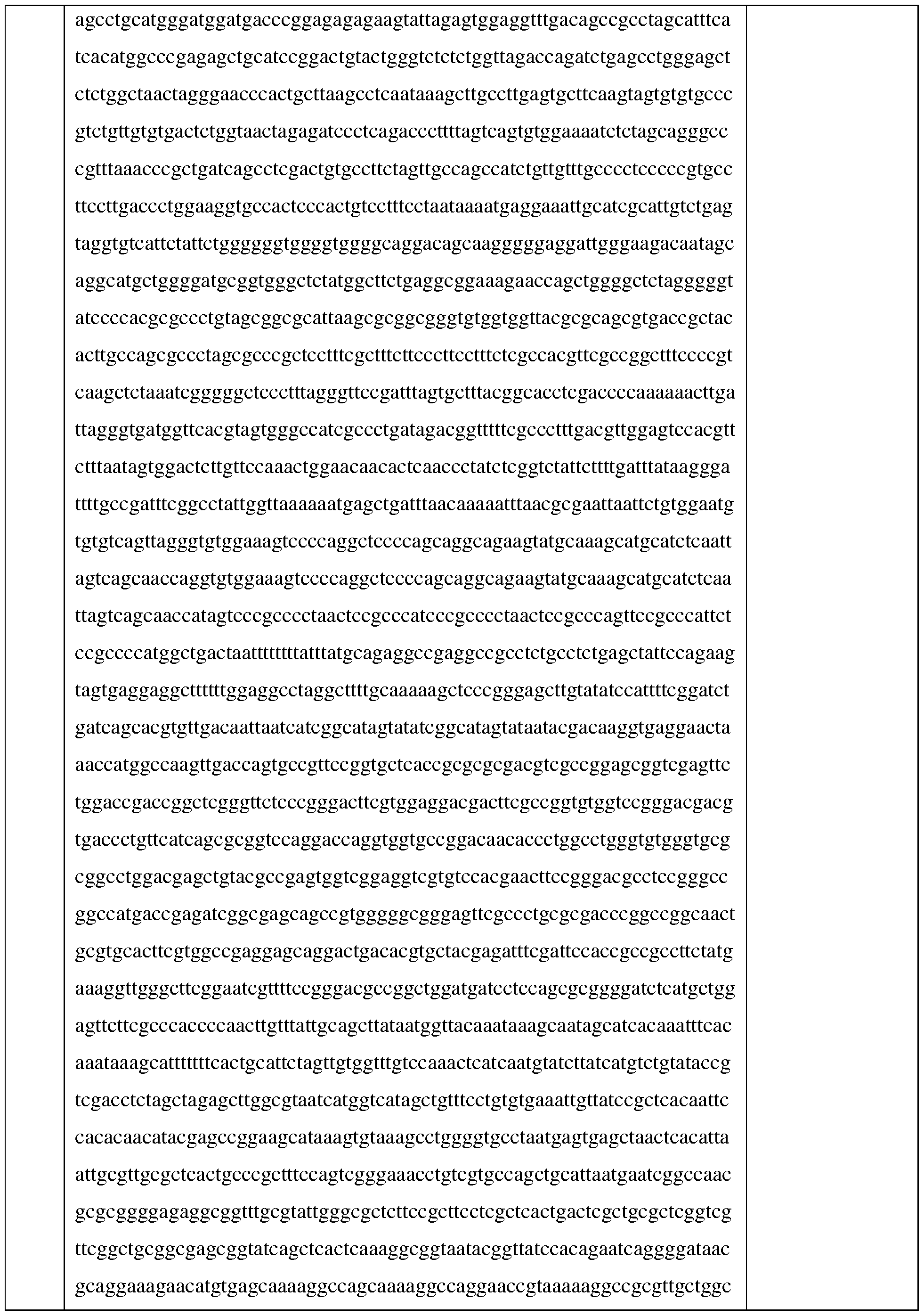 224742003140
 224742003140
 224742003140
 224742003140
 224742003140
 224742003140
 224742003140
 224742003140
 224742003140
 224742003140
 224742003140
 224742003140
 224742003140
 224742003140
 224742003140
 224742003140
 224742003140
 224742003140
 224742003140
 224742003140
 224742003140
 224742003140
 224742003140
 224742003140
 224742003140
 224742003140
 224742003140
 224742003140
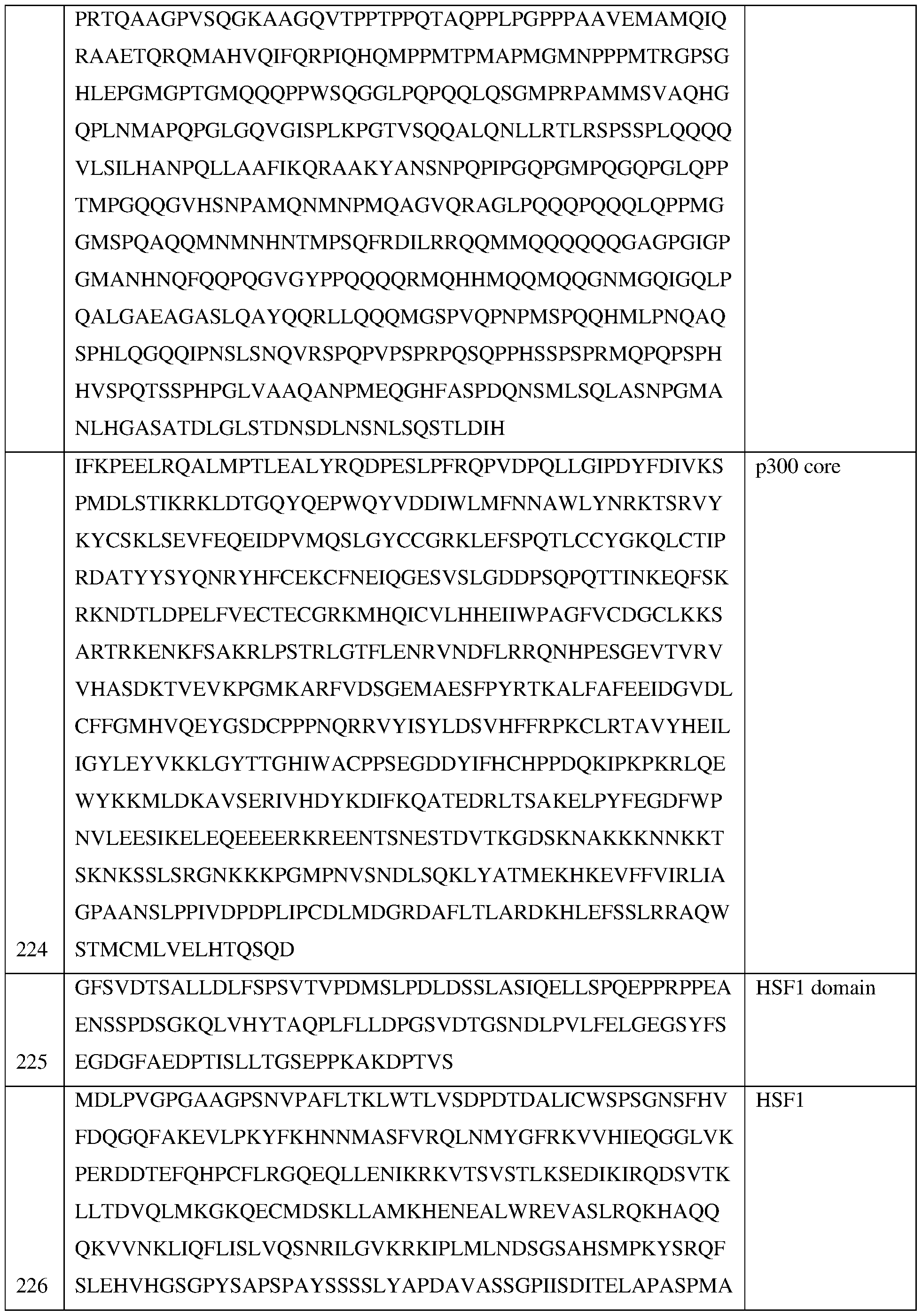 224742003140
 224742003140
 224742003140
 224742003140
 224742003140
 224742003140
 224742003140
 224742003140
 224742003140
 224742003140
 224742003140
 224742003140
 224742003140
 224742003140
 224742003140
 224742003140
 224742003140
 224742003140
 224742003140
 224742003140
 224742003140

Claims
1. A DNA-targeting system comprising one or more DNA-targeting modules, wherein the one or more DNA-targeting modules target one or more transcription factor genes for promoting differentiation of stem cells to HPCs, and wherein each of the one or more DNA- targeting modules comprises a fusion protein comprising: (a) a DNA-binding domain that binds to a target site for one of the one or more transcription factor genes; and (b) at least one transcriptional activation domain that increases transcription of the one or more transcription factor genes, wherein the one or more transcription factor genes is at least three genes GATA3, GATA2 and LM02.
2. A DNA-targeting system comprising one or more DNA-targeting modules, wherein the one or more DNA-targeting modules target one or more transcription factor genes for promoting differentiation of stem cells to HPCs, and wherein each of the one or more DNA- targeting modules comprises a fusion protein comprising:
(a) a DNA-binding domain that binds to a target site for one of the one or more transcription factor genes, wherein the target site for at least one of the one or more transcription factor genes is a target site for LM02, and wherein the target site for LM02 is within a region defined by the following genomic coordinates: chrl 1:33,868,723 to chrl 1:33,869,125; and
(b) at least one transcriptional activation domain that increases transcription of the one or more transcription factor genes.
3. The DNA-targeting system of claim 1 or 2, wherein transient delivery of the DNA-targeting system to a stem cell promotes differentiation to a HPC.
4. The DNA-targeting system of any of claims 1-3, wherein transient delivery of the DNA-targeting system to a stem cell promotes differentiation to a CD34+ cell.
5. The DNA-targeting system of any of claims 1-3, wherein transient delivery of the DNA-targeting system to a stem cell promotes differentiation to a CD43+ cell.
224742003140
6. The DNA-targeting system of any of claims 1-3, wherein transient delivery of the DNA-targeting system to a stem cell promotes differentiation to a CD34+/CD43+ cell.
7. The DNA-targeting system of any of claims 3-6, wherein the stem cell is an induced pluripotent stem cell (iPSC).
8. The DNA-targeting system of any of claims 1-7, wherein the one or more DNA targeting modules is a plurality of DNA-targeting modules for increasing transcription of one or more transcription factor genes, wherein each DNA-targeting module targets a target site for one of the one or more genes.
9. The DNA-targeting system of claim 8, wherein the plurality of DNA-targeting modules is 2, 3, 4, 5, 6, 7, 8, or 9 DNA-targeting modules, each targeting one of the one or more transcription factor genes.
10. The DNA-targeting system of claim 8 or claim 9, wherein the plurality of DNA- targeting modules is 2 DNA-targeting modules, each targeting one of the one or more transcription factor genes.
11. The DNA-targeting system of any of claims 2-10, wherein the one or more transcription factor genes is two genes selected from the group consisting of BMI1, CEBPD, CFOS, GATA2, GATA3, HEY2, LM02, LYL1, TALI and ZEB2, optionally wherein the two genes are selected from the group consisting of BMI1, CEBPD, GATA2, GATA3, HEY2, LM02, LYL1, and ZEB2.
12. The DNA-targeting system of claim 8 or claim 9, wherein the plurality of DNA- targeting modules is 3 DNA-targeting modules, each targeting one of the one or more transcription factor genes.
13. The DNA-targeting system of any of claims 2-9 and 12, wherein the one or more transcription factor genes is three genes selected from the group consisting of BMI1, CEBPD, CFOS, GATA2, GATA3, HEY2, LM02, LYL1, TALI and ZEB2, optionally wherein the three
224742003140 genes are selected from the group consisting of BMI1, CEBPD, GATA2, GATA3, HEY2, LM02, LYL1, and ZEB2.
14. The DNA-targeting system of claim 8 or claim 9, wherein the plurality of DNA- targeting modules is 4 DNA-targeting modules, each targeting one of the one or more transcription factor genes.
15. The DNA-targeting system of any of claims 1-9 and 14, wherein the one or more transcription factor genes is four genes selected from the group consisting of BMI1, CEBPD, CFOS, GATA2, GATA3, HEY2, LM02, LYL1, TALI and ZEB2, optionally wherein the four genes are selected from the group consisting of BMI1, CEBPD, GATA2, GATA3, HEY2, LM02, LYL1, and ZEB2.
16. The DNA-targeting system of claim 8 or claim 9, wherein the plurality of DNA- targeting modules is 5 DNA-targeting modules, each targeting one of the one or more transcription factor genes.
17. The DNA-targeting system of any of claims 1-9 and 16, wherein the one or more transcription factor genes is five genes selected from the group consisting of BMI1, CEBPD, CFOS, GATA2, GATA3, HEY2, LM02, LYL1, TALI and ZEB2, optionally wherein the five genes are selected from the group consisting of BMI1, CEBPD, GATA2, GATA3, HEY2, LM02, LYL1, and ZEB2.
18. The DNA-targeting system of claim 8 or claim 9, wherein the plurality of DNA- targeting modules is 6 DNA-targeting modules, each targeting one of the one or more transcription factor genes.
19. The DNA-targeting system of any of claims 1-9 and 18, wherein the one or more transcription factor genes is six genes selected from the group consisting of BMI1, CEBPD, CFOS, GATA2, GATA3, HEY2, LM02, LYL1, TALI and ZEB2, optionally wherein the six genes are selected from the group consisting of BMI1, CEBPD, GATA2, GATA3, HEY2, LM02, LYL1, and ZEB2.
224742003140
20. The DNA-targeting system of claim 8 or claim 9, wherein the plurality of DNA- targeting modules is 7 DNA-targeting modules, each targeting one of the one or more transcription factor genes.
21. The DNA-targeting system of any of claims 1-9 and 20, wherein the one or more transcription factor genes is seven genes selected from the group consisting of BMI1, CEBPD, CFOS, GATA2, GATA3, HEY2, LM02, LYL1, TALI and ZEB2, optionally wherein the seven genes are selected from the group consisting of BMI1, CEBPD, GATA2, GATA3, HEY2, LM02, LYL1, and ZEB2.
22. The DNA-targeting system of claim 8 or claim 9, wherein the plurality of DNA- targeting modules is 8 DNA-targeting modules, each targeting one of the one or more transcription factor genes.
23. The DNA-targeting system of any of claims 1-9 and 22, wherein the one or more transcription factor genes is eight genes selected from the group consisting of BMI1, CEBPD, CFOS, GATA2, GATA3, HEY2, LM02, LYL1, TALI and ZEB2, optionally wherein the genes are BMI1, CEBPD, GATA2, GATA3, HEY2, LM02, LYL1, and ZEB2.
24. The DNA-targeting system of claim 8 or claim 9, wherein the plurality of DNA- targeting modules is 9 DNA-targeting modules, each targeting one of the one or more transcription factor genes.
25. The DNA-targeting system of any of claims 1-9 and 24, wherein the one or more transcription factor genes is nine genes selected from the group consisting of BMI1, CEBPD, CFOS, GATA2, GATA3, HEY2, LM02, LYL1, TALI and ZEB2.
26. The DNA-targeting system of any of claims 1-25, wherein the target site for each of the one or more transcription factor genes is in the gene or a regulatory DNA element thereof.
224742003140
27. The DNA-targeting system of claim 26, wherein the regulatory DNA element is an enhancer or a promoter of the gene.
28. The DNA-targeting system of claim 27, wherein the regulatory DNA element is a promoter of the gene.
29. The DNA-targeting system of any of claims 1-28, wherein the target site for each of the one or more transcription factor genes is within 1000 base pairs of the transcription start site (TSS) of the gene.
30. The DNA-targeting system of any of claims 1-29, wherein the target site for each of the one or more transcription factor genes is within 20 base pairs, 50 base pairs, 100 base pairs, 200 base pairs, 300 base pairs, 400 base pairs, 500 base pairs, 600 base pairs, or any value between any of the foregoing, of the TSS of the gene.
31. The DNA-targeting system of any of claims 1-30, wherein the target site for each of the one or more transcription factor genes is within 550 base pairs upstream of the TSS of the gene.
32. The DNA-targeting system of any of claims 1-31, wherein the target site for each of the one or more transcription factor genes is selected from:
(a) a target site for GATA3 having the sequence set forth in SEQ ID NO:28 or SEQ ID NO: 89, a contiguous portion thereof of at least 14 nucleotides (nt), or a complementary sequence of any of the foregoing;
(b) a target site for GATA2 having the sequence set forth in SEQ ID NO:29, SEQ ID NO: 85 or SEQ ID NO:87, a contiguous portion thereof of at least 14 nucleotides (nt), or a complementary sequence of any of the foregoing;
(c) a target site for LM02 having the sequence set forth in any one of SEQ ID NOs:30, 80-82, and 94-113, 118, and 119, a contiguous portion thereof of at least 14 nucleotides (nt), or a complementary sequence of any of the foregoing;
224742003140
(d) a target site for ZEB2 having the sequence set forth in SEQ ID NO:31, a contiguous portion thereof of at least 14 nucleotides (nt), or a complementary sequence of any of the foregoing;
(e) a target site for HEY2 having the sequence set forth in SEQ ID NO:32, a contiguous portion thereof of at least 14 nucleotides (nt), or a complementary sequence of any of the foregoing;
(f) a target site for CEBPD having the sequence set forth in SEQ ID NO:33, a contiguous portion thereof of at least 14 nucleotides (nt), or a complementary sequence of any of the foregoing;
(g) a target site for BMII having the sequence set forth in SEQ ID NO:34, a contiguous portion thereof of at least 14 nucleotides (nt), or a complementary sequence of any of the foregoing;
(h) a target site for LYL1 having the sequence set forth in SEQ ID NO:35 or SEQ ID NO: 83, a contiguous portion thereof of at least 14 nucleotides (nt), or a complementary sequence of any of the foregoing;
(i) a target site for TALI having the sequence set forth in SEQ ID NO:84 or SEQ ID NO: 86, a contiguous portion thereof of at least 14 nucleotides (nt), or a complementary sequence of any of the foregoing; or
(j) a target site for CFOS having the sequence set forth in SEQ ID NO:88, a contiguous portion thereof of at least 14 nucleotides (nt), or a complementary sequence of any of the foregoing.
33. The DNA-targeting system of any of claims 1 and 3-32, wherein the target site for each of the one or more transcription factor genes is selected from:
(a) a target site for GATA3 having the sequence set forth in SEQ ID NO:28 or SEQ ID NO: 89, a contiguous portion thereof of at least 14 nucleotides (nt), or a complementary sequence of any of the foregoing;
(b) a target site for GATA2 having the sequence set forth in SEQ ID NO:29, SEQ ID NO: 85 or SEQ ID NO:87, a contiguous portion thereof of at least 14 nucleotides (nt), or a complementary sequence of any of the foregoing;
224742003140
(c) a target site for LM02 having the sequence set forth in SEQ ID NO:30, SEQ ID NO: 80, SEQ ID NO: 81 or SEQ ID NO: 82, a contiguous portion thereof of at least 14 nucleotides (nt), or a complementary sequence of any of the foregoing;
(d) a target site for ZEB2 having the sequence set forth in SEQ ID NO:31, a contiguous portion thereof of at least 14 nucleotides (nt), or a complementary sequence of any of the foregoing;
(e) a target site for HEY2 having the sequence set forth in SEQ ID NO:32, a contiguous portion thereof of at least 14 nucleotides (nt), or a complementary sequence of any of the foregoing;
(f) a target site for CEBPD having the sequence set forth in SEQ ID NO:33, a contiguous portion thereof of at least 14 nucleotides (nt), or a complementary sequence of any of the foregoing;
(g) a target site for BMII having the sequence set forth in SEQ ID NO:34, a contiguous portion thereof of at least 14 nucleotides (nt), or a complementary sequence of any of the foregoing;
(h) a target site for LYL1 having the sequence set forth in SEQ ID NO:35 or SEQ ID NO: 83, a contiguous portion thereof of at least 14 nucleotides (nt), or a complementary sequence of any of the foregoing;
(i) a target site for TALI having the sequence set forth in SEQ ID NO:84 or SEQ ID NO: 86, a contiguous portion thereof of at least 14 nucleotides (nt), or a complementary sequence of any of the foregoing; or
(j) a target site for CFOS having the sequence set forth in SEQ ID NO:88, a contiguous portion thereof of at least 14 nucleotides (nt), or a complementary sequence of any of the foregoing.
34. The DNA-targeting system of any of claims 2-33, wherein at least one of the one or more transcription factor genes is GATA3.
35. The DNA-targeting system of any of claims 1-34, wherein the target site for at least one of the one or more transcription factor genes is a target site for GATA3 having the sequence set forth in SEQ ID NO:28 or SEQ ID NO: 89, a contiguous portion thereof of at least 14 nucleotides (nt), or a complementary sequence of any of the foregoing.
224742003140
36. The DNA-targeting system of any of claims 2-35, wherein at least one of the one or more transcription factor genes is GATA2.
37. The DNA-targeting system of any of claims 1-36, wherein the target site for at least one of the one or more transcription factor genes is a target site for GATA2 having the sequence set forth in SEQ ID NO:29, SEQ ID NO: 85 or SEQ ID NO:87, a contiguous portion thereof of at least 14 nucleotides (nt), or a complementary sequence of any of the foregoing.
38. The DNA-targeting system of any of claims 1 and 3-37, wherein the target site for LM02 is within one of the regions defined by the following genomic coordinates:
(a) chrl 1:33,867,158 to chrl 1:33,873,567;
(b) chrl l: 33,876,536 to chrl 1:33,878,097;
(c) chrl 1:33,890,358 to chrl 1:33,896,210;
(d) chrl l: 33,906,104 to chrl 1:33,908,030;
(e) chrl l: 33,911,674 to chrl 1:33,913,494;
(f) chrl 1:33,920,461 to chrl 1:33,922,260; or
(g) chrl 1:33,929,929 to chrl 1:33,932,651.
39. The DNA-targeting system of any of claims 1 and 3-38, wherein the target site for LM02 is within a region defined by the following genomic coordinates: chrl 1:33,867,158 to chrl 1:33,873,567.
40. The DNA-targeting system of any of claims 1 and 3-39, wherein the target site for LM02 is within a region defined by the following genomic coordinates: chrl 1:33,867,215 to chrl 1:33,872,057.
224742003140
41. The DNA-targeting system of any of claims 1 and 3-40, wherein the target site for LM02 is within a region defined by the following genomic coordinates: chrl 1:33,868,723 to chrl 1:33,869,125.
42. The DNA-targeting system of any of claims 1-41, wherein the target site for LM02 is within a region defined by the following genomic coordinates: chrl 1:33,868,723 to chrl 1:33,868,742.
43. The DNA-targeting system of any of claims 1 and 3-38, wherein the target site for at least one of the one or more transcription factor genes is a target site for LM02 comprising the sequence set forth in any one of SEQ ID NOs: 30, 80-82, 94-113, 118, and 119, a contiguous portion thereof of at least 14 nucleotides (nt), or a complementary sequence of any of the foregoing.
44. The DNA-targeting system of any of claims 1, 3-39, and 43, wherein the target site for at least one of the one or more transcription factor genes is a target site for LM02 comprising the sequence set forth in any one of SEQ ID NOs: 94-113, 118, and 119, a contiguous portion thereof of at least 14 nucleotides (nt), or a complementary sequence of any of the foregoing.
45. The DNA-targeting system of any of claims 1-41, 43, and 44, wherein the target site for LM02 comprises the sequence set forth in SEQ ID NO: 100 or SEQ ID NO: 101, a contiguous portion thereof of at least 14 nucleotides (nt), or a complementary sequence of any of the foregoing.
46. The DNA-targeting system of any of claims 1-45, wherein the target site for LM02 comprises the sequence set forth in SEQ ID NO: 101, a contiguous portion thereof of at least 14 nucleotides (nt), or a complementary sequence of any of the foregoing.
47. The DNA-targeting system of any of claims 1-41 and 43-45, wherein the target site for LM02 comprises the sequence set forth in SEQ ID NO: 100, a contiguous portion thereof of at least 14 nucleotides (nt), or a complementary sequence of any of the foregoing.
224742003140
48. The DNA-targeting system of any of claims 1 and 3-38, wherein the target site for at least one of the one or more transcription factor genes is a target site for LM02 having the sequence set forth in SEQ ID NO:30, SEQ ID NO: 80, SEQ ID NO: 81 or SEQ ID NO: 82, a contiguous portion thereof of at least 14 nucleotides (nt), or a complementary sequence of any of the foregoing.
49. The DNA-targeting system of any of claims 2-9 and 12-48, wherein one or more transcription factor genes is at least three genes GATA3, GATA2 and LM02.
50. The DNA-targeting system of any of claim 1-49, wherein at least one of the one or more transcription factor genes is BMI1.
51. The DNA-targeting system of any of claims 1-50, wherein the target site for at least one of the one or more transcription factor genes is a target site for BMI1 having the sequence set forth in SEQ ID NO: 34, a contiguous portion thereof of at least 14 nucleotides (nt), or a complementary sequence of any of the foregoing.
52. The DNA-targeting system of any of claim 1-51, wherein at least one of the one or more transcription factor genes is CEBPD.
53. The DNA-targeting system of any of claims 1-52, wherein the target site for at least one of the one or more transcription factor genes is a target site for CEBPD having the sequence set forth in SEQ ID NO:33, a contiguous portion thereof of at least 14 nucleotides (nt), or a complementary sequence of any of the foregoing.
54. The DNA-targeting system of any of claims 1-53, wherein at least one of the one or more transcription factor genes is LYLE
55. The DNA-targeting system of any of claims 1-54 wherein the target site for at least one of the one or more transcription factor genes is a target site for LYL1 having the
224742003140 sequence set forth in SEQ ID NO:35 or SEQ ID NO: 83, a contiguous portion thereof of at least 14 nucleotides (nt), or a complementary sequence of any of the foregoing.
56. The DNA-targeting system of any of claims 1-9 and 18-55, wherein one or more transcription factor genes is at least six genes GATA3, GATA2, LM02, BMI, CEBPD, and LYLE
57. The DNA-targeting system of any of claims 1-56, wherein at least one of the one or more transcription factor genes is HEY2.
58. The DNA-targeting system of any of claims 1-57, wherein the target site for at least one of the one or more transcription factor genes is a target site for HEY2 having the sequence set forth in SEQ ID NO: 32, a contiguous portion thereof of at least 14 nucleotides (nt), or a complementary sequence of any of the foregoing.
59. The DNA-targeting system of any of claims 1-58, wherein at least one of the one or more transcription factor genes is ZEB2.
60. The DNA-targeting system of any of claims 1-59, wherein the target site for at least one of the one or more transcription factor genes is a target site for ZEB2 having the sequence set forth in SEQ ID NO:31, a contiguous portion thereof of at least 14 nucleotides (nt), or a complementary sequence of any of the foregoing.
61. The DNA-targeting system of any of claims 1-60, wherein at least one of the one or more transcription factor genes is TALI.
62. The DNA-targeting system of any of claims 1-61, wherein the target site for at least one of the one or more transcription factor genes is a target site for TALI having the sequence set forth in SEQ ID NO:84 or SEQ ID NO:86, a contiguous portion thereof of at least 14 nucleotides (nt), or a complementary sequence of any of the foregoing.
224742003140
63. The DNA-targeting system of any of the claims 1-62, wherein at least one of the one or more transcription factor genes is CFOS.
64. The DNA-targeting system of any of claims 1-63, wherein the target site for at least one of the one or more transcription factor genes is a target site for CFOS having the sequence set forth in SEQ ID NO:88, a contiguous portion thereof of at least 14 nucleotides (nt), or a complementary sequence of any of the foregoing.
65. The DNA-targeting system of any of claims 1-64, wherein the DNA-targeting system does not introduce a genetic disruption or a DNA break.
66. The DNA-targeting system of any of claims 1-65, wherein the fusion protein of each DNA-targeting module comprises a DNA-binding domain selected from: a Clustered Regularly Interspaced Short Palindromic Repeats associated (Cas) protein or a variant thereof; a zinc finger protein (ZFP); a transcription activator- like effector (TALE); a meganuclease; a homing endonuclease; or an I-Scel enzyme or a variant thereof, optionally wherein the DNA- binding domain comprises a catalytically inactive variant of any of the foregoing, wherein, when the DNA-binding domain of the fusion protein comprises a Cas protein, the DNA-targeting system further comprises one or more gRNAs, each capable of targeting the Cas protein to the target site for one of the one or more transcription factor genes.
67. The DNA-targeting system of any of claims 1-66, wherein the DNA-binding domain of each of the one or more DNA-targeting modules is a Clustered Regularly Interspaced Short Palindromic Repeats associated (Cas) protein or variant thereof, and each of the one or more DNA-targeting modules further comprises one or more gRNAs for targeting the DNA- binding domain to the target site of one of the one or more transcription factor genes.
68. The DNA-targeting system of claim 66 or claim 67, wherein the Cas protein or variant thereof is a deactivated (dCas) protein.
69. A DNA-targeting system comprising:
224742003140
(a) a fusion protein comprising a DNA-binding domain comprising a deactivated Cas (dCas) protein and at least one transcriptional activation domain; and
(b) one or more gRNAs that target a target site for one or more transcription factor genes, wherein the DNA-targeting system increases transcription of the one or more transcription factor genes to promote differentiation of stem cells to HPCs, wherein the one or more transcription factors is at least three genes GATA3, GATA2 and LM02.
70. A DNA-targeting system comprising:
(a) a fusion protein comprising a DNA-binding domain comprising a deactivated Cas (dCas) protein and at least one transcriptional activation domain; and
(b) one or more gRNAs that target a target site for one or more transcription factor genes, wherein the target site for at least one of the one or more transcription factor genes is a target site for LM02, and wherein the target site for LM02 is within a region defined by the following genomic coordinates: chrl 1:33,868,723 to chrl 1:33,869, 125, wherein the DNA-targeting system increases transcription of the one or more transcription factor genes to promote differentiation of stem cells to HPCs.
71. The DNA-targeting system of any of claims 68-70, wherein the dCas protein lacks nuclease activity.
72. The DNA-targeting system of claim any of claims 68-71, wherein the dCas protein is a dCas9 protein.
73. The DNA-targeting system of any of claims 68-72, wherein the dCas9 protein is a Staphylococcus aureus dCas9 (dSaCas9) protein.
74. The DNA-targeting system of claim 73, wherein the dSaCas9 comprises at least one amino acid mutation selected from D10A and N580A, with reference to numbering of positions of SEQ ID NO: 41.
224742003140
75. The DNA-targeting system of claim 73 or claim 74, wherein the dSaCas9 protein comprises the sequence set forth in SEQ ID NO: 280, or an amino acid sequence that has at least 90%, 91%, 92%, 93%, 94%, 95%, 96%, 97%, 98%, or 99% sequence identity thereto.
76. The DNA-targeting system of any of claims 73-75, wherein the dSaCas9 protein is set forth in SEQ ID NO: 280.
77. The DNA-targeting system of any of claims 68-72, wherein the dCas9 protein is a Streptococcus pyogenes dCas9 (dSpCas9) protein.
78. The DNA-targeting system of claim 77, wherein the dSpCas9 protein comprises at least one amino acid mutation selected from D10A and H840A, with reference to numbering of positions of SEQ ID NO: 43.
79. The DNA-targeting system of claim 77 or claim 78, wherein the dSpCas9 protein comprises the sequence set forth in SEQ ID NO: 281, or an amino acid sequence that has at least 90%, 91%, 92%, 93%, 94%, 95%, 96%, 97%, 98%, or 99% sequence identity thereto.
80. The DNA-targeting system of any of claims 77-79, wherein the dSpCas9 protein is set forth in SEQ ID NO: 281.
81. The DNA-targeting system of any of claims 66-80, wherein the one or more gRNAs comprise a gRNA spacer that is complementary to the target site of the gene.
82. The DNA-targeting system of any of claims 66-81, wherein the gRNA is selected from:
(a) a gRNA targeting a target site for GATA3 comprising a gRNA spacer sequence comprising the sequence set forth in SEQ ID NO: 19 or SEQ ID NO: 79, or a contiguous portion thereof of at least 14 nt;
(b) a gRNA targeting a target site for GATA2 comprising a gRNA spacer sequence comprising the sequence set forth in SEQ ID NO: 20, SEQ ID NO: 75 or SEQ ID NO: 77, or a contiguous portion thereof of at least 14 nt;
224742003140
(c) a gRNA targeting a target site for LM02 comprising a gRNA spacer sequence comprising the sequence set forth in any one of SEQ ID NOs: 21, 70-72, 120-139, 144, and 145, or a contiguous portion thereof of at least 14 nt;
(d) a gRNA targeting a target site for ZEB2 comprising a gRNA spacer sequence comprising the sequence set forth in SEQ ID NO: 22, or a contiguous portion thereof of at least 14 nt;
(e) a gRNA targeting a target site for HEY2 comprising a gRNA spacer sequence comprising the sequence set forth in SEQ ID NO: 23, or a contiguous portion thereof of at least 14 nt;
(f) a gRNA targeting a target site for CEBPD comprising a gRNA spacer sequence comprising the sequence set forth in SEQ ID NO: 24, or a contiguous portion thereof of at least 14 nt;
(g) a gRNA targeting a target site for BMI1 comprising a gRNA spacer sequence comprising the sequence set forth in SEQ ID NO: 25, or a contiguous portion thereof of at least 14 nt;
(h) a gRNA targeting a target site for LYL1 comprising a gRNA spacer sequence comprising the sequence set forth in SEQ ID NO: 26 or SEQ ID NO:73, or a contiguous portion thereof of at least 14 nt;
(i) a gRNA targeting a target site for TALI comprising a gRNA spacer sequence comprising the sequence set forth in SEQ ID NO: 74 or SEQ ID NO: 76, or a contiguous portion thereof of at least 14 nt;
(j) a gRNA targeting a target site for BMI1 comprising a gRNA spacer sequence comprising the sequence set forth in SEQ ID NO: 25, or a contiguous portion thereof of at least 14 nt; or
(k) a gRNA targeting a target site for CFOS comprising a gRNA spacer sequence comprising the sequence set forth in SEQ ID NO: 78, or a contiguous portion thereof of at least 14 nt.
83. The DNA-targeting system of any of claims 66-82, wherein the gRNA is selected from:
224742003140
(a) a gRNA targeting a target site for GATA3 comprising a gRNA spacer sequence comprising the sequence set forth in SEQ ID NO: 19 or SEQ ID NO: 79, or a contiguous portion thereof of at least 14 nt;
(b) a gRNA targeting a target site for GATA2 comprising a gRNA spacer sequence comprising the sequence set forth in SEQ ID NO: 20, SEQ ID NO: 75 or SEQ ID NO: 77, or a contiguous portion thereof of at least 14 nt;
(c) a gRNA targeting a target site for LM02 comprising a gRNA spacer sequence comprising the sequence set forth in SEQ ID NO: 126 or 127, or a contiguous portion thereof of at least 14 nt;
(d) a gRNA targeting a target site for ZEB2 comprising a gRNA spacer sequence comprising the sequence set forth in SEQ ID NO: 22, or a contiguous portion thereof of at least 14 nt;
(e) a gRNA targeting a target site for HEY2 comprising a gRNA spacer sequence comprising the sequence set forth in SEQ ID NO: 23, or a contiguous portion thereof of at least 14 nt;
(f) a gRNA targeting a target site for CEBPD comprising a gRNA spacer sequence comprising the sequence set forth in SEQ ID NO: 24, or a contiguous portion thereof of at least 14 nt;
(g) a gRNA targeting a target site for BMI1 comprising a gRNA spacer sequence comprising the sequence set forth in SEQ ID NO: 25, or a contiguous portion thereof of at least 14 nt;
(h) a gRNA targeting a target site for LYL1 comprising a gRNA spacer sequence comprising the sequence set forth in SEQ ID NO: 26 or SEQ ID NO:73, or a contiguous portion thereof of at least 14 nt;
(i) a gRNA targeting a target site for TALI comprising a gRNA spacer sequence comprising the sequence set forth in SEQ ID NO: 74 or SEQ ID NO: 76, or a contiguous portion thereof of at least 14 nt;
(j) a gRNA targeting a target site for BMI1 comprising a gRNA spacer sequence comprising the sequence set forth in SEQ ID NO: 25, or a contiguous portion thereof of at least 14 nt; or
224742003140
(k) a gRNA targeting a target site for CFOS comprising a gRNA spacer sequence comprising the sequence set forth in SEQ ID NO: 78, or a contiguous portion thereof of at least 14 nt.
84. The DNA-targeting system of any of claims 66-69 and 71-82, wherein the gRNA is selected from:
(a) a gRNA targeting a target site for GATA3 comprising a gRNA spacer sequence comprising the sequence set forth in SEQ ID NO: 19 or SEQ ID NO: 79, or a contiguous portion thereof of at least 14 nt;
(b) a gRNA targeting a target site for GATA2 comprising a gRNA spacer sequence comprising the sequence set forth in SEQ ID NO: 20, SEQ ID NO: 75 or SEQ ID NO: 77, or a contiguous portion thereof of at least 14 nt;
(c) a gRNA targeting a target site for LM02 comprising a gRNA spacer sequence comprising the sequence set forth in SEQ ID NO: 21, SEQ ID NO: 70, SEQ ID NO:71 or SEQ ID NO:72, or a contiguous portion thereof of at least 14 nt;
(d) a gRNA targeting a target site for ZEB2 comprising a gRNA spacer sequence comprising the sequence set forth in SEQ ID NO: 22, or a contiguous portion thereof of at least 14 nt;
(e) a gRNA targeting a target site for HEY2 comprising a gRNA spacer sequence comprising the sequence set forth in SEQ ID NO: 23, or a contiguous portion thereof of at least 14 nt;
(f) a gRNA targeting a target site for CEBPD comprising a gRNA spacer sequence comprising the sequence set forth in SEQ ID NO: 24, or a contiguous portion thereof of at least 14 nt;
(g) a gRNA targeting a target site for BMI1 comprising a gRNA spacer sequence comprising the sequence set forth in SEQ ID NO: 25, or a contiguous portion thereof of at least 14 nt;
(h) a gRNA targeting a target site for LYL1 comprising a gRNA spacer sequence comprising the sequence set forth in SEQ ID NO: 26 or SEQ ID NO:73, or a contiguous portion thereof of at least 14 nt;
224742003140
(i) a gRNA targeting a target site for TALI comprising a gRNA spacer sequence comprising the sequence set forth in SEQ ID NO: 74 or SEQ ID NO: 76, or a contiguous portion thereof of at least 14 nt;
(j) a gRNA targeting a target site for BMI1 comprising a gRNA spacer sequence comprising the sequence set forth in SEQ ID NO: 25, or a contiguous portion thereof of at least 14 nt; or
(k) a gRNA targeting a target site for CFOS comprising a gRNA spacer sequence comprising the sequence set forth in SEQ ID NO: 78, or a contiguous portion thereof of at least 14 nt.
85. The DNA-targeting system of any of claims 66-82, wherein the gRNA is selected from:
(a) a gRNA targeting a target site for GATA3 comprising a gRNA spacer sequence comprising the sequence set forth in SEQ ID NO: 19 or SEQ ID NO: 79;
(b) a gRNA targeting a target site for GATA2 comprising a gRNA spacer sequence comprising the sequence set forth in SEQ ID NO: 20, SEQ ID NO: 75 or SEQ ID NO: 77;
(c) a gRNA targeting a target site for LM02 comprising a gRNA spacer sequence comprising the sequence set forth in any one of SEQ ID NOs: 21, 70-72, 120-139, 144, and 145;
(d) a gRNA targeting a target site for ZEB2 comprising a gRNA spacer sequence comprising the sequence set forth in SEQ ID NO: 22;
(e) a gRNA targeting a target site for HEY2 comprising a gRNA spacer sequence comprising the sequence set forth in SEQ ID NO: 23;
(f) a gRNA targeting a target site for CEBPD comprising a gRNA spacer sequence comprising the sequence set forth in SEQ ID NO: 24;
(g) a gRNA targeting a target site for BMI1 comprising a gRNA spacer sequence comprising the sequence set forth in SEQ ID NO: 25;
(h) a gRNA targeting a target site for LYL1 comprising a gRNA spacer sequence comprising the sequence set forth in SEQ ID NO: 26 or SEQ ID NO:73;
(i) a gRNA targeting a target site for TALI comprising a gRNA spacer sequence comprising the sequence set forth in SEQ ID NO: 74 or SEQ ID NO: 76;
(j) a gRNA targeting a target site for BMI1 comprising a gRNA spacer sequence comprising the sequence set forth in SEQ ID NO: 25; or
224742003140
(k) a gRNA targeting a target site for CFOS comprising a gRNA spacer sequence comprising the sequence set forth in SEQ ID NO: 78.
86. The DNA-targeting system of any of claims 66-83 and 85, wherein the gRNA is selected from:
(a) a gRNA targeting a target site for GATA3 comprising a gRNA spacer sequence comprising the sequence set forth in SEQ ID NO: 19 or SEQ ID NO: 79;
(b) a gRNA targeting a target site for GATA2 comprising a gRNA spacer sequence comprising the sequence set forth in SEQ ID NO: 20, SEQ ID NO: 75 or SEQ ID NO: 77;
(c) a gRNA targeting a target site for LM02 comprising a gRNA spacer sequence comprising the sequence set forth in SEQ ID NO: 126 or SEQ ID NO: 127;
(d) a gRNA targeting a target site for ZEB2 comprising a gRNA spacer sequence comprising the sequence set forth in SEQ ID NO: 22;
(e) a gRNA targeting a target site for HEY2 comprising a gRNA spacer sequence comprising the sequence set forth in SEQ ID NO: 23;
(f) a gRNA targeting a target site for CEBPD comprising a gRNA spacer sequence comprising the sequence set forth in SEQ ID NO: 24;
(g) a gRNA targeting a target site for BMI1 comprising a gRNA spacer sequence comprising the sequence set forth in SEQ ID NO: 25;
(h) a gRNA targeting a target site for LYL1 comprising a gRNA spacer sequence comprising the sequence set forth in SEQ ID NO: 26 or SEQ ID NO:73;
(i) a gRNA targeting a target site for TALI comprising a gRNA spacer sequence comprising the sequence set forth in SEQ ID NO: 74 or SEQ ID NO: 76;
(j) a gRNA targeting a target site for BMI1 comprising a gRNA spacer sequence comprising the sequence set forth in SEQ ID NO: 25; or
(k) a gRNA targeting a target site for CFOS comprising a gRNA spacer sequence comprising the sequence set forth in SEQ ID NO: 78.
87. The DNA-targeting system of any of claims 66-69, 71-82, 84, and 85, wherein the gRNA is selected from:
(a) a gRNA targeting a target site for GATA3 comprising a gRNA spacer sequence comprising the sequence set forth in SEQ ID NO: 19 or SEQ ID NO: 79;
224742003140
(b) a gRNA targeting a target site for GATA2 comprising a gRNA spacer sequence comprising the sequence set forth in SEQ ID NO: 20, SEQ ID NO: 75 or SEQ ID NO: 77;
(c) a gRNA targeting a target site for LM02 comprising a gRNA spacer sequence comprising the sequence set forth in SEQ ID NO: 21, SEQ ID NO: 70, SEQ ID NO:71 or SEQ ID NO:72;
(d) a gRNA targeting a target site for ZEB2 comprising a gRNA spacer sequence comprising the sequence set forth in SEQ ID NO: 22;
(e) a gRNA targeting a target site for HEY2 comprising a gRNA spacer sequence comprising the sequence set forth in SEQ ID NO: 23;
(f) a gRNA targeting a target site for CEBPD comprising a gRNA spacer sequence comprising the sequence set forth in SEQ ID NO: 24;
(g) a gRNA targeting a target site for BMI1 comprising a gRNA spacer sequence comprising the sequence set forth in SEQ ID NO: 25;
(h) a gRNA targeting a target site for LYL1 comprising a gRNA spacer sequence comprising the sequence set forth in SEQ ID NO: 26 or SEQ ID NO:73;
(i) a gRNA targeting a target site for TALI comprising a gRNA spacer sequence comprising the sequence set forth in SEQ ID NO: 74 or SEQ ID NO: 76;
(j) a gRNA targeting a target site for BMI1 comprising a gRNA spacer sequence comprising the sequence set forth in SEQ ID NO: 25; or
(k) a gRNA targeting a target site for CFOS comprising a gRNA spacer sequence comprising the sequence set forth in SEQ ID NO: 78.
88. The DNA-targeting system of any of claims 66-87, wherein the gRNA comprises a spacer sequence between 14 nt and 24 nt, or between 16 nt and 22 nt in length.
89. The DNA-targeting system of any of claims 66-88, wherein the gRNA comprises a spacer sequence that is 18 nt, 19 nt, 20 nt, 21 nt, or 22 nt in length.
90. The DNA-targeting system of any of claims 69-72 and 77-89, wherein the gRNA further comprises a scaffold sequence set forth in SEQ ID NO: 91.
224742003140
91. The DNA-targeting system of any of claims 69-76 and 81-89, wherein the gRNA further comprises a scaffold sequence set forth in SEQ ID NO: 93.
92. The DNA-targeting system of any of claims 69-91, wherein the gRNA further comprises 2’ MeO modified bases and/or phosphorothiate backbone modifications.
93. The DNA-targeting system of any of claims 1-92, wherein the one or more transcription factor genes include GATA2, GATA3, LM02 and BMI1.
94. The DNA-targeting system of any of claims 1-92, wherein the one or more transcription factor genes include GATA2, GATA3, LM02 and LYLl.
95. The DNA-targeting system of any of claims 1-92, wherein the one or more transcription factor genes include GATA2, GATA3, LM02 and CEBPD.
96. The DNA-targeting system of any of claims 1-92, wherein the one or more transcription factor genes include GATA2, GATA3, LM02, BMI1, CEBPD, and LYLl.
97. The DNA-targeting system of any of claims 1-92, wherein the one or more transcription factor genes include GATA2, GATA3, LM02, BMI1, CEBPD, and TALI.
98. The DNA-targeting system of any of claims 1-92, wherein the one or more transcription factor genes include GATA2, GATA3, LM02, BMI1, and TALI.
99. The DNA-targeting system of any of claims 1-95, wherein the one or more transcription factor genes are BMI1, CEBPD, GATA2, GATA3, HEY2, LM02, LYLl, and ZEB2.
100. The DNA-targeting system of any of claims 1-92, wherein the one or more transcription factor genes include GATA2, GATA3, LM02, BMI1, CEBPD, LYLl, TALI, HEY2, and CEOS.
224742003140
101. The DNA-targeting system of any of claims 1-92, wherein the one or more transcription factor genes include GATA2, GATA3, LM02, BMI1, CEBPD, ZEB2, TALI, HEY2, and CFOS.
102. The DNA-targeting system of any of claims 1-92, wherein the one or more transcription factor genes include GATA2, GATA3, LM02, LYL1, CEBPD, ZEB2, TALI, HEY2, and CFOS.
103. The DNA-targeting system of any of claims 1-102, wherein the at least one transcriptional activator effector domain is selected from the group consisting of: a VP64 domain, a p65 activation domain, a p300 domain, an Rta domain, a CBP domain, a VPR domain, a VPH domain, an HSF1 domain, a TET protein domain, optionally wherein the TET protein is TET1, a SunTag domain, or a domain, portion, variant, or truncation of any of the foregoing.
104. The DNA-targeting system of any of claims 1-103, wherein the at least one transcriptional activator effector domain comprises at least one VP 16 domain, and/or a VP 16 tetramer (“VP64”) or a variant thereof.
105. The DNA-targeting system of any of claims 1-104, wherein the at least one transcriptional activator effector domain comprises a VP64 domain or a variant or portion thereof that exhibits transcriptional activation activity.
106. The DNA-targeting system of any of claims 1-105, wherein the at least one transcriptional activator effector domain is VP64.
107. The DNA-targeting system of claim 106, wherein the VP64 is positioned N- terminal and/or C-terminal to the DNA-binding domain.
108. The DNA-targeting system of any of claims 1-107, wherein the at least one transcriptional activator effector domain comprises two copies of VP64.
224742003140
109. The DNA-targeting system of any of claims 1-108, wherein the at least one transcriptional activator effector domain comprises the amino acid sequence set forth in SEQ ID NO: 47, a portion thereof, or an amino acid sequence that has at least 90%, 91%, 92%, 93%, 94%, 95%, 96%, 97%, 98%, or 99% sequence identity to SEQ ID NO: 47.
110. The DNA-targeting system of any of claims 1-109, wherein the at least one transcriptional activator effector domain comprises the amino acid sequence set forth in SEQ ID NO: 48, a portion thereof, or an amino acid sequence that has at least 90%, 91%, 92%, 93%, 94%, 95%, 96%, 97%, 98%, or 99% sequence identity to SEQ ID NO: 48.
111. The DNA-targeting system of any of claims 1-110, wherein the fusion protein comprises the sequence set forth in SEQ ID NO: 40, or an amino acid sequence that has at least 90%, 91%, 92%, 93%, 94%, 95%, 96%, 97%, 98%, or 99% sequence identity thereto.
112. A combination of gRNAs comprising two or more gRNAs, each selected from a gRNA that targets a target site for one or more transcription factor genes, wherein the one or more transcription factor genes is at least three genes GATA3, GATA2 and LM02.
113. A combination of gRNAs comprising two or more gRNAs, each selected from a gRNA that targets a target site for one or more transcription factor genes, wherein the target site for at least one of the one or more transcription factor genes is a target site for LM02, and wherein the target site for LM02 is within a region defined by the following genomic coordinates: chrl 1:33,868,723 to chrl 1:33,869, 125.
114. The combination of gRNAs of claim 112 or claim 113, wherein the target site for each of the one or more transcription factor genes is in the gene or a regulatory DNA element thereof.
115. The combination of gRNAs of claim 114, wherein the regulatory DNA element is an enhancer or a promoter.
224742003140
116. The combination of gRNAs of claim 114 or claim 115, wherein the regulatory DNA element is a promoter of the gene.
117. The combination of gRNAs of any of claims 112- 116, wherein the target site for each of the one or more transcription factor genes is within 1000 base pairs of the transcription start site (TSS) of the gene.
118. The combination of gRNAs of any of claims 112-117, wherein the target site for each of the one or more transcription factor genes is within 20 base pairs, 50 base pairs, 100 base pairs, 200 base pairs, 300 base pairs, 400 base pairs, 500 base pairs, 600 base pairs, or any value between any of the foregoing, of the TSS of the gene.
119. The combination of gRNAs of any of claims 112-118, wherein the target site for each of the one or more transcription factor genes is with 550 base pairs upstream of the TSS of the gene.
120. The combination of gRNAs of any of claims 113-119 comprising 2, 3, 4, 5, 6, 7, 8, or 9 different gRNAs, each that targets a target site of one of the one or more transcription factor genes.
121. The combination of gRNAs of any of claims 113- 120, wherein the one or more transcription factor genes is two genes selected from the group consisting of BMI1, CEBPD, CFOS, GATA2, GATA3, HEY2, LM02, LYL1, TALI and ZEB2, optionally wherein the two genes are selected from the group consisting of BMI1, CEBPD, GATA2, GATA3, HEY2, LM02, LYL1, and ZEB2.
122. The combination of gRNAs of any of claims 112- 119 comprising 3, 4, 5, 6, 7, 8, or 9 different gRNAs, each that targets a target site of one of the one or more transcription factor genes.
123. The combination of gRNAs of any of claims 113- 120 and 122, wherein the one or more transcription factor genes is three genes selected from the group consisting of BMI1,
224742003140
CEBPD, CFOS, GATA2, GATA3, HEY2, LM02, LYL1, TALI and ZEB2, optionally wherein the three genes are selected from the group consisting of BMI1, CEBPD, GATA2, GATA3, HEY2, LM02, LYL1, and ZEB2.
124. The combination of gRNAs of any of claims 112- 120 and 122, wherein the one or more transcription factor genes is four genes selected from the group consisting of BMI1, CEBPD, CFOS, GATA2, GATA3, HEY2, LM02, LYL1, TALI and ZEB2, optionally wherein the four genes are selected from the group consisting of BMI1, CEBPD, GATA2, GATA3, HEY2, LM02, LYL1, and ZEB2.
125. The combination of gRNAs of any of claims 112-120 and 122, wherein the one or more transcription factor genes is five genes selected from the group consisting of BMI1, CEBPD, CFOS, GATA2, GATA3, HEY2, LM02, LYL1, TALI and ZEB2, optionally wherein the five genes are selected from the group consisting of BMI1, CEBPD, GATA2, GATA3, HEY2, LM02, LYL1, and ZEB2.
126. The combination of gRNAs of any of claims 112-120 and 122, wherein the one or more transcription factor genes is six genes selected from the group consisting of BMI1, CEBPD, CFOS, GATA2, GATA3, HEY2, LM02, LYL1, TALI and ZEB2, optionally wherein the six genes are selected from the group consisting of BMI1, CEBPD, GATA2, GATA3, HEY2, LM02, LYL1, and ZEB2.
127. The combination of gRNAs of any of claims 112-120 and 122, wherein the one or more transcription factor genes is seven genes selected from the group consisting of BMI1, CEBPD, CFOS, GATA2, GATA3, HEY2, LM02, LYL1, TALI and ZEB2, optionally wherein the seven genes are selected from the group consisting of BMI1, CEBPD, GATA2, GATA3, HEY2, LM02, LYL1, and ZEB2.
128. The combination of gRNAs of any of claims 112-120 and 122, wherein the one or more transcription factor genes is eight genes selected from the group consisting of BMI1, CEBPD, CFOS, GATA2, GATA3, HEY2, LM02, LYL1, TALI and ZEB2, optionally wherein the genes are BMI1, CEBPD, GATA2, GATA3, HEY2, LM02, LYL1, and ZEB2.
224742003140
129. The combination of gRNAs of any of claims 112-120 and 122, wherein the one or more transcription factor genes is nine genes selected from the group consisting of BMI1, CEBPD, CFOS, GATA2, GATA3, HEY2, LM02, LYL1, TALI and ZEB2.
130. The combination of gRNAs of any of claims 112- 129, wherein the target site for each of the one or more transcription factor genes is selected from:
(a) a target site for GATA3 having the sequence set forth in SEQ ID NO:28 or SEQ ID NO: 89, a contiguous portion thereof of at least 14 nucleotides (nt), or a complementary sequence of any of the foregoing;
(b) a target site for GATA2 having the sequence set forth in SEQ ID NO:29, SEQ ID NO: 85 or SEQ ID NO:87, a contiguous portion thereof of at least 14 nucleotides (nt), or a complementary sequence of any of the foregoing;
(c) a target site for LM02 having the sequence set forth in any one of SEQ ID NOs:30, 80-82, 94-113, 118, and 119, a contiguous portion thereof of at least 14 nucleotides (nt), or a complementary sequence of any of the foregoing;
(d) a target site for ZEB2 having the sequence set forth in SEQ ID NO:31, a contiguous portion thereof of at least 14 nucleotides (nt), or a complementary sequence of any of the foregoing;
(e) a target site for HEY2 having the sequence set forth in SEQ ID NO:32, a contiguous portion thereof of at least 14 nucleotides (nt), or a complementary sequence of any of the foregoing;
(f) a target site for CEBPD having the sequence set forth in SEQ ID NO:33, a contiguous portion thereof of at least 14 nucleotides (nt), or a complementary sequence of any of the foregoing;
(g) a target site for BMII having the sequence set forth in SEQ ID NO:34, a contiguous portion thereof of at least 14 nucleotides (nt), or a complementary sequence of any of the foregoing;
(h) a target site for LYL1 having the sequence set forth in SEQ ID NO:35 or SEQ ID NO: 83, a contiguous portion thereof of at least 14 nucleotides (nt), or a complementary sequence of any of the foregoing;
224742003140
(i) a target site for TALI having the sequence set forth in SEQ ID NO:84 or SEQ ID NO: 86, a contiguous portion thereof of at least 14 nucleotides (nt), or a complementary sequence of any of the foregoing; or
(j) a target site for CFOS having the sequence set forth in SEQ ID NO:88, a contiguous portion thereof of at least 14 nucleotides (nt), or a complementary sequence of any of the foregoing.
131. The combination of gRNAs of any of claims 112-130, wherein the target site for each of the one or more transcription factor genes is selected from:
(a) a target site for GATA3 having the sequence set forth in SEQ ID NO:28 or SEQ ID NO: 89, a contiguous portion thereof of at least 14 nucleotides (nt), or a complementary sequence of any of the foregoing;
(b) a target site for GATA2 having the sequence set forth in SEQ ID NO:29, SEQ ID NO: 85 or SEQ ID NO:87, a contiguous portion thereof of at least 14 nucleotides (nt), or a complementary sequence of any of the foregoing;
(c) a target site for LM02 having the sequence set forth in SEQ ID NO: 100 or SEQ ID NO: 101, a contiguous portion thereof of at least 14 nucleotides (nt), or a complementary sequence of any of the foregoing;
(d) a target site for ZEB2 having the sequence set forth in SEQ ID NO:31, a contiguous portion thereof of at least 14 nucleotides (nt), or a complementary sequence of any of the foregoing;
(e) a target site for HEY2 having the sequence set forth in SEQ ID NO:32, a contiguous portion thereof of at least 14 nucleotides (nt), or a complementary sequence of any of the foregoing;
(f) a target site for CEBPD having the sequence set forth in SEQ ID NO:33, a contiguous portion thereof of at least 14 nucleotides (nt), or a complementary sequence of any of the foregoing;
(g) a target site for BMII having the sequence set forth in SEQ ID NO:34, a contiguous portion thereof of at least 14 nucleotides (nt), or a complementary sequence of any of the foregoing;
224742003140
(h) a target site for LYL1 having the sequence set forth in SEQ ID NO:35 or SEQ ID NO: 83, a contiguous portion thereof of at least 14 nucleotides (nt), or a complementary sequence of any of the foregoing;
(i) a target site for TALI having the sequence set forth in SEQ ID NO:84 or SEQ ID NO: 86, a contiguous portion thereof of at least 14 nucleotides (nt), or a complementary sequence of any of the foregoing; or
(j) a target site for CFOS having the sequence set forth in SEQ ID NO:88, a contiguous portion thereof of at least 14 nucleotides (nt), or a complementary sequence of any of the foregoing.
132. The combination of gRNAs of any of claims 112 and 114-130, wherein the target site for each of the one or more transcription factor genes is selected from:
(a) a target site for GATA3 having the sequence set forth in SEQ ID NO:28 or SEQ ID NO: 89, a contiguous portion thereof of at least 14 nucleotides (nt), or a complementary sequence of any of the foregoing;
(b) a target site for GATA2 having the sequence set forth in SEQ ID NO:29, SEQ ID NO: 85 or SEQ ID NO:87, a contiguous portion thereof of at least 14 nucleotides (nt), or a complementary sequence of any of the foregoing;
(c) a target site for LM02 having the sequence set forth in SEQ ID NO:30, SEQ ID NO: 80, SEQ ID NO: 81 or SEQ ID NO: 82, a contiguous portion thereof of at least 14 nucleotides (nt), or a complementary sequence of any of the foregoing;
(d) a target site for ZEB2 having the sequence set forth in SEQ ID NO:31, a contiguous portion thereof of at least 14 nucleotides (nt), or a complementary sequence of any of the foregoing;
(e) a target site for HEY2 having the sequence set forth in SEQ ID NO:32, a contiguous portion thereof of at least 14 nucleotides (nt), or a complementary sequence of any of the foregoing;
(f) a target site for CEBPD having the sequence set forth in SEQ ID NO:33, a contiguous portion thereof of at least 14 nucleotides (nt), or a complementary sequence of any of the foregoing;
224742003140
(g) a target site for BMII having the sequence set forth in SEQ ID NO:34, a contiguous portion thereof of at least 14 nucleotides (nt), or a complementary sequence of any of the foregoing;
(h) a target site for LYL1 having the sequence set forth in SEQ ID NO:35 or SEQ ID NO: 83, a contiguous portion thereof of at least 14 nucleotides (nt), or a complementary sequence of any of the foregoing;
(i) a target site for TALI having the sequence set forth in SEQ ID NO:84 or SEQ ID NO: 86, a contiguous portion thereof of at least 14 nucleotides (nt), or a complementary sequence of any of the foregoing; or
(j) a target site for CFOS having the sequence set forth in SEQ ID NO:88, a contiguous portion thereof of at least 14 nucleotides (nt), or a complementary sequence of any of the foregoing.
133. The combination of gRNAs of any of claims 113-132, wherein at least one of the one or more transcription factor genes is GATA3.
134. The combination of gRNAs of any of claims 112-133, wherein the target site for at least one of the one or more transcription factor genes is a target site for GATA3 having the sequence set forth in SEQ ID NO:28 or SEQ ID NO: 89, a contiguous portion thereof of at least 14 nucleotides (nt), or a complementary sequence of any of the foregoing.
135. The combination of gRNAs of any of claims 113-134, wherein at least one of the one or more transcription factor genes is GATA2.
136. The combination of gRNAs of any of claims 112-135, wherein the target site for at least one of the one or more transcription factor genes is a target site for GATA2 having the sequence set forth in SEQ ID NO:29, SEQ ID NO: 85 or SEQ ID NO:87, a contiguous portion thereof of at least 14 nucleotides (nt), or a complementary sequence of any of the foregoing.
137. The combination of gRNAs of any of claims 112 and 114-136, wherein the target site for LM02 is within one of the regions defined by the following genomic coordinates:
(a) chrl 1:33,867,158 to chrl 1:33,873,567;
224742003140
(b) chrll: 33,876,536 to chrl 1:33,878,097;
(c) chrl 1:33,890,358 to chrl 1:33,896,210;
(d) chrl l: 33,906,104 to chrl 1:33,908,030;
(e) chrl l: 33,911,674 to chrl 1:33,913,494;
(f) chrl 1:33,920,461 to chrl 1:33,922,260; or
(g) chrl 1:33,929,929 to chrl 1:33,932,651.
138. The combination of gRNAs of any of claims 112 and 114-137, wherein the target site for LM02 is within a region defined by the following genomic coordinates: chrl 1:33,867,158 to chrl 1:33,873,567.
139. The combination of gRNAs of any of claims 112 and 114-138, wherein the target site for LM02 is within a region defined by the following genomic coordinates: chrl 1:33,867,215 to chrl 1:33,872,057.
140. The combination of gRNAs of any of claims 112 and 114-139, wherein the target site for LM02 is within a region defined by the following genomic coordinates: chrl 1:33,868,723 to chrl 1:33,869,125.
141. The combination of gRNAs of any of claims 112-140, wherein the target site for LM02 is within a region defined by the following genomic coordinates: chrl 1:33,868,723 to chrl 1:33,868,742.
142. The combination of gRNAs of any of claims 112 and 114-137, wherein the target site for at least one of the one or more transcription factor genes is a target site for LM02 having the sequence set forth in any one of SEQ ID NOS: 30, 80-82, 94-113, 118, and 119, a contiguous portion thereof of at least 14 nucleotides (nt), or a complementary sequence of any of the foregoing.
224742003140
143. The combination of gRNAs of any of claims 112- 140, wherein the target site for at least one of the one or more transcription factor genes is a target site for LM02 having the sequence set forth in SEQ ID NO: 100 or SEQ ID NO: 101, a contiguous portion thereof of at least 14 nucleotides (nt), or a complementary sequence of any of the foregoing.
144. The combination of gRNAs of any of claims 112- 143, wherein the target site for at least one of the one or more transcription factor genes is a target site for LM02 having the sequence set forth in SEQ ID NO: 101, a contiguous portion thereof of at least 14 nucleotides (nt), or a complementary sequence of any of the foregoing.
145. The combination of gRNAs of any of claims 112-140 and 142-144, wherein the target site for at least one of the one or more transcription factor genes is a target site for LM02 having the sequence set forth in SEQ ID NO: 100, a contiguous portion thereof of at least 14 nucleotides (nt), or a complementary sequence of any of the foregoing.
146. The combination of gRNAs of any of claims 112, 114-137, and 142, wherein the target site for at least one of the one or more transcription factor genes is a target site for LM02 having the sequence set forth in SEQ ID NO:30, SEQ ID NO: 80, SEQ ID NO: 81 or SEQ ID NO: 82, a contiguous portion thereof of at least 14 nucleotides (nt), or a complementary sequence of any of the foregoing.
147. The combination of gRNAs of any of claims 113- 146, wherein one or more transcription factor genes is at least three genes GATA3, GATA2 and LM02.
148. The combination of gRNAs of any of claims 112-147, wherein at least one of the one or more transcription factor genes is BMI1.
149. The combination of gRNAs of any of claims 112-148, wherein the target site for at least one of the one or more transcription factor genes is a target site for BMI1 having the sequence set forth in SEQ ID NO: 34, a contiguous portion thereof of at least 14 nucleotides (nt), or a complementary sequence of any of the foregoing.
224742003140
150. The combination of gRNAs of any of claims 112- 149, wherein at least one of the one or more transcription factor genes is CEBPD.
151. The combination of gRNAs of any of claims 112-150, wherein the target site for at least one of the one or more transcription factor genes is a target site for CEBPD having the sequence set forth in SEQ ID NO:33, a contiguous portion thereof of at least 14 nucleotides (nt), or a complementary sequence of any of the foregoing.
152. The combination of gRNAs of any of claims 112-151, wherein at least one of the one or more transcription factor genes is LYLE
153. The combination of gRNAs of any of claims 112-152, wherein the target site for at least one of the one or more transcription factor genes is a target site for LYL1 having the sequence set forth in SEQ ID NO:35 or SEQ ID NO: 83, a contiguous portion thereof of at least 14 nucleotides (nt), or a complementary sequence of any of the foregoing.
154. The combination of gRNAs of any of claims 112-153, wherein one or more transcription factor genes is at least six genes GATA3, GATA2, LM02, BMI1, CEBPD, and LYLE
155. The combination of gRNAs of any of claims 112-154, wherein at least one of the one or more transcription factor genes is HEY2.
156. The combination of gRNAs of any of claims 112-155, wherein the target site for at least one of the one or more transcription factor genes is a target site for HEY2 having the sequence set forth in SEQ ID NO: 32, a contiguous portion thereof of at least 14 nucleotides (nt), or a complementary sequence of any of the foregoing.
157. The combination of gRNAs of any of claims 112-156, wherein at least one of the one or more transcription factor genes is ZEB2.
224742003140
158. The combination of gRNAs of any of claims 112-157, wherein the target site for at least one of the one or more transcription factor genes is a target site for ZEB2 having the sequence set forth in SEQ ID NO:31, a contiguous portion thereof of at least 14 nucleotides (nt), or a complementary sequence of any of the foregoing.
159. The combination of gRNAs of any of claims 112-158, wherein at least one of the one or more transcription factor genes is TALI.
160. The combination of gRNAs of any of claims 112-159, wherein the target site for at least one of the one or more transcription factor genes is a target site for TALI having the sequence set forth in SEQ ID NO:84 or SEQ ID NO:86, a contiguous portion thereof of at least 14 nucleotides (nt), or a complementary sequence of any of the foregoing.
161. The combination of gRNAs of any of claims 112-160, wherein at least one of the one or more transcription factor genes is CFOS.
162. The combination of gRNAs of any of claims 112-161, wherein the target site for at least one of the one or more transcription factor genes is a target site for CFOS having the sequence set forth in SEQ ID NO:88, a contiguous portion thereof of at least 14 nucleotides (nt), or a complementary sequence of any of the foregoing.
163. The combination of gRNAs of any of claims 112-162, wherein the two or more gRNAs comprise a gRNA spacer that is complementary to the target site of the gene.
164. The combination of gRNAs of any of claims 112-163, wherein the gRNA is selected from:
(a) a gRNA targeting a target site for GATA3 comprising a gRNA spacer sequence comprising the sequence set forth in SEQ ID NO: 19 or SEQ ID NO: 79, or a contiguous portion thereof of at least 14 nt;
(b) a gRNA targeting a target site for GATA2 comprising a gRNA spacer sequence comprising the sequence set forth in SEQ ID NO: 20, SEQ ID NO: 75 or SEQ ID NO: 77, or a contiguous portion thereof of at least 14 nt;
224742003140
(c) a gRNA targeting a target site for LM02 comprising a gRNA spacer sequence comprising the sequence set forth in any one of SEQ ID NOs: 21, 70-72, 120-139, 144, and 145, or a contiguous portion thereof of at least 14 nt;
(d) a gRNA targeting a target site for ZEB2 comprising a gRNA spacer sequence comprising the sequence set forth in SEQ ID NO: 22, or a contiguous portion thereof of at least 14 nt;
(e) a gRNA targeting a target site for HEY2 comprising a gRNA spacer sequence comprising the sequence set forth in SEQ ID NO: 23, or a contiguous portion thereof of at least 14 nt;
(f) a gRNA targeting a target site for CEBPD comprising a gRNA spacer sequence comprising the sequence set forth in SEQ ID NO: 24, or a contiguous portion thereof of at least 14 nt;
(g) a gRNA targeting a target site for BMI1 comprising a gRNA spacer sequence comprising the sequence set forth in SEQ ID NO: 25, or a contiguous portion thereof of at least 14 nt;
(h) a gRNA targeting a target site for LYL1 comprising a gRNA spacer sequence comprising the sequence set forth in SEQ ID NO: 26 or SEQ ID NO:73, or a contiguous portion thereof of at least 14 nt;
(i) a gRNA targeting a target site for TALI comprising a gRNA spacer sequence comprising the sequence set forth in SEQ ID NO: 74 or SEQ ID NO: 76, or a contiguous portion thereof of at least 14 nt;
(j) a gRNA targeting a target site for BMI1 comprising a gRNA spacer sequence comprising the sequence set forth in SEQ ID NO: 25, or a contiguous portion thereof of at least 14 nt; or
(k) a gRNA targeting a target site for CFOS comprising a gRNA spacer sequence comprising the sequence set forth in SEQ ID NO: 78, or a contiguous portion thereof of at least 14 nt.
165. The combination of gRNAs of any of claims 112-164, wherein the gRNA is selected from:
224742003140
(a) a gRNA targeting a target site for GATA3 comprising a gRNA spacer sequence comprising the sequence set forth in SEQ ID NO: 19 or SEQ ID NO: 79, or a contiguous portion thereof of at least 14 nt;
(b) a gRNA targeting a target site for GATA2 comprising a gRNA spacer sequence comprising the sequence set forth in SEQ ID NO: 20, SEQ ID NO: 75 or SEQ ID NO: 77, or a contiguous portion thereof of at least 14 nt;
(c) a gRNA targeting a target site for LM02 comprising a gRNA spacer sequence comprising the sequence set forth in SEQ ID NO: 126 or SEQ ID NO: 127, or a contiguous portion thereof of at least 14 nt;
(d) a gRNA targeting a target site for ZEB2 comprising a gRNA spacer sequence comprising the sequence set forth in SEQ ID NO: 22, or a contiguous portion thereof of at least 14 nt;
(e) a gRNA targeting a target site for HEY2 comprising a gRNA spacer sequence comprising the sequence set forth in SEQ ID NO: 23, or a contiguous portion thereof of at least 14 nt;
(f) a gRNA targeting a target site for CEBPD comprising a gRNA spacer sequence comprising the sequence set forth in SEQ ID NO: 24, or a contiguous portion thereof of at least 14 nt;
(g) a gRNA targeting a target site for BMI1 comprising a gRNA spacer sequence comprising the sequence set forth in SEQ ID NO: 25, or a contiguous portion thereof of at least 14 nt;
(h) a gRNA targeting a target site for LYL1 comprising a gRNA spacer sequence comprising the sequence set forth in SEQ ID NO: 26 or SEQ ID NO:73, or a contiguous portion thereof of at least 14 nt;
(i) a gRNA targeting a target site for TALI comprising a gRNA spacer sequence comprising the sequence set forth in SEQ ID NO: 74 or SEQ ID NO: 76, or a contiguous portion thereof of at least 14 nt;
(j) a gRNA targeting a target site for BMI1 comprising a gRNA spacer sequence comprising the sequence set forth in SEQ ID NO: 25, or a contiguous portion thereof of at least 14 nt; or
224742003140
(k) a gRNA targeting a target site for CFOS comprising a gRNA spacer sequence comprising the sequence set forth in SEQ ID NO: 78, or a contiguous portion thereof of at least 14 nt.
166. The combination of gRNAs of any of claims 112 and 114-164, wherein the gRNA is selected from:
(a) a gRNA targeting a target site for GATA3 comprising a gRNA spacer sequence comprising the sequence set forth in SEQ ID NO: 19 or SEQ ID NO: 79, or a contiguous portion thereof of at least 14 nt;
(b) a gRNA targeting a target site for GATA2 comprising a gRNA spacer sequence comprising the sequence set forth in SEQ ID NO: 20, SEQ ID NO: 75 or SEQ ID NO: 77, or a contiguous portion thereof of at least 14 nt;
(c) a gRNA targeting a target site for LM02 comprising a gRNA spacer sequence comprising the sequence set forth in SEQ ID NO: 21, SEQ ID NO: 70, SEQ ID NO:71 or SEQ ID NO:72, or a contiguous portion thereof of at least 14 nt;
(d) a gRNA targeting a target site for ZEB2 comprising a gRNA spacer sequence comprising the sequence set forth in SEQ ID NO: 22, or a contiguous portion thereof of at least 14 nt;
(e) a gRNA targeting a target site for HEY2 comprising a gRNA spacer sequence comprising the sequence set forth in SEQ ID NO: 23, or a contiguous portion thereof of at least 14 nt;
(f) a gRNA targeting a target site for CEBPD comprising a gRNA spacer sequence comprising the sequence set forth in SEQ ID NO: 24, or a contiguous portion thereof of at least 14 nt;
(g) a gRNA targeting a target site for BMI1 comprising a gRNA spacer sequence comprising the sequence set forth in SEQ ID NO: 25, or a contiguous portion thereof of at least 14 nt;
(h) a gRNA targeting a target site for LYL1 comprising a gRNA spacer sequence comprising the sequence set forth in SEQ ID NO: 26 or SEQ ID NO:73, or a contiguous portion thereof of at least 14 nt;
224742003140
(i) a gRNA targeting a target site for TALI comprising a gRNA spacer sequence comprising the sequence set forth in SEQ ID NO: 74 or SEQ ID NO: 76, or a contiguous portion thereof of at least 14 nt;
(j) a gRNA targeting a target site for BMI1 comprising a gRNA spacer sequence comprising the sequence set forth in SEQ ID NO: 25, or a contiguous portion thereof of at least 14 nt; or
(k) a gRNA targeting a target site for CFOS comprising a gRNA spacer sequence comprising the sequence set forth in SEQ ID NO: 78, or a contiguous portion thereof of at least 14 nt.
167. The combination of gRNAs of any of claims 112-164, wherein the gRNA is selected from:
(a) a gRNA targeting a target site for GATA3 comprising a gRNA spacer sequence comprising the sequence set forth in SEQ ID NO: 19 or SEQ ID NO: 79;
(b) a gRNA targeting a target site for GATA2 comprising a gRNA spacer sequence comprising the sequence set forth in SEQ ID NO: 20, SEQ ID NO: 75 or SEQ ID NO: 77;
(c) a gRNA targeting a target site for LM02 comprising a gRNA spacer sequence comprising the sequence set forth in any one of SEQ ID NOs: 21, 70-72, 120-139, 144, and 145;
(d) a gRNA targeting a target site for ZEB2 comprising a gRNA spacer sequence comprising the sequence set forth in SEQ ID NO: 22;
(e) a gRNA targeting a target site for HEY2 comprising a gRNA spacer sequence comprising the sequence set forth in SEQ ID NO: 23;
(f) a gRNA targeting a target site for CEBPD comprising a gRNA spacer sequence comprising the sequence set forth in SEQ ID NO: 24;
(g) a gRNA targeting a target site for BMI1 comprising a gRNA spacer sequence comprising the sequence set forth in SEQ ID NO: 25;
(h) a gRNA targeting a target site for LYL1 comprising a gRNA spacer sequence comprising the sequence set forth in SEQ ID NO: 26 or SEQ ID NO:73;
(i) a gRNA targeting a target site for TALI comprising a gRNA spacer sequence comprising the sequence set forth in SEQ ID NO: 74 or SEQ ID NO: 76;
(j) a gRNA targeting a target site for BMI1 comprising a gRNA spacer sequence comprising the sequence set forth in SEQ ID NO: 25; or
224742003140
(k) a gRNA targeting a target site for CFOS comprising a gRNA spacer sequence comprising the sequence set forth in SEQ ID NO: 78.
168. The combination of gRNAs of any of claims 112-165 and 167, wherein the gRNA is selected from:
(a) a gRNA targeting a target site for GATA3 comprising a gRNA spacer sequence comprising the sequence set forth in SEQ ID NO: 19 or SEQ ID NO: 79;
(b) a gRNA targeting a target site for GATA2 comprising a gRNA spacer sequence comprising the sequence set forth in SEQ ID NO: 20, SEQ ID NO: 75 or SEQ ID NO: 77;
(c) a gRNA targeting a target site for LM02 comprising a gRNA spacer sequence comprising the sequence set forth in SEQ ID NO: 126 or SEQ ID NO: 127;
(d) a gRNA targeting a target site for ZEB2 comprising a gRNA spacer sequence comprising the sequence set forth in SEQ ID NO: 22;
(e) a gRNA targeting a target site for HEY2 comprising a gRNA spacer sequence comprising the sequence set forth in SEQ ID NO: 23;
(f) a gRNA targeting a target site for CEBPD comprising a gRNA spacer sequence comprising the sequence set forth in SEQ ID NO: 24;
(g) a gRNA targeting a target site for BMI1 comprising a gRNA spacer sequence comprising the sequence set forth in SEQ ID NO: 25;
(h) a gRNA targeting a target site for LYL1 comprising a gRNA spacer sequence comprising the sequence set forth in SEQ ID NO: 26 or SEQ ID NO:73;
(i) a gRNA targeting a target site for TALI comprising a gRNA spacer sequence comprising the sequence set forth in SEQ ID NO: 74 or SEQ ID NO: 76;
(j) a gRNA targeting a target site for BMI1 comprising a gRNA spacer sequence comprising the sequence set forth in SEQ ID NO: 25; or
(k) a gRNA targeting a target site for CFOS comprising a gRNA spacer sequence comprising the sequence set forth in SEQ ID NO: 78.
169. The combination of gRNAs of any of claims 112 and 114-164, 166, and 167, wherein the gRNA is selected from:
(a) a gRNA targeting a target site for GATA3 comprising a gRNA spacer sequence comprising the sequence set forth in SEQ ID NO: 19 or SEQ ID NO: 79;
224742003140
(b) a gRNA targeting a target site for GATA2 comprising a gRNA spacer sequence comprising the sequence set forth in SEQ ID NO: 20, SEQ ID NO: 75 or SEQ ID NO: 77;
(c) a gRNA targeting a target site for LM02 comprising a gRNA spacer sequence comprising the sequence set forth in SEQ ID NO: 21, SEQ ID NO: 70, SEQ ID NO:71 or SEQ ID NO:72;
(d) a gRNA targeting a target site for ZEB2 comprising a gRNA spacer sequence comprising the sequence set forth in SEQ ID NO: 22;
(e) a gRNA targeting a target site for HEY2 comprising a gRNA spacer sequence comprising the sequence set forth in SEQ ID NO: 23;
(f) a gRNA targeting a target site for CEBPD comprising a gRNA spacer sequence comprising the sequence set forth in SEQ ID NO: 24;
(g) a gRNA targeting a target site for BMI1 comprising a gRNA spacer sequence comprising the sequence set forth in SEQ ID NO: 25;
(h) a gRNA targeting a target site for LYL1 comprising a gRNA spacer sequence comprising the sequence set forth in SEQ ID NO: 26 or SEQ ID NO:73;
(i) a gRNA targeting a target site for TALI comprising a gRNA spacer sequence comprising the sequence set forth in SEQ ID NO: 74 or SEQ ID NO: 76;
(j) a gRNA targeting a target site for BMI1 comprising a gRNA spacer sequence comprising the sequence set forth in SEQ ID NO: 25; or
(k) a gRNA targeting a target site for CFOS comprising a gRNA spacer sequence comprising the sequence set forth in SEQ ID NO: 78.
170. The combination of gRNAs of any of claims 112-169, wherein the gRNA comprises a spacer sequence between 14 nt and 24 nt, or between 16 nt and 22 nt in length.
171. The combination of gRNAs of any of claims 112-170, wherein the gRNA comprises a spacer sequence that is 18 nt, 19 nt, 20 nt, 21 nt, or 22 nt in length.
172. The combination of gRNAs of any of claims 112-171, wherein the gRNA further comprises a scaffold sequence set forth in SEQ ID NO: 91.
224742003140
173. The combination of gRNAs of any of claims 112-171, wherein the gRNA further comprises a scaffold sequence set forth in SEQ ID NO: 93.
174. The combination of gRNAs of any of claims 113-173, comprising 2, 3, 4, 5, 6, 7, 8, or 9 different gRNAs, optionally each comprising the same scaffold sequence.
175. The combination of gRNAs of any of claims 112-174, comprising 3, 4, 5, 6, 7, 8, or 9 different gRNAs, optionally each comprising the same scaffold sequence.
176. The combination of gRNAs of any of claims 112-175, wherein the gRNA further comprises 2’ MeO modified bases and/or phosphorothiate backbone modifications.
177. The combination of gRNAs of any of claims 112- 176, wherein the one or more transcription factor genes include GATA2, GATA3, LM02 and BMI1.
178. The combination of gRNAs of any of claims 112- 176, wherein the one or more transcription factor genes include GATA2, GATA3, LM02 and LYLl.
179. The combination of gRNAs of any of claims 112- 176, wherein the one or more transcription factor genes include GATA2, GATA3, LM02 and CEBPD.
180. The combination of gRNAs of any of claims 112- 176, wherein the one or more transcription factor genes include GATA2, GATA3, LM02, BMI1, CEBPD, and LYLl.
181. The combination of gRNAs of any of claims 112-176, wherein the one or more transcription factor genes include GATA2, GATA3, LM02, BMI1, CEBPD, and TALI.
182. The combination of gRNAs of any of claims 112- 176, wherein the one or more transcription factor genes include GATA2, GATA3, LM02, BMI1, and TALI.
224742003140
183. The combination of gRNAs of any of claims 112- 176, wherein the one or more transcription factor genes include BMI1, CEBPD, GATA2, GATA3, HEY2, LM02, LYL1, and ZEB2.
184. The combination of gRNAs of any of claims 112- 176, wherein the one or more transcription factor genes include GATA2, GATA3, LM02, BMI1, CEBPD, LYL1, TALI, HEY2, and CFOS.
185. The combination of gRNAs of any of claims 112- 176, wherein the one or more transcription factor genes include GATA2, GATA3, LM02, BMI1, CEBPD, ZEB2, TALI, HEY2, and CFOS.
186. The combination of gRNAs of any of claims 112- 176, wherein the one or more transcription factor genes include GATA2, GATA3, LM02, LYL1, CEBPD, ZEB2, TALI, HEY2, and CFOS.
187. A Cas-guide RNA (gRNA) combination comprising:
(a) a fusion protein comprising a Clustered Regularly Interspaced Short Palindromic Repeats associated (Cas) protein or variant thereof fused to a transcriptional activation domain; and
(b) a combination of gRNAs any of claims 112-186.
188. The Cas-gRNA combination of claim 187, wherein the Cas protein or variant thereof is a deactivated (dCas) protein.
189. The Cas-gRNA combination of claim 188, wherein the dCas protein lacks nuclease activity.
190. The Cas-gRNA combination of claim 188 or claim 189, wherein the dCas protein is a dCas9 protein.
224742003140
191. The Cas-gRNA combination of claim 190, wherein the dCas9 protein is a Staphylococcus aureus dCas9 (dSaCas9) protein.
192. The Cas-gRNA combination of claim 191, wherein the dSaCas9 comprises at least one amino acid mutation selected from D10A and N580A, with reference to numbering of positions of SEQ ID NO: 41.
193. The Cas-gRNA combination of claim 191 or claim 192, wherein the dSaCas9 protein comprises the sequence set forth in SEQ ID NO: 280, or an amino acid sequence that has at least 90%, 91%, 92%, 93%, 94%, 95%, 96%, 97%, 98%, or 99% sequence identity thereto.
194. The Cas-gRNA combination of any of claims 191-193, wherein the dSaCas9 protein is set forth in SEQ ID NO: 280.
195. The Cas-gRNA combination of claim 190, wherein the dCas9 protein is a Streptococcus pyogenes dCas9 (dSpCas9) protein.
196. The Cas-gRNA combination of claim 195, wherein the dSpCas9 protein comprises at least one amino acid mutation selected from D10A and H840A, with reference to numbering of positions of SEQ ID NO: 43.
197. The Cas-gRNA combination any of claim 195 or claim 196, wherein the dSpCas9 protein comprises the sequence set forth in SEQ ID NO: 281, or an amino acid sequence that has at least 90%, 91%, 92%, 93%, 94%, 95%, 96%, 97%, 98%, or 99% sequence identity thereto.
198. The Cas-gRNA combination of any of claims 195-197, wherein the dSpCas9 protein is set forth in SEQ ID NO: 281.
199. A polynucleotide encoding the DNA-targeting system of any of claims 1-111.
200. A polynucleotide encoding at least one fusion protein of the DNA-targeting system of any of claims 1-111.
224742003140
201. A polynucleotide encoding at least one DNA-targeting module of the DNA- targeting system of any of claims 1-111.
202. A polynucleotide encoding at least one gRNA of the combination of gRNAs of any of claims 112-186.
203. A polynucleotide encoding the combination of gRNAs of any of claims 112-186.
204. A polynucleotide encoding at least one fusion protein of the DNA-targeting system of any of claims 1-111 and at least one gRNA of the combination of gRNAs of any of claims 112-186.
205. A polynucleotide encoding the fusion protein and at least one gRNA of the Cas- gRNA combination of any of claims 187-198.
206. A plurality of polynucleotides, wherein a polynucleotide encodes at least one fusion protein of the DNA-targeting system of any of claims 1-111 or Cas-gRNA combination of any of claims 187-198 and a further polynucleotide encodes at least one gRNA of the combination of gRNAs of any of claims 112-186.
207. A vector comprising the polynucleotide of any of claims 199-205.
208. A vector comprising the plurality of polynucleotides of claim 206.
209. The vector of claim 207 or claim 208, wherein the vector is a viral vector.
210. The vector of claim 209, wherein the viral vector is an adeno-associated virus (AAV) vector.
211. The vector of claim 207 or claim 208, wherein the vector is a non- viral vector.
224742003140
212. The vector of claim 211, wherein the non- viral vector is selected from: a lipid nanoparticle, a liposome, an exosome, or a cell penetrating peptide.
213. A pharmaceutical composition comprising the DNA-targeting system of any of claims 1-111, the Cas-gRNA combination of any of claims 187-198, the polynucleotide of any of claims 199-205, the plurality of polynucleotides of claim 206, or the vector of any of claims 207-212.
214. The pharmaceutical composition of claim 213 comprising a pharmaceutically acceptable excipient.
215. A method of differentiating a population of stem cells comprising introducing the DNA-targeting system of any one of claims 1-111, the Cas-gRNA combination of any of claims 187-198, the polynucleotide of any of claims 199-205, the plurality of polynucleotides of claim 206, the vector of any of claims 207-212, or a combination thereof, into a population of stem cells, and culturing the stem cells under conditions for their differentiation.
216. A method of differentiating a population of stem cells comprising introducing the pharmaceutical composition of claim 213 or claim 214 into a population of stem cells, and culturing the stem cells under conditions for their differentiation.
217. The method of claim 215 or claim 216, wherein the population of stem cells are induced pluripotent stem cells (iPSCs).
218. The method of any of claims 215-217, wherein cells of the population of stem cells differentiate into CD34+ cells.
219. The method of any of claims 215-218, wherein cells of the population of stem cells differentiate into CD43+ cells.
220. The method of any of claims 215-219, wherein cells of the population of stem cells differentiate into hematopoietic progenitor cells (HPCs).
224742003140
221. The method of any of claims 215-217, wherein cells of the population of stem cells differentiate into CD45+ cells.
222. The method of any of claims 215-217 and 221, wherein cells of the population of stem cells differentiate into CD5+CD7+ cells.
223. The method of any of claims 215-217, 221 and 222, wherein cells of the population of stem cells differentiate into lymphoid progenitor cells.
224. The method of any of claims 215-220, wherein cells of the population of stem cells differentiate into CD34+/CD43+ cells.
225. The method of any of claims 215-220, wherein cells of the population of stem cells differentiate into CD34+/CD43+/CD235a- cells.
226. The method of any of claims 215-220, wherein cells of the population of stem cells differentiate into CD34+, CD43+, and CD45+ cells.
227. The method of any of claims 215-217 and 221, wherein cells of the population of stem cells differentiate into lymphoid cells.
228. The method of any of claims 215-217, 221, and 227, wherein cells of the population of stem cells differentiate into induced Natural Killer (iNK) cells.
229. The method of any of claims 215-217, 221, and 227, wherein cells of the population of stem cells differentiate into CD56+CD3- cells.
230. The method of any of claims 215-217, 221, 227, and 229, wherein cells of the population of stem cells differentiate into cells that are characterized by one or more of the following: DNAM1+, NKG2D+, NKP30+ and/or CD16+.
224742003140
231. The method of any of claims 215-217, 221, and 227, wherein cells of the population of stem cells differentiate into induced T (iT) cells.
232. The method of any of claims 215-217, 221, and 227, wherein cells of the population of stem cells differentiate into cells that are characterized by one or more of the following: CD45+, CD8A+, CD8B+, CD4+, and/or CD3+.
233. The method of any of claims 215-232, wherein the stem cells comprise cells engineered with a recombinant receptor, optionally a chimeric antigen receptor.
234. The method of any of claims 215-233, wherein the differentiated cells comprise cells that express a recombinant receptor, optionally a chimeric antigen receptor.
235. A method for generating hematopoietic progenitor cells (HPCs), the method comprising: (a) introducing the DNA-targeting system of any one of claims 1-111, the Cas- gRNA combination of any of claims 187-198, the polynucleotide of any of claims 199-205, the plurality of polynucleotides of claim 206, the vector of any of claims 207-212, or a combination thereof, into a population of induced pluripotent stem cells (iPSCs); and (b) culturing the iPSCs to differentiate cells of the population of iPSCs into hematopoietic progenitor cells (HPCs) to produce a population of cells comprising HPCs.
236. A method for generating hematopoietic progenitor cells (HPCs), the method comprising: (a) introducing the pharmaceutical composition of claim 213 or claim 214 into a population of induced pluripotent stem cells (iPSCs); and (b) culturing the iPSCs to differentiate cells of the population of iPSCs into hematopoietic progenitor cells (HPCs) to produce a population of cells comprising HPCs.
237. The method of claim 235 or claim 236, wherein the iPSCs comprise cells engineered with a recombinant receptor, optionally a chimeric antigen receptor.
238. The method of any of claims 235-237, wherein the HPCs are CD34+ cells.
224742003140
239. The method of any of claims 235-238, wherein the HPCs are CD43+ cells.
240. A population of hematopoietic progenitor cells produced by the method of any of claims 235-239.
241. A method for generating lymphoid progenitor cells (LPCs), the method comprising culturing the population of HPCs produced by the method of any of claims 235-239 or the population of HPCs of claim 240 under conditions to differentiate cells of the population of HPCs to lymphoid progenitor cells (LPCs) to produce a population comprising LPCs.
242. The method of claim 241, wherein the LPCs are CD45+ cells.
243. The method of claim 241 or claim 242, wherein the LPCs are CD5+CD7+ cells.
244. The method of any of claims 241-243, wherein the LPCs express a recombinant receptor, optionally a chimeric antigen receptor.
245. A population of lymphoid progenitor cells (LPCs) produced by the method of any of claims 241-244.
246. A method of generating lymphoid cells (LCs), the method comprising culturing the population of LPCs produced by the method of any of claims 241-244 or the population of LPCs of claim 245 under conditions to differentiate cells of the population of LPCs to lymphoid cells (LCs) to produce a population comprising LCs.
247. A method of generating lymphoid cells (LCs), the method comprising culturing the population of HPCs produced by the method of any of claims 235-239 or the population of HPCs of claim 240 under conditions to differentiate cells of the population of HPCs to lymphoid cells (LCs) to produce a population comprising LCs.
248. The method of claim 246 or claim 247, wherein the LCs are induced Natural Killer (iNK) cells.
224742003140
249. The method of any of claims 246-248, wherein the LCs are CD56+CD3- cells.
250. The method of any of claims 246-249, wherein the LCs are characterized by one or more of the following: DNAM1+, NKG2D+, NKP30+ and/or CD16+.
251. The method of claim 246 or claim 247, wherein the LCs are induced T (iT) cells.
252. The method of any of claims 246, 247, and 251, wherein the LCs are characterized by one or more of the following: CD45+, CD8A+, CD8B+, CD4+, and/or CD3+.
253. The method of any of claims 246-252, wherein the LCs express a recombinant receptor, optionally a chimeric antigen receptor.
254. A population of lymphoid cells produced by the method of any of claims 246- 253.
255. The method of any of claims 215-239, 241-244, and 246-253 that is carried out in vitro or ex vivo.
256. The method of any of claims 215-239, 241-244, 246-253, and 255, wherein the stem cells are human stem cells.
257. The method of any of claims 215-239, 241-244, 246-253, 255, and 256, wherein the introducing is by transient delivery into the population of stem cells.
258. The method of claim 257, wherein the transient delivery comprises electroporation, transfection, or transduction.
259. The method of any of claims 215-239, 241-244, 246-253, and 255-258, wherein the introducing increases transcription of the one or more transcription factors selected from the
224742003140 group consisting of BMI1, CEBPD, CFOS, GATA2, GATA3, HEY2, LM02, LYL1, TALI and ZEB2.
260. A population of differentiated cells produced by the method of any of claims 215- 234.
261. A method of treating a disease or condition in a subject, the method comprising administering to the subject the population of the population of lymphoid cells of claim 253 or the population of differentiated cells of claim 260.
Applications Claiming Priority (6)
| Application Number | Priority Date | Filing Date | Title |
|---|---|---|---|
| US202363581966P | 2023-09-11 | 2023-09-11 | |
| US63/581,966 | 2023-09-11 | ||
| US202463635967P | 2024-04-18 | 2024-04-18 | |
| US63/635,967 | 2024-04-18 | ||
| US202463669204P | 2024-07-09 | 2024-07-09 | |
| US63/669,204 | 2024-07-09 |
Publications (1)
| Publication Number | Publication Date |
|---|---|
| WO2025059073A1 true WO2025059073A1 (en) | 2025-03-20 |
Family
ID=92895415
Family Applications (1)
| Application Number | Title | Priority Date | Filing Date |
|---|---|---|---|
| PCT/US2024/046042 Pending WO2025059073A1 (en) | 2023-09-11 | 2024-09-10 | Epigenetic editing methods and systems for differentiating stem cells |
Country Status (1)
| Country | Link |
|---|---|
| WO (1) | WO2025059073A1 (en) |
Cited By (2)
| Publication number | Priority date | Publication date | Assignee | Title |
|---|---|---|---|---|
| WO2025260068A1 (en) | 2024-06-14 | 2025-12-18 | Tune Therapeutics, Inc. | Lipid nanoparticle formulation for delivery of nucleic acids to cells |
| WO2026015647A1 (en) | 2024-07-09 | 2026-01-15 | Tune Therapeutics, Inc. | Compositions, systems, and methods for cell differentiation using targeted gene activation of dll4 and/or vcam1 |
Citations (59)
| Publication number | Priority date | Publication date | Assignee | Title |
|---|---|---|---|---|
| US4737323A (en) | 1986-02-13 | 1988-04-12 | Liposome Technology, Inc. | Liposome extrusion method |
| US5219740A (en) | 1987-02-13 | 1993-06-15 | Fred Hutchinson Cancer Research Center | Retroviral gene transfer into diploid fibroblasts for gene therapy |
| WO1993024640A2 (en) | 1992-06-04 | 1993-12-09 | The Regents Of The University Of California | Methods and compositions for in vivo gene therapy |
| WO1998053060A1 (en) | 1997-05-23 | 1998-11-26 | Gendaq Limited | Nucleic acid binding proteins |
| WO1998053059A1 (en) | 1997-05-23 | 1998-11-26 | Medical Research Council | Nucleic acid binding proteins |
| US6140081A (en) | 1998-10-16 | 2000-10-31 | The Scripps Research Institute | Zinc finger binding domains for GNN |
| US6207453B1 (en) | 1996-03-06 | 2001-03-27 | Medigene Ag | Recombinant AAV vector-based transduction system and use of same |
| WO2002016536A1 (en) | 2000-08-23 | 2002-02-28 | Kao Corporation | Bactericidal antifouling detergent for hard surface |
| US6453242B1 (en) | 1999-01-12 | 2002-09-17 | Sangamo Biosciences, Inc. | Selection of sites for targeting by zinc finger proteins and methods of designing zinc finger proteins to bind to preselected sites |
| WO2003016496A2 (en) | 2001-08-20 | 2003-02-27 | The Scripps Research Institute | Zinc finger binding domains for cnn |
| US6534261B1 (en) | 1999-01-12 | 2003-03-18 | Sangamo Biosciences, Inc. | Regulation of endogenous gene expression in cells using zinc finger proteins |
| US20040142025A1 (en) | 2002-06-28 | 2004-07-22 | Protiva Biotherapeutics Ltd. | Liposomal apparatus and manufacturing methods |
| US7074596B2 (en) | 2002-03-25 | 2006-07-11 | Board Of Supervisors Of Louisiana State University And Agricultural And Mechanical College | Synthesis and use of anti-reverse mRNA cap analogues |
| US20070042031A1 (en) | 2005-07-27 | 2007-02-22 | Protiva Biotherapeutics, Inc. | Systems and methods for manufacturing liposomes |
| WO2007069666A1 (en) | 2005-12-13 | 2007-06-21 | Kyoto University | Nuclear reprogramming factor |
| US20080236610A1 (en) | 2004-04-10 | 2008-10-02 | Holger Bartels | Hair Rollers |
| WO2008118220A2 (en) | 2006-11-28 | 2008-10-02 | Veritainer Corporation | Radiation detection unit for mounting a radiation sensor to a container crane |
| WO2008124133A1 (en) | 2007-04-07 | 2008-10-16 | Whitehead Institute For Biomedical Research | Reprogramming of somatic cells |
| WO2008151058A2 (en) | 2007-05-30 | 2008-12-11 | The General Hospital Corporation | Methods of generating pluripotent cells from somatic cells |
| JP2008307007A (en) | 2007-06-15 | 2008-12-25 | Bayer Schering Pharma Ag | Human pluripotent stem cell induced from human tissue-originated undifferentiated stem cell after birth |
| US20090047263A1 (en) | 2005-12-13 | 2009-02-19 | Kyoto University | Nuclear reprogramming factor and induced pluripotent stem cells |
| US7745651B2 (en) | 2004-06-07 | 2010-06-29 | Protiva Biotherapeutics, Inc. | Cationic lipids and methods of use |
| US7799565B2 (en) | 2004-06-07 | 2010-09-21 | Protiva Biotherapeutics, Inc. | Lipid encapsulated interfering RNA |
| WO2010144740A1 (en) | 2009-06-10 | 2010-12-16 | Alnylam Pharmaceuticals, Inc. | Improved lipid formulation |
| WO2012109208A2 (en) * | 2011-02-08 | 2012-08-16 | Cellular Dynamics International, Inc. | Hematopoietic precursor cell production by programming |
| US8278036B2 (en) | 2005-08-23 | 2012-10-02 | The Trustees Of The University Of Pennsylvania | RNA containing modified nucleosides and methods of use thereof |
| US8586526B2 (en) | 2010-05-17 | 2013-11-19 | Sangamo Biosciences, Inc. | DNA-binding proteins and uses thereof |
| WO2013171772A1 (en) | 2012-05-17 | 2013-11-21 | Vass Technologies S.R.L. | Modular-based, concrete floor or roofing building structure |
| WO2013176772A1 (en) | 2012-05-25 | 2013-11-28 | The Regents Of The University Of California | Methods and compositions for rna-directed target dna modification and for rna-directed modulation of transcription |
| WO2014093661A2 (en) | 2012-12-12 | 2014-06-19 | The Broad Institute, Inc. | Crispr-cas systems and methods for altering expression of gene products |
| WO2014093655A2 (en) | 2012-12-12 | 2014-06-19 | The Broad Institute, Inc. | Engineering and optimization of systems, methods and compositions for sequence manipulation with functional domains |
| WO2014152432A2 (en) | 2013-03-15 | 2014-09-25 | The General Hospital Corporation | Rna-guided targeting of genetic and epigenomic regulatory proteins to specific genomic loci |
| WO2014191128A1 (en) | 2013-05-29 | 2014-12-04 | Cellectis | Methods for engineering t cells for immunotherapy by using rna-guided cas nuclease system |
| WO2014197748A2 (en) | 2013-06-05 | 2014-12-11 | Duke University | Rna-guided gene editing and gene regulation |
| WO2015035136A2 (en) | 2013-09-06 | 2015-03-12 | President And Fellows Of Harvard College | Delivery system for functional nucleases |
| WO2015089427A1 (en) | 2013-12-12 | 2015-06-18 | The Broad Institute Inc. | Crispr-cas systems and methods for altering expression of gene products, structural information and inducible modular cas enzymes |
| US9139554B2 (en) | 2008-10-09 | 2015-09-22 | Tekmira Pharmaceuticals Corporation | Amino lipids and methods for the delivery of nucleic acids |
| WO2015161276A2 (en) | 2014-04-18 | 2015-10-22 | Editas Medicine, Inc. | Crispr-cas-related methods, compositions and components for cancer immunotherapy |
| WO2016011070A2 (en) | 2014-07-14 | 2016-01-21 | The Regents Of The University Of California | A protein tagging system for in vivo single molecule imaging and control of gene transcription |
| WO2016049258A2 (en) | 2014-09-25 | 2016-03-31 | The Broad Institute Inc. | Functional screening with optimized functional crispr-cas systems |
| WO2016114972A1 (en) | 2015-01-12 | 2016-07-21 | The Regents Of The University Of California | Heterodimeric cas9 and methods of use thereof |
| WO2016123578A1 (en) | 2015-01-30 | 2016-08-04 | The Regents Of The University Of California | Protein delivery in primary hematopoietic cells |
| WO2016130600A2 (en) | 2015-02-09 | 2016-08-18 | Duke University | Compositions and methods for epigenome editing |
| US9458205B2 (en) | 2011-11-16 | 2016-10-04 | Sangamo Biosciences, Inc. | Modified DNA-binding proteins and uses thereof |
| WO2017070333A1 (en) * | 2015-10-20 | 2017-04-27 | Cellular Dynamics International, Inc. | Multi-lineage hematopoietic precursor cell production by genetic programming |
| WO2017093969A1 (en) | 2015-12-04 | 2017-06-08 | Novartis Ag | Compositions and methods for immunooncology |
| WO2017180915A2 (en) | 2016-04-13 | 2017-10-19 | Duke University | Crispr/cas9-based repressors for silencing gene targets in vivo and methods of use |
| WO2017189308A1 (en) | 2016-04-19 | 2017-11-02 | The Broad Institute Inc. | Novel crispr enzymes and systems |
| WO2017193107A2 (en) | 2016-05-06 | 2017-11-09 | Juno Therapeutics, Inc. | Genetically engineered cells and methods of making the same |
| WO2017197238A1 (en) | 2016-05-12 | 2017-11-16 | President And Fellows Of Harvard College | Aav split cas9 genome editing and transcriptional regulation |
| WO2019232069A1 (en) | 2018-05-30 | 2019-12-05 | Emerson Collective Investments, Llc | Cell therapy |
| US10723692B2 (en) | 2014-06-25 | 2020-07-28 | Acuitas Therapeutics, Inc. | Lipids and lipid nanoparticle formulations for delivery of nucleic acids |
| US10941395B2 (en) | 2014-06-10 | 2021-03-09 | Massachusetts Institute Of Technology | Method for gene editing |
| WO2021076744A1 (en) | 2019-10-15 | 2021-04-22 | The Regents Of The University Of California | Gene targets for manipulating t cell behavior |
| WO2021226555A2 (en) | 2020-05-08 | 2021-11-11 | Duke University | Chromatin remodelers to enhance targeted gene activation |
| WO2021226077A2 (en) | 2020-05-04 | 2021-11-11 | The Board Of Trustees Of The Leland Stanford Junior University | Compositions, systems, and methods for the generation, identification, and characterization of effector domains for activating and silencing gene expression |
| WO2021247570A2 (en) | 2020-06-02 | 2021-12-09 | The Regents Of The University Ofcalifornia | Compositions and methods for gene editing |
| WO2022155578A1 (en) * | 2021-01-15 | 2022-07-21 | Outpace Bio, Inc. | Small molecule-regulated gene expression system |
| WO2024015881A2 (en) | 2022-07-12 | 2024-01-18 | Tune Therapeutics, Inc. | Compositions, systems, and methods for targeted transcriptional activation |
-
2024
- 2024-09-10 WO PCT/US2024/046042 patent/WO2025059073A1/en active Pending
Patent Citations (64)
| Publication number | Priority date | Publication date | Assignee | Title |
|---|---|---|---|---|
| US4737323A (en) | 1986-02-13 | 1988-04-12 | Liposome Technology, Inc. | Liposome extrusion method |
| US5219740A (en) | 1987-02-13 | 1993-06-15 | Fred Hutchinson Cancer Research Center | Retroviral gene transfer into diploid fibroblasts for gene therapy |
| WO1993024640A2 (en) | 1992-06-04 | 1993-12-09 | The Regents Of The University Of California | Methods and compositions for in vivo gene therapy |
| US6207453B1 (en) | 1996-03-06 | 2001-03-27 | Medigene Ag | Recombinant AAV vector-based transduction system and use of same |
| WO1998053060A1 (en) | 1997-05-23 | 1998-11-26 | Gendaq Limited | Nucleic acid binding proteins |
| WO1998053058A1 (en) | 1997-05-23 | 1998-11-26 | Gendaq Limited | Nucleic acid binding proteins |
| WO1998053059A1 (en) | 1997-05-23 | 1998-11-26 | Medical Research Council | Nucleic acid binding proteins |
| US6140081A (en) | 1998-10-16 | 2000-10-31 | The Scripps Research Institute | Zinc finger binding domains for GNN |
| US6453242B1 (en) | 1999-01-12 | 2002-09-17 | Sangamo Biosciences, Inc. | Selection of sites for targeting by zinc finger proteins and methods of designing zinc finger proteins to bind to preselected sites |
| US6534261B1 (en) | 1999-01-12 | 2003-03-18 | Sangamo Biosciences, Inc. | Regulation of endogenous gene expression in cells using zinc finger proteins |
| WO2002016536A1 (en) | 2000-08-23 | 2002-02-28 | Kao Corporation | Bactericidal antifouling detergent for hard surface |
| WO2003016496A2 (en) | 2001-08-20 | 2003-02-27 | The Scripps Research Institute | Zinc finger binding domains for cnn |
| US7074596B2 (en) | 2002-03-25 | 2006-07-11 | Board Of Supervisors Of Louisiana State University And Agricultural And Mechanical College | Synthesis and use of anti-reverse mRNA cap analogues |
| US20040142025A1 (en) | 2002-06-28 | 2004-07-22 | Protiva Biotherapeutics Ltd. | Liposomal apparatus and manufacturing methods |
| US20080236610A1 (en) | 2004-04-10 | 2008-10-02 | Holger Bartels | Hair Rollers |
| US7745651B2 (en) | 2004-06-07 | 2010-06-29 | Protiva Biotherapeutics, Inc. | Cationic lipids and methods of use |
| US7799565B2 (en) | 2004-06-07 | 2010-09-21 | Protiva Biotherapeutics, Inc. | Lipid encapsulated interfering RNA |
| US20070042031A1 (en) | 2005-07-27 | 2007-02-22 | Protiva Biotherapeutics, Inc. | Systems and methods for manufacturing liposomes |
| US8278036B2 (en) | 2005-08-23 | 2012-10-02 | The Trustees Of The University Of Pennsylvania | RNA containing modified nucleosides and methods of use thereof |
| JP2008283972A (en) | 2005-12-13 | 2008-11-27 | Kyoto Univ | Method for producing induced pluripotent stem cells |
| US20090047263A1 (en) | 2005-12-13 | 2009-02-19 | Kyoto University | Nuclear reprogramming factor and induced pluripotent stem cells |
| WO2007069666A1 (en) | 2005-12-13 | 2007-06-21 | Kyoto University | Nuclear reprogramming factor |
| WO2008118220A2 (en) | 2006-11-28 | 2008-10-02 | Veritainer Corporation | Radiation detection unit for mounting a radiation sensor to a container crane |
| WO2008124133A1 (en) | 2007-04-07 | 2008-10-16 | Whitehead Institute For Biomedical Research | Reprogramming of somatic cells |
| WO2008151058A2 (en) | 2007-05-30 | 2008-12-11 | The General Hospital Corporation | Methods of generating pluripotent cells from somatic cells |
| WO2009006997A1 (en) | 2007-06-15 | 2009-01-15 | Izumi Bio, Inc. | Human pluripotent stem cells and their medical use |
| WO2009006930A1 (en) | 2007-06-15 | 2009-01-15 | Izumi Bio, Inc. | Human pluripotent stem cells induced from undifferentiated stem cells derived from a human postnatal tissue |
| WO2009007852A2 (en) | 2007-06-15 | 2009-01-15 | Izumi Bio, Inc | Multipotent/pluripotent cells and methods |
| JP2008307007A (en) | 2007-06-15 | 2008-12-25 | Bayer Schering Pharma Ag | Human pluripotent stem cell induced from human tissue-originated undifferentiated stem cell after birth |
| US9139554B2 (en) | 2008-10-09 | 2015-09-22 | Tekmira Pharmaceuticals Corporation | Amino lipids and methods for the delivery of nucleic acids |
| WO2010144740A1 (en) | 2009-06-10 | 2010-12-16 | Alnylam Pharmaceuticals, Inc. | Improved lipid formulation |
| US8586526B2 (en) | 2010-05-17 | 2013-11-19 | Sangamo Biosciences, Inc. | DNA-binding proteins and uses thereof |
| WO2012109208A2 (en) * | 2011-02-08 | 2012-08-16 | Cellular Dynamics International, Inc. | Hematopoietic precursor cell production by programming |
| US9458205B2 (en) | 2011-11-16 | 2016-10-04 | Sangamo Biosciences, Inc. | Modified DNA-binding proteins and uses thereof |
| WO2013171772A1 (en) | 2012-05-17 | 2013-11-21 | Vass Technologies S.R.L. | Modular-based, concrete floor or roofing building structure |
| WO2013176772A1 (en) | 2012-05-25 | 2013-11-28 | The Regents Of The University Of California | Methods and compositions for rna-directed target dna modification and for rna-directed modulation of transcription |
| WO2014093661A2 (en) | 2012-12-12 | 2014-06-19 | The Broad Institute, Inc. | Crispr-cas systems and methods for altering expression of gene products |
| WO2014093655A2 (en) | 2012-12-12 | 2014-06-19 | The Broad Institute, Inc. | Engineering and optimization of systems, methods and compositions for sequence manipulation with functional domains |
| WO2014152432A2 (en) | 2013-03-15 | 2014-09-25 | The General Hospital Corporation | Rna-guided targeting of genetic and epigenomic regulatory proteins to specific genomic loci |
| WO2014191128A1 (en) | 2013-05-29 | 2014-12-04 | Cellectis | Methods for engineering t cells for immunotherapy by using rna-guided cas nuclease system |
| WO2014197748A2 (en) | 2013-06-05 | 2014-12-11 | Duke University | Rna-guided gene editing and gene regulation |
| WO2015035136A2 (en) | 2013-09-06 | 2015-03-12 | President And Fellows Of Harvard College | Delivery system for functional nucleases |
| WO2015089427A1 (en) | 2013-12-12 | 2015-06-18 | The Broad Institute Inc. | Crispr-cas systems and methods for altering expression of gene products, structural information and inducible modular cas enzymes |
| WO2015161276A2 (en) | 2014-04-18 | 2015-10-22 | Editas Medicine, Inc. | Crispr-cas-related methods, compositions and components for cancer immunotherapy |
| US10941395B2 (en) | 2014-06-10 | 2021-03-09 | Massachusetts Institute Of Technology | Method for gene editing |
| US10723692B2 (en) | 2014-06-25 | 2020-07-28 | Acuitas Therapeutics, Inc. | Lipids and lipid nanoparticle formulations for delivery of nucleic acids |
| WO2016011070A2 (en) | 2014-07-14 | 2016-01-21 | The Regents Of The University Of California | A protein tagging system for in vivo single molecule imaging and control of gene transcription |
| WO2016049258A2 (en) | 2014-09-25 | 2016-03-31 | The Broad Institute Inc. | Functional screening with optimized functional crispr-cas systems |
| WO2016114972A1 (en) | 2015-01-12 | 2016-07-21 | The Regents Of The University Of California | Heterodimeric cas9 and methods of use thereof |
| WO2016123578A1 (en) | 2015-01-30 | 2016-08-04 | The Regents Of The University Of California | Protein delivery in primary hematopoietic cells |
| WO2016130600A2 (en) | 2015-02-09 | 2016-08-18 | Duke University | Compositions and methods for epigenome editing |
| WO2017070333A1 (en) * | 2015-10-20 | 2017-04-27 | Cellular Dynamics International, Inc. | Multi-lineage hematopoietic precursor cell production by genetic programming |
| WO2017093969A1 (en) | 2015-12-04 | 2017-06-08 | Novartis Ag | Compositions and methods for immunooncology |
| WO2017180915A2 (en) | 2016-04-13 | 2017-10-19 | Duke University | Crispr/cas9-based repressors for silencing gene targets in vivo and methods of use |
| WO2017189308A1 (en) | 2016-04-19 | 2017-11-02 | The Broad Institute Inc. | Novel crispr enzymes and systems |
| WO2017193107A2 (en) | 2016-05-06 | 2017-11-09 | Juno Therapeutics, Inc. | Genetically engineered cells and methods of making the same |
| WO2017197238A1 (en) | 2016-05-12 | 2017-11-16 | President And Fellows Of Harvard College | Aav split cas9 genome editing and transcriptional regulation |
| WO2019232069A1 (en) | 2018-05-30 | 2019-12-05 | Emerson Collective Investments, Llc | Cell therapy |
| WO2021076744A1 (en) | 2019-10-15 | 2021-04-22 | The Regents Of The University Of California | Gene targets for manipulating t cell behavior |
| WO2021226077A2 (en) | 2020-05-04 | 2021-11-11 | The Board Of Trustees Of The Leland Stanford Junior University | Compositions, systems, and methods for the generation, identification, and characterization of effector domains for activating and silencing gene expression |
| WO2021226555A2 (en) | 2020-05-08 | 2021-11-11 | Duke University | Chromatin remodelers to enhance targeted gene activation |
| WO2021247570A2 (en) | 2020-06-02 | 2021-12-09 | The Regents Of The University Ofcalifornia | Compositions and methods for gene editing |
| WO2022155578A1 (en) * | 2021-01-15 | 2022-07-21 | Outpace Bio, Inc. | Small molecule-regulated gene expression system |
| WO2024015881A2 (en) | 2022-07-12 | 2024-01-18 | Tune Therapeutics, Inc. | Compositions, systems, and methods for targeted transcriptional activation |
Non-Patent Citations (81)
| Title |
|---|
| "Biocomputing: Informatics and Genome Projects", 1993, ACADEMIC PRESS |
| "Computer Analysis of Sequence Data", 1994, HUMANA PRESS |
| "Remington's Pharmaceutical Sciences", 1980 |
| "Sequence Analysis Primer", 1991, M STOCKTON PRESS |
| ADLI, M., NAT. COMMUN., vol. 9, 2018, pages 1911 |
| ALONSO-CAMINO ET AL., MOL THER NUCL ACIDS, vol. 2, 2013, pages e93 |
| BHAKTA M.S. ET AL., METHODS MOL. BIOL., vol. 649, 2010, pages 3 - 30 |
| BLOOMFIELD, ANN. REV. BIOPHYS. BIOENG., vol. 10, 1981, pages 421A150 |
| BORIS-LAWRIETEMIN, CUR. OPIN. GENET. DEVELOP., vol. 3, 1993, pages 102 - 109 |
| BRASH ET AL., MOL. CELL BIOL., vol. 7, 1987, pages 2031 - 2034 |
| BURNS ET AL., PROC. NATL. ACAD. SCI. USA, vol. 90, 1993, pages 8033 - 8037 |
| CARLENS ET AL., EXP HEMATOL, vol. 28, no. 10, 2000, pages 1137 - 46 |
| CARRILLO ET AL., SIAM J APPLIED MATH, vol. 48, 1988, pages 1073 |
| CAVALIERI ET AL., BLOOD, vol. 102, no. 2, 2003, pages 1637 - 1644 |
| CHAVEZ, A. ET AL., NAT. METHODS, vol. 12, 2015, pages 326 - 328 |
| CHEN ET AL., ADV. DRUG DELIV. REV., vol. 65, no. 10, 2013, pages 1357 - 1369 |
| CHICAYBAM ET AL., PLOS ONE, vol. 8, no. 3, 2013, pages e60298 |
| CHYLINSKI ET AL., RNA BIOL., vol. 10, no. 5, 2013, pages 726 - 737 |
| ESVELT ET AL., NATURE METHODS, 2013 |
| FINE ET AL., SCI. REP., vol. 5, 2015, pages 10777 |
| FLIPPE ET AL.: "Rapid and Reproducible Differentiation of Hematopoietic and T Cell Progenitors From Pluripotent Stem Cells", FRONT. CELL DEV. BIOL., 2020, pages 8 |
| GAJ ET AL., TRENDS BIOTECHNOL, vol. 31, no. 7, 2013, pages 397 - 405 |
| GERRITSEN, M.E. ET AL., PNAS, vol. 94, no. 11, 1997, pages 2927 - 2932 |
| GERSBACH, C.A. ET AL., ACC. CHEM. RES., vol. 47, no. 8, 2014, pages 2309 - 18 |
| GHALEH, H.E.G. ET AL., BIOMED. PHARMACOTHER., vol. 128, 2020, pages 110276 |
| GILBERT, L. A. ET AL., CELL, vol. 152, no. 5, 2013, pages 1173 - 451 |
| HEINJE, G.: "Sequence Analysis in Molecular Biology", 1987, ACADEMIC PRESS |
| HILTON, I.B. ET AL., NAT. BIOTECHNOL., vol. 33, no. 2, 2015, pages 139 - 517 |
| HORLBECK ET AL., ELIFE, 2016 |
| HSU ET AL., NATURE BIOTECHNOLOGY, 2013 |
| HUANG, METHODS MOL BIOL, vol. 506, 2009, pages 115 - 126 |
| HUANGFU D.MELTON, D A. ET AL., NATURE BIOTECHNOLOGY, vol. 26, no. 7, 2008, pages 795 - 797 |
| IRIGUCHI ET AL.: "A clinically applicable and scalable method to regenerate T-cells from iPSCs for off-the-shelf T-cell immunotherapy", NAT. COMMUN., vol. 12, no. 1, 2021, pages 430 |
| IRIGUCHI ET AL.: "A clinically applicable and scalable method to regenerate T-cells from iPSCs for off-the-shelf T-cell immunotherapy", NATURE COMMUNICATIONS, 2021 |
| IRIGUCHI ET AL.: "In Vitro Differentiation of T Cells: From Human Embryonic Stem Cells and Induced Pluripotent Stem Cells", METHODS MOL. BIOL., vol. 2048, 2019, pages 59 - 70 |
| JINEK, M. ET AL., SCIENCE, vol. 337, no. 6096, 2012, pages 816 - 21 |
| JOHNSTON, NATURE, vol. 346, 1990, pages 776 - 777 |
| KASARANENI, N. ET AL., SCI. REP., vol. 8, no. 1, 2018, pages 10990 |
| KIM J B.SCHOLER H R. ET AL., NATURE, vol. 454, 2008, pages 646 - 650 |
| KNORR ET AL.: "Clinical-scale derivation of natural killer cells from human pluripotent stem cells for cancer therapy", STEM CELLS TRANSL MED., vol. 4, 2013, pages 274 - 83, XP009170493, DOI: 10.5966/sctm.2012-0084 |
| KONERMANN ET AL., NATURE, vol. 517, no. 7536, 2015, pages 583 - 8 |
| KOSTE ET AL., GENE THERAPY, 3 April 2014 (2014-04-03) |
| LAI ET AL.: "T and B lymphocyte differentiation from hematopoietic stem cell", SEMIN. IMMUNOL., vol. 20, no. 4, 2008, pages 207 - 212, XP025349775 |
| MA, H. ET AL., MOLECULAR THERAPY-NUCLEIC ACIDS, vol. 3, 2014, pages e161 |
| MAKAROVA K.S. ET AL., METHODS MOL. BIOL., vol. 1311, 2015, pages 47 - 75 |
| MALI, P. ET AL., NAT. BIOTECHNOL., vol. 31, 2013, pages 833 - 838 |
| MALI, P. ET AL., SCIENCE, vol. 339, no. 6121, 2013, pages 823 - 23 |
| MANURI ET AL., HUM GENE THER, vol. 21, no. 4, 2010, pages 427 - 437 |
| MILLER, A. D., HUMAN GENE THERAPY, vol. 1, 1990, pages 5 - 14 |
| MILLERROSMAN, BIOTECHNIQUES, vol. 7, 1989, pages 980 - 990 |
| MILONE, M.C. ET AL., LEUKEMIA, vol. 32, no. 7, 2018, pages 1529 - 1541 |
| MOK, BIOCHIMICA ET BIOPHYSICA ACTA, vol. 1419, no. 2, 1999, pages 137 - 150 |
| MOON, S.B. ET AL., EXP. MOL. MED., vol. 51, 2019, pages 1 - 11 |
| NUNEZ, J.K. ET AL., CELL, vol. 184, no. 9, 2021, pages 2503 - 2519 |
| OKITA K ET AL., NAT. METHODS, vol. 8, no. 5, May 2011 (2011-05-01), pages 409 - 12 |
| OKITA K ET AL., STEM CELLS., vol. 31, no. 3, pages 458 - 66 |
| OKITA, K., ICHISAKA, T., AND YAMANAKA, S., NATURE, vol. 451, 2007, pages 141 - 146 |
| PARK ET AL., TRENDS BIOTECHNOL, vol. 29, no. 11, November 2011 (2011-11-01), pages 550 - 557 |
| PEREZ-PINERA, P. ET AL., NAT. METHODS, vol. 10, 2013, pages 977 - 979 |
| RAMIREZ ET AL.: "From hematopoietic progenitors to B cells: mechanisms of lineage restriction and commitment", CURR. OPIN. IMMUNOL., vol. 2, 2010, pages 177 - 84, XP027020471 |
| SCARPA ET AL., VIROLOGY, vol. 180, 1991, pages 849 - 852 |
| SCHELLENBERGER ET AL., NATURE BIOTECHNOLOGY, vol. 27, 2009, pages 1186 - 1190 |
| SHARMA ET AL., MOLEC THER NUCL ACIDS, vol. 2, 2013, pages e74 |
| SHI Y.DING S. ET AL., CELL STEM CELL, vol. 3, 2008, pages 568 - 574 |
| SHUKLA ET AL.: "Progenitor T-cell differentiation from hematopoietic stem cells using Delta-like-4 and VCAM-1", NATURE METHODS, vol. 14, 2017, pages 531 - 538, XP055392195, DOI: 10.1038/nmeth.4258 |
| TAKAHASHI KYAMANAKA S. ET AL., CELL, vol. 131, 2007, pages 861 - 872 |
| TAKAHASHI KYAMANAKA S., CELL, vol. 126, 2006, pages 663 - 676 |
| TANENBAUM, M. ET AL., CELL, vol. 159, no. 3, 2014, pages 635 - 646 |
| TRUONG ET AL., NUCLEIC ACIDS RES., vol. 43, 2015, pages 6450 - 6458 |
| VAN TEDELOO ET AL., GENE THERAPY, vol. 7, no. 16, 2000, pages 1431 - 1437 |
| VERHOEYEN ET AL., METHODS MOL BIOL., vol. 506, 2009, pages 97 - 114 |
| WANG ET AL., J. IMMUNOTHER., vol. 35, no. 9, 2012, pages 689 - 701 |
| WRIGHT ET AL., PNAS, vol. 112, no. 10, 2015, pages 2984 - 2989 |
| WRIGHT, D.A. ET AL., NAT. PROTOC., vol. 1, no. 3, 2006, pages 1637 - 52 |
| XU ET AL., MOL. CELL, vol. 81, no. 20, 2021, pages 4333 - 4345 |
| YU J.THOMSON J A. ET AL., SCIENCE, vol. 318, 2007, pages 1917 - 1920 |
| ZETSCHE, B. ET AL., CELL, vol. 163, no. 3, 2015, pages 759 - 71 |
| ZHANG, F. Q., REV. BIOPHYS., vol. 52, 2019, pages E6 |
| ZHU ET AL.: "An improved method to produce clinical scale natural killer cells from human pluripotent stem cells", BIORX, 2019 |
| ZHU ET AL.: "Pluripotent stem cell-derived NK cells with high-affinity noncleavable CD 18a mediate improved antitumor activity", BLOOD, vol. 135, no. 6, 2020, pages 399 - 410, XP055967123, DOI: 10.1182/blood.2019000621 |
| ZHU ET AL.: "Pluripotent stem cell-derived NK cells with high-affinity noncleavable CD18a mediate improved antitumor activity", BLOOD, vol. 135, no. 6, 2020, pages 399 - 410, XP055967123, DOI: 10.1182/blood.2019000621 |
Cited By (2)
| Publication number | Priority date | Publication date | Assignee | Title |
|---|---|---|---|---|
| WO2025260068A1 (en) | 2024-06-14 | 2025-12-18 | Tune Therapeutics, Inc. | Lipid nanoparticle formulation for delivery of nucleic acids to cells |
| WO2026015647A1 (en) | 2024-07-09 | 2026-01-15 | Tune Therapeutics, Inc. | Compositions, systems, and methods for cell differentiation using targeted gene activation of dll4 and/or vcam1 |
Similar Documents
| Publication | Publication Date | Title |
|---|---|---|
| US12098399B2 (en) | Compositions, systems, and methods for epigenetic regulation of proprotein convertase subtilisin/kexin type 9 (PCSK9) gene expression | |
| US12252692B2 (en) | Compositions, systems, and methods for regulation of hepatitis B virus through targeted gene repression | |
| US20250134999A1 (en) | Compositions, systems, and methods for programming t cell phenotypes through targeted gene activation | |
| WO2025059073A1 (en) | Epigenetic editing methods and systems for differentiating stem cells | |
| WO2024015881A2 (en) | Compositions, systems, and methods for targeted transcriptional activation | |
| EP4590821A2 (en) | Compositions, systems, and methods for modulating t cell function | |
| JP2022512703A (en) | Compositions and Methods for Immunotherapy | |
| CN111278972A (en) | Non-integrative DNA carrier for cell genetic modification | |
| CA3199037A1 (en) | Inducible cell death systems | |
| EP4259159A1 (en) | Biallelic knockout of trac | |
| JP2025524456A (en) | Compositions and methods for epigenetic regulation of B2M expression | |
| WO2025038494A1 (en) | Compositions, systems, and methods for lymphoid cell differentiation using targeted gene activation | |
| WO2024064838A1 (en) | Lipid particles comprising variant paramyxovirus attachment glycoproteins and uses thereof | |
| WO2026015647A1 (en) | Compositions, systems, and methods for cell differentiation using targeted gene activation of dll4 and/or vcam1 | |
| WO2025260068A1 (en) | Lipid nanoparticle formulation for delivery of nucleic acids to cells | |
| WO2025029835A1 (en) | Compositions and methods for modulating il-2 gene expression | |
| WO2025029840A1 (en) | Compositions and methods for multiplexed activation and repression of t cell gene expression | |
| WO2024163683A2 (en) | Systems, compositions, and methods for modulating expression of methyl-cpg binding protein 2 (mecp2) and x-inactive specific transcript (xist) |
Legal Events
| Date | Code | Title | Description |
|---|---|---|---|
| 121 | Ep: the epo has been informed by wipo that ep was designated in this application |
Ref document number: 24776767 Country of ref document: EP Kind code of ref document: A1 |