CN108439338B - Integrated carbon capture and chemical production using fuel cells - Google Patents
Integrated carbon capture and chemical production using fuel cells Download PDFInfo
- Publication number
- CN108439338B CN108439338B CN201810199442.1A CN201810199442A CN108439338B CN 108439338 B CN108439338 B CN 108439338B CN 201810199442 A CN201810199442 A CN 201810199442A CN 108439338 B CN108439338 B CN 108439338B
- Authority
- CN
- China
- Prior art keywords
- anode
- fuel cell
- fuel
- stream
- cathode
- Prior art date
- Legal status (The legal status is an assumption and is not a legal conclusion. Google has not performed a legal analysis and makes no representation as to the accuracy of the status listed.)
- Active
Links
Images


Classifications
-
- C—CHEMISTRY; METALLURGY
- C21—METALLURGY OF IRON
- C21B—MANUFACTURE OF IRON OR STEEL
- C21B15/00—Other processes for the manufacture of iron from iron compounds
-
- C—CHEMISTRY; METALLURGY
- C01—INORGANIC CHEMISTRY
- C01B—NON-METALLIC ELEMENTS; COMPOUNDS THEREOF; METALLOIDS OR COMPOUNDS THEREOF NOT COVERED BY SUBCLASS C01C
- C01B3/00—Hydrogen; Gaseous mixtures containing hydrogen; Separation of hydrogen from mixtures containing it; Purification of hydrogen
- C01B3/02—Production of hydrogen or of gaseous mixtures containing a substantial proportion of hydrogen
- C01B3/06—Production of hydrogen or of gaseous mixtures containing a substantial proportion of hydrogen by reaction of inorganic compounds containing electro-positively bound hydrogen, e.g. water, acids, bases, ammonia, with inorganic reducing agents
- C01B3/12—Production of hydrogen or of gaseous mixtures containing a substantial proportion of hydrogen by reaction of inorganic compounds containing electro-positively bound hydrogen, e.g. water, acids, bases, ammonia, with inorganic reducing agents by reaction of water vapour with carbon monoxide
- C01B3/16—Production of hydrogen or of gaseous mixtures containing a substantial proportion of hydrogen by reaction of inorganic compounds containing electro-positively bound hydrogen, e.g. water, acids, bases, ammonia, with inorganic reducing agents by reaction of water vapour with carbon monoxide using catalysts
-
- C—CHEMISTRY; METALLURGY
- C01—INORGANIC CHEMISTRY
- C01B—NON-METALLIC ELEMENTS; COMPOUNDS THEREOF; METALLOIDS OR COMPOUNDS THEREOF NOT COVERED BY SUBCLASS C01C
- C01B3/00—Hydrogen; Gaseous mixtures containing hydrogen; Separation of hydrogen from mixtures containing it; Purification of hydrogen
- C01B3/02—Production of hydrogen or of gaseous mixtures containing a substantial proportion of hydrogen
- C01B3/32—Production of hydrogen or of gaseous mixtures containing a substantial proportion of hydrogen by reaction of gaseous or liquid organic compounds with gasifying agents, e.g. water, carbon dioxide, air
- C01B3/34—Production of hydrogen or of gaseous mixtures containing a substantial proportion of hydrogen by reaction of gaseous or liquid organic compounds with gasifying agents, e.g. water, carbon dioxide, air by reaction of hydrocarbons with gasifying agents
-
- C—CHEMISTRY; METALLURGY
- C01—INORGANIC CHEMISTRY
- C01B—NON-METALLIC ELEMENTS; COMPOUNDS THEREOF; METALLOIDS OR COMPOUNDS THEREOF NOT COVERED BY SUBCLASS C01C
- C01B3/00—Hydrogen; Gaseous mixtures containing hydrogen; Separation of hydrogen from mixtures containing it; Purification of hydrogen
- C01B3/02—Production of hydrogen or of gaseous mixtures containing a substantial proportion of hydrogen
- C01B3/32—Production of hydrogen or of gaseous mixtures containing a substantial proportion of hydrogen by reaction of gaseous or liquid organic compounds with gasifying agents, e.g. water, carbon dioxide, air
- C01B3/34—Production of hydrogen or of gaseous mixtures containing a substantial proportion of hydrogen by reaction of gaseous or liquid organic compounds with gasifying agents, e.g. water, carbon dioxide, air by reaction of hydrocarbons with gasifying agents
- C01B3/48—Production of hydrogen or of gaseous mixtures containing a substantial proportion of hydrogen by reaction of gaseous or liquid organic compounds with gasifying agents, e.g. water, carbon dioxide, air by reaction of hydrocarbons with gasifying agents followed by reaction of water vapour with carbon monoxide
-
- C—CHEMISTRY; METALLURGY
- C01—INORGANIC CHEMISTRY
- C01B—NON-METALLIC ELEMENTS; COMPOUNDS THEREOF; METALLOIDS OR COMPOUNDS THEREOF NOT COVERED BY SUBCLASS C01C
- C01B3/00—Hydrogen; Gaseous mixtures containing hydrogen; Separation of hydrogen from mixtures containing it; Purification of hydrogen
- C01B3/50—Separation of hydrogen or hydrogen containing gases from gaseous mixtures, e.g. purification
-
- C—CHEMISTRY; METALLURGY
- C01—INORGANIC CHEMISTRY
- C01C—AMMONIA; CYANOGEN; COMPOUNDS THEREOF
- C01C1/00—Ammonia; Compounds thereof
- C01C1/02—Preparation, purification or separation of ammonia
- C01C1/04—Preparation of ammonia by synthesis in the gas phase
-
- C—CHEMISTRY; METALLURGY
- C04—CEMENTS; CONCRETE; ARTIFICIAL STONE; CERAMICS; REFRACTORIES
- C04B—LIME, MAGNESIA; SLAG; CEMENTS; COMPOSITIONS THEREOF, e.g. MORTARS, CONCRETE OR LIKE BUILDING MATERIALS; ARTIFICIAL STONE; CERAMICS; REFRACTORIES; TREATMENT OF NATURAL STONE
- C04B7/00—Hydraulic cements
- C04B7/36—Manufacture of hydraulic cements in general
- C04B7/364—Avoiding environmental pollution during cement-manufacturing
- C04B7/367—Avoiding or minimising carbon dioxide emissions
-
- C—CHEMISTRY; METALLURGY
- C07—ORGANIC CHEMISTRY
- C07C—ACYCLIC OR CARBOCYCLIC COMPOUNDS
- C07C1/00—Preparation of hydrocarbons from one or more compounds, none of them being a hydrocarbon
- C07C1/02—Preparation of hydrocarbons from one or more compounds, none of them being a hydrocarbon from oxides of a carbon
- C07C1/04—Preparation of hydrocarbons from one or more compounds, none of them being a hydrocarbon from oxides of a carbon from carbon monoxide with hydrogen
- C07C1/0485—Set-up of reactors or accessories; Multi-step processes
-
- C—CHEMISTRY; METALLURGY
- C07—ORGANIC CHEMISTRY
- C07C—ACYCLIC OR CARBOCYCLIC COMPOUNDS
- C07C29/00—Preparation of compounds having hydroxy or O-metal groups bound to a carbon atom not belonging to a six-membered aromatic ring
- C07C29/15—Preparation of compounds having hydroxy or O-metal groups bound to a carbon atom not belonging to a six-membered aromatic ring by reduction of oxides of carbon exclusively
- C07C29/151—Preparation of compounds having hydroxy or O-metal groups bound to a carbon atom not belonging to a six-membered aromatic ring by reduction of oxides of carbon exclusively with hydrogen or hydrogen-containing gases
- C07C29/1516—Multisteps
- C07C29/1518—Multisteps one step being the formation of initial mixture of carbon oxides and hydrogen for synthesis
-
- C—CHEMISTRY; METALLURGY
- C07—ORGANIC CHEMISTRY
- C07C—ACYCLIC OR CARBOCYCLIC COMPOUNDS
- C07C29/00—Preparation of compounds having hydroxy or O-metal groups bound to a carbon atom not belonging to a six-membered aromatic ring
- C07C29/15—Preparation of compounds having hydroxy or O-metal groups bound to a carbon atom not belonging to a six-membered aromatic ring by reduction of oxides of carbon exclusively
- C07C29/151—Preparation of compounds having hydroxy or O-metal groups bound to a carbon atom not belonging to a six-membered aromatic ring by reduction of oxides of carbon exclusively with hydrogen or hydrogen-containing gases
- C07C29/152—Preparation of compounds having hydroxy or O-metal groups bound to a carbon atom not belonging to a six-membered aromatic ring by reduction of oxides of carbon exclusively with hydrogen or hydrogen-containing gases characterised by the reactor used
-
- C—CHEMISTRY; METALLURGY
- C10—PETROLEUM, GAS OR COKE INDUSTRIES; TECHNICAL GASES CONTAINING CARBON MONOXIDE; FUELS; LUBRICANTS; PEAT
- C10G—CRACKING HYDROCARBON OILS; PRODUCTION OF LIQUID HYDROCARBON MIXTURES, e.g. BY DESTRUCTIVE HYDROGENATION, OLIGOMERISATION, POLYMERISATION; RECOVERY OF HYDROCARBON OILS FROM OIL-SHALE, OIL-SAND, OR GASES; REFINING MIXTURES MAINLY CONSISTING OF HYDROCARBONS; REFORMING OF NAPHTHA; MINERAL WAXES
- C10G2/00—Production of liquid hydrocarbon mixtures of undefined composition from oxides of carbon
- C10G2/30—Production of liquid hydrocarbon mixtures of undefined composition from oxides of carbon from carbon monoxide with hydrogen
- C10G2/32—Production of liquid hydrocarbon mixtures of undefined composition from oxides of carbon from carbon monoxide with hydrogen with the use of catalysts
-
- C—CHEMISTRY; METALLURGY
- C10—PETROLEUM, GAS OR COKE INDUSTRIES; TECHNICAL GASES CONTAINING CARBON MONOXIDE; FUELS; LUBRICANTS; PEAT
- C10G—CRACKING HYDROCARBON OILS; PRODUCTION OF LIQUID HYDROCARBON MIXTURES, e.g. BY DESTRUCTIVE HYDROGENATION, OLIGOMERISATION, POLYMERISATION; RECOVERY OF HYDROCARBON OILS FROM OIL-SHALE, OIL-SAND, OR GASES; REFINING MIXTURES MAINLY CONSISTING OF HYDROCARBONS; REFORMING OF NAPHTHA; MINERAL WAXES
- C10G2/00—Production of liquid hydrocarbon mixtures of undefined composition from oxides of carbon
- C10G2/30—Production of liquid hydrocarbon mixtures of undefined composition from oxides of carbon from carbon monoxide with hydrogen
- C10G2/32—Production of liquid hydrocarbon mixtures of undefined composition from oxides of carbon from carbon monoxide with hydrogen with the use of catalysts
- C10G2/33—Production of liquid hydrocarbon mixtures of undefined composition from oxides of carbon from carbon monoxide with hydrogen with the use of catalysts characterised by the catalyst used
- C10G2/331—Production of liquid hydrocarbon mixtures of undefined composition from oxides of carbon from carbon monoxide with hydrogen with the use of catalysts characterised by the catalyst used containing group VIII-metals
- C10G2/332—Production of liquid hydrocarbon mixtures of undefined composition from oxides of carbon from carbon monoxide with hydrogen with the use of catalysts characterised by the catalyst used containing group VIII-metals of the iron-group
-
- C—CHEMISTRY; METALLURGY
- C10—PETROLEUM, GAS OR COKE INDUSTRIES; TECHNICAL GASES CONTAINING CARBON MONOXIDE; FUELS; LUBRICANTS; PEAT
- C10G—CRACKING HYDROCARBON OILS; PRODUCTION OF LIQUID HYDROCARBON MIXTURES, e.g. BY DESTRUCTIVE HYDROGENATION, OLIGOMERISATION, POLYMERISATION; RECOVERY OF HYDROCARBON OILS FROM OIL-SHALE, OIL-SAND, OR GASES; REFINING MIXTURES MAINLY CONSISTING OF HYDROCARBONS; REFORMING OF NAPHTHA; MINERAL WAXES
- C10G2/00—Production of liquid hydrocarbon mixtures of undefined composition from oxides of carbon
- C10G2/30—Production of liquid hydrocarbon mixtures of undefined composition from oxides of carbon from carbon monoxide with hydrogen
- C10G2/32—Production of liquid hydrocarbon mixtures of undefined composition from oxides of carbon from carbon monoxide with hydrogen with the use of catalysts
- C10G2/34—Apparatus, reactors
-
- C—CHEMISTRY; METALLURGY
- C10—PETROLEUM, GAS OR COKE INDUSTRIES; TECHNICAL GASES CONTAINING CARBON MONOXIDE; FUELS; LUBRICANTS; PEAT
- C10K—PURIFYING OR MODIFYING THE CHEMICAL COMPOSITION OF COMBUSTIBLE GASES CONTAINING CARBON MONOXIDE
- C10K3/00—Modifying the chemical composition of combustible gases containing carbon monoxide to produce an improved fuel, e.g. one of different calorific value, which may be free from carbon monoxide
- C10K3/02—Modifying the chemical composition of combustible gases containing carbon monoxide to produce an improved fuel, e.g. one of different calorific value, which may be free from carbon monoxide by catalytic treatment
- C10K3/04—Modifying the chemical composition of combustible gases containing carbon monoxide to produce an improved fuel, e.g. one of different calorific value, which may be free from carbon monoxide by catalytic treatment reducing the carbon monoxide content, e.g. water-gas shift [WGS]
-
- C—CHEMISTRY; METALLURGY
- C25—ELECTROLYTIC OR ELECTROPHORETIC PROCESSES; APPARATUS THEREFOR
- C25B—ELECTROLYTIC OR ELECTROPHORETIC PROCESSES FOR THE PRODUCTION OF COMPOUNDS OR NON-METALS; APPARATUS THEREFOR
- C25B3/00—Electrolytic production of organic compounds
- C25B3/20—Processes
- C25B3/23—Oxidation
-
- F—MECHANICAL ENGINEERING; LIGHTING; HEATING; WEAPONS; BLASTING
- F02—COMBUSTION ENGINES; HOT-GAS OR COMBUSTION-PRODUCT ENGINE PLANTS
- F02C—GAS-TURBINE PLANTS; AIR INTAKES FOR JET-PROPULSION PLANTS; CONTROLLING FUEL SUPPLY IN AIR-BREATHING JET-PROPULSION PLANTS
- F02C3/00—Gas-turbine plants characterised by the use of combustion products as the working fluid
- F02C3/20—Gas-turbine plants characterised by the use of combustion products as the working fluid using a special fuel, oxidant, or dilution fluid to generate the combustion products
- F02C3/22—Gas-turbine plants characterised by the use of combustion products as the working fluid using a special fuel, oxidant, or dilution fluid to generate the combustion products the fuel or oxidant being gaseous at standard temperature and pressure
-
- F—MECHANICAL ENGINEERING; LIGHTING; HEATING; WEAPONS; BLASTING
- F02—COMBUSTION ENGINES; HOT-GAS OR COMBUSTION-PRODUCT ENGINE PLANTS
- F02C—GAS-TURBINE PLANTS; AIR INTAKES FOR JET-PROPULSION PLANTS; CONTROLLING FUEL SUPPLY IN AIR-BREATHING JET-PROPULSION PLANTS
- F02C6/00—Plural gas-turbine plants; Combinations of gas-turbine plants with other apparatus; Adaptations of gas-turbine plants for special use
- F02C6/18—Plural gas-turbine plants; Combinations of gas-turbine plants with other apparatus; Adaptations of gas-turbine plants for special use using the waste heat of gas-turbine plants outside the plants themselves, e.g. gas-turbine power heat plants
-
- H—ELECTRICITY
- H01—ELECTRIC ELEMENTS
- H01M—PROCESSES OR MEANS, e.g. BATTERIES, FOR THE DIRECT CONVERSION OF CHEMICAL ENERGY INTO ELECTRICAL ENERGY
- H01M8/00—Fuel cells; Manufacture thereof
- H01M8/04—Auxiliary arrangements, e.g. for control of pressure or for circulation of fluids
-
- H—ELECTRICITY
- H01—ELECTRIC ELEMENTS
- H01M—PROCESSES OR MEANS, e.g. BATTERIES, FOR THE DIRECT CONVERSION OF CHEMICAL ENERGY INTO ELECTRICAL ENERGY
- H01M8/00—Fuel cells; Manufacture thereof
- H01M8/04—Auxiliary arrangements, e.g. for control of pressure or for circulation of fluids
- H01M8/04007—Auxiliary arrangements, e.g. for control of pressure or for circulation of fluids related to heat exchange
- H01M8/04014—Heat exchange using gaseous fluids; Heat exchange by combustion of reactants
-
- H—ELECTRICITY
- H01—ELECTRIC ELEMENTS
- H01M—PROCESSES OR MEANS, e.g. BATTERIES, FOR THE DIRECT CONVERSION OF CHEMICAL ENERGY INTO ELECTRICAL ENERGY
- H01M8/00—Fuel cells; Manufacture thereof
- H01M8/04—Auxiliary arrangements, e.g. for control of pressure or for circulation of fluids
- H01M8/04082—Arrangements for control of reactant parameters, e.g. pressure or concentration
- H01M8/04089—Arrangements for control of reactant parameters, e.g. pressure or concentration of gaseous reactants
- H01M8/04097—Arrangements for control of reactant parameters, e.g. pressure or concentration of gaseous reactants with recycling of the reactants
-
- H—ELECTRICITY
- H01—ELECTRIC ELEMENTS
- H01M—PROCESSES OR MEANS, e.g. BATTERIES, FOR THE DIRECT CONVERSION OF CHEMICAL ENERGY INTO ELECTRICAL ENERGY
- H01M8/00—Fuel cells; Manufacture thereof
- H01M8/04—Auxiliary arrangements, e.g. for control of pressure or for circulation of fluids
- H01M8/04082—Arrangements for control of reactant parameters, e.g. pressure or concentration
- H01M8/04089—Arrangements for control of reactant parameters, e.g. pressure or concentration of gaseous reactants
- H01M8/04111—Arrangements for control of reactant parameters, e.g. pressure or concentration of gaseous reactants using a compressor turbine assembly
-
- H—ELECTRICITY
- H01—ELECTRIC ELEMENTS
- H01M—PROCESSES OR MEANS, e.g. BATTERIES, FOR THE DIRECT CONVERSION OF CHEMICAL ENERGY INTO ELECTRICAL ENERGY
- H01M8/00—Fuel cells; Manufacture thereof
- H01M8/04—Auxiliary arrangements, e.g. for control of pressure or for circulation of fluids
- H01M8/04082—Arrangements for control of reactant parameters, e.g. pressure or concentration
- H01M8/04089—Arrangements for control of reactant parameters, e.g. pressure or concentration of gaseous reactants
- H01M8/04119—Arrangements for control of reactant parameters, e.g. pressure or concentration of gaseous reactants with simultaneous supply or evacuation of electrolyte; Humidifying or dehumidifying
- H01M8/04156—Arrangements for control of reactant parameters, e.g. pressure or concentration of gaseous reactants with simultaneous supply or evacuation of electrolyte; Humidifying or dehumidifying with product water removal
-
- H—ELECTRICITY
- H01—ELECTRIC ELEMENTS
- H01M—PROCESSES OR MEANS, e.g. BATTERIES, FOR THE DIRECT CONVERSION OF CHEMICAL ENERGY INTO ELECTRICAL ENERGY
- H01M8/00—Fuel cells; Manufacture thereof
- H01M8/04—Auxiliary arrangements, e.g. for control of pressure or for circulation of fluids
- H01M8/04298—Processes for controlling fuel cells or fuel cell systems
- H01M8/04694—Processes for controlling fuel cells or fuel cell systems characterised by variables to be controlled
- H01M8/04746—Pressure; Flow
- H01M8/04761—Pressure; Flow of fuel cell exhausts
-
- H—ELECTRICITY
- H01—ELECTRIC ELEMENTS
- H01M—PROCESSES OR MEANS, e.g. BATTERIES, FOR THE DIRECT CONVERSION OF CHEMICAL ENERGY INTO ELECTRICAL ENERGY
- H01M8/00—Fuel cells; Manufacture thereof
- H01M8/04—Auxiliary arrangements, e.g. for control of pressure or for circulation of fluids
- H01M8/04298—Processes for controlling fuel cells or fuel cell systems
- H01M8/04694—Processes for controlling fuel cells or fuel cell systems characterised by variables to be controlled
- H01M8/04791—Concentration; Density
- H01M8/04805—Concentration; Density of fuel cell exhausts
-
- H—ELECTRICITY
- H01—ELECTRIC ELEMENTS
- H01M—PROCESSES OR MEANS, e.g. BATTERIES, FOR THE DIRECT CONVERSION OF CHEMICAL ENERGY INTO ELECTRICAL ENERGY
- H01M8/00—Fuel cells; Manufacture thereof
- H01M8/04—Auxiliary arrangements, e.g. for control of pressure or for circulation of fluids
- H01M8/04298—Processes for controlling fuel cells or fuel cell systems
- H01M8/04694—Processes for controlling fuel cells or fuel cell systems characterised by variables to be controlled
- H01M8/04828—Humidity; Water content
- H01M8/04843—Humidity; Water content of fuel cell exhausts
-
- H—ELECTRICITY
- H01—ELECTRIC ELEMENTS
- H01M—PROCESSES OR MEANS, e.g. BATTERIES, FOR THE DIRECT CONVERSION OF CHEMICAL ENERGY INTO ELECTRICAL ENERGY
- H01M8/00—Fuel cells; Manufacture thereof
- H01M8/06—Combination of fuel cells with means for production of reactants or for treatment of residues
-
- H—ELECTRICITY
- H01—ELECTRIC ELEMENTS
- H01M—PROCESSES OR MEANS, e.g. BATTERIES, FOR THE DIRECT CONVERSION OF CHEMICAL ENERGY INTO ELECTRICAL ENERGY
- H01M8/00—Fuel cells; Manufacture thereof
- H01M8/06—Combination of fuel cells with means for production of reactants or for treatment of residues
- H01M8/0606—Combination of fuel cells with means for production of reactants or for treatment of residues with means for production of gaseous reactants
- H01M8/0612—Combination of fuel cells with means for production of reactants or for treatment of residues with means for production of gaseous reactants from carbon-containing material
-
- H—ELECTRICITY
- H01—ELECTRIC ELEMENTS
- H01M—PROCESSES OR MEANS, e.g. BATTERIES, FOR THE DIRECT CONVERSION OF CHEMICAL ENERGY INTO ELECTRICAL ENERGY
- H01M8/00—Fuel cells; Manufacture thereof
- H01M8/06—Combination of fuel cells with means for production of reactants or for treatment of residues
- H01M8/0606—Combination of fuel cells with means for production of reactants or for treatment of residues with means for production of gaseous reactants
- H01M8/0612—Combination of fuel cells with means for production of reactants or for treatment of residues with means for production of gaseous reactants from carbon-containing material
- H01M8/0618—Reforming processes, e.g. autothermal, partial oxidation or steam reforming
-
- H—ELECTRICITY
- H01—ELECTRIC ELEMENTS
- H01M—PROCESSES OR MEANS, e.g. BATTERIES, FOR THE DIRECT CONVERSION OF CHEMICAL ENERGY INTO ELECTRICAL ENERGY
- H01M8/00—Fuel cells; Manufacture thereof
- H01M8/06—Combination of fuel cells with means for production of reactants or for treatment of residues
- H01M8/0606—Combination of fuel cells with means for production of reactants or for treatment of residues with means for production of gaseous reactants
- H01M8/0612—Combination of fuel cells with means for production of reactants or for treatment of residues with means for production of gaseous reactants from carbon-containing material
- H01M8/0625—Combination of fuel cells with means for production of reactants or for treatment of residues with means for production of gaseous reactants from carbon-containing material in a modular combined reactor/fuel cell structure
-
- H—ELECTRICITY
- H01—ELECTRIC ELEMENTS
- H01M—PROCESSES OR MEANS, e.g. BATTERIES, FOR THE DIRECT CONVERSION OF CHEMICAL ENERGY INTO ELECTRICAL ENERGY
- H01M8/00—Fuel cells; Manufacture thereof
- H01M8/06—Combination of fuel cells with means for production of reactants or for treatment of residues
- H01M8/0606—Combination of fuel cells with means for production of reactants or for treatment of residues with means for production of gaseous reactants
- H01M8/0612—Combination of fuel cells with means for production of reactants or for treatment of residues with means for production of gaseous reactants from carbon-containing material
- H01M8/0625—Combination of fuel cells with means for production of reactants or for treatment of residues with means for production of gaseous reactants from carbon-containing material in a modular combined reactor/fuel cell structure
- H01M8/0631—Reactor construction specially adapted for combination reactor/fuel cell
-
- H—ELECTRICITY
- H01—ELECTRIC ELEMENTS
- H01M—PROCESSES OR MEANS, e.g. BATTERIES, FOR THE DIRECT CONVERSION OF CHEMICAL ENERGY INTO ELECTRICAL ENERGY
- H01M8/00—Fuel cells; Manufacture thereof
- H01M8/06—Combination of fuel cells with means for production of reactants or for treatment of residues
- H01M8/0606—Combination of fuel cells with means for production of reactants or for treatment of residues with means for production of gaseous reactants
- H01M8/0612—Combination of fuel cells with means for production of reactants or for treatment of residues with means for production of gaseous reactants from carbon-containing material
- H01M8/0637—Direct internal reforming at the anode of the fuel cell
-
- H—ELECTRICITY
- H01—ELECTRIC ELEMENTS
- H01M—PROCESSES OR MEANS, e.g. BATTERIES, FOR THE DIRECT CONVERSION OF CHEMICAL ENERGY INTO ELECTRICAL ENERGY
- H01M8/00—Fuel cells; Manufacture thereof
- H01M8/06—Combination of fuel cells with means for production of reactants or for treatment of residues
- H01M8/0662—Treatment of gaseous reactants or gaseous residues, e.g. cleaning
-
- H—ELECTRICITY
- H01—ELECTRIC ELEMENTS
- H01M—PROCESSES OR MEANS, e.g. BATTERIES, FOR THE DIRECT CONVERSION OF CHEMICAL ENERGY INTO ELECTRICAL ENERGY
- H01M8/00—Fuel cells; Manufacture thereof
- H01M8/06—Combination of fuel cells with means for production of reactants or for treatment of residues
- H01M8/0662—Treatment of gaseous reactants or gaseous residues, e.g. cleaning
- H01M8/0668—Removal of carbon monoxide or carbon dioxide
-
- H—ELECTRICITY
- H01—ELECTRIC ELEMENTS
- H01M—PROCESSES OR MEANS, e.g. BATTERIES, FOR THE DIRECT CONVERSION OF CHEMICAL ENERGY INTO ELECTRICAL ENERGY
- H01M8/00—Fuel cells; Manufacture thereof
- H01M8/06—Combination of fuel cells with means for production of reactants or for treatment of residues
- H01M8/0662—Treatment of gaseous reactants or gaseous residues, e.g. cleaning
- H01M8/0687—Reactant purification by the use of membranes or filters
-
- H—ELECTRICITY
- H01—ELECTRIC ELEMENTS
- H01M—PROCESSES OR MEANS, e.g. BATTERIES, FOR THE DIRECT CONVERSION OF CHEMICAL ENERGY INTO ELECTRICAL ENERGY
- H01M8/00—Fuel cells; Manufacture thereof
- H01M8/06—Combination of fuel cells with means for production of reactants or for treatment of residues
- H01M8/0693—Treatment of the electrolyte residue, e.g. reconcentrating
-
- H—ELECTRICITY
- H01—ELECTRIC ELEMENTS
- H01M—PROCESSES OR MEANS, e.g. BATTERIES, FOR THE DIRECT CONVERSION OF CHEMICAL ENERGY INTO ELECTRICAL ENERGY
- H01M8/00—Fuel cells; Manufacture thereof
- H01M8/14—Fuel cells with fused electrolytes
-
- H—ELECTRICITY
- H01—ELECTRIC ELEMENTS
- H01M—PROCESSES OR MEANS, e.g. BATTERIES, FOR THE DIRECT CONVERSION OF CHEMICAL ENERGY INTO ELECTRICAL ENERGY
- H01M8/00—Fuel cells; Manufacture thereof
- H01M8/14—Fuel cells with fused electrolytes
- H01M8/141—Fuel cells with fused electrolytes the anode and the cathode being gas-permeable electrodes or electrode layers
-
- H—ELECTRICITY
- H01—ELECTRIC ELEMENTS
- H01M—PROCESSES OR MEANS, e.g. BATTERIES, FOR THE DIRECT CONVERSION OF CHEMICAL ENERGY INTO ELECTRICAL ENERGY
- H01M8/00—Fuel cells; Manufacture thereof
- H01M8/14—Fuel cells with fused electrolytes
- H01M8/144—Fuel cells with fused electrolytes characterised by the electrolyte material
- H01M8/145—Fuel cells with fused electrolytes characterised by the electrolyte material comprising carbonates
-
- C—CHEMISTRY; METALLURGY
- C01—INORGANIC CHEMISTRY
- C01B—NON-METALLIC ELEMENTS; COMPOUNDS THEREOF; METALLOIDS OR COMPOUNDS THEREOF NOT COVERED BY SUBCLASS C01C
- C01B2203/00—Integrated processes for the production of hydrogen or synthesis gas
-
- C—CHEMISTRY; METALLURGY
- C01—INORGANIC CHEMISTRY
- C01B—NON-METALLIC ELEMENTS; COMPOUNDS THEREOF; METALLOIDS OR COMPOUNDS THEREOF NOT COVERED BY SUBCLASS C01C
- C01B2203/00—Integrated processes for the production of hydrogen or synthesis gas
- C01B2203/02—Processes for making hydrogen or synthesis gas
-
- C—CHEMISTRY; METALLURGY
- C01—INORGANIC CHEMISTRY
- C01B—NON-METALLIC ELEMENTS; COMPOUNDS THEREOF; METALLOIDS OR COMPOUNDS THEREOF NOT COVERED BY SUBCLASS C01C
- C01B2203/00—Integrated processes for the production of hydrogen or synthesis gas
- C01B2203/02—Processes for making hydrogen or synthesis gas
- C01B2203/0205—Processes for making hydrogen or synthesis gas containing a reforming step
-
- C—CHEMISTRY; METALLURGY
- C01—INORGANIC CHEMISTRY
- C01B—NON-METALLIC ELEMENTS; COMPOUNDS THEREOF; METALLOIDS OR COMPOUNDS THEREOF NOT COVERED BY SUBCLASS C01C
- C01B2203/00—Integrated processes for the production of hydrogen or synthesis gas
- C01B2203/02—Processes for making hydrogen or synthesis gas
- C01B2203/0205—Processes for making hydrogen or synthesis gas containing a reforming step
- C01B2203/0227—Processes for making hydrogen or synthesis gas containing a reforming step containing a catalytic reforming step
-
- C—CHEMISTRY; METALLURGY
- C01—INORGANIC CHEMISTRY
- C01B—NON-METALLIC ELEMENTS; COMPOUNDS THEREOF; METALLOIDS OR COMPOUNDS THEREOF NOT COVERED BY SUBCLASS C01C
- C01B2203/00—Integrated processes for the production of hydrogen or synthesis gas
- C01B2203/02—Processes for making hydrogen or synthesis gas
- C01B2203/0205—Processes for making hydrogen or synthesis gas containing a reforming step
- C01B2203/0227—Processes for making hydrogen or synthesis gas containing a reforming step containing a catalytic reforming step
- C01B2203/0233—Processes for making hydrogen or synthesis gas containing a reforming step containing a catalytic reforming step the reforming step being a steam reforming step
-
- C—CHEMISTRY; METALLURGY
- C01—INORGANIC CHEMISTRY
- C01B—NON-METALLIC ELEMENTS; COMPOUNDS THEREOF; METALLOIDS OR COMPOUNDS THEREOF NOT COVERED BY SUBCLASS C01C
- C01B2203/00—Integrated processes for the production of hydrogen or synthesis gas
- C01B2203/02—Processes for making hydrogen or synthesis gas
- C01B2203/0283—Processes for making hydrogen or synthesis gas containing a CO-shift step, i.e. a water gas shift step
-
- C—CHEMISTRY; METALLURGY
- C01—INORGANIC CHEMISTRY
- C01B—NON-METALLIC ELEMENTS; COMPOUNDS THEREOF; METALLOIDS OR COMPOUNDS THEREOF NOT COVERED BY SUBCLASS C01C
- C01B2203/00—Integrated processes for the production of hydrogen or synthesis gas
- C01B2203/04—Integrated processes for the production of hydrogen or synthesis gas containing a purification step for the hydrogen or the synthesis gas
-
- C—CHEMISTRY; METALLURGY
- C01—INORGANIC CHEMISTRY
- C01B—NON-METALLIC ELEMENTS; COMPOUNDS THEREOF; METALLOIDS OR COMPOUNDS THEREOF NOT COVERED BY SUBCLASS C01C
- C01B2203/00—Integrated processes for the production of hydrogen or synthesis gas
- C01B2203/04—Integrated processes for the production of hydrogen or synthesis gas containing a purification step for the hydrogen or the synthesis gas
- C01B2203/0405—Purification by membrane separation
-
- C—CHEMISTRY; METALLURGY
- C01—INORGANIC CHEMISTRY
- C01B—NON-METALLIC ELEMENTS; COMPOUNDS THEREOF; METALLOIDS OR COMPOUNDS THEREOF NOT COVERED BY SUBCLASS C01C
- C01B2203/00—Integrated processes for the production of hydrogen or synthesis gas
- C01B2203/04—Integrated processes for the production of hydrogen or synthesis gas containing a purification step for the hydrogen or the synthesis gas
- C01B2203/0415—Purification by absorption in liquids
-
- C—CHEMISTRY; METALLURGY
- C01—INORGANIC CHEMISTRY
- C01B—NON-METALLIC ELEMENTS; COMPOUNDS THEREOF; METALLOIDS OR COMPOUNDS THEREOF NOT COVERED BY SUBCLASS C01C
- C01B2203/00—Integrated processes for the production of hydrogen or synthesis gas
- C01B2203/04—Integrated processes for the production of hydrogen or synthesis gas containing a purification step for the hydrogen or the synthesis gas
- C01B2203/046—Purification by cryogenic separation
-
- C—CHEMISTRY; METALLURGY
- C01—INORGANIC CHEMISTRY
- C01B—NON-METALLIC ELEMENTS; COMPOUNDS THEREOF; METALLOIDS OR COMPOUNDS THEREOF NOT COVERED BY SUBCLASS C01C
- C01B2203/00—Integrated processes for the production of hydrogen or synthesis gas
- C01B2203/04—Integrated processes for the production of hydrogen or synthesis gas containing a purification step for the hydrogen or the synthesis gas
- C01B2203/0465—Composition of the impurity
- C01B2203/0475—Composition of the impurity the impurity being carbon dioxide
-
- C—CHEMISTRY; METALLURGY
- C01—INORGANIC CHEMISTRY
- C01B—NON-METALLIC ELEMENTS; COMPOUNDS THEREOF; METALLOIDS OR COMPOUNDS THEREOF NOT COVERED BY SUBCLASS C01C
- C01B2203/00—Integrated processes for the production of hydrogen or synthesis gas
- C01B2203/04—Integrated processes for the production of hydrogen or synthesis gas containing a purification step for the hydrogen or the synthesis gas
- C01B2203/0465—Composition of the impurity
- C01B2203/0495—Composition of the impurity the impurity being water
-
- C—CHEMISTRY; METALLURGY
- C01—INORGANIC CHEMISTRY
- C01B—NON-METALLIC ELEMENTS; COMPOUNDS THEREOF; METALLOIDS OR COMPOUNDS THEREOF NOT COVERED BY SUBCLASS C01C
- C01B2203/00—Integrated processes for the production of hydrogen or synthesis gas
- C01B2203/06—Integration with other chemical processes
- C01B2203/061—Methanol production
-
- C—CHEMISTRY; METALLURGY
- C01—INORGANIC CHEMISTRY
- C01B—NON-METALLIC ELEMENTS; COMPOUNDS THEREOF; METALLOIDS OR COMPOUNDS THEREOF NOT COVERED BY SUBCLASS C01C
- C01B2203/00—Integrated processes for the production of hydrogen or synthesis gas
- C01B2203/06—Integration with other chemical processes
- C01B2203/062—Hydrocarbon production, e.g. Fischer-Tropsch process
-
- C—CHEMISTRY; METALLURGY
- C01—INORGANIC CHEMISTRY
- C01B—NON-METALLIC ELEMENTS; COMPOUNDS THEREOF; METALLOIDS OR COMPOUNDS THEREOF NOT COVERED BY SUBCLASS C01C
- C01B2203/00—Integrated processes for the production of hydrogen or synthesis gas
- C01B2203/06—Integration with other chemical processes
- C01B2203/066—Integration with other chemical processes with fuel cells
-
- C—CHEMISTRY; METALLURGY
- C01—INORGANIC CHEMISTRY
- C01B—NON-METALLIC ELEMENTS; COMPOUNDS THEREOF; METALLOIDS OR COMPOUNDS THEREOF NOT COVERED BY SUBCLASS C01C
- C01B2203/00—Integrated processes for the production of hydrogen or synthesis gas
- C01B2203/06—Integration with other chemical processes
- C01B2203/066—Integration with other chemical processes with fuel cells
- C01B2203/067—Integration with other chemical processes with fuel cells the reforming process taking place in the fuel cell
-
- C—CHEMISTRY; METALLURGY
- C01—INORGANIC CHEMISTRY
- C01B—NON-METALLIC ELEMENTS; COMPOUNDS THEREOF; METALLOIDS OR COMPOUNDS THEREOF NOT COVERED BY SUBCLASS C01C
- C01B2203/00—Integrated processes for the production of hydrogen or synthesis gas
- C01B2203/06—Integration with other chemical processes
- C01B2203/068—Ammonia synthesis
-
- C—CHEMISTRY; METALLURGY
- C01—INORGANIC CHEMISTRY
- C01B—NON-METALLIC ELEMENTS; COMPOUNDS THEREOF; METALLOIDS OR COMPOUNDS THEREOF NOT COVERED BY SUBCLASS C01C
- C01B2203/00—Integrated processes for the production of hydrogen or synthesis gas
- C01B2203/12—Feeding the process for making hydrogen or synthesis gas
- C01B2203/1205—Composition of the feed
-
- C—CHEMISTRY; METALLURGY
- C01—INORGANIC CHEMISTRY
- C01B—NON-METALLIC ELEMENTS; COMPOUNDS THEREOF; METALLOIDS OR COMPOUNDS THEREOF NOT COVERED BY SUBCLASS C01C
- C01B2203/00—Integrated processes for the production of hydrogen or synthesis gas
- C01B2203/12—Feeding the process for making hydrogen or synthesis gas
- C01B2203/1205—Composition of the feed
- C01B2203/1211—Organic compounds or organic mixtures used in the process for making hydrogen or synthesis gas
- C01B2203/1235—Hydrocarbons
- C01B2203/1241—Natural gas or methane
-
- C—CHEMISTRY; METALLURGY
- C01—INORGANIC CHEMISTRY
- C01B—NON-METALLIC ELEMENTS; COMPOUNDS THEREOF; METALLOIDS OR COMPOUNDS THEREOF NOT COVERED BY SUBCLASS C01C
- C01B2203/00—Integrated processes for the production of hydrogen or synthesis gas
- C01B2203/12—Feeding the process for making hydrogen or synthesis gas
- C01B2203/1205—Composition of the feed
- C01B2203/1211—Organic compounds or organic mixtures used in the process for making hydrogen or synthesis gas
- C01B2203/1235—Hydrocarbons
- C01B2203/1247—Higher hydrocarbons
-
- C—CHEMISTRY; METALLURGY
- C01—INORGANIC CHEMISTRY
- C01B—NON-METALLIC ELEMENTS; COMPOUNDS THEREOF; METALLOIDS OR COMPOUNDS THEREOF NOT COVERED BY SUBCLASS C01C
- C01B2203/00—Integrated processes for the production of hydrogen or synthesis gas
- C01B2203/14—Details of the flowsheet
- C01B2203/148—Details of the flowsheet involving a recycle stream to the feed of the process for making hydrogen or synthesis gas
-
- C—CHEMISTRY; METALLURGY
- C01—INORGANIC CHEMISTRY
- C01B—NON-METALLIC ELEMENTS; COMPOUNDS THEREOF; METALLOIDS OR COMPOUNDS THEREOF NOT COVERED BY SUBCLASS C01C
- C01B2203/00—Integrated processes for the production of hydrogen or synthesis gas
- C01B2203/80—Aspect of integrated processes for the production of hydrogen or synthesis gas not covered by groups C01B2203/02 - C01B2203/1695
- C01B2203/84—Energy production
-
- C—CHEMISTRY; METALLURGY
- C01—INORGANIC CHEMISTRY
- C01B—NON-METALLIC ELEMENTS; COMPOUNDS THEREOF; METALLOIDS OR COMPOUNDS THEREOF NOT COVERED BY SUBCLASS C01C
- C01B2203/00—Integrated processes for the production of hydrogen or synthesis gas
- C01B2203/80—Aspect of integrated processes for the production of hydrogen or synthesis gas not covered by groups C01B2203/02 - C01B2203/1695
- C01B2203/86—Carbon dioxide sequestration
-
- C—CHEMISTRY; METALLURGY
- C04—CEMENTS; CONCRETE; ARTIFICIAL STONE; CERAMICS; REFRACTORIES
- C04B—LIME, MAGNESIA; SLAG; CEMENTS; COMPOSITIONS THEREOF, e.g. MORTARS, CONCRETE OR LIKE BUILDING MATERIALS; ARTIFICIAL STONE; CERAMICS; REFRACTORIES; TREATMENT OF NATURAL STONE
- C04B2290/00—Organisational aspects of production methods, equipment or plants
- C04B2290/20—Integrated combined plants or devices, e.g. combined foundry and concrete plant
-
- C—CHEMISTRY; METALLURGY
- C21—METALLURGY OF IRON
- C21B—MANUFACTURE OF IRON OR STEEL
- C21B2300/00—Process aspects
- C21B2300/02—Particular sequence of the process steps
-
- H—ELECTRICITY
- H01—ELECTRIC ELEMENTS
- H01M—PROCESSES OR MEANS, e.g. BATTERIES, FOR THE DIRECT CONVERSION OF CHEMICAL ENERGY INTO ELECTRICAL ENERGY
- H01M8/00—Fuel cells; Manufacture thereof
- H01M8/14—Fuel cells with fused electrolytes
- H01M2008/147—Fuel cells with molten carbonates
-
- H—ELECTRICITY
- H01—ELECTRIC ELEMENTS
- H01M—PROCESSES OR MEANS, e.g. BATTERIES, FOR THE DIRECT CONVERSION OF CHEMICAL ENERGY INTO ELECTRICAL ENERGY
- H01M2250/00—Fuel cells for particular applications; Specific features of fuel cell system
- H01M2250/10—Fuel cells in stationary systems, e.g. emergency power source in plant
-
- H—ELECTRICITY
- H01—ELECTRIC ELEMENTS
- H01M—PROCESSES OR MEANS, e.g. BATTERIES, FOR THE DIRECT CONVERSION OF CHEMICAL ENERGY INTO ELECTRICAL ENERGY
- H01M2250/00—Fuel cells for particular applications; Specific features of fuel cell system
- H01M2250/40—Combination of fuel cells with other energy production systems
- H01M2250/405—Cogeneration of heat or hot water
-
- H—ELECTRICITY
- H01—ELECTRIC ELEMENTS
- H01M—PROCESSES OR MEANS, e.g. BATTERIES, FOR THE DIRECT CONVERSION OF CHEMICAL ENERGY INTO ELECTRICAL ENERGY
- H01M2250/00—Fuel cells for particular applications; Specific features of fuel cell system
- H01M2250/40—Combination of fuel cells with other energy production systems
- H01M2250/407—Combination of fuel cells with mechanical energy generators
-
- H—ELECTRICITY
- H01—ELECTRIC ELEMENTS
- H01M—PROCESSES OR MEANS, e.g. BATTERIES, FOR THE DIRECT CONVERSION OF CHEMICAL ENERGY INTO ELECTRICAL ENERGY
- H01M2300/00—Electrolytes
- H01M2300/0017—Non-aqueous electrolytes
- H01M2300/0048—Molten electrolytes used at high temperature
- H01M2300/0051—Carbonates
-
- Y—GENERAL TAGGING OF NEW TECHNOLOGICAL DEVELOPMENTS; GENERAL TAGGING OF CROSS-SECTIONAL TECHNOLOGIES SPANNING OVER SEVERAL SECTIONS OF THE IPC; TECHNICAL SUBJECTS COVERED BY FORMER USPC CROSS-REFERENCE ART COLLECTIONS [XRACs] AND DIGESTS
- Y02—TECHNOLOGIES OR APPLICATIONS FOR MITIGATION OR ADAPTATION AGAINST CLIMATE CHANGE
- Y02B—CLIMATE CHANGE MITIGATION TECHNOLOGIES RELATED TO BUILDINGS, e.g. HOUSING, HOUSE APPLIANCES OR RELATED END-USER APPLICATIONS
- Y02B90/00—Enabling technologies or technologies with a potential or indirect contribution to GHG emissions mitigation
- Y02B90/10—Applications of fuel cells in buildings
-
- Y—GENERAL TAGGING OF NEW TECHNOLOGICAL DEVELOPMENTS; GENERAL TAGGING OF CROSS-SECTIONAL TECHNOLOGIES SPANNING OVER SEVERAL SECTIONS OF THE IPC; TECHNICAL SUBJECTS COVERED BY FORMER USPC CROSS-REFERENCE ART COLLECTIONS [XRACs] AND DIGESTS
- Y02—TECHNOLOGIES OR APPLICATIONS FOR MITIGATION OR ADAPTATION AGAINST CLIMATE CHANGE
- Y02E—REDUCTION OF GREENHOUSE GAS [GHG] EMISSIONS, RELATED TO ENERGY GENERATION, TRANSMISSION OR DISTRIBUTION
- Y02E20/00—Combustion technologies with mitigation potential
- Y02E20/14—Combined heat and power generation [CHP]
-
- Y—GENERAL TAGGING OF NEW TECHNOLOGICAL DEVELOPMENTS; GENERAL TAGGING OF CROSS-SECTIONAL TECHNOLOGIES SPANNING OVER SEVERAL SECTIONS OF THE IPC; TECHNICAL SUBJECTS COVERED BY FORMER USPC CROSS-REFERENCE ART COLLECTIONS [XRACs] AND DIGESTS
- Y02—TECHNOLOGIES OR APPLICATIONS FOR MITIGATION OR ADAPTATION AGAINST CLIMATE CHANGE
- Y02E—REDUCTION OF GREENHOUSE GAS [GHG] EMISSIONS, RELATED TO ENERGY GENERATION, TRANSMISSION OR DISTRIBUTION
- Y02E20/00—Combustion technologies with mitigation potential
- Y02E20/16—Combined cycle power plant [CCPP], or combined cycle gas turbine [CCGT]
-
- Y—GENERAL TAGGING OF NEW TECHNOLOGICAL DEVELOPMENTS; GENERAL TAGGING OF CROSS-SECTIONAL TECHNOLOGIES SPANNING OVER SEVERAL SECTIONS OF THE IPC; TECHNICAL SUBJECTS COVERED BY FORMER USPC CROSS-REFERENCE ART COLLECTIONS [XRACs] AND DIGESTS
- Y02—TECHNOLOGIES OR APPLICATIONS FOR MITIGATION OR ADAPTATION AGAINST CLIMATE CHANGE
- Y02E—REDUCTION OF GREENHOUSE GAS [GHG] EMISSIONS, RELATED TO ENERGY GENERATION, TRANSMISSION OR DISTRIBUTION
- Y02E20/00—Combustion technologies with mitigation potential
- Y02E20/16—Combined cycle power plant [CCPP], or combined cycle gas turbine [CCGT]
- Y02E20/18—Integrated gasification combined cycle [IGCC], e.g. combined with carbon capture and storage [CCS]
-
- Y—GENERAL TAGGING OF NEW TECHNOLOGICAL DEVELOPMENTS; GENERAL TAGGING OF CROSS-SECTIONAL TECHNOLOGIES SPANNING OVER SEVERAL SECTIONS OF THE IPC; TECHNICAL SUBJECTS COVERED BY FORMER USPC CROSS-REFERENCE ART COLLECTIONS [XRACs] AND DIGESTS
- Y02—TECHNOLOGIES OR APPLICATIONS FOR MITIGATION OR ADAPTATION AGAINST CLIMATE CHANGE
- Y02E—REDUCTION OF GREENHOUSE GAS [GHG] EMISSIONS, RELATED TO ENERGY GENERATION, TRANSMISSION OR DISTRIBUTION
- Y02E50/00—Technologies for the production of fuel of non-fossil origin
- Y02E50/10—Biofuels, e.g. bio-diesel
-
- Y—GENERAL TAGGING OF NEW TECHNOLOGICAL DEVELOPMENTS; GENERAL TAGGING OF CROSS-SECTIONAL TECHNOLOGIES SPANNING OVER SEVERAL SECTIONS OF THE IPC; TECHNICAL SUBJECTS COVERED BY FORMER USPC CROSS-REFERENCE ART COLLECTIONS [XRACs] AND DIGESTS
- Y02—TECHNOLOGIES OR APPLICATIONS FOR MITIGATION OR ADAPTATION AGAINST CLIMATE CHANGE
- Y02E—REDUCTION OF GREENHOUSE GAS [GHG] EMISSIONS, RELATED TO ENERGY GENERATION, TRANSMISSION OR DISTRIBUTION
- Y02E60/00—Enabling technologies; Technologies with a potential or indirect contribution to GHG emissions mitigation
- Y02E60/30—Hydrogen technology
- Y02E60/50—Fuel cells
-
- Y—GENERAL TAGGING OF NEW TECHNOLOGICAL DEVELOPMENTS; GENERAL TAGGING OF CROSS-SECTIONAL TECHNOLOGIES SPANNING OVER SEVERAL SECTIONS OF THE IPC; TECHNICAL SUBJECTS COVERED BY FORMER USPC CROSS-REFERENCE ART COLLECTIONS [XRACs] AND DIGESTS
- Y02—TECHNOLOGIES OR APPLICATIONS FOR MITIGATION OR ADAPTATION AGAINST CLIMATE CHANGE
- Y02P—CLIMATE CHANGE MITIGATION TECHNOLOGIES IN THE PRODUCTION OR PROCESSING OF GOODS
- Y02P10/00—Technologies related to metal processing
- Y02P10/10—Reduction of greenhouse gas [GHG] emissions
- Y02P10/122—Reduction of greenhouse gas [GHG] emissions by capturing or storing CO2
-
- Y—GENERAL TAGGING OF NEW TECHNOLOGICAL DEVELOPMENTS; GENERAL TAGGING OF CROSS-SECTIONAL TECHNOLOGIES SPANNING OVER SEVERAL SECTIONS OF THE IPC; TECHNICAL SUBJECTS COVERED BY FORMER USPC CROSS-REFERENCE ART COLLECTIONS [XRACs] AND DIGESTS
- Y02—TECHNOLOGIES OR APPLICATIONS FOR MITIGATION OR ADAPTATION AGAINST CLIMATE CHANGE
- Y02P—CLIMATE CHANGE MITIGATION TECHNOLOGIES IN THE PRODUCTION OR PROCESSING OF GOODS
- Y02P20/00—Technologies relating to chemical industry
- Y02P20/10—Process efficiency
-
- Y—GENERAL TAGGING OF NEW TECHNOLOGICAL DEVELOPMENTS; GENERAL TAGGING OF CROSS-SECTIONAL TECHNOLOGIES SPANNING OVER SEVERAL SECTIONS OF THE IPC; TECHNICAL SUBJECTS COVERED BY FORMER USPC CROSS-REFERENCE ART COLLECTIONS [XRACs] AND DIGESTS
- Y02—TECHNOLOGIES OR APPLICATIONS FOR MITIGATION OR ADAPTATION AGAINST CLIMATE CHANGE
- Y02P—CLIMATE CHANGE MITIGATION TECHNOLOGIES IN THE PRODUCTION OR PROCESSING OF GOODS
- Y02P20/00—Technologies relating to chemical industry
- Y02P20/10—Process efficiency
- Y02P20/129—Energy recovery, e.g. by cogeneration, H2recovery or pressure recovery turbines
-
- Y—GENERAL TAGGING OF NEW TECHNOLOGICAL DEVELOPMENTS; GENERAL TAGGING OF CROSS-SECTIONAL TECHNOLOGIES SPANNING OVER SEVERAL SECTIONS OF THE IPC; TECHNICAL SUBJECTS COVERED BY FORMER USPC CROSS-REFERENCE ART COLLECTIONS [XRACs] AND DIGESTS
- Y02—TECHNOLOGIES OR APPLICATIONS FOR MITIGATION OR ADAPTATION AGAINST CLIMATE CHANGE
- Y02P—CLIMATE CHANGE MITIGATION TECHNOLOGIES IN THE PRODUCTION OR PROCESSING OF GOODS
- Y02P30/00—Technologies relating to oil refining and petrochemical industry
-
- Y—GENERAL TAGGING OF NEW TECHNOLOGICAL DEVELOPMENTS; GENERAL TAGGING OF CROSS-SECTIONAL TECHNOLOGIES SPANNING OVER SEVERAL SECTIONS OF THE IPC; TECHNICAL SUBJECTS COVERED BY FORMER USPC CROSS-REFERENCE ART COLLECTIONS [XRACs] AND DIGESTS
- Y02—TECHNOLOGIES OR APPLICATIONS FOR MITIGATION OR ADAPTATION AGAINST CLIMATE CHANGE
- Y02P—CLIMATE CHANGE MITIGATION TECHNOLOGIES IN THE PRODUCTION OR PROCESSING OF GOODS
- Y02P30/00—Technologies relating to oil refining and petrochemical industry
- Y02P30/20—Technologies relating to oil refining and petrochemical industry using bio-feedstock
-
- Y—GENERAL TAGGING OF NEW TECHNOLOGICAL DEVELOPMENTS; GENERAL TAGGING OF CROSS-SECTIONAL TECHNOLOGIES SPANNING OVER SEVERAL SECTIONS OF THE IPC; TECHNICAL SUBJECTS COVERED BY FORMER USPC CROSS-REFERENCE ART COLLECTIONS [XRACs] AND DIGESTS
- Y02—TECHNOLOGIES OR APPLICATIONS FOR MITIGATION OR ADAPTATION AGAINST CLIMATE CHANGE
- Y02P—CLIMATE CHANGE MITIGATION TECHNOLOGIES IN THE PRODUCTION OR PROCESSING OF GOODS
- Y02P70/00—Climate change mitigation technologies in the production process for final industrial or consumer products
- Y02P70/50—Manufacturing or production processes characterised by the final manufactured product
-
- Y—GENERAL TAGGING OF NEW TECHNOLOGICAL DEVELOPMENTS; GENERAL TAGGING OF CROSS-SECTIONAL TECHNOLOGIES SPANNING OVER SEVERAL SECTIONS OF THE IPC; TECHNICAL SUBJECTS COVERED BY FORMER USPC CROSS-REFERENCE ART COLLECTIONS [XRACs] AND DIGESTS
- Y02—TECHNOLOGIES OR APPLICATIONS FOR MITIGATION OR ADAPTATION AGAINST CLIMATE CHANGE
- Y02T—CLIMATE CHANGE MITIGATION TECHNOLOGIES RELATED TO TRANSPORTATION
- Y02T10/00—Road transport of goods or passengers
- Y02T10/10—Internal combustion engine [ICE] based vehicles
- Y02T10/12—Improving ICE efficiencies
-
- Y—GENERAL TAGGING OF NEW TECHNOLOGICAL DEVELOPMENTS; GENERAL TAGGING OF CROSS-SECTIONAL TECHNOLOGIES SPANNING OVER SEVERAL SECTIONS OF THE IPC; TECHNICAL SUBJECTS COVERED BY FORMER USPC CROSS-REFERENCE ART COLLECTIONS [XRACs] AND DIGESTS
- Y02—TECHNOLOGIES OR APPLICATIONS FOR MITIGATION OR ADAPTATION AGAINST CLIMATE CHANGE
- Y02W—CLIMATE CHANGE MITIGATION TECHNOLOGIES RELATED TO WASTEWATER TREATMENT OR WASTE MANAGEMENT
- Y02W10/00—Technologies for wastewater treatment
- Y02W10/30—Wastewater or sewage treatment systems using renewable energies
- Y02W10/37—Wastewater or sewage treatment systems using renewable energies using solar energy
Landscapes
- Chemical & Material Sciences (AREA)
- Engineering & Computer Science (AREA)
- Chemical Kinetics & Catalysis (AREA)
- Organic Chemistry (AREA)
- General Chemical & Material Sciences (AREA)
- Life Sciences & Earth Sciences (AREA)
- Electrochemistry (AREA)
- Sustainable Development (AREA)
- Manufacturing & Machinery (AREA)
- Sustainable Energy (AREA)
- Combustion & Propulsion (AREA)
- Oil, Petroleum & Natural Gas (AREA)
- Inorganic Chemistry (AREA)
- Health & Medical Sciences (AREA)
- General Health & Medical Sciences (AREA)
- Materials Engineering (AREA)
- Metallurgy (AREA)
- General Engineering & Computer Science (AREA)
- Mechanical Engineering (AREA)
- Ceramic Engineering (AREA)
- Analytical Chemistry (AREA)
- Environmental & Geological Engineering (AREA)
- Environmental Sciences (AREA)
- Public Health (AREA)
- Ecology (AREA)
- Structural Engineering (AREA)
- Biodiversity & Conservation Biology (AREA)
- Fuel Cell (AREA)
- Hydrogen, Water And Hydrids (AREA)
- Production Of Liquid Hydrocarbon Mixture For Refining Petroleum (AREA)
- Refinement Of Pig-Iron, Manufacture Of Cast Iron, And Steel Manufacture Other Than In Revolving Furnaces (AREA)
- Curing Cements, Concrete, And Artificial Stone (AREA)
Abstract
在各种方面中,提供了具有提高的合成气或氢气产量、同时也降低或将在阴极排气料流中离开燃料电池的CO2量减至最低的运行熔融碳酸盐燃料电池,如燃料电池组件的系统和方法。这可以在也发电的同时改进合成气生产的效率。

In various aspects, operating molten carbonate fuel cells, such as fuel, is provided with increased syngas or hydrogen production while also reducing or minimizing the amount of CO exiting the fuel cell in the cathode exhaust stream Systems and methods for battery assemblies. This can improve the efficiency of syngas production while also generating electricity.
Description
本申请是申请号为201480014940.4的发明专利申请的分案申请,原申请的申请日为2014年3月13日,发明名称为:使用燃料电池的综合碳捕集和化学生产。This application is a divisional application of the invention patent application with application number 201480014940.4. The application date of the original application is March 13, 2014, and the name of the invention is: Integrated carbon capture and chemical production using fuel cells.
发明领域Field of Invention
在各种方面中,本发明涉及与使用熔融碳酸盐燃料电池的电力生产集成的化学生产和/或发电方法。In various aspects, the present invention relates to chemical production and/or power generation methods integrated with electricity production using molten carbonate fuel cells.
发明背景Background of the Invention
熔融碳酸盐燃料电池利用氢气和/或其它燃料发电。可通过在燃料电池上游或燃料电池内的蒸汽重整器中重整甲烷或其它可重整燃料来提供氢气。可重整燃料可包括可以在升高的温度和/或压力下与蒸汽和/或氧反应产生含氢气的气态产物的烃质材料。或者或另外,燃料可以在熔融碳酸盐燃料电池的阳极池中重整,可运行所述燃料电池以创造适合在阳极中重整燃料的条件。或者或另外,可以在燃料电池的外部和内部进行重整。Molten carbonate fuel cells use hydrogen and/or other fuels to generate electricity. Hydrogen can be provided by reforming methane or other reformable fuel in a steam reformer upstream of the fuel cell or within the fuel cell. The reformable fuel may include a hydrocarbonaceous material that can react with steam and/or oxygen at elevated temperature and/or pressure to produce a hydrogen-containing gaseous product. Alternatively or additionally, the fuel can be reformed in the anode cell of a molten carbonate fuel cell, which can be operated to create conditions suitable for reforming the fuel in the anode. Alternatively or additionally, reforming can be performed both outside and inside the fuel cell.
传统上,运行熔融碳酸盐燃料电池以使每单位燃料输入的发电量最大化,这可以被称作燃料电池的电效率。这种最大化可基于独自或与另一发电系统结合的燃料电池。为了实现提高的发电量和管理热的产生,燃料电池内的燃料利用率通常保持在70%至75%。Traditionally, molten carbonate fuel cells are operated to maximize power generation per unit of fuel input, which may be referred to as the electrical efficiency of the fuel cell. This maximization can be based on fuel cells alone or in combination with another power generation system. In order to achieve increased power generation and manage heat production, fuel utilization within the fuel cell is typically maintained at 70% to 75%.
美国公开专利申请2011/0111315描述了一种在阳极入口料流中存在显著氢气含量的运行燃料电池系统的系统和方法。’315公开中的技术涉及在阳极入口提供足够的燃料以在燃料接近阳极出口时仍有足够的燃料用于氧化反应。为了确保足够的燃料,’315公开提供了具有高H2浓度的燃料。氧化反应中未用到的H2再循环到阳极以用于下一循环。按单程计,H2利用率可以为10%至30%。文献’315没有描述阳极内的显著重整,而是主要依靠外部重整。US Published Patent Application 2011/0111315 describes a system and method for operating a fuel cell system with significant hydrogen content in the anode inlet stream. The technique in the '315 publication involves providing enough fuel at the anode inlet to still have enough fuel for the oxidation reaction as the fuel approaches the anode outlet. To ensure adequate fuel, the '315 publication provides fuel with high H2 concentration. The H2 not used in the oxidation reaction is recycled to the anode for the next cycle. H2 utilization can be 10% to 30% on a one-way basis. Document '315 does not describe significant reforming within the anode, but relies primarily on external reforming.
美国公开专利申请2005/0123810描述了一种用于氢气和电能联产的系统和方法。该联产系统包含燃料电池和构造成接收阳极排气料流并分离氢气的分离单元。一部分阳极排气也再循环到阳极入口。’810公开中给出的运行范围看起来基于固体氧化物燃料电池。熔融碳酸盐燃料电池被描述为替代物。US Published Patent Application 2005/0123810 describes a system and method for co-generation of hydrogen and electrical energy. The cogeneration system includes a fuel cell and a separation unit configured to receive the anode exhaust stream and separate hydrogen. A portion of the anode exhaust gas is also recycled to the anode inlet. The operating ranges given in the '810 publication appear to be based on solid oxide fuel cells. Molten carbonate fuel cells are described as an alternative.
美国公开专利申请2003/0008183描述了一种用于氢气和电力联产的系统和方法。作为用于将烃型燃料转化成氢气的化学转化器的通用类型提到燃料电池。该燃料电池系统还包括外部重整器和高温燃料电池。描述了该燃料电池系统的一个实施方案,其具有大约45%的电效率和大约25%的化学生产率,导致系统联产效率为大约70%。‘183公开看起来没有描述独立于该系统的燃料电池的电效率。US Published Patent Application 2003/0008183 describes a system and method for co-generation of hydrogen and electricity. Fuel cells are mentioned as a general type of chemical reformer for converting hydrocarbon-type fuels into hydrogen. The fuel cell system also includes an external reformer and a high temperature fuel cell. An embodiment of the fuel cell system is described that has an electrical efficiency of about 45% and a chemical productivity of about 25%, resulting in a system cogeneration efficiency of about 70%. The '183 publication does not appear to describe the electrical efficiency of the fuel cell independent of the system.
美国专利5,084,362描述了一种将燃料电池与气化系统集成以便可使用煤气作为燃料电池阳极的燃料源的系统。使用燃料电池生成的氢气作为用于由煤气(或其它煤)进料生成甲烷的气化器的进料。然后使用来自气化器的甲烷作为燃料电池的至少一部分输入燃料。由此,燃料电池生成的至少一部分氢气以气化器生成的甲烷的形式间接再循环到燃料电池阳极入口。US Patent 5,084,362 describes a system that integrates a fuel cell with a gasification system so that coal gas can be used as a fuel source for the anode of the fuel cell. The hydrogen produced by the fuel cell is used as a feed to a gasifier for producing methane from a gas (or other coal) feed. The methane from the gasifier is then used as input fuel for at least a portion of the fuel cell. Thereby, at least a portion of the hydrogen produced by the fuel cell is indirectly recycled to the fuel cell anode inlet in the form of methane produced by the gasifier.
Journal of Fuel Cell Science and Technology中的一篇文章(G.Manzolini等人,J.Fuel Cell Sci.and Tech.,第9卷,2012年2月)描述了一种将燃烧发电机与熔融碳酸盐燃料电池组合的发电系统。描述了燃料电池的各种布置和运行参数。来自燃烧发电机的燃烧输出部分用作燃料电池阴极的输入。Manzolini文章中的模拟的一个目标是使用MCFC从发电机的排气中分离CO2。Manzolini文章中描述的模拟确立660℃的最大出口温度并指出入口温度必须足够更冷以虑及经过燃料电池的升温。基础模型情形中MCFC燃料电池的电效率(即产生的电力/燃料输入)为50%。针对CO2捕捉优化的试验模型情形中的电效率也是50%。An article in the Journal of Fuel Cell Science and Technology (G. Manzolini et al., J. Fuel Cell Sci. and Tech., Vol. 9, February 2012) describes a combination of a combustion generator with molten carbonic acid The power generation system of the salt fuel cell combination. Various arrangements and operating parameters of the fuel cell are described. A portion of the combustion output from the combustion generator is used as the input to the fuel cell cathode. One goal of the simulations in the Manzolini article was to use MCFC to separate CO2 from the exhaust gas of the generator. The simulations described in the Manzolini article established a maximum outlet temperature of 660°C and stated that the inlet temperature must be sufficiently cooler to account for the warming through the fuel cell. The electrical efficiency (ie electricity produced/fuel input) of the MCFC fuel cell in the base model case is 50%. The electrical efficiency in the experimental model case optimized for CO2 capture is also 50%.
Desideri等人的文章(Intl.J.of Hydrogen Energy,第37卷,2012)描述了使用燃料电池分离CO2的发电系统的性能的建模方法。利用阳极排气再循环到阳极入口和阴极排气再循环到阴极入口来改进燃料电池的性能。模型参数描述了50.3%的MCFC电效率。The article by Desideri et al. (Intl. J. of Hydrogen Energy, Vol. 37, 2012) describes a method for modeling the performance of a power generation system that uses fuel cells to separate CO 2 . The performance of the fuel cell is improved by recirculation of anode exhaust gas to the anode inlet and cathode exhaust gas to the cathode inlet. The model parameters describe an MCFC electrical efficiency of 50.3%.
发明概述SUMMARY OF THE INVENTION
一方面,提供了一种使用具有阳极和阴极的熔融碳酸盐燃料电池在低CO2排放下生产电力和氢气或合成气的方法。该方法包括将包含可重整燃料的燃料料流引入熔融碳酸盐燃料电池的阳极、与阳极相关的重整阶段或其组合;将包含CO2和O2的阴极入口料流引入燃料电池的阴极;在所述熔融碳酸盐燃料电池内发电;和从阳极排气中取出包含H2的气流、包含H2和CO的气流或其组合,其中阳极中的燃料利用率为大约50%或更低且阴极中的CO2利用率为至少大约60%。任选地,燃料料流中的可重整燃料的可重整氢含量与在阳极中反应的氢气量的比率可以为至少大约1.0,如至少大约2.0。任选地,包含CO2和O2的气流包含大约20体积%CO2或更低,如大约15体积%或更低,或大约12体积%或更低,或大约10体积%或更低。In one aspect, a method for producing electricity and hydrogen or syngas with low CO2 emissions using a molten carbonate fuel cell having an anode and a cathode is provided. The method includes introducing a fuel stream comprising a reformable fuel into an anode of a molten carbonate fuel cell, a reforming stage associated with the anode, or a combination thereof ; introducing a cathode inlet stream comprising CO and O into an anode of the fuel cell a cathode; generating electricity within the molten carbonate fuel cell ; and withdrawing from the anode exhaust a gas stream comprising H, a gas stream comprising H and CO , or a combination thereof, wherein the fuel utilization in the anode is about 50% or lower and the CO2 utilization in the cathode is at least about 60%. Optionally, the ratio of the reformable hydrogen content of the reformable fuel in the fuel stream to the amount of hydrogen reacted in the anode may be at least about 1.0, such as at least about 2.0. Optionally, the CO2 and O2 containing gas stream contains about 20 vol% CO2 or less, such as about 15 vol% or less, or about 12 vol% or less, or about 10 vol% or less.
本申请与另外21个共同待审的PCT申请有关,它们在同一日期与其一起提交并通过下列代理人案号和名称标识:名称为“Integrated Power Generation and CarbonCapture using Fuel Cells”的2013EM104-WO;名称为“Integrated Power Generationand Carbon Capture using Fuel Cells”的2013EM107-WO;名称为“Integrated PowerGeneration and Carbon Capture using Fuel Cells”的2013EM108-WO;名为“IntegratedPower Generation and Carbon Capture using Fuel Cells”的2013EM109-WO;名称为“Integrated Power Generation and Chemical Production using Fuel Cells”的2013EM272-WO;名称为“Integrated Power Generation and Chemical Production usingFuel Cells at a Reduced Electrical Efficiency”的2013EM273-WO;名称为“Integrated Power Generation and Chemical Production using Fuel Cells”的2013EM274-WO;名为“Integrated Power Generation and Chemical Production usingFuel Cells”的2013EM277-WO;名称为“Integrated Power Generation and ChemicalProduction using Fuel Cells”的2013EM279-WO;名称为“Integrated Operation ofMolten Carbonate Fuel Cells”的2013EM285-WO;名称为“Mitigation of NOx inIntegrated Power Production”的2014EM047-WO;名称为“Integrated Power Generationusing Molten Carbonate Fuel Cells”的2014EM048-WO;名称为“Integrated of MoltenCarbonate Fuel Cells in Fischer-Tropsch Synthesis”的2014EM049-WO;名称为“Integrated of Molten Carbonate Fuel Cells in Fischer-Tropsch Synthesis”的2014EM050-WO;名称为“Integrated of Molten Carbonate Fuel Cells in Fischer-Tropsch Synthesis”的2014EM051-WO;名称为“Integrated of Molten Carbonate FuelCells in Methanol Synthesis”的2014EM052-WO;名称为“Integrated of MoltenCarbonate Fuel Cells in a Refinery Setting”的2014EM053-WO;名称为“Integratedof Molten Carbonate Fuel Cells for Synthesis of Nitrogen Compounds”的2014EM054-WO;名称为“Integrated of Molten Carbonate Fuel Cells withFermentation Processes”的2014EM055-WO;名称为“Integrated of Molten CarbonateFuel Cells in Iron and Steel Processing”的2014EM056-WO;和名称为“Integrated ofMolten Carbonate Fuel Cells in Cement Processing”的2014EM057-WO。这些共同待审的PCT申请中的每一个全文经引用并入本文。This application is related to 21 other co-pending PCT applications filed with it on the same date and identified by the following attorney case number and title: 2013EM104-WO titled "Integrated Power Generation and CarbonCapture using Fuel Cells"; title 2013EM107-WO for "Integrated Power Generation and Carbon Capture using Fuel Cells"; 2013EM108-WO for "Integrated Power Generation and Carbon Capture using Fuel Cells"; 2013EM109-WO for "Integrated Power Generation and Carbon Capture using Fuel Cells"; 2013EM272-WO titled "Integrated Power Generation and Chemical Production using Fuel Cells"; 2013EM273-WO titled "Integrated Power Generation and Chemical Production using Fuel Cells at a Reduced Electrical Efficiency"; titled "Integrated Power Generation and Chemical Production using 2013EM274-WO for "Fuel Cells"; 2013EM277-WO for "Integrated Power Generation and Chemical Production using Fuel Cells"; 2013EM279-WO for "Integrated Power Generation and Chemical Production using Fuel Cells"; 2013EM279-WO for "Integrated Operation of Molten Carbonate Fuel" 2013EM285-WO for Cells"; 2014EM047-WO for "Mitigation of NOx in Integrated Power Production"; 2014EM047-WO for "Integrated Power Gene" 2014EM048-WO titled “Integrated of Molten Carbonate Fuel Cells in Fischer-Tropsch Synthesis”; 2014EM049-WO titled “Integrated of Molten Carbonate Fuel Cells in Fischer-Tropsch Synthesis”; 2014EM050-WO titled “Integrated of Molten Carbonate Fuel Cells in Fischer-Tropsch Synthesis”; 2014EM051-WO titled "Integrated of Molten Carbonate Fuel Cells in Fischer-Tropsch Synthesis"; 2014EM052-WO titled "Integrated of Molten Carbonate Fuel Cells in Methanol Synthesis"; titled "Integrated of Molten Carbonate Fuel Cells in a Refinery Setting" 2014EM053-WO of “Integrated of Molten Carbonate Fuel Cells for Synthesis of Nitrogen Compounds”; 2014EM055-WO of “Integrated of Molten Carbonate Fuel Cells with Fermentation Processes”; 2014EM055-WO of “Integrated of Molten Carbonate Fuel Cells with Fermentation Processes”; 2014EM056-WO by Iron and Steel Processing"; and 2014EM057-WO titled "Integrated of Molten Carbonate Fuel Cells in Cement Processing". Each of these co-pending PCT applications is incorporated herein by reference in its entirety.
附图简述Brief Description of Drawings
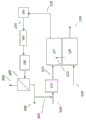
图1示意性显示熔融碳酸盐燃料电池和相关重整和分离阶段的构造的一个实例。Figure 1 schematically shows an example of the configuration of a molten carbonate fuel cell and associated reforming and separation stages.
图2示意性显示熔融碳酸盐燃料电池和相关重整和分离阶段的构造的另一实例。Figure 2 schematically shows another example of the configuration of a molten carbonate fuel cell and associated reforming and separation stages.
图3示意性显示熔融碳酸盐燃料电池的运行的一个实例。Figure 3 schematically shows an example of the operation of a molten carbonate fuel cell.
图4示意性显示基于碳基燃料的燃烧发电的联合循环系统的一个实例。Figure 4 schematically shows an example of a combined cycle system based on the combustion of carbon-based fuels to generate electricity.
图5示意性显示基于碳基燃料的燃烧发电的联合循环系统的一个实例。Figure 5 schematically shows an example of a combined cycle system based on the combustion of carbon-based fuels to generate electricity.
图6示意性显示用于运行熔融碳酸盐燃料电池的平衡配置的一个实例。Figure 6 schematically shows an example of an equilibrium configuration for operating a molten carbonate fuel cell.
图7-10显示来自用于运行熔融碳酸盐燃料电池的各种配置的模拟数据。Figures 7-10 show simulated data from various configurations used to operate a molten carbonate fuel cell.
图11显示在苯和CH4的不同燃料利用率下阳极排气中的合成气的净摩尔数与阴极排气中的CO2摩尔数的模拟比率的图。Figure 11 shows a plot of the simulated ratio of the net moles of syngas in the anode exhaust to the moles of CO in the cathode exhaust at different fuel utilization rates of benzene and CH4 .
图12和13显示在不同燃料电池工作电压VA下的CH4转化率的实例。实施方案详述Figures 12 and 13 show examples of CH4 conversion at different fuel cell operating voltages VA . Implementation details
综述Overview
现有技术系统通常力图使熔融碳酸盐燃料电池系统运行中的各种参数,最重要的是电能效率最大化。在这样的燃料电池中,CO2可作为反应物引入阴极且一些CO2可以与阴极中的氧反应。下面更详细解释这一反应。由于该CO2反应,阴极流出物中可存在比阴极流入物中少的CO2。在典型的运行中,可以使阴极流出物中剩余的CO2量保持尽可能高以使MCFC的电效率和电力输出最大化。流出物中的高CO2含量与典型的MCFC运行相符,其力图产生最大电力和仅产生足以提供将反应物加热到燃料电池的工作温度所需的热的可燃阳极排出气体。Prior art systems generally seek to maximize various parameters in the operation of molten carbonate fuel cell systems, most importantly electrical energy efficiency. In such fuel cells, CO2 may be introduced into the cathode as a reactant and some CO2 may react with oxygen in the cathode. This reaction is explained in more detail below. Due to this CO2 reaction, there may be less CO2 in the cathode effluent than in the cathode influent. In typical operation, the amount of CO remaining in the cathode effluent can be kept as high as possible to maximize the electrical efficiency and electrical output of the MCFC. The high C02 content in the effluent is consistent with typical MCFC operation, which strives to generate maximum power and generate only enough combustible anode exhaust gas to provide the heat needed to heat the reactants to the operating temperature of the fuel cell.
在各种方面中,提供了以低燃料利用率但高CO2利用率运行熔融碳酸盐燃料电池(如燃料电池组件)的系统和方法。离开阴极的CO2可能排放到大气中,并在CO2排放物被认为对环境有害时可能是不合意的,因此在一些实施方案中,在将其某些组分排放到大气中之前进一步处理阴极排气。因此,借助高CO2利用率控制CO2排放在一些运行中可能是合意的。CO2形式的碳可跨过燃料电池中的电解质膜传输,然后在阳极中与氢气反应以变成合成气混合物(H2、CO、CO2和H2O)的一部分。这能够改进碳捕集,但会造成低或降低的电效率。但是,基于由燃料电池(任选包括相关重整阶段)生成的过量合成气和/或氢气的生产,这种类型的运行仍可导致改进的总燃料电池效率。In various aspects, systems and methods are provided for operating molten carbonate fuel cells (eg, fuel cell assemblies) with low fuel utilization but high CO2 utilization. CO2 exiting the cathode may be emitted to the atmosphere and may be undesirable when CO2 emissions are considered to be harmful to the environment, so in some embodiments, further treatment is performed before some of its components are emitted to the atmosphere Cathode exhaust. Therefore, it may be desirable in some operations to control CO2 emissions with high CO2 utilization. Carbon in the form of CO 2 can be transported across the electrolyte membrane in the fuel cell and then react with hydrogen gas in the anode to become part of the syngas mixture (H 2 , CO, CO 2 and H 2 O). This can improve carbon capture, but can result in low or reduced electrical efficiency. However, this type of operation can still lead to improved overall fuel cell efficiency based on the production of excess syngas and/or hydrogen produced by the fuel cell (optionally including an associated reforming stage).
在使用MCFCs捕集碳(其中捕集可以笼统地指从阴极入口料流中除去CO2以用于其它工艺)的系统中,可基于CO2从阴极到阳极的改进的传输和改进的电效率之间的平衡选择MCFC的运行条件。在这样的系统中,燃料利用率可以为大约70%至大约75%,或甚至高达大约80%(如果可实现),以在保持跨过燃料电池的合理热梯度的同时使产生的电能的量最大化。在这种类型的配置中,可以燃烧阳极排气中的剩余燃料以提供用于运行燃料电池的一部分热。大约75%的燃料利用率相当于送往阳极(和/或送往与阳极相关的重整阶段)的所有燃料的总可重整氢含量比在阳极中氧化的燃料量高大约33%。In systems using MCFCs to capture carbon (where capture can generally refer to the removal of CO from the cathode inlet stream for use in other processes), improved transport of CO from cathode to anode and improved electrical efficiency can be based on The balance between selects the operating conditions of the MCFC. In such a system, the fuel utilization rate may be about 70% to about 75%, or even as high as about 80% (if achievable), to enable the amount of electrical energy produced while maintaining a reasonable thermal gradient across the fuel cell maximize. In this type of configuration, the remaining fuel in the anode exhaust may be combusted to provide a portion of the heat for operating the fuel cell. A fuel utilization of about 75% corresponds to a total reformable hydrogen content of all fuel sent to the anode (and/or to the reforming stage associated with the anode) that is about 33% higher than the amount of fuel oxidized in the anode.
相反,在各种方面中,熔融碳酸盐燃料电池可以在降低的燃料利用率值如大约50%或更低的燃料利用率下运行,同时还具有高CO2利用率值,如至少大约60%。在这种类型的配置中,该熔融碳酸盐燃料电池可有效用于碳捕集,因为CO2利用率可有利地足够高。不同于试图使电效率最大化,在这种类型的配置中可基于综合电和化学效率改进或提高该燃料电池的总效率。化学效率可基于作为输出从阳极排气中取出的氢气和/或合成气料流以用于其它工艺。尽管与一些传统配置相比通过形成额外的氢气/合成气电效率可能被降低,但利用阳极排气中的化学能量输出可实现燃料电池的合意的总效率。Conversely, in various aspects, molten carbonate fuel cells can operate at reduced fuel utilization values, such as fuel utilization values of about 50% or less, while also having high CO utilization values, such as at least about 60 percent. %. In this type of configuration, the molten carbonate fuel cell can be effectively used for carbon capture because the CO utilization can advantageously be sufficiently high. Rather than attempting to maximize electrical efficiency, the overall efficiency of the fuel cell can be improved or increased in this type of configuration based on the combined electrical and chemical efficiencies. The chemical efficiency may be based on the hydrogen and/or syngas stream being withdrawn from the anode exhaust as output for use in other processes. Although the electrical efficiency may be reduced by the formation of additional hydrogen/syngas compared to some conventional configurations, a desirable overall efficiency of the fuel cell can be achieved by utilizing the chemical energy output in the anode exhaust gas.
在各种方面中,燃料电池阳极中的燃料利用率可以为大约50%或更低,如大约40%或更低,或大约30%或更低,或大约25%或更低,或大约20%或更低。另外或或者,为了生成至少一些电力,该燃料电池中的燃料利用率可以为至少大约5%,如至少大约10%,或至少大约15%,或至少大约20%,或至少大约25%,或至少大约30%。再另外或或者,CO2利用率可以为至少大约60%,如至少大约65%,或至少大约70%,或至少大约75%。再另外或或者,CO2利用率可以为大约98%或更低,或可以低到足以使足够的CO2保留在阴极排气中以允许运行燃料电池。本文所用的CO2利用率可以是阴极出口料流中的CO2摩尔数和阴极入口料流中的CO2摩尔数之差除以阴极入口中的CO2摩尔数。以数学方式表达,CO2利用率=(CO2(阴极入)-CO2(阴极出))/CO2(阴极入)。In various aspects, the fuel utilization in the fuel cell anode can be about 50% or less, such as about 40% or less, or about 30% or less, or about 25% or less, or about 20% % or less. Additionally or alternatively, to generate at least some electricity, the fuel utilization in the fuel cell may be at least about 5%, such as at least about 10%, or at least about 15%, or at least about 20%, or at least about 25%, or At least about 30%. Still additionally or alternatively, the CO2 utilization rate may be at least about 60%, such as at least about 65%, or at least about 70%, or at least about 75%. Still additionally or alternatively, the CO 2 utilization may be about 98% or less, or may be low enough to retain sufficient CO 2 in the cathode exhaust to allow operation of the fuel cell. As used herein, CO utilization rate may be the difference between the moles of CO in the cathode outlet stream and the moles of CO in the cathode inlet stream divided by the moles of CO in the cathode inlet. Expressed mathematically, CO2 utilization = (CO2 (cathode in) - CO2 (cathode out))/CO2 (cathode in).
以相对较低的燃料利用率运行熔融碳酸盐燃料电池的一个选项可以是与阳极中的氢反应量相比,可重整的可重整燃料极大过量。代替在阳极排气大量再循环到阳极入口的情况下运行燃料电池,可以使用过量可重整燃料,且该可重整燃料在燃料电池或相关重整阶段中基本重整。这可以产生可相当于来自燃料电池的化学能量输出的过量氢气和/或合成气。在各种方面中,燃料料流中的可重整燃料的可重整氢含量与在阳极中反应的氢气量的比率可以为至少大约1.5:1,或至少大约2.0:1,或至少大约2.5:1,或至少大约3.0:1。另外或或者,燃料料流中的可重整燃料的可重整氢含量与在阳极中反应的氢气量的比率可以为大约20:1或更低,如大约15:1或更低,或大约10:1或更低。一方面,预计阳极入口料流中的可重整氢含量的少于100%可转化成氢气。例如,阳极入口料流中的可重整氢含量的至少大约80%可以在阳极中和/或在相关重整阶段中转化成氢气,如至少大约85%,或至少大约90%。One option for operating a molten carbonate fuel cell at relatively low fuel utilization may be a large excess of reformable fuel that can be reformed compared to the amount of hydrogen reactive in the anode. Instead of operating the fuel cell with substantial recirculation of the anode exhaust to the anode inlet, excess reformable fuel may be used and substantially reformed in the fuel cell or associated reforming stage. This can generate excess hydrogen and/or syngas that can be equivalent to the chemical energy output from the fuel cell. In various aspects, the ratio of the reformable hydrogen content of the reformable fuel in the fuel stream to the amount of hydrogen reacted in the anode may be at least about 1.5:1, or at least about 2.0:1, or at least about 2.5 :1, or at least about 3.0:1. Additionally or alternatively, the ratio of the reformable hydrogen content of the reformable fuel in the fuel stream to the amount of hydrogen reacted in the anode may be about 20:1 or less, such as about 15:1 or less, or about 10:1 or less. In one aspect, it is expected that less than 100% of the reformable hydrogen content in the anode inlet stream can be converted to hydrogen. For example, at least about 80% of the reformable hydrogen content in the anode inlet stream can be converted to hydrogen in the anode and/or in the associated reforming stage, such as at least about 85%, or at least about 90%.
可作为化学能量输出从阳极排气中提取氢气和/或合成气。氢气可用作在燃烧时不生成温室气体的清洁燃料。反之,对于通过烃(或烃质化合物)的重整生成的氢气,CO2可被视为已“捕集”在阳极回路中。另外或或者,氢气可以是用于各种炼油厂工艺和/或其它合成工艺的有价值的进料。合成气也是用于各种工艺的有价值的进料。除具有燃料价值外,合成气还可用作用于生产其它更高价值产品的原料,例如通过使用合成气作为费托合成和/或甲醇合成工艺的进料。Hydrogen and/or syngas can be extracted from the anode exhaust as chemical energy output. Hydrogen can be used as a clean fuel that does not generate greenhouse gases when burned. Conversely, for hydrogen produced by the reforming of hydrocarbons (or hydrocarbonaceous compounds), CO 2 can be considered to have been "trapped" in the anode loop. Additionally or alternatively, hydrogen can be a valuable feedstock for various refinery processes and/or other synthesis processes. Syngas is also a valuable feed for various processes. In addition to its fuel value, syngas can also be used as a feedstock for the production of other higher value products, such as by using syngas as a feed to Fischer-Tropsch and/or methanol synthesis processes.
在各种方面中,阳极排气可具有大约1.5:1至大约10:1,如至少大约3.0:1,或至少大约4.0:1,或至少大约5.0:1,和/或大约8.0:1或更低,或大约6.0:1或更低的H2/CO比。可以从阳极排气中提取合成气料流。在各种方面中,从阳极排气中取出的合成气料流可具有至少大约0.9:1,如至少大约1.0:1,或至少大约1.2:1,或至少大约1.5:1,或至少大约1.7:1,或至少大约1.8:1,或至少大约1.9:1的H2摩尔数与CO摩尔数的比率。另外或或者,从阳极排气中取出的合成气中的H2/CO摩尔比可以为大约3.0:1或更低,如大约2.7:1或更低,或大约2.5:1或更低,或大约2.3:1或更低,或大约2.2:1或更低,或大约2.1:1或更低。要指出,取出的合成气料流中较高的H2/CO比可能倾向于相对于阴极排气中的CO2量降低CO量。但是,许多类型的合成气用途获益于具有至少大约1.5:1至大约2.5:1或更低的H2/CO摩尔比的合成气,因此形成具有例如大约1.7:1至大约2.3:1的H2/CO含量摩尔比的合成气料流对于一些用途是合意的。In various aspects, the anode exhaust may have from about 1.5:1 to about 10:1, such as at least about 3.0:1, or at least about 4.0:1, or at least about 5.0:1, and/or about 8.0:1 or Lower, or about a 6.0:1 or lower H2 /CO ratio. A syngas stream can be extracted from the anode exhaust gas. In various aspects, the syngas stream withdrawn from the anode exhaust can have at least about 0.9:1, such as at least about 1.0:1, or at least about 1.2:1, or at least about 1.5:1, or at least about 1.7 : 1, or at least about 1.8:1, or at least about a 1.9: 1 ratio of moles of H to moles of CO. Additionally or alternatively, the H2 /CO molar ratio in the syngas withdrawn from the anode exhaust may be about 3.0:1 or less, such as about 2.7:1 or less, or about 2.5:1 or less, or About 2.3:1 or less, or about 2.2:1 or less, or about 2.1:1 or less. It is noted that a higher H2 /CO ratio in the withdrawn syngas stream may tend to reduce the amount of CO relative to the amount of CO2 in the cathode exhaust. However, many types of syngas uses benefit from syngas having a H2 /CO molar ratio of at least about 1.5:1 to about 2.5:1 or less, thus forming a syngas having, for example, about 1.7:1 to about 2.3:1 A syngas stream with a molar ratio of H2 /CO content is desirable for some applications.
可以通过任何方便的方法从阳极排气中取出合成气。在一些方面中,可以通过对阳极排气进行分离以除去阳极排气中的不同于H2和CO的至少一部分组分而从阳极排气中取出合成气。例如,可以首先使阳极排气穿过任选的水煤气变换段以调节H2和CO的相对量。然后可以使用一个或多个分离段从阳极排气中除去H2O和/或CO2。阳极排气的剩余部分可随后相当于合成气料流,其可随后以任何方便的方式取出以供使用。另外或或者,可以使取出的合成气料流穿过一个或多个水煤气变换段和/或穿过一个或多个分离段。Syngas can be removed from the anode exhaust by any convenient method. In some aspects, syngas may be removed from the anode exhaust by separating the anode exhaust to remove at least a portion of the anode exhaust gas other than H 2 and CO. For example, the anode exhaust gas may first be passed through an optional water gas shift stage to adjust the relative amounts of H2 and CO. One or more separation stages can then be used to remove H2O and/or CO2 from the anode exhaust gas. The remainder of the anode exhaust gas may then correspond to a syngas stream, which may then be withdrawn for use in any convenient manner. Additionally or alternatively, the withdrawn syngas stream may be passed through one or more water gas shift sections and/or through one or more separation sections.
要指出,改变取出的合成气中的H2/CO摩尔比的附加或替代性的方式可以是从阳极排气和/或合成气中分离出H2料流,例如通过进行膜分离。用于形成单独的H2输出料流的这种分离可以在任何方便的位置进行,如在使阳极排气穿过水煤气变换反应段之前和/或之后,和/或在使阳极排气穿过一个或多个分离段以除去阳极排气中的不同于H2和CO的组分之前和/或之后。任选地,可以在从阳极排气中分离H2料流之前和/或之后使用水煤气变换段。在一个附加或替代性的实施方案中,可任选从取出的合成气料流中分离H2。在一些方面中,分离的H2料流可相当于高纯H2料流,如含有至少大约90体积%的H2,如至少大约95体积%的H2或至少大约99体积%的H2的H2料流。It is noted that an additional or alternative way of changing the H2 /CO molar ratio in the withdrawn syngas may be to separate the H2 stream from the anode off-gas and/or the syngas, for example by performing membrane separation. This separation to form a separate H output stream can be performed at any convenient location, such as before and/or after passing the anode exhaust gas through the water gas shift reaction section, and/or after passing the anode exhaust gas through Before and/or after one or more separation stages to remove components other than H 2 and CO in the anode exhaust gas. Optionally, a water gas shift stage can be used before and/or after separation of the H2 stream from the anode exhaust gas. In an additional or alternative embodiment, H2 may optionally be separated from the withdrawn syngas stream. In some aspects, the separated H 2 stream may correspond to a high purity H 2 stream, such as containing at least about 90 vol % H 2 , such as at least about 95 vol % H 2 or at least about 99 vol % H 2 of H2 stream.
熔融碳酸盐燃料电池的一个潜在优点可以是在燃料电池的阴极侧上接收来自高流动体积料流(如燃烧发电机的废气流)的CO2并将该CO2转移到穿过燃料电池的阳极部分的较低体积流中的能力。这可有助于捕集CO2用于随后捕捉和/或用于另一工艺,如强化采油。通过使用熔融碳酸盐燃料电池,可以将合成气生成工艺与CO2捕集工艺集成。这能够改进燃料电池的总效率(电+化学),同时也降低了作为含CO2料流,如燃烧排气料流的一部分排放的CO2量或将其减至最低。这可有利地不同于使用熔融碳酸盐燃料电池进行碳捕集的传统机制。这样的传统机制通常试图使电效率最大化,因此通常明确避免生成用于外部工艺的化学能量输出(如合成气)。One potential advantage of a molten carbonate fuel cell may be to receive CO2 from a high flow volume stream (such as the exhaust gas stream of a combustion generator ) on the cathode side of the fuel cell and transfer the CO2 to the flow through the fuel cell. Capability in lower volume flow of anode section. This can aid in capturing CO2 for subsequent capture and/or for use in another process, such as enhanced oil recovery. By using molten carbonate fuel cells, it is possible to integrate the syngas generation process with the CO capture process. This can improve the overall efficiency (electrical + chemical) of the fuel cell, while also reducing or minimizing the amount of CO2 emitted as part of a CO2 -containing stream, such as a combustion exhaust stream. This may advantageously differ from conventional mechanisms for carbon capture using molten carbonate fuel cells. Such conventional mechanisms generally attempt to maximize electrical efficiency, and thus generally explicitly avoid generating chemical energy output (eg, syngas) for external processes.
在一些方面中,可以使用具有中等或低CO2含量的阴极输入进料以高CO2利用率运行熔融碳酸盐燃料电池。适用于碳分离和捕集的各种料流可包括具有中等至低CO2含量的料流。例如,阴极入口的可能的输入料流可具有大约20体积%或更低,如大约15体积%或更低,或大约12体积%或更低,或大约10体积%或更低的CO2含量。这种含CO2料流可以由燃烧发电机,如燃煤或燃烧天然气的涡轮机产生。基于具有中等或低CO2含量的阴极输入料流实现所需CO2利用水平可允许使用较低含量的CO2料流,而不需要在使用该料流作为阴极输入料流之前使该料流富集CO2。In some aspects, molten carbonate fuel cells can be operated with high CO 2 utilization using cathode input feeds with moderate or low CO 2 content. Various streams suitable for carbon separation and capture can include streams with moderate to low CO2 content. For example, a possible input stream to the cathode inlet may have a CO content of about 20 vol % or less, such as about 15 vol % or less, or about 12 vol % or less, or about 10 vol % or less . This CO2 -containing stream can be produced by a combustion generator, such as a coal-fired or natural gas-fired turbine. Achieving the desired level of CO utilization based on a cathode input stream with moderate or low CO content may allow the use of a lower content CO stream without requiring the stream to be used before using it as a cathode input stream CO 2 enrichment.
另外或或者,在高CO2利用率值下和/或用具有低CO2含量的阴极入口料流运行熔融碳酸盐燃料电池可有助于实现阳极排气中的净合成气与阴极排气中的碳的所需比率。实际上,可对仍在合意范围内运行燃料电池的同时可在商业规模的熔融碳酸盐燃料电池的阴极中除去的CO2的量具有限制。在各种方面中,来自熔融碳酸盐燃料电池的阴极排气可具有至少大约0.5%,如至少大约1.0体积%,或至少大约1.5体积%,或至少大约2.0体积%的CO2含量。由于这种限制,阴极排气中的CO2量不可能降至接近0的值。这意味着不能简单地通过以低碳含量的阴极输入料流开始、然后在阴极中将碳含量降至接近0来实现作为合成气取出的碳与阴极排气中的碳的高比率。相反,通过提高阴极中的CO2利用率以使进入阴极的相当大部分的CO2可以在燃料电池中从阴极转移到阳极,可以实现所需比率。取决于该方面,燃料电池的CO2利用率可以为至少大约33%,如至少大约40%,或至少大约50%,或至少大约60%,或至少大约70%。Additionally or alternatively, operating molten carbonate fuel cells at high CO utilization values and/or with a cathode inlet stream with low CO content may help achieve net syngas in anode exhaust versus cathode exhaust desired ratio of carbon in . In practice, there may be a limit to the amount of CO2 that can be removed in the cathode of a commercial scale molten carbonate fuel cell while still operating the fuel cell within a desirable range. In various aspects, the cathode exhaust from the molten carbonate fuel cell may have a CO 2 content of at least about 0.5%, such as at least about 1.0% by volume, or at least about 1.5% by volume, or at least about 2.0% by volume. Due to this limitation, it is impossible for the amount of CO2 in the cathode exhaust to drop to a value close to zero. This means that a high ratio of carbon withdrawn as syngas to carbon in the cathode exhaust cannot be achieved simply by starting with a cathode input stream of low carbon content and then reducing the carbon content in the cathode to near zero. Conversely, the desired ratio can be achieved by increasing the CO utilization in the cathode so that a substantial portion of the CO entering the cathode can be transferred from the cathode to the anode in the fuel cell. Depending on this aspect, the CO2 utilization of the fuel cell may be at least about 33%, such as at least about 40%, or at least about 50%, or at least about 60%, or at least about 70%.
在一些方面中,阴极的输入料流的CO2含量可以是低CO2含量料流,如来自天然气涡轮机的燃烧排气料流。这样的低CO2含量料流可具有大约10体积%或更低,或大约9体积%或更低,或大约8体积%或更低,或大约7体积%或更低,或大约6.5体积%或更低,或大约6体积%或更低,或大约5体积%或更低,或大约4.5体积%或更低的CO2浓度。或者,阴极的输入料流的CO2含量可以为大约1.5体积%或更高,或大约1.6体积%或更高,或大约1.7体积%或更高,或大约1.8体积%或更高,或大约1.9体积%或更高,或大约2体积%或更高,或大约3体积%或更高。对于作为阴极进料的这种类型的低CO2含量料流,阴极排气中的最低CO2含量值可对CO2利用率具有实际限制。在这样的方面中,取出的合成气料流中的CO与阴极排气中的CO2的较低比率可以是可接受的,如至少大约0.5,或至少大约0.75的比率。或者,对于送入阴极入口的较高CO2含量的输入料流,取出的合成气料流中的CO与阴极排气中的CO2的较高比率是合意的,如至少大约1.0的比率。In some aspects, the CO 2 content of the input stream to the cathode may be a low CO 2 content stream, such as a combustion exhaust stream from a natural gas turbine. Such a low CO2 content stream may have about 10 vol% or less, or about 9 vol% or less, or about 8 vol% or less, or about 7 vol% or less, or about 6.5 vol% or less, or about 6 vol% or less, or about 5 vol% or less, or about 4.5 vol% or less CO2 concentration. Alternatively, the CO content of the input stream to the cathode may be about 1.5 vol% or more, or about 1.6 vol% or more, or about 1.7 vol% or more, or about 1.8 vol% or more, or about 1.9 vol% or more, or about 2 vol% or more, or about 3 vol% or more. For this type of low CO 2 content stream as cathode feed, the minimum CO 2 content value in the cathode exhaust can have a practical limit on CO 2 utilization. In such aspects, a lower ratio of CO in the withdrawn syngas stream to CO 2 in the cathode exhaust may be acceptable, such as a ratio of at least about 0.5, or at least about 0.75. Alternatively, for higher CO2 content input streams fed to the cathode inlet, a higher ratio of CO in the withdrawn syngas stream to CO2 in the cathode exhaust is desirable, such as a ratio of at least about 1.0.
作为对本文描述的燃料电池运行策略的增加、补充和/或替代,可以运行熔融碳酸盐燃料电池以便可相对于氧化量选择重整量以实现燃料电池的所需热比率。本文所用的“热比率”被定义为由燃料电池组件中的放热反应生成的热除以在燃料电池组件内发生的重整反应的吸热需求。以数学方式表达,热比率(TH)=QEX/QEN,其中QEX是由放热反应生成的热量总和且QEN是在燃料电池内发生的吸热反应消耗的热量总和。要指出,由放热反应生成的热相当于归因于该电池中的重整反应、水煤气变换反应和电化学反应的任何热。可基于跨过电解质的燃料电池反应的理想电化学势减去燃料电池的实际输出电压计算由电化学反应生成的热。例如,基于在电池中发生的净反应,认为MCFC中的反应的理想电化学势为大约1.04V。在MCFC的运行过程中,由于各种损失,该电池通常具有小于1.04V的输出电压。例如,常见输出/工作电压可以为大约0.7V。生成的热等于该电池的电化学势(即~1.04V)减去工作电压。例如,当输出电压为~0.7V时,由电池中的电化学反应生成的热为~0.34V。因此,在这种情况中,电化学反应产生~0.7V的电和~0.34V的热能。在这种实例中,~0.7V的电能不作为QEX的一部分。换言之,热能不是电能。In addition to, in addition to, and/or alternative to the fuel cell operating strategies described herein, molten carbonate fuel cells may be operated such that the amount of reforming relative to the amount of oxidation can be selected to achieve a desired heat ratio for the fuel cell. As used herein, the "heat ratio" is defined as the heat generated by the exothermic reaction in the fuel cell assembly divided by the endothermic demand of the reforming reaction taking place within the fuel cell assembly. Expressed mathematically, the heat ratio (TH) = Q EX /Q EN , where Q EX is the sum of the heat generated by the exothermic reactions and Q EN is the sum of the heat consumed by the endothermic reactions taking place within the fuel cell. It is noted that the heat generated by the exothermic reaction corresponds to any heat attributable to the reforming, water gas shift and electrochemical reactions in the cell. The heat generated by the electrochemical reaction can be calculated based on the ideal electrochemical potential of the fuel cell reaction across the electrolyte minus the actual output voltage of the fuel cell. For example, based on the net reaction occurring in the cell, the ideal electrochemical potential for the reaction in the MCFC is believed to be about 1.04V. During the operation of the MCFC, the battery typically has an output voltage of less than 1.04V due to various losses. For example, a common output/operating voltage may be around 0.7V. The heat generated is equal to the electrochemical potential of the cell (ie -1.04V) minus the operating voltage. For example, when the output voltage is ~0.7V, the heat generated by the electrochemical reaction in the battery is ~0.34V. Thus, in this case, the electrochemical reaction produces ~0.7V of electricity and ~0.34V of thermal energy. In this example, the power of ~0.7V is not part of Q EX . In other words, thermal energy is not electrical energy.
在各种方面中,可以对任何方便的燃料电池结构,如燃料电池堆、燃料电池堆内的独立燃料电池、具有集成的重整段的燃料电池堆、具有集成的吸热反应段的燃料电池堆或其组合测定热比率。也可以对燃料电池堆内的不同单元,如燃料电池或燃料电池堆的组件计算热比率。例如,可以对单一燃料电池内的单一阳极、燃料电池堆内的阳极段或与集成的重整段和/或集成的吸热反应段元件(从热集成角度看足够紧密靠近要集成的阳极段)一起的燃料电池堆内的阳极段计算热比率。本文所用的“阳极段”包括在燃料电池堆内的共用共同入口或出口歧管的多个阳极。In various aspects, any convenient fuel cell configuration may be used for fuel cell stacks, individual fuel cells within a fuel cell stack, fuel cell stacks with integrated reforming sections, fuel cells with integrated endothermic reaction sections The stack or a combination thereof determines the heat ratio. Thermal ratios can also be calculated for different units within a fuel cell stack, such as fuel cells or components of a fuel cell stack. For example, a single anode within a single fuel cell, an anode segment within a fuel cell stack, or an integrated reformer segment and/or an integrated endothermic reaction segment element (close enough to the anode segment to be integrated from a thermal integration perspective) can be ) together with the anode segments within the fuel cell stack to calculate the heat ratio. As used herein, an "anode segment" includes a plurality of anodes within a fuel cell stack that share a common inlet or outlet manifold.
在本发明的各种方面中,可以基于热比率表征燃料电池的运行。如果运行燃料电池以具有所需热比率,则可以运行熔融碳酸盐燃料电池以具有大约1.5或更低,例如大约1.3或更低,或大约1.15或更低,或大约1.0或更低,或大约0.95或更低,或大约0.90或更低,或大约0.85或更低,或大约0.80或更低,或大约0.75或更低的热比率。另外或或者,热比率可以为至少大约0.25,或至少大约0.35,或至少大约0.45,或至少大约0.50。另外或或者,在一些方面中,可以运行燃料电池以具有大约40℃或更小,如大约20℃或更小,或大约10℃或更小的在阳极输入与阳极输出之间的升温。再另外或或者,可以运行燃料电池以具有比阳极入口温度低大约10℃至高大约10℃的阳极出口温度。再另外或或者,可以运行燃料电池以具有比阳极出口温度高的阳极入口温度,如高至少大约5℃,或高至少大约10℃,或高至少大约20℃,或高至少大约25℃。再另外或或者,可以运行燃料电池以具有比阳极出口温度高大约100℃或更低,如高大约80℃或更低,或大约60℃或更低,或大约50℃或更低,或大约40℃或更低,或大约30℃或更低,或大约20℃或更低的阳极入口温度。In various aspects of the invention, the operation of a fuel cell can be characterized based on thermal ratios. If the fuel cell is operated to have the desired heat ratio, the molten carbonate fuel cell may be operated to have about 1.5 or less, such as about 1.3 or less, or about 1.15 or less, or about 1.0 or less, or A heat ratio of about 0.95 or less, or about 0.90 or less, or about 0.85 or less, or about 0.80 or less, or about 0.75 or less. Additionally or alternatively, the heat ratio can be at least about 0.25, or at least about 0.35, or at least about 0.45, or at least about 0.50. Additionally or alternatively, in some aspects, the fuel cell may be operated to have a temperature rise between anode input and anode output of about 40°C or less, such as about 20°C or less, or about 10°C or less. Still additionally or alternatively, the fuel cell can be operated to have an anode outlet temperature that is about 10°C lower to about 10°C higher than the anode inlet temperature. Still additionally or alternatively, the fuel cell can be operated to have an anode inlet temperature higher than the anode outlet temperature, such as at least about 5°C higher, or at least about 10°C higher, or at least about 20°C higher, or at least about 25°C higher. Still additionally or alternatively, the fuel cell can be operated to have about 100°C or less higher than the anode outlet temperature, such as about 80°C or less higher, or about 60°C or lower, or about 50°C or lower, or about An anode inlet temperature of 40°C or less, or about 30°C or less, or about 20°C or less.
作为对本文描述的燃料电池运行策略的增加、补充和/或替代,可以用相对于在燃料电池的阳极中反应的氢量过量的可重整燃料运行熔融碳酸盐燃料电池(如燃料电池组件)。代替选择燃料电池的运行条件来改进或使燃料电池的电效率最大化,可以将过量的可重整燃料送入燃料电池的阳极以提高燃料电池的化学能量输出。任选但优选地,这可导致基于燃料电池的综合电效率和化学效率的燃料电池总效率提高。In addition to, in addition to, and/or in place of the fuel cell operating strategies described herein, molten carbonate fuel cells (eg, fuel cell assemblies) may be operated with excess reformable fuel relative to the amount of hydrogen reacted in the anode of the fuel cell. ). Instead of selecting the operating conditions of the fuel cell to improve or maximize the electrical efficiency of the fuel cell, excess reformable fuel can be fed to the anode of the fuel cell to increase the chemical energy output of the fuel cell. Optionally but preferably, this may result in an increase in the overall efficiency of the fuel cell based on the combined electrical and chemical efficiency of the fuel cell.
在一些方面中,送往阳极和/或送往与阳极相关的重整段的输入料流中的可重整燃料的可重整氢含量可以比在阳极中氧化的氢量高至少大约50%,如高至少大约75%至少大约100%。在各种方面中,燃料料流中的可重整燃料的可重整氢含量与在阳极中反应的氢量的比率可以为至少大约1.5:1,或至少大约2.0:1,或至少大约2.5:1,或至少大约3.0:1。另外或或者,燃料料流中的可重整燃料的可重整氢含量与在阳极中反应的氢量的比率可以为大约20:1或更低,如大约15:1或更低或大约10:1或更低。一方面,预计阳极入口料流中的可重整氢含量的少于100%可转化成氢气。例如,阳极入口料流中的可重整氢含量的至少大约80%可以在阳极中和/或在相关重整段中转化成氢气,如至少大约85%,或至少大约90%。In some aspects, the reformable hydrogen content of the reformable fuel in the input stream to the anode and/or to the reforming section associated with the anode may be at least about 50% higher than the amount of hydrogen oxidized in the anode , such as at least about 75% at least about 100% higher. In various aspects, the ratio of the reformable hydrogen content of the reformable fuel in the fuel stream to the amount of hydrogen reacted in the anode may be at least about 1.5:1, or at least about 2.0:1, or at least about 2.5 :1, or at least about 3.0:1. Additionally or alternatively, the ratio of the reformable hydrogen content of the reformable fuel in the fuel stream to the amount of hydrogen reacted in the anode may be about 20:1 or less, such as about 15:1 or less or about 10 : 1 or less. In one aspect, it is expected that less than 100% of the reformable hydrogen content in the anode inlet stream can be converted to hydrogen. For example, at least about 80% of the reformable hydrogen content in the anode inlet stream can be converted to hydrogen in the anode and/or in the associated reforming section, such as at least about 85%, or at least about 90%.
作为对本文描述的燃料电池运行策略的增加、补充和/或替代,可以在也降低或将在阴极排气料流中离开燃料电池的CO2量减至最低的同时以提高的合成气(或氢气)产量运行熔融碳酸盐燃料电池(如燃料电池组件)。合成气可以是用于各种工艺的有价值的进料。除具有燃料价值外,合成气还可用作用于形成其它更高价值产品的原材料,例如通过使用合成气作为费托合成和/或甲醇合成工艺的进料。用于制造合成气的一个选项可以是重整烃或烃类燃料,如甲烷或天然气。对于许多类型的工业工艺,具有接近2:1(或甚至更低)的H2/CO比的合成气可通常是合意的。如果额外的CO2是可用的(如在阳极中生成),可以利用水煤气变换反应降低合成气中的H2/CO比。As an addition, supplement, and/or alternative to the fuel cell operating strategies described herein, the increased syngas (or hydrogen) production to run molten carbonate fuel cells (such as fuel cell assemblies). Syngas can be a valuable feed for various processes. In addition to its fuel value, syngas can also be used as a raw material for forming other higher value products, such as by using syngas as a feed to Fischer-Tropsch and/or methanol synthesis processes. One option for making syngas may be to reform hydrocarbons or hydrocarbon fuels such as methane or natural gas. For many types of industrial processes, syngas with an H2 /CO ratio approaching 2:1 (or even lower) may generally be desirable. If additional CO2 is available (eg, generated in the anode), the water gas shift reaction can be used to reduce the H2 /CO ratio in the syngas.
通过将合成气生成和熔融碳酸盐燃料电池的使用集成而提供的整体效益的一种表征方式可基于在阳极排气中离开燃料电池的合成气的净量相对于在阴极排气中离开燃料电池的CO2量的比率。这种表征衡量以低排放和高效率(电和化学)发电的效力。在本说明书中,阳极排气中的合成气的净量被定义为阳极排气中存在的H2摩尔数和CO摩尔数的总和抵消阳极入口存在的H2和CO量。由于该比率基于阳极排气中的合成气的净量,简单地将过量H2送入阳极不会改变该比率的值。但是,由于在阳极中和/或在与阳极相关的内部重整段中重整而生成的H2和/或CO可造成该比率的更高值。在阳极中氧化的氢可降低该比率。要指出,水煤气变换反应可以用H2交换CO,因此H2和CO的总摩尔数代表阳极排气中的总潜在合成气,无论合成气中最终所需的H2/CO比如何。然后可以将阳极排气的合成气含量(H2+CO)与阴极排气的CO2含量相比较。这可提供一种类型的效率值,其也可说明碳捕集量。这可同等地表示为如下方程One way of characterizing the overall benefit provided by integrating syngas generation and the use of molten carbonate fuel cells can be based on the net amount of syngas leaving the fuel cell in the anode exhaust relative to leaving the fuel in the cathode exhaust The ratio of the CO2 amount of the battery. This characterization measures the effectiveness of generating electricity with low emissions and high efficiency (electrical and chemical). In this specification, the net amount of syngas in the anode exhaust is defined as the sum of moles of H and CO present in the anode exhaust to offset the amount of H and CO present at the anode inlet. Since this ratio is based on the net amount of syngas in the anode exhaust, simply feeding excess H to the anode will not change the value of this ratio. However, higher values of this ratio may be caused by H2 and/or CO generated due to reforming in the anode and/or in the internal reforming section associated with the anode. Hydrogen oxidized in the anode can reduce this ratio. It is noted that the water-gas shift reaction can exchange H for CO , so the total moles of H and CO represent the total potential syngas in the anode exhaust, regardless of the final desired H/ CO ratio in the syngas. The syngas content (H 2 +CO) of the anode exhaust can then be compared to the CO 2 content of the cathode exhaust. This can provide a type of efficiency value that can also account for carbon capture. This can be equivalently expressed as the following equation
阳极排气中的净合成气与阴极CO2的比率=(H2+CO)阳极的净摩尔数/(CO2)阴极的摩尔数Ratio of net syngas to cathode CO2 in anode exhaust = ( H2 +CO) net moles of anode /( CO2 ) moles of cathode
在各种方面中,阳极排气中的合成气的净摩尔数与阴极排气中的CO2摩尔数的比率可以为至少大约2.0,如至少大约3.0,或至少大约4.0,或至少大约5.0。在一些方面中,阳极排气中的净合成气与阴极排气中的CO2量的比率可以更高,如至少大约10.0,或至少大约15.0,或至少大约20.0。另外或或者,可以实现大约40.0或更低,如大约30.0或更低,或大约20.0或更低的比率值。在阴极入口处的CO2量为大约6.0体积%或更低,如大约5.0体积%或更低的方面中,至少大约1.5的比率值可能足够的/现实的。阳极排气中的净合成气与阴极排气中的CO2量的这种摩尔比率值可高于照传统运行的燃料电池的值。In various aspects, the ratio of the net moles of syngas in the anode exhaust to the moles of CO2 in the cathode exhaust may be at least about 2.0, such as at least about 3.0, or at least about 4.0, or at least about 5.0. In some aspects, the ratio of the net syngas in the anode exhaust to the amount of CO 2 in the cathode exhaust can be higher, such as at least about 10.0, or at least about 15.0, or at least about 20.0. Additionally or alternatively, ratio values of about 40.0 or less, such as about 30.0 or less, or about 20.0 or less, can be achieved. In aspects where the amount of CO2 at the cathode inlet is about 6.0 vol% or less, such as about 5.0 vol% or less, a ratio value of at least about 1.5 may be sufficient/realistic. This molar ratio of the amount of net syngas in the anode exhaust to the amount of CO2 in the cathode exhaust may be higher than that of a conventionally operated fuel cell.
作为对本文描述的燃料电池运行策略的增加、补充和/或替代,也可以在可改进或优化燃料电池的综合电效率和化学效率的条件下运行熔融碳酸盐燃料电池(如燃料电池组件)。代替选择用于使燃料电池的电效率最大化的传统条件,该运行条件可以在燃料电池的阳极排气中输出过量合成气和/或氢气。该合成气和/或氢气然后可用于各种用途,包括化学合成工艺和收集氢气以用作“清洁”燃料。在本发明的方面中,可以降低电效率以实现高的总效率,这包括化学效率,其基于生成的合成气和/或氢气的化学能量值与燃料电池的燃料输入的能量值的相对值。In addition to, in addition to, and/or in place of the fuel cell operating strategies described herein, molten carbonate fuel cells (eg, fuel cell assemblies) may also be operated under conditions that improve or optimize the overall electrical and chemical efficiency of the fuel cell. . Instead of selecting traditional conditions for maximizing the electrical efficiency of the fuel cell, the operating conditions may output excess syngas and/or hydrogen in the anode exhaust of the fuel cell. This syngas and/or hydrogen can then be used for various purposes, including chemical synthesis processes and the collection of hydrogen for use as a "clean" fuel. In aspects of the invention, electrical efficiencies can be reduced to achieve high overall efficiencies, including chemical efficiencies, based on the relative value of the chemical energy value of the syngas and/or hydrogen produced and the energy value of the fuel input to the fuel cell.
在一些方面中,可基于电效率表征燃料电池的运行。如果运行燃料电池以具有低的电效率(EE),可以运行熔融碳酸盐燃料电池以具有大约40%或更低的电效率,例如大约35%EE或更低,大约30%EE或更低,大约25%EE或更低,或大约20%EE或更低,大约15%EE或更低,或大约10%EE或更低。另外或或者,EE可以为至少大约5%,或至少大约10%,或至少大约15%,或至少大约20%。再另外或或者,可基于总燃料电池效率(TFCE),如燃料电池的综合电效率和化学效率表征燃料电池的运行。如果运行燃料电池以具有高的总燃料电池效率,可以运行熔融碳酸盐燃料电池以具有大约55%或更大,例如大约60%或更大,或大约65%或更大,或大约70%或更大,或大约75%或更大,或大约80%或更大,或大约85%或更大的TFCE(和/或综合电效率和化学效率)。要指出,对于总燃料电池效率和/或综合电效率和化学效率,在效率计算中可不包括利用燃料电池生成的过量热生成的任何额外电力。In some aspects, the operation of the fuel cell can be characterized based on electrical efficiency. If the fuel cell is operated to have a low electrical efficiency (EE), the molten carbonate fuel cell can be operated to have an electrical efficiency of about 40% or less, eg, about 35% EE or less, about 30% EE or less , about 25% EE or less, or about 20% EE or less, about 15% EE or less, or about 10% EE or less. Additionally or alternatively, the EE may be at least about 5%, or at least about 10%, or at least about 15%, or at least about 20%. Still additionally or alternatively, the operation of a fuel cell can be characterized based on total fuel cell efficiency (TFCE), such as the combined electrical and chemical efficiency of the fuel cell. If the fuel cell is operated to have a high overall fuel cell efficiency, the molten carbonate fuel cell may be operated to have about 55% or more, such as about 60% or more, or about 65% or more, or about 70% or greater, or about 75% or greater, or about 80% or greater, or about 85% or greater TFCE (and/or combined electrical and chemical efficiency). It is noted that for the overall fuel cell efficiency and/or the combined electrical and chemical efficiencies, any additional electricity generated using excess heat generated by the fuel cell may not be included in the efficiency calculation.
在本发明的各种方面中,可基于大约40%或更低的所需电效率和大约55%或更大的所需总燃料电池效率表征燃料电池的运行。如果运行燃料电池以具有所需电效率和所需总燃料电池效率,可以运行熔融碳酸盐燃料电池以具有大约40%或更低的电效率及大约55%或更大的TFCE,例如大约35%EE或更低及大约60%或更大的TFCE,大约30%EE或更低及大约65%或更大的TFCE,大约25%EE或更低及大约70%TFCE或更大,或大约20%EE或更低及大约75%或更大的TFCE,大约15%EE或更低及大约80%或更大的TFCE,或大约10%EE或更低及大约85%或更大的TFCE。In various aspects of the invention, fuel cell operation may be characterized based on a desired electrical efficiency of about 40% or less and a desired overall fuel cell efficiency of about 55% or greater. If the fuel cell is operated to have the desired electrical efficiency and the desired overall fuel cell efficiency, the molten carbonate fuel cell can be operated to have an electrical efficiency of about 40% or less and a TFCE of about 55% or greater, eg, about 35 %EE or less and about 60% or more TFCE, about 30% EE or less and about 65% or more TFCE, about 25% EE or less and about 70% TFCE or more, or about 20% EE or less and about 75% or more TFCE, about 15% EE or less and about 80% or more TFCE, or about 10% EE or less and about 85% or more TFCE .
作为对本文描述的燃料电池运行策略的增加、补充和/或替代,可以在可提供提高的功率密度的条件下运行熔融碳酸盐燃料电池(如燃料电池组件)。燃料电池的功率密度相当于实际工作电压VA乘以电流密度I。对于在电压VA下运行的熔融碳酸盐燃料电池,该燃料电池还倾向于生成废热,废热被定义为(V0–VA)*I,其基于VA与提供电流密度I的燃料电池的理想电压V0之差。可重整燃料在燃料电池的阳极内的重整可消耗一部分这种废热。剩余部分的这种废热可以被周围的燃料电池结构和气流吸收,导致跨燃料电池的温度差。在传统运行条件下,燃料电池的功率密度可基于燃料电池在不损害燃料电池完整性的情况下可容许的废热量受到限制。In addition to, in addition to, and/or in lieu of the fuel cell operating strategies described herein, molten carbonate fuel cells (eg, fuel cell assemblies) can be operated under conditions that provide increased power density. The power density of a fuel cell is equivalent to the actual operating voltage VA multiplied by the current density I. For a molten carbonate fuel cell operating at voltage VA, the fuel cell also tends to generate waste heat, which is defined as (V 0 -VA )* I based on VA and the fuel cell providing current density I The ideal voltage V 0 difference. A portion of this waste heat may be consumed by the reforming of the reformable fuel within the anode of the fuel cell. The remainder of this waste heat can be absorbed by the surrounding fuel cell structure and gas flow, resulting in temperature differences across the fuel cells. Under conventional operating conditions, the power density of a fuel cell can be limited based on the amount of waste heat the fuel cell can tolerate without compromising the integrity of the fuel cell.
在各种方面中,通过在燃料电池内进行有效量的吸热反应,可以提高燃料电池可容许的废热量。吸热反应的一个实例包括可重整燃料在燃料电池阳极内和/或在相关重整段,如燃料电池堆中的集成重整段中的蒸汽重整。通过向燃料电池的阳极(或向集成/相关重整段)提供额外的可重整燃料,可以进行额外的重整以便可消耗额外的废热。这可降低跨燃料电池的温度差的量,由此允许燃料电池在具有提高的废热量的运行条件下运行。电效率的损失可通过产生可用于各种用途(包括额外的发电)的额外产物料流抵消,所述额外产物料流例如为合成气和/或H2,以进一步扩大该系统的功率范围。In various aspects, by carrying out an effective amount of endothermic reaction within the fuel cell, the waste heat tolerable by the fuel cell can be increased. An example of an endothermic reaction includes steam reforming of the reformable fuel within the fuel cell anode and/or in an associated reforming stage, such as an integrated reforming stage in a fuel cell stack. By supplying additional reformable fuel to the anode of the fuel cell (or to the integrated/associated reforming section), additional reforming can be performed so that additional waste heat can be consumed. This can reduce the amount of temperature difference across the fuel cell, thereby allowing the fuel cell to operate under operating conditions with increased waste heat. The loss of electrical efficiency can be offset by generating additional product streams, such as syngas and/or H2 , that can be used for various purposes, including additional power generation, to further expand the power range of the system.
在各种方面中,燃料电池生成的废热量,如上定义的(V0–VA)*I可以为至少大约30mW/cm2,如至少大约40mW/cm2,或至少大约50mW/cm2,或至少大约60mW/cm2,或至少大约70mW/cm2,或至少大约80mW/cm2,或至少大约100mW/cm2,或至少大约120mW/cm2,或至少大约140mW/cm2,或至少大约160mW/cm2,或至少大约180mW/cm2。另外或或者,燃料电池生成的废热量可以小于大约250mW/cm2,如小于大约200mW/cm2,或小于大约180mW/cm2,或小于大约165mW/cm2,或小于大约150mW/cm2。In various aspects, the waste heat generated by the fuel cell, as defined above (V 0 −VA )*I, can be at least about 30 mW/cm 2 , such as at least about 40 mW/cm 2 , or at least about 50 mW/cm 2 , or at least about 60mW/ cm2 , or at least about 70mW/ cm2 , or at least about 80mW/ cm2 , or at least about 100mW/ cm2 , or at least about 120mW/ cm2 , or at least about 140mW/ cm2 , or at least About 160 mW/cm 2 , or at least about 180 mW/cm 2 . Additionally or alternatively, the waste heat generated by the fuel cell may be less than about 250 mW/cm 2 , such as less than about 200 mW/cm 2 , or less than about 180 mW/cm 2 , or less than about 165 mW/cm 2 , or less than about 150 mW/cm 2 .
尽管生成的废热量可能相对较高,但这样的废热不一定代表燃料电池以差效率运行。相反,可能由于在提高的功率密度下运行燃料电池而生成废热。改进燃料电池的功率密度的部分可包括在足够高的电流密度下运行燃料电池。在各种方面中,燃料电池生成的电流密度可以为至少大约150mA/cm2,如至少大约160mA/cm2,或至少大约170mA/cm2,或至少大约180mA/cm2,或至少大约190mA/cm2,或至少大约200mA/cm2,或至少大约225mA/cm2,或至少大约250mA/cm2。另外或或者,燃料电池生成的电流密度可以为大约500mA/cm2或更低,如450mA/cm2或更低,或400mA/cm2或更低,或350mA/cm2或更低,或300mA/cm2或更低。Although the waste heat generated may be relatively high, such waste heat does not necessarily represent the fuel cell operating at poor efficiency. Instead, waste heat may be generated from operating the fuel cell at increased power density. Part of improving the power density of a fuel cell can include operating the fuel cell at a sufficiently high current density. In various aspects, the current density generated by the fuel cell can be at least about 150 mA/cm 2 , such as at least about 160 mA/cm 2 , or at least about 170 mA/cm 2 , or at least about 180 mA/cm 2 , or at least about 190 mA/
在各种方面中,为了能在提高的发电和提高的废热生成下运行燃料电池,可以进行有效量的吸热反应(如重整反应)。或者,可通过在燃料电池阵列中布置与阳极或阴极热连通但不流体连通的“板”或段而使用与阳极运行无关的其它吸热反应来利用废热。有效量的吸热反应可以在相关重整段、集成重整段、用于进行吸热反应的集成堆叠元件或其组合中进行。有效量的吸热反应可相当于足以将从燃料电池入口到燃料电池出口的升温减小至大约100℃或更低,如大约90℃或更低,或大约80℃或更低,或大约70℃或更低,或大约60℃或更低,或大约50℃或更低,或大约40℃或更低,或大约30℃或更低的量。另外或或者,有效量的吸热反应可相当于足以使从燃料电池入口到燃料电池出口的降温为大约100℃或更低,如大约90℃或更低,或大约80℃或更低,或大约70℃或更低,或大约60℃或更低,或大约50℃或更低,或大约40℃或更低,或大约30℃或更低,或大约20℃或更低,或大约10℃或更低的量。当有效量的吸热反应超过生成的废热时,可发生从燃料电池入口到燃料电池出口的降温。另外或或者,这可相当于吸热反应(如重整和另一吸热反应的组合)消耗燃料电池生成的废热的至少大约40%,如消耗至少大约50%的废热,或至少大约60%的废热,或至少大约75%的废热。再另外或或者,吸热反应可消耗大约95%或更少的废热,如大约90%或更少的废热,或大约85%或更少的废热。In various aspects, effective amounts of endothermic reactions (eg, reforming reactions) may be performed in order to be able to operate the fuel cell with increased power generation and increased waste heat generation. Alternatively, waste heat can be utilized using other endothermic reactions unrelated to the operation of the anode by arranging "plates" or segments in the fuel cell array that are in thermal communication with the anode or cathode but not in fluid communication. An effective amount of the endothermic reaction can be carried out in an associated reforming section, an integrated reforming section, an integrated stacked element for carrying out the endothermic reaction, or a combination thereof. An effective amount of the endothermic reaction may be sufficient to reduce the temperature rise from the fuel cell inlet to the fuel cell outlet to about 100°C or less, such as about 90°C or less, or about 80°C or less, or about 70°C. °C or less, or about 60 °C or less, or about 50 °C or less, or about 40 °C or less, or about 30 °C or less. Additionally or alternatively, an effective amount of the endothermic reaction may be sufficient to provide a temperature drop from the fuel cell inlet to the fuel cell outlet of about 100°C or less, such as about 90°C or less, or about 80°C or less, or about 70°C or lower, or about 60°C or lower, or about 50°C or lower, or about 40°C or lower, or about 30°C or lower, or about 20°C or lower, or about 10 °C or lower. Cooling from the fuel cell inlet to the fuel cell outlet can occur when an effective amount of endothermic reaction exceeds the waste heat generated. Additionally or alternatively, this may correspond to an endothermic reaction (eg, a combination of reforming and another endothermic reaction) consuming at least about 40% of the waste heat generated by the fuel cell, such as consuming at least about 50% of the waste heat, or at least about 60% of waste heat, or at least approximately 75% waste heat. Still additionally or alternatively, the endothermic reaction may consume about 95% or less of the waste heat, such as about 90% or less of the waste heat, or about 85% or less of the waste heat.
定义definition
合成气:在本说明书中,合成气被定义为H2和CO的任何比率的混合物。任选地,H2O和/或CO2可存在于合成气中。任选地,惰性化合物(如氮)和残留可重整燃料化合物可存在于合成气中。如果H2和CO以外的组分存在于合成气中,合成气中H2和CO的总体积百分比可以为合成气总体积的至少25体积%,如至少40体积%,或至少50体积%,或至少60体积%。另外或或者,合成气中H2和CO的总体积百分比可以为100体积%或更低,如95体积%或更低或90体积%或更低。Syngas: In this specification, syngas is defined as a mixture of H and CO in any ratio. Optionally, H2O and/or CO2 may be present in the syngas. Optionally, inert compounds such as nitrogen and residual reformable fuel compounds may be present in the syngas. If components other than H and CO are present in the syngas, the total volume percent of H and CO in the syngas may be at least 25 vol %, such as at least 40 vol %, or at least 50 vol % of the total syngas volume, or at least 60% by volume. Additionally or alternatively, the total volume percent of H2 and CO in the syngas may be 100 vol% or less, such as 95 vol% or less or 90 vol% or less.
可重整燃料:可重整燃料被定义为含有可重整生成H2的碳-氢键的燃料。烃是可重整燃料的实例,其它烃质化合物,如醇也是。尽管CO和H2O可参与水煤气变换反应以形成氢气,CO不被视为这一定义下的可重整燃料。Reformable Fuels: Reformable fuels are defined as fuels that contain carbon-hydrogen bonds that can be reformed to form H2 . Hydrocarbons are examples of reformable fuels, as are other hydrocarbonaceous compounds, such as alcohols. Although CO and H2O can participate in the water gas shift reaction to form hydrogen, CO is not considered a reformable fuel under this definition.
可重整氢含量:燃料的可重整氢含量被定义为可由燃料通过重整该燃料然后驱使水煤气变换反应完全以使H2生成最大化而形成的H2分子数。要指出,H2按定义具有1的可重整氢含量,尽管H2本身不被定义为本文中的可重整燃料。类似地,CO具有1的可重整氢含量。尽管CO严格来讲不是可重整的,但驱使水煤气变换反应完全会导致CO交换成H2。作为可重整燃料的可重整氢含量的实例,甲烷的可重整氢含量为4个H2分子,而乙烷的可重整氢含量为7个H2分子。更概括地,如果燃料的组成为CxHyOz,则该燃料在100%重整和水煤气变换下的可重整氢含量为n(H2最大重整)=2x+y/2–z。基于这一定义,电池内的燃料利用率可随之表示为n(H2ox)/n(H2最大重整)。当然,可基于各组分的可重整氢含量确定组分混合物的可重整氢含量。也可以以类似方式计算含有其它杂原子,如氧、硫或氮的化合物的可重整氢含量。 Reformable hydrogen content: The reformable hydrogen content of a fuel is defined as the number of H molecules that can be formed from the fuel by reforming the fuel and then driving the water gas shift reaction to completion to maximize H production. It is noted that H2 by definition has a reformable hydrogen content of 1, although H2 itself is not defined as a reformable fuel herein. Similarly, CO has a reformable hydrogen content of 1. Although CO is not strictly reformable, driving the water gas shift reaction entirely results in the exchange of CO for H2 . As an example of the reformable hydrogen content of a reformable fuel, methane has a reformable hydrogen content of 4 H2 molecules, while ethane has a reformable hydrogen content of 7 H2 molecules. More generally, if the composition of the fuel is CxHyOz, the reformable hydrogen content of the fuel at 100% reforming and water gas shift is n( H2 max reforming) = 2x+y/2-z. Based on this definition, the fuel utilization in the cell can then be expressed as n(H 2 ox)/n(H 2 max reforming). Of course, the reformable hydrogen content of the component mixture can be determined based on the reformable hydrogen content of each component. The reformable hydrogen content of compounds containing other heteroatoms such as oxygen, sulfur or nitrogen can also be calculated in a similar manner.
氧化反应:在这一论述中,燃料电池的阳极内的氧化反应被定义为是相当于通过与CO3 2-反应而将H2氧化以形成H2O和CO2的反应。要指出,在阳极中的氧化反应的这一定义中不包括阳极内的重整反应,在重整反应中含碳-氢键的化合物被转化成H2和CO或CO2。水煤气变换反应类似地在氧化反应的这一定义之外。进一步指出,提到燃烧反应被定义是提到H2或含碳-氢键的化合物在非电化学燃烧器,如燃烧供能发电机的燃烧区中与O2反应形成H2O和碳氧化物的反应。Oxidation Reaction: In this discussion, the oxidation reaction within the anode of a fuel cell is defined as the reaction that corresponds to the oxidation of H2 to form H2O and CO2 by reacting with CO32- . It is noted that this definition of oxidation reactions in the anode does not include reforming reactions in the anode in which compounds containing carbon-hydrogen bonds are converted into H2 and CO or CO2 . Water gas shift reactions are similarly outside this definition of oxidation reactions. It is further noted that a reference to a combustion reaction is defined as a reference to H2 or a compound containing carbon-hydrogen bonds reacting with O2 in the combustion zone of a non-electrochemical burner, such as a combustion powered generator to form H2O and carbon oxides reaction of things.
本发明的方面可调节阳极燃料参数以实现燃料电池的所需运行范围。阳极燃料参数可以直接地和/或与其它燃料电池工艺相关地,以一种或多种比率的形式表征。例如,可以控制阳极燃料参数以实现一种或多种比率,包括燃料利用率、燃料电池热值利用率、燃料过剩率、可重整燃料过剩率、可重整氢含量燃料比及其组合。Aspects of the present invention can adjust anode fuel parameters to achieve a desired operating range of the fuel cell. Anode fuel parameters may be characterized in one or more ratios, directly and/or in relation to other fuel cell processes. For example, anode fuel parameters may be controlled to achieve one or more ratios including fuel utilization, fuel cell heating value utilization, fuel excess, reformable fuel excess, reformable hydrogen content fuel ratio, and combinations thereof.
燃料利用率:燃料利用率是用于表征阳极运行的一个选项,其基于相对于输入料流的可重整氢含量的氧化的燃料量,可用于确定燃料电池的燃料利用率。在这一论述中,“燃料利用率”被定义为是为发电而在阳极中氧化的氢量(如上所述)与阳极进料(包括任何相关重整段)的可重整氢含量的比率。可重整氢含量已在上文定义为可由燃料通过重整该燃料然后驱使水煤气变换反应完全以使H2生成最大化而形成的H2分子数。例如,引入阳极并暴露在蒸汽重整条件下的各甲烷导致在最大产量下生成4H2分子当量。(取决于重整和/或阳极条件,重整产物可相当于非水煤气变换产物,其中一个或多个H2分子取而代之地以CO分子的形式存在)。因此,甲烷被定义为具有4个H2分子的可重整氢含量。作为另一实例,在这一定义下乙烷具有7个H2分子的可重整氢含量。Fuel Utilization: Fuel utilization is an option for characterizing anode operation that can be used to determine fuel cell fuel utilization based on the amount of oxidized fuel relative to the reformable hydrogen content of the input stream. In this discussion, "fuel utilization" is defined as the ratio of the amount of hydrogen (as described above) oxidized in the anode for power generation to the reformable hydrogen content of the anode feed (including any associated reforming stages) . The reformable hydrogen content has been defined above as the number of H2 molecules that can be formed from a fuel by reforming the fuel and then driving the water gas shift reaction to completion to maximize H2 production. For example, each methane introduced into the anode and exposed to steam reforming conditions resulted in the formation of 4H molecular equivalents at maximum yield. (Depending on the reforming and/or anode conditions, the reformed product may correspond to a non-aqueous gas shift product in which one or more H2 molecules are instead present in the form of CO molecules). Therefore, methane is defined as having a reformable hydrogen content of 4 H molecules. As another example, ethane under this definition has a reformable hydrogen content of 7 molecules of H2 .
阳极中的燃料利用率也可以通过基于由于燃料电池阳极反应而在阳极中氧化的氢气的低位发热值与送往阳极和/或与阳极相关的重整段的所有燃料的低位发热值的比率定义热值利用率来表征。可以使用进入和离开燃料电池阳极的燃料组分的流速和低位发热值(LHV)计算本文所用的“燃料电池热值利用率”。因此,燃料电池热值利用率可作为(LHV(阳极_入)–LHV(阳极_出))/LHV(阳极_入)计算,其中LHV(阳极_入)和LHV(阳极_出)分别是指阳极入口和出口料流或流中燃料组分(如H2、CH4和/或CO)的LHV。在这一定义中,可作为输入和/或输出料流中各燃料组分的数值总和计算料流或流的LHV。各燃料组分在该总和中的份额可相当于燃料组分的流速(例如摩尔/小时)乘以燃料组分的LHV(例如焦耳/摩尔)。The fuel utilization in the anode can also be defined based on the ratio of the lower heating value of hydrogen gas oxidized in the anode due to the fuel cell anode reaction to the lower heating value of all fuel sent to the anode and/or the reforming section associated with the anode Characterized by calorific value utilization. The "fuel cell heating value utilization" as used herein can be calculated using the flow rates and low heating value (LHV) of the fuel components entering and leaving the fuel cell anode. Therefore, the fuel cell heating value utilization can be calculated as (LHV(anode_in)–LHV(anode_out))/LHV(anode_in), where LHV(anode_in) and LHV(anode_out) are respectively Refers to the LHV of the fuel components (eg, H2 , CH4 , and/or CO) in the anode inlet and outlet streams or streams. In this definition, the LHV of a stream or stream can be calculated as the numerical sum of the individual fuel components in the input and/or output streams. The contribution of each fuel component to this sum may correspond to the flow rate of the fuel component (eg, moles/hour) multiplied by the LHV of the fuel component (eg, joules/mol).
低位发热值:低位发热值被定义为燃料组分燃烧成气相完全氧化产物(即气相CO2和H2O产物)的焓。例如,阳极输入料流中存在的任何CO2不构成阳极进料的燃料含量,因为CO2已完全氧化。对于这一定义,由于阳极燃料电池反应而在阳极中发生的氧化量被定义为作为如上定义的阳极中的电化学反应的一部分的阳极中的H2氧化。Low calorific value: The low calorific value is defined as the enthalpy of the combustion of the fuel components into gas-phase complete oxidation products (ie, gas-phase CO 2 and H 2 O products). For example, any CO2 present in the anode input stream does not constitute the fuel content of the anode feed because the CO2 is fully oxidized. For this definition, the amount of oxidation that occurs in the anode due to the anode fuel cell reaction is defined as the oxidation of H2 in the anode as part of the electrochemical reaction in the anode as defined above.
要指出,对于阳极输入流中的唯一燃料是H2的特殊情况,在阳极中可发生的涉及燃料组分的唯一反应是H2转化成H2O。在这种特殊情况中,燃料利用率简化成(H2-速率-入—H2-速率-出)/H2-速率-入。在这种情况下,H2是唯一的燃料组分,因此H2LHV会从该方程中消去。在更常见的情况下,阳极进料可能含有例如各种量的CH4、H2和CO。由于这些物类通常可以不同量存在于阳极出口中,可能需要如上所述求和以测定燃料利用率。Note that for the special case where the only fuel in the anode input stream is H2 , the only reaction involving fuel components that can occur in the anode is the conversion of H2 to H2O . In this particular case, fuel utilization is simplified to ( H2 -rate-in- H2 -rate-out)/ H2 -rate-in. In this case, H2 is the only fuel component, so the H2 LHV is eliminated from the equation. In the more common case, the anode feed may contain, for example, various amounts of CH4 , H2 , and CO. Since these species can often be present in the anode outlet in varying amounts, summing as described above may be required to determine fuel utilization.
作为对燃料利用率的替代或补充,可以表征燃料电池中的其它反应物的利用率。例如,另外或或者,可以就“CO2利用率”和/或“氧化剂”利用率表征燃料电池的运行。可以以类似方式规定CO2利用率和/或氧化剂利用率的值。As an alternative to or in addition to fuel utilization, the utilization of other reactants in the fuel cell can be characterized. For example, in addition or alternatively, fuel cell operation can be characterized in terms of "CO 2 utilization" and/or "oxidant" utilization. Values for CO 2 utilization and/or oxidant utilization can be specified in a similar manner.
燃料过剩率:表征熔融碳酸盐燃料电池中的反应的另一方式是通过基于送往阳极和/或与阳极相关的重整段的所有燃料的低位发热值与由于燃料电池阳极反应而在阳极中氧化的氢气的低位发热值的比率来定义利用率。这种量被称作燃料过剩率。因此,燃料过剩率可作为(LHV(阳极_入)/(LHV(阳极_入)-LHV(阳极_出))计算,其中LHV(阳极_入)和LHV(阳极_出)分别是指阳极入口和出口料流或流中燃料组分(如H2、CH4和/或CO)的LHV。在本发明的各种方面中,可以运行熔融碳酸盐燃料电池以具有至少大约1.0,如至少大约1.5,或至少大约2.0,或至少大约2.5,或至少大约3.0,或至少大约4.0的燃料过剩率。另外或或者,燃料过剩率可以为大约25.0或更低。Fuel Excess Ratio: Another way to characterize the reactions in a molten carbonate fuel cell is by comparing the low calorific value of all fuel sent to the anode and/or the reforming section associated with the anode with the fuel cell anode reaction at the anode. The ratio of the low calorific value of the oxidized hydrogen gas to define the utilization rate. This amount is called the excess fuel ratio. Therefore, the excess fuel ratio can be calculated as (LHV(anode_in)/(LHV(anode_in)-LHV(anode_out)), where LHV(anode_in) and LHV(anode_out) refer to the anode, respectively The LHV of the fuel components (eg, H2 , CH4 , and/or CO) in the inlet and outlet streams or streams. In various aspects of the invention, molten carbonate fuel cells can be operated to have at least about 1.0, such as A fuel excess of at least about 1.5, or at least about 2.0, or at least about 2.5, or at least about 3.0, or at least about 4.0. Additionally or alternatively, the fuel excess may be about 25.0 or less.
要指出,并非阳极输入料流中的所有可重整燃料都可被重整。优选地,进入阳极(和/或进入相关重整段)的输入料流中至少大约90%的可重整燃料在离开阳极之前可重整,如至少大约95%或至少大约98%。在另一些方面中,可重整燃料的重整量可以为大约75%至大约90%,如至少大约80%。Note that not all of the reformable fuel in the anode input stream may be reformed. Preferably, at least about 90% of the reformable fuel in the input stream entering the anode (and/or entering the associated reforming stage) is reformable before leaving the anode, such as at least about 95% or at least about 98%. In other aspects, the reformable fuel may be reformed by about 75% to about 90%, such as at least about 80%.
对燃料过剩率的上述定义提供了相对于在燃料电池阳极中发电所消耗的燃料量表征在阳极和/或与燃料电池相关的重整段内发生的重整量的一种方法。The above definition of fuel excess provides a means of characterizing the amount of reforming that occurs within the anode and/or the reforming section associated with the fuel cell relative to the amount of fuel consumed to generate electricity in the anode of the fuel cell.
任选地,可以改变燃料过剩率以虑及燃料从阳极输出再循环到阳极输入的情况。当燃料(如H2、CO和/或未重整或部分重整的烃)从阳极输出再循环到阳极输入时,这样的再循环燃料组分不代表可用于其它用途的过剩量的可重整或重整燃料。相反,这样的再循环燃料组分仅指示降低燃料电池中的燃料利用率的需求。Optionally, the excess fuel ratio can be varied to account for the recirculation of fuel from the anode output to the anode input. When fuel (eg, H2 , CO, and/or unreformed or partially reformed hydrocarbons) is recycled from the anode output to the anode input, such recycled fuel components do not represent excess amounts of recyclable that could be used for other uses to rectify or reform the fuel. Rather, such recycled fuel components merely indicate a need to reduce fuel utilization in the fuel cell.
可重整燃料过剩率:计算可重整燃料过剩率是虑及这样的再循环燃料组分的一个选项,其缩窄了过剩燃料的定义,以在阳极输入料流中仅包括可重整燃料的LHV。本文所用的“可重整燃料过剩率”被定义为相对于由于燃料电池阳极反应而在阳极中氧化的氢气的低位发热值的送往阳极和/或与阳极相关的重整段的可重整燃料的低位发热值。在可重整燃料过剩率的定义下,不包括阳极进料中的任何H2或CO的LHV。仍可通过表征进入燃料电池阳极的实际组合物测量可重整燃料的这种LHV,因此不需要区分再循环组分和新鲜组分。尽管一些未重整或部分重整燃料也可再循环,但在大多数方面中再循环到阳极的大部分燃料可相当于重整产物,如H2或CO。以数学方式表达,可重整燃料过剩率(RRFS)=LHV RF/LHV OH,其中LHVRF是可重整燃料的低位发热值(LHV)且LHVOH是在阳极中氧化的氢气的低位发热值(LHV)。可通过从阳极入口料流的LHV中减去阳极出口料流的LHV(例如,LHV(阳极_入)-LHV(阳极_出))来计算在阳极中氧化的氢气的LHV。在本发明的各种方面中,可以运行熔融碳酸盐燃料电池以具有至少大约0.25,如至少大约0.5,或至少大约1.0,或至少大约1.5,或至少大约2.0,或至少大约2.5,或至少大约3.0,或至少大约4.0的可重整燃料过剩率。另外或或者,可重整燃料过剩率可以为大约25.0或更低。要指出,基于相对于阳极中的氧化量的送往阳极的可重整燃料量的这一较窄定义可区分具有低燃料利用率的两种类型的燃料电池运行方法。一些燃料电池通过将相当一部分的阳极输出物再循环回阳极输入而实现低燃料利用率。这种再循环能使阳极输入中的任何氢气再用作阳极的输入。这可降低重整量,因为即使在单次经过燃料电池时的燃料利用率低,至少一部分未用的燃料也可再循环用于稍后的流程。因此,具有多种多样的燃料利用值的燃料电池可具有相同的送往阳极重整段的可重整燃料与在阳极反应中氧化的氢气的比率。为了改变送往阳极重整段的可重整燃料与阳极中的氧化量的比率,需要识别具有原有含量的不可重整燃料的阳极进料,或需要取出阳极输出物中的未用燃料以用于其它用途,或两者。Reformable Fuel Excess Ratio: Calculating the reformable fuel excess ratio is an option to account for recycled fuel components that narrow the definition of excess fuel to include only reformable fuel in the anode input stream the LHV. As used herein, "reformable fuel excess" is defined as the reformable delivered to the anode and/or the reforming section associated with the anode relative to the low calorific value of hydrogen gas oxidized in the anode due to fuel cell anode reactions Low calorific value of fuel. Under the definition of reformable fuel excess, the LHV of any H or CO in the anode feed is not included. This LHV of the reformable fuel can still be measured by characterizing the actual composition entering the fuel cell anode, so there is no need to distinguish between recycled and fresh components. Although some unreformed or partially reformed fuel may also be recycled, in most aspects the majority of the fuel recycled to the anode may correspond to reformate, such as H2 or CO. Expressed mathematically, the reformable fuel excess ratio (R RFS ) = LHV RF /LHV OH , where LHV RF is the low heating value (LHV) of the reformable fuel and LHV OH is the low heating value of the hydrogen gas oxidized in the anode value (LHV). The LHV of hydrogen gas oxidized in the anode can be calculated by subtracting the LHV of the anode outlet stream (eg, LHV(anode_in)-LHV(anode_out)) from the LHV of the anode inlet stream. In various aspects of the invention, molten carbonate fuel cells can be operated to have at least about 0.25, such as at least about 0.5, or at least about 1.0, or at least about 1.5, or at least about 2.0, or at least about 2.5, or at least about A reformable excess fuel ratio of about 3.0, or at least about 4.0. Additionally or alternatively, the reformable excess fuel ratio may be about 25.0 or less. It is noted that this narrower definition of the amount of reformable fuel sent to the anode relative to the amount of oxidation in the anode differentiates two types of fuel cell operating methods with low fuel utilization. Some fuel cells achieve low fuel utilization by recycling a substantial portion of the anode output back to the anode input. This recycling enables any hydrogen in the anode input to be reused as the anode input. This can reduce the amount of reforming because at least a portion of the unused fuel can be recycled for later processes even if the fuel utilization rate is low in a single pass through the fuel cell. Thus, a fuel cell with a wide variety of fuel utilization values can have the same ratio of reformable fuel sent to the anode reforming section to hydrogen oxidized in the anode reaction. In order to change the ratio of reformable fuel to the amount of oxidation in the anode sent to the anode reforming section, either the anode feed needs to be identified with its original content of non-reformable fuel, or the unused fuel in the anode output needs to be removed to for other purposes, or both.
可重整氢过剩率:用于表征燃料电池运行的另一选项基于“可重整氢过剩率”。上文定义的可重整燃料过剩率是基于可重整燃料组分的低位发热值定义的。可重整氢过剩率被定义为送往阳极和/或与阳极相关的重整阶段的可重整燃料的可重整氢含量与由于燃料电池阳极反应而在阳极中反应的氢的比率。因此,“可重整氢过剩率”可作为(RFC(可重整_阳极_入)/(RFC(可重整_阳极_入)-RFC(阳极_出))计算,其中RFC(可重整_阳极_入)是指阳极入口料流或流中的可重整燃料的可重整氢含量,而RFC(阳极_出)是指阳极入口和出口料流或流中的燃料组分(如H2、CH4和/或CO)的可重整氢含量。RFC可以以摩尔/秒、摩尔/小时或类似单位表示。在送往阳极重整段的可重整燃料与阳极中的氧化量的大比率下运行燃料电池的方法的一个实例可以是进行过量重整以平衡燃料电池中的热发生和消耗的方法。将可重整燃料重整以形成H2和CO是一个吸热过程。可通过燃料电池中的电流生成对抗这种吸热反应,所述电流生成也可产生过量热,其(大致)对应于由阳极氧化反应和碳酸盐形成反应生成的热量和以电流形式离开燃料电池的能量之差。阳极氧化反应/碳酸盐形成反应中涉及的每摩尔氢的过量热可大于通过重整生成1摩尔氢而吸收的热。因此,在传统条件下运行的燃料电池可表现出从入口到出口的升温。代替这种类型的传统运行,可以提高在与阳极相关的重整段中重整的燃料量。例如,可以重整额外的燃料以便可通过重整中消耗的热(大致)平衡放热燃料电池反应生成的热,或重整消耗的热甚至可超过燃料氧化生成的过量热,以致跨过燃料电池的温度下降。这可导致与电力生成所需的量相比氢显著过量。作为一个实例,送入燃料电池的阳极入口或相关重整段的进料可以基本由可重整燃料,如基本纯的甲烷进料构成。在使用这种燃料发电的传统运行过程中,可以以大约75%的燃料利用率运行熔融碳酸盐燃料电池。这意味着送往阳极的燃料含量的大约75%(或3/4)用于形成氢气,其随后在阳极中与碳酸根离子反应形成H2O和CO2。在传统运行中,剩余大约25%的燃料含量可以在燃料电池内重整成H2(或对燃料中的任何CO或H2而言可以不反应地穿过燃料电池),然后在燃料电池外燃烧以形成H2O和CO2以向燃料电池的阴极入口供热。可重整氢过剩率在这种情形下可以为4/(4-1)=4/3。Reformable Hydrogen Excess Ratio: Another option for characterizing fuel cell operation is based on the Reformable Hydrogen Excess Ratio. The reformable fuel excess ratio defined above is defined based on the low calorific value of the reformable fuel components. The excess reformable hydrogen ratio is defined as the ratio of the reformable hydrogen content of the reformable fuel sent to the anode and/or the reforming stage associated with the anode to the hydrogen reacted in the anode as a result of the fuel cell anode reaction. Therefore, the "Reformable Hydrogen Excess Ratio" can be calculated as (RFC(Reformable_Anode_In)/(RFC(Reformable_Anode_In)-RFC(Anode_Out)), where RFC(Reformable_Anode_Out) RFC (anode_in) refers to the reformable hydrogen content of the reformable fuel in the anode inlet stream or stream, while RFC (anode_out) refers to the fuel components in the anode inlet and outlet streams or streams ( Reformable hydrogen content such as H 2 , CH 4 and/or CO). RFC may be expressed in moles per second, moles per hour, or similar units. Oxidation in the reformable fuel sent to the anode reforming section and in the anode An example of a method of operating a fuel cell at a large ratio of quantities would be a method of performing excess reforming to balance heat generation and consumption in the fuel cell. Reforming the reformable fuel to form H and CO is an endothermic process This endothermic reaction can be countered by current generation in the fuel cell, which can also generate excess heat, which (approximately) corresponds to the heat generated by the anodization and carbonate formation reactions and leaves as an electric current The difference in the energy of the fuel cell. The excess heat per mole of hydrogen involved in the anodizing reaction/carbonate formation reaction can be greater than the heat absorbed by reforming to produce 1 mole of hydrogen. Therefore, a fuel cell operating under conventional conditions can Exhibits a rise in temperature from inlet to outlet. In lieu of this type of conventional operation, the amount of fuel reformed in the reforming section associated with the anode can be increased. For example, additional fuel can be reformed so that it can pass the amount of fuel that is consumed in the reforming The heat (roughly) balances the heat generated by the exothermic fuel cell reaction, or the heat consumed by the reforming can even exceed the excess heat generated by the oxidation of the fuel, so that the temperature across the fuel cell drops. This can result in an amount commensurate with the amount required for electricity generation Significant excess of hydrogen. As an example, the feed to the anode inlet or associated reforming section of a fuel cell may consist essentially of a reformable fuel, such as a substantially pure methane feed. In conventional operation using this fuel to generate electricity In the process, the molten carbonate fuel cell can be operated at about 75% fuel utilization. This means that about 75% (or 3/4) of the fuel content sent to the anode is used to form hydrogen, which is subsequently mixed with the anode in the anode. The carbonate ions react to form H2O and CO2 . In conventional operation, the remaining approximately 25% of the fuel content may be reformed to H2 within the fuel cell (or may be unreacted for any CO or H2 in the fuel through the fuel cell) and then combusted outside the fuel cell to form H2O and CO2 to supply heat to the cathode inlet of the fuel cell. The excess reformable hydrogen ratio in this case may be 4/(4-1 ) = 4/3.
电效率:本文所用的术语“电效率”(“EE”)被定义为由燃料电池产生的电化学动力除以燃料电池的燃料输入的低位发热值(“LHV”)率。燃料电池的燃料输入包括送往阳极的燃料以及用于保持燃料电池的温度的任何燃料,如送往与燃料电池相关的燃烧器的燃料。在本说明书中,由该燃料产生的动力可以以LHV(el)燃料率(fuel rate)描述。Electrical Efficiency: As used herein, the term "electrical efficiency" ("EE") is defined as the electrochemical power produced by a fuel cell divided by the low heating value ("LHV") rate of the fuel input to the fuel cell. The fuel input to the fuel cell includes the fuel sent to the anode as well as any fuel used to maintain the temperature of the fuel cell, such as fuel sent to a burner associated with the fuel cell. In this specification, the power produced by this fuel may be described in terms of LHV(el) fuel rate.
电化学动力:本文所用的术语“电化学动力”或LHV(el)是由燃料电池中连接阴极与阳极的电路和跨过燃料电池电解质的碳酸根离子转移生成的动力。电化学动力不包括燃料电池上游或下游的设备产生或消耗的动力。例如,由燃料电池排气料流中的热产生的电不被视为电化学动力的一部分。类似地,由燃料电池上游的燃气轮机或其它设备生成的动力不是生成的电化学动力的一部分。“电化学动力”不考虑燃料电池运行过程中消耗的电力或由直流电转化成交流电引起的任何损失。换言之,不从燃料电池产生的直流电力中减去用于维持燃料电池运行或以其它方式运行燃料电池的电力。本文所用的功率密度是电流密度乘以电压。本文所用的总燃料电池功率是功率密度乘以燃料电池面积。Electrochemical Power: As used herein, the term "electrochemical power" or LHV(el) is the power generated by the circuit in the fuel cell connecting the cathode to the anode and the transfer of carbonate ions across the fuel cell electrolyte. Electrochemical power does not include power produced or consumed by equipment upstream or downstream of the fuel cell. For example, electricity generated from heat in a fuel cell exhaust stream is not considered part of the electrochemical power. Similarly, the power generated by the gas turbine or other equipment upstream of the fuel cell is not part of the electrochemical power generated. "Electrochemical power" does not take into account the electricity consumed during the operation of the fuel cell or any losses caused by the conversion of direct current to alternating current. In other words, the power used to maintain or otherwise operate the fuel cell is not subtracted from the DC power produced by the fuel cell. As used herein, power density is current density multiplied by voltage. As used herein, total fuel cell power is power density multiplied by fuel cell area.
燃料输入:本文所用的术语“阳极燃料输入”,被称作LHV(阳极_入),是阳极入口料流内的燃料量。术语“燃料输入”,被称作LHV(入),是送往燃料电池的燃料总量,包括阳极入口料流内的燃料量和用于保持燃料电池的温度的燃料量。基于本文提供的可重整燃料的定义,该燃料可包括可重整和不可重整的燃料。燃料输入不同于燃料利用率。Fuel Input: As used herein, the term "anode fuel input", referred to as LHV (anode_in), is the amount of fuel in the anode inlet stream. The term "fuel input", referred to as LHV (in), is the total amount of fuel sent to the fuel cell, including the amount of fuel in the anode inlet stream and the amount of fuel used to maintain the temperature of the fuel cell. Based on the definitions of reformable fuels provided herein, the fuels can include both reformable and non-reformable fuels. Fuel input is different from fuel utilization.
总燃料电池效率:本文所用的术语“总燃料电池效率”(“TFCE”)被定义为:由燃料电池生成的电化学动力加上由燃料电池生成的合成气的LHV率,除以阳极的燃料输入的LHV率。换言之,TFCE=(LHV(el)+LHV(净合成气))/LHV(阳极_入),其中LHV(阳极_入)是指送往阳极的燃料组分(如H2、CH4和/或CO)的LHV的率,且LHV(净合成气)是指在阳极中产生合成气(H2、CO)的率,其是阳极的合成气输入与阳极的合成气输出之差。LHV(el)描述燃料电池的电化学动力生成。总燃料电池效率不包括由该燃料电池生成的热,其用于燃料电池外的有益利用。在运行中,由燃料电池生成的热可能被下游设备有益利用。例如,该热可用于生成额外的电力或用于加热水。当在本申请中使用该术语时,在燃料电池外实施的这些用途不是总燃料电池效率的一部分。总燃料电池效率仅针对燃料电池运行,并且不包括燃料电池上游或下游的动力生成或消耗。Total Fuel Cell Efficiency: As used herein, the term "Total Fuel Cell Efficiency"("TFCE") is defined as: the electrochemical power generated by the fuel cell plus the LHV rate of the syngas generated by the fuel cell, divided by the fuel at the anode Enter the LHV rate. In other words, TFCE=(LHV(el)+LHV(net syngas))/LHV(anode_in), where LHV(anode_in) refers to the fuel components sent to the anode (such as H2 , CH4 , and/or or CO), and LHV (net syngas) refers to the rate at which syngas ( H2 , CO) is produced in the anode, which is the difference between the syngas input to the anode and the syngas output to the anode. LHV(el) describes the electrochemical power generation of a fuel cell. The overall fuel cell efficiency does not include the heat generated by the fuel cell, which is used for beneficial use outside the fuel cell. In operation, the heat generated by the fuel cell may be beneficially utilized by downstream equipment. For example, this heat can be used to generate additional electricity or to heat water. As the term is used in this application, these uses performed outside the fuel cell are not part of the overall fuel cell efficiency. Overall fuel cell efficiency is for fuel cell operation only and does not include power generation or consumption upstream or downstream of the fuel cell.
化学效率:本文所用的术语“化学效率”被定义为燃料电池的阳极排气中的H2和CO的低位发热值或LHV(合成气出)除以燃料输入或LHV(入)。Chemical Efficiency: The term "chemical efficiency" as used herein is defined as the low heating value or LHV (syngas out) of H and CO in the anode exhaust gas of a fuel cell divided by the fuel input or LHV (in).
电效率和总系统效率都不考虑上游或下游工艺的效率。例如,可以有利地使用涡轮机排气作为燃料电池阴极的CO2源。在这种布置中,涡轮机的效率不被视为电效率或总燃料电池效率计算的一部分。类似地,来自燃料电池的输出物可作为输入物再循环到燃料电池。当以单程模式计算电效率或总燃料电池效率时不考虑再循环回路。Neither the electrical efficiency nor the overall system efficiency take into account the efficiency of the upstream or downstream process. For example, turbine exhaust can be advantageously used as a source of CO2 for the cathode of a fuel cell. In this arrangement, the efficiency of the turbine is not considered part of the electrical efficiency or overall fuel cell efficiency calculations. Similarly, the output from the fuel cell can be recycled to the fuel cell as input. The recirculation loop is not considered when calculating electrical efficiency or total fuel cell efficiency in single pass mode.
生成的合成气:本文所用的术语“生成的合成气”是阳极的合成气输入与阳极的合成气输出之差。合成气可以至少部分用作阳极的输入或燃料。例如,系统可包括阳极再循环回路,其将来自阳极排气的合成气送回阳极入口,在此对其补充天然气或其它合适的燃料。生成的合成气LHV(净合成气)=(LHV(合成气出)-LHV(合成气入)),其中LHV(合成气入)和LHV(合成气出)分别是指阳极入口中的合成气和阳极出口料流或流中的合成气的LHV。要指出,通过阳极内的重整反应生成的至少一部分合成气通常可以在阳极中用于发电。用于发电的氢气不包括在“生成的合成气”的定义中,因为其不离开阳极。本文所用的术语“合成气比率”是生成的净合成气的LHV除以阳极的燃料输入的LHV或LHV(净合成气)/LHV(阳极入)。可以使用合成气和燃料的摩尔流速代替LHV以表示摩尔基合成气比率和摩尔基生成的合成气。Generated syngas: The term "generated syngas" as used herein is the difference between the syngas input to the anode and the syngas output to the anode. Syngas can be used at least in part as input or fuel for the anode. For example, the system may include an anode recirculation loop that returns syngas from the anode exhaust back to the anode inlet, where it is supplemented with natural gas or other suitable fuel. The resulting syngas LHV (net syngas) = (LHV (syngas out) - LHV (syngas in)), where LHV (syngas in) and LHV (syngas out) refer to the syngas in the anode inlet, respectively and the LHV of the syngas in the anode outlet stream or stream. It is noted that at least a portion of the syngas produced by the reforming reaction in the anode can generally be used in the anode to generate electricity. Hydrogen used for power generation is not included in the definition of "generated syngas" because it does not leave the anode. The term "syngas ratio" as used herein is the LHV of the net syngas produced divided by the LHV of the fuel input to the anode or LHV(net syngas)/LHV(anode input). The molar flow rates of syngas and fuel can be used instead of LHV to express the syngas ratio on a molar basis and the syngas produced on a molar basis.
汽碳比(S/C):本文所用的汽碳比(S/C)是料流中的蒸汽与料流中的可重整碳的摩尔比。CO和CO2形式的碳不计为这一定义中的可重整碳。可以在该系统中的不同点测量和/或控制汽碳比。例如,可以控制阳极入口料流的组成以实现适合阳极中的重整的S/C。可作为H2O的摩尔流速除以(燃料的摩尔流速乘以燃料中的碳原子数(例如甲烷为1)的乘积)给出S/C。因此,S/C=fH20/(fCH4X#C),其中fH20是水的摩尔流速,其中fCH4是甲烷(或其它燃料)的摩尔流速且#C是燃料中的碳数。Steam to carbon ratio (S/C): As used herein, the steam to carbon ratio (S/C) is the molar ratio of steam in the stream to reformable carbon in the stream. Carbon in the form of CO and CO2 does not count as reformable carbon in this definition. The steam to carbon ratio can be measured and/or controlled at various points in the system. For example, the composition of the anode inlet stream can be controlled to achieve an S/C suitable for reforming in the anode. S/C can be given as the molar flow rate of H2O divided by (the product of the molar flow rate of the fuel times the number of carbon atoms in the fuel (eg, 1 for methane)). Thus, S/C= fH20 /( fCH4X #C), where fH20 is the molar flow rate of water, where fCH4 is the molar flow rate of methane (or other fuel) and #C is the number of carbons in the fuel.
EGR比:本发明的各方面可以使用与燃料电池协作的涡轮机。综合燃料电池和涡轮机系统可包括排气再循环(“EGR”)。在EGR系统中,可以将涡轮机生成的至少一部分排气送往热回收发生器。可以将另一部分排气送往燃料电池。EGR比描述了送往燃料电池的排气量vs送往燃料电池或热回收发生器的总排气。本文所用的“EGR比”是排气的燃料电池相关部分的流速除以燃料电池相关部分和送往热回收发生器的回收相关部分的总流速。EGR Ratio: Aspects of the present invention may use a turbine in cooperation with a fuel cell. The integrated fuel cell and turbine system may include exhaust gas recirculation ("EGR"). In an EGR system, at least a portion of the exhaust gas generated by the turbine may be sent to a heat recovery generator. Another part of the exhaust gas can be sent to the fuel cell. The EGR ratio describes the amount of exhaust gas sent to the fuel cell vs the total exhaust gas sent to the fuel cell or heat recovery generator. As used herein, "EGR ratio" is the flow rate of the fuel cell-related portion of the exhaust gas divided by the total flow rate of the fuel cell-related portion and the recovery-related portion sent to the heat recovery generator.
在本发明的各种方面中,熔融碳酸盐燃料电池(MCFC)可用于促进从含CO2料流中分离CO2,同时也生成额外的电力。可以利用与燃烧基发电机(其可以向燃料电池的阴极部分提供至少一部分输入进料)的协同作用进一步增强CO2分离。In various aspects of the invention, molten carbonate fuel cells (MCFCs) can be used to facilitate the separation of CO2 from a CO2 -containing stream while also generating additional electricity. CO2 separation can be further enhanced by synergy with a combustion-based generator that can provide at least a portion of the input feed to the cathode portion of the fuel cell.
燃料电池和燃料电池部件:在这一论述中,燃料电池可相当于单电池,其中阳极和阴极被电解质隔开。阳极和阴极可接收输入气流以促进各自的阳极和阴极反应,以将电荷传输过电解质和生成电力。燃料电池堆可代表集成单元中的多个电池。尽管燃料电池堆可包括多个燃料电池,但燃料电池通常并联并可(大致)表现得像它们集体代表尺寸更大的单燃料电池。当向燃料电池堆的阳极或阴极输送输入流时,该燃料堆可包括用于在该堆中的各电池之间分配输入流的流动通道和用于合并来自各电池的输出流的流动通道。在这一论述中,燃料电池阵列可用于表示串联、并联或以任何其它方便的方式(例如串联和并联的组合)布置的多个燃料电池(如多个燃料电池堆)。燃料电池阵列可包括燃料电池和/或燃料电池堆的一个或多个段,其中来自第一段的阳极/阴极输出可充当第二段的阳极/阴极输入。要指出,燃料电池阵列中的阳极不必以与该阵列中的阴极相同的方式连接。为方便起见,燃料电池阵列的第一阳极段的输入可以被称作该阵列的阳极输入,且燃料电池阵列的第一阴极段的输入可以被称作该阵列的阴极输入。类似地,最终阳极/阴极段的输出可以被称作该阵列的阳极/阴极输出。Fuel Cells and Fuel Cell Components: In this discussion, a fuel cell may be equivalent to a single cell in which the anode and cathode are separated by an electrolyte. The anode and cathode may receive an input gas flow to facilitate respective anode and cathode reactions to transport charge through the electrolyte and generate electricity. A fuel cell stack may represent multiple cells in an integrated unit. Although a fuel cell stack may include multiple fuel cells, the fuel cells are often connected in parallel and may behave (roughly) as if they collectively represent a single fuel cell of larger size. When delivering an input flow to the anode or cathode of a fuel cell stack, the fuel stack may include flow channels for distributing the input flow among the cells in the stack and flow channels for combining the output flow from the cells. In this discussion, a fuel cell array may be used to refer to multiple fuel cells (eg, multiple fuel cell stacks) arranged in series, in parallel, or in any other convenient manner (eg, a combination of series and parallel). The fuel cell array may include one or more segments of fuel cells and/or fuel cell stacks, where the anode/cathode output from a first segment may serve as the anode/cathode input for a second segment. Note that the anodes in a fuel cell array do not have to be connected in the same way as the cathodes in the array. For convenience, the input of the first anode segment of the fuel cell array may be referred to as the anode input of the array, and the input of the first cathode segment of the fuel cell array may be referred to as the cathode input of the array. Similarly, the output of the final anode/cathode segment may be referred to as the anode/cathode output of the array.
应该理解的是,在本文中提到使用燃料电池通常是指由单燃料电池构成的“燃料电池堆”,更通常是指使用流体连通的一个或多个燃料电池堆。通常可以将独立燃料电池元件(板)一起“堆叠”在被称作“燃料电池堆”的矩形阵列中。这种燃料电池堆通常获取进料流并将反应物分配在所有单独的燃料电池元件之间,然后从各元件收集产物。当被视为一个单元时,燃料电池堆在运行中可以被当作整体,尽管由许多(通常数十或数百)单独燃料电池元件构成。这些单独燃料电池元件通常可具有类似电压(因为反应物和产物浓度类似),当这些元件电串联时,总电输出可来自所有电池元件中的所有电流的总和。电池堆也可以串联布置以产生高电压。并联布置可提升电流。如果可提供足够大体积的燃料电池堆以加工给定排气料流,本文描述的系统和方法可以与单个熔融碳酸盐燃料电池堆一起使用。在本发明的另一些方面中,由于多种原因可能合意或需要的是多个燃料电池堆。It should be understood that references herein to the use of a fuel cell generally refers to a "fuel cell stack" composed of single fuel cells, and more generally refers to the use of one or more fuel cell stacks in fluid communication. Individual fuel cell elements (plates) can typically be "stacked" together in a rectangular array known as a "fuel cell stack." Such fuel cell stacks typically take the feed stream and distribute the reactants among all the individual fuel cell elements, and then collect the products from each element. When viewed as a unit, a fuel cell stack may be considered in operation as a whole, albeit composed of many (usually tens or hundreds) of individual fuel cell elements. These individual fuel cell elements may typically have similar voltages (since reactant and product concentrations are similar), and when these elements are electrically connected in series, the total electrical output may come from the sum of all currents in all cell elements. Cell stacks can also be arranged in series to generate high voltages. Parallel arrangement can increase the current. The systems and methods described herein can be used with a single molten carbonate fuel cell stack if a fuel cell stack of sufficient volume is available to process a given exhaust stream. In other aspects of the invention, multiple fuel cell stacks may be desirable or desirable for a variety of reasons.
对本发明而言,除非另行规定,术语“燃料电池”应被理解为也是指和/或被定义为包括涉及具有单输入和输出的由一个或多个单独燃料电池元件的组合构成的燃料电池堆,因为这是燃料电池在实践中的通常使用方式。类似地,除非另行规定,术语燃料电池(复数)应被理解为也是指和/或被定义为包括多个独立的燃料电池堆。换言之,除非特别说明,本文内的所有提及可互换地是指燃料电池堆作为“燃料电池”运行。例如,商业规模的燃烧发电机生成的排气体积可能太大以致无法通过常规尺寸的燃料电池(即单电池堆)加工。为了加工整个排气,可以并联布置多个燃料电池(即两个或更多个独立的燃料电池或燃料电池堆),以使各燃料电池可加工(大致)相等部分的燃烧排气。尽管可以使用多个燃料电池,但考虑到其(大致)相等部分的燃烧排气,各燃料电池通常可以大致类似的方式运行。For the purposes of the present invention, unless otherwise specified, the term "fuel cell" shall be understood to also refer to and/or be defined to include a fuel cell stack consisting of a combination of one or more individual fuel cell elements having a single input and output , as this is how fuel cells are typically used in practice. Similarly, unless otherwise specified, the term fuel cell (plurality) should be understood to also refer to and/or be defined to include a plurality of individual fuel cell stacks. In other words, all references within this document interchangeably refer to the operation of the fuel cell stack as a "fuel cell" unless specifically stated otherwise. For example, the volume of exhaust gas generated by a commercial-scale combustion generator may be too large to be processed by conventionally sized fuel cells (ie, single-cell stacks). To process the entire exhaust, multiple fuel cells (ie, two or more independent fuel cells or fuel cell stacks) can be arranged in parallel, so that each fuel cell can process a (roughly) equal portion of the combustion exhaust. Although multiple fuel cells can be used, each fuel cell can generally operate in a generally similar manner given its (roughly) equal portion of combustion exhaust.
“内部重整”和“外部重整”:燃料电池或燃料电池堆可包括一个或多个内部重整段。本文所用的术语“内部重整”是指在燃料电池、燃料电池堆的主体内或以其它方式在燃料电池组件内发生的燃料重整。通常与燃料电池联合使用的外部重整在位于燃料电池堆外的独立设备件中进行。换言之,外部重整器的主体不与燃料电池或燃料电池堆的主体直接物理接触。在典型的布置中,可以将来自外部重整器的输出送入燃料电池的阳极入口。除非特别另行说明,本申请内描述的重整是内部重整。"Internal Reforming" and "External Reforming": A fuel cell or fuel cell stack may include one or more internal reforming sections. As used herein, the term "internal reforming" refers to fuel reforming that occurs within the bulk of a fuel cell, fuel cell stack, or otherwise within a fuel cell assembly. External reforming, typically used in conjunction with fuel cells, is performed in a separate piece of equipment located outside the fuel cell stack. In other words, the body of the external reformer is not in direct physical contact with the body of the fuel cell or fuel cell stack. In a typical arrangement, the output from the external reformer can be fed to the anode inlet of the fuel cell. Unless specifically stated otherwise, reforming described within this application is internal reforming.
内部重整可以在燃料电池阳极内进行。另外或或者,内部重整可以在集成在燃料电池组件内的内部重整元件内进行。集成的重整元件可位于燃料电池堆内的燃料电池元件之间。换言之,电池堆中的板之一可以是重整段而非燃料电池元件。一方面,燃料电池堆内的流动布置将燃料导向内部重整元件,然后导入燃料电池的阳极部分。因此,从流动角度看,内部重整元件和燃料电池元件可串联布置在燃料电池堆内。本文所用的术语“阳极重整”是在阳极内发生的燃料重整。本文所用的术语“内部重整”是在集成的重整元件内而非在阳极段中发生的重整。Internal reforming can take place within the fuel cell anode. Additionally or alternatively, the internal reforming may be performed within the internal reforming element integrated within the fuel cell assembly. Integrated reforming elements may be located between fuel cell elements within the fuel cell stack. In other words, one of the plates in the stack may be a reforming section rather than a fuel cell element. On the one hand, the flow arrangement within the fuel cell stack directs the fuel to the internal reforming element and then to the anode portion of the fuel cell. Thus, from a flow perspective, the internal reforming element and the fuel cell element may be arranged in series within the fuel cell stack. The term "anode reforming" as used herein is the reforming of the fuel that takes place within the anode. The term "internal reforming" as used herein is reforming that occurs within an integrated reforming element rather than in the anode segment.
在一些方面中,在燃料电池组件内的重整段可以被认为与燃料电池组件中的阳极相关。在另一些方面中,对于可与阳极相关(如与多个阳极相关)的燃料电池堆中的重整段,可提供将来自重整段的输出流送入至少一个阳极的流动路径。这可相当于具有燃料电池板的初始段,该段不与电解质接触而是仅充当重整催化剂。相关重整段的另一选项可以是具有单独的集成重整段作为燃料电池堆中的元件之一,其中将来自集成重整段的输出送回燃料电池堆中的一个或多个燃料电池的输入侧。In some aspects, the reforming section within the fuel cell assembly may be considered to be associated with the anode in the fuel cell assembly. In other aspects, for a reforming section in a fuel cell stack that may be associated with an anode (eg, associated with multiple anodes), a flow path may be provided that feeds the output stream from the reforming section to at least one anode. This can be equivalent to having an initial segment of the fuel cell plate that is not in contact with the electrolyte but only acts as a reforming catalyst. Another option for an associated reforming stage may be to have a separate integrated reforming stage as one of the elements in the fuel cell stack, where the output from the integrated reforming stage is fed back to the one or more fuel cells in the fuel cell stack. input side.
从热集成角度看,燃料电池堆中的特征高度可以是单独燃料电池堆元件的高度。要指出,独立的重整段或独立的吸热反应段在该堆中可具有与燃料电池不同的高度。在这种情况下,可以使用燃料电池元件的高度作为特征高度。在一些方面中,集成的吸热反应段可以被定义为与一个或多个燃料电池热集成的段,以使该集成的吸热反应段可利用来自燃料电池的热作为重整的热源。这种集成的吸热反应段可以被定义为与向该集成段供热的任何燃料电池相距小于一个堆元件高度的5倍处。例如,集成的吸热反应段(如重整段)可以与热集成的任何燃料电池相距小于一个堆元件高度的5倍,如小于一个堆元件高度的3倍处。在这一论述中,代表燃料电池元件的相邻堆元件的集成重整段或集成吸热反应段可以被定义为与相邻燃料电池元件相距大约一个堆元件高度或更少。From a thermal integration perspective, the characteristic height in the fuel cell stack may be the height of the individual fuel cell stack elements. It is noted that a separate reforming section or a separate endothermic reaction section may have a different height in the stack than the fuel cell. In this case, the height of the fuel cell element can be used as the characteristic height. In some aspects, an integrated endothermic reaction section can be defined as a section that is thermally integrated with one or more fuel cells, such that the integrated endothermic reaction section can utilize heat from the fuel cells as a heat source for reforming. Such an integrated endothermic reaction section can be defined as being located less than 5 times the height of a stack element from any fuel cells supplying heat to the integrated section. For example, an integrated endothermic reaction section (eg, a reforming section) may be located less than 5 times the height of a stack element, such as less than 3 times the height of a stack element, from any fuel cell that is thermally integrated. In this discussion, an integrated reforming section or an integrated endothermic reaction section representing an adjacent stack element of a fuel cell element may be defined as being approximately one stack element height or less from an adjacent fuel cell element.
在一些方面中,与燃料电池元件热集成的独立重整段也可相当于与燃料电池元件相关的重整段。在这样的方面中,集成的燃料电池元件可以向相关重整段提供至少一部分热,且相关重整段可以将至少一部分重整段输出作为燃料料流供往集成的燃料电池。在另一些方面中,独立重整段可以与燃料电池集成以传热,但不与燃料电池相关。在这种类型的情况中,该独立重整段可以从燃料电池接收热,但不将重整段的输出用作燃料电池的输入。相反,这种重整段的输出可用于另一用途,如将该输出直接添加到阳极排气料流中或形成来自燃料电池组件的单独输出流。In some aspects, a separate reforming section thermally integrated with the fuel cell element may also correspond to a reforming section associated with the fuel cell element. In such aspects, the integrated fuel cell element can provide at least a portion of the heat to the associated reforming stage, and the associated reforming stage can supply at least a portion of the reforming stage output to the integrated fuel cell as a fuel stream. In other aspects, the separate reforming section may be integrated with, but not associated with, the fuel cell for heat transfer. In this type of situation, the separate reforming stage may receive heat from the fuel cell, but not use the output of the reforming stage as input to the fuel cell. Rather, the output of this reforming section can be used for another purpose, such as adding the output directly to the anode exhaust stream or forming a separate output stream from the fuel cell assembly.
更通常,可使用燃料电池堆中的单独堆元件进行可利用集成的燃料电池堆元件提供的废热的任何方便类型的吸热反应。代替适用于对烃燃料料流进行重整反应的板,单独堆元件可具有适用于催化另一类型的吸热反应的板。可在燃料电池堆中使用歧管或入口导管的其它布置向各堆元件提供适当的输入流。类似的歧管或出口导管的其它布置也可用于从各堆元件中取出输出流。任选地,可以从燃料电池堆中取出来自堆中的吸热反应段的输出流而不使该输出流经过燃料电池阳极。在这样的任选方面中,放热反应的产物因此在不经过燃料电池阳极的情况下离开燃料电池堆。可以在燃料电池堆中的堆元件中进行的其它类型的吸热反应的实例包括乙醇脱水形成乙烯和乙烷裂化。More generally, any convenient type of endothermic reaction that can utilize the waste heat provided by the integrated fuel cell stack elements can be performed using the individual stack elements in the fuel cell stack. Instead of plates suitable for reforming a hydrocarbon fuel stream, individual stack elements may have plates suitable for catalyzing another type of endothermic reaction. Other arrangements of manifolds or inlet conduits may be used in the fuel cell stack to provide the appropriate input flow to each stack element. Similar manifolds or other arrangements of outlet conduits may also be used to extract output flow from each stack element. Optionally, the output stream from the endothermic reaction section in the stack can be withdrawn from the fuel cell stack without passing the output stream through the fuel cell anode. In such optional aspects, the products of the exothermic reaction thus exit the fuel cell stack without passing through the fuel cell anode. Examples of other types of endothermic reactions that can be performed in stack elements in a fuel cell stack include dehydration of ethanol to form ethylene and cracking of ethane.
再循环:如本文定义,一部分燃料电池输出(如阳极排气或从阳极排气中分离或取出的料流)再循环到燃料电池入口,这可相当于直接或间接再循环料流。料流直接再循环到燃料电池入口被定义为不经过中间过程的料流再循环,而间接再循环涉及使料流经过一个或多个中间过程后的再循环。例如,如果阳极排气在再循环之前经过CO2分离段,这被视为阳极排气的间接再循环。如果将阳极排气的一部分,如从阳极排气中取出的H2料流送入用于将煤转化成适合引入燃料电池的燃料的气化器,这也被视为间接再循环。Recycle: As defined herein, a portion of the fuel cell output (eg, the anode exhaust or a stream separated or withdrawn from the anode exhaust) is recycled to the fuel cell inlet, which may correspond to a direct or indirect recycle of the stream. Direct recycle of the stream to the fuel cell inlet is defined as recycle of the stream without intermediate processes, while indirect recycle involves the recycle of the stream after passing through one or more intermediate processes. For example, if the anode exhaust gas passes through a CO separation section before being recirculated, this is considered indirect recirculation of the anode exhaust gas. If a portion of the anode exhaust, such as the H2 stream taken from the anode exhaust, is sent to a gasifier for converting coal into a fuel suitable for introduction into a fuel cell, this is also considered indirect recycle.
阳极输入和输出Anode input and output
在本发明的各种方面中,可以向MCFC阵列供入在阳极入口接收的燃料,其包含例如氢气和烃,如甲烷(或者,可能含有不同于C和H的杂原子的烃质或类烃化合物)。送入阳极的大部分甲烷(或其它烃质或类烃化合物)通常是新鲜甲烷。在本说明书中,新鲜燃料,如新鲜甲烷是指不是从另一燃料电池工艺再循环而来的燃料。例如,从阳极出口料流再循环到阳极入口的甲烷不可被视为“新鲜”甲烷,而是可以被描述为再生甲烷。所用燃料源可以与其它部件分享,如涡轮机,涡轮机利用一部分燃料源向阴极输入提供含CO2料流。该燃料源输入可包括与该燃料成一定比例的水,所述比例适于重整段中重整烃(或类烃)化合物生成氢气。例如,如果甲烷是用于重整以生成H2的燃料输入,水与燃料的摩尔比可以为大约1比1至大约10比1,如至少大约2比1。4比1或更大的比率对外部重整是典型的,但更低的值对内部重整是典型的。在H2作为燃料源的一部分的程度上,在一些任选方面中,在燃料中可能不需要额外的水,因为阳极处的H2氧化可倾向于产生可用于重整该燃料的H2O。燃料源还可任选含有该燃料源附带的组分(例如,天然气进料可含有一定含量的CO2作为附加组分)。例如,天然气进料可含有CO2、N2和/或其它惰性(稀有)气体作为附加组分。任选地,在一些方面中,该燃料源还可含有CO,如来自阳极排气的再循环部分的CO。进入燃料电池组件的燃料中的CO的附加或替代的可能来源可以是由进入燃料电池组件之前对燃料进行的烃燃料蒸汽重整生成的CO。In various aspects of the invention, the MCFC array can be fed with fuel received at the anode inlet comprising, for example, hydrogen and hydrocarbons such as methane (or, hydrocarbonaceous or hydrocarbon-like, possibly containing heteroatoms other than C and H) compound). Most of the methane (or other hydrocarbonaceous or hydrocarbon-like compound) fed to the anode is usually fresh methane. In this specification, fresh fuel, such as fresh methane, refers to fuel that is not recycled from another fuel cell process. For example, methane recycled from the anode outlet stream to the anode inlet may not be considered "fresh" methane, but may be described as regenerated methane. The fuel source used may be shared with other components, such as turbines, which utilize a portion of the fuel source to provide a CO2 -containing stream to the cathode input. The fuel source input may include water in a proportion to the fuel suitable for reforming hydrocarbon (or hydrocarbon-like) compounds in the reforming section to hydrogen. For example, if methane is the fuel input for reforming to produce H, the molar ratio of water to fuel can be from about 1 to 1 to about 10 to 1, such as at least about 2 to 1. A ratio of 4 to 1 or greater Typical for external reforming, but lower values are typical for internal reforming. To the extent H is part of the fuel source, in some optional aspects, additional water may not be required in the fuel, since H oxidation at the anode may tend to produce H 2 O that can be used to reform the fuel . The fuel source may also optionally contain components incidental to the fuel source (eg, the natural gas feed may contain levels of CO2 as an additional component). For example, the natural gas feed may contain CO2 , N2 , and/or other inert (noble) gases as additional components. Optionally, in some aspects, the fuel source may also contain CO, such as CO from a recirculated portion of the anode exhaust. An additional or alternative possible source of CO in the fuel entering the fuel cell assembly may be CO generated by steam reforming of the hydrocarbon fuel performed on the fuel prior to entering the fuel cell assembly.
更通常,各种类型的燃料料流可适合用作熔融碳酸盐燃料电池的阳极的输入料流。一些燃料料流可相当于含有烃和/或还可包括不同于C和H的杂原子的类烃化合物的料流。在这一论述中,除非另行规定,用于MCFC阳极的含烃燃料料流的提及被定义为包括含有这样的类烃化合物的燃料料流。烃(包括类烃)燃料料流的实例包括天然气、含C1-C4碳化合物(如甲烷或乙烷)的料流和含有更重的C5+烃(包括类烃化合物)的料流以及它们的组合。用于阳极输入中的可能的燃料料流的另一些附加或替代的实例可包括生物气类型的料流,如由有机材料的天然(生物)分解产生的甲烷。More generally, various types of fuel streams may be suitable for use as the input stream to the anode of a molten carbonate fuel cell. Some fuel streams may correspond to streams containing hydrocarbons and/or hydrocarbon-like compounds that may also include heteroatoms other than C and H. In this discussion, unless otherwise specified, references to hydrocarbon-containing fuel streams for MCFC anodes are defined to include fuel streams containing such hydrocarbon-like compounds. Examples of hydrocarbon (including hydrocarbon-like) fuel streams include natural gas, streams containing C1-C4 carbon compounds such as methane or ethane, and streams containing heavier C5+ hydrocarbons (including hydrocarbon-like compounds), and combinations thereof . Other additional or alternative examples of possible fuel streams for use in the anode input may include biogas type streams, such as methane produced from natural (biological) decomposition of organic materials.
在一些方面中,熔融碳酸盐燃料电池可用于加工由于存在稀释剂化合物而具有低能量含量的输入燃料料流,如天然气和/或烃流。例如,甲烷和/或天然气的一些来源是可包括显著量的CO2或其它惰性分子,如氮、氩或氦的来源。由于存在提高量的CO2和/或惰性物,可降低基于该来源的燃料料流的能量含量。低能量含量的燃料用于燃烧反应(如用于为燃烧供能的涡轮机供能)会造成困难。但是,熔融碳酸盐燃料电池可基于低能量含量的燃料源发电并对燃料电池的效率具有降低的或最小的影响。附加气体体积的存在可需要附加的热将燃料温度升至用于重整和/或阳极反应的温度。另外,由于燃料电池阳极内的水煤气变换反应的平衡性质,附加CO2的存在可影响阳极输出中存在的H2和CO的相对量。但是,另外,惰性化合物对重整和阳极反应可只具有极小的直接影响。熔融碳酸盐燃料电池的燃料料流中CO2和/或惰性化合物(当存在时)的量可以为至少大约1体积%,如至少大约2体积%,或至少大约5体积%,或至少大约10体积%,或至少大约15体积%,或至少大约20体积%,或至少大约25体积%,或至少大约30体积%,或至少大约35体积%,或至少大约40体积%,或至少大约45体积%,或至少大约50体积%,或至少大约75体积%。另外或或者,熔融碳酸盐燃料电池的燃料料流中CO2和/或惰性化合物的量可以为大约90体积%或更低,如大约75体积%或更低,或大约60体积%或更低,或大约50体积%或更低,或大约40体积%或更低,或大约35体积%或更低。In some aspects, molten carbonate fuel cells can be used to process input fuel streams, such as natural gas and/or hydrocarbon streams, that have low energy content due to the presence of diluent compounds. For example, some sources of methane and/or natural gas are sources that may include significant amounts of CO2 or other inert molecules such as nitrogen, argon or helium. Due to the presence of elevated amounts of CO2 and/or inerts, the energy content of fuel streams based on this source can be reduced. The use of low energy content fuels for combustion reactions, such as for powering combustion-powered turbines, can cause difficulties. However, molten carbonate fuel cells can generate electricity based on low energy content fuel sources and have a reduced or minimal impact on the efficiency of the fuel cell. The presence of additional gas volumes may require additional heat to raise the fuel temperature to temperatures for reforming and/or anode reactions. Additionally, due to the equilibrium nature of the water-gas shift reaction within the fuel cell anode, the presence of additional CO can affect the relative amounts of H and CO present in the anode output. In addition, however, the inert compounds may have only a minimal direct effect on the reforming and anode reactions. The amount of CO2 and/or inert compound (when present) in the fuel stream of the molten carbonate fuel cell may be at least about 1 vol%, such as at least about 2 vol%, or at least about 5 vol%, or at least about 10% by volume, or at least about 15% by volume, or at least about 20% by volume, or at least about 25% by volume, or at least about 30% by volume, or at least about 35% by volume, or at least about 40% by volume, or at least about 45% by volume % by volume, or at least about 50% by volume, or at least about 75% by volume. Additionally or alternatively, the amount of CO2 and/or inert compounds in the fuel stream of the molten carbonate fuel cell may be about 90 vol% or less, such as about 75 vol% or less, or about 60 vol% or more Low, or about 50 vol% or less, or about 40 vol% or less, or about 35 vol% or less.
阳极输入料流的可能来源的另一些实例可相当于炼油和/或其它工业工艺的输出料流。例如,炼焦是在许多炼油厂中用于将重质化合物转化成较低沸程的常见工艺。炼焦通常产生含有在室温下为气体的多种化合物,包括CO和各种C1-C4烃的废气。这种废气可用作阳极输入料流的至少一部分。另外或或者,另一些炼油厂废气料流可适合包含在阳极输入料流中,如在裂化或其它炼油厂工艺过程中生成的轻馏分(C1-C4)。另外或或者,另一些合适的炼油厂料流可包括含CO或CO2的炼油厂料流,其还含有H2和/或可重整燃料化合物。Other examples of possible sources of anode input streams may correspond to output streams of oil refining and/or other industrial processes. For example, coking is a common process used in many refineries to convert heavy compounds to lower boiling ranges. Coking typically produces off-gases containing a variety of compounds that are gases at room temperature, including CO and various C1-C4 hydrocarbons. This waste gas can be used as at least a portion of the anode input stream. Additionally or alternatively, other refinery off-gas streams may be suitable for inclusion in the anode input stream, such as light ends (C1-C4) produced during cracking or other refinery processes. Additionally or alternatively, other suitable refinery streams may include CO or CO2 -containing refinery streams that also contain H2 and/or reformable fuel compounds.
另外或或者,阳极输入的另一些可能的来源包括具有提高的水含量的料流。例如,来自乙醇厂(或另一类型的发酵工艺)的乙醇输出料流在最终蒸馏之前可包括相当一部分的H2O。这样的H2O通常可对燃料电池的运行仅造成极小的影响。因此,醇(或其它发酵产物)和水的发酵混合物可用作阳极输入料流的至少一部分。Additionally or alternatively, other possible sources of anode input include streams with increased water content. For example, the ethanol output stream from an ethanol plant (or another type of fermentation process) may include a substantial portion of H2O prior to final distillation. Such H2O can generally have only a minimal effect on the operation of the fuel cell. Thus, a fermentation mixture of alcohol (or other fermentation product) and water can be used as at least a portion of the anode input stream.
生物气或沼气是阳极输入的另一附加或替代的可能来源。生物气可能主要包含甲烷和CO2并通常通过有机物的分解或消化产生。厌氧菌可用于消化有机物并产生生物气。可以在用作阳极输入之前从生物气中除去杂质,如含硫化合物。Biogas or biogas is another additional or alternative possible source of anode input. Biogas may contain mainly methane and CO2 and is usually produced by the decomposition or digestion of organic matter. Anaerobic bacteria can be used to digest organic matter and produce biogas. Impurities, such as sulfur-containing compounds, can be removed from the biogas prior to use as anode input.
来自MCFC阳极的输出料流可包括H2O、CO2、CO和H2。任选地,该阳极输出料流还可具有进料中的未反应燃料(如H2或CH4)或惰性化合物作为附加输出组分。代替使用这种输出料流作为向重整反应供热的燃料源或作为用于加热电池的燃烧燃料,可以对阳极输出料流进行一次或多次分离以将CO2与具有作为另一工艺输入的潜在价值的组分,如H2或CO分离。H2和/或CO可用作用于化学合成的合成气、用作用于化学反应的氢源和/或用作具有降低的温室气体排放的燃料。The output stream from the MCFC anode may include H2O , CO2 , CO, and H2 . Optionally, the anode output stream may also have unreacted fuel (such as H2 or CH4 ) or inert compounds in the feed as additional output components. Instead of using this output stream as a fuel source to supply heat to the reforming reaction or as a combustion fuel for heating the cell, the anode output stream can be separated one or more times to separate CO from carbon dioxide with carbon dioxide as another process input. of potentially valuable components such as H2 or CO separation. H2 and/or CO can be used as syngas for chemical synthesis, as a hydrogen source for chemical reactions, and/or as fuel with reduced greenhouse gas emissions.
在各种方面中,阳极的输出料流的组成可受若干因素影响。可影响阳极输出组成的因素可包括阳极的输入料流的组成、由燃料电池生成的电流量和/或阳极出口的温度。由于水煤气变换反应的平衡性质,阳极出口的温度是有关联的。在典型阳极中,构成阳极壁的至少一个板可适用于催化水煤气变换反应。因此,如果a)阳极输入料流的组成已知,b)阳极输入料流中的可重整燃料的重整程度已知,和c)从阴极传输到阳极的碳酸根的量(对应于生成的电流量)已知,则可基于水煤气变换反应的平衡常数确定阳极输出的组成。In various aspects, the composition of the output stream of the anode can be affected by several factors. Factors that may affect the composition of the anode output may include the composition of the input stream to the anode, the amount of current generated by the fuel cell, and/or the temperature of the anode outlet. Due to the equilibrium nature of the water gas shift reaction, the temperature at the anode outlet is relevant. In a typical anode, at least one of the plates forming the anode wall may be adapted to catalyze the water gas shift reaction. Thus, if a) the composition of the anode input stream is known, b) the degree of reformation of the reformable fuel in the anode input stream is known, and c) the amount of carbonate transported from the cathode to the anode (corresponding to the The amount of current) is known, then the composition of the anode output can be determined based on the equilibrium constant of the water-gas shift reaction.
Keq=[CO2][H2]/[CO][H2O]K eq = [CO 2 ][H 2 ]/[CO][H 2 O]
在上述方程中,Keq是该反应在给定温度和压力下的平衡常数,且[X]是组分X的分压。基于水煤气变换反应,可以指出,阳极输入中提高的CO2浓度可倾向于导致额外的CO形成(以H2为代价),而提高的H2O浓度可倾向于导致额外的H2形成(以CO为代价)。In the above equation, Ke q is the equilibrium constant for this reaction at a given temperature and pressure, and [X] is the partial pressure of component X. Based on the water gas shift reaction, it can be pointed out that increased CO2 concentration in the anode input may tend to result in additional CO formation (at the expense of H2 ), while increased H2O concentration may tend to result in additional H2 formation (at the expense of H2) CO at the expense).
为了测定阳极输出的组成,可以使用阳极输入的组成作为起点。然后可以改变这种组成以反映在阳极内可能发生的任何可重整燃料的重整程度。这种重整可降低阳极输入的烃含量,变换成增加的氢气和CO2。接着,基于生成的电流量,可以降低阳极输入中的H2量,变换成额外的H2O和CO2。然后可以基于水煤气变换反应的平衡常数调节这种组成以测定H2、CO、CO2和H2O的出口浓度。To determine the composition of the anode output, the composition of the anode input can be used as a starting point. This composition can then be changed to reflect the degree of reformation of any reformable fuel that may occur within the anode. This reforming reduces the hydrocarbon content of the anode input, which is converted to increased hydrogen and CO2 . Then, based on the amount of current generated, the amount of H2 in the anode input can be reduced, converted to additional H2O and CO2 . This composition can then be adjusted based on the equilibrium constants of the water gas shift reaction to determine the outlet concentrations of H2 , CO, CO2 and H2O .
表1显示对于典型类型的燃料在不同燃料利用率下的阳极排气组成。阳极排气组成可反映阳极重整反应、水煤气变换反应和阳极氧化反应的综合结果。表1中的输出组成值通过假设阳极输入组成具有大约2比1的汽(H2O)/碳(可重整燃料)比而计算。假设可重整燃料是甲烷,假设其100%重整成氢气。假设阳极输入中的初始CO2和H2浓度可忽略不计,而输入N2浓度为大约0.5%。如该表中所示使燃料利用率Uf(如本文中定义)从大约35%到大约70%改变。为了测定平衡常数的准确值,假设燃料电池阳极的出口温度为大约650℃。Table 1 shows the anode exhaust composition at various fuel utilization rates for typical types of fuels. The composition of anode exhaust can reflect the comprehensive results of anode reforming reaction, water gas shift reaction and anode oxidation reaction. The output composition values in Table 1 are calculated by assuming that the anode input composition has a steam ( H2O )/carbon (reformable fuel) ratio of approximately 2 to 1. The reformable fuel is assumed to be methane, which is assumed to be 100% reformed to hydrogen. The initial CO and H concentrations in the anode input are assumed to be negligible, while the input N concentration is approximately 0.5 %. The fuel utilization U f (as defined herein) was varied from about 35% to about 70% as shown in the table. In order to determine an accurate value of the equilibrium constant, the outlet temperature of the fuel cell anode was assumed to be approximately 650°C.
表1-阳极排气组成Table 1 - Anode Exhaust Composition

表1显示在条件和阳极输入组成的特定设置下的阳极输出组成。更通常,在各种方面中,阳极输出可包括大约10体积%至大约50体积%H2O。H2O的量可在很大程度上变化,因为阳极中的H2O可由阳极氧化反应产生。如果将超过重整所需量的过量H2O引入阳极,则除由于燃料重整和水煤气变换反应消耗(或生成)的H2O外,该过量H2O通常大多未反应地通过。阳极输出中的CO2浓度也可很大程度上变化,如大约20体积%至大约50体积%CO2。生成的电流量以及阳极输入流中的CO2量都可影响CO2量。另外或或者,取决于阳极中的燃料利用率,阳极输出中的H2量可以为大约10体积%H2至大约50体积%H2。在阳极输出中,CO量可以为大约5体积%至大约20体积%。要指出,对于给定燃料电池,阳极输出中的相对于H2量的CO量可部分取决于在燃料电池中存在的温度和压力下的水煤气变换反应的平衡常数。另外或或者,阳极输出还可包括5体积%或更少的各种其它组分,如N2、CH4(或其它未反应的含碳燃料)和/或其它组分。Table 1 shows the anode output composition under specific settings of conditions and anode input composition. More generally, in various aspects, the anode output may comprise from about 10 vol% to about 50 vol% H2O . The amount of H2O can vary widely, as H2O in the anode can be produced by the anodization reaction. If excess H2O in excess of the amount required for reforming is introduced into the anode, this excess H2O typically passes through mostly unreacted, except for H2O consumed (or generated) due to fuel reforming and water gas shift reactions. The CO2 concentration in the anode output can also vary widely, such as from about 20 vol% to about 50 vol% CO2 . The amount of current generated as well as the amount of CO2 in the anode input stream can both affect the amount of CO2 . Additionally or alternatively, the amount of H 2 in the anode output may be from about 10 vol % H 2 to about 50 vol % H 2 depending on fuel utilization in the anode. In the anode output, the amount of CO may be from about 5% to about 20% by volume. Note that for a given fuel cell, the amount of CO relative to the amount of H2 in the anode output may depend in part on the equilibrium constants of the water gas shift reaction at the temperature and pressure present in the fuel cell. Additionally or alternatively, the anode output may also include 5 vol% or less of various other components, such as N2 , CH4 (or other unreacted carbonaceous fuels), and/or other components.
任选地,如果需要,可在阳极输出后包括一个或多个水煤气变换反应段以将阳极输出中的CO和H2O转化成CO2和H2。可以例如通过在较低温度下使用水煤气变换反应器将阳极输出中存在的H2O和CO转化成H2和CO2来提高阳极输出中存在的H2量。或者,可以提高温度并可以逆转水煤气变换反应,以由H2和CO2产生更多CO和H2O。水是在阳极处发生的反应的预期输出,因此该阳极输出通常可具有与阳极输出中存在的CO量相比过量的H2O。或者,可以在阳极出口后但在水煤气变换反应前将H2O添加到料流中。由于在重整过程中的不完全碳转化和/或由于在重整条件或在阳极反应过程中存在的条件下H2O、CO、H2和CO2之间的平衡反应(即水煤气变换平衡),在阳极输出中可存在CO。水煤气变换反应器可以在以CO和H2O为代价进一步朝形成CO2和H2的方向驱动该平衡的条件下运行。较高温度往往有利于形成CO和H2O。因此,运行水煤气变换反应器的一个选项可以是在合适的温度,例如大约190℃至大约210℃下使阳极输出料流暴露在合适的催化剂,如包括氧化铁、氧化锌、铜/氧化锌等的催化剂下。该水煤气变换反应器任选可包括用于降低阳极输出料流中的CO浓度的两个段,其中第一较高温段在至少大约300℃至大约375℃的温度下运行,第二较低温段在大约225℃或更低,如大约180℃至大约210℃的温度下运行。除提高阳极输出中存在的H2量外,另外或或者,水煤气变换反应可以以CO为代价提高CO2量。这可以将难除去的一氧化碳(CO)变换成二氧化碳,二氧化碳更容易地通过冷凝(例如低温脱除)、化学反应(如胺脱除)和/或其它CO2脱除法除去。另外或或者,可能合意的是提高阳极排气中存在的CO含量以实现所需H2/CO比。Optionally, if desired, one or more water gas shift reaction stages may be included after the anode output to convert CO and H2O in the anode output to CO2 and H2 . The amount of H 2 present in the anode output can be increased, for example, by converting H 2 O and CO present in the anode output to H 2 and CO 2 using a water gas shift reactor at lower temperatures. Alternatively, the temperature can be increased and the water gas shift reaction can be reversed to produce more CO and H2O from H2 and CO2 . Water is the expected output of the reactions taking place at the anode, so this anode output may typically have an excess of H2O compared to the amount of CO present in the anode output. Alternatively, H2O can be added to the stream after the anode outlet but before the water gas shift reaction. Due to incomplete carbon conversion during the reforming process and/or due to the equilibrium reaction between H2O , CO, H2 and CO2 under the reforming conditions or conditions present during the anodic reaction (i.e. the water gas shift equilibrium ), CO may be present in the anode output. The water gas shift reactor can operate under conditions that drive this equilibrium further towards the formation of CO2 and H2 at the expense of CO and H2O . Higher temperatures tend to favor the formation of CO and H2O . Thus, one option for operating a water gas shift reactor may be to expose the anode output stream to a suitable catalyst, such as including iron oxide, zinc oxide, copper/zinc oxide, etc., at a suitable temperature, eg, about 190°C to about 210°C under the catalyst. The water gas shift reactor may optionally include two stages for reducing the CO concentration in the anode output stream, wherein a first higher temperature stage operates at a temperature of at least about 300°C to about 375°C and a second lower temperature stage It operates at a temperature of about 225°C or lower, such as about 180°C to about 210°C. In addition to increasing the amount of H2 present in the anode output, additionally or alternatively, the water gas shift reaction can increase the amount of CO2 at the expense of CO2 . This can transform difficult-to-remove carbon monoxide (CO) into carbon dioxide, which is more easily removed by condensation (eg, cryogenic removal), chemical reactions (eg, amine removal), and/or other CO2 removal methods. Additionally or alternatively, it may be desirable to increase the CO content present in the anode exhaust to achieve the desired H2 /CO ratio.
在经过任选水煤气变换反应段后,可以使阳极输出经过一个或多个分离段以从阳极输出料流中除去水和/或CO2。例如,可通过独立或组合使用一种或多种方法对阳极输出进行CO2分离来形成一个或多个CO2输出料流。这些方法可用于生成具有90体积%或更高,如至少95%体积%CO2或至少98体积%CO2的CO2含量的CO2输出料流。这些方法可回收阳极输出的CO2含量的大约至少70%,如阳极输出的CO2含量的至少大约80%,或至少大约90%。或者,在一些方面中可能合意的是回收阳极输出料流内的仅一部分CO2,回收的CO2部分为阳极输出中的CO2的大约33%至大约90%,如至少大约40%,或至少大约50%。例如,可能合意的是使一些CO2留在阳极输出流中以在随后的水煤气变换段中实现所需组成。合适的分离方法可包括使用物理溶剂(例如,SelexolTM或RectisolTM);胺或其它碱(例如,MEA或MDEA);制冷(例如,深冷分离);变压吸附;真空变压吸附;和它们的组合。深冷CO2分离器可以是合适的分离器的一个实例。随着将阳极输出冷却,阳极输出中的大部分水可作为冷凝(液)相分离出。贫水阳极输出流的进一步冷却和/或加压可随后分离高纯CO2,因为阳极输出流中的其它剩余组分(如H2、N2、CH4)不容易形成冷凝相。取决于运行条件,深冷CO2分离器可回收料流中存在的CO2的大约33%至大约90%。After passing through the optional water gas shift reaction stage, the anode output can be passed through one or more separation stages to remove water and/or CO2 from the anode output stream. For example, one or more CO 2 output streams may be formed by CO 2 separation of the anode output using one or more methods, alone or in combination. These methods can be used to generate a CO 2 output stream having a CO 2 content of 90 vol % or higher, such as at least 95 vol % CO 2 or at least 98 vol % CO 2 . These methods may recover about at least about 70% of the CO2 content of the anode output, such as at least about 80%, or at least about 90% of the CO2 content of the anode output. Alternatively, it may be desirable in some aspects to recover only a portion of the CO2 in the anode output stream, the recovered CO2 portion being from about 33% to about 90%, such as at least about 40%, of the CO2 in the anode output, or At least about 50%. For example, it may be desirable to leave some CO 2 in the anode output stream to achieve the desired composition in the subsequent water gas shift stage. Suitable separation methods may include the use of physical solvents (eg, Selexol ™ or Rectisol ™ ); amines or other bases (eg, MEA or MDEA); refrigeration (eg, cryogenic separation); pressure swing adsorption; vacuum pressure swing adsorption; and their combination. A cryogenic CO2 separator may be an example of a suitable separator. As the anode output is cooled, most of the water in the anode output can separate out as a condensed (liquid) phase. Further cooling and/or pressurization of the water-lean anode output stream can then separate high purity CO2 , since other remaining components in the anode output stream (eg, H2 , N2 , CH4 ) do not readily form a condensed phase. Depending on operating conditions, a cryogenic CO2 separator may recover from about 33% to about 90% of the CO2 present in the stream.
从阳极排气中除水以形成一个或多个水输出流料也是有益的,无论这是在进行CO2分离之前、之中还是之后。阳极输出中的水量可随所选运行条件而变。例如,在阳极入口建立的汽/碳比可影响阳极排气中的水含量,高汽/碳比通常导致大量的水,其可以未反应地通过阳极和/或仅由于阳极中的水煤气变换平衡而反应。根据该方面,阳极排气中的水含量可相当于阳极排气中的体积的多达大约30%或更大。另外或或者,水含量可以为阳极排气体积的大约80%或更小。尽管可通过压缩和/或冷却及随之冷凝除去这样的水,但这种水的脱除可需要额外的压缩机功率和/或热交换表面积和大量的冷却水。除去一部分这种过量水的一种有益方式可基于使用吸附剂床,其可从湿阳极流出物中捕获水分,然后可利用干燥的阳极进料气“再生”,以向阳极进料提供额外的水。HVAC-型(加热、通风和空气调节)吸附轮设计是适用的,因为阳极排气和入口可在压力上类似,且从一个料流到另一料流的轻微泄漏对整个工艺的影响极小。在使用深冷法进行CO2脱除的实施方案中,在CO2脱除之前或之中除水可能是合意的,包括通过三乙二醇(TEG)系统和/或干燥剂除水。相反,如果使用胺洗除去CO2,则可以在CO2脱除段下游从阳极排气中除水。It is also beneficial to remove water from the anode exhaust gas to form one or more water output streams, whether this is before, during, or after the CO separation. The amount of water in the anode output can vary with selected operating conditions. For example, the steam/carbon ratio established at the anode inlet can affect the water content in the anode exhaust, with high steam/carbon ratios typically resulting in large amounts of water that can pass through the anode unreacted and/or simply due to the water gas shift balance in the anode And react. According to this aspect, the water content in the anode exhaust gas may correspond to as much as about 30% or more of the volume in the anode exhaust gas. Additionally or alternatively, the water content may be about 80% or less of the anode exhaust volume. While such water may be removed by compression and/or cooling and subsequent condensation, such water removal may require additional compressor power and/or heat exchange surface area and large amounts of cooling water. A beneficial way to remove a portion of this excess water can be based on the use of sorbent beds, which can capture moisture from the wet anode effluent, which can then be "regenerated" with dry anode feed gas to provide additional anode feed gas. water. HVAC-type (heating, ventilation and air conditioning) adsorption wheel designs are suitable because the anode exhaust and inlet can be similar in pressure and slight leakage from one stream to another has minimal effect on the overall process . In embodiments in which cryogenic processes are used for CO 2 removal, it may be desirable to remove water prior to or during CO 2 removal, including by triethylene glycol (TEG) systems and/or desiccants. Conversely, if an amine wash is used to remove CO2 , water can be removed from the anode exhaust downstream of the CO2 removal section.
代替或除了CO2输出料流和/或水输出料流外,阳极输出可用于形成一个或多个含有所需化学或燃料产物的产物料流。这样的产物料流可相当于合成气料流、氢气料流或合成气产物和氢气产物料流。例如,可形成含有至少大约70体积%H2,如至少大约90体积%H2或至少大约95体积%H2的氢气产物料流。另外或或者,可形成含有总共至少大约70体积%的H2和CO,如至少大约90体积%的H2和CO的合成气料流。所述一个或多个产物料流可具有相当于阳极输出中的总H2和CO气体体积的至少大约75%,如总H2和CO气体体积的至少大约85%或至少大约90%的气体体积。要指出,基于利用水煤气变换反应段在产物之间进行转化,产物料流中H2和CO的相对量可能不同于阳极输出中的H2/CO比。Instead of or in addition to the CO 2 output stream and/or the water output stream, the anode output can be used to form one or more product streams containing the desired chemical or fuel products. Such a product stream may correspond to a synthesis gas stream, a hydrogen stream, or a synthesis gas product and a hydrogen product stream. For example, a hydrogen product stream can be formed that contains at least about 70 vol% H2 , such as at least about 90 vol% H2 or at least about 95 vol% H2 . Additionally or alternatively, a syngas stream may be formed containing at least about 70 vol% H2 and CO in total, such as at least about 90 vol% H2 and CO. The one or more product streams may have a gas equivalent to at least about 75% of the total H2 and CO gas volume in the anode output, such as at least about 85% or at least about 90% of the total H2 and CO gas volume volume. It is noted that the relative amounts of H2 and CO in the product stream may differ from the H2 /CO ratio in the anode output based on conversion between products using a water gas shift reaction section.
在一些方面中,可能合意的是除去或分离阳极输出中存在的一部分H2。例如,在一些方面中阳极排气中的H2/CO比可以为至少大约3.0:1。相反,利用合成气的工艺,如费托合成可以以不同比率,如接近2:1的比率消耗H2和CO。一个备选方案可以是利用水煤气变换反应改变阳极输出的含量以具有更接近所需合成气组成的H2/CO比。另一备选方案可以是利用膜分离除去阳极输出中存在的一部分H2以实现所需H2/CO比,或使用膜分离和水煤气变换反应的组合。利用膜分离除去阳极输出中的仅一部分H2的一个优点可以使在相对温和条件下进行所需分离。由于一个目标可以是产生仍具有显著H2含量的渗余物,可通过膜分离生成高纯氢的渗透物而不需要苛刻的条件。例如,渗透物侧可以在比环境压力高的压力下,同时仍具有足以进行膜分离的驱动力,而非在膜渗透物侧上具有大约100kPaa或更低(如环境压力)的压力。另外或或者,可以使用吹扫气体如甲烷提供膜分离的驱动力。这可降低H2渗透物料流的纯度,但取决于该渗透物料流的所需用途,可能是有利的。In some aspects, it may be desirable to remove or separate a portion of the H2 present in the anode output. For example, the H 2 /CO ratio in the anode exhaust gas may be at least about 3.0:1 in some aspects. In contrast, processes utilizing syngas, such as Fischer-Tropsch synthesis, can consume H and CO in different ratios, such as a ratio close to 2:1. An alternative could be to use a water gas shift reaction to alter the content of the anode output to have a H2 /CO ratio closer to the desired syngas composition. Another alternative could be to use membrane separation to remove a portion of the H2 present in the anode output to achieve the desired H2 /CO ratio, or to use a combination of membrane separation and a water gas shift reaction. One advantage of using membrane separation to remove only a portion of the H2 in the anode output allows the desired separation to be carried out under relatively mild conditions. Since one goal can be to produce a retentate that still has a significant H content, the permeate to high purity hydrogen can be separated by membranes without the need for harsh conditions. For example, rather than having a pressure of about 100 kPaa or less (eg, ambient pressure) on the permeate side of the membrane, the permeate side can be at a pressure higher than ambient pressure while still having sufficient driving force for membrane separation. Additionally or alternatively, a purge gas such as methane can be used to provide the driving force for membrane separation. This can reduce the purity of the H2 permeate stream, but may be advantageous depending on the desired use of the permeate stream.
在本发明的各种方面中,至少一部分阳极排气料流(优选在分离CO2和/或H2O后)可用作燃料电池和相关重整段外的工艺的进料。在各种方面中,阳极排气可具有大约1.5:1至大约10:1,如至少大约3.0:1,或至少大约4.0:1,或至少大约5.0:1的H2/CO比。可以由阳极排气生成或取出合成气料流。阳极排气,任选在分离CO2和/或H2O之后和任选在进行水煤气变换反应和/或膜分离以除去过量氢气之后,可相当于含有相当一部分H2和/或CO的料流。对于具有相对较低CO含量的料流,如H2/CO比为至少大约3:1的料流,该阳极排气适合用作H2进料。可获益于H2进料的工艺的实例可包括,但不限于,炼油厂工艺、氨合成装置或(不同)发电系统中的涡轮机或其组合。根据用途,更低的CO2含量可能是合意的。对于具有小于大约2.2比1和大于大约1.9比1的H2/CO比的料流,该料流可适合用作合成气进料。可获益于合成气进料的工艺的实例可包括,但不限于,气至液装置(如使用借助非变换催化剂的费托法的装置)和/或甲醇合成装置。用作外部工艺的进料的阳极排气的量可以是任何方便的量。任选地,当使用一部分阳极排气作为外部工艺的进料时,第二部分的阳极排气可再循环到阳极输入和/或再循环到燃烧供能发电机的燃烧区。In various aspects of the invention, at least a portion of the anode exhaust stream (preferably after separation of CO2 and/or H2O ) may be used as a feed to the fuel cell and processes outside the associated reforming section. In various aspects, the anode exhaust can have an H 2 /CO ratio of about 1.5:1 to about 10:1, such as at least about 3.0:1, or at least about 4.0:1, or at least about 5.0:1. A syngas stream may be generated or withdrawn from the anode exhaust. Anode exhaust, optionally after separation of CO2 and/or H2O and optionally after water gas shift reaction and/or membrane separation to remove excess hydrogen, may correspond to a feed containing a substantial portion of H2 and/or CO flow. For streams with relatively low CO content, such as streams with a H 2 /CO ratio of at least about 3:1, the anode exhaust gas is suitable for use as the H 2 feed. Examples of processes that may benefit from an H feed may include, but are not limited to, refinery processes, ammonia synthesis units, or turbines in ( different) power generation systems, or combinations thereof. Depending on the application, lower CO2 levels may be desirable. For streams having H2 /CO ratios of less than about 2.2 to 1 and greater than about 1.9 to 1, the stream may be suitable for use as a syngas feed. Examples of processes that may benefit from syngas feeds may include, but are not limited to, gas-to-liquid plants (eg, plants using a Fischer-Tropsch process with a non-shift catalyst) and/or methanol synthesis plants. The amount of anode exhaust gas used as a feed to the external process can be any convenient amount. Optionally, when a portion of the anode exhaust gas is used as a feed to an external process, a second portion of the anode exhaust gas can be recycled to the anode input and/or to the combustion zone of the combustion powered generator.
可用于不同类型的费托合成工艺的输入料流可提供适合由阳极输出生成的不同类型的产物料流的一个实例。对于使用变换催化剂,如铁基催化剂的费托合成反应系统,该反应系统的所需输入料流除H2和CO外还可包括CO2。如果在输入料流中不存在足量的CO2,具有水煤气变换活性的费托催化剂可消耗CO以生成额外的CO2,导致可能CO不足的合成气。为了将这种费托工艺与MCFC燃料电池集成,可以运行阳极输出的分离段以保持合成气产物中的所需CO2(和任选H2O)量。相反,对基于非变换催化剂的费托催化剂,产物料流中存在的任何CO2可充当费托反应系统中的惰性组分。Input streams that can be used in different types of Fischer-Tropsch synthesis processes can provide an example of the different types of product streams suitable for generation from the anode output. For a Fischer-Tropsch synthesis reaction system using a shift catalyst, such as an iron-based catalyst, the desired input stream to the reaction system may include CO2 in addition to H2 and CO. If a sufficient amount of CO2 is not present in the input stream, a Fischer-Tropsch catalyst with water gas shift activity can consume CO to generate additional CO2 , resulting in a possibly CO-deficient syngas. To integrate this Fischer-Tropsch process with an MCFC fuel cell, the separation section of the anode output can be operated to maintain the desired amount of CO2 (and optionally H2O ) in the syngas product. In contrast, for non-shift catalyst based Fischer-Tropsch catalysts, any CO2 present in the product stream can act as an inert component in the Fischer-Tropsch reaction system.
在用吹扫气体,如甲烷吹扫气体吹扫膜的方面中,甲烷吹扫气体可相当于用作阳极燃料或用于不同的低压工艺,如锅炉、炉、燃气轮机或其它燃料消耗装置的甲烷料流。在这一方面中,跨过该膜的低水平CO2渗透可具有极小后果。可能渗透过膜的这种CO2对阳极内的反应具有极小影响,并且这种CO2可保留在阳极产物中。因此,由于渗透而跨膜损失的CO2(如果有的话)不需要再转移通过MCFC电解质。这可以显著降低对透氢膜的分离选择性要求。这可允许例如使用具有较低选择性的较高渗透率膜,其可以使使用较低压力和/或降低的膜表面积成为可能。在本发明的这一方面中,吹扫气体的体积可以为阳极排气中的氢气体积的大倍数,这能使渗透物侧上的有效氢气浓度保持接近0。由此分离的氢气可并入涡轮机的进料甲烷中,在此其可以如上所述增强涡轮机燃烧特征。In the aspect of purging the membrane with a purge gas, such as methane, the methane purge gas may be equivalent to methane used as anode fuel or in different low pressure processes such as boilers, furnaces, gas turbines or other fuel consuming devices material flow. In this aspect, low levels of CO permeation across the membrane can have minimal consequences. This CO2 , which may permeate through the membrane, has little effect on the reactions within the anode, and this CO2 may remain in the anode product. Therefore, the CO2 (if any) lost across the membrane due to permeation does not need to be retransferred through the MCFC electrolyte. This can significantly reduce the separation selectivity requirements for hydrogen permeable membranes. This may allow, for example, the use of higher permeability membranes with lower selectivity, which may enable the use of lower pressures and/or reduced membrane surface area. In this aspect of the invention, the volume of purge gas can be a large multiple of the volume of hydrogen in the anode exhaust, which keeps the effective hydrogen concentration on the permeate side close to zero. The hydrogen thus separated can be incorporated into the methane feed to the turbine, where it can enhance the turbine combustion characteristics as described above.
要指出,在阳极中生成的过量H2可代表已分离出温室气体的燃料。阳极输出中的任何CO2可容易地从阳极输出中分离,如通过使用胺洗、深冷CO2分离器和/或变压或真空变压吸附法。阳极输出的几种组分(H2、CO、CH4)不容易除去,而CO2和H2O通常容易除去。根据该实施方案,可以分离出阳极输出中的CO2的至少大约90体积%,形成相对高纯的CO2输出料流。因此,可以有效分离出在阳极中生成的任何CO2以形成高纯CO2输出流。在分离后,阳极输出的剩余部分可主要相当于具有化学和/或燃料价值的组分以及降低量的CO2和/或H2O。由于由原始燃料(在重整前)生成的相当一部分CO2可已被分离出,可以降低由剩余部分的阳极输出的随后燃烧生成的CO2量。特别地,在剩余部分的阳极输出中的燃料是H2的程度上,通常不能由这种燃料的燃烧形成额外的温室气体。It is noted that the excess H2 generated in the anode may represent fuel from which greenhouse gases have been separated. Any CO2 in the anode output can be easily separated from the anode output, such as by using amine washes, cryogenic CO2 separators, and/or pressure swing or vacuum pressure swing adsorption. Several components of the anode output ( H2 , CO, CH4 ) are not easily removed, while CO2 and H2O are usually easily removed. According to this embodiment, at least about 90 vol% of the CO2 in the anode output can be separated out, forming a relatively high purity CO2 output stream. Therefore, any CO generated in the anode can be efficiently separated to form a high-purity CO output stream. After separation, the remainder of the anode output may correspond primarily to components of chemical and/or fuel value and reduced amounts of CO2 and/or H2O . Since a substantial portion of the CO2 produced from the original fuel (before reforming) can already be separated out, the amount of CO2 produced by subsequent combustion of the remaining portion of the anode output can be reduced. In particular, to the extent that the fuel in the remaining portion of the anode output is H 2 , no additional greenhouse gas can generally be formed from the combustion of this fuel.
可以对阳极排气施以各种气体加工选择,包括水煤气变换和组分的互相分离。两种一般的阳极加工方案显示在图1和2中。Various gas processing options can be applied to the anode exhaust, including water gas shift and mutual separation of components. Two general anode processing schemes are shown in Figures 1 and 2.
图1示意性显示与化学合成工艺联合运行熔融碳酸盐燃料电池的燃料电池阵列的反应系统的一个实例。在图1中,向与燃料电池120(如作为燃料电池阵列中的燃料电池堆的一部分的燃料电池)的阳极127相关的一个(或多个)重整段110提供燃料料流105。与燃料电池120相关的重整段110可以在燃料电池组件内。在一些任选方面中,也可以使用外部重整段(未显示)在将输入料流送入燃料电池组件之前重整输入料流中的一部分可重整燃料。燃料料流105可优选包括可重整燃料,如甲烷、其它烃和/或其它类烃化合物,如含有碳-氢键的有机化合物。燃料料流105还可任选含有H2和/或CO,如由任选的阳极再循环流185提供的H2和/或CO。要指出,阳极再循环流185是任选的,并且在许多方面中,没有直接或通过与燃料料流105或重整燃料料流115结合而间接地从阳极排气125回到阳极127的再循环流。在重整后,可以将重整燃料料流115送入燃料电池120的阳极127。也可以将含CO2和O2的料流119送入阴极129。来自燃料电池的阴极部分129的碳酸根离子流122,CO3 2-可提供阳极燃料电池反应所需的其余反应物。基于阳极127中的反应,所得阳极排气125可包括H2O、CO2、相当于不完全反应的燃料的一种或多种组分(H2、CO、CH4或与可重整燃料对应的其它组分)和任选一种或多种额外非反应性组分,如N2和/或作为燃料料流105的一部分的其它污染物。然后可以将阳极排气125送入一个或多个分离段。例如,CO2脱除段140可相当于深冷CO2脱除系统、用于除去酸性气体,如CO2的胺洗段或用于从阳极排气中分离CO2输出流143的另一合适类型的CO2分离段。任选地,阳极排气可首先经过水煤气变换反应器130以将阳极排气中存在的任何CO(与一些H2O一起)转化成任选水煤气变换的阳极排气135中的CO2和H2。取决于CO2脱除段的性质,水冷凝或脱除段150可能是合意的以从阳极排气中除去水输出料流153。尽管在图1中显示的是在CO2分离段140之后,但其可任选位于CO2分离段140之前。另外,可使用的任选的用于分离H2的膜分离段160以生成H2的高纯渗透物料流163。所得渗余物料流166可随后用作化学合成工艺的进料。另外或或者,料流166可以在第二水煤气变换反应器131中变换以将H2、CO和CO2含量调节至不同比率,产生进一步用于化学合成工艺的输出料流168。在图1中,显示的是从渗余物料流166中取出阳极再循环料流185,但另外或或者,可以从各种分离段内或之间的其它方便的位置取出阳极再循环料流185。另外或或者,分离段和变换反应器可以以不同次序和/或以并联构造配置。最后,可作为阴极129的输出生成具有降低的CO2含量的料流139。为简单起见,没有显示在该方法中可能有用的各种压缩和供热/除热段以及蒸汽添加或脱除段。Figure 1 schematically shows an example of a reaction system for a fuel cell array operating a molten carbonate fuel cell in conjunction with a chemical synthesis process. In FIG. 1, a
如上所述,对阳极排气进行的各种类型的分离可以以任何方便的顺序进行。图2显示对阳极排气进行分离的另一顺序的实例。在图2中,可以首先将阳极排气125送入分离段260以从阳极排气125中除去一部分263氢气含量。这能够例如降低阳极排气的H2含量以提供具有接近2:1的H2/CO比的渗余物266。然后可以在水煤气变换段230中进一步调节H2/CO比以实现所需值。水煤气变换的输出235然后可经过CO2分离段240和除水段250以产生适合用作所需化学合成工艺的进料的输出料流275。任选可以对输出料流275施以附加水煤气变换段(未显示)。一部分输出料流275可任选再循环(未显示)到阳极输入。当然,基于具有所需组成的阳极输出,可以利用分离段的其它组合和排序来生成料流。为简单起见,没有显示在该方法中可能有用的各种压缩和供热/除热段以及蒸汽添加或脱除段。As mentioned above, the various types of separations performed on the anode exhaust can be performed in any convenient order. Figure 2 shows an example of another sequence of separation of the anode exhaust gas. In FIG. 2 ,
阴极输入和输出Cathode Input and Output
传统上,可基于在消耗送往阳极的燃料料流中的一部分燃料的同时提取所需荷载来运行熔融碳酸盐燃料电池。然后可通过该荷载、阳极的燃料输入、向阴极提供的空气和CO2和燃料电池的内电阻确定燃料电池的电压。送往阴极的CO2传统上可部分地使用阳极排气作为至少一部分阴极输入料流来提供。相反,本发明可以对阳极输入和阴极输入使用分开/不同的来源。通过消除阳极输入料流和阴极输入料流的组成之间的任何直接联系,可提供用于运行燃料电池的附加选项,以例如生成过量合成气、以改进二氧化碳捕集和/或改进燃料电池的总效率(电+化学动力)等。Traditionally, molten carbonate fuel cells can be operated based on extracting the required load while consuming a portion of the fuel in the fuel stream sent to the anode. The voltage of the fuel cell can then be determined from this load, the fuel input to the anode, the air and CO2 supplied to the cathode, and the internal resistance of the fuel cell. The CO2 sent to the cathode can traditionally be provided in part using the anode exhaust gas as at least a portion of the cathode input stream. Instead, the present invention can use separate/different sources for anode input and cathode input. By eliminating any direct link between the composition of the anode input stream and the cathode input stream, additional options for operating the fuel cell may be provided, such as to generate excess syngas, to improve carbon dioxide capture and/or to improve fuel cell performance. Overall efficiency (electrical + chemical kinetics), etc.
在熔融碳酸盐燃料电池中,跨过燃料电池中的电解质的碳酸根离子传输可提供从第一流动路径向第二流动路径传输CO2的方法,其中该传输方法可允许从较低浓度(阴极)向较高浓度(阳极)传输,这可因此有利于捕集CO2。该燃料电池对CO2分离的选择性部分可基于能使该电池生成电力的电化学反应。对于有效地不参与燃料电池内的电化学反应的非反应性物类(如N2),可以存在不明显的反应量和从阴极到阳极的传输。相反,阴极和阳极之间的电位(电压)差可提供跨燃料电池传输碳酸根离子的强驱动力。因此,熔融碳酸盐燃料电池中的碳酸根离子传输可允许以相对较高的选择性从阴极(较低CO2浓度)向阳极(较高CO2浓度)传输CO2。但是,使用熔融碳酸盐燃料电池脱除二氧化碳的一个挑战可能在于,该燃料电池具有有限的从相对较稀的阴极进料中除去二氧化碳的能力。随着CO2浓度下降到大约2.0体积%以下,由碳酸盐燃料电池生成的电压和/或功率开始快速降低。随着CO2浓度进一步降低,例如降到大约1.0体积%以下,在某一时刻,跨过燃料电池的电压变得足够低以致几乎或完全不能发生碳酸根的进一步传输且燃料电池停止工作。因此,在商业可行的运行条件下来自燃料电池的阴极段的排气中可能存在至少一些CO2。In a molten carbonate fuel cell, carbonate ion transport across the electrolyte in the fuel cell can provide a means of transporting CO from a first flow path to a second flow path, wherein the transport method can allow transport from lower concentrations ( Cathode) to higher concentrations (anode), which can thus be beneficial for CO2 capture. The selectivity of the fuel cell for CO 2 separation may be based in part on the electrochemical reactions that enable the cell to generate electricity. For non-reactive species (eg, N2 ) that effectively do not participate in the electrochemical reactions within the fuel cell, there may be insignificant reaction amounts and transport from cathode to anode. Conversely, the potential (voltage) difference between the cathode and anode can provide a strong driving force for transporting carbonate ions across the fuel cell. Thus, carbonate ion transport in molten carbonate fuel cells may allow CO2 transport from the cathode (lower CO2 concentration) to the anode (higher CO2 concentration) with relatively high selectivity. However, one challenge to the removal of carbon dioxide using molten carbonate fuel cells may be that the fuel cells have a limited ability to remove carbon dioxide from a relatively dilute cathode feed. As the CO2 concentration falls below about 2.0 vol%, the voltage and/or power generated by the carbonate fuel cell begins to decrease rapidly. As the CO2 concentration is further reduced, eg, below about 1.0 vol%, at some point the voltage across the fuel cell becomes low enough that little or no further transport of carbonate occurs and the fuel cell ceases to function. Thus, at least some CO2 may be present in the exhaust gas from the cathode section of the fuel cell under commercially viable operating conditions.
可基于阴极入口源的CO2含量确定送往燃料电池阴极的二氧化碳量。适合用作阴极输入流的含CO2料流的一个实例可以是来自燃烧源的输出或排气流。燃烧源的实例包括,但不限于,基于天然气的燃烧、煤的燃烧和/或其它烃型燃料(包括生物衍生燃料)的燃烧的来源。另外或替代的来源可包括其它类型的锅炉、火焰加热器、炉和/或燃烧含碳燃料以加热另一物质(如水或空气)的其它类型的装置。大致上,来自燃烧源的输出流的CO2含量可以为该流的次要部分。甚至对较高CO2含量的排气流,如来自燃煤燃烧源的输出而言,来自大多数商业燃煤发电厂的CO2含量可以为大约15体积%或更低。更通常,来自燃烧源的输出或排气流的CO2含量可以为至少大约1.5体积%,或至少大约1.6体积%,或至少大约1.7体积%,或至少大约1.8体积%,或至少大约1.9体积%,或至少大于2体积%,或至少大约4体积%,或至少大约5体积%,或至少大约6体积%,或至少大约8体积%。另外或或者,来自燃烧源的输出或排气流的CO2含量可以为大约20体积%或更低,如大约15体积%或更低,或大约12体积%或更低,或大约10体积%或更低,或大约9体积%或更低,或大约8体积%或更低,或大约7体积%或更低,或大约6.5体积%或更低,或大约6体积%或更低,或大约5.5体积%或更低,或大约5体积%或更低,或大约4.5体积%或更低。上文给出的浓度是基于干燥基础。要指出,在来自一些天然气或甲烷燃烧源(如作为可能包括或不包括排气再循环回路的发电系统的一部分的发电机)的排气中可存在更低的CO2含量值。The amount of carbon dioxide sent to the fuel cell cathode can be determined based on the CO2 content of the cathode inlet source. An example of a C02 -containing stream suitable for use as a cathode input stream may be an output or exhaust stream from a combustion source. Examples of combustion sources include, but are not limited to, sources based on the combustion of natural gas, the combustion of coal, and/or the combustion of other hydrocarbon-based fuels, including bio-derived fuels. Additional or alternative sources may include other types of boilers, fired heaters, furnaces, and/or other types of devices that burn a carbonaceous fuel to heat another substance, such as water or air. In general, the CO2 content of the output stream from the combustion source may be a minor portion of the stream. Even for higher CO2 content exhaust streams, such as output from coal fired combustion sources, the CO2 content from most commercial coal fired power plants can be about 15 vol% or less. More generally, the CO content of the output or exhaust stream from the combustion source may be at least about 1.5 vol%, or at least about 1.6 vol%, or at least about 1.7 vol%, or at least about 1.8 vol%, or at least about 1.9 vol% %, or at least greater than 2 vol%, or at least about 4 vol%, or at least about 5 vol%, or at least about 6 vol%, or at least about 8 vol%. Additionally or alternatively, the CO content of the output or exhaust stream from the combustion source may be about 20 vol% or less, such as about 15 vol% or less, or about 12 vol% or less, or about 10 vol% or less, or about 9 vol% or less, or about 8 vol% or less, or about 7 vol% or less, or about 6.5 vol% or less, or about 6 vol% or less, or About 5.5 vol% or less, or about 5 vol% or less, or about 4.5 vol% or less. The concentrations given above are on a dry basis. It is noted that lower CO2 content values may be present in exhaust gas from some natural gas or methane combustion sources, such as generators that are part of a power generation system that may or may not include an exhaust gas recirculation loop.
另外或或者,阴极输入料流的其它可能的来源包括生物制CO2来源。这可包括例如,在生物衍生化合物的加工过程中生成的CO2,如在乙醇生产过程中生成的CO2。一个附加或替代的实例可包括通过生物制燃料的燃烧,如木质纤维素的燃烧生成的CO2。另一些附加或替代的可能CO2来源可相当于来自各种工业工艺的输出或排气流,如由钢、水泥和/或纸的制造装置生成的含CO2料流。Additionally or alternatively, other possible sources of cathode input stream include biogenic CO2 sources. This may include, for example, CO2 generated during processing of biologically derived compounds, such as CO2 generated during ethanol production. An additional or alternative example may include CO 2 generated by the combustion of biofuels, such as lignocellulose. Other additional or alternative possible CO2 sources may correspond to output or exhaust streams from various industrial processes, such as CO2 -containing streams generated by steel, cement and/or paper manufacturing plants.
另一附加或替代的可能CO2来源可以是来自燃料电池的含CO2料流。来自燃料电池的含CO2料流可相当于来自不同燃料电池的阴极输出料流、来自不同燃料电池的阳极输出料流、从燃料电池的阴极输出到阴极输入的再循环料流和/或从燃料电池的阳极输出到阴极输入的再循环料流。例如,在传统条件下以独立模式运行的MCFC可生成具有至少大约5体积%的CO2浓度的阴极排气。这样的含CO2的阴极排气可用作根据本发明的一个方面运行的MCFC的阴极输入。更通常,可以另外或替代性地使用产生来自阴极排气的CO2输出的其它类型的燃料电池,以及不是由“燃烧”反应和/或燃烧供能发电机生成的其它类型的含CO2料流。任选但优选地,来自另一燃料电池的含CO2料流可来自另一熔融碳酸盐燃料电池。例如,对于就阴极而言串联的熔融碳酸盐燃料电池,来自第一熔融碳酸盐燃料电池的阴极的输出可用作第二熔融碳酸盐燃料电池的阴极的输入。Another additional or alternative possible source of CO2 may be a CO2 -containing stream from a fuel cell. The CO2 -containing stream from the fuel cell may correspond to the cathode output stream from a different fuel cell, the anode output stream from a different fuel cell, the recycle stream from the cathode output of the fuel cell to the cathode input and/or from the cathode output stream of the fuel cell. A recycle stream from the anode output to the cathode input of the fuel cell. For example, a MCFC operating in stand-alone mode under conventional conditions can generate a cathode exhaust having a CO 2 concentration of at least about 5% by volume. Such CO2 -containing cathode exhaust gas can be used as cathode input for MCFCs operating in accordance with one aspect of the present invention. More generally, other types of fuel cells that produce a CO output from the cathode exhaust gas, as well as other types of CO - containing feedstocks that are not generated by "combustion" reactions and/or combustion powered generators, may be used in addition or in the alternative flow. Optionally but preferably, the CO2 -containing stream from another fuel cell may be from another molten carbonate fuel cell. For example, for molten carbonate fuel cells in series with respect to the cathode, the output from the cathode of the first molten carbonate fuel cell can be used as the input to the cathode of the second molten carbonate fuel cell.
对于来自燃烧源以外的来源的各种类型的含CO2料流,该料流的CO2含量可在很大程度上变化。阴极输入料流的CO2含量可含有至少大约2体积%的CO2,如至少大约4体积%,或至少大约5体积%,或至少大约6体积%,或至少大约8体积%。另外或或者,阴极输入料流的CO2含量可以为大约30体积%或更低,如大约25体积%或更低,或大约20体积%或更低,或大约15体积%或更低,或大约10体积%或更低,或大约8体积%或更低,或大约6体积%或更低,或大约4体积%或更低。对于一些更高CO2含量的料流,CO2含量可高于大约30体积%,如仅含附带量的其它化合物的基本由CO2构成的料流。例如,无排气再循环的燃气轮机可产生具有大约4.2体积%的CO2含量的排气料流。在EGR下,燃气轮机可产生具有大约6-8体积%的CO2含量的排气料流。甲烷的化学计量燃烧可产生具有大约11体积%的CO2含量的排气料流。煤的燃烧可产生具有大约15–20体积%的CO2含量的排气料流。使用炼油厂废气的火焰加热器可产生具有大约12–15体积%的CO2含量的排气料流。无任何EGR的用低BTU气体运行的燃气轮机可产生具有~12体积%的CO2含量的排气料流。For various types of CO2 -containing streams from sources other than combustion sources, the CO2 content of the stream can vary widely. The CO2 content of the cathode input stream may contain at least about 2 vol% CO2 , such as at least about 4 vol%, or at least about 5 vol%, or at least about 6 vol%, or at least about 8 vol%. Additionally or alternatively, the CO content of the cathode input stream may be about 30 vol% or less, such as about 25 vol% or less, or about 20 vol% or less, or about 15 vol% or less, or About 10 vol% or less, or about 8 vol% or less, or about 6 vol% or less, or about 4 vol% or less. For some higher CO2 content streams, the CO2 content may be higher than about 30% by volume, such as streams consisting essentially of CO2 containing only incidental amounts of other compounds. For example, a gas turbine without exhaust gas recirculation may produce an exhaust gas stream having a CO2 content of about 4.2 vol%. Under EGR, the gas turbine can produce an exhaust stream having a CO2 content of about 6-8 vol%. Stoichiometric combustion of methane can produce an exhaust stream having a CO2 content of approximately 11 vol%. Combustion of coal can produce an exhaust stream having a CO2 content of approximately 15-20 vol%. A fired heater using refinery off-gas can produce an exhaust stream with a CO2 content of about 12-15 vol%. A gas turbine operating with a low BTU gas without any EGR can produce an exhaust stream with a CO2 content of -12 vol%.
除CO2外,阴极输入料流还必须包括O2以提供阴极反应所必需的组分。一些阴极输入料流可基于以空气作为组分。例如,可通过在空气存在下燃烧烃燃料形成燃烧排气料流。这种燃烧排气料流或由于包括空气而具有氧含量的另一类型的阴极输入料流可具有大约20体积%或更低,如大约15体积%或更低,或大约10体积%或更低的氧含量。另外或或者,阴极输入料流的氧含量可以为至少大约4体积%,如至少大约6体积%,或至少大约8体积%。更通常,阴极输入料流可具有适用于进行阴极反应的氧含量。在一些方面中,这可相当于大约5体积%至大约15体积%,如大约7体积%至大约9体积%的氧含量。对于许多类型的阴极输入料流,CO2和O2的总量可相当于该输入料流的小于大约21体积%,如该料流的小于大约15体积%或该料流的小于大约10体积%。可以将含氧空气流与具有低氧含量的CO2源合并。例如,通过煤燃烧生成的排气料流可包括低氧含量,其可以与空气混合形成阴极入口料流。 In addition to CO , the cathode input stream must also include O to provide the necessary components for the cathode reaction. Some cathode input streams can be based on air as a component. For example, a combusted exhaust stream may be formed by combusting a hydrocarbon fuel in the presence of air. This combustion exhaust stream, or another type of cathode input stream having an oxygen content due to the inclusion of air, may have about 20 vol% or less, such as about 15 vol% or less, or about 10 vol% or more low oxygen content. Additionally or alternatively, the oxygen content of the cathode input stream may be at least about 4 vol%, such as at least about 6 vol%, or at least about 8 vol%. More generally, the cathode input stream may have an oxygen content suitable for carrying out the cathode reaction. In some aspects, this may correspond to an oxygen content of about 5 vol% to about 15 vol%, such as about 7 vol% to about 9 vol%. For many types of cathode input streams, the total amount of CO and O may correspond to less than about 21 vol % of the input stream, such as less than about 15 vol % of the stream or less than about 10 vol % of the stream %. The oxygen-containing air stream can be combined with a CO2 source with low oxygen content. For example, an exhaust stream produced by coal combustion may include low oxygen content, which may be mixed with air to form a cathode inlet stream.
除CO2和O2外,阴极输入料流还可以由惰性/非反应性物类,如N2、H2O和其它典型的氧化剂(空气)组分构成。例如,对于衍生自燃烧反应排气的阴极输入,如果使用空气作为用于燃烧反应的氧化剂来源的一部分,则该排气可包括空气的典型组分,如N2、H2O和存在于空气中的次要量的其它化合物。取决于用于燃烧反应的燃料源的性质,基于燃料源的燃烧之后存在的附加物类可包括H2O、氮氧化物(NOx)和/或硫氧化物(SOx)和存在于燃料中和/或作为燃料中存在的化合物的部分或完全燃烧产物的其它化合物,如CO中的一种或多种。这些物类可以以不毒化阴极催化剂表面的量存在,尽管它们可能降低总阴极活性。这样的性能降低可能是可接受的,或可通过已知的污染物去除技术将与阴极催化剂相互作用的物类减至可接受的水平。In addition to CO2 and O2 , the cathode input stream may also consist of inert/non-reactive species such as N2 , H2O and other typical oxidant (air) components. For example, for a cathode input derived from a combustion reaction exhaust, if air is used as part of the oxidant source for the combustion reaction, the exhaust may include components typical of air, such as N2 , H2O , and of other compounds in minor amounts. Depending on the nature of the fuel source used for the combustion reaction, additional species present after combustion based on the fuel source may include H2O , oxides of nitrogen (NOx) and/or oxides of sulfur (SOx) and are present in the fuel and /or other compounds that are products of partial or complete combustion of compounds present in the fuel, such as one or more of CO. These species may be present in amounts that do not poison the cathode catalyst surface, although they may reduce overall cathode activity. Such performance degradation may be acceptable, or species interacting with the cathode catalyst may be reduced to acceptable levels by known contaminant removal techniques.
阴极输入料流(如基于燃烧排气的阴极输入料流)中存在的O2量可有利地足以提供燃料电池中的阴极反应所需的氧。因此,O2的体积百分比可以有利地为该排气中的CO2量的至少0.5倍。任选地,如果必要,可以向阴极输入中加入额外空气以向阴极反应提供足够的氧化剂。当使用某种形式的空气作为氧化剂时,阴极排气中的N2量可以为至少大约78体积%,例如至少大约88体积%,和/或大约95体积%或更低。在一些方面中,阴极输入料流可另外或替代性地含有通常被视为污染物的化合物,如H2S或NH3。在另一些方面中,可以净化阴极输入料流以降低或将此类污染物的含量减至最低。The amount of O2 present in a cathode input stream (eg, a combustion exhaust-based cathode input stream) may advantageously be sufficient to provide the oxygen required for cathode reactions in the fuel cell. Therefore, the volume percentage of O 2 may advantageously be at least 0.5 times the amount of CO 2 in the exhaust gas. Optionally, if necessary, additional air can be added to the cathode input to provide sufficient oxidant to the cathode reaction. When some form of air is used as the oxidant, the amount of N2 in the cathode exhaust gas may be at least about 78 vol%, such as at least about 88 vol%, and/or about 95 vol% or less. In some aspects, the cathode input stream may additionally or alternatively contain compounds typically considered contaminants, such as H2S or NH3 . In other aspects, the cathode input stream can be purified to reduce or minimize the level of such contaminants.
除用于形成跨电解质传输的碳酸根离子的反应外,阴极中的条件也可适用于将氮氧化物转化成硝酸盐和/或硝酸根离子。为方便起见,下面仅提到硝酸根离子。所得硝酸根离子也可跨电解质传输以用于阳极中的反应。阴极输入料流中的NOx浓度通常可以为ppm级,因此这种硝酸根传输反应对跨电解质传输的碳酸根的量可具有极小影响。但是,这种NOx脱除法可对基于来自燃气轮机的燃烧排气的阴极输入料流是有益的,因为这可提供降低NOx排放的机制。另外或或者,阴极中的条件可适用于将未燃烃(与阴极输入料流中的O2结合)转化成典型燃烧产物,如CO2和H2O。In addition to the reactions used to form carbonate ions transported across the electrolyte, the conditions in the cathode can also be adapted to convert nitrogen oxides to nitrate and/or nitrate ions. For convenience, only nitrate ions are mentioned below. The resulting nitrate ions can also be transported across the electrolyte for reactions in the anode. The NOx concentration in the cathode input stream can typically be on the ppm level, so this nitrate transport reaction can have little effect on the amount of carbonate transported across the electrolyte. However, such a NOx removal method can be beneficial for a cathode input stream based on combustion exhaust from a gas turbine, as this can provide a mechanism to reduce NOx emissions. Additionally or alternatively, the conditions in the cathode may be suitable for converting unburned hydrocarbons (in combination with O2 in the cathode input stream) to typical combustion products such as CO2 and H2O .
适用于运行MCFC的温度可以为大约450℃至大约750℃,如至少大约500℃,例如具有大约550℃的入口温度和大约625℃的出口温度。在进入阴极之前,可以向燃烧排气引入热,或如果需要,从燃烧排气中除热以例如向其它工艺(如阳极的燃料输入的重整)供热。例如,如果阴极输入料流的来源是燃烧排气料流,该燃烧排气料流的温度可大于阴极入口的所需温度。在这一方面中,可以在用作阴极输入料流之前从燃烧排气中除热。或者,该燃烧排气可以在极低温度下,例如在燃煤锅炉上的湿气洗涤器后,在这种情况下该燃烧排气可低于大约100℃。或者,该燃烧排气可来自以联合循环模式运行的燃气轮机的排气,其中该气体可通过生成蒸汽以运行蒸汽轮机以额外发电来冷却。在这种情况下,该气体可低于大约50℃。可以向比预期冷的燃烧排气引入热。Suitable temperatures for operating the MCFC may be from about 450°C to about 750°C, such as at least about 500°C, eg, with an inlet temperature of about 550°C and an outlet temperature of about 625°C. Before entering the cathode, heat may be introduced into the combustion exhaust gas, or if desired, removed from the combustion exhaust gas to supply heat, for example, to other processes such as reforming of the fuel input to the anode. For example, if the source of the cathode input stream is a combustion exhaust stream, the temperature of the combustion exhaust stream may be greater than the desired temperature at the cathode inlet. In this aspect, heat may be removed from the combustion exhaust prior to use as a cathode input stream. Alternatively, the combustion exhaust may be at very low temperatures, such as after a wet gas scrubber on a coal-fired boiler, in which case the combustion exhaust may be below about 100°C. Alternatively, the combustion exhaust may be from the exhaust of a gas turbine operating in combined cycle mode, where the gas may be cooled by generating steam to operate the steam turbine for additional power generation. In this case, the gas may be below about 50°C. Heat may be introduced to the combustion exhaust that is cooler than expected.
燃料电池布置fuel cell arrangement
在各种方面中,燃料电池(如含有多个燃料电池堆的燃料电池阵列)的一个配置选项可以是在多个燃料电池之间分配含CO2料流。相对于单个燃料电池的容量,含CO2料流的一些类型的来源可生成大体积流速。例如,相对于尺寸合理的单MCFC的合意运行条件,来自工业燃烧源的含CO2的输出料流通常可相当于大流量体积。代替在单MCFC中加工整个流,可以将该流在多个MCFC单元之间分配,其中至少一些通常可以并联,以使各单元中的流速在所需流速范围内。In various aspects, one configuration option for a fuel cell, such as a fuel cell array containing multiple fuel cell stacks, may be to distribute the CO2 -containing stream among the multiple fuel cells. Some types of sources of CO2 -containing streams can generate large volumetric flow rates relative to the capacity of a single fuel cell. For example, a C02 -containing output stream from an industrial combustion source can typically correspond to a large flow volume relative to desirable operating conditions for a reasonably sized single MCFC. Instead of processing the entire stream in a single MCFC, the stream can be distributed among multiple MCFC units, at least some of which can typically be paralleled, so that the flow rates in each unit are within the desired flow rate range.
第二配置选项可以是利用串联的燃料电池以从流动料流中相继除去CO2。无论含CO2料流可并联分配到的初始燃料电池数是多少,各初始燃料电池之后可以是串联的一个或多个附加电池以进一步除去额外的CO2。如果阴极输出中的CO2所需量足够低,尝试在单燃料电池或燃料电池段中从阴极输入料流中除去CO2至所需水平会造成燃料电池的低和/或不可预测的电压输出。不同于尝试在单燃料电池或燃料电池段中除去CO2至所需水平,可以在连续的电池中除去CO2直至可实现所需水平。例如,一连串燃料电池中的各电池可用于除去燃料料流中存在的一定百分比(例如大约50%)的CO2。在这种实例中,如果串联使用三个燃料电池,可以降低CO2浓度(例如降至原始存在量的大约15%或更低,这相当于经串联的三个燃料电池的进程将CO2浓度从大约6%降至大约1%或更低)。A second configuration option may be to utilize fuel cells in series to sequentially remove CO2 from the flowing stream. Regardless of the number of initial fuel cells to which the CO2 -containing stream may be distributed in parallel, each initial fuel cell may be followed by one or more additional cells in series to further remove additional CO2 . If the desired amount of CO2 in the cathode output is low enough, attempting to remove CO2 from the cathode input stream to the desired level in a single fuel cell or fuel cell stage can result in low and/or unpredictable voltage output of the fuel cell . Instead of trying to remove CO2 to the desired level in a single fuel cell or fuel cell segment, CO2 can be removed in successive cells until the desired level can be achieved. For example, each cell in a series of fuel cells may be used to remove a certain percentage (eg, about 50%) of the CO2 present in the fuel stream. In such an example, if three fuel cells are used in series, the CO2 concentration can be reduced (eg, to about 15% or less of the original amount present, which is equivalent to reducing the CO2 concentration over the course of three fuel cells in series from about 6% to about 1% or less).
在另一配置中,可以在串联的较早燃料段中选择运行条件以提供所需输出电压,同时可选择段阵列以实现所需碳分离水平。例如,可以使用具有串联的三个燃料电池的燃料电池阵列。串联的前两个燃料电池可用于在保持所需输出电压的同时除去CO2。然后可以运行最后一个燃料电池以除去CO2至所需浓度,但在较低电压下。In another configuration, operating conditions may be selected in earlier fuel segments in series to provide the desired output voltage, while the segment array may be selected to achieve the desired level of carbon separation. For example, a fuel cell array with three fuel cells in series can be used. The first two fuel cells in series can be used to remove CO2 while maintaining the desired output voltage. The last fuel cell can then be run to remove CO to the desired concentration, but at a lower voltage.
在再一配置中,燃料电池阵列中的阳极和阴极可单独连接。例如,如果燃料电池阵列包括串联的燃料阴极,相应的阳极可以以任何方便的方式连接,不必与它们的相应阴极相同的布置相匹配。这可包括,例如,并联连接阳极,以使各阳极接收相同类型的燃料进料,和/或反向串联连接阳极,以使阳极中的最高燃料浓度对应于具有最低CO2浓度的那些阴极。In yet another configuration, the anodes and cathodes in the fuel cell array may be connected individually. For example, if a fuel cell array includes fuel cathodes connected in series, the respective anodes may be connected in any convenient manner and need not be matched to the same arrangement as their respective cathodes. This may include, for example, connecting the anodes in parallel so that each anode receives the same type of fuel feed, and/or connecting the anodes in reverse series so that the highest fuel concentrations in the anodes correspond to those cathodes with the lowest CO2 concentrations.
在又一配置中,可以控制送往一个或多个阳极段的燃料量和/或送往一个或多个阴极段的CO2量以改进燃料电池阵列的性能。例如,燃料电池阵列可具有串联的多个阴极段。在包括串联的三个阴极段的阵列中,这可意味着来自第一阴极段的输出可相当于第二阴极段的输入,来自第二阴极段的输出可相当于第三阴极段的输入。在这种类型的配置中,CO2浓度可随各相继阴极段降低。为了补偿这种降低的CO2浓度,可以向与后继阴极段对应的阳极段送入附加的氢气和/或甲烷。与后继阴极段对应的阳极中的附加的氢气和/或甲烷可至少部分补偿由降低的CO2浓度造成的电压和/或电流损失,这可提高由该燃料电池产生的电压和因此提高净功率。在另一实例中,燃料电池阵列中的阴极可以部分串联和部分并联。在这种类型的实例中,代替将整个燃烧输出送入第一阴极段中的阴极,可以将至少一部分燃烧排气送入后继阴极段。这可以在后继阴极段中提供提高的CO2含量。如果需要,可以使用向阳极段或阴极段送入可变进料的其它选项。In yet another configuration, the amount of fuel sent to one or more anode segments and/or the amount of CO 2 sent to one or more cathode segments can be controlled to improve the performance of the fuel cell array. For example, a fuel cell array may have multiple cathode segments connected in series. In an array comprising three cathode segments in series, this may mean that the output from the first cathode segment may correspond to the input of the second cathode segment, and the output from the second cathode segment may correspond to the input of the third cathode segment. In this type of configuration, the CO2 concentration may decrease with each successive cathode segment. To compensate for this reduced CO 2 concentration, additional hydrogen and/or methane can be fed to the anode section corresponding to the subsequent cathode section. Additional hydrogen and/or methane in the anode corresponding to the subsequent cathode stage can at least partially compensate for the voltage and/or current loss caused by the reduced CO concentration, which can increase the voltage produced by the fuel cell and thus increase the net power . In another example, the cathodes in a fuel cell array may be partially in series and partially in parallel. In this type of example, instead of sending the entire combustion output to the cathode in the first cathode stage, at least a portion of the combustion exhaust may be sent to the subsequent cathode stage. This can provide increased CO content in subsequent cathode stages. Other options for feeding variable feeds to the anode or cathode stages can be used if desired.
如上所述,燃料电池的阴极可相当于来自燃料电池阵列的多个阴极。在一些方面中,可以运行燃料电池阵列以改进或使从阴极向阳极转移的碳量最大化。在这样的方面中,对于来自阵列序列(通常至少包括串联布置,或最后阴极和最初阴极相同)中的最后阴极的阴极输出,输出组成可包括大约2.0体积%或更少的CO2(例如,大约1.5体积%或更少或大约1.2体积%或更少)和/或至少大约1.0体积%的CO2,如至少大约1.2体积%或至少大约1.5体积%。由于这种限制,使用熔融碳酸盐燃料电池时CO2脱除的净效率可取决于阴极输入中的CO2量。对于CO2含量大于大约6体积%,如至少大约8%的阴极输入料流,对可除去的CO2量的限制不严格。但是,对于如燃气轮机中常见的那样使用天然气作为燃料和使用过量空气的燃烧反应,燃烧排气中的CO2量可能仅相当于阴极输入处的CO2浓度小于大约5体积%。排气再循环的使用可以使阴极输入处的CO2量提高到至少大约5体积%,例如至少大约6体积%。如果使用天然气作为燃料时提高EGR以产生超过大约6体积%的CO2浓度,则燃烧器中的可燃性可降低且燃气轮机变得不稳定。但是,在将H2添加到燃料中时,可以显著提高可燃性窗口,以致能进一步提高排气再循环的量,从而可实现阴极输入处的CO2浓度为至少大约7.5体积%或至少大约8体积%。例如,基于阴极排气处大约1.5体积%的脱除限,将阴极输入处的CO2含量从大约5.5体积%提高到大约7.5体积%相当于可用燃料电池捕集并传输到阳极回路以最终分离CO2的CO2量增加~10%。另外或或者,可以降低阴极输出中的O2量,其通常为与除去的CO2量成比例的量,这可导致阴极出口处其它(非阴极反应性)物类的量的小幅相应提高。As described above, the cathode of a fuel cell may correspond to multiple cathodes from a fuel cell array. In some aspects, the fuel cell array can be operated to improve or maximize the amount of carbon transferred from the cathode to the anode. In such an aspect, for cathode output from the last cathode in an array sequence (generally including at least a series arrangement, or the last cathode is the same as the original cathode), the output composition may include about 2.0 vol% or less CO2 (eg, about 1.5 vol% or less or about 1.2 vol% or less) and/or at least about 1.0 vol% CO2 , such as at least about 1.2 vol% or at least about 1.5 vol%. Due to this limitation, the net efficiency of CO2 removal when using molten carbonate fuel cells can depend on the amount of CO2 in the cathode input. For cathode input streams having a CO2 content of greater than about 6 vol%, such as at least about 8%, the limit on the amount of CO2 that can be removed is not critical. However, for combustion reactions using natural gas as fuel and excess air as is common in gas turbines, the amount of CO2 in the combustion exhaust may only correspond to a CO2 concentration at the cathode input of less than about 5% by volume. The use of exhaust gas recirculation can increase the amount of CO2 at the cathode input to at least about 5 vol%, such as at least about 6 vol%. If the EGR is increased to produce CO 2 concentrations in excess of about 6 vol% when using natural gas as a fuel, the flammability in the combustor can decrease and the gas turbine becomes unstable. However, when H is added to the fuel, the flammability window can be significantly increased, so that the amount of exhaust gas recirculation can be further increased so that a CO concentration at the cathode input of at least about 7.5 vol% or at least about 8 can be achieved volume%. For example, based on a removal limit of about 1.5 vol% at the cathode exhaust, increasing the CO content at the cathode input from about 5.5 vol% to about 7.5 vol% is equivalent to capture by the fuel cell and transport to the anode loop for final separation The amount of CO2 for CO2 increases by ~10%. Additionally or alternatively, the amount of O2 in the cathode output, which is typically an amount proportional to the amount of CO2 removed, may result in a small corresponding increase in the amount of other (non-cathode reactive) species at the cathode outlet.
在另一些方面中,可以运行燃料电池阵列以改进或使燃料电池的能量输出,如总能量输出、电能输出、合成气化学能量输出或其组合最大化。例如,可以在各种情况中用过量的可重整燃料运行熔融碳酸盐燃料电池,如用于生成用于化学合成装置的合成气料流和/或用于生成高纯氢气料流。该合成气料流和/或氢气料流可用作合成气来源、氢气来源、清洁燃料源和/或用于任何其它方便的用途。在这样的方面中,阴极排气中的CO2量可以与阴极输入料流中的CO2量和在所需运行条件下的CO2利用率相关联以改进或使燃料电池能量输出最大化。In other aspects, the fuel cell array can be operated to improve or maximize the energy output of the fuel cells, such as total energy output, electrical energy output, syngas chemical energy output, or combinations thereof. For example, molten carbonate fuel cells may be operated with excess reformable fuel in various situations, such as for generating a syngas stream for a chemical synthesis plant and/or for generating a high purity hydrogen stream. The syngas stream and/or hydrogen stream can be used as a source of syngas, a source of hydrogen, a source of clean fuel, and/or for any other convenient use. In such aspects, the amount of CO 2 in the cathode exhaust can be correlated to the amount of CO 2 in the cathode input stream and CO 2 utilization under desired operating conditions to improve or maximize fuel cell energy output.
另外或或者,取决于运行条件,MCFC可以将阴极排气料流的CO2含量降至大约5.0体积%或更低,例如大约4.0体积%或更低,或大约2.0体积%或更低,或大约1.5体积%或更低,或大约1.2体积%或更低。另外或或者,阴极排气料流的CO2含量可以为至少大约0.9体积%,如至少大约1.0体积%,或至少大约1.2体积%,或至少大约1.5体积%。Additionally or alternatively, depending on operating conditions, the MCFC may reduce the CO content of the cathode exhaust stream to about 5.0 vol% or less, such as about 4.0 vol% or less, or about 2.0 vol% or less, or About 1.5 vol% or less, or about 1.2 vol% or less. Additionally or alternatively, the CO2 content of the cathode exhaust stream may be at least about 0.9 vol%, such as at least about 1.0 vol%, or at least about 1.2 vol%, or at least about 1.5 vol%.
熔融碳酸盐燃料电池运行Molten Carbonate Fuel Cell Operation
在一些方面中,可以以单程或一次通过模式运行燃料电池。在单程模式中,不将阳极排气中的重整产物送回阳极入口。因此,在单程运行中不将合成气、氢气或一些其它产物从阳极输出直接再循环到阳极入口。更通常,在单程运行中,阳极排气中的重整产物也不间接送回阳极入口,如通过利用重整产物加工随后引入阳极入口的燃料料流。任选地,来自阳极出口的CO2可以在MCFC以单程模式运行的过程中再循环到阴极入口。更通常,在另一些方面中,对于以单程模式运行的MCFC,可能发生从阳极出口到阴极入口的再循环。另外或或者,来自阳极排气或输出的热可以在单程模式中再循环。例如,阳极输出流可经过热交换器,热交换器将阳极输出冷却并将另一料流,如阳极和/或阴极的输入料流加温。将来自阳极的热再循环到燃料电池与在单程或一次通过运行中的使用是一致的。任选但不优选地,在单程模式中可以燃烧阳极输出的成分以向燃料电池供热。In some aspects, the fuel cell may be operated in a single pass or single pass mode. In the single pass mode, the reformate in the anode exhaust gas is not sent back to the anode inlet. Therefore, no syngas, hydrogen or some other product is recycled directly from the anode output to the anode inlet in a single pass operation. More generally, reformate in the anode exhaust gas is also indirectly fed back to the anode inlet in a single pass operation, such as by using the reformate to process a fuel stream that is then introduced into the anode inlet. Optionally, CO2 from the anode outlet can be recycled to the cathode inlet during operation of the MCFC in single pass mode. More generally, in other aspects, recirculation from anode outlet to cathode inlet may occur for MCFCs operating in single pass mode. Additionally or alternatively, heat from the anode exhaust or output may be recirculated in single pass mode. For example, the anode output stream may pass through a heat exchanger that cools the anode output and warms another stream, such as the anode and/or cathode input stream. Recycling heat from the anode to the fuel cell is consistent with use in single pass or single pass operation. Optionally, but not preferably, components of the anode output may be combusted in single pass mode to provide heat to the fuel cell.
图3显示用于发电的MCFC的运行的一个示意性实例。在图3中,燃料电池的阳极部分可接收燃料和蒸汽(H2O)作为输入,并输出水、CO2和任选过量H2、CH4(或其它烃)和/或CO。燃料电池的阴极部分可接收CO2和一些氧化剂(例如空气/O2)作为输入,输出相当于在贫氧的氧化剂(空气)中的降低量的CO2。在燃料电池内,在阴极侧形成的CO3 2-离子可跨电解质传输以提供在阳极处发生的反应所需的碳酸根离子。Figure 3 shows a schematic example of the operation of an MCFC for power generation. In Figure 3, the anode portion of the fuel cell may receive fuel and steam ( H2O ) as input, and output water, CO2 , and optionally excess H2 , CH4 (or other hydrocarbons), and/or CO. The cathode portion of the fuel cell may receive CO2 and some oxidant (eg, air/ O2 ) as input, and output a reduced amount of CO2 in an oxygen-depleted oxidant (air). Within the fuel cell, CO 3 2- ions formed on the cathode side can be transported across the electrolyte to provide carbonate ions required for the reactions taking place at the anode.
在熔融碳酸盐燃料电池,如图3中所示的示例性燃料电池内可发生若干反应。重整反应可以是任选的并且如果直接向阳极提供足够的H2,则可以减少或省掉重整反应。下列反应基于CH4,但在燃料电池中使用其它燃料时,可发生类似反应。Several reactions can occur within a molten carbonate fuel cell, such as the exemplary fuel cell shown in FIG. 3 . The reforming reaction can be optional and can be reduced or omitted if sufficient H2 is provided directly to the anode. The following reactions are based on CH4 , but similar reactions can occur when other fuels are used in fuel cells.
(1)<阳极重整>CH4+H2O=>3H2+CO(1) <Anode reforming> CH 4 +H 2 O=>3H 2 +CO
(2)<水煤气变换>CO+H2O=>H2+CO2 (2) <Water-gas shift>CO+H 2 O=>H 2 +CO 2
(3)<重整和水煤气变换的组合>CH4+2H2O=>4H2+CO2 (3) <Combination of reforming and water-gas shift> CH 4 +2H 2 O=>4H 2 +CO 2
(4)<阳极H2氧化>H2+CO3 2-=>H2O+CO2+2e- (4)<Anode H 2 oxidation>H 2 +CO 3 2- =>H 2 O+CO 2 +2e -
(5)<阴极>1/2O2+CO2+2e-=>CO3 2- (5) <Cathode> 1 / 2 O 2 +CO 2 +2e - =>CO 3 2-
反应(1)代表基本的烃重整反应以生成用于燃料电池的阳极的H2。反应(1)中形成的CO可通过水煤气变换反应(2)转化成H2。反应(1)和(2)的组合显示为反应(3)。反应(1)和(2)可以在燃料电池外进行,和/或重整可以在阳极内进行。Reaction (1) represents the basic hydrocarbon reforming reaction to generate H2 for the anode of the fuel cell. The CO formed in reaction (1) can be converted to H2 by the water gas shift reaction ( 2 ). The combination of reactions (1) and (2) is shown as reaction (3). Reactions (1) and (2) can be performed outside the fuel cell, and/or reforming can be performed within the anode.
分别在阳极和阴极处的反应(4)和(5)代表造成燃料电池内的电力发生的反应。反应(4)将存在于进料中或任选由反应(1)和/或(2)生成的H2与碳酸根离子合并以形成H2O、CO2和送往该电路的电子。反应(5)使O2、CO2和来自该电路的电子合并形成碳酸根离子。由反应(5)生成的碳酸根离子可跨燃料电池的电解质传输以提供反应(4)所需的碳酸根离子。与碳酸根离子跨电解质的传输相结合,然后可通过在阳极和阴极之间提供电连接形成闭合电流回路。Reactions (4) and (5) at the anode and cathode, respectively, represent the reactions that cause electricity to occur within the fuel cell. Reaction (4) combines H2 present in the feed or optionally generated from reactions (1) and/or ( 2 ) with carbonate ions to form H2O , CO2 and electrons to the circuit. Reaction (5) combines O2 , CO2 , and electrons from the circuit to form carbonate ions. The carbonate ions produced by reaction (5) can be transported across the electrolyte of the fuel cell to provide the carbonate ions required for reaction (4). Combined with the transport of carbonate ions across the electrolyte, a closed current loop can then be formed by providing an electrical connection between the anode and cathode.
在各种实施方案中,运行燃料电池的目标可以是改进燃料电池的总效率和/或燃料电池+集成化学合成工艺的总效率。这通常不同于燃料电池的传统运行,其中目标可以对于利用供给电池的燃料发电以高电效率运行燃料电池。如上定义,可通过将燃料电池的电输出加上燃料电池输出的低位发热值再除以燃料电池的输入组分的低位发热值来确定总燃料电池效率。换言之,TFCE=(LHV(el)+LHV(合成气出))/LHV(入),其中LHV(入)和LHV(合成气出)分别是指送往燃料电池的燃料组分(如H2、CH4和/或CO)和阳极出口料流或流中的合成气(H2、CO和/或CO2)的LHV。这可提供燃料电池和/或集成化学工艺生成的电能+化学能的量度。要指出,在总效率的这一定义下,燃料电池内使用的和/或集成的燃料电池/化学合成系统内使用的热能可对总效率有贡献。但是,该定义不包括从燃料电池或集成的燃料电池/化学合成系统中交换或以其它方式取出的任何过量热。因此,如果来自燃料电池的过量热例如用于生成蒸汽以通过蒸汽轮机发电,则总效率的定义中不包括这样的过量热。In various embodiments, the goal of operating a fuel cell may be to improve the overall efficiency of the fuel cell and/or the overall efficiency of the fuel cell + integrated chemical synthesis process. This is generally different from the conventional operation of a fuel cell, where the goal may be to operate the fuel cell with high electrical efficiency for generating electricity from the fuel supplied to the cell. As defined above, the overall fuel cell efficiency can be determined by adding the electrical output of the fuel cell to the low calorific value of the fuel cell output and dividing it by the low calorific value of the input components of the fuel cell. In other words, TFCE=(LHV(el)+LHV(syngas out))/LHV(in), where LHV(in) and LHV(syngas out) respectively refer to the fuel components (such as H2 ) sent to the fuel cell , CH4 and/or CO) and the LHV of the syngas ( H2 , CO and/or CO2 ) in the anode outlet stream or stream. This may provide a measure of the electrical + chemical energy generated by the fuel cell and/or integrated chemical process. It is noted that under this definition of overall efficiency, thermal energy used within a fuel cell and/or within an integrated fuel cell/chemical synthesis system may contribute to the overall efficiency. However, this definition does not include any excess heat exchanged or otherwise removed from the fuel cell or integrated fuel cell/chemical synthesis system. Thus, if excess heat from a fuel cell is used, for example, to generate steam to generate electricity by a steam turbine, such excess heat is not included in the definition of overall efficiency.
可以控制一些运行参数以用过量可重整燃料运行燃料电池。一些参数可类似于目前对燃料电池运行推荐的参数。在一些方面中,燃料电池的阴极条件和温度输入可类似于文献中推荐的那些。例如,可以在熔融碳酸盐燃料电池典型的燃料电池运行温度范围内实现所需电效率和所需总燃料电池效率。在典型运行中,温度可跨燃料电池提高。Some operating parameters can be controlled to operate the fuel cell with excess reformable fuel. Some parameters may be similar to those currently recommended for fuel cell operation. In some aspects, the cathode conditions and temperature inputs of the fuel cell may be similar to those recommended in the literature. For example, the desired electrical efficiency and the desired overall fuel cell efficiency can be achieved within the fuel cell operating temperature range typical of a molten carbonate fuel cell. During typical operation, the temperature may increase across the fuel cell.
在另一些方面中,燃料电池的运行参数可背离典型条件从而运行燃料电池以使温度从阳极入口到阳极出口和/或从阴极入口到阴极出口降低。例如,将烃转化成H2和CO的重整反应是吸热反应。如果相对于用于产生电流的氢的氧化量,在燃料电池阳极中进行足量重整,则该燃料电池中的净热平衡可以是吸热的。这可导致燃料电池的入口与出口之间的降温。在吸热运行过程中,可以控制燃料电池中的温度降低以使燃料电池中的电解质保持熔融态。In other aspects, the operating parameters of the fuel cell may deviate from typical conditions to operate the fuel cell such that the temperature decreases from anode inlet to anode outlet and/or from cathode inlet to cathode outlet. For example, the reforming reaction that converts hydrocarbons to H2 and CO is an endothermic reaction. The net heat balance in the fuel cell can be endothermic if sufficient reforming takes place in the anode of the fuel cell relative to the amount of hydrogen oxidation used to generate the current. This can lead to cooling between the inlet and outlet of the fuel cell. During endothermic operation, the temperature drop in the fuel cell can be controlled to maintain the electrolyte in the fuel cell in a molten state.
可以以不同于目前推荐的方式控制的参数可包括向阳极提供的燃料量、向阳极提供的燃料的组成、和/或没有合成气从阳极排气显著再循环到阳极输入或阴极输入的情况下阳极输出中的合成气的分离和捕集。在一些方面中,没有或不可有合成气或氢气从阳极排气直接或间接再循环到阳极输入或阴极输入。在附加或替代性的方面中,可发生有限量的再循环。在这样的方面中,从阳极排气到阳极输入和/或阴极输入的再循环量可小于阳极排气的大约10体积%,如小于大约5体积%或小于大约1体积%。Parameters that may be controlled differently than currently recommended may include the amount of fuel supplied to the anode, the composition of the fuel supplied to the anode, and/or the absence of significant recirculation of syngas from the anode exhaust to the anode input or cathode input Separation and capture of syngas in anode output. In some aspects, there is or may not be a direct or indirect recycle of syngas or hydrogen from the anode exhaust to the anode input or cathode input. In additional or alternative aspects, a limited amount of recirculation may occur. In such aspects, the amount of recirculation from anode exhaust to anode input and/or cathode input may be less than about 10 vol% of anode exhaust, such as less than about 5 vol% or less than about 1 vol%.
另外或或者,运行燃料电池的目标可以是除发电外还从燃烧反应或产生CO2输出料流的另一工艺的输出料流中分离CO2。在这样的方面中,燃烧反应可用于向一个或多个发电机或涡轮机供能,这可提供由综合发电机/燃料电池系统生成的大部分动力。不同于运行燃料电池以优化通过燃料电池发电,可运行该系统以在降低或将捕集二氧化碳所需的燃料电池数减至最低的同时改进来自燃烧供能发电机的二氧化碳的捕集。选择燃料电池的输入和输出流的适当配置以及选择燃料电池的适当运行条件可实现总效率和碳捕集的合意组合。Additionally or alternatively, the goal of operating a fuel cell may be to separate CO2 from a combustion reaction or an output stream of another process that produces a CO2 output stream in addition to generating electricity. In such an aspect, the combustion reaction can be used to power one or more generators or turbines, which can provide most of the power generated by the integrated generator/fuel cell system. Rather than operating fuel cells to optimize power generation by fuel cells, the system can be operated to improve the capture of carbon dioxide from combustion powered generators while reducing or minimizing the number of fuel cells required to capture carbon dioxide. Selecting the proper configuration of the fuel cell's input and output streams and selecting the proper operating conditions for the fuel cell can achieve a desirable combination of overall efficiency and carbon capture.
在一些实施方案中,可以布置燃料电池阵列中的燃料电池以便可仅存在单一段的燃料电池(如燃料电池堆)。在这种类型的实施方案中,该单一段的阳极燃料利用率可代表该阵列的阳极燃料利用率。另一选项可以是燃料电池阵列可含有多个阳极段和多个阴极段,其中各阳极段具有在相同范围内的燃料利用率,如各阳极段具有在规定值的10%以内,例如在规定值的5%以内的燃料利用率。再一选项可以是各阳极段可具有等于规定值或比规定值低一定量以下的燃料利用率,如各阳极段小于或等于规定值10%或更低,例如5%或更低。作为一个示例性实例,具有多个阳极段的燃料电池阵列可以使各阳极段在50%燃料利用率的大约10%以内,这相当于各阳极段具有大约40%至大约60%的燃料利用率。作为另一实例,具有多个段的燃料电池阵列可以使各阳极段为不大于60%阳极燃料利用率,最大偏差为小大约5%,这相当于各阳极段具有大约55%至大约60%的燃料利用率。在再一实例中,燃料电池阵列中的一个或多个燃料电池段可以以大约30%至大约50%的燃料利用率运行,如以大约30%至大约50%的燃料利用率运行该阵列中的多个燃料电池段。更通常,任何上述类型的范围可以与本文中规定的任何阳极阳极燃料利用值配对。In some embodiments, the fuel cells in a fuel cell array may be arranged such that only a single segment of fuel cells (eg, a fuel cell stack) may be present. In this type of embodiment, the anode fuel utilization of the single segment may be representative of the anode fuel utilization of the array. Another option may be that the fuel cell array may contain multiple anode segments and multiple cathode segments, where each anode segment has fuel utilization within the same range, such as each anode segment has within 10% of a specified value, such as within a specified Fuel utilization within 5% of value. Yet another option may be that each anode segment may have a fuel utilization equal to or less than a specified value, eg, each anode segment is less than or equal to a specified value of 10% or less, eg, 5% or less. As an illustrative example, a fuel cell array with multiple anode segments may have each anode segment within about 10% of 50% fuel utilization, which equates to about 40% to about 60% fuel utilization per anode segment . As another example, a fuel cell array with multiple segments may have each anode segment no greater than 60% anode fuel utilization with a maximum deviation of about 5% less, which is equivalent to each anode segment having about 55% to about 60% fuel utilization. In yet another example, one or more fuel cell segments in a fuel cell array may operate at about 30% to about 50% fuel utilization, such as operating the array at about 30% to about 50% fuel utilization of multiple fuel cell segments. More generally, any of the above types of ranges can be paired with any of the anode fuel utilization values specified herein.
另一附加或替代的选项可包括对并非所有阳极段规定燃料利用率。例如,在本发明的一些方面中,可以至少部分在一个或多个串联布置中布置燃料电池/堆以对串联中的第一阳极段、串联中的第二阳极段、串联中的最后一个阳极段或串联中的任何其它方便的阳极段规定阳极燃料利用率。本文所用的串联中的“第一”段相当于向其从燃料源直接进料输入的段(或如果该布置也含有并联段,则为段组),后继(“第二”、“第三”、“最后”等)段代表以向其进料来自一个或多个在先段的输出而非直接来自各自的燃料源的段。在来自在先段的输出和直接来自燃料源的输入二者共同供入一个段的情况下,可以有“第一个”(组)段和“最后一个”(组)段,但更难在其它段(“第二”、“第三”等)之间建立顺序(例如,在这样的情况下,可通过复合输入进料组合物中的一种或多种组分,例如CO2的浓度水平确定序号顺序,从最高浓度“第一”到最低浓度“最后”,以大致类似的组成差异代表相同的定序水平)。Another additional or alternative option may include specifying fuel utilization for not all anode segments. For example, in some aspects of the invention, fuel cells/stacks may be arranged, at least in part, in one or more series arrangements for the first anode section in series, the second anode section in series, the last anode section in series, and the last anode section in series. A segment or any other convenient anode segment in series dictates anode fuel utilization. As used herein, a "first" section in series corresponds to the section to which the direct feed input from the fuel source is fed (or a group of sections if the arrangement also contains parallel sections), the subsequent ("second", "third"","last", etc.) segment represents a segment to which the output from one or more preceding segments is fed rather than directly from the respective fuel source. Where both the output from the preceding stage and the input directly from the fuel source are fed into one stage, there can be a "first" (group) section and a "last" (group) section, but it is more difficult to Establish a sequence between other stages ("second", "third", etc.) (eg, in such a case, one or more components in the feed composition may be input by compounding, such as the concentration of CO The levels determine the sequence number order, from the highest concentration "first" to the lowest concentration "last", with roughly similar compositional differences representing the same ordinal levels).
再一附加或替代的选项可以是规定与特定阴极段对应的阳极燃料利用率(再次,其中燃料电池/堆仍可以至少部分在一个或多个串联布置中布置)。如上所述,基于阳极和阴极内的流向,第一阴极段可不对应于第一阳极段(可不与第一阳极段跨过相同的燃料电池膜)。因此,在本发明的一些方面中,可以对串联中的第一阴极段、串联中的第二阴极段、串联中的最后一个阴极段或串联中的任何其它方便的阴极段规定阳极燃料利用率。Yet another additional or alternative option may be to specify an anode fuel utilization rate corresponding to a particular cathode segment (again, where the fuel cells/stacks may still be arranged at least partially in one or more series arrangements). As discussed above, the first cathode segment may not correspond to the first anode segment (may not span the same fuel cell membrane as the first anode segment) based on the flow direction within the anode and cathode. Thus, in some aspects of the invention, anode fuel utilization may be specified for the first cathode stage in the series, the second cathode stage in the series, the last cathode stage in the series, or any other convenient cathode stage in the series .
又一附加或替代的选项可以是规定燃料电池阵列中的所有燃料电池的燃料利用率的总平均值。在各种方面中,燃料电池阵列的燃料利用率的总平均值可以为大约65%或更低,例如大约60%或更低,大约55%或更低,大约50%或更低,或大约45%或更低(另外或或者,燃料电池阵列的总平均燃料利用率可以为至少大约25%,例如至少大约30%,至少大约35%,或至少大约40%)。这种平均燃料利用率不需要必须限制任一单段中的燃料利用率,只要该燃料电池阵列符合所需燃料利用率。Yet another additional or alternative option may be to specify an overall average of the fuel utilization of all fuel cells in the fuel cell array. In various aspects, the overall average fuel utilization of the fuel cell array can be about 65% or less, such as about 60% or less, about 55% or less, about 50% or less, or about 45% or less (additionally or alternatively, the overall average fuel utilization of the fuel cell array may be at least about 25%, such as at least about 30%, at least about 35%, or at least about 40%). This average fuel utilization does not necessarily have to limit the fuel utilization in any single segment, so long as the fuel cell array meets the desired fuel utilization.
捕集后的CO2输出的用途Use of captured CO output
在本发明的各种方面中,上述系统和方法可允许作为加压流体产生二氧化碳。例如,由深冷分离段生成的CO2最初可相当于具有至少大约90%,例如至少大约95%、至少大约97%、至少大约98%或至少大约99%纯度的加压CO2液体。这种加压CO2料流可例如用于注入井中以进一步增强采油或采气,如在二次采油中。当在包含燃气轮机的设施附近实施时,整个系统可获益于电力/机械动力应用中的额外协同作用和/或与整个系统的热集成。In various aspects of the invention, the systems and methods described above may allow carbon dioxide to be produced as a pressurized fluid. For example, the CO 2 produced by the cryogenic separation section may initially correspond to a pressurized CO 2 liquid having a purity of at least about 90%, such as at least about 95%, at least about 97%, at least about 98%, or at least about 99%. This pressurized CO2 stream can be used, for example, for injection into wells to further enhance oil or gas production, such as in secondary oil recovery. When implemented near a facility containing a gas turbine, the overall system may benefit from additional synergies in electrical/mechanical power applications and/or thermal integration with the overall system.
或者,对专用于强化采油(EOR)用途的系统而言(即未合并在具有严格组成标准的管道系统中),可以明显放松CO2分离要求。EOR用途可对O2的存在敏感,因此在一些实施方案中在要用于EOR的CO2料流可不存在O2。但是,EOR用途可往往对溶解的CO、H2和/或CH4具有低敏感性。输送CO2的管道也可能对这些杂质敏感。这些溶解的气体通常可对用于EOR的CO2的增溶能力只有微小影响。作为EOR气体注入CO、H2和/或CH4之类的气体可导致燃料回收值(fuel value recovery)的一定损失,但这些气体可能在其它方面与EOR用途相容。Alternatively, for systems dedicated to enhanced oil recovery (EOR) use (ie not incorporated in piping systems with stringent compositional standards), the CO2 separation requirement can be significantly relaxed. EOR uses may be sensitive to the presence of O 2 , so in some embodiments O 2 may not be present in the CO 2 stream to be used for EOR. However, EOR uses may tend to have low sensitivity to dissolved CO, H2 and/or CH4 . Pipelines transporting CO2 can also be sensitive to these impurities. These dissolved gases can generally have only minor effects on the solubilizing ability of CO2 for EOR. Injecting gases such as CO, H2 and/or CH4 as EOR gases may result in some loss of fuel value recovery, but these gases may be otherwise compatible with EOR applications.
另外或或者,CO2作为加压液体的一个可能的用途是可作为生物工艺,如藻类生长/收获中的营养素。MCFCs用于CO2分离可确保大多数生物学上重要的污染物可被降至可接受的低水平,以产生只有少量不可能明显不利地影响光合自养生物生长的其它“污染”气体(如CO、H2、N2等和它们的组合)的含CO2料流。这与大多数工业来源生成的输出料流形成鲜明对比,大多数工业来源生成的输出料流通常可含有可能高毒材料,如重金属。Additionally or alternatively, one possible use of CO2 as a pressurized liquid is as a nutrient in bioprocesses such as algal growth/harvesting. The use of MCFCs for CO separation ensures that most biologically important pollutants can be reduced to acceptably low levels to produce only small amounts of other "pollution" gases that are unlikely to significantly adversely affect the growth of photoautotrophs (e.g. CO2 -containing streams of CO, H2 , N2 , etc. and combinations thereof). This is in stark contrast to the output streams produced by most industrial sources, which can often contain potentially highly toxic materials such as heavy metals.
在本发明的这一类型的方面中,在阳极回路中通过CO2的分离生成的CO2料流可用于生产生物燃料和/或化学品以及它们的前体。再另外或或者,CO2可作为稠密流体生成,以便容易得多地跨距离泵送和运输,例如运往光合自养生物的大田(large fields)。传统排放源可排放含有与其它气体和污染物混合的适量CO2(例如大约4-15%)的热气。这些材料通常需要作为稀薄气体泵往藻塘或生物燃料“农场”。相反,本发明的MCFC系统可产生浓缩CO2料流(基于干燥基础,~60-70体积%),其可以进一步浓缩至95%+(例如96%+、97%+、98%+或99%+)并容易地液化。这种料流然后可以以相对较低的成本容易并有效地长距离运输并有效地大面积分配。在这些实施方案中,来自燃烧源/MCFC的余热也可集成到整个系统中。In this type of aspect of the invention, the CO 2 stream generated by the separation of CO 2 in the anode loop can be used to produce biofuels and/or chemicals and their precursors. Still additionally or alternatively, CO2 can be generated as a dense fluid for much easier pumping and transport across distances, such as to large fields of photoautotrophs. Traditional emission sources may emit hot gases containing moderate amounts of CO2 (eg, about 4-15%) mixed with other gases and pollutants. These materials often need to be pumped to algal ponds or biofuel "farms" as rarefied gases. In contrast, the MCFC system of the present invention can produce a concentrated CO stream (~60-70% by volume on a dry basis), which can be further concentrated to 95%+ (eg, 96%+, 97%+, 98%+, or 99%+) %+) and liquefies easily. This stream can then be easily and efficiently transported over long distances and distributed efficiently over large areas at relatively low cost. In these embodiments, waste heat from the combustion source/MCFC can also be integrated into the overall system.
可采用另一实施方案,其中CO2源/MCFC和生物/化学生产现场同处一地。在这种情况下,可能只需要最小压缩(即提供足以用于生物生产的CO2压力,例如大约15psig至大约150psig)。在这种情况下可能有几种新型布置。可任选对阳极排气施加二次重整以降低CH4含量,并可另外或替代性地任选存在水煤气变换以驱使任何剩余CO成为CO2和H2。Another embodiment may be employed wherein the CO2 source/MCFC and the biological/chemical production site are co-located. In this case, only minimal compression may be required (ie, to provide sufficient CO pressure for bioproduction, eg, about 15 psig to about 150 psig). Several novel arrangements are possible in this case. Secondary reforming may optionally be applied to the anode exhaust to reduce CH4 content, and a water gas shift may optionally be present additionally or alternatively to drive any remaining CO to CO2 and H2 .
来自阳极输出料流和/或阴极输出料流的组分可用于各种用途。一个选项可以是如上所述使用阳极输出作为氢源。对于与炼油厂集成或同处一地的MCFC,该氢气可用作各种炼油厂工艺,如加氢处理的氢源。另一选项可以是另外或替代性地使用氢气作为燃料源,其中已“捕集”来自燃烧的CO2。这样的氢气可以在炼油厂或其它工业设施中用作锅炉、炉和/或火焰加热器的燃料,和/或该氢气可用作发电机,如涡轮机的进料。来自MCFC燃料电池的氢气还可另外或替代性地用作需要氢气作为输入的其它类型的燃料电池(可能包括燃料电池供能的车辆)的输入料流。又一选项可以是另外或替代性地使用作为MCFC燃料电池的输出生成的合成气作为发酵输入。Components from the anode output stream and/or the cathode output stream can be used for various purposes. One option could be to use the anode output as the hydrogen source as described above. For MCFCs integrated or co-located with refineries, this hydrogen can be used as a hydrogen source for various refinery processes such as hydroprocessing. Another option may be to additionally or alternatively use hydrogen as a fuel source, where CO2 from combustion has been "captured". Such hydrogen may be used as fuel for boilers, furnaces and/or fired heaters in refineries or other industrial facilities, and/or the hydrogen may be used as feed to electrical generators, such as turbines. Hydrogen from MCFC fuel cells may additionally or alternatively be used as an input stream for other types of fuel cells that require hydrogen as an input, possibly including fuel cell powered vehicles. Yet another option may be to additionally or alternatively use the syngas generated as the output of the MCFC fuel cell as the fermentation input.
另一选项可以是另外或替代性地使用由阳极输出生成的合成气。当然,可以使用合成气作为燃料,尽管合成气基燃料在作为燃料燃烧时仍可导致生成一些CO2。在另一些方面中,合成气输出料流可用作化学合成工艺的输入。一个选项可以是另外或替代性地将合成气用于费托型工艺和/或由合成气输入形成更大烃分子的另一工艺。另一选项可以是另外或替代性地使用合成气形成中间产物,如甲醇。甲醇可用作最终产物,但在另一些方面中由合成气生成的甲醇可用于生成更大化合物,如汽油、烯烃、芳烃和/或其它产物。要指出,在甲醇合成工艺和/或使用变换催化剂的费托工艺的合成气进料中,少量CO2是可接受的。加氢甲酰化是可利用合成气输入的又一合成工艺的一个附加或替代的实例。Another option may be to additionally or alternatively use syngas generated from the anode output. Of course, syngas can be used as a fuel, although syngas-based fuels may still result in some CO2 being produced when combusted as a fuel. In other aspects, the syngas output stream can be used as an input to a chemical synthesis process. One option may be to additionally or alternatively use the syngas for a Fischer-Tropsch type process and/or another process to form larger hydrocarbon molecules from the syngas input. Another option may be to additionally or alternatively use syngas to form intermediate products such as methanol. Methanol can be used as the final product, but in other aspects methanol produced from syngas can be used to produce larger compounds such as gasoline, olefins, aromatics and/or other products. It is noted that small amounts of CO2 are acceptable in the syngas feed to a methanol synthesis process and/or a Fischer-Tropsch process using a shift catalyst. Hydroformylation is an additional or alternative example of yet another synthesis process that can utilize syngas input.
要指出,对使用MCFC生成合成气的一个改变可以是使用MCFC燃料电池作为用于加工海上石油平台取出的甲烷和/或天然气的系统或距其最终市场相当远的其它生产系统的一部分。不是尝试运输来自井的气相输出或长期储存该气相产物,而是可使用来自井的气相输出作为MCFC燃料电池阵列的输入。这可带来各种益处。首先,由该燃料电池阵列生成的电力可用作该平台的电源。另外,来自该燃料电池阵列的合成气输出可用作生产现场的费托工艺的输入。这可形成更容易通过管道、船舶或轨道车从生产现场运往例如岸上设施或更大终端的液烃产物。It is noted that a variation to the use of MCFCs to generate syngas could be the use of MCFC fuel cells as part of a system for processing methane and/or natural gas taken off offshore oil platforms or other production systems quite far from their final market. Rather than attempt to transport the gas phase output from the well or store the gas phase product long term, the gas phase output from the well can be used as the input to the MCFC fuel cell array. This can bring various benefits. First, the electricity generated by the fuel cell array can be used as a power source for the platform. Additionally, the syngas output from the fuel cell array can be used as input to a Fischer-Tropsch process at the production site. This can result in a liquid hydrocarbon product that is more easily transported from the production site to, for example, an onshore facility or larger terminal by pipeline, ship or rail car.
另一些集成选项可以另外或替代性地包括使用阴极输出作为更高纯度的加热氮气的来源。阴极输入通常可包括一大部分空气,这意味着在阴极输入中可包括相当一部分氮气。燃料电池可以从阴极跨电解质向阳极输送CO2和O2,且阴极出口可具有比空气中低的CO2和O2浓度和因此更高的N2浓度。在随后除去残留O2和CO2的情况下,这种氮气输出可用作用于生产氨或其它含氮化学品,如尿素、硝酸铵和/或硝酸的进料。要指出,脲合成可另外或替代性地使用从阳极输出中分离的CO2作为输入进料。Other integration options may additionally or alternatively include using the cathode output as a source of higher purity heated nitrogen gas. The cathode input may typically include a substantial portion of air, which means that a substantial portion of nitrogen may be included in the cathode input. The fuel cell can transport CO 2 and O 2 from the cathode across the electrolyte to the anode, and the cathode outlet can have lower CO 2 and O 2 concentrations and thus higher N 2 concentrations than in air. With subsequent removal of residual O and CO , this nitrogen output can be used as a feed for the production of ammonia or other nitrogen - containing chemicals such as urea, ammonium nitrate and/or nitric acid. It is noted that the urea synthesis may additionally or alternatively use CO2 separated from the anode output as an input feed.
集成实施例:与燃烧轮机集成的用途Integration Example: Use of Integration with Combustion Turbines
在本发明的一些方面中,用于发电并排出含CO2的排气的燃烧源可以与熔融碳酸盐燃料电池的运行集成。合适的燃烧源的一个实例是燃气轮机。优选,燃气轮机可以与蒸汽发生和热回收集成的联合循环模式燃烧天然气、甲烷气体或另一烃气体以获得额外效率。对于最大最新的设计,现代天然气联合循环效率为大约60%。所得含CO2的排气料流可以在与MCFC运行相容的升高的温度,如300℃-700℃,优选500℃-650℃下产生。可任选但优选的是,在气体源进入涡轮机前从其中清除可使MCFC中毒的污染物,如硫。或者,该气体源可以是燃煤发电机,其中由于排气中较高的污染物水平,通常在燃烧后净化该排气。在这一备选方案中,可能必须向/从该气体进行一定的热交换以便能在较低温度下净化。在附加或替代性的实施方案中,含CO2的排气的来源可以是来自锅炉、燃烧器或燃烧富碳燃料的其它热源的输出。在另一些附加或替代性的实施方案中,含CO2的排气的来源可以是与其它来源结合的生物制CO2。In some aspects of the invention, a combustion source for generating electricity and emitting CO2 -containing exhaust gas can be integrated with the operation of the molten carbonate fuel cell. An example of a suitable combustion source is a gas turbine. Preferably, the gas turbine may combust natural gas, methane gas or another hydrocarbon gas in a combined cycle mode integrated with steam generation and heat recovery for additional efficiency. For the largest and most recent designs, modern natural gas combined cycle efficiencies are around 60%. The resulting CO2 -containing exhaust gas stream can be produced at elevated temperatures compatible with MCFC operation, such as 300°C-700°C, preferably 500°C-650°C. Optionally, but preferably, contaminants that can poison the MCFC, such as sulfur, are removed from the gas source before it enters the turbine. Alternatively, the gas source may be a coal-fired generator, where the exhaust is typically cleaned after combustion due to higher pollutant levels in the exhaust. In this alternative, some heat exchange to/from the gas may be necessary to enable purification at lower temperatures. In additional or alternative embodiments, the source of the CO2 -containing exhaust gas may be the output from a boiler, burner, or other heat source that burns carbon-rich fuel. In other additional or alternative embodiments, the source of the CO2 -containing exhaust gas may be biologically produced CO2 combined with other sources.
为了与燃烧源集成,用于加工燃料电池阳极的一些备选配置可以是合意的。例如,一个备选配置可以是将至少一部分来自燃料电池阳极的排气再循环到燃料电池阳极的输入。来自MCFC阳极的输出料流可包括H2O、CO2、任选CO和任选但通常是未反应的燃料(如H2或CH4)作为主要输出组分。代替使用这种输出料流作为外部燃料料流和/或与另一工艺集成的输入料流,可以对阳极输出料流进行一次或多次分离以将CO2与具有潜在燃料价值的组分,如H2或CO分离。然后可以将具有燃料价值的组分再循环到阳极的输入。For integration with combustion sources, some alternative configurations for processing fuel cell anodes may be desirable. For example, an alternative configuration may be to recycle at least a portion of the exhaust gas from the fuel cell anode to the input of the fuel cell anode. The output stream from the MCFC anode may include H2O , CO2 , optionally CO, and optionally, but usually unreacted fuel (eg, H2 or CH4 ) as major output components. Instead of using this output stream as an external fuel stream and/or as an input stream integrated with another process, the anode output stream can be separated one or more times to separate CO from components of potential fuel value, Such as H2 or CO separation. The fuel-worthy components can then be recycled to the input of the anode.
这种类型的配置可提供一个或多个益处。首先,可以从阳极输出中分离CO2,如通过使用深冷CO2分离器。阳极输出的几种组分(H2、CO、CH4)不是易冷凝组分,而CO2和H2O可独立地作为冷凝相分离。根据该实施方案,可以分离出阳极输出中至少大约90体积%的CO2以形成相对高纯的CO2输出料流。或者,在一些方面中可以从阳极输出中除去较少CO2,因此可分离出阳极输出中大约50体积%至大约90体积%的CO2,如大约80体积%或更少或大约70体积%或更少。在分离后,阳极输出的剩余部分可主要相当于具有燃料价值的组分以及降低量的CO2和/或H2O。分离后的这部分阳极输出可再循环以与附加燃料一起用作阳极输入的一部分。在这种类型的配置中,即使在经过MCFC的单程中的燃料利用率可能是低的,但未用的燃料可有利地再循环以再次经过阳极。因此,单程燃料利用率可在降低的水平,同时避免了未燃的燃料损失(排放)到环境中。This type of configuration may provide one or more benefits. First, the CO2 can be separated from the anode output, such as by using a cryogenic CO2 separator. Several components of the anode output ( H2 , CO, CH4 ) are not readily condensable components, while CO2 and H2O can be independently separated as condensed phases. According to this embodiment, at least about 90 vol% of the CO2 in the anode output can be separated to form a relatively high purity CO2 output stream. Alternatively, in some aspects less CO2 may be removed from the anode output, so about 50 vol% to about 90 vol% CO2 in the anode output may be separated, such as about 80 vol% or less or about 70 vol% or less. After separation, the remainder of the anode output may correspond primarily to fuel-worthy components and reduced amounts of CO2 and/or H2O . This portion of the anode output after separation can be recycled to be used with additional fuel as part of the anode input. In this type of configuration, even though fuel utilization in a single pass through the MCFC may be low, the unused fuel can be advantageously recycled to pass the anode again. Thus, one-way fuel utilization can be at reduced levels while avoiding unburned fuel losses (emissions) to the environment.
作为将一部分阳极排气再循环到阳极输入的补充或替代,另一配置选项可以是使用一部分阳极排气作为涡轮机或其它燃烧装置,如锅炉、炉和/或火焰加热器的燃烧反应的输入。再循环到阳极输入和/或作为输入再循环到燃烧装置的阳极排气的相对量可以是任何方便或合意的量。如果阳极排气再循环到阳极输入和燃烧装置的仅一种中,则再循环量可以是任何方便的量,如用于除去CO2和/或H2O的任何分离后留下的那部分阳极排气的最多100%。当一部分阳极排气既再循环到阳极输入又再循环到燃烧装置时,总再循环量按定义可以为阳极排气的剩余部分的100%或更低。或者,可以使用阳极排气的任何方便的分流。在本发明的各种实施方案中,再循环到阳极输入的量可以为分离后留下的阳极排气的至少大约10%,例如至少大约25%、至少大约40%、至少大约50%、至少大约60%、至少大约75%或至少大约90%。在这些实施方案中另外或或者,再循环到阳极输入的量可以为分离后留下的阳极排气的大约90%或更少,例如大约75%或更少、大约60%或更少、大约50%或更少、大约40%或更少、大约25%或更少、或大约10%或更少。再另外或或者,在本发明的各种实施方案中,再循环到燃烧装置的量可以为分离后留下的阳极排气的至少大约10%,例如至少大约25%、至少大约40%、至少大约50%、至少大约60%、至少大约75%或至少大约90%。在这些实施方案中另外或或者,再循环到燃烧装置的量可以为分离后留下的阳极排气的大约90%或更少,例如大约75%或更少、大约60%或更少、大约50%或更少、大约40%或更少、大约25%或更少、或大约10%或更少。In addition to or instead of recycling a portion of the anode exhaust gas to the anode input, another configuration option may be to use a portion of the anode exhaust gas as input to the combustion reaction of a turbine or other combustion device, such as a boiler, furnace and/or fired heater. The relative amounts of anode exhaust recirculated to the anode input and/or as input to the combustion device may be any convenient or desirable amount. If the anode exhaust is recirculated to only one of the anode input and the combustion device, the amount of recirculation can be any convenient amount, such as the portion remaining after any separation for removal of CO2 and/or H2O Up to 100% of anode exhaust. When a portion of the anode exhaust is recirculated to both the anode input and the combustion device, the total amount of recirculation may by definition be 100% or less of the remainder of the anode exhaust. Alternatively, any convenient split of anode exhaust gas can be used. In various embodiments of the invention, the amount recycled to the anode input may be at least about 10% of the anode exhaust gas remaining after separation, such as at least about 25%, at least about 40%, at least about 50%, at least about About 60%, at least about 75%, or at least about 90%. Additionally or alternatively in these embodiments, the amount recycled to the anode input may be about 90% or less of the anode exhaust gas remaining after separation, such as about 75% or less, about 60% or less, about 50% or less, about 40% or less, about 25% or less, or about 10% or less. Still additionally or alternatively, in various embodiments of the invention, the amount recirculated to the combustion device may be at least about 10% of the anode exhaust gas remaining after separation, such as at least about 25%, at least about 40%, at least about 40% About 50%, at least about 60%, at least about 75%, or at least about 90%. Additionally or alternatively in these embodiments, the amount recycled to the combustion device may be about 90% or less of the anode exhaust remaining after separation, such as about 75% or less, about 60% or less, about 50% or less, about 40% or less, about 25% or less, or about 10% or less.
在本发明的另一些方面中,另外或或者,燃烧装置的燃料可以是具有提高量的惰性和/或在燃料中充当稀释剂的组分的燃料。CO2和N2是天然气进料中在燃烧反应过程中相对惰性的组分的实例。当燃料进料中的惰性组分量达到足够水平时,可影响涡轮机或其它燃烧源的性能。这种影响可部分归因于惰性组分的吸热能力,这倾向于猝熄燃烧反应。具有足够的惰性组分水平的燃料进料的实例可包括含有至少大约20体积%CO2的燃料进料或含有至少大约40体积%N2的燃料进料或含有具有足够惰性的热容以提供类似猝熄能力的CO2和N2的组合的燃料进料。(要指出,CO2的热容高于N2,因此较低浓度的CO2可具有与较高浓度的N2类似的影响。CO2也可比N2更容易地参与燃烧反应并在此时从该燃烧中除H2。H2的这种消耗可通过降低火焰速度和缩窄空气和燃料混合物的可燃范围而对燃料的燃烧具有极大影响。)更通常,对于含有影响燃料进料的可燃性的惰性组分的燃料进料,该燃料进料中的惰性组分可以为至少大约20体积%,如至少大约40体积%,或至少大约50体积%,或至少大约60体积%。优选地,该燃料进料中的惰性组分的量可以为大约80体积%或更少。In other aspects of the invention, additionally or alternatively, the fuel of the combustion device may be a fuel with increased amounts of inert and/or components that act as diluents in the fuel. CO2 and N2 are examples of components in natural gas feeds that are relatively inert during combustion reactions. When sufficient levels of inert components are present in the fuel feed, the performance of turbines or other combustion sources can be affected. This effect can be attributed in part to the endothermic capacity of the inert components, which tends to quench the combustion reaction. Examples of fuel feeds having sufficient levels of inert components may include fuel feeds containing at least about 20 vol% CO2 or fuel feeds containing at least about 40 vol% N2 or containing heat capacity with sufficient inertness to provide A combined fuel feed of CO2 and N2 with similar quenching capability. (Note that CO2 has a higher heat capacity than N2 , so lower concentrations of CO2 may have similar effects as higher concentrations of N2 . CO2 may also participate in combustion reactions more readily than N2 and at this time H2 is removed from this combustion. This consumption of H2 can have a dramatic effect on the combustion of the fuel by reducing the flame velocity and narrowing the flammable range of the air and fuel mixture.) A fuel feed of flammable inert components, which may be at least about 20% by volume, such as at least about 40% by volume, or at least about 50% by volume, or at least about 60% by volume. Preferably, the amount of inert components in the fuel feed may be about 80% by volume or less.
当在燃料进料中存在足量惰性组分时,所得燃料进料可能在进料的燃料组分的可燃窗口外。在这种类型的情况中,来自阳极排气的再循环部分的H2添加到发电机的燃烧区中可扩大燃料进料和H2的组合的可燃窗口,这能使例如含有至少大约20体积%CO2或至少大约40%N2(或CO2和N2的其它组合)的燃料进料成功燃烧。When sufficient inert components are present in the fuel feed, the resulting fuel feed may be outside the flammability window of the fuel components of the feed. In this type of situation, the addition of H2 from the recirculated portion of the anode exhaust gas to the combustion zone of the generator can expand the combustibility window for the combination of fuel feed and H2 , which enables, for example, a volume containing at least about 20 A fuel feed of % CO 2 or at least about 40% N 2 (or other combinations of CO 2 and N 2 ) is successfully combusted.
相对于送往燃烧区的燃料进料和H2的总体积,用于扩大可燃窗口的H2量可以为燃料进料+H2的总体积的至少大约5体积%,如至少大约10体积%和/或大约25体积%或更低。表征为扩大可燃窗口而添加的H2量的另一选项可基于添加H2前的燃料进料中存在的燃料组分的量。燃料组分可相当于甲烷、天然气、其它烃和/或传统上被视为燃烧供能的涡轮机或其它发电机的燃料的其它组分。添加到燃料进料中的H2量可相当于燃料进料中的燃料组分的体积的至少大约1/3(1:3的H2:燃料组分),如燃料组分的体积的至少大约一半(1:2)。另外或或者,添加到燃料进料中的H2量可大致等于燃料进料中的燃料组分的体积(1:1)或更低。例如,对于含有大约30体积%CH4、大约10%N2和大约60%CO2的进料,可以将足量阳极排气添加到燃料进料中以实现大约1:2的H2:CH4比。对仅含H2的理想化阳极排气,添加H2以实现1:2的比率会产生含有大约26体积%CH4、13体积%H2、9体积%N2和52体积%CO2的进料。The amount of H used to expand the combustible window may be at least about 5 vol%, such as at least about 10 vol%, of the total volume of fuel feed + H2 relative to the total volume of fuel feed and H2 sent to the combustion zone and/or about 25% by volume or less. Another option to characterize the amount of H 2 added to expand the flammability window may be based on the amount of fuel components present in the fuel feed prior to the addition of H 2 . The fuel components may correspond to methane, natural gas, other hydrocarbons, and/or other components traditionally considered fuel for combustion-powered turbines or other electrical generators. The amount of H2 added to the fuel feed may correspond to at least about 1/3 the volume of the fuel component in the fuel feed (1:3 H2 :fuel component), such as at least about 1/3 the volume of the fuel component About half (1:2). Additionally or alternatively, the amount of H2 added to the fuel feed may be approximately equal to the volume (1:1) or less of the fuel components in the fuel feed. For example, for a feed containing approximately 30 vol% CH4 , approximately 10% N2 , and approximately 60% CO2 , sufficient anode exhaust gas may be added to the fuel feed to achieve approximately 1:2 H2 :CH 4 vs. For an idealized anode exhaust containing only H2 , adding H2 to achieve a 1 :2 ratio would result in a gas containing approximately 26 vol% CH4 , 13 vol% H2 , 9 vol% N2 , and 52 vol% CO2 feed.
排气再循环exhaust gas recirculation
除向燃料电池阵列提供排气以捕集和最终分离CO2外,排气的另外或替代性的潜在用途可包括再循环回燃烧反应以提高CO2含量。当有氢气可用于添加到燃烧反应中,如来自燃料电池阵列的阳极排气的氢气时,可以由使用再循环的排气提高燃烧反应内的CO2含量获得进一步的益处。In addition to providing the exhaust gas to the fuel cell array to capture and ultimately separate CO 2 , additional or alternative potential uses of the exhaust gas may include recycling back to the combustion reaction to increase the CO 2 content. When hydrogen is available for addition to the combustion reaction, such as hydrogen from the anode exhaust gas of a fuel cell array, further benefits can be obtained by increasing the CO2 content within the combustion reaction using the recirculated exhaust gas.
在本发明的各种方面中,发电系统的排气再循环回路可接收第一部分燃烧排气,而燃料电池阵列可接收第二部分。再循环到发电系统的燃烧区的燃烧排气的量可以是任何方便的量,如至少大约15%(按体积计),例如至少大约25%、至少大约35%、至少大约45%或至少大约50%。另外或或者,再循环到燃烧区的燃烧排气的量可以为大约65%(按体积计)或更低,例如大约60%或更低,大约55%或更低,大约50%或更低,或大约45%或更低。In various aspects of the invention, the exhaust gas recirculation loop of the power generation system may receive a first portion of the combustion exhaust gas, and the fuel cell array may receive a second portion. The amount of combustion exhaust recirculated to the combustion zone of the power generation system may be any convenient amount, such as at least about 15% (by volume), for example at least about 25%, at least about 35%, at least about 45%, or at least about 50%. Additionally or alternatively, the amount of combustion exhaust recirculated to the combustion zone may be about 65% (by volume) or less, such as about 60% or less, about 55% or less, about 50% or less , or about 45% or less.
在本发明的一个或多个方面中,氧化剂(如空气和/或富氧空气)和燃料的混合物可以燃烧并(同时)与再循环排气的料流混合。通常可包括燃烧产物如CO2的再循环排气的料流可用作稀释剂以控制、调节或以其它方式缓和燃烧温度和可进入后续膨胀机的排气的温度。由于使用富氧空气,再循环的排气可具有提高的CO2含量,由此能使膨胀机在相同的入口和排放温度下以更高膨胀比运行,由此能显著提高功率产生。In one or more aspects of the invention, a mixture of oxidant (eg, air and/or oxygen-enriched air) and fuel may be combusted and (simultaneously) mixed with a stream of recirculated exhaust gas. The stream of recirculated exhaust gas, which may typically include combustion products such as CO 2 , may be used as a diluent to control, regulate, or otherwise moderate the combustion temperature and the temperature of the exhaust gas that may enter a subsequent expander. Due to the use of oxygen-enriched air, the recirculated exhaust gas can have an increased CO2 content, thereby enabling the expander to operate at a higher expansion ratio at the same inlet and discharge temperatures, thereby enabling significantly increased power production.
燃气轮机系统可代表可利用再循环排气增强该系统的性能的发电系统的一个实例。燃气轮机系统可具有经轴与膨胀机连接的第一/主压缩机。该轴可以是任何机械、电或其它动力联接器,由此能使膨胀机生成的一部分机械能驱动主压缩机。燃气轮机系统还可包括构造成燃烧燃料和氧化剂的混合物的燃烧室。在本发明的各种方面中,燃料可包括任何合适的烃气体/液体,如合成气、天然气、甲烷、乙烷、丙烷、丁烷、石脑油柴油、煤油、航空燃料、煤衍生燃料、生物燃料、氧化烃原料或它们的任何组合。氧化剂在一些实施方案中可源自流体联接到燃烧室并适合压缩进料氧化剂的第二或入口压缩机。在本发明的一个或多个实施方案中,进料氧化剂可包括大气空气和/或富氧空气。当氧化剂包括仅富氧空气或包括大气空气和富氧空气的混合物时,可通过入口压缩机压缩富氧空气(在混合物的情况下,在与大气空气混合之前或之后)。富氧空气和/或空气-富氧空气混合物可具有至少大约25体积%,例如至少大约30体积%、至少大约35体积%、至少大约40体积%、至少大约45体积%或至少大约50体积%的总氧浓度。另外或或者,富氧空气和/或空气-富氧空气混合物可具有大约80体积%或更低,如大约70体积%或更低的总氧浓度。A gas turbine system may represent one example of a power generation system that may utilize recirculated exhaust gas to enhance the performance of the system. The gas turbine system may have a first/main compressor connected via a shaft to the expander. The shaft may be any mechanical, electrical or other power coupling, thereby enabling a portion of the mechanical energy generated by the expander to drive the main compressor. The gas turbine system may also include a combustor configured to combust a mixture of fuel and oxidant. In various aspects of the invention, the fuel may comprise any suitable hydrocarbon gas/liquid such as syngas, natural gas, methane, ethane, propane, butane, naphtha diesel, kerosene, aviation fuel, coal derived fuel, Biofuels, oxygenated hydrocarbon feedstocks, or any combination thereof. The oxidant may in some embodiments originate from a second or inlet compressor fluidly coupled to the combustor and adapted to compress the feed oxidant. In one or more embodiments of the present invention, the feed oxidant may comprise atmospheric air and/or oxygen-enriched air. When the oxidant comprises only oxygen-enriched air or a mixture comprising atmospheric air and oxygen-enriched air, the oxygen-enriched air may be compressed by an inlet compressor (in the case of a mixture, before or after mixing with atmospheric air). The oxygen-enriched air and/or air-oxygen-enriched air mixture may have at least about 25 vol%, such as at least about 30 vol%, at least about 35 vol%, at least about 40 vol%, at least about 45 vol%, or at least about 50 vol% the total oxygen concentration. Additionally or alternatively, the oxygen-enriched air and/or air-oxygen-enriched air mixture may have a total oxygen concentration of about 80 vol% or less, such as about 70 vol% or less.
富氧空气可衍生自若干来源中的任何一个或多个。例如,富氧空气可衍生自如膜分离、变压吸附、变温吸附、制氮装置副产物料流和/或它们的组合之类的分离技术。另外或或者,富氧空气可衍生自用于生产用于保持压力或其它用途的氮气的空气分离单元(ASU),如深冷ASU。在本发明的某些实施方案中,来自这种ASU的废料流可以是富氧的,具有大约50体积%至大约70体积%的总氧含量,可用作富氧空气的至少一部分并且如果需要,随后用未加工的大气空气稀释以获得所需氧浓度。The oxygen-enriched air can be derived from any one or more of several sources. For example, oxygen-enriched air can be derived from separation techniques such as membrane separation, pressure swing adsorption, temperature swing adsorption, nitrogen generator by-product streams, and/or combinations thereof. Additionally or alternatively, the oxygen-enriched air may be derived from an air separation unit (ASU), such as a cryogenic ASU, used to produce nitrogen for pressure maintenance or other purposes. In certain embodiments of the invention, the waste stream from such an ASU may be oxygen-enriched, having a total oxygen content of from about 50% to about 70% by volume, useful as at least a portion of the oxygen-enriched air and if desired , followed by dilution with unprocessed atmospheric air to obtain the desired oxygen concentration.
除燃料和氧化剂外,燃烧室任选还可接收压缩的再循环排气,如主要具有CO2和氮组分的排气再循环。压缩的再循环排气可衍生自例如主压缩机并适合促进氧化剂和燃料的燃烧,例如通过温和燃烧产物的温度。可以认识到,该排气的再循环可用于提高CO2浓度。In addition to fuel and oxidant, the combustion chamber may optionally receive compressed recirculated exhaust gas, such as exhaust gas recirculation having primarily CO2 and nitrogen components. The compressed recirculated exhaust gas may be derived, for example, from the main compressor and adapted to promote combustion of the oxidant and fuel, for example by tempering the temperature of the combustion products. It will be appreciated that the recirculation of this exhaust gas can be used to increase the CO2 concentration.
导向膨胀机入口的排气可作为燃烧反应的产物生成。至少部分基于将再循环的排气引入燃烧反应,排气可具有提高的CO2含量。随着排气经膨胀机膨胀,其可生成机械动力以驱动主压缩机、驱动发电机和/或向其它设施供能。Exhaust gas directed to the inlet of the expander may be produced as a product of the combustion reaction. The exhaust gas may have an increased CO 2 content based at least in part on introducing the recirculated exhaust gas into the combustion reaction. As the exhaust gas is expanded through the expander, it can generate mechanical power to drive the main compressor, drive a generator, and/or power other utilities.
该发电系统在许多实施方案中还可包括排气再循环(EGR)系统。在本发明的一个或多个方面中,EGR系统可包括热回收蒸汽发生器(HRSG)和/或与蒸汽轮机流体联接的另一类似装置。在至少一个实施方案中,HRSG和蒸汽轮机的组合可表征为发电的闭合兰金循环。与燃气轮机系统结合,HRSG和蒸汽轮机可构成联合循环发电厂,如天然气联合循环(NGCC)电厂的一部分。可以将气态排放物引入HRSG以生成蒸汽和冷却的排气。HRSG可包括用于从排气料流中分离和/或冷凝出水、传热以形成蒸汽和/或将料流压力调节至所需水平的各种单元。在某些实施方案中,可以将蒸汽送往蒸汽轮机以生成额外的电力。The power generation system may also include an exhaust gas recirculation (EGR) system in many embodiments. In one or more aspects of the invention, the EGR system may include a heat recovery steam generator (HRSG) and/or another similar device fluidly coupled to the steam turbine. In at least one embodiment, the combination of HRSG and steam turbine can be characterized as a closed Rankine cycle for power generation. Combined with a gas turbine system, the HRSG and steam turbine can form part of a combined cycle power plant, such as a natural gas combined cycle (NGCC) power plant. Gaseous exhaust may be introduced into the HRSG to generate steam and cooled exhaust. The HRSG may include various units for separating and/or condensing water from the exhaust stream, transferring heat to form steam, and/or regulating the pressure of the stream to desired levels. In certain embodiments, the steam may be sent to a steam turbine to generate additional electricity.
在经过HRSG和任选除去至少一些H2O后,含CO2的排气料流在一些实施方案中可以再循环用作燃烧反应的输入。如上所述,排气料流可以压缩(或解压)以匹配燃烧反应容器内的所需反应压力。After passing through the HRSG and optionally removing at least some H 2 O, the CO 2 -containing exhaust gas stream may in some embodiments be recycled for use as input to the combustion reaction. As described above, the exhaust stream can be compressed (or decompressed) to match the desired reaction pressure within the combustion reaction vessel.
集成系统的实例Examples of integrated systems
图4示意性显示集成系统的一个实例,其包括将含CO2的再循环排气和来自燃料电池阳极排气的H2或CO都引入向涡轮机供能的燃烧反应。在图4中,该涡轮机可包括压缩机402、轴404、膨胀机406和燃烧区415。可以将氧源411(如空气和/或富氧空气)与再循环排气498合并,并在进入燃烧区415之前在压缩机402中压缩。可以将燃料412,如CH4,和任选含H2或CO的料流187送往燃烧区。燃料和氧化剂可以在区域415中反应并任选但优选通过膨胀机406以生成电力。来自膨胀机106的排气可用于形成两个料流,例如含CO2料流422(其可用作燃料电池阵列425的输入进料)和另一含CO2料流492(其可用作热回收和蒸汽发生器系统490的输入,这可以例如使得利用蒸汽轮机494生成额外电力成为可能)。在通过热回收系统490,包括从含CO2料流中任选除去一部分H2O后,输出料流498可以再循环以在压缩机402或未显示的第二压缩机中压缩。可基于用于添加到燃烧区415中的所需CO2量来确定膨胀机406的排气的用于含CO2料流492的比例。Figure 4 schematically shows an example of an integrated system that includes the introduction of both CO2 -containing recirculated exhaust gas and H2 or CO from the fuel cell anode exhaust gas into a combustion reaction that powers a turbine. In FIG. 4 , the turbine may include a
本文所用的EGR比是排气的燃料电池相关部分的流速除以燃料电池相关部分和送往热回收发生器的回收相关部分的总流速。例如,图4中所示的料流的EGR比是料流422的流速除以料流422和492的总流速。As used herein, the EGR ratio is the flow rate of the fuel cell-related portion of the exhaust gas divided by the total flow rate of the fuel cell-related portion and the recovery-related portion sent to the heat recovery generator. For example, the EGR ratio of the stream shown in FIG. 4 is the flow rate of
可以将含CO2料流422送入熔融碳酸盐燃料电池阵列425的阴极部分(未显示)。基于燃料电池阵列425内的反应,可以从料流422中分离CO2并送往燃料电池阵列425的阳极部分(未显示)。这可产生贫CO2的阴极输出料流424。然后可以将阴极输出料流424送入热回收(和任选蒸汽发生器)系统450以利用蒸汽轮机454(其可任选与上述蒸汽轮机494相同)生成热交换和/或额外发电。在通过热回收和蒸汽发生器系统450后,可以将所得废气流456排放到环境中和/或通过另一类型的碳捕集技术,如胺洗涤器。The CO 2 -containing
在CO2从燃料电池阵列425的阴极侧传输到阳极侧后,可任选将阳极输出435送入水煤气变换反应器470。水煤气变换反应器470可用于以阳极输出435中存在的CO(和H2O)为代价生成额外的H2和CO2。然后可以将来自任选水煤气变换反应器470的输出送入一个或多个分离段440,如冷箱或深冷分离器。这可以将H2O料流447和CO2料流449与阳极输出的其余部分分离。阳极输出的其余部分485可包括通过重整生成但在燃料电池阵列425中未消耗的未反应H2。含H2料流485的第一部分445可以再循环到燃料电池阵列425中的阳极的输入。料流485的第二部分487可用作燃烧区415的输入。第三部分465可以原样用于另一用途和/或经处理以随后进一步使用。尽管图4和本文中的描述示意性详述达多三个部分,但预计根据本发明可以利用这三个部分的仅一个,可以仅利用其中两个,或可以利用所有这三个。After CO 2 is transported from the cathode side to the anode side of the
在图4中,用于排气再循环回路的排气由第一热回收和蒸汽发生器系统490提供,而第二热回收和蒸汽发生器系统450可用于捕集来自燃料电池阵列425的阴极输出的过量热。图5显示一个备选实施方案,其中由用于加工燃料电池阵列输出的相同热回收蒸汽发生器提供排气再循环回路。在图5中,由热回收和蒸汽发生器系统550作为烟气流556的一部分提供再循环的排气598。这可省掉与涡轮机相关的单独热回收和蒸汽发生器系统。In FIG. 4 , exhaust gas for the exhaust gas recirculation loop is provided by a first heat recovery and
在本发明的各种实施方案中,该方法可以以燃烧反应开始,该燃烧反应用于向涡轮机、内燃机或可将由燃烧反应生成的热和/或压力转化成另一形式的动力的另一系统供能。用于燃烧反应的燃料可包含或是氢气、烃和/或可氧化(燃烧)以释放能量的任何其它含碳化合物。除燃料仅含氢气时外,来自燃烧反应的排气的组成可具有取决于反应性质的一定范围的CO2含量(例如至少大约2体积%至大约25体积%或更低)。因此,在燃料为碳质燃料的某些实施方案中,排气的CO2含量可以为至少大约2体积%,例如至少大约4体积%、至少大约5体积%、至少大约6体积%、至少大约8体积%或至少大约10体积%。在这样的碳质燃料实施方案中另外或或者,CO2含量可以为大约25体积%或更低,例如大约20体积%或更低、大约15体积%或更低、大约10体积%或更低、大约7体积%或更低、或大约5体积%或更低。具有较低相对CO2含量的排气(对于碳质燃料)可相当于使用天然气之类的燃料在稀燃(过量空气)下的燃烧反应的排气。相对CO2含量较高的排气(对于碳质燃料)可对应于优化的天然气燃烧反应,如在排气再循环下的那些,和/或煤之类燃料的燃烧。In various embodiments of the invention, the method may begin with a combustion reaction used to feed a turbine, an internal combustion engine, or another system that may convert the heat and/or pressure generated by the combustion reaction into another form of power Energy Supply. The fuel used for the combustion reaction can contain either hydrogen, hydrocarbons, and/or any other carbonaceous compound that can be oxidized (burned) to release energy. Except when the fuel contains only hydrogen, the composition of the exhaust gas from the combustion reaction may have a range of CO2 content (eg, at least about 2 vol% to about 25 vol% or less) depending on the nature of the reaction. Thus, in certain embodiments where the fuel is a carbonaceous fuel, the CO content of the exhaust gas may be at least about 2 vol %, such as at least about 4 vol %, at least about 5 vol %, at least about 6 vol %, at least about 8% by volume or at least about 10% by volume. Additionally or alternatively, in such carbonaceous fuel embodiments, the CO content may be about 25 vol% or less, such as about 20 vol% or less, about 15 vol% or less, about 10 vol% or less , about 7 vol% or less, or about 5 vol% or less. Exhaust gas with lower relative CO 2 content (for carbonaceous fuels) may be equivalent to exhaust gas of a combustion reaction under lean burn (excess air) using a fuel such as natural gas. Exhaust gases with relatively high CO2 content (for carbonaceous fuels) may correspond to optimized natural gas combustion reactions, such as those under exhaust gas recirculation, and/or combustion of fuels such as coal.
在本发明的一些方面中,用于燃烧反应的燃料可含有至少大约90体积%的含5个或更少碳的化合物,例如至少大约95体积%。在这样的方面中,该排气的CO2含量可以为至少大约4体积%,例如至少大约5体积%、至少大约6体积%、至少大约7体积%或至少大约7.5体积%。另外或或者,该排气的CO2含量可以为大约13体积%或更低,例如大约12体积%或更低,大约10体积%或更低,大约9体积%或更低,大约8体积%或更低,大约7体积%或更低,或大约6体积%或更低。该排气的CO2含量可代表取决于燃烧供能发电机的配置的数值范围。排气的再循环可有益于实现至少大约6体积%的CO2含量,而将氢气添加到燃烧反应中能使CO2含量进一步提高以实现至少大约7.5体积%的CO2含量。In some aspects of the invention, the fuel used for the combustion reaction may contain at least about 90% by volume of compounds containing 5 or less carbons, such as at least about 95% by volume. In such aspects, the CO2 content of the exhaust gas may be at least about 4 vol%, eg, at least about 5 vol%, at least about 6 vol%, at least about 7 vol%, or at least about 7.5 vol%. Additionally or alternatively, the CO2 content of the exhaust gas may be about 13 vol% or less, such as about 12 vol% or less, about 10 vol% or less, about 9 vol% or less, about 8 vol% or less, about 7 vol% or less, or about 6 vol% or less. The CO 2 content of the exhaust gas may represent a range of values depending on the configuration of the combustion powered generator. Recirculation of the exhaust gas can be beneficial to achieve a CO2 content of at least about 6 vol%, while the addition of hydrogen to the combustion reaction can further increase the CO2 content to achieve a CO2 content of at least about 7.5 vol%.
备选配置–高强度NOx涡轮机Alternative Configuration – High Intensity NOx Turbine
燃气轮机的运行可受若干因素限制。一个典型限制可以说是可以将燃烧区中的最大温度控制在一定界限以下以实现足够低的氮氧化物(NOx)浓度,从而满足监管排放限值。当使燃烧排气排放到环境中时,监管排放限值可要求燃烧排气具有大约20vppm或更低,可能10vppm或更低的NOx含量。The operation of a gas turbine can be limited by several factors. A typical limit can be said to be that the maximum temperature in the combustion zone can be controlled below certain limits to achieve nitrogen oxide (NOx) concentrations low enough to meet regulatory emission limits. Regulatory emission limits may require that the combustion exhaust has a NOx content of about 20 vppm or less, possibly 10 vppm or less, when the combustion exhaust is emitted to the environment.
燃烧天然气的燃烧轮机中的NOx形成可以随温度和停留时间而不同。导致形成NOx的反应在大约1500℉的火焰温度以下具有降低的和/或极小的重要性,但随着温度提高到超过这一点,NOx产生可快速增加。在燃气轮机中,可以将初始燃料产物与额外空气混合以将该混合物冷却到大约1200℉的温度并可通过膨胀机叶片的冶金学限制温度。早期的燃气轮机通常在具有温度远超过1500℉的化学计量区的扩散火焰中实施燃烧,导致较高的NOx浓度。最近,目前这一代“干式低NOx”(DLN)燃烧器可以使用特殊的预混燃烧器在更冷的稀燃(比化学计算量少的燃料)条件下燃烧天然气。例如,可以将较多稀释空气混入初始火焰中,稍后可混入较少以使温度降到~1200℉透平膨胀机入口温度。DLN燃烧器的缺点可包括降燃(turndown)时的不良性能、较高维护、窄运行范围和差燃料灵活性。后者可能是要关注的,因为DLN燃烧器可更难用于品质各异的燃料(或根本很难用于液体燃料)。对于低BTU燃料,如含有高CO2含量的燃料,通常不使用DLN燃烧器而是可使用扩散燃烧器。此外,可以使用更高的透平膨胀机入口温度提高燃气轮机效率。但是,由于稀释空气的量有限并且这种量可随透平膨胀机入口温度提高而降低,随着燃气轮机的效率改进,DLN燃烧器可变得更不太有效地保持低NOx。NOx formation in combustion turbines burning natural gas can vary with temperature and residence time. Reactions that lead to NOx formation are of reduced and/or minimal importance below flame temperatures of about 1500°F, but NOx production can increase rapidly as the temperature increases beyond this point. In a gas turbine, the initial fuel product can be mixed with additional air to cool the mixture to a temperature of about 1200°F and the temperature can be limited by the metallurgy of the expander blades. Early gas turbines typically carried out combustion in diffusion flames with temperatures in the stoichiometric zone well in excess of 1500°F, resulting in higher NOx concentrations. More recently, the current generation of "dry low NOx" (DLN) burners can burn natural gas under cooler lean (less than stoichiometric fuel) conditions using special premixed burners. For example, more dilution air can be mixed into the initial flame and less can be mixed later to bring the temperature down to -1200°F turboexpander inlet temperature. Disadvantages of DLN combustors can include poor performance at turndown, higher maintenance, narrow operating range, and poor fuel flexibility. The latter may be of concern since DLN burners can be more difficult to use with fuels of varying quality (or liquid fuels at all). For low BTU fuels, such as fuels with high CO2 content, DLN burners are generally not used but a diffusion burner can be used. Additionally, higher turboexpander inlet temperatures can be used to increase gas turbine efficiency. However, as the efficiency of the gas turbine improves, the DLN combustor may become less effective at keeping NOx low as the amount of dilution air is limited and this amount may decrease as the turboexpander inlet temperature increases.
在本发明的各种方面中,将燃气轮机与用于碳捕集的燃料电池集成的系统允许使用更高的燃烧区温度,同时降低和/或将额外NOx排放减至最低,以及能通过使用目前与DLN燃烧器不相容的涡轮机燃料实现类似DLN的NOx节约。在这样的方面中,涡轮机可以在造成较高NOx排放的较高功率(即较高温度)以及较高功率输出和可能较高效率下运行。在本发明的一些方面中,燃烧排气中的NOx量可以为至少大约20vppm,如至少大约30vppm,或至少大约40vppm。另外或或者,燃烧排气中的NOx量可以为大约1000vppm或更低,如大约500vppm或更低,或大约250vppm或更低,或大约150vppm或更低,或大约100vppm或更低。为了将NOx水平降至规章要求的水平,所产生的NOx可通过经几种机制之一的热NOx破坏(将NOx水平降至排气料流中的平衡水平)来平衡,所述机制例如为气相中的简单热破坏;由燃料电池阵列中的镍阴极催化剂催化的破坏;和/或通过注入少量氨、脲或其它还原剂而在燃料电池前的辅助热破坏。这可通过引入衍生自阳极排气的氢气辅助。可通过电化学破坏实现燃料电池的阴极中的NOx的进一步降低,其中NOx可以在阴极表面反应并可被破坏。这造成一些氮穿过膜电解质传输到阳极,在此其可形成氨或其它还原的氮化合物。就涉及MCFC的NOx减少方法而言,来自燃料电池/燃料电池阵列的预期NOx减少可以为燃料电池阴极的输入中的NOx的大约80%或更低,如大约70%或更低,和/或至少大约5%。要指出,在传统系统中硫化物腐蚀也可限制温度并影响涡轮机叶片冶金学。但是,MCFC系统的硫限制可通常要求降低的燃料硫含量,这降低或最大限度减少与硫化物腐蚀有关的问题。在低燃料利用率下运行MCFC阵列可进一步缓解这些问题,如在用于燃烧反应的一部分燃料相当于来自阳极排气的氢气的方面中。In various aspects of the present invention, a system integrating a gas turbine with a fuel cell for carbon capture allows the use of higher combustion zone temperatures while reducing and/or minimizing additional NOx emissions and enabling the use of current Turbine fuels incompatible with DLN combustors achieve DLN-like NOx savings. In such an aspect, the turbine may operate at higher power (ie, higher temperature) resulting in higher NOx emissions, as well as higher power output and possibly higher efficiency. In some aspects of the invention, the amount of NOx in the combustion exhaust may be at least about 20 vppm, such as at least about 30 vppm, or at least about 40 vppm. Additionally or alternatively, the amount of NOx in the combustion exhaust may be about 1000 vppm or less, such as about 500 vppm or less, or about 250 vppm or less, or about 150 vppm or less, or about 100 vppm or less. To reduce NOx levels to regulatory levels, the NOx produced can be balanced by thermal NOx destruction (reducing NOx levels to equilibrium levels in the exhaust stream) via one of several mechanisms, such as Simple thermal destruction in the gas phase; destruction catalyzed by the nickel cathode catalyst in the fuel cell array; and/or assisted thermal destruction before the fuel cell by injecting small amounts of ammonia, urea, or other reducing agents. This can be assisted by introducing hydrogen gas derived from the anode exhaust gas. Further reduction of NOx in the cathode of the fuel cell can be achieved by electrochemical destruction, where NOx can react at the cathode surface and can be destroyed. This causes some nitrogen to be transported across the membrane electrolyte to the anode where it can form ammonia or other reduced nitrogen compounds. For NOx reduction methods involving MCFCs, the expected NOx reduction from the fuel cell/fuel cell array may be about 80% or less of the NOx in the input to the fuel cell cathode, such as about 70% or less, and/or At least about 5%. It is noted that sulfide corrosion can also limit temperature and affect turbine blade metallurgy in conventional systems. However, sulfur limitations of MCFC systems may generally require reduced fuel sulfur content, which reduces or minimizes problems associated with sulfide corrosion. Operating the MCFC array at low fuel utilization can further alleviate these problems, as in the aspect where a portion of the fuel used for the combustion reaction is equivalent to hydrogen from the anode exhaust.
在低电压下运行燃料电池Running fuel cells at low voltage
传统燃料电池实践教导了熔融碳酸盐和固体氧化物燃料电池应运行至使功率密度最大化。使功率密度最大化的能力可受到满足其它运行约束条件(如跨过燃料电池的温差)的需求限制。通常,选择燃料电池参数以在考虑到其它约束条件的前提下尽可能大地优化功率密度。例如,NETL燃料电池手册的图6-13和围绕图6-13的论述教导了在燃料利用率降低时发生的燃料转化率降低阻碍了在低燃料利用率下运行燃料电池。通常,需要较高工作电压VA以提高功率密度。Conventional fuel cell practice teaches that molten carbonate and solid oxide fuel cells should operate to maximize power density. The ability to maximize power density may be limited by the need to meet other operating constraints, such as temperature differentials across the fuel cell. Typically, fuel cell parameters are chosen to optimize power density as much as possible, taking into account other constraints. For example, Figures 6-13 of the NETL Fuel Cell Handbook and the discussion surrounding Figures 6-13 teach that the reduction in fuel conversion that occurs when fuel utilization is reduced prevents operating fuel cells at low fuel utilization. Typically, a higher operating voltage VA is required to increase power density.
本发明的一个方面可以是在低燃料利用率下运行燃料电池和通过降低电压克服CH4转化率降低的问题。降低的电压可提高可供用于转化反应的热量。在各种方面中,燃料电池可以在小于大约0.7伏特,例如小于大约0.68V、小于大约0.67V、小于大约0.66V、或大约0.65V或更低的电压VA下运行。另外或或者,燃料电池可以在至少大约0.60,例如至少大约0.61、至少大约0.62或至少大约0.63的电压VA下运行。在这种情况下,随着电压降低,原本在高电压下会作为电能离开燃料电池的能量可作为热留在电池内。这种额外的热能够允许增加的吸热反应,例如提高CH4转化成合成气的转化率。One aspect of the present invention may be to operate the fuel cell at low fuel utilization and overcome the problem of reduced CH4 conversion by reducing the voltage. The reduced voltage increases the amount of heat available for the conversion reaction. In various aspects, the fuel cell may operate at a voltage VA of less than about 0.7 volts, eg, less than about 0.68V, less than about 0.67V, less than about 0.66V, or about 0.65V or less. Additionally or alternatively, the fuel cell may operate at a voltage VA of at least about 0.60, eg, at least about 0.61, at least about 0.62, or at least about 0.63. In this case, as the voltage decreases, the energy that would otherwise leave the fuel cell as electrical energy at the high voltage can remain in the cell as heat. This additional heat can allow for increased endothermic reactions, such as increased conversion of CH4 to syngas.
进行一系列模拟以举例说明根据本发明运行熔融碳酸盐燃料电池的益处。具体而言,进行模拟以举例说明经不同的燃料利用率在较低电压下运行燃料电池的益处。在较低电压和低燃料利用率下运行燃料电池的影响显示在图12和13中。图12以与NETL燃料电池手册的图6-13类似的表示法图示了燃料电池的一个模型。用于产生图12中所示结果的模拟在恒定CH4流速下运行。图12显示可在不同工作电压下在不同燃料利用率1210百分比下发生的转化率1220。在高电压(0.8V)1250下,随着燃料利用率降低,CH4转化率也看起来降至低水平。随着电压降低(至0.7V,1240和0.6V,1230),在建模的各燃料利用率点下的CH4转化率看起来高于在0.8V下的相应转化率。尽管图12显示CH4转化率仅提高数个百分比,但如图13中所示,该影响实际上可相当显著。A series of simulations were performed to illustrate the benefits of operating a molten carbonate fuel cell according to the present invention. Specifically, simulations were performed to illustrate the benefits of operating fuel cells at lower voltages with different fuel utilization rates. The effect of operating the fuel cell at lower voltage and low fuel utilization is shown in Figures 12 and 13. Figure 12 illustrates a model of a fuel cell in a representation similar to Figures 6-13 of the NETL Fuel Cell Handbook. The simulations used to produce the results shown in Figure 12 were run at a constant CH4 flow rate. FIG. 12 shows conversion 1220 that can occur at different fuel utilization 1210 percentages at different operating voltages. At high voltage (0.8V) 1250, CH4 conversion also appears to drop to low levels as fuel utilization decreases. As the voltage decreases (to 0.7V, 1240 and 0.6V, 1230), the CH4 conversion at each of the modeled fuel utilization points appears to be higher than the corresponding conversion at 0.8V. Although Figure 12 shows that CH4 conversion is only increased by a few percentages, as shown in Figure 13, the effect can actually be quite significant.
用于产生图13中所示结果的模拟不是在CH4的恒定流速下进行,而是在恒定燃料电池面积下进行。在图13中,不以CH4转化百分比为基础而是以固定燃料电池面积下的CH4绝对流速为基础图示说明燃料电池的相同运行。X轴1310显示燃料利用率且y轴1320显示标准化CH4转化率。曲线1330显示在0.6V下产生的模拟结果。曲线1340显示在0.7V下产生的模拟结果。曲线1350显示在0.8V下产生的模拟结果。对于图12和13中所示的数据,随着燃料利用率降低,尤其是随着电压降低,电流密度看起来提高大于5倍。因此,在与本发明的方面一致的运行条件下可通过降低工作电压来提高功率密度。提高的功率密度和较低电压看起来不同于在传统运行过程中实现的影响,其中较低工作电压通常造成较低功率密度。如图13中所示,对总CH4转化率的影响看起来是显著:在降低电压时,在较低燃料利用率下实现高得多的CH4转化率,其作为绝对流速测得。The simulations used to produce the results shown in Figure 13 were not run at a constant flow rate of CH4 , but at a constant fuel cell area. In Figure 13, the same operation of the fuel cell is illustrated not on the basis of percent CH4 conversion but on the basis of absolute flow rate of CH4 at a fixed fuel cell area. The x-axis 1310 shows fuel utilization and the y-axis 1320 shows normalized CH4 conversion. Curve 1330 shows the simulation results produced at 0.6V. Curve 1340 shows the simulation results produced at 0.7V. Curve 1350 shows the simulation results produced at 0.8V. For the data shown in Figures 12 and 13, the current density appears to increase by a factor of more than 5 as the fuel utilization decreases, especially as the voltage decreases. Accordingly, power density may be increased by lowering the operating voltage under operating conditions consistent with aspects of the present invention. The increased power density and lower voltages appear to be different from the effects achieved during conventional operation, where lower operating voltages generally result in lower power density. As shown in Figure 13, the effect on overall CH4 conversion appears to be significant: at lower voltage, much higher CH4 conversion is achieved at lower fuel utilization, measured as absolute flow rate.
附加实施方案Additional implementation
实施方案1.使用包含阳极和阴极的熔融碳酸盐燃料电池生产电力和氢气或合成气的方法,所述方法包括:将包含可重整燃料的阳极燃料料流引入熔融碳酸盐燃料电池的阳极、与熔融碳酸盐燃料电池的阳极相关的内部重整元件或其组合;将包含CO2和O2的阴极入口料流引入熔融碳酸盐燃料电池的阴极;在所述熔融碳酸盐燃料电池内发电;从熔融碳酸盐燃料电池的阳极出口生成阳极排气;从阳极排气中分离含H2料流、含合成气的料流或其组合,其中所述阳极的燃料利用率为大约50%或更低且所述阴极的CO2利用率为至少大约60%。
实施方案2.实施方案1的方法,其中引入熔融碳酸盐燃料电池的阳极、与熔融碳酸盐燃料电池的阳极相关的内部重整元件或其组合的可重整燃料的可重整氢含量比为发电而在熔融碳酸盐燃料电池的阳极中氧化的H2量大至少大约75%。
实施方案3.上述实施方案任一项的方法,其中所述阴极入口料流包含大约20体积%CO2或更低(例如大约15体积%CO2或更低,或大约12体积%CO2或更低)。
实施方案4.上述实施方案任一项的方法,其中所述熔融碳酸盐燃料电池的阳极的燃料利用率为大约40%或更低(例如大约30%或更低)。
实施方案5.上述实施方案任一项的方法,其中所述熔融碳酸盐燃料电池的阴极的CO2利用率为至少大约65%(例如至少大约70%)。
实施方案6.上述实施方案任一项的方法,其中所述阳极燃料料流包含至少大约10体积%惰性化合物、至少大约10体积%CO2或其组合。
实施方案7.上述实施方案任一项的方法,其中所述含合成气的料流具有大约3.0:1(例如大约2.5:1或更低)至大约1.0:1(例如至少大约1.5:1)的H2/CO摩尔比。
实施方案8.上述实施方案任一项的方法,其中所述阳极排气具有大约1.5:1(例如至少大约3.0:1)至大约10:1的H2/CO摩尔比。
实施方案9.上述实施方案任一项的方法,其中a)少于10体积%的阳极排气、b)少于10体积%的在熔融碳酸盐燃料电池的阳极中单程产生的H2或c)少于10体积%的所述含合成气的料流直接或间接再循环到熔融碳酸盐燃料电池的阳极或熔融碳酸盐燃料电池的阴极。
实施方案10.实施方案1-8任一项的方法,其中没有一部分阳极排气直接或间接再循环到熔融碳酸盐燃料电池的阳极、直接或间接再循环到熔融碳酸盐燃料电池的阴极或其组合。
实施方案11.上述实施方案任一项的方法,其进一步包括从i)阳极排气、ii)含H2料流和iii)含合成气的料流之一或其组合中分离CO2和H2O的至少一种。
实施方案12.上述实施方案任一项的方法,其中所述含H2料流含有至少大约90体积%H2(例如至少大约95体积%,或至少大约98体积%)。
实施方案13.上述实施方案任一项的方法,其中所述阴极入口料流包含来自燃烧供能发电机的燃烧排气料流。
实施方案14.上述实施方案任一项的方法,其中所述熔融碳酸盐燃料电池在大约0.67伏特或更低(例如大约0.65伏特或更低)的电压VA下运行。
实施例Example
进行一系列模拟以举例说明根据本发明运行熔融碳酸盐燃料电池的益处。使用传统“平衡”燃料电池配置进行第一种模拟。在“平衡”配置中,至少部分使用来自阳极的排气(任选在该阳极排气中的任何剩余燃料的附加燃料之后)提供阴极运行所需的CO2。在这样的传统配置中,基于阳极排气和阴极输入之间的相关性质限制了送往阳极的燃料的量。这种平衡配置不同于另外的那些模拟,在另外的那些模拟中阴极输入料流与阳极排气的性质没有直接关系。在另外的那些模拟中,改变阳极中的燃料利用率。A series of simulations were performed to illustrate the benefits of operating a molten carbonate fuel cell according to the present invention. The first simulation was performed using a traditional "equilibrium" fuel cell configuration. In a "balanced" configuration, the exhaust gas from the anode (optionally after additional fuel of any remaining fuel in the anode exhaust gas) is used at least in part to provide the CO2 required for cathode operation. In such conventional configurations, the amount of fuel sent to the anode is limited based on the relative nature of the anode exhaust gas and cathode input. This equilibrium configuration differs from other simulations in which the cathode input stream is not directly related to the properties of the anode exhaust. In those other simulations, the fuel utilization in the anode was varied.
在这些模拟中,模拟了模型熔融碳酸盐燃料电池的运行。在燃料电池中发生的重整和水煤气变换的量被模拟为基于平均燃料电池温度的平衡。尽管燃烧器被模拟为基于燃料电池中的反应程度提供用于保持燃料电池的温度的温度,但没有另外模拟热传输。因此,该模拟中的模型不尝试获取通过燃料电池的辐射热损失的效应。In these simulations, the operation of a model molten carbonate fuel cell was simulated. The amount of reforming and water gas shift that occurs in the fuel cell is modeled as an equilibrium based on the average fuel cell temperature. Although the burner was modeled to provide a temperature for maintaining the temperature of the fuel cell based on the degree of reaction in the fuel cell, heat transfer was not otherwise modeled. Therefore, the model in this simulation does not attempt to capture the effect of radiative heat loss through the fuel cell.
在这些模拟中,模拟了相当于传统配置的基础情形以提供对比数据。图6显示了用于以“平衡”配置运行熔融碳酸盐燃料电池的模拟中所用的传统配置的一个实例。在图6中,将氧化剂源(空气)673和燃料(甲烷)675引入燃烧器679。也将来自燃料电池阳极的排气625引入燃烧器。运行燃烧器以燃烧合并流中的任何燃料以生成用于在运行过程中保持燃料电池620的温度的热。另外,将燃烧排气629送入燃料电池620的阴极部分以提供阴极反应所需的CO2和O2。在这些模拟中,将大约2:1的水/甲烷源605引入燃料电池620的阳极部分。在这些模拟中,假设供入阳极的甲烷的重整足以维系阳极反应而不需要在阳极之前重整。燃料电池620生成阴极排气639和阳极排气625。将阳极排气625送回燃烧器。In these simulations, base scenarios equivalent to conventional configurations were simulated to provide comparative data. Figure 6 shows an example of a conventional configuration used in simulations for running a molten carbonate fuel cell in an "equilibrium" configuration. In FIG. 6 , a source of oxidant (air) 673 and fuel (methane) 675 are introduced into
除该基础情形外,使用类似于图1的配置进行各种模拟。模拟配置包括燃烧器(如图6中所示)以向燃料电池供热和向阴极提供含CO2和O2的料流。为模拟中的方便起见,该模拟配置与图1的不同之处还在于如果离开燃烧器的CO2量不足,可以将来自阳极排气的一部分CO2送回阴极入口。但是,不同于图6,类似于图1的该配置不包括整个阳极排气再循环回燃烧器或阴极入口。Aside from this base case, various simulations were performed using a configuration similar to that of Figure 1 . The simulated configuration included a burner (as shown in Figure 6) to provide heat to the fuel cell and a stream containing CO2 and O2 to the cathode. For convenience in the simulation, this simulated configuration also differs from Figure 1 in that a portion of the CO2 from the anode exhaust can be sent back to the cathode inlet if the amount of CO2 exiting the combustor is insufficient. However, unlike Figure 6, this configuration similar to Figure 1 does not include recirculation of the entire anode exhaust back to the combustor or cathode inlet.
图7显示来自这些模拟的结果。在图7中,在燃料电池参数区中提供用于该模拟的各种初始参数。前四行显示用于测定各模拟中的CO2利用率的值。对于图7中的模拟,引入阴极入口的CO2量大致恒定。燃料电池在稳态下的温度分布显示在MCFC温度区中。燃料LHV数值区描述燃料电池的燃料输入和输出,包括可重整燃料过剩率,其是送往阳极入口的可重整燃料与在阳极中为发电而消耗的氢量的比率。能量平衡区显示引入燃料电池阳极(用于阳极中的重整和/或发电)和/或引入燃烧器(用于向燃料电池供热)的燃料量。另外,显示燃料电池的净能量输出。要指出,由于该模型没有明确模拟热损失,能量平衡区中所示的热代表基于产生的电压和燃料电池的理想电压之差的热或废热。为易于比较该模拟中的能量值,能量平衡区中的值以兆瓦-小时显示。Figure 7 shows the results from these simulations. In Figure 7, various initial parameters for this simulation are provided in the Fuel Cell Parameters section. The first four rows show the values used to determine the CO utilization in each simulation. For the simulations in Figure 7, the amount of CO introduced into the cathode inlet was approximately constant. The temperature profile of the fuel cell at steady state is shown in the MCFC temperature region. The Fuel LHV value field describes the fuel input and output of the fuel cell, including the excess reformable fuel ratio, which is the ratio of reformable fuel sent to the anode inlet to the amount of hydrogen consumed in the anode for power generation. The energy balance area shows the amount of fuel introduced into the fuel cell anode (for reforming and/or power generation in the anode) and/or into the burner (for supplying heat to the fuel cell). Additionally, the net energy output of the fuel cell is displayed. Note that since the model does not explicitly model heat losses, the heat shown in the energy balance region represents heat or waste heat based on the difference between the voltage produced and the ideal voltage of the fuel cell. For ease of comparison of the energy values in this simulation, the values in the energy balance area are displayed in megawatt-hours.
在图7中,第一列数值显示使用类似于图6的配置的燃料电池的基线或“平衡”运行的值。在该基线配置中,CO2利用率为大约73%,而阳极中的燃料利用率为大约70%。其余列显示降低燃料利用率对具有大致恒定的CO2量的阴极入口料流的影响。尽管燃料利用率看起来对阴极利用率具有一定影响,但甚至在大约50%或更低的燃料利用值下,也实现大于大约60%的CO2利用率。这证实与图1中所示的配置类似的配置能在仍保持高CO2利用百分比的同时降低燃料利用率以增强发电。列4–6还显示在保持至少大约60%的CO2利用率和大约50%或更低的燃料利用率的同时实现至少大约2.0的可重整过剩率。In Figure 7, the first column of values shows the values for baseline or "equilibrium" operation of a fuel cell using a configuration similar to that of Figure 6 . In this baseline configuration, the CO2 utilization was about 73%, while the fuel utilization in the anode was about 70%. The remaining columns show the effect of reducing fuel utilization on the cathode inlet stream with a roughly constant amount of CO . Although fuel utilization appears to have some effect on cathode utilization, CO2 utilization greater than about 60% is achieved even at fuel utilization values of about 50% or less. This demonstrates that a configuration similar to that shown in Figure 1 can reduce fuel utilization to enhance power generation while still maintaining a high percentage of CO2 utilization. Columns 4-6 also show that a reformable excess ratio of at least about 2.0 is achieved while maintaining a CO2 utilization rate of at least about 60% and a fuel utilization rate of about 50% or less.
图8显示来自另一些模拟的结果。图8中所示的结果看起来类似于图7中所示的那些,尽管包括额外的列(即列820)以显示在调节参数以产生~0.65V而非~0.72V的输出电压时模拟结果的变化。列802列举各参数的行号。列804指定与行相关的参数。列806指定表示该参数的单位(如果适用)。列808、810、812、814、816、818和820各自显示基于不同燃料电池条件的不同模拟的结果。Figure 8 shows results from other simulations. The results shown in Figure 8 appear similar to those shown in Figure 7, although an extra column (ie, column 820) is included to show the simulation results when the parameters were adjusted to produce an output voltage of ~0.65V instead of ~0.72V The change.
图8中的燃料电池参数分成几个区。燃料电池参数区832显示用于该模拟的各种初始参数。CO2流区830显示在各模拟中用于测定CO2利用率的值。对于图8中所示的模拟,引入阴极入口的CO2量大致恒定。The fuel cell parameters in Figure 8 are divided into several regions. The fuel
对于列808、810、812、814、816和818中所示的模拟结果,选择运行参数以保持~0.72V的输出电压。在列820中所示的模拟中,选择运行参数以保持~0.65V的输出电压。For the simulation results shown in
MCFC温度区834显示燃料电池在稳态下的温度参数。对于这些模拟,阳极入口温度(行18)保持大致恒定在~536℃。可重整燃料区836描述该燃料电池的燃料输入和输出,包括可重整燃料过剩率(行17),其是送往阳极入口的可重整燃料与在阳极中为发电而消耗的氢量的比率。The
能量平衡区838显示引入燃料电池阳极(用于阳极中的重整和/或发电)和/或引入燃烧器(用于向燃料电池供热)的燃料量。另外,显示燃料电池的净能量输出(行28)。要指出,由于该模型没有明确模拟热损失,能量平衡区838中所示的热代表基于产生的电压和燃料电池的理想电压之差的热或废热。为易于比较该模拟中的能量值,能量平衡区中的值以兆瓦-小时显示。
在图8中,列808显示使用类似于图6的配置的燃料电池的基线或“平衡”运行的值。在该基线配置中,CO2利用率为大约73%,而阳极中的燃料利用率为大约70%。其余列显示降低燃料利用率对具有大致恒定的CO2量的阴极入口料流的影响。尽管燃料利用率可对阴极利用率具有一定影响,但甚至在大约50%或更低的燃料利用值下,也实现大于大约60%的CO2利用率。这证实与图1中所示的配置类似的配置能在仍保持高CO2利用百分比的同时降低燃料利用率以增强发电。列814、816、818和820各自显示在保持至少大约60%的CO2利用率和大约50%或更低的燃料利用率的同时实现至少大约2.0的可重整过剩率。In FIG. 8 ,
CO2捕捉区840显示在不同模拟中捕集的CO2的量和%。阴极入口区842显示阴极入口流的参数。阴极出口区844显示阴极出口流的参数。 CO2 capture
图9显示来自另一些模拟的结果。图9中所示的模拟至少部分使用来自燃气轮机的排气作为阴极进料。燃气轮机具有大约4.5%的CO2浓度,而非图8的模拟中的大约14.9%的CO2浓度。整个系统可能类似于图1中所示的配置,其中燃气轮机替代燃烧器和/或除燃烧器外还提供燃气轮机。注意在这些模拟中不向燃烧器供入燃料。其中将至少一部分燃气轮机排气供往燃料电池阴极入口的其它布置是可能的。包括列920以显示调节参数以产生~0.65V而非~0.72V的输出电压时模拟结果的改变。Figure 9 shows results from other simulations. The simulation shown in Figure 9 used, at least in part, exhaust gas from a gas turbine as the cathode feed. The gas turbine has a CO 2 concentration of about 4.5% instead of about 14.9% in the simulation of FIG. 8 . The overall system may be similar to the configuration shown in Figure 1, with a gas turbine replacing and/or providing a gas turbine in addition to the combustor. Note that no fuel was fed to the burners in these simulations. Other arrangements are possible in which at least a portion of the gas turbine exhaust is fed to the fuel cell cathode inlet.
列902列举各参数的行号。列904指定与行相关的参数。列906指定表示该参数的单位(如果适用)。列908、910、912、914、916、918和920各自显示基于不同燃料电池条件的不同模拟的结果。
图9中的燃料电池参数分成几个区。CO2利用率区330显示在各模拟中用于测定CO2利用率的值。对于图9中的模拟,引入阴极入口的CO2量(行1)保持大致恒定。The fuel cell parameters in Figure 9 are divided into several regions. The CO2 utilization field 330 displays the value used to determine the CO2 utilization in each simulation. For the simulations in Figure 9, the amount of CO2 introduced into the cathode inlet (row 1) remained approximately constant.
燃料电池参数区932显示用于该模拟的各种初始参数。对于列908、910、912、914、916和918中所示的模拟,选择运行参数以保持~0.72V的输出电压。在列920中所示的模拟中,选择运行参数以保持~0.65V的输出电压。The fuel
MCFC温度区936显示燃料电池在稳态下的温度参数。对于这些模拟,阳极入口温度(行18)保持大致恒定在~536℃。The
可重整燃料区934描述该燃料电池的燃料输入和输出,包括可重整燃料过剩率(行17),其是送往阳极入口的可重整燃料与在阳极中为发电而消耗的氢量的比率。The
能量平衡区938显示引入燃料电池阳极(用于阳极中的重整和/或发电)和/或引入燃烧器(用于向燃料电池供热)的燃料量。另外,显示燃料电池的净能量输出。要指出,由于该模型没有明确模拟热损失,能量平衡区938中所示的热代表基于产生的电压和燃料电池的理想电压之差的热或废热。为易于比较该模拟中的能量值,能量平衡区中的值以兆瓦-小时显示。
在图9中,列908显示使用类似于图6的配置的燃料电池的基线或“平衡”运行的值。在该基线配置中,CO2利用率为大约73%,而阳极中的燃料利用率为大约70%。其余列显示降低燃料利用率对具有大致恒定的CO2量的阴极入口料流的影响。尽管燃料利用率对阴极利用率具有一定影响,但甚至在大约50%或更低的燃料利用值下,也实现大于大约60%的CO2利用率。这证实与图1中所示的配置类似的配置能在仍保持高CO2利用百分比的同时降低燃料利用率以增强发电。列914、916、918和920各自显示在保持至少大约60%的CO2利用率和大约50%或更低的燃料利用率的同时实现至少大约2.0的可重整过剩率。In FIG. 9 ,
CO2捕捉区840显示在不同模拟中捕集的CO2的量和%。阴极入口区842显示阴极入口流的参数。阴极出口区844显示阴极出口流的参数。 CO2 capture
图10显示来自另一些模拟的结果。图10中所示的模拟在比图7、8和9中所示的模拟高的平均阳极温度下运行。图10的模拟还在阳极中保持基本恒定的平均温度,同时改变阳极输入温度。相反,图7、8和9的模拟保持阳极输入温度恒定,同时改变阳极平均温度。列1002列举各参数的行号。列1004指定与行相关的参数。列1006指定表示该参数的单位(如果适用)。列1008、1010、1012、1014、1016、1018、1020、1022和1024各自显示基于不同燃料电池条件的不同模拟的结果。Figure 10 shows results from other simulations. The simulation shown in FIG. 10 was run at a higher average anode temperature than the simulations shown in FIGS. 7 , 8 and 9 . The simulation of Figure 10 also maintains a substantially constant average temperature in the anode while varying the anode input temperature. In contrast, the simulations of Figures 7, 8 and 9 kept the anode input temperature constant while varying the anode average temperature.
图10中的燃料电池参数分成几个区。CO2利用率区1030显示在各模拟中用于测定CO2利用率的值。对于图10中的模拟,引入阴极入口的CO2量保持大致恒定。The fuel cell parameters in Figure 10 are divided into several regions. The CO2
燃料电池参数区1032显示用于该模拟的各种初始参数。对于列1008、1010、1012、1014、1016、1018和1024中所示的模拟,选择运行参数以保持~0.72V的输出电压。在列1020中所示的模拟中,选择运行参数以保持~0.70V的输出电压。在列1022中所示的模拟中,选择运行参数以保持~0.65V的输出电压。The fuel
可重整燃料区1034描述该燃料电池的燃料输入和输出,包括可重整燃料过剩率(行17),其是送往阳极入口的可重整燃料与在阳极中为发电而消耗的氢量的比率.The
MCFC温度区1036显示燃料电池在稳态下的温度参数。对于这些模拟,阳极平均温度(行20)保持大致恒定在~650℃。The
能量平衡区1038显示引入燃料电池阳极(用于阳极中的重整和/或发电)和/或引入燃烧器(用于向燃料电池供热)的燃料量。另外,显示燃料电池的净能量输出。要指出,由于该模型没有明确模拟热损失,能量平衡区中所示的热代表基于产生的电压和燃料电池的理想电压之差的热或废热。为易于比较该模拟中的能量值,能量平衡区中的值以兆瓦-小时显示。Energy balance area 1038 shows the amount of fuel introduced into the fuel cell anode (for reforming and/or power generation in the anode) and/or into the combustor (for providing heat to the fuel cell). Additionally, the net energy output of the fuel cell is displayed. Note that since the model does not explicitly model heat losses, the heat shown in the energy balance region represents heat or waste heat based on the difference between the voltage produced and the ideal voltage of the fuel cell. For ease of comparison of the energy values in this simulation, the values in the energy balance area are displayed in megawatt-hours.
在图10中,列1008显示使用类似于图6的配置的燃料电池的基线或“平衡”运行的值。在该基线配置中,CO2利用率为大约73%,而阳极中的燃料利用率为大约70%。其余列显示降低燃料利用率对具有大致恒定的CO2量的阴极入口料流的影响。尽管燃料利用率对阴极利用率具有一定影响,但甚至在大约50%或更低的燃料利用值下,也实现大于大约60%的CO2利用率。这证实与图1中所示的配置类似的配置能在仍保持高CO2利用百分比的同时降低燃料利用率以增强发电。列1014、1016、1018和1020各自显示在保持至少大约60%的CO2利用率和大约50%或更低的燃料利用率的同时可实现至少大约2.0的可重整过剩率。In FIG. 10 ,
苯对甲烷实施例Example of benzene to methane
许多上述实施例和论述使用CH4作为阳极的燃料。本发明的方面不限于使用CH4。例如,在一个方面中,可提供苯作为可重整燃料。进行一系列模拟以例示使用苯的根据本发明的熔融碳酸盐燃料电池的性能。这些模拟基于上文参考图1描述的布置。图11描绘了在苯和CH4的不同燃料利用率下在阴极中的MCFC模拟CO2利用率。x轴1110显示燃料利用率且y轴1120显示阴极中的CO2利用率。Many of the above examples and discussions use CH4 as the fuel for the anode. Aspects of the invention are not limited to the use of CH4 . For example, in one aspect, benzene may be provided as a reformable fuel. A series of simulations were performed to illustrate the performance of molten carbonate fuel cells according to the present invention using benzene. These simulations are based on the arrangement described above with reference to FIG. 1 . Figure 11 depicts MCFC simulated CO utilization in the cathode at different fuel utilizations of benzene and CH. The
曲线1130显示使用苯作为燃料时在不同燃料利用率下在阴极中的CO2利用率。曲线1132显示使用CH4作为燃料时在不同燃料利用率下在阴极中的CO2利用率。可以看出,在不同燃料利用率下在阴极中的CO2利用率看起来对苯和CH4明显不同。Curve 1130 shows the CO 2 utilization in the cathode at different fuel utilization when using benzene as the fuel.
尽管已就具体实施方案描述了本发明,但其不限于此。适用于在具体条件下的运行的变更/修改对本领域技术人员应是显而易见的。因此下列权利要求意在被解释为涵盖落在本发明的真实精神/范围内的所有这样的变更/修改。Although the present invention has been described in terms of specific embodiments, it is not limited thereto. Variations/modifications suitable for operation under specific conditions should be apparent to those skilled in the art. The following claims are therefore intended to be construed to cover all such changes/modifications as fall within the true spirit/scope of this invention.
Claims (18)
Applications Claiming Priority (23)
| Application Number | Priority Date | Filing Date | Title |
|---|---|---|---|
| US201361787879P | 2013-03-15 | 2013-03-15 | |
| US201361787697P | 2013-03-15 | 2013-03-15 | |
| US201361788628P | 2013-03-15 | 2013-03-15 | |
| US201361787587P | 2013-03-15 | 2013-03-15 | |
| US61/787,587 | 2013-03-15 | ||
| US61/787,697 | 2013-03-15 | ||
| US61/787,879 | 2013-03-15 | ||
| US61/788,628 | 2013-03-15 | ||
| US201361884565P | 2013-09-30 | 2013-09-30 | |
| US201361884586P | 2013-09-30 | 2013-09-30 | |
| US201361884635P | 2013-09-30 | 2013-09-30 | |
| US201361884605P | 2013-09-30 | 2013-09-30 | |
| US201361884545P | 2013-09-30 | 2013-09-30 | |
| US201361884376P | 2013-09-30 | 2013-09-30 | |
| US61/884,376 | 2013-09-30 | ||
| US61/884,635 | 2013-09-30 | ||
| US61/884,605 | 2013-09-30 | ||
| US61/884,545 | 2013-09-30 | ||
| US61/884,586 | 2013-09-30 | ||
| US61/884,565 | 2013-09-30 | ||
| US201361889757P | 2013-10-11 | 2013-10-11 | |
| US61/889,757 | 2013-10-11 | ||
| CN201480014940.4A CN105143100A (en) | 2013-03-15 | 2014-03-13 | Integrated carbon capture and chemical production using fuel cells |
Related Parent Applications (1)
| Application Number | Title | Priority Date | Filing Date |
|---|---|---|---|
| CN201480014940.4A Division CN105143100A (en) | 2013-03-15 | 2014-03-13 | Integrated carbon capture and chemical production using fuel cells |
Publications (2)
| Publication Number | Publication Date |
|---|---|
| CN108439338A CN108439338A (en) | 2018-08-24 |
| CN108439338B true CN108439338B (en) | 2020-01-14 |
Family
ID=50397350
Family Applications (22)
| Application Number | Title | Priority Date | Filing Date |
|---|---|---|---|
| CN201480014940.4A Pending CN105143100A (en) | 2013-03-15 | 2014-03-13 | Integrated carbon capture and chemical production using fuel cells |
| CN201810199442.1A Active CN108439338B (en) | 2013-03-15 | 2014-03-13 | Integrated carbon capture and chemical production using fuel cells |
| CN201480027115.8A Pending CN105209379A (en) | 2013-03-15 | 2014-03-13 | Integrated power generation using molten carbonate fuel cells |
| CN201480027191.9A Expired - Fee Related CN105210223B (en) | 2013-03-15 | 2014-03-13 | Integrated Operation of Molten Carbonate Fuel Cells |
| CN201480015173.9A Active CN105050946B (en) | 2013-03-15 | 2014-03-13 | Integrated power generation and carbon capture using fuel cells |
| CN201480015050.5A Active CN105164841B (en) | 2013-03-15 | 2014-03-13 | Molten carbonate fuel cell is integrated in refinery unit |
| CN201480027078.0A Expired - Fee Related CN105209378B (en) | 2013-03-15 | 2014-03-13 | NOx reduction in power generation |
| CN201480028075.9A Pending CN105228950A (en) | 2013-03-15 | 2014-03-13 | Use comprehensive electric generating and the chemical production of fuel cell |
| CN201480014790.7A Expired - Fee Related CN105050945B (en) | 2013-03-15 | 2014-03-13 | Molten carbonate fuel cell is integrated in methanol-fueled CLC |
| CN201480027190.4A Expired - Fee Related CN105210222B (en) | 2013-03-15 | 2014-03-13 | Integration of molten carbonate fuel cells in Fischer-Tropsch synthesis |
| CN201480027055.XA Pending CN105228948A (en) | 2013-03-15 | 2014-03-13 | Integrated power generation and carbon capture using fuel cells |
| CN201480027514.4A Active CN105209380B (en) | 2013-03-15 | 2014-03-13 | Integrated power generation and chemical production using fuel cells |
| CN201480027029.7A Active CN105264701B (en) | 2013-03-15 | 2014-03-13 | Trapped using the comprehensive electric generating and carbon of fuel cell |
| CN201480027252.1A Active CN105209377B (en) | 2013-03-15 | 2014-03-13 | Integration of molten carbonate fuel cells in fischer-tropsch synthesis |
| CN201480015006.4A Active CN105121333B (en) | 2013-03-15 | 2014-03-13 | Integrated power generation and chemical production using fuel cells at reduced electrical efficiency |
| CN201480027387.8A Active CN105209387B (en) | 2013-03-15 | 2014-03-13 | Integrated molten carbonate fuel cell for nitrogen compound synthesis |
| CN201480027208.0A Expired - Fee Related CN105209376B (en) | 2013-03-15 | 2014-03-13 | Integration of molten carbonate fuel cells in Fischer-Tropsch synthesis |
| CN201480015830.XA Active CN105103356B (en) | 2013-03-15 | 2014-03-13 | Integrated electricity and chemical production using fuel cells |
| CN201480014936.8A Active CN105144453B (en) | 2013-03-15 | 2014-03-13 | Use the comprehensive electric generating and chemical production of fuel cell |
| CN201480015008.3A Expired - Fee Related CN105122526B (en) | 2013-03-15 | 2014-03-13 | Integration of Molten Carbonate Fuel Cells in Steel Processing |
| CN201480015077.4A Expired - Fee Related CN105143140B (en) | 2013-03-15 | 2014-03-13 | Molten carbonate fuel cell is integrated in cement processing |
| CN201480027350.5A Pending CN105228949A (en) | 2013-03-15 | 2014-03-13 | Integration of Molten Carbonate Fuel Cells with Fermentation Processes |
Family Applications Before (1)
| Application Number | Title | Priority Date | Filing Date |
|---|---|---|---|
| CN201480014940.4A Pending CN105143100A (en) | 2013-03-15 | 2014-03-13 | Integrated carbon capture and chemical production using fuel cells |
Family Applications After (20)
| Application Number | Title | Priority Date | Filing Date |
|---|---|---|---|
| CN201480027115.8A Pending CN105209379A (en) | 2013-03-15 | 2014-03-13 | Integrated power generation using molten carbonate fuel cells |
| CN201480027191.9A Expired - Fee Related CN105210223B (en) | 2013-03-15 | 2014-03-13 | Integrated Operation of Molten Carbonate Fuel Cells |
| CN201480015173.9A Active CN105050946B (en) | 2013-03-15 | 2014-03-13 | Integrated power generation and carbon capture using fuel cells |
| CN201480015050.5A Active CN105164841B (en) | 2013-03-15 | 2014-03-13 | Molten carbonate fuel cell is integrated in refinery unit |
| CN201480027078.0A Expired - Fee Related CN105209378B (en) | 2013-03-15 | 2014-03-13 | NOx reduction in power generation |
| CN201480028075.9A Pending CN105228950A (en) | 2013-03-15 | 2014-03-13 | Use comprehensive electric generating and the chemical production of fuel cell |
| CN201480014790.7A Expired - Fee Related CN105050945B (en) | 2013-03-15 | 2014-03-13 | Molten carbonate fuel cell is integrated in methanol-fueled CLC |
| CN201480027190.4A Expired - Fee Related CN105210222B (en) | 2013-03-15 | 2014-03-13 | Integration of molten carbonate fuel cells in Fischer-Tropsch synthesis |
| CN201480027055.XA Pending CN105228948A (en) | 2013-03-15 | 2014-03-13 | Integrated power generation and carbon capture using fuel cells |
| CN201480027514.4A Active CN105209380B (en) | 2013-03-15 | 2014-03-13 | Integrated power generation and chemical production using fuel cells |
| CN201480027029.7A Active CN105264701B (en) | 2013-03-15 | 2014-03-13 | Trapped using the comprehensive electric generating and carbon of fuel cell |
| CN201480027252.1A Active CN105209377B (en) | 2013-03-15 | 2014-03-13 | Integration of molten carbonate fuel cells in fischer-tropsch synthesis |
| CN201480015006.4A Active CN105121333B (en) | 2013-03-15 | 2014-03-13 | Integrated power generation and chemical production using fuel cells at reduced electrical efficiency |
| CN201480027387.8A Active CN105209387B (en) | 2013-03-15 | 2014-03-13 | Integrated molten carbonate fuel cell for nitrogen compound synthesis |
| CN201480027208.0A Expired - Fee Related CN105209376B (en) | 2013-03-15 | 2014-03-13 | Integration of molten carbonate fuel cells in Fischer-Tropsch synthesis |
| CN201480015830.XA Active CN105103356B (en) | 2013-03-15 | 2014-03-13 | Integrated electricity and chemical production using fuel cells |
| CN201480014936.8A Active CN105144453B (en) | 2013-03-15 | 2014-03-13 | Use the comprehensive electric generating and chemical production of fuel cell |
| CN201480015008.3A Expired - Fee Related CN105122526B (en) | 2013-03-15 | 2014-03-13 | Integration of Molten Carbonate Fuel Cells in Steel Processing |
| CN201480015077.4A Expired - Fee Related CN105143140B (en) | 2013-03-15 | 2014-03-13 | Molten carbonate fuel cell is integrated in cement processing |
| CN201480027350.5A Pending CN105228949A (en) | 2013-03-15 | 2014-03-13 | Integration of Molten Carbonate Fuel Cells with Fermentation Processes |
Country Status (10)
| Country | Link |
|---|---|
| US (30) | US20140272627A1 (en) |
| EP (22) | EP2969935B1 (en) |
| JP (12) | JP6345233B2 (en) |
| KR (15) | KR20150132429A (en) |
| CN (22) | CN105143100A (en) |
| AU (2) | AU2014235205B2 (en) |
| BR (6) | BR112015020949A2 (en) |
| CA (9) | CA2902981C (en) |
| SG (5) | SG11201506878TA (en) |
| WO (22) | WO2014151184A1 (en) |
Families Citing this family (162)
| Publication number | Priority date | Publication date | Assignee | Title |
|---|---|---|---|---|
| JP2859488B2 (en) | 1992-06-02 | 1999-02-17 | ソマール株式会社 | Photographic scale inhibitor and method for preventing scale formation using the same |
| JP5967516B2 (en) * | 2011-11-22 | 2016-08-10 | パナソニックIpマネジメント株式会社 | Power management apparatus, power management program, and power distribution system |
| MX364235B (en) | 2012-06-27 | 2019-04-17 | Grannus Llc | Polygeneration production of power and fertilizer through emissions capture. |
| JP6109529B2 (en) * | 2012-10-31 | 2017-04-05 | 三菱日立パワーシステムズ株式会社 | Power generation system |
| US9534104B2 (en) | 2013-01-28 | 2017-01-03 | Exxonmobil Chemical Patents Inc. | Plasticizer blends and use thereof |
| US9085669B2 (en) | 2013-01-28 | 2015-07-21 | Exxonmobil Chemical Patents Inc. | Alkyl aromatic hydroalkylation for the production of plasticizers |
| US9725377B2 (en) | 2013-03-14 | 2017-08-08 | Exxonmobil Chemical Patents Inc. | Hydroalkylation catalyst and process for use thereof |
| CN105050985A (en) | 2013-03-14 | 2015-11-11 | 埃克森美孚化学专利公司 | Methyl-substituted biphenyl compounds, their production and their use in the manufacture of plasticizers |
| EP2970045A4 (en) | 2013-03-14 | 2016-03-09 | Exxonmobil Chem Patents Inc | Methyl-substituted biphenyl compounds, their production and their use in the manufacture of plasticizers |
| US9328053B2 (en) | 2013-03-14 | 2016-05-03 | Exxonmobil Chemical Patents Inc. | Methyl-substituted biphenyl compounds, their production and their use in the manufacture of plasticizers |
| SG11201506447UA (en) | 2013-03-14 | 2015-09-29 | Exxonmobil Chem Patents Inc | (methylcyclohexyl)toluene isomer mixtures, their production and their use in the manufacture of plasticizers |
| EP2970049B1 (en) | 2013-03-14 | 2019-10-16 | ExxonMobil Chemical Patents Inc. | Methyl-substituted biphenyl compounds, their production and their use in the manufacture of plasticizers |
| WO2014151184A1 (en) * | 2013-03-15 | 2014-09-25 | Exxonmobil Research And Engineering Company | Integrated power generation and carbon capture using fuel cells |
| US20140272615A1 (en) * | 2013-03-15 | 2014-09-18 | Exxonmobil Research And Engineering Company | Integrated power generation and carbon capture using fuel cells |
| RU2618158C1 (en) * | 2013-06-28 | 2017-05-02 | Тойота Дзидося Кабусики Кайся | Control unit for internal combustion engines control |
| EP2824293A1 (en) * | 2013-07-08 | 2015-01-14 | Alstom Technology Ltd | Power plant with integrated fuel gas preheating |
| JP6397502B2 (en) | 2014-01-31 | 2018-09-26 | フュエルセル エナジー, インコーポレイテッドFuelcell Energy, Inc. | Reformer / electrolyzer / refiner (REP) assembly for hydrogen production, system incorporating the assembly, and hydrogen production method |
| US9896393B2 (en) | 2014-06-13 | 2018-02-20 | Exxonmobil Chemical Patents Inc. | Process for preparing dialkylbiphenyl isomer mixtures |
| US9556103B2 (en) | 2014-06-13 | 2017-01-31 | Exxonmobil Chemical Patents Inc. | Biphenyl esters, their production and their use in the manufacture of plasticizers |
| WO2016011555A1 (en) | 2014-07-22 | 2016-01-28 | Iogen Corporation | Process for producing fuel using two fermentations |
| US10619173B2 (en) * | 2014-07-22 | 2020-04-14 | Iogen Corporation | Process for using biogenic carbon dioxide derived from non-fossil organic material |
| US9758447B2 (en) | 2014-10-24 | 2017-09-12 | Exxonmobil Chemical Patents Inc. | Activation of dehydrogenation catalysts |
| US10526966B2 (en) * | 2014-11-06 | 2020-01-07 | Powerphase Llc | Gas turbine efficiency and power augmentation improvements utilizing heated compressed air and steam injection |
| US11434509B2 (en) | 2014-12-08 | 2022-09-06 | Iogen Corporation | Process for using biogenic carbon dioxide derived from non-fossil organic material |
| US9856186B2 (en) | 2014-12-19 | 2018-01-02 | Exxonmobil Chemical Patents Inc. | Production and use of dialkylbiphenyl isomer mixtures |
| US9812723B2 (en) * | 2015-02-25 | 2017-11-07 | Fuelcell Energy, Inc. | Power producing gas separation system and method |
| RU2592536C1 (en) * | 2015-03-04 | 2016-07-20 | Государственное унитарное предприятие "Институт нефтехимпереработки Республики Башкортостан" (ГУП "ИНХП РБ") | Method for removal of harmful emissions from coking reactors |
| JP6470633B2 (en) * | 2015-05-28 | 2019-02-13 | 東京瓦斯株式会社 | Fuel cell system |
| JP6470634B2 (en) * | 2015-05-28 | 2019-02-13 | 東京瓦斯株式会社 | Fuel cell system |
| US9502728B1 (en) * | 2015-06-05 | 2016-11-22 | Fuelcell Energy, Inc. | High-efficiency molten carbonate fuel cell system with carbon dioxide capture assembly and method |
| US10118843B2 (en) * | 2015-08-18 | 2018-11-06 | United Arab Emirates University | Process for capture of carbon dioxide and desalination |
| US9803511B2 (en) | 2015-08-24 | 2017-10-31 | Saudi Arabian Oil Company | Power generation using independent dual organic rankine cycles from waste heat systems in diesel hydrotreating-hydrocracking and atmospheric distillation-naphtha hydrotreating-aromatics facilities |
| US9803930B2 (en) | 2015-08-24 | 2017-10-31 | Saudi Arabian Oil Company | Power generation from waste heat in integrated hydrocracking and diesel hydrotreating facilities |
| US9803508B2 (en) | 2015-08-24 | 2017-10-31 | Saudi Arabian Oil Company | Power generation from waste heat in integrated crude oil diesel hydrotreating and aromatics facilities |
| US9803505B2 (en) | 2015-08-24 | 2017-10-31 | Saudi Arabian Oil Company | Power generation from waste heat in integrated aromatics and naphtha block facilities |
| US10227899B2 (en) | 2015-08-24 | 2019-03-12 | Saudi Arabian Oil Company | Organic rankine cycle based conversion of gas processing plant waste heat into power and cooling |
| US9725652B2 (en) | 2015-08-24 | 2017-08-08 | Saudi Arabian Oil Company | Delayed coking plant combined heating and power generation |
| US9803506B2 (en) | 2015-08-24 | 2017-10-31 | Saudi Arabian Oil Company | Power generation from waste heat in integrated crude oil hydrocracking and aromatics facilities |
| US9745871B2 (en) | 2015-08-24 | 2017-08-29 | Saudi Arabian Oil Company | Kalina cycle based conversion of gas processing plant waste heat into power |
| US9803507B2 (en) | 2015-08-24 | 2017-10-31 | Saudi Arabian Oil Company | Power generation using independent dual organic Rankine cycles from waste heat systems in diesel hydrotreating-hydrocracking and continuous-catalytic-cracking-aromatics facilities |
| US9803513B2 (en) | 2015-08-24 | 2017-10-31 | Saudi Arabian Oil Company | Power generation from waste heat in integrated aromatics, crude distillation, and naphtha block facilities |
| WO2017059515A1 (en) | 2015-10-08 | 2017-04-13 | 1304338 Alberta Ltd. | Method of producing heavy oil using a fuel cell |
| CN108604695B (en) | 2015-11-16 | 2021-09-17 | 燃料电池能有限公司 | Energy storage with engine REP |
| CN108604697B (en) | 2015-11-16 | 2021-06-04 | 燃料电池能有限公司 | CO capture from fuel cells2Of (2) a |
| WO2017087360A1 (en) * | 2015-11-17 | 2017-05-26 | Fuelcell Energy, Inc. | Fuel cell system having enhanced co 2 capture |
| CN108431047B (en) * | 2015-11-17 | 2020-12-11 | 燃料电池能有限公司 | Hydrogen and carbon monoxide produced by partial oxidation using REP |
| US10890344B2 (en) * | 2015-11-23 | 2021-01-12 | Xergy Inc. | Environment control system utilizing an electrochemical cell |
| CA2914070C (en) | 2015-12-07 | 2023-08-01 | 1304338 Alberta Ltd. | Upgrading oil using supercritical fluids |
| DE102015226447A1 (en) * | 2015-12-22 | 2017-06-22 | Robert Bosch Gmbh | System and method for producing hydrogen and fuel cell |
| CA2920656C (en) | 2016-02-11 | 2018-03-06 | 1304342 Alberta Ltd. | Method of extracting coal bed methane using carbon dioxide |
| EP3430663A1 (en) * | 2016-03-17 | 2019-01-23 | ExxonMobil Research and Engineering Company | Integrated operation of molten carbonate fuel cells |
| JP6698406B2 (en) * | 2016-03-31 | 2020-05-27 | 東京瓦斯株式会社 | Fuel cell system |
| WO2017184818A1 (en) * | 2016-04-21 | 2017-10-26 | Fuelcell Energy, Inc. | High efficiency fuel cell system with intermediate co2 recovery system |
| CN109155419B (en) * | 2016-04-21 | 2022-06-24 | 燃料电池能有限公司 | Removal of carbon dioxide from anode exhaust of fuel cell by cooling/condensation |
| WO2017184848A1 (en) | 2016-04-21 | 2017-10-26 | Fuelcell Energy, Inc. | Molten carbonate fuel cell anode exhaust post-processing for carbon dioxide capture |
| CA3021733C (en) | 2016-04-21 | 2020-12-29 | Fuelcell Energy, Inc. | Fluidized catalytic cracking unit system with integrated reformer-electrolyzer-purifier |
| KR20210018528A (en) * | 2016-04-29 | 2021-02-17 | 퓨얼 셀 에너지, 인크 | Methanation of anode exhaust gas to enhance carbon dioxide capture |
| US10766770B2 (en) * | 2016-05-18 | 2020-09-08 | Grannus, Llc | Systems and methods of production of hydrogen containing compounds using products of fuel cells |
| CN107464944B (en) | 2016-05-27 | 2021-02-02 | 通用电气公司 | Fuel cell system and method of operating the same |
| US11688868B2 (en) * | 2016-06-06 | 2023-06-27 | Fuel Cell Energy, Inc. | Fuel cell load cycling to support the electric grid |
| CN110167874A (en) | 2016-08-30 | 2019-08-23 | 燃料电池能有限公司 | System and method for increasing carbon monoxide content in the synthesis gas generated by steam methane reformer |
| KR101969089B1 (en) | 2016-09-08 | 2019-04-16 | 베르머뷰로 크라프트 게엠베하 | System for Efficiency Increase of High Temperature Molten Carbonate Fuel Cell Plants |
| WO2018074443A1 (en) * | 2016-10-19 | 2018-04-26 | 三菱重工業株式会社 | Carbon dioxide recovery system, thermal power generation facility, and method for recovering carbon dioxide |
| DE102016122083A1 (en) * | 2016-11-17 | 2018-05-17 | Salzgitter Flachstahl Gmbh | Method and device for operating a direct reduction reactor for the production of directly reduced iron from iron ore |
| CN108301922A (en) * | 2017-01-12 | 2018-07-20 | 华北电力大学(保定) | Mixing energy supplying system based on gas turbine and molten carbonate fuel cell |
| CN108301923A (en) * | 2017-01-13 | 2018-07-20 | 华北电力大学(保定) | A kind of oxygen-enriched combusting and molten carbonate fuel cell hybrid power system |
| CN106669437B (en) * | 2017-01-16 | 2019-04-05 | 中国矿业大学(北京) | A kind of efficient two-phase CO2Electrochemical separation membrane preparation method |
| KR20180086159A (en) | 2017-01-20 | 2018-07-30 | 베르머뷰로 크라프트 게엠베하 | Apparatus for DUO Exhaust Gas Process and Waste Heat of MCFC |
| JP6764798B2 (en) | 2017-01-30 | 2020-10-07 | 三菱重工業株式会社 | Plant and plant operation method |
| PL3577709T3 (en) * | 2017-01-31 | 2021-03-22 | Shell Internationale Research Maatschappij B.V. | Method and system for producing hydrogen, electricity and co-production |
| US10249893B2 (en) * | 2017-04-26 | 2019-04-02 | GM Global Technology Operations LLC | Fuel cell architectures, monitoring systems, and control logic for characterizing fluid flow in fuel cell stacks |
| DK3399580T3 (en) * | 2017-05-02 | 2021-01-25 | Univ Muenchen Tech | FUEL CELL SYSTEM AND PROCEDURE FOR OPERATING A FUEL CELL SYSTEM |
| US20180335205A1 (en) * | 2017-05-17 | 2018-11-22 | Gas Technology Institute | Pressurized fluidized bed combustor with fuel cell co2 capture |
| CN107221695B (en) * | 2017-06-30 | 2023-05-30 | 北京理工大学 | Fuel cell system for producing hydrogen by biomass gasification and power generation method thereof |
| US10622656B2 (en) | 2017-10-11 | 2020-04-14 | Saudi Arabian Oil Company | Method and system for capturing high-purity CO2 in a hydrocarbon facility |
| JP6978277B2 (en) * | 2017-10-27 | 2021-12-08 | 一般財団法人電力中央研究所 | Coal gasification power generation equipment |
| US10897055B2 (en) | 2017-11-16 | 2021-01-19 | Fuelcell Energy, Inc. | Load following power generation and power storage using REP and PEM technology |
| CN107829826B (en) * | 2017-11-21 | 2024-01-09 | 中国华能集团清洁能源技术研究院有限公司 | Three-cycle coal gasification molten carbonate fuel cell power generation system and method |
| CN107829786B (en) * | 2017-11-29 | 2023-09-29 | 中国华能集团清洁能源技术研究院有限公司 | Near-zero emission coal gasification power generation system with pollutant control function and power generation method |
| DE102018202594B4 (en) * | 2018-02-21 | 2021-05-06 | Fraunhofer-Gesellschaft zur Förderung der angewandten Forschung e.V. | Process for the production of sponge iron, in particular in a direct reduction process |
| KR101877910B1 (en) | 2018-02-23 | 2018-08-09 | 베르머뷰로 크라프트 게엠베하 | Apparatus for DUO Exhaust Gas Process Using Heat by Boiler |
| JP2019148477A (en) | 2018-02-27 | 2019-09-05 | セイコーエプソン株式会社 | Angular velocity sensor, inertia measurement device, moving body positioning device, portable type electronic device, electronic device, and moving body |
| CA2997634A1 (en) | 2018-03-07 | 2019-09-07 | 1304342 Alberta Ltd. | Production of petrochemical feedstocks and products using a fuel cell |
| WO2019189844A1 (en) * | 2018-03-30 | 2019-10-03 | 大阪瓦斯株式会社 | Fuel cell device, and method for operating fuel cell device |
| CN108977841B (en) * | 2018-08-30 | 2021-07-23 | 中国科学院长春应用化学研究所 | A kind of method for synchronous electrochemical reduction of nitrogen and carbon dioxide gas to synthesize urea |
| WO2020053793A2 (en) | 2018-09-12 | 2020-03-19 | Fuelcell Energy, Inc. | System including fuel cell assembly voltage monitor |
| US11815309B2 (en) * | 2018-11-07 | 2023-11-14 | L'Air Liquide, Société Anonyme pour l'Etude et l'Exploitation des Procédés Georges Claude | Integration of hydrogen liquefaction with gas processing units |
| WO2020112774A1 (en) * | 2018-11-30 | 2020-06-04 | Exxonmobil Research And Engineering Company | Elevated pressure operation of molten carbonate fuel cells with enhanced co2 utilization |
| US11211621B2 (en) | 2018-11-30 | 2021-12-28 | Exxonmobil Research And Engineering Company | Regeneration of molten carbonate fuel cells for deep CO2 capture |
| US12374703B2 (en) | 2018-11-30 | 2025-07-29 | ExxonMobil Technology and Engineering Company | Flow field baffle for molten carbonate fuel cell cathode |
| US11695122B2 (en) | 2018-11-30 | 2023-07-04 | ExxonMobil Technology and Engineering Company | Layered cathode for molten carbonate fuel cell |
| CN116995272A (en) * | 2018-11-30 | 2023-11-03 | 燃料电池能有限公司 | High pressure operation of molten carbonate fuel cells with increased CO ₂ utilization |
| KR102610184B1 (en) * | 2018-11-30 | 2023-12-04 | 퓨얼셀 에너지, 인크 | Fuel cell staging for molten carbonate fuel cells |
| WO2020112812A1 (en) * | 2018-11-30 | 2020-06-04 | Exxonmobil Research And Engineering Company | Operation of molten carbonate fuel cells with enhanced co 2 utilization |
| JP7286769B2 (en) | 2018-11-30 | 2023-06-05 | エクソンモービル・テクノロジー・アンド・エンジニアリング・カンパニー | Cathode Current Collector Structure of Molten Carbonate Fuel Cell |
| CN113261133B (en) * | 2018-11-30 | 2023-09-01 | 燃料电池能有限公司 | Patterning of reforming catalysts for fuel cells operating with enhanced CO2 utilization |
| KR102610181B1 (en) | 2018-11-30 | 2023-12-04 | 퓨얼셀 에너지, 인크 | Modification of catalyst patterns for fuel cells operating with improved CO2 utilization |
| CN113424344B (en) * | 2018-11-30 | 2024-08-30 | 埃克森美孚技术与工程公司 | Flow field baffles for cathodes of molten carbonate fuel cells |
| WO2020131981A1 (en) * | 2018-12-18 | 2020-06-25 | L'air Liquide, Societe Anonyme Pour L'etude Et L'exploitation Des Procedes Georges Claude | Method of integrating a fuel cell with a steam methane reformer |
| US11201337B2 (en) * | 2018-12-21 | 2021-12-14 | Fuelcell Energy, Inc. | System and method for removing water and hydrogen from anode exhaust |
| JP7164178B2 (en) * | 2018-12-27 | 2022-11-01 | 株式会社オキサイド | lithium metal phosphate, positive electrode material for lithium ion secondary battery, lithium ion secondary battery |
| CN113811512A (en) * | 2019-01-02 | 2021-12-17 | 撒马利亚艾瑞尔大学 | Solid oxide fuel cell device generating by-product ammonia and using ammonia as secondary fuel |
| JP7195942B2 (en) * | 2019-01-15 | 2022-12-26 | 東京瓦斯株式会社 | Hydrogen production system, hydrogen production device control program, and hydrogen production device cleaning method |
| US11495806B2 (en) | 2019-02-04 | 2022-11-08 | Fuelcell Energy, Inc. | Ultra high efficiency fuel cell power generation system |
| CN117623221A (en) * | 2019-02-18 | 2024-03-01 | 燃料电池能有限公司 | Energy storage using combustion turbines using molten carbonate electrolytic cells |
| CN111628190A (en) * | 2019-02-27 | 2020-09-04 | 国家能源投资集团有限责任公司 | a fuel cell system |
| US11170064B2 (en) | 2019-03-05 | 2021-11-09 | Corinne David | Method and system to filter out unwanted content from incoming social media data |
| US11126678B2 (en) | 2019-03-05 | 2021-09-21 | Corinne Chantal David | Method and system to filter out harassment from incoming social media data |
| EP3963269A4 (en) | 2019-04-29 | 2023-07-05 | Carbonquest, Inc. | BUILDING EMISSION TREATMENT AND/OR SEQUESTRATION SYSTEMS AND METHODS |
| US11859517B2 (en) * | 2019-06-13 | 2024-01-02 | 8 Rivers Capital, Llc | Power production with cogeneration of further products |
| CN110380092A (en) * | 2019-07-17 | 2019-10-25 | 中国华能集团清洁能源技术研究院有限公司 | A kind of molten carbonate fuel cell and calcium recycle integrated system and method |
| US11549433B2 (en) * | 2019-10-22 | 2023-01-10 | 8 Rivers Capital, Llc | Control schemes for thermal management of power production systems and methods |
| CN111082097B (en) * | 2019-11-19 | 2023-03-07 | 曾庆福 | Fuel cell system |
| JP2023503995A (en) | 2019-11-26 | 2023-02-01 | エクソンモービル・テクノロジー・アンド・エンジニアリング・カンパニー | Fuel cell module assembly and system using same |
| JP7465966B2 (en) | 2019-11-26 | 2024-04-11 | エクソンモービル テクノロジー アンド エンジニアリング カンパニー | Fuel Cell Assembly with External Manifold for Parallel Flow - Patent application |
| AU2019476660B2 (en) | 2019-11-26 | 2023-09-14 | ExxonMobil Technology and Engineering Company | Operation of molten carbonate fuel cells with high electrolyte fill level |
| CN111029626A (en) * | 2019-12-18 | 2020-04-17 | 中国华能集团清洁能源技术研究院有限公司 | Experimental Model and Design Method of Molten Carbonate Fuel Cell Using Hydrogen as Raw Material |
| CA3069717A1 (en) | 2020-01-24 | 2021-07-24 | 1304338 Alberta Ltd. | Method and system to produce hydrocarbon feedstocks |
| US11975969B2 (en) | 2020-03-11 | 2024-05-07 | Fuelcell Energy, Inc. | Steam methane reforming unit for carbon capture |
| CN111548826B (en) * | 2020-04-13 | 2021-07-20 | 哈尔滨锅炉厂有限责任公司 | Biomass gas boiler transformation method for MCFC circulation loop fuel cell-biomass gas-pulverized coal coupling and ammonia synthesis |
| US12327854B2 (en) | 2020-05-30 | 2025-06-10 | Solomon Alema Asfha | Apparatuses and methods for carbon dioxide capturing and electrical energy producing system |
| BR112022025072A2 (en) | 2020-06-09 | 2023-02-23 | Global Thermostat Operations Llc | CONTINUOUS MOVEMENT DIRECT AIR CAPTURE SYSTEM |
| CN111613819A (en) * | 2020-06-22 | 2020-09-01 | 中国华能集团清洁能源技术研究院有限公司 | Composite fuel cell power generation system with near zero carbon dioxide emission and power generation method therefor |
| CN112038655B (en) * | 2020-09-10 | 2021-07-27 | 广州云也科技有限公司 | Fuel cell with bipolar plate sealing structure |
| WO2022060879A1 (en) * | 2020-09-16 | 2022-03-24 | Fuelcell Energy, Inc. | Carbon dioxide production from carbonate fuel cells |
| CA3200451A1 (en) * | 2020-10-28 | 2022-05-05 | William A. Fuglevand | Co2 separation systems and methods |
| CN112301178B (en) * | 2020-11-10 | 2022-02-22 | 烟台市红森林节能环保科技有限公司 | Device and method for gas-based reduction of metal oxide fine ore |
| CN114542223B (en) * | 2020-11-25 | 2024-03-08 | 国家能源投资集团有限责任公司 | A power generation method and system |
| KR102571132B1 (en) * | 2020-11-27 | 2023-08-25 | 재단법인 포항산업과학연구원 | Method for operating of steelmaking process, electrolysis and fuel cell complex system |
| WO2022153214A1 (en) | 2021-01-15 | 2022-07-21 | Cri, Ehf | Methanol synthesis reactor |
| US12491484B2 (en) | 2021-01-15 | 2025-12-09 | CRI, hf | Reactor for synthesis of methanol or other products |
| US11978931B2 (en) | 2021-02-11 | 2024-05-07 | ExxonMobil Technology and Engineering Company | Flow baffle for molten carbonate fuel cell |
| CN113113647B (en) * | 2021-04-07 | 2022-05-03 | 南京理工大学 | Anode assembly for hydrogen-oxygen fuel cell and hydrogen-oxygen fuel cell |
| CN113594522B (en) * | 2021-08-09 | 2023-06-30 | 华能国际电力股份有限公司 | Molten carbonate fuel cell power generation system |
| KR102550359B1 (en) * | 2021-08-10 | 2023-06-30 | 엘지전자 주식회사 | Fuel cell system |
| US12367498B2 (en) | 2021-10-11 | 2025-07-22 | Carbonquest, Inc. | Carbon management systems and method for management of carbon use and/or production in buildings |
| US11982165B2 (en) | 2021-11-16 | 2024-05-14 | Lion Fuel Resources, LLC | System and method for enhanced petroleum product recovery |
| US11777122B2 (en) | 2021-12-06 | 2023-10-03 | Clarke G. Homan | Hydrogen generator with carbon capture for use with a hydrogen fuel cell |
| DK181125B1 (en) * | 2021-12-09 | 2023-01-26 | Metharc Aps | System and method for providing a hydrogen (h2) composition |
| WO2023144076A1 (en) | 2022-01-25 | 2023-08-03 | Totalenergies Onetech | Carbon capture system |
| JP2023116072A (en) | 2022-02-09 | 2023-08-22 | 三菱重工エンジン&ターボチャージャ株式会社 | Engine and control method for engine |
| CN114725453B (en) * | 2022-03-31 | 2024-04-30 | 西安交通大学 | Gas-water separator for fuel cell, hydrogen supply system and method for regulating nitrogen concentration |
| WO2023220684A1 (en) * | 2022-05-11 | 2023-11-16 | Georgia Tech Research Corporation | Carbon dioxide and hydrocarbon mixture separation systems and methods of the same |
| CN114738062B (en) * | 2022-05-19 | 2024-04-26 | 西安热工研究院有限公司 | Aluminum fuel energy storage system and working method coupled with SOFC and gas turbine |
| JP2025518138A (en) | 2022-05-27 | 2025-06-12 | ゼロ カーボン システムズ インコーポレイテッド | High Throughput Moving Panel Direct Air Capture System |
| CN114988364B (en) * | 2022-06-13 | 2023-05-12 | 重庆科技学院 | Power generation system based on natural gas hydrogen production and fuel cell technology |
| AT525898B1 (en) * | 2022-06-23 | 2023-09-15 | Avl List Gmbh | Fuel cell system, fuel cell system and method for producing synthesis gas |
| EP4548000A4 (en) * | 2022-06-28 | 2025-12-31 | WATT Fuel Cell Corp | METHOD FOR TAKING INTO ACCOUNTING HYDROGEN IN A NATURAL GAS SUPPLIED TO RESIDENTIAL AND COMMERCIAL FUEL CELL SYSTEMS |
| CN115477484B (en) * | 2022-10-12 | 2023-04-28 | 清华大学 | Equipment and process for producing cement with zero carbon emission by renewable hydrogen energy and pure oxygen combustion |
| DK181747B1 (en) * | 2022-12-19 | 2024-11-22 | Blue World Technologies Holding ApS | Fuel cell system with separation of hydrogen gas from anode exhaust gas and method of its operation as well as use thereof |
| JP2026501513A (en) * | 2022-12-30 | 2026-01-16 | ジーイー・ベルノバ・テクノロジー・ゲーエムベーハー | Combustion system with fuel cell that produces blue hydrogen |
| JP2026502582A (en) * | 2023-01-25 | 2026-01-23 | ジーイー・ベルノバ・テクノロジー・ゲーエムベーハー | COMBUSTION SYSTEM AND CARBON CAPTURE SYSTEM WITH FUEL CELL - Patent application |
| EP4420764B1 (en) * | 2023-02-23 | 2025-07-30 | Johnson Matthey Public Limited Company | Catalytic wall flow filter |
| US11955674B1 (en) | 2023-03-07 | 2024-04-09 | Chevron Phillips Chemical Company Lp | Use of a fuel cell to decarbonize a hydrocarbon cracking system |
| EP4431451A1 (en) * | 2023-03-16 | 2024-09-18 | Linde GmbH | Method and installation for producing hydrogen |
| GB2628224B (en) * | 2023-03-17 | 2025-08-20 | Johnson Matthey Davy Technologies Ltd | Method of producing a liquid hydrocarbon |
| CN118855590A (en) | 2023-04-26 | 2024-10-29 | 通用电气技术有限公司 | Combustion system with fuel cell and carbon capture system |
| WO2024243472A1 (en) * | 2023-05-25 | 2024-11-28 | Agarwal Rishi G | Electrolysis of molten metal oxides and subsequent uses |
| US20250096294A1 (en) | 2023-09-14 | 2025-03-20 | ExxonMobil Technology and Engineering Company | Marine onboard carbon capture using molten carbonate fuel cells |
| TWI894648B (en) * | 2023-10-02 | 2025-08-21 | 氫豐綠能科技股份有限公司 | Fuel cell system with improved mixing fuel utilization |
| WO2025136759A1 (en) * | 2023-12-18 | 2025-06-26 | Wisconsin Alumni Research Foundation | Electrochemical capture and release of co2 using inorganic sorbent materials |
| EP4653390A1 (en) * | 2024-05-23 | 2025-11-26 | Linde GmbH | Method and plant for producing a hydrogen product |
Citations (1)
| Publication number | Priority date | Publication date | Assignee | Title |
|---|---|---|---|---|
| CN102804471A (en) * | 2009-06-16 | 2012-11-28 | 国际壳牌研究有限公司 | Systems And Processes Of Operating Fuel Cell Systems |
Family Cites Families (227)
| Publication number | Priority date | Publication date | Assignee | Title |
|---|---|---|---|---|
| US4053508A (en) * | 1960-09-05 | 1977-10-11 | Stamicarbon, N.V. | Process and installation for preparing urea from ammonia and carbon dioxide |
| US3615200A (en) * | 1967-06-14 | 1971-10-26 | Toyo Engineering Corp | Process for concentrating inert components in pressurized synthesis loop |
| US3615839A (en) | 1968-07-12 | 1971-10-26 | United Aircraft Corp | Fuel cell system with recycle stream |
| US3970474A (en) | 1975-08-11 | 1976-07-20 | Stanford Research Institute | Method and apparatus for electrochemical generation of power from carbonaceous fuels |
| US4372092A (en) * | 1976-08-16 | 1983-02-08 | Lopez Fred T | Precast concrete modular building panel |
| US4041210A (en) | 1976-08-30 | 1977-08-09 | United Technologies Corporation | Pressurized high temperature fuel cell power plant with bottoming cycle |
| US4160663A (en) | 1978-02-21 | 1979-07-10 | Jack Hsieh | Method for the direct reduction of iron ore |
| JPS5669775A (en) | 1979-11-12 | 1981-06-11 | Hitachi Ltd | Generation of molten-carbonate fuel cell |
| US4321313A (en) * | 1980-05-23 | 1982-03-23 | Wisconsin Alumni Research Foundation | Electrogenerative reduction of nitrogen oxides |
| US4337232A (en) * | 1981-03-16 | 1982-06-29 | Exxon Research & Engineering Co. | Ammonia synthesis process using molybdenum oxycarbonitride catalyst |
| JPS58185703A (en) * | 1982-04-21 | 1983-10-29 | Nippon Steel Corp | Iron making method by electric furnace |
| US4568663A (en) | 1984-06-29 | 1986-02-04 | Exxon Research And Engineering Co. | Cobalt catalysts for the conversion of methanol to hydrocarbons and for Fischer-Tropsch synthesis |
| JPH0622148B2 (en) | 1984-07-31 | 1994-03-23 | 株式会社日立製作所 | Molten carbonate fuel cell power plant |
| JPH06103629B2 (en) * | 1984-10-04 | 1994-12-14 | 株式会社日立製作所 | Combined fuel cell power generation facility |
| US4532192A (en) * | 1984-11-06 | 1985-07-30 | Energy Research Corporation | Fuel cell system |
| JPH0789494B2 (en) * | 1986-05-23 | 1995-09-27 | 株式会社日立製作所 | Combined power plant |
| US4772634A (en) * | 1986-07-31 | 1988-09-20 | Energy Research Corporation | Apparatus and method for methanol production using a fuel cell to regulate the gas composition entering the methanol synthesizer |
| CA1312066C (en) | 1986-10-03 | 1992-12-29 | William C. Behrmann | Surface supported particulate metal compound catalysts, their use in hydrocarbon synthesis reactions and their preparation |
| US4810595A (en) | 1987-01-09 | 1989-03-07 | New Energy Development Organization | Molten carbonate fuel cell, and its operation control method |
| DK159963C (en) | 1988-07-01 | 1991-06-03 | Haldor Topsoe As | PROCEDURE FOR MANUFACTURING AMMONIAK |
| JPH0275164A (en) * | 1988-09-08 | 1990-03-14 | Hitachi Ltd | Molten carbonate fuel cell power generation device and method of operating the power generation device |
| JPH02172159A (en) | 1988-12-24 | 1990-07-03 | Ishikawajima Harima Heavy Ind Co Ltd | Molten carbonate fuel cell power generation method and device |
| US4917971A (en) * | 1989-03-03 | 1990-04-17 | Energy Research Corporation | Internal reforming fuel cell system requiring no recirculated cooling and providing a high fuel process gas utilization |
| US4995807A (en) | 1989-03-20 | 1991-02-26 | Bryan Steam Corporation | Flue gas recirculation system |
| DE3913581A1 (en) | 1989-04-25 | 1990-10-31 | Linde Ag | METHOD FOR OPERATING FUEL CELLS |
| NL8901348A (en) * | 1989-05-29 | 1990-12-17 | Turboconsult Bv | METHOD AND APPARATUS FOR GENERATING ELECTRICAL ENERGY |
| DK162245C (en) | 1989-06-19 | 1992-02-17 | Haldor Topsoe As | FUEL CELL SYSTEM |
| US4921765A (en) | 1989-06-26 | 1990-05-01 | The United States Of America As Represented By The United States Department Of Energy | Combined goal gasifier and fuel cell system and method |
| US5232793A (en) | 1989-09-19 | 1993-08-03 | Ishikawajima-Harima Heavy Industries Co., Ltd. | Method of and apparatus for utilizing and recovering co2 in combustion exhaust gas |
| JPH03226971A (en) * | 1990-01-31 | 1991-10-07 | Ishikawajima Harima Heavy Ind Co Ltd | How to use CO↓2 in exhaust gas and power generation equipment |
| DK162961C (en) | 1989-11-20 | 1992-05-25 | Haldor Topsoe As | FUEL CELL POWER PLANT |
| JP2899709B2 (en) * | 1989-11-25 | 1999-06-02 | 石川島播磨重工業株式会社 | Molten carbonate fuel cell power generator |
| JPH03216962A (en) * | 1990-01-20 | 1991-09-24 | Ishikawajima Harima Heavy Ind Co Ltd | Fuel cell |
| JP2819730B2 (en) | 1990-02-15 | 1998-11-05 | 石川島播磨重工業株式会社 | Operating method of molten carbonate fuel cell |
| DE4005468A1 (en) | 1990-02-21 | 1991-08-22 | Linde Ag | Operation of high temp. fuel cells - using ion-conducting electrolytes, removing cathode and anode off-gases produced and recycling anode off-gas |
| JP3038393B2 (en) | 1990-05-30 | 2000-05-08 | 石川島播磨重工業株式会社 | Molten carbonate fuel cell power generator with CO 2 separation device using LNG cold energy |
| US5084362A (en) | 1990-08-29 | 1992-01-28 | Energy Research Corporation | Internal reforming molten carbonate fuel cell system with methane feed |
| DE4032993C1 (en) | 1990-10-15 | 1992-05-07 | Mannesmann Ag, 4000 Duesseldorf, De | |
| JP2517799B2 (en) * | 1991-04-01 | 1996-07-24 | 株式会社日立製作所 | Electrochemical exhaust gas treatment system |
| JPH04334870A (en) * | 1991-05-13 | 1992-11-20 | Mitsubishi Electric Corp | Fused carbonate type fuel cell generating set |
| US5208113A (en) | 1991-07-10 | 1993-05-04 | Ishikawajima-Harima Heavy Industries Co., Ltd. | Power generation method using molten carbonate fuel cells |
| JPH05163180A (en) | 1991-12-16 | 1993-06-29 | Ishikawajima Harima Heavy Ind Co Ltd | Methanol synthesis using hydrocarbon gas as raw material |
| US5348814A (en) * | 1992-03-11 | 1994-09-20 | Matsushita Electric Industrial Co., Ltd. | Internal reforming type molten carbonate fuel cell |
| JPH06119933A (en) * | 1992-10-07 | 1994-04-28 | Ishikawajima Harima Heavy Ind Co Ltd | Gas concentration control method for fuel cell power generation equipment |
| JPH06260189A (en) | 1993-03-01 | 1994-09-16 | Matsushita Electric Ind Co Ltd | Fuel cell |
| CA2120858A1 (en) | 1993-04-26 | 1994-10-27 | Ramachandran Krishnamurthy | Enhanced recovery of carbon dioxide from kiln gas by addition of cooled carbon dioxide |
| US5449568A (en) * | 1993-10-28 | 1995-09-12 | The United States Of America As Represented By The United States Department Of Energy | Indirect-fired gas turbine bottomed with fuel cell |
| US5413878A (en) | 1993-10-28 | 1995-05-09 | The United States Of America As Represented By The Department Of Energy | System and method for networking electrochemical devices |
| US5422195A (en) | 1994-05-04 | 1995-06-06 | Energy Research Corporation | Carbonate fuel cell with direct recycle of anode exhaust to cathode |
| JPH0869808A (en) | 1994-08-30 | 1996-03-12 | Toyota Motor Corp | Reformer and fuel cell system |
| JPH0896824A (en) | 1994-09-29 | 1996-04-12 | Ishikawajima Harima Heavy Ind Co Ltd | Molten carbonate fuel cell power generator |
| US5554453A (en) | 1995-01-04 | 1996-09-10 | Energy Research Corporation | Carbonate fuel cell system with thermally integrated gasification |
| JPH08250144A (en) * | 1995-03-08 | 1996-09-27 | Toshiba Corp | Fuel cell power generation system |
| AUPN226095A0 (en) | 1995-04-07 | 1995-05-04 | Technological Resources Pty Limited | A method of producing metals and metal alloys |
| DE19515669C2 (en) | 1995-04-28 | 2002-07-18 | Ingbuero Dipl Ing Rudolf Loock | Process for regenerative energy generation by linking a fermentation plant for biogenic organic substances with a fuel cell |
| UA42803C2 (en) | 1995-10-10 | 2001-11-15 | Фоест-Альпіне Індустріанлагенбау Гмбх | METHOD OF DIRECT RESTORATION OF FINE GRAIN MATERIAL IN THE FORM OF PARTICLES CONTAINING IRON OXIDE, AND INSTALLATION FOR CARRYING OUT THIS METHOD |
| US5541014A (en) | 1995-10-23 | 1996-07-30 | The United States Of America As Represented By The United States Department Of Energy | Indirect-fired gas turbine dual fuel cell power cycle |
| DE19545186A1 (en) * | 1995-12-04 | 1997-06-05 | Siemens Ag | Method for operating a high-temperature fuel cell system and high-temperature fuel cell system |
| US6162556A (en) | 1995-12-04 | 2000-12-19 | Siemens Aktiengesellschaft | Method for operating a high-temperature fuel cell installation, and a high-temperature fuel cell installation |
| US6090312A (en) | 1996-01-31 | 2000-07-18 | Ziaka; Zoe D. | Reactor-membrane permeator process for hydrocarbon reforming and water gas-shift reactions |
| US5736026A (en) * | 1996-02-05 | 1998-04-07 | Energy Research Corporation | Biomass-fuel cell cogeneration apparatus and method |
| NL1002582C2 (en) | 1996-03-12 | 1997-09-15 | Univ Delft Tech | Process for the preparation of ammonia. |
| NL1003862C2 (en) | 1996-08-23 | 1998-02-26 | Univ Delft Tech | A method of operating a molten carbonate fuel cell, a fuel cell, and a fuel cell stack. |
| JP3316393B2 (en) * | 1996-09-25 | 2002-08-19 | 三菱電機株式会社 | Fuel cell power generation system and operation method thereof |
| JPH10172595A (en) | 1996-12-17 | 1998-06-26 | Ishikawajima Harima Heavy Ind Co Ltd | Method and apparatus for monitoring carbon deposition in molten carbonate fuel cell |
| JP3071158B2 (en) * | 1997-07-02 | 2000-07-31 | 溶融炭酸塩型燃料電池発電システム技術研究組合 | Fuel cell power generator |
| JPH1126004A (en) * | 1997-07-02 | 1999-01-29 | Toshiba Corp | Power generation system |
| US6383251B1 (en) | 1997-08-22 | 2002-05-07 | William Lyon Sherwood | Direct iron and steelmaking |
| US5997596A (en) | 1997-09-05 | 1999-12-07 | Spectrum Design & Consulting International, Inc. | Oxygen-fuel boost reformer process and apparatus |
| JP3865167B2 (en) * | 1997-11-05 | 2007-01-10 | 石川島播磨重工業株式会社 | Fuel cell power generator with carbon dioxide recovery device |
| JPH11191427A (en) | 1997-12-26 | 1999-07-13 | Ishikawajima Harima Heavy Ind Co Ltd | Power recovery method from exhaust gas |
| NL1008883C2 (en) | 1998-04-15 | 1999-10-18 | Univ Delft Tech | Production of hydrogen by high temperature conversion of hydrocarbons in the presence of water or oxygen |
| JPH11312527A (en) | 1998-04-28 | 1999-11-09 | Nippon Steel Corp | Molten carbonate fuel cell power generation-exhaust gas recovery combined system using steelmaking by-product gas |
| SE514689C2 (en) * | 1998-06-12 | 2001-04-02 | Bin Zhu | Fuel cell |
| DE19941724A1 (en) | 1998-09-14 | 2000-08-31 | Forschungszentrum Juelich Gmbh | Fuel cell operated with excess fuel |
| AU759861B2 (en) * | 1998-11-05 | 2003-05-01 | Ebara Corporation | Power generation system based on gasification of combustible material |
| JP3249484B2 (en) * | 1998-12-25 | 2002-01-21 | 株式会社東芝 | Fuel cell power generation system |
| US6126718A (en) | 1999-02-03 | 2000-10-03 | Kawasaki Steel Corporation | Method of producing a reduced metal, and traveling hearth furnace for producing same |
| US6324272B1 (en) | 1999-10-29 | 2001-11-27 | Lucent Technologies Inc. | Telecommunication calling party number determination and manipulation |
| US6365290B1 (en) | 1999-12-02 | 2002-04-02 | Fuelcell Energy, Inc. | High-efficiency fuel cell system |
| DE10016847C2 (en) | 2000-04-05 | 2002-11-14 | Zae Bayern Bayerisches Zentrum Fuer Angewandte Energieforschung Ev | Device for the energetic use of carbonaceous feedstocks |
| IL152455A0 (en) * | 2000-04-24 | 2003-05-29 | Shell Int Research | In situ recovery of hydrocarbons from a kerogen-containing formation |
| JP2002093452A (en) * | 2000-09-11 | 2002-03-29 | Ishikawajima Harima Heavy Ind Co Ltd | Method for removing impurity gas from fuel cell power plant and apparatus for removing impurity gas |
| JP2004531022A (en) | 2000-10-30 | 2004-10-07 | ジーテック コーポレーション | Multifunctional energy system operable as a fuel cell, reformer or heat plant |
| US7097925B2 (en) | 2000-10-30 | 2006-08-29 | Questair Technologies Inc. | High temperature fuel cell power plant |
| BR0107399A (en) * | 2000-10-30 | 2002-10-22 | Questair Technologies Inc | Energy efficient gas separation for fuel cells |
| CA2325072A1 (en) | 2000-10-30 | 2002-04-30 | Questair Technologies Inc. | Gas separation for molten carbonate fuel cell |
| US6648942B2 (en) | 2001-01-26 | 2003-11-18 | Midrex International B.V. Rotterdam, Zurich Branch | Method of direct iron-making / steel-making via gas or coal-based direct reduction and apparatus |
| DE10106220A1 (en) * | 2001-02-10 | 2002-08-22 | Mtu Friedrichshafen Gmbh | Method for providing standby gas for a fuel cell arrangement |
| WO2002069430A2 (en) | 2001-02-23 | 2002-09-06 | Meacham G B Kirby | Internal reforming improvements for fuel cells |
| US20030068260A1 (en) * | 2001-03-05 | 2003-04-10 | Wellington Scott Lee | Integrated flameless distributed combustion/membrane steam reforming reactor and zero emissions hybrid power system |
| CA2439773C (en) | 2001-03-05 | 2010-12-07 | Shell Canada Limited | Apparatus and process for the production of hydrogen |
| JP3576501B2 (en) * | 2001-04-06 | 2004-10-13 | 川崎重工業株式会社 | Energy recovery method and apparatus for waste gasification gas |
| JP2002319428A (en) | 2001-04-19 | 2002-10-31 | Ishikawajima Harima Heavy Ind Co Ltd | Molten carbonate fuel cell power generation equipment |
| JP2002319248A (en) | 2001-04-24 | 2002-10-31 | Matsushita Electric Ind Co Ltd | Unscramble circuit |
| CA2455350A1 (en) | 2001-06-15 | 2002-12-27 | Ztek Corporation | Zero/low emission and co-production energy supply station |
| US20030008183A1 (en) | 2001-06-15 | 2003-01-09 | Ztek Corporation | Zero/low emission and co-production energy supply station |
| WO2003063276A2 (en) | 2002-01-25 | 2003-07-31 | Questair Technologies Inc. | High temperature fuel cell power plant |
| US20030162846A1 (en) * | 2002-02-25 | 2003-08-28 | Wang Shoou-L | Process and apparatus for the production of synthesis gas |
| DE50301523D1 (en) | 2002-04-16 | 2005-12-08 | Airbus Gmbh | Process for the treatment of water and the distribution of ship-generated water in air, land and / or water vehicles |
| AUPS244802A0 (en) | 2002-05-21 | 2002-06-13 | Ceramic Fuel Cells Limited | Fuel cell system |
| JP2004014124A (en) | 2002-06-03 | 2004-01-15 | Chubu Electric Power Co Inc | Power generation method and power generation device |
| US7753973B2 (en) | 2002-06-27 | 2010-07-13 | Galloway Terry R | Process and system for converting carbonaceous feedstocks into energy without greenhouse gas emissions |
| US7220502B2 (en) | 2002-06-27 | 2007-05-22 | Intellergy Corporation | Process and system for converting carbonaceous feedstocks into energy without greenhouse gas emissions |
| DE10234263A1 (en) * | 2002-07-27 | 2004-02-12 | Mtu Friedrichshafen Gmbh | Composite fuel cell system |
| JP3911540B2 (en) | 2002-08-21 | 2007-05-09 | 丸紅株式会社 | Fuel cell power generation system using waste gasification gas |
| US7285350B2 (en) * | 2002-09-27 | 2007-10-23 | Questair Technologies Inc. | Enhanced solid oxide fuel cell systems |
| JP2004186074A (en) * | 2002-12-05 | 2004-07-02 | Ishikawajima Harima Heavy Ind Co Ltd | Carbon dioxide recovery method using molten carbonate fuel cell |
| US7151198B2 (en) * | 2002-12-30 | 2006-12-19 | Exxonmobil Chemical Patents Inc. | Integration of a methanol synthesis system with a methanol to olefin reaction system |
| ATE357062T1 (en) * | 2003-01-14 | 2007-04-15 | Shell Int Research | PROCESS FOR PRODUCING ELECTRICITY AND CARBON DIOXIDE |
| US7878280B2 (en) * | 2003-04-09 | 2011-02-01 | Bloom Energy Corporation | Low pressure hydrogen fueled vehicle and method of operating same |
| US7482078B2 (en) | 2003-04-09 | 2009-01-27 | Bloom Energy Corporation | Co-production of hydrogen and electricity in a high temperature electrochemical system |
| JP4579560B2 (en) | 2003-06-30 | 2010-11-10 | 川崎重工業株式会社 | Fuel cell, normal pressure turbine, hybrid system |
| KR100541472B1 (en) | 2003-08-18 | 2006-01-10 | 엘지전자 주식회사 | Integrated Air Conditioner |
| JP2005079040A (en) * | 2003-09-03 | 2005-03-24 | Ishikawajima Harima Heavy Ind Co Ltd | Fuel cell power generation equipment |
| US6896988B2 (en) | 2003-09-11 | 2005-05-24 | Fuelcell Energy, Inc. | Enhanced high efficiency fuel cell/turbine power plant |
| US20050112425A1 (en) | 2003-10-07 | 2005-05-26 | Ztek Corporation | Fuel cell for hydrogen production, electricity generation and co-production |
| US7595124B2 (en) | 2003-10-09 | 2009-09-29 | General Electric Company | Integrated fuel cell hybrid power plant with controlled oxidant flow for combustion of spent fuel |
| CA2536164A1 (en) | 2003-11-19 | 2005-06-02 | Questair Technologies Inc. | High efficiency load-following solid oxide fuel cell systems |
| JP2005166430A (en) * | 2003-12-02 | 2005-06-23 | Tokyo Gas Co Ltd | Smelting reduction power generation system and operation method thereof |
| US20050123810A1 (en) | 2003-12-09 | 2005-06-09 | Chellappa Balan | System and method for co-production of hydrogen and electrical energy |
| JP4354792B2 (en) * | 2003-12-12 | 2009-10-28 | パナソニック株式会社 | Fuel cell power generator |
| US8435694B2 (en) * | 2004-01-12 | 2013-05-07 | Fuelcell Energy, Inc. | Molten carbonate fuel cell cathode with mixed oxide coating |
| US7422810B2 (en) * | 2004-01-22 | 2008-09-09 | Bloom Energy Corporation | High temperature fuel cell system and method of operating same |
| DE102004006915B4 (en) * | 2004-02-12 | 2005-11-24 | Mayer, Günter, Dipl.-Ing. | Fuel cell and method for depletion of carbon dioxide |
| JP2005238025A (en) * | 2004-02-24 | 2005-09-08 | Nissan Motor Co Ltd | Fuel reforming catalyst and fuel reforming system using the same |
| US7413592B2 (en) | 2004-03-31 | 2008-08-19 | Nu-Iron Technology, Llc | Linear hearth furnace system and methods regarding same |
| WO2005107003A1 (en) | 2004-05-05 | 2005-11-10 | Ansaldo Fuel Cells S.P.A. | Differential pressure control method for molten carbonates fuel cell power plants |
| US7396603B2 (en) * | 2004-06-03 | 2008-07-08 | Fuelcell Energy, Inc. | Integrated high efficiency fossil fuel power plant/fuel cell system with CO2 emissions abatement |
| DE102004039164A1 (en) * | 2004-08-11 | 2006-03-02 | Alstom Technology Ltd | Method for generating energy in a gas turbine comprehensive power generation plant and power generation plant for performing the method |
| JP4831947B2 (en) | 2004-09-01 | 2011-12-07 | 東京瓦斯株式会社 | Fuel cell cogeneration system |
| WO2006043494A1 (en) | 2004-10-19 | 2006-04-27 | Central Research Institute Of Electric Power Industry | Combined power generation equipment |
| EP1650160A1 (en) * | 2004-10-20 | 2006-04-26 | Stichting Energieonderzoek Centrum Nederland | Process for the production of synthesis gas and reactor for such process |
| CN100440596C (en) * | 2004-12-13 | 2008-12-03 | 日本碍子株式会社 | Fuel cell, method of operation thereof, sintering furnace and generator |
| US20060127718A1 (en) | 2004-12-13 | 2006-06-15 | Ngk Insulators, Ltd. | Fuel cell, operating method thereof, sintering furnace, and power generator |
| CN101103481A (en) | 2005-01-04 | 2008-01-09 | 安萨多燃料电池(共同)股份公司 | Method and system for operating a molten carbonate fuel cell |
| CA2605468C (en) * | 2005-05-03 | 2016-04-12 | Anaerobe Systems | Anaerobic production of hydrogen and other chemical products |
| US7858256B2 (en) | 2005-05-09 | 2010-12-28 | Bloom Energy Corporation | High temperature fuel cell system with integrated heat exchanger network |
| US7485767B2 (en) * | 2005-06-29 | 2009-02-03 | Exxonmobil Chemical Patents Inc. | Production of synthesis gas blends for conversion to methanol or Fischer-Tropsch liquids |
| JP4916138B2 (en) * | 2005-07-08 | 2012-04-11 | 中国電力株式会社 | Power generation system |
| JP5542332B2 (en) | 2005-07-25 | 2014-07-09 | ブルーム エナジー コーポレーション | Fuel cell system that partially recycles anode exhaust |
| US7520916B2 (en) | 2005-07-25 | 2009-04-21 | Bloom Energy Corporation | Partial pressure swing adsorption system for providing hydrogen to a vehicle fuel cell |
| US7785744B2 (en) | 2005-09-28 | 2010-08-31 | Bloom Energy Corporation | Fuel cell water purification system and method |
| US8142943B2 (en) | 2005-11-16 | 2012-03-27 | Bloom Energy Corporation | Solid oxide fuel cell column temperature equalization by internal reforming and fuel cascading |
| KR100750794B1 (en) | 2006-02-07 | 2007-08-20 | 두산중공업 주식회사 | Molten Carbonate Fuel Cell with Indirect Internal Reformer |
| UA91600C2 (en) | 2006-03-01 | 2010-08-10 | ТЕХНОЛОДЖИКАЛ РЕСОРСИЗ ПиТиВай. ЛИМИТЕД | Direct smelting plant |
| JP5004156B2 (en) | 2006-04-19 | 2012-08-22 | 一般財団法人電力中央研究所 | Power generation equipment |
| JP5522646B2 (en) * | 2006-04-19 | 2014-06-18 | 一般財団法人電力中央研究所 | Combined power generation facility |
| WO2007122498A2 (en) | 2006-04-24 | 2007-11-01 | University Of The Witwatersrand, Johannesburg | Improvement of carbon efficiencies in hydrocarbon production |
| US8080344B2 (en) | 2006-05-16 | 2011-12-20 | Fuelcell Energy, Inc. | Fuel cell hybrid power generation system |
| KR100651270B1 (en) | 2006-05-30 | 2006-11-30 | 한국기계연구원 | Molten Carbonate Fuel Cell Device |
| WO2008006384A2 (en) * | 2006-07-14 | 2008-01-17 | Scf Technologies A/S | Method and apparatus for production of bio-ethanol and other fermentation products |
| KR100802283B1 (en) | 2006-09-01 | 2008-02-11 | 두산중공업 주식회사 | Fuel Cell Generator Applied to Recycling Anode Exhaust Gas |
| US8273487B2 (en) | 2006-09-19 | 2012-09-25 | Bloom Energy Corporation | Fuel cell system with fuel distillation unit |
| EP1926171A1 (en) | 2006-11-22 | 2008-05-28 | Technip KTI S.p.A. | Method and apparatus for integrating a liquid fuel processor and a fuel cell through dual reforming and a gas turbine |
| US20090223229A1 (en) * | 2006-12-19 | 2009-09-10 | Hua Wang | Method and System for Using Low BTU Fuel Gas in a Gas Turbine |
| US7966829B2 (en) * | 2006-12-11 | 2011-06-28 | General Electric Company | Method and system for reducing CO2 emissions in a combustion stream |
| WO2008076947A2 (en) * | 2006-12-16 | 2008-06-26 | Papile Christopher J | Methods and/or systems for removing carbon dioxide and/or generating power |
| CA2674751A1 (en) | 2007-01-08 | 2008-07-17 | Matthew James Fairlie | Reactor and process for the continuous production of hydrogen based on steam oxidation of molton iron |
| JP5183931B2 (en) | 2007-02-02 | 2013-04-17 | Jx日鉱日石エネルギー株式会社 | Fuel cell system and operation method thereof |
| US7862938B2 (en) | 2007-02-05 | 2011-01-04 | Fuelcell Energy, Inc. | Integrated fuel cell and heat engine hybrid system for high efficiency power generation |
| EP2112709A4 (en) | 2007-02-07 | 2011-03-30 | Central Res Inst Elect | GENERATING INSTALLATION |
| JP5039408B2 (en) * | 2007-03-29 | 2012-10-03 | Jx日鉱日石エネルギー株式会社 | Hydrogen production and carbon dioxide recovery method and apparatus |
| JP5229772B2 (en) | 2007-05-15 | 2013-07-03 | 一般財団法人電力中央研究所 | Power generation equipment |
| KR100827954B1 (en) | 2007-06-26 | 2008-05-08 | 한국전력공사 | Molten carbonate fuel cell protection device and method |
| CN100459267C (en) | 2007-07-03 | 2009-02-04 | 山东省科学院能源研究所 | Biomass hydrogen energy electric generation method |
| CN100580989C (en) * | 2007-07-06 | 2010-01-13 | 哈尔滨工程大学 | Solid carbon anode molten carbonate fuel cell |
| JP5183118B2 (en) * | 2007-08-07 | 2013-04-17 | 中国電力株式会社 | Power generation system |
| JP5183119B2 (en) | 2007-08-07 | 2013-04-17 | 中国電力株式会社 | Power generation system |
| US20090042070A1 (en) | 2007-08-08 | 2009-02-12 | The University Corporation, Inc. At California State University, Northridge | Barometric thermal trap and collection apparatus and method thereof for combining multiple exhaust streams into one |
| KR100958991B1 (en) | 2007-12-21 | 2010-05-20 | 주식회사 포스코 | Exhaust gas moisture removal device of molten carbonate fuel cell and its method |
| JP2012513944A (en) | 2007-12-28 | 2012-06-21 | カレラ コーポレイション | How to capture CO2 |
| US8288041B2 (en) | 2008-02-19 | 2012-10-16 | Bloom Energy Corporation | Fuel cell system containing anode tail gas oxidizer and hybrid heat exchanger/reformer |
| JP5173531B2 (en) * | 2008-03-31 | 2013-04-03 | 独立行政法人石油天然ガス・金属鉱物資源機構 | Method of operating a syngas reformer in a GTL plant |
| CN102015568B (en) * | 2008-05-07 | 2013-05-29 | 三菱综合材料株式会社 | CO2 gas recovery method and recovery equipment in cement manufacturing equipment |
| JP4730455B2 (en) * | 2008-05-07 | 2011-07-20 | 三菱マテリアル株式会社 | CO2 gas recovery method and recovery facility in cement manufacturing facility |
| EP2296784B1 (en) | 2008-05-12 | 2013-09-04 | Membrane Technology And Research, Inc. | Gas-separation process using membranes with permeate sweep to remove co2 from combustion gases |
| KR100961838B1 (en) | 2008-05-30 | 2010-06-08 | 한국전력공사 | Externally Modified Molten Carbonate Fuel Cell System |
| US9287571B2 (en) * | 2008-07-23 | 2016-03-15 | Bloom Energy Corporation | Operation of fuel cell systems with reduced carbon formation and anode leading edge damage |
| CN102159731B (en) | 2008-09-16 | 2014-10-29 | 株式会社Istc | Process for producing molten iron |
| DE102009013599A1 (en) | 2008-09-19 | 2010-03-25 | Mtu Onsite Energy Gmbh | Fuel cell assembly with improved gas recirculation |
| EP2356715A1 (en) | 2008-10-15 | 2011-08-17 | Ansaldo Fuel Cells S.p.A. | Apparatus and method for capturing carbon dioxide from combustion exhaust gas and generating electric energy by means of mcfc systems |
| KR101352219B1 (en) | 2008-11-18 | 2014-01-15 | 도쿄 가스 가부시키가이샤 | Mcfc power generation system and method for operating same |
| WO2010058750A1 (en) * | 2008-11-18 | 2010-05-27 | 東京瓦斯株式会社 | Hydrogen-recycling mcfc power-generating system |
| JP5496494B2 (en) * | 2008-11-26 | 2014-05-21 | 中国電力株式会社 | Power generation system |
| WO2010062879A2 (en) * | 2008-11-26 | 2010-06-03 | Good Earth Power Corporation | Enhanced product gas and power evolution from carbonaceous materials via gasification |
| JP4997217B2 (en) * | 2008-12-05 | 2012-08-08 | 株式会社日立製作所 | Gas turbine operating method and gas turbine combustor |
| WO2010067223A1 (en) | 2008-12-11 | 2010-06-17 | Flsmidth A/S | Method and plant for heat treatment of raw materials |
| EP2406845B1 (en) | 2009-03-10 | 2020-07-22 | Powercell Sweden AB | Arrangement and method for generating hydrogen from hydrocarbon fuel |
| US8349504B1 (en) | 2009-03-24 | 2013-01-08 | Michael John Radovich | Electricity, heat and fuel generation system using fuel cell, bioreactor and twin-fluid bed steam gasifier |
| IT1393711B1 (en) | 2009-04-29 | 2012-05-08 | Ansaldo Fuel Cells Spa | SYSTEM AND PROCESS FOR THE SEPARATION OF CO2 AND RECOVERY OF FUEL FROM GAS EXHAUSTED ANODES OF CELLS A FUEL TO CARBONATES FUSI |
| US8563186B2 (en) | 2009-06-16 | 2013-10-22 | Shell Oil Company | Systems and processes of operating fuel cell systems |
| US8632922B2 (en) | 2009-06-16 | 2014-01-21 | Shell Oil Company | Systems and processes for operating fuel cell systems |
| US8795912B2 (en) * | 2009-06-16 | 2014-08-05 | Shell Oil Company | Systems and processes for operating fuel cell systems |
| JP2012530352A (en) | 2009-06-16 | 2012-11-29 | シエル・インターナシヨナル・リサーチ・マートスハツペイ・ベー・ヴエー | System and method for operating a fuel cell system |
| EP2475613B1 (en) | 2009-09-08 | 2017-05-03 | The Ohio State University Research Foundation | Integration of reforming/water splitting and electrochemical systems for power generation with integrated carbon capture |
| KR20110029663A (en) | 2009-09-16 | 2011-03-23 | 채동준 | Functional separation power strip |
| KR101142472B1 (en) | 2009-09-17 | 2012-05-08 | 한국전력공사 | Molten Carbonate Fuel Cell System with Hydrocarbon Reactor |
| US7937948B2 (en) | 2009-09-23 | 2011-05-10 | Pioneer Energy, Inc. | Systems and methods for generating electricity from carbonaceous material with substantially no carbon dioxide emissions |
| KR101142473B1 (en) | 2009-09-23 | 2012-05-08 | 한국전력공사 | Molten Carbonate Fuel Cell System connected with Carbonate Refrigerant-generator and Heat Pump |
| FI123690B (en) | 2009-10-30 | 2013-09-30 | Convion Oy | Procedure and Arrangements for Checking Anode Recirculation |
| KR101199133B1 (en) | 2009-11-18 | 2012-11-09 | 삼성에스디아이 주식회사 | Fuel Cell System and Operation Method thereof |
| IT1397523B1 (en) | 2009-12-21 | 2013-01-16 | Ansaldo Fuel Cells Spa | SYSTEM AND METHOD TO SEPARATE CO2 FROM COMBUSTION FUMES THROUGH MCFC PLURI-STACK BATTERIES. |
| KR20110077775A (en) | 2009-12-30 | 2011-07-07 | 두산중공업 주식회사 | Fuel cell system |
| JP2011141967A (en) * | 2010-01-05 | 2011-07-21 | Chugoku Electric Power Co Inc:The | Power generation system |
| JP2011141968A (en) * | 2010-01-05 | 2011-07-21 | Chugoku Electric Power Co Inc:The | Power generation system |
| US20110177417A1 (en) * | 2010-01-15 | 2011-07-21 | 4D Power, LLC | Fuel cell stack system having multiple sub-stacks that are replaceable online |
| CN102754266B (en) * | 2010-02-23 | 2015-09-02 | 格雷特波因特能源公司 | Integrated hydromethanation fuel cell power generation |
| CA2791815C (en) | 2010-03-02 | 2019-01-15 | Giulio Grossi | Apparatus and methods for producing direct reduced iron |
| CA2694153A1 (en) | 2010-03-18 | 2011-09-18 | Gerard Voon | Steam reformation fuel cell with waste heat cogeneration turbine heat to energy pyroelectric crystals and/or thermo-coupling any and all waste heat to energy technologies and/or new macro-micros fuel cell power plant design |
| US20130232854A1 (en) * | 2010-06-22 | 2013-09-12 | Johannes Pieter Haan | Process for separating furfural from a liquid aqueous phase comprising furfural and one or more organic acids |
| KR101032974B1 (en) | 2010-08-03 | 2011-05-09 | 한국남부발전 주식회사 | Combined Cycle Power Generation System Using Fuel Cell |
| KR20120050319A (en) | 2010-11-10 | 2012-05-18 | 포항공과대학교 산학협력단 | Internal refroming type fuel cell using hydrogen and hydrogen containing gas and operating methods thereof |
| CN201902241U (en) | 2010-12-23 | 2011-07-20 | 河北新能电力集团有限公司 | Generating device utilizing discharge smoke waste heat of gas turbine engine |
| JPWO2012091096A1 (en) | 2010-12-28 | 2014-06-05 | Jx日鉱日石エネルギー株式会社 | Fuel cell system |
| US8778545B2 (en) | 2011-03-31 | 2014-07-15 | General Electric Company | Recirculation complex for increasing yield from fuel cell with CO2 capture |
| US9113473B2 (en) | 2011-04-06 | 2015-08-18 | Spinal Modulation, Inc. | Power efficient wireless RF communication between a base station and a medical device |
| GB2491562A (en) * | 2011-05-23 | 2012-12-12 | Alstom Technology Ltd | Fossil fuel power plant with gas turbine and MCFC arrangements |
| JP2012255367A (en) * | 2011-06-08 | 2012-12-27 | Mitsubishi Heavy Ind Ltd | Gas turbine equipment and reduction method of discharged carbon dioxide of the equipment |
| ITMI20111160A1 (en) | 2011-06-24 | 2012-12-25 | Ansaldo Fuel Cells Spa | SYSTEM AND METHOD TO SEPARATE CO2 FROM COMBUSTION FUMES CONTAINING SOX AND NOX THROUGH FUEL CELLS IN CARBONATI FUSI (MCFC) |
| ITMI20111161A1 (en) | 2011-06-24 | 2012-12-25 | Ansaldo Fuel Cells Spa | MCFC MULTI-STACK AND METHOD SYSTEM FOR SEPARATING CO2 FROM COMBUSTION FUMES CONTAINING NOX AND SOX |
| JP5801141B2 (en) | 2011-08-23 | 2015-10-28 | 東京瓦斯株式会社 | Carbon dioxide recovery fuel cell system |
| DE102011113010A1 (en) * | 2011-09-09 | 2013-03-14 | Daimler Ag | Method for operating a fuel cell system |
| US9118052B2 (en) | 2011-09-27 | 2015-08-25 | Philips 66 Company | Integrated natural gas powered SOFC systems |
| US8906131B2 (en) | 2011-10-04 | 2014-12-09 | John J. Simmons | Direct production of iron slabs and nuggets from ore without pelletizing or briquetting |
| US9077007B2 (en) * | 2013-03-15 | 2015-07-07 | Exxonmobil Research And Engineering Company | Integrated power generation and chemical production using fuel cells |
| WO2014151184A1 (en) * | 2013-03-15 | 2014-09-25 | Exxonmobil Research And Engineering Company | Integrated power generation and carbon capture using fuel cells |
-
2014
- 2014-03-13 WO PCT/US2014/025175 patent/WO2014151184A1/en not_active Ceased
- 2014-03-13 EP EP14722423.2A patent/EP2969935B1/en active Active
- 2014-03-13 JP JP2016501780A patent/JP6345233B2/en not_active Expired - Fee Related
- 2014-03-13 CA CA2902981A patent/CA2902981C/en active Active
- 2014-03-13 US US14/207,704 patent/US20140272627A1/en not_active Abandoned
- 2014-03-13 AU AU2014235205A patent/AU2014235205B2/en not_active Ceased
- 2014-03-13 BR BR112015020949A patent/BR112015020949A2/en not_active Application Discontinuation
- 2014-03-13 KR KR1020157029316A patent/KR20150132429A/en not_active Ceased
- 2014-03-13 CN CN201480014940.4A patent/CN105143100A/en active Pending
- 2014-03-13 JP JP2016501772A patent/JP6604937B2/en not_active Expired - Fee Related
- 2014-03-13 US US14/207,690 patent/US9553321B2/en active Active
- 2014-03-13 WO PCT/US2014/025237 patent/WO2014151224A1/en not_active Ceased
- 2014-03-13 CN CN201810199442.1A patent/CN108439338B/en active Active
- 2014-03-13 US US14/207,696 patent/US20140272620A1/en not_active Abandoned
- 2014-03-13 US US14/207,708 patent/US9647284B2/en not_active Expired - Fee Related
- 2014-03-13 US US14/207,699 patent/US20140272635A1/en not_active Abandoned
- 2014-03-13 EP EP14717586.3A patent/EP2969922A1/en not_active Withdrawn
- 2014-03-13 KR KR1020157029209A patent/KR20150129848A/en not_active Ceased
- 2014-03-13 US US14/207,714 patent/US9343764B2/en not_active Expired - Fee Related
- 2014-03-13 SG SG11201506878TA patent/SG11201506878TA/en unknown
- 2014-03-13 WO PCT/US2014/025214 patent/WO2014151212A1/en not_active Ceased
- 2014-03-13 CN CN201480027115.8A patent/CN105209379A/en active Pending
- 2014-03-13 WO PCT/US2014/025203 patent/WO2014151203A1/en not_active Ceased
- 2014-03-13 WO PCT/US2014/025229 patent/WO2014151219A1/en not_active Ceased
- 2014-03-13 WO PCT/US2014/025216 patent/WO2014151214A1/en not_active Ceased
- 2014-03-13 EP EP14718491.5A patent/EP2973813B1/en active Active
- 2014-03-13 BR BR112015020951A patent/BR112015020951A2/en not_active Application Discontinuation
- 2014-03-13 EP EP14716153.3A patent/EP2969927B1/en active Active
- 2014-03-13 US US14/207,728 patent/US20140261090A1/en not_active Abandoned
- 2014-03-13 WO PCT/US2014/025212 patent/WO2014151210A1/en not_active Ceased
- 2014-03-13 BR BR112015020929A patent/BR112015020929A2/en not_active Application Discontinuation
- 2014-03-13 EP EP14719449.2A patent/EP2969951B1/en active Active
- 2014-03-13 US US14/207,700 patent/US20140260310A1/en not_active Abandoned
- 2014-03-13 WO PCT/US2014/025240 patent/WO2014151225A1/en not_active Ceased
- 2014-03-13 KR KR1020157028757A patent/KR20150132317A/en not_active Ceased
- 2014-03-13 WO PCT/US2014/025179 patent/WO2014151187A1/en not_active Ceased
- 2014-03-13 EP EP14719448.4A patent/EP2969931B1/en not_active Not-in-force
- 2014-03-13 CA CA2902985A patent/CA2902985C/en active Active
- 2014-03-13 US US14/207,710 patent/US9362580B2/en active Active
- 2014-03-13 CN CN201480027191.9A patent/CN105210223B/en not_active Expired - Fee Related
- 2014-03-13 KR KR1020157027894A patent/KR20150129790A/en not_active Withdrawn
- 2014-03-13 JP JP2016501785A patent/JP2016511525A/en active Pending
- 2014-03-13 JP JP2016501774A patent/JP2016517616A/en active Pending
- 2014-03-13 KR KR1020157029275A patent/KR102244557B1/en active Active
- 2014-03-13 WO PCT/US2014/025192 patent/WO2014151196A1/en not_active Ceased
- 2014-03-13 EP EP14719445.0A patent/EP2969930B1/en active Active
- 2014-03-13 US US14/207,691 patent/US9257711B2/en active Active
- 2014-03-13 WO PCT/US2014/025180 patent/WO2014151188A1/en not_active Ceased
- 2014-03-13 EP EP14726792.6A patent/EP2973819B1/en not_active Not-in-force
- 2014-03-13 EP EP14719452.6A patent/EP2973817B1/en not_active Not-in-force
- 2014-03-13 CA CA2902963A patent/CA2902963A1/en not_active Abandoned
- 2014-03-13 CN CN201480015173.9A patent/CN105050946B/en active Active
- 2014-03-13 JP JP2016501789A patent/JP6212198B2/en not_active Expired - Fee Related
- 2014-03-13 BR BR112015020936A patent/BR112015020936A2/en not_active Application Discontinuation
- 2014-03-13 WO PCT/US2014/025189 patent/WO2014151194A1/en not_active Ceased
- 2014-03-13 KR KR1020157028863A patent/KR20150132334A/en not_active Ceased
- 2014-03-13 CN CN201480015050.5A patent/CN105164841B/en active Active
- 2014-03-13 WO PCT/US2014/025173 patent/WO2014151182A1/en not_active Ceased
- 2014-03-13 EP EP14714548.6A patent/EP2969999B1/en not_active Not-in-force
- 2014-03-13 WO PCT/US2014/025181 patent/WO2014151189A1/en not_active Ceased
- 2014-03-13 AU AU2014235196A patent/AU2014235196B2/en active Active
- 2014-03-13 US US14/207,721 patent/US9520607B2/en not_active Expired - Fee Related
- 2014-03-13 CN CN201480027078.0A patent/CN105209378B/en not_active Expired - Fee Related
- 2014-03-13 CN CN201480028075.9A patent/CN105228950A/en active Pending
- 2014-03-13 CN CN201480014790.7A patent/CN105050945B/en not_active Expired - Fee Related
- 2014-03-13 KR KR1020157028740A patent/KR102287444B1/en active Active
- 2014-03-13 WO PCT/US2014/025223 patent/WO2014151216A1/en not_active Ceased
- 2014-03-13 WO PCT/US2014/025185 patent/WO2014151191A1/en not_active Ceased
- 2014-03-13 BR BR112015020920A patent/BR112015020920A2/en not_active Application Discontinuation
- 2014-03-13 SG SG11201506763YA patent/SG11201506763YA/en unknown
- 2014-03-13 WO PCT/US2014/025228 patent/WO2014151218A1/en not_active Ceased
- 2014-03-13 CA CA2902974A patent/CA2902974C/en active Active
- 2014-03-13 US US14/207,697 patent/US9923219B2/en not_active Expired - Fee Related
- 2014-03-13 US US14/207,726 patent/US9263755B2/en not_active Expired - Fee Related
- 2014-03-13 KR KR1020157027049A patent/KR102170019B1/en active Active
- 2014-03-13 EP EP14721604.8A patent/EP2969934B1/en not_active Not-in-force
- 2014-03-13 KR KR1020157028944A patent/KR102222295B1/en active Active
- 2014-03-13 CN CN201480027190.4A patent/CN105210222B/en not_active Expired - Fee Related
- 2014-03-13 US US14/207,693 patent/US9786939B2/en active Active
- 2014-03-13 JP JP2016501771A patent/JP2016516276A/en active Pending
- 2014-03-13 JP JP2016501788A patent/JP6186069B2/en active Active
- 2014-03-13 CN CN201480027055.XA patent/CN105228948A/en active Pending
- 2014-03-13 CA CA2902864A patent/CA2902864C/en not_active Expired - Fee Related
- 2014-03-13 CN CN201480027514.4A patent/CN105209380B/en active Active
- 2014-03-13 CN CN201480027029.7A patent/CN105264701B/en active Active
- 2014-03-13 SG SG11201506730WA patent/SG11201506730WA/en unknown
- 2014-03-13 JP JP2016501791A patent/JP6277258B2/en not_active Expired - Fee Related
- 2014-03-13 EP EP14721064.5A patent/EP2973818B1/en active Active
- 2014-03-13 EP EP14719450.0A patent/EP2969924A1/en not_active Withdrawn
- 2014-03-13 JP JP2016501779A patent/JP6239730B2/en active Active
- 2014-03-13 CN CN201480027252.1A patent/CN105209377B/en active Active
- 2014-03-13 WO PCT/US2014/025186 patent/WO2014151192A1/en not_active Ceased
- 2014-03-13 CN CN201480015006.4A patent/CN105121333B/en active Active
- 2014-03-13 WO PCT/US2014/025188 patent/WO2014151193A2/en not_active Ceased
- 2014-03-13 EP EP14719444.3A patent/EP2973814B1/en active Active
- 2014-03-13 WO PCT/US2014/025208 patent/WO2014151207A1/en not_active Ceased
- 2014-03-13 US US14/207,688 patent/US20140272618A1/en not_active Abandoned
- 2014-03-13 US US14/207,711 patent/US9735440B2/en not_active Expired - Fee Related
- 2014-03-13 KR KR1020157029336A patent/KR102248348B1/en active Active
- 2014-03-13 JP JP2016501793A patent/JP2016512809A/en active Pending
- 2014-03-13 KR KR1020157028950A patent/KR20150128983A/en not_active Withdrawn
- 2014-03-13 WO PCT/US2014/025219 patent/WO2014151215A2/en not_active Ceased
- 2014-03-13 EP EP14719564.8A patent/EP2969925B1/en active Active
- 2014-03-13 KR KR1020157028736A patent/KR20150132315A/en not_active Ceased
- 2014-03-13 CN CN201480027387.8A patent/CN105209387B/en active Active
- 2014-03-13 WO PCT/US2014/025195 patent/WO2014151199A1/en not_active Ceased
- 2014-03-13 US US14/207,687 patent/US9941534B2/en active Active
- 2014-03-13 US US14/207,705 patent/US20140272641A1/en not_active Abandoned
- 2014-03-13 JP JP2016501776A patent/JP6244448B2/en active Active
- 2014-03-13 EP EP14719447.6A patent/EP2973816B1/en active Active
- 2014-03-13 CN CN201480027208.0A patent/CN105209376B/en not_active Expired - Fee Related
- 2014-03-13 KR KR1020157028552A patent/KR20150129805A/en not_active Ceased
- 2014-03-13 CN CN201480015830.XA patent/CN105103356B/en active Active
- 2014-03-13 SG SG11201507022SA patent/SG11201507022SA/en unknown
- 2014-03-13 US US14/207,712 patent/US9343763B2/en active Active
- 2014-03-13 KR KR1020157028113A patent/KR20150132260A/en not_active Ceased
- 2014-03-13 US US14/207,686 patent/US20140272633A1/en not_active Abandoned
- 2014-03-13 KR KR1020157026341A patent/KR102230639B1/en active Active
- 2014-03-13 CN CN201480014936.8A patent/CN105144453B/en active Active
- 2014-03-13 CA CA2902934A patent/CA2902934C/en active Active
- 2014-03-13 BR BR112015020947A patent/BR112015020947A2/en not_active Application Discontinuation
- 2014-03-13 JP JP2016501775A patent/JP6312793B2/en active Active
- 2014-03-13 CA CA2902986A patent/CA2902986C/en not_active Expired - Fee Related
- 2014-03-13 CN CN201480015008.3A patent/CN105122526B/en not_active Expired - Fee Related
- 2014-03-13 EP EP14719446.8A patent/EP2973815B1/en not_active Not-in-force
- 2014-03-13 EP EP14720329.3A patent/EP2969933A1/en not_active Withdrawn
- 2014-03-13 EP EP14719443.5A patent/EP2969929B1/en active Active
- 2014-03-13 CA CA2902967A patent/CA2902967C/en active Active
- 2014-03-13 CN CN201480015077.4A patent/CN105143140B/en not_active Expired - Fee Related
- 2014-03-13 US US14/207,706 patent/US9455463B2/en active Active
- 2014-03-13 CA CA2902989A patent/CA2902989A1/en not_active Abandoned
- 2014-03-13 EP EP14719453.4A patent/EP2969932B1/en active Active
- 2014-03-13 EP EP14717587.1A patent/EP2969928B1/en active Active
- 2014-03-13 EP EP14720330.1A patent/EP2969926A1/en not_active Withdrawn
- 2014-03-13 SG SG11201506751WA patent/SG11201506751WA/en unknown
- 2014-03-13 US US14/207,698 patent/US9419295B2/en active Active
- 2014-03-13 CN CN201480027350.5A patent/CN105228949A/en active Pending
- 2014-06-26 US US14/315,439 patent/US9077005B2/en not_active Expired - Fee Related
- 2014-06-26 US US14/315,419 patent/US9178234B2/en active Active
- 2014-06-26 US US14/315,479 patent/US9077006B2/en active Active
-
2015
- 2015-05-27 US US14/722,376 patent/US9397355B2/en active Active
- 2015-09-25 US US14/865,741 patent/US20160013502A1/en not_active Abandoned
-
2016
- 2016-01-04 US US14/987,108 patent/US10093997B2/en not_active Expired - Fee Related
- 2016-06-16 US US15/183,964 patent/US9650246B2/en active Active
- 2016-08-15 US US15/236,958 patent/US10676799B2/en active Active
Patent Citations (1)
| Publication number | Priority date | Publication date | Assignee | Title |
|---|---|---|---|---|
| CN102804471A (en) * | 2009-06-16 | 2012-11-28 | 国际壳牌研究有限公司 | Systems And Processes Of Operating Fuel Cell Systems |
Non-Patent Citations (1)
| Title |
|---|
| CO2 cryogenic separation from combined cycles integrated with molten carbonate fuel cells;PAOLO CHIESA 等;《INTERNATIONAL JOURNAL OF HYDROGEN ENERGY》;20100921;第36卷(第16期);第10355-10365页 * |
Also Published As
Similar Documents
| Publication | Publication Date | Title |
|---|---|---|
| CN108439338B (en) | Integrated carbon capture and chemical production using fuel cells | |
| US9077007B2 (en) | Integrated power generation and chemical production using fuel cells | |
| AU2014235198B2 (en) | Integrated power generation and chemical production using fuel cells |
Legal Events
| Date | Code | Title | Description |
|---|---|---|---|
| PB01 | Publication | ||
| PB01 | Publication | ||
| SE01 | Entry into force of request for substantive examination | ||
| SE01 | Entry into force of request for substantive examination | ||
| GR01 | Patent grant | ||
| GR01 | Patent grant |