RU2602601C2 - Double acylated glp-1 derivatives - Google Patents
Double acylated glp-1 derivatives Download PDFInfo
- Publication number
- RU2602601C2 RU2602601C2 RU2013148921/04A RU2013148921A RU2602601C2 RU 2602601 C2 RU2602601 C2 RU 2602601C2 RU 2013148921/04 A RU2013148921/04 A RU 2013148921/04A RU 2013148921 A RU2013148921 A RU 2013148921A RU 2602601 C2 RU2602601 C2 RU 2602601C2
- Authority
- RU
- Russia
- Prior art keywords
- derivative
- ethoxy
- glp
- amino
- acetyl
- Prior art date
Links
- 101100337060 Caenorhabditis elegans glp-1 gene Proteins 0.000 title description 2
- DTHNMHAUYICORS-KTKZVXAJSA-N Glucagon-like peptide 1 Chemical class C([C@@H](C(=O)N[C@@H]([C@@H](C)CC)C(=O)N[C@@H](C)C(=O)N[C@@H](CC=1C2=CC=CC=C2NC=1)C(=O)N[C@@H](CC(C)C)C(=O)N[C@@H](C(C)C)C(=O)N[C@@H](CCCCN)C(=O)NCC(=O)N[C@@H](CCCNC(N)=N)C(N)=O)NC(=O)[C@H](CCC(O)=O)NC(=O)[C@H](CCCCN)NC(=O)[C@H](C)NC(=O)[C@H](C)NC(=O)[C@H](CCC(N)=O)NC(=O)CNC(=O)[C@H](CCC(O)=O)NC(=O)[C@H](CC(C)C)NC(=O)[C@H](CC=1C=CC(O)=CC=1)NC(=O)[C@H](CO)NC(=O)[C@H](CO)NC(=O)[C@@H](NC(=O)[C@H](CC(O)=O)NC(=O)[C@H](CO)NC(=O)[C@@H](NC(=O)[C@H](CC=1C=CC=CC=1)NC(=O)[C@@H](NC(=O)CNC(=O)[C@H](CCC(O)=O)NC(=O)[C@H](C)NC(=O)[C@@H](N)CC=1N=CNC=1)[C@@H](C)O)[C@@H](C)O)C(C)C)C1=CC=CC=C1 DTHNMHAUYICORS-KTKZVXAJSA-N 0.000 claims abstract description 168
- 238000006467 substitution reaction Methods 0.000 claims abstract description 121
- GCYXWQUSHADNBF-AAEALURTSA-N preproglucagon 78-108 Chemical compound C([C@@H](C(=O)N[C@@H]([C@@H](C)CC)C(=O)N[C@@H](C)C(=O)N[C@@H](CC=1C2=CC=CC=C2NC=1)C(=O)N[C@@H](CC(C)C)C(=O)N[C@@H](C(C)C)C(=O)N[C@@H](CCCCN)C(=O)NCC(=O)N[C@@H](CCCNC(N)=N)C(=O)NCC(O)=O)NC(=O)[C@H](CCC(O)=O)NC(=O)[C@H](CCCCN)NC(=O)[C@H](C)NC(=O)[C@H](C)NC(=O)[C@H](CCC(N)=O)NC(=O)CNC(=O)[C@H](CCC(O)=O)NC(=O)[C@H](CC(C)C)NC(=O)[C@H](CC=1C=CC(O)=CC=1)NC(=O)[C@H](CO)NC(=O)[C@H](CO)NC(=O)[C@@H](NC(=O)[C@H](CC(O)=O)NC(=O)[C@H](CO)NC(=O)[C@@H](NC(=O)[C@H](CC=1C=CC=CC=1)NC(=O)[C@@H](NC(=O)CNC(=O)[C@H](CCC(O)=O)NC(=O)[C@H](C)NC(=O)[C@@H](N)CC=1N=CNC=1)[C@@H](C)O)[C@@H](C)O)C(C)C)C1=CC=CC=C1 GCYXWQUSHADNBF-AAEALURTSA-N 0.000 claims abstract description 73
- 101800004266 Glucagon-like peptide 1(7-37) Proteins 0.000 claims abstract description 70
- 150000001413 amino acids Chemical group 0.000 claims abstract description 63
- 150000003839 salts Chemical class 0.000 claims abstract description 45
- 150000002148 esters Chemical class 0.000 claims abstract description 35
- 150000001408 amides Chemical class 0.000 claims abstract description 34
- 206010012601 diabetes mellitus Diseases 0.000 claims abstract description 29
- 208000037265 diseases, disorders, signs and symptoms Diseases 0.000 claims abstract description 27
- 201000010099 disease Diseases 0.000 claims abstract description 18
- 125000001301 ethoxy group Chemical group [H]C([H])([H])C([H])([H])O* 0.000 claims description 304
- 125000002924 primary amino group Chemical group [H]N([H])* 0.000 claims description 158
- 125000002777 acetyl group Chemical group [H]C([H])([H])C(*)=O 0.000 claims description 152
- -1 imidazopropionyl Chemical compound 0.000 claims description 112
- 125000004063 butyryl group Chemical group O=C([*])C([H])([H])C([H])([H])C([H])([H])[H] 0.000 claims description 80
- 150000001875 compounds Chemical class 0.000 claims description 70
- 238000011282 treatment Methods 0.000 claims description 24
- 125000003277 amino group Chemical group 0.000 claims description 16
- HNDVDQJCIGZPNO-YFKPBYRVSA-N L-histidine Chemical compound OC(=O)[C@@H](N)CC1=CN=CN1 HNDVDQJCIGZPNO-YFKPBYRVSA-N 0.000 claims description 15
- 210000000227 basophil cell of anterior lobe of hypophysis Anatomy 0.000 claims description 14
- 229960002885 histidine Drugs 0.000 claims description 12
- 208000024172 Cardiovascular disease Diseases 0.000 claims description 10
- 230000037356 lipid metabolism Effects 0.000 claims description 10
- 201000010065 polycystic ovary syndrome Diseases 0.000 claims description 10
- 208000030814 Eating disease Diseases 0.000 claims description 9
- 208000019454 Feeding and Eating disease Diseases 0.000 claims description 9
- 208000018522 Gastrointestinal disease Diseases 0.000 claims description 9
- 235000014632 disordered eating Nutrition 0.000 claims description 9
- 239000003814 drug Substances 0.000 claims description 8
- 208000002249 Diabetes Complications Diseases 0.000 claims description 7
- 206010012655 Diabetic complications Diseases 0.000 claims description 7
- ZCKYOWGFRHAZIQ-UHFFFAOYSA-N dihydrourocanic acid Chemical compound OC(=O)CCC1=CNC=N1 ZCKYOWGFRHAZIQ-UHFFFAOYSA-N 0.000 claims description 6
- WLNMZODBWIWRGN-SSDOTTSWSA-N (2R)-2-amino-2-formyl-3-(1H-imidazol-5-yl)propanoic acid Chemical compound C(=O)[C@](N)(CC1=CNC=N1)C(=O)O WLNMZODBWIWRGN-SSDOTTSWSA-N 0.000 claims description 4
- OQQDUMSNEFAJOO-MRVPVSSYSA-N (2r)-2-amino-2-(1h-imidazol-5-ylmethyl)-3-oxobutanoic acid Chemical compound CC(=O)[C@@](N)(C(O)=O)CC1=CN=CN1 OQQDUMSNEFAJOO-MRVPVSSYSA-N 0.000 claims description 4
- HSFOBLRKJTWQRO-ZCFIWIBFSA-N (2r)-2-amino-2-hydroxy-3-(1h-imidazol-5-yl)propanoic acid Chemical compound OC(=O)[C@@](O)(N)CC1=CN=CN1 HSFOBLRKJTWQRO-ZCFIWIBFSA-N 0.000 claims description 4
- CNMAQBJBWQQZFZ-LURJTMIESA-N (2s)-2-(pyridin-2-ylamino)propanoic acid Chemical compound OC(=O)[C@H](C)NC1=CC=CC=N1 CNMAQBJBWQQZFZ-LURJTMIESA-N 0.000 claims description 4
- WTKYBFQVZPCGAO-LURJTMIESA-N (2s)-2-(pyridin-3-ylamino)propanoic acid Chemical compound OC(=O)[C@H](C)NC1=CC=CN=C1 WTKYBFQVZPCGAO-LURJTMIESA-N 0.000 claims description 4
- SAAQPSNNIOGFSQ-LURJTMIESA-N (2s)-2-(pyridin-4-ylamino)propanoic acid Chemical compound OC(=O)[C@H](C)NC1=CC=NC=C1 SAAQPSNNIOGFSQ-LURJTMIESA-N 0.000 claims description 4
- KQMBIBBJWXGSEI-ROLXFIACSA-N (2s)-2-amino-3-hydroxy-3-(1h-imidazol-5-yl)propanoic acid Chemical compound OC(=O)[C@@H](N)C(O)C1=CNC=N1 KQMBIBBJWXGSEI-ROLXFIACSA-N 0.000 claims description 4
- AJFGLTPLWPTALJ-SSDOTTSWSA-N (2s)-2-azaniumyl-2-(fluoromethyl)-3-(1h-imidazol-5-yl)propanoate Chemical compound FC[C@@](N)(C(O)=O)CC1=CN=CN1 AJFGLTPLWPTALJ-SSDOTTSWSA-N 0.000 claims description 4
- MSECZMWQBBVGEN-LURJTMIESA-N (2s)-2-azaniumyl-4-(1h-imidazol-5-yl)butanoate Chemical compound OC(=O)[C@@H](N)CCC1=CN=CN1 MSECZMWQBBVGEN-LURJTMIESA-N 0.000 claims description 4
- UYEGXSNFZXWSDV-BYPYZUCNSA-N (2s)-3-(2-amino-1h-imidazol-5-yl)-2-azaniumylpropanoate Chemical compound OC(=O)[C@@H](N)CC1=CNC(N)=N1 UYEGXSNFZXWSDV-BYPYZUCNSA-N 0.000 claims description 4
- FVTVMQPGKVHSEY-UHFFFAOYSA-N 1-AMINOCYCLOBUTANE CARBOXYLIC ACID Chemical compound OC(=O)C1(N)CCC1 FVTVMQPGKVHSEY-UHFFFAOYSA-N 0.000 claims description 4
- WOXWUZCRWJWTRT-UHFFFAOYSA-N 1-amino-1-cyclohexanecarboxylic acid Chemical compound OC(=O)C1(N)CCCCC1 WOXWUZCRWJWTRT-UHFFFAOYSA-N 0.000 claims description 4
- IINRZEIPFQHEAP-UHFFFAOYSA-N 1-aminocycloheptane-1-carboxylic acid Chemical compound OC(=O)C1(N)CCCCCC1 IINRZEIPFQHEAP-UHFFFAOYSA-N 0.000 claims description 4
- NILQLFBWTXNUOE-UHFFFAOYSA-N 1-aminocyclopentanecarboxylic acid Chemical compound OC(=O)C1(N)CCCC1 NILQLFBWTXNUOE-UHFFFAOYSA-N 0.000 claims description 4
- PAJPWUMXBYXFCZ-UHFFFAOYSA-N 1-aminocyclopropanecarboxylic acid Chemical compound OC(=O)C1(N)CC1 PAJPWUMXBYXFCZ-UHFFFAOYSA-N 0.000 claims description 4
- PJSQECUPWDUIBT-UHFFFAOYSA-N 1-azaniumylcyclooctane-1-carboxylate Chemical compound OC(=O)C1(N)CCCCCCC1 PJSQECUPWDUIBT-UHFFFAOYSA-N 0.000 claims description 4
- HNDVDQJCIGZPNO-RXMQYKEDSA-N D-histidine Chemical compound OC(=O)[C@H](N)CC1=CN=CN1 HNDVDQJCIGZPNO-RXMQYKEDSA-N 0.000 claims description 4
- 229930195721 D-histidine Natural products 0.000 claims description 4
- HRRYYCWYCMJNGA-ZETCQYMHSA-N alpha-methyl-L-histidine Chemical compound OC(=O)[C@](N)(C)CC1=CN=CN1 HRRYYCWYCMJNGA-ZETCQYMHSA-N 0.000 claims description 4
- 238000011321 prophylaxis Methods 0.000 claims description 3
- 102100025101 GATA-type zinc finger protein 1 Human genes 0.000 claims 1
- 101710198884 GATA-type zinc finger protein 1 Proteins 0.000 claims 1
- 125000005647 linker group Chemical group 0.000 abstract description 121
- 102000009027 Albumins Human genes 0.000 abstract description 106
- 108010088751 Albumins Proteins 0.000 abstract description 106
- 238000009739 binding Methods 0.000 abstract description 91
- 230000027455 binding Effects 0.000 abstract description 88
- 230000000694 effects Effects 0.000 abstract description 48
- 239000000126 substance Substances 0.000 abstract description 16
- 235000000346 sugar Nutrition 0.000 abstract description 3
- 238000000034 method Methods 0.000 description 177
- 235000001014 amino acid Nutrition 0.000 description 143
- 238000004704 ultra performance liquid chromatography Methods 0.000 description 141
- QFOHBWFCKVYLES-UHFFFAOYSA-N Butylparaben Chemical compound CCCCOC(=O)C1=CC=C(O)C=C1 QFOHBWFCKVYLES-UHFFFAOYSA-N 0.000 description 137
- KDXKERNSBIXSRK-UHFFFAOYSA-N Lysine Natural products NCCCCC(N)C(O)=O KDXKERNSBIXSRK-UHFFFAOYSA-N 0.000 description 130
- KDXKERNSBIXSRK-YFKPBYRVSA-N L-lysine Chemical compound NCCCC[C@H](N)C(O)=O KDXKERNSBIXSRK-YFKPBYRVSA-N 0.000 description 126
- 108090000765 processed proteins & peptides Proteins 0.000 description 100
- 125000003275 alpha amino acid group Chemical group 0.000 description 82
- WHUUTDBJXJRKMK-UHFFFAOYSA-N Glutamic acid Natural products OC(=O)C(N)CCC(O)=O WHUUTDBJXJRKMK-UHFFFAOYSA-N 0.000 description 81
- ODKSFYDXXFIFQN-BYPYZUCNSA-N L-arginine Chemical compound OC(=O)[C@@H](N)CCCN=C(N)N ODKSFYDXXFIFQN-BYPYZUCNSA-N 0.000 description 80
- WHUUTDBJXJRKMK-VKHMYHEASA-N L-glutamic acid Chemical compound OC(=O)[C@@H](N)CCC(O)=O WHUUTDBJXJRKMK-VKHMYHEASA-N 0.000 description 80
- DHMQDGOQFOQNFH-UHFFFAOYSA-N Glycine Chemical compound NCC(O)=O DHMQDGOQFOQNFH-UHFFFAOYSA-N 0.000 description 64
- 229940024606 amino acid Drugs 0.000 description 63
- 102400000322 Glucagon-like peptide 1 Human genes 0.000 description 56
- 238000004458 analytical method Methods 0.000 description 53
- SECXISVLQFMRJM-UHFFFAOYSA-N N-Methylpyrrolidone Chemical compound CN1CCCC1=O SECXISVLQFMRJM-UHFFFAOYSA-N 0.000 description 45
- 241000700159 Rattus Species 0.000 description 44
- 108010004034 stable plasma protein solution Proteins 0.000 description 44
- FUOOLUPWFVMBKG-UHFFFAOYSA-N 2-Aminoisobutyric acid Chemical compound CC(C)(N)C(O)=O FUOOLUPWFVMBKG-UHFFFAOYSA-N 0.000 description 40
- 238000004519 manufacturing process Methods 0.000 description 38
- 239000000203 mixture Substances 0.000 description 38
- ZDXPYRJPNDTMRX-VKHMYHEASA-N L-glutamine Chemical compound OC(=O)[C@@H](N)CCC(N)=O ZDXPYRJPNDTMRX-VKHMYHEASA-N 0.000 description 37
- 125000003295 alanine group Chemical group N[C@@H](C)C(=O)* 0.000 description 37
- WQZGKKKJIJFFOK-GASJEMHNSA-N Glucose Natural products OC[C@H]1OC(O)[C@H](O)[C@@H](O)[C@@H]1O WQZGKKKJIJFFOK-GASJEMHNSA-N 0.000 description 36
- 210000004369 blood Anatomy 0.000 description 36
- 239000008280 blood Substances 0.000 description 36
- 239000008103 glucose Substances 0.000 description 36
- 210000002381 plasma Anatomy 0.000 description 36
- DTQVDTLACAAQTR-UHFFFAOYSA-N trifluoroacetic acid Substances OC(=O)C(F)(F)F DTQVDTLACAAQTR-UHFFFAOYSA-N 0.000 description 36
- KZSNJWFQEVHDMF-UHFFFAOYSA-N Valine Natural products CC(C)C(N)C(O)=O KZSNJWFQEVHDMF-UHFFFAOYSA-N 0.000 description 35
- 239000000243 solution Substances 0.000 description 35
- 239000011347 resin Substances 0.000 description 34
- 229920005989 resin Polymers 0.000 description 34
- 108010086246 Glucagon-Like Peptide-1 Receptor Proteins 0.000 description 33
- 102000007446 Glucagon-Like Peptide-1 Receptor Human genes 0.000 description 33
- 230000037396 body weight Effects 0.000 description 32
- YMWUJEATGCHHMB-UHFFFAOYSA-N Dichloromethane Chemical compound ClCCl YMWUJEATGCHHMB-UHFFFAOYSA-N 0.000 description 31
- WEVYAHXRMPXWCK-UHFFFAOYSA-N Acetonitrile Chemical compound CC#N WEVYAHXRMPXWCK-UHFFFAOYSA-N 0.000 description 30
- 244000309715 mini pig Species 0.000 description 30
- 241001465754 Metazoa Species 0.000 description 29
- 238000001727 in vivo Methods 0.000 description 29
- 210000001630 jejunum Anatomy 0.000 description 29
- FAPWRFPIFSIZLT-UHFFFAOYSA-M Sodium chloride Chemical compound [Na+].[Cl-] FAPWRFPIFSIZLT-UHFFFAOYSA-M 0.000 description 28
- 230000015572 biosynthetic process Effects 0.000 description 28
- 230000002035 prolonged effect Effects 0.000 description 27
- 239000000872 buffer Substances 0.000 description 26
- 239000003643 water by type Substances 0.000 description 26
- 238000001990 intravenous administration Methods 0.000 description 25
- 210000004027 cell Anatomy 0.000 description 24
- 229910052739 hydrogen Inorganic materials 0.000 description 24
- NOESYZHRGYRDHS-UHFFFAOYSA-N insulin Chemical compound N1C(=O)C(NC(=O)C(CCC(N)=O)NC(=O)C(CCC(O)=O)NC(=O)C(C(C)C)NC(=O)C(NC(=O)CN)C(C)CC)CSSCC(C(NC(CO)C(=O)NC(CC(C)C)C(=O)NC(CC=2C=CC(O)=CC=2)C(=O)NC(CCC(N)=O)C(=O)NC(CC(C)C)C(=O)NC(CCC(O)=O)C(=O)NC(CC(N)=O)C(=O)NC(CC=2C=CC(O)=CC=2)C(=O)NC(CSSCC(NC(=O)C(C(C)C)NC(=O)C(CC(C)C)NC(=O)C(CC=2C=CC(O)=CC=2)NC(=O)C(CC(C)C)NC(=O)C(C)NC(=O)C(CCC(O)=O)NC(=O)C(C(C)C)NC(=O)C(CC(C)C)NC(=O)C(CC=2NC=NC=2)NC(=O)C(CO)NC(=O)CNC2=O)C(=O)NCC(=O)NC(CCC(O)=O)C(=O)NC(CCCNC(N)=N)C(=O)NCC(=O)NC(CC=3C=CC=CC=3)C(=O)NC(CC=3C=CC=CC=3)C(=O)NC(CC=3C=CC(O)=CC=3)C(=O)NC(C(C)O)C(=O)N3C(CCC3)C(=O)NC(CCCCN)C(=O)NC(C)C(O)=O)C(=O)NC(CC(N)=O)C(O)=O)=O)NC(=O)C(C(C)CC)NC(=O)C(CO)NC(=O)C(C(C)O)NC(=O)C1CSSCC2NC(=O)C(CC(C)C)NC(=O)C(NC(=O)C(CCC(N)=O)NC(=O)C(CC(N)=O)NC(=O)C(NC(=O)C(N)CC=1C=CC=CC=1)C(C)C)CC1=CN=CN1 NOESYZHRGYRDHS-UHFFFAOYSA-N 0.000 description 24
- KCXVZYZYPLLWCC-UHFFFAOYSA-N EDTA Chemical compound OC(=O)CN(CC(O)=O)CCN(CC(O)=O)CC(O)=O KCXVZYZYPLLWCC-UHFFFAOYSA-N 0.000 description 23
- 239000011324 bead Substances 0.000 description 23
- 238000002474 experimental method Methods 0.000 description 23
- 235000021050 feed intake Nutrition 0.000 description 23
- XLYOFNOQVPJJNP-UHFFFAOYSA-N water Substances O XLYOFNOQVPJJNP-UHFFFAOYSA-N 0.000 description 23
- 239000004472 Lysine Substances 0.000 description 22
- 239000003480 eluent Substances 0.000 description 22
- 229960003646 lysine Drugs 0.000 description 22
- 235000018977 lysine Nutrition 0.000 description 22
- 102000004196 processed proteins & peptides Human genes 0.000 description 22
- 241000699670 Mus sp. Species 0.000 description 20
- 239000012528 membrane Substances 0.000 description 20
- 210000004379 membrane Anatomy 0.000 description 20
- 238000012217 deletion Methods 0.000 description 19
- 230000037430 deletion Effects 0.000 description 19
- 239000008194 pharmaceutical composition Substances 0.000 description 19
- 230000036470 plasma concentration Effects 0.000 description 19
- 238000000825 ultraviolet detection Methods 0.000 description 19
- 239000011159 matrix material Substances 0.000 description 18
- 235000018102 proteins Nutrition 0.000 description 18
- 102000004169 proteins and genes Human genes 0.000 description 18
- 108090000623 proteins and genes Proteins 0.000 description 18
- 125000003178 carboxy group Chemical group [H]OC(*)=O 0.000 description 17
- 230000009977 dual effect Effects 0.000 description 17
- 102000005962 receptors Human genes 0.000 description 16
- 108020003175 receptors Proteins 0.000 description 16
- 238000007920 subcutaneous administration Methods 0.000 description 16
- 238000003016 alphascreen Methods 0.000 description 15
- 230000007423 decrease Effects 0.000 description 15
- 235000013305 food Nutrition 0.000 description 15
- 230000002265 prevention Effects 0.000 description 15
- 239000011780 sodium chloride Substances 0.000 description 15
- MTCFGRXMJLQNBG-REOHCLBHSA-N (2S)-2-Amino-3-hydroxypropansäure Chemical compound OC[C@H](N)C(O)=O MTCFGRXMJLQNBG-REOHCLBHSA-N 0.000 description 14
- 239000002253 acid Substances 0.000 description 14
- 229920001184 polypeptide Polymers 0.000 description 14
- 238000003786 synthesis reaction Methods 0.000 description 14
- 101001015516 Homo sapiens Glucagon-like peptide 1 receptor Proteins 0.000 description 13
- 241000282887 Suidae Species 0.000 description 13
- 239000008186 active pharmaceutical agent Substances 0.000 description 13
- 239000000556 agonist Substances 0.000 description 13
- 125000000539 amino acid group Chemical group 0.000 description 13
- 238000003556 assay Methods 0.000 description 13
- RTZKZFJDLAIYFH-UHFFFAOYSA-N Diethyl ether Chemical compound CCOCC RTZKZFJDLAIYFH-UHFFFAOYSA-N 0.000 description 12
- 102000004877 Insulin Human genes 0.000 description 12
- 108090001061 Insulin Proteins 0.000 description 12
- OKKJLVBELUTLKV-UHFFFAOYSA-N Methanol Chemical compound OC OKKJLVBELUTLKV-UHFFFAOYSA-N 0.000 description 12
- 238000004128 high performance liquid chromatography Methods 0.000 description 12
- 229940125396 insulin Drugs 0.000 description 12
- 125000003588 lysine group Chemical group [H]N([H])C([H])([H])C([H])([H])C([H])([H])C([H])([H])C([H])(N([H])[H])C(*)=O 0.000 description 12
- 0 *C(C(CCC(O)=O)NN)=O Chemical compound *C(C(CCC(O)=O)NN)=O 0.000 description 11
- FPIRBHDGWMWJEP-UHFFFAOYSA-N 1-hydroxy-7-azabenzotriazole Chemical compound C1=CN=C2N(O)N=NC2=C1 FPIRBHDGWMWJEP-UHFFFAOYSA-N 0.000 description 11
- 231100000673 dose–response relationship Toxicity 0.000 description 11
- 238000000338 in vitro Methods 0.000 description 11
- ROHFNLRQFUQHCH-YFKPBYRVSA-N L-leucine Chemical compound CC(C)C[C@H](N)C(O)=O ROHFNLRQFUQHCH-YFKPBYRVSA-N 0.000 description 10
- JGFZNNIVVJXRND-UHFFFAOYSA-N N,N-Diisopropylethylamine (DIPEA) Chemical compound CCN(C(C)C)C(C)C JGFZNNIVVJXRND-UHFFFAOYSA-N 0.000 description 10
- DLSWIYLPEUIQAV-UHFFFAOYSA-N Semaglutide Chemical compound CCC(C)C(NC(=O)C(Cc1ccccc1)NC(=O)C(CCC(O)=O)NC(=O)C(CCCCNC(=O)COCCOCCNC(=O)COCCOCCNC(=O)CCC(NC(=O)CCCCCCCCCCCCCCCCC(O)=O)C(O)=O)NC(=O)C(C)NC(=O)C(C)NC(=O)C(CCC(N)=O)NC(=O)CNC(=O)C(CCC(O)=O)NC(=O)C(CC(C)C)NC(=O)C(Cc1ccc(O)cc1)NC(=O)C(CO)NC(=O)C(CO)NC(=O)C(NC(=O)C(CC(O)=O)NC(=O)C(CO)NC(=O)C(NC(=O)C(Cc1ccccc1)NC(=O)C(NC(=O)CNC(=O)C(CCC(O)=O)NC(=O)C(C)(C)NC(=O)C(N)Cc1cnc[nH]1)C(C)O)C(C)O)C(C)C)C(=O)NC(C)C(=O)NC(Cc1c[nH]c2ccccc12)C(=O)NC(CC(C)C)C(=O)NC(C(C)C)C(=O)NC(CCCNC(N)=N)C(=O)NCC(=O)NC(CCCNC(N)=N)C(=O)NCC(O)=O DLSWIYLPEUIQAV-UHFFFAOYSA-N 0.000 description 10
- 125000005842 heteroatom Chemical group 0.000 description 10
- 125000004433 nitrogen atom Chemical group N* 0.000 description 10
- 125000004430 oxygen atom Chemical group O* 0.000 description 10
- 235000010482 polyoxyethylene sorbitan monooleate Nutrition 0.000 description 10
- 229920000053 polysorbate 80 Polymers 0.000 description 10
- 229950011186 semaglutide Drugs 0.000 description 10
- 108010060325 semaglutide Proteins 0.000 description 10
- FDKXTQMXEQVLRF-ZHACJKMWSA-N (E)-dacarbazine Chemical compound CN(C)\N=N\c1[nH]cnc1C(N)=O FDKXTQMXEQVLRF-ZHACJKMWSA-N 0.000 description 9
- 125000003088 (fluoren-9-ylmethoxy)carbonyl group Chemical group 0.000 description 9
- 239000004475 Arginine Substances 0.000 description 9
- ODKSFYDXXFIFQN-UHFFFAOYSA-N arginine Natural products OC(=O)C(N)CCCNC(N)=N ODKSFYDXXFIFQN-UHFFFAOYSA-N 0.000 description 9
- 229960003121 arginine Drugs 0.000 description 9
- 235000009697 arginine Nutrition 0.000 description 9
- 125000004432 carbon atom Chemical group C* 0.000 description 9
- 210000000936 intestine Anatomy 0.000 description 9
- 239000000523 sample Substances 0.000 description 9
- 239000011734 sodium Substances 0.000 description 9
- 239000001488 sodium phosphate Substances 0.000 description 9
- 229910000162 sodium phosphate Inorganic materials 0.000 description 9
- 235000011008 sodium phosphates Nutrition 0.000 description 9
- RYFMWSXOAZQYPI-UHFFFAOYSA-K trisodium phosphate Chemical compound [Na+].[Na+].[Na+].[O-]P([O-])([O-])=O RYFMWSXOAZQYPI-UHFFFAOYSA-K 0.000 description 9
- 238000005406 washing Methods 0.000 description 9
- YBJHBAHKTGYVGT-ZKWXMUAHSA-N (+)-Biotin Chemical compound N1C(=O)N[C@@H]2[C@H](CCCCC(=O)O)SC[C@@H]21 YBJHBAHKTGYVGT-ZKWXMUAHSA-N 0.000 description 8
- 239000004471 Glycine Substances 0.000 description 8
- 239000007995 HEPES buffer Substances 0.000 description 8
- ODKSFYDXXFIFQN-BYPYZUCNSA-P L-argininium(2+) Chemical group NC(=[NH2+])NCCC[C@H]([NH3+])C(O)=O ODKSFYDXXFIFQN-BYPYZUCNSA-P 0.000 description 8
- NQRYJNQNLNOLGT-UHFFFAOYSA-N Piperidine Chemical compound C1CCNCC1 NQRYJNQNLNOLGT-UHFFFAOYSA-N 0.000 description 8
- 239000005557 antagonist Substances 0.000 description 8
- 239000003153 chemical reaction reagent Substances 0.000 description 8
- 230000002496 gastric effect Effects 0.000 description 8
- 229960002449 glycine Drugs 0.000 description 8
- HNDVDQJCIGZPNO-UHFFFAOYSA-N histidine Natural products OC(=O)C(N)CC1=CN=CN1 HNDVDQJCIGZPNO-UHFFFAOYSA-N 0.000 description 8
- 238000004895 liquid chromatography mass spectrometry Methods 0.000 description 8
- 229910052760 oxygen Inorganic materials 0.000 description 8
- COLNVLDHVKWLRT-QMMMGPOBSA-N phenylalanine group Chemical group N[C@@H](CC1=CC=CC=C1)C(=O)O COLNVLDHVKWLRT-QMMMGPOBSA-N 0.000 description 8
- 238000013222 sprague-dawley male rat Methods 0.000 description 8
- 238000011179 visual inspection Methods 0.000 description 8
- 108091006146 Channels Proteins 0.000 description 7
- QVGXLLKOCUKJST-UHFFFAOYSA-N atomic oxygen Chemical compound [O] QVGXLLKOCUKJST-UHFFFAOYSA-N 0.000 description 7
- 238000006243 chemical reaction Methods 0.000 description 7
- 235000005911 diet Nutrition 0.000 description 7
- 230000037213 diet Effects 0.000 description 7
- 235000014113 dietary fatty acids Nutrition 0.000 description 7
- 229930195729 fatty acid Natural products 0.000 description 7
- 239000000194 fatty acid Substances 0.000 description 7
- 235000013922 glutamic acid Nutrition 0.000 description 7
- 239000004220 glutamic acid Substances 0.000 description 7
- 230000001900 immune effect Effects 0.000 description 7
- 239000013067 intermediate product Substances 0.000 description 7
- 238000004020 luminiscence type Methods 0.000 description 7
- 230000004048 modification Effects 0.000 description 7
- 238000012986 modification Methods 0.000 description 7
- 239000001301 oxygen Substances 0.000 description 7
- 239000008363 phosphate buffer Substances 0.000 description 7
- 239000003381 stabilizer Substances 0.000 description 7
- 239000004094 surface-active agent Substances 0.000 description 7
- 208000001072 type 2 diabetes mellitus Diseases 0.000 description 7
- 210000003462 vein Anatomy 0.000 description 7
- VHYFNPMBLIVWCW-UHFFFAOYSA-N 4-Dimethylaminopyridine Chemical compound CN(C)C1=CC=NC=C1 VHYFNPMBLIVWCW-UHFFFAOYSA-N 0.000 description 6
- 241000699800 Cricetinae Species 0.000 description 6
- PEDCQBHIVMGVHV-UHFFFAOYSA-N Glycerine Chemical compound OCC(O)CO PEDCQBHIVMGVHV-UHFFFAOYSA-N 0.000 description 6
- DCXYFEDJOCDNAF-REOHCLBHSA-N L-asparagine Chemical compound OC(=O)[C@@H](N)CC(N)=O DCXYFEDJOCDNAF-REOHCLBHSA-N 0.000 description 6
- 125000000174 L-prolyl group Chemical group [H]N1C([H])([H])C([H])([H])C([H])([H])[C@@]1([H])C(*)=O 0.000 description 6
- AYFVYJQAPQTCCC-GBXIJSLDSA-N L-threonine Chemical compound C[C@@H](O)[C@H](N)C(O)=O AYFVYJQAPQTCCC-GBXIJSLDSA-N 0.000 description 6
- 241000699666 Mus <mouse, genus> Species 0.000 description 6
- 238000010511 deprotection reaction Methods 0.000 description 6
- 150000004665 fatty acids Chemical class 0.000 description 6
- 230000006870 function Effects 0.000 description 6
- 230000001976 improved effect Effects 0.000 description 6
- 239000003112 inhibitor Substances 0.000 description 6
- 239000008188 pellet Substances 0.000 description 6
- 239000000546 pharmaceutical excipient Substances 0.000 description 6
- 230000003285 pharmacodynamic effect Effects 0.000 description 6
- 230000002829 reductive effect Effects 0.000 description 6
- QZAYGJVTTNCVMB-UHFFFAOYSA-N serotonin Chemical compound C1=C(O)C=C2C(CCN)=CNC2=C1 QZAYGJVTTNCVMB-UHFFFAOYSA-N 0.000 description 6
- UCSJYZPVAKXKNQ-HZYVHMACSA-N streptomycin Chemical compound CN[C@H]1[C@H](O)[C@@H](O)[C@H](CO)O[C@H]1O[C@@H]1[C@](C=O)(O)[C@H](C)O[C@H]1O[C@@H]1[C@@H](NC(N)=N)[C@H](O)[C@@H](NC(N)=N)[C@H](O)[C@H]1O UCSJYZPVAKXKNQ-HZYVHMACSA-N 0.000 description 6
- BYEAHWXPCBROCE-UHFFFAOYSA-N 1,1,1,3,3,3-hexafluoropropan-2-ol Chemical compound FC(F)(F)C(O)C(F)(F)F BYEAHWXPCBROCE-UHFFFAOYSA-N 0.000 description 5
- JKMHFZQWWAIEOD-UHFFFAOYSA-N 2-[4-(2-hydroxyethyl)piperazin-1-yl]ethanesulfonic acid Chemical compound OCC[NH+]1CCN(CCS([O-])(=O)=O)CC1 JKMHFZQWWAIEOD-UHFFFAOYSA-N 0.000 description 5
- 108010016626 Dipeptides Proteins 0.000 description 5
- CKLJMWTZIZZHCS-REOHCLBHSA-N L-aspartic acid Chemical compound OC(=O)[C@@H](N)CC(O)=O CKLJMWTZIZZHCS-REOHCLBHSA-N 0.000 description 5
- AGPKZVBTJJNPAG-WHFBIAKZSA-N L-isoleucine Chemical compound CC[C@H](C)[C@H](N)C(O)=O AGPKZVBTJJNPAG-WHFBIAKZSA-N 0.000 description 5
- FFEARJCKVFRZRR-BYPYZUCNSA-N L-methionine Chemical compound CSCC[C@H](N)C(O)=O FFEARJCKVFRZRR-BYPYZUCNSA-N 0.000 description 5
- 208000008589 Obesity Diseases 0.000 description 5
- 108010090804 Streptavidin Proteins 0.000 description 5
- 210000000683 abdominal cavity Anatomy 0.000 description 5
- 238000010521 absorption reaction Methods 0.000 description 5
- 238000007792 addition Methods 0.000 description 5
- HOPRXXXSABQWAV-UHFFFAOYSA-N anhydrous collidine Natural products CC1=CC=NC(C)=C1C HOPRXXXSABQWAV-UHFFFAOYSA-N 0.000 description 5
- 239000003795 chemical substances by application Substances 0.000 description 5
- UTBIMNXEDGNJFE-UHFFFAOYSA-N collidine Natural products CC1=CC=C(C)C(C)=N1 UTBIMNXEDGNJFE-UHFFFAOYSA-N 0.000 description 5
- 210000001198 duodenum Anatomy 0.000 description 5
- 238000002695 general anesthesia Methods 0.000 description 5
- 238000007429 general method Methods 0.000 description 5
- 239000000543 intermediate Substances 0.000 description 5
- 229930182817 methionine Natural products 0.000 description 5
- 125000001360 methionine group Chemical group N[C@@H](CCSC)C(=O)* 0.000 description 5
- 235000020824 obesity Nutrition 0.000 description 5
- 230000002441 reversible effect Effects 0.000 description 5
- 238000012216 screening Methods 0.000 description 5
- 239000000725 suspension Substances 0.000 description 5
- GFYHSKONPJXCDE-UHFFFAOYSA-N sym-collidine Natural products CC1=CN=C(C)C(C)=C1 GFYHSKONPJXCDE-UHFFFAOYSA-N 0.000 description 5
- 125000000999 tert-butyl group Chemical group [H]C([H])([H])C(*)(C([H])([H])[H])C([H])([H])[H] 0.000 description 5
- LCGLNKUTAGEVQW-UHFFFAOYSA-N Dimethyl ether Chemical compound COC LCGLNKUTAGEVQW-UHFFFAOYSA-N 0.000 description 4
- 108010004460 Gastric Inhibitory Polypeptide Proteins 0.000 description 4
- 102100039994 Gastric inhibitory polypeptide Human genes 0.000 description 4
- 239000004366 Glucose oxidase Substances 0.000 description 4
- 108010015776 Glucose oxidase Proteins 0.000 description 4
- 108091006905 Human Serum Albumin Proteins 0.000 description 4
- 102000008100 Human Serum Albumin Human genes 0.000 description 4
- YSDQQAXHVYUZIW-QCIJIYAXSA-N Liraglutide Chemical compound C([C@@H](C(=O)N[C@@H](CC(C)C)C(=O)N[C@@H](CCC(O)=O)C(=O)NCC(=O)N[C@@H](CCC(N)=O)C(=O)N[C@@H](C)C(=O)N[C@@H](C)C(=O)N[C@@H](CCCCNC(=O)CC[C@H](NC(=O)CCCCCCCCCCCCCCC)C(O)=O)C(=O)N[C@@H](CCC(O)=O)C(=O)N[C@@H](CC=1C=CC=CC=1)C(=O)N[C@@H]([C@@H](C)CC)C(=O)N[C@@H](C)C(=O)N[C@@H](CC=1C2=CC=CC=C2NC=1)C(=O)N[C@@H](CC(C)C)C(=O)N[C@@H](C(C)C)C(=O)N[C@@H](CCCNC(N)=N)C(=O)NCC(=O)N[C@@H](CCCNC(N)=N)C(=O)NCC(O)=O)NC(=O)[C@H](CO)NC(=O)[C@H](CO)NC(=O)[C@@H](NC(=O)[C@H](CC(O)=O)NC(=O)[C@H](CO)NC(=O)[C@@H](NC(=O)[C@H](CC=1C=CC=CC=1)NC(=O)[C@@H](NC(=O)CNC(=O)[C@H](CCC(O)=O)NC(=O)[C@H](C)NC(=O)[C@@H](N)CC=1NC=NC=1)[C@@H](C)O)[C@@H](C)O)C(C)C)C1=CC=C(O)C=C1 YSDQQAXHVYUZIW-QCIJIYAXSA-N 0.000 description 4
- 108010019598 Liraglutide Proteins 0.000 description 4
- ISWSIDIOOBJBQZ-UHFFFAOYSA-N Phenol Chemical compound OC1=CC=CC=C1 ISWSIDIOOBJBQZ-UHFFFAOYSA-N 0.000 description 4
- 241000282898 Sus scrofa Species 0.000 description 4
- 150000007513 acids Chemical class 0.000 description 4
- 230000009471 action Effects 0.000 description 4
- 230000004913 activation Effects 0.000 description 4
- 239000013543 active substance Substances 0.000 description 4
- 230000010933 acylation Effects 0.000 description 4
- 238000005917 acylation reaction Methods 0.000 description 4
- 230000002776 aggregation Effects 0.000 description 4
- 238000004220 aggregation Methods 0.000 description 4
- 235000004279 alanine Nutrition 0.000 description 4
- 235000003704 aspartic acid Nutrition 0.000 description 4
- 229960005261 aspartic acid Drugs 0.000 description 4
- WPYMKLBDIGXBTP-UHFFFAOYSA-N benzoic acid Chemical compound OC(=O)C1=CC=CC=C1 WPYMKLBDIGXBTP-UHFFFAOYSA-N 0.000 description 4
- OQFSQFPPLPISGP-UHFFFAOYSA-N beta-carboxyaspartic acid Natural products OC(=O)C(N)C(C(O)=O)C(O)=O OQFSQFPPLPISGP-UHFFFAOYSA-N 0.000 description 4
- 230000004071 biological effect Effects 0.000 description 4
- 229960002685 biotin Drugs 0.000 description 4
- 235000020958 biotin Nutrition 0.000 description 4
- 239000011616 biotin Substances 0.000 description 4
- 238000013262 cAMP assay Methods 0.000 description 4
- 210000004534 cecum Anatomy 0.000 description 4
- 238000007385 chemical modification Methods 0.000 description 4
- 238000011161 development Methods 0.000 description 4
- 238000009472 formulation Methods 0.000 description 4
- 229940116332 glucose oxidase Drugs 0.000 description 4
- 235000019420 glucose oxidase Nutrition 0.000 description 4
- 125000000291 glutamic acid group Chemical group N[C@@H](CCC(O)=O)C(=O)* 0.000 description 4
- 230000000968 intestinal effect Effects 0.000 description 4
- 230000000670 limiting effect Effects 0.000 description 4
- 229960002701 liraglutide Drugs 0.000 description 4
- KJLLKLRVCJAFRY-UHFFFAOYSA-N mebutizide Chemical compound ClC1=C(S(N)(=O)=O)C=C2S(=O)(=O)NC(C(C)C(C)CC)NC2=C1 KJLLKLRVCJAFRY-UHFFFAOYSA-N 0.000 description 4
- BDAGIHXWWSANSR-UHFFFAOYSA-N methanoic acid Natural products OC=O BDAGIHXWWSANSR-UHFFFAOYSA-N 0.000 description 4
- DNIAPMSPPWPWGF-UHFFFAOYSA-N monopropylene glycol Natural products CC(O)CO DNIAPMSPPWPWGF-UHFFFAOYSA-N 0.000 description 4
- 230000003647 oxidation Effects 0.000 description 4
- 238000007254 oxidation reaction Methods 0.000 description 4
- 238000010647 peptide synthesis reaction Methods 0.000 description 4
- 125000001151 peptidyl group Chemical group 0.000 description 4
- 239000003755 preservative agent Substances 0.000 description 4
- 150000003254 radicals Chemical class 0.000 description 4
- 238000004007 reversed phase HPLC Methods 0.000 description 4
- 210000003491 skin Anatomy 0.000 description 4
- 239000007790 solid phase Substances 0.000 description 4
- 239000002904 solvent Substances 0.000 description 4
- 238000003860 storage Methods 0.000 description 4
- 150000005846 sugar alcohols Chemical class 0.000 description 4
- 239000003826 tablet Substances 0.000 description 4
- LENZDBCJOHFCAS-UHFFFAOYSA-N tris Chemical compound OCC(N)(CO)CO LENZDBCJOHFCAS-UHFFFAOYSA-N 0.000 description 4
- 238000005303 weighing Methods 0.000 description 4
- QTBSBXVTEAMEQO-UHFFFAOYSA-N Acetic acid Chemical compound CC(O)=O QTBSBXVTEAMEQO-UHFFFAOYSA-N 0.000 description 3
- ATRRKUHOCOJYRX-UHFFFAOYSA-N Ammonium bicarbonate Chemical compound [NH4+].OC([O-])=O ATRRKUHOCOJYRX-UHFFFAOYSA-N 0.000 description 3
- 229910000013 Ammonium bicarbonate Inorganic materials 0.000 description 3
- 206010002091 Anaesthesia Diseases 0.000 description 3
- 208000028399 Critical Illness Diseases 0.000 description 3
- IAZDPXIOMUYVGZ-UHFFFAOYSA-N Dimethylsulphoxide Chemical compound CS(C)=O IAZDPXIOMUYVGZ-UHFFFAOYSA-N 0.000 description 3
- MYMOFIZGZYHOMD-UHFFFAOYSA-N Dioxygen Chemical group O=O MYMOFIZGZYHOMD-UHFFFAOYSA-N 0.000 description 3
- 208000002705 Glucose Intolerance Diseases 0.000 description 3
- 102000018997 Growth Hormone Human genes 0.000 description 3
- 108010051696 Growth Hormone Proteins 0.000 description 3
- KFZMGEQAYNKOFK-UHFFFAOYSA-N Isopropanol Chemical compound CC(C)O KFZMGEQAYNKOFK-UHFFFAOYSA-N 0.000 description 3
- 229930182555 Penicillin Natural products 0.000 description 3
- JGSARLDLIJGVTE-MBNYWOFBSA-N Penicillin G Chemical compound N([C@H]1[C@H]2SC([C@@H](N2C1=O)C(O)=O)(C)C)C(=O)CC1=CC=CC=C1 JGSARLDLIJGVTE-MBNYWOFBSA-N 0.000 description 3
- 102000034527 Retinoid X Receptors Human genes 0.000 description 3
- 108010038912 Retinoid X Receptors Proteins 0.000 description 3
- HEMHJVSKTPXQMS-UHFFFAOYSA-M Sodium hydroxide Chemical compound [OH-].[Na+] HEMHJVSKTPXQMS-UHFFFAOYSA-M 0.000 description 3
- AYFVYJQAPQTCCC-UHFFFAOYSA-N Threonine Natural products CC(O)C(N)C(O)=O AYFVYJQAPQTCCC-UHFFFAOYSA-N 0.000 description 3
- 239000004473 Threonine Substances 0.000 description 3
- YXFVVABEGXRONW-UHFFFAOYSA-N Toluene Chemical compound CC1=CC=CC=C1 YXFVVABEGXRONW-UHFFFAOYSA-N 0.000 description 3
- 239000007983 Tris buffer Substances 0.000 description 3
- QIVBCDIJIAJPQS-UHFFFAOYSA-N Tryptophan Chemical group C1=CC=C2C(CC(N)C(O)=O)=CNC2=C1 QIVBCDIJIAJPQS-UHFFFAOYSA-N 0.000 description 3
- 239000003875 Wang resin Substances 0.000 description 3
- 235000012538 ammonium bicarbonate Nutrition 0.000 description 3
- 239000001099 ammonium carbonate Substances 0.000 description 3
- 230000037005 anaesthesia Effects 0.000 description 3
- 239000012491 analyte Substances 0.000 description 3
- 238000010171 animal model Methods 0.000 description 3
- 125000004429 atom Chemical group 0.000 description 3
- 238000010241 blood sampling Methods 0.000 description 3
- 210000004899 c-terminal region Anatomy 0.000 description 3
- 230000003491 cAMP production Effects 0.000 description 3
- 239000002775 capsule Substances 0.000 description 3
- 229910052799 carbon Inorganic materials 0.000 description 3
- 239000002738 chelating agent Substances 0.000 description 3
- KRKNYBCHXYNGOX-UHFFFAOYSA-N citric acid Chemical class OC(=O)CC(O)(C(O)=O)CC(O)=O KRKNYBCHXYNGOX-UHFFFAOYSA-N 0.000 description 3
- 230000002354 daily effect Effects 0.000 description 3
- 230000003247 decreasing effect Effects 0.000 description 3
- 238000010790 dilution Methods 0.000 description 3
- 239000012895 dilution Substances 0.000 description 3
- 229950007919 egtazic acid Drugs 0.000 description 3
- 238000010828 elution Methods 0.000 description 3
- DEFVIWRASFVYLL-UHFFFAOYSA-N ethylene glycol bis(2-aminoethyl)tetraacetic acid Chemical compound OC(=O)CN(CC(O)=O)CCOCCOCCN(CC(O)=O)CC(O)=O DEFVIWRASFVYLL-UHFFFAOYSA-N 0.000 description 3
- 230000037406 food intake Effects 0.000 description 3
- 235000012631 food intake Nutrition 0.000 description 3
- 230000002068 genetic effect Effects 0.000 description 3
- 125000003630 glycyl group Chemical group [H]N([H])C([H])([H])C(*)=O 0.000 description 3
- 239000000122 growth hormone Substances 0.000 description 3
- 210000002216 heart Anatomy 0.000 description 3
- RAXXELZNTBOGNW-UHFFFAOYSA-N imidazole Natural products C1=CNC=N1 RAXXELZNTBOGNW-UHFFFAOYSA-N 0.000 description 3
- 238000011065 in-situ storage Methods 0.000 description 3
- 230000001965 increasing effect Effects 0.000 description 3
- 238000002347 injection Methods 0.000 description 3
- 239000007924 injection Substances 0.000 description 3
- 229940090044 injection Drugs 0.000 description 3
- 230000002473 insulinotropic effect Effects 0.000 description 3
- 238000010253 intravenous injection Methods 0.000 description 3
- 210000003292 kidney cell Anatomy 0.000 description 3
- 239000007788 liquid Substances 0.000 description 3
- 238000004949 mass spectrometry Methods 0.000 description 3
- 238000001906 matrix-assisted laser desorption--ionisation mass spectrometry Methods 0.000 description 3
- 238000005259 measurement Methods 0.000 description 3
- 229940049954 penicillin Drugs 0.000 description 3
- 229920001223 polyethylene glycol Polymers 0.000 description 3
- 201000009104 prediabetes syndrome Diseases 0.000 description 3
- 230000002335 preservative effect Effects 0.000 description 3
- 238000000159 protein binding assay Methods 0.000 description 3
- 238000000746 purification Methods 0.000 description 3
- 238000003127 radioimmunoassay Methods 0.000 description 3
- 229940044601 receptor agonist Drugs 0.000 description 3
- 239000000018 receptor agonist Substances 0.000 description 3
- 230000004044 response Effects 0.000 description 3
- 229940076279 serotonin Drugs 0.000 description 3
- FIWQZURFGYXCEO-UHFFFAOYSA-M sodium;decanoate Chemical compound [Na+].CCCCCCCCCC([O-])=O FIWQZURFGYXCEO-UHFFFAOYSA-M 0.000 description 3
- 238000010532 solid phase synthesis reaction Methods 0.000 description 3
- 230000000638 stimulation Effects 0.000 description 3
- 239000011550 stock solution Substances 0.000 description 3
- 210000002784 stomach Anatomy 0.000 description 3
- 229960005322 streptomycin Drugs 0.000 description 3
- 125000001424 substituent group Chemical group 0.000 description 3
- 208000011580 syndromic disease Diseases 0.000 description 3
- 238000012360 testing method Methods 0.000 description 3
- 230000001225 therapeutic effect Effects 0.000 description 3
- 229960002898 threonine Drugs 0.000 description 3
- 239000003981 vehicle Substances 0.000 description 3
- PUPZLCDOIYMWBV-UHFFFAOYSA-N (+/-)-1,3-Butanediol Chemical compound CC(O)CCO PUPZLCDOIYMWBV-UHFFFAOYSA-N 0.000 description 2
- URQNDMXCKJEUEW-DEOSSOPVSA-N (2s)-2-amino-6-[[(4-methylphenyl)-diphenylmethyl]amino]hexanoic acid Chemical compound C1=CC(C)=CC=C1C(NCCCC[C@H](N)C(O)=O)(C=1C=CC=CC=1)C1=CC=CC=C1 URQNDMXCKJEUEW-DEOSSOPVSA-N 0.000 description 2
- NGJOFQZEYQGZMB-KTKZVXAJSA-N (4S)-5-[[2-[[(2S,3R)-1-[[(2S)-1-[[(2S,3R)-1-[[(2S)-1-[[(2S)-1-[[(2S)-1-[[(2S)-1-[[(2S)-1-[[(2S)-1-[[(2S)-1-[[(2S)-1-[[2-[[(2S)-5-amino-1-[[(2S)-1-[[(2S)-1-[[(2S)-6-amino-1-[[(2S)-1-[[(2S)-1-[[(2S,3S)-1-[[(2S)-1-[[(2S)-1-[[(2S)-1-[[(2S)-1-[[(2S)-6-amino-1-[[2-[[(1S)-4-carbamimidamido-1-carboxybutyl]amino]-2-oxoethyl]amino]-1-oxohexan-2-yl]amino]-3-methyl-1-oxobutan-2-yl]amino]-4-methyl-1-oxopentan-2-yl]amino]-3-(1H-indol-3-yl)-1-oxopropan-2-yl]amino]-1-oxopropan-2-yl]amino]-3-methyl-1-oxopentan-2-yl]amino]-1-oxo-3-phenylpropan-2-yl]amino]-4-carboxy-1-oxobutan-2-yl]amino]-1-oxohexan-2-yl]amino]-1-oxopropan-2-yl]amino]-1-oxopropan-2-yl]amino]-1,5-dioxopentan-2-yl]amino]-2-oxoethyl]amino]-4-carboxy-1-oxobutan-2-yl]amino]-4-methyl-1-oxopentan-2-yl]amino]-3-(4-hydroxyphenyl)-1-oxopropan-2-yl]amino]-3-hydroxy-1-oxopropan-2-yl]amino]-3-hydroxy-1-oxopropan-2-yl]amino]-3-methyl-1-oxobutan-2-yl]amino]-3-carboxy-1-oxopropan-2-yl]amino]-3-hydroxy-1-oxopropan-2-yl]amino]-3-hydroxy-1-oxobutan-2-yl]amino]-1-oxo-3-phenylpropan-2-yl]amino]-3-hydroxy-1-oxobutan-2-yl]amino]-2-oxoethyl]amino]-4-[[(2S)-2-[[(2S)-2-amino-3-(1H-imidazol-4-yl)propanoyl]amino]propanoyl]amino]-5-oxopentanoic acid Chemical class C([C@@H](C(=O)N[C@@H]([C@@H](C)CC)C(=O)N[C@@H](C)C(=O)N[C@@H](CC=1C2=CC=CC=C2NC=1)C(=O)N[C@@H](CC(C)C)C(=O)N[C@@H](C(C)C)C(=O)N[C@@H](CCCCN)C(=O)NCC(=O)N[C@@H](CCCNC(N)=N)C(O)=O)NC(=O)[C@H](CCC(O)=O)NC(=O)[C@H](CCCCN)NC(=O)[C@H](C)NC(=O)[C@H](C)NC(=O)[C@H](CCC(N)=O)NC(=O)CNC(=O)[C@H](CCC(O)=O)NC(=O)[C@H](CC(C)C)NC(=O)[C@H](CC=1C=CC(O)=CC=1)NC(=O)[C@H](CO)NC(=O)[C@H](CO)NC(=O)[C@@H](NC(=O)[C@H](CC(O)=O)NC(=O)[C@H](CO)NC(=O)[C@@H](NC(=O)[C@H](CC=1C=CC=CC=1)NC(=O)[C@@H](NC(=O)CNC(=O)[C@H](CCC(O)=O)NC(=O)[C@H](C)NC(=O)[C@@H](N)CC=1NC=NC=1)[C@@H](C)O)[C@@H](C)O)C(C)C)C1=CC=CC=C1 NGJOFQZEYQGZMB-KTKZVXAJSA-N 0.000 description 2
- GOPWHXPXSPIIQZ-FQEVSTJZSA-N (4s)-4-(9h-fluoren-9-ylmethoxycarbonylamino)-5-[(2-methylpropan-2-yl)oxy]-5-oxopentanoic acid Chemical compound C1=CC=C2C(COC(=O)N[C@@H](CCC(O)=O)C(=O)OC(C)(C)C)C3=CC=CC=C3C2=C1 GOPWHXPXSPIIQZ-FQEVSTJZSA-N 0.000 description 2
- XYGVIBXOJOOCFR-BTJKTKAUSA-N (z)-but-2-enedioic acid;8-chloro-6-(2-fluorophenyl)-1-methyl-4h-imidazo[1,5-a][1,4]benzodiazepine Chemical compound OC(=O)\C=C/C(O)=O.C12=CC(Cl)=CC=C2N2C(C)=NC=C2CN=C1C1=CC=CC=C1F XYGVIBXOJOOCFR-BTJKTKAUSA-N 0.000 description 2
- UGBLISDIHDMHJX-UHFFFAOYSA-N 1-(4-fluorophenyl)-4-[4-(2-methoxyphenyl)piperazin-1-yl]butan-1-one;hydrochloride Chemical compound [Cl-].COC1=CC=CC=C1N1CC[NH+](CCCC(=O)C=2C=CC(F)=CC=2)CC1 UGBLISDIHDMHJX-UHFFFAOYSA-N 0.000 description 2
- UUUHXMGGBIUAPW-UHFFFAOYSA-N 1-[1-[2-[[5-amino-2-[[1-[5-(diaminomethylideneamino)-2-[[1-[3-(1h-indol-3-yl)-2-[(5-oxopyrrolidine-2-carbonyl)amino]propanoyl]pyrrolidine-2-carbonyl]amino]pentanoyl]pyrrolidine-2-carbonyl]amino]-5-oxopentanoyl]amino]-3-methylpentanoyl]pyrrolidine-2-carbon Chemical compound C1CCC(C(=O)N2C(CCC2)C(O)=O)N1C(=O)C(C(C)CC)NC(=O)C(CCC(N)=O)NC(=O)C1CCCN1C(=O)C(CCCN=C(N)N)NC(=O)C1CCCN1C(=O)C(CC=1C2=CC=CC=C2NC=1)NC(=O)C1CCC(=O)N1 UUUHXMGGBIUAPW-UHFFFAOYSA-N 0.000 description 2
- BWZVCCNYKMEVEX-UHFFFAOYSA-N 2,4,6-Trimethylpyridine Chemical compound CC1=CC(C)=NC(C)=C1 BWZVCCNYKMEVEX-UHFFFAOYSA-N 0.000 description 2
- RUVRGYVESPRHSZ-UHFFFAOYSA-N 2-[2-(2-azaniumylethoxy)ethoxy]acetate Chemical compound NCCOCCOCC(O)=O RUVRGYVESPRHSZ-UHFFFAOYSA-N 0.000 description 2
- QKNYBSVHEMOAJP-UHFFFAOYSA-N 2-amino-2-(hydroxymethyl)propane-1,3-diol;hydron;chloride Chemical compound Cl.OCC(N)(CO)CO QKNYBSVHEMOAJP-UHFFFAOYSA-N 0.000 description 2
- 125000003816 2-hydroxybenzoyl group Chemical group OC1=C(C(=O)*)C=CC=C1 0.000 description 2
- WRMNZCZEMHIOCP-UHFFFAOYSA-N 2-phenylethanol Chemical compound OCCC1=CC=CC=C1 WRMNZCZEMHIOCP-UHFFFAOYSA-N 0.000 description 2
- OSWFIVFLDKOXQC-UHFFFAOYSA-N 4-(3-methoxyphenyl)aniline Chemical compound COC1=CC=CC(C=2C=CC(N)=CC=2)=C1 OSWFIVFLDKOXQC-UHFFFAOYSA-N 0.000 description 2
- 125000004042 4-aminobutyl group Chemical group [H]C([*])([H])C([H])([H])C([H])([H])C([H])([H])N([H])[H] 0.000 description 2
- CFKMVGJGLGKFKI-UHFFFAOYSA-N 4-chloro-m-cresol Chemical compound CC1=CC(O)=CC=C1Cl CFKMVGJGLGKFKI-UHFFFAOYSA-N 0.000 description 2
- 229960000549 4-dimethylaminophenol Drugs 0.000 description 2
- 201000001320 Atherosclerosis Diseases 0.000 description 2
- IJGRMHOSHXDMSA-UHFFFAOYSA-N Atomic nitrogen Chemical compound N#N IJGRMHOSHXDMSA-UHFFFAOYSA-N 0.000 description 2
- 239000005711 Benzoic acid Substances 0.000 description 2
- 108091003079 Bovine Serum Albumin Proteins 0.000 description 2
- 241000252983 Caecum Species 0.000 description 2
- 206010007558 Cardiac failure chronic Diseases 0.000 description 2
- 229920000858 Cyclodextrin Polymers 0.000 description 2
- FBPFZTCFMRRESA-KVTDHHQDSA-N D-Mannitol Chemical compound OC[C@@H](O)[C@@H](O)[C@H](O)[C@H](O)CO FBPFZTCFMRRESA-KVTDHHQDSA-N 0.000 description 2
- SRBFZHDQGSBBOR-IOVATXLUSA-N D-xylopyranose Chemical compound O[C@@H]1COC(O)[C@H](O)[C@H]1O SRBFZHDQGSBBOR-IOVATXLUSA-N 0.000 description 2
- 102100025012 Dipeptidyl peptidase 4 Human genes 0.000 description 2
- 108091005942 ECFP Proteins 0.000 description 2
- 102000004190 Enzymes Human genes 0.000 description 2
- 108090000790 Enzymes Proteins 0.000 description 2
- LYCAIKOWRPUZTN-UHFFFAOYSA-N Ethylene glycol Chemical compound OCCO LYCAIKOWRPUZTN-UHFFFAOYSA-N 0.000 description 2
- VZCYOOQTPOCHFL-OWOJBTEDSA-N Fumaric acid Chemical compound OC(=O)\C=C\C(O)=O VZCYOOQTPOCHFL-OWOJBTEDSA-N 0.000 description 2
- NTYJJOPFIAHURM-UHFFFAOYSA-N Histamine Chemical compound NCCC1=CN=CN1 NTYJJOPFIAHURM-UHFFFAOYSA-N 0.000 description 2
- OAKJQQAXSVQMHS-UHFFFAOYSA-N Hydrazine Chemical compound NN OAKJQQAXSVQMHS-UHFFFAOYSA-N 0.000 description 2
- DGAQECJNVWCQMB-PUAWFVPOSA-M Ilexoside XXIX Chemical compound C[C@@H]1CC[C@@]2(CC[C@@]3(C(=CC[C@H]4[C@]3(CC[C@@H]5[C@@]4(CC[C@@H](C5(C)C)OS(=O)(=O)[O-])C)C)[C@@H]2[C@]1(C)O)C)C(=O)O[C@H]6[C@@H]([C@H]([C@@H]([C@H](O6)CO)O)O)O.[Na+] DGAQECJNVWCQMB-PUAWFVPOSA-M 0.000 description 2
- QIVBCDIJIAJPQS-VIFPVBQESA-N L-tryptophane Chemical compound C1=CC=C2C(C[C@H](N)C(O)=O)=CNC2=C1 QIVBCDIJIAJPQS-VIFPVBQESA-N 0.000 description 2
- 229930195725 Mannitol Natural products 0.000 description 2
- 102400001132 Melanin-concentrating hormone Human genes 0.000 description 2
- 101800002739 Melanin-concentrating hormone Proteins 0.000 description 2
- 108010007013 Melanocyte-Stimulating Hormones Proteins 0.000 description 2
- 102100040200 Mitochondrial uncoupling protein 2 Human genes 0.000 description 2
- ZMXDDKWLCZADIW-UHFFFAOYSA-N N,N-Dimethylformamide Chemical compound CN(C)C=O ZMXDDKWLCZADIW-UHFFFAOYSA-N 0.000 description 2
- 102100038991 Neuropeptide Y receptor type 2 Human genes 0.000 description 2
- 101710197945 Neuropeptide Y receptor type 2 Proteins 0.000 description 2
- 102000028435 Neuropeptide Y4 receptor Human genes 0.000 description 2
- 108010002245 Neuropeptide Y4 receptor Proteins 0.000 description 2
- IFAWYXIHOVRGHQ-UHFFFAOYSA-N Nonadecandioic acid Chemical compound OC(=O)CCCCCCCCCCCCCCCCCC(O)=O IFAWYXIHOVRGHQ-UHFFFAOYSA-N 0.000 description 2
- 102000002512 Orexin Human genes 0.000 description 2
- 229910019142 PO4 Inorganic materials 0.000 description 2
- 102000004270 Peptidyl-Dipeptidase A Human genes 0.000 description 2
- 108090000882 Peptidyl-Dipeptidase A Proteins 0.000 description 2
- 244000046052 Phaseolus vulgaris Species 0.000 description 2
- 235000010627 Phaseolus vulgaris Nutrition 0.000 description 2
- 241000233805 Phoenix Species 0.000 description 2
- 239000002202 Polyethylene glycol Substances 0.000 description 2
- 239000004372 Polyvinyl alcohol Substances 0.000 description 2
- CDBYLPFSWZWCQE-UHFFFAOYSA-L Sodium Carbonate Chemical compound [Na+].[Na+].[O-]C([O-])=O CDBYLPFSWZWCQE-UHFFFAOYSA-L 0.000 description 2
- NINIDFKCEFEMDL-UHFFFAOYSA-N Sulfur Chemical compound [S] NINIDFKCEFEMDL-UHFFFAOYSA-N 0.000 description 2
- 206010051379 Systemic Inflammatory Response Syndrome Diseases 0.000 description 2
- DKGAVHZHDRPRBM-UHFFFAOYSA-N Tert-Butanol Chemical compound CC(C)(C)O DKGAVHZHDRPRBM-UHFFFAOYSA-N 0.000 description 2
- WYURNTSHIVDZCO-UHFFFAOYSA-N Tetrahydrofuran Chemical compound C1CCOC1 WYURNTSHIVDZCO-UHFFFAOYSA-N 0.000 description 2
- 108060008682 Tumor Necrosis Factor Proteins 0.000 description 2
- 108010046516 Wheat Germ Agglutinins Proteins 0.000 description 2
- 208000027418 Wounds and injury Diseases 0.000 description 2
- 230000002411 adverse Effects 0.000 description 2
- 150000001447 alkali salts Chemical class 0.000 description 2
- 125000002947 alkylene group Chemical group 0.000 description 2
- 150000001412 amines Chemical class 0.000 description 2
- BFNBIHQBYMNNAN-UHFFFAOYSA-N ammonium sulfate Chemical compound N.N.OS(O)(=O)=O BFNBIHQBYMNNAN-UHFFFAOYSA-N 0.000 description 2
- 229910052921 ammonium sulfate Inorganic materials 0.000 description 2
- 235000011130 ammonium sulphate Nutrition 0.000 description 2
- 150000008064 anhydrides Chemical class 0.000 description 2
- 125000000129 anionic group Chemical group 0.000 description 2
- 239000007864 aqueous solution Substances 0.000 description 2
- 206010003119 arrhythmia Diseases 0.000 description 2
- 235000010233 benzoic acid Nutrition 0.000 description 2
- WQZGKKKJIJFFOK-VFUOTHLCSA-N beta-D-glucose Chemical compound OC[C@H]1O[C@@H](O)[C@H](O)[C@@H](O)[C@@H]1O WQZGKKKJIJFFOK-VFUOTHLCSA-N 0.000 description 2
- UCMIRNVEIXFBKS-UHFFFAOYSA-N beta-alanine Chemical compound NCCC(O)=O UCMIRNVEIXFBKS-UHFFFAOYSA-N 0.000 description 2
- 238000004422 calculation algorithm Methods 0.000 description 2
- 125000002091 cationic group Chemical group 0.000 description 2
- 238000004113 cell culture Methods 0.000 description 2
- 238000005119 centrifugation Methods 0.000 description 2
- AOXOCDRNSPFDPE-UKEONUMOSA-N chembl413654 Chemical compound C([C@H](C(=O)NCC(=O)N[C@H](CC=1C2=CC=CC=C2NC=1)C(=O)N[C@H](CCSC)C(=O)N[C@H](CC(O)=O)C(=O)N[C@H](CC=1C=CC=CC=1)C(N)=O)NC(=O)[C@@H](C)NC(=O)[C@@H](CCC(O)=O)NC(=O)[C@@H](CCC(O)=O)NC(=O)[C@@H](CCC(O)=O)NC(=O)[C@H](CCC(O)=O)NC(=O)[C@H](CCC(O)=O)NC(=O)[C@H](CC(C)C)NC(=O)[C@H](CC=1C2=CC=CC=C2NC=1)NC(=O)[C@H]1N(CCC1)C(=O)CNC(=O)[C@@H](N)CCC(O)=O)C1=CC=C(O)C=C1 AOXOCDRNSPFDPE-UKEONUMOSA-N 0.000 description 2
- 238000002144 chemical decomposition reaction Methods 0.000 description 2
- 229940112822 chewing gum Drugs 0.000 description 2
- 235000015218 chewing gum Nutrition 0.000 description 2
- OSASVXMJTNOKOY-UHFFFAOYSA-N chlorobutanol Chemical compound CC(C)(O)C(Cl)(Cl)Cl OSASVXMJTNOKOY-UHFFFAOYSA-N 0.000 description 2
- HVYWMOMLDIMFJA-DPAQBDIFSA-N cholesterol Chemical compound C1C=C2C[C@@H](O)CC[C@]2(C)[C@@H]2[C@@H]1[C@@H]1CC[C@H]([C@H](C)CCCC(C)C)[C@@]1(C)CC2 HVYWMOMLDIMFJA-DPAQBDIFSA-N 0.000 description 2
- 238000003776 cleavage reaction Methods 0.000 description 2
- ZPUCINDJVBIVPJ-LJISPDSOSA-N cocaine Chemical compound O([C@H]1C[C@@H]2CC[C@@H](N2C)[C@H]1C(=O)OC)C(=O)C1=CC=CC=C1 ZPUCINDJVBIVPJ-LJISPDSOSA-N 0.000 description 2
- 208000029078 coronary artery disease Diseases 0.000 description 2
- 230000003131 corticotrophic effect Effects 0.000 description 2
- 239000007857 degradation product Substances 0.000 description 2
- 230000003111 delayed effect Effects 0.000 description 2
- 238000001514 detection method Methods 0.000 description 2
- AQEFLFZSWDEAIP-UHFFFAOYSA-N di-tert-butyl ether Chemical compound CC(C)(C)OC(C)(C)C AQEFLFZSWDEAIP-UHFFFAOYSA-N 0.000 description 2
- 239000003085 diluting agent Substances 0.000 description 2
- 229940042399 direct acting antivirals protease inhibitors Drugs 0.000 description 2
- 238000012377 drug delivery Methods 0.000 description 2
- 239000000839 emulsion Substances 0.000 description 2
- 238000005516 engineering process Methods 0.000 description 2
- 230000007613 environmental effect Effects 0.000 description 2
- 229940088598 enzyme Drugs 0.000 description 2
- 235000019253 formic acid Nutrition 0.000 description 2
- 239000012634 fragment Substances 0.000 description 2
- FBPFZTCFMRRESA-GUCUJZIJSA-N galactitol Chemical compound OC[C@H](O)[C@@H](O)[C@@H](O)[C@H](O)CO FBPFZTCFMRRESA-GUCUJZIJSA-N 0.000 description 2
- 210000001035 gastrointestinal tract Anatomy 0.000 description 2
- 239000000499 gel Substances 0.000 description 2
- 230000014509 gene expression Effects 0.000 description 2
- 238000007446 glucose tolerance test Methods 0.000 description 2
- ZDXPYRJPNDTMRX-UHFFFAOYSA-N glutamine Chemical group OC(=O)C(N)CCC(N)=O ZDXPYRJPNDTMRX-UHFFFAOYSA-N 0.000 description 2
- 125000000404 glutamine group Chemical group N[C@@H](CCC(N)=O)C(=O)* 0.000 description 2
- YMAWOPBAYDPSLA-UHFFFAOYSA-N glycylglycine Chemical compound [NH3+]CC(=O)NCC([O-])=O YMAWOPBAYDPSLA-UHFFFAOYSA-N 0.000 description 2
- 230000002209 hydrophobic effect Effects 0.000 description 2
- 125000002887 hydroxy group Chemical group [H]O* 0.000 description 2
- NPZTUJOABDZTLV-UHFFFAOYSA-N hydroxybenzotriazole Substances O=C1C=CC=C2NNN=C12 NPZTUJOABDZTLV-UHFFFAOYSA-N 0.000 description 2
- 238000000099 in vitro assay Methods 0.000 description 2
- 238000001802 infusion Methods 0.000 description 2
- 239000004615 ingredient Substances 0.000 description 2
- 150000002500 ions Chemical class 0.000 description 2
- AGPKZVBTJJNPAG-UHFFFAOYSA-N isoleucine Natural products CCC(C)C(N)C(O)=O AGPKZVBTJJNPAG-UHFFFAOYSA-N 0.000 description 2
- 229960000310 isoleucine Drugs 0.000 description 2
- 239000007951 isotonicity adjuster Substances 0.000 description 2
- 150000002632 lipids Chemical class 0.000 description 2
- 238000004811 liquid chromatography Methods 0.000 description 2
- 238000011068 loading method Methods 0.000 description 2
- RLSSMJSEOOYNOY-UHFFFAOYSA-N m-cresol Chemical compound CC1=CC=CC(O)=C1 RLSSMJSEOOYNOY-UHFFFAOYSA-N 0.000 description 2
- 239000000594 mannitol Substances 0.000 description 2
- 235000010355 mannitol Nutrition 0.000 description 2
- 239000003550 marker Substances 0.000 description 2
- 238000000816 matrix-assisted laser desorption--ionisation Methods 0.000 description 2
- 238000001840 matrix-assisted laser desorption--ionisation time-of-flight mass spectrometry Methods 0.000 description 2
- HEBKCHPVOIAQTA-UHFFFAOYSA-N meso ribitol Natural products OCC(O)C(O)C(O)CO HEBKCHPVOIAQTA-UHFFFAOYSA-N 0.000 description 2
- 238000002156 mixing Methods 0.000 description 2
- 239000013642 negative control Substances 0.000 description 2
- 239000002736 nonionic surfactant Substances 0.000 description 2
- QWVGKYWNOKOFNN-UHFFFAOYSA-N o-cresol Chemical compound CC1=CC=CC=C1O QWVGKYWNOKOFNN-UHFFFAOYSA-N 0.000 description 2
- WWZKQHOCKIZLMA-UHFFFAOYSA-M octanoate Chemical compound CCCCCCCC([O-])=O WWZKQHOCKIZLMA-UHFFFAOYSA-M 0.000 description 2
- 108060005714 orexin Proteins 0.000 description 2
- IWDCLRJOBJJRNH-UHFFFAOYSA-N p-cresol Chemical compound CC1=CC=C(O)C=C1 IWDCLRJOBJJRNH-UHFFFAOYSA-N 0.000 description 2
- 239000005022 packaging material Substances 0.000 description 2
- 239000002245 particle Substances 0.000 description 2
- 230000037361 pathway Effects 0.000 description 2
- 239000000137 peptide hydrolase inhibitor Substances 0.000 description 2
- 208000033808 peripheral neuropathy Diseases 0.000 description 2
- 230000000144 pharmacologic effect Effects 0.000 description 2
- 239000012071 phase Substances 0.000 description 2
- 125000000951 phenoxy group Chemical group [H]C1=C([H])C([H])=C(O*)C([H])=C1[H] 0.000 description 2
- 239000010452 phosphate Substances 0.000 description 2
- NBIIXXVUZAFLBC-UHFFFAOYSA-K phosphate Chemical compound [O-]P([O-])([O-])=O NBIIXXVUZAFLBC-UHFFFAOYSA-K 0.000 description 2
- 229920000136 polysorbate Polymers 0.000 description 2
- 229920002451 polyvinyl alcohol Polymers 0.000 description 2
- 239000013641 positive control Substances 0.000 description 2
- 239000000843 powder Substances 0.000 description 2
- 238000002360 preparation method Methods 0.000 description 2
- 230000008569 process Effects 0.000 description 2
- AQHHHDLHHXJYJD-UHFFFAOYSA-N propranolol Chemical compound C1=CC=C2C(OCC(O)CNC(C)C)=CC=CC2=C1 AQHHHDLHHXJYJD-UHFFFAOYSA-N 0.000 description 2
- 235000013772 propylene glycol Nutrition 0.000 description 2
- 125000006239 protecting group Chemical group 0.000 description 2
- 238000011552 rat model Methods 0.000 description 2
- 239000011541 reaction mixture Substances 0.000 description 2
- 239000003488 releasing hormone Substances 0.000 description 2
- 230000007017 scission Effects 0.000 description 2
- 239000003772 serotonin uptake inhibitor Substances 0.000 description 2
- 238000003998 size exclusion chromatography high performance liquid chromatography Methods 0.000 description 2
- 229910052708 sodium Inorganic materials 0.000 description 2
- 125000006850 spacer group Chemical group 0.000 description 2
- 238000001228 spectrum Methods 0.000 description 2
- 239000007921 spray Substances 0.000 description 2
- 150000008163 sugars Chemical class 0.000 description 2
- 229910052717 sulfur Inorganic materials 0.000 description 2
- 239000011593 sulfur Substances 0.000 description 2
- 238000001356 surgical procedure Methods 0.000 description 2
- XOAAWQZATWQOTB-UHFFFAOYSA-N taurine Chemical compound NCCS(O)(=O)=O XOAAWQZATWQOTB-UHFFFAOYSA-N 0.000 description 2
- DYHSDKLCOJIUFX-UHFFFAOYSA-N tert-butoxycarbonyl anhydride Chemical compound CC(C)(C)OC(=O)OC(=O)OC(C)(C)C DYHSDKLCOJIUFX-UHFFFAOYSA-N 0.000 description 2
- 125000005931 tert-butyloxycarbonyl group Chemical group [H]C([H])([H])C(OC(*)=O)(C([H])([H])[H])C([H])([H])[H] 0.000 description 2
- CWERGRDVMFNCDR-UHFFFAOYSA-N thioglycolic acid Chemical compound OC(=O)CS CWERGRDVMFNCDR-UHFFFAOYSA-N 0.000 description 2
- VZCYOOQTPOCHFL-UHFFFAOYSA-N trans-butenedioic acid Natural products OC(=O)C=CC(O)=O VZCYOOQTPOCHFL-UHFFFAOYSA-N 0.000 description 2
- ZGYICYBLPGRURT-UHFFFAOYSA-N tri(propan-2-yl)silicon Chemical compound CC(C)[Si](C(C)C)C(C)C ZGYICYBLPGRURT-UHFFFAOYSA-N 0.000 description 2
- 125000002221 trityl group Chemical group [H]C1=C([H])C([H])=C([H])C([H])=C1C([*])(C1=C(C(=C(C(=C1[H])[H])[H])[H])[H])C1=C([H])C([H])=C([H])C([H])=C1[H] 0.000 description 2
- 229960004799 tryptophan Drugs 0.000 description 2
- 102000003390 tumor necrosis factor Human genes 0.000 description 2
- HDTRYLNUVZCQOY-UHFFFAOYSA-N α-D-glucopyranosyl-α-D-glucopyranoside Natural products OC1C(O)C(O)C(CO)OC1OC1C(O)C(O)C(O)C(CO)O1 HDTRYLNUVZCQOY-UHFFFAOYSA-N 0.000 description 1
- DNIAPMSPPWPWGF-VKHMYHEASA-N (+)-propylene glycol Chemical compound C[C@H](O)CO DNIAPMSPPWPWGF-VKHMYHEASA-N 0.000 description 1
- HMJIYCCIJYRONP-UHFFFAOYSA-N (+-)-Isradipine Chemical compound COC(=O)C1=C(C)NC(C)=C(C(=O)OC(C)C)C1C1=CC=CC2=NON=C12 HMJIYCCIJYRONP-UHFFFAOYSA-N 0.000 description 1
- SFLSHLFXELFNJZ-QMMMGPOBSA-N (-)-norepinephrine Chemical compound NC[C@H](O)C1=CC=C(O)C(O)=C1 SFLSHLFXELFNJZ-QMMMGPOBSA-N 0.000 description 1
- OYXZPXVCRAAKCM-SANMLTNESA-N (2s)-2-[(2-methylpropan-2-yl)oxycarbonylamino]-3-(1-tritylimidazol-4-yl)propanoic acid Chemical compound C1=NC(C[C@H](NC(=O)OC(C)(C)C)C(O)=O)=CN1C(C=1C=CC=CC=1)(C=1C=CC=CC=1)C1=CC=CC=C1 OYXZPXVCRAAKCM-SANMLTNESA-N 0.000 description 1
- IXHPIPUIOSSAIS-NSHDSACASA-N (2s)-2-[(2-methylpropan-2-yl)oxycarbonylamino]-3-[1-[(2-methylpropan-2-yl)oxycarbonyl]imidazol-4-yl]propanoic acid Chemical compound CC(C)(C)OC(=O)N[C@H](C(O)=O)CC1=CN(C(=O)OC(C)(C)C)C=N1 IXHPIPUIOSSAIS-NSHDSACASA-N 0.000 description 1
- BIDNLKIUORFRQP-XYGFDPSESA-N (2s,4s)-4-cyclohexyl-1-[2-[[(1s)-2-methyl-1-propanoyloxypropoxy]-(4-phenylbutyl)phosphoryl]acetyl]pyrrolidine-2-carboxylic acid Chemical compound C([P@@](=O)(O[C@H](OC(=O)CC)C(C)C)CC(=O)N1[C@@H](C[C@H](C1)C1CCCCC1)C(O)=O)CCCC1=CC=CC=C1 BIDNLKIUORFRQP-XYGFDPSESA-N 0.000 description 1
- CABVTRNMFUVUDM-VRHQGPGLSA-N (3S)-3-hydroxy-3-methylglutaryl-CoA Chemical compound O[C@@H]1[C@H](OP(O)(O)=O)[C@@H](COP(O)(=O)OP(O)(=O)OCC(C)(C)[C@@H](O)C(=O)NCCC(=O)NCCSC(=O)C[C@@](O)(CC(O)=O)C)O[C@H]1N1C2=NC=NC(N)=C2N=C1 CABVTRNMFUVUDM-VRHQGPGLSA-N 0.000 description 1
- DNIAPMSPPWPWGF-GSVOUGTGSA-N (R)-(-)-Propylene glycol Chemical compound C[C@@H](O)CO DNIAPMSPPWPWGF-GSVOUGTGSA-N 0.000 description 1
- METKIMKYRPQLGS-GFCCVEGCSA-N (R)-atenolol Chemical compound CC(C)NC[C@@H](O)COC1=CC=C(CC(N)=O)C=C1 METKIMKYRPQLGS-GFCCVEGCSA-N 0.000 description 1
- KWTSXDURSIMDCE-QMMMGPOBSA-N (S)-amphetamine Chemical compound C[C@H](N)CC1=CC=CC=C1 KWTSXDURSIMDCE-QMMMGPOBSA-N 0.000 description 1
- MXOAEAUPQDYUQM-QMMMGPOBSA-N (S)-chlorphenesin Chemical compound OC[C@H](O)COC1=CC=C(Cl)C=C1 MXOAEAUPQDYUQM-QMMMGPOBSA-N 0.000 description 1
- TWBNMYSKRDRHAT-RCWTXCDDSA-N (S)-timolol hemihydrate Chemical compound O.CC(C)(C)NC[C@H](O)COC1=NSN=C1N1CCOCC1.CC(C)(C)NC[C@H](O)COC1=NSN=C1N1CCOCC1 TWBNMYSKRDRHAT-RCWTXCDDSA-N 0.000 description 1
- BDNKZNFMNDZQMI-UHFFFAOYSA-N 1,3-diisopropylcarbodiimide Chemical compound CC(C)N=C=NC(C)C BDNKZNFMNDZQMI-UHFFFAOYSA-N 0.000 description 1
- YPFDHNVEDLHUCE-UHFFFAOYSA-N 1,3-propanediol Substances OCCCO YPFDHNVEDLHUCE-UHFFFAOYSA-N 0.000 description 1
- ASOKPJOREAFHNY-UHFFFAOYSA-N 1-Hydroxybenzotriazole Chemical compound C1=CC=C2N(O)N=NC2=C1 ASOKPJOREAFHNY-UHFFFAOYSA-N 0.000 description 1
- ZTJJDVCSOPGGST-UHFFFAOYSA-N 10-[4-[(2-methylpropan-2-yl)oxycarbonyl]phenoxy]decanoic acid Chemical compound CC(C)(C)OC(=O)C1=CC=C(OCCCCCCCCCC(O)=O)C=C1 ZTJJDVCSOPGGST-UHFFFAOYSA-N 0.000 description 1
- OWEGMIWEEQEYGQ-UHFFFAOYSA-N 100676-05-9 Natural products OC1C(O)C(O)C(CO)OC1OCC1C(O)C(O)C(O)C(OC2C(OC(O)C(O)C2O)CO)O1 OWEGMIWEEQEYGQ-UHFFFAOYSA-N 0.000 description 1
- SGTNSNPWRIOYBX-UHFFFAOYSA-N 2-(3,4-dimethoxyphenyl)-5-{[2-(3,4-dimethoxyphenyl)ethyl](methyl)amino}-2-(propan-2-yl)pentanenitrile Chemical compound C1=C(OC)C(OC)=CC=C1CCN(C)CCCC(C#N)(C(C)C)C1=CC=C(OC)C(OC)=C1 SGTNSNPWRIOYBX-UHFFFAOYSA-N 0.000 description 1
- UTWNDZSQKOAQPX-FHNDMYTFSA-N 2-aminoacetic acid;(2s)-2-amino-5-(diaminomethylideneamino)pentanoic acid Chemical group NCC(O)=O.NCC(O)=O.OC(=O)[C@@H](N)CCCNC(N)=N UTWNDZSQKOAQPX-FHNDMYTFSA-N 0.000 description 1
- PKMOKWXRSKRYMX-UHFFFAOYSA-N 2-azanyl-2-methyl-propanoic acid Chemical compound CC(C)(N)C(O)=O.CC(C)(N)C(O)=O PKMOKWXRSKRYMX-UHFFFAOYSA-N 0.000 description 1
- WBBPRCNXBQTYLF-UHFFFAOYSA-N 2-methylthioethanol Chemical compound CSCCO WBBPRCNXBQTYLF-UHFFFAOYSA-N 0.000 description 1
- QCDWFXQBSFUVSP-UHFFFAOYSA-N 2-phenoxyethanol Chemical compound OCCOC1=CC=CC=C1 QCDWFXQBSFUVSP-UHFFFAOYSA-N 0.000 description 1
- APIXJSLKIYYUKG-UHFFFAOYSA-N 3 Isobutyl 1 methylxanthine Chemical compound O=C1N(C)C(=O)N(CC(C)C)C2=C1N=CN2 APIXJSLKIYYUKG-UHFFFAOYSA-N 0.000 description 1
- HRGUSFBJBOKSML-UHFFFAOYSA-N 3',5'-di-O-methyltricetin Chemical compound COC1=C(O)C(OC)=CC(C=2OC3=CC(O)=CC(O)=C3C(=O)C=2)=C1 HRGUSFBJBOKSML-UHFFFAOYSA-N 0.000 description 1
- UIAGMCDKSXEBJQ-IBGZPJMESA-N 3-o-(2-methoxyethyl) 5-o-propan-2-yl (4s)-2,6-dimethyl-4-(3-nitrophenyl)-1,4-dihydropyridine-3,5-dicarboxylate Chemical compound COCCOC(=O)C1=C(C)NC(C)=C(C(=O)OC(C)C)[C@H]1C1=CC=CC([N+]([O-])=O)=C1 UIAGMCDKSXEBJQ-IBGZPJMESA-N 0.000 description 1
- QXZBMSIDSOZZHK-DOPDSADYSA-N 31362-50-2 Chemical compound C([C@@H](C(=O)N[C@@H](CC(C)C)C(=O)N[C@@H](CCSC)C(N)=O)NC(=O)CNC(=O)[C@@H](NC(=O)[C@H](C)NC(=O)[C@H](CC=1C2=CC=CC=C2NC=1)NC(=O)[C@H](CCC(N)=O)NC(=O)[C@H](CC(N)=O)NC(=O)CNC(=O)[C@H](CC(C)C)NC(=O)[C@H](CCCNC(N)=N)NC(=O)[C@H](CCC(N)=O)NC(=O)[C@H]1NC(=O)CC1)C(C)C)C1=CNC=N1 QXZBMSIDSOZZHK-DOPDSADYSA-N 0.000 description 1
- OGOMLUBUDYFIOG-UHFFFAOYSA-N 4-(4-iodophenyl)butanoic acid Chemical class OC(=O)CCCC1=CC=C(I)C=C1 OGOMLUBUDYFIOG-UHFFFAOYSA-N 0.000 description 1
- MLMIBGARTUSGND-UHFFFAOYSA-N 4-[(9h-fluoren-9-ylmethoxycarbonylamino)methyl]cyclohexane-1-carboxylic acid Chemical compound C1CC(C(=O)O)CCC1CNC(=O)OCC1C2=CC=CC=C2C2=CC=CC=C21 MLMIBGARTUSGND-UHFFFAOYSA-N 0.000 description 1
- SWLAMJPTOQZTAE-UHFFFAOYSA-N 4-[2-[(5-chloro-2-methoxybenzoyl)amino]ethyl]benzoic acid Chemical class COC1=CC=C(Cl)C=C1C(=O)NCCC1=CC=C(C(O)=O)C=C1 SWLAMJPTOQZTAE-UHFFFAOYSA-N 0.000 description 1
- RZTAMFZIAATZDJ-HNNXBMFYSA-N 5-o-ethyl 3-o-methyl (4s)-4-(2,3-dichlorophenyl)-2,6-dimethyl-1,4-dihydropyridine-3,5-dicarboxylate Chemical compound CCOC(=O)C1=C(C)NC(C)=C(C(=O)OC)[C@@H]1C1=CC=CC(Cl)=C1Cl RZTAMFZIAATZDJ-HNNXBMFYSA-N 0.000 description 1
- GUBGYTABKSRVRQ-XLOQQCSPSA-N Alpha-Lactose Chemical compound O[C@@H]1[C@@H](O)[C@@H](O)[C@@H](CO)O[C@H]1O[C@@H]1[C@@H](CO)O[C@H](O)[C@H](O)[C@H]1O GUBGYTABKSRVRQ-XLOQQCSPSA-N 0.000 description 1
- 238000003276 AlphaScreen cAMP assay kit Methods 0.000 description 1
- 206010002383 Angina Pectoris Diseases 0.000 description 1
- 102100040214 Apolipoprotein(a) Human genes 0.000 description 1
- 101710115418 Apolipoprotein(a) Proteins 0.000 description 1
- 102000007592 Apolipoproteins Human genes 0.000 description 1
- 108010071619 Apolipoproteins Proteins 0.000 description 1
- 208000031729 Bacteremia Diseases 0.000 description 1
- XPCFTKFZXHTYIP-PMACEKPBSA-N Benazepril Chemical compound C([C@@H](C(=O)OCC)N[C@@H]1C(N(CC(O)=O)C2=CC=CC=C2CC1)=O)CC1=CC=CC=C1 XPCFTKFZXHTYIP-PMACEKPBSA-N 0.000 description 1
- KWIUHFFTVRNATP-UHFFFAOYSA-N Betaine Natural products C[N+](C)(C)CC([O-])=O KWIUHFFTVRNATP-UHFFFAOYSA-N 0.000 description 1
- 229940123208 Biguanide Drugs 0.000 description 1
- 108010051479 Bombesin Proteins 0.000 description 1
- 102000013585 Bombesin Human genes 0.000 description 1
- 201000006474 Brain Ischemia Diseases 0.000 description 1
- LVDKZNITIUWNER-UHFFFAOYSA-N Bronopol Chemical compound OCC(Br)(CO)[N+]([O-])=O LVDKZNITIUWNER-UHFFFAOYSA-N 0.000 description 1
- 208000032841 Bulimia Diseases 0.000 description 1
- 206010006550 Bulimia nervosa Diseases 0.000 description 1
- 239000004215 Carbon black (E152) Substances 0.000 description 1
- CURLTUGMZLYLDI-UHFFFAOYSA-N Carbon dioxide Chemical compound O=C=O CURLTUGMZLYLDI-UHFFFAOYSA-N 0.000 description 1
- 208000031229 Cardiomyopathies Diseases 0.000 description 1
- 102000014914 Carrier Proteins Human genes 0.000 description 1
- 206010008120 Cerebral ischaemia Diseases 0.000 description 1
- GHXZTYHSJHQHIJ-UHFFFAOYSA-N Chlorhexidine Chemical compound C=1C=C(Cl)C=CC=1NC(N)=NC(N)=NCCCCCCN=C(N)N=C(N)NC1=CC=C(Cl)C=C1 GHXZTYHSJHQHIJ-UHFFFAOYSA-N 0.000 description 1
- 101800001982 Cholecystokinin Proteins 0.000 description 1
- 102100025841 Cholecystokinin Human genes 0.000 description 1
- 229920001268 Cholestyramine Polymers 0.000 description 1
- KRKNYBCHXYNGOX-UHFFFAOYSA-K Citrate Chemical compound [O-]C(=O)CC(O)(CC([O-])=O)C([O-])=O KRKNYBCHXYNGOX-UHFFFAOYSA-K 0.000 description 1
- 208000028698 Cognitive impairment Diseases 0.000 description 1
- 229920002911 Colestipol Polymers 0.000 description 1
- 241000699802 Cricetulus griseus Species 0.000 description 1
- 208000011231 Crohn disease Diseases 0.000 description 1
- IVOMOUWHDPKRLL-KQYNXXCUSA-N Cyclic adenosine monophosphate Chemical compound C([C@H]1O2)OP(O)(=O)O[C@H]1[C@@H](O)[C@@H]2N1C(N=CN=C2N)=C2N=C1 IVOMOUWHDPKRLL-KQYNXXCUSA-N 0.000 description 1
- FBPFZTCFMRRESA-FSIIMWSLSA-N D-Glucitol Natural products OC[C@H](O)[C@H](O)[C@@H](O)[C@H](O)CO FBPFZTCFMRRESA-FSIIMWSLSA-N 0.000 description 1
- QNAYBMKLOCPYGJ-UWTATZPHSA-N D-alanine Chemical compound C[C@@H](N)C(O)=O QNAYBMKLOCPYGJ-UWTATZPHSA-N 0.000 description 1
- QNAYBMKLOCPYGJ-UHFFFAOYSA-N D-alpha-Ala Natural products CC([NH3+])C([O-])=O QNAYBMKLOCPYGJ-UHFFFAOYSA-N 0.000 description 1
- HEBKCHPVOIAQTA-QWWZWVQMSA-N D-arabinitol Chemical compound OC[C@@H](O)C(O)[C@H](O)CO HEBKCHPVOIAQTA-QWWZWVQMSA-N 0.000 description 1
- FBPFZTCFMRRESA-JGWLITMVSA-N D-glucitol Chemical compound OC[C@H](O)[C@@H](O)[C@H](O)[C@H](O)CO FBPFZTCFMRRESA-JGWLITMVSA-N 0.000 description 1
- ROHFNLRQFUQHCH-RXMQYKEDSA-N D-leucine Chemical compound CC(C)C[C@@H](N)C(O)=O ROHFNLRQFUQHCH-RXMQYKEDSA-N 0.000 description 1
- 229930182819 D-leucine Natural products 0.000 description 1
- WQZGKKKJIJFFOK-QTVWNMPRSA-N D-mannopyranose Chemical compound OC[C@H]1OC(O)[C@@H](O)[C@@H](O)[C@@H]1O WQZGKKKJIJFFOK-QTVWNMPRSA-N 0.000 description 1
- 229920002307 Dextran Polymers 0.000 description 1
- 239000004375 Dextrin Substances 0.000 description 1
- 229920001353 Dextrin Polymers 0.000 description 1
- FEWJPZIEWOKRBE-JCYAYHJZSA-N Dextrotartaric acid Chemical compound OC(=O)[C@H](O)[C@@H](O)C(O)=O FEWJPZIEWOKRBE-JCYAYHJZSA-N 0.000 description 1
- 206010052337 Diastolic dysfunction Diseases 0.000 description 1
- 108010067722 Dipeptidyl Peptidase 4 Proteins 0.000 description 1
- 208000032928 Dyslipidaemia Diseases 0.000 description 1
- 238000012286 ELISA Assay Methods 0.000 description 1
- 108010061435 Enalapril Proteins 0.000 description 1
- 241000588724 Escherichia coli Species 0.000 description 1
- 208000007530 Essential hypertension Diseases 0.000 description 1
- LFQSCWFLJHTTHZ-UHFFFAOYSA-N Ethanol Chemical compound CCO LFQSCWFLJHTTHZ-UHFFFAOYSA-N 0.000 description 1
- 229930091371 Fructose Natural products 0.000 description 1
- 239000005715 Fructose Substances 0.000 description 1
- RFSUNEUAIZKAJO-ARQDHWQXSA-N Fructose Chemical compound OC[C@H]1O[C@](O)(CO)[C@@H](O)[C@@H]1O RFSUNEUAIZKAJO-ARQDHWQXSA-N 0.000 description 1
- 102400000921 Gastrin Human genes 0.000 description 1
- 108010052343 Gastrins Proteins 0.000 description 1
- 108010010803 Gelatin Proteins 0.000 description 1
- HEMJJKBWTPKOJG-UHFFFAOYSA-N Gemfibrozil Chemical compound CC1=CC=C(C)C(OCCCC(C)(C)C(O)=O)=C1 HEMJJKBWTPKOJG-UHFFFAOYSA-N 0.000 description 1
- 101000930822 Giardia intestinalis Dipeptidyl-peptidase 4 Proteins 0.000 description 1
- 102000051325 Glucagon Human genes 0.000 description 1
- 108060003199 Glucagon Proteins 0.000 description 1
- FAEKWTJYAYMJKF-QHCPKHFHSA-N GlucoNorm Chemical compound C1=C(C(O)=O)C(OCC)=CC(CC(=O)N[C@@H](CC(C)C)C=2C(=CC=CC=2)N2CCCCC2)=C1 FAEKWTJYAYMJKF-QHCPKHFHSA-N 0.000 description 1
- 102000004366 Glucosidases Human genes 0.000 description 1
- 108010056771 Glucosidases Proteins 0.000 description 1
- 108010008488 Glycylglycine Proteins 0.000 description 1
- 239000007821 HATU Substances 0.000 description 1
- 229940121710 HMGCoA reductase inhibitor Drugs 0.000 description 1
- 229920003114 HPC-L Polymers 0.000 description 1
- 229920003115 HPC-SL Polymers 0.000 description 1
- 206010019280 Heart failures Diseases 0.000 description 1
- SQUHHTBVTRBESD-UHFFFAOYSA-N Hexa-Ac-myo-Inositol Natural products CC(=O)OC1C(OC(C)=O)C(OC(C)=O)C(OC(C)=O)C(OC(C)=O)C1OC(C)=O SQUHHTBVTRBESD-UHFFFAOYSA-N 0.000 description 1
- 101500028774 Homo sapiens Glucagon-like peptide 1 Proteins 0.000 description 1
- LENZDBCJOHFCAS-UHFFFAOYSA-O Htris Chemical compound OCC([NH3+])(CO)CO LENZDBCJOHFCAS-UHFFFAOYSA-O 0.000 description 1
- 229920001612 Hydroxyethyl starch Polymers 0.000 description 1
- 229920002153 Hydroxypropyl cellulose Polymers 0.000 description 1
- 206010020710 Hyperphagia Diseases 0.000 description 1
- 206010020772 Hypertension Diseases 0.000 description 1
- 206010065042 Immune reconstitution inflammatory syndrome Diseases 0.000 description 1
- 206010021518 Impaired gastric emptying Diseases 0.000 description 1
- 238000012404 In vitro experiment Methods 0.000 description 1
- 208000022559 Inflammatory bowel disease Diseases 0.000 description 1
- 206010022562 Intermittent claudication Diseases 0.000 description 1
- 241000581650 Ivesia Species 0.000 description 1
- LKDRXBCSQODPBY-AMVSKUEXSA-N L-(-)-Sorbose Chemical compound OCC1(O)OC[C@H](O)[C@@H](O)[C@@H]1O LKDRXBCSQODPBY-AMVSKUEXSA-N 0.000 description 1
- AHLPHDHHMVZTML-BYPYZUCNSA-N L-Ornithine Chemical compound NCCC[C@H](N)C(O)=O AHLPHDHHMVZTML-BYPYZUCNSA-N 0.000 description 1
- QEFRNWWLZKMPFJ-ZXPFJRLXSA-N L-methionine (R)-S-oxide Chemical compound C[S@@](=O)CC[C@H]([NH3+])C([O-])=O QEFRNWWLZKMPFJ-ZXPFJRLXSA-N 0.000 description 1
- QEFRNWWLZKMPFJ-UHFFFAOYSA-N L-methionine sulphoxide Natural products CS(=O)CCC(N)C(O)=O QEFRNWWLZKMPFJ-UHFFFAOYSA-N 0.000 description 1
- KZSNJWFQEVHDMF-BYPYZUCNSA-N L-valine Chemical group CC(C)[C@H](N)C(O)=O KZSNJWFQEVHDMF-BYPYZUCNSA-N 0.000 description 1
- GUBGYTABKSRVRQ-QKKXKWKRSA-N Lactose Natural products OC[C@H]1O[C@@H](O[C@H]2[C@H](O)[C@@H](O)C(O)O[C@@H]2CO)[C@H](O)[C@@H](O)[C@H]1O GUBGYTABKSRVRQ-QKKXKWKRSA-N 0.000 description 1
- 208000007177 Left Ventricular Hypertrophy Diseases 0.000 description 1
- 102000016267 Leptin Human genes 0.000 description 1
- 108010092277 Leptin Proteins 0.000 description 1
- ROHFNLRQFUQHCH-UHFFFAOYSA-N Leucine Natural products CC(C)CC(N)C(O)=O ROHFNLRQFUQHCH-UHFFFAOYSA-N 0.000 description 1
- 239000004367 Lipase Substances 0.000 description 1
- 102000004882 Lipase Human genes 0.000 description 1
- 108090001060 Lipase Proteins 0.000 description 1
- 208000017170 Lipid metabolism disease Diseases 0.000 description 1
- 108010033266 Lipoprotein(a) Proteins 0.000 description 1
- 102000057248 Lipoprotein(a) Human genes 0.000 description 1
- 108010007859 Lisinopril Proteins 0.000 description 1
- 229940124757 MC-4 agonist Drugs 0.000 description 1
- 208000035180 MODY Diseases 0.000 description 1
- GUBGYTABKSRVRQ-PICCSMPSSA-N Maltose Natural products O[C@@H]1[C@@H](O)[C@H](O)[C@@H](CO)O[C@@H]1O[C@@H]1[C@@H](CO)OC(O)[C@H](O)[C@H]1O GUBGYTABKSRVRQ-PICCSMPSSA-N 0.000 description 1
- 239000000637 Melanocyte-Stimulating Hormone Substances 0.000 description 1
- 244000062730 Melissa officinalis Species 0.000 description 1
- 235000010654 Melissa officinalis Nutrition 0.000 description 1
- 102000018697 Membrane Proteins Human genes 0.000 description 1
- 108010052285 Membrane Proteins Proteins 0.000 description 1
- 101710112393 Mitochondrial uncoupling protein 2 Proteins 0.000 description 1
- PCZOHLXUXFIOCF-UHFFFAOYSA-N Monacolin X Natural products C12C(OC(=O)C(C)CC)CC(C)C=C2C=CC(C)C1CCC1CC(O)CC(=O)O1 PCZOHLXUXFIOCF-UHFFFAOYSA-N 0.000 description 1
- KWIUHFFTVRNATP-UHFFFAOYSA-O N,N,N-trimethylglycinium Chemical compound C[N+](C)(C)CC(O)=O KWIUHFFTVRNATP-UHFFFAOYSA-O 0.000 description 1
- AHVYPIQETPWLSZ-UHFFFAOYSA-N N-methyl-pyrrolidine Natural products CN1CC=CC1 AHVYPIQETPWLSZ-UHFFFAOYSA-N 0.000 description 1
- 125000001429 N-terminal alpha-amino-acid group Chemical group 0.000 description 1
- CYVVPOYPXXWSDS-LQJZCPKCSA-N N[C@@H](CCCCNC(COCCOCCNC(COCCOCCNC(CC[C@@H](C(O)=O)NC(CCCCCCCCCOc(cc1)ccc1C(O)=O)=O)=O)=O)=O)C(F)=O Chemical compound N[C@@H](CCCCNC(COCCOCCNC(COCCOCCNC(CC[C@@H](C(O)=O)NC(CCCCCCCCCOc(cc1)ccc1C(O)=O)=O)=O)=O)=O)C(F)=O CYVVPOYPXXWSDS-LQJZCPKCSA-N 0.000 description 1
- 108090000189 Neuropeptides Proteins 0.000 description 1
- 101100074998 Neurospora crassa (strain ATCC 24698 / 74-OR23-1A / CBS 708.71 / DSM 1257 / FGSC 987) nmp-2 gene Proteins 0.000 description 1
- ZBBHBTPTTSWHBA-UHFFFAOYSA-N Nicardipine Chemical compound COC(=O)C1=C(C)NC(C)=C(C(=O)OCCN(C)CC=2C=CC=CC=2)C1C1=CC=CC([N+]([O-])=O)=C1 ZBBHBTPTTSWHBA-UHFFFAOYSA-N 0.000 description 1
- 108091028043 Nucleic acid sequence Proteins 0.000 description 1
- BZQFBWGGLXLEPQ-UHFFFAOYSA-N O-phosphoryl-L-serine Natural products OC(=O)C(N)COP(O)(O)=O BZQFBWGGLXLEPQ-UHFFFAOYSA-N 0.000 description 1
- AHLPHDHHMVZTML-UHFFFAOYSA-N Orn-delta-NH2 Natural products NCCCC(N)C(O)=O AHLPHDHHMVZTML-UHFFFAOYSA-N 0.000 description 1
- UTJLXEIPEHZYQJ-UHFFFAOYSA-N Ornithine Natural products OC(=O)C(C)CCCN UTJLXEIPEHZYQJ-UHFFFAOYSA-N 0.000 description 1
- 102400000319 Oxyntomodulin Human genes 0.000 description 1
- 101800001388 Oxyntomodulin Proteins 0.000 description 1
- 208000030831 Peripheral arterial occlusive disease Diseases 0.000 description 1
- IDDMFNIRSJVBHE-UHFFFAOYSA-N Piscigenin Natural products COC1=C(O)C(OC)=CC(C=2C(C3=C(O)C=C(O)C=C3OC=2)=O)=C1 IDDMFNIRSJVBHE-UHFFFAOYSA-N 0.000 description 1
- 206010036049 Polycystic ovaries Diseases 0.000 description 1
- 229920002562 Polyethylene Glycol 3350 Polymers 0.000 description 1
- 229920002565 Polyethylene Glycol 400 Polymers 0.000 description 1
- 229920001213 Polysorbate 20 Polymers 0.000 description 1
- 102000004257 Potassium Channel Human genes 0.000 description 1
- TUZYXOIXSAXUGO-UHFFFAOYSA-N Pravastatin Natural products C1=CC(C)C(CCC(O)CC(O)CC(O)=O)C2C(OC(=O)C(C)CC)CC(O)C=C21 TUZYXOIXSAXUGO-UHFFFAOYSA-N 0.000 description 1
- OFOBLEOULBTSOW-UHFFFAOYSA-N Propanedioic acid Natural products OC(=O)CC(O)=O OFOBLEOULBTSOW-UHFFFAOYSA-N 0.000 description 1
- 239000004373 Pullulan Substances 0.000 description 1
- 229920001218 Pullulan Polymers 0.000 description 1
- 208000017442 Retinal disease Diseases 0.000 description 1
- 206010038923 Retinopathy Diseases 0.000 description 1
- 241000283984 Rodentia Species 0.000 description 1
- RYMZZMVNJRMUDD-UHFFFAOYSA-N SJ000286063 Natural products C12C(OC(=O)C(C)(C)CC)CC(C)C=C2C=CC(C)C1CCC1CC(O)CC(=O)O1 RYMZZMVNJRMUDD-UHFFFAOYSA-N 0.000 description 1
- 240000004808 Saccharomyces cerevisiae Species 0.000 description 1
- 235000014680 Saccharomyces cerevisiae Nutrition 0.000 description 1
- 206010040047 Sepsis Diseases 0.000 description 1
- 206010040070 Septic Shock Diseases 0.000 description 1
- MTCFGRXMJLQNBG-UHFFFAOYSA-N Serine Natural products OCC(N)C(O)=O MTCFGRXMJLQNBG-UHFFFAOYSA-N 0.000 description 1
- 108010071390 Serum Albumin Proteins 0.000 description 1
- 102000007562 Serum Albumin Human genes 0.000 description 1
- VYPSYNLAJGMNEJ-UHFFFAOYSA-N Silicium dioxide Chemical compound O=[Si]=O VYPSYNLAJGMNEJ-UHFFFAOYSA-N 0.000 description 1
- XUIMIQQOPSSXEZ-UHFFFAOYSA-N Silicon Chemical compound [Si] XUIMIQQOPSSXEZ-UHFFFAOYSA-N 0.000 description 1
- VMHLLURERBWHNL-UHFFFAOYSA-M Sodium acetate Chemical compound [Na+].CC([O-])=O VMHLLURERBWHNL-UHFFFAOYSA-M 0.000 description 1
- 239000004288 Sodium dehydroacetate Substances 0.000 description 1
- 229920002472 Starch Polymers 0.000 description 1
- 208000007107 Stomach Ulcer Diseases 0.000 description 1
- 208000006011 Stroke Diseases 0.000 description 1
- 229930006000 Sucrose Natural products 0.000 description 1
- CZMRCDWAGMRECN-UGDNZRGBSA-N Sucrose Chemical compound O[C@H]1[C@H](O)[C@@H](CO)O[C@@]1(CO)O[C@@H]1[C@H](O)[C@@H](O)[C@H](O)[C@@H](CO)O1 CZMRCDWAGMRECN-UGDNZRGBSA-N 0.000 description 1
- 229940100389 Sulfonylurea Drugs 0.000 description 1
- 208000002463 Sveinsson chorioretinal atrophy Diseases 0.000 description 1
- 206010071436 Systolic dysfunction Diseases 0.000 description 1
- FEWJPZIEWOKRBE-UHFFFAOYSA-N Tartaric acid Natural products [H+].[H+].[O-]C(=O)C(O)C(O)C([O-])=O FEWJPZIEWOKRBE-UHFFFAOYSA-N 0.000 description 1
- 108010071769 Thyroid Hormone Receptors beta Proteins 0.000 description 1
- HDTRYLNUVZCQOY-WSWWMNSNSA-N Trehalose Natural products O[C@@H]1[C@@H](O)[C@@H](O)[C@@H](CO)O[C@@H]1O[C@@H]1[C@H](O)[C@@H](O)[C@@H](O)[C@@H](CO)O1 HDTRYLNUVZCQOY-WSWWMNSNSA-N 0.000 description 1
- 206010067584 Type 1 diabetes mellitus Diseases 0.000 description 1
- IVOMOUWHDPKRLL-UHFFFAOYSA-N UNPD107823 Natural products O1C2COP(O)(=O)OC2C(O)C1N1C(N=CN=C2N)=C2N=C1 IVOMOUWHDPKRLL-UHFFFAOYSA-N 0.000 description 1
- 108010021111 Uncoupling Protein 2 Proteins 0.000 description 1
- 102000008200 Uncoupling Protein 3 Human genes 0.000 description 1
- 108010021098 Uncoupling Protein 3 Proteins 0.000 description 1
- ICMGLRUYEQNHPF-UHFFFAOYSA-N Uraprene Chemical compound COC1=CC=CC=C1N1CCN(CCCNC=2N(C(=O)N(C)C(=O)C=2)C)CC1 ICMGLRUYEQNHPF-UHFFFAOYSA-N 0.000 description 1
- 108010059705 Urocortins Proteins 0.000 description 1
- 102000005630 Urocortins Human genes 0.000 description 1
- TVXBFESIOXBWNM-UHFFFAOYSA-N Xylitol Natural products OCCC(O)C(O)C(O)CCO TVXBFESIOXBWNM-UHFFFAOYSA-N 0.000 description 1
- NERFNHBZJXXFGY-UHFFFAOYSA-N [4-[(4-methylphenyl)methoxy]phenyl]methanol Chemical compound C1=CC(C)=CC=C1COC1=CC=C(CO)C=C1 NERFNHBZJXXFGY-UHFFFAOYSA-N 0.000 description 1
- CLZISMQKJZCZDN-UHFFFAOYSA-N [benzotriazol-1-yloxy(dimethylamino)methylidene]-dimethylazanium Chemical compound C1=CC=C2N(OC(N(C)C)=[N+](C)C)N=NC2=C1 CLZISMQKJZCZDN-UHFFFAOYSA-N 0.000 description 1
- DPXJVFZANSGRMM-UHFFFAOYSA-N acetic acid;2,3,4,5,6-pentahydroxyhexanal;sodium Chemical compound [Na].CC(O)=O.OCC(O)C(O)C(O)C(O)C=O DPXJVFZANSGRMM-UHFFFAOYSA-N 0.000 description 1
- 230000002378 acidificating effect Effects 0.000 description 1
- 230000003213 activating effect Effects 0.000 description 1
- 239000004480 active ingredient Substances 0.000 description 1
- 230000001154 acute effect Effects 0.000 description 1
- 239000000443 aerosol Substances 0.000 description 1
- 150000001294 alanine derivatives Chemical group 0.000 description 1
- 125000001931 aliphatic group Chemical group 0.000 description 1
- 125000003545 alkoxy group Chemical group 0.000 description 1
- 239000002160 alpha blocker Substances 0.000 description 1
- HDTRYLNUVZCQOY-LIZSDCNHSA-N alpha,alpha-trehalose Chemical compound O[C@@H]1[C@@H](O)[C@H](O)[C@@H](CO)O[C@@H]1O[C@@H]1[C@H](O)[C@@H](O)[C@H](O)[C@@H](CO)O1 HDTRYLNUVZCQOY-LIZSDCNHSA-N 0.000 description 1
- 229940124308 alpha-adrenoreceptor antagonist Drugs 0.000 description 1
- 229960002213 alprenolol Drugs 0.000 description 1
- PAZJSJFMUHDSTF-UHFFFAOYSA-N alprenolol Chemical compound CC(C)NCC(O)COC1=CC=CC=C1CC=C PAZJSJFMUHDSTF-UHFFFAOYSA-N 0.000 description 1
- 229910052782 aluminium Inorganic materials 0.000 description 1
- XAGFODPZIPBFFR-UHFFFAOYSA-N aluminium Chemical compound [Al] XAGFODPZIPBFFR-UHFFFAOYSA-N 0.000 description 1
- 125000003368 amide group Chemical group 0.000 description 1
- 238000010640 amide synthesis reaction Methods 0.000 description 1
- 150000003862 amino acid derivatives Chemical class 0.000 description 1
- 229940025084 amphetamine Drugs 0.000 description 1
- 239000003392 amylase inhibitor Substances 0.000 description 1
- 239000003945 anionic surfactant Substances 0.000 description 1
- 150000001450 anions Chemical class 0.000 description 1
- 229940121363 anti-inflammatory agent Drugs 0.000 description 1
- 239000002260 anti-inflammatory agent Substances 0.000 description 1
- 239000000883 anti-obesity agent Substances 0.000 description 1
- 229940125708 antidiabetic agent Drugs 0.000 description 1
- 239000003472 antidiabetic agent Substances 0.000 description 1
- 229940053200 antiepileptics fatty acid derivative Drugs 0.000 description 1
- 229940030600 antihypertensive agent Drugs 0.000 description 1
- 239000002220 antihypertensive agent Substances 0.000 description 1
- 239000003524 antilipemic agent Substances 0.000 description 1
- 229940125710 antiobesity agent Drugs 0.000 description 1
- 239000003963 antioxidant agent Substances 0.000 description 1
- 239000000164 antipsychotic agent Substances 0.000 description 1
- 230000006907 apoptotic process Effects 0.000 description 1
- 230000036528 appetite Effects 0.000 description 1
- 235000019789 appetite Nutrition 0.000 description 1
- 239000013011 aqueous formulation Substances 0.000 description 1
- PYMYPHUHKUWMLA-UHFFFAOYSA-N arabinose Natural products OCC(O)C(O)C(O)C=O PYMYPHUHKUWMLA-UHFFFAOYSA-N 0.000 description 1
- 230000006793 arrhythmia Effects 0.000 description 1
- 210000001367 artery Anatomy 0.000 description 1
- 125000003118 aryl group Chemical group 0.000 description 1
- 125000004104 aryloxy group Chemical group 0.000 description 1
- 239000012131 assay buffer Substances 0.000 description 1
- 229960002274 atenolol Drugs 0.000 description 1
- 229960004530 benazepril Drugs 0.000 description 1
- 230000008901 benefit Effects 0.000 description 1
- PXXJHWLDUBFPOL-UHFFFAOYSA-N benzamidine Chemical compound NC(=N)C1=CC=CC=C1 PXXJHWLDUBFPOL-UHFFFAOYSA-N 0.000 description 1
- UREZNYTWGJKWBI-UHFFFAOYSA-M benzethonium chloride Chemical compound [Cl-].C1=CC(C(C)(C)CC(C)(C)C)=CC=C1OCCOCC[N+](C)(C)CC1=CC=CC=C1 UREZNYTWGJKWBI-UHFFFAOYSA-M 0.000 description 1
- 229960001950 benzethonium chloride Drugs 0.000 description 1
- CHIHQLCVLOXUJW-UHFFFAOYSA-N benzoic anhydride Chemical compound C=1C=CC=CC=1C(=O)OC(=O)C1=CC=CC=C1 CHIHQLCVLOXUJW-UHFFFAOYSA-N 0.000 description 1
- KKBIUAUSZKGNOA-HNAYVOBHSA-N benzyl (2s)-2-[[(2s)-2-(acetylsulfanylmethyl)-3-(1,3-benzodioxol-5-yl)propanoyl]amino]propanoate Chemical compound O=C([C@@H](NC(=O)[C@@H](CSC(C)=O)CC=1C=C2OCOC2=CC=1)C)OCC1=CC=CC=C1 KKBIUAUSZKGNOA-HNAYVOBHSA-N 0.000 description 1
- 229940125388 beta agonist Drugs 0.000 description 1
- 239000002876 beta blocker Substances 0.000 description 1
- 229940097320 beta blocking agent Drugs 0.000 description 1
- SRBFZHDQGSBBOR-UHFFFAOYSA-N beta-D-Pyranose-Lyxose Natural products OC1COC(O)C(O)C1O SRBFZHDQGSBBOR-UHFFFAOYSA-N 0.000 description 1
- 229940000635 beta-alanine Drugs 0.000 description 1
- GUBGYTABKSRVRQ-QUYVBRFLSA-N beta-maltose Chemical compound OC[C@H]1O[C@H](O[C@H]2[C@H](O)[C@@H](O)[C@H](O)O[C@@H]2CO)[C@H](O)[C@@H](O)[C@@H]1O GUBGYTABKSRVRQ-QUYVBRFLSA-N 0.000 description 1
- 229960003237 betaine Drugs 0.000 description 1
- 150000004283 biguanides Chemical class 0.000 description 1
- 108091008324 binding proteins Proteins 0.000 description 1
- 238000005460 biophysical method Methods 0.000 description 1
- 230000000903 blocking effect Effects 0.000 description 1
- 230000017531 blood circulation Effects 0.000 description 1
- 229940098773 bovine serum albumin Drugs 0.000 description 1
- OZVBMTJYIDMWIL-AYFBDAFISA-N bromocriptine Chemical compound C1=CC(C=2[C@H](N(C)C[C@@H](C=2)C(=O)N[C@]2(C(=O)N3[C@H](C(N4CCC[C@H]4[C@]3(O)O2)=O)CC(C)C)C(C)C)C2)=C3C2=C(Br)NC3=C1 OZVBMTJYIDMWIL-AYFBDAFISA-N 0.000 description 1
- 229960002802 bromocriptine Drugs 0.000 description 1
- 210000003123 bronchiole Anatomy 0.000 description 1
- 229960003168 bronopol Drugs 0.000 description 1
- 238000004364 calculation method Methods 0.000 description 1
- 229960000830 captopril Drugs 0.000 description 1
- FAKRSMQSSFJEIM-RQJHMYQMSA-N captopril Chemical compound SC[C@@H](C)C(=O)N1CCC[C@H]1C(O)=O FAKRSMQSSFJEIM-RQJHMYQMSA-N 0.000 description 1
- 235000011089 carbon dioxide Nutrition 0.000 description 1
- 125000002915 carbonyl group Chemical group [*:2]C([*:1])=O 0.000 description 1
- 239000001768 carboxy methyl cellulose Substances 0.000 description 1
- 150000001732 carboxylic acid derivatives Chemical class 0.000 description 1
- 230000000747 cardiac effect Effects 0.000 description 1
- 239000000969 carrier Substances 0.000 description 1
- 230000015556 catabolic process Effects 0.000 description 1
- 239000003093 cationic surfactant Substances 0.000 description 1
- 150000001768 cations Chemical class 0.000 description 1
- 210000000170 cell membrane Anatomy 0.000 description 1
- 206010008118 cerebral infarction Diseases 0.000 description 1
- 238000012512 characterization method Methods 0.000 description 1
- 238000012412 chemical coupling Methods 0.000 description 1
- 229960003260 chlorhexidine Drugs 0.000 description 1
- 229960004926 chlorobutanol Drugs 0.000 description 1
- 229960002242 chlorocresol Drugs 0.000 description 1
- MXOAEAUPQDYUQM-UHFFFAOYSA-N chlorphenesin Chemical compound OCC(O)COC1=CC=C(Cl)C=C1 MXOAEAUPQDYUQM-UHFFFAOYSA-N 0.000 description 1
- 229960003993 chlorphenesin Drugs 0.000 description 1
- 229940107137 cholecystokinin Drugs 0.000 description 1
- 235000012000 cholesterol Nutrition 0.000 description 1
- 230000004087 circulation Effects 0.000 description 1
- 229940001468 citrate Drugs 0.000 description 1
- 238000004140 cleaning Methods 0.000 description 1
- KNHUKKLJHYUCFP-UHFFFAOYSA-N clofibrate Chemical compound CCOC(=O)C(C)(C)OC1=CC=C(Cl)C=C1 KNHUKKLJHYUCFP-UHFFFAOYSA-N 0.000 description 1
- 229960001214 clofibrate Drugs 0.000 description 1
- 229960003920 cocaine Drugs 0.000 description 1
- 208000010877 cognitive disease Diseases 0.000 description 1
- GMRWGQCZJGVHKL-UHFFFAOYSA-N colestipol Chemical compound ClCC1CO1.NCCNCCNCCNCCN GMRWGQCZJGVHKL-UHFFFAOYSA-N 0.000 description 1
- 229960002604 colestipol Drugs 0.000 description 1
- 230000000052 comparative effect Effects 0.000 description 1
- 230000009137 competitive binding Effects 0.000 description 1
- 238000004883 computer application Methods 0.000 description 1
- 238000004590 computer program Methods 0.000 description 1
- 238000002425 crystallisation Methods 0.000 description 1
- 230000008025 crystallization Effects 0.000 description 1
- 238000012258 culturing Methods 0.000 description 1
- 229940095074 cyclic amp Drugs 0.000 description 1
- 229940097362 cyclodextrins Drugs 0.000 description 1
- 230000006378 damage Effects 0.000 description 1
- 238000006731 degradation reaction Methods 0.000 description 1
- 230000001419 dependent effect Effects 0.000 description 1
- 238000003795 desorption Methods 0.000 description 1
- 230000000368 destabilizing effect Effects 0.000 description 1
- 229950006137 dexfosfoserine Drugs 0.000 description 1
- 235000019425 dextrin Nutrition 0.000 description 1
- 150000001991 dicarboxylic acids Chemical class 0.000 description 1
- 150000005690 diesters Chemical class 0.000 description 1
- KCFYHBSOLOXZIF-UHFFFAOYSA-N dihydrochrysin Natural products COC1=C(O)C(OC)=CC(C2OC3=CC(O)=CC(O)=C3C(=O)C2)=C1 KCFYHBSOLOXZIF-UHFFFAOYSA-N 0.000 description 1
- BGRWYRAHAFMIBJ-UHFFFAOYSA-N diisopropylcarbodiimide Natural products CC(C)NC(=O)NC(C)C BGRWYRAHAFMIBJ-UHFFFAOYSA-N 0.000 description 1
- 229960004166 diltiazem Drugs 0.000 description 1
- HSUGRBWQSSZJOP-RTWAWAEBSA-N diltiazem Chemical compound C1=CC(OC)=CC=C1[C@H]1[C@@H](OC(C)=O)C(=O)N(CCN(C)C)C2=CC=CC=C2S1 HSUGRBWQSSZJOP-RTWAWAEBSA-N 0.000 description 1
- BNIILDVGGAEEIG-UHFFFAOYSA-L disodium hydrogen phosphate Chemical compound [Na+].[Na+].OP([O-])([O-])=O BNIILDVGGAEEIG-UHFFFAOYSA-L 0.000 description 1
- 229910000397 disodium phosphate Inorganic materials 0.000 description 1
- 235000019800 disodium phosphate Nutrition 0.000 description 1
- 238000004821 distillation Methods 0.000 description 1
- 238000009826 distribution Methods 0.000 description 1
- 239000002552 dosage form Substances 0.000 description 1
- 229960001389 doxazosin Drugs 0.000 description 1
- RUZYUOTYCVRMRZ-UHFFFAOYSA-N doxazosin Chemical compound C1OC2=CC=CC=C2OC1C(=O)N(CC1)CCN1C1=NC(N)=C(C=C(C(OC)=C2)OC)C2=N1 RUZYUOTYCVRMRZ-UHFFFAOYSA-N 0.000 description 1
- 239000006196 drop Substances 0.000 description 1
- 229940079593 drug Drugs 0.000 description 1
- 239000003937 drug carrier Substances 0.000 description 1
- 201000006549 dyspepsia Diseases 0.000 description 1
- 230000002500 effect on skin Effects 0.000 description 1
- 238000001962 electrophoresis Methods 0.000 description 1
- 230000009881 electrostatic interaction Effects 0.000 description 1
- 239000003995 emulsifying agent Substances 0.000 description 1
- GBXSMTUPTTWBMN-XIRDDKMYSA-N enalapril Chemical compound C([C@@H](C(=O)OCC)N[C@@H](C)C(=O)N1[C@@H](CCC1)C(O)=O)CC1=CC=CC=C1 GBXSMTUPTTWBMN-XIRDDKMYSA-N 0.000 description 1
- 229960000873 enalapril Drugs 0.000 description 1
- 230000002708 enhancing effect Effects 0.000 description 1
- 239000002532 enzyme inhibitor Substances 0.000 description 1
- 239000004403 ethyl p-hydroxybenzoate Substances 0.000 description 1
- 235000010228 ethyl p-hydroxybenzoate Nutrition 0.000 description 1
- 229940043351 ethyl-p-hydroxybenzoate Drugs 0.000 description 1
- HXQVQGWHFRNKMS-UHFFFAOYSA-M ethylmercurithiosalicylic acid Chemical compound CC[Hg]SC1=CC=CC=C1C(O)=O HXQVQGWHFRNKMS-UHFFFAOYSA-M 0.000 description 1
- NUVBSKCKDOMJSU-UHFFFAOYSA-N ethylparaben Chemical compound CCOC(=O)C1=CC=C(O)C=C1 NUVBSKCKDOMJSU-UHFFFAOYSA-N 0.000 description 1
- 230000003203 everyday effect Effects 0.000 description 1
- 239000003889 eye drop Substances 0.000 description 1
- 229940012356 eye drops Drugs 0.000 description 1
- 239000003885 eye ointment Substances 0.000 description 1
- 229960003580 felodipine Drugs 0.000 description 1
- 239000012894 fetal calf serum Substances 0.000 description 1
- 239000000945 filler Substances 0.000 description 1
- 238000001914 filtration Methods 0.000 description 1
- 238000010579 first pass effect Methods 0.000 description 1
- 239000006260 foam Substances 0.000 description 1
- 239000011888 foil Substances 0.000 description 1
- 229960002490 fosinopril Drugs 0.000 description 1
- 239000001530 fumaric acid Substances 0.000 description 1
- 235000011087 fumaric acid Nutrition 0.000 description 1
- UHBYWPGGCSDKFX-VKHMYHEASA-N gamma-carboxy-L-glutamic acid Chemical compound OC(=O)[C@@H](N)CC(C(O)=O)C(O)=O UHBYWPGGCSDKFX-VKHMYHEASA-N 0.000 description 1
- 230000030135 gastric motility Effects 0.000 description 1
- 239000008273 gelatin Substances 0.000 description 1
- 229920000159 gelatin Polymers 0.000 description 1
- 239000007903 gelatin capsule Substances 0.000 description 1
- 235000019322 gelatine Nutrition 0.000 description 1
- 235000011852 gelatine desserts Nutrition 0.000 description 1
- 229960003627 gemfibrozil Drugs 0.000 description 1
- 208000004104 gestational diabetes Diseases 0.000 description 1
- MASNOZXLGMXCHN-ZLPAWPGGSA-N glucagon Chemical compound C([C@@H](C(=O)N[C@H](C(=O)N[C@@H](CCC(N)=O)C(=O)N[C@@H](CC=1C2=CC=CC=C2NC=1)C(=O)N[C@@H](CC(C)C)C(=O)N[C@@H](CCSC)C(=O)N[C@@H](CC(N)=O)C(=O)N[C@@H]([C@@H](C)O)C(O)=O)C(C)C)NC(=O)[C@H](CC(O)=O)NC(=O)[C@H](CCC(N)=O)NC(=O)[C@H](C)NC(=O)[C@H](CCCNC(N)=N)NC(=O)[C@H](CCCNC(N)=N)NC(=O)[C@H](CO)NC(=O)[C@H](CC(O)=O)NC(=O)[C@H](CC(C)C)NC(=O)[C@H](CC=1C=CC(O)=CC=1)NC(=O)[C@H](CCCCN)NC(=O)[C@H](CO)NC(=O)[C@H](CC=1C=CC(O)=CC=1)NC(=O)[C@H](CC(O)=O)NC(=O)[C@H](CO)NC(=O)[C@@H](NC(=O)[C@H](CC=1C=CC=CC=1)NC(=O)[C@@H](NC(=O)CNC(=O)[C@H](CCC(N)=O)NC(=O)[C@H](CO)NC(=O)[C@@H](N)CC=1NC=NC=1)[C@@H](C)O)[C@@H](C)O)C1=CC=CC=C1 MASNOZXLGMXCHN-ZLPAWPGGSA-N 0.000 description 1
- 229960004666 glucagon Drugs 0.000 description 1
- 230000004153 glucose metabolism Effects 0.000 description 1
- 150000004676 glycans Chemical class 0.000 description 1
- 229940043257 glycylglycine Drugs 0.000 description 1
- 230000002440 hepatic effect Effects 0.000 description 1
- 229920006158 high molecular weight polymer Polymers 0.000 description 1
- 229960001340 histamine Drugs 0.000 description 1
- 125000000487 histidyl group Chemical class [H]N([H])C(C(=O)O*)C([H])([H])C1=C([H])N([H])C([H])=N1 0.000 description 1
- 238000000265 homogenisation Methods 0.000 description 1
- 229930195733 hydrocarbon Natural products 0.000 description 1
- 150000002430 hydrocarbons Chemical class 0.000 description 1
- 230000005661 hydrophobic surface Effects 0.000 description 1
- WGCNASOHLSPBMP-UHFFFAOYSA-N hydroxyacetaldehyde Natural products OCC=O WGCNASOHLSPBMP-UHFFFAOYSA-N 0.000 description 1
- 229940050526 hydroxyethylstarch Drugs 0.000 description 1
- 239000002471 hydroxymethylglutaryl coenzyme A reductase inhibitor Substances 0.000 description 1
- 229920003088 hydroxypropyl methyl cellulose Polymers 0.000 description 1
- 235000010979 hydroxypropyl methyl cellulose Nutrition 0.000 description 1
- 201000001421 hyperglycemia Diseases 0.000 description 1
- 230000001631 hypertensive effect Effects 0.000 description 1
- 230000002163 immunogen Effects 0.000 description 1
- 238000010324 immunological assay Methods 0.000 description 1
- 239000003547 immunosorbent Substances 0.000 description 1
- 239000007943 implant Substances 0.000 description 1
- 230000006872 improvement Effects 0.000 description 1
- 238000011534 incubation Methods 0.000 description 1
- 230000001939 inductive effect Effects 0.000 description 1
- 239000003978 infusion fluid Substances 0.000 description 1
- 230000005764 inhibitory process Effects 0.000 description 1
- CDAISMWEOUEBRE-GPIVLXJGSA-N inositol Chemical compound O[C@H]1[C@H](O)[C@@H](O)[C@H](O)[C@H](O)[C@@H]1O CDAISMWEOUEBRE-GPIVLXJGSA-N 0.000 description 1
- 229960000367 inositol Drugs 0.000 description 1
- 230000003914 insulin secretion Effects 0.000 description 1
- 230000003993 interaction Effects 0.000 description 1
- 208000021156 intermittent vascular claudication Diseases 0.000 description 1
- 238000007918 intramuscular administration Methods 0.000 description 1
- 238000007912 intraperitoneal administration Methods 0.000 description 1
- 230000002154 ionophoretic effect Effects 0.000 description 1
- FZWBNHMXJMCXLU-BLAUPYHCSA-N isomaltotriose Chemical compound O[C@@H]1[C@@H](O)[C@H](O)[C@@H](CO)O[C@@H]1OC[C@@H]1[C@@H](O)[C@H](O)[C@@H](O)[C@@H](OC[C@@H](O)[C@@H](O)[C@H](O)[C@@H](O)C=O)O1 FZWBNHMXJMCXLU-BLAUPYHCSA-N 0.000 description 1
- 229960004427 isradipine Drugs 0.000 description 1
- 210000004731 jugular vein Anatomy 0.000 description 1
- 208000017169 kidney disease Diseases 0.000 description 1
- 239000008101 lactose Substances 0.000 description 1
- 238000004989 laser desorption mass spectroscopy Methods 0.000 description 1
- 230000002045 lasting effect Effects 0.000 description 1
- NRYBAZVQPHGZNS-ZSOCWYAHSA-N leptin Chemical compound O=C([C@H](CO)NC(=O)[C@H](CC(C)C)NC(=O)[C@H](CC(O)=O)NC(=O)[C@H](CC(C)C)NC(=O)[C@H](CCC(N)=O)NC(=O)[C@H](CC=1C2=CC=CC=C2NC=1)NC(=O)[C@H](CC(C)C)NC(=O)[C@@H](NC(=O)[C@H](CC(O)=O)NC(=O)[C@H](CCC(N)=O)NC(=O)[C@H](CC(C)C)NC(=O)[C@H](CO)NC(=O)CNC(=O)[C@H](CCC(N)=O)NC(=O)[C@@H](N)CC(C)C)CCSC)N1CCC[C@H]1C(=O)NCC(=O)N[C@@H](CS)C(O)=O NRYBAZVQPHGZNS-ZSOCWYAHSA-N 0.000 description 1
- 229940039781 leptin Drugs 0.000 description 1
- 125000001909 leucine group Chemical group [H]N(*)C(C(*)=O)C([H])([H])C(C([H])([H])[H])C([H])([H])[H] 0.000 description 1
- 239000000865 liniment Substances 0.000 description 1
- 235000019421 lipase Nutrition 0.000 description 1
- 239000012669 liquid formulation Substances 0.000 description 1
- 239000006193 liquid solution Substances 0.000 description 1
- RLAWWYSOJDYHDC-BZSNNMDCSA-N lisinopril Chemical compound C([C@H](N[C@@H](CCCCN)C(=O)N1[C@@H](CCC1)C(O)=O)C(O)=O)CC1=CC=CC=C1 RLAWWYSOJDYHDC-BZSNNMDCSA-N 0.000 description 1
- 229960002394 lisinopril Drugs 0.000 description 1
- 229960004844 lovastatin Drugs 0.000 description 1
- PCZOHLXUXFIOCF-BXMDZJJMSA-N lovastatin Chemical compound C([C@H]1[C@@H](C)C=CC2=C[C@H](C)C[C@@H]([C@H]12)OC(=O)[C@@H](C)CC)C[C@@H]1C[C@@H](O)CC(=O)O1 PCZOHLXUXFIOCF-BXMDZJJMSA-N 0.000 description 1
- QLJODMDSTUBWDW-UHFFFAOYSA-N lovastatin hydroxy acid Natural products C1=CC(C)C(CCC(O)CC(O)CC(O)=O)C2C(OC(=O)C(C)CC)CC(C)C=C21 QLJODMDSTUBWDW-UHFFFAOYSA-N 0.000 description 1
- 210000004072 lung Anatomy 0.000 description 1
- 230000014759 maintenance of location Effects 0.000 description 1
- VZCYOOQTPOCHFL-UPHRSURJSA-N maleic acid Chemical compound OC(=O)\C=C/C(O)=O VZCYOOQTPOCHFL-UPHRSURJSA-N 0.000 description 1
- 239000011976 maleic acid Substances 0.000 description 1
- 201000006950 maturity-onset diabetes of the young Diseases 0.000 description 1
- 229950004994 meglitinide Drugs 0.000 description 1
- ORRDHOMWDPJSNL-UHFFFAOYSA-N melanin concentrating hormone Chemical compound N1C(=O)C(C(C)C)NC(=O)C(CCCNC(N)=N)NC(=O)CNC(=O)C(C(C)C)NC(=O)C(CCSC)NC(=O)C(NC(=O)C(CCCNC(N)=N)NC(=O)C(NC(=O)C(NC(=O)C(N)CC(O)=O)C(C)O)CCSC)CSSCC(C(=O)NC(CC=2C3=CC=CC=C3NC=2)C(=O)NC(CCC(O)=O)C(=O)NC(C(C)C)C(O)=O)NC(=O)C2CCCN2C(=O)C(CCCNC(N)=N)NC(=O)C1CC1=CC=C(O)C=C1 ORRDHOMWDPJSNL-UHFFFAOYSA-N 0.000 description 1
- 229910021645 metal ion Inorganic materials 0.000 description 1
- 150000004702 methyl esters Chemical class 0.000 description 1
- 239000004292 methyl p-hydroxybenzoate Substances 0.000 description 1
- 235000010270 methyl p-hydroxybenzoate Nutrition 0.000 description 1
- LXCFILQKKLGQFO-UHFFFAOYSA-N methylparaben Chemical compound COC(=O)C1=CC=C(O)C=C1 LXCFILQKKLGQFO-UHFFFAOYSA-N 0.000 description 1
- 229960002237 metoprolol Drugs 0.000 description 1
- IUBSYMUCCVWXPE-UHFFFAOYSA-N metoprolol Chemical compound COCCC1=CC=C(OCC(O)CNC(C)C)C=C1 IUBSYMUCCVWXPE-UHFFFAOYSA-N 0.000 description 1
- 239000004530 micro-emulsion Substances 0.000 description 1
- 230000003020 moisturizing effect Effects 0.000 description 1
- PXZWGQLGAKCNKD-DPNMSELWSA-N molport-023-276-326 Chemical compound C([C@@H](C(=O)N[C@H](C(=O)N[C@@H](CCC(N)=O)C(=O)N[C@@H](CC=1C2=CC=CC=C2NC=1)C(=O)N[C@@H](CC(C)C)C(=O)N[C@@H](CCSC)C(=O)N[C@@H](CC(N)=O)C(=O)N[C@H](C(=O)N[C@@H](CCCCN)C(=O)N[C@@H](CCCNC(N)=N)C(=O)N[C@@H](CC(N)=O)C(=O)N[C@@H](CCCCN)C(=O)N[C@@H](CC(N)=O)C(=O)N[C@@H](CC(N)=O)C(=O)N[C@@H]([C@@H](C)CC)C(=O)N[C@@H](C)C(O)=O)[C@@H](C)O)C(C)C)NC(=O)[C@H](CC(O)=O)NC(=O)[C@H](CCC(N)=O)NC(=O)[C@H](C)NC(=O)[C@H](CCCNC(N)=N)NC(=O)[C@H](CCCNC(N)=N)NC(=O)[C@H](CO)NC(=O)[C@H](CC(O)=O)NC(=O)[C@H](CC(C)C)NC(=O)[C@H](CC=1C=CC(O)=CC=1)NC(=O)[C@H](CCCCN)NC(=O)[C@H](CO)NC(=O)[C@H](CC=1C=CC(O)=CC=1)NC(=O)[C@H](CC(O)=O)NC(=O)[C@H](CO)NC(=O)[C@@H](NC(=O)[C@H](CC=1C=CC=CC=1)NC(=O)[C@@H](NC(=O)CNC(=O)[C@H](CCC(N)=O)NC(=O)[C@H](CO)NC(=O)[C@@H](N)CC=1NC=NC=1)[C@@H](C)O)[C@@H](C)O)C1=CC=CC=C1 PXZWGQLGAKCNKD-DPNMSELWSA-N 0.000 description 1
- 229910000403 monosodium phosphate Inorganic materials 0.000 description 1
- 235000019799 monosodium phosphate Nutrition 0.000 description 1
- PJUIMOJAAPLTRJ-UHFFFAOYSA-N monothioglycerol Chemical compound OCC(O)CS PJUIMOJAAPLTRJ-UHFFFAOYSA-N 0.000 description 1
- 238000010172 mouse model Methods 0.000 description 1
- 210000004877 mucosa Anatomy 0.000 description 1
- 210000004400 mucous membrane Anatomy 0.000 description 1
- 210000003205 muscle Anatomy 0.000 description 1
- 208000010125 myocardial infarction Diseases 0.000 description 1
- 201000001119 neuropathy Diseases 0.000 description 1
- 230000007823 neuropathy Effects 0.000 description 1
- 230000007935 neutral effect Effects 0.000 description 1
- 229960001783 nicardipine Drugs 0.000 description 1
- 229960001597 nifedipine Drugs 0.000 description 1
- HYIMSNHJOBLJNT-UHFFFAOYSA-N nifedipine Chemical compound COC(=O)C1=C(C)NC(C)=C(C(=O)OC)C1C1=CC=CC=C1[N+]([O-])=O HYIMSNHJOBLJNT-UHFFFAOYSA-N 0.000 description 1
- 229960000715 nimodipine Drugs 0.000 description 1
- 229910052757 nitrogen Inorganic materials 0.000 description 1
- 239000002767 noradrenalin uptake inhibitor Substances 0.000 description 1
- 229960002748 norepinephrine Drugs 0.000 description 1
- SFLSHLFXELFNJZ-UHFFFAOYSA-N norepinephrine Natural products NCC(O)C1=CC=C(O)C(O)=C1 SFLSHLFXELFNJZ-UHFFFAOYSA-N 0.000 description 1
- 229940127221 norepinephrine reuptake inhibitor Drugs 0.000 description 1
- 235000015097 nutrients Nutrition 0.000 description 1
- 239000003921 oil Substances 0.000 description 1
- 239000002674 ointment Substances 0.000 description 1
- 230000003287 optical effect Effects 0.000 description 1
- 239000003960 organic solvent Substances 0.000 description 1
- 239000003791 organic solvent mixture Substances 0.000 description 1
- 229960003104 ornithine Drugs 0.000 description 1
- 235000020830 overeating Nutrition 0.000 description 1
- 238000007911 parenteral administration Methods 0.000 description 1
- 239000006072 paste Substances 0.000 description 1
- LQRJAEQXMSMEDP-XCHBZYMASA-N peptide a Chemical compound N([C@@H](CC=1C2=CC=CC=C2NC=1)C(=O)N[C@@H](C)C(=O)NCCCC[C@@H](NC(=O)[C@H](C)NC(=O)[C@H](CC=1C2=CC=CC=C2NC=1)NC(=O)C(\NC(=O)[C@@H](CCCCN)NC(=O)CNC(C)=O)=C/C=1C=CC=CC=1)C(N)=O)C(=O)C(\NC(=O)[C@@H](CCCCN)NC(=O)CNC(C)=O)=C\C1=CC=CC=C1 LQRJAEQXMSMEDP-XCHBZYMASA-N 0.000 description 1
- DDBREPKUVSBGFI-UHFFFAOYSA-N phenobarbital Chemical compound C=1C=CC=CC=1C1(CC)C(=O)NC(=O)NC1=O DDBREPKUVSBGFI-UHFFFAOYSA-N 0.000 description 1
- 229960002695 phenobarbital Drugs 0.000 description 1
- 229960005323 phenoxyethanol Drugs 0.000 description 1
- WVDDGKGOMKODPV-ZQBYOMGUSA-N phenyl(114C)methanol Chemical compound O[14CH2]C1=CC=CC=C1 WVDDGKGOMKODPV-ZQBYOMGUSA-N 0.000 description 1
- COLNVLDHVKWLRT-UHFFFAOYSA-N phenylalanine Natural products OC(=O)C(N)CC1=CC=CC=C1 COLNVLDHVKWLRT-UHFFFAOYSA-N 0.000 description 1
- 125000000843 phenylene group Chemical group C1(=C(C=CC=C1)*)* 0.000 description 1
- BZQFBWGGLXLEPQ-REOHCLBHSA-N phosphoserine Chemical compound OC(=O)[C@@H](N)COP(O)(O)=O BZQFBWGGLXLEPQ-REOHCLBHSA-N 0.000 description 1
- 230000010399 physical interaction Effects 0.000 description 1
- 230000001766 physiological effect Effects 0.000 description 1
- 229960002508 pindolol Drugs 0.000 description 1
- PHUTUTUABXHXLW-UHFFFAOYSA-N pindolol Chemical compound CC(C)NCC(O)COC1=CC=CC2=NC=C[C]12 PHUTUTUABXHXLW-UHFFFAOYSA-N 0.000 description 1
- 239000000256 polyoxyethylene sorbitan monolaurate Substances 0.000 description 1
- 235000010486 polyoxyethylene sorbitan monolaurate Nutrition 0.000 description 1
- 229920001282 polysaccharide Polymers 0.000 description 1
- 239000005017 polysaccharide Substances 0.000 description 1
- 229920000166 polytrimethylene carbonate Polymers 0.000 description 1
- 239000001267 polyvinylpyrrolidone Substances 0.000 description 1
- 229920000036 polyvinylpyrrolidone Polymers 0.000 description 1
- 235000013855 polyvinylpyrrolidone Nutrition 0.000 description 1
- 108020001213 potassium channel Proteins 0.000 description 1
- 229940098458 powder spray Drugs 0.000 description 1
- TUZYXOIXSAXUGO-PZAWKZKUSA-N pravastatin Chemical compound C1=C[C@H](C)[C@H](CC[C@@H](O)C[C@@H](O)CC(O)=O)[C@H]2[C@@H](OC(=O)[C@@H](C)CC)C[C@H](O)C=C21 TUZYXOIXSAXUGO-PZAWKZKUSA-N 0.000 description 1
- 229960002965 pravastatin Drugs 0.000 description 1
- 229960001289 prazosin Drugs 0.000 description 1
- IENZQIKPVFGBNW-UHFFFAOYSA-N prazosin Chemical compound N=1C(N)=C2C=C(OC)C(OC)=CC2=NC=1N(CC1)CCN1C(=O)C1=CC=CO1 IENZQIKPVFGBNW-UHFFFAOYSA-N 0.000 description 1
- 239000002244 precipitate Substances 0.000 description 1
- 230000001376 precipitating effect Effects 0.000 description 1
- 238000001556 precipitation Methods 0.000 description 1
- FYPMFJGVHOHGLL-UHFFFAOYSA-N probucol Chemical compound C=1C(C(C)(C)C)=C(O)C(C(C)(C)C)=CC=1SC(C)(C)SC1=CC(C(C)(C)C)=C(O)C(C(C)(C)C)=C1 FYPMFJGVHOHGLL-UHFFFAOYSA-N 0.000 description 1
- 229960003912 probucol Drugs 0.000 description 1
- 230000000069 prophylactic effect Effects 0.000 description 1
- 229960003712 propranolol Drugs 0.000 description 1
- 239000004405 propyl p-hydroxybenzoate Substances 0.000 description 1
- 235000010232 propyl p-hydroxybenzoate Nutrition 0.000 description 1
- QELSKZZBTMNZEB-UHFFFAOYSA-N propylparaben Chemical compound CCCOC(=O)C1=CC=C(O)C=C1 QELSKZZBTMNZEB-UHFFFAOYSA-N 0.000 description 1
- XNSAINXGIQZQOO-SRVKXCTJSA-N protirelin Chemical compound NC(=O)[C@@H]1CCCN1C(=O)[C@@H](NC(=O)[C@H]1NC(=O)CC1)CC1=CN=CN1 XNSAINXGIQZQOO-SRVKXCTJSA-N 0.000 description 1
- 235000019423 pullulan Nutrition 0.000 description 1
- 230000002685 pulmonary effect Effects 0.000 description 1
- 239000000700 radioactive tracer Substances 0.000 description 1
- 238000001525 receptor binding assay Methods 0.000 description 1
- 238000010188 recombinant method Methods 0.000 description 1
- 230000009467 reduction Effects 0.000 description 1
- 230000001105 regulatory effect Effects 0.000 description 1
- 229960002354 repaglinide Drugs 0.000 description 1
- 238000012552 review Methods 0.000 description 1
- 230000036186 satiety Effects 0.000 description 1
- 235000019627 satiety Nutrition 0.000 description 1
- 229920006395 saturated elastomer Polymers 0.000 description 1
- HFHDHCJBZVLPGP-UHFFFAOYSA-N schardinger α-dextrin Chemical compound O1C(C(C2O)O)C(CO)OC2OC(C(C2O)O)C(CO)OC2OC(C(C2O)O)C(CO)OC2OC(C(O)C2O)C(CO)OC2OC(C(C2O)O)C(CO)OC2OC2C(O)C(O)C1OC2CO HFHDHCJBZVLPGP-UHFFFAOYSA-N 0.000 description 1
- CDAISMWEOUEBRE-UHFFFAOYSA-N scyllo-inosotol Natural products OC1C(O)C(O)C(O)C(O)C1O CDAISMWEOUEBRE-UHFFFAOYSA-N 0.000 description 1
- 230000035945 sensitivity Effects 0.000 description 1
- 230000036303 septic shock Effects 0.000 description 1
- 208000013223 septicemia Diseases 0.000 description 1
- UQDJGEHQDNVPGU-UHFFFAOYSA-N serine phosphoethanolamine Chemical compound [NH3+]CCOP([O-])(=O)OCC([NH3+])C([O-])=O UQDJGEHQDNVPGU-UHFFFAOYSA-N 0.000 description 1
- 210000002966 serum Anatomy 0.000 description 1
- 230000019491 signal transduction Effects 0.000 description 1
- 229910052710 silicon Inorganic materials 0.000 description 1
- 239000010703 silicon Substances 0.000 description 1
- 229960002855 simvastatin Drugs 0.000 description 1
- RYMZZMVNJRMUDD-HGQWONQESA-N simvastatin Chemical compound C([C@H]1[C@@H](C)C=CC2=C[C@H](C)C[C@@H]([C@H]12)OC(=O)C(C)(C)CC)C[C@@H]1C[C@@H](O)CC(=O)O1 RYMZZMVNJRMUDD-HGQWONQESA-N 0.000 description 1
- IZTQOLKUZKXIRV-YRVFCXMDSA-N sincalide Chemical compound C([C@@H](C(=O)N[C@@H](CCSC)C(=O)NCC(=O)N[C@@H](CC=1C2=CC=CC=C2NC=1)C(=O)N[C@@H](CCSC)C(=O)N[C@@H](CC(O)=O)C(=O)N[C@@H](CC=1C=CC=CC=1)C(N)=O)NC(=O)[C@@H](N)CC(O)=O)C1=CC=C(OS(O)(=O)=O)C=C1 IZTQOLKUZKXIRV-YRVFCXMDSA-N 0.000 description 1
- 108091008012 small dense LDL Proteins 0.000 description 1
- 210000000813 small intestine Anatomy 0.000 description 1
- 150000003384 small molecules Chemical class 0.000 description 1
- 239000001632 sodium acetate Substances 0.000 description 1
- 235000017281 sodium acetate Nutrition 0.000 description 1
- 229960004249 sodium acetate Drugs 0.000 description 1
- 229910000029 sodium carbonate Inorganic materials 0.000 description 1
- 229940001593 sodium carbonate Drugs 0.000 description 1
- 235000019812 sodium carboxymethyl cellulose Nutrition 0.000 description 1
- 229920001027 sodium carboxymethylcellulose Polymers 0.000 description 1
- 235000019259 sodium dehydroacetate Nutrition 0.000 description 1
- 229940079839 sodium dehydroacetate Drugs 0.000 description 1
- AJPJDKMHJJGVTQ-UHFFFAOYSA-M sodium dihydrogen phosphate Chemical compound [Na+].OP(O)([O-])=O AJPJDKMHJJGVTQ-UHFFFAOYSA-M 0.000 description 1
- DSOWAKKSGYUMTF-GZOLSCHFSA-M sodium;(1e)-1-(6-methyl-2,4-dioxopyran-3-ylidene)ethanolate Chemical compound [Na+].C\C([O-])=C1/C(=O)OC(C)=CC1=O DSOWAKKSGYUMTF-GZOLSCHFSA-M 0.000 description 1
- 239000008247 solid mixture Substances 0.000 description 1
- 239000000600 sorbitol Substances 0.000 description 1
- 238000001179 sorption measurement Methods 0.000 description 1
- 241000894007 species Species 0.000 description 1
- 238000010561 standard procedure Methods 0.000 description 1
- 239000008107 starch Substances 0.000 description 1
- 235000019698 starch Nutrition 0.000 description 1
- 238000007619 statistical method Methods 0.000 description 1
- 150000003431 steroids Chemical class 0.000 description 1
- KDYFGRWQOYBRFD-UHFFFAOYSA-L succinate(2-) Chemical compound [O-]C(=O)CCC([O-])=O KDYFGRWQOYBRFD-UHFFFAOYSA-L 0.000 description 1
- 239000005720 sucrose Substances 0.000 description 1
- YROXIXLRRCOBKF-UHFFFAOYSA-N sulfonylurea Chemical class OC(=N)N=S(=O)=O YROXIXLRRCOBKF-UHFFFAOYSA-N 0.000 description 1
- 239000006228 supernatant Substances 0.000 description 1
- 239000013589 supplement Substances 0.000 description 1
- 239000000829 suppository Substances 0.000 description 1
- 230000002459 sustained effect Effects 0.000 description 1
- 206010042772 syncope Diseases 0.000 description 1
- 230000008337 systemic blood flow Effects 0.000 description 1
- 230000001839 systemic circulation Effects 0.000 description 1
- 239000008399 tap water Substances 0.000 description 1
- 235000020679 tap water Nutrition 0.000 description 1
- 239000011975 tartaric acid Substances 0.000 description 1
- 235000002906 tartaric acid Nutrition 0.000 description 1
- 229960003080 taurine Drugs 0.000 description 1
- 229960001693 terazosin Drugs 0.000 description 1
- VCKUSRYTPJJLNI-UHFFFAOYSA-N terazosin Chemical compound N=1C(N)=C2C=C(OC)C(OC)=CC2=NC=1N(CC1)CCN1C(=O)C1CCCO1 VCKUSRYTPJJLNI-UHFFFAOYSA-N 0.000 description 1
- 125000004213 tert-butoxy group Chemical group [H]C([H])([H])C(O*)(C([H])([H])[H])C([H])([H])[H] 0.000 description 1
- CZDYPVPMEAXLPK-UHFFFAOYSA-N tetramethylsilane Chemical compound C[Si](C)(C)C CZDYPVPMEAXLPK-UHFFFAOYSA-N 0.000 description 1
- 229940124597 therapeutic agent Drugs 0.000 description 1
- 230000000930 thermomechanical effect Effects 0.000 description 1
- JADVWWSKYZXRGX-UHFFFAOYSA-M thioflavine T Chemical compound [Cl-].C1=CC(N(C)C)=CC=C1C1=[N+](C)C2=CC=C(C)C=C2S1 JADVWWSKYZXRGX-UHFFFAOYSA-M 0.000 description 1
- 238000001269 time-of-flight mass spectrometry Methods 0.000 description 1
- 229960004605 timolol Drugs 0.000 description 1
- GYDJEQRTZSCIOI-LJGSYFOKSA-N tranexamic acid Chemical compound NC[C@H]1CC[C@H](C(O)=O)CC1 GYDJEQRTZSCIOI-LJGSYFOKSA-N 0.000 description 1
- 229960000401 tranexamic acid Drugs 0.000 description 1
- 150000003626 triacylglycerols Chemical class 0.000 description 1
- BMCJATLPEJCACU-UHFFFAOYSA-N tricin Natural products COc1cc(OC)c(O)c(c1)C2=CC(=O)c3c(O)cc(O)cc3O2 BMCJATLPEJCACU-UHFFFAOYSA-N 0.000 description 1
- 125000000430 tryptophan group Chemical group [H]N([H])C(C(=O)O*)C([H])([H])C1=C([H])N([H])C2=C([H])C([H])=C([H])C([H])=C12 0.000 description 1
- 238000007492 two-way ANOVA Methods 0.000 description 1
- 238000001195 ultra high performance liquid chromatography Methods 0.000 description 1
- 229960001130 urapidil Drugs 0.000 description 1
- 239000000777 urocortin Substances 0.000 description 1
- 229940098946 vaginal ointment Drugs 0.000 description 1
- 239000006213 vaginal ring Substances 0.000 description 1
- 229940044953 vaginal ring Drugs 0.000 description 1
- 239000004474 valine Substances 0.000 description 1
- 210000001631 vena cava inferior Anatomy 0.000 description 1
- 210000002620 vena cava superior Anatomy 0.000 description 1
- 229960001722 verapamil Drugs 0.000 description 1
- 239000000811 xylitol Substances 0.000 description 1
- 235000010447 xylitol Nutrition 0.000 description 1
- HEBKCHPVOIAQTA-SCDXWVJYSA-N xylitol Chemical compound OC[C@H](O)[C@@H](O)[C@H](O)CO HEBKCHPVOIAQTA-SCDXWVJYSA-N 0.000 description 1
- 229960002675 xylitol Drugs 0.000 description 1
- 239000002888 zwitterionic surfactant Substances 0.000 description 1
- AFVLVVWMAFSXCK-UHFFFAOYSA-N α-cyano-4-hydroxycinnamic acid Chemical compound OC(=O)C(C#N)=CC1=CC=C(O)C=C1 AFVLVVWMAFSXCK-UHFFFAOYSA-N 0.000 description 1
Images

Classifications
-
- C—CHEMISTRY; METALLURGY
- C07—ORGANIC CHEMISTRY
- C07K—PEPTIDES
- C07K14/00—Peptides having more than 20 amino acids; Gastrins; Somatostatins; Melanotropins; Derivatives thereof
- C07K14/435—Peptides having more than 20 amino acids; Gastrins; Somatostatins; Melanotropins; Derivatives thereof from animals; from humans
- C07K14/575—Hormones
- C07K14/605—Glucagons
-
- A—HUMAN NECESSITIES
- A61—MEDICAL OR VETERINARY SCIENCE; HYGIENE
- A61K—PREPARATIONS FOR MEDICAL, DENTAL OR TOILETRY PURPOSES
- A61K38/00—Medicinal preparations containing peptides
- A61K38/16—Peptides having more than 20 amino acids; Gastrins; Somatostatins; Melanotropins; Derivatives thereof
- A61K38/17—Peptides having more than 20 amino acids; Gastrins; Somatostatins; Melanotropins; Derivatives thereof from animals; from humans
- A61K38/22—Hormones
- A61K38/26—Glucagons
-
- A—HUMAN NECESSITIES
- A61—MEDICAL OR VETERINARY SCIENCE; HYGIENE
- A61K—PREPARATIONS FOR MEDICAL, DENTAL OR TOILETRY PURPOSES
- A61K47/00—Medicinal preparations characterised by the non-active ingredients used, e.g. carriers or inert additives; Targeting or modifying agents chemically bound to the active ingredient
- A61K47/50—Medicinal preparations characterised by the non-active ingredients used, e.g. carriers or inert additives; Targeting or modifying agents chemically bound to the active ingredient the non-active ingredient being chemically bound to the active ingredient, e.g. polymer-drug conjugates
- A61K47/51—Medicinal preparations characterised by the non-active ingredients used, e.g. carriers or inert additives; Targeting or modifying agents chemically bound to the active ingredient the non-active ingredient being chemically bound to the active ingredient, e.g. polymer-drug conjugates the non-active ingredient being a modifying agent
- A61K47/54—Medicinal preparations characterised by the non-active ingredients used, e.g. carriers or inert additives; Targeting or modifying agents chemically bound to the active ingredient the non-active ingredient being chemically bound to the active ingredient, e.g. polymer-drug conjugates the non-active ingredient being a modifying agent the modifying agent being an organic compound
- A61K47/542—Carboxylic acids, e.g. a fatty acid or an amino acid
-
- A—HUMAN NECESSITIES
- A61—MEDICAL OR VETERINARY SCIENCE; HYGIENE
- A61K—PREPARATIONS FOR MEDICAL, DENTAL OR TOILETRY PURPOSES
- A61K47/00—Medicinal preparations characterised by the non-active ingredients used, e.g. carriers or inert additives; Targeting or modifying agents chemically bound to the active ingredient
- A61K47/50—Medicinal preparations characterised by the non-active ingredients used, e.g. carriers or inert additives; Targeting or modifying agents chemically bound to the active ingredient the non-active ingredient being chemically bound to the active ingredient, e.g. polymer-drug conjugates
- A61K47/51—Medicinal preparations characterised by the non-active ingredients used, e.g. carriers or inert additives; Targeting or modifying agents chemically bound to the active ingredient the non-active ingredient being chemically bound to the active ingredient, e.g. polymer-drug conjugates the non-active ingredient being a modifying agent
- A61K47/54—Medicinal preparations characterised by the non-active ingredients used, e.g. carriers or inert additives; Targeting or modifying agents chemically bound to the active ingredient the non-active ingredient being chemically bound to the active ingredient, e.g. polymer-drug conjugates the non-active ingredient being a modifying agent the modifying agent being an organic compound
- A61K47/543—Lipids, e.g. triglycerides; Polyamines, e.g. spermine or spermidine
-
- A—HUMAN NECESSITIES
- A61—MEDICAL OR VETERINARY SCIENCE; HYGIENE
- A61K—PREPARATIONS FOR MEDICAL, DENTAL OR TOILETRY PURPOSES
- A61K47/00—Medicinal preparations characterised by the non-active ingredients used, e.g. carriers or inert additives; Targeting or modifying agents chemically bound to the active ingredient
- A61K47/50—Medicinal preparations characterised by the non-active ingredients used, e.g. carriers or inert additives; Targeting or modifying agents chemically bound to the active ingredient the non-active ingredient being chemically bound to the active ingredient, e.g. polymer-drug conjugates
- A61K47/51—Medicinal preparations characterised by the non-active ingredients used, e.g. carriers or inert additives; Targeting or modifying agents chemically bound to the active ingredient the non-active ingredient being chemically bound to the active ingredient, e.g. polymer-drug conjugates the non-active ingredient being a modifying agent
- A61K47/56—Medicinal preparations characterised by the non-active ingredients used, e.g. carriers or inert additives; Targeting or modifying agents chemically bound to the active ingredient the non-active ingredient being chemically bound to the active ingredient, e.g. polymer-drug conjugates the non-active ingredient being a modifying agent the modifying agent being an organic macromolecular compound, e.g. an oligomeric, polymeric or dendrimeric molecule
- A61K47/59—Medicinal preparations characterised by the non-active ingredients used, e.g. carriers or inert additives; Targeting or modifying agents chemically bound to the active ingredient the non-active ingredient being chemically bound to the active ingredient, e.g. polymer-drug conjugates the non-active ingredient being a modifying agent the modifying agent being an organic macromolecular compound, e.g. an oligomeric, polymeric or dendrimeric molecule obtained otherwise than by reactions only involving carbon-to-carbon unsaturated bonds, e.g. polyureas or polyurethanes
- A61K47/60—Medicinal preparations characterised by the non-active ingredients used, e.g. carriers or inert additives; Targeting or modifying agents chemically bound to the active ingredient the non-active ingredient being chemically bound to the active ingredient, e.g. polymer-drug conjugates the non-active ingredient being a modifying agent the modifying agent being an organic macromolecular compound, e.g. an oligomeric, polymeric or dendrimeric molecule obtained otherwise than by reactions only involving carbon-to-carbon unsaturated bonds, e.g. polyureas or polyurethanes the organic macromolecular compound being a polyoxyalkylene oligomer, polymer or dendrimer, e.g. PEG, PPG, PEO or polyglycerol
-
- A—HUMAN NECESSITIES
- A61—MEDICAL OR VETERINARY SCIENCE; HYGIENE
- A61P—SPECIFIC THERAPEUTIC ACTIVITY OF CHEMICAL COMPOUNDS OR MEDICINAL PREPARATIONS
- A61P1/00—Drugs for disorders of the alimentary tract or the digestive system
- A61P1/04—Drugs for disorders of the alimentary tract or the digestive system for ulcers, gastritis or reflux esophagitis, e.g. antacids, inhibitors of acid secretion, mucosal protectants
-
- A—HUMAN NECESSITIES
- A61—MEDICAL OR VETERINARY SCIENCE; HYGIENE
- A61P—SPECIFIC THERAPEUTIC ACTIVITY OF CHEMICAL COMPOUNDS OR MEDICINAL PREPARATIONS
- A61P1/00—Drugs for disorders of the alimentary tract or the digestive system
- A61P1/14—Prodigestives, e.g. acids, enzymes, appetite stimulants, antidyspeptics, tonics, antiflatulents
-
- A—HUMAN NECESSITIES
- A61—MEDICAL OR VETERINARY SCIENCE; HYGIENE
- A61P—SPECIFIC THERAPEUTIC ACTIVITY OF CHEMICAL COMPOUNDS OR MEDICINAL PREPARATIONS
- A61P15/00—Drugs for genital or sexual disorders; Contraceptives
-
- A—HUMAN NECESSITIES
- A61—MEDICAL OR VETERINARY SCIENCE; HYGIENE
- A61P—SPECIFIC THERAPEUTIC ACTIVITY OF CHEMICAL COMPOUNDS OR MEDICINAL PREPARATIONS
- A61P3/00—Drugs for disorders of the metabolism
-
- A—HUMAN NECESSITIES
- A61—MEDICAL OR VETERINARY SCIENCE; HYGIENE
- A61P—SPECIFIC THERAPEUTIC ACTIVITY OF CHEMICAL COMPOUNDS OR MEDICINAL PREPARATIONS
- A61P3/00—Drugs for disorders of the metabolism
- A61P3/06—Antihyperlipidemics
-
- A—HUMAN NECESSITIES
- A61—MEDICAL OR VETERINARY SCIENCE; HYGIENE
- A61P—SPECIFIC THERAPEUTIC ACTIVITY OF CHEMICAL COMPOUNDS OR MEDICINAL PREPARATIONS
- A61P3/00—Drugs for disorders of the metabolism
- A61P3/08—Drugs for disorders of the metabolism for glucose homeostasis
- A61P3/10—Drugs for disorders of the metabolism for glucose homeostasis for hyperglycaemia, e.g. antidiabetics
-
- A—HUMAN NECESSITIES
- A61—MEDICAL OR VETERINARY SCIENCE; HYGIENE
- A61P—SPECIFIC THERAPEUTIC ACTIVITY OF CHEMICAL COMPOUNDS OR MEDICINAL PREPARATIONS
- A61P43/00—Drugs for specific purposes, not provided for in groups A61P1/00-A61P41/00
-
- A—HUMAN NECESSITIES
- A61—MEDICAL OR VETERINARY SCIENCE; HYGIENE
- A61P—SPECIFIC THERAPEUTIC ACTIVITY OF CHEMICAL COMPOUNDS OR MEDICINAL PREPARATIONS
- A61P9/00—Drugs for disorders of the cardiovascular system
-
- A—HUMAN NECESSITIES
- A61—MEDICAL OR VETERINARY SCIENCE; HYGIENE
- A61K—PREPARATIONS FOR MEDICAL, DENTAL OR TOILETRY PURPOSES
- A61K38/00—Medicinal preparations containing peptides
Landscapes
- Health & Medical Sciences (AREA)
- Life Sciences & Earth Sciences (AREA)
- Chemical & Material Sciences (AREA)
- General Health & Medical Sciences (AREA)
- Medicinal Chemistry (AREA)
- Organic Chemistry (AREA)
- Bioinformatics & Cheminformatics (AREA)
- Veterinary Medicine (AREA)
- Engineering & Computer Science (AREA)
- Public Health (AREA)
- Animal Behavior & Ethology (AREA)
- Pharmacology & Pharmacy (AREA)
- Endocrinology (AREA)
- Proteomics, Peptides & Aminoacids (AREA)
- Epidemiology (AREA)
- Zoology (AREA)
- Gastroenterology & Hepatology (AREA)
- Nuclear Medicine, Radiotherapy & Molecular Imaging (AREA)
- General Chemical & Material Sciences (AREA)
- Chemical Kinetics & Catalysis (AREA)
- Molecular Biology (AREA)
- Biophysics (AREA)
- Genetics & Genomics (AREA)
- Biochemistry (AREA)
- Toxicology (AREA)
- Diabetes (AREA)
- Immunology (AREA)
- Hematology (AREA)
- Obesity (AREA)
- Nutrition Science (AREA)
- Reproductive Health (AREA)
- Emergency Medicine (AREA)
- Heart & Thoracic Surgery (AREA)
- Cardiology (AREA)
- Peptides Or Proteins (AREA)
- Medicines That Contain Protein Lipid Enzymes And Other Medicines (AREA)
- Pharmaceuticals Containing Other Organic And Inorganic Compounds (AREA)
- Acyclic And Carbocyclic Compounds In Medicinal Compositions (AREA)
- Organic Low-Molecular-Weight Compounds And Preparation Thereof (AREA)
Abstract
Description
Ссылка на родственные заявкиLink to related applications
Данная заявка заявляет преимущество предварительной патентной заявки США с серийным номером 61/474913, поданной 13 апреля 2011 года под 37 CFR § 1,53 (с), которая включена в данное описание посредством ссылки во всей ее полноте.This application claims the benefit of U.S. provisional patent application Serial Number 61/474913, filed April 13, 2011 under 37 CFR § 1.53 (s), which is incorporated herein by reference in its entirety.
Область изобретенияField of Invention
Изобретение относится к производным аналогов глюкагон-подобного пептида 1 (GLP-1), более конкретно к дважды ацилированным производным GLP-1, ацилированным на К27 и на другом остатке К пептида, и к их фармацевтическому применению.The invention relates to derivatives of glucagon-
Включение списка последовательностей посредством ссылкиListing sequences by reference
Список последовательностей, озаглавленный как «Список последовательностей», является 568-байтовым, создан 11 апреля 2012 года и включен в данное описание посредством ссылки.The list of sequences, entitled “List of sequences”, is 568-byte, created April 11, 2012 and is incorporated into this description by reference.
Уровень техникиState of the art
Journal of Medicinal Chemistry (2000), vol.43, no.9, p.1664-1669, описывает производные GLP-1 (7-37), в том числе дважды ацилированные.Journal of Medicinal Chemistry (2000), vol. 43, no.9, p.1664-1669, describes GLP-1 derivatives (7-37), including double acylated derivatives.
WO 98/08871 А1 описывает ряд производных GLP-1, включая дважды ацилированные. Лираглутид, моноацилированное производное GLP-1 для введения один раз в сутки, который доступен на рынке с 2009 от Novo Nordisk A/S, также описан в WO 98/08871 А1 (пример 37).WO 98/08871 A1 describes a number of derivatives of GLP-1, including double acylated ones. Lyraglutide, a mono-acylated derivative of GLP-1 for once-daily administration, which has been available on the market since 2009 from Novo Nordisk A / S, is also described in WO 98/08871 A1 (Example 37).
WO 99/43706 А1 описывает ряд моно- и дважды ацилированных производных GLP-1, включая некоторые K27,26 и K27,34-производные.WO 99/43706 A1 describes a series of mono- and doubly acylated derivatives of GLP-1, including some K 27.26 and K 27.34 derivatives.
WO 06/097537 А2 описывает ряд производных GLP-1, включая семаглутид (пример 4), моноацилированное производное GLP-1 для введения один раз в неделю, которое находится у Novo Nordisk A/S в стадии разработки.WO 06/097537 A2 describes a number of derivatives of GLP-1, including semaglutide (Example 4), a mono-acylated derivative of GLP-1 for once-weekly administration, which is under development at Novo Nordisk A / S.
Angewandte Chemie International Edition 2008, vol.47, p.3196-3201, сообщает об открытии и описывает класс производных 4-(п-иодфенил)бутановой кислоты, которые предположительно демонстрируют стабильное нековалентное связывание и с мышиным сывороточным альбумином (mouse serum albumin, MSA), и с человеческим сывороточным альбумином (human serum albumin, HSA).Angewandte Chemie International Edition 2008, vol. 47, p.3196-3201, reports the discovery and describes a class of 4- (p-iodophenyl) butanoic acid derivatives that are believed to exhibit stable non-covalent binding to mouse serum albumin (MSA) ), and with human serum albumin (human serum albumin, HSA).
Сущность изобретенияSUMMARY OF THE INVENTION
Изобретение относится к производным пептидов GLP-1.The invention relates to derivatives of GLP-1 peptides.
Производные подвергают ацилированию на лизине, заменяя нативную глутаминовую кислоту в позиции 27, а также на другом лизиновом остатке. Боковые цепи являются группировками, связывающими альбумин. Они включают пролонгирующую группировку, предпочтительно выбранную среди жирных двухосновных кислот, и жирные кислоты с дистальной феноксигруппой, все возможно замещенные. Карбоксильная группа жирной кислоты или жирной двухосновной кислоты ацилирована, возможно через линкер, на лизиновом остатке в пептида GLP-1, предпочтительно на эпсилон-аминогруппе.Derivatives are acylated on lysine, replacing native glutamic acid at position 27, as well as on another lysine residue. Side chains are albumin binding moieties. These include a prolonging moiety, preferably selected from dibasic fatty acids, and distal phenoxy fatty acids, all optionally substituted. The carboxyl group of the fatty acid or fatty dibasic acid is acylated, optionally via a linker, on the lysine residue in the GLP-1 peptide, preferably on the epsilon amino group.
Пептид GLP-1 может быть аналогом GLP-1 (7-37) (SEQ ID №1), имеющим в общей сложности до десяти аминокислотных различий с GLP-1 (7-37), например одно или более чем одно добавление, одну или более чем одну делецию и/или одно или более чем одно замещение.The GLP-1 peptide may be an analogue of GLP-1 (7-37) (SEQ ID No. 1), having a total of up to ten amino acid differences with GLP-1 (7-37), for example, one or more than one addition, one or more than one deletion and / or one or more than one substitution.
Более конкретно, данное изобретение относится к производному аналога GLP-1, где аналог содержит первый остаток К в позиции, соответствующей позиции 27 в GLP-1 (7-37) (SEQ ID №1), второй остаток К в позиции, соответствующей позиции Т в GLP-1 (7-37), где Т представляет собой целое число в диапазоне 7-37 за исключением 18 и 27; а также до десяти аминокислотных замен в сравнении с GLP-1 (7-37); где первый остаток К обозначается как К27, а второй остаток К обозначается как KT; при этом указанное производное содержит две альбуминсвязывающие группировки, прикрепленные к К27 и KT, соответственно, посредством линкера, причем каждая альбуминсвязывающая группировка содержит пролонгирующую группировку, выбранную среди НООС-(СН2)x-СО-* и НООС-С6Н4-O-(СН2)y-СО-*, где x представляет собой целое число в диапазоне 6-16, а y обозначает целое число в диапазоне 3-17 и где линкер содержит линкерный элемент с формулой Соед. 5:More specifically, this invention relates to a derivative of the GLP-1 analogue, where the analogue contains the first residue K at the position corresponding to position 27 in GLP-1 (7-37) (SEQ ID No. 1), the second residue K at the position corresponding to position T in GLP-1 (7-37), where T is an integer in the range of 7-37 except 18 and 27; as well as up to ten amino acid substitutions in comparison with GLP-1 (7-37); where the first residue K is designated as K 27 and the second residue K is designated as K T ; wherein said derivative contains two albumin binding groups attached to K 27 and K T , respectively, via a linker, wherein each albumin binding group contains a prolonging group selected from HOOC- (CH 2 ) x —CO— * and HOOC-C 6 H 4 -O- (CH 2 ) y —CO— *, where x is an integer in the range of 6-16 and y is an integer in the range of 3-17 and where the linker contains a linker element with the formula Conn. 5:

где k представляет собой целое число в диапазоне 1-5 и n представляет собой целое число в диапазоне 1-5; или к его фармацевтически приемлемой соли, амиду или сложному эфиру.where k is an integer in the range of 1-5 and n is an integer in the range of 1-5; or a pharmaceutically acceptable salt, amide or ester thereof.
Изобретение также относится к таким производным для применения в качестве лекарственного средства, в частности для применения в лечении и/или профилактике всех форм сахарного диабета и связанных с ним заболеваний, таких как пищевые расстройства, сердечно-сосудистые заболевания, желудочно-кишечные заболевания, осложнения диабета, критические заболевания и/или синдром поликистоза яичников, и/или для улучшения липидных параметров, улучшения функции β-клеток, и/или для отсрочки или предотвращения прогрессирования диабетического заболевания.The invention also relates to such derivatives for use as a medicine, in particular for use in the treatment and / or prophylaxis of all forms of diabetes and related diseases, such as eating disorders, cardiovascular diseases, gastrointestinal diseases, complications of diabetes , critical diseases and / or polycystic ovary syndrome, and / or for improving lipid parameters, improving β-cell function, and / or for delaying or preventing the progression of a diabetic disease Niya.
Кроме того, изобретение относится к промежуточным продуктам в форме новых аналогов GLP-1, которые подходят для изготовления некоторых производных в соответствии с изобретением.In addition, the invention relates to intermediates in the form of new GLP-1 analogues, which are suitable for the manufacture of certain derivatives in accordance with the invention.
Производные данного изобретения являются биологически активными. Кроме того, или альтернативно, они имеют пролонгированный фармакокинетический профиль. Кроме того, или альтернативно, они устойчивы к разрушению желудочно-кишечными ферментами. Кроме того, или альтернативно, они имеют высокую биодоступность. Эти свойства имеют большое значение в разработке следующего поколения соединений GLP-1 для подкожного, внутривенного и/или, в частности, перорального введения.Derivatives of this invention are biologically active. In addition, or alternatively, they have a prolonged pharmacokinetic profile. In addition, or alternatively, they are resistant to destruction by gastrointestinal enzymes. In addition, or alternatively, they have high bioavailability. These properties are of great importance in the development of the next generation of GLP-1 compounds for subcutaneous, intravenous and / or, in particular, oral administration.
Подробное описаниеDetailed description
Далее греческие буквы могут быть представлены их символами или соответствующими письменными названиями, например: α = альфа; β = бета; ε = эпсилон; γ = гамма; ω = омега и т.д. Кроме того, греческая буква µ может быть представлена как «u», например µl=ul, или µМ=uMFurther, Greek letters can be represented by their symbols or the corresponding written names, for example: α = alpha; β = beta; ε = epsilon; γ = gamma; ω = omega, etc. In addition, the Greek letter µ can be represented as “u”, for example µl = ul, or µM = uM
Звездочка (*) в химической формуле обозначает i) точку присоединения, ii) радикал и/или iii) неподеленный электрон.An asterisk (*) in the chemical formula indicates i) the point of attachment, ii) the radical and / or iii) the unshared electron.
В первом аспекте данное изобретение относится к производным аналога GLP-1, где аналог содержит первый остаток К в позиции, соответствующей позиции 27 в GLP-1 (7-37) (SEQ ID №1); второй остаток К в позиции, соответствующей позиции Т в GLP-1 (7-37), где Т представляет собой целое число в диапазоне 7-37, за исключением 18 и 27; а также до десяти аминокислотных замен по сравнению с GLP-1 (7-37), где первый остаток К обозначается как К27, а второй остаток К обозначается как KT; где производное содержит две альбуминсвязывающие группировки, прикрепленные к К27 и KT, соответственно, через линкер, при этом альбуминсвязывающие группировки содержат пролонгирующие группировки, выбранные среди Соед. 1 и Соед. 2:In a first aspect, the invention relates to derivatives of the GLP-1 analogue, wherein the analogue contains the first residue K at the position corresponding to position 27 in GLP-1 (7-37) (SEQ ID No. 1); the second remainder K at the position corresponding to the position of T in GLP-1 (7-37), where T is an integer in the range 7-37, with the exception of 18 and 27; as well as up to ten amino acid substitutions compared to GLP-1 (7-37), where the first residue K is designated as K 27 and the second residue K is designated as K T ; where the derivative contains two albumin binding groups attached to K 27 and K T , respectively, through a linker, wherein the albumin binding group contains prolonging groups selected from Comp. 1 and Comp. 2:
Соед. 1: НООС-(СН2)x-СО-*Connection 1: NOOS- (CH2) x-CO- *
Соед. 2: НООС-С6Н4-О-(СН2)y-СО-*Connection 2: NOOS-C6H4-O- (CH2) y-CO- *
где x представляет собой целое число в диапазоне 6-16, y обозначает целое число в диапазоне 3-17, а линкер содержит Соед. 5:where x is an integer in the range of 6-16, y is an integer in the range of 3-17, and the linker contains Compound. 5:
Соед. 5:Connection 5:

где k обозначает целое число в диапазоне 1-5, а n представляет собой целое число в диапазоне 1-5; или к их фармацевтически приемлемой соли, амиду или сложному эфиру.where k is an integer in the range 1-5, and n is an integer in the range 1-5; or their pharmaceutically acceptable salt, amide or ester.
Аналоги GLP-1Analogs GLP-1
Термин «GLP-1-аналог» или «аналог GLP-1», используемый в данном документе, относится к пептиду, или соединению, представляющему собой вариант человеческого глюкагон-подобного пептида-1 (GLP-1 (7-37)), последовательность которого включена в список последовательностей как SEQ ID №1. Пептид с последовательностью SEQ ID №1 также может быть обозначен как «нативный GLP-1».The term “GLP-1 analogue” or “GLP-1 analogue” as used herein refers to a peptide, or a compound, which is a variant of the human glucagon-like peptide-1 (GLP-1 (7-37)), sequence which is included in the list of sequences as SEQ ID No. 1. A peptide with the sequence SEQ ID No. 1 may also be designated as "native GLP-1".
В списке последовательностей первому аминокислотному остатку SEQ ID №1 (гистидину) присваивается №1. Тем не менее, в дальнейшем - в соответствии с установившейся практикой в данной области - это остаток гистидина называют №7, и последующие аминокислотные остатки пронумерованы соответственно, заканчивая глицином №37. Поэтому, как правило, в данном документе любая ссылка на номер аминокислотного остатка или номер позиции в последовательности GLP-1 (7-37) является ссылкой на последовательность, начинающуюся с His в позиции 7 и заканчивающуюся Gly в позиции 37.In the sequence list, the first amino acid residue of SEQ ID No. 1 (histidine) is assigned No. 1. However, in the future - in accordance with established practice in this field - this histidine residue is called No. 7, and subsequent amino acid residues are numbered accordingly, ending with glycine No. 37. Therefore, as a rule, in this document, any reference to the amino acid residue number or position number in the GLP-1 sequence (7-37) is a reference to the sequence starting with His at position 7 and ending with Gly at position 37.
GLP-1-аналоги производных изобретения могут быть описаны посредством ссылки на i) номер аминокислотного остатка в нативном GLP-1 (7-37), который соответствует аминокислотному остатку, который был заменен (например, соответствующей позиции в нативном GLP-1), и на ii) фактическую замену. Ниже приведены неограничивающие примеры подходящей номенклатуры аналогов.GLP-1 analogues of the derivatives of the invention can be described by reference to i) the number of the amino acid residue in native GLP-1 (7-37), which corresponds to the amino acid residue that has been replaced (for example, the corresponding position in native GLP-1), and ii) the actual replacement. The following are non-limiting examples of suitable nomenclature of analogues.
Неограничивающий пример GLP-1-аналога производного изобретения является аналогом, который изменен таким образом, что содержит первый остаток лизина в позиции, соответствующей позиции 27 GLP-1 (7-37), и второй остаток лизина в позиции 12. Аминокислотная последовательность этого аналога в остальном идентична нативному GLP-1, и этот аналог может быть обозначен как K12,K27-GLP-1 (7-37). Это обозначение представляет аминокислотную последовательность нативного GLP-1, где фенилаланин в позиции 12 был заменен на лизин, и глутамин в позиции 27 был заменен на лизин.A non-limiting example of a GLP-1 analogue of a derivative of the invention is an analogue that is modified to contain a first lysine residue at the position corresponding to GLP-1 position 27 (7-37) and a second lysine residue at position 12. The amino acid sequence of this analogue in otherwise identical to native GLP-1, and this analogue may be designated as K 12 , K 27 -GLP-1 (7-37). This designation represents the amino acid sequence of native GLP-1, where phenylalanine at position 12 was replaced by lysine and glutamine at position 27 was replaced by lysine.
GLP-1-аналог, образующий часть производного в соответствии с изобретением, содержит до десяти аминокислотных замен по сравнению с нативным GLP-1 (7-37) (SEQ ID №1). Другими словами, это пептид GLP-1 (7-37), в котором ряд аминокислотных остатков был изменен по сравнению с нативным GLP-1 (7-37) (SEQ ID №1). Эти изменения могут представлять собой, независимо друг от друга, одно или более чем одно аминокислотное замещение, добавление и/или делецию.GLP-1 analogue, forming part of the derivative in accordance with the invention, contains up to ten amino acid substitutions compared to native GLP-1 (7-37) (SEQ ID No. 1). In other words, this is the GLP-1 peptide (7-37), in which a number of amino acid residues have been changed compared to native GLP-1 (7-37) (SEQ ID No. 1). These changes can be, independently of one another, one or more than one amino acid substitution, addition and / or deletion.
Далее следуют неограничивающие примеры номенклатуры соответствующих аналогов.The following are non-limiting examples of the nomenclature of the corresponding analogues.
Например, аналог [Aib8,Lys22,Val25,Arg26,Lys27,His31,Arg34]-GLP-1-(7-37) обозначает пептид GLP-1 (7-37), который по сравнению с нативным GLP-1 имеет следующие замены: замена аланина в позиции 8 на Aib (α-аминоизомасляную кислоту), глицина в позиции 22 на лизин, аланин в позиции 25 на валин, лизина в позиции 26 на аргинин, глутаминовой кислоты в позиции 27 на лизин, триптофана в позиции 31 на гистидин и лизина в позиции 34 на аргинин. Этот аналог может быть кратко обозначен как (8Aib, 22K, 25V, 26R, 27К, 31Н, 34R).For example, the analogue of [Aib8, Lys22, Val25, Arg26, Lys27, His31, Arg34] -GLP-1- (7-37) refers to the GLP-1 peptide (7-37), which has the following substitutions as compared to native GLP-1 : substitution of alanine at position 8 for Aib (α-aminoisobutyric acid), glycine at position 22 for lysine, alanine at
В качестве другого примера, аналог [Aib8,Lys20,Glu22,Arg26,Lys27,Glu30,Gly34]-GLP-1-(7-34) обозначается как пептид GLP-1 (7-37), который в сравнении с нативным GLP-1 изменена путем замены аланина в позиции 8 на Aib, замены лейцина в позиции 20 на лизин, замены глицина в позиции 22 на глутаминовую кислоту, замены лизина в позиции 26 на аргинин, замены глутаминовой кислоты в позиции 27 на лизин, замены аланина в позиции 30 на глутаминовую кислоту, замены лизина в позиции 34 на глицин, и путем делеции С-конца глицин-аргинин-глицина в позиции 35-36-37. Этот аналог может быть кратко обозначен как (8Aib, 20К, 22Е, 26R, 27К, 30Е, 34G, des35-37), где предполагается ссылка на GLP-1 (7-37), a «des» обозначает делецию.As another example, the analogue of [Aib8, Lys20, Glu22, Arg26, Lys27, Glu30, Gly34] -GLP-1- (7-34) is designated as the GLP-1 peptide (7-37), which, in comparison with native GLP- 1 changed by replacing alanine at position 8 with Aib, replacing leucine at
В качестве еще одного примера, аналог, содержащий Glu38 и Gly39, относится к пептиду GLP-1 (7-37), который при сравнении с нативным GLP-1 содержит добавление дипептида (глутаминовая кислота-глицин) на С-конце GLP-1 (7-37). Можно также кратко сказать, что этот аналог содержит (38Е, 39G), где подразумевается ссылка на GLP-1 (7-37).As another example, an analogue containing Glu 38 and Gly 39 relates to the GLP-1 peptide (7-37), which when compared to native GLP-1 contains the addition of a dipeptide (glutamic acid-glycine) at the C-terminus of GLP- 1 (7-37). It can also be said briefly that this analogue contains (38E, 39G), where reference is made to GLP-1 (7-37).
Аналоги, «содержащие» определенные указанные изменения, могут содержать дополнительные изменения по сравнению с SEQ ID №1. Одним из неограничивающих примеров аналога, содержащего (38Е, 39G), является пептидная часть Соед. 51.Analogs “containing” certain specified changes may contain additional changes compared to SEQ ID No. 1. One non-limiting example of an analogue containing (38E, 39G) is the peptide portion of Compound. 51.
Как видно из приведенных выше примеров, аминокислотные остатки могут быть идентифицированы по их полному имени, их однобуквенному коду и/или их трехбуквенному коду. Эти три способа полностью эквивалентны.As can be seen from the above examples, amino acid residues can be identified by their full name, their single-letter code and / or their three-letter code. These three methods are completely equivalent.
Выражения «позиция, эквивалентная чему-либо» или «соответствующая позиция» могут быть использованы для описания места введения замены в последовательность вариантного GLP-1 (7-37) со ссылкой на нативный GLP-1 (7-37) (SEQ ID №1). Эквивалентные или соответствующие позиции, а также ряд замен можно легко вывести, например, путем простой рукописной записи и визуального контроля; и/или можно использовать стандартную программу для выравнивания белков или пептидов, такую как «align», которая является выравниванием по Нидлману-Вуншу. Алгоритм описан в Needleman, S.B. and Wunsch, C.D., (1970), Journal of Molecular Biology, 48: 443-453, и программа для выравнивания описана в Myers and W. Miller "Optimal Alignments in Linear Space" CABIOS (computer applications in the biosciences) (1988) 4: 11-17. Для выравнивания могут быть использованы по умолчанию матрица весов выравнивания BLOSUM50 и матрица идентичности, и штраф на первый остаток в делеции может быть установлен на -12, или предпочтительно на -10, а штраф на дополнительные остатки в делеции на -2, или предпочтительно на -0,5.The expressions “position equivalent to something” or “corresponding position” can be used to describe the place of introduction of the substitution in the sequence of variant GLP-1 (7-37) with reference to native GLP-1 (7-37) (SEQ ID No. 1 ) Equivalent or corresponding positions, as well as a number of substitutions, can be easily deduced, for example, by simple handwriting and visual inspection; and / or a standard program for aligning proteins or peptides, such as “align,” which is Needleman-Wunsch alignment, can be used. The algorithm is described in Needleman, S.B. and Wunsch, CD, (1970), Journal of Molecular Biology, 48: 443-453, and the alignment program is described in Myers and W. Miller "Optimal Alignments in Linear Space" CABIOS (computer applications in the biosciences) (1988) 4 : 11-17. For alignment, the default BLOSUM50 alignment weight matrix and identity matrix can be used, and the penalty for the first remainder in the deletion can be set to -12, or preferably -10, and the penalty for additional residues in the deletion to -2, or preferably to - 0.5.
Пример такого выравнивания приведен ниже, где последовательность №1 (SEQ_ID_NO_1) представляет собой SEQ ID №1, а последовательность №2 (АНАЛОГ) представляет собой ее аналог (22К, 26R, 27К, 30Е, 34G, des35-37).An example of such alignment is given below, where sequence No. 1 (SEQ_ID_NO_1) is SEQ ID No. 1, and sequence No. 2 (ANALOGUE) is its analogue (22K, 26R, 27K, 30E, 34G, des35-37).
# Выровненные последовательности: 2# Aligned sequences: 2
# 1: SEQ_ID_NO_1# 1: SEQ_ID_NO_1
# 2: АНАЛОГ# 2: ANALOGUE
# Матрица: EBLOSUM62#Matrix: EBLOSUM62
# Штраф на введение делеции: 10,0# Penalty for the introduction of a deletion: 10.0
# Штраф на удлинение делеции: 0,5# Penalty on lengthening deletion: 0.5
# Длина: 31# Length: 31
# Идентичность: 23/31 (74,2%)# Identity: 23/31 (74.2%)
# Сходство: 25/31 (80,6%)# Similarity: 25/31 (80.6%)
# Делеции: 3/31 (9,7%)# Deletions: 3/31 (9.7%)
# Оценка: 117,0# Rating: 117.0

В случае неприродных аминокислот, таких как Aib, включенных в последовательность, они с целью выравнивания могут быть заменены на X. При необходимости Х в дальнейшем может быть исправлен вручную.In the case of non-natural amino acids, such as Aib, included in the sequence, they can be replaced with X for the purpose of alignment. If necessary, X can later be manually corrected.
Термин «пептид», например, используемый в контексте GLP-1-аналогов производных изобретения, относится к соединению, которое содержит ряд аминокислот, связанных с помощью амидных (или пептидных) связей.The term "peptide", for example, used in the context of GLP-1 analogues of derivatives of the invention, refers to a compound that contains a number of amino acids linked via amide (or peptide) bonds.
Пептиды изобретения содержат по меньшей мере пять конститутивных аминокислот, соединенных пептидными связями. В конкретных воплощениях пептид включает по меньшей мере 10, предпочтительно по меньшей мере 15, более предпочтительно по меньшей мере 20, более предпочтительно по меньшей мере 25, или наиболее предпочтительно по меньшей мере 28 аминокислот.The peptides of the invention contain at least five constitutive amino acids linked by peptide bonds. In specific embodiments, the peptide comprises at least 10, preferably at least 15, more preferably at least 20, more preferably at least 25, or most preferably at least 28 amino acids.
В конкретном воплощении пептид состоит по меньшей мере из пяти конститутивных аминокислот, предпочтительно состоит по меньшей мере из 10, по меньшей мере из 15, по меньшей мере из 20, по меньшей мере 25, или наиболее предпочтительно состоит по меньшей мере из 28 аминокислот.In a specific embodiment, the peptide consists of at least five constitutive amino acids, preferably consists of at least 10, at least 15, at least 20, at least 25, or most preferably consists of at least 28 amino acids.
В дополнительном конкретном воплощении пептид а) состоит из или б) содержит i) 28, ii) 29, iii) 30, iv) 31, v) 32 или vi) 33 аминокислоты.In a further specific embodiment, peptide a) consists of or b) contains i) 28, ii) 29, iii) 30, iv) 31, v) 32 or vi) 33 amino acids.
В еще одном конкретном воплощении пептид состоит из аминокислот, соединенных пептидными связями.In another specific embodiment, the peptide consists of amino acids connected by peptide bonds.
Аминокислоты представляют собой молекулы, содержащие аминогруппу и карбоксильную группу и, возможно, одну или более чем одну дополнительную группу, которые часто называют боковыми цепями.Amino acids are molecules containing an amino group and a carboxyl group and, optionally, one or more than one additional group, which are often called side chains.
Термин «аминокислота» включает протеогенные аминокислоты (кодируемые генетическим кодом, в том числе природные аминокислоты и стандартные аминокислоты), а также непротеогенные (не найденные в белках и/или не закодированные стандартным генетическим кодом) и синтетические аминокислоты. Таким образом, аминокислоты могут быть выбраны из группы протеиногенных аминокислот, непротеиногенных аминокислот и/или синтетических аминокислот.The term "amino acid" includes proteogenic amino acids (encoded by the genetic code, including natural amino acids and standard amino acids), as well as non-proteogenic (not found in proteins and / or not encoded by the standard genetic code) and synthetic amino acids. Thus, amino acids can be selected from the group of proteinogenic amino acids, non-proteinogenic amino acids and / or synthetic amino acids.
Неограничивающими примерами аминокислот, которые не кодируются генетическим кодом, являются гамма-карбоксиглутаминовая кислота, орнитин и фосфосерин. Неограничивающими примерами синтетических аминокислот являются D-изомеры аминокислот, такие как D-аланин и D-лейцин, Aib (α-аминоизомасляная кислота), β-аланин и дезаминогистидин (desH, альтернативное название имидазолпропионовой кислоты, сокращенно Imp).Non-limiting examples of amino acids that are not encoded by the genetic code are gamma-carboxyglutamic acid, ornithine, and phosphoserine. Non-limiting examples of synthetic amino acids are the D-isomers of amino acids such as D-alanine and D-leucine, Aib (α-aminoisobutyric acid), β-alanine and desaminogistidine (desH, alternative name for imidazole propionic acid, abbreviated Imp).
В дальнейшем все аминокислоты, для которых не указан оптический изомер, будут пониматься как L-изомеры (если не указано иное).Hereinafter, all amino acids for which an optical isomer is not indicated will be understood as L-isomers (unless otherwise indicated).
GLP-1-производные и аналоги изобретения обладают GLP-1-активностью. Этот термин относится к способности связываться с GLP-1-рецептором и инициировать путь передачи сигнала, приводящий к инсулинотропному действию или другим физиологическим эффектам, известным в данной области. Например, аналоги и производные изобретения могут быть проверены на GLP-1-активность путем анализа, описанного в примере 33 данного документа. Анализ рецепторного связывания GLP-1, описанный в примере 34, также может быть использован для определения активности GLP-1 (эксперимент с низким HSA).GLP-1 derivatives and analogues of the invention have GLP-1 activity. This term refers to the ability to bind to the GLP-1 receptor and initiate a signal transduction pathway leading to an insulinotropic effect or other physiological effects known in the art. For example, analogues and derivatives of the invention can be tested for GLP-1 activity by the assay described in Example 33 of this document. The GLP-1 receptor binding assay described in Example 34 can also be used to determine GLP-1 activity (low HSA experiment).
GLP-1-производныеGLP-1 derivatives
Термин «производное», используемый в данном документе в связи с GLP-1-пептидом или аналогом, означает химически модифицированный GLP-1-пептид или аналог, в котором один или более чем один заместитель был ковалентно присоединен к пептиду. Заместители могут быть отнесены к боковой цепи.The term “derivative”, as used herein in connection with a GLP-1 peptide or analogue, means a chemically modified GLP-1 peptide or analogue in which one or more substituents has been covalently attached to the peptide. Substituents may be assigned to the side chain.
В конкретном воплощении боковая цепь способна образовывать нековалентные агрегаты с альбумином, что способствует циркуляции производных с током крови, а также обеспечивает эффект увеличения времени действия производного в связи с тем фактом, что агрегат GLP-1-производного и альбумина медленно распадается, высвобождая активный фармацевтический ингредиент. Таким образом, заместитель, или боковая цепь, в целом предпочтительно относится к альбуминсвязывающей группировке.In a specific embodiment, the side chain is capable of forming non-covalent aggregates with albumin, which promotes the circulation of derivatives with blood flow, and also provides the effect of increasing the time of action of the derivative due to the fact that the GLP-1 derivative and albumin aggregate slowly disintegrates, releasing the active pharmaceutical ingredient . Thus, the substituent, or side chain, generally preferably refers to an albumin binding moiety.
В другом конкретном воплощении альбуминсвязывающая группировка содержит часть, которая особенно подходит для связывания альбумина и, следовательно, для пролонгирования, и может быть названа пролонгирующей группировкой. Пролонгирующая группировка может находиться на противоположном конце альбуминсвязывающей группировки по отношению к точке его прикрепления к пептиду или вблизи этого конца.In another specific embodiment, the albumin binding moiety comprises a moiety that is particularly suitable for binding to albumin and therefore for prolongation, and may be called a prolonging moiety. A prolonging moiety may be located at the opposite end of the albumin binding moiety with respect to or near its attachment point to the peptide.
В еще одном конкретном воплощении альбуминсвязывающая группировка включает часть между пролонгирующей группировкой и точкой прикрепления к пептиду, которая может быть названа линкером, линкерной группировкой, спейсером и т.д. Линкер может быть необязательным, и, следовательно, в этом случае альбуминсвязывающая группировка может быть идентична пролонгирующей группировке.In yet another specific embodiment, the albumin binding moiety includes a portion between the prolonging moiety and the attachment point to the peptide, which may be called a linker, linker moiety, spacer, etc. The linker may be optional, and therefore, in this case, the albumin binding moiety may be identical to the prolonging moiety.
В конкретных воплощениях альбуминсвязывающая группировка и/или пролонгирующая группировка является липофильной и/или отрицательно заряженной при физиологическом значении рН (7,4).In specific embodiments, the albumin binding group and / or the prolonging group is lipophilic and / or negatively charged at physiological pH (7.4).
Альбуминсвязывающая группировка, пролонгирующая группировка или линкер могут быть ковалентно присоединены к остатку лизина пептида GLP-1 путем ацилирования.An albumin binding group, a prolonging group, or a linker can be covalently attached to the lysine residue of the GLP-1 peptide by acylation.
В предпочтительном воплощении активный эфир альбуминсвязывающей группировки, предпочтительно включающий пролонгирующую группировку и линкер, ковалентно связан с аминогруппой остатка лизина, предпочтительно с его эпсилон-аминогруппой, с образованием амидной связи (это процесс называется ацилированием).In a preferred embodiment, an active ester of an albumin-binding moiety, preferably comprising a prolonging moiety and a linker, is covalently bonded to the amino group of the lysine residue, preferably its epsilon-amino group, to form an amide bond (this process is called acylation).
Если не указано иное, то когда дается ссылка на ацилирование остатка лизина, следует понимать, что оно происходит на эпсилон-аминогруппе.Unless otherwise indicated, when reference is made to the acylation of a lysine residue, it should be understood that it occurs at the epsilon amino group.
Производное, содержащее две пролонгирующие группировки, присоединенные к первому и второму остаткам К (т.е. к К27 и KT) через линкер, может быть названо производным, ацилированным дважды, дважды ацилированным или производным с двойным ацилированием на эпсилон-аминогруппах первого и второго остатков лизина, например в позициях, соответствующих позициям 27 и Т, соответственно, пептида GLP-1.A derivative containing two prolonging groups attached to the first and second residues K (i.e., K 27 and K T ) through a linker can be called a derivative acylated twice, double acylated or a double acylation derivative on epsilon amino groups of the first and second lysine residues, for example, at positions corresponding to positions 27 and T, respectively, of GLP-1 peptide.
Для данных целей термины «альбуминсвязывающая группировка», «пролонгирующая группировка» и «линкер» могут включать непрореагировавшие, а также прореагировавшие формы этих молекул. Либо имеется в виду ни одна из этих форм или другая форма, что становится ясно из контекста, в котором этот термин используется.For these purposes, the terms “albumin binding moiety”, “prolonging moiety” and “linker” may include unreacted as well as reacted forms of these molecules. Either one of these forms or another form is meant, which becomes clear from the context in which the term is used.
В одном аспекте каждая пролонгирующая группировка включает или состоит из пролонгирующей группировки, независимо выбранной среди Соед. 1 и Соед. 2:In one aspect, each prolonging moiety comprises or consists of a prolonging moiety independently selected from Comp. 1 and Comp. 2:
Соед. 1: НООС-(СН2)x-СО-*Connection 1: NOOS- (CH 2 ) x -CO- *
Соед. 2: НООС-С6Н4-O-(СН2)y-СО-*Connection 2: NOOS-C 6 H 4 -O- (CH 2 ) y -CO- *
где x является целым числом в диапазоне 6-16, а y является целым числом в диапазоне 3-17.where x is an integer in the range of 6-16, and y is an integer in the range of 3-17.
В одном воплощении *-(СН2)x-* относится к прямому или разветвленному, предпочтительно прямому, алкилену, где x является целым числом в диапазоне 6-16.In one embodiment * - (CH 2 ) x - * refers to a straight or branched, preferably straight, alkylene, where x is an integer in the range of 6-16.
В другом воплощении *-(CH2)y-* относится к прямому или разветвленному, предпочтительно прямому, алкилену, где y является целым числом в диапазоне 3-17.In another embodiment * - (CH 2 ) y - * refers to a straight or branched, preferably straight, alkylene, where y is an integer in the range of 3-17.
Термин «жирная кислота» относится к алифатическим одноосновным кислотам, имеющим от 4 до 28 атомов углерода, предпочтительно неразветвленным, и/или имеющим четное число атомов, которые могут быть насыщенными или ненасыщенными.The term "fatty acid" refers to aliphatic monobasic acids having from 4 to 28 carbon atoms, preferably unbranched, and / or having an even number of atoms that may be saturated or unsaturated.
Термин «двухосновная жирная кислота» относится к жирным кислотам, описанным выше, но с дополнительной карбоксильной группой в позиции омега. Таким образом, двухосновные жирные кислоты являются дикарбоновыми кислотами.The term “dibasic fatty acid” refers to the fatty acids described above, but with an additional carboxyl group in the omega position. Thus, dibasic fatty acids are dicarboxylic acids.
Номенклатура является такой, которая обычно используется в данной области, например, в приведенных выше формулах *-СООН, а также НООС-* относится карбокси; *-С6Н4-* к фенилену; *-СО-*, а также *-ОС-* к карбонилу (O=С<**); С6Н5-O-* к фенокси. В конкретных воплощениях ароматические структуры, такие как фенокси- и фенилен-радикалы, могут находиться, независимо друг от друга, в орто-, мета- или пара-положении.The nomenclature is that which is commonly used in the art, for example, in the above formulas * -COOH, and also HOOC- * refers to carboxy; * -C 6 H 4 - * to phenylene; * -CO- *, as well as * -OC- * to carbonyl (O = C <* * ); C 6 H 5 —O— * to phenoxy. In specific embodiments, aromatic structures, such as phenoxy and phenylene radicals, may be, independently of one another, in the ortho, meta, or para position.
Как указывалось выше, GLP-1-производные данного изобретения являются дважды ацилированными, т.е. две альбуминсвязывающие группировки ковалентно прикреплены к GLP-1-пептиду.As indicated above, the GLP-1 derivatives of the present invention are double acylated, i.e. two albumin binding groups are covalently attached to the GLP-1 peptide.
В конкретном воплощении две альбуминсвязывающие группировки (т.е. целые боковые цепи) являются подобными, предпочтительно в значительной степени идентичными или, наиболее предпочтительно, идентичными.In a particular embodiment, the two albumin binding groups (i.e., the whole side chains) are similar, preferably substantially identical or, most preferably, identical.
В другом конкретном воплощении две пролонгирующие группировки являются подобными, предпочтительно в значительной степени идентичными или, наиболее предпочтительно, идентичными.In another specific embodiment, the two extension moieties are similar, preferably substantially identical, or most preferably identical.
В еще одном конкретном воплощении два линкера являются подобными, предпочтительно в значительной степени идентичными или, наиболее предпочтительно, идентичными.In another specific embodiment, the two linkers are similar, preferably substantially identical or, most preferably, identical.
Термин «в значительной степени идентичны» включает отличия в идентичности, которые связаны с формированием одной или более чем одной соли, сложного эфира и/или амида; предпочтительно с формированием одной или более чем одной соли, метилового эфира и простого амида; более предпочтительно с формированием не более двух солей, метиловых эфиров и/или простых амидов; еще более предпочтительно с формированием не более одной соли, метилового эфира и/или простого амида; или наиболее предпочтительно с формированием не более чем одной соли.The term “substantially identical” includes differences in identity that are associated with the formation of one or more salts, esters and / or amides; preferably with the formation of one or more than one salt, methyl ether and simple amide; more preferably with the formation of not more than two salts, methyl esters and / or simple amides; even more preferably with the formation of not more than one salt, methyl ether and / or simple amide; or most preferably with the formation of not more than one salt.
В контексте химических соединений, таких как альбуминсвязывающие группировки, пролонгирующие группировки и линкеры, сходство и/или идентичность можно определить с помощью любой подходящей компьютерной программы и/или алгоритма, известного в данной области.In the context of chemical compounds, such as albumin binding groups, prolonged groups and linkers, similarity and / or identity can be determined using any suitable computer program and / or algorithm known in the art.
Например, сходство двух пролонгирующих группировок, двух линкеров и/или двух целых боковых цепей может соответственно быть определено с помощью методики «молекулярных отпечатков пальцев». Методика молекулярных отпечатков представляет собой математический способ представления химической структуры (см., например Cheminformatics: A textbook, Johann Gasteiger and Thomas Engel (Eds), Wiley-VCH Verlag, 2003).For example, the similarity of two prolonged moieties, two linkers, and / or two whole side chains can be respectively determined using the molecular fingerprint technique. The molecular imprint technique is a mathematical way of representing the chemical structure (see, for example, Cheminformatics: A textbook, Johann Gasteiger and Thomas Engel (Eds), Wiley-VCH Verlag, 2003).
Примеры подходящих отпечатков включают, но не ограничиваясь ими, отпечатки UNITY, отпечатки MDL и/или отпечатки ECFP, такие как отпечатки ECFP_6 (ECFP означает методику отпечатков с расширенной способностью к взаимодействию).Examples of suitable fingerprints include, but are not limited to, UNITY fingerprints, MDL fingerprints, and / or ECFP fingerprints, such as ECFP_6 fingerprints (ECFP means enhanced interoperability fingerprinting technique).
В конкретном воплощении две пролонгирующие группировки, два линкера и/или две целые боковые цепи представлены в виде а) отпечатков ECFP_6, b) отпечатков UNITY; и/или с) отпечатков MDL.In a specific embodiment, two prolonged moieties, two linkers and / or two whole side chains are represented as a) ECFP_6 fingerprints, b) UNITY fingerprints; and / or c) MDL prints.
Для вычисления сходства двух отпечатков, будь то а), b) или с), предпочтительно используют коэффициент Танимото.To calculate the similarity of the two prints, whether a), b) or c), the Tanimoto coefficient is preferably used.
В конкретном воплощении, используется ли а), b) или с), две пролонгирующие группировки, два линкера и/или две целые боковые цепи, соответственно, имеют сходство по меньшей мере 0,5 (50%); предпочтительно по меньшей мере 0,6 (60%); более предпочтительно по меньшей мере 0,7 (70%) или по меньшей мере 0,8 (80%); еще более предпочтительно по меньшей мере 0,9 (90%); или наиболее предпочтительно по меньшей мере 0,99 (99%), например, сходство 1,0 (100%).In a particular embodiment, whether a), b) or c) is used, two extension moieties, two linkers and / or two whole side chains, respectively, have similarities of at least 0.5 (50%); preferably at least 0.6 (60%); more preferably at least 0.7 (70%) or at least 0.8 (80%); even more preferably at least 0.9 (90%); or most preferably at least 0.99 (99%), for example, a similarity of 1.0 (100%).
Отпечатки UNITY могут быть рассчитаны с помощью программы SYBYL (доступна от Tripos, 1699 South Hanley Road, St. Louis, МО 63144-2319 USA). Отпечатки ECFP_6 и MDL могут быть рассчитаны с использованием программы Pipeline Pilot (доступной от Accelrys Inc., 10188 Telesis Court, Suite 100, San Diego, CA 92121, USA).UNITY fingerprints can be calculated using the SYBYL software (available from Tripos, 1699 South Hanley Road, St. Louis, MO 63144-2319 USA). Fingerprints ECFP_6 and MDL can be calculated using the Pipeline Pilot software (available from Accelrys Inc., 10188 Telesis Court, Suite 100, San Diego, CA 92121, USA).
Для получения дополнительной информации, см., например, J. Chem. Inf. Model. 2008, 48, 542-549; J. Chem. Inf. Comput. Sci. 2004, 44, 170-178; J. Med. Chem. 2004, 47, 2743-2749; J. Chem. Inf. Model. 2010, 50, 742-754, а также SciTegic Pipeline Pilot Chemistry Collection: Basic Chemistry User Guide, March 2008, SciTegic Pipeline Pilot Data Modeling Collection, 2008 - оба от Accelrys Software Inc., San Diego, US, и руководства http://www.tripos.com/tripos_resources/fileroot/pdfs/Unity_111408.pdf и http://www.tripos.com/data/SYBYL/SYBYL_072505.pdf.For more information, see, for example, J. Chem. Inf. Model. 2008, 48, 542-549; J. Chem. Inf. Comput. Sci. 2004, 44, 170-178; J. Med. Chem. 2004, 47, 2743-2749; J. Chem. Inf. Model. 2010, 50, 742-754, as well as the SciTegic Pipeline Pilot Chemistry Collection: Basic Chemistry User Guide, March 2008, SciTegic Pipeline Pilot Data Modeling Collection, 2008 - both from Accelrys Software Inc., San Diego, US, and http: / /www.tripos.com/tripos_resources/fileroot/pdfs/Unity_111408.pdf and http://www.tripos.com/data/SYBYL/SYBYL_072505.pdf.
Пример подсчета сходства приведен ниже, где целая боковая цепь Соед. 66 была сравнена с ее метиловым эфиром, а именно монометилэфиром глутаминовой линкерной группировки (Соед. 66а):An example of counting similarities is given below, where the whole side chain is Conn. 66 was compared with its methyl ether, namely the glutamine linker monomethyl ether (Comp. 66a):
Соед. 66а:Connection 66a:

С использованием а) отпечатков ECFP_6 сходство составляло 0,798, с использованием б) отпечатков UNITY сходство составляло 0,957, и с использованием отпечатков MDL сходство составляло 0,905.Using a) ECFP_6 fingerprints, the similarity was 0.798, using b) UNITY fingerprints the similarity was 0.957, and using MDL fingerprints the similarity was 0.905.
В случае двух одинаковых боковых цепей (альбуминсвязывающих группировок) производные могут быть обозначены симметрично.In the case of two identical side chains (albumin-binding moieties), derivatives may be designated symmetrically.
В конкретных воплощениях коэффициент сходства составлял по меньшей мере 0,80, предпочтительно по меньшей мере 0,85, более предпочтительно по меньшей мере 0,90, более предпочтительно по меньшей мере 0,95 или, наиболее предпочтительно, по меньшей мере 0,99.In specific embodiments, the similarity coefficient was at least 0.80, preferably at least 0.85, more preferably at least 0.90, more preferably at least 0.95, or most preferably at least 0.99.
Каждый из двух линкеров производного изобретения может включать следующий первый линкерный элемент:Each of the two linkers of the derivative invention may include the following first linker element:
Соед. 5:Connection 5:

где k является целым числом в диапазоне 1-5 и n является целым числом в диапазоне 1-5.where k is an integer in the range 1-5 and n is an integer in the range 1-5.
В конкретном воплощении, когда k=1 и n=1, этот линкерный элемент может быть обозначен как OEG, или двойной радикал 8-амино-3,6-диоксаоктановой кислоты, и/или он может быть представлен следующей формулой:In a specific embodiment, when k = 1 and n = 1, this linker element may be designated as OEG, or a double radical of 8-amino-3,6-dioxaoctanoic acid, and / or it may be represented by the following formula:
Соед. 5а:Connection 5a:
*-NH-(СН2)2-O-(СН2)2-O-СН2-СО-*.* -NH- (CH 2 ) 2 -O- (CH 2 ) 2 -O-CH 2 -CO- *.
В другом конкретном воплощении каждый линкер производного изобретения может независимо включать второй линкерный элемент, предпочтительно двойной радикал Glu, такой как Соед. 6 и/или Соед. 7:In another specific embodiment, each linker of a derivative of the invention may independently include a second linker element, preferably a Glu double radical, such as Comp. 6 and / or Comp. 7:
Соед. 6:Connection 6:

Соед. 7:Connection 7:
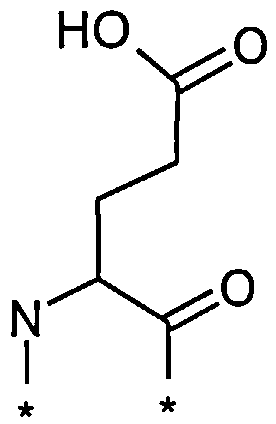
где двойной радикал Glu может быть включен p раз, где p является целым числом в диапазоне 1-2.where the double radical Glu can be included p times, where p is an integer in the range of 1-2.
Соед. 6 может также относиться к гамма-Glu, или, сокращенно, gGlu, в связи с тем, что это гамма-карбоксильная группа аминокислоты глутаминовой кислоты, которая может использоваться здесь для соединения с другим линкерным элементом, или может относиться к эпсилон-аминогруппе лизина. Как объяснялось выше, другой линкерный элемент может, например, быть другим остатком Glu, или OEG-молекулой. Аминогруппа Glu, в свою очередь, может формировать амидную связь с карбоксильной группой пролонгирующей группировки, или с карбоксильной группой, например, OEG-молекулы, если она присутствует, или с гамма-карбоксильной группой, например, другого Glu, если он присутствует.Connection 6 may also refer to gamma-Glu, or, in short, gGlu, due to the fact that it is a gamma-carboxyl group of the amino acid glutamic acid, which can be used here to connect with another linker element, or may relate to the epsilon-amino group of lysine. As explained above, the other linker element may, for example, be another Glu residue, or an OEG molecule. The amino group Glu, in turn, can form an amide bond with a carboxyl group of a prolonging group, or with a carboxyl group, for example, an OEG molecule, if present, or with a gamma-carboxyl group, for example, another Glu, if present.
Соед. 7 может также относиться к альфа-Glu, или, сокращенно, aGlu, или просто Glu, в связи с тем, что это альфа-карбоксильная группа аминокислоты глутаминовой кислоты, которая может использоваться здесь для связывания с другим линкерным элементом или эпсилон-аминогруппой лизина.Connection 7 may also refer to alpha-Glu, or, in short, aGlu, or simply Glu, due to the fact that it is the alpha-carboxyl group of the amino acid glutamic acid, which can be used here to bind to another linker element or epsilon-amino group of lysine.
Приведенные выше структуры Соед. 6 и Соед. 7 покрывают L-форму, а также D-форму Glu.The above structure 6 and Comp. 7 cover the L-form as well as the D-form of Glu.
Производные изобретения могут существовать в различных стереоизомерных формах с одной и той же молекулярной формулой и последовательностью связанных атомов, но отличающихся только в трехмерной ориентации их атомов в пространстве. Стереоизомерия типичных производных изобретения указана в экспериментальной части, в названиях, а также в структурах с помощью стандартной номенклатуры. Если не указано иное, изобретение относится ко всем стереоизомерным формам заявленного производного.Derived inventions can exist in various stereoisomeric forms with the same molecular formula and sequence of bound atoms, but differing only in the three-dimensional orientation of their atoms in space. The stereoisomerism of typical derivatives of the invention is indicated in the experimental part, in the names, as well as in the structures using standard nomenclature. Unless otherwise indicated, the invention relates to all stereoisomeric forms of the claimed derivative.
Концентрация в плазме производных GLP-1 изобретения может быть установлена с помощью любого подходящего способа. Например, может быть использована LC-MS (жидкостная хроматография/масс-спектрометрия) или иммунологические анализы, такие как RIA (радиоиммуноанализ), ELISA (иммуноферментный сорбционный анализ) и LOCI (иммунологический анализ люминесценции кислородных каналов). Общие протоколы подходящих анализов RIA и ELISA можно найти, например, в WO 09/030738 на стр.116-118. Предпочтительным анализом является анализ LOCI, описанный в примерах 35, 39 и 40 данного документа.The plasma concentration of the GLP-1 derivatives of the invention can be determined using any suitable method. For example, LC-MS (liquid chromatography / mass spectrometry) or immunological assays, such as RIA (radioimmunoassay), ELISA (enzyme-linked immunosorbent sorption analysis) and LOCI (immunological analysis of oxygen channel luminescence) can be used. General protocols for suitable RIA and ELISA assays can be found, for example, in WO 09/030738 on pages 116-118. A preferred analysis is the LOCI analysis described in examples 35, 39 and 40 of this document.
Фармацевтически приемлемая соль, амид или эфирPharmaceutically acceptable salt, amide or ester
Производные и промежуточные продукты изобретения могут находиться в форме фармацевтически приемлемой соли, амида или эфира.Derivatives and intermediates of the invention may be in the form of a pharmaceutically acceptable salt, amide or ester.
Соли, например, образуются в результате химической реакции между основанием и кислотой, например: 2NH3+H2SO4→(NH4)2SO4.Salts, for example, are formed as a result of a chemical reaction between a base and an acid, for example: 2NH 3 + H 2 SO 4 → (NH 4 ) 2 SO 4 .
Соль может быть основной солью, кислой солью, либо она может быть ни той, ни другой (т.е. нейтральной солью). Основные соли дают гидроксид-ионы в воде, а кислые соли дают ионы гидроксония.The salt may be a basic salt, an acid salt, or it may be neither one nor the other (i.e., a neutral salt). The basic salts give hydroxide ions in water, and the acid salts give hydroxonium ions.
Соли производных изобретения могут быть образованы с добавленными катионами или анионами, которые реагируют с анионными или катионными группами, соответственно. Эти группы могут быть расположены в пептидной группировке и/или в боковой цепи производных изобретения.Salts of the derivatives of the invention can be formed with added cations or anions that react with anionic or cationic groups, respectively. These groups may be located in the peptide moiety and / or in the side chain of the derivatives of the invention.
Неограничивающие примеры анионных групп производных изобретения включают свободные карбоксильные группы в боковой цепи, если таковые имеются, а также в пептидной группировке. Пептидная группировка часто включает свободную карбоксильную группу на С-конце, и также она может включать свободные карбоксильные группы на внутренних аминокислотных остатках, таких как Asp и Glu.Non-limiting examples of anionic groups of derivatives of the invention include free carboxyl groups in the side chain, if any, as well as in the peptide moiety. The peptide group often includes a free carboxyl group at the C-terminus, and it can also include free carboxyl groups on internal amino acid residues such as Asp and Glu.
Неограничивающие примеры катионных групп в пептидной группировке включают свободную аминогруппу на N-конце, если она присутствует, а также любую свободную аминогруппу внутренних основных аминокислотных остатков, таких как His, Arg и Lys.Non-limiting examples of cationic groups in a peptide moiety include a free amino group at the N-terminus, if present, as well as any free amino group of internal basic amino acid residues, such as His, Arg, and Lys.
Эфир производных изобретения может быть сформирован, например, в результате реакции свободной карбоксильной группы со спиртом или фенолом, что приводит к замене по меньшей мере одной гидроксильной группы на алкокси- или арилокси-группу.An ester of the derivatives of the invention can be formed, for example, by reacting a free carboxyl group with an alcohol or phenol, which leads to the replacement of at least one hydroxyl group with an alkoxy or aryloxy group.
В образование эфира может быть вовлечена свободная карбоксильная группа на С-конце пептида и/или любая свободная карбоксильная группа в боковой цепи.A free carboxyl group at the C-terminus of the peptide and / or any free carboxyl group in the side chain may be involved in the formation of ether.
Амид производных изобретения может быть сформирован, например, в результате реакции свободной карбоксильной группы с амином или замещенным амином, или в результате реакции свободной или замещенной аминогруппы с карбоновой кислотой.An amide of derivatives of the invention can be formed, for example, by reacting a free carboxyl group with an amine or substituted amine, or by reacting a free or substituted amino group with a carboxylic acid.
В образование амида может быть вовлечена свободная карбоксильная группа на С-конце пептида и/или любая свободная карбоксильная группа в боковой цепи, свободная аминогруппа на N-конце пептида и/или свободная или замещенная аминогруппа пептида в пептиде и/или боковой цепи.A free carboxyl group at the C-terminus of the peptide and / or any free carboxyl group in the side chain, a free amino group at the N-terminus of the peptide and / or a free or substituted amino group of the peptide in the peptide and / or side chain may be involved in amide formation.
В конкретном воплощении пептид или производное находится в форме фармацевтически приемлемой соли. В другом конкретном воплощении производное находится в форме фармацевтически приемлемого амида, предпочтительно с амидной группой на С-конце пептида. В еще одном конкретном воплощении пептид или производное находится в форме фармацевтически приемлемого эфира.In a particular embodiment, the peptide or derivative is in the form of a pharmaceutically acceptable salt. In another specific embodiment, the derivative is in the form of a pharmaceutically acceptable amide, preferably with an amide group at the C-terminus of the peptide. In yet another specific embodiment, the peptide or derivative is in the form of a pharmaceutically acceptable ester.
Промежуточные продуктыIntermediate Products
Во втором аспекте изобретение относится к промежуточным продуктам.In a second aspect, the invention relates to intermediates.
Один тип промежуточного продукта изобретения имеет форму GLP-1-аналога, который включает следующие модификации по сравнению с GLP-1 (7-37) (SEQ ID №1): (i) 38Q; и/или (ii) 39G; или его фармацевтически приемлемой соли, амида или сложного эфира.One type of intermediate of the invention is in the form of a GLP-1 analogue, which includes the following modifications compared to GLP-1 (7-37) (SEQ ID NO: 1): (i) 38Q; and / or (ii) 39G; or a pharmaceutically acceptable salt, amide or ester thereof.
Другой промежуточный продукт изобретения в форме аналога GLP-1 представляет собой аналог, включающий, предпочтительно имеющий, следующие аминокислотные замены по сравнению с GLP-1 (7-37) (SEQ ID №1): (i) 22E, 26R, 27К, 34R, 37К; (ii) 22E, 26R, 27K, 30Е, 34R, 36K, 38E, 39G; (iii) 22E, 26R, 27K, 34R, 36K, des37; (iv) 22E, 25V, 26R, 27K, 34R, 37К; (v) 8Aib, 20K, 22E, 26R, 27K, 30Е, 34G, des35-37; (vi) 26R, 27K, 30Е, 34R, 36K, 38E; (vii) 8Aib, 22K, 25V, 26R, 27K, 31H, 34R; (iix) 8Aib, 22K, 25V, 26R, 27K, 34R, des35-37; (ix) 8Aib, 22K, 25V, 26R, 27K, 34R, des36-37; (x) 26H, 27K, 30Е, 34R, 36K, 38E; (xi) 22K, 25V, 26R, 27K, 30Е, 34Q; (xii) 25V, 26R, 27K, 30Е, 34R, 36K, 38Q; (xiii) 25V, 26R, 27K, 30Е, 34Q, 36K, 38E; (xiv) 22K, 26R, 27K, 31H, 34G, des35-37; (xv) 8Aib, 25V, 26R, 27K, 31H, 34Q, 37К; (xvi) 25V, 26R, 27К, 31H, 34Q, 37К; (xvii) 22E, 23E, 25V, 26R, 27K, 31H, 34Q, 37К; (iixx) 8Aib, 12K, 22E, 26R, 27K, 31H, 34Q; (ixx) 8Aib, 22K, 26R, 27K, 31H, 34G, des35-37; (xx) 22E, 26H, 27K, 30Е, 34R, 36K, 38E; (xxi) 22E, 24K, 26R, 27K, 31H, 34G, des35-37; (xxii) 25V, 26R, 27K, 34Q, 36K; (xxiii) 22E, 24K, 25V, 26R, 27K, 31H, 34R; (xxiv) 22E, 24K, 25V, 26R, 27K, 34G, des35-37; (xxv) 22E, 24K, 25V, 26R, 27K, 34R; (xxvi) 8Aib, 22E, 24K, 25V, 26R, 27K, 31H, 34Q; или (xxvii) 8Aib, 22E, 26R, 27K, 30Е, 34R, 36K, 38E, 39G; или его фармацевтически приемлемую соль, амид или сложный эфир.Another intermediate product of the invention in the form of an GLP-1 analogue is an analogue comprising, preferably having, the following amino acid substitutions as compared to GLP-1 (7-37) (SEQ ID NO: 1): (i) 22E, 26R, 27K, 34R , 37K; (ii) 22E, 26R, 27K, 30E, 34R, 36K, 38E, 39G; (iii) 22E, 26R, 27K, 34R, 36K, des37; (iv) 22E, 25V, 26R, 27K, 34R, 37K; (v) 8Aib, 20K, 22E, 26R, 27K, 30E, 34G, des35-37; (vi) 26R, 27K, 30E, 34R, 36K, 38E; (vii) 8Aib, 22K, 25V, 26R, 27K, 31H, 34R; (iix) 8Aib, 22K, 25V, 26R, 27K, 34R, des35-37; (ix) 8Aib, 22K, 25V, 26R, 27K, 34R, des36-37; (x) 26H, 27K, 30E, 34R, 36K, 38E; (xi) 22K, 25V, 26R, 27K, 30E, 34Q; (xii) 25V, 26R, 27K, 30E, 34R, 36K, 38Q; (xiii) 25V, 26R, 27K, 30E, 34Q, 36K, 38E; (xiv) 22K, 26R, 27K, 31H, 34G, des35-37; (xv) 8Aib, 25V, 26R, 27K, 31H, 34Q, 37K; (xvi) 25V, 26R, 27K, 31H, 34Q, 37K; (xvii) 22E, 23E, 25V, 26R, 27K, 31H, 34Q, 37K; (iixx) 8Aib, 12K, 22E, 26R, 27K, 31H, 34Q; (ixx) 8Aib, 22K, 26R, 27K, 31H, 34G, des35-37; (xx) 22E, 26H, 27K, 30E, 34R, 36K, 38E; (xxi) 22E, 24K, 26R, 27K, 31H, 34G, des35-37; (xxii) 25V, 26R, 27K, 34Q, 36K; (xxiii) 22E, 24K, 25V, 26R, 27K, 31H, 34R; (xxiv) 22E, 24K, 25V, 26R, 27K, 34G, des35-37; (xxv) 22E, 24K, 25V, 26R, 27K, 34R; (xxvi) 8Aib, 22E, 24K, 25V, 26R, 27K, 31H, 34Q; or (xxvii) 8Aib, 22E, 26R, 27K, 30E, 34R, 36K, 38E, 39G; or a pharmaceutically acceptable salt, amide or ester thereof.
Функциональные свойстваFunctional properties
В первом функциональном аспекте производные изобретения обладают высокой активностью. Кроме того, или альтернативно, во втором функциональном аспекте они обладают длительным фармакокинетическим профилем. Кроме того, или альтернативно, в третьем функциональном аспекте они обладают высокой пероральной биодоступностью. Кроме того, или альтернативно, в четвертом функциональном аспекте их биофизические свойства улучшены.In a first functional aspect, the derivatives of the invention are highly active. In addition, or alternatively, in a second functional aspect, they have a long pharmacokinetic profile. In addition, or alternatively, in a third functional aspect, they have high oral bioavailability. In addition, or alternatively, in a fourth functional aspect, their biophysical properties are improved.
Биологическая активность (сила)Biological Activity (Strength)
В соответствии с первым функциональным аспектом производные изобретения, а также конститутивные GLP-1-пептиды как таковые, обладают биологической активностью, или силой.In accordance with the first functional aspect, derivatives of the invention, as well as constitutive GLP-1 peptides, as such, have biological activity, or strength.
В конкретном воплощении сила и/или активность относится к активности in vitro, т.е. к производительности в функциональном GLP-1-рецепторном анализе, более конкретно к возможности стимулировать образование цАМФ в клеточной линии, экспрессирующей клонированный человеческий GLP-1-рецептор.In a specific embodiment, strength and / or activity refers to in vitro activity, i.e. to performance in a functional GLP-1 receptor assay, and more particularly to the ability to stimulate cAMP formation in a cell line expressing a cloned human GLP-1 receptor.
Стимуляция образования цАМФ в среде, содержащей человеческий GLP-1-рецептор, предпочтительно может быть определена с помощью стабильно трансфицированной клеточной линии, такой как ВНК467-12А (tk-ts13), и/или путем определения цАМФ в функциональном рецепторном анализе, например, на основании конкуренции между эндогенно образованным цАМФ и экзогенно добавленным биотин-меченым цАМФ, где цАМФ более предпочтительно захватывают с помощью специфического антитела, и/или где еще более предпочтительным является анализ AlphaScreen cAMP Assay, наиболее предпочтительно описанный в Примере 33.Stimulation of cAMP formation in a medium containing the human GLP-1 receptor can preferably be determined using a stably transfected cell line, such as BHK467-12A (tk-ts13), and / or by determining cAMP in a functional receptor assay, for example, based on the competition between endogenously formed cAMP and exogenously added biotin-labeled cAMP, where cAMP is more preferably captured using a specific antibody, and / or where AlphaScreen cAMP Assay analysis is even more preferred, most preferred flaxly described in Example 33.
Термин «половина максимальной эффективной концентрации» (EC50) обычно относится к концентрации, которая вызывает реакцию, находящуюся посередине между базальной и максимальной, со ссылкой на кривую «доза-реакция». ЕС50 используется как мера активности соединения и представляет собой концентрацию, при которой наблюдается 50% максимального эффекта.The term “half maximum effective concentration” (EC 50 ) usually refers to a concentration that causes a reaction that is in the middle between the basal and maximum, with reference to the dose-response curve. EC 50 is used as a measure of the activity of a compound and is the concentration at which 50% of the maximum effect is observed.
Можно установить, как описано выше, активность производных изобретения in vitro, и определить ЕС50 рассматриваемого производного. Чем ниже ЕС50, тем выше активность.You can establish, as described above, the activity of derivatives of the invention in vitro, and to determine the EC 50 of the considered derivative. The lower the EU 50 , the higher the activity.
Подходящая среда имеет следующий состав (концентрации при окончательном анализе): 50 мМ Трис-HCl, 5 мМ HEPES, 10 мМ MgCl2, 6H2O; 150 мМ NaCl, 0,01% Tween; 0,1% BSA, 0,5 мМ IBMX, 1 мМ АТР, 1 мкМ GTP, рН 7,4.A suitable medium has the following composition (concentration at final analysis): 50 mM Tris-HCl, 5 mM HEPES, 10 mM MgCl 2 , 6H 2 O; 150 mM NaCl, 0.01% Tween; 0.1% BSA, 0.5 mM IBMX, 1 mM ATP, 1 μM GTP, pH 7.4.
ЕС50 производных изобретения находится на уровне 3500 пМ или ниже, предпочтительно ниже 3200 пМ. ЕС50 может быть ниже 1200 пМ, предпочтительно ниже 1000 пМ, еще более предпочтительно ниже 500 пМ или, наиболее предпочтительно, ниже 200 пМThe EC 50 derivatives of the invention are at a level of 3500 pM or lower, preferably below 3200 pM. The EC 50 may be below 1200 pM, preferably below 1000 pM, even more preferably below 500 pM or, most preferably, below 200 pM
В другом конкретном воплощении первого функционального аспекта сила и/или активность относится к способности связываться с рецептором GLP-1 в присутствии низкой концентрации альбумина. Связывание с рецептором GLP-1 в присутствии низкой концентрации альбумина должно быть настолько высоким, насколько это возможно, соответствуя низкому значению IC50. Оно может быть определено, как описано в примере 35. IC50 (при низком альбумине) производных изобретения составляет 500 нМ или ниже, у многих ниже 100 нМ или даже 10 нМ.In another specific embodiment of the first functional aspect, strength and / or activity refers to the ability to bind to the GLP-1 receptor in the presence of a low concentration of albumin. Binding to the GLP-1 receptor in the presence of a low albumin concentration should be as high as possible, corresponding to a low IC 50 value. It can be determined as described in Example 35. The IC 50 (at low albumin) of the derivatives of the invention is 500 nM or lower, many below 100 nM or even 10 nM.
В другом конкретном воплощении производные изобретения являются активными in vivo, что можно определить, как известно в данной области, на любой подходящей животной модели, а также в клинических испытаниях.In another specific embodiment, the derivatives of the invention are active in vivo, which can be determined, as is known in the art, in any suitable animal model, as well as in clinical trials.
Диабетическая db/db-мышь является одним из примеров подходящей животной модели, и на таких мышах можно определить in vivo также эффект снижения уровня глюкозы в крови, например, как описано в примере 36, или как описано в примере 43 WO 09/030738.A diabetic db / db mouse is one example of a suitable animal model, and the effect of lowering blood glucose can also be determined in vivo in such mice, for example, as described in example 36, or as described in example 43 of WO 09/030738.
Кроме того, или альтернативно, влияние на потребление пищи in vivo можно определить в фармакодинамических исследованиях на свиньях, например, как описано в примере 38.In addition, or alternatively, the effect on in vivo food intake can be determined in pharmacodynamic studies in pigs, for example, as described in example 38.
Пролонгирование - рецепторное связывание/низкий и высокий альбуминProlongation - receptor binding / low and high albumin
В соответствии со вторым функциональным аспектом производные изобретения являются пролонгированными.In accordance with a second functional aspect, the derivatives of the invention are prolonged.
GLP-1-рецепторное связываниеGLP-1 receptor binding
В одном конкретном воплощении пролонгирование относится к способности производных изобретения связываться с GLP-1-рецептором при низкой и высокой концентрации альбумина, соответственно, которая может быть определена, как описано в примере 34.In one specific embodiment, prolongation refers to the ability of the derivatives of the invention to bind to the GLP-1 receptor at low and high albumin concentrations, respectively, which can be determined as described in Example 34.
Как правило, связывание с GLP-1-рецептором при низкой концентрации альбумина должно быть настолько высоким, насколько это возможно, соответствуя низким значениям IC50. В одном воплощении низкий уровень альбумина относится к 0,005% HSA. В другом воплощении низкий уровень альбумина относится к 0,001% HSA.Typically, binding to the GLP-1 receptor at a low albumin concentration should be as high as possible, consistent with low IC 50 values. In one embodiment, low albumin refers to 0.005% HSA. In another embodiment, low albumin refers to 0.001% HSA.
Значение IC50 при высокой концентрации альбумина является мерой влияния альбумина на связывание производного с GLP-1-рецептором. Как известно, производные GLP-1 также связываются с альбумином. Это, как правило, желательный эффект, который увеличивает их время жизни в плазме крови. Таким образом, значение IC50 при высоком альбумине, как правило, будет выше, чем значение IC50 при низком альбумине, соответствуя сниженному связыванию с GLP-1-рецептором, вызванному связыванием альбумина, конкурирующим со связыванием с GLP-1-рецептором.The IC 50 value at high albumin concentration is a measure of the effect of albumin on the binding of a derivative to the GLP-1 receptor. Derivatives of GLP-1 are also known to bind to albumin. This is usually the desired effect, which increases their lifetime in plasma. Thus, the IC 50 value for high albumin will generally be higher than the IC 50 value for low albumin, corresponding to reduced binding to the GLP-1 receptor caused by binding of albumin competing with binding to the GLP-1 receptor.
Высокий коэффициент (значение IC50 (при высоком альбумине)/значение IC50 (при низком альбумине)) может, таким образом, рассматриваться как признак того, что производное в данном случае хорошо связывается с альбумином (может иметь длительный период полувыведения), а также само по себе хорошо связывается с GLP-1-рецептором (значение IC50 (при высоком альбумине) большое, а значение IC50 (при низком альбумине) малое). С другой стороны, связывание с альбумином не всегда может быть желательным, либо связывание с альбумином может стать слишком сильным. Таким образом, желательные диапазоны IC50 (при низком альбумине), IC50 (при высоком альбумине) и соотношения при высоком/низком могут отличаться у разных соединений в зависимости от предполагаемого применения и обстоятельств такого применения, а также других свойств соединений, представляющих потенциальный интерес.A high coefficient (IC 50 value (at high albumin) / IC 50 value (at low albumin)) can, therefore, be considered as a sign that the derivative in this case binds well to albumin (may have a long half-life), as well In itself, it binds well to the GLP-1 receptor (the IC 50 value (with high albumin) is large, and the IC 50 value (with low albumin) is small). On the other hand, binding to albumin may not always be desirable, or binding to albumin may become too strong. Thus, the desired ranges of IC 50 (for low albumin), IC 50 (for high albumin) and high / low ratios may vary for different compounds depending on the intended use and circumstances of such use, as well as other properties of the compounds of potential interest .
Подходящий анализ для определения рецепторного связывания при высокой и низкой концентрации альбумина описан в примере 34 данного документа. Соединения изобретения обладают очень хорошей аффинностью связывания с рецептором (IC50) при низкой концентрации альбумина. В среднем IC50 (при низком альбумине) анализируемых соединений в примере 34 составляет 14 нМ.A suitable assay for determining receptor binding at high and low albumin concentrations is described in Example 34 of this document. The compounds of the invention have very good receptor binding affinity (IC 50 ) at low albumin concentrations. On average, the IC 50 (with low albumin) of the analyzed compounds in example 34 is 14 nm.
Пролонгирование - период полужизни in vivo у крысProlongation - in vivo half-life in rats
В соответствии со вторым функциональным аспектом производные изобретения являются пролонгированными. В конкретном воплощении пролонгирование может, соответственно, быть определено как период полужизни (Т½) in vivo у крыс после внутривенного введения. Период полужизни у крыс составляет по меньшей мере 4 часа, и он может составлять 10 часов или больше.In accordance with a second functional aspect, the derivatives of the invention are prolonged. In a particular embodiment, prolongation may accordingly be defined as the in vivo half-life (T ½ ) in rats after intravenous administration. The half-life of rats is at least 4 hours, and may be 10 hours or more.
Подходящий анализ для определения периода полужизни in vivo у крыс после внутривенного введения раскрыт в примере 39 данного документа.A suitable assay for determining the in vivo half-life of rats after intravenous administration is disclosed in Example 39 of this document.
Пролонгирование - период полужизни in vivo у мини-свинейProlongation - in vivo half-life in mini pigs
В соответствии со вторым функциональным аспектом производные изобретения являются пролонгированными. В конкретном воплощении пролонгирование, дополнительно или альтернативно, может быть определено как период полужизни (Т½) in vivo у мини-свиней после внутривенного введения. Период полужизни составляет по меньшей мере 12 часов, он может составлять по меньшей мере 24 часа, по меньшей мере 36 часов, по меньшей мере 48 часов или по меньшей мере 60 часов, или даже больше.In accordance with a second functional aspect, the derivatives of the invention are prolonged. In a particular embodiment, prolongation, additionally or alternatively, can be defined as the in vivo half-life (T ½ ) of the mini-pigs after intravenous administration. The half-life is at least 12 hours, it can be at least 24 hours, at least 36 hours, at least 48 hours, or at least 60 hours, or even more.
Подходящий анализ для определения периода полужизни in vivo у крыс после внутривенного введения раскрыт в примере 37 данного документа.A suitable assay for determining the in vivo half-life of rats after intravenous administration is disclosed in Example 37 of this document.
Пероральная биодоступностьOral bioavailability
В соответствии с третьим функциональным аспектом производные изобретения имеют высокую пероральную биодоступность.In accordance with a third functional aspect, the derivatives of the invention have a high oral bioavailability.
Пероральная биодоступность коммерческих производных GLP-1 является очень низкой. Пероральная биодоступность производных GLP-1 для внутривенного или подкожного введения, находящихся в стадии разработки, также низкая.The oral bioavailability of commercial derivatives of GLP-1 is very low. The oral bioavailability of the GLP-1 derivatives for intravenous or subcutaneous administration, which are under development, is also low.
Соответственно, в данной области существует потребность производных GLP-1 с улучшенной пероральной биодоступностью. Такие производные могут быть подходящими кандидатами для перорального введения до тех пор, пока их эффективность в целом удовлетворительна, и/или до тех пор, пока их период полужизни также в целом удовлетворительный.Accordingly, there is a need in the art for GLP-1 derivatives with improved oral bioavailability. Such derivatives may be suitable candidates for oral administration as long as their effectiveness is generally satisfactory and / or as long as their half-life is also generally satisfactory.
Авторы данного изобретения выявили новый класс производных GLP-1, которые имеют неожиданно высокую пероральную биодоступность и, в то же время, удовлетворительную активность и/или период полужизни.The inventors of this invention have identified a new class of GLP-1 derivatives that have unexpectedly high oral bioavailability and, at the same time, satisfactory activity and / or half-life.
Кроме того, или альтернативно, эти производные имеют неожиданно улучшенную пероральную биодоступность и, в то же время, высокую аффинность связывания (т.е. низкое значение IC50) с рецептором GLP-1 при низкой концентрации альбумина.In addition, or alternatively, these derivatives have unexpectedly improved oral bioavailability and, at the same time, high binding affinity (i.e., low IC 50 ) to the GLP-1 receptor at low albumin concentrations.
Эти функции имеют важное значение для получения низкой суточной пероральной дозы активного фармацевтического ингредиента, которая является желательной по разным причинам, в том числе, например, с точки зрения экономики производства, вопросов вероятной безопасности, а также вопросов удобного введения и охраны окружающей среды.These functions are important for obtaining a low daily oral dose of the active pharmaceutical ingredient, which is desirable for various reasons, including, for example, in terms of production economics, probable safety issues, as well as issues of convenient administration and environmental protection.
Вообще, термин «биодоступность» относится к доле вводимой дозы активного фармацевтического ингредиента (active pharmaceutical ingredient, API), такого как производное изобретения, которая достигает системного кровотока без изменений. По определению, когда API вводят внутривенно, его биодоступность составляет 100%. Тем не менее, когда его вводят другими путями (например, перорально), его биодоступность уменьшается (из-за деградации и/или неполной абсорбции и метаболизма первого прохождения). Знания о биодоступности необходимы при расчете доз для невнутривенных путей введения.In general, the term “bioavailability” refers to the proportion of an administered dose of an active pharmaceutical ingredient (API), such as a derivative of the invention, that reaches systemic blood flow unchanged. By definition, when an API is administered intravenously, its bioavailability is 100%. However, when it is administered in other ways (e.g., orally), its bioavailability decreases (due to degradation and / or incomplete absorption and first-pass metabolism). Bioavailability knowledge is needed when calculating doses for non-intravenous routes of administration.
Абсолютная пероральная биодоступность сравнивает биодоступность (рассчитанную как площадь под кривой, или AUC) API в системном кровотоке после перорального приема с биодоступностью того же API после внутривенного введения. Это фракция API, абсорбированная при невнутривенном введении, сравненная с соответствующим внутривенным введением того же API. Если используются различные дозы, то сравнение должно быть нормированным; следовательно, каждый AUC корректируется путем деления на соответствующую вводимую дозу.Absolute oral bioavailability compares the bioavailability (calculated as the area under the curve, or AUC) of the API in the systemic circulation after oral administration with the bioavailability of the same API after intravenous administration. This is the API fraction absorbed by non-intravenous administration compared with the corresponding intravenous administration of the same API. If different doses are used, then the comparison should be normalized; therefore, each AUC is adjusted by dividing by the appropriate dose administered.
Приведен график зависимости концентрации API в плазме от времени и для перорального, и для внутривенного введения. Абсолютная биодоступность (F) является скорректированной по дозе AUC после перорального введения, разделенной на AUC после внутривенного введения.A plot of plasma API concentration versus time for oral and intravenous administration is given. The absolute bioavailability (F) is the dose-adjusted AUC after oral administration, divided by the AUC after intravenous administration.
Производные изобретения имеют абсолютную пероральную биодоступность, которая выше, чем у а) лираглутида и/или б) семаглутида; предпочтительно по меньшей мере на 10% выше, более предпочтительно по меньшей мере на 20% выше, еще более предпочтительно по меньшей мере на 30% выше или, наиболее предпочтительно, по меньшей мере на 40% выше. Перед анализом пероральной биодоступности производные изобретения могут соответственно быть собраны в состав как известные в данной области пероральные составы инсулинотропных соединений, например, с использованием одного или более чем одного состава, описанного в WO 2008/145728.Derivatives of the invention have an absolute oral bioavailability that is higher than that of a) liraglutide and / or b) semaglutide; preferably at least 10% higher, more preferably at least 20% higher, even more preferably at least 30% higher, or most preferably at least 40% higher. Prior to the analysis of oral bioavailability, the derivatives of the invention can accordingly be formulated as oral formulations of insulinotropic compounds known in the art, for example using one or more than one formulation described in WO 2008/145728.
Подходящие анализы для предсказания пероральной биодоступности описаны в примерах 35 и 40. В этих анализах после прямого введения производного GLP-1 в просвет кишечника крыс и/или после перорального введения крысам через зонд определяют концентрацию (экспозицию) его в плазме и измеряют последующую экспозицию производного GLP-1 в плазме.Suitable assays for predicting oral bioavailability are described in Examples 35 and 40. In these assays, after direct administration of the GLP-1 derivative into the intestinal lumen of rats and / or after oral administration to rats via a probe, the plasma concentration (exposure) is measured and the subsequent exposure of the GLP derivative is measured -1 in plasma.
Биофизические свойстваBiophysical properties
В соответствии с четвертым функциональным аспектом производные изобретения обладают улучшенными биофизическими свойствами. Эти свойства включают, но не ограничиваясь ими, физическую стабильность и растворимость. Улучшенные биофизические свойства могут быть результатом измененных свойств олигомеров. Биофизические свойства могут быть измерены с помощью стандартных биофизических способов химии белка. Биофизические свойства производных изобретения могут быть соответствующим образом сравнены с такими свойствами нативного GLP-1.In accordance with a fourth functional aspect, derivative inventions have improved biophysical properties. These properties include, but are not limited to, physical stability and solubility. Improved biophysical properties may result from altered properties of oligomers. Biophysical properties can be measured using standard biophysical methods of protein chemistry. The biophysical properties of the derivatives of the invention can be adequately compared with those of native GLP-1.
Дополнительные конкретные воплощения изобретения описаны в разделе, озаглавленном «Конкретные воплощения».Further specific embodiments of the invention are described in the section entitled “Specific Embodiments”.
Технологические процессыTechnological processes
Производство пептидов, таких как аналоги GLP-1 (7-37) и GLP-1, хорошо известно в данной области.The production of peptides, such as analogues of GLP-1 (7-37) and GLP-1, is well known in the art.
GLP-1-группировка производных изобретения (или ее фрагменты), такая как K12,K27-GLP-1 (7-37) или ее аналог или фрагмент может быть, например, получена путем классического пептидного синтеза, например, твердофазного пептидного синтеза с помощью химии t-Boc или Fmoc или других хорошо известных методик, см., например, Greene and Wuts, "Protective Groups in Organic Synthesis", John Wiley & Sons, 1999, Florencio Zaragoza Dörwald, "Organic Synthesis on solid Phase", Wiley-VCH Verlag GmbH, 2000, и "Fmoc Solid Phase Пептид Synthesis", Edited by W.C. Chan and P.D. White, Oxford University Press, 2000.The GLP-1 grouping of derivatives of the invention (or fragments thereof), such as K 12 , K 27 -GLP-1 (7-37) or its analogue or fragment can, for example, be obtained by classical peptide synthesis, for example, solid phase peptide synthesis using t-Boc or Fmoc chemistry or other well-known techniques, see, for example, Greene and Wuts, "Protective Groups in Organic Synthesis", John Wiley & Sons, 1999, Florencio Zaragoza Dörwald, "Organic Synthesis on solid Phase", Wiley-VCH Verlag GmbH, 2000, and Fmoc Solid Phase Synthesis Peptide, Edited by WC Chan and PD White, Oxford University Press, 2000.
Кроме того, или альтернативно, они могут быть получены с помощью рекомбинантных методик, а именно путем культивирования клетки-хозяина, которая содержит последовательность ДНК, кодирующую аналог, и способна экспрессировать пептид в подходящей питательной среде в условиях, позволяющих экспрессию пептида. Неограничивающими примерами клеток-хозяев, пригодных для экспрессии этих пептидов, являются: Escherichia coli, Saccharomyces cerevisiae, а также клеточные линии млекопитающих ВНК или СНО.In addition, or alternatively, they can be obtained using recombinant techniques, namely by culturing a host cell that contains a DNA sequence encoding an analogue and is capable of expressing the peptide in a suitable nutrient medium under conditions that allow expression of the peptide. Non-limiting examples of host cells suitable for expressing these peptides are: Escherichia coli, Saccharomyces cerevisiae, as well as mammalian BHK or CHO cell lines.
Такие производные изобретения, которые включают неприродные аминокислоты и/или ковалентно присоединенный N-концевой моно- или дипептидный миметик, могут, например, быть получены, как описано в экспериментальной части. Или см., например, Hodgson et al: "The synthesis of peptids and proteins containing non-natural amino acids", Chemical Society Reviews, vol.33, no.7 (2004), p.422-430; и WO 2009/083549 A1, озаглавленный "Semi-recombinant preparation of GLP-1 analogues".Such derivatives of the invention, which include unnatural amino acids and / or covalently attached N-terminal mono- or dipeptide mimetic, can, for example, be obtained as described in the experimental part. Or see, for example, Hodgson et al: "The synthesis of peptids and proteins containing non-natural amino acids", Chemical Society Reviews, vol. 33, no.7 (2004), p.422-430; and WO 2009/083549 A1, entitled "Semi-recombinant preparation of GLP-1 analogues".
Конкретные примеры способов получения ряда производных изобретения включены в экспериментальную часть.Specific examples of methods for producing a number of derivatives of the invention are included in the experimental part.
Фармацевтические композицииPharmaceutical Compositions
Фармацевтические композиции, содержащие производное изобретения или его фармацевтически приемлемую соль, амид или эфир и фармацевтически приемлемый эксципиент, могут быть получены способами, известными в данной области.Pharmaceutical compositions containing a derivative of the invention or a pharmaceutically acceptable salt, amide or ester thereof and a pharmaceutically acceptable excipient can be prepared by methods known in the art.
Термин «эксципиент» в широком смысле относится к любому компоненту, кроме активного терапевтического ингредиента(ов). Эксципиент может быть инертным веществом, неактивным веществом и/или нелечебным активным веществом.The term "excipient" in a broad sense refers to any component other than the active therapeutic ingredient (s). The excipient may be an inert substance, an inactive substance and / or a non-therapeutic active substance.
Эксципиент может иметь различное назначение, например, выступать в качестве носителя, растворителя, вспомогательного средства для таблеток и/или улучшать введение и/или абсорбцию активного вещества.The excipient may have various purposes, for example, to act as a carrier, solvent, tablet aid and / or to improve the administration and / or absorption of the active substance.
Состав фармацевтически активных ингредиентов с различными эксципиентами известен в данной области, см., например, Remington: The Science and Practice of Pharmacy (e.g. 19th edition (1995), и более поздние издания).Composition of pharmaceutically active ingredients with various excipients known in the art, see, e.g., Remington:. The Science and Practice of Pharmacy (eg 19 th edition (1995), and later editions).
Неограничивающими примерами эксципиентов являются растворители, разбавители, буферы, консерванты, агенты, регулирующие тоничность, хелатирующие агенты и стабилизаторы.Non-limiting examples of excipients are solvents, diluents, buffers, preservatives, tonicity agents, chelating agents and stabilizers.
Примеры составов включают жидкие составы, т.е. водные составы, содержащие воду. Жидкий состав может быть в виде раствора или в виде суспензии. Водный состав обычно содержит по меньшей мере 50% (по массе) воды, по меньшей мере 60%, 70%, 80% или даже по меньшей мере 90% (по массе) воды.Examples of formulations include liquid formulations, i.e. aqueous formulations containing water. The liquid composition may be in the form of a solution or in the form of a suspension. The aqueous composition usually contains at least 50% (by weight) of water, at least 60%, 70%, 80%, or even at least 90% (by weight) of water.
Альтернативно, фармацевтическая композиция может быть твердым составом, например, лиофилизированная или высушенная распылением композиция, которая может быть использована как таковая, или к которой врач или пациент добавляет растворитель и/или разбавитель перед применением.Alternatively, the pharmaceutical composition may be a solid composition, for example, a lyophilized or spray dried composition that can be used as such, or to which the doctor or patient adds a solvent and / or diluent before use.
рН водного состава может быть любым в пределах от рН 3 до рН 10, например, от примерно 7,0 до примерно 9,5 или от примерно 3,0 до примерно 7,0.The pH of the aqueous composition may be any in the range of pH 3 to
Фармацевтическая композиция может содержать буфер. Буфер может быть выбран, например, из группы, состоящей из ацетата натрия, карбоната натрия, цитрата, глицилглицина, гистидина, глицина, лизина, аргинина, натрия дигидрофосфата, натрия гидрофосфата, натрия фосфата, трис(гидроксиметил)аминометана, бицина, трицина, яблочной кислоты, сукцината, малеиновой кислоты, фумаровой кислоты, винной кислоты, аспарагиновой кислоты и их смесей.The pharmaceutical composition may contain a buffer. The buffer may be selected, for example, from the group consisting of sodium acetate, sodium carbonate, citrate, glycylglycine, histidine, glycine, lysine, arginine, sodium dihydrogen phosphate, sodium hydrogen phosphate, sodium phosphate, tris (hydroxymethyl) aminomethane, bicin, tricin, apple acids, succinate, maleic acid, fumaric acid, tartaric acid, aspartic acid, and mixtures thereof.
Фармацевтическая композиция может содержать консервант. Консервант может быть выбран, например, из группы, состоящей из фенола, о-крезола, м-крезола, п-крезола, метил-п-гидроксибензоата, пропил-п-гидроксибензоата, 2-феноксиэтанола, бутил-п-гидроксибензоата, 2-фенилэтанола, бензилового спирта, хлорбутанола и тиомеросала, бронопола, бензойной кислоты, имидуреи, хлоргексидина, натрия дегидроацетата, хлорокрезола, этил-п-гидроксибензоата, бензетония хлорида, хлорфенезина (3п-хлорфенокси)-1,2-пропандиола) или их смесей. Консервант может присутствовать в концентрации от 0,1 мг/мл до 20 мг/мл.The pharmaceutical composition may contain a preservative. The preservative may be selected, for example, from the group consisting of phenol, o-cresol, m-cresol, p-cresol, methyl p-hydroxybenzoate, propyl p-hydroxybenzoate, 2-phenoxyethanol, butyl p-hydroxybenzoate, 2- phenylethanol, benzyl alcohol, chlorobutanol and thiomerosal, bronopol, benzoic acid, imiduria, chlorhexidine, sodium dehydroacetate, chlorocresol, ethyl p-hydroxybenzoate, benzethonium chloride, chlorphenesin (3p-chlorophenoxy) -1,2-propanediol. The preservative may be present in a concentration of from 0.1 mg / ml to 20 mg / ml.
Фармацевтическая композиция может включать изотонический агент. Изотонический агент может быть выбран из группы, состоящей из солей (например, хлорид натрия), сахаров или сахарных спиртов, аминокислот (например, глицина, гистидина, аргинина, лизина, изолейцина, аспарагиновой кислоты, триптофана, треонина), алдитола (например, глицерола (глицерина), 1,2-пропандиола (пропиленгликоля), 1,3-пропандиола, 1,3-бутандиола), полиэтиленгликоля (например PEG 400) и их смесей. Могут быть использованы любые сахара, такие как моно-, ди- или полисахариды, или водорастворимые гликаны, включая, например, фруктозу, глюкозу, маннозу, сорбозу, ксилозу, мальтозу, лактозу, сахарозу, трегалозу, декстран, пуллулан, декстрин, циклодекстрин, альфа- и бета-HPCD, растворимый крахмал, гидроксиэтилкрахмал и натрий-карбоксиметилцеллюлозу. Сахарный спирт определяется как С4-С8-углеводород, имеющий по меньшей мере одну ОН-группу, и представляет собой, например, маннит, сорбит, инозит, галактитол, дульцитол, ксилитол и арабитол. В одном воплощении сахароспиртовой добавкой является маннит.The pharmaceutical composition may include an isotonic agent. The isotonic agent may be selected from the group consisting of salts (e.g., sodium chloride), sugars or sugar alcohols, amino acids (e.g., glycine, histidine, arginine, lysine, isoleucine, aspartic acid, tryptophan, threonine), alditol (e.g. glycerol (glycerol), 1,2-propanediol (propylene glycol), 1,3-propanediol, 1,3-butanediol), polyethylene glycol (e.g. PEG 400) and mixtures thereof. Any sugars such as mono-, di- or polysaccharides, or water-soluble glycans, including, for example, fructose, glucose, mannose, sorbose, xylose, maltose, lactose, sucrose, trehalose, dextran, pullulan, dextrin, cyclodextrin, can be used, alpha and beta HPCD, soluble starch, hydroxyethyl starch and sodium carboxymethyl cellulose. Sugar alcohol is defined as a C4-C8 hydrocarbon having at least one OH group and is, for example, mannitol, sorbitol, inositol, galactitol, dulcitol, xylitol and arabitol. In one embodiment, the sugar alcohol supplement is mannitol.
Фармацевтическая композиция может включать хелатообразователь. Хелатообразователь может быть выбран, например, среди солей этилендиаминтетрауксусной кислоты (EDTA), лимонной кислоты и аспарагиновой кислоты и их смесей. Фармацевтическая композиция может включать стабилизатор. Стабилизатор может быть, например, одним или более чем одним ингибитором окисления, ингибитором агрегации, поверхностно-активным веществом и/или одним или более чем одним ингибитором протеаз. Неограничивающие примеры этих типов стабилизаторов приведены далее.The pharmaceutical composition may include a chelating agent. The chelating agent can be selected, for example, from salts of ethylenediaminetetraacetic acid (EDTA), citric acid and aspartic acid, and mixtures thereof. The pharmaceutical composition may include a stabilizer. The stabilizer may be, for example, one or more oxidation inhibitors, an aggregation inhibitor, a surfactant, and / or one or more protease inhibitors. Non-limiting examples of these types of stabilizers are given below.
Термин «образование агрегатов» относится к физическому взаимодействию между полипептидными молекулами, которое приводит к образованию олигомеров, которые могут оставаться растворимыми, или больших видимых агрегатов, которые выпадают из раствора. Образование агрегатов полипептидом при хранении жидкой фармацевтической композиции может отрицательно влиять на биологическую активность этого полипептида, что приводит к потере терапевтической эффективности фармацевтической композиции. Кроме того, образование агрегатов может привести к другим проблемам, таким как блокирование трубок, мембран или насосов, если фармацевтическую композицию, содержащую полипептид, вводят с использованием инфузионной системы.The term “aggregation” refers to the physical interaction between polypeptide molecules, which leads to the formation of oligomers that may remain soluble, or large visible aggregates that precipitate from the solution. The formation of aggregates by a polypeptide during storage of a liquid pharmaceutical composition can adversely affect the biological activity of this polypeptide, which leads to the loss of therapeutic efficacy of the pharmaceutical composition. In addition, aggregation can lead to other problems, such as blocking of tubes, membranes, or pumps, if a pharmaceutical composition containing a polypeptide is administered using an infusion system.
Фармацевтическая композиция может включать некоторое количество аминокислотных оснований, достаточное для уменьшения формирования агрегатов полипептида при хранении композиции. Термин «аминокислотное основание» относится к одной или более чем одной аминокислоте (например, метионину, гистидину, имидазолу, аргинину, лизину, изолейцину, аспарагиновой кислоте, триптофану, треонину) или их аналогам. Любая аминокислота может находиться либо в свободной форме, либо в форме соли. Может присутствовать любой стереоизомер (например, L, D или их смесь) аминокислотного основания.The pharmaceutical composition may include a certain amount of amino acid bases sufficient to reduce the formation of aggregates of the polypeptide during storage of the composition. The term “amino acid base” refers to one or more than one amino acid (eg, methionine, histidine, imidazole, arginine, lysine, isoleucine, aspartic acid, tryptophan, threonine) or their analogs. Any amino acid can be either in free form or in salt form. Any stereoisomer (e.g., L, D or a mixture thereof) of an amino acid base may be present.
Метионин (или другая серосодержащая аминокислота или аминокислотный аналог) может быть добавлен для подавления окисления остатков метионина до метионинсульфоксида, когда полипептид, действующий в качестве терапевтического агента, представляет собой полипептид, содержащий по меньшей мере один остаток метионина, чувствительный к такому окислению. Может быть использован любой стереоизомер метионина (L или D) или их комбинации.Methionine (or another sulfur-containing amino acid or amino acid analogue) can be added to inhibit the oxidation of methionine residues to methionine sulfoxide when the polypeptide acting as a therapeutic agent is a polypeptide containing at least one methionine residue that is sensitive to such oxidation. Any stereoisomer of methionine (L or D) or combinations thereof may be used.
Фармацевтическая композиция может включать стабилизатор, выбранный из группы высокомолекулярных полимеров или низкомолекулярных соединений. Стабилизатор может быть выбран, например, среди полиэтиленгликоля (например, PEG 3350), поливинилового спирта (PVA), поливинилпирролидона, карбокси-/гидроксицеллюлозы или их производных (например, НРС, HPC-SL, HPC-L и НРМС), циклодекстринов, серосодержащих веществ, таких как монотиоглицерин, тиогликолевая кислота и 2-метилтиоэтанол, а также различных солей (например, хлорида натрия). Фармацевтическая композиция может включать дополнительные стабилизирующие агенты, такие как, но не ограничиваясь ими, метионин и EDTA, которые защищают полипептид от окисления метионина, и неионогенные поверхностно-активные вещества, который защищают полипептид от агрегации, связанной с замораживанием-оттаиванием или механической деформацией.The pharmaceutical composition may include a stabilizer selected from the group of high molecular weight polymers or low molecular weight compounds. The stabilizer may be selected, for example, from polyethylene glycol (e.g., PEG 3350), polyvinyl alcohol (PVA), polyvinylpyrrolidone, carboxy / hydroxycellulose or derivatives thereof (e.g., HPC, HPC-SL, HPC-L and HPMC), cyclodextrins, sulfur containing substances such as monothioglycerin, thioglycolic acid and 2-methylthioethanol, as well as various salts (e.g. sodium chloride). The pharmaceutical composition may include additional stabilizing agents, such as, but not limited to, methionine and EDTA, which protect the polypeptide from the oxidation of methionine, and nonionic surfactants that protect the polypeptide from aggregation associated with freeze-thaw or mechanical deformation.
Фармацевтическая композиция может включать одно или более чем одно поверхностно-активное вещество, предпочтительно поверхностно-активное вещество, по меньшей мере одно поверхностно-активное вещество, или два различных поверхностно-активных вещества. Термин «поверхностно-активное вещество» относится к любым молекулам или ионам, которые содержат водорастворимую (гидрофильную) часть и жирорастворимую (липофильную) часть. Поверхностно-активное вещество может быть выбрано, например, из группы, состоящей из анионных поверхностно-активных веществ, катионных поверхностно-активных веществ, неионогенных поверхностно-активных веществ и/или цвиттерионных поверхностно-активных веществ.A pharmaceutical composition may include one or more than one surfactant, preferably a surfactant, at least one surfactant, or two different surfactants. The term "surfactant" refers to any molecules or ions that contain a water-soluble (hydrophilic) part and a fat-soluble (lipophilic) part. The surfactant may be selected, for example, from the group consisting of anionic surfactants, cationic surfactants, nonionic surfactants and / or zwitterionic surfactants.
Фармацевтическая композиция может содержать один или более чем один ингибитор протеаз, такой как, например, EDTA (этилендиаминтетрауксусная кислота) и/или бензамидинНСl.The pharmaceutical composition may contain one or more protease inhibitors, such as, for example, EDTA (ethylenediaminetetraacetic acid) and / or benzamidine.
Дополнительно, возможно, ингредиенты фармацевтической композиции включают, например, увлажняющие агенты, эмульгаторы, антиоксиданты, наполнители, ионы металлов, масляные носители, белки (например, человеческий сывороточный альбумин, желатин) и/или цвиттерион (например, аминокислоту, такую как бетаин, таурин, аргинин, глицин, лизин и гистидин).Additionally, optionally, the ingredients of the pharmaceutical composition include, for example, moisturizing agents, emulsifiers, antioxidants, fillers, metal ions, oil carriers, proteins (e.g. human serum albumin, gelatin) and / or zwitterion (e.g. an amino acid such as betaine, taurine , arginine, glycine, lysine and histidine).
Кроме того, фармацевтическая композиция может быть собрана в состав как известные в данной области составы инсулинотропных соединений для перорального введения, например, с использованием одного или более чем одно состава, описанного в WO 2008/145728.In addition, the pharmaceutical composition can be formulated as compositions known in the art for insulinotropic compounds for oral administration, for example, using one or more than one composition described in WO 2008/145728.
Вводимая доза может содержать 0,01-100 мг производного, или 0,01-50 мг, или 0,01-20 мг, или 0,01-10 мг производного.The administered dose may contain 0.01-100 mg of the derivative, or 0.01-50 mg, or 0.01-20 mg, or 0.01-10 mg of the derivative.
Производное может быть введено в форме фармацевтической композиции. Оно может быть введено пациенту, нуждающемуся в этом, в нескольких местах, например, в местах для местного введения, таких как кожа или слизистые оболочки; в местах, которые обходят абсорбцию, таких как артерия, вена или сердце; и в местах, которые предусматривают абсорбцию, например в кожу, под кожу, в мышцу или в брюшную полость.The derivative may be administered in the form of a pharmaceutical composition. It can be administered to a patient in need thereof in several places, for example, in places for local administration, such as skin or mucous membranes; in places that bypass absorption, such as an artery, vein, or heart; and in places that involve absorption, for example, into the skin, under the skin, into the muscle, or into the abdominal cavity.
Путь введения может быть, например, язычным; подъязычным; буккальным; в рот; пероральным; в желудок; в кишечник; назальным; легочным, например, через бронхиолы, альвеолы, или с их сочетанием; парентеральным, эпидермальным; дермальным; трансдермальным; конъюнктивальным; уретральным; вагинальным; ректальным и/или окулярным. Композиция может быть композицией для перорального введения, и путь введения может быть пероральным.The route of administration may be, for example, lingual; sublingual; buccal; in the mouth; oral into the stomach; into the intestines; nasal; pulmonary, for example, through bronchioles, alveoli, or with a combination thereof; parenteral, epidermal; dermal; transdermal; conjunctival; urethral vaginal rectal and / or ocular. The composition may be a composition for oral administration, and the route of administration may be oral.
Композиция может быть введена в нескольких лекарственных формах, например, как раствор, суспензия, эмульсия, микроэмульсия, множественная эмульсия, пена, бальзам, паста, пластырь, мазь, таблетка, таблетка с покрытием, жевательная резинка, средство для промывания, капсула, например, жесткая или мягкая желатиновая капсула, суппозиторий, ректальная капсула, капли, гель, спрей, порошок, аэрозоль, ингалятор, глазные капли, глазная мазь, раствор для промывания глаз, вагинальный пессарий, вагинальное кольцо, вагинальная мазь, раствор для инъекций, раствор, преобразующийся in situ, например, in situ гелеобразующий, загустевающий, преципитирующий и in situ кристаллизующийся; инфузионный раствор или имплантат. Композиция может быть таблеткой, возможно, с покрытием, капсулой или жевательной резинкой.The composition may be administered in several dosage forms, for example, as a solution, suspension, emulsion, microemulsion, multiple emulsion, foam, balm, paste, patch, ointment, tablet, coated tablet, chewing gum, rinse aid, capsule, for example hard or soft gelatin capsule, suppository, rectal capsule, drops, gel, spray, powder, aerosol, inhaler, eye drops, eye ointment, eye wash solution, vaginal pessary, vaginal ring, vaginal ointment, injection, p target, which transforms in situ, e.g., in situ gelling, thickens and precipitating crystallizable in situ; infusion solution or implant. The composition may be a tablet, optionally coated, capsule or chewing gum.
Композиция также может быть собрана в состав с носителем лекарственного препарата или с системой доставки лекарственного препарата, например, для улучшения стабильности, биодоступности и/или растворимости. В конкретном воплощении композиция может быть присоединена к такой системе через ковалентные, гидрофобные и/или электростатические взаимодействия. Целью такой рецептуры может быть, например, уменьшение неблагоприятных последствий, достижение хронотерапии и/или увеличение комплаентности с пациентом.The composition may also be formulated with a drug carrier or with a drug delivery system, for example, to improve stability, bioavailability and / or solubility. In a specific embodiment, the composition may be attached to such a system through covalent, hydrophobic and / or electrostatic interactions. The purpose of such a formulation may, for example, be to reduce adverse effects, achieve chronotherapy, and / or increase patient compliance.
Композиция также может быть использована в составе систем доставки лекарственного препарата с контролируемым, продолжительным, пролонгированным, отложенным и/или медленным высвобождением.The composition can also be used as part of a drug delivery system with controlled, sustained, prolonged, delayed and / or slow release.
Парентеральное введение может быть выполнено путем подкожной, внутримышечной, внутрибрюшинной или внутривенной инъекции с помощью шприца, возможно, с помощью шприца-ручки или с помощью инфузионного насоса.Parenteral administration can be accomplished by subcutaneous, intramuscular, intraperitoneal or intravenous injection with a syringe, possibly with a pen syringe or with an infusion pump.
Композиция может быть введена через нос в форме раствора, суспензии или порошка; либо она может быть введена в легкие в форме жидкости или порошкового спрея.The composition may be administered through the nose in the form of a solution, suspension or powder; or it can be injected into the lungs in the form of a liquid or a powder spray.
Еще одним вариантом является трансдермальное введение, например, путем безыгольной инъекции, с помощью пластыря, такого как ионофоретический пластырь, или через слизистую, например, буккальным путем.Another option is transdermal administration, for example, by needleless injection, using a patch, such as an ionophoretic patch, or through the mucosa, for example, by the buccal route.
Композиция может представлять собой стабилизированный состав. Термин «стабилизированный состав» относится к составу с повышенной физической и/или химической стабильностью, предпочтительно одновременно. Как правило, состав должен быть стабильным в течение времени применения и хранения (в соответствии с рекомендуемыми условиями применения и хранения) до истечения срока действия.The composition may be a stabilized composition. The term “stabilized composition” refers to a composition with enhanced physical and / or chemical stability, preferably simultaneously. As a rule, the composition should be stable during the period of use and storage (in accordance with the recommended conditions of use and storage) before the expiration date.
Термин «физическая стабильность» относится к тенденции полипептида формировать биологически неактивные и/или нерастворимые агрегаты в результате воздействия термомеханической нагрузки и/или взаимодействия с дестабилизирующими границами раздела и поверхностями (например, гидрофобными поверхностями). Физическую стабильность водного полипептидного состава можно оценить путем визуального осмотра и/или измерения мутности после воздействия механических/физических нагрузок (например, перемешивания) при различных температурах в течение различных периодов времени. Альтернативно, физическую стабильность можно оценить с помощью спектроскопического агента или зонда конформационного состояния полипептида, например, тиофлавина Т или зондов «гидрофобного участка».The term “physical stability” refers to the tendency of a polypeptide to form biologically inactive and / or insoluble aggregates as a result of thermomechanical loading and / or interaction with destabilizing interfaces and surfaces (eg, hydrophobic surfaces). The physical stability of the aqueous polypeptide composition can be assessed by visual inspection and / or measurement of turbidity after exposure to mechanical / physical loads (eg, mixing) at different temperatures for different periods of time. Alternatively, physical stability can be assessed using a spectroscopic agent or conformational probe of the polypeptide, for example, thioflavin T or “hydrophobic site” probes.
Термин «химическая стабильность» относится к химическим (в частности, ковалентным) изменениям в структуре полипептида, приводящим к образованию химических продуктов деградации, потенциально имеющих сниженную биологическую активность и/или повышенный иммуногенный эффект по сравнению с интактным полипептидом. Химическую стабильность можно оценить, измеряя количество продуктов химической деградации в различные временные точки после воздействия различных условий окружающей среды, например, с помощью SEC-HPLC и/или RP-HPLC.The term "chemical stability" refers to chemical (in particular covalent) changes in the structure of the polypeptide, leading to the formation of chemical degradation products, potentially having a reduced biological activity and / or increased immunogenic effect compared to an intact polypeptide. Chemical stability can be assessed by measuring the amount of chemical degradation products at different time points after exposure to various environmental conditions, for example, using SEC-HPLC and / or RP-HPLC.
Лечение с помощью производного в соответствии с данным изобретением также может быть объединено с одним или более чем одним дополнительным фармакологически активным веществом, например, выбранным среди антидиабетических агентов, агентов против ожирения, агентов, регулирующих аппетит, антигипертензивных агентов, агентов для лечения и/или профилактики осложнений, возникающих в результате диабета, и агентов для лечения и/или профилактики осложнений, возникающих в результате ожирения или связанных с ним. Примерами таких фармакологически активных веществ являются инсулин, сульфонилмочевина, бигуаниды, меглитиниды, ингибиторы глюкозидазы, антагонисты глюкагона, ингибиторы DPP-IV (дипептидилпептидазы-IV), ингибиторы печеночных ферментов, участвующих в стимуляции глюконеогенеза и/или гликогенолиза, модуляторы поглощения глюкозы, соединения, изменяющие липидный обмен, такие как антигиперлипидемические агенты, ингибиторы ГМГ-КоА (статины), желудочные ингибиторные полипептиды (аналоги GIP), соединения, снижающие потребление пищи, агонисты RXR и агенты, воздействующие на АТФ-зависимые калиевые каналы β-клеток; холестирамин, колестипол, клофибрат, гемфиброзил, ловастатин, правастатин, симвастатин, пробукол, декстротироксин, нетеглинид, репаглинид; β-блокаторы, такие как алпренолол, атенолол, тимолол, пиндолол, пропранолол и метопролол, ингибиторы АСЕ (ангиотензин-превращающего фермента), такие как беназеприл, каптоприл, эналаприл, фозиноприл, лизиноприл, алатриоприл, квинаприл и рамиприл, блокаторы кальциевых каналов, такие как нифедипин, фелодипин, никардипин, исрадипин, нимодипин, дилтиазем и верапамил, и α-блокаторы, такие как доксазозин, урапидил, празозин и теразозин; агонисты CART (кокаин- и амфетамин-регулируемого транскрипта), антагонисты NPY (нейропептиды Y), агонисты PYY, агонисты рецептора Y2, агонисты рецептора Y4, смешанные агонисты Y2/Y4-рецепторов, агонисты МС4 (меланокортина-4), антагонисты орексина, агонисты TNF (фактора некроза опухоли), агонисты CRF (кортикотропного рилизинг-фактора), антагонисты CRF-BP (белка, связывающего кортикотропный рилизинг-фактор), агонисты урокортина, β3-агонисты, оксинтомодулин и аналоги, агонисты MSH (меланоцит-стимулирующего гормона), антагонисты МСН (меланин-концентрирующего гормона), агонисты ССК (холецистокинина), ингибиторы обратного захвата серотонина, ингибиторы обратного захвата серотонина и норадреналина, смешанные соединения серотонина и норадреналина, агонисты 5НТ (серотонина), агонисты бомбезина, антагонисты галанина, гормон роста, соединения, высвобождающие гормон роста, агонисты TRH (тиреотропного рилизинг-гормона), модуляторы UCP 2 или 3 (разобщающего белка 2 или 3), агонисты лептина, агонисты DA (бромокриптин, допрексин), ингибиторы липазы/амилазы, модуляторы RXR (ретиноидного Х-рецептора), агонисты TR β, антагонисты гистамина Н3, агонисты или антагонисты желудочного ингибиторного полипептида (GIP-аналоги), гастрин и аналоги гастрина.The derivative treatment of the invention may also be combined with one or more additional pharmacologically active substances, for example, selected from antidiabetic agents, anti-obesity agents, anti-inflammatory agents, antihypertensive agents, treatment and / or prophylactic agents complications arising from diabetes, and agents for the treatment and / or prevention of complications arising from or associated with obesity. Examples of such pharmacologically active substances are insulin, sulfonylurea, biguanides, meglitinides, glucosidase inhibitors, glucagon antagonists, DPP-IV inhibitors (dipeptidyl peptidase-IV), hepatic enzyme inhibitors involved in the stimulation of glucogenogenesis and / or glycol modulation, or lipid metabolism, such as antihyperlipidemic agents, HMG-CoA inhibitors (statins), gastric inhibitory polypeptides (GIP analogues), food-reducing compounds, RXR agonists and ag ents acting on ATP-dependent potassium channels of β-cells; cholestyramine, colestipol, clofibrate, gemfibrozil, lovastatin, pravastatin, simvastatin, probucol, dextrotyroxine, neteglinide, repaglinide; β-blockers, such as alprenolol, atenolol, timolol, pindolol, propranolol and metoprolol, ACE (angiotensin-converting enzyme) inhibitors, such as benazepril, captopril, enalapril, fosinopril, lisinopril, alatriopril, calinapril, and like nifedipine, felodipine, nicardipine, isradipine, nimodipine, diltiazem and verapamil, and α-blockers such as doxazosin, urapidil, prazosin and terazosin; CART agonists (cocaine and amphetamine-regulated transcripts), NPY antagonists (Y neuropeptides), PYY agonists, Y2 receptor agonists, Y4 receptor agonists, mixed Y2 / Y4 receptor agonists, MC4 agonists (melanocortin-4), orexin antagonists, orexin antagonists TNF (tumor necrosis factor), CRF (corticotropic releasing factor) agonists, CRF-BP (corticotropic releasing factor binding protein) antagonists, urocortin agonists, β3 agonists, oxyntomodulin and analogs, MSH agonists (melanocyte stimulating hormone), MCH antagonists (melanin-concentrating hormone na), CCK agonists (cholecystokinin), serotonin reuptake inhibitors, serotonin and norepinephrine reuptake inhibitors, mixed serotonin and norepinephrine reagents, 5HT (serotonin) agonists, bombesin agonists, galanine growth hormone, growth hormone, growth hormone, compounds (thyrotropic releasing hormone), UCP 2 or 3 modulators (uncoupling protein 2 or 3), leptin agonists, DA agonists (bromocriptine, doprexin), lipase / amylase inhibitors, RXR (retinoid X receptor) modulators, TR β agonists, antagonist histamine H3, agonists or antagonists of the gastric inhibitory polypeptide (GIP analogues), gastrin and gastrin analogues.
Лечение с помощью производного в соответствии с этим изобретением также может быть объединено с хирургической операцией, которая влияет на уровень глюкозы и/или на липидный обмен, такой как бандажирование желудка или желудочное шунтирование.Derivative treatment in accordance with this invention may also be combined with surgery that affects glucose and / or lipid metabolism, such as gastric banding or gastric bypass.
Фармацевтические показанияPharmaceutical indications
В третьем аспекте данное изобретение также относится к производным изобретению для применения в качестве лекарственного средства.In a third aspect, the invention also relates to derivatives of the invention for use as a medicine.
В конкретных воплощениях производное изобретения может быть использовано для следующих медицинских применений, при этом все предпочтительно касаются тем или иным образом диабета:In specific embodiments, the derivative of the invention can be used for the following medical applications, with all preferably related in one way or another to diabetes:
(i) профилактика и/или лечение всех форм диабета, таких как гипергликемия, сахарный диабет 2 типа, нарушение толерантности к глюкозе, сахарный диабет 1 типа, инсулиннезависимый диабет, MODY (диабет взрослого типа у молодых), гестационный диабет и/или снижение HbA1C;(i) prevention and / or treatment of all forms of diabetes, such as hyperglycemia, type 2 diabetes, impaired glucose tolerance,
(ii) задержка или предотвращение прогрессирования диабетического заболевания, например, прогрессирования сахарного диабета 2 типа, задержка прогрессирования нарушения толерантности глюкозы (IGT) в сахарный диабет 2 типа с необходимостью инсулина, и/или задержка прогрессирования сахарного диабета 2 типа без необходимости инсулина в сахарный диабет 2 типа с необходимостью инсулина;(ii) delaying or preventing the progression of a diabetic disease, for example, the progression of type 2 diabetes mellitus, delaying the progression of impaired glucose tolerance (IGT) in type 2 diabetes mellitus with insulin need, and / or delaying the progression of type 2 diabetes mellitus without insulin in diabetes mellitus 2 types with the need for insulin;
(iii) улучшение функционирования β-клеток, например, снижение апоптоза β-клеток, усиление функции β-клеток и/или увеличение β-клеточной массы и/или восстановление чувствительности β-клеток глюкозе;(iii) improving β-cell function, for example, decreasing β-cell apoptosis, enhancing β-cell function and / or increasing β-cell mass and / or restoring β-cell sensitivity to glucose;
(iv) профилактика и/или лечение когнитивных расстройств;(iv) the prevention and / or treatment of cognitive impairment;
(v) профилактика и/или лечение расстройств пищевого поведения, таких как ожирение, например, за счет уменьшения потребления пищи, уменьшения массы тела, подавления аппетита, вызывания сытости; лечение или профилактика компульсивного переедания, булимии и/или ожирения, вызванного введением антипсихотического агента или стероидов, снижение моторики желудка и/или задержка опорожнения желудка;(v) the prevention and / or treatment of eating disorders such as obesity, for example, by reducing food intake, reducing body weight, suppressing appetite, inducing satiety; treatment or prevention of compulsive overeating, bulimia and / or obesity caused by the administration of an antipsychotic agent or steroids, decreased gastric motility and / or delayed gastric emptying;
(vi) профилактика и/или лечение осложнений диабета, таких как нейропатия, в том числе периферическая нейропатия; нефропатия; или ретинопатия;(vi) the prevention and / or treatment of complications of diabetes, such as neuropathy, including peripheral neuropathy; nephropathy; or retinopathy;
(vii) улучшение параметров липидного обмена, например, профилактика и/или лечение дислипидемии, снижение общего уровня липидов в сыворотке крови, снижение уровня ЛПВП, снижение уровня мелких плотных ЛПНП, снижение уровня ЛПОНП, снижение уровня триглицеридов, снижение уровня холестерина, повышение уровня ЛПВП, снижение плазменных уровней липопротеина a (Lp(a)) в организме человека; ингибирование образования аполипопротеина а (аро(а)) in vitro и/или in vivo;(vii) improvement of lipid metabolism parameters, for example, the prevention and / or treatment of dyslipidemia, a decrease in total serum lipids, a decrease in HDL, a decrease in the level of small dense LDL, a decrease in VLDL, a decrease in triglycerides, a decrease in cholesterol, an increase in HDL a decrease in plasma levels of lipoprotein a (Lp (a)) in the human body; inhibition of the formation of apolipoprotein a (apo (a)) in vitro and / or in vivo;
(viii) профилактика и/или лечение сердечно-сосудистых заболеваний, таких как синдром X; атеросклероз; инфаркт миокарда; ишемическая болезнь сердца; инсульт, ишемия головного мозга; раннее сердечное или раннее сердечно-сосудистое заболевание, такое как гипертрофия левого желудочка; ишемическая болезнь сердца; эссенциальная гипертензия; острое гипертоническое состояние; кардиомиопатия; сердечная недостаточность; толерантность к физической нагрузке; хроническая сердечная недостаточность; аритмия; сердечная аритмия; синкопе; атеросклероз; мягкая хроническая сердечная недостаточность; стенокардия; повторная окклюзия сердечного обхода; перемежающаяся хромота (облитерирующий атеросклероз); диастолическая дисфункция и/или систолическая дисфункция;(viii) prevention and / or treatment of cardiovascular diseases such as syndrome X; atherosclerosis; myocardial infarction; coronary heart disease; stroke, cerebral ischemia; early cardiac or early cardiovascular disease, such as left ventricular hypertrophy; coronary heart disease; essential hypertension; acute hypertensive condition; cardiomyopathy; heart failure; exercise tolerance; chronic heart failure; arrhythmia; cardiac arrhythmia; syncope; atherosclerosis; mild chronic heart failure; angina pectoris; repeated occlusion of the heart bypass; intermittent claudication (atherosclerosis obliterans); diastolic dysfunction and / or systolic dysfunction;
(ix) профилактика и/или лечение желудочно-кишечных заболеваний, таких как воспалительные заболевания кишечника; тонкокишечный синдром, или болезнь Крона; диспепсия; и/или язвы желудка;(ix) the prevention and / or treatment of gastrointestinal diseases, such as inflammatory bowel disease; small bowel syndrome, or Crohn's disease; dyspepsia; and / or stomach ulcers;
(х) профилактика и/или лечение критических заболеваний, например, лечение тяжелобольных пациентов, пациентов с критическим заболеванием полинефропатией (CIPNP) и/или потенциальных пациентов с CIPNP; профилактика критических заболеваний или развития CIPNP; профилактика, лечение и/или забота о пациентах с синдромом системного воспалительного ответа (SIRS); и/или профилактика или снижение вероятности развития у пациента бактериемии, септицемии и/или септического шока во время госпитализации; и/или(x) the prevention and / or treatment of critical diseases, for example, the treatment of critically ill patients, patients with critical illness polynephropathy (CIPNP) and / or potential patients with CIPNP; prevention of critical illness or the development of CIPNP; prevention, treatment and / or care of patients with systemic inflammatory response syndrome (SIRS); and / or preventing or reducing the likelihood of a patient developing bacteremia, septicemia and / or septic shock during hospitalization; and / or
(xi) профилактика и/или лечение синдрома поликистоза яичников (PCOS).(xi) prevention and / or treatment of polycystic ovary syndrome (PCOS).
В конкретном воплощении показание выбрано из группы, состоящей из (i)-(iii) и (v)-(viii), таких как показания (i), (ii) и/или (iii); или показание (v), показание (vi), показание (vii) и/или показание (viii).In a particular embodiment, the indication is selected from the group consisting of (i) - (iii) and (v) - (viii), such as indications (i), (ii) and / or (iii); or indication (v), indication (vi), indication (vii) and / or indication (viii).
В другом конкретном воплощении показание представляет собой (i). В другом конкретном воплощении показание представляет собой (v). В еще одном конкретном воплощении показание представляет собой (viii).In another specific embodiment, the indication is (i). In another specific embodiment, the indication is (v). In another specific embodiment, the indication is (viii).
Следующие показания являются особенно предпочтительными: сахарный диабет 2 типа и/или ожирение.The following indications are particularly preferred: type 2 diabetes mellitus and / or obesity.
Конкретные воплощенияSpecific embodiments
Ниже приведены конкретные воплощения изобретения:The following are specific embodiments of the invention:
1. Производное аналога GLP-1,1. A derivative of the analog of GLP-1,
где аналог GLP-1 содержит первый остаток К в позиции, соответствующей позиции 27 в GLP-1 (7-37) (SEQ ID №1), второй остаток К в позиции, соответствующей позиции Т в GLP-1 (7-37), где Т представляет собой целое число в диапазоне 7-37 за исключением 18 и 27; а также до десяти аминокислотных замен по сравнению с GLP-1 (7-37), где первый остаток К обозначается как К27, а второй остаток К обозначается как KT;where the analogue of GLP-1 contains the first residue K at the position corresponding to position 27 in GLP-1 (7-37) (SEQ ID No. 1), the second residue K at the position corresponding to position T in GLP-1 (7-37), where T is an integer in the range of 7-37 with the exception of 18 and 27; as well as up to ten amino acid substitutions compared to GLP-1 (7-37), where the first residue K is designated as K 27 and the second residue K is designated as K T ;
где указанное производное включает первую и вторую пролонгирующие группировки, прикрепленные к K27 и KT, соответственно, через первый и второй линкер, соответственно, при этомwhere the specified derivative includes the first and second prolonged groups attached to K 27 and K T , respectively, through the first and second linker, respectively, while
первая и вторая пролонгирующие группировки выбраны среди Соед. 1 и Соед. 2:the first and second prolonged groupings are selected among Comp. 1 and Comp. 2:
Соед. 1: НООС-(СН2)x-СО-*Connection 1: NOOS- (CH 2 ) x -CO- *
Соед. 2: НООС-С6Н4-O-(СН2)y-СО-*Connection 2: NOOS-C 6 H 4 -O- (CH 2 ) y -CO- *
где x представляет собой целое число в диапазоне 6-16, y представляет собой целое число в диапазоне 3-17; иwhere x is an integer in the range of 6-16, y is an integer in the range of 3-17; and
первый и второй линкер содержат Соед. 5:the first and second linker contain connection. 5:
Соед. 5:Connection 5:

где k представляет собой целое число в диапазоне 1-5, и n представляет собой целое число в диапазоне 1-5;where k is an integer in the range of 1-5, and n is an integer in the range of 1-5;
или его фармацевтически приемлемая соль, амид или сложный эфир.or a pharmaceutically acceptable salt, amide or ester thereof.
2. Производное по воплощению 1, где Т представляет собой целое число, выбранное из диапазона 7-37 за исключением 18 и 27.2. The derivative of
3. Производное по любому из воплощений 1-2, где Т выбран из диапазона 7-17, 19-26 и 28-37.3. The derivative of any of embodiments 1-2, wherein T is selected from the range of 7-17, 19-26, and 28-37.
4. Производное по любому из воплощений 1-3, где Т выбран из диапазона 7-17.4. The derivative of any of embodiments 1-3, wherein T is selected from the range 7-17.
5. Производное по любому из воплощений 1-4, где Т составляет 12.5. The derivative of any of embodiments 1-4, wherein T is 12.
6. Производное по любому из воплощений 1-3, где Т выбран из диапазона 19-26.6. The derivative of any of embodiments 1-3, wherein T is selected from the range 19-26.
7. Производное по любому из воплощений 1-3 и 6, где Т выбран из группы, состоящей из 20, 22 и 24.7. The derivative of any of embodiments 1-3 and 6, wherein T is selected from the group consisting of 20, 22, and 24.
8. Производное по любому из воплощений 1-3 и 6-7, где Т составляет 20.8. The derivative of any of embodiments 1-3 and 6-7, wherein T is 20.
9. Производное по любому из воплощений 1-3 и 6-7, где Т составляет 22 или 24.9. The derivative of any of embodiments 1-3 and 6-7, wherein T is 22 or 24.
10. Производное по любому из воплощений 1-3, 6-7 и 9, где Т составляет 22.10. The derivative of any of embodiments 1-3, 6-7, and 9, wherein T is 22.
11. Производное по любому из воплощений 1-3, 6-7 и 9, где Т составляет 24.11. The derivative of any of embodiments 1-3, 6-7, and 9, wherein T is 24.
12. Производное по любому из воплощений 1-3, где Т выбран из диапазона 28-37.12. The derivative of any of embodiments 1-3, wherein T is selected from the range 28-37.
13. Производное по любому из воплощений 1-3 и 12, где Т выбран из группы, состоящей из 36 и 37.13. The derivative of any of embodiments 1-3 and 12, wherein T is selected from the group consisting of 36 and 37.
14. Производное по любому из воплощений 1-3 и 12-13, где Т составляет 36.14. The derivative of any of embodiments 1-3 and 12-13, wherein T is 36.
15. Производное по любому из воплощений 1-3 и 12, где Т составляет 37.15. The derivative of any of embodiments 1-3 and 12, wherein T is 37.
16. Производное по любому из воплощений 1-16, где позиция, соответствующая позиции 27 из GLP-1 (7-37) (SEQ ID №1), определена путем рукописной записи и визуального контроля.16. The derivative of any of embodiments 1-16, wherein the position corresponding to position 27 of GLP-1 (7-37) (SEQ ID No. 1) is determined by handwriting and visual inspection.
17. Производное по любому из воплощений 1-16, где позиция, соответствующая позиции Т в GLP-1 (7-37) (SEQ ID №1), определена путем рукописной записи и визуального контроля.17. The derivative of any of embodiments 1-16, wherein the position corresponding to the position T in GLP-1 (7-37) (SEQ ID No. 1) is determined by handwriting and visual inspection.
18. Производное по любому из воплощений 1-17, где позиция, соответствующая позиции 27 в GLP-1 (7-37) (SEQ ID №1), определена путем применения стандартной программы выравнивания белков или пептидов.18. The derivative of any of embodiments 1-17, wherein the position corresponding to position 27 in GLP-1 (7-37) (SEQ ID No. 1) is determined using a standard protein or peptide alignment program.
19. Производное по любому из воплощений 1-18, где позиция, соответствующая позиции Т в GLP-1 (7-37) (SEQ ID №1), определена путем применения стандартной программы выравнивания белков или пептидов.19. The derivative of any of embodiments 1-18, wherein the position corresponding to the T position in GLP-1 (7-37) (SEQ ID NO: 1) is determined using a standard protein or peptide alignment program.
20. Производное по воплощению 19, где программа для выравнивания представляет собой выравнивание по Нидлману-Вуншу.20. The derivative of embodiment 19, wherein the alignment program is a Needleman-Wunsch alignment.
21. Производное по любому из воплощений 19-20, где используется матрица весов выравнивания по умолчанию и матрица идентичности по умолчанию.21. The derivative of any of embodiments 19-20, wherein a default alignment weight matrix and a default identity matrix are used.
22. Производное по любому из воплощений 19-21, где матрица весов выравнивания представляет собой BLOSUM62.22. The derivative of any of embodiments 19-21, wherein the alignment weight matrix is BLOSUM62.
23. Производное по любому из воплощений 19-22, где штраф на первый остаток в делеции составляет -10 (минус десять).23. The derivative of any of embodiments 19-22, wherein the penalty on the first remainder of the deletion is -10 (minus ten).
24. Производное по любому из воплощений 19-23, где штраф на дополнительные остатки в делеции составляет -0,5 (минус ноль целых пять десятых).24. The derivative of any of embodiments 19-23, wherein the penalty for additional residues in the deletion is -0.5 (minus zero point five).
25. Производное по любому из воплощений 1-24, где аналог не содержит остатки К, кроме первого и второго остатков К.25. The derivative of any of embodiments 1-24, wherein the analogue does not contain K residues other than the first and second K. residues.
26. Производное по любому из воплощений 1-25, где пролонгирующая группировка представляет собой Соед. 1.26. The derivative of any of embodiments 1-25, wherein the prolonging moiety is Compound. one.
27. Производное по любому из воплощений 1-26, где x представляет собой четное число.27. The derivative of any of embodiments 1-26, wherein x is an even number.
28. Производное по любому из воплощений 1-27, где x составляет 12.28. The derivative of any of embodiments 1-27, wherein x is 12.
29. Производное по любому из воплощений 1-28, где Соед. 1 представлено Соед. 1а:29. The derivative of any of embodiments 1-28, wherein Comp. 1 submitted by Comp. 1a:
Соед. 1а:Connection 1a:

30. Производное по любому из воплощений 1-25, где пролонгирующая группировка представляет собой Соед. 2.30. The derivative of any of embodiments 1-25, wherein the prolonging moiety is Compound. 2.
31. Производное по любому из воплощений 1-25 и 30, где Соед. 2 представлено Соед. 2а:31. The derivative of any of embodiments 1-25 and 30, wherein Comp. 2 submitted by Comp. 2a:
Соед. 2а:Connection 2a:

32. Производное по любому из воплощений 1-25 и 30-31, где y представляет собой нечетное число.32. The derivative of any of embodiments 1-25 and 30-31, where y is an odd number.
33. Производное по любому из воплощений 1-25 и 30-32, где y представляет собой целое число в диапазоне 9-11.33. The derivative of any of embodiments 1-25 and 30-32, where y is an integer in the range of 9-11.
34. Производное по любому из воплощений 1-25 и 30-33, где y составляет 9.34. The derivative of any of embodiments 1-25 and 30-33, wherein y is 9.
35. Производное по любому из воплощений 1-25 и 30-33, где y составляет 11.35. The derivative of any of embodiments 1-25 and 30-33, wherein y is 11.
36. Производное по любому из воплощений 1-25 и 30-35, где Соед. 2 представлено Соед. 2b или Соед. 2с:36. The derivative of any of embodiments 1-25 and 30-35, wherein Comp. 2 submitted by Comp. 2b or Comp. 2s:
Соед. 2b:Connection 2b:

Соед. 2с:Connection 2s:

37. Производное по любому из воплощений 1-25 и 30-35, где Соед. 2 представлено Соед. 2b.37. The derivative of any of embodiments 1-25 and 30-35, wherein Comp. 2 submitted by Comp. 2b.
38. Производное по любому из воплощений 31-35, где Соед. 2а представлено Соед. 2b или Соед. 2с:38. The derivative of any of embodiments 31-35, wherein Comp. 2a is represented by Comp. 2b or Comp. 2s:
Соед. 2b:Connection 2b:

Соед. 2с:Connection 2s:

39. Производное по любому из воплощений 31-35 и 38, где Соед. 2а представлено Соед. 2b.39. The derivative of any of embodiments 31-35 and 38, wherein Comp. 2a is represented by Comp. 2b.
40. Производное по любому из воплощений 1-39, где Соед. 5 представляет собой первый линкерный элемент.40. The derivative of any of embodiments 1-39, wherein Comp. 5 is a first linker element.
41. Производное по любому из воплощений 1-40, где k составляет 1.41. The derivative of any of embodiments 1-40, wherein k is 1.
42. Производное по любому из воплощений 1-41, где n составляет 1.42. The derivative of any of embodiments 1-41, wherein n is 1.
43. Производное по любому из воплощений 1-42, где Соед. 5 включено m раз, где m представляет собой целое число в диапазоне 1-10.43. The derivative of any of embodiments 1-42, wherein Comp. 5 is included m times, where m is an integer in the range of 1-10.
44. Производное по воплощению 43, где m составляет 2.44. The derivative of embodiment 43, wherein m is 2.
45. Производное по любому из воплощений 43-44, где если m не является 1, то элементы Соед. 5 соединены через амидный мостик(и).45. The derivative of any of embodiments 43-44, wherein if m is not 1, then the elements of Comp. 5 are connected via an amide bridge (s).
46. Производное по любому из воплощений 1-45, где линкер также содержит второй линкерный элемент.46. The derivative of any of embodiments 1-45, wherein the linker also comprises a second linker element.
47. Производное по воплощению 46, где второй линкерный элемент представляет собой Glu-бирадикал.47. The derivative of embodiment 46, wherein the second linker element is a Glu-diradical.
48. Производное по любому из воплощений 46-47, где второй линкерный элемент выбран среди Соед. 6 и/или Соед. 7:48. The derivative of any of embodiments 46-47, wherein the second linker element is selected from Comp. 6 and / or Comp. 7:
Соед. 6:Connection 6:

Соед. 7:Connection 7:

49. Производное по воплощению 48, где второй линкерный элемент представляет собой Соед. 6.49. The derivative of embodiment 48, wherein the second linker element is Compound. 6.
50. Производное по любому из воплощений 46-49, где Glu-бирадикал включен p раз, где p представляет собой целое число в диапазоне 1-2.50. The derivative of any of embodiments 46-49, wherein the Glu-diradical is included p times, where p is an integer in the range of 1-2.
51. Производное по воплощению 50, где p составляет 1.51. The derivative of embodiment 50, wherein p is 1.
52. Производное по воплощению 50, где p составляет 2.52. The derivative of embodiment 50, wherein p is 2.
53. Производное по любому из воплощений 46-52, где Glu-бирадикал представляет собой радикал L-Glu.53. The derivative of any of embodiments 46-52, wherein the Glu-diradical is an L-Glu radical.
54. Производное по любому из воплощений 46-53, где один или более чем один Glu-бирадикал и один или более чем один элемент Соед. 5 связаны через амидный мостик(и).54. The derivative of any of embodiments 46-53, wherein the one or more than one Glu-diradical and one or more than one element of Comp. 5 are connected through an amide bridge (s).
55. Производное по любому из воплощений 46-54, где линкер содержит m раз Соед. 5 и p раз Glu-бирадикал.55. The derivative of any of embodiments 46-54, wherein the linker contains m times the Compound. 5 and p times Glu-biradical.
56. Производное по воплощению 55, где (m,p) составляют (2,2) или (2,1).56. The derivative of embodiment 55, wherein (m, p) is (2.2) or (2.1).
57. Производное по воплощению 56, где (m,p) составляют (2,1).57. The derivative of embodiment 56, wherein (m, p) is (2.1).
58. Производное по любому из воплощений 55-57, где m элементов Соед. 5 и p Glu-бирадикалов связаны через амидные мостики.58. The derivative of any of embodiments 55-57, wherein m are elements of Comp. 5 and p Glu-biradicals are linked via amide bridges.
59. Производное по любому из воплощений 1-58, где линкер и пролонгирующая группировка связаны через амидный мостик.59. The derivative of any of embodiments 1-58, wherein the linker and extension group are linked through an amide bridge.
60. Производное по любому из воплощений 1-59, где линкер и аналог GLP-1 связаны через амидный мостик.60. The derivative of any of embodiments 1-59, wherein the linker and GLP-1 analog are linked through an amide bridge.
61. Производное по любому из воплощений 1-60, где линкер присоединен к эпсилон-аминогруппе первого или второго К-остатка.61. The derivative of any of embodiments 1-60, wherein the linker is attached to the epsilon amino group of the first or second K-residue.
62. Производное по любому из воплощений 1-61, где линкер содержит от 5 до 41 С-атома.62. The derivative of any of embodiments 1-61, wherein the linker contains from 5 to 41 C atoms.
63. Производное по любому из воплощений 1-62, где линкер содержит 17 или 22 С-атома.63. The derivative of any of embodiments 1-62, wherein the linker contains 17 or 22 C atoms.
64. Производное по любому из воплощений 1-63, где линкер содержит 17 С-атомов.64. The derivative of any of embodiments 1-63, wherein the linker contains 17 C atoms.
65. Производное по любому из воплощений 1-63, где линкер содержит 22 С-атома.65. The derivative of any of embodiments 1-63, wherein the linker contains 22 C atoms.
66. Производное по воплощениям 1-65, где линкер содержит от 4 до 28 гетороатомов.66. The derivative of embodiments 1-65, wherein the linker contains from 4 to 28 heteroatoms.
67. Производное по любому из воплощений 1-66, где линкер содержит 12 или 16 гетороатомов.67. The derivative of any of embodiments 1-66, wherein the linker contains 12 or 16 heteroatoms.
68. Производное по любому из воплощений 1-67, где линкер содержит 12 гетороатомов.68. The derivative of any of embodiments 1-67, wherein the linker contains 12 heteroatoms.
69. Производное по любому из воплощений 1-67, где линкер содержит 16 гетороатомов.69. The derivative of any of embodiments 1-67, wherein the linker contains 16 heteroatoms.
70. Производное по любому из воплощений 66-70, где гетероатомы представляют собой N- и/или O-атомы.70. The derivative of any of embodiments 66-70, wherein the heteroatoms are N and / or O atoms.
71. Производное по любому из воплощений 1-70, где линкер содержит от 1 до 7 N-атомов.71. The derivative of any of embodiments 1-70, wherein the linker contains from 1 to 7 N atoms.
72. Производное по любому из воплощений 1-71, где линкер содержит 3 или 4 N-атома.72. The derivative of any of embodiments 1-71, wherein the linker contains 3 or 4 N-atoms.
73. Производное по любому из воплощений 1-72, где линкер содержит 3 N-атома.73. The derivative of any of embodiments 1-72, wherein the linker contains 3 N atoms.
74. Производное по любому из воплощений 1-72, где линкер содержит 4 N-атома.74. The derivative of any of embodiments 1-72, wherein the linker contains 4 N atoms.
75. Производное по любому из воплощений 1-74, где линкер содержит от 3 до 21 O-атома.75. The derivative of any of embodiments 1-74, wherein the linker contains from 3 to 21 O-atoms.
76. Производное по любому из воплощений 1-75, где линкер содержит 9 или 12 O-атомов.76. The derivative of any of embodiments 1-75, wherein the linker contains 9 or 12 O atoms.
77. Производное по любому из воплощений 1-76, где линкер содержит 9 O-атомов.77. The derivative of any of embodiments 1-76, wherein the linker contains 9 O atoms.
78. Производное по любому из воплощений 1-76, где линкер содержит 12 O-атомов.78. The derivative of any of embodiments 1-76, wherein the linker contains 12 O atoms.
79. Производное по любому из воплощений 1-78, где линкер содержит два раза Соед. 6 и три раза Соед. 5, связанные через амидные мостики и в указанной последовательности, при этом линкер связан на его *-NH-конце с *-СО-концом пролонгирующей группировки, и на его *-СО-конце с эпсилон-аминогруппой К27 или KT аналога GLP-1.79. The derivative of any of embodiments 1-78, wherein the linker contains two times the Compound. 6 and three times Comp. 5, linked through amide bridges and in the indicated sequence, wherein the linker is connected at its * -NH end to the * -CO-end of the prolonged moiety, and at its * -CO-end to the epsilon-amino group K 27 or K T of the GLP analog -one.
80. Производное по любому из воплощений 1-78, где линкер содержит два раза Соед. 5 и один раз Соед. 6, связанные через амидные мостики и в указанной последовательности, при этом линкер связан на его *-NH-конце с *-СО-концом пролонгирующей группировки, и на его свободном *-СО-конце с эпсилон-аминогруппой К27 или KT аналога GLP-1.80. The derivative of any of embodiments 1-78, wherein the linker contains two times the Compound. 5 and once Comp. 6, connected through amide bridges and in the indicated sequence, wherein the linker is connected at its * -NH-terminus to the * -CO-terminus of the prolonged moiety, and at its free * -CO-end with the epsilon-amino group K 27 or K T analog GLP-1.
81. Производное по любому из воплощений 1-78, где линкер содержит один раз Соед. 6 и три раза Соед. 5, связанные через амидные мостики и в указанной последовательности, при этом линкер связан на его *-NH-конце с *-СО-концом пролонгирующей группировки, и на его *-СО-конце с эпсилон-аминогруппой К27 или KT аналога GLP-1.81. The derivative of any of embodiments 1-78, wherein the linker contains once the Compound. 6 and three times Comp. 5, linked through amide bridges and in the indicated sequence, wherein the linker is connected at its * -NH end to the * -CO-end of the prolonged moiety, and at its * -CO-end to the epsilon-amino group K 27 or K T of the GLP analog -one.
82. Производное по любому из воплощений 1-78, где линкер содержит один раз Соед. 6, два раза Соед. 5, и один раз Соед. 6, связанные через амидные мостики и в указанной последовательности, при этом линкер связан на его *-NH-конце с *-СО-концом пролонгирующей группировки, и на его *-СО-конце с эпсилон-аминогруппой К27 или KT аналога GLP-1.82. The derivative of any of embodiments 1-78, wherein the linker contains once the Compound. 6, two times Comp. 5, and once Connection. 6, connected through amide bridges and in the indicated sequence, wherein the linker is connected at its * -NH-terminus to the * -CO-terminus of the prolonged moiety, and at its * -CO-terminus with the epsilon-amino group K 27 or K T of the GLP analogue -one.
83. Производное по любому из воплощений 1-82, где две пролонгирующие группировки являются по существу идентичными.83. The derivative of any of embodiments 1-82, wherein the two prolonged moieties are substantially identical.
84. Производное по любому из воплощений 1-83, где две пролонгирующие группировки идентичны а) по меньшей мере на 80%, b) по меньшей мере на 85%, с) по меньшей мере на 90%, d) по меньшей мере на 95%, или е) по меньшей мере 99%.84. The derivative of any of embodiments 1-83, wherein the two prolonging moieties are a) at least 80% identical, b) at least 85%, c) at least 90%, d) at least 95 %, or e) at least 99%.
85. Производное по любому из воплощений 1-83, где две пролонгирующие группировки имеют сходство а) по меньшей мере 0,5; b) по меньшей мере 0,6; с) по меньшей мере 0,7, d) по меньшей мере 0,8; е) по меньшей мере 0,9; или f) по меньшей мере 0,99.85. The derivative of any of embodiments 1-83, wherein the two prolonged moieties have similarities a) of at least 0.5; b) at least 0.6; c) at least 0.7; d) at least 0.8; e) at least 0.9; or f) at least 0.99.
86. Производное по любому из воплощений 1-85, где две пролонгирующие группировки имеют сходство 1,0.86. The derivative of any of embodiments 1-85, wherein the two prolonged moieties have a similarity of 1.0.
87. Производное по любому из воплощений 1-86, где два линкера являются по существу идентичными.87. The derivative of any of embodiments 1-86, wherein the two linkers are substantially identical.
88. Производное по любому из воплощений 1-87, где два линкера имеют сходство по меньшей мере 0,5.88. The derivative of any of embodiments 1-87, wherein the two linkers have a similarity of at least 0.5.
89. Производное по любому из воплощений 1-88, где два линкера имеют сходство а) по меньшей мере 0,6; b) по меньшей мере 0,7, с) по меньшей мере 0,8; d) по меньшей мере 0,9; или е) по меньшей мере 0,99.89. The derivative of any of embodiments 1-88, wherein the two linkers have similarities a) of at least 0.6; b) at least 0.7; c) at least 0.8; d) at least 0.9; or e) at least 0.99.
90. Производное по любому из воплощений 1-89, где два линкера имеют сходство 1,0.90. The derivative of any of embodiments 1-89, wherein the two linkers have a similarity of 1.0.
91. Производное по любому из воплощений 1-90, где две альбуминсвязывающие группировки, например две боковые цепи, состоящие из пролонгирующей группировки и линкера, по существу идентичны.91. The derivative of any of embodiments 1-90, wherein the two albumin binding groups, for example two side chains, consisting of a prolonging group and a linker, are substantially identical.
92. Производное по любому из воплощений 1-91, где две альбуминсвязывающие группировки, например две боковые цепи, состоящие из пролонгирующей группировки и линкера, идентичны а) по меньшей мере на 80%, b) по меньшей мере на 85%, с) по меньшей мере на 90%, d) по меньшей мере на 95%, или е) по меньшей мере на 99%.92. The derivative of any of embodiments 1-91, wherein two albumin binding groups, for example two side chains consisting of a prolonging group and a linker, are identical to a) at least 80%, b) at least 85%, c) according to at least 90%, d) at least 95%, or e) at least 99%.
93. Производное по любому из воплощений 1-92, где две альбуминсвязывающие группировки, например две боковые цепи, состоящие из пролонгирующей группировки и линкера, имеют сходство а) по меньшей мере 0,5; b) по меньшей мере 0,6; с) по меньшей мере 0,7; d) по меньшей мере 0,8; е) по меньшей мере 0,9; или f) по меньшей мере 0,99.93. The derivative of any of embodiments 1-92, wherein two albumin binding groups, for example two side chains consisting of a prolonging group and a linker, have a similarity of a) of at least 0.5; b) at least 0.6; c) at least 0.7; d) at least 0.8; e) at least 0.9; or f) at least 0.99.
94. Производное по любому из воплощений 1-92, где две альбуминсвязывающие группировки, например две боковые цепи, состоящие из пролонгирующей группировки и линкера, имеют сходство 1,0.94. The derivative of any of embodiments 1-92, wherein the two albumin binding groups, for example, two side chains consisting of a prolonging group and a linker, have a similarity of 1.0.
95. Производное по любому из воплощений 83-94, где две сравниваемые химические структуры представлены в виде отпечатков пальцев.95. The derivative of any of embodiments 83-94, wherein the two comparable chemical structures are in the form of fingerprints.
96. Производное по воплощению 95, где отпечатки представляют собой а) отпечатки ECFP_6; б) отпечатки UNITY; и/или в) отпечатки MDL.96. The derivative of embodiment 95, wherein the prints are a) ECFP_6 prints; b) prints of UNITY; and / or c) MDL prints.
97. Производное по любому из воплощений 95-96, где для расчета сходства, или идентичности, двух отпечатков предпочтительно используется коэффициент Танимото.97. The derivative of any of embodiments 95-96, wherein the Tanimoto coefficient is preferably used to calculate the similarity, or identity, of the two prints.
98. Производное по любому из воплощений 1-97, где число аминокислотных замен по сравнению с GLP-1 (7-37) (SEQ ID №1) идентифицируют путем рукописной записи и визуального контроля.98. The derivative of any of embodiments 1-97, wherein the number of amino acid substitutions compared to GLP-1 (7-37) (SEQ ID No. 1) is identified by handwriting and visual inspection.
99. Производное по любому из воплощений 1-98, где число аминокислотных замен по сравнению с GLP-1 (7-37) (SEQ ID №1) идентифицируют с использованием стандартной программы для выравнивания белков или пептидов.99. The derivative of any of embodiments 1-98, wherein the number of amino acid substitutions compared to GLP-1 (7-37) (SEQ ID NO: 1) is identified using a standard protein or peptide alignment program.
100. Производное по воплощению 99, где программа для выравнивания представляет собой выравнивание по Нидлману-Вуншу.100. The derivative of embodiment 99, wherein the alignment program is a Needleman-Wunsch alignment.
101. Производное по любому из воплощений 99-100, где используется матрица весов выравнивания по умолчанию и матрица идентичности по умолчанию.101. The derivative of any of embodiments 99-100, wherein a default alignment weight matrix and a default identity matrix are used.
102. Производное по любому из воплощений 99-101, где указанная матрица весов выравнивания представляет собой BLOSUM62.102. The derivative of any of embodiments 99-101, wherein said alignment weight matrix is BLOSUM62.
103. Производное по любому из воплощений 99-102, где штраф на первый остаток в делеции составляет -10 (минус десять).103. The derivative of any of embodiments 99-102, wherein the penalty on the first remainder of the deletion is -10 (minus ten).
104. Производное по любому из воплощений 99-103, где штраф на дополнительные остатки в делеции составляет -0,5 (минус ноль целых пять десятых).104. The derivative of any of embodiments 99-103, wherein the penalty for additional residues in the deletion is -0.5 (minus zero point five).
105. Производное по любому из воплощений 1-104, где аминокислотная модификация(и) имеется в одной или более чем одной позиции, соответствующей следующим позициям в GLP-1 (7-37) (SEQ ID №1): 8, 12, 20, 22, 23, 24, 25, 26, 27, 30, 31, 34, 35, 36, 37, 38 и 39.105. The derivative of any of embodiments 1-104, wherein the amino acid modification (s) is present in one or more than one position corresponding to the following positions in GLP-1 (7-37) (SEQ ID No. 1): 8, 12, 20 , 22, 23, 24, 25, 26, 27, 30, 31, 34, 35, 36, 37, 38, and 39.
106. Производное по любому из воплощений 1-105, где аналог содержит по меньшей мере одну из следующих замен: Aib8, К12, К20, Е22 или К22, Е23, К24, V25, R26 или Н26, К27, Е30, Н31, G34 или R34 или Q34, Des35, К36 или Des36, К37 или Des37, Е38 или Q38 и/или G39.106. The derivative of any of embodiments 1-105, wherein the analogue contains at least one of the following substitutions: Aib 8 , K 12 , K 20 , E 22 or K 22 , E 23 , K 24 , V 25 , R 26, or H 26 , K 27 , E 30 , H 31 , G 34 or R 34 or Q 34 , Des 35 , K 36 or Des 36 , K 37 or Des 37 , E 38 or Q 38 and / or G 39 .
107. Производное по любому из воплощений 1-106, где второй остаток К представляет собой К12 и где аналог, в дополнение к замене К27, также содержит i) замену, выбранную среди G34, R34 и Q34, ii) замену, выбранную среди R26 и Н26.107. The derivative of any of embodiments 1-106, wherein the second residue K is K 12 and where the analogue, in addition to replacing K 27 , also contains i) a substitution selected from G 34 , R 34 and Q 34 , ii) a substitution selected among R 26 and H 26 .
108. Производное по любому из воплощений 1-106, где второй остаток К представляет собой К20 и где аналог, в дополнение к замене К27, также содержит i) замену, выбранную среди G34, R34 и Q34, ii) замену, выбранную среди R26 и Н26.108. The derivative of any of embodiments 1-106, wherein the second residue K is K 20 and where the analogue, in addition to replacing K 27 , also contains i) a substitution selected from G 34 , R 34 and Q 34 , ii) a substitution selected among R 26 and H 26 .
109. Производное по любому из воплощений 1-106, где второй остаток К представляет собой К22 и где аналог, в дополнение к замене К27, также содержит i) замену, выбранную среди G34, R34 и Q34, ii) замену, выбранную среди R26 и Н26.109. The derivative of any of embodiments 1-106, wherein the second residue K is K 22 and where the analogue, in addition to replacing K 27 , also contains i) a substitution selected among G 34 , R 34 and Q 34 , ii) a substitution selected among R 26 and H 26 .
110. Производное по любому из воплощений 1-106, где второй остаток К представляет собой К24 и где аналог, в дополнение к замене К27, также содержит i) замену, выбранную среди G34, R34 и Q34, ii) замену, выбранную среди R26 и Н26.110. The derivative of any of embodiments 1-106, wherein the second residue K is K 24 and where the analogue, in addition to replacing K 27 , also contains i) a substitution selected from G 34 , R 34 and Q 34 , ii) a substitution selected among R 26 and H 26 .
111. Производное по любому из воплощений 1-106, где второй остаток К представляет собой К36 и где аналог, в дополнение к замене К27, также содержит i) замену, выбранную среди G34, R34 и Q34, ii) замену, выбранную среди R26 и Н26.111. The derivative of any of embodiments 1-106, wherein the second residue K is K 36 and where the analogue, in addition to replacing K 27 , also contains i) a substitution selected from G 34 , R 34 and Q 34 , ii) a substitution selected among R 26 and H 26 .
112. Производное по любому из воплощений 1-106, где второй остаток К представляет собой К37 и где аналог, в дополнение к замене К27, также содержит i) замену, выбранную среди G34, R34 и Q34, ii) замену, выбранную среди R26 и Н26.112. The derivative of any of embodiments 1-106, wherein the second residue K is K 37 and where the analogue, in addition to replacing K 27 , also contains i) a substitution selected from G 34 , R 34 and Q 34 , ii) a substitution selected among R 26 and H 26 .
113. Производное по любому из воплощений 1-112, где аналог содержит по меньшей мере одну из следующих замен: Aib8, Е22, Е23, V25, Е30, Н31, Des35, Des36, Des37, Е38 или Q38 и/или G39.113. The derivative of any of embodiments 1-112, wherein the analogue contains at least one of the following substitutions: Aib 8 , E 22 , E 23 , V 25 , E 30 , H 31 , Des 35 , Des 36 , Des 37 , E 38 or Q 38 and / or G 39 .
114. Производное по любому из воплощений 1-113, где аналог содержит Aib8.114. The derivative of any of embodiments 1-113, wherein the analogue contains Aib 8 .
115. Производное по любому из воплощений 1-114, где аналог содержит Е22.115. The derivative of any of embodiments 1-114, wherein the analogue comprises E 22 .
116. Производное по любому из воплощений 1-115, где аналог содержит Е23.116. The derivative of any of embodiments 1-115, wherein the analogue contains E 23 .
117. Производное по любому из воплощений 1-116, где аналог содержит V25.117. The derivative of any of embodiments 1-116, wherein the analogue contains V 25 .
118. Производное по любому из воплощений 1-117, где аналог содержит Е30.118. The derivative of any of embodiments 1-117, wherein the analogue comprises E 30 .
119. Производное по любому из воплощений 1-118, где аналог содержит Н31.119. The derivative of any of embodiments 1-118, wherein the analogue comprises H 31 .
120. Производное по любому из воплощений 1-119, где аналог содержит Des37.120. The derivative of any of embodiments 1-119, wherein the analogue contains Des 37 .
121. Производное по воплощению 120, где аналог содержит Des36.121. The derivative of
122. Производное по воплощению 121, где аналог содержит Des35.122. The derivative of embodiment 121, wherein the analogue contains Des 35 .
123. Производное по любому из воплощений 1-119, где аналог содержит Е38 или Q38.123. The derivative of any of embodiments 1-119, wherein the analogue contains E 38 or Q 38 .
124. Производное по воплощению 123, где аналог содержит Q38.124. The derivative of embodiment 123, wherein the analogue contains Q 38 .
125. Производное по воплощению 123, где аналог содержит Е38.125. The derivative of embodiment 123, wherein the analogue comprises E 38 .
126. Производное по любому из воплощений 123-125, где аналог содержит G39.126. The derivative of any of embodiments 123-125, wherein the analogue comprises G 39 .
127. Производное по воплощению 122, которое представляет собой производное GLP-1 (7-34) (аминокислоты 1-28 из SEQ ID №1).127. The derivative of embodiment 122, which is a derivative of GLP-1 (7-34) (amino acids 1-28 of SEQ ID NO: 1).
128. Производное по воплощению 121, которое представляет собой производное GLP-1 (7-35) (аминокислоты 1-29 из SEQ ID №1).128. The derivative of embodiment 121, which is a derivative of GLP-1 (7-35) (amino acids 1-29 of SEQ ID NO: 1).
129. Производное по воплощению 120, которое представляет собой производное GLP-1 (7-36) (аминокислоты 1-30 из SEQ ID №1).129. The derivative of
130. Производное по любому из воплощений 1-119, которое представляет собой производное GLP-1 (7-37) (аминокислоты 1-31 из SEQ ID №1).130. The derivative of any of embodiments 1-119, which is a derivative of GLP-1 (7-37) (amino acids 1-31 of SEQ ID No. 1).
131. Производное по любому из воплощений 123-125, которое представляет собой производное GLP-1 (7-38) (аминокислоты 1-31 из SEQ ID №1, плюс один добавленный на С-конце аминокислотный остаток).131. The derivative of any of embodiments 123-125, which is a derivative of GLP-1 (7-38) (amino acids 1-31 of SEQ ID NO: 1, plus one amino acid residue added at the C-terminus).
132 Производное по любому из воплощений 126, которое представляет собой производное GLP-1 (7-39) (аминокислоты 1-31 из SEQ ID №1, плюс два добавленных на С-конце аминокислотных остатка).132 The derivative of any of embodiments 126, which is a derivative of GLP-1 (7-39) (amino acids 1-31 of SEQ ID NO: 1, plus two amino acid residues added at the C-terminus).
133. Производное по любому из воплощений 1-132, где аналог содержит максимум девять аминокислотных замен.133. The derivative of any of embodiments 1-132, wherein the analogue contains a maximum of nine amino acid substitutions.
134. Производное по любому из воплощений 1-132, где аналог содержит максимум восемь аминокислотных замен.134. The derivative of any of embodiments 1-132, wherein the analogue contains a maximum of eight amino acid substitutions.
135. Производное по любому из воплощений 1-132, где аналог содержит максимум семь аминокислотных замен.135. The derivative of any of embodiments 1-132, wherein the analogue contains a maximum of seven amino acid substitutions.
136. Производное по любому из воплощений 1-132, где аналог содержит максимум шесть аминокислотных замен.136. The derivative of any of embodiments 1-132, wherein the analogue contains a maximum of six amino acid substitutions.
137. Производное по любому из воплощений 1-132, где аналог содержит максимум пять аминокислотных замен.137. The derivative of any of embodiments 1-132, wherein the analogue contains a maximum of five amino acid substitutions.
138. Производное по любому из воплощений 1-132, где аналог содержит максимум четыре аминокислотные замены.138. The derivative of any of embodiments 1-132, wherein the analogue contains a maximum of four amino acid substitutions.
139. Производное по любому из воплощений 1-132, где аналог содержит максимум три аминокислотные замены.139. The derivative of any of embodiments 1-132, wherein the analogue contains a maximum of three amino acid substitutions.
140. Производное по любому из воплощений 1-132, где аналог содержит максимум две аминокислотные замены.140. The derivative of any of embodiments 1-132, wherein the analogue contains a maximum of two amino acid substitutions.
141. Производное по любому из воплощений 1-132, где аналог содержит максимум одну аминокислотную замену.141. The derivative of any of embodiments 1-132, wherein the analogue contains a maximum of one amino acid substitution.
142. Производное по любому из воплощений 1-140, где аналог содержит по меньшей мере одну аминокислотную замену.142. The derivative of any of embodiments 1-140, wherein the analogue contains at least one amino acid substitution.
143. Производное по любому из воплощений 1-139, где аналог содержит по меньшей мере две аминокислотные замены.143. The derivative of any of embodiments 1-139, wherein the analogue contains at least two amino acid substitutions.
144. Производное по любому из воплощений 1-138, где аналог содержит по меньшей мере три аминокислотные замены.144. The derivative of any of embodiments 1-138, wherein the analogue contains at least three amino acid substitutions.
145. Производное по любому из воплощений 1-137, где аналог содержит по меньшей мере четыре аминокислотные замены.145. The derivative of any of embodiments 1-137, wherein the analogue contains at least four amino acid substitutions.
146. Производное по любому из воплощений 1-136, где аналог содержит по меньшей мере пять аминокислотных замен.146. The derivative of any of embodiments 1-136, wherein the analogue contains at least five amino acid substitutions.
147. Производное по любому из воплощений 1-135, где аналог содержит по меньшей мере шесть аминокислотных замен.147. The derivative of any of embodiments 1-135, wherein the analogue contains at least six amino acid substitutions.
148. Производное по любому из воплощений 1-134, где аналог содержит по меньшей мере семь аминокислотных замен.148. The derivative of any of embodiments 1-134, wherein the analogue contains at least seven amino acid substitutions.
149. Производное по любому из воплощений 1-133, где аналог содержит по меньшей мере восемь аминокислотных замен.149. The derivative of any of embodiments 1-133, wherein the analogue contains at least eight amino acid substitutions.
150. Производное по любому из воплощений 1-132, где аналог содержит по меньшей мере девять аминокислотных замен.150. The derivative of any of embodiments 1-132, wherein the analogue contains at least nine amino acid substitutions.
151. Производное по любому из воплощений 1-132, где аналог содержит одну аминокислотную замену.151. The derivative of any of embodiments 1-132, wherein the analogue contains one amino acid substitution.
152. Производное по любому из воплощений 1-132, где аналог содержит две аминокислотные замены.152. The derivative of any of embodiments 1-132, wherein the analogue contains two amino acid substitutions.
153. Производное по любому из воплощений 1-132, где аналог содержит три аминокислотные замены.153. The derivative of any of embodiments 1-132, wherein the analogue contains three amino acid substitutions.
154. Производное по любому из воплощений 1-132, где аналог содержит четыре аминокислотные замены.154. The derivative of any of embodiments 1-132, wherein the analogue contains four amino acid substitutions.
155. Производное по любому из воплощений 1-132, где аналог содержит пять аминокислотных замен.155. The derivative of any of embodiments 1-132, wherein the analogue contains five amino acid substitutions.
156. Производное по любому из воплощений 1-132, где аналог содержит шесть аминокислотных замен.156. The derivative of any of embodiments 1-132, wherein the analogue contains six amino acid substitutions.
157. Производное по любому из воплощений 1-132, где аналог содержит семь аминокислотных замен.157. The derivative of any of embodiments 1-132, wherein the analogue contains seven amino acid substitutions.
158. Производное по любому из воплощений 1-132, где аналог содержит восемь аминокислотных замен.158. The derivative of any of embodiments 1-132, wherein the analogue contains eight amino acid substitutions.
159. Производное по любому из воплощений 1-132, где аналог содержит девять аминокислотных замен.159. The derivative of any of embodiments 1-132, wherein the analogue contains nine amino acid substitutions.
160. Производное по любому из воплощений 1-132, где аналог содержит десять аминокислотных замен.160. The derivative of any of embodiments 1-132, wherein the analogue contains ten amino acid substitutions.
161. Производное по любому из воплощений 1-160, где замена(ы) представляет собой, независимо, замещения, добавления и/или делеции.161. The derivative of any of embodiments 1-160, wherein the substitution (s) is, independently, a substitution, addition and / or deletion.
162. Производное по любому из воплощений 1-161, где аналог содержит аналог GLP-1 формулы I:162. The derivative of any of embodiments 1-161, wherein the analogue contains an GLP-1 analog of formula I:
Формула I: Xaa7-Xaa8-Glu-Gly-Thr-Xaa12-Thr-Ser-Asp-Xaa16-Ser-Xaa18-Xaa19-Хаа20-Glu-Хаа22-Хаа23-Хаа24-Хаа25-Хаа26-Lys-Phe-Ile-Хаа30-Хаа31-Leu-Val-Хаа34-Хаа35-Хаа36-Хаа37-Хаа38-Хаа39, гдеFormula I: Xaa 7 -Xaa 8 -Glu-Gly-Thr-Xaa 12 -Thr-Ser-Asp-Xaa 16 -Ser-Xaa 18 -Xaa 19 -Xaa 20 -Glu-Haa 22 -Xaa 23 -Xaa 24 -Xaa 25 -Xaa 26 -Lys-Phe-Ile-Haa 30 -Xaa 31 -Leu-Val-Haa 34 -Xaa 35 -Xaa 36 -Xaa 37 -Xaa 38 -Xaa 39 , where
Хаа7 представляет собой L-гистидин, имидазопропионил, α-гидрокси-гистидин, D-гистидин, дезамино-гистидин, 2-амино-гистидин, β-гидрокси-гистидин, гомогистидин, Nα-ацетил-гистидин, Nα-формил-гистидин, α-фторметил-гистидин, α-метил-гистидин, 3-пиридилаланин, 2-пиридилаланин или 4-пиридилаланин;Xaa 7 is L-histidine, imidazopropionyl, α-hydroxy-histidine, D-histidine, desamino-histidine, 2-amino-histidine, β-hydroxy-histidine, homohistidine, N α- acetyl-histidine, N α- formyl- histidine, α-fluoromethyl-histidine, α-methyl-histidine, 3-pyridylalanine, 2-pyridylalanine or 4-pyridylalanine;
Хаа8 представляет собой Ala, Gly, Val, Leu, Ile, Thr, Ser, Lys, Aib, (1-аминоциклопропил)карбоновую кислоту, (1-аминоциклобутил)карбоновую кислоту, (1-аминоциклопентил)карбоновую кислоту, (1-аминоциклогексил)карбоновую кислоту, (1-аминоциклогептил)карбоновую кислоту или (1-аминоциклооктил)карбоновую кислоту;Haa 8 is Ala, Gly, Val, Leu, Ile, Thr, Ser, Lys, Aib, (1-aminocyclopropyl) carboxylic acid, (1-aminocyclobutyl) carboxylic acid, (1-aminocyclopentyl) carboxylic acid, (1-aminocyclohexyl ) carboxylic acid, (1-aminocycloheptyl) carboxylic acid or (1-aminocyclooctyl) carboxylic acid;
Xaa12 представляет собой Lys или Phe;Xaa 12 is Lys or Phe;
Xaa16 представляет собой Val или Leu;Xaa 16 represents Val or Leu;
Xaa18 представляет собой Ser, Arg, Asn, Gln или Glu;Xaa 18 is Ser, Arg, Asn, Gln or Glu;
Хаа19 представляет собой Tyr или Gln;Haa 19 represents Tyr or Gln;
Хаа20 представляет собой Leu, Lys или Met;Haa 20 represents Leu, Lys or Met;
Хаа22 представляет собой Gly, Glu, Lys или Aib;Haa 22 represents Gly, Glu, Lys or Aib;
Хаа23 представляет собой Gln, Glu или Arg;Haa 23 represents Gln, Glu or Arg;
Хаа24 представляет собой Ala или Lys;Haa 24 represents Ala or Lys;
Хаа25 представляет собой Ala или Val;Haa 25 represents Ala or Val;
Хаа26 представляет собой Val, His или Arg;Haa 26 represents Val, His or Arg;
Хаа30 представляет собой Ala, Glu или Arg;Haa 30 represents Ala, Glu or Arg;
Хаа31 представляет собой Trp или His;Haa 31 represents Trp or His;
Хаа34 представляет собой Glu, Asn, Gly, Gln или Arg;Haa 34 represents Glu, Asn, Gly, Gln or Arg;
Хаа35 представляет собой Gly, Aib или отсутствует;Haa 35 represents Gly, Aib or absent;
Хаа36 представляет собой Arg, Gly, Lys или отсутствует;Xaa 36 is Arg, Gly, Lys or absent;
Хаа37 представляет собой Gly, Ala, Glu, Pro, Lys, Arg или отсутствует;Xaa 37 is Gly, Ala, Glu, Pro, Lys, Arg or absent;
Хаа38 представляет собой Ser, Gly, Ala, Glu, Gln, Pro, Arg или отсутствует; иHaa 38 represents Ser, Gly, Ala, Glu, Gln, Pro, Arg or absent; and
Хаа39 представляет собой Gly или отсутствует.Haa 39 is Gly or absent.
163. Производное по воплощению 162, где аналог представляет собой аналог GLP-1 формулы I.163. The derivative of embodiment 162, wherein the analogue is an GLP-1 analogue of formula I.
164. Производное по любому из воплощений 162-163, где пептид формулы I представляет собой аналог GLP-1 (7-37) (SEQ ID №1).164. The derivative of any of embodiments 162-163, wherein the peptide of formula I is an analog of GLP-1 (7-37) (SEQ ID NO: 1).
165. Производное по любому из воплощений 162-164, где если Хаа38 отсутствует, то Хаа39 также отсутствует.165. The derivative of any of embodiments 162-164, where if Xaa 38 is absent, then Xaa 39 is also absent.
166. Производное по любому из воплощений 162-165, где если Хаа37 отсутствует, то Хаа38 и Хаа39 также отсутствуют.166. The derivative of any of embodiments 162-165, where if Xaa 37 is absent, then Xaa 38 and Xaa 39 are also absent.
167. Производное по любому из воплощений 162-166, где если Хаа36 отсутствует, то Хаа37, Хаа38 и Хаа39 также отсутствует.167. The derivative of any of embodiments 162-166, wherein if Haa 36 is absent, then Haa 37 , Haa 38, and Haa 39 are also absent.
168. Производное по любому из воплощений 162-167, где если Хаа35 отсутствует, то Хаа36, Хаа37, Хаа38 и Хаа39 также отсутствуют.168. The derivative of any of embodiments 162-167, where if Haa 35 is absent, then Haa 36 , Haa 37 , Haa 38 and Haa 39 are also absent.
169. Производное по любому из воплощений 162-168, где Хаа7 представляет собой His; Xaa8 представляет собой Ala или Aib; Xaa12 представляет собой Lys или Phe; Xaa16 представляет собой Val; Xaa18 представляет собой Ser; Хаа19 представляет собой Tyr; Хаа20 представляет собой Leu или Lys; Хаа22 представляет собой Glu, Gly или Lys; Хаа23 представляет собой Gln или Glu; Xaa24 представляет собой Ala или Lys; Хаа25 представляет собой Ala или Val; Хаа26 представляет собой His или Arg; Хаа30 представляет собой Ala или Glu; Xaa31 представляет собой Trp или His; Хаа34 представляет собой Gly, Gln, или Arg; Хаа35 представляет собой Gly или отсутствует; Хаа36 представляет собой Arg, Lys или отсутствует; Хаа37 представляет собой Gly, Lys или отсутствует; Хаа38 представляет собой Glu или Gln; а Хаа39 представляет собой Gly или отсутствует.169. The derivative of any of embodiments 162-168, wherein Xaa 7 is His; Xaa 8 is Ala or Aib; Xaa 12 is Lys or Phe; Xaa 16 represents Val; Xaa 18 is Ser; Haa 19 represents Tyr; Haa 20 represents Leu or Lys; Haa 22 represents Glu, Gly or Lys; Xaa 23 is Gln or Glu; Xaa 24 represents Ala or Lys; Haa 25 represents Ala or Val; Haa 26 represents His or Arg; Haa 30 represents Ala or Glu; Xaa 31 is Trp or His; Haa 34 represents Gly, Gln, or Arg; Haa 35 is Gly or absent; Xaa 36 is Arg, Lys or absent; Haa 37 is Gly, Lys or absent; Haa 38 represents Glu or Gln; and Haa 39 is Gly or absent.
170. Производное по любому из воплощений 162-169, где Хаа7 представляет собой His.170. The derivative of any of embodiments 162-169, wherein Xaa 7 is His.
171. Производное по любому из воплощений 162-170, где Хаа8 представляет собой Ala.171. The derivative of any of embodiments 162-170, wherein Xaa 8 is Ala.
172. Производное по любому из воплощений 162-170, где Xaa8 представляет собой Aib.172. The derivative of any of embodiments 162-170, wherein Xaa 8 is Aib.
173. Производное по любому из воплощений 162-172, где Xaa12 представляет собой Lys.173. The derivative of any of embodiments 162-172, wherein Xaa 12 is Lys.
174. Производное по любому из воплощений 162-172, где Хаа12 представляет собой Phe.174. The derivative of any of embodiments 162-172, wherein Xaa 12 is Phe.
175. Производное по любому из воплощений 162-174, где Xaa16 представляет собой Val.175. The derivative of any of embodiments 162-174, wherein Xaa 16 is Val.
176. Производное по любому из воплощений 162-175, где Xaa18 представляет собой Ser.176. The derivative of any of embodiments 162-175, wherein Xaa 18 is Ser.
177. Производное по любому из воплощений 162-176, где Хаа19 представляет собой Tyr.177. The derivative of any of embodiments 162-176, wherein Xaa 19 is Tyr.
178. Производное по любому из воплощений 162-177, где Хаа20 представляет собой Leu.178. The derivative of any of embodiments 162-177, wherein Xaa 20 is Leu.
179. Производное по любому из воплощений 162-177, где Хаа20 представляет собой Lys.179. The derivative of any of embodiments 162-177, wherein Xaa 20 is Lys.
180. Производное по любому из воплощений 162-179, где Хаа22 представляет собой Glu.180. The derivative of any of embodiments 162-179, wherein Xaa 22 is Glu.
181. Производное по любому из воплощений 162-179, где Xaa22 представляет собой Gly.181. The derivative of any of embodiments 162-179, wherein Xaa 22 is Gly.
182. Производное по любому из воплощений 162-179, где Xaa22 представляет собой Lys.182. The derivative of any of embodiments 162-179, wherein Xaa 22 is Lys.
183. Производное по любому из воплощений 162-182, где Хаа23 представляет собой Gln.183. The derivative of any of embodiments 162-182, wherein Xaa 23 is Gln.
184. Производное по любому из воплощений 162-182, где Хаа23 представляет собой Glu.184. The derivative of any of embodiments 162-182, wherein Xaa 23 is Glu.
185. Производное по любому из воплощений 162-184, где Xaa24 представляет собой Ala.185. The derivative of any of embodiments 162-184, wherein Xaa 24 is Ala.
186. Производное по любому из воплощений 162-184, где Хаа24 представляет собой Lys.186. The derivative of any of embodiments 162-184, wherein Xaa 24 is Lys.
187. Производное по любому из воплощений 162-186, где Хаа25 представляет собой Ala.187. The derivative of any of embodiments 162-186, wherein Xaa 25 is Ala.
188. Производное по любому из воплощений 162-186, где Xaa25 представляет собой Val.188. The derivative of any of embodiments 162-186, wherein Xaa 25 is Val.
189. Производное по любому из воплощений 162-188, где Xaa26 представляет собой His.189. The derivative of any of embodiments 162-188, wherein Xaa 26 is His.
190. Производное по любому из воплощений 162-188, где Xaa26 представляет собой Arg.190. The derivative of any of embodiments 162-188, wherein Xaa 26 is Arg.
191. Производное по любому из воплощений 162-190, где Хаа30 представляет собой Ala.191. The derivative of any of embodiments 162-190, wherein Xaa 30 is Ala.
192. Производное по любому из воплощений 162-190, где Хаа30 представляет собой Glu.192. The derivative of any of embodiments 162-190, wherein Xaa 30 is Glu.
193. Производное по любому из воплощений 162-192, где Хаа31 представляет собой Trp.193. The derivative of any of embodiments 162-192, wherein Xaa 31 is Trp.
194. Производное по любому из воплощений 162-192, где Хаа31 представляет собой His.194. The derivative of any of embodiments 162-192, wherein Xaa 31 is His.
195. Производное по любому из воплощений 162-194, где Хаа34 представляет собой Gly.195. The derivative of any of embodiments 162-194, wherein Xaa 34 is Gly.
196. Производное по любому из воплощений 162-194, где Хаа34 представляет собой Gln.196. The derivative of any of embodiments 162-194, wherein Xaa 34 is Gln.
197. Производное по любому из воплощений 162-194, где Хаа34 представляет собой Arg.197. The derivative of any of embodiments 162-194, wherein Xaa 34 is Arg.
198. Производное по любому из воплощений 162-197, где Хаа35 представляет собой Gly.198. The derivative of any of embodiments 162-197, wherein Xaa 35 is Gly.
199. Производное по любому из воплощений 162-198, где Хаа35 отсутствует.199. The derivative of any of embodiments 162-198, wherein Xaa 35 is absent.
200. Производное по любому из воплощений 162-199, где Хаа36 представляет собой Arg.200. The derivative of any of embodiments 162-199, wherein Xaa 36 is Arg.
201. Производное по любому из воплощений 162-199, где Хаа36 представляет собой Lys.201. The derivative of any of embodiments 162-199, wherein Xaa 36 is Lys.
202. Производное по любому из воплощений 162-199, где Хаа36 отсутствует.202. The derivative of any of embodiments 162-199, wherein Xaa 36 is absent.
203. Производное по любому из воплощений 162-202, где Хаа37 представляет собой Gly.203. The derivative of any of embodiments 162-202, wherein Xaa 37 is Gly.
204. Производное по любому из воплощений 162-202, где Хаа37 представляет собой Lys.204. The derivative of any of embodiments 162-202, wherein Xaa 37 is Lys.
205. Производное по любому из воплощений 162-202, где Хаа37 отсутствует.205. The derivative of any of embodiments 162-202, wherein Xaa 37 is absent.
206. Производное по любому из воплощений 162-205, где Хаа38 представляет собой Glu.206. The derivative of any of embodiments 162-205, wherein Xaa 38 is Glu.
207. Производное по любому из воплощений 162-205, где Хаа38 представляет собой Gln.207. The derivative of any of embodiments 162-205, wherein Xaa 38 is Gln.
208. Производное по любому из воплощений 162-205, где Хаа38 отсутствует.208. The derivative of any of embodiments 162-205, wherein Xaa 38 is absent.
209. Производное по любому из воплощений 162-208, где Хаа39 представляет собой Gly.209. The derivative of any of embodiments 162-208, wherein Xaa 39 is Gly.
210. Производное по любому из воплощений 162-208, где Хаа39 отсутствует.210. The derivative of any of embodiments 162-208, wherein Xaa 39 is absent.
211. Производное по любому из воплощений 1-210, где аналог содержит следующие аминокислотные замены по сравнению с GLP-1 (7-37) (SEQ ID №1): (i) 22Е, 26R, 27К, 34R, 37К; (ii) 22E, 26R, 27K, 30Е, 34R, 36К, 38Е, 39G; (iii) 22E, 26R, 27К, 34R, 36К, des37; (iv) 22E, 25V, 26R, 27K, 34R, 37К; (v) 8Aib, 20K, 22E, 26R, 27K, 30Е, 34G, des35-37; (vi) 26R, 27K, 30Е, 34R, 36К, 38Е; (vii) 8Aib, 22K, 25V, 26R, 27K, 31H, 34R; (iix) 8Aib, 22K, 25V, 26R, 27K, 34R, des35-37; (ix) 8Aib, 22K, 25V, 26R, 27K, 34R, des36-37; (x) 26H, 27K, 30Е, 34R, 36К, 38Е; (xi) 22K, 25V, 26R, 27K, 30Е, 34Q; (xii) 25V, 26R, 27K, 30Е, 34R, 36К, 38Q; (xiii) 25V, 26R, 27K, 30Е, 34Q, 36К, 38Е; (xiv) 22K, 26R, 27K, 31H, 34G, des35-37; (xv) 8Aib, 25V, 26R, 27K, 31H, 34Q, 37К; (xvi) 25V, 26R, 27K, 31H, 34Q, 37К; (xvii) 22E, 23E, 25V, 26R, 27K, 31H, 34Q, 37К; (iixx) 8Aib, 12K, 22E, 26R, 27K, 31H, 34Q; (ixx) 8Aib, 22K, 26R, 27K, 31H, 34G, des35-37; (xx) 22E, 26H, 27K, 30Е, 34R, 36К, 38Е; (xxi) 22E, 24K, 26R, 27K, 31H, 34G, des35-37; (xxii) 25V, 26R, 27K, 34Q, 36K; (xxiii) 22E, 24K, 25V, 26R, 27K, 31H, 34R; (xxiv) 22E, 24K, 25V, 26R, 27K, 34G, des35-37; (xxv) 22E, 24K, 25V, 26R, 27K, 34R; (xxvi) 8Aib, 22E, 24K, 25V, 26R, 27K, 31H, 34Q; или (xxvii) 8Aib, 22E, 26R, 27K, 30Е, 34R, 36K, 38E, 39G.211. The derivative of any of embodiments 1-210, wherein the analogue contains the following amino acid substitutions as compared to GLP-1 (7-37) (SEQ ID NO: 1): (i) 22E, 26R, 27K, 34R, 37K; (ii) 22E, 26R, 27K, 30E, 34R, 36K, 38E, 39G; (iii) 22E, 26R, 27K, 34R, 36K, des37; (iv) 22E, 25V, 26R, 27K, 34R, 37K; (v) 8Aib, 20K, 22E, 26R, 27K, 30E, 34G, des35-37; (vi) 26R, 27K, 30E, 34R, 36K, 38E; (vii) 8Aib, 22K, 25V, 26R, 27K, 31H, 34R; (iix) 8Aib, 22K, 25V, 26R, 27K, 34R, des35-37; (ix) 8Aib, 22K, 25V, 26R, 27K, 34R, des36-37; (x) 26H, 27K, 30E, 34R, 36K, 38E; (xi) 22K, 25V, 26R, 27K, 30E, 34Q; (xii) 25V, 26R, 27K, 30E, 34R, 36K, 38Q; (xiii) 25V, 26R, 27K, 30E, 34Q, 36K, 38E; (xiv) 22K, 26R, 27K, 31H, 34G, des35-37; (xv) 8Aib, 25V, 26R, 27K, 31H, 34Q, 37K; (xvi) 25V, 26R, 27K, 31H, 34Q, 37K; (xvii) 22E, 23E, 25V, 26R, 27K, 31H, 34Q, 37K; (iixx) 8Aib, 12K, 22E, 26R, 27K, 31H, 34Q; (ixx) 8Aib, 22K, 26R, 27K, 31H, 34G, des35-37; (xx) 22E, 26H, 27K, 30E, 34R, 36K, 38E; (xxi) 22E, 24K, 26R, 27K, 31H, 34G, des35-37; (xxii) 25V, 26R, 27K, 34Q, 36K; (xxiii) 22E, 24K, 25V, 26R, 27K, 31H, 34R; (xxiv) 22E, 24K, 25V, 26R, 27K, 34G, des35-37; (xxv) 22E, 24K, 25V, 26R, 27K, 34R; (xxvi) 8Aib, 22E, 24K, 25V, 26R, 27K, 31H, 34Q; or (xxvii) 8Aib, 22E, 26R, 27K, 30E, 34R, 36K, 38E, 39G.
212. Производное по воплощению 211, где аналог содержит ряд аминокислотных замен, определенных в любом из пп.(i)-(xxvii).212. The derivative of
213. Соединение, выбранное среди следующих: Соед. 50, Соед. 51, Соед. 52, Соед. 53, Соед. 54, Соед. 55, Соед. 56, Соед. 57, Соед. 58, Соед. 59, Соед. 60, Соед. 61, Соед. 62, Соед. 63, Соед. 64, Соед. 65, Соед. 66, Соед. 67, Соед. 68, Соед. 69, Соед. 70, Соед. 71, Соед. 72, Соед. 73, Соед. 74, Соед. 75, Соед. 76, Соед. 77, Соед. 78, Соед. 79, Соед. 80 и Соед. 81; или его фармацевтически примелемая соль, амид или сложный эфир.213. A compound selected from the following: Comp. 50, Comp. 51, Comp. 52, Comp. 53, Comp. 54, Comp. 55, Comp. 56, Comp. 57, Comp. 58, Comp. 59, Comp. 60, Comp. 61, Comp. 62, Comp. 63, Comp. 64, Comp. 65, Comp. 66, Comp. 67, Comp. 68, Comp. 69, Comp. 70, Comp. 71, Comp. 72, Comp. 73, Comp. 74, Comp. 75, Comp. 76, Comp. 77, Comp. 78, Comp. 79, Comp. 80 and Comp. 81; or a pharmaceutically acceptable salt, amide or ester thereof.
214. Соединение по воплощению 213, которое представляет собой соединение по любому из воплощений 1-212.214. The compound of
215. Соединение, характеризующееся его названием и выбранное из списка каждого из названий соединений примеров 1-32, или его фармацевтически приемлемая соль, амид или сложный эфир.215. A compound characterized by its name and selected from the list of each of the names of the compounds of Examples 1-32, or a pharmaceutically acceptable salt, amide or ester thereof.
216. Соединение по воплощению 215, которое представляет собой соединение по любому из воплощений 1-214.216. The compound of embodiment 215, which is a compound of any one of embodiments 1-214.
217. Производное по любому из воплощений 1-216, которое обладает активностью GLP-1.217. The derivative of any of embodiments 1-216, which has GLP-1 activity.
218. Производное по воплощению 217, где активность GLP-1 относится к способности активировать человеческий рецептор GLP-1.218. The derivative of embodiment 217, wherein GLP-1 activity refers to the ability to activate the human GLP-1 receptor.
219. Производное по воплощению 217, где активация человеческого рецептора GLP-1 измеряется в анализе in vitro.219. The derivative of embodiment 217, wherein activation of the human GLP-1 receptor is measured in an in vitro assay.
220. Производное по любому из воплощений 217-219, где активация человеческого рецептора GLP-1 измеряется как сила продукции цАМФ.220. The derivative of any of embodiments 217-219, wherein activation of the human GLP-1 receptor is measured as the strength of cAMP production.
221. Производное по любому из воплощений 217-220, которое имеет активность, соответствующую EC50 221. The derivative of any of embodiments 217-220, which has an activity corresponding to EC 50
a) менее 10000 пМ, более предпочтительно менее 5000 пМ, еще более предпочтительно менее 4000 пМ или, наиболее предпочтительно, менее 3000 пМ;a) less than 10,000 pM, more preferably less than 5,000 pM, even more preferably less than 4,000 pM, or most preferably less than 3,000 pM;
b) менее 2000 пМ, предпочтительно менее 1500 пМ, более предпочтительно менее 1200 пМ, еще более предпочтительно менее 1000 пМ или, наиболее предпочтительно, менее 500 пМ;b) less than 2000 pM, preferably less than 1500 pM, more preferably less than 1200 pM, even more preferably less than 1000 pM or, most preferably, less than 500 pM;
c) менее 400 пМ, предпочтительно менее 300 пМ, более предпочтительно менее 200 пМ, еще более предпочтительно менее 150 пМ или, наиболее предпочтительно, менее 100 пМ; илиc) less than 400 pM, preferably less than 300 pM, more preferably less than 200 pM, even more preferably less than 150 pM or, most preferably, less than 100 pM; or
d) менее 80 пМ, предпочтительно менее 60 пМ, более предпочтительно менее 40 пМ, еще более предпочтительно менее 30 пМ или, наиболее предпочтительно, менее 20 пМ.d) less than 80 pM, preferably less than 60 pM, more preferably less than 40 pM, even more preferably less than 30 pM or, most preferably, less than 20 pM.
222. Производное по любому из воплощений 217-221, где сила определяется как ЕС50 для кривой «доза-реакция», показывающей дозозависимое образование цАМФ в среде, содержащей человеческий рецептор GLP-1.222. The derivative of any of embodiments 217-221, wherein the force is defined as EC 50 for a dose-response curve showing dose-dependent formation of cAMP in a medium containing the human GLP-1 receptor.
223. Производное по любому из воплощений 219-222, где подходящей трансфицированной клеточной линией является такая как ВНК467-12А (tk-ts13).223. The derivative of any of embodiments 219-222, wherein a suitable transfected cell line is such as BHK 467-12A (tk-ts13).
224. Производное по любому из воплощений 219-223, где для определения цАМФ используется функциональный рецепторный анализ.224. The derivative of any of embodiments 219-223, wherein a functional receptor analysis is used to determine cAMP.
225. Производное по любому из воплощений 219-224, где анализ основан на конкуренции между эндогенно образованным цАМФ и экзогенно добавленным биотин-меченым цАМФ.225. The derivative of any of embodiments 219-224, wherein the assay is based on competition between endogenously formed cAMP and exogenously added biotin-labeled cAMP.
226. Производное по любому из воплощений 219-225, где анализируемую цАМФ более предпочтительно захватывают с помощью специфического антитела.226. The derivative of any of embodiments 219-225, wherein the cAMP to be analyzed is more preferably captured using a specific antibody.
227. Производное по любому из воплощений 219-226, где анализ представляет собой AlphaScreen cAMP Assay.227. The derivative of any of embodiments 219-226, wherein the assay is an AlphaScreen cAMP Assay.
228. Производное по любому из воплощений 219-227, где анализ описан в примере 33.228. The derivative of any of embodiments 219-227, wherein the analysis is described in Example 33.
229. Производное по любому из воплощений 217-228, где активация человеческого рецептора GLP-1 измеряется как способность связываться с рецептором в присутствии низкой концентрации альбумина, где низкая концентрация альбумина составляет 0,005% HSA или, предпочтительно, 0,001% HSA.229. The derivative of any of embodiments 217-228, wherein activation of the human GLP-1 receptor is measured as the ability to bind to the receptor in the presence of a low albumin concentration, where the low albumin concentration is 0.005% HSA or, preferably, 0.001% HSA.
230. Производное по любому из воплощений 217-229, для которого отношение [аффинности связывания рецептора GLP-1 (IC50) в присутствии 2,0% HSA (высокий альбумин) и аффинности связывания рецептора GLP-1 (IC50) в присутствии 0,001% HSA (низкий альбумин)] составляет:230. The derivative of any of embodiments 217-229, for which the ratio of [GLP-1 receptor binding affinity (IC 50 ) in the presence of 2.0% HSA (high albumin) and GLP-1 receptor binding affinity (IC 50 ) in the presence of 0.001 % HSA (low albumin)] is:
а) по меньшей мере 1,0, более предпочтительно по меньшей мере 10, еще более предпочтительно по меньшей мере 25 или, наиболее предпочтительно, по меньшей мере 50;a) at least 1.0, more preferably at least 10, even more preferably at least 25, or most preferably at least 50;
б) по меньшей мере 60, более предпочтительно по меньшей мере 70, еще более предпочтительно по меньшей мере 80, еще более предпочтительно по меньшей мере 90 или, наиболее предпочтительно, по меньшей мере 100;b) at least 60, more preferably at least 70, even more preferably at least 80, even more preferably at least 90, or most preferably at least 100;
в) по меньшей мере 125, предпочтительно по меньшей мере 150, более предпочтительно по меньшей мере 200, еще более предпочтительно по меньшей мере 250, еще более предпочтительно по меньшей мере 400, или, наиболее предпочтительно, по меньшей мере 500; илиc) at least 125, preferably at least 150, more preferably at least 200, even more preferably at least 250, even more preferably at least 400, or, most preferably, at least 500; or
г) по меньшей мере 600, предпочтительно по меньшей мере 800, еще более предпочтительно по меньшей мере 900 или, наиболее предпочтительно, по меньшей мере 1000.g) at least 600, preferably at least 800, even more preferably at least 900, or most preferably at least 1000.
231. Производное по любому из воплощений 217-230, для которого аффинность связывания с рецептором GLP-1 (IC50) в присутствии 0,001% HSA (низкий альбумин) составляет231. The derivative of any of embodiments 217-230, wherein the GLP-1 receptor binding affinity (IC 50 ) in the presence of 0.001% HSA (low albumin) is
a) менее 1000 нМ, предпочтительно менее 750 нМ, более предпочтительно менее 500 нМ, или наиболее предпочтительно менее 400 нМ; илиa) less than 1000 nM, preferably less than 750 nM, more preferably less than 500 nM, or most preferably less than 400 nM; or
b) менее 300 нМ, предпочтительно менее 250 нМ, более предпочтительно менее 200 нМ, или наиболее предпочтительно менее 100 нМ; илиb) less than 300 nM, preferably less than 250 nM, more preferably less than 200 nM, or most preferably less than 100 nM; or
c) менее 50,0 нМ, предпочтительно менее 15,0 нМ, более предпочтительно менее 10,0 нМ, еще более предпочтительно менее 5,0 нМ, или наиболее предпочтительно менее 1,0 нМc) less than 50.0 nM, preferably less than 15.0 nM, more preferably less than 10.0 nM, even more preferably less than 5.0 nM, or most preferably less than 1.0 nM
d) менее 0,80 нМ, предпочтительно менее 0,60 нМ, более предпочтительно менее 0,40 нМ, еще более предпочтительно менее 0,30 нМ или, наиболее предпочтительно, менее 0,20 нМ.d) less than 0.80 nM, preferably less than 0.60 nM, more preferably less than 0.40 nM, even more preferably less than 0.30 nM or, most preferably, less than 0.20 nM.
232. Производное по воплощениям 217-231, для которого аффинность связывания с рецептором GLP-1 (IC50) в присутствии 2,0% HSA (высокий альбумин) составляет232. The derivative of embodiments 217-231, for which the binding affinity of the GLP-1 receptor (IC 50 ) in the presence of 2.0% HSA (high albumin) is
a) менее 1000 нМ, более предпочтительно менее 900 нМ, наиболее предпочтительно менее 800 нМ; илиa) less than 1000 nM, more preferably less than 900 nM, most preferably less than 800 nM; or
b) менее 500 нМ, предпочтительно менее 400 нМ, более предпочтительно менее 300 нМ, еще более предпочтительно менее 150 нМ или, наиболее предпочтительно, менее 50,0 нМ.b) less than 500 nM, preferably less than 400 nM, more preferably less than 300 nM, even more preferably less than 150 nM or, most preferably, less than 50.0 nM.
166. Производное по любому из воплощений 217-232, где аффинность связывания с рецептором GLP-1 измеряется путем вытеснения 125I-GLP-1 из рецептора.166. The derivative of any of embodiments 217-232, wherein GLP-1 receptor binding affinity is measured by displacing 125 I-GLP-1 from the receptor.
233. Производное по любому из воплощений 217-232, где используется SPA-связывающий анализ.233. The derivative of any of embodiments 217-232 using a SPA binding assay.
234. Производное по любому из воплощений 217-233, где рецептор GLP-1 получают с помощью подходящей трансфицированной клеточной линии.234. The derivative of any of embodiments 217-233, wherein the GLP-1 receptor is obtained using a suitable transfected cell line.
235. Производное по любому из воплощений 217-234, где используется клеточная линия хомяка, предпочтительно клеточная линия почки детеныша хомяка, такая как ВНК tk-ts13.235. The derivative of any of embodiments 217-234, wherein a hamster cell line is used, preferably a hamster baby kidney cell line, such as tk-ts13 BHK.
236. Производное по любому из воплощений 229-235, где значение IC50 определяется как концентрация, которая вытесняет 50% 125I-GLP-1 из рецептора.236. The derivative of any of embodiments 229-235, wherein the IC 50 value is defined as the concentration that displaces 50% 125 I-GLP-1 from the receptor.
237. Производное по любому из воплощений 1-236, которое имеет пероральную биодоступность, предпочтительно абсолютную пероральную биодоступность, которая выше, чем у семаглутида.237. The derivative of any of embodiments 1-236, which has an oral bioavailability, preferably an absolute oral bioavailability, which is higher than that of semaglutide.
238. Производное по воплощению 237, пероральную биодоступность которого измеряют in vivo у крыс.238. The derivative of embodiment 237, the oral bioavailability of which is measured in vivo in rats.
239. Производное по любому из воплощений 237-239, где пероральную биодоступность измеряют как экспозицию в плазме после прямого введения в просвет кишечника.239. The derivative of any of embodiments 237-239, wherein the oral bioavailability is measured as plasma exposure after direct administration to the intestinal lumen.
240. Производное по любому из воплощений 237-239, для которого концентрация в плазме крови (пМ) производного, определяемая через 30 минут после введения раствора производного в тощую кишку крысы, разделенная на концентрацию (мкМ) введенного раствора (экспозиция, скорректированная по дозе, на 30 минуте), составляет а) по меньшей мере 39, b) по меньшей мере 40, с) по меньшей мере 60; d) по меньшей мере 80; е) по меньшей мере 100; f) по меньшей мере 125; или g) по меньшей мере 150.240. The derivative of any of embodiments 237-239, for which the plasma concentration (pM) of the derivative, determined 30 minutes after administration of the derivative solution to the jejunum of the rat, divided by the concentration (μM) of the injected solution (dose-adjusted exposure, at 30 minutes), is a) at least 39, b) at least 40, c) at least 60; d) at least 80; e) at least 100; f) at least 125; or g) at least 150.
241. Производное по любому из воплощений 237-240, для которого концентрация в плазме крови (пМ) производного, определяемая через 30 минут после введения раствора производного в тощую кишку крысы, разделенная на концентрацию (мкМ) введенного раствора (экспозиция, скорректированная по дозе, на 30 минуте), составляет а) по меньшей мере 160, b) по меньшей мере 180, с) по меньшей мере 200, или d) по меньшей мере 250.241. The derivative of any of embodiments 237-240, for which the plasma concentration (pM) of the derivative, determined 30 minutes after injection of the derivative solution into the jejunum of the rat, divided by the concentration (μM) of the injected solution (dose-adjusted exposure, at 30 minutes) is a) at least 160, b) at least 180, c) at least 200, or d) at least 250.
242. Производное по любому из воплощений 237-241, где производное GLP-1 испытывают в концентрации 1000 мкМ в смеси с 55 мг/мл капрата натрия.242. The derivative of any of embodiments 237-241, wherein the GLP-1 derivative is tested at a concentration of 1000 μM mixed with 55 mg / ml sodium caprate.
243. Производное по любому из воплощений 237-242, где используют крыс Sprague Dawley мужского пола.243. The derivative of any of embodiments 237-242, wherein male Sprague Dawley rats are used.
244. Производное по любому из воплощений 237-243, где крысы имеют массу тела по прибытии примерно 240 г.244. The derivative of any of embodiments 237-243, wherein the rats have a body weight on arrival of approximately 240 g.
245. Производное по любому из воплощений 237-244, где крыс лишают пищи примерно за 18 часов до начала эксперимента.245. The derivative of any of embodiments 237-244, wherein the rats are deprived of food about 18 hours before the start of the experiment.
246. Производное по любому из воплощений 237-245, где крысам дают общую анестезию после периода голодания и до введения производного в тощую кишку.246. The derivative of any of embodiments 237-245, wherein the rats are given general anesthesia after a period of fasting and prior to administration of the derivative to the jejunum.
247. Производное по любому из воплощений 237-246, где производное вводят в проксимальную часть тощей кишки (10 см дистальнее двенадцатиперстной кишки) или в среднюю часть кишки (50 см проксимальнее слепой кишки).247. The derivative of any of embodiments 237-246, wherein the derivative is administered to the proximal jejunum (10 cm distal to the duodenum) or to the middle gut (50 cm proximal to the cecum).
248. Производное по любому из воплощений 237-247, где 100 мкл производного вводят в просвет тощей кишки через катетер с помощью шприца, а затем в просвет тощей кишки выталкивают 200 мкл воздуха с помощью другого шприца, который затем оставляют подключенным к катетеру для предотвращения обратного тока в катетер.248. The derivative of any of embodiments 237-247, wherein 100 μl of the derivative is injected into the jejunum through a catheter using a syringe, and then 200 μl of air is pushed into the jejunum using another syringe, which is then left connected to the catheter to prevent reverse current into the catheter.
249. Производное по любому из воплощений 237-248, где в пробирки с EDTA собирают образцы крови (200 мкл) из хвостовой вены через требуемые промежутки времени, например в моменты времени 0, 10, 30, 60, 120 и 240 минут, и центрифугируют 5 минут, 10000g, при 4°С в течение 20 минут.249. The derivative of any of embodiments 237-248, wherein blood samples (200 μl) from the tail vein are collected in EDTA tubes at desired time intervals, for example, at
250. Производное по любому из воплощений 237-249, где плазму (например, 75 мкл) отделяют, немедленно замораживают и хранят при температуре -20°С до анализа на концентрацию производного в плазме.250. The derivative of any of embodiments 237-249, wherein the plasma (eg, 75 μl) is separated off, immediately frozen and stored at −20 ° C. until analysis of the concentration of the derivative in the plasma.
251. Производное по любому из воплощений 237-249, где для анализа концентрации производного в плазме используют LOCI (иммунологический анализ люминесценции кислородных каналов).251. The derivative of any of embodiments 237-249, wherein LOCI (immunological analysis of luminescence of oxygen channels) is used to analyze the concentration of the derivative in plasma.
252. Производное по любому из воплощений 1-251, которое является эффективным в снижении уровня глюкозы в крови in vivo у мышей db/db.252. The derivative of any of embodiments 1-251, which is effective in reducing blood glucose in vivo in db / db mice.
253. Производное по любому из воплощений 1-252, которое является эффективным в снижении массы тела in vivo у мышей db/db.253. The derivative of any of embodiments 1-252, which is effective in reducing body weight in vivo in db / db mice.
254. Производное по любому из воплощений 252-253, где мышам db/db вводят подкожно соответствующий диапазон доз производного GLP-1 и через соответствующие промежутки времени определяют уровень глюкозы в крови и/или массу тела.254. The derivative of any of embodiments 252-253, wherein db / db mice are injected subcutaneously with the appropriate dose range of the GLP-1 derivative and blood glucose and / or body weight are determined at appropriate time intervals.
255. Производное по любому из воплощений 252-254, где доза производного GLP-1 составляет 0,3 нмоль/кг, 1,0 нмоль/кг, 3,0 нмоль/кг, 10 нмоль/кг, 30 нмоль/кг и 100 нмоль/кг, где кг относится к весу тела мыши.255. The derivative of any of embodiments 252-254, wherein the dose of the GLP-1 derivative is 0.3 nmol / kg, 1.0 nmol / kg, 3.0 nmol / kg, 10 nmol / kg, 30 nmol / kg and 100 nmol / kg, where kg refers to the body weight of the mouse.
256. Производное по любому из воплощений 252-255, где контрольной группе подкожно вводят носитель, предпочтительно в среде, в которой растворено производное GLP-1, например, со следующим составом: 50 мМ фосфат натрия, 145 мМ хлорид натрия, 0,05% Tween-80, pH 7,4.256. The derivative of any of embodiments 252-255, wherein a carrier is subcutaneously administered to a control group, preferably in an environment in which the GLP-1 derivative is dissolved, for example, with the following composition: 50 mM sodium phosphate, 145 mM sodium chloride, 0.05% Tween-80, pH 7.4.
257. Производное по любому из воплощений 252-256, где определяют уровень глюкозы в крови и/или взвешивают мышей в момент времени -½ ч (за полчаса до введения дозы (t=0)) и в моменты времени 1, 2, 4 и 8 часов.257. The derivative of any of embodiments 252-256, wherein the blood glucose level is determined and / or the mice are weighed at a time point of ½ hour (half an hour before the dose is administered (t = 0)) and at
258. Производное по любому из воплощений 252-257, где концентрацию глюкозы измеряют глюкозооксидазным способом.258. The derivative of any of embodiments 252-257, wherein the glucose concentration is measured by the glucose oxidase method.
259. Производное по любому из воплощений 252-258, где259. The derivative of any of embodiments 252-258, wherein
(i) ED50 (массы тела (body weight, BW)) рассчитывается как доза, дающая повышение до половины максимального эффекта на дельта (например, уменьшение) BW через 8 часов после подкожного введения производного; и/или(i) ED 50 (body weight (BW)) is calculated as the dose giving an increase of up to half the maximum effect on the delta (eg, decrease) of BW 8 hours after subcutaneous administration of the derivative; and / or
(ii) ED50 (уровня глюкозы в крови (blood glucose, BG)) рассчитывается как доза, дающая повышение до половины максимального эффекта на AUC (площади под кривой) на дельта (например, уменьшение) BG через 8 часов и/или через 24 часа после подкожного введения производного.(ii) ED 50 (blood glucose (blood glucose, BG)) is calculated as the dose giving an increase of up to half the maximum effect on the AUC (area under the curve) on the delta (e.g. decrease) BG after 8 hours and / or after 24 hours after subcutaneous administration of the derivative.
260. Производное по любому из воплощений 252-259, где существует сигмоидальное взаимоотношение «доза-реакция», предпочтительно с четким определением максимальной реакции.260. The derivative of any of embodiments 252-259, wherein there is a sigmoidal dose-response relationship, preferably with a clear definition of the maximum response.
261. Производное по любому из воплощений 1-260, которое имеет более длительный профиль действия, чем лираглутид.261. The derivative of any of embodiments 1-260, which has a longer action profile than liraglutide.
262. Производное по воплощению 261, где пролонгирование означает период полужизни in vivo у соответствующих видов животных.262. The derivative of embodiment 261, wherein prolongation means an in vivo half-life in the respective animal species.
263. Производное по любому из воплощений 261-262, где животное представляет собой а) db/db-мышь, b) крысу, с) свинью и/или d) мини-свинью.263. The derivative of any of embodiments 261-262, wherein the animal is a) a db / db mouse, b) a rat, c) a pig and / or d) a mini pig.
264. Производное по воплощению 263, где животное представляет собой мини-свинью.264. The derivative of embodiment 263, wherein the animal is a mini-pig.
265. Производное по любому из воплощений 261-264, где производное вводят i) подкожно и/или ii) внутривенно.265. The derivative of any of embodiments 261-264, wherein the derivative is administered i) subcutaneously and / or ii) intravenously.
266. Производное по любому из воплощений 1-265, где производное вводят внутривенно.266. The derivative of any of embodiments 1-265, wherein the derivative is administered intravenously.
267. Производное по любому из воплощений 1-266, где конечный период полужизни (Т½) после внутривенного введения мини-свиньям составляет267. The derivative of any of embodiments 1-266, wherein the final half-life (T ½ ) after intravenous administration to the mini-pigs is
а) по меньшей мере 12 часов, предпочтительно по меньшей мере 24 часа, более предпочтительно по меньшей мере 36 часов, еще более предпочтительно по меньшей мере 48 часов или, наиболее предпочтительно, по меньшей мере 60 часов;a) at least 12 hours, preferably at least 24 hours, more preferably at least 36 hours, even more preferably at least 48 hours, or most preferably at least 60 hours;
б) по меньшей мере 7 часов, предпочтительно по меньшей мере 16 часов, более предпочтительно по меньшей мере 24 часа, более предпочтительно по меньшей мере 30 часов или, наиболее предпочтительно, по меньшей мере 40 часов;b) at least 7 hours, preferably at least 16 hours, more preferably at least 24 hours, more preferably at least 30 hours, or most preferably at least 40 hours;
в) по меньшей мере 50 часов, предпочтительно по меньшей мере 60 часов, более предпочтительно по меньшей мере 70 часов, еще более предпочтительно по меньшей мере 80 часов или, наиболее предпочтительно, по меньшей мере 90 часов.c) at least 50 hours, preferably at least 60 hours, more preferably at least 70 hours, even more preferably at least 80 hours, or most preferably at least 90 hours.
268. Производное по любому из воплощений 264-267, где мини-свиньи являются геттингенскими мини-свиньями мужского пола.268. The derivative of any of embodiments 264-267, wherein the mini-pigs are male Goettingen mini-pigs.
269. Производное по любому из воплощений 267-269, где возраст мини-свиней составляет 7-14 месяцев.269. The derivative of any of embodiments 267-269, wherein the mini pigs are 7-14 months old.
270. Производное по любому из воплощений 267-269, где вес мини-свиней составляет 16-35 кг.270. The derivative of any of embodiments 267-269, wherein the weight of the mini-pigs is 16-35 kg.
271. Производное по любому из воплощений 267-270, где мини-свиньи размещены отдельно друг от друга и получают корм один или два раза в день, предпочтительно с соблюдением диеты SDS для мини-свиней.271. The derivative of any of embodiments 267-270, wherein the mini-pigs are housed separately and fed once or twice daily, preferably following the SDS mini-pig diet.
272. Производное по любому из воплощений 267-271, дозу которого вводят внутривенно по меньшей мере после двух недель акклиматизации.272. The derivative of any of embodiments 267-271, the dose of which is administered intravenously after at least two weeks of acclimatization.
273. Производное по любому из воплощений 267-272, где животных лишают пищи в течение примерно 18 часов перед введением дозы и в течение по меньшей мере 4 часов после введения дозы, и обеспечивают им свободный доступ к воде в течение всего периода.273. The derivative of any of embodiments 267-272, wherein the animals are deprived of food for about 18 hours before the dose and for at least 4 hours after the dose, and provide them with free access to water for the entire period.
274. Производное по любому из воплощений 267-273, где производное GLP-1 растворяют в растворе с 50 мМ фосфатом натрия, 145 мМ хлоридом натрия, 0,05% Tween-80, pH 7,4 до подходящей концентрации, предпочтительно 20-60 нмоль/мл.274. The derivative of any of embodiments 267-273, wherein the GLP-1 derivative is dissolved in a solution with 50 mM sodium phosphate, 145 mM sodium chloride, 0.05% Tween-80, pH 7.4, to a suitable concentration, preferably 20-60 nmol / ml.
275. Производное по любому из воплощений 267-275, где внутривенное введение производного осуществляют в объеме, соответствующем 1-2 нмоль/кг.275. The derivative of any of embodiments 267-275, wherein the intravenous administration of the derivative is carried out in an amount corresponding to 1-2 nmol / kg.
276. Производное по любому из воплощений 1-275, которое вызывает сниженное потребление корма у свиней.276. The derivative of any of embodiments 1-275, which causes reduced feed intake in pigs.
277. Производное по воплощению 276, где потребление снижено по сравнению с контролем, предпочтительно с введением носителя или без введения чего-либо.277. The derivative of embodiment 276, wherein consumption is reduced compared to control, preferably with or without a carrier.
278. Производное по любому из воплощений 276-277, где278. The derivative of any of embodiments 276-277, wherein
потребление корма (0-24 ч) составляетfeed intake (0-24 h) is
а) 90% или менее по сравнению с контролем, которому вводили носитель; b) предпочтительно 80% или менее; с) более предпочтительно 70% или менее; d) еще более предпочтительно 60% или менее; или е) наиболее предпочтительно 50% или менее.a) 90% or less compared with the control to which the carrier was administered; b) preferably 80% or less; c) more preferably 70% or less; d) even more preferably 60% or less; or e) most preferably 50% or less.
279. Производное по любому из воплощений 276-278, где потребление пищи (0-24 ч) относится к первым 24 часам после введения производного или носителя.279. The derivative of any of embodiments 276-278, wherein food intake (0-24 hours) refers to the first 24 hours after administration of the derivative or carrier.
280. Производное по любому из воплощений 276-279, где свиньи являются свиньями Ландрас Йоркшир Дюрок (LYD) женского пола.280. The derivative of any of embodiments 276-279, wherein the pigs are female Landrace Yorkshire Duroc (LYD) pigs.
281. Производное по любому из воплощений 276-280, где возраст свиней составляет 3 месяца.281. The derivative of any of embodiments 276-280, wherein the pigs are 3 months old.
282. Производное по любому из воплощений 276-281, где вес свиней составляет 30-35 кг.282. The derivative of any of embodiments 276-281, wherein the weight of pigs is 30-35 kg.
283. Производное по любому из воплощений 276-282, где животные помещены в группу на 1-2 недели для акклиматизации.283. The derivative of any of embodiments 276-282, wherein the animals are placed in a group for 1-2 weeks for acclimatization.
284. Производное по любому из воплощений 276-283, где в течение экспериментального периода животные помещены в индивидуальные загоны с утра понедельника до дневного времени в пятницу для измерения индивидуального потребления корма.284. The derivative of any of embodiments 276-283, wherein animals were placed in individual pens during the experimental period from Monday morning to Friday afternoon to measure individual feed intake.
285. Производное по любому из воплощений 276-284, где животных кормят кормом для свиней (например, Svinefoder, Антонио) без ограничения количества.285. The derivative of any of embodiments 276-284, wherein the animals are fed pig food (eg, Svinefoder, Antonio) without quantity limitation.
286. Производное по любому из воплощений 276-285, где потребление корма контролируют путем записи веса корма каждые 15 минут, предпочтительно с использованием системы Mpigwin.286. The derivative of any of embodiments 276-285, wherein the feed intake is controlled by recording the weight of the feed every 15 minutes, preferably using the Mpigwin system.
287. Производное по любому из воплощений 276-286, которое дозируют по 0,3, 1,0, 3,0, 10 или 30 нмоль/кг.287. The derivative of any of embodiments 276-286, which is dosed at 0.3, 1.0, 3.0, 10, or 30 nmol / kg.
288. Производное по любому из воплощений 276-287, которое растворяют в фосфатном буфере (50 мМ фосфата, 145 мМ хлорида натрия, 0,05% Tween-80, рН 8), предпочтительно в концентрации 12, 40, 120, 400 или 1200 нмоль/мл.288. The derivative of any of embodiments 276-287, which is dissolved in phosphate buffer (50 mM phosphate, 145 mM sodium chloride, 0.05% Tween-80, pH 8), preferably at a concentration of 12, 40, 120, 400 or 1200 nmol / ml.
289. Производное по любому из воплощений 276-288, где фосфатный буфер служит носителем.289. The derivative of any of embodiments 276-288, wherein the phosphate buffer serves as a carrier.
290. Производное по любому из воплощений 276-289, где животным однократно подкожно вводят дозу производного или носителя (предпочтительно с объемом дозы 0,025 мл/кг) утром 1-го дня, а потребление корма измеряют в течение 4 дней после введения дозы.290. The derivative of any of embodiments 276-289, wherein the animals are dosed once subcutaneously with a dose of the derivative or carrier (preferably with a dose volume of 0.025 ml / kg) on the morning of
291. Производное по любому из воплощений 1-290, которое имеет период полужизни (Т½) in vivo у крыс после внутривенного введения а) по меньшей мере 4 часа, b) по меньшей мере 6 часов, с) по меньшей мере 8 часов, или d) по меньшей мере 10 часов.291. The derivative of any of embodiments 1-290, which has an in vivo half-life (T ½ ) in rats after intravenous administration of a) at least 4 hours, b) at least 6 hours, c) at least 8 hours, or d) at least 10 hours.
292. Производное по любому из воплощений 1-291, которое имеет период полужизни (Т½) in vivo у крыс после внутривенного введения а) по меньшей мере 12 часов, b) по меньшей мере 15 часов, с) по меньшей мере 18 часов, или d) по меньшей мере 20 часов.292. The derivative of any of embodiments 1-291, which has an in vivo half-life (T ½ ) in rats after intravenous administration of a) at least 12 hours, b) at least 15 hours, c) at least 18 hours, or d) at least 20 hours.
293. Производное по любому из воплощений 1-292, которое имеет период полужизни (Т½) in vivo у крыс после внутривенного введения а) по меньшей мере 24 часа, b) по меньшей мере 26 часов, или с) по меньшей мере 30 часов.293. The derivative of any of embodiments 1-292, which has an in vivo half-life (T ½ ) in rats after intravenous administration of a) at least 24 hours, b) at least 26 hours, or c) at least 30 hours .
294. Производное по любому из воплощений 291-294, где использовали крыс Sprague Dawley мужского пола с массой тела примерно 400 г.294. The derivative of any of embodiments 291-294, wherein male Sprague Dawley rats with a body weight of about 400 g were used.
294. Производное по любому из воплощений 238-294, для которого AUC скорректированной по дозе (т.е. разделенной на дозу вводимого производного в пМ) кривой экспозиции в плазме (т.е. концентрации в плазме в пМ в зависимости от времени) определяют в течение времени с 30 по 180 мин (т.е. результат указывается в (мин × пМ/пмоль) или просто в мин/л).294. The derivative of any of embodiments 238-294, for which the dose-adjusted AUC (i.e., divided by the dose of the derivative introduced in pM) of the plasma exposure curve (i.e., plasma concentration in pM versus time) is determined over a period of 30 to 180 minutes (i.e., the result is indicated in (min × pM / pmol) or simply in min / l).
295. Производное по воплощению 294, где AUC скорректированной по дозе кривой экспозиции в плазме составляет295. The derivative of embodiment 294, wherein the AUC in the dose-corrected plasma exposure curve is
a) по меньшей мере 50, предпочтительно по меньшей мере 100 или, более предпочтительно, по меньшей мере 150 мин/л;a) at least 50, preferably at least 100, or more preferably at least 150 min / l;
b) по меньшей мере 200, предпочтительно по меньшей мере 250, более предпочтительно по меньшей мере 300 или, наиболее предпочтительно, по меньшей мере 320 мин/л; илиb) at least 200, preferably at least 250, more preferably at least 300, or most preferably at least 320 min / l; or
c) по меньшей мере 1,5 раза, предпочтительно по меньшей мере 2 раза, более предпочтительно по меньшей мере 3 раза, или наиболее предпочтительно по меньшей мере 4 раза от соответствующего значения AUC для семаглутида.c) at least 1.5 times, preferably at least 2 times, more preferably at least 3 times, or most preferably at least 4 times the corresponding AUC for semaglutide.
296. Производное по любому из воплощений 1-295, где пероральная биодоступность измеряется in vivo у крыс как экспозиция в плазме после введения через желудочный зонд.296. The derivative of any of embodiments 1-295, wherein the oral bioavailability is measured in vivo in rats as plasma exposure after administration through a gastric tube.
297. Производное по воплощению 296, для которого AUC скорректированной по дозе (т.е. разделенной на дозу вводимого производного в пМ) кривой экспозиции в плазме (т.е. концентрации в плазме в пМ в зависимости от времени) определяют в течение времени с 30 по 180 мин (т.е. результат указывается в (мин × пМ/пмоль) или просто в мин/л).297. The derivative of embodiment 296, for which the dose-adjusted AUC (ie, divided by the dose of the administered derivative in pM) of the plasma exposure curve (ie, plasma concentration in pM versus time) is determined over time s 30 to 180 min (i.e., the result is indicated in (min × pM / pmol) or simply in min / l).
298. Производное по воплощению 297, где AUC скорректированной по дозе кривой экспозиции в плазме составляет298. The derivative of embodiment 297, wherein the dose-corrected plasma exposure curve AUC is
a) по меньшей мере 10, предпочтительно по меньшей мере 20 или, более предпочтительно, по меньшей мере 30 мин/л;a) at least 10, preferably at least 20, or more preferably at least 30 min / l;
b) по меньшей мере 40, предпочтительно по меньшей мере 50, более предпочтительно по меньшей мере 60 или, наиболее предпочтительно, по меньшей мере 70 мин/л; илиb) at least 40, preferably at least 50, more preferably at least 60, or most preferably at least 70 min / l; or
c) по меньшей мере 1,5 раза, предпочтительно по меньшей мере 2 раза, более предпочтительно по меньшей мере 3 раза, или наиболее предпочтительно по меньшей мере 4 раза от соответствующего значения AUC для семаглутида.c) at least 1.5 times, preferably at least 2 times, more preferably at least 3 times, or most preferably at least 4 times the corresponding AUC for semaglutide.
299. Производное по любому из воплощений 294-298, где производное GLP-1 анализируют в концентрации примерно 1000 мМ в растворе 250 мг/мл натрия N-[8-(2-гидроксибензоил)амино]каприлата (SNAC).299. The derivative of any of embodiments 294-298, wherein the GLP-1 derivative is analyzed at a concentration of about 1000 mM in a solution of 250 mg / ml sodium N- [8- (2-hydroxybenzoyl) amino] caprylate (SNAC).
300. Производное по любому из воплощений 294-299, где используют крыс Sprague Dawley мужского пола, предпочтительно с массой тела по прибытии примерно 240 г.300. The derivative of any of embodiments 294-299, wherein male Sprague Dawley rats are used, preferably with a body weight upon arrival of about 240 g.
301. Производное по любому из воплощений 294-300, где крыс лишают пищи примерно за 18 часов до начала эксперимента.301. The derivative of any of embodiments 294-300, wherein the rats are deprived of food about 18 hours before the start of the experiment.
302. Производное по любому из воплощений 294-301, где крысам дают общую анестезию после периода голодания и до введения производного в тощую кишку или через желудочный зонд, соответственно.302. The derivative of any of embodiments 294-301, wherein the rats are given general anesthesia after a period of fasting and prior to administration of the derivative to the jejunum or through a gastric tube, respectively.
303. Производное по любому из воплощений 294-302, где производное вводят в проксимальную часть тощей кишки (10 см дистальнее двенадцатиперстной кишки) или в среднюю часть кишки (50 см проксимальнее слепой кишки), предпочтительно в проксимальную часть тощей кишки.303. The derivative of any of embodiments 294-302, wherein the derivative is administered to the proximal jejunum (10 cm distal to the duodenum) or to the middle gut (50 cm proximal to the caecum), preferably to the proximal jejunum.
304. Производное по любому из воплощений 294-303, где 100 мкл производного вводят в просвет тощей кишки через катетер с помощью шприца объемом 1 мл, а затем в просвет тощей кишки выталкивают 200 мкл воздуха с помощью другого шприца, который затем оставляют подключенным к катетеру для предотвращения обратного тока в катетер.304. The derivative of any of embodiments 294-303, wherein 100 μl of the derivative is injected into the jejunum through a catheter using a 1 ml syringe, and then 200 μl of air is pushed into the jejunum using another syringe, which is then left connected to the catheter to prevent reverse flow into the catheter.
305. Производное по любому из воплощений 294-304, где в пробирки с EDTA собирают образцы крови (200 мкл) из хвостовой вены через требуемые промежутки времени, например в моменты времени 0, 10, 30, 60, 120 и 240 минут, и центрифугируют 5 минут, 10000g, при 4°С в течение 20 минут.305. The derivative of any of embodiments 294-304, wherein blood samples (200 μl) from the tail vein are collected in EDTA tubes at desired time intervals, for example at
306. Производное по любому из воплощений 294-305, где плазму (например, 75 мкл) отделяют, немедленно замораживают и хранят при температуре -20°С до анализа на концентрацию производного в плазме.306. The derivative of any of embodiments 294-305, wherein the plasma (eg, 75 μl) is separated off, immediately frozen and stored at −20 ° C. until analysis of the concentration of the derivative in the plasma.
307. Производное по любому из воплощений 294-306, где для анализа концентрации производного в плазме используют LOCI (иммунологический анализ люминесценции кислородных каналов).307. The derivative of any of embodiments 294-306, wherein LOCI (immunological analysis of luminescence of oxygen channels) is used to analyze the concentration of the derivative in plasma.
308. Промежуточный продукт в форме аналога GLP-1, который включает следующие модификации по сравнению с GLP-1 (7-37) (SEQ ID №1): (i) 38Q; и/или (ii) 39G; или его фармацевтически приемлемая соль, амид или сложный эфир.308. An intermediate product in the form of an analog of GLP-1, which includes the following modifications compared to GLP-1 (7-37) (SEQ ID No. 1): (i) 38Q; and / or (ii) 39G; or a pharmaceutically acceptable salt, amide or ester thereof.
309. Аналог GLP-1 по воплощению 308, который содержит (38Е, 39G).309. The GLP-1 analogue of embodiment 308, which contains (38E, 39G).
310. Промежуточный продукт в форме аналога GLP-1, который включает следующие модификации по сравнению с GLP-1 (7-37) (SEQ ID №1): (i) 22E, 26R, 27К, 34R, 37К; (ii) 22E, 26R, 27K, 30Е, 34R, 36К, 38Е, 39G; (iii) 22E, 26R, 27К, 34R, 36К, des37; (iv) 22E, 25V, 26R, 27К, 34R, 37К; (v) 8Aib, 20K, 22E, 26R, 27К, 30Е, 34G, des35-37; (vi) 26R, 27К, 30Е, 34R, 36К, 38Е; (vii) 8Aib, 22K, 25V, 26R, 27К, 31H, 34R; (iix) 8Aib, 22K, 25V, 26R, 27К, 34R, des35-37; (ix) 8Aib, 22K, 25V, 26R, 27К, 34R, des36-37; (x) 26H, 27К, 30Е, 34R, 36К, 38Е; (xi) 22K, 25V, 26R, 27К, 30Е, 34Q; (xii) 25V, 26R, 27К, 30Е, 34R, 36К, 38Q; (xiii) 25V, 26R, 27К, 30Е, 34Q, 36К, 38Е; (xiv) 22K, 26R, 27К, 31H, 34G, des35-37; (xv) 8Aib, 25V, 26R, 27К, 31H, 34Q, 37К; (xvi) 25V, 26R, 27К, 31H, 34Q, 37К; (xvii) 22E, 23E, 25V, 26R, 27К, 31H, 34Q, 37К; (iixx) 8Aib, 12K, 22E, 26R, 27К, 31H, 34Q; (ixx) 8Aib, 22K, 26R, 27К, 31H, 34G, des35-37; (xx) 22E, 26H, 27К, 30Е, 34R, 36К, 38Е; (xxi) 22E, 24K, 26R, 27К, 31H, 34G, des35-37; (xxii) 25V, 26R, 27К, 34Q, 36К; (xxiii) 22E, 24K, 25V, 26R, 27К, 31H, 34R; (xxiv) 22E, 24K, 25V, 26R, 27К, 34G, des35-37; (xxv) 22E, 24K, 25V, 26R, 27К, 34R; (xxvi) 8Aib, 22E, 24K, 25V, 26R, 27К, 31H, 34Q; или (xxvii) 8Aib, 22E, 26R, 27К, 30Е, 34R, 36К, 38Е, 39G; или его фармацевтически приемлемая соль, амид или сложный эфир.310. An intermediate product in the form of an analog of GLP-1, which includes the following modifications compared to GLP-1 (7-37) (SEQ ID No. 1): (i) 22E, 26R, 27K, 34R, 37K; (ii) 22E, 26R, 27K, 30E, 34R, 36K, 38E, 39G; (iii) 22E, 26R, 27K, 34R, 36K, des37; (iv) 22E, 25V, 26R, 27K, 34R, 37K; (v) 8Aib, 20K, 22E, 26R, 27K, 30E, 34G, des35-37; (vi) 26R, 27K, 30E, 34R, 36K, 38E; (vii) 8Aib, 22K, 25V, 26R, 27K, 31H, 34R; (iix) 8Aib, 22K, 25V, 26R, 27K, 34R, des35-37; (ix) 8Aib, 22K, 25V, 26R, 27K, 34R, des36-37; (x) 26H, 27K, 30E, 34R, 36K, 38E; (xi) 22K, 25V, 26R, 27K, 30E, 34Q; (xii) 25V, 26R, 27K, 30E, 34R, 36K, 38Q; (xiii) 25V, 26R, 27K, 30E, 34Q, 36K, 38E; (xiv) 22K, 26R, 27K, 31H, 34G, des35-37; (xv) 8Aib, 25V, 26R, 27K, 31H, 34Q, 37K; (xvi) 25V, 26R, 27K, 31H, 34Q, 37K; (xvii) 22E, 23E, 25V, 26R, 27K, 31H, 34Q, 37K; (iixx) 8Aib, 12K, 22E, 26R, 27K, 31H, 34Q; (ixx) 8Aib, 22K, 26R, 27K, 31H, 34G, des35-37; (xx) 22E, 26H, 27K, 30E, 34R, 36K, 38E; (xxi) 22E, 24K, 26R, 27K, 31H, 34G, des35-37; (xxii) 25V, 26R, 27K, 34Q, 36K; (xxiii) 22E, 24K, 25V, 26R, 27K, 31H, 34R; (xxiv) 22E, 24K, 25V, 26R, 27K, 34G, des35-37; (xxv) 22E, 24K, 25V, 26R, 27K, 34R; (xxvi) 8Aib, 22E, 24K, 25V, 26R, 27K, 31H, 34Q; or (xxvii) 8Aib, 22E, 26R, 27K, 30E, 34R, 36K, 38E, 39G; or a pharmaceutically acceptable salt, amide or ester thereof.
311. Аналог GLP по воплощению 310, который включает ряд аминокислотных замен, определенных в любом из пп.(i)-(xxvii).311. The GLP analogue of embodiment 310, which includes a number of amino acid substitutions as defined in any one of (i) to (xxvii).
312. Производное по любому из воплощений 1-307 для применения в качестве лекарственного средства.312. The derivative of any of embodiments 1-307 for use as a medicine.
313. Производное по любому из воплощений 1-307 для применения в лечении и/или профилактике всех форм сахарного диабета и связанных с ним заболеваний, таких как пищевые расстройства, сердечно-сосудистые заболевания, желудочно-кишечные заболевания, диабетические осложнения, критические заболевания и/или синдром поликистоза яичников; и/или для улучшения параметров липидного обмена, улучшения функционирования β-клеток и/или для отсрочки или предотвращения прогрессирования диабетического заболевания.313. The derivative of any of embodiments 1-307 for use in the treatment and / or prevention of all forms of diabetes mellitus and related diseases, such as eating disorders, cardiovascular diseases, gastrointestinal diseases, diabetic complications, critical diseases and / or polycystic ovary syndrome; and / or to improve the parameters of lipid metabolism, improve the functioning of β-cells and / or to delay or prevent the progression of a diabetic disease.
314. Способ лечения или профилактики всех форм сахарного диабета и связанных с ним заболеваний, таких как пищевые расстройства, сердечно-сосудистые заболевания, желудочно-кишечные заболевания, диабетические осложнения, критические заболевания и/или синдром поликистоза яичников; и/или для улучшения параметров липидного обмена, улучшения функционирования β-клеток и/или для отсрочки или предотвращения прогрессирования диабетического заболевания путем введения фармацевтически активного количества производного по любому из воплощений 1-307.314. A method for treating or preventing all forms of diabetes mellitus and related diseases, such as eating disorders, cardiovascular diseases, gastrointestinal diseases, diabetic complications, critical diseases and / or polycystic ovary syndrome; and / or to improve the parameters of lipid metabolism, improve the functioning of β-cells and / or to delay or prevent the progression of a diabetic disease by administering a pharmaceutically active amount of the derivative according to any one of embodiments 1-307.
Ниже приведены дополнительные конкретные воплощения изобретения:The following are additional specific embodiments of the invention:
1. Производное аналога GLP-1,1. A derivative of the analog of GLP-1,
где аналог содержит первый остаток К в позиции, соответствующей позиции 27 в GLP-1 (7-37) (SEQ ID №1); второй остаток К в позиции, соответствующей позиции Т в GLP-1 (7-37), где Т представляет собой целое число в диапазоне 7-37 за исключением 18 и 27; и максимум десять аминокислотных замен по сравнению с GLP-1 (7-37); где первый остаток К обозначается как К27, а второй остаток К обозначается как KT;where the analogue contains the first residue K at the position corresponding to position 27 in GLP-1 (7-37) (SEQ ID No. 1); the second remainder K at the position corresponding to the position of T in GLP-1 (7-37), where T is an integer in the range of 7-37 with the exception of 18 and 27; and a maximum of ten amino acid substitutions compared to GLP-1 (7-37); where the first residue K is designated as K 27 and the second residue K is designated as K T ;
где производное содержит две альбуминсвязывающие группировки, прикрепленные к К27 и KT, соответственно, гдеwhere the derivative contains two albumin binding groups attached to K 27 and K T , respectively, where
альбуминсвязывающая группировка содержит пролонгирующую группировку, выбранную среди Соед. 1 и Соед. 2:the albumin binding moiety contains a prolonging moiety selected from Comp. 1 and Comp. 2:
Соед. 1: НООС-(СН2)x-СО-*Connection 1: NOOS- (CH 2 ) x -CO- *
Соед. 2: НООС-С6Н4-O-(СН2)y-СО-*Connection 2: NOOS-C 6 H 4 -O- (CH 2 ) y -CO- *
где x представляет собой целое число в диапазоне 6-18, а y представляет собой целое число в диапазоне 3-17;where x is an integer in the range of 6-18, and y is an integer in the range of 3-17;
при условии, что когда пролонгирующая группировка представляет собой Соед. 1, альбуминсвязывающая группировка также содержит линкер формулы Соед. 5:provided that when the prolonged moiety is Comp. 1, the albumin binding moiety also contains a linker of the formula Compound. 5:
Соед. 5:Connection 5:

где k представляет собой целое число в диапазоне 1-5 и n представляет собой целое число в диапазоне 1-5;where k is an integer in the range of 1-5 and n is an integer in the range of 1-5;
или его фармацевтически приемлемая соль, амид или сложный эфир.or a pharmaceutically acceptable salt, amide or ester thereof.
2. Производное по воплощению 1,2. The derivative of
где аналог GLP-1 содержит первый остаток К в позиции, соответствующей позиции 27 в GLP-1 (7-37) (SEQ ID №1); второй остаток К в позиции, соответствующей позиции Т в GLP-1 (7-37), где Т представляет собой целое число в диапазоне 7-37 за исключением 18 и 27; и максимум десять аминокислотных замен по сравнению с GLP-1 (7-37); где первый остаток К обозначается как К27, а второй остаток К обозначается как KT;where the analogue of GLP-1 contains the first residue K at the position corresponding to position 27 in GLP-1 (7-37) (SEQ ID No. 1); the second remainder K at the position corresponding to the position of T in GLP-1 (7-37), where T is an integer in the range of 7-37 with the exception of 18 and 27; and a maximum of ten amino acid substitutions compared to GLP-1 (7-37); where the first residue K is designated as K 27 and the second residue K is designated as K T ;
где производное содержит две альбуминсвязывающие группировки, прикрепленные к К27 и KT, соответственно, гдеwhere the derivative contains two albumin binding groups attached to K 27 and K T , respectively, where
альбуминсвязывающая группировка содержит пролонгирующую группировку Соед. 2:the albumin binding moiety contains a prolonging moiety of Comp. 2:
Соед. 2: НООС-С6Н4-O-(СН2)y-СО-*Connection 2: NOOS-C 6 H 4 -O- (CH 2 ) y -CO- *
где y представляет собой целое число в диапазоне 3-17;where y is an integer in the range of 3-17;
или его фармацевтически приемлемая соль, амид или сложный эфир.or a pharmaceutically acceptable salt, amide or ester thereof.
3. Производное по любому из предыдущих воплощений, где альбуминсвязывающая группировка также содержит линкер.3. The derivative of any of the previous embodiments, wherein the albumin binding group also contains a linker.
4. Производное по любому из предыдущих воплощений, где линкер содержит i) Glu-бирадикал; и/или ii) линкер формулы Соед. 5:4. The derivative of any of the previous embodiments, wherein the linker comprises i) a Glu-diradical; and / or ii) a linker of the formula Comp. 5:
Соед. 5:Connection 5:

где k представляет собой целое число в диапазоне 1-5, и n представляет собой целое число в диапазоне 1-5.where k is an integer in the range of 1-5, and n is an integer in the range of 1-5.
5. Производное по любому из предыдущих воплощений, где Glu-бирадикал выбран среди Соед. 6 и/или Соед. 7:5. The derivative of any of the previous embodiments, wherein the Glu-diradical is selected from Comp. 6 and / or Comp. 7:
Соед. 6:Connection 6:

Соед. 7:Connection 7:

предпочтительно Соед. 6.preferably Comp. 6.
6. Производное по любому из предыдущих воплощений,6. The derivative of any of the previous embodiments,
где аналог GLP-1 содержит первый остаток К в позиции, соответствующей позиции 27 в GLP-1 (7-37) (SEQ ID №1); второй остаток К в позиции, соответствующей позиции Т в GLP-1 (7-37), где Т представляет собой целое число в диапазоне 7-37 за исключением 18 и 27; и максимум десять аминокислотных замен по сравнению с GLP-1 (7-37); где первый остаток К обозначается как К27, а второй остаток К обозначается как KT;where the analogue of GLP-1 contains the first residue K at the position corresponding to position 27 in GLP-1 (7-37) (SEQ ID No. 1); the second remainder K at the position corresponding to the position of T in GLP-1 (7-37), where T is an integer in the range of 7-37 with the exception of 18 and 27; and a maximum of ten amino acid substitutions compared to GLP-1 (7-37); where the first residue K is designated as K 27 and the second residue K is designated as K T ;
где производное содержит две альбуминсвязывающие группировки, прикрепленные к К27 и KT, соответственно, гдеwhere the derivative contains two albumin binding groups attached to K 27 and K T , respectively, where
альбуминсвязывающая группировка содержитthe albumin binding moiety contains
i) пролонгирующую группировку формулы Соед. 1:i) a prolonging moiety of the formula Comp. one:
Соед. 1: НООС-(СН2)x-СО-*Connection 1: NOOS- (CH 2 ) x -CO- *
где x представляет собой целое число в диапазоне 6-18; иwhere x is an integer in the range of 6-18; and
ii) линкер формулы Соед. 5:ii) a linker of the formula Comp. 5:
Соед. 5:Connection 5:

где k представляет собой целое число в диапазоне 1-5 и n представляет собой целое число в диапазоне 1-5;where k is an integer in the range of 1-5 and n is an integer in the range of 1-5;
или его фармацевтически приемлемая соль, амид или сложный эфир.or a pharmaceutically acceptable salt, amide or ester thereof.
7. Производное по любому из предыдущих воплощений,7. The derivative of any of the previous embodiments,
где аналог GLP-1 содержит первый остаток К в позиции, соответствующей позиции 27 в GLP-1 (7-37) (SEQ ID №1); второй остаток К в позиции, соответствующей позиции Т в GLP-1 (7-37), где Т представляет собой целое число в диапазоне 7-37 за исключением 18 и 27; и максимум десять аминокислотных замен по сравнению с GLP-1 (7-37); где первый остаток К обозначается как К27, а второй остаток К обозначается как KT;where the analogue of GLP-1 contains the first residue K at the position corresponding to position 27 in GLP-1 (7-37) (SEQ ID No. 1); the second remainder K at the position corresponding to the position of T in GLP-1 (7-37), where T is an integer in the range of 7-37 with the exception of 18 and 27; and a maximum of ten amino acid substitutions compared to GLP-1 (7-37); where the first residue K is designated as K 27 and the second residue K is designated as K T ;
где производное содержит две пролонгирующие группировки, присоединенные к К27 и KT, соответственно, через линкер, гдеwhere the derivative contains two prolonged groups attached to K 27 and K T , respectively, through a linker, where
пролонгирующая группировка выбрана среди Соед. 1 и Соед. 2:a prolonging moiety is selected among Comp. 1 and Comp. 2:
Соед. 1: НООС-(СН2)x-СО-*Connection 1: NOOS- (CH 2 ) x -CO- *
Соед. 2: НООС-С6Н4-O-(СН2)y-СО-*Connection 2: NOOS-C 6 H 4 -O- (CH 2 ) y -CO- *
где x представляет собой целое число в диапазоне 6-18, y представляет собой целое число в диапазоне 3-17; иwhere x is an integer in the range of 6-18, y is an integer in the range of 3-17; and
линкер содержит Соед. 5:The linker contains a compound. 5:
Соед. 5:Connection 5:

где k представляет собой целое число в диапазоне 1-5 и n представляет собой целое число в диапазоне 1-5;where k is an integer in the range of 1-5 and n is an integer in the range of 1-5;
или его фармацевтически приемлемая соль, амид или сложный эфир.or a pharmaceutically acceptable salt, amide or ester thereof.
8. Производное по любому из предыдущих воплощений, где Т представляет собой целое число, выбранное из диапазона 7-37 за исключением 18 и 27.8. The derivative of any of the previous embodiments, wherein T is an integer selected from the range 7-37 with the exception of 18 and 27.
9. Производное по любому из предыдущих воплощений, где Т выбран из диапазона 7-17, 19-26 и 28-37.9. The derivative of any of the previous embodiments, wherein T is selected from the range of 7-17, 19-26, and 28-37.
10. Производное по любому из предыдущих воплощений, где Т выбран из диапазона 7-17.10. The derivative of any of the previous embodiments, wherein T is selected from the range of 7-17.
11. Производное по любому из предыдущих воплощений, где Т составляет 12.11. The derivative of any of the previous embodiments, wherein T is 12.
12. Производное по любому из предыдущих воплощений, где Т выбран из диапазона 19-26.12. The derivative of any of the previous embodiments, wherein T is selected from the range 19-26.
13. Производное по любому из предыдущих воплощений, где Т выбран из группы, состоящей из 20, 22 и 24.13. The derivative of any of the previous embodiments, wherein T is selected from the group consisting of 20, 22 and 24.
14. Производное по любому из предыдущих воплощений, где Т составляет 20.14. The derivative of any of the previous embodiments, wherein T is 20.
15. Производное по любому из предыдущих воплощений, где Т составляет 22 или 24.15. The derivative of any of the previous embodiments, wherein T is 22 or 24.
16. Производное по любому из предыдущих воплощений, где Т составляет 22.16. The derivative of any of the previous embodiments, wherein T is 22.
17. Производное по любому из предыдущих воплощений, где Т составляет 24.17. The derivative of any of the previous embodiments, wherein T is 24.
18. Производное по любому из предыдущих воплощений, где Т выбран из диапазона 28-37.18. The derivative of any of the previous embodiments, wherein T is selected from the range 28-37.
19. Производное по любому из предыдущих воплощений, где Т выбран из группы, состоящей из 36 и 37.19. The derivative of any of the previous embodiments, wherein T is selected from the group consisting of 36 and 37.
20. Производное по любому из предыдущих воплощений, где Т составляет 36.20. The derivative of any of the previous embodiments, wherein T is 36.
21. Производное по любому из предыдущих воплощений, где Т составляет 37.21. The derivative of any of the previous embodiments, wherein T is 37.
22. Производное по любому из предыдущих воплощений, где позиция, соответствующая позиции 27 в GLP-1 (7-37) (SEQ ID №1), определена путем рукописной записи и визуального контроля.22. The derivative of any of the previous embodiments, wherein the position corresponding to position 27 in GLP-1 (7-37) (SEQ ID No. 1) is determined by handwriting and visual inspection.
23. Производное по любому из предыдущих воплощений, где позиция, соответствующая позиции Т в GLP-1 (7-37) (SEQ ID №1), определена путем рукописной записи и визуального контроля.23. The derivative of any of the previous embodiments, wherein the position corresponding to the position of T in GLP-1 (7-37) (SEQ ID No. 1) is determined by handwriting and visual inspection.
24. Производное по любому из предыдущих воплощений, где позиция, соответствующая позиции 27 в GLP-1 (7-37) (SEQ ID №1), определена путем применения стандартной программы выравнивания белков или пептидов.24. The derivative of any of the previous embodiments, wherein the position corresponding to position 27 in GLP-1 (7-37) (SEQ ID NO: 1) is determined using a standard protein or peptide alignment program.
25. Производное по любому из предыдущих воплощений, где позиция, соответствующая позиции Т в GLP-1 (7-37) (SEQ ID №1), определена путем применения стандартной программы выравнивания белков или пептидов.25. The derivative of any of the previous embodiments, wherein the position corresponding to the T position in GLP-1 (7-37) (SEQ ID No. 1) is determined using a standard protein or peptide alignment program.
26. Производное по любому из предыдущих воплощений, где программа для выравнивания представляет собой выравнивание по Нидлману-Вуншу.26. The derivative of any of the previous embodiments, wherein the alignment program is a Needleman-Wunsch alignment.
27. Производное по любому из предыдущих воплощений, где используется матрица весов выравнивания по умолчанию и матрица идентичности по умолчанию.27. The derivative of any of the previous embodiments, using the default alignment weight matrix and the default identity matrix.
28. Производное по любому из предыдущих воплощений, где матрица весов выравнивания представляет собой BLOSUM62.28. The derivative of any of the previous embodiments, wherein the alignment weight matrix is BLOSUM62.
29. Производное по любому из предыдущих воплощений, где штраф на первый остаток в делеции составляет -10 (минус десять).29. The derivative of any of the previous embodiments, where the penalty for the first remainder in the deletion is -10 (minus ten).
30. Производное по любому из предыдущих воплощений, где штраф на дополнительные остатки в делеции составляет -0,5 (минус ноль целых пять десятых).30. The derivative of any of the previous embodiments, where the penalty for additional residues in the deletion is -0.5 (minus zero point five).
31. Производное по любому из предыдущих воплощений, где аналог не содержит остатки К, кроме первого и второго остатков К.31. The derivative of any of the previous embodiments, wherein the analogue does not contain residues K, except for the first and second residues K.
32. Производное по любому из предыдущих воплощений, где пролонгирующая группировка представляет собой Соед. 1.32. The derivative of any of the previous embodiments, wherein the prolonging moiety is Compound. one.
33. Производное по любому из предыдущих воплощений, где x представляет собой четное число.33. The derivative of any of the previous embodiments, where x is an even number.
34. Производное по любому из предыдущих воплощений, где x составляет 12.34. The derivative of any of the previous embodiments, wherein x is 12.
35. Производное по любому из предыдущих воплощений, где Соед. 1 представлено Соед. 1а:35. The derivative of any of the previous embodiments, wherein Comp. 1 submitted by Comp. 1a:
Соед. 1а:Connection 1a:

где x определяется по любому из предыдущих воплощений.where x is determined by any of the previous embodiments.
36. Производное по любому из предыдущих воплощений, где пролонгирующая группировка представляет собой Соед. 2, предпочтительно Соед. 2а:36. The derivative of any of the previous embodiments, wherein the prolonging moiety is Compound. 2, preferably Comp. 2a:
Соед. 2а:Connection 2a:

где y определяется по любому из предыдущих воплощений.where y is determined by any of the previous embodiments.
37. Производное по любому из предыдущих воплощений, где y представляет собой нечетное число.37. The derivative of any of the previous embodiments, where y is an odd number.
38. Производное по любому из предыдущих воплощений, где y составляет 9.38. The derivative of any of the previous embodiments, where y is 9.
39. Производное по любому из предыдущих воплощений, где Соед. 2 представлено Соед. 2b или Соед. 2с:39. The derivative of any of the previous embodiments, wherein Comp. 2 submitted by Comp. 2b or Comp. 2s:
Соед. 2b:Connection 2b:

Соед. 2с:Connection 2s:

предпочтительно Соед. 2b;preferably Comp. 2b;
где y определяется по любому из предыдущих воплощений.where y is determined by any of the previous embodiments.
39а. Производное по любому из предыдущих воплощений, где Соед. 2а представлено Соед. 2b или Соед. 2с:39a. The derivative of any of the previous embodiments, wherein Comp. 2a is represented by Comp. 2b or Comp. 2s:
Соед. 2b:Connection 2b:
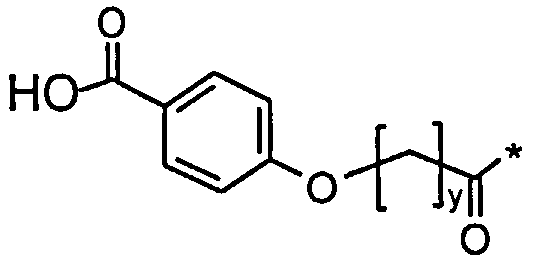
Соед. 2с:Connection 2s:

предпочтительно Соед. 2b;preferably Comp. 2b;
где y определяется по любому из предыдущих воплощений.where y is determined by any of the previous embodiments.
40. Производное по любому из предыдущих воплощений, которое содержит Соед. 5.40. The derivative of any of the previous embodiments, which contains the Compound. 5.
41. Производное по любому из предыдущих воплощений, где Соед. 5 представляет собой первый линкерный элемент.41. The derivative of any of the previous embodiments, wherein Comp. 5 is a first linker element.
42. Производное по любому из предыдущих воплощений, где k составляет 1.42. The derivative of any of the previous embodiments, where k is 1.
43. Производное по любому из предыдущих воплощений, где n составляет 1.43. The derivative of any of the previous embodiments, wherein n is 1.
44. Производное по любому из предыдущих воплощений, где Соед. 5 включено m раз, где m представляет собой целое число в диапазоне 1-10.44. The derivative of any of the previous embodiments, wherein Comp. 5 is included m times, where m is an integer in the range of 1-10.
45. Производное по любому из предыдущих воплощений, где m составляет 2.45. The derivative of any of the previous embodiments, wherein m is 2.
46. Производное по любому из предыдущих воплощений, где если m не является 1, то элементы Соед. 5 связаны через амидный мостик(и).46. The derivative of any of the previous embodiments, where if m is not 1, then the elements Comp. 5 are connected through an amide bridge (s).
47. Производное по любому из предыдущих воплощений, где линкер также содержит второй линкерный элемент; предпочтительно Glu-бирадикал; более предпочтительно выбран среди Соед. 6 и/или Соед. 7:47. The derivative of any of the previous embodiments, wherein the linker also comprises a second linker element; preferably Glu-diradical; more preferably selected from Comp. 6 and / or Comp. 7:
Соед. 6:Connection 6:

Соед. 7:Connection 7:

наиболее предпочтительно Соед. 6.most preferably Comp. 6.
48. Производное по любому из предыдущих воплощений, где Glu-бирадикал включен p раз, где p представляет собой целое число в диапазоне 1-2.48. The derivative of any of the previous embodiments, wherein the Glu-biradical is included p times, where p is an integer in the range of 1-2.
49. Производное по любому из предыдущих воплощений, где p составляет 1.49. The derivative of any of the previous embodiments, wherein p is 1.
50. Производное по любому из предыдущих воплощений, где p составляет 2.50. The derivative of any of the previous embodiments, wherein p is 2.
51. Производное по любому из предыдущих воплощений, где Glu-бирадикал представляет собой радикал L-Glu.51. The derivative of any of the previous embodiments, wherein the Glu-diradical is an L-Glu radical.
52. Производное по любому из предыдущих воплощений, где один или более чем один Glu-бирадикал и один или более чем один элемент Соед. 5 связаны через амидный мостик(и).52. The derivative of any of the previous embodiments, wherein one or more than one Glu-diradical and one or more than one element of Comp. 5 are connected through an amide bridge (s).
53. Производное по любому из предыдущих воплощений, где линкер содержит m раз Соед. 5 и p раз Glu-бирадикал.53. The derivative of any of the previous embodiments, wherein the linker contains m times the Compound. 5 and p times Glu-biradical.
54. Производное по любому из предыдущих воплощений, где (m,p) составляют (2,2) или (2,1), предпочтительно (2,1).54. The derivative of any of the previous embodiments, wherein (m, p) is (2.2) or (2.1), preferably (2.1).
55. Производное по предыдущим воплощениям, где m элементов Соед. 5 и p Glu-бирадикалов связаны через амидные мостики.55. The derivative of the previous embodiments, where m elements of Comp. 5 and p Glu-biradicals are linked via amide bridges.
56. Производное по любому из предыдущих воплощений, где линкер и пролонгирующая группировка связаны через амидный мостик.56. The derivative of any of the previous embodiments, wherein the linker and extension group are linked through an amide bridge.
57. Производное по любому из предыдущих воплощений, где линкер и аналог GLP-1 связаны через амидный мостик.57. The derivative of any of the previous embodiments, wherein the linker and GLP-1 analog are linked through an amide bridge.
58. Производное по любому из предыдущих воплощений, где линкер присоединен к эпсилон-аминогруппе первого и второго К-остатка.58. The derivative of any of the previous embodiments, wherein the linker is attached to the epsilon amino group of the first and second K-residue.
59. Производное по любому из предыдущих воплощений, где линкер содержит от 5 до 41 С-атома; предпочтительно 17 или 22 С-атома.59. The derivative of any of the previous embodiments, wherein the linker contains from 5 to 41 C-atoms; preferably 17 or 22 C atoms.
60. Производное по любому из предыдущих воплощений, где линкер содержит 17 С-атомов.60. The derivative of any of the previous embodiments, wherein the linker contains 17 C atoms.
61. Производное по любому из предыдущих воплощений, где линкер содержит 22 С-атома.61. The derivative of any of the previous embodiments, wherein the linker contains 22 C atoms.
62. Производное по предыдущим воплощениям, где линкер содержит от 4 до 28 гетороатомов; предпочтительно 12 или 16 гетороатомов.62. The derivative of the previous embodiments, wherein the linker contains from 4 to 28 heteroatoms; preferably 12 or 16 heteroatoms.
63. Производное по любому из предыдущих воплощений, где линкер содержит 12 гетороатомов.63. The derivative of any of the previous embodiments, wherein the linker contains 12 heteroatoms.
64. Производное по любому из предыдущих воплощений, где линкер содержит 16 гетороатомов.64. The derivative of any of the previous embodiments, wherein the linker contains 16 heteroatoms.
65. Производное по любому из предыдущих воплощений, где гетероатомы представляют собой N- и/или O-атомы.65. The derivative of any of the previous embodiments, wherein the heteroatoms are N and / or O atoms.
66. Производное по любому из предыдущих воплощений, где линкер содержит от 1 до 7 N-атомов; предпочтительно 3 или 4 N-атома.66. The derivative of any of the previous embodiments, wherein the linker contains from 1 to 7 N atoms; preferably 3 or 4 N-atoms.
67. Производное по любому из предыдущих воплощений, где линкер содержит 3 N-атома.67. The derivative of any of the previous embodiments, wherein the linker contains 3 N-atoms.
68. Производное по любому из предыдущих воплощений, где линкер содержит 4 N-атома.68. The derivative of any of the previous embodiments, wherein the linker contains 4 N-atoms.
69. Производное по любому из предыдущих воплощений, где линкер содержит от 3 до 21 O-атома; предпочтительно 9 или 12 O-атомов.69. The derivative of any of the previous embodiments, wherein the linker contains from 3 to 21 O-atoms; preferably 9 or 12 O atoms.
70. Производное по любому из предыдущих воплощений, где линкер содержит 9 O-атомов.70. The derivative of any of the previous embodiments, wherein the linker contains 9 O atoms.
71. Производное по любому из предыдущих воплощений, где линкер содержит 12 O-атомов.71. The derivative of any of the previous embodiments, wherein the linker contains 12 O atoms.
72. Производное по любому из предыдущих воплощений, где линкер содержит два раза Соед. 6 и три раза Соед. 5, связанные через амидные мостики и в указанной последовательности, при этом линкер связан на его *-NH-конце с *-СО-концом пролонгирующей группировки, и на его *-СО-конце с эпсилон-аминогруппой К27 или KT аналога GLP-1.72. The derivative of any of the previous embodiments, wherein the linker contains two times the Compound. 6 and three times Comp. 5, linked through amide bridges and in the indicated sequence, wherein the linker is connected at its * -NH end to the * -CO-end of the prolonged moiety, and at its * -CO-end to the epsilon-amino group K 27 or K T of the GLP analog -one.
73. Производное по любому из предыдущих воплощений, где линкер содержит два раза Соед. 5 и один раз Соед. 6, связанные через амидные мостики и в указанной последовательности, при этом линкер связан на его *-NH-конце с *-СО-концом пролонгирующей группировки, и на его свободном *-СО-конце с эпсилон-аминогруппой К27 или KT аналога GLP-1.73. The derivative of any of the previous embodiments, wherein the linker contains two times the Compound. 5 and once Comp. 6, connected through amide bridges and in the indicated sequence, wherein the linker is connected at its * -NH-terminus to the * -CO-terminus of the prolonged moiety, and at its free * -CO-end with the epsilon-amino group K 27 or K T analog GLP-1.
74. Производное по любому из предыдущих воплощений, где линкер содержит один раз Соед. 6 и три раза Соед. 5, связанные через амидные мостики и в указанной последовательности, при этом линкер связан на его *-NH-конце с *-СО-концом пролонгирующей группировки, и на его *-СО-конце с эпсилон-аминогруппой К27 или KT аналога GLP-1.74. The derivative of any of the previous embodiments, wherein the linker contains once the Compound. 6 and three times Comp. 5, linked through amide bridges and in the indicated sequence, wherein the linker is connected at its * -NH end to the * -CO-end of the prolonged moiety, and at its * -CO-end to the epsilon-amino group K 27 or K T of the GLP analog -one.
75. Производное по любому из предыдущих воплощений, где линкер содержит один раз Соед. 6, два раза Соед. 5 и один раз Соед. 6, связанные через амидные мостики и в указанной последовательности, при этом линкер связан на его *-NH-конце с *-СО-концом пролонгирующей группировки, и на его *-СО-конце с эпсилон-аминогруппой К27 или KT аналога GLP-1.75. The derivative of any of the previous embodiments, wherein the linker contains once the Compound. 6, two times Comp. 5 and once Comp. 6, connected through amide bridges and in the indicated sequence, wherein the linker is connected at its * -NH-terminus to the * -CO-terminus of the prolonged moiety, and at its * -CO-terminus with the epsilon-amino group K 27 or K T of the GLP analogue -one.
76. Производное по любому из предыдущих воплощений, где две пролонгирующие группировки по существу идентичны; например по меньшей мере на 80%, по меньшей мере на 85%, по меньшей мере на 90%, по меньшей мере на 95% или по меньшей мере на 99% идентичны.76. The derivative of any of the previous embodiments, wherein the two prolonged moieties are substantially identical; for example, at least 80%, at least 85%, at least 90%, at least 95%, or at least 99% are identical.
77. Производное по любому из предыдущих воплощений, где две пролонгирующие группировки имеют сходство по меньшей мере 0,5; предпочтительно по меньшей мере 0,6; более предпочтительно по меньшей мере 0,7 или по меньшей мере 0,8; еще более предпочтительно по меньшей мере 0,9; или, наиболее предпочтительно, по меньшей мере 0,99, например, сходство 1,0.77. The derivative of any of the previous embodiments, wherein the two prolonged moieties have similarities of at least 0.5; preferably at least 0.6; more preferably at least 0.7 or at least 0.8; even more preferably at least 0.9; or, most preferably, at least 0.99, for example, a similarity of 1.0.
78. Производное по любому из предыдущих воплощений, где два линкера имеют сходство по меньшей мере 0,5; предпочтительно по меньшей мере 0,6; более предпочтительно по меньшей мере 0,7 или по меньшей мере 0,8; еще более предпочтительно по меньшей мере 0,9; или наиболее предпочтительно по меньшей мере 0,99, например, сходство 1,0.78. The derivative of any of the previous embodiments, wherein the two linkers have similarities of at least 0.5; preferably at least 0.6; more preferably at least 0.7 or at least 0.8; even more preferably at least 0.9; or most preferably at least 0.99, for example, a similarity of 1.0.
79. Производное по любому из предыдущих воплощений, где две альбуминсвязывающие группировки, такие как две боковые цепи, содержащие пролонгирующую группировку и линкер, по существу идентичны; например по меньшей мере на 80%, по меньшей мере на 85%, по меньшей мере на 90%, по меньшей мере на 95% или по меньшей мере на 99% идентичны.79. The derivative of any of the previous embodiments, wherein the two albumin-binding moieties, such as two side chains containing a prolonging moiety and a linker, are substantially identical; for example, at least 80%, at least 85%, at least 90%, at least 95%, or at least 99% are identical.
80. Производное по любому из предыдущих воплощений, где две альбуминсвязывающие группировки, такие как две боковые цепи, содержащие пролонгирующую группировку и линкер, имеют сходство по меньшей мере 0,5; предпочтительно по меньшей мере 0,6; более предпочтительно по меньшей мере 0,7 или по меньшей мере 0,8; еще более предпочтительно по меньшей мере 0,9; или наиболее предпочтительно по меньшей мере 0,99, например сходство 1,0.80. The derivative of any of the previous embodiments, wherein two albumin-binding moieties, such as two side chains containing a prolonging moiety and a linker, have a similarity of at least 0.5; preferably at least 0.6; more preferably at least 0.7 or at least 0.8; even more preferably at least 0.9; or most preferably at least 0.99, for example, a similarity of 1.0.
81. Производное по любому из предыдущих воплощений, где две сравниваемые химические структуры представлены в виде отпечатков пальцев, например а) отпечатков ECFP_6; б) отпечатков UNITY; и/или в) отпечатков MDL; и где для каждого из а), б) и в) для расчета сходства, или идентичности, двух отпечатков предпочтительно используется коэффициент Танимото.81. The derivative of any of the previous embodiments, wherein the two comparable chemical structures are in the form of fingerprints, for example a) ECFP_6 fingerprints; b) prints of UNITY; and / or c) MDL prints; and where for each of a), b), and c) the Tanimoto coefficient is preferably used to calculate the similarity, or identity, of the two prints.
82. Производное по любому из предыдущих воплощений, где число аминокислотных замен по сравнению с GLP-1 (7-37) (SEQ ID №1) определяют путем рукописной записи и визуального контроля.82. The derivative of any of the previous embodiments, wherein the number of amino acid substitutions as compared to GLP-1 (7-37) (SEQ ID No. 1) is determined by handwriting and visual inspection.
83. Производное по любому из предыдущих воплощений, где число аминокислотных замен по сравнению с GLP-1 (7-37) (SEQ ID №1) определяют с использованием стандартной программы для выравнивания белков или пептидов.83. The derivative of any of the previous embodiments, wherein the number of amino acid substitutions compared to GLP-1 (7-37) (SEQ ID No. 1) is determined using a standard protein or peptide alignment program.
84. Производное по любому из предыдущих воплощений, где программа для выравнивания представляет собой выравнивание по Нидлману-Вуншу.84. The derivative of any of the previous embodiments, wherein the alignment program is a Needleman-Wunsch alignment.
85. Производное по любому из предыдущих воплощений, где используется матрица весов выравнивания по умолчанию и матрица идентичности по умолчанию.85. The derivative of any of the previous embodiments, using the default alignment weight matrix and the default identity matrix.
86. Производное по любому из предыдущих воплощений, где указанная матрица весов выравнивания представляет собой BLOSUM62.86. The derivative of any of the previous embodiments, wherein said alignment weight matrix is BLOSUM62.
87. Производное по любому из предыдущих воплощений, где штраф на первый остаток в делеции составляет -10 (минус десять).87. The derivative of any of the previous embodiments, where the penalty for the first remainder in the deletion is -10 (minus ten).
88. Производное по любому из предыдущих воплощений, где штраф на дополнительные остатки в делеции составляет -0,5 (минус ноль целых пять десятых).88. The derivative of any of the previous embodiments, where the penalty for additional residues in the deletion is -0.5 (minus zero point five).
89. Производное по любому из предыдущих воплощений, где аминокислотная замена(ы) имеется в одной или более чем одной позиции, соответствующей следующим позициям в GLP-1 (7-37) (SEQ ID №1): 8, 12, 20, 22, 23, 24, 25, 26, 27, 30, 31, 34, 35, 36, 37, 38 и 39.89. The derivative of any of the previous embodiments, wherein the amino acid substitution (s) is present in one or more than one position corresponding to the following positions in GLP-1 (7-37) (SEQ ID No. 1): 8, 12, 20, 22 , 23, 24, 25, 26, 27, 30, 31, 34, 35, 36, 37, 38, and 39.
90. Производное по любому из предыдущих воплощений, где аналог содержит по меньшей мере одну из следующих замен: Aib8, К12, К20, Е22 или К22, Е23, К24, V25, R26 или Н26, К27, Е30, Н31, G34 или R34 или Q34, Des35, К36 или Des36, К37 или Des37, Е38 или Q38 и/или G39.90. The derivative of any of the previous embodiments, wherein the analogue contains at least one of the following substitutions: Aib 8 , K 12 , K 20 , E 22 or K 22 , E 23 , K 24 , V 25 , R 26 or H 26 , K 27 , E 30 , H 31 , G 34 or R 34 or Q 34 , Des 35 , K 36 or Des 36 , K 37 or Des 37 , E 38 or Q 38 and / or G 39 .
91. Производное по любому из предыдущих воплощений, где второй остаток представляет собой К12 и где аналог, в дополнение к замене К27, также содержит i) замену, выбранную среди G34 и Q34, и ii) замену, выбранную среди R26 и Н26.91. The derivative of any of the previous embodiments, wherein the second residue is K 12 and where the analogue, in addition to replacing K 27 , also contains i) a substitution selected among G 34 and Q 34 , and ii) a substitution selected among R 26 and H 26 .
92. Производное по любому из предыдущих воплощений, где второй остаток представляет собой К20 и где аналог, в дополнение к замене К27, также содержит i) замену, выбранную среди G34 и Q34, и ii) замену, выбранную среди R26 и Н26.92. The derivative of any of the previous embodiments, wherein the second residue is K 20 and where the analogue, in addition to replacing K 27 , also contains i) a substitution selected among G 34 and Q 34 , and ii) a substitution selected among R 26 and H 26 .
93. Производное по любому из предыдущих воплощений, где второй остаток представляет собой К22 и где аналог, в дополнение к замене К27, также содержит i) замену, выбранную среди G34 и Q34, и ii) замену, выбранную среди R26 и Н26.93. The derivative of any of the previous embodiments, wherein the second residue is K 22 and where the analogue, in addition to replacing K 27 , also contains i) a substitution selected among G 34 and Q 34 , and ii) a substitution selected among R 26 and H 26 .
94. Производное по любому из предыдущих воплощений, где второй остаток представляет собой К24 и где аналог, в дополнение к замене К27, также содержит i) замену, выбранную среди G34 и Q34, и ii) замену, выбранную среди R26 и Н26.94. The derivative of any of the previous embodiments, wherein the second residue is K 24 and where the analogue, in addition to replacing K 27 , also contains i) a substitution selected among G 34 and Q 34 , and ii) a substitution selected among R 26 and H 26 .
95. Производное по любому из предыдущих воплощений, где второй остаток представляет собой К36 и где аналог, в дополнение к замене К27, также содержит i) замену, выбранную среди G34 и Q34, и ii) замену, выбранную среди R26 и Н26.95. The derivative of any of the previous embodiments, wherein the second residue is K 36 and where the analogue, in addition to replacing K 27 , also contains i) a substitution selected among G 34 and Q 34 , and ii) a substitution selected among R 26 and H 26 .
96. Производное по любому из предыдущих воплощений, где второй остаток представляет собой К37 и где аналог, в дополнение к замене К27, также содержит i) замену, выбранную среди G34 и Q34, и ii) замену, выбранную среди R26 и Н26.96. The derivative of any of the previous embodiments, wherein the second residue is K 37 and where the analogue, in addition to replacing K 27 , also contains i) a substitution selected among G 34 and Q 34 , and ii) a substitution selected among R 26 and H 26 .
97. Производное по любому из предыдущих воплощений, где аналог содержит по меньшей мере одну из следующих замен: Aib8, Е22, Е23, V25, Е30, Н31, Des35, Des36, Des37, Е38 или Q38 и/или G39.97. The derivative of any of the previous embodiments, wherein the analogue contains at least one of the following substitutions: Aib 8 , E 22 , E 23 , V 25 , E 30 , H 31 , Des 35 , Des 36 , Des 37 , E 38 or Q 38 and / or G 39 .
98. Производное по любому из предыдущих воплощений, где аналог содержит Aib8.98. The derivative of any of the previous embodiments, wherein the analogue contains Aib 8 .
99. Производное по любому из предыдущих воплощений, где аналог содержит Е22.99. The derivative of any of the previous embodiments, wherein the analogue contains E 22 .
100. Производное по любому из предыдущих воплощений, где аналог содержит Е23.100. The derivative of any of the previous embodiments, wherein the analogue contains E 23 .
101. Производное по любому из предыдущих воплощений, где аналог содержит V25.101. The derivative of any of the previous embodiments, wherein the analogue contains V 25 .
102. Производное по любому из предыдущих воплощений, где аналог содержит Е30.102. The derivative of any of the previous embodiments, wherein the analogue comprises E 30 .
103. Производное по любому из предыдущих воплощений, где аналог содержит Н31.103. The derivative of any of the previous embodiments, wherein the analogue contains H 31 .
104. Производное по любому из предыдущих воплощений, где аналог содержит Des35.104. The derivative of any of the previous embodiments, wherein the analogue contains Des 35 .
105. Производное по любому из предыдущих воплощений, где аналог содержит Des36.105. The derivative of any of the previous embodiments, wherein the analogue contains Des 36 .
106. Производное по любому из предыдущих воплощений, где аналог содержит Des37.106. The derivative of any of the previous embodiments, wherein the analogue contains Des 37 .
107. Производное по любому из предыдущих воплощений, где аналог содержит Е38 или Q38, предпочтительно Q38, или более предпочтительно Е38.107. The derivative of any of the previous embodiments, wherein the analogue contains E 38 or Q 38 , preferably Q 38 , or more preferably E 38 .
108. Производное по любому из предыдущих воплощений, где аналог содержит G39.108. The derivative of any of the previous embodiments, wherein the analogue comprises G 39 .
109. Производное по любому из предыдущих воплощений, где аналог содержит Des35, Des36 и Des37.109. The derivative of any of the previous embodiments, wherein the analogue contains Des 35 , Des 36 and Des 37 .
110. Производное по любому из предыдущих воплощений, где аналог содержит Des36 и Des37.110. The derivative of any of the previous embodiments, wherein the analogue contains Des 36 and Des 37 .
111. Производное по любому из предыдущих воплощений, которое представляет собой производное GLP-1 (7-34) (аминокислоты 1-28 из SEQ ID №1).111. The derivative of any of the previous embodiments, which is a derivative of GLP-1 (7-34) (amino acids 1-28 of SEQ ID No. 1).
112. Производное по любому из предыдущих воплощений, которое представляет собой производное GLP-1 (7-35) (аминокислоты 1-29 из SEQ ID №1).112. The derivative of any of the previous embodiments, which is a derivative of GLP-1 (7-35) (amino acids 1-29 of SEQ ID No. 1).
113. Производное по любому из предыдущих воплощений, которое представляет собой производное GLP-1 (7-36) (аминокислоты 1-30 из SEQ ID №1).113. The derivative of any of the previous embodiments, which is a derivative of GLP-1 (7-36) (amino acids 1-30 of SEQ ID No. 1).
114. Производное по любому из предыдущих воплощений, которое представляет собой производное GLP-1 (7-37) (аминокислоты 1-31 из SEQ ID №1).114. The derivative of any of the previous embodiments, which is a derivative of GLP-1 (7-37) (amino acids 1-31 of SEQ ID No. 1).
115. Производное по любому из предыдущих воплощений, которое представляет собой производное GLP-1 (7-38) (аминокислоты 1-31 из SEQ ID №1, плюс один добавленный с С-конца аминокислотный остаток).115. The derivative of any of the previous embodiments, which is a derivative of GLP-1 (7-38) (amino acids 1-31 of SEQ ID NO: 1, plus one amino acid residue added from the C-terminus).
116. Производное по любому из предыдущих воплощений, которое представляет собой производное GLP-1 (7-39) (аминокислоты 1-31 из SEQ ID №1, плюс два добавленных с С-конца аминокислотных остатка).116. The derivative of any of the previous embodiments, which is a derivative of GLP-1 (7-39) (amino acids 1-31 of SEQ ID NO: 1, plus two amino acid residues added from the C-terminus).
117. Производное по любому из предыдущих воплощений, где аналог содержит максимум десять аминокислотных замен.117. The derivative of any of the previous embodiments, wherein the analogue contains a maximum of ten amino acid substitutions.
118. Производное по любому из предыдущих воплощений, где аналог содержит максимум девять аминокислотных замен.118. The derivative of any of the previous embodiments, wherein the analogue contains a maximum of nine amino acid substitutions.
119. Производное по любому из предыдущих воплощений, где аналог содержит максимум восемь аминокислотных замен.119. The derivative of any of the previous embodiments, wherein the analogue contains a maximum of eight amino acid substitutions.
120. Производное по любому из предыдущих воплощений, где аналог содержит максимум семь аминокислотных замен.120. The derivative of any of the previous embodiments, wherein the analogue contains a maximum of seven amino acid substitutions.
121. Производное по любому из предыдущих воплощений, где аналог содержит максимум шесть аминокислотных замен.121. The derivative of any of the previous embodiments, wherein the analogue contains a maximum of six amino acid substitutions.
122. Производное по любому из предыдущих воплощений, где аналог содержит максимум пять аминокислотных замен.122. The derivative of any of the previous embodiments, wherein the analogue contains a maximum of five amino acid substitutions.
123. Производное по любому из предыдущих воплощений, где аналог содержит максимум четыре аминокислотные замены.123. The derivative of any of the previous embodiments, wherein the analogue contains a maximum of four amino acid substitutions.
124. Производное по любому из предыдущих воплощений, где аналог содержит максимум три аминокислотные замены.124. The derivative of any of the previous embodiments, wherein the analogue contains a maximum of three amino acid substitutions.
125. Производное по любому из предыдущих воплощений, где аналог содержит максимум две аминокислотные замены.125. The derivative of any of the previous embodiments, wherein the analogue contains a maximum of two amino acid substitutions.
126. Производное по любому из предыдущих воплощений, где аналог содержит максимум одну аминокислотную замену.126. The derivative of any of the previous embodiments, wherein the analogue contains at most one amino acid substitution.
127. Производное по любому из предыдущих воплощений, где аналог содержит по меньшей мере одну аминокислотную замену.127. The derivative of any of the previous embodiments, wherein the analogue contains at least one amino acid substitution.
128. Производное по любому из предыдущих воплощений, где аналог содержит по меньшей мере две аминокислотные замены.128. The derivative of any of the previous embodiments, wherein the analogue contains at least two amino acid substitutions.
129. Производное по любому из предыдущих воплощений, где аналог содержит по меньшей мере три аминокислотные замены.129. The derivative of any of the previous embodiments, wherein the analogue contains at least three amino acid substitutions.
130. Производное по любому из предыдущих воплощений, где аналог содержит по меньшей мере четыре аминокислотные замены.130. The derivative of any of the previous embodiments, wherein the analogue contains at least four amino acid substitutions.
131. Производное по любому из предыдущих воплощений, где аналог содержит по меньшей мере пять аминокислотных замен.131. The derivative of any of the previous embodiments, wherein the analogue contains at least five amino acid substitutions.
132. Производное по любому из предыдущих воплощений, где аналог содержит по меньшей мере шесть аминокислотных замен.132. The derivative of any of the previous embodiments, wherein the analogue contains at least six amino acid substitutions.
133. Производное по любому из предыдущих воплощений, где аналог содержит по меньшей мере семь аминокислотных замен.133. The derivative of any of the previous embodiments, wherein the analogue contains at least seven amino acid substitutions.
134. Производное по любому из предыдущих воплощений, где аналог содержит по меньшей мере восемь аминокислотных замен.134. The derivative of any of the previous embodiments, wherein the analogue contains at least eight amino acid substitutions.
135. Производное по любому из предыдущих воплощений, где аналог содержит по меньшей мере девять аминокислотных замен.135. The derivative of any of the previous embodiments, wherein the analogue contains at least nine amino acid substitutions.
136. Производное по любому из предыдущих воплощений, где аналог содержит по меньшей мере десять аминокислотных замен.136. The derivative of any of the previous embodiments, wherein the analogue contains at least ten amino acid substitutions.
137. Производное по любому из предыдущих воплощений, где аналог содержит одну аминокислотную замену.137. The derivative of any of the previous embodiments, wherein the analogue contains one amino acid substitution.
138. Производное по любому из предыдущих воплощений, где аналог содержит две аминокислотные замены.138. The derivative of any of the previous embodiments, wherein the analogue contains two amino acid substitutions.
139. Производное по любому из предыдущих воплощений, где аналог содержит три аминокислотные замены.139. The derivative of any of the previous embodiments, wherein the analogue contains three amino acid substitutions.
140. Производное по любому из предыдущих воплощений, где аналог содержит четыре аминокислотные замены.140. The derivative of any of the previous embodiments, wherein the analogue contains four amino acid substitutions.
141. Производное по любому из предыдущих воплощений, где аналог содержит пять аминокислотных замен.141. The derivative of any of the previous embodiments, wherein the analogue contains five amino acid substitutions.
142. Производное по любому из предыдущих воплощений, где аналог содержит шесть аминокислотных замен.142. The derivative of any of the previous embodiments, wherein the analogue contains six amino acid substitutions.
143. Производное по любому из предыдущих воплощений, где аналог содержит семь аминокислотных замен.143. The derivative of any of the previous embodiments, wherein the analogue contains seven amino acid substitutions.
144. Производное по любому из предыдущих воплощений, где аналог содержит восемь аминокислотных замен.144. The derivative of any of the previous embodiments, wherein the analogue contains eight amino acid substitutions.
145. Производное по любому из предыдущих воплощений, где аналог содержит девять аминокислотных замен.145. The derivative of any of the previous embodiments, wherein the analogue contains nine amino acid substitutions.
146. Производное по любому из предыдущих воплощений, где аналог содержит десять аминокислотных замен.146. The derivative of any of the previous embodiments, wherein the analogue contains ten amino acid substitutions.
147. Производное по любому из предыдущих воплощений, где замена(ы) представляет(ют) собой, независимо, замещения, добавления и/или делеции.147. The derivative of any of the previous embodiments, wherein the substitution (s) is (are) independently, substitutions, additions and / or deletions.
148. Производное по любому из предыдущих воплощений, где аналог148. The derivative of any of the previous embodiments, wherein the analogue
а) содержит аналог GLP-1 формулы I; и/или b) представляет собой аналог GLP-1 формулы I:a) contains an analogue of GLP-1 of formula I; and / or b) is an analogue of GLP-1 of formula I:
Формула I: Xaa7-Xaa8-Glu-Gly-Thr-Xaa12-Thr-Ser-Asp-Xaa16-Ser-Xaa18-Xaa19-Xaa20-Glu-Xaa22-Xaa23-Xaa24-Xaa25-Xaa26-Lys-Phe-Ile-Xaa30-Xaa31-Leu-Val-Xaa34-Xaa35-Хаа36-Хаа37-Хаа38-Хаа39, гдеFormula I: Xaa 7 -Xaa 8 -Glu-Gly-Thr-Xaa 12 -Thr-Ser-Asp-Xaa 16 -Ser-Xaa 18 -Xaa 19 -Xaa 20 -Glu-Xaa 22 -Xaa 23 -Xaa 24 -Xaa 25 -Xaa 26 -Lys-Phe-Ile-Xaa 30 -Xaa 31 -Leu-Val-Xaa 34 -Xaa 35 -Xaa 36 -Xaa 37 -Xaa 38 -Xaa 39 , where
Хаа7 представляет собой L-гистидин, имидазопропионил, α-гидрокси-гистидин, D-гистидин, дезамино-гистидин, 2-амино-гистидин, β-гидрокси-гистидин, гомогистидин, Nα-ацетил-гистидин, Nα-формил-гистидин, α-фторметил-гистидин, α-метил-гистидин, 3-пиридилаланин, 2-пиридилаланин или 4-пиридилаланин;Xaa 7 is L-histidine, imidazopropionyl, α-hydroxy-histidine, D-histidine, desamino-histidine, 2-amino-histidine, β-hydroxy-histidine, homohistidine, N α- acetyl-histidine, N α- formyl- histidine, α-fluoromethyl-histidine, α-methyl-histidine, 3-pyridylalanine, 2-pyridylalanine or 4-pyridylalanine;
Хаа8 представляет собой Ala, Gly, Val, Leu, Ile, Thr, Ser, Lys, Aib, (1-аминоциклопропил)карбоновую кислоту, (1-аминоциклобутил)карбоновую кислоту, (1-аминоциклопентил)карбоновую кислоту, (1-аминоциклогексил)карбоновую кислоту, (1-аминоциклогептил)карбоновую кислоту или (1-аминоциклооктил)карбоновую кислоту;Haa 8 is Ala, Gly, Val, Leu, Ile, Thr, Ser, Lys, Aib, (1-aminocyclopropyl) carboxylic acid, (1-aminocyclobutyl) carboxylic acid, (1-aminocyclopentyl) carboxylic acid, (1-aminocyclohexyl ) carboxylic acid, (1-aminocycloheptyl) carboxylic acid or (1-aminocyclooctyl) carboxylic acid;
Xaa12 представляет собой Lys или Phe;Xaa 12 is Lys or Phe;
Xaa16 представляет собой Val или Leu;Xaa 16 represents Val or Leu;
Xaa18 представляет собой Ser, Arg, Asn, Gln или Glu;Xaa 18 is Ser, Arg, Asn, Gln or Glu;
Xaa19 представляет собой Tyr или Gln;Xaa 19 is Tyr or Gln;
Хаа20 представляет собой Leu, Lys или Met;Haa 20 represents Leu, Lys or Met;
Хаа22 представляет собой Gly, Glu, Lys или Aib;Haa 22 represents Gly, Glu, Lys or Aib;
Хаа23 представляет собой Gln, Glu или Arg;Haa 23 represents Gln, Glu or Arg;
Хаа24 представляет собой Ala или Lys;Haa 24 represents Ala or Lys;
Хаа25 представляет собой Ala или Val;Haa 25 represents Ala or Val;
Хаа26 представляет собой Val, His или Arg;Haa 26 represents Val, His or Arg;
Хаа30 представляет собой Ala, Glu или Arg;Haa 30 represents Ala, Glu or Arg;
Хаа31 представляет собой Trp или His;Haa 31 represents Trp or His;
Хаа34 представляет собой Glu, Asn, Gly, Gln или Arg;Haa 34 represents Glu, Asn, Gly, Gln or Arg;
Хаа35 представляет собой Gly, Aib или отсутствует;Haa 35 represents Gly, Aib or absent;
Хаа36 представляет собой Arg, Gly, Lys или отсутствует;Xaa 36 is Arg, Gly, Lys or absent;
Хаа37 представляет собой Gly, Ala, Glu, Pro, Lys, Arg или отсутствует;Xaa 37 is Gly, Ala, Glu, Pro, Lys, Arg or absent;
Хаа38 представляет собой Ser, Gly, Ala, Glu, Gln, Pro, Arg или отсутствует; иHaa 38 represents Ser, Gly, Ala, Glu, Gln, Pro, Arg or absent; and
Хаа39 представляет собой Gly или отсутствует.Haa 39 is Gly or absent.
149. Производное по любому из предыдущих воплощений, где пептид формулы I представляет собой аналог GLP-1 (7-37) (SEQ ID №1).149. The derivative of any of the previous embodiments, wherein the peptide of formula I is an analog of GLP-1 (7-37) (SEQ ID No. 1).
150. Производное по любому из предыдущих воплощений, где если Хаа38 отсутствует, то Хаа39 также отсутствует.150. The derivative of any of the previous embodiments, where if Haa 38 is absent, then Haa 39 is also absent.
151. Производное по любому из предыдущих воплощений, где если Хаа37 отсутствует, то Хаа38 и Хаа39 также отсутствуют.151. The derivative of any of the previous embodiments, where if Haa 37 is absent, then Haa 38 and Haa 39 are also absent.
152. Производное по любому из предыдущих воплощений, где если Хаа36 отсутствует, то Хаа37, Хаа38 и Хаа39 также отсутствуют.152. The derivative of any of the previous embodiments, where if Haa 36 is absent, then Haa 37 , Haa 38 and Haa 39 are also absent.
153. Производное по любому из предыдущих воплощений, где если Хаа35 отсутствует, то Хаа36, Хаа37, Хаа38 и Хаа39 также отсутствуют.153. The derivative of any of the previous embodiments, where if Haa 35 is absent, then Haa 36 , Haa 37 , Haa 38 and Haa 39 are also absent.
154. Производное по любому из предыдущих воплощений, где Хаа7 представляет собой His; Xaa8 представляет собой Ala или Aib; Xaa12 представляет собой Lys или Phe; Xaa16 представляет собой Val; Xaa18 представляет собой Ser; Хаа19 представляет собой Tyr; Хаа20 представляет собой Leu или Lys; Хаа22 представляет собой Glu, Gly или Lys; Хаа23 представляет собой Gln или Glu; Хаа24 представляет собой Ala или Lys; Хаа25 представляет собой Ala или Val; Хаа26 представляет собой His или Arg; Хаа30 представляет собой Ala или Glu; Хаа31 представляет собой Trp или His; Хаа34 представляет собой Gly, Gln, или Arg; Хаа35 представляет собой Gly или отсутствует; Хаа36 представляет собой Arg, Lys или отсутствует; Хаа37 представляет собой Gly, Lys или отсутствует; Хаа38 представляет собой Glu или Gln; и Хаа39 представляет собой Gly или отсутствует.154. The derivative of any of the previous embodiments, wherein Xaa 7 is His; Xaa 8 is Ala or Aib; Xaa 12 is Lys or Phe; Xaa 16 represents Val; Xaa 18 is Ser; Haa 19 represents Tyr; Haa 20 represents Leu or Lys; Haa 22 represents Glu, Gly or Lys; Xaa 23 is Gln or Glu; Haa 24 represents Ala or Lys; Haa 25 represents Ala or Val; Haa 26 represents His or Arg; Haa 30 represents Ala or Glu; Haa 31 represents Trp or His; Haa 34 represents Gly, Gln, or Arg; Haa 35 is Gly or absent; Xaa 36 is Arg, Lys or absent; Haa 37 is Gly, Lys or absent; Haa 38 represents Glu or Gln; and Haa 39 is Gly or absent.
154а. Производное по любому из предыдущих воплощений, где Хаа7 представляет собой His.154a. The derivative of any of the previous embodiments, wherein Xaa 7 is His.
154b. Производное по любому из предыдущих воплощений, где Хаа8 представляет собой Ala.154b. The derivative of any of the previous embodiments, wherein Xaa 8 is Ala.
154b1. Производное по любому из предыдущих воплощений, где Хаа8 представляет собой Aib.154b1. The derivative of any of the previous embodiments, wherein Xaa 8 is Aib.
154с. Производное по любому из предыдущих воплощений, где Xaa12 представляет собой Lys.154s The derivative of any of the previous embodiments, wherein Xaa 12 is Lys.
154d. Производное по любому из предыдущих воплощений, где Xaa12 представляет собой Phe.154d. The derivative of any of the previous embodiments, wherein Xaa 12 is Phe.
154е. Производное по любому из предыдущих воплощений, где Xaa16 представляет собой Val.154th. The derivative of any of the previous embodiments, wherein Xaa 16 is Val.
154f. Производное по любому из предыдущих воплощений, где Xaa18 представляет собой Ser.154f. The derivative of any of the previous embodiments, wherein Xaa 18 is Ser.
154g. Производное по любому из предыдущих воплощений, где Хаа19 представляет собой Tyr.154g. The derivative of any of the previous embodiments, wherein Xaa 19 is Tyr.
154h. Производное по любому из предыдущих воплощений, где Хаа20 представляет собой Leu.154h. The derivative of any of the previous embodiments, wherein Xaa 20 is Leu.
154i. Производное по любому из предыдущих воплощений, где Хаа20 представляет собой Lys.154i. The derivative of any of the previous embodiments, wherein Xaa 20 is Lys.
154j. Производное по любому из предыдущих воплощений, где Хаа22 представляет собой Glu.154j. The derivative of any of the previous embodiments, wherein Xaa 22 is Glu.
154k. Производное по любому из предыдущих воплощений, где Хаа22 представляет собой Gly.154k. The derivative of any of the previous embodiments, wherein Xaa 22 is Gly.
154l. Производное по любому из предыдущих воплощений, где Хаа22 представляет собой Lys.154l. The derivative of any of the previous embodiments, wherein Xaa 22 is Lys.
154m. Производное по любому из предыдущих воплощений, где Хаа23 представляет собой Gln.154m. The derivative of any of the previous embodiments, wherein Xaa 23 is Gln.
154n. Производное по любому из предыдущих воплощений, где Хаа23 представляет собой Glu.154n. The derivative of any of the previous embodiments, wherein Xaa 23 is Glu.
154о. Производное по любому из предыдущих воплощений, где Хаа24 представляет собой Ala.154o. The derivative of any of the previous embodiments, wherein Xaa 24 is Ala.
154р. Производное по любому из предыдущих воплощений, где Хаа24 представляет собой Lys.154 r. The derivative of any of the previous embodiments, wherein Xaa 24 is Lys.
154q. Производное по любому из предыдущих воплощений, где Хаа25 представляет собой Ala.154q. The derivative of any of the previous embodiments, wherein Xaa 25 is Ala.
154r. Производное по любому из предыдущих воплощений, где Хаа25 представляет собой Val.154r. The derivative of any of the previous embodiments, wherein Xaa 25 is Val.
154s. Производное по любому из предыдущих воплощений, где Хаа26 представляет собой His.154s. The derivative of any of the previous embodiments, wherein Xaa 26 is His.
154t. Производное по любому из предыдущих воплощений, где Хаа26 представляет собой Arg.154t. The derivative of any of the previous embodiments, wherein Xaa 26 is Arg.
154u. Производное по любому из предыдущих воплощений, где Хаа30 представляет собой Ala.154u. The derivative of any of the previous embodiments, wherein Xaa 30 is Ala.
154v. Производное по любому из предыдущих воплощений, где Хаа30 представляет собой Glu.154v. The derivative of any of the previous embodiments, wherein Xaa 30 is Glu.
154х. Производное по любому из предыдущих воплощений, где Xaa31 представляет собой Trp.154x. The derivative of any of the previous embodiments, wherein Xaa 31 is Trp.
154y. Производное по любому из предыдущих воплощений, где Xaa31 представляет собой His.154y. The derivative of any of the previous embodiments, wherein Xaa 31 is His.
154z. Производное по любому из предыдущих воплощений, где Хаа34 представляет собой Gly.154z. The derivative of any of the previous embodiments, wherein Xaa 34 is Gly.
154аа. Производное по любому из предыдущих воплощений, где Хаа34 представляет собой Gln.154aa. The derivative of any of the previous embodiments, wherein Xaa 34 is Gln.
154ab. Производное по любому из предыдущих воплощений, где Хаа34 представляет собой Arg.154ab. The derivative of any of the previous embodiments, wherein Xaa 34 is Arg.
154ас. Производное по любому из предыдущих воплощений, где Хаа35 представляет собой Gly.154ac The derivative of any of the previous embodiments, wherein Xaa 35 is Gly.
154ad. Производное по любому из предыдущих воплощений, где Xaa35 отсутствует.154ad. The derivative of any of the previous embodiments, wherein Xaa 35 is absent.
154ае. Производное по любому из предыдущих воплощений, где Хаа36 представляет собой Arg.154ae. The derivative of any of the previous embodiments, wherein Xaa 36 is Arg.
154af. Производное по любому из предыдущих воплощений, где Хаа36 представляет собой Lys.154af. The derivative of any of the previous embodiments, wherein Xaa 36 is Lys.
154ag. Производное по любому из предыдущих воплощений, где Хаа36 отсутствует.154ag. The derivative of any of the previous embodiments, wherein Xaa 36 is absent.
154ah. Производное по любому из предыдущих воплощений, где Хаа37 представляет собой Gly.154ah. The derivative of any of the previous embodiments, wherein Xaa 37 is Gly.
154ai. Производное по любому из предыдущих воплощений, где Хаа37 представляет собой Lys.154ai. The derivative of any of the previous embodiments, wherein Xaa 37 is Lys.
154aj. Производное по любому из предыдущих воплощений, где Хаа37 отсутствует.154aj. The derivative of any of the previous embodiments, wherein Xaa 37 is absent.
154ak. Производное по любому из предыдущих воплощений, где Xaa38 представляет собой Glu.154ak. The derivative of any of the previous embodiments, wherein Xaa 38 is Glu.
154al. Производное по любому из предыдущих воплощений, где Хаа38 представляет собой Gln.154al. The derivative of any of the previous embodiments, wherein Xaa 38 is Gln.
154am. Производное по любому из предыдущих воплощений, где Хаа38 отсутствует.154am. The derivative of any of the previous embodiments, wherein Xaa 38 is absent.
154an. Производное по любому из предыдущих воплощений, где Хаа39 представляет собой Gly.154an. The derivative of any of the previous embodiments, wherein Xaa 39 is Gly.
154ао. Производное по любому из предыдущих воплощений, где Хаа39 отсутствует.154ao. The derivative of any of the previous embodiments, wherein Xaa 39 is absent.
155. Производное по любому из предыдущих воплощений, где аналог содержит, предпочтительно имеет, следующие аминокислотные замены по сравнению с GLP-1 (7-37) (SEQ ID №1): (i) 22E, 26R, 27К, 34R, 37К; (ii) 22E, 26R, 27K, 30Е, 34R, 36K, 38E, 39G; (iii) 22E, 26R, 27К, 34R, 36K, des37; (iv) 22E, 25V, 26R, 27К, 34R, 37К; (v) 8Aib, 20K, 22E, 26R, 27К, 30Е, 34G, des35-37; (vi) 26R, 27К, 30Е, 34R, 36K, 38E; (vii) 8Aib, 22K, 25V, 26R, 27К, 31H, 34R; (iix) 8Aib, 22K, 25V, 26R, 27К, 34R, des35-37; (ix) 8Aib, 22K, 25V, 26R, 27К, 34R, des36-37; (x) 26H, 27К, 30Е, 34R, 36K, 38E; (xi) 22K, 25V, 26R, 27К, 30Е, 34Q; (xii) 25V, 26R, 27К, 30Е, 34R, 36K, 38Q; (xiii) 25V, 26R, 27К, 30Е, 34Q, 36K, 38E; (xiv) 22K, 26R, 27К, 31H, 34G, des35-37; (xv) 8Aib, 25V, 26R, 27К, 31H, 34Q, 37К; (xvi) 25V, 26R, 27К, 31H, 34Q, 37К; (xvii) 22E, 23E, 25V, 26R, 27К, 31H, 34Q, 37К; (iixx) 8Aib, 12K, 22E, 26R, 27К, 31H, 34Q; (ixx) 8Aib, 22K, 26R, 27К, 31H, 34G, des35-37; (xx) 22E, 26H, 27К, 30Е, 34R, 36K, 38E; (xxi) 22E, 24K, 26R, 27К, 31H, 34G, des35-37; (xxii) 25V, 26R, 27К, 34Q, 36K; (xxiii) 22E, 24K, 25V, 26R, 27К, 31H, 34R; (xxiv) 22E, 24K, 25V, 26R, 27К, 34G, des35-37; (xxv) 22E, 24K, 25V, 26R, 27К, 34R; или (xxvi) 8Aib, 22E, 24K, 25V, 26R, 27К, 31H, 34Q.155. The derivative of any of the previous embodiments, wherein the analogue contains preferably has the following amino acid substitutions as compared to GLP-1 (7-37) (SEQ ID NO: 1): (i) 22E, 26R, 27K, 34R, 37K; (ii) 22E, 26R, 27K, 30E, 34R, 36K, 38E, 39G; (iii) 22E, 26R, 27K, 34R, 36K, des37; (iv) 22E, 25V, 26R, 27K, 34R, 37K; (v) 8Aib, 20K, 22E, 26R, 27K, 30E, 34G, des35-37; (vi) 26R, 27K, 30E, 34R, 36K, 38E; (vii) 8Aib, 22K, 25V, 26R, 27K, 31H, 34R; (iix) 8Aib, 22K, 25V, 26R, 27K, 34R, des35-37; (ix) 8Aib, 22K, 25V, 26R, 27K, 34R, des36-37; (x) 26H, 27K, 30E, 34R, 36K, 38E; (xi) 22K, 25V, 26R, 27K, 30E, 34Q; (xii) 25V, 26R, 27K, 30E, 34R, 36K, 38Q; (xiii) 25V, 26R, 27K, 30E, 34Q, 36K, 38E; (xiv) 22K, 26R, 27K, 31H, 34G, des35-37; (xv) 8Aib, 25V, 26R, 27K, 31H, 34Q, 37K; (xvi) 25V, 26R, 27K, 31H, 34Q, 37K; (xvii) 22E, 23E, 25V, 26R, 27K, 31H, 34Q, 37K; (iixx) 8Aib, 12K, 22E, 26R, 27K, 31H, 34Q; (ixx) 8Aib, 22K, 26R, 27K, 31H, 34G, des35-37; (xx) 22E, 26H, 27K, 30E, 34R, 36K, 38E; (xxi) 22E, 24K, 26R, 27K, 31H, 34G, des35-37; (xxii) 25V, 26R, 27K, 34Q, 36K; (xxiii) 22E, 24K, 25V, 26R, 27K, 31H, 34R; (xxiv) 22E, 24K, 25V, 26R, 27K, 34G, des35-37; (xxv) 22E, 24K, 25V, 26R, 27K, 34R; or (xxvi) 8Aib, 22E, 24K, 25V, 26R, 27K, 31H, 34Q.
156. Соединение, предпочтительно по любому из предыдущих воплощений, выбранное среди следующих: Соед. 50, Соед. 51, Соед. 52, Соед. 53, Соед. 54, Соед. 55, Соед. 56, Соед. 57, Соед. 58, Соед. 59, Соед. 60, Соед. 61, Соед. 62, Соед. 63, Соед. 64, Соед. 65, Соед. 66, Соед. 67, Соед. 68, Соед. 69, Соед. 70, Соед. 71, Соед. 72, Соед. 73, Соед. 74, Соед. 75, Соед. 76, Соед. 77, Соед. 78 и Соед. 79; или его фармацевтически приемлемая соль, амид или сложный эфир.156. The compound, preferably according to any one of the previous embodiments, selected from the following: Comp. 50, Comp. 51, Comp. 52, Comp. 53, Comp. 54, Comp. 55, Comp. 56, Comp. 57, Comp. 58, Comp. 59, Comp. 60, Comp. 61, Comp. 62, Comp. 63, Comp. 64, Comp. 65, Comp. 66, Comp. 67, Comp. 68, Comp. 69, Comp. 70, Comp. 71, Comp. 72, Comp. 73, Comp. 74, Comp. 75, Comp. 76, Comp. 77, Comp. 78 and Comp. 79; or a pharmaceutically acceptable salt, amide or ester thereof.
157. Соединение, предпочтительно по любому из предыдущих воплощений, характеризующееся его названием и выбранное из списка каждого из названий соединений примеров 1-30, приведенных здесь, или его фармацевтически приемлемая соль, амид или сложный эфир.157. The compound, preferably according to any one of the previous embodiments, characterized by its name and selected from the list of each of the names of the compounds of examples 1-30 shown here, or its pharmaceutically acceptable salt, amide or ester.
158. Производное по любому из предыдущих воплощений, которое обладает активностью GLP-1.158. The derivative of any of the previous embodiments, which has GLP-1 activity.
159. Производное по любому из предыдущих воплощений, где активность GLP-1 относится к способности активировать человеческий рецептор GLP-1.159. The derivative of any of the previous embodiments, wherein GLP-1 activity refers to the ability to activate the human GLP-1 receptor.
160. Производное по любому из предыдущих воплощений, где активация человеческого рецептора GLP-1 измеряется в анализе in vitro как сила продукции цАМФ.160. The derivative of any of the previous embodiments, wherein activation of the human GLP-1 receptor is measured in an in vitro assay as the strength of cAMP production.
161. Производное по любому из предыдущих воплощений, которое имеет активность, соответствующую EC50 161. The derivative of any of the previous embodiments, which has an activity corresponding to EC 50
a) менее 10000 пМ, более предпочтительно менее 5000 пМ, еще более предпочтительно менее 4000 пМ или, наиболее предпочтительно, менее 3000 пМ;a) less than 10,000 pM, more preferably less than 5,000 pM, even more preferably less than 4,000 pM, or most preferably less than 3,000 pM;
b) менее 2000 пМ, предпочтительно менее 1500 пМ, более предпочтительно менее 1200 пМ, еще более предпочтительно менее 1000 пМ или, наиболее предпочтительно, менее 500 пМ;b) less than 2000 pM, preferably less than 1500 pM, more preferably less than 1200 pM, even more preferably less than 1000 pM or, most preferably, less than 500 pM;
c) менее 400 пМ, предпочтительно менее 300 пМ, более предпочтительно менее 200 пМ, еще более предпочтительно менее 150 пМ или, наиболее предпочтительно, менее 100 пМ; илиc) less than 400 pM, preferably less than 300 pM, more preferably less than 200 pM, even more preferably less than 150 pM or, most preferably, less than 100 pM; or
d) менее 80 пМ, предпочтительно менее 60 пМ, более предпочтительно менее 40 пМ, еще более предпочтительно менее 30 пМ или, наиболее предпочтительно, менее 20 пМ.d) less than 80 pM, preferably less than 60 pM, more preferably less than 40 pM, even more preferably less than 30 pM or, most preferably, less than 20 pM.
162. Производное по любому из предыдущих воплощений, где сила определяется как EC50 для кривой «доза-реакция», показывающей дозозависимое образование цАМФ в среде, содержащей человеческий рецептор GLP-1, предпочтительно с помощью подходящей трансфицированной клеточной линии, например ВНК467-12А (tk-ts13), и/или путем определения цАМФ с помощью функционального рецепторного анализа, например, основанного на конкуренции между эндогенно образованным цАМФ и экзогенно добавленным биотин-меченым цАМФ, где анализируемую цАМФ более предпочтительно захватывают с помощью специфического антитела, и/или где еще более предпочтительный анализ представляет собой AlphaScreen cAMP Assay, описанный в примере 31.162. The derivative of any of the previous embodiments, wherein the force is defined as EC 50 for a dose-response curve showing dose-dependent cAMP formation in a medium containing the human GLP-1 receptor, preferably using a suitable transfected cell line, such as BHK 467-12A ( tk-ts13), and / or by determining cAMP using functional receptor analysis, for example, based on competition between endogenously formed cAMP and exogenously added biotin-labeled cAMP, where the analyzed cAMP is more preferably captured yvayut using a specific antibody, and / or wherein even more preferred assay is an AlphaScreen cAMP Assay, as described in Example 31.
163. Производное по любому из предыдущих воплощений, для которого отношение [аффинности связывания рецептора GLP-1 (IC50) в присутствии 2,0% HSA (высокий альбумин) и аффинности связывания рецептора GLP-1 (IC50) в присутствии 0,005% HSA (низкий альбумин)] составляет:163. The derivative of any of the previous embodiments, for which the ratio [GLP-1 receptor binding affinity (IC 50 ) in the presence of 2.0% HSA (high albumin) and GLP-1 receptor binding affinity (IC 50 ) in the presence of 0.005% HSA (low albumin)] is:
a) по меньшей мере 1,0, более предпочтительно по меньшей мере 10, еще более предпочтительно по меньшей мере 25 или, наиболее предпочтительно, по меньшей мере 50;a) at least 1.0, more preferably at least 10, even more preferably at least 25, or most preferably at least 50;
b) по меньшей мере 60, более предпочтительно по меньшей мере 70, еще более предпочтительно по меньшей мере 80, еще более предпочтительно по меньшей мере 90 или, наиболее предпочтительно, по меньшей мере 100;b) at least 60, more preferably at least 70, even more preferably at least 80, even more preferably at least 90, or most preferably at least 100;
c) по меньшей мере 125, предпочтительно по меньшей мере 150, более предпочтительно по меньшей мере 200, еще более предпочтительно по меньшей мере 250, еще более предпочтительно по меньшей мере 400 или, наиболее предпочтительно, по меньшей мере 500; илиc) at least 125, preferably at least 150, more preferably at least 200, even more preferably at least 250, even more preferably at least 400, or most preferably at least 500; or
d) по меньшей мере 600, предпочтительно по меньшей мере 800, еще более предпочтительно по меньшей мере 900 или, наиболее предпочтительно, по меньшей мере 1000;d) at least 600, preferably at least 800, even more preferably at least 900, or most preferably at least 1000;
164. Производное по любому из предыдущих воплощений, для которого аффинность связывания с рецептором GLP-1 (IC50) в присутствии 0,005% HSA (низкий альбумин) составляет164. The derivative of any of the previous embodiments, for which the binding affinity of the GLP-1 receptor (IC 50 ) in the presence of 0.005% HSA (low albumin) is
a) менее 1000 нМ, предпочтительно менее 750 нМ, более предпочтительно менее 500 нМ или, наиболее предпочтительно, менее 100 нМ; илиa) less than 1000 nM, preferably less than 750 nM, more preferably less than 500 nM or, most preferably, less than 100 nM; or
b) менее 50,0 нМ, предпочтительно менее 15,0 нМ, более предпочтительно менее 10,0 нМ или, наиболее предпочтительно, менее 1,0 нМ.b) less than 50.0 nM, preferably less than 15.0 nM, more preferably less than 10.0 nM or, most preferably, less than 1.0 nM.
165. Производное по любому из предыдущих воплощений, для которого аффинность связывания с рецептором GLP-1 (IC50) в присутствии 2,0% HSA (высокий альбумин) составляет165. The derivative of any of the previous embodiments, for which the binding affinity of the GLP-1 receptor (IC 50 ) in the presence of 2.0% HSA (high albumin) is
a) менее 1100 нМ, предпочтительно менее 1000 нМ, более предпочтительно менее 900 нМ или, наиболее предпочтительно, менее 600 нМ; илиa) less than 1100 nM, preferably less than 1000 nM, more preferably less than 900 nM or, most preferably, less than 600 nM; or
b) менее 500 нМ, предпочтительно менее 350 нМ, более предпочтительно менее 200 нМ, еще более предпочтительно менее 100 нМ или, наиболее предпочтительно, менее 50,0 нМ.b) less than 500 nM, preferably less than 350 nM, more preferably less than 200 nM, even more preferably less than 100 nM or, most preferably, less than 50.0 nM.
166. Производное по любому из предыдущих воплощений, где аффинность связывания с рецептором GLP-1 измеряется путем замещения 125I-GLP-1 из рецептора, предпочтительно с помощью SPA-связывающего анализа.166. The derivative of any of the previous embodiments, wherein the GLP-1 receptor binding affinity is measured by substituting 125 I-GLP-1 from the receptor, preferably using a SPA binding assay.
167. Производное по любому из предыдущих воплощений, где рецептор GLP-1 получают с помощью подходящей трансфицированной клеточной линии, предпочтительно клеточной линии хомяка, более предпочтительно клеточной линии почки детеныша хомяка, например ВНК tk-ts13.167. The derivative of any of the previous embodiments, wherein the GLP-1 receptor is obtained using a suitable transfected cell line, preferably a hamster cell line, more preferably a hamster baby kidney cell line, for example, tk-ts13 BHK.
168. Производное по любому из предыдущих воплощений, где значение IC50 определяется как концентрация, которая вытесняет 50% 125I-GLP-1 из рецептора.168. The derivative of any of the previous embodiments, wherein the IC 50 value is defined as the concentration that displaces 50% 125 I-GLP-1 from the receptor.
169. Производное по любому из предыдущих воплощений, которое имеет пероральную биодоступность, предпочтительно абсолютную пероральную биодоступность, которая выше, чем у семаглутида.169. The derivative of any of the previous embodiments, which has an oral bioavailability, preferably an absolute oral bioavailability, which is higher than that of semaglutide.
170. Производное по любому из предыдущих воплощений, пероральную биодоступность которого измеряют in vivo у крыс как экспозицию в плазме после прямого введения в просвет кишечника.170. The derivative of any of the previous embodiments, the oral bioavailability of which is measured in vivo in rats as plasma exposure after direct administration to the intestinal lumen.
171. Производное по любому из предыдущих воплощений, для которого концентрация в плазме крови (пМ) производного, определяемая через 30 минут после введения раствора производного в тощую кишку крысы, разделенная на концентрацию (мкМ) введенного раствора (экспозиция, скорректированная по дозе, на 30 минуте), составляет по меньшей мере 39 или по меньшей мере 40; предпочтительно по меньшей мере 60; более предпочтительно по меньшей мере 80; еще более предпочтительно по меньшей мере 100; еще более предпочтительно по меньшей мере 125; или наиболее предпочтительно по меньшей мере 150.171. The derivative of any of the previous embodiments, for which the plasma concentration (pM) of the derivative, determined 30 minutes after administration of the derivative solution to the jejunum of the rat, divided by the concentration (μM) of the injected solution (dose-adjusted exposure, by 30 minute) is at least 39 or at least 40; preferably at least 60; more preferably at least 80; even more preferably at least 100; even more preferably at least 125; or most preferably at least 150.
172. Производное по любому из предыдущих воплощений, для которого концентрация в плазме крови (пМ) производного, определяемая через 30 минут после введения раствора производного в тощую кишку крысы, разделенная на концентрацию (мкМ) введенного раствора (экспозиция, скорректированная по дозе, на 30 минуте), составляет по меньшей мере 160, предпочтительно по меньшей мере 180, более предпочтительно по меньшей мере 200, или наиболее предпочтительно по меньшей мере 250.172. The derivative of any of the previous embodiments, for which the plasma concentration (pM) of the derivative, determined 30 minutes after the solution of the derivative is injected into the jejunum of the rat, is divided by the concentration (μM) of the injected solution (dose-adjusted exposure by 30 minute) is at least 160, preferably at least 180, more preferably at least 200, or most preferably at least 250.
173. Производное по любому из предыдущих воплощений, где производное GLP-1 испытывают в концентрации 1000 мкМ в смеси с 55 мг/мл капрата натрия.173. The derivative of any of the previous embodiments, wherein the GLP-1 derivative is tested at a concentration of 1000 μM mixed with 55 mg / ml sodium caprate.
174. Производное по любому из предыдущих воплощений, где используют крыс Sprague Dawley мужского пола, предпочтительно с массой тела по прибытии примерно 240 г.174. The derivative of any of the previous embodiments, wherein male Sprague Dawley rats are used, preferably with a body weight upon arrival of about 240 g.
175. Производное по любому из предыдущих воплощений, где крыс лишают пищи примерно за 18 часов до начала эксперимента.175. The derivative of any of the previous embodiments, wherein the rats are deprived of food about 18 hours before the start of the experiment.
176. Производное по любому из предыдущих воплощений, где крысам дают общую анестезию после периода голодания и до введения производного в тощую кишку.176. The derivative of any of the previous embodiments, wherein the rats are given general anesthesia after a period of fasting and before the derivative is introduced into the jejunum.
177. Производное по любому из предыдущих воплощений, где производное вводят в проксимальную часть тощей кишки (10 см дистальнее двенадцатиперстной кишки) или в среднюю часть кишки (50 см проксимальнее слепой кишки).177. The derivative of any of the previous embodiments, wherein the derivative is administered to the proximal jejunum (10 cm distal to the duodenum) or to the middle intestine (50 cm proximal to the caecum).
178. Производное по любому из предыдущих воплощений, где 100 мкл производного вводят в просвет тощей кишки через катетер с помощью шприца, а затем в просвет тощей кишки выталкивают 200 мкл воздуха с помощью другого шприца, который затем оставляют подключенным к катетеру для предотвращения обратного тока в катетер.178. The derivative of any of the previous embodiments, wherein 100 μl of the derivative is injected into the jejunum through a catheter using a syringe, and then 200 μl of air is pushed into the jejunum using another syringe, which is then left connected to the catheter to prevent backflow into catheter.
179. Производное по любому из предыдущих воплощений, где в пробирки с EDTA собирают образцы крови (200 мкл) из хвостовой вены через требуемые промежутки времени, например в моменты времени 0, 10, 30, 60, 120 и 240 минут, и центрифугируют 5 минут, 10000g, при 4°С в течение 20 минут.179. The derivative of any of the previous embodiments, wherein blood samples (200 μl) from the tail vein are collected in EDTA tubes at the required time intervals, for example at
180. Производное по любому из предыдущих воплощений, где плазму (например, 75 мкл) отделяют, немедленно замораживают и хранят при температуре -20°С до анализа на концентрацию производного в плазме.180. The derivative of any of the previous embodiments, wherein the plasma (eg, 75 μl) is separated, immediately frozen and stored at −20 ° C. until analysis of the concentration of the derivative in the plasma.
181. Производное по любому из предыдущих воплощений, где для анализа концентрации производного в плазме используют LOCI (иммунологический анализ люминесценции кислородных каналов).181. The derivative of any of the previous embodiments, wherein LOCI (immunological analysis of luminescence of oxygen channels) is used to analyze the concentration of the derivative in plasma.
182. Производное по любому из предыдущих воплощений, которое является эффективным в снижении уровня глюкозы в крови in vivo у мышей db/db.182. The derivative of any of the previous embodiments, which is effective in reducing blood glucose in vivo in db / db mice.
183. Производное по любому из предыдущих воплощений, которое является эффективным в снижении массы тела in vivo у мышей db/db.183. The derivative of any of the previous embodiments, which is effective in reducing body weight in vivo in db / db mice.
184. Производное по любому из предыдущих воплощений, где мышам db/db вводят подкожно соответствующий диапазон доз производного GLP-1 и через соответствующие промежутки времени определяют уровень глюкозы в крови и/или массу тела.184. The derivative of any of the previous embodiments, wherein the db / db mice are injected subcutaneously with the appropriate dose range of the GLP-1 derivative and blood glucose and / or body weight are determined at appropriate time intervals.
185. Производное по любому из предыдущих воплощений, где доза производного GLP-1 составляет 0,3 нмоль/кг, 1,0 нмоль/кг, 3,0 нмоль/кг, 10 нмоль/кг, 30 нмоль/кг и 100 нмоль/кг, где кг относится к весу тела мыши.185. The derivative of any of the previous embodiments, wherein the dose of the GLP-1 derivative is 0.3 nmol / kg, 1.0 nmol / kg, 3.0 nmol / kg, 10 nmol / kg, 30 nmol / kg and 100 nmol / kg, where kg refers to the body weight of the mouse.
186. Производное по любому из предыдущих воплощений, где контрольной группе подкожно вводят носитель, предпочтительно в среде, в которой растворено производное GLP-1, например, со следующим составом: 50 мМ фосфат натрия, 145 мМ хлорид натрия, 0,05% Tween-80, pH 7,4.186. The derivative of any of the previous embodiments, wherein the carrier is subcutaneously administered with a carrier, preferably in an environment in which the GLP-1 derivative is dissolved, for example, with the following composition: 50 mM sodium phosphate, 145 mM sodium chloride, 0.05% Tween- 80, pH 7.4.
187. Производное по любому из предыдущих воплощений, где определяют уровень глюкозы в крови и/или взвешивают мышей в момент времени -½ ч (за полчаса до введения дозы (t=0)) и в моменты времени 1, 2, 4 и 8 часов.187. The derivative of any of the previous embodiments, wherein the blood glucose level is determined and / or the mice are weighed at a time point of ½ hour (half an hour before the dose is administered (t = 0)) and at
188. Производное по любому из предыдущих воплощений, где концентрацию глюкозы измеряют глюкозооксидазным способом.188. The derivative of any of the previous embodiments, wherein the glucose concentration is measured by the glucose oxidase method.
189. Производное по любому из предыдущих воплощений, где189. The derivative of any of the previous embodiments, wherein
(i) ED50 (массы тела (BW)) рассчитывается как доза, дающая повышение до половины максимального эффекта на дельта (например, уменьшение) BW через 8 часов после подкожного введения производного; и/или(i) ED 50 (body weight (BW)) is calculated as the dose giving an increase of up to half the maximum effect on the delta (eg, reduction) of BW 8 hours after subcutaneous administration of the derivative; and / or
(ii) ED50 (уровня глюкозы в крови (BG)) рассчитывается как доза, дающая повышение до половины максимального эффекта на AUC (площади под кривой) на дельта (например, уменьшение) BG через 8 часов и/или через 24 часа после подкожного введения производного.(ii) ED 50 (blood glucose level (BG)) is calculated as the dose giving an increase to half the maximum effect on AUC (area under the curve) on the delta (e.g. decrease) BG 8 hours and / or 24 hours after subcutaneous introducing a derivative.
190. Производное по любому из предыдущих воплощений, где существует сигмоидальное взаимоотношение «доза-реакция», предпочтительно с четким определением максимальной реакции.190. The derivative of any of the previous embodiments, wherein there is a sigmoidal dose-response relationship, preferably with a clear definition of the maximum response.
191. Производное по любому из предыдущих воплощений, которое имеет более длительный профиль действия, чем лираглутид.191. The derivative of any of the previous embodiments, which has a longer action profile than liraglutide.
192. Производное по любому из предыдущих воплощений, где пролонгирование означает период полужизни in vivo у соответствующих видов животных, например db/db-мыши, крысы, свиньи и/или, предпочтительно, мини-свиньи; где производное вводят i) подкожно и/или, предпочтительно, ii) внутривенно.192. The derivative of any of the previous embodiments, wherein prolongation means an in vivo half-life in the respective animal species, for example, db / db mice, rats, pigs and / or, preferably, mini pigs; wherein the derivative is administered i) subcutaneously and / or, preferably ii) intravenously.
193. Производное по любому из предыдущих воплощений, где конечный период полужизни (Т½) после внутривенного введения мини-свиньям составляет193. The derivative of any of the previous embodiments, wherein the final half-life (T ½ ) after intravenous administration to the mini-pigs is
a) по меньшей мере 12 часов, предпочтительно по меньшей мере 24 часа, более предпочтительно по меньшей мере 36 часов, еще более предпочтительно по меньшей мере 48 часов или, наиболее предпочтительно, по меньшей мере 60 часов;a) at least 12 hours, preferably at least 24 hours, more preferably at least 36 hours, even more preferably at least 48 hours, or most preferably at least 60 hours;
b) по меньшей мере 7 часов, предпочтительно по меньшей мере 16 часов, более предпочтительно по меньшей мере 24 часа, более предпочтительно по меньшей мере 30 часов или, наиболее предпочтительно, по меньшей мере 40 часов;b) at least 7 hours, preferably at least 16 hours, more preferably at least 24 hours, more preferably at least 30 hours, or most preferably at least 40 hours;
с) по меньшей мере 50 часов, предпочтительно по меньшей мере 60 часов, более предпочтительно по меньшей мере 70 часов, еще более предпочтительно по меньшей мере 80 часов или, наиболее предпочтительно, по меньшей мере 90 часов.c) at least 50 hours, preferably at least 60 hours, more preferably at least 70 hours, even more preferably at least 80 hours, or most preferably at least 90 hours.
194. Производное по любому из предыдущих воплощений, где мини-свиньи являются геттингенскими мини-свиньями мужского пола.194. The derivative of any of the previous embodiments, wherein the mini-pigs are male Goettingen mini-pigs.
195. Производное по любому из предыдущих воплощений, где возраст мини-свиней составляет 7-14 месяцев, а вес, предпочтительно, 16-35 кг.195. The derivative of any of the previous embodiments, wherein the age of the mini-pigs is 7-14 months and the weight is preferably 16-35 kg.
196. Производное по любому из предыдущих воплощений, где мини-свиньи размещены отдельно друг от друга и получают корм один или два раза в день, предпочтительно с соблюдением диеты SDS для мини-свиней.196. The derivative of any of the previous embodiments, wherein the mini-pigs are housed separately and fed once or twice daily, preferably following the SDS mini-pig diet.
197. Производное по любому из предыдущих воплощений, дозу которого вводят внутривенно по меньшей мере после двух недель акклиматизации.197. The derivative of any of the previous embodiments, the dose of which is administered intravenously after at least two weeks of acclimatization.
198. Производное по любому из предыдущих воплощений, где животных лишают пищи в течение примерно 18 часов перед введением дозы и в течение по меньшей мере 4 часов после введения дозы, и обеспечивают им свободный доступ к воде в течение всего периода.198. The derivative of any of the previous embodiments, wherein the animals are deprived of food for about 18 hours before the dose and for at least 4 hours after the dose, and provide them with free access to water for the entire period.
199. Производное по любому из предыдущих воплощений, где производное GLP-1 растворяют в растворе с 50 мМ фосфатом натрия, 145 мМ хлоридом натрия, 0,05% Tween-80, pH 7,4 до подходящей концентрации, предпочтительно 20-60 нмоль/мл.199. The derivative of any of the previous embodiments, wherein the GLP-1 derivative is dissolved in a solution with 50 mM sodium phosphate, 145 mM sodium chloride, 0.05% Tween-80, pH 7.4 to a suitable concentration, preferably 20-60 nmol / ml
200. Производное по любому из предыдущих воплощений, где внутривенное введение производного производят в объеме, соответствующем 1-2 нмоль/кг.200. The derivative of any of the previous embodiments, wherein the intravenous administration of the derivative is carried out in an amount corresponding to 1-2 nmol / kg.
201. Производное по любому из предыдущих воплощений, которое вызывает сниженное потребление корма у мини-свиней.201. The derivative of any of the previous embodiments, which causes reduced feed intake in mini pigs.
202. Производное по любому из предыдущих воплощений, где мини-свиньи являются геттингенскими мини-свиньями мужского пола.202. The derivative of any of the previous embodiments, wherein the mini-pigs are male Goettingen mini-pigs.
203. Производное по любому из предыдущих воплощений, где возраст мини-свиней составляет 7-14 месяцев.203. The derivative of any of the previous embodiments, wherein the mini-pigs are 7-14 months old.
204. Производное по любому из предыдущих воплощений, где мини-свиньи размещены отдельно друг от друга и получают корм один или два раза в день, предпочтительно с соблюдением диеты SDS для мини-свиней.204. The derivative of any of the previous embodiments, wherein the mini-pigs are placed separately from each other and receive food once or twice a day, preferably in accordance with the SDS diet for mini-pigs.
205. Производное по любому из предыдущих воплощений, где одиночную дозу, возможно после периода с повышением дозы, вводят внутривенно или подкожно в тонкую кожу за ухом.205. The derivative of any of the previous embodiments, wherein a single dose, possibly after a period with an increase in dose, is administered intravenously or subcutaneously to the thin skin behind the ear.
206. Производное по любому из предыдущих воплощений, где животных лишают пищи в течение примерно 18 часов перед введением дозы.206. The derivative of any of the previous embodiments, wherein the animals are deprived of food for about 18 hours before the dose.
207. Производное по любому из предыдущих воплощений, где анализируется базальная группа и ряд групп с дозами производного, соответствующими 2-6 различным уровням концентрации в плазме крови, где животным в базальной группе а) вводят носитель или б) ничего не вводят.207. The derivative of any of the previous embodiments, which analyzes the basal group and a number of groups with doses of the derivative corresponding to 2-6 different levels of plasma concentration, where the animals in the basal group a) are administered a vehicle or b) nothing is administered.
208. Производное по любому из предыдущих воплощений, где концентрация в плазме крови составляет 3000-80000 пМ.208. The derivative of any of the previous embodiments, wherein the plasma concentration is 3000-80000 pM.
209. Производное по любому из предыдущих воплощений, где выполняют одно- или двухчасовой внутривенный тест толерантности к глюкозе (IVGTT).209. The derivative of any of the previous embodiments, wherein a one or two hour intravenous glucose tolerance test (IVGTT) is performed.
210. Производное по любому из предыдущих воплощений, где 0,3 г/кг глюкозы вводят внутривенно в течение 30 секунд и отбирают образцы в соответствующие моменты времени, например, в следующие моменты времени (t=0 соответствует болюному введению глюкозы): -10, -5, 0, 2, 5, 10, 15, 20, 25, 30, 40, 50, 60, 70, 80, 90, 100, 110, 120 минут.210. The derivative of any of the previous embodiments, wherein 0.3 g / kg of glucose is administered intravenously for 30 seconds and samples are taken at appropriate time points, for example, at the following time points (t = 0 corresponds to painful glucose administration): -10, -5, 0, 2, 5, 10, 15, 20, 25, 30, 40, 50, 60, 70, 80, 90, 100, 110, 120 minutes.
211. Производное по любому из предыдущих воплощений, где определяют концентрацию в плазме производного, глюкозы и инсулина.211. The derivative of any of the previous embodiments, wherein the plasma concentration of the derivative, glucose and insulin is determined.
212. Производное по любому из предыдущих воплощений, где концентрацию производного измеряют в момент времени t=0 мин и, возможно, в конце анализа (t=60 минут или t=120 минут).212. The derivative of any of the previous embodiments, wherein the concentration of the derivative is measured at time t = 0 minutes and possibly at the end of the analysis (t = 60 minutes or t = 120 minutes).
213. Производное по любому из предыдущих воплощений, где уровень глюкозы анализируют глюкозооксидазным способом.213. The derivative of any of the previous embodiments, wherein the glucose level is analyzed by the glucose oxidase method.
214. Производное по любому из предыдущих воплощений, где площадь под кривой инсулина (AUC инсулина) рассчитывают и используют как меру секреции инсулина.214. The derivative of any of the previous embodiments, wherein the area under the curve of insulin (insulin AUC) is calculated and used as a measure of insulin secretion.
215. Производное по любому из предыдущих воплощений, где по меньшей мере одна их его концентраций, AUC инсулина, выше базальной AUC инсулина, предпочтительно составляет по меньшей мере 110% от нее, более предпочтительно по меньшей мере 120% от нее, еще более предпочтительно по меньшей мере 130% от нее или, наиболее предпочтительно, по меньшей мере 140% от нее.215. The derivative of any of the previous embodiments, wherein at least one of its concentrations, the insulin AUC, is higher than the basal insulin AUC, is preferably at least 110% of it, more preferably at least 120% of it, even more preferably at least 130% of it or, most preferably, at least 140% of it.
216. Производное по любому из предыдущих воплощений, которое приводит к снижению потребления корма у свиней по сравнению с контролем (предпочтительно с введением носителя, либо без введения чего-либо).216. The derivative of any of the previous embodiments, which leads to a decrease in feed intake in pigs compared to control (preferably with the introduction of the carrier, or without the introduction of anything).
возможно, потребление корма (0-24 ч) может составлять 90% или менее по сравнению с контролем, которому вводили носитель, предпочтительно 80% или менее, более предпочтительно 70% или менее, еще более предпочтительно 60% или менее, или, наиболее предпочтительно, 50% или менее;optionally, feed intake (0-24 hours) may be 90% or less compared to a control that has been administered with a carrier, preferably 80% or less, more preferably 70% or less, even more preferably 60% or less, or, most preferably 50% or less;
где потребление корма (0-24 ч) относится к первым 24 часам после введения производного или носителя.where feed intake (0-24 hours) refers to the first 24 hours after administration of a derivative or carrier.
217. Производное по любому из предыдущих воплощений, где свиньи являются свиньями Ландрас Йоркшир Дюрок (LYD) женского пола.217. The derivative of any of the previous embodiments, wherein the pigs are female Landrace Yorkshire Duroc (LYD) pigs.
218. Производное по любому из предыдущих воплощений, где возраст свиней составляет 3 месяца, а вес, предпочтительно, 30-35 кг.218. The derivative of any of the previous embodiments, wherein the pigs are 3 months old and preferably 30-35 kg in weight.
219. Производное по любому из предыдущих воплощений, где животные помещены в группу на 1-2 недели для акклиматизации.219. The derivative of any of the previous embodiments, wherein the animals are placed in a group for 1-2 weeks for acclimatization.
220. Производное по любому из предыдущих воплощений, где в течение экспериментального периода животные помещены в индивидуальные загоны с утра понедельника до дневного времени в пятницу для измерения индивидуального потребления корма.220. The derivative of any of the previous embodiments, where during the experimental period the animals were placed in individual pens from Monday morning to Friday afternoon to measure individual feed intake.
221. Производное по любому из предыдущих воплощений, где животных кормят кормом для свиней (например, Svinefoder, Антонио) без ограничения количества.221. The derivative of any of the previous embodiments, wherein the animals are fed pig food (eg, Svinefoder, Antonio) without quantity limitation.
222. Производное по любому из предыдущих воплощений, где потребление корма контролируют путем записи веса корма каждые 15 минут, предпочтительно с использованием системы Mpigwin.222. The derivative of any of the previous embodiments, wherein the feed intake is controlled by recording the weight of the feed every 15 minutes, preferably using the Mpigwin system.
223. Производное по любому из предыдущих воплощений, которое дозируют по 0,3, 1,0, 3,0, 10, или 30 нмоль/кг, предпочтительно растворяют в фосфатном буфере (50 мМ фосфата, 0,05% Tween-80, pH 8), более предпочтительно в концентрации 12, 40, 120, 400 или 1200 нмоль/мл.223. The derivative of any of the previous embodiments, which is dosed at 0.3, 1.0, 3.0, 10, or 30 nmol / kg, is preferably dissolved in phosphate buffer (50 mM phosphate, 0.05% Tween-80, pH 8), more preferably at a concentration of 12, 40, 120, 400 or 1200 nmol / ml.
224. Производное по любому из предыдущих воплощений, где фосфатный буфер служит носителем.224. The derivative of any of the previous embodiments, wherein the phosphate buffer serves as a carrier.
225. Производное по любому из предыдущих воплощений, где животным однократно подкожно вводят дозу производного или носителя (предпочтительно с объемом дозы 0,025 мл/кг) утром 1-го дня, а потребление корма измеряют в течение 4 дней после введения дозы.225. The derivative of any of the previous embodiments, wherein the animals are dosed once subcutaneously with a dose of the derivative or carrier (preferably with a dose volume of 0.025 ml / kg) on the morning of the 1st day, and feed intake is measured within 4 days after the dose.
226. Производное по любому из предыдущих воплощений, которое имеет период полужизни (Т½) in vivo у крыс после внутривенного введения по меньшей мере 4 часа, предпочтительно по меньшей мере 6 часов, еще более предпочтительно по меньшей мере 8 часов или, наиболее предпочтительно, по меньшей мере 10 часов.226. The derivative of any of the previous embodiments, which has an in vivo half-life (T ½ ) in rats after intravenous administration of at least 4 hours, preferably at least 6 hours, even more preferably at least 8 hours or, most preferably, at least 10 hours.
227. Производное по любому из предыдущих воплощений, которое имеет период полужизни (Т½) in vivo у крыс после внутривенного введения по меньшей мере 12 часов, предпочтительно по меньшей мере 15 часов, еще более предпочтительно по меньшей мере 18 часов или, наиболее предпочтительно, по меньшей мере 20 часов.227. The derivative of any of the previous embodiments, which has an in vivo half-life (T ½ ) in rats after intravenous administration of at least 12 hours, preferably at least 15 hours, even more preferably at least 18 hours or, most preferably, at least 20 hours.
228. Производное по любому из предыдущих воплощений, которое имеет период полужизни (Т½) in vivo у крыс после внутривенного введения по меньшей мере 24 часа, предпочтительно по меньшей мере 26 часов или, наиболее предпочтительно, по меньшей мере 30 часов.228. The derivative of any of the previous embodiments, which has an in vivo half-life (T ½ ) in rats after intravenous administration of at least 24 hours, preferably at least 26 hours, or most preferably at least 30 hours.
229. Производное по любому из предыдущих воплощений, где используют крыс Sprague Dawley мужского пола с массой тела 400 г.229. The derivative of any of the previous embodiments, wherein 400 male Sprague Dawley rats are used.
230. Промежуточный продукт в форме аналога GLP-1, который включает следующие модификации по сравнению с GLP-1 (7-37) (SEQ ID №1): (i) 38Q; и/или (ii) 39G; или его фармацевтически приемлемая соль, амид или сложный эфир.230. An intermediate product in the form of an analog of GLP-1, which includes the following modifications compared to GLP-1 (7-37) (SEQ ID No. 1): (i) 38Q; and / or (ii) 39G; or a pharmaceutically acceptable salt, amide or ester thereof.
231. Аналог GLP-1 по воплощению 230, который содержит (38Е, 39G).231. The GLP-1 analogue of embodiment 230, which contains (38E, 39G).
232. Промежуточный продукт в форме аналога GLP-1, который содержит, предпочтительно имеет, следующие аминокислотные замены по сравнению с GLP-1 (7-37) (SEQ ID №1): (i) 22Е, 26R, 27К, 34R, 37К; (ii) 22E, 26R, 27K, 30Е, 34R, 36K, 38Е, 39G; (iii) 22E, 26R, 27K, 34R, 36K, des37; (iv) 22E, 25V, 26R, 27K, 34R, 37К; (v) 8Aib, 20K, 22E, 26R, 27K, 30Е, 34G, des35-37; (vi) 26R, 27K, 30Е, 34R, 36K, 38Е; (vii) 8Aib, 22K, 25V, 26R, 27K, 31H, 34R; (iix) 8Aib, 22K, 25V, 26R, 27K, 34R, des35-37; (ix) 8Aib, 22K, 25V, 26R, 27K, 34R, des36-37; (x) 26H, 27K, 30Е, 34R, 36K, 38Е; (xi) 22K, 25V, 26R, 27K, 30Е, 34Q; (xii) 25V, 26R, 27K, 30Е, 34R, 36K, 38Q; (xiii) 25V, 26R, 27K, 30Е, 34Q, 36K, 38Е; (xiv) 22K, 26R, 27K, 31H, 34G, des35-37; (xv) 8Aib, 25V, 26R, 27K, 31H, 34Q, 37К; (xvi) 25V, 26R, 27K, 31H, 34Q, 37К; (xvii) 22E, 23E, 25V, 26R, 27K, 31H, 34Q, 37К; (iixx) 8Aib, 12K, 22E, 26R, 27K, 31H, 34Q; (ixx) 8Aib, 22K, 26R, 27K, 31H, 34G, des35-37; (xx) 22E, 26H, 27K, 30Е, 34R, 36K, 38Е; (xxi) 22E, 24K, 26R, 27K, 31H, 34G, des35-37; (xxii) 25V, 26R, 27K, 34Q, 36K; (xxiii) 22E, 24K, 25V, 26R, 27K, 31H, 34R; (xxiv) 22E, 24K, 25V, 26R, 27K, 34G, des35-37; (xxv) 22E, 24K, 25V, 26R, 27K, 34R; или (xxvi) 8Aib, 22E, 24K, 25V, 26R, 27K, 31H, 34Q; или его фармацевтически приемлемая соль, амид или сложный эфир.232. The intermediate product in the form of an analog of GLP-1, which preferably contains the following amino acid substitutions as compared to GLP-1 (7-37) (SEQ ID No. 1): (i) 22E, 26R, 27K, 34R, 37K ; (ii) 22E, 26R, 27K, 30E, 34R, 36K, 38E, 39G; (iii) 22E, 26R, 27K, 34R, 36K, des37; (iv) 22E, 25V, 26R, 27K, 34R, 37K; (v) 8Aib, 20K, 22E, 26R, 27K, 30E, 34G, des35-37; (vi) 26R, 27K, 30E, 34R, 36K, 38E; (vii) 8Aib, 22K, 25V, 26R, 27K, 31H, 34R; (iix) 8Aib, 22K, 25V, 26R, 27K, 34R, des35-37; (ix) 8Aib, 22K, 25V, 26R, 27K, 34R, des36-37; (x) 26H, 27K, 30E, 34R, 36K, 38E; (xi) 22K, 25V, 26R, 27K, 30E, 34Q; (xii) 25V, 26R, 27K, 30E, 34R, 36K, 38Q; (xiii) 25V, 26R, 27K, 30E, 34Q, 36K, 38E; (xiv) 22K, 26R, 27K, 31H, 34G, des35-37; (xv) 8Aib, 25V, 26R, 27K, 31H, 34Q, 37K; (xvi) 25V, 26R, 27K, 31H, 34Q, 37K; (xvii) 22E, 23E, 25V, 26R, 27K, 31H, 34Q, 37K; (iixx) 8Aib, 12K, 22E, 26R, 27K, 31H, 34Q; (ixx) 8Aib, 22K, 26R, 27K, 31H, 34G, des35-37; (xx) 22E, 26H, 27K, 30E, 34R, 36K, 38E; (xxi) 22E, 24K, 26R, 27K, 31H, 34G, des35-37; (xxii) 25V, 26R, 27K, 34Q, 36K; (xxiii) 22E, 24K, 25V, 26R, 27K, 31H, 34R; (xxiv) 22E, 24K, 25V, 26R, 27K, 34G, des35-37; (xxv) 22E, 24K, 25V, 26R, 27K, 34R; or (xxvi) 8Aib, 22E, 24K, 25V, 26R, 27K, 31H, 34Q; or a pharmaceutically acceptable salt, amide or ester thereof.
233. Производное по любому из предыдущих воплощений для применения в качестве лекарственного средства.233. The derivative of any of the previous embodiments for use as a medicine.
234. Производное по любому из предыдущих воплощений для применения в лечении и/или профилактике всех форм сахарного диабета и связанных с ним заболеваний, таких как пищевые расстройства, сердечно-сосудистые заболевания, желудочно-кишечные заболевания, диабетические осложнения, критические заболевания и/или синдром поликистоза яичников; и/или для улучшения параметров липидного обмена, улучшения функционирования β-клеток и/или для отсрочки или предотвращения прогрессирования диабетического заболевания.234. The derivative of any of the previous embodiments for use in the treatment and / or prevention of all forms of diabetes mellitus and related diseases, such as eating disorders, cardiovascular diseases, gastrointestinal diseases, diabetic complications, critical diseases and / or syndrome polycystic ovary; and / or to improve the parameters of lipid metabolism, improve the functioning of β-cells and / or to delay or prevent the progression of a diabetic disease.
235. Способ лечения или профилактики всех форм сахарного диабета и связанных с ним заболеваний, таких как пищевые расстройства, сердечно-сосудистые заболевания, желудочно-кишечные заболевания, диабетические осложнения, критические заболевания и/или синдром поликистоза яичников; и/или для улучшения параметров липидного обмена, улучшения функционирования β-клеток и/или для отсрочки или предотвращения прогрессирования диабетического заболевания путем введения фармацевтически активного количества производного по любому из предыдущих воплощений.235. A method of treating or preventing all forms of diabetes mellitus and related diseases, such as eating disorders, cardiovascular diseases, gastrointestinal diseases, diabetic complications, critical diseases and / or polycystic ovary syndrome; and / or to improve the parameters of lipid metabolism, improve the functioning of β-cells and / or to delay or prevent the progression of a diabetic disease by administering a pharmaceutically active amount of the derivative according to any one of the previous embodiments.
Ниже приведены другие конкретные воплощения изобретения:The following are other specific embodiments of the invention:
1. Производное аналога GLP-1,1. A derivative of the analog of GLP-1,
где аналог содержит первый остаток К в позиции, соответствующей позиции 27 в GLP-1 (7-37) (SEQ ID №1); второй остаток К в позиции, соответствующей позиции Т в GLP-1 (7-37), где Т представляет собой целое число в диапазоне 7-37 за исключением 18 и 27; и максимум десять аминокислотных замен по сравнению с GLP-1 (7-37); где первый остаток К обозначается как К27, а второй остаток К обозначается как KT;where the analogue contains the first residue K at the position corresponding to position 27 in GLP-1 (7-37) (SEQ ID No. 1); the second remainder K at the position corresponding to the position of T in GLP-1 (7-37), where T is an integer in the range of 7-37 with the exception of 18 and 27; and a maximum of ten amino acid substitutions compared to GLP-1 (7-37); where the first residue K is designated as K 27 and the second residue K is designated as K T ;
где производное содержит две пролонгирующие группировки, присоединенные к К27 и KT, соответственно, через линкер, гдеwhere the derivative contains two prolonged groups attached to K 27 and K T , respectively, through a linker, where
пролонгирующая группировка выбрана среди Соед. 1 и Соед. 2:a prolonging moiety is selected among Comp. 1 and Comp. 2:
Соед. 1: НООС-(СН2)x-СО-*Connection 1: NOOS- (CH 2 ) x -CO- *
Соед. 2: НООС-С6Н4-O-(СН2)y-СО-*,Connection 2: NOOS-C 6 H 4 -O- (CH 2 ) y -CO- *,
где x представляет собой целое число в диапазоне 6-18, а y представляет собой целое число в диапазоне 3-17; иwhere x is an integer in the range of 6-18, and y is an integer in the range of 3-17; and
линкер содержит Соед. 5:The linker contains a compound. 5:
Соед. 5:Connection 5:
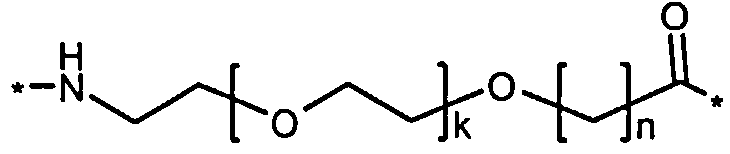
где k представляет собой целое число в диапазоне 1-5 и n представляет собой целое число в диапазоне 1-5;where k is an integer in the range of 1-5 and n is an integer in the range of 1-5;
или его фармацевтически приемлемая соль, амид или сложный эфир.or a pharmaceutically acceptable salt, amide or ester thereof.
2. Производное по воплощению 1, где линкер также содержит Glu-бирадикал, выбранный среди Соед. 6 и/или Соед. 7:2. The derivative of
Соед. 6:Connection 6:

Соед. 7:Connection 7:

3. Производное по любому из предыдущих воплощений, где линкер присоединен к эпсилон-аминогруппе первого или второго К-остатка.3. The derivative of any of the previous embodiments, wherein the linker is attached to the epsilon amino group of the first or second K-residue.
4. Производное по любому из предыдущих воплощений, где Т составляет 12, 20, 22, 24, 36 или 37.4. The derivative of any of the previous embodiments, wherein T is 12, 20, 22, 24, 36, or 37.
5. Производное по любому из предыдущих воплощений, где аналог не содержит остатки К кроме первого и второго остатков К.5. The derivative of any of the previous embodiments, wherein the analogue does not contain residues K except the first and second residues K.
6. Производное по любому из предыдущих воплощений, где x составляет 12.6. The derivative of any of the previous embodiments, wherein x is 12.
7. Производное по любому из предыдущих воплощений, где y составляет 9.7. The derivative of any of the previous embodiments, wherein y is 9.
8. Производное по любому из предыдущих воплощений, где k составляет 1.8. The derivative of any of the previous embodiments, where k is 1.
9. Производное по любому из предыдущих воплощений, где n составляет 1.9. The derivative of any of the previous embodiments, wherein n is 1.
10. Производное по любому из предыдущих воплощений, где аналог содержит аналог GLP-1 формулы I:10. The derivative of any of the previous embodiments, wherein the analogue contains an GLP-1 analogue of formula I:
Формула I:Formula I:
Xaa7-Xaa8-Glu-Gly-Thr-Xaa12-Thr-Ser-Asp-Xaa16-Ser-Xaa18-Xaa19-Xaa20-Glu-Xaa22-Xaa23-Xaa24-Xaa25-Xaa26-Lys-Phe-Ile-Xaa30-Xaa31-Leu-Val-Xaa34-Xaa35-Xaa36-Хаа37-Хаа38-Хаа39,Xaa 7 -Xaa 8 -Glu-Gly-Thr-Xaa 12 -Thr-Ser-Asp-Xaa 16 -Ser-Xaa 18 -Xaa 19 -Xaa 20 -Glu-Xaa 22 -Xaa 23 -Xaa 24 -Xaa 25 -Xaa 26- Lys-Phe-Ile-Xaa 30 -Xaa 31 -Leu-Val-Xaa 34 -Xaa 35 -Xaa 36 -Xaa 37 -Xaa 38 -Xaa 39 ,
гдеWhere
Хаа7 представляет собой L-гистидин, имидазопропионил, α-гидрокси-гистидин, D-гистидин, дезамино-гистидин, 2-амино-гистидин, β-гидрокси-гистидин, гомогистидин, Nα-ацетил-гистидин, Nα-формил-гистидин, α-фторметил-гистидин, α-метил-гистидин, 3-пиридилаланин, 2-пиридилаланин или 4-пиридилаланин;Xaa 7 is L-histidine, imidazopropionyl, α-hydroxy-histidine, D-histidine, desamino-histidine, 2-amino-histidine, β-hydroxy-histidine, homohistidine, N α- acetyl-histidine, N α- formyl- histidine, α-fluoromethyl-histidine, α-methyl-histidine, 3-pyridylalanine, 2-pyridylalanine or 4-pyridylalanine;
Хаа8 представляет собой Ala, Gly, Val, Leu, Ile, Thr, Ser, Lys, Aib, (1-аминоциклопропил)карбоновую кислоту, (1-аминоциклобутил)карбоновую кислоту, (1-аминоциклопентил)карбоновую кислоту, (1-аминоциклогексил)карбоновую кислоту, (1-аминоциклогептил)карбоновую кислоту или (1-аминоциклооктил)карбоновую кислоту;Haa 8 is Ala, Gly, Val, Leu, Ile, Thr, Ser, Lys, Aib, (1-aminocyclopropyl) carboxylic acid, (1-aminocyclobutyl) carboxylic acid, (1-aminocyclopentyl) carboxylic acid, (1-aminocyclohexyl ) carboxylic acid, (1-aminocycloheptyl) carboxylic acid or (1-aminocyclooctyl) carboxylic acid;
Xaa12 представляет собой Lys или Phe;Xaa 12 is Lys or Phe;
Xaa16 представляет собой Val или Leu;Xaa 16 represents Val or Leu;
Xaa18 представляет собой Ser, Arg, Asn, Gln или Glu;Xaa 18 is Ser, Arg, Asn, Gln or Glu;
Xaa19 представляет собой Tyr или Gln;Xaa 19 is Tyr or Gln;
Хаа20 представляет собой Leu, Lys или Met;Haa 20 represents Leu, Lys or Met;
Хаа22 представляет собой Gly, Glu, Lys или Aib;Haa 22 represents Gly, Glu, Lys or Aib;
Хаа23 представляет собой Gln, Glu или Arg;Haa 23 represents Gln, Glu or Arg;
Хаа24 представляет собой Ala или Lys;Haa 24 represents Ala or Lys;
Хаа25 представляет собой Ala или Val;Haa 25 represents Ala or Val;
Хаа26 представляет собой Val, His или Arg;Haa 26 represents Val, His or Arg;
Хаа30 представляет собой Ala, Glu или Arg;Haa 30 represents Ala, Glu or Arg;
Хаа31 представляет собой Trp или His;Haa 31 represents Trp or His;
Хаа34 представляет собой Glu, Asn, Gly, Gln или Arg;Haa 34 represents Glu, Asn, Gly, Gln or Arg;
Хаа35 представляет собой Gly, Aib или отсутствует;Haa 35 represents Gly, Aib or absent;
Хаа36 представляет собой Arg, Gly, Lys или отсутствует;Xaa 36 is Arg, Gly, Lys or absent;
Хаа37 представляет собой Gly, Ala, Glu, Pro, Lys, Arg или отсутствует;Xaa 37 is Gly, Ala, Glu, Pro, Lys, Arg or absent;
Хаа38 представляет собой Ser, Gly, Ala, Glu, Gln, Pro, Arg или отсутствует; иHaa 38 represents Ser, Gly, Ala, Glu, Gln, Pro, Arg or absent; and
Хаа39 представляет собой Gly или отсутствует.Haa 39 is Gly or absent.
11. Соединение по любому из предыдущих воплощений, выбранное среди следующих: Соед. 50, Соед. 51, Соед. 52, Соед. 53, Соед. 54, Соед. 55, Соед. 56, Соед. 57, Соед. 58, Соед. 59, Соед. 60, Соед. 61, Соед. 62, Соед. 63, Соед. 64, Соед. 65, Соед. 66, Соед. 67, Соед. 68, Соед. 69, Соед. 70, Соед. 71, Соед. 72, Соед. 73, Соед. 74, Соед. 75, Соед. 76, Соед. 77, Соед. 78 и Соед. 79; или его фармацевтически приемлемая соль, амид или сложный эфир.11. The compound according to any one of the previous embodiments, selected among the following: Comp. 50, Comp. 51, Comp. 52, Comp. 53, Comp. 54, Comp. 55, Comp. 56, Comp. 57, Comp. 58, Comp. 59, Comp. 60, Comp. 61, Comp. 62, Comp. 63, Comp. 64, Comp. 65, Comp. 66, Comp. 67, Comp. 68, Comp. 69, Comp. 70, Comp. 71, Comp. 72, Comp. 73, Comp. 74, Comp. 75, Comp. 76, Comp. 77, Comp. 78 and Comp. 79; or a pharmaceutically acceptable salt, amide or ester thereof.
12. Промежуточный продукт в форме аналога GLP-1, который содержит следующие аминокислотные замены по сравнению с GLP-1 (7-37) (SEQ ID №1): (i) 38Q; и/или (ii) 39G; или его фармацевтически приемлемая соль, амид или сложный эфир.12. The intermediate product in the form of an analog of GLP-1, which contains the following amino acid substitutions compared to GLP-1 (7-37) (SEQ ID No. 1): (i) 38Q; and / or (ii) 39G; or a pharmaceutically acceptable salt, amide or ester thereof.
13. Производное по любому из воплощений 1-11 для применения в качестве лекарственного средства.13. The derivative of any of embodiments 1-11 for use as a medicine.
14. Производное по любому из воплощений 1-11 для применения в лечении и/или профилактике всех форм сахарного диабета и связанных с ним заболеваний, таких как пищевые расстройства, сердечно-сосудистые заболевания, желудочно-кишечные заболевания, диабетические осложнения, критические заболевания и/или синдром поликистоза яичников; и/или для улучшения параметров липидного обмена, улучшения функционирования β-клеток и/или для отсрочки или предотвращения прогрессирования диабетического заболевания.14. The derivative of any of embodiments 1-11 for use in the treatment and / or prophylaxis of all forms of diabetes and related diseases, such as eating disorders, cardiovascular diseases, gastrointestinal diseases, diabetic complications, critical diseases and / or polycystic ovary syndrome; and / or to improve the parameters of lipid metabolism, improve the functioning of β-cells and / or to delay or prevent the progression of a diabetic disease.
15. Способ лечения или профилактики всех форм сахарного диабета и связанных с ним заболеваний, таких как пищевые расстройства, сердечно-сосудистые заболевания, желудочно-кишечные заболевания, диабетические осложнения, критические заболевания и/или синдром поликистоза яичников; и/или для улучшения параметров липидного обмена, улучшения функционирования β-клеток и/или для отсрочки или предотвращения прогрессирования диабетического заболевания путем введения фармацевтически активного количества производного по любому из воплощений 1-11.15. A method for treating or preventing all forms of diabetes and related diseases, such as eating disorders, cardiovascular diseases, gastrointestinal diseases, diabetic complications, critical diseases and / or polycystic ovary syndrome; and / or to improve the parameters of lipid metabolism, improve the functioning of β-cells and / or to delay or prevent the progression of a diabetic disease by administering a pharmaceutically active amount of the derivative according to any one of embodiments 1-11.
ПримерыExamples
Эта экспериментальная часть начинается со списка сокращений, а за ним следует раздел, включающий общие способы синтеза и характеризации аналогов и производных изобретения. Затем следует ряд примеров, которые относятся к изготовлению конкретных производных GLP-1, и в конце включено несколько примеров, связанных с активностью и свойствами этих аналогов и производных (раздел, названный «Фармакологические способы»).This experimental part begins with a list of abbreviations, followed by a section that includes general methods for the synthesis and characterization of analogues and derivatives of the invention. This is followed by a series of examples that relate to the manufacture of specific GLP-1 derivatives, and at the end are several examples related to the activity and properties of these analogs and derivatives (section entitled “Pharmacological Methods”).
Примеры служат для иллюстрации изобретения.Examples serve to illustrate the invention.
СокращенияAbbreviations
В данном документе используются следующие сокращения, расположенные в алфавитном порядке:The following abbreviations are used in this document in alphabetical order:
Aib: аминоизомасляная кислота (α-аминоизомасляная кислота)Aib: aminoisobutyric acid (α-aminoisobutyric acid)
API: активный фармацевтический ингредиентAPI: active pharmaceutical ingredient
AUC: площадь под кривойAUC: area under the curve
BG: уровень глюкозы в кровиBG: blood glucose
ВНК: клетки почек детеныша хомякаVNK: baby hamster kidney cells
BW: масса телаBW: body weight
Вос: трет-бутилоксикарбонилVos: tert-butyloxycarbonyl
BSA: бычий сывороточный альбуминBSA: Bovine Serum Albumin
коллидин: 2,4,6-триметилпиридинcollidine: 2,4,6-trimethylpyridine
DCM: дихлорметанDCM: Dichloromethane
Dde: 1-(4,4-диметил-2,6-диоксоциклогексилиден)этилDde: 1- (4,4-dimethyl-2,6-dioxocyclohexylidene) ethyl
DIC: диизопропилкарбодиимидDIC: diisopropylcarbodiimide
DIPEA: диизопропилэтиламинDIPEA: diisopropylethylamine
DMAP: 4-диметиламинопиридинDMAP: 4-dimethylaminopyridine
DMEM: среда Игла, модифицированная по способу Дульбекко (DMEM)DMEM: Medium Needle modified by the Dulbecco method (DMEM)
EDTA: этилендиаминтетрауксусная кислотаEDTA: Ethylenediaminetetraacetic Acid
EGTA: этиленгликольтетрауксусная кислотаEGTA: Ethylene Glycoltetraacetic Acid
FCS: эмбриональная телячья сывороткаFCS: fetal calf serum
Fmoc: 9-фторенилметилоксикарбонилFmoc: 9-fluorenylmethyloxycarbonyl
HATU: (O-(7-азабензотриазол-1-ил)-1,1,3,3-тетраметилурония гексафторфосфат)HATU: (O- (7-azabenzotriazol-1-yl) -1,1,3,3-tetramethyluronium hexafluorophosphate)
HBTU: (2-(1Н-бензотриазол-1-ил-)-1,1,3,3-тетраметилурония гексафторфосфат)HBTU: (2- (1H-benzotriazol-1-yl -) - 1,1,3,3-tetramethyluronium hexafluorophosphate)
HEPES: 4-(2-гидроксиэтил)-1-пиперазинэтансульфоновая кислотаHEPES: 4- (2-hydroxyethyl) -1-piperazineethanesulfonic acid
HFIP: 1,1,1,3,3,3-гексафтор-2-пропанол или гексафторизопропанолHFIP: 1,1,1,3,3,3-hexafluoro-2-propanol or hexafluoroisopropanol
HOAt: 1-окси-7-азабензотриазолHOAt: 1-hydroxy-7-azabenzotriazole
HOBt: 1-гидроксибензотриазолHOBt: 1-hydroxybenzotriazole
HPLC: высокоэффективная жидкостная хроматографияHPLC: high performance liquid chromatography
HSA: человеческий сывороточный альбуминHSA: human serum albumin
IBMX: 3-изобутил-1-метилксантинIBMX: 3-isobutyl-1-methylxanthine
Imp: имидазолпропионовая кислота (также известная как дезаминогистидин, desH)Imp: imidazole propionic acid (also known as desaminogistidine, desH)
i.v. внутривенноi.v. intravenously
ivDde: 1-(4,4-диметил-2,6-диоксоциклогексилиден)-3-метилбутилivDde: 1- (4,4-dimethyl-2,6-dioxocyclohexylidene) -3-methylbutyl
IVGTT: внутривенный тест толерантности к глюкозеIVGTT: Intravenous Glucose Tolerance Test
LCMS: жидкостная хроматография/масс-спектрометрияLCMS: liquid chromatography / mass spectrometry
LYD: Ландрас Йоркшир ДюрокLYD: Landras Yorkshire Duroc
MALDI-MS: См. MALDI-TOF MSMALDI-MS: See MALDI-TOF MS
MALDI-TOF MS: матрично-активированная лазерная десорбция/времяпролетная масс-спектрометрия с ионизациейMALDI-TOF MS: matrix-activated laser desorption / time-of-flight ionization mass spectrometry
МеОН: метанолMeOH: methanol
Mmt: 4-метокситритилMmt: 4-methoxytrityl
Mtt: 4-метилтритилMtt: 4-methyl trityl
NMP: N-метилпирролидонNMP: N-methylpyrrolidone
OBz: бензоиловый эфирOBz: benzoyl ether
OEG: 8-амино-3,6-диоксаоктановая кислотаOEG: 8-amino-3,6-dioxaoctanoic acid
OtBu: третбутиловый эфирOtBu: tert-butyl ether
PBS: фосфатный буферPBS: phosphate buffer
PD: фармакодинамикаPD: pharmacodynamics
Pen/Strep: пенициллин/стрептомицинPen / Strep: Penicillin / Streptomycin
РК: фармакокинетикаRK: pharmacokinetics
RP: обращенная фазаRP: reverse phase
RP-HPLC: обращенно-фазовая высокоэффективная жидкостная хроматографияRP-HPLC: reverse phase high performance liquid chromatography
RT: комнатная температураRT: room temperature
Rt: время удерживанияRt: retention time
s.c.: подкожноs.c .: subcutaneously
SD: стандартное отклонениеSD: standard deviation
SEC-HPLC: гель-проникающая высокоэффективная жидкостная хроматографияSEC-HPLC: gel permeation high performance liquid chromatography
SEM: стандартная ошибка среднегоSEM: standard error of the mean
SPA: сцинтилляционный проксимальный анализSPA: scintillation proximal analysis
SPPS: твердофазный синтез пептидовSPPS: Solid Phase Peptide Synthesis
tBu: трет-бутилtBu: tert-butyl
TFA: трифторуксусная кислотаTFA: trifluoroacetic acid
TIS: триизопропилсиланTIS: triisopropylsilane
Tris: трис(гидроксиметил)аминометан или 2-амино-2-гидроксиметилпропан-1,3-диолTris: Tris (hydroxymethyl) aminomethane or 2-amino-2-hydroxymethylpropane-1,3-diol
Trt: трифенилметил, или тритилTrt: triphenylmethyl, or trityl
Trx: транексамовая кислотаTrx: tranexamic acid
UPLC: ультра высокоэффективная жидкостная хроматографияUPLC: Ultra High Performance Liquid Chromatography
Способы полученияProduction methods
А. Общие способыA. General methods
Этот раздел относится к способам твердофазного синтеза пептидов (способам SPPS, включая способы снятия защиты аминокислот, способы отщепления пептида от смолы, а также его очистки), а также способы обнаружения и характеризации полученного пептида (способы LCMS, MALDI и UPLC). Твердофазный синтез пептидов в некоторых случаях может быть улучшен за счет использования дипептидов, защищенных на дипептидной амидной связи группой, которая может быть расщеплена в кислой среде, такой как 2-Fmoc-окси-4-метоксибензил или 2,4,6-триметоксибензил, но не ограничиваясь ими. В случаях, когда в пептиде присутствуют серин или треонин, могут быть использованы псевдопролиновые дипептиды (доступные, например, от Novabiochem, см. также W.R. Sampson (1999), J. Pep. Sci. 5, 403). Используемые защищенные аминокислотные производные были стандартными Fmoc-аминокислотами (предоставляемыми, например, AnaSpec, IRIS или Novabiochem). N-концевая аминокислота была Вос-защищена на альфа-аминогруппе (например, Вос-His(Boc)-OH или Boc-His(Trt)-OH для пептидов с His на N-конце). Эпсилон-аминогруппа лизина в последовательности была защищена Mtt, Mmt, Dde, ivDde или Boc, в зависимости от пути присоединения альбуминсвязывающей группировки и спейсера. Альбуминсвязывающая группировка и/или линкер могут быть присоединены к пептиду либо путем ацилирования связанного со смолой пептида, либо путем ацилирования в растворе незащищенного пептида. В случае присоединения альбуминсвязывающей группировки и/или линкера к защищенной пептидил-смоле присоединение может быть модульным с использованием SPPS и соответственно защищенных блоков, таких как Fmoc-OEG-OH (Fmoc-8-амино-3,6-диоксаокгановая кислота), Fmoc-Trx-ОН (Fmoc-транексамовая кислота), Fmoc-Glu-OtBu, монотретбутиловый эфир октадекандиовой кислоты, монотретбутиловый эфир нонадекандиовой кислоты или третбутиловый эфир 4-(9-карбоксинонилокси)бензойной кислоты, но не ограничиваясь ими.This section relates to methods for the solid-phase synthesis of peptides (SPPS methods, including methods for deprotecting amino acids, methods for cleaving a peptide from a resin, as well as its purification), as well as methods for detecting and characterizing the obtained peptide (LCMS, MALDI, and UPLC methods). The solid-phase synthesis of peptides in some cases can be improved by using dipeptides protected on a dipeptide amide bond by a group that can be cleaved in an acidic medium, such as 2-Fmoc-hydroxy-4-methoxybenzyl or 2,4,6-trimethoxybenzyl, but not limited to them. In cases where serine or threonine is present in the peptide, pseudoproline dipeptides (available, for example, from Novabiochem, see also W.R. Sampson (1999), J. Pep. Sci. 5, 403) can be used. The protected amino acid derivatives used were standard Fmoc amino acids (provided, for example, by AnaSpec, IRIS, or Novabiochem). The N-terminal amino acid was Boc-protected at the alpha amino group (e.g., Boc-His (Boc) -OH or Boc-His (Trt) -OH for peptides with His at the N-terminus). The epsilon-amino group of the lysine in the sequence was protected by Mtt, Mmt, Dde, ivDde or Boc, depending on the pathway of attachment of the albumin binding group and spacer. An albumin binding moiety and / or linker can be attached to the peptide either by acylating the resin bound peptide or by acylating in an unprotected peptide solution. When an albumin-binding moiety and / or linker is attached to a protected peptidyl resin, the attachment can be modular using SPPS and suitably protected blocks such as Fmoc-OEG-OH (Fmoc-8-amino-3,6-dioxaoxanoic acid), Fmoc- Trx-OH (Fmoc-tranexamic acid), Fmoc-Glu-OtBu, octadecandioic acid monotretbutyl ester, nonadecandioic acid monotretbutyl ester, or 4- (9-carboxynonyloxy) benzoic acid tert-butyl ester.
1. Синтез связанного со смолой пептида1. Synthesis of resin bound peptide
Способ SPPS ВSPPS Method B
Способ SPPS В относится к синтезу защищенной пептидил-смолы с помощью Fmoc-химии на пептидном синтезаторе Liberty, основанном на микроволнах (СЕМ Corp., Северная Каролина). Подходящей смолой является предварительно загруженная смола Wang с низкой загрузкой, которую можно получить от Novabiochem (например, смола Wang Fmoc-Lys(Mtt)-Wang с низкой загрузкой, 0,35 ммоль/г). Снятие защиты Fmoc проводили с помощью 5% пиперидина в NMP при 70 или 75°С. Химическая раекция связывания представляла собой DIC/HOAt в NMP. К смоле добавляли растворы аминокислоты/HOAt (0,3 М в NMP в молярном избытке в 3-10 раз), а затем такой же молярный эквивалент DIC (0,75 М в NMP). Например, следующее количество 0,3 М раствора аминокислоты/HOAt использовали для реакций связывания со следующими масштабами: масштаб/мл, 0,10 ммоль/2,5 мл, 0,25 ммоль/5 мл, 1 ммоль/15 мл. Время связывания и температура, как правило, составляли 5 минут и 70 или 75°С. Для реакций более крупного масштаба использовали большее время связывания, например, 10 минут. Гистидиновые аминокислоты связывали дважды при 50°С или четырежды, если предыдущая аминокислота была пространственно-затрудненной (например, Aib). Аргининовые аминокислоты связывали при комнатной температуре в течение 25 минут, затем нагревали до 70 или 75°С на 5 минут. Некоторые аминокислоты, такие как Aib, но не ограничиваясь ею, были «дважды связанными», что означает, что после первого связывания (например, в течение 5 минут при 75°С), смолу сливали, добавляли больше реагентов (аминокислоту, HOAt и DIC) и смесь снова нагревали (например, в течение 5 минут при 75°С). Когда была необходима химическая модификация боковой цепи лизина, лизин встраивали как Lys(Mtt). Группу Mtt удаляли путем промывания смолы с DCM и суспендирования смолы в чистом (неразбавленном) гексафторизопропаноле в течение 20 минут с последующим промыванием DCM и NMP. Химическую модификацию лизина производили либо путем ручного синтеза (см. способ SPPS D), либо в одном или более чем одном автоматизированном этапе на пептидном синтезаторе Liberty, как описано выше, с использованием соответственно защищенных блоков (см. Общие способы), возможно, включая ручное связывание.SPPS Method B relates to the synthesis of a protected peptidyl resin using Fmoc chemistry on a microwave based Liberty peptide synthesizer (CEM Corp., North Carolina). A suitable resin is a preloaded Wang resin with a low load, which can be obtained from Novabiochem (for example, Wang Fmoc-Lys (Mtt) -Wang resin with a low load, 0.35 mmol / g). Deprotection of Fmoc was performed using 5% piperidine in NMP at 70 or 75 ° C. The chemical reaction of binding was DIC / HOAt in NMP. Amino acid / HOAt solutions were added to the resin (0.3 M in NMP in a molar excess of 3-10 times), and then the same molar equivalent of DIC (0.75 M in NMP). For example, the following amount of a 0.3 M amino acid / HOAt solution was used for binding reactions with the following scales: scale / ml, 0.10 mmol / 2.5 ml, 0.25 mmol / 5 ml, 1 mmol / 15 ml. Binding time and temperature were typically 5 minutes and 70 or 75 ° C. For reactions of a larger scale, a longer binding time was used, for example 10 minutes. Histidine amino acids were linked twice at 50 ° C or four times if the previous amino acid was spatially hindered (e.g., Aib). Arginine amino acids were bound at room temperature for 25 minutes, then heated to 70 or 75 ° C for 5 minutes. Some amino acids, such as, but not limited to Aib, were “double bound”, which means that after the first binding (for example, within 5 minutes at 75 ° C), the resin was drained, more reagents (amino acid, HOAt and DIC were added ) and the mixture was again heated (for example, for 5 minutes at 75 ° C). When chemical modification of the lysine side chain was necessary, lysine was inserted as Lys (Mtt). The Mtt group was removed by washing the resin with DCM and suspending the resin in pure (undiluted) hexafluoroisopropanol for 20 minutes, followed by washing with DCM and NMP. Chemical modification of lysine was performed either by manual synthesis (see method SPPS D), or in one or more automated steps on a Liberty peptide synthesizer, as described above, using appropriately protected blocks (see General methods), possibly including manual binding.
Способ SPPS DSPPS D Method
Способ SPPS D относится к синтезу защищенной пептидил-смолы с помощью ручной Fmoc-химической реакции. Обычно он используется для присоединения линкеров и боковых цепей к пептидному остову. Следующие условия использовали при масштабе синтеза 0,25 ммоль. Химическая реакция связывания представляла собой DIC/HOAt/коллидин в NMP в 4-10-кратном молярном избытке. Условиями связывания были 1-6 часов при комнатной температуре. Снятие защиты Fmoc проводили с помощью 20-25% пиперидина в NMP (3 раза по 20 мл, каждый по 10 минут) с последующим промыванием NMP (4 раза по 20 мл). Снятие защиты Dde или ivDde проводили с помощью 2% гидразина в NMP (2 раза по 20 мл, каждый по 10 минут) с последующим промыванием NMP (4 раза по 20 мл). Снятие защиты Mtt или Mmt проводили с помощью 2% TFA и 2-3% TIS в DCM (5 раз по 20 мл, каждый по 10 минут), с последующим промыванием DCM (2 раза по 20 мл), 10% метанолом и 5% DIPEA в DCM (2 раза по 20 мл) и NMP (4 раза по 20 мл), или путем обработки читым гексафторизопропанолом (5 раз по 20 мл, каждый по 10 минут), с последующим промыванием, как указано выше. Альбуминсвязывающая группировка и/или линкер могут быть присоединены к пептиду либо путем ацилирования связанного со смолой пептида, либо путем ацилирования в растворе незащищенного пептида (см. пути, описанные ниже). В случае присоединения альбуминсвязывающей группировки и/или линкера к защищенной пептидил-смоле присоединение может быть модульным с использованием SPPS и соответственно защищенных блоков (см. Общие способы).The SPPS D method relates to the synthesis of a protected peptidyl resin using a manual Fmoc chemical reaction. It is usually used to attach linkers and side chains to the peptide backbone. The following conditions were used at a synthesis scale of 0.25 mmol. The chemical coupling reaction was DIC / HOAt / collidine in NMP in a 4-10 fold molar excess. The binding conditions were 1-6 hours at room temperature. Deprotection of Fmoc was carried out using 20-25% piperidine in NMP (3
Присоединение к связанному со смолой пептиду - Путь I: Активированную (активный эфир или симметричный ангидрид) альбуминсвязывающую группировку или линкер, например, моно-(2,5-диоксо-пирролидин-1-ил)эфир октадекандиовой кислоты (Ebashi et al. EP511600, 4. молярных эквивалента по отношению к связанному со смолой пептиду) растворяли в NMP (25 мл), добавляли к смоле и встряхивали в течение ночи при комнатной температуре. Реакционную смесь фильтровали и смолу тщательно промывали NMP, DCM, 2-пропанолом, метанолом и диэтиловым эфиром.Adhesion to a resin-bound peptide — Path I: An activated (active ester or symmetric anhydride) albumin binding group or linker, for example, mono- (2,5-dioxo-pyrrolidin-1-yl) octadecandioic acid ester (Ebashi et al. EP511600, 4. molar equivalent relative to the resin bound peptide) was dissolved in NMP (25 ml), added to the resin and shaken overnight at room temperature. The reaction mixture was filtered and the resin was washed thoroughly with NMP, DCM, 2-propanol, methanol and diethyl ether.
Присоединение к связанному со смолой пептиду - Путь II: Альбуминсвязывающую группировку растворяли в NMP/DCM (1:1, 10 мл). Добавляли активирующий реагент, такой как HOBt (4 молярных эквивалента по отношению к смоле), и DIC (4 молярных эквивалента по отношению к смоле), и раствор перемешивали в течение 15 минут. Раствор добавляли к смоле, и добавляли DIPEA (4 молярных эквивалента по отношению к смоле). Смолу встряхивали в течение 2-24 часов при комнатной температуре. Смолу промывали NMP (2 раза по 20 мл), NMP/DCM (1:1, 2 раза по 20 мл) и DCM (2 раза по 20 мл).Attachment to the resin bound peptide — Path II: The albumin binding moiety was dissolved in NMP / DCM (1: 1, 10 ml). An activating reagent such as HOBt (4 molar equivalents relative to the resin) and DIC (4 molar equivalents relative to the resin) were added, and the solution was stirred for 15 minutes. The solution was added to the resin, and DIPEA (4 molar equivalents relative to the resin) was added. The resin was shaken for 2-24 hours at room temperature. The resin was washed with NMP (2
Присоединение к связанному со смолой пептиду - Путь III: Активированную (активный эфир или симметричный ангидрид) альбуминсвязывающую группировку или линкер, например, моно-(2,5-диоксо-пирролидин-1-ил)эфир октадекандиовой кислоты (Ebashi et al. EP511600), 1-1,5 молярных эквивалента по отношению к связанному со смолой пептиду, растворяли в органическом растворителе, таком как ацетонитрил, THF, DMF, DMSO, или в смеси вода/органический растворитель (1-2 мл) и добавляли к раствору пептида в воде (10-20 мл) вместе с 10 молярными эквивалентами DIPEA. В случае защитных групп на альбуминсвязывающем остатке, таких как трет-бутил, реакционную смесь лиофилизировали в течение ночи и затем с выделенного сырьевого пептида снимали защиту. В случае третбутиловых защитных групп снятие защиты проводили путем растворения пептида в смеси трифторуксусной кислоты, воды и триизопропилсилана (90:5:5). Затем в течение 30 минут смесь выпаривали в вакууме и сырьевой пептид очищали с помощью HPLC, как описано ниже.Attachment to a Resin-Bound Peptide — Pathway III: An activated (active ester or symmetric anhydride) albumin binding group or linker, for example, mono- (2,5-dioxo-pyrrolidin-1-yl) octadecandioic acid ester (Ebashi et al. EP511600) , 1-1.5 molar equivalents relative to the resin bound peptide, was dissolved in an organic solvent such as acetonitrile, THF, DMF, DMSO, or in a water / organic solvent mixture (1-2 ml) and added to the peptide solution in water (10-20 ml) together with 10 molar equivalents of DIPEA. In the case of protecting groups on an albumin binding residue such as tert-butyl, the reaction mixture was lyophilized overnight and then the protection was removed from the isolated raw peptide. In the case of tert-butyl protecting groups, deprotection was carried out by dissolving the peptide in a mixture of trifluoroacetic acid, water and triisopropylsilane (90: 5: 5). Then, the mixture was evaporated in vacuo for 30 minutes and the raw peptide was purified using HPLC, as described below.
Способ SPPS ЕSPPS Method E
Способ SPPS Е относится к пептидному синтезу с помощью Fmoc-химической реакции на пептидном синтезаторе Prelude Solid Phase Pepetide Synthesiser от Protein Technologies (Tucson, AZ 85714, США). Подходящей смолой является предварительно загруженная смола Wang с низкой загрузкой, доступной от Novabiochem. (например, смола Wang Fmoc-Lys(Mtt)-Wang с низкой загрузкой, 0,35 ммоль/г). Снятие защиты Fmoc проводили с помощью 25% пиперидина в NMP 2 раза в течение 10 минут. Химическая реакиция связывания представляла собой DIC/HOAt/коллидин в NMP. К смоле добавляли растворы аминокислоты/HOAt (0,3 М в NMP в молярном избытке в 3-10 раз), а затем такой же молярный эквивалент DIC (3 М в NMP) и коллидина (3 М в NMP). Например, следующее количество 0,3 М раствора аминокислоты/HOAt использовали для реакций связывания со следующими масштабами: масштаб/мл, 0,10 ммоль/2,5 мл, 0,25 ммоль/5 мл. Время связывания, как правило, составляло 60 минут. Некоторые аминокислоты, такие как аргинин, Aib или гистидин, но не ограничиваясь ими, были «дважды связанными», что означает, что после первого связывания (например, в течение 60 минут) смолу сливали, добавляли больше реагентов (аминокислоту, HOAt, DIC и коллидин) и смесь снова оставляли для реакции (например, на 60 минут). Некоторые аминокислоты и производные жирных кислот, включая, но не ограничиваясь ими, Fmoc-OEG-OH, Fmoc-Trx-OH, Fmoc-Glu-OtBu, монотретбутиловый эфир октадекандиовой кислоты, монотретбутиловый эфир нонадекандиовой кислоты или третбутиловый эфир 4-(9-карбоксинонилокси)бензойной кислоты, связывали в течение длительного времени, например, 6 часов. Когда была необходима химическая модификация боковой цепи лизина, лизин встраивали как Lys(Mtt). Группу Mtt удаляли путем промывания смолы в DCM и суспендирования смолы в гексафторизопропаноле/DCM (75:25) 3 раза в течение 10 минут с последующим промыванием DCM, 20% пиперидином и NMP. Химическую модификацию лизина производили либо путем ручного синтеза (см. способ SPPS D), либо в одном или более чем одном автоматизированном этапе на пептидном синтезаторе Prelude, как описано выше, с использованием соответственно защищенных блоков (см. Общие способы).The SPPS E method relates to peptide synthesis using the Fmoc chemical reaction on a Prelude Solid Phase Pepetide Synthesiser peptide synthesizer from Protein Technologies (Tucson, AZ 85714, USA). A suitable resin is the low-load Wang pre-loaded resin available from Novabiochem. (e.g., Wang Fmoc-Lys (Mtt) -Wang resin with low loading, 0.35 mmol / g). Deprotection of Fmoc was performed using 25% piperidine in NMP 2 times for 10 minutes. The chemical binding reaction was DIC / HOAt / collidine in NMP. Amino acid / HOAt solutions were added to the resin (0.3 M in NMP in a molar excess of 3-10 times), followed by the same molar equivalent of DIC (3 M in NMP) and collidine (3 M in NMP). For example, the following amount of a 0.3 M amino acid / HOAt solution was used for binding reactions with the following scales: scale / ml, 0.10 mmol / 2.5 ml, 0.25 mmol / 5 ml. Binding time was typically 60 minutes. Certain amino acids, such as, but not limited to, arginine, Aib, or histidine, were “doubly bound,” which means that after the first binding (for example, within 60 minutes) the resin was drained, more reagents (amino acid, HOAt, DIC and collidine) and the mixture was again left to react (for example, 60 minutes). Certain amino acids and fatty acid derivatives, including, but not limited to, Fmoc-OEG-OH, Fmoc-Trx-OH, Fmoc-Glu-OtBu, octadecandioic acid monotretbutyl ether, nonadecandioic acid monotretbutyl ether or 4- (9-carboxinone tert-butyl ether) ) benzoic acid, bound for a long time, for example, 6 hours. When chemical modification of the lysine side chain was necessary, lysine was inserted as Lys (Mtt). The Mtt group was removed by washing the resin in DCM and suspending the resin in hexafluoroisopropanol / DCM (75:25) 3 times for 10 minutes, followed by washing with DCM, 20% piperidine and NMP. Chemical modification of lysine was performed either by manual synthesis (see method SPPS D), or in one or more automated steps on a Prelude peptide synthesizer, as described above, using appropriately protected blocks (see General methods).
2. Отщепление пептида от смолы и очистка2. Cleavage of the peptide from the resin and purification
После синтеза смолу промывали в DCM и пептид отщепляли от смолы путем 2-3-часовой обработки TFA/TIS/водой (95/2,5/2,5 или 92,5/5/2,5) с последующим осаждением диэтиловым эфиром. Пептид растворяли в подходящем растворителе (таком как, например, 30% уксусная кислота) и очищали путем стандартной RP-HPLC на колонке С18, 5 мкМ, используя ацетонитрил/воду/TFA. Фракции анализировали путем комбинации способов UPLC, MALDI и LCMS, и соответствующие фракции объединяли и лиофилизировали.After synthesis, the resin was washed in DCM and the peptide was cleaved from the resin by 2-3 hours treatment with TFA / TIS / water (95 / 2.5 / 2.5 or 92.5 / 5 / 2.5), followed by precipitation with diethyl ether. The peptide was dissolved in a suitable solvent (such as, for example, 30% acetic acid) and purified by standard RP-HPLC on a C18, 5 μM column using acetonitrile / water / TFA. Fractions were analyzed by a combination of UPLC, MALDI and LCMS methods, and the corresponding fractions were combined and lyophilized.
3. Способы выявления и характеризации3. Ways to identify and characterize
Способы LCMSLCMS Ways
Способ LCMS 1 (LCMS1)Method LCMS 1 (LCMS1)
Для определения массы образца после элюирования из системы HPLC серии Agilent 1200 использовали масс-спектрометр Agilent Technologies LC/MSD TOF (G1969A). Деконволюцию белкового спектра рассчитывали с помощью программного обеспечения для подтверждения белка от Agilent.The Agilent Technologies LC / MSD TOF (G1969A) mass spectrometer was used to determine the mass of the sample after elution from an Agilent 1200 HPLC system. Protein spectrum deconvolution was calculated using Agilent protein confirmation software.
Элюенты:Eluents:
А: 0,1% трифторуксусная кислота в водеA: 0.1% trifluoroacetic acid in water
В: 0,1% трифторуксусная кислота в ацетонитрилеB: 0.1% trifluoroacetic acid in acetonitrile
Колонка: Zorbax 5u, 300SB-C3, 4,8×50 ммColumn: Zorbax 5u, 300SB-C3, 4.8 × 50 mm
Градиент: 25%-95% ацетонитрил в течение 15 минутGradient: 25% -95% acetonitrile for 15 minutes
Способ LCMS 2 (LCMS2)Method LCMS 2 (LCMS2)
Для определения массы образца после элюирования из системы HPLC Perkin Elmer серии 200 использовали масс-спектрометр Elmer Sciex API 3000.The Elmer Sciex API 3000 mass spectrometer was used to determine the mass of the sample after elution from the Perkin Elmer 200 Series HPLC system.
Элюенты:Eluents:
А: 0,05% трифторуксусная кислота в водеA: 0.05% trifluoroacetic acid in water
В: 0,05% трифторуксусная кислота в ацетонитрилеB: 0.05% trifluoroacetic acid in acetonitrile
Колонка: Waters Xterra MS C-18 × 3 мм, внутренний диаметр 5 мкмColumn: Waters Xterra MS C-18 × 3 mm,
Градиент: 5%-90% ацетонитрил в течение 7,5 минут со скоростью 1,5 мл/минGradient: 5% -90% acetonitrile for 7.5 minutes at a rate of 1.5 ml / min
Способ LCMS 3 (LCMS3)LCMS 3 Method (LCMS3)
Для определения массы образца после элюирования из системы HPLC Waters Alliance НТ использовали масс-спектрометр Waters Micromass ZQ.A Waters Micromass ZQ mass spectrometer was used to determine the mass of the sample after elution from the Waters Alliance HT HPLC system.
Элюенты:Eluents:
А: 0,1% трифторуксусная кислота в водеA: 0.1% trifluoroacetic acid in water
В: 0,1% трифторуксусная кислота в ацетонитрилеB: 0.1% trifluoroacetic acid in acetonitrile
Колонка: Phenomenex, Jupiter C4 50×4,60 мм, внутренний диаметр 5 мкмColumn: Phenomenex, Jupiter C4 50 × 4.60 mm,
Градиент: 10%-90% В в течение 7,5 минут со скоростью 1,0 мл/минGradient: 10% -90% B for 7.5 minutes at a rate of 1.0 ml / min
Способ LCMS 4 (LCMS4)Method LCMS 4 (LCMS4)
LCMS4 проводили на установке, состоящей из системы UPLC Waters Acquity и масс-спектрометра LCT Premier XE от Micromass. Насос UPLC подключали к двум резервуарам с элюентом, содержащим:LCMS4 was performed on a setup consisting of a Waters Acquity UPLC system and a Micromass LCT Premier XE mass spectrometer. The UPLC pump was connected to two tanks with an eluent containing:
А: 0,1% муравьиную кислоту в водеA: 0.1% formic acid in water
В: 0,1% муравьиную кислоту в ацетонитрилеB: 0.1% formic acid in acetonitrile
Анализ проводили при комнатной температуре, вводя соответствующий объем образца (предпочтительно 2-10 мкл) в колонку, который элюировали с градиентом А и В.The analysis was carried out at room temperature by injecting an appropriate sample volume (preferably 2-10 μl) into a column that was eluted with a gradient of A and B.
Условия UPLC, настройки детектора и настройки масс-спектрометра были следующими:The UPLC conditions, detector settings, and mass spectrometer settings were as follows:
Колонка: Waters Acquity UPLC ВЕН, C-18, 1,7 мкм, 2,1 мм × 50 ммColumn: Waters Acquity UPLC Vienna, C-18, 1.7 μm, 2.1 mm × 50 mm
Градиент: линейный 5%-95% ацетонитрил в течение 4,0 мин (или 8,0 мин) со скоростью 0,4 мл/минGradient: linear 5% -95% acetonitrile for 4.0 min (or 8.0 min) at a rate of 0.4 ml / min
Выявление: 214 нм (аналоговый выход с TUV (перестраиваемым УФ-детектором))Detection: 214 nm (analog output with TUV (tunable UV detector))
Режим ионизации MS: API-ESMS Ionization Mode: API-ES
Скан: 100-2000 а.е.м. (или 500-2000 а.е.м.) с шагом 0,1 а.е.м.Scan: 100-2000 amu (or 500-2000 amu) in increments of 0.1 amu
Способы UPLC и HPLCUPLC and HPLC methods
Способ 05_В5_1Method 05_B5_1
UPLC (способ 05_В5_1): RP-анализ выполняли с помощью системы Waters UPLC, оснащенной детектором двойного бэнда. УФ-выявление при 214 нм и 254 нм получали с помощью колонки ACQUITY UPLC ВЕН130, С18, 130Ǻ, 1,7 мкм, 2,1 мм × 150 мм, 40°С.UPLC (method 05_B5_1): RP analysis was performed using a Waters UPLC system equipped with a dual band detector. UV detection at 214 nm and 254 nm was obtained using an ACQUITY UPLC column BEN130, C18, 130Ǻ, 1.7 μm, 2.1 mm × 150 mm, 40 ° C.
Систему UPLC подключали к двум резервуарам с элюентом, содержащим:The UPLC system was connected to two tanks with an eluent containing:
А: 0,2 М Na2SO4, 0,04 М Н3РО4, 10% CH3CN (pH 3,5)A: 0.2 M Na 2 SO 4 , 0.04 M H 3 PO 4 , 10% CH 3 CN (pH 3.5)
В: 70% CH3CN, 30% H2OB: 70% CH 3 CN, 30% H 2 O
Использовали следующий линейный градиент: от 60% А, 40% В до 30% А, 70% В в течение 8 минут со скоростью потока 0,40 мл/мин.The following linear gradient was used: from 60% A, 40% B to 30% A, 70% B for 8 minutes at a flow rate of 0.40 ml / min.
Способ 05_В7_1Method 05_B7_1
UPLC (способ 05_В7_1): RP-анализ выполняли с помощью системы Waters UPLC, оснащенной детектором двойного бэнда. УФ-выявление при 214 нм и 254 нм получали с помощью колонки ACQUITY UPLC ВЕН130, С18, 130Ǻ, 1,7 мкм, 2,1 мм × 150 мм, 40°С.UPLC (method 05_B7_1): RP analysis was performed using a Waters UPLC system equipped with a dual band detector. UV detection at 214 nm and 254 nm was obtained using an ACQUITY UPLC column BEN130, C18, 130Ǻ, 1.7 μm, 2.1 mm × 150 mm, 40 ° C.
Систему UPLC подключали к двум резервуарам с элюентом, содержащим:The UPLC system was connected to two tanks with an eluent containing:
А: 0,2 М Na2SO4, 0,04 М H3PO4, 10% CH3CN (pH 3,5)A: 0.2 M Na 2 SO 4 , 0.04 M H 3 PO 4 , 10% CH 3 CN (pH 3.5)
В: 70% CH3CN, 30% H2OB: 70% CH 3 CN, 30% H 2 O
Использовали следующий линейный градиент: от 80% А, 20% В до 40% А, 60% В в течение 8 минут со скоростью потока 0,40 мл/мин.The following linear gradient was used: from 80% A, 20% B to 40% A, 60% B for 8 minutes at a flow rate of 0.40 ml / min.
Способ 04_А2_1Method 04_A2_1
UPLC (способ 04_А2_1): RP-анализ выполняли с помощью системы Waters UPLC, оснащенной детектором двойного бэнда. УФ-выявление при 214 нм и 254 нм получали с помощью колонки ACQUITY UPLC ВЕН130, С18, 130Ǻ, 1,7 мкм, 2,1 мм × 150 мм, 40°С.UPLC (method 04_A2_1): RP analysis was performed using a Waters UPLC system equipped with a dual band detector. UV detection at 214 nm and 254 nm was obtained using an ACQUITY UPLC column BEN130, C18, 130Ǻ, 1.7 μm, 2.1 mm × 150 mm, 40 ° C.
Систему UPLC подключали к двум резервуарам с элюентом, содержащим:The UPLC system was connected to two tanks with an eluent containing:
А: 90% H2O, 10% CH3CN, 0,25 М бикарбонат аммонияA: 90% H 2 O, 10% CH 3 CN, 0.25 M ammonium bicarbonate
В: 70% CH3CN, 30% H2OB: 70% CH 3 CN, 30% H 2 O
Использовали следующий линейный градиент: от 90% А, 10% В до 60% А, 40% В в течение 16 минут со скоростью потока 0,40 мл/мин.The following linear gradient was used: from 90% A, 10% B to 60% A, 40% B for 16 minutes at a flow rate of 0.40 ml / min.
Способ 04_A3_1Method 04_A3_1
UPLC (способ 04_А3_1): RP-анализ выполняли с помощью системы Waters UPLC, оснащенной детектором двойного бэнда. УФ-выявление при 214 нм и 254 нм получали с помощью колонки ACQUITY UPLC BEH130, С18, 130Ǻ, 1,7 мкм, 2,1 мм × 150 мм, 40°С.UPLC (method 04_A3_1): RP analysis was performed using a Waters UPLC system equipped with a dual band detector. UV detection at 214 nm and 254 nm was obtained using the column ACQUITY UPLC BEH130, C18, 130Ǻ, 1.7 μm, 2.1 mm × 150 mm, 40 ° C.
Систему UPLC подключали к двум резервуарам с элюентом, содержащим:The UPLC system was connected to two tanks with an eluent containing:
А: 90% H2O, 10% CH3CN, 0,25 М бикарбонат аммонияA: 90% H 2 O, 10% CH 3 CN, 0.25 M ammonium bicarbonate
В: 70% CH3CN, 30% H2OB: 70% CH 3 CN, 30% H 2 O
Использовали следующий линейный градиент: от 75% А, 25% В до 45% А, 55% В в течение 16 минут со скоростью потока 0,40 мл/мин.The following linear gradient was used: from 75% A, 25% B to 45% A, 55% B for 16 minutes at a flow rate of 0.40 ml / min.
Способ 04_А4_1Method 04_A4_1
UPLC (способ 04_А4_1): RP-анализ выполняли с помощью системы Waters UPLC, оснащенной детектором двойного бэнда. УФ-выявление при 214 нм и 254 нм получали с помощью колонки ACQUITY UPLC BEH130, С18, 130Ǻ, 1,7 мкм, 2,1 мм × 150 мм, 40°С.UPLC (method 04_A4_1): RP analysis was performed using a Waters UPLC system equipped with a dual band detector. UV detection at 214 nm and 254 nm was obtained using the column ACQUITY UPLC BEH130, C18, 130Ǻ, 1.7 μm, 2.1 mm × 150 mm, 40 ° C.
Систему UPLC подключали к двум резервуарам с элюентом, содержащим:The UPLC system was connected to two tanks with an eluent containing:
А: 90% H2O, 10% CH3CN, 0,25 М бикарбонат аммонияA: 90% H 2 O, 10% CH 3 CN, 0.25 M ammonium bicarbonate
В: 70% CH3CN, 30% H2OB: 70% CH 3 CN, 30% H 2 O
Использовали следующий линейный градиент: от 65% А, 35% В до 25% А, 65% В в течение 16 минут со скоростью потока 0,40 мл/мин.The following linear gradient was used: from 65% A, 35% B to 25% A, 65% B for 16 minutes at a flow rate of 0.40 ml / min.
Способ 08_В2_1Method 08_B2_1
UPLC (способ 08_В2_1): RP-анализ выполняли с помощью системы Waters UPLC, оснащенной детектором двойного бэнда. УФ-выявление при 214 нм и 254 нм получали с помощью колонки ACQUITY UPLC BEH130, С18, 130Ǻ, 1,7 мкм, 2,1 мм × 150 мм, 40°С.UPLC (method 08_B2_1): RP analysis was performed using a Waters UPLC system equipped with a dual band detector. UV detection at 214 nm and 254 nm was obtained using the column ACQUITY UPLC BEH130, C18, 130Ǻ, 1.7 μm, 2.1 mm × 150 mm, 40 ° C.
Систему UPLC подключали к двум резервуарам с элюентом, содержащим:The UPLC system was connected to two tanks with an eluent containing:
А: 99,95% H2O, 0,05% TFAA: 99.95% H 2 O, 0.05% TFA
В: 99,95% CH3CN, 0,05% TFAB: 99.95% CH 3 CN, 0.05% TFA
Использовали следующий линейный градиент: от 95% А, 5% В до 40% А, 60% В в течение 16 минут со скоростью потока 0,40 мл/мин.The following linear gradient was used: from 95% A, 5% B to 40% A, 60% B for 16 minutes at a flow rate of 0.40 ml / min.
Способ 08_В4_1Method 08_B4_1
UPLC (способ 08_В4_1): RP-анализ выполняли с помощью системы Waters UPLC, оснащенной детектором двойного бэнда. УФ-выявление при 214 нм и 254 нм получали с помощью колонки ACQUITY UPLC ВЕН130, С18, 130Ǻ, 1,7 мкм, 2,1 мм × 150 мм, 40°С.UPLC (method 08_B4_1): RP analysis was performed using a Waters UPLC system equipped with a dual band detector. UV detection at 214 nm and 254 nm was obtained using an ACQUITY UPLC column BEN130, C18, 130Ǻ, 1.7 μm, 2.1 mm × 150 mm, 40 ° C.
Систему UPLC подключали к двум резервуарам с элюентом, содержащим:The UPLC system was connected to two tanks with an eluent containing:
А: 99,95% H2O, 0,05% TFAA: 99.95% H 2 O, 0.05% TFA
В: 99,95% CH3CN, 0,05% TFAB: 99.95% CH 3 CN, 0.05% TFA
Использовали следующий линейный градиент: от 95% А, 5% В до 95% А, 5% В в течение 16 минут со скоростью потока 0,40 мл/мин.The following linear gradient was used: from 95% A, 5% B to 95% A, 5% B for 16 minutes at a flow rate of 0.40 ml / min.
Способ 05_В10_1Method 05_B10_1
UPLC (способ 05_В10_1): RP-анализ выполняли с помощью системы Waters UPLC, оснащенной детектором двойного бэнда. УФ-выявление при 214 нм и 254 нм получали с помощью колонки ACQUITY UPLC ВЕН130, С18, 130Ǻ, 1,7 мкм, 2,1 мм × 150 мм, 40°С.UPLC (method 05_B10_1): RP analysis was performed using a Waters UPLC system equipped with a dual band detector. UV detection at 214 nm and 254 nm was obtained using an ACQUITY UPLC column BEN130, C18, 130Ǻ, 1.7 μm, 2.1 mm × 150 mm, 40 ° C.
Систему UPLC подключали к двум резервуарам с элюентом, содержащим:The UPLC system was connected to two tanks with an eluent containing:
А: 0,2 М Na2SO4, 0,04 М H3PO4, 10% CH3CN (pH 3,5)A: 0.2 M Na 2 SO 4 , 0.04 M H 3 PO 4 , 10% CH 3 CN (pH 3.5)
В: 70% CH3CN, 30% H2OB: 70% CH 3 CN, 30% H 2 O
Использовали следующий линейный градиент: от 40% А, 60% В до 20% А, 80% В в течение 8 минут со скоростью потока 0,40 мл/мин.The following linear gradient was used: from 40% A, 60% B to 20% A, 80% B for 8 minutes at a flow rate of 0.40 ml / min.
Способ 01_А4_2Method 01_A4_2
UPLC (способ 01_А4_2): RP-анализ выполняли с помощью системы Waters 600S, оснащенной детектором с диодной матрицей Waters 996. УФ-выявление на 214 нм и 254 нм получали с помощью колонки Symmetry 300 С18, 5 мкм, 3,9 мм × 150 мм, 42°С. Систему HPLC подключали к трем резервуарам с элюентом, содержащим: А: 100% Н2О, В: 100% CH3CN, С: 1% трифторуксусную кислоту в H2O. Использовали следующий линейный градиент: от 90% А, 5% В, 5% С до 0% А, 95% В, 5% С в течение 15 минут со скоростью потока 1,0 мл/мин.UPLC (method 01_A4_2): RP analysis was performed using a Waters 600S system equipped with a Waters 996 diode array detector. UV detection at 214 nm and 254 nm was obtained using a Symmetry 300 C18, 5 μm, 3.9 mm × 150 column mm, 42 ° C. The HPLC system was connected to three tanks with an eluent containing: A: 100% H 2 O, B: 100% CH 3 CN, C: 1% trifluoroacetic acid in H 2 O. The following linear gradient was used: from 90% A, 5% B, 5% C to 0% A, 95% B, 5% C for 15 minutes at a flow rate of 1.0 ml / min.
Способ 09_В2_1Method 09_B2_1
UPLC (способ 09_В2_1): RP-анализ выполняли с помощью системы Waters UPLC, оснащенной детектором двойного бэнда. УФ-выявление при 214 нм и 254 нм получали с помощью колонки ACQUITY UPLC ВЕН130, С18, 130Ǻ, 1,7 мкм, 2,1 мм × 150 мм, 40°С. Систему UPLC подключали к двум резервуарам с элюентом, содержащим: А: 99,95% Н2О, 0,05% TFA; В: 99,95% CH3CN, 0,05% TFA. Использовали следующий линейный градиент: от 95% А, 5% В до 40% А, 60% В в течение 16 минут со скоростью потока 0,40 мл/мин.UPLC (method 09_B2_1): RP analysis was performed using a Waters UPLC system equipped with a dual band detector. UV detection at 214 nm and 254 nm was obtained using an ACQUITY UPLC column BEN130, C18, 130Ǻ, 1.7 μm, 2.1 mm × 150 mm, 40 ° C. The UPLC system was connected to two tanks with an eluent containing: A: 99.95% H 2 O, 0.05% TFA; B: 99.95% CH 3 CN, 0.05% TFA. The following linear gradient was used: from 95% A, 5% B to 40% A, 60% B for 16 minutes at a flow rate of 0.40 ml / min.
Способ 09_В4_1Method 09_B4_1
UPLC (способ 09_В4_1): RP-анализ выполняли с помощью системы Waters UPLC, оснащенной детектором двойного бэнда. УФ-выявление при 214 нм и 254 нм получали с помощью колонки ACQUITY UPLC BEH130, С18, 130Ǻ, 1,7 мкм, 2,1 мм × 150 мм, 40°С. Систему UPLC подключали к двум резервуарам с элюентом, содержащим: А: 99,95% H2O, 0,05% TFA; В: 99,95% CH3CN, 0,05% TFA. Использовали следующий линейный градиент: от 95% А, 5% В до 5% А, 95% В в течение 16 минут со скоростью потока 0,40 мл/мин.UPLC (method 09_B4_1): RP analysis was performed using a Waters UPLC system equipped with a dual band detector. UV detection at 214 nm and 254 nm was obtained using the column ACQUITY UPLC BEH130, C18, 130Ǻ, 1.7 μm, 2.1 mm × 150 mm, 40 ° C. The UPLC system was connected to two tanks with an eluent containing: A: 99.95% H 2 O, 0.05% TFA; B: 99.95% CH 3 CN, 0.05% TFA. The following linear gradient was used: from 95% A, 5% B to 5% A, 95% B for 16 minutes at a flow rate of 0.40 ml / min.
Способ 05_В8_1Method 05_B8_1
UPLC (способ 05_В8_1): RP-анализ выполняли с помощью системы Waters UPLC, оснащенной детектором двойного бэнда. УФ-выявление при 214 нм и 254 нм получали с помощью колонки ACQUITY UPLC BEH130, С18, 130Ǻ, 1,7 мкм, 2,1 мм × 150 мм, 40°С. Систему UPLC подключали к двум резервуарам с элюентом, содержащим: А: 0,2 М Na2SO4, 0,04 М H3PO4, 10% CH3CN (рН 3,5); В: 70% CH3CN, 30% H2O. Использовали следующий линейный градиент: от 50% А, 50% В до 20% А, 80% В в течение 8 минут со скоростью потока 0,40 мл/мин.UPLC (method 05_B8_1): RP analysis was performed using a Waters UPLC system equipped with a dual band detector. UV detection at 214 nm and 254 nm was obtained using the column ACQUITY UPLC BEH130, C18, 130Ǻ, 1.7 μm, 2.1 mm × 150 mm, 40 ° C. The UPLC system was connected to two tanks with an eluent containing: A: 0.2 M Na 2 SO 4 , 0.04 M H 3 PO 4 , 10% CH 3 CN (pH 3.5); B: 70% CH 3 CN, 30% H 2 O. The following linear gradient was used: from 50% A, 50% B to 20% A, 80% B for 8 minutes at a flow rate of 0.40 ml / min.
Способ 10_В14_1Method 10_B14_1
UPLC (способ 10_В14_1): RP-анализ выполняли с помощью системы Waters UPLC, оснащенной детектором двойного бэнда. УФ-выявление при 214 нм и 254 нм получали с помощью колонки ACQUITY UPLC ВЕН ShieldRP18, 1,7 мкм, 2,1 мм × 150 мм, 50°С. Систему UPLC подключали к двум резервуарам с элюентом, содержащим: А: 99,95% H2O, 0,05% TFA; В: 99,95% CH3CN, 0,05% TFA. Использовали следующий линейный градиент: от 70% А, 30% В до 40% А, 60% В в течение 12 минут со скоростью потока 0,40 мл/мин.UPLC (method 10_B14_1): RP analysis was performed using a Waters UPLC system equipped with a dual band detector. UV detection at 214 nm and 254 nm was obtained using an ACQUITY UPLC BEN ShieldRP18 column, 1.7 μm, 2.1 mm × 150 mm, 50 ° C. The UPLC system was connected to two tanks with an eluent containing: A: 99.95% H 2 O, 0.05% TFA; B: 99.95% CH 3 CN, 0.05% TFA. The following linear gradient was used: from 70% A, 30% B to 40% A, 60% B for 12 minutes at a flow rate of 0.40 ml / min.
Способ 04_А6_1Method 04_A6_1
UPLC (способ 04_А6_1): RP-анализ выполняли с помощью системы Waters UPLC, оснащенной детектором двойного бэнда. УФ-выявление при 214 нм и 254 нм получали с помощью колонки ACQUITY UPLC BEH130, С18, 130Ǻ, 1,7 мкм, 2,1 мм × 150 мм, 40°С. Систему UPLC подключали к двум резервуарам с элюентом, содержащим: 10 мМ Tris, 15 мМ сульфат аммония 80%, Н2О 20%, рН 7,3; В: 80% CH3CN, 20% H2O. Использовали следующий линейный градиент: от 95% А, 5% В до 10% А, 90% В в течение 16 минут со скоростью потока 0,35 мл/мин.UPLC (method 04_A6_1): RP analysis was performed using a Waters UPLC system equipped with a dual band detector. UV detection at 214 nm and 254 nm was obtained using the column ACQUITY UPLC BEH130, C18, 130Ǻ, 1.7 μm, 2.1 mm × 150 mm, 40 ° C. The UPLC system was connected to two tanks with an eluent containing: 10 mM Tris, 15 mM ammonium sulfate 80%, H 2 O 20%, pH 7.3; B: 80% CH 3 CN, 20% H 2 O. The following linear gradient was used: from 95% A, 5% B to 10% A, 90% B for 16 minutes at a flow rate of 0.35 ml / min.
Способ 01_В4_1Method 01_B4_1
HPLC (способ 01_В4_1): RP-анализ выполняли с помощью системы Waters 600S, оснащенной детектором с диодной матрицей Waters 996. УФ-выявление получали с помощью колонки Symmetry C-18, 3,5 мкм, 3 мм × 150 мм. Колонку нагревали до 42°С и элюировали линейным градиентом 5-95% ацетонитрила, 90-0% воды и 5% трифторуксусной кислоты (1,0%) в воде в течение 15 минут со скоростью потока 1 мл/мин.HPLC (method 01_B4_1): RP analysis was performed using a Waters 600S system equipped with a Waters 996 diode array detector. UV detection was obtained using a Symmetry C-18 column, 3.5 μm, 3 mm × 150 mm. The column was heated to 42 ° C and was eluted with a linear gradient of 5-95% acetonitrile, 90-0% water and 5% trifluoroacetic acid (1.0%) in water for 15 minutes at a flow rate of 1 ml / min.
Способ 04_А7_1Method 04_A7_1
UPLC (Способ 04_А7_1): RP-анализ выполняли с помощью системы Waters UPLC, оснащенной детектором двойного бэнда. УФ-выявление при 214 нм и 254 нм получали с помощью колонки ACQUITY UPLC ВЕН130, С18, 130Ǻ, 1,7 мкм, 2,1 мм × 150 мм, 40°С. Систему UPLC подключали к двум резервуарам с элюентом, содержащим: А: 10 мМ TRIS, 15 мМ сульфат аммония, 80% H2O, 20%, рН 7,3; В: 80% CH3CN, 20% H2O. Использовали следующий линейный градиент: от 95% А, 5% В до 40% А, 60% В в течение 16 минут со скоростью потока 0,40 мл/мин.UPLC (Method 04_A7_1): RP analysis was performed using a Waters UPLC system equipped with a dual band detector. UV detection at 214 nm and 254 nm was obtained using an ACQUITY UPLC column BEN130, C18, 130Ǻ, 1.7 μm, 2.1 mm × 150 mm, 40 ° C. The UPLC system was connected to two tanks with an eluent containing: A: 10 mM TRIS, 15 mM ammonium sulfate, 80% H 2 O, 20%, pH 7.3; B: 80% CH 3 CN, 20% H 2 O. The following linear gradient was used: from 95% A, 5% B to 40% A, 60% B for 16 minutes at a flow rate of 0.40 ml / min.
Способ 05_В9_1Method 05_B9_1
UPLC (Способ 05_В9_1): RP-анализ выполняли с помощью системы Waters UPLC, оснащенной детектором двойного бэнда. УФ-выявление при 214 нм и 254 нм получали с помощью колонки ACQUITY UPLC ВЕН130, С18, 130Ǻ, 1,7 мкм, 2,1 мм × 150 мм, 40°С. Систему UPLC подключали к двум резервуарам с элюентом, содержащим: А: 0,2 М Na2SO4, 0,04 М H3PO4, 10% CH3CN (рН 3,5); В: 70% CH3CN, 30% H2O. Использовали следующий линейный градиент: от 70% А, 30% В до 20% А, 80% В в течение 8 минут со скоростью потока 0,40 мл/мин.UPLC (Method 05_B9_1): RP analysis was performed using a Waters UPLC system equipped with a dual band detector. UV detection at 214 nm and 254 nm was obtained using an ACQUITY UPLC column BEN130, C18, 130Ǻ, 1.7 μm, 2.1 mm × 150 mm, 40 ° C. The UPLC system was connected to two tanks with an eluent containing: A: 0.2 M Na 2 SO 4 , 0.04 M H 3 PO 4 , 10% CH 3 CN (pH 3.5); B: 70% CH 3 CN, 30% H 2 O. The following linear gradient was used: from 70% A, 30% B to 20% A, 80% B for 8 minutes at a flow rate of 0.40 ml / min.
Способ 10_В12_1Method 10_B12_1
UPLC (Способ 10_В12_1): RP-анализ выполняли с помощью системы Waters UPLC, оснащенной детектором двойного бэнда. УФ-выявление при 214 нм и 254 нм получали с помощью колонки ACQUITY UPLC ВЕН ShieldRP18, 1,7 мкм, 2,1 мм × 150 мм, 50°С. Систему UPLC подключали к двум резервуарам с элюентом, содержащим: А: 99,95% Н2О, 0,05% TFA; В: 99,95% CH3CN, 0,05% TFA. Использовали следующий линейный градиент: от 50% А, 50% В до 0% А, 100% В в течение 16 минут со скоростью потока 0,40 мл/мин.UPLC (Method 10_B12_1): RP analysis was performed using a Waters UPLC system equipped with a dual band detector. UV detection at 214 nm and 254 nm was obtained using an ACQUITY UPLC BEN ShieldRP18 column, 1.7 μm, 2.1 mm × 150 mm, 50 ° C. The UPLC system was connected to two tanks with an eluent containing: A: 99.95% H 2 O, 0.05% TFA; B: 99.95% CH 3 CN, 0.05% TFA. The following linear gradient was used: from 50% A, 50% B to 0% A, 100% B for 16 minutes at a flow rate of 0.40 ml / min.
Способ 04_А9_1Method 04_A9_1
UPLC (Способ 04_А9_1): RP-анализ выполняли с помощью системы Waters UPLC, оснащенной детектором двойного бэнда. УФ-выявление при 214 нм и 254 нм получали с помощью колонки ACQUITY UPLC ВЕН ShieldRP18, 1,7 мкм, 2,1 мм × 150 мм, 60°С. Систему UPLC подключали к двум резервуарам с элюентом, содержащим: А: 200 мМ Na2SO4 + 20 мМ Na2HPO4 + 20 мМ NaH2PO4 в 90% H2O/10% CH3CN, рН 7,2; В: 70% CH3CN, 30% H2O. Использовали следующий ступенчатый градиент: от 90% А, 10% В до 80% А, 20% В в течение 3 минут, от 80% А, 20% В до 50% А, 50% В в течение 17 минут со скоростью потока 0,40 мл/мин.UPLC (Method 04_A9_1): RP analysis was performed using a Waters UPLC system equipped with a dual band detector. UV detection at 214 nm and 254 nm was obtained using an ACQUITY UPLC BEN ShieldRP18 column, 1.7 μm, 2.1 mm × 150 mm, 60 ° C. The UPLC system was connected to two tanks with an eluent containing: A: 200 mM Na 2 SO 4 + 20 mM Na 2 HPO 4 + 20 mM NaH 2 PO 4 in 90% H 2 O / 10% CH 3 CN, pH 7.2 ; B: 70% CH 3 CN, 30% H 2 O. The following step gradient was used: from 90% A, 10% B to 80% A, 20% B for 3 minutes, from 80% A, 20% B to 50 % A, 50% B for 17 minutes at a flow rate of 0.40 ml / min.
Способ MALDI-MSMALDI-MS Method
Молекулярные массы определяли с помощью матрично-активированной лазерной десорбции и время-пролетной масс-спектрометрии с ионизацией с записью на Microflex или Autoflex (Bruker). Использовали матрицу альфа-циано-4-гидроксикоричной кислоты.Molecular weights were determined using matrix-activated laser desorption and time-of-flight mass spectrometry with ionization recorded on a Microflex or Autoflex (Bruker). An alpha-cyano-4-hydroxycinnamic acid matrix was used.
Способ NMRNMR Method
Протонные спектры NMR записывали с помощью Brucker Avance DPX 300 (300 МГц) с тетраметилсиланом в качестве внутреннего стандарта. Химические сдвиги (δ), приведенные в ppm (частях на миллион), и структуры расщепления обозначены следующим образом: s, синглет; d, дублет; dd, дублет дублетов; dt, триплет дуплетов; t, триплет; tt, триплет триплетов; q, квартет; quint, квинтет; sext, секстет; m, мультиплет; и br = свободный.NMR proton spectra were recorded using a Brucker Avance DPX 300 (300 MHz) with tetramethylsilane as the internal standard. The chemical shifts (δ) given in ppm (parts per million) and the cleavage structures are indicated as follows: s, singlet; d, doublet; dd, doublet of doublets; dt, triplet of doublets; t, triplet; tt, triplet of triplets; q, quartet; quint, quintet; sext; sextet; m, multiplet; and br = free.
В. Синтез промежуточных продуктовB. Synthesis of intermediates
1. Синтез моноэфиров жирных двухосновных кислот1. Synthesis of monoesters of fatty dibasic acids
Перегонка в течение ночи С12-, С14-, С16- и С18-двухосновных кислот с Вос-ангидридом, DMAP и трет-бутанолом в толуоле дает преимущественно трет-бутиловый моноэфир. Была получена смесь монокислоты, двухосновной кислоты и диэфира. Очистку осуществляли путем промывания, фильтрации через короткий кремниевый фильтр и кристаллизации.Distillation of the C12, C14, C16, and C18 dibasic acids overnight with Boc anhydride, DMAP, and tert-butanol in toluene afforded predominantly tert-butyl monoester. A mixture of monoacid, dibasic acid and diester was obtained. The purification was carried out by washing, filtration through a short silicon filter and crystallization.
В. Синтез соединений изобретенияB. Synthesis of compounds of the invention
Пример 1Example 1
Nε27-[2-[2-[2-[[2-[2-[2-[[(4S)-4-карбокси-4-[10-(4-карбоксифенокси)деканоиламино]бутаноил]амино]этокси]этокси]ацетил]амино]этокси]этокси]ацетил], Nε37-[2-[2-[2-[[2-[2-[2-[[(4S)-4-карбокси-4-[10-(4-карбоксифенокси)деканоиламино]бутаноил]амино]этокси]этокси]ацетил]амино]этокси]этокси]ацетил]-[Glu22,Arg26,Lys27,Arg34,Lys37]-GLP-1-(7-37)-пептидN ε27 - [2- [2- [2 - [[2- [2- [2 - [[(4S) -4-carboxy-4- [10- (4-carboxyphenoxy) decanoylamino] butanoyl] amino] ethoxy] ethoxy] acetyl] amino] ethoxy] ethoxy] acetyl], N ε37 - [2- [2- [2 - [[2- [2- [2 - [[(4S) -4-carboxy-4- [10- (4-carboxyphenoxy) decanoylamino] butanoyl] amino] ethoxy] ethoxy] acetyl] amino] ethoxy] ethoxy] acetyl] - [Glu 22 , Arg 26 , Lys 27 , Arg 34 , Lys 37 ] -GLP-1- (7- 37) -peptide
Соед. 50:Connection fifty:

Способ изготовления: Способ SPPS ВManufacturing Method: SPPS Method B
UPLC (Способ 09_В2_1): Rt=12,4 минUPLC (Method 09_B2_1): Rt = 12.4 min
UPLC (Method: 04_A3_1): Rt=8,3 минUPLC (Method: 04_A3_1): Rt = 8.3 min
LCMS4: Rt=2,0 мин, m/z=1659 (m/3), 1244 (m/4), 996 (m/5)LCMS4: Rt = 2.0 min, m / z = 1659 (m / 3), 1244 (m / 4), 996 (m / 5)
Пример 2Example 2
Nε27-[2-[2-[2-[[2-[2-[2-[[(4S)-4-карбокси-4-[10-(4-карбоксифенокси)деканоиламино]бутаноил]амино]этокси]этокси]ацетил]амино]этокси]этокси]ацетил], Nε36-[2-[2-[2-[[2-[2-[2-[[(4S)-4-карбокси-4-[10-(4-карбоксифенокси)деканоиламино]бутаноил]амино]этокси]этокси]ацетил]амино]этокси]этокси]ацетил]-[Glu22,Arg26,Lys27,Glu30,Arg34,Lys36]-GLP-1-(7-37)-пептидил-Glu-GlyN ε27 - [2- [2- [2 - [[2- [2- [2 - [[(4S) -4-carboxy-4- [10- (4-carboxyphenoxy) decanoylamino] butanoyl] amino] ethoxy] ethoxy] acetyl] amino] ethoxy] ethoxy] acetyl], N ε36 - [2- [2- [2 - [[2- [2- [2 - [[(4S) -4-carboxy-4- [10- (4-carboxyphenoxy) decanoylamino] butanoyl] amino] ethoxy] ethoxy] acetyl] amino] ethoxy] ethoxy] acetyl] - [Glu 22 , Arg 26 , Lys 27 , Glu 30 , Arg 34 , Lys 36 ] -GLP-1- (7-37) -peptidyl-Glu-Gly
Соед. 51:Connection 51:

Способ изготовления: Способ SPPS ВManufacturing Method: SPPS Method B
UPLC (Способ 09_В2_1): Rt=13,1 минUPLC (Method 09_B2_1): Rt = 13.1 min
UPLC (Способ 04_А7_1): Rt=6,3 минUPLC (Method 04_A7_1): Rt = 6.3 min
LCMS4: Rt=2,1 мин, m/z=1707 (m/3), 1280 (m/4), 1025 (m/5)LCMS4: Rt = 2.1 min, m / z = 1707 (m / 3), 1280 (m / 4), 1025 (m / 5)
Пример 3Example 3
Nε27-[2-[2-[2-[[2-[2-[2-[[(4S)-4-карбокси-4-[10-(4-карбоксифенокси)деканоиламино]бутаноил]амино]этокси]этокси]ацетил]амино]этокси]этокси]ацетил], Nε36-[2-[2-[2-[[2-[2-[2-[[(4S)-4-карбокси-4-[10-(4-карбоксифенокси)деканоиламино]бутаноил]амино]этокси]этокси]ацетил]амино]этокси]этокси]ацетил]-[Glu22,Arg26,Lys27,Arg34,Lys36],des-Gly37-GLP-1-(7-36)-пептидN ε27 - [2- [2- [2 - [[2- [2- [2 - [[(4S) -4-carboxy-4- [10- (4-carboxyphenoxy) decanoylamino] butanoyl] amino] ethoxy] ethoxy] acetyl] amino] ethoxy] ethoxy] acetyl], N ε36 - [2- [2- [2 - [[2- [2- [2 - [[(4S) -4-carboxy-4- [10- (4-carboxyphenoxy) decanoylamino] butanoyl] amino] ethoxy] ethoxy] acetyl] amino] ethoxy] ethoxy] acetyl] - [Glu 22 , Arg 26 , Lys 27 , Arg 34 , Lys 36 ], des-Gly37-GLP-1 - (7-36) -peptide
Соед. 52:Connection 52:

Способ изготовления: Способ SPPS ВManufacturing Method: SPPS Method B
UPLC (Способ 09_В2_1): Rt=13,3 минUPLC (Method 09_B2_1): Rt = 13.3 min
UPLC (Способ 05_В5_1): Rt=6,5 минUPLC (Method 05_B5_1): Rt = 6.5 min
LCMS4: Rt=2,3 мин, m/z=1607 (m/3), 1205 (m/4), 964 (m/5)LCMS4: Rt = 2.3 min, m / z = 1607 (m / 3), 1205 (m / 4), 964 (m / 5)
Пример 4Example 4
Nε27-[2-[2-[2-[[2-[2-[2-[[(4S)-4-карбокси-4-[10-(4-карбоксифенокси)деканоиламино]бутаноил]амино]этокси]этокси]ацетил]амино]этокси]этокси]ацетил], Nε37-[2-[2-[2-[[2-[2-[2-[[(4S)-4-карбокси-4-[10-(4-карбоксифенокси)деканоиламино]бутаноил]амино]этокси]этокси]ацетил]амино]этокси]этокси]ацетил]-[Glu22,Val25,Arg26,Lys27,Arg34,Lys37]-GLP-1-(7-37)-пептидN ε27 - [2- [2- [2 - [[2- [2- [2 - [[(4S) -4-carboxy-4- [10- (4-carboxyphenoxy) decanoylamino] butanoyl] amino] ethoxy] ethoxy] acetyl] amino] ethoxy] ethoxy] acetyl], N ε37 - [2- [2- [2 - [[2- [2- [2 - [[(4S) -4-carboxy-4- [10- (4-carboxyphenoxy) decanoylamino] butanoyl] amino] ethoxy] ethoxy] acetyl] amino] ethoxy] ethoxy] acetyl] - [Glu 22 , Val 25 , Arg 26 , Lys 27 , Arg 34 , Lys 37 ] -GLP-1- (7-37) -peptide
Соед. 53:Connection 53:

Способ изготовления: Способ SPPS ВManufacturing Method: SPPS Method B
UPLC (Способ 09_В2_1): Rt=13,0 минUPLC (Method 09_B2_1): Rt = 13.0 min
UPLC (Способ 04_А7_1): Rt=6,9 минUPLC (Method 04_A7_1): Rt = 6.9 min
LCMS4: Rt=2,0 мин, m/z=1668 (m/3), 1251 (m/4), 1001 (m/5)LCMS4: Rt = 2.0 min, m / z = 1668 (m / 3), 1251 (m / 4), 1001 (m / 5)
Пример 5Example 5
Nε20-[2-[2-[2-[[2-[2-[2-[[(4S)-4-карбокси-4-[10-(4-карбоксифенокси)деканоиламино]бутаноил]амино]этокси]этокси]ацетил]амино]этокси]этокси]ацетил], Nε27-[2-[2-[2-[[2-[2-[2-[[(4S)-4-карбокси-4-[10-(4-карбоксифенокси)деканоиламино]бутаноил]амино]этокси]этокси]ацетил]амино]этокси]этокси]ацетил]-[Aib8,Lys20,Glu22,Arg26,Lys27,Glu30,Gly34]-GLP-1-(7-34)-пептидN, ε20 - [2- [2- [2 - [[2- [2- [2 - [[(4S) -4-carboxy-4- [10- (4-carboxyphenoxy) decanoylamino] butanoyl] amino] ethoxy] ethoxy] acetyl] amino] ethoxy] ethoxy] acetyl], N ε27 - [2- [2- [2 - [[2- [2- [2 - [[(4S) -4-carboxy-4- [10- (4-carboxyphenoxy) decanoylamino] butanoyl] amino] ethoxy] ethoxy] acetyl] amino] ethoxy] ethoxy] acetyl] - [Aib 8 , Lys 20 , Glu 22 , Arg 26 , Lys 27 , Glu 30 , Gly 34 ] -GLP -1- (7-34) -peptide
Соед. 54:Connection 54:

Способ изготовления: Способ SPPS ВManufacturing Method: SPPS Method B
UPLC (Способ 08_В4_1): Rt=9,02 минUPLC (Method 08_B4_1): Rt = 9.02 min
UPLC (Способ 04_А6_1): Rt=4,61 минUPLC (Method 04_A6_1): Rt = 4.61 min
LCMS4: Rt=2,17 мин, m/z=1540 (m/3), 1155 (m/4)LCMS4: Rt = 2.17 min, m / z = 1540 (m / 3), 1155 (m / 4)
Пример 6Example 6
Nε27-[2-[2-[2-[[2-[2-[2-[[(4S)-4-карбокси-4-[10-(4-карбоксифенокси)деканоиламино]бутаноил]амино]этокси]этокси]ацетил]амино]этокси]этокси]ацетил], Nε36-[2-[2-[2-[[2-[2-[2-[[(4S)-4-карбокси-4-[10-(4-карбоксифенокси)деканоиламино]бутаноил]амино]этокси]этокси]ацетил]амино]этокси]этокси]ацетил]-[Arg26,Lys27,Glu30,Arg34,Lys36]-GLP-1-(7-37)-пептидил-GluN ε27 - [2- [2- [2 - [[2- [2- [2 - [[(4S) -4-carboxy-4- [10- (4-carboxyphenoxy) decanoylamino] butanoyl] amino] ethoxy] ethoxy] acetyl] amino] ethoxy] ethoxy] acetyl], N ε36 - [2- [2- [2 - [[2- [2- [2 - [[(4S) -4-carboxy-4- [10- (4-carboxyphenoxy) decanoylamino] butanoyl] amino] ethoxy] ethoxy] acetyl] amino] ethoxy] ethoxy] acetyl] - [Arg 26 , Lys 27 , Glu 30 , Arg 34 , Lys 36 ] -GLP-1- (7- 37) -peptidyl-Glu
Соед. 55:Connection 55:

Способ изготовления: Способ SPPS ВManufacturing Method: SPPS Method B
UPLC (Способ 09_В2_1): Rt=13,0 минUPLC (Method 09_B2_1): Rt = 13.0 min
UPLC (Способ 05_В5_1): Rt=5,6 минUPLC (Method 05_B5_1): Rt = 5.6 min
LCMS4: Rt=2,2 мин, m/z=1664 (m/3), 1248 (m/4), 999 (m/5)LCMS4: Rt = 2.2 min, m / z = 1664 (m / 3), 1248 (m / 4), 999 (m / 5)
Пример 7Example 7
Nε22-[2-[2-[2-[[2-[2-[2-[[(4S)-4-карбокси-4-(13-карбокситридеканоиламино)бутаноил]амино]этокси]этокси]ацетил]амино]этокси]этокси]ацетил], Nε27-[2-[2-[2-[[2-[2-[2-[[(4S)-4-карбокси-4-(13-карбокситридеканоиламино)бутаноил]амино]этокси]этокси]ацетил]амино]этокси]этокси]ацетил]-[Aib8,Lys22,Val25,Arg26,Lys27,His31,Arg34]-GLP-1-(7-37)-пептидN ε22 - [2- [2- [2 - [[2- [2- [2 - [[(4S) -4-carboxy-4- (13-carboxytridecanoylamino) butanoyl] amino] ethoxy] ethoxy] acetyl] amino ] ethoxy] ethoxy] acetyl], N ε27 - [2- [2- [2 - [[2- [2- [2 - [[(4S) -4-carboxy-4- (13-carboxytridecanoylamino) butanoyl] amino ] ethoxy] ethoxy] acetyl] amino] ethoxy] ethoxy] acetyl] - [Aib 8 , Lys 22 , Val 25 , Arg 26 , Lys 27 , His 31 , Arg 34 ] -GLP-1- (7-37) -peptide
Соед. 56:Connection 56:

Способ изготовления: Способ SPPS ВManufacturing Method: SPPS Method B
LCMS2: Rt=4,00 мин, m/z=1599 (m/3), 1199 (m/4)LCMS2: Rt = 4.00 min, m / z = 1599 (m / 3), 1199 (m / 4)
UPLC (Способ 08_В4_1): Rt=7,83 минUPLC (Method 08_B4_1): Rt = 7.83 min
UPLC (Способ 05_В9_1): Rt=7,45 минUPLC (Method 05_B9_1): Rt = 7.45 min
Пример 8Example 8
Nε22-[2-[2-[2-[[2-[2-[2-[[(4S)-4-карбокси-4-(13-карбокситридеканоиламино)бутаноил]амино]этокси]этокси]ацетил]амино]этокси]этокси]ацетил], Nε27-[2-[2-[2-[[2-[2-[2-[[(4S)-4-карбокси-4-(13-карбокситридеканоиламино)бутаноил]амино]этокси]этокси]ацетил]амино]этокси]этокси]ацетил]-[Aib8,Lys22,Val25,Arg26,Lys27,Arg34]-GLP-1-(7-34)-пептидN ε22 - [2- [2- [2 - [[2- [2- [2 - [[(4S) -4-carboxy-4- (13-carboxytridecanoylamino) butanoyl] amino] ethoxy] ethoxy] acetyl] amino ] ethoxy] ethoxy] acetyl], N ε27 - [2- [2- [2 - [[2- [2- [2 - [[(4S) -4-carboxy-4- (13-carboxytridecanoylamino) butanoyl] amino ] ethoxy] ethoxy] acetyl] amino] ethoxy] ethoxy] acetyl] - [Aib 8 , Lys 22 , Val 25 , Arg 26 , Lys 27 , Arg 34 ] -GLP-1- (7-34) -peptide
Соед. 57:Connection 57:

Способ изготовления: Способ SPPS ВManufacturing Method: SPPS Method B
UPLC (Способ 10_В12_1): Rt=8,92 минUPLC (Method 10_B12_1): Rt = 8.92 min
LCMS4: Rt=2,58 мин, m/z=1525 (m/3), 1144 (m/4), 915 (m/5)LCMS4: Rt = 2.58 min, m / z = 1525 (m / 3), 1144 (m / 4), 915 (m / 5)
Пример 9Example 9
Nε22-[2-[2-[2-[[2-[2-[2-[[(4S)-4-карбокси-4-(13-карбокситридеканоиламино)бутаноил]амино]этокси]этокси]ацетил]амино]этокси]этокси]ацетил], Nε27-[2-[2-[2-[[2-[2-[2-[[(4S)-4-карбокси-4-(13-карбокситридеканоиламино)бутаноил]амино]этокси]этокси]ацетил]амино]этокси]этокси]ацетил]-[Aib8,Lys22,Val25,Arg26,Lys27,Arg34]-GLP-1-(7-35)-пептидN ε22 - [2- [2- [2 - [[2- [2- [2 - [[(4S) -4-carboxy-4- (13-carboxytridecanoylamino) butanoyl] amino] ethoxy] ethoxy] acetyl] amino ] ethoxy] ethoxy] acetyl], N ε27 - [2- [2- [2 - [[2- [2- [2 - [[(4S) -4-carboxy-4- (13-carboxytridecanoylamino) butanoyl] amino ] ethoxy] ethoxy] acetyl] amino] ethoxy] ethoxy] acetyl] - [Aib 8 , Lys22, Val25, Arg26, Lys27, Arg34] -GLP-1- (7-35) -peptide
Соед. 58:Connection 58:

Способ изготовления: Способ SPPS EManufacturing Method: SPPS E Method
Теоретическая молекулярная масса 4628 Да была подтверждена с помощью MALDI-MSTheoretical molecular weight 4628 Da was confirmed using MALDI-MS
UPLC (Способ 09_В4_1): Rt=9,29 минUPLC (Method 09_B4_1): Rt = 9.29 min
UPLC (Способ 04_А6_1): Rt=6,49 минUPLC (Method 04_A6_1): Rt = 6.49 min
Пример 10Example 10
Nε27-[2-[2-[2-[[2-[2-[2-[[(4S)-4-карбокси-4-[10-(4-карбоксифенокси)деканоиламино]бутаноил]амино]этокси]этокси]ацетил]амино]этокси]этокси]ацетил], Nε36-[2-[2-[2-[[2-[2-[2-[[(4S)-4-карбокси-4-[10-(4-карбоксифенокси)деканоиламино]бутаноил]амино]этокси]этокси]ацетил]амино]этокси]этокси]ацетил]-[His26,Lys27,Glu30,Arg34,Lys36]-GLP-1-(7-37)-пептидил-GluN ε27 - [2- [2- [2 - [[2- [2- [2 - [[(4S) -4-carboxy-4- [10- (4-carboxyphenoxy) decanoylamino] butanoyl] amino] ethoxy] ethoxy] acetyl] amino] ethoxy] ethoxy] acetyl], N ε36 - [2- [2- [2 - [[2- [2- [2 - [[(4S) -4-carboxy-4- [10- (4-carboxyphenoxy) decanoylamino] butanoyl] amino] ethoxy] ethoxy] acetyl] amino] ethoxy] ethoxy] acetyl] - [His 26 , Lys 27 , Glu 30 , Arg 34 , Lys 36 ] -GLP-1- (7- 37) -peptidyl-Glu
Соед. 59:Connection 59:

Способ изготовления: Способ SPPS ВManufacturing Method: SPPS Method B
UPLC (Способ 08_В2_1): Rt=12,9 минUPLC (Method 08_B2_1): Rt = 12.9 min
UPLC (Способ 05_В5_1): Rt=5,5 минUPLC (Method 05_B5_1): Rt = 5.5 min
LCMS4: Rt=2,2 мин, m/z=1657 (m/3), 1243 (m/4), 995 (m/5)LCMS4: Rt = 2.2 min, m / z = 1657 (m / 3), 1243 (m / 4), 995 (m / 5)
Пример 11Example 11
Nε22-[2-[2-[2-[[2-[2-[2-[[(4S)-4-карбокси-4-(13-карбокситридеканоиламино)бутаноил]амино]этокси]этокси]ацетил]амино]этокси]этокси]ацетил], Nε27-[2-[2-[2-[[2-[2-[2-[[(4S)-4-карбокси-4-(13-карбокситридеканоиламино)бутаноил]амино]этокси]этокси]ацетил]амино]этокси]этокси]ацетил]-[Lys22,Val25,Arg26,Lys27,Glu30,Gln34]-GLP-1-(7-37)-пептидN ε22 - [2- [2- [2 - [[2- [2- [2 - [[(4S) -4-carboxy-4- (13-carboxytridecanoylamino) butanoyl] amino] ethoxy] ethoxy] acetyl] amino ] ethoxy] ethoxy] acetyl], N ε27 - [2- [2- [2 - [[2- [2- [2 - [[(4S) -4-carboxy-4- (13-carboxytridecanoylamino) butanoyl] amino ] ethoxy] ethoxy] acetyl] amino] ethoxy] ethoxy] acetyl] - [Lys 22 , Val 25 , Arg 26 , Lys 27 , Glu 30 , Gln 34 ] -GLP-1- (7-37) -peptide
Соед. 60:Connection 60:

Способ изготовления: Способ SPPS ВManufacturing Method: SPPS Method B
UPLC (Способ 08_В2_1): Rt=13,5 минUPLC (Method 08_B2_1): Rt = 13.5 min
LCMS4: Rt=2,2 мин, m/z=1621 (m/3), 1216 (m/4), 973 (m/5)LCMS4: Rt = 2.2 min, m / z = 1621 (m / 3), 1216 (m / 4), 973 (m / 5)
Пример 12Example 12
Nα(Nε27-[2-[2-[2-[[2-[2-[2-[[(4S)-4-карбокси-4-[10-(4-карбоксифенокси)деканоиламино]бутаноил]амино]этокси]этокси]ацетил]амино]этокси]этокси]ацетил], Nε36-[2-[2-[2-[[2-[2-[2-[[(4S)-4-карбокси-4-[10-(4-карбоксифенокси)деканоиламино]бутаноил]амино]этокси]этокси]ацетил]амино]этокси]этокси]ацетил]-[Val25,Arg26,Lys27,Glu30,Arg34,Lys36]-GLP-1-(7-37)-пептидил)-GlnN α (N ε27 - [2- [2- [2 - [[2- [2- [2 - [[(4S) -4-carboxy-4- [10- (4-carboxyphenoxy) decanoylamino] butanoyl] amino ] ethoxy] ethoxy] acetyl] amino] ethoxy] ethoxy] acetyl], N ε36 - [2- [2- [2 - [[2- [2- [2 - [[(4S) -4-carboxy-4- [10- (4-carboxyphenoxy) decanoylamino] butanoyl] amino] ethoxy] ethoxy] acetyl] amino] ethoxy] ethoxy] acetyl] - [Val 25 , Arg 26 , Lys 27 , Glu 30 , Arg 34 , Lys 36 ] -GLP -1- (7-37) -peptidyl) -Gln
Соед. 61:Connection 61:

Способ изготовления: Способ SPPS ВManufacturing Method: SPPS Method B
UPLC (Способ 09_В4_1): Rt=8,9 минUPLC (Method 09_B4_1): Rt = 8.9 min
UPLC (Способ 05_В7_1): Rt=8,8 минUPLC (Method 05_B7_1): Rt = 8.8 min
LCMS4: Rt=2,2 мин, m/z=1673 (m/3), 1255 (m/4), 1004 (m/5)LCMS4: Rt = 2.2 min, m / z = 1673 (m / 3), 1255 (m / 4), 1004 (m / 5)
Пример 13Example 13
Nε27-[2-[2-[2-[[2-[2-[2-[[(4S)-4-карбокси-4-[10-(4-карбоксифенокси)деканоиламино]бутаноил]амино]этокси]этокси]ацетил]амино]этокси]этокси]ацетил], Nε36-[2-[2-[2-[[2-[2-[2-[[(4S)-4-карбокси-4-[10-(4-карбоксифенокси)деканоиламино]бутаноил]амино]этокси]этокси]ацетил]амино]этокси]этокси]ацетил]-[Val25,Arg26,Lys27,Glu30,Gln34,Lys36]-GLP-1-(7-37)-пептидил-GluN ε27 - [2- [2- [2 - [[2- [2- [2 - [[(4S) -4-carboxy-4- [10- (4-carboxyphenoxy) decanoylamino] butanoyl] amino] ethoxy] ethoxy] acetyl] amino] ethoxy] ethoxy] acetyl], N ε36 - [2- [2- [2 - [[2- [2- [2 - [[(4S) -4-carboxy-4- [10- (4-carboxyphenoxy) decanoylamino] butanoyl] amino] ethoxy] ethoxy] acetyl] amino] ethoxy] ethoxy] acetyl] - [Val 25 , Arg 26 , Lys 27 , Glu 30 , Gln 34 , Lys 36 ] -GLP-1- (7-37) -peptidyl-Glu
Соед. 62:Connection 62:

Способ изготовления: Способ SPPS ВManufacturing Method: SPPS Method B
UPLC (Способ 05_В9_1): Rt=7,9 минUPLC (Method 05_B9_1): Rt = 7.9 min
UPLC (Способ 05_В7_1): Rt=8,8 минUPLC (Method 05_B7_1): Rt = 8.8 min
LCMS4: Rt=2,3 мин, m/z=1663 (m/3), 1248 (m/4), 999 (m/5)LCMS4: Rt = 2.3 min, m / z = 1663 (m / 3), 1248 (m / 4), 999 (m / 5)
Пример 14Example 14
Nε22-[(4S)-4-карбокси-4-[[2-[2-[2-[[2-[2-[2-(13-карбокситридеканоиламино)этокси]этокси]ацетил]амино]этокси]этокси]ацетил]амино]бутаноил], Nε27-[(4S)-4-карбокси-4-[[2-[2-[2-[[2-[2-[2-(13-карбокситридеканоиламино)этокси]этокси]ацетил]амино]этокси]этокси]ацетил]амино]бутаноил]-[Lys22,Arg26,Lys27,His31,Gly34]-GLP-1-(7-34)-пептидN ε22 - [(4S) -4-carboxy-4 - [[2- [2- [2 - [[2- [2- [2- (13-carboxytridecanoylamino) ethoxy] ethoxy] acetyl] amino] ethoxy] ethoxy ] acetyl] amino] butanoyl], N ε27 - [(4S) -4-carboxy-4 - [[2- [2- [2 - [[2- [2- [2- (13-carboxytridecanoylamino) ethoxy] ethoxy ] acetyl] amino] ethoxy] ethoxy] acetyl] amino] butanoyl] - [Lys 22 , Arg 26 , Lys 27 , His 31 , Gly 34 ] -GLP-1- (7-34) -peptide
Соед. 63:Connection 63:

Способ изготовления: Способ SPPS ВManufacturing Method: SPPS Method B
UPLC (Способ 08_В4_1): Rt=8,5 минUPLC (Method 08_B4_1): Rt = 8.5 min
UPLC (Способ 05_В7_1): Rt=8,8 минUPLC (Method 05_B7_1): Rt = 8.8 min
LCMS4: Rt=2,1 мин, m/z=1462 (m/3), 1097 (m/4), 878 (m/5)LCMS4: Rt = 2.1 min, m / z = 1462 (m / 3), 1097 (m / 4), 878 (m / 5)
Пример 15Example 15
Nε27-[2-[2-[2-[[2-[2-[2-[[(4S)-4-карбокси-4-(13-карбокситридеканоиламино)бутаноил]амино]этокси]этокси]ацетил]амино]этокси]этокси]ацетил], Nε37-[2-[2-[2-[[2-[2-[2-[[(4S)-4-карбокси-4-(13-карбокситридеканоиламино)бутаноил]амино]этокси]этокси]ацетил]амино]этокси]этокси]ацетил]-[Aib8,Val25,Arg26,Lys27,His31,Gln34,Lys37]-GLP-1-(7-37)-пептидN, ε27 - [2- [2- [2 - [[2- [2- [2 - [[(4S) -4-carboxy-4- (13-carboxytridecanoylamino) butanoyl] amino] ethoxy] ethoxy] acetyl] amino ] ethoxy] ethoxy] acetyl], N ε37 - [2- [2- [2 - [[2- [2- [2 - [[(4S) -4-carboxy-4- (13-carboxytridecanoylamino) butanoyl] amino ] ethoxy] ethoxy] acetyl] amino] ethoxy] ethoxy] acetyl] - [Aib 8 , Val 25 , Arg 26 , Lys 27 , His 31 , Gln 34 , Lys 37 ] -GLP-1- (7-37) -peptide
Соед. 64:Connection 64:

Способ изготовления: Способ SPPS ВManufacturing Method: SPPS Method B
UPLC (Способ 08_В4_1): Rt=8,3 минUPLC (Method 08_B4_1): Rt = 8.3 min
UPLC (Способ 05_В9_1): Rt=7,1 минUPLC (Method 05_B9_1): Rt = 7.1 min
LCMS4: Rt=2,1 мин, m/z=1589 (m/3), 1192 (m/4), 954 (m/5)LCMS4: Rt = 2.1 min, m / z = 1589 (m / 3), 1192 (m / 4), 954 (m / 5)
Пример 16Example 16
Nε27-[2-[2-[2-[[2-[2-[2-[[(4S)-4-карбокси-4-(13-карбокситридеканоиламино)бутаноил]амино]этокси]этокси]ацетил]амино]этокси]этокси]ацетил], Nε37-[2-[2-[2-[[2-[2-[2-[[(4S)-4-карбокси-4-(13-карбокситридеканоиламино)бутаноил]амино]этокси]этокси]ацетил]амино]этокси]этокси]ацетил]-[Val25,Arg26,Lys27,His31,Gln34,Lys37]-GLP-1-(7-37)-пептидN, ε27 - [2- [2- [2 - [[2- [2- [2 - [[(4S) -4-carboxy-4- (13-carboxytridecanoylamino) butanoyl] amino] ethoxy] ethoxy] acetyl] amino ] ethoxy] ethoxy] acetyl], N ε37 - [2- [2- [2 - [[2- [2- [2 - [[(4S) -4-carboxy-4- (13-carboxytridecanoylamino) butanoyl] amino ] ethoxy] ethoxy] acetyl] amino] ethoxy] ethoxy] acetyl] - [Val 25 , Arg 26 , Lys 27 , His 31 , Gln 34 , Lys 37 ] -GLP-1- (7-37) -peptide
Соед. 65:Connection 65:

Способ изготовления: Способ SPPS ВManufacturing Method: SPPS Method B
UPLC (Способ 08_В4_1): Rt=8,1 минUPLC (Method 08_B4_1): Rt = 8.1 min
LCMS4: Rt=2,1 мин, m/z=1585 (m/3), 1189 (m/4), 951 (m/5)LCMS4: Rt = 2.1 min, m / z = 1585 (m / 3), 1189 (m / 4), 951 (m / 5)
Пример 17Example 17
Nε27-[2-[2-[2-[[2-[2-[2-[[(4S)-4-карбокси-4-(13-карбокситридеканоиламино)бутаноил]амино]этокси]этокси]ацетил]амино]этокси]этокси]ацетил], Nε37-[2-[2-[2-[[2-[2-[2-[[(4S)-4-карбокси-4-(13-карбокситридеканоиламино)бутаноил]амино]этокси]этокси]ацетил]амино]этокси]этокси]ацетил]-[Glu22,Glu23,Val25,Arg26,Lys27,His31,Gln34,Lys37]-GLP-1-(7-37)-пептидN, ε27 - [2- [2- [2 - [[2- [2- [2 - [[(4S) -4-carboxy-4- (13-carboxytridecanoylamino) butanoyl] amino] ethoxy] ethoxy] acetyl] amino ] ethoxy] ethoxy] acetyl], N ε37 - [2- [2- [2 - [[2- [2- [2 - [[(4S) -4-carboxy-4- (13-carboxytridecanoylamino) butanoyl] amino ] ethoxy] ethoxy] acetyl] amino] ethoxy] ethoxy] acetyl] - [Glu 22 , Glu 23 , Val 25 , Arg 26 , Lys 27 , His 31 , Gln 34 , Lys 37 ] -GLP-1- (7-37 )-peptide
Соед. 66:Connection 66:

Способ изготовления: Способ SPPS ВManufacturing Method: SPPS Method B
UPLC (Способ 08_В4_1): Rt=8,0 минUPLC (Method 08_B4_1): Rt = 8.0 min
UPLC (Способ 05_В9_1): Rt=6,6 минUPLC (Method 05_B9_1): Rt = 6.6 min
LCMS4: Rt=2,1 мин, m/z=1609 (m/3), 1206 (m/4), 966 (m/5)LCMS4: Rt = 2.1 min, m / z = 1609 (m / 3), 1206 (m / 4), 966 (m / 5)
Пример 18Example 18
Nε12-[2-[2-[2-[[2-[2-[2-[[(4S)-4-карбокси-4-(13-карбокситридеканоиламино)бутаноил]амино]этокси]этокси]ацетил]амино]этокси]этокси]ацетил], Nε27-[2-[2-[2-[[2-[2-[2-[[(4S)-4-карбокси-4-(13-карбокситридеканоиламино)бутаноил]амино]этокси]этокси]ацетил]амино]этокси]этокси]ацетил]-[Aib8,Lys12,Glu22,Arg26,Lys27,His31,Gln34]-GLP-1-(7-37)-пептидN, ε12 - [2- [2- [2 - [[2- [2- [2 - [[(4S) -4-carboxy-4- (13-carboxytridecanoylamino) butanoyl] amino] ethoxy] ethoxy] acetyl] amino ] ethoxy] ethoxy] acetyl], N ε27 - [2- [2- [2 - [[2- [2- [2 - [[(4S) -4-carboxy-4- (13-carboxytridecanoylamino) butanoyl] amino ] ethoxy] ethoxy] acetyl] amino] ethoxy] ethoxy] acetyl] - [Aib 8 , Lys 12 , Glu 22 , Arg 26 , Lys 27 , His 31 , Gln 34 ] -GLP-1- (7-37) -peptide
Соед. 67:Connection 67:

Способ изготовления: Способ SPPS ВManufacturing Method: SPPS Method B
UPLC (Способ 09_В4_1): Rt=7,66 минUPLC (Method 09_B4_1): Rt = 7.66 min
UPLC (Способ 04_А6_1): Rt=4,09 минUPLC (Method 04_A6_1): Rt = 4.09 min
LCMS4: Rt=1,83 мин, m/z=1181 (m/4), 945 (m/5)LCMS4: Rt = 1.83 min, m / z = 1181 (m / 4), 945 (m / 5)
Пример 19Example 19
Nε22-[2-[2-[2-[[2-[2-[2-[[(4S)-4-карбокси-4-(13-карбокситридеканоиламино)бутаноил]амино]этокси]этокси]ацетил]амино]этокси]этокси]ацетил], Nε27-[2-[2-[2-[[2-[2-[2-[[(4S)-4-карбокси-4-(13-карбокситридеканоиламино)бутаноил]амино]этокси]этокси]ацетил]амино]этокси]этокси]ацетил]-[Aib8,Lys22,Arg26,Lys27,His31,Gly34]-GLP-1-(7-34)-пептидN ε22 - [2- [2- [2 - [[2- [2- [2 - [[(4S) -4-carboxy-4- (13-carboxytridecanoylamino) butanoyl] amino] ethoxy] ethoxy] acetyl] amino ] ethoxy] ethoxy] acetyl], N ε27 - [2- [2- [2 - [[2- [2- [2 - [[(4S) -4-carboxy-4- (13-carboxytridecanoylamino) butanoyl] amino ] ethoxy] ethoxy] acetyl] amino] ethoxy] ethoxy] acetyl] - [Aib 8 , Lys 22 , Arg 26 , Lys 27 , His 31 , Gly 34 ] -GLP-1- (7-34) -peptide
Соед. 68:Connection 68:

Способ изготовления: Способ SPPS ВManufacturing Method: SPPS Method B
UPLC (Способ 09_В4_1): Rt=8,37 минUPLC (Method 09_B4_1): Rt = 8.37 min
UPLC (Способ 04_А6_1): Rt=4,41 минUPLC (Method 04_A6_1): Rt = 4.41 min
LCMS4: Rt=2,00 мин, m/z=1466 (m/3), 1100 (m/4)LCMS4: Rt = 2.00 min, m / z = 1466 (m / 3), 1100 (m / 4)
Пример 20Example 20
Nε22-[(4S)-4-карбокси-4-[[2-[2-[2-[[2-[2-[2-(13-карбокситридеканоиламино)этокси]этокси]ацетил]амино]этокси]этокси]ацетил]амино]бутаноил], Nε27-[(4S)-4-карбокси-4-[[2-[2-[2-[[2-[2-[2-(13-карбокситридеканоиламино)этокси]этокси]ацетил]амино]этокси]этокси]ацетил]амино]бутаноил]-[Lys22,Val25,Arg26,Lys27,Glu30,Gln34]-GLP-1-(7-37)-пептидN ε22 - [(4S) -4-carboxy-4 - [[2- [2- [2 - [[2- [2- [2- (13-carboxytridecanoylamino) ethoxy] ethoxy] acetyl] amino] ethoxy] ethoxy ] acetyl] amino] butanoyl], N ε27 - [(4S) -4-carboxy-4 - [[2- [2- [2 - [[2- [2- [2- (13-carboxytridecanoylamino) ethoxy] ethoxy ] acetyl] amino] ethoxy] ethoxy] acetyl] amino] butanoyl] - [Lys 22 , Val 25 , Arg 26 , Lys 27 , Glu 30 , Gln 34 ] -GLP-1- (7-37) -peptide
Соед. 69:Connection 69:

Способ изготовления: Способ SPPS ЕManufacturing Method: SPPS E Method
UPLC (Способ 09_В4_1): Rt=9,00 минUPLC (Method 09_B4_1): Rt = 9.00 min
UPLC (Способ 04_А6_1): Rt=6,50 минUPLC (Method 04_A6_1): Rt = 6.50 min
LCMS4: Rt=2,23 мин, m/z=1215 (m/4), 972 (m/5)LCMS4: Rt = 2.23 min, m / z = 1215 (m / 4), 972 (m / 5)
Пример 21Example 21
Nε27-[2-[2-[2-[[2-[2-[2-[[(4S)-4-карбокси-4-[10-(4-карбоксифенокси)деканоиламино]бутаноил]амино]этокси]этокси]ацетил]амино]этокси]этокси]ацетил], Nε36-[2-[2-[2-[[2-[2-[2-[[(4S)-4-карбокси-4-[10-(4-карбоксифенокси)деканоиламино]бутаноил]амино]этокси]этокси]ацетил]амино]этокси]этокси]ацетил]-[Glu22,His26,Lys27,Glu30,Arg34,Lys36]-GLP-1-(7-37)-пептидил-GluN ε27 - [2- [2- [2 - [[2- [2- [2 - [[(4S) -4-carboxy-4- [10- (4-carboxyphenoxy) decanoylamino] butanoyl] amino] ethoxy] ethoxy] acetyl] amino] ethoxy] ethoxy] acetyl], N ε36 - [2- [2- [2 - [[2- [2- [2 - [[(4S) -4-carboxy-4- [10- (4-carboxyphenoxy) decanoylamino] butanoyl] amino] ethoxy] ethoxy] acetyl] amino] ethoxy] ethoxy] acetyl] - [Glu 22 , His 26 , Lys 27 , Glu 30 , Arg 34 , Lys 36 ] -GLP-1- (7-37) -peptidyl-Glu
Соед. 70:Connection 70:

Способ изготовления: Способ SPPS ВManufacturing Method: SPPS Method B
UPLC (Способ 09_В4_1): Rt=8,4 минUPLC (Method 09_B4_1): Rt = 8.4 min
UPLC (Способ 04_А6_1): Rt=9,3 минUPLC (Method 04_A6_1): Rt = 9.3 min
LCMS4: Rt=2,2 мин, m/z=1681 (m/3), 1261 (m/4), 1009 (m/5)LCMS4: Rt = 2.2 min, m / z = 1681 (m / 3), 1261 (m / 4), 1009 (m / 5)
Пример 22Example 22
Nε24-[(4S)-4-карбокси-4-[[2-[2-[2-[[2-[2-[2-(13-карбокситридеканоиламино)этокси]этокси]ацетил]амино]этокси]этокси]ацетил]амино]бутаноил], Nε27-[(4S)-4-карбокси-4-[[2-[2-[2-[[2-[2-[2-(13-карбокситридеканоиламино)этокси]этокси]ацетил]амино]этокси]этокси]ацетил]амино]бутаноил]-[Glu22,Lys24,Arg26,Lys27,His31,Gly34]-GLP-1-(7-34)-пептидN ε24 - [(4S) -4-carboxy-4 - [[2- [2- [2 - [[2- [2- [2- (13-carboxytridecanoylamino) ethoxy] ethoxy] acetyl] amino] ethoxy] ethoxy ] acetyl] amino] butanoyl], N ε27 - [(4S) -4-carboxy-4 - [[2- [2- [2 - [[2- [2- [2- (13-carboxytridecanoylamino) ethoxy] ethoxy ] acetyl] amino] ethoxy] ethoxy] acetyl] amino] butanoyl] - [Glu 22 , Lys 24 , Arg 26 , Lys 27 , His 31 , Gly 34 ] -GLP-1- (7-34) -peptide
Соед. 71:Connection 71:

Способ изготовления: Способ SPPS ВManufacturing Method: SPPS Method B
UPLC (Способ 09_В4_1): Rt=8,17 минUPLC (Method 09_B4_1): Rt = 8.17 min
UPLC (Способ 04_А6_1): Rt=4,65 минUPLC (Method 04_A6_1): Rt = 4.65 min
LCMS4: Rt=1,98 мин, m/z=1481 (m/3), 1111 (m/4)LCMS4: Rt = 1.98 min, m / z = 1481 (m / 3), 1111 (m / 4)
Пример 23Example 23
Nε27-[2-[2-[2-[[2-[2-[2-[[(4S)-4-карбокси-4-[[(4S)-4-карбокси-4-[10-(4-карбоксифенокси)деканоиламино]бутаноил]амино]бутаноил]амино]этокси]этокси]ацетил]амино]этокси]этокси]ацетил], Nε36-[2-[2-[2-[[2-[2-[2-[[(4S)-4-карбокси-4-[[(4S)-4-карбокси-4-[10-(4-карбоксифенокси)деканоиламино]бутаноил]амино]бутаноил]амино]этокси]этокси]ацетил]амино]этокси]этокси]ацетил]-[Val25,Arg26,Lys27,Gln34,Lys36]-GLP-1-(7-37)-пептидN ε27 - [2- [2- [2 - [[2- [2- [2 - [[(4S) -4-carboxy-4 - [[(4S) -4-carboxy-4- [10- ( 4-carboxyphenoxy) decanoylamino] butanoyl] amino] butanoyl] amino] ethoxy] ethoxy] acetyl] amino] ethoxy] ethoxy] acetyl], N ε36 - [2- [2- [2 - [[2- [2- [2] - [[(4S) -4-carboxy-4 - [[((4S) -4-carboxy-4- [10- (4-carboxyphenoxy) decanoylamino] butanoyl] amino] butanoyl] amino] ethoxy] ethoxy] acetyl] amino ] ethoxy] ethoxy] acetyl] - [Val 25 , Arg 26 , Lys 27 , Gln 34 , Lys 36 ] -GLP-1- (7-37) -peptide
Соед. 72:Connection 72:

Способ изготовления: Способ SPPS ВManufacturing Method: SPPS Method B
UPLC (Способ 08_В4_1): Rt=8,82 минUPLC (Method 08_B4_1): Rt = 8.82 min
UPLC (Способ 05_В5_1): Rt=6,10 минUPLC (Method 05_B5_1): Rt = 6.10 min
LCMS4: Rt=2,37 мин, m/z=1687 (m/3), 1266 (m/4), 1013 (m/5)LCMS4: Rt = 2.37 min, m / z = 1687 (m / 3), 1266 (m / 4), 1013 (m / 5)
Пример 24Example 24
Nε24-[2-[2-[2-[[2-[2-[2-[[(4S)-4-карбокси-4-(13-карбокситридеканоиламино)бутаноил]амино]этокси]этокси]ацетил]амино]этокси]этокси]ацетил], Nε27-[2-[2-[2-[[2-[2-[2-[[(4S)-4-карбокси-4-(13-карбокситридеканоиламино)бутаноил]амино]этокси]этокси]ацетил]амино]этокси]этокси]ацетил]-[Glu22,Lys24,Val25,Arg26,Lys27,His31,Arg34]-GLP-1-(7-37)-пептидN ε24 - [2- [2- [2 - [[2- [2- [2 - [[(4S) -4-carboxy-4- (13-carboxytridecanoylamino) butanoyl] amino] ethoxy] ethoxy] acetyl] amino ] ethoxy] ethoxy] acetyl], N ε27 - [2- [2- [2 - [[2- [2- [2 - [[(4S) -4-carboxy-4- (13-carboxytridecanoylamino) butanoyl] amino ] ethoxy] ethoxy] acetyl] amino] ethoxy] ethoxy] acetyl] - [Glu 22 , Lys 24 , Val 25 , Arg 26 , Lys 27 , His 31 , Arg 34 ] -GLP-1- (7-37) -peptide
Соед. 73:Connection 73:

Способ изготовления: Способ SPPS ВManufacturing Method: SPPS Method B
UPLC (Способ 08_В4_1): Rt=7,52 минUPLC (Method 08_B4_1): Rt = 7.52 min
UPLC (Способ 04_А9_1): Rt=10,35 минUPLC (Method 04_A9_1): Rt = 10.35 min
LCMS4: Rt=1,92 мин, m/z=1613 (m/3), 1210 (m/4), 968 (m/5), 807 (m/6)LCMS4: Rt = 1.92 min, m / z = 1613 (m / 3), 1210 (m / 4), 968 (m / 5), 807 (m / 6)
Пример 25Example 25
Nε24-[2-[2-[2-[[2-[2-[2-[[(4S)-4-карбокси-4-[10-(4-карбоксифенокси)деканоиламино]бутаноил]амино]этокси]этокси]ацетил]амино]этокси]этокси]ацетил], Nε27-[2-[2-[2-[[2-[2-[2-[[(4S)-4-карбокси-4-[10-(4-карбоксифенокси)деканоиламино]бутаноил]амино]этокси]этокси]ацетил]амино]этокси]этокси]ацетил]-[Glu22,Lys24,Arg26,Lys27,His31,Gly34]-GLP-1-(7-34)-пептидN ε24 - [2- [2- [2 - [[2- [2- [2 - [[(4S) -4-carboxy-4- [10- (4-carboxyphenoxy) decanoylamino] butanoyl] amino] ethoxy] ethoxy] acetyl] amino] ethoxy] ethoxy] acetyl], N ε27 - [2- [2- [2 - [[2- [2- [2 - [[(4S) -4-carboxy-4- [10- (4-carboxyphenoxy) decanoylamino] butanoyl] amino] ethoxy] ethoxy] acetyl] amino] ethoxy] ethoxy] acetyl] - [Glu 22 , Lys 24 , Arg 26 , Lys 27 , His 31 , Gly 34 ] -GLP-1- (7-34) -peptide
Соед. 74:Connection 74:

Способ изготовления: Способ SPPS ВManufacturing Method: SPPS Method B
UPLC (Способ 08_В4_1): Rt=8,01 минUPLC (Method 08_B4_1): Rt = 8.01 min
UPLC (Способ 04_А9_1): Rt=8,00 минUPLC (Method 04_A9_1): Rt = 8.00 min
LCMS4: Rt=2,08 мин, m/z=1513 (m/3), 1135 (m/4), 908 (m/5)LCMS4: Rt = 2.08 min, m / z = 1513 (m / 3), 1135 (m / 4), 908 (m / 5)
Пример 26Example 26
Nε27-[(4S)-4-карбокси-4-[[2-[2-[2-[[2-[2-[2-[[(4R)-4-карбокси-4-[10-(4-карбоксифенокси)деканоиламино]бутаноил]амино]этокси]этокси]ацетил]амино]этокси]этокси]ацетил]амино]бутаноил], Nε36-[(4S)-4-карбокси-4-[[2-[2-[2-[[2-[2-[2-[[(4R)-4-карбокси-4-[10-(4-карбоксифенокси)деканоиламино]бутаноил]амино]этокси]этокси]ацетил]амино]этокси]этокси]ацетил]амино]бутаноил]-[Val25,Arg26,Lys27,Gln34,Lys36]-GLP-1-(7-37)-пептидN ε27 - [(4S) -4-carboxy-4 - [[2- [2- [2 - [[2- [2- [2 - [[(4R) -4-carboxy-4- [10- ( 4-carboxyphenoxy) decanoylamino] butanoyl] amino] ethoxy] ethoxy] acetyl] amino] ethoxy] ethoxy] acetyl] amino] butanoyl], N ε36 - [(4S) -4-carboxy-4 - [[2- [2- [2 - [[2- [2- [2 - [[(4R) -4-carboxy-4- [10- (4-carboxyphenoxy) decanoylamino] butanoyl] amino] ethoxy] ethoxy] acetyl] amino] ethoxy] ethoxy ] acetyl] amino] butanoyl] - [Val 25 , Arg 26 , Lys 27 , Gln 34 , Lys 36 ] -GLP-1- (7-37) -peptide
Соед. 75:Connection 75:

Способ изготовления: Способ SPPS ВManufacturing Method: SPPS Method B
UPLC (Способ 09_В4_1): Rt=8,96 минUPLC (Method 09_B4_1): Rt = 8.96 min
UPLC (Способ 05_В5_1): Rt=6,54 минUPLC (Method 05_B5_1): Rt = 6.54 min
UPLC (Способ 04_А6_1): Rt=5,69 минUPLC (Method 04_A6_1): Rt = 5.69 min
LCMS4: m/z: Rt=3,07 мин, m/z=1687 (m/3), 1266 (m/4), 1013 (m/5)LCMS4: m / z: Rt = 3.07 min, m / z = 1687 (m / 3), 1266 (m / 4), 1013 (m / 5)
Пример 27Example 27
Nε24-[2-[2-[2-[[2-[2-[2-[[(4S)-4-карбокси-4-(13-карбокситридеканоиламино)бутаноил]амино]этокси]этокси]ацетил]амино]этокси]этокси]ацетил], Nε27-[2-[2-[2-[[2-[2-[2-[[(4S)-4-карбокси-4-(13-карбокситридеканоиламино)бутаноил]амино]этокси]этокси]ацетил]амино]этокси]этокси]ацетил]-[Glu22,Lys24,Val25,Arg26,Lys27,Gly34]-GLP-1-(7-34)-пептидN ε24 - [2- [2- [2 - [[2- [2- [2 - [[(4S) -4-carboxy-4- (13-carboxytridecanoylamino) butanoyl] amino] ethoxy] ethoxy] acetyl] amino ] ethoxy] ethoxy] acetyl], N ε27 - [2- [2- [2 - [[2- [2- [2 - [[(4S) -4-carboxy-4- (13-carboxytridecanoylamino) butanoyl] amino ] ethoxy] ethoxy] acetyl] amino] ethoxy] ethoxy] acetyl] - [Glu 22 , Lys 24 , Val 25 , Arg 26 , Lys 27 , Gly 34 ] -GLP-1- (7-34) -peptide
Соед. 76:Connection 76:

Способ изготовления: Способ SPPS ВManufacturing Method: SPPS Method B
UPLC (Способ 09_В4_1): Rt=9,25 минUPLC (Method 09_B4_1): Rt = 9.25 min
UPLC (Способ 04_А6_1): Rt=6,01 минUPLC (Method 04_A6_1): Rt = 6.01 min
LCMS4: Rt=3,31 мин, m/z=1506 (m/3), 1130 (m/4), 4520 (m/5)LCMS4: Rt = 3.31 min, m / z = 1506 (m / 3), 1130 (m / 4), 4520 (m / 5)
Пример 28Example 28
Nε24-[2-[2-[2-[[2-[2-[2-[[(4S)-4-карбокси-4-[10-(4-карбоксифенокси)деканоиламино]бутаноил]амино]этокси]этокси]ацетил]амино]этокси]этокси]ацетил], Nε27-[2-[2-[2-[[2-[2-[2-[[(4S)-4-карбокси-4-[10-(4-карбоксифенокси)деканоиламино]бутаноил]амино]этокси]этокси]ацетил]амино]этокси]этокси]ацетил]-[Glu22,Lys24,Val25,Arg26,Lys27,Arg34]-GLP-1-(7-37)-пептидN ε24 - [2- [2- [2 - [[2- [2- [2 - [[(4S) -4-carboxy-4- [10- (4-carboxyphenoxy) decanoylamino] butanoyl] amino] ethoxy] ethoxy] acetyl] amino] ethoxy] ethoxy] acetyl], N ε27 - [2- [2- [2 - [[2- [2- [2 - [[(4S) -4-carboxy-4- [10- (4-carboxyphenoxy) decanoylamino] butanoyl] amino] ethoxy] ethoxy] acetyl] amino] ethoxy] ethoxy] acetyl] - [Glu 22 , Lys 24 , Val 25 , Arg 26 , Lys 27 , Arg 34 ] -GLP-1- (7-37) -peptide
Соед. 77:Connection 77:

Способ изготовления: Способ SPPS ВManufacturing Method: SPPS Method B
UPLC (Способ 08_В4_1): Rt=8,19 минUPLC (Method 08_B4_1): Rt = 8.19 min
UPLC (Способ 04_А6_1): Rt=5,24 минUPLC (Method 04_A6_1): Rt = 5.24 min
LCMS4: Rt=3,22 мин, m/z=1663 (m/3), 1247 (m/4), 998 (m/5), 832 (m/6)LCMS4: Rt = 3.22 min, m / z = 1663 (m / 3), 1247 (m / 4), 998 (m / 5), 832 (m / 6)
Пример 29Example 29
Nε24-[2-[2-[2-[[2-[2-[2-[[(4S)-4-карбокси-4-(13-карбокситридеканоиламино)бутаноил]амино]этокси]этокси]ацетил]амино]этокси]этокси]ацетил], Nε27-[2-[2-[2-[[2-[2-[2-[[(4S)-4-карбокси-4-(13-карбокситридеканоиламино)бутаноил]амино]этокси]этокси]ацетил]амино]этокси]этокси]ацетил]-[Aib8,Glu22,Lys24,Val25,Arg26,Lys27,His31,Gln34]-GLP-1-(7-37)-пептидN ε24 - [2- [2- [2 - [[2- [2- [2 - [[(4S) -4-carboxy-4- (13-carboxytridecanoylamino) butanoyl] amino] ethoxy] ethoxy] acetyl] amino ] ethoxy] ethoxy] acetyl], N ε27 - [2- [2- [2 - [[2- [2- [2 - [[(4S) -4-carboxy-4- (13-carboxytridecanoylamino) butanoyl] amino ] ethoxy] ethoxy] acetyl] amino] ethoxy] ethoxy] acetyl] - [Aib 8 , Glu 22 , Lys 24 , Val 25 , Arg 26 , Lys 27 , His 31 , Gln 34 ] -GLP-1- (7-37 )-peptide
Соед. 78:Connection 78:

Способ изготовления: Способ SPPS ВManufacturing Method: SPPS Method B
UPLC (Способ 08_В4_1): Rt=7,79 минUPLC (Method 08_B4_1): Rt = 7.79 min
UPLC (Способ 04_А6_1): Rt=4,87 минUPLC (Method 04_A6_1): Rt = 4.87 min
Пример 30Example 30
Nε24-[(4S)-4-карбокси-4-[[2-[2-[2-[[2-[2-[2-(13-карбокситридеканоиламино)этокси]этокси]ацетил]амино]этокси]этокси]ацетил]амино]бутаноил], Nε27-[(4S)-4-карбокси-4-[[2-[2-[2-[[2-[2-[2-(13-карбокситридеканоиламино)этокси]этокси]ацетил]амино]этокси]этокси]ацетил]амино]бутаноил]-[Glu22,Lys24,Val25,Arg26,Lys27,Gly34]-GLP-1-(7-34)-пептидN ε24 - [(4S) -4-carboxy-4 - [[2- [2- [2 - [[2- [2- [2- (13-carboxytridecanoylamino) ethoxy] ethoxy] acetyl] amino] ethoxy] ethoxy ] acetyl] amino] butanoyl], N ε27 - [(4S) -4-carboxy-4 - [[2- [2- [2 - [[2- [2- [2- (13-carboxytridecanoylamino) ethoxy] ethoxy ] acetyl] amino] ethoxy] ethoxy] acetyl] amino] butanoyl] - [Glu 22 , Lys 24 , Val 25 , Arg 26 , Lys 27 , Gly 34 ] -GLP-1- (7-34) -peptide
Соед. 79:Connection 79:

Способ изготовления: Способ SPPS ВManufacturing Method: SPPS Method B
UPLC (Способ 08_В4_1): Rt=9,33 минUPLC (Method 08_B4_1): Rt = 9.33 min
UPLC (Способ 04_А6_1): Rt=6,13 минUPLC (Method 04_A6_1): Rt = 6.13 min
LCMS4: Rt=2,98 мин, m/z=1506 (m/3), 1130 (m/4), 904 (m/5)LCMS4: Rt = 2.98 min, m / z = 1506 (m / 3), 1130 (m / 4), 904 (m / 5)
Пример 31Example 31
Nε27-[2-[2-[2-[[2-[2-[2-[[(4S)-4-карбокси-4-[10-(4-карбоксифенокси)деканоиламино]бутаноил]амино]этокси]этокси]ацетил]амино]этокси]этокси]ацетил], Nε36-[2-[2-[2-[[2-[2-[2-[[(4S)-4-карбокси-4-[10-(4-карбоксифенокси)деканоиламино]бутаноил]амино]этокси]этокси]ацетил]амино]этокси]этокси]ацетил]-[Aib8,Glu22,Arg26,Lys27,Glu30,Arg34,Lys36]-GLP-1-(7-37)-пептидил-Glu-GlyN ε27 - [2- [2- [2 - [[2- [2- [2 - [[(4S) -4-carboxy-4- [10- (4-carboxyphenoxy) decanoylamino] butanoyl] amino] ethoxy] ethoxy] acetyl] amino] ethoxy] ethoxy] acetyl], N ε36 - [2- [2- [2 - [[2- [2- [2 - [[(4S) -4-carboxy-4- [10- (4-carboxyphenoxy) decanoylamino] butanoyl] amino] ethoxy] ethoxy] acetyl] amino] ethoxy] ethoxy] acetyl] - [Aib 8 , Glu 22 , Arg 26 , Lys 27 , Glu 30 , Arg 34 , Lys 36 ] -GLP -1- (7-37) -peptidyl-Glu-Gly
Соед. 80:Connection 80:

Способ изготовления: Способ SPPS ВManufacturing Method: SPPS Method B
UPLC (Способ 09_B4_1):_Rt=8,58 минUPLC (Method 09_B4_1): _ Rt = 8.58 min
UPLC (Способ 10_В29_1): Rt=10,6 минUPLC (Method 10_B29_1): Rt = 10.6 min
UPLC (Способ 04_А6_1): Rt=4,43 минUPLC (Method 04_A6_1): Rt = 4.43 min
LCMS4: Rt=3,72 min; m/3: 1712; m/4: 1284; m/5: 1028LCMS4: Rt = 3.72 min; m / 3: 1712; m / 4: 1284; m / 5: 1028
Пример 32Example 32
Nε27-[2-[2-[2-[[2-[2-[2-[[(4S)-4-карбокси-4-[12-(4-карбоксифенокси)додеканоиламино]бутаноил]амино]этокси]этокси]ацетил]амино]этокси]этокси]ацетил], Nε36-[2-[2-[2-[[2-[2-[2-[[(4S)-4-карбокси-4-[12-(4-карбоксифенокси)додеканоиламино]бутаноил]амино]этокси]этокси]ацетил]амино]этокси]этокси]ацетил]-[Glu22,Arg26,Lys27,Glu30,Arg34,Lys36]-GLP-1-(7-37)-пептидил-Glu-GlyN ε27 - [2- [2- [2 - [[2- [2- [2 - [[(4S) -4-carboxy-4- [12- (4-carboxyphenoxy) dodecanoylamino] butanoyl] amino] ethoxy] ethoxy] acetyl] amino] ethoxy] ethoxy] acetyl], N ε36 - [2- [2- [2 - [[2- [2- [2 - [[(4S) -4-carboxy-4- [12- (4-carboxyphenoxy) dodecanoylamino] butanoyl] amino] ethoxy] ethoxy] acetyl] amino] ethoxy] ethoxy] acetyl] - [Glu 22 , Arg 26 , Lys 27 , Glu 30 , Arg 34 , Lys 36 ] -GLP-1- (7-37) -peptidyl-Glu-Gly
Соед. 81:Connection 81:

Способ изготовления: Способ SPPS ВManufacturing Method: SPPS Method B
UPLC (Способ 09_В4_1): Rt=9,19 минUPLC (Method 09_B4_1): Rt = 9.19 min
UPLC (Способ 10_В29_1): Rt=13,73 минUPLC (Method 10_B29_1): Rt = 13.73 min
UPLC (Способ 04_А6_1): Rt=5,40 минUPLC (Method 04_A6_1): Rt = 5.40 min
LCMS4: Rt=2,44 мин; m/3: 1726; m/4: 1294; m/5: 1036LCMS4: Rt = 2.44 min; m / 3: 1726; m / 4: 1294; m / 5: 1036
Фармакологические способыPharmacological methods
Пример 33: Активность in vitroExample 33: In vitro Activity
Цель этого примера состояла в анализе активности, или силы, производных GLP-1 in vitro.The purpose of this example was to analyze the activity, or strength, of GLP-1 derivatives in vitro.
Активности этих производных GLP-1 из Примеров 1-32 определяли, как описано ниже, т.е. как стимуляцию образования циклического АМФ (цАМФ, сАМР) в среде, содержащей мембраны, экспрессирующие человеческий рецептор GLP-1.The activities of these GLP-1 derivatives from Examples 1-32 were determined as described below, i.e. as stimulation of the formation of cyclic AMP (cAMP, cAMP) in a medium containing membranes expressing the human GLP-1 receptor.
ПринципPrinciple
Очищенные плазматические мембраны из стабильно трансфицированной клеточной линии, ВНК467-12А (tk-ts13), экспрессирующей человеческий рецептор GLP-1, стимулировали аналогом GLP-1 или рассматриваемым производным и измеряли активность продукции цАМФ с помощью набора для анализа AlphaScreenTM сАМР от Perkin Elmer Life Sciences. Основной принцип анализа AlphaScreen заключается в конкуренции между эндогенным цАМФ и экзогенно добавленным биотин-цАМФ. Захват цАМФ осуществляется с помощью специфического антитела, конъюгированного с акцепторными бусинами (бидсами).Purified plasma membranes from a stably transfected cell line, BHK467-12A (tk-ts13) expressing the human GLP-1 receptor, were stimulated with the GLP-1 analogue or derivative of interest and cAMP production activity was measured using AlphaScreenTM cAMP assay kit from Perkin Elmer Life Sciences . The basic principle of AlphaScreen analysis is the competition between endogenous cAMP and exogenously added biotin cAMP. The capture of cAMP is carried out using a specific antibody conjugated to acceptor beads (beads).
Культура клеток и получение мембранCell Culture and Membrane Production
Стабильно трансфицированную клеточную линию и высоко экспрессирующие клоны отбирали для скрининга. Клетки выращивали в 5% CO2 в DMEM, 5% FCS, 1% Pen/Strep (пенициллин/стрептомицин) и 0,5 мг/мл маркера селекции G418.Stably transfected cell line and highly expressing clones were selected for screening. Cells were grown in 5% CO 2 in DMEM, 5% FCS, 1% Pen / Strep (penicillin / streptomycin) and 0.5 mg / ml selection marker G418.
Клетки с конфлюентностью приблизительно 80% промывали 2 раза PBS и собирали с помощью Versene (водного раствора тетранатриевой соли этилендиаминтетрауксусной кислоты), центрифугировали 5 минут со скоростью 1000 об/мин и удаляли супернатант. Дополнительные этапы проводили на льду. Осадок клеток гомогенизировали в Ultrathurax в течение 20-30 секунд в 10 мл буфера 1 (20 мМ Na-HEPES, 10 мМ EDTA, рН=7,4), центрифугировали 15 минут со скоростью 20000 об/мин, а осадок ресуспендировали в 10 мл буфера 2 (20 мМ Na-HEPES, 0,1 мМ EDTA, pH=7,4). Суспензию гомогенизировали в течение 20-30 секунд и центрифугировали 15 минут со скоростью 20000 об/мин. Суспендирование в буфере 2, гомогенизацию и центрифугирование повторяли еще раз, и мембраны ресуспендировали в буфере 2. Определяли концентрацию белка и сохраняли мембраны при -80°С до использования.Confluent cells of approximately 80% were washed 2 times with PBS and collected using Versene (an aqueous solution of tetrasodium salt of ethylenediaminetetraacetic acid), centrifuged for 5 minutes at a speed of 1000 rpm and the supernatant was removed. Additional steps were performed on ice. The cell pellet was homogenized in Ultrathurax for 20-30 seconds in 10 ml of buffer 1 (20 mm Na-HEPES, 10 mm EDTA, pH = 7.4), centrifuged for 15 minutes at a speed of 20,000 rpm, and the pellet was resuspended in 10 ml buffer 2 (20 mm Na-HEPES, 0.1 mm EDTA, pH = 7.4). The suspension was homogenized for 20-30 seconds and centrifuged for 15 minutes at a speed of 20,000 rpm. Suspension in buffer 2, homogenization, and centrifugation were repeated again, and the membranes were resuspended in buffer 2. Protein concentration was determined and the membranes were stored at -80 ° C until use.
Анализ проводили в 96-луночных планшетах с плоским дном (Costar, кат. №3693). Конечный объем на одну лунку составлял 50 мкл.Analysis was performed in 96-well flat bottom plates (Costar, Cat. No. 3693). The final volume per well was 50 μl.
Растворы и реагентыSolutions and reagents
Набор для анализа AlphaScreen cAMP от Perkin Elmer Life Sciences (кат. №: 6760625M), содержащий анти-цАМФ акцепторные бидсы (10 Ед/мкл), стрептавидиновые донорные бидсы (10 Ед/мкл) и биотинилированный цАМФ (133 Ед/мкл).AlphaScreen cAMP assay kit from Perkin Elmer Life Sciences (Cat. No: 6760625M) containing anti-cAMP acceptor beads (10 U / μl), streptavidin donor bids (10 Units / μl) and biotinylated cAMP (133 Units / μl).
Буфер AlphaScreen, рН=7,4: 50 мМ Трис-HCl (Sigma, кат. №Т3253), 5 мМ HEPES (Sigma, кат. №Н3375), 10 мМ MgCl2, 6H2O (Merck, кат. №5833); 150 мМ NaCl (Sigma, кат. №S9625), 0,01% Tween (Merck, кат. №822184). Следующие вещества были добавлены к буферу AlphaScreen перед использованием (указаны конечные концентрации): BSA (Sigma, кат. №А7906): 0,1%; IBMX (Sigma, кат. №I5879): 0,5 мМ; АТР (Sigma, кат. №А7699): 1 мМ; GTP (Sigma, кат. №G8877): 1 мкМ.AlphaScreen buffer, pH = 7.4: 50 mM Tris-HCl (Sigma, cat. No. T3253), 5 mM HEPES (Sigma, cat. No. H3375), 10 mM MgCl 2 , 6H 2 O (Merck, cat. No. 5833 ); 150 mM NaCl (Sigma, Cat. No. S9625), 0.01% Tween (Merck, Cat. No. 822184). The following substances were added to AlphaScreen buffer before use (final concentrations indicated): BSA (Sigma, Cat. No. A7906): 0.1%; IBMX (Sigma, Cat. No. I5879): 0.5 mM; ATP (Sigma, cat. No. A7699): 1 mm; GTP (Sigma, Cat. No. G8877): 1 μM.
цАМФ-стандарт (коэффициент разведения в анализе равен 5): раствор цАМФ: 5 мкл 5 мМ цАМФ-стока + 495 мкл буфера AlphaScreen.cAMP standard (dilution coefficient in the analysis is 5): cAMP solution: 5 μl of 5 mM cAMP drain + 495 μl AlphaScreen buffer.
Были приготовлены серии подходящих разведении в буфере AlphaScreen цАМФ-стандарта, а также аналога GLP-1 или анализируемого производного, например, следующие восемь концентраций соединения GLP-1: 10-7, 10-8, 10-9, 10-10, 10-11, 10-12, 10-13 и 10-14 М, а также серии, например, от 10-6 до 3×10-11 цАМФ.A series of suitable dilutions were prepared in AlphaScreen buffer of the cAMP standard as well as the GLP-1 analogue or the derivative to be analyzed, for example, the following eight concentrations of GLP-1 compound: 10 -7 , 10 -8 , 10 -9 , 10 -10 , 10 - 11 , 10 -12 , 10 -13 and 10 -14 M, as well as series, for example, from 10 -6 to 3 × 10 -11 cAMP.
Мембрана/Акцепторные бидсыMembrane / Acceptor Beads
Мембраны получали из клеток hGLP-1/BHK 467-12А с концентрацией 6 мкг/лунка, что соответствует 0,6 мг/мл (количество мембран, используемое на лунку, может варьировать).Membranes were obtained from hGLP-1 / BHK 467-12A cells at a concentration of 6 μg / well, which corresponds to 0.6 mg / ml (the number of membranes used per well may vary).
«Нет мембран»: акцепторные бидсы (конечная концентрация 15 мкг/мл) в буфере AlphaScreenNo Membranes: Acceptor Beads (
«6 мкг/лунка мембран»: мембраны + акцепторные бидсы (конечная концентрация 15 мкг/мл) в буфере AlphaScreen6 μg / well of membranes: membranes + acceptor beads (
Добавление аликвоты (10 мкл) «Нет мембран» к стандарту цАМФ (на лунку в двух повторах) и положительный и отрицательный контролиAdding an aliquot (10 μl) of “No Membranes” to the cAMP standard (per well in duplicate) and positive and negative controls
Добавление аликвоты (10 мкл) «6 мкг/лунка мембран» к GLP-1 и аналогам (на лунку в двух или трех повторах)Adding an aliquot (10 μl) of "6 μg / well of membranes" to GLP-1 and analogues (per well in two or three repetitions)
Положительный контроль: 10 мкл «Нет мембран» + 10 мкл буфера AlphaScreenPositive control: 10 μl “No membranes” + 10 μl AlphaScreen buffer
Отрицательный контроль: 10 мкл «Нет мембран» + 10 мкл стокового раствора цАМФ (50 мкМ)Negative control: 10 μl “No membranes” + 10 μl cAMP stock solution (50 μM)
Такак бидсы чувствительны к прямому свету, любые манипуляции проводят в темноте (как можно более темном месте) или в зеленом свете. Все разведения осуществляют на льду.Takak beads are sensitive to direct light, any manipulations are carried out in the dark (as dark a place as possible) or in green light. All dilutions are carried out on ice.
ПроцедураProcedure
1. Приготовить буфер AlphaScreen.1. Prepare the AlphaScreen buffer.
2. Растворить и разбавить GLP-1/аналоги/стандарт цАМФ в буфере AlphaScreen.2. Dissolve and dilute GLP-1 / analogues / cAMP standard in AlphaScreen buffer.
3. Приготовить раствор донорных бидсов путем смешивания донорных бидсов со стрептавидином (2 Ед/лунка) и биотинилированного цАМФ (1,2 Ед/лунка) и инкубировать 20-30 минут в темноте при комнатной температуре.3. Prepare a solution of donor beans by mixing donor beans with streptavidin (2 Units / well) and biotinylated cAMP (1.2 Units / well) and incubate for 20-30 minutes in the dark at room temperature.
4. Добавить цАМФ/GLP-1/аналоги в планшет: 10 мкл на лунку.4. Add cAMP / GLP-1 / analogs to the plate: 10 μl per well.
5. Приготовить раствор мембран/акцепторных бидсов и добавить в планшет: 10 мкл на лунку.5. Prepare a membrane / acceptor bead solution and add to the plate: 10 μl per well.
6. Добавить донорные бидсы: 30 мкл на лунку.6. Add Donor Beads: 30 μl per well.
7. Обернуть планшет алюминиевой фольгой и инкубировать на шейкере (очень медленно) в течение 3 часов при комнатной температуре.7. Wrap the plate with aluminum foil and incubate on a shaker (very slowly) for 3 hours at room temperature.
8. Рассчитать на AlphaScreen - каждый планшет предварительно инкубировать в AlphaScreen в течение 3 минут перед подсчетом.8. Count on AlphaScreen — Pre-incubate each plate in AlphaScreen for 3 minutes before counting.
Результатыresults
Значения ЕС50 [пМ] рассчитаны с использованием программного обеспечения Graph-Pad Prism (версия 5) и показаны в Таб.1 ниже. Активность всех производных in vitro подтверждена.EC 50 [pM] values were calculated using Graph-Pad Prism software (version 5) and are shown in Table 1 below. The activity of all derivatives in vitro is confirmed.
Средняя активность in vitro для анализированных соединений (среднее ЕС50) составляла 340 пМ. Большинство производных имели высокую активность in vitro, соответствующую ЕС50 менее 1200 пМ.The average in vitro activity for the analyzed compounds (mean EC 50 ) was 340 pM. Most derivatives had a high in vitro activity corresponding to an EC 50 of less than 1200 pM.
Для сравнения, соединение №13 в таблице 1 в Journal of Medicinal Chemistry (2000), vol.43, no.9, p.1664-669 (GLP-1 (7-37), ацилированное на К26,34 бис-С12-двухосновной кислотой), обладало активностью in vitro, соответствующей ЕС50 1200 пМ.For comparison, compound No. 13 in table 1 in Journal of Medicinal Chemistry (2000), vol. 43, no.9, p. 1664-669 (GLP-1 (7-37), acylated at K 26.34 bis-C12 β-dibasic acid), had in vitro activity corresponding to EC 50 1200 pM.
Пример 34: GLP-1-рецепторное связываниеExample 34: GLP-1 receptor binding
Цель данного эксперимента состояла в изучении связывания производных GLP-1 с рецептором GLP-1 и того, как связывание потенциально влияет на присутствие альбумина. Изучение проводилось в эксперименте in vitro, как описано ниже.The purpose of this experiment was to study the binding of GLP-1 derivatives to the GLP-1 receptor and how binding potentially affects the presence of albumin. The study was carried out in an in vitro experiment, as described below.
Аффинность связывания производных GLP-1 из Примеров 1-32 с человеческим рецептором GLP-1 измеряли по их способности вытеснять 125I-GLP-1 из рецептора. Лираглутид и семаглутид были включены в качестве сравнительных соединений. Для того чтобы проверить связывание производных с альбумином, был проведен анализ с низкой концентрацией альбумина (0,001%, соответствующей остаточному количеству в трейсере), а также с высокой концентрацией белка (добавлено 2,0%). Сдвиг в аффинности связывания, IC50, является свидетельством того, что рассматриваемый пептид связывается с альбумином, и тем самым предсказывает потенциально пролонгированный фармакокинетический профиль рассматриваемого пептида на животных моделях.The binding affinity of the GLP-1 derivatives of Examples 1-32 to the human GLP-1 receptor was measured by their ability to displace 125 I-GLP-1 from the receptor. Liraglutide and semaglutide were included as comparative compounds. In order to check the binding of derivatives to albumin, an analysis was carried out with a low concentration of albumin (0.001%, corresponding to the residual amount in the tracer), as well as with a high concentration of protein (2.0% added). A shift in binding affinity, IC 50 , indicates that the peptide in question binds to albumin, and thereby predicts the potentially prolonged pharmacokinetic profile of the peptide in animal models.
УсловияConditions
Виды (in vitro): хомякSpecies (in vitro): hamster
Биологическая конечная точка: связывание с рецепторомBiological Endpoint: Receptor Binding
Способ анализа: SPAAnalysis Method: SPA
Рецептор: рецептор GLP-1Receptor: GLP-1 receptor
Клеточная линия: BHK tk-ts13Cell Line: BHK tk-ts13
Культура клеток и очистка мембранCell Culture and Membrane Cleaning
Для скрининга отбирали стабильно трансфицированную клеточную линию и высоко экспрессирующий клон. Клетки выращивали в 5% CO2 в DMEM, 10% FCS, 1% Pen/Strep (пенициллин/стрептомицин) и 1,0 мг/мл маркера селекции G418.A stably transfected cell line and a highly expressing clone were selected for screening. Cells were grown in 5% CO 2 in DMEM, 10% FCS, 1% Pen / Strep (penicillin / streptomycin) and 1.0 mg / ml selection marker G418.
Клетки (с конфлюентностью приблизительно 80%) промывали 2 раза PBS и собирали с помощью Versene (водного раствора тетранатриевой соли этилендиаминтетрауксусной кислоты), после чего их отделяли путем центрифугирования со скоростью 1000 об/мин в течение 5 минут. На последующих этапах клетки/осадок клеток по мере возможности должны находиться на льду. Осадок клеток гомогенизировали в Ultrathurax в течение 20-30 секунд в соответствующем количестве буфера 1 (в зависимости от количества клеток, например, в 10 мл). Гомогенизат центрифугировали 15 минут со скоростью 20000 об/мин. Осадок ресуспендировали в 10 мл буфера 2 и повторно центрифугировали. Этот этап повторяли еще один раз. Полученный осадок ресуспендировали в буфере 2 и определяли концентрацию белка. Мембраны сохраняли при -80°С.Cells (with a confluency of approximately 80%) were washed 2 times with PBS and harvested using Versene (an aqueous solution of tetrasodium salt of ethylenediaminetetraacetic acid), after which they were separated by centrifugation at a speed of 1000 rpm for 5 minutes. In subsequent steps, cells / cell pellet should be kept on ice whenever possible. Cell pellet was homogenized in Ultrathurax for 20-30 seconds in an appropriate amount of buffer 1 (depending on the number of cells, for example, 10 ml). The homogenizate was centrifuged for 15 minutes at a speed of 20,000 rpm. The pellet was resuspended in 10 ml of buffer 2 and centrifuged again. This step was repeated one more time. The resulting pellet was resuspended in buffer 2 and the protein concentration was determined. Membranes were stored at -80 ° C.
Буфер 1: 20 мМ Na-HEPES + 10 мМ EDTA, pH 7,4Buffer 1: 20 mM Na-HEPES + 10 mM EDTA, pH 7.4
Буфер 2: 20 мМ Na-HEPES + 0,1 мм EDTA, pH 7,4Buffer 2: 20 mM Na-HEPES + 0.1 mm EDTA, pH 7.4
Анализ связывания:Binding Assay:
SPA:SPA:
Анализируемые соединения, мембраны, SPA-частицы и [125I]-GLP-1(7-36)NH2 разводили в буфере для анализа. 50 мкл (микролитров) HSA (эксперимент с «высоким альбумином» с 2% HSA) или буфера (эксперимент с «низким альбумином» с 0,001% HSA) (50 мкл) вносили в Optiplate и добавляли 25 мкл анализируемых соединений. Добавляли 5-10 мкг мембранного белка/образца (50 мкл), что соответствует 0,1-0,2 мг белка/мл (предпочтительно оптимизировать для каждого препарата мембран). SPA-частицы (SPA-бидсы из агглютинина зародышей пшеницы, Wheatgerm agglutinin SPA beads, Perkin Elmer, № RPNQ0001) добавляли в количестве 0,5 мг/лунка (50 мкл). Инкубацию начинали с 125I-GLP-1(7-36)NH2 (конечная концентрация 0,06 нМ, соответствующая 49,880 DPM, 25 мкл). Планшеты запечатывали с помощью PlateSealer и инкубировали в течение 120 минут при 30°С со встряхиванием. Планшеты центрифугировали (1500 об/мин, 10 минут) и подсчитывали в Topcounter.The analyzed compounds, membranes, SPA particles and [ 125 I] -GLP-1 (7-36) NH 2 were diluted in assay buffer. 50 μl (microliters) of HSA (high albumin experiment with 2% HSA) or buffer (low albumin experiment with 0.001% HSA) (50 μl) was added to Optiplate and 25 μl of test compounds were added. 5-10 μg of membrane protein / sample (50 μl) was added, which corresponds to 0.1-0.2 mg of protein / ml (it is preferable to optimize for each membrane preparation). SPA particles (SPA beads from wheat germ agglutinin, Wheatgerm agglutinin SPA beads, Perkin Elmer, No. RPNQ0001) were added in an amount of 0.5 mg / well (50 μl). Incubation was started with 125 I-GLP-1 (7-36) NH 2 (final concentration 0.06 nM, corresponding to 49.880 DPM, 25 μl). The plates were sealed with PlateSealer and incubated for 120 minutes at 30 ° C. with shaking. The plates were centrifuged (1500 rpm, 10 minutes) and counted in a Topcounter.
Аналитический буфер:Analytical buffer:
50 мМ HEPES50 mM HEPES
5 мМ EGTA5 mm EGTA
5 мМ MgCl2 5 mM MgCl 2
0,005% Tween-200.005% Tween-20
pH 7,4pH 7.4
HSA SIGMA A1653.HSA SIGMA A1653.
РасчетыCalculations
Значение IC50 считывали с кривой как концентрацию, которая вытесняет 50% 125I-GLP из рецептора, и определяли отношение [(IC50/нМ) при высоком HSA]/[(IC50/нМ при низком HSA].The IC 50 value was read from the curve as the concentration that displaces 50% 125 I-GLP from the receptor, and the ratio [(IC 50 / nM) at high HSA] / [(IC 50 / nM at low HSA] was determined.
Как правило, связывание рецептора GLP-1 при низкой концентрации альбумина должно быть настолько сильным, насколько это возможно, соответствуя низкому значению IC50.Generally, GLP-1 receptor binding at a low albumin concentration should be as strong as possible, corresponding to a low IC 50 value.
Значение IC50 при высокой концентрации альбумина является мерой влияния альбумина на связывание производного с рецептором GLP-1. Как известно, производные GLP-1 также связываются с альбумином. Это, как правило, является желаемым эффектом, который увеличивает их время жизни в плазме крови. Таким образом, значение IC50 при высоком альбумине, как правило, будет выше, чем значение IC50 при низком альбумине, соответствуя сниженному связыванию с рецептором GLP-1, вызванному конкурентным связыванием альбумина со связыванием с рецептором GLP-1.The IC 50 value at high albumin concentration is a measure of the effect of albumin on the binding of a derivative to the GLP-1 receptor. Derivatives of GLP-1 are also known to bind to albumin. This, as a rule, is the desired effect, which increases their lifetime in plasma. Thus, the IC 50 value for high albumin will generally be higher than the IC 50 value for low albumin, corresponding to reduced binding to the GLP-1 receptor caused by competitive binding of albumin to binding to the GLP-1 receptor.
Таким образом, высокий коэффициент (значение IC50 (при высоком альбумине)/значение IC50 (при низком альбумине)) может рассматриваться как признак того, что рассматриваемое производное хорошо связывается с альбумином (может иметь длительный период полужизни), а также само по себе хорошо связывается с рецептором GLP-1 (значение IC50 (при высоком альбумине) является высоким, а значение IC50 (при низком альбумине) является низким).Thus, a high coefficient (IC 50 value (with high albumin) / IC 50 value (with low albumin)) can be considered as a sign that the derivative in question binds well to albumin (may have a long half-life), and also by itself it binds well to the GLP-1 receptor (IC 50 (high albumin) is high and IC 50 (low albumin) is low).
Результатыresults
Были получены следующие результаты, где «отношение» относится к [(IC50/нМ) при высоком HSA]/[(IC50/нМ) при низком HSA]):The following results were obtained, where the “ratio” refers to [(IC 50 / nM) at high HSA] / [(IC 50 / nM) at low HSA]):
Среднее соотношение было очень хорошим (примерно 300). Большинство производных имели соотношение более 50.The average ratio was very good (approximately 300). Most derivatives had a ratio of more than 50.
Кроме того, что касается IC50 (при низком альбумине), среднее значение IC50 анализируемых соединений составляло 14 нМ, и у большиства производных менее 15,0 нМ.In addition, with regard to IC 50 (with low albumin), the average IC 50 value of the analyzed compounds was 14 nm, and in most derivatives less than 15.0 nm.
Наконец, что касается IC50 (при высоком альбумине), большиство производных имели IC50 (при высоком альбумине) менее 900 нМ.Finally, for IC 50 (high albumin), most derivatives had an IC 50 (high albumin) of less than 900 nM.
Для сравнения, соединение №13 в таблице 1 в Journal of Medicinal Chemistry (2000), vol.43, no.9, p.1664-669 (GLP-1 (7-37), ацилированное на К26,34 бис-С12-двухосновной кислотой), имело IC50 (при низком альбумине) 17,7 нМ и IC50 (при высоком альбумине) 908 нМ.For comparison, compound No. 13 in table 1 in Journal of Medicinal Chemistry (2000), vol. 43, no.9, p. 1664-669 (GLP-1 (7-37), acylated at K 26.34 bis-C12 -basic acid), had an IC 50 (with low albumin) of 17.7 nM and an IC 50 (with high albumin) of 908 nM.
Пример 35: Оценка пероральной биодоступности - введение крысам в кишечник (карпат)Example 35: Assessment of oral bioavailability - the introduction of rats into the intestines (Carpathians)
Цель этого эксперимента состояла в оценке пероральной биодоступности производных GLP-1.The purpose of this experiment was to evaluate the oral bioavailability of GLP-1 derivatives.
С этой целью изучали экспозицию в плазме после прямого введения в просвет кишечника производных GLP-1 из Примеров 2-17 и 19-22 in vivo у крыс, как описано далее.To this end, plasma exposure was studied after direct administration of the GLP-1 derivatives of Examples 2-17 and 19-22 in vivo in rats directly into the lumen of the intestine, as described below.
Производные GLP-1 анализировали в концентрации 1000 мкМ в растворе 55 мг/мл капрата натрия.Derivatives of GLP-1 were analyzed at a concentration of 1000 μM in a solution of 55 mg / ml sodium caprate.
Крысы линии Sprague Dawley мужского пола с массой тела по прибытии примерно 240 г были получены из Taconic (Дания) и распределены в различные группы эксперимента путем простой рандомизации, по 4 крысы в каждой группе. Крыс лишали пищи в течение примерно 18 часов до начала эксперимента и проводили общую анестезию (Hypnorm/Dormicum).Male Sprague Dawley rats weighing approximately 240 g on arrival were obtained from Taconic (Denmark) and were assigned to different experimental groups by simple randomization, 4 rats in each group. Rats were deprived of food for about 18 hours before the experiment and general anesthesia (Hypnorm / Dormicum) was performed.
Производные GLP-1 вводили в тощую кишку либо в проксимальную часть (10 см дистальнее двенадцатиперстной кишки), либо в среднюю часть кишки (50 см проксимальнее от слепой кишки). Катетер РЕ50 длиной 10 см вставляли в тощую кишку, направляли вперед по меньшей мере на 1,5 см в тощую кишку и закрепляли перед введением дозы с помощью лигатуры вокруг кишечника и катетера нитью 3/0 дистальнее среза, чтобы предотвратить утечку или перемещение катетера. Катетер помещали без шприца и иглы и вводили 2 мл физиологического раствора в брюшную полость, прежде чем закрыть разрез зажимами для ран.Derivatives of GLP-1 were injected into the jejunum either in the proximal part (10 cm distal to the duodenum) or in the middle part of the intestine (50 cm proximal to the cecum). A
100 мкл соответствующего производного GLP-1 вводили в просвет тощей кишки через катетер с помощью шприца объемом 1 мл. Затем с помощью другого шприца в просвет тощей кишки выталкивали 200 мкл воздуха, чтобы «промыть» катетер. Этот шприц затем оставляли подключенным к катетеру для предотвращения обратного тока в катетер.100 μl of the corresponding GLP-1 derivative was injected into the jejunum through a catheter using a 1 ml syringe. Then, using another syringe, 200 μl of air was pushed into the lumen of the jejunum to flush the catheter. This syringe was then left connected to the catheter to prevent reverse flow into the catheter.
Образцы крови (200 мкл) из хвостовой вены собирали в пробирки с EDTA через необходимые промежутки времени (обычно в моменты времени 0, 10, 30, 60, 120 и 240 минут) и центрифугировали 5 минут, 10000g, при 4°С в течение 20 минут. Плазму (75 мкл) отделяли в пробирки Micronic, немедленно замораживали и хранили при температуре -20°С до анализа на концентрацию соответствующего производного GLP-1 в плазме с помощью LOCI (иммунологического анализа люминесценции кислородных каналов), в целом, как описано для определения инсулина Poulsen и Jensen в Journal of Biomolecular Screening 2007, vol.12, p.240-247. Донорные бидсы были покрыты стрептавидином, а акцепторные бидсы конъюгированы с моноклональным антителом, распознающим mid-/С-концевой эпитоп пептида. Другое моноклональное антитело, специфичное для N-конца, было биотинилированным. Три реагента объединяли с аналитом и формировали иммунокомплекс с двумя сайтами. При облучении комплекса из донорных бидсов высвобождались атомы синглетного кислорода, которые направлялись в акцепторные бидсы и вызывали хемилюминесценцию, которую измеряли на планшетном ридере Envision. Количество света было пропорционально концентрации соединения.Blood samples (200 μl) from the tail vein were collected in EDTA tubes at appropriate time intervals (usually at
После забора крови крыс умерщвляли под наркозом и брюшную полость вскрывали для проверки правильности размещения катетера.After blood sampling, rats were sacrificed under anesthesia and the abdominal cavity was opened to verify the proper placement of the catheter.
Средние (n=4) концентрации в плазме (пмоль/л) определяли в зависимости от времени. Отношение концентрации в плазме крови (пмоль/л) и концентрации в дозированном растворе (мкмоль/л) рассчитывали для каждого введения дозы, и оценивали результаты для t=30 мин (через 30 минут после введения соединения в тощую кишку) (экспозиция, скорректированная по дозе, на 30 минуте) в качестве косвенного показателя кишечной биодоступности. Было показано, что скорректированная по дозе экспозиция достоверно коррелирует с фактической биодоступностью.Average (n = 4) plasma concentrations (pmol / L) were determined as a function of time. The ratio of the plasma concentration (pmol / L) and the concentration in the dosed solution (μmol / L) was calculated for each dose, and the results were evaluated for t = 30 min (30 minutes after the compound was introduced into the jejunum) (exposure adjusted according to dose, at 30 minutes) as an indirect indicator of intestinal bioavailability. It has been shown that dose-adjusted exposure significantly correlates with actual bioavailability.
Были получены следующие результаты, где скорректированная по дозе экспозиция на 30 минуте относится к (концентрации в плазме крови через 30 минут после введения соединения в тощую кишку (пМ)), деленной на (концентрацию соединения в дозированном растворе (мкМ)):The following results were obtained, where the dose-adjusted exposure at 30 minutes refers to (
Все производные имели скорректированную по дозе экспозицию на 30 минуте выше 38.All derivatives had a dose-adjusted
Для сравнения, соединение №13 в таблице 1 в Journal of Medicinal Chemistry (2000), vol.43, no.9, p.1664-669 (GLP-1 (7-37)), ацилированное на К26,34 бис-С12-дикислотой, имело скорректированную по дозе экспозицию на 30 минуте со значением 38.For comparison, compound No. 13 in table 1 in Journal of Medicinal Chemistry (2000), vol. 43, no.9, p.1664-669 (GLP-1 (7-37)), acylated at K 26.34 bis- C12-diacid had a dose-adjusted exposure at 30 minutes with a value of 38.
Пример 36: Влияние на уровень глюкозы в крови и массу телаExample 36: Effect on blood glucose and body weight
Цель данного исследования состояла в проверке влияния производных GLP-1 на содержание глюкозы в крови (BG) и массу тела (BW) при диабетических состояниях.The purpose of this study was to test the effect of GLP-1 derivatives on blood glucose (BG) and body weight (BW) in diabetic conditions.
Производные GLP-1 анализировали в исследовании зависимости «доза-реакция» на мышиной модели диабета и ожирения (мышах db/db), как описано далее.Derivatives of GLP-1 were analyzed in a dose-response study in a mouse model of diabetes and obesity (db / db mice), as described below.
Мышей db/db (Taconic, Дания), которых с рождения кормили в соответствии с диетой NIH31 (NIH 31М Rodent Diet, коммерчески доступен от Taconic Farms, Inc., US, см. www.taconic.com NIH 31М), включали в исследование в возрасте 7-9 недель. Мыши получали свободный доступ к стандартному корму (например, Altromin 1324, Brogaarden, Gentofte, Дания) и водопроводной воде и содержались при 24°С. Через 1-2 недели акклиматизации в крови дважды оценивали базальный уровень глюкозы в течение двух дней подряд (т.е. в 9 часов утра). Мыши с самыми низкими значениями глюкозы в крови были исключены из экспериментов. На основании средних значений глюкозы в крови остальные мыши были отобраны для дальнейших экспериментов и разделены на 7 групп (n=6) с соответствующим уровнем глюкозы в крови. Мышей использовали в экспериментах продолжительностью 48 часов до 4 раз. После последнего эксперимента мышей умерщвляли.Db / db mice (Taconic, Denmark) fed from the NIH31 diet (NIH 31M Rodent Diet, commercially available from Taconic Farms, Inc., US, see www.taconic.com NIH 31M) were included in the study. at the age of 7-9 weeks. Mice received free access to standard food (e.g. Altromin 1324, Brogaarden, Gentofte, Denmark) and tap water and were kept at 24 ° C. After 1-2 weeks of acclimatization in the blood, basal glucose levels were twice assessed for two consecutive days (i.e., at 9 a.m.). Mice with the lowest blood glucose values were excluded from the experiments. Based on the average blood glucose values, the remaining mice were selected for further experiments and divided into 7 groups (n = 6) with the corresponding blood glucose level. Mice were used in experiments lasting 48 hours up to 4 times. After the last experiment, the mice were killed.
Семь групп получали следующее:Seven groups received the following:
1: Носитель, подкожно1: Carrier, subcutaneous
2: Производное GLP-1, 0,3 нмоль/кг, подкожно2: Derived GLP-1, 0.3 nmol / kg, subcutaneous
3: Производное GLP-1, 1,0 нмоль/кг, подкожно3: Derived GLP-1, 1.0 nmol / kg, subcutaneous
4: Производное GLP-1, 3,0 нмоль/кг, подкожно4: Derived GLP-1, 3.0 nmol / kg, subcutaneous
5: Производное GLP-1, 10 нмоль/кг, подкожно5: Derived GLP-1, 10 nmol / kg, subcutaneous
6: Производное GLP-1, 30 нмоль/кг, подкожно6: Derived GLP-1, 30 nmol / kg, subcutaneous
7: Производное GLP-1, 100 нмоль/кг, подкожно7: Derived GLP-1, 100 nmol / kg, subcutaneous
Носитель: 50 мМ фосфат натрия, 145 мМ хлорид натрия, 0,05% Tween-80, pH 7,4.Carrier: 50 mM sodium phosphate, 145 mM sodium chloride, 0.05% Tween-80, pH 7.4.
Производное GLP-1 растворяли в носителе до концентрации 0,05, 0,17, 0,5, 1,7, 5,0 и 17,0 нмоль/мл. Животным вводили подкожно дозу-объем 6 мл/кг (т.е. 300 мкл на 50 г мышь).The GLP-1 derivative was dissolved in the carrier to a concentration of 0.05, 0.17, 0.5, 1.7, 5.0, and 17.0 nmol / ml. Animals were injected subcutaneously with a dose-volume of 6 ml / kg (i.e. 300 μl per 50 g mouse).
В день введения дозы уровень глюкозы в крови оценивали в момент времени -½ ч (8:30 утра), после чего мышей взвешивали. Производное GLP-1 вводили примерно в 9 часов утра (момент времени 0). В день введения дозы уровень глюкозы в крови оценивали в моменты времени 1, 2, 4 и 8 ч (10 часов утра, 11 часов утра, 13 часов и 17 часов).On the day the dose was administered, blood glucose was evaluated at a time point of ½ h (8:30 AM), after which the mice were weighed. The GLP-1 derivative was administered at about 9 a.m. (time 0). On the day the dose was administered, blood glucose was evaluated at
В последующие дни уровень глюкозы в крови оценивали в моменты времени 24 и 48 ч после приема препарата (т.е. в 9 часов утра на 2 и 3 дни). Каждый день после забора крови для анализа уровня глюкозы мышей взвешивали.In the following days, blood glucose was evaluated at time points 24 and 48 hours after taking the drug (i.e., at 9 a.m. on days 2 and 3). Every day after blood sampling, the mice were weighed for glucose analysis.
Мышей взвешивали по отдельности на цифровых весах.Mice were weighed individually on a digital scale.
Образцы для измерения уровня глюкозы в крови получали из капилляров на кончике хвоста мыши, находящейся в сознании. Кровь, 10 мкл, собирали в гепаринизированные капилляры и переносили в 500 мкл глюкозного буфера (системный раствор EKF, Eppendorf, Германия). Концентрацию глюкозы измеряли глюкозооксидазным способом (анализатор глюкозы Biosen 5040, EKF Diagnostic, GmbH, Барлебен, Германия). Образцы хранили при комнатной температуре в течение 1 часа до анализа. Если анализ был отложен, образцы хранили при температуре 4°С в течение максимум 24 часов.Samples for measuring blood glucose were obtained from capillaries at the tip of a conscious mouse tail. Blood, 10 μl, was collected in heparinized capillaries and transferred into 500 μl of glucose buffer (EKF system solution, Eppendorf, Germany). Glucose concentration was measured by the glucose oxidase method (glucose analyzer Biosen 5040, EKF Diagnostic, GmbH, Barleben, Germany). Samples were stored at room temperature for 1 hour prior to analysis. If the analysis was delayed, the samples were stored at 4 ° C for a maximum of 24 hours.
ED50 представляет собой дозу, которая приводит к половине максимального эффекта, в нмоль/кг. Это значение рассчитывается на основании способности производных снижать массу тела, а также способности снижать уровень глюкозы в крови, как описано ниже.ED 50 is the dose that leads to half the maximum effect, in nmol / kg. This value is calculated based on the ability of the derivatives to reduce body weight, as well as the ability to reduce blood glucose, as described below.
ED50 для массы тела рассчитывается как доза, дающая половину максимального эффекта на дельта BW в течение 8 часов после подкожного введения производного. Например, если максимальное снижение массы тела через 8 часов составляет 2,0 г, то ED50 массы тела будет такой дозой в нмоль/кг, которая приводит к снижению массы тела на 1,0 г через 8 часов. Эта доза (ED50 массы тела) может быть считана с кривой «доза-реакция».ED 50 for body weight is calculated as the dose giving half the maximum effect on BW delta within 8 hours after subcutaneous administration of the derivative. For example, if the maximum decrease in body weight after 8 hours is 2.0 g, then the ED 50 body weight will be such a dose in nmol / kg, which leads to a decrease in body weight by 1.0 g after 8 hours. This dose (ED 50 body weight) can be read from the dose-response curve.
ED50 для глюкозы в крови рассчитывается как доза, дающая половину максимального эффекта на AUC дельта BG в течение 8 часов и/или 24 часа после подкожного введения аналога.ED 50 for blood glucose is calculated as the dose giving half the maximum effect on AUC delta BG within 8 hours and / or 24 hours after subcutaneous administration of an analog.
Значение ED50 может быть вычислено, только если существует подходящее сигмоидальное отношение «доза-реакция» с четким определением максимального ответа. Таким образом, если это не так, то рассматриваемое производное могут повторно анализировать в другом диапазоне доз, чтобы посмотреть, не будет ли получено сигмоидальное отношение «доза-реакция».An ED 50 value can only be calculated if there is a suitable sigmoidal dose-response relationship with a clear definition of the maximum response. Thus, if this is not the case, then the derivative in question can be reanalyzed in a different dose range to see if a sigmoidal dose-response relationship is obtained.
Пример 37: Период полужизни у мини-свинейExample 37: Half-Life in Mini-Pigs
Цель данного исследования состояла в определении пролонгирования in vivo производных GLP-1 после внутривенного введения мини-свиньям, т.е. увеличения времени действия. Это делалось в фармакокинетическом (РК) исследовании, в котором определяли конечный период полужизни рассматриваемого производного. Период полужизни, как правило, означает период времени, который нужен, чтобы вдвое сократить определенную концентрацию в плазме крови, измеренную после начальной фазы распределения.The purpose of this study was to determine the in vivo prolongation of GLP-1 derivatives after intravenous administration to minipigs, i.e. increase the duration of action. This was done in a pharmacokinetic (PK) study, which determined the final half-life of the derivative in question. The half-life, as a rule, means the period of time that is needed to halve a certain concentration in blood plasma, measured after the initial phase of distribution.
В исследованиях использовали геттингенских мини-свиней мужского пола, полученных от Ellegaard Göttingen Minipigs (Dalmose, Дания), примерно 7-14-месячного возраста, с весом примерно 16-35 кг. Мини-свиньи были размещены отдельно друг от друга и получали корм один или два раза в день с соблюдением диеты SDS для мини-свиней (Special Diets Services, Эссекс, Великобритания). По меньшей мере после двух недель акклиматизации каждому животному в верхнюю или нижнюю полую вену имплантировали постоянные центральные венозные катетеры. На 1 неделю животных оставляли для восстановления после операции, а затем использовали для повторных фармакокинетических исследований с соответствующим периодом вымывания между введениями доз следующих подряд производных GLP-1.The studies used male Gottingen mini pigs obtained from Ellegaard Göttingen Minipigs (Dalmose, Denmark), about 7-14 months old, weighing about 16-35 kg. The mini-pigs were housed separately from each other and received food once or twice a day following the SDS diet for mini-pigs (Special Diets Services, Essex, UK). After at least two weeks of acclimatization, permanent central venous catheters were implanted into each superior or inferior vena cava. For 1 week, the animals were left to recover after surgery, and then used for repeated pharmacokinetic studies with an appropriate washout period between doses of the following consecutive GLP-1 derivatives.
Животных лишали пищи в течение примерно 18 часов перед введением дозы и 0-4 часов после введения дозы, но обеспечивали им свободный доступ к воде в течение всего периода.Animals were deprived of food for about 18 hours before the dose and 0-4 hours after the dose, but they were given free access to water for the entire period.
Производные GLP-1 растворяли в 50 мМ фосфате натрия, 145 мМ хлориде натрия, 0,05% Tween-80, pH 7,4 до концентрации, как правило, 20-60 нмоль/мл. Внутривенные инъекции соединений (объем, соответствующий обычно 1-2 нмоль/кг, например 0,033 мл/кг) проводили через один катетер, а образцы крови забирали в заданные моменты времени вплоть до 13 дня после введения дозы (предпочтительно через другой катетер). Образцы крови (например, 0,8 мл) собирали в буфер EDTA (8 мМ), а затем центрифугировали при 4°С и 1942G в течение 10 минут. Плазму пипетировали в пробирках Micronic на сухом льду и хранили при -20°С до анализа на концентрацию в плазме соответствующего соединения GLP-1 с помощью ИФА, или аналогичного анализа на основе антител, или LC-MS. Индивидуальные плазменные профили «концентрация-время» анализировали с помощью некомпартментной модели Phoenix WinNonLin верс. 6.2. (Pharsight Inc, Маунтин-Вью, Калифорния, США), и определяли полученные конечные периоды полужизни (среднее гармоническое).Derivatives of GLP-1 were dissolved in 50 mM sodium phosphate, 145 mM sodium chloride, 0.05% Tween-80, pH 7.4 to a concentration of typically 20-60 nmol / ml. Intravenous injections of the compounds (usually corresponding to 1-2 nmol / kg, for example, 0.033 ml / kg) were performed through one catheter, and blood samples were taken at predetermined time points up to 13 days after the dose (preferably through another catheter). Blood samples (e.g., 0.8 ml) were collected in EDTA buffer (8 mM) and then centrifuged at 4 ° C and 1942G for 10 minutes. Plasma was pipetted in Micronic tubes on dry ice and stored at -20 ° C until analysis of the plasma concentration of the corresponding GLP-1 compound using ELISA, or a similar antibody-based assay, or LC-MS. Individual plasma concentration-time profiles were analyzed using a non-compartmental model Phoenix WinNonLin version. 6.2. (Pharsight Inc, Mountain View, California, USA), and the resulting final half-lives were determined (harmonic mean).
Результатыresults
Производное из примера 2 было проанализировано и имело время полужизни 87 часов.The derivative of example 2 was analyzed and had a half-life of 87 hours.
Для сравнения, соединение №13 в таблице 1 в Journal of Medicinal Chemistry (2000), vol.43, no.9, p.1664-669 (GLP-1 (7-37), ацилированное на К26,34 бис-С12-дикислотой, имело время полужизни 5 часов.For comparison, compound No. 13 in table 1 in Journal of Medicinal Chemistry (2000), vol. 43, no.9, p. 1664-669 (GLP-1 (7-37), acylated at K 26.34 bis-C12 - diacid, had a half-life of 5 hours.
Пример 38: Влияние на потребление кормаExample 38: Effect on feed intake
Цель данного эксперимента состояла в изучении влияния производных GLP-1 на потребление корма у свиней. Это делали в фармакодинамическом (PD) исследовании, как описано ниже, в котором потребление корма измеряли в течение 1-4 дней после введения одной дозы производного GLP-1 по сравнению с контрольной группой, в которой животным вводили носитель.The purpose of this experiment was to study the effect of GLP-1 derivatives on feed intake in pigs. This was done in a pharmacodynamic (PD) study, as described below, in which feed intake was measured within 1-4 days after administration of a single dose of the GLP-1 derivative compared to the control group in which the vehicle was administered.
Использовали свиней Ландрас Йоркшир Дюрок (LYD) женского пола, приблизительно 3-месячного возраста, весом примерно 30-35 кг (n=3-4 в группе). Животных помещали в группу примерно на 1 неделю для акклиматизации к помещению для животных. В течение экспериментального периода животных помещали в индивидуальные загоны по меньшей мере за два дня до введения дозы и на время эксперимента для измерения индивидуального потребления корма. Животных кормили кормом для свиней (Svinefoder Danish Top) без ограничения количества в течение всего периода акклиматизации и эксперимента. Потребление корма контролировали путем записи веса корма каждые 15 минут. Использовали систему Mpigwin (Ellegaard Systems, Фоборг, Дания).Used Landras Yorkshire Duroc pigs (LYD) female, approximately 3 months of age, weighing approximately 30-35 kg (n = 3-4 in the group). Animals were placed in a group for about 1 week to acclimatize to the animal room. During the experimental period, animals were placed in individual pens at least two days before the dose and at the time of the experiment to measure individual feed intake. The animals were fed with pig food (Svinefoder Danish Top) without quantity limitation during the entire period of acclimatization and experiment. Feed intake was monitored by recording feed weight every 15 minutes. Used the Mpigwin system (Ellegaard Systems, Phoborg, Denmark).
Производные GLP-1 растворяли в фосфатном буфере (50 мМ фосфат натрия, 145 мМ хлорид натрия, 0,05% Tween-80, pH 7,4) в концентрациях 12, 40, 120, 400 или 1200 нмоль/мл, соответствующих дозам 0,3, 1, 3, 10 или 30 нмоль/кг. Фосфатный буфер служил носителем. Животным подкожно вводили одну дозу производного GLP-1 или носителя (объемная доза 0,025 мл/кг) утром 1-го дня, и потребление корма измеряли в течение 1-4 дней после введения дозы. В последний день каждого исследования, 1-4-й день после введения дозы, из сердца у анестезированных животных брали образец крови для измерения экспозиции в плазме производного GLP-1. Затем животных умерщвляли путем внутрисердечной передозировки фенобарбитала. Плазменное содержание производных GLP-1 анализировали с помощью ИФА или аналогичного анализа на основе антител, либо с помощью LC-MS.Derivatives of GLP-1 were dissolved in phosphate buffer (50 mm sodium phosphate, 145 mm sodium chloride, 0.05% Tween-80, pH 7.4) at concentrations of 12, 40, 120, 400 or 1200 nmol / ml, corresponding to doses of 0 , 3, 1, 3, 10 or 30 nmol / kg. Phosphate buffer served as a carrier. Animals were dosed subcutaneously with a single dose of a GLP-1 derivative or vehicle (volumetric dose 0.025 ml / kg) on the morning of the 1st day, and feed intake was measured for 1-4 days after dosing. On the last day of each study, 1-4th day after the dose, a blood sample was taken from the heart of anesthetized animals to measure the exposure in plasma of the GLP-1 derivative. Then the animals were killed by intracardiac overdose of phenobarbital. The plasma content of GLP-1 derivatives was analyzed by ELISA or a similar antibody-based assay, or by LC-MS.
Потребление корма рассчитывали как среднее ± SEM потребление корма за 24 часа за каждый из экспериментальных дней. Статистическое сравнение 24-часового потребления корма в группе с введением носителя и в группе с введением производного GLP-1 проводили путем двухфакторного повторного анализа ANOVA или другого соответствующего статистического анализа, а затем теста Бонферрони.Feed intake was calculated as the mean ± SEM feed intake over 24 hours for each of the experimental days. A statistical comparison of the 24-hour feed intake in the vehicle-administered group and the GLP-1 derivative-administered group was performed by two-way ANOVA re-analysis or other appropriate statistical analysis, and then the Bonferroni test.
Соединение из примера 10 испытывали в дозе 3 нмоль/кг, и при этой дозе не было отмечено влияние на потребление корма. Соединение из примера 2 испытывали в дозе 3 нмоль/кг, и было показано значительное снижение потребления корма в течение обоих дней эксперимента (23% в 1-й день и 35% во 2-й день).The compound of Example 10 was tested at a dose of 3 nmol / kg, and at this dose no effect on feed intake was observed. The compound of Example 2 was tested at a dose of 3 nmol / kg, and a significant decrease in feed intake was shown during both days of the experiment (23% on
Пример 39: Фармакокинетика у крысExample 39: Pharmacokinetics in rats
Цель этого примера состояла в исследовании периода полужизни in vivo у крыс.The purpose of this example was to study the in vivo half-life of rats.
Фармакокинетические исследования in vivo на крысах проводили с производными GLP-1 из примеров 2, 10, 17-18 и 31, как описано далее. Семаглутид был включен для сравнения.In vivo pharmacokinetic studies in rats were performed with GLP-1 derivatives from Examples 2, 10, 17-18 and 31, as described below. Semaglutide was included for comparison.
Крыс Sprague Dawley мужского пола одного и того же возраста с массой тела примерно 400 г получали от Taconic (Дания) и разделяли на группы путем простой рандомизации по массе тела, примерно по 4 крысы в каждой группе, так что все животные в каждой группе имели близкую массу тела.Male Sprague Dawley rats of the same age with a body weight of approximately 400 g were obtained from Taconic (Denmark) and were divided into groups by simple randomization according to body weight, approximately 4 rats in each group, so that all animals in each group had similar body weight.
Производные GLP-1 (примерно 6 нмоль/мл) растворяли в 50 мМ фосфате натрия, 145 мМ хлориде натрия, 0,05% Tween-80, pH 7,4. Внутривенные инъекции (1,0 мл/кг) соединений производили через катетер, имплантированный в правую яремную вену. Образцы крови отбирали из подъязычной вены в течение 5 дней после введения дозы. Образцы крови (200 мкл) собирали в EDTA буфер (8 мМ), а затем центрифугировали при 4°С и 10000g течение 5 минут. Образцы плазмы хранили при -20°С до анализа концентрации в плазме соответствующего соединения GLP-1.Derivatives of GLP-1 (approximately 6 nmol / ml) were dissolved in 50 mm sodium phosphate, 145 mm sodium chloride, 0.05% Tween-80, pH 7.4. Intravenous injections (1.0 ml / kg) of the compounds were made through a catheter implanted in the right jugular vein. Blood samples were taken from the hyoid vein within 5 days after dosing. Blood samples (200 μl) were collected in EDTA buffer (8 mm), and then centrifuged at 4 ° C and 10000g for 5 minutes. Plasma samples were stored at −20 ° C. until the plasma concentration of the corresponding GLP-1 compound was analyzed.
Плазменные концентрации соединений GLP-1 определяли путем иммунологического анализа люминесценции кислородных каналов (LOCI), в целом, как описано для определения инсулина Poulsen и Jensen в Journal of Biomolecular Screening 2007, vol.12, p.240-247. Донорные бидсы были покрыты стрептавидином, а акцепторные бидсы конъюгированы с моноклональным антителом, распознающим mid-/С-концевой эпитоп пептида. Другое моноклональное антитело, специфичное для N-конца, было биотинилированным. Три реагента объединялись с анализируемым веществом, и формировался иммунокомплекс с двумя сайтами. При освещении комплекса из донорных бидсов высвобождалоись атомы синглетного кислорода, которые направлялись в акцепторные бидсы и вызывали хемилюминесценцию, которую измеряли на планшетном ридере Envision. Количество света было пропорционально концентрации соединения.Plasma concentrations of GLP-1 compounds were determined by immunological analysis of oxygen channel luminescence (LOCI), in general, as described for the determination of insulin by Poulsen and Jensen in Journal of Biomolecular Screening 2007, vol.12, p. 240-247. Donor beads were coated with streptavidin, and acceptor beads were conjugated to a monoclonal antibody that recognized the mid- / C-terminal epitope of the peptide. Another monoclonal antibody specific for the N-terminus was biotinylated. Three reagents were combined with the analyte, and an immunocomplex with two sites was formed. When the complex was illuminated, singlet oxygen atoms were released from donor beads, which were sent to acceptor beads and caused chemiluminescence, which was measured on an Envision plate reader. The amount of light was proportional to the concentration of the compound.
Плазменные профили «концентрация-время» анализировали с помощью Phoenix WinNonLin верс. 6.2, Pharsight Inc, Маунтин-Вью, Калифорния, США), а период полужизни (Т½) рассчитывали с использованием индивидуальных плазменных профилей «концентрация-время» от каждого животного.Concentration-time plasma profiles were analyzed using Phoenix WinNonLin version. 6.2, Pharsight Inc, Mountain View, California, USA), and the half-life (T ½ ) was calculated using individual concentration-time plasma profiles from each animal.
Результатыresults
Период полужизни семаглутида, анализируемого в тех же условиях (но с n=8), составлял 11 часов.The half-life of semaglutide, analyzed under the same conditions (but with n = 8), was 11 hours.
Проанализированные производные изобретения имели время полужизни, подобное таковому у семаглутида, или большее.The analyzed derivatives of the invention had a half-life similar to that of semaglutide or greater.
Пример 40: Оценка пероральной биодоступности - введение крысам через желудочный зонд (SNAC)Example 40: Assessment of oral bioavailability - administration to rats via gastric tube (SNAC)
Цель этого эксперимента состояла в оценке пероральной биодоступности производных GLP-1 на крысиной модели. Вкратце, жидкий раствор производных GLP-1 в натрий-N-[8-(2-гидроксибензоил)амино]каприлате (SNAC) вводили в кишечник (в тонкий кишечник), либо перорально через зонд (в желудок) и измеряли последующую экспозицию производного GLP-1 в плазме.The purpose of this experiment was to evaluate the oral bioavailability of GLP-1 derivatives in a rat model. Briefly, a liquid solution of GLP-1 derivatives in sodium N- [8- (2-hydroxybenzoyl) amino] caprylate (SNAC) was injected into the intestine (into the small intestine) or orally through a tube (into the stomach) and subsequent exposure of the GLP derivative was measured -1 in plasma.
250 мг/мл стокового раствора SNAC получали путем растворения SNAC (12,5 г) в лабораторной воде высокой степени чистоты (MilliQ) (50,0 мл). рН доводили до 8,5 с помощью 1N NaOH (водн.).250 mg / ml SNAC stock solution was prepared by dissolving SNAC (12.5 g) in high purity laboratory water (MilliQ) (50.0 ml). The pH was adjusted to 8.5 with 1N NaOH (aq).
Растворы с примерно 1000 мкМ (800-1200 мкМ) производных GLP-1 в 250 мг/мл SNAC получали путем растворения необходимого количества соответствующего производного GLP-1 в стоковом растворе SNAC. Концентрацию производного GLP-1 определяли перед введением с помощью стандартного способа, например CLND-HPLC (ВЭЖХ с хемилюминесцентным обнаружением азота).Solutions with approximately 1000 μM (800-1200 μM) of GLP-1 derivatives in 250 mg / ml SNAC were prepared by dissolving the required amount of the corresponding GLP-1 derivative in stock solution of SNAC. The concentration of the GLP-1 derivative was determined before administration using a standard method, for example, CLND-HPLC (HPLC with chemiluminescent nitrogen detection).
32 крысы линии Sprague Dawley мужского пола с массой тела по прибытии примерно 240 г были получены из Taconic (Дания) и распределены в различные экспериментальные группы путем простой рандомизации, по 8 крыс в каждой группе. Крыс лишали пищи в течение примерно 18 часов до начала эксперимента.32 male Sprague Dawley rats weighing approximately 240 g on arrival were obtained from Taconic (Denmark) and assigned to different experimental groups by simple randomization, 8 rats in each group. Rats were deprived of food for approximately 18 hours before the start of the experiment.
Для введения в кишченик в день эксперимента крыс подвергали общей анестезии (Hypnorm/Dormicum) и оставляли их под анестезией в течение всего эксперимента. Производные GLP-1 из примеров 5-7 вводили в проксимальную часть тощей кишки (10 см дистальнее двенадцатиперстной кишки). Катетер РЕ50 длиной 10 см вставляли в тощую кишку, направляли вперед по меньшей мере на 1,5 см в тощую кишку и закрепляли перед введением дозы с помощью лигатуры вокруг кишечника и катетера нитью 3/0 дистальнее среза, чтобы предотвратить утечку или перемещение катетера. Катетер помещали без шприца и иглы и вводили 2 мл физиологического раствора в брюшную полость, прежде чем закрыть разрез зажимами для ран.For introduction into the intestine on the day of the experiment, the rats were subjected to general anesthesia (Hypnorm / Dormicum) and left under anesthesia throughout the experiment. Derivatives of GLP-1 from examples 5-7 were injected into the proximal jejunum (10 cm distal to the duodenum). A
100 мкл раствора SNAC с соответствующим производным GLP-1 вводили в просвет тощей кишки через катетер с помощью шприца объемом 1 мл. Затем с помощью другого шприца в просвет тощей кишки выталкивали 200 мкл воздуха, чтобы «промыть» катетер. Этот шприц затем оставляли подключенным к катетеру для предотвращения обратного тока в катетер.100 μl of a SNAC solution with the corresponding GLP-1 derivative was injected into the jejunum through a catheter using a 1 ml syringe. Then, using another syringe, 200 μl of air was pushed into the lumen of the jejunum to flush the catheter. This syringe was then left connected to the catheter to prevent reverse flow into the catheter.
Образцы крови (200 мкл) из хвостовой вены собирали в пробирки с EDTA через необходимые промежутки времени (обычно в моменты времени 0, 30, 60, 120 и 180 минут).Blood samples (200 μl) from the tail vein were collected in EDTA tubes at appropriate time intervals (usually at
В эксперименте с желудочным зондом животные находились в сознании в течение всего эксперимента.In the experiment with a gastric tube, the animals were conscious throughout the experiment.
100 мкл раствора SNAC с производным GLP-1 вводили через желудочный зонд непосредственно в желудок.100 μl of GLAC-1 derivative SNAC solution was injected directly into the stomach via a gastric tube.
Образцы крови (200 мкл) из сублингвального сплетения собирали через необходимые промежутки времени (обычно в моменты времени 0, 30, 60, 120 и 180 минут) в пробирки с EDTA.Blood samples (200 μl) from the sublingual plexus were collected at appropriate time intervals (usually at
Все полученные образцы крови держали на льду и центрифугировали 5 минут, 10000g, при 4°С в течение 20 минут. Плазму (75 мкл) отделяли в пробирки Micronic, немедленно замораживали и хранили при температуре -20°С до анализа на концентрацию соответствующего производного GLP-1 в плазме с помощью LOCI (иммунологического анализа люминесценции кислородных каналов), в целом, как описано для определения инсулина Poulsen и Jensen в Journal of Biomolecular Screening 2007, vol.12, p.240-247. Донорные бидсы были покрыты стрептавидином, а акцепторные бидсы конъюгированы с моноклональным антителом, распознающим mid-/C-концевой эпитоп пептида. Другое моноклональное антитело, специфичное для N-конца, было биотинилированным. Три реагента объединялись с аналитом, и формировался иммунокомплекс с двумя сайтами. При освещении комплекса из донорных бидсов высвобождались атомы синглетного кислорода, которые направлялись в акцепторные бидсы и вызывали хемилюминесценцию, которую измеряли на планшетном ридере Envision. Количество света было пропорционально концентрации соединения.All blood samples obtained were kept on ice and centrifuged for 5 minutes, 10,000 g, at 4 ° C for 20 minutes. Plasma (75 μl) was separated into Micronic tubes, immediately frozen and stored at -20 ° C until analysis of the concentration of the corresponding GLP-1 derivative in plasma using LOCI (immunological analysis of luminescence of oxygen channels), in general, as described for determination of insulin Poulsen and Jensen in Journal of Biomolecular Screening 2007, vol. 12, p. 240-247. Donor beads were coated with streptavidin, and acceptor beads were conjugated to a monoclonal antibody that recognized the mid- / C-terminal epitope of the peptide. Another monoclonal antibody specific for the N-terminus was biotinylated. Three reagents were combined with an analyte, and an immunocomplex with two sites was formed. When the complex was illuminated, singlet oxygen atoms were released from donor beads, which were sent to acceptor beads and caused chemiluminescence, which was measured on an Envision plate reader. The amount of light was proportional to the concentration of the compound.
После забора крови крыс умерщвляли под наркозом и брюшную полость вскрывали для проверки правильности размещения катетера.After blood sampling, rats were sacrificed under anesthesia and the abdominal cavity was opened to verify the proper placement of the catheter.
Средние (n=8) концентрации в плазме (пмоль/л) определяли в зависимости от времени. AUC кривой экспозиции в плазме (пмоль/л) с течением времени с момента 30 до момента 180 (мин) корректировали по дозе, т.е. делили на количество (дозу) производного в дозированном растворе (пМ). Таким образом, скорректированную по дозе AUC экспозиции в плазме в течение времени с 30 по 180 мин (в единицах мин × пМ/пмоль = мин/л) использовали для замены измерения биодоступности - измерения для ранжирования производных с учетом их абсорбции на крысиной модели.Average (n = 8) plasma concentrations (pmol / L) were determined as a function of time. The AUC of the plasma exposure curve (pmol / L) over time from 30 to 180 (min) was adjusted in dose, i.e. divided by the amount (dose) of the derivative in the dosed solution (PM). Thus, the dose-adjusted AUC in the plasma over a period of 30 to 180 minutes (in units of min × pM / pmol = min / l) was used to replace the bioavailability measurement - measurements for ranking derivatives taking into account their absorption in the rat model.
Хотя некоторые особенности изобретения были проиллюстрированы и описаны в данном документе, многие модификации, замены, изменения и эквиваленты будут приходить на ум специалистам в данной области. Поэтому следует понимать, что формула изобретения предназначена для покрытия всех этих модификаций и изменений, которые находятся в пределах сущности изобретения.Although some features of the invention have been illustrated and described herein, many modifications, substitutions, changes and equivalents will come to mind to specialists in this field. Therefore, it should be understood that the claims are intended to cover all of these modifications and changes that fall within the spirit of the invention.
Claims (13)
где аналог GLP-1 содержит первый остаток К в позиции, соответствующей позиции 27 в GLP-1(7-37) (SEQ ID №1), второй остаток К в позиции, соответствующей позиции 36 в GLP-1(7-37); а также до десяти аминокислотных замен по сравнению с GLP-1(7-37), где первый остаток K обозначается как K27, а второй остаток K обозначается как K36;
где аналог содержит аналог GLP-1 формулы I:
формула I:
Хаа7-Хаа8-Glu-Gly-Thr-Хаа12-Thr-Ser-Asp-Хаа16-Ser-Хаа18-Хаа19-Хаа20-Glu-Xaa22-Xaa23-Xaa24-Xaa25-Arg-Lys-Phe-Ile-Glu-Xaa31-Leu-Val-Xaa34-Gly-Lys-Xaa37-Xaa38-Хаа39,
где
Хаа7 представляет собой L-гистидин, имидазопропионил, α-гидрокси-гистидин, D-гистидин, дезамино-гистидин, 2-амино-гистидин, β-гидрокси-гистидин, гомогистидин, Nα-ацетил-гистидин, Nα-формил-гистидин, α-фторметил-гистидин, α-метил-гистидин, 3-пиридилаланин, 2-пиридилаланин или 4-пиридилаланин;
Хаа8 представляет собой Ala, Gly, Val, Leu, Ile, Thr, Ser, Lys, Aib, (1-аминоциклопропил)карбоновую кислоту, (1-аминоциклобутил)карбоновую кислоту, (1-аминоциклопентил)карбоновую кислоту, (1-аминоциклогексил)карбоновую кислоту, (1-аминоциклогептил)карбоновую кислоту или (1-аминоциклооктил)карбоновую кислоту;
Хаа12 представляет собой Lys или Phe;
Xaa16 представляет собой Val или Leu;
Xaa18 представляет собой Ser, Arg, Asn, Gln или Glu;
Xaa19 представляет собой Tyr или Gln;
Хаа20 представляет собой Leu, Lys или Met;
Хаа22 представляет собой Gly, Glu, Lys или Aib;
Хаа23 представляет собой Gln, Glu или Arg;
Хаа24 представляет собой Ala или Lys;
Хаа25 представляет собой Ala или Val;
Xaa31 представляет собой Trp или His;
Хаа34 представляет собой Glu, Asn, Gly, Gln или Arg;
Xaa37 представляет собой Gly, Ala, Glu, Pro, Lys, Arg или отсутствует;
Хаа38 представляет собой Ser, Gly, Ala, Glu, Gln, Pro, Arg или отсутствует; и
Xaa39 представляет собой Gly или отсутствует,
где указанное производное включает две пролонгирующие группировки, прикрепленные к K27 и K36, соответственно, через линкер, при этом
пролонгирующая группировка выбрана среди Соед. 1 и Соед. 2:
Соед. 2: НООС-С6Н4-O-(СН2)у-СО-*;
Соед. 1: НООС-(СН2)х-СО-*,
где х представляет собой целое число в диапазоне 6-16, у представляет собой целое число в диапазоне 3-17; и
линкер содержит Соед. 5:
Соед. 5:

где k представляет собой целое число в диапазоне 1-5 и n представляет собой целое число в диапазоне 1-5;
или его фармацевтически приемлемая соль, амид или сложный эфир.1. A derivative of the analog of GLP-1,
where the analogue of GLP-1 contains the first residue K at the position corresponding to position 27 in GLP-1 (7-37) (SEQ ID No. 1), the second residue K at the position corresponding to position 36 in GLP-1 (7-37); as well as up to ten amino acid substitutions as compared to GLP-1 (7-37), where the first K residue is designated as K 27 and the second K residue is designated as K 36 ;
where the analogue contains an analogue of GLP-1 of formula I:
formula I:
Haa 7- Haa 8 -Glu-Gly-Thr-Haa 12 -Thr-Ser-Asp-Haa 16 -Ser-Haa 18 -Xaa 19 -Xaa 20 -Glu-Xaa 22 -Xaa 23 -Xaa 24 -Xaa 25 -Arg -Lys-Phe-Ile-Glu-Xaa 31 -Leu-Val-Xaa 34 -Gly-Lys-Xaa 37 -Xaa 38 -Xaa 39 ,
Where
Xaa 7 is L-histidine, imidazopropionyl, α-hydroxy-histidine, D-histidine, desamino-histidine, 2-amino-histidine, β-hydroxy-histidine, homohistidine, N α- acetyl-histidine, N α- formyl- histidine, α-fluoromethyl-histidine, α-methyl-histidine, 3-pyridylalanine, 2-pyridylalanine or 4-pyridylalanine;
Haa 8 is Ala, Gly, Val, Leu, Ile, Thr, Ser, Lys, Aib, (1-aminocyclopropyl) carboxylic acid, (1-aminocyclobutyl) carboxylic acid, (1-aminocyclopentyl) carboxylic acid, (1-aminocyclohexyl ) carboxylic acid, (1-aminocycloheptyl) carboxylic acid or (1-aminocyclooctyl) carboxylic acid;
Haa 12 represents Lys or Phe;
Xaa 16 represents Val or Leu;
Xaa 18 is Ser, Arg, Asn, Gln or Glu;
Xaa 19 is Tyr or Gln;
Haa 20 represents Leu, Lys or Met;
Haa 22 represents Gly, Glu, Lys or Aib;
Haa 23 represents Gln, Glu or Arg;
Haa 24 represents Ala or Lys;
Haa 25 represents Ala or Val;
Xaa 31 is Trp or His;
Haa 34 represents Glu, Asn, Gly, Gln or Arg;
Xaa 37 is Gly, Ala, Glu, Pro, Lys, Arg, or is absent;
Haa 38 represents Ser, Gly, Ala, Glu, Gln, Pro, Arg or absent; and
Xaa 39 is Gly or absent,
where the specified derivative includes two prolonging groups attached to K 27 and K 36 , respectively, through a linker, while
a prolonging moiety is selected among Comp. 1 and Comp. 2:
Connection 2: HOOC-C 6 H 4 -O- (CH 2 ) y -CO- *;
Connection 1: NOOS- (CH 2 ) x -CO- *,
where x is an integer in the range of 6-16, y is an integer in the range of 3-17; and
The linker contains a compound. 5:
Connection 5:
where k is an integer in the range of 1-5 and n is an integer in the range of 1-5;
or a pharmaceutically acceptable salt, amide or ester thereof.
Соед. 6:

Соед. 7:

Connection 6:
Connection 7:

Nε27-[2-[2-[2-[[2-[2-[2-[[(4S)-4-карбокси-4-[10-(4-карбоксифенокси)деканоиламино]бутаноил]амино]этокси]этокси]ацетил]амино]этокси]этокси]ацетил],
Nε36-[2-[2-[2-[[2-[2-[2-[[(4S)-4-карбокси-4-[10-(4-карбоксифенокси)деканоиламино]бутаноил]амино]этокси]этокси]ацетил]амино]этокси]этокси]ацетил]-[Glu22,Arg26,Lys27,Glu30,Arg34,Lys36]-GLP-1-(7-37)-пептидил-Glu-Gly
Соед. 51:

Nε27-[2-[2-[2-[[2-[2-[2-[[(4S)-4-карбокси-4-[10-(4-карбоксифенокси)деканоиламино]бутаноил]амино]этокси]этокси]ацетил]амино]этокси]этокси]ацетил],
Nε36-[2-[2-[2-[[2-[2-[2-[[(4S)-4-карбокси-4-[10-(4-карбоксифенокси)деканоиламино]бутаноил]амино]этокси]этокси]ацетил]амино]этокси]этокси]ацетил]-[Arg26,Lys27,Glu30,Arg34,Lys36]-GLP-1-(7-37)-пептидил-Glu
Соед. 55:

Nα(Nε27-[2-[2-[2-[[2-[2-[2-[[(4S)-4-карбокси-4-[10-(4-карбоксифенокси)деканоиламино]бутаноил]амино]этокси]этокси]ацетил]амино]этокси]этокси]ацетил],
Nε36-[2-[2-[2-[[2-[2-[2-[[(4S)-4-карбокси-4-[10-(4-
карбоксифенокси)деканоиламино]бутаноил]амино]этокси]этокси]ацетил]амино]этокси]этокси]ацетил]-[Val25,Arg26,Lys27,Glu30,Arg34,Lys36]-GLP-1-(7-37)-пептидил)-Gln
Соед. 61:

Nε27-[2-[2-[2-[[2-[2-[2-[[(4S)-4-карбокси-4-[10-(4-карбоксифенокси)деканоиламино]бутаноил]амино]этокси]этокси]ацетил]амино]этокси]этокси]ацетил],
Nε36-[2-[2-[2-[[2-[2-[2-[[(4S)-4-карбокси-4-[10-(4-карбоксифенокси)деканоиламино]бутаноил]амино]этокси]этокси]ацетил]амино]этокси]этокси]ацетил]-[Val25,Arg26,Lys27,Glu30,Gln34,Lys36]-GLP-1-(7-37)-пептидил-Glu
Соед. 62:

Nε27-[2-[2-[2-[[2-[2-[2-[[(4S)-4-карбокси-4-[10-(4-карбоксифенокси)деканоиламино]бутаноил]амино]этокси]этокси]ацетил]амино]этокси]этокси]ацетил],
Nε36-[2-[2-[2-[[2-[2-[2-[[(4S)-4-карбокси-4-[10-(4-карбоксифенокси)деканоиламино]бутаноил]амино]этокси]этокси]ацетил]амино]этокси]этокси]ацетил]-[Aib8,Glu22,Arg26,Lys27,Glu30,Arg34,Lys36]-GLP-1-(7-37)-пептидил-Glu-Gly
Соед. 80:

Nε27-[2-[2-[2-[[2-[2-[2-[[(4S)-4-карбокси-4-[12-(4-карбоксифенокси)додеканоиламино]бутаноил]амино]этокси]этокси]ацетил]амино]этокси]этокси]ацетил],
Nε36-[2-[2-[2-[[2-[2-[2-[[(4S)-4-карбокси-4-[12-(4-карбоксифенокси)додеканоиламино]бутаноил]амино]этокси]этокси]ацетил]амино]этокси]этокси]ацетил]-[Glu22,Arg26,Lys27,Glu30,Arg34,Lys36]-GLP-1-(7-37)-пептидил-Glu-Gly
Соед. 81:

или его фармацевтически приемлемая соль, амид или сложный эфир.10. A compound selected from the following:
N ε27 - [2- [2- [2 - [[2- [2- [2 - [[(4S) -4-carboxy-4- [10- (4-carboxyphenoxy) decanoylamino] butanoyl] amino] ethoxy] ethoxy] acetyl] amino] ethoxy] ethoxy] acetyl],
N ε36 - [2- [2- [2 - [[2- [2- [2 - [[(4S) -4-carboxy-4- [10- (4-carboxyphenoxy) decanoylamino] butanoyl] amino] ethoxy] ethoxy] acetyl] amino] ethoxy] ethoxy] acetyl] - [Glu 22 , Arg 26 , Lys 27 , Glu 30 , Arg 34 , Lys 36 ] -GLP-1- (7-37) -peptidyl-Glu-Gly
Connection 51:
N ε27 - [2- [2- [2 - [[2- [2- [2 - [[(4S) -4-carboxy-4- [10- (4-carboxyphenoxy) decanoylamino] butanoyl] amino] ethoxy] ethoxy] acetyl] amino] ethoxy] ethoxy] acetyl],
N ε36 - [2- [2- [2 - [[2- [2- [2 - [[(4S) -4-carboxy-4- [10- (4-carboxyphenoxy) decanoylamino] butanoyl] amino] ethoxy] ethoxy] acetyl] amino] ethoxy] ethoxy] acetyl] - [Arg 26 , Lys 27 , Glu 30 , Arg 34 , Lys 36 ] -GLP-1- (7-37) -peptidyl-Glu
Connection 55:
N α (N ε27 - [2- [2- [2 - [[2- [2- [2 - [[(4S) -4-carboxy-4- [10- (4-carboxyphenoxy) decanoylamino] butanoyl] amino ] ethoxy] ethoxy] acetyl] amino] ethoxy] ethoxy] acetyl],
N ε36 - [2- [2- [2 - [[2- [2- [2 - [[(4S) -4-carboxy-4- [10- (4-
carboxyphenoxy) decanoylamino] butanoyl] amino] ethoxy] ethoxy] acetyl] amino] ethoxy] ethoxy] acetyl] - [Val 25 , Arg 26 , Lys 27 , Glu 30 , Arg 34 , Lys 36 ] -GLP-1- (7- 37) -peptidyl) -Gln
Connection 61:
N ε27 - [2- [2- [2 - [[2- [2- [2 - [[(4S) -4-carboxy-4- [10- (4-carboxyphenoxy) decanoylamino] butanoyl] amino] ethoxy] ethoxy] acetyl] amino] ethoxy] ethoxy] acetyl],
N ε36 - [2- [2- [2 - [[2- [2- [2 - [[(4S) -4-carboxy-4- [10- (4-carboxyphenoxy) decanoylamino] butanoyl] amino] ethoxy] ethoxy] acetyl] amino] ethoxy] ethoxy] acetyl] - [Val 25 , Arg 26 , Lys 27 , Glu 30 , Gln 34 , Lys 36 ] -GLP-1- (7-37) -peptidyl-Glu
Connection 62:
N ε27 - [2- [2- [2 - [[2- [2- [2 - [[(4S) -4-carboxy-4- [10- (4-carboxyphenoxy) decanoylamino] butanoyl] amino] ethoxy] ethoxy] acetyl] amino] ethoxy] ethoxy] acetyl],
N ε36 - [2- [2- [2 - [[2- [2- [2 - [[(4S) -4-carboxy-4- [10- (4-carboxyphenoxy) decanoylamino] butanoyl] amino] ethoxy] ethoxy] acetyl] amino] ethoxy] ethoxy] acetyl] - [Aib 8 , Glu 22 , Arg 26 , Lys 27 , Glu 30 , Arg 34 , Lys 36 ] -GLP-1- (7-37) -peptidyl-Glu- Gly
Connection 80:
N ε27 - [2- [2- [2 - [[2- [2- [2 - [[(4S) -4-carboxy-4- [12- (4-carboxyphenoxy) dodecanoylamino] butanoyl] amino] ethoxy] ethoxy] acetyl] amino] ethoxy] ethoxy] acetyl],
N ε36 - [2- [2- [2 - [[2- [2- [2 - [[(4S) -4-carboxy-4- [12- (4-carboxyphenoxy) dodecanoylamino] butanoyl] amino] ethoxy] ethoxy] acetyl] amino] ethoxy] ethoxy] acetyl] - [Glu 22 , Arg 26 , Lys 27 , Glu 30 , Arg 34 , Lys 36 ] -GLP-1- (7-37) -peptidyl-Glu-Gly
Connection 81:
or a pharmaceutically acceptable salt, amide or ester thereof.
Applications Claiming Priority (5)
| Application Number | Priority Date | Filing Date | Title |
|---|---|---|---|
| EP11162087 | 2011-04-12 | ||
| EP11162087.8 | 2011-04-12 | ||
| US201161474913P | 2011-04-13 | 2011-04-13 | |
| US61/474,913 | 2011-04-13 | ||
| PCT/EP2012/056642 WO2012140117A1 (en) | 2011-04-12 | 2012-04-12 | Double-acylated glp-1 derivatives |
Publications (2)
| Publication Number | Publication Date |
|---|---|
| RU2013148921A RU2013148921A (en) | 2015-05-20 |
| RU2602601C2 true RU2602601C2 (en) | 2016-11-20 |
Family
ID=47008849
Family Applications (1)
| Application Number | Title | Priority Date | Filing Date |
|---|---|---|---|
| RU2013148921/04A RU2602601C2 (en) | 2011-04-12 | 2012-04-12 | Double acylated glp-1 derivatives |
Country Status (19)
| Country | Link |
|---|---|
| US (5) | US9266940B2 (en) |
| EP (2) | EP2696687B1 (en) |
| JP (2) | JP6022538B2 (en) |
| KR (1) | KR101972836B1 (en) |
| CN (3) | CN106117344B (en) |
| AU (1) | AU2012241894B2 (en) |
| BR (1) | BR112013026195A2 (en) |
| CA (1) | CA2832811A1 (en) |
| DK (1) | DK2696687T3 (en) |
| ES (1) | ES2612278T3 (en) |
| HU (1) | HUE031405T2 (en) |
| IL (1) | IL228386A (en) |
| MX (1) | MX355361B (en) |
| MY (1) | MY161450A (en) |
| PL (1) | PL2696687T3 (en) |
| PT (1) | PT2696687T (en) |
| RU (1) | RU2602601C2 (en) |
| WO (1) | WO2012140117A1 (en) |
| ZA (1) | ZA201307119B (en) |
Families Citing this family (61)
| Publication number | Priority date | Publication date | Assignee | Title |
|---|---|---|---|---|
| AP3329A (en) | 2009-07-13 | 2015-06-30 | Zealand Pharma As | Acylated glucagon analogues |
| MX2012006634A (en) | 2009-12-16 | 2012-06-21 | Novo Nordisk As | Double-acylated glp-1 derivatives. |
| RS56998B1 (en) | 2010-12-16 | 2018-05-31 | Novo Nordisk As | Solid compositions comprising a glp-1 agonist and a salt of n-(8-(2-hydroxybenzoyl)amino)caprylic acid |
| RU2602601C2 (en) | 2011-04-12 | 2016-11-20 | Ново Нордиск А/С | Double acylated glp-1 derivatives |
| TR201903918T4 (en) | 2012-03-22 | 2019-04-22 | Novo Nordisk As | Compositions containing a dispersing agent and their preparation. |
| CN104203266B (en) | 2012-03-22 | 2017-12-26 | 诺和诺德股份有限公司 | GLP-1 peptide composition and its preparation |
| WO2013164483A1 (en) | 2012-05-03 | 2013-11-07 | Zealand Pharma A/S | Gip-glp-1 dual agonist compounds and methods |
| EP2863895B1 (en) | 2012-06-20 | 2021-04-14 | Novo Nordisk A/S | Tablet formulation comprising a peptide and a delivery agent |
| IN2015DN00544A (en) | 2012-07-23 | 2015-06-26 | Zealand Pharma As | |
| TWI608013B (en) | 2012-09-17 | 2017-12-11 | 西蘭製藥公司 | Glucagon analog |
| RU2671406C2 (en) * | 2013-05-02 | 2018-10-31 | Ново Нордиск А/С | Oral dosing of glucagon-like peptide-1 compounds |
| CN105377306B (en) * | 2013-06-20 | 2020-03-17 | 诺和诺德股份有限公司 | GLP-1 derivatives and uses thereof |
| AR096789A1 (en) * | 2013-07-04 | 2016-02-03 | Novo Nordisk As | DERIVATIVES OF GLP-1 SIMILAR PEPTIDES AND USES OF THE SAME |
| US10266577B2 (en) | 2013-08-15 | 2019-04-23 | Novo Nordisk A/S | GLP-1 derivatives, and uses thereof |
| US9988429B2 (en) | 2013-10-17 | 2018-06-05 | Zealand Pharma A/S | Glucagon analogues |
| ES2688708T3 (en) | 2013-10-17 | 2018-11-06 | Zealand Pharma A/S | Acylated glucagon analogs |
| US10131702B2 (en) | 2013-11-06 | 2018-11-20 | Zealand Pharma A/S | Glucagon-GLP-1-GIP triple agonist compounds |
| EP3065767B1 (en) | 2013-11-06 | 2020-12-30 | Zealand Pharma A/S | Gip-glp-1 dual agonist compounds and methods |
| EP3082847A1 (en) * | 2013-12-20 | 2016-10-26 | Indiana University Research and Technology Corporation | Lipidated incretin receptor ligand human immunoglobulin fc-region fusion polypeptides |
| US10213526B2 (en) | 2014-03-21 | 2019-02-26 | University Of Pittsburgh-Of The Commonwealth System Of Higher Education | Methods for preparation of a terminally sterilized hydrogel derived from extracellular matrix |
| CN106132985B (en) * | 2014-04-07 | 2020-10-13 | 诺和诺德股份有限公司 | Diacylated GLP-1 Compounds |
| JP2017536343A (en) | 2014-10-10 | 2017-12-07 | ノヴォ ノルディスク アー/エス | Stable GLP-1 based GLP-1 / glucagon receptor co-agonist |
| US10253078B2 (en) | 2014-10-29 | 2019-04-09 | Zealand Pharma A/S | GIP agonist compounds and methods |
| JP6730278B2 (en) * | 2014-11-27 | 2020-07-29 | ノヴォ ノルディスク アー/エス | GLP-1 derivative and use thereof |
| US10392428B2 (en) | 2014-12-17 | 2019-08-27 | Novo Nordisk A/S | GLP-1 derivatives and uses thereof |
| US10265384B2 (en) * | 2015-01-29 | 2019-04-23 | Novo Nordisk A/S | Tablets comprising GLP-1 agonist and enteric coating |
| WO2016120380A1 (en) * | 2015-01-29 | 2016-08-04 | Novo Nordisk A/S | Pharmaceutical composition for oral glp-1 administration comprising a tablet core and immediate release coating |
| PL3283507T3 (en) | 2015-04-16 | 2020-05-18 | Zealand Pharma A/S | Acylated glucagon analogue |
| EP3302465A1 (en) | 2015-06-05 | 2018-04-11 | Vertex Pharmaceuticals Incorporated | Triazoles for the treatment of demyelinating diseases |
| US10946074B2 (en) | 2016-03-03 | 2021-03-16 | Novo Nordisk A/S | GLP-1 derivatives and uses thereof |
| JP7076442B2 (en) * | 2016-11-07 | 2022-05-27 | ノヴォ ノルディスク アー/エス | DCHBS active ester of PEG compound and its use |
| WO2018106646A1 (en) | 2016-12-06 | 2018-06-14 | Vertex Pharmaceuticals Incorporated | Aminotriazoles for the treatment of demyelinating diseases |
| WO2018106643A1 (en) | 2016-12-06 | 2018-06-14 | Vertex Pharmaceuticals Incorporated | Heterocyclic azoles for the treatment of demyelinating diseases |
| WO2018106641A1 (en) | 2016-12-06 | 2018-06-14 | Vertex Pharmaceuticals Incorporated | Pyrazoles for the treatment of demyelinating diseases |
| EP4252842B1 (en) | 2017-03-02 | 2025-06-25 | University of Pittsburgh- Of the Commonwealth System of Higher Education | Ecm hydrogel for treating esophageal inflammation |
| US11291688B2 (en) | 2017-03-02 | 2022-04-05 | University of Pittsburgh—of the Commonwealth System of Higher Education | Extracellular matrix (ECM) hydrogel and soluble fraction thereof for the treatment of cancer |
| AR112015A1 (en) | 2017-06-09 | 2019-09-11 | Novo Nordisk As | SOLID COMPOSITIONS FOR ORAL ADMINISTRATION |
| MX2020001525A (en) | 2017-08-24 | 2020-03-20 | Novo Nordisk As | COMPOSITIONS OF GLUCAGON-LIKE PEPTIDE TYPE 1 (GLP-1) AND THEIR USES. |
| EP3725796A4 (en) * | 2017-12-15 | 2021-09-15 | Chugai Seiyaku Kabushiki Kaisha | PEPTIDE MANUFACTURING PROCESS, AND BASIC TREATMENT PROCESS |
| BR112020014624A2 (en) | 2018-02-02 | 2020-12-08 | Novo Nordisk A/S | SOLID COMPOSITIONS UNDERSTANDING GLP-1 AGONIST, CAPRILIC AND LUBRICANT N- (8- (2-HYDROXYBENZOIL) AMINO ACID SALT) |
| ES2925678T3 (en) | 2018-04-05 | 2022-10-19 | Sun Pharmaceutical Ind Ltd | New analogs of GLP-1 |
| TWI829687B (en) | 2018-05-07 | 2024-01-21 | 丹麥商諾佛 儂迪克股份有限公司 | Solid compositions comprising a glp-1 agonist and a salt of n-(8-(2-hydroxybenzoyl)amino)caprylic acid |
| WO2020152304A1 (en) | 2019-01-24 | 2020-07-30 | Novo Nordisk A/S | Roller compactor and method of dry granulation using a roller compactor |
| JP7767264B2 (en) * | 2019-09-02 | 2025-11-11 | ノヴォ ノルディスク アー/エス | Process for producing tablets containing GLP-1 peptides |
| CN114728042A (en) | 2019-11-06 | 2022-07-08 | 诺和诺德股份有限公司 | GLP-1 receptor agonists for dementia |
| JP2023502004A (en) | 2019-11-07 | 2023-01-20 | ノヴォ ノルディスク アー/エス | Solid composition comprising a GLP-1 agonist, an SGLT2 inhibitor, and a salt of N-(8-(2-hydroxybenzoyl)amino)caprylic acid |
| WO2021136223A1 (en) * | 2019-12-31 | 2021-07-08 | Beijing Ql Biopharmaceutical Co., Ltd. | Fusion proteins of glp-1 and gdf15 and conjugates thereof |
| IL294521A (en) | 2020-02-18 | 2022-09-01 | Novo Nordisk As | Glp-1 compositions and uses thereof |
| JP7777085B2 (en) | 2020-04-29 | 2025-11-27 | ノヴォ ノルディスク アー/エス | Solid Composition Comprising a GLP-1 Agonist and Histidine - Patent application |
| CN114729060B (en) | 2020-09-30 | 2022-11-25 | 北京质肽生物医药科技有限公司 | Polypeptide Conjugates and Methods of Use |
| CN114685644A (en) * | 2020-12-29 | 2022-07-01 | 苏州康宁杰瑞生物科技有限公司 | Human GLP-1 polypeptide variant and application thereof |
| IL309341A (en) * | 2021-06-14 | 2024-02-01 | Darbix Llc | Glp-1 receptor agonists having improved pharmacological and drug delivery properties |
| WO2023012263A1 (en) | 2021-08-04 | 2023-02-09 | Novo Nordisk A/S | Solid oral peptide formulations |
| CN117241821B (en) * | 2022-03-25 | 2024-04-09 | 北京质肽生物医药科技有限公司 | Pharmaceutical compositions of polypeptide conjugates and methods of use thereof |
| KR20240163717A (en) * | 2022-03-30 | 2024-11-19 | 베이징 큐엘 바이오파마슈티컬 컴퍼니 리미티드 | Liquid pharmaceutical composition of polypeptide conjugate and method of using same |
| CA3262457A1 (en) | 2022-07-20 | 2025-06-12 | Asahi Kasei Kabushiki Kaisha | PHARMACEUTICAL COMPOSITION BASED ON A HYALURONIC ACID DERIVATIVE, AND PROCESS FOR PRODUCING THE PHARMACEUTICAL COMPOSITION |
| KR20240053545A (en) * | 2022-10-14 | 2024-04-24 | 한미약품 주식회사 | Novel GLP-1 receptor antagonist analogs and a pharmaceutical composition for preventing or treating congenital hyperinsulinism (CHI) or hypoglycaemia comprising the same |
| WO2024110614A1 (en) | 2022-11-25 | 2024-05-30 | Novo Nordisk A/S | Oral administration of peptide therapeutics, such as glp-1 |
| EP4631973A1 (en) * | 2022-12-23 | 2025-10-15 | Hanmi Pharm. Co., Ltd. | Novel triple activator having activity on all of glp-1, gip, and glucagon receptors, and pharmaceutical composition for preventing or treating obesity comprising same |
| AU2023415591A1 (en) | 2022-12-30 | 2025-08-14 | Algipharma As | Compositions and methods to increase the systemic bioavailability of a polypeptide therapeutic agent undergoing oral administration |
| CN121175331A (en) * | 2023-05-26 | 2025-12-19 | 古布拉股份有限公司 | Secretin-derived GLP1R selective agonists |
Citations (3)
| Publication number | Priority date | Publication date | Assignee | Title |
|---|---|---|---|---|
| WO1999043706A1 (en) * | 1998-02-27 | 1999-09-02 | Novo Nordisk A/S | Derivatives of glp-1 analogs |
| RU2214419C2 (en) * | 1996-08-30 | 2003-10-20 | Ново Нордиск А/С | Glp-1 derivatives |
| RU2434019C2 (en) * | 2005-03-18 | 2011-11-20 | Ново Нордиск А/С | Acylated glp-1 compounds |
Family Cites Families (123)
| Publication number | Priority date | Publication date | Assignee | Title |
|---|---|---|---|---|
| EP0238259B1 (en) | 1986-03-12 | 1993-09-29 | American Cyanamid Company | Macrolide compounds |
| KR920700698A (en) | 1989-07-25 | 1992-08-10 | 존 에프. 듀엔테 | Acanthus antiviral protein-monoclonal antibody conjugate |
| ATE164852T1 (en) | 1990-01-24 | 1998-04-15 | Douglas I Buckley | GLP-1 ANALOGUE USABLE IN DIABETES TREATMENT |
| US5545618A (en) | 1990-01-24 | 1996-08-13 | Buckley; Douglas I. | GLP-1 analogs useful for diabetes treatment |
| US5336782A (en) | 1991-04-24 | 1994-08-09 | Kuraray Co., Ltd. | Long chain carboxylic acid imide ester |
| US5705483A (en) | 1993-12-09 | 1998-01-06 | Eli Lilly And Company | Glucagon-like insulinotropic peptides, compositions and methods |
| EP0803255A4 (en) | 1994-06-03 | 1999-06-30 | Tsumura & Co | Medicinal composition |
| US5512549A (en) * | 1994-10-18 | 1996-04-30 | Eli Lilly And Company | Glucagon-like insulinotropic peptide analogs, compositions, and methods of use |
| US5869602A (en) * | 1995-03-17 | 1999-02-09 | Novo Nordisk A/S | Peptide derivatives |
| US5866536A (en) | 1995-03-31 | 1999-02-02 | Emisphere Technologies, Inc. | Compounds and compositions for delivering active agents |
| SE9600070D0 (en) | 1996-01-08 | 1996-01-08 | Astra Ab | New oral pharmaceutical dosage forms |
| US7235627B2 (en) | 1996-08-30 | 2007-06-26 | Novo Nordisk A/S | Derivatives of GLP-1 analogs |
| US6268343B1 (en) | 1996-08-30 | 2001-07-31 | Novo Nordisk A/S | Derivatives of GLP-1 analogs |
| US6458924B2 (en) | 1996-08-30 | 2002-10-01 | Novo Nordisk A/S | Derivatives of GLP-1 analogs |
| DE69732572T2 (en) | 1996-11-12 | 2005-12-29 | Novo Nordisk A/S | USE OF GLP-1 PEPTIDES |
| US5773647A (en) | 1997-02-07 | 1998-06-30 | Emisphere Technologies, Inc. | Compounds and compositions for delivering active agents |
| EP1056775B1 (en) | 1998-02-27 | 2010-04-28 | Novo Nordisk A/S | Glp-1 derivatives of glp-1 and exendin with protracted profile of action |
| EP1062240B1 (en) | 1998-02-27 | 2010-04-28 | Novo Nordisk A/S | N-terminally modified glp-1 derivatives |
| WO1999043705A1 (en) | 1998-02-27 | 1999-09-02 | Novo Nordisk A/S | N-terminally truncated glp-1 derivatives |
| SE9802080D0 (en) | 1998-06-11 | 1998-06-11 | Hellstroem | Pharmaceutical composition for the treatment of functional dyspepsia and / or irritable bowel syndrome and new use of substances therein |
| DE69911975T2 (en) * | 1998-07-31 | 2004-09-09 | Novo Nordisk A/S | IN-VITRO STIMULATION OF BETA CELL REPRODUCTION |
| MY155270A (en) | 1998-09-24 | 2015-09-30 | Lilly Co Eli | Use of glp-1 or analogs in treatment of stroke |
| CZ295890B6 (en) | 1998-12-07 | 2005-11-16 | Societe De Conseils De Recherches Et D'application | GLP-1 analogues having aminoisobutyric acid in position 8 and D-arginine in position 36, their use and pharmaceutical compositions in which the analogues are comprised |
| US7658938B2 (en) | 1999-02-22 | 2010-02-09 | Merrion Reasearch III Limited | Solid oral dosage form containing an enhancer |
| JP2002537321A (en) | 1999-02-22 | 2002-11-05 | エラン コーポレイション ピーエルスィー | Solid oral dosage form containing enhancer |
| AU3240900A (en) | 1999-02-22 | 2000-09-04 | Emisphere Holdings, Inc. | Solid oral dosage form containing heparin or a heparinoid in combination with a carrier |
| WO2000066629A1 (en) | 1999-04-30 | 2000-11-09 | Amylin Pharmaceuticals, Inc. | Modified exendins and exendin agonists |
| SI1180121T1 (en) | 1999-05-17 | 2004-04-30 | Conjuchem, Inc. | Long lasting insulinotropic peptides |
| EP1076066A1 (en) | 1999-07-12 | 2001-02-14 | Zealand Pharmaceuticals A/S | Peptides for lowering blood glucose levels |
| GB9923436D0 (en) | 1999-10-04 | 1999-12-08 | American Home Prod | Pharmaceutical compositions |
| US6793934B1 (en) | 1999-12-08 | 2004-09-21 | Shire Laboratories, Inc. | Solid oral dosage form |
| US7049283B2 (en) | 2000-12-06 | 2006-05-23 | Novartis Ag | Pharmaceutical compositions for the oral delivery of pharmacologically active agents |
| BR0116024A (en) | 2000-12-07 | 2005-12-13 | Lilly Co Eli | Heterologous Fusion Protein and Use thereof |
| EP1351984A2 (en) | 2000-12-13 | 2003-10-15 | Eli Lilly And Company | Amidated glucagon-like peptide-1 |
| US20030068356A1 (en) | 2001-07-10 | 2003-04-10 | Pather S. Indiran | Sequential drug delivery systems |
| DE60228972D1 (en) | 2001-07-31 | 2008-10-30 | Us Gov Health & Human Serv | GLP 1 EXENDIN 4 PEPTIDE ANALOG AND THEIR USES |
| CA2466863A1 (en) | 2001-11-29 | 2003-06-05 | Emisphere Technologies, Inc. | Oral pharmaceutical compositions comprising cromolyn sodium and an acylated amino acid |
| EP1478347A1 (en) | 2002-02-01 | 2004-11-24 | Pfizer Products Inc. | Dry granulated formulations of azithromycin |
| JP4417113B2 (en) | 2002-02-20 | 2010-02-17 | エミスフェアー・テクノロジーズ・インク | Administration method of GLP-1 molecule |
| ATE432289T1 (en) | 2002-07-04 | 2009-06-15 | Zealand Pharma As | GLP-1 AND TREATMENT METHOD FOR DIABETES |
| JP2004131398A (en) | 2002-10-08 | 2004-04-30 | Taihei Chemical Industrial Co Ltd | Lubricant for tablet |
| US20050059605A1 (en) | 2003-01-31 | 2005-03-17 | Krishna Peri | Chemically modified metabolites of regulatory peptides and methods of producing and using same |
| PT1605897E (en) | 2003-03-19 | 2012-09-10 | Lilly Co Eli | Polyethelene glycol link glp-1 compounds |
| US20050009748A1 (en) | 2003-05-14 | 2005-01-13 | Emisphere Technologies, Inc. | Compositions for delivering peptide YY and PYY agonists |
| CN1809377B (en) | 2003-07-11 | 2010-08-04 | 诺瓦提斯公司 | Orally administered pharmaceutical composition comprising a delivery agent in micronized form |
| EP1653996A2 (en) | 2003-08-08 | 2006-05-10 | Novo Nordisk Health Care AG | Use of galactose oxidase for selective chemical conjugation of protractor molecules to proteins of therapeutic interest |
| WO2005027978A2 (en) | 2003-09-19 | 2005-03-31 | Novo Nordisk A/S | Albumin-binding derivatives of therapeutic peptides |
| SI3300721T2 (en) | 2003-11-20 | 2025-05-30 | Novo Nordisk A/S | Propylene glycol-containing peptide formulations which are optimal for production and for use in injection devices |
| AU2004298425A1 (en) | 2003-12-18 | 2005-06-30 | Novo Nordisk A/S | Novel GLP-1 analogues linked to albumin-like agents |
| EP1704165B1 (en) | 2003-12-18 | 2010-03-17 | Novo Nordisk A/S | Glp-1 compounds |
| US20060286129A1 (en) | 2003-12-19 | 2006-12-21 | Emisphere Technologies, Inc. | Oral GLP-1 formulations |
| WO2005099672A1 (en) | 2004-04-13 | 2005-10-27 | Ranbaxy Laboratories Limited | A modified release pharmaceutical formulation comprising amoxicillin and clavulanate |
| JP2007536268A (en) | 2004-05-06 | 2007-12-13 | エミスフェアー・テクノロジーズ・インク | Wet heparin in solid dosage form |
| CN102001962B (en) | 2004-05-06 | 2013-04-03 | 爱密斯菲尔科技公司 | Crystalline polymorphic forms of monosodium n-[8-(2-hydroxybenzoyl)amino]caprylate |
| MXPA06013252A (en) | 2004-05-14 | 2007-02-28 | Emisphere Tech Inc | Compounds and compositions for delivering active agents. |
| WO2005121090A1 (en) | 2004-06-02 | 2005-12-22 | Abbott Laboratories | Substituted piperidines that have antiangiogenic activity |
| CN101010339B (en) | 2004-07-02 | 2011-11-09 | 布里斯托尔-迈尔斯斯奎布公司 | Human glucagon-like-peptide-1 modulators and their use in treatment of diabetes and related conditions |
| TW200611704A (en) | 2004-07-02 | 2006-04-16 | Bristol Myers Squibb Co | Human glucagon-like-peptide-1 modulators and their use in the treatment of diabetes and related conditions |
| CA2572770A1 (en) | 2004-07-08 | 2006-01-19 | Novo-Nordisk A/S | Polypeptide protracting tags comprising a tetrazole moiety |
| US20060078622A1 (en) | 2004-08-13 | 2006-04-13 | Emisphere Technologies, Inc. | Pharmaceutical formulations containing microparticles or nanoparticles of a delivery agent |
| EP1799710A2 (en) | 2004-10-07 | 2007-06-27 | Novo Nordisk A/S | Protracted glp-1 compounds |
| US20080153779A1 (en) | 2005-02-01 | 2008-06-26 | Jun Liao | Gastric Retention and Controlled Release Delivery System |
| ES2428510T3 (en) | 2005-02-02 | 2013-11-08 | Novo Nordisk A/S | Insulin derivatives |
| JP2008531059A (en) | 2005-03-04 | 2008-08-14 | バイオレクシス ファーマシューティカル コーポレーション | Modified transferrin fusion protein |
| US20090062192A1 (en) | 2005-03-18 | 2009-03-05 | Novo Nordisk A/S | Dimeric Peptide Agonists of the Glp-1 Receptor |
| WO2006097535A2 (en) | 2005-03-18 | 2006-09-21 | Novo Nordisk A/S | Peptide agonists of the glucagon family with secretin like activity |
| BRPI0608516A2 (en) | 2005-03-18 | 2010-11-16 | Novo Nordisk As | glp-1 analog, method for increasing the time of action in a patient of a glp-1 analog, pharmaceutical composition, and use of a compound |
| CA2603105A1 (en) | 2005-03-28 | 2006-10-05 | Dexcel Pharma Technologies Ltd. | Controlled absorption of statins in the intestine |
| CN101282991A (en) | 2005-05-26 | 2008-10-08 | 布里斯托尔-迈尔斯斯奎布公司 | N-terminally modified glucagon-like peptide-1 receptor modulators |
| DK2347762T3 (en) | 2005-08-19 | 2019-06-11 | Amylin Pharmaceuticals Llc | EXENDIN FOR TREATMENT OF DIABETES AND REDUCTION OF BODY WEIGHT |
| US20070049557A1 (en) | 2005-08-24 | 2007-03-01 | Hashim Ahmed | Solid pharmaceutical dosage forms comprising bisphosphonates and modified amino acid carriers |
| WO2007061434A2 (en) | 2005-11-10 | 2007-05-31 | Nastech Pharmaceutical Company Inc. | A pharmaceutical formulation of glp-1 and its use for treating a metabolic syndrome |
| CN101309674A (en) | 2005-11-17 | 2008-11-19 | 诺瓦提斯公司 | pharmaceutical composition |
| WO2007067964A2 (en) | 2005-12-08 | 2007-06-14 | Nastech Pharmaceutical Company Inc. | Mucosal delivery of stabilized formulations of exendin |
| BRPI0710503A2 (en) | 2006-04-07 | 2011-08-16 | Merrion Res Iii Ltd | use of a pharmaceutical composition, pharmaceutical composition, and oral dosage form |
| WO2007121318A2 (en) | 2006-04-12 | 2007-10-25 | Emisphere Technologies, Inc. | Formulations for delivering insulin |
| EP2015770B1 (en) | 2006-05-09 | 2012-09-26 | Novo Nordisk A/S | Insulin derivative |
| EP2040731A4 (en) | 2006-06-09 | 2010-05-19 | Merrion Res Iii Ltd | Solid oral dosage form containing an enhancer |
| WO2008003050A2 (en) | 2006-06-28 | 2008-01-03 | Emisphere Technologies, Inc. | Gallium nitrate formulations |
| ES2296529B1 (en) | 2006-08-07 | 2009-04-01 | Laboratorios Farmaceuticos Rovi, S.A. | PHARMACEUTICAL COMPOSITION WITH ABSORPTION PROMOTERS. |
| BRPI0716539A2 (en) | 2006-09-07 | 2016-11-01 | Emisphere Tech Inc | methods for synthesizing n- (8- [2-hydroxybenzoyl] amino) caprylic acid and sodium salt thereof |
| PE20080840A1 (en) | 2006-09-13 | 2008-08-27 | Smithkline Beecham Corp | METHODS FOR ADMINISTERING LONG-LIVED HYPOGLYCEMIANT AGENTS |
| AR062925A1 (en) | 2006-09-22 | 2008-12-17 | Novartis Ag | METHOD FOR MANUFACTURING TABLETS CONTAINING PHARMACOLOGICALLY ACTIVE AGENTS |
| US20100069410A1 (en) | 2006-12-01 | 2010-03-18 | Emisphere Technologies Inc. | acyclovir formulations |
| EP2131810B1 (en) | 2007-03-02 | 2011-05-04 | Novartis AG | Oral administration of a calcitonin |
| US20110144010A1 (en) | 2007-06-01 | 2011-06-16 | Novo Nordisk A/S | Spontaneously Dispersible Preconcentrates Including a Peptide Drug in a Solid or Semisolid Carrier |
| WO2008154619A1 (en) | 2007-06-12 | 2008-12-18 | Smithkline Beecham Corporation | Methods for detecting protein in plasma |
| AU2008296444A1 (en) | 2007-08-29 | 2009-03-12 | The Regents Of The University Of California | Salicylanilide modified peptides for use as oral therapeutics |
| JP2010538049A (en) | 2007-09-05 | 2010-12-09 | ノボ・ノルデイスク・エー/エス | Cleaved GLP-1 derivatives and therapeutic uses thereof |
| ES2532116T3 (en) | 2007-09-05 | 2015-03-24 | Novo Nordisk A/S | Peptides derived with A-B-C-D and their therapeutic uses |
| WO2009030738A1 (en) * | 2007-09-05 | 2009-03-12 | Novo Nordisk A/S | Glucagon-like peptide-1 derivatives and their pharmaceutical use |
| CN101939023B (en) | 2007-10-16 | 2016-08-03 | 百康有限公司 | Orally administrable solid pharmaceutical composition and method thereof |
| AU2008318423B2 (en) | 2007-11-02 | 2013-12-05 | Emisphere Technologies, Inc. | Method of treating vitamin B12 deficiency |
| US20090124639A1 (en) | 2007-11-06 | 2009-05-14 | Emisphere Technologies Inc. | valacyclovir formulations |
| US20100317057A1 (en) | 2007-12-28 | 2010-12-16 | Novo Nordisk A/S | Semi-recombinant preparation of glp-1 analogues |
| US9186412B2 (en) | 2008-08-18 | 2015-11-17 | Entera Bio Ltd. | Methods and compositions for oral administration of insulin |
| CN102149411A (en) | 2008-09-12 | 2011-08-10 | 诺沃—诺迪斯克有限公司 | Method for acylation of peptide or protein |
| AP2674A (en) | 2008-10-15 | 2013-05-23 | Bayer Cropscience Ag | Use of dithiin tetracarboximides for treating phytopathogenic fungi |
| CN101463081B (en) | 2009-01-12 | 2012-07-04 | 华东师范大学 | GLP-1 derivative |
| AU2010212823B2 (en) | 2009-02-13 | 2016-01-28 | Boehringer Ingelheim International Gmbh | Antidiabetic medications comprising a DPP-4 inhibitor (linagliptin) optionally in combination with other antidiabetics |
| AR077956A1 (en) | 2009-09-14 | 2011-10-05 | Bayer Cropscience Ag | COMBINATIONS OF ACTIVE COMPOUNDS |
| WO2011058563A1 (en) * | 2009-11-16 | 2011-05-19 | Nsof Connect Ltd | Integrated network based e-commerce and analysis systems and methods |
| JP2013514976A (en) | 2009-12-16 | 2013-05-02 | ノッド ファーマシューティカルズ, インコーポレイテッド | Compositions and methods for oral drug delivery |
| MX2012006634A (en) * | 2009-12-16 | 2012-06-21 | Novo Nordisk As | Double-acylated glp-1 derivatives. |
| US20110182985A1 (en) | 2010-01-28 | 2011-07-28 | Coughlan David C | Solid Pharmaceutical Composition with Enhancers and Methods of Preparing thereof |
| WO2011109787A1 (en) | 2010-03-05 | 2011-09-09 | Conjuchem, Llc | Methods of administering insulinotropic peptides |
| WO2011116139A2 (en) | 2010-03-16 | 2011-09-22 | Chiasma Inc. | Improved pharmaceutical compositions and methods of delivery |
| WO2011136361A1 (en) | 2010-04-30 | 2011-11-03 | 株式会社 三和化学研究所 | Peptide for improving in vivo stability of physiologically active substance or the like and physiologically active substance with improved in vivo stability |
| KR101927068B1 (en) | 2010-05-05 | 2018-12-10 | 베링거 인겔하임 인터내셔날 게엠베하 | Sequential Combination Therapy by the Weight Reducing Treatment Followed by the DPP-4 Inhibitor |
| DE202010015867U1 (en) | 2010-11-25 | 2011-05-05 | Buchhalter, Thomas | Electromechanical holder for holding navigation and communication devices in the vehicle |
| RS56998B1 (en) | 2010-12-16 | 2018-05-31 | Novo Nordisk As | Solid compositions comprising a glp-1 agonist and a salt of n-(8-(2-hydroxybenzoyl)amino)caprylic acid |
| RU2602601C2 (en) * | 2011-04-12 | 2016-11-20 | Ново Нордиск А/С | Double acylated glp-1 derivatives |
| US9382304B2 (en) | 2011-07-08 | 2016-07-05 | Amylin Pharmaceuticals, Llc | Engineered polypeptides having enhanced duration of action with reduced immunogenicity |
| CN104203266B (en) | 2012-03-22 | 2017-12-26 | 诺和诺德股份有限公司 | GLP-1 peptide composition and its preparation |
| TR201903918T4 (en) | 2012-03-22 | 2019-04-22 | Novo Nordisk As | Compositions containing a dispersing agent and their preparation. |
| WO2013139695A1 (en) | 2012-03-22 | 2013-09-26 | Novo Nordisk A/S | Compositions comprising a delivery agent and preparation thereof |
| EP2863895B1 (en) | 2012-06-20 | 2021-04-14 | Novo Nordisk A/S | Tablet formulation comprising a peptide and a delivery agent |
| PL2866825T3 (en) | 2012-07-01 | 2021-02-22 | Novo Nordisk A/S | Use of long-acting glp-1 peptides |
| JP6035078B2 (en) | 2012-08-07 | 2016-11-30 | アース製薬株式会社 | Method for producing a rosemary oil extract in which repellent components for at least one of polypods and mites are purified and concentrated |
| RU2671406C2 (en) | 2013-05-02 | 2018-10-31 | Ново Нордиск А/С | Oral dosing of glucagon-like peptide-1 compounds |
| IL303216A (en) | 2015-02-09 | 2023-07-01 | Entera Bio Ltd | Treatment of hypoparathyroidism |
| JP2018529749A (en) | 2015-10-07 | 2018-10-11 | シプルメット・ゲーエムベーハー | Pharmaceutical formulations for oral delivery of peptide drugs |
| BR112020014624A2 (en) | 2018-02-02 | 2020-12-08 | Novo Nordisk A/S | SOLID COMPOSITIONS UNDERSTANDING GLP-1 AGONIST, CAPRILIC AND LUBRICANT N- (8- (2-HYDROXYBENZOIL) AMINO ACID SALT) |
-
2012
- 2012-04-12 RU RU2013148921/04A patent/RU2602601C2/en not_active IP Right Cessation
- 2012-04-12 CN CN201610532204.9A patent/CN106117344B/en active Active
- 2012-04-12 WO PCT/EP2012/056642 patent/WO2012140117A1/en not_active Ceased
- 2012-04-12 PT PT127131647T patent/PT2696687T/en unknown
- 2012-04-12 BR BR112013026195A patent/BR112013026195A2/en not_active Application Discontinuation
- 2012-04-12 MY MYPI2013003584A patent/MY161450A/en unknown
- 2012-04-12 ES ES12713164.7T patent/ES2612278T3/en active Active
- 2012-04-12 KR KR1020137028675A patent/KR101972836B1/en not_active Expired - Fee Related
- 2012-04-12 MX MX2013011674A patent/MX355361B/en active IP Right Grant
- 2012-04-12 US US14/009,902 patent/US9266940B2/en active Active
- 2012-04-12 AU AU2012241894A patent/AU2012241894B2/en not_active Ceased
- 2012-04-12 PL PL12713164T patent/PL2696687T3/en unknown
- 2012-04-12 EP EP12713164.7A patent/EP2696687B1/en active Active
- 2012-04-12 CN CN201610532169.0A patent/CN106117343B/en active Active
- 2012-04-12 CN CN201280028724.6A patent/CN103619175B/en active Active
- 2012-04-12 EP EP16195214.8A patent/EP3225631B1/en active Active
- 2012-04-12 DK DK12713164.7T patent/DK2696687T3/en active
- 2012-04-12 JP JP2014504313A patent/JP6022538B2/en active Active
- 2012-04-12 HU HUE12713164A patent/HUE031405T2/en unknown
- 2012-04-12 CA CA2832811A patent/CA2832811A1/en not_active Abandoned
-
2013
- 2013-09-12 IL IL228386A patent/IL228386A/en active IP Right Grant
- 2013-09-20 ZA ZA2013/07119A patent/ZA201307119B/en unknown
-
2015
- 2015-12-07 US US14/961,064 patent/US9527900B2/en active Active
-
2016
- 2016-10-04 JP JP2016196227A patent/JP6271672B2/en active Active
- 2016-11-08 US US15/346,323 patent/US10005827B2/en active Active
-
2018
- 2018-05-02 US US15/968,950 patent/US11034746B2/en active Active
-
2019
- 2019-11-22 US US16/692,260 patent/US11117947B2/en active Active
Patent Citations (3)
| Publication number | Priority date | Publication date | Assignee | Title |
|---|---|---|---|---|
| RU2214419C2 (en) * | 1996-08-30 | 2003-10-20 | Ново Нордиск А/С | Glp-1 derivatives |
| WO1999043706A1 (en) * | 1998-02-27 | 1999-09-02 | Novo Nordisk A/S | Derivatives of glp-1 analogs |
| RU2434019C2 (en) * | 2005-03-18 | 2011-11-20 | Ново Нордиск А/С | Acylated glp-1 compounds |
Also Published As
Similar Documents
| Publication | Publication Date | Title |
|---|---|---|
| RU2602601C2 (en) | Double acylated glp-1 derivatives | |
| EP2637699B1 (en) | Double-acylated glp-1 derivatives with a linker | |
| RU2559540C2 (en) | Double-acylated glp-1 derivatives | |
| US10392428B2 (en) | GLP-1 derivatives and uses thereof | |
| JP2014511870A5 (en) | ||
| KR102093463B1 (en) | Double-acylated glp-1 derivatives |
Legal Events
| Date | Code | Title | Description |
|---|---|---|---|
| MM4A | The patent is invalid due to non-payment of fees |
Effective date: 20210413 |