EP1062240B1 - N-terminally modified glp-1 derivatives - Google Patents
N-terminally modified glp-1 derivatives Download PDFInfo
- Publication number
- EP1062240B1 EP1062240B1 EP99906078A EP99906078A EP1062240B1 EP 1062240 B1 EP1062240 B1 EP 1062240B1 EP 99906078 A EP99906078 A EP 99906078A EP 99906078 A EP99906078 A EP 99906078A EP 1062240 B1 EP1062240 B1 EP 1062240B1
- Authority
- EP
- European Patent Office
- Prior art keywords
- glp
- derivative
- xaa
- lys
- arg
- Prior art date
- Legal status (The legal status is an assumption and is not a legal conclusion. Google has not performed a legal analysis and makes no representation as to the accuracy of the status listed.)
- Expired - Lifetime
Links
- 101100337060 Caenorhabditis elegans glp-1 gene Proteins 0.000 title 1
- DTHNMHAUYICORS-KTKZVXAJSA-N Glucagon-like peptide 1 Chemical class C([C@@H](C(=O)N[C@@H]([C@@H](C)CC)C(=O)N[C@@H](C)C(=O)N[C@@H](CC=1C2=CC=CC=C2NC=1)C(=O)N[C@@H](CC(C)C)C(=O)N[C@@H](C(C)C)C(=O)N[C@@H](CCCCN)C(=O)NCC(=O)N[C@@H](CCCNC(N)=N)C(N)=O)NC(=O)[C@H](CCC(O)=O)NC(=O)[C@H](CCCCN)NC(=O)[C@H](C)NC(=O)[C@H](C)NC(=O)[C@H](CCC(N)=O)NC(=O)CNC(=O)[C@H](CCC(O)=O)NC(=O)[C@H](CC(C)C)NC(=O)[C@H](CC=1C=CC(O)=CC=1)NC(=O)[C@H](CO)NC(=O)[C@H](CO)NC(=O)[C@@H](NC(=O)[C@H](CC(O)=O)NC(=O)[C@H](CO)NC(=O)[C@@H](NC(=O)[C@H](CC=1C=CC=CC=1)NC(=O)[C@@H](NC(=O)CNC(=O)[C@H](CCC(O)=O)NC(=O)[C@H](C)NC(=O)[C@@H](N)CC=1N=CNC=1)[C@@H](C)O)[C@@H](C)O)C(C)C)C1=CC=CC=C1 DTHNMHAUYICORS-KTKZVXAJSA-N 0.000 claims abstract description 165
- 125000001424 substituent group Chemical group 0.000 claims abstract description 78
- GCYXWQUSHADNBF-AAEALURTSA-N preproglucagon 78-108 Chemical compound C([C@@H](C(=O)N[C@@H]([C@@H](C)CC)C(=O)N[C@@H](C)C(=O)N[C@@H](CC=1C2=CC=CC=C2NC=1)C(=O)N[C@@H](CC(C)C)C(=O)N[C@@H](C(C)C)C(=O)N[C@@H](CCCCN)C(=O)NCC(=O)N[C@@H](CCCNC(N)=N)C(=O)NCC(O)=O)NC(=O)[C@H](CCC(O)=O)NC(=O)[C@H](CCCCN)NC(=O)[C@H](C)NC(=O)[C@H](C)NC(=O)[C@H](CCC(N)=O)NC(=O)CNC(=O)[C@H](CCC(O)=O)NC(=O)[C@H](CC(C)C)NC(=O)[C@H](CC=1C=CC(O)=CC=1)NC(=O)[C@H](CO)NC(=O)[C@H](CO)NC(=O)[C@@H](NC(=O)[C@H](CC(O)=O)NC(=O)[C@H](CO)NC(=O)[C@@H](NC(=O)[C@H](CC=1C=CC=CC=1)NC(=O)[C@@H](NC(=O)CNC(=O)[C@H](CCC(O)=O)NC(=O)[C@H](C)NC(=O)[C@@H](N)CC=1N=CNC=1)[C@@H](C)O)[C@@H](C)O)C(C)C)C1=CC=CC=C1 GCYXWQUSHADNBF-AAEALURTSA-N 0.000 claims abstract description 34
- 125000000539 amino acid group Chemical group 0.000 claims abstract description 26
- 239000008194 pharmaceutical composition Substances 0.000 claims abstract description 19
- 238000011282 treatment Methods 0.000 claims abstract description 17
- 208000001072 type 2 diabetes mellitus Diseases 0.000 claims abstract description 11
- 230000009471 action Effects 0.000 claims abstract description 10
- 208000008589 Obesity Diseases 0.000 claims abstract description 6
- 206010067584 Type 1 diabetes mellitus Diseases 0.000 claims abstract description 6
- 235000020824 obesity Nutrition 0.000 claims abstract description 6
- 208000035408 type 1 diabetes mellitus 1 Diseases 0.000 claims abstract description 6
- 108090000765 processed proteins & peptides Proteins 0.000 claims description 70
- 102100040918 Pro-glucagon Human genes 0.000 claims description 46
- 125000006850 spacer group Chemical group 0.000 claims description 42
- -1 β-alanyl Chemical group 0.000 claims description 35
- 101800004266 Glucagon-like peptide 1(7-37) Proteins 0.000 claims description 34
- 125000003178 carboxy group Chemical group [H]OC(*)=O 0.000 claims description 31
- 150000001413 amino acids Chemical class 0.000 claims description 29
- 125000000217 alkyl group Chemical group 0.000 claims description 25
- 150000001875 compounds Chemical class 0.000 claims description 25
- 239000000556 agonist Substances 0.000 claims description 23
- 125000003277 amino group Chemical group 0.000 claims description 19
- 125000001570 methylene group Chemical group [H]C([H])([*:1])[*:2] 0.000 claims description 18
- 125000002252 acyl group Chemical group 0.000 claims description 15
- 239000003814 drug Substances 0.000 claims description 15
- 125000004432 carbon atom Chemical group C* 0.000 claims description 12
- 238000002360 preparation method Methods 0.000 claims description 12
- 239000005557 antagonist Substances 0.000 claims description 11
- 108010016626 Dipeptides Proteins 0.000 claims description 10
- 239000000883 anti-obesity agent Substances 0.000 claims description 8
- 229940125710 antiobesity agent Drugs 0.000 claims description 8
- 229940125708 antidiabetic agent Drugs 0.000 claims description 7
- 239000003472 antidiabetic agent Substances 0.000 claims description 7
- 125000001433 C-terminal amino-acid group Chemical group 0.000 claims description 6
- 150000003839 salts Chemical class 0.000 claims description 6
- IKAIKUBBJHFNBZ-LURJTMIESA-N Gly-Lys Chemical compound NCCCC[C@@H](C(O)=O)NC(=O)CN IKAIKUBBJHFNBZ-LURJTMIESA-N 0.000 claims description 5
- 206010022489 Insulin Resistance Diseases 0.000 claims description 5
- 108010015792 glycyllysine Proteins 0.000 claims description 5
- 230000002473 insulinotropic effect Effects 0.000 claims description 5
- 102000051325 Glucagon Human genes 0.000 claims description 4
- 108060003199 Glucagon Proteins 0.000 claims description 4
- 102000018997 Growth Hormone Human genes 0.000 claims description 4
- 108010051696 Growth Hormone Proteins 0.000 claims description 4
- 102000016267 Leptin Human genes 0.000 claims description 4
- 108010092277 Leptin Proteins 0.000 claims description 4
- 125000001429 N-terminal alpha-amino-acid group Chemical group 0.000 claims description 4
- MASNOZXLGMXCHN-ZLPAWPGGSA-N glucagon Chemical compound C([C@@H](C(=O)N[C@H](C(=O)N[C@@H](CCC(N)=O)C(=O)N[C@@H](CC=1C2=CC=CC=C2NC=1)C(=O)N[C@@H](CC(C)C)C(=O)N[C@@H](CCSC)C(=O)N[C@@H](CC(N)=O)C(=O)N[C@@H]([C@@H](C)O)C(O)=O)C(C)C)NC(=O)[C@H](CC(O)=O)NC(=O)[C@H](CCC(N)=O)NC(=O)[C@H](C)NC(=O)[C@H](CCCNC(N)=N)NC(=O)[C@H](CCCNC(N)=N)NC(=O)[C@H](CO)NC(=O)[C@H](CC(O)=O)NC(=O)[C@H](CC(C)C)NC(=O)[C@H](CC=1C=CC(O)=CC=1)NC(=O)[C@H](CCCCN)NC(=O)[C@H](CO)NC(=O)[C@H](CC=1C=CC(O)=CC=1)NC(=O)[C@H](CC(O)=O)NC(=O)[C@H](CO)NC(=O)[C@@H](NC(=O)[C@H](CC=1C=CC=CC=1)NC(=O)[C@@H](NC(=O)CNC(=O)[C@H](CCC(N)=O)NC(=O)[C@H](CO)NC(=O)[C@@H](N)CC=1NC=NC=1)[C@@H](C)O)[C@@H](C)O)C1=CC=CC=C1 MASNOZXLGMXCHN-ZLPAWPGGSA-N 0.000 claims description 4
- 229960004666 glucagon Drugs 0.000 claims description 4
- 239000000122 growth hormone Substances 0.000 claims description 4
- 239000003112 inhibitor Substances 0.000 claims description 4
- NOESYZHRGYRDHS-UHFFFAOYSA-N insulin Chemical compound N1C(=O)C(NC(=O)C(CCC(N)=O)NC(=O)C(CCC(O)=O)NC(=O)C(C(C)C)NC(=O)C(NC(=O)CN)C(C)CC)CSSCC(C(NC(CO)C(=O)NC(CC(C)C)C(=O)NC(CC=2C=CC(O)=CC=2)C(=O)NC(CCC(N)=O)C(=O)NC(CC(C)C)C(=O)NC(CCC(O)=O)C(=O)NC(CC(N)=O)C(=O)NC(CC=2C=CC(O)=CC=2)C(=O)NC(CSSCC(NC(=O)C(C(C)C)NC(=O)C(CC(C)C)NC(=O)C(CC=2C=CC(O)=CC=2)NC(=O)C(CC(C)C)NC(=O)C(C)NC(=O)C(CCC(O)=O)NC(=O)C(C(C)C)NC(=O)C(CC(C)C)NC(=O)C(CC=2NC=NC=2)NC(=O)C(CO)NC(=O)CNC2=O)C(=O)NCC(=O)NC(CCC(O)=O)C(=O)NC(CCCNC(N)=N)C(=O)NCC(=O)NC(CC=3C=CC=CC=3)C(=O)NC(CC=3C=CC=CC=3)C(=O)NC(CC=3C=CC(O)=CC=3)C(=O)NC(C(C)O)C(=O)N3C(CCC3)C(=O)NC(CCCCN)C(=O)NC(C)C(O)=O)C(=O)NC(CC(N)=O)C(O)=O)=O)NC(=O)C(C(C)CC)NC(=O)C(CO)NC(=O)C(C(C)O)NC(=O)C1CSSCC2NC(=O)C(CC(C)C)NC(=O)C(NC(=O)C(CCC(N)=O)NC(=O)C(CC(N)=O)NC(=O)C(NC(=O)C(N)CC=1C=CC=CC=1)C(C)C)CC1=CN=CN1 NOESYZHRGYRDHS-UHFFFAOYSA-N 0.000 claims description 4
- NRYBAZVQPHGZNS-ZSOCWYAHSA-N leptin Chemical compound O=C([C@H](CO)NC(=O)[C@H](CC(C)C)NC(=O)[C@H](CC(O)=O)NC(=O)[C@H](CC(C)C)NC(=O)[C@H](CCC(N)=O)NC(=O)[C@H](CC=1C2=CC=CC=C2NC=1)NC(=O)[C@H](CC(C)C)NC(=O)[C@@H](NC(=O)[C@H](CC(O)=O)NC(=O)[C@H](CCC(N)=O)NC(=O)[C@H](CC(C)C)NC(=O)[C@H](CO)NC(=O)CNC(=O)[C@H](CCC(N)=O)NC(=O)[C@@H](N)CC(C)C)CCSC)N1CCC[C@H]1C(=O)NCC(=O)N[C@@H](CS)C(O)=O NRYBAZVQPHGZNS-ZSOCWYAHSA-N 0.000 claims description 4
- 229940039781 leptin Drugs 0.000 claims description 4
- QZAYGJVTTNCVMB-UHFFFAOYSA-N serotonin Chemical compound C1=C(O)C=C2C(CCN)=CNC2=C1 QZAYGJVTTNCVMB-UHFFFAOYSA-N 0.000 claims description 4
- 150000001408 amides Chemical class 0.000 claims description 3
- 210000000227 basophil cell of anterior lobe of hypophysis Anatomy 0.000 claims description 3
- DBGIVFWFUFKIQN-VIFPVBQESA-N (+)-Fenfluramine Chemical compound CCN[C@@H](C)CC1=CC=CC(C(F)(F)F)=C1 DBGIVFWFUFKIQN-VIFPVBQESA-N 0.000 claims description 2
- KWTSXDURSIMDCE-UHFFFAOYSA-N 1-phenylpropan-2-amine Chemical compound CC(N)CC1=CC=CC=C1 KWTSXDURSIMDCE-UHFFFAOYSA-N 0.000 claims description 2
- 102000013585 Bombesin Human genes 0.000 claims description 2
- 108010051479 Bombesin Proteins 0.000 claims description 2
- 101800002068 Galanin Proteins 0.000 claims description 2
- 102400000324 Glucagon-like peptide 1(7-37) Human genes 0.000 claims description 2
- 101000976075 Homo sapiens Insulin Proteins 0.000 claims description 2
- 102000004877 Insulin Human genes 0.000 claims description 2
- 108090001061 Insulin Proteins 0.000 claims description 2
- 239000004367 Lipase Substances 0.000 claims description 2
- 102000004882 Lipase Human genes 0.000 claims description 2
- 108090001060 Lipase Proteins 0.000 claims description 2
- OFOBLEOULBTSOW-UHFFFAOYSA-N Malonic acid Chemical compound OC(=O)CC(O)=O OFOBLEOULBTSOW-UHFFFAOYSA-N 0.000 claims description 2
- 125000000729 N-terminal amino-acid group Chemical group 0.000 claims description 2
- 102000002512 Orexin Human genes 0.000 claims description 2
- 102000003728 Peroxisome Proliferator-Activated Receptors Human genes 0.000 claims description 2
- 108090000029 Peroxisome Proliferator-Activated Receptors Proteins 0.000 claims description 2
- 108010071769 Thyroid Hormone Receptors beta Proteins 0.000 claims description 2
- 102000008219 Uncoupling Protein 2 Human genes 0.000 claims description 2
- 108010021111 Uncoupling Protein 2 Proteins 0.000 claims description 2
- 102000008200 Uncoupling Protein 3 Human genes 0.000 claims description 2
- 108010021098 Uncoupling Protein 3 Proteins 0.000 claims description 2
- 102000005630 Urocortins Human genes 0.000 claims description 2
- 108010059705 Urocortins Proteins 0.000 claims description 2
- 150000001335 aliphatic alkanes Chemical class 0.000 claims description 2
- 239000003392 amylase inhibitor Substances 0.000 claims description 2
- 229940125388 beta agonist Drugs 0.000 claims description 2
- OZVBMTJYIDMWIL-AYFBDAFISA-N bromocriptine Chemical compound C1=CC(C=2[C@H](N(C)C[C@@H](C=2)C(=O)N[C@]2(C(=O)N3[C@H](C(N4CCC[C@H]4[C@]3(O)O2)=O)CC(C)C)C(C)C)C2)=C3C2=C(Br)NC3=C1 OZVBMTJYIDMWIL-AYFBDAFISA-N 0.000 claims description 2
- 229960002802 bromocriptine Drugs 0.000 claims description 2
- 210000004899 c-terminal region Anatomy 0.000 claims description 2
- 229960004597 dexfenfluramine Drugs 0.000 claims description 2
- 235000014113 dietary fatty acids Nutrition 0.000 claims description 2
- 239000000194 fatty acid Substances 0.000 claims description 2
- 229930195729 fatty acid Natural products 0.000 claims description 2
- 150000004665 fatty acids Chemical class 0.000 claims description 2
- 125000003630 glycyl group Chemical group [H]N([H])C([H])([H])C(*)=O 0.000 claims description 2
- 229940126904 hypoglycaemic agent Drugs 0.000 claims description 2
- 229940125396 insulin Drugs 0.000 claims description 2
- PBGKTOXHQIOBKM-FHFVDXKLSA-N insulin (human) Chemical compound C([C@@H](C(=O)N[C@@H](CC(C)C)C(=O)N[C@H]1CSSC[C@H]2C(=O)N[C@H](C(=O)N[C@@H](CO)C(=O)N[C@H](C(=O)N[C@H](C(N[C@@H](CO)C(=O)N[C@@H](CC(C)C)C(=O)N[C@@H](CC=3C=CC(O)=CC=3)C(=O)N[C@@H](CCC(N)=O)C(=O)N[C@@H](CC(C)C)C(=O)N[C@@H](CCC(O)=O)C(=O)N[C@@H](CC(N)=O)C(=O)N[C@@H](CC=3C=CC(O)=CC=3)C(=O)N[C@@H](CSSC[C@H](NC(=O)[C@H](C(C)C)NC(=O)[C@H](CC(C)C)NC(=O)[C@H](CC=3C=CC(O)=CC=3)NC(=O)[C@H](CC(C)C)NC(=O)[C@H](C)NC(=O)[C@H](CCC(O)=O)NC(=O)[C@H](C(C)C)NC(=O)[C@H](CC(C)C)NC(=O)[C@H](CC=3NC=NC=3)NC(=O)[C@H](CO)NC(=O)CNC1=O)C(=O)NCC(=O)N[C@@H](CCC(O)=O)C(=O)N[C@@H](CCCNC(N)=N)C(=O)NCC(=O)N[C@@H](CC=1C=CC=CC=1)C(=O)N[C@@H](CC=1C=CC=CC=1)C(=O)N[C@@H](CC=1C=CC(O)=CC=1)C(=O)N[C@@H]([C@@H](C)O)C(=O)N1[C@@H](CCC1)C(=O)N[C@@H](CCCCN)C(=O)N[C@@H]([C@@H](C)O)C(O)=O)C(=O)N[C@@H](CC(N)=O)C(O)=O)=O)CSSC[C@@H](C(N2)=O)NC(=O)[C@H](CCC(N)=O)NC(=O)[C@H](CCC(O)=O)NC(=O)[C@H](C(C)C)NC(=O)[C@@H](NC(=O)CN)[C@@H](C)CC)[C@@H](C)CC)[C@@H](C)O)NC(=O)[C@H](CCC(N)=O)NC(=O)[C@H](CC(N)=O)NC(=O)[C@@H](NC(=O)[C@@H](N)CC=1C=CC=CC=1)C(C)C)C1=CN=CN1 PBGKTOXHQIOBKM-FHFVDXKLSA-N 0.000 claims description 2
- 235000019421 lipase Nutrition 0.000 claims description 2
- SLZIZIJTGAYEKK-CIJSCKBQSA-N molport-023-220-247 Chemical compound C([C@@H](C(=O)N[C@@H](C)C(=O)N[C@@H]([C@@H](C)CC)C(=O)N[C@@H](CC(O)=O)C(=O)N[C@@H](CC(N)=O)C(=O)N[C@@H](CC=1N=CNC=1)C(=O)N[C@@H](CCCNC(N)=N)C(=O)N[C@@H](CO)C(=O)N[C@@H](CC=1C=CC=CC=1)C(=O)N[C@@H](CC=1N=CNC=1)C(=O)N[C@@H](CC(O)=O)C(=O)N[C@@H](CCCCN)C(=O)N[C@@H](CC=1C=CC(O)=CC=1)C(=O)NCC(=O)N[C@@H](CC(C)C)C(=O)N[C@@H](C)C(N)=O)NC(=O)[C@H]1N(CCC1)C(=O)CNC(=O)[C@H](CC(C)C)NC(=O)[C@H](CC(C)C)NC(=O)[C@H](CC=1C=CC(O)=CC=1)NC(=O)CNC(=O)[C@H](C)NC(=O)[C@H](CO)NC(=O)[C@H](CC(N)=O)NC(=O)[C@H](CC(C)C)NC(=O)[C@@H](NC(=O)[C@H](CC=1C2=CC=CC=C2NC=1)NC(=O)CN)[C@@H](C)O)C1=CNC=N1 SLZIZIJTGAYEKK-CIJSCKBQSA-N 0.000 claims description 2
- 125000001419 myristoyl group Chemical group O=C([*])C([H])([H])C([H])([H])C([H])([H])C([H])([H])C([H])([H])C([H])([H])C([H])([H])C([H])([H])C([H])([H])C([H])([H])C([H])([H])C([H])([H])C([H])([H])[H] 0.000 claims description 2
- 230000002474 noradrenergic effect Effects 0.000 claims description 2
- 108060005714 orexin Proteins 0.000 claims description 2
- AHLBNYSZXLDEJQ-FWEHEUNISA-N orlistat Chemical compound CCCCCCCCCCC[C@H](OC(=O)[C@H](CC(C)C)NC=O)C[C@@H]1OC(=O)[C@H]1CCCCCC AHLBNYSZXLDEJQ-FWEHEUNISA-N 0.000 claims description 2
- 229960001243 orlistat Drugs 0.000 claims description 2
- 125000001312 palmitoyl group Chemical group O=C([*])C([H])([H])C([H])([H])C([H])([H])C([H])([H])C([H])([H])C([H])([H])C([H])([H])C([H])([H])C([H])([H])C([H])([H])C([H])([H])C([H])([H])C([H])([H])C([H])([H])C([H])([H])[H] 0.000 claims description 2
- XNSAINXGIQZQOO-SRVKXCTJSA-N protirelin Chemical compound NC(=O)[C@@H]1CCCN1C(=O)[C@@H](NC(=O)[C@H]1NC(=O)CC1)CC1=CN=CN1 XNSAINXGIQZQOO-SRVKXCTJSA-N 0.000 claims description 2
- 229940076279 serotonin Drugs 0.000 claims description 2
- 239000000952 serotonin receptor agonist Substances 0.000 claims description 2
- 230000000697 serotonin reuptake Effects 0.000 claims description 2
- 230000002295 serotoninergic effect Effects 0.000 claims description 2
- 229960004425 sibutramine Drugs 0.000 claims description 2
- UNAANXDKBXWMLN-UHFFFAOYSA-N sibutramine Chemical compound C=1C=C(Cl)C=CC=1C1(C(N(C)C)CC(C)C)CCC1 UNAANXDKBXWMLN-UHFFFAOYSA-N 0.000 claims description 2
- 239000000777 urocortin Substances 0.000 claims description 2
- 101710198884 GATA-type zinc finger protein 1 Proteins 0.000 claims 21
- 125000003295 alanine group Chemical group N[C@@H](C)C(=O)* 0.000 claims 6
- 102000019432 Galanin Human genes 0.000 claims 1
- WQZGKKKJIJFFOK-GASJEMHNSA-N Glucose Natural products OC[C@H]1OC(O)[C@H](O)[C@@H](O)[C@@H]1O WQZGKKKJIJFFOK-GASJEMHNSA-N 0.000 claims 1
- 230000036528 appetite Effects 0.000 claims 1
- 235000019789 appetite Nutrition 0.000 claims 1
- DNDCVAGJPBKION-DOPDSADYSA-N bombesin Chemical compound C([C@@H](C(=O)N[C@@H](CC(C)C)C(=O)N[C@@H](CCSC)C(N)=O)NC(=O)CNC(=O)[C@@H](NC(=O)[C@H](C)NC(=O)[C@H](CC=1NC2=CC=CC=C2C=1)NC(=O)[C@H](CCC(N)=O)NC(=O)[C@H](CC(N)=O)NC(=O)CNC(=O)[C@H](CC(C)C)NC(=O)[C@H](CCCNC(N)=N)NC(=O)[C@H](CCC(N)=O)NC(=O)[C@H]1NC(=O)CC1)C(C)C)C1=CN=CN1 DNDCVAGJPBKION-DOPDSADYSA-N 0.000 claims 1
- 230000030135 gastric motility Effects 0.000 claims 1
- 239000008103 glucose Substances 0.000 claims 1
- 125000003696 stearoyl group Chemical group O=C([*])C([H])([H])C([H])([H])C([H])([H])C([H])([H])C([H])([H])C([H])([H])C([H])([H])C([H])([H])C([H])([H])C([H])([H])C([H])([H])C([H])([H])C([H])([H])C([H])([H])C([H])([H])C([H])([H])C([H])([H])[H] 0.000 claims 1
- 125000005480 straight-chain fatty acid group Chemical group 0.000 claims 1
- RAXXELZNTBOGNW-UHFFFAOYSA-N imidazole Natural products C1=CNC=N1 RAXXELZNTBOGNW-UHFFFAOYSA-N 0.000 abstract description 6
- 101500028774 Homo sapiens Glucagon-like peptide 1 Proteins 0.000 abstract description 2
- DHMQDGOQFOQNFH-UHFFFAOYSA-N Glycine Chemical group NCC(O)=O DHMQDGOQFOQNFH-UHFFFAOYSA-N 0.000 description 75
- KDXKERNSBIXSRK-UHFFFAOYSA-N Lysine Natural products NCCCCC(N)C(O)=O KDXKERNSBIXSRK-UHFFFAOYSA-N 0.000 description 62
- SECXISVLQFMRJM-UHFFFAOYSA-N N-Methylpyrrolidone Chemical compound CN1CCCC1=O SECXISVLQFMRJM-UHFFFAOYSA-N 0.000 description 50
- 239000000243 solution Substances 0.000 description 41
- WEVYAHXRMPXWCK-UHFFFAOYSA-N Acetonitrile Chemical compound CC#N WEVYAHXRMPXWCK-UHFFFAOYSA-N 0.000 description 40
- XLYOFNOQVPJJNP-UHFFFAOYSA-N water Substances O XLYOFNOQVPJJNP-UHFFFAOYSA-N 0.000 description 37
- 101800000224 Glucagon-like peptide 1 Proteins 0.000 description 32
- 239000000203 mixture Substances 0.000 description 32
- WHUUTDBJXJRKMK-UHFFFAOYSA-N Glutamic acid Natural products OC(=O)C(N)CCC(O)=O WHUUTDBJXJRKMK-UHFFFAOYSA-N 0.000 description 29
- WHUUTDBJXJRKMK-VKHMYHEASA-N L-glutamic acid Chemical compound OC(=O)[C@@H](N)CCC(O)=O WHUUTDBJXJRKMK-VKHMYHEASA-N 0.000 description 29
- CKLJMWTZIZZHCS-REOHCLBHSA-N L-aspartic acid Chemical compound OC(=O)[C@@H](N)CC(O)=O CKLJMWTZIZZHCS-REOHCLBHSA-N 0.000 description 27
- ZMXDDKWLCZADIW-UHFFFAOYSA-N N,N-Dimethylformamide Chemical compound CN(C)C=O ZMXDDKWLCZADIW-UHFFFAOYSA-N 0.000 description 25
- YMWUJEATGCHHMB-UHFFFAOYSA-N Dichloromethane Chemical compound ClCCl YMWUJEATGCHHMB-UHFFFAOYSA-N 0.000 description 24
- 239000011541 reaction mixture Substances 0.000 description 23
- DTQVDTLACAAQTR-UHFFFAOYSA-N trifluoroacetic acid Substances OC(=O)C(F)(F)F DTQVDTLACAAQTR-UHFFFAOYSA-N 0.000 description 23
- 238000000034 method Methods 0.000 description 20
- 230000015572 biosynthetic process Effects 0.000 description 18
- KRKNYBCHXYNGOX-UHFFFAOYSA-N citric acid Chemical compound OC(=O)CC(O)(C(O)=O)CC(O)=O KRKNYBCHXYNGOX-UHFFFAOYSA-N 0.000 description 18
- 238000003786 synthesis reaction Methods 0.000 description 18
- VYPSYNLAJGMNEJ-UHFFFAOYSA-N Silicium dioxide Chemical compound O=[Si]=O VYPSYNLAJGMNEJ-UHFFFAOYSA-N 0.000 description 17
- 210000004027 cell Anatomy 0.000 description 17
- 235000001014 amino acid Nutrition 0.000 description 15
- 108091028043 Nucleic acid sequence Proteins 0.000 description 14
- 239000013598 vector Substances 0.000 description 13
- XEKOWRVHYACXOJ-UHFFFAOYSA-N Ethyl acetate Chemical compound CCOC(C)=O XEKOWRVHYACXOJ-UHFFFAOYSA-N 0.000 description 12
- IMNFDUFMRHMDMM-UHFFFAOYSA-N N-Heptane Chemical compound CCCCCCC IMNFDUFMRHMDMM-UHFFFAOYSA-N 0.000 description 12
- 238000004987 plasma desorption mass spectroscopy Methods 0.000 description 12
- 239000007787 solid Substances 0.000 description 12
- 239000004471 Glycine Substances 0.000 description 11
- 125000003412 L-alanyl group Chemical group [H]N([H])[C@@](C([H])([H])[H])(C(=O)[*])[H] 0.000 description 11
- 239000002253 acid Substances 0.000 description 11
- 125000003545 alkoxy group Chemical group 0.000 description 11
- 238000006243 chemical reaction Methods 0.000 description 11
- 238000004440 column chromatography Methods 0.000 description 11
- 239000004205 dimethyl polysiloxane Substances 0.000 description 11
- 235000013870 dimethyl polysiloxane Nutrition 0.000 description 11
- CXQXSVUQTKDNFP-UHFFFAOYSA-N octamethyltrisiloxane Chemical compound C[Si](C)(C)O[Si](C)(C)O[Si](C)(C)C CXQXSVUQTKDNFP-UHFFFAOYSA-N 0.000 description 11
- 229920000435 poly(dimethylsiloxane) Polymers 0.000 description 11
- 239000000047 product Substances 0.000 description 11
- 239000002904 solvent Substances 0.000 description 11
- 239000007864 aqueous solution Substances 0.000 description 10
- 125000004122 cyclic group Chemical group 0.000 description 10
- 150000001793 charged compounds Chemical class 0.000 description 9
- 229910052736 halogen Inorganic materials 0.000 description 9
- 150000002367 halogens Chemical class 0.000 description 9
- 125000002023 trifluoromethyl group Chemical group FC(F)(F)* 0.000 description 9
- CSNNHWWHGAXBCP-UHFFFAOYSA-L Magnesium sulfate Chemical compound [Mg+2].[O-][S+2]([O-])([O-])[O-] CSNNHWWHGAXBCP-UHFFFAOYSA-L 0.000 description 8
- 125000001997 phenyl group Chemical group [H]C1=C([H])C([H])=C(*)C([H])=C1[H] 0.000 description 8
- 102000004196 processed proteins & peptides Human genes 0.000 description 7
- QTBSBXVTEAMEQO-UHFFFAOYSA-N Acetic acid Chemical compound CC(O)=O QTBSBXVTEAMEQO-UHFFFAOYSA-N 0.000 description 6
- QOSSAOTZNIDXMA-UHFFFAOYSA-N Dicylcohexylcarbodiimide Chemical compound C1CCCCC1N=C=NC1CCCCC1 QOSSAOTZNIDXMA-UHFFFAOYSA-N 0.000 description 6
- RTZKZFJDLAIYFH-UHFFFAOYSA-N Diethyl ether Chemical compound CCOCC RTZKZFJDLAIYFH-UHFFFAOYSA-N 0.000 description 6
- KFZMGEQAYNKOFK-UHFFFAOYSA-N Isopropanol Chemical compound CC(C)O KFZMGEQAYNKOFK-UHFFFAOYSA-N 0.000 description 6
- KDXKERNSBIXSRK-YFKPBYRVSA-N L-lysine Chemical compound NCCCC[C@H](N)C(O)=O KDXKERNSBIXSRK-YFKPBYRVSA-N 0.000 description 6
- NQTADLQHYWFPDB-UHFFFAOYSA-N N-Hydroxysuccinimide Chemical compound ON1C(=O)CCC1=O NQTADLQHYWFPDB-UHFFFAOYSA-N 0.000 description 6
- 230000003248 secreting effect Effects 0.000 description 6
- 108010076504 Protein Sorting Signals Proteins 0.000 description 5
- 150000005690 diesters Chemical class 0.000 description 5
- 238000010828 elution Methods 0.000 description 5
- 239000002244 precipitate Substances 0.000 description 5
- 108090000623 proteins and genes Proteins 0.000 description 5
- USFZMSVCRYTOJT-UHFFFAOYSA-N Ammonium acetate Chemical compound N.CC(O)=O USFZMSVCRYTOJT-UHFFFAOYSA-N 0.000 description 4
- 239000005695 Ammonium acetate Substances 0.000 description 4
- ISWSIDIOOBJBQZ-UHFFFAOYSA-N Phenol Chemical compound OC1=CC=CC=C1 ISWSIDIOOBJBQZ-UHFFFAOYSA-N 0.000 description 4
- FAPWRFPIFSIZLT-UHFFFAOYSA-M Sodium chloride Chemical compound [Na+].[Cl-] FAPWRFPIFSIZLT-UHFFFAOYSA-M 0.000 description 4
- KDYFGRWQOYBRFD-UHFFFAOYSA-N Succinic acid Natural products OC(=O)CCC(O)=O KDYFGRWQOYBRFD-UHFFFAOYSA-N 0.000 description 4
- WYURNTSHIVDZCO-UHFFFAOYSA-N Tetrahydrofuran Chemical compound C1CCOC1 WYURNTSHIVDZCO-UHFFFAOYSA-N 0.000 description 4
- 229940043376 ammonium acetate Drugs 0.000 description 4
- 235000019257 ammonium acetate Nutrition 0.000 description 4
- 238000004458 analytical method Methods 0.000 description 4
- 239000003795 chemical substances by application Substances 0.000 description 4
- 230000001419 dependent effect Effects 0.000 description 4
- BTCSSZJGUNDROE-UHFFFAOYSA-N gamma-aminobutyric acid Chemical compound NCCCC(O)=O BTCSSZJGUNDROE-UHFFFAOYSA-N 0.000 description 4
- 229910052943 magnesium sulfate Inorganic materials 0.000 description 4
- 239000002609 medium Substances 0.000 description 4
- 238000001243 protein synthesis Methods 0.000 description 4
- 239000007790 solid phase Substances 0.000 description 4
- 239000000725 suspension Substances 0.000 description 4
- 230000014616 translation Effects 0.000 description 4
- WVDDGKGOMKODPV-UHFFFAOYSA-N Benzyl alcohol Chemical compound OCC1=CC=CC=C1 WVDDGKGOMKODPV-UHFFFAOYSA-N 0.000 description 3
- PEDCQBHIVMGVHV-UHFFFAOYSA-N Glycerine Chemical compound OCC(O)CO PEDCQBHIVMGVHV-UHFFFAOYSA-N 0.000 description 3
- HNDVDQJCIGZPNO-YFKPBYRVSA-N L-histidine Chemical compound OC(=O)[C@@H](N)CC1=CN=CN1 HNDVDQJCIGZPNO-YFKPBYRVSA-N 0.000 description 3
- 102000035554 Proglucagon Human genes 0.000 description 3
- 108010058003 Proglucagon Proteins 0.000 description 3
- HEMHJVSKTPXQMS-UHFFFAOYSA-M Sodium hydroxide Chemical compound [OH-].[Na+] HEMHJVSKTPXQMS-UHFFFAOYSA-M 0.000 description 3
- BFNBIHQBYMNNAN-UHFFFAOYSA-N ammonium sulfate Chemical compound N.N.OS(O)(=O)=O BFNBIHQBYMNNAN-UHFFFAOYSA-N 0.000 description 3
- 229910052921 ammonium sulfate Inorganic materials 0.000 description 3
- 125000003118 aryl group Chemical group 0.000 description 3
- 239000000872 buffer Substances 0.000 description 3
- 238000002983 circular dichroism Methods 0.000 description 3
- 230000008878 coupling Effects 0.000 description 3
- 238000010168 coupling process Methods 0.000 description 3
- 238000005859 coupling reaction Methods 0.000 description 3
- 229940079593 drug Drugs 0.000 description 3
- 230000000694 effects Effects 0.000 description 3
- 150000002148 esters Chemical class 0.000 description 3
- 125000000524 functional group Chemical group 0.000 description 3
- 238000007429 general method Methods 0.000 description 3
- 108010063245 glucagon-like peptide 1 (7-36)amide Proteins 0.000 description 3
- HNDVDQJCIGZPNO-UHFFFAOYSA-N histidine Natural products OC(=O)C(N)CC1=CN=CN1 HNDVDQJCIGZPNO-UHFFFAOYSA-N 0.000 description 3
- 125000000487 histidyl group Chemical group [H]N([H])C(C(=O)O*)C([H])([H])C1=C([H])N([H])C([H])=N1 0.000 description 3
- 239000007951 isotonicity adjuster Substances 0.000 description 3
- 229910052760 oxygen Inorganic materials 0.000 description 3
- 229920001184 polypeptide Polymers 0.000 description 3
- 239000003755 preservative agent Substances 0.000 description 3
- 230000010076 replication Effects 0.000 description 3
- 238000004007 reversed phase HPLC Methods 0.000 description 3
- 229910052717 sulfur Inorganic materials 0.000 description 3
- OGNSCSPNOLGXSM-UHFFFAOYSA-N (+/-)-DABA Natural products NCCC(N)C(O)=O OGNSCSPNOLGXSM-UHFFFAOYSA-N 0.000 description 2
- BOVGTQGAOIONJV-BETUJISGSA-N 1-[(3ar,6as)-3,3a,4,5,6,6a-hexahydro-1h-cyclopenta[c]pyrrol-2-yl]-3-(4-methylphenyl)sulfonylurea Chemical compound C1=CC(C)=CC=C1S(=O)(=O)NC(=O)NN1C[C@H]2CCC[C@H]2C1 BOVGTQGAOIONJV-BETUJISGSA-N 0.000 description 2
- WRMNZCZEMHIOCP-UHFFFAOYSA-N 2-phenylethanol Chemical compound OCCC1=CC=CC=C1 WRMNZCZEMHIOCP-UHFFFAOYSA-N 0.000 description 2
- FPQQSJJWHUJYPU-UHFFFAOYSA-N 3-(dimethylamino)propyliminomethylidene-ethylazanium;chloride Chemical compound Cl.CCN=C=NCCCN(C)C FPQQSJJWHUJYPU-UHFFFAOYSA-N 0.000 description 2
- IJGRMHOSHXDMSA-UHFFFAOYSA-N Atomic nitrogen Chemical compound N#N IJGRMHOSHXDMSA-UHFFFAOYSA-N 0.000 description 2
- 229940123208 Biguanide Drugs 0.000 description 2
- 0 C*1CCOCC1 Chemical compound C*1CCOCC1 0.000 description 2
- YGGPDEIYFKWEDR-UHFFFAOYSA-N CC(CCc1c[nH]cn1)=O Chemical compound CC(CCc1c[nH]cn1)=O YGGPDEIYFKWEDR-UHFFFAOYSA-N 0.000 description 2
- 108020004414 DNA Proteins 0.000 description 2
- 108700028146 Genetic Enhancer Elements Proteins 0.000 description 2
- 102000004366 Glucosidases Human genes 0.000 description 2
- 108010056771 Glucosidases Proteins 0.000 description 2
- VEXZGXHMUGYJMC-UHFFFAOYSA-N Hydrochloric acid Chemical compound Cl VEXZGXHMUGYJMC-UHFFFAOYSA-N 0.000 description 2
- 108010033276 Peptide Fragments Proteins 0.000 description 2
- 102000007079 Peptide Fragments Human genes 0.000 description 2
- 102000004257 Potassium Channel Human genes 0.000 description 2
- 108020004511 Recombinant DNA Proteins 0.000 description 2
- 240000004808 Saccharomyces cerevisiae Species 0.000 description 2
- 235000014680 Saccharomyces cerevisiae Nutrition 0.000 description 2
- 229940100389 Sulfonylurea Drugs 0.000 description 2
- 229940123464 Thiazolidinedione Drugs 0.000 description 2
- 125000003368 amide group Chemical group 0.000 description 2
- 235000011130 ammonium sulphate Nutrition 0.000 description 2
- 239000012267 brine Substances 0.000 description 2
- KDYFGRWQOYBRFD-NUQCWPJISA-N butanedioic acid Chemical compound O[14C](=O)CC[14C](O)=O KDYFGRWQOYBRFD-NUQCWPJISA-N 0.000 description 2
- 239000002299 complementary DNA Substances 0.000 description 2
- 238000007796 conventional method Methods 0.000 description 2
- 201000010099 disease Diseases 0.000 description 2
- 208000037265 diseases, disorders, signs and symptoms Diseases 0.000 description 2
- 239000003937 drug carrier Substances 0.000 description 2
- 239000000706 filtrate Substances 0.000 description 2
- 229960003692 gamma aminobutyric acid Drugs 0.000 description 2
- 229960004580 glibenclamide Drugs 0.000 description 2
- 229960000346 gliclazide Drugs 0.000 description 2
- 229960001381 glipizide Drugs 0.000 description 2
- ZJJXGWJIGJFDTL-UHFFFAOYSA-N glipizide Chemical compound C1=NC(C)=CN=C1C(=O)NCCC1=CC=C(S(=O)(=O)NC(=O)NC2CCCCC2)C=C1 ZJJXGWJIGJFDTL-UHFFFAOYSA-N 0.000 description 2
- UKVFVQPAANCXIL-FJVFSOETSA-N glp-1 (1-37) amide Chemical compound C([C@@H](C(=O)N[C@@H]([C@@H](C)CC)C(=O)N[C@@H](C)C(=O)N[C@@H](CC=1C2=CC=CC=C2NC=1)C(=O)N[C@@H](CC(C)C)C(=O)N[C@@H](C(C)C)C(=O)N[C@@H](CCCCN)C(=O)NCC(=O)N[C@@H](CCCNC(N)=N)C(=O)NCC(O)=O)NC(=O)[C@H](CCC(O)=O)NC(=O)[C@H](CCCCN)NC(=O)[C@H](C)NC(=O)[C@H](C)NC(=O)[C@H](CCC(N)=O)NC(=O)CNC(=O)[C@H](CCC(O)=O)NC(=O)[C@H](CC(C)C)NC(=O)[C@H](CC=1C=CC(O)=CC=1)NC(=O)[C@H](CO)NC(=O)[C@H](CO)NC(=O)[C@@H](NC(=O)[C@H](CC(O)=O)NC(=O)[C@H](CO)NC(=O)[C@@H](NC(=O)[C@H](CC=1C=CC=CC=1)NC(=O)[C@@H](NC(=O)CNC(=O)[C@H](CCC(O)=O)NC(=O)[C@H](C)NC(=O)[C@H](CC=1NC=NC=1)NC(=O)[C@H](CCCNC(N)=N)NC(=O)[C@H](CCC(O)=O)NC(=O)[C@H](CC=1C=CC=CC=1)NC(=O)[C@H](CCC(O)=O)NC(=O)[C@H](CC(O)=O)NC(=O)[C@@H](N)CC=1NC=NC=1)[C@@H](C)O)[C@@H](C)O)C(C)C)C1=CC=CC=C1 UKVFVQPAANCXIL-FJVFSOETSA-N 0.000 description 2
- 235000013922 glutamic acid Nutrition 0.000 description 2
- 239000004220 glutamic acid Substances 0.000 description 2
- ZNNLBTZKUZBEKO-UHFFFAOYSA-N glyburide Chemical compound COC1=CC=C(Cl)C=C1C(=O)NCCC1=CC=C(S(=O)(=O)NC(=O)NC2CCCCC2)C=C1 ZNNLBTZKUZBEKO-UHFFFAOYSA-N 0.000 description 2
- YMAWOPBAYDPSLA-UHFFFAOYSA-N glycylglycine Chemical compound [NH3+]CC(=O)NCC([O-])=O YMAWOPBAYDPSLA-UHFFFAOYSA-N 0.000 description 2
- 238000004128 high performance liquid chromatography Methods 0.000 description 2
- 125000002883 imidazolyl group Chemical group 0.000 description 2
- 239000004615 ingredient Substances 0.000 description 2
- 229940102223 injectable solution Drugs 0.000 description 2
- RLSSMJSEOOYNOY-UHFFFAOYSA-N m-cresol Chemical compound CC1=CC=CC(O)=C1 RLSSMJSEOOYNOY-UHFFFAOYSA-N 0.000 description 2
- 238000004949 mass spectrometry Methods 0.000 description 2
- 230000004048 modification Effects 0.000 description 2
- 238000012986 modification Methods 0.000 description 2
- WWZKQHOCKIZLMA-UHFFFAOYSA-N octanoic acid Chemical compound CCCCCCCC(O)=O WWZKQHOCKIZLMA-UHFFFAOYSA-N 0.000 description 2
- 229940127209 oral hypoglycaemic agent Drugs 0.000 description 2
- 239000012074 organic phase Substances 0.000 description 2
- 238000007911 parenteral administration Methods 0.000 description 2
- 108020001213 potassium channel Proteins 0.000 description 2
- 230000002335 preservative effect Effects 0.000 description 2
- 235000018102 proteins Nutrition 0.000 description 2
- 102000004169 proteins and genes Human genes 0.000 description 2
- 239000000741 silica gel Substances 0.000 description 2
- 229910002027 silica gel Inorganic materials 0.000 description 2
- 239000000377 silicon dioxide Substances 0.000 description 2
- 239000011780 sodium chloride Substances 0.000 description 2
- HPALAKNZSZLMCH-UHFFFAOYSA-M sodium;chloride;hydrate Chemical compound O.[Na+].[Cl-] HPALAKNZSZLMCH-UHFFFAOYSA-M 0.000 description 2
- 238000010561 standard procedure Methods 0.000 description 2
- 239000000126 substance Substances 0.000 description 2
- 238000006467 substitution reaction Methods 0.000 description 2
- 239000004094 surface-active agent Substances 0.000 description 2
- 150000001467 thiazolidinediones Chemical class 0.000 description 2
- 238000013518 transcription Methods 0.000 description 2
- 230000035897 transcription Effects 0.000 description 2
- 230000002103 transcriptional effect Effects 0.000 description 2
- OTNHQVHEZCBZQU-UHFFFAOYSA-N (2,5-dioxopyrrolidin-1-yl) hexadecanoate Chemical compound CCCCCCCCCCCCCCCC(=O)ON1C(=O)CCC1=O OTNHQVHEZCBZQU-UHFFFAOYSA-N 0.000 description 1
- AMDIFGUDVNMIGY-HSZRJFAPSA-N (2R)-2-amino-2-octadecanoylpentanedioic acid Chemical compound CCCCCCCCCCCCCCCCCC(=O)[C@@](N)(C(O)=O)CCC(O)=O AMDIFGUDVNMIGY-HSZRJFAPSA-N 0.000 description 1
- XUFXOAAUWZOOIT-SXARVLRPSA-N (2R,3R,4R,5S,6R)-5-[[(2R,3R,4R,5S,6R)-5-[[(2R,3R,4S,5S,6R)-3,4-dihydroxy-6-methyl-5-[[(1S,4R,5S,6S)-4,5,6-trihydroxy-3-(hydroxymethyl)-1-cyclohex-2-enyl]amino]-2-oxanyl]oxy]-3,4-dihydroxy-6-(hydroxymethyl)-2-oxanyl]oxy]-6-(hydroxymethyl)oxane-2,3,4-triol Chemical group O([C@H]1O[C@H](CO)[C@H]([C@@H]([C@H]1O)O)O[C@H]1O[C@@H]([C@H]([C@H](O)[C@H]1O)N[C@@H]1[C@@H]([C@@H](O)[C@H](O)C(CO)=C1)O)C)[C@@H]1[C@@H](CO)O[C@@H](O)[C@H](O)[C@H]1O XUFXOAAUWZOOIT-SXARVLRPSA-N 0.000 description 1
- MTCFGRXMJLQNBG-REOHCLBHSA-N (2S)-2-Amino-3-hydroxypropansäure Chemical compound OC[C@H](N)C(O)=O MTCFGRXMJLQNBG-REOHCLBHSA-N 0.000 description 1
- REITVGIIZHFVGU-IBGZPJMESA-N (2s)-2-(9h-fluoren-9-ylmethoxycarbonylamino)-3-[(2-methylpropan-2-yl)oxy]propanoic acid Chemical compound C1=CC=C2C(COC(=O)N[C@@H](COC(C)(C)C)C(O)=O)C3=CC=CC=C3C2=C1 REITVGIIZHFVGU-IBGZPJMESA-N 0.000 description 1
- JAUKCFULLJFBFN-VWLOTQADSA-N (2s)-2-(9h-fluoren-9-ylmethoxycarbonylamino)-3-[4-[(2-methylpropan-2-yl)oxy]phenyl]propanoic acid Chemical compound C1=CC(OC(C)(C)C)=CC=C1C[C@@H](C(O)=O)NC(=O)OCC1C2=CC=CC=C2C2=CC=CC=C21 JAUKCFULLJFBFN-VWLOTQADSA-N 0.000 description 1
- FODJWPHPWBKDON-IBGZPJMESA-N (2s)-2-(9h-fluoren-9-ylmethoxycarbonylamino)-4-[(2-methylpropan-2-yl)oxy]-4-oxobutanoic acid Chemical compound C1=CC=C2C(COC(=O)N[C@@H](CC(=O)OC(C)(C)C)C(O)=O)C3=CC=CC=C3C2=C1 FODJWPHPWBKDON-IBGZPJMESA-N 0.000 description 1
- UMRUUWFGLGNQLI-QFIPXVFZSA-N (2s)-2-(9h-fluoren-9-ylmethoxycarbonylamino)-6-[(2-methylpropan-2-yl)oxycarbonylamino]hexanoic acid Chemical compound C1=CC=C2C(COC(=O)N[C@@H](CCCCNC(=O)OC(C)(C)C)C(O)=O)C3=CC=CC=C3C2=C1 UMRUUWFGLGNQLI-QFIPXVFZSA-N 0.000 description 1
- QTWZCODKTSUZJN-LJAQVGFWSA-N (2s)-5-[[amino-[(2,2,5,7,8-pentamethyl-3,4-dihydrochromen-6-yl)sulfonylamino]methylidene]amino]-2-(9h-fluoren-9-ylmethoxycarbonylamino)pentanoic acid Chemical compound C12=CC=CC=C2C2=CC=CC=C2C1COC(=O)N[C@H](C(O)=O)CCCN=C(N)NS(=O)(=O)C(C(C)=C1C)=C(C)C2=C1OC(C)(C)CC2 QTWZCODKTSUZJN-LJAQVGFWSA-N 0.000 description 1
- LZOLWEQBVPVDPR-VLIAUNLRSA-N (2s,3r)-2-(9h-fluoren-9-ylmethoxycarbonylamino)-3-[(2-methylpropan-2-yl)oxy]butanoic acid Chemical compound C1=CC=C2C(COC(=O)N[C@@H]([C@H](OC(C)(C)C)C)C(O)=O)C3=CC=CC=C3C2=C1 LZOLWEQBVPVDPR-VLIAUNLRSA-N 0.000 description 1
- NGJOFQZEYQGZMB-KTKZVXAJSA-N (4S)-5-[[2-[[(2S,3R)-1-[[(2S)-1-[[(2S,3R)-1-[[(2S)-1-[[(2S)-1-[[(2S)-1-[[(2S)-1-[[(2S)-1-[[(2S)-1-[[(2S)-1-[[(2S)-1-[[2-[[(2S)-5-amino-1-[[(2S)-1-[[(2S)-1-[[(2S)-6-amino-1-[[(2S)-1-[[(2S)-1-[[(2S,3S)-1-[[(2S)-1-[[(2S)-1-[[(2S)-1-[[(2S)-1-[[(2S)-6-amino-1-[[2-[[(1S)-4-carbamimidamido-1-carboxybutyl]amino]-2-oxoethyl]amino]-1-oxohexan-2-yl]amino]-3-methyl-1-oxobutan-2-yl]amino]-4-methyl-1-oxopentan-2-yl]amino]-3-(1H-indol-3-yl)-1-oxopropan-2-yl]amino]-1-oxopropan-2-yl]amino]-3-methyl-1-oxopentan-2-yl]amino]-1-oxo-3-phenylpropan-2-yl]amino]-4-carboxy-1-oxobutan-2-yl]amino]-1-oxohexan-2-yl]amino]-1-oxopropan-2-yl]amino]-1-oxopropan-2-yl]amino]-1,5-dioxopentan-2-yl]amino]-2-oxoethyl]amino]-4-carboxy-1-oxobutan-2-yl]amino]-4-methyl-1-oxopentan-2-yl]amino]-3-(4-hydroxyphenyl)-1-oxopropan-2-yl]amino]-3-hydroxy-1-oxopropan-2-yl]amino]-3-hydroxy-1-oxopropan-2-yl]amino]-3-methyl-1-oxobutan-2-yl]amino]-3-carboxy-1-oxopropan-2-yl]amino]-3-hydroxy-1-oxopropan-2-yl]amino]-3-hydroxy-1-oxobutan-2-yl]amino]-1-oxo-3-phenylpropan-2-yl]amino]-3-hydroxy-1-oxobutan-2-yl]amino]-2-oxoethyl]amino]-4-[[(2S)-2-[[(2S)-2-amino-3-(1H-imidazol-4-yl)propanoyl]amino]propanoyl]amino]-5-oxopentanoic acid Chemical compound C([C@@H](C(=O)N[C@@H]([C@@H](C)CC)C(=O)N[C@@H](C)C(=O)N[C@@H](CC=1C2=CC=CC=C2NC=1)C(=O)N[C@@H](CC(C)C)C(=O)N[C@@H](C(C)C)C(=O)N[C@@H](CCCCN)C(=O)NCC(=O)N[C@@H](CCCNC(N)=N)C(O)=O)NC(=O)[C@H](CCC(O)=O)NC(=O)[C@H](CCCCN)NC(=O)[C@H](C)NC(=O)[C@H](C)NC(=O)[C@H](CCC(N)=O)NC(=O)CNC(=O)[C@H](CCC(O)=O)NC(=O)[C@H](CC(C)C)NC(=O)[C@H](CC=1C=CC(O)=CC=1)NC(=O)[C@H](CO)NC(=O)[C@H](CO)NC(=O)[C@@H](NC(=O)[C@H](CC(O)=O)NC(=O)[C@H](CO)NC(=O)[C@@H](NC(=O)[C@H](CC=1C=CC=CC=1)NC(=O)[C@@H](NC(=O)CNC(=O)[C@H](CCC(O)=O)NC(=O)[C@H](C)NC(=O)[C@@H](N)CC=1NC=NC=1)[C@@H](C)O)[C@@H](C)O)C(C)C)C1=CC=CC=C1 NGJOFQZEYQGZMB-KTKZVXAJSA-N 0.000 description 1
- 125000003088 (fluoren-9-ylmethoxy)carbonyl group Chemical group 0.000 description 1
- DHBXNPKRAUYBTH-UHFFFAOYSA-N 1,1-ethanedithiol Chemical compound CC(S)S DHBXNPKRAUYBTH-UHFFFAOYSA-N 0.000 description 1
- QXZBMSIDSOZZHK-DOPDSADYSA-N 31362-50-2 Chemical compound C([C@@H](C(=O)N[C@@H](CC(C)C)C(=O)N[C@@H](CCSC)C(N)=O)NC(=O)CNC(=O)[C@@H](NC(=O)[C@H](C)NC(=O)[C@H](CC=1C2=CC=CC=C2NC=1)NC(=O)[C@H](CCC(N)=O)NC(=O)[C@H](CC(N)=O)NC(=O)CNC(=O)[C@H](CC(C)C)NC(=O)[C@H](CCCNC(N)=N)NC(=O)[C@H](CCC(N)=O)NC(=O)[C@H]1NC(=O)CC1)C(C)C)C1=CNC=N1 QXZBMSIDSOZZHK-DOPDSADYSA-N 0.000 description 1
- DBTMQODRSDEGRZ-UHFFFAOYSA-N 9h-fluoren-9-ylmethyl n-(2-oxoethyl)carbamate Chemical compound C1=CC=C2C(COC(=O)NCC=O)C3=CC=CC=C3C2=C1 DBTMQODRSDEGRZ-UHFFFAOYSA-N 0.000 description 1
- 241000894006 Bacteria Species 0.000 description 1
- XNCOSPRUTUOJCJ-UHFFFAOYSA-N Biguanide Chemical compound NC(N)=NC(N)=N XNCOSPRUTUOJCJ-UHFFFAOYSA-N 0.000 description 1
- XSLXNIRWFYEPJE-OAQYLSRUSA-N CCCCCCCCCCCCCCCC(=O)[C@@](N)(C(O)=O)CCC(O)=O Chemical compound CCCCCCCCCCCCCCCC(=O)[C@@](N)(C(O)=O)CCC(O)=O XSLXNIRWFYEPJE-OAQYLSRUSA-N 0.000 description 1
- 108091006146 Channels Proteins 0.000 description 1
- 241000699802 Cricetulus griseus Species 0.000 description 1
- FBPFZTCFMRRESA-KVTDHHQDSA-N D-Mannitol Chemical compound OC[C@@H](O)[C@@H](O)[C@H](O)[C@H](O)CO FBPFZTCFMRRESA-KVTDHHQDSA-N 0.000 description 1
- 102000004190 Enzymes Human genes 0.000 description 1
- 108090000790 Enzymes Proteins 0.000 description 1
- YQYJSBFKSSDGFO-UHFFFAOYSA-N Epihygromycin Natural products OC1C(O)C(C(=O)C)OC1OC(C(=C1)O)=CC=C1C=C(C)C(=O)NC1C(O)C(O)C2OCOC2C1O YQYJSBFKSSDGFO-UHFFFAOYSA-N 0.000 description 1
- 241000588724 Escherichia coli Species 0.000 description 1
- 241000233866 Fungi Species 0.000 description 1
- 102400001370 Galanin Human genes 0.000 description 1
- 101800004295 Glucagon-like peptide 1(7-36) Proteins 0.000 description 1
- 101800000221 Glucagon-like peptide 2 Proteins 0.000 description 1
- 102400000326 Glucagon-like peptide 2 Human genes 0.000 description 1
- FAEKWTJYAYMJKF-QHCPKHFHSA-N GlucoNorm Chemical compound C1=C(C(O)=O)C(OCC)=CC(CC(=O)N[C@@H](CC(C)C)C=2C(=CC=CC=2)N2CCCCC2)=C1 FAEKWTJYAYMJKF-QHCPKHFHSA-N 0.000 description 1
- 108010008488 Glycylglycine Proteins 0.000 description 1
- 101000788682 Homo sapiens GATA-type zinc finger protein 1 Proteins 0.000 description 1
- 229940122355 Insulin sensitizer Drugs 0.000 description 1
- 125000003338 L-glutaminyl group Chemical group O=C([*])[C@](N([H])[H])([H])C([H])([H])C([H])([H])C(=O)N([H])[H] 0.000 description 1
- FBOZXECLQNJBKD-ZDUSSCGKSA-N L-methotrexate Chemical compound C=1N=C2N=C(N)N=C(N)C2=NC=1CN(C)C1=CC=C(C(=O)N[C@@H](CCC(O)=O)C(O)=O)C=C1 FBOZXECLQNJBKD-ZDUSSCGKSA-N 0.000 description 1
- AYFVYJQAPQTCCC-GBXIJSLDSA-N L-threonine Chemical compound C[C@@H](O)[C@H](N)C(O)=O AYFVYJQAPQTCCC-GBXIJSLDSA-N 0.000 description 1
- 229930195725 Mannitol Natural products 0.000 description 1
- JGFZNNIVVJXRND-UHFFFAOYSA-N N,N-Diisopropylethylamine (DIPEA) Chemical compound CCN(C(C)C)C(C)C JGFZNNIVVJXRND-UHFFFAOYSA-N 0.000 description 1
- 229930193140 Neomycin Natural products 0.000 description 1
- 108020005187 Oligonucleotide Probes Proteins 0.000 description 1
- 229920001213 Polysorbate 20 Polymers 0.000 description 1
- 102000007327 Protamines Human genes 0.000 description 1
- 108010007568 Protamines Proteins 0.000 description 1
- VMHLLURERBWHNL-UHFFFAOYSA-M Sodium acetate Chemical compound [Na+].CC([O-])=O VMHLLURERBWHNL-UHFFFAOYSA-M 0.000 description 1
- JLRGJRBPOGGCBT-UHFFFAOYSA-N Tolbutamide Chemical compound CCCCNC(=O)NS(=O)(=O)C1=CC=C(C)C=C1 JLRGJRBPOGGCBT-UHFFFAOYSA-N 0.000 description 1
- KZSNJWFQEVHDMF-UHFFFAOYSA-N Valine Chemical compound CC(C)C(N)C(O)=O KZSNJWFQEVHDMF-UHFFFAOYSA-N 0.000 description 1
- HCHKCACWOHOZIP-UHFFFAOYSA-N Zinc Chemical compound [Zn] HCHKCACWOHOZIP-UHFFFAOYSA-N 0.000 description 1
- 229960002632 acarbose Drugs 0.000 description 1
- XUFXOAAUWZOOIT-UHFFFAOYSA-N acarviostatin I01 Natural products OC1C(O)C(NC2C(C(O)C(O)C(CO)=C2)O)C(C)OC1OC(C(C1O)O)C(CO)OC1OC1C(CO)OC(O)C(O)C1O XUFXOAAUWZOOIT-UHFFFAOYSA-N 0.000 description 1
- 230000010933 acylation Effects 0.000 description 1
- 238000005917 acylation reaction Methods 0.000 description 1
- 238000001042 affinity chromatography Methods 0.000 description 1
- 230000002152 alkylating effect Effects 0.000 description 1
- 230000029936 alkylation Effects 0.000 description 1
- 238000005804 alkylation reaction Methods 0.000 description 1
- OBETXYAYXDNJHR-UHFFFAOYSA-N alpha-ethylcaproic acid Natural products CCCCC(CC)C(O)=O OBETXYAYXDNJHR-UHFFFAOYSA-N 0.000 description 1
- 230000002862 amidating effect Effects 0.000 description 1
- 238000010640 amide synthesis reaction Methods 0.000 description 1
- 150000003862 amino acid derivatives Chemical class 0.000 description 1
- 239000001166 ammonium sulphate Substances 0.000 description 1
- 229960000723 ampicillin Drugs 0.000 description 1
- AVKUERGKIZMTKX-NJBDSQKTSA-N ampicillin Chemical compound C1([C@@H](N)C(=O)N[C@H]2[C@H]3SC([C@@H](N3C2=O)C(O)=O)(C)C)=CC=CC=C1 AVKUERGKIZMTKX-NJBDSQKTSA-N 0.000 description 1
- 230000003579 anti-obesity Effects 0.000 description 1
- 235000019445 benzyl alcohol Nutrition 0.000 description 1
- 150000004283 biguanides Chemical class 0.000 description 1
- 125000006367 bivalent amino carbonyl group Chemical group [H]N([*:1])C([*:2])=O 0.000 description 1
- 230000037396 body weight Effects 0.000 description 1
- 210000004556 brain Anatomy 0.000 description 1
- 125000002843 carboxylic acid group Chemical group 0.000 description 1
- 238000005119 centrifugation Methods 0.000 description 1
- 239000007795 chemical reaction product Substances 0.000 description 1
- 229960005091 chloramphenicol Drugs 0.000 description 1
- WIIZWVCIJKGZOK-RKDXNWHRSA-N chloramphenicol Chemical compound ClC(Cl)C(=O)N[C@H](CO)[C@H](O)C1=CC=C([N+]([O-])=O)C=C1 WIIZWVCIJKGZOK-RKDXNWHRSA-N 0.000 description 1
- 230000002759 chromosomal effect Effects 0.000 description 1
- 210000000349 chromosome Anatomy 0.000 description 1
- YZFWTZACSRHJQD-UHFFFAOYSA-N ciglitazone Chemical compound C=1C=C(CC2C(NC(=O)S2)=O)C=CC=1OCC1(C)CCCCC1 YZFWTZACSRHJQD-UHFFFAOYSA-N 0.000 description 1
- 229950009226 ciglitazone Drugs 0.000 description 1
- 238000003776 cleavage reaction Methods 0.000 description 1
- 238000012258 culturing Methods 0.000 description 1
- 230000007547 defect Effects 0.000 description 1
- 238000012217 deletion Methods 0.000 description 1
- 230000037430 deletion Effects 0.000 description 1
- 235000005911 diet Nutrition 0.000 description 1
- 230000037213 diet Effects 0.000 description 1
- 238000010790 dilution Methods 0.000 description 1
- 239000012895 dilution Substances 0.000 description 1
- 238000001035 drying Methods 0.000 description 1
- 239000000975 dye Substances 0.000 description 1
- 239000002532 enzyme inhibitor Substances 0.000 description 1
- 210000003527 eukaryotic cell Anatomy 0.000 description 1
- 239000013604 expression vector Substances 0.000 description 1
- 238000001914 filtration Methods 0.000 description 1
- 239000012467 final product Substances 0.000 description 1
- 230000037406 food intake Effects 0.000 description 1
- 235000012631 food intake Nutrition 0.000 description 1
- 239000012634 fragment Substances 0.000 description 1
- 238000004108 freeze drying Methods 0.000 description 1
- 230000002496 gastric effect Effects 0.000 description 1
- 239000003629 gastrointestinal hormone Substances 0.000 description 1
- 238000001641 gel filtration chromatography Methods 0.000 description 1
- TWSALRJGPBVBQU-PKQQPRCHSA-N glucagon-like peptide 2 Chemical compound C([C@@H](C(=O)N[C@H](C(=O)N[C@@H](CC(N)=O)C(=O)N[C@@H](CC=1C2=CC=CC=C2NC=1)C(=O)N[C@@H](CC(C)C)C(=O)N[C@@H]([C@@H](C)CC)C(=O)N[C@@H](CCC(N)=O)C(=O)N[C@@H]([C@@H](C)O)C(=O)N[C@@H](CCCCN)C(=O)N[C@@H]([C@@H](C)CC)C(=O)N[C@@H]([C@@H](C)O)C(=O)N[C@@H](CC(O)=O)C(O)=O)[C@@H](C)CC)NC(=O)[C@H](CC(O)=O)NC(=O)[C@H](CCCNC(N)=N)NC(=O)[C@H](C)NC(=O)[C@H](C)NC(=O)[C@H](CC(C)C)NC(=O)[C@H](CC(N)=O)NC(=O)[C@H](CC(O)=O)NC(=O)[C@H](CC(C)C)NC(=O)[C@@H](NC(=O)[C@@H](NC(=O)[C@H](CC(N)=O)NC(=O)[C@H](CCSC)NC(=O)[C@H](CCC(O)=O)NC(=O)[C@H](CC(O)=O)NC(=O)[C@H](CO)NC(=O)[C@H](CC=1C=CC=CC=1)NC(=O)[C@H](CO)NC(=O)CNC(=O)[C@H](CC(O)=O)NC(=O)[C@H](C)NC(=O)[C@@H](N)CC=1NC=NC=1)[C@@H](C)O)[C@@H](C)CC)C1=CC=CC=C1 TWSALRJGPBVBQU-PKQQPRCHSA-N 0.000 description 1
- 230000004153 glucose metabolism Effects 0.000 description 1
- 230000004190 glucose uptake Effects 0.000 description 1
- 229940043257 glycylglycine Drugs 0.000 description 1
- 239000001963 growth medium Substances 0.000 description 1
- 230000002440 hepatic effect Effects 0.000 description 1
- 125000001072 heteroaryl group Chemical group 0.000 description 1
- 125000000623 heterocyclic group Chemical group 0.000 description 1
- 150000002410 histidine derivatives Chemical class 0.000 description 1
- 238000009396 hybridization Methods 0.000 description 1
- 210000003405 ileum Anatomy 0.000 description 1
- 238000001802 infusion Methods 0.000 description 1
- 239000007972 injectable composition Substances 0.000 description 1
- 238000002347 injection Methods 0.000 description 1
- 239000007924 injection Substances 0.000 description 1
- 238000010255 intramuscular injection Methods 0.000 description 1
- 238000010253 intravenous injection Methods 0.000 description 1
- 238000004255 ion exchange chromatography Methods 0.000 description 1
- 229960000318 kanamycin Drugs 0.000 description 1
- 229930027917 kanamycin Natural products 0.000 description 1
- SBUJHOSQTJFQJX-NOAMYHISSA-N kanamycin Chemical compound O[C@@H]1[C@@H](O)[C@H](O)[C@@H](CN)O[C@@H]1O[C@H]1[C@H](O)[C@@H](O[C@@H]2[C@@H]([C@@H](N)[C@H](O)[C@@H](CO)O2)O)[C@H](N)C[C@@H]1N SBUJHOSQTJFQJX-NOAMYHISSA-N 0.000 description 1
- 229930182823 kanamycin A Natural products 0.000 description 1
- 230000037356 lipid metabolism Effects 0.000 description 1
- 239000007788 liquid Substances 0.000 description 1
- 125000003588 lysine group Chemical group [H]N([H])C([H])([H])C([H])([H])C([H])([H])C([H])([H])C([H])(N([H])[H])C(*)=O 0.000 description 1
- 239000000594 mannitol Substances 0.000 description 1
- 235000010355 mannitol Nutrition 0.000 description 1
- 238000004519 manufacturing process Methods 0.000 description 1
- 239000003550 marker Substances 0.000 description 1
- 239000000463 material Substances 0.000 description 1
- 230000004060 metabolic process Effects 0.000 description 1
- XZWYZXLIPXDOLR-UHFFFAOYSA-N metformin Chemical group CN(C)C(=N)NC(N)=N XZWYZXLIPXDOLR-UHFFFAOYSA-N 0.000 description 1
- 229960003105 metformin Drugs 0.000 description 1
- 229960000485 methotrexate Drugs 0.000 description 1
- 239000004292 methyl p-hydroxybenzoate Substances 0.000 description 1
- 235000010270 methyl p-hydroxybenzoate Nutrition 0.000 description 1
- LXCFILQKKLGQFO-UHFFFAOYSA-N methylparaben Chemical compound COC(=O)C1=CC=C(O)C=C1 LXCFILQKKLGQFO-UHFFFAOYSA-N 0.000 description 1
- 239000000693 micelle Substances 0.000 description 1
- 238000002156 mixing Methods 0.000 description 1
- 108091005601 modified peptides Proteins 0.000 description 1
- 238000010369 molecular cloning Methods 0.000 description 1
- 229960004927 neomycin Drugs 0.000 description 1
- 229910052757 nitrogen Inorganic materials 0.000 description 1
- 235000015097 nutrients Nutrition 0.000 description 1
- 239000002751 oligonucleotide probe Substances 0.000 description 1
- 210000000496 pancreas Anatomy 0.000 description 1
- 230000008289 pathophysiological mechanism Effects 0.000 description 1
- 230000037361 pathway Effects 0.000 description 1
- 230000000144 pharmacologic effect Effects 0.000 description 1
- 239000008363 phosphate buffer Substances 0.000 description 1
- 230000037081 physical activity Effects 0.000 description 1
- 239000013612 plasmid Substances 0.000 description 1
- 230000008488 polyadenylation Effects 0.000 description 1
- 238000003752 polymerase chain reaction Methods 0.000 description 1
- 239000000256 polyoxyethylene sorbitan monolaurate Substances 0.000 description 1
- 235000010486 polyoxyethylene sorbitan monolaurate Nutrition 0.000 description 1
- 235000010482 polyoxyethylene sorbitan monooleate Nutrition 0.000 description 1
- 229920000053 polysorbate 80 Polymers 0.000 description 1
- 239000000843 powder Substances 0.000 description 1
- 230000001376 precipitating effect Effects 0.000 description 1
- 238000012545 processing Methods 0.000 description 1
- 238000011321 prophylaxis Methods 0.000 description 1
- 229940048914 protamine Drugs 0.000 description 1
- 238000000746 purification Methods 0.000 description 1
- 230000009711 regulatory function Effects 0.000 description 1
- 229960002354 repaglinide Drugs 0.000 description 1
- 230000003362 replicative effect Effects 0.000 description 1
- 239000011347 resin Substances 0.000 description 1
- 229920005989 resin Polymers 0.000 description 1
- 229920006395 saturated elastomer Polymers 0.000 description 1
- 230000007017 scission Effects 0.000 description 1
- 238000012216 screening Methods 0.000 description 1
- 230000028327 secretion Effects 0.000 description 1
- 238000011894 semi-preparative HPLC Methods 0.000 description 1
- 238000001542 size-exclusion chromatography Methods 0.000 description 1
- 239000001632 sodium acetate Substances 0.000 description 1
- 235000017281 sodium acetate Nutrition 0.000 description 1
- 239000001509 sodium citrate Substances 0.000 description 1
- NLJMYIDDQXHKNR-UHFFFAOYSA-K sodium citrate Chemical compound O.O.[Na+].[Na+].[Na+].[O-]C(=O)CC(O)(CC([O-])=O)C([O-])=O NLJMYIDDQXHKNR-UHFFFAOYSA-K 0.000 description 1
- 239000001488 sodium phosphate Substances 0.000 description 1
- 229910000162 sodium phosphate Inorganic materials 0.000 description 1
- 239000008247 solid mixture Substances 0.000 description 1
- 239000007921 spray Substances 0.000 description 1
- 238000010254 subcutaneous injection Methods 0.000 description 1
- 239000001384 succinic acid Substances 0.000 description 1
- 239000006228 supernatant Substances 0.000 description 1
- 239000013589 supplement Substances 0.000 description 1
- 125000000999 tert-butyl group Chemical group [H]C([H])([H])C(*)(C([H])([H])[H])C([H])([H])[H] 0.000 description 1
- 229930101283 tetracycline Natural products 0.000 description 1
- OFVLGDICTFRJMM-WESIUVDSSA-N tetracycline Chemical compound C1=CC=C2[C@](O)(C)[C@H]3C[C@H]4[C@H](N(C)C)C(O)=C(C(N)=O)C(=O)[C@@]4(O)C(O)=C3C(=O)C2=C1O OFVLGDICTFRJMM-WESIUVDSSA-N 0.000 description 1
- YLQBMQCUIZJEEH-UHFFFAOYSA-N tetrahydrofuran Natural products C=1C=COC=1 YLQBMQCUIZJEEH-UHFFFAOYSA-N 0.000 description 1
- HNKJADCVZUBCPG-UHFFFAOYSA-N thioanisole Chemical compound CSC1=CC=CC=C1 HNKJADCVZUBCPG-UHFFFAOYSA-N 0.000 description 1
- 229960005371 tolbutamide Drugs 0.000 description 1
- RYFMWSXOAZQYPI-UHFFFAOYSA-K trisodium phosphate Chemical compound [Na+].[Na+].[Na+].[O-]P([O-])([O-])=O RYFMWSXOAZQYPI-UHFFFAOYSA-K 0.000 description 1
- GXPHKUHSUJUWKP-UHFFFAOYSA-N troglitazone Chemical compound C1CC=2C(C)=C(O)C(C)=C(C)C=2OC1(C)COC(C=C1)=CC=C1CC1SC(=O)NC1=O GXPHKUHSUJUWKP-UHFFFAOYSA-N 0.000 description 1
- 229960001641 troglitazone Drugs 0.000 description 1
- GXPHKUHSUJUWKP-NTKDMRAZSA-N troglitazone Natural products C([C@@]1(OC=2C(C)=C(C(=C(C)C=2CC1)O)C)C)OC(C=C1)=CC=C1C[C@H]1SC(=O)NC1=O GXPHKUHSUJUWKP-NTKDMRAZSA-N 0.000 description 1
- 238000000825 ultraviolet detection Methods 0.000 description 1
- 238000001291 vacuum drying Methods 0.000 description 1
- 239000003981 vehicle Substances 0.000 description 1
- 239000003643 water by type Substances 0.000 description 1
- 239000011701 zinc Substances 0.000 description 1
- 229910052725 zinc Inorganic materials 0.000 description 1
Classifications
-
- C—CHEMISTRY; METALLURGY
- C07—ORGANIC CHEMISTRY
- C07K—PEPTIDES
- C07K14/00—Peptides having more than 20 amino acids; Gastrins; Somatostatins; Melanotropins; Derivatives thereof
- C07K14/435—Peptides having more than 20 amino acids; Gastrins; Somatostatins; Melanotropins; Derivatives thereof from animals; from humans
- C07K14/575—Hormones
- C07K14/605—Glucagons
-
- A—HUMAN NECESSITIES
- A61—MEDICAL OR VETERINARY SCIENCE; HYGIENE
- A61K—PREPARATIONS FOR MEDICAL, DENTAL OR TOILETRY PURPOSES
- A61K38/00—Medicinal preparations containing peptides
- A61K38/16—Peptides having more than 20 amino acids; Gastrins; Somatostatins; Melanotropins; Derivatives thereof
- A61K38/17—Peptides having more than 20 amino acids; Gastrins; Somatostatins; Melanotropins; Derivatives thereof from animals; from humans
- A61K38/22—Hormones
- A61K38/26—Glucagons
-
- A—HUMAN NECESSITIES
- A61—MEDICAL OR VETERINARY SCIENCE; HYGIENE
- A61K—PREPARATIONS FOR MEDICAL, DENTAL OR TOILETRY PURPOSES
- A61K38/00—Medicinal preparations containing peptides
- A61K38/16—Peptides having more than 20 amino acids; Gastrins; Somatostatins; Melanotropins; Derivatives thereof
- A61K38/17—Peptides having more than 20 amino acids; Gastrins; Somatostatins; Melanotropins; Derivatives thereof from animals; from humans
- A61K38/22—Hormones
- A61K38/28—Insulins
-
- A—HUMAN NECESSITIES
- A61—MEDICAL OR VETERINARY SCIENCE; HYGIENE
- A61P—SPECIFIC THERAPEUTIC ACTIVITY OF CHEMICAL COMPOUNDS OR MEDICINAL PREPARATIONS
- A61P3/00—Drugs for disorders of the metabolism
- A61P3/04—Anorexiants; Antiobesity agents
-
- A—HUMAN NECESSITIES
- A61—MEDICAL OR VETERINARY SCIENCE; HYGIENE
- A61P—SPECIFIC THERAPEUTIC ACTIVITY OF CHEMICAL COMPOUNDS OR MEDICINAL PREPARATIONS
- A61P3/00—Drugs for disorders of the metabolism
- A61P3/08—Drugs for disorders of the metabolism for glucose homeostasis
- A61P3/10—Drugs for disorders of the metabolism for glucose homeostasis for hyperglycaemia, e.g. antidiabetics
-
- A—HUMAN NECESSITIES
- A61—MEDICAL OR VETERINARY SCIENCE; HYGIENE
- A61P—SPECIFIC THERAPEUTIC ACTIVITY OF CHEMICAL COMPOUNDS OR MEDICINAL PREPARATIONS
- A61P5/00—Drugs for disorders of the endocrine system
- A61P5/48—Drugs for disorders of the endocrine system of the pancreatic hormones
- A61P5/50—Drugs for disorders of the endocrine system of the pancreatic hormones for increasing or potentiating the activity of insulin
Definitions
- the present invention relates to novel derivatives of human glucagon-like peptide-1 (GLP-1) and fragments and analogues thereof having a protracted profile of action and to the use of such derivatives in pharmaceutical compositions.
- GLP-1 human glucagon-like peptide-1
- GLP-1 (Glucacon-Like-Peptide-1) is an important gut hormone with regulatory function in glucose metabolism and gastrointestinal secretion and metabolism.
- Human GLP-1 is a 37 amino acid residue peptide originating from preproglucagon which is synthesised i.a . in the L-cells in the distal ileum, in the pancreas and in the brain. Processing of preproglucagon to give GLP-1 (7-36)amide, GLP-1 (7-37) and GLP-2 occurs mainly in the L-cells.
- WO 87/06941 disclose peptide fragments which comprises GLP-1 (7-37) and functional derivatives thereof and to its use as an insulinotropic agent.
- WO 90/11296 disclose peptide fragments which comprise GLP-1 (7-36) and functional derivatives thereof and have an insulinotropic activity which exceeds the insulinotropic activity of GLP-1 (1-36) or GLP-1 (1-37) and to their use as insulinotropic agents.
- the amino acid sequence of GLP-1 (7-36)amide and GLP-1 (7-37) is: wherein X is NH 2 for GLP-1 (7-36)amide and X is Gly-OH for GLP-1 (7-37).
- WO 91/11457 discloses analogues of the active GLP-1 peptides 7-34, 7-35, 7-36, and 7-37.
- WO 98/08871 discloses GLP-1 derivatives in which a lipophilic substituent is attached to at least one amino acid residue.
- the lipophilic substituents are in particular long-chain groups containing e.g. 12-24 carbon atoms.
- EP 0708179-A2 (Eli Lilly & Co.) discloses GLP-1 analogues and derivatives that include an N-terminal imidazole group and optionally an unbranched C 6 -C 10 acyl group in attached to the lysine residue in position 34.
- the present invention relates to a GLP-1 derivative having a protracted profile of action relative to GLP-1 (7-37) and of the formula III: wherein Xaa at position 7 is selected from the group consisting of: and Xaa at position 8 is Ala, Gly, Ser, Thr, or Val, Xaa at position 9 is Glu, Xaa at position 11 is Thr, Xaa at position 14 is Ser, Xaa at position 16 is Val, Xaa at position 17 is Ser, Xaa at position 18 is Ser, Glu, Asp, or Lys, Xaa at position 19 is Tyr, Glu, Asp, or Lys, Xaa at position 20 is Leu, Glu, Asp, or Lys, Xaa at position 21 is Glu, Asp, or Lys, Xaa at position 22 is Gly, Glu, Asp, or Lys, Xaa at position 23 is Gin, Glu, Asp, or Lys, Xaa at position
- the present invention discloses derivatives of GLP-1(7-B) and analogues thereof.
- the derivatives according to the invention have interesting pharmacological properties, including a protracted profile of action.
- the derivatives also are more metabolically and physically stable, and more soluble.
- the GLP-1 derivatives and analogues of the present invention comprise a lipophilic substituent comprising from12 to 24 carbon atoms (via a spacer) attached to at least one amino acid residue and the N-terminal amino acid, i.e., the histidine residue at position 7 is modified.
- the lipophilic substituent is in particular a long-chain group of the type described in WO 98/08871 (Novo Nordisk A/S), and the N-terminal substituent comprises an optionally substituted 5- or 6-membered ring system, viz. an imidazole.
- GLP-1 derivatives comprising a parent peptide of formula II are also generally disclosed herein, in which formula II is A-HN-GLP-1(8-B)-X (II) wherein A is: wherein R 1 , R 2 and R 3 are independently H, lower alkyl having 1 to 6 carbon atoms, optionally substituted phenyl, NH 2 , NH-CO-(lower alkyl), -OH, lower alkoxy having 1 to 6 carbon atoms, halogen, SO 2 -(lower alkyl) or CF 3 , said phenyl is optionally substituted with at least one group selected from NH 2 , -OH, lower alkyl or lower alkoxy having 1-6 carbon atoms, halogen, SO 2 -(lower alkyl), NH-CO-(lower alkyl) or CF 3 , or R 1 and R 2 may together form a bond; Y is a five or six membered ring system selected from the group consisting of
- the invention also discloses GLP-1 derivatives of formula II A-HN-GLP-1(8-B)-X (II) wherein A is: wherein R 1 , R 2 and R 3 are independently H, lower alkyl, optionally substituted phenyl, NH 2 , NH-CO-(lower alkyl), -OH, lower alkoxy, halogen, SO 2 -(lower alkyl) or CF 3 , wherein said phenyl is optionally substituted with at least one group selected from NH 2 , -OH, lower alkyl or lower alkoxy having 1-6 carbon atoms, halogen, SO 2 -(lower alkyl), NH-CO-(lower alkyl) or CF 3 , or R 1 and R 2 may together form a bond; and Y is a five or six membered ring system selected from the group consisting of: wherein Z is N, O or S, and said ring system is optionally substituted with one or more functional
- Gly 8 -GLP-1(7-37) designates a peptide which relates to GLP-1 (1-37) by the deletion of the amino acid residues at positions 1 to 6 and the substitution of the naturally occurring amino acid residue in position 8 (Ala) with Gly.
- Lys 34 (N ⁇ -tetradecanoyl)-GLP-1 (7-37) designates GLP-1 (7-37) wherein the ⁇ -amino group of the Lys residue in position 34 has been tetradecanoylated.
- the amino acid residue in position 38 is Arg unless otherwise indicated
- the amino acid residue in position 39 is also Arg unless otherwise indicated
- the amino acid residue in position 40 is Asp unless otherwise indicated.
- the amino acid sequence of this extension is as in the corresponding sequence in human preproglucagon unless otherwise indicated.
- the present invention also relates to derivatives of analogs of GLP-1.
- analogue is defined herein as a peptide which relates to a parent peptide by the substitution of one or more amino acid residues of the parent peptide with other amino acid residue(s).
- a parent peptide for a derivative of the invention is Arg 26 -GLP-1 (7-37); Arg 34 -GLP-1(7-37); Lys 36 -GLP-1(7-37); Arg 26,34 Lys 36 -GLP-1 (7-37); Arg 26 Lys 36 -GLP-1 (7-37); Arg 34 Lys 36 -GLP-1 (7-37); Gly 8 Arg 26 -GLP-1(7-37); Gly 8 Lys 36 -GLP-1(7-37); Gly 8 Lys 36 -GLP-1(7-37); Gly 8 Arg 26,34 Lys 36 -GLP-1 (7-37); Gly 8 Arg 26 Lys 36 -GLP-1(7-37); Gly 8 Arg 34 Lys 36 -GLP-1(7-37);
- the present invention relates to a GLP-1 derivative wherein the parent peptide is selected from the group comprising Arg 26 -GLP-1(7-37), Arg 34 -GLP-1 (7-37), Lys 36 -GLP-1(7-37), Arg 26,34 Lys 36 -GLP-1(7-37), Arg 26 Lys 36 -GLP-1 (7-37), Arg 34 Lys 36 -GLP-1 (7-37), Gly 8 Arg 26 -GLP-1 (7-37), Gly 8 Arg 34 -GLP-1 (7-37), Gly 8 Lys 36 -GLP-1(7-37), Gly 8 Arg 26,34 Lys 36 -GLP-1 (7-37), Gly 8 Arg 26 Lys 36 -GLP-1 (7-37) and Gly 8 Arg 34 Lys 36 -GLP-1 (7-37).
- the present invention relates to a GLP-1 derivative wherein the parent peptide is:
- the present invention relates to a GLP-1 derivative wherein the parent peptide is:
- the total number of different amino acids between the derivative of the GLP-1 analog and the corresponding native form of GLP-1 does not exceed six.
- the number of different amino acids is five. More preferably, the number of different amino acids is four. Even more preferably, the number of different amino acids is three. Even more preferably, the number of different amino acids is two. Most preferably, the number of different amino acids is one. In order to determine the number of different amino acids, one should compare the amino acid sequence of the derivative of the GLP-1 analog of the present invention with the corresponding native GLP-1.
- the derivatives of the GLP-1 analogs of the present invention preferably have only one or two Lys.
- the ⁇ -amino group of one or both Lys is substituted with a lipophilic substituent
- the derivatives of the GLP-1 analogs of the present invention have only one Lys.
- the derivatives of the GLP-1 analogs of the present invention have only one Lys and Glu or Asp is adjacent to Lys.
- derivative is defined as a modification of one or more amino acid residues of a peptide by chemical means, either with or without an enzyme, e.g . by alkylation, acylation, ester formation or amide formation.
- the histidine residue at position 7 is modified.
- the histidine residue at position 7 may be replaced with a group A wherein A is: wherein R 1 , R 2 and R 3 are independently H, lower alkyl, optionally substituted phenyl, NH 2 , NH-CO-(lower alkyl), -OH, lower alkoxy, halogen, SO 2 -(lower alkyl) or CF 3 , wherein said phenyl is optionally substituted with at least one group selected from NH 2 , -OH, lower alkyl, lower alkoxy, halogen, SO 2 -(lower alkyl), NH-CO-(lower alkyl) or CF 3 , or R 1 and R 2 may together form a bond; and Y is a five or six membered ring system selected from the group consisting of: wherein Z is N, O or S, and said ring system is optionally substituted with one or more functional groups
- lower alkyl and “lower alkoxy” refer to an alkyl or alkoxy group, respectively, having 1-6 carbon atoms.
- A is: , or , or , or , or
- A is 4-imidazopropionyl.
- A is 4-imidazoacetyl.
- A is 4-imidazo- ⁇ , ⁇ -dimethyl-acetyl.
- the GLP-1 derivatives of formula II may be selected from desamino-His 7 ,Arg 7 ,Lys 34 (N ⁇ -( ⁇ -glutamyl(N ⁇ -hexadecanoyl))) GLP-1 (7-37)-OH, desamino-His 7 ,Arg 26 ,Lys 34 (N ⁇ -( ⁇ -glutamyl(N ⁇ -octanoyl))) GLP-1 (7-37)-OH, desamino-His 7 ,Arg 34 , Lys 26 (N ⁇ -( ⁇ -glutamyl(N ⁇ -hexadecanoyl))) GLP-1 (7-37), desamino-His 7 ,Arg 34 ,Lys 26 (N ⁇ -( ⁇ -aminobutyroyl(N ⁇ -hexadecanoyl))) GLP-1 (7-37), desamino-His 7 ,Arg
- the lipophilic substituents attached to the parent GLP-1 peptide comprises from 12-24 carbon atoms and most preferably 12-18 carbon atoms.
- a lipophilic substituent may be attached to an amino group of the parent GLP-1 peptide by means of a carboxyl group of the lipophilic substituent which forms an amide bond with an amino group of the amino acid residue to which it is attached.
- the GLP-1 derivatives of the present invention have three lipophilic substituents.
- the GLP-1 derivatives of the present invention have two lipophilic substituents.
- the GLP-1 derivatives of the present invention have one lipophilic substituent.
- Each lipophilic substituent can be attached to (a) the free amino group of the N-terminal amino acid, (b) the free carboxy group of the C-terminal amino acid, (c) the ⁇ -amino group of Lys and/or (d) the carboxy group which is part of the R group of Asp or Glu.
- a lipophilic substituent is attached to only the carboxy group which is part of the R group of Asp or Glu.
- a lipophilic substituent is attached to only the free carboxy group of the C-terminal amino acid.
- a lipophilic substituent is attached to only an ⁇ -amino group of Lys.
- the lipophilic substituent is attached to the parent GLP-1 peptide by means of a spacer, e.g. in such a way that a carboxyl group of the spacer forms an amide bond with an amino group of the parent GLP-1 peptide.
- the spacer is an ⁇ , ⁇ -amino acid.
- suitable spacers are succinic acid, Lys, Glu or Asp, or a dipeptide such as Gly-Lys.
- the spacer is succinic acid, one carboxyl group thereof may form an amide bond with an amino group of the amino acid residue, and the other carboxyl group thereof may form an amide bond with an amino group of the lipophilic substituent.
- the spacer is Lys, Glu or Asp
- the carboxyl group thereof may form an amide bond with an amino group of the amino acid residue
- the amino group thereof may form an amide bond with a carboxyl group of the lipophilic substituent.
- a further spacer may in some instances be inserted between the ⁇ -amino group of Lys and the lipophilic substituent.
- such a further spacer is succinic acid which forms an amide bond with the ⁇ -amino group of Lys and with an amino group present in the lipophilic substituent.
- such a further spacer is Glu or Asp which forms an amide bond with the ⁇ -amino group of Lys and another amide bond with a carboxyl group present in the lipophilic substituent.
- Other preferred spacers are ⁇ -L-glutamyl, ⁇ -L-asparagyl, glycyl, ⁇ -L-alanyl, and ⁇ -( ⁇ -aminobutanoyl).
- the lipophilic substituent has a group which can be negatively charged.
- One preferred group which can be negatively charged is a carboxylic acid group.
- the lipophilic substituent is attached to the parent peptide by means of a spacer which is an unbranched alkane ⁇ , ⁇ -dicarboxylic acid group having from 1 to 7 methylene groups, preferably two methylene groups which spacer forms a bridge between an amino group of the parent peptide and an amino group of the lipophilic substituent.
- the lipophilic substituent is attached to the parent peptide by means of a spacer which is an amino acid residue except Cys or Met, or a dipeptide such as Gly-Lys.
- a dipeptide such as Gly-Lys means a dipeptide wherein the C-terminal amino acid residue is Lys, His or Trp, preferably Lys, and wherein the N-terminal amino acid residue is selected from the group comprising Ala, Arg, Asp, Asn, Gly, Glu, Gln, Ile, Leu, Val, Phe and Pro.
- the lipophilic substituent is attached to the parent peptide by means of a spacer which is an amino acid residue except Cys or Met, or is a dipeptide such as Gly-Lys and wherein an amino group of the parent peptide forms an amide bond with a carboxylic group of the amino acid residue or dipeptide spacer, and an amino group of the amino acid residue or dipeptide spacer forms an amide bond with a carboxyl group of the lipophilic substituent.
- a spacer which is an amino acid residue except Cys or Met, or is a dipeptide such as Gly-Lys and wherein an amino group of the parent peptide forms an amide bond with a carboxylic group of the amino acid residue or dipeptide spacer, and an amino group of the amino acid residue or dipeptide spacer forms an amide bond with a carboxyl group of the lipophilic substituent.
- the lipophilic substituent comprises a partially or completely hydrogenated cyclopentanophenathrene skeleton.
- the lipophilic substituent is a straight-chain or branched alkyl group.
- the lipophilic substituent is an acyl group of a straight-chain or branched fatty acid.
- the lipophilic substituent is an acyl group selected from the group comprising CH 3 (CH 2 ) 10 CO-, CH 3 (CH 2 ) 12 CO-, CH 3 (CH 2 ) 14 CO-, CH 3 (CH 2 ) 16 CO-, CH 3 (CH 2 ) 18 CO-, CH 3 (CH 2 ) 20 CO- and CH 3 (CH 2 ) 22 CO-.
- the lipophilic substituent is tetradecanoyl.
- the lipophilic substituent is hexadecanoyl.
- the lipophilic substituent is an acyl group of a straight-chain or branched alkane ⁇ , ⁇ dicarboxylic acid.
- the lipophilic substituent is an acyl group selected from the group comprising HOOC(CH 2 ) 14 CO-, HOOC(CH 2 ) 16 CO-, HOOC(CH 2 ) 18 CO-, HOOC(CH 2 ) 20 CO- and HOOC(CH 2 ) 22 CO-.
- the lipophilic substituent with the attached spacer is a group of the formula CH 3 (CH 2 ) p NH-CO(CH 2 ) 2 CO-, wherein p is an integer of from 8 to 33, preferably from 12 to 28.
- the lipophilic substituent with the attached spacer is a group of the formula CH 3 (CH 2 ) r CO-NHCH(COOH)(CH 2 ) 2 CO-, wherein r is an integer of from 10 to 24.
- the lipophilic substituent with the attached spacer is a group of the formula CH 3 (CH 2 ) s CO-NHCH((CH 2 ) 2 COOH)CO-, wherein s is an integer of from 8 to 24.
- the lipophilic substituent with the attached spacer is a group of the formula -NHCH(COOH)(CH 2 ) 4 NH-CO(CH 2 ) u CH 3 , wherein u is an integer of from 8 to 18.
- the lipophilic substituent with the attached spacer is a group of the formula CH 3 (CH 2 ) v CO-NH-(CH 2 ) z -CO, wherein n is an integer of from 8 to 24 and z is an integer of from 1 to 6.
- the lipophilic substituent with the attached spacer is a group of the formula -NHCH(COOH)(CH 2 ) 4 NH-COCH((CH 2 ) 2 COOH)NH-CO(CH 2 ) w CH 3 , wherein w is an integer of from 10 to 16.
- the lipophilic substituent with the attached spacer is a group of the formula -NHCH(COOH)(CH 2 ) 4 NH-CO(CH 2 ) 2 CH(COOH)NH-CO(CH 2 ) x CH 3 , wherein x is an integer of from 10 to 16.
- the lipophilic substituent with the attached spacer is a group of the formula -NHCH(COOH)(CH 2 ) 4 NH-CO(CH 2 ) 2 CH(COOH)NHCO(CH 2 ) y CH 3 , wherein y is zero or an integer of from 1 to 22.
- the lipophilic substituent can be negatively charged.
- a lipophilic substituent can for example be a substituent which has a carboxyl group.
- the derivatives of GLP-1 analogues of the present invention may be in the form of one or more of (a) a C-1-6-ester, (b) an amide, C-1-6-alkylamide, or C-1-6-dialkylamide, and (c) a pharmaceutical salt.
- the derivatives of GLP-1 analogues are in the form of an acid addition salt or a carboxylate salt, most preferably in the form of an acid addition salt.
- the present invention also relates to pharmaceutical compositions comprising a derivative of a GLP-1 analog of the present invention and a pharmaceutically acceptable vehicle or carrier.
- the pharmaceutical compositions comprise an isotonic agent, a preservative and a buffer.
- isotonic agents are sodium chloride, mannitol and glycerol.
- preservatives are phenol, m-cresol, methyl p-hydroxybenzoate and benzyl alcohol.
- Suitable buffers include sodium acetate, sodium citrate, glycylglycine, histidine, 2-phenylethanol and sodium phosphate.
- compositions preferably further comprise a surfactant in order to improve the solubility and/or the stability of the GLP-1 derivative.
- the surfactant is poloxymer 188, tween 20 or tween 80.
- compositions preferably also comprise zinc.
- compositions preferably also comprise protamine.
- compositions preferably further comprise another antidiabetic agent.
- antidiabetic agent includes compounds for the treatment and/or prophylaxis of insulin resistance and diseases wherein insulin resistance is the pathophysiological mechanism.
- the antidiabetic agent is an insulin, more preferably human insulin.
- the antidiabetic agent is a hypoglycaemic agent, preferably an oral hypoglycaemic agent.
- Oral hypoglycaemic agents are preferably selected from the group consisting of sulfonylureas, biguanides, thiazolidinediones, glucosidase inhibitors, glucagon antagonists, GLP-1 agonists, potasium channel openers, insulin sensitizers, hepatic enzyme inhibitors, glucose uptake modulators, compounds modifying the lipid metabolism, compounds lowering food intake, and agents acting on the ATP-dependent potassium channel of the ⁇ -cells.
- Preferred sulfonylureas are tolbutamide, glibenclamide, glipizide and gliclazide.
- a preferred biguanide is metformin.
- Preferred thiazolidinediones are troglitazone and ciglitazone.
- a preferred glucosidase inhibitor is acarbose.
- Preferred agents acting on the ATP-dependent potassium channel of the ⁇ -cells are: glibenclamide, glipizide, gliclazide, and repaglinide.
- the GLP-1 derivative is provided in the form of a composition suitable for administration by injection.
- a composition can either be an injectable solution ready for use or it can be an amount of a solid composition, e.g . a lyophilised product, which has to be dissolved in a solvent before it can be injected.
- the injectable solution preferably contains not less than about 2 mg/ml, preferably not less than about 5 mg/ml, more preferred not less than about 10 mg/ml of the GLP-1 derivative and, preferably, not more than about 100 mg/ml of the GLP-1 derivative.
- compositions of the present invention also preferably comprise another anti-obesity drug.
- the antiobesity agent is leptin.
- the antiobesity agent is amphetamin.
- the antiobesity agent is dexfenfluramine.
- the antiobesity agent is sibutramine.
- the antiobesity agent is orlistat.
- the antiobesity agent is selected from a group of CART agonists, NPY antagonists, orexin antagonists, H3-antagonists, TNF agonists, CRF agonists, CRF BP antagonists, urocortin agonists, ⁇ 3 agonists, MSH agonists, CCK agonists, serotonin re-uptake inhibitors, mixed serotonin and noradrenergic compounds, 5HT agonists, bombesin agonists, galanin antagonists, growth hormone, growth hormone releasing compounds, glucagon, TRH agonists, uncoupling protein 2 or 3 modulators, leptin agonists, DA agonists (Bromocriptin, Doprexin), lipase/amylase inhibitors, PPAR modulators, PXR modulators or TR ⁇ agonists.
- GLP-1 derivatives of the present invention exist in a partially structured micellar-like aggregated form when added to water or an aqueous solution. This structure makes them more soluble and stable in solution as compared to native GLP-1. The increased solubility and stability can be seen by comparing the solubility after 9 days of standing for a derivative and normal GLP-1 (7-37) in a pharmaceutical formulation, e.g. 5 mM phosphate buffer, pH 6.9 added 0.1 M NaCl.
- a pharmaceutical formulation e.g. 5 mM phosphate buffer, pH 6.9 added 0.1 M NaCl.
- Circular Dichroism can be used to show that the GLP-1 derivatives have a certain partially structured conformation.
- the helix content of some GLP-1 derivatives of the present invention increases with increasing concentration, from 10-15% to 30-35% (at a concentration of 500 ⁇ M) in parallel with peptide self-association.
- the helix content remains constant above 30% at concentrations of 10 ⁇ M.
- the size of the partially helical, micelle-like aggregates may be estimated by size-exclusion chromatography.
- the apparent (critical micelle concentrations) CMC's of the peptides may be estimated from the concentration dependent fluorescence in the presence of appropriate dyes (e.g. Brito, R. & Vaz, W. (1986) Anal. Biochem. 152, 250-255 ).
- the present invention also relates to pharmaceutical compositions comprising water and a GLP-1 derivative of the present invention which has a helix content as measured by Circular Dichroism at 222 nm in H 2 O at 22 ⁇ 2°C exceeding 25%, preferably in the range of 25% to 50%, at a peptide concentration of about 10 ⁇ M.
- the present invention also relates to the use of a GLP-1 derivative of the present invention for the preparation of a medicament which has a protracted profile of action relative to GLP-1(7-37).
- the present invention also relates to the use of a GLP-1 derivative of the present invention for the preparation of a medicament with protracted effect for the treatment of non-insulin dependent diabetes mellitus.
- the present invention also relates to the use of a GLP-1 derivative of the present invention for the preparation of a medicament with protracted effect for the treatment of insulin dependent diabetes mellitus.
- the present invention also relates to the use of a GLP-1 derivative of the present invention for the preparation of a medicament to treat insulin resistance.
- the present invention also relates to the use of a GLP-1 derivative of the present invention for the preparation of a medicament with protracted effect for the treatment of obesity.
- the present invention also discloses a method of treating insulin dependent or non-insulin dependent diabetes mellitus in a patient in need of such a treatment, comprising administering to the patient a therapeutically effective amount of a GLP-1 derivative of the present invention together with a pharmaceutically acceptable carrier.
- the present invention also discloses a method of treating obesity in a patient in need of such a treatment, comprising administering to the patient a therapeutically effective amount of a GLP-1 derivative of the present invention together with a pharmaceutically acceptable carrier.
- GLP-1 derivative to be used and the optimal dose level for any patient will depend on the disease to be treated and on a variety of factors including the efficacy of the specific peptide derivative employed, the age, body weight, physical activity, and diet of the patient, on a possible combination with other drugs, and on the severity of the case.
- compositions of the present invention may be administered parenterally to patients in need of such a treatment.
- Parenteral administration may be performed by subcutaneous, intramuscular or intravenous injection by means of a syringe, optionally a pen-like syringe.
- parenteral administration can be performed by means of an infusion pump.
- a further option is a composition which may be a powder or a liquid for the administration of the GLP-1 derivative in the form of a nasal or pulmonal spray.
- the GLP-1 derivatives of the invention can also be administered transdermally, e.g . from a patch, optionally a iontophoretic patch, or transmucosally, e.g. bucally.
- the parent peptide can be produced by a method which comprises culturing a host cell containing a DNA sequence encoding the polypeptide and capable of expressing the polypeptide in a suitable nutrient medium under conditions permitting the expression of the peptide, after which the resulting peptide is recovered from the culture.
- the medium used to culture the cells may be any conventional medium suitable for growing the host cells, such as minimal or complex media containing appropriate supplements. Suitable media are available from commercial suppliers or may be prepared according to published recipes ( e.g. in catalogues of the American Type Culture Collection).
- the peptide produced by the cells may then be recovered from the culture medium by conventional procedures including separating the host cells from the medium by centrifugation or filtration, precipitating the proteinaceous components of the supernatant or filtrate by means of a salt, e.g . ammonium sulphate, purification by a variety of chromatographic procedures, e.g . ion exchange chromatography, gel filtration chromatography, affinity chromatography, or the like, dependent on the type of peptide in question.
- a salt e.g . ammonium sulphate
- the DNA sequence encoding the parent peptide may suitably be of genomic or cDNA origin, for instance obtained by preparing a genomic or cDNA library and screening for DNA sequences coding for all or part of the peptide by hybridisation using synthetic oligonucleotide probes in accordance with standard techniques (see, for example, Sambrook, J, Fritsch, EF and Maniatis, T, Molecular Cloning: A Laboratory Manual, Cold Spring Harbor Laboratory Press, New York, 1989 ).
- the DNA sequence encoding the peptide may also be prepared synthetically by established standard methods, e.g .
- the DNA sequence may also be prepared by polymerase chain reaction using specific primers, for instance as described in US 4,683,202 or Saiki et al., Science 239 (1988), 487 - 491 .
- the DNA sequence may be inserted into any vector which may conveniently be subjected to recombinant DNA procedures, and the choice of vector will often depend on the host cell into which it is to be introduced.
- the vector may be an autonomously replicating vector, i.e. a vector which exists as an extrachromosomal entity, the replication of which is independent of chromosomal replication, e.g . a plasmid.
- the vector may be one which, when introduced into a host cell, is integrated into the host cell genome and replicated together with the chromosome(s) into which it has been integrated.
- the vector is preferably an expression vector in which the DNA sequence encoding the peptide is operably linked to additional segments required for transcription of the DNA, such as a promoter.
- the promoter may be any DNA sequence which shows transcriptional activity in the host cell of choice and may be derived from genes encoding proteins either homologous or heterologous to the host cell. Examples of suitable promoters for directing the transcription of the DNA encoding the peptide of the invention in a variety of host cells are well known in the art, cf. for instance Sambrook et al., supra.
- the DNA sequence encoding the peptide may also, if necessary, be operably connected to a suitable terminator, polyadenylation signals, transcriptional enhancer sequences, and translational enhancer sequences.
- the recombinant vector of the invention may further comprise a DNA sequence enabling the vector to replicate in the host cell in question.
- the vector may also comprise a selectable marker, e.g . a gene the product of which complements a defect in the host cell or one which confers resistance to a drug, e.g . ampicillin, kanamycin, tetracyclin, chloramphenicol, neomycin, hygromycin or methotrexate.
- a selectable marker e.g . a gene the product of which complements a defect in the host cell or one which confers resistance to a drug, e.g . ampicillin, kanamycin, tetracyclin, chloramphenicol, neomycin, hygromycin or methotrexate.
- a secretory signal sequence (also known as a leader sequence, prepro sequence or pre sequence) may be provided in the recombinant vector.
- the secretory signal sequence is joined to the DNA sequence encoding the peptide in the correct reading frame.
- Secretory signal sequences are commonly positioned 5' to the DNA sequence encoding the peptide.
- the secretory signal sequence may be that normally associated with the peptide or may be from a gene encoding another secreted protein.
- the host cell into which the DNA sequence or the recombinant vector is introduced may be any cell which is capable of producing the present peptide and includes bacteria, yeast, fungi and higher eukaryotic cells.
- suitable host cells well known and used in the art are, without limitation, E. coli, Saccharomyces cerevisiae, or mammalian BHK or CHO cell lines.
- the GLP-1 derivatives and analogues of the present invention may be prepared by methods known per se in the art.
- the polypeptide portion may be prepared by chemical synthesis using solid phase protein synthesis techniques, or using recombinant DNA techniques, and the GLP-1 peptide having attached thereto a lipophilic substituent may e.g. be prepared as described in WO 98/08871 .
- Coupling of the group A, comprising the 5- or 6-membered ring system Y, to the N-terminal end of the peptide may similarly be performed using solid phase protein synthesis techniques analogous to the addition of a natural amino acid to the N-terminal end of a peptide, or alternatively, by means of an activated ester.
- compositions of the present invention may be prepared by conventional techniques, e.g . as described in Remington's Pharmaceutical Sciences, 1985 or in Remington: The Science and Practice of Pharmacy, 19th edition, 1995 .
- injectable compositions of the GLP-1 derivative of the invention can be prepared using the conventional techniques of the pharmaceutical industry which involves dissolving and mixing the ingredients as appropriate to give the desired end product.
- the GLP-1 derivative is dissolved in an amount of water which is somewhat less than the final volume of the composition to be prepared.
- An isotonic agent, a preservative and a buffer is added as required and the pH value of the solution is adjusted - if necessary - using an acid, e.g . hydrochloric acid, or a base, e.g . aqueous sodium hydroxide as needed.
- the volume of the solution is adjusted with water to give the desired concentration of the ingredients.
- composition for nasal administration of certain peptides may, for example, be prepared as described in European Patent No. 272097 (to Novo Nordisk A/S) or in WO 93/18785 .
- the present invention also discloses methods for producing a GLP-1 derivative of the present invention, comprising alkylating, acylating and/or amidating the corresponding GLP-1 analog.
- the basic peptide to be modified may, for example, comprise the amino acid residues of GLP-1 (8-36), GLP-1 (8-37) or GLP-1 (8-38).
- the peptide may of course also contain other modifications as described above.
- the solvent was removed in vacuo, and the residue was purified by column chromatography using a cyanopropyl column (Zorbax 300SB-CN) and a standard acetonitril/TFA system.
- the column was heated to 65°C and the acetonitril gradient was 0-100% for 60 minutes.
- Coupling of a desired group A comprising the 5- or 6-membered ring system Y to the N-terminal end of the peptide may be performed using solid phase protein synthesis techniques as explained above.
- Coupling of a desired group A comprising the 5- or 6-membered ring system Y to the N-terminal end of the peptide may be performed using solid phase protein synthesis techniques as explained above.
- Peptides were synthesised according to the Fmoc strategy on an Applied Biosystems 431A peptide synthesiser in 0.25 mmol scale using the manufacturer supplied FastMoc UV protocols starting with a Fmoc-Gly-Wang resin (NovaBiochem).
- the protected amino acid derivatives used were commercially obtained Fmoc amino acids, and Adoc-Imidazolylpropionic acid.
- the derivatives used where side chain protection was needed were: Fmoc-Arg(Pmc), Fmoc-Trp(Boc), Fmoc-Glu(OBut), Fmoc-Lys(Boc), Fmoc-Gln(Trt), Fmoc-Tyr(But), Fmoc-Ser(But), Fmoc-Thr(But), Fmoc-His(Trt) and Fmoc-Asp(OBut), and Adoc-Imidazolylpropionic acid.
- the peptides were cleaved from the resin and side chain deprotected in TFA/phenol/thioanisole/water/ethanedithiol (83.25:6.25:4.25:4.25:2.00) for 180 min.
- the cleavage mixture was filtered and the filtrate was concentrated by a stream of nitrogen.
- the crude peptide was precipitated from this oil with diethyl ether and washed twice with diethyl ether. After drying the crude peptide was dissolved in 50% aqueous acetic acid and diluted to 10% acetic acid with water and purified by semipreparative HPLC on a 25 mm x 250 mm column packed with 7 ⁇ m C-18 silica.
- the column was eluted with a gradient of acetonitril against 0.05 M (NH 4 ) 2 SO 4 , pH 2.5 at 10 ml/min. at 40°C.
- the peptide-containing fractions were collected, diluted with 3 volumes of water and applied to a Sep-Pak® C18 cartridge (Waters part. 51910) which was equilibrated with 0.1% TFA.
- the peptide was eluted from the Sep-Pak® cartridge with 70% acetonitrile/0.1 % TFA, water and isolated from the eluate by lyophilization after dilution with water.
- the final product obtained was characterised by amino acid analysis, analytical RP-HPLC and by PDMS. Amino acid analysis and mass spectrometry agreed with the expected structure within the experimental error of the method (mass spectrometry +/- 2 amu, amino acid analysis +/- 10%, RP-HPLC showed a peptide purity >95%).
- the RP-HPLC analysis was performed using UV detection at 214 nm and a Vydac 218TP54 4.6 mm x 250 mm, 5 ⁇ m C-18 silica column which was eluted at 1 ml/min. at 42°C. Two different elution conditions were used: a gradient of 5-60% acetonitrile /0.1 M ammonium sulfate, water pH 2.5; and a gradient of 5-60% acetonitrile, 0.1 % TFA / 0.1 % TFA, water.
- the title compound (5.6 mg, 35 %) was isolated, and the product was analysed by PDMS.
- the m/z value for the protonated molecular ion was found to be 3738 +- 3.
- the resulting molecular weight is thus 3737 +- 3 amu (theoretical value 3737 amu).
- the title compound (4.1 mg, 27 %) was isolated, and the product was analysed by PDMS.
- the m/z value for the protonated molecular ion was found to be 3626 +- 3.
- the resulting molecular weight is thus 3625 +- 3 amu (theoretical value 3625 amu).
- the title compound (9.1 mg, 41%) was isolated, and the product was analysed by PDMS.
- the m/z value for the protonated molecular ion was found to be 3739 ⁇ 3.
- the resulting molecular weight is thus 3738 ⁇ 3 AMU (theoretical value 3736 AMU).
- the reaction mixture was purified by column chromatography using a cyanopropyl column (Zorbax 300SB-CN) and a standard acetonitril/TFA system.
- the column was heated to 65°C and the acetonitril gradient was 0-100% in 60 minutes.
- the title compound (11.6 mg, 55%) was isolated, and the product was analysed by PDMS.
- the m/z value for the protonated molecular ion was found to be 3692 ⁇ 3.
- the resulting molecular weight is thus 3691 ⁇ 3 AMU (theoretical value 3693 AMU).
- the reaction mixture was purified by column chromatography using a cyanopropyl column (Zorbax 300SB-CN) and a standard acetonitril/TFA system.
- the column was heated to 65°C and the acetonitril gradient was 0-100% in 60 minutes.
- the title compound (13.4 mg, 49%) was isolated, and the product was analysed by PDMS.
- the m/z value for the protonated molecular ion was found to be 3681 ⁇ 3.
- the resulting molecular weight is thus 3680 ⁇ 3 AMU (theoretical value 3678 AMU).
- the reaction mixture was purified by column chromatography using a cyanopropyl column (Zorbax 300SB-CN) and a standard acetonitril/TFA system.
- the column was heated to 65°C and the acetonitril gradient was 0-100% in 60 minutes.
- the title compound (1.9 mg, 31 %) was isolated, and the product was analysed by PDMS.
- the m/z value for the protonated molecular ion was found to be 3690 ⁇ 3.
- the resulting molecular weight is thus 3689 ⁇ 3 AMU (theoretical value 3690 AMU).
- the reaction mixture was purified by column chromatography using a cyanopropyl column (Zorbax 300SB-CN) and a standard acetonitril/TFA system.
- the column was heated to 65°C and the acetonitril gradient was 0-100% in 60 minutes.
- the title compound (2.2 mg, 38%) was isolated, and the product was analysed by PDMS.
- the m/z value for the protonated molecular ion was found to be 3676 ⁇ 3.
- the resulting molecular weight is thus be 3675 ⁇ 3 AMU (theoretical value 3678 AMU).
- the reaction mixture was purified by column chromatography using a cyanopropyl column (Zorbax 300SB-CN) and a standard acetonitril/TFA system.
- the column was heated to 65°C and the acetonitril gradient was 0-100% in 60 minutes.
- the title compound (10.5 mg, 39%) was isolated, and the product was analysed by PDMS.
- the m/z value for the protonated molecular ion was found to be 3667 ⁇ 3.
- the resulting molecular weight is thus 3664 ⁇ 3 AMU (theoretical value 3662 AMU).
- the reaction was quenched by the addition of a solution of glycine (12.2 mg, 163 ⁇ mol) in water (122 ⁇ l) and the reaction mixture purified by column chromatography using a cyanopropyl column (Zorbax 300SB-CN) and a standard acetonitril/TFA system.
- the column was heated to 65°C and the acetonitril gradient was 0-100% in 60 minutes.
- the title compound (7 mg, 25%) was isolated, and the product was analysed by PDMS.
- the m/z value for the protonated molecular ion was found to be 3719 ⁇ 3.
- the resulting molecular weight is thus 3718 ⁇ 3 AMU (theoretical value 3720 AMU).
Landscapes
- Health & Medical Sciences (AREA)
- Life Sciences & Earth Sciences (AREA)
- Chemical & Material Sciences (AREA)
- Diabetes (AREA)
- General Health & Medical Sciences (AREA)
- Medicinal Chemistry (AREA)
- Public Health (AREA)
- Engineering & Computer Science (AREA)
- Endocrinology (AREA)
- Animal Behavior & Ethology (AREA)
- Pharmacology & Pharmacy (AREA)
- Bioinformatics & Cheminformatics (AREA)
- Veterinary Medicine (AREA)
- Organic Chemistry (AREA)
- Proteomics, Peptides & Aminoacids (AREA)
- General Chemical & Material Sciences (AREA)
- Nuclear Medicine, Radiotherapy & Molecular Imaging (AREA)
- Zoology (AREA)
- Chemical Kinetics & Catalysis (AREA)
- Gastroenterology & Hepatology (AREA)
- Hematology (AREA)
- Obesity (AREA)
- Epidemiology (AREA)
- Immunology (AREA)
- Biochemistry (AREA)
- Toxicology (AREA)
- Biophysics (AREA)
- Genetics & Genomics (AREA)
- Molecular Biology (AREA)
- Child & Adolescent Psychology (AREA)
- Emergency Medicine (AREA)
- Peptides Or Proteins (AREA)
- Medicines That Contain Protein Lipid Enzymes And Other Medicines (AREA)
- Pharmaceuticals Containing Other Organic And Inorganic Compounds (AREA)
- Preparation Of Compounds By Using Micro-Organisms (AREA)
- Steroid Compounds (AREA)
Abstract
Description
- The present invention relates to novel derivatives of human glucagon-like peptide-1 (GLP-1) and fragments and analogues thereof having a protracted profile of action and to the use of such derivatives in pharmaceutical compositions.
- GLP-1 (Glucacon-Like-Peptide-1) is an important gut hormone with regulatory function in glucose metabolism and gastrointestinal secretion and metabolism. Human GLP-1 is a 37 amino acid residue peptide originating from preproglucagon which is synthesised i.a. in the L-cells in the distal ileum, in the pancreas and in the brain. Processing of preproglucagon to give GLP-1 (7-36)amide, GLP-1 (7-37) and GLP-2 occurs mainly in the L-cells.
-
WO 87/06941 -
WO 90/11296 - The amino acid sequence of GLP-1 (7-36)amide and GLP-1 (7-37) is:wherein X is NH2 for GLP-1 (7-36)amide and X is Gly-OH for GLP-1 (7-37).

-
WO 91/11457 (Buckley et al. -
WO 98/08871 -
EP 0708179-A2 (Eli Lilly & Co.) discloses GLP-1 analogues and derivatives that include an N-terminal imidazole group and optionally an unbranched C6-C10 acyl group in attached to the lysine residue in position 34. - It is an object of the present invention to provide improved GLP-1 derivatives.
- The present invention relates to a GLP-1 derivative having a protracted profile of action relative to GLP-1 (7-37) and of the formula III:wherein

Xaa at position 7
is selected from the group consisting of:


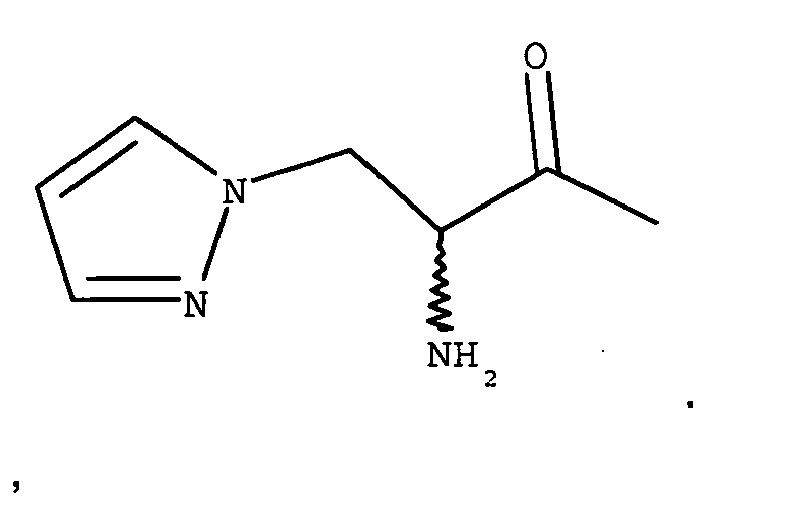
Xaa at position 9 is Glu,
Xaa at position 11 is Thr,
Xaa at position 14 is Ser,
Xaa at position 16 is Val,
Xaa at position 17 is Ser,
Xaa at position 18 is Ser, Glu, Asp, or Lys,
Xaa at position 19 is Tyr, Glu, Asp, or Lys,
Xaa at position 20 is Leu, Glu, Asp, or Lys,
Xaa at position 21 is Glu, Asp, or Lys,
Xaa at position 22 is Gly, Glu, Asp, or Lys,
Xaa at position 23 is Gin, Glu, Asp, or Lys,
Xaa at position 24 is Ala, Glu, Asp, or Lys,
Xaa at position 25 is Ala, Glu, Asp, or Lys,
Xaa at position 26 is Lys, Arg, Glu, or Asp,
Xaa at position 27 is Glu, Asp, or Lys,
Xaa at position 30 is Ala, Glu, Asp, or Lys,
Xaa at position 31 is Trp, Glu, Asp, or Lys,
Xaa at position 32 is Leu, Glu, Asp, or Lys,
Xaa at position 33 is Val, Glu, Asp, or Lys,
Xaa at position 34 is Lys, Arg, Glu, or Asp,
Xaa at position 35 is Gly, Glu, Asp, or Lys,
Xaa at position 36 is Arg, Lys, Glu, or Asp,
Xaa at position 37 is Gly, Glu, Asp, or Lys,
Xaa at position 38 is deleted,
Xaa at position 39 is deleted,
Xaa at position 40 is deleted,
Xaa at position 41 is deleted,
Xaa at position 42 is deleted,
Xaa at position 43 is deleted,
Xaa at position 44 is deleted, and
Xaa at position 45 is deleted, or
(a) a C-1-6-ester thereof, (b) an amide, C-1-6-alkylamide, or C-1-6-dialkylamide thereof, and/or (c) a pharmaceutically acceptable salt thereof,
wherein - (i) a lipophilic substituent comprising from 12 to 24 carbon atoms is attached via a spacer to one or more of (a) the amino group of the N-terminal amino acid, (b) the carboxy group of the C-terminal amino acid, (c) the ε-amino group of Lys, and/or (d) the carboxy group which is part of the R group of Asp or Glu, and
- (ii) the total number of different amino acids of the GLP-1 peptide as compared to the corresponding native form of GLP-1 is one, two, three, four, five, or six.
- In its broadest aspect, the present invention discloses derivatives of GLP-1(7-B) and analogues thereof. The derivatives according to the invention have interesting pharmacological properties, including a protracted profile of action. The derivatives also are more metabolically and physically stable, and more soluble.
- The GLP-1 derivatives and analogues of the present invention comprise a lipophilic substituent comprising from12 to 24 carbon atoms (via a spacer) attached to at least one amino acid residue and the N-terminal amino acid, i.e., the histidine residue at position 7 is modified. The lipophilic substituent is in particular a long-chain group of the type described in
WO 98/08871 - GLP-1 derivatives comprising a parent peptide of formula II are also generally disclosed herein, in which formula II is
A-HN-GLP-1(8-B)-X (II)
wherein
A is:
Y is a five or six membered ring system selected from the group consisting of:


B is an integer in the range of 35-45; and
X is-OH, -NH2, or a C1-6 alkyl amide or C1-6 dialkyl amide group;
or an analogue thereof;
said GLP-1 derivative or analogue comprising a lipophilic substituent attached to at least one amino acid residue thereof. - In particular, the invention also discloses GLP-1 derivatives of formula II
A-HN-GLP-1(8-B)-X (II)
wherein
A is:


B is an integer in the range of 35-45; and
X is -OH, -NH2, or a C1-6 alkyl amide or C1-6 dialkyl amide group;
or an analogue thereof;
wherein a lipophilic substituent (optionally via a spacer) is attached to at least one amino acid residue provided that when the lipophilic substituent is an acyl group and no spacer is present, then the acyl group contains at least 12 carbon atoms. - A simple system is used to describe the GLP-1 derivatives of the present invention. For example, Gly8-GLP-1(7-37) designates a peptide which relates to GLP-1 (1-37) by the deletion of the amino acid residues at positions 1 to 6 and the substitution of the naturally occurring amino acid residue in position 8 (Ala) with Gly. Similarly, Lys34(Nε-tetradecanoyl)-GLP-1 (7-37) designates GLP-1 (7-37) wherein the ε-amino group of the Lys residue in position 34 has been tetradecanoylated. Where a reference is made to C-terminally extended GLP-1 analogues, the amino acid residue in position 38 is Arg unless otherwise indicated, the amino acid residue in position 39 is also Arg unless otherwise indicated and the amino acid residue in position 40 is Asp unless otherwise indicated. Also, if a C-terminally extended analogue extends to position 41, 42, 43, 44 or 45, the amino acid sequence of this extension is as in the corresponding sequence in human preproglucagon unless otherwise indicated.
- The present invention also relates to derivatives of analogs of GLP-1. The term "analogue" is defined herein as a peptide which relates to a parent peptide by the substitution of one or more amino acid residues of the parent peptide with other amino acid residue(s).
- In a further preferred embodiment, a parent peptide for a derivative of the invention is
Arg26-GLP-1 (7-37); Arg34-GLP-1(7-37); Lys36-GLP-1(7-37);
Arg26,34Lys36-GLP-1 (7-37);
Arg26Lys36-GLP-1 (7-37); Arg34Lys36-GLP-1 (7-37);
Gly8Arg26-GLP-1(7-37); Gly8Arg34-GLP-1(7-37);
Gly8Lys36-GLP-1(7-37); Gly8Arg26,34Lys36-GLP-1 (7-37);
Gly8Arg26Lys36-GLP-1(7-37); Gly8Arg34Lys36-GLP-1(7-37); - In a further preferred embodiment, the present invention relates to a GLP-1 derivative wherein the parent peptide is selected from the group comprising Arg26-GLP-1(7-37), Arg34-GLP-1 (7-37), Lys36-GLP-1(7-37), Arg26,34Lys36-GLP-1(7-37), Arg26Lys36-GLP-1 (7-37), Arg34Lys36-GLP-1 (7-37), Gly8Arg26-GLP-1 (7-37), Gly8Arg34-GLP-1 (7-37), Gly8Lys36-GLP-1(7-37), Gly8Arg26,34Lys36-GLP-1 (7-37), Gly8Arg26Lys36-GLP-1 (7-37) and Gly8Arg34Lys36-GLP-1 (7-37).
- In a further preferred embodiment, the present invention relates to a GLP-1 derivative wherein the parent peptide is:
- Arg26-GLP-1 (7-37); Arg34-GLP-1 (7-37); Arg26,34Lys36-GLP-1 (7-37);
- Gly8Arg26-GLP-1 (7-37); Gly8Arg34-GLP-1 (7-37); Gly8Arg26,34Lys36-GLP-1 (7-37);
- Val8Arg26-GLP-1 (7-37); Val8Arg34-GLP-1 (7-37); Val8Arg26,34Lys36-GLP-1(7-37);
- Ser8Arg26-GLP-1 (7-37); Ser8Arg34-GLP-1 (7-37); Ser8Arg26,34Lys36-GLP-1 (7-37);
- Thr8Arg26-GLP-1 (7-37); Thr8Arg34-GLP-1 (7-37);Thr8Arg26,34Lys36-GLP-1 (7-37);
- Val8Glu36Arg26,34Lys37GLP-1 (7-37); Val8Glu36Arg26,34Lys37GLP-1(7-37);
- Val8Asp36Arg26,34Lys37GLP-1 (7-37); Val8Asp36Arg26,34Lys37GLP-1(7-37);
- Ser8Glu36Arg26,34Lys37GLP-1(7-37); Ser8Glu36Arg26,34Lys37GLP-1 (7-37);
- Ser8Asp36Arg26,34Lys37GLP-1 (7-37); Ser8Asp36Arg26,34Lys37GLP-1 (7-37);
- Thr8Glu36Arg26,34Lys37GLP-1(7-37); Thr8Glu36Arg26,34Lys37GLP-1 (7-37);
- Thr8Asp36Arg26,34Lys37GLP-1(7-37); Thr8Asp36Arg26,34Lys37GLP-1 (7-37);
- Gly8Glu36Arg26,34Lys37GLP-1(7-37); Gl8Glu36Arg26,34Lys37GLP-1 (7-37);
- Gly8Asp36Arg26,34Lys37GLP-1(7-37); Gly8Asp36Arg26,34Lys37GLP-1 (7-37);
- Arg26,34Lys18GLP-1(7-37); Gly8Asp19Arg26,34Lys18GLP-1(7-37);
- Arg26,34Lys23GLP-1(7-37); Gly8Asp24Arg26,34Lys23GLP-1(7-37);
- Arg26,34Lys27GLP-1(7-37); Gly8Asp28Arg26,34Lys27GLP-1(7-37);
- Arg26,34Lys18GLP-1(7-37); Val8Asp19Arg26,34Lys18GLP-1(7-37);
- Arg26,34Lys23GLP-1(7-37); Val8Asp24Arg26,34Lys23GLP-1(7-37);
- Arg26,34Lys27GLP-1(7-37); Val8Asp28Arg26,34Lys27GLP-1(7-37);
- Arg26,34Lys18GLP-1(7-37); Ser8Asp19Arg26,34Lys18GLP-1(7-37);
- Arg26,34Lys23GLP-1(7-37); Ser8Asp24Arg26,34Lys23GLP-1(7-37);
- Arg26,34Lys27GLP-1(7-37); Ser8Asp28Arg26,34Lys27GLP-1(7-37);
- Arg26,34Lys18GLP-1(7-37); Thr8Asp19Arg26,34Lys18GLP-1(7-37);
- Arg26,34Lys23GLP-1(7-37); Thr8Asp24Arg26,Lys23GLP-1(7-37);
- Arg26,34Lys27GLP-1(7-37); Thr8Asp28Arg26,34Lys27GLP-1(7-37);
- In a further preferred embodiment, the present invention relates to a GLP-1 derivative wherein the parent peptide is:
- Arg26Lys36-GLP-1 (7-37); Arg34Lys36-GLP-1(7-37); Arg26Lys37-GLP-1(7-37); Arg34Lys37-GLP-1(7-37);
- Arg26Lys18GLP-1(7-37); Arg34Lys18GLP-1(7-37); Arg26Lys23GLP-1(7-37); Arg34Lys23GLP-1(7-37);
- Arg26Lys27GLP-1(7-37); Arg34Lys27GLP-1(7-37); Arg26,34Lys18GLP-1(7-37); Arg26,34Lys18,37GLP-1 (7-37); Arg26,34Lys23GLP-1(7-37); Arg26,34Lys23,37GLP-1(7-37); Arg26,34Lys27GLP-1(7-37);
- Arg26,34Lys27,37GLP-1(7-37);
- Gly8GLP-1(7-37);Gly8Arg26Lys36-GLP-1(7-37);Gly8Arg34Lys36-GLP-1(7-37);Gly8Arg26Lys37-GLP-1(7-37);Gly8Arg34Lys37-GLP-1(7-37); Gly8Arg26Lys28GLP-1(7-37); Gly8Arg34Lys18GLP-1(7-37);
- Gly8Arg26Lys26GLP-1(7-37); Gly8Arg34Lys23GLP-1(7-37); Gly8Arg26Lys27GLP-1(7-37);
- Gly8Arg34Lys27GLP-1(7-37); Gly8Arg26Lys18GLP-1(7-37); Gly8Arg26,34Lys18,37GLP-1(7-37);
- Gly8Arg26,34Lys23GLP-1(7-37); Gly8Arg26,34Lys23,37GLP-1(7-37); Gly8Arg26,34Lys27GLP-1(7-37);
- Gly8Arg26,34Lys27,37GLP-1(7-37);
- Val8GLP-1(7-37); Val8Arg26Lys36-GLP-1(7-37); Val8Arg34Lys36-GLP-1(7-37); Val8Arg26Lys37-GLP-1(7-37); Val8Arg34Lys37-GLP-1(7-37); Val8Arg26Lys18GLP-1(7-37); Val8Arg34Lys18GLP-1(7-37);
- Val8Arg26Lys23GLP-1(7-37); Val8Arg34Lys23GLP-1(7-37); Val8Arg26Lys27GLP-1(7-37);
- Val8Arg34Lys27GLP-1(7-37); Val8Arg26,34Lys18GLP-1(7-37); Val8Arg26,34Lys18,37GLP-1(7-37);
- Val8Arg26,34Lys23GLP-1(7-37); Val8Arg26,34Lys23,37GLP-1(7-37); Val8Arg26,34Lys27GLP-1(7-37);
- Val8Arg26,34Lys27,37GLP-1(7-37);
- The total number of different amino acids between the derivative of the GLP-1 analog and the corresponding native form of GLP-1 does not exceed six. Preferably, the number of different amino acids is five. More preferably, the number of different amino acids is four. Even more preferably, the number of different amino acids is three. Even more preferably, the number of different amino acids is two. Most preferably, the number of different amino acids is one. In order to determine the number of different amino acids, one should compare the amino acid sequence of the derivative of the GLP-1 analog of the present invention with the corresponding native GLP-1. For example, there are two different amino acids (at positions 8 and 26) between the derivative Gly8Arg26Lys34(Nε-(7-deoxycholoyl))-GLP-1(7-40) and the corresponding native GLP-1 (i.e., GLP-1 (7-40)). Similarly, there is only one different amino acid (at position 34) between the derivative Lys26(Nε-(7-deoxycholoyl))Arg34-GLP-1(7-40) and the corresponding native GLP-1.
- The derivatives of the GLP-1 analogs of the present invention preferably have only one or two Lys. The ε-amino group of one or both Lys is substituted with a lipophilic substituent, Preferably, the derivatives of the GLP-1 analogs of the present invention have only one Lys. In a more preferred embodiment, there is only one Lys which is located at the carboxy terminus of the derivative of the GLP-1 analogs. In an even more preferred embodiment, the derivatives of the GLP-1 analogs of the present invention have only one Lys and Glu or Asp is adjacent to Lys.
- The term "derivative" is defined as a modification of one or more amino acid residues of a peptide by chemical means, either with or without an enzyme, e.g. by alkylation, acylation, ester formation or amide formation.
- In the GLP-1 derivatives of the present invention, the histidine residue at position 7 is modified. Generally the histidine residue at position 7 may be replaced with a group A wherein
A is: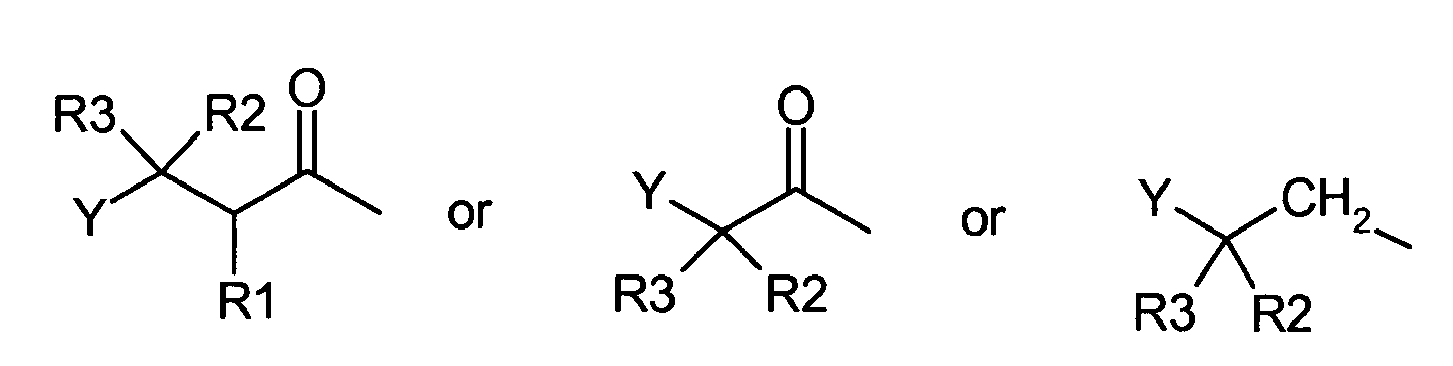


- The terms "lower alkyl" and "lower alkoxy" refer to an alkyl or alkoxy group, respectively, having 1-6 carbon atoms.
- Accordingly to the present invention, A is:


- In another preferred embodiment, A is 4-imidazopropionyl.
- In another preferred embodiment, A is 4-imidazoacetyl.
- In another preferred embodiment, A is 4-imidazo-α,α-dimethyl-acetyl.
- In another preferred embodiment the GLP-1 derivatives of formula II may be selected from
desamino-His7,Arg7,Lys34 (Nε-(γ-glutamyl(Nα-hexadecanoyl))) GLP-1 (7-37)-OH,
desamino-His7,Arg26,Lys34 (Nε-(γ-glutamyl(Nα-octanoyl))) GLP-1 (7-37)-OH,
desamino-His7,Arg34, Lys26(Nε-(γ-glutamyl(Nα-hexadecanoyl))) GLP-1 (7-37),
desamino-His7,Arg34,Lys26(Nε-(γ-aminobutyroyl(Nγ-hexadecanoyl))) GLP-1 (7-37),
desamino-His7,Arg34, Lys26(Nε-(β-alanyl(Nγ-hexadecanoyl))) GLP-1 (7-37),
Arg34,Ala8(Nα-(imidazol-4-ylprop-2-enoyl),Lys36(Nε-(γ-aminobutyroyl(Nγ-hexadecanoyl))) GLP-1 (8-37),
Arg34,Ala8(Nα-(imidazol-4-ylacetyl),Lys26(Nε-(γ-aminobutyroyl(Nγ-hexadecanoyl))) GLP-1 (8-37),
desamino-His7,Arg34, Lys26(Nε-(γ-aminobutyroyl(Nγ-tetradecanoyl))) GLP-1 (7-37),
desamino-His7,Arg34, Lys26(Nε-(γ-aminobutyroyl(Nγ-octadecanoyl))) GLP-1 (7-37). - To obtain a satisfactory protracted profile of action of the GLP-1 derivative, the lipophilic substituents attached to the parent GLP-1 peptide comprises from 12-24 carbon atoms and most preferably 12-18 carbon atoms. A lipophilic substituent may be attached to an amino group of the parent GLP-1 peptide by means of a carboxyl group of the lipophilic substituent which forms an amide bond with an amino group of the amino acid residue to which it is attached.
- In a preferred embodiment, the GLP-1 derivatives of the present invention have three lipophilic substituents.
- In a more preferred embodiment, the GLP-1 derivatives of the present invention have two lipophilic substituents.
- In an even more preferred embodiment, the GLP-1 derivatives of the present invention have one lipophilic substituent.
- Each lipophilic substituent can be attached to (a) the free amino group of the N-terminal amino acid, (b) the free carboxy group of the C-terminal amino acid, (c) the ε-amino group of Lys and/or (d) the carboxy group which is part of the R group of Asp or Glu.
- In a preferred embodiment, a lipophilic substituent is attached to only the carboxy group which is part of the R group of Asp or Glu.
- In a preferred embodiment, a lipophilic substituent is attached to only the free carboxy group of the C-terminal amino acid.
- In another preferred embodiment, a lipophilic substituent is attached to only an ε-amino group of Lys.
- According to the invention, the lipophilic substituent is attached to the parent GLP-1 peptide by means of a spacer, e.g. in such a way that a carboxyl group of the spacer forms an amide bond with an amino group of the parent GLP-1 peptide. In a preferred embodiment, the spacer is an α,ω-amino acid. Examples of suitable spacers are succinic acid, Lys, Glu or Asp, or a dipeptide such as Gly-Lys. When the spacer is succinic acid, one carboxyl group thereof may form an amide bond with an amino group of the amino acid residue, and the other carboxyl group thereof may form an amide bond with an amino group of the lipophilic substituent. When the spacer is Lys, Glu or Asp, the carboxyl group thereof may form an amide bond with an amino group of the amino acid residue, and the amino group thereof may form an amide bond with a carboxyl group of the lipophilic substituent. When Lys is used as the spacer, a further spacer may in some instances be inserted between the ε-amino group of Lys and the lipophilic substituent. In one preferred embodiment, such a further spacer is succinic acid which forms an amide bond with the ε-amino group of Lys and with an amino group present in the lipophilic substituent. In another preferred embodiment such a further spacer is Glu or Asp which forms an amide bond with the ε-amino group of Lys and another amide bond with a carboxyl group present in the lipophilic substituent. Other preferred spacers are γ-L-glutamyl, β-L-asparagyl, glycyl, β-L-alanyl, and α-(γ-aminobutanoyl).
- In another preferred embodiment of the present invention, the lipophilic substituent has a group which can be negatively charged. One preferred group which can be negatively charged is a carboxylic acid group.
- In a further preferred embodiment, the lipophilic substituent is attached to the parent peptide by means of a spacer which is an unbranched alkane α,ω-dicarboxylic acid group having from 1 to 7 methylene groups, preferably two methylene groups which spacer forms a bridge between an amino group of the parent peptide and an amino group of the lipophilic substituent.
- In a further preferred embodiment, the lipophilic substituent is attached to the parent peptide by means of a spacer which is an amino acid residue except Cys or Met, or a dipeptide such as Gly-Lys. In the present text, the phrase "a dipeptide such as Gly-Lys" means a dipeptide wherein the C-terminal amino acid residue is Lys, His or Trp, preferably Lys, and wherein the N-terminal amino acid residue is selected from the group comprising Ala, Arg, Asp, Asn, Gly, Glu, Gln, Ile, Leu, Val, Phe and Pro.
- In a further preferred embodiment, the lipophilic substituent is attached to the parent peptide by means of a spacer which is an amino acid residue except Cys or Met, or is a dipeptide such as Gly-Lys and wherein an amino group of the parent peptide forms an amide bond with a carboxylic group of the amino acid residue or dipeptide spacer, and an amino group of the amino acid residue or dipeptide spacer forms an amide bond with a carboxyl group of the lipophilic substituent.
- In a further preferred embodiment, the lipophilic substituent comprises a partially or completely hydrogenated cyclopentanophenathrene skeleton.
- In a further preferred embodiment, the lipophilic substituent is a straight-chain or branched alkyl group.
- In a further preferred embodiment, the lipophilic substituent is an acyl group of a straight-chain or branched fatty acid.
- In a further preferred embodiment, the lipophilic substituent is an acyl group selected from the group comprising CH3(CH2)10CO-, CH3(CH2)12CO-, CH3(CH2)14CO-, CH3(CH2)16CO-, CH3(CH2)18CO-, CH3(CH2)20CO- and CH3(CH2)22CO-. In a most preferred embodiment, the lipophilic substituent is tetradecanoyl. In another most preferred embodiment, the lipophilic substituent is hexadecanoyl.
- In a further preferred embodiment, the lipophilic substituent is an acyl group of a straight-chain or branched alkane α,ωdicarboxylic acid.
- In a further preferred embodiment, the lipophilic substituent is an acyl group selected from the group comprising HOOC(CH2)14CO-, HOOC(CH2)16CO-, HOOC(CH2)18CO-, HOOC(CH2)20CO- and HOOC(CH2)22CO-.
- In a further preferred embodiment, the lipophilic substituent with the attached spacer is a group of the formula CH3(CH2)pNH-CO(CH2)2CO-, wherein p is an integer of from 8 to 33, preferably from 12 to 28.
- In a further preferred embodiment, the lipophilic substituent with the attached spacer is a group of the formula CH3(CH2)rCO-NHCH(COOH)(CH2)2CO-, wherein r is an integer of from 10 to 24.
- In a further preferred embodiment, the lipophilic substituent with the attached spacer is a group of the formula CH3(CH2)sCO-NHCH((CH2)2COOH)CO-, wherein s is an integer of from 8 to 24.
- In a further preferred embodiment, the lipophilic substituent with the attached spacer is a group of the formula -NHCH(COOH)(CH2)4NH-CO(CH2)uCH3, wherein u is an integer of from 8 to 18.
- In a further preferred embodiment, the lipophilic substituent with the attached spacer is a group of the formula CH3(CH2)vCO-NH-(CH2)z-CO, wherein n is an integer of from 8 to 24 and z is an integer of from 1 to 6.
- In a further preferred embodiment, the lipophilic substituent with the attached spacer is a group of the formula -NHCH(COOH)(CH2)4NH-COCH((CH2)2COOH)NH-CO(CH2)wCH3, wherein w is an integer of from 10 to 16.
- In a further preferred embodiment, the lipophilic substituent with the attached spacer is a group of the formula -NHCH(COOH)(CH2)4NH-CO(CH2)2CH(COOH)NH-CO(CH2)xCH3, wherein x is an integer of from 10 to 16.
- In a further preferred embodiment, the lipophilic substituent with the attached spacer is a group of the formula -NHCH(COOH)(CH2)4NH-CO(CH2)2CH(COOH)NHCO(CH2)yCH3, wherein y is zero or an integer of from 1 to 22.
- In a further preferred embodiment, the lipophilic substituent can be negatively charged. Such a lipophilic substituent can for example be a substituent which has a carboxyl group.
- The derivatives of GLP-1 analogues of the present invention may be in the form of one or more of (a) a C-1-6-ester, (b) an amide, C-1-6-alkylamide, or C-1-6-dialkylamide, and (c) a pharmaceutical salt. In a preferred embodiment, the derivatives of GLP-1 analogues are in the form of an acid addition salt or a carboxylate salt, most preferably in the form of an acid addition salt.
- The present invention also relates to pharmaceutical compositions comprising a derivative of a GLP-1 analog of the present invention and a pharmaceutically acceptable vehicle or carrier.
- Preferably, the pharmaceutical compositions comprise an isotonic agent, a preservative and a buffer. Examples of isotonic agents are sodium chloride, mannitol and glycerol. Examples of preservatives are phenol, m-cresol, methyl p-hydroxybenzoate and benzyl alcohol. Suitable buffers include sodium acetate, sodium citrate, glycylglycine, histidine, 2-phenylethanol and sodium phosphate.
- The pharmaceutical compositions preferably further comprise a surfactant in order to improve the solubility and/or the stability of the GLP-1 derivative. Preferably, the surfactant is poloxymer 188, tween 20 or tween 80.
- The pharmaceutical compositions preferably also comprise zinc.
- The pharmaceutical compositions preferably also comprise protamine.
- The pharmaceutial compositions preferably further comprise another antidiabetic agent. The term "antidiabetic agent" includes compounds for the treatment and/or prophylaxis of insulin resistance and diseases wherein insulin resistance is the pathophysiological mechanism.
- In one embodiment of this invention, the antidiabetic agent is an insulin, more preferably human insulin.
- In another embodiment the antidiabetic agent is a hypoglycaemic agent, preferably an oral hypoglycaemic agent. Oral hypoglycaemic agents are preferably selected from the group consisting of sulfonylureas, biguanides, thiazolidinediones, glucosidase inhibitors, glucagon antagonists, GLP-1 agonists, potasium channel openers, insulin sensitizers, hepatic enzyme inhibitors, glucose uptake modulators, compounds modifying the lipid metabolism, compounds lowering food intake, and agents acting on the ATP-dependent potassium channel of the β-cells. Preferred sulfonylureas are tolbutamide, glibenclamide, glipizide and gliclazide. A preferred biguanide is metformin. Preferred thiazolidinediones are troglitazone and ciglitazone. A preferred glucosidase inhibitor is acarbose. Preferred agents acting on the ATP-dependent potassium channel of the β-cells are: glibenclamide, glipizide, gliclazide, and repaglinide.
- In a preferred embodiment of the present invention, the GLP-1 derivative is provided in the form of a composition suitable for administration by injection. Such a composition can either be an injectable solution ready for use or it can be an amount of a solid composition, e.g. a lyophilised product, which has to be dissolved in a solvent before it can be injected. The injectable solution preferably contains not less than about 2 mg/ml, preferably not less than about 5 mg/ml, more preferred not less than about 10 mg/ml of the GLP-1 derivative and, preferably, not more than about 100 mg/ml of the GLP-1 derivative.
- The pharmaceutical compositions of the present invention also preferably comprise another anti-obesity drug.
- In one embodiment of this invention, the antiobesity agent is leptin.
- In another embodiment the antiobesity agent is amphetamin.
- In another embodiment the antiobesity agent is dexfenfluramine.
- In another embodiment the antiobesity agent is sibutramine.
- In another embodiment the antiobesity agent is orlistat.
- In another embodiment the antiobesity agent is selected from a group of CART agonists, NPY antagonists, orexin antagonists, H3-antagonists, TNF agonists, CRF agonists, CRF BP antagonists, urocortin agonists, β3 agonists, MSH agonists, CCK agonists, serotonin re-uptake inhibitors, mixed serotonin and noradrenergic compounds, 5HT agonists, bombesin agonists, galanin antagonists, growth hormone, growth hormone releasing compounds, glucagon, TRH agonists, uncoupling protein 2 or 3 modulators, leptin agonists, DA agonists (Bromocriptin, Doprexin), lipase/amylase inhibitors, PPAR modulators, PXR modulators or TR β agonists.
- A number of GLP-1 derivatives of the present invention exist in a partially structured micellar-like aggregated form when added to water or an aqueous solution. This structure makes them more soluble and stable in solution as compared to native GLP-1. The increased solubility and stability can be seen by comparing the solubility after 9 days of standing for a derivative and normal GLP-1 (7-37) in a pharmaceutical formulation, e.g. 5 mM phosphate buffer, pH 6.9 added 0.1 M NaCl.
- Circular Dichroism (CD) can be used to show that the GLP-1 derivatives have a certain partially structured conformation. In contrast to native GLP-1 (7-37) the helix content of some GLP-1 derivatives of the present invention increases with increasing concentration, from 10-15% to 30-35% (at a concentration of 500 µM) in parallel with peptide self-association. For the GLP-1 derivatives forming partially structured micellar-like aggregates in aqueous solution the helix content remains constant above 30% at concentrations of 10 µM.
- The size of the partially helical, micelle-like aggregates may be estimated by size-exclusion chromatography. Similarly, the apparent (critical micelle concentrations) CMC's of the peptides may be estimated from the concentration dependent fluorescence in the presence of appropriate dyes (e.g. Brito, R. & Vaz, W. (1986) Anal. Biochem. 152, 250-255).
- Thus, the present invention also relates to pharmaceutical compositions comprising water and a GLP-1 derivative of the present invention which has a helix content as measured by Circular Dichroism at 222 nm in H2O at 22 ± 2°C exceeding 25%, preferably in the range of 25% to 50%, at a peptide concentration of about 10 µM.
- The present invention also relates to the use of a GLP-1 derivative of the present invention for the preparation of a medicament which has a protracted profile of action relative to GLP-1(7-37).
- The present invention also relates to the use of a GLP-1 derivative of the present invention for the preparation of a medicament with protracted effect for the treatment of non-insulin dependent diabetes mellitus.
- The present invention also relates to the use of a GLP-1 derivative of the present invention for the preparation of a medicament with protracted effect for the treatment of insulin dependent diabetes mellitus.
- The present invention also relates to the use of a GLP-1 derivative of the present invention for the preparation of a medicament to treat insulin resistance.
- The present invention also relates to the use of a GLP-1 derivative of the present invention for the preparation of a medicament with protracted effect for the treatment of obesity.
- The present invention also discloses a method of treating insulin dependent or non-insulin dependent diabetes mellitus in a patient in need of such a treatment, comprising administering to the patient a therapeutically effective amount of a GLP-1 derivative of the present invention together with a pharmaceutically acceptable carrier.
- The present invention also discloses a method of treating obesity in a patient in need of such a treatment, comprising administering to the patient a therapeutically effective amount of a GLP-1 derivative of the present invention together with a pharmaceutically acceptable carrier.
- The particular GLP-1 derivative to be used and the optimal dose level for any patient will depend on the disease to be treated and on a variety of factors including the efficacy of the specific peptide derivative employed, the age, body weight, physical activity, and diet of the patient, on a possible combination with other drugs, and on the severity of the case.
- The pharmaceutical compositions of the present invention may be administered parenterally to patients in need of such a treatment. Parenteral administration may be performed by subcutaneous, intramuscular or intravenous injection by means of a syringe, optionally a pen-like syringe. Alternatively, parenteral administration can be performed by means of an infusion pump. A further option is a composition which may be a powder or a liquid for the administration of the GLP-1 derivative in the form of a nasal or pulmonal spray. As a still further option, the GLP-1 derivatives of the invention can also be administered transdermally, e.g. from a patch, optionally a iontophoretic patch, or transmucosally, e.g. bucally.
- The parent peptide can be produced by a method which comprises culturing a host cell containing a DNA sequence encoding the polypeptide and capable of expressing the polypeptide in a suitable nutrient medium under conditions permitting the expression of the peptide, after which the resulting peptide is recovered from the culture.
- The medium used to culture the cells may be any conventional medium suitable for growing the host cells, such as minimal or complex media containing appropriate supplements. Suitable media are available from commercial suppliers or may be prepared according to published recipes (e.g. in catalogues of the American Type Culture Collection). The peptide produced by the cells may then be recovered from the culture medium by conventional procedures including separating the host cells from the medium by centrifugation or filtration, precipitating the proteinaceous components of the supernatant or filtrate by means of a salt, e.g. ammonium sulphate, purification by a variety of chromatographic procedures, e.g. ion exchange chromatography, gel filtration chromatography, affinity chromatography, or the like, dependent on the type of peptide in question.
- The DNA sequence encoding the parent peptide may suitably be of genomic or cDNA origin, for instance obtained by preparing a genomic or cDNA library and screening for DNA sequences coding for all or part of the peptide by hybridisation using synthetic oligonucleotide probes in accordance with standard techniques (see, for example, Sambrook, J, Fritsch, EF and Maniatis, T, Molecular Cloning: A Laboratory Manual, Cold Spring Harbor Laboratory Press, New York, 1989). The DNA sequence encoding the peptide may also be prepared synthetically by established standard methods, e.g. the phosphoamidite method described by Beaucage and Caruthers, Tetrahedron Letters 22 (1981), 1859 - 1869, or the method described by Matthes et al., EMBO Journal 3 (1984), 801 - 805. The DNA sequence may also be prepared by polymerase chain reaction using specific primers, for instance as described in
US 4,683,202 or Saiki et al., Science 239 (1988), 487 - 491. - The DNA sequence may be inserted into any vector which may conveniently be subjected to recombinant DNA procedures, and the choice of vector will often depend on the host cell into which it is to be introduced. Thus, the vector may be an autonomously replicating vector, i.e. a vector which exists as an extrachromosomal entity, the replication of which is independent of chromosomal replication, e.g. a plasmid. Alternatively, the vector may be one which, when introduced into a host cell, is integrated into the host cell genome and replicated together with the chromosome(s) into which it has been integrated.
- The vector is preferably an expression vector in which the DNA sequence encoding the peptide is operably linked to additional segments required for transcription of the DNA, such as a promoter. The promoter may be any DNA sequence which shows transcriptional activity in the host cell of choice and may be derived from genes encoding proteins either homologous or heterologous to the host cell. Examples of suitable promoters for directing the transcription of the DNA encoding the peptide of the invention in a variety of host cells are well known in the art, cf. for instance Sambrook et al., supra.
- The DNA sequence encoding the peptide may also, if necessary, be operably connected to a suitable terminator, polyadenylation signals, transcriptional enhancer sequences, and translational enhancer sequences. The recombinant vector of the invention may further comprise a DNA sequence enabling the vector to replicate in the host cell in question.
- The vector may also comprise a selectable marker, e.g. a gene the product of which complements a defect in the host cell or one which confers resistance to a drug, e.g. ampicillin, kanamycin, tetracyclin, chloramphenicol, neomycin, hygromycin or methotrexate.
- To direct a parent peptide of the present invention into the secretory pathway of the host cells, a secretory signal sequence (also known as a leader sequence, prepro sequence or pre sequence) may be provided in the recombinant vector. The secretory signal sequence is joined to the DNA sequence encoding the peptide in the correct reading frame. Secretory signal sequences are commonly positioned 5' to the DNA sequence encoding the peptide. The secretory signal sequence may be that normally associated with the peptide or may be from a gene encoding another secreted protein.
- The procedures used to ligate the DNA sequences coding for the present peptide, the promoter and optionally the terminator and/or secretory signal sequence, respectively, and to insert them into suitable vectors containing the information necessary for replication, are well known to persons skilled in the art (cf., for instance, Sambrook et al., supra).
- The host cell into which the DNA sequence or the recombinant vector is introduced may be any cell which is capable of producing the present peptide and includes bacteria, yeast, fungi and higher eukaryotic cells. Examples of suitable host cells well known and used in the art are, without limitation, E. coli, Saccharomyces cerevisiae, or mammalian BHK or CHO cell lines.
- The GLP-1 derivatives and analogues of the present invention may be prepared by methods known per se in the art. For example, the polypeptide portion may be prepared by chemical synthesis using solid phase protein synthesis techniques, or using recombinant DNA techniques, and the GLP-1 peptide having attached thereto a lipophilic substituent may e.g. be prepared as described in
WO 98/08871 EP 0708179-A2 . - The pharmaceutical compositions of the present invention may be prepared by conventional techniques, e.g. as described in Remington's Pharmaceutical Sciences, 1985 or in Remington: The Science and Practice of Pharmacy, 19th edition, 1995.
- For example, injectable compositions of the GLP-1 derivative of the invention can be prepared using the conventional techniques of the pharmaceutical industry which involves dissolving and mixing the ingredients as appropriate to give the desired end product.
- According to one procedure, the GLP-1 derivative is dissolved in an amount of water which is somewhat less than the final volume of the composition to be prepared. An isotonic agent, a preservative and a buffer is added as required and the pH value of the solution is adjusted - if necessary - using an acid, e.g. hydrochloric acid, or a base, e.g. aqueous sodium hydroxide as needed. Finally, the volume of the solution is adjusted with water to give the desired concentration of the ingredients.
- A composition for nasal administration of certain peptides may, for example, be prepared as described in European Patent No.
272097 WO 93/18785 - The present invention also discloses methods for producing a GLP-1 derivative of the present invention, comprising alkylating, acylating and/or amidating the corresponding GLP-1 analog.
- The present invention is further illustrated by the following examples which, however, are not to be construed as limiting the scope of protection. The features disclosed in the foregoing description and in the following examples may, both separately and in any combination thereof, be material for realising the invention in diverse forms thereof.
- The examples below illustrate the preparation of modified GLP-1 derivatives according to the present invention. In each case, the basic peptide to be modified may, for example, comprise the amino acid residues of GLP-1 (8-36), GLP-1 (8-37) or GLP-1 (8-38). The peptide may of course also contain other modifications as described above.
- The following acronyms for commercially available chemicals are used:
- DMF :
- N,N-Dimethylformamide.
- DCC :
- N,N-Dicyclohexylcarbodiimide
- NMP :
- N-Methyl-2-pyrrolidone.
- EDPA :
- N-Ethyl-N,N-diisopropylamine.
- TFA :
- Trifluoroacetic acid.
- THF :
- Tetrahydrofuran.
- Pal-ONSu:
- Hexadecanoic acid 2,5-dioxopyrrolidin-1-yl ester.
- Nα-alkanoyl-Glu(ONSu)-OBut:
- Nα-Alkanoyl-(L)-glutamic acid α-t-butyl-γ-2,5- dioxopyrrolidin-1-yl diester.
- Nα-Pal-γ-Glu(ONSu)-OBut:
- Nα-Hexadecanoyl-(L)-glutamic acid α-t-butyl-γ-2,5- dioxopyrrolidin-1-yl diester.
- Nα-Ste-γ-Glu (ONSu)-OBut:
- Nα-Octadecanoyl-(L)-glutamic acid α-t-butyl-γ2,5-dioxopyrrolidin- 1-yl diester.
-
- PDMS: Plasma Desorption Mass Spectrometry
- HPLC: High Performance Liquid Chromatography
- amu: atomic mass units
- To a solution of the alkanoic acid (34.7 mmol) and N-hydroxysuccinimide (4 g, 34.7 mmol) in anhydrous acetonitril (10 ml) was added a solution of DCC (7.15 g, 34.7 mmol) in anhydrous dichloromethane (15 ml), and the resulting reaction mixture was stirred for 16 h at room temperature. The precipitated solid was filtered off and recrystallised from a mixture of n-heptane and 2-propanol. The precipitate was dried in vacuo for 16 h to give the title compound.
- To a mixture of the peptide (5.9 µmol), EDPA (21 mg, 164 µmol), NMP (5.8 ml) and water (2.9 ml) was added a solution of the alkanoic acid 2,5-dioxopyrrolidin-1-yl ester (37 µmol), prepared as described above, in NMP (0.5 ml). The reaction mixture was gently shaken for 5 min at room temperature, and then allowed to stand for an additional 2 h at room temperature. The reaction was quenched by the addition of a solution of glycine (9.7 mg, 129 µmol) in water (97 µl). The solvent was removed in vacuo, and the residue was purified by column chromatography using a cyanopropyl column (Zorbax 300SB-CN) and a standard acetonitril/TFA system. The column was heated to 65°C and the acetonitril gradient was 0-100% for 60 minutes.
- Coupling of a desired group A comprising the 5- or 6-membered ring system Y to the N-terminal end of the peptide may be performed using solid phase protein synthesis techniques as explained above.
- A suspension of the alkanoic acid 2,5-dioxopyrrolidin-1-yl ester (16.2 mmol), prepared as described under General method A, (L)-glutamic acid α-tert-butyl ester (3.28 g, 16.2 mmol), DMF (268 ml) and EDPA (2.1 g, 16.2 mmol) was stirred for 64 h at room temperature. The reaction mixture was concentrated in vacuo and the residue was dissolved in ethyl acetate (50 ml). The resulting solution was washed with 5% aqueous citric acid (2x25 ml). The solvent was concentrated removed in vacuo and the residue dissolved in DMF (36 ml). The resulting solution was carefully added to a 10% aqueous solution of citric acid (357 ml) and extracted with ethyl acetate (200 ml) and dried (MgSO4). The solvent was concentrated removed in vacuo to give the crude glutamic diester intermediate. To a mixture of the crude diester, N-hydroxysuccinimide (1.85 g, 16.1 mmol) and anhydrous DMF (25 ml) was added a solution of DCC (3.32 g, 16.1 mmol) in anhydrous dichloromethane (15 ml). The resulting mixture was stirred at ambient temperature for 20 h. The reaction mixture was filtered and the solvent was concentrated removed in vacuo. The residue was purified on a silica gel column (40-63 µm) and eluted with a mixture of dichloromethane and acetonitril (1:1) to give the title compound.
- To a mixture of the peptide (4.2 µmol), EDPA (15.3 mg, 119 µmol), NMP (2 ml) and water (1 ml) was added a solution of Nα-alkanoyl-(L)-glutamic acid α-tert-butyl-γ-(2,5-dioxopyrrolidin-1-yl) diester (12.7 µmol), prepared as described above, in NMP (135 ml). The reaction mixture was gently shaken for 5 min at room temperature and then allowed to stand for an additional 2 h at room temperature. The reaction was quenched by the addition of a solution of glycine (7 mg, 93 µmol) in water (698 µl). A 0.5% aqueous solution of ammonium acetate (42 ml) was added, and the resulting mixture was eluted onto a Varian 5g C8 Mega Bond Elut® cartridge, the immobilised compound was washed with 5% aqueous acetonitril (25 ml) and finally liberated from the cartridge by elution with TFA (25 ml). The eluate was concentrated in vacuo, and the residue was purified by column chromatography using a cyanopropyl column (Zorbax 300SB-CN) and a standard acetonitril/TFA system. The column iwa heated to 65°C and the acetonitril gradient is 0-100% for 60 minutes.
- Coupling of a desired group A comprising the 5- or 6-membered ring system Y to the N-terminal end of the peptide may be performed using solid phase protein synthesis techniques as explained above.
- Peptides were synthesised according to the Fmoc strategy on an Applied Biosystems 431A peptide synthesiser in 0.25 mmol scale using the manufacturer supplied FastMoc UV protocols starting with a Fmoc-Gly-Wang resin (NovaBiochem). The protected amino acid derivatives used were commercially obtained Fmoc amino acids, and Adoc-Imidazolylpropionic acid. The derivatives used where side chain protection was needed were: Fmoc-Arg(Pmc), Fmoc-Trp(Boc), Fmoc-Glu(OBut), Fmoc-Lys(Boc), Fmoc-Gln(Trt), Fmoc-Tyr(But), Fmoc-Ser(But), Fmoc-Thr(But), Fmoc-His(Trt) and Fmoc-Asp(OBut), and Adoc-Imidazolylpropionic acid.
- The peptides were cleaved from the resin and side chain deprotected in TFA/phenol/thioanisole/water/ethanedithiol (83.25:6.25:4.25:4.25:2.00) for 180 min. The cleavage mixture was filtered and the filtrate was concentrated by a stream of nitrogen. The crude peptide was precipitated from this oil with diethyl ether and washed twice with diethyl ether. After drying the crude peptide was dissolved in 50% aqueous acetic acid and diluted to 10% acetic acid with water and purified by semipreparative HPLC on a 25 mm x 250 mm column packed with 7 µm C-18 silica. The column was eluted with a gradient of acetonitril against 0.05 M (NH4)2SO4, pH 2.5 at 10 ml/min. at 40°C. The peptide-containing fractions were collected, diluted with 3 volumes of water and applied to a Sep-Pak® C18 cartridge (Waters part. 51910) which was equilibrated with 0.1% TFA. The peptide was eluted from the Sep-Pak® cartridge with 70% acetonitrile/0.1 % TFA, water and isolated from the eluate by lyophilization after dilution with water. The final product obtained was characterised by amino acid analysis, analytical RP-HPLC and by PDMS. Amino acid analysis and mass spectrometry agreed with the expected structure within the experimental error of the method (mass spectrometry +/- 2 amu, amino acid analysis +/- 10%, RP-HPLC showed a peptide purity >95%).
- The RP-HPLC analysis was performed using UV detection at 214 nm and a Vydac 218TP54 4.6 mm x 250 mm, 5 µm C-18 silica column which was eluted at 1 ml/min. at 42°C. Two different elution conditions were used: a gradient of 5-60% acetonitrile /0.1 M ammonium sulfate, water pH 2.5; and a gradient of 5-60% acetonitrile, 0.1 % TFA / 0.1 % TFA, water.
- To a mixture of desamino-His7,Arg26,Lys34 GLP-1 (7-37)-OH (14.3 mg, 4.2 µmol), EDPA (15.3 mg, 119 µmol), NMP (2 ml) and water (1 ml) was added a solution of Pal-Glu(ONSu)-OBut (6.84 mg, 12.7 µmol) in NMP (171µl). The reaction mixture was gently shaken for 5 min. at room temperature, and then allowed to stand for an additional 50 min. at room temperature. The reaction was quenched by the addition of a solution of glycine (7 mg, 99 µmol) in water (700 µl). A 0.5 % aqueous solution of ammonium acetate (42 ml) was added, and the resulting mixture eluted onto a Varian 5g C8 Mega Bond Elut®, the immobilised compound washed with 5% aqueous acetonitril (25 ml), and finally liberated from the cartridge by elution with TFA (25 ml). The eluate was concentrated in vacuo, and the residue purified by column chromatography using a cyanopropyl column (Zorbax 300SB-CN) and a standard acetonitril/TFA system. The column was heated to 65°C and the acetonitril gradient was 0-100% in 60 minutes. The title compound (5.6 mg, 35 %) was isolated, and the product was analysed by PDMS. The m/z value for the protonated molecular ion was found to be 3738 +- 3. The resulting molecular weight is thus 3737 +- 3 amu (theoretical value 3737 amu).
- To a solution of octanoic acid (5 g, 34.7 mmol) and N-hydroxysuccinimide (4 g, 34.7 mmol) in anhydrous acetonitril (10 ml) was added a solution of DCC (7.15 g, 34.7 mmol) in anhydrous dichloromethane (15 ml), and the resulting reaction mixture stirred for 16 h at room temperature. The precipitated solid was filtered off and recrystallised from a mixture of n-heptane (40 ml) and 2-propanol (2 ml). The precipitate was dried in a vacuum drying oven for 16 h to give the intermediate Cap-ONSu. A suspension of the crude ester intermediate (3.9 g, 16.2 mmol), (L)-H-Glu(OH)-OBut (3.28 g, 16.2 mmol), DMF (268 ml) and EDPA (2.1 g, 16.2 mmol) was stirred for 64 h at room temperature. The reaction mixture was concentrated in vacuo and the residue dissolved in ethyl acetate (50 ml). The resulting solution was washed with 5% aqueous citric acid (2x25 ml). The solvent was concentrated in vacuo and the residue dissolved in DMF (36 ml). The resulting solution was added drop wise to a 10% aqueous solution of citric acid (357 ml) and extracted with ethyl acetate (200 ml), and dried (MgSO4). The solvent was concentrated in vacuo to give the crude glutamic acid intermediate. To a mixture of the crude glutamic acid intermediate, N-hydroxysuccinimide (1.85 g, 16.1 mmol) and DMF (25 ml) was added a solution of DCC (3.32 g, 16.1 mmol) in dichloromethane (15 ml). The resulting mixture was stirred at ambient temperature for 20 h. The reaction mixture was filtered and the solvent concentrated in vacuo. The residue was purified on a silica gel column (40-63µ), eluted with a mixture of dichloromethane and acetonitril (1:1) to give the title compound (0.63 g, 6% over all).
- To a mixture of desamino-His7,Arg26,Lys34 GLP-1 (7-37)-OH (14.3 mg, 4.2 µmol), EDPA (15.3 mg, 119 µmol), NMP (2 ml) and water (1 ml) was added a solution of Cap-Glu(ONSu)-OBut. (6.8 mg, 12.7 µmol), prepared as described in example 5, in NMP (135 µl). The reaction mixture was gently shaken for 5 min. at room temperature, and then allowed to stand for an additional 2 h at room temperature. The reaction was quenched by the addition of a solution of glycine (7 mg, 93 µmol) in water (698 µl). A 0.5 % aqueous solution of ammonium acetate (42 ml) was added, and the resulting mixture eluted onto a Varian 5g C8 Mega Bond Elut®, the immobilised compound washed with 5% aqueous acetonitril (25 ml), and finally liberated from the cartridge by elution with TFA (25 ml). The eluate was concentrated in vacuo, and the residue purified by column chromatography using a cyanopropyl column (Zorbax 300SB-CN) and a standard acetonitril/TFA system. The column was heated to 65°C and the acetonitril gradient was 0-100% in 60 minutes. The title compound (4.1 mg, 27 %) was isolated, and the product was analysed by PDMS. The m/z value for the protonated molecular ion was found to be 3626 +- 3. The resulting molecular weight is thus 3625 +- 3 amu (theoretical value 3625 amu).
- To a mixture of desamino-His7,Arg34-GLP-1 (7-37)-OH (20 mg, 5.9 µmol), EDPA (21.5 mg, 166 µmol), NMP (2.8 ml) and water (1.4 ml) was added a solution Pal-Glu(ONSu)-OBut (9.6 mg, 17.8 µmol in NMP (240 µl). The reaction mixture was gently shaken for 5 min., and then allowed to stand for an additional 75 min. at room temperature. The reaction was quenched by the addition of a solution of glycine (9.8 mg, 130 µmol) in water (979 µl). A 0.5% aqueous solution of ammonium acetate (58 ml) was added, and the resulting mixture eluted onto a Varian 5g C8 Mega Bond Elut®, the immobilised compound washed with 5% aqueous acetonitril (25 ml), and finally liberated from the cartridge by elution with TFA (25 ml). The eluate was concentrated in vacuo, and the residue purified by column chromatography using a cyanopropyl column (Zorbax 300SB-CN) and a standard acetonitril/TFA system. The column was heated to 65°C and the acetonitril gradient was 0-100% in 60 minutes. The title compound (9.1 mg, 41%) was isolated, and the product was analysed by PDMS. The m/z value for the protonated molecular ion was found to be 3739 ± 3. The resulting molecular weight is thus 3738 ± 3 AMU (theoretical value 3736 AMU).
- To a solution of Myr-ONSu (4 g, 12.3 mmol) in DMF (350 ml) was added EDPA (1.58 g, 12.3 mmol) and γ-aminobutyric acid (1.26 g, 12.3 mmol). The resulting mixture was stirred at ambient temperature for 18 h. Water (50 ml) was added and the solution stirred for 1 h at room temperature. The solvents were removed in vacuo to give a solid. The solid residue was dissolved in DMF (75 ml) and the solution added drop by drop to a 5% aqueous solution of citric acid (250 ml). The precipitate collected, washed with water (100 ml) and dried in vacuo to give the free acid intermediate (3.65 g, 95%). To a solution of the free acid intermediate (3 g, 9.6 mmol), N-hydroxysuccinimide (1.65 g, 14.4 mmol) and N-(3-dimethylaminopropyl)-N'-ethylcarbodiimide hydrochloride (3.67 g, 19.1 mmol) in DMF (330 ml) was stirred for 18 h at room temperature, and the solvent removed in vacuo to give a solid. The solid residue was dissolved in dichloromethane (100 ml) and washed with brine (100 ml). The organic phase was dried (MgSO4) and concentrated in vacuo to give a solid. The solid residue was recrystallised from n-heptane (75 ml) to give the title compound (2.8 g, 71%).
- To a mixture of desamino-His7,Arg34-GLP-1 (7-37)-OH (20 mg, 8.9 µmol), EDPA (21.5 mg, 166 µmol), NMP (2.8 ml) and water (1.4 ml) was added a solution Pal-GABA-ONSu (7.8 mg, 17.8 µmol) in NMP (181 µl). The reaction mixture was gently shaken for 5 min., and then allowed to stand for an additional 90 min. at room temperature. The reaction was quenched by the addition of a solution of glycine (9.3 mg, 125 µmol) in water (93 µl). The reaction mixture was purified by column chromatography using a cyanopropyl column (Zorbax 300SB-CN) and a standard acetonitril/TFA system. The column was heated to 65°C and the acetonitril gradient was 0-100% in 60 minutes. The title compound (11.6 mg, 55%) was isolated, and the product was analysed by PDMS. The m/z value for the protonated molecular ion was found to be 3692 ± 3. The resulting molecular weight is thus 3691 ± 3 AMU (theoretical value 3693 AMU).
- To a mixture of desamino-His7,Arg34-GLP-1 (7-37)-OH (25 mg, 7.4 µmol), EDPA (26.8 mg, 208 µmol), NMP (3.5 ml) and water (1.75 ml) was added a solution Pal-β-Ala-ONSu (9.4 mg, 22.2 µmol) in NMP (236 µl). The reaction mixture was gently shaken for 5 min., and then allowed to stand for an additional 130 min. at room temperature. The reaction was quenched by the addition of a solution of glycine (12.2 mg, 163 µmol) in water (122 µl). The reaction mixture was purified by column chromatography using a cyanopropyl column (Zorbax 300SB-CN) and a standard acetonitril/TFA system. The column was heated to 65°C and the acetonitril gradient was 0-100% in 60 minutes. The title compound (13.4 mg, 49%) was isolated, and the product was analysed by PDMS. The m/z value for the protonated molecular ion was found to be 3681 ± 3. The resulting molecular weight is thus 3680 ± 3 AMU (theoretical value 3678 AMU).
- To a solution of Ste-ONSu (3 g, 7.9 mmol) in DMF (270 ml) was added EDPA (1 g, 7.9 mmol) and a solution of γ-aminobutyric acid (0.81 g, 7.9 mmol) in water (40 ml). The resulting suspension was stirred at ambient temperature for 18 h, and then concentrated in vacuo to a final volume of 50 ml. The resulting suspension was added to a 5% aqueous solution of citric acid (500 ml) whereby a precipitate is formed. The precipitate was collected and washed with water (50 ml), and dried in vacuo for 4h to give the free acid intermediate (2.8 g, 97%). To a mixture of the free acid intermediate (2.6 g, 7 mmol), N-hydroxysuccinimide (1.21 g, 10.5 mmol) and N-(3-dimethylaminopropyl)-N'-ethylcarbodiimide hydrochloride (2.69 g, 14 mmol) in NMP (300 ml) was stirred for 70 h, and the solvent removed in vacuo to give a solid. The solid residue was dissolved in dichloromethane (100 ml) and washed with brine (2x100 ml). The organic phase was dried (MgSO4) and concentrated in vacuo to give a solid. The solid residue was recrystallised from n-heptane (75 ml) to give the title compound (2.2 g, 67%).
- Synthesis of Arg34,Ala8(Nα-(imidazol-4-ylprop-2-enoyl),Lys26(Nε-(γ-aminobutyroyl(Nγ-hexadecanoyl))) GLP-1 (8-37)
- To a mixture of Arg34,Ala8(Nα-(imidazol-4-ylprop-2-enoyl)-GLP-1 (8-37)-OH (5.6 mg, 1.7 µmol), EDPA (6 mg, 46.2 µmol), NMP (0.78 ml) and water (0.39 ml) was added a solution Pal-GABA-ONSu (2.2 mg, 5 µmol) in NMP (54 µl). The reaction mixture was gently shaken for 5 min., and then allowed to stand for an additional 80 min. at room temperature. The reaction was quenched by the addition of a solution of glycine (2.7 mg, 36 µmol) in water (27 µl). The reaction mixture was purified by column chromatography using a cyanopropyl column (Zorbax 300SB-CN) and a standard acetonitril/TFA system. The column was heated to 65°C and the acetonitril gradient was 0-100% in 60 minutes. The title compound (1.9 mg, 31 %) was isolated, and the product was analysed by PDMS. The m/z value for the protonated molecular ion was found to be 3690 ± 3. The resulting molecular weight is thus 3689 ± 3 AMU (theoretical value 3690 AMU).
- To a mixture of Arg34,Ala8(Nα-(imidazol-4-ylacetyl)-GLP-1 (8-37)-OH (5.3 mg, 1.6 µmol), EDPA (5.7 mg, 43.9 µmol), NMP (0.74 ml) and water (0.37 ml) was added a solution Pal-GABA-ONSu (2 mg, 4.7 µmol) in NMP (52 µl). The reaction mixture was gently shaken for 5 min., and then allowed to stand for an additional 80 min. at room temperature. The reaction was quenched by the addition of a solution of glycine (2.6 mg, 34 µmol) in water (26 µl). The reaction mixture was purified by column chromatography using a cyanopropyl column (Zorbax 300SB-CN) and a standard acetonitril/TFA system. The column was heated to 65°C and the acetonitril gradient was 0-100% in 60 minutes. The title compound (2.2 mg, 38%) was isolated, and the product was analysed by PDMS. The m/z value for the protonated molecular ion was found to be 3676 ± 3. The resulting molecular weight is thus be 3675 ± 3 AMU (theoretical value 3678 AMU).
- To a mixture of desamino-His7,Arg34-GLP-1 (7-37)-OH (25 mg, 7.4 µmol), EDPA (26.9 mg, 208 µmol), NMP (3.5 ml) and water (1.75 ml) was added a solution Myr-GABA-ONSu (9.1 mg, 22.2 µmol), prepared as described in example 8, in NMP (228 µl). The reaction mixture was gently shaken for 5 min., and then allowed to stand for an additional 90 min. at room temperature. The reaction was quenched by the addition of a solution of glycine (12.2 mg, 163 µmol) in water (122 µl). The reaction mixture was purified by column chromatography using a cyanopropyl column (Zorbax 300SB-CN) and a standard acetonitril/TFA system. The column was heated to 65°C and the acetonitril gradient was 0-100% in 60 minutes. The title compound (10.5 mg, 39%) was isolated, and the product was analysed by PDMS. The m/z value for the protonated molecular ion was found to be 3667 ± 3. The resulting molecular weight is thus 3664 ± 3 AMU (theoretical value 3662 AMU).
- To a mixture of desamino-His7,Arg34-GLP-1 (7-37)-OH (25 mg, 7.4 µmol), EDPA (26.8 mg, 207 µmol), NMP (3.5 ml) and water (1.75 ml) was added a solution Ste-GABA-ONSu (10.4 mg, 22.2 µmol), prepared as described in example 11, in NMP (259 µl). The reaction mixture was gently shaken for 5 min., and then allowed to stand for an additional 170 min. at room temperature. The reaction was quenched by the addition of a solution of glycine (12.2 mg, 163 µmol) in water (122 µl) and the reaction mixture purified by column chromatography using a cyanopropyl column (Zorbax 300SB-CN) and a standard acetonitril/TFA system. The column was heated to 65°C and the acetonitril gradient was 0-100% in 60 minutes. The title compound (7 mg, 25%) was isolated, and the product was analysed by PDMS. The m/z value for the protonated molecular ion was found to be 3719 ± 3. The resulting molecular weight is thus 3718 ± 3 AMU (theoretical value 3720 AMU).
Claims (62)
- A GLP-1 derivative having a protracted profile of action relative to GLP-1 (7-37) and of the formula III:wherein

Xaa at position 7
is selected from the group consisting of:


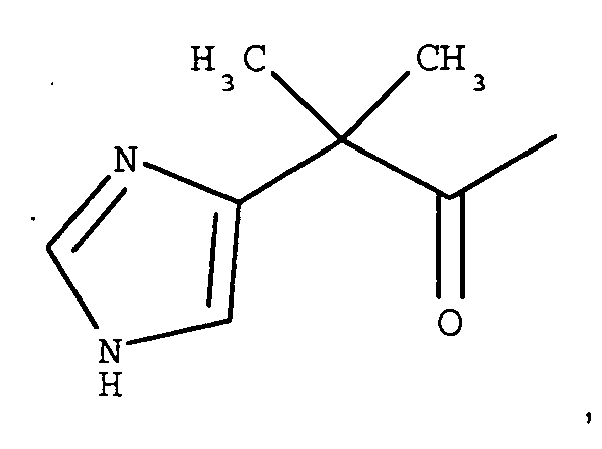

Xaa at position 9 is Glu,
Xaa at position 11 is Thr,
Xaa at position 14 is Ser,
Xaa at position 16 is Val,
Xaa at position 17 is Ser,
Xaa at position 18 is Ser, Glu, Asp, or Lys,
Xaa at position 19 is Tyr, Glu, Asp, or Lys,
Xaa at position 20 is Leu, Glu, Asp, or Lys,
Xaa at position 21 is Glu, Asp, or Lys,
Xaa at position 22 is Gly, Glu, Asp, or Lys,
Xaa at position 23 is Gln, Glu, Asp, or Lys,
Xaa at position 24 is Ala, Glu, Asp, or Lys,
Xaa at position 25 is Ala, Glu, Asp, or Lys,
Xaa at position 26 is Lys, Arg, Glu, or Asp,
Xaa at position 27 is Glu, Asp, or Lys,
Xaa at position 30 is Ala, Glu, Asp, or Lys,
Xaa at position 31 is Trp, Glu, Asp, or Lys,
Xaa at position 32 is Leu, Glu, Asp, or Lys,
Xaa at position 33 is Val, Glu, Asp, or Lys,
Xaa at position 34 is Lys, Arg, Glu, or Asp,
Xaa at position 35 is Gly, Glu, Asp, or Lys,
Xaa at position 36 is Arg, Lys, Glu, or Asp,
Xaa at position 37 is Gly, Glu, Asp, or Lys,
Xaa at position 38 is deleted,
Xaa at position 39 is deleted,
Xaa at position 40 is deleted,
Xaa at position 41 is deleted,
Xaa at position 42 is deleted,
Xaa at position 43 is deleted,
Xaa at position 44 is deleted, and
Xaa at position 45 is deleted, or
(a) a C-1-6-ester thereof, (b) an amide, C-1-6-alkylamide, or C-1-6-dialkylamide thereof, and/or (c) a pharmaceutically acceptable salt thereof,
wherein(i) a lipophilic substituent comprising from 12 to 24 carbon atoms is attached via a spacer to one or more of (a) the amino group of the N-terminal amino acid, (b) the carboxy group of the C-terminal amino acid, (c) the ε-amino group of Lys, and/or (d) the carboxy group which is part of the R group of Asp or Glu, and(ii) the total number of different amino acids of the GLP-1 peptide as compared to the corresponding native form of GLP-1 is one, two, three, four, five, or six. - The GLP-1 derivative of claim 1, wherein only one or two Lys are present.
- The GLP-1 derivative of claim 2, wherein only one Lys is present.
- The GLP-1 derivative of any of claims 1-3, wherein Lys is at the carboxy-terminus.
- The GLP-1 derivative of any of claims 1-4, wherein Glu or Asp is adjacent to Lys.
- The GLP-1 derivative of any of claims 1-5, wherein the total number of different amino acids between the GLP-1 peptide and the corresponding native form of GLP-1 is five.
- The GLP-1 derivative of any of claims 1-5, wherein the total number of different amino acids between the derivative of the GLP-1 peptide and the corresponding native form of GLP-1 is four.
- The GLP-1 derivative of any of claims 1-5, wherein the total number of different amino acids between the derivative of the GLP-1 peptide and the corresponding native form of GLP-1 is three.
- The GLP-1 derivative of any of claims 1-5, wherein the total number of different amino acids between the derivative of the GLP-1 peptide and the corresponding native form of GLP-1 is two.
- The GLP-1 derivative of any of claims 1-5, wherein the total number of different amino acids between the derivative of the GLP-1 peptide and the corresponding native form of GLP-1 is one.
- The GLP-1 derivative of claim 1, wherein Xaa at position 26 is Arg, each of Xaa at positions 38-45 is deleted, and each of the other Xaa is the amino acid in native GLP-1 (7-37).
- The GLP-1 derivative of claim 1, wherein Xaa at position 34 is Arg, each of Xaa at positions 38-45 is deleted, and each of the other Xaa is the amino acid in native GLP-1 (7-37).
- The GLP-1 derivative of claim 1, wherein Xaa at positions 26 and 34 is Arg, Xaa at position 36 is Lys, each of Xaa at positions 38-45 is deleted, and each of the other Xaa is the amino acid in native GLP-1 (7-37).
- The GLP-1 derivative of claim 1, wherein Xaa at position 8 is Thr, Ser, Gly or Val, Xaa at position 37 is Glu, Xaa at position 36 is Lys, each of Xaa at positions 38-45 is deleted, and each of the other Xaa is the amino acid in native GLP-1 (7-37).
- The GLP-1 derivative of claim 1, wherein Xaa at position 18, 23 or 27 is Lys, and Xaa at positions 26 and 34 is Arg, each of Xaa at positions 38-45 is deleted, and each of the other Xaa is the amino acid in native GLP-1(7-37).
- The GLP-1 derivative of claim 1, wherein Xaa at position 8 is Thr, Ser, Gly, or Val, Xaa at position 18, 23 or 27 is Lys, and Xaa at position 26 and 34 is Arg, each of Xaa at positions 38-45 is deleted, and each of the other Xaa is the amino acid in native GLP-1 (7-37).
- The GLP-1 derivative of any of claims 1-16 wherein three lipophilic substituents are present.
- The GLP-1 derivative of any of claims 1-16 wherein two lipophilic substituents are present.
- The GLP-1 derivative of any of claims 1-16 wherein one lipophilic substituent is present.
- The GLP-1 derivative of any of claims 1-19, wherein a lipophilic substituent is attached to the amino group of the N-terminal amino acid residue of the GLP-1 peptide.
- The GLP-1 derivative of any of claims 1-20, wherein a lipophilic substituent is attached to the carboxy group of the C-terminal amino acid residue of the GLP-1 peptide.
- The GLP-1 derivative of any of claims 1-21, wherein a lipophilic substituent is attached to the carboxy group which is part of the R group of Asp or Glu of the GLP-1 peptide.
- The GLP-1 derivative of any of claims 1-22, wherein a lipophilic substituent is attached to an ε-amino group of Lys of the GLP-1 peptide.
- The GLP-1 derivative of any of claims 1-24, wherein a lipophilic substituent is attached to an amino acid residue in such a way that a carboxyl group of the lipophilic substituent forms an amide bond with the ε-amino group of Lys of the GLP-1 peptide.
- The GLP-1 derivative of claim 24, wherein the spacer is an unbranched alkane α,ω-dicarboxylic acid group having from 1 to 7 methylene groups, preferably two methylene groups, which forms an amide bond with an amino group of the parent GLP-1 peptide and an amide bond with an amino group of the lipophilic substituent.
- The GLP-1 derivative of claim 24, wherein the spacer is an amino acid residue except Cys or Met, or a dipeptide such as Gly-Lys.
- The GLP-1 derivative of claim 26, wherein the ε-amino group of Lys forms an amide bond with a carboxylic group of the amino acid residue or dipeptide spacer, and an amino group of the amino acid residue or dipeptide spacer forms an amide bond with a carboxyl group of the lipophilic substituent.
- The GLP-1 derivative of any of claims 24-27, wherein the spacer is γ-L-glutamyl, β-L-asparagyl, β-alanyl, glycyl, or α-(γ-aminobutanoyl).
- The GLP-1 derivative of any of claims 1-28, wherein the lipophilic substituent comprises a partially or completely hydrogenated cyclopentanophenanthrene skeleton.
- The GLP-1 derivative of any of claims 1-28, wherein the lipophilic substituent is a straight-chain or branched alkyl group.
- The GLP-1 derivative of any of claims 1-28 wherein the lipophilic substituent is an acyl group of a straight-chain or branched fatty acid, preferably an acyl group of a straight-chain fatty acid.
- The GLP-1 derivative of claim 32 wherein the acyl group is selected from CH3(CH2)10CO-, CH3(CH2)12CO-, CH3(CH2)14CO-, CH3(CH2)16CO-, CH3(CH2)18CO-, CH3(CH2)20CO- and CH3(CH2)22CO-.
- The GLP-1 derivative of claim 32 wherein the acyl group is tetradecanoyl.
- The GLP-1 derivative of claim 32 wherein the acyl group is hexadecanoyl.
- The GLP-1 derivative of claim 32 wherein the acyl group is octadecanoyl.
- The GLP-1 derivative of any of the preceding claims, which is selected from
desamino-His7,Arg26,Lys34 (Nε-(γ-glutamyl(Nα-hexadecanoyl))) GLP-1 (7-37)-OH,
desamino-His7,Arg34, Lys26(Nε-(y-glutamyl(Nα-hexadecanoyl))) GLP-1 (7-37),
desamino-His7,Arg34, Lys26(Nε-(γ-aminobutyroyl(Nγ-hexadecanoyl))) GLP-1 (7-37),
desamino-His7,Arg34, Lys26(Nε-(β-alanyl(Nγ-hexadecanoyl))) GLP-1 (7-37),
Arg34,Ala8(Nα-(imidazol-4-ylprop-2-enoyl),Lys26(Nε-(γ-aminobutyroyl(Nγ-hexadecanoyl))) GLP-1 (8-37),
Arg34,Ala8(Nα-(imidazol-4-ylacetyl),Lys26(Nε-(γ-aminobutyroyl(Nγ-hexadecanoyl))) GLP-1 (8-37),
desamino-His7,Arg34, Lys26(Nε-(γ-aminobutyroyl(Nγ-tetradecanoyl))) GLP-1 (7-37), and
desamino-His7,Arg34, Lys26(Nε-(γ-aminobutyroyl(Nγ-octadecanoyl))) GLP-1 (7-37). - The GLP-1 derivative of any of claims 1-30 wherein the lipophilic substituent is an acyl group of a straight-chain or branched alkane α,ω-dicarboxylic acid.
- The GLP-1 derivative of claim 37 wherein the acyl group is selected from the group comprising HOOC(CH2)14CO-, HOOC(CH2)16CO-, HOOC(CH2)18CO-, HOOC(CH2)20CO- and HOOC(CH2)22CO-.
- The GLP-1 derivative of any of claims 1-20, wherein the lipophilic substituent with the attached spacer is a group of the formula CH3(CH2)pNH-CO(CH2)2CO-, wherein p is an integer of from 8 to 33, preferably from 12 to 28.
- The GLP-1 derivative of any of claims 1-20, wherein the lipophilic substituent with the attached spacer is a group of the formula CH3(CH2)rCO-NHCH(COOH)(CH2)2CO-, wherein r is an integer of from 10 to 24.
- The GLP-1 derivative of any of claims 1-20, wherein the lipophilic substituent with the attached spacer is a group of the formula CH3(CH2)sCO-NHCH((CH2)2COOH)CO-, wherein s is an integer of from 8 to 24.
- The GLP-1 derivative of any of claims 1-20, wherein the lipophilic substituent with the attached spacer is a group of the formula -NHCH(COOH)(CH2)4NH-CO(CH2)uCH3, wherein u is an integer of from 8 to 18.
- The GLP-1 derivative of any of claims 1-20, wherein the lipophilic substituent with the attached spacer is a group of the formula -NHCH(COOH)(CH2)4NH-COCH((CH2)2COOH)NH-CO(CH2)wCH3, wherein w is an integer of from 10 to 16.
- The GLP-1 derivative of any of claims 1-20, wherein the lipophilic substituent with the attached spacer is a group of the formula -NHCH(COOH)(CH2)4NH-CO(CH2)2CH(COOH)NH-CO(CH2)xCH3, wherein x is an integer of from 10 to 16.
- The GLP-1 derivative of any of claims 1-20, wherein the lipophilic substituent with the attached spacer is a group of the formula -NHCH(COOH)(CH2)4NH-CO(CH2)2CH(COOH)NH-CO(CH2)yCH3, wherein y is zero or an integer of from 1 to 22.
- The GLP-1 derivative of any of claims 1-45 which has insulinotropic activity, ability to decrease glucagon, ability to suppress gastric motility, ability to restore glucose competency to beta-cells, and/or ability to suppress appetite/reduce weight.
- A pharmaceutical composition comprising a GLP-1 derivative of any of claims 1-46 and a pharmaceutically acceptable vehicle or carrier.
- The pharmaceutical composition of claim 47, further comprising another antidiabetic agent.
- The pharmaceutical composition of claim 48, wherein the antidiabetic agent is an insulin, more preferably human insulin.
- The pharmaceutical composition of claim 48, wherein the antidiabetic agent is a hypoglycaemic agent.
- The pharmaceutical composition of claim 47, further comprising another antiobesity agent.
- The pharmaceutical composition of claim 51, wherein the antiobesity agent is selected from the group consisting of leptin, amphetamin, dexfenfluramine, sibutramine, orlistat, CART agonists, NPY antagonists, orexin antagonists, H3-antagonists, TNF agonists, CRF agonists, CRF BP antagonists, urocortin agonists, β3 agonists, MSH agonists, CCK agonists, serotonin re-uptake inhibitors, mixed serotonin and noradrenergic compounds, 5HT agonists, bombesin agonists, galanin antagonists, growth hormone, growth hormone releasing compounds, glucagon, TRH agonists, uncoupling protein 2 or 3 modulators, leptin agonists, DA agonists (Bromocriptin, Doprexin), lipase/amylase inhibitors, PPAR modulators, PXR modulators and TR β agonists.
- Use of a GLP-1 derivative of any of claims 1-46 for the preparation of a medicament with a protracted profile of action relative to GLP-1 (7-37), for the treatment of non-insulin dependent diabetes mellitus.
- Use of a GLP-1 derivative of any of claims 1-46 for the preparation of a medicament with a protracted profile of action relative to GLP-1 (7-37), for the treatment of insulin dependent diabetes mellitus.
- Use of a GLP-1 derivative of any of claims 1-46 for the preparation of a medicament with a protracted profile of action relative to GLP-1 (7-37), for the treatment of obesity.
- A GLP-1 derivative according to any one of claims 1-46 for use as a medicament.
- A GLP-1 derivative according to any one of claims 1-46 for the preparation of a medicament for the treatment of insulin dependent or non-insulin dependent diabetes mellitus.
- A GLP-1 derivative according to any one of claims 1-46 for the preparation of a medicament for the treatment of obesity.
- A GLP-1 derivative according to any one of claims 1-46 for the preparation of a medicament for the treatment of insulin resistance.
- A GLP-1 derivative according to any one of claims 1-46 for use in the treatment of insulin dependent or non-insulin dependent diabetes mellitus.
- A GLP-1 derivative according to any one of claims 1-46 for use in the treatment of obesity.
- A GLP-1 derivative according to any one of claims 1-46 for use in treatment of insulin resistance.
Applications Claiming Priority (7)
| Application Number | Priority Date | Filing Date | Title |
|---|---|---|---|
| DK26898 | 1998-02-27 | ||
| DK26398 | 1998-02-27 | ||
| DK26398 | 1998-02-27 | ||
| DK26898 | 1998-02-27 | ||
| DK50898 | 1998-04-08 | ||
| DK50898 | 1998-04-08 | ||
| PCT/DK1999/000085 WO1999043707A1 (en) | 1998-02-27 | 1999-02-25 | N-terminally modified glp-1 derivatives |
Publications (2)
| Publication Number | Publication Date |
|---|---|
| EP1062240A1 EP1062240A1 (en) | 2000-12-27 |
| EP1062240B1 true EP1062240B1 (en) | 2010-04-28 |
Family
ID=27220551
Family Applications (1)
| Application Number | Title | Priority Date | Filing Date |
|---|---|---|---|
| EP99906078A Expired - Lifetime EP1062240B1 (en) | 1998-02-27 | 1999-02-25 | N-terminally modified glp-1 derivatives |
Country Status (6)
| Country | Link |
|---|---|
| EP (1) | EP1062240B1 (en) |
| JP (1) | JP2002506792A (en) |
| AT (1) | ATE466028T1 (en) |
| AU (1) | AU2610899A (en) |
| DE (1) | DE69942307D1 (en) |
| WO (1) | WO1999043707A1 (en) |
Families Citing this family (94)
| Publication number | Priority date | Publication date | Assignee | Title |
|---|---|---|---|---|
| US7048906B2 (en) | 1995-05-17 | 2006-05-23 | Cedars-Sinai Medical Center | Methods of diagnosing and treating small intestinal bacterial overgrowth (SIBO) and SIBO-related conditions |
| DE69911975T2 (en) | 1998-07-31 | 2004-09-09 | Novo Nordisk A/S | IN-VITRO STIMULATION OF BETA CELL REPRODUCTION |
| EP1076066A1 (en) | 1999-07-12 | 2001-02-14 | Zealand Pharmaceuticals A/S | Peptides for lowering blood glucose levels |
| US6528486B1 (en) | 1999-07-12 | 2003-03-04 | Zealand Pharma A/S | Peptide agonists of GLP-1 activity |
| EP1634605A3 (en) | 2000-03-08 | 2006-10-11 | Novo Nordisk A/S | treatment of dyslipidemia in a patient having type 2 diabetes |
| AU2001252201A1 (en) * | 2000-03-14 | 2001-09-24 | Amylin Pharmaceuticals, Inc. | Effects of glucagon-like peptide-1 (7-36) on antro-pyloro-duodenal motility |
| CN1454214A (en) * | 2000-08-02 | 2003-11-05 | 赛莱技术公司 | Modified Biopeptides with Enhanced Efficacy |
| DE60136958D1 (en) | 2000-12-01 | 2009-01-22 | Takeda Pharmaceutical | METHOD FOR PRODUCING A PREPARATION WITH A BIOACTIVE SUBSTANCE |
| BR0116024A (en) * | 2000-12-07 | 2005-12-13 | Lilly Co Eli | Heterologous Fusion Protein and Use thereof |
| ATE382057T1 (en) | 2001-06-28 | 2008-01-15 | Novo Nordisk As | STABLE FORMULATION OF MODIFIED GLP-1 |
| WO2003018516A2 (en) * | 2001-08-23 | 2003-03-06 | Eli Lilly And Company | Glucagon-like peptide-1 analogs |
| US7238663B2 (en) * | 2001-08-28 | 2007-07-03 | Eli Lilly And Company | Pre-mixes of GLP-1 and basal insulin |
| US8129504B2 (en) | 2001-08-30 | 2012-03-06 | Biorexis Technology, Inc. | Oral delivery of modified transferrin fusion proteins |
| US7176278B2 (en) | 2001-08-30 | 2007-02-13 | Biorexis Technology, Inc. | Modified transferrin fusion proteins |
| DE60230818D1 (en) | 2001-09-24 | 2009-02-26 | Imp Innovations Ltd | PYY3-36 FOR REDUCING OR PREVENTING GREASE LUBRICITY |
| CN1571676A (en) * | 2001-10-19 | 2005-01-26 | 伊莱利利公司 | Biphasic mixtures of GLP-1 and insulin |
| JP4282485B2 (en) | 2002-01-08 | 2009-06-24 | イーライ リリー アンド カンパニー | Elongated glucagon-like peptide-1 analog |
| EP1474163A2 (en) | 2002-01-10 | 2004-11-10 | Imperial College Innovations Limited | Modification of feeding behavior |
| CA2497794A1 (en) * | 2002-09-06 | 2004-03-18 | Bayer Pharmaceuticals Corporation | Modified glp-1 receptor agonists and their pharmacological methods of use |
| CA2500021A1 (en) | 2002-09-25 | 2004-04-08 | Theratechnologies Inc. | Modified glp-1 peptides with increased biological potency |
| GB0300571D0 (en) | 2003-01-10 | 2003-02-12 | Imp College Innovations Ltd | Modification of feeding behaviour |
| US20050059605A1 (en) * | 2003-01-31 | 2005-03-17 | Krishna Peri | Chemically modified metabolites of regulatory peptides and methods of producing and using same |
| EP1626981A4 (en) * | 2003-03-04 | 2006-11-22 | Biorexis Pharmaceutical Corp | Dipeptidyl-peptidase protected proteins |
| ATE549028T1 (en) | 2003-05-15 | 2012-03-15 | Tufts College | STABLE ANALOGUES OF GLP-1 |
| KR101308912B1 (en) | 2003-06-03 | 2013-09-23 | 노보 노르디스크 에이/에스 | Stabilized pharmaceutical peptide compositions |
| PL1633391T3 (en) | 2003-06-03 | 2012-03-30 | Novo Nordisk As | Stabilized pharmaceutical peptide compositions |
| RU2401276C2 (en) * | 2003-09-19 | 2010-10-10 | Ново Нордиск А/С | Glucagon-like peptide-1 (glp-1) derivatives |
| WO2005027978A2 (en) * | 2003-09-19 | 2005-03-31 | Novo Nordisk A/S | Albumin-binding derivatives of therapeutic peptides |
| CN100444898C (en) * | 2003-09-19 | 2008-12-24 | 诺沃挪第克公司 | Albumin-binding derivatives of therapeutic peptides |
| JP2007537981A (en) * | 2003-09-19 | 2007-12-27 | ノボ ノルディスク アクティーゼルスカブ | Novel plasma protein affinity tag |
| SI3300721T2 (en) | 2003-11-20 | 2025-05-30 | Novo Nordisk A/S | Propylene glycol-containing peptide formulations which are optimal for production and for use in injection devices |
| WO2005056036A2 (en) | 2003-12-09 | 2005-06-23 | Novo Nordisk A/S | Regulation of food preference using glp-1 agonists |
| EP1711523B1 (en) | 2003-12-16 | 2012-10-10 | Ipsen Pharma | Analogues of glp-1 |
| EP2316446A1 (en) | 2004-06-11 | 2011-05-04 | Novo Nordisk A/S | Counteracting drug-induced obesity using GLP-1 agonists |
| PL1789434T3 (en) | 2004-08-31 | 2014-07-31 | Novo Nordisk As | Use of tris(hydroxymethyl) aminomethane for the stabilization of peptides, polypeptides and proteins |
| ES2458991T5 (en) | 2004-11-12 | 2025-10-14 | Novo Nordisk As | Stable formulations of insulinoptropic peptides |
| TWI372629B (en) * | 2005-03-18 | 2012-09-21 | Novo Nordisk As | Acylated glp-1 compounds |
| BRPI0608516A2 (en) | 2005-03-18 | 2010-11-16 | Novo Nordisk As | glp-1 analog, method for increasing the time of action in a patient of a glp-1 analog, pharmaceutical composition, and use of a compound |
| EP1883419A4 (en) * | 2005-05-06 | 2010-08-04 | Bayer Pharmaceuticals Corp | Glucagon-like peptide 1 (glp-1) receptor agonists and their pharmacological methods of use |
| JP5096363B2 (en) | 2005-12-16 | 2012-12-12 | ネクター セラピューティックス | GLP-1 polymer complex |
| CA2658654A1 (en) | 2006-07-24 | 2008-01-31 | Biorexis Pharmaceutical Corporation | Exendin fusion proteins |
| TWI428346B (en) | 2006-12-13 | 2014-03-01 | Imp Innovations Ltd | Novel compounds and their effects on feeding behaviour |
| KR20110039348A (en) | 2008-08-06 | 2011-04-15 | 노보 노르디스크 헬스 케어 악티엔게젤샤프트 | Conjugated Proteins with Extended In Vivo Efficacy |
| WO2010084173A1 (en) | 2009-01-22 | 2010-07-29 | Novo Nordisk Health Care Ag | Stable growth hormone compounds |
| WO2011015649A1 (en) | 2009-08-06 | 2011-02-10 | Novo Nordisk Health Care Ag | Growth hormones with prolonged in-vivo efficacy |
| MX2012006634A (en) * | 2009-12-16 | 2012-06-21 | Novo Nordisk As | Double-acylated glp-1 derivatives. |
| US9211342B2 (en) | 2010-01-22 | 2015-12-15 | Novo Nordisk Healthcare Ag | Stable growth hormone compounds resistant to proteolytic degradation |
| KR101813595B1 (en) | 2010-01-22 | 2017-12-29 | 노보 노르디스크 헬스 케어 악티엔게젤샤프트 | Growth hormones with prolonged in-vivo efficacy |
| WO2011123943A1 (en) | 2010-04-09 | 2011-10-13 | Mount Sinai Hospital | Methods for treating disorders of the gastrointestinal tract using a glp-1 agonist |
| AU2011247452B2 (en) | 2010-04-27 | 2016-03-17 | Zealand Pharma A/S | Peptide conjugates of GLP-1 receptor agonists and gastrin and their use |
| WO2011136361A1 (en) | 2010-04-30 | 2011-11-03 | 株式会社 三和化学研究所 | Peptide for improving in vivo stability of physiologically active substance or the like and physiologically active substance with improved in vivo stability |
| WO2012054822A1 (en) | 2010-10-22 | 2012-04-26 | Nektar Therapeutics | Pharmacologically active polymer-glp-1 conjugates |
| RS56998B1 (en) | 2010-12-16 | 2018-05-31 | Novo Nordisk As | Solid compositions comprising a glp-1 agonist and a salt of n-(8-(2-hydroxybenzoyl)amino)caprylic acid |
| RU2602601C2 (en) | 2011-04-12 | 2016-11-20 | Ново Нордиск А/С | Double acylated glp-1 derivatives |
| MX2014005351A (en) | 2011-11-03 | 2014-05-28 | Zealand Pharma As | Glp-1 receptor agonist peptide gastrin conjugates. |
| WO2013139695A1 (en) | 2012-03-22 | 2013-09-26 | Novo Nordisk A/S | Compositions comprising a delivery agent and preparation thereof |
| CN104203266B (en) | 2012-03-22 | 2017-12-26 | 诺和诺德股份有限公司 | GLP-1 peptide composition and its preparation |
| TR201903918T4 (en) | 2012-03-22 | 2019-04-22 | Novo Nordisk As | Compositions containing a dispersing agent and their preparation. |
| EP2863895B1 (en) | 2012-06-20 | 2021-04-14 | Novo Nordisk A/S | Tablet formulation comprising a peptide and a delivery agent |
| US20150157619A1 (en) | 2012-07-10 | 2015-06-11 | Takeda Pharmaceutical Company Limited | Pharmaceutical preparation for injection |
| IN2015DN00544A (en) | 2012-07-23 | 2015-06-26 | Zealand Pharma As | |
| TWI608013B (en) | 2012-09-17 | 2017-12-11 | 西蘭製藥公司 | Glucagon analog |
| US20150273069A1 (en) | 2012-10-17 | 2015-10-01 | Novo Nordisk A/S | Fatty acid acylated amino acids for oral peptide delivery |
| US11045523B2 (en) | 2013-04-05 | 2021-06-29 | Novo Nordisk Healthcare Ag | Formulation of growth hormone albumin-binder conjugate |
| RU2671406C2 (en) | 2013-05-02 | 2018-10-31 | Ново Нордиск А/С | Oral dosing of glucagon-like peptide-1 compounds |
| US9988429B2 (en) | 2013-10-17 | 2018-06-05 | Zealand Pharma A/S | Glucagon analogues |
| ES2688708T3 (en) | 2013-10-17 | 2018-11-06 | Zealand Pharma A/S | Acylated glucagon analogs |
| EP3065767B1 (en) | 2013-11-06 | 2020-12-30 | Zealand Pharma A/S | Gip-glp-1 dual agonist compounds and methods |
| US10131702B2 (en) | 2013-11-06 | 2018-11-20 | Zealand Pharma A/S | Glucagon-GLP-1-GIP triple agonist compounds |
| DK3006045T3 (en) | 2014-10-07 | 2017-07-17 | Cyprumed Gmbh | Pharmaceutical formulations for oral administration of peptide or protein drugs |
| US10253078B2 (en) | 2014-10-29 | 2019-04-09 | Zealand Pharma A/S | GIP agonist compounds and methods |
| PL3283507T3 (en) | 2015-04-16 | 2020-05-18 | Zealand Pharma A/S | Acylated glucagon analogue |
| JP2018529749A (en) | 2015-10-07 | 2018-10-11 | シプルメット・ゲーエムベーハー | Pharmaceutical formulations for oral delivery of peptide drugs |
| WO2018065634A1 (en) | 2016-10-07 | 2018-04-12 | Cyprumed Gmbh | Pharmaceutical compositions for the nasal delivery of peptide or protein drugs |
| SG11201903938XA (en) | 2016-12-09 | 2019-05-30 | Zealand Pharma As | Acylated glp-1/glp-2 dual agonists |
| MX2020001525A (en) | 2017-08-24 | 2020-03-20 | Novo Nordisk As | COMPOSITIONS OF GLUCAGON-LIKE PEPTIDE TYPE 1 (GLP-1) AND THEIR USES. |
| BR112020014624A2 (en) | 2018-02-02 | 2020-12-08 | Novo Nordisk A/S | SOLID COMPOSITIONS UNDERSTANDING GLP-1 AGONIST, CAPRILIC AND LUBRICANT N- (8- (2-HYDROXYBENZOIL) AMINO ACID SALT) |
| US11535660B1 (en) * | 2018-03-23 | 2022-12-27 | Cannot Therapeutics, Inc. | Modulators of G-protein coupled receptors |
| ES2925678T3 (en) | 2018-04-05 | 2022-10-19 | Sun Pharmaceutical Ind Ltd | New analogs of GLP-1 |
| WO2019193204A1 (en) | 2018-04-06 | 2019-10-10 | Cyprumed Gmbh | Pharmaceutical compositions for the transmucosal delivery of therapeutic peptides and proteins |
| TWI829687B (en) | 2018-05-07 | 2024-01-21 | 丹麥商諾佛 儂迪克股份有限公司 | Solid compositions comprising a glp-1 agonist and a salt of n-(8-(2-hydroxybenzoyl)amino)caprylic acid |
| IL294521A (en) | 2020-02-18 | 2022-09-01 | Novo Nordisk As | Glp-1 compositions and uses thereof |
| JP7777085B2 (en) | 2020-04-29 | 2025-11-27 | ノヴォ ノルディスク アー/エス | Solid Composition Comprising a GLP-1 Agonist and Histidine - Patent application |
| WO2022049310A1 (en) | 2020-09-07 | 2022-03-10 | Cyprumed Gmbh | Improved pharmaceutical formulations of glp-1 receptor agonists |
| CN114729060B (en) | 2020-09-30 | 2022-11-25 | 北京质肽生物医药科技有限公司 | Polypeptide Conjugates and Methods of Use |
| MX2023013492A (en) | 2021-05-13 | 2024-02-29 | Carmot Therapeutics Inc | Modulators of g-protein coupled receptors. |
| WO2023012263A1 (en) | 2021-08-04 | 2023-02-09 | Novo Nordisk A/S | Solid oral peptide formulations |
| KR20240163717A (en) | 2022-03-30 | 2024-11-19 | 베이징 큐엘 바이오파마슈티컬 컴퍼니 리미티드 | Liquid pharmaceutical composition of polypeptide conjugate and method of using same |
| AU2023415591A1 (en) | 2022-12-30 | 2025-08-14 | Algipharma As | Compositions and methods to increase the systemic bioavailability of a polypeptide therapeutic agent undergoing oral administration |
| WO2024165571A2 (en) | 2023-02-06 | 2024-08-15 | E-Therapeutics Plc | Inhibitors of expression and/or function |
| WO2025125576A2 (en) | 2023-12-15 | 2025-06-19 | E-Therapeutics Plc | Inhibitors of expression and/or function |
| EP4686757A1 (en) | 2024-07-31 | 2026-02-04 | e-therapeutics PLC | Inhibitors of expression and/or function |
| WO2025133348A1 (en) | 2023-12-22 | 2025-06-26 | E-Therapeutics Plc | Inhibitors of expression and/or function |
| WO2025196502A1 (en) | 2024-03-20 | 2025-09-25 | North Carolina Agricultural & Technical State University | Choline kinase inhibitors as a therapeutic treatment for obesity |
Family Cites Families (15)
| Publication number | Priority date | Publication date | Assignee | Title |
|---|---|---|---|---|
| US4683202A (en) | 1985-03-28 | 1987-07-28 | Cetus Corporation | Process for amplifying nucleic acid sequences |
| US5614492A (en) * | 1986-05-05 | 1997-03-25 | The General Hospital Corporation | Insulinotropic hormone GLP-1 (7-36) and uses thereof |
| WO1987006941A1 (en) | 1986-05-05 | 1987-11-19 | The General Hospital Corporation | Insulinotropic hormone |
| NZ222907A (en) | 1986-12-16 | 1990-08-28 | Novo Industri As | Preparation for intranasal administration containing a phospholipid absorption enhancing system |
| JPH04504246A (en) | 1989-03-20 | 1992-07-30 | ザ・ジェネラル・ホスピタル・コーポレーション | insulin stimulating hormone |
| ATE164852T1 (en) | 1990-01-24 | 1998-04-15 | Douglas I Buckley | GLP-1 ANALOGUE USABLE IN DIABETES TREATMENT |
| US5545618A (en) * | 1990-01-24 | 1996-08-13 | Buckley; Douglas I. | GLP-1 analogs useful for diabetes treatment |
| DK36392D0 (en) * | 1992-03-19 | 1992-03-19 | Novo Nordisk As | USE OF CHEMICAL COMPOUND |
| DK36492D0 (en) | 1992-03-19 | 1992-03-19 | Novo Nordisk As | PREPARATION |
| US5359030A (en) * | 1993-05-10 | 1994-10-25 | Protein Delivery, Inc. | Conjugation-stabilized polypeptide compositions, therapeutic delivery and diagnostic formulations comprising same, and method of making and using the same |
| GB9409496D0 (en) * | 1994-05-12 | 1994-06-29 | London Health Ass | Method for improving glycaemic control in diabetes |
| US5512549A (en) | 1994-10-18 | 1996-04-30 | Eli Lilly And Company | Glucagon-like insulinotropic peptide analogs, compositions, and methods of use |
| US5869602A (en) * | 1995-03-17 | 1999-02-09 | Novo Nordisk A/S | Peptide derivatives |
| JP4064460B2 (en) * | 1996-03-01 | 2008-03-19 | ノボ ノルディスク アクティーゼルスカブ | Use of a pharmaceutical composition comprising an appetite suppressive peptide |
| KR100556067B1 (en) | 1996-08-30 | 2006-03-07 | 노보 노르디스크 에이/에스 | Glp-1 derivatives |
-
1999
- 1999-02-25 EP EP99906078A patent/EP1062240B1/en not_active Expired - Lifetime
- 1999-02-25 AT AT99906078T patent/ATE466028T1/en not_active IP Right Cessation
- 1999-02-25 JP JP2000533457A patent/JP2002506792A/en active Pending
- 1999-02-25 AU AU26108/99A patent/AU2610899A/en not_active Abandoned
- 1999-02-25 WO PCT/DK1999/000085 patent/WO1999043707A1/en not_active Ceased
- 1999-02-25 DE DE69942307T patent/DE69942307D1/en not_active Expired - Lifetime
Also Published As
| Publication number | Publication date |
|---|---|
| AU2610899A (en) | 1999-09-15 |
| DE69942307D1 (en) | 2010-06-10 |
| WO1999043707A1 (en) | 1999-09-02 |
| ATE466028T1 (en) | 2010-05-15 |
| EP1062240A1 (en) | 2000-12-27 |
| JP2002506792A (en) | 2002-03-05 |
Similar Documents
| Publication | Publication Date | Title |
|---|---|---|
| EP1062240B1 (en) | N-terminally modified glp-1 derivatives | |
| EP1056774A1 (en) | N-terminally truncated glp-1 derivatives | |
| EP1704165B1 (en) | Glp-1 compounds | |
| US7893017B2 (en) | Protracted GLP-1 compounds | |
| EP1061946B1 (en) | Glp-1 derivatives with helix-content exceeding 25 %, forming partially structured micellar-like aggregates | |
| US8030273B2 (en) | Protracted exendin-4 compounds | |
| EP2932981B1 (en) | Albumin-binding derivatives of GLP-1 | |
| US6268343B1 (en) | Derivatives of GLP-1 analogs | |
| WO1998008872A1 (en) | Glp-2 derivatives | |
| EP1060192A2 (en) | Glp-2 derivatives with helix-content exceeding 25 %, forming partially structured micellar-like aggregates | |
| KR20060109940A (en) | Novel glp-1 analogues linked to albumin-like agents | |
| US7595294B2 (en) | Vasoactive intestinal polypeptide pharmaceuticals | |
| US20020025933A1 (en) | GLP-2 derivatives | |
| WO2002040537A2 (en) | Analogues and derivatives of gastrin releasing peptide (grp) |
Legal Events
| Date | Code | Title | Description |
|---|---|---|---|
| PUAI | Public reference made under article 153(3) epc to a published international application that has entered the european phase |
Free format text: ORIGINAL CODE: 0009012 |
|
| 17P | Request for examination filed |
Effective date: 20000927 |
|
| AK | Designated contracting states |
Kind code of ref document: A1 Designated state(s): AT BE CH CY DE DK ES FI FR GB GR IE IT LI LU NL PT SE |
|
| AX | Request for extension of the european patent |
Free format text: LT PAYMENT 20000927;RO PAYMENT 20000927;SI PAYMENT 20000927 |
|
| RIN1 | Information on inventor provided before grant (corrected) |
Inventor name: MADSEN, KJELD Inventor name: NIELSEN, PER, FRANKLIN Inventor name: HUUSFELDT, PER, OLAF Inventor name: KNUDSEN, LISELOTTE, BJERRE |
|
| GRAP | Despatch of communication of intention to grant a patent |
Free format text: ORIGINAL CODE: EPIDOSNIGR1 |
|
| GRAS | Grant fee paid |
Free format text: ORIGINAL CODE: EPIDOSNIGR3 |
|
| GRAA | (expected) grant |
Free format text: ORIGINAL CODE: 0009210 |
|
| AK | Designated contracting states |
Kind code of ref document: B1 Designated state(s): AT BE CH CY DE DK ES FI FR GB GR IE IT LI LU NL PT SE |
|
| AX | Request for extension of the european patent |
Extension state: LT RO SI |
|
| REG | Reference to a national code |
Ref country code: GB Ref legal event code: FG4D |
|
| REG | Reference to a national code |
Ref country code: CH Ref legal event code: EP |
|
| REG | Reference to a national code |
Ref country code: IE Ref legal event code: FG4D |
|
| REF | Corresponds to: |
Ref document number: 69942307 Country of ref document: DE Date of ref document: 20100610 Kind code of ref document: P |
|
| REG | Reference to a national code |
Ref country code: NL Ref legal event code: VDEP Effective date: 20100428 |
|
| LTIE | Lt: invalidation of european patent or patent extension |
Effective date: 20100428 |
|
| PG25 | Lapsed in a contracting state [announced via postgrant information from national office to epo] |
Ref country code: SE Free format text: LAPSE BECAUSE OF FAILURE TO SUBMIT A TRANSLATION OF THE DESCRIPTION OR TO PAY THE FEE WITHIN THE PRESCRIBED TIME-LIMIT Effective date: 20100428 Ref country code: NL Free format text: LAPSE BECAUSE OF FAILURE TO SUBMIT A TRANSLATION OF THE DESCRIPTION OR TO PAY THE FEE WITHIN THE PRESCRIBED TIME-LIMIT Effective date: 20100428 Ref country code: ES Free format text: LAPSE BECAUSE OF FAILURE TO SUBMIT A TRANSLATION OF THE DESCRIPTION OR TO PAY THE FEE WITHIN THE PRESCRIBED TIME-LIMIT Effective date: 20100808 |
|
| PG25 | Lapsed in a contracting state [announced via postgrant information from national office to epo] |
Ref country code: FI Free format text: LAPSE BECAUSE OF FAILURE TO SUBMIT A TRANSLATION OF THE DESCRIPTION OR TO PAY THE FEE WITHIN THE PRESCRIBED TIME-LIMIT Effective date: 20100428 Ref country code: AT Free format text: LAPSE BECAUSE OF FAILURE TO SUBMIT A TRANSLATION OF THE DESCRIPTION OR TO PAY THE FEE WITHIN THE PRESCRIBED TIME-LIMIT Effective date: 20100428 |
|
| PG25 | Lapsed in a contracting state [announced via postgrant information from national office to epo] |
Ref country code: CY Free format text: LAPSE BECAUSE OF NON-PAYMENT OF DUE FEES Effective date: 20100428 |
|
| PG25 | Lapsed in a contracting state [announced via postgrant information from national office to epo] |
Ref country code: PT Free format text: LAPSE BECAUSE OF FAILURE TO SUBMIT A TRANSLATION OF THE DESCRIPTION OR TO PAY THE FEE WITHIN THE PRESCRIBED TIME-LIMIT Effective date: 20100830 Ref country code: DK Free format text: LAPSE BECAUSE OF FAILURE TO SUBMIT A TRANSLATION OF THE DESCRIPTION OR TO PAY THE FEE WITHIN THE PRESCRIBED TIME-LIMIT Effective date: 20100428 |
|
| PG25 | Lapsed in a contracting state [announced via postgrant information from national office to epo] |
Ref country code: BE Free format text: LAPSE BECAUSE OF FAILURE TO SUBMIT A TRANSLATION OF THE DESCRIPTION OR TO PAY THE FEE WITHIN THE PRESCRIBED TIME-LIMIT Effective date: 20100428 |
|
| PLBE | No opposition filed within time limit |
Free format text: ORIGINAL CODE: 0009261 |
|
| STAA | Information on the status of an ep patent application or granted ep patent |
Free format text: STATUS: NO OPPOSITION FILED WITHIN TIME LIMIT |
|
| PG25 | Lapsed in a contracting state [announced via postgrant information from national office to epo] |
Ref country code: IT Free format text: LAPSE BECAUSE OF FAILURE TO SUBMIT A TRANSLATION OF THE DESCRIPTION OR TO PAY THE FEE WITHIN THE PRESCRIBED TIME-LIMIT Effective date: 20100428 |
|
| 26N | No opposition filed |
Effective date: 20110131 |
|
| PG25 | Lapsed in a contracting state [announced via postgrant information from national office to epo] |
Ref country code: GR Free format text: LAPSE BECAUSE OF FAILURE TO SUBMIT A TRANSLATION OF THE DESCRIPTION OR TO PAY THE FEE WITHIN THE PRESCRIBED TIME-LIMIT Effective date: 20100729 |
|
| REG | Reference to a national code |
Ref country code: CH Ref legal event code: PL |
|
| PG25 | Lapsed in a contracting state [announced via postgrant information from national office to epo] |
Ref country code: LI Free format text: LAPSE BECAUSE OF NON-PAYMENT OF DUE FEES Effective date: 20110228 Ref country code: CH Free format text: LAPSE BECAUSE OF NON-PAYMENT OF DUE FEES Effective date: 20110228 |
|
| REG | Reference to a national code |
Ref country code: IE Ref legal event code: MM4A |
|
| PG25 | Lapsed in a contracting state [announced via postgrant information from national office to epo] |
Ref country code: IE Free format text: LAPSE BECAUSE OF NON-PAYMENT OF DUE FEES Effective date: 20110225 |
|
| PG25 | Lapsed in a contracting state [announced via postgrant information from national office to epo] |
Ref country code: LU Free format text: LAPSE BECAUSE OF NON-PAYMENT OF DUE FEES Effective date: 20110225 |
|
| REG | Reference to a national code |
Ref country code: FR Ref legal event code: PLFP Year of fee payment: 18 |
|
| PGFP | Annual fee paid to national office [announced via postgrant information from national office to epo] |
Ref country code: DE Payment date: 20160216 Year of fee payment: 18 |
|
| PGFP | Annual fee paid to national office [announced via postgrant information from national office to epo] |
Ref country code: GB Payment date: 20160224 Year of fee payment: 18 Ref country code: FR Payment date: 20160108 Year of fee payment: 18 |
|
| REG | Reference to a national code |
Ref country code: DE Ref legal event code: R119 Ref document number: 69942307 Country of ref document: DE |
|
| GBPC | Gb: european patent ceased through non-payment of renewal fee |
Effective date: 20170225 |
|
| REG | Reference to a national code |
Ref country code: FR Ref legal event code: ST Effective date: 20171031 |
|
| PG25 | Lapsed in a contracting state [announced via postgrant information from national office to epo] |
Ref country code: DE Free format text: LAPSE BECAUSE OF NON-PAYMENT OF DUE FEES Effective date: 20170901 Ref country code: FR Free format text: LAPSE BECAUSE OF NON-PAYMENT OF DUE FEES Effective date: 20170228 |
|
| PG25 | Lapsed in a contracting state [announced via postgrant information from national office to epo] |
Ref country code: GB Free format text: LAPSE BECAUSE OF NON-PAYMENT OF DUE FEES Effective date: 20170225 |