EP0479396B1 - Transformation of alkalophilic bacillus strains - Google Patents
Transformation of alkalophilic bacillus strains Download PDFInfo
- Publication number
- EP0479396B1 EP0479396B1 EP91203297A EP91203297A EP0479396B1 EP 0479396 B1 EP0479396 B1 EP 0479396B1 EP 91203297 A EP91203297 A EP 91203297A EP 91203297 A EP91203297 A EP 91203297A EP 0479396 B1 EP0479396 B1 EP 0479396B1
- Authority
- EP
- European Patent Office
- Prior art keywords
- bacillus
- host cell
- dna
- protease
- enzyme
- Prior art date
- Legal status (The legal status is an assumption and is not a legal conclusion. Google has not performed a legal analysis and makes no representation as to the accuracy of the status listed.)
- Expired - Lifetime
Links
- 241000193830 Bacillus <bacterium> Species 0.000 title claims description 86
- 230000009466 transformation Effects 0.000 title description 13
- 210000004027 cell Anatomy 0.000 claims description 58
- 108090000623 proteins and genes Proteins 0.000 claims description 51
- 239000013612 plasmid Substances 0.000 claims description 47
- 108091005804 Peptidases Proteins 0.000 claims description 37
- 108020004414 DNA Proteins 0.000 claims description 36
- 238000000034 method Methods 0.000 claims description 34
- 108010022999 Serine Proteases Proteins 0.000 claims description 28
- 210000001938 protoplast Anatomy 0.000 claims description 28
- 102000012479 Serine Proteases Human genes 0.000 claims description 25
- 238000004519 manufacturing process Methods 0.000 claims description 25
- 102000004190 Enzymes Human genes 0.000 claims description 18
- 108090000790 Enzymes Proteins 0.000 claims description 18
- 229940088598 enzyme Drugs 0.000 claims description 18
- 108091028043 Nucleic acid sequence Proteins 0.000 claims description 11
- 239000003550 marker Substances 0.000 claims description 11
- 230000015572 biosynthetic process Effects 0.000 claims description 10
- 230000003115 biocidal effect Effects 0.000 claims description 9
- 210000000349 chromosome Anatomy 0.000 claims description 9
- 101710184263 Alkaline serine protease Proteins 0.000 claims description 8
- 230000001105 regulatory effect Effects 0.000 claims description 8
- 102000016943 Muramidase Human genes 0.000 claims description 7
- 108010014251 Muramidase Proteins 0.000 claims description 7
- 108010062010 N-Acetylmuramoyl-L-alanine Amidase Proteins 0.000 claims description 7
- 239000003242 anti bacterial agent Substances 0.000 claims description 7
- 229960000274 lysozyme Drugs 0.000 claims description 7
- 239000004325 lysozyme Substances 0.000 claims description 7
- 235000010335 lysozyme Nutrition 0.000 claims description 7
- 230000010076 replication Effects 0.000 claims description 7
- 241000894007 species Species 0.000 claims description 7
- 150000001413 amino acids Chemical group 0.000 claims description 5
- 238000003786 synthesis reaction Methods 0.000 claims description 4
- 230000002103 transcriptional effect Effects 0.000 claims description 4
- 238000013518 transcription Methods 0.000 claims description 3
- 230000035897 transcription Effects 0.000 claims description 3
- 238000007865 diluting Methods 0.000 claims description 2
- 230000002708 enhancing effect Effects 0.000 claims description 2
- 230000001172 regenerating effect Effects 0.000 claims description 2
- 230000014621 translational initiation Effects 0.000 claims description 2
- 102000035195 Peptidases Human genes 0.000 description 29
- 235000014469 Bacillus subtilis Nutrition 0.000 description 27
- 229930193140 Neomycin Natural products 0.000 description 25
- 229960004927 neomycin Drugs 0.000 description 25
- 239000004365 Protease Substances 0.000 description 24
- 108091005658 Basic proteases Proteins 0.000 description 22
- 239000002609 medium Substances 0.000 description 15
- 241000304886 Bacilli Species 0.000 description 13
- 239000000047 product Substances 0.000 description 13
- 239000012634 fragment Substances 0.000 description 11
- 230000010354 integration Effects 0.000 description 8
- 239000000523 sample Substances 0.000 description 8
- 230000000694 effects Effects 0.000 description 7
- 239000013598 vector Substances 0.000 description 7
- 229920001817 Agar Polymers 0.000 description 6
- 239000008272 agar Substances 0.000 description 6
- 238000001962 electrophoresis Methods 0.000 description 6
- 235000018102 proteins Nutrition 0.000 description 6
- 102000004169 proteins and genes Human genes 0.000 description 6
- 230000003248 secreting effect Effects 0.000 description 6
- 108091032973 (ribonucleotides)n+m Proteins 0.000 description 5
- DVLFYONBTKHTER-UHFFFAOYSA-N 3-(N-morpholino)propanesulfonic acid Chemical compound OS(=O)(=O)CCCN1CCOCC1 DVLFYONBTKHTER-UHFFFAOYSA-N 0.000 description 5
- 241000193744 Bacillus amyloliquefaciens Species 0.000 description 5
- 239000007993 MOPS buffer Substances 0.000 description 5
- 108091034117 Oligonucleotide Proteins 0.000 description 5
- JLCPHMBAVCMARE-UHFFFAOYSA-N [3-[[3-[[3-[[3-[[3-[[3-[[3-[[3-[[3-[[3-[[3-[[5-(2-amino-6-oxo-1H-purin-9-yl)-3-[[3-[[3-[[3-[[3-[[3-[[5-(2-amino-6-oxo-1H-purin-9-yl)-3-[[5-(2-amino-6-oxo-1H-purin-9-yl)-3-hydroxyoxolan-2-yl]methoxy-hydroxyphosphoryl]oxyoxolan-2-yl]methoxy-hydroxyphosphoryl]oxy-5-(5-methyl-2,4-dioxopyrimidin-1-yl)oxolan-2-yl]methoxy-hydroxyphosphoryl]oxy-5-(6-aminopurin-9-yl)oxolan-2-yl]methoxy-hydroxyphosphoryl]oxy-5-(6-aminopurin-9-yl)oxolan-2-yl]methoxy-hydroxyphosphoryl]oxy-5-(6-aminopurin-9-yl)oxolan-2-yl]methoxy-hydroxyphosphoryl]oxy-5-(6-aminopurin-9-yl)oxolan-2-yl]methoxy-hydroxyphosphoryl]oxyoxolan-2-yl]methoxy-hydroxyphosphoryl]oxy-5-(5-methyl-2,4-dioxopyrimidin-1-yl)oxolan-2-yl]methoxy-hydroxyphosphoryl]oxy-5-(4-amino-2-oxopyrimidin-1-yl)oxolan-2-yl]methoxy-hydroxyphosphoryl]oxy-5-(5-methyl-2,4-dioxopyrimidin-1-yl)oxolan-2-yl]methoxy-hydroxyphosphoryl]oxy-5-(5-methyl-2,4-dioxopyrimidin-1-yl)oxolan-2-yl]methoxy-hydroxyphosphoryl]oxy-5-(6-aminopurin-9-yl)oxolan-2-yl]methoxy-hydroxyphosphoryl]oxy-5-(6-aminopurin-9-yl)oxolan-2-yl]methoxy-hydroxyphosphoryl]oxy-5-(4-amino-2-oxopyrimidin-1-yl)oxolan-2-yl]methoxy-hydroxyphosphoryl]oxy-5-(4-amino-2-oxopyrimidin-1-yl)oxolan-2-yl]methoxy-hydroxyphosphoryl]oxy-5-(4-amino-2-oxopyrimidin-1-yl)oxolan-2-yl]methoxy-hydroxyphosphoryl]oxy-5-(6-aminopurin-9-yl)oxolan-2-yl]methoxy-hydroxyphosphoryl]oxy-5-(4-amino-2-oxopyrimidin-1-yl)oxolan-2-yl]methyl [5-(6-aminopurin-9-yl)-2-(hydroxymethyl)oxolan-3-yl] hydrogen phosphate Polymers Cc1cn(C2CC(OP(O)(=O)OCC3OC(CC3OP(O)(=O)OCC3OC(CC3O)n3cnc4c3nc(N)[nH]c4=O)n3cnc4c3nc(N)[nH]c4=O)C(COP(O)(=O)OC3CC(OC3COP(O)(=O)OC3CC(OC3COP(O)(=O)OC3CC(OC3COP(O)(=O)OC3CC(OC3COP(O)(=O)OC3CC(OC3COP(O)(=O)OC3CC(OC3COP(O)(=O)OC3CC(OC3COP(O)(=O)OC3CC(OC3COP(O)(=O)OC3CC(OC3COP(O)(=O)OC3CC(OC3COP(O)(=O)OC3CC(OC3COP(O)(=O)OC3CC(OC3COP(O)(=O)OC3CC(OC3COP(O)(=O)OC3CC(OC3COP(O)(=O)OC3CC(OC3COP(O)(=O)OC3CC(OC3COP(O)(=O)OC3CC(OC3CO)n3cnc4c(N)ncnc34)n3ccc(N)nc3=O)n3cnc4c(N)ncnc34)n3ccc(N)nc3=O)n3ccc(N)nc3=O)n3ccc(N)nc3=O)n3cnc4c(N)ncnc34)n3cnc4c(N)ncnc34)n3cc(C)c(=O)[nH]c3=O)n3cc(C)c(=O)[nH]c3=O)n3ccc(N)nc3=O)n3cc(C)c(=O)[nH]c3=O)n3cnc4c3nc(N)[nH]c4=O)n3cnc4c(N)ncnc34)n3cnc4c(N)ncnc34)n3cnc4c(N)ncnc34)n3cnc4c(N)ncnc34)O2)c(=O)[nH]c1=O JLCPHMBAVCMARE-UHFFFAOYSA-N 0.000 description 5
- 239000002253 acid Substances 0.000 description 5
- 150000007513 acids Chemical class 0.000 description 5
- 238000001514 detection method Methods 0.000 description 5
- 239000000499 gel Substances 0.000 description 5
- HNDVDQJCIGZPNO-UHFFFAOYSA-N histidine Natural products OC(=O)C(N)CC1=CN=CN1 HNDVDQJCIGZPNO-UHFFFAOYSA-N 0.000 description 5
- 238000009396 hybridization Methods 0.000 description 5
- 238000002955 isolation Methods 0.000 description 5
- 108020004707 nucleic acids Proteins 0.000 description 5
- 102000039446 nucleic acids Human genes 0.000 description 5
- 150000007523 nucleic acids Chemical class 0.000 description 5
- 238000012163 sequencing technique Methods 0.000 description 5
- 241000194108 Bacillus licheniformis Species 0.000 description 4
- 244000063299 Bacillus subtilis Species 0.000 description 4
- TWRXJAOTZQYOKJ-UHFFFAOYSA-L Magnesium chloride Chemical compound [Mg+2].[Cl-].[Cl-] TWRXJAOTZQYOKJ-UHFFFAOYSA-L 0.000 description 4
- 239000002299 complementary DNA Substances 0.000 description 4
- 239000000203 mixture Substances 0.000 description 4
- 230000008929 regeneration Effects 0.000 description 4
- 238000011069 regeneration method Methods 0.000 description 4
- 108091008146 restriction endonucleases Proteins 0.000 description 4
- 239000000758 substrate Substances 0.000 description 4
- 239000006228 supernatant Substances 0.000 description 4
- 239000007195 tryptone soya broth Substances 0.000 description 4
- CSCPPACGZOOCGX-UHFFFAOYSA-N Acetone Chemical compound CC(C)=O CSCPPACGZOOCGX-UHFFFAOYSA-N 0.000 description 3
- 108010076119 Caseins Proteins 0.000 description 3
- PEDCQBHIVMGVHV-UHFFFAOYSA-N Glycerine Chemical compound OCC(O)CO PEDCQBHIVMGVHV-UHFFFAOYSA-N 0.000 description 3
- 102000003960 Ligases Human genes 0.000 description 3
- 108090000364 Ligases Proteins 0.000 description 3
- 239000002202 Polyethylene glycol Substances 0.000 description 3
- 108010056079 Subtilisins Proteins 0.000 description 3
- 102000005158 Subtilisins Human genes 0.000 description 3
- 108090000637 alpha-Amylases Proteins 0.000 description 3
- 238000004458 analytical method Methods 0.000 description 3
- 239000000872 buffer Substances 0.000 description 3
- 239000005018 casein Substances 0.000 description 3
- BECPQYXYKAMYBN-UHFFFAOYSA-N casein, tech. Chemical compound NCCCCC(C(O)=O)N=C(O)C(CC(O)=O)N=C(O)C(CCC(O)=N)N=C(O)C(CC(C)C)N=C(O)C(CCC(O)=O)N=C(O)C(CC(O)=O)N=C(O)C(CCC(O)=O)N=C(O)C(C(C)O)N=C(O)C(CCC(O)=N)N=C(O)C(CCC(O)=N)N=C(O)C(CCC(O)=N)N=C(O)C(CCC(O)=O)N=C(O)C(CCC(O)=O)N=C(O)C(COP(O)(O)=O)N=C(O)C(CCC(O)=N)N=C(O)C(N)CC1=CC=CC=C1 BECPQYXYKAMYBN-UHFFFAOYSA-N 0.000 description 3
- 235000021240 caseins Nutrition 0.000 description 3
- 238000005119 centrifugation Methods 0.000 description 3
- 230000002759 chromosomal effect Effects 0.000 description 3
- 238000010276 construction Methods 0.000 description 3
- 238000000855 fermentation Methods 0.000 description 3
- 230000004151 fermentation Effects 0.000 description 3
- 230000004927 fusion Effects 0.000 description 3
- 125000001475 halogen functional group Chemical group 0.000 description 3
- 238000001802 infusion Methods 0.000 description 3
- 239000002773 nucleotide Substances 0.000 description 3
- 125000003729 nucleotide group Chemical group 0.000 description 3
- 235000015097 nutrients Nutrition 0.000 description 3
- 229920001223 polyethylene glycol Polymers 0.000 description 3
- 238000001556 precipitation Methods 0.000 description 3
- 238000002360 preparation method Methods 0.000 description 3
- 230000001131 transforming effect Effects 0.000 description 3
- YBJHBAHKTGYVGT-ZKWXMUAHSA-N (+)-Biotin Chemical compound N1C(=O)N[C@@H]2[C@H](CCCCC(=O)O)SC[C@@H]21 YBJHBAHKTGYVGT-ZKWXMUAHSA-N 0.000 description 2
- 108090000145 Bacillolysin Proteins 0.000 description 2
- 102000053602 DNA Human genes 0.000 description 2
- 241001524679 Escherichia virus M13 Species 0.000 description 2
- 241000193385 Geobacillus stearothermophilus Species 0.000 description 2
- WQZGKKKJIJFFOK-GASJEMHNSA-N Glucose Natural products OC[C@H]1OC(O)[C@H](O)[C@@H](O)[C@@H]1O WQZGKKKJIJFFOK-GASJEMHNSA-N 0.000 description 2
- WHUUTDBJXJRKMK-VKHMYHEASA-N L-glutamic acid Chemical compound OC(=O)[C@@H](N)CCC(O)=O WHUUTDBJXJRKMK-VKHMYHEASA-N 0.000 description 2
- FFEARJCKVFRZRR-BYPYZUCNSA-N L-methionine Chemical compound CSCC[C@H](N)C(O)=O FFEARJCKVFRZRR-BYPYZUCNSA-N 0.000 description 2
- KDXKERNSBIXSRK-UHFFFAOYSA-N Lysine Natural products NCCCCC(N)C(O)=O KDXKERNSBIXSRK-UHFFFAOYSA-N 0.000 description 2
- 239000004472 Lysine Substances 0.000 description 2
- 108091005507 Neutral proteases Proteins 0.000 description 2
- 102000035092 Neutral proteases Human genes 0.000 description 2
- 108020005187 Oligonucleotide Probes Proteins 0.000 description 2
- FAPWRFPIFSIZLT-UHFFFAOYSA-M Sodium chloride Chemical compound [Na+].[Cl-] FAPWRFPIFSIZLT-UHFFFAOYSA-M 0.000 description 2
- 108090000787 Subtilisin Proteins 0.000 description 2
- 239000007983 Tris buffer Substances 0.000 description 2
- 102000004139 alpha-Amylases Human genes 0.000 description 2
- 239000003139 biocide Substances 0.000 description 2
- 229940041514 candida albicans extract Drugs 0.000 description 2
- 230000015556 catabolic process Effects 0.000 description 2
- 239000013611 chromosomal DNA Substances 0.000 description 2
- 238000003776 cleavage reaction Methods 0.000 description 2
- 238000006731 degradation reaction Methods 0.000 description 2
- 230000029087 digestion Effects 0.000 description 2
- 238000001502 gel electrophoresis Methods 0.000 description 2
- 230000002068 genetic effect Effects 0.000 description 2
- 230000030414 genetic transfer Effects 0.000 description 2
- 239000008103 glucose Substances 0.000 description 2
- 238000011534 incubation Methods 0.000 description 2
- 238000003780 insertion Methods 0.000 description 2
- 230000037431 insertion Effects 0.000 description 2
- 229910001629 magnesium chloride Inorganic materials 0.000 description 2
- 238000012423 maintenance Methods 0.000 description 2
- 229930182817 methionine Natural products 0.000 description 2
- 238000010369 molecular cloning Methods 0.000 description 2
- 239000002751 oligonucleotide probe Substances 0.000 description 2
- 239000008188 pellet Substances 0.000 description 2
- YBYRMVIVWMBXKQ-UHFFFAOYSA-N phenylmethanesulfonyl fluoride Chemical compound FS(=O)(=O)CC1=CC=CC=C1 YBYRMVIVWMBXKQ-UHFFFAOYSA-N 0.000 description 2
- 238000012545 processing Methods 0.000 description 2
- 229940024999 proteolytic enzymes for treatment of wounds and ulcers Drugs 0.000 description 2
- 230000007017 scission Effects 0.000 description 2
- 238000011451 sequencing strategy Methods 0.000 description 2
- YNJBWRMUSHSURL-UHFFFAOYSA-N trichloroacetic acid Chemical compound OC(=O)C(Cl)(Cl)Cl YNJBWRMUSHSURL-UHFFFAOYSA-N 0.000 description 2
- LENZDBCJOHFCAS-UHFFFAOYSA-N tris Chemical compound OCC(N)(CO)CO LENZDBCJOHFCAS-UHFFFAOYSA-N 0.000 description 2
- XLYOFNOQVPJJNP-UHFFFAOYSA-N water Chemical compound O XLYOFNOQVPJJNP-UHFFFAOYSA-N 0.000 description 2
- 239000012138 yeast extract Substances 0.000 description 2
- DGVVWUTYPXICAM-UHFFFAOYSA-N β‐Mercaptoethanol Chemical compound OCCS DGVVWUTYPXICAM-UHFFFAOYSA-N 0.000 description 2
- 229920000936 Agarose Polymers 0.000 description 1
- 241001479434 Agfa Species 0.000 description 1
- 239000004382 Amylase Substances 0.000 description 1
- 102000013142 Amylases Human genes 0.000 description 1
- 108010065511 Amylases Proteins 0.000 description 1
- 108090001008 Avidin Proteins 0.000 description 1
- 241000193375 Bacillus alcalophilus Species 0.000 description 1
- 241000193749 Bacillus coagulans Species 0.000 description 1
- 241000194107 Bacillus megaterium Species 0.000 description 1
- 241000194103 Bacillus pumilus Species 0.000 description 1
- 241000276408 Bacillus subtilis subsp. subtilis str. 168 Species 0.000 description 1
- 241000193388 Bacillus thuringiensis Species 0.000 description 1
- 241000894006 Bacteria Species 0.000 description 1
- 241000193417 Brevibacillus laterosporus Species 0.000 description 1
- SGHZXLIDFTYFHQ-UHFFFAOYSA-L Brilliant Blue Chemical compound [Na+].[Na+].C=1C=C(C(=C2C=CC(C=C2)=[N+](CC)CC=2C=C(C=CC=2)S([O-])(=O)=O)C=2C(=CC=CC=2)S([O-])(=O)=O)C=CC=1N(CC)CC1=CC=CC(S([O-])(=O)=O)=C1 SGHZXLIDFTYFHQ-UHFFFAOYSA-L 0.000 description 1
- 241001451794 Cerus Species 0.000 description 1
- 108091033380 Coding strand Proteins 0.000 description 1
- 239000003298 DNA probe Substances 0.000 description 1
- KCXVZYZYPLLWCC-UHFFFAOYSA-N EDTA Chemical compound OC(=O)CN(CC(O)=O)CCN(CC(O)=O)CC(O)=O KCXVZYZYPLLWCC-UHFFFAOYSA-N 0.000 description 1
- 241000588724 Escherichia coli Species 0.000 description 1
- 101710089384 Extracellular protease Proteins 0.000 description 1
- 241000192125 Firmicutes Species 0.000 description 1
- 239000007836 KH2PO4 Substances 0.000 description 1
- 108010036940 Levansucrase Proteins 0.000 description 1
- 241000193386 Lysinibacillus sphaericus Species 0.000 description 1
- 241000192041 Micrococcus Species 0.000 description 1
- 108010049190 N,N-dimethylcasein Proteins 0.000 description 1
- 239000000020 Nitrocellulose Substances 0.000 description 1
- 241000193418 Paenibacillus larvae Species 0.000 description 1
- 241000178960 Paenibacillus macerans Species 0.000 description 1
- 241000194105 Paenibacillus polymyxa Species 0.000 description 1
- 206010034133 Pathogen resistance Diseases 0.000 description 1
- 241000589516 Pseudomonas Species 0.000 description 1
- 239000003391 RNA probe Substances 0.000 description 1
- 241000831652 Salinivibrio sharmensis Species 0.000 description 1
- MTCFGRXMJLQNBG-UHFFFAOYSA-N Serine Natural products OCC(N)C(O)=O MTCFGRXMJLQNBG-UHFFFAOYSA-N 0.000 description 1
- 241000607720 Serratia Species 0.000 description 1
- 108020004682 Single-Stranded DNA Proteins 0.000 description 1
- 229930006000 Sucrose Natural products 0.000 description 1
- CZMRCDWAGMRECN-UGDNZRGBSA-N Sucrose Chemical compound O[C@H]1[C@H](O)[C@@H](CO)O[C@@]1(CO)O[C@@H]1[C@H](O)[C@@H](O)[C@H](O)[C@@H](CO)O1 CZMRCDWAGMRECN-UGDNZRGBSA-N 0.000 description 1
- 239000004098 Tetracycline Substances 0.000 description 1
- 239000011543 agarose gel Substances 0.000 description 1
- 229940024171 alpha-amylase Drugs 0.000 description 1
- BFNBIHQBYMNNAN-UHFFFAOYSA-N ammonium sulfate Chemical compound N.N.OS(O)(=O)=O BFNBIHQBYMNNAN-UHFFFAOYSA-N 0.000 description 1
- 229910052921 ammonium sulfate Inorganic materials 0.000 description 1
- 229960000723 ampicillin Drugs 0.000 description 1
- AVKUERGKIZMTKX-NJBDSQKTSA-N ampicillin Chemical compound C1([C@@H](N)C(=O)N[C@H]2[C@H]3SC([C@@H](N3C2=O)C(O)=O)(C)C)=CC=CC=C1 AVKUERGKIZMTKX-NJBDSQKTSA-N 0.000 description 1
- 230000003321 amplification Effects 0.000 description 1
- 235000019418 amylase Nutrition 0.000 description 1
- 229940088710 antibiotic agent Drugs 0.000 description 1
- 230000001580 bacterial effect Effects 0.000 description 1
- IDIPWEYIBKUDNY-UHFFFAOYSA-N benzenesulfonyl fluoride Chemical compound FS(=O)(=O)C1=CC=CC=C1 IDIPWEYIBKUDNY-UHFFFAOYSA-N 0.000 description 1
- 229960002685 biotin Drugs 0.000 description 1
- 235000020958 biotin Nutrition 0.000 description 1
- 239000011616 biotin Substances 0.000 description 1
- 238000009835 boiling Methods 0.000 description 1
- UDSAIICHUKSCKT-UHFFFAOYSA-N bromophenol blue Chemical compound C1=C(Br)C(O)=C(Br)C=C1C1(C=2C=C(Br)C(O)=C(Br)C=2)C2=CC=CC=C2S(=O)(=O)O1 UDSAIICHUKSCKT-UHFFFAOYSA-N 0.000 description 1
- 239000006285 cell suspension Substances 0.000 description 1
- 108091092356 cellular DNA Proteins 0.000 description 1
- 238000004587 chromatography analysis Methods 0.000 description 1
- 239000013599 cloning vector Substances 0.000 description 1
- 230000001276 controlling effect Effects 0.000 description 1
- 238000007796 conventional method Methods 0.000 description 1
- NKLPQNGYXWVELD-UHFFFAOYSA-M coomassie brilliant blue Chemical compound [Na+].C1=CC(OCC)=CC=C1NC1=CC=C(C(=C2C=CC(C=C2)=[N+](CC)CC=2C=C(C=CC=2)S([O-])(=O)=O)C=2C=CC(=CC=2)N(CC)CC=2C=C(C=CC=2)S([O-])(=O)=O)C=C1 NKLPQNGYXWVELD-UHFFFAOYSA-M 0.000 description 1
- 230000002596 correlated effect Effects 0.000 description 1
- 239000012228 culture supernatant Substances 0.000 description 1
- 210000000805 cytoplasm Anatomy 0.000 description 1
- 238000013461 design Methods 0.000 description 1
- 239000003599 detergent Substances 0.000 description 1
- 238000010790 dilution Methods 0.000 description 1
- 239000012895 dilution Substances 0.000 description 1
- ZPWVASYFFYYZEW-UHFFFAOYSA-L dipotassium hydrogen phosphate Chemical compound [K+].[K+].OP([O-])([O-])=O ZPWVASYFFYYZEW-UHFFFAOYSA-L 0.000 description 1
- 229910000396 dipotassium phosphate Inorganic materials 0.000 description 1
- 230000008034 disappearance Effects 0.000 description 1
- 238000009585 enzyme analysis Methods 0.000 description 1
- 238000000605 extraction Methods 0.000 description 1
- 238000001914 filtration Methods 0.000 description 1
- 238000012239 gene modification Methods 0.000 description 1
- 230000005017 genetic modification Effects 0.000 description 1
- 235000013617 genetically modified food Nutrition 0.000 description 1
- 229960002989 glutamic acid Drugs 0.000 description 1
- 239000001963 growth medium Substances 0.000 description 1
- 229910001385 heavy metal Inorganic materials 0.000 description 1
- XLYOFNOQVPJJNP-ZSJDYOACSA-N heavy water Substances [2H]O[2H] XLYOFNOQVPJJNP-ZSJDYOACSA-N 0.000 description 1
- 230000006801 homologous recombination Effects 0.000 description 1
- 238000002744 homologous recombination Methods 0.000 description 1
- 230000036039 immunity Effects 0.000 description 1
- 238000000338 in vitro Methods 0.000 description 1
- 238000009776 industrial production Methods 0.000 description 1
- 208000015181 infectious disease Diseases 0.000 description 1
- 229960000318 kanamycin Drugs 0.000 description 1
- 229930027917 kanamycin Natural products 0.000 description 1
- SBUJHOSQTJFQJX-NOAMYHISSA-N kanamycin Chemical compound O[C@@H]1[C@@H](O)[C@H](O)[C@@H](CN)O[C@@H]1O[C@H]1[C@H](O)[C@@H](O[C@@H]2[C@@H]([C@@H](N)[C@H](O)[C@@H](CO)O2)O)[C@H](N)C[C@@H]1N SBUJHOSQTJFQJX-NOAMYHISSA-N 0.000 description 1
- 229930182823 kanamycin A Natural products 0.000 description 1
- 239000002502 liposome Substances 0.000 description 1
- WRUGWIBCXHJTDG-UHFFFAOYSA-L magnesium sulfate heptahydrate Chemical compound O.O.O.O.O.O.O.[Mg+2].[O-]S([O-])(=O)=O WRUGWIBCXHJTDG-UHFFFAOYSA-L 0.000 description 1
- VZCYOOQTPOCHFL-UPHRSURJSA-N maleic acid Chemical compound OC(=O)\C=C/C(O)=O VZCYOOQTPOCHFL-UPHRSURJSA-N 0.000 description 1
- CDUFCUKTJFSWPL-UHFFFAOYSA-L manganese(II) sulfate tetrahydrate Chemical compound O.O.O.O.[Mn+2].[O-]S([O-])(=O)=O CDUFCUKTJFSWPL-UHFFFAOYSA-L 0.000 description 1
- 230000007246 mechanism Effects 0.000 description 1
- 238000002844 melting Methods 0.000 description 1
- 230000008018 melting Effects 0.000 description 1
- 108020004999 messenger RNA Proteins 0.000 description 1
- 244000005700 microbiome Species 0.000 description 1
- 238000012986 modification Methods 0.000 description 1
- 230000004048 modification Effects 0.000 description 1
- 229910000402 monopotassium phosphate Inorganic materials 0.000 description 1
- 238000002703 mutagenesis Methods 0.000 description 1
- 231100000350 mutagenesis Toxicity 0.000 description 1
- 230000035772 mutation Effects 0.000 description 1
- 229920001220 nitrocellulos Polymers 0.000 description 1
- 238000003199 nucleic acid amplification method Methods 0.000 description 1
- 230000008520 organization Effects 0.000 description 1
- 239000008363 phosphate buffer Substances 0.000 description 1
- 229920002401 polyacrylamide Polymers 0.000 description 1
- 229920001184 polypeptide Polymers 0.000 description 1
- GNSKLFRGEWLPPA-UHFFFAOYSA-M potassium dihydrogen phosphate Chemical compound [K+].OP(O)([O-])=O GNSKLFRGEWLPPA-UHFFFAOYSA-M 0.000 description 1
- 239000002243 precursor Substances 0.000 description 1
- 108090000765 processed proteins & peptides Proteins 0.000 description 1
- 102000004196 processed proteins & peptides Human genes 0.000 description 1
- 239000013587 production medium Substances 0.000 description 1
- 238000010188 recombinant method Methods 0.000 description 1
- 230000006798 recombination Effects 0.000 description 1
- 238000005215 recombination Methods 0.000 description 1
- 230000008439 repair process Effects 0.000 description 1
- 230000003362 replicative effect Effects 0.000 description 1
- 238000002271 resection Methods 0.000 description 1
- 230000000717 retained effect Effects 0.000 description 1
- 238000012552 review Methods 0.000 description 1
- 210000003705 ribosome Anatomy 0.000 description 1
- 239000012723 sample buffer Substances 0.000 description 1
- 238000012216 screening Methods 0.000 description 1
- 230000028327 secretion Effects 0.000 description 1
- 238000010187 selection method Methods 0.000 description 1
- 238000010008 shearing Methods 0.000 description 1
- 239000011780 sodium chloride Substances 0.000 description 1
- 238000002415 sodium dodecyl sulfate polyacrylamide gel electrophoresis Methods 0.000 description 1
- 239000002689 soil Substances 0.000 description 1
- 239000008223 sterile water Substances 0.000 description 1
- 238000006467 substitution reaction Methods 0.000 description 1
- KDYFGRWQOYBRFD-UHFFFAOYSA-L succinate(2-) Chemical compound [O-]C(=O)CCC([O-])=O KDYFGRWQOYBRFD-UHFFFAOYSA-L 0.000 description 1
- 239000005720 sucrose Substances 0.000 description 1
- 239000000725 suspension Substances 0.000 description 1
- 229960002180 tetracycline Drugs 0.000 description 1
- 229930101283 tetracycline Natural products 0.000 description 1
- 235000019364 tetracycline Nutrition 0.000 description 1
- 150000003522 tetracyclines Chemical class 0.000 description 1
- VZCYOOQTPOCHFL-UHFFFAOYSA-N trans-butenedioic acid Natural products OC(=O)C=CC(O)=O VZCYOOQTPOCHFL-UHFFFAOYSA-N 0.000 description 1
- 238000012546 transfer Methods 0.000 description 1
- 238000013519 translation Methods 0.000 description 1
Images


Classifications
-
- C—CHEMISTRY; METALLURGY
- C12—BIOCHEMISTRY; BEER; SPIRITS; WINE; VINEGAR; MICROBIOLOGY; ENZYMOLOGY; MUTATION OR GENETIC ENGINEERING
- C12N—MICROORGANISMS OR ENZYMES; COMPOSITIONS THEREOF; PROPAGATING, PRESERVING, OR MAINTAINING MICROORGANISMS; MUTATION OR GENETIC ENGINEERING; CULTURE MEDIA
- C12N9/00—Enzymes; Proenzymes; Compositions thereof; Processes for preparing, activating, inhibiting, separating or purifying enzymes
- C12N9/14—Hydrolases (3)
- C12N9/48—Hydrolases (3) acting on peptide bonds (3.4)
- C12N9/50—Proteinases, e.g. Endopeptidases (3.4.21-3.4.25)
- C12N9/52—Proteinases, e.g. Endopeptidases (3.4.21-3.4.25) derived from bacteria or Archaea
- C12N9/54—Proteinases, e.g. Endopeptidases (3.4.21-3.4.25) derived from bacteria or Archaea bacteria being Bacillus
-
- C—CHEMISTRY; METALLURGY
- C12—BIOCHEMISTRY; BEER; SPIRITS; WINE; VINEGAR; MICROBIOLOGY; ENZYMOLOGY; MUTATION OR GENETIC ENGINEERING
- C12N—MICROORGANISMS OR ENZYMES; COMPOSITIONS THEREOF; PROPAGATING, PRESERVING, OR MAINTAINING MICROORGANISMS; MUTATION OR GENETIC ENGINEERING; CULTURE MEDIA
- C12N15/00—Mutation or genetic engineering; DNA or RNA concerning genetic engineering, vectors, e.g. plasmids, or their isolation, preparation or purification; Use of hosts therefor
- C12N15/09—Recombinant DNA-technology
- C12N15/63—Introduction of foreign genetic material using vectors; Vectors; Use of hosts therefor; Regulation of expression
- C12N15/74—Vectors or expression systems specially adapted for prokaryotic hosts other than E. coli, e.g. Lactobacillus, Micromonospora
- C12N15/75—Vectors or expression systems specially adapted for prokaryotic hosts other than E. coli, e.g. Lactobacillus, Micromonospora for Bacillus
-
- C—CHEMISTRY; METALLURGY
- C12—BIOCHEMISTRY; BEER; SPIRITS; WINE; VINEGAR; MICROBIOLOGY; ENZYMOLOGY; MUTATION OR GENETIC ENGINEERING
- C12N—MICROORGANISMS OR ENZYMES; COMPOSITIONS THEREOF; PROPAGATING, PRESERVING, OR MAINTAINING MICROORGANISMS; MUTATION OR GENETIC ENGINEERING; CULTURE MEDIA
- C12N15/00—Mutation or genetic engineering; DNA or RNA concerning genetic engineering, vectors, e.g. plasmids, or their isolation, preparation or purification; Use of hosts therefor
- C12N15/09—Recombinant DNA-technology
- C12N15/87—Introduction of foreign genetic material using processes not otherwise provided for, e.g. co-transformation
-
- C—CHEMISTRY; METALLURGY
- C12—BIOCHEMISTRY; BEER; SPIRITS; WINE; VINEGAR; MICROBIOLOGY; ENZYMOLOGY; MUTATION OR GENETIC ENGINEERING
- C12N—MICROORGANISMS OR ENZYMES; COMPOSITIONS THEREOF; PROPAGATING, PRESERVING, OR MAINTAINING MICROORGANISMS; MUTATION OR GENETIC ENGINEERING; CULTURE MEDIA
- C12N15/00—Mutation or genetic engineering; DNA or RNA concerning genetic engineering, vectors, e.g. plasmids, or their isolation, preparation or purification; Use of hosts therefor
- C12N15/09—Recombinant DNA-technology
- C12N15/87—Introduction of foreign genetic material using processes not otherwise provided for, e.g. co-transformation
- C12N15/90—Stable introduction of foreign DNA into chromosome
Definitions
- the field of this invention relates to the production of polypeptides of interest in alkalophilic Bacillus strains, employing recombinant techniques.
- Bacilli have been used widely for the production of industrially important enzymes such as alpha-amylase, neutral protease and alkaline or serine proteases.
- bacterial serine proteases can be obtained from many prokaryotic organisms including gram negative organisms such as Serratia or Pseudomonas species and gram positive bacteria such as Micrococcus and Bacillus species.
- a group of industrially important serine proteases of particular interest are those which have high activity in alkaline media.
- industrial serine proteases are produced by various Bacillus species, including B . subtilis , B . licheniformis , B . amyloliquefaciens , B . alcalophilus and other Bacillus species
- the high alkaline proteases are generally produced by Bacillus strains which are capable of growing at alkaline pH.
- An example of such a bacillus is Bacillus novo species PB92.
- subtilis (Gay et al ., J. Bacteriol. 153 (1983) 1424); the neutral protease encoding genes of B . stearothermophilus (Fuji et al ., J. Bacteriol. 156 (1983) 831), B . amyloliquefaciens (Honjo et al ., J. Biotech. 1 (1984) 165) and of B . subtilis (Yang et al ., J. Bacteriol. 160 (1984) 115; the serine or alcaline protease encoding genes of B . subtilis (Wong et al ., Proc. Natl. Acad. Sci. USA 81 (1984) 1184), B.
- Micro., (1986) 32; 251 discloses the transformation of Bacillus species "closely related" to B . subtilis 168 and reports varying rates of transformation.
- Other methods for introducing DNA into protoplasts include fusion with DNA containing liposomes, Holubova, Folia Microbiol. 30 (1985) 97.
- the present invention thus provides a method for enhancing production of an endogenous enzyme of interest in an alkalophilic Bacillus strain host cell, said method comprising:
- said method may comprise:
- the plasmid construct is typically one which comprises, in the direction of transcription, a transcriptional and translational initiation regulatory region; a DNA sequence encoding said enzyme; and a transcriptional and translational termination regulatory region, wherein said regulatory regions are functional in said host cell.
- the untransformed parent of said host cell may be a wild-type or mutant alkalophilic Bacillus which produces said serine protease, or a wild-type Bacillus which does not produce a serine protease.
- a suitable Bacillus is Bacillus novo species PB92.
- the endogenous enzyme may be, for example, a serine protease, such as a high alkaline serine protease.
- said DNA is stably integrated into said host cell genome.
- at least two copies of said DNA is stably integrated into said host cell genome, for example in a tandem location in the host cell chromosome separated by plasmid sequences.
- the resulting transformed alkalophilic Bacillus host cell forms a further aspect of the invention.
- Figure 1 shows the results of histidine/MOPS gel electrophoresis performed on supernatants from cultures of B. subtilis DB104 containing pUB110 and pM58, respectively, compared with several subtilisins.
- Figure 2 shows the restriction map of plasmid pM58. Furthermore, the sequencing strategy is shown in the upper part of the Figure. The arrowed solid lines represent the fragments cloned in the phage M13 vectors mp10, mpll and mp 18. The lower part of the Figure shows the sequencing strategy using oligonucleotides located at regular distances on the protease gene.
- Figure 3 shows the nucleotide sequence of the coding strand correlated with the amino acid sequence of the Bacillus PB92 serine protease. Promoters (P 1 , P 2 ), ribosome binding site (rbs) and termination regions (term) of the DNA sequence are also shown. The numbered solid lines represent the location of the ten oligonucleotides used for sequencing.
- Figure 4A shows the construction of plasmid pE19-4-neo.
- Figure 4B shows the construction of plasmid pMAX-4.
- novel DNA constructs and Bacillus strains, for producing proteolytic enzymes in high yield, as well as methods for their preparation are provided.
- Host cells are transformed by combining protoplasts prepared from the host Bacillus strain under fusing conditions with a plasmid construct comprising a DNA sequence encoding a proteolytic enzyme.
- High alkaline proteases are serine proteases or subtilisins with high activity in alkaline media. More specifically, high alkaline proteases have an optimal activity at pH values higher than about 9 and retain at least 80% of this optimal activity at a pH of about 11 or even higher. High alkaline proteases are generally produced by Bacillus strains which are capable of growing at alkaline pH.
- the techniques used in isolating the protease gene are known in the art, including synthesis, isolation from genomic DNA, preparation from cDNA, or combinations thereof. Isolation and expression of high alkaline protease genes are disclosed in the priority document upon which this application is based, European Application No. EP-A-87200358.7, which disclosure is incorporated herein by reference.
- the various techniques for manupulation of the genes are well known, and include restriction, digestion, resection, ligation, in vitro mutagenesis, primer repair, employing linkers and adapters, and the like. See Maniatis et al ., Molecular Cloning, Cold Spring Harbor Laboratory, Cold Spring Harbor, New York, 1982.
- the method comprises preparing a genomic library from an organism expressing a high alkaline protease.
- the genome of the donor microorganism is isolated and cleaved by an appropriate restriction enzyme.
- the resulting DNA fragments of the donor strain are then ligated into a cloning vector which has been cleaved with a compatible restriction endonuclease.
- Clones containing the inserted DNA fragment may be identified by means of a resistance maker or by using a direct or positive selection procedure such as that developed for B . subtilis (Gryczan and Dubnow, Gene 20 (1982) 459-469).
- clones expressing a high alkaline protease may be identified by the use of antibodies directed to the expression product, or detection of loss of substrate or formation of product of the proteolytic enzyme. For example, colonies expressing a marker gene such as antibiotic resistance may be screened for protease production as determined by increased precipitation of a halo of caseine around colonies plated on agar plates containing caseine.
- Bacillus hosts may be employed which include, for example, alkalophilic bacteria, including those alkalophilic bacilli which are already high alkaline protease producers.
- a preferred host organism is Bacillus novo sp. PB92. It is therefore convenient to maintain the wild-type sequence with regulatory signals and secretory leader sequences, etc., although control regions derived from other bacilli which are functional in the Bacillus host strain can also be used.
- a suitable vector for transforming a Bacillus cell thus includes a structural gene encoding a high alkaline protease obtainable from an alkalophilic Bacillus including control regions such as a promoter sequence, a sequence forming the ribosomal binding site and sequences controlling termination of transcription and translation of the alkaline protease gene, said control regions being functional in an alkalophilic Bacillus host cell.
- the vector additionally may include a marker gene, for example for conferring resistance to an antibiotic to which the host strain is sensitive, and an origin of replication that is capable of replicating autonomously in the host cell.
- the origin of replication may be one having a mutation which makes its functioning temperature-sensitive in the host cell, thus enabling selection for chromosomal integration as described by Ehrlich, Proc. Natl. Acad. Sci. USA 75 (1978) 1433.
- the amino acid sequence can be used to design a probe to screen a cDNA or a genomic library prepared from mRNA or DNA from cells of interest as donor cells for a high alkaline protease gene.
- a high alkaline protease cDNA or a fragment thereof as a hybridization probe, structurally related genes found in other organisms can easily be cloned.
- oligonucleotide probes based on the nucleotide sequences of high alkaline serine protease genes obtainable from alkalophilic Bacillus strains, including Bacillus novo species PB92.
- Such probes can be considerably shorter than the entire sequence but should be at least 10, preferably at least 15, more preferably nucleotides in length. Longer oligonucleotides are also useful, up to the full length of the gene, preferably no more than 1200 nucleotides in length. Both RNA and DNA probes can be used.
- the probes are typically labeled in a detectable manner (e.g., with 32 P, 3 H, biotin, or avidin) and are incubated with single-stranded DNA or RNA from the organism in which a gene is sought.
- Hybridization is detected by means of the label after single-stranded and double-stranded (hybridized) DNA (or DNA/RNA) have been separated (typically using nitrocellulose paper).
- Hybridization techniques suitable for use with olignucleotides are well known to those skilled in the art.
- oligonucleotide probe refers to both labeled and unlabeled forms.
- the ligation mixture is then used to transform competent B . subtilis cells. Using the marker gene as a means of selection, recombinant plasmids can then be isolated and characterized by restriction analysis and sequencing.
- a preferred DNA sequence for use in transforming Bacillus strains which already produce serine protease is a sequence originating from Bacillus novo species PB92.
- the amino acid sequence of the serine protease encoded by the DNA sequence is as follows:
- protease gene Bacillus novo species PB92
- serine protease may be obtained from other alkalophilic bacilli.
- Such protease genes having at least about 70% and preferably from about 80% homology with the amino acid sequence of Bacillus PB92, are to be understood as within the scope of the present invention.
- the expression product be secreted. Since the alkaline protease is secreted, the wild-type secretory leader signals and processing signals can be used.
- a fused gene may be prepared by providing a 5' sequence to the structural gene which encodes a secretory leader and a processing signal.
- Illustrative heterologous secretory leaders include the secretory leaders of Bacillus amylase and protease genes. By fusion in proper reading frame of the secretory leader with the structural gene of interest, the mature alkalophilic protease may be secreted into the culture medium.
- the expression cassette may be wholly or partially derived from natural sources, and either wholly or partially derived from sources homologous to the host cell, or heterologous to the host cell.
- the various DNA constructs (DNA sequences, vectors, plasmids, expression cassettes) of the invention are isolated and/or purified, or synthesized and thus are not "naturally-occurring".
- a replication system for Bacillus may or may not be included.
- stretches of homology in the plasmid construct with the Bacillus genome may be used to enhance the probability of recombination.
- inclusion of a temperature-sensitive origin of replication in the plasmid construct permits selection for chromosomal integration. See for example, Ehrlich, Proc. Natl. Acad. Sci. USA 75 (1978) 1433.
- More than one copy of the structural gene can be inserted into the host cell to amplify expression of the structural gene.
- Stable amplification of the structural gene can be obtained by integrating at least one additional copy of the structural gene into the host cell genome and selecting for transformants in which copies of the structural gene are separated by endogenous chromosomal sequences.
- DNA constructs and methods for prokaryotic systems are described in European Application No. EP-A-87200356.1, which disclosure is incorporated herein by reference.
- marker gene is intended a structural gene capable of expression in a host which provides for biocide or viral resistance, or resistance to heavy metals, immunity, and the like.
- biocide resistance this may include resistance to antibiotics, for example, neomycin, kanamycin, tetracycline, etc.
- the marker gene will be selected to provide selection at low copy number at an antibiotic concentration which does not seriously impede growth of recombinant cells. Of particular interest is resistance to neomycin.
- the various DNA sequences may be derived from diverse sources and joined together to provide for a vector which includes one or more convenient, preferably unique, restriction sites to allow for insertion or substitution of the structural genes at such sites to provide the plasmid construct.
- the host Bacillus may be any Bacillus strain, however choice of an appropriate strain takes into account factors which can improve production of high alkaline proteases. Production can be improved in a variety of ways, including using a host in which there is reduced degradation of the desired product, recognition of regulatory signals, ease of secretion, etc.
- a preferred host Bacillus is a high alkaline protease producer, either a wild-type Bacillus or a mutant Bacillus
- the host Bacillus can also be a high alkaline protease producer mutant which does not produce high alkaline protease.
- High alkaline protease producing bacilli are taxonomically not well classified and are generally referred to as alkalophilic Bacillus strains.
- Examples of Bacillus strains capable of growing at alkaline pH are described in, for example, US Patents Nos. 3,723,250; Re. 30,602 and 4,480,037.
- An example of a preferred alkalophilic Bacillus host strain is strain Bacillus novo species PB92 disclosed inter alia in US Patent No. Re. 30,602.
- Industrial alkalophilic Bacillus strains can also be used as host cells.
- Industrial Bacillus strains originate from organisms which may be isolated in the soil or are available from depositories or other sources and are obtained by genetic modification of such Bacillus strains.
- the industrial Bacillus strains are characterized by being resistant to genetic exchange, such as phage infection or transformation.
- the strains are stable and may or may not be capable of spore formation. They are usually prototrophic and modified to provide for high yields of endogenous protein products, such as the enzymes alpha-amylase and various proteases.
- the yield of an endogenous protein product obtained in an industrial production process can amount to at least 5 g/l (0.5% w/v).
- Industrial strains also secrete DNases, which result in degradation of DNA in the medium, providing for protection against genetic exchange.
- Transformation of alkalophilic Bacillus strains will preferably involve the use of protoplasts from said strains.
- the conventional protoplast transformation protocol as described by Cohen et al ., supra does not work for alkalophilic Bacillus strains. Therefore additional protocols had to be developed.
- Protoplasts can be prepared by resuspending the cells in an alkaline holding medium (AHM), pH 7.8 to 8.5, then incubating the cells for 30-80 minutes at 37°C. For an example of an AHM, see Example 5. The resulting protoplasts are then washed to remove lysozyme, then resuspended in AHM. The plasmid construct and the alkalophilic Bacillus host protoplast are then combined in the presence of an appropriate fusogen. While any fusogen may be employed which provides the desired efficiency, for the most part polyethylene glycol (MW 1000-8000) is found to provide high efficiency fusion with great convenience.
- AHM alkaline holding medium
- fusogen any fusogen may be employed which provides the desired efficiency, for the most part polyethylene glycol (MW 1000-8000) is found to provide high efficiency fusion with great convenience.
- Protoplasts prepared from the Bacillus acceptor strain are mixed with the plasmid construct for not more than 5 minutes, preferably no longer than 2 minutes in the presence of polyethylene glycol.
- the fusogen mixture is then replaced with a conventional nutrient medium in which the cells are incubated for up to 5 hours, preferably 2-3 hours, before transfer to regeneration plates.
- the regeneration plates contain an antibiotic such as neomycin for selection of transformants.
- Clones with episomal maintenance of the DNA construct may be identified by detection of expression of the high alkaline serine protease. To identify those clones which contain the expression construct as an integral part of their chromosomes, clones which develop are screened by isolation of total cellular DNA and selection for those clones in which no free plasmid DNA can be detected, but the marker gene of the plasmid is expressed. The clones may then be screened in appropriate ways for detection of the expression of the high alkaline serine protease.
- protease production can be characterized biochemically by, for example, determination of molecular weight of the protease on SDS-polyacrylamide gel electrophoresis, histidine-MOPS gel electrophoresis and determination of the kinetic parameters K m and V max , assayed on the synthetic substrate succinyl-L-alanyl-L-alanyl-L-prolyl-L-phenylalanyl- p -nitro-analide.
- the Bacillus host containing the expression construct episomally or chromosomally integrated is then grown in a nutrient medium under conditions which favor enzyme synthesis.
- the nutrient medium usually will include a means of maintaining the plasmid, such as the presence of an antibiotic to which the untransformed host is sensitive.
- the fermenting may be continued until the broth is exhausted.
- the product may be isolated from the broth by conventional techniques, for example by extraction, chromatography, electrophoresis, or the like.
- the cells may be harvested by centrifugation, filtration, etc., lysed by mechanical shearing, detergent, lysozyme, or other techniques and the product isolated as described previously.
- the untransformed host cell is a high alkaline protease producer
- greatly enhanced yields of high alkaline serine protease can be achieved, usually at least about 120% as compared to the yield of the untransformed host cell, with a single extrachromosomal gene copy.
- the ligation mixture was transformed into B . subti-lis 1A40 (Bacillus Genetic Stock Centre) according to the method of Spizizen et al ., J. Bacteriol. 81 (1961) 741-746, using 0.6-1 ug DNA per ml of competent cells.
- Bacillus subtilis 1A40 containing pM58 was grown in minimal medium (Spizizen et al ., Proc. Natl. Acad. Sci. USA 44 (1958) 1072-1078) to which had been added 0.02% casamino acids 50 ⁇ g/ml trypthophan, 20 ⁇ g/ml methionine, 20 ⁇ g/ml lysine and 20 ⁇ g/ml neomycin. After 24 hours, the culture was centrifuged and the supernatant assayed for protease activity using dimethyl casein as substrate (Lin et al ., J. Biol. Chem. 244 (1969) 789-793. A culture of B .
- subtilis 1A40 containing the plasmid pUB110 used as a control showed less than 1/60 of the protease activity shown by the pM58 transformed culture. Protease activity was completely inhibited by treatment with 1 mM phenylsulfonyl fluoride (PMSF), but not by treatment with 20 mM EDTA.
- PMSF phenylsulfonyl fluoride
- B . subtilis 1A40 strains Three different B . subtilis 1A40 strains were used: a strain containing pUB110; or pM58; or no plasmid; and Bacillus PB92 protease as a control. After electrophoresis, the gels were stained using Commassie Brilliant Blue and destained. The sample from B . subtilis strain 1A40 containing pM58 contained a 31 kD protein, which comigrates with Bacillus PB92 protease. This protein was not detected on the control lane of strain B . subtilis 1A40 containing pUB110.
- Plasmid pUC7 (Vieira et al ., Gene 19 (1982) 259-268) was linearized with Sal I and made blunt as described above. Both fragments were ligated with T4 ligase (Maniatis) and transformed to E . coli JM103.
- Subcloning of the protease gene in integration vector pE194-neo was performed as follows: pM58 (see Example 1) was digested with Hpa I and Bal I and Bgl II. Plasmid pE194- neo was digested with Hpa I. These fragments were ligated with T4 ligase and transformed to B . subtilis 1A40. Transformants were selected based upon neomycin resistance and an increase in protease production, as judged by casein cleavage products precipitation (halo formation, see Example 1). Plasmid pMAX-4 was obtained, the structure of which was confirmed by restriction enzyme analysis (see Figure 4B).
- Bacillus strain PB92 was grown overnight in 100 ml NBSG-X medium (Thorne et al ., J. Bacteriol. 91 (1966) 1012-1020). The culture was centrifuged for 10 minutes at 4,500 rpm in a Sorvall model GSA rotor. Protoplasts were prepared by incubating the bacilli for one hour at 37°C in 10 ml Alkaline Holding Medium (AHM) containing 0.5 M sucrose, 0.02 M MgCl 2 and 0.02 M Tris/maleate, pH 8.0, in 0.4 mg/ml lysozyme was added.
- AHM Alkaline Holding Medium
- the protoplasts were pelleted (5 minutes at 4,500 rpm), resuspended in 5 ml AHM + pH 8.0 buffer (AHM buffer to which 3.5% w/v Bacto Penassay Broth and 0.04% w/v Albumine Merieux had been added) mixed, then repelleted as above. After being resuspended in 5.0 ml of alkaline holding medium, 0.5 ml of this suspension of protoplasts were mixed with 5 ⁇ g of demineralized water containing 1 ug of plasmid DNA and incubated for 2 minutes in the presence of 30% w/v polyethylene glycol 8,000, pH 8.0.
- TTB Tryptone Soya Broth
- strain PBT109 Integration in strain PBT109 took place through a so-called Campbell-type mechanism by homologous recombination resulting in two tandemly located protease genes on the chromosome separated by plasmid sequences. This genetic organization of strain PBT109 was confirmed as shown in copending EP-A-0 284 126, filed concurrently herewith, the disclosure of which is hereby incorporated by reference.
- Protease production of the transformed strains was tested by adding 0.2 ml of a TSB culture containing approximately 10 9 cells/ml to 500 ml shake flasks containing 100ml of the production medium described in U.S. Patent No. Re. 30,602.
- the pH was adjusted to pH 7.0.
- Neomycin was added at a concentration of 20 ⁇ g/ml for the strains DB104 (pUB 110), DB104 (pMAX-4), PB92 (pMAX-4) and at a concentration of 1 ⁇ g/ml for PBT109.
- the relative protease production for these cell lines is shown in Table 1.
- Bacillus PB92 100.0% - Bacillus PB92 (pMAX-4) 120.0% + Bacillus PBT109 120.0% + B. subtilis DB104 (pUB110) 1.5% + B. subtilis DB104 (pMAX-4) 10.0% +
- Bacillus PB92 (pMAX-4) showed instability and a decrease in production as compared with PBT109, if no neomycin was added to the fermentation medium.
Landscapes
- Health & Medical Sciences (AREA)
- Genetics & Genomics (AREA)
- Life Sciences & Earth Sciences (AREA)
- Engineering & Computer Science (AREA)
- Chemical & Material Sciences (AREA)
- Wood Science & Technology (AREA)
- Zoology (AREA)
- Bioinformatics & Cheminformatics (AREA)
- Organic Chemistry (AREA)
- Biomedical Technology (AREA)
- Biotechnology (AREA)
- General Engineering & Computer Science (AREA)
- Molecular Biology (AREA)
- Microbiology (AREA)
- Biochemistry (AREA)
- General Health & Medical Sciences (AREA)
- Plant Pathology (AREA)
- Biophysics (AREA)
- Physics & Mathematics (AREA)
- Medicinal Chemistry (AREA)
- Mycology (AREA)
- Micro-Organisms Or Cultivation Processes Thereof (AREA)
- Enzymes And Modification Thereof (AREA)
- Saccharide Compounds (AREA)
Description
- The field of this invention relates to the production of polypeptides of interest in alkalophilic Bacillus strains, employing recombinant techniques.
- Bacilli have been used widely for the production of industrially important enzymes such as alpha-amylase, neutral protease and alkaline or serine proteases. In general, bacterial serine proteases can be obtained from many prokaryotic organisms including gram negative organisms such as Serratia or Pseudomonas species and gram positive bacteria such as Micrococcus and Bacillus species. A group of industrially important serine proteases of particular interest are those which have high activity in alkaline media. While industrial serine proteases are produced by various Bacillus species, including B. subtilis, B. licheniformis, B. amyloliquefaciens, B. alcalophilus and other Bacillus species, the high alkaline proteases are generally produced by Bacillus strains which are capable of growing at alkaline pH. An example of such a bacillus is Bacillus novo species PB92.
- There is substantial interest in developing strains of bacilli capable of producing proteolytic enzymes in high yield, particularly high alkaline proteases.
- Several genes for extracellular enzymes of bacilli have been successfully cloned, such as the alpha-amylase genes of B. amyloliquefaciens (Palva et al., Gene 15 (1981) 43-51), B. licheniformis (Ortlepp, Gene 23 (1983) 267), B. stearothermophilus (Mielenz et al., Proc. Natl. Acad. Sci. USA 80 (1983) 5975-5979; EP-A-0057976) and B. subtilis (Yang et al., Nucleic Acids Res. 11 (1983) 237); the levansucrase gene of B. subtilis (Gay et al., J. Bacteriol. 153 (1983) 1424); the neutral protease encoding genes of B. stearothermophilus (Fuji et al., J. Bacteriol. 156 (1983) 831), B. amyloliquefaciens (Honjo et al., J. Biotech. 1 (1984) 165) and of B. subtilis (Yang et al., J. Bacteriol. 160 (1984) 115; the serine or alcaline protease encoding genes of B. subtilis (Wong et al., Proc. Natl. Acad. Sci. USA 81 (1984) 1184), B. licheniformis (Jacobs et al., Nucleic Acids Res. 13 (1985) 8913) and B. amyloliquefaciens (Wells et al., Nucleic Acids Res. 11 (1983) 7911).
- Production of industrial serine proteases in various Bacillus species are described in, for example, U.S. Patent Nos. 3,674,643; 3,723,250; and 4,480,043. Production of high alkaline proteolytic enzyme by Bacillus strains capable of growing at alkaline pH are described in, for example, U.S. Patents Nos. 3,723,250; Re. 30,602 and 4,480,037. For a review article of the use of bacilli for production of industrially important enzymes see, for example, Debabov, "The Industrial Use of Bacilli", in: The Molecular Biology of Bacilli, (Acad. Press, New York, 1982).
- A protocol for protoplast transformation of B. subtilis was described by Chang and Cohen (Mol. Gen. Genet. 168 (1979) 111-115). Similar protocols have been described for the successful transformation of B. megaterium protoplasts (Vorobjeva et al., FEMS Microbiol. Letters 7 (1980) 261-263), B. amyloliquefaciens protoplasts (Smith et al., Appl. and Env. Microbiol. 51 (1986) 634), B. thuringiensis protoplasts (Fisher et al., Arch. Microbiol. 139 (1981) 213-217), B. sphaericus protoplasts (McDonald, J. Gen. Microbiol. 130 (1984) 203), and B. larvae protoplasts (Bakhiet et al., Appl. and Env. Microbiol. 49 (1985) 577). However, Bakhiet et al. (supra) reported unsuccessful results with B. popillae. Mann et al., Current Microbiol. 13 (1986) 131-135 reported successful transformation with B. polymyxa, B. licheniformis, B. macerans and B. laterosporus. However, the protocol was not successful with B. coagulans, B cerus and B. pumilus even though good protoplast formation was observed. Bourne and Dancer, J. Gen. Micro., (1986) 32; 251 discloses the transformation of Bacillus species "closely related" to B. subtilis 168 and reports varying rates of transformation. Other methods for introducing DNA into protoplasts include fusion with DNA containing liposomes, Holubova, Folia Microbiol. 30 (1985) 97.
- The present invention thus provides a method for enhancing production of an endogenous enzyme of interest in an alkalophilic Bacillus strain host cell, said method comprising:
- combining, in the presence of a fusogen at alkaline pH, a protoplast of said host cell and a plasmid construct comprising a DNA sequence encoding said enzyme, a replication system functional in said host cell and a selection marker gene, whereby said DNA is incorporated into said host cell; selecting for said host cells containing said DNA stably maintained; and
- growing said host cells under conditions favouring synthesis of said enzyme of interest.
-
- In a preferred aspect, said method may comprise:
- pretreating said Bacillus cells with lysozyme in an alkaline medium at about 20°C to about 37°C to form protoplasts;
- separating said protoplasts from said lysozyme;
- combining said protoplasts with said plasmid construct in the presence of a fusogen at about 20°C to about 37°C;
- diluting said fusogen and regenerating said Bacillus cells; and
- growing said regenerated Bacillus cells under selective conditions.
-
- The plasmid construct is typically one which comprises, in the direction of transcription, a transcriptional and translational initiation regulatory region; a DNA sequence encoding said enzyme; and a transcriptional and translational termination regulatory region, wherein said regulatory regions are functional in said host cell.
- The untransformed parent of said host cell may be a wild-type or mutant alkalophilic Bacillus which produces said serine protease, or a wild-type Bacillus which does not produce a serine protease.
- A suitable Bacillus is Bacillus novo species PB92.
- The endogenous enzyme may be, for example, a serine protease, such as a high alkaline serine protease.
- In a further aspect, said DNA is stably integrated into said host cell genome. In one embodiment, at least two copies of said DNA is stably integrated into said host cell genome, for example in a tandem location in the host cell chromosome separated by plasmid sequences.
- Where two copies of the DNA encoding the enzyme are integrated into the host cell genome or where the marker gene is an antibiotic resistance gene, the resulting transformed alkalophilic Bacillus host cell forms a further aspect of the invention.
- Figure 1 shows the results of histidine/MOPS gel electrophoresis performed on supernatants from cultures of B. subtilis DB104 containing pUB110 and pM58, respectively, compared with several subtilisins.
- lane 1: Carlsberg subtilisin
- lane 2: Bacillus PB92 protease
- lane 3: Bacillus subtilis subtilisin
- lane 4: Bacillus subtilis DB104 (pM58)
- lane 5: Bacillus subtilis DB104 (pUB110)
-
- Figure 2 shows the restriction map of plasmid pM58. Furthermore, the sequencing strategy is shown in the upper part of the Figure. The arrowed solid lines represent the fragments cloned in the phage M13 vectors mp10, mpll and mp 18. The lower part of the Figure shows the sequencing strategy using oligonucleotides located at regular distances on the protease gene.
- Figure 3 shows the nucleotide sequence of the coding strand correlated with the amino acid sequence of the Bacillus PB92 serine protease. Promoters (P1, P2), ribosome binding site (rbs) and termination regions (term) of the DNA sequence are also shown. The numbered solid lines represent the location of the ten oligonucleotides used for sequencing.
- Figure 4A shows the construction of plasmid pE19-4-neo.
- Figure 4B shows the construction of plasmid pMAX-4.
- In accordance with the subject invention, novel DNA constructs and Bacillus strains, for producing proteolytic enzymes in high yield, as well as methods for their preparation are provided. Host cells are transformed by combining protoplasts prepared from the host Bacillus strain under fusing conditions with a plasmid construct comprising a DNA sequence encoding a proteolytic enzyme.
- High alkaline proteases are serine proteases or subtilisins with high activity in alkaline media. More specifically, high alkaline proteases have an optimal activity at pH values higher than about 9 and retain at least 80% of this optimal activity at a pH of about 11 or even higher. High alkaline proteases are generally produced by Bacillus strains which are capable of growing at alkaline pH.
- The techniques used in isolating the protease gene are known in the art, including synthesis, isolation from genomic DNA, preparation from cDNA, or combinations thereof. Isolation and expression of high alkaline protease genes are disclosed in the priority document upon which this application is based, European Application No. EP-A-87200358.7, which disclosure is incorporated herein by reference. The various techniques for manupulation of the genes are well known, and include restriction, digestion, resection, ligation, in vitro mutagenesis, primer repair, employing linkers and adapters, and the like. See Maniatis et al., Molecular Cloning, Cold Spring Harbor Laboratory, Cold Spring Harbor, New York, 1982.
- Generally, the method comprises preparing a genomic library from an organism expressing a high alkaline protease. The genome of the donor microorganism is isolated and cleaved by an appropriate restriction enzyme. The resulting DNA fragments of the donor strain are then ligated into a cloning vector which has been cleaved with a compatible restriction endonuclease.
- Clones containing the inserted DNA fragment may be identified by means of a resistance maker or by using a direct or positive selection procedure such as that developed for B. subtilis (Gryczan and Dubnow, Gene 20 (1982) 459-469). In addition, clones expressing a high alkaline protease may be identified by the use of antibodies directed to the expression product, or detection of loss of substrate or formation of product of the proteolytic enzyme. For example, colonies expressing a marker gene such as antibiotic resistance may be screened for protease production as determined by increased precipitation of a halo of caseine around colonies plated on agar plates containing caseine.
- Once a complete gene has been identified, either as cDNA or chromosomal DNA, it may then be manipulated in a variety of ways to provide for expression. Bacillus hosts may be employed which include, for example, alkalophilic bacteria, including those alkalophilic bacilli which are already high alkaline protease producers. A preferred host organism is Bacillus novo sp. PB92. It is therefore convenient to maintain the wild-type sequence with regulatory signals and secretory leader sequences, etc., although control regions derived from other bacilli which are functional in the Bacillus host strain can also be used. A suitable vector for transforming a Bacillus cell thus includes a structural gene encoding a high alkaline protease obtainable from an alkalophilic Bacillus including control regions such as a promoter sequence, a sequence forming the ribosomal binding site and sequences controlling termination of transcription and translation of the alkaline protease gene, said control regions being functional in an alkalophilic Bacillus host cell.
- The vector additionally may include a marker gene, for example for conferring resistance to an antibiotic to which the host strain is sensitive, and an origin of replication that is capable of replicating autonomously in the host cell. The origin of replication may be one having a mutation which makes its functioning temperature-sensitive in the host cell, thus enabling selection for chromosomal integration as described by Ehrlich, Proc. Natl. Acad. Sci. USA 75 (1978) 1433.
- The amino acid sequence can be used to design a probe to screen a cDNA or a genomic library prepared from mRNA or DNA from cells of interest as donor cells for a high alkaline protease gene. By using the high alkaline protease cDNA or a fragment thereof as a hybridization probe, structurally related genes found in other organisms can easily be cloned. Of particular interest is the isolation of genes from organisms that express high alkaline serine proteases by using oligonucleotide probes based on the nucleotide sequences of high alkaline serine protease genes obtainable from alkalophilic Bacillus strains, including Bacillus novo species PB92. Such probes can be considerably shorter than the entire sequence but should be at least 10, preferably at least 15, more preferably nucleotides in length. Longer oligonucleotides are also useful, up to the full length of the gene, preferably no more than 1200 nucleotides in length. Both RNA and DNA probes can be used.
- In use, the probes are typically labeled in a detectable manner (e.g., with 32P, 3H, biotin, or avidin) and are incubated with single-stranded DNA or RNA from the organism in which a gene is sought. Hybridization is detected by means of the label after single-stranded and double-stranded (hybridized) DNA (or DNA/RNA) have been separated (typically using nitrocellulose paper). Hybridization techniques suitable for use with olignucleotides are well known to those skilled in the art.
- Although probes are normally used with a detectable label which permits easy identification, unlabeled oligonucleotides are also useful, both as precursors of labeled probes and for use in methods that provide for direct detection of double-stranded DNA (or DNA/RNA). Accordingly, the term oligonucleotide probe refers to both labeled and unlabeled forms. The ligation mixture is then used to transform competent B. subtilis cells. Using the marker gene as a means of selection, recombinant plasmids can then be isolated and characterized by restriction analysis and sequencing.
- For high alkaline protease production, a preferred DNA sequence for use in transforming Bacillus strains which already produce serine protease is a sequence originating from Bacillus novo species PB92. The amino acid sequence of the serine protease encoded by the DNA sequence is as follows:

- While the preferred strain for providing the protease gene is Bacillus novo species PB92, essentially the same serine protease may be obtained from other alkalophilic bacilli. Such protease genes, having at least about 70% and preferably from about 80% homology with the amino acid sequence of Bacillus PB92, are to be understood as within the scope of the present invention.
- It is desirable that the expression product be secreted. Since the alkaline protease is secreted, the wild-type secretory leader signals and processing signals can be used. In addition, a fused gene may be prepared by providing a 5' sequence to the structural gene which encodes a secretory leader and a processing signal. Illustrative heterologous secretory leaders include the secretory leaders of Bacillus amylase and protease genes. By fusion in proper reading frame of the secretory leader with the structural gene of interest, the mature alkalophilic protease may be secreted into the culture medium.
- The expression cassette may be wholly or partially derived from natural sources, and either wholly or partially derived from sources homologous to the host cell, or heterologous to the host cell. The various DNA constructs (DNA sequences, vectors, plasmids, expression cassettes) of the invention are isolated and/or purified, or synthesized and thus are not "naturally-occurring".
- Depending upon whether integration of the structural gene into the chromosome of the host strain or maintenance on an extrachromosomal element is desired, a replication system for Bacillus may or may not be included. For integration, stretches of homology in the plasmid construct with the Bacillus genome may be used to enhance the probability of recombination. Furthermore, inclusion of a temperature-sensitive origin of replication in the plasmid construct permits selection for chromosomal integration. See for example, Ehrlich, Proc. Natl. Acad. Sci. USA 75 (1978) 1433.
- More than one copy of the structural gene can be inserted into the host cell to amplify expression of the structural gene. Stable amplification of the structural gene can be obtained by integrating at least one additional copy of the structural gene into the host cell genome and selecting for transformants in which copies of the structural gene are separated by endogenous chromosomal sequences. DNA constructs and methods for prokaryotic systems are described in European Application No. EP-A-87200356.1, which disclosure is incorporated herein by reference.
- In addition to the replication system, there will usually be at least one marker gene included in the plasmid construct. By marker gene is intended a structural gene capable of expression in a host which provides for biocide or viral resistance, or resistance to heavy metals, immunity, and the like. For biocide resistance, this may include resistance to antibiotics, for example, neomycin, kanamycin, tetracycline, etc. The marker gene will be selected to provide selection at low copy number at an antibiotic concentration which does not seriously impede growth of recombinant cells. Of particular interest is resistance to neomycin.
- The various DNA sequences may be derived from diverse sources and joined together to provide for a vector which includes one or more convenient, preferably unique, restriction sites to allow for insertion or substitution of the structural genes at such sites to provide the plasmid construct.
- Once the plasmid construct has been prepared, it can be used for transforming an appropriate host cell. The host Bacillus may be any Bacillus strain, however choice of an appropriate strain takes into account factors which can improve production of high alkaline proteases. Production can be improved in a variety of ways, including using a host in which there is reduced degradation of the desired product, recognition of regulatory signals, ease of secretion, etc. Thus, while a preferred host Bacillus is a high alkaline protease producer, either a wild-type Bacillus or a mutant Bacillus, the host Bacillus can also be a high alkaline protease producer mutant which does not produce high alkaline protease.
- High alkaline protease producing bacilli are taxonomically not well classified and are generally referred to as alkalophilic Bacillus strains. Examples of Bacillus strains capable of growing at alkaline pH are described in, for example, US Patents Nos. 3,723,250; Re. 30,602 and 4,480,037. An example of a preferred alkalophilic Bacillus host strain is strain Bacillus novo species PB92 disclosed inter alia in US Patent No. Re. 30,602.
- Industrial alkalophilic Bacillus strains can also be used as host cells. Industrial Bacillus strains originate from organisms which may be isolated in the soil or are available from depositories or other sources and are obtained by genetic modification of such Bacillus strains. The industrial Bacillus strains are characterized by being resistant to genetic exchange, such as phage infection or transformation. The strains are stable and may or may not be capable of spore formation. They are usually prototrophic and modified to provide for high yields of endogenous protein products, such as the enzymes alpha-amylase and various proteases. The yield of an endogenous protein product obtained in an industrial production process can amount to at least 5 g/l (0.5% w/v). Industrial strains also secrete DNases, which result in degradation of DNA in the medium, providing for protection against genetic exchange.
- Transformation of alkalophilic Bacillus strains will preferably involve the use of protoplasts from said strains. However, the conventional protoplast transformation protocol as described by Cohen et al., supra, does not work for alkalophilic Bacillus strains. Therefore additional protocols had to be developed.
- For alkalophilic bacilli, formation and regeneration of protoplasts can occur at high pH, preferably at about
pH 8. Protoplasts can be prepared by resuspending the cells in an alkaline holding medium (AHM), pH 7.8 to 8.5, then incubating the cells for 30-80 minutes at 37°C. For an example of an AHM, see Example 5. The resulting protoplasts are then washed to remove lysozyme, then resuspended in AHM. The plasmid construct and the alkalophilic Bacillus host protoplast are then combined in the presence of an appropriate fusogen. While any fusogen may be employed which provides the desired efficiency, for the most part polyethylene glycol (MW 1000-8000) is found to provide high efficiency fusion with great convenience. Protoplasts prepared from the Bacillus acceptor strain are mixed with the plasmid construct for not more than 5 minutes, preferably no longer than 2 minutes in the presence of polyethylene glycol. The fusogen mixture is then replaced with a conventional nutrient medium in which the cells are incubated for up to 5 hours, preferably 2-3 hours, before transfer to regeneration plates. The regeneration plates contain an antibiotic such as neomycin for selection of transformants. - Clones with episomal maintenance of the DNA construct may be identified by detection of expression of the high alkaline serine protease. To identify those clones which contain the expression construct as an integral part of their chromosomes, clones which develop are screened by isolation of total cellular DNA and selection for those clones in which no free plasmid DNA can be detected, but the marker gene of the plasmid is expressed. The clones may then be screened in appropriate ways for detection of the expression of the high alkaline serine protease.
- Various detection techniques include use of specific antibodies, DNA or RNA hybridization, formation of enzyme product or disappearance of enzym substrate may be employed for screening the clones to determine the presence of the expression construct and expression of the structural gene of interest, namely protease production. The protease produced can be characterized biochemically by, for example, determination of molecular weight of the protease on SDS-polyacrylamide gel electrophoresis, histidine-MOPS gel electrophoresis and determination of the kinetic parameters Km and Vmax, assayed on the synthetic substrate succinyl-L-alanyl-L-alanyl-L-prolyl-L-phenylalanyl-p-nitro-analide.
- The Bacillus host containing the expression construct episomally or chromosomally integrated is then grown in a nutrient medium under conditions which favor enzyme synthesis. The nutrient medium usually will include a means of maintaining the plasmid, such as the presence of an antibiotic to which the untransformed host is sensitive. The fermenting may be continued until the broth is exhausted. Where the product has been secreted, the product may be isolated from the broth by conventional techniques, for example by extraction, chromatography, electrophoresis, or the like. Where the product is retained in the cytoplasm, the cells may be harvested by centrifugation, filtration, etc., lysed by mechanical shearing, detergent, lysozyme, or other techniques and the product isolated as described previously. When the untransformed host cell is a high alkaline protease producer, by employing the subject method greatly enhanced yields of high alkaline serine protease can be achieved, usually at least about 120% as compared to the yield of the untransformed host cell, with a single extrachromosomal gene copy.
- The following examples are offered by way of illustration and not by way of limitation.
- Chromosomal DNA isolated from Bacillus novo sp. PB92 (deposited under No. OR-60 with Laboratorium voor Microbiologie, Technical University of Delft, the Netherlands, see U.S. Patent No. Re. 30,602) according to the procedure described by Saito-Miuva, Biochim. Biophys. Acta 72 (1963) 619-632, was partially digested with the restriction enzyme Sau3A and ligated into the BamHI site of plasmid pUB110 (Gryczan et al., J. Bacteriol. 134 (1978) 318-329). pUB110 plasmid DNA was prepared as described by Birnboim and Doly (Nucl. Acids Res. 7 (1979) 1513-1523).
- The ligation mixture was transformed into B. subti-lis 1A40 (Bacillus Genetic Stock Centre) according to the method of Spizizen et al., J. Bacteriol. 81 (1961) 741-746, using 0.6-1 ug DNA per ml of competent cells. Cells from the transformation mixture were plated on minimal plates containing: 2.8% K2HPO4, 1.2% KH2PO4, 0.4% (NH4)2SO4, 0.2% tri-Na-citrate.2H2O, 0.04% MgSO4.7H2O, 0.00005% MnSO4.4H2O, 0.4% L-glutamic acid, 0.5% glucose, 0.02% casamino acids, 50 µg/ml trypthophan, 20 µg/ml methionine, 20 µg/ml lysine, 20 µg/ml neomycin, 0.4% casein and 1.5% agar. After overnight incubation of the plates at 37°C one out of 50,000 neomycin resistant colonies showed increased protease production, as determined by increased precipitation of a halo of casein cleavage products around the colony in the agar plate. Plasmid DNA was isolated from this colony according to the method described by Birnboim and Doly, Nucleic Acids Res. 7 (1979) 1513-1523, and named pM58.
- Bacillus subtilis 1A40 containing pM58 was grown in minimal medium (Spizizen et al., Proc. Natl. Acad. Sci. USA 44 (1958) 1072-1078) to which had been added 0.02% casamino acids 50 µg/ml trypthophan, 20 µg/ml methionine, 20 µg/ml lysine and 20 µg/ml neomycin. After 24 hours, the culture was centrifuged and the supernatant assayed for protease activity using dimethyl casein as substrate (Lin et al., J. Biol. Chem. 244 (1969) 789-793. A culture of B. subtilis 1A40 containing the plasmid pUB110 used as a control showed less than 1/60 of the protease activity shown by the pM58 transformed culture. Protease activity was completely inhibited by treatment with 1 mM phenylsulfonyl fluoride (PMSF), but not by treatment with 20 mM EDTA.
- Aliquots of the above described supernatants were analyzed on protein gel according to the method of Laemmli, Nature 227 (1970) 680. Samples for analysis on these gels were prepared by treatment of the supernatants with 5% trichloroacetic acid (TCA). Following centrifugation of the sample the pellet of precipitated protein was washed twice with acetone then dissolved in 40 ul sample buffer (0.5 M Tris/HCl pH 7.5, 10% v/v 2-mercaptoethanol, 50% v/v glycerol and 0.05% Bromophenol Blue) by boiling for 10 minutes. After electrophoresis, the gels were stained using Coomassie Brilliant Blue. Culture supernatant samples were then analyzed by electrophoresis. Three different B. subtilis 1A40 strains were used: a strain containing pUB110; or pM58; or no plasmid; and Bacillus PB92 protease as a control. After electrophoresis, the gels were stained using Commassie Brilliant Blue and destained. The sample from B. subtilis strain 1A40 containing pM58 contained a 31 kD protein, which comigrates with Bacillus PB92 protease. This protein was not detected on the control lane of strain B. subtilis 1A40 containing pUB110.
- All serine proteases have similar molecular weights. The cloned serine protease of Bacillus PB92 therefore was differentiated from known serine proteases (B. subtilis subtilisin, Carlsberg subtilisin), by transformation of pM58 and pUB110 to the protease negative B. subtilis strain DB104 (R. Doi, J. Bacteriol. 160 (1984) 442-444) and analysis of the extracellular proteases produced. The obtained transformants were grown in minimal medium (Spizizen et al., supra) containing 0.02% casamino acids, 50 µg/ml histidine and 20 µg/ml neomycin. After 24 hours, samples were taken, centrifuged and without pretreatment analysed on histidine/MOPS gels containing 75 mM KOH, 40 mM histidine, 100 mM MOPS (3-(N-morpholino)-propanesulfonic acid), pH 7.5 and 5% polyacrylamide. Electrophoresis buffer contained 40mM histidine, 100 mM MOPS, pH 6.6. Samples were run in the direction of the cathode. Protease bands were detected with
Agfa Pan 100 Professional films (Zuidweg et al., Biotechnol. and Bioengin. 14 (1972) 685-714). These results are shown in Figure 1. As shown, pM58 harbours the gene encoding Bacillus PB92 protease. - The entire sequence of a BalI-HpaI fragment of pM58 was determined by the method of Sanger, Proc. Natl. Acad. Sci. USA 74 (1977) 6463. Restriction fragments of pM58 (see Figure 2) were cloned in phage M13 vectors mpl0, mp11 and mp18 (Messing et al., Nucleic Acids Res. 9 (1981) 309-321. Insertions of pM58 fragments were screened by plaque hybridization. After sequencing, ten oligonucleotides located at regular distances on the gene were made and sequencing was repeated, confirming the sequence shown in Figure 3.
- To construct plasmid pUCN710 (Figure 4A) pUB110 was digested with TagI and PvuII. The fragment containing the gene conferring neomycin resistance was purified on low melting agarose and made blunt with Klenow polymerase and NTP's (Maniatis, Molecular Cloning: A Laboratory Manual. Cold Spring Harbor 1982). Plasmid pUC7 (Vieira et al., Gene 19 (1982) 259-268) was linearized with SalI and made blunt as described above. Both fragments were ligated with T4 ligase (Maniatis) and transformed to E. coli JM103. Selection took place on 2xTY plates (1.6% w/v Bacto-trypton, 1% w/v yeast extract, 0.5% NaCl) containing 50 µg/ml ampicillin and 10 µg/ml neomycin. The resulting plasmid, named pUCN710OK, was digested with BamHI. The plasmid pE194 (Jordanescu, Plasmid 1 (1978) 468-479) was digested with BclI. The fragments from both digestions were ligated with T4 ligase and transformed to B. subtilis 1A40. Selection took place on minimal plates containing 20 µg/ml neomycin (see Example 1). The plasmid obtained, pE194-neo (Figure 4A) contains the neomycin gene.
- Subcloning of the protease gene in integration vector pE194-neo was performed as follows: pM58 (see Example 1) was digested with HpaI and BalI and BglII. Plasmid pE194- neo was digested with HpaI. These fragments were ligated with T4 ligase and transformed to B. subtilis 1A40. Transformants were selected based upon neomycin resistance and an increase in protease production, as judged by casein cleavage products precipitation (halo formation, see Example 1). Plasmid pMAX-4 was obtained, the structure of which was confirmed by restriction enzyme analysis (see Figure 4B).
- Bacillus strain PB92 was grown overnight in 100 ml NBSG-X medium (Thorne et al., J. Bacteriol. 91 (1966) 1012-1020). The culture was centrifuged for 10 minutes at 4,500 rpm in a Sorvall model GSA rotor. Protoplasts were prepared by incubating the bacilli for one hour at 37°C in 10 ml Alkaline Holding Medium (AHM) containing 0.5 M sucrose, 0.02 M MgCl2 and 0.02 M Tris/maleate, pH 8.0, in sterile water to which 0.4 mg/ml lysozyme was added. The protoplasts were pelleted (5 minutes at 4,500 rpm), resuspended in 5 ml AHM+ pH 8.0 buffer (AHM buffer to which 3.5% w/v Bacto Penassay Broth and 0.04% w/v Albumine Merieux had been added) mixed, then repelleted as above. After being resuspended in 5.0 ml of alkaline holding medium, 0.5 ml of this suspension of protoplasts were mixed with 5 µg of demineralized water containing 1 ug of plasmid DNA and incubated for 2 minutes in the presence of 30% w/v polyethylene glycol 8,000, pH 8.0. After 1:3 dilution with AHM+ pH 8.0 medium and centrifugation, the pellet was resuspended in a small volume (1 ml) of AHM+ and incubated for 2-3 hours. One hundred microliter aliquots were plated on freshly prepared regeneration plates containing 0.5 M Na succinate/HCl pH 8.0, 1.5% w/v agar, 0.5% w/v casamino acids, 0.5% w/v yeast extract, 0.031 M phosphate buffer pH 8.0, 0.5% w/v glucose, 0.02 M MgCl2 and 0.02% w/v Albumine Merieux. These plates also contained 1000 µg/ml neomycin for selection. After incubation at 37°C for at least 72 hrs, the colonies were replica-plated onto heart infusion agar plates containing 20 µg/ml neomycin.
- A colony of Bacillus strain PB92 containing pMAX-4, grown on a Heart Infusion plate containing 20 µg/ml neomycin, was inoculated in 100 ml Tryptone Soya Broth (TSB) containing 1 µg/ml neomycin and incubated for 24 hours at 37°C. Two 2 ml of the culture (approximately 109 cells/ml) was diluted in 100 ml of the same medium, containing 1 µg/ml neomycin, and incubated for 24 hours at 50°C. After 24 hours, 5 ml of the culture (approximately 109 cells/ml) was diluted again, as described above, and incubated for 24 hours at 50°C in the presence of 1 µg/ml neomycin. The last procedure was repeated once more. The cell suspension was then diluted a hundred-fold and plated on Heart Infusion (HI) agar (Difco) plates containing 1 µg/ml neomycin. The plates were incubated for 16 hours at 50°C. Neomycin resistant colonies were isolated and cultured in 10 ml TSB medium containing 1 µg/ml neomycin for 16 h at 37°C. From these cultures, total DNA was isolated (Holmes et al., Anal. Biochem. 114 (1981) 193-197) and checked for plasmid absence by DNA electrophoresis on agarose gel. Samples in which plasmid DNA was not detectable were rechecked by transformation of total DNA to B. subtilis 1A40. Samples lacking the ability to transform B. subtilis 1A40 were considered plasmid free. A neomycin resistant, plasmid free, Bacillus PB92 derived strain was isolated and named PBT109. This strain contained a copy of plasmid pMAX-4 integrated into its chromosome.
- Integration in strain PBT109 took place through a so-called Campbell-type mechanism by homologous recombination resulting in two tandemly located protease genes on the chromosome separated by plasmid sequences. This genetic organization of strain PBT109 was confirmed as shown in copending EP-A-0 284 126, filed concurrently herewith, the disclosure of which is hereby incorporated by reference.
- Protease production of the transformed strains was tested by adding 0.2 ml of a TSB culture containing approximately 109 cells/ml to 500 ml shake flasks containing 100ml of the production medium described in U.S. Patent No. Re. 30,602. When B. subtilis strains were tested, however, the pH was adjusted to pH 7.0. Neomycin was added at a concentration of 20 µg/ml for the strains DB104 (pUB 110), DB104 (pMAX-4), PB92 (pMAX-4) and at a concentration of 1 µg/ml for PBT109. The relative protease production for these cell lines is shown in Table 1.
Production of Protease in Transformed Bacilli Strain Relative Protease Production Neomycin Addition Bacillus PB92 100.0% - Bacillus PB92 (pMAX-4) 120.0% + Bacillus PBT109 120.0% + B. subtilis DB104 (pUB110) 1.5% + B. subtilis DB104 (pMAX-4) 10.0% + - In fermentations at a larger scale (10 liters), Bacillus PB92 (pMAX-4) showed instability and a decrease in production as compared with PBT109, if no neomycin was added to the fermentation medium.
- It is evident from the above results that a simple and efficient procedure is provided for production of serine protease by stably introducing a homologous or heterologous gene encoding serine protease into the chromosome of industrial Bacillus strains. Enhanced production of a serine protease in a Bacillus host which already produces a serine protease is also provided. Integration of plasmid constructs into the host cell chromosomes results in a more stable situation for production fermentations and for a greatly enhanced protease production than when extrachromosomal plasmid constructs are present.
- All publication and patent appliations mentioned in this specification are indicative of the level of skill of those skilled in the art to which this invention pertains.
- The invention now being fully described, it will be apparent to one of ordinary skill in the art that many changes and modifications can be made thereto without departing from the scope of the appended claims.
Claims (13)
- A method for enhancing production of an endogenous enzyme of interest in an alkalophilic Bacillus strain host cell, said method comprising:combining, in the presence of a fusogen at alkaline pH, a protoplast of said host cell and a plasmid construct comprising a DNA sequence encoding said enzyme, a replication system functional in said host cell and a selection marker gene, whereby said DNA is incorporated into said host cell;selecting for said host cells containing said DNA stably maintained; andgrowing said host cells under conditions favouring synthesis of said enzyme of interest.
- A method according to claim 1, which comprises:pretreating said Bacillus cells with lysozyme in an alkaline medium at about 20°C to about 37°C to form protoplasts;separating said protoplasts from said lysozyme;combining said protoplasts with said plasmid construct in the presence of a fusogen at about 20°C to about 37°C;diluting said fusogen and regenerating said Bacillus cells; andgrowing said regenerated Bacillus cells under selective conditions.
- A method according to claim 1 or claim 2, wherein said plasmid construct comprises, in the direction of transcription, a transcriptional and translational initiation regulatory region; a DNA sequence encoding said enzyme; and a transcriptional and translational termination regulatory region, wherein said regulatory regions are functional in said host cell.
- A method according to any one of the preceding claims, wherein an untransformed parent of said host cell is a wild-type or mutant alkalophilic Bacillus which produces said serine protease, whereby endogenous production of the enzyme in the host cell is enhanced.
- A method according to any one of claims 1 to 3, wherein an untransformed parent of said host cell is a mutant strain of a wild-type Bacillus which does not produce a serine protease.
- A method according to any one of the preceding claims, wherein said host cell or wild-type Bacillus is Bacillus novo species PB92.
- A method according to any one of the preceding claims, wherein said endogenous enzyme is a serine protease.
- A method according to claim 7, wherein said serine protease is a high alkaline serine protease.
- A method according to any one of the preceding claims, wherein said enzyme is a high alkaline serine protease having at least 70% homology to the amino acid sequence:
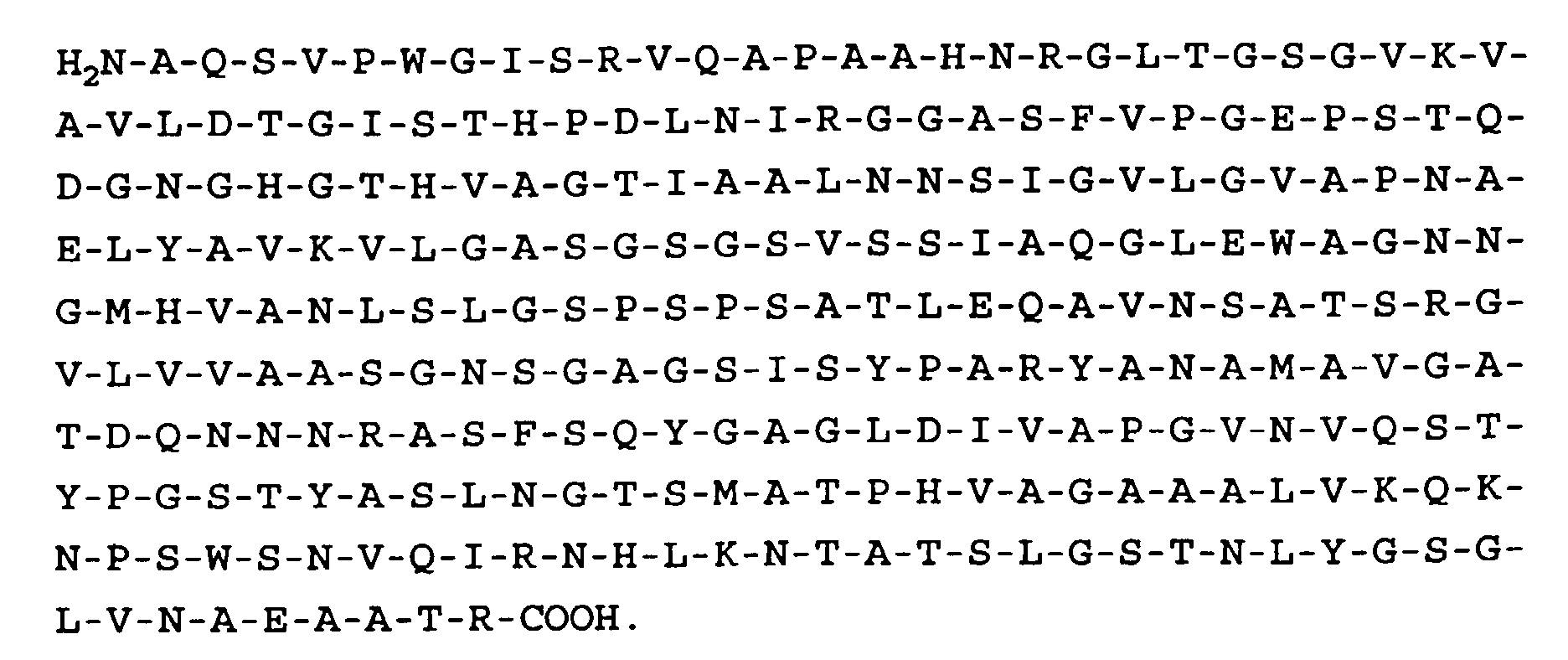
- A method according to any one of the preceding claims, wherein said DNA is stably integrated into said host cell genome.
- A method according to claim 10, wherein at least two copies of said DNA is stably integrated into said host cell genome.
- A method according to claim 10, wherein two copies of the protease gene are tandemly located in the host cell chromosome separated by plasmid sequences.
- A method according to any one of the preceding claims wherein the marker gene is an antibiotic resistance gene.
Priority Applications (1)
| Application Number | Priority Date | Filing Date | Title |
|---|---|---|---|
| EP91203297A EP0479396B1 (en) | 1987-02-27 | 1988-02-29 | Transformation of alkalophilic bacillus strains |
Applications Claiming Priority (4)
| Application Number | Priority Date | Filing Date | Title |
|---|---|---|---|
| EP87200358 | 1987-02-27 | ||
| EP87200358 | 1987-02-27 | ||
| EP88200377A EP0283075B1 (en) | 1987-02-27 | 1988-02-29 | Molecular cloning and expression of genes encoding proteolytic enzymes |
| EP91203297A EP0479396B1 (en) | 1987-02-27 | 1988-02-29 | Transformation of alkalophilic bacillus strains |
Related Parent Applications (2)
| Application Number | Title | Priority Date | Filing Date |
|---|---|---|---|
| EP88200377.5 Division | 1988-02-29 | ||
| EP88200377A Division EP0283075B1 (en) | 1987-02-27 | 1988-02-29 | Molecular cloning and expression of genes encoding proteolytic enzymes |
Publications (3)
| Publication Number | Publication Date |
|---|---|
| EP0479396A2 EP0479396A2 (en) | 1992-04-08 |
| EP0479396A3 EP0479396A3 (en) | 1992-05-13 |
| EP0479396B1 true EP0479396B1 (en) | 1999-06-09 |
Family
ID=26108983
Family Applications (3)
| Application Number | Title | Priority Date | Filing Date |
|---|---|---|---|
| EP91203297A Expired - Lifetime EP0479396B1 (en) | 1987-02-27 | 1988-02-29 | Transformation of alkalophilic bacillus strains |
| EP98115483A Withdrawn EP0896062A3 (en) | 1987-02-27 | 1988-02-29 | Transformation of alkalophilic bacillus strains |
| EP88200377A Expired - Lifetime EP0283075B1 (en) | 1987-02-27 | 1988-02-29 | Molecular cloning and expression of genes encoding proteolytic enzymes |
Family Applications After (2)
| Application Number | Title | Priority Date | Filing Date |
|---|---|---|---|
| EP98115483A Withdrawn EP0896062A3 (en) | 1987-02-27 | 1988-02-29 | Transformation of alkalophilic bacillus strains |
| EP88200377A Expired - Lifetime EP0283075B1 (en) | 1987-02-27 | 1988-02-29 | Molecular cloning and expression of genes encoding proteolytic enzymes |
Country Status (2)
| Country | Link |
|---|---|
| EP (3) | EP0479396B1 (en) |
| ES (2) | ES2134186T3 (en) |
Families Citing this family (75)
| Publication number | Priority date | Publication date | Assignee | Title |
|---|---|---|---|---|
| US5185258A (en) | 1984-05-29 | 1993-02-09 | Genencor International, Inc. | Subtilisin mutants |
| JP3026567B2 (en) * | 1987-02-27 | 2000-03-27 | ジェネンコー インターナショナル インコーポレイテッド | Molecular cloning and expression of genes encoding proteolytic enzymes |
| DK6488D0 (en) * | 1988-01-07 | 1988-01-07 | Novo Industri As | ENZYMES |
| CN1056187C (en) * | 1988-02-11 | 2000-09-06 | 金克克国际有限公司 | Proteolytic enzymes and their use in detergents |
| US6287841B1 (en) | 1988-02-11 | 2001-09-11 | Genencor International, Inc. | High alkaline serine protease |
| AU618675B2 (en) * | 1989-05-17 | 1992-01-02 | Amgen, Inc. | Multiply mutated subtilisins |
| US5665587A (en) * | 1989-06-26 | 1997-09-09 | Novo Nordisk A/S | Modified subtilisins and detergent compositions containing same |
| ATE144283T1 (en) * | 1989-08-11 | 1996-11-15 | Gist Brocades Nv | EFFICIENT PRODUCTION OF PROTEASE MUTANTS |
| JPH07108228B2 (en) * | 1990-10-15 | 1995-11-22 | 味の素株式会社 | Temperature sensitive plasmid |
| US5646044A (en) * | 1995-03-02 | 1997-07-08 | Henkel Kommanditgesellschaft Auf Aktien | Expression systems for the production of target proteins in bacillus |
| DE10121463A1 (en) * | 2001-05-02 | 2003-02-27 | Henkel Kgaa | New alkaline protease variants and washing and cleaning agents containing these new alkaline protease variants |
| DE10153792A1 (en) | 2001-10-31 | 2003-05-22 | Henkel Kgaa | New alkaline protease variants and washing and cleaning agents containing these new alkaline protease variants |
| DE10162728A1 (en) | 2001-12-20 | 2003-07-10 | Henkel Kgaa | New alkaline protease from Bacillus gibsonii (DSM 14393) and washing and cleaning agents containing this new alkaline protease |
| DE10162727A1 (en) | 2001-12-20 | 2003-07-10 | Henkel Kgaa | New alkaline protease from Bacillus gibsonii (DSM 14391) and washing and cleaning agents containing this new alkaline protease |
| DE10163884A1 (en) | 2001-12-22 | 2003-07-10 | Henkel Kgaa | New alkaline protease from Bacillus sp. (DSM 14392) and detergents and cleaning agents containing this new alkaline protease |
| DE10360805A1 (en) | 2003-12-23 | 2005-07-28 | Henkel Kgaa | New alkaline protease and detergents containing this novel alkaline protease |
| DE102004019751A1 (en) | 2004-04-23 | 2005-11-17 | Henkel Kgaa | Novel Alkaline Proteases and Detergents Containing These Novel Alkaline Proteases |
| DE102007032111B4 (en) | 2007-07-09 | 2017-07-20 | Henkel Ag & Co. Kgaa | New proteases and detergents and cleaning agents containing these proteases |
| DE102007036756A1 (en) | 2007-08-03 | 2009-02-05 | Henkel Ag & Co. Kgaa | New proteases and detergents and cleaners containing these new proteases |
| DE102007038031A1 (en) | 2007-08-10 | 2009-06-04 | Henkel Ag & Co. Kgaa | Agents containing proteases |
| DE102007044415A1 (en) | 2007-09-17 | 2009-03-19 | Henkel Ag & Co. Kgaa | Performance-enhanced proteases and detergents and cleaners containing these proteases |
| DE102014223296A1 (en) | 2014-11-14 | 2016-05-19 | Henkel Ag & Co. Kgaa | Detergents and cleaners containing at least two proteases |
| DE102014223969A1 (en) | 2014-11-25 | 2016-05-25 | Henkel Ag & Co. Kgaa | Use of whey protein isolate in enzyme-containing detergents or cleaners to increase the stability of enzymes |
| DE102014226251A1 (en) | 2014-12-17 | 2016-06-23 | Henkel Ag & Co. Kgaa | Use of inorganic oxides, hydroxides or oxide hydroxides in enzyme-containing detergents or cleaners to increase the stability of enzymes |
| DE102015217816A1 (en) | 2015-09-17 | 2017-03-23 | Henkel Ag & Co. Kgaa | Use of highly concentrated enzyme granules to increase the storage stability of enzymes |
| DE102015223269A1 (en) | 2015-11-25 | 2017-06-01 | Henkel Ag & Co. Kgaa | Use of polyoxyalkyleneamines in enzyme-containing detergents or cleaners for increasing the stability of enzymes |
| EP3205392A1 (en) | 2016-02-12 | 2017-08-16 | Basf Se | Microcapsules and process for preparation of microcapsules |
| EP3205393A1 (en) | 2016-02-12 | 2017-08-16 | Basf Se | Process for preparation of microcapsules |
| WO2017182295A1 (en) | 2016-04-18 | 2017-10-26 | Basf Se | Liquid cleaning compositions |
| US20190177665A1 (en) | 2016-08-08 | 2019-06-13 | Basf Se | Liquid laundry formulation |
| MX2019006425A (en) | 2016-12-01 | 2019-08-14 | Basf Se | Stabilization of enzymes in compositions. |
| MX2020005661A (en) | 2017-11-29 | 2020-08-20 | Basf Se | Storage-stable enzyme preparations, their production and use. |
| BR112020021692A2 (en) | 2018-04-26 | 2021-01-26 | Basf Se | polypeptide having lipase activity, hybrid polypeptide, composition, polynucleotide variant, method for making the polypeptide variant, and, use of the polypeptide |
| WO2019211143A1 (en) | 2018-05-03 | 2019-11-07 | Basf Se | Amylase enzymes |
| WO2019238761A1 (en) | 2018-06-15 | 2019-12-19 | Basf Se | Water soluble multilayer films containing wash active chemicals and enzymes |
| WO2020030623A1 (en) | 2018-08-10 | 2020-02-13 | Basf Se | Packaging unit comprising a detergent composition containing an enzyme and at least one chelating agent |
| WO2020069915A1 (en) | 2018-10-05 | 2020-04-09 | Basf Se | Compounds stabilizing hydrolases in liquids |
| JP7531964B2 (en) | 2018-10-05 | 2024-08-13 | ベーアーエスエフ・エスエー | Compounds that stabilize amylase in liquids |
| MX2021003932A (en) | 2018-10-05 | 2021-06-04 | Basf Se | Compounds stabilizing hydrolases in liquids. |
| EP3677676A1 (en) | 2019-01-03 | 2020-07-08 | Basf Se | Compounds stabilizing amylases in liquids |
| WO2020104231A1 (en) | 2018-11-19 | 2020-05-28 | Basf Se | Powders and granules containing a chelating agent and an enzyme |
| CN114127256A (en) | 2019-02-20 | 2022-03-01 | 巴斯夫欧洲公司 | Industrial fermentation process of bacillus by using defined medium and trace element for feeding |
| US20220186177A1 (en) | 2019-02-20 | 2022-06-16 | Basf Se | Industrial fermentation process for bacillus using defined medium and magnesium feed |
| WO2020229480A1 (en) | 2019-05-14 | 2020-11-19 | Basf Se | Compounds stabilizing hydrolases in liquids |
| WO2020249546A1 (en) | 2019-06-13 | 2020-12-17 | Basf Se | Method of recovering a protein from fermentation broth using a divalent cation |
| JP2022538360A (en) | 2019-07-01 | 2022-09-01 | ビーエーエスエフ ソシエタス・ヨーロピア | Peptide acetals to stabilize enzymes |
| EP3994273A1 (en) | 2019-07-02 | 2022-05-11 | Basf Se | Method for preparing a fermentation medium |
| ES2955800T3 (en) | 2019-07-05 | 2023-12-07 | Basf Se | Industrial fermentation procedure of microbial cells using fed-batch preculture |
| CN114585718A (en) | 2019-10-18 | 2022-06-03 | 巴斯夫欧洲公司 | Storage-stable hydrolases-containing liquids |
| WO2021105330A1 (en) | 2019-11-29 | 2021-06-03 | Basf Se | Compositions and polymers useful for such compositions |
| WO2021115912A1 (en) | 2019-12-09 | 2021-06-17 | Basf Se | Formulations comprising a hydrophobically modified polyethyleneimine and one or more enzymes |
| BR112022015985A2 (en) | 2020-02-14 | 2022-10-11 | Basf Se | MANANASE VARIANT, POLYNUCLEOTIDE, EXPRESSION CONSTRUCTION, HOST CELL, METHODS FOR EXPRESSING A MANANASE VARIANT, TO INCREASE STABILITY IN THE SURFACTANT OF A MANANASE AND TO PROVIDE A DETERGENT FORMULATION, LIQUID ENZYMATIC PREPARATION, FORMULATION, WASHING, OR CLEANING METHOD E, USE OF A MANANASE |
| US20230235250A1 (en) | 2020-06-18 | 2023-07-27 | Basf Se | Compositions and Their Use |
| ES2983195T3 (en) | 2020-07-09 | 2024-10-22 | Basf Se | Compositions and their applications |
| WO2022008732A1 (en) | 2020-07-10 | 2022-01-13 | Basf Se | Enhancing the activity of antimicrobial preservatives |
| BR112023005106A2 (en) | 2020-09-22 | 2023-04-18 | Basf Se | LIQUID COMPOSITION, LIQUID DETERGENT FORMULATION, AND USES OF AT LEAST ONE DIOL (EXCEPT 1,2-PROANODIOL) AND DETERGENT FORMULATIONS |
| WO2022083949A1 (en) | 2020-10-20 | 2022-04-28 | Basf Se | Compositions and their use |
| EP4015629A1 (en) | 2020-12-18 | 2022-06-22 | Basf Se | Polymer mixtures for increasing stability and performance of hydrolase-containing detergents |
| US20240101611A1 (en) | 2021-02-22 | 2024-03-28 | Danisco Us Inc. | Methods and compositions for producing proteins of interest in pigment deficient bacillus cells |
| WO2023061827A1 (en) | 2021-10-13 | 2023-04-20 | Basf Se | Compositions comprising polymers, polymers, and their use |
| WO2023066741A1 (en) | 2021-10-20 | 2023-04-27 | Basf Se | Phosphate-free composition and methods for their manufacture and use |
| WO2023088777A1 (en) | 2021-11-22 | 2023-05-25 | Basf Se | Compositions comprising polymers, polymers, and their use |
| US20250002705A1 (en) | 2021-11-22 | 2025-01-02 | Basf Se | Compositions comprising polymers, polymers, and their use |
| US20250236815A1 (en) | 2021-11-22 | 2025-07-24 | Basf Se | Compositions comprising polymers, polymers, and their use |
| WO2023110599A2 (en) | 2021-12-17 | 2023-06-22 | Basf Se | Compositions and their applications |
| WO2023137264A1 (en) | 2022-01-13 | 2023-07-20 | Danisco Us Inc. | Compositions and methods for enhanced protein production in gram‑positive bacterial cells |
| JP2025505571A (en) | 2022-02-04 | 2025-02-28 | ビーエーエスエフ ソシエタス・ヨーロピア | Compositions containing polymers, polymers and uses thereof |
| US20250376642A1 (en) | 2022-07-15 | 2025-12-11 | Basf Se | Alkanolamine formates for enzyme stabilization in liquid formulations |
| WO2024083589A1 (en) | 2022-10-18 | 2024-04-25 | Basf Se | Detergent compositions, polymers and methods of manufacturing the same |
| WO2024115754A1 (en) | 2022-12-02 | 2024-06-06 | Basf Se | Aqueous compositions containing polyalkoxylates, polyalkoxylates, and use |
| EP4389864A1 (en) | 2022-12-20 | 2024-06-26 | Basf Se | Cutinases |
| WO2024256175A1 (en) | 2023-06-13 | 2024-12-19 | Basf Se | Stabilized cleaning compositions comprising edds and enzymes and their use |
| WO2025031865A1 (en) | 2023-08-08 | 2025-02-13 | Basf Se | Improved bacillus cell with inactivated metalloprotease |
| WO2025093368A1 (en) | 2023-11-02 | 2025-05-08 | Basf Se | Enzyme stabilization in compositions containing a protease inhibitor |
| WO2025132258A1 (en) | 2023-12-20 | 2025-06-26 | Basf Se | Stabilized enzyme composition comprising a protease |
Family Cites Families (9)
| Publication number | Priority date | Publication date | Assignee | Title |
|---|---|---|---|---|
| GB1519148A (en) * | 1974-11-19 | 1978-07-26 | Gist Brocades Nv | Compositions of matter |
| EP0108301B2 (en) * | 1982-11-01 | 1993-09-01 | SOLVAY ENZYMES, INC. (a Delaware corporation) | Method of heterologous cloning of gene in bacillus microorganism |
| IE81141B1 (en) * | 1983-06-24 | 2000-04-05 | Genencor Int | Procaryotic carbonyl hydrolases |
| WO1985000382A1 (en) * | 1983-07-06 | 1985-01-31 | Gist-Brocades N.V. | Molecular cloning and expression in industrial microorganism species |
| EP0138075A1 (en) * | 1983-09-16 | 1985-04-24 | Synergen Associates, Inc. | A method for the generation and detection of enzyme variants with enhanced themostability and activity |
| US4828994A (en) * | 1984-09-21 | 1989-05-09 | Genex Corporation | Bacillus strains with reduced extracellular protease levels |
| WO1987004461A1 (en) * | 1986-01-15 | 1987-07-30 | Amgen | THERMALLY STABLE AND pH STABLE SUBTILISIN ANALOGS AND METHOD FOR PRODUCTION THEREOF |
| SG30639G (en) * | 1986-04-30 | 1995-09-01 | Genencor Int | Non-human carbonyl hydrolase mutants DNA sequences and vectors encoding same and hosts transformed with said vectors |
| AU620326B2 (en) * | 1987-02-27 | 1992-02-20 | Dsm Ip Assets B.V. | Stable gene amplification in chromosomal dna of prokaryotic microorganisms |
-
1988
- 1988-02-29 EP EP91203297A patent/EP0479396B1/en not_active Expired - Lifetime
- 1988-02-29 ES ES88200377T patent/ES2134186T3/en not_active Expired - Lifetime
- 1988-02-29 EP EP98115483A patent/EP0896062A3/en not_active Withdrawn
- 1988-02-29 EP EP88200377A patent/EP0283075B1/en not_active Expired - Lifetime
- 1988-02-29 ES ES91203297T patent/ES2135386T3/en not_active Expired - Lifetime
Non-Patent Citations (1)
| Title |
|---|
| CRIT REV BIOTECHNOL, vol. 3, no. 3, pages 199 - 234 * |
Also Published As
| Publication number | Publication date |
|---|---|
| ES2135386T3 (en) | 1999-11-01 |
| ES2134186T3 (en) | 1999-10-01 |
| EP0283075A2 (en) | 1988-09-21 |
| EP0283075A3 (en) | 1988-12-14 |
| EP0283075B1 (en) | 1999-05-12 |
| EP0896062A3 (en) | 1999-04-07 |
| EP0479396A3 (en) | 1992-05-13 |
| EP0896062A2 (en) | 1999-02-10 |
| EP0479396A2 (en) | 1992-04-08 |
Similar Documents
| Publication | Publication Date | Title |
|---|---|---|
| EP0479396B1 (en) | Transformation of alkalophilic bacillus strains | |
| US5217878A (en) | Molecular cloning and expression of genes encoding proteolytic enzymes | |
| EP0284126B1 (en) | Stable gene amplification in prokaryotic chromosomal dna | |
| FI85287B (en) | MOLEKULAER KLONING OCH EXPRESSION I INDUSTRIELLA MIKRO-ORGANISMARTER. | |
| US5624829A (en) | Transformed industrial bacillus strains and methods for making and using them | |
| US5238833A (en) | Molecular cloning and expression in industrial Bacillus species |
Legal Events
| Date | Code | Title | Description |
|---|---|---|---|
| PUAI | Public reference made under article 153(3) epc to a published international application that has entered the european phase |
Free format text: ORIGINAL CODE: 0009012 |
|
| PUAL | Search report despatched |
Free format text: ORIGINAL CODE: 0009013 |
|
| 17P | Request for examination filed |
Effective date: 19911227 |
|
| AC | Divisional application: reference to earlier application |
Ref document number: 283075 Country of ref document: EP |
|
| AK | Designated contracting states |
Kind code of ref document: A2 Designated state(s): AT BE CH DE ES FR GB GR IT LI LU NL SE |
|
| AK | Designated contracting states |
Kind code of ref document: A3 Designated state(s): AT BE CH DE ES FR GB GR IT LI LU NL SE |
|
| 17Q | First examination report despatched |
Effective date: 19931027 |
|
| RAP1 | Party data changed (applicant data changed or rights of an application transferred) |
Owner name: GENENCOR INTERNATIONAL, INC. |
|
| GRAG | Despatch of communication of intention to grant |
Free format text: ORIGINAL CODE: EPIDOS AGRA |
|
| GRAG | Despatch of communication of intention to grant |
Free format text: ORIGINAL CODE: EPIDOS AGRA |
|
| GRAH | Despatch of communication of intention to grant a patent |
Free format text: ORIGINAL CODE: EPIDOS IGRA |
|
| GRAH | Despatch of communication of intention to grant a patent |
Free format text: ORIGINAL CODE: EPIDOS IGRA |
|
| RBV | Designated contracting states (corrected) |
Designated state(s): AT BE DE ES FR GB IT NL |
|
| GRAA | (expected) grant |
Free format text: ORIGINAL CODE: 0009210 |
|
| AC | Divisional application: reference to earlier application |
Ref document number: 283075 Country of ref document: EP |
|
| AK | Designated contracting states |
Kind code of ref document: B1 Designated state(s): AT BE DE ES FR GB IT NL |
|
| REF | Corresponds to: |
Ref document number: 181110 Country of ref document: AT Date of ref document: 19990615 Kind code of ref document: T |
|
| REF | Corresponds to: |
Ref document number: 3856339 Country of ref document: DE Date of ref document: 19990715 |
|
| ET | Fr: translation filed | ||
| ITF | It: translation for a ep patent filed | ||
| REG | Reference to a national code |
Ref country code: ES Ref legal event code: FG2A Ref document number: 2135386 Country of ref document: ES Kind code of ref document: T3 |
|
| PLBE | No opposition filed within time limit |
Free format text: ORIGINAL CODE: 0009261 |
|
| STAA | Information on the status of an ep patent application or granted ep patent |
Free format text: STATUS: NO OPPOSITION FILED WITHIN TIME LIMIT |
|
| 26N | No opposition filed | ||
| REG | Reference to a national code |
Ref country code: GB Ref legal event code: IF02 |
|
| PGFP | Annual fee paid to national office [announced via postgrant information from national office to epo] |
Ref country code: NL Payment date: 20070204 Year of fee payment: 20 |
|
| PGFP | Annual fee paid to national office [announced via postgrant information from national office to epo] |
Ref country code: AT Payment date: 20070213 Year of fee payment: 20 |
|
| PGFP | Annual fee paid to national office [announced via postgrant information from national office to epo] |
Ref country code: DE Payment date: 20070222 Year of fee payment: 20 |
|
| PGFP | Annual fee paid to national office [announced via postgrant information from national office to epo] |
Ref country code: GB Payment date: 20070228 Year of fee payment: 20 |
|
| PGFP | Annual fee paid to national office [announced via postgrant information from national office to epo] |
Ref country code: ES Payment date: 20070327 Year of fee payment: 20 |
|
| PGFP | Annual fee paid to national office [announced via postgrant information from national office to epo] |
Ref country code: BE Payment date: 20070413 Year of fee payment: 20 Ref country code: IT Payment date: 20070625 Year of fee payment: 20 |
|
| BE20 | Be: patent expired |
Owner name: *GENENCOR INTERNATIONAL INC. Effective date: 20080229 |
|
| REG | Reference to a national code |
Ref country code: GB Ref legal event code: PE20 |
|
| PG25 | Lapsed in a contracting state [announced via postgrant information from national office to epo] |
Ref country code: NL Free format text: LAPSE BECAUSE OF EXPIRATION OF PROTECTION Effective date: 20080229 |
|
| PGFP | Annual fee paid to national office [announced via postgrant information from national office to epo] |
Ref country code: FR Payment date: 20070208 Year of fee payment: 20 |
|
| NLV7 | Nl: ceased due to reaching the maximum lifetime of a patent |
Effective date: 20080229 |
|
| REG | Reference to a national code |
Ref country code: ES Ref legal event code: FD2A Effective date: 20080301 |
|
| PG25 | Lapsed in a contracting state [announced via postgrant information from national office to epo] |
Ref country code: GB Free format text: LAPSE BECAUSE OF EXPIRATION OF PROTECTION Effective date: 20080228 |
|
| PG25 | Lapsed in a contracting state [announced via postgrant information from national office to epo] |
Ref country code: ES Free format text: LAPSE BECAUSE OF EXPIRATION OF PROTECTION Effective date: 20080301 |