CN114025788A - Cells, related polynucleotides and methods for expressing recombinant receptors from modified TGFBR2 loci - Google Patents
Cells, related polynucleotides and methods for expressing recombinant receptors from modified TGFBR2 loci Download PDFInfo
- Publication number
- CN114025788A CN114025788A CN202080047290.9A CN202080047290A CN114025788A CN 114025788 A CN114025788 A CN 114025788A CN 202080047290 A CN202080047290 A CN 202080047290A CN 114025788 A CN114025788 A CN 114025788A
- Authority
- CN
- China
- Prior art keywords
- cell
- receptor
- tgfbr2
- optionally
- polynucleotide
- Prior art date
- Legal status (The legal status is an assumption and is not a legal conclusion. Google has not performed a legal analysis and makes no representation as to the accuracy of the status listed.)
- Pending
Links
Images


Classifications
-
- C—CHEMISTRY; METALLURGY
- C12—BIOCHEMISTRY; BEER; SPIRITS; WINE; VINEGAR; MICROBIOLOGY; ENZYMOLOGY; MUTATION OR GENETIC ENGINEERING
- C12N—MICROORGANISMS OR ENZYMES; COMPOSITIONS THEREOF; PROPAGATING, PRESERVING, OR MAINTAINING MICROORGANISMS; MUTATION OR GENETIC ENGINEERING; CULTURE MEDIA
- C12N5/00—Undifferentiated human, animal or plant cells, e.g. cell lines; Tissues; Cultivation or maintenance thereof; Culture media therefor
- C12N5/06—Animal cells or tissues; Human cells or tissues
- C12N5/0602—Vertebrate cells
- C12N5/0634—Cells from the blood or the immune system
- C12N5/0636—T lymphocytes
-
- C—CHEMISTRY; METALLURGY
- C07—ORGANIC CHEMISTRY
- C07K—PEPTIDES
- C07K16/00—Immunoglobulins [IGs], e.g. monoclonal or polyclonal antibodies
- C07K16/18—Immunoglobulins [IGs], e.g. monoclonal or polyclonal antibodies against material from animals or humans
- C07K16/28—Immunoglobulins [IGs], e.g. monoclonal or polyclonal antibodies against material from animals or humans against receptors, cell surface antigens or cell surface determinants
- C07K16/2803—Immunoglobulins [IGs], e.g. monoclonal or polyclonal antibodies against material from animals or humans against receptors, cell surface antigens or cell surface determinants against the immunoglobulin superfamily
-
- A—HUMAN NECESSITIES
- A61—MEDICAL OR VETERINARY SCIENCE; HYGIENE
- A61K—PREPARATIONS FOR MEDICAL, DENTAL OR TOILETRY PURPOSES
- A61K40/00—Cellular immunotherapy
- A61K40/10—Cellular immunotherapy characterised by the cell type used
- A61K40/11—T-cells, e.g. tumour infiltrating lymphocytes [TIL] or regulatory T [Treg] cells; Lymphokine-activated killer [LAK] cells
-
- A—HUMAN NECESSITIES
- A61—MEDICAL OR VETERINARY SCIENCE; HYGIENE
- A61K—PREPARATIONS FOR MEDICAL, DENTAL OR TOILETRY PURPOSES
- A61K40/00—Cellular immunotherapy
- A61K40/30—Cellular immunotherapy characterised by the recombinant expression of specific molecules in the cells of the immune system
- A61K40/31—Chimeric antigen receptors [CAR]
-
- A—HUMAN NECESSITIES
- A61—MEDICAL OR VETERINARY SCIENCE; HYGIENE
- A61K—PREPARATIONS FOR MEDICAL, DENTAL OR TOILETRY PURPOSES
- A61K40/00—Cellular immunotherapy
- A61K40/30—Cellular immunotherapy characterised by the recombinant expression of specific molecules in the cells of the immune system
- A61K40/32—T-cell receptors [TCR]
-
- A—HUMAN NECESSITIES
- A61—MEDICAL OR VETERINARY SCIENCE; HYGIENE
- A61K—PREPARATIONS FOR MEDICAL, DENTAL OR TOILETRY PURPOSES
- A61K40/00—Cellular immunotherapy
- A61K40/40—Cellular immunotherapy characterised by antigens that are targeted or presented by cells of the immune system
- A61K40/41—Vertebrate antigens
- A61K40/42—Cancer antigens
-
- A—HUMAN NECESSITIES
- A61—MEDICAL OR VETERINARY SCIENCE; HYGIENE
- A61K—PREPARATIONS FOR MEDICAL, DENTAL OR TOILETRY PURPOSES
- A61K40/00—Cellular immunotherapy
- A61K40/40—Cellular immunotherapy characterised by antigens that are targeted or presented by cells of the immune system
- A61K40/41—Vertebrate antigens
- A61K40/42—Cancer antigens
- A61K40/4202—Receptors, cell surface antigens or cell surface determinants
-
- A—HUMAN NECESSITIES
- A61—MEDICAL OR VETERINARY SCIENCE; HYGIENE
- A61K—PREPARATIONS FOR MEDICAL, DENTAL OR TOILETRY PURPOSES
- A61K40/00—Cellular immunotherapy
- A61K40/40—Cellular immunotherapy characterised by antigens that are targeted or presented by cells of the immune system
- A61K40/41—Vertebrate antigens
- A61K40/42—Cancer antigens
- A61K40/4202—Receptors, cell surface antigens or cell surface determinants
- A61K40/4203—Receptors for growth factors
-
- A—HUMAN NECESSITIES
- A61—MEDICAL OR VETERINARY SCIENCE; HYGIENE
- A61K—PREPARATIONS FOR MEDICAL, DENTAL OR TOILETRY PURPOSES
- A61K40/00—Cellular immunotherapy
- A61K40/40—Cellular immunotherapy characterised by antigens that are targeted or presented by cells of the immune system
- A61K40/41—Vertebrate antigens
- A61K40/42—Cancer antigens
- A61K40/4202—Receptors, cell surface antigens or cell surface determinants
- A61K40/4214—Receptors for cytokines
- A61K40/4215—Receptors for tumor necrosis factors [TNF], e.g. lymphotoxin receptor [LTR], CD30
-
- A—HUMAN NECESSITIES
- A61—MEDICAL OR VETERINARY SCIENCE; HYGIENE
- A61K—PREPARATIONS FOR MEDICAL, DENTAL OR TOILETRY PURPOSES
- A61K40/00—Cellular immunotherapy
- A61K40/40—Cellular immunotherapy characterised by antigens that are targeted or presented by cells of the immune system
- A61K40/41—Vertebrate antigens
- A61K40/42—Cancer antigens
- A61K40/4225—Growth factors
- A61K40/4229—Transforming growth factor [TGF]
-
- A—HUMAN NECESSITIES
- A61—MEDICAL OR VETERINARY SCIENCE; HYGIENE
- A61P—SPECIFIC THERAPEUTIC ACTIVITY OF CHEMICAL COMPOUNDS OR MEDICINAL PREPARATIONS
- A61P35/00—Antineoplastic agents
-
- C—CHEMISTRY; METALLURGY
- C07—ORGANIC CHEMISTRY
- C07K—PEPTIDES
- C07K14/00—Peptides having more than 20 amino acids; Gastrins; Somatostatins; Melanotropins; Derivatives thereof
- C07K14/435—Peptides having more than 20 amino acids; Gastrins; Somatostatins; Melanotropins; Derivatives thereof from animals; from humans
- C07K14/705—Receptors; Cell surface antigens; Cell surface determinants
- C07K14/70503—Immunoglobulin superfamily
- C07K14/7051—T-cell receptor (TcR)-CD3 complex
-
- C—CHEMISTRY; METALLURGY
- C07—ORGANIC CHEMISTRY
- C07K—PEPTIDES
- C07K14/00—Peptides having more than 20 amino acids; Gastrins; Somatostatins; Melanotropins; Derivatives thereof
- C07K14/435—Peptides having more than 20 amino acids; Gastrins; Somatostatins; Melanotropins; Derivatives thereof from animals; from humans
- C07K14/705—Receptors; Cell surface antigens; Cell surface determinants
- C07K14/70503—Immunoglobulin superfamily
- C07K14/70521—CD28, CD152
-
- C—CHEMISTRY; METALLURGY
- C07—ORGANIC CHEMISTRY
- C07K—PEPTIDES
- C07K14/00—Peptides having more than 20 amino acids; Gastrins; Somatostatins; Melanotropins; Derivatives thereof
- C07K14/435—Peptides having more than 20 amino acids; Gastrins; Somatostatins; Melanotropins; Derivatives thereof from animals; from humans
- C07K14/705—Receptors; Cell surface antigens; Cell surface determinants
- C07K14/70578—NGF-receptor/TNF-receptor superfamily, e.g. CD27, CD30, CD40, CD95
-
- C—CHEMISTRY; METALLURGY
- C07—ORGANIC CHEMISTRY
- C07K—PEPTIDES
- C07K14/00—Peptides having more than 20 amino acids; Gastrins; Somatostatins; Melanotropins; Derivatives thereof
- C07K14/435—Peptides having more than 20 amino acids; Gastrins; Somatostatins; Melanotropins; Derivatives thereof from animals; from humans
- C07K14/705—Receptors; Cell surface antigens; Cell surface determinants
- C07K14/71—Receptors; Cell surface antigens; Cell surface determinants for growth factors; for growth regulators
-
- C—CHEMISTRY; METALLURGY
- C07—ORGANIC CHEMISTRY
- C07K—PEPTIDES
- C07K14/00—Peptides having more than 20 amino acids; Gastrins; Somatostatins; Melanotropins; Derivatives thereof
- C07K14/435—Peptides having more than 20 amino acids; Gastrins; Somatostatins; Melanotropins; Derivatives thereof from animals; from humans
- C07K14/705—Receptors; Cell surface antigens; Cell surface determinants
- C07K14/715—Receptors; Cell surface antigens; Cell surface determinants for cytokines; for lymphokines; for interferons
-
- C—CHEMISTRY; METALLURGY
- C12—BIOCHEMISTRY; BEER; SPIRITS; WINE; VINEGAR; MICROBIOLOGY; ENZYMOLOGY; MUTATION OR GENETIC ENGINEERING
- C12N—MICROORGANISMS OR ENZYMES; COMPOSITIONS THEREOF; PROPAGATING, PRESERVING, OR MAINTAINING MICROORGANISMS; MUTATION OR GENETIC ENGINEERING; CULTURE MEDIA
- C12N15/00—Mutation or genetic engineering; DNA or RNA concerning genetic engineering, vectors, e.g. plasmids, or their isolation, preparation or purification; Use of hosts therefor
- C12N15/09—Recombinant DNA-technology
- C12N15/11—DNA or RNA fragments; Modified forms thereof; Non-coding nucleic acids having a biological activity
-
- C—CHEMISTRY; METALLURGY
- C12—BIOCHEMISTRY; BEER; SPIRITS; WINE; VINEGAR; MICROBIOLOGY; ENZYMOLOGY; MUTATION OR GENETIC ENGINEERING
- C12N—MICROORGANISMS OR ENZYMES; COMPOSITIONS THEREOF; PROPAGATING, PRESERVING, OR MAINTAINING MICROORGANISMS; MUTATION OR GENETIC ENGINEERING; CULTURE MEDIA
- C12N15/00—Mutation or genetic engineering; DNA or RNA concerning genetic engineering, vectors, e.g. plasmids, or their isolation, preparation or purification; Use of hosts therefor
- C12N15/09—Recombinant DNA-technology
- C12N15/63—Introduction of foreign genetic material using vectors; Vectors; Use of hosts therefor; Regulation of expression
- C12N15/79—Vectors or expression systems specially adapted for eukaryotic hosts
- C12N15/85—Vectors or expression systems specially adapted for eukaryotic hosts for animal cells
- C12N15/86—Viral vectors
-
- C—CHEMISTRY; METALLURGY
- C12—BIOCHEMISTRY; BEER; SPIRITS; WINE; VINEGAR; MICROBIOLOGY; ENZYMOLOGY; MUTATION OR GENETIC ENGINEERING
- C12N—MICROORGANISMS OR ENZYMES; COMPOSITIONS THEREOF; PROPAGATING, PRESERVING, OR MAINTAINING MICROORGANISMS; MUTATION OR GENETIC ENGINEERING; CULTURE MEDIA
- C12N9/00—Enzymes; Proenzymes; Compositions thereof; Processes for preparing, activating, inhibiting, separating or purifying enzymes
- C12N9/14—Hydrolases (3)
- C12N9/16—Hydrolases (3) acting on ester bonds (3.1)
- C12N9/22—Ribonucleases [RNase]; Deoxyribonucleases [DNase]
-
- A—HUMAN NECESSITIES
- A61—MEDICAL OR VETERINARY SCIENCE; HYGIENE
- A61K—PREPARATIONS FOR MEDICAL, DENTAL OR TOILETRY PURPOSES
- A61K39/00—Medicinal preparations containing antigens or antibodies
- A61K2039/505—Medicinal preparations containing antigens or antibodies comprising antibodies
-
- A—HUMAN NECESSITIES
- A61—MEDICAL OR VETERINARY SCIENCE; HYGIENE
- A61K—PREPARATIONS FOR MEDICAL, DENTAL OR TOILETRY PURPOSES
- A61K39/00—Medicinal preparations containing antigens or antibodies
- A61K2039/51—Medicinal preparations containing antigens or antibodies comprising whole cells, viruses or DNA/RNA
- A61K2039/515—Animal cells
- A61K2039/5156—Animal cells expressing foreign proteins
-
- A—HUMAN NECESSITIES
- A61—MEDICAL OR VETERINARY SCIENCE; HYGIENE
- A61K—PREPARATIONS FOR MEDICAL, DENTAL OR TOILETRY PURPOSES
- A61K39/00—Medicinal preparations containing antigens or antibodies
- A61K2039/51—Medicinal preparations containing antigens or antibodies comprising whole cells, viruses or DNA/RNA
- A61K2039/515—Animal cells
- A61K2039/5158—Antigen-pulsed cells, e.g. T-cells
-
- A—HUMAN NECESSITIES
- A61—MEDICAL OR VETERINARY SCIENCE; HYGIENE
- A61K—PREPARATIONS FOR MEDICAL, DENTAL OR TOILETRY PURPOSES
- A61K2239/00—Indexing codes associated with cellular immunotherapy of group A61K40/00
- A61K2239/31—Indexing codes associated with cellular immunotherapy of group A61K40/00 characterized by the route of administration
-
- A—HUMAN NECESSITIES
- A61—MEDICAL OR VETERINARY SCIENCE; HYGIENE
- A61K—PREPARATIONS FOR MEDICAL, DENTAL OR TOILETRY PURPOSES
- A61K2239/00—Indexing codes associated with cellular immunotherapy of group A61K40/00
- A61K2239/38—Indexing codes associated with cellular immunotherapy of group A61K40/00 characterised by the dose, timing or administration schedule
-
- A—HUMAN NECESSITIES
- A61—MEDICAL OR VETERINARY SCIENCE; HYGIENE
- A61K—PREPARATIONS FOR MEDICAL, DENTAL OR TOILETRY PURPOSES
- A61K2239/00—Indexing codes associated with cellular immunotherapy of group A61K40/00
- A61K2239/46—Indexing codes associated with cellular immunotherapy of group A61K40/00 characterised by the cancer treated
- A61K2239/55—Lung
-
- A—HUMAN NECESSITIES
- A61—MEDICAL OR VETERINARY SCIENCE; HYGIENE
- A61K—PREPARATIONS FOR MEDICAL, DENTAL OR TOILETRY PURPOSES
- A61K38/00—Medicinal preparations containing peptides
-
- C—CHEMISTRY; METALLURGY
- C07—ORGANIC CHEMISTRY
- C07K—PEPTIDES
- C07K2317/00—Immunoglobulins specific features
- C07K2317/50—Immunoglobulins specific features characterized by immunoglobulin fragments
- C07K2317/52—Constant or Fc region; Isotype
- C07K2317/524—CH2 domain
-
- C—CHEMISTRY; METALLURGY
- C07—ORGANIC CHEMISTRY
- C07K—PEPTIDES
- C07K2317/00—Immunoglobulins specific features
- C07K2317/50—Immunoglobulins specific features characterized by immunoglobulin fragments
- C07K2317/52—Constant or Fc region; Isotype
- C07K2317/526—CH3 domain
-
- C—CHEMISTRY; METALLURGY
- C07—ORGANIC CHEMISTRY
- C07K—PEPTIDES
- C07K2317/00—Immunoglobulins specific features
- C07K2317/50—Immunoglobulins specific features characterized by immunoglobulin fragments
- C07K2317/52—Constant or Fc region; Isotype
- C07K2317/53—Hinge
-
- C—CHEMISTRY; METALLURGY
- C07—ORGANIC CHEMISTRY
- C07K—PEPTIDES
- C07K2317/00—Immunoglobulins specific features
- C07K2317/60—Immunoglobulins specific features characterized by non-natural combinations of immunoglobulin fragments
- C07K2317/62—Immunoglobulins specific features characterized by non-natural combinations of immunoglobulin fragments comprising only variable region components
- C07K2317/622—Single chain antibody (scFv)
-
- C—CHEMISTRY; METALLURGY
- C07—ORGANIC CHEMISTRY
- C07K—PEPTIDES
- C07K2317/00—Immunoglobulins specific features
- C07K2317/70—Immunoglobulins specific features characterized by effect upon binding to a cell or to an antigen
- C07K2317/76—Antagonist effect on antigen, e.g. neutralization or inhibition of binding
-
- C—CHEMISTRY; METALLURGY
- C07—ORGANIC CHEMISTRY
- C07K—PEPTIDES
- C07K2319/00—Fusion polypeptide
- C07K2319/01—Fusion polypeptide containing a localisation/targetting motif
- C07K2319/02—Fusion polypeptide containing a localisation/targetting motif containing a signal sequence
-
- C—CHEMISTRY; METALLURGY
- C07—ORGANIC CHEMISTRY
- C07K—PEPTIDES
- C07K2319/00—Fusion polypeptide
- C07K2319/01—Fusion polypeptide containing a localisation/targetting motif
- C07K2319/03—Fusion polypeptide containing a localisation/targetting motif containing a transmembrane segment
-
- C—CHEMISTRY; METALLURGY
- C07—ORGANIC CHEMISTRY
- C07K—PEPTIDES
- C07K2319/00—Fusion polypeptide
- C07K2319/30—Non-immunoglobulin-derived peptide or protein having an immunoglobulin constant or Fc region, or a fragment thereof, attached thereto
-
- C—CHEMISTRY; METALLURGY
- C07—ORGANIC CHEMISTRY
- C07K—PEPTIDES
- C07K2319/00—Fusion polypeptide
- C07K2319/33—Fusion polypeptide fusions for targeting to specific cell types, e.g. tissue specific targeting, targeting of a bacterial subspecies
-
- C—CHEMISTRY; METALLURGY
- C12—BIOCHEMISTRY; BEER; SPIRITS; WINE; VINEGAR; MICROBIOLOGY; ENZYMOLOGY; MUTATION OR GENETIC ENGINEERING
- C12N—MICROORGANISMS OR ENZYMES; COMPOSITIONS THEREOF; PROPAGATING, PRESERVING, OR MAINTAINING MICROORGANISMS; MUTATION OR GENETIC ENGINEERING; CULTURE MEDIA
- C12N2310/00—Structure or type of the nucleic acid
- C12N2310/10—Type of nucleic acid
- C12N2310/20—Type of nucleic acid involving clustered regularly interspaced short palindromic repeats [CRISPR]
-
- C—CHEMISTRY; METALLURGY
- C12—BIOCHEMISTRY; BEER; SPIRITS; WINE; VINEGAR; MICROBIOLOGY; ENZYMOLOGY; MUTATION OR GENETIC ENGINEERING
- C12N—MICROORGANISMS OR ENZYMES; COMPOSITIONS THEREOF; PROPAGATING, PRESERVING, OR MAINTAINING MICROORGANISMS; MUTATION OR GENETIC ENGINEERING; CULTURE MEDIA
- C12N2510/00—Genetically modified cells
-
- C—CHEMISTRY; METALLURGY
- C12—BIOCHEMISTRY; BEER; SPIRITS; WINE; VINEGAR; MICROBIOLOGY; ENZYMOLOGY; MUTATION OR GENETIC ENGINEERING
- C12N—MICROORGANISMS OR ENZYMES; COMPOSITIONS THEREOF; PROPAGATING, PRESERVING, OR MAINTAINING MICROORGANISMS; MUTATION OR GENETIC ENGINEERING; CULTURE MEDIA
- C12N2750/00—MICROORGANISMS OR ENZYMES; COMPOSITIONS THEREOF; PROPAGATING, PRESERVING, OR MAINTAINING MICROORGANISMS; MUTATION OR GENETIC ENGINEERING; CULTURE MEDIA ssDNA viruses
- C12N2750/00011—Details
- C12N2750/14011—Parvoviridae
- C12N2750/14111—Dependovirus, e.g. adenoassociated viruses
- C12N2750/14141—Use of virus, viral particle or viral elements as a vector
- C12N2750/14143—Use of virus, viral particle or viral elements as a vector viral genome or elements thereof as genetic vector
-
- C—CHEMISTRY; METALLURGY
- C12—BIOCHEMISTRY; BEER; SPIRITS; WINE; VINEGAR; MICROBIOLOGY; ENZYMOLOGY; MUTATION OR GENETIC ENGINEERING
- C12N—MICROORGANISMS OR ENZYMES; COMPOSITIONS THEREOF; PROPAGATING, PRESERVING, OR MAINTAINING MICROORGANISMS; MUTATION OR GENETIC ENGINEERING; CULTURE MEDIA
- C12N2800/00—Nucleic acids vectors
- C12N2800/80—Vectors containing sites for inducing double-stranded breaks, e.g. meganuclease restriction sites
Landscapes
- Health & Medical Sciences (AREA)
- Life Sciences & Earth Sciences (AREA)
- Chemical & Material Sciences (AREA)
- General Health & Medical Sciences (AREA)
- Organic Chemistry (AREA)
- Immunology (AREA)
- Genetics & Genomics (AREA)
- Zoology (AREA)
- Engineering & Computer Science (AREA)
- Veterinary Medicine (AREA)
- Animal Behavior & Ethology (AREA)
- Public Health (AREA)
- Epidemiology (AREA)
- Biochemistry (AREA)
- Molecular Biology (AREA)
- Biomedical Technology (AREA)
- Medicinal Chemistry (AREA)
- Cell Biology (AREA)
- Biophysics (AREA)
- Bioinformatics & Cheminformatics (AREA)
- Proteomics, Peptides & Aminoacids (AREA)
- Wood Science & Technology (AREA)
- Biotechnology (AREA)
- Toxicology (AREA)
- Gastroenterology & Hepatology (AREA)
- General Engineering & Computer Science (AREA)
- Microbiology (AREA)
- Hematology (AREA)
- Pharmacology & Pharmacy (AREA)
- General Chemical & Material Sciences (AREA)
- Plant Pathology (AREA)
- Chemical Kinetics & Catalysis (AREA)
- Physics & Mathematics (AREA)
- Nuclear Medicine, Radiotherapy & Molecular Imaging (AREA)
- Virology (AREA)
- Micro-Organisms Or Cultivation Processes Thereof (AREA)
- Medicines Containing Material From Animals Or Micro-Organisms (AREA)
- Peptides Or Proteins (AREA)
- Developmental Biology & Embryology (AREA)
- Oncology (AREA)
Abstract
Description
相关申请的交叉引用CROSS-REFERENCE TO RELATED APPLICATIONS
本申请要求2019年5月1日提交的标题为“从经修饰的TGFBR2基因座表达重组受体的细胞、相关多核苷酸和方法”(“CELLS EXPRESSING A RECOMBINANT RECEPTOR FROM AMODIFIED TGFBR2 LOCUS,RELATED POLYNUCLEOTIDES AND METHODS”)的美国临时申请号62/841,575的优先权,将所述临时申请的内容通过引用以其整体并入。This application claims a filing entitled "CELLS EXPRESSING A RECOMBINANT RECEPTOR FROM AMODIFIED TGFBR2 LOCUS, RELATED POLYNUCLEOTIDES AND METHODS") of U.S. Provisional Application No. 62/841,575, the contents of which are incorporated by reference in their entirety.
通过引用并入序列表SEQUENCE LISTING INCORPORATED BY REFERENCE
本申请是与电子格式的序列表一起提交申请的。序列表以2020年4月28日创建的标题为735042012840SeqList.txt的文件提供,其大小为200千字节。将在电子格式的序列表中的信息通过引用以其整体并入。This application is filed with the sequence listing in electronic format. The Sequence Listing is provided as a file titled 735042012840SeqList.txt created on April 28, 2020, which is 200 kilobytes in size. The information in the Sequence Listing in electronic format is incorporated by reference in its entirety.
技术领域technical field
本公开文本涉及表达重组受体的工程化免疫细胞,例如T细胞,所述工程化免疫细胞含有编码所述重组受体或其部分的经修饰的转化生长因子β受体2型(TGFBR2)基因座。在一些方面,通过将编码所述重组受体或其部分的转基因序列靶向整合于TGFBR2基因组基因座处来工程化所述细胞。还公开了含有所述工程化免疫细胞的细胞组合物、用于工程化细胞的核酸以及用于如通过靶向编码重组受体或其部分的转基因序列以供整合至TGFBR2基因组基因座的区域中来产生所述工程化细胞的方法、试剂盒和制品。在一些实施方案中,可以将所述工程化细胞,例如T细胞与细胞疗法结合使用,包括与包含所述工程化细胞的过继转移的癌症免疫疗法结合使用。The present disclosure relates to engineered immune cells, such as T cells, expressing recombinant receptors, the engineered immune cells containing a modified transforming growth factor beta receptor type 2 (TGFBR2) gene encoding the recombinant receptor or a portion thereof seat. In some aspects, the cell is engineered by targeted integration of a transgenic sequence encoding the recombinant receptor or portion thereof at the TGFBR2 genomic locus. Also disclosed are cellular compositions containing the engineered immune cells, nucleic acids for engineering cells, and for integration into regions of the TGFBR2 genomic locus, such as by targeting transgenic sequences encoding recombinant receptors or portions thereof Methods, kits and articles of manufacture to generate the engineered cells. In some embodiments, the engineered cells, eg, T cells, can be used in conjunction with cell therapy, including in conjunction with cancer immunotherapy comprising adoptive transfer of the engineered cells.
背景技术Background technique
利用重组受体(如嵌合抗原受体(CAR))识别与疾病相关的抗原的过继细胞疗法代表了用于治疗癌症和其他疾病的有吸引力的治疗方式。需要改善的策略来工程化T细胞以表达重组受体,如用于在过继免疫疗法中,例如在治疗癌症、感染性疾病和自身免疫性疾病中使用。提供了用于在满足此类需求的方法中使用的方法、细胞、组合物和试剂盒。Adoptive cell therapy, which utilizes recombinant receptors such as chimeric antigen receptors (CARs) to recognize disease-associated antigens, represents an attractive therapeutic modality for the treatment of cancer and other diseases. There is a need for improved strategies to engineer T cells to express recombinant receptors, such as for use in adoptive immunotherapy, eg, in the treatment of cancer, infectious and autoimmune diseases. Methods, cells, compositions and kits are provided for use in methods that meet such needs.
发明内容SUMMARY OF THE INVENTION
本文提供了基因工程化T细胞以及与基因工程化T细胞相关的组合物、方法、用途、试剂盒和制品。在任何所提供实施方案的一些实施方案中,所述基因工程化T细胞包含经修饰的转化生长因子β受体2型(TGFBR2)基因座。在任何实施方案的一些实施方案中,所述经修饰的TGFBR2基因座包含编码重组受体或其部分的转基因序列。Provided herein are genetically engineered T cells and compositions, methods, uses, kits and articles of manufacture related to the genetically engineered T cells. In some embodiments of any of the provided embodiments, the genetically engineered T cells comprise a modified transforming growth factor beta receptor type 2 (TGFBR2) locus. In some embodiments of any of the embodiments, the modified TGFBR2 locus comprises a transgenic sequence encoding a recombinant receptor or a portion thereof.
本文提供了含有经修饰的转化生长因子β受体2型(TGFBR2)基因座的基因工程化T细胞,所述经修饰的TGFBR2基因座包含编码重组受体或其部分的转基因序列。在任何实施方案的一些实施方案中,所述转基因序列已经整合于内源TGFBR2基因座处。在任何实施方案的一些实施方案中,所述整合是经由同源定向修复(HDR)。Provided herein are genetically engineered T cells containing a modified transforming growth factor beta receptor type 2 (TGFBR2) locus comprising a transgenic sequence encoding a recombinant receptor or a portion thereof. In some embodiments of any of the embodiments, the transgenic sequence has been integrated at the endogenous TGFBR2 locus. In some embodiments of any of the embodiments, the integration is via homology-directed repair (HDR).
在任何实施方案的一些实施方案中,所述经修饰的TGFBR2基因座不编码功能性TGFBRII多肽。在任何实施方案的一些实施方案中,所述经修饰的TGFBR2基因座不编码TGFBRII多肽或者TGFBRII多肽的表达被消除。在任何实施方案的一些实施方案中,所述经修饰的TGFBR2基因座不编码全长TGFBRII多肽或者编码部分TGFBRII多肽。在任何实施方案的一些实施方案中,所述经修饰的TGFBR2基因座编码显性阴性TGFBRII多肽。在任何实施方案的一些实施方案中,所编码的TGFBRII多肽包含对应于SEQ ID NO:59的残基22-191或SEQID NO:60的残基22-216的氨基酸序列。在任何实施方案的一些实施方案中,所编码的TGFBRII多肽包含展现与对应于SEQ ID NO:59的残基22-191或SEQ ID NO:60的残基22-216的氨基酸序列至少85%、86%、87%、88%、89%、90%、91%、92%、93%、94%、95%、96%、97%、98%、99%或更高序列同一性的序列或者其片段。在任何实施方案的一些实施方案中,所述转基因序列与所述内源TGFBR2基因座的开放阅读框或其部分序列的一个或多个外显子同框。In some embodiments of any of the embodiments, the modified TGFBR2 locus does not encode a functional TGFBRII polypeptide. In some embodiments of any of the embodiments, the modified TGFBR2 locus does not encode a TGFBRII polypeptide or the expression of a TGFBRII polypeptide is eliminated. In some embodiments of any of the embodiments, the modified TGFBR2 locus does not encode a full-length TGFBRII polypeptide or encodes a partial TGFBRII polypeptide. In some embodiments of any of the embodiments, the modified TGFBR2 locus encodes a dominant-negative TGFBRII polypeptide. In some embodiments of any of the embodiments, the encoded TGFBRII polypeptide comprises an amino acid sequence corresponding to residues 22-191 of SEQ ID NO:59 or residues 22-216 of SEQ ID NO:60. In some embodiments of any of the embodiments, the encoded TGFBRII polypeptide comprises an amino acid sequence exhibiting at least 85% of the amino acid sequence corresponding to residues 22-191 of SEQ ID NO:59 or residues 22-216 of SEQ ID NO:60, 86%, 87%, 88%, 89%, 90%, 91%, 92%, 93%, 94%, 95%, 96%, 97%, 98%, 99% or higher sequence identity or its fragments. In some embodiments of any of the embodiments, the transgene sequence is in frame with one or more exons of the open reading frame of the endogenous TGFBR2 locus, or a portion thereof.
在任何实施方案的一些实施方案中,所述转基因序列在所述内源TGFBR2基因座的开放阅读框的外显子1的下游且在其外显子6的上游。在任何实施方案的一些实施方案中,所述转基因序列在所述内源TGFBR2基因座的开放阅读框的外显子4的下游且在其外显子6的上游。In some embodiments of any of the embodiments, the transgenic sequence is downstream of
在任何实施方案的一些实施方案中,所述重组受体是或包含重组T细胞受体(TCR)。在任何实施方案的一些实施方案中,所述重组受体是重组TCR,并且所述转基因序列编码TCR alpha(TCRα)链、TCR beta(TCRβ)链或两者。在任何实施方案的一些实施方案中,所述重组受体是功能性非T细胞受体(非TCR)抗原受体。在任何实施方案的一些实施方案中,所述重组受体包含功能性非T细胞受体(非TCR)抗原受体。在任何实施方案的一些实施方案中,所述重组受体是嵌合抗原受体(CAR)。在任何实施方案的一些实施方案中,所述CAR包含细胞外区域、跨膜结构域和细胞内区域。在任何实施方案的一些实施方案中,所述细胞外区域包含结合结构域。在任何实施方案的一些实施方案中,所述结合结构域是抗体或其抗原结合片段。在任何实施方案的一些实施方案中,所述结合结构域包含抗体或其抗原结合片段。在任何实施方案的一些实施方案中,所述结合结构域能够与靶抗原结合,所述靶抗原与疾病、障碍或病症的细胞或组织相关,为所述疾病、障碍或病症的细胞或组织所特有,或在所述疾病、障碍或病症的细胞或组织上表达。In some embodiments of any of the embodiments, the recombinant receptor is or comprises a recombinant T cell receptor (TCR). In some embodiments of any of the embodiments, the recombinant receptor is a recombinant TCR and the transgenic sequence encodes a TCR alpha (TCRα) chain, a TCR beta (TCRβ) chain, or both. In some embodiments of any of the embodiments, the recombinant receptor is a functional non-T cell receptor (non-TCR) antigen receptor. In some embodiments of any of the embodiments, the recombinant receptor comprises a functional non-T cell receptor (non-TCR) antigen receptor. In some embodiments of any of the embodiments, the recombinant receptor is a chimeric antigen receptor (CAR). In some embodiments of any of the embodiments, the CAR comprises an extracellular domain, a transmembrane domain, and an intracellular domain. In some embodiments of any of the embodiments, the extracellular region comprises a binding domain. In some embodiments of any of the embodiments, the binding domain is an antibody or antigen-binding fragment thereof. In some embodiments of any of the embodiments, the binding domain comprises an antibody or antigen-binding fragment thereof. In some embodiments of any of the embodiments, the binding domain is capable of binding to a target antigen associated with cells or tissues of a disease, disorder or condition by which cells or tissues are associated with the disease, disorder or condition is unique to, or is expressed on, cells or tissues of the disease, disorder or condition.
在任何实施方案的一些实施方案中,所述靶抗原是肿瘤抗原。在任何实施方案的一些实施方案中,所述靶抗原选自αvβ6整合素(avb6整合素)、B细胞成熟抗原(BCMA)、B7-H3、B7-H6、碳酸酐酶9(CA9,也称为CAIX或G250)、癌症-睾丸抗原、癌症/睾丸抗原1B(CTAG,也称为NY-ESO-1和LAGE-2)、癌胚抗原(CEA)、细胞周期蛋白、细胞周期蛋白A2、C-C基序趋化因子配体1(CCL-1)、CD19、CD20、CD22、CD23、CD24、CD30、CD33、CD38、CD44、CD44v6、CD44v7/8、CD123、CD133、CD138、CD171、硫酸软骨素蛋白聚糖4(CSPG4)、表皮生长因子蛋白(EGFR)、表皮生长因子受体III型突变体(EGFR vIII)、上皮糖蛋白2(EPG-2)、上皮糖蛋白40(EPG-40)、肝配蛋白B2、肝配蛋白受体A2(EPHa2)、雌激素受体、Fc受体样蛋白5(FCRL5;也称为Fc受体同源物5或FCRH5)、胎儿乙酰胆碱受体(胎儿AchR)、叶酸结合蛋白(FBP)、叶酸受体α、神经节苷脂GD2、O-乙酰化GD2(OGD2)、神经节苷脂GD3、糖蛋白100(gp100)、磷脂酰肌醇蛋白聚糖-3(GPC3)、G蛋白偶联受体C类5族成员D(GPRC5D)、Her2/neu(受体酪氨酸激酶erb-B2)、Her3(erb-B3)、Her4(erb-B4)、erbB二聚体、人高分子量黑色素瘤相关抗原(HMW-MAA)、乙型肝炎表面抗原、人白细胞抗原A1(HLA-A1)、人白细胞抗原A2(HLA-A2)、IL-22受体α(IL-22Rα)、IL-13受体α2(IL-13Rα2)、激酶插入结构域受体(kdr)、κ轻链、L1细胞粘附分子(L1-CAM)、L1-CAM的CE7表位、含有富亮氨酸重复序列的蛋白8家族成员A(LRRC8A)、Lewis Y、黑色素瘤相关抗原(MAGE)-A1、MAGE-A3、MAGE-A6、MAGE-A10、间皮素(MSLN)、c-Met、鼠类巨细胞病毒(CMV)、粘蛋白1(MUC1)、MUC16、自然杀伤细胞2族成员D(NKG2D)配体、黑色素A(MART-1)、神经细胞粘附分子(NCAM)、癌胚胎抗原、黑色素瘤优先表达抗原(PRAME)、孕酮受体、前列腺特异性抗原、前列腺干细胞抗原(PSCA)、前列腺特异性膜抗原(PSMA)、受体酪氨酸激酶样孤儿受体1(ROR1)、存活蛋白、滋养层糖蛋白(TPBG,也称为5T4)、肿瘤相关糖蛋白72(TAG72)、酪氨酸酶相关蛋白1(TRP1,也称为TYRP1或gp75)、酪氨酸酶相关蛋白2(TRP2,也称为多巴色素互变异构酶、多巴色素δ异构酶或DCT)、血管内皮生长因子受体(VEGFR)、血管内皮生长因子受体2(VEGFR2)、肾母细胞瘤1(WT-1)、病原体特有的或病原体表达的抗原、或与通用标签相关的抗原、和/或生物素化分子、和/或由HIV、HCV、HBV或其他病原体表达的分子。In some embodiments of any of the embodiments, the target antigen is a tumor antigen. In some embodiments of any of the embodiments, the target antigen is selected from the group consisting of αvβ6 integrin (avb6 integrin), B cell maturation antigen (BCMA), B7-H3, B7-H6, carbonic anhydrase 9 (CA9, also known as CAIX or G250), Cancer-Testis Antigen, Cancer/Testis Antigen 1B (CTAG, also known as NY-ESO-1 and LAGE-2), Carcinoembryonic Antigen (CEA), Cyclin, Cyclin A2, C-C Motif Chemokine Ligand 1 (CCL-1), CD19, CD20, CD22, CD23, CD24, CD30, CD33, CD38, CD44, CD44v6, CD44v7/8, CD123, CD133, CD138, CD171, Chondroitin Sulfate Protein glycan 4 (CSPG4), epidermal growth factor protein (EGFR), epidermal growth factor receptor type III mutant (EGFR vIII), epiglin 2 (EPG-2), epiglin 40 (EPG-40), liver Ligand B2, Ephrin receptor A2 (EPHa2), estrogen receptor, Fc receptor-like protein 5 (FCRL5; also known as
在任何实施方案的一些实施方案中,所述细胞外区域包含间隔子。在任何实施方案的一些实施方案中,所述间隔子可操作地连接在所述结合结构域与所述跨膜结构域之间。在任何实施方案的一些实施方案中,所述间隔子包含免疫球蛋白铰链区。在任何实施方案的一些实施方案中,所述间隔子包含CH2区和CH3区。在任何实施方案的一些实施方案中,所述细胞内区域包含细胞内信号传导结构域。在任何实施方案的一些实施方案中,所述细胞内信号传导结构域是CD3链(如CD3-zeta(CD3ζ)链)或其信号传导部分的细胞内信号传导结构域。在任何实施方案的一些实施方案中,所述细胞内信号传导结构域包含CD3链(如CD3-zeta(CD3ζ)链)或其信号传导部分的细胞内信号传导结构域。在任何实施方案的一些实施方案中,所述细胞内区域包含一个或多个共刺激信号传导结构域。在任何实施方案的一些实施方案中,所述一个或多个共刺激信号传导结构域包含CD28、4-1BB或ICOS或其信号传导部分的细胞内信号传导结构域。在任何实施方案的一些实施方案中,所述共刺激信号传导区包含4-1BB的细胞内信号传导结构域。In some embodiments of any of the embodiments, the extracellular region comprises a spacer. In some embodiments of any of the embodiments, the spacer is operably linked between the binding domain and the transmembrane domain. In some embodiments of any of the embodiments, the spacer comprises an immunoglobulin hinge region. In some embodiments of any of the embodiments, the spacer comprises a CH2 region and a CH3 region . In some embodiments of any of the embodiments, the intracellular region comprises an intracellular signaling domain. In some embodiments of any of the embodiments, the intracellular signaling domain is the intracellular signaling domain of a CD3 chain (eg, CD3-zeta (CD3ζ) chain) or a signaling portion thereof. In some embodiments of any of the embodiments, the intracellular signaling domain comprises the intracellular signaling domain of a CD3 chain (eg, CD3-zeta (CD3ζ) chain) or a signaling portion thereof. In some embodiments of any of the embodiments, the intracellular region comprises one or more costimulatory signaling domains. In some embodiments of any of the embodiments, the one or more costimulatory signaling domains comprise the intracellular signaling domains of CD28, 4-1BB or ICOS or a signaling portion thereof. In some embodiments of any of the embodiments, the costimulatory signaling region comprises the intracellular signaling domain of 4-1BB.
在任何实施方案的一些实施方案中,所述经修饰的TGFBR2基因座编码重组受体,所述重组受体从其N至C末端按顺序包含:所述细胞外结合结构域、所述间隔子、所述跨膜结构域和细胞内信号传导区。In some embodiments of any of the embodiments, the modified TGFBR2 locus encodes a recombinant receptor comprising, in order from its N- to C-terminus: the extracellular binding domain, the spacer , the transmembrane domain and the intracellular signaling region.
在任何实施方案的一些实施方案中,所述转基因序列按顺序包含编码以下的核苷酸序列:细胞外结合结构域;间隔子;以及跨膜结构域;共刺激信号传导结构域;和细胞内信号传导区。在任何实施方案的一些实施方案中,所述经修饰的TGFBR2基因座按顺序包含编码以下的核苷酸序列:细胞外结合结构域;间隔子;以及跨膜结构域;共刺激信号传导结构域;和细胞内信号传导区。In some embodiments of any of the embodiments, the transgenic sequence comprises, in order, nucleotide sequences encoding: an extracellular binding domain; a spacer; and a transmembrane domain; a costimulatory signaling domain; and an intracellular domain signal transduction zone. In some embodiments of any of the embodiments, the modified TGFBR2 locus comprises, in order, nucleotide sequences encoding: an extracellular binding domain; a spacer; and a transmembrane domain; a costimulatory signaling domain ; and intracellular signaling regions.
在任何实施方案的一些实施方案中,所述转基因序列按顺序包含编码以下的核苷酸序列:作为scFv的细胞外结合结构域;间隔子,所述间隔子包含来自作为IgG1、IgG2或IgG4的人免疫球蛋白铰链或其修饰形式的序列,还包含CH2区和/或CH3区;以及来自人CD28的跨膜结构域;来自人4-1BB的共刺激信号传导结构域;和作为CD3ζ链或其部分的细胞内信号传导区。在任何实施方案的一些实施方案中,所述经修饰的TGFBR2基因座按顺序包含编码以下的核苷酸序列:作为scFv的细胞外结合结构域;间隔子,所述间隔子包含来自来自IgG1、IgG2或IgG4的人免疫球蛋白铰链或其修饰形式的序列,还包含CH2区和/或CH3区;以及来自人CD28的跨膜结构域;来自人4-1BB的共刺激信号传导结构域;和作为CD3ζ链或其部分的细胞内信号传导区。In some embodiments of any of the embodiments, the transgenic sequence comprises, in order, a nucleotide sequence encoding: an extracellular binding domain as an scFv; a spacer comprising a The sequence of a human immunoglobulin hinge or a modified form thereof, further comprising a CH2 region and/or a CH3 region; and a transmembrane domain from human CD28; a costimulatory signaling domain from human 4-1BB; and An intracellular signaling region that is a CD3ζ chain or part thereof. In some embodiments of any of the embodiments, the modified TGFBR2 locus comprises, in order, a nucleotide sequence encoding: as an extracellular binding domain of a scFv; Sequences of human immunoglobulin hinges of IgG2 or IgG4, or a modified form thereof, further comprising a CH2 region and/or a CH3 region; and a transmembrane domain from human CD28; costimulatory signaling from human 4-1BB domain; and an intracellular signaling region that is a CD3ζ chain or part thereof.
在任何实施方案的一些实施方案中,所述CAR是多链CAR。在任何实施方案的一些实施方案中,所述转基因序列包含编码至少一种另外的蛋白质的核苷酸序列。In some embodiments of any of the embodiments, the CAR is a multi-chain CAR. In some embodiments of any of the embodiments, the transgenic sequence comprises a nucleotide sequence encoding at least one additional protein.
在任何实施方案的一些实施方案中,所述转基因序列包含一个或多个多顺反子元件。在任何实施方案的一些实施方案中,所述一个或多个多顺反子元件定位于编码所述CAR的核苷酸序列与编码所述至少一种另外的蛋白质的核苷酸序列之间。在任何实施方案的一些实施方案中,所述至少一种另外的蛋白质是替代标记。在任何实施方案的一些实施方案中,所述替代标记是截短型受体。在任何实施方案的一些实施方案中,所述截短型受体缺乏细胞内信号传导结构域并且当与其配体结合时不能介导细胞内信号传导。在任何实施方案的一些实施方案中,所述截短型受体缺乏细胞内信号传导结构域或者当与其配体结合时不能介导细胞内信号传导。In some embodiments of any of the embodiments, the transgenic sequence comprises one or more polycistronic elements. In some embodiments of any of the embodiments, the one or more polycistronic elements are positioned between the nucleotide sequence encoding the CAR and the nucleotide sequence encoding the at least one additional protein. In some embodiments of any of the embodiments, the at least one additional protein is a surrogate marker. In some embodiments of any of the embodiments, the surrogate marker is a truncated receptor. In some embodiments of any of the embodiments, the truncated receptor lacks an intracellular signaling domain and is incapable of mediating intracellular signaling when bound to its ligand. In some embodiments of any of the embodiments, the truncated receptor lacks an intracellular signaling domain or is incapable of mediating intracellular signaling when bound to its ligand.
在任何实施方案的一些实施方案中,所述重组受体是重组TCR,并且多顺反子元件定位于编码所述TCRα的核苷酸序列与编码所述TCRβ的核苷酸序列之间。In some embodiments of any of the embodiments, the recombinant receptor is a recombinant TCR and the polycistronic element is positioned between the nucleotide sequence encoding the TCRα and the nucleotide sequence encoding the TCRβ.
在任何实施方案的一些实施方案中,所述重组受体是多链CAR,并且多顺反子元件定位于编码所述多链CAR的一条链的核苷酸序列与编码所述多链CAR的另一条链的核苷酸序列之间。In some embodiments of any of the embodiments, the recombinant receptor is a multi-chain CAR, and the polycistronic element is located between the nucleotide sequence encoding one chain of the multi-chain CAR and the nucleotide sequence encoding the multi-chain CAR between the nucleotide sequences of the other strand.
在任何实施方案的一些实施方案中,所述一个或多个多顺反子元件在编码所述重组受体的核苷酸序列的上游。In some embodiments of any of the embodiments, the one or more polycistronic elements are upstream of the nucleotide sequence encoding the recombinant receptor.
在任何实施方案的一些实施方案中,所述一个或多个多顺反子元件是或包含核糖体跳跃序列。在任何实施方案的一些实施方案中,所述核糖体跳跃序列是T2A、P2A、E2A或F2A元件。In some embodiments of any of the embodiments, the one or more polycistronic elements are or comprise a ribosomal skipping sequence. In some embodiments of any of the embodiments, the ribosomal skipping sequence is a T2A, P2A, E2A or F2A element.
在任何实施方案的一些实施方案中,所述经修饰的TGFBR2基因座包含所述内源TGFBR2基因座的启动子和调节或控制元件,所述启动子和调节或控制元件可操作地连接以控制编码所述重组受体的核酸序列的表达。在任何实施方案的一些实施方案中,所述经修饰的TGFBR2基因座包含所述内源TGFBR2基因座的启动子或者调节或控制元件,所述启动子或者调节或控制元件可操作地连接以控制编码所述重组受体的核酸序列的表达。在任何实施方案的一些实施方案中,所述经修饰的基因座包含一个或多个异源调节或控制元件,所述一个或多个异源调节或控制元件可操作地连接以控制编码所述重组受体的核酸序列的表达。在任何实施方案的一些实施方案中,所述一个或多个异源调节或控制元件包含异源启动子、增强子、内含子、多腺苷酸化信号、Kozak共有序列、剪接受体序列或剪接供体序列。在任何实施方案的一些实施方案中,所述异源启动子是或包含人延伸因子1α(EF1α)启动子或MND启动子或其变体。In some embodiments of any of the embodiments, the modified TGFBR2 locus comprises a promoter and a regulatory or control element of the endogenous TGFBR2 locus operably linked to control Expression of nucleic acid sequences encoding the recombinant receptors. In some embodiments of any of the embodiments, the modified TGFBR2 locus comprises a promoter or regulatory or control element of the endogenous TGFBR2 locus operably linked to control Expression of nucleic acid sequences encoding the recombinant receptors. In some embodiments of any of the embodiments, the modified locus comprises one or more heterologous regulatory or control elements operably linked to control coding for the Expression of nucleic acid sequences of recombinant receptors. In some embodiments of any of the embodiments, the one or more heterologous regulatory or control elements comprise a heterologous promoter, enhancer, intron, polyadenylation signal, Kozak consensus sequence, splice acceptor sequence, or splice donor sequence. In some embodiments of any of the embodiments, the heterologous promoter is or comprises a human elongation factor 1α (EF1α) promoter or a MND promoter or a variant thereof.
在任何实施方案的一些实施方案中,所述T细胞是源自受试者的原代T细胞。在任何实施方案的一些实施方案中,所述受试者是人。在任何实施方案的一些实施方案中,所述T细胞是CD8+T细胞或其亚型。在任何实施方案的一些实施方案中,所述T细胞是CD4+T细胞或其亚型。在任何实施方案的一些实施方案中,所述T细胞源自多潜能或多能细胞。在任何实施方案的一些实施方案中,所述T细胞源自作为iPSC的多潜能或多能细胞。In some embodiments of any of the embodiments, the T cells are primary T cells derived from the subject. In some embodiments of any of the embodiments, the subject is a human. In some embodiments of any of the embodiments, the T cells are CD8+ T cells or a subtype thereof. In some embodiments of any of the embodiments, the T cells are CD4+ T cells or a subtype thereof. In some embodiments of any of the embodiments, the T cells are derived from pluripotent or multipotent cells. In some embodiments of any of the embodiments, the T cells are derived from pluripotent or pluripotent cells that are iPSCs.
本文提供了多核苷酸,所述多核苷酸包含编码重组受体或其部分的核酸序列;和与所述核酸序列连接的一个或多个同源臂。在任何实施方案的一些实施方案中,所述一个或多个同源臂包含与转化生长因子β受体2型(TGFBR2)基因座的开放阅读框的一个或多个区域同源的序列。在任何实施方案的一些实施方案中,当所述重组受体从引入有所述多核苷酸的细胞表达时,所述重组受体或其部分由包含编码所述重组受体或其部分的所述核酸序列的经修饰的TGFBR2基因座编码。在任何实施方案的一些实施方案中,所述核酸序列是对于T细胞的内源基因组TGFBR2基因座的开放阅读框为外源或异源的序列。在任何实施方案的一些实施方案中,所述核酸序列是对于作为人T细胞的T细胞的所述内源基因组TGFBR2基因座的开放阅读框为外源或异源的序列。Provided herein are polynucleotides comprising a nucleic acid sequence encoding a recombinant receptor or portion thereof; and one or more homology arms linked to the nucleic acid sequence. In some embodiments of any of the embodiments, the one or more homology arms comprise sequences that are homologous to one or more regions of the open reading frame of the transforming growth factor beta receptor type 2 (TGFBR2) locus. In some embodiments of any of the embodiments, when the recombinant receptor is expressed from a cell into which the polynucleotide has been introduced, the recombinant receptor or portion thereof is composed of a recombinant receptor comprising the recombinant receptor or portion thereof encoding the recombinant receptor. The modified TGFBR2 locus encodes the nucleic acid sequence. In some embodiments of any of the embodiments, the nucleic acid sequence is a sequence that is foreign or heterologous to the open reading frame of the endogenous genomic TGFBR2 locus of the T cell. In some embodiments of any of the embodiments, the nucleic acid sequence is a sequence that is foreign or heterologous to the open reading frame of the endogenous genomic TGFBR2 locus of a T cell that is a human T cell.
在任何实施方案的一些实施方案中,所述一个或多个同源臂包含所述TGFBR2基因座的开放阅读框的至少一个内含子或至少一个外显子。在任何实施方案的一些实施方案中,在引入有所述多核苷酸的细胞中,所述经修饰的TGFBR2基因座不编码功能性TGFBRII多肽。在任何实施方案的一些实施方案中,在引入有所述多核苷酸的细胞中,所述经修饰的TGFBR2基因座不编码TGFBRII多肽或者TGFBRII多肽的表达被消除。In some embodiments of any of the embodiments, the one or more homology arms comprise at least one intron or at least one exon of the open reading frame of the TGFBR2 locus. In some embodiments of any of the embodiments, the modified TGFBR2 locus does not encode a functional TGFBRII polypeptide in the cell into which the polynucleotide is introduced. In some embodiments of any of the embodiments, the modified TGFBR2 locus does not encode a TGFBRII polypeptide or the expression of a TGFBRII polypeptide is abolished in the cell into which the polynucleotide is introduced.
在任何实施方案的一些实施方案中,在引入有所述多核苷酸的细胞中,所述经修饰的TGFBR2基因座不编码全长TGFBRII多肽或者编码部分TGFBRII多肽。在任何实施方案的一些实施方案中,在引入有所述多核苷酸的细胞中,所述经修饰的TGFBR2基因座编码显性阴性TGFBRII多肽。在任何实施方案的一些实施方案中,在引入有所述多核苷酸的细胞中,所编码的TGFBRII多肽包含对应于SEQ ID NO:59的残基22-191或SEQ ID NO:60的残基22-216的氨基酸序列或者展现与对应于SEQ ID NO:59的残基22-191或SEQ ID NO:60的残基22-216的氨基酸序列至少85%、86%、87%、88%、89%、90%、91%、92%、93%、94%、95%、96%、97%、98%、99%或更高序列同一性的序列或者其片段。在任何实施方案的一些实施方案中,所述核酸序列与所述一个或多个同源臂中所包含的所述TGFBR2基因座的开放阅读框的一个或多个外显子同框。In some embodiments of any of the embodiments, the modified TGFBR2 locus does not encode a full-length TGFBRII polypeptide or encodes a partial TGFBRII polypeptide in the cell into which the polynucleotide is introduced. In some embodiments of any of the embodiments, the modified TGFBR2 locus encodes a dominant-negative TGFBRII polypeptide in the cell into which the polynucleotide is introduced. In some embodiments of any of the embodiments, in the cell into which the polynucleotide is introduced, the encoded TGFBRII polypeptide comprises residues corresponding to residues 22-191 of SEQ ID NO:59 or residues of SEQ ID NO:60 The amino acid sequence of 22-216 alternatively exhibits at least 85%, 86%, 87%, 88%, 85%, 86%, 87%, 88%, Sequences of 89%, 90%, 91%, 92%, 93%, 94%, 95%, 96%, 97%, 98%, 99% or higher sequence identity or fragments thereof. In some embodiments of any of the embodiments, the nucleic acid sequence is in frame with one or more exons of the open reading frame of the TGFBR2 locus contained in the one or more homology arms.
在任何实施方案的一些实施方案中,所述开放阅读框的所述一个或多个区域是或包含在所述内源TGFBR2基因座的开放阅读框的外显子1下游的序列。在任何实施方案的一些实施方案中,所述开放阅读框的所述一个或多个区域是或包含如下序列,所述序列包括所述TGFBR2基因座的开放阅读框的外显子4的至少一部分或在其外显子4的下游。In some embodiments of any of the embodiments, the one or more regions of the open reading frame are or comprise sequences downstream of
在任何实施方案的一些实施方案中,所述一个或多个同源臂包含5'同源臂和3'同源臂。在任何实施方案的一些实施方案中,所述多核苷酸包含结构[5'同源臂]-[(a)的核酸序列]-[3'同源臂]。在任何实施方案的一些实施方案中,所述5'同源臂和所述3'同源臂独立地具有从为或约50至为或约2000个核苷酸、从为或约100至为或约1000个核苷酸、从为或约100至为或约750个核苷酸、从为或约100至为或约600个核苷酸、从为或约100至为或约400个核苷酸、从为或约100至为或约300个核苷酸、从为或约100至为或约200个核苷酸、从为或约200至为或约1000个核苷酸、从为或约200至为或约750个核苷酸、从为或约200至为或约600个核苷酸、从为或约200至为或约400个核苷酸、从为或约200至为或约300个核苷酸、从为或约300至为或约1000个核苷酸、从为或约300至为或约750个核苷酸、从为或约300至为或约600个核苷酸、从为或约300至为或约400个核苷酸、从为或约400至为或约1000个核苷酸、从为或约400至为或约750个核苷酸、从为或约400至为或约600个核苷酸、从为或约600至为或约1000个核苷酸、从为或约600至为或约750个核苷酸或者从为或约750至为或约1000个核苷酸的长度。在任何实施方案的一些实施方案中,所述5'同源臂和所述3'同源臂独立地具有为或约200、300、400、500、600、700或800个核苷酸或任何前述值之间的任何值的长度。在任何实施方案的一些实施方案中,所述5'同源臂和所述3'同源臂独立地具有大于或大于约300个核苷酸的长度。在任何实施方案的一些实施方案中,所述5'同源臂和所述3'同源臂独立地具有为或约400、500或600个核苷酸或任何前述值之间的任何值的长度。In some embodiments of any of the embodiments, the one or more homology arms comprise a 5' homology arm and a 3' homology arm. In some embodiments of any of the embodiments, the polynucleotide comprises the structure [5' homology arm]-[nucleic acid sequence of (a)]-[3' homology arm]. In some embodiments of any of the embodiments, the 5' homology arm and the 3' homology arm independently have from at or about 50 to at or about 2000 nucleotides, from at or about 100 to at at or about 1000 nucleotides, from at or about 100 to at or about 750 nucleotides, from at or about 100 to at or about 600 nucleotides, from at or about 100 to at or about 400 nucleotides nucleotides, from at or about 100 to at or about 300 nucleotides, from at or about 100 to at or about 200 nucleotides, from at or about 200 to at or about 1000 nucleotides, from at or about 200 to at or about 750 nucleotides, from at or about 200 to at or about 600 nucleotides, from at or about 200 to at or about 400 nucleotides, from at or about 200 to at or about 300 nucleotides, from at or about 300 to at or about 1000 nucleotides, from at or about 300 to at or about 750 nucleotides, from at or about 300 to at or about 600 nucleotides nucleotides, from at or about 300 to at or about 400 nucleotides, from at or about 400 to at or about 1000 nucleotides, from at or about 400 to at or about 750 nucleotides, from at or about 400 to at or about 600 nucleotides, from at or about 600 to at or about 1000 nucleotides, from at or about 600 to at or about 750 nucleotides, or from at or about 750 to or about 1000 nucleotides in length. In some embodiments of any of the embodiments, the 5' homology arm and the 3' homology arm independently have at or about 200, 300, 400, 500, 600, 700 or 800 nucleotides or any The length of any value between the preceding values. In some embodiments of any of the embodiments, the 5' homology arm and the 3' homology arm independently have a length of greater than or greater than about 300 nucleotides. In some embodiments of any of the embodiments, the 5' homology arm and the 3' homology arm independently have a value of at or about 400, 500, or 600 nucleotides or any value between any of the foregoing. length.
在任何实施方案的一些实施方案中,所述5'同源臂包含SEQ ID NO:69-71所示的序列或者展现与SEQ ID NO:69-71至少85%、86%、87%、88%、89%、90%、91%、92%、93%、94%、95%、96%、97%、98%、99%或更高序列同一性的序列或者其部分序列。在任何实施方案的一些实施方案中,所述3'同源臂包含SEQ ID NO:72所示的序列或者展现与SEQID NO:72至少85%、86%、87%、88%、89%、90%、91%、92%、93%、94%、95%、96%、97%、98%、99%或更高序列同一性的序列或者其部分序列。In some embodiments of any of the embodiments, the 5' homology arm comprises the sequence set forth in SEQ ID NOs: 69-71 or exhibits at least 85%, 86%, 87%, 88% of the same as SEQ ID NOs: 69-71 %, 89%, 90%, 91%, 92%, 93%, 94%, 95%, 96%, 97%, 98%, 99% or higher sequence identity or partial sequence thereof. In some embodiments of any of the embodiments, the 3' homology arm comprises the sequence set forth in SEQ ID NO:72 or exhibits at least 85%, 86%, 87%, 88%, 89%, Sequences of 90%, 91%, 92%, 93%, 94%, 95%, 96%, 97%, 98%, 99% or higher sequence identity or parts thereof.
在任何实施方案的一些实施方案中,所编码的重组受体是或包含重组T细胞受体(TCR)。在任何实施方案的一些实施方案中,所编码的重组受体是重组TCR,并且(a)中的所述核酸序列编码TCR alpha(TCRα)链、TCR beta(TCRβ)链或两者。In some embodiments of any of the embodiments, the encoded recombinant receptor is or comprises a recombinant T cell receptor (TCR). In some embodiments of any of the embodiments, the encoded recombinant receptor is a recombinant TCR, and the nucleic acid sequence in (a) encodes a TCR alpha (TCRα) chain, a TCR beta (TCRβ) chain, or both.
在任何实施方案的一些实施方案中,所编码的重组受体是功能性非T细胞受体(非TCR)抗原受体。在任何实施方案的一些实施方案中,所编码的重组受体包含功能性非T细胞受体(非TCR)抗原受体。在任何实施方案的一些实施方案中,所编码的重组受体是嵌合抗原受体(CAR)。In some embodiments of any of the embodiments, the encoded recombinant receptor is a functional non-T cell receptor (non-TCR) antigen receptor. In some embodiments of any of the embodiments, the encoded recombinant receptor comprises a functional non-T cell receptor (non-TCR) antigen receptor. In some embodiments of any of the embodiments, the encoded recombinant receptor is a chimeric antigen receptor (CAR).
在任何实施方案的一些实施方案中,所述CAR包含细胞外区域、跨膜结构域和细胞内区域。在任何实施方案的一些实施方案中,所述细胞外区域包含结合结构域。在任何实施方案的一些实施方案中,所述结合结构域是抗体或其抗原结合片段。在任何实施方案的一些实施方案中,所述结合结构域包含抗体或其抗原结合片段。在任何实施方案的一些实施方案中,所述结合结构域能够与靶抗原结合,所述靶抗原与疾病、障碍或病症的细胞或组织相关,为所述疾病、障碍或病症的细胞或组织所特有,或在所述疾病、障碍或病症的细胞或组织上表达。In some embodiments of any of the embodiments, the CAR comprises an extracellular domain, a transmembrane domain, and an intracellular domain. In some embodiments of any of the embodiments, the extracellular region comprises a binding domain. In some embodiments of any of the embodiments, the binding domain is an antibody or antigen-binding fragment thereof. In some embodiments of any of the embodiments, the binding domain comprises an antibody or antigen-binding fragment thereof. In some embodiments of any of the embodiments, the binding domain is capable of binding to a target antigen associated with cells or tissues of a disease, disorder or condition by which cells or tissues are associated with the disease, disorder or condition is unique to, or is expressed on, cells or tissues of the disease, disorder or condition.
在任何实施方案的一些实施方案中,所述靶抗原是肿瘤抗原。在任何实施方案的一些实施方案中,所述靶抗原选自αvβ6整合素(avb6整合素)、B细胞成熟抗原(BCMA)、B7-H3、B7-H6、碳酸酐酶9(CA9,也称为CAIX或G250)、癌症-睾丸抗原、癌症/睾丸抗原1B(CTAG,也称为NY-ESO-1和LAGE-2)、癌胚抗原(CEA)、细胞周期蛋白、细胞周期蛋白A2、C-C基序趋化因子配体1(CCL-1)、CD19、CD20、CD22、CD23、CD24、CD30、CD33、CD38、CD44、CD44v6、CD44v7/8、CD123、CD133、CD138、CD171、硫酸软骨素蛋白聚糖4(CSPG4)、表皮生长因子蛋白(EGFR)、表皮生长因子受体III型突变体(EGFR vIII)、上皮糖蛋白2(EPG-2)、上皮糖蛋白40(EPG-40)、肝配蛋白B2、肝配蛋白受体A2(EPHa2)、雌激素受体、Fc受体样蛋白5(FCRL5;也称为Fc受体同源物5或FCRH5)、胎儿乙酰胆碱受体(胎儿AchR)、叶酸结合蛋白(FBP)、叶酸受体α、神经节苷脂GD2、O-乙酰化GD2(OGD2)、神经节苷脂GD3、糖蛋白100(gp100)、磷脂酰肌醇蛋白聚糖-3(GPC3)、G蛋白偶联受体C类5族成员D(GPRC5D)、Her2/neu(受体酪氨酸激酶erb-B2)、Her3(erb-B3)、Her4(erb-B4)、erbB二聚体、人高分子量黑色素瘤相关抗原(HMW-MAA)、乙型肝炎表面抗原、人白细胞抗原A1(HLA-A1)、人白细胞抗原A2(HLA-A2)、IL-22受体α(IL-22Rα)、IL-13受体α2(IL-13Rα2)、激酶插入结构域受体(kdr)、κ轻链、L1细胞粘附分子(L1-CAM)、L1-CAM的CE7表位、含有富亮氨酸重复序列的蛋白8家族成员A(LRRC8A)、Lewis Y、黑色素瘤相关抗原(MAGE)-A1、MAGE-A3、MAGE-A6、MAGE-A10、间皮素(MSLN)、c-Met、鼠类巨细胞病毒(CMV)、粘蛋白1(MUC1)、MUC16、自然杀伤细胞2族成员D(NKG2D)配体、黑色素A(MART-1)、神经细胞粘附分子(NCAM)、癌胚胎抗原、黑色素瘤优先表达抗原(PRAME)、孕酮受体、前列腺特异性抗原、前列腺干细胞抗原(PSCA)、前列腺特异性膜抗原(PSMA)、受体酪氨酸激酶样孤儿受体1(ROR1)、存活蛋白、滋养层糖蛋白(TPBG,也称为5T4)、肿瘤相关糖蛋白72(TAG72)、酪氨酸酶相关蛋白1(TRP1,也称为TYRP1或gp75)、酪氨酸酶相关蛋白2(TRP2,也称为多巴色素互变异构酶、多巴色素δ异构酶或DCT)、血管内皮生长因子受体(VEGFR)、血管内皮生长因子受体2(VEGFR2)、肾母细胞瘤1(WT-1)、病原体特有的或病原体表达的抗原、或与通用标签相关的抗原、和/或生物素化分子、和/或由HIV、HCV、HBV或其他病原体表达的分子。In some embodiments of any of the embodiments, the target antigen is a tumor antigen. In some embodiments of any of the embodiments, the target antigen is selected from the group consisting of αvβ6 integrin (avb6 integrin), B cell maturation antigen (BCMA), B7-H3, B7-H6, carbonic anhydrase 9 (CA9, also known as CAIX or G250), Cancer-Testis Antigen, Cancer/Testis Antigen 1B (CTAG, also known as NY-ESO-1 and LAGE-2), Carcinoembryonic Antigen (CEA), Cyclin, Cyclin A2, C-C Motif Chemokine Ligand 1 (CCL-1), CD19, CD20, CD22, CD23, CD24, CD30, CD33, CD38, CD44, CD44v6, CD44v7/8, CD123, CD133, CD138, CD171, Chondroitin Sulfate Protein glycan 4 (CSPG4), epidermal growth factor protein (EGFR), epidermal growth factor receptor type III mutant (EGFR vIII), epiglin 2 (EPG-2), epiglin 40 (EPG-40), liver Ligand B2, Ephrin receptor A2 (EPHa2), estrogen receptor, Fc receptor-like protein 5 (FCRL5; also known as Fc receptor homolog 5 or FCRH5), fetal acetylcholine receptor (fetal AchR) , folate binding protein (FBP), folate receptor alpha, ganglioside GD2, O-acetylated GD2 (OGD2), ganglioside GD3, glycoprotein 100 (gp100), glypican-3 (GPC3), G protein-coupled receptor class C family 5 member D (GPRC5D), Her2/neu (receptor tyrosine kinase erb-B2), Her3 (erb-B3), Her4 (erb-B4), erbB Dimer, human high molecular weight melanoma-associated antigen (HMW-MAA), hepatitis B surface antigen, human leukocyte antigen A1 (HLA-A1), human leukocyte antigen A2 (HLA-A2), IL-22 receptor alpha ( IL-22Rα), IL-13 receptor α2 (IL-13Rα2), kinase insertion domain receptor (kdr), kappa light chain, L1 cell adhesion molecule (L1-CAM), CE7 epitope of L1-CAM, Leucine-rich repeat-containing protein 8 family member A (LRRC8A), Lewis Y, melanoma-associated antigen (MAGE)-A1, MAGE-A3, MAGE-A6, MAGE-A10, mesothelin (MSLN), c -Met, murine cytomegalovirus (CMV), mucin 1 (MUC1), MUC16, natural killer cell family 2 member D (NKG2D) ligand, melanin A (MART-1), neural cell adhesion molecule (NCAM) , carcinoembryonic antigen, preferentially expressed melanoma antigen (PRAME), progesterone receptor, prostate specific antigen, prostate stem cell antigen (PSCA), prostate specific membrane antigen (PSMA), receptor tyrosine kinase Enzyme-like orphan receptor 1 (ROR1), survivin, trophoblast glycoprotein (TPBG, also known as 5T4), tumor-associated glycoprotein 72 (TAG72), tyrosinase-associated protein 1 (TRP1, also known as TYRP1 or gp75), tyrosinase-related protein 2 (TRP2, also known as dopachrome tautomerase, dopachrome delta isomerase, or DCT), vascular endothelial growth factor receptor (VEGFR), vascular endothelial growth factor Receptor 2 (VEGFR2), Wilms tumor 1 (WT-1), pathogen-specific or pathogen-expressed antigens, or antigens associated with universal tags, and/or biotinylated molecules, and/or by HIV, HCV , HBV or other pathogen-expressed molecules.
在任何实施方案的一些实施方案中,所述细胞外区域包含间隔子。在任何实施方案的一些实施方案中,所述细胞外区域包含可操作地连接在所述结合结构域与所述跨膜结构域之间的间隔子。在任何实施方案的一些实施方案中,所述间隔子包含免疫球蛋白铰链区。在任何实施方案的一些实施方案中,所述间隔子包含CH2区和CH3区。在任何实施方案的一些实施方案中,所述细胞内区域包含细胞内信号传导结构域。在任何实施方案的一些实施方案中,所述细胞内信号传导结构域是CD3链的细胞内信号传导结构域。在任何实施方案的一些实施方案中,所述细胞内信号传导结构域是作为CD3-zeta(CD3ζ)链的CD3链或其信号传导部分的细胞内信号传导结构域。在任何实施方案的一些实施方案中,所述细胞内信号传导结构域包含CD3链的细胞内信号传导结构域。在任何实施方案的一些实施方案中,所述细胞内信号传导结构域包含作为CD3-zeta(CD3ζ)链的CD3链或其信号传导部分的细胞内信号传导结构域。在任何实施方案的一些实施方案中,所述细胞内区域包含一个或多个共刺激信号传导结构域。在任何实施方案的一些实施方案中,所述一个或多个共刺激信号传导结构域包含CD28、4-1BB或ICOS或其信号传导部分的细胞内信号传导结构域。在任何实施方案的一些实施方案中,所述共刺激信号传导区包含4-1BB的细胞内信号传导结构域。In some embodiments of any of the embodiments, the extracellular region comprises a spacer. In some embodiments of any of the embodiments, the extracellular region comprises a spacer operably linked between the binding domain and the transmembrane domain. In some embodiments of any of the embodiments, the spacer comprises an immunoglobulin hinge region. In some embodiments of any of the embodiments, the spacer comprises a CH2 region and a CH3 region . In some embodiments of any of the embodiments, the intracellular region comprises an intracellular signaling domain. In some embodiments of any of the embodiments, the intracellular signaling domain is the intracellular signaling domain of the CD3 chain. In some embodiments of any of the embodiments, the intracellular signaling domain is the intracellular signaling domain of the CD3 chain or a signaling portion thereof that is a CD3-zeta (CD3zeta) chain. In some embodiments of any of the embodiments, the intracellular signaling domain comprises the intracellular signaling domain of a CD3 chain. In some embodiments of any of the embodiments, the intracellular signaling domain comprises the intracellular signaling domain of the CD3 chain or a signaling portion thereof that is a CD3-zeta (CD3zeta) chain. In some embodiments of any of the embodiments, the intracellular region comprises one or more costimulatory signaling domains. In some embodiments of any of the embodiments, the one or more costimulatory signaling domains comprise the intracellular signaling domains of CD28, 4-1BB or ICOS or a signaling portion thereof. In some embodiments of any of the embodiments, the costimulatory signaling region comprises the intracellular signaling domain of 4-1BB.
在任何实施方案的一些实施方案中,所述经修饰的TGFBR2基因座编码重组受体,所述重组受体从其N至C末端按顺序包含:所述细胞外结合结构域、所述间隔子、所述跨膜结构域和细胞内信号传导区。在任何实施方案的一些实施方案中,所述转基因序列按顺序包含编码以下的核苷酸序列:细胞外结合结构域;间隔子;以及跨膜结构域;和细胞内信号传导区。In some embodiments of any of the embodiments, the modified TGFBR2 locus encodes a recombinant receptor comprising, in order from its N- to C-terminus: the extracellular binding domain, the spacer , the transmembrane domain and the intracellular signaling region. In some embodiments of any of the embodiments, the transgenic sequence comprises, in order, nucleotide sequences encoding: an extracellular binding domain; a spacer; and a transmembrane domain; and an intracellular signaling region.
在任何实施方案的一些实施方案中,所述转基因序列按顺序包含编码以下的核苷酸序列:作为scFv的细胞外结合结构域;间隔子,所述间隔子包含来自来自IgG1、IgG2或IgG4的人免疫球蛋白铰链或其修饰形式的序列,还包含CH2区和/或CH3区;以及来自人CD28的跨膜结构域;来自人4-1BB的共刺激信号传导结构域;和作为CD3ζ链或其部分的细胞内信号传导区。In some embodiments of any of the embodiments, the transgenic sequence comprises, in order, a nucleotide sequence encoding: an extracellular binding domain as an scFv; a spacer comprising a nucleotide sequence from IgGl, IgG2, or IgG4 The sequence of a human immunoglobulin hinge or a modified form thereof, further comprising a CH2 region and/or a CH3 region; and a transmembrane domain from human CD28; a costimulatory signaling domain from human 4-1BB; and An intracellular signaling region that is a CD3ζ chain or part thereof.
在任何实施方案的一些实施方案中,所述CAR是多链CAR。在任何实施方案的一些实施方案中,所述核酸序列包含编码至少一种另外的蛋白质的核苷酸序列。In some embodiments of any of the embodiments, the CAR is a multi-chain CAR. In some embodiments of any of the embodiments, the nucleic acid sequence comprises a nucleotide sequence encoding at least one additional protein.
在任何实施方案的一些实施方案中,所述核酸序列包含一个或多个多顺反子元件。在任何实施方案的一些实施方案中,所述一个或多个多顺反子元件定位于编码所述CAR的核苷酸序列与编码所述至少一种另外的蛋白质的核苷酸序列之间。In some embodiments of any of the embodiments, the nucleic acid sequence comprises one or more polycistronic elements. In some embodiments of any of the embodiments, the one or more polycistronic elements are positioned between the nucleotide sequence encoding the CAR and the nucleotide sequence encoding the at least one additional protein.
在任何实施方案的一些实施方案中,所述至少一种另外的蛋白质是替代标记。在任何实施方案的一些实施方案中,所述至少一种另外的蛋白质是作为截短型受体的替代标记。在任何实施方案的一些实施方案中,所述至少一种另外的蛋白质是作为截短型受体的替代标记,所述截短型受体缺乏细胞内信号传导结构域并且当与其配体结合时不能介导细胞内信号传导。在任何实施方案的一些实施方案中,所述至少一种另外的蛋白质是作为截短型受体的替代标记,所述截短型受体缺乏细胞内信号传导结构域或者当与其配体结合时不能介导细胞内信号传导。In some embodiments of any of the embodiments, the at least one additional protein is a surrogate marker. In some embodiments of any of the embodiments, the at least one additional protein is a surrogate marker that serves as a truncated receptor. In some embodiments of any of the embodiments, the at least one additional protein is a surrogate marker for a truncated receptor that lacks an intracellular signaling domain and that when bound to its ligand Cannot mediate intracellular signaling. In some embodiments of any of the embodiments, the at least one additional protein is a surrogate marker for a truncated receptor that lacks an intracellular signaling domain or when bound to its ligand Cannot mediate intracellular signaling.
在任何实施方案的一些实施方案中,所述重组受体是重组TCR,并且多顺反子元件定位于编码所述TCRα的核苷酸序列与编码所述TCRβ的核苷酸序列之间。In some embodiments of any of the embodiments, the recombinant receptor is a recombinant TCR and the polycistronic element is positioned between the nucleotide sequence encoding the TCRα and the nucleotide sequence encoding the TCRβ.
在任何实施方案的一些实施方案中,所述重组受体是多链CAR,并且多顺反子元件定位于编码所述多链CAR的一条链的核苷酸序列与编码所述多链CAR的另一条链的核苷酸序列之间。In some embodiments of any of the embodiments, the recombinant receptor is a multi-chain CAR, and the polycistronic element is located between the nucleotide sequence encoding one chain of the multi-chain CAR and the nucleotide sequence encoding the multi-chain CAR between the nucleotide sequences of the other strand.
在任何实施方案的一些实施方案中,所述一个或多个多顺反子元件在编码所述重组受体的核苷酸序列的上游。在任何实施方案的一些实施方案中,所述一个或多个多顺反子元件是或包含核糖体跳跃序列。在任何实施方案的一些实施方案中,所述一个或多个多顺反子元件是或包含作为T2A、P2A、E2A或F2A元件的核糖体跳跃序列。In some embodiments of any of the embodiments, the one or more polycistronic elements are upstream of the nucleotide sequence encoding the recombinant receptor. In some embodiments of any of the embodiments, the one or more polycistronic elements are or comprise a ribosomal skipping sequence. In some embodiments of any of the embodiments, the one or more polycistronic elements are or comprise a ribosomal skipping sequence that is a T2A, P2A, E2A or F2A element.
在任何实施方案的一些实施方案中,所述核酸序列包含一个或多个异源或调节控制元件,所述一个或多个异源或调节控制元件可操作地连接以控制当从引入有所述多核苷酸的细胞表达时所述重组受体的表达。在任何实施方案的一些实施方案中,所述一个或多个异源调节或控制元件包含异源启动子、增强子、内含子、多腺苷酸化信号、Kozak共有序列、剪接受体序列和/或剪接供体序列。在任何实施方案的一些实施方案中,所述异源启动子是或包含人延伸因子1α(EF1α)启动子或MND启动子或其变体。In some embodiments of any of the embodiments, the nucleic acid sequence comprises one or more heterologous or regulatory control elements operably linked to control when the nucleic acid sequence is introduced from the Expression of the recombinant receptor upon cellular expression of the polynucleotide. In some embodiments of any of the embodiments, the one or more heterologous regulatory or control elements comprise heterologous promoters, enhancers, introns, polyadenylation signals, Kozak consensus sequences, splice acceptor sequences, and /or splice donor sequences. In some embodiments of any of the embodiments, the heterologous promoter is or comprises a human elongation factor 1α (EF1α) promoter or a MND promoter or a variant thereof.
在任何实施方案的一些实施方案中,所述多核苷酸包含于病毒载体中。在任何实施方案的一些实施方案中,所述病毒载体是AAV载体。在任何实施方案的一些实施方案中,所述AAV载体选自AAV1、AAV2、AAV3、AAV4、AAV5、AAV6、AAV7或AAV8载体。在任何实施方案的一些实施方案中,所述AAV载体是AAV2或AAV6载体。在任何实施方案的一些实施方案中,所述病毒载体是逆转录病毒载体。在任何实施方案的一些实施方案中,所述病毒载体是作为慢病毒载体的逆转录病毒载体。In some embodiments of any of the embodiments, the polynucleotide is contained in a viral vector. In some embodiments of any of the embodiments, the viral vector is an AAV vector. In some embodiments of any of the embodiments, the AAV vector is selected from an AAV1, AAV2, AAV3, AAV4, AAV5, AAV6, AAV7, or AAV8 vector. In some embodiments of any of the embodiments, the AAV vector is an AAV2 or AAV6 vector. In some embodiments of any of the embodiments, the viral vector is a retroviral vector. In some embodiments of any of the embodiments, the viral vector is a retroviral vector that is a lentiviral vector.
在任何实施方案的一些实施方案中,所述多核苷酸是线性多核苷酸。在任何实施方案的一些实施方案中,所述多核苷酸是作为双链多核苷酸或单链多核苷酸的线性多核苷酸。在任何实施方案的一些实施方案中,所述多核苷酸具有至少或至少约2500、2750、3000、3250、3500、3750、4000、4250、4500、4760、5000、5250、5500、5750、6000、7000、7500、8000、9000或10000个核苷酸或任何前述值之间的任何值的长度。在任何实施方案的一些实施方案中,所述多核苷酸具有为或约2500与为或约5000个核苷酸之间、为或约3500与为或约4500个核苷酸之间或者为或约3750个核苷酸与为或约4250个核苷酸之间的长度。In some embodiments of any of the embodiments, the polynucleotide is a linear polynucleotide. In some embodiments of any of the embodiments, the polynucleotide is a linear polynucleotide that is a double-stranded polynucleotide or a single-stranded polynucleotide. In some embodiments of any of the embodiments, the polynucleotide has at least or at least about 2500, 2750, 3000, 3250, 3500, 3750, 4000, 4250, 4500, 4760, 5000, 5250, 5500, 5750, 6000, A length of 7000, 7500, 8000, 9000 or 10000 nucleotides or any value in between any of the foregoing. In some embodiments of any of the embodiments, the polynucleotide has between at or about 2500 and at or about 5000 nucleotides, between at or about 3500 and at or about 4500 nucleotides, or at or A length between about 3750 nucleotides and at or about 4250 nucleotides.
本文提供了产生基因工程化T细胞的方法,所述方法涉及向包含在TGFBR2基因座处的遗传破坏的T细胞中引入任何所提供的多核苷酸。Provided herein are methods of generating genetically engineered T cells involving the introduction of any of the provided polynucleotides into T cells comprising genetic disruption at the TGFBR2 locus.
本文提供了产生基因工程化T细胞的方法,所述方法涉及向T细胞中引入能够在所述T细胞的内源TGFBR2基因座内的靶位点处诱导遗传破坏的一种或多种药剂;以及向包含在TGFBR2基因座处的遗传破坏的T细胞中引入所述多核苷酸,其中所述方法产生经修饰的TGFBR2基因座,所述经修饰的TGFBR2基因座包含编码重组受体或其部分的核酸序列。在任何实施方案的一些实施方案中,编码重组受体或其部分的所述核酸序列经由同源定向修复(HDR)整合于所述内源TGFBR2基因座内。Provided herein are methods of generating genetically engineered T cells that involve introducing into T cells one or more agents capable of inducing genetic disruption at target sites within the T cell's endogenous TGFBR2 locus; and introducing the polynucleotide into a genetically disrupted T cell comprised at the TGFBR2 locus, wherein the method produces a modified TGFBR2 locus comprising encoding a recombinant receptor or a portion thereof nucleic acid sequence. In some embodiments of any of the embodiments, the nucleic acid sequence encoding a recombinant receptor or portion thereof is integrated within the endogenous TGFBR2 locus via homology-directed repair (HDR).
本文提供了产生基因工程化T细胞的方法,所述方法涉及向T细胞中引入包含编码重组受体或其部分的核酸序列的多核苷酸,所述T细胞具有在所述T细胞的TGFBR2基因座内的遗传破坏,其中编码所述重组受体或其部分的所述核酸序列经由同源定向修复(HDR)整合于内源TGFBR2基因座内。在任何实施方案的一些实施方案中,通过以下方式来进行所述遗传破坏:向T细胞中引入能够在所述T细胞的内源TGFBR2基因座内的靶位点处诱导遗传破坏的一种或多种药剂。在任何实施方案的一些实施方案中,所述方法产生经修饰的TGFBR2基因座,所述经修饰的TGFBR2基因座包含编码重组受体或其部分的核酸序列。在任何实施方案的一些实施方案中,所述多核苷酸还包含与所述核酸序列连接的一个或多个同源臂,其中所述一个或多个同源臂包含与转化生长因子β受体2型(TGFBR2)基因座的开放阅读框的一个或多个区域同源的序列。Provided herein are methods of generating genetically engineered T cells that involve introducing into T cells a polynucleotide comprising a nucleic acid sequence encoding a recombinant receptor, or a portion thereof, having a TGFBR2 gene in said T cells Genetic disruption within a locus, wherein the nucleic acid sequence encoding the recombinant receptor or portion thereof is integrated within the endogenous TGFBR2 locus via homology-directed repair (HDR). In some embodiments of any of the embodiments, the genetic disruption is performed by introducing into the T cell one or Various medicines. In some embodiments of any of the embodiments, the method produces a modified TGFBR2 locus comprising a nucleic acid sequence encoding a recombinant receptor or a portion thereof. In some embodiments of any of the embodiments, the polynucleotide further comprises one or more homology arms linked to the nucleic acid sequence, wherein the one or more homology arms comprise an association with transforming growth factor beta receptor A sequence homologous to one or more regions of the open reading frame of the type 2 (TGFBR2) locus.
在任何实施方案的一些实施方案中,在通过所述方法产生的细胞中,所述经修饰的TGFBR2基因座不编码功能性TGFBRII多肽。在任何实施方案的一些实施方案中,在通过所述方法产生的细胞中,所述经修饰的TGFBR2基因座不编码TGFBRII多肽或者TGFBRII多肽的表达被消除。在任何实施方案的一些实施方案中,在通过所述方法产生的细胞中,所述经修饰的TGFBR2基因座不编码全长TGFBRII多肽或者编码部分TGFBRII多肽。在任何实施方案的一些实施方案中,在通过所述方法产生的细胞中,所述经修饰的TGFBR2基因座编码显性阴性TGFBRII多肽。In some embodiments of any of the embodiments, in the cells produced by the methods, the modified TGFBR2 locus does not encode a functional TGFBRII polypeptide. In some embodiments of any of the embodiments, the modified TGFBR2 locus does not encode a TGFBRII polypeptide or the expression of a TGFBRII polypeptide is abolished in a cell produced by the method. In some embodiments of any of the embodiments, the modified TGFBR2 locus does not encode a full-length TGFBRII polypeptide or encodes a partial TGFBRII polypeptide in a cell produced by the method. In some embodiments of any of the embodiments, the modified TGFBR2 locus encodes a dominant-negative TGFBRII polypeptide in a cell produced by the method.
在任何实施方案的一些实施方案中,所述一个或多个同源臂包含5'同源臂和3'同源臂。在任何实施方案的一些实施方案中,所述多核苷酸包含结构[5'同源臂]-[编码重组受体或其部分的所述核酸序列]-[3'同源臂]。在任何实施方案的一些实施方案中,所述5'同源臂和所述3'同源臂独立地具有从为或约50至为或约2000个核苷酸、从为或约100至为或约1000个核苷酸、从为或约100至为或约750个核苷酸、从为或约100至为或约600个核苷酸、从为或约100至为或约400个核苷酸、从为或约100至为或约300个核苷酸、从为或约100至为或约200个核苷酸、从为或约200至为或约1000个核苷酸、从为或约200至为或约750个核苷酸、从为或约200至为或约600个核苷酸、从为或约200至为或约400个核苷酸、从为或约200至为或约300个核苷酸、从为或约300至为或约1000个核苷酸、从为或约300至为或约750个核苷酸、从为或约300至为或约600个核苷酸、从为或约300至为或约400个核苷酸、从为或约400至为或约1000个核苷酸、从为或约400至为或约750个核苷酸、从为或约400至为或约600个核苷酸、从为或约600至为或约1000个核苷酸、从为或约600至为或约750个核苷酸或者从为或约750至为或约1000个核苷酸的长度。在任何实施方案的一些实施方案中,所述5'同源臂和所述3'同源臂独立地具有为或约200、300、400、500、600、700或800个核苷酸或任何前述值之间的任何值的长度。在任何实施方案的一些实施方案中,所述5'同源臂和所述3'同源臂独立地具有大于或大于约300个核苷酸的长度。在任何实施方案的一些实施方案中,所述5'同源臂和所述3'同源臂独立地具有为或约400、500或600个核苷酸或任何前述值之间的任何值的长度。In some embodiments of any of the embodiments, the one or more homology arms comprise a 5' homology arm and a 3' homology arm. In some embodiments of any of the embodiments, the polynucleotide comprises the structure [5' homology arm]-[the nucleic acid sequence encoding a recombinant receptor or portion thereof]-[3' homology arm]. In some embodiments of any of the embodiments, the 5' homology arm and the 3' homology arm independently have from at or about 50 to at or about 2000 nucleotides, from at or about 100 to at at or about 1000 nucleotides, from at or about 100 to at or about 750 nucleotides, from at or about 100 to at or about 600 nucleotides, from at or about 100 to at or about 400 nucleotides nucleotides, from at or about 100 to at or about 300 nucleotides, from at or about 100 to at or about 200 nucleotides, from at or about 200 to at or about 1000 nucleotides, from at or about 200 to at or about 750 nucleotides, from at or about 200 to at or about 600 nucleotides, from at or about 200 to at or about 400 nucleotides, from at or about 200 to at or about 300 nucleotides, from at or about 300 to at or about 1000 nucleotides, from at or about 300 to at or about 750 nucleotides, from at or about 300 to at or about 600 nucleotides nucleotides, from at or about 300 to at or about 400 nucleotides, from at or about 400 to at or about 1000 nucleotides, from at or about 400 to at or about 750 nucleotides, from at or about 400 to at or about 600 nucleotides, from at or about 600 to at or about 1000 nucleotides, from at or about 600 to at or about 750 nucleotides, or from at or about 750 to or about 1000 nucleotides in length. In some embodiments of any of the embodiments, the 5' homology arm and the 3' homology arm independently have at or about 200, 300, 400, 500, 600, 700 or 800 nucleotides or any The length of any value between the preceding values. In some embodiments of any of the embodiments, the 5' homology arm and the 3' homology arm independently have a length of greater than or greater than about 300 nucleotides. In some embodiments of any of the embodiments, the 5' homology arm and the 3' homology arm independently have a value of at or about 400, 500, or 600 nucleotides or any value between any of the foregoing. length.
在任何实施方案的一些实施方案中,所述5'同源臂包含SEQ ID NO:69-71所示的序列或者展现与SEQ ID NO:69-71至少85%、86%、87%、88%、89%、90%、91%、92%、93%、94%、95%、96%、97%、98%、99%或更高序列同一性的序列或者其部分序列。在任何实施方案的一些实施方案中,所述3'同源臂包含SEQ ID NO:72所示的序列或者展现与SEQID NO:72至少85%、86%、87%、88%、89%、90%、91%、92%、93%、94%、95%、96%、97%、98%、99%或更高序列同一性的序列或者其部分序列。In some embodiments of any of the embodiments, the 5' homology arm comprises the sequence set forth in SEQ ID NOs: 69-71 or exhibits at least 85%, 86%, 87%, 88% of the same as SEQ ID NOs: 69-71 %, 89%, 90%, 91%, 92%, 93%, 94%, 95%, 96%, 97%, 98%, 99% or higher sequence identity or partial sequence thereof. In some embodiments of any of the embodiments, the 3' homology arm comprises the sequence set forth in SEQ ID NO:72 or exhibits at least 85%, 86%, 87%, 88%, 89%, Sequences of 90%, 91%, 92%, 93%, 94%, 95%, 96%, 97%, 98%, 99% or higher sequence identity or parts thereof.
在任何实施方案的一些实施方案中,所编码的重组受体是重组T细胞受体(TCR)。在任何实施方案的一些实施方案中,所编码的重组受体包含重组T细胞受体(TCR)。在任何实施方案的一些实施方案中,所编码的重组受体是嵌合抗原受体(CAR)。In some embodiments of any of the embodiments, the encoded recombinant receptor is a recombinant T cell receptor (TCR). In some embodiments of any of the embodiments, the encoded recombinant receptor comprises a recombinant T cell receptor (TCR). In some embodiments of any of the embodiments, the encoded recombinant receptor is a chimeric antigen receptor (CAR).
在任何实施方案的一些实施方案中,能够诱导遗传破坏的所述一种或多种药剂包含特异性结合至或杂交至所述靶位点的DNA结合蛋白或DNA结合核酸、包含DNA靶向蛋白和核酸酶的融合蛋白或RNA指导的核酸酶。在任何实施方案的一些实施方案中,所述一种或多种药剂包含特异性结合至、识别或杂交至所述靶位点的锌指核酸酶(ZFN)、TAL效应子核酸酶(TALEN)或和CRISPR-Cas9组合。在任何实施方案的一些实施方案中,所述一种或多种药剂中的每一种包含具有与所述至少一个靶位点互补的靶向结构域的指导RNA(gRNA)。在任何实施方案的一些实施方案中,所述一种或多种药剂是作为包含所述gRNA和Cas9蛋白的核糖核蛋白(RNP)复合物来引入的。在任何实施方案的一些实施方案中,所述RNP是经由电穿孔、粒子枪、磷酸钙转染、细胞压缩或挤压,如经由电穿孔来引入的。在任何实施方案的一些实施方案中,所述RNP的浓度是从为或约1μM至为或约5μM。在任何实施方案的一些实施方案中,其中所述RNP的浓度是为或约2μM。在任何实施方案的一些实施方案中,所述gRNA具有GUGGAUGACCUGGCUAACAG(SEQ ID NO:73)的靶向结构域序列。In some embodiments of any of the embodiments, the one or more agents capable of inducing genetic disruption comprise a DNA binding protein or DNA binding nucleic acid that specifically binds or hybridizes to the target site, comprising a DNA targeting protein and nuclease fusion proteins or RNA-guided nucleases. In some embodiments of any of the embodiments, the one or more agents comprise zinc finger nucleases (ZFNs), TAL effector nucleases (TALENs) that specifically bind to, recognize or hybridize to the target site Or in combination with CRISPR-Cas9. In some embodiments of any of the embodiments, each of the one or more agents comprises a guide RNA (gRNA) having a targeting domain complementary to the at least one target site. In some embodiments of any of the embodiments, the one or more agents are introduced as a ribonucleoprotein (RNP) complex comprising the gRNA and the Cas9 protein. In some embodiments of any of the embodiments, the RNP is introduced via electroporation, particle gun, calcium phosphate transfection, cell compaction or extrusion, such as via electroporation. In some embodiments of any of the embodiments, the concentration of the RNP is from at or about 1 μM to at or about 5 μM. In some embodiments of any of the embodiments, wherein the concentration of the RNP is at or about 2 μM. In some embodiments of any of the embodiments, the gRNA has the targeting domain sequence of GUGGAUGACCUGGCUAACAG (SEQ ID NO:73).
在任何实施方案的一些实施方案中,所述T细胞是源自受试者的原代T细胞。In some embodiments of any of the embodiments, the T cells are primary T cells derived from the subject.
在任何实施方案的一些实施方案中,所述受试者是人。在任何实施方案的一些实施方案中,所述T细胞是CD8+T细胞或其亚型。在任何实施方案的一些实施方案中,所述T细胞是CD4+T细胞或其亚型。在任何实施方案的一些实施方案中,所述T细胞源自多潜能或多能细胞。在任何实施方案的一些实施方案中,所述T细胞源自作为iPSC的多潜能或多能细胞。In some embodiments of any of the embodiments, the subject is a human. In some embodiments of any of the embodiments, the T cells are CD8+ T cells or a subtype thereof. In some embodiments of any of the embodiments, the T cells are CD4+ T cells or a subtype thereof. In some embodiments of any of the embodiments, the T cells are derived from pluripotent or multipotent cells. In some embodiments of any of the embodiments, the T cells are derived from pluripotent or pluripotent cells that are iPSCs.
在任何实施方案的一些实施方案中,所述多核苷酸包含于病毒载体中。在任何实施方案的一些实施方案中,所述病毒载体是AAV载体。在任何实施方案的一些实施方案中,所述AAV载体选自AAV1、AAV2、AAV3、AAV4、AAV5、AAV6、AAV7或AAV8载体。在任何实施方案的一些实施方案中,所述AAV载体是AAV2或AAV6载体。在任何实施方案的一些实施方案中,所述病毒载体是逆转录病毒载体。在任何实施方案的一些实施方案中,所述病毒载体是作为慢病毒载体的逆转录病毒载体。In some embodiments of any of the embodiments, the polynucleotide is contained in a viral vector. In some embodiments of any of the embodiments, the viral vector is an AAV vector. In some embodiments of any of the embodiments, the AAV vector is selected from an AAV1, AAV2, AAV3, AAV4, AAV5, AAV6, AAV7, or AAV8 vector. In some embodiments of any of the embodiments, the AAV vector is an AAV2 or AAV6 vector. In some embodiments of any of the embodiments, the viral vector is a retroviral vector. In some embodiments of any of the embodiments, the viral vector is a retroviral vector that is a lentiviral vector.
在任何实施方案的一些实施方案中,所述多核苷酸是线性多核苷酸。在任何实施方案的一些实施方案中,所述多核苷酸是作为双链多核苷酸或单链多核苷酸的线性多核苷酸。在任何实施方案的一些实施方案中,将所述一种或多种药剂和所述多核苷酸同时或按任何顺序依序引入。在任何实施方案的一些实施方案中,在引入所述一种或多种药剂之后引入所述多核苷酸。在任何实施方案的一些实施方案中,在引入所述药剂之后立即引入所述多核苷酸,或者在引入所述药剂之后约30秒、1分钟、2分钟、3分钟、4分钟、5分钟、6分钟、6分钟、8分钟、9分钟、10分钟、15分钟、20分钟、30分钟、40分钟、50分钟、60分钟、90分钟、2小时、3小时或4小时内引入所述多核苷酸。In some embodiments of any of the embodiments, the polynucleotide is a linear polynucleotide. In some embodiments of any of the embodiments, the polynucleotide is a linear polynucleotide that is a double-stranded polynucleotide or a single-stranded polynucleotide. In some embodiments of any of the embodiments, the one or more agents and the polynucleotide are introduced simultaneously or sequentially in any order. In some embodiments of any of the embodiments, the polynucleotide is introduced after the one or more agents are introduced. In some embodiments of any of the embodiments, the polynucleotide is introduced immediately after introduction of the agent, or about 30 seconds, 1 minute, 2 minutes, 3 minutes, 4 minutes, 5 minutes, Introducing the polynucleotide within 6 minutes, 6 minutes, 8 minutes, 9 minutes, 10 minutes, 15 minutes, 20 minutes, 30 minutes, 40 minutes, 50 minutes, 60 minutes, 90 minutes, 2 hours, 3 hours, or 4 hours acid.
在任何实施方案的一些实施方案中,在引入所述一种或多种药剂之前,所述方法包括在刺激或激活一种或多种免疫细胞的条件下将所述细胞在体外与一种或多种刺激剂一起孵育。在任何实施方案的一些实施方案中,所述一种或多种刺激剂包含抗CD3和抗CD28抗体。在任何实施方案的一些实施方案中,所述一种或多种刺激剂包含抗CD3或抗CD28抗体。在任何实施方案的一些实施方案中,所述一种或多种刺激剂包含作为抗CD3/抗CD28珠的抗CD3和抗CD28抗体。在任何实施方案的一些实施方案中,所述一种或多种刺激剂包含作为抗CD3/抗CD28珠的抗CD3或抗CD28抗体。在任何实施方案的一些实施方案中,所述一种或多种刺激剂包含作为抗CD3/抗CD28珠的抗CD3和抗CD28抗体,其中珠与细胞的比率是或是约1:1。在任何实施方案的一些实施方案中,所述一种或多种刺激剂包含作为抗CD3/抗CD28珠的抗CD3或抗CD28抗体,其中珠与细胞的比率是或是约1:1。In some embodiments of any of the embodiments, prior to introducing the one or more agents, the method comprises combining the one or more immune cells in vitro with one or more immune cells under conditions that stimulate or activate the cells. Multiple stimulants were incubated together. In some embodiments of any of the embodiments, the one or more stimulatory agents comprise anti-CD3 and anti-CD28 antibodies. In some embodiments of any of the embodiments, the one or more stimulatory agents comprise an anti-CD3 or anti-CD28 antibody. In some embodiments of any of the embodiments, the one or more stimulators comprise anti-CD3 and anti-CD28 antibodies as anti-CD3/anti-CD28 beads. In some embodiments of any of the embodiments, the one or more stimulatory agents comprise anti-CD3 or anti-CD28 antibodies as anti-CD3/anti-CD28 beads. In some embodiments of any of the embodiments, the one or more stimulators comprise anti-CD3 and anti-CD28 antibodies as anti-CD3/anti-CD28 beads, wherein the ratio of beads to cells is or is about 1:1. In some embodiments of any of the embodiments, the one or more stimulatory agents comprise anti-CD3 or anti-CD28 antibodies as anti-CD3/anti-CD28 beads, wherein the ratio of beads to cells is or is about 1:1.
在任何实施方案的一些实施方案中,所述方法包括在引入所述一种或多种药剂之前,从所述一种或多种免疫细胞中去除所述一种或多种刺激剂。In some embodiments of any of the embodiments, the method comprises removing the one or more stimulatory agents from the one or more immune cells prior to introducing the one or more agents.
在任何实施方案的一些实施方案中,所述方法还包括在引入所述一种或多种药剂和/或引入所述模板多核苷酸之前、期间或之后,将所述细胞与一种或多种重组细胞因子一起孵育。在任何实施方案的一些实施方案中,所述方法还包括在引入所述一种或多种药剂和/或引入所述模板多核苷酸之前、期间或之后,将所述细胞与一种或多种重组细胞因子一起孵育,其中所述一种或多种重组细胞因子选自IL-2、IL-7和IL-15。在任何实施方案的一些实施方案中,所述一种或多种重组细胞因子是以选自以下的浓度来添加的:从为或约10U/mL至为或约200U/mL的浓度的IL-2。在任何实施方案的一些实施方案中,所述一种或多种重组细胞因子是以选自以下的浓度来添加的:从为或约10U/mL至为或约200U/mL、为或约50IU/mL至为或约100U/mL的浓度的IL-2;0.5ng/mL至50ng/mL的浓度的IL-7。在任何实施方案的一些实施方案中,所述一种或多种重组细胞因子是以选自以下的浓度来添加的:从为或约10U/mL至为或约200U/mL、为或约50IU/mL至为或约100U/mL的浓度的IL-2;0.5ng/mL至50ng/mL、为或约5ng/mL至为或约10ng/mL的浓度的IL-7;和/或0.1ng/mL至20ng/mL,如为或约0.5ng/mL至为或约5ng/mL的浓度的IL-15。在任何实施方案的一些实施方案中,所述孵育是在引入所述一种或多种药剂和引入所述模板多核苷酸之后进行的,持续长达或大约24小时、36小时、48小时、3天、4天、5天、6天、7天、8天、9天、10天、11天、12天、13天、14天、15天、16天、17天、18天、19天、20天或21天。在任何实施方案的一些实施方案中,所述孵育是在引入所述一种或多种药剂和引入所述模板多核苷酸之后进行的,持续长达或大约24小时、36小时、48小时、3天、4天、5天、6天、7天、8天、9天、10天、11天、12天、13天、14天、15天、16天、17天、18天、19天、20天或21天,其可以长达或为约7天。In some embodiments of any of the embodiments, the method further comprises combining the cell with one or more agents before, during, or after introducing the one or more agents and/or introducing the template polynucleotide incubated with recombinant cytokines. In some embodiments of any of the embodiments, the method further comprises combining the cell with one or more agents before, during, or after introducing the one or more agents and/or introducing the template polynucleotide recombinant cytokines, wherein the one or more recombinant cytokines are selected from the group consisting of IL-2, IL-7 and IL-15. In some embodiments of any of the embodiments, the one or more recombinant cytokines are added at a concentration selected from: from at or about 10 U/mL to at or about 200 U/mL of IL- 2. In some embodiments of any of the embodiments, the one or more recombinant cytokines are added at a concentration selected from from at or about 10 U/mL to at or about 200 U/mL, at or about 50 IU IL-2 at a concentration of at or about 100 U/mL; IL-7 at a concentration of 0.5 ng/mL to 50 ng/mL. In some embodiments of any of the embodiments, the one or more recombinant cytokines are added at a concentration selected from from at or about 10 U/mL to at or about 200 U/mL, at or about 50 IU IL-2 at a concentration of /mL to at or about 100 U/mL; IL-7 at a concentration of 0.5 ng/mL to 50 ng/mL, at or about 5 ng/mL to at or about 10 ng/mL; and/or 0.1 ng /mL to 20 ng/mL, such as IL-15 at a concentration of at or about 0.5 ng/mL to at or about 5 ng/mL. In some embodiments of any of the embodiments, the incubation is performed after introduction of the one or more agents and introduction of the template polynucleotide for up to or about 24 hours, 36 hours, 48 hours, 3 days, 4 days, 5 days, 6 days, 7 days, 8 days, 9 days, 10 days, 11 days, 12 days, 13 days, 14 days, 15 days, 16 days, 17 days, 18 days, 19 days , 20 days or 21 days. In some embodiments of any of the embodiments, the incubation is performed after introduction of the one or more agents and introduction of the template polynucleotide for up to or about 24 hours, 36 hours, 48 hours, 3 days, 4 days, 5 days, 6 days, 7 days, 8 days, 9 days, 10 days, 11 days, 12 days, 13 days, 14 days, 15 days, 16 days, 17 days, 18 days, 19 days , 20 days or 21 days, which can be up to or about 7 days.
在任何实施方案的一些实施方案中,通过所述方法产生的多种工程化细胞中至少或大于35%、40%、45%、50%、55%、60%、65%、70%、75%、80%或90%的所述细胞包含在TGFBR2基因座内至少一个靶位点的遗传破坏。在任何实施方案的一些实施方案中,通过所述方法产生的多种工程化细胞中至少或大于35%、40%、45%、50%、55%、60%、65%、70%、75%、80%或90%的所述细胞表达所述重组受体或其抗原结合片段。In some embodiments of any of the embodiments, at least or greater than 35%, 40%, 45%, 50%, 55%, 60%, 65%, 70%, 75% of the plurality of engineered cells produced by the method %, 80% or 90% of the cells contain genetic disruption of at least one target site within the TGFBR2 locus. In some embodiments of any of the embodiments, at least or greater than 35%, 40%, 45%, 50%, 55%, 60%, 65%, 70%, 75% of the plurality of engineered cells produced by the method %, 80% or 90% of the cells express the recombinant receptor or antigen-binding fragment thereof.
本文提供了使用本文所述的任何方法产生的工程化T细胞或多种工程化T细胞。Provided herein is an engineered T cell or a plurality of engineered T cells produced using any of the methods described herein.
本文提供了组合物,所述组合物包含来自本文所述的任何实施方案的工程化T细胞。Provided herein are compositions comprising engineered T cells from any of the embodiments described herein.
本文提供了组合物,所述组合物包含来自本文所述的任何实施方案的多种工程化T细胞。在任何实施方案的一些实施方案中,所述组合物包含CD4+和/或CD8+T细胞。在任何实施方案的一些实施方案中,所述组合物包含CD4+和CD8+T细胞,并且CD4+与CD8+T细胞的比率是从或从约1:3至3:1。在任何实施方案的一些实施方案中,所述组合物包含CD4+和CD8+T细胞,并且CD4+与CD8+T细胞的比率是从或从约1:3至3:1,其可以是1:1。在任何实施方案的一些实施方案中,表达所述重组受体的细胞构成所述组合物中总细胞或构成所述组合物中总CD4+或CD8+细胞的至少30%、40%、50%、60%、70%、80%、90%、91%、92%、93%、94%、95%、96%、97%、98%、99%或更多。Provided herein are compositions comprising a plurality of engineered T cells from any of the embodiments described herein. In some embodiments of any of the embodiments, the composition comprises CD4+ and/or CD8+ T cells. In some embodiments of any of the embodiments, the composition comprises CD4+ and CD8+ T cells, and the ratio of CD4+ to CD8+ T cells is from or about 1:3 to 3:1. In some embodiments of any of the embodiments, the composition comprises CD4+ and CD8+ T cells, and the ratio of CD4+ to CD8+ T cells is from or about 1:3 to 3:1, which may be 1:1 . In some embodiments of any of the embodiments, the cells expressing the recombinant receptor make up the total cells in the composition or make up at least 30%, 40%, 50%, 60% of the total CD4+ or CD8+ cells in the composition %, 70%, 80%, 90%, 91%, 92%, 93%, 94%, 95%, 96%, 97%, 98%, 99% or more.
本文提供了治疗方法,所述治疗方法包括向患有疾病或障碍的受试者施用本文所述的任何实施方案的工程化细胞、多种工程化细胞或组合物。Provided herein are methods of treatment comprising administering to a subject suffering from a disease or disorder an engineered cell, various engineered cells, or compositions of any of the embodiments described herein.
本文提供了本文所述的任何实施方案的工程化细胞、多种工程化细胞或组合物用于治疗疾病或障碍的用途。Provided herein is the use of the engineered cells, various engineered cells, or compositions of any of the embodiments described herein for treating a disease or disorder.
本文提供了本文所述的任何实施方案的工程化细胞、多种工程化细胞或组合物在制造用于治疗疾病或障碍的药物中的用途。Provided herein is the use of the engineered cells, various engineered cells or compositions of any of the embodiments described herein in the manufacture of a medicament for the treatment of a disease or disorder.
本文提供了本文所述的任何实施方案的工程化细胞、多种工程化细胞或组合物用于在治疗疾病或障碍中使用的用途。Provided herein is the use of the engineered cells, various engineered cells or compositions of any of the embodiments described herein for use in the treatment of a disease or disorder.
在本文所述的任何实施方案的方法、用途或用于所述用途的工程化细胞、多种工程化细胞或组合物的任何实施方案的一些实施方案中,所述疾病或障碍是癌症或肿瘤。In some embodiments of any of the methods, uses, or engineered cells, engineered cells, or compositions of any of the embodiments described herein, the disease or disorder is cancer or a tumor .
在任何实施方案的一些实施方案中,所述癌症或所述肿瘤是血液恶性肿瘤,如淋巴瘤、白血病或浆细胞恶性肿瘤。在任何实施方案的一些实施方案中,所述癌症是淋巴瘤,并且所述淋巴瘤是伯基特淋巴瘤、非霍奇金淋巴瘤(NHL)、霍奇金淋巴瘤、华氏巨球蛋白血症、滤泡性淋巴瘤、小无裂细胞性淋巴瘤、粘膜相关淋巴组织淋巴瘤(MALT)、边缘区淋巴瘤、脾淋巴瘤、结节单核细胞样B细胞淋巴瘤、免疫母细胞淋巴瘤、大细胞淋巴瘤、弥漫性混合细胞淋巴瘤、肺B细胞血管中心淋巴瘤、小淋巴细胞淋巴瘤、原发性纵隔B细胞淋巴瘤、淋巴浆细胞性淋巴瘤(LPL)或套细胞淋巴瘤(MCL)。在任何实施方案的一些实施方案中,所述癌症是白血病,并且所述白血病是慢性淋巴细胞白血病(CLL)、浆细胞白血病或急性淋巴细胞白血病(ALL)。在任何实施方案的一些实施方案中,所述癌症是浆细胞恶性肿瘤,并且所述浆细胞恶性肿瘤是多发性骨髓瘤(MM)。In some embodiments of any of the embodiments, the cancer or the tumor is a hematological malignancy, such as a lymphoma, leukemia, or a plasma cell malignancy. In some embodiments of any of the embodiments, the cancer is lymphoma, and the lymphoma is Burkitt's lymphoma, non-Hodgkin's lymphoma (NHL), Hodgkin's lymphoma, Waldenstrom's macroglobulinemia disease, follicular lymphoma, small non-cleaved cell lymphoma, mucosa-associated lymphoid tissue lymphoma (MALT), marginal zone lymphoma, splenic lymphoma, nodular monocytic B-cell lymphoma, immunoblastic lymphoma tumor, large cell lymphoma, diffuse mixed cell lymphoma, pulmonary B-cell angiocentric lymphoma, small lymphocytic lymphoma, primary mediastinal B-cell lymphoma, lymphoplasmacytic lymphoma (LPL), or mantle cell lymphoma tumor (MCL). In some embodiments of any of the embodiments, the cancer is leukemia, and the leukemia is chronic lymphocytic leukemia (CLL), plasma cell leukemia, or acute lymphocytic leukemia (ALL). In some embodiments of any of the embodiments, the cancer is a plasma cell malignancy, and the plasma cell malignancy is multiple myeloma (MM).
在任何实施方案的一些实施方案中,所述肿瘤是实体瘤。在任何实施方案的一些实施方案中,所述实体瘤是非小细胞肺癌(NSCLC)或头颈部鳞状细胞癌(HNSCC)。In some embodiments of any of the embodiments, the tumor is a solid tumor. In some embodiments of any of the embodiments, the solid tumor is non-small cell lung cancer (NSCLC) or head and neck squamous cell carcinoma (HNSCC).
本文提供了试剂盒,所述试剂盒包括能够在TGFBR2基因座内的靶位点处诱导遗传破坏的一种或多种药剂;和本文提供的任何实施方案的多核苷酸。Provided herein are kits comprising one or more agents capable of inducing genetic disruption at a target site within the TGFBR2 locus; and a polynucleotide of any of the embodiments provided herein.
本文提供了试剂盒,所述试剂盒包括能够在TGFBR2基因座内的靶位点处诱导遗传破坏的一种或多种药剂;和包含编码重组受体或其部分的核酸序列的多核苷酸,其中编码所述重组受体或其片段(如其抗原结合片段、结构域和/或链)的转基因被靶向以供经由同源定向修复(HDR)整合于所述靶位点处或附近;以及用于进行本文提供的任何实施方案的方法的说明书。Provided herein are kits comprising one or more agents capable of inducing genetic disruption at a target site within the TGFBR2 locus; and a polynucleotide comprising a nucleic acid sequence encoding a recombinant receptor or portion thereof, wherein the transgene encoding the recombinant receptor or fragment thereof (eg, antigen-binding fragment, domain and/or chain thereof) is targeted for integration at or near the target site via homology-directed repair (HDR); and Instructions for carrying out the methods of any of the embodiments provided herein.
附图说明Description of drawings
图1A至图1D示出了过继转移的抗ROR1 CAR+T细胞的抗肿瘤活性,如通过用H1975非小细胞肺癌细胞皮下注射的荷瘤小鼠异种移植模型NOD.Cg.PrkdcscidIL2rgtm1Wjl/SzJ(NSG)中的肿瘤体积变化确定的。图1A和图1C(组平均值;分别为供体1和供体2)以及图1B和图1D(单独小鼠;分别为供体1和供体2)示出了施用由两个独立供体(供体1、供体2)之一产生的工程化原代人T细胞组合物的小鼠的肿瘤体积的变化,所述工程化原代人T细胞组合物如下:(1)通过慢病毒递送而表达抗ROR1 CAR R12的工程化T细胞(仅LV),(2)通过慢病毒递送和TGFBR2敲除而表达抗ROR1 CAR R12的工程化T细胞(LV+KO),或(3)通过慢病毒递送而表达抗ROR1 CAR R12和DN-TGFBRII的工程化T细胞(LV+DN),它们以1 x 10⁶个细胞(低剂量;上面小图)或3 x 10⁶个细胞(高剂量;下面小图)的剂量施用;以及作为对照的3 x 10⁶个模拟处理细胞(模拟KO)或未处理的(仅肿瘤)。Figures 1A to 1D show the antitumor activity of adoptively transferred anti-ROR1 CAR+ T cells as shown by subcutaneous injection with H1975 non-small cell lung cancer cells in a tumor-bearing mouse xenograft model NOD.Cg.Prkdc scid IL2rg tm1Wjl / Changes in tumor volume were determined in SzJ (NSG). Figures 1A and 1C (group mean;
图2A和图2B(分别为供体1和供体2)示出了接受如实施例1.B中所述的工程化细胞的过继转移的携带H1975肿瘤的NSG小鼠的无肿瘤存活率曲线。Figures 2A and 2B (
图3A(组)和图3B(单独)示出了在收集肿瘤、脾脏和血液样品之前,将1 x 10⁶个工程化T细胞施用至携带H1975肿瘤的NSG小鼠后前14天的肿瘤体积变化,所述工程化T细胞如下:(1)通过慢病毒递送而表达抗ROR1 CAR R12的工程化T细胞(LV),(2)通过慢病毒递送和TGFBR2敲除而表达抗ROR1 CAR R12的工程化T细胞(LV+KO),或(3)通过慢病毒递送而表达抗ROR1 CAR R12和DN-TGFBRII的工程化T细胞(LV+DN),它们的剂量为1 x 10⁶个细胞,其中所有组中的工程化细胞均进行电穿孔。Figure 3A (group) and Figure 3B (individually) show tumor volume for the first 14 days after administration of 1 x 10⁶ engineered T cells to H1975 tumor-bearing NSG mice before tumor, spleen and blood samples were collected Variations, the engineered T cells are as follows: (1) engineered T cells (LV) expressing anti-ROR1 CAR R12 by lentiviral delivery, (2) anti-ROR1 CAR R12 expressing by lentiviral delivery and TGFBR2 knockout Engineered T cells (LV+KO), or (3) engineered T cells (LV+DN) expressing anti-ROR1 CAR R12 and DN-TGFBRII by lentiviral delivery at a dose of 1 x 10 cells, The engineered cells in all groups were electroporated.
图4A至图4B示出了在施用通过如实施例2.B中所述的各种递送方法工程化的细胞的小鼠的血液(图4A)或脾脏(图4B)中CAR表达CD4+(上面小图)和CD8+(下面小图)T细胞的频率。图4C至图4D示出了肿瘤中CAR表达CD4+(上面小图)和CD8+(下面小图)T细胞的频率(图4C)以及肿瘤中CD103+CAR表达CD4+(上面小图)和CD8+(下面小图)T细胞的频率(图4D)。Figures 4A-4B show CAR expression of CD4+ (above) in the blood (Figure 4A) or spleen (Figure 4B) of mice administered cells engineered by various delivery methods as described in Example 2.B Panels) and CD8+ (lower panels) T cell frequencies. Figures 4C-4D show the frequency of CAR expressing CD4+ (upper panel) and CD8+ (lower panel) T cells in tumors (Figure 4C) and CD103+ CAR expressing CD4+ (upper panel) and CD8+ (lower panel) in tumors Panel) frequency of T cells (Fig. 4D).
图5A至图5B示出了基于球体杀伤测定的胱天蛋白酶3/7活性(图5A;总绿色物体积分强度)和H1975肿瘤球体大小(图5B;总红色物体积分强度)的变化,在所述球体杀伤测定中在含血清培养基中在存在低水平TGFβ的情况下,将来自小鼠(施用使用各种递送方法工程化的工程化T细胞)的肿瘤样品或脾脏的分离的肿瘤浸润性淋巴细胞(TIL)与H1975肿瘤球体以1:5的效应物与靶标比率一起孵育。作为对照,将H1975肿瘤球体细胞在没有工程化细胞的情况下孵育(仅肿瘤)。Figures 5A-5B show changes in
图6A至图6B示出了在将表达抗ROR1 CAR R12或含有完全人抗ROR1 scFv抗原结合结构域的CAR、敲除(完全人KO)或不敲除(完全人WT)TGFBR2的工程化细胞与H1975肿瘤球体以1:5的效应物与靶标比率一起孵育后,基于球体杀伤测定的胱天蛋白酶3/7活性(图6A)和H1975肿瘤球体大小(图6B)的变化。作为对照,将H1975肿瘤球体细胞在没有工程化细胞的情况下孵育(仅肿瘤)。还作为对照评估了表达具有源自R12的scFv抗原结合结构域的抗ROR1 CAR、敲除(R12 KO)或不敲除(R12 WT)TGFBR2的细胞(在上文实施例1.A中所述),以及通过以下方式处理的细胞:在不使用RNP的情况下进行模拟转导和电穿孔(模拟)或使用RNP进行模拟转导以便敲除TGFBR2(模拟KO)。Figures 6A-6B show engineered cells that will express anti-ROR1 CAR R12 or a CAR containing a fully human anti-ROR1 scFv antigen-binding domain, knocked out (fully human KO) or not (fully human WT) TGFBR2 Changes in
图7描绘了在通过靶向编码示例性CAR的转基因序列以供整合于内源TGFBR2基因座处而产生的CAR表达细胞中,如通过流式细胞术评估的,示例性嵌合抗原受体(CAR)的表面表达和侧向散射光(SSC)。转基因序列还包括a)人延伸因子1α(EF1α)启动子,以在异源启动子的控制下驱动CAR编码序列的表达(EF1α-CAR);或b)在编码示例性CAR的核酸序列上游的编码P2A核糖体跳跃元件的序列(P2A-CAR),以在框内靶向整合至TGFBR2开放阅读框中时驱动从内源TGFBR2启动子表达CAR(KO/KI)。作为对照,将CAR编码核酸序列掺入示例性HIV-1来源的慢病毒载体中,以从通过随机整合(Lenti)引入T细胞中的序列表达CAR。为了表达显性阴性(DN)形式的转化生长因子β受体II(DN-TGFBRII),慢病毒转导构建体还含有编码DN-TGFBRII的核酸序列。指示了CAR表达细胞(CAR+)的百分比。Figure 7 depicts exemplary chimeric antigen receptors, as assessed by flow cytometry, in CAR-expressing cells generated by targeting a transgenic sequence encoding an exemplary CAR for integration at the endogenous TGFBR2 locus ( CAR) surface expression and side scattered light (SSC). The transgenic sequence also includes a) a human elongation factor 1α (EF1α) promoter to drive expression of the CAR coding sequence under the control of a heterologous promoter (EF1α-CAR); or b) upstream of the nucleic acid sequence encoding the exemplary CAR A sequence encoding a P2A ribosomal skipping element (P2A-CAR) to drive expression of the CAR from the endogenous TGFBR2 promoter upon targeted in-frame integration into the TGFBR2 open reading frame (KO/KI). As a control, CAR-encoding nucleic acid sequences were incorporated into exemplary HIV-1-derived lentiviral vectors to express CARs from sequences introduced into T cells by random integration (Lenti). To express the dominant negative (DN) form of transforming growth factor beta receptor II (DN-TGFBRII), the lentiviral transduction construct also contained a nucleic acid sequence encoding DN-TGFBRII. The percentage of CAR expressing cells (CAR+) is indicated.
图8A至图8C示出了在与使用如下各种递送方法工程化的表达抗ROR1 CAR R12的工程化细胞一起孵育后,抗ROR1 CAR R12表达(通过流式细胞术测得的几何平均荧光;图8A)、基于球体杀伤测定的胱天蛋白酶3/7活性(图8B)和H1975肿瘤球体大小(图8C)的变化:(1)单独慢病毒递送(LV),(2)慢病毒递送与TGFBR2敲除(LV+KO),(3)慢病毒递送和显性阴性TGFBRII的表达(LV+DN);或(4)通过HDR在TGFBR2基因座处进行靶向敲入(KO/KI)。Figures 8A-8C show anti-ROR1 CAR R12 expression (geometric mean fluorescence by flow cytometry) after incubation with engineered cells expressing anti-ROR1 CAR R12 engineered using various delivery methods as follows; Figure 8A),
图9A至图9C示出了在延长的刺激测定之前(前)或之后(后)抗ROR1 CAR R12表达的变化(CAR+细胞%;图9A);在与使用各种递送方法工程化的表达抗ROR1 CAR R12并通过用重组ROR1-Fc融合蛋白包被的珠进行7天的延长刺激的工程化细胞一起孵育后,基于球体杀伤测定的胱天蛋白酶3/7活性(图9B)和H1975肿瘤球体大小(图9C)的变化,所述孵育的效应物:靶标(E:T)比率为1:5(上面小图)或1:10(下面小图)。Figures 9A-9C show changes in expression of anti-ROR1 CAR R12 before (pre) or after (post) prolonged stimulation assays (% CAR+ cells; Figure 9A);
图10A至图10B示出了在培养基中具有(下面小图)或不具有(上面小图)10ng/mLTGFβ的情况下,在与使用如下各种递送方法工程化的表达示例性工程化抗人乳头瘤病毒16(HPV16)T细胞受体(TCR)的工程化细胞一起孵育后,基于球体杀伤测定的胱天蛋白酶3/7活性(图10A)和H1975肿瘤球体大小(图10B)的变化:(1)单独慢病毒递送(TCR),(2)慢病毒递送与TGFBR2敲除(TCR+KO),或(3)慢病毒递送且在不使用RNP的情况下进行模拟电穿孔(TCREP)。作为对照,还评估了通过以下方式处理的细胞:模拟转导(模拟)、模拟转导且在不使用RNP的情况下进行电穿孔(模拟EP)或模拟转导且使用RNP进行电穿孔以便敲除TGFBR2(模拟KO)。Figures 10A-10B show expression of exemplary engineered antibodies engineered using various delivery methods as follows, with (lower panels) or without (upper panels) 10 ng/mL TGFβ in culture medium. Changes in
图11A至图11B描绘了在通过靶向编码示例性TCR的转基因序列以供在a)人延伸因子1α(EF1α)启动子(EF1αKO/KI)或b)MND启动子(MND KO/KI)的控制下整合于内源TGFBR2基因座处而产生的TCR表达细胞中,如通过流式细胞术评估的,如使用抗Vβ2抗体染色的示例性工程化抗人乳头瘤病毒16(HPV16)T细胞受体(TCR)的表面表达和侧向散射光(SSC)。还评估了通过慢病毒递送与TGFBR2敲除(TCR LV TGFBR2KO)或不进行TGFBR2敲除(TCR LV)而表达重组TCR的细胞。另外的对照包括进行模拟处理的细胞(模拟)和具有TGFBR2敲除的未被工程化以表达重组TCR的细胞(TGFBR2KO)。Figures 11A-11B depict the use of transgene sequences encoding exemplary TCRs for use in either a) the human elongation factor 1α (EF1α) promoter (EF1α KO/KI) or b) the MND promoter (MND KO/KI) Controlled integration into TCR-expressing cells at the endogenous TGFBR2 locus, as assessed by flow cytometry, as an exemplary engineered anti-human papillomavirus 16 (HPV16) T cell stained with an anti-Vβ2 antibody was expressed. Body (TCR) surface expression and side scattered light (SSC). Cells expressing recombinant TCR by lentiviral delivery with TGFBR2 knockout (TCR LV TGFBR2KO) or without TGFBR2 knockout (TCR LV) were also evaluated. Additional controls included mock-treated cells (mock) and cells with TGFBR2 knockout that were not engineered to express recombinant TCR (TGFBR2KO).
图12A至图12B示出了在与使用实施例6.B中所述的各种递送方法工程化的表达抗HPV16 TCR的工程化细胞一起孵育后,基于球体杀伤测定的胱天蛋白酶3/7活性(图12A)和H1975肿瘤球体大小(图12B)的变化,所述孵育的效应物:靶标(E:T)比率为1:1(上面小图)或1:5(下面小图)。Figures 12A-
具体实施方式Detailed ways
本文提供了基因工程化细胞(如T细胞),所述基因工程化细胞具有经修饰的转化生长因子β受体2型(TGFBR2)基因座,所述基因座包括编码重组受体或其部分的一个或多个转基因序列(在下文中也可互换地称为“供体”序列,例如对于T细胞为外源的或异源的序列)。在一些方面,重组受体或其部分(如嵌合抗原受体(CAR)或其部分)由转基因序列编码,所述转基因序列整合于细胞的基因组中的TGFBR2基因座处,从而在基因组中产生经修饰的TGFBR2基因座。在一些实施方案中,TGFBRII蛋白或其部分也由经修饰的TGFBR2基因座编码。在一些实施方案中,由经修饰的TGFBR2编码的TGFBRII的一部分可以充当显性阴性形式的TGFBRII,例如通过与野生型或未经修饰的TGFBRII竞争结合至转化生长因子β(TGFβ)配体。在一些实施方案中,将内源TGFBR2基因的表达从工程化细胞中的经修饰的TGFBR2基因座敲除、降低或消除。Provided herein are genetically engineered cells (eg, T cells) having a modified transforming growth factor beta receptor type 2 (TGFBR2) locus comprising a recombinant receptor encoding a recombinant receptor or a portion thereof One or more transgene sequences (also interchangeably hereinafter referred to as "donor" sequences, eg sequences that are foreign or heterologous to the T cell). In some aspects, the recombinant receptor or portion thereof (eg, a chimeric antigen receptor (CAR) or portion thereof) is encoded by a transgenic sequence that integrates in the genome of the cell at the TGFBR2 locus, thereby producing in the genome Modified TGFBR2 locus. In some embodiments, the TGFBRII protein or portion thereof is also encoded by the modified TGFBR2 locus. In some embodiments, a portion of TGFBRII encoded by modified TGFBR2 can act as a dominant negative form of TGFBRII, eg, by competing with wild-type or unmodified TGFBRII for binding to transforming growth factor beta (TGFβ) ligands. In some embodiments, the expression of the endogenous TGFBR2 gene is knocked out, reduced or eliminated from the modified TGFBR2 locus in the engineered cells.
还提供了用于产生基因工程化细胞的方法,所述基因工程化细胞含有表达重组受体或其部分的经修饰的TGFBR2基因座。所提供的实施方案涉及将编码重组受体或其部分的转基因序列特异性靶向至内源TGFBR2基因座。在一些情境下,所提供的实施方案涉及例如使用基因编辑方法诱导靶向遗传破坏,例如产生DNA断裂,以及同源定向修复(HDR)以在内源TGFBR2基因座处靶向敲入重组受体编码转基因序列,从而降低或消除内源TGFBR2基因的表达和/或功能。还提供了用于在产生本文提供的工程化细胞和/或本文提供的方法中使用的相关细胞组合物、核酸和试剂盒。Also provided are methods for generating genetically engineered cells containing a modified TGFBR2 locus expressing a recombinant receptor or portion thereof. The provided embodiments relate to the specific targeting of transgenic sequences encoding recombinant receptors or portions thereof to the endogenous TGFBR2 locus. In some contexts, provided embodiments relate to, for example, using gene editing methods to induce targeted genetic disruption, such as the generation of DNA breaks, and homology-directed repair (HDR) to target knock-in recombinant receptors at the endogenous TGFBR2 locus Encoding transgenic sequences that reduce or eliminate the expression and/or function of the endogenous TGFBR2 gene. Also provided are related cellular compositions, nucleic acids and kits for use in producing the engineered cells provided herein and/or the methods provided herein.
基于T细胞的疗法如过继T细胞疗法(包括涉及施用工程化细胞的那些,所述工程化细胞表达对目的疾病或障碍具有特异性的重组、工程化或嵌合受体,如嵌合抗原受体(CAR)、重组T细胞受体(TCR)或者其他重组、工程化或嵌合受体)可以有效地治疗癌症以及其他疾病和障碍。在某些情境下,用于产生过继细胞疗法用的工程化细胞的其他途径可能并不总是完全令人满意。在一些方面,工程化细胞的功效或效力可以取决于各种因素,包括T细胞消耗、免疫抑制性肿瘤微环境(TME)、对靶标(例如,肿瘤)的较差细胞浸润和内源抗肿瘤免疫反应的缺乏。在一些情境下,最佳活性或结果可以取决于所施用细胞的以下能力:识别并结合至靶标(例如,靶抗原),运输、定位至并成功进入受试者、肿瘤及其环境内的适当位点。在一些情境下,最佳活性或结果可以取决于所施用细胞的以下能力:被激活,扩增,发挥各种效应子功能(包括细胞毒性杀伤和分泌各种因子,如细胞因子),持续(包括长期),分化、转换或参与重编程为某些表型状态(如长期记忆、低分化和效应子状态),避免或减少疾病局部微环境中的免疫抑制条件,在清除并重新暴露于靶配体或抗原后提供有效且稳健的回忆反应,以及避免或减少消耗、无反应性、外周耐受、终末分化和/或分化为抑制状态。T cell-based therapies such as adoptive T cell therapy (including those involving the administration of engineered cells expressing recombinant, engineered or chimeric receptors specific for the disease or disorder of interest, such as chimeric antigen receptors) (CAR), recombinant T-cell receptor (TCR), or other recombinant, engineered or chimeric receptors) can be effective in the treatment of cancer and other diseases and disorders. Other approaches for generating engineered cells for adoptive cell therapy may not always be entirely satisfactory under certain circumstances. In some aspects, the efficacy or potency of engineered cells can depend on various factors, including T cell depletion, immunosuppressive tumor microenvironment (TME), poor cellular infiltration of a target (eg, tumor), and endogenous anti-tumor Lack of immune response. In some contexts, optimal activity or outcome may depend on the ability of the administered cells to recognize and bind to a target (eg, target antigen), transport, localize, and successfully enter the appropriate appropriate location within the subject, tumor, and its environment. site. In some contexts, optimal activity or outcome may depend on the ability of the administered cells to be activated, to expand, to perform various effector functions (including cytotoxic killing and to secrete various factors, such as cytokines), to persist ( including long-term), differentiate, transition, or participate in reprogramming to certain phenotypic states (eg, long-term memory, poorly differentiated, and effector states), avoid or reduce immunosuppressive conditions in the disease-local microenvironment, clear and re-exposure to targets Provides efficient and robust recall responses following ligand or antigen, as well as avoiding or reducing depletion, anergy, peripheral tolerance, terminal differentiation, and/or differentiation to an inhibited state.
在一些方面,所提供的实施方案涉及诱导靶向遗传破坏以及通过HDR将编码重组受体或其部分的转基因序列整合于内源TGFBR2基因座处,从而改变、降低或消除来自内源TGFBR2基因的TGFBRII的表达。在一些方面,所提供的实施方案是基于以下观察结果:例如通过遗传破坏(例如,敲除)和/或靶向整合(例如,敲入)转基因序列(如编码重组受体的序列)造成的TGFBRII表达的降低和/或消除导致工程化细胞的活性和/或功能(如抗肿瘤活性、细胞因子产生、扩增和/或持久性)改善。在一些方面,工程化细胞可以含有经修饰的TGFBR2基因座,其中TGFBRII的表达被敲除、降低或消除,或者表达修饰形式的TGFBRII多肽。在一些方面,转基因序列的靶向整合可以导致修饰形式的TGFBRII多肽的表达,所述修饰形式可以与在同一细胞中表达的野生型或未经修饰的TGFBRII竞争或者抑制其功能或活性。在一些实施方案中,靶向遗传破坏和通过HDR整合转基因序列可以导致显性阴性(DN)形式的TGFBRII多肽的表达,所述显性阴性形式如包括细胞外结构域和跨膜结构域但缺乏胞质结构域的全部或一部分的DN形式。在一些方面,经修饰的TGFBRII多肽(如DN形式的TGFBRII)可以与野生型或未经修饰的TGFBRII竞争结合至转化生长因子β(TGFβ)配体。In some aspects, provided embodiments relate to inducing targeted genetic disruption and integrating a transgenic sequence encoding a recombinant receptor or a portion thereof at the endogenous TGFBR2 locus by HDR, thereby altering, reducing or eliminating TGFBR2 from the endogenous TGFBR2 gene Expression of TGFBRII. In some aspects, provided embodiments are based on the observation that, for example, by genetic disruption (eg, knock-out) and/or targeted integration (eg, knock-in) of transgenic sequences (eg, sequences encoding recombinant receptors) Reduction and/or elimination of TGFBRII expression results in improved activity and/or function (eg, anti-tumor activity, cytokine production, expansion, and/or persistence) of the engineered cells. In some aspects, the engineered cells can contain a modified TGFBR2 locus in which expression of TGFBRII is knocked out, reduced, or eliminated, or express a modified form of a TGFBRII polypeptide. In some aspects, targeted integration of a transgene sequence can result in the expression of a modified form of a TGFBRII polypeptide that can compete with or inhibit the function or activity of wild-type or unmodified TGFBRII expressed in the same cell. In some embodiments, targeted genetic disruption and integration of transgene sequences by HDR can result in the expression of a dominant negative (DN) form of the TGFBRII polypeptide, eg, including the extracellular and transmembrane domains but lacking the The DN form of all or part of the cytoplasmic domain. In some aspects, a modified TGFBRII polypeptide (eg, a DN form of TGFBRII) can compete with wild-type or unmodified TGFBRII for binding to a transforming growth factor beta (TGFβ) ligand.
在一些情境下,配体转化生长因子β(TGFβ)与内源TGFBRII(其是通常在免疫细胞(如T细胞)的表面上表达的受体)的结合引发受体复合物的形成,从而引发细胞信号传导。免疫细胞(如CD4+和CD8+T细胞)中TGFβ介导的细胞信号传导可以导致CD8+T细胞的抑制和CD4+细胞中调节性T细胞(Treg)表型的诱导。在一些方面,TME中的TGFβ可以影响T细胞增殖、抑制T辅助细胞的成熟和/或降低T细胞效应子功能。在一些方面,TGFβ可以阻遏T细胞中涉及细胞毒性的基因的表达,所述基因如穿孔素、颗粒酶A、颗粒酶B、IFNγ和Fas配体。在一些方面,TGFβ可以诱导可导致免疫抑制的Treg细胞的发育。在一些方面,例如通过敲除TGFβ受体(如TGFBRII)的表达或显性阴性形式的TGFBRII的表达造成的TGFβ介导的细胞信号传导的减少或下调可以使得克服TGFβ信号传导在细胞中的抑制作用(参见例如,Yang等人,Trends Immunol.(2010)31(6):220-227;Oh等人,J Immunol.(2013)191(8):3973-3979;Principe等人,Cancer Res.(2016)76(9):2525-2539)。In some contexts, binding of the ligand transforming growth factor beta (TGFβ) to endogenous TGFBRII, which is a receptor normally expressed on the surface of immune cells such as T cells, triggers the formation of a receptor complex, thereby triggering the Cell Signaling. TGFβ-mediated cell signaling in immune cells such as CD4+ and CD8+ T cells can lead to suppression of CD8+ T cells and induction of a regulatory T cell (Treg) phenotype in CD4+ cells. In some aspects, TGFβ in the TME can affect T cell proliferation, inhibit T helper cell maturation, and/or reduce T cell effector function. In some aspects, TGFβ can repress the expression of genes involved in cytotoxicity in T cells, such as perforin, granzyme A, granzyme B, IFNγ, and Fas ligand. In some aspects, TGF[beta] can induce the development of Treg cells that can lead to immunosuppression. In some aspects, reduction or downregulation of TGFβ-mediated cellular signaling, eg, by knocking out expression of a TGFβ receptor (eg, TGFBRII) or expression of a dominant-negative form of TGFBRII, can allow overcoming inhibition of TGFβ signaling in a cell (see, eg, Yang et al., Trends Immunol. (2010) 31(6):220-227; Oh et al., J Immunol. (2013) 191(8):3973-3979; Principe et al., Cancer Res. (2016) 76(9):2525-2539).
在一些方面,所提供的实施方案提供了允许过继疗法所施用的工程化细胞减轻或克服TGFβ在肿瘤微环境(TME)中的免疫抑制作用的优势。在一些情况下,TME含有或产生可以介导抑制T细胞疗法所施用的T细胞的活性、功能、增殖、存活和/或持久性的免疫抑制信号的因素或条件,如TGFβ。在一些实施方案中,工程化细胞中TGFBR2表达的降低或消除允许工程化细胞减轻或克服免疫抑制作用,如TGFβ介导的信号传导的免疫抑制作用,并促进T细胞的功能、活性、增殖、存活和/或持久性。In some aspects, the provided embodiments provide the advantage of allowing engineered cells administered by adoptive therapy to alleviate or overcome the immunosuppressive effects of TGF[beta] in the tumor microenvironment (TME). In some cases, the TME contains or produces factors or conditions that can mediate immunosuppressive signals, such as TGFβ, that inhibit the activity, function, proliferation, survival and/or persistence of T cells to which T cell therapy is administered. In some embodiments, the reduction or elimination of TGFBR2 expression in the engineered cells allows the engineered cells to alleviate or overcome immunosuppressive effects, such as immunosuppressive effects of TGFβ-mediated signaling, and promote T cell function, activity, proliferation, Survival and/or Persistence.
在特定实施方案中,所提供的细胞、组合物、核酸、试剂盒和方法可以导致改善的细胞疗法,特别是对于靶向或特异于肿瘤微环境中的抗原的细胞疗法。在一些情况下,所提供的细胞、组合物和方法可以导致TGFβ受体的表达降低和/或导致可抵抗TGFβ抑制作用的显性阴性TGFβR(DN TGFβR)的产生,从而导致T细胞具有更长的存活期和/或改善的功能。In certain embodiments, the provided cells, compositions, nucleic acids, kits and methods can lead to improved cell therapy, particularly for cell therapy targeted or specific to antigens in the tumor microenvironment. In some cases, the provided cells, compositions, and methods can result in decreased expression of TGFβ receptors and/or in the production of a dominant-negative TGFβR (DN TGFβR) that is resistant to the inhibitory effects of TGFβ, resulting in T cells with longer survival and/or improved function.
在一些情境下,所提供的方法可以结合实体瘤靶标或TGFβ免疫抑制活性可能原本损害或降低T细胞疗法的功能、存活或活性的其他疾病微环境使用。此外,所提供的细胞、组合物、核酸、试剂盒和方法还在控制和调控重组受体(例如,CAR)在细胞疗法的细胞上的表达方面提供优势。In some contexts, the provided methods can be used in conjunction with solid tumor targets or other disease microenvironments where TGF[beta] immunosuppressive activity may otherwise impair or reduce the function, survival, or activity of T cell therapy. In addition, the provided cells, compositions, nucleic acids, kits and methods also provide advantages in controlling and regulating the expression of recombinant receptors (eg, CARs) on cells for cell therapy.
在一些情境下,由本文提供的工程化细胞中的经修饰的TGFBR2基因座编码的重组受体可以在基因组TGFBR2基因座的内源调节元件或外源调节元件的控制下编码。在一些方面,所提供的实施方案允许重组受体在内源TGFBR2调节元件或控制元件(例如,内源TGFBR2基因座的顺式调节元件(如启动子)或5'和/或3'非翻译区(UTR))的控制下表达。在一些方面,此类实施方案允许重组受体(例如,CAR)或其部分被表达和/或将表达例如在核酸水平和/或在蛋白质水平上调控在与内源TGFBRII相似的水平。In some contexts, the recombinant receptor encoded by the modified TGFBR2 locus in the engineered cells provided herein can be encoded under the control of endogenous regulatory elements or exogenous regulatory elements of the genomic TGFBR2 locus. In some aspects, provided embodiments allow recombinant receptors to recombine endogenous TGFBR2 regulatory elements or control elements (eg, cis-regulatory elements (eg, promoters) or 5' and/or 3' untranslated elements of the endogenous TGFBR2 locus region (UTR)) under the control of expression. In some aspects, such embodiments allow recombinant receptors (eg, CARs) or portions thereof to be expressed and/or to modulate expression at levels similar to endogenous TGFBRII, eg, at the nucleic acid level and/or at the protein level.
在一些方面,所提供的实施方案允许重组受体在外源或异源调节或控制元件的控制下表达,这在一些方面提供更可控的表达水平。在一些方面,所提供的实施方案允许重组受体在各种细胞类型中的靶向且受控的表达,所述各种细胞类型包括内源TGFBR2基因座处的内源启动子可能没有活性的细胞。In some aspects, the provided embodiments allow expression of recombinant receptors under the control of exogenous or heterologous regulatory or control elements, which in some aspects provide for more controllable expression levels. In some aspects, provided embodiments allow for the targeted and controlled expression of recombinant receptors in various cell types, including those at which the endogenous promoter at the endogenous TGFBR2 locus may be inactive cell.
在一些情境下,工程化细胞的最佳功效可以取决于所施用细胞的以下能力:表达重组受体(包括受体在细胞(如免疫细胞和/或治疗性细胞组合物中的细胞的群体)中具有均匀、同质和/或一致表达),以及重组受体识别并结合至受试者、肿瘤及其环境内的靶标(例如,靶抗原)。在一些情况下,用于向细胞中引入重组受体(如CAR)的可用方法是通过随机整合编码重组受体的序列。在某些方面,此类方法并不完全令人满意。在一些方面,随机整合可能导致细胞中一个或多个随机遗传基因座(包括可能对细胞功能和活性重要的那些)的可能的插入诱变和/或遗传破坏。在一些情况下,由于将核酸序列整合至基因组中不期望的位置,例如整合至必需基因或对于调控细胞活性至关重要的基因中,将编码受体的转基因半随机或随机整合至细胞基因组中在一些情况下可能导致不良和/或不需要的影响。In some contexts, optimal efficacy of engineered cells may depend on the ability of the administered cells to express recombinant receptors (including populations of receptors in cells such as immune cells and/or cells in a therapeutic cell composition) homogenous, homogeneous, and/or consistent expression in the subject), and the recombinant receptor recognizes and binds to a target (eg, a target antigen) within the subject, tumor, and its environment. In some cases, an available method for introducing recombinant receptors (eg, CARs) into cells is by random integration of sequences encoding the recombinant receptors. In some respects, such methods are not entirely satisfactory. In some aspects, random integration may result in possible insertional mutagenesis and/or genetic disruption of one or more random genetic loci in the cell, including those that may be important for cell function and activity. In some cases, transgenes encoding receptors are integrated into the genome of cells semi-randomly or randomly due to the integration of nucleic acid sequences into undesired locations in the genome, such as into essential genes or genes critical for regulation of cellular activity Undesirable and/or unwanted effects may result in some cases.
在一些情况下,随机整合可能导致编码重组或嵌合受体的序列的可变整合,这可能在细胞组合物(如治疗性细胞组合物)的细胞内导致不一致的表达、核酸的可变拷贝数和/或受体表达的可变性。在一些情况下,编码受体的核酸序列的随机整合可能导致核酸序列的多变的、异质的、不均匀的和/或次最佳的表达或抗原结合、致癌转化和转录沉默,这取决于整合位点和/或核酸序列拷贝数。在一些方面,在细胞群中异质且不均匀的表达可能导致重组或嵌合受体的表达和/或抗原结合的不一致性或不稳定性、工程化细胞的功能的不可预测性或功能的降低和/或不均匀的药物产品,从而降低工程化细胞的功效。在一些方面,特定随机整合载体(如某些慢病毒载体)的使用需要确认工程化细胞不含有有复制能力的病毒。需要改善的策略来实现重组或嵌合受体的一致表达水平和功能,同时使核酸的随机整合和/或群体中的异质表达最小化。In some cases, random integration may result in variable integration of sequences encoding recombinant or chimeric receptors, which may result in inconsistent expression, variable copies of nucleic acids within cells of cellular compositions (eg, therapeutic cellular compositions) Variability in number and/or receptor expression. In some cases, random integration of nucleic acid sequences encoding receptors may result in variable, heterogeneous, heterogeneous and/or suboptimal expression of nucleic acid sequences or antigen binding, oncogenic transformation and transcriptional silencing, depending on at the integration site and/or nucleic acid sequence copy number. In some aspects, heterogeneous and heterogeneous expression in a cell population may result in inconsistent or unstable expression of recombinant or chimeric receptors and/or antigen binding, unpredictable or functionally unpredictable functions of the engineered cells Reduced and/or heterogeneous drug product, thereby reducing the efficacy of engineered cells. In some aspects, the use of certain randomly integrated vectors, such as certain lentiviral vectors, requires confirmation that the engineered cells do not contain replication-competent virus. There is a need for improved strategies to achieve consistent expression levels and function of recombinant or chimeric receptors while minimizing random integration of nucleic acids and/or heterogeneous expression within a population.
在一些情境下,所提供的实施方案涉及工程化细胞以具有编码重组受体的核酸,所述核酸通过同源定向修复(HDR)整合至细胞(例如,T细胞)的内源TGFBR2基因座中。在一些方面,HDR可以介导转基因序列(如编码重组受体或嵌合受体或其部分、链或片段的转基因序列)位点特异性整合于用于遗传破坏的靶位点(如内源TGFBR2基因座)处或附近。在一些实施方案中,遗传破坏(例如,在内源TGFBR2基因座的靶位点处)和含有一个或多个同源臂(例如,含有与遗传破坏周围的序列同源的核酸序列)的模板多核苷酸的存在可以诱导或指导HDR,其中同源序列充当DNA修复的模板。基于遗传破坏周围的内源基因序列与模板多核苷酸中所包括的同源臂之间的同源性,细胞DNA修复机器可以使用模板多核苷酸来修复DNA断裂并重合成遗传破坏的位点处的遗传信息,从而将同源臂之间的序列(如编码重组受体或其部分的转基因序列)有效地插入或整合于遗传破坏的靶位点处或附近。所提供的实施方案可以产生含有编码重组受体或其部分的经修饰的TGFBR2基因座的细胞,其中编码重组受体或其部分的转基因序列通过HDR整合至内源TGFBR2基因座中。In some contexts, provided embodiments relate to engineering a cell to have a nucleic acid encoding a recombinant receptor that integrates into the endogenous TGFBR2 locus of the cell (eg, T cell) by homology-directed repair (HDR) . In some aspects, the HDR can mediate site-specific integration of a transgenic sequence (eg, a transgenic sequence encoding a recombinant receptor or chimeric receptor or a portion, chain, or fragment thereof) at a target site for genetic disruption (eg, an endogenous at or near the TGFBR2 locus). In some embodiments, a genetic disruption (eg, at a target site of the endogenous TGFBR2 locus) and a template containing one or more homology arms (eg, containing nucleic acid sequences homologous to sequences surrounding the genetic disruption) The presence of polynucleotides can induce or direct HDR, where homologous sequences serve as templates for DNA repair. Based on the homology between the endogenous gene sequence surrounding the genetic disruption and the homology arms included in the template polynucleotide, the cellular DNA repair machinery can use the template polynucleotide to repair the DNA break and reassemble at the site of the genetic disruption genetic information, thereby efficiently inserting or integrating sequences between homology arms (eg, transgenic sequences encoding recombinant receptors or portions thereof) at or near the target site of genetic disruption. The provided embodiments can generate cells containing a modified TGFBR2 locus encoding a recombinant receptor or portion thereof, wherein the transgenic sequence encoding the recombinant receptor or portion thereof is integrated into the endogenous TGFBR2 locus by HDR.
在一些方面,所提供的实施方案在产生工程化细胞方面提供优势,所述工程化细胞具有改善的和/或更有效的编码重组受体的核酸向细胞中的靶向,这同时也导致TGFBR2表达的降低和/或消除,并且可以导致工程化细胞的活性和/或功能改善,或在一些情况下导致显性阴性形式的TGFBRII的表达。在一些情况下,所提供的实施方案使可能的半随机或随机整合和/或异质或多变表达最小化,并导致重组受体的表达改善、均匀、同质、一致或稳定或者具有降低的、低的或没有插入诱变的可能性。在一些方面,与产生表达重组或嵌合受体(例如,TCR或CAR)的基因工程免疫细胞的其他方法相比,所提供的实施方案允许重组或嵌合受体的更稳定、更具生理性、更可控或者更均匀、一致或同质的表达。在一些情况下,所述方法导致产生更一致且更可预测的药物产品,例如含有工程化细胞的细胞组合物,所述药物产品可以为治疗的患者带来更安全的疗法。在一些方面,所提供的实施方案还允许在单一目的基因座或多个目的基因座处进行可预测且一致的整合。在一些实施方案中,所提供的实施方案还可以导致产生具有一致拷贝数(通常为1或2)的核酸的细胞群,所述核酸整合于所述群体的细胞中,这在一些方面提供细胞群内重组受体表达和内源受体基因表达的一致性。在一些情况下,所提供的实施方案不涉及使用病毒载体进行整合,因此可以减少确认工程化细胞不含有有复制能力的病毒的需要,从而改善细胞组合物的安全性。In some aspects, the provided embodiments provide advantages in generating engineered cells with improved and/or more efficient targeting of nucleic acids encoding recombinant receptors into cells that also result in TGFBR2 Reduction and/or elimination of expression, and can result in improved activity and/or function of the engineered cells, or in some cases expression of a dominant negative form of TGFBRII. In some cases, the provided embodiments minimize possible semi-random or random integration and/or heterogeneous or variable expression and result in improved, homogeneous, homogeneous, consistent or stable or with reduced expression of recombinant receptors , low or no likelihood of insertional mutagenesis. In some aspects, the provided embodiments allow for more stable, more physiological, recombinant or chimeric receptors than other methods of generating genetically engineered immune cells that express recombinant or chimeric receptors (eg, TCRs or CARs). more controllable or more uniform, consistent or homogeneous expression. In some cases, the methods result in more consistent and predictable drug products, such as cellular compositions containing engineered cells, that can lead to safer therapies for treated patients. In some aspects, the provided embodiments also allow for predictable and consistent integration at a single locus of interest or at multiple loci of interest. In some embodiments, the provided embodiments can also result in the production of a population of cells having a consistent copy number (usually 1 or 2) of nucleic acid integrated into the cells of the population, which in some aspects provides cells Concordance of recombinant receptor expression and endogenous receptor gene expression within a population. In some cases, the provided embodiments do not involve the use of viral vectors for integration, thereby reducing the need to confirm that engineered cells do not contain replication-competent virus, thereby improving the safety of cellular compositions.
还提供了用于工程化、制备和产生工程化细胞的方法,以及用于生成或产生工程化细胞的试剂盒和装置。还提供了通过所述方法产生的细胞和细胞组合物。提供了含有编码重组受体或其部分的核酸序列的多核苷酸(例如,病毒载体),以及用于将此类多核苷酸引入细胞中的方法,如通过转导或通过物理递送,如电穿孔。还提供了含有工程化细胞的组合物,以及用于将所述细胞和组合物施用至受试者(如用于过继细胞疗法)的方法、试剂盒和装置。在一些方面,将细胞从受试者分离,工程化,并施用至同一受试者。在其他方面,将细胞从一名受试者分离,工程化,并施用至另一名受试者。在一些实施方案中,所提供的多核苷酸、核苷酸序列、核酸序列、转基因和/或载体在递送至免疫细胞中时导致可以调节T细胞活性并且在一些情况下可以调节T细胞分化或稳态的重组或嵌合受体(例如,TCR或CAR)的表达。所得基因工程化细胞或细胞组合物可以用于过继细胞疗法方法中。Also provided are methods for engineering, making and producing engineered cells, as well as kits and devices for producing or producing engineered cells. Cells and cellular compositions produced by the methods are also provided. Provided are polynucleotides (eg, viral vectors) containing nucleic acid sequences encoding recombinant receptors or portions thereof, as well as methods for introducing such polynucleotides into cells, such as by transduction or by physical delivery, such as electroporation. perforation. Also provided are compositions containing the engineered cells, as well as methods, kits and devices for administering the cells and compositions to a subject (eg, for adoptive cell therapy). In some aspects, cells are isolated from a subject, engineered, and administered to the same subject. In other aspects, cells are isolated from one subject, engineered, and administered to another subject. In some embodiments, the provided polynucleotides, nucleotide sequences, nucleic acid sequences, transgenes and/or vectors, when delivered into immune cells, result in modulation of T cell activity and in some cases T cell differentiation or Steady-state expression of recombinant or chimeric receptors (eg, TCR or CAR). The resulting genetically engineered cells or cell compositions can be used in adoptive cell therapy methods.
本申请中提及的所有出版物(包括专利文献、科学文章和数据库)出于所有目的通过引用以其整体并入,在程度上如同每个单独的出版物通过引用单独并入。如果本文所述的定义与通过引用并入本文的专利、申请、公开的申请和其他出版物中所述的定义相反或在其他方面不一致,则本文所述的定义优先于通过引用并入本文的定义。All publications (including patent documents, scientific articles, and databases) mentioned in this application are incorporated by reference in their entirety for all purposes to the same extent as if each individual publication was individually incorporated by reference. To the extent that definitions set forth herein are contrary to or otherwise inconsistent with definitions set forth in patents, applications, published applications, and other publications incorporated herein by reference, the definitions set forth herein take precedence over those set forth herein by reference definition.
本文使用的章节标题仅用于组织目的,而不应解释为限制所描述的主题。The section headings used herein are for organizational purposes only and should not be construed as limiting the subject matter described.
I.用于通过同源定向修复产生表达重组受体的细胞的方法I. Methods for the production of cells expressing recombinant receptors by homology-directed repair
本文提供了生成或生产包含经修饰的TGFBR2基因座的基因工程化细胞的方法,其中经修饰的TGFBR2基因座包括编码重组受体或嵌合受体(如嵌合抗原受体(CAR)或T细胞受体(TCR))的核酸序列。在一些方面,基因工程化细胞中的经修饰的TGFBR2基因座包含整合至内源TGFBR2基因座(例如,使得所述基因座被修饰)中的编码重组受体或其部分的转基因序列。在一些实施方案中,所述方法涉及诱导靶向遗传破坏,以及使用含有编码重组受体或其部分的转基因的多核苷酸(例如,也称为“模板多核苷酸”)进行同源依赖性修复(HDR),从而将转基因靶向整合于TGFBR2基因座处。还提供了通过所述方法产生的细胞和细胞组合物,以及用于在所述方法中使用的多核苷酸(例如,模板多核苷酸)和试剂盒。Provided herein are methods of generating or producing genetically engineered cells comprising a modified TGFBR2 locus, wherein the modified TGFBR2 locus includes encoding a recombinant receptor or a chimeric receptor such as a chimeric antigen receptor (CAR) or T cell receptor (TCR) nucleic acid sequence. In some aspects, the modified TGFBR2 locus in the genetically engineered cell comprises a transgenic sequence encoding a recombinant receptor, or a portion thereof, integrated into an endogenous TGFBR2 locus (eg, such that the locus is modified). In some embodiments, the methods involve inducing targeted genetic disruption and homology-dependent use of a polynucleotide (eg, also referred to as a "template polynucleotide") containing a transgene encoding a recombinant receptor or portion thereof Repair (HDR) for targeted integration of the transgene at the TGFBR2 locus. Also provided are cells and cellular compositions produced by the methods, as well as polynucleotides (eg, template polynucleotides) and kits for use in the methods.
在一些方面,所提供的实施方案采用HDR将转基因序列靶向整合至TGFBR2基因座中。在一些情况下,所述方法涉及通过基因编辑技术在内源TGFBR2基因座处引入一个或多个靶向遗传破坏(例如,DNA断裂),加上通过HDR靶向整合编码重组受体或其部分的转基因序列。在一些方面,所述一个或多个靶向遗传破坏通过引入能够引入一个或多个遗传破坏的一种或多种药剂来进行。在一些实施方案中,HDR步骤需要靶基因组位置处的DNA中的破坏或断裂(例如,双链断裂)。在一些实施方案中,DNA断裂通过采用基因编辑方法(例如,靶向核酸酶)来诱导。在一些实施方案中,所述方法产生敲除了TGFBR2表达的工程化细胞。In some aspects, the provided embodiments employ HDR to target integration of a transgene sequence into the TGFBR2 locus. In some cases, the methods involve introducing one or more targeted genetic disruptions (eg, DNA breaks) at the endogenous TGFBR2 locus by gene editing techniques, coupled with targeted integration of the encoded recombinant receptor or portion thereof by HDR the transgenic sequence. In some aspects, the one or more targeted genetic disruptions are performed by introducing one or more agents capable of introducing one or more genetic disruptions. In some embodiments, the HDR step requires disruptions or breaks (eg, double-strand breaks) in DNA at the target genomic location. In some embodiments, DNA breaks are induced by employing gene editing methods (eg, targeting nucleases). In some embodiments, the methods result in engineered cells knocked out of TGFBR2 expression.
在一些方面,所提供的方法涉及向T细胞中引入能够在TGFBR2基因座内的靶位点处诱导遗传破坏的一种或多种药剂;以及向所述T细胞中引入包含转基因和一个或多个同源臂的多核苷酸(例如,模板多核苷酸)。在一些方面,转基因含有编码重组受体或其部分的核苷酸序列。在一些实施方案中,核酸序列(如转基因)被靶向以供经由同源定向修复(HDR)整合于TGFBR2基因座内。在一些方面,所提供的方法涉及向具有TGFBR2基因座内的遗传破坏的T细胞中引入包含编码重组受体或其部分的转基因序列的多核苷酸,其中遗传破坏已由能够诱导TGFBR2基因座内一个或多个靶位点的遗传破坏的一种或多种药剂诱导,并且其中核酸序列(如转基因)被靶向以供经由HDR整合于TGFBR2基因座内。在一些实施方案中,还提供了含有细胞群的组合物,所述细胞群已经被工程化以表达重组受体(例如,TCR或CAR),使得所述细胞群展现更改善的、均匀的、同质的和/或稳定的重组受体的表达和/或抗原结合,包括通过任何所提供方法产生的基因工程化免疫细胞。In some aspects, provided methods involve introducing into a T cell one or more agents capable of inducing genetic disruption at a target site within the TGFBR2 locus; and introducing into the T cell a transgene comprising a transgene and one or more agents A polynucleotide of one homology arm (eg, a template polynucleotide). In some aspects, the transgene contains a nucleotide sequence encoding a recombinant receptor or a portion thereof. In some embodiments, the nucleic acid sequence (eg, a transgene) is targeted for integration within the TGFBR2 locus via homology-directed repair (HDR). In some aspects, provided methods involve introducing into T cells having a genetic disruption within the TGFBR2 locus a polynucleotide comprising a transgenic sequence encoding a recombinant receptor or a portion thereof, wherein the genetic disruption has been induced by an inducible genetic disruption within the TGFBR2 locus One or more agents induce genetic disruption of one or more target sites, and wherein a nucleic acid sequence (eg, a transgene) is targeted for integration into the TGFBR2 locus via HDR. In some embodiments, also provided are compositions comprising cell populations that have been engineered to express recombinant receptors (eg, TCR or CAR) such that the cell populations exhibit more improved, homogeneous, Homogeneous and/or stable recombinant receptor expression and/or antigen binding, including genetically engineered immune cells produced by any of the provided methods.
在一些方面,所述实施方案涉及使用基因编辑方法和/或靶向核酸酶产生靶向基因组破坏(如靶向DNA断裂),然后是基于一种或多种模板多核苷酸(例如,含有与内源TGFBR2基因座处的序列同源的同源序列的一种或多种模板多核苷酸)的HDR,所述同源序列与编码重组受体或其部分的转基因序列以及任选的编码其他分子的核酸序列连接,以将转基因序列特异性靶向和整合于DNA断裂处或附近。因此,在一些方面,所述方法涉及诱导靶向遗传破坏(例如,经由基因编辑)和向细胞中引入多核苷酸(例如,包含转基因序列的模板多核苷酸)(例如,经由HDR)的步骤。In some aspects, the embodiments involve the use of gene editing methods and/or targeted nucleases to generate targeted genomic disruptions (eg, targeted DNA breaks) followed by one or more template polynucleotides (eg, containing HDR of one or more template polynucleotides of homologous sequences homologous to sequences at the endogenous TGFBR2 locus), said homologous sequences and transgene sequences encoding recombinant receptors or portions thereof and optionally encoding other The nucleic acid sequences of the molecules are ligated to specifically target and integrate the transgene sequence at or near the DNA break. Thus, in some aspects, the methods involve the steps of inducing targeted genetic disruption (eg, via gene editing) and introducing a polynucleotide (eg, a template polynucleotide comprising a transgene sequence) into a cell (eg, via HDR) .
在一些实施方案中,靶向遗传破坏和通过HDR靶向整合转基因序列发生在内源TGFBR2基因座的一个或多个靶位点处。在一些方面,靶向整合发生在内源TGFBR2基因座的开放阅读框序列内。在一些方面,转基因序列的靶向整合导致内源TGFBR2基因的敲除,例如,使得内源TGFBR2基因的表达被消除。在一些方面,转基因的靶向整合导致显性阴性(DN)形式的TGFBRII多肽的表达。在一些方面,显性阴性(DN)形式(也称为反效等位基因突变)是这样一种改变的基因产物,其拮抗地作用于同一细胞中表达的野生型基因产物。在一些方面,DN形式导致分子功能改变,任选地抑制、抵消、竞争于和/或灭活基因产物的正常功能,并且特征在于显性或半显性表型。例如,在一些实施方案中,DN形式仍然可以与和野生型基因产物相同的因子或分子相互作用,但是当在同一细胞中表达时可以阻断野生型基因产物的功能的一些方面。在一些方面,转基因序列已经例如通过同源定向修复(HDR)整合至TGFBR2基因座中,在内源TGFBR2基因座的开放阅读框或其部分序列的外显子内,使得编码重组受体或其部分的序列与外显子的序列同框。在一些方面,内源TGFBR2基因座的一部分(如在整合的转基因序列上游的部分)和重组受体或其部分在经修饰的TGFBR2基因座中表达,任选地由多顺反子元件隔开。在一些方面,内源TGFBR2基因座的表达部分编码DN形式的TGFBRII。In some embodiments, targeted genetic disruption and targeted integration of transgene sequences by HDR occurs at one or more target sites at the endogenous TGFBR2 locus. In some aspects, the targeted integration occurs within an open reading frame sequence of the endogenous TGFBR2 locus. In some aspects, targeted integration of the transgene sequence results in knockout of the endogenous TGFBR2 gene, eg, such that expression of the endogenous TGFBR2 gene is eliminated. In some aspects, targeted integration of the transgene results in the expression of a dominant negative (DN) form of the TGFBRII polypeptide. In some aspects, a dominant-negative (DN) form (also known as an anti-allelic mutation) is an altered gene product that antagonistically acts on a wild-type gene product expressed in the same cell. In some aspects, the DN form results in altered molecular function, optionally inhibiting, counteracting, competing with and/or inactivating the normal function of the gene product, and is characterized by a dominant or semi-dominant phenotype. For example, in some embodiments, the DN form can still interact with the same factors or molecules as the wild-type gene product, but when expressed in the same cell can block some aspects of the function of the wild-type gene product. In some aspects, the transgene sequence has been integrated into the TGFBR2 locus, eg, by homology-directed repair (HDR), within an exon of the open reading frame of the endogenous TGFBR2 locus, or a partial sequence thereof, such that the recombinant receptor or its Part of the sequence is in frame with the exon sequence. In some aspects, a portion of the endogenous TGFBR2 locus (eg, a portion upstream of the integrated transgene sequence) and the recombinant receptor or portion thereof are expressed in the modified TGFBR2 locus, optionally separated by polycistronic elements . In some aspects, the expressed portion of the endogenous TGFBR2 locus encodes the DN form of TGFBRII.
在一些实施方案中,在引入能够诱导一个或多个靶向遗传破坏的一种或多种药剂之前、同时或之后,将多核苷酸(例如,模板多核苷酸)引入工程化细胞中。在一个或多个靶向遗传破坏(例如,DNA断裂)的存在下,模板多核苷酸可以用作DNA修复模板,以基于遗传破坏周围的内源基因序列与模板多核苷酸中所包括的一个或多个同源臂(如5'和/或3'同源臂)之间的同源性,通过HDR将转基因有效地拷贝和/或整合于靶向遗传破坏的位点处或附近。In some embodiments, the polynucleotides (eg, template polynucleotides) are introduced into the engineered cells before, concurrently with, or after the introduction of one or more agents capable of inducing one or more targeted genetic disruptions. In the presence of one or more targeted genetic disruptions (eg, DNA breaks), the template polynucleotide can be used as a DNA repair template based on the endogenous gene sequence surrounding the genetic disruption and one included in the template polynucleotide Homology between multiple homology arms (eg, 5' and/or 3' homology arms) efficiently copies and/or integrates the transgene at or near the site of targeted genetic disruption by HDR.
在一些方面,可以依序进行两个步骤。在一些实施方案中,基因编辑和HDR步骤是同时和/或在一个实验反应中进行的。在一些实施方案中,基因编辑和HDR步骤是在一个或连续的实验反应中连续或依序进行的。在一些实施方案中,基因编辑和HDR步骤是在单独实验反应中同时或在不同时间进行的。In some aspects, the two steps may be performed sequentially. In some embodiments, the gene editing and HDR steps are performed simultaneously and/or in one experimental reaction. In some embodiments, the gene editing and HDR steps are performed consecutively or sequentially in one or consecutive experimental reactions. In some embodiments, the gene editing and HDR steps are performed simultaneously or at different times in separate experimental reactions.
免疫细胞可以包括含有T细胞的细胞群。此类细胞可以是已经从受试者获得的细胞,如从外周血单个核细胞(PBMC)样品、未分级的T细胞样品、淋巴细胞样品、白细胞样品、单采术产物或白细胞单采术产物获得。在一些实施方案中,免疫细胞(如T细胞)是原代细胞(如原代T细胞)。在一些实施方案中,可以使用阳性或阴性选择和富集方法分离或选择T细胞以在群体中富集T细胞。在一些实施方案中,所述群体含有CD4+、CD8+或CD4+和CD8+T细胞。在一些实施方案中,引入多核苷酸(例如,模板多核苷酸)的步骤和引入药剂(例如,Cas9/gRNA RNP)的步骤可以同时或按任何顺序依序发生。在一些实施方案中,与能够诱导遗传破坏的所述一种或多种药剂(例如,Cas9/gRNA RNP)的引入同时引入模板多核苷酸。在特定实施方案中,在通过引入一种或多种药剂(例如,Cas9/gRNA RNP)的步骤诱导遗传破坏后,将多核苷酸模板引入免疫细胞中。在一些实施方案中,在引入多核苷酸模板和一种或多种药剂(例如,Cas9/gRNA RNP)之前、期间和/或之后,在刺激细胞扩增和/或增殖的条件下培养或孵育细胞。Immune cells can include cell populations containing T cells. Such cells may be cells that have been obtained from a subject, such as from a peripheral blood mononuclear cell (PBMC) sample, unfractionated T cell sample, lymphocyte sample, leukocyte sample, apheresis product, or leukopheresis product get. In some embodiments, the immune cells (eg, T cells) are primary cells (eg, primary T cells). In some embodiments, T cells can be isolated or selected using positive or negative selection and enrichment methods to enrich for T cells in a population. In some embodiments, the population contains CD4+, CD8+ or CD4+ and CD8+ T cells. In some embodiments, the step of introducing a polynucleotide (eg, a template polynucleotide) and the step of introducing an agent (eg, a Cas9/gRNA RNP) can occur simultaneously or sequentially in any order. In some embodiments, the template polynucleotide is introduced concurrently with the introduction of the one or more agents capable of inducing genetic disruption (eg, Cas9/gRNA RNP). In certain embodiments, the polynucleotide template is introduced into the immune cells following induction of genetic disruption by a step of introducing one or more agents (eg, Cas9/gRNA RNP). In some embodiments, before, during, and/or after introduction of the polynucleotide template and one or more agents (eg, Cas9/gRNA RNPs), the cells are cultured or incubated under conditions that stimulate cell expansion and/or proliferation cell.
在所提供方法的特定实施方案中,模板多核苷酸的引入是在能够诱导遗传破坏的所述一种或多种药剂的引入之后进行的。根据用于诱导遗传破坏的一种或多种特定药剂,可以如所述采用用于引入所述一种或多种药剂的任何方法。在一些方面,破坏是通过基因编辑来进行的,如使用对所破坏的TGFBR2基因座具有特异性的RNA指导的核酸酶,如成簇的规律间隔的短回文核酸(CRISPR)-Cas系统,如CRISPR-Cas9系统。在一些方面,破坏是使用对TGFBR2基因座具有特异性的CRISPR-Cas9系统来进行的。在一些实施方案中,将含有Cas9和指导RNA(gRNA)(含有靶向TGFBR2基因座的区域的靶向结构域)的药剂引入细胞中。在一些实施方案中,药剂是或包含Cas9和gRNA(含有靶向TGFBR2的靶向结构域)的核糖核蛋白(RNP)复合物(Cas9/gRNA RNP)。在一些实施方案中,引入包括使药剂或其部分与细胞在体外接触,这可以包括将细胞与药剂一起培育或孵育长达24、36或48小时或者3、4、5、6、7或8天。在一些实施方案中,引入还可以包括实现将药剂递送至细胞中。在各个实施方案中,根据本公开文本的方法、组合物和细胞利用例如通过电穿孔将Cas9和gRNA的核糖核蛋白(RNP)复合物直接递送至细胞。在一些实施方案中,RNP复合物包括已经被修饰以包括3'多聚A尾和5'抗反向帽类似物(ARCA)帽的gRNA。在一些情况下,对要修饰的细胞的电穿孔包括在将细胞电穿孔之后且在铺板之前,例如在32℃下使细胞冷休克。In certain embodiments of the provided methods, the introduction of the template polynucleotide follows the introduction of the one or more agents capable of inducing genetic disruption. Depending on the particular agent or agents used to induce genetic disruption, any method for introducing the agent or agents may be employed as described. In some aspects, the disruption is by gene editing, such as using an RNA-guided nuclease specific for the disrupted TGFBR2 locus, such as the Clustered Regularly Interspaced Short Palindromic Nucleic Acids (CRISPR)-Cas system, Such as the CRISPR-Cas9 system. In some aspects, the disruption is performed using the CRISPR-Cas9 system specific for the TGFBR2 locus. In some embodiments, an agent comprising Cas9 and a guide RNA (gRNA) (a targeting domain comprising a region targeting the TGFBR2 locus) is introduced into the cell. In some embodiments, the agent is or comprises a ribonucleoprotein (RNP) complex of Cas9 and a gRNA (containing a targeting domain targeting TGFBR2) (Cas9/gRNA RNP). In some embodiments, introducing includes contacting the agent or a portion thereof with the cells in vitro, which may include incubating or incubating the cells with the agent for up to 24, 36, or 48 hours or 3, 4, 5, 6, 7, or 8 sky. In some embodiments, introducing can also include effecting delivery of the agent into the cells. In various embodiments, methods, compositions and cells according to the present disclosure utilize the direct delivery of Cas9 and ribonucleoprotein (RNP) complexes of gRNA to cells, eg, by electroporation. In some embodiments, the RNP complex includes a gRNA that has been modified to include a 3' poly A tail and a 5' anti-reverse cap analog (ARCA) cap. In some cases, electroporating the cells to be modified includes cold shocking the cells after electroporating the cells and prior to plating, eg, at 32°C.
在所提供方法的此类方面,在引入例如已经经由电穿孔引入的所述一种或多种药剂(如Cas9/gRNA RNP)之后,将多核苷酸(例如,模板多核苷酸)引入细胞中。在一些实施方案中,在引入能够诱导遗传破坏的所述一种或多种药剂之后,立即引入多核苷酸(例如,模板多核苷酸)。在一些实施方案中,在引入能够诱导遗传破坏的一种或多种药剂之后在为或约30秒内、在为或约1分钟内、在为或约2分钟内、在为或约3分钟内、在为或约4分钟内、在为或约5分钟内、在为或约6分钟内、在为或约6分钟内、在为或约8分钟内、在为或约9分钟内、在为或约10分钟内、在为或约15分钟内、在为或约20分钟内、在为或约30分钟内、在为或约40分钟内、在为或约50分钟内、在为或约60分钟内、在为或约90分钟内、在为或约2小时内、在为或约3小时内或在为或约4小时内,将多核苷酸(例如,模板多核苷酸)引入细胞中。在一些实施方案中,在引入所述一种或多种药剂之后在为或约15分钟与为或约4小时之间的时间,如在为或约15分钟与为或约3小时之间、在为或约15分钟与为或约2小时之间、在为或约15分钟与为或约1小时之间、在为或约15分钟与为或约30分钟之间、在为或约30分钟与为或约4小时之间、在为或约30分钟与为或约3小时之间、在为或约30分钟与为或约2小时之间、在为或约30分钟与为或约1小时之间、在为或约1小时与为或约4小时之间、在为或约1小时与为或约3小时之间、在为或约1小时与为或约2小时之间、在为或约2小时与为或约4小时之间、在为或约2小时与为或约3小时之间或在为或约3小时与为或约4小时之间,将多核苷酸(例如,模板多核苷酸)引入细胞中。在一些实施方案中,在引入例如已经经由电穿孔引入的所述一种或多种药剂(如Cas9/gRNA RNP)之后为或约2小时,将多核苷酸(例如,模板多核苷酸)引入细胞中。In such aspects of the provided methods, the polynucleotide (eg, the template polynucleotide) is introduced into the cell after the introduction of the one or more agents (eg, the Cas9/gRNA RNP) that has been introduced, eg, via electroporation . In some embodiments, a polynucleotide (eg, a template polynucleotide) is introduced immediately after the introduction of the one or more agents capable of inducing genetic disruption. In some embodiments, within at or about 30 seconds, at at or about 1 minute, at at or about 2 minutes, at at or about 3 minutes after introduction of one or more agents capable of inducing genetic disruption within, within at or about 4 minutes, within at or about 5 minutes, within at or about 6 minutes, within at or about 6 minutes, within at or about 8 minutes, within at or about 9 minutes, at or about 10 minutes, at or about 15 minutes, at or about 20 minutes, at or about 30 minutes, at or about 40 minutes, at or about 50 minutes, at or about In or about 60 minutes, within at or about 90 minutes, within at or about 2 hours, within at or about 3 hours, or within at or about 4 hours, place a polynucleotide (eg, a template polynucleotide) introduced into cells. In some embodiments, between at or about 15 minutes and at or about 4 hours after introduction of the one or more agents, such as between at or about 15 minutes and at or about 3 hours, between at or about 15 minutes and at or about 2 hours, between at or about 15 minutes and at or about 1 hour, between at or about 15 minutes and at or about 30 minutes, at or about 30 between minutes and at or about 4 hours, between at or about 30 minutes and at or about 3 hours, between at or about 30 minutes and at or about 2 hours, between at or about 30 minutes and at or about between 1 hour, between at or about 1 hour and at or about 4 hours, between at or about 1 hour and at or about 3 hours, between at or about 1 hour and at or about 2 hours, Between at or about 2 hours and at or about 4 hours, between at or about 2 hours and at or about 3 hours, or between at or about 3 hours and at or about 4 hours, the polynucleotide (e.g. , template polynucleotide) into cells. In some embodiments, the polynucleotide (eg, template polynucleotide) is introduced at or about 2 hours after the introduction of the one or more agents (eg, Cas9/gRNA RNPs), eg, that have been introduced via electroporation in cells.
根据用于将多核苷酸(例如,模板多核苷酸)递送至细胞的特定方法,可以如所述采用用于引入多核苷酸(例如,模板多核苷酸)的任何方法。示例性方法包括用于转移编码受体的核酸的那些,包括经由病毒(例如,逆转录病毒或慢病毒)、转导、转座子和电穿孔。在特定实施方案中,采用病毒转导方法。在一些实施方案中,可以使用重组感染性病毒颗粒(如例如源自猿猴病毒40(SV40)、腺病毒、腺相关病毒(AAV)的载体)将模板多核苷酸转移至或引入细胞中。在一些实施方案中,使用重组慢病毒载体或逆转录病毒载体(如γ-逆转录病毒载体)将重组核酸转移至T细胞中(参见例如,Koste等人(2014)Gene Therapy 2014年4月3日.doi:10.1038/gt.2014.25;Carlens等人(2000)Exp Hematol 28(10):1137-46;Alonso-Camino等人(2013)Mol Ther Nucl Acids 2,e93;Park等人,TrendsBiotechnol.2011年11月29(11):550-557)。在特定实施方案中,病毒载体是AAV,如AAV2或AAV6。Depending on the particular method used to deliver the polynucleotide (eg, template polynucleotide) to the cell, any method for introducing the polynucleotide (eg, template polynucleotide) can be employed as described. Exemplary methods include those for transfer of nucleic acid encoding the receptor, including via viruses (eg, retroviruses or lentiviruses), transduction, transposons, and electroporation. In certain embodiments, viral transduction methods are employed. In some embodiments, the template polynucleotide can be transferred or introduced into cells using recombinant infectious viral particles such as, eg, vectors derived from simian virus 40 (SV40), adenovirus, adeno-associated virus (AAV). In some embodiments, recombinant lentiviral vectors or retroviral vectors (eg, gamma-retroviral vectors) are used to transfer recombinant nucleic acids into T cells (see, eg, Koste et al. (2014) Gene Therapy 2014 Apr. 3). Sun. doi: 10.1038/gt. 2014.25; Carlens et al (2000) Exp Hematol 28(10): 1137-46; Alonso-Camino et al (2013) Mol
在一些实施方案中,在使药剂与细胞接触之前、期间或之后,和/或在实现递送(例如,电穿孔)之前、期间或之后,所提供的方法包括在能够诱导免疫细胞(例如,T细胞)的增殖、刺激或激活的细胞因子、刺激剂和/或药剂的存在下孵育细胞。在一些实施方案中,孵育的至少一部分是在刺激剂的存在下进行,所述刺激剂是或包含对CD3具有特异性的抗体、对CD28具有特异性的抗体和/或细胞因子,如抗CD3/抗CD28珠。在一些实施方案中,孵育的至少一部分是在细胞因子的存在下进行,所述细胞因子是如重组IL-2、重组IL-7和/或重组IL-15中的一种或多种。在一些实施方案中,在引入所述一种或多种药剂(如Cas9/gRNARNP,例如经由电穿孔)和模板多核苷酸之前或之后,孵育持续长达8天,如长达24小时、36小时或48小时或者3天、4天、5天、6天、7天或8天。In some embodiments, the provided methods include an ability to induce immune cells (eg, T cells) in the presence of cytokines, stimulators and/or agents that stimulate or activate proliferation of cells. In some embodiments, at least a portion of the incubation is performed in the presence of a stimulatory agent that is or comprises an antibody specific for CD3, an antibody specific for CD28, and/or a cytokine, such as anti-CD3 / anti-CD28 beads. In some embodiments, at least a portion of the incubation is performed in the presence of a cytokine, such as one or more of recombinant IL-2, recombinant IL-7, and/or recombinant IL-15. In some embodiments, the incubation continues for up to 8 days, such as up to 24 hours, 36 days before or after introduction of the one or more agents (eg, Cas9/gRNARNPs, eg, via electroporation) and template polynucleotides hours or 48 hours or 3, 4, 5, 6, 7 or 8 days.
在一些实施方案中,所述方法包括在引入药剂(例如,Cas9/gRNA RNP)和多核苷酸模板之前,用刺激剂(例如,抗CD3/抗CD28抗体)激活或刺激细胞。在一些实施方案中,在例如经由电穿孔引入所述一种或多种药剂如Cas9/gRNA RNP之前,在刺激剂(例如,抗CD3/抗CD28)存在下孵育持续6小时至96小时,如24至48小时或24至36小时。在一些实施方案中,与刺激剂一起孵育还可以包括细胞因子的存在,所述细胞因子是如重组IL-2、重组IL-7和/或重组IL-15中的一种或多种。在一些实施方案中,孵育是在重组细胞因子的存在下进行,所述重组细胞因子是如IL-2(例如,1U/mL至500U/mL,如10U/mL至200U/mL,例如至少或约50U/mL或100U/mL)、IL-7(例如,0.5ng/mL至50ng/mL,如1ng/mL至20ng/mL,例如至少或约5ng/mL或10ng/mL)或IL-15(例如,0.1ng/mL至50ng/mL,如0.5ng/mL至25ng/mL,例如至少或约1ng/mL或5ng/mL)。在一些实施方案中,在向细胞中引入或递送能够诱导遗传破坏的一种或多种药剂Cas9/gRNA RNP和/或多核苷酸模板之前,从细胞中洗涤或去除一种或多种刺激剂(例如,抗CD3/抗CD28抗体)。在一些实施方案中,在引入一种或多种药剂之前,例如通过去除任何刺激或激活剂使细胞静息。在一些实施方案中,在引入一种或多种药剂之前,不去除刺激或激活剂和/或细胞因子。In some embodiments, the method comprises activating or stimulating cells with a stimulator (eg, anti-CD3/anti-CD28 antibody) prior to introducing the agent (eg, Cas9/gRNA RNP) and the polynucleotide template. In some embodiments, the one or more agents such as Cas9/gRNA RNPs are incubated in the presence of a stimulatory agent (eg, anti-CD3/anti-CD28) for 6 hours to 96 hours prior to introduction, eg, via electroporation, such as 24 to 48 hours or 24 to 36 hours. In some embodiments, incubation with a stimulatory agent may also include the presence of cytokines such as one or more of recombinant IL-2, recombinant IL-7, and/or recombinant IL-15. In some embodiments, the incubation is in the presence of a recombinant cytokine such as IL-2 (eg, 1 U/mL to 500 U/mL, such as 10 U/mL to 200 U/mL, such as at least or about 50 U/mL or 100 U/mL), IL-7 (eg, 0.5 ng/mL to 50 ng/mL, such as 1 ng/mL to 20 ng/mL, such as at least or about 5 ng/mL or 10 ng/mL), or IL-15 (eg, 0.1 ng/mL to 50 ng/mL, such as 0.5 ng/mL to 25 ng/mL, such as at least or about 1 ng/mL or 5 ng/mL). In some embodiments, one or more stimulators are washed or removed from the cells prior to introducing or delivering into the cells one or more agents capable of inducing genetic disruption Cas9/gRNA RNPs and/or polynucleotide templates (eg, anti-CD3/anti-CD28 antibodies). In some embodiments, the cells are quiescent, eg, by removing any stimulatory or activating agent, prior to introduction of the one or more agents. In some embodiments, stimulatory or activating agents and/or cytokines are not removed prior to introduction of the one or more agents.
在一些实施方案中,在引入一种或多种药剂(例如,Cas9/gRNA)和/或多核苷酸模板之后,将细胞在重组细胞因子存在下孵育、培育或培养,所述重组细胞因子是如重组IL-2、重组IL-7和/或重组IL-15中的一种或多种。在一些实施方案中,孵育是在重组细胞因子的存在下进行,所述重组细胞因子是如IL-2(例如,1U/mL至500U/mL,如10U/mL至200U/mL,例如至少或约50U/mL或100U/mL)、IL-7(例如,0.5ng/mL至50ng/mL,如1ng/mL至20ng/mL,例如至少或约5ng/mL或10ng/mL)或IL-15(例如,0.1ng/mL至50ng/mL,如0.5ng/mL至25ng/mL,例如至少或约1ng/mL或5ng/mL)。可以将细胞在诱导细胞的增殖或扩增的条件下孵育或培育。在一些实施方案中,可以孵育或培育细胞直至实现用于收获的阈值细胞数量,例如治疗有效剂量。In some embodiments, following introduction of one or more agents (eg, Cas9/gRNA) and/or a polynucleotide template, the cells are incubated, incubated or cultured in the presence of a recombinant cytokine that is Such as one or more of recombinant IL-2, recombinant IL-7 and/or recombinant IL-15. In some embodiments, the incubation is in the presence of a recombinant cytokine such as IL-2 (eg, 1 U/mL to 500 U/mL, such as 10 U/mL to 200 U/mL, such as at least or about 50 U/mL or 100 U/mL), IL-7 (eg, 0.5 ng/mL to 50 ng/mL, such as 1 ng/mL to 20 ng/mL, such as at least or about 5 ng/mL or 10 ng/mL), or IL-15 (eg, 0.1 ng/mL to 50 ng/mL, such as 0.5 ng/mL to 25 ng/mL, such as at least or about 1 ng/mL or 5 ng/mL). The cells can be incubated or grown under conditions that induce proliferation or expansion of the cells. In some embodiments, the cells can be incubated or grown until a threshold number of cells for harvesting, eg, a therapeutically effective dose, is achieved.
在一些实施方案中,在所述过程的任何部分或全部所述过程期间的孵育可以在30℃±2℃至39℃±2℃(如至少或约至少30℃±2℃、32℃±2℃、34℃±2℃或37℃±2℃)的温度下进行。在一些实施方案中,孵育的至少一部分是在30℃±2℃下进行,并且孵育的至少一部分是在37℃±2℃下进行。In some embodiments, the incubation during any part or all of the process can be between 30°C±2°C to 39°C±2°C (eg at least or about at least 30°C±2°C, 32°C±2°C ℃, 34℃±2℃ or 37℃±2℃) temperature. In some embodiments, at least a portion of the incubation is performed at 30°C ± 2°C, and at least a portion of the incubation is performed at 37°C ± 2°C.
在一些方面,所提供的实施方案允许重组受体在异源或外源调节或控制元件(例如,异源启动子(如组成型启动子或调控型启动子))的控制下表达。在一些方面,所提供的实施方案允许重组受体在内源TGFBR2调节元件的控制下表达。在一些方面,所提供的实施方案允许编码重组受体的核酸与内源调节或控制元件(例如,内源TGFBR2基因座的顺式调节元件(如启动子)或5'和/或3'非翻译区(UTR))可操作地连接。因此,在一些方面,所提供的实施方案允许重组受体(例如,CAR)被表达和/或将表达调控在与内源TGFBR2相似的水平。In some aspects, provided embodiments allow expression of recombinant receptors under the control of heterologous or exogenous regulatory or control elements (eg, heterologous promoters (eg, constitutive or regulated promoters)). In some aspects, the provided embodiments allow for expression of recombinant receptors under the control of endogenous TGFBR2 regulatory elements. In some aspects, provided embodiments allow nucleic acids encoding recombinant receptors to interact with endogenous regulatory or control elements (eg, cis-regulatory elements (eg, promoters) or 5' and/or 3' non-binding elements of the endogenous TGFBR2 locus translation region (UTR)) is operably linked. Thus, in some aspects, the provided embodiments allow recombinant receptors (eg, CARs) to be expressed and/or to modulate expression at levels similar to endogenous TGFBR2.
在以下小节中描述了用于在内源TGFBR2基因座处进行遗传破坏和/或用于进行HDR以将转基因序列(如重组或嵌合受体的一部分)靶向整合至TGFBR2基因座中的示例性方法。Examples for genetic disruption at the endogenous TGFBR2 locus and/or for HDR for targeted integration of transgenic sequences (eg, part of a recombinant or chimeric receptor) into the TGFBR2 locus are described in the following subsections sexual method.
A.遗传破坏A. Genetic disruption
在一些实施方案中,在内源TGFBR2基因座处诱导一个或多个靶向遗传破坏。在一些实施方案中,在内源TGFBR2基因座处或附近的一个或多个靶位点处诱导一个或多个靶向遗传破坏。在一些实施方案中,在内源TGFBR2基因座的外显子中诱导靶向遗传破坏。在一些实施方案中,在内源TGFBR2基因座的内含子中诱导靶向遗传破坏。在一些方面,所述一个或多个靶向遗传破坏和多核苷酸(例如,含有编码重组受体或其部分的转基因序列的模板多核苷酸)的存在可以导致将转基因序列靶向整合于内源TGFBR2基因座的一个或多个遗传破坏(例如,靶位点)处或附近。In some embodiments, one or more targeted genetic disruptions are induced at the endogenous TGFBR2 locus. In some embodiments, one or more targeted genetic disruptions are induced at one or more target sites at or near the endogenous TGFBR2 locus. In some embodiments, targeted genetic disruption is induced in exons of the endogenous TGFBR2 locus. In some embodiments, the targeted genetic disruption is induced in an intron of the endogenous TGFBR2 locus. In some aspects, the presence of the one or more targeted genetic disruption and polynucleotides (eg, a template polynucleotide containing a transgene sequence encoding a recombinant receptor or portion thereof) can result in targeted integration of the transgene sequence within At or near one or more genetic disruptions (eg, target sites) of the source TGFBR2 locus.
在一些实施方案中,遗传破坏导致基因组中一个或多个靶位点处的DNA断裂(如双链断裂(DSB))或切割、或切口(如单链断裂(SSB))。在一些实施方案中,在遗传破坏(例如,DNA断裂或切口)的位点处,细胞DNA修复机制的作用可以导致基因的全部或一部分的敲除、插入、错义或移码突变(如双等位基因移码突变)、缺失;或者,在修复模板(例如,模板多核苷酸)的存在下,可以基于修复模板改变DNA序列,如整合或插入模板中所含有的核酸序列,如编码重组受体的全部或一部分的转基因。在一些实施方案中,遗传破坏可以被靶向至基因或其部分的一个或多个外显子。在一些实施方案中,遗传破坏可以被靶向于外源序列(例如,编码重组受体的转基因序列)的靶向整合的期望位点附近。In some embodiments, the genetic disruption results in a DNA break (eg, double-strand break (DSB)) or cleavage, or nick (eg, single-strand break (SSB)) at one or more target sites in the genome. In some embodiments, at the site of genetic disruption (eg, DNA break or nick), the action of cellular DNA repair machinery can result in a knockout, insertion, missense, or frameshift mutation (eg, double-sidedness) of all or part of a gene allelic frameshift mutations), deletions; or, in the presence of a repair template (eg, a template polynucleotide), the DNA sequence can be altered based on the repair template, such as integration or insertion into a nucleic acid sequence contained in the template, such as encoding recombination All or part of the recipient is transgenic. In some embodiments, the genetic disruption can be targeted to one or more exons of a gene or portion thereof. In some embodiments, the genetic disruption can be targeted near the desired site of targeted integration of an exogenous sequence (eg, a transgene sequence encoding a recombinant receptor).
在一些实施方案中,使用特异性结合至或杂交至在所述至少一个靶位点中的一个位点附近区域的序列的DNA结合蛋白或DNA结合核酸进行靶向破坏。在一些实施方案中,可以引入模板多核苷酸(例如,包括核酸序列(如编码重组受体或其部分的转基因)和同源序列的模板多核苷酸)用于通过HDR将重组受体编码序列靶向整合于遗传破坏的位点处或附近,如本文例如在第I.B节中所述。In some embodiments, targeted destruction is performed using a DNA-binding protein or DNA-binding nucleic acid that specifically binds or hybridizes to a sequence in a region near one of the at least one target site. In some embodiments, a template polynucleotide (eg, a template polynucleotide comprising a nucleic acid sequence (eg, a transgene encoding a recombinant receptor or a portion thereof) and a homologous sequence) can be introduced for use in HDR for recombinant receptor coding sequences Targeted integration is at or near the site of genetic disruption, as described herein, eg, in Section I.B.
在一些实施方案中,遗传破坏是通过引入能够诱导遗传破坏的一种或多种药剂来进行的。在一些实施方案中,此类药剂包含特异性结合至或杂交至基因的DNA结合蛋白或DNA结合核酸。在一些实施方案中,药剂包含各种组分,如包含DNA靶向蛋白和核酸酶或RNA指导的核酸酶的融合蛋白。在一些实施方案中,药剂可以靶向一个或多个靶位点或靶位置。在一些方面,可以在靶位点的每一侧上产生一对单链断裂(例如,切口)。In some embodiments, genetic disruption is performed by introducing one or more agents capable of inducing genetic disruption. In some embodiments, such agents comprise DNA-binding proteins or DNA-binding nucleic acids that specifically bind or hybridize to a gene. In some embodiments, the agent comprises various components, such as a fusion protein comprising a DNA targeting protein and a nuclease or RNA-guided nuclease. In some embodiments, an agent may target one or more target sites or target locations. In some aspects, a pair of single-strand breaks (eg, nicks) can be created on each side of the target site.
在所提供的实施方案中,术语“引入”涵盖在体外或体内将核酸和/或蛋白质(如DNA)引入细胞中的多种方法,此类方法包括转化、转导、转染(例如,电穿孔)和感染。载体可用于将编码分子的DNA引入细胞中。可能的载体包括质粒载体和病毒载体。病毒载体包括逆转录病毒载体、慢病毒载体或其他载体,如腺病毒载体或腺相关载体。诸如电穿孔等方法也可以用于将蛋白质或核糖核蛋白(RNP)(例如,含有与靶向gRNA复合的Cas9蛋白)引入或递送至目的细胞中。In the provided embodiments, the term "introducing" encompasses various methods of introducing nucleic acids and/or proteins (eg, DNA) into cells in vitro or in vivo, such methods including transformation, transduction, transfection (eg, electroporation) perforation) and infection. Vectors can be used to introduce DNA encoding molecules into cells. Possible vectors include plasmid vectors and viral vectors. Viral vectors include retroviral vectors, lentiviral vectors or other vectors such as adenoviral or adeno-associated vectors. Methods such as electroporation can also be used to introduce or deliver proteins or ribonucleoproteins (RNPs) (eg, containing a Cas9 protein complexed to a targeting gRNA) into cells of interest.
在一些实施方案中,遗传破坏发生于靶位点(也称为“靶位置(targetposition)”、“靶DNA序列”或“靶位置(target location)”)处,例如发生于内源TGFBR2基因座处。在一些实施方案中,靶位点包括靶DNA(例如,基因组DNA)上的位点,其通过能够诱导遗传破坏的所述一种或多种药剂修饰,所述药剂例如与指定靶位点的gRNA复合的Cas9分子。例如,靶位点可以包括DNA中在内源TGFBR2基因座处的位置,在此处发生切割或DNA断裂。在一些方面,通过HDR整合核酸序列(如编码重组受体或其部分的转基因)可以发生在靶位点或靶序列处或附近。在一些实施方案中,靶位点可以是向其中添加一个或多个核苷酸的DNA上的两个核苷酸(例如,相邻核苷酸)之间的位点。靶位点可以包含通过模板多核苷酸改变的一个或多个核苷酸。在一些实施方案中,靶位点在靶序列(例如,与gRNA结合的序列)内。在一些实施方案中,靶位点位于靶序列的上游或下游。In some embodiments, the genetic disruption occurs at a target site (also referred to as a "target position," "target DNA sequence," or "target location"), eg, at the endogenous TGFBR2 locus place. In some embodiments, a target site includes a site on target DNA (eg, genomic DNA) that is modified by the one or more agents capable of inducing genetic disruption, eg, with a designated target site Cas9 molecule complexed with gRNA. For example, a target site can include a location in DNA at the endogenous TGFBR2 locus where cleavage or DNA fragmentation occurs. In some aspects, integration of a nucleic acid sequence (eg, a transgene encoding a recombinant receptor or portion thereof) by HDR can occur at or near the target site or target sequence. In some embodiments, a target site can be a site between two nucleotides (eg, adjacent nucleotides) on the DNA to which one or more nucleotides are added. The target site may comprise one or more nucleotides altered by the template polynucleotide. In some embodiments, the target site is within a target sequence (eg, a sequence that binds the gRNA). In some embodiments, the target site is located upstream or downstream of the target sequence.
1.内源TGFBR2基因座处的靶位点1. Target sites at the endogenous TGFBR2 locus
在一些实施方案中,遗传破坏和/或经由同源定向修复(HDR)整合编码重组受体或其部分的转基因被靶向于编码转化生长因子β受体II型(也称为TGFBRII、TGFBR2、TGFR-2、TGFβ-RII、TGFβ-RII、TBR-ii、TBRII、AAT3、FAA3、LDS1B、LDS2、LDS2B、MFS2、RIIC或TAAD2)的内源或基因组基因座处。In some embodiments, genetic disruption and/or integration via homology-directed repair (HDR) of a transgene encoding a recombinant receptor or a portion thereof is targeted to encoding transforming growth factor beta receptor type II (also known as TGFBRII, TGFBR2, TGFR-2, TGFβ-RII, TGFβ-RII, TBR-ii, TBRII, AAT3, FAA3, LDS1B, LDS2, LDS2B, MFS2, RIIC or TAAD2) at endogenous or genomic loci.
在人中,TGFBRII由转化生长因子β受体2型(TGFBR2)基因编码。在一些实施方案中,遗传破坏和编码重组受体的转基因的整合经由同源定向修复(HDR)被靶向于人TGFBR2基因座处。在一些方面,遗传破坏被靶向于含有编码TGFBRII的开放阅读框的TGFBR2基因座内的靶位点处,使得转基因序列的靶向整合或插入发生在TGFBR2基因座的遗传破坏的位点处或附近。在一些方面,遗传破坏被靶向于编码TGFBRII的开放阅读框的外显子处或附近。在一些方面,遗传破坏被靶向于编码TGFBRII的开放阅读框的内含子处或附近。In humans, TGFBRII is encoded by the transforming growth factor beta receptor type 2 (TGFBR2) gene. In some embodiments, the genetic disruption and integration of the transgene encoding the recombinant receptor is targeted at the human TGFBR2 locus via homology-directed repair (HDR). In some aspects, the genetic disruption is targeted at a target site within the TGFBR2 locus containing an open reading frame encoding TGFBRII such that targeted integration or insertion of the transgene sequence occurs at the site of genetic disruption at the TGFBR2 locus or nearby. In some aspects, the genetic disruption is targeted at or near an exon of the open reading frame encoding TGFBRII. In some aspects, the genetic disruption is targeted at or near the intron of the open reading frame encoding TGFBRII.
TGFBRII是一种跨膜蛋白,其是丝氨酸/苏氨酸蛋白激酶家族和TGFB受体亚家族的成员。TGFBRII与TGF-βI型丝氨酸/苏氨酸激酶受体(TGFBRI)(一种转化生长因子β(TGFβ)细胞因子TGFβ1、TGFβ2和TGFβ3的非混杂受体)形成异二聚体复合物,以转导来自细胞因子的信号并调控各种生理和病理过程,包括上皮细胞和造血细胞中的细胞周期停滞、间充质细胞增殖和分化的控制、伤口愈合、细胞外基质产生、免疫抑制和癌发生(参见例如,Yang等人,Trends Immunol.(2010)31(6):220-227;Oh等人,J Immunol.(2013)191(8):3973-3979;Principe等人,Cancer Res.(2016)76(9):2525-2539)。TGFBRII is a transmembrane protein that is a member of the serine/threonine protein kinase family and the TGFB receptor subfamily. TGFBRII forms a heterodimeric complex with TGF-β type I serine/threonine kinase receptor (TGFBRI), a non-promiscuous receptor for the transforming growth factor beta (TGFβ) cytokines TGFβ1, TGFβ2, and TGFβ3, to transform Directs signals from cytokines and regulates various physiological and pathological processes, including cell cycle arrest in epithelial and hematopoietic cells, control of mesenchymal cell proliferation and differentiation, wound healing, extracellular matrix production, immunosuppression, and carcinogenesis (See eg, Yang et al., Trends Immunol. (2010) 31(6):220-227; Oh et al., J Immunol. (2013) 191(8):3973-3979; Principe et al., Cancer Res. ( 2016) 76(9):2525-2539).
在一些方面,TGFβ以潜伏形式合成,并且被激活以允许与TGFβ受体TGFBRI和TGFBRII形成四聚体受体复合物。在一些方面,由与细胞因子二聚体对称结合的两个TGFBRI和两个TGFBRII分子构成的受体复合物的形成导致TGFBRI磷酸化并被组成型活性TGFBRII激活。在一些情况(如典型SMAD依赖性TGFβ信号传导途径)下,激活的TGFBRI磷酸化母体对抗生物皮肤生长因子(decapentaplegic)同源物2(SMAD2),后者与受体分离并且与SMAD4相互作用。SMAD2-SMAD4复合物随后易位至细胞核,在此处其调节TGFβ调控基因的转录。在一些方面,TGFBRII还可以参与非典型非SMAD依赖性TGFβ信号传导途径。In some aspects, TGFβ is synthesized in a latent form and activated to allow formation of a tetrameric receptor complex with the TGFβ receptors TGFBRI and TGFBRII. In some aspects, formation of a receptor complex consisting of two TGFBRI and two TGFBRII molecules symmetrically bound to the cytokine dimer results in phosphorylation of TGFBRI and activation by constitutively active TGFBRII. In some cases, such as the canonical SMAD-dependent TGF[beta] signaling pathway, activated TGFBRI phosphorylates the parent antagonist of biological skin growth factor (decapentaplegic) homolog 2 (SMAD2), which dissociates from the receptor and interacts with SMAD4. The SMAD2-SMAD4 complex subsequently translocates to the nucleus where it regulates the transcription of TGFβ-regulated genes. In some aspects, TGFBRII can also participate in atypical non-SMAD-dependent TGFβ signaling pathways.
在肿瘤或癌症的情境下,TGFβ可以促进肿瘤,例如通过细胞周期蛋白依赖性激酶抑制剂的失调、细胞骨架结构的改变、蛋白酶和细胞外基质形成的增加、免疫监视减少和血管生成增加。In the context of tumors or cancers, TGFβ can promote tumors, for example, through dysregulation of cyclin-dependent kinase inhibitors, alterations in cytoskeletal structure, increased protease and extracellular matrix formation, decreased immune surveillance, and increased angiogenesis.
在一些方面,TGFβ可以通过其对多种免疫细胞谱系的增殖、分化和存活的影响来控制免疫反应并维持免疫稳态。在一些方面,TGFβ1是免疫系统中表达的主要亚型,并且具有影响多种类型的免疫细胞的广泛调节活性。在一些情境下,如在T细胞中,TGFβ与TGFBRII的结合可以下调、抑制或阻碍T细胞的激活、增殖和分化。TGFβ还可以凭借其对T细胞的作用来控制免疫耐受。对于可以存在于肿瘤微环境(TME)中的免疫细胞,TGFβ可能对抗肿瘤免疫具有不利影响,并且显著抑制肿瘤免疫监视。例如,观察到在T细胞特异性启动子下表达显性阴性TGFBRII的转基因小鼠具有自发性T细胞分化和自身免疫性疾病(参见例如,Gorelik等人,Nat.Rev.Immunol.(2002)2(1):46-53)。在一些方面,TGFβ可以直接抑制细胞毒性T淋巴细胞的细胞毒性活性,在一些情况下,所述抑制经由转录阻遏编码多种关键分子(如穿孔素、颗粒酶和细胞毒素)的基因进行。在一些方面,TGFβ调控CD8+T细胞的克隆扩增和细胞毒性活性,从而然后可以导致肿瘤进展或肿瘤促进。在一些方面,TGFβ还对CD4+T细胞分化和功能具有显著影响,并且促进调节性T细胞(Treg)和Th17细胞的产生(参见例如,Principe等人,Cancer Res.(2016)76(9):2525-2539)。在一些方面,由于TGFβ在肿瘤的情境下促进肿瘤进展并且可以具有免疫抑制活性,TGFβ信号传导组分(例如,TGFβ受体)的减少、抑制或缺失可以增强T细胞的分化、功能和持久性。In some aspects, TGFβ can control immune responses and maintain immune homeostasis through its effects on the proliferation, differentiation, and survival of various immune cell lineages. In some aspects, TGFβ1 is the predominant isoform expressed in the immune system and has broad regulatory activity affecting multiple types of immune cells. In some contexts, such as in T cells, binding of TGF[beta] to TGFBRII can downregulate, inhibit or hinder T cell activation, proliferation and differentiation. TGFβ can also control immune tolerance by virtue of its effects on T cells. For immune cells that can be present in the tumor microenvironment (TME), TGFβ may have adverse effects on antitumor immunity and significantly inhibit tumor immune surveillance. For example, transgenic mice expressing a dominant negative TGFBRII under a T cell specific promoter have been observed to have spontaneous T cell differentiation and autoimmune disease (see eg, Gorelik et al., Nat. Rev. Immunol. (2002) 2 (1):46-53). In some aspects, TGF[beta] can directly inhibit the cytotoxic activity of cytotoxic T lymphocytes, in some cases via transcriptional repression of genes encoding various key molecules such as perforin, granzymes, and cytotoxins. In some aspects, TGFβ regulates the clonal expansion and cytotoxic activity of CD8+ T cells, which can then lead to tumor progression or tumor promotion. In some aspects, TGFβ also has significant effects on CD4+ T cell differentiation and function, and promotes the generation of regulatory T cells (Treg) and Th17 cells (see, eg, Principe et al., Cancer Res. (2016) 76(9) : 2525-2539). In some aspects, since TGFβ promotes tumor progression in the context of tumors and can have immunosuppressive activity, reduction, inhibition, or deletion of TGFβ signaling components (eg, TGFβ receptors) can enhance T cell differentiation, function, and persistence .
在一些方面,TGFβ参与癌发生的各个方面。在一些情境下,受损的TGFβ信号传导通常与头颈部鳞状细胞癌(HNSCC)的癌症进展相关。在一些情境下,在大约30%至87%的人HNSCC中观察到TGFBRII的减少或完全丧失。在一些方面,在人HNSCC中已经报道了Smad4(22%至51%)和Smad2(14%至38%)表达的丧失。在一些方面,TGFβ信号传导还可以通过以下方式来参与肿瘤进展:上皮细胞粘附的丧失、细胞外基质重塑和增强的血管生成,例如从而导致上皮向间充质转化的促进。在一些情况下,HNSCC样品中TGFβ的水平升高,例如与正常组织相比增加了1.5倍至7.5倍;并且在44%的受相邻HNSCC影响的组织样品观察到TGFβ水平已经增加了1.5倍至5.3倍。In some aspects, TGF[beta] is involved in various aspects of carcinogenesis. In some contexts, impaired TGFβ signaling is commonly associated with cancer progression in head and neck squamous cell carcinoma (HNSCC). In some contexts, a reduction or complete loss of TGFBRII is observed in approximately 30% to 87% of human HNSCC. In some aspects, loss of Smad4 (22% to 51%) and Smad2 (14% to 38%) expression has been reported in human HNSCC. In some aspects, TGFβ signaling can also be involved in tumor progression through loss of epithelial cell adhesion, extracellular matrix remodeling, and enhanced angiogenesis, eg, resulting in promotion of epithelial-to-mesenchymal transition. In some instances, levels of TGFβ were elevated in HNSCC samples, eg, 1.5-fold to 7.5-fold compared to normal tissue; and TGFβ levels were observed to have increased 1.5-fold in 44% of tissue samples affected by adjacent HNSCCs to 5.3 times.
示例性人TGFBRII前体多肽序列如SEQ ID NO:59(亚型1;成熟多肽包括SEQ IDNO:59的残基23-567;参见Uniprot登录号P37173-1;NCBI参考序列:NP_003233.4;SEQ IDNO:61所示的mRNA序列,NCBI参考序列:NM_003242.5)或SEQ ID NO:60(亚型2;成熟多肽包括SEQ ID NO:60的残基23-592;参见Uniprot登录号P37173-2;NCBI参考序列:NP_001020018.1;SEQ ID NO:62所示的mRNA序列,NCBI参考序列:NM_001024847.2)所示。两种亚型是通过可变剪接产生的。An exemplary human TGFBRII precursor polypeptide sequence is as in SEQ ID NO:59 (
示例性成熟TGFBRII含有细胞外区域(包括SEQ ID NO:59所示的人TGFBRII前体序列(亚型1)的氨基酸残基22-166,或SEQ ID NO:60所示的人TGFBRII前体序列(亚型2)的氨基酸残基22-191)、跨膜区(包括SEQ ID NO:59所示的人TGFBRII前体序列(亚型1)的氨基酸残基167-187,或SEQ ID NO:60所示的人TGFBRII前体序列(亚型2)的氨基酸残基192-212)和细胞内区域(包括SEQ ID NO:59所示的人TGFBRII前体序列(亚型1)的氨基酸残基188-567,或SEQ ID NO:60所示的人TGFBRII前体序列(亚型2)的氨基酸残基213-592)。TGFBRII含有丝氨酸-苏氨酸/酪氨酸蛋白激酶催化结构域,所述结构域在SEQ ID NO:59所示的人TGFBRII前体序列(亚型1)的氨基酸残基244-544处或在SEQ ID NO:60所示的人TGFBRII前体序列(亚型2)的氨基酸残基269-569处。在人中,编码TGFBRII的示例性基因组基因座TGFBR2包含如下开放阅读框,其含有7个外显子和6个内含子用于编码亚型1的转录物变体,或含有8个外显子和7个内含子用于编码亚型2的转录物变体。Exemplary mature TGFBRII contains the extracellular region (including amino acid residues 22-166 of the human TGFBRII precursor sequence set forth in SEQ ID NO:59 (subtype 1), or the human TGFBRII precursor sequence set forth in SEQ ID NO:60 (Isoform 2) amino acid residues 22-191), the transmembrane region (including amino acid residues 167-187 of the human TGFBRII precursor sequence shown in SEQ ID NO: 59 (Isoform 1), or SEQ ID NO: Amino acid residues 192-212 of the human TGFBRII precursor sequence (subtype 2) shown in 60) and the intracellular region (including amino acid residues of the human TGFBRII precursor sequence (subtype 1) shown in SEQ ID NO: 59 188-567, or amino acid residues 213-592 of the human TGFBRII precursor sequence (isoform 2) shown in SEQ ID NO: 60). TGFBRII contains a serine-threonine/tyrosine protein kinase catalytic domain at amino acid residues 244-544 of the human TGFBRII precursor sequence (subtype 1) set forth in SEQ ID NO:59 or at Amino acid residues 269-569 of the human TGFBRII precursor sequence (isoform 2) shown in SEQ ID NO:60. In humans, an exemplary genomic locus encoding TGFBRII, TGFBR2, comprises an open reading frame containing 7 exons and 6 introns for transcript
参考人类基因组版本GRCh38(UCSC Genome Browser on Human 2013年12月(GRCh38/hg38)Assembly),编码亚型1的TGFBR2的示例性mRNA转录物可以跨越对应于正向链上的第3号染色体:30,606,502-30,694,134的序列。表1列出了示例性人TGFBR2基因座的编码亚型1的转录物的开放阅读框的外显子和内含子以及非翻译区的坐标。With reference to the human genome version GRCh38 (UCSC Genome Browser on Human December 2013 (GRCh38/hg38) Assembly), an exemplary mRNA transcript encoding TGFBR2 of
表1.示例性人TGFBR2基因座的外显子和内含子的坐标,亚型1(GRCh38,第3号染色体,正向链)。Table 1. Coordinates of exons and introns of an exemplary human TGFBR2 locus, isoform 1 (GRCh38,


参考人类基因组版本GRCh38(UCSC Genome Browser on Human 2013年12月(GRCh38/hg38)Assembly),编码亚型2的TGFBR2的示例性mRNA转录物可以跨越对应于正向链上的第3号染色体:30,606,601-30,694,142的序列。表2列出了示例性人TGFBR2基因座的编码亚型2的转录物的开放阅读框的外显子和内含子以及非翻译区的坐标。With reference to the human genome version GRCh38 (UCSC Genome Browser on Human December 2013 (GRCh38/hg38) Assembly), an exemplary mRNA transcript encoding TGFBR2 of
表2.示例性人TGFBR2基因座的外显子和内含子的坐标,亚型2(GRCh38,第3号染色体,正向链)。Table 2. Coordinates of exons and introns of an exemplary human TGFBR2 locus, isoform 2 (GRCh38,
在一些方面,模板多核苷酸内的转基因(例如,外源核酸序列)可以用于指导靶位点和/或同源臂的定位。在一些方面,遗传破坏的靶位点可以用作设计用于HDR的模板多核苷酸和/或同源臂的指导。在一些实施方案中,遗传破坏可以被靶向于转基因序列(例如,编码重组受体或其部分)的靶向整合的期望位点附近。在一些方面,靶向遗传破坏,使得在整合编码重组受体的转基因后,内源TGFBR2基因的表达降低或消除。在一些方面,靶向遗传破坏,使得在整合编码重组受体的转基因后,表达的内源TGFBR2基因的部分编码显性阴性形式的TGFBRII和/或非功能形式的TGFBRII。In some aspects, a transgene (eg, an exogenous nucleic acid sequence) within the template polynucleotide can be used to direct the positioning of target sites and/or homology arms. In some aspects, the target site for genetic disruption can be used as a guide for designing template polynucleotides and/or homology arms for HDR. In some embodiments, the genetic disruption can be targeted near the desired site of targeted integration of a transgenic sequence (eg, encoding a recombinant receptor or portion thereof). In some aspects, genetic disruption is targeted such that expression of the endogenous TGFBR2 gene is reduced or eliminated upon integration of the transgene encoding the recombinant receptor. In some aspects, genetic disruption is targeted such that upon integration of the transgene encoding the recombinant receptor, a portion of the expressed endogenous TGFBR2 gene encodes a dominant-negative form of TGFBRII and/or a non-functional form of TGFBRII.
在某些实施方案中,遗传破坏被靶向于TGFBR2基因座处、附近或之内。在特定实施方案中,遗传破坏被靶向于TGFBR2基因座(如本文表1和表2中所述)的开放阅读框处、附近或之内。在某些实施方案中,遗传破坏被靶向于编码TCRα恒定结构域的开放阅读框处、附近或之内。在一些实施方案中,遗传破坏被靶向于TGFBR2基因座(如本文表1和表2中所述)或以下序列处、附近或之内,所述序列与TGFBR2基因座(如本文表1和表2中所述)的全部或一部分(例如,为或至少500、1,000、1,500、2,000、2,500、3,000、3,500或4,000个连续核苷酸)具有为或至少70%、75%、80%、85%、90%、95%、97%、98%、99%、99.5%或99.9%序列同一性。In certain embodiments, the genetic disruption is targeted at, near or within the TGFBR2 locus. In certain embodiments, the genetic disruption is targeted at, near or within the open reading frame of the TGFBR2 locus (as described in Tables 1 and 2 herein). In certain embodiments, the genetic disruption is targeted at, near or within the open reading frame encoding the TCRα constant domain. In some embodiments, the genetic disruption is targeted at the TGFBR2 locus (as described in Tables 1 and 2 herein) or at, near or within a sequence that is associated with the TGFBR2 locus (as described in Tables 1 and 2 herein) All or a portion (eg, of or at least 500, 1,000, 1,500, 2,000, 2,500, 3,000, 3,500, or 4,000 contiguous nucleotides) described in Table 2) have at least 70%, 75%, 80%, 85%, 90%, 95%, 97%, 98%, 99%, 99.5% or 99.9% sequence identity.
在一些方面,靶位点在内源TGFBR2基因座的开放阅读框的外显子内。在一些方面,靶位点在TGFBR2基因座的开放阅读框的内含子内。在一些方面,靶位点在TGFBR2基因座的调节或控制元件(例如,启动子、5'非翻译区(UTR)或3'UTR)内。在一些实施方案中,靶位点在本文表1和表2中所述的TGFBR2基因组区域序列或其中所含有的TGFBR2基因组区域序列的任何外显子或内含子内。In some aspects, the target site is within an exon of the open reading frame of the endogenous TGFBR2 locus. In some aspects, the target site is within an intron of the open reading frame of the TGFBR2 locus. In some aspects, the target site is within a regulatory or control element (eg, a promoter, 5' untranslated region (UTR) or 3' UTR) of the TGFBR2 locus. In some embodiments, the target site is within any exon or intron of the TGFBR2 genomic region sequences described in Tables 1 and 2 herein or the TGFBR2 genomic region sequences contained therein.
在一些实施方案中,选择用于遗传破坏的靶位点,使得在整合转基因序列后,细胞被敲除、降低和/或消除内源TGFBR2基因座的表达。In some embodiments, target sites for genetic disruption are selected such that upon integration of the transgene sequence, cells are knocked out, reduced and/or eliminated expression of the endogenous TGFBR2 locus.
在一些实施方案中,遗传破坏(例如,DNA断裂)被靶向于TGFBR2基因座或其开放阅读框内的外显子内。在某些实施方案中,遗传破坏在TGFBR2基因座或其开放阅读框的第一外显子、第二外显子、第三外显子或第四外显子内。在特定实施方案中,遗传破坏在TGFBR2基因座或其开放阅读框的第一外显子内。在一些实施方案中,遗传破坏在TGFBR2基因座或其开放阅读框中第一外显子5'端下游的500个碱基对(bp)内。在特定实施方案中,遗传破坏在外显子1的5'核苷酸与外显子1的3'核苷酸的上游之间。在某些实施方案中,遗传破坏在TGFBR2基因座或其开放阅读框中第一外显子5'端下游的400bp、350bp、300bp、250bp、200bp、150bp、100bp或50bp内。在特定实施方案中,遗传破坏在TGFBR2基因座或其开放阅读框中第一外显子5'端下游的1bp与400bp之间、50bp与300bp之间、100bp与200bp之间或100bp与150bp之间,每个都包含端值。在某些实施方案中,遗传破坏在TGFBR2基因座或其开放阅读框中第一外显子5'端下游的100bp与150bp之间,包含端值。In some embodiments, the genetic disruption (eg, DNA break) is targeted within an exon within the TGFBR2 locus or its open reading frame. In certain embodiments, the genetic disruption is within the first exon, second exon, third exon, or fourth exon of the TGFBR2 locus or its open reading frame. In certain embodiments, the genetic disruption is within the first exon of the TGFBR2 locus or its open reading frame. In some embodiments, the genetic disruption is within 500 base pairs (bp) downstream of the 5' end of the first exon of the TGFBR2 locus or its open reading frame. In certain embodiments, the genetic disruption is between the 5' nucleotide of
在特定实施方案中,遗传破坏在TGFBR2基因座或示例性人TGFBR2基因座(如本文表1或表2中所述)的编码亚型1的转录物的开放阅读框的第四外显子内。在一些实施方案中,遗传破坏在TGFBR2基因座或其开放阅读框中第四外显子5'端下游的500个碱基对(bp)内。在特定实施方案中,遗传破坏在外显子4的5'核苷酸与外显子4的3'核苷酸的上游之间。在某些实施方案中,遗传破坏在TGFBR2基因座或其开放阅读框中第四外显子5'端下游的400bp、350bp、300bp、250bp、200bp、150bp、100bp或50bp内。在特定实施方案中,遗传破坏在TGFBR2基因座或其开放阅读框中第四外显子5'端下游的1bp与400bp之间、50bp与300bp之间、100bp与200bp之间或100bp与150bp之间,每个都包含端值。在某些实施方案中,遗传破坏在TGFBR2基因座或其开放阅读框中第四外显子5'端下游的100bp与150bp之间,包含端值。In certain embodiments, the genetic disruption is within the fourth exon of the open reading frame of the TGFBR2 locus or an exemplary human TGFBR2 locus (as described in Table 1 or Table 2 herein) of the open reading
在特定实施方案中,遗传破坏被靶向于TGFBR2基因座或示例性人TGFBR2基因座(如本文表2中所述)的编码亚型2的转录物的开放阅读框的第五外显子内。在一些实施方案中,遗传破坏在TGFBR2基因座或其开放阅读框中第五外显子5'端下游的500个碱基对(bp)内。在特定实施方案中,遗传破坏在外显子5的5'核苷酸与外显子5的3'核苷酸的上游之间。在某些实施方案中,遗传破坏在TGFBR2基因座或其开放阅读框中第五外显子5'端下游的400bp、350bp、300bp、250bp、200bp、150bp、100bp或50bp内。在特定实施方案中,遗传破坏在TGFBR2基因座或其开放阅读框中第五外显子5'端下游的1bp与400bp之间、50bp与300bp之间、100bp与200bp之间或100bp与150bp之间,每个都包含端值。在某些实施方案中,遗传破坏在TGFBR2基因座或其开放阅读框中第五外显子5'端下游的100bp与150bp之间,包含端值。In certain embodiments, the genetic disruption is targeted to the TGFBR2 locus or within the fifth exon of the open reading frame of the
在一些方面,靶位点在外显子(如对应于早期编码区的外显子)内。在一些实施方案中,靶位点在对应于早期编码区的外显子内或与所述外显子非常靠近,所述外显子例如内源TGFBR2基因座(如本文表1和表2中所述)的开放阅读框的外显子1、2、3、4或5,或者包括紧接转录起始位点之后、在外显子1、2、3、4或5内、或者在外显子1、2、3、4或5的小于500、450、400、350、300、250、200、150、100或50bp内的序列。在一些方面,靶位点在内源TGFBR2基因座的外显子1处或附近,例如在外显子1的小于500、450、400、350、300、250、200、150、100或50bp内。在一些实施方案中,靶位点在内源TGFBR2基因座的外显子2处或附近,或者在外显子2的小于500、450、400、350、300、250、200、150、100或50bp内。在一些方面,靶位点在内源TGFBR2基因座的外显子3处或附近,例如在外显子3的小于500、450、400、350、300、250、200、150、100或50bp内。在一些方面,靶位点在内源TGFBR2基因座的外显子4处或附近,例如在外显子4的小于500、450、400、350、300、250、200、150、100或50bp内。在一些方面,靶位点在内源TGFBR2基因座的外显子5处或附近,例如在外显子5的小于500、450、400、350、300、250、200、150、100或50bp内。在一些方面,靶位点在TGFBR2基因座的调节或控制元件(例如,启动子)内。In some aspects, the target site is within an exon (eg, an exon corresponding to an early coding region). In some embodiments, the target site is within or very close to an exon corresponding to the early coding region, such as the endogenous TGFBR2 locus (as in Tables 1 and 2 herein)
在一些方面,选择靶位点,使得转基因的靶向整合产生编码显性阴性(DN)形式的TGFBR2的内源TGFBR2基因座。在一些方面,显性阴性形式的TGFBRII包括TGFBRII的变体,所述变体当在细胞中表达时可以抑制、减少或干扰TGFβ受体复合物进行的信号转导。在一些方面,示例性显性阴性形式的TGFBRII包括截短型TGFBRII,如缺乏胞质结构域的全部或一部分的TGFBRII。在一些实施方案中,显性阴性TGFBRII包括在例如以下文献中所述的那些:Wieser等人,(1993)Mol.Cell Biol.13(12):7239-7247;Brand等人,(1995)JBC 270:8274-8284;Bottinger等人,(1997)EMBO J 16(10):2621-2633;Shah等人,(2002)Cancer Res62:7135-7138;Bollard等人(2002)Gene Therapy 99(9):3179-87;和Zhang等人,(2013)Gene Therapy 20:575-580;以及Pang等人(2013)Cancer Discov.3(8):936-951。In some aspects, the target site is selected such that targeted integration of the transgene results in an endogenous TGFBR2 locus encoding a dominant negative (DN) form of TGFBR2. In some aspects, the dominant negative form of TGFBRII includes a variant of TGFBRII that, when expressed in a cell, inhibits, reduces or interferes with signal transduction by the TGFβ receptor complex. In some aspects, exemplary dominant-negative forms of TGFBRII include truncated forms of TGFBRII, such as TGFBRII lacking all or a portion of the cytoplasmic domain. In some embodiments, dominant-negative TGFBRII includes those described, for example, in Wieser et al., (1993) Mol. Cell Biol. 13(12):7239-7247; Brand et al., (1995) JBC 270:8274-8284; Bottinger et al, (1997) EMBO J 16(10):2621-2633; Shah et al, (2002) Cancer Res 62:7135-7138; Bollard et al (2002) Gene Therapy 99(9) : 3179-87; and Zhang et al., (2013) Gene Therapy 20:575-580; and Pang et al. (2013) Cancer Discov. 3(8):936-951.
在一些方面,示例性显性阴性形式的TGFBRII包括在TGFBRII的细胞内区域中含有一个或多个氨基酸残基、任选地一个或多个连续氨基酸残基的缺失的TGFBRII,所述细胞内区域例如包括SEQ ID NO:59所示的人TGFBRII前体序列(亚型1)的氨基酸残基188-567、或SEQ ID NO:60所示的人TGFBRII前体序列(亚型2)的氨基酸残基213-592。在一些方面,示例性显性阴性形式的TGFBRII包括对应于SEQ ID NO:59所示的氨基酸序列的残基22-191的氨基酸序列,或对应于SEQ ID NO:60所示的氨基酸序列的残基22-216的氨基酸序列或者展现与所述序列至少85%、86%、87%、88%、89%、90%、91%、92%、93%、94%、95%、96%、97%、98%或99%序列同一性的序列或者其片段。In some aspects, exemplary dominant-negative forms of TGFBRII include TGFBRII containing deletion of one or more amino acid residues, optionally one or more contiguous amino acid residues, in the intracellular region of TGFBRII that is For example, amino acid residues 188-567 of the human TGFBRII precursor sequence (subtype 1) shown in SEQ ID NO:59, or amino acid residues of the human TGFBRII precursor sequence (subtype 2) shown in SEQ ID NO:60 Base 213-592. In some aspects, an exemplary dominant-negative form of TGFBRII includes an amino acid sequence corresponding to residues 22-191 of the amino acid sequence set forth in SEQ ID NO:59, or residues corresponding to the amino acid sequence set forth in SEQ ID NO:60 The amino acid sequence of bases 22-216 or exhibit at least 85%, 86%, 87%, 88%, 89%, 90%, 91%, 92%, 93%, 94%, 95%, 96%, Sequences or fragments thereof of 97%, 98% or 99% sequence identity.
在一些方面,将靶位点置于编码TGFBRII的细胞内区域的内源开放阅读框序列的开始处或附近,所述细胞内区域例如SEQ ID NO:59所示的人TGFBRII前体序列(亚型1)的氨基酸残基188-567、或SEQ ID NO:60所示的人TGFBRII前体序列(亚型2)的氨基酸残基213-592。在一些实施方案中,靶位点位于示例性人TGFBR2基因座(如本文表1中所述)的编码亚型1的转录物的开放阅读框的外显子4处或附近,或在示例性人TGFBR2基因座(如本文表1中所述)的编码亚型1的转录物的开放阅读框的外显子4之后、下游或3';或者位于示例性人TGFBR2基因座(如本文表2中所述)的编码亚型2的转录物的开放阅读框的外显子5处或附近,或在示例性人TGFBR2基因座(如本文表2中所述)的编码亚型2的转录物的开放阅读框的外显子5之后、下游或3'。在一些实施方案中,在靶位点处引入遗传破坏和靶向整合转基因序列(例如,编码重组受体或其部分的转基因序列)后,所编码的多肽将包括TGFBRII多肽的一部分(作为显性阴性形式的TGFBRII)和重组受体。在一些实施方案中,在靶位点处引入遗传破坏和靶向整合转基因序列(例如,编码重组受体或其部分并且含有核糖体跳跃元件(如2A元件)的转基因序列)后,所编码的多肽将包括TGFBRII多肽的一部分(作为显性阴性形式的TGFBRII)、核糖体跳跃序列和重组受体。因此,在核糖体跳跃和/或自我切割后,所编码的多肽将产生显性阴性形式的TGFBRII和重组受体。In some aspects, the target site is placed at or near the beginning of an endogenous open reading frame sequence encoding an intracellular region of TGFBRII, such as the human TGFBRII precursor sequence (sub amino acid residues 188-567 of type 1), or amino acid residues 213-592 of the human TGFBRII precursor sequence (subtype 2) shown in SEQ ID NO:60. In some embodiments, the target site is located at or near
在某些实施方案中,遗传破坏被靶向于TGFBR2基因座处、附近或之内。在特定实施方案中,遗传破坏被靶向于TGFBR2基因座(如本文表1或表2中所述)的开放阅读框处、附近或之内。在某些实施方案中,遗传破坏被靶向于编码TGFBR2的开放阅读框处、附近或之内。在一些实施方案中,遗传破坏被靶向于TGFBR2基因座(如本文表1或表2中所述)或以下序列处、附近或之内,所述序列与TGFBR2基因座(如本文表1或表2中所述)的全部或一部分(例如,为或至少500、1,000、1,500、2,000、2,500、3,000、3,500或4,000个连续核苷酸)具有为或至少70%、75%、80%、85%、90%、95%、97%、98%、99%、99.5%或99.9%序列同一性。In certain embodiments, the genetic disruption is targeted at, near or within the TGFBR2 locus. In certain embodiments, the genetic disruption is targeted at, near or within the open reading frame of the TGFBR2 locus (as described in Table 1 or Table 2 herein). In certain embodiments, the genetic disruption is targeted at, near or within the open reading frame encoding TGFBR2. In some embodiments, the genetic disruption is targeted to the TGFBR2 locus (as described in Table 1 or Table 2 herein) or at, near or within a sequence that is associated with the TGFBR2 locus (as described in Table 1 or Table 2 herein) All or a portion (eg, of or at least 500, 1,000, 1,500, 2,000, 2,500, 3,000, 3,500, or 4,000 contiguous nucleotides) described in Table 2) have at least 70%, 75%, 80%, 85%, 90%, 95%, 97%, 98%, 99%, 99.5% or 99.9% sequence identity.
2.遗传破坏的方法2. Methods of Genetic Disruption
在一些方面,用于产生基因工程化细胞的方法涉及在一个或多个靶位点(例如,在TGFBR2基因座处的一个或多个靶位点)处引入遗传破坏。用于产生遗传破坏的方法(包括本文所述的那些)可以涉及使用能够诱导遗传破坏的一种或多种药剂,如使用工程化系统诱导内源或基因组DNA的靶位点或靶位置处的遗传破坏、切割和/或双链断裂(DSB)或切口(例如,单链断裂(SSB)),使得通过错误产生过程(如非同源末端连接(NHEJ))进行的断裂修复或通过使用修复模板的HDR进行的修复可以导致将目的序列(例如,编码嵌合受体或其部分的外源核酸序列或转基因)插入在靶位点或位置处或附近。还提供了能够诱导遗传破坏的一种或多种药剂,用于在本文所提供的方法中使用。在一些方面,所述一种或多种药剂可以与本文所提供的模板核苷酸组合用于同源定向修复(HDR)介导的转基因序列的靶向整合。In some aspects, methods for generating genetically engineered cells involve introducing genetic disruption at one or more target sites (eg, one or more target sites at the TGFBR2 locus). Methods for producing genetic disruption, including those described herein, can involve the use of one or more agents capable of inducing genetic disruption, such as using engineered systems to induce endogenous or genomic DNA at a target site or target location. Genetic disruption, cleavage, and/or double-strand breaks (DSBs) or nicks (e.g., single-strand breaks (SSB)), allowing repair of breaks by error-generating processes such as non-homologous end joining (NHEJ) or repair by using Repair by HDR of the template can result in insertion of a sequence of interest (eg, an exogenous nucleic acid sequence or transgene encoding a chimeric receptor or portion thereof) at or near the target site or location. Also provided are one or more agents capable of inducing genetic disruption for use in the methods provided herein. In some aspects, the one or more agents can be used in combination with template nucleotides provided herein for homology-directed repair (HDR)-mediated targeted integration of transgene sequences.
在一些实施方案中,能够诱导遗传破坏的所述一种或多种药剂包含特异性结合至或杂交至基因组中的特定位点或位置(例如,靶位点或靶位置)的DNA结合蛋白或DNA结合核酸。在一些方面,内源TGFBR2基因座处的靶向遗传破坏(例如,DNA断裂或切割)是使用如呈嵌合或融合蛋白形式的与基因编辑核酸酶偶联或复合的蛋白质或核酸来实现的。在一些实施方案中,能够诱导遗传破坏的所述一种或多种药剂包括RNA指导的核酸酶或包含DNA靶向蛋白和核酸酶的融合蛋白。In some embodiments, the one or more agents capable of inducing genetic disruption comprise a DNA binding protein that specifically binds or hybridizes to a particular site or location in the genome (eg, a target site or target location) or DNA binds nucleic acids. In some aspects, targeted genetic disruption (eg, DNA fragmentation or cleavage) at the endogenous TGFBR2 locus is achieved using proteins or nucleic acids coupled or complexed with gene editing nucleases, such as in the form of chimeric or fusion proteins . In some embodiments, the one or more agents capable of inducing genetic disruption include an RNA-guided nuclease or a fusion protein comprising a DNA targeting protein and a nuclease.
在一些实施方案中,药剂包含各种组分,如RNA指导的核酸酶或包含DNA靶向蛋白和核酸酶的融合蛋白。在一些实施方案中,靶向遗传破坏是使用与核酸酶(如内切核酸酶)融合的DNA靶向分子来进行的,所述DNA靶向分子包括DNA结合蛋白,如一种或多种锌指蛋白(ZFP)或转录激活因子样效应子(TALE)。在一些实施方案中,靶向遗传破坏是使用RNA指导的核酸酶如成簇的规律间隔的短回文核酸(CRISPR)相关核酸酶(Cas)系统(包括Cas和/或Cfp1)来进行的。在一些实施方案中,靶向遗传破坏是使用能够诱导遗传破坏的药剂来进行的,所述药剂是如序列特异性或靶向核酸酶,包括DNA结合靶向核酸酶和基因编辑核酸酶(如锌指核酸酶(ZFN)和转录激活因子样效应子核酸酶(TALEN))、以及RNA指导的核酸酶如CRISPR相关核酸酶(Cas)系统,所述药剂被专门设计以被靶向至所述至少一个靶位点、基因序列或其部分。示例性ZFN、TALE和TALEN描述于例如Lloyd等人,Frontiers inImmunology,4(221):1-7(2013)中。In some embodiments, the agent comprises various components, such as RNA-guided nucleases or fusion proteins comprising DNA targeting proteins and nucleases. In some embodiments, the targeted genetic disruption is performed using a DNA targeting molecule fused to a nuclease (eg, an endonuclease), the DNA targeting molecule comprising a DNA binding protein, such as one or more zinc fingers protein (ZFP) or transcription activator-like effector (TALE). In some embodiments, targeted genetic disruption is performed using an RNA-guided nuclease such as the Clustered Regularly Interspaced Short Palindromic Nuclease (CRISPR)-Associated Nuclease (Cas) system (including Cas and/or Cfpl). In some embodiments, targeted genetic disruption is performed using an agent capable of inducing genetic disruption, such as a sequence-specific or targeting nuclease, including DNA binding targeting nucleases and gene editing nucleases (eg Zinc finger nucleases (ZFNs) and transcription activator-like effector nucleases (TALENs), as well as RNA-guided nucleases such as the CRISPR-associated nuclease (Cas) system, the agents are specifically designed to be targeted to the At least one target site, gene sequence or portion thereof. Exemplary ZFNs, TALEs and TALENs are described, for example, in Lloyd et al., Frontiers in Immunology, 4(221):1-7 (2013).
锌指蛋白(ZFP)、转录激活因子样效应子(TALE)和CRISPR系统结合结构域可以被“工程化”以与预定的核苷酸序列结合,例如经由工程化(改变一个或多个氨基酸)天然存在的ZFP或TALE蛋白的识别螺旋区。工程化DNA结合蛋白(ZFP或TALE)是非天然存在的蛋白质。设计的合理标准包括应用替代规则和计算机化算法,以处理存储现有ZFP和/或TALE设计和结合数据的信息的数据库中的信息。参见例如,美国专利号6,140,081;6,453,242;和6,534,261;还参见WO 98/53058;WO 98/53059;WO 98/53060;WO 02/016536和WO 03/016496以及美国公开号20110301073。Zinc finger proteins (ZFPs), transcription activator-like effectors (TALEs), and CRISPR system binding domains can be "engineered" to bind to predetermined nucleotide sequences, eg, via engineering (changing one or more amino acids) Recognition helical regions of naturally occurring ZFP or TALE proteins. Engineered DNA binding proteins (ZFPs or TALEs) are non-naturally occurring proteins. Reasonable criteria for design include the application of substitution rules and computerized algorithms to process information in databases storing information on existing ZFP and/or TALE design and binding data. See, eg, US Patent Nos. 6,140,081; 6,453,242; and 6,534,261; see also WO 98/53058; WO 98/53059; WO 98/53060;
在一些实施方案中,所述一种或多种药剂特异性靶向TGFBR2基因座处或附近的所述至少一个靶位点。在一些实施方案中,药剂包含特异性结合至、识别或杂交至一个或多个靶位点的ZFN、TALEN或CRISPR/Cas9组合。在一些实施方案中,CRISPR/Cas9系统包括工程化crRNA/tracr RNA(“单一指导RNA”),以指导特异性切割。在一些实施方案中,药剂包含基于Argonaute系统的核酸酶(例如,来自嗜热栖热菌(T.thermophilus),称为“TtAgo”(Swarts等人(2014)Nature 507(7491):258-261))。可以使用HDR或NHEJ介导的过程,利用使用本文所述的任何核酸酶系统进行的靶向切割来将核酸序列(例如,编码重组受体或其部分的转基因)插入内源TGFBR2基因座处的特定靶位置中。In some embodiments, the one or more agents specifically target the at least one target site at or near the TGFBR2 locus. In some embodiments, the agent comprises a ZFN, TALEN or CRISPR/Cas9 combination that specifically binds to, recognizes or hybridizes to one or more target sites. In some embodiments, the CRISPR/Cas9 system includes engineered crRNA/tracr RNA ("single guide RNA") to direct specific cleavage. In some embodiments, the agent comprises a nuclease based on the Argonaute system (eg, from T. thermophilus, termed "TtAgo" (Swarts et al. (2014) Nature 507(7491):258-261 )). A nucleic acid sequence (eg, a transgene encoding a recombinant receptor or portion thereof) can be inserted into the endogenous TGFBR2 locus using HDR or NHEJ-mediated processes utilizing targeted cleavage using any of the nuclease systems described herein. in a specific target location.
在一些实施方案中,“锌指DNA结合蛋白”(或结合结构域)是通过一个或多个锌指以序列特异性方式结合DNA的蛋白质或较大蛋白质内的结构域,所述锌指是结合结构域内的氨基酸序列区域,其结构通过锌离子的配位而稳定。术语锌指DNA结合蛋白通常缩写为锌指蛋白或ZFP。ZFP包括靶向通常长9-18个核苷酸的特定DNA序列的人工ZFP结构域,其是通过单独指状物的组装产生的。ZFP包括如下那些,其中单一指状物结构域具有大约30个氨基酸的长度,并且包含含有通过锌与单一β转角的两个半胱氨酸配位的两个不变组氨酸残基且具有两个、三个、四个、五个或六个指状物的α螺旋。通常,ZFP的序列特异性可以通过在锌指识别螺旋上的四个螺旋位置(-1、2、3和6)进行氨基酸取代来改变。因此,例如,ZFP或含有ZFP的分子是非天然存在的,例如被工程化以与所选靶位点结合。In some embodiments, a "zinc finger DNA binding protein" (or binding domain) is a protein or a domain within a larger protein that binds DNA in a sequence-specific manner through one or more zinc fingers that are A region of the amino acid sequence within the binding domain whose structure is stabilized by the coordination of zinc ions. The term zinc finger DNA binding protein is often abbreviated as zinc finger protein or ZFP. ZFPs include artificial ZFP domains that target specific DNA sequences, typically 9-18 nucleotides in length, which are generated by the assembly of individual fingers. ZFPs include those in which a single finger domain is approximately 30 amino acids in length and comprises two invariant histidine residues containing two cysteines coordinated by zinc to a single beta turn and has Alpha helices with two, three, four, five or six fingers. Generally, the sequence specificity of ZFPs can be altered by making amino acid substitutions at four helical positions (-1, 2, 3 and 6) on the zinc finger recognition helix. Thus, for example, a ZFP or ZFP-containing molecule is non-naturally occurring, eg, engineered to bind to a target site of choice.
在一些情况下,DNA靶向分子是或包含锌指DNA结合结构域,其与DNA切割结构域融合以形成锌指核酸酶(ZFN)。例如,融合蛋白包含来自至少一种IIS型限制性酶的切割结构域(或切割半结构域)和可以被或可以不被工程化的一个或多个锌指结合结构域。在一些情况下,切割结构域来自IIS型限制性内切核酸酶FokI,其通常催化DNA的双链切割,在距其一条链上的识别位点9个核苷酸处和距其另一条链上的识别位点13个核苷酸处。参见例如,美国专利号5,356,802;5,436,150和5,487,994;Li等人(1992)Proc.Natl.Acad.Sci.USA 89:4275-4279;Li等人(1993)Proc.Natl.Acad.Sci.USA 90:2764-2768;Kim等人(1994a)Proc.Natl.Acad.Sci.USA 91:883-887;Kim等人(1994b)J.Biol.Chem.269:978-982。一些基因特异性的工程化锌指是可商购获得的。例如,用于锌指构建的称为CompoZr的平台是可用的,其提供针对数千靶标的特异性靶向锌指。参见例如,Gaj等人,Trends inBiotechnology,2013,31(7),397-405。在一些情况下,使用或者定制设计可商购获得的锌指。In some cases, the DNA targeting molecule is or comprises a zinc finger DNA binding domain fused to a DNA cleavage domain to form a zinc finger nuclease (ZFN). For example, a fusion protein comprises a cleavage domain (or cleavage half-domain) from at least one type IIS restriction enzyme and one or more zinc finger binding domains that may or may not be engineered. In some cases, the cleavage domain is from the type IIS restriction endonuclease FokI, which normally catalyzes double-stranded cleavage of DNA at 9 nucleotides from the recognition site on one of its strands and from the
在一些实施方案中,所述一个或多个靶位点(例如,在TGFBR2基因座内)可以被靶向以供通过工程化的ZFN进行遗传破坏。靶向内源TGFBR2基因座的示例性ZFN包括由例如NCBI登录号NM_029575.3或NM_031132中所述的质粒编码的那些。In some embodiments, the one or more target sites (eg, within the TGFBR2 locus) can be targeted for genetic disruption by engineered ZFNs. Exemplary ZFNs targeting the endogenous TGFBR2 locus include those encoded by plasmids such as those described in NCBI Accession Nos. NM_029575.3 or NM_031132.
转录激活因子样效应子(TALE)是来自细菌物种黄单胞菌属(Xanthomonas)的蛋白质,包含多个重复序列,每个重复序列在位置12和13包含对核酸靶向序列的每个核苷酸碱基具有特异性的双残基(RVD)。具有类似的模块化碱基每碱基(base-per-base)核酸结合特性的结合结构域(MBBBD)也可以源自不同的细菌物种。新型模块化蛋白具有展示比TAL重复序列更高的序列变异性的优点。在一些实施方案中,与不同核苷酸的识别相关的RVD是用于识别C的HD、用于识别T的NG、用于识别A的NI、用于识别G或A的NN、用于识别A、C、G或T的NS、用于识别T的HG、用于识别T的IG、用于识别G的NK、用于识别C的HA、用于识别C的ND、用于识别C的HI、用于识别G的HN、用于识别G的NA、用于识别G或A的SN和用于识别T的YG、用于识别A的TL、用于识别A或G的VT以及用于识别A的SW。在一些实施方案中,关键氨基酸12和13可以突变为其他氨基酸残基,以调节其对核苷酸A、T、C和G的特异性,并且具体而言增强该特异性。Transcription activator-like effectors (TALEs) are proteins from the bacterial species Xanthomonas that contain multiple repeats, each repeat containing at
在一些实施方案中,“TALE DNA结合结构域”或“TALE”是包含一个或多个TALE重复结构域/单元的多肽。各自包含重复可变双残基(RVD)的重复结构域参与TALE与其同源靶DNA序列的结合。单一“重复单元”(也称为“重复序列”)通常具有33-35个氨基酸的长度,并且展现与天然存在的TALE蛋白内的其他TALE重复序列的至少一定序列同源性。可以使用重复单元内的典型或非典型RVD将TALE蛋白设计为与靶位点结合。参见例如,美国专利号8,586,526和9,458,205。In some embodiments, a "TALE DNA binding domain" or "TALE" is a polypeptide comprising one or more TALE repeat domains/units. Repeat domains, each comprising repeat variable diresidues (RVDs), are involved in the binding of TALE to its cognate target DNA sequence. A single "repeat unit" (also referred to as a "repeat") is typically 33-35 amino acids in length and exhibits at least some sequence homology to other TALE repeats within a naturally occurring TALE protein. TALE proteins can be designed to bind to target sites using canonical or atypical RVDs within repeat units. See, eg, US Patent Nos. 8,586,526 and 9,458,205.
在一些实施方案中,“TALE-核酸酶”(TALEN)是一种融合蛋白,其包含通常源自转录激活因子样效应子(TALE)的核酸结合结构域和切割核酸靶序列的核酸酶催化结构域。催化结构域包含核酸酶结构域或具有内切核酸酶活性的结构域,像例如I-TevI、ColE7、NucA和Fok-I。在特定实施方案中,TALE结构域可以与大范围核酸酶(像例如I-CreI和I-OnuI)或其功能变体融合。在一些实施方案中,TALEN是单体TALEN。单体TALEN是进行特异性识别和切割无需二聚化的TALEN,如WO 2012138927中所述的工程化TAL重复序列与I-TevI的催化结构域的融合物。TALEN已经有描述并用于基因靶向和基因修饰(参见例如,Boch等人(2009)Science 326(5959):1509-12;Moscou和Bogdanove(2009)Science 326(5959):1501;Christian等人(2010)Genetics 186(2):757-61;Li等人(2011)Nucleic Acids Res39(1):359-72)。在一些实施方案中,TGFBR2基因座中的一个或多个位点可以被靶向以供通过工程化的TALEN进行遗传破坏。In some embodiments, a "TALE-nuclease" (TALEN) is a fusion protein comprising a nucleic acid binding domain, typically derived from a transcription activator-like effector (TALE), and a nuclease catalytic structure that cleaves a nucleic acid target sequence area. The catalytic domain comprises a nuclease domain or a domain with endonuclease activity, like for example I-TevI, ColE7, NucA and Fok-I. In certain embodiments, the TALE domain can be fused to meganucleases (like, for example, I-Crel and I-Onul) or functional variants thereof. In some embodiments, the TALEN is a monomeric TALEN. Monomeric TALENs are TALENs that do not require dimerization for specific recognition and cleavage, such as fusions of engineered TAL repeats with the catalytic domain of I-TevI as described in WO 2012138927. TALENs have been described and used for gene targeting and gene modification (see, eg, Boch et al. (2009) Science 326(5959):1509-12; Moscou and Bogdanove (2009) Science 326(5959):1501; Christian et al. ( 2010) Genetics 186(2):757-61; Li et al. (2011) Nucleic Acids Res 39(1):359-72). In some embodiments, one or more sites in the TGFBR2 locus can be targeted for genetic disruption by engineered TALENs.
在一些实施方案中,“TtAgo”是原核Argonaute蛋白,其被认为参与基因沉默。TtAgo源自细菌嗜热栖热菌(Thermus thermophilus)。参见例如,Swarts等人,(2014)Nature507(7491):258-261;G.Sheng等人,(2013)Proc.Natl.Acad.Sci.U.S.A.111,652。“TtAgo系统”是所需的所有组分,包括例如用于通过TtAgo酶进行切割的指导DNA。In some embodiments, "TtAgo" is a prokaryotic Argonaute protein, which is believed to be involved in gene silencing. TtAgo is derived from the bacterium Thermus thermophilus. See, eg, Swarts et al, (2014) Nature 507(7491):258-261; G. Sheng et al, (2013) Proc. Natl. Acad. Sci. U.S.A. 111,652. The "TtAgo system" is all components required, including eg guide DNA for cleavage by the TtAgo enzyme.
在一些实施方案中,在自然界中未发现工程化锌指蛋白、TALE蛋白或CRISPR/Cas系统,并且其产生主要来自经验过程,如噬菌体展示、相互作用陷阱或杂交选择。参见例如,美国专利号5,789,538;美国专利号5,925,523;美国专利号6,007,988;美国专利号6,013,453;美国专利号6,200,759;WO 95/19431;WO 96/06166;WO 98/53057;WO 98/54311;WO00/27878;WO 01/60970;WO 01/88197和WO 02/099084。In some embodiments, engineered zinc finger proteins, TALE proteins, or CRISPR/Cas systems are not found in nature, and their production arises primarily from empirical processes, such as phage display, interaction traps, or hybrid selection. See, eg, US Patent No. 5,789,538; US Patent No. 5,925,523; US Patent No. 6,007,988; US Patent No. 6,013,453; US Patent No. 6,200,759; WO 95/19431; 27878; WO 01/60970; WO 01/88197 and WO 02/099084.
锌指和TALE DNA结合结构域可以被工程化以与预定的核苷酸序列结合,例如经由工程化(改变一个或多个氨基酸)天然存在的锌指蛋白的识别螺旋区,或通过工程化参与DNA结合的氨基酸(重复可变双残基或RVD区)。因此,工程化锌指蛋白或TALE蛋白是非天然存在的蛋白质。用于工程化锌指蛋白和TALE的方法的非限制性例子是设计和选择。所设计的蛋白质是自然界中不存在的蛋白质,其设计/组成主要源自合理标准。设计的合理标准包括应用替代规则和计算机化算法,以处理存储现有ZFP或TALE设计(典型和非典型RVD)和结合数据的信息的数据库中的信息。参见例如,美国专利号9,458,205;8,586,526;6,140,081;6,453,242;和6,534,261;还参见WO 98/53058;WO 98/53059;WO 98/53060;WO 02/016536和WO 03/016496。Zinc finger and TALE DNA binding domains can be engineered to bind to predetermined nucleotide sequences, for example, by engineering (changing one or more amino acids) the recognition helical region of a naturally occurring zinc finger protein, or by engineering DNA-binding amino acids (repeated variable diresidues or RVD regions). Thus, engineered zinc finger proteins or TALE proteins are non-naturally occurring proteins. Non-limiting examples of methods for engineering zinc finger proteins and TALEs are design and selection. Engineered proteins are proteins that do not exist in nature and whose design/composition is primarily derived from rational criteria. Reasonable criteria for design include the application of substitution rules and computerized algorithms to process information in databases storing information on existing ZFP or TALE designs (typical and atypical RVDs) and combined data. See, eg, US Patent Nos. 9,458,205; 8,586,526; 6,140,081; 6,453,242; and 6,534,261; see also WO 98/53058; WO 98/53059; WO 98/53060;
已经描述了用于基因组DNA的靶向切割的各种方法和组合物。此类靶向切割事件可以用于例如诱导靶向诱变,诱导细胞DNA序列的靶向缺失,并且促进预定的染色体基因座处的靶向重组。参见例如,美国专利号9,255,250;9,200,266;9,045,763;9,005,973;9,150,847;8,956,828;8,945,868;8,703,489;8,586,526;6,534,261;6,599,692;6,503,717;6,689,558;7,067,317;7,262,054;7,888,121;7,972,854;7,914,796;7,951,925;8,110,379;8,409,861;美国专利公开案20030232410;20050208489;20050026157;20050064474;20060063231;20080159996;201000218264;20120017290;20110265198;20130137104;20130122591;20130177983;20130196373;20140120622;20150056705;20150335708;20160030477和20160024474,将其公开内容通过引用以其整体并入。Various methods and compositions have been described for targeted cleavage of genomic DNA. Such targeted cleavage events can be used, for example, to induce targeted mutagenesis, to induce targeted deletion of cellular DNA sequences, and to facilitate targeted recombination at predetermined chromosomal loci.参见例如,美国专利号9,255,250;9,200,266;9,045,763;9,005,973;9,150,847;8,956,828;8,945,868;8,703,489;8,586,526;6,534,261;6,599,692;6,503,717;6,689,558;7,067,317;7,262,054;7,888,121;7,972,854;7,914,796;7,951,925;8,110,379;8,409,861;美国专利公开案20030232410;20050208489;20050026157;20050064474;20060063231;20080159996;201000218264;20120017290;20110265198;20130137104;20130122591;20130177983;20130196373;20140120622;20150056705;20150335708;20160030477和20160024474,将其公开内容通过引用以其整体并入。
a.CRISPR/Cas9a. CRISPR/Cas9
在一些实施方案中,使用成簇的规律间隔的短回文重复序列(CRISPR)和CRISPR相关(Cas)蛋白进行人中内源基因TGFBR2处的靶向遗传破坏(例如,DNA断裂)。参见Sander和Joung(2014)Nature Biotechnology,32(4):347-355。In some embodiments, clustered regularly interspaced short palindromic repeats (CRISPR) and CRISPR-associated (Cas) proteins are used for targeted genetic disruption (eg, DNA breaks) at the endogenous gene TGFBR2 in humans. See Sander and Joung (2014) Nature Biotechnology, 32(4):347-355.
通常,“CRISPR系统”统指涉及CRISPR相关(“Cas”)基因的表达或指导其活性的转录物和其他元件,包括编码Cas基因的序列、tracr(反式激活CRISPR)序列(例如,tracr RNA或活性部分tracr RNA)、tracr配对序列(涵盖“同向重复序列”和在内源CRISPR系统的情境下的tracr RNA加工的部分同向重复序列)、指导序列(在内源CRISPR系统的情境下也称为“间隔子”)和/或来自CRISPR基因座的其他序列和转录物。In general, "CRISPR system" refers collectively to transcripts and other elements involved in the expression or directing activity of CRISPR-associated ("Cas") genes, including sequences encoding Cas genes, tracr (transactivating CRISPR) sequences (eg, tracr RNA or active part of tracr RNA), tracr mate sequence (covering "direct repeats" and partial direct repeats of tracr RNA processing in the context of endogenous CRISPR systems), guide sequences (in the context of endogenous CRISPR systems) Also known as "spacers") and/or other sequences and transcripts from CRISPR loci.
在一些方面,CRISPR/Cas核酸酶或CRISPR/Cas核酸酶系统包括与DNA序列特异性结合的非编码指导RNA(gRNA)和具有核酸酶功能性的Cas蛋白(例如,Cas9)。In some aspects, a CRISPR/Cas nuclease or CRISPR/Cas nuclease system includes a non-coding guide RNA (gRNA) that specifically binds to a DNA sequence and a Cas protein (eg, Cas9) with nuclease functionality.
还提供了能够引入遗传破坏的一种或多种药剂。还提供了编码能够诱导遗传破坏的所述一种或多种药剂的一种或多种组分的多核苷酸(例如,核酸分子)。One or more agents capable of introducing genetic disruption are also provided. Also provided are polynucleotides (eg, nucleic acid molecules) encoding one or more components of the one or more agents capable of inducing genetic disruption.
(i)指导RNA(gRNA)(i) Guide RNA (gRNA)
在一些实施方案中,能够诱导遗传破坏的所述一种或多种药剂包含以下中的至少一种:具有与TGFBR2基因座处的靶位点互补的靶向结构域的指导RNA(gRNA);或编码gRNA的至少一种核酸。In some embodiments, the one or more agents capable of inducing genetic disruption comprise at least one of: a guide RNA (gRNA) having a targeting domain complementary to a target site at the TGFBR2 locus; or at least one nucleic acid encoding a gRNA.
在一些方面,“gRNA分子”是促进gRNA分子/Cas9分子复合物特异性靶向或归巢至靶核酸(如细胞基因组DNA上的基因座)的核酸。gRNA分子可以是单分子的(具有单一RNA分子),有时在本文中称为“嵌合”gRNA;或者模块化的(包含超过一种(通常两种)单独RNA分子)。通常,指导序列(例如,指导RNA)是至少包含如下序列部分的任何多核苷酸序列,所述序列部分与靶多核苷酸序列(如在人中的TGFBR2基因座处)具有足够的互补性,以与靶位点处的靶序列杂交并引导CRISPR复合物与靶序列的序列特异性结合。在一些实施方案中,在形成CRISPR复合物的情境下,“靶序列”是指导序列被设计为与其具有互补性的序列,其中靶序列与指导RNA的结构域(例如,靶向结构域)之间的杂交促进CRISPR复合物的形成。如果存在足够的互补性以引起杂交并促进CRISPR复合物的形成,则不一定需要完全互补性。通常,选择指导序列以减少指导序列内二级结构的程度。二级结构可以通过任何合适的多核苷酸折叠算法来确定。In some aspects, a "gRNA molecule" is a nucleic acid that facilitates the specific targeting or homing of a gRNA molecule/Cas9 molecule complex to a target nucleic acid (eg, a locus on a cell's genomic DNA). A gRNA molecule can be monomolecular (having a single RNA molecule), sometimes referred to herein as a "chimeric" gRNA; or modular (comprising more than one (usually two) individual RNA molecules). Typically, a guide sequence (eg, guide RNA) is any polynucleotide sequence comprising at least a portion of a sequence that is sufficiently complementary to a target polynucleotide sequence (eg, at the TGFBR2 locus in humans), To hybridize to the target sequence at the target site and direct sequence-specific binding of the CRISPR complex to the target sequence. In some embodiments, in the context of forming a CRISPR complex, a "target sequence" is a sequence to which a guide sequence is designed to be complementary, wherein the target sequence is one of the domains (eg, targeting domains) of the guide RNA Hybridization between the two promotes the formation of CRISPR complexes. Perfect complementarity is not necessarily required if sufficient complementarity is present to cause hybridization and facilitate CRISPR complex formation. Typically, guide sequences are chosen to reduce the extent of secondary structure within the guide sequences. Secondary structure can be determined by any suitable polynucleotide folding algorithm.
在一些实施方案中,将对目的靶基因座(例如,在人中的TGFBR2基因座处)具有特异性的指导RNA(gRNA)用于RNA指导的核酸酶(例如,Cas),以在靶位点或靶位置处诱导DNA断裂。用于设计gRNA和示例性靶向结构域的方法可以包括例如以下国际PCT公开号中所述的那些:WO 2015/161276、WO 2017/193107和WO 2017/093969。In some embodiments, a guide RNA (gRNA) specific for the target locus of interest (eg, at the TGFBR2 locus in humans) is used in an RNA-guided nuclease (eg, Cas) to generate the DNA breaks are induced at the point or target location. Methods for designing gRNAs and exemplary targeting domains can include, for example, those described in the following International PCT Publication Nos.: WO 2015/161276, WO 2017/193107, and WO 2017/093969.
几种示例性gRNA结构描述于WO2015/161276中,例如描述于其中的图1A至图1G中,所述结构上指示有结构域。尽管不希望受理论束缚,关于gRNA的活性形式的三维形式或者链内或链间相互作用,在WO 2015/161276中(例如,在其中的图1A至图1G中)和本文提供的其他描绘中,高互补性区域有时显示为双链体。Several exemplary gRNA structures are described in WO2015/161276, eg in Figures 1A to 1G described therein, with domains indicated on the structures. While not wishing to be bound by theory, with respect to the three-dimensional form or intra- or inter-strand interactions of the active form of the gRNA, in WO 2015/161276 (eg, in Figures 1A-1G therein) and other depictions provided herein , regions of high complementarity sometimes appear as duplexes.
在一些情况下,gRNA是单分子或嵌合gRNA,其从5'至3'包含:与靶核酸(如来自TGFBR2基因的序列(编码序列如SEQ ID NO:74所示))互补的靶向结构域;第一互补结构域;连接结构域;第二互补结构域(其与第一互补结构域互补);近端结构域;以及任选的尾结构域。In some cases, the gRNA is a single molecule or chimeric gRNA comprising, from 5' to 3': a targeting complementary to a target nucleic acid, such as a sequence from the TGFBR2 gene (the coding sequence is set forth in SEQ ID NO:74) a first complementary domain; a linking domain; a second complementary domain (which is complementary to the first complementary domain); a proximal domain; and an optional tail domain.
在其他情况下,gRNA是包含第一链和第二链的模块化gRNA。在这些情况下,第一链从5'至3'优选地包括:靶向结构域(其与靶核酸(如来自TGFBR2基因的序列,编码序列如SEQID NO:74或76所示)互补)和第一互补结构域。第二链通常从5'至3'包括:任选的5'延伸结构域;第二互补结构域;近端结构域;以及任选的尾结构域。In other cases, the gRNA is a modular gRNA comprising a first strand and a second strand. In these cases, the first strand preferably comprises from 5' to 3': a targeting domain (which is complementary to a target nucleic acid (eg, a sequence from the TGFBR2 gene, the coding sequence is shown in SEQ ID NO: 74 or 76)) and first complementary domain. The second strand typically includes from 5' to 3': an optional 5' extension domain; a second complementary domain; a proximal domain; and an optional tail domain.
(a)靶向结构域(a) targeting domain
靶向结构域包含与靶核酸上的靶序列互补(例如,至少80%、85%、90%、95%、98%或99%互补,例如完全互补)的核苷酸序列。靶核酸的包含靶序列的链在本文中称为靶核酸的“互补链”。关于选择靶向结构域的指导可以例如在Fu Y等人,Nat Biotechnol 2014(doi:10.1038/nbt.2808)和Sternberg SH等人,Nature 2014(doi:10.1038/nature13011)中找到。靶向结构域的放置的例子包括WO 2015/161276中(例如,在其中的图1A至图1G中)所述的那些。A targeting domain comprises a nucleotide sequence that is complementary (eg, at least 80%, 85%, 90%, 95%, 98%, or 99% complementary, eg, fully complementary) to a target sequence on a target nucleic acid. The strand of the target nucleic acid comprising the target sequence is referred to herein as the "complementary strand" of the target nucleic acid. Guidance on selecting targeting domains can be found, for example, in Fu Y et al, Nat Biotechnol 2014 (doi: 10.1038/nbt.2808) and Sternberg SH et al, Nature 2014 (doi: 10.1038/nature13011). Examples of placement of targeting domains include those described in WO 2015/161276 (eg, in Figures 1A-1G therein).
靶向结构域是RNA分子的一部分,因此将包含碱基尿嘧啶(U),而编码gRNA分子的任何DNA都将包含碱基胸腺嘧啶(T)。尽管不希望受理论束缚,在一些实施方案中,认为靶向结构域与靶序列的互补性有助于gRNA分子/Cas9分子复合物与靶核酸的相互作用的特异性。应理解,在靶向结构域和靶序列对中,靶向结构域中的尿嘧啶碱基将与靶序列中的腺嘌呤碱基配对。在一些实施方案中,靶结构域本身在5'至3'方向上包含任选的次级结构域和核心结构域。在一些实施方案中,核心结构域与靶序列完全互补。在一些实施方案中,靶向结构域具有5至50个核苷酸的长度。靶核酸的与靶向结构域互补的链在本文中称为互补链。所述结构域的一些或所有核苷酸可以具有修饰,例如以使其更不易降解、改善生物相容性等。通过非限制性举例的方式,靶结构域的骨架可以用硫代磷酸酯或一个或多个其他修饰来修饰。在一些情况下,靶向结构域的核苷酸可以包含2'修饰(例如,2-乙酰化,例如2'甲基化)或一个或多个其他修饰。The targeting domain is part of the RNA molecule and thus will contain the base uracil (U), whereas any DNA encoding the gRNA molecule will contain the base thymine (T). While not wishing to be bound by theory, in some embodiments, it is believed that the complementarity of the targeting domain to the target sequence contributes to the specificity of the interaction of the gRNA molecule/Cas9 molecule complex with the target nucleic acid. It will be appreciated that in a targeting domain and target sequence pair, the uracil base in the targeting domain will pair with the adenine base in the target sequence. In some embodiments, the target domain itself comprises optional secondary and core domains in the 5' to 3' direction. In some embodiments, the core domain is fully complementary to the target sequence. In some embodiments, the targeting domain is 5 to 50 nucleotides in length. The strand of the target nucleic acid that is complementary to the targeting domain is referred to herein as the complementary strand. Some or all of the nucleotides of the domains may have modifications, eg, to make them less susceptible to degradation, to improve biocompatibility, and the like. By way of non-limiting example, the backbone of the target domain may be modified with phosphorothioates or one or more other modifications. In some cases, the nucleotides of the targeting domain may contain a 2' modification (eg, 2-acetylation, eg, 2' methylation) or one or more other modifications.
在各个实施方案中,靶向结构域具有16-26个核苷酸的长度(即它具有16个核苷酸的长度,或17个核苷酸的长度,或18、19、20、21、22、23、24、25或26个核苷酸的长度)。In various embodiments, the targeting domain is 16-26 nucleotides in length (ie it is 16 nucleotides in length, or 17 nucleotides in length, or 18, 19, 20, 21, 22, 23, 24, 25 or 26 nucleotides in length).
(b)示例性靶向结构域(b) Exemplary targeting domains
在一些实施方案中,设计或鉴定如下gRNA序列,其是或包含靶向特定基因(如TGFBR2基因座)中的靶位点的靶向结构域序列。用于CRISPR基因组编辑的全基因组gRNA数据库公众可获得,其含有靶向人基因组或小鼠基因组中基因的组成型外显子的示例性单一指导RNA(sgRNA)序列(参见例如,genescript.com/gRNA-database.html;还参见Sanjana等人(2014)Nat.Methods,11:783-4)。在一些方面,gRNA序列是或包含具有与非靶位点或位置的最小脱靶结合的序列。In some embodiments, a gRNA sequence is designed or identified that is or comprises a targeting domain sequence that targets a target site in a particular gene (eg, the TGFBR2 locus). Genome-wide gRNA databases for CRISPR genome editing are publicly available and contain exemplary single guide RNA (sgRNA) sequences targeting constitutive exons of genes in the human or mouse genome (see e.g., genescript.com/ gRNA-database.html; see also Sanjana et al. (2014) Nat. Methods, 11:783-4). In some aspects, the gRNA sequence is or comprises a sequence with minimal off-target binding to a non-target site or position.
在一些实施方案中,靶序列(靶结构域)在TGFBR2基因座(如SEQ ID NO:74或76所示的TGFBR2编码序列的任何部分)处或附近。在一些实施方案中,与靶向结构域互补的靶核酸位于目的基因(如TGFBR2)的早期编码区处。早期编码区的靶向可以用于目的基因的遗传破坏(即,消除其表达)。在一些实施方案中,目的基因的早期编码区包括紧接起始密码子(例如,ATG)之后或者在起始密码子的500bp内(例如,小于500bp、450bp、400bp、350bp、300bp、250bp、200bp、150bp、100bp、50bp、40bp、30bp、20bp或10bp)的序列。在特定例子中,靶核酸在起始密码子的200bp、150bp、100bp、50bp、40bp、30bp、20bp或10bp内。在一些例子中,gRNA的靶向结构域与靶核酸(如TGFBR2基因座中的靶核酸)上的靶序列互补,例如至少80%、85%、90%、95%、98%或99%互补,例如完全互补。In some embodiments, the target sequence (target domain) is at or near the TGFBR2 locus (eg, any portion of the TGFBR2 coding sequence set forth in SEQ ID NO: 74 or 76). In some embodiments, the target nucleic acid complementary to the targeting domain is located at the early coding region of the gene of interest (eg, TGFBR2). Targeting of early coding regions can be used for genetic disruption of the gene of interest (ie, to eliminate its expression). In some embodiments, the early coding region of the gene of interest includes immediately after the initiation codon (eg, ATG) or within 500 bp of the initiation codon (eg, less than 500 bp, 450 bp, 400 bp, 350 bp, 300 bp, 250 bp, 200bp, 150bp, 100bp, 50bp, 40bp, 30bp, 20bp or 10bp) sequences. In specific examples, the target nucleic acid is within 200 bp, 150 bp, 100 bp, 50 bp, 40 bp, 30 bp, 20 bp or 10 bp of the initiation codon. In some examples, the targeting domain of the gRNA is complementary, eg, at least 80%, 85%, 90%, 95%, 98%, or 99% complementary to a target sequence on a target nucleic acid (eg, a target nucleic acid in the TGFBR2 locus) , such as fully complementary.
在一些实施方案中,gRNA可以靶向TGFBR2基因座处在转基因序列(例如,编码重组受体)的靶向整合的期望位点附近的位点。在一些方面,gRNA可以基于对于在表达重组受体的细胞中表达所需的编码TGFBR2的序列的量靶向位点。在一些方面,gRNA可以靶向如下位点,使得在整合转基因序列(例如,编码重组受体)后,所得TGFBR2基因座编码显性阴性形式的TGFBRII。在一些方面,gRNA可以靶向在内源TGFBR2基因座的开放阅读框的外显子内的位点。在一些方面,gRNA可以靶向在TGFBR2基因座的开放阅读框的内含子内的位点。在一些方面,gRNA可以靶向TGFBR2基因座的调节或控制元件(例如,启动子)内的位点。在一些方面,在TGFBR2基因座处由gRNA靶向的靶位点可以是本文例如在第I.A.1节中所述的任何靶位点。在一些实施方案中,gRNA可以靶向对应于早期编码区的外显子内或与所述外显子非常靠近的位点,所述外显子例如内源TGFBR2基因座的开放阅读框的外显子1、2、3、4或5,或者包括紧接转录起始位点之后、在外显子1、2、3、4或5内、或者在外显子1、2、3、4或5的小于500、450、400、350、300、250、200、150、100或50bp内的序列。在一些实施方案中,gRNA可以靶向在内源TGFBR2基因座的外显子2处或附近,或者在外显子2的小于500、450、400、350、300、250、200、150、100或50bp内的位点。In some embodiments, the gRNA can target a site of the TGFBR2 locus near the desired site of targeted integration of a transgene sequence (eg, encoding a recombinant receptor). In some aspects, the gRNA can target a site based on the amount of TGFBR2-encoding sequence required for expression in a cell expressing the recombinant receptor. In some aspects, the gRNA can be targeted to a site such that upon integration of a transgenic sequence (eg, encoding a recombinant receptor), the resulting TGFBR2 locus encodes a dominant-negative form of TGFBRII. In some aspects, the gRNA can be targeted to a site within an exon of the open reading frame of the endogenous TGFBR2 locus. In some aspects, the gRNA can be targeted to a site within an intron of the open reading frame of the TGFBR2 locus. In some aspects, the gRNA can target a site within a regulatory or control element (eg, a promoter) of the TGFBR2 locus. In some aspects, the target site targeted by the gRNA at the TGFBR2 locus can be any target site described herein, eg, in Section I.A.1. In some embodiments, the gRNA can be targeted to a site within or in close proximity to an exon corresponding to the early coding region, eg, outside the open reading frame of the endogenous
用于使用Cas9破坏人TGFBR2基因座的示例性靶位点序列可以包括SEQ ID NO:63-68和73所示的任何序列。示例性gRNA可以包括如下核糖核酸序列,其可以结合至或靶向或互补于或可以结合至SEQ ID NO:74-76、80、81、87-96和127-182中任一个所示的靶位点序列的互补链序列。可以使用任何已知方法来靶向和产生内源TGFBR2基因座的遗传破坏,其可以用于本文提供的实施方案中。Exemplary target site sequences for disruption of the human TGFBR2 locus using Cas9 can include any of the sequences set forth in SEQ ID NOs: 63-68 and 73. Exemplary gRNAs can include the following ribonucleic acid sequences that can bind to or target or complement or can bind to the target shown in any of SEQ ID NOs: 74-76, 80, 81, 87-96 and 127-182 The complementary strand sequence of the site sequence. Any known method can be used to target and generate genetic disruption of the endogenous TGFBR2 locus, which can be used in the embodiments provided herein.
在一些实施方案中,靶向结构域包括用于使用化脓链球菌(S.pyogenes)Cas9或使用脑膜炎奈瑟氏菌(N.meningitidis)Cas9在TGFBR2基因处引入遗传破坏的那些。在一些实施方案中,靶向结构域包括用于使用化脓链球菌Cas9在TGFBR2基因处引入遗传破坏的那些。任何靶向结构域都可以与产生双链断裂(Cas9核酸酶)或单链断裂(Cas9切口酶)的化脓链球菌Cas9分子一起使用。In some embodiments, targeting domains include those used to introduce genetic disruption at the TGFBR2 gene using S. pyogenes Cas9 or using N. meningitidis Cas9. In some embodiments, targeting domains include those used to introduce genetic disruption at the TGFBR2 gene using S. pyogenes Cas9. Any targeting domain can be used with a S. pyogenes Cas9 molecule that produces double-strand breaks (Cas9 nucleases) or single-strand breaks (Cas9 nickases).
在一些实施方案中,使用双重靶向通过使用具有与相对DNA链互补的两个靶向结构域的化脓链球菌Cas9切口酶在相对DNA链上产生两个切口,例如,包含任何负链靶向结构域的gRNA可以与包含正链靶向结构域的任何gRNA配对。在一些实施方案中,两种gRNA在DNA上的定向使得PAM朝外,并且gRNA的5'端之间的距离为0-50bp。在一些实施方案中,使用两种gRNA靶向两种Cas9核酸酶或两种Cas9切口酶,例如使用由两种不同gRNA分子指导的一对Cas9分子/gRNA分子复合物来切割靶结构域,在靶结构域的相对链上产生两个单链断裂。在一些实施方案中,两种Cas9切口酶可以包括具有HNH活性的分子,例如RuvC活性失活的Cas9分子,例如在D10处具有突变(例如,D10A突变)的Cas9分子;具有RuvC活性的分子,例如HNH活性失活的Cas9分子,例如在H840处具有突变(例如,H840A)的Cas9分子;或者具有RuvC活性的分子,例如HNH活性失活的Cas9分子,例如在N863处具有突变(例如,N863A)的Cas9分子。在一些实施方案中,两种gRNA中的每一种与D10A Cas9切口酶复合。In some embodiments, dual targeting is used to create two nicks on opposing DNA strands by using a S. pyogenes Cas9 nickase with two targeting domains complementary to opposing DNA strands, eg, including any negative strand targeting Domain gRNAs can be paired with any gRNA containing a positive-strand targeting domain. In some embodiments, the two gRNAs are oriented on the DNA such that the PAM faces outward and the distance between the 5' ends of the gRNAs is 0-50 bp. In some embodiments, two gRNAs are used to target two Cas9 nucleases or two Cas9 nickases, eg, using a pair of Cas9 molecule/gRNA molecule complexes directed by two different gRNA molecules to cleave the target domain, at Two single-strand breaks are created on opposite strands of the target domain. In some embodiments, the two Cas9 nickases can include a molecule with HNH activity, eg, a Cas9 molecule with inactive RuvC activity, eg, a Cas9 molecule with a mutation at D10 (eg, a D10A mutation); a molecule with RuvC activity, For example, a Cas9 molecule with inactive HNH activity, eg, a Cas9 molecule with a mutation at H840 (eg, H840A); or a molecule with RuvC activity, eg, a Cas9 molecule with inactive HNH activity, eg, with a mutation at N863 (eg, N863A) ) of the Cas9 molecule. In some embodiments, each of the two gRNAs is complexed with a D10A Cas9 nickase.
(c)第一互补结构域(c) first complementary domain
第一互补结构域与本文所述的第二互补结构域互补,并且通常与第二互补结构域具有足够的互补性以在至少一些生理条件下形成双链化区域。第一互补结构域通常具有5至30个核苷酸的长度,并且可以具有5至25个核苷酸的长度、7至25个核苷酸的长度、7至22个核苷酸的长度、7至18个核苷酸的长度或7至15个核苷酸的长度。在各个实施方案中,第一互补结构域具有5、6、7、8、9、10、11、12、13、14、15、16、17、18、19、20、21、22、23、24或25个核苷酸的长度。第一互补结构域的例子包括WO2015/161276中(例如,在其中的图1A至图1G中)所述的那些。The first complementarity domain is complementary to the second complementarity domain described herein, and generally has sufficient complementarity with the second complementarity domain to form a double-stranded region under at least some physiological conditions. The first complementary domain is typically 5 to 30 nucleotides in length, and can be 5 to 25 nucleotides in length, 7 to 25 nucleotides in length, 7 to 22 nucleotides in length, 7 to 18 nucleotides in length or 7 to 15 nucleotides in length. In various embodiments, the first complementary domain has 5, 6, 7, 8, 9, 10, 11, 12, 13, 14, 15, 16, 17, 18, 19, 20, 21, 22, 23, 24 or 25 nucleotides in length. Examples of first complementary domains include those described in WO2015/161276 (eg, in Figures 1A to 1G therein).
通常,第一互补结构域与第二互补结构域靶标不具有精确的互补性。在一些实施方案中,第一互补结构域可以具有与第二互补结构域的相应核苷酸不互补的1、2、3、4或5个核苷酸。在一些实施方案中,第一互补结构域的1、2、3、4、5或6个(例如,3个)核苷酸的区段可能在双链体中不配对,并且可以形成非双链化或环凸(looped-out)区域。在一些情况下,未配对的(或环凸)区域(例如,3个核苷酸的环凸)存在于第二互补结构域上。该未配对区域任选地开始于距第二互补结构域的5'端1、2、3、4、5或6个(例如,4个)核苷酸处。Typically, the first complementarity domain does not have exact complementarity with the second complementarity domain target. In some embodiments, the first complementary domain may have 1, 2, 3, 4, or 5 nucleotides that are not complementary to corresponding nucleotides of the second complementary domain. In some embodiments, stretches of 1, 2, 3, 4, 5, or 6 (eg, 3) nucleotides of the first complementary domain may not pair in the duplex and may form a non-duplex Chained or looped-out regions. In some cases, an unpaired (or loop bulge) region (eg, a 3 nucleotide loop bulge) is present on the second complementary domain. The unpaired region optionally begins 1, 2, 3, 4, 5, or 6 (eg, 4) nucleotides from the 5' end of the second complementary domain.
第一互补结构域可以包括3个子结构域,它们在5'至3'方向上是:5'子结构域、中心子结构域和3'子结构域。在一些实施方案中,5'子结构域具有4-9(例如,4、5、6、7、8或9)个核苷酸的长度。在一些实施方案中,中心子结构域具有1、2或3(例如,1)个核苷酸的长度。在一些实施方案中,3'子结构域具有3至25(例如,4-22、4-18、或4至10、或者3、4、5、6、7、8、9、10、11、12、13、14、15、16、17、18、19、20、21、22、23、24或25)个核苷酸的长度。The first complementary domain may include 3 subdomains, which are in the 5' to 3' direction: a 5' subdomain, a central subdomain and a 3' subdomain. In some embodiments, the 5' subdomain is 4-9 (eg, 4, 5, 6, 7, 8, or 9) nucleotides in length. In some embodiments, the central subdomain is 1, 2, or 3 (eg, 1) nucleotides in length. In some embodiments, the 3' subdomain has 3 to 25 (eg, 4-22, 4-18, or 4 to 10, or 3, 4, 5, 6, 7, 8, 9, 10, 11, 12, 13, 14, 15, 16, 17, 18, 19, 20, 21, 22, 23, 24, or 25) nucleotides in length.
在一些实施方案中,第一和第二互补结构域在双链体化时例如在gRNA序列中包含11个配对的核苷酸(一条配对的链加下划线,一条加粗):In some embodiments, the first and second complementary domains comprise 11 paired nucleotides (one paired strand is underlined and one is bolded) when duplexed, eg, in the gRNA sequence:
NNNNNNNNNNNNNNNNNNNNGUUUUAGAGCUAGAAAUAGCAAGUUAAAAUAAGGCUAGUCCGUUAUCAACUUGAAAAAGUGGCACCGAGUCGGUGC(SEQ ID NO:97)。NNNNNNNNNNNNNNNNNNNN GUUUUAG A GCUA GAAAUAGCAAGUUAAAAUAAGGCUAGUCCGUUAUCAACUUGAAAAAGUGGCACCGAGUCGGUGC (SEQ ID NO: 97).
在一些实施方案中,第一和第二互补结构域在双链体化时例如在gRNA序列中包含15个配对的核苷酸(一条配对的链加下划线,一条加粗):In some embodiments, the first and second complementary domains comprise 15 paired nucleotides (one paired strand is underlined and one is bolded) when duplexed, eg, in the gRNA sequence:
NNNNNNNNNNNNNNNNNNNNGUUUUAGAGCUAUGCUGAAAAGCAUAGCAAGUUAAAAUAAGGCUAGUCCGUUAUCAACUUGAAAAAGUGGCACCGAGUCGGUGC(SEQ ID NO:98)。NNNNNNNNNNNNNNNNNNNN GUUUUAG A GCUAUGCU GAAAAGCAUAGCAAGUUAAAAUAAGGCUAGUCCGUUAUCAACUUGAAAAAAGUGGCACCGAGUCGGUGC (SEQ ID NO: 98).
在一些实施方案中,第一和第二互补结构域在双链体化时例如在gRNA序列中包含16个配对的核苷酸(一条配对的链加下划线,一条加粗):In some embodiments, the first and second complementary domains comprise 16 paired nucleotides (one paired strand is underlined, one is bolded) when duplexed, eg, in the gRNA sequence:
NNNNNNNNNNNNNNNNNNNNGUUUUAGAGCUAUGCUGGAAACAGCAUAGCAAGUUAAAAUAAGGCUAGUCCGUUAUCAACUUGAAAAAGUGGCACCGAGUCGGUGC(SEQ ID NO:99)。NNNNNNNNNNNNNNNNNNNN GUUUUAG A GCUAUGCUG GAAACAGCAUAGCAAGUUAAAAUAAGGCUAGUCCGUUAUCAACUUGAAAAAAGUGGCACCGAGUCGGUGC (SEQ ID NO: 99).
在一些实施方案中,第一和第二互补结构域在双链体化时例如在gRNA序列中包含21个配对的核苷酸(一条配对的链加下划线,一条加粗):In some embodiments, the first and second complementary domains comprise 21 paired nucleotides (one paired strand is underlined and one is bolded) when duplexed, eg, in the gRNA sequence:
NNNNNNNNNNNNNNNNNNNNGUUUUAGAGCUAUGCUGUUUUGGAAACAAAACAGCAUAGCAAGUUAAAAUAAGGCUAGUCCGUUAUCAACUUGAAAAAGUGGCACCGAGUCGGUGC(SEQ ID NO:100)。NNNNNNNNNNNNNNNNNNNN GUUUUAG A GCUAUGCUGUUUUG GAAACAAAACAGCAUAGCAAGUUAAAAUAAGGCUAGUCCGUUAUCAACUUGAAAAAGUGGCACCGAGUCGGUGC (SEQ ID NO: 100).
在一些实施方案中,例如在gRNA序列中交换核苷酸以去除聚U束(交换核苷酸加下划线):In some embodiments, for example, nucleotides are exchanged in the gRNA sequence to remove poly U bundles (exchanged nucleotides are underlined):
NNNNNNNNNNNNNNNNNNNNGUAUUAGAGCUAGAAAUAGCAAGUUAAUAUAAGGCUAGUCCGUUAUCAACUUGAAAAAGUGGCACCGAGUCGGUGC(SEQ ID NO:101);NNNNNNNNNNNNNNNNNNNNGU A UUAGAGCUAGAAAUAGCAAGUUAA U AUAAGGCUAGUCCGUUAUCAACUUGAAAAAGUGGCACCGAGUCGGUGC (SEQ ID NO: 101);
NNNNNNNNNNNNNNNNNNNNGUUUAAGAGCUAGAAAUAGCAAGUUUAAAUAAGGCUAGUCCGUUAUCAACUUGAAAAAGUGGCACCGAGUCGGUGC(SEQ ID NO:102);和NNNNNNNNNNNNNNNNNNNNGUUU AAGAGCUAGAAAUAGCAAGUU U AAAUAAGGCUAGUCCGUUAUCAACUUGAAAAAGUGGCACCGAGUCGGUGC (SEQ ID NO: 102); and
NNNNNNNNNNNNNNNNNNNNGUAUUAGAGCUAUGCUGUAUUGGAAACAAUACANNNNNNNNNNNNNNNNNNNNGU A UUAGAGCUAUGCUGU A UUGGAAACAA U ACA
GCAUAGCAAGUUAAUAUAAGGCUAGUCCGUUAUCAACUUGAAAAAGUGGCACCGAGUCGGUGC(SEQID NO:103)。GCAUAGCAAGUUAA U AUAAGGCUAGUCCGUUAUCAACUUGAAAAAAGUGGCACCGAGUCGGUGC (SEQ ID NO: 103).
第一互补结构域可以与天然存在的第一互补结构域具有同源性,或者源自天然存在的第一互补结构域。在一些实施方案中,其与本文所公开的第一互补结构域(例如,化脓链球菌、金黄色葡萄球菌、脑膜炎奈瑟氏菌或嗜热链球菌(S.thermophilus)第一互补结构域)具有至少50%同源性。The first complementarity domain may have homology to, or be derived from, a naturally occurring first complementarity domain. In some embodiments, it is the first complementation domain disclosed herein (eg, Streptococcus pyogenes, Staphylococcus aureus, Neisseria meningitidis, or S. thermophilus) first complementarity domain ) have at least 50% homology.
应当注意,第一互补结构域的一个或多个或甚至所有核苷酸可以沿本文针对靶向结构域所讨论的路线具有修饰。It should be noted that one or more or even all nucleotides of the first complementary domain may have modifications along the routes discussed herein for targeting domains.
(d)连接结构域(d) Linking domain
在单分子或嵌合gRNA中,连接结构域用于将单分子gRNA的第一互补结构域与第二互补结构域连接。连接结构域可以将第一和第二互补结构域共价或非共价地连接。在一些实施方案中,连接是共价的。在一些实施方案中,连接结构域将第一和第二互补结构域共价地偶联,参见例如WO 2015/161276,例如在其中的图1B至图1E中。在一些实施方案中,连接结构域是或包含插入第一互补结构域与第二互补结构域之间的共价键。通常,连接结构域包含一个或多个(例如,2、3、4、5、6、7、8、9或10个)核苷酸,但是在各个实施方案中,接头可以具有20、30、40、50或甚至100个核苷酸的长度。连接结构域的例子包括WO 2015/161276中(例如,在其中的图1A至图1G中)所述的那些。In a single-molecule or chimeric gRNA, the linking domain is used to link the first complementary domain to the second complementary domain of the single-molecule gRNA. The linking domain may link the first and second complementary domains covalently or non-covalently. In some embodiments, the linkage is covalent. In some embodiments, the linking domain covalently couples the first and second complementary domains, see eg WO 2015/161276, eg in Figures IB to 1E therein. In some embodiments, the linking domain is or comprises a covalent bond inserted between the first complementary domain and the second complementary domain. Typically, the linker domain comprises one or more (eg, 2, 3, 4, 5, 6, 7, 8, 9, or 10) nucleotides, but in various embodiments, the linker can have 20, 30, 40, 50 or even 100 nucleotides in length. Examples of linking domains include those described in WO 2015/161276 (eg, Figures 1A-1G therein).
在模块化gRNA分子中,两个分子凭借互补结构域的杂交而缔合,并且连接结构域可以不存在。参见例如,WO 2015/161276,例如在其中的图1A中。In modular gRNA molecules, the two molecules associate by virtue of hybridization of complementary domains, and the linking domain may be absent. See eg, WO 2015/161276, eg in Figure 1A therein.
各种各样的连接结构域适用于在单分子gRNA分子中使用。连接结构域可以由共价键组成,或者短至一个或几个核苷酸,例如具有为1、2、3、4或5个核苷酸的长度。在一些实施方案中,连接结构域具有2、3、4、5、6、7、8、9、10、15、20或25个或更多个核苷酸的长度。在一些实施方案中,连接结构域具有2至50、2至40、2至30、2至20、2至10或2至5个核苷酸的长度。在一些实施方案中,连接结构域与天然存在的序列(例如,位于第二互补结构域5'的tracrRNA的序列)共有同源性,或者源自天然存在的序列。在一些实施方案中,连接结构域与本文所公开的连接结构域具有至少50%同源性。A wide variety of linker domains are suitable for use in single gRNA molecules. Linking domains may consist of covalent bonds, or be as short as one or a few nucleotides, eg, have a length of 1, 2, 3, 4 or 5 nucleotides. In some embodiments, the linking domain has a length of 2, 3, 4, 5, 6, 7, 8, 9, 10, 15, 20, or 25 or more nucleotides. In some embodiments, the linking domain has a length of 2 to 50, 2 to 40, 2 to 30, 2 to 20, 2 to 10, or 2 to 5 nucleotides. In some embodiments, the linking domain shares homology with, or is derived from, a naturally-occurring sequence (eg, a sequence of tracrRNA located 5' to the second complementary domain). In some embodiments, the linking domains are at least 50% homologous to the linking domains disclosed herein.
如本文结合第一互补结构域所讨论,连接结构域的一些或所有核苷酸可以包括修饰。As discussed herein in connection with the first complementary domain, some or all of the nucleotides of the linking domain may include modifications.
(e)5'延伸结构域(e) 5' extension domain
在一些情况下,模块化gRNA可以在第二互补结构域的5'包含另外的序列,在本文中称为5'延伸结构域。在一些实施方案中,5'延伸结构域具有2-10、2-9、2-8、2-7、2-6、2-5或2-4个核苷酸的长度。在一些实施方案中,5'延伸结构域具有2、3、4、5、6、7、8、9或10个或更多个核苷酸的长度。在一些实施方案中,5'延伸结构域的例子包括在WO 2015/161276中(例如,在其中的图1A中)所述的那些。In some cases, the modular gRNA may comprise additional sequences 5' to the second complementary domain, referred to herein as the 5' extension domain. In some embodiments, the 5' extension domain has a length of 2-10, 2-9, 2-8, 2-7, 2-6, 2-5, or 2-4 nucleotides. In some embodiments, the 5' extension domain is 2, 3, 4, 5, 6, 7, 8, 9, or 10 or more nucleotides in length. In some embodiments, examples of 5' extension domains include those described in WO 2015/161276 (eg, in Figure 1A therein).
(f)第二互补结构域(f) Second complementary domain
第二互补结构域与第一互补结构域互补,并且通常与第二互补结构域具有足够的互补性以在至少一些生理条件下形成双链化区域。在一些情况下,例如如在WO 2015/161276中(例如,在其中的图1A至图1B中)所示,第二互补结构域可以包括与第一互补结构域缺乏互补性的序列,例如从双链化区域环凸的序列。第二互补结构域的例子包括WO2015/161276中(例如,在其中的图1A至图1G中)所述的那些。The second complementarity domain is complementary to the first complementarity domain, and generally has sufficient complementarity with the second complementarity domain to form a double-stranded region under at least some physiological conditions. In some cases, eg as shown in WO 2015/161276 (eg, in Figures 1A-1B therein), the second complementary domain may comprise a sequence that lacks complementarity to the first complementary domain, eg, from The sequence of the loop bulge in the double-stranded region. Examples of second complementary domains include those described in WO2015/161276 (eg, Figures 1A to 1G therein).
第二互补结构域可以具有5至27个核苷酸的长度,并且在一些情况下可以比第一互补区长。在一些实施方案中,第二互补结构域可以具有7至27个核苷酸的长度、7至25个核苷酸的长度、7至20个核苷酸的长度或7至17个核苷酸的长度。更通常地,互补结构域可以具有5、6、7、8、9、10、11、12、13、14、15、16、17、18、19、20、21、22、23、24、25或26个核苷酸的长度。The second complementary domain can be 5 to 27 nucleotides in length, and in some cases can be longer than the first complementary region. In some embodiments, the second complementary domain can be 7 to 27 nucleotides in length, 7 to 25 nucleotides in length, 7 to 20 nucleotides in length, or 7 to 17 nucleotides in length length. More generally, complementary domains may have 5, 6, 7, 8, 9, 10, 11, 12, 13, 14, 15, 16, 17, 18, 19, 20, 21, 22, 23, 24, 25 or 26 nucleotides in length.
在一些实施方案中,第二互补结构域包含3个子结构域,它们在5'至3'方向上是:5'子结构域、中心子结构域和3'子结构域。在一些实施方案中,5'子结构域具有3至25(例如,4至22、4至18、或4至10、或者3、4、5、6、7、8、9、10、11、12、13、14、15、16、17、18、19、20、21、22、23、24或25)个核苷酸的长度。在一些实施方案中,中心子结构域具有1、2、3、4或5(例如,3)个核苷酸的长度。在一些实施方案中,3'子结构域具有4至9(例如,4、5、6、7、8或9)个核苷酸的长度。In some embodiments, the second complementary domain comprises 3 subdomains in the 5' to 3' direction: a 5' subdomain, a central subdomain, and a 3' subdomain. In some embodiments, the 5' subdomain has 3 to 25 (eg, 4 to 22, 4 to 18, or 4 to 10, or 3, 4, 5, 6, 7, 8, 9, 10, 11, 12, 13, 14, 15, 16, 17, 18, 19, 20, 21, 22, 23, 24, or 25) nucleotides in length. In some embodiments, the central subdomain is 1, 2, 3, 4, or 5 (eg, 3) nucleotides in length. In some embodiments, the 3' subdomain is 4 to 9 (eg, 4, 5, 6, 7, 8, or 9) nucleotides in length.
在一些实施方案中,第一互补结构域的5'子结构域和3'子结构域分别与第二互补结构域的3'子结构域和5'子结构域互补,例如完全互补。In some embodiments, the 5' subdomain and the 3' subdomain of the first complementary domain are complementary, eg, fully complementary, to the 3' subdomain and the 5' subdomain, respectively, of the second complementary domain.
第二互补结构域可以与天然存在的第二互补结构域具有同源性,或者源自天然存在的第二互补结构域。在一些实施方案中,其与本文所公开的第二互补结构域(例如,化脓链球菌、金黄色葡萄球菌、脑膜炎奈瑟氏菌或嗜热链球菌第一互补结构域)具有至少50%同源性。The second complementarity domain may have homology to, or be derived from, a naturally occurring second complementarity domain. In some embodiments, it is at least 50% the second complementary domain disclosed herein (eg, S. pyogenes, S. aureus, N. meningitidis, or S. thermophilus first complementary domain) homology.
第二互补结构域的一些或所有核苷酸可以具有修饰,例如本文所述的修饰。Some or all of the nucleotides of the second complementary domain may have modifications, such as those described herein.
(g)近端结构域(g) Proximal domain
近端结构域的例子包括WO 2015/161276中(例如,在其中的图1A至图1G中)所述的那些。在一些实施方案中,近端结构域具有5至20个核苷酸的长度。在一些实施方案中,近端结构域可以与天然存在的近端结构域具有同源性,或者源自天然存在的近端结构域。在一些实施方案中,其与本文所公开的近端结构域(例如,化脓链球菌、金黄色葡萄球菌、脑膜炎奈瑟氏菌或嗜热链球菌近端结构域)具有至少50%同源性。Examples of proximal domains include those described in WO 2015/161276 (eg, Figures 1A-1G therein). In some embodiments, the proximal domain is 5 to 20 nucleotides in length. In some embodiments, the proximal domain may have homology to, or be derived from, a naturally-occurring proximal domain. In some embodiments, it is at least 50% homologous to the proximal domains disclosed herein (eg, S. pyogenes, S. aureus, N. meningitidis, or S. thermophilus proximal domains) sex.
近端结构域的一些或所有核苷酸可以沿本文所述的路线具有修饰。Some or all of the nucleotides of the proximal domain may have modifications along the routes described herein.
(h)尾结构域(h) tail domain
如通过检查WO 2015/161276中(例如,在其中的图1A和图1B至图1F中)的尾结构域可见,广泛的尾结构域适用于在gRNA分子中使用。在各个实施方案中,尾结构域具有0(不存在)、1、2、3、4、5、6、7、8、9或10个核苷酸的长度。在某些实施方案中,尾结构域核苷酸来自天然存在的尾结构域的5'端的序列或与来自天然存在的尾结构域的5'端的序列具有同源性,参见例如WO 2015/161276,例如在其中的图1D或图1E中。尾结构域任选地还包括彼此互补并且在至少一些生理条件下形成双链化区域的序列。尾结构域的例子包括WO 2015/161276中(例如,在其中的图1A至图1G中)所述的那些。As can be seen by examining the tail domains in WO 2015/161276 (eg, in Figures 1A and 1B-1F therein), a broad range of tail domains are suitable for use in gRNA molecules. In various embodiments, the tail domain has a length of 0 (absent), 1, 2, 3, 4, 5, 6, 7, 8, 9, or 10 nucleotides. In certain embodiments, the tail domain nucleotides are derived from or have homology to sequences from the 5' end of a naturally occurring tail domain, see eg WO 2015/161276 , such as in Figure 1D or Figure 1E therein. The tail domain optionally also includes sequences that are complementary to each other and form a double-stranded region under at least some physiological conditions. Examples of tail domains include those described in WO 2015/161276 (eg, Figures 1A-1G therein).
尾结构域可以与天然存在的近端尾结构域具有同源性,或者源自天然存在的近端尾结构域。通过非限制性举例的方式,根据本公开文本的各个实施方案的给定尾结构域可以与本文所公开的天然存在的尾结构域(例如,化脓链球菌、金黄色葡萄球菌、脑膜炎奈瑟氏菌或嗜热链球菌尾结构域)具有至少50%同源性。The tail domain may have homology to, or be derived from, a naturally occurring proximal tail domain. By way of non-limiting example, a given tail domain according to various embodiments of the present disclosure can be combined with a naturally occurring tail domain disclosed herein (eg, Streptococcus pyogenes, Staphylococcus aureus, Neisseria meningitidis Streptococcus or Streptococcus thermophilus tail domains) have at least 50% homology.
在某些情况下,尾结构域在3'端包括与体外或体内转录方法有关的核苷酸。当T7启动子用于gRNA的体外转录时,这些核苷酸可以是存在于DNA模板的3'端之前的任何核苷酸。当U6启动子用于体内转录时,这些核苷酸可以是序列UUUUUU。当使用替代pol-III启动子时,这些核苷酸可以是各种数量或尿嘧啶碱基,或者可以包括替代碱基。In certain instances, the tail domain includes nucleotides at the 3' end that are relevant to in vitro or in vivo transcription methods. When the T7 promoter is used for in vitro transcription of the gRNA, these nucleotides can be any nucleotides present before the 3' end of the DNA template. When the U6 promoter is used for in vivo transcription, these nucleotides may be the sequence UUUUUU. When an alternative pol-III promoter is used, these nucleotides can be of various numbers or uracil bases, or can include alternative bases.
作为非限制性例子,在各个实施方案中,近端结构域和尾结构域一起包含以下序列:As a non-limiting example, in various embodiments, the proximal and tail domains together comprise the following sequence:
AAGGCUAGUCCGUUAUCAACUUGAAAAAGUGGCACCGAGUCGGUGCU(SEQ ID NO:104)、AAGGCUAGUCCGUUAUCAACUUGAAAAAGUGGCACCGAGUCGGUGGUGC(SEQ ID NO:105)、AAGGCUAGUCCGUUAUCAACUUGAAAAAGUGGCACCGAGUCGGUGCGGAUC(SEQ ID NO:106)、AAGGCUAGUCCGUUAUCAACUUGAAAAAGUG(SEQ ID NO:107)、AAGGCUAGUCCGUUAUCA(SEQ ID NO:108)或AAGGCUAGUCCG(SEQ ID NO:109)。AAGGCUAGUCCGUUAUCAACUUGAAAAAGUGGCACCGAGUCGGUGCU(SEQ ID NO:104)、AAGGCUAGUCCGUUAUCAACUUGAAAAAGUGGCACCGAGUCGGUGGUGC(SEQ ID NO:105)、AAGGCUAGUCCGUUAUCAACUUGAAAAAGUGGCACCGAGUCGGUGCGGAUC(SEQ ID NO:106)、AAGGCUAGUCCGUUAUCAACUUGAAAAAGUG(SEQ ID NO:107)、AAGGCUAGUCCGUUAUCA(SEQ ID NO:108)或AAGGCUAGUCCG(SEQ ID NO :109).
在一些实施方案中,例如,如果U6启动子用于转录,则尾结构域包含3'序列UUUUUU。在一些实施方案中,例如,如果H1启动子用于转录,则尾结构域包含3'序列UUUU。在一些实施方案中,尾结构域包含可变数量的3'U,这取决于例如所用pol-III启动子的终止信号。在一些实施方案中,如果使用T7启动子,则尾结构域包含源自DNA模板的可变3'序列。在一些实施方案中,例如,如果使用体外转录来产生RNA分子,则尾结构域包含源自DNA模板的可变3'序列。在一些实施方案中,例如,如果使用pol-II启动子来驱动转录,则尾结构域包含源自DNA模板的可变3'序列。In some embodiments, eg, if a U6 promoter is used for transcription, the tail domain comprises the 3' sequence UUUUUU. In some embodiments, eg, if an H1 promoter is used for transcription, the tail domain comprises the 3' sequence UUUU. In some embodiments, the tail domain comprises a variable number of 3'Us, depending on, for example, the termination signal of the pol-III promoter used. In some embodiments, if a T7 promoter is used, the tail domain comprises a variable 3' sequence derived from a DNA template. In some embodiments, eg, if in vitro transcription is used to generate the RNA molecule, the tail domain comprises a variable 3' sequence derived from a DNA template. In some embodiments, eg, if a pol-II promoter is used to drive transcription, the tail domain comprises a variable 3' sequence derived from a DNA template.
在一些实施方案中,gRNA具有以下结构:5'[靶向结构域]-[第一互补结构域]-[连接结构域]-[第二互补结构域]-[近端结构域]-[尾结构域]-3',其中,靶向结构域包含核心结构域和任选地次级结构域,并且具有10至50个核苷酸的长度;第一互补结构域具有5至25个核苷酸的长度,并且在一些实施方案中与本文所公开的参考第一互补结构域具有至少50%、60%、70%、80%、85%、90%、95%、98%或99%同源性;连接结构域具有1至5个核苷酸的长度;近端结构域具有5至20个核苷酸的长度,并且在一些实施方案中与本文所公开的参考近端结构域具有至少50%、60%、70%、80%、85%、90%、95%、98%或99%同源性;并且尾结构域不存在或者核苷酸序列具有1至50个核苷酸的长度,并且在一些实施方案中与本文所公开的参考尾结构域具有至少50%、60%、70%、80%、85%、90%、95%、98%或99%同源性。In some embodiments, the gRNA has the following structure: 5'[targeting domain]-[first complementary domain]-[linking domain]-[second complementary domain]-[proximal domain]-[ tail domain]-3', wherein the targeting domain comprises a core domain and optionally a secondary domain, and has a length of 10 to 50 nucleotides; the first complementary domain has 5 to 25 cores the length of nucleotides, and in some embodiments at least 50%, 60%, 70%, 80%, 85%, 90%, 95%, 98%, or 99% with the reference first complementary domain disclosed herein Homology; the linking domain is 1 to 5 nucleotides in length; the proximal domain is 5 to 20 nucleotides in length, and in some embodiments has a reference proximal domain disclosed herein At least 50%, 60%, 70%, 80%, 85%, 90%, 95%, 98%, or 99% homology; and the tail domain is absent or the nucleotide sequence has 1 to 50 nucleotides and in some embodiments at least 50%, 60%, 70%, 80%, 85%, 90%, 95%, 98%, or 99% homologous to a reference tail domain disclosed herein.
(i)示例性嵌合gRNA(i) Exemplary chimeric gRNAs
在一些实施方案中,单分子或嵌合gRNA优选地从5'至3'包含:靶向结构域,例如,其包含15、16、17、18、19、20、21、22、23、24、25或26个核苷酸(其与靶核酸互补);第一互补结构域;连接结构域;第二互补结构域(其与第一互补结构域互补);近端结构域;以及尾结构域,其中,(a)近端结构域和尾结构域在一起时包含至少15、18、20、25、30、31、35、40、45、49、50或53个核苷酸;(b)在第二互补结构域的最后一个核苷酸的3'存在至少15、18、20、25、30、31、35、40、45、49、50或53个核苷酸;或(c)在第二互补结构域的最后一个核苷酸(其与第一互补结构域中的其相应核苷酸互补)的3'存在至少16、19、21、26、31、32、36、41、46、50、51或54个核苷酸。In some embodiments, the single molecule or chimeric gRNA preferably comprises from 5' to 3': a targeting domain, eg, it comprises 15, 16, 17, 18, 19, 20, 21, 22, 23, 24 , 25 or 26 nucleotides (which are complementary to the target nucleic acid); a first complementary domain; a linking domain; a second complementary domain (which is complementary to the first complementary domain); a proximal domain; and a tail structure domain, wherein (a) the proximal domain and the tail domain together comprise at least 15, 18, 20, 25, 30, 31, 35, 40, 45, 49, 50 or 53 nucleotides; (b) ) there are at least 15, 18, 20, 25, 30, 31, 35, 40, 45, 49, 50 or 53 nucleotides 3' to the last nucleotide of the second complementary domain; or (c) There are at least 16, 19, 21, 26, 31, 32, 36, 41, 3' of the last nucleotide of the second complementary domain (which is complementary to its corresponding nucleotide in the first complementary domain) 46, 50, 51 or 54 nucleotides.
在一些实施方案中,来自(a)、(b)或(c)的序列与天然存在的gRNA的相应序列或与本文所述的gRNA具有至少60%、75%、80%、85%、90%、95%或99%同源性。在一些实施方案中,近端结构域和尾结构域在一起时包含至少15、18、20、25、30、31、35、40、45、49、50或53个核苷酸。在一些实施方案中,在第二互补结构域的最后一个核苷酸的3'存在至少15、18、20、25、30、31、35、40、45、49、50或53个核苷酸。在一些实施方案中,在第二互补结构域的最后一个核苷酸(其与第一互补结构域中的其相应核苷酸互补)的3'存在至少16、19、21、26、31、32、36、41、46、50、51或54个核苷酸。在一些实施方案中,靶向结构域包含,具有16、17、18、19、20、21、22、23、24、25或26个核苷酸(例如,16、17、18、19、20、21、22、23、24、25或26个连续核苷酸)或由所述核苷酸组成,所述核苷酸与靶结构域具有互补性,例如,靶向结构域具有16、17、18、19、20、21、22、23、24、25或26个核苷酸的长度。In some embodiments, the sequence from (a), (b) or (c) is at least 60%, 75%, 80%, 85%, 90% identical to the corresponding sequence of a naturally occurring gRNA or to a gRNA described herein %, 95% or 99% homology. In some embodiments, the proximal and tail domains when taken together comprise at least 15, 18, 20, 25, 30, 31, 35, 40, 45, 49, 50, or 53 nucleotides. In some embodiments, there are at least 15, 18, 20, 25, 30, 31, 35, 40, 45, 49, 50, or 53 nucleotides 3' to the last nucleotide of the second complementary domain . In some embodiments, there are at least 16, 19, 21, 26, 31, 3' 3' to the last nucleotide of the second complementary domain (which is complementary to its corresponding nucleotide in the first complementary domain) 32, 36, 41, 46, 50, 51 or 54 nucleotides. In some embodiments, the targeting domain comprises, has 16, 17, 18, 19, 20, 21, 22, 23, 24, 25, or 26 nucleotides (eg, 16, 17, 18, 19, 20 , 21, 22, 23, 24, 25, or 26 consecutive nucleotides) or consist of such nucleotides that are complementary to the target domain, eg, the targeting domain has 16, 17 , 18, 19, 20, 21, 22, 23, 24, 25 or 26 nucleotides in length.
在一些实施方案中,单分子或嵌合gRNA分子(包含靶向结构域、第一互补结构域、连接结构域、第二互补结构域、近端结构域和任选地尾结构域)包含以下序列,其中靶向结构域被描绘为20个N,但是可以是任何序列并且长度的范围是从16至26个核苷酸,并且其中gRNA序列后接6个U,其用作U6启动子的终止信号,但是可以不存在或数量更少:In some embodiments, the single-molecule or chimeric gRNA molecule (comprising a targeting domain, a first complementary domain, a linking domain, a second complementary domain, a proximal domain, and optionally a tail domain) comprises the following Sequence, where the targeting domain is depicted as 20 Ns, but can be any sequence and ranges in length from 16 to 26 nucleotides, and where the gRNA sequence is followed by 6 U, which serves as the U6 promoter Terminate signals, but can be absent or fewer:
NNNNNNNNNNNNNNNNNNNNGUUUUAGAGCUAGAAAUAGCAAGUUAAAAUAAGGCUAGUCCGUUAUCAACUUGAAAAAGUGGCACCGAGUCGGUGCUUUUUU(SEQ ID NO:110)。在一些实施方案中,单分子或嵌合gRNA分子是化脓链球菌gRNA分子。NNNNNNNNNNNNNNNNNNNNGUUUUAGAGCUAGAAAUAGCAAGUUAAAAUAAGGCUAGUCCGUUAUCAACUUGAAAAAGUGGCACCGAGUCGGGUGCUUUUUU (SEQ ID NO: 110). In some embodiments, the single molecule or chimeric gRNA molecule is a S. pyogenes gRNA molecule.
在一些实施方案中,单分子或嵌合gRNA分子(包含靶向结构域、第一互补结构域、连接结构域、第二互补结构域、近端结构域和任选地尾结构域)包含以下序列,其中靶向结构域被描绘为20个N,但是可以是任何序列并且长度的范围是从16至26个核苷酸,并且其中gRNA序列后接6个U,其用作U6启动子的终止信号,但是可以不存在或数量更少:In some embodiments, the single-molecule or chimeric gRNA molecule (comprising a targeting domain, a first complementary domain, a linking domain, a second complementary domain, a proximal domain, and optionally a tail domain) comprises the following Sequence, where the targeting domain is depicted as 20 Ns, but can be any sequence and ranges in length from 16 to 26 nucleotides, and where the gRNA sequence is followed by 6 U, which serves as the U6 promoter Terminate signals, but can be absent or fewer:
NNNNNNNNNNNNNNNNNNNNGUUUUAGUACUCUGGAAACAGAAUCUACUAAAACAAGGCAAAAUGCCGUGUUUAUCUCGUCAACUUGUUGGCGAGAUUUUUU(SEQ ID NO:111)。在一些实施方案中,单分子或嵌合gRNA分子是金黄色葡萄球菌gRNA分子。示例性嵌合gRNA的序列和结构还显示于WO2015/161276中,例如在其中的图10A至图10B中。NNNNNNNNNNNNNNNNNNNNGUUUUAGUACUCUGGAAACAGAAUCUACUAAAACAAGGCAAAAUGCCGUGUUUAUCUCGUCAACUUGUUGGCGAGAUUUUUU (SEQ ID NO: 111). In some embodiments, the single or chimeric gRNA molecule is a S. aureus gRNA molecule. The sequences and structures of exemplary chimeric gRNAs are also shown in WO2015/161276, eg, Figures 10A-10B therein.
如本文所述的任何gRNA分子都可以与产生双链断裂或单链断裂的任何Cas9分子一起使用,以改变靶核酸(例如,靶位置或靶遗传特征)的序列。在一些例子中,靶核酸在TGFBR2基因座(如所述的任何基因座)处或附近。在一些实施方案中,将核糖核酸分子(如gRNA分子)和蛋白质(如Cas9蛋白或其变体)引入本文提供的任何工程化细胞中。下文描述了可用于这些方法的gRNA分子。Any of the gRNA molecules as described herein can be used with any Cas9 molecule that produces double- or single-strand breaks to alter the sequence of a target nucleic acid (eg, a target location or a target genetic feature). In some examples, the target nucleic acid is at or near the TGFBR2 locus (such as any of the loci described). In some embodiments, ribonucleic acid molecules (eg, gRNA molecules) and proteins (eg, Cas9 protein or variants thereof) are introduced into any of the engineered cells provided herein. The gRNA molecules that can be used in these methods are described below.
在一些实施方案中,gRNA(例如,嵌合gRNA)被配置成使得它包含以下特性中的一种或多种:In some embodiments, a gRNA (eg, a chimeric gRNA) is configured such that it comprises one or more of the following properties:
a)例如,当靶向进行双链断裂的Cas9分子时,它可以将双链断裂定位(i)在靶位置的50、100、150、200、250、300、350、400、450或500个核苷酸内,或者(ii)足够接近以使靶位置在末端切除区域内;a) For example, when targeting a Cas9 molecule that undergoes a double-strand break, it can localize the double-strand break (i) at 50, 100, 150, 200, 250, 300, 350, 400, 450 or 500 of the target position within nucleotides, or (ii) sufficiently close to allow the target position to be within the end excision region;
b)它具有至少16个核苷酸的靶向结构域,例如(i)16、(ii)17、(iii)18、(iv)19、(v)20、(vi)21、(vii)22、(viii)23、(ix)24、(x)25或(xi)26个核苷酸的靶向结构域;以及b) It has a targeting domain of at least 16 nucleotides, e.g. (i) 16, (ii) 17, (iii) 18, (iv) 19, (v) 20, (vi) 21, (vii) 22, (viii) 23, (ix) 24, (x) 25 or (xi) 26 nucleotide targeting domains; and
c)(i)近端和尾结构域当合在一起时包含至少15、18、20、25、30、31、35、40、45、49、50或53个核苷酸,例如至少15、18、20、25、30、31、35、40、45、49、50或53个来自天然存在的化脓链球菌、嗜热链球菌、金黄色葡萄球菌或脑膜炎奈瑟氏菌尾和近端结构域或与其相差不超过1、2、3、4、5、6、7、8、9或10个核苷酸的序列的核苷酸;c) (i) The proximal and tail domains when taken together comprise at least 15, 18, 20, 25, 30, 31, 35, 40, 45, 49, 50 or 53 nucleotides, eg, at least 15, 18, 20, 25, 30, 31, 35, 40, 45, 49, 50 or 53 from naturally occurring S. pyogenes, S. thermophilus, S. aureus or N. meningitidis tails and proximal ends a domain or nucleotides of a sequence that differs from it by no more than 1, 2, 3, 4, 5, 6, 7, 8, 9 or 10 nucleotides;
(ii)在第二互补结构域的最后一个核苷酸的3'有至少15、18、20、25、30、31、35、40、45、49、50或53个核苷酸,例如至少15、18、20、25、30、31、35、40、45、49、50或53个来自天然存在的化脓链球菌、嗜热链球菌、金黄色葡萄球菌或脑膜炎奈瑟氏菌gRNA的相应序列或与其相差不超过1、2、3、4、5、6、7、8、9或10个核苷酸的序列的核苷酸;(ii) at least 15, 18, 20, 25, 30, 31, 35, 40, 45, 49, 50 or 53 nucleotides 3' to the last nucleotide of the second complementary domain, eg, at least 15, 18, 20, 25, 30, 31, 35, 40, 45, 49, 50, or 53 gRNAs from naturally occurring S. pyogenes, S. thermophilus, S. aureus, or N. meningitidis gRNAs Nucleotides of corresponding sequences or sequences that differ from them by no more than 1, 2, 3, 4, 5, 6, 7, 8, 9 or 10 nucleotides;
(iii)在第二互补结构域的与第一互补结构域的其相应核苷酸互补的最后一个核苷酸的3'有至少16、19、21、26、31、32、36、41、46、50、51或54个核苷酸,例如至少16、19、21、26、31、32、36、41、46、50、51或54个来自天然存在的化脓链球菌、嗜热链球菌、金黄色葡萄球菌或脑膜炎奈瑟氏菌gRNA的相应序列或与其相差不超过1、2、3、4、5、6、7、8、9或10个核苷酸的序列的核苷酸;(iii) at least 16, 19, 21, 26, 31, 32, 36, 41, 3' of the last nucleotide of the second complementary domain complementary to its corresponding nucleotide of the first complementary domain, 46, 50, 51 or 54 nucleotides, e.g. at least 16, 19, 21, 26, 31, 32, 36, 41, 46, 50, 51 or 54 from naturally occurring Streptococcus pyogenes, Streptococcus thermophilus , the corresponding sequence of a S. aureus or N. meningitidis gRNA or a nucleotide that differs from its sequence by no more than 1, 2, 3, 4, 5, 6, 7, 8, 9 or 10 nucleotides ;
(iv)尾结构域具有至少10、15、20、25、30、35或40个核苷酸的长度,例如,它包含至少10、15、20、25、30、35或40个来自天然存在的化脓链球菌、嗜热链球菌、金黄色葡萄球菌或脑膜炎奈瑟氏菌尾结构域或与其相差不超过1、2、3、4、5、6、7、8、9或10个核苷酸的序列的核苷酸;或者(iv) the tail domain has a length of at least 10, 15, 20, 25, 30, 35 or 40 nucleotides, eg, it comprises at least 10, 15, 20, 25, 30, 35 or 40 derived from naturally occurring S. pyogenes, S. thermophilus, S. aureus, or N. meningitidis tail domains or differ by no more than 1, 2, 3, 4, 5, 6, 7, 8, 9, or 10 nuclei nucleotides of a sequence of nucleotides; or
(v)尾结构域包含天然存在的尾结构域(例如,天然存在的化脓链球菌、嗜热链球菌、金黄色葡萄球菌或脑膜炎奈瑟氏菌尾结构域)的15、20、25、30、35、40个核苷酸或全部相应部分。(v) tail domains comprising 15, 20, 25, 25, 25, 25, 25, 25, 25, 25, 25, 30, 35, 40 nucleotides or all corresponding portions.
在一些实施方案中,gRNA被配置成使得它包含特性:a和b(i)。在一些实施方案中,gRNA被配置成使得它包含特性:a和b(ii)。在一些实施方案中,gRNA被配置成使得它包含特性:a和b(iii)。在一些实施方案中,gRNA被配置成使得它包含特性:a和b(iv)。在一些实施方案中,gRNA被配置成使得它包含特性:a和b(v)。在一些实施方案中,gRNA被配置成使得它包含特性:a和b(vi)。在一些实施方案中,gRNA被配置成使得它包含特性:a和b(vii)。在一些实施方案中,gRNA被配置成使得它包含特性:a和b(viii)。在一些实施方案中,gRNA被配置成使得它包含特性:a和b(ix)。在一些实施方案中,gRNA被配置成使得它包含特性:a和b(x)。在一些实施方案中,gRNA被配置成使得它包含特性:a和b(xi)。在一些实施方案中,gRNA被配置成使得它包含特性:a和c。在一些实施方案中,gRNA被配置成使得它包含特性:a、b和c。在一些实施方案中,gRNA被配置成使得它包含特性:a(i)、b(i)和c(i)。在一些实施方案中,gRNA被配置成使得它包含特性:a(i)、b(i)和c(ii)。在一些实施方案中,gRNA被配置成使得它包含特性:a(i)、b(ii)和c(i)。在一些实施方案中,gRNA被配置成使得它包含特性:a(i)、b(ii)和c(ii)。在一些实施方案中,gRNA被配置成使得它包含特性:a(i)、b(iii)和c(i)。在一些实施方案中,gRNA被配置成使得它包含特性:a(i)、b(iii)和c(ii)。在一些实施方案中,gRNA被配置成使得它包含特性:a(i)、b(iv)和c(i)。在一些实施方案中,gRNA被配置成使得它包含特性:a(i)、b(iv)和c(ii)。在一些实施方案中,gRNA被配置成使得它包含特性:a(i)、b(v)和c(i)。在一些实施方案中,gRNA被配置成使得它包含特性:a(i)、b(v)和c(ii)。在一些实施方案中,gRNA被配置成使得它包含特性:a(i)、b(vi)和c(i)。在一些实施方案中,gRNA被配置成使得它包含特性:a(i)、b(vi)和c(ii)。在一些实施方案中,gRNA被配置成使得它包含特性:a(i)、b(vii)和c(i)。在一些实施方案中,gRNA被配置成使得它包含特性:a(i)、b(vii)和c(ii)。在一些实施方案中,gRNA被配置成使得它包含特性:a(i)、b(viii)和c(i)。在一些实施方案中,gRNA被配置成使得它包含特性:a(i)、b(viii)和c(ii)。在一些实施方案中,gRNA被配置成使得它包含特性:a(i)、b(ix)和c(i)。在一些实施方案中,gRNA被配置成使得它包含特性:a(i)、b(ix)和c(ii)。在一些实施方案中,gRNA被配置成使得它包含特性:a(i)、b(x)和c(i)。在一些实施方案中,gRNA被配置成使得它包含特性:a(i)、b(x)和c(ii)。在一些实施方案中,gRNA被配置成使得它包含特性:a(i)、b(xi)和c(i)。在一些实施方案中,gRNA被配置成使得它包含特性:a(i)、b(xi)和c(ii)。In some embodiments, the gRNA is configured such that it comprises properties: a and b(i). In some embodiments, the gRNA is configured such that it comprises properties: a and b(ii). In some embodiments, the gRNA is configured such that it comprises properties: a and b(iii). In some embodiments, the gRNA is configured such that it comprises properties: a and b(iv). In some embodiments, the gRNA is configured such that it comprises properties: a and b(v). In some embodiments, the gRNA is configured such that it comprises properties: a and b(vi). In some embodiments, the gRNA is configured such that it comprises properties: a and b(vii). In some embodiments, the gRNA is configured such that it comprises properties: a and b (viii). In some embodiments, the gRNA is configured such that it comprises properties: a and b(ix). In some embodiments, the gRNA is configured such that it comprises properties: a and b(x). In some embodiments, the gRNA is configured such that it comprises properties: a and b(xi). In some embodiments, the gRNA is configured such that it comprises properties: a and c. In some embodiments, the gRNA is configured such that it comprises properties: a, b, and c. In some embodiments, the gRNA is configured such that it comprises the properties: a(i), b(i), and c(i). In some embodiments, the gRNA is configured such that it comprises the properties: a(i), b(i), and c(ii). In some embodiments, the gRNA is configured such that it comprises the properties: a(i), b(ii), and c(i). In some embodiments, the gRNA is configured such that it comprises the properties: a(i), b(ii), and c(ii). In some embodiments, the gRNA is configured such that it comprises the properties: a(i), b(iii), and c(i). In some embodiments, the gRNA is configured such that it comprises the properties: a(i), b(iii), and c(ii). In some embodiments, the gRNA is configured such that it comprises the properties: a(i), b(iv), and c(i). In some embodiments, the gRNA is configured such that it comprises the properties: a(i), b(iv), and c(ii). In some embodiments, the gRNA is configured such that it comprises the properties: a(i), b(v), and c(i). In some embodiments, the gRNA is configured such that it comprises the properties: a(i), b(v), and c(ii). In some embodiments, the gRNA is configured such that it comprises the properties: a(i), b(vi), and c(i). In some embodiments, the gRNA is configured such that it comprises the properties: a(i), b(vi), and c(ii). In some embodiments, the gRNA is configured such that it comprises the properties: a(i), b(vii), and c(i). In some embodiments, the gRNA is configured such that it comprises the properties: a(i), b(vii), and c(ii). In some embodiments, the gRNA is configured such that it comprises the properties: a(i), b(viii), and c(i). In some embodiments, the gRNA is configured such that it comprises the properties: a(i), b(viii), and c(ii). In some embodiments, the gRNA is configured such that it comprises the properties: a(i), b(ix), and c(i). In some embodiments, the gRNA is configured such that it comprises the properties: a(i), b(ix), and c(ii). In some embodiments, the gRNA is configured such that it comprises the properties: a(i), b(x), and c(i). In some embodiments, the gRNA is configured such that it comprises the properties: a(i), b(x), and c(ii). In some embodiments, the gRNA is configured such that it comprises the properties: a(i), b(xi), and c(i). In some embodiments, the gRNA is configured such that it comprises the properties: a(i), b(xi), and c(ii).
在一些实施方案中,gRNA(例如,嵌合gRNA)被配置成使得它包含以下特性中的一种或多种:In some embodiments, a gRNA (eg, a chimeric gRNA) is configured such that it comprises one or more of the following properties:
a)例如,当靶向进行单链断裂的Cas9分子时,gRNA之一或两者可以将双链断裂定位(i)在靶位置的50、100、150、200、250、300、350、400、450或500个核苷酸内,或者(ii)足够接近以使靶位置在末端切除区域内;a) For example, when targeting a Cas9 molecule that undergoes a single-strand break, one or both of the gRNAs can localize the double-strand break (i) at 50, 100, 150, 200, 250, 300, 350, 400 of the target position , within 450 or 500 nucleotides, or (ii) close enough that the target position is within the end resection region;
b)一者或两者具有至少16个核苷酸的靶向结构域,例如(i)16、(ii)17、(iii)18、(iv)19、(v)20、(vi)21、(vii)22、(viii)23、(ix)24、(x)25或(xi)26个核苷酸的靶向结构域;以及b) One or both have targeting domains of at least 16 nucleotides, eg (i) 16, (ii) 17, (iii) 18, (iv) 19, (v) 20, (vi) 21 , (vii) 22, (viii) 23, (ix) 24, (x) 25 or (xi) 26 nucleotide targeting domains; and
c)(i)近端和尾结构域当合在一起时包含至少15、18、20、25、30、31、35、40、45、49、50或53个核苷酸,例如至少15、18、20、25、30、31、35、40、45、49、50或53个来自天然存在的化脓链球菌、嗜热链球菌、金黄色葡萄球菌或脑膜炎奈瑟氏菌尾和近端结构域或与其相差不超过1、2、3、4、5、6、7、8、9或10个核苷酸的序列的核苷酸;c) (i) The proximal and tail domains when taken together comprise at least 15, 18, 20, 25, 30, 31, 35, 40, 45, 49, 50 or 53 nucleotides, eg, at least 15, 18, 20, 25, 30, 31, 35, 40, 45, 49, 50 or 53 from naturally occurring S. pyogenes, S. thermophilus, S. aureus or N. meningitidis tails and proximal ends a domain or nucleotides of a sequence that differs from it by no more than 1, 2, 3, 4, 5, 6, 7, 8, 9 or 10 nucleotides;
(ii)在第二互补结构域的最后一个核苷酸的3'有至少15、18、20、25、30、31、35、40、45、49、50或53个核苷酸,例如至少15、18、20、25、30、31、35、40、45、49、50或53个来自天然存在的化脓链球菌、嗜热链球菌、金黄色葡萄球菌或脑膜炎奈瑟氏菌gRNA的相应序列或与其相差不超过1、2、3、4、5、6、7、8、9或10个核苷酸的序列的核苷酸;(ii) at least 15, 18, 20, 25, 30, 31, 35, 40, 45, 49, 50 or 53 nucleotides 3' to the last nucleotide of the second complementary domain, eg, at least 15, 18, 20, 25, 30, 31, 35, 40, 45, 49, 50, or 53 gRNAs from naturally occurring S. pyogenes, S. thermophilus, S. aureus, or N. meningitidis gRNAs Nucleotides of corresponding sequences or sequences that differ from them by no more than 1, 2, 3, 4, 5, 6, 7, 8, 9 or 10 nucleotides;
(iii)在第二互补结构域的与第一互补结构域的其相应核苷酸互补的最后一个核苷酸的3'有至少16、19、21、26、31、32、36、41、46、50、51或54个核苷酸,例如至少16、19、21、26、31、32、36、41、46、50、51或54个来自天然存在的化脓链球菌、嗜热链球菌、金黄色葡萄球菌或脑膜炎奈瑟氏菌gRNA的相应序列或与其相差不超过1、2、3、4、5、6、7、8、9或10个核苷酸的序列的核苷酸;(iii) at least 16, 19, 21, 26, 31, 32, 36, 41, 3' of the last nucleotide of the second complementary domain complementary to its corresponding nucleotide of the first complementary domain, 46, 50, 51 or 54 nucleotides, e.g. at least 16, 19, 21, 26, 31, 32, 36, 41, 46, 50, 51 or 54 from naturally occurring Streptococcus pyogenes, Streptococcus thermophilus , the corresponding sequence of a S. aureus or N. meningitidis gRNA or a nucleotide that differs from its sequence by no more than 1, 2, 3, 4, 5, 6, 7, 8, 9 or 10 nucleotides ;
(iv)尾结构域具有至少10、15、20、25、30、35或40个核苷酸的长度,例如,它包含至少10、15、20、25、30、35或40个来自天然存在的化脓链球菌、嗜热链球菌、金黄色葡萄球菌或脑膜炎奈瑟氏菌尾结构域或与其相差不超过1、2、3、4、5、6、7、8、9或10个核苷酸的序列的核苷酸;或者(iv) the tail domain has a length of at least 10, 15, 20, 25, 30, 35 or 40 nucleotides, eg, it comprises at least 10, 15, 20, 25, 30, 35 or 40 derived from naturally occurring S. pyogenes, S. thermophilus, S. aureus, or N. meningitidis tail domains or differ by no more than 1, 2, 3, 4, 5, 6, 7, 8, 9, or 10 nuclei nucleotides of a sequence of nucleotides; or
(v)尾结构域包含天然存在的尾结构域(例如,天然存在的化脓链球菌、嗜热链球菌、金黄色葡萄球菌或脑膜炎奈瑟氏菌尾结构域)的15、20、25、30、35、40个核苷酸或全部相应部分。(v) tail domains comprising 15, 20, 25, 25, 25, 25, 25, 25, 25, 25, 25, 30, 35, 40 nucleotides or all corresponding portions.
在一些实施方案中,gRNA被配置成使得它包含特性:a和b(i)。在一些实施方案中,gRNA被配置成使得它包含特性:a和b(ii)。在一些实施方案中,gRNA被配置成使得它包含特性:a和b(iii)。在一些实施方案中,gRNA被配置成使得它包含特性:a和b(iv)。在一些实施方案中,gRNA被配置成使得它包含特性:a和b(v)。在一些实施方案中,gRNA被配置成使得它包含特性:a和b(vi)。在一些实施方案中,gRNA被配置成使得它包含特性:a和b(vii)。在一些实施方案中,gRNA被配置成使得它包含特性:a和b(viii)。在一些实施方案中,gRNA被配置成使得它包含特性:a和b(ix)。在一些实施方案中,gRNA被配置成使得它包含特性:a和b(x)。在一些实施方案中,gRNA被配置成使得它包含特性:a和b(xi)。在一些实施方案中,gRNA被配置成使得它包含特性:a和c。在一些实施方案中,gRNA被配置成使得它包含特性:a、b和c。在一些实施方案中,gRNA被配置成使得它包含特性:a(i)、b(i)和c(i)。在一些实施方案中,gRNA被配置成使得它包含特性:a(i)、b(i)和c(ii)。在一些实施方案中,gRNA被配置成使得它包含特性:a(i)、b(ii)和c(i)。在一些实施方案中,gRNA被配置成使得它包含特性:a(i)、b(ii)和c(ii)。在一些实施方案中,gRNA被配置成使得它包含特性:a(i)、b(iii)和c(i)。在一些实施方案中,gRNA被配置成使得它包含特性:a(i)、b(iii)和c(ii)。在一些实施方案中,gRNA被配置成使得它包含特性:a(i)、b(iv)和c(i)。在一些实施方案中,gRNA被配置成使得它包含特性:a(i)、b(iv)和c(ii)。在一些实施方案中,gRNA被配置成使得它包含特性:a(i)、b(v)和c(i)。在一些实施方案中,gRNA被配置成使得它包含特性:a(i)、b(v)和c(ii)。在一些实施方案中,gRNA被配置成使得它包含特性:a(i)、b(vi)和c(i)。在一些实施方案中,gRNA被配置成使得它包含特性:a(i)、b(vi)和c(ii)。在一些实施方案中,gRNA被配置成使得它包含特性:a(i)、b(vii)和c(i)。在一些实施方案中,gRNA被配置成使得它包含特性:a(i)、b(vii)和c(ii)。在一些实施方案中,gRNA被配置成使得它包含特性:a(i)、b(viii)和c(i)。在一些实施方案中,gRNA被配置成使得它包含特性:a(i)、b(viii)和c(ii)。在一些实施方案中,gRNA被配置成使得它包含特性:a(i)、b(ix)和c(i)。在一些实施方案中,gRNA被配置成使得它包含特性:a(i)、b(ix)和c(ii)。在一些实施方案中,gRNA被配置成使得它包含特性:a(i)、b(x)和c(i)。在一些实施方案中,gRNA被配置成使得它包含特性:a(i)、b(x)和c(ii)。在一些实施方案中,gRNA被配置成使得它包含特性:a(i)、b(xi)和c(i)。在一些实施方案中,gRNA被配置成使得它包含特性:a(i)、b(xi)和c(ii)。In some embodiments, the gRNA is configured such that it comprises properties: a and b(i). In some embodiments, the gRNA is configured such that it comprises properties: a and b(ii). In some embodiments, the gRNA is configured such that it comprises properties: a and b(iii). In some embodiments, the gRNA is configured such that it comprises properties: a and b(iv). In some embodiments, the gRNA is configured such that it comprises properties: a and b(v). In some embodiments, the gRNA is configured such that it comprises properties: a and b(vi). In some embodiments, the gRNA is configured such that it comprises properties: a and b(vii). In some embodiments, the gRNA is configured such that it comprises properties: a and b (viii). In some embodiments, the gRNA is configured such that it comprises properties: a and b(ix). In some embodiments, the gRNA is configured such that it comprises properties: a and b(x). In some embodiments, the gRNA is configured such that it comprises properties: a and b(xi). In some embodiments, the gRNA is configured such that it comprises properties: a and c. In some embodiments, the gRNA is configured such that it comprises properties: a, b, and c. In some embodiments, the gRNA is configured such that it comprises the properties: a(i), b(i), and c(i). In some embodiments, the gRNA is configured such that it comprises the properties: a(i), b(i), and c(ii). In some embodiments, the gRNA is configured such that it comprises the properties: a(i), b(ii), and c(i). In some embodiments, the gRNA is configured such that it comprises the properties: a(i), b(ii), and c(ii). In some embodiments, the gRNA is configured such that it comprises the properties: a(i), b(iii), and c(i). In some embodiments, the gRNA is configured such that it comprises the properties: a(i), b(iii), and c(ii). In some embodiments, the gRNA is configured such that it comprises the properties: a(i), b(iv), and c(i). In some embodiments, the gRNA is configured such that it comprises the properties: a(i), b(iv), and c(ii). In some embodiments, the gRNA is configured such that it comprises the properties: a(i), b(v), and c(i). In some embodiments, the gRNA is configured such that it comprises the properties: a(i), b(v), and c(ii). In some embodiments, the gRNA is configured such that it comprises the properties: a(i), b(vi), and c(i). In some embodiments, the gRNA is configured such that it comprises the properties: a(i), b(vi), and c(ii). In some embodiments, the gRNA is configured such that it comprises the properties: a(i), b(vii), and c(i). In some embodiments, the gRNA is configured such that it comprises the properties: a(i), b(vii), and c(ii). In some embodiments, the gRNA is configured such that it comprises the properties: a(i), b(viii), and c(i). In some embodiments, the gRNA is configured such that it comprises the properties: a(i), b(viii), and c(ii). In some embodiments, the gRNA is configured such that it comprises the properties: a(i), b(ix), and c(i). In some embodiments, the gRNA is configured such that it comprises the properties: a(i), b(ix), and c(ii). In some embodiments, the gRNA is configured such that it comprises the properties: a(i), b(x), and c(i). In some embodiments, the gRNA is configured such that it comprises the properties: a(i), b(x), and c(ii). In some embodiments, the gRNA is configured such that it comprises the properties: a(i), b(xi), and c(i). In some embodiments, the gRNA is configured such that it comprises the properties: a(i), b(xi), and c(ii).
在一些实施方案中,将gRNA与具有HNH活性的Cas9切口酶分子(例如,RuvC活性失活的Cas9分子,例如在D10处具有突变(例如,D10A突变)的Cas9分子)一起使用。In some embodiments, the gRNA is used with a Cas9 nickase molecule with HNH activity (eg, a Cas9 molecule with RuvC activity inactivated, eg, a Cas9 molecule with a mutation at D10 (eg, a D10A mutation)).
在一些实施方案中,将gRNA与具有RuvC活性的Cas9切口酶分子(例如,HNH活性失活的Cas9分子,例如在H840处具有突变(例如,H840A)的Cas9分子)一起使用。In some embodiments, the gRNA is used with a Cas9 nickase molecule having RuvC activity (eg, a Cas9 molecule with inactive HNH activity, eg, a Cas9 molecule having a mutation at H840 (eg, H840A)).
在一些实施方案中,包含第一和第二gRNA的一对gRNA(例如,一对嵌合gRNA)被配置成使得它们包含以下特性中的一种或多种:In some embodiments, a pair of gRNAs comprising first and second gRNAs (eg, a pair of chimeric gRNAs) are configured such that they comprise one or more of the following properties:
a)例如,当靶向进行单链断裂的Cas9分子时,gRNA之一或两者可以将双链断裂定位(i)在靶位置的50、100、150、200、250、300、350、400、450或500个核苷酸内,或者(ii)足够接近以使靶位置在末端切除区域内;a) For example, when targeting a Cas9 molecule that undergoes a single-strand break, one or both of the gRNAs can localize the double-strand break (i) at 50, 100, 150, 200, 250, 300, 350, 400 of the target position , within 450 or 500 nucleotides, or (ii) close enough that the target position is within the end resection region;
b)一者或两者具有至少16个核苷酸的靶向结构域,例如(i)16、(ii)17、(iii)18、(iv)19、(v)20、(vi)21、(vii)22、(viii)23、(ix)24、(x)25或(xi)26个核苷酸的靶向结构域;b) One or both have targeting domains of at least 16 nucleotides, eg (i) 16, (ii) 17, (iii) 18, (iv) 19, (v) 20, (vi) 21 , (vii) 22, (viii) 23, (ix) 24, (x) 25 or (xi) 26 nucleotide targeting domains;
c)对于一者或两者:c) For one or both:
(i)近端和尾结构域当合在一起时包含至少15、18、20、25、30、31、35、40、45、49、50或53个核苷酸,例如至少15、18、20、25、30、31、35、40、45、49、50或53个来自天然存在的化脓链球菌、嗜热链球菌、金黄色葡萄球菌或脑膜炎奈瑟氏菌尾和近端结构域或与其相差不超过1、2、3、4、5、6、7、8、9或10个核苷酸的序列的核苷酸;(i) the proximal and tail domains when taken together comprise at least 15, 18, 20, 25, 30, 31, 35, 40, 45, 49, 50 or 53 nucleotides, eg at least 15, 18, 20, 25, 30, 31, 35, 40, 45, 49, 50 or 53 tail and proximal domains from naturally occurring Streptococcus pyogenes, Streptococcus thermophilus, Staphylococcus aureus or Neisseria meningitidis or a nucleotide of a sequence that differs from it by no more than 1, 2, 3, 4, 5, 6, 7, 8, 9 or 10 nucleotides;
(ii)在第二互补结构域的最后一个核苷酸的3'有至少15、18、20、25、30、31、35、40、45、49、50或53个核苷酸,例如至少15、18、20、25、30、31、35、40、45、49、50或53个来自天然存在的化脓链球菌、嗜热链球菌、金黄色葡萄球菌或脑膜炎奈瑟氏菌gRNA的相应序列或与其相差不超过1、2、3、4、5、6、7、8、9或10个核苷酸的序列的核苷酸;(ii) at least 15, 18, 20, 25, 30, 31, 35, 40, 45, 49, 50 or 53 nucleotides 3' to the last nucleotide of the second complementary domain, eg, at least 15, 18, 20, 25, 30, 31, 35, 40, 45, 49, 50, or 53 gRNAs from naturally occurring S. pyogenes, S. thermophilus, S. aureus, or N. meningitidis gRNAs Nucleotides of corresponding sequences or sequences that differ from them by no more than 1, 2, 3, 4, 5, 6, 7, 8, 9 or 10 nucleotides;
(iii)在第二互补结构域的与第一互补结构域的其相应核苷酸互补的最后一个核苷酸的3'有至少16、19、21、26、31、32、36、41、46、50、51或54个核苷酸,例如至少16、19、21、26、31、32、36、41、46、50、51或54个来自天然存在的化脓链球菌、嗜热链球菌、金黄色葡萄球菌或脑膜炎奈瑟氏菌gRNA的相应序列或与其相差不超过1、2、3、4、5、6、7、8、9或10个核苷酸的序列的核苷酸;(iii) at least 16, 19, 21, 26, 31, 32, 36, 41, 3' of the last nucleotide of the second complementary domain complementary to its corresponding nucleotide of the first complementary domain, 46, 50, 51 or 54 nucleotides, e.g. at least 16, 19, 21, 26, 31, 32, 36, 41, 46, 50, 51 or 54 from naturally occurring Streptococcus pyogenes, Streptococcus thermophilus , the corresponding sequence of a S. aureus or N. meningitidis gRNA or a nucleotide that differs from its sequence by no more than 1, 2, 3, 4, 5, 6, 7, 8, 9 or 10 nucleotides ;
(iv)尾结构域具有至少10、15、20、25、30、35或40个核苷酸的长度,例如,它包含至少10、15、20、25、30、35或40个来自天然存在的化脓链球菌、嗜热链球菌、金黄色葡萄球菌或脑膜炎奈瑟氏菌尾结构域;或与其相差不超过1、2、3、4、5、6、7、8、9或10个核苷酸的序列的核苷酸;或者(iv) the tail domain has a length of at least 10, 15, 20, 25, 30, 35 or 40 nucleotides, eg, it comprises at least 10, 15, 20, 25, 30, 35 or 40 derived from naturally occurring S. pyogenes, S. thermophilus, S. aureus, or N. meningitidis tail domains; or differ by no more than 1, 2, 3, 4, 5, 6, 7, 8, 9, or 10 tail domains nucleotides of a sequence of nucleotides; or
(v)尾结构域包含天然存在的尾结构域(例如,天然存在的化脓链球菌、嗜热链球菌、金黄色葡萄球菌或脑膜炎奈瑟氏菌尾结构域)的15、20、25、30、35、40个核苷酸或全部相应部分;(v) tail domains comprising 15, 20, 25, 25, 25, 25, 25, 25, 25, 25, 25, 30, 35, 40 nucleotides or all corresponding parts;
d)gRNA被配置成使得当与靶核酸杂交时,它们由0-50、0-100、0-200、至少10、至少20、至少30或至少50个核苷酸隔开;d) the gRNAs are configured such that when hybridized to the target nucleic acid, they are separated by 0-50, 0-100, 0-200, at least 10, at least 20, at least 30, or at least 50 nucleotides;
e)第一gRNA和第二gRNA进行的断裂在不同的链上;以及e) the breaks by the first gRNA and the second gRNA are on different strands; and
f)PAM朝外。f) PAM facing outwards.
在一些实施方案中,gRNA之一或两者被配置成使得它包含特性:a和b(i)。在一些实施方案中,gRNA之一或两者被配置成使得它包含特性:a和b(ii)。在一些实施方案中,gRNA之一或两者被配置成使得它包含特性:a和b(iii)。在一些实施方案中,gRNA之一或两者被配置成使得它包含特性:a和b(iv)。在一些实施方案中,gRNA之一或两者被配置成使得它包含特性:a和b(v)。在一些实施方案中,gRNA之一或两者被配置成使得它包含特性:a和b(vi)。在一些实施方案中,gRNA之一或两者被配置成使得它包含特性:a和b(vii)。在一些实施方案中,gRNA之一或两者被配置成使得它包含特性:a和b(viii)。在一些实施方案中,gRNA之一或两者被配置成使得它包含特性:a和b(ix)。在一些实施方案中,gRNA之一或两者被配置成使得它包含特性:a和b(x)。在一些实施方案中,gRNA之一或两者被配置成使得它包含特性:a和b(xi)。在一些实施方案中,gRNA之一或两者被配置成使得它包含特性:a和c。在一些实施方案中,gRNA之一或两者被配置成使得它包含特性:a、b和c。在一些实施方案中,gRNA之一或两者被配置成使得它包含特性:a(i)、b(i)和c(i)。在一些实施方案中,gRNA之一或两者被配置成使得它包含特性:a(i)、b(i)和c(ii)。在一些实施方案中,gRNA之一或两者被配置成使得它包含特性:a(i)、b(i)、c和d。在一些实施方案中,gRNA之一或两者被配置成使得它包含特性:a(i)、b(i)、c和e。在一些实施方案中,gRNA之一或两者被配置成使得它包含特性:a(i)、b(i)、c、d和e。在一些实施方案中,gRNA之一或两者被配置成使得它包含特性:a(i)、b(ii)和c(i)。在一些实施方案中,gRNA之一或两者被配置成使得它包含特性:a(i)、b(ii)和c(ii)。在一些实施方案中,gRNA之一或两者被配置成使得它包含特性:a(i)、b(ii)、c和d。在一些实施方案中,gRNA之一或两者被配置成使得它包含特性:a(i)、b(ii)、c和e。在一些实施方案中,gRNA之一或两者被配置成使得它包含特性:a(i)、b(ii)、c、d和e。在一些实施方案中,gRNA之一或两者被配置成使得它包含特性:a(i)、b(iii)和c(i)。在一些实施方案中,gRNA之一或两者被配置成使得它包含特性:a(i)、b(iii)和c(ii)。在一些实施方案中,gRNA之一或两者被配置成使得它包含特性:a(i)、b(iii)、c和d。在一些实施方案中,gRNA之一或两者被配置成使得它包含特性:a(i)、b(iii)、c和e。在一些实施方案中,gRNA之一或两者被配置成使得它包含特性:a(i)、b(iii)、c、d和e。在一些实施方案中,gRNA之一或两者被配置成使得它包含特性:a(i)、b(iv)和c(i)。在一些实施方案中,gRNA之一或两者被配置成使得它包含特性:a(i)、b(iv)和c(ii)。在一些实施方案中,gRNA之一或两者被配置成使得它包含特性:a(i)、b(iv)、c和d。在一些实施方案中,gRNA之一或两者被配置成使得它包含特性:a(i)、b(iv)、c和e。在一些实施方案中,gRNA之一或两者被配置成使得它包含特性:a(i)、b(iv)、c、d和e。在一些实施方案中,gRNA之一或两者被配置成使得它包含特性:a(i)、b(v)和c(i)。在一些实施方案中,gRNA之一或两者被配置成使得它包含特性:a(i)、b(v)和c(ii)。在一些实施方案中,gRNA之一或两者被配置成使得它包含特性:a(i)、b(v)、c和d。在一些实施方案中,gRNA之一或两者被配置成使得它包含特性:a(i)、b(v)、c和e。在一些实施方案中,gRNA之一或两者被配置成使得它包含特性:a(i)、b(v)、c、d和e。在一些实施方案中,gRNA之一或两者被配置成使得它包含特性:a(i)、b(vi)和c(i)。在一些实施方案中,gRNA之一或两者被配置成使得它包含特性:a(i)、b(vi)和c(ii)。在一些实施方案中,gRNA之一或两者被配置成使得它包含特性:a(i)、b(vi)、c和d。在一些实施方案中,gRNA之一或两者被配置成使得它包含特性:a(i)、b(vi)、c和e。在一些实施方案中,gRNA之一或两者被配置成使得它包含特性:a(i)、b(vi)、c、d和e。在一些实施方案中,gRNA之一或两者被配置成使得它包含特性:a(i)、b(vii)和c(i)。在一些实施方案中,gRNA之一或两者被配置成使得它包含特性:a(i)、b(vii)和c(ii)。在一些实施方案中,gRNA之一或两者被配置成使得它包含特性:a(i)、b(vii)、c和d。在一些实施方案中,gRNA之一或两者被配置成使得它包含特性:a(i)、b(vii)、c和e。在一些实施方案中,gRNA之一或两者被配置成使得它包含特性:a(i)、b(vii)、c、d和e。在一些实施方案中,gRNA之一或两者被配置成使得它包含特性:a(i)、b(viii)和c(i)。在一些实施方案中,gRNA之一或两者被配置成使得它包含特性:a(i)、b(viii)和c(ii)。在一些实施方案中,gRNA之一或两者被配置成使得它包含特性:a(i)、b(viii)、c和d。在一些实施方案中,gRNA之一或两者被配置成使得它包含特性:a(i)、b(viii)、c和e。在一些实施方案中,gRNA之一或两者被配置成使得它包含特性:a(i)、b(viii)、c、d和e。在一些实施方案中,gRNA之一或两者被配置成使得它包含特性:a(i)、b(ix)和c(i)。在一些实施方案中,gRNA之一或两者被配置成使得它包含特性:a(i)、b(ix)和c(ii)。在一些实施方案中,gRNA之一或两者被配置成使得它包含特性:a(i)、b(ix)、c和d。在一些实施方案中,gRNA之一或两者被配置成使得它包含特性:a(i)、b(ix)、c和e。在一些实施方案中,gRNA之一或两者被配置成使得它包含特性:a(i)、b(ix)、c、d和e。在一些实施方案中,gRNA之一或两者被配置成使得它包含特性:a(i)、b(x)和c(i)。在一些实施方案中,gRNA之一或两者被配置成使得它包含特性:a(i)、b(x)和c(ii)。在一些实施方案中,gRNA之一或两者被配置成使得它包含特性:a(i)、b(x)、c和d。在一些实施方案中,gRNA之一或两者被配置成使得它包含特性:a(i)、b(x)、c和e。在一些实施方案中,gRNA之一或两者被配置成使得它包含特性:a(i)、b(x)、c、d和e。在一些实施方案中,gRNA之一或两者被配置成使得它包含特性:a(i)、b(xi)和c(i)。在一些实施方案中,gRNA之一或两者被配置成使得它包含特性:a(i)、b(xi)和c(ii)。在一些实施方案中,gRNA之一或两者被配置成使得它包含特性:a(i)、b(xi)、c和d。在一些实施方案中,gRNA之一或两者被配置成使得它包含特性:a(i)、b(xi)、c和e。在一些实施方案中,gRNA之一或两者被配置成使得它包含特性:a(i)、b(xi)、c、d和e。In some embodiments, one or both of the gRNAs are configured such that it comprises properties: a and b(i). In some embodiments, one or both of the gRNAs are configured such that it comprises properties: a and b(ii). In some embodiments, one or both of the gRNAs are configured such that it comprises properties: a and b(iii). In some embodiments, one or both of the gRNAs are configured such that it comprises properties: a and b(iv). In some embodiments, one or both of the gRNAs are configured such that it comprises properties: a and b(v). In some embodiments, one or both of the gRNAs are configured such that it comprises properties: a and b(vi). In some embodiments, one or both of the gRNAs are configured such that it comprises properties: a and b(vii). In some embodiments, one or both of the gRNAs are configured such that it comprises properties: a and b (viii). In some embodiments, one or both of the gRNAs are configured such that it comprises properties: a and b(ix). In some embodiments, one or both of the gRNAs are configured such that it comprises properties: a and b(x). In some embodiments, one or both of the gRNAs are configured such that it comprises properties: a and b(xi). In some embodiments, one or both of the gRNAs are configured such that it comprises properties: a and c. In some embodiments, one or both of the gRNAs are configured such that it comprises properties: a, b, and c. In some embodiments, one or both of the gRNAs are configured such that it comprises the properties: a(i), b(i), and c(i). In some embodiments, one or both of the gRNAs are configured such that it comprises the properties: a(i), b(i), and c(ii). In some embodiments, one or both of the gRNAs are configured such that it comprises the properties: a(i), b(i), c, and d. In some embodiments, one or both of the gRNAs are configured such that it comprises the properties: a(i), b(i), c, and e. In some embodiments, one or both of the gRNAs are configured such that it comprises the properties: a(i), b(i), c, d, and e. In some embodiments, one or both of the gRNAs are configured such that it comprises the properties: a(i), b(ii), and c(i). In some embodiments, one or both of the gRNAs are configured such that it comprises the properties: a(i), b(ii), and c(ii). In some embodiments, one or both of the gRNAs are configured such that it comprises the properties: a(i), b(ii), c, and d. In some embodiments, one or both of the gRNAs are configured such that it comprises the properties: a(i), b(ii), c, and e. In some embodiments, one or both of the gRNAs are configured such that it comprises the properties: a(i), b(ii), c, d, and e. In some embodiments, one or both of the gRNAs are configured such that it comprises the properties: a(i), b(iii), and c(i). In some embodiments, one or both of the gRNAs are configured such that it comprises the properties: a(i), b(iii), and c(ii). In some embodiments, one or both of the gRNAs are configured such that it comprises the properties: a(i), b(iii), c, and d. In some embodiments, one or both of the gRNAs are configured such that it comprises the properties: a(i), b(iii), c, and e. In some embodiments, one or both of the gRNAs are configured such that it comprises the properties: a(i), b(iii), c, d, and e. In some embodiments, one or both of the gRNAs are configured such that it comprises the properties: a(i), b(iv), and c(i). In some embodiments, one or both of the gRNAs are configured such that it comprises the properties: a(i), b(iv), and c(ii). In some embodiments, one or both of the gRNAs are configured such that it comprises the properties: a(i), b(iv), c, and d. In some embodiments, one or both of the gRNAs are configured such that it comprises the properties: a(i), b(iv), c, and e. In some embodiments, one or both of the gRNAs are configured such that it comprises the properties: a(i), b(iv), c, d, and e. In some embodiments, one or both of the gRNAs are configured such that it comprises the properties: a(i), b(v), and c(i). In some embodiments, one or both of the gRNAs are configured such that it comprises the properties: a(i), b(v), and c(ii). In some embodiments, one or both of the gRNAs are configured such that it comprises the properties: a(i), b(v), c, and d. In some embodiments, one or both of the gRNAs are configured such that it comprises the properties: a(i), b(v), c, and e. In some embodiments, one or both of the gRNAs are configured such that it comprises the properties: a(i), b(v), c, d, and e. In some embodiments, one or both of the gRNAs are configured such that it comprises the properties: a(i), b(vi), and c(i). In some embodiments, one or both of the gRNAs are configured such that it comprises the properties: a(i), b(vi), and c(ii). In some embodiments, one or both of the gRNAs are configured such that it comprises the properties: a(i), b(vi), c, and d. In some embodiments, one or both of the gRNAs are configured such that it comprises the properties: a(i), b(vi), c, and e. In some embodiments, one or both of the gRNAs are configured such that it comprises the properties: a(i), b(vi), c, d, and e. In some embodiments, one or both of the gRNAs are configured such that it comprises the properties: a(i), b(vii), and c(i). In some embodiments, one or both of the gRNAs are configured such that it comprises the properties: a(i), b(vii), and c(ii). In some embodiments, one or both of the gRNAs are configured such that it comprises the properties: a(i), b(vii), c, and d. In some embodiments, one or both of the gRNAs are configured such that it comprises the properties: a(i), b(vii), c, and e. In some embodiments, one or both of the gRNAs are configured such that it comprises the properties: a(i), b(vii), c, d, and e. In some embodiments, one or both of the gRNAs are configured such that it comprises the properties: a(i), b(viii), and c(i). In some embodiments, one or both of the gRNAs are configured such that it comprises the properties: a(i), b(viii), and c(ii). In some embodiments, one or both of the gRNAs are configured such that it comprises the properties: a(i), b(viii), c, and d. In some embodiments, one or both of the gRNAs are configured such that it comprises the properties: a(i), b(viii), c, and e. In some embodiments, one or both of the gRNAs are configured such that it comprises the properties: a(i), b(viii), c, d, and e. In some embodiments, one or both of the gRNAs are configured such that it comprises the properties: a(i), b(ix), and c(i). In some embodiments, one or both of the gRNAs are configured such that it comprises the properties: a(i), b(ix), and c(ii). In some embodiments, one or both of the gRNAs are configured such that it comprises the properties: a(i), b(ix), c, and d. In some embodiments, one or both of the gRNAs are configured such that it comprises the properties: a(i), b(ix), c, and e. In some embodiments, one or both of the gRNAs are configured such that it comprises the properties: a(i), b(ix), c, d, and e. In some embodiments, one or both of the gRNAs are configured such that it comprises the properties: a(i), b(x), and c(i). In some embodiments, one or both of the gRNAs are configured such that it comprises the properties: a(i), b(x), and c(ii). In some embodiments, one or both of the gRNAs are configured such that it comprises the properties: a(i), b(x), c, and d. In some embodiments, one or both of the gRNAs are configured such that it comprises the properties: a(i), b(x), c, and e. In some embodiments, one or both of the gRNAs are configured such that it comprises the properties: a(i), b(x), c, d, and e. In some embodiments, one or both of the gRNAs are configured such that it comprises the properties: a(i), b(xi), and c(i). In some embodiments, one or both of the gRNAs are configured such that it comprises the properties: a(i), b(xi), and c(ii). In some embodiments, one or both of the gRNAs are configured such that it comprises the properties: a(i), b(xi), c, and d. In some embodiments, one or both of the gRNAs are configured such that it comprises the properties: a(i), b(xi), c, and e. In some embodiments, one or both of the gRNAs are configured such that it comprises the properties: a(i), b(xi), c, d, and e.
在一些实施方案中,将gRNA与具有HNH活性的Cas9切口酶分子(例如,RuvC活性失活的Cas9分子,例如在D10处具有突变(例如,D10A突变)的Cas9分子)一起使用。In some embodiments, the gRNA is used with a Cas9 nickase molecule with HNH activity (eg, a Cas9 molecule with RuvC activity inactivated, eg, a Cas9 molecule with a mutation at D10 (eg, a D10A mutation)).
在一些实施方案中,将gRNA与具有RuvC活性的Cas9切口酶分子(例如,HNH活性失活的Cas9分子,例如在H840处具有突变(例如,H840A)的Cas9分子)一起使用。在一些实施方案中,将gRNA与具有RuvC活性的Cas9切口酶分子(例如,HNH活性失活的Cas9分子,例如在N863处具有突变(例如,N863A)的Cas9分子)一起使用。In some embodiments, the gRNA is used with a Cas9 nickase molecule having RuvC activity (eg, a Cas9 molecule with inactive HNH activity, eg, a Cas9 molecule having a mutation at H840 (eg, H840A)). In some embodiments, the gRNA is used with a Cas9 nickase molecule with RuvC activity (eg, a Cas9 molecule with inactive HNH activity, eg, a Cas9 molecule with a mutation at N863 (eg, N863A)).
(j)示例性模块化gRNA(j) Exemplary modular gRNAs
在一些实施方案中,模块化gRNA包含第一链和第二链。第一链优选地从5'至3'包含;靶向结构域,例如其包含15、16、17、18、19、20、21、22、23、24、25或26个核苷酸;第一互补结构域。第二链优选地从5'至3'包含;任选地5'延伸结构域;第二互补结构域;近端结构域;以及尾结构域,其中:(a)近端和尾结构域当合在一起时包含至少15、18、20、25、30、31、35、40、45、49、50或53个核苷酸;(b)在第二互补结构域的最后一个核苷酸的3'有至少15、18、20、25、30、31、35、40、45、49、50或53个核苷酸;或者(c)在第二互补结构域的与第一互补结构域的其相应核苷酸互补的最后一个核苷酸的3'有至少16、19、21、26、31、32、36、41、46、50、51或54个核苷酸。In some embodiments, the modular gRNA comprises a first strand and a second strand. The first strand preferably comprises from 5' to 3'; a targeting domain, eg it comprises 15, 16, 17, 18, 19, 20, 21, 22, 23, 24, 25 or 26 nucleotides; a complementary domain. The second strand preferably comprises from 5' to 3'; optionally a 5' extension domain; a second complementary domain; a proximal domain; and a tail domain, wherein: (a) the proximal and tail domains are when When taken together comprise at least 15, 18, 20, 25, 30, 31, 35, 40, 45, 49, 50 or 53 nucleotides; (b) at the last nucleotide of the second complementary domain 3' of at least 15, 18, 20, 25, 30, 31, 35, 40, 45, 49, 50 or 53 nucleotides; or (c) in the second complementary domain to the first complementary domain There are at least 16, 19, 21, 26, 31, 32, 36, 41, 46, 50, 51 or 54 nucleotides 3' to the last nucleotide complementary to its corresponding nucleotide.
在一些实施方案中,来自(a)、(b)或(c)的序列与天然存在的gRNA的相应序列或与本文所述的gRNA具有至少60%、75%、80%、85%、90%、95%或99%同源性。在一些实施方案中,近端结构域和尾结构域在一起时包含至少15、18、20、25、30、31、35、40、45、49、50或53个核苷酸。在一些实施方案中,在第二互补结构域的最后一个核苷酸的3'存在至少15、18、20、25、30、31、35、40、45、49、50或53个核苷酸。In some embodiments, the sequence from (a), (b) or (c) is at least 60%, 75%, 80%, 85%, 90% identical to the corresponding sequence of a naturally occurring gRNA or to a gRNA described herein %, 95% or 99% homology. In some embodiments, the proximal and tail domains when taken together comprise at least 15, 18, 20, 25, 30, 31, 35, 40, 45, 49, 50, or 53 nucleotides. In some embodiments, there are at least 15, 18, 20, 25, 30, 31, 35, 40, 45, 49, 50, or 53 nucleotides 3' to the last nucleotide of the second complementary domain .
在一些实施方案中,在第二互补结构域的最后一个核苷酸(其与第一互补结构域中的其相应核苷酸互补)的3'存在至少16、19、21、26、31、32、36、41、46、50、51或54个核苷酸。In some embodiments, there are at least 16, 19, 21, 26, 31, 3' 3' to the last nucleotide of the second complementary domain (which is complementary to its corresponding nucleotide in the first complementary domain) 32, 36, 41, 46, 50, 51 or 54 nucleotides.
在一些实施方案中,靶向结构域具有16、17、18、19、20、21、22、23、24、25或26个核苷酸(例如,16、17、18、19、20、21、22、23、24、25或26个连续核苷酸)或由所述核苷酸组成,所述核苷酸与靶结构域具有互补性,例如,靶向结构域具有16、17、18、19、20、21、22、23、24、25或26个核苷酸的长度。In some embodiments, the targeting domain has 16, 17, 18, 19, 20, 21, 22, 23, 24, 25, or 26 nucleotides (eg, 16, 17, 18, 19, 20, 21 , 22, 23, 24, 25 or 26 consecutive nucleotides) or consist of such nucleotides which are complementary to the target domain, e.g. the targeting domain has 16, 17, 18 , 19, 20, 21, 22, 23, 24, 25 or 26 nucleotides in length.
(k)用于设计gRNA的方法(k) Methods for designing gRNAs
用于设计gRNA的方法描述于本文中,包括用于选择、设计和验证靶向结构域的方法。示例性靶向结构域也提供于本文中。可以将本文所讨论的靶向结构域掺入本文所述的gRNA中。Methods for designing gRNAs are described herein, including methods for selecting, designing, and validating targeting domains. Exemplary targeting domains are also provided herein. The targeting domains discussed herein can be incorporated into the gRNAs described herein.
用于靶序列的选择和验证以及脱靶分析的方法描述于例如Mali等人,2013Science 339(6121):823-826;Hsu等人Nat Biotechnol,31(9):827-32;Fu等人,2014 NatBiotechnol,doi:10.1038/nbt.2808.PubMed PMID:24463574;Heigwer等人,2014 NatMethods 11(2):122-3.doi:10.1038/nmeth.2812.PubMed PMID:24481216;Bae等人,2014Bioinformatics PubMed PMID:24463181;Xiao A等人,2014 Bioinformatics PubMedPMID:24389662中。Methods for selection and validation of target sequences and off-target analysis are described, for example, in Mali et al., 2013 Science 339(6121):823-826; Hsu et al. Nat Biotechnol, 31(9):827-32; Fu et al., 2014 NatBiotechnol, doi: 10.1038/nbt.2808. PubMed PMID: 24463574; Heigwer et al, 2014 NatMethods 11(2): 122-3. doi: 10.1038/nmeth.2812. PubMed PMID: 24481216; Bae et al, 2014 Bioinformatics PubMed PMID : 24463181; Xiao A et al., 2014 Bioinformatics PubMedPMID: 24389662.
在一些实施方案中,可以使用软件工具优化使用者的靶序列内gRNA的选择,例如以使整个基因组中的总脱靶活性降至最低。脱靶活性可以与切割不同。例如,对于使用化脓链球菌Cas9的每种可能的gRNA选择,软件工具可以鉴定整个基因组中所有潜在的脱靶序列(前述NAG或NGG PAM),所述脱靶序列含有最多某个数量(例如,1、2、3、4、5、6、7、8、9或10)个错配的碱基对。可以例如使用源自实验的加权方案来预测每个脱靶序列处的切割效率。然后可以将每种可能的gRNA根据其总预测脱靶切割进行评级;最高评级的gRNA表示可能具有最高中靶和最低脱靶切割的那些。工具中还可以包括其他功能,例如用于gRNA载体构建的自动化试剂设计、用于中靶Surveyor测定的引物设计以及用于经由下一代测序进行脱靶切割的高通量检测和定量的引物设计。候选gRNA分子可以通过本领域已知的方法或如本文所述来评价。In some embodiments, software tools can be used to optimize the selection of gRNAs within a user's target sequence, eg, to minimize overall off-target activity throughout the genome. Off-target activity can differ from cleavage. For example, for every possible gRNA selection using S. pyogenes Cas9, a software tool can identify all potential off-target sequences (NAG or NGG PAM previously described) throughout the genome that contain up to a certain number (e.g., 1, 2, 3, 4, 5, 6, 7, 8, 9 or 10) mismatched base pairs. The cleavage efficiency at each off-target sequence can be predicted, eg, using an experiment-derived weighting scheme. Each possible gRNA can then be ranked according to its total predicted off-target cleavage; the highest rated gRNAs represent those likely to have the highest on-target and lowest off-target cleavage. Additional capabilities may also be included in the tool, such as automated reagent design for gRNA vector construction, primer design for on-target Surveyor assays, and primer design for high-throughput detection and quantification of off-target cleavage via next-generation sequencing. Candidate gRNA molecules can be evaluated by methods known in the art or as described herein.
在一些实施方案中,使用DNA序列搜索算法(例如,使用基于公共工具cas-offinder的定制gRNA设计软件)来鉴定用于与化脓链球菌、金黄色葡萄球菌和脑膜炎奈瑟氏菌Cas9一起使用的gRNA(Bae等人Bioinformatics.2014;30(10):1473-1475)。定制gRNA设计软件在计算指导物的全基因组脱靶倾向后对所述指导物进行评分。通常,对于长度范围从17至24的指导物,考虑范围从完全匹配至7个错配的匹配。在一些方面,一旦通过计算确定脱靶位点,计算每种指导物的总得分,并且使用网络界面归纳于表格输出中。除了鉴定与PAM序列相邻的潜在gRNA位点,所述软件还可以鉴定与所选gRNA位点相差1、2、3个或更多个核苷酸的所有PAM相邻序列。在一些实施方案中,每个基因的基因组DNA序列是从UCSC基因组浏览器获得的,并且可以使用公众可获得的RepeatMasker程序针对重复元件筛选序列。RepeatMasker针对重复元件和低复杂度区域搜索输入DNA序列。输出是给定查询序列中存在的重复序列的详细注释。In some embodiments, a DNA sequence search algorithm (eg, using custom gRNA design software based on the common tool cas-offinder) is used to identify Cas9 for use with S. pyogenes, S. aureus, and N. meningitidis gRNA (Bae et al. Bioinformatics. 2014;30(10):1473-1475). Custom gRNA design software scores guides after calculating their genome-wide off-target propensity. Typically, for guides ranging in length from 17 to 24, matches ranging from perfect to 7 mismatches are considered. In some aspects, once off-target sites are computationally determined, a total score for each guide is calculated and summarized in a tabular output using a web interface. In addition to identifying potential gRNA sites adjacent to a PAM sequence, the software can also identify all PAM adjacent sequences that differ from the selected gRNA site by 1, 2, 3, or more nucleotides. In some embodiments, the genomic DNA sequence for each gene is obtained from the UCSC Genome Browser, and sequences can be screened for repetitive elements using the publicly available RepeatMasker program. RepeatMasker searches input DNA sequences for repetitive elements and low-complexity regions. The output is a detailed annotation of the repeated sequences present in the given query sequence.
在鉴定后,可以将gRNA基于以下中的一项或多项评级为多层:其与靶位点的距离、其正交性和5'G的存在(基于对人基因组中含有相关PAM的紧密匹配的鉴定,例如,在化脓链球菌的情况下为NGG PAM,在金黄色葡萄球菌的情况下为NNGRR(例如,NNGRRT或NNGRRV)PAM,并且在脑膜炎奈瑟氏菌的情况下为NNNNGATT或NNNNGCTT PAM)。正交性是指人基因组中含有与靶序列的最小错配数的序列的数量。“高正交性水平”或“良好正交性”可以例如是指20聚体靶向结构域,其在人基因组中除了预期靶标外不具有相同的序列,也不具有含有靶序列中的一个或两个错配的任何序列。选择具有良好正交性的靶向结构域以使脱靶DNA切割降至最低。应理解,这是非限制性例子,并且可以利用多种策略鉴定用于与化脓链球菌、金黄色葡萄球菌和脑膜炎奈瑟氏菌或其他Cas9酶一起使用的gRNA。After identification, a gRNA can be ranked into multiple layers based on one or more of the following: its distance to the target site, its orthogonality, and the presence of 5'Gs (based on close association with the relevant PAM in the human genome) Identification of matches, e.g., NGG PAM in the case of S. pyogenes, NNGRR (e.g., NNGRRT or NNGRRV) PAM in the case of S. aureus, and NNNNGATT or in the case of Neisseria meningitidis NNNNGCTT PAM). Orthogonality refers to the number of sequences in the human genome that contain the smallest number of mismatches with the target sequence. A "high level of orthogonality" or "good orthogonality" can, for example, refer to a 20-mer targeting domain that does not have the same sequence in the human genome other than the intended target, nor has one containing the target sequence or any sequence of two mismatches. Targeting domains with good orthogonality were chosen to minimize off-target DNA cleavage. It will be appreciated that this is a non-limiting example and a variety of strategies can be utilized to identify gRNAs for use with S. pyogenes, S. aureus and N. meningitidis or other Cas9 enzymes.
在一些实施方案中,可以使用公众可获得的基于网络的ZiFiT服务器来鉴定用于与化脓链球菌Cas9一起使用的gRNA(Fu等人,Improving CRISPR-Cas nucleasespecificity using truncated guide RNAs.Nat Biotechnol.2014年1月26日.doi:10.1038/nbt.2808.PubMed PMID:24463574,关于原始参考文献,参见Sander等人,2007,NAR 35:W599-605;Sander等人,2010,NAR 38:W462-8)。除了鉴定与PAM序列相邻的潜在gRNA位点,所述软件还鉴定与所选gRNA位点相差1、2、3个或更多个核苷酸的所有PAM相邻序列。在一些方面,每个基因的基因组DNA序列可以从UCSC基因组浏览器获得,并且可以使用公众可获得的Repeat-Masker程序针对重复元件筛选序列。RepeatMasker针对重复元件和低复杂度区域搜索输入DNA序列。输出是给定查询序列中存在的重复序列的详细注释。In some embodiments, the publicly available web-based ZiFiT server can be used to identify gRNAs for use with S. pyogenes Cas9 (Fu et al., Improving CRISPR-Cas nuclease specificity using truncated guide RNAs. Nat Biotechnol. 2014 Jan 26. doi:10.1038/nbt.2808.PubMed PMID:24463574, for original references see Sander et al., 2007, NAR 35:W599-605; Sander et al., 2010, NAR 38:W462-8) . In addition to identifying potential gRNA sites adjacent to the PAM sequence, the software also identifies all PAM adjacent sequences that differ from the selected gRNA site by 1, 2, 3, or more nucleotides. In some aspects, the genomic DNA sequence for each gene can be obtained from the UCSC Genome Browser, and sequences can be screened for repetitive elements using the publicly available Repeat-Masker program. RepeatMasker searches input DNA sequences for repetitive elements and low-complexity regions. The output is a detailed annotation of the repeated sequences present in the given query sequence.
在鉴定后,可以将用于与化脓链球菌Cas9一起使用的gRNA评级为多层,例如评级为5层。在一些实施方案中,第一层gRNA分子的靶向结构域是基于以下来选择:其与靶位点的距离、其正交性和5'G的存在(基于人基因组中含有NGG PAM的紧密匹配的ZiFiT鉴定)。在一些实施方案中,针对靶标设计17聚体和20聚体gRNA。在一些方面,还同时针对单gRNA核酸酶切割以及针对双重gRNA切口酶策略选择gRNA。选择gRNA以及确定哪种gRNA可以用于哪种策略的标准可以基于几种考虑因素。在一些实施方案中,鉴定同时用于单gRNA核酸酶切割和用于双重gRNA配对的“切口酶”策略的gRNA。在一些实施方案中,对于选择gRNA,包括确定哪种gRNA可以用于双重gRNA配对的“切口酶”策略,gRNA对在DNA上的定向应当使得PAM朝外并且用D10A Cas9切口酶切割将得到5'突出端。在一些方面,可以假定,用双重切口酶对切割将以合理的频率导致整个间插序列缺失。然而,用双重切口酶对切割通常还可能在仅一种gRNA的位点处导致插入缺失突变。可以针对相比于仅在一种gRNA的位点处引起插入缺失突变,它们去除整个序列的效率来测试候选对成员。After identification, gRNAs for use with S. pyogenes Cas9 can be rated in multiple layers, eg, 5 layers. In some embodiments, the targeting domain of the first layer of gRNA molecules is selected based on its distance from the target site, its orthogonality, and the presence of 5'G (based on the close proximity of NGG PAM-containing NGG PAMs in the human genome) matching ZiFiT identification). In some embodiments, 17-mer and 20-mer gRNAs are designed against the target. In some aspects, gRNAs are also selected for both single gRNA nuclease cleavage and dual gRNA nickase strategies. The selection of gRNAs and the criteria for determining which gRNAs can be used for which strategies can be based on several considerations. In some embodiments, gRNAs are identified for both single gRNA nuclease cleavage and a "nickase" strategy for dual gRNA pairing. In some embodiments, for selection of gRNAs, including a "nickase" strategy to determine which gRNAs can be used for dual gRNA pairing, the gRNA pair should be oriented on the DNA such that the PAM faces outward and cleavage with the D10A Cas9 nickase will yield 5 'Overhang. In some aspects, it can be assumed that cleavage with a double nickase pair will result in deletion of the entire intervening sequence at a reasonable frequency. However, cleavage with a double nickase pair may also often result in indel mutations at the site of only one gRNA. Candidate pair members can be tested for their efficiency in removing the entire sequence compared to causing indel mutations at the site of only one gRNA.
在一些实施方案中,第一层gRNA分子的靶向结构域可以基于以下来选择:(1)与靶位置的合理距离,例如在起始密码子下游的编码序列的前500bp内,(2)高正交性水平,以及(3)5'G的存在。在一些实施方案中,对于第二层gRNA的选择,可以取消对5'G的需要,但是需要距离限制并且需要高正交性水平。在一些实施方案中,第三层选择使用相同的距离限制和对5'G的需要,但是取消了对良好正交性的需要。在一些实施方案中,第四层选择使用相同的距离限制,但是取消了对良好正交性的需要并且以5'G开始。在一些实施方案中,第五层选择取消了对良好正交性和5'G的需要,并且扫描更长的序列(例如,编码序列的其余部分,例如转录靶位点上游或下游的另外500bp)。在某些情况下,基于特定层的标准没有鉴定出gRNA。In some embodiments, the targeting domains of the first layer of gRNA molecules can be selected based on: (1) a reasonable distance from the target location, eg, within the first 500 bp of the coding sequence downstream of the start codon, (2) High level of orthogonality, and (3) the presence of 5'G. In some embodiments, for the selection of the second layer of gRNAs, the need for 5'G can be eliminated, but distance constraints are required and a high level of orthogonality is required. In some embodiments, the third layer selection uses the same distance constraints and need for 5'G, but removes the need for good orthogonality. In some embodiments, the fourth layer selection uses the same distance constraints, but removes the need for good orthogonality and starts at 5'G. In some embodiments, the fifth tier of selection removes the need for good orthogonality and 5'G, and scans longer sequences (eg, the remainder of the coding sequence, eg, an additional 500 bp upstream or downstream of the transcriptional target site) ). In some cases, gRNAs were not identified based on tier-specific criteria.
在一些实施方案中,针对单gRNA核酸酶切割以及针对双重gRNA配对的“切口酶”策略来鉴定gRNA。In some embodiments, gRNAs are identified for single gRNA nuclease cleavage as well as a "nickase" strategy for dual gRNA pairing.
在一些方面,可以通过针对PAM序列的存在扫描基因组DNA序列来手动鉴定用于与脑膜炎奈瑟氏菌和金黄色葡萄球菌Cas9一起使用的gRNA。可以将这些gRNA分为两层。在一些实施方案中,对于第一层gRNA,在起始密码子下游的编码序列的前500bp内选择靶向结构域。在一些实施方案中,对于第二层gRNA,在其余编码序列(前500bp的下游)内选择靶向结构域。在某些情况下,基于特定层的标准没有鉴定出gRNA。In some aspects, gRNAs for use with N. meningitidis and S. aureus Cas9 can be manually identified by scanning genomic DNA sequences for the presence of PAM sequences. These gRNAs can be divided into two layers. In some embodiments, for the first layer of gRNA, the targeting domain is selected within the first 500 bp of the coding sequence downstream of the start codon. In some embodiments, for the second layer of gRNA, the targeting domain is selected within the remaining coding sequence (downstream of the first 500 bp). In some cases, gRNAs were not identified based on tier-specific criteria.
在一些实施方案中,鉴定用于与化脓链球菌、金黄色葡萄球菌和脑膜炎奈瑟氏菌Cas9一起使用的指导RNA(gRNA)的另一种策略可以使用DNA序列搜索算法。在一些方面,指导RNA设计是使用基于公共工具cas-offinder的定制指导RNA设计软件来进行的(Bae等人Bioinformatics.2014;30(10):1473-1475)。所述定制指导RNA设计软件在计算指导物的全基因组脱靶倾向后对所述指导物进行评分。通常,对于长度范围从17至24的指导物,考虑范围从完全匹配至7个错配的匹配。一旦通过计算确定脱靶位点,计算每种指导物的总得分,并且使用网络界面归纳于表格输出中。除了鉴定与PAM序列相邻的潜在gRNA位点,所述软件还鉴定与所选gRNA位点相差1、2、3个或更多个核苷酸的所有PAM相邻序列。在一些实施方案中,每个基因的基因组DNA序列是从UCSC基因组浏览器获得的,并且使用公众可获得的RepeatMasker程序针对重复元件筛选序列。RepeatMasker针对重复元件和低复杂度区域搜索输入DNA序列。输出是给定查询序列中存在的重复序列的详细注释。In some embodiments, another strategy for identifying guide RNAs (gRNAs) for use with S. pyogenes, S. aureus, and N. meningitidis Cas9 can use DNA sequence search algorithms. In some aspects, guide RNA design is performed using custom guide RNA design software based on the public tool cas-offinder (Bae et al. Bioinformatics. 2014;30(10):1473-1475). The custom guide RNA design software scores the guides after calculating their genome-wide off-target propensity. Typically, for guides ranging in length from 17 to 24, matches ranging from perfect to 7 mismatches are considered. Once off-target sites were determined computationally, a total score for each guide was calculated and summarized in a tabular output using the web interface. In addition to identifying potential gRNA sites adjacent to the PAM sequence, the software also identifies all PAM adjacent sequences that differ from the selected gRNA site by 1, 2, 3, or more nucleotides. In some embodiments, the genomic DNA sequence for each gene is obtained from the UCSC Genome Browser, and sequences are screened for repetitive elements using the publicly available RepeatMasker program. RepeatMasker searches input DNA sequences for repetitive elements and low-complexity regions. The output is a detailed annotation of the repeated sequences present in the given query sequence.
在一些实施方案中,在鉴定后,将gRNA基于以下评级为多层:其与靶位点的距离或其正交性(基于对人基因组中含有相关PAM的紧密匹配的鉴定,例如,在化脓链球菌的情况下为NGG PAM,在金黄色葡萄球菌的情况下为NNGRR(例如,NNGRRT或NNGRRV)PAM,并且在脑膜炎奈瑟氏菌的情况下为NNNNGATT或NNNNGCTT PAM)。在一些方面,选择具有良好正交性的靶向结构域以使脱靶DNA切割降至最低。In some embodiments, after identification, gRNAs are ranked into multiple layers based on their distance to the target site or their orthogonality (based on identification of close matches containing the relevant PAM in the human genome, e.g., in pyogenes NGG PAM in the case of Streptococcus, NNGRR (eg, NNGRRT or NNGRRV) PAM in the case of S. aureus, and NNNNGATT or NNNNGCTT PAM in the case of Neisseria meningitidis). In some aspects, targeting domains with good orthogonality are selected to minimize off-target DNA cleavage.
作为例子,对于化脓链球菌和脑膜炎奈瑟氏菌靶标,可以设计17聚体或20聚体gRNA。作为另一个例子,对于金黄色葡萄球菌靶标,可以设计18聚体、19聚体、20聚体、21聚体、22聚体、23聚体和24聚体gRNA。As an example, for S. pyogenes and N. meningitidis targets, 17-mer or 20-mer gRNAs can be designed. As another example, for S. aureus targets, 18-mer, 19-mer, 20-mer, 21-mer, 22-mer, 23-mer and 24-mer gRNAs can be designed.
在一些实施方案中,鉴定同时用于单gRNA核酸酶切割和用于双重gRNA配对的“切口酶”策略的gRNA。在一些实施方案中,对于选择gRNA,包括确定哪种gRNA可以用于双重gRNA配对的“切口酶”策略,gRNA对在DNA上的定向应当使得PAM朝外并且用D10A Cas9切口酶切割将得到5'突出端。在一些方面,可以假定,用双重切口酶对切割将以合理的频率导致整个间插序列缺失。然而,用双重切口酶对切割通常还可能在仅一种gRNA的位点处导致插入缺失突变。可以针对相比于仅在一种gRNA的位点处引起插入缺失突变,它们去除整个序列的效率来测试候选对成员。In some embodiments, gRNAs are identified for both single gRNA nuclease cleavage and a "nickase" strategy for dual gRNA pairing. In some embodiments, for selection of gRNAs, including a "nickase" strategy to determine which gRNAs can be used for dual gRNA pairing, the gRNA pair should be oriented on the DNA such that the PAM faces outward and cleavage with the D10A Cas9 nickase will yield 5 'Overhang. In some aspects, it can be assumed that cleavage with a double nickase pair will result in deletion of the entire intervening sequence at a reasonable frequency. However, cleavage with a double nickase pair may also often result in indel mutations at the site of only one gRNA. Candidate pair members can be tested for their efficiency in removing the entire sequence compared to causing indel mutations at the site of only one gRNA.
为了设计遗传破坏策略,在一些实施方案中,用于化脓链球菌的第1层gRNA分子的靶向结构域是基于其与靶位点的距离及其正交性(PAM是NGG)来选择。在一些情况下,第1层gRNA分子的靶向结构域是基于以下来选择:(1)与靶位置的合理距离,例如在起始密码子下游的编码序列的前500bp内;以及(2)高正交性水平。在一些方面,对于第2层gRNA的选择,不需要高正交性水平。在一些情况下,第3层gRNA取消对良好正交性的需要,并且可以扫描更长的序列(例如,编码序列的其余部分)。在某些情况下,基于特定层的标准没有鉴定出gRNA。To design a genetic disruption strategy, in some embodiments, the targeting domain of a
为了设计遗传破坏策略,在一些实施方案中,用于脑膜炎奈瑟氏菌的第1层gRNA分子的靶向结构域是在编码序列的前500bp内选择,并且具有高正交性水平。用于脑膜炎奈瑟氏菌的第2层gRNA分子的靶向结构域是在编码序列的前500bp内选择,并且不需要高正交性。用于脑膜炎奈瑟氏菌的第3层gRNA分子的靶向结构域是在所述500bp下游的编码序列的其余部分内选择。注意,层是非包含性的(每种gRNA仅列出一次)。在某些情况下,基于特定层的标准没有鉴定出gRNA。To design a genetic disruption strategy, in some embodiments, the targeting domain of a
为了设计遗传破坏策略,在一些实施方案中,用于金黄色葡萄球菌的第1层gRNA分子的靶向结构域是在编码序列的前500bp内选择,具有高正交性水平,并且含有NNGRRTPAM。在一些实施方案中,用于金黄色葡萄球菌的第2层gRNA分子的靶向结构域是在编码序列的前500bp内选择,不需要正交性水平,并且含有NNGRRT PAM。在一些实施方案中,用于金黄色葡萄球菌的第3层gRNA分子的靶向结构域是在下游的编码序列的其余部分内选择,并且含有NNGRRT PAM。在一些实施方案中,用于金黄色葡萄球菌的第4层gRNA分子的靶向结构域是在编码序列的前500bp内选择,并且含有NNGRRV PAM。在一些实施方案中,用于金黄色葡萄球菌的第5层gRNA分子的靶向结构域是在下游的编码序列的其余部分内选择,并且含有NNGRRV PAM。在某些情况下,基于特定层的标准没有鉴定出gRNA。To design a genetic disruption strategy, in some embodiments, the targeting domain of a
(ii)Cas9(ii) Cas9
多种物种的Cas9分子可以用于本文所述的方法和组合物中。尽管化脓链球菌、金黄色葡萄球菌、脑膜炎奈瑟氏菌和嗜热链球菌Cas9分子是本文中大部分公开内容的主题,也可以使用本文所列其他物种的Cas9分子、源自所述其他物种的Cas9蛋白的Cas9分子、或基于所述其他物种的Cas9蛋白的Cas9分子。换句话说,尽管本文中大部分描述使用化脓链球菌、金黄色葡萄球菌、脑膜炎奈瑟氏菌和嗜热链球菌Cas9分子,来自其他物种的Cas9分子可以替代它们。此类物种包括:燕麦食酸菌(Acidovorax avenae)、胸膜肺炎放线杆菌(Actinobacillus pleuropneumoniae)、琥珀酸放线杆菌(Actinobacillussuccinogenes)、猪放线杆菌(Actinobacillus suis)、放线菌属物种(Actinomyces sp.)、Cycliphilusdenitrificans、寡食氨基酸单胞菌(Aminomonas paucivorans)、蜡样芽孢杆菌(Bacillus cereus)、史氏芽孢杆菌(Bacillus smithii)、苏云金芽孢杆菌(Bacillusthuringiensis)、拟杆菌属物种(Bacteroides sp.)、Blastopirellula marina、慢生根瘤菌属物种(Bradyrhizobium sp.)、侧孢短芽孢杆菌(Brevibacillus laterosporus)、结肠弯曲菌(Campylobacter coli)、空肠弯曲菌(Campylobacter jejuni)、红嘴鸥弯曲菌(Campylobacter lari)、Candidatus puniceispirillum、解纤维梭菌(Clostridiumcellulolyticum)、产气荚膜梭菌(Clostridium perfringens)、拥挤棒杆菌(Corynebacterium accolens)、白喉棒杆菌(Corynebacterium diphtheria)、马氏棒杆菌(Corynebacterium matruchotii)、Dinoroseobacter shibae、细长真杆菌(Eubacteriumdolichum)、γ-变形菌(Gammaproteobacterium)、重氮营养葡糖酸醋杆菌(Gluconacetobacter diazotrophicus)、副流感嗜血杆菌(Haemophilusparainfluenzae)、生痰嗜血杆菌(Haemophilus sputorum)、加拿大螺杆菌(Helicobactercanadensis)、同性恋螺杆菌(Helicobacter cinaedi)、雪貂螺杆菌(Helicobactermustelae)、营养泥杆菌(Ilyobacter polytropus)、金氏金氏菌(Kingella kingae)、卷曲乳杆菌(Lactobacillus crispatus)、伊氏李斯特菌(Listeria ivanovii)、单核细胞增生李斯特菌(Listeria monocytogenes)、李斯特氏菌(Listeriaceae)细菌、甲基孢囊菌属物种(Methylocystis sp.)、丝孢甲基弯曲菌(Methylosinus trichosporium)、羞怯动弯杆菌(Mobiluncus mulieris)、杆菌状奈瑟氏菌(Neisseria bacilliformis)、灰色奈瑟氏菌(Neisseria cinerea)、金黄奈瑟氏菌(Neisseria flavescens)、乳糖奈瑟氏菌(Neisserialactamica)、脑膜炎奈瑟氏菌(Neisseria meningitidis)、奈瑟氏菌属物种(Neisseriasp.)、瓦茨瓦尔西奈瑟氏菌(Neisseria wadsworthii)、亚硝化单胞菌属物种(Nitrosomonas sp.)、食清洁剂细小棒菌(Parvibaculum lavamentivorans)、多杀巴斯德菌(Pasteurella multocida)、Phascolarctobacterium succinatutens、Ralstoniasyzygii、沼泽红假单胞菌(Rhodopseudomonas palustris)、小红卵菌属物种(Rhodovulumsp.)、米氏西蒙斯菌(Simonsiella muelleri)、鞘氨醇单胞菌属物种(Sphingomonas sp.)、葡萄园芽孢乳杆菌(Sporolactobacillus vineae)、金黄色葡萄球菌、路邓葡萄球菌(Staphylococcus lugdunensis)、链球菌属物种(Streptococcus sp.)、Subdoligranulum物种、运动替斯崔纳菌(Tistrella mobilis)、密螺旋体属物种(Treponema sp.)或艾森氏蚯蚓状肾杆菌(Verminephrobacter eiseniae)。Cas9分子的例子可以包括例如WO 2015/161276、WO 2017/193107、WO 2017/093969、US 2016/272999和US 2015/056705中所述的那些。Various species of Cas9 molecules can be used in the methods and compositions described herein. Although S. pyogenes, S. aureus, N. meningitidis, and S. thermophilus Cas9 molecules are the subject of much of the disclosure herein, Cas9 molecules from other species listed herein, derived from such other A Cas9 molecule of a species' Cas9 protein, or a Cas9 molecule based on a Cas9 protein of said other species. In other words, although most of the description herein uses S. pyogenes, S. aureus, N. meningitidis, and S. thermophilus Cas9 molecules, Cas9 molecules from other species can be substituted for them. Such species include: Acidovorax avenae, Actinobacillus pleuropneumoniae, Actinobacillus succinogenes, Actinobacillus suis, Actinomyces sp .), Cycliphilusdenitrificans, Aminomonas paucivorans, Bacillus cereus, Bacillus smithii, Bacillus thuringiensis, Bacteroides sp. , Blastopirellula marina, Bradyrhizobium sp., Brevibacillus laterosporus, Campylobacter coli, Campylobacter jejuni, Campylobacter lari ), Candidatus puniceispirillum, Clostridium cellulolyticum, Clostridium perfringens, Corynebacterium accolens, Corynebacterium diphtheria, Corynebacterium matruchotii, Dinoroseobacter shibae, Eubacterium dolichum, Gammaproteobacterium, Gluconacetobacter diazotrophicus, Haemophilus parainfluenzae, Haemophilus sputorum, Helicobacter canadensis (Helicobactercanadensis), Helicobacter cinaedi, Helicobacter ferret (Helicobactermustelae), Ilyobacter polytropus, King ella kingae), Lactobacillus crispatus, Listeria ivanovii, Listeria monocytogenes, Listeriaceae bacteria, Methylosporium species (Methylocystis sp.), Methylosinus trichosporium, Mobiluncus mulieris, Neisseria bacilliformis, Neisseria cinerea, Neisseria aureus Neisseria flavescens, Neisseria lactamica, Neisseria meningitidis, Neisseria sp., Neisseria wadsworthii, Nitrosomonas sp., Parvibaculum lavamentivorans, Pasteurella multocida, Phascolarctobacterium succinatutens, Ralstoniasyzygii, Rhodopseudomonas palustris , Rhodovulum sp., Simonsiella muelleri, Sphingomonas sp., Sporolactobacillus vineae, Staphylococcus aureus , Staphylococcus lugdunensis, Streptococcus sp., Subdoligranulum species, Tistrella mobilis, Treponema sp., or Eisenii Bacillus (Verminephrobacter eiseniae). Examples of Cas9 molecules may include, for example, those described in WO 2015/161276, WO 2017/193107, WO 2017/093969, US 2016/272999 and US 2015/056705.
如该术语在本文所用,Cas9分子或Cas9多肽是指可以与gRNA分子相互作用并且与gRNA分子一齐归巢或定位至包含靶结构域和PAM序列的位点的分子或多肽。如那些术语在本文中所用,Cas9分子和Cas9多肽是指天然存在的Cas9分子,并且是指与参考序列(例如,最相似的天然存在的Cas9分子)相差例如至少一个氨基酸残基的工程化的、改变的或修饰的Cas9分子或Cas9多肽。As the term is used herein, a Cas9 molecule or Cas9 polypeptide refers to a molecule or polypeptide that can interact with a gRNA molecule and together with the gRNA molecule home or localize to a site comprising a target domain and a PAM sequence. As those terms are used herein, Cas9 molecule and Cas9 polypeptide refer to a naturally occurring Cas9 molecule, and refer to an engineered Cas9 molecule that differs, eg, by at least one amino acid residue, from a reference sequence (eg, the most similar naturally occurring Cas9 molecule). , an altered or modified Cas9 molecule or a Cas9 polypeptide.
已经确定了两种不同的天然存在的细菌Cas9分子(Jinek等人,Science,343(6176):1247997,2014)和具有指导RNA的化脓链球菌Cas9(例如,crRNA与tracrRNA的合成融合物)(Nishimasu等人,Cell,156:935-949,2014;和Anders等人,Nature,2014,doi:10.1038/nature13579)的晶体结构。Two different naturally occurring bacterial Cas9 molecules have been identified (Jinek et al., Science, 343(6176):1247997, 2014) and S. pyogenes Cas9 with guide RNAs (eg, synthetic fusions of crRNA and tracrRNA) ( Crystal structures of Nishimasu et al., Cell, 156:935-949, 2014; and Anders et al., Nature, 2014, doi:10.1038/nature13579).
天然存在的Cas9分子包含两种叶:识别(REC)叶和核酸酶(NUC)叶;其各自还包含本文所述的结构域。一级结构中重要的Cas9结构域的组织的示例性示意图描述于WO 2015/161276中,例如在其中的图8A至图8B中。在整个本公开文本中使用的结构域命名法和每个结构域所涵盖的氨基酸残基的编号如Nishimasu等人中所述。氨基酸残基的编号参考来自化脓链球菌的Cas9。Naturally occurring Cas9 molecules comprise two lobes: a recognition (REC) lobe and a nuclease (NUC) lobe; each of which also comprises the domains described herein. An exemplary schematic representation of the organization of important Cas9 domains in primary structure is described in WO 2015/161276, eg in Figures 8A-8B therein. The domain nomenclature used throughout this disclosure and the numbering of the amino acid residues covered by each domain are as described in Nishimasu et al. The numbering of amino acid residues refers to Cas9 from S. pyogenes.
REC叶包含富含精氨酸的桥螺旋(BH)、REC1结构域和REC2结构域。REC叶与其他已知蛋白质没有结构相似性,表明它是Cas9特有的功能结构域。BH结构域是富含α-螺旋和精氨酸的长区域,并且包含化脓链球菌Cas9的序列的氨基酸60-93。REC1结构域对于识别例如gRNA或tracrRNA的重复:抗重复双链体是重要的,因此通过识别靶序列而对Cas9活性至关重要。REC1结构域在化脓链球菌Cas9的序列的氨基酸94至179和308至717处包含两个REC1基序。这两个REC1结构域虽然在线性一级结构中由REC2结构域隔开,但是在三级结构中组装形成REC1结构域。REC2结构域或其部分也可能在重复:抗重复双链体的识别中起作用。REC2结构域包含化脓链球菌Cas9的序列的氨基酸180-307。The REC lobe contains an arginine-rich bridged helix (BH), a REC1 domain, and a REC2 domain. The REC lobe has no structural similarity to other known proteins, suggesting that it is a Cas9-specific functional domain. The BH domain is a long region rich in alpha-helices and arginines and contains amino acids 60-93 of the sequence of S. pyogenes Cas9. The REC1 domain is important for recognizing repeat:anti-repeat duplexes such as gRNAs or tracrRNAs and thus is critical for Cas9 activity by recognizing target sequences. The REC1 domain contains two REC1 motifs at amino acids 94 to 179 and 308 to 717 of the sequence of S. pyogenes Cas9. The two REC1 domains, although separated by the REC2 domain in the linear primary structure, assemble in the tertiary structure to form the REC1 domain. The REC2 domain or parts thereof may also play a role in the recognition of repeat:anti-repeat duplexes. The REC2 domain contains amino acids 180-307 of the sequence of S. pyogenes Cas9.
NUC叶包含RuvC结构域(在本文中也称为RuvC样结构域)、HNH结构域(在本文中也称为HNH样结构域)和PAM相互作用(PI)结构域。RuvC结构域与逆转录病毒整合酶超家族成员共有结构相似性,并且切割单链,例如靶核酸分子的非互补链。RuvC结构域由分别在化脓链球菌Cas9的序列的氨基酸1-59、718-769和909-1098处的三个分离的RuvC基序(RuvC I、RuvCII和RuvCIII,它们通常被称为RuvCI结构域或N末端RuvC结构域、RuvCII结构域和RuvCIII结构域)组装而成。与REC1结构域相似,三个RuvC基序在一级结构中由其他结构域线性隔开,然而在三级结构中,三个RuvC基序组装并形成RuvC结构域。HNH结构域与HNH内切核酸酶共有结构相似性,并且切割单链,例如靶核酸分子的互补链。HNH结构域位于RuvCII-III基序之间,并且包含化脓链球菌Cas9的序列的氨基酸775-908。PI结构域与靶核酸分子的PAM相互作用,并且包含化脓链球菌Cas9的序列的氨基酸1099-1368。NUC lobes contain a RuvC domain (also referred to herein as a RuvC-like domain), an HNH domain (also referred to herein as an HNH-like domain), and a PAM-interacting (PI) domain. The RuvC domain shares structural similarity with members of the retroviral integrase superfamily and cleaves single strands, eg, non-complementary strands of target nucleic acid molecules. The RuvC domain consists of three isolated RuvC motifs (RuvC I, RuvCII and RuvCIII) at amino acids 1-59, 718-769 and 909-1098 of the sequence of S. pyogenes Cas9, respectively, which are commonly referred to as the RuvCI domain or N-terminal RuvC domain, RuvCII domain and RuvCIII domain) assembled. Similar to the REC1 domain, the three RuvC motifs are linearly separated by other domains in the primary structure, whereas in the tertiary structure, the three RuvC motifs assemble and form the RuvC domain. The HNH domain shares structural similarity with HNH endonucleases and cleaves a single strand, eg, the complementary strand of a target nucleic acid molecule. The HNH domain is located between the RuvCII-III motifs and contains amino acids 775-908 of the sequence of S. pyogenes Cas9. The PI domain interacts with the PAM of the target nucleic acid molecule and comprises amino acids 1099-1368 of the sequence of S. pyogenes Cas9.
(a)RuvC样结构域和HNH样结构域(a) RuvC-like domain and HNH-like domain
在一些实施方案中,Cas9分子或Cas9多肽包含HNH样结构域和RuvC样结构域。在一些实施方案中,切割活性依赖于RuvC样结构域和HNH样结构域。Cas9分子或Cas9多肽(例如,eaCas9分子或eaCas9多肽)可以包含以下结构域中的一种或多种:RuvC样结构域和HNH样结构域。在一些实施方案中,Cas9分子或Cas9多肽是eaCas9分子或eaCas9多肽,并且eaCas9分子或eaCas9多肽包含RuvC样结构域(例如,本文所述的RuvC样结构域)和/或HNH样结构域(例如,本文所述的HNH样结构域)。In some embodiments, the Cas9 molecule or Cas9 polypeptide comprises an HNH-like domain and a RuvC-like domain. In some embodiments, the cleavage activity is dependent on the RuvC-like and HNH-like domains. A Cas9 molecule or Cas9 polypeptide (eg, eaCas9 molecule or eaCas9 polypeptide) can comprise one or more of the following domains: a RuvC-like domain and an HNH-like domain. In some embodiments, the Cas9 molecule or Cas9 polypeptide is an eaCas9 molecule or eaCas9 polypeptide, and the eaCas9 molecule or eaCas9 polypeptide comprises a RuvC-like domain (eg, a RuvC-like domain described herein) and/or an HNH-like domain (eg, , the HNH-like domains described herein).
(b)RuvC样结构域(b) RuvC-like domain
在一些实施方案中,RuvC样结构域切割单链,例如靶核酸分子的非互补链。Cas9分子或Cas9多肽可以包括超过一个RuvC样结构域(例如,一个、两个、三个或更多个RuvC样结构域)。在一些实施方案中,RuvC样结构域具有至少5、6、7、8个氨基酸的长度,但是不超过20、19、18、17、16或15个氨基酸的长度。在一些实施方案中,Cas9分子或Cas9多肽包含长度为约10至20个氨基酸(例如,约15个氨基酸)的N末端RuvC样结构域。In some embodiments, the RuvC-like domain cleaves a single strand, eg, a non-complementary strand of a target nucleic acid molecule. A Cas9 molecule or Cas9 polypeptide can include more than one RuvC-like domain (eg, one, two, three, or more RuvC-like domains). In some embodiments, the RuvC-like domain is at least 5, 6, 7, 8 amino acids in length, but no more than 20, 19, 18, 17, 16, or 15 amino acids in length. In some embodiments, the Cas9 molecule or Cas9 polypeptide comprises an N-terminal RuvC-like domain that is about 10 to 20 amino acids in length (eg, about 15 amino acids).
(c)N末端RuvC样结构域(c) N-terminal RuvC-like domain
一些天然存在的Cas9分子包含超过一个RuvC样结构域,且切割依赖于N末端RuvC样结构域。因此,Cas9分子或Cas9多肽可以包含N末端RuvC样结构域。Some naturally occurring Cas9 molecules contain more than one RuvC-like domain, and cleavage is dependent on the N-terminal RuvC-like domain. Thus, a Cas9 molecule or Cas9 polypeptide may comprise an N-terminal RuvC-like domain.
在实施方案中,N末端RuvC样结构域具有切割能力。In embodiments, the N-terminal RuvC-like domain is cleavable.
在实施方案中,N末端RuvC样结构域无切割能力。In embodiments, the N-terminal RuvC-like domain is incapable of cleavage.
在一些实施方案中,N末端RuvC样结构域与本文(例如,在WO 2015/161276中,例如在其中的图3A至图3B或图7A至图7B中)公开的N末端RuvC样结构域的序列相差多达1个但不超过2、3、4或5个残基。在一些实施方案中,存在WO 2015/161276中(例如,在其中的图3A至图3B或图7A至图7B中)鉴定的1个、2个或所有3个高度保守的残基。In some embodiments, the N-terminal RuvC-like domain is the same as the N-terminal RuvC-like domain disclosed herein (eg, in WO 2015/161276, eg, Figures 3A-3B or 7A-7B therein). The sequences differ by up to 1 but not more than 2, 3, 4 or 5 residues. In some embodiments, there are 1, 2, or all 3 of the highly conserved residues identified in WO 2015/161276 (eg, in Figures 3A-3B or Figures 7A-7B therein).
在一些实施方案中,N末端RuvC样结构域与本文(例如,在WO 2015/161276中,例如在其中的图4A至图4B或图7A至图7B中)公开的N末端RuvC样结构域的序列相差多达1个但不超过2、3、4或5个残基。在一些实施方案中,存在WO 2015/161276中(例如,在其中的图4A至图4B或图7A至图7B中)鉴定的1个、2个、3个或所有4个高度保守的残基。In some embodiments, the N-terminal RuvC-like domain is the same as the N-terminal RuvC-like domain disclosed herein (eg, in WO 2015/161276, eg, in Figures 4A-4B or 7A-7B therein). The sequences differ by up to 1 but not more than 2, 3, 4 or 5 residues. In some embodiments, there are 1, 2, 3 or all 4 of the highly conserved residues identified in WO 2015/161276 (eg, in Figures 4A-4B or Figures 7A-7B therein) .
(d)另外的RuvC样结构域(d) Additional RuvC-like domains
除了N末端RuvC样结构域外,Cas9分子或Cas9多肽(例如,eaCas9分子或eaCas9多肽)还可以包含一个或多个另外的RuvC样结构域。在一些实施方案中,Cas9分子或Cas9多肽可以包含两个另外的RuvC样结构域。优选地,另外的RuvC样结构域具有至少5个氨基酸的长度,且例如小于15个氨基酸的长度,例如5至10个氨基酸的长度,例如8个氨基酸的长度。In addition to the N-terminal RuvC-like domain, a Cas9 molecule or Cas9 polypeptide (eg, an eaCas9 molecule or eaCas9 polypeptide) can also comprise one or more additional RuvC-like domains. In some embodiments, the Cas9 molecule or Cas9 polypeptide may comprise two additional RuvC-like domains. Preferably, the additional RuvC-like domain is at least 5 amino acids in length, and eg less than 15 amino acids in length,
(e)HNH样结构域(e) HNH-like domain
在一些实施方案中,HNH样结构域切割单链互补结构域,例如双链核酸分子的互补链。在一些实施方案中,HNH样结构域具有至少15、20、25个氨基酸的长度,但不超过40、35或30个氨基酸的长度,例如20至35个氨基酸的长度,例如25至30个氨基酸的长度。示例性HNH样结构域描述于本文中。In some embodiments, the HNH-like domain cleaves a single-stranded complementary domain, eg, the complementary strand of a double-stranded nucleic acid molecule. In some embodiments, the HNH-like domain is at least 15, 20, 25 amino acids in length, but not more than 40, 35, or 30 amino acids in length, such as 20 to 35 amino acids in length, such as 25 to 30 amino acids in length length. Exemplary HNH-like domains are described herein.
在一些实施方案中,HNH样结构域具有切割能力。In some embodiments, the HNH-like domain is cleavable.
在一些实施方案中,HNH样结构域无切割能力。In some embodiments, the HNH-like domain is incapable of cleavage.
在一些实施方案中,HNH样结构域与本文(例如,在WO 2015/161276中,例如在其中的图5A至图5C或图7A至图7B中)公开的HNH样结构域的序列相差多达1个但不超过2、3、4或5个残基。在一些实施方案中,存在WO 2015/161276中(例如,在其中的图5A至图5C或图7A至图7B中)鉴定的1个或两个高度保守的残基。In some embodiments, the HNH-like domain differs by as much as the sequence of the HNH-like domain disclosed herein (eg, in WO 2015/161276, eg, Figures 5A-5C or 7A-7B therein). 1 but not more than 2, 3, 4 or 5 residues. In some embodiments, one or two of the highly conserved residues identified in WO 2015/161276 (eg, in Figures 5A-5C or Figures 7A-7B therein) are present.
在一些实施方案中,HNH样结构域与本文(例如,在WO 2015/161276中,例如在其中的图6A至图6B或图7A至图7B中)公开的HNH样结构域的序列相差多达1个但不超过2、3、4或5个残基。在一些实施方案中,存在WO 2015/161276中(例如,在其中的图6A至图6B或图7A至图7B中)鉴定的1个、2个、所有3个高度保守的残基。In some embodiments, the HNH-like domain differs by as much as the sequence of the HNH-like domain disclosed herein (eg, in WO 2015/161276, eg, Figures 6A-6B or 7A-7B therein). 1 but not more than 2, 3, 4 or 5 residues. In some embodiments, there are 1, 2, all 3 of the highly conserved residues identified in WO 2015/161276 (eg, in Figures 6A-6B or Figures 7A-7B therein).
(f)核酸酶和解旋酶活性(f) Nuclease and Helicase Activity
在一些实施方案中,Cas9分子或Cas9多肽能够切割靶核酸分子。通常,野生型Cas9分子切割靶核酸分子的两条链。Cas9分子和Cas9多肽可以被工程化以改变核酸酶切割(或其他特性),例如以提供作为切口酶或缺乏切割靶核酸的能力的Cas9分子或Cas9多肽。能够切割靶核酸分子的Cas9分子或Cas9多肽在本文中称为eaCas9分子或eaCas9多肽。In some embodiments, the Cas9 molecule or Cas9 polypeptide is capable of cleaving a target nucleic acid molecule. Typically, a wild-type Cas9 molecule cleaves both strands of a target nucleic acid molecule. Cas9 molecules and Cas9 polypeptides can be engineered to alter nuclease cleavage (or other properties), eg, to provide Cas9 molecules or Cas9 polypeptides that act as nickases or lack the ability to cleave target nucleic acids. A Cas9 molecule or Cas9 polypeptide capable of cleaving a target nucleic acid molecule is referred to herein as an eaCas9 molecule or eaCas9 polypeptide.
在一些实施方案中,eaCas9分子或eaCas9多肽包含以下活性中的一种或多种:切口酶活性,即切割核酸分子的单链(例如,非互补链或互补链)的能力;双链核酸酶活性,即切割双链核酸的两条链并产生双链断裂的能力,这在一些实施方案中是两种切口酶活性的存在;内切核酸酶活性;外切核酸酶活性;以及解旋酶活性,即解开双链核酸的螺旋结构的能力。In some embodiments, the eaCas9 molecule or eaCas9 polypeptide comprises one or more of the following activities: nickase activity, ie, the ability to cleave a single strand (eg, non-complementary or complementary strand) of a nucleic acid molecule; double-stranded nuclease Activity, the ability to cleave both strands of a double-stranded nucleic acid and create a double-strand break, which in some embodiments is the presence of two nickase activities; endonuclease activity; exonuclease activity; and helicase Activity, the ability to unwind the helical structure of a double-stranded nucleic acid.
在一些实施方案中,酶活性或eaCas9分子或eaCas9多肽切割两条链并导致双链断裂。在一些实施方案中,eaCas9分子仅切割一条链,例如与gRNA杂交的链,或者与gRNA的杂交链互补的链。在一些实施方案中,eaCas9分子或eaCas9多肽包含与HNH样结构域相关的切割活性。在一些实施方案中,eaCas9分子或eaCas9多肽包含与N末端RuvC样结构域相关的切割活性。在一些实施方案中,eaCas9分子或eaCas9多肽包含与HNH样结构域相关的切割活性和与N末端RuvC样结构域相关的切割活性。在一些实施方案中,eaCas9分子或eaCas9多肽包含有活性的或有切割能力的HNH样结构域和无活性的或无切割能力的N末端RuvC样结构域。在一些实施方案中,eaCas9分子或eaCas9多肽包含无活性的或无切割能力的HNH样结构域和有活性的或有切割能力的N末端RuvC样结构域。In some embodiments, the enzymatic activity or eaCas9 molecule or eaCas9 polypeptide cleaves both chains and results in a double-strand break. In some embodiments, the eaCas9 molecule cleaves only one strand, eg, the strand that hybridizes to the gRNA, or the strand that is complementary to the hybridized strand of the gRNA. In some embodiments, the eaCas9 molecule or eaCas9 polypeptide comprises cleavage activity associated with an HNH-like domain. In some embodiments, the eaCas9 molecule or eaCas9 polypeptide comprises cleavage activity associated with the N-terminal RuvC-like domain. In some embodiments, the eaCas9 molecule or eaCas9 polypeptide comprises cleavage activity associated with the HNH-like domain and cleavage activity associated with the N-terminal RuvC-like domain. In some embodiments, the eaCas9 molecule or eaCas9 polypeptide comprises an active or cleavable HNH-like domain and an inactive or non-cleavable N-terminal RuvC-like domain. In some embodiments, the eaCas9 molecule or eaCas9 polypeptide comprises an inactive or non-cleavable HNH-like domain and an active or cleavable N-terminal RuvC-like domain.
一些Cas9分子或Cas9多肽具有与gRNA分子相互作用的能力,并且与gRNA分子结合定位到核心靶结构域,但是不能切割靶核酸,或者不能以有效速率切割。没有切割活性或没有实质性切割活性的Cas9分子在本文中被称为eiCas9分子或eiCas9多肽。例如,eiCas9分子或eiCas9多肽可能缺乏切割活性,或者具有参考Cas9分子或eiCas9多肽的显著较低(例如,低于20%、10%、5%、1%或0.1%)的切割活性,如通过本文所述的测定所测量的。Some Cas9 molecules or Cas9 polypeptides have the ability to interact with and localize to the core target domain in conjunction with gRNA molecules, but fail to cleave the target nucleic acid, or at an efficient rate. Cas9 molecules that have no or substantial cleavage activity are referred to herein as eiCas9 molecules or eiCas9 polypeptides. For example, an eiCas9 molecule or eiCas9 polypeptide may lack cleavage activity, or have a significantly lower (eg, less than 20%, 10%, 5%, 1%, or 0.1%) cleavage activity of a reference Cas9 molecule or eiCas9 polypeptide, such as by as measured by the assays described herein.
(g)靶向和PAM(g) Targeting and PAM
Cas9分子或Cas9多肽是可以与指导RNA(gRNA)分子相互作用并且与gRNA分子一齐定位到包含靶结构域和PAM序列的位点的多肽。A Cas9 molecule or Cas9 polypeptide is a polypeptide that can interact with a guide RNA (gRNA) molecule and colocalize with the gRNA molecule to a site comprising the target domain and PAM sequence.
在一些实施方案中,eaCas9分子或eaCas9多肽与靶核酸相互作用并切割靶核酸的能力是PAM序列依赖性的。PAM序列是靶核酸中的序列。在一些实施方案中,靶核酸的切割发生于PAM序列的上游。来自不同细菌物种的eaCas9分子可以识别不同的序列基序(例如,PAM序列)。在一些实施方案中,化脓链球菌的eaCas9分子识别序列基序NGG、NAG、NGA并且引导自该序列上游1至10个(例如,3至5个)碱基对的靶核酸序列的切割。参见例如,Mali等人,Science 2013;339(6121):823-826。在一些实施方案中,嗜热链球菌的eaCas9分子识别序列基序NGGNG和/或NNAGAAW(W=A或T)并且引导自这些序列上游1至10个(例如,3至5个)碱基对的靶核酸序列的切割。参见例如,Horvath等人,Science 2010;327(5962):167-170;以及Deveau等人,J Bacteriol 2008;190(4):1390-1400。在一些实施方案中,变形链球菌(S.mutans)的eaCas9分子识别序列基序NGG和/或NAAR(R=A或G)并且引导自该序列上游1至10个(例如,3至5个)碱基对的核心靶核酸序列的切割。参见例如,Deveau等人,JBacteriol 2008;190(4):1390-1400。在一些实施方案中,金黄色葡萄球菌的eaCas9分子识别序列基序NNGRR(R=A或G)并且引导自该序列上游1至10个(例如,3至5个)碱基对的靶核酸序列的切割。在一些实施方案中,金黄色葡萄球菌的eaCas9分子识别序列基序NNGRRT(R=A或G)并且引导自该序列上游1至10个(例如,3至5个)碱基对的靶核酸序列的切割。在一些实施方案中,金黄色葡萄球菌的eaCas9分子识别序列基序NNGRRV(R=A或G)并且引导自该序列上游1至10个(例如,3至5个)碱基对的靶核酸序列的切割。在一些实施方案中,脑膜炎奈瑟氏菌的eaCas9分子识别序列基序NNNNGATT或NNNGCTT(R=A或G,V=A、G或C)并且引导自该序列上游1至10个(例如,3至5个)碱基对的靶核酸序列的切割。参见例如,Hou等人,PNAS早期版2013,1-6。可以确定Cas9分子识别PAM序列的能力,例如使用Jinek等人,Science2012 337:816中所述的转化测定来确定。在前述实施方案中,N可以是任何核苷酸残基,例如A、G、C或T中的任一个。In some embodiments, the ability of an eaCas9 molecule or eaCas9 polypeptide to interact with and cleave a target nucleic acid is PAM sequence dependent. A PAM sequence is a sequence in a target nucleic acid. In some embodiments, cleavage of the target nucleic acid occurs upstream of the PAM sequence. eaCas9 molecules from different bacterial species can recognize different sequence motifs (eg, PAM sequences). In some embodiments, the eaCas9 molecule of S. pyogenes recognizes the sequence motifs NGG, NAG, NGA and directs cleavage from a target
如本文所讨论的,Cas9分子可以被工程化以改变Cas9分子的PAM特异性。As discussed herein, Cas9 molecules can be engineered to alter the PAM specificity of the Cas9 molecules.
示例性的天然存在的Cas9分子描述于Chylinski等人,RNA Biology 2013 10:5,727-737中。此类Cas9分子包括簇1-78细菌家族的Cas9分子。Exemplary naturally occurring Cas9 molecules are described in Chylinski et al., RNA Biology 2013 10:5, 727-737. Such Cas9 molecules include Cas9 molecules of the cluster 1-78 bacterial family.
示例性的天然存在的Cas9分子包括簇1细菌家族的Cas9分子。例子包括以下的Cas9分子:化脓链球菌(例如,菌株SF370、MGAS10270、MGAS10750、MGAS2096、MGAS315、MGAS5005、MGAS6180、MGAS9429、NZ131和SSI-1)、嗜热链球菌(例如,菌株LMD-9)、伪豕链球菌(S.pseudoporcinus)(例如,菌株SPIN 20026)、变形链球菌(例如,菌株UA159、NN2025)、猕猴链球菌(S.macacae)(例如,菌株NCTC11558)、解没食子酸链球菌(S.gallolyticus)(例如,菌株UCN34、ATCC BAA-2069)、马肠链球菌(S.equines)(例如,菌株ATCC 9812、MGCS124)、停乳链球菌(S.dysdalactiae)(例如,菌株GGS 124)、牛链球菌(S.bovis)(例如,菌株ATCC 700338)、咽峡炎链球菌(S.anginosus)(例如,菌株F0211)、无乳链球菌(S.agalactiae)(例如,菌株NEM316、A909)、单核细胞增生李斯特菌(例如,菌株F6854)、无害李斯特菌(Listeria innocua/L.innocua,例如菌株Clip11262)、意大利肠球菌(Enterococcus italicus)(例如,菌株DSM 15952)或屎肠球菌(Enterococcus faecium)(例如,菌株1,231,408)。另一种示例性Cas9分子是脑膜炎奈瑟氏菌的Cas9分子(Hou等人,PNAS早期版2013,1-6)。Exemplary naturally occurring Cas9 molecules include Cas9 molecules of the
在一些实施方案中,Cas9分子或Cas9多肽(例如,eaCas9分子或eaCas9多肽)包含如下氨基酸序列:与本文所述的任何Cas9分子序列或天然存在的Cas9分子序列(例如,来自本文所列物种的Cas9分子(例如,SEQ ID NO:112-115)或者Chylinski等人,RNA Biology2013 10:5,727-737;Hou等人,PNAS早期版2013,1-6中所述的Cas9分子)具有60%、65%、70%、75%、80%、85%、90%、95%、96%、97%、98%或99%同源性;在与所述Cas9分子序列相比时相差不超过2%、5%、10%、15%、20%、30%或40%的氨基酸残基;与所述Cas9分子序列相差至少1、2、5、10或20个氨基酸但不超过100、80、70、60、50、40或30个氨基酸;或者与所述Cas9分子序列相同。在一些实施方案中,Cas9分子或Cas9多肽包含以下活性中的一种或多种:切口酶活性;双链切割活性(例如,内切核酸酶和/或外切核酸酶活性);解旋酶活性;或者与gRNA分子一起归巢至靶核酸的能力。In some embodiments, the Cas9 molecule or Cas9 polypeptide (eg, eaCas9 molecule or eaCas9 polypeptide) comprises an amino acid sequence that is identical to any of the Cas9 molecular sequences described herein or a naturally occurring Cas9 molecular sequence (eg, from a species listed herein) Cas9 molecules (eg, SEQ ID NOs: 112-115) or the Cas9 molecules described in Chylinski et al., RNA Biology 2013 10:5, 727-737; Hou et al., PNAS Early Edition 2013, 1-6) have 60%, 65 %, 70%, 75%, 80%, 85%, 90%, 95%, 96%, 97%, 98% or 99% homology; differs by no more than 2% when compared to the Cas9 molecular sequence , 5%, 10%, 15%, 20%, 30% or 40% of amino acid residues; differs from the sequence of the Cas9 molecule by at least 1, 2, 5, 10 or 20 amino acids but not more than 100, 80, 70 , 60, 50, 40 or 30 amino acids; or the same sequence as the Cas9 molecule. In some embodiments, the Cas9 molecule or Cas9 polypeptide comprises one or more of the following activities: nickase activity; double-strand cleavage activity (eg, endonuclease and/or exonuclease activity); helicase activity; or the ability to home with a gRNA molecule to a target nucleic acid.
在一些实施方案中,Cas9分子或Cas9多肽包含WO 2015/161276(例如,在其中的图2A至图2G中)的共有序列的氨基酸序列,其中“*”指示在化脓链球菌、嗜热链球菌、变形链球菌和无害李斯特菌的Cas9分子的氨基酸序列的相应位置中发现的任何氨基酸,并且“-”指示任何氨基酸。在一些实施方案中,Cas9分子或Cas9多肽与SEQ ID NO:112-117的共有序列或WO 2015/161276中(例如,在其中的图2A至图2G中)披露的共有序列的序列相差至少1个但不超过2、3、4、5、6、7、8、9或10个氨基酸残基。在一些实施方案中,Cas9分子或Cas9多肽包含SEQ ID NO:117的氨基酸序列或如WO 2015/161276中(例如,在其中的图7A至图7B中)所述的氨基酸序列,其中“*”指示在化脓链球菌或脑膜炎奈瑟氏菌的Cas9分子的氨基酸序列的相应位置中发现的任何氨基酸,“-”指示任何氨基酸,并且“-”指示任何氨基酸或不存在。在一些实施方案中,Cas9分子或Cas9多肽与SEQ ID NO:116或117的序列或如WO 2015/161276中(例如,在其中的图7A至图7B中)所述的序列相差至少1个但不超过2、3、4、5、6、7、8、9或10个氨基酸残基。In some embodiments, the Cas9 molecule or Cas9 polypeptide comprises the amino acid sequence of the consensus sequence of WO 2015/161276 (eg, in Figures 2A-2G therein), wherein "*" indicates in Streptococcus pyogenes, Streptococcus thermophilus , Streptococcus mutans and Listeria innocuous any amino acid found in the corresponding position of the amino acid sequence of the Cas9 molecule, and "-" indicates any amino acid. In some embodiments, the Cas9 molecule or Cas9 polypeptide differs from the sequence of the consensus sequence of SEQ ID NOs: 112-117 or the consensus sequence disclosed in WO 2015/161276 (eg, in Figures 2A-2G therein) by at least 1 but not more than 2, 3, 4, 5, 6, 7, 8, 9 or 10 amino acid residues. In some embodiments, the Cas9 molecule or Cas9 polypeptide comprises the amino acid sequence of SEQ ID NO: 117 or the amino acid sequence as described in WO 2015/161276 (eg, in Figures 7A-7B therein), wherein "*" indicates any amino acid found in the corresponding position of the amino acid sequence of the Cas9 molecule of S. pyogenes or N. meningitidis, "-" indicates any amino acid, and "-" indicates any amino acid or its absence. In some embodiments, the Cas9 molecule or Cas9 polypeptide differs from the sequence of SEQ ID NO: 116 or 117 or as described in WO 2015/161276 (eg, in Figures 7A-7B therein) by at least 1 but No more than 2, 3, 4, 5, 6, 7, 8, 9 or 10 amino acid residues.
对多种Cas9分子的序列的比较指示,某些区域是保守的。这些区域被标识为:区域1(残基1至180,或者在区域1'的情况下,残基120至180);区域2(残基360至480);区域3(残基660至720);区域4(残基817至900);以及区域5(残基900至960)。Comparison of the sequences of various Cas9 molecules indicated that certain regions are conserved. These regions are identified as: region 1 (
在一些实施方案中,Cas9分子或Cas9多肽包含区域1-5,其与足够的另外的Cas9分子序列一起提供生物活性分子,例如具有至少一种本文所述活性的Cas9分子。在一些实施方案中,区域1-6中的每一个独立地与本文所述(例如,SEQ ID NO:112-117所示)的Cas9分子或Cas9多肽或WO 2015/161276中(例如,来自其中的图2A至图2G或来自图7A至图7B)披露的序列的相应残基具有50%、60%、70%或80%同源性。In some embodiments, a Cas9 molecule or Cas9 polypeptide comprises regions 1-5, together with sufficient sequence of additional Cas9 molecules to provide a biologically active molecule, eg, a Cas9 molecule having at least one of the activities described herein. In some embodiments, each of regions 1-6 is independently associated with a Cas9 molecule or a Cas9 polypeptide described herein (eg, set forth in SEQ ID NOs: 112-117) or in WO 2015/161276 (eg, from there 2A to 2G or the corresponding residues from the sequences disclosed in FIGS. 7A to 7B) have 50%, 60%, 70% or 80% homology.
在一些实施方案中,Cas9分子或Cas9多肽(例如,eaCas9分子或eaCas9多肽)包含称为区域1的氨基酸序列,其与化脓链球菌Cas9的氨基酸序列的氨基酸1-180(编号是根据WO 2015/161276的图2A至图2G中的基序序列;WO 2015/161276的图2A至图2G中四个Cas9序列中52%的残基是保守的)具有50%、60%、70%、80%、85%、90%、95%、96%、97%、98%或99%同源性;与化脓链球菌、嗜热链球菌、变形链球菌或无害李斯特菌Cas9的氨基酸序列的氨基酸1-180相差至少1、2、5、10或20个氨基酸,但是相差不超过90、80、70、60、50、40或30个氨基酸;或者与化脓链球菌、嗜热链球菌、变形链球菌或无害李斯特菌Cas9的氨基酸序列的1-180相同。In some embodiments, the Cas9 molecule or Cas9 polypeptide (eg, eaCas9 molecule or eaCas9 polypeptide) comprises an amino acid sequence referred to as
在一些实施方案中,Cas9分子或Cas9多肽(例如,eaCas9分子或eaCas9多肽)包含称为区域1'的氨基酸序列,其与化脓链球菌、嗜热链球菌、变形链球菌或无害李斯特菌Cas9的氨基酸序列的氨基酸120-180(WO 2015/161276的图2A至图2G中四个Cas9序列中55%的残基是保守的)具有55%、60%、65%、70%、75%、80%、85%、90%、95%、96%、97%、98%或99%同源性;与化脓链球菌、嗜热链球菌、变形链球菌或无害李斯特菌Cas9的氨基酸序列的氨基酸120-180相差至少1、2或5个氨基酸,但是相差不超过35、30、25、20或10个氨基酸;或者与化脓链球菌、嗜热链球菌、变形链球菌或无害李斯特菌Cas9的氨基酸序列的120-180相同。In some embodiments, the Cas9 molecule or Cas9 polypeptide (eg, eaCas9 molecule or eaCas9 polypeptide) comprises an amino acid sequence referred to as region 1', which is associated with Streptococcus pyogenes, Streptococcus thermophilus, Streptococcus mutans, or Listeria innocuous. Amino acids 120-180 of the amino acid sequence of Cas9 (55% of the residues in the four Cas9 sequences in Figures 2A to 2G of WO 2015/161276 are conserved) have 55%, 60%, 65%, 70%, 75% , 80%, 85%, 90%, 95%, 96%, 97%, 98%, or 99% homology; amino acid with S. pyogenes, S. thermophilus, S. mutans, or L. innocuous Cas9 Amino acids 120-180 of the sequence differ by at least 1, 2, or 5 amino acids, but not by more than 35, 30, 25, 20, or 10 amino acids; or with Streptococcus pyogenes, Streptococcus thermophilus, Streptococcus mutans, or Listeria innocuous 120-180 of the amino acid sequence of the special bacteria Cas9 is the same.
在一些实施方案中,Cas9分子或Cas9多肽(例如,eaCas9分子或eaCas9多肽)包含称为区域2的氨基酸序列,其与化脓链球菌、嗜热链球菌、变形链球菌或无害李斯特菌Cas9的氨基酸序列的氨基酸360-480(WO 2015/161276的图2A至图2G中四个Cas9序列中52%的残基是保守的)具有50%、55%、60%、65%、70%、75%、80%、85%、90%、95%、96%、97%、98%或99%同源性;与化脓链球菌、嗜热链球菌、变形链球菌或无害李斯特菌Cas9的氨基酸序列的氨基酸360-480相差至少1、2或5个氨基酸,但是相差不超过35、30、25、20或10个氨基酸;或者与化脓链球菌、嗜热链球菌、变形链球菌或无害李斯特菌Cas9的氨基酸序列的360-480相同。In some embodiments, the Cas9 molecule or Cas9 polypeptide (eg, eaCas9 molecule or eaCas9 polypeptide) comprises an amino acid sequence referred to as
在一些实施方案中,Cas9分子或Cas9多肽(例如,eaCas9分子或eaCas9多肽)包含称为区域3的氨基酸序列,其与化脓链球菌、嗜热链球菌、变形链球菌或无害李斯特菌Cas9的氨基酸序列的氨基酸660-720(WO 2015/161276的图2A至图2G中四个Cas9序列中56%的残基是保守的)具有55%、60%、65%、70%、75%、80%、85%、90%、95%、96%、97%、98%或99%同源性;与化脓链球菌、嗜热链球菌、变形链球菌或无害李斯特菌Cas9的氨基酸序列的氨基酸660-720相差至少1、2或5个氨基酸,但是相差不超过35、30、25、20或10个氨基酸;或者与化脓链球菌、嗜热链球菌、变形链球菌或无害李斯特菌Cas9的氨基酸序列的660-720相同。In some embodiments, the Cas9 molecule or Cas9 polypeptide (eg, eaCas9 molecule or eaCas9 polypeptide) comprises an amino acid sequence referred to as
在一些实施方案中,Cas9分子或Cas9多肽(例如,eaCas9分子或eaCas9多肽)包含称为区域4的氨基酸序列,其与化脓链球菌、嗜热链球菌、变形链球菌或无害李斯特菌Cas9的氨基酸序列的氨基酸817-900(WO 2015/161276的图2A至图2G中四个Cas9序列中55%的残基是保守的)具有50%、55%、60%、65%、70%、75%、80%、85%、90%、95%、96%、97%、98%或99%同源性;与化脓链球菌、嗜热链球菌、变形链球菌或无害李斯特菌Cas9的氨基酸序列的氨基酸817-900相差至少1、2或5个氨基酸,但是相差不超过35、30、25、20或10个氨基酸;或者与化脓链球菌、嗜热链球菌、变形链球菌或无害李斯特菌Cas9的氨基酸序列的817-900相同。In some embodiments, the Cas9 molecule or Cas9 polypeptide (eg, eaCas9 molecule or eaCas9 polypeptide) comprises an amino acid sequence referred to as
在一些实施方案中,Cas9分子或Cas9多肽(例如,eaCas9分子或eaCas9多肽)包含称为区域5的氨基酸序列,其与化脓链球菌、嗜热链球菌、变形链球菌或无害李斯特菌Cas9的氨基酸序列的氨基酸900-960(WO 2015/161276的图2A至图2G中四个Cas9序列中60%的残基是保守的)具有50%、55%、60%、65%、70%、75%、80%、85%、90%、95%、96%、97%、98%或99%同源性;与化脓链球菌、嗜热链球菌、变形链球菌或无害李斯特菌Cas9的氨基酸序列的氨基酸900-960相差至少1、2或5个氨基酸,但是相差不超过35、30、25、20或10个氨基酸;或者与化脓链球菌、嗜热链球菌、变形链球菌或无害李斯特菌Cas9的氨基酸序列的900-960相同。In some embodiments, the Cas9 molecule or Cas9 polypeptide (eg, eaCas9 molecule or eaCas9 polypeptide) comprises an amino acid sequence referred to as
(h)工程化的或改变的Cas9分子和Cas9多肽(h) Engineered or altered Cas9 molecules and Cas9 polypeptides
本文所述的Cas9分子和Cas9多肽(例如,天然存在的Cas9分子)可以具有多种特性中的任一种,包括:切口酶活性;核酸酶活性(例如,内切核酸酶和/或外切核酸酶活性);解旋酶活性;在功能上与gRNA分子缔合的能力;以及靶向(或定位到)核酸上的位点的能力(例如,PAM识别和特异性)。在一些实施方案中,Cas9分子或Cas9多肽可以包括这些特性的全部或子集。在典型的实施方案中,Cas9分子或Cas9多肽具有与gRNA分子相互作用以及与gRNA分子一齐定位到核酸中的位点的能力。其他活性(例如,PAM特异性、切割活性或解旋酶活性)在Cas9分子和Cas9多肽中可能变化更广泛。Cas9 molecules and Cas9 polypeptides (eg, naturally-occurring Cas9 molecules) described herein can have any of a variety of properties, including: nickase activity; nuclease activity (eg, endonuclease and/or exonuclease) nuclease activity); helicase activity; ability to functionally associate with gRNA molecules; and ability to target (or localize to) sites on nucleic acids (eg, PAM recognition and specificity). In some embodiments, a Cas9 molecule or Cas9 polypeptide can include all or a subset of these properties. In typical embodiments, the Cas9 molecule or Cas9 polypeptide has the ability to interact with and colocalize with the gRNA molecule to a site in a nucleic acid. Other activities (eg, PAM specificity, cleavage activity, or helicase activity) may vary more widely among Cas9 molecules and Cas9 polypeptides.
Cas9分子包括工程化Cas9分子和工程化Cas9多肽(如在此上下文中所用,“工程化”仅意味着Cas9分子或Cas9多肽与参考序列不同,并且不暗示过程或来源限制)。工程化Cas9分子或Cas9多肽可以包含改变的酶学特性,例如改变的核酸酶活性(如与天然存在的或其他参考Cas9分子相比)或改变的解旋酶活性。如本文所讨论,工程化Cas9分子或Cas9多肽可以具有切口酶活性(如与双链核酸酶活性相反)。在一些实施方案中,工程化Cas9分子或Cas9多肽可以具有改变其尺寸的改变,例如减小其尺寸的氨基酸序列的缺失,例如在不显著影响一种或多种或任何Cas9活性的情况下。在一些实施方案中,工程化Cas9分子或Cas9多肽可以包含影响PAM识别的改变。例如,可以改变工程化Cas9分子以识别除了内源野生型PI结构域所识别PAM序列以外的PAM序列。在一些实施方案中,Cas9分子或Cas9多肽的序列可以与天然存在的Cas9分子不同,但是一种或多种Cas9活性不具有显著改变。Cas9 molecules include engineered Cas9 molecules and engineered Cas9 polypeptides (as used in this context, "engineered" simply means that the Cas9 molecule or Cas9 polypeptide differs from a reference sequence and does not imply process or source limitations). An engineered Cas9 molecule or Cas9 polypeptide can comprise altered enzymatic properties, such as altered nuclease activity (eg, compared to naturally occurring or other reference Cas9 molecules) or altered helicase activity. As discussed herein, an engineered Cas9 molecule or Cas9 polypeptide can have nickase activity (eg, as opposed to double-stranded nuclease activity). In some embodiments, an engineered Cas9 molecule or Cas9 polypeptide can have changes that alter its size, eg, deletions of amino acid sequences that reduce its size, eg, without significantly affecting one or more or any of the Cas9 activities. In some embodiments, an engineered Cas9 molecule or Cas9 polypeptide can contain changes that affect PAM recognition. For example, an engineered Cas9 molecule can be altered to recognize PAM sequences other than those recognized by the endogenous wild-type PI domain. In some embodiments, a Cas9 molecule or Cas9 polypeptide may differ in sequence from a naturally-occurring Cas9 molecule, but not have a significant change in one or more Cas9 activities.
具有所需特性的Cas9分子或Cas9多肽可以以多种方式制备,例如通过改变亲本(例如,天然存在的)Cas9分子或Cas9多肽,以提供具有所需特性的改变的Cas9分子或Cas9多肽。例如,可以引入相对于亲本Cas9分子(例如,天然存在的或工程化的Cas9分子)的一个或多个突变或差异。此类突变和差异包含:取代(例如,保守取代或非必需氨基酸的取代);插入;或缺失。在一些实施方案中,相对于参考(例如,亲本)Cas9分子,Cas9分子或Cas9多肽可以包含一个或多个突变或差异,例如至少1、2、3、4、5、10、15、20、30、40或50个突变,但少于200、100或80个突变。Cas9 molecules or Cas9 polypeptides with desired properties can be prepared in a variety of ways, eg, by altering a parent (eg, naturally occurring) Cas9 molecule or Cas9 polypeptide, to provide altered Cas9 molecules or Cas9 polypeptides with desired properties. For example, one or more mutations or differences can be introduced relative to a parent Cas9 molecule (eg, a naturally occurring or engineered Cas9 molecule). Such mutations and differences include: substitutions (eg, conservative substitutions or substitutions of non-essential amino acids); insertions; or deletions. In some embodiments, a Cas9 molecule or Cas9 polypeptide can comprise one or more mutations or differences, eg, at least 1, 2, 3, 4, 5, 10, 15, 20, 30, 40 or 50 mutations, but less than 200, 100 or 80 mutations.
在一些实施方案中,一个或多个突变对Cas9活性(例如,本文所述的Cas9活性)不具有实质性影响。在一些实施方案中,一个或多个突变对Cas9活性(例如,本文所述的Cas9活性)具有实质性影响。In some embodiments, the one or more mutations do not have a substantial effect on Cas9 activity (eg, Cas9 activity described herein). In some embodiments, one or more mutations have a substantial effect on Cas9 activity (eg, Cas9 activity described herein).
(i)非切割和修饰的切割Cas9分子和Cas9多肽(i) Non-cleavage and modified cleavage Cas9 molecules and Cas9 polypeptides
在一些实施方案中,Cas9分子或Cas9多肽包含切割特性,所述切割特性与天然存在的Cas9分子不同,例如与具有最接近的同源性的天然存在的Cas9分子不同。例如,Cas9分子或Cas9多肽可以与天然存在的Cas9分子(例如,化脓链球菌的Cas9分子)不同,如下:其调节(例如,减少或增加)双链核酸切割的能力(内切核酸酶和/或外切核酸酶活性),例如如与天然存在的Cas9分子(例如,化脓链球菌的Cas9分子)相比;其调节(例如,减少或增加)核酸单链(例如,核酸分子的非互补链或核酸分子的互补链)的切割的能力(切口酶活性),例如如与天然存在的Cas9分子(例如,化脓链球菌的Cas9分子)相比;或者切割核酸分子(例如,双链或单链核酸分子)的能力可能被消除。In some embodiments, the Cas9 molecule or Cas9 polypeptide comprises a cleavage property that differs from a naturally-occurring Cas9 molecule, eg, from a naturally-occurring Cas9 molecule with the closest homology. For example, a Cas9 molecule or Cas9 polypeptide can differ from a naturally-occurring Cas9 molecule (eg, the Cas9 molecule of Streptococcus pyogenes) as follows: its ability to modulate (eg, reduce or increase) double-stranded nucleic acid cleavage (endonuclease and/or or exonuclease activity), e.g., as compared to a naturally occurring Cas9 molecule (e.g., the Cas9 molecule of Streptococcus pyogenes); which modulates (e.g., reduces or increases) a single strand of nucleic acid (e.g., a non-complementary strand of a nucleic acid molecule) or the complementary strand of a nucleic acid molecule) cleavage (nickase activity), e.g., as compared to a naturally-occurring Cas9 molecule (e.g., Cas9 molecule of Streptococcus pyogenes); or cleavage of a nucleic acid molecule (e.g., double-stranded or single-stranded) nucleic acid molecules) may be eliminated.
(j)修饰的切割eaCas9分子和eaCas9多肽(j) Modified cleavage of eaCas9 molecules and eaCas9 polypeptides
在一些实施方案中,eaCas9分子或eaCas9多肽包含以下活性中的一种或多种:与N末端RuvC样结构域相关的切割活性;与HNH样结构域相关的切割活性;与HNH样结构域相关的切割活性和与N末端RuvC样结构域相关的切割活性。In some embodiments, the eaCas9 molecule or eaCas9 polypeptide comprises one or more of the following activities: cleavage activity associated with the N-terminal RuvC-like domain; cleavage activity associated with the HNH-like domain; cleavage activity associated with the HNH-like domain and the cleavage activity associated with the N-terminal RuvC-like domain.
在一些实施方案中,eaCas9分子或eaCas9多肽包含有活性的或有切割能力的HNH样结构域和无活性的或无切割能力的N末端RuvC样结构域。示例性无活性的或无切割能力的N末端RuvC样结构域可以具有N末端RuvC样结构域中的天冬氨酸(例如,在SEQ ID NO:112-117的共有序列或WO2015/161276中(例如,在其中的图2A至图2G中)披露的共有序列的位置9的天冬氨酸,或者在SEQ ID NO:117的位置10的天冬氨酸)的突变,例如可以被丙氨酸取代。在一些实施方案中,eaCas9分子或eaCas9多肽在N末端RuvC样结构域中与野生型不同,并且不切割靶核酸或者以显著较低的效率(例如,低于参考Cas9分子的切割活性的20%、10%、5%、1%或.1%)切割,例如如通过本文所述的测定所测量的。参考Cas9分子可以是天然存在的未修饰的Cas9分子,例如天然存在的Cas9分子,如化脓链球菌或嗜热链球菌的Cas9分子。在一些实施方案中,参考Cas9分子是具有最接近的序列同一性或同源性的天然存在的Cas9分子。In some embodiments, the eaCas9 molecule or eaCas9 polypeptide comprises an active or cleavable HNH-like domain and an inactive or non-cleavable N-terminal RuvC-like domain. Exemplary inactive or non-cleavable N-terminal RuvC-like domains can have aspartic acid in the N-terminal RuvC-like domain (e.g., in the consensus sequence of SEQ ID NOs: 112-117 or in WO2015/161276 ( For example, mutation of the aspartic acid at
在一些实施方案中,eaCas9分子或eaCas9多肽包含无活性的或无切割能力的HNH结构域和有活性的或有切割能力的N末端RuvC样结构域。示例性无活性的或无切割能力的HNH样结构域可以在以下中的一处或多处具有突变:HNH样结构域中的组氨酸,例如显示于SEQ ID NO:112-117的共有序列或WO2015/161276中(例如,在其中的图2A至图2G中)披露的共有序列的位置856的组氨酸,例如可以被丙氨酸取代;以及HNH样结构域中的一个或多个天冬酰胺,例如显示于SEQ ID NO:112-117的共有序列或WO2015/161276中(例如,在其中的图2A至图2G中)披露的共有序列的位置870的天冬酰胺,和/或显示于SEQ ID NO:112-117的共有序列或WO2015/161276中(例如,在其中的图2A至图2G中)披露的共有序列的位置879的天冬酰胺,例如可以被丙氨酸取代。在一些实施方案中,eaCas9在HNH样结构域中与野生型不同,并且不切割靶核酸,或以显著较低的效率(例如,低于参考Cas9分子的切割活性的20%、10%、5%、1%或0.1%)切割,例如如通过本文所述的测定所测量的。参考Cas9分子可以是天然存在的未经修饰的Cas9分子,例如天然存在的Cas9分子,如化脓链球菌或嗜热链球菌的Cas9分子。在一些实施方案中,参考Cas9分子是具有最接近的序列同一性或同源性的天然存在的Cas9分子。In some embodiments, the eaCas9 molecule or eaCas9 polypeptide comprises an inactive or non-cleavable HNH domain and an active or cleavable N-terminal RuvC-like domain. Exemplary inactive or non-cleavable HNH-like domains may have mutations in one or more of the following: Histidines in the HNH-like domain, eg, the consensus sequences shown in SEQ ID NOs: 112-117 or the histidine at position 856 of the consensus sequence disclosed in WO2015/161276 (eg, in Figures 2A to 2G therein), for example, may be substituted with an alanine; and one or more of the HNH-like domains Paraparagine, such as the asparagine at position 870 of the consensus sequence shown in SEQ ID NOs: 112-117 or the consensus sequence disclosed in WO2015/161276 (eg, in Figures 2A-2G therein), and/or shown The asparagine at position 879 of the consensus sequence of SEQ ID NOs: 112-117 or the consensus sequence disclosed in WO2015/161276 (eg, in Figures 2A to 2G therein) may be substituted, eg, by alanine. In some embodiments, eaCas9 differs from wild-type in the HNH-like domain and does not cleave the target nucleic acid, or at a significantly lower efficiency (eg, 20%, 10%, 5% lower than the cleavage activity of the reference Cas9 molecule) %, 1% or 0.1%) cleavage, eg as measured by the assays described herein. The reference Cas9 molecule may be a naturally occurring unmodified Cas9 molecule, eg a naturally occurring Cas9 molecule such as that of Streptococcus pyogenes or Streptococcus thermophilus. In some embodiments, the reference Cas9 molecule is a naturally occurring Cas9 molecule with the closest sequence identity or homology.
在一些实施方案中,eaCas9分子或eaCas9多肽包含无活性的或无切割能力的HNH结构域和有活性的或有切割能力的N末端RuvC样结构域。示例性无活性的或无切割能力的HNH样结构域可以在以下中的一处或多处具有突变:HNH样结构域中的组氨酸,例如显示于SEQ ID NO:112-117的共有序列或WO 2015/161276中(例如,在其中的图2A至图2G中)披露的共有序列的位置856的组氨酸,例如可以被丙氨酸取代;以及HNH样结构域中的一个或多个天冬酰胺,例如显示于SEQ ID NO:112-117的共有序列或WO 2015/161276中(例如,在其中的图2A至图2G中)披露的共有序列的位置870的天冬酰胺,和/或显示于SEQ ID NO:112-117的共有序列或WO 2015/161276中(例如,在其中的图2A至图2G中)披露的共有序列的位置879的天冬酰胺,例如可以被丙氨酸取代。在一些实施方案中,eaCas9在HNH样结构域中与野生型不同,并且不切割靶核酸,或以显著较低的效率(例如,低于参考Cas9分子的切割活性的20%、10%、5%、1%或0.1%)切割,例如如通过本文所述的测定所测量的。参考Cas9分子可以是天然存在的未修饰的Cas9分子,例如天然存在的Cas9分子,如化脓链球菌或嗜热链球菌的Cas9分子。在一些实施方案中,参考Cas9分子是具有最接近的序列同一性或同源性的天然存在的Cas9分子。In some embodiments, the eaCas9 molecule or eaCas9 polypeptide comprises an inactive or non-cleavable HNH domain and an active or cleavable N-terminal RuvC-like domain. Exemplary inactive or non-cleavable HNH-like domains may have mutations in one or more of the following: Histidines in the HNH-like domain, eg, the consensus sequences shown in SEQ ID NOs: 112-117 or the histidine at position 856 of the consensus sequence disclosed in WO 2015/161276 (eg, in Figures 2A to 2G therein), eg, may be substituted with an alanine; and one or more of the HNH-like domains Asparagine, such as the asparagine at position 870 of the consensus sequence shown in SEQ ID NOs: 112-117 or the consensus sequence disclosed in WO 2015/161276 (eg, in Figures 2A-2G therein), and/ Or the asparagine at position 879 of the consensus sequence shown in SEQ ID NOs: 112-117 or the consensus sequence disclosed in WO 2015/161276 (eg, in Figures 2A to 2G therein), for example, can be replaced by an alanine replace. In some embodiments, eaCas9 differs from wild-type in the HNH-like domain and does not cleave the target nucleic acid, or at a significantly lower efficiency (eg, 20%, 10%, 5% lower than the cleavage activity of the reference Cas9 molecule) %, 1% or 0.1%) cleavage, eg as measured by the assays described herein. The reference Cas9 molecule may be a naturally occurring unmodified Cas9 molecule, eg a naturally occurring Cas9 molecule such as that of Streptococcus pyogenes or Streptococcus thermophilus. In some embodiments, the reference Cas9 molecule is a naturally occurring Cas9 molecule with the closest sequence identity or homology.
(k)切割靶核酸的一条或两条链的能力的改变(k) Changes in the ability to cleave one or both strands of a target nucleic acid
在一些实施方案中,示例性Cas9活性包括PAM特异性、切割活性和解旋酶活性中的一种或多种。一个或多个突变可以存在于例如:一个或多个RuvC样结构域,例如N末端RuvC样结构域;HNH样结构域;RuvC样结构域和HNH样结构域以外的区域。在一些实施方案中,一个或多个突变存在于RuvC样结构域(例如,N末端RuvC样结构域)中。在一些实施方案中,一个或多个突变存在于HNH样结构域中。在一些实施方案中,突变存在于RuvC样结构域(例如,N末端RuvC样结构域)和HNH样结构域二者中。In some embodiments, exemplary Cas9 activities include one or more of PAM specificity, cleavage activity, and helicase activity. One or more mutations may be present in, for example: one or more RuvC-like domains, eg, N-terminal RuvC-like domains; HNH-like domains; RuvC-like domains and regions other than the HNH-like domains. In some embodiments, the one or more mutations are present in a RuvC-like domain (eg, an N-terminal RuvC-like domain). In some embodiments, the one or more mutations are present in the HNH-like domain. In some embodiments, the mutation is present in both the RuvC-like domain (eg, the N-terminal RuvC-like domain) and the HNH-like domain.
参考化脓链球菌序列,可以在RuvC结构域或HNH结构域中进行的示例性突变包括:D10A、E762A、H840A、N854A、N863A和/或D986A。With reference to the S. pyogenes sequence, exemplary mutations that can be made in the RuvC domain or the HNH domain include: D10A, E762A, H840A, N854A, N863A and/or D986A.
在一些实施方案中,Cas9分子或Cas9多肽是如与参考Cas9分子相比在RuvC结构域中和/或在HNH结构域中包含一个或多个差异的eiCas9分子或eiCas9多肽,并且eiCas9分子或eiCas9多肽不切割核酸,或以显著低于野生型的效率切割,例如,当在例如如本文所述的切割测定中与野生型相比时,以低于参考Cas9分子的50%、25%、10%或1%的效率切割,如通过本文所述的测定所测量的。In some embodiments, the Cas9 molecule or Cas9 polypeptide is an eiCas9 molecule or eiCas9 polypeptide that comprises one or more differences in the RuvC domain and/or in the HNH domain as compared to a reference Cas9 molecule, and the eiCas9 molecule or eiCas9 The polypeptide does not cleave the nucleic acid, or cleaves with a significantly lower efficiency than the wild-type, eg, 50%, 25%, 10% lower than the reference Cas9 molecule when compared to the wild-type in a cleavage assay such as described herein % or 1% efficient cleavage, as measured by the assays described herein.
特定序列(例如,取代)是否可以影响一种或多种活性(如靶向活性、切割活性等)可以例如通过评价突变是否是保守性的来评价或预测。在一些实施方案中,如在Cas9分子的情境下使用的“非必需”氨基酸残基是如下残基,其可以从Cas9分子(例如,天然存在的Cas9分子,例如eaCas9分子)的野生型序列改变,而不消除或更优选地不显著改变Cas9活性(例如,切割活性),而改变“必需”氨基酸残基导致活性(例如,切割活性)的实质性丧失。Whether a particular sequence (eg, substitution) can affect one or more activities (eg, targeting activity, cleavage activity, etc.) can be assessed or predicted, for example, by assessing whether the mutation is conserved. In some embodiments, a "non-essential" amino acid residue, as used in the context of a Cas9 molecule, is a residue that can be altered from the wild-type sequence of a Cas9 molecule (eg, a naturally occurring Cas9 molecule, eg, an eaCas9 molecule) , without eliminating or preferably not significantly altering Cas9 activity (eg, cleavage activity), whereas altering "essential" amino acid residues results in substantial loss of activity (eg, cleavage activity).
在一些实施方案中,Cas9分子或Cas9多肽包含与天然存在的Cas9分子不同,例如与具有最接近的同源性的天然存在的Cas9分子不同的切割特性。例如,Cas9分子或Cas9多肽可以与天然存在的Cas9分子(例如,金黄色葡萄球菌、化脓链球菌或空肠弯曲菌(C.jejuni)的Cas9分子)不同,如下:其调节(例如,减少或增加)双链断裂切割的能力(内切核酸酶和/或外切核酸酶活性),例如如与天然存在的Cas9分子(例如,金黄色葡萄球菌、化脓链球菌或空肠弯曲菌的Cas9分子)相比;其调节(例如,减少或增加)核酸单链(例如,核酸分子的非互补链或核酸分子的互补链)切割的能力(切口酶活性),例如如与天然存在的Cas9分子(例如,金黄色葡萄球菌、化脓链球菌或空肠弯曲菌的Cas9分子)相比;或者切割核酸分子(例如,双链或单链核酸分子)的能力可能被消除。In some embodiments, the Cas9 molecule or Cas9 polypeptide comprises a cleavage property that is different from a naturally occurring Cas9 molecule, eg, from a naturally occurring Cas9 molecule with the closest homology. For example, a Cas9 molecule or a Cas9 polypeptide can differ from a naturally occurring Cas9 molecule (eg, a Cas9 molecule of Staphylococcus aureus, Streptococcus pyogenes, or C. jejuni) as follows: its modulation (eg, decrease or increase) ) ability to cleave by double-strand breaks (endonuclease and/or exonuclease activity), e.g. as compared to naturally occurring Cas9 molecules (e.g. Cas9 molecules of Staphylococcus aureus, Streptococcus pyogenes or Campylobacter jejuni) ratio; its ability to modulate (e.g., reduce or increase) the cleavage (nickase activity) of a single strand of nucleic acid (e.g., a non-complementary strand of a nucleic acid molecule or a complementary strand of a nucleic acid molecule), e.g., as with naturally occurring Cas9 molecules (e.g., Cas9 molecules of Staphylococcus aureus, Streptococcus pyogenes, or Campylobacter jejuni); or the ability to cleave nucleic acid molecules (eg, double- or single-stranded nucleic acid molecules) may be eliminated.
在一些实施方案中,改变的Cas9分子或Cas9多肽是包含以下活性中的一种或多种的eaCas9分子或eaCas9多肽:与RuvC结构域相关的切割活性;与HNH结构域相关的切割活性;与HNH结构域相关的切割活性和与RuvC结构域相关的切割活性。In some embodiments, the altered Cas9 molecule or Cas9 polypeptide is an eaCas9 molecule or eaCas9 polypeptide comprising one or more of the following activities: cleavage activity associated with the RuvC domain; cleavage activity associated with the HNH domain; and HNH domain-associated cleavage activity and RuvC domain-associated cleavage activity.
在一些实施方案中,改变的Cas9分子或Cas9多肽是如下eiCas9分子或eaCas9多肽,其不切割核酸分子(双链或单链核酸分子)或以显著更低的效率切割核酸分子,例如低于参考Cas9分子的切割活性的20%、10%、5%、1%或0.1%,例如如通过本文所述的测定所测量的。参考Cas9分子可以是天然存在的未修饰的Cas9分子,例如天然存在的Cas9分子,如化脓链球菌、嗜热链球菌、金黄色葡萄球菌、空肠弯曲菌或脑膜炎奈瑟氏菌的Cas9分子。在一些实施方案中,参考Cas9分子是具有最接近的序列同一性或同源性的天然存在的Cas9分子。在一些实施方案中,eiCas9分子或eiCas9多肽缺乏与RuvC结构域相关的实质性切割活性和与HNH结构域相关的切割活性。In some embodiments, the altered Cas9 molecule or Cas9 polypeptide is an eiCas9 molecule or eaCas9 polypeptide that does not cleave nucleic acid molecules (double-stranded or single-stranded nucleic acid molecules) or cleaves nucleic acid molecules with a significantly lower efficiency, eg, lower than a
在一些实施方案中,改变的Cas9分子或Cas9多肽是如下eaCas9分子或eaCas9多肽,其包含在WO 2015/161276中(例如,在其中的图2A至图2G中)披露的共有序列中显示的化脓链球菌的固定的氨基酸残基,并且具有在SEQ ID NO:117中的一个或多个残基(例如,2、3、5、10、15、20、30、50、70、80、90、100、200个氨基酸残基)或者在WO 2015/161276中(例如,在其中的图2A至图2G中)披露的共有序列中由“-”表示的残基处与化脓链球菌的氨基酸序列不同(例如,具有取代)的一个或多个氨基酸。In some embodiments, the altered Cas9 molecule or Cas9 polypeptide is an eaCas9 molecule or eaCas9 polypeptide comprising the pyogenes shown in the consensus sequences disclosed in WO 2015/161276 (eg, in Figures 2A-2G therein) Streptococcus fixed amino acid residues, and have one or more residues in SEQ ID NO: 117 (eg, 2, 3, 5, 10, 15, 20, 30, 50, 70, 80, 90, 100, 200 amino acid residues) or in the consensus sequence disclosed in WO 2015/161276 (eg, in Figures 2A to 2G therein) at residues indicated by "-" that differ from the amino acid sequence of Streptococcus pyogenes (eg, with substitutions) of one or more amino acids.
在一些实施方案中,改变的Cas9分子或Cas9多肽包含如下序列,其中:对应于WO2015/161276的图2A至图2G中披露的共有序列的固定序列的序列与WO2015/161276的图2A至图2G中披露的共有序列中的固定残基相差不超过1%、2%、3%、4%、5%、10%、15%或20%;对应于WO 2015/161276的图2A至图2G中披露的共有序列中由“*”标识的残基的序列与来自天然存在的Cas9分子(例如,化脓链球菌Cas9分子)的相应序列的“*”残基相差不超过1%、2%、3%、4%、5%、10%、15%、20%、25%、30%、35%或40%;并且对应于WO 2015/161276的图2A至图2G中披露的共有序列中由“-”标识的残基的序列与来自天然存在的Cas9分子(例如,化脓链球菌Cas9分子)的相应序列的“-”残基相差不超过5%、10%、15%、20%、25%、30%、35%、40%、45%、55%或60%。In some embodiments, the altered Cas9 molecule or Cas9 polypeptide comprises a sequence wherein: the sequence corresponding to the fixed sequence of the consensus sequence disclosed in Figures 2A-2G of WO2015/161276 and Figures 2A-2G of WO2015/161276 The fixed residues in the consensus sequence disclosed in WO 2015/161276 do not differ by more than 1%, 2%, 3%, 4%, 5%, 10%, 15% or 20%; corresponding to Figures 2A to 2G of WO 2015/161276 The sequence of residues identified by "*" in the disclosed consensus sequence differs by no more than 1%, 2%, 3 %, 4%, 5%, 10%, 15%, 20%, 25%, 30%, 35% or 40%; and corresponding to the consensus sequence disclosed in Figures 2A to 2G of WO 2015/161276 by The sequence of residues identified by -" differs by no more than 5%, 10%, 15%, 20%, 25% from the corresponding sequence of "-" residues from a naturally occurring Cas9 molecule (eg, S. pyogenes Cas9 molecule) , 30%, 35%, 40%, 45%, 55% or 60%.
在一些实施方案中,改变的Cas9分子或Cas9多肽是包含WO 2015/161276的图2A至图2G中披露的共有序列中所示的嗜热链球菌的固定氨基酸残基的eaCas9分子或eaCas9多肽,并且具有在WO 2015/161276的图2A至图2G中披露的共有序列中由“-”表示的一个或多个残基(例如,2、3、5、10、15、20、30、50、70、80、90、100、200个氨基酸残基)处不同于嗜热链球菌的氨基酸序列(例如,具有取代)的一个或多个氨基酸。In some embodiments, the altered Cas9 molecule or Cas9 polypeptide is an eaCas9 molecule or eaCas9 polypeptide comprising the fixed amino acid residues of Streptococcus thermophilus shown in the consensus sequence disclosed in Figures 2A to 2G of WO 2015/161276, and has one or more residues (eg, 2, 3, 5, 10, 15, 20, 30, 50, 2, 3, 5, 10, 15, 20, 30, 50, One or more amino acids at 70, 80, 90, 100, 200 amino acid residues) that differ from the amino acid sequence of Streptococcus thermophilus (eg, with substitutions).
在一些实施方案中,改变的Cas9分子或Cas9多肽包含如下序列,其中:对应于WO2015/161276的图2A至图2G中披露的共有序列的固定序列的序列与WO 2015/161276的图2A至图2G中披露的共有序列中的固定残基相差不超过1%、2%、3%、4%、5%、10%、15%或20%;对应于WO 2015/161276的图2A至图2G中披露的共有序列中由“*”标识的残基的序列与来自天然存在的Cas9分子(例如,嗜热链球菌Cas9分子)的相应序列的“*”残基相差不超过1%、2%、3%、4%、5%、10%、15%、20%、25%、30%、35%或40%;并且对应于WO 2015/161276的图2A至图2G中披露的共有序列中由“-”标识的残基的序列与来自天然存在的Cas9分子(例如,嗜热链球菌Cas9分子)的相应序列的“-”残基相差不超过5%、10%、15%、20%、25%、30%、35%、40%、45%、55%或60%。In some embodiments, the altered Cas9 molecule or Cas9 polypeptide comprises a sequence wherein: the sequence corresponding to the fixed sequence of the consensus sequence disclosed in Figures 2A-2G of WO 2015/161276 and Figures 2A-2G of WO 2015/161276 Fixed residues in the consensus sequence disclosed in 2G differ by no more than 1%, 2%, 3%, 4%, 5%, 10%, 15% or 20%; corresponding to Figures 2A to 2G of WO 2015/161276 The sequences of the residues identified by "*" in the consensus sequences disclosed in the "*" residues from the corresponding sequences of naturally occurring Cas9 molecules (eg, Streptococcus thermophilus Cas9 molecules) differ by no more than 1%, 2% , 3%, 4%, 5%, 10%, 15%, 20%, 25%, 30%, 35% or 40%; and correspond to the consensus sequences disclosed in Figures 2A to 2G of WO 2015/161276 The sequence of residues identified by "-" differs by no more than 5%, 10%, 15%, 20% from the corresponding sequence of "-" residues from a naturally occurring Cas9 molecule (eg, S. thermophilus Cas9 molecule) , 25%, 30%, 35%, 40%, 45%, 55% or 60%.
在一些实施方案中,改变的Cas9分子或Cas9多肽是包含WO 2015/161276的图2A至图2G中披露的共有序列中所示的变形链球菌的固定氨基酸残基的eaCas9分子或eaCas9多肽,并且具有在WO 2015/161276的图2A至图2G中披露的共有序列中由“-”表示的一个或多个残基(例如,2、3、5、10、15、20、30、50、70、80、90、100、200个氨基酸残基)处不同于变形链球菌的氨基酸序列(例如,具有取代)的一个或多个氨基酸。In some embodiments, the altered Cas9 molecule or Cas9 polypeptide is an eaCas9 molecule or eaCas9 polypeptide comprising the fixed amino acid residues of Streptococcus mutans shown in the consensus sequence disclosed in Figures 2A to 2G of WO 2015/161276, and Has one or more residues (eg, 2, 3, 5, 10, 15, 20, 30, 50, 70) represented by "-" in the consensus sequence disclosed in Figures 2A to 2G of WO 2015/161276 , 80, 90, 100, 200 amino acid residues) at one or more amino acids that differ from the amino acid sequence of S. mutans (eg, with substitutions).
在一些实施方案中,改变的Cas9分子或Cas9多肽包含如下序列,其中:对应于WO2015/161276的图2A至图2G中披露的共有序列的固定序列的序列与WO 2015/161276的图2A至图2G中披露的共有序列中的固定残基相差不超过1%、2%、3%、4%、5%、10%、15%或20%;对应于WO 2015/161276的图2A至图2G中披露的共有序列中由“*”标识的残基的序列与来自天然存在的Cas9分子(例如,变形链球菌Cas9分子)的相应序列的“*”残基相差不超过1%、2%、3%、4%、5%、10%、15%、20%、25%、30%、35%或40%;并且对应于WO 2015/161276的图2A至图2G中披露的共有序列中由“-”标识的残基的序列与来自天然存在的Cas9分子(例如,变形链球菌Cas9分子)的相应序列的“-”残基相差不超过5%、10%、15%、20%、25%、30%、35%、40%、45%、55%或60%。In some embodiments, the altered Cas9 molecule or Cas9 polypeptide comprises a sequence wherein: the sequence corresponding to the fixed sequence of the consensus sequence disclosed in Figures 2A-2G of WO 2015/161276 and Figures 2A-2G of WO 2015/161276 Fixed residues in the consensus sequence disclosed in 2G differ by no more than 1%, 2%, 3%, 4%, 5%, 10%, 15% or 20%; corresponding to Figures 2A to 2G of WO 2015/161276 The sequences of the residues identified by "*" in the consensus sequences disclosed in the "*" residues differ by no more than 1%, 2%, 3%, 4%, 5%, 10%, 15%, 20%, 25%, 30%, 35% or 40%; and corresponding to the consensus sequence disclosed in Figures 2A to 2G of WO 2015/161276 by The sequence of residues identified by "-" differs by no more than 5%, 10%, 15%, 20%, 25% from the corresponding sequence of "-" residues from naturally occurring Cas9 molecules (eg, S. mutans Cas9 molecules) %, 30%, 35%, 40%, 45%, 55% or 60%.
在一些实施方案中,改变的Cas9分子或Cas9多肽是包含WO 2015/161276的图2A至图2G中披露的共有序列中所示的无害李斯特菌的固定氨基酸残基的eaCas9分子或eaCas9多肽,并且具有在WO 2015/161276的图2A至图2G中披露的共有序列中由“-”表示的一个或多个残基(例如,2、3、5、10、15、20、30、50、70、80、90、100、200个氨基酸残基)处不同于无害李斯特菌的氨基酸序列(例如,具有取代)的一个或多个氨基酸。在一些实施方案中,改变的Cas9分子或Cas9多肽包含如下序列,其中:对应于WO 2015/161276的图2A至图2G中披露的共有序列的固定序列的序列与WO 2015/161276的图2A至图2G中披露的共有序列中的固定残基相差不超过1%、2%、3%、4%、5%、10%、15%或20%;对应于WO 2015/161276的图2A至图2G中披露的共有序列中由“*”标识的残基的序列与来自天然存在的Cas9分子(例如,无害李斯特菌Cas9分子)的相应序列的“*”残基相差不超过1%、2%、3%、4%、5%、10%、15%、20%、25%、30%、35%或40%;并且对应于WO 2015/161276的图2A至图2G中披露的共有序列中由“-”标识的残基的序列与来自天然存在的Cas9分子(例如,无害李斯特菌Cas9分子)的相应序列的“-”残基相差不超过5%、10%、15%、20%、25%、30%、35%、40%、45%、55%或60%。In some embodiments, the altered Cas9 molecule or Cas9 polypeptide is an eaCas9 molecule or eaCas9 polypeptide comprising the fixed amino acid residues of Listeria innocuous as shown in the consensus sequence disclosed in Figures 2A to 2G of WO 2015/161276 , and has one or more residues (eg, 2, 3, 5, 10, 15, 20, 30, 50) represented by "-" in the consensus sequence disclosed in Figures 2A to 2G of WO 2015/161276 , 70, 80, 90, 100, 200 amino acid residues) one or more amino acids that differ from the amino acid sequence of Listeria innocuous (eg, with substitutions). In some embodiments, the altered Cas9 molecule or Cas9 polypeptide comprises a sequence wherein: the sequence corresponding to the fixed sequence of the consensus sequence disclosed in Figures 2A to 2G of WO 2015/161276 is the same as that of Figures 2A to 2G of WO 2015/161276 Fixed residues in the consensus sequence disclosed in Figure 2G differ by no more than 1%, 2%, 3%, 4%, 5%, 10%, 15% or 20%; corresponding to Figures 2A-2 of WO 2015/161276 The sequence of the residues identified by "*" in the consensus sequence disclosed in 2G differs by no more than 1%, 2%, 3%, 4%, 5%, 10%, 15%, 20%, 25%, 30%, 35% or 40%; and corresponds to the total disclosed in Figures 2A to 2G of WO 2015/161276 The sequence of residues identified by "-" in the sequence differs by no more than 5%, 10%, 15% from the corresponding sequence of "-" residues from a naturally occurring Cas9 molecule (eg, Listeria innocuous Cas9 molecule) , 20%, 25%, 30%, 35%, 40%, 45%, 55% or 60%.
在一些实施方案中,改变的Cas9分子或Cas9多肽(例如,eaCas9分子)可以是例如两种或更多种不同Cas9分子或Cas9多肽(例如,不同物种的两种或更多种天然存在的Cas9分子)的融合物。例如,一种物种的天然存在的Cas9分子的片段可以与第二物种的Cas9分子的片段融合。作为例子,可以将包含N末端RuvC样结构域的化脓链球菌的Cas9分子的片段与包含HNH样结构域的除了化脓链球菌以外的物种(例如,嗜热链球菌)的Cas9分子的片段融合。In some embodiments, the altered Cas9 molecule or Cas9 polypeptide (eg, eaCas9 molecule) can be, eg, two or more different Cas9 molecules or Cas9 polypeptides (eg, two or more naturally occurring Cas9s of different species) molecule) fusion. For example, a fragment of a naturally occurring Cas9 molecule of one species can be fused to a fragment of a Cas9 molecule of a second species. As an example, a fragment of a Cas9 molecule of S. pyogenes comprising an N-terminal RuvC-like domain can be fused to a fragment of a Cas9 molecule of a species other than S. pyogenes (eg, S. thermophilus) comprising an HNH-like domain.
(l)具有改变的PAM识别或无PAM识别的Cas9分子(l) Cas9 molecules with altered PAM recognition or no PAM recognition
天然存在的Cas9分子可以识别特定PAM序列,例如本文针对例如化脓链球菌、嗜热链球菌、变形链球菌、金黄色葡萄球菌和脑膜炎奈瑟氏菌所述的PAM识别序列。Naturally occurring Cas9 molecules can recognize specific PAM sequences, such as those described herein for, eg, Streptococcus pyogenes, Streptococcus thermophilus, Streptococcus mutans, Staphylococcus aureus, and Neisseria meningitidis.
在一些实施方案中,Cas9分子或Cas9多肽具有与天然存在的Cas9分子相同的PAM特异性。在其他实施方案中,Cas9分子或Cas9多肽具有与天然存在的Cas9分子无关的PAM特异性,或者与与其具有最接近的序列同源性的天然存在的Cas9分子无关的PAM特异性。例如,可以改变天然存在的Cas9分子,例如以改变PAM识别,例如以改变Cas9分子或Cas9多肽识别的PAM序列,以减少脱靶位点和/或改善特异性;或消除PAM识别要求。在一些实施方案中,可以改变Cas9分子,例如以增加PAM识别序列的长度和/或改善Cas9特异性至高同一性水平,例如以减少脱靶位点并增加特异性。在一些实施方案中,PAM识别序列的长度为至少4、5、6、7、8、9、10或15个氨基酸的长度。In some embodiments, the Cas9 molecule or Cas9 polypeptide has the same PAM specificity as a naturally occurring Cas9 molecule. In other embodiments, the Cas9 molecule or Cas9 polypeptide has PAM specificity unrelated to a naturally occurring Cas9 molecule, or a PAM specificity unrelated to a naturally occurring Cas9 molecule with which it has the closest sequence homology. For example, a naturally occurring Cas9 molecule can be altered, e.g., to alter PAM recognition, e.g., to alter the PAM sequence recognized by a Cas9 molecule or Cas9 polypeptide, to reduce off-target sites and/or improve specificity; or to eliminate the PAM recognition requirement. In some embodiments, the Cas9 molecule can be altered, eg, to increase the length of the PAM recognition sequence and/or to improve Cas9 specificity to high levels of identity, eg, to reduce off-target sites and increase specificity. In some embodiments, the PAM recognition sequence is at least 4, 5, 6, 7, 8, 9, 10, or 15 amino acids in length.
可以使用定向进化来产生识别不同PAM序列和/或具有降低的脱靶活性的Cas9分子或Cas9多肽。可以用于Cas9分子的定向进化的示例性方法和系统描述于例如Esvelt等人Nature 2011,472(7344):499-503中。例如可以通过本文所述的方法来评价候选Cas9分子。Directed evolution can be used to generate Cas9 molecules or Cas9 polypeptides that recognize different PAM sequences and/or have reduced off-target activity. Exemplary methods and systems that can be used for the directed evolution of Cas9 molecules are described, eg, in Esvelt et al. Nature 2011, 472(7344):499-503. Candidate Cas9 molecules can be evaluated, for example, by the methods described herein.
在本文中讨论了介导PAM识别的PI结构域的改变。Alterations in the PI domains that mediate PAM recognition are discussed herein.
(m)具有改变的PI结构域的合成Cas9分子和Cas9多肽(m) Synthetic Cas9 molecules and Cas9 polypeptides with altered PI domains
当前基因组编辑方法受限于可以被由所用Cas9分子识别的PAM序列靶向的靶序列的多样性。如该术语在本文中所用,合成Cas9分子(或Syn-Cas9分子)或合成Cas9多肽(或Syn-Cas9多肽)是指如下Cas9分子或Cas9多肽,其包含来自一个细菌物种的Cas9核心结构域和例如来自不同的细菌物种的功能改变的PI结构域(即,除了与Cas9核心结构域天然相关的PI结构域以外的PI结构域)。Current genome editing methods are limited by the diversity of target sequences that can be targeted by the PAM sequences recognized by the Cas9 molecules used. As the term is used herein, a synthetic Cas9 molecule (or Syn-Cas9 molecule) or synthetic Cas9 polypeptide (or Syn-Cas9 polypeptide) refers to a Cas9 molecule or Cas9 polypeptide comprising a Cas9 core domain from a bacterial species and For example, functionally altered PI domains from different bacterial species (ie, PI domains other than those naturally associated with the Cas9 core domain).
在一些实施方案中,改变的PI结构域识别的PAM序列与Cas9核心结构域所来源的天然存在的Cas9识别的PAM序列不同。在一些实施方案中,改变的PI结构域识别Cas9核心结构域所来源的天然存在的Cas9所识别的相同,但是具有不同的亲和力或特异性的PAM序列。Syn-Cas9分子或Syn-Cas9多肽可以分别是Syn-eaCas9分子或Syn-eaCas9多肽或者Syn-eiCas9分子或Syn-eiCas9多肽。In some embodiments, the PAM sequence recognized by the altered PI domain is different from the PAM sequence recognized by the naturally occurring Cas9 from which the Cas9 core domain is derived. In some embodiments, the altered PI domain recognizes the same PAM sequence recognized by the naturally occurring Cas9 from which the Cas9 core domain is derived, but with a different affinity or specificity. A Syn-Cas9 molecule or a Syn-Cas9 polypeptide can be a Syn-eaCas9 molecule or a Syn-eaCas9 polypeptide or a Syn-eiCas9 molecule or a Syn-eiCas9 polypeptide, respectively.
示例性Syn-Cas9分子或Syn-Cas9多肽包含:a)Cas9核心结构域,例如Cas9核心结构域,例如金黄色葡萄球菌、化脓链球菌或空肠弯曲菌Cas9核心结构域;以及b)来自物种XCas9序列的改变的PI结构域。Exemplary Syn-Cas9 molecules or Syn-Cas9 polypeptides comprise: a) a Cas9 core domain, such as a Cas9 core domain, such as a Staphylococcus aureus, Streptococcus pyogenes, or Campylobacter jejuni Cas9 core domain; and b) from species XCas9 Sequence of altered PI domains.
在一些实施方案中,改变的PI结构域的RKR基序(PAM结合基序)包含:在1、2或3个氨基酸残基处的差异;在氨基酸序列中在第一、第二或第三位置处的差异;在氨基酸序列中在第一和第二位置、第一和第三位置或第二和第三位置处的差异;如相比于与Cas9核心结构域相关的天然或内源PI结构域的RKR基序的序列。In some embodiments, the RKR motif (PAM binding motif) of the altered PI domain comprises: a difference at 1, 2 or 3 amino acid residues; at the first, second or third amino acid sequence Differences at positions; differences at the first and second, first and third, or second and third positions in the amino acid sequence; as compared to native or endogenous PI associated with the Cas9 core domain Sequence of the RKR motif of the domain.
在一些实施方案中,Syn-Cas9分子或Syn-Cas9多肽还可以进行尺寸优化,例如,Syn-Cas9分子或Syn-Cas9多肽包含一个或多个缺失以及任选的布置在侧接缺失的氨基酸残基之间的一个或多个接头。在一些实施方案中,Syn-Cas9分子或Syn-Cas9多肽包含REC缺失。In some embodiments, the Syn-Cas9 molecule or Syn-Cas9 polypeptide can also be size optimized, eg, the Syn-Cas9 molecule or Syn-Cas9 polypeptide comprises one or more deletions and, optionally, amino acid residues arranged flanking the deletion one or more linkers between bases. In some embodiments, the Syn-Cas9 molecule or Syn-Cas9 polypeptide comprises a REC deletion.
(n)尺寸优化的Cas9分子和Cas9多肽(n) Size-optimized Cas9 molecules and Cas9 polypeptides
本文所述的工程化Cas9分子和工程化Cas9多肽包括如下Cas9分子或Cas9多肽,其包含减小分子尺寸的缺失,同时仍保留所需的Cas9特性,例如基本上天然的构象、Cas9核酸酶活性和/或靶核酸分子识别。在所提供的实施方案的情境下使用的Cas9分子或Cas9多肽可以包含一个或多个缺失以及任选的一个或多个接头,其中接头布置在侧接缺失的氨基酸残基之间。Engineered Cas9 molecules and engineered Cas9 polypeptides described herein include Cas9 molecules or Cas9 polypeptides comprising deletions that reduce molecular size while still retaining desired Cas9 properties, such as substantially native conformation, Cas9 nuclease activity and/or target nucleic acid molecule recognition. Cas9 molecules or Cas9 polypeptides used in the context of the provided embodiments may comprise one or more deletions and optionally one or more linkers, wherein the linker is disposed between the amino acid residues flanking the deletion.
具有缺失的Cas9分子(例如,金黄色葡萄球菌、化脓链球菌或空肠弯曲菌Cas9分子)小于(例如,具有减少的氨基酸数量)相应的天然存在的Cas9分子。Cas9分子的较小尺寸允许增加递送方法的灵活性,从而增加用于基因组编辑的实用性。Cas9分子或Cas9多肽可以包含不显著影响或降低本文所述的所得Cas9分子或Cas9多肽的活性的一个或多个缺失。在如本文所述包含缺失的Cas9分子或Cas9多肽中保留的活性包括以下中的一种或多种:切口酶活性,即切割核酸分子的单链(例如,非互补链或互补链)的能力;双链核酸酶活性,即切割双链核酸的两条链并产生双链断裂的能力,这在一些实施方案中是两种切口酶活性的存在;内切核酸酶活性;外切核酸酶活性;解旋酶活性,即解开双链核酸的螺旋结构的能力;以及核酸分子(例如,靶核酸或gRNA)的识别活性。A Cas9 molecule with a deletion (eg, a S. aureus, S. pyogenes, or C. jejuni Cas9 molecule) is smaller (eg, with a reduced number of amino acids) than a corresponding naturally occurring Cas9 molecule. The smaller size of the Cas9 molecule allows for increased flexibility in delivery methods, thereby increasing its utility for genome editing. A Cas9 molecule or Cas9 polypeptide can comprise one or more deletions that do not significantly affect or reduce the activity of the resulting Cas9 molecule or Cas9 polypeptide described herein. Activity retained in a Cas9 molecule or Cas9 polypeptide comprising a deletion as described herein includes one or more of the following: nickase activity, ie, the ability to cleave a single strand (eg, a non-complementary strand or a complementary strand) of a nucleic acid molecule ; double-stranded nuclease activity, i.e. the ability to cleave both strands of a double-stranded nucleic acid and produce double-strand breaks, which in some embodiments is the presence of two nickase activities; endonuclease activity; exonuclease activity ; helicase activity, ie, the ability to unwind the helical structure of a double-stranded nucleic acid; and recognition activity of nucleic acid molecules (eg, target nucleic acids or gRNAs).
本文所述的Cas9分子或Cas9多肽的活性可以使用本文所述或者已知的活性测定来评估。The activity of a Cas9 molecule or Cas9 polypeptide described herein can be assessed using activity assays described herein or known.
(o)鉴定适合于缺失的区域(o) Identifying regions suitable for deletion
Cas9分子中适合于缺失的区域可以通过多种方法来鉴定。可以将来自各个细菌物种的天然存在的直系同源Cas9分子建模至化脓链球菌Cas9的晶体结构上(Nishimasu等人,Cell,156:935-949,2014),以检查整个所选Cas9直系同源物中关于蛋白质的三维构象的保守水平。空间定位远离参与Cas9活性的区域(例如,与靶核酸分子和/或gRNA相互作用)的较不保守或不保守的区域表示在不显著影响或降低Cas9活性的情况下的缺失的候选区域或结构域。Regions of the Cas9 molecule suitable for deletion can be identified by a variety of methods. Naturally occurring orthologous Cas9 molecules from various bacterial species can be modeled onto the crystal structure of S. pyogenes Cas9 (Nishimasu et al, Cell, 156:935-949, 2014) to examine the entire selected Cas9 orthologous The level of conservation in the source with respect to the three-dimensional conformation of the protein. Less conserved or less conserved regions spatially located away from regions involved in Cas9 activity (eg, interacting with target nucleic acid molecules and/or gRNAs) represent candidate regions or structures for deletion without significantly affecting or reducing Cas9 activity area.
(p)REC优化的Cas9分子和Cas9多肽(p) REC-optimized Cas9 molecules and Cas9 peptides
如该术语在本文中所用,REC优化的Cas9分子或REC优化的Cas9多肽是指如下Cas9分子或Cas9多肽,其在REC2结构域和RE1CT结构域中的一个或两个中包含缺失(统称为REC缺失),其中缺失包含同源结构域中至少10%的氨基酸残基。REC优化的Cas9分子或Cas9多肽可以是eaCas9分子或eaCas9多肽或者eiCas9分子或eiCas9多肽。示例性REC优化的Cas9分子或REC优化的Cas9多肽包含:a)选自以下的缺失:i)REC2缺失;ii)REC1CT缺失;或iii)REC1SUB缺失。As the term is used herein, a REC-optimized Cas9 molecule or REC-optimized Cas9 polypeptide refers to a Cas9 molecule or Cas9 polypeptide that contains a deletion in one or both of the REC2 domain and the RE1 CT domain (collectively referred to as REC deletion), wherein the deletion comprises at least 10% of the amino acid residues in the homology domain. The REC-optimized Cas9 molecule or Cas9 polypeptide can be an eaCas9 molecule or eaCas9 polypeptide or an eiCas9 molecule or eiCas9 polypeptide. Exemplary REC-optimized Cas9 molecules or REC-optimized Cas9 polypeptides comprise: a) a deletion selected from: i) a REC2 deletion; ii) a REC1 CT deletion; or iii) a REC1 SUB deletion.
任选地,接头布置在侧接缺失的氨基酸残基之间。在一些实施方案中,Cas9分子或Cas9多肽包括仅一个缺失,或者仅两个缺失。Cas9分子或Cas9多肽可以包含REC2缺失和REC1CT缺失。Cas9分子或Cas9多肽可以包含REC2缺失和REC1SUB缺失。Optionally, a linker is placed between the amino acid residues flanking the deletion. In some embodiments, the Cas9 molecule or Cas9 polypeptide includes only one deletion, or only two deletions. The Cas9 molecule or Cas9 polypeptide can comprise a REC2 deletion and a REC1 CT deletion. The Cas9 molecule or Cas9 polypeptide can contain REC2 deletions and REC1 SUB deletions.
通常,缺失将含有同源结构域中至少10%的氨基酸,例如,REC2缺失将包括REC2结构域中至少10%的氨基酸。缺失可以包含:其同源结构域的至少10%、20%、30%、40%、50%、60%、70%、80%或90%的氨基酸残基;其同源结构域的所有氨基酸残基;其同源结构域以外的氨基酸残基;其同源结构域以外的多个氨基酸残基;紧接其同源结构域N末端的氨基酸残基;紧接其同源结构域C末端的氨基酸残基;紧接其同源结构域N末端的氨基酸残基和紧接其同源结构域C末端的氨基酸残基;其同源结构域N末端的多个(例如,多达5、10、15或20个)氨基酸残基;其同源结构域C末端的多个(例如,多达5、10、15或20个)氨基酸残基;其同源结构域N末端的多个(例如,多达5、10、15或20个)氨基酸残基和其同源结构域C末端的多个(例如,多达5、10、15或20个)氨基酸残基。Typically, the deletion will contain at least 10% of the amino acids in the homology domain, eg, a REC2 deletion will include at least 10% of the amino acids in the REC2 domain. The deletion may comprise: at least 10%, 20%, 30%, 40%, 50%, 60%, 70%, 80% or 90% of the amino acid residues of its homology domain; all amino acids of its homology domain residues; amino acid residues outside its homology domain; multiple amino acid residues outside its homology domain; amino acid residues immediately N-terminal to its homology domain; immediately C-terminal to its homology domain the amino acid residues of the N-terminal of its homology domain; the amino acid residues immediately N-terminal of its homology domain and the amino acid residues immediately C-terminal of its homology domain; a plurality of (e.g., up to 5, 10, 15, or 20) amino acid residues; multiple (e.g., up to 5, 10, 15, or 20) amino acid residues at the C-terminus of its homology domain; For example, up to 5, 10, 15, or 20) amino acid residues and multiple (eg, up to 5, 10, 15, or 20) amino acid residues C-terminal to their homology domains.
在一些实施方案中,缺失不会延伸超过:其同源结构域;其同源结构域的N末端氨基酸残基;其同源结构域的C末端氨基酸残基。In some embodiments, the deletion does not extend beyond: its homology domain; the N-terminal amino acid residue of its homology domain; the C-terminal amino acid residue of its homology domain.
REC优化的Cas9分子或REC优化的Cas9多肽可以包括布置在侧接缺失的氨基酸残基之间的接头。适用于侧接REC优化的Cas9分子中的REC缺失的氨基酸残基之间的接头描述于本文中。The REC-optimized Cas9 molecule or REC-optimized Cas9 polypeptide may include linkers disposed between the amino acid residues flanking the deletion. Linkers between amino acid residues suitable for flanking REC deletions in REC-optimized Cas9 molecules are described herein.
在一些实施方案中,REC优化的Cas9分子或REC优化的Cas9多肽包含如下氨基酸序列,除了任何REC缺失和相关接头以外,其与天然存在的Cas9(例如,金黄色葡萄球菌Cas9分子、化脓链球菌Cas9分子或空肠弯曲菌Cas9分子)的氨基酸序列具有至少50%、55%、60%、65%、70%、75%、80%、85%、90%、95%、99%或100%同源性。In some embodiments, the REC-optimized Cas9 molecule or REC-optimized Cas9 polypeptide comprises an amino acid sequence that, in addition to any REC deletions and associated linkers, is compatible with naturally occurring Cas9 (eg, S. aureus Cas9 molecule, S. pyogenes The amino acid sequence of a Cas9 molecule or a Campylobacter jejuni Cas9 molecule) is at least 50%, 55%, 60%, 65%, 70%, 75%, 80%, 85%, 90%, 95%, 99% or 100% identical origin.
在一些实施方案中,REC优化的Cas9分子或REC优化的Cas9多肽包含如下氨基酸序列,除了任何REC缺失和相关接头以外,其与天然存在的Cas9(例如,金黄色葡萄球菌Cas9分子、化脓链球菌Cas9分子或空肠弯曲菌Cas9分子)的氨基酸序列相差不超过1、2、3、4、5、6、7、8、9、10、15、20或25个氨基酸残基。In some embodiments, the REC-optimized Cas9 molecule or REC-optimized Cas9 polypeptide comprises an amino acid sequence that, in addition to any REC deletions and associated linkers, is compatible with naturally occurring Cas9 (eg, S. aureus Cas9 molecule, S. pyogenes The amino acid sequences of Cas9 molecules or Campylobacter jejuni Cas9 molecules) differ by no more than 1, 2, 3, 4, 5, 6, 7, 8, 9, 10, 15, 20 or 25 amino acid residues.
在一些实施方案中,REC优化的Cas9分子或REC优化的Cas9多肽包含如下氨基酸序列,除了任何REC缺失和相关接头以外,其与天然存在的Cas9(例如,金黄色葡萄球菌Cas9分子、化脓链球菌Cas9分子或空肠弯曲菌Cas9分子)的氨基酸序列相差不超过1%、2%、3%、4%、5%、6%、7%、8%、9%、10%、15%、20%或25%的氨基酸残基。In some embodiments, the REC-optimized Cas9 molecule or REC-optimized Cas9 polypeptide comprises an amino acid sequence that, in addition to any REC deletions and associated linkers, is compatible with naturally occurring Cas9 (eg, S. aureus Cas9 molecule, S. pyogenes The amino acid sequences of Cas9 molecules or Campylobacter jejuni Cas9 molecules) differ by no more than 1%, 2%, 3%, 4%, 5%, 6%, 7%, 8%, 9%, 10%, 15%, 20% or 25% of amino acid residues.
对于序列比较,通常一个序列用作参考序列,将测试序列与其相比。在使用序列比较算法时,将测试和参考序列输入电脑,如果需要则指定子序列坐标,并指定序列算法程序参数。可以使用默认的程序参数,或者可以指定替代的参数。然后序列比较算法基于所述程序参数来计算测试序列相对于参考序列的序列同一性百分比。用于比较的序列比对方法是熟知的。用于比较的序列的最佳比对可以例如通过以下来进行:Smith和Waterman,(1970)Adv.Appl.Math.2:482c的局部同源性算法;Needleman和Wunsch,(1970)J.Mol.Biol.48:443的同源性比对算法;Pearson和Lipman,(1988)Proc.Nat'l.Acad.Sci.USA 85:2444的相似度搜索方法;这些算法的计算机化实现(Wisconsin Genetics软件包中的GAP、BESTFIT、FASTA和TFASTA,Genetics Computer Group,575 Science Dr.,威斯康辛州麦迪逊);或者人工比对和目测检查(参见例如,Brent等人,(2003)Current Protocols in MolecularBiology)。For sequence comparison, typically one sequence is used as a reference sequence to which test sequences are compared. When using a sequence comparison algorithm, test and reference sequences are entered into a computer, subsequence coordinates are specified if necessary, and sequence algorithm program parameters are specified. Default program parameters can be used, or alternative parameters can be specified. The sequence comparison algorithm then calculates the percent sequence identity of the test sequence relative to the reference sequence based on the program parameters. Sequence alignment methods for comparison are well known. Optimal alignment of sequences for comparison can be performed, for example, by: Smith and Waterman, (1970) The Local Homology Algorithm of Adv. Appl. Math. 2:482c; Needleman and Wunsch, (1970) J. Mol Homology Alignment Algorithms in Biol. 48:443; Similarity Search Methods in Pearson and Lipman, (1988) Proc.Nat'l.Acad.Sci.USA 85:2444; Computerized Implementations of These Algorithms (Wisconsin Genetics GAP, BESTFIT, FASTA and TFASTA in software packages, Genetics Computer Group, 575 Science Dr., Madison, WI); or manual alignment and visual inspection (see eg, Brent et al., (2003) Current Protocols in Molecular Biology) .
适合于确定序列同一性和序列相似度百分比的算法的两个例子是BLAST和BLAST2.0算法,它们分别描述于Altschul等人,(1977)Nuc.Acids Res.25:3389-3402;和Altschul等人,(1990)J.Mol.Biol.215:403-410中。用于执行BLAST分析的软件可通过国家生物技术信息中心(National Center for Biotechnology Information)公开获得。Two examples of algorithms suitable for determining percent sequence identity and sequence similarity are the BLAST and BLAST 2.0 algorithms, described in Altschul et al., (1977) Nuc. Acids Res. 25:3389-3402; and Altschul et al., respectively Human, (1990) J. Mol. Biol. 215:403-410. Software for performing BLAST analyses is publicly available through the National Center for Biotechnology Information.
两个氨基酸序列之间的同一性百分比也可以使用E.Meyers和W.Miller,(1988)Comput.Appl.Biosci.4:11-17的算法来确定,所述算法已经并入ALIGN程序(2.0版)中,使用PAM120加权残基表,空位长度罚分为12且空位罚分为4。另外,两个氨基酸序列之间的同一性百分比可以使用Needleman和Wunsch(1970)J.Mol.Biol.48:444-453的算法来确定,所述算法已经并入GCG软件包(可在www.gcg.com获得)的GAP程序中,使用Blossom 62矩阵或PAM250矩阵,并且空位权重为16、14、12、10、8、6或4,并且长度权重为1、2、3、4、5或6。The percent identity between two amino acid sequences can also be determined using the algorithm of E. Meyers and W. Miller, (1988) Comput. Appl. Biosci. 4: 11-17, which has been incorporated into the ALIGN program (2.0 version), the PAM120 weighted residue table was used with a gap length penalty of 12 and a gap penalty of 4. Alternatively, the percent identity between two amino acid sequences can be determined using the algorithm of Needleman and Wunsch (1970) J. Mol. Biol. 48:444-453, which has been incorporated into the GCG software package (available at www. GAP program from gcg.com) using a Blossom 62 matrix or a PAM250 matrix with a gap weight of 16, 14, 12, 10, 8, 6 or 4 and a length weight of 1, 2, 3, 4, 5 or 6.
提供了例如国际PCT公开号WO 2015/161276、WO 2017/193107和WO 2017/093969中所述的83种天然存在的Cas9直系同源物的示例性REC缺失的序列信息。Sequence information for exemplary REC deletions for the 83 naturally occurring Cas9 orthologs described, for example, in International PCT Publication Nos. WO 2015/161276, WO 2017/193107 and WO 2017/093969 are provided.
(q)编码Cas9分子的核酸(q) Nucleic acid encoding Cas9 molecule
编码Cas9分子或Cas9多肽(例如,eaCas9分子或eaCas9多肽)的核酸可以与本文提供的任何实施方案结合使用。Nucleic acids encoding Cas9 molecules or Cas9 polypeptides (eg, eaCas9 molecules or eaCas9 polypeptides) can be used in conjunction with any of the embodiments provided herein.
编码Cas9分子或Cas9多肽的示例性核酸描述于Cong等人,Science 2013,399(6121):819-823;Wang等人,Cell 2013,153(4):910-918;Mali等人,Science 2013,399(6121):823-826;Jinek等人,Science 2012,337(6096):816-821;以及WO2015/161276,例如在其中的图8中。Exemplary nucleic acids encoding Cas9 molecules or Cas9 polypeptides are described in Cong et al., Science 2013, 399(6121):819-823; Wang et al., Cell 2013, 153(4):910-918; Mali et al., Science 2013 , 399(6121):823-826; Jinek et al., Science 2012, 337(6096):816-821; and WO2015/161276, eg in Figure 8 therein.
在一些实施方案中,编码Cas9分子或Cas9多肽的核酸可以是合成核酸序列。例如,可以对合成核酸分子进行化学修饰。在一些实施方案中,Cas9 mRNA具有以下特性中的一种或多种(例如,所有):其被加帽,多腺苷酸化,被5-甲基胞苷和/或假尿苷取代。In some embodiments, the nucleic acid encoding a Cas9 molecule or Cas9 polypeptide can be a synthetic nucleic acid sequence. For example, synthetic nucleic acid molecules can be chemically modified. In some embodiments, the Cas9 mRNA has one or more (eg, all) of the following properties: it is capped, polyadenylated, substituted with 5-methylcytidine and/or pseudouridine.
另外或可替代地,可以对合成核酸序列进行密码子优化,例如,至少一个非常见密码子或较不常见密码子已经被常见密码子替代。例如,合成核酸可以引导优化的信使mRNA的合成,例如针对例如本文所述的哺乳动物表达系统中的表达进行优化。Additionally or alternatively, the synthetic nucleic acid sequence can be codon optimized, eg, at least one uncommon codon or a less common codon has been replaced by a common codon. For example, synthetic nucleic acids can direct the synthesis of optimized messenger mRNA, eg, optimized for expression in mammalian expression systems such as those described herein.
另外或可替代地,编码Cas9分子或Cas9多肽的核酸可以包含核定位序列(NLS)。核定位序列是已知的。Additionally or alternatively, a nucleic acid encoding a Cas9 molecule or Cas9 polypeptide may comprise a nuclear localization sequence (NLS). Nuclear localization sequences are known.
在一些实施方案中,Cas9分子由是或包含SEQ ID NO:121、123或125中任一个的序列或者展现与SEQ ID NO:121、123或125中的任一个至少85%、86%、87%、88%、89%、90%、91%、92%、92%、94%、95%、96%、97%、98%、99%或更高序列同一性的序列编码。在一些实施方案中,Cas9分子是或包含SEQ ID NO:122、124或125中的任一个或者展现与SEQ ID NO:122、123或125中的任一个至少85%、86%、87%、88%、89%、90%、91%、92%、92%、94%、95%、96%、97%、98%、99%或更高序列同一性的序列。SEQ ID NO:121是编码化脓链球菌的Cas9分子的示例性的经密码子优化的核酸序列。SEQ ID NO:122是化脓链球菌Cas9分子的相应氨基酸序列。SEQ ID NO:123是编码脑膜炎奈瑟氏菌的Cas9分子的示例性的经密码子优化的核酸序列。SEQ ID NO:124是脑膜炎奈瑟氏菌Cas9分子的相应氨基酸序列。SEQ ID NO:125是编码金黄色葡萄球菌Cas9的Cas9分子的示例性的经密码子优化的核酸序列。SEQ ID NO:126是金黄色葡萄球菌Cas9分子的氨基酸序列。In some embodiments, the Cas9 molecule consists of or comprises the sequence of or exhibits at least 85%, 86%, 87 %, 88%, 89%, 90%, 91%, 92%, 92%, 94%, 95%, 96%, 97%, 98%, 99% or higher sequence identity. In some embodiments, the Cas9 molecule is or comprises any one of SEQ ID NOs: 122, 124 or 125 or exhibits at least 85%, 86%, 87%, Sequences of 88%, 89%, 90%, 91%, 92%, 92%, 94%, 95%, 96%, 97%, 98%, 99% or greater sequence identity. SEQ ID NO: 121 is an exemplary codon-optimized nucleic acid sequence encoding a Cas9 molecule of S. pyogenes. SEQ ID NO: 122 is the corresponding amino acid sequence of the S. pyogenes Cas9 molecule. SEQ ID NO: 123 is an exemplary codon-optimized nucleic acid sequence encoding a Cas9 molecule of Neisseria meningitidis. SEQ ID NO: 124 is the corresponding amino acid sequence of the N. meningitidis Cas9 molecule. SEQ ID NO: 125 is an exemplary codon-optimized nucleic acid sequence encoding a Cas9 molecule of S. aureus Cas9. SEQ ID NO: 126 is the amino acid sequence of the S. aureus Cas9 molecule.
如果任何前述Cas9序列在C末端与肽或多肽融合,则应理解终止密码子将被去除。If any of the foregoing Cas9 sequences are C-terminally fused to the peptide or polypeptide, it is understood that the stop codon will be removed.
(r)其他Cas分子和Cas多肽(r) Other Cas molecules and Cas polypeptides
可以使用各种类型的Cas分子或Cas多肽来实践本文公开的发明。在一些实施方案中,使用II型Cas系统的Cas分子。在其他实施方案中,使用其他Cas系统的Cas分子。例如,可以使用I型或III型Cas分子。示例性Cas分子(和Cas系统)描述于例如Haft等人,PLoSComputational Biology 2005,1(6):e60和Makarova等人,Nature Review Microbiology2011,9:467-477中,将两个参考文献的内容通过引用以其整体并入本文。示例性Cas分子(和Cas系统)也示于表3中。Various types of Cas molecules or Cas polypeptides can be used to practice the inventions disclosed herein. In some embodiments, Cas molecules of the Type II Cas system are used. In other embodiments, Cas molecules of other Cas systems are used. For example, type I or type III Cas molecules can be used. Exemplary Cas molecules (and Cas systems) are described, for example, in Haft et al., PLoS Computational Biology 2005, 1(6):e60 and Makarova et al., Nature Review Microbiology 2011, 9:467-477, the contents of both references being incorporated by reference This reference is incorporated herein in its entirety. Exemplary Cas molecules (and Cas systems) are also shown in Table 3.
表3.Cas系统Table 3. Cas system

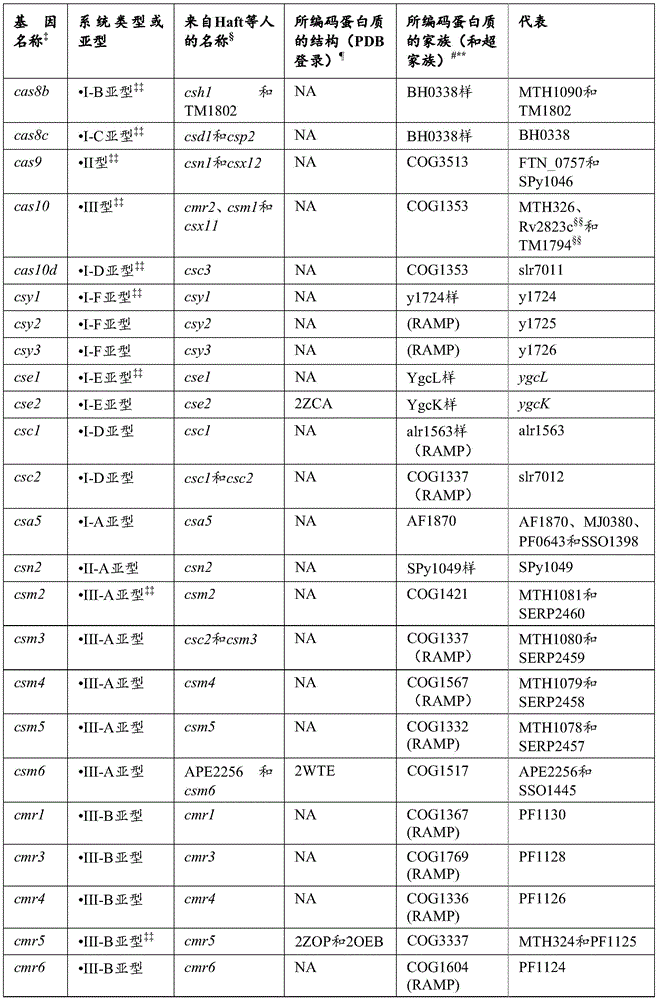

(iii)Cpf1(iii) Cpf1
在一些实施方案中,指导RNA或gRNA促进RNA指导的核酸酶(如Cas9或Cpf1)与靶序列(如细胞中的基因组或附加型序列)的特异性关联靶向。通常,gRNA可以是单分子的(包含单一RNA分子,并且可替代地称为嵌合的),或者模块化的(包含超过一种、并且通常两种单独RNA分子(如crRNA和tracrRNA),其在一些实施方案中通常通过双链化彼此缔合)。gRNA及其组成部分在整个文献中,在一些实施方案中在Briner等人(Molecular Cell 56(2),333-339,2014年10月23日(Briner),将其通过引用并入)中以及在Cotta-Ramusino中有描述。In some embodiments, the guide RNA or gRNA facilitates specific association targeting of an RNA-guided nuclease (eg, Cas9 or Cpf1 ) to a target sequence (eg, a genomic or episomal sequence in a cell). Typically, gRNAs can be monomolecular (comprising a single RNA molecule, and alternatively referred to as chimeric), or modular (comprising more than one, and often two, separate RNA molecules (eg, crRNA and tracrRNA), which are usually associated with each other by duplexing in some embodiments). gRNAs and components thereof are throughout the literature, in some embodiments in Briner et al. (Molecular Cell 56(2), 333-339, Oct. 23, 2014 (Briner), which is incorporated by reference) and Described in Cotta-Ramusino.
无论是单分子的还是模块化的,指导RNA通常都包括与靶标完全或部分互补的靶向结构域,并且通常具有10-30个核苷酸的长度,并且在某些实施方案中具有16-24个核苷酸的长度(在一些实施方案中,16、17、18、19、20、21、22、23或24个核苷酸的长度)。在一些方面,在Cas9 gRNA的情况下,靶向结构域在gRNA的5'端处或附近,并且在Cpf1 gRNA的情况下,靶向结构域在gRNA的3'端处或附近。尽管前述描述集中于用于与Cas9一起使用的gRNA,应当了解,已经(或在将来可能)发现或发明其他RNA指导的核酸酶,所述核酸酶利用以某些方式与针对这一点所述的那些不同的gRNA。在一些实施方案中,Cpf1(“来自普氏菌属和弗朗西斯菌属的CRISPR 1(CRISPR from Prevotella and Franciscella 1)”)是最近发现的RNA指导的核酸酶,其不需要tracrRNA起作用。(Zetsche等人,2015,Cell 163,759-7712015年10月22日(Zetsche I),通过引用并入本文)。用于在Cpf1基因组编辑系统中使用的gRNA通常包括靶向结构域和互补结构域(可替代地称为“手柄(handle)”)。还应当注意,在用于与Cpf1一起使用的gRNA中,靶向结构域通常存在于3'端处或附近,而不是如上文结合Cas9 gRNA所述在5'端处或附近(手柄在Cpf1 gRNA的5'端处或附近)。Whether single-molecule or modular, guide RNAs typically include a targeting domain that is fully or partially complementary to the target, and are typically 10-30 nucleotides in length, and in certain embodiments 16- 24 nucleotides in length (in some embodiments, 16, 17, 18, 19, 20, 21, 22, 23, or 24 nucleotides in length). In some aspects, in the case of a Cas9 gRNA, the targeting domain is at or near the 5' end of the gRNA, and in the case of a Cpf1 gRNA, the targeting domain is at or near the 3' end of the gRNA. While the foregoing description has focused on gRNAs for use with Cas9, it should be appreciated that other RNA-guided nucleases have been (or may in the future) be discovered or invented that utilize in some ways different from those described for this point. those different gRNAs. In some embodiments, Cpf1 ("CRISPR from Prevotella and
尽管在来自不同原核物种的gRNA之间或在Cpf1与Cas9 gRNA之间可能存在结构差异,gRNA是作用原理通常是一致的。由于这种作用一致性,在广义上,gRNA可以依据其靶向结构域序列来定义,并且熟练技术人员将了解,可以将给定的靶向结构域序列掺入任何合适的gRNA中,包括单分子或嵌合gRNA,或者包括一种或多种化学修饰和/或序列修饰(取代、另外的核苷酸、截短等)的gRNA。因此,在本公开文本中的一些方面,gRNA可以仅根据其靶向结构域序列来描述。Although there may be structural differences between gRNAs from different prokaryotic species or between Cpf1 and Cas9 gRNAs, the mechanism of action of the gRNAs is generally consistent. Because of this uniformity of action, a gRNA can be broadly defined in terms of its targeting domain sequence, and the skilled artisan will appreciate that a given targeting domain sequence can be incorporated into any suitable gRNA, including single Molecular or chimeric gRNAs, or gRNAs that include one or more chemical and/or sequence modifications (substitutions, additional nucleotides, truncations, etc.). Thus, in some aspects of the present disclosure, a gRNA may be described solely in terms of its targeting domain sequence.
更通常地,本公开文本的一些方面涉及可以使用多种RNA指导的核酸酶实施的系统、方法和组合物。除非另有说明,否则应当将术语gRNA理解为涵盖可以与任何RNA指导的核酸酶一起使用的任何合适的gRNA,而不仅仅是与特定种类的Cas9或Cpf1相容的那些gRNA。通过说明的方式,在某些实施方案中,术语gRNA可以包括用于与存在于2类CRISPR系统(如II型或V型或CRISPR系统)中的任何RNA指导的核酸酶或者从所述核酸酶来源或修改的RNA指导的核酸酶一起使用的gRNA。More generally, some aspects of the present disclosure relate to systems, methods and compositions that can be implemented using a variety of RNA-guided nucleases. Unless otherwise specified, the term gRNA should be understood to encompass any suitable gRNA that can be used with any RNA-guided nuclease, not just those compatible with a particular class of Cas9 or Cpf1. By way of illustration, in certain embodiments, the term gRNA may include nucleases for directing with or from any RNA present in a
此部分中讨论的某些示例性修饰可以被包括在gRNA序列内的任何位置处,包括但不限于在5'端处或附近(例如,在5'端的1-10、1-5或1-2个核苷酸内)和/或在3'端处或附近(例如,在3'端的1-10、1-5或1-2个核苷酸内)。在一些情况下,修饰位于功能性基序内,所述功能性基序如Cas9 gRNA的重复-抗-重复双链体、Cas9或Cpf1 gRNA的茎环结构和/或gRNA的靶向结构域。Certain exemplary modifications discussed in this section can be included at any position within the gRNA sequence, including but not limited to at or near the 5' end (eg, at 1-10, 1-5, or 1- within 2 nucleotides) and/or at or near the 3' end (eg, within 1-10, 1-5, or 1-2 nucleotides of the 3' end). In some cases, the modification is within a functional motif, such as the repeat-anti-repeat duplex of a Cas9 gRNA, the stem-loop structure of a Cas9 or Cpf1 gRNA, and/or the targeting domain of the gRNA.
RNA指导的核酸酶包括但不限于天然存在的2类CRISPR核酸酶(如Cas9和Cpf1)以及从所述核酸酶来源或获得的其他核酸酶。从功能上讲,RNA指导的核酸酶被定义为那些核酸酶,它们:(a)与gRNA相互作用(例如,与其形成复合物);并且(b)gRNA一起与DNA的靶区域缔合,并且任选地对其进行切割或修饰,所述靶区域包括(i)与gRNA的靶向结构域互补的序列和任选地(ii)将在下文更详细地描述的称为“原型间隔子邻近基序”或“PAM”的另外的序列。如以下例子将说明,在广义上,RNA指导的核酸酶可以依据其PAM特异性和切割活性来定义,即使共有相同PAM特异性或切割活性的单独的RNA指导的核酸酶之间可能存在差异。熟练技术人员将理解,本公开文本的一些方面涉及可以使用具有某种PAM特异性和/或切割活性的任何合适的RNA指导的核酸酶实施的系统、方法和组合物。因此,除非另有说明,否则术语RNA指导的核酸酶应当理解为通用术语,并且不限于RNA指导的核酸酶的任何特定类型(例如,Cas9与Cpf1)、物种(例如,化脓链球菌与金黄色葡萄球菌)或变异(例如,全长的与截短的或分离的;天然存在的PAM特异性与工程化的PAM特异性等)。RNA-guided nucleases include, but are not limited to, naturally occurring
除了识别PAM和原间隔子的特定顺序取向外,在一些实施方案中,RNA指导的核酸酶还可以识别特定PAM序列。在一些实施方案中,金黄色葡萄球菌Cas9通常识别NNGRRT或NNGRRV的PAM序列,其中N残基紧接gRNA靶向结构域识别的区域的3'。化脓链球菌Cas9通常识别NGG PAM序列。并且新凶手弗朗西斯菌(F.novicida)Cpf1通常识别TTN PAM序列。In addition to recognizing specific sequential orientations of PAMs and protospacers, in some embodiments, RNA-guided nucleases can also recognize specific PAM sequences. In some embodiments, S. aureus Cas9 generally recognizes the PAM sequence of NNGRRT or NNGRRV, wherein the N residue is immediately 3' to the region recognized by the gRNA targeting domain. Streptococcus pyogenes Cas9 generally recognizes NGG PAM sequences. And F. novicida Cpf1 generally recognizes TTN PAM sequences.
Yamano等人(Cell.2016年5月5日;165(4):949-962(Yamano),通过引用并入本文)已经解析了与crRNA和包括TTTN PAM序列的双链(ds)DNA靶标复合的氨基酸球菌属物种(Acidaminococcus sp.)Cpf1的晶体结构。Cpf1像Cas9一样具有两种叶:REC(识别)叶和NUC(核酸酶)叶。REC叶包括REC1和REC2结构域,它们与任何已知的蛋白质结构都缺乏相似性。同时,NUC叶包括三个RuvC结构域(RuvC-I、RuvC-II和RuvC-III)和BH结构域。然而,与Cas9相反,Cpf1 REC叶缺乏HNH结构域,并且包括也与已知蛋白质结构缺乏相似性的其他结构域:结构独特的PI结构域、三个Wedge(WED)结构域(WED-I、WED-II和WED-III)和核酸酶(Nuc)结构域。Yamano et al. (Cell. 2016 May 5; 165(4):949-962 (Yamano), incorporated herein by reference) have resolved complexation with crRNA and double-stranded (ds) DNA targets including TTTN PAM sequences Crystal structure of Acidaminococcus sp. Cpf1. Cpf1, like Cas9, has two types of lobes: REC (recognition) lobes and NUC (nuclease) lobes. The REC lobe includes the REC1 and REC2 domains, which lack similarity to any known protein structure. Meanwhile, the NUC lobe includes three RuvC domains (RuvC-I, RuvC-II, and RuvC-III) and a BH domain. However, in contrast to Cas9, the Cpf1 REC lobe lacks the HNH domain and includes other domains that also lack similarity to known protein structures: the structurally unique PI domain, the three Wedge (WED) domains (WED-I, WED-II and WED-III) and nuclease (Nuc) domains.
尽管Cas9和Cpf1在结构和功能上共有相似性,但应当了解,某些Cpf1活性是由与任何Cas9结构域都不类似的结构性结构域介导的。在一些实施方案中,靶DNA的互补链的切割似乎是由Nuc结构域介导的,所述Nuc结构域与Cas9的HNH结构域在顺序和空间上有所不同。另外,Cpf1 gRNA的非靶向部分(手柄)采用假结结构,而不是Cas9 gRNA中由重复:抗重复双链体形成的茎环结构。Although Cas9 and Cpf1 share structural and functional similarities, it should be understood that some Cpf1 activities are mediated by structural domains that do not resemble any Cas9 domain. In some embodiments, cleavage of the complementary strand of the target DNA appears to be mediated by the Nuc domain, which differs sequentially and spatially from the HNH domain of Cas9. Additionally, the non-targeting portion (handle) of the Cpf1 gRNA adopts a pseudoknot structure instead of the stem-loop structure formed by the repeat:anti-repeat duplex in the Cas9 gRNA.
本文提供了编码RNA指导的核酸酶(例如,Cas9、Cpf1或其功能片段)的核酸。先前已经描述了编码RNA指导的核酸酶的示例性核酸(参见例如,Cong 2013;Wang 2013;Mali2013;Jinek 2012)。Provided herein are nucleic acids encoding RNA-guided nucleases (eg, Cas9, Cpfl, or functional fragments thereof). Exemplary nucleic acids encoding RNA-guided nucleases have been described previously (see eg, Cong 2013; Wang 2013; Mali 2013; Jinek 2012).
b.基因组编辑方法b. Genome editing methods
通常,应理解,根据本文所述方法的任何基因的改变都可以通过任何机制介导,并且任何方法都不限于特定机制。可以与基因改变相关的示例性机制包括但不限于非同源末端连接(例如,经典的或替代的)、微同源介导的末端连接(MMEJ)、同源定向修复(例如,内源供体模板介导的)、合成依赖性链退火(SDSA)、单链退火、单链侵入、单链断裂修复(SSBR)、错配修复(MMR)、碱基切除修复(BER)、链间交联(ICL)跨损伤合成(TLS)或无错复制后修复(PRR)。本文描述了用于靶向敲除TGFBR2基因座中的一个或两个等位基因的示例性方法。In general, it is understood that alteration of any gene according to the methods described herein can be mediated by any mechanism, and that no method is limited to a particular mechanism. Exemplary mechanisms that can be associated with genetic alterations include, but are not limited to, non-homologous end joining (eg, classical or alternative), microhomology-mediated end joining (MMEJ), homology-directed repair (eg, endogenous donors). body template-mediated), synthesis-dependent strand annealing (SDSA), single-strand annealing, single-strand invasion, single-strand break repair (SSBR), mismatch repair (MMR), base excision repair (BER), interstrand crossover Linked (ICL) translesion synthesis (TLS) or error-free post-replication repair (PRR). Exemplary methods for targeted knockout of one or both alleles in the TGFBR2 locus are described herein.
1)用于基因靶向的NHEJ方法1) NHEJ method for gene targeting
如本文所述,核酸酶诱导的非同源末端连接(NHEJ)可以用于靶向基因特异性敲除。核酸酶诱导的NHEJ也可以用于去除(例如,缺失)目的基因中的序列插入。As described herein, nuclease-induced non-homologous end joining (NHEJ) can be used to target gene-specific knockout. Nuclease-induced NHEJ can also be used to remove (eg, delete) sequence insertions in genes of interest.
尽管不希望受到理论的束缚,认为在一些实施方案中,与本文所述方法相关的基因组改变依赖于核酸酶诱导的NHEJ和NHEJ修复途径的易错性质。NHEJ通过将两个末端连接在一起来修复DNA中的双链断裂;然而,通常,只有完美连接两个相容末端(在它们恰好由双链断裂形成时)才能恢复原始序列。双链断裂的DNA末端经常是酶加工的对象,从而导致在重新连接末端之前在一条或两条链处添加或去除核苷酸。这导致在DNA序列中在NHEJ修复位点处存在插入和/或缺失(indel)突变。这些突变的三分之二通常改变阅读框,因此产生非功能性蛋白质。此外,维持阅读框但插入或缺失大量序列的突变可能破坏蛋白质的功能性。这是基因座依赖性的,因为关键功能结构域中的突变可能比蛋白质非关键区域中的突变耐受性低。NHEJ产生的indel突变本质上是不可预测的;然而,在给定的断裂位点处,某些indel序列受到青睐,并且在群体中有过高的代表,这可能是由于微同源性的小区域所致。缺失的长度可以广泛地变化;最常见地在1-50bp的范围内,但是它们可以容易地达到大于100-200bp。插入往往较短,并且通常包括紧邻断裂位点周围的序列的短重复。然而,有可能获得大的插入,并且在这些情况下,所插入的序列通常被追踪到基因组的其他区域或细胞中存在的质粒DNA。While not wishing to be bound by theory, it is believed that in some embodiments, the genomic alterations associated with the methods described herein rely on nuclease-induced NHEJ and the error-prone nature of the NHEJ repair pathway. NHEJ repairs double-strand breaks in DNA by joining the two ends together; however, usually, only perfect joining of two compatible ends (when they happen to be formed by the double-strand break) restores the original sequence. DNA ends of double-strand breaks are often the subject of enzymatic processing, resulting in the addition or removal of nucleotides at one or both strands before the ends are rejoined. This results in insertion and/or deletion (indel) mutations in the DNA sequence at the NHEJ repair site. Two-thirds of these mutations usually change the reading frame, thus producing a non-functional protein. Furthermore, mutations that maintain the reading frame but insert or delete substantial sequences may disrupt the functionality of the protein. This is locus-dependent, as mutations in critical functional domains may be less tolerable than mutations in non-critical regions of the protein. NHEJ-generated indel mutations are inherently unpredictable; however, at a given break site, certain indel sequences are favored and overrepresented in the population, likely due to small amounts of microhomology caused by the region. The length of deletions can vary widely; most commonly in the range of 1-50 bp, but they can easily reach greater than 100-200 bp. Insertions tend to be short and often include short repeats of sequence immediately surrounding the break site. However, it is possible to obtain large insertions, and in these cases the inserted sequences are often traced to other regions of the genome or to plasmid DNA present in the cell.
因为NHEJ是诱变过程,它也可以用于缺失小序列基序,只要不需要产生特定的最终序列。如果双链断裂靶向在短靶序列附近,则由NHEJ修复引起的缺失突变通常跨越,因此去除不需要的核苷酸。对于较大的DNA区段的缺失,在序列的每一侧上引入两个双链断裂可以在末端之间导致NHEJ,并且去除整个间插序列。在一些实施方案中,一对gRNA可以用于引入两个双链断裂,从而导致缺失两个断裂之间的间插序列。Because NHEJ is a mutagenesis process, it can also be used to delete small sequence motifs, as long as there is no need to generate a specific final sequence. If the double-strand break is targeted near a short target sequence, deletion mutations caused by NHEJ repair typically span, thus removing unwanted nucleotides. For deletions of larger DNA segments, introducing two double-strand breaks on each side of the sequence can result in NHEJ between the ends, and remove the entire intervening sequence. In some embodiments, a pair of gRNAs can be used to introduce two double-stranded breaks, resulting in deletion of the intervening sequence between the two breaks.
这两种方法均可以用于缺失特定的DNA序列;然而,NHEJ的易错性质仍可能在修复位点处产生indel突变。Both methods can be used to delete specific DNA sequences; however, the error-prone nature of NHEJ may still generate indel mutations at repair sites.
双链切割eaCas9分子和单链或切口酶eaCas9分子均可以用于本文所述的方法和组合物中,以产生NHEJ介导的indel。靶向目的基因(例如,基因的编码区,例如早期编码区)的NHEJ介导的indel可以用于敲除目的基因(即,消除其表达)。例如,目的基因的早期编码区包括紧接转录起始位点之后、在编码序列的第一外显子内或在转录起始位点的500bp内(例如,小于500、450、400、350、300、250、200、150、100或50bp)的序列。Both double-stranded cleaving eaCas9 molecules and single-stranded or nickase eaCas9 molecules can be used in the methods and compositions described herein to generate NHEJ-mediated indels. NHEJ-mediated indels targeting a gene of interest (eg, the coding region of the gene, eg, the early coding region) can be used to knock out the gene of interest (ie, eliminate its expression). For example, the early coding region of the gene of interest includes immediately after the transcription start site, within the first exon of the coding sequence, or within 500 bp of the transcription start site (eg, less than 500, 450, 400, 350, 300, 250, 200, 150, 100 or 50 bp).
在一些实施方案中,将NHEJ介导的插入缺失引入TGFBR2基因座中。提供了靶向所述基因的单独的gRNA或gRNA对以及Cas9双链核酸酶或单链切口酶。In some embodiments, the NHEJ-mediated indel is introduced into the TGFBR2 locus. A separate gRNA or gRNA pair targeting the gene is provided along with a Cas9 double-stranded nuclease or single-stranded nickase.
(1)双链或单链断裂相对于靶位置的放置(1) Placement of double-strand or single-strand breaks relative to the target location
在gRNA和Cas9核酸酶产生双链断裂以用于诱导NHEJ介导的插入缺失的目的的一些实施方案中,gRNA(例如,单分子(或嵌合)或模块化gRNA分子)被配置将双链断裂定位地非常靠近靶位置的核苷酸。在一些实施方案中,切割位点在距离靶位置0-30bp之间(例如,距离靶位置小于30、25、20、15、10、9、8、7、6、5、4、3、2或1bp)。In some embodiments where the gRNA and Cas9 nuclease create double-strand breaks for the purpose of inducing NHEJ-mediated indels, the gRNA (eg, a single-molecule (or chimeric) or modular gRNA molecule) is configured to double-stranded The break is located very close to the nucleotide at the target position. In some embodiments, the cleavage site is between 0-30 bp from the target position (eg, less than 30, 25, 20, 15, 10, 9, 8, 7, 6, 5, 4, 3, 2 from the target position) or 1bp).
在与Cas9切口酶复合的两种gRNA诱导两个单链断裂以用于诱导NHEJ介导的插入缺失的目的的一些实施方案中,两种gRNA(例如,独立地为单分子(或嵌合)或模块化gRNA)被配置为定位两个单链断裂以提供NHEJ修复靶位置的核苷酸。在一些实施方案中,gRNA被配置为将切割定位于不同链上的相同位置处或彼此的几个核苷酸内,从而本质上模拟双链断裂。在一些实施方案中,较近的切口在距离靶位置0-30bp之间(例如,距离靶位置小于30、25、20、15、10、9、8、7、6、5、4、3、2或1bp),并且两个切口在彼此25-55bp内(例如,在25至50、25至45、25至40、25至35、25至30、50至55、45至55、40至55、35至55、30至55、30至50、35至50、40至50、45至50、35至45或40至45bp之间)且彼此相距不超过100bp(例如,不超过90、80、70、60、50、40、30、20或10bp)。在一些实施方案中,gRNA被配置为将单链断裂放置在靶位置的核苷酸的任一侧上。In some embodiments in which two gRNAs complexed with a Cas9 nickase induce two single-strand breaks for the purpose of inducing NHEJ-mediated indels, the two gRNAs (eg, independently single-molecule (or chimeric) or modular gRNA) are configured to localize two single-strand breaks to provide nucleotides at the target site for NHEJ repair. In some embodiments, the gRNA is configured to localize cleavage at the same position on different strands or within a few nucleotides of each other, essentially mimicking a double-strand break. In some embodiments, the closer nick is between 0-30 bp from the target position (eg, less than 30, 25, 20, 15, 10, 9, 8, 7, 6, 5, 4, 3, 2 or 1 bp), and the two cuts are within 25-55 bp of each other (e.g., at 25 to 50, 25 to 45, 25 to 40, 25 to 35, 25 to 30, 50 to 55, 45 to 55, 40 to 55 , 35 to 55, 30 to 55, 30 to 50, 35 to 50, 40 to 50, 45 to 50, 35 to 45, or 40 to 45 bp) and not more than 100 bp from each other (eg, not more than 90, 80, 70, 60, 50, 40, 30, 20 or 10 bp). In some embodiments, the gRNA is configured to place single-strand breaks on either side of the nucleotides at the target position.
双链切割eaCas9分子和单链或切口酶eaCas9分子均可以用于本文所述的方法和组合物中,以在靶位置的两侧产生断裂。可以在靶位置的两侧上产生双链或成对的单链断裂,以去除两个切割之间的核酸序列(例如,缺失两个断裂之间的区域)。在一些实施方案中,两种gRNA(例如,独立地为单分子(或嵌合)或模块化gRNA)被配置为将双链断裂定位于靶位置的两侧上。在一个替代实施方案中,三种gRNA(例如,独立地为单分子(或嵌合)或模块化gRNA)被配置为将双链断裂(即,一种gRNA与cas9核酸酶复合)和两个单链断裂或成对的单链断裂(即,两种gRNA与Cas9切口酶复合)定位于靶位置的任一侧上。在另一个实施方案中,四种gRNA(例如,独立地为单分子(或嵌合)或模块化gRNA)被配置为在靶位置的任一侧上产生两对单链断裂(即,两对两种gRNA与Cas9切口酶复合)。一个或多个双链断裂或一对中两个单链切口中的较近者将理想地在靶位置的0-500bp内(例如,距离靶位置不超过450、400、350、300、250、200、150、100、50或25bp)。当使用切口酶时,一对中的两个切口在彼此的25-55bp内(例如,在25至50、25至45、25至40、25至35、25至30、50至55、45至55、40至55、35至55、30至55、30至50、35至50、40至50、45至50、35至45或40至45bp之间)且彼此相距不超过100bp(例如,不超过90、80、70、60、50、40、30、20或10bp)。Both double-stranded cleaving eaCas9 molecules and single-stranded or nickase eaCas9 molecules can be used in the methods and compositions described herein to create breaks on both sides of a target site. Double-stranded or paired single-stranded breaks can be created on both sides of the target site to remove the nucleic acid sequence between the two cuts (eg, to delete the region between the two breaks). In some embodiments, two gRNAs (eg, independently single-molecule (or chimeric) or modular gRNAs) are configured to localize double-strand breaks on either side of the target location. In an alternative embodiment, three gRNAs (eg, independently single-molecule (or chimeric) or modular gRNAs) are configured to double-strand breaks (ie, one gRNA complexed with a cas9 nuclease) and two Single-strand breaks or paired single-strand breaks (ie, two gRNAs complexed with the Cas9 nickase) are localized on either side of the target site. In another embodiment, four gRNAs (eg, independently single-molecule (or chimeric) or modular gRNAs) are configured to generate two pairs of single-strand breaks on either side of the target site (ie, two pairs of Both gRNAs are complexed with Cas9 nickase). The closer of the one or more double-stranded breaks or the two single-stranded nicks of a pair will ideally be within 0-500 bp of the target position (eg, no more than 450, 400, 350, 300, 250, 200, 150, 100, 50 or 25 bp). When a nickase is used, the two nicks of a pair are within 25-55 bp of each other (eg, within 25-50, 25-45, 25-40, 25-35, 25-30, 50-55, 45- 55, 40 to 55, 35 to 55, 30 to 55, 30 to 50, 35 to 50, 40 to 50, 45 to 50, 35 to 45, or 40 to 45 bp) and not more than 100 bp from each other (e.g., not over 90, 80, 70, 60, 50, 40, 30, 20 or 10 bp).
2)靶向敲低2) Targeted knockdown
与通过在DNA水平上突变基因永久地消除或减少表达的CRISPR/Cas介导的基因敲除不同,CRISPR/Cas敲低允许通过使用人工转录因子暂时减少基因表达。突变Cas9蛋白的两个DNA切割域中的关键残基(例如,D10A和H840A突变)导致产生催化失活的Cas9(eiCas9,其也称为死Cas9或dCas9)。催化失活的Cas9与gRNA复合并且定位到由所述gRNA的靶向结构域指定的DNA序列,然而,它不切割靶DNA。dCas9与效应子结构域(例如,转录阻遏结构域)的融合使得能够将效应子募集到由gRNA指定的任何DNA位点。尽管已经显示eiCas9自身在募集到编码序列中的早期区域时可以阻断转录,可以通过将转录阻遏结构域(例如,KRAB、SID或ERD)与Cas9融合并将其募集到基因的启动子区来实现更稳健的阻遏。可能的是,靶向启动子的DNA酶I超敏区可能产生更有效的基因阻遏或激活,因为这些区域更可能是Cas9蛋白可及的,并且也更可能包含内源转录因子的位点。尤其是对于基因阻遏,本文考虑了阻断内源转录因子的结合位点将有助于下调基因表达。在另一个实施方案中,可以将eiCas9与染色质修饰蛋白融合。改变染色质状态可以导致靶基因表达降低。Unlike CRISPR/Cas-mediated gene knockout, which permanently eliminates or reduces expression by mutating genes at the DNA level, CRISPR/Cas knockdown allows for temporary reduction of gene expression through the use of artificial transcription factors. Mutation of key residues in the two DNA cleavage domains of the Cas9 protein (eg, D10A and H840A mutations) results in the production of catalytically inactive Cas9 (eiCas9, which is also known as dead Cas9 or dCas9). Catalytically inactive Cas9 complexes with the gRNA and localizes to the DNA sequence specified by the targeting domain of the gRNA, however, it does not cleave the target DNA. Fusion of dCas9 to an effector domain (eg, a transcriptional repression domain) enables recruitment of effectors to any DNA site specified by the gRNA. Although eiCas9 itself has been shown to block transcription when recruited to early regions in the coding sequence, it can be achieved by fusing a transcriptional repression domain (eg, KRAB, SID, or ERD) to Cas9 and recruiting it to the promoter region of a gene Achieve more robust repression. It is possible that promoter-targeted DNase I hypersensitive regions may result in more efficient gene repression or activation, as these regions are more likely to be accessible to Cas9 proteins and are also more likely to contain sites for endogenous transcription factors. Especially for gene repression, it is contemplated here that blocking the binding sites of endogenous transcription factors will help to downregulate gene expression. In another embodiment, eiCas9 can be fused to a chromatin modifying protein. Altering chromatin state can lead to decreased target gene expression.
在一些实施方案中,可以将gRNA分子靶向已知的转录反应元件(例如,启动子、增强子等)、已知的上游激活序列(UAS)和/或怀疑能够控制靶DNA的表达的具有未知或已知功能的序列。In some embodiments, gRNA molecules can be targeted to known transcriptional response elements (eg, promoters, enhancers, etc.), known upstream activating sequences (UASs), and/or known transcriptional response elements (UASs) and/or known to control expression of the target DNA. Sequences of unknown or known function.
在一些实施方案中,CRISPR/Cas介导的基因敲低可以用于减少一个或多个T细胞表达的基因的表达。在本文所述的eiCas9或eiCas9融合蛋白用于敲低TGFBR2基因座的实施方案中,提供了靶向两个或全部基因的单独的gRNA或gRNA对以及eiCas9或eiCas9融合蛋白。In some embodiments, CRISPR/Cas-mediated gene knockdown can be used to reduce the expression of one or more T cell-expressed genes. In the embodiments described herein in which eiCas9 or eiCas9 fusion proteins are used to knock down the TGFBR2 locus, separate gRNAs or pairs of gRNAs targeting two or all genes and eiCas9 or eiCas9 fusion proteins are provided.
3)单链退火3) Single strand annealing
单链退火(SSA)是另一种DNA修复过程,其修复靶核酸中存在的两个重复序列之间的双链断裂。SSA途径利用的重复序列通常具有大于30个核苷酸的长度。在断裂末端进行切除以揭示靶核酸的两条链上的重复序列。在切除之后,用RPA蛋白包被含有重复序列的单链突出端,以防止重复序列不适当地退火,例如自身退火。RAD52与突出端上的每个重复序列结合并对齐序列,以使得互补重复序列能够退火。在退火之后,切割突出端的单链瓣(flap)。新DNA合成填充任何缺口,并且连接恢复DNA双链体。作为加工的结果,缺失两个重复之间的DNA序列。缺失的长度可以取决于许多因素,包括所利用的两个重复的位置以及切除的途径或进行性(processivity)。Single-strand annealing (SSA) is another DNA repair process that repairs double-strand breaks between two repeating sequences present in a target nucleic acid. Repeat sequences utilized by the SSA pathway are typically greater than 30 nucleotides in length. Excision is performed at the broken ends to reveal repeat sequences on both strands of the target nucleic acid. Following excision, the single-stranded overhangs containing the repeats were coated with RPA protein to prevent inappropriate annealing of the repeats, such as self-annealing. RAD52 binds to each repeat on the overhang and aligns the sequences so that the complementary repeats can anneal. After annealing, the single-stranded flap of the overhang is cut. New DNA synthesis fills any gaps, and ligation restores the DNA duplex. As a result of processing, the DNA sequence between the two repeats is deleted. The length of the deletion can depend on many factors, including the location of the two repeats utilized and the route or processivity of the excision.
与HDR途径相反,SSA不需要模板核酸来改变或校正靶核酸序列。相反,利用互补重复序列。In contrast to the HDR pathway, SSA does not require a template nucleic acid to alter or correct target nucleic acid sequences. Instead, use complementary repeats.
4)其他DNA修复途径4) Other DNA repair pathways
A)SSBR(单链断裂修复)A) SSBR (Single Strand Break Repair)
基因组中的单链断裂(SSB)通过SSBR途径修复,这是与上文讨论的DSB修复机制不同的机制。SSBR途径具有四个主要阶段:SSB检测、DNA末端加工、DNA缺口填充和DNA连接。更详细的解释给出于Caldecott,Nature Reviews Genetics 9,619-631(2008年8月),并且这里给出了概述。Single-strand breaks (SSBs) in the genome are repaired by the SSBR pathway, which is a different mechanism from the DSB repair mechanisms discussed above. The SSBR pathway has four main stages: SSB detection, DNA end processing, DNA gap filling, and DNA ligation. A more detailed explanation is given in Caldecott,
在第一阶段,当形成SSB时,PARP1和/或PARP2识别断裂并募集修复机器。PARP1在DNA断裂处的结合和活性是短暂的,并且似乎通过促进损伤处SSBr蛋白复合物的局灶积累或稳定性来加速SSBr。可以说,这些SSBr蛋白中最重要的是XRCC1,它起分子支架的作用,所述分子支架与SSBr过程的多种酶促组分(包括负责清洁DNA 3'和5'端的蛋白质)相互作用,对其进行稳定并对其进行刺激。在一些实施方案中,XRCC1与促进末端加工的几种蛋白质(DNA聚合酶β、PNK和三种核酸酶APE1、APTX和APLF)相互作用。APE1具有核酸内切酶活性。APLF展现核酸内切酶和3'至5'核酸外切酶活性。APTX具有核酸内切酶和3'至5'核酸外切酶活性。In the first stage, when the SSB is formed, PARP1 and/or PARP2 recognize the break and recruit repair machinery. The binding and activity of PARP1 at DNA breaks are transient and appear to accelerate SSBr by promoting focal accumulation or stability of the SSBr protein complex at the site of the lesion. Arguably the most important of these SSBr proteins is XRCC1, which acts as a molecular scaffold that interacts with various enzymatic components of the SSBr process, including proteins responsible for cleaning the 3' and 5' ends of DNA, Stabilize it and stimulate it. In some embodiments, XRCC1 interacts with several proteins that facilitate end processing (DNA polymerase beta, PNK, and the three nucleases APEl, APTX, and APLF). APE1 has endonuclease activity. APLF exhibits endonuclease and 3' to 5' exonuclease activities. APTX has endonuclease and 3' to 5' exonuclease activities.
此末端加工是SSBR的重要阶段,因为大多数(如果不是全部)SSB的3'端和/或5'端‘受损’。末端加工通常涉及将受损的3'端恢复为羟基化状态和/或将受损的5'端恢复为磷酸部分,使得末端变得有连接能力。可以加工受损的3'端的酶包括PNKP、APE1和TDP1。可以加工受损的5'端的酶包括PNKP、DNA聚合酶β和APTX。LIG3(DNA连接酶III)也可以参与末端加工。一旦末端得到了清洁,便会发生缺口填充。This end processing is an important stage of SSBR, as most, if not all, SSBs are 'damaged' at the 3' and/or 5' ends. End processing typically involves restoring the damaged 3' end to a hydroxylated state and/or restoring the damaged 5' end to a phosphate moiety, rendering the end ligation capable. Enzymes that can process the damaged 3' end include PNKP, APE1 and TDP1. Enzymes that can process damaged 5' ends include PNKP, DNA polymerase beta, and APTX. LIG3 (DNA ligase III) can also be involved in end processing. Gap filling occurs once the ends have been cleaned.
在DNA缺口填充阶段,通常存在的蛋白质是PARP1、DNA聚合酶β、XRCC1、FEN1(瓣状核酸内切酶1)、DNA聚合酶δ/ε、PCNA和LIG1。缺口填充有两种方式,即短补丁修复和长补丁修复。短补丁修复涉及缺失的单个核苷酸的插入。在一些SSB处,“缺口填充”可能继续置换两个或更多个核苷酸(已经报道了置换多达12个碱基)。FEN1是去除置换的5'残基的核酸内切酶。多种DNA聚合酶(包括Polβ)参与SSB的修复,其中DNA聚合酶的选择受SSB的来源和类型的影响。During the DNA gap-filling stage, proteins commonly present are PARP1, DNA polymerase β, XRCC1, FEN1 (flap endonuclease 1), DNA polymerase δ/ε, PCNA and LIG1. There are two ways of gap filling, namely short patch repair and long patch repair. Short-patch repair involves insertion of missing single nucleotides. At some SSBs, "gap filling" may continue to replace two or more nucleotides (substitutions of up to 12 bases have been reported). FEN1 is an endonuclease that removes substituted 5' residues. A variety of DNA polymerases (including Polβ) are involved in the repair of SSB, and the choice of DNA polymerase is influenced by the source and type of SSB.
在第四阶段,DNA连接酶(如LIG1(连接酶I)或LIG3(连接酶III))催化末端的连接。短补丁修复使用连接酶III,并且长补丁修复使用连接酶I。In the fourth stage, DNA ligases such as LIG1 (ligase I) or LIG3 (ligase III) catalyze the ligation of the ends. Short patch repair uses ligase III, and long patch repair uses ligase I.
有时,SSBR是复制偶联的。此途径可以涉及CtIP、MRN、ERCC1和FEN1中的一种或多种。可以促进SSBR的另外的因子包括:aPARP、PARP1、PARP2、PARG、XRCC1、DNA聚合酶b、DNA聚合酶d、DNA聚合酶e、PCNA、LIG1、PNK、PNKP、APE1、APTX、APLF、TDP1、LIG3、FEN1、CtIP、MRN和ERCC1。Sometimes SSBRs are replication coupled. This pathway may involve one or more of CtIP, MRN, ERCC1 and FEN1. Additional factors that can promote SSBR include: aPARP, PARP1, PARP2, PARG, XRCC1, DNA polymerase b, DNA polymerase d, DNA polymerase e, PCNA, LIG1, PNK, PNKP, APE1, APTX, APLF, TDP1, LIG3, FEN1, CtIP, MRN and ERCC1.
B)MMR(错配修复)B) MMR (mismatch repair)
细胞含有三种切除修复途径:MMR、BER和NER。切除修复途径具有的共同特征在于它们通常识别DNA一条链上的损伤,然后核酸外切/核酸内切酶去除损伤并留下1-30个核苷酸的缺口,其随后被DNA聚合酶填充并最终被连接酶密封起来。更完整的画面给出于Li,Cell Research(2008)18:85-98,并且这里提供了概述。Cells contain three excision repair pathways: MMR, BER, and NER. The common feature shared by excision repair pathways is that they typically recognize damage on one strand of DNA, and exonuclease/endonuclease then removes the damage and leaves a gap of 1-30 nucleotides, which is then filled by DNA polymerase and It is finally sealed by ligase. A more complete picture is given in Li, Cell Research (2008) 18:85-98, and an overview is provided here.
错配修复(MMR)对错配的DNA碱基进行操作。MSH2/6或MSH2/3复合物均具有ATP酶活性,这在错配识别和修复启动中起重要作用。MSH2/6优先识别碱基-碱基错配并鉴定1或2个核苷酸的错配,而MSH2/3优先识别较大的ID错配。Mismatch repair (MMR) operates on mismatched DNA bases. Both MSH2/6 or MSH2/3 complexes have ATPase activity, which plays an important role in mismatch recognition and initiation of repair. MSH2/6 preferentially recognizes base-to-base mismatches and identifies mismatches of 1 or 2 nucleotides, while MSH2/3 preferentially recognizes larger ID mismatches.
hMLH1与hPMS2异二聚体形成hMutLα,其具有ATP酶活性并且对于MMR的多个步骤是重要的。它具有PCNA/复制因子C(RFC)依赖性核酸内切酶活性,这在涉及EXO1的3'切口指导的MMR中起重要作用。(EXO1是HR和MMR两者的参与者。)它调控错配引起的切除的终止。连接酶I是此途径的相关连接酶。可以促进MMR的另外的因子包括:EXO1、MSH2、MSH3、MSH6、MLH1、PMS2、MLH3、DNA Pol d、RPA、HMGB1、RFC和DNA连接酶I。hMLH1 heterodimers with hPMS2 to form hMutLα, which has ATPase activity and is important for multiple steps of MMR. It possesses PCNA/replication factor C (RFC)-dependent endonuclease activity, which plays an important role in 3' nick-directed MMR involving EXO1. (EXO1 is a participant in both HR and MMR.) It regulates the termination of mismatch-induced excision. Ligase I is the relevant ligase for this pathway. Additional factors that can promote MMR include: EXO1, MSH2, MSH3, MSH6, MLH1, PMS2, MLH3, DNA Pol d, RPA, HMGB1, RFC and DNA Ligase I.
C)碱基切除修复(BER)C) Base excision repair (BER)
碱基切除修复(BER)途径在整个细胞周期中都是活跃的;它主要负责从基因组中去除小的非螺旋扭曲的碱基损伤。相反,相关的核苷酸切除修复途径(在下一章中讨论)修复庞大的螺旋扭曲损伤。更详细的解释给出于Caldecott,Nature Reviews Genetics9,619-631(2008年8月),并且这里给出了概述。The base excision repair (BER) pathway is active throughout the cell cycle; it is primarily responsible for removing small non-helix-twisted base lesions from the genome. Instead, the related nucleotide excision repair pathway (discussed in the next chapter) repairs bulky helix-twist lesions. A more detailed explanation is given in Caldecott,
一旦DNA碱基受损,便启动碱基切除修复(BER),并且所述过程可以简化为五个主要步骤:(a)去除受损的DNA碱基;(b)切下随后的碱基位点;(c)清理DNA末端;(d)将正确的核苷酸插入修复缺口中;以及(e)连接DNA骨架中的其余切口。这些最后步骤类似于SSBR。Once a DNA base is damaged, base excision repair (BER) is initiated, and the process can be simplified into five main steps: (a) removal of damaged DNA bases; (b) cleavage of subsequent base positions (c) clean up the DNA ends; (d) insert the correct nucleotides into the repair gap; and (e) join the remaining nicks in the DNA backbone. These final steps are similar to SSBR.
在第一步,受损特异性DNA糖基化酶通过切割将碱基与糖磷酸骨架连接的N-糖苷键来切除受损的碱基。然后,AP核酸内切酶-1(APE1)或具有相关裂解酶活性的双功能DNA糖基化酶切开磷酸二酯骨架,以产生DNA单链断裂(SSB)。BER的第三步涉及清理DNA末端。BER中的第四步由Polβ进行,它将新的互补核苷酸添加至修复缺口中,并且在最终步骤,XRCC1/连接酶III将DNA骨架中的其余切口密封起来。这样就完成了短补丁BER途径,其中大部分(约80%)受损的DNA碱基得到了修复。然而,如果步骤3中的5'端对末端加工活性具有抗性,则在通过Polβ插入一个核苷酸后,然后将聚合酶转换为复制性DNA聚合酶Polδ/ε,其然后再将约2-8核苷酸添加至DNA修复缺口中。这产生了5'瓣结构,其被瓣状核酸内切酶-1(FEN-1)联合进行性因子增殖细胞核抗原(PCNA)识别并切除。然后,DNA连接酶I将DNA骨架中的其余切口密封起来,并且完成了长补丁BER。可以促进BER途径的另外的因子包括:DNA糖基化酶、APE1、Polb、Pold、Pole、XRCC1、连接酶III、FEN-1、PCNA、RECQL4、WRN、MYH、PNKP和APTX。In the first step, damage-specific DNA glycosylases cleave damaged bases by cleaving the N-glycosidic bonds that connect the bases to the sugar-phosphate backbone. Then, AP endonuclease-1 (APE1) or a bifunctional DNA glycosylase with related lyase activity cleaves the phosphodiester backbone to generate DNA single-strand breaks (SSBs). The third step in BER involves cleaning up the DNA ends. The fourth step in BER is performed by Polβ, which adds new complementary nucleotides into the repair gap, and in the final step, XRCC1/ligase III seals the remaining gap in the DNA backbone. This completes the short-patch BER pathway, in which most (~80%) damaged DNA bases are repaired. However, if the 5' end in
D)核苷酸切除修复(NER)D) Nucleotide Excision Repair (NER)
核苷酸切除修复(NER)是重要的切除机制,其从DNA中去除庞大的螺旋扭曲的损伤。有关NER的另外的细节给出于Marteijn等人,Nature Reviews Molecular CellBiology 15,465-481(2014),并且这里给出了概述。NER的广泛途径涵盖两个较小的途径:全基因组NER(GG-NER)和转录偶联修复NER(TC-NER)。GG-NER和TC-NER使用不同的因子来识别DNA受损。然而,它们使用相同的机器进行损伤切除、修复和连接。Nucleotide excision repair (NER) is an important excision mechanism that removes bulky helix-twisted damage from DNA. Additional details on NER are given in Marteijn et al., Nature Reviews
一旦识别出受损,细胞便去除含有损伤的短单链DNA区段。核酸内切酶XPF/ERCC1和XPG(由ERCC5编码)通过切割损伤任一侧上的受损链来去除损伤,从而产生22-30个核苷酸的单链缺口。接下来,细胞进行DNA缺口填充合成和连接。参与此过程的是:PCNA、RFC、DNAPolδ、DNA Polε或DNA Polκ和DNA连接酶I或XRCC1/连接酶III。复制细胞往往使用DNA polε和DNA连接酶I,而非复制细胞往往使用DNA Polδ、DNA Polκ和XRCC1/连接酶III复合物进行连接步骤。Once the damage is recognized, the cell removes the short single-stranded DNA segment containing the damage. The endonucleases XPF/ERCC1 and XPG (encoded by ERCC5) remove the lesion by cleaving the damaged strand on either side of the lesion, creating a single-stranded gap of 22-30 nucleotides. Next, cells undergo DNA gap-filling synthesis and ligation. Involved in this process are: PCNA, RFC, DNAPolδ, DNA Polε or DNA Polκ and DNA ligase I or XRCC1/ligase III. Replicating cells tend to use DNA polε and DNA ligase I, whereas non-replicating cells tend to use DNA Polδ, DNA Polκ and the XRCC1/ligase III complex for the ligation step.
NER可能涉及以下因子:XPA-G、POLH、XPF、ERCC1、XPA-G和LIG1。转录偶联NER(TC-NER)可能涉及以下因子:CSA、CSB、XPB、XPD、XPG、ERCC1和TTDA。可以促进NER修复途径的另外的因子包括XPA-G、POLH、XPF、ERCC1、XPA-G、LIG1、CSA、CSB、XPA、XPB、XPC、XPD、XPF、XPG、TTDA、UVSSA、USP7、CETN2、RAD23B、UV-DDB、CAK亚复合物、RPA和PCNA。NER may involve the following factors: XPA-G, POLH, XPF, ERCC1, XPA-G, and LIG1. Transcription-coupled NER (TC-NER) may involve the following factors: CSA, CSB, XPB, XPD, XPG, ERCC1, and TTDA. Additional factors that can promote the NER repair pathway include XPA-G, POLH, XPF, ERCC1, XPA-G, LIG1, CSA, CSB, XPA, XPB, XPC, XPD, XPF, XPG, TTDA, UVSSA, USP7, CETN2, RAD23B, UV-DDB, CAK subcomplex, RPA and PCNA.
E)链间交联(ICL)E) Interchain Crosslinking (ICL)
称为ICL修复途径的专用途径修复链间交联。在复制或转录期间可能发生链间交联或不同DNA链中碱基之间的共价交联。ICL修复涉及多个修复过程(特别是溶核活性、跨损伤合成(TLS)和HDR)的协调。募集核酸酶以切除交联碱基任一侧上的ICL,同时协调TLS和HDR以修复切割链。ICL修复可能涉及以下因子:核酸内切酶(例如,XPF和RAD51C)、核酸内切酶(如RAD51)、跨损伤聚合酶(例如,DNA聚合酶ζ和Rev1)以及范科尼贫血(FA)蛋白(例如,FancJ)。A dedicated pathway called the ICL repair pathway repairs interstrand crosslinks. Interstrand crosslinks or covalent crosslinks between bases in different DNA strands can occur during replication or transcription. ICL repair involves the coordination of multiple repair processes, notably nucleolytic activity, translesion synthesis (TLS), and HDR. Nucleases are recruited to excise the ICL on either side of the cross-linked base, while TLS and HDR are coordinated to repair the cleaved strand. ICL repair may involve the following factors: endonucleases (eg, XPF and RAD51C), endonucleases (eg, RAD51), translesion polymerases (eg, DNA polymerase zeta and Rev1), and Fanconi anemia (FA) protein (eg, FancJ).
F)其他途径F) Other ways
在哺乳动物中存在几种其他DNA修复途径。跨损伤合成(TLS)是用于修复有缺陷的复制事件之后留下的单链断裂的途径,并且涉及跨损伤聚合酶,例如DNA polζ和Rev1。无错复制后修复(PRR)是用于修复有缺陷的复制事件之后留下的单链断裂的另一种途径。Several other DNA repair pathways exist in mammals. Translesion synthesis (TLS) is a pathway for repairing single-strand breaks left behind by defective replication events, and involves translesion polymerases such as DNA polζ and Rev1. Error-free post-replication repair (PRR) is another approach used to repair single-strand breaks left behind by defective replication events.
5)基因组编辑方法中gRNA的例子5) Examples of gRNAs in genome editing methods
如本文所述的任何gRNA分子都可以与产生双链断裂或单链断裂的任何Cas9分子一起使用,以改变靶核酸(例如,靶位置或靶遗传特征)的序列。在一些例子中,靶核酸在TGFBR2基因座(如所述的任何基因座)处或附近。在一些实施方案中,将核糖核酸分子(如gRNA分子)和蛋白质(如Cas9蛋白或其变体)引入本文提供的任何工程化细胞中。下文描述了可用于这些方法的gRNA分子。Any of the gRNA molecules as described herein can be used with any Cas9 molecule that produces double- or single-strand breaks to alter the sequence of a target nucleic acid (eg, a target location or a target genetic feature). In some examples, the target nucleic acid is at or near the TGFBR2 locus (such as any of the loci described). In some embodiments, ribonucleic acid molecules (eg, gRNA molecules) and proteins (eg, Cas9 protein or variants thereof) are introduced into any of the engineered cells provided herein. The gRNA molecules that can be used in these methods are described below.
在一些实施方案中,gRNA(例如,嵌合gRNA)被配置成使得它包含以下特性中的一种或多种:In some embodiments, a gRNA (eg, a chimeric gRNA) is configured such that it comprises one or more of the following properties:
a)例如,当靶向进行双链断裂的Cas9分子时,它可以将双链断裂定位(i)在靶位置的50、100、150、200、250、300、350、400、450或500个核苷酸内,或者(ii)足够接近以使靶位置在末端切除区域内;a) For example, when targeting a Cas9 molecule that undergoes a double-strand break, it can localize the double-strand break (i) at 50, 100, 150, 200, 250, 300, 350, 400, 450 or 500 of the target position within nucleotides, or (ii) sufficiently close to allow the target position to be within the end excision region;
b)它具有至少16个核苷酸的靶向结构域,例如(i)16、(ii)17、(iii)18、(iv)19、(v)20、(vi)21、(vii)22、(viii)23、(ix)24、(x)25或(xi)26个核苷酸的靶向结构域;以及b) It has a targeting domain of at least 16 nucleotides, e.g. (i) 16, (ii) 17, (iii) 18, (iv) 19, (v) 20, (vi) 21, (vii) 22, (viii) 23, (ix) 24, (x) 25 or (xi) 26 nucleotide targeting domains; and
c)(i)近端和尾结构域当合在一起时包含至少15、18、20、25、30、31、35、40、45、49、50或53个核苷酸,例如至少15、18、20、25、30、31、35、40、45、49、50或53个来自天然存在的化脓链球菌、嗜热链球菌、金黄色葡萄球菌或脑膜炎奈瑟氏菌尾和近端结构域或与其相差不超过1、2、3、4、5、6、7、8、9或10个核苷酸的序列的核苷酸;c) (i) The proximal and tail domains when taken together comprise at least 15, 18, 20, 25, 30, 31, 35, 40, 45, 49, 50 or 53 nucleotides, eg, at least 15, 18, 20, 25, 30, 31, 35, 40, 45, 49, 50 or 53 from naturally occurring S. pyogenes, S. thermophilus, S. aureus or N. meningitidis tails and proximal ends a domain or nucleotides of a sequence that differs from it by no more than 1, 2, 3, 4, 5, 6, 7, 8, 9 or 10 nucleotides;
(ii)在第二互补结构域的最后一个核苷酸的3'有至少15、18、20、25、30、31、35、40、45、49、50或53个核苷酸,例如至少15、18、20、25、30、31、35、40、45、49、50或53个来自天然存在的化脓链球菌、嗜热链球菌、金黄色葡萄球菌或脑膜炎奈瑟氏菌gRNA的相应序列或与其相差不超过1、2、3、4、5、6、7、8、9或10个核苷酸的序列的核苷酸;(ii) at least 15, 18, 20, 25, 30, 31, 35, 40, 45, 49, 50 or 53 nucleotides 3' to the last nucleotide of the second complementary domain, eg, at least 15, 18, 20, 25, 30, 31, 35, 40, 45, 49, 50, or 53 gRNAs from naturally occurring S. pyogenes, S. thermophilus, S. aureus, or N. meningitidis gRNAs Nucleotides of corresponding sequences or sequences that differ from them by no more than 1, 2, 3, 4, 5, 6, 7, 8, 9 or 10 nucleotides;
(iii)在第二互补结构域的与第一互补结构域的其相应核苷酸互补的最后一个核苷酸的3'有至少16、19、21、26、31、32、36、41、46、50、51或54个核苷酸,例如至少16、19、21、26、31、32、36、41、46、50、51或54个来自天然存在的化脓链球菌、嗜热链球菌、金黄色葡萄球菌或脑膜炎奈瑟氏菌gRNA的相应序列或与其相差不超过1、2、3、4、5、6、7、8、9或10个核苷酸的序列的核苷酸;(iii) at least 16, 19, 21, 26, 31, 32, 36, 41, 3' of the last nucleotide of the second complementary domain complementary to its corresponding nucleotide of the first complementary domain, 46, 50, 51 or 54 nucleotides, e.g. at least 16, 19, 21, 26, 31, 32, 36, 41, 46, 50, 51 or 54 from naturally occurring Streptococcus pyogenes, Streptococcus thermophilus , the corresponding sequence of a S. aureus or N. meningitidis gRNA or a nucleotide that differs from its sequence by no more than 1, 2, 3, 4, 5, 6, 7, 8, 9 or 10 nucleotides ;
(iv)尾结构域具有至少10、15、20、25、30、35或40个核苷酸的长度,例如,它包含至少10、15、20、25、30、35或40个来自天然存在的化脓链球菌、嗜热链球菌、金黄色葡萄球菌或脑膜炎奈瑟氏菌尾结构域或与其相差不超过1、2、3、4、5、6、7、8、9或10个核苷酸的序列的核苷酸;或者(iv) the tail domain has a length of at least 10, 15, 20, 25, 30, 35 or 40 nucleotides, eg, it comprises at least 10, 15, 20, 25, 30, 35 or 40 derived from naturally occurring S. pyogenes, S. thermophilus, S. aureus, or N. meningitidis tail domains or differ by no more than 1, 2, 3, 4, 5, 6, 7, 8, 9, or 10 nuclei nucleotides of a sequence of nucleotides; or
(v)尾结构域包含天然存在的尾结构域(例如,天然存在的化脓链球菌、嗜热链球菌、金黄色葡萄球菌或脑膜炎奈瑟氏菌尾结构域)的15、20、25、30、35、40个核苷酸或全部相应部分。(v) tail domains comprising 15, 20, 25, 25, 25, 25, 25, 25, 25, 25, 25, 30, 35, 40 nucleotides or all corresponding portions.
在一些实施方案中,gRNA被配置成使得它包含特性:a和b(i)。在一些实施方案中,gRNA被配置成使得它包含特性:a和b(ii)。在一些实施方案中,gRNA被配置成使得它包含特性:a和b(iii)。在一些实施方案中,gRNA被配置成使得它包含特性:a和b(iv)。在一些实施方案中,gRNA被配置成使得它包含特性:a和b(v)。在一些实施方案中,gRNA被配置成使得它包含特性:a和b(vi)。在一些实施方案中,gRNA被配置成使得它包含特性:a和b(vii)。在一些实施方案中,gRNA被配置成使得它包含特性:a和b(viii)。在一些实施方案中,gRNA被配置成使得它包含特性:a和b(ix)。在一些实施方案中,gRNA被配置成使得它包含特性:a和b(x)。在一些实施方案中,gRNA被配置成使得它包含特性:a和b(xi)。在一些实施方案中,gRNA被配置成使得它包含特性:a和c。在一些实施方案中,gRNA被配置成使得它包含特性:a、b和c。在一些实施方案中,gRNA被配置成使得它包含特性:a(i)、b(i)和c(i)。在一些实施方案中,gRNA被配置成使得它包含特性:a(i)、b(i)和c(ii)。在一些实施方案中,gRNA被配置成使得它包含特性:a(i)、b(ii)和c(i)。在一些实施方案中,gRNA被配置成使得它包含特性:a(i)、b(ii)和c(ii)。在一些实施方案中,gRNA被配置成使得它包含特性:a(i)、b(iii)和c(i)。在一些实施方案中,gRNA被配置成使得它包含特性:a(i)、b(iii)和c(ii)。在一些实施方案中,gRNA被配置成使得它包含特性:a(i)、b(iv)和c(i)。在一些实施方案中,gRNA被配置成使得它包含特性:a(i)、b(iv)和c(ii)。在一些实施方案中,gRNA被配置成使得它包含特性:a(i)、b(v)和c(i)。在一些实施方案中,gRNA被配置成使得它包含特性:a(i)、b(v)和c(ii)。在一些实施方案中,gRNA被配置成使得它包含特性:a(i)、b(vi)和c(i)。在一些实施方案中,gRNA被配置成使得它包含特性:a(i)、b(vi)和c(ii)。在一些实施方案中,gRNA被配置成使得它包含特性:a(i)、b(vii)和c(i)。在一些实施方案中,gRNA被配置成使得它包含特性:a(i)、b(vii)和c(ii)。在一些实施方案中,gRNA被配置成使得它包含特性:a(i)、b(viii)和c(i)。在一些实施方案中,gRNA被配置成使得它包含特性:a(i)、b(viii)和c(ii)。在一些实施方案中,gRNA被配置成使得它包含特性:a(i)、b(ix)和c(i)。在一些实施方案中,gRNA被配置成使得它包含特性:a(i)、b(ix)和c(ii)。在一些实施方案中,gRNA被配置成使得它包含特性:a(i)、b(x)和c(i)。在一些实施方案中,gRNA被配置成使得它包含特性:a(i)、b(x)和c(ii)。在一些实施方案中,gRNA被配置成使得它包含特性:a(i)、b(xi)和c(i)。在一些实施方案中,gRNA被配置成使得它包含特性:a(i)、b(xi)和c(ii)。In some embodiments, the gRNA is configured such that it comprises properties: a and b(i). In some embodiments, the gRNA is configured such that it comprises properties: a and b(ii). In some embodiments, the gRNA is configured such that it comprises properties: a and b(iii). In some embodiments, the gRNA is configured such that it comprises properties: a and b(iv). In some embodiments, the gRNA is configured such that it comprises properties: a and b(v). In some embodiments, the gRNA is configured such that it comprises properties: a and b(vi). In some embodiments, the gRNA is configured such that it comprises properties: a and b(vii). In some embodiments, the gRNA is configured such that it comprises properties: a and b (viii). In some embodiments, the gRNA is configured such that it comprises properties: a and b(ix). In some embodiments, the gRNA is configured such that it comprises properties: a and b(x). In some embodiments, the gRNA is configured such that it comprises properties: a and b(xi). In some embodiments, the gRNA is configured such that it comprises properties: a and c. In some embodiments, the gRNA is configured such that it comprises properties: a, b, and c. In some embodiments, the gRNA is configured such that it comprises the properties: a(i), b(i), and c(i). In some embodiments, the gRNA is configured such that it comprises the properties: a(i), b(i), and c(ii). In some embodiments, the gRNA is configured such that it comprises the properties: a(i), b(ii), and c(i). In some embodiments, the gRNA is configured such that it comprises the properties: a(i), b(ii), and c(ii). In some embodiments, the gRNA is configured such that it comprises the properties: a(i), b(iii), and c(i). In some embodiments, the gRNA is configured such that it comprises the properties: a(i), b(iii), and c(ii). In some embodiments, the gRNA is configured such that it comprises the properties: a(i), b(iv), and c(i). In some embodiments, the gRNA is configured such that it comprises the properties: a(i), b(iv), and c(ii). In some embodiments, the gRNA is configured such that it comprises the properties: a(i), b(v), and c(i). In some embodiments, the gRNA is configured such that it comprises the properties: a(i), b(v), and c(ii). In some embodiments, the gRNA is configured such that it comprises the properties: a(i), b(vi), and c(i). In some embodiments, the gRNA is configured such that it comprises the properties: a(i), b(vi), and c(ii). In some embodiments, the gRNA is configured such that it comprises the properties: a(i), b(vii), and c(i). In some embodiments, the gRNA is configured such that it comprises the properties: a(i), b(vii), and c(ii). In some embodiments, the gRNA is configured such that it comprises the properties: a(i), b(viii), and c(i). In some embodiments, the gRNA is configured such that it comprises the properties: a(i), b(viii), and c(ii). In some embodiments, the gRNA is configured such that it comprises the properties: a(i), b(ix), and c(i). In some embodiments, the gRNA is configured such that it comprises the properties: a(i), b(ix), and c(ii). In some embodiments, the gRNA is configured such that it comprises the properties: a(i), b(x), and c(i). In some embodiments, the gRNA is configured such that it comprises the properties: a(i), b(x), and c(ii). In some embodiments, the gRNA is configured such that it comprises the properties: a(i), b(xi), and c(i). In some embodiments, the gRNA is configured such that it comprises the properties: a(i), b(xi), and c(ii).
在一些实施方案中,gRNA(例如,嵌合gRNA)被配置成使得它包含以下特性中的一种或多种:In some embodiments, a gRNA (eg, a chimeric gRNA) is configured such that it comprises one or more of the following properties:
a)例如,当靶向进行单链断裂的Cas9分子时,gRNA之一或两者可以将双链断裂定位(i)在靶位置的50、100、150、200、250、300、350、400、450或500个核苷酸内,或者(ii)足够接近以使靶位置在末端切除区域内;a) For example, when targeting a Cas9 molecule that undergoes a single-strand break, one or both of the gRNAs can localize the double-strand break (i) at 50, 100, 150, 200, 250, 300, 350, 400 of the target position , within 450 or 500 nucleotides, or (ii) close enough that the target position is within the end resection region;
b)一者或两者具有至少16个核苷酸的靶向结构域,例如(i)16、(ii)17、(iii)18、(iv)19、(v)20、(vi)21、(vii)22、(viii)23、(ix)24、(x)25或(xi)26个核苷酸的靶向结构域;以及b) One or both have targeting domains of at least 16 nucleotides, eg (i) 16, (ii) 17, (iii) 18, (iv) 19, (v) 20, (vi) 21 , (vii) 22, (viii) 23, (ix) 24, (x) 25 or (xi) 26 nucleotide targeting domains; and
c)(i)近端和尾结构域当合在一起时包含至少15、18、20、25、30、31、35、40、45、49、50或53个核苷酸,例如至少15、18、20、25、30、31、35、40、45、49、50或53个来自天然存在的化脓链球菌、嗜热链球菌、金黄色葡萄球菌或脑膜炎奈瑟氏菌尾和近端结构域或与其相差不超过1、2、3、4、5、6、7、8、9或10个核苷酸的序列的核苷酸;c) (i) The proximal and tail domains when taken together comprise at least 15, 18, 20, 25, 30, 31, 35, 40, 45, 49, 50 or 53 nucleotides, eg, at least 15, 18, 20, 25, 30, 31, 35, 40, 45, 49, 50 or 53 from naturally occurring S. pyogenes, S. thermophilus, S. aureus or N. meningitidis tails and proximal ends a domain or nucleotides of a sequence that differs from it by no more than 1, 2, 3, 4, 5, 6, 7, 8, 9 or 10 nucleotides;
(ii)在第二互补结构域的最后一个核苷酸的3'有至少15、18、20、25、30、31、35、40、45、49、50或53个核苷酸,例如至少15、18、20、25、30、31、35、40、45、49、50或53个来自天然存在的化脓链球菌、嗜热链球菌、金黄色葡萄球菌或脑膜炎奈瑟氏菌gRNA的相应序列或与其相差不超过1、2、3、4、5、6、7、8、9或10个核苷酸的序列的核苷酸;(ii) at least 15, 18, 20, 25, 30, 31, 35, 40, 45, 49, 50 or 53 nucleotides 3' to the last nucleotide of the second complementary domain, eg, at least 15, 18, 20, 25, 30, 31, 35, 40, 45, 49, 50, or 53 gRNAs from naturally occurring S. pyogenes, S. thermophilus, S. aureus, or N. meningitidis gRNAs Nucleotides of corresponding sequences or sequences that differ from them by no more than 1, 2, 3, 4, 5, 6, 7, 8, 9 or 10 nucleotides;
(iii)在第二互补结构域的与第一互补结构域的其相应核苷酸互补的最后一个核苷酸的3'有至少16、19、21、26、31、32、36、41、46、50、51或54个核苷酸,例如至少16、19、21、26、31、32、36、41、46、50、51或54个来自天然存在的化脓链球菌、嗜热链球菌、金黄色葡萄球菌或脑膜炎奈瑟氏菌gRNA的相应序列或与其相差不超过1、2、3、4、5、6、7、8、9或10个核苷酸的序列的核苷酸;(iii) at least 16, 19, 21, 26, 31, 32, 36, 41, 3' of the last nucleotide of the second complementary domain complementary to its corresponding nucleotide of the first complementary domain, 46, 50, 51 or 54 nucleotides, e.g. at least 16, 19, 21, 26, 31, 32, 36, 41, 46, 50, 51 or 54 from naturally occurring Streptococcus pyogenes, Streptococcus thermophilus , the corresponding sequence of a S. aureus or N. meningitidis gRNA or a nucleotide that differs from its sequence by no more than 1, 2, 3, 4, 5, 6, 7, 8, 9 or 10 nucleotides ;
(iv)尾结构域具有至少10、15、20、25、30、35或40个核苷酸的长度,例如,它包含至少10、15、20、25、30、35或40个来自天然存在的化脓链球菌、嗜热链球菌、金黄色葡萄球菌或脑膜炎奈瑟氏菌尾结构域或与其相差不超过1、2、3、4、5、6、7、8、9或10个核苷酸的序列的核苷酸;或者(iv) the tail domain has a length of at least 10, 15, 20, 25, 30, 35 or 40 nucleotides, eg, it comprises at least 10, 15, 20, 25, 30, 35 or 40 derived from naturally occurring S. pyogenes, S. thermophilus, S. aureus, or N. meningitidis tail domains or differ by no more than 1, 2, 3, 4, 5, 6, 7, 8, 9, or 10 nuclei nucleotides of a sequence of nucleotides; or
(v)尾结构域包含天然存在的尾结构域(例如,天然存在的化脓链球菌、嗜热链球菌、金黄色葡萄球菌或脑膜炎奈瑟氏菌尾结构域)的15、20、25、30、35、40个核苷酸或全部相应部分。(v) tail domains comprising 15, 20, 25, 25, 25, 25, 25, 25, 25, 25, 25, 30, 35, 40 nucleotides or all corresponding portions.
在一些实施方案中,gRNA被配置成使得它包含特性:a和b(i)。在一些实施方案中,gRNA被配置成使得它包含特性:a和b(ii)。在一些实施方案中,gRNA被配置成使得它包含特性:a和b(iii)。在一些实施方案中,gRNA被配置成使得它包含特性:a和b(iv)。在一些实施方案中,gRNA被配置成使得它包含特性:a和b(v)。在一些实施方案中,gRNA被配置成使得它包含特性:a和b(vi)。在一些实施方案中,gRNA被配置成使得它包含特性:a和b(vii)。在一些实施方案中,gRNA被配置成使得它包含特性:a和b(viii)。在一些实施方案中,gRNA被配置成使得它包含特性:a和b(ix)。在一些实施方案中,gRNA被配置成使得它包含特性:a和b(x)。在一些实施方案中,gRNA被配置成使得它包含特性:a和b(xi)。在一些实施方案中,gRNA被配置成使得它包含特性:a和c。在一些实施方案中,gRNA被配置成使得它包含特性:a、b和c。在一些实施方案中,gRNA被配置成使得它包含特性:a(i)、b(i)和c(i)。在一些实施方案中,gRNA被配置成使得它包含特性:a(i)、b(i)和c(ii)。在一些实施方案中,gRNA被配置成使得它包含特性:a(i)、b(ii)和c(i)。在一些实施方案中,gRNA被配置成使得它包含特性:a(i)、b(ii)和c(ii)。在一些实施方案中,gRNA被配置成使得它包含特性:a(i)、b(iii)和c(i)。在一些实施方案中,gRNA被配置成使得它包含特性:a(i)、b(iii)和c(ii)。在一些实施方案中,gRNA被配置成使得它包含特性:a(i)、b(iv)和c(i)。在一些实施方案中,gRNA被配置成使得它包含特性:a(i)、b(iv)和c(ii)。在一些实施方案中,gRNA被配置成使得它包含特性:a(i)、b(v)和c(i)。在一些实施方案中,gRNA被配置成使得它包含特性:a(i)、b(v)和c(ii)。在一些实施方案中,gRNA被配置成使得它包含特性:a(i)、b(vi)和c(i)。在一些实施方案中,gRNA被配置成使得它包含特性:a(i)、b(vi)和c(ii)。在一些实施方案中,gRNA被配置成使得它包含特性:a(i)、b(vii)和c(i)。在一些实施方案中,gRNA被配置成使得它包含特性:a(i)、b(vii)和c(ii)。在一些实施方案中,gRNA被配置成使得它包含特性:a(i)、b(viii)和c(i)。在一些实施方案中,gRNA被配置成使得它包含特性:a(i)、b(viii)和c(ii)。在一些实施方案中,gRNA被配置成使得它包含特性:a(i)、b(ix)和c(i)。在一些实施方案中,gRNA被配置成使得它包含特性:a(i)、b(ix)和c(ii)。在一些实施方案中,gRNA被配置成使得它包含特性:a(i)、b(x)和c(i)。在一些实施方案中,gRNA被配置成使得它包含特性:a(i)、b(x)和c(ii)。在一些实施方案中,gRNA被配置成使得它包含特性:a(i)、b(xi)和c(i)。在一些实施方案中,gRNA被配置成使得它包含特性:a(i)、b(xi)和c(ii)。In some embodiments, the gRNA is configured such that it comprises properties: a and b(i). In some embodiments, the gRNA is configured such that it comprises properties: a and b(ii). In some embodiments, the gRNA is configured such that it comprises properties: a and b(iii). In some embodiments, the gRNA is configured such that it comprises properties: a and b(iv). In some embodiments, the gRNA is configured such that it comprises properties: a and b(v). In some embodiments, the gRNA is configured such that it comprises properties: a and b(vi). In some embodiments, the gRNA is configured such that it comprises properties: a and b(vii). In some embodiments, the gRNA is configured such that it comprises properties: a and b (viii). In some embodiments, the gRNA is configured such that it comprises properties: a and b(ix). In some embodiments, the gRNA is configured such that it comprises properties: a and b(x). In some embodiments, the gRNA is configured such that it comprises properties: a and b(xi). In some embodiments, the gRNA is configured such that it comprises properties: a and c. In some embodiments, the gRNA is configured such that it comprises properties: a, b, and c. In some embodiments, the gRNA is configured such that it comprises the properties: a(i), b(i), and c(i). In some embodiments, the gRNA is configured such that it comprises the properties: a(i), b(i), and c(ii). In some embodiments, the gRNA is configured such that it comprises the properties: a(i), b(ii), and c(i). In some embodiments, the gRNA is configured such that it comprises the properties: a(i), b(ii), and c(ii). In some embodiments, the gRNA is configured such that it comprises the properties: a(i), b(iii), and c(i). In some embodiments, the gRNA is configured such that it comprises the properties: a(i), b(iii), and c(ii). In some embodiments, the gRNA is configured such that it comprises the properties: a(i), b(iv), and c(i). In some embodiments, the gRNA is configured such that it comprises the properties: a(i), b(iv), and c(ii). In some embodiments, the gRNA is configured such that it comprises the properties: a(i), b(v), and c(i). In some embodiments, the gRNA is configured such that it comprises the properties: a(i), b(v), and c(ii). In some embodiments, the gRNA is configured such that it comprises the properties: a(i), b(vi), and c(i). In some embodiments, the gRNA is configured such that it comprises the properties: a(i), b(vi), and c(ii). In some embodiments, the gRNA is configured such that it comprises the properties: a(i), b(vii), and c(i). In some embodiments, the gRNA is configured such that it comprises the properties: a(i), b(vii), and c(ii). In some embodiments, the gRNA is configured such that it comprises the properties: a(i), b(viii), and c(i). In some embodiments, the gRNA is configured such that it comprises the properties: a(i), b(viii), and c(ii). In some embodiments, the gRNA is configured such that it comprises the properties: a(i), b(ix), and c(i). In some embodiments, the gRNA is configured such that it comprises the properties: a(i), b(ix), and c(ii). In some embodiments, the gRNA is configured such that it comprises the properties: a(i), b(x), and c(i). In some embodiments, the gRNA is configured such that it comprises the properties: a(i), b(x), and c(ii). In some embodiments, the gRNA is configured such that it comprises the properties: a(i), b(xi), and c(i). In some embodiments, the gRNA is configured such that it comprises the properties: a(i), b(xi), and c(ii).
在一些实施方案中,将gRNA与具有HNH活性的Cas9切口酶分子(例如,RuvC活性失活的Cas9分子,例如在D10处具有突变(例如,D10A突变)的Cas9分子)一起使用。In some embodiments, the gRNA is used with a Cas9 nickase molecule with HNH activity (eg, a Cas9 molecule with RuvC activity inactivated, eg, a Cas9 molecule with a mutation at D10 (eg, a D10A mutation)).
在一些实施方案中,将gRNA与具有RuvC活性的Cas9切口酶分子(例如,HNH活性失活的Cas9分子,例如在H840处具有突变(例如,H840A)的Cas9分子)一起使用。In some embodiments, the gRNA is used with a Cas9 nickase molecule having RuvC activity (eg, a Cas9 molecule with inactive HNH activity, eg, a Cas9 molecule having a mutation at H840 (eg, H840A)).
在一些实施方案中,包含第一和第二gRNA的一对gRNA(例如,一对嵌合gRNA)被配置成使得它们包含以下特性中的一种或多种:In some embodiments, a pair of gRNAs comprising first and second gRNAs (eg, a pair of chimeric gRNAs) are configured such that they comprise one or more of the following properties:
a)例如,当靶向进行单链断裂的Cas9分子时,gRNA之一或两者可以将双链断裂定位(i)在靶位置的50、100、150、200、250、300、350、400、450或500个核苷酸内,或者(ii)足够接近以使靶位置在末端切除区域内;a) For example, when targeting a Cas9 molecule that undergoes a single-strand break, one or both of the gRNAs can localize the double-strand break (i) at 50, 100, 150, 200, 250, 300, 350, 400 of the target position , within 450 or 500 nucleotides, or (ii) close enough that the target position is within the end resection region;
b)一者或两者具有至少16个核苷酸的靶向结构域,例如(i)16、(ii)17、(iii)18、(iv)19、(v)20、(vi)21、(vii)22、(viii)23、(ix)24、(x)25或(xi)26个核苷酸的靶向结构域;b) One or both have targeting domains of at least 16 nucleotides, eg (i) 16, (ii) 17, (iii) 18, (iv) 19, (v) 20, (vi) 21 , (vii) 22, (viii) 23, (ix) 24, (x) 25 or (xi) 26 nucleotide targeting domains;
c)对于一者或两者:c) For one or both:
(i)近端和尾结构域当合在一起时包含至少15、18、20、25、30、31、35、40、45、49、50或53个核苷酸,例如至少15、18、20、25、30、31、35、40、45、49、50或53个来自天然存在的化脓链球菌、嗜热链球菌、金黄色葡萄球菌或脑膜炎奈瑟氏菌尾和近端结构域或与其相差不超过1、2、3、4、5、6、7、8、9或10个核苷酸的序列的核苷酸;(i) the proximal and tail domains when taken together comprise at least 15, 18, 20, 25, 30, 31, 35, 40, 45, 49, 50 or 53 nucleotides, eg at least 15, 18, 20, 25, 30, 31, 35, 40, 45, 49, 50 or 53 tail and proximal domains from naturally occurring Streptococcus pyogenes, Streptococcus thermophilus, Staphylococcus aureus or Neisseria meningitidis or a nucleotide of a sequence that differs from it by no more than 1, 2, 3, 4, 5, 6, 7, 8, 9 or 10 nucleotides;
(ii)在第二互补结构域的最后一个核苷酸的3'有至少15、18、20、25、30、31、35、40、45、49、50或53个核苷酸,例如至少15、18、20、25、30、31、35、40、45、49、50或53个来自天然存在的化脓链球菌、嗜热链球菌、金黄色葡萄球菌或脑膜炎奈瑟氏菌gRNA的相应序列或与其相差不超过1、2、3、4、5、6、7、8、9或10个核苷酸的序列的核苷酸;(ii) at least 15, 18, 20, 25, 30, 31, 35, 40, 45, 49, 50 or 53 nucleotides 3' to the last nucleotide of the second complementary domain, eg, at least 15, 18, 20, 25, 30, 31, 35, 40, 45, 49, 50, or 53 gRNAs from naturally occurring S. pyogenes, S. thermophilus, S. aureus, or N. meningitidis gRNAs Nucleotides of corresponding sequences or sequences that differ from them by no more than 1, 2, 3, 4, 5, 6, 7, 8, 9 or 10 nucleotides;
(iii)在第二互补结构域的与第一互补结构域的其相应核苷酸互补的最后一个核苷酸的3'有至少16、19、21、26、31、32、36、41、46、50、51或54个核苷酸,例如至少16、19、21、26、31、32、36、41、46、50、51或54个来自天然存在的化脓链球菌、嗜热链球菌、金黄色葡萄球菌或脑膜炎奈瑟氏菌gRNA的相应序列或与其相差不超过1、2、3、4、5、6、7、8、9或10个核苷酸的序列的核苷酸;(iii) at least 16, 19, 21, 26, 31, 32, 36, 41, 3' of the last nucleotide of the second complementary domain complementary to its corresponding nucleotide of the first complementary domain, 46, 50, 51 or 54 nucleotides, e.g. at least 16, 19, 21, 26, 31, 32, 36, 41, 46, 50, 51 or 54 from naturally occurring Streptococcus pyogenes, Streptococcus thermophilus , the corresponding sequence of a S. aureus or N. meningitidis gRNA or a nucleotide that differs from its sequence by no more than 1, 2, 3, 4, 5, 6, 7, 8, 9 or 10 nucleotides ;
(iv)尾结构域具有至少10、15、20、25、30、35或40个核苷酸的长度,例如,它包含至少10、15、20、25、30、35或40个来自天然存在的化脓链球菌、嗜热链球菌、金黄色葡萄球菌或脑膜炎奈瑟氏菌尾结构域;或与其相差不超过1、2、3、4、5、6、7、8、9或10个核苷酸的序列的核苷酸;或者(iv) the tail domain has a length of at least 10, 15, 20, 25, 30, 35 or 40 nucleotides, eg, it comprises at least 10, 15, 20, 25, 30, 35 or 40 derived from naturally occurring S. pyogenes, S. thermophilus, S. aureus, or N. meningitidis tail domains; or differ by no more than 1, 2, 3, 4, 5, 6, 7, 8, 9, or 10 tail domains nucleotides of a sequence of nucleotides; or
(v)尾结构域包含天然存在的尾结构域(例如,天然存在的化脓链球菌、嗜热链球菌、金黄色葡萄球菌或脑膜炎奈瑟氏菌尾结构域)的15、20、25、30、35、40个核苷酸或全部相应部分;(v) tail domains comprising 15, 20, 25, 25, 25, 25, 25, 25, 25, 25, 25, 30, 35, 40 nucleotides or all corresponding parts;
d)gRNA被配置成使得当与靶核酸杂交时,它们由0-50、0-100、0-200、至少10、至少20、至少30或至少50个核苷酸隔开;d) the gRNAs are configured such that when hybridized to the target nucleic acid, they are separated by 0-50, 0-100, 0-200, at least 10, at least 20, at least 30, or at least 50 nucleotides;
e)第一gRNA和第二gRNA进行的断裂在不同的链上;以及e) the breaks by the first gRNA and the second gRNA are on different strands; and
f)PAM朝外。f) PAM facing outwards.
在一些实施方案中,gRNA之一或两者被配置成使得它包含特性:a和b(i)。在一些实施方案中,gRNA之一或两者被配置成使得它包含特性:a和b(ii)。在一些实施方案中,gRNA之一或两者被配置成使得它包含特性:a和b(iii)。在一些实施方案中,gRNA之一或两者被配置成使得它包含特性:a和b(iv)。在一些实施方案中,gRNA之一或两者被配置成使得它包含特性:a和b(v)。在一些实施方案中,gRNA之一或两者被配置成使得它包含特性:a和b(vi)。在一些实施方案中,gRNA之一或两者被配置成使得它包含特性:a和b(vii)。在一些实施方案中,gRNA之一或两者被配置成使得它包含特性:a和b(viii)。在一些实施方案中,gRNA之一或两者被配置成使得它包含特性:a和b(ix)。在一些实施方案中,gRNA之一或两者被配置成使得它包含特性:a和b(x)。在一些实施方案中,gRNA之一或两者被配置成使得它包含特性:a和b(xi)。在一些实施方案中,gRNA之一或两者被配置成使得它包含特性:a和c。在一些实施方案中,gRNA之一或两者被配置成使得它包含特性:a、b和c。在一些实施方案中,gRNA之一或两者被配置成使得它包含特性:a(i)、b(i)和c(i)。在一些实施方案中,gRNA之一或两者被配置成使得它包含特性:a(i)、b(i)和c(ii)。在一些实施方案中,gRNA之一或两者被配置成使得它包含特性:a(i)、b(i)、c和d。在一些实施方案中,gRNA之一或两者被配置成使得它包含特性:a(i)、b(i)、c和e。在一些实施方案中,gRNA之一或两者被配置成使得它包含特性:a(i)、b(i)、c、d和e。在一些实施方案中,gRNA之一或两者被配置成使得它包含特性:a(i)、b(ii)和c(i)。在一些实施方案中,gRNA之一或两者被配置成使得它包含特性:a(i)、b(ii)和c(ii)。在一些实施方案中,gRNA之一或两者被配置成使得它包含特性:a(i)、b(ii)、c和d。在一些实施方案中,gRNA之一或两者被配置成使得它包含特性:a(i)、b(ii)、c和e。在一些实施方案中,gRNA之一或两者被配置成使得它包含特性:a(i)、b(ii)、c、d和e。在一些实施方案中,gRNA之一或两者被配置成使得它包含特性:a(i)、b(iii)和c(i)。在一些实施方案中,gRNA之一或两者被配置成使得它包含特性:a(i)、b(iii)和c(ii)。在一些实施方案中,gRNA之一或两者被配置成使得它包含特性:a(i)、b(iii)、c和d。在一些实施方案中,gRNA之一或两者被配置成使得它包含特性:a(i)、b(iii)、c和e。在一些实施方案中,gRNA之一或两者被配置成使得它包含特性:a(i)、b(iii)、c、d和e。在一些实施方案中,gRNA之一或两者被配置成使得它包含特性:a(i)、b(iv)和c(i)。在一些实施方案中,gRNA之一或两者被配置成使得它包含特性:a(i)、b(iv)和c(ii)。在一些实施方案中,gRNA之一或两者被配置成使得它包含特性:a(i)、b(iv)、c和d。在一些实施方案中,gRNA之一或两者被配置成使得它包含特性:a(i)、b(iv)、c和e。在一些实施方案中,gRNA之一或两者被配置成使得它包含特性:a(i)、b(iv)、c、d和e。在一些实施方案中,gRNA之一或两者被配置成使得它包含特性:a(i)、b(v)和c(i)。在一些实施方案中,gRNA之一或两者被配置成使得它包含特性:a(i)、b(v)和c(ii)。在一些实施方案中,gRNA之一或两者被配置成使得它包含特性:a(i)、b(v)、c和d。在一些实施方案中,gRNA之一或两者被配置成使得它包含特性:a(i)、b(v)、c和e。在一些实施方案中,gRNA之一或两者被配置成使得它包含特性:a(i)、b(v)、c、d和e。在一些实施方案中,gRNA之一或两者被配置成使得它包含特性:a(i)、b(vi)和c(i)。在一些实施方案中,gRNA之一或两者被配置成使得它包含特性:a(i)、b(vi)和c(ii)。在一些实施方案中,gRNA之一或两者被配置成使得它包含特性:a(i)、b(vi)、c和d。在一些实施方案中,gRNA之一或两者被配置成使得它包含特性:a(i)、b(vi)、c和e。在一些实施方案中,gRNA之一或两者被配置成使得它包含特性:a(i)、b(vi)、c、d和e。在一些实施方案中,gRNA之一或两者被配置成使得它包含特性:a(i)、b(vii)和c(i)。在一些实施方案中,gRNA之一或两者被配置成使得它包含特性:a(i)、b(vii)和c(ii)。在一些实施方案中,gRNA之一或两者被配置成使得它包含特性:a(i)、b(vii)、c和d。在一些实施方案中,gRNA之一或两者被配置成使得它包含特性:a(i)、b(vii)、c和e。在一些实施方案中,gRNA之一或两者被配置成使得它包含特性:a(i)、b(vii)、c、d和e。在一些实施方案中,gRNA之一或两者被配置成使得它包含特性:a(i)、b(viii)和c(i)。在一些实施方案中,gRNA之一或两者被配置成使得它包含特性:a(i)、b(viii)和c(ii)。在一些实施方案中,gRNA之一或两者被配置成使得它包含特性:a(i)、b(viii)、c和d。在一些实施方案中,gRNA之一或两者被配置成使得它包含特性:a(i)、b(viii)、c和e。在一些实施方案中,gRNA之一或两者被配置成使得它包含特性:a(i)、b(viii)、c、d和e。在一些实施方案中,gRNA之一或两者被配置成使得它包含特性:a(i)、b(ix)和c(i)。在一些实施方案中,gRNA之一或两者被配置成使得它包含特性:a(i)、b(ix)和c(ii)。在一些实施方案中,gRNA之一或两者被配置成使得它包含特性:a(i)、b(ix)、c和d。在一些实施方案中,gRNA之一或两者被配置成使得它包含特性:a(i)、b(ix)、c和e。在一些实施方案中,gRNA之一或两者被配置成使得它包含特性:a(i)、b(ix)、c、d和e。在一些实施方案中,gRNA之一或两者被配置成使得它包含特性:a(i)、b(x)和c(i)。在一些实施方案中,gRNA之一或两者被配置成使得它包含特性:a(i)、b(x)和c(ii)。在一些实施方案中,gRNA之一或两者被配置成使得它包含特性:a(i)、b(x)、c和d。在一些实施方案中,gRNA之一或两者被配置成使得它包含特性:a(i)、b(x)、c和e。在一些实施方案中,gRNA之一或两者被配置成使得它包含特性:a(i)、b(x)、c、d和e。在一些实施方案中,gRNA之一或两者被配置成使得它包含特性:a(i)、b(xi)和c(i)。在一些实施方案中,gRNA之一或两者被配置成使得它包含特性:a(i)、b(xi)和c(ii)。在一些实施方案中,gRNA之一或两者被配置成使得它包含特性:a(i)、b(xi)、c和d。在一些实施方案中,gRNA之一或两者被配置成使得它包含特性:a(i)、b(xi)、c和e。在一些实施方案中,gRNA之一或两者被配置成使得它包含特性:a(i)、b(xi)、c、d和e。In some embodiments, one or both of the gRNAs are configured such that it comprises properties: a and b(i). In some embodiments, one or both of the gRNAs are configured such that it comprises properties: a and b(ii). In some embodiments, one or both of the gRNAs are configured such that it comprises properties: a and b(iii). In some embodiments, one or both of the gRNAs are configured such that it comprises properties: a and b(iv). In some embodiments, one or both of the gRNAs are configured such that it comprises properties: a and b(v). In some embodiments, one or both of the gRNAs are configured such that it comprises properties: a and b(vi). In some embodiments, one or both of the gRNAs are configured such that it comprises properties: a and b(vii). In some embodiments, one or both of the gRNAs are configured such that it comprises properties: a and b (viii). In some embodiments, one or both of the gRNAs are configured such that it comprises properties: a and b(ix). In some embodiments, one or both of the gRNAs are configured such that it comprises properties: a and b(x). In some embodiments, one or both of the gRNAs are configured such that it comprises properties: a and b(xi). In some embodiments, one or both of the gRNAs are configured such that it comprises properties: a and c. In some embodiments, one or both of the gRNAs are configured such that it comprises properties: a, b, and c. In some embodiments, one or both of the gRNAs are configured such that it comprises the properties: a(i), b(i), and c(i). In some embodiments, one or both of the gRNAs are configured such that it comprises the properties: a(i), b(i), and c(ii). In some embodiments, one or both of the gRNAs are configured such that it comprises the properties: a(i), b(i), c, and d. In some embodiments, one or both of the gRNAs are configured such that it comprises the properties: a(i), b(i), c, and e. In some embodiments, one or both of the gRNAs are configured such that it comprises the properties: a(i), b(i), c, d, and e. In some embodiments, one or both of the gRNAs are configured such that it comprises the properties: a(i), b(ii), and c(i). In some embodiments, one or both of the gRNAs are configured such that it comprises the properties: a(i), b(ii), and c(ii). In some embodiments, one or both of the gRNAs are configured such that it comprises the properties: a(i), b(ii), c, and d. In some embodiments, one or both of the gRNAs are configured such that it comprises the properties: a(i), b(ii), c, and e. In some embodiments, one or both of the gRNAs are configured such that it comprises the properties: a(i), b(ii), c, d, and e. In some embodiments, one or both of the gRNAs are configured such that it comprises the properties: a(i), b(iii), and c(i). In some embodiments, one or both of the gRNAs are configured such that it comprises the properties: a(i), b(iii), and c(ii). In some embodiments, one or both of the gRNAs are configured such that it comprises the properties: a(i), b(iii), c, and d. In some embodiments, one or both of the gRNAs are configured such that it comprises the properties: a(i), b(iii), c, and e. In some embodiments, one or both of the gRNAs are configured such that it comprises the properties: a(i), b(iii), c, d, and e. In some embodiments, one or both of the gRNAs are configured such that it comprises the properties: a(i), b(iv), and c(i). In some embodiments, one or both of the gRNAs are configured such that it comprises the properties: a(i), b(iv), and c(ii). In some embodiments, one or both of the gRNAs are configured such that it comprises the properties: a(i), b(iv), c, and d. In some embodiments, one or both of the gRNAs are configured such that it comprises the properties: a(i), b(iv), c, and e. In some embodiments, one or both of the gRNAs are configured such that it comprises the properties: a(i), b(iv), c, d, and e. In some embodiments, one or both of the gRNAs are configured such that it comprises the properties: a(i), b(v), and c(i). In some embodiments, one or both of the gRNAs are configured such that it comprises the properties: a(i), b(v), and c(ii). In some embodiments, one or both of the gRNAs are configured such that it comprises the properties: a(i), b(v), c, and d. In some embodiments, one or both of the gRNAs are configured such that it comprises the properties: a(i), b(v), c, and e. In some embodiments, one or both of the gRNAs are configured such that it comprises the properties: a(i), b(v), c, d, and e. In some embodiments, one or both of the gRNAs are configured such that it comprises the properties: a(i), b(vi), and c(i). In some embodiments, one or both of the gRNAs are configured such that it comprises the properties: a(i), b(vi), and c(ii). In some embodiments, one or both of the gRNAs are configured such that it comprises the properties: a(i), b(vi), c, and d. In some embodiments, one or both of the gRNAs are configured such that it comprises the properties: a(i), b(vi), c, and e. In some embodiments, one or both of the gRNAs are configured such that it comprises the properties: a(i), b(vi), c, d, and e. In some embodiments, one or both of the gRNAs are configured such that it comprises the properties: a(i), b(vii), and c(i). In some embodiments, one or both of the gRNAs are configured such that it comprises the properties: a(i), b(vii), and c(ii). In some embodiments, one or both of the gRNAs are configured such that it comprises the properties: a(i), b(vii), c, and d. In some embodiments, one or both of the gRNAs are configured such that it comprises the properties: a(i), b(vii), c, and e. In some embodiments, one or both of the gRNAs are configured such that it comprises the properties: a(i), b(vii), c, d, and e. In some embodiments, one or both of the gRNAs are configured such that it comprises the properties: a(i), b(viii), and c(i). In some embodiments, one or both of the gRNAs are configured such that it comprises the properties: a(i), b(viii), and c(ii). In some embodiments, one or both of the gRNAs are configured such that it comprises the properties: a(i), b(viii), c, and d. In some embodiments, one or both of the gRNAs are configured such that it comprises the properties: a(i), b(viii), c, and e. In some embodiments, one or both of the gRNAs are configured such that it comprises the properties: a(i), b(viii), c, d, and e. In some embodiments, one or both of the gRNAs are configured such that it comprises the properties: a(i), b(ix), and c(i). In some embodiments, one or both of the gRNAs are configured such that it comprises the properties: a(i), b(ix), and c(ii). In some embodiments, one or both of the gRNAs are configured such that it comprises the properties: a(i), b(ix), c, and d. In some embodiments, one or both of the gRNAs are configured such that it comprises the properties: a(i), b(ix), c, and e. In some embodiments, one or both of the gRNAs are configured such that it comprises the properties: a(i), b(ix), c, d, and e. In some embodiments, one or both of the gRNAs are configured such that it comprises the properties: a(i), b(x), and c(i). In some embodiments, one or both of the gRNAs are configured such that it comprises the properties: a(i), b(x), and c(ii). In some embodiments, one or both of the gRNAs are configured such that it comprises the properties: a(i), b(x), c, and d. In some embodiments, one or both of the gRNAs are configured such that it comprises the properties: a(i), b(x), c, and e. In some embodiments, one or both of the gRNAs are configured such that it comprises the properties: a(i), b(x), c, d, and e. In some embodiments, one or both of the gRNAs are configured such that it comprises the properties: a(i), b(xi), and c(i). In some embodiments, one or both of the gRNAs are configured such that it comprises the properties: a(i), b(xi), and c(ii). In some embodiments, one or both of the gRNAs are configured such that it comprises the properties: a(i), b(xi), c, and d. In some embodiments, one or both of the gRNAs are configured such that it comprises the properties: a(i), b(xi), c, and e. In some embodiments, one or both of the gRNAs are configured such that it comprises the properties: a(i), b(xi), c, d, and e.
在一些实施方案中,将gRNA与具有HNH活性的Cas9切口酶分子(例如,RuvC活性失活的Cas9分子,例如在D10处具有突变(例如,D10A突变)的Cas9分子)一起使用。In some embodiments, the gRNA is used with a Cas9 nickase molecule with HNH activity (eg, a Cas9 molecule with RuvC activity inactivated, eg, a Cas9 molecule with a mutation at D10 (eg, a D10A mutation)).
在一些实施方案中,将gRNA与具有RuvC活性的Cas9切口酶分子(例如,HNH活性失活的Cas9分子,例如在H840处具有突变(例如,H840A)的Cas9分子)一起使用。在一些实施方案中,将gRNA与具有RuvC活性的Cas9切口酶分子(例如,HNH活性失活的Cas9分子,例如在N863处具有突变(例如,N863A)的Cas9分子)一起使用。In some embodiments, the gRNA is used with a Cas9 nickase molecule having RuvC activity (eg, a Cas9 molecule with inactive HNH activity, eg, a Cas9 molecule having a mutation at H840 (eg, H840A)). In some embodiments, the gRNA is used with a Cas9 nickase molecule with RuvC activity (eg, a Cas9 molecule with inactive HNH activity, eg, a Cas9 molecule with a mutation at N863 (eg, N863A)).
6)用于基因编辑的药剂的功能分析6) Functional analysis of agents for gene editing
可以通过本领域已知的方法或如本文所述的评价任何Cas9分子、gRNA分子、Cas9分子/gRNA分子复合物。例如,用于评价Cas9分子的核酸内切酶活性的示例性方法描述于例如Jinek等人,Science 2012,337(6096):816-821中。Any Cas9 molecule, gRNA molecule, Cas9 molecule/gRNA molecule complex can be assessed by methods known in the art or as described herein. For example, exemplary methods for assessing the endonuclease activity of Cas9 molecules are described in, eg, Jinek et al., Science 2012, 337(6096):816-821.
G)结合和切割测定:测试Cas9分子的核酸内切酶活性G) Binding and cleavage assays: testing Cas9 molecules for endonuclease activity
可以在质粒切割测定中评价Cas9分子/gRNA分子复合物结合至并切割靶核酸的能力。在此测定中,通过加热至95℃并缓慢冷却至室温,将合成的或体外转录的gRNA分子在反应前预退火。将天然的或限制性消化线性化的质粒DNA(300ng(约8nM))与经纯化的Cas9蛋白分子(50-500nM)和gRNA(50-500nM,1:1)在含或不含10mM MgCl2的Cas9质粒切割缓冲液(20mM HEPES pH 7.5,150mM KCl,0.5mM DTT,0.1mM EDTA)中在37℃下一起孵育60min。将反应用5X DNA上样缓冲液(30%甘油,1.2%SDS,250mM EDTA)终止,通过0.8%或1%琼脂糖凝胶电泳解析,并且通过溴化乙锭可视化。所得切割产物指示了Cas9分子是切割两条DNA链还是仅切割两条链之一。例如,线性DNA产物指示了两条DNA链的切割。带切口的开放圆形产物表明仅切割了两条链之一。The ability of the Cas9 molecule/gRNA molecule complex to bind to and cleave a target nucleic acid can be assessed in a plasmid cleavage assay. In this assay, synthetic or in vitro transcribed gRNA molecules are preannealed prior to the reaction by heating to 95°C and slowly cooling to room temperature. Native or restriction digested linearized plasmid DNA (300ng (~8nM)) was mixed with purified Cas9 protein molecule (50-500nM) and gRNA (50-500nM, 1: 1 ) in the presence or absence of 10mM MgCl were incubated together for 60 min at 37°C in Cas9 plasmid cleavage buffer (20 mM HEPES pH 7.5, 150 mM KCl, 0.5 mM DTT, 0.1 mM EDTA). Reactions were stopped with 5X DNA loading buffer (30% glycerol, 1.2% SDS, 250 mM EDTA), resolved by 0.8% or 1% agarose gel electrophoresis, and visualized by ethidium bromide. The resulting cleavage product indicates whether the Cas9 molecule cleaved both DNA strands or only one of the two strands. For example, a linear DNA product indicates cleavage of both DNA strands. An open circular product with a nick indicates that only one of the two chains was cleaved.
可替代地,可以在寡核苷酸DNA切割测定中评价Cas9分子/gRNA分子复合物结合至并切割靶核酸的能力。在此测定中,将DNA寡核苷酸(10pmol)通过在50μL反应中与5个单位的T4多核苷酸激酶和1X T4多核苷酸激酶反应缓冲液中的约3-6pmol(约20-40mCi)[γ-32P]-ATP在37℃下一起孵育30min来进行放射性标记。在热灭活(65℃持续20min)之后,将反应物通过柱纯化,以去除未掺入的标记。通过如下方式产生双链体底物(100nM):将经标记的寡核苷酸与等摩尔量的未经标记的互补寡核苷酸在95℃下退火3min,然后缓慢冷却至室温。对于切割测定,通过如下方式使gRNA分子退火:加热至95℃持续30s,然后缓慢冷却至室温。将Cas9(终浓度为500nM)与退火的gRNA分子(500nM)在切割测定缓冲液(20mM HEPES pH7.5,100mM KCl,5mM MgCl2,1mM DTT,5%甘油)中预孵育,总体积为9μl。通过添加1μl靶DNA(10nM)使反应开始,并且在37℃下孵育1h。通过添加20μl上样染料(5mM EDTA,0.025%SDS,5%甘油,在甲酰胺中)淬灭反应,并且加热至95℃持续5min。将切割产物在含有7M尿素的12%变性聚丙烯酰胺凝胶上解析,并且通过磷光成像可视化。所得切割产物表明切割了互补链、非互补链还是两者。Alternatively, the ability of the Cas9 molecule/gRNA molecule complex to bind to and cleave a target nucleic acid can be assessed in an oligonucleotide DNA cleavage assay. In this assay, DNA oligonucleotides (10 pmol) were passed through in a 50 μL reaction with 5 units of T4 polynucleotide kinase and about 3-6 pmol (about 20-40 mCi ) [γ- 32 P]-ATP was incubated together at 37° C. for 30 min for radiolabeling. After heat inactivation (65°C for 20 min), the reaction was purified by column to remove unincorporated label. Duplex substrates (100 nM) were generated by annealing labeled oligonucleotides to equimolar amounts of unlabeled complementary oligonucleotides at 95°C for 3 min, then slowly cooling to room temperature. For the cleavage assay, the gRNA molecules were annealed by heating to 95°C for 30 s, followed by slow cooling to room temperature. Cas9 (500 nM final concentration) was pre-incubated with annealed gRNA molecules (500 nM) in cleavage assay buffer (20 mM HEPES pH7.5, 100 mM KCl, 5 mM MgCl2 , 1 mM DTT, 5% glycerol) in a total volume of 9 μl . The reaction was started by adding 1 μl of target DNA (10 nM) and incubated for 1 h at 37°C. The reaction was quenched by the addition of 20 μl of loading dye (5 mM EDTA, 0.025% SDS, 5% glycerol in formamide) and heated to 95° C. for 5 min. The cleavage products were resolved on a 12% denaturing polyacrylamide gel containing 7M urea and visualized by phosphorimaging. The resulting cleavage product indicates cleavage of the complementary strand, the non-complementary strand, or both.
这些测定之一或两者可以用于评价所提供的任何gRNA分子或Cas9分子的适合性。One or both of these assays can be used to assess the suitability of any provided gRNA molecule or Cas9 molecule.
H)结合测定:测试Cas9分子与靶DNA的结合H) Binding assay: testing Cas9 molecules for binding to target DNA
用于评价Cas9分子与靶DNA的结合的示例性方法描述于例如Jinek等人,Science2012;337(6096):816-821中。Exemplary methods for assessing binding of Cas9 molecules to target DNA are described, for example, in Jinek et al., Science 2012;337(6096):816-821.
例如,在电泳迁移率变动测定中,通过如下方式形成靶DNA双链体:将每条链(10nmol)在去离子水中混合,加热至95℃持续3min并且缓慢冷却至室温。将全部DNA在含有1X TBE的8%天然凝胶上纯化。将DNA条带通过UV遮蔽可视化,切下并通过将凝胶碎片浸泡在DEPC处理的H2O中进行洗脱。将经洗脱的DNA进行乙醇沉淀,并且溶解在DEPC处理的H2O中。使用T4多核苷酸激酶将DNA样品用[γ-32P]-ATP在37℃下5'端标记30min。将多核苷酸激酶在65℃下热变性20min,并且使用柱去除未掺入的放射性标记。在总体积为10μl的含有20mMHEPES pH 7.5、100mM KCl、5mM MgCl2、1mM DTT和10%甘油的缓冲液中进行结合测定。将Cas9蛋白分子用等摩尔量的预退火gRNA分子编程,并且从100pM滴定至1μM。添加放射性标记的DNA至终浓度为20pM。将样品在37℃下孵育1h,并且在4℃下在含有1X TBE和5mM MgCl2的8%天然聚丙烯酰胺凝胶上解析。将凝胶干燥,并且将DNA通过磷光成像可视化。For example, in electrophoretic mobility shift assays, target DNA duplexes are formed by mixing each strand (10 nmol) in deionized water, heating to 95°C for 3 min and slowly cooling to room temperature. All DNA was purified on 8% native gels containing IX TBE. DNA bands were visualized by UV shielding, excised and eluted by soaking the gel fragments in DEPC-treated H2O . The eluted DNA was ethanol precipitated and dissolved in DEPC-treated H2O . DNA samples were 5' end-labeled with [γ-32P]-ATP using T4 polynucleotide kinase for 30 min at 37°C. Polynucleotide kinases were heat denatured at 65°C for 20 min, and a column was used to remove unincorporated radiolabel. Binding assays were performed in a total volume of 10 μl of buffer containing 20 mM HEPES pH 7.5, 100 mM KCl, 5 mM MgCl 2 , 1 mM DTT and 10% glycerol. Cas9 protein molecules were programmed with equimolar amounts of preannealed gRNA molecules and titrated from 100 pM to 1 μM. Radiolabeled DNA was added to a final concentration of 20 pM. Samples were incubated at 37°C for 1 h and resolved on 8% native polyacrylamide gels containing 1X TBE and 5 mM MgCl2 at 4°C. The gel was dried and the DNA was visualized by phosphorimaging.
I)用于测量Cas9/gRNA复合物的热稳定性的技术I) Techniques for Measuring Thermal Stability of Cas9/gRNA Complexes
可以通过差示扫描荧光测定法(DSF)和其他技术来检测Cas9-gRNA核糖核蛋白(RNP)复合物的热稳定性。蛋白质的热稳定性可以在有利的条件(如添加结合性RNA分子,例如gRNA)下增加。因此,关于Cas9/gRNA复合物的热稳定性的信息对于确定复合物是否稳定是有用的。The thermal stability of Cas9-gRNA ribonucleoprotein (RNP) complexes can be examined by differential scanning fluorometry (DSF) and other techniques. The thermostability of proteins can be increased under favorable conditions such as the addition of binding RNA molecules, eg gRNAs. Therefore, information on the thermal stability of the Cas9/gRNA complex is useful to determine whether the complex is stable.
J)差示扫描荧光测定法(DSF)J) Differential Scanning Fluorimetry (DSF)
可以经由DSF测量Cas9-gRNA核糖核蛋白(RNP)复合物的热稳定性。如下所述,RNP复合物包括核糖核苷酸序列(如RNA或gRNA)和蛋白质(如Cas9蛋白或其变体)。此技术测量蛋白质的热稳定性,其可以在有利的条件(如添加结合性RNA分子,例如gRNA)下增加。The thermal stability of the Cas9-gRNA ribonucleoprotein (RNP) complex can be measured via DSF. As described below, RNP complexes include ribonucleotide sequences (eg, RNA or gRNA) and proteins (eg, Cas9 protein or variants thereof). This technique measures the thermal stability of proteins, which can be increased under favorable conditions such as the addition of binding RNA molecules, eg gRNAs.
所述测定能以许多方式应用。示例性方案包括但不限于确定用于RNP形成的所需溶液条件的方案(测定1,参见下文)、测试gRNA:Cas9蛋白的所需化学计量比的方案(测定2,参见下文)、筛选Cas9分子(例如,野生型或突变型Cas9分子)的有效gRNA分子的方案(测定3,参见下文)以及在靶DNA的存在下检查RNP形成的方案(测定4)。在一些实施方案中,使用两种不同的方案进行测定,一种用于测试gRNA:Cas9蛋白的最佳化学计量比,并且另一种用于确定RNP形成的最佳溶液条件。The assay can be applied in many ways. Exemplary protocols include, but are not limited to, protocols for determining desired solution conditions for RNP formation (
为了确定形成RNP复合物的最佳溶液,将Cas9在水+10x SYPRO
第二测定由将各种浓度的gRNA与2μM Cas9在来自上述方法1的最佳缓冲液中混合并且在384孔板中于室温下孵育10'组成。添加等体积的最佳缓冲液+10x SYPRO

在第三测定中,纯化目的Cas9分子(例如,Cas9蛋白,例如Cas9变体蛋白)。合成变体gRNA分子文库,并且将其重悬至20μM的浓度。在5x SYPRO
在第四测定中,对以下样品进行DSF实验:仅Cas9蛋白、Cas9蛋白与gRNA、Cas9蛋白与gRNA和靶DNA以及Cas9蛋白与靶DNA。混合组分的顺序为:反应溶液、Cas9蛋白、gRNA、DNA和SYPRO Orange。反应溶液含有10mM HEPES pH 7.5、100mM NaCl,不存在或存在MgCl2。在2000rpm下离心2分钟以去除任何气泡后,使用具有Bio-Rad CFX Manager软件的Bio-RadCFX384TM实时系统C1000 TouchTM热循环仪运行从20℃至90℃的梯度,其中温度每10秒升高1°。In the fourth assay, DSF experiments were performed on the following samples: Cas9 protein only, Cas9 protein and gRNA, Cas9 protein and gRNA and target DNA, and Cas9 protein and target DNA. The order of mixing components is: reaction solution, Cas9 protein, gRNA, DNA, and SYPRO Orange. The reaction solution contained 10 mM HEPES pH 7.5, 100 mM NaCl, absence or presence of MgCl2 . After centrifugation at 2000 rpm for 2 min to remove any air bubbles, a Bio-Rad CFX384 ™ Real Time System C1000 Touch ™ Thermal Cycler with Bio-Rad CFX Manager Software was used to run a gradient from 20°C to 90°C, where the temperature was increased every 10
3.用于遗传破坏的药剂的递送3. Delivery of agents for genetic disruption
在一些实施方案中,内源TGFBR2基因座(编码TGFBRII)的靶向遗传破坏(例如,DNA断裂)是通过以下方式来进行:使用用于引入或转移至细胞的多种已知递送方法或媒介物中的任一种(例如,使用病毒(例如,慢病毒)递送载体)或者用于递送Cas9分子和gRNA的任何已知方法或媒介物将能够诱导遗传破坏的一种或多种药剂(例如,Cas9和/或gRNA组分)递送至或引入细胞中。示例性方法描述于例如以下文献中:Wang等人(2012)J.Immunother.35(9):689-701;Cooper等人(2003)Blood.101:1637-1644;Verhoeyen等人(2009)Methods Mol Biol.506:97-114;以及Cavalieri等人(2003)Blood.102(2):497-505。在一些实施方案中,例如通过本文所述或已知的用于将核酸引入细胞中的任何方法将编码能够诱导遗传破坏(例如,DNA断裂)的一种或多种药剂的一种或多种组分的核酸序列引入细胞中。在一些实施方案中,可以将编码能够诱导遗传破坏的一种或多种药剂(如CRISPR指导RNA和/或Cas9酶)的组分的载体递送至细胞中。In some embodiments, targeted genetic disruption (eg, DNA breaks) of the endogenous TGFBR2 locus (encoding TGFBRII) is performed by using a variety of known delivery methods or vehicles for introduction or transfer into cells Any of these (eg, using a viral (eg, lentiviral) delivery vector) or any known method or vehicle for delivering Cas9 molecules and gRNAs will be able to induce genetic disruption of one or more agents (eg, , Cas9 and/or gRNA components) are delivered or introduced into cells. Exemplary methods are described, for example, in: Wang et al. (2012) J. Immunother. 35(9):689-701; Cooper et al. (2003) Blood. 101:1637-1644; Verhoeyen et al. (2009) Methods Mol Biol. 506:97-114; and Cavalieri et al. (2003) Blood. 102(2):497-505. In some embodiments, one or more of the one or more agents capable of inducing genetic damage (eg, DNA breakage) will be encoded, eg, by any method described or known herein for introducing nucleic acids into cells The nucleic acid sequences of the components are introduced into the cells. In some embodiments, vectors encoding components of one or more agents capable of inducing genetic disruption (eg, CRISPR guide RNA and/or Cas9 enzymes) can be delivered into cells.
在一些实施方案中,将能够诱导遗传破坏的所述一种或多种药剂(例如,作为Cas9/gRNA的一种或多种药剂)作为核糖核蛋白(RNP)复合物引入细胞中。RNP复合物包括核糖核苷酸序列(如RNA或gRNA分子)和蛋白质(如Cas9蛋白或其变体)。例如,例如使用电穿孔或其他物理递送方法,将Cas9蛋白作为RNP复合物递送,所述复合物包含Cas9蛋白和靶向靶序列的gRNA分子。在一些实施方案中,经由电穿孔或其他物理方式(例如,粒子枪、磷酸钙转染、细胞压缩或挤压)将RNP递送至细胞中。在一些实施方案中,RNP可以穿过细胞的质膜而无需另外的递送剂(例如,小分子药剂、脂质等)。在一些实施方案中,将能够诱导遗传破坏的所述一种或多种药剂(例如,CRISPR/Cas9)作为RNP递送提供如下优点:例如在引入RNP的细胞中短暂发生靶向破坏,而不将所述药剂传播到细胞后代。例如,通过RNP进行的递送使被遗传到其后代的药剂最小化,从而减小后代中脱靶遗传破坏的可能性。在此类情况下,遗传破坏和转基因的整合可以被后代细胞遗传,但是可能会进一步引入脱靶遗传破坏的药剂本身不被传递给后代细胞。In some embodiments, the one or more agents capable of inducing genetic disruption (eg, one or more agents as Cas9/gRNA) are introduced into the cell as a ribonucleoprotein (RNP) complex. RNP complexes include ribonucleotide sequences (eg, RNA or gRNA molecules) and proteins (eg, Cas9 protein or variants thereof). For example, the Cas9 protein is delivered as an RNP complex comprising the Cas9 protein and a gRNA molecule targeting the target sequence, eg, using electroporation or other physical delivery methods. In some embodiments, RNPs are delivered into cells via electroporation or other physical means (eg, particle guns, calcium phosphate transfection, cell compaction, or extrusion). In some embodiments, RNPs can cross the plasma membrane of cells without the need for additional delivery agents (eg, small molecule agents, lipids, etc.). In some embodiments, delivering the one or more agents capable of inducing genetic disruption (eg, CRISPR/Cas9) as an RNP provides the advantage that targeted disruption occurs transiently, eg, in cells into which the RNP is introduced, without the The agent is transmitted to the progeny of the cell. For example, delivery by RNP minimizes the agent being passed on to its progeny, thereby reducing the potential for off-target genetic disruption in the progeny. In such cases, the genetic disruption and integration of the transgene can be inherited by progeny cells, but agents that may further introduce off-target genetic disruption are not themselves passed on to progeny cells.
使用多种递送方法和配制品(如表4和表5中所示)或者例如WO 2015/161276;US2015/0056705、US 2016/0272999、US 2017/0211075;或US 2017/0016027中所述的方法可以将能够诱导遗传破坏的一种或多种药剂和组分(例如,Cas9分子和gRNA分子)以多种形式引入靶细胞中。如本文进一步描述,可以在本文所述方法的先前或随后步骤中使用所述递送方法和配制品将模板多核苷酸和/或其他药剂(如用于工程化细胞所需的那些)递送至细胞。当Cas9或gRNA组分被编码为DNA用于递送时,DNA通常可以但不一定包括控制区,例如包含启动子,以实现表达。Cas9分子序列的有用启动子包括例如CMV、EF-1α、EFS、MSCV、PGK或CAG启动子。gRNA的有用启动子包括例如H1、EF-1α、tRNA或U6启动子。可以选择具有相似或不相似强度的启动子来调整组分的表达。编码Cas9分子的序列可以包含核定位信号(NLS),例如SV40 NLS。在一些实施方案中,Cas9分子或gRNA分子的启动子可以独立地是可诱导的、组织特异性的或细胞特异性的。在一些实施方案中,能够诱导遗传破坏的药剂是引入的RNP复合物。Using various delivery methods and formulations (as shown in Tables 4 and 5) or methods such as those described in WO 2015/161276; US2015/0056705, US 2016/0272999, US 2017/0211075; or US 2017/0016027 One or more agents and components capable of inducing genetic disruption (eg, Cas9 molecules and gRNA molecules) can be introduced into target cells in a variety of forms. As further described herein, the delivery methods and formulations can be used to deliver template polynucleotides and/or other agents, such as those required for engineering cells, to cells in previous or subsequent steps of the methods described herein. . When a Cas9 or gRNA component is encoded as DNA for delivery, the DNA may usually, but not necessarily, include control regions, such as a promoter, to enable expression. Useful promoters for Cas9 molecular sequences include, for example, the CMV, EF-la, EFS, MSCV, PGK or CAG promoters. Useful promoters for gRNAs include, for example, H1, EF-1α, tRNA, or U6 promoters. Promoters of similar or dissimilar strength can be selected to modulate the expression of the components. The sequence encoding the Cas9 molecule may contain a nuclear localization signal (NLS), such as the SV40 NLS. In some embodiments, the promoter of the Cas9 molecule or gRNA molecule can independently be inducible, tissue-specific, or cell-specific. In some embodiments, the agent capable of inducing genetic disruption is an introduced RNP complex.
表4.示例性递送方法Table 4. Exemplary Delivery Methods

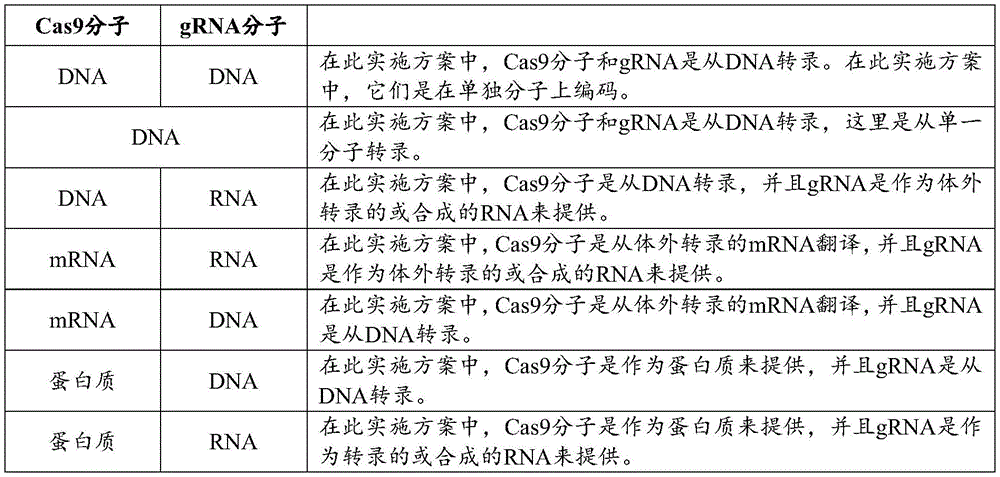
表5.示例性递送方法的比较Table 5. Comparison of Exemplary Delivery Methods

在一些实施方案中,可以通过已知或如本文所述的方法将编码Cas9分子和/或gRNA分子的DNA或包含Cas9分子和/或gRNA分子的RNP复合物递送至细胞中。例如,可以例如通过载体(例如,病毒或非病毒载体)、基于非载体的方法(例如,使用裸DNA或DNA复合物)或其组合来递送Cas9编码DNA和/或gRNA编码DNA。在一些实施方案中,通过载体(例如,病毒载体/病毒或质粒)递送含有一种或多种药剂和/或其组分的多核苷酸。载体可以是本文所述的任何载体。In some embodiments, DNA encoding a Cas9 molecule and/or gRNA molecule or an RNP complex comprising a Cas9 molecule and/or gRNA molecule can be delivered into a cell by methods known or as described herein. For example, Cas9-encoding DNA and/or gRNA-encoding DNA can be delivered, eg, by vectors (eg, viral or non-viral vectors), non-vector-based methods (eg, using naked DNA or DNA complexes), or combinations thereof. In some embodiments, a polynucleotide containing one or more agents and/or components thereof is delivered by a vector (eg, a viral vector/virus or plasmid). The carrier can be any carrier described herein.
在一些方面,将与指导序列组合(并且任选地与其复合)的CRISPR酶(例如,Cas9核酸酶)递送至细胞中。例如,CRISPR系统的一个或多个元件源自I型、II型或III型CRISPR系统。例如,CRISPR系统的一个或多个元件源自包含内源CRISPR系统的特定生物体,如化脓链球菌、金黄色葡萄球菌或脑膜炎奈瑟氏菌。In some aspects, a CRISPR enzyme (eg, a Cas9 nuclease) is delivered into a cell in combination with (and optionally complexed with) a guide sequence. For example, one or more elements of a CRISPR system are derived from a Type I, Type II, or Type III CRISPR system. For example, one or more elements of a CRISPR system are derived from a particular organism comprising an endogenous CRISPR system, such as Streptococcus pyogenes, Staphylococcus aureus, or Neisseria meningitidis.
在一些实施方案中,将Cas9核酸酶(例如,由来自金黄色葡萄球菌或来自化脓链球菌的mRNA编码,例如pCW-Cas9,Addgene#50661,Wang等人(2014)Science,3:343-80-4;或可从Applied Biological Materials(ABM;加拿大)以目录号K002、K003、K005或K006获得的核酸酶或切口酶慢病毒载体)和对靶基因(例如,人中的TGFBR2基因座)具有特异性的指导RNA引入细胞中。In some embodiments, a Cas9 nuclease (eg, encoded by mRNA from S. aureus or from S. pyogenes, eg, pCW-Cas9, Addgene #50661, Wang et al. (2014) Science, 3:343-80 -4; or a nuclease or nickase lentiviral vector available from Applied Biological Materials (ABM; Canada) under Cat. Nos. K002, K003, K005 or K006) and a Specific guide RNAs are introduced into cells.
在一些实施方案中,通过基于非载体的方法(例如,使用裸DNA或DNA复合物)递送含有一种或多种药剂和/或其组分的多核苷酸或RNP复合物。例如,DNA或RNA或蛋白质或其组合(例如,核糖核蛋白(RNP)复合物)可以例如通过以下方式来递送:有机改性的二氧化硅或硅酸盐(Ormosil)、电穿孔、瞬时细胞压缩或挤压(如Lee等人(2012)Nano Lett 12:6322-27;Kollmannsperger等人(2016)Nat Comm 7,10372中所述)、基因枪、声孔效应、磁转染、脂质介导的转染、树枝状聚合物、无机纳米颗粒、磷酸钙或其组合。In some embodiments, polynucleotides or RNP complexes containing one or more agents and/or components thereof are delivered by non-vector-based methods (eg, using naked DNA or DNA complexes). For example, DNA or RNA or proteins or combinations thereof (eg, ribonucleoprotein (RNP) complexes) can be delivered, for example, by organically modified silica or silicates (Ormosil), electroporation, transient cells Compression or extrusion (as described in Lee et al. (2012) Nano Lett 12:6322-27; Kollmannsperger et al. (2016)
在一些实施方案中,经由电穿孔递送包括将细胞与Cas9编码DNA和/或gRNA编码DNA或RNP复合物在筒、室或比色皿中混合,并且施加具有限定的持续时间和幅度的一次或多次电脉冲。在一些实施方案中,经由电穿孔递送是使用如下系统来进行,其中将细胞与Cas9编码DNA和/或gRNA编码DNA在与装置(例如,泵)连接的容器中混合,所述装置将混合物进料至筒、室或比色皿中,其中施加限定持续时间和幅度的一次或多次电脉冲,之后将细胞递送至第二容器。In some embodiments, delivery via electroporation comprises mixing cells with Cas9-encoding DNA and/or gRNA-encoding DNA or RNP complexes in a cartridge, chamber, or cuvette, and applying a single or Multiple electrical pulses. In some embodiments, delivery via electroporation is performed using a system in which cells are mixed with Cas9-encoding DNA and/or gRNA-encoding DNA in a vessel connected to a device (eg, a pump) that feeds the mixture into into a cartridge, chamber or cuvette where one or more electrical pulses of defined duration and amplitude are applied, after which the cells are delivered to the second container.
在一些实施方案中,递送媒介物是非病毒载体。在一些实施方案中,非病毒载体是无机纳米颗粒。示例性无机纳米颗粒包括例如磁性纳米颗粒(例如,Fe3MnO2)和二氧化硅。纳米颗粒的外表面可以与带正电荷的聚合物(例如,聚乙烯亚胺、聚赖氨酸、聚丝氨酸)缀合,其允许有效载荷的附着(例如,缀合或截留)。在一些实施方案中,非病毒载体是有机纳米颗粒。示例性有机纳米颗粒包括例如SNALP脂质体,其含有阳离子脂质和被聚乙二醇(PEG)包被的中性辅助脂质;以及被脂质包被的鱼精蛋白-核酸复合物。用于基因转移的示例性脂质示于下表6中。In some embodiments, the delivery vehicle is a non-viral vector. In some embodiments, the non-viral vector is an inorganic nanoparticle. Exemplary inorganic nanoparticles include, for example, magnetic nanoparticles (eg, Fe3MnO2 ) and silica. The outer surface of the nanoparticles can be conjugated with positively charged polymers (eg, polyethyleneimine, polylysine, polyserine), which allow for attachment (eg, conjugation or entrapment) of the payload. In some embodiments, the non-viral vector is an organic nanoparticle. Exemplary organic nanoparticles include, for example, SNALP liposomes, which contain cationic lipids and neutral helper lipids coated with polyethylene glycol (PEG); and lipid-coated protamine-nucleic acid complexes. Exemplary lipids for gene transfer are shown in Table 6 below.
表6.用于基因转移的脂质Table 6. Lipids for gene transfer
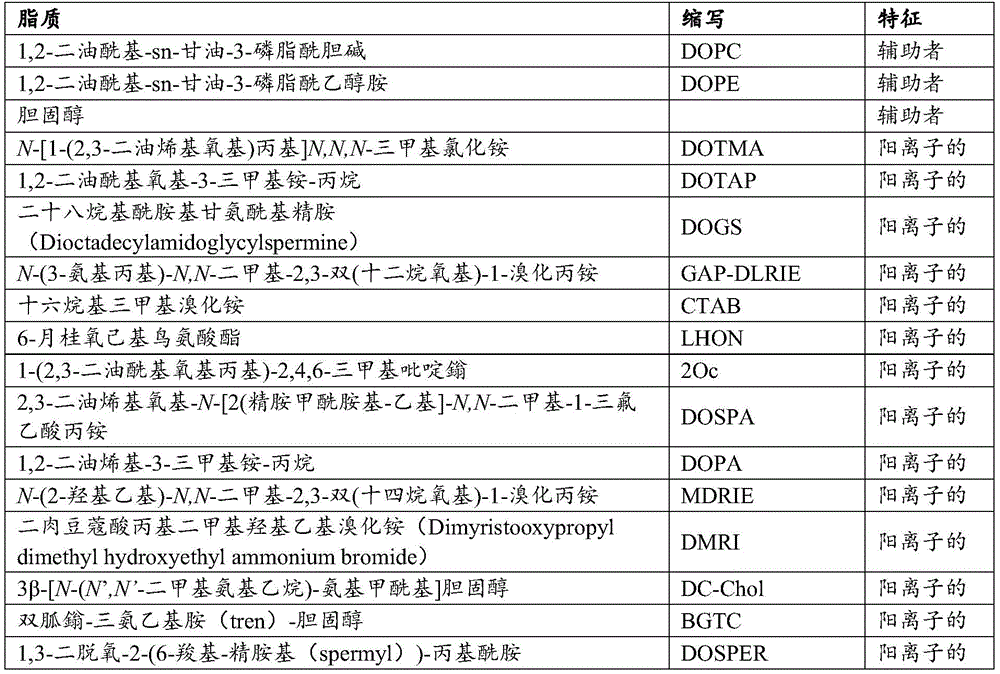

用于基因转移的示例性聚合物示于下表7中。Exemplary polymers for gene transfer are shown in Table 7 below.
表7.用于基因转移的聚合物Table 7. Polymers for gene transfer


在一些实施方案中,媒介物具有靶向修饰以增加纳米颗粒和脂质体(例如,细胞特异性抗原、单克隆抗体、单链抗体、适体、聚合物、糖和细胞穿透肽)的靶细胞更新。在一些实施方案中,媒介物使用促融合且内体去稳定的肽/聚合物。在一些实施方案中,媒介物经历酸触发的构象变化(例如,加快负荷的内体逃逸)。在一些实施方案中,使用刺激物可切割的聚合物,例如用于细胞区室中释放。例如,可以使用在还原性细胞环境中切割的基于二硫化物的阳离子聚合物。In some embodiments, the vehicle has targeted modifications to increase the release of nanoparticles and liposomes (eg, cell-specific antigens, monoclonal antibodies, single-chain antibodies, aptamers, polymers, carbohydrates, and cell-penetrating peptides) Target cell renewal. In some embodiments, the vehicle uses a fusogenic and endosomal destabilizing peptide/polymer. In some embodiments, the vehicle undergoes an acid-triggered conformational change (eg, accelerated endosome escape of load). In some embodiments, stimulator-cleavable polymers are used, eg, for release in cellular compartments. For example, disulfide-based cationic polymers that cleave in a reducing cellular environment can be used.
在一些实施方案中,递送媒介物是生物非病毒递送媒介物。在一些实施方案中,媒介物是减毒细菌(例如,被天然或人工工程化已具有侵入性,但进行减毒以防止发病,并且表达转基因(例如,单核细胞增生李斯特菌、某些沙门菌属(Salmonella)菌株、长双歧杆菌(Bifidobacterium longum)和经修饰的大肠杆菌(Escherichia coli))、具有营养和组织特异性向性以靶向特定细胞的细菌、具有经修饰的表面蛋白以改变靶细胞特异性的细菌)。在一些实施方案中,媒介物是基因修饰的噬菌体(例如,具有大包装容量、较低免疫原性、含有哺乳动物质粒维持序列且具有掺入的靶向配体的工程化噬菌体)。在一些实施方案中,媒介物是哺乳动物病毒样颗粒。例如,可以产生经修饰的病毒颗粒(例如,通过纯化“空”颗粒,然后将病毒与所需负荷离体组装)。媒介物还可以被工程化以掺入靶向配体,以改变靶组织特异性。在一些实施方案中,媒介物是生物脂质体。例如,生物脂质体是源自人细胞的基于磷脂的颗粒(例如,红细胞血影,其是源自受试者的分解成球形结构的红细胞(例如,组织靶向可以通过附着各种组织或细胞特异性配体实现))或分泌性外来体—内吞起源的受试者来源的膜结合纳米囊泡(30-100nm)(例如,可以从各种细胞类型产生,因此可以被细胞摄取而不需要靶向配体)。In some embodiments, the delivery vehicle is a biological non-viral delivery vehicle. In some embodiments, the vehicle is an attenuated bacterium (eg, naturally or artificially engineered to be invasive, but attenuated to prevent disease, and expresses a transgene (eg, Listeria monocytogenes, certain Salmonella strains, Bifidobacterium longum and modified Escherichia coli), bacteria with trophic and tissue-specific tropism to target specific cells, with modified surface proteins to bacteria that alter target cell specificity). In some embodiments, the vehicle is a genetically modified phage (eg, an engineered phage with large packaging capacity, lower immunogenicity, containing mammalian plasmid maintenance sequences, and with incorporated targeting ligands). In some embodiments, the vehicle is a mammalian virus-like particle. For example, modified viral particles can be produced (eg, by purifying "empty" particles and then assembling the virus with the desired load ex vivo). Vehicles can also be engineered to incorporate targeting ligands to alter target tissue specificity. In some embodiments, the vehicle is a bioliposome. For example, bioliposomes are phospholipid-based particles derived from human cells (eg, erythrocyte ghosts, which are red blood cells derived from a subject that disintegrate into spherical structures (eg, tissue targeting can be achieved by attaching to various tissues or cell-specific ligands)) or secreted exosomes—subject-derived membrane-bound nanovesicles (30-100 nm) of endocytic origin (e.g., can be produced from a variety of cell types and thus can be taken up by cells for No targeting ligand is required).
在一些实施方案中,可以通过已知方法或如本文所述将编码Cas9分子和/或gRNA分子的RNA递送至细胞(例如,本文所述的靶细胞)中。例如,Cas9编码和/或gRNA编码RNA可以例如通过以下方式来递送:显微注射、电穿孔、瞬时细胞压缩或挤压(如Lee等人(2012)Nano Lett 12:6322-27中所述)、脂质介导的转染、肽介导的递送(例如,细胞穿透肽)或其组合。In some embodiments, RNA encoding a Cas9 molecule and/or gRNA molecule can be delivered into a cell (eg, a target cell described herein) by known methods or as described herein. For example, Cas9-encoding and/or gRNA-encoding RNA can be delivered, for example, by microinjection, electroporation, transient cell compression or extrusion (as described in Lee et al. (2012) Nano Lett 12:6322-27) , lipid-mediated transfection, peptide-mediated delivery (eg, cell penetrating peptides), or a combination thereof.
在一些实施方案中,经由电穿孔递送包括将细胞与编码Cas9分子和/或gRNA分子的RNA在筒、室或比色皿中混合,并且施加具有限定的持续时间和幅度的一次或多次电脉冲。在一些实施方案中,经由电穿孔递送是使用如下系统来进行,其中将细胞与编码Cas9分子和/或gRNA分子的RNA在与装置(例如,泵)连接的容器中混合,所述装置将混合物进料至筒、室或比色皿中,其中施加限定持续时间和幅度的一次或多次电脉冲,之后将细胞递送至第二容器。In some embodiments, delivery via electroporation comprises mixing cells with RNA encoding Cas9 molecules and/or gRNA molecules in a cartridge, chamber or cuvette, and applying one or more electroporations of defined duration and amplitude pulse. In some embodiments, delivery via electroporation is performed using a system in which cells are mixed with RNA encoding a Cas9 molecule and/or a gRNA molecule in a container connected to a device (eg, a pump) that mixes the mixture The feed is fed into a cartridge, chamber or cuvette where one or more electrical pulses of defined duration and amplitude are applied, after which the cells are delivered to the second container.
在一些实施方案中,可以通过已知方法或如本文所述将Cas9分子递送至细胞中。例如,Cas9蛋白质分子可以例如通过以下方式来递送:显微注射、电穿孔、瞬时细胞压缩或挤压(如Lee等人(2012)Nano Lett 12:6322-27中所述)、脂质介导的转染、肽介导的递送或其组合。递送可以伴随编码gRNA的DNA或伴随gRNA。In some embodiments, Cas9 molecules can be delivered into cells by known methods or as described herein. For example, Cas9 protein molecules can be delivered, for example, by microinjection, electroporation, transient cell compression or extrusion (as described in Lee et al. (2012) Nano Lett 12:6322-27), lipid-mediated transfection, peptide-mediated delivery, or a combination thereof. Delivery can be with DNA encoding the gRNA or with the gRNA.
在一些实施方案中,将能够引入切割的所述一种或多种药剂(例如,Cas9/gRNA)作为核糖核蛋白(RNP)复合物引入细胞中。RNP复合物包括核糖核苷酸序列(如RNA或gRNA分子)和蛋白质(如Cas9蛋白或其变体)。例如,例如使用电穿孔或其他物理递送方法,将Cas9蛋白作为RNP复合物递送,所述复合物包含Cas9蛋白和靶向靶序列的gRNA分子。在一些实施方案中,经由电穿孔或其他物理方式(例如,粒子枪、磷酸钙转染、细胞压缩或挤压)将RNP递送至细胞中。In some embodiments, the one or more agents capable of introducing cleavage (eg, Cas9/gRNA) are introduced into the cell as a ribonucleoprotein (RNP) complex. RNP complexes include ribonucleotide sequences (eg, RNA or gRNA molecules) and proteins (eg, Cas9 protein or variants thereof). For example, the Cas9 protein is delivered as an RNP complex comprising the Cas9 protein and a gRNA molecule targeting the target sequence, eg, using electroporation or other physical delivery methods. In some embodiments, RNPs are delivered into cells via electroporation or other physical means (eg, particle guns, calcium phosphate transfection, cell compaction, or extrusion).
在一些实施方案中,经由电穿孔递送包括将细胞与Cas9分子在具有或不具有gRNA分子的情况下在筒、室或比色皿中混合,并且施加具有限定的持续时间和幅度的一次或多次电脉冲。在一些实施方案中,经由电穿孔递送是使用如下系统来进行,其中将细胞与Cas9分子在具有或不具有gRNA分子的情况下在与装置(例如,泵)连接的容器混合,所述装置将混合物进料至筒、室或比色皿中,其中施加限定持续时间和幅度的一次或多次电脉冲,之后将细胞递送至第二容器。In some embodiments, delivery via electroporation comprises mixing cells with the Cas9 molecule with or without the gRNA molecule in a cartridge, chamber or cuvette, and applying one or more doses of defined duration and amplitude secondary electrical pulse. In some embodiments, delivery via electroporation is performed using a system in which cells are mixed with a Cas9 molecule, with or without a gRNA molecule, in a container connected to a device (eg, a pump) that will The mixture is fed into a cartridge, chamber or cuvette where one or more electrical pulses of defined duration and amplitude are applied, after which the cells are delivered to the second vessel.
在一些实施方案中,经由电穿孔进行的递送包括将细胞与Cas9分子(例如,eaCas9分子、eiCas9分子或eiCas9融合蛋白)、与或不与gRNA分子在盒、室或比色皿中混合,并且施加具有限定的持续时间和振幅的一个或多个电脉冲。在一些实施方案中,经由电穿孔递送是使用如下系统来进行,其中将细胞与Cas9分子(例如,eaCas9分子、eiCas9分子或eiCas9融合蛋白)混合。In some embodiments, the delivery via electroporation comprises mixing cells with a Cas9 molecule (eg, an eaCas9 molecule, eiCas9 molecule, or eiCas9 fusion protein), with or without a gRNA molecule, in a cassette, chamber, or cuvette, and One or more electrical pulses of defined duration and amplitude are applied. In some embodiments, delivery via electroporation is performed using a system in which cells are mixed with a Cas9 molecule (eg, eaCas9 molecule, eiCas9 molecule, or eiCas9 fusion protein).
在一些实施方案中,通过基于载体的方法与基于非载体的方法的组合递送含有一种或多种药剂和/或其组分的多核苷酸。例如,病毒体包含与失活的病毒(例如,HIV或流感病毒)组合的脂质体,其可以导致比单独的病毒或脂质体方法更有效的基因转移。In some embodiments, a polynucleotide containing one or more agents and/or components thereof is delivered by a combination of carrier-based methods and non-carrier-based methods. For example, virions comprise liposomes in combination with an inactivated virus (eg, HIV or influenza virus), which can result in more efficient gene transfer than virus or liposome approaches alone.
在一些实施方案中,将超过一种药剂或其组分递送至细胞中。例如,在一些实施方案中,将能够在基因组中的两个或更多个位置(如在TGFBR2基因座(编码TGFBRII)内的两个或更多个位点处)诱导遗传破坏的一种或多种药剂递送至细胞中。在一些实施方案中,使用一种方法递送一种或多种药剂及其组分。例如,在一些实施方案中,将用于诱导TGFBR2基因座的遗传破坏的一种或多种药剂作为编码用于遗传破坏的组分的多核苷酸来递送。在一些实施方案中,一种多核苷酸可以编码靶向TGFBR2基因座的药剂。在一些实施方案中,两种或更多种不同的多核苷酸可以编码靶向TGFBR2基因座的药剂。在一些实施方案中,能够诱导遗传破坏的药剂可以作为核糖核蛋白(RNP)复合物来递送,并且两种或更多种不同的RNP复合物可以作为混合物一起递送或分开递送。In some embodiments, more than one agent or component thereof is delivered into the cell. For example, in some embodiments, one or more will be capable of inducing genetic disruption at two or more locations in the genome, such as at two or more sites within the TGFBR2 locus (encoding TGFBRII) Various agents are delivered into cells. In some embodiments, one or more agents and components thereof are delivered using one method. For example, in some embodiments, one or more agents for inducing genetic disruption of the TGFBR2 locus are delivered as polynucleotides encoding components for genetic disruption. In some embodiments, a polynucleotide can encode an agent that targets the TGFBR2 locus. In some embodiments, two or more different polynucleotides can encode agents that target the TGFBR2 locus. In some embodiments, the agent capable of inducing genetic disruption can be delivered as a ribonucleoprotein (RNP) complex, and two or more different RNP complexes can be delivered together as a mixture or separately.
在一些实施方案中,递送除了能够诱导遗传破坏的所述一种或多种药剂和/或其组分(例如,Cas9分子组分和/或gRNA分子组分)以外的一种或多种核酸分子,如用于HDR引导的整合的模板多核苷酸(如本文例如在第I.B节中所述的任何模板多核苷酸)。在一些实施方案中,在与Cas系统的一种或多种组分相同的时间递送核酸分子(例如,模板多核苷酸)。在一些实施方案中,在递送Cas系统的一种或多种组分之前或之后(例如,小于约1分钟、5分钟、10分钟、15分钟、30分钟、1小时、2小时、3小时、6小时、9小时、12小时、1天、2天、3天、1周、2周或4周)递送核酸分子。在一些实施方案中,通过与Cas系统的一种或多种组分(例如,Cas9分子组分和/或gRNA分子组分)不同的方式来递送核酸分子(例如,模板多核苷酸)。核酸分子(例如,模板多核苷酸)可以通过本文所述的任何递送方法来递送。例如,核酸分子(例如,模板多核苷酸)可以通过病毒载体(例如,逆转录病毒或慢病毒)来递送,并且Cas9分子组分和/或gRNA分子组分可以通过电穿孔来递送。在一些实施方案中,核酸分子(例如,模板多核苷酸)包括一个或多个外源序列,例如编码重组受体或其部分的序列和/或其他外源基因核酸序列。In some embodiments, one or more nucleic acids other than the one or more agents and/or components thereof capable of inducing genetic disruption (eg, Cas9 molecular components and/or gRNA molecular components) are delivered Molecules, such as template polynucleotides for HDR-directed integration (such as any of the template polynucleotides described herein, eg, in Section I.B). In some embodiments, the nucleic acid molecule (eg, the template polynucleotide) is delivered at the same time as one or more components of the Cas system. In some embodiments, before or after delivery of one or more components of the Cas system (eg, less than about 1 minute, 5 minutes, 10 minutes, 15 minutes, 30 minutes, 1 hour, 2 hours, 3 hours, 6 hours, 9 hours, 12 hours, 1 day, 2 days, 3 days, 1 week, 2 weeks, or 4 weeks) to deliver nucleic acid molecules. In some embodiments, the nucleic acid molecule (eg, the template polynucleotide) is delivered by a different means than one or more components of the Cas system (eg, the Cas9 molecular component and/or the gRNA molecular component). Nucleic acid molecules (eg, template polynucleotides) can be delivered by any of the delivery methods described herein. For example, nucleic acid molecules (eg, template polynucleotides) can be delivered by viral vectors (eg, retroviruses or lentiviruses), and Cas9 molecular components and/or gRNA molecular components can be delivered by electroporation. In some embodiments, a nucleic acid molecule (eg, a template polynucleotide) includes one or more exogenous sequences, such as sequences encoding recombinant receptors or portions thereof and/or other exogenous gene nucleic acid sequences.
B.经由同源定向修复(HDR)进行靶向整合B. Targeted integration via homology-directed repair (HDR)
在一些方面,所提供的实施方案涉及多核苷酸的特定部分(如含有编码重组受体或其部分的转基因序列的模板多核苷酸的部分)在基因组中编码TGFBRII的内源TGFBR2基因座处的特定位置(如靶位点或靶位置)处的靶向整合。在一些方面,同源定向修复(HDR)可以介导转基因序列在靶位点处的位点特异性整合。在一些实施方案中,遗传破坏(例如,DNA断裂,如第I.A节中所述)和含有一个或多个同源臂(例如,含有与遗传破坏周围的序列同源的核酸序列)的模板多核苷酸的存在可以诱导或引导HDR,其中同源序列用作DNA修复的模板。基于遗传破坏周围的内源基因序列与模板多核苷酸中所包括的5'和/或3'同源臂之间的同源性,细胞DNA修复机构可以使用模板多核苷酸来修复DNA断裂并重合成(例如,拷贝)遗传破坏的位点处的遗传信息,从而将转基因序列有效地插入或整合于模板多核苷酸中的遗传破坏位点处或附近。在一些实施方案中,内源TGFBR2基因座处的遗传破坏可以通过本文例如在第I.A节中所述的用于产生靶向遗传破坏的任何方法来产生。In some aspects, provided embodiments relate to a specific portion of a polynucleotide (eg, a portion of a template polynucleotide containing a transgenic sequence encoding a recombinant receptor or portion thereof) at the endogenous TGFBR2 locus encoding TGFBRII in the genome Targeted integration at a specific location, such as a target site or target location. In some aspects, homology-directed repair (HDR) can mediate site-specific integration of transgene sequences at the target site. In some embodiments, a genetic disruption (eg, a DNA break, as described in Section I.A) and a template multinucleus containing one or more homology arms (eg, containing nucleic acid sequences homologous to sequences surrounding the genetic disruption) The presence of nucleotides can induce or direct HDR, where homologous sequences serve as templates for DNA repair. Based on the homology between the endogenous gene sequence surrounding the genetic disruption and the 5' and/or 3' homology arms included in the template polynucleotide, the cellular DNA repair machinery can use the template polynucleotide to repair DNA breaks and restore The genetic information at the site of genetic disruption is synthesized (eg, copied), thereby efficiently inserting or integrating the transgene sequence at or near the site of genetic disruption in the template polynucleotide. In some embodiments, genetic disruption at the endogenous TGFBR2 locus can be produced by any of the methods described herein, eg, in Section I.A, for generating targeted genetic disruption.
还提供了多核苷酸(例如,本文所述的模板多核苷酸)和包括此类多核苷酸的试剂盒。在一些实施方案中,所提供的多核苷酸和/或试剂盒可以用于本文所述的方法(例如,涉及HDR)中,用于将编码重组受体或其部分的转基因序列靶向于内源TGFBR2基因座处。Also provided are polynucleotides (eg, template polynucleotides described herein) and kits comprising such polynucleotides. In some embodiments, the provided polynucleotides and/or kits can be used in the methods described herein (eg, involving HDR) for targeting transgenic sequences encoding recombinant receptors or portions thereof within the at the source TGFBR2 locus.
在一些实施方案中,模板多核苷酸是或包含如下多核苷酸,其含有编码重组受体或其部分(例如,重组受体的一个或多个区域或结构域)的转基因(如外源或异源核酸序列)以及与内源TGFBR2基因座的内源基因组位点处或附近的序列同源的同源序列(例如,同源臂)。在一些方面,模板多核苷酸中的转基因序列包含编码重组受体或其部分的核苷酸序列。在一些方面,在靶向整合转基因序列后,工程化细胞中的TGFBR2基因座被修饰,使得经修饰的TGFBR2基因座含有编码重组受体(例如,嵌合抗原受体(CAR))的转基因序列。在一些方面,经修饰的TGFBR2基因座编码显性阴性形式的TGFBRII多肽和重组受体(例如,CAR)。In some embodiments, the template polynucleotide is or comprises a polynucleotide containing a transgene (eg, exogenous or heterologous nucleic acid sequences) as well as homologous sequences (eg, homology arms) that are homologous to sequences at or near the endogenous genomic site of the endogenous TGFBR2 locus. In some aspects, the transgene sequence in the template polynucleotide comprises a nucleotide sequence encoding a recombinant receptor or a portion thereof. In some aspects, following targeted integration of the transgene sequence, the TGFBR2 locus in the engineered cell is modified such that the modified TGFBR2 locus contains a transgene sequence encoding a recombinant receptor (eg, a chimeric antigen receptor (CAR)) . In some aspects, the modified TGFBR2 locus encodes a dominant-negative form of a TGFBRII polypeptide and a recombinant receptor (eg, a CAR).
在一些方面,模板多核苷酸是作为线性DNA片段引入或包含于载体中。在一些方面,诱导遗传破坏的步骤和用于靶向整合的步骤(例如,通过引入模板多核苷酸)是同时或依序进行的。In some aspects, the template polynucleotide is introduced as a linear DNA fragment or contained in a vector. In some aspects, the step of inducing genetic disruption and the step for targeted integration (eg, by introducing a template polynucleotide) are performed simultaneously or sequentially.
1.同源定向修复(HDR)1. Homologous Directed Repair (HDR)
在一些实施方案中,同源定向修复(HDR)可以用于将一个或多个核酸序列(例如,编码重组受体或其部分的转基因序列)靶向整合或插入于基因组中TGFBR2基因座处的一个或多个靶位点处。在一些实施方案中,核酸酶诱导的HDR可以用于改变靶序列,将转基因序列整合于特定靶位置,和/或编辑或修复特定靶基因中的突变。In some embodiments, homology-directed repair (HDR) can be used for the targeted integration or insertion of one or more nucleic acid sequences (eg, transgenic sequences encoding recombinant receptors or portions thereof) into the genome at the TGFBR2 locus at one or more target sites. In some embodiments, nuclease-induced HDR can be used to alter target sequences, integrate transgenic sequences at specific target locations, and/or edit or repair mutations in specific target genes.
靶位点处核酸序列的改变可以通过HDR用外源提供的多核苷酸(例如,模板多核苷酸(也称为“供体多核苷酸”或“模板序列”))来进行。例如,模板多核苷酸提供靶序列的改变,例如模板多核苷酸内所含有的转基因序列的插入。在一些实施方案中,可以使用质粒或载体作为同源重组的模板。在一些实施方案中,可以使用线性DNA片段作为同源重组的模板。在一些实施方案中,可以使用单链模板多核苷酸作为通过靶序列与模板多核苷酸之间的同源定向修复的替代方法(例如,单链退火)来改变靶序列的模板。模板多核苷酸实现的靶序列的改变依赖于通过核酸酶(例如,靶向核酸酶,如CRISPR/Cas9)进行的切割。通过核酸酶进行的切割可以包括双链断裂或两个单链断裂。Alterations of nucleic acid sequence at a target site can be made by HDR using an exogenously provided polynucleotide (eg, a template polynucleotide (also referred to as a "donor polynucleotide" or "template sequence")). For example, the template polynucleotide provides a change in the target sequence, eg, insertion of a transgene sequence contained within the template polynucleotide. In some embodiments, plasmids or vectors can be used as templates for homologous recombination. In some embodiments, linear DNA fragments can be used as templates for homologous recombination. In some embodiments, a single-stranded template polynucleotide can be used as an alternative to altering the template of the target sequence by homology-directed repair (eg, single-stranded annealing) between the target sequence and the template polynucleotide. The alteration of the target sequence achieved by the template polynucleotide relies on cleavage by a nuclease (eg, a targeting nuclease such as CRISPR/Cas9). Cleavage by nucleases can include double-strand breaks or two single-strand breaks.
在一些实施方案中,“重组”包括两个多核苷酸之间的遗传信息交换的过程。在一些实施方案中,“同源重组(HR)”包括这种交换的特化形式,其在例如经由同源定向修复机制修复细胞中的双链断裂期间进行。这个过程需要核苷酸序列同源性,使用模板多核苷酸对靶DNA(即,经历双链断裂的DNA,如内源基因中的靶位点)进行模板修复,并且因为其导致遗传信息从模板多核苷酸转移至靶标而被不同地称为“非交换型基因转化”或“短束基因转化”。在一些实施方案中,该转移可以涉及在断裂的靶标与模板多核苷酸之间形成的异源双链DNA的错配校正,和/或“合成依赖性链退火”(其中使用模板多核苷酸重合成将成为靶标的一部分的遗传信息),和/或相关过程。这种特化的HR通常导致靶分子序列的改变,使得模板多核苷酸的部分或全部序列掺入靶多核苷酸中。In some embodiments, "recombination" includes the process of exchanging genetic information between two polynucleotides. In some embodiments, "homologous recombination (HR)" includes specialized forms of such exchanges, which occur during repair of double-strand breaks in cells, eg, via homology-directed repair mechanisms. This process requires nucleotide sequence homology, uses template polynucleotides for template repair of target DNA (ie, DNA that has undergone a double-strand break, such as a target site in an endogenous gene), and because it results in the transfer of genetic information from The transfer of the template polynucleotide to the target is variously referred to as "non-crossover gene transformation" or "short tract gene transformation". In some embodiments, the transfer may involve mismatch correction of heteroduplex DNA formed between the fragmented target and the template polynucleotide, and/or "synthesis-dependent strand annealing" (where a template polynucleotide is used resynthesis of genetic information that will be part of the target), and/or related processes. Such specialized HRs typically result in changes in the sequence of the target molecule such that part or all of the sequence of the template polynucleotide is incorporated into the target polynucleotide.
在一些实施方案中,经由非同源性依赖性机制将多核苷酸(如模板多核苷酸(例如,含有转基因的多核苷酸))的一部分整合至细胞基因组中。所述方法包括在细胞基因组中产生双链断裂(DSB),并使用核酸酶切割模板多核苷酸分子,使得模板多核苷酸整合于DSB的位点处。在一些实施方案中,模板多核苷酸是经由非同源性依赖性方法(例如,NHEJ)来整合。在体内切割后,模板多核苷酸可以以靶向方式整合至细胞基因组中的DSB位置处。模板多核苷酸可以包括用于产生DSB的一种或多种核酸酶的一个或多个相同靶位点。因此,模板多核苷酸可以通过用于切割期望整合至其中的内源基因的一种或多种相同核酸酶来切割。在一些实施方案中,模板多核苷酸包括与用于诱导DSB的核酸酶不同的核酸酶靶位点。如本文所述,可以通过任何已知方法或本文所述的任何方法(如ZFN、TALEN、CRISPR/Cas9系统或TtAgo核酸酶)来产生靶位点或靶位置的遗传破坏。In some embodiments, a portion of a polynucleotide (eg, a template polynucleotide (eg, a transgene-containing polynucleotide)) is integrated into the genome of the cell via a homology-independent mechanism. The method includes generating a double-strand break (DSB) in the genome of a cell and cleaving a template polynucleotide molecule using a nuclease such that the template polynucleotide integrates at the site of the DSB. In some embodiments, the template polynucleotide is integrated via a homology-independent method (eg, NHEJ). Following in vivo cleavage, the template polynucleotide can be integrated in a targeted manner at the DSB location in the genome of the cell. The template polynucleotide can include one or more identical target sites for one or more nucleases used to generate the DSB. Thus, the template polynucleotide can be cleaved by one or more of the same nucleases used to cleave the endogenous gene into which it is desired to integrate. In some embodiments, the template polynucleotide includes a different nuclease target site than the nuclease used to induce the DSB. Genetic disruption of a target site or target location can be produced by any known method or any method described herein, such as ZFNs, TALENs, the CRISPR/Cas9 system, or TtAgo nucleases, as described herein.
在一些实施方案中,DNA修复机制可以通过核酸酶在以下之后诱导:(1)单一双链断裂;(2)两个单链断裂;(3)两个双链断裂,在靶位点的每一侧上发生断裂;(4)一个双链断裂和两个单链断裂,在靶位点的每一侧上发生双链断裂和两个单链断裂;(5)四个单链断裂,在靶位点的每一侧上发生一对单链断裂;或者(6)一个单链断裂。在一些实施方案中,使用单链模板多核苷酸,并且可以通过替代性HDR改变靶位点。In some embodiments, DNA repair mechanisms can be induced by nucleases after: (1) a single double-strand break; (2) two single-strand breaks; (3) two double-strand breaks, at each of the target sites breaks on one side; (4) one double-strand break and two single-strand breaks, with double-strand breaks and two single-strand breaks on each side of the target site; (5) four single-strand breaks, in A pair of single-strand breaks occur on each side of the target site; or (6) one single-strand break. In some embodiments, a single-stranded template polynucleotide is used and the target site can be altered by alternative HDR.
模板多核苷酸实现的靶位点的改变依赖于通过核酸酶分子进行的切割。通过核酸酶进行的切割可以包括切口、双链断裂、或两个单链断裂,例如在靶位点处DNA的每条链上一个断裂。在靶位点上引入断裂之后,在断裂末端处进行切除,得到单链突出的DNA区域。The alteration of the target site achieved by the template polynucleotide relies on cleavage by the nuclease molecule. Cleavage by nucleases can include nicks, double-strand breaks, or two single-strand breaks, eg, one break on each strand of DNA at the target site. Following the introduction of a break at the target site, excision is performed at the end of the break, resulting in a single-stranded overhanging DNA region.
在典型HDR中,引入双链模板多核苷酸,其包含靶位点的同源序列,所述同源序列将被直接掺入所述靶位点中,或者用作模板以插入转基因或校正所述靶位点的序列。在断裂处切除后,修复可以通过不同途径进行,例如通过双霍利迪连接体模型(doubleHolliday junction model)(或双链断裂修复(DSBR)途径)或合成依赖性链退火(SDSA)途径进行。In a typical HDR, a double-stranded template polynucleotide is introduced that contains homologous sequences to the target site that will be incorporated directly into the target site, or used as a template for insertion of a transgene or correction of all the sequence of the target site. After excision at the break, repair can proceed through different pathways, such as through the double Holliday junction model (or double-strand break repair (DSBR) pathway) or the synthesis-dependent strand annealing (SDSA) pathway.
在双霍利迪连接体模型中,发生靶位点的两个单链突出端链侵入至模板多核苷酸的同源序列中,导致形成具有两个霍利迪结点的中间体。随着从侵入链的末端合成新DNA以填充切除产生的缺口,结点移行。新合成的DNA的末端连接至切除的末端,并且结点被分解,导致在靶位点处的插入,例如在模板多核苷酸中插入转基因。与模板多核苷酸的交换可以在结点分解后进行。In the double Holliday junction model, intrusion of the two single-stranded overhang strands of the target site into the homologous sequence of the template polynucleotide occurs, resulting in the formation of an intermediate with two Holliday junctions. The junction migrates as new DNA is synthesized from the end of the invading strand to fill the gap created by the excision. The ends of the newly synthesized DNA are ligated to the excised ends, and the junction is cleaved, resulting in insertion at the target site, eg, a transgene in the template polynucleotide. The exchange with the template polynucleotide can be performed after the junction is resolved.
在SDSA途径中,仅一个单链突出端侵入模板多核苷酸,并且从侵入链的末端合成新DNA,以填充切除产生的缺口。然后新合成的DNA与剩余的单链突出端退火,合成新DNA以填充于缺口中,并且连接所述链以产生修饰的DNA双链体。In the SDSA pathway, only one single-stranded overhang invades the template polynucleotide, and new DNA is synthesized from the end of the invaded strand to fill in the gap created by the excision. The newly synthesized DNA is then annealed to the remaining single-stranded overhangs, new DNA is synthesized to fill in the gaps, and the strands are ligated to produce a modified DNA duplex.
在替代性HDR中,引入单链模板多核苷酸,例如模板多核苷酸。在靶位点处用于改变所需靶位点的切口、单链断裂或双链断裂是由核酸酶分子介导的,并且进行在断裂处切除以露出单链突出端。掺入模板多核苷酸的序列以校正或改变DNA的靶位点通常是通过SDSA途径进行的,如本文所述。In an alternative HDR, a single-stranded template polynucleotide, eg, a template polynucleotide, is introduced. The nicks, single-strand breaks, or double-strand breaks at the target site to alter the desired target site are mediated by nuclease molecules, and excision at the break is performed to expose single-stranded overhangs. Incorporation of the sequence of a template polynucleotide to correct or alter the target site of the DNA is typically carried out by the SDSA pathway, as described herein.
在一些实施方案中,“替代性HDR”或替代性同源定向修复是指使用同源核酸(例如,内源同源序列,例如姐妹染色单体;或外源核酸,例如模板多核苷酸)修复DNA损伤的过程。替代性HDR与典型HDR的不同之处在于,所述过程利用与典型HDR不同的途径,并且可能被典型HDR介体RAD51和BRCA2抑制。替代性HDR也使用单链或带切口的同源核酸进行断裂的修复。在一些实施方案中,“典型HDR”或典型同源定向修复是指使用同源核酸(例如,内源同源序列,例如姐妹染色单体;或外源核酸,例如模板核酸)修复DNA损伤的过程。典型HDR通常在双链断裂处已经存在显著切除时发挥作用,形成DNA的至少一个单链部分。在正常细胞中,HDR通常涉及一系列步骤,如识别断裂、稳定断裂、切除、稳定单链DNA、形成DNA交换中间体、分解交换中间体以及连接。所述过程需要RAD51和BRCA2,并且同源核酸通常是双链的。除非另有指示,否则术语“HDR”在一些实施方案中涵盖典型HDR和替代性HDR。In some embodiments, "alternative HDR" or alternative homology-directed repair refers to the use of homologous nucleic acid (eg, an endogenous homologous sequence, such as a sister chromatid; or an exogenous nucleic acid, such as a template polynucleotide) The process of repairing DNA damage. Alternative HDR differs from canonical HDR in that the process utilizes a different pathway than canonical HDR and may be inhibited by canonical HDR mediators RAD51 and BRCA2. Alternative HDR also uses single-stranded or nicked homologous nucleic acid for break repair. In some embodiments, "canonical HDR" or canonical homology-directed repair refers to the use of homologous nucleic acids (eg, endogenous homologous sequences, such as sister chromatids; or exogenous nucleic acids, such as template nucleic acids) to repair DNA damage process. Classical HDR usually functions when there is already a significant excision at the double-strand break, forming at least one single-stranded portion of the DNA. In normal cells, HDR typically involves a series of steps such as recognition of breaks, stabilization of breaks, excision, stabilization of single-stranded DNA, formation of DNA exchange intermediates, disassembly of exchange intermediates, and ligation. The process requires RAD51 and BRCA2, and the homologous nucleic acids are usually double-stranded. Unless otherwise indicated, the term "HDR" covers both classic HDR and alternative HDR in some embodiments.
在一些实施方案中,双链切割是通过核酸酶来实现的,所述核酸酶是例如具有与HNH样结构域相关的切割活性和与RuvC样结构域(例如,N末端RuvC样结构域)相关的切割活性的Cas9分子,例如野生型Cas9。此类实施方案仅需要单一gRNA。In some embodiments, double-stranded cleavage is achieved by a nuclease, eg, having cleavage activity associated with an HNH-like domain and associated with a RuvC-like domain (eg, an N-terminal RuvC-like domain) cleavage-active Cas9 molecules, such as wild-type Cas9. Such embodiments require only a single gRNA.
在一些实施方案中,一个单链断裂或切口是通过具有切口酶活性的核酸酶分子(例如,Cas9切口酶)实现的。在靶位点处带切口的DNA可以是替代性HDR的底物。In some embodiments, a single-strand break or nick is achieved by a nuclease molecule with nickase activity (eg, Cas9 nickase). DNA nicked at the target site can be a substrate for alternative HDR.
在一些实施方案中,两个单链断裂或切口是通过具有切口酶活性(例如,与HNH样结构域相关的切割活性或与N末端RuvC样结构域相关的切割活性)的核酸酶(例如,Cas9分子)实现的。此类实施方案通常需要两种gRNA,每个单链断裂的放置需要一种。在一些实施方案中,具有切口酶活性的Cas9分子切割gRNA所杂交的链,但不切割与gRNA所杂交的链互补的链。在一些实施方案中,具有切口酶活性的Cas9分子不切割gRNA所杂交的链,而是切割与gRNA所杂交的链互补的链。在一些实施方案中,切口酶具有HNH活性,例如RuvC活性失活的Cas9分子,例如具有D10处的突变(例如,D10A突变)的Cas9分子。D10A使RuvC失活;因此,Cas9切口酶(仅)具有HNH活性,并且将在gRNA所杂交的链(例如,互补链,其上不具有NGGPAM)上进行切割。在一些实施方案中,可以使用具有H840(例如,H840A)突变的Cas9分子作为切口酶。H840A使HNH失活;因此,Cas9切口酶(仅)具有RuvC活性,并且在非互补链(例如,具有NGG PAM并且其序列与gRNA相同的链)上进行切割。在一些实施方案中,Cas9分子是N末端RuvC样结构域切口酶,例如,Cas9分子包含N863处的突变,例如N863A。In some embodiments, the two single-strand breaks or nicks are by a nuclease having nickase activity (eg, cleavage activity associated with an HNH-like domain or cleavage activity associated with an N-terminal RuvC-like domain) (eg, Cas9 molecule). Such embodiments typically require two gRNAs, one for each single-strand break placement. In some embodiments, the Cas9 molecule with nickase activity cleaves the strand to which the gRNA hybridizes, but not the strand complementary to the strand to which the gRNA hybridizes. In some embodiments, the Cas9 molecule with nickase activity does not cleave the strand to which the gRNA hybridizes, but rather the strand complementary to the strand to which the gRNA hybridizes. In some embodiments, the nickase has HNH activity, eg, a Cas9 molecule in which RuvC activity is inactivated, eg, a Cas9 molecule with a mutation at D10 (eg, a D10A mutation). D10A inactivates RuvC; thus, the Cas9 nickase has HNH activity (only) and will cleave on the strand to which the gRNA hybridizes (eg, the complementary strand, which does not have NGGPAM on it). In some embodiments, a Cas9 molecule with the H840 (eg, H840A) mutation can be used as a nickase. H840A inactivates HNH; thus, the Cas9 nickase has RuvC activity (only) and cleaves on non-complementary strands (eg, the strand with NGG PAM and the same sequence as the gRNA). In some embodiments, the Cas9 molecule is an N-terminal RuvC-like domain nickase, eg, the Cas9 molecule comprises a mutation at N863, eg, N863A.
在使用切口酶和两种gRNA定位两个单链切口的一些实施方案中,一个切口在靶DNA的+链上,并且一个切口在-链上。PAM朝外。可以选择gRNA使得所述gRNA相隔约0-50、0-100或0-200个核苷酸。在一些实施方案中,在与两种gRNA的靶向结构域互补的靶序列之间没有重叠。在一些实施方案中,gRNA不重叠,并且相隔多达50、100或200个核苷酸。在一些实施方案中,使用两种gRNA可以例如通过减少脱靶结合来增加特异性(Ran等人,Cell 2013)。In some embodiments using a nickase and two gRNAs to locate two single-stranded nicks, one nick is on the + strand and one nick is on the - strand of the target DNA. The PAM faces outward. The gRNAs can be selected such that the gRNAs are separated by about 0-50, 0-100, or 0-200 nucleotides. In some embodiments, there is no overlap between the target sequences complementary to the targeting domains of the two gRNAs. In some embodiments, the gRNAs do not overlap and are separated by up to 50, 100 or 200 nucleotides. In some embodiments, the use of two gRNAs can increase specificity, eg, by reducing off-target binding (Ran et al., Cell 2013).
在一些实施方案中,可以使用单一切口来诱导HDR,例如替代性HDR。在本文中考虑,可以使用单一切口增加给定切割位点(如靶位点)处的HR与NHEJ的比率。在一些实施方案中,在靶位点处在与所述gRNA的靶向结构域互补的DNA的链中形成单链断裂。在一些实施方案中,在靶位点处在除了与所述gRNA的靶向结构域互补的链以外的DNA的链中形成单链断裂。In some embodiments, a single nick can be used to induce HDR, eg, alternative HDR. It is contemplated herein that a single nick can be used to increase the HR to NHEJ ratio at a given cleavage site (eg, target site). In some embodiments, a single-strand break is formed in the strand of DNA complementary to the targeting domain of the gRNA at the target site. In some embodiments, a single-strand break is formed in a strand of DNA other than the strand complementary to the targeting domain of the gRNA at the target site.
在一些实施方案中,细胞可以采用其他DNA修复途径(如单链退火(SSA)、单链断裂修复(SSBR)、错配修复(MMR)、碱基切除修复(BER)、核苷酸切除修复(NER)、链间交联(ICL)、跨损伤合成(TLS)、无误性复制后修复(PRR))来修复核酸酶产生的双链或单链断裂。In some embodiments, cells may employ other DNA repair pathways (eg, single-strand annealing (SSA), single-strand break repair (SSBR), mismatch repair (MMR), base excision repair (BER), nucleotide excision repair) (NER), interstrand crosslinking (ICL), translesion synthesis (TLS), error-free post-replication repair (PRR)) to repair nuclease-generated double- or single-strand breaks.
靶向整合导致转基因(例如,同源臂之间的序列)被整合至基因组中的TGFBR2基因座中。转基因可以被整合于基因组中所述至少一个靶位点或位点中的一个位点处或附近的任何位置。在一些实施方案中,转基因被整合于所述至少一个靶位点中的一个位点处或附近,例如在切割位点上游或下游300、250、200、150、100、50、10、5、4、3、2、1个或更少碱基对内,如在靶位点任一侧的100、50、10、5、4、3、2、1个碱基对内,如在靶位点任一侧的50、10、5、4、3、2、1个碱基对内。在一些实施方案中,包含转基因的整合的序列不包括任何载体序列(例如,病毒载体序列)。在一些实施方案中,整合的序列包括载体序列(例如,病毒载体序列)的一部分。Targeted integration results in the integration of the transgene (eg, sequences between homology arms) into the TGFBR2 locus in the genome. The transgene may be integrated at any location in the genome at or near one of the at least one target site or sites. In some embodiments, the transgene is integrated at or near one of the at least one target site, eg, 300, 250, 200, 150, 100, 50, 10, 5, 300, 250, 200, 150, 100, 50, 10, 5, Within 4, 3, 2, 1 or less base pairs, such as within 100, 50, 10, 5, 4, 3, 2, 1 base pairs on either side of the target site, such as within the target site Within 50, 10, 5, 4, 3, 2, 1 base pairs on either side of the point. In some embodiments, the integrated sequence comprising the transgene does not include any vector sequences (eg, viral vector sequences). In some embodiments, the integrated sequence includes a portion of a vector sequence (eg, a viral vector sequence).
双链断裂或一条链中的单链断裂(如靶位点)应当与靶向整合位点(例如,用于靶向整合的位点)足够接近,使得在所需区域中产生改变,如发生转基因的插入或突变的校正。在一些实施方案中,距离不超过10、25、50、100、200、300、350、400或500个核苷酸。在一些实施方案中,认为断裂应当与靶整合位点足够接近,使得断裂位于在末端切除期间经历外切核酸酶介导的去除的区域内。在一些实施方案中,靶向结构域被配置使得切割事件(例如,双链或单链断裂)定位于期望改变的区域(例如,靶向插入位点)的1、2、3、4、5、10、15、20、25、30、35、40、45、50、60、70、80、90、100、150、200、300、350、400或500个核苷酸内。断裂(例如,双链或单链断裂)可以定位于期望改变的区域(例如,靶向插入位点)的上游或下游。在一些实施方案中,断裂定位于期望改变的区域内,例如由至少两个突变体核苷酸限定的区域内。在一些实施方案中,断裂的定位紧邻期望改变的区域,例如紧接靶整合位点的上游或下游。The double-strand break or single-strand break in one strand (eg, the target site) should be sufficiently close to the site of targeted integration (eg, the site for targeted integration) that changes are made in the desired region, such as Correction of transgene insertion or mutation. In some embodiments, the distance is no more than 10, 25, 50, 100, 200, 300, 350, 400 or 500 nucleotides. In some embodiments, it is believed that the break should be sufficiently close to the target integration site that the break is located within a region that undergoes exonuclease-mediated removal during end resection. In some embodiments, targeting domains are configured such that cleavage events (eg, double- or single-strand breaks) are localized to 1, 2, 3, 4, 5 of the region where alteration is desired (eg, targeting insertion sites) , 10, 15, 20, 25, 30, 35, 40, 45, 50, 60, 70, 80, 90, 100, 150, 200, 300, 350, 400 or 500 nucleotides. Breaks (eg, double-stranded or single-stranded breaks) can be localized upstream or downstream of the region where alteration is desired (eg, targeted insertion sites). In some embodiments, the break is located within a region where alteration is desired, eg, within a region defined by at least two mutant nucleotides. In some embodiments, the break is located immediately adjacent to the region where the alteration is desired, eg, immediately upstream or downstream of the target integration site.
在一些实施方案中,单链断裂伴随通过第二gRNA分子定位的另外的单链断裂。例如,靶向结构域被配置使得切割事件(例如,两个单链断裂)定位于靶整合位点的1、2、3、4、5、10、15、20、25、30、35、40、45、50、60、70、80、90、100、150、200、300、350、400或500个核苷酸内。在一些实施方案中,第一和第二gRNA分子被配置使得,在指导Cas9切口酶时,单链断裂将伴随通过第二gRNA定位的另外的单链断裂,它们彼此足够接近以导致所需区域的改变。在一些实施方案中,第一和第二gRNA分子被配置使得,例如在Cas9是切口酶时,通过第二gRNA定位的单链断裂位于通过第一gRNA分子定位的断裂的10、20、30、40或50个核苷酸内。在一些实施方案中,两种gRNA分子被配置为将切割定位于不同链上的相同位置,或者彼此的几个核苷酸内,例如从而基本上模拟双链断裂。In some embodiments, the single-strand break is accompanied by an additional single-strand break localized by the second gRNA molecule. For example, the targeting domain is configured such that cleavage events (eg, two single-strand breaks) are localized to 1, 2, 3, 4, 5, 10, 15, 20, 25, 30, 35, 40 of the target integration site , 45, 50, 60, 70, 80, 90, 100, 150, 200, 300, 350, 400, or 500 nucleotides. In some embodiments, the first and second gRNA molecules are configured such that, upon directing the Cas9 nickase, the single-strand break will be accompanied by additional single-strand breaks localized by the second gRNA that are close enough to each other to result in the desired region change. In some embodiments, the first and second gRNA molecules are configured such that, for example, when Cas9 is a nickase, the single-strand break located by the second gRNA is located 10, 20, 30, within 40 or 50 nucleotides. In some embodiments, the two gRNA molecules are configured to localize cleavage at the same location on different strands, or within a few nucleotides of each other, eg, to substantially mimic a double-strand break.
在出于诱导HDR介导的转基因插入或校正的目的,gRNA(单分子(或嵌合)或模块化gRNA)和Cas9核酸酶诱导双链断裂的一些实施方案中,切割位点(如靶位点)位于远离靶整合位点的0至200bp之间(例如,0至175、0至150、0至125、0至100、0至75、0至50、0至25、25至200、25至175、25至150、25至125、25至100、25至75、25至50、50至200、50至175、50至150、50至125、50至100、50至75、75至200、75至175、75至150、75至125、75至100bp)。在一些实施方案中,切割位点(如靶位点)位于远离靶向整合位点的0至100bp之间(例如,0至75、0至50、0至25、25至100、25至75、25至50、50至100、50至75或75至100bp)。In some embodiments where the gRNA (single-molecule (or chimeric) or modular gRNA) and Cas9 nuclease induce double-strand breaks for the purpose of inducing HDR-mediated transgene insertion or proofreading, the cleavage site (eg, the target site) point) located between 0 and 200 bp away from the target integration site (e.g., 0 to 175, 0 to 150, 0 to 125, 0 to 100, 0 to 75, 0 to 50, 0 to 25, 25 to 200, 25 to 175, 25 to 150, 25 to 125, 25 to 100, 25 to 75, 25 to 50, 50 to 200, 50 to 175, 50 to 150, 50 to 125, 50 to 100, 50 to 75, 75 to 200 , 75 to 175, 75 to 150, 75 to 125, 75 to 100 bp). In some embodiments, the cleavage site (eg, the target site) is located between 0 and 100 bp away from the targeted integration site (eg, 0 to 75, 0 to 50, 0 to 25, 25 to 100, 25 to 75 bp) , 25 to 50, 50 to 100, 50 to 75 or 75 to 100 bp).
在一些实施方案中,可以通过使用切口酶产生具有突出端的断裂来促进HDR。在一些实施方案中,与例如NHEJ相反,突出端的单链性质可以增强细胞通过HDR修复断裂的可能性。In some embodiments, HDR can be promoted by using a nickase to create breaks with overhangs. In some embodiments, the single-stranded nature of the overhang may enhance the likelihood that the cell will repair the break by HDR, as opposed to, eg, NHEJ.
具体而言,在一些实施方案中,通过选择第一gRNA和第二gRNA来促进HDR,第一gRNA将第一切口酶靶向第一靶位点,并且第二gRNA将第二切口酶靶向第二靶位点,所述第二靶位点在与第一靶位点相对的DNA链上并且偏离第一切口。在一些实施方案中,gRNA分子的靶向结构域被配置为将切割事件定位于足够远离预选的核苷酸(例如,编码区的核苷酸),使得所述核苷酸不发生改变。在一些实施方案中,gRNA分子的靶向结构域被配置为将内含子切割事件定位于足够远离内含子/外显子边界或天然存在的剪接信号,以避免外显子序列的改变或不期望的剪接事件。在一些实施方案中,gRNA分子的靶向结构域被配置为定位于早期外显子中,以允许转基因序列在所述至少一个靶位点中的一个位点处或附近的框内整合。Specifically, in some embodiments, HDR is promoted by selecting a first gRNA that targets a first nickase to a first target site and a second gRNA that targets a second nickase to a second target site on the DNA strand opposite the first target site and offset from the first nick. In some embodiments, the targeting domain of the gRNA molecule is configured to localize a cleavage event sufficiently far away from a preselected nucleotide (eg, a nucleotide of a coding region) such that the nucleotide is not altered. In some embodiments, the targeting domain of the gRNA molecule is configured to locate the intron cleavage event sufficiently far from the intron/exon boundary or naturally occurring splicing signal to avoid changes in exon sequence or Unexpected splicing event. In some embodiments, the targeting domain of the gRNA molecule is configured to localize in early exons to allow in-frame integration of the transgene sequence at or near one of the at least one target site.
在一些实施方案中,双链断裂可以伴随通过第二gRNA分子定位的另外的双链断裂。在一些实施方案中,双链断裂可以伴随通过第二gRNA分子和第三gRNA分子定位的两个另外的单链断裂。在一些实施方案中,两种gRNA(例如,独立地为单分子(或嵌合)或模块化gRNA)被配置为将双链断裂定位于靶整合位点(例如,靶向整合位点)的两侧上。In some embodiments, the double-strand break can be accompanied by an additional double-strand break localized by the second gRNA molecule. In some embodiments, the double-strand break can be accompanied by two additional single-strand breaks localized by the second and third gRNA molecules. In some embodiments, two gRNAs (eg, independently single-molecule (or chimeric) or modular gRNAs) are configured to localize the double-strand break at the target integration site (eg, targeting the integration site). on both sides.
2.模板多核苷酸2. Template Polynucleotides
在一些实施方案中,包括编码重组受体、嵌合受体或其部分的一条或多条链的核苷酸序列和与用于靶向整合的内源基因组位点处或附近的序列同源的同源序列(例如,同源臂)的模板多核苷酸(例如,含有转基因的多核苷酸,如外源或异源核酸序列)可以作为修复模板采用细胞DNA修复过程(如同源重组)中涉及的分子和机器。在一些方面,可以使用与内源DNA中一个或多个靶位点处或附近的序列具有同源性的模板多核苷酸来改变靶DNA(如内源TGFBR2基因座处的靶位点)的结构,以用于靶向插入转基因的异源或外源序列,例如编码重组受体或其部分的一条或多条链的外源核酸序列。还提供了用于在本文提供的方法中使用的多核苷酸,例如模板多核苷酸,例如作为同源定向修复(HDR)介导的转基因序列靶向整合的模板。在一些实施方案中,多核苷酸包括编码重组受体或其部分的一条或多条链的核酸序列(如转基因);以及与核酸序列连接的一个或多个同源臂,其中所述一个或多个同源臂包含与TGFBR2基因座的开放阅读框的一个或多个区域同源的序列。In some embodiments, nucleotide sequences encoding one or more strands of recombinant receptors, chimeric receptors, or portions thereof, and sequences homologous to sequences at or near the endogenous genomic site for targeted integration are included Template polynucleotides (e.g., polynucleotides containing transgenes, such as exogenous or heterologous nucleic acid sequences) of homologous sequences (e.g., homology arms) can be used as repair templates in cellular DNA repair processes (e.g., homologous recombination) Molecules and machines involved. In some aspects, template polynucleotides having homology to sequences at or near one or more target sites in the endogenous DNA can be used to alter target DNA (eg, target sites at the endogenous TGFBR2 locus) A construct for the targeted insertion of a heterologous or exogenous sequence of a transgene, eg, an exogenous nucleic acid sequence encoding one or more strands of a recombinant receptor or portion thereof. Also provided are polynucleotides, eg, template polynucleotides, for use in the methods provided herein, eg, as templates for homology-directed repair (HDR)-mediated targeted integration of transgene sequences. In some embodiments, a polynucleotide comprises a nucleic acid sequence (eg, a transgene) encoding one or more strands of a recombinant receptor or portion thereof; and one or more homology arms linked to the nucleic acid sequence, wherein the one or The plurality of homology arms comprise sequences homologous to one or more regions of the open reading frame of the TGFBR2 locus.
在一些实施方案中,模板多核苷酸含有与转基因(外源或异源核酸序列)连接和/或侧接所述转基因的一个或多个同源序列(例如,同源臂),所述转基因包括编码重组受体或其部分的一条或多条链的核苷酸序列。在一些实施方案中,使用同源序列来靶向内源TGFBR2基因座处的外源序列。在一些实施方案中,模板多核苷酸包括在同源臂之间的核酸序列(如转基因序列),用于插入或整合至细胞的基因组中。模板多核苷酸中的转基因可以包含编码功能多肽的一个或多个序列(例如,cDNA),其具有或不具有启动子或其他调节元件。In some embodiments, the template polynucleotide contains one or more homologous sequences (eg, homology arms) linked to and/or flanking a transgene (exogenous or heterologous nucleic acid sequence), the transgene Nucleotide sequences encoding one or more strands of recombinant receptors or portions thereof are included. In some embodiments, homologous sequences are used to target exogenous sequences at the endogenous TGFBR2 locus. In some embodiments, the template polynucleotide includes nucleic acid sequences (eg, transgene sequences) between homology arms for insertion or integration into the genome of a cell. The transgene in the template polynucleotide may comprise one or more sequences (eg, cDNA) encoding a functional polypeptide, with or without a promoter or other regulatory elements.
在一些实施方案中,模板多核苷酸是可以与能够引入遗传破坏的一种或多种药剂结合用于改变靶位点的结构的核酸序列。在一些实施方案中,模板多核苷酸通过同源定向修复事件改变靶位点的结构,例如插入转基因。In some embodiments, a template polynucleotide is a nucleic acid sequence that can be used in conjunction with one or more agents capable of introducing genetic disruption to alter the structure of a target site. In some embodiments, the template polynucleotide alters the structure of the target site through a homology-directed repair event, such as insertion of a transgene.
在一些实施方案中,模板多核苷酸改变靶位点的序列,例如导致同源臂之间的转基因序列插入或整合至细胞的基因组中。在一些方面,靶向整合导致转基因序列的编码部分与内源TGFBR2基因座的开放阅读框的一个或多个外显子的框内整合,例如与整合基因座处的相邻外显子的框内整合。例如,在一些情况下,框内整合导致内源开放阅读框的一部分和重组受体或其部分被表达,任选地由多顺反子元件(如2A元件)隔开。因此,经修饰的TGFBR2基因座可以表达含有TGFBRII的一部分和重组受体或其部分的多肽,其可以凭借多顺反子元件隔开为2种不同的多肽。In some embodiments, the template polynucleotide alters the sequence of the target site, eg, resulting in insertion or integration of the transgene sequence between the homology arms into the genome of the cell. In some aspects, the targeted integration results in in-frame integration of the coding portion of the transgene sequence with one or more exons of the open reading frame of the endogenous TGFBR2 locus, eg, in-frame with adjacent exons at the integrating locus internal integration. For example, in some cases, in-frame integration results in the expression of a portion of the endogenous open reading frame and the recombinant receptor or portion thereof, optionally separated by a polycistronic element (eg, a 2A element). Thus, the modified TGFBR2 locus can express a polypeptide containing a portion of TGFBRII and a recombinant receptor or portion thereof, which can be separated into 2 different polypeptides by polycistronic elements.
在一些实施方案中,模板多核苷酸包括对应于靶序列上的位点或与所述位点同源的序列,所述位点例如被能够引入遗传破坏的一种或多种药剂切割。在一些实施方案中,模板多核苷酸包括对应于靶序列上的第一位点和靶序列上的第二位点两者或与所述两者同源的序列,第一位点在能够引入遗传破坏的第一药剂中被切割,第二位点在能够引入遗传破坏的第二药剂中被切割。In some embodiments, the template polynucleotide includes a sequence corresponding to or homologous to a site on the target sequence, eg, cleaved by one or more agents capable of introducing genetic disruption. In some embodiments, the template polynucleotide includes a sequence corresponding to or homologous to both a first site on the target sequence and a second site on the target sequence, the first site being capable of introducing The genetically disrupted first agent is cleaved and the second site is cleaved in the second genetically disrupted agent.
在一些实施方案中,模板多核苷酸包含以下组分:[5'同源臂]-[转基因序列(例如,编码重组受体或其部分的一条或多条链的外源或异源核酸序列)]-[3'同源臂]。同源臂提供用于重组至染色体中,从而有效地将例如编码重组受体或其部分的转基因插入或整合至基因组DNA中的切割位点(如一个或多个靶位点)处或附近。在一些实施方案中,同源臂侧接遗传破坏的靶位点处的序列。In some embodiments, the template polynucleotide comprises the following components: [5' homology arm]-[transgenic sequence (eg, an exogenous or heterologous nucleic acid sequence encoding one or more strands of a recombinant receptor or portion thereof) )]-[3'homology arm]. Homologous arms are provided for recombination into chromosomes to efficiently insert or integrate, eg, a transgene encoding a recombination receptor or a portion thereof, at or near a cleavage site (eg, one or more target sites) in genomic DNA. In some embodiments, the homology arms flank sequences at the target site of genetic disruption.
在一些实施方案中,模板多核苷酸是双链的。在一些实施方案中,模板多核苷酸是单链的。在一些实施方案中,模板多核苷酸包含单链部分和双链部分。在一些实施方案中,模板多核苷酸包含于载体中。在一些实施方案中,模板多核苷酸是DNA。在一些实施方案中,模板多核苷酸是RNA。在一些实施方案中,模板多核苷酸是双链DNA。在一些实施方案中,模板多核苷酸是单链DNA。在一些实施方案中,模板多核苷酸是双链RNA。在一些实施方案中,模板多核苷酸是单链RNA。在一些实施方案中,模板多核苷酸包含单链部分和双链部分。在一些实施方案中,模板多核苷酸包含于载体中。In some embodiments, the template polynucleotide is double-stranded. In some embodiments, the template polynucleotide is single-stranded. In some embodiments, the template polynucleotide comprises a single-stranded portion and a double-stranded portion. In some embodiments, the template polynucleotide is contained in a vector. In some embodiments, the template polynucleotide is DNA. In some embodiments, the template polynucleotide is RNA. In some embodiments, the template polynucleotide is double-stranded DNA. In some embodiments, the template polynucleotide is single-stranded DNA. In some embodiments, the template polynucleotide is double-stranded RNA. In some embodiments, the template polynucleotide is single-stranded RNA. In some embodiments, the template polynucleotide comprises a single-stranded portion and a double-stranded portion. In some embodiments, the template polynucleotide is contained in a vector.
在某些实施方案中,多核苷酸(例如,模板多核苷酸)含有和/或包括编码重组受体(例如,CAR)或其部分的一条或多条链的转基因。在特定实施方案中,转基因被靶向于在编码TGFBRII的内源基因、基因座或开放阅读框内的一个或多个靶位点处。在一些实施方案中,转基因被靶向以供整合于内源TGFBR2开放阅读框内,如以导致编码显性阴性形式的TGFBRII多肽的编码序列。In certain embodiments, a polynucleotide (eg, a template polynucleotide) contains and/or includes a transgene encoding one or more strands of a recombinant receptor (eg, a CAR) or portion thereof. In certain embodiments, the transgene is targeted at one or more target sites within an endogenous gene, locus or open reading frame encoding TGFBRII. In some embodiments, the transgene is targeted for integration within the endogenous TGFBR2 open reading frame, such as to result in a coding sequence encoding a dominant negative form of the TGFBRII polypeptide.
用于插入的多核苷酸也可以被称为“转基因”或“外源序列”或“供体”多核苷酸或分子。模板多核苷酸可以是单链和/或双链的DNA,并且可以以线性或环状形式引入细胞中。模板多核苷酸可以是单链和/或双链的DNA,并且可以以线性或环状形式引入细胞中。模板多核苷酸可以是单链和/或双链RNA,并且可以作为RNA分子(例如,RNA病毒的一部分)引入。还参见美国专利公开号20100047805和20110207221。模板多核苷酸也可以以DNA形式引入,可以将其以环状或线性形式引入细胞中。如果以线性形式引入,则可以通过已知方法保护模板多核苷酸的末端(例如,防止核酸外切降解)。例如,将一个或多个双脱氧核苷酸残基添加至线性分子的3'端,和/或将自身互补的寡核苷酸连接至一个或两个末端。参见例如,Chang等人(1987)Proc.Natl.Acad.Sci.USA 84:4959-4963;Nehls等人(1996)Science272:886-889。用于保护外源多核苷酸免于降解的另外的方法包括但不限于一个或多个末端氨基的添加以及经修饰的核苷酸间连接(例如,像硫代磷酸酯、氨基磷酸酯和O-甲基核糖或脱氧核糖残基)的使用。如果以双链形式引入,则模板多核苷酸可以包括一个或多个核酸酶靶位点,例如侧接要整合至细胞基因组中的转基因的核酸酶靶位点。参见例如,美国专利公开号20130326645。The polynucleotide used for insertion may also be referred to as a "transgene" or "foreign sequence" or "donor" polynucleotide or molecule. Template polynucleotides can be single- and/or double-stranded DNA, and can be introduced into cells in linear or circular form. Template polynucleotides can be single- and/or double-stranded DNA, and can be introduced into cells in linear or circular form. Template polynucleotides can be single- and/or double-stranded RNA, and can be introduced as an RNA molecule (eg, part of an RNA virus). See also US Patent Publication Nos. 20100047805 and 20110207221. Template polynucleotides can also be introduced in DNA form, which can be introduced into cells in circular or linear form. If introduced in linear form, the ends of the template polynucleotide can be protected by known methods (eg, to prevent exonucleolytic degradation). For example, one or more dideoxynucleotide residues are added to the 3' end of the linear molecule, and/or self-complementary oligonucleotides are attached to one or both ends. See, eg, Chang et al. (1987) Proc. Natl. Acad. Sci. USA 84:4959-4963; Nehls et al. (1996) Science 272:886-889. Additional methods for protecting exogenous polynucleotides from degradation include, but are not limited to, the addition of one or more terminal amino groups and modified internucleotide linkages (eg, like phosphorothioates, phosphoramidates, and O - the use of methylribose or deoxyribose residues). If introduced in double-stranded form, the template polynucleotide may include one or more nuclease target sites, eg, nuclease target sites flanking the transgene to be integrated into the genome of the cell. See, eg, US Patent Publication No. 20130326645.
在一些实施方案中,双链模板多核苷酸包括长度大于1kb(例如,在2与200kb之间、在2与10kb之间(或其间的任何值))的序列(也称为转基因)。例如,双链模板多核苷酸还包括至少一个核酸酶靶位点。在一些实施方案中,例如对于一对ZFN或TALEN,模板多核苷酸包括至少2个靶位点。通常,核酸酶靶位点在转基因序列的外部,例如在转基因序列的5'和/或3',用于切割转基因。一个或多个核酸酶切割位点(如一个或多个靶位点)可以针对任何一种或多种核酸酶。在一些实施方案中,含于双链模板多核苷酸中的一个或多个核酸酶靶位点是针对用于切割内源靶标的相同的一种或多种核酸酶,将切割的模板多核苷酸经由非同源性依赖性方法整合至所述内源靶标中。In some embodiments, the double-stranded template polynucleotide includes sequences (also referred to as transgenes) greater than 1 kb in length (eg, between 2 and 200 kb, between 2 and 10 kb (or any value in between)). For example, the double-stranded template polynucleotide also includes at least one nuclease target site. In some embodiments, eg, for a pair of ZFNs or TALENs, the template polynucleotide includes at least 2 target sites. Typically, the nuclease target site is external to the transgene sequence, eg, 5' and/or 3' of the transgene sequence, for cleavage of the transgene. The one or more nuclease cleavage sites (eg, one or more target sites) can be directed against any one or more nucleases. In some embodiments, the one or more nuclease target sites contained in the double-stranded template polynucleotide are directed against the same one or more nucleases used to cleave the endogenous target, the template polynucleotide that will cleave The acid is integrated into the endogenous target via a homology-independent method.
在一些实施方案中,模板多核苷酸是单链核酸。在一些实施方案中,模板多核苷酸是双链核酸。在一些实施方案中,模板多核苷酸包含例如一个或多个核苷酸的核苷酸序列,其将被添加至靶DNA或将作为靶DNA中变化的模板。在一些实施方案中,模板多核苷酸包含可以用于修饰靶位点的核苷酸序列。在一些实施方案中,模板多核苷酸包含例如一个或多个核苷酸的核苷酸序列,其对应于靶DNA(例如,靶位点)的野生型序列。In some embodiments, the template polynucleotide is a single-stranded nucleic acid. In some embodiments, the template polynucleotide is a double-stranded nucleic acid. In some embodiments, the template polynucleotide comprises, for example, a nucleotide sequence of one or more nucleotides that will be added to the target DNA or will serve as a template for changes in the target DNA. In some embodiments, the template polynucleotide comprises a nucleotide sequence that can be used to modify the target site. In some embodiments, the template polynucleotide comprises, eg, a nucleotide sequence of one or more nucleotides that corresponds to the wild-type sequence of the target DNA (eg, the target site).
在一些实施方案中,模板多核苷酸是线性双链DNA。长度可以为例如约200至约5000个碱基对,例如约200、300、400、500、600、700、800、900、1000、1200、1400、1600、1800、2000、2500、3000、4000或5000个碱基对。长度可以为例如至少200、300、400、500、600、700、800、900、1000、1200、1400、1600、1800、2000、2500、3000、4000或5000个碱基对。在一些实施方案中,长度不大于200、300、400、500、600、700、800、900、1000、1200、1400、1600、1800、2000、2500、3000、4000或5000个碱基对。在一些实施方案中,双链模板多核苷酸的长度为约160个碱基对,例如约200至4000、300至3500、400至3000、500至2500、600至2000、700至1900、800至1800、900至1700、1000至1600、1100至1500或1200至1400个碱基对。In some embodiments, the template polynucleotide is linear double-stranded DNA. The length can be, for example, about 200 to about 5000 base pairs, such as about 200, 300, 400, 500, 600, 700, 800, 900, 1000, 1200, 1400, 1600, 1800, 2000, 2500, 3000, 4000, or 5000 base pairs. The length can be, for example, at least 200, 300, 400, 500, 600, 700, 800, 900, 1000, 1200, 1400, 1600, 1800, 2000, 2500, 3000, 4000, or 5000 base pairs in length. In some embodiments, the length is no greater than 200, 300, 400, 500, 600, 700, 800, 900, 1000, 1200, 1400, 1600, 1800, 2000, 2500, 3000, 4000, or 5000 base pairs in length. In some embodiments, the double-stranded template polynucleotide is about 160 base pairs in length, eg, about 200 to 4000, 300 to 3500, 400 to 3000, 500 to 2500, 600 to 2000, 700 to 1900, 800 to 1800, 900 to 1700, 1000 to 1600, 1100 to 1500, or 1200 to 1400 base pairs.
含于本文所述的模板多核苷酸上的转基因可以使用已知的标准技术如PCR从质粒、细胞或其他来源分离。用于使用的模板多核苷酸可以包括各种类型的拓扑学,包括环状超螺旋的、环状松弛的、线性的等。可替代地,它们可以使用标准寡核苷酸合成技术化学合成。另外,模板多核苷酸可以被甲基化或缺乏甲基化。模板多核苷酸可以呈细菌或酵母人工染色体(BAC或YAC)的形式。Transgenes contained on template polynucleotides described herein can be isolated from plasmids, cells or other sources using known standard techniques such as PCR. Template polynucleotides for use can include various types of topologies, including circular supercoiled, circular relaxed, linear, and the like. Alternatively, they can be chemically synthesized using standard oligonucleotide synthesis techniques. Additionally, the template polynucleotide can be methylated or lack methylation. Template polynucleotides can be in the form of bacterial or yeast artificial chromosomes (BAC or YAC).
模板多核苷酸可以是线性单链DNA。在一些实施方案中,模板多核苷酸是(i)可以与靶DNA的带切口的链退火的线性单链DNA,(ii)可以与靶DNA的完整链退火的线性单链DNA,(iii)可以与靶DNA的转录链退火的线性单链DNA,(iv)可以与靶DNA的非转录链退火的线性单链DNA,或多于一种的前述项。The template polynucleotide can be linear single-stranded DNA. In some embodiments, the template polynucleotide is (i) linear single-stranded DNA that can anneal to nicked strands of target DNA, (ii) linear single-stranded DNA that can anneal to intact strands of target DNA, (iii) Linear single-stranded DNA that can anneal to the transcribed strand of the target DNA, (iv) linear single-stranded DNA that can anneal to the non-transcribed strand of the target DNA, or more than one of the foregoing.
长度可以为例如约200至5000个核苷酸,例如约200、300、400、500、600、700、800、900、1000、1200、1400、1600、1800、2000、2500、3000、4000或5000个核苷酸。长度可以为例如至少200、300、400、500、600、700、800、900、1000、1200、1400、1600、1800、2000、2500、3000、4000或5000个核苷酸。在一些实施方案中,长度不大于200、300、400、500、600、700、800、900、1000、1200、1400、1600、1800、2000、2500、3000、4000或5000个核苷酸。在一些实施方案中,单链模板多核苷酸的长度为约160个核苷酸,例如约200至4000、300至3500、400至3000、500至2500、600至2000、700至1900、800至1800、900至1700、1000至1600、1100至1500或1200至1400个核苷酸。The length may be, for example, about 200 to 5000 nucleotides, such as about 200, 300, 400, 500, 600, 700, 800, 900, 1000, 1200, 1400, 1600, 1800, 2000, 2500, 3000, 4000, or 5000 nucleotides. The length can be, for example, at least 200, 300, 400, 500, 600, 700, 800, 900, 1000, 1200, 1400, 1600, 1800, 2000, 2500, 3000, 4000, or 5000 nucleotides in length. In some embodiments, the length is no greater than 200, 300, 400, 500, 600, 700, 800, 900, 1000, 1200, 1400, 1600, 1800, 2000, 2500, 3000, 4000, or 5000 nucleotides in length. In some embodiments, the single-stranded template polynucleotide is about 160 nucleotides in length, eg, about 200 to 4000, 300 to 3500, 400 to 3000, 500 to 2500, 600 to 2000, 700 to 1900, 800 to 1800, 900 to 1700, 1000 to 1600, 1100 to 1500, or 1200 to 1400 nucleotides.
在一些实施方案中,模板多核苷酸是环状双链DNA,例如质粒。在一些实施方案中,模板多核苷酸在转基因和/或靶位点的任一侧上包含约500至1000个同源性碱基对。在一些实施方案中,模板多核苷酸在靶位点或转基因的5'、在靶位点或转基因的3'、或同时在靶位点或转基因的5'和3'包含约10、20、30、40、50、100、200、300、400、500、600、700、800、900、1000、1500或2000个同源性碱基对。在一些实施方案中,模板多核苷酸在靶位点或转基因的5'、在靶位点或转基因的3'、或同时在靶位点或转基因的5'和3'包含至少10、20、30、40、50、100、200、300、400、500、600、700、800、900、1000、1500或2000个同源性碱基对。在一些实施方案中,模板多核苷酸在靶位点或转基因的5'、在靶位点或转基因的3'、或同时在靶位点或转基因的5'和3'包含不超过10、20、30、40、50、100、200、300、400、500、600、700、800、900、1000、1500或2000个同源性碱基对。In some embodiments, the template polynucleotide is circular double-stranded DNA, such as a plasmid. In some embodiments, the template polynucleotide comprises about 500 to 1000 base pairs of homology on either side of the transgene and/or target site. In some embodiments, the template polynucleotide comprises about 10, 20, 5' to the target site or transgene, 3' to the target site or transgene, or both 30, 40, 50, 100, 200, 300, 400, 500, 600, 700, 800, 900, 1000, 1500 or 2000 base pairs of homology. In some embodiments, the template polynucleotide comprises at least 10, 20, 30, 40, 50, 100, 200, 300, 400, 500, 600, 700, 800, 900, 1000, 1500 or 2000 base pairs of homology. In some embodiments, the template polynucleotide comprises no more than 10, 20 5' of the target site or transgene, 3' of the target site or transgene, or both 5' and 3' of the target site or transgene , 30, 40, 50, 100, 200, 300, 400, 500, 600, 700, 800, 900, 1000, 1500 or 2000 base pairs of homology.
a.转基因序列a. Transgenic sequences
在一些实施方案中,模板多核苷酸含有编码重组受体、嵌合受体或其部分的一条或多条链的转基因序列,所述重组受体如本文例如在第III.B节中所述的任何重组受体,或这种重组受体的一个或多个区域、结构域或链。In some embodiments, the template polynucleotide contains a transgenic sequence encoding one or more chains of a recombinant receptor, chimeric receptor, or portion thereof, as described herein, eg, in Section III.B of any recombinant receptor, or one or more regions, domains or chains of such a recombinant receptor.
在一些方面,转基因序列编码包括细胞外结合区、跨膜结构域和/或细胞内区域的重组受体。在一些方面,转基因序列可以编码重组受体的全部或一部分。在一些实施方案中,转基因序列编码本文例如在第III.B节中所述的任何重组受体,或其一个或多个区域、结构域或链。在一些方面,在将转基因序列整合至内源TGFBR2基因座中后,所得的经修饰的TGFBR2基因座编码重组受体(如本文例如在第III.B节中所述的任何重组受体),或其一个或多个区域、结构域或链。例如,转基因序列可以包括编码细胞外区域、跨膜结构域和细胞内区域中的一个或多个的核苷酸序列,所述细胞内区域可以包含共刺激信号传导结构域和其他结构域或其部分。In some aspects, the transgenic sequence encodes a recombinant receptor that includes an extracellular binding domain, a transmembrane domain, and/or an intracellular domain. In some aspects, the transgenic sequence can encode all or a portion of the recombinant receptor. In some embodiments, the transgenic sequence encodes any of the recombinant receptors described herein, eg, in Section III.B, or one or more regions, domains, or chains thereof. In some aspects, upon integration of the transgenic sequence into the endogenous TGFBR2 locus, the resulting modified TGFBR2 locus encodes a recombinant receptor (such as any of the recombinant receptors described herein, eg, in Section III.B), or one or more regions, domains or chains thereof. For example, a transgenic sequence can include a nucleotide sequence encoding one or more of an extracellular domain, a transmembrane domain, and an intracellular domain that can include a costimulatory signaling domain and other domains or part.
在一些方面,插入或整合于基因组中的靶位置处的转基因序列(其是编码重组受体或其部分的一条或多条链的目的核酸序列,包括编码和/或非编码序列和/或其部分编码序列)也可以称为“转基因”、“转基因序列”、“外源核酸序列”、“异源序列”或“供体序列”。在一些方面,转基因是对于T细胞(例如,人T细胞)的内源基因组序列(如基因组中特定靶基因座或靶定位处的内源基因组序列)为外源或异源的核酸序列。在一些方面,转基因是与T细胞(例如,人T细胞)的靶基因座或靶定位处的内源基因组序列相比被修饰或不同的序列。在一些方面,转基因是源自不同的基因、物种和/或来源的核酸序列,或者与来自不同基因、物种和/或来源的核酸序列相比被修饰的核酸序列。在一些方面,转基因是源自相同物种的不同基因座(例如,不同基因组区域或不同基因)的序列的序列。在一些方面,示例性重组受体包括本文例如在第III.B节中所述的任一种。In some aspects, a transgenic sequence (which is a nucleic acid sequence of interest encoding one or more strands of a recombinant receptor or portion thereof, including coding and/or non-coding sequences and/or its Part of a coding sequence) may also be referred to as a "transgene," "transgenic sequence," "exogenous nucleic acid sequence," "heterologous sequence," or "donor sequence." In some aspects, a transgene is a nucleic acid sequence that is foreign or heterologous to an endogenous genomic sequence of a T cell (eg, a human T cell) (eg, an endogenous genomic sequence at a particular target locus or target location in the genome). In some aspects, the transgene is a modified or different sequence compared to the endogenous genomic sequence at the target locus or target location of the T cell (eg, human T cell). In some aspects, a transgene is a nucleic acid sequence derived from a different gene, species and/or source, or a nucleic acid sequence that is modified compared to a nucleic acid sequence from a different gene, species and/or source. In some aspects, a transgene is a sequence derived from sequences at different loci (eg, different genomic regions or different genes) of the same species. In some aspects, exemplary recombinant receptors include any of those described herein, eg, in Section III.B.
在一些实施方案中,核酸酶诱导的HDR导致插入转基因(也称为“外源序列”或“转基因序列”),用于表达用于靶向插入的转基因。模板多核苷酸序列通常与其所在的基因组序列不同。模板多核苷酸序列可以含有侧接有两个同源性区域的非同源序列,以允许在目的位置进行有效HDR。另外,模板多核苷酸序列可以包含载体分子,所述载体分子含有与细胞染色质中的目的区域不同源的序列。模板多核苷酸序列可以含有与细胞染色质具有同源性的几个不连续区域。例如,对于通常在目的区域中不存在的序列的靶向插入,所述序列可以存在于转基因中并且侧接有与目的区域中的序列具有同源性的区域。In some embodiments, nuclease-induced HDR results in the insertion of a transgene (also referred to as a "foreign sequence" or "transgene sequence") for expression of the transgene for targeted insertion. The template polynucleotide sequence usually differs from the genomic sequence in which it is located. The template polynucleotide sequence may contain non-homologous sequences flanked by two regions of homology to allow efficient HDR at the desired location. Additionally, the template polynucleotide sequence may comprise a carrier molecule containing sequences that are not homologous to the region of interest in cellular chromatin. The template polynucleotide sequence may contain several discrete regions of homology to cellular chromatin. For example, for targeted insertion of sequences not normally present in the region of interest, the sequence may be present in the transgene and flanked by regions of homology to sequences in the region of interest.
在一些方面,转基因序列是对于T细胞(任选地人T细胞)的内源基因组TGFBR2基因座的开放阅读框为外源或异源的序列。在一些方面,在含有与一个或多个同源臂(其与内源TGFBR2基因座处的靶位点附近的序列同源)连接的转基因序列的模板多核苷酸的存在下,HDR导致编码重组受体或其部分的经修饰的TGFBR2基因座。In some aspects, the transgenic sequence is a sequence that is foreign or heterologous to the open reading frame of the endogenous genomic TGFBR2 locus of a T cell (optionally a human T cell). In some aspects, HDR results in encoding recombination in the presence of a template polynucleotide comprising a transgene sequence linked to one or more homology arms that are homologous to sequences near the target site at the endogenous TGFBR2 locus A modified TGFBR2 locus of the receptor or portion thereof.
在一些实施方案中,转基因序列编码重组受体的各种区域、结构域或链(如本文第III.B节中所述的重组受体或各种区域、结构域或链)的全部或一部分。In some embodiments, the transgenic sequence encodes all or a portion of various regions, domains or chains of a recombinant receptor (such as the recombinant receptors or various regions, domains or chains described in Section III.B herein) .
在一些方面,转基因是嵌合序列,其包含通过连接来自不同基因、物种和/或来源的不同核酸序列而产生的序列。在一些方面,转基因含有被连接(joined或linked)的来自不同基因、编码序列或外显子或其部分的编码不同区域或结构域或其部分的核苷酸序列。在一些方面,用于靶向整合的转基因序列编码多肽或其片段。In some aspects, a transgene is a chimeric sequence comprising sequences produced by joining different nucleic acid sequences from different genes, species and/or sources. In some aspects, the transgene contains joined or linked nucleotide sequences encoding different regions or domains or portions thereof from different genes, coding sequences or exons or portions thereof. In some aspects, the transgenic sequence used for targeted integration encodes a polypeptide or fragment thereof.
在一些实施方案中,转基因序列可以编码作为嵌合受体(如嵌合抗原受体(CAR))的重组受体或其部分(如其结构域或区域)。在一些实施方案中,转基因序列编码重组受体(如嵌合抗原受体(CAR))的各种区域或结构域。在一些实施方案中,转基因包括编码细胞内区域(如CAR的细胞内区域)的核苷酸序列。在一些实施方案中,转基因还包括编码跨膜区或膜缔合区(如CAR的跨膜区)的核苷酸序列。在一些实施方案中,转基因还包括编码细胞外区域(如CAR的细胞外区域)的核苷酸序列。示例性嵌合受体包括下文在第B.1和B.3节中所述的那些。In some embodiments, the transgenic sequence can encode a recombinant receptor or a portion thereof (eg, a domain or region thereof) that is a chimeric receptor (eg, a chimeric antigen receptor (CAR)). In some embodiments, the transgenic sequences encode various regions or domains of a recombinant receptor, such as a chimeric antigen receptor (CAR). In some embodiments, the transgene includes a nucleotide sequence encoding an intracellular region (eg, the intracellular region of a CAR). In some embodiments, the transgene further includes a nucleotide sequence encoding a transmembrane region or a membrane-associated region (eg, the transmembrane region of a CAR). In some embodiments, the transgene further includes a nucleotide sequence encoding an extracellular region (eg, the extracellular region of a CAR). Exemplary chimeric receptors include those described below in Sections B.1 and B.3.
在一些实施方案中,转基因序列可以编码重组受体(如重组T细胞受体(TCR))或其部分(如其结构域、区域或链)。在一些实施方案中,重组受体是重组TCR。在一些实施方案中,重组受体(如重组TCR)包含两条或更多条单独的多肽链,如TCR alpha(TCRα)和TCRbeta(TCRβ)链。在一些方面,转基因序列可以编码重组TCR的一条或多条链,如TCRα或TCRβ或两者。在一些方面,转基因序列可以编码重组TCR的一个或多个区域或结构域,如TCRα或TCRβ或两者的细胞内区域、跨膜区和/或细胞外区域。在一些方面,编码TCRα和TCRβ的序列任选地由多顺反子元件(如2A元件)隔开。示例性重组TCR包括下文在第III.B.4节中所述的那些。In some embodiments, the transgenic sequence may encode a recombinant receptor (eg, recombinant T cell receptor (TCR)) or a portion thereof (eg, a domain, region or chain thereof). In some embodiments, the recombinant receptor is a recombinant TCR. In some embodiments, the recombinant receptor (eg, recombinant TCR) comprises two or more separate polypeptide chains, such as TCR alpha (TCRα) and TCRbeta (TCRβ) chains. In some aspects, the transgenic sequence can encode one or more chains of a recombinant TCR, such as TCRα or TCRβ or both. In some aspects, the transgenic sequence can encode one or more regions or domains of a recombinant TCR, such as the intracellular, transmembrane and/or extracellular regions of TCRα or TCRβ or both. In some aspects, the sequences encoding TCRα and TCRβ are optionally separated by a polycistronic element (eg, a 2A element). Exemplary recombinant TCRs include those described below in Section III.B.4.
在一些方面,转基因还含有非编码的调节或控制序列,例如用于允许、调节和/或调控所编码的多肽或其片段的表达所需的序列或修饰多肽所需的序列。在一些实施方案中,如果转基因源自基因组序列,则与基因组中的相应核酸相比,转基因不包含内含子或缺乏一个或多个内含子。在一些实施方案中,转基因序列不包含内含子。在一些实施方案中,转基因含有编码重组受体或其部分的序列,其中转基因序列的全部或一部分是密码子优化的,例如用于在人细胞中表达。In some aspects, the transgene also contains non-coding regulatory or control sequences, eg, sequences required to permit, regulate, and/or regulate the expression of the encoded polypeptide or fragment thereof, or sequences required to modify the polypeptide. In some embodiments, if the transgene is derived from a genomic sequence, the transgene contains no introns or lacks one or more introns as compared to the corresponding nucleic acid in the genome. In some embodiments, the transgenic sequence does not contain introns. In some embodiments, the transgene contains a sequence encoding a recombinant receptor or a portion thereof, wherein all or a portion of the transgene sequence is codon-optimized, eg, for expression in human cells.
在一些实施方案中,转基因序列(包括编码区和非编码区)的长度在或在约100至约10,000个碱基对之间,如约100、200、300、400、500、600、700、800、900、1000、1500、2000、2500、3000、3500、4000、4500、5000、6000、7000、8000、9000或10000个碱基对。在一些实施方案中,转基因序列的长度受可以制备、合成或组装和/或引入细胞中的多核苷酸的最大长度或病毒载体的容量限制。在一些方面,转基因序列的长度可以根据模板多核苷酸的最大长度和/或所需的所述一个或多个同源臂的长度而变化。In some embodiments, the transgene sequence (including coding and non-coding regions) is at or between about 100 and about 10,000 base pairs in length, such as about 100, 200, 300, 400, 500, 600, 700, 800 , 900, 1000, 1500, 2000, 2500, 3000, 3500, 4000, 4500, 5000, 6000, 7000, 8000, 9000, or 10000 base pairs. In some embodiments, the length of the transgene sequence is limited by the maximum length of the polynucleotide that can be made, synthesized or assembled and/or introduced into the cell or the capacity of the viral vector. In some aspects, the length of the transgene sequence can vary according to the maximum length of the template polynucleotide and/or the desired length of the one or more homology arms.
在一些实施方案中,遗传破坏诱导的HDR导致将转基因序列插入或整合于基因组中的靶位置处。模板多核苷酸序列通常与其所靶向的基因组序列不同。模板多核苷酸序列可以含有侧接有两个同源性区域的转基因序列,以允许在目的位置进行有效HDR。模板多核苷酸序列可以含有与基因组DNA具有同源性的几个不连续区域。例如,对于通常在目的区域中不存在的序列的靶向插入,所述序列可以存在于转基因中并且侧接有与目的区域中的序列具有同源性的区域。在一些实施方案中,转基因序列编码重组受体或其部分,例如细胞外结合区、跨膜结构域和/或部分细胞内区域中的一个或多个。In some embodiments, genetic disruption-induced HDR results in the insertion or integration of a transgene sequence at a target location in the genome. The template polynucleotide sequence usually differs from the genomic sequence to which it is targeted. The template polynucleotide sequence may contain a transgene sequence flanked by two regions of homology to allow efficient HDR at the location of interest. The template polynucleotide sequence may contain several discrete regions of homology to genomic DNA. For example, for targeted insertion of sequences not normally present in the region of interest, the sequence may be present in the transgene and flanked by regions of homology to sequences in the region of interest. In some embodiments, the transgenic sequence encodes a recombinant receptor or a portion thereof, eg, one or more of an extracellular binding domain, a transmembrane domain, and/or a portion of an intracellular domain.
在一些方面,在通过HDR靶向整合转基因后,细胞的基因组含有经修饰的TGFBR2基因座,其包含编码重组受体或其部分的核酸序列。在一些方面,整个重组受体由转基因序列编码。在一些方面,转基因序列还含有编码其他分子的核苷酸序列和/或调节或控制元件(例如,外源启动子)和/或多顺反子元件。In some aspects, following targeted integration of the transgene by HDR, the genome of the cell contains a modified TGFBR2 locus comprising a nucleic acid sequence encoding a recombinant receptor or a portion thereof. In some aspects, the entire recombinant receptor is encoded by a transgenic sequence. In some aspects, the transgenic sequence also contains nucleotide sequences encoding other molecules and/or regulatory or control elements (eg, exogenous promoters) and/or polycistronic elements.
在一些实施方案中,转基因序列还包括编码信号肽的信号序列、调节或控制元件(如启动子)和/或一个或多个多顺反子元件(例如,核糖体跳跃元件或内部核糖体进入位点(IRES))。在一些实施方案中,可以将信号序列置于编码重组受体的核苷酸序列的5'。In some embodiments, the transgenic sequence also includes a signal sequence encoding a signal peptide, regulatory or control elements (eg, promoters), and/or one or more polycistronic elements (eg, ribosome skipping elements or internal ribosomal entry elements) site (IRES)). In some embodiments, a signal sequence can be placed 5' to the nucleotide sequence encoding the recombinant receptor.
由转基因序列编码的示例性区域、结构域或链在下文有描述,并且还可以是本文在第III.B节中所述的任何区域或结构域。Exemplary regions, domains or chains encoded by transgenic sequences are described below, and can also be any of the regions or domains described herein in Section III.B.
(i)信号序列(i) Signal sequence
在一些实施方案中,转基因包括编码信号肽的信号序列。在一些方面,信号序列可以编码异源或非天然信号肽,例如来自不同基因或物种的信号肽或不同于内源TGFBR2基因座的信号肽的信号肽。在一些方面,示例性信号序列包括SEQ ID NO:24所示的并且编码SEQID NO:25所示的信号肽或SEQ ID NO:26所示的CD8α信号肽的GMCSFRα链信号序列。在成熟形式的表达的重组受体中,将信号序列从多肽的剩余部分切割下来。在一些方面,将信号序列置于调节或控制元件(例如,启动子,如异源启动子,例如不是源自TGFBR2基因座的启动子)的3'。在一些方面,将信号序列置于一个或多个多顺反子元件(例如,编码核糖体跳跃序列和/或内部核糖体进入位点(IRES)的核苷酸序列)的3'。在一些方面,可以将信号序列置于转基因中编码细胞外区域的一种或多种组分的核苷酸序列的5'。在一些实施方案中,信号序列是存在于转基因中的最5'区,并且与同源臂之一连接。在一些方面,由转基因序列编码的信号序列包括本文例如在第III.B节中所述的任何信号序列。In some embodiments, the transgene includes a signal sequence encoding a signal peptide. In some aspects, the signal sequence can encode a heterologous or non-native signal peptide, eg, a signal peptide from a different gene or species or a signal peptide different from that of the endogenous TGFBR2 locus. In some aspects, exemplary signal sequences include the GMCSFRα chain signal sequence set forth in SEQ ID NO:24 and encoding the signal peptide set forth in SEQ ID NO:25 or the CD8α signal peptide set forth in SEQ ID NO:26. In the mature form of the expressed recombinant receptor, the signal sequence is cleaved from the remainder of the polypeptide. In some aspects, a signal sequence is placed 3' to a regulatory or control element (eg, a promoter, such as a heterologous promoter, eg, a promoter not derived from the TGFBR2 locus). In some aspects, a signal sequence is placed 3' to one or more polycistronic elements (eg, a nucleotide sequence encoding a ribosome jumping sequence and/or an internal ribosome entry site (IRES)). In some aspects, a signal sequence can be placed in the transgene 5' to the nucleotide sequence encoding one or more components of the extracellular region. In some embodiments, the signal sequence is the 5'-most region present in the transgene and is linked to one of the homology arms. In some aspects, the signal sequence encoded by the transgene sequence includes any signal sequence described herein, eg, in Section III.B.
(ii)示例性嵌合受体编码序列(ii) Exemplary Chimeric Receptor Coding Sequences
在一些方面,用于靶向整合的转基因序列包括编码重组受体的序列,所述重组受体是嵌合受体,如嵌合抗原受体(CAR)或嵌合自身抗体受体(CAAR)。在一些方面,转基因含有被连接(joined或linked)的可以来自不同基因、编码序列或外显子或其部分的编码重组受体的不同区域或结构域或部分的核苷酸序列。In some aspects, transgenic sequences for targeted integration include sequences encoding recombinant receptors that are chimeric receptors, such as chimeric antigen receptors (CARs) or chimeric autoantibody receptors (CAARs) . In some aspects, the transgene contains joined or linked nucleotide sequences encoding different regions or domains or portions of the recombinant receptor, which may be from different genes, coding sequences or exons or portions thereof.
在一些实施方案中,所编码的重组受体(如CAR)含有一个或多个区域或结构域,如细胞外区域(例如,含有一个或多个细胞外结合结构域和/或间隔子)、跨膜结构域和/或细胞内区域(例如,含有初级信号传导区或结构域和/或一个或多个共刺激信号传导结构域)中的一个或多个。在一些方面,所编码的CAR还含有其他结构域(如多聚化结构域)或接头。In some embodiments, the encoded recombinant receptor (eg, CAR) contains one or more regions or domains, such as extracellular regions (eg, containing one or more extracellular binding domains and/or spacers), One or more of a transmembrane domain and/or an intracellular domain (eg, containing a primary signaling region or domain and/or one or more costimulatory signaling domains). In some aspects, the encoded CAR also contains other domains (eg, multimerization domains) or linkers.
在一些方面,在转基因中,将编码细胞外区域的核苷酸序列置于信号序列与编码间隔子的核苷酸之间。在一些方面,在转基因中,将编码细胞外多聚化结构域的核苷酸序列置于编码结合结构域的核苷酸序列与编码间隔子的核苷酸序列之间。在一些方面,将编码间隔子的核苷酸序列置于编码结合结构域的核苷酸序列与编码跨膜结构域的核苷酸序列之间。在一些实施方案中,转基因按5'至3'顺序包括编码细胞外区域的核苷酸序列、编码跨膜结构域(或膜缔合结构域)的核苷酸序列和编码细胞内区域的核苷酸序列。In some aspects, in the transgene, the nucleotide sequence encoding the extracellular region is placed between the signal sequence and the nucleotide encoding the spacer. In some aspects, in the transgene, the nucleotide sequence encoding the extracellular multimerization domain is placed between the nucleotide sequence encoding the binding domain and the nucleotide sequence encoding the spacer. In some aspects, the nucleotide sequence encoding the spacer is placed between the nucleotide sequence encoding the binding domain and the nucleotide sequence encoding the transmembrane domain. In some embodiments, the transgene comprises, in 5' to 3' order, a nucleotide sequence encoding the extracellular domain, a nucleotide sequence encoding a transmembrane domain (or membrane association domain), and a nuclear encoding an intracellular domain nucleotide sequence.
在一些实施方案中,所编码的重组受体是CAR,并且编码细胞外区域的转基因可以按5'至3'顺序包括编码细胞外结合结构域的核苷酸序列和编码间隔子的核苷酸序列。在一些实施方案中,转基因还包括编码一个或多个细胞外多聚化结构域的核苷酸序列,可以将其置于编码结合结构域和/或间隔子的任何核苷酸序列的5'或3',和/或编码跨膜结构域的核苷酸序列的5'。在一些方面,转基因序列还包括通常置于编码细胞外区域的核苷酸序列的5'的信号序列。In some embodiments, the encoded recombinant receptor is a CAR, and the transgene encoding the extracellular region may include, in 5' to 3' order, a nucleotide sequence encoding the extracellular binding domain and a nucleotide encoding a spacer sequence. In some embodiments, the transgene also includes nucleotide sequences encoding one or more extracellular multimerization domains, which can be placed 5' to any nucleotide sequences encoding binding domains and/or spacers or 3', and/or 5' of the nucleotide sequence encoding the transmembrane domain. In some aspects, the transgenic sequence also includes a signal sequence typically placed 5' to the nucleotide sequence encoding the extracellular region.
在一些方面,在转基因中,将编码结合结构域的核苷酸序列置于信号序列与编码间隔子的核苷酸之间。在一些方面,在转基因中,将编码细胞外多聚化结构域的核苷酸序列置于编码结合结构域的核苷酸序列与编码间隔子的核苷酸序列之间。在一些方面,将编码间隔子的核苷酸序列置于编码结合结构域的核苷酸序列与编码跨膜结构域的核苷酸序列之间。In some aspects, in the transgene, the nucleotide sequence encoding the binding domain is placed between the signal sequence and the nucleotide encoding the spacer. In some aspects, in the transgene, the nucleotide sequence encoding the extracellular multimerization domain is placed between the nucleotide sequence encoding the binding domain and the nucleotide sequence encoding the spacer. In some aspects, the nucleotide sequence encoding the spacer is placed between the nucleotide sequence encoding the binding domain and the nucleotide sequence encoding the transmembrane domain.
在一些实施方案中,转基因含有编码细胞内区域的核苷酸序列,其可以包括编码一个或多个共刺激信号传导结构域、和/或初级信号传导结构域或区域的核苷酸序列。In some embodiments, the transgene contains nucleotide sequences encoding intracellular regions, which may include nucleotide sequences encoding one or more costimulatory signaling domains, and/or primary signaling domains or regions.
在一些实施方案中,转基因还包含一个或多个多顺反子元件(例如,核糖体跳跃序列和/或内部核糖体进入位点(IRES))。在一些方面,转基因还包括通常位于转基因序列的最5'部分(例如,信号序列的5')处的调节或控制元件(如启动子)。在一些方面,编码一种或多种另外的分子或另外的结构域或区域的核苷酸序列可以被包括在多核苷酸的转基因部分中。在一些方面,可以将编码一种或多种另外的分子或另外结构域或区域的核苷酸序列置于编码CAR的一个或多个区域或一个或多个结构域或一条或多条链的核苷酸序列的5'。在一些方面,编码所述一种或多种另外的分子或另外的结构域、区域或链的核苷酸序列在编码CAR的一个或多个区域的核苷酸序列的上游。In some embodiments, the transgene further comprises one or more polycistronic elements (eg, a ribosome skipping sequence and/or an internal ribosome entry site (IRES)). In some aspects, the transgene also includes a regulatory or control element (eg, a promoter) that is typically located at the most 5' portion of the transgene sequence (eg, 5' of the signal sequence). In some aspects, nucleotide sequences encoding one or more additional molecules or additional domains or regions can be included in the transgenic portion of the polynucleotide. In some aspects, a nucleotide sequence encoding one or more additional molecules or additional domains or regions can be placed in the nucleotide sequence encoding one or more regions or one or more domains or one or more chains of a CAR 5' of the nucleotide sequence. In some aspects, the nucleotide sequence encoding the one or more additional molecules or additional domains, regions or strands is upstream of the nucleotide sequence encoding one or more regions of the CAR.
由转基因序列编码的嵌合受体的示例性结构域或区域在下文有描述,并且还可以包括下文在第III.B.1和III.B.3节中所述的示例性嵌合受体的任何区域或结构域。Exemplary domains or regions of chimeric receptors encoded by transgenic sequences are described below, and may also include exemplary chimeric receptors described below in Sections III.B.1 and III.B.3 any region or domain of
(a)结合结构域(a) binding domain
在一些实施方案中,转基因编码对特定抗原(或配体)(如在特定细胞类型的表面上表达的抗原)具有特异性的重组受体(如CAR)的一部分。在一些实施方案中,与正常或非靶向细胞或组织(例如,在健康细胞或组织中)相比,抗原在疾病或病症的细胞(例如,肿瘤细胞或致病细胞)上选择性表达或过表达。In some embodiments, the transgene encodes a portion of a recombinant receptor (eg, a CAR) specific for a particular antigen (or ligand), such as an antigen expressed on the surface of a particular cell type. In some embodiments, the antigen is selectively expressed or Overexpression.
在一些方面,转基因编码重组受体的细胞外区域。在一些实施方案中,转基因序列编码细胞外结合结构域,如特异性结合抗原或配体的结合结构域。In some aspects, the transgene encodes the extracellular region of the recombinant receptor. In some embodiments, the transgenic sequence encodes an extracellular binding domain, such as a binding domain that specifically binds an antigen or ligand.
在一些实施方案中,结合结构域是或包含多肽、配体、受体、配体结合结构域、受体结合结构域、抗原、表位、抗体、抗原结合结构域、表位结合结构域、抗体结合结构域、标签结合结构域或前述任一种的片段。在其他实施方案中,抗原在正常细胞上表达和/或在工程化细胞上表达。在一些方面,抗原被结合结构域(如配体结合结构域或抗原结合结构域)识别。在一些方面,转基因编码含有一个或多个结合结构域的细胞外区域。在一些实施方案中,由转基因编码的示例性结合结构域包括抗体及其抗原结合片段,包括scFv或sdAb。在一些实施方案中,抗原结合片段包含通过柔性接头连接的抗体可变区。In some embodiments, the binding domain is or comprises a polypeptide, ligand, receptor, ligand binding domain, receptor binding domain, antigen, epitope, antibody, antigen binding domain, epitope binding domain, An antibody binding domain, a tag binding domain, or a fragment of any of the foregoing. In other embodiments, the antigen is expressed on normal cells and/or on engineered cells. In some aspects, the antigen is recognized by a binding domain (eg, a ligand binding domain or an antigen binding domain). In some aspects, the transgene encodes an extracellular region containing one or more binding domains. In some embodiments, exemplary binding domains encoded by transgenes include antibodies and antigen-binding fragments thereof, including scFvs or sdAbs. In some embodiments, the antigen-binding fragment comprises antibody variable regions linked by flexible linkers.
在一些实施方案中,结合结构域是或包含单链可变片段(scFv)。在一些实施方案中,结合结构域是或包含单结构域抗体(sdAb)。在一些实施方案中,结合结构域能够与靶抗原结合,所述靶抗原与疾病、障碍或病症的细胞或组织相关,为所述疾病、障碍或病症的细胞或组织所特有,和/或在所述疾病、障碍或病症的细胞或组织上表达。在一些实施方案中,疾病、障碍或病症是感染性疾病或障碍、自身免疫性疾病、炎性疾病、或肿瘤或癌症。在一些实施方案中,靶抗原是肿瘤抗原。In some embodiments, the binding domain is or comprises a single chain variable fragment (scFv). In some embodiments, the binding domain is or comprises a single domain antibody (sdAb). In some embodiments, the binding domain is capable of binding to a target antigen associated with, unique to, and/or in the cells or tissues of the disease, disorder or condition. Expressed on cells or tissues of the disease, disorder or condition. In some embodiments, the disease, disorder or condition is an infectious disease or disorder, an autoimmune disease, an inflammatory disease, or a tumor or cancer. In some embodiments, the target antigen is a tumor antigen.
由转基因序列编码的示例性抗原和抗原结合结构域或配体结合结构域包括本文在第III.B.1节中所述的那些。在一些方面,所编码的重组受体含有结合结构域,所述结合结构域是或包含TCR样抗体或其片段(如scFv),其特异性识别作为主要组织相容性复合物(MHC)-肽复合物存在于细胞表面上的细胞内抗原(如肿瘤相关抗原)。在一些方面,转基因序列可以编码作为TCR样抗体或其片段的结合结构域。因此,所编码的重组受体是TCR样CAR,如本文在第III.B节中所述的任一种。在一些实施方案中,结合结构域是多特异性(如双特异性)结合结构域。在一些实施方案中,所编码的重组受体含有结合结构域,其是与自身抗体结合的抗原。在一些实施方案中,重组受体是嵌合自身抗体受体(CAAR),如本文在第III.B.3节中所述的任一种。Exemplary antigens and antigen binding domains or ligand binding domains encoded by transgenic sequences include those described herein in Section III.B.1. In some aspects, the encoded recombinant receptor contains a binding domain that is or comprises a TCR-like antibody or fragment thereof (eg, scFv) that specifically recognizes as a major histocompatibility complex (MHC)- Peptide complexes are present on the cell surface of intracellular antigens (eg, tumor-associated antigens). In some aspects, the transgenic sequence can encode a binding domain that is a TCR-like antibody or fragment thereof. Thus, the encoded recombinant receptor is a TCR-like CAR, as described herein in Section III.B. In some embodiments, the binding domain is a multispecific (eg, bispecific) binding domain. In some embodiments, the encoded recombinant receptor contains a binding domain, which is an antigen to which an autoantibody binds. In some embodiments, the recombinant receptor is a chimeric autoantibody receptor (CAAR), such as any one described herein in Section III.B.3.
在一些方面,可以将编码所述一个或多个结合结构域的核苷酸序列置于转基因中的信号序列(如果存在)的3'。在一些方面,可以将编码所述一个或多个结合结构域的核苷酸序列置于转基因中编码一个或多个调节或控制元件的核苷酸序列的3'。在一些方面,可以将编码所述一个或多个结合结构域的核苷酸序列置于转基因中编码间隔子的核苷酸序列(如果存在)的5'。在一些方面,可以将编码所述一个或多个结合结构域的核苷酸序列置于转基因中编码跨膜结构域的核苷酸序列的5'。In some aspects, the nucleotide sequence encoding the one or more binding domains can be placed 3' to the signal sequence (if present) in the transgene. In some aspects, the nucleotide sequence encoding the one or more binding domains can be placed 3' in the transgene to the nucleotide sequence encoding one or more regulatory or control elements. In some aspects, the nucleotide sequence encoding the one or more binding domains can be placed 5' to the nucleotide sequence encoding the spacer (if present) in the transgene. In some aspects, the nucleotide sequence encoding the one or more binding domains can be placed in the transgene 5' to the nucleotide sequence encoding the transmembrane domain.
(b)间隔子和跨膜结构域(b) Spacer and transmembrane domain
在一些实施方案中,所编码的重组受体是CAR,并且转基因包括编码间隔子的序列和/或编码跨膜结构域或其部分的序列。在一些实施方案中,所编码的重组受体的细胞外区域包含间隔子,任选地其中间隔子可操作地连接在结合结构域与跨膜结构域之间。在一些方面,间隔子和/或跨膜结构域可以将含有配体(例如,抗原)结合结构域的细胞外部分和重组受体的其他区域或结构域(如细胞内区域(例如,含有一个或多个共刺激信号传导结构域、细胞内多聚化结构域和/或初级信号传导结构域或区域))连接。In some embodiments, the encoded recombinant receptor is a CAR, and the transgene includes a sequence encoding a spacer and/or a sequence encoding a transmembrane domain or portion thereof. In some embodiments, the extracellular region of the encoded recombinant receptor comprises a spacer, optionally wherein the spacer is operably linked between the binding domain and the transmembrane domain. In some aspects, the spacer and/or transmembrane domain can combine the extracellular portion containing the ligand (eg, antigen) binding domain and other regions or domains of the recombinant receptor (eg, the intracellular region (eg, containing a or multiple co-stimulatory signaling domains, intracellular multimerization domains and/or primary signaling domains or regions)) are linked.
在一些实施方案中,转基因还包括编码隔开抗原结合结构域和跨膜结构域的间隔子和/或铰链区的核苷酸序列。在一些方面,间隔子可以是或包括免疫球蛋白恒定区的至少一部分或其变体或修饰形式,如铰链区(例如,IgG4铰链区)和/或CH1/CL和/或Fc区。在一些实施方案中,恒定区或部分是人IgG如IgG4或IgG1的。在一些方面,恒定区的所述部分用作结合结构域(例如,scFv)与跨膜结构域之间的间隔子区。可以由转基因编码的示例性间隔子包括单独IgG4铰链、与CH2和CH3结构域连接的IgG4铰链或与CH3结构域连接的IgG4铰链,以及Hudecek等人(2013)Clin.Cancer Res.,19:3153,Hudecek等人(2015)Cancer ImmunolRes.3(2):125-135或国际专利申请公开号WO 2014031687中所述的那些,或本文在第III.B.1节中所述的任一种。In some embodiments, the transgene further comprises a nucleotide sequence encoding a spacer and/or hinge region that separates the antigen binding domain and the transmembrane domain. In some aspects, the spacer can be or include at least a portion of an immunoglobulin constant region, or a variant or modified form thereof, such as a hinge region (eg, an IgG4 hinge region) and/or a CH1 / CL and/or an Fc region . In some embodiments, the constant region or portion is of human IgG, such as IgG4 or IgG1. In some aspects, the portion of the constant region serves as a spacer region between the binding domain (eg, scFv) and the transmembrane domain. Exemplary spacers that can be encoded by transgenes include IgG4 hinge alone, IgG4 hinge linked to CH2 and CH3 domains , or IgG4 hinge linked to CH3 domain, and Hudecek et al. (2013) Clin. Cancer Res., 19:3153, Hudecek et al. (2015) Cancer ImmunolRes. 3(2):125-135 or those described in International Patent Application Publication No. WO 2014031687, or those described herein in Section III.B.1 any of the above.
在一些方面,可以将编码间隔子的核苷酸序列置于转基因中编码所述一个或多个结合结构域的核苷酸序列的3'。在一些方面,可以将编码间隔子的核苷酸序列置于转基因中编码跨膜结构域的核苷酸序列的5'。在一些实施方案中,将编码间隔子的核苷酸序列置于编码一个或多个结合结构域的核苷酸序列与编码跨膜结构域的核苷酸序列之间。In some aspects, the nucleotide sequence encoding the spacer can be placed in the transgene 3' to the nucleotide sequence encoding the one or more binding domains. In some aspects, the nucleotide sequence encoding the spacer can be placed 5' to the nucleotide sequence encoding the transmembrane domain in the transgene. In some embodiments, the nucleotide sequence encoding the spacer is placed between the nucleotide sequence encoding one or more binding domains and the nucleotide sequence encoding the transmembrane domain.
在一些实施方案中,转基因编码跨膜结构域,其可以将细胞外区域(例如,含有一个或多个结合结构域和/或间隔子)与细胞内区域(例如,含有一个或多个共刺激信号传导结构域、细胞内多聚化结构域和/或初级信号传导结构域或区域)连接。在一些实施方案中,转基因包含编码跨膜结构域的核苷酸序列,任选地其中跨膜结构域是人的或包含来自人蛋白质的序列。在一些实施方案中,跨膜结构域是或包含源自CD4、CD28或CD8,任选地源自人CD4、人CD28或人CD8的跨膜结构域。在一些实施方案中,跨膜结构域是或包含源自CD28、任选地源自人CD28的跨膜结构域。In some embodiments, the transgene encodes a transmembrane domain that can combine an extracellular domain (eg, containing one or more binding domains and/or spacers) with an intracellular domain (eg, containing one or more co-stimulatory domains) signaling domains, intracellular multimerization domains and/or primary signaling domains or regions) are linked. In some embodiments, the transgene comprises a nucleotide sequence encoding a transmembrane domain, optionally wherein the transmembrane domain is human or comprises a sequence from a human protein. In some embodiments, the transmembrane domain is or comprises a transmembrane domain derived from CD4, CD28 or CD8, optionally derived from human CD4, human CD28 or human CD8. In some embodiments, the transmembrane domain is or comprises a transmembrane domain derived from CD28, optionally derived from human CD28.
在一些实施方案中,将编码跨膜结构域的核苷酸序列与编码细胞外区域的核苷酸序列融合。在一些实施方案中,将编码跨膜结构域的核苷酸序列与编码细胞内区域的核苷酸序列融合。在一些方面,可以将编码跨膜结构域的核苷酸序列置于转基因中编码所述一个或多个结合结构域和/或间隔子的核苷酸序列的3'。在一些方面,可以将编码跨膜结构域的核苷酸序列置于转基因中编码细胞内区域的核苷酸序列的5',所述细胞内区域例如含有一个或多个共刺激信号传导结构域、细胞内多聚化结构域和/或初级信号传导结构域或区域。在一些方面,由转基因序列编码的跨膜结构域包括本文例如在第III.B.1节中所述的任何跨膜结构域。In some embodiments, the nucleotide sequence encoding the transmembrane domain is fused to the nucleotide sequence encoding the extracellular region. In some embodiments, the nucleotide sequence encoding the transmembrane domain is fused to the nucleotide sequence encoding the intracellular region. In some aspects, the nucleotide sequence encoding the transmembrane domain can be placed in the transgene 3' to the nucleotide sequence encoding the one or more binding domains and/or spacers. In some aspects, the nucleotide sequence encoding the transmembrane domain can be placed in the transgene 5' to the nucleotide sequence encoding the intracellular region, eg, containing one or more costimulatory signaling domains , an intracellular multimerization domain and/or a primary signaling domain or region. In some aspects, the transmembrane domain encoded by the transgenic sequence includes any of the transmembrane domains described herein, eg, in Section III.B.1.
在一些实施方案中,在所编码的重组受体包含含有初级信号传导结构域或区域的细胞内区域但不包含跨膜结构域和/或细胞外区域的情况下,转基因可以包括编码膜缔合结构域(如本文例如在第III.B节中所述的任一种)的核苷酸序列。In some embodiments, where the encoded recombinant receptor comprises an intracellular domain that contains a primary signaling domain or region but does not comprise a transmembrane domain and/or an extracellular domain, the transgene may comprise encoding a membrane associated A nucleotide sequence of a domain (such as any one described herein, eg, in Section III.B).
(c)细胞内区域(c) intracellular region
在一些实施方案中,转基因包括编码细胞内区域的核苷酸序列。在一些实施方案中,转基因编码CAR,并且在一些方面,细胞内区域包含一个或多个次级或共刺激信号传导区。在一些方面,可以将编码跨膜结构域的核苷酸序列置于转基因中编码所述一个或多个结合结构域和/或间隔子的核苷酸序列的3'。在一些方面,可以将编码所述一个或多个共刺激信号传导结构域的核苷酸序列置于编码初级信号传导结构域或区域的核苷酸序列的5'。在一些方面,可以将编码所述一个或多个共刺激信号传导结构域的核苷酸序列置于编码初级信号传导结构域或区域的核苷酸序列的3'。在一些方面,编码细胞内区域的核苷酸序列是转基因中的最3'区,然后将其连接至同源臂序列之一,例如3'同源臂序列。在一些方面,可以将编码所述一个或多个共刺激信号传导结构域的核苷酸序列置于转基因中编码跨膜结构域的核苷酸序列的3'。在一些方面,由转基因序列编码的共刺激信号传导区或初级信号传导结构域或区域包括本文例如在第III.B.1节中所述的任何共刺激信号传导区或任何初级信号传导结构域或区域。In some embodiments, the transgene includes a nucleotide sequence encoding an intracellular region. In some embodiments, the transgene encodes a CAR, and in some aspects, the intracellular region comprises one or more secondary or costimulatory signaling regions. In some aspects, the nucleotide sequence encoding the transmembrane domain can be placed in the transgene 3' to the nucleotide sequence encoding the one or more binding domains and/or spacers. In some aspects, the nucleotide sequence encoding the one or more costimulatory signaling domains can be placed 5' to the nucleotide sequence encoding the primary signaling domain or region. In some aspects, the nucleotide sequence encoding the one or more costimulatory signaling domains can be placed 3' to the nucleotide sequence encoding the primary signaling domain or region. In some aspects, the nucleotide sequence encoding the intracellular region is the 3'-most region in the transgene, which is then ligated to one of the homology arm sequences, eg, the 3' homology arm sequence. In some aspects, the nucleotide sequence encoding the one or more costimulatory signaling domains can be placed 3' in the transgene to the nucleotide sequence encoding the transmembrane domain. In some aspects, the costimulatory signaling region or primary signaling domain or region encoded by the transgene sequence includes any costimulatory signaling region or any primary signaling domain described herein, eg, in Section III.B.1 or region.
(1)共刺激信号传导结构域(1) Costimulatory signaling domain
在一些实施方案中,转基因包含编码细胞内区域的一部分的核苷酸序列,所述细胞内区域可以包括一个或多个共刺激信号传导结构域。在一些实施方案中,所述一个或多个共刺激信号传导结构域包含T细胞共刺激分子或其信号传导部分的细胞内信号传导结构域,任选地其中T细胞共刺激分子或其信号传导部分是人的。In some embodiments, the transgene comprises a nucleotide sequence encoding a portion of an intracellular region that may include one or more costimulatory signaling domains. In some embodiments, the one or more costimulatory signaling domains comprise an intracellular signaling domain of a T cell costimulatory molecule or signaling portion thereof, optionally wherein the T cell costimulatory molecule or signaling thereof Parts are human.
在一些实施方案中,所述一个或多个共刺激信号传导结构域包含T细胞共刺激分子或其信号传导部分的细胞内信号传导结构域。在一些实施方案中,T细胞共刺激分子或其信号传导部分是人的。在一些实施方案中,由转基因编码的示例性共刺激信号传导结构域包括来自一种或多种共刺激受体的信号传导区或结构域,所述一种或多种共刺激受体如CD28、CD137(4-1BB)、OX40(CD134)、CD27、DAP10、DAP12、NKG2D、ICOS和/或其他共刺激受体,如本文在本文的第III.B节中所述的任一种。在一些实施方案中,所述一个或多个共刺激信号传导结构域包含CD28、4-1BB或ICOS或其信号传导部分的细胞内信号传导结构域。在一些实施方案中,所述一个或多个共刺激信号传导结构域包括人CD28、人4-1BB、人ICOS或其信号传导部分的信号传导结构域。在一些实施方案中,所述一个或多个共刺激信号传导结构域包含人4-1BB的细胞内信号传导结构域。In some embodiments, the one or more costimulatory signaling domains comprise an intracellular signaling domain of a T cell costimulatory molecule or signaling portion thereof. In some embodiments, the T cell costimulatory molecule or signaling portion thereof is human. In some embodiments, exemplary costimulatory signaling domains encoded by the transgene include signaling regions or domains from one or more costimulatory receptors, such as CD28 , CD137 (4-1BB), OX40 (CD134), CD27, DAP10, DAP12, NKG2D, ICOS and/or other costimulatory receptors, as described herein in Section III.B herein. In some embodiments, the one or more costimulatory signaling domains comprise the intracellular signaling domains of CD28, 4-1BB, or ICOS or a signaling portion thereof. In some embodiments, the one or more costimulatory signaling domains comprise the signaling domains of human CD28, human 4-1BB, human ICOS, or a signaling portion thereof. In some embodiments, the one or more costimulatory signaling domains comprise the intracellular signaling domain of human 4-1BB.
(2)初级信号传导区或结构域(2) Primary signaling region or domain
在一些实施方案中,编码重组受体(例如,CAR)的转基因序列包括编码初级信号传导区或结构域(如CD3zeta(CD3ζ)的胞质结构域)的核苷酸序列。在一些实施方案中,初级信号传导区是或包含能够在T细胞中刺激和/或诱导初级激活信号的信号传导结构域、T细胞受体(TCR)组分的信号传导结构域(例如,CD3-zeta(CD3ζ)链或其功能变体或信号传导部分的细胞内信号传导结构域或区域)和/或包含基于免疫受体酪氨酸的激活基序(ITAM)的信号传导结构域。在一些实施方案中,所编码的重组受体是本文例如在第III.B节中所述的任一种。In some embodiments, the transgenic sequence encoding a recombinant receptor (eg, CAR) includes a nucleotide sequence encoding a primary signaling region or domain (eg, the cytoplasmic domain of CD3zeta (CD3ζ). In some embodiments, the primary signaling region is or comprises a signaling domain capable of stimulating and/or inducing a primary activating signal in a T cell, a signaling domain of a T cell receptor (TCR) component (eg, CD3 - Intracellular signaling domain or region of a zeta (CD3ζ) chain or functional variant or signaling portion thereof) and/or a signaling domain comprising an immunoreceptor tyrosine-based activation motif (ITAM). In some embodiments, the encoded recombinant receptor is any one described herein, eg, in Section III.B.
在一些方面,转基因包括编码调节TCR复合物的初级刺激和/或激活的初级胞质信号传导区的核苷酸序列。以刺激方式起作用的一个或多个初级胞质信号传导区可以含有信号传导基序(其被称为基于免疫受体酪氨酸的激活基序或ITAM)。一个或多个含有ITAM的初级胞质信号传导区的例子包括源自TCR或CD3 zeta(CD3ζ)、Fc受体(FcR)γ或FcRβ的那些。在一些实施方案中,CAR中的胞质信号传导区或结构域含有源自CD3ζ的胞质信号传导结构域、其部分或序列。在一些实施方案中,细胞内(或胞质)信号传导区包含人CD3链、任选地CD3ζ刺激信号传导结构域或其功能变体,如人CD3ζ(登录号:P20963.2)的亚型3的112个AA的胞质结构域或如美国专利号7,446,190或美国专利号8,911,993中所述的CD3ζ信号传导结构域。在一些实施方案中,细胞内信号传导区包含SEQ ID NO:13、14或15所示的氨基酸序列或者展现与SEQ ID NO:13、14或15至少或至少约85%、86%、87%、88%、89%、90%、91%、92%、93%、94%、95%、96%、97%、98%、99%或更高序列同一性的氨基酸序列。In some aspects, the transgene includes a nucleotide sequence encoding a primary cytoplasmic signaling region that regulates primary stimulation and/or activation of the TCR complex. One or more primary cytoplasmic signaling regions that act in a stimulatory manner may contain signaling motifs known as immunoreceptor tyrosine-based activation motifs or ITAMs. Examples of one or more ITAM-containing primary cytoplasmic signaling regions include those derived from TCR or CD3 zeta (CD3zeta), Fc receptor (FcR)γ, or FcRβ. In some embodiments, the cytoplasmic signaling region or domain in the CAR contains a CD3ζ-derived cytoplasmic signaling domain, portion or sequence thereof. In some embodiments, the intracellular (or cytoplasmic) signaling region comprises a human CD3 chain, optionally a CD3ζ stimulating signaling domain, or a functional variant thereof, such as a subtype of human CD3ζ (Accession No: P20963.2) The cytoplasmic domain of the 112 AA of 3 or the CD3ζ signaling domain as described in US Pat. No. 7,446,190 or US Pat. No. 8,911,993. In some embodiments, the intracellular signaling region comprises the amino acid sequence set forth in SEQ ID NO: 13, 14 or 15 or exhibits at least or at least about 85%, 86%, 87% of the same as SEQ ID NO: 13, 14 or 15 , 88%, 89%, 90%, 91%, 92%, 93%, 94%, 95%, 96%, 97%, 98%, 99% or higher sequence identity of amino acid sequences.
在一些方面,由转基因序列编码的初级信号传导结构域或区域包括本文例如在第III.B.1节中所述的任何初级信号传导结构域或区域。In some aspects, the primary signaling domain or region encoded by the transgenic sequence includes any primary signaling domain or region described herein, eg, in Section III.B.1.
(d)另外的结构域,例如多聚化结构域(d) additional domains, such as multimerization domains
在一些实施方案中,转基因还包括编码一个或多个多聚化结构域(例如,二聚化结构域)的核苷酸序列。在一些方面,所编码的多聚化结构域可以是细胞外或细胞内的。在一些实施方案中,所编码的多聚化结构域是细胞外的。在一些实施方案中,所编码的多聚化结构域是细胞内的。在一些实施方案中,由转基因序列编码的细胞内区域的部分包含多聚化结构域,任选地二聚化结构域。在一些实施方案中,转基因包含编码细胞外区域的核苷酸序列。在一些实施方案中,细胞外区域包含多聚化结构域,任选地二聚化结构域。在一些实施方案中,多聚化结构域能够在与诱导物结合后发生二聚化。In some embodiments, the transgene further includes a nucleotide sequence encoding one or more multimerization domains (eg, dimerization domains). In some aspects, the encoded multimerization domain can be extracellular or intracellular. In some embodiments, the encoded multimerization domain is extracellular. In some embodiments, the encoded multimerization domain is intracellular. In some embodiments, the portion of the intracellular region encoded by the transgene sequence comprises a multimerization domain, optionally a dimerization domain. In some embodiments, the transgene comprises a nucleotide sequence encoding an extracellular region. In some embodiments, the extracellular region comprises a multimerization domain, optionally a dimerization domain. In some embodiments, the multimerization domain is capable of dimerization upon binding to the inducer.
在一些方面,重组受体是多链重组受体,如多链CAR。在一些实施方案中,多链重组受体或其部分的一条或多条链由转基因序列编码。在一些实施方案中,多链重组受体的一条或多条链可以凭借重组受体的每条链中所包括的多聚化结构域的多聚化而一起形成功能或活性重组受体。In some aspects, the recombinant receptor is a multi-chain recombinant receptor, such as a multi-chain CAR. In some embodiments, one or more chains of a multi-chain recombinant receptor or portion thereof are encoded by a transgenic sequence. In some embodiments, one or more chains of a multi-chain recombinant receptor can form together a functional or active recombinant receptor by virtue of multimerization of the multimerization domains included in each chain of the recombinant receptor.
在一些方面,编码多聚化结构域的核苷酸序列在其他结构域的5'或3'。例如,在一些实施方案中,所编码的多聚化结构域是细胞外的,并且编码多聚化结构域的序列在编码间隔子的序列的5'。在一些实施方案中,所编码的多聚化结构域是细胞内的,并且编码多聚化结构域的序列在编码初级信号传导区或结构域的序列的5'。在一些实施方案中,多聚化结构域是细胞内的,并且编码多聚化结构域的序列在编码一个或多个共刺激信号传导结构域的序列的5'或3'。在一些实施方案中,所编码的多聚化结构域可以在结合诱导物后发生多聚化(例如,二聚化)。示例性的所编码的多聚化结构域包括本文例如在本文的第III.B节中所述的任何多聚化结构域。In some aspects, the nucleotide sequence encoding the multimerization domain is 5' or 3' to the other domains. For example, in some embodiments, the encoded multimerization domain is extracellular, and the sequence encoding the multimerization domain is 5' to the sequence encoding the spacer. In some embodiments, the encoded multimerization domain is intracellular and the sequence encoding the multimerization domain is 5' to the sequence encoding the primary signaling region or domain. In some embodiments, the multimerization domain is intracellular and the sequence encoding the multimerization domain is 5' or 3' to the sequence encoding one or more costimulatory signaling domains. In some embodiments, the encoded multimerization domain can multimerize (eg, dimerize) upon binding of an inducer. Exemplary encoded multimerization domains include any of the multimerization domains described herein, eg, in Section III.B herein.
(iii)示例性T细胞受体(TCR)编码序列(iii) Exemplary T cell receptor (TCR) coding sequences
在一些实施方案中,由转基因序列编码的重组受体是重组T细胞受体(TCR)。在一些方面,转基因序列可以编码重组TCR的全部或一部分。在一些实施方案中,转基因序列包含编码重组TCR的一个或多个链、区域或结构域的核苷酸序列。由转基因序列编码的示例性重组TCR在下文有描述,并且还可以包括下文在第B.4节中所述的示例性重组TCR的任何链、区域或结构域。In some embodiments, the recombinant receptor encoded by the transgenic sequence is a recombinant T cell receptor (TCR). In some aspects, the transgenic sequence can encode all or a portion of the recombinant TCR. In some embodiments, the transgenic sequence comprises a nucleotide sequence encoding one or more strands, regions or domains of a recombinant TCR. Exemplary recombinant TCRs encoded by transgenic sequences are described below, and may also include any chain, region or domain of the exemplary recombinant TCRs described below in Section B.4.
在一些实施方案中,TCR包含两条或更多条单独的多肽链,如TCR alpha(TCRα)和TCR beta(TCRβ)链。在一些方面,转基因序列可以编码重组TCR的一条或多条链,如TCRα或TCRβ或两者。在一些方面,转基因序列可以编码TCRα和TCRβ链两者。在一些方面,编码TCRα和TCRβ的序列任选地由多顺反子元件(如2A元件)隔开。In some embodiments, the TCR comprises two or more separate polypeptide chains, such as TCR alpha (TCRα) and TCR beta (TCRβ) chains. In some aspects, the transgenic sequence can encode one or more chains of a recombinant TCR, such as TCRα or TCRβ or both. In some aspects, the transgenic sequence can encode both TCRα and TCRβ chains. In some aspects, the sequences encoding TCRα and TCRβ are optionally separated by a polycistronic element (eg, a 2A element).
在某些实施方案中,转基因包括编码作为重组TCR的重组受体或其抗原结合片段的核酸序列。在一些方面,转基因序列可以编码含有可变结构域和恒定结构域的重组TCR链。在一些方面,转基因序列编码含有一个或多个可变结构域和一个或多个恒定结构域的重组TCR链。在一些实施方案中,转基因含有编码TCRα和TCRβ链的序列。In certain embodiments, the transgene includes a nucleic acid sequence encoding a recombinant receptor or antigen-binding fragment thereof that is a recombinant TCR. In some aspects, the transgenic sequence can encode a recombinant TCR chain containing variable and constant domains. In some aspects, the transgenic sequence encodes a recombinant TCR chain containing one or more variable domains and one or more constant domains. In some embodiments, the transgene contains sequences encoding TCRα and TCRβ chains.
在一些实施方案中,所编码的TCRα链和TCRβ链由接头区隔开。在一些实施方案中,包括接头序列,其将TCRα链与TCRβ链连接以形成单一多肽链。在一些实施方案中,接头具有足够长度以跨越α链C末端与β链N末端之间的距离,或反之亦然,同时还确保接头长度不会长到阻断或减少与靶肽-MHC复合物的结合。在一些实施方案中,接头可以是能够形成单一多肽链同时保留TCR结合特异性的任何接头。在一些实施方案中,接头可以含有从或从约10至45个氨基酸,如10至30个氨基酸或26至41个氨基酸残基,例如29、30、31或32个氨基酸。在一些实施方案中,接头具有式-PGGG-(SGGGG)n-P-,其中n是5或6,并且P是脯氨酸,G是甘氨酸,并且S是丝氨酸(SEQ ID NO:22)。在一些实施方案中,接头具有序列GSADDAKKDAAKKDGKS(SEQ ID NO:23)在一些实施方案中,TCRα链或其部分与TCRβ链或其部分之间的接头由蛋白酶识别和/或能够被蛋白酶切割。在某些实施方案中,编码TCRα链或其部分的核酸序列与编码TCRβ链或其部分的核酸序列之间的接头含有多顺反子元件。In some embodiments, the encoded TCRα chain and TCRβ chain are separated by a linker region. In some embodiments, a linker sequence is included that joins the TCRα chain and the TCRβ chain to form a single polypeptide chain. In some embodiments, the linker is of sufficient length to span the distance between the C-terminus of the alpha chain and the N-terminus of the beta chain, or vice versa, while also ensuring that the linker length is not so long as to block or reduce complexation with the target peptide-MHC combination of things. In some embodiments, the linker can be any linker capable of forming a single polypeptide chain while retaining the TCR binding specificity. In some embodiments, the linker may contain from or about 10 to 45 amino acids, such as 10 to 30 amino acids or 26 to 41 amino acid residues, such as 29, 30, 31 or 32 amino acids. In some embodiments, the linker has the formula -PGGG-(SGGGG)n-P-, wherein n is 5 or 6, and P is proline, G is glycine, and S is serine (SEQ ID NO: 22). In some embodiments, the linker has the sequence GSADDAKKDAAKKDGKS (SEQ ID NO: 23). In some embodiments, the linker between the TCRα chain or portion thereof and the TCRβ chain or portion thereof is recognized and/or capable of being cleaved by a protease. In certain embodiments, the linker between the nucleic acid sequence encoding the TCRα chain or portion thereof and the nucleic acid sequence encoding the TCRβ chain or portion thereof contains a polycistronic element.
在一些实施方案中,转基因是或包括核苷酸序列,其是或包括结构[TCRβ链]-[接头或多顺反子元件]-[TCRα链]。在特定实施方案中,转基因是或包括核苷酸序列,其是或包括结构[TCRα链]-[接头或多顺反子元件]-[TCRβ链]。在一些方面,多顺反子元件包括核糖体跳跃元件/自我切割元件(例如,2A元件或内部核糖体进入位点(IRES),如本文所述的任一种)。In some embodiments, the transgene is or includes a nucleotide sequence that is or includes the structure [TCRβ chain]-[linker or polycistronic element]-[TCRα chain]. In certain embodiments, the transgene is or includes a nucleotide sequence that is or includes the structure [TCR alpha chain]-[linker or polycistronic element]-[TCR beta chain]. In some aspects, the polycistronic element includes a ribosome skipping element/self-cleavage element (eg, a 2A element or an internal ribosome entry site (IRES), such as any described herein).
(iv)另外的分子,例如标记(iv) additional molecules, such as labels
在一些实施方案中,转基因还包括编码一种或多种另外的分子的核苷酸序列,所述一种或多种另外的分子如抗体、抗原、多链重组受体(例如,多链CAR、嵌合共刺激受体、抑制性受体、调控型嵌合抗原受体或本文例如在第III.B.2节中所述的多链重组受体系统的其他组分,或在第III.B.3节中所述的重组T细胞受体(TCR))的另外嵌合或另外多肽链、转导标记或替代标记(例如,截短型细胞表面标记)、酶、因子、转录因子、抑制肽、生长因子、核受体、激素、淋巴因子、细胞因子、趋化因子、可溶性受体、可溶性细胞因子受体、可溶性趋化因子受体、报吿物、前述任一种的功能片段或功能变体以及前述的组合。在一些方面,可以将此类编码一种或多种另外的分子的核苷酸序列置于编码重组受体的区域或结构域的核苷酸序列的5'。在一些方面,编码一种或多种其他分子的序列和编码重组受体的区域或结构域的核苷酸序列由调节序列(如2A核糖体跳跃元件和/或启动子序列)隔开。In some embodiments, the transgene further comprises a nucleotide sequence encoding one or more additional molecules, such as antibodies, antigens, multi-chain recombinant receptors (eg, multi-chain CARs) , chimeric costimulatory receptors, inhibitory receptors, modulated chimeric antigen receptors, or other components of a multi-chain recombinant receptor system as described herein, for example, in Section III.B.2, or in Section III. Additional chimeric or additional polypeptide chains, transduction markers or surrogate markers (eg, truncated cell surface markers), enzymes, factors, transcription factors, Inhibitory peptides, growth factors, nuclear receptors, hormones, lymphokines, cytokines, chemokines, soluble receptors, soluble cytokine receptors, soluble chemokine receptors, reporters, functional fragments of any of the foregoing or functional variants and combinations of the foregoing. In some aspects, such nucleotide sequences encoding one or more additional molecules can be placed 5' to the nucleotide sequences encoding the regions or domains of the recombinant receptor. In some aspects, the sequence encoding one or more other molecules and the nucleotide sequence encoding the region or domain of the recombinant receptor are separated by regulatory sequences (eg, 2A ribosomal skipping elements and/or promoter sequences).
在一些实施方案中,转基因还包括编码一种或多种另外的分子的核苷酸序列。在一些方面,一种或多种另外的分子包括一种或多种标记。在一些实施方案中,所述一种或多种标记包括转导标记、替代标记和/或选择标记。在一些实施方案中,转基因还包括可以如通过促进活力和/或转移细胞的功能改善疗法的功效的核酸序列;提供用于选择和/或评价细胞的遗传标记如以便在体内评估存活或定位的核酸序列;例如通过使细胞对体内阴性选择易感来改善安全性的核酸序列,如以下文献中所述:Lupton S.D.等人,Mol.and CellBiol.,11:6(1991);和Riddell等人,Human Gene Therapy 3:319-338(1992);还参见WO1992008796和WO 1994028143(描述了使用将显性阳性选择标记与阴性选择标记融合而获得的双功能选择融合基因)和美国专利号6,040,177。在一些方面,标记包括本文例如在本节或第II或III.B节中所述的任何标记,或本文例如在第III.B.2节中所述的任何另外的分子和/或受体多肽。在一些实施方案中,另外的分子是替代标记,任选地截短型受体,任选地其中截短型受体缺乏细胞内信号传导结构域和/或当与其配体结合时不能介导细胞内信号传导。In some embodiments, the transgene further includes nucleotide sequences encoding one or more additional molecules. In some aspects, the one or more additional molecules include one or more labels. In some embodiments, the one or more markers include transduction markers, surrogate markers, and/or selectable markers. In some embodiments, the transgene also includes nucleic acid sequences that can improve the efficacy of the therapy, such as by promoting viability and/or function of the transferred cells; providing genetic markers for selection and/or evaluation of cells, such as for assessing survival or localization in vivo Nucleic acid sequences; for example, nucleic acid sequences that improve safety by susceptibility of cells to negative selection in vivo, as described in: Lupton S.D. et al., Mol. and Cell Biol., 11:6 (1991); and Riddell et al. , Human Gene Therapy 3:319-338 (1992); see also WO1992008796 and WO 1994028143 (describing the use of bifunctional selection fusion genes obtained by fusing a dominant positive selection marker to a negative selection marker) and US Pat. No. 6,040,177. In some aspects, the label includes any label described herein, eg, in this section or in Section II or III.B, or any additional molecule and/or receptor described herein, eg, in Section III.B.2 peptide. In some embodiments, the additional molecule is a surrogate marker, optionally a truncated receptor, optionally wherein the truncated receptor lacks an intracellular signaling domain and/or cannot mediate when bound to its ligand Intracellular signaling.
在一些实施方案中,标记是转导标记或替代标记。转导标记或替代标记可用于检测已经引入多核苷酸(例如,编码重组受体的多核苷酸)的细胞。在一些实施方案中,转导标记可以指示或确认对细胞的修饰。在一些实施方案中,替代标记是被制备为在细胞表面上与重组受体(例如,TCR或CAR)共表达的蛋白质。在特定实施方案中,这种替代标记是已经修饰以具有极少或无活性的表面蛋白。在一些实施方案中,替代标记是由编码重组受体的相同多核苷酸编码。在一些实施方案中,编码重组受体的核酸序列与编码标记的核酸序列可操作地连接,任选地由内部核糖体进入位点(IRES)或编码自我切割肽或引起核糖体跳跃的肽(如2A序列,如T2A、P2A、E2A或F2A)的核酸隔开。在一些情况下,外在标记基因可以与工程化细胞结合用于允许检测或选择细胞,并且在一些情况下还用于促进细胞消除和/或细胞自杀。In some embodiments, the marker is a transduction marker or a surrogate marker. Transduction markers or surrogate markers can be used to detect cells into which a polynucleotide (eg, a polynucleotide encoding a recombinant receptor) has been introduced. In some embodiments, the transduction marker can indicate or confirm the modification of the cell. In some embodiments, the surrogate marker is a protein prepared to be co-expressed with a recombinant receptor (eg, TCR or CAR) on the cell surface. In certain embodiments, such surrogate markers are surface proteins that have been modified to have little or no activity. In some embodiments, the surrogate marker is encoded by the same polynucleotide encoding the recombinant receptor. In some embodiments, a nucleic acid sequence encoding a recombinant receptor is operably linked to a nucleic acid sequence encoding a marker, optionally by an internal ribosome entry site (IRES) or a peptide encoding a self-cleaving or ribosome hopping-causing peptide ( Nucleic acids such as 2A sequences, such as T2A, P2A, E2A or F2A) are separated. In some cases, extrinsic marker genes can be combined with engineered cells to allow detection or selection of cells, and in some cases also to promote cell elimination and/or cell suicide.
示例性替代标记可以包括截短形式的细胞表面多肽,如是非功能性的并且不转导或不能转导信号或通常被细胞表面多肽的全长形式转导的信号、和/或不内化或不能内化的截短形式。示例性截短型细胞表面多肽包括截短形式的生长因子或其他受体,如截短型人表皮生长因子受体2(tHER2)、截短型表皮生长因子受体(tEGFR,如SEQ ID NO:7或16所示的示例性tEGFR序列)或前列腺特异性膜抗原(PSMA)或其修饰形式。tEGFR可以含有被抗体西妥昔单抗
在一些实施方案中,标记是或包含可检测蛋白,如荧光蛋白,如绿色荧光蛋白(GFP)、增强型绿色荧光蛋白(EGFP)(如超折叠GFP(sfGFP))、红色荧光蛋白(RFP)(如tdTomato、mCherry、mStrawberry、AsRed2、DsRed或DsRed2)、青色荧光蛋白(CFP)、蓝绿色荧光蛋白(BFP)、增强型蓝色荧光蛋白(EBFP)和黄色荧光蛋白(YFP)及其变体,包括荧光蛋白的物种变体、单体变体、经密码子优化的、稳定的和/或增强的变体。在一些实施方案中,标记是或包含酶(如萤光素酶)、来自大肠杆菌的lacZ基因、碱性磷酸酶、分泌的胚胎碱性磷酸酶(SEAP)、氯霉素乙酰转移酶(CAT)。示例性发光报告基因包括萤光素酶(luc)、β-半乳糖苷酶、氯霉素乙酰转移酶(CAT)、β-葡萄糖醛酸酶(GUS)或其变体。在一些方面,酶的表达可以通过添加底物来检测,所述底物可以根据所述酶的表达和功能活性来检测。In some embodiments, the marker is or comprises a detectable protein, such as a fluorescent protein, such as green fluorescent protein (GFP), enhanced green fluorescent protein (EGFP) (eg, superfolded GFP (sfGFP)), red fluorescent protein (RFP) (such as tdTomato, mCherry, mStrawberry, AsRed2, DsRed or DsRed2), Cyan Fluorescent Protein (CFP), Blue Green Fluorescent Protein (BFP), Enhanced Blue Fluorescent Protein (EBFP) and Yellow Fluorescent Protein (YFP) and their variants , including species variants, monomeric variants, codon-optimized, stabilized and/or enhanced variants of fluorescent proteins. In some embodiments, the marker is or comprises an enzyme (eg, luciferase), the lacZ gene from E. coli, alkaline phosphatase, secreted embryonic alkaline phosphatase (SEAP), chloramphenicol acetyltransferase (CAT) ). Exemplary luminescent reporter genes include luciferase (luc), beta-galactosidase, chloramphenicol acetyltransferase (CAT), beta-glucuronidase (GUS), or variants thereof. In some aspects, the expression of an enzyme can be detected by adding a substrate, which can be detected based on the expression and functional activity of the enzyme.
在一些实施方案中,标记是选择标记。在一些实施方案中,选择标记是或包含赋予对外源药剂或药物的抗性的多肽。在一些实施方案中,选择标记是抗生素抗性基因。在一些实施方案中,选择标记是向哺乳动物细胞赋予抗生素抗性的抗生素抗性基因。在一些实施方案中,选择标记是或包含嘌呤霉素抗性基因、潮霉素抗性基因、杀稻瘟菌素抗性基因、新霉素抗性基因、遗传霉素抗性基因或博莱霉素抗性基因或其修饰形式。In some embodiments, the marker is a selectable marker. In some embodiments, the selectable marker is or comprises a polypeptide that confers resistance to a foreign agent or drug. In some embodiments, the selectable marker is an antibiotic resistance gene. In some embodiments, the selectable marker is an antibiotic resistance gene that confers antibiotic resistance to mammalian cells. In some embodiments, the selectable marker is or comprises a puromycin resistance gene, a hygromycin resistance gene, a blasticidin resistance gene, a neomycin resistance gene, a geneticin resistance gene, or a Bole Mycin resistance gene or a modified form thereof.
在一些实施方案中,分子是非自身分子,例如非自身蛋白,即不被将被过继转移细胞的宿主免疫系统识别为“自身”的分子。In some embodiments, the molecule is a non-self molecule, eg, a non-self protein, ie, a molecule that is not recognized as "self" by the host immune system to which the cells will be adoptively transferred.
在一些实施方案中,标记不提供任何治疗功能和/或不产生除了用作基因工程化标记(例如,用于选择成功工程化的细胞)以外的作用。在其他实施方案中,标记可以是治疗性分子或以其他方式发挥一些所需作用的分子,如在体内会遇到的细胞的配体,如用于在过继转移和遇到配体时增强和/或减弱细胞反应的共刺激或免疫检查点分子。In some embodiments, the marker does not provide any therapeutic function and/or produces no effect other than as a marker for genetic engineering (eg, for selection of successfully engineered cells). In other embodiments, the label may be a therapeutic molecule or a molecule that otherwise exerts some desired effect, such as a ligand for a cell that would be encountered in vivo, such as for enhancing and binding upon adoptive transfer and ligand encounter. and/or costimulatory or immune checkpoint molecules that attenuate cellular responses.
在一些实施方案中,转基因包括编码作为免疫调节剂的一种或多种另外的分子的序列。在一些实施方案中,免疫调节分子选自免疫检查点调节剂、免疫检查点抑制剂、细胞因子或趋化因子。在一些实施方案中,免疫调节剂是免疫检查点抑制剂,所述免疫检查点抑制剂能够抑制或阻断免疫检查点分子的功能或涉及免疫检查点分子的信号传导途径。在一些实施方案中,免疫检查点分子选自PD-1、PD-L1、PD-L2、CTLA-4、LAG-3、TIM3、VISTA、腺苷受体或细胞外腺苷,任选地腺苷2A受体(A2AR)或腺苷2B受体(A2BR)、或涉及前述任一种的腺苷或途径。其他示例性的另外的分子包括表位标签、可检测分子如荧光或发光蛋白、或介导增强的细胞生长和/或基因扩增的分子(例如,二氢叶酸还原酶)。表位标签包括例如一个或多个拷贝的FLAG、His、myc、Tap、HA或任何可检测的氨基酸序列。在一些实施方案中,另外的分子可以包括非编码序列、抑制性核酸序列(如反义RNA、RNAi、shRNA和微RNA(miRNA))或核酸酶识别序列。In some embodiments, the transgene includes sequences encoding one or more additional molecules that act as immunomodulators. In some embodiments, the immunomodulatory molecule is selected from immune checkpoint modulators, immune checkpoint inhibitors, cytokines or chemokines. In some embodiments, the immunomodulatory agent is an immune checkpoint inhibitor capable of inhibiting or blocking the function of, or signaling pathways involving, immune checkpoint molecules. In some embodiments, the immune checkpoint molecule is selected from PD-1, PD-L1, PD-L2, CTLA-4, LAG-3, TIM3, VISTA, adenosine receptors or extracellular adenosine, optionally adenosine Adenosine 2A receptor (A2AR) or adenosine 2B receptor (A2BR), or adenosine or pathway involving any of the foregoing. Other exemplary additional molecules include epitope tags, detectable molecules such as fluorescent or luminescent proteins, or molecules that mediate enhanced cell growth and/or gene amplification (eg, dihydrofolate reductase). Epitope tags include, for example, one or more copies of FLAG, His, myc, Tap, HA, or any detectable amino acid sequence. In some embodiments, additional molecules may include non-coding sequences, inhibitory nucleic acid sequences (eg, antisense RNA, RNAi, shRNA, and microRNA (miRNA)), or nuclease recognition sequences.
在一些方面,另外的分子可以包括本文所述的任何另外的受体多肽,如例如如第III.B.2节中所述多链重组受体的任何另外的多肽链。In some aspects, the additional molecule can include any additional receptor polypeptide described herein, such as, for example, any additional polypeptide chain of a multi-chain recombinant receptor as described in Section III.B.2.
(v)多顺反子元件和调节或控制元件(v) Polycistronic elements and regulatory or control elements
在一些实施方案中,转基因(例如,外源核酸序列)还含有不是或不同于内源TGFBR2基因座的调节或控制元件的一个或多个异源或外源调节或控制元件(例如,顺式调节元件)。在一些方面,异源调节或控制元件包括如启动子、增强子、内含子、隔离子、多腺苷酸化信号、转录终止序列、Kozak共有序列、多顺反子元件(例如,内部核糖体进入位点(IRES)、2A序列)、对应于信使RNA(mRNA)的非翻译区(UTR)的序列以及剪接受体或供体序列,如不是或不同于TGFBR2基因座处的调节或控制元件的那些。在一些实施方案中,异源调节或控制元件包括启动子、增强子、内含子、多腺苷酸化信号、Kozak共有序列、剪接受体序列和/或剪接供体序列。在一些实施方案中,转基因包含异源的和/或通常不存在于靶位点处或附近的启动子。在一些方面,调节或控制元件包括当整合于TGFBR2基因座处时调控或控制重组受体的表达所需的元件。在一些实施方案中,转基因序列包括对应于异源基因或基因座的5'和/或3'非翻译区(UTR)的序列。在一些方面,转基因序列可以包括本文所述的任何调节或控制元件,包括本节和第II节中所述的那些。In some embodiments, the transgene (eg, exogenous nucleic acid sequence) further contains one or more heterologous or exogenous regulatory or control elements (eg, cis- adjustment element). In some aspects, heterologous regulatory or control elements include, for example, promoters, enhancers, introns, isolators, polyadenylation signals, transcription termination sequences, Kozak consensus sequences, polycistronic elements (eg, internal ribosomes) Entry site (IRES), 2A sequence), sequences corresponding to untranslated regions (UTRs) of messenger RNAs (mRNAs), and splice acceptor or donor sequences, such as regulatory or control elements that are not or different from the TGFBR2 locus of those. In some embodiments, heterologous regulatory or control elements include promoters, enhancers, introns, polyadenylation signals, Kozak consensus sequences, splice acceptor sequences, and/or splice donor sequences. In some embodiments, the transgene comprises a heterologous and/or promoter that is not normally present at or near the target site. In some aspects, regulatory or control elements include elements required to regulate or control expression of the recombinant receptor when integrated at the TGFBR2 locus. In some embodiments, the transgenic sequence includes sequences corresponding to the 5' and/or 3' untranslated regions (UTRs) of the heterologous gene or locus. In some aspects, the transgene sequence can include any of the regulatory or control elements described herein, including those described in this section and in Section II.
可以插入转基因(包括编码重组受体或其部分的一条或多条链的转基因),使得其表达由整合位点处的内源启动子(即驱动内源TGFBR2基因表达的启动子)驱动。在多肽编码序列无启动子的一些实施方案中,则通过内源启动子或目的区域中的其他控制元件驱动的转录来确保整合的转基因的表达。例如,编码重组受体的一部分的转基因可以在没有启动子,但是与内源TGFBR2基因座的编码序列同框的情况下插入,使得整合的转基因的表达受到整合位点处的内源启动子和/或其他调节元件的转录的控制。在一些实施方案中,将多顺反子元件(如核糖体跳跃元件/自我切割元件(例如,2A元件或内部核糖体进入位点(IRES)))置于编码重组受体的一部分的转基因的上游,使得多顺反子元件与TGFBR2基因座处的内源开放阅读框的一个或多个外显子框内放置,使得编码重组受体的转基因的表达与内源TGFBR2启动子可操作地连接。在一些实施方案中,转基因序列不包含编码3'UTR的序列。在一些实施方案中,在将转基因整合至内源TGFBR2基因座中后,转基因被整合于内源TGFBR2基因座的3'UTR的上游,使得编码重组受体的信息含有内源TGFBR2基因座的3'UTR,其例如来自内源TGFBR2基因座的开放阅读框或其部分序列。在一些实施方案中,编码重组受体的剩余部分的开放阅读框或其部分序列包含内源TGFBR2基因座的3'UTR。Transgenes (including transgenes encoding one or more chains of recombinant receptors or portions thereof) can be inserted such that their expression is driven by the endogenous promoter at the integration site (ie, the promoter that drives expression of the endogenous TGFBR2 gene). In some embodiments in which the polypeptide coding sequence lacks a promoter, then expression of the integrated transgene is ensured by transcription driven by the endogenous promoter or other control elements in the region of interest. For example, a transgene encoding a portion of a recombinant receptor can be inserted without a promoter, but in frame with the coding sequence of the endogenous TGFBR2 locus, such that expression of the integrated transgene is controlled by the endogenous promoter at the integration site and and/or other regulatory elements for the control of transcription. In some embodiments, a polycistronic element (eg, a ribosome skipping element/self-cleavage element (eg, a 2A element or an internal ribosomal entry site (IRES))) is placed in the transgene encoding a portion of the recombinant receptor upstream such that the polycistronic element is placed in frame with one or more exons of the endogenous open reading frame at the TGFBR2 locus such that expression of the transgene encoding the recombinant receptor is operably linked to the endogenous TGFBR2 promoter . In some embodiments, the transgenic sequence does not comprise a sequence encoding a 3'UTR. In some embodiments, following integration of the transgene into the endogenous TGFBR2 locus, the transgene is integrated upstream of the 3'UTR of the endogenous TGFBR2 locus such that the message encoding the recombinant receptor contains 3' of the endogenous TGFBR2 locus 'UTR, eg, from an open reading frame of the endogenous TGFBR2 locus or a partial sequence thereof. In some embodiments, the open reading frame or a portion of the sequence encoding the remainder of the recombinant receptor comprises the 3'UTR of the endogenous TGFBR2 locus.
在一些实施方案中,将“串联”盒整合至所选位点中。在一些实施方案中,一个或多个“串联”盒编码一种或多种多肽或因子,它们各自独立地受调节元件控制或全部作为多顺反子表达系统而受控。在一些实施方案中,在如多核苷酸含有第一和第二核酸序列的那些实施方案中,编码不同多肽链中的每一种的编码序列可以与相同或不同的启动子可操作地连接。在一些实施方案中,核酸分子可以含有驱动两条或更多条不同多肽链表达的启动子。在一些实施方案中,此类核酸分子可以是多顺反子的(双顺反子的或三顺反子的,参见例如美国专利号6,060,273)。在一些实施方案中,转录单元可以被工程化为含有IRES(内部核糖体进入位点)的双顺反子单元,其允许通过来自单一启动子的信息共表达基因产物。可替代地,在一些情况下,单一启动子可以引导在单一开放阅读框(ORF)中含有两个或三个多肽的RNA的表达,所述多肽通过编码自我切割肽(例如,2A序列)或蛋白酶识别位点(例如,弗林蛋白酶)的序列彼此隔开,如本文所述。因此,ORF编码单一多肽,其在翻译期间(在2A的情况下)或翻译后被加工成单独蛋白质。在一些实施方案中,“串联盒”包括盒的包含无启动子序列的第一组分、之后的转录终止序列、以及编码自主表达盒或多顺反子表达序列的第二序列。在一些实施方案中,串联盒编码两种或更多种不同的多肽或因子,例如重组受体的两个或更多个链或结构域。在一些实施方案中,将编码重组受体的两个或更多个链或结构域的核酸序列作为串联表达盒或者双顺反子或多顺反子盒引入一个靶DNA整合位点中。In some embodiments, a "tandem" cassette is integrated into the selected site. In some embodiments, one or more "tandem" cassettes encode one or more polypeptides or factors, each independently controlled by regulatory elements or all controlled as a polycistronic expression system. In some embodiments, such as those in which the polynucleotide contains first and second nucleic acid sequences, the coding sequences encoding each of the different polypeptide chains can be operably linked to the same or different promoters. In some embodiments, a nucleic acid molecule may contain a promoter that drives the expression of two or more different polypeptide chains. In some embodiments, such nucleic acid molecules may be polycistronic (bicistronic or tricistronic, see eg, US Pat. No. 6,060,273). In some embodiments, the transcription unit can be engineered as a bicistronic unit containing an IRES (internal ribosome entry site), which allows for co-expression of gene products via messages from a single promoter. Alternatively, in some cases, a single promoter can direct the expression of an RNA containing two or three polypeptides in a single open reading frame (ORF) by encoding a self-cleaving peptide (eg, 2A sequence) or The sequences of protease recognition sites (eg, furin) are separated from each other, as described herein. Thus, the ORF encodes a single polypeptide that is processed into individual proteins during translation (in the case of 2A) or post-translationally. In some embodiments, a "tandem cassette" includes a first component of the cassette comprising a promoterless sequence, followed by a transcription termination sequence, and a second sequence encoding an autonomous expression cassette or a polycistronic expression sequence. In some embodiments, the tandem cassette encodes two or more different polypeptides or factors, eg, two or more chains or domains of a recombinant receptor. In some embodiments, nucleic acid sequences encoding two or more chains or domains of recombinant receptors are introduced into one target DNA integration site as tandem expression cassettes or bicistronic or polycistronic cassettes.
在一些情况下,多顺反子元件(如T2A)可以引起核糖体跳过2A元件C末端处肽键的合成(核糖体跳跃),导致2A序列末端与相邻下游肽之间分开(参见例如,de Felipe,Genetic Vaccines and Ther.2:13(2004)和de Felipe等人Traffic 5:616-626(2004);也称为自我切割元件)。这允许插入的转基因受整合位点处的内源启动子(如TGFBR2启动子)的转录的控制。示例性多顺反子元件包括来自以下病毒的2A序列:口蹄疫病毒(F2A,例如SEQ ID NO:21)、马鼻炎A病毒(E2A,例如SEQ ID NO:20)、明脉扁刺蛾β四体病毒(T2A,例如SEQ ID NO:6或17)和猪捷申病毒-1(P2A,例如SEQ ID NO:18或19),如美国专利公开号20070116690中所述。在一些实施方案中,模板多核苷酸包括在转基因(例如,编码重组受体或其部分的核酸)上游的P2A核糖体跳跃元件(SEQ ID NO:18或19所示的序列)。In some cases, a polycistronic element (eg, T2A) can cause the ribosome to skip synthesis of a peptide bond at the C-terminus of the 2A element (ribosome skipping), resulting in separation between the end of the 2A sequence and the adjacent downstream peptide (see e.g. , de Felipe, Genetic Vaccines and Ther. 2:13 (2004) and de Felipe et al. Traffic 5:616-626 (2004); also referred to as self-cleaving elements). This allows the inserted transgene to be under the control of transcription from an endogenous promoter (eg, the TGFBR2 promoter) at the integration site. Exemplary polycistronic elements include 2A sequences from the following viruses: Foot and Mouth Disease Virus (F2A, eg, SEQ ID NO: 21 ), Equine Rhinitis A Virus (E2A, eg, SEQ ID NO: 20), P. pyogenes betatetra Somatic virus (T2A, eg, SEQ ID NO: 6 or 17) and porcine Tessin virus-1 (P2A, eg, SEQ ID NO: 18 or 19), as described in US Patent Publication No. 20070116690. In some embodiments, the template polynucleotide includes a P2A ribosomal skipping element (sequence set forth in SEQ ID NO: 18 or 19) upstream of a transgene (eg, a nucleic acid encoding a recombinant receptor or portion thereof).
在一些实施方案中,编码重组受体或其部分的一条或多条链的转基因和/或编码另外的分子的序列独立地包含一个或多个多顺反子元件。在一些实施方案中,所述一个或多个多顺反子元件在编码重组受体、其部分的核酸序列和/或编码另外的分子的序列的上游。在一些实施方案中,一个或多个多顺反子元件定位于编码重组受体、其部分的核酸序列和/或编码另外的分子的序列之间。在一些实施方案中,一个或多个多顺反子元件定位于编码重组受体的部分或链的核酸序列之间。In some embodiments, the transgene encoding one or more chains of the recombinant receptor or portion thereof and/or the sequence encoding the additional molecule independently comprises one or more polycistronic elements. In some embodiments, the one or more polycistronic elements are upstream of a nucleic acid sequence encoding a recombinant receptor, a portion thereof, and/or a sequence encoding an additional molecule. In some embodiments, one or more polycistronic elements are positioned between nucleic acid sequences encoding recombinant receptors, portions thereof, and/or sequences encoding additional molecules. In some embodiments, one or more polycistronic elements are positioned between nucleic acid sequences encoding portions or strands of recombinant receptors.
在一些实施方案中,异源调节或控制元件包含异源启动子。在一些实施方案中,异源启动子选自组成型启动子、诱导型启动子、阻抑型启动子和/或组织特异性启动子。在一些实施方案中,调节或控制元件是启动子和/或增强子,例如组成型启动子或诱导型或组织特异性启动子。在一些实施方案中,启动子选自RNA pol I、pol II或pol III启动子。在一些实施方案中,启动子由RNA聚合酶II识别(例如,CMV、SV40早期区域或腺病毒主要晚期启动子)。在一些实施方案中,启动子由RNA聚合酶III识别(例如,U6或H1启动子)。在一些实施方案中,启动子是或包含组成型启动子。示例性组成型启动子包括例如猿病毒40早期启动子(SV40)、巨细胞病毒立即早期启动子(CMV)、人泛素C启动子(UBC)、人延伸因子1α启动子(EF1α)、小鼠磷酸甘油酸激酶1启动子(PGK)、和与CMV早期增强子偶联的鸡β-肌动蛋白启动子(CAGG)。在一些实施方案中,异源启动子是或包含人延伸因子1α(EF1α)启动子或MND启动子或其变体。In some embodiments, the heterologous regulatory or control element comprises a heterologous promoter. In some embodiments, the heterologous promoter is selected from constitutive promoters, inducible promoters, repressible promoters, and/or tissue-specific promoters. In some embodiments, the regulatory or control element is a promoter and/or enhancer, such as a constitutive promoter or an inducible or tissue-specific promoter. In some embodiments, the promoter is selected from RNA pol I, pol II or pol III promoters. In some embodiments, the promoter is recognized by RNA polymerase II (eg, CMV, SV40 early region, or adenovirus major late promoter). In some embodiments, the promoter is recognized by RNA polymerase III (eg, U6 or H1 promoter). In some embodiments, the promoter is or comprises a constitutive promoter. Exemplary constitutive promoters include, for example,
在一些实施方案中,启动子是受调控的启动子(例如,诱导型启动子)。在一些实施方案中,启动子是诱导型启动子或阻抑型启动子。在一些实施方案中,启动子包含Lac操纵子序列、四环素操纵子序列、半乳糖操纵子序列、多西环素操纵子序列或转化生长因子β(TGFβ)反应元件,或者是其类似物,或者能够被Lac阻遏子或四环素阻遏子或TGFβ反应转录因子或其类似物结合或识别。示例性TGFβ反应元件包括在例如以下文献中所述的那些:Mostert等人,(2001)Eur.J.Biochem 268:6176-6181;Denissova等人,(2000)Proc NatlAcad Sci U S A.2000年6月6日;97(12):6397-402;Riccio等人,(1992)Mol.Cel.Boil.12(4):1846-1855;以及Boon等人,(2007)Arteriosclerosis,Thrombosis,and VascularBiology 27:532-539。在一些实施方案中,启动子是组织特异性启动子。在一些情形中,启动子仅在特定细胞类型中表达(例如,T细胞或B细胞或NK细胞特异性启动子)。In some embodiments, the promoter is a regulated promoter (eg, an inducible promoter). In some embodiments, the promoter is an inducible promoter or a repressible promoter. In some embodiments, the promoter comprises a Lac operator sequence, a tetracycline operator sequence, a galactose operator sequence, a doxycycline operator sequence, or a transforming growth factor beta (TGFβ) response element, or an analog thereof, or Can be bound or recognized by Lac repressor or tetracycline repressor or TGFβ responsive transcription factor or analogs thereof. Exemplary TGFβ response elements include those described, for example, in Mostert et al., (2001) Eur. J. Biochem 268:6176-6181; Denissova et al., (2000) Proc NatlAcad Sci U S A. 2000 6 6;97(12):6397-402; Riccio et al, (1992) Mol. Cel. Boil. 12(4):1846-1855; and Boon et al, (2007) Arteriosclerosis, Thrombosis, and Vascular Biology 27 : 532-539. In some embodiments, the promoter is a tissue-specific promoter. In some cases, the promoter is only expressed in a particular cell type (eg, T cell or B cell or NK cell specific promoters).
在一些实施方案中,启动子是或包含组成型启动子。示例性组成型启动子包括例如猿病毒40早期启动子(SV40)、巨细胞病毒立即早期启动子(CMV)、人泛素C启动子(UBC)、人延伸因子1α启动子(EF1α)、小鼠磷酸甘油酸激酶1启动子(PGK)、和与CMV早期增强子偶联的鸡β-肌动蛋白启动子(CAGG)。在一些实施方案中,组成型启动子是合成的或修饰的启动子。在一些实施方案中,启动子是或包含MND启动子,它是一种含有具有骨髓增生性肉瘤病毒增强子的经修饰的MoMuLV LTR的U3区的合成启动子(参见Challita等人(1995)J.Virol.69(2):748-755)。在一些实施方案中,启动子是组织特异性启动子。在一些情形中,启动子仅在特定细胞类型中驱动表达(例如,T细胞或B细胞或NK细胞特异性启动子)。In some embodiments, the promoter is or comprises a constitutive promoter. Exemplary constitutive promoters include, for example,
在一些实施方案中,启动子是病毒启动子。在一些实施方案中,启动子是非病毒启动子。在一些情况下,启动子选自人延伸因子1α(EF1α)启动子(如SEQ ID NO:77或118所示)或其修饰形式(具有HTLV1增强子的EF1α启动子;如SEQ ID NO:119所示)或MND启动子(如SEQ ID NO:186所示)。在一些实施方案中,多核苷酸不包括异源或外源调节元件,例如启动子。在一些实施方案中,启动子是双向启动子(参见例如,WO 2016/022994)。In some embodiments, the promoter is a viral promoter. In some embodiments, the promoter is a non-viral promoter. In some cases, the promoter is selected from the
在一些实施方案中,转基因序列还可以包括剪接受体序列。示例性的已知剪接受体位点序列包括例如CTGACCTCTTCTCTTCCTCCCACAG(SEQ ID NO:78)(来自人HBB基因)和TTTCTCTCCACAG(SEQ ID NO:79)(来自人IgG基因)。In some embodiments, the transgenic sequence may also include a splice acceptor sequence. Exemplary known splice acceptor site sequences include, for example, CTGACCTCTTCTCTTCCTCCCACAG (SEQ ID NO:78) (from the human HBB gene) and TTTCTCTCCACAG (SEQ ID NO:79) (from the human IgG gene).
在一些实施方案中,转基因序列还可以包括转录终止所需的序列和/或多腺苷酸化信号。在一些方面,示例性多腺苷酸化信号选自SV40、hGH、BGH和rbGlob转录终止序列和/或多腺苷酸化信号。在一些实施方案中,转基因包括SV40多腺苷酸化信号。在一些实施方案中,如果存在于转基因内,则转录终止序列和/或多腺苷酸化信号通常是转基因内的最3'序列,并且与同源臂之一连接。在一些方面,转基因序列不包含编码3'UTR的序列或转录终止子。在一些实施方案中,在将转基因整合至内源TGFBR2基因座中后,转基因被整合于内源TGFBR2基因座的3'UTR和/或转录终止子的上游,使得编码重组受体的信息含有内源TGFBR2基因座的3'UTR,其例如来自内源TGFBR2基因座的开放阅读框或其部分序列。因此,在一些实施方案中,在整合编码重组受体的一部分的转基因序列后,编码重组受体的核酸序列可操作地连接为在内源TGFBR2基因座的3'UTR、转录终止子和/或其他调节元件的控制下。In some embodiments, the transgene sequence may also include sequences required for transcription termination and/or polyadenylation signals. In some aspects, exemplary polyadenylation signals are selected from SV40, hGH, BGH, and rbGlob transcription termination sequences and/or polyadenylation signals. In some embodiments, the transgene includes an SV40 polyadenylation signal. In some embodiments, the transcription termination sequence and/or polyadenylation signal, if present within the transgene, is typically the most 3' sequence within the transgene and is linked to one of the homology arms. In some aspects, the transgenic sequence does not contain a sequence encoding a 3'UTR or a transcription terminator. In some embodiments, following integration of the transgene into the endogenous TGFBR2 locus, the transgene is integrated upstream of the 3' UTR and/or transcriptional terminator of the endogenous TGFBR2 locus such that the message encoding the recombinant receptor contains an internal The 3'UTR of the source TGFBR2 locus, eg, from the open reading frame of the endogenous TGFBR2 locus or a partial sequence thereof. Thus, in some embodiments, upon integration of the transgenic sequence encoding a portion of the recombinant receptor, the nucleic acid sequence encoding the recombinant receptor is operably linked to the 3'UTR, transcriptional terminator and/or to the endogenous TGFBR2 locus under the control of other regulating elements.
(vi)示例性转基因序列(vi) Exemplary transgene sequences
在一些实施方案中,示例性转基因按5'至3'顺序包括各自编码以下的核苷酸序列:跨膜结构域(或膜缔合结构域)和细胞内区域。在一些实施方案中,示例性转基因按5'至3'顺序包括各自编码以下的核苷酸序列:细胞外区域、跨膜结构域和细胞内区域。In some embodiments, exemplary transgenes include, in 5' to 3' order, nucleotide sequences each encoding a transmembrane domain (or membrane association domain) and an intracellular domain. In some embodiments, exemplary transgenes include, in 5' to 3' order, nucleotide sequences each encoding the following: an extracellular domain, a transmembrane domain, and an intracellular domain.
在一些实施方案中,所编码的重组受体是CAR,并且示例性转基因序列在5'至3'方向上包含各自编码以下的核苷酸序列:信号肽、细胞外结合结构域、间隔子、跨膜结构域和细胞内区域,所述细胞内区域包含初级信号传导结构域或区域和/或共刺激信号传导结构域。在一些实施方案中,示例性转基因序列在5'至3'方向上包含各自编码以下的核苷酸序列:信号肽、细胞外结合结构域、间隔子、跨膜结构域和一个或多个共刺激信号传导结构域。在一些实施方案中,示例性转基因序列在5'至3'方向上包含各自编码以下的核苷酸序列:信号肽、细胞外结合结构域、间隔子、跨膜结构域以及一个或多个共刺激信号传导结构域和初级信号传导结构域或区域。In some embodiments, the encoded recombinant receptor is a CAR, and exemplary transgenic sequences comprise, in the 5' to 3' direction, nucleotide sequences each encoding the following: a signal peptide, an extracellular binding domain, a spacer, Transmembrane domains and intracellular regions comprising primary signaling domains or regions and/or costimulatory signaling domains. In some embodiments, exemplary transgenic sequences comprise, in the 5' to 3' direction, nucleotide sequences each encoding the following: a signal peptide, an extracellular binding domain, a spacer, a transmembrane domain, and one or more common Stimulate signaling domains. In some embodiments, exemplary transgenic sequences comprise, in the 5' to 3' direction, nucleotide sequences each encoding the following: a signal peptide, an extracellular binding domain, a spacer, a transmembrane domain, and one or more common Stimulatory signaling domains and primary signaling domains or regions.
在一些实施方案中,示例性转基因序列在5'至3'方向上包含各自编码以下的核苷酸序列:跨膜结构域(或膜缔合结构域)、细胞内多聚化结构域、任选的一个或多个共刺激信号传导结构域和初级信号传导结构域或区域。在一些实施方案中,示例性转基因序列在5'至3'方向上包含各自编码以下的核苷酸序列:细胞外多聚化结构域、跨膜结构域、任选的一个或多个共刺激信号传导结构域和初级信号传导结构域或区域。In some embodiments, exemplary transgenic sequences comprise, in the 5' to 3' direction, nucleotide sequences each encoding the following: a transmembrane domain (or membrane association domain), an intracellular multimerization domain, any Selected one or more costimulatory signaling domains and primary signaling domains or regions. In some embodiments, exemplary transgenic sequences comprise, in the 5' to 3' direction, nucleotide sequences each encoding the following: an extracellular multimerization domain, a transmembrane domain, optionally one or more co-stimulatory Signaling Domains and Primary Signaling Domains or Regions.
在一些实施方案中,转基因序列按顺序包含编码以下的核苷酸序列:细胞外结合结构域,任选地scFv;间隔子,任选地包含来自任选地来自IgG1、IgG2或IgG4的人免疫球蛋白铰链或其修饰形式的序列,任选地还包含CH2区和/或CH3区;以及跨膜结构域,任选地来自人CD28;共刺激信号传导结构域,任选地来自人4-1BB;和细胞内信号传导区,任选地CD3ζ链或其部分。在一些实施方案中,重组受体的所编码的细胞内区域从其N至C末端按顺序包含:一个或多个共刺激信号传导结构域、和初级信号传导结构域或区域,所述初级信号传导结构域或区域如含有CD3ζ链或其片段。In some embodiments, the transgene sequence comprises, in order, a nucleotide sequence encoding: an extracellular binding domain, optionally a scFv; a spacer, optionally comprising a human immunization derived from optionally from IgGl, IgG2, or IgG4 Sequences of globulin hinges or modified forms thereof, optionally further comprising a CH2 region and/or a CH3 region; and a transmembrane domain, optionally from human CD28; a costimulatory signaling domain, optionally from human 4-1BB; and the intracellular signaling region, optionally the CD3ζ chain or portion thereof. In some embodiments, the encoded intracellular region of the recombinant receptor comprises, in order from its N- to C-terminus: one or more costimulatory signaling domains, and a primary signaling domain or region, the primary signaling domain Conductive domains or regions, for example, contain the CD3 zeta chain or fragments thereof.
在一些实施方案中,示例性转基因按5'至3'顺序包括各自编码以下的核苷酸序列:跨膜结构域(或膜缔合结构域)和细胞内区域。在一些实施方案中,示例性转基因按5'至3'顺序包括各自编码以下的核苷酸序列:细胞外区域、跨膜结构域和细胞内区域。In some embodiments, exemplary transgenes include, in 5' to 3' order, nucleotide sequences each encoding a transmembrane domain (or membrane association domain) and an intracellular domain. In some embodiments, exemplary transgenes include, in 5' to 3' order, nucleotide sequences each encoding the following: an extracellular domain, a transmembrane domain, and an intracellular domain.
在一些实施方案中,示例性转基因序列编码TCRα链的全部或一部分。在一些实施方案中,示例性转基因序列编码TCRβ链的全部或一部分。在一些实施方案中,示例性转基因序列编码TCRα链和TCRβ链两者的全部或一部分。在一些实施方案中,所编码的重组受体是重组T细胞受体(TCR),并且示例性转基因按5'至3'顺序包括[TCRβ链]-[接头或多顺反子元件]-[TCRα链]。在一些实施方案中,所编码的重组受体是重组TCR,并且示例性转基因按5'至3'顺序包括[TCRα链]-[接头或多顺反子元件]-[TCRβ链]。In some embodiments, exemplary transgenic sequences encode all or a portion of a TCRα chain. In some embodiments, exemplary transgenic sequences encode all or a portion of a TCR beta chain. In some embodiments, exemplary transgenic sequences encode all or a portion of both the TCRα chain and the TCRβ chain. In some embodiments, the encoded recombinant receptor is a recombinant T cell receptor (TCR), and exemplary transgenes include in the 5' to 3' order [TCR beta chain]-[linker or polycistronic element]-[ TCRα chain]. In some embodiments, the encoded recombinant receptor is a recombinant TCR, and exemplary transgenes include [TCRα chain]-[linker or polycistronic element]-[TCRβ chain] in the 5' to 3' order.
在一些实施方案中,示例性转基因序列还可以包含多顺反子元件(例如,2A元件或内部核糖体进入位点(IRES)),和/或置于编码信号肽和/或细胞外区域的序列的5'的调节或控制元件(例如,启动子)。在一些实施方案中,示例性转基因序列还可以包含另外的序列,例如编码一种或多种另外的分子的核苷酸序列,所述一种或多种另外的分子如标记、另外的重组受体、抗体或其抗原结合片段、免疫调节分子、配体、细胞因子或趋化因子。在一些方面,编码一种或多种其他分子的序列和编码重组受体的区域或结构域的核苷酸序列由调节序列(如2A核糖体跳跃元件和/或启动子序列)隔开。在一些方面,在示例性转基因中,将编码一种或多种另外的分子的核苷酸序列置于编码信号肽和/或细胞外区域的序列的5'。在一些实施方案中,将编码一种或多种另外的分子的核苷酸序列置于多顺反子元件和/或调节或控制元件与编码重组受体的区域或结构域的核苷酸序列之间。在一些实施方案中,将编码一种或多种另外的分子的核苷酸序列置于两个元件和/或调节或控制元件之间。在一些实施方案中,示例性转基因序列在5'至3'方向上包含:多顺反子元件和/或调节元件、编码另外的分子的核苷酸序列、多顺反子元件和/或调节元件、信号肽、编码重组受体的区域或结构域(例如,细胞外区域、跨膜结构域、细胞内区域)的核酸序列。In some embodiments, exemplary transgenic sequences can also include polycistronic elements (eg, 2A elements or internal ribosome entry sites (IRES)), and/or placed in a position encoding a signal peptide and/or extracellular region A regulatory or control element (eg, a promoter) 5' to the sequence. In some embodiments, exemplary transgenic sequences may also comprise additional sequences, such as nucleotide sequences encoding one or more additional molecules such as tags, additional recombinant receptors antibodies, or antigen-binding fragments thereof, immunomodulatory molecules, ligands, cytokines or chemokines. In some aspects, the sequence encoding one or more other molecules and the nucleotide sequence encoding the region or domain of the recombinant receptor are separated by regulatory sequences (eg, 2A ribosomal skipping elements and/or promoter sequences). In some aspects, in an exemplary transgene, a nucleotide sequence encoding one or more additional molecules is placed 5' to the sequence encoding the signal peptide and/or the extracellular region. In some embodiments, a nucleotide sequence encoding one or more additional molecules is placed in a polycistronic element and/or a regulatory or control element and a nucleotide sequence encoding a region or domain of a recombinant receptor between. In some embodiments, a nucleotide sequence encoding one or more additional molecules is placed between two elements and/or regulatory or control elements. In some embodiments, exemplary transgenic sequences comprise in the 5' to 3' direction: polycistronic elements and/or regulatory elements, nucleotide sequences encoding additional molecules, polycistronic elements and/or regulatory elements Elements, signal peptides, nucleic acid sequences encoding regions or domains of recombinant receptors (eg, extracellular regions, transmembrane domains, intracellular regions).
b.同源臂b. Homologous arm
在一些实施方案中,模板多核苷酸在5'和/或3'端含有一个或多个同源序列(也称为“同源臂”),其与编码重组受体或其部分的一条或多条链的转基因序列连接或在其周围。在一些实施方案中,所述一个或多个同源臂包括5'和/或3'同源臂。同源臂允许DNA修复机制(例如,同源重组机器)识别同源性并使用模板多核苷酸作为修复的模板,并且同源臂之间的核酸序列被拷贝至被修复的DNA中,从而有效地将转基因序列插入或整合至基因组中同源性位置之间的整合靶位点中。In some embodiments, the template polynucleotide contains at the 5' and/or 3' end one or more homology sequences (also referred to as "homology arms") that are associated with one or more sequences encoding recombinant receptors or portions thereof. Multiple strands of transgene sequences are linked to or around it. In some embodiments, the one or more homology arms include 5' and/or 3' homology arms. The homology arms allow DNA repair mechanisms (eg, homologous recombination machinery) to recognize homology and use the template polynucleotide as a template for repair, and the nucleic acid sequences between the homology arms are copied into the repaired DNA, effectively The transgene sequence is inserted or integrated into the integration target site between homologous positions in the genome.
在一些方面,在整合转基因序列后,整个重组受体由转基因序列编码,并且内源TGFBR2基因座的整个编码序列或部分编码序列被缺失。在一些实施方案中,转基因序列包含与所述一个或多个同源臂中所包含的TGFBR2基因座的开放阅读框的一个或多个外显子同框的核苷酸序列。在一些方面,整个重组受体由转基因序列编码,并且仅TGFBR2基因座的一部分被缺失,而内源TGFBR2基因座的剩余部分被表达。在一些方面,表达的TGFBR2基因座的剩余部分在一些情况下编码显性阴性形式的TGFBRII。In some aspects, following integration of the transgenic sequence, the entire recombinant receptor is encoded by the transgenic sequence, and the entire or partial coding sequence of the endogenous TGFBR2 locus is deleted. In some embodiments, the transgenic sequence comprises a nucleotide sequence in frame with one or more exons of the open reading frame of the TGFBR2 locus contained in the one or more homology arms. In some aspects, the entire recombinant receptor is encoded by the transgenic sequence, and only a portion of the TGFBR2 locus is deleted, while the remainder of the endogenous TGFBR2 locus is expressed. In some aspects, the remainder of the expressed TGFBR2 locus encodes, in some cases, a dominant-negative form of TGFBRII.
在一些实施方案中,同源臂序列包括与遗传破坏(例如,TGFBR2基因座内的靶位点)周围的基因组序列同源的序列。在一些实施方案中,模板多核苷酸包含以下组分:[5'同源臂]-[转基因序列(例如,编码重组受体或其部分的一条或多条链的外源或异源核酸序列)]-[3'同源臂]。在一些实施方案中,5'同源臂序列包括与位于5'侧的遗传破坏附近的序列同源的连续序列。在一些实施方案中,3'同源臂序列包括与位于3'侧的遗传破坏附近的序列同源的连续序列。在一些方面,靶位点是通过能够引入遗传破坏的所述一种或多种药剂(例如,Cas9和靶向TGFBR2基因座内的特定位点的gRNA)的靶向来确定的。In some embodiments, the homology arm sequences include sequences that are homologous to genomic sequences surrounding the genetic disruption (eg, a target site within the TGFBR2 locus). In some embodiments, the template polynucleotide comprises the following components: [5' homology arm]-[transgenic sequence (eg, an exogenous or heterologous nucleic acid sequence encoding one or more strands of a recombinant receptor or portion thereof) )]-[3'homology arm]. In some embodiments, the 5' homology arm sequence includes contiguous sequences that are homologous to sequences located near the genetic disruption on the 5' side. In some embodiments, the 3' homology arm sequence includes contiguous sequences that are homologous to sequences located near the genetic disruption on the 3' side. In some aspects, the target site is determined by targeting of the one or more agents capable of introducing genetic disruption (eg, Cas9 and a gRNA targeting a specific site within the TGFBR2 locus).
在一些方面,模板多核苷酸内的转基因序列可以用于指导靶位点和/或同源臂的定位。在一些方面,遗传破坏的靶位点可以用作设计用于HDR的模板多核苷酸和/或同源臂的指导。在一些实施方案中,遗传破坏可以被靶向于转基因序列的靶向整合的期望位点附近。在一些方面,同源臂被设计为靶向内源TGFBR2基因座的开放阅读框的外显子内的整合,并且同源臂序列是基于遗传破坏周围的期望整合位置(包括遗传破坏周围的外显子和内含子序列)确定的。在一些实施方案中,可以根据有效靶向的要求和可以使用的模板多核苷酸或载体的长度来设计靶位点的位置、所述一个或多个同源臂的相对位置和用于插入的转基因(外源核酸序列)。在一些方面,同源臂被设计为靶向TGFBR2基因座的开放阅读框的内含子内的整合。在一些方面,同源臂被设计为靶向TGFBR2基因座的开放阅读框的外显子内的整合。In some aspects, transgene sequences within the template polynucleotide can be used to direct the positioning of target sites and/or homology arms. In some aspects, the target site for genetic disruption can be used as a guide for designing template polynucleotides and/or homology arms for HDR. In some embodiments, the genetic disruption can be targeted near the desired site of targeted integration of the transgene sequence. In some aspects, the homology arms are designed to target integration within an exon of the open reading frame of the endogenous TGFBR2 locus, and the homology arm sequence is based on the desired integration location around the genetic disruption (including the exons around the genetic disruption). exon and intron sequences). In some embodiments, the location of the target site, the relative location of the one or more homology arms, and the parameters for insertion can be designed according to the requirements for efficient targeting and the length of the template polynucleotide or vector that can be used. Transgene (foreign nucleic acid sequence). In some aspects, the homology arms are designed to target integration within the intron of the open reading frame of the TGFBR2 locus. In some aspects, the homology arms are designed to target integration within an exon of the open reading frame of the TGFBR2 locus.
在一些方面,TGFBR2基因座内的靶整合位点(用于靶向整合的位点)位于内源TGFBR2基因座处的开放阅读框内。在一些实施方案中,靶整合位点在本文例如在第I.A节中所述的任何靶位点处或附近。在一些方面,用于整合的靶位置在用于遗传破坏的靶位点处或周围,例如在用于遗传破坏的靶位点的小于500、450、400、350、300、250、200、150、100或50bp内。In some aspects, the target integration site (site for targeted integration) within the TGFBR2 locus is within an open reading frame at the endogenous TGFBR2 locus. In some embodiments, the target integration site is at or near any of the target sites described herein, eg, in Section I.A. In some aspects, the target location for integration is at or around the target site for genetic disruption, eg, at less than 500, 450, 400, 350, 300, 250, 200, 150 of the target site for genetic disruption , 100 or 50 bp.
在一些方面,靶整合位点在内源TGFBR2基因座的开放阅读框的外显子内。在一些方面,靶整合位点在TGFBR2基因座的开放阅读框的内含子内。在一些方面,靶整合位点在TGFBR2基因座的调节或控制元件(例如,启动子)内。在一些实施方案中,靶整合位点在对应于早期编码区的外显子内或与所述外显子非常靠近,所述外显子例如内源TGFBR2基因座的开放阅读框的外显子1、2、3、4或5,或者包括紧接转录起始位点之后、在外显子1、2、3、4或5内(如本文表1或2中所述)、或者在外显子1、2、3、4或5的小于500、450、400、350、300、250、200、150、100或50bp内的序列。在一些实施方案中,整合被靶向于内源TGFBR2基因座的外显子2处或附近,或者在外显子2的小于500、450、400、350、300、250、200、150、100或50bp内。在一些方面,靶整合位点在内源TGFBR2基因座的外显子1处或附近,例如在外显子1的小于500、450、400、350、300、250、200、150、100或50bp内。在一些实施方案中,靶整合位点在内源TGFBR2基因座的外显子2处或附近,或者在外显子2的小于500、450、400、350、300、250、200、150、100或50bp内。在一些方面,靶整合位点在内源TGFBR2基因座的外显子3处或附近,例如在外显子3的小于500、450、400、350、300、250、200、150、100或50bp内。在一些方面,靶整合位点在内源TGFBR2基因座的外显子4处或附近,例如在外显子4的小于500、450、400、350、300、250、200、150、100或50bp内。在一些方面,靶整合位点在内源TGFBR2基因座的外显子5处或附近,例如在外显子5的小于500、450、400、350、300、250、200、150、100或50bp内。在一些方面,靶整合位点在TGFBR2基因座的调节或控制元件(例如,启动子)内。In some aspects, the target integration site is within an exon of the open reading frame of the endogenous TGFBR2 locus. In some aspects, the target integration site is within an intron of the open reading frame of the TGFBR2 locus. In some aspects, the target integration site is within a regulatory or control element (eg, a promoter) of the TGFBR2 locus. In some embodiments, the target integration site is within or very close to an exon corresponding to the early coding region, eg, an exon of the open reading frame of the
在一些实施方案中,5'同源臂序列包括在用于遗传破坏的靶位点5'的大约10、20、30、40、50、100、200、300、400、500、600、700、800、900、1000、1500、2000、3000、4000或5000个碱基对的连续序列,其从内源TGFBR2基因座的靶位点附近开始。在一些实施方案中,3'同源臂序列包括在用于遗传破坏的靶位点3'的大约10、20、30、40、50、100、200、300、400、500、600、700、800、900、1000、1500、2000、3000、4000或5000个碱基对的连续序列,其从内源TGFBR2基因座的靶位点附近开始。因此,在经由HDR整合后,转基因序列被靶向以供整合于用于遗传破坏的靶位点(例如,内源TGFBR2基因座的外显子或内含子内的靶位点)处或附近。In some embodiments, the 5' homology arm sequence is included at about 10, 20, 30, 40, 50, 100, 200, 300, 400, 500, 600, 700, 5' of the target site for genetic disruption. A contiguous sequence of 800, 900, 1000, 1500, 2000, 3000, 4000 or 5000 base pairs starting near the target site of the endogenous TGFBR2 locus. In some embodiments, the 3' homology arm sequence is included at about 10, 20, 30, 40, 50, 100, 200, 300, 400, 500, 600, 700, 3' of the target site for genetic disruption. A contiguous sequence of 800, 900, 1000, 1500, 2000, 3000, 4000 or 5000 base pairs starting near the target site of the endogenous TGFBR2 locus. Thus, following integration via HDR, the transgene sequence is targeted for integration at or near the target site for genetic disruption (eg, a target site within an exon or intron of the endogenous TGFBR2 locus) .
在一些方面,同源臂含有与内源TGFBR2基因座处的开放阅读框序列的一部分同源的序列。在一些方面,同源臂序列含有与内源TGFBR2基因座处的开放阅读框序列的连续部分(包括外显子和内含子)同源的序列。在一些方面,同源臂含有与内源TGFBR2基因座处的开放阅读框序列的连续部分(包括外显子和内含子)相同的序列。In some aspects, the homology arms contain sequences that are homologous to a portion of the open reading frame sequence at the endogenous TGFBR2 locus. In some aspects, the homology arm sequence contains sequences that are homologous to a contiguous portion of the open reading frame sequence (including exons and introns) at the endogenous TGFBR2 locus. In some aspects, the homology arms contain sequences that are identical to a contiguous portion of the open reading frame sequence (including exons and introns) at the endogenous TGFBR2 locus.
在一些实施方案中,模板多核苷酸含有用于将转基因序列靶向整合于内源TGFBR2基因座处的同源臂(示例性基因组基因座序列描述于本文的表1或表2中;示例性人TGFBRIImRNA序列如SEQ ID NO:61所示,NCBI参考序列:NM_003242.5或SEQ ID NO:62,NCBI参考序列:NM_001024847.2)。在一些实施方案中,使用用于遗传破坏的任何药剂(例如,本文所述的靶向核酸酶和/或gRNA)引入遗传破坏。在一些实施方案中,模板多核苷酸在通过靶向核酸酶和/或gRNA引入的遗传破坏的任一侧上包含约500至1000(例如,500至900或600至700)个同源性碱基对。在一些实施方案中,模板多核苷酸包含5'同源臂序列的约500、600、700、800、900或1000个碱基对,其与TGFBR2基因座处的遗传破坏5'序列的500、600、700、800、900或1000个碱基对同源;转基因;以及3'同源臂序列的约500、600、700、800、900或1000个碱基对,其与TGFBR2基因座处的遗传破坏3'序列的500、600、700、800、900或1000个碱基对同源。In some embodiments, the template polynucleotide contains homology arms for targeted integration of the transgene sequence at the endogenous TGFBR2 locus (exemplary genomic locus sequences are described in Table 1 or Table 2 herein; exemplary The human TGFBRII mRNA sequence is shown in SEQ ID NO: 61, NCBI reference sequence: NM_003242.5 or SEQ ID NO: 62, NCBI reference sequence: NM_001024847.2). In some embodiments, genetic disruption is introduced using any agent for genetic disruption (eg, targeting nucleases and/or gRNAs described herein). In some embodiments, the template polynucleotide comprises about 500 to 1000 (eg, 500 to 900 or 600 to 700) homologous bases on either side of the genetic disruption introduced by the targeting nuclease and/or gRNA base pair. In some embodiments, the template polynucleotide comprises about 500, 600, 700, 800, 900, or 1000 base pairs of the 5' homology arm sequence, which is 500, 600, 700, 800, 900, or 1000 base pairs of homology; transgenes; and about 500, 600, 700, 800, 900, or 1000 base pairs of 3' homology arm sequences that are identical to those at the TGFBR2 locus. Genetic disruption of 500, 600, 700, 800, 900 or 1000 base pair homology to the 3' sequence.
在一些方面,设计转基因与所述一个或多个同源臂序列之间的边界,使得在HDR和转基因序列的靶向整合后,转基因内编码一种或多种多肽(例如,重组受体的一条或多条链、一个或多个结构域或一个或多个区域)的序列与内源TGFBR2基因座处的开放阅读框序列的一个或多个外显子框内整合,和/或产生编码多肽的转基因和内源TGFBR2基因座处的开放阅读框序列的一个或多个外显子的框内融合物。在一些实施方案中,显性阴性(DN)形式的TGFBRII多肽由内源开放阅读框的核酸序列编码,并且重组受体或其部分的多肽由整合的转基因序列编码,它们任选地由多顺反子元件(如2A元件)隔开。In some aspects, the boundaries between the transgene and the one or more homology arm sequences are designed such that upon targeted integration of the HDR and transgene sequences, one or more polypeptides (eg, a recombinant receptor's polypeptide) are encoded within the transgene Sequences of one or more chains, one or more domains, or one or more regions) are integrated in-frame with one or more exons of an open reading frame sequence at the endogenous TGFBR2 locus, and/or produce coding An in-frame fusion of one or more exons of a transgene of a polypeptide and an open reading frame sequence at the endogenous TGFBR2 locus. In some embodiments, the dominant negative (DN) form of the TGFBRII polypeptide is encoded by the nucleic acid sequence of the endogenous open reading frame, and the polypeptide of the recombinant receptor or portion thereof is encoded by the integrated transgene sequence, optionally by polycis Anti-subelements (eg, 2A elements) are separated.
在一些实施方案中,所述一个或多个同源臂序列包括与围绕或侧接在内源TGFBR2基因座处的开放阅读框序列内的靶位点的序列同源、基本上相同或相同的序列。在一些方面,所述一个或多个同源臂序列含有在内源TGFBR2基因座处的开放阅读框的部分序列的内含子和外显子。在一些方面,5'同源臂序列和转基因的边界使得在不含有异源启动子的转基因的情况下,转基因序列的编码部分与内源TGFBR2基因座的开放阅读框的上游外显子或其部分(例如,外显子1、2、3、4或5,这取决于靶向整合的位置)框内融合。In some embodiments, the one or more homology arm sequences comprise sequences homologous, substantially identical or identical to sequences surrounding or flanking the target site within the open reading frame sequence at the endogenous TGFBR2 locus sequence. In some aspects, the one or more homology arm sequences contain introns and exons of a partial sequence of an open reading frame at the endogenous TGFBR2 locus. In some aspects, the 5' homology arm sequence and the transgene are bounded such that, in the absence of a transgene containing a heterologous promoter, the coding portion of the transgene sequence is bounded by the upstream exon of the open reading frame of the endogenous TGFBR2 locus or its Portions (eg,
在一些方面,5'同源臂序列和转基因的边界使得内源TGFBR2基因座的开放阅读框的上游外显子或其部分(例如,外显子1、2、3、4或5)与转基因序列的编码部分框内融合。因此,在靶向整合、转录和翻译后,由内源TGFBR2基因座的开放阅读框序列和转基因的融合DNA序列产生作为连续多肽的所编码的重组受体。在一些方面,上游外显子或其部分编码显性阴性形式的TGFBRII多肽。在一些方面,在靶向整合后,多顺反子元件(例如,2A元件或内部核糖体进入位点(IRES))将内源TGFBR2基因座的开放阅读框序列与编码重组受体的转基因序列隔开。在一些方面,当从经修饰的TGFBR2基因座表达和翻译时,多肽被切割以产生显性阴性形式的TGFBRII多肽和重组受体。In some aspects, the 5' homology arm sequence and the border of the transgene are such that the upstream exon or portion thereof (eg,
在一些实施方案中,用于在内源TGFBR2基因座处进行靶向整合的示例性5'同源臂包含SEQ ID NO:69-71所示的序列或者展现与SEQ ID NO:69-71至少85%、86%、87%、88%、89%、90%、91%、92%、93%、94%、95%、96%、97%、98%、99%或更高序列同一性的序列或者其部分序列。在一些方面,用于将转基因靶向整合于内源TGFBR2基因座处并产生编码显性阴性TGFBRII的经修饰的TGFBR2基因座的示例性5'同源臂包含SEQ ID NO:70所示的序列或者展现与SEQ ID NO:70至少85%、86%、87%、88%、89%、90%、91%、92%、93%、94%、95%、96%、97%、98%、99%或更高序列同一性的序列或者其部分序列。In some embodiments, exemplary 5' homology arms for targeted integration at the endogenous TGFBR2 locus comprise the sequences set forth in SEQ ID NOs: 69-71 or exhibit at least the same sequence as SEQ ID NOs: 69-71 85%, 86%, 87%, 88%, 89%, 90%, 91%, 92%, 93%, 94%, 95%, 96%, 97%, 98%, 99% or higher sequence identity sequence or a partial sequence thereof. In some aspects, an exemplary 5' homology arm for targeted integration of a transgene at an endogenous TGFBR2 locus and generating a modified TGFBR2 locus encoding a dominant-negative TGFBRII comprises the sequence set forth in SEQ ID NO:70 Or exhibit at least 85%, 86%, 87%, 88%, 89%, 90%, 91%, 92%, 93%, 94%, 95%, 96%, 97%, 98% with SEQ ID NO:70 , a sequence of 99% or greater sequence identity, or a partial sequence thereof.
在一些实施方案中,用于在内源TGFBR2基因座处进行靶向整合的示例性3'同源臂包含SEQ ID NO:72所示的序列或者展现与SEQ ID NO:72至少85%、86%、87%、88%、89%、90%、91%、92%、93%、94%、95%、96%、97%、98%、99%或更高序列同一性的序列或者其部分序列。In some embodiments, an exemplary 3' homology arm for targeted integration at the endogenous TGFBR2 locus comprises the sequence set forth in SEQ ID NO:72 or exhibits at least 85%, 86% %, 87%, 88%, 89%, 90%, 91%, 92%, 93%, 94%, 95%, 96%, 97%, 98%, 99% or higher sequence identity or its partial sequence.
在一些方面,靶位点可以决定同源臂的相对位置和序列。同源臂通常可以延伸至少远至在引入遗传破坏(例如,DSB)后可以发生通过DNA修复机制进行的末端切除的区域,例如以允许切除的单链突出端找到模板多核苷酸内的互补区。总长度可以受诸如质粒大小、病毒包装极限或构建体大小极限等参数的限制。In some aspects, the target site can determine the relative position and sequence of the homology arms. The homology arms can typically extend at least as far as the region where end resection by DNA repair mechanisms can occur upon introduction of a genetic disruption (e.g., DSB), e.g. to allow excised single-stranded overhangs to find complementary regions within the template polynucleotide . The overall length can be limited by parameters such as plasmid size, viral packaging limits, or construct size limits.
在一些实施方案中,同源臂在内源基因处的靶位点的任一侧上包含约500至1000(例如,600至900或700至800)个同源性碱基对。在一些实施方案中,同源臂在TGFBR2基因座处的靶位点的5'、在靶位点的3'或在靶位点的5'和3'两者包含约至少或少于或约200、300、400、500、600、700、800、900或1000个同源性碱基对。In some embodiments, the homology arms comprise about 500 to 1000 (eg, 600 to 900 or 700 to 800) base pairs of homology on either side of the target site at the endogenous gene. In some embodiments, the homology arms comprise about at least or less than or about 5' of the target site at the TGFBR2 locus, 3' of the target site, or both 5' and 3' of the
在一些实施方案中,同源臂在TGFBR2基因座处的靶位点的3'包含为或约10、20、30、40、50、100、200、300、400、500、600、700、800、900、1000、1500、2000、3000、4000或5000个同源性碱基对。在一些实施方案中,同源臂在TGFBR2基因座处的转基因和/或靶位点的3'包含为或约100至500、200至400或250至350个同源性碱基对。在一些实施方案中,同源臂在TGFBR2基因座处的靶位点的5'包含少于约100、90、80、70、60、50、40、30、20、15或10个同源性碱基对。In some embodiments, the homology arm comprises at or about 10, 20, 30, 40, 50, 100, 200, 300, 400, 500, 600, 700, 800 3' of the target site at the TGFBR2 locus , 900, 1000, 1500, 2000, 3000, 4000 or 5000 base pairs of homology. In some embodiments, the homology arms comprise at or about 100 to 500, 200 to 400, or 250 to 350 base pairs of homology 3' to the transgene and/or target site at the TGFBR2 locus. In some embodiments, the homology arms comprise less than about 100, 90, 80, 70, 60, 50, 40, 30, 20, 15, or 10 homology 5' to the target site at the TGFBR2 locus base pair.
在一些实施方案中,同源臂在TGFBR2基因座处的靶位点的5'包含为或约10、20、30、40、50、100、200、300、400、500、600、700、800、900、1000、1500、2000、3000、4000或5000个同源性碱基对。在一些实施方案中,同源臂在TGFBR2基因座处的转基因和/或靶位点的5'包含为或约100至500、200至400或250至350个同源性碱基对。在一些实施方案中,同源臂在TGFBR2基因座处的靶位点的3'包含少于约100、90、80、70、60、50、40、30、20、15或10个同源性碱基对。In some embodiments, the homology arm comprises at or about 10, 20, 30, 40, 50, 100, 200, 300, 400, 500, 600, 700, 800 5' of the target site at the TGFBR2 locus , 900, 1000, 1500, 2000, 3000, 4000 or 5000 base pairs of homology. In some embodiments, the homology arms comprise at or about 100 to 500, 200 to 400, or 250 to 350 base pairs of homology 5' to the transgene and/or target site at the TGFBR2 locus. In some embodiments, the homology arms comprise less than about 100, 90, 80, 70, 60, 50, 40, 30, 20, 15, or 10 homology 3' to the target site at the TGFBR2 locus base pair.
在一些实施方案中,5'同源臂的3'端是与转基因的5'端相邻的位置。在一些实施方案中,5'同源臂可以从转基因的5'端向5'延伸至少或至少约10、20、30、40、50、100、200、300、400、500、600、700、800、900、1000、1500、2000、3000、4000或5000个核苷酸。In some embodiments, the 3' end of the 5' homology arm is the position adjacent to the 5' end of the transgene. In some embodiments, the 5' homology arm can extend from the 5' end of the transgene to the 5' at least or at least about 10, 20, 30, 40, 50, 100, 200, 300, 400, 500, 600, 700, 800, 900, 1000, 1500, 2000, 3000, 4000 or 5000 nucleotides.
在一些实施方案中,3'同源臂的5'端是与转基因的3'端相邻的位置。在一些实施方案中,3'同源臂可以从转基因的3'端向3'延伸至少或至少约10、20、30、40、50、100、200、300、400、500、600、700、800、900、1000、1500、2000、3000、4000或5000个核苷酸。In some embodiments, the 5' end of the 3' homology arm is the position adjacent to the 3' end of the transgene. In some embodiments, the 3' homology arm can extend from the 3' end of the transgene to the 3' at least or at least about 10, 20, 30, 40, 50, 100, 200, 300, 400, 500, 600, 700, 800, 900, 1000, 1500, 2000, 3000, 4000 or 5000 nucleotides.
在一些实施方案中,对于靶向插入,同源臂(例如,5'和3'同源臂)可以各自包含侧接最远端靶位点的序列的约1000个碱基对(bp)(例如,突变任一侧上的序列的1000bp)。In some embodiments, for targeted insertions, the homology arms (eg, the 5' and 3' homology arms) can each comprise about 1000 base pairs (bp) of the sequence flanking the most distal target site ( For example, 1000 bp of the sequence on either side of the mutation).
示例性同源臂长度包括至少或至少约50、100、200、250、300、400、500、600、700、750、800、900、1000、2000、3000、4000或5000个核苷酸。在一些实施方案中,同源臂长度是为或约50-100、100-250、250-500、500-750、750-1000、1000-2000、2000-3000、3000-4000或4000-5000个核苷酸。示例性同源臂长度包括少于或少于约或为或为约50、100、200、250、300、400、500、600、700、750、800、900、1000、2000、3000、4000或5000个核苷酸。在一些实施方案中,同源臂长度是为或约50-100、100-250、250-500、500-750、750-1000、1000-2000、2000-3000、3000-4000或4000-5000个核苷酸。示例性同源臂长度包括从为或约100至为或约1000个核苷酸、从为或约100至为或约750个核苷酸、从为或约100至为或约600个核苷酸、从为或约100至为或约400个核苷酸、从为或约100至为或约300个核苷酸、从为或约100至为或约200个核苷酸、从为或约200至为或约1000个核苷酸、从为或约200至为或约750个核苷酸、从为或约200至为或约600个核苷酸、从为或约200至为或约400个核苷酸、从为或约200至为或约300个核苷酸、从为或约300至为或约1000个核苷酸、从为或约300至为或约750个核苷酸、从为或约300至为或约600个核苷酸、从为或约300至为或约400个核苷酸、从为或约400至为或约1000个核苷酸、从为或约400至为或约750个核苷酸、从为或约400至为或约600个核苷酸、从为或约600至为或约1000个核苷酸、从为或约600至为或约750个核苷酸或者750至为或约1000个核苷酸。Exemplary homology arm lengths include at least or at least about 50, 100, 200, 250, 300, 400, 500, 600, 700, 750, 800, 900, 1000, 2000, 3000, 4000, or 5000 nucleotides. In some embodiments, the homology arm length is at or about 50-100, 100-250, 250-500, 500-750, 750-1000, 1000-2000, 2000-3000, 3000-4000, or 4000-5000 Nucleotides. Exemplary homology arm lengths include less than or less than about or at or about 50, 100, 200, 250, 300, 400, 500, 600, 700, 750, 800, 900, 1000, 2000, 3000, 4000 or 5000 nucleotides. In some embodiments, the homology arm length is at or about 50-100, 100-250, 250-500, 500-750, 750-1000, 1000-2000, 2000-3000, 3000-4000, or 4000-5000 Nucleotides. Exemplary homology arm lengths include from at or about 100 to at or about 1000 nucleotides, from at or about 100 to at or about 750 nucleotides, from at or about 100 to at or about 600 nucleotides acid, from at or about 100 to at or about 400 nucleotides, from at or about 100 to at or about 300 nucleotides, from at or about 100 to at or about 200 nucleotides, from at or about about 200 to at or about 1000 nucleotides, from at or about 200 to at or about 750 nucleotides, from at or about 200 to at or about 600 nucleotides, from at or about 200 to at or about about 400 nucleotides, from at or about 200 to at or about 300 nucleotides, from at or about 300 to at or about 1000 nucleotides, from at or about 300 to at or about 750 nucleotides acid, from at or about 300 to at or about 600 nucleotides, from at or about 300 to at or about 400 nucleotides, from at or about 400 to at or about 1000 nucleotides, from at or about about 400 to at or about 750 nucleotides, from at or about 400 to at or about 600 nucleotides, from at or about 600 to at or about 1000 nucleotides, from at or about 600 to at or about About 750 nucleotides or 750 to at or about 1000 nucleotides.
在一些任何此类实施方案中,转基因是通过引入多个T细胞中的每一个中的模板多核苷酸来整合的。在特定实施方案中,模板多核苷酸包含结构[5'同源臂]-[转基因]-[3'同源臂]。在某些实施方案中,5'同源臂和3'同源臂包含与所述至少或至少约一个靶位点周围的核酸序列同源的核酸序列。在一些实施方案中,5'同源臂包含与靶位点5'的核酸序列同源的核酸序列。在特定实施方案中,3'同源臂包含与靶位点3'的核酸序列同源的核酸序列。在某些实施方案中,5'同源臂和3'同源臂独立地是至少或至少约或至少或至少约10、20、30、40、50、100、200、300、400、500、600、700、800、900、1000、1500或2000个核苷酸,或者少于或少于约10、20、30、40、50、100、200、300、400、500、600、700、800、900、1000、1500或2000个核苷酸。在一些实施方案中,5'同源臂和3'同源臂独立地是为或约50与为或约100之间、100与为或约250之间、250与为或约500之间、500与为或约750之间、750与为或约1000之间、1000与为或约2000之间的核苷酸。在任何此类实施方案的一些实施方案中,5'同源臂和3'同源臂独立地具有为或约50与为或约100个核苷酸之间的长度、为或约100与为或约250个核苷酸之间的长度、为或约250与为或约500个核苷酸之间的长度、为或约500与为或约750个核苷酸之间的长度、为或约750与为或约1000个核苷酸之间的长度或者为或约1000与为或约2000个核苷酸之间的长度。In some of any such embodiments, the transgene is integrated via a template polynucleotide introduced into each of the plurality of T cells. In a specific embodiment, the template polynucleotide comprises the structure [5'homology arm]-[transgene]-[3'homology arm]. In certain embodiments, the 5' homology arm and the 3' homology arm comprise nucleic acid sequences that are homologous to nucleic acid sequences surrounding the at least or at least about one target site. In some embodiments, the 5' homology arm comprises a nucleic acid sequence homologous to a nucleic acid sequence 5' to the target site. In certain embodiments, the 3' homology arm comprises a nucleic acid sequence homologous to a nucleic acid sequence 3' to the target site. In certain embodiments, the 5' homology arm and the 3' homology arm are independently at least or at least about or at least or at least about 10, 20, 30, 40, 50, 100, 200, 300, 400, 500, 600, 700, 800, 900, 1000, 1500, or 2000 nucleotides, or less than or less than about 10, 20, 30, 40, 50, 100, 200, 300, 400, 500, 600, 700, 800 , 900, 1000, 1500 or 2000 nucleotides. In some embodiments, the 5' homology arm and the 3' homology arm are independently at or about 50 and at or about 100, between 100 and at or about 250, between 250 and at or about 500, Between 500 and at or about 750, between 750 and at or about 1000, between 1000 and at or about 2000 nucleotides. In some embodiments of any such embodiments, the 5' homology arm and the 3' homology arm independently have a length between at or about 50 and at or about 100 nucleotides, at or about 100 and at at or about 250 nucleotides in length, between at or about 250 and at or about 500 nucleotides in length, between at or about 500 and at or about 750 nucleotides in length, at or between about 750 and at or about 1000 nucleotides in length or between at or about 1000 and at or about 2000 nucleotides in length.
在特定实施方案中,5'同源臂和3'同源臂独立地是从为或约100至为或约1000个核苷酸、从为或约100至为或约750个核苷酸、从为或约100至为或约600个核苷酸、从为或约100至为或约400个核苷酸、从为或约100至为或约300个核苷酸、从为或约100至为或约200个核苷酸、从为或约200至为或约1000个核苷酸、从为或约200至为或约750个核苷酸、从为或约200至为或约600个核苷酸、从为或约200至为或约400个核苷酸、从为或约200至为或约300个核苷酸、从为或约300至为或约1000个核苷酸、从为或约300至为或约750个核苷酸、从为或约300至为或约600个核苷酸、从为或约300至为或约400个核苷酸、从为或约400至为或约1000个核苷酸、从为或约400至为或约750个核苷酸、从为或约400至为或约600个核苷酸、从为或约600至为或约1000个核苷酸、从为或约600至为或约750个核苷酸或者从为或约750至为或约1000个核苷酸。在特定实施方案中,5'同源臂和3'同源臂独立地具有从为或约100至为或约为或约1000个核苷酸、从为或约100至为或约750个核苷酸、从为或约100至为或约600个核苷酸、从为或约100至为或约400个核苷酸、从为或约100至为或约300个核苷酸、从为或约100至为或约200个核苷酸、从为或约200至为或约1000个核苷酸、从为或约200至为或约750个核苷酸、从为或约200至为或约600个核苷酸、从为或约200至为或约400个核苷酸、从为或约200至为或约300个核苷酸、从为或约300至为或约1000个核苷酸、从为或约300至为或约750个核苷酸、从为或约300至为或约600个核苷酸、从为或约300至为或约400个核苷酸、从为或约400至为或约1000个核苷酸、从为或约400至为或约750个核苷酸、从为或约400至为或约600个核苷酸、从为或约600至为或约1000个核苷酸、从为或约600至为或约750个核苷酸或者从为或约750至为或约1000个核苷酸的长度。在一些实施方案中,5'同源臂和3'同源臂独立地具有为或约200、300、400、500、600、700或800个核苷酸或任何前述值之间的任何值的长度。在一些实施方案中,5'同源臂和3'同源臂独立地具有大于或大于约300个核苷酸的长度,任选地其中5'同源臂和3'同源臂独立地具有为或约400、500或600个核苷酸或任何前述值之间的任何值的长度。在一些实施方案中,5'同源臂和3'同源臂独立地具有大于或大于约300个核苷酸的长度。In certain embodiments, the 5' homology arm and the 3' homology arm are independently from at or about 100 to at or about 1000 nucleotides, from at or about 100 to at or about 750 nucleotides, from at or about 100 to at or about 600 nucleotides, from at or about 100 to at or about 400 nucleotides, from at or about 100 to at or about 300 nucleotides, from at or about 100 to at or about 200 nucleotides, from at or about 200 to at or about 1000 nucleotides, from at or about 200 to at or about 750 nucleotides, from at or about 200 to at or about 600 nucleotides, from at or about 200 to at or about 400 nucleotides, from at or about 200 to at or about 300 nucleotides, from at or about 300 to at or about 1000 nucleotides, from at or about 300 to at or about 750 nucleotides, from at or about 300 to at or about 600 nucleotides, from at or about 300 to at or about 400 nucleotides, from at or about 400 to at or about 1000 nucleotides, from at or about 400 to at or about 750 nucleotides, from at or about 400 to at or about 600 nucleotides, from at or about 600 to at or about 1000 nucleotides, from at or about 600 to at or about 750 nucleotides, or from at or about 750 to at or about 1000 nucleotides. In certain embodiments, the 5' homology arm and the 3' homology arm independently have from at or about 100 to at or about or about 1000 nucleotides, from at or about 100 to at or about 750 nuclei nucleotides, from at or about 100 to at or about 600 nucleotides, from at or about 100 to at or about 400 nucleotides, from at or about 100 to at or about 300 nucleotides, from at or about 100 to at or about 200 nucleotides, from at or about 200 to at or about 1000 nucleotides, from at or about 200 to at or about 750 nucleotides, from at or about 200 to at or about 600 nucleotides, from at or about 200 to at or about 400 nucleotides, from at or about 200 to at or about 300 nucleotides, from at or about 300 to at or about 1000 nucleotides nucleotides, from at or about 300 to at or about 750 nucleotides, from at or about 300 to at or about 600 nucleotides, from at or about 300 to at or about 400 nucleotides, from at or about 400 to at or about 1000 nucleotides, from at or about 400 to at or about 750 nucleotides, from at or about 400 to at or about 600 nucleotides, from at or about 600 to or about 1000 nucleotides, from at or about 600 to at or about 750 nucleotides, or from at or about 750 to at or about 1000 nucleotides in length. In some embodiments, the 5' homology arm and the 3' homology arm independently have a value of at or about 200, 300, 400, 500, 600, 700, or 800 nucleotides or any value between any of the foregoing. length. In some embodiments, the 5' homology arm and the 3' homology arm independently have a length greater than or greater than about 300 nucleotides, optionally wherein the 5' homology arm and the 3' homology arm independently have a length of greater than or greater than about 300 nucleotides is at or about 400, 500, or 600 nucleotides in length or any value in between any of the foregoing. In some embodiments, the 5' homology arm and the 3' homology arm independently have a length of greater than or greater than about 300 nucleotides.
在一些实施方案中,一个或多个同源臂含有与编码TGFBRII或其片段的序列同源的核苷酸序列。在一些实施方案中,一个或多个同源臂与编码重组受体或其部分的转基因序列框内连接(connected或linked)。In some embodiments, one or more of the homology arms contain nucleotide sequences that are homologous to sequences encoding TGFBRII or fragments thereof. In some embodiments, one or more homology arms are connected or linked in frame to the transgenic sequence encoding the recombinant receptor or portion thereof.
在一些实施方案中,采用替代性HDR。在一些实施方案中,在模板多核苷酸与靶位点的5'具有延伸的同源性(即,在靶位点链的5'方向上)时,替代性HDR更有效地继续进行。因此,在一些实施方案中,模板多核苷酸具有更长同源臂和更短同源臂,其中更长同源臂可以与靶位点的5'退火。在一些实施方案中,可以与靶位点的5'退火的臂距靶位点或者转基因的5'或3'端至少25、50、75、100、125、150、175、或200、300、400、500、600、700、800、900、1000、1500、2000、3000、4000或5000个核苷酸。在一些实施方案中,可以与靶位点的5'退火的臂比可以与靶位点的3'退火的臂长至少10%、20%、30%、40%或50%。在一些实施方案中,可以与靶位点的5'退火的臂比可以与靶位点的3'退火的臂长至少2x、3x、4x或5x。根据ssDNA模板是可以与完整链退火还是可以与靶向链退火,与靶位点的5'退火的同源臂分别可以位于ssDNA模板的5'端或ssDNA模板的3'端处。In some embodiments, alternative HDR is employed. In some embodiments, alternative HDR proceeds more efficiently when the template polynucleotide has extended homology 5' to the target site (ie, in the 5' direction of the target site strand). Thus, in some embodiments, the template polynucleotide has a longer homology arm and a shorter homology arm, wherein the longer homology arm can anneal to the 5' of the target site. In some embodiments, the arm that can anneal to the 5' of the target site is at least 25, 50, 75, 100, 125, 150, 175, or 200, 300, 400, 500, 600, 700, 800, 900, 1000, 1500, 2000, 3000, 4000 or 5000 nucleotides. In some embodiments, the arms that can anneal to the 5' of the target site are at least 10%, 20%, 30%, 40%, or 50% longer than the arms that can anneal to the 3' of the target site. In some embodiments, the arms that can anneal to the 5' of the target site are at least 2x, 3x, 4x, or 5x longer than the arms that can anneal to the 3' of the target site. Depending on whether the ssDNA template can anneal to the intact strand or to the target strand, the homology arms that anneal to the 5' end of the target site can be located at the 5' end of the ssDNA template or the 3' end of the ssDNA template, respectively.
类似地,在一些实施方案中,模板多核苷酸具有5'同源臂、转基因和3'同源臂,使得模板多核苷酸与靶位点的5'含有延伸的同源性。例如,5'同源臂和3'同源臂可以具有基本上相同的长度,但是转基因向靶位点5'的延伸可以远于向靶位点3'的延伸。在一些实施方案中,同源臂向靶位点5'端的延伸比向靶位点3'端的延伸远至少10%、20%、30%、40%、50%、2x、3x、4x或5x。Similarly, in some embodiments, the template polynucleotide has a 5' homology arm, a transgene, and a 3' homology arm, such that the template polynucleotide contains extended homology 5' to the target site. For example, the 5' and 3' homology arms can be of substantially the same length, but the transgene can extend 5' to the target site farther than 3' to the target site. In some embodiments, the homology arms extend at least 10%, 20%, 30%, 40%, 50%, 2x, 3x, 4x, or 5x further to the 5' end of the target site than to the 3' end of the target site .
在一些实施方案中,在模板多核苷酸以靶位点为中心时,替代性HDR更有效地继续进行。因此,在一些实施方案中,模板多核苷酸具有两个尺寸基本上相同的同源臂。在一些实施方案中,模板多核苷酸的第一同源臂(例如,5'同源臂)的长度可以在模板多核苷酸的第二同源臂(例如,3'同源臂)的10%、9%、8%、7%、6%、5%、4%、3%、2%或1%内。In some embodiments, alternative HDR proceeds more efficiently when the template polynucleotide is centered on the target site. Thus, in some embodiments, the template polynucleotide has two homology arms of substantially the same size. In some embodiments, the length of the first homology arm (eg, the 5' homology arm) of the template polynucleotide can be 10 millimeters the length of the second homology arm (eg, the 3' homology arm) of the template polynucleotide %, 9%, 8%, 7%, 6%, 5%, 4%, 3%, 2% or 1%.
类似地,在一些实施方案中,模板多核苷酸具有5'同源臂、转基因和3'同源臂,使得模板多核苷酸在靶位点的任一侧上延伸基本上相同的距离。例如,同源臂可以具有不同的长度,但是可以选择转基因以对此进行补偿。例如,转基因向靶位点5'的延伸可以远于其向靶位点3'的延伸,但是靶位点5'的同源臂短于靶位点3'的同源臂以进行补偿。反过来也是可能的,例如,转基因向靶位点3'的延伸可以远于其向靶位点5'的延伸,但是靶位点3'的同源臂短于靶位点5'的同源臂以进行补偿。Similarly, in some embodiments, the template polynucleotide has a 5' homology arm, a transgene, and a 3' homology arm such that the template polynucleotide extends substantially the same distance on either side of the target site. For example, the homology arms can be of different lengths, but the transgene can be selected to compensate for this. For example, a transgene may extend farther 5' to the target site than it extends 3' to the target site, but the homology arms 5' to the target site are shorter than those 3' to the target site to compensate. The reverse is also possible, e.g., the transgene can extend 3' to the target site farther than it extends 5' to the target site, but the homology arms 3' of the target site are shorter than the homology arms 5' of the target site arm to compensate.
在一些实施方案中,包括转基因序列和所述一个或多个同源臂的模板多核苷酸的长度在或在约1000至约20,000个碱基对之间,如约1000、1500、2000、2500、3000、3500、4000、4500、5000、6000、7000、8000、9000、10000、11000、12000、13000、14000、15000、16000、17000、18000、19000或20000个碱基对。在一些实施方案中,模板多核苷酸长度受可以制备、合成或组装和/或引入细胞中的多核苷酸的最大长度或病毒载体的容量以及多核苷酸或载体的类型限制。在一些方面,模板多核苷酸的有限容量可以决定转基因序列和/或所述一个或多个同源臂的长度。在一些方面,转基因序列和所述一个或多个同源臂的组合总长度必须在多核苷酸或载体的最大长度或容量内。例如,在一些方面,模板多核苷酸的转基因部分是约1000、1500、2000、2500、3000、3500或4000个碱基对,并且如果模板多核苷酸的最大长度是约5000个碱基对,则序列的剩余部分可以在所述一个或多个同源臂之间划分,例如,使得3'或5'同源臂可以是大约500、750、1000、1250、1500、1750或2000个碱基对。In some embodiments, the length of the template polynucleotide comprising the transgene sequence and the one or more homology arms is at or between about 1000 and about 20,000 base pairs, such as about 1000, 1500, 2000, 2500, 3000, 3500, 4000, 4500, 5000, 6000, 7000, 8000, 9000, 10000, 11000, 12000, 13000, 14000, 15000, 16000, 17000, 18000, 19000, or 20000 base pairs. In some embodiments, the template polynucleotide length is limited by the maximum length of the polynucleotide that can be made, synthesized or assembled and/or introduced into a cell or the capacity of the viral vector and the type of polynucleotide or vector. In some aspects, the limited capacity of the template polynucleotide may determine the length of the transgene sequence and/or the one or more homology arms. In some aspects, the combined total length of the transgene sequence and the one or more homology arms must be within the maximum length or capacity of the polynucleotide or vector. For example, in some aspects, the transgenic portion of the template polynucleotide is about 1000, 1500, 2000, 2500, 3000, 3500, or 4000 base pairs, and if the maximum length of the template polynucleotide is about 5000 base pairs, The remainder of the sequence may then be divided between the one or more homology arms, eg, such that the 3' or 5' homology arms may be approximately 500, 750, 1000, 1250, 1500, 1750 or 2000 bases right.
3.模板多核苷酸的递送3. Delivery of Template Polynucleotides
在一些实施方案中,将多核苷酸(例如,含有编码重组受体(例如,本文在第I.B.2节中所述)的一条或多条链的转基因序列的多核苷酸,如模板多核苷酸)以核苷酸形式(例如,作为多核苷酸或载体)引入细胞中。在特定实施方案中,多核苷酸含有编码重组受体或其部分的一条或多条链的转基因和一个或多个同源臂,并且可以被引入细胞中用于转基因序列的同源定向修复(HDR)介导的整合。In some embodiments, a polynucleotide (eg, a polynucleotide comprising a transgene sequence encoding one or more strands of a recombinant receptor (eg, as described herein in Section I.B.2), such as a template polynucleotide ) are introduced into cells in nucleotide form (eg, as a polynucleotide or vector). In certain embodiments, the polynucleotide contains a transgene and one or more homology arms encoding one or more strands of a recombinant receptor or portion thereof, and can be introduced into a cell for homology-directed repair of the transgene sequence ( HDR) mediated integration.
在一些方面,所提供的实施方案通过以下方式对细胞进行基因工程化:引入能够诱导遗传破坏的一种或多种药剂或其组分和模板多核苷酸,以诱导HDR和转基因序列的靶向整合。在一些方面,将所述一种或多种药剂和模板多核苷酸同时递送。在一些方面,将所述一种或多种药剂和模板多核苷酸依序递送。在一些实施方案中,在递送多核苷酸之前递送所述一种或多种药剂。In some aspects, provided embodiments genetically engineer cells by introducing one or more agents or components thereof capable of inducing genetic disruption and template polynucleotides to induce targeting of HDR and transgene sequences integration. In some aspects, the one or more agents and the template polynucleotide are delivered simultaneously. In some aspects, the one or more agents and the template polynucleotide are delivered sequentially. In some embodiments, the one or more agents are delivered prior to delivery of the polynucleotide.
在一些实施方案中,除了能够诱导靶向遗传破坏的一种或多种药剂(例如,核酸酶和/或gRNA)以外,还将模板多核苷酸引入细胞中用于工程化。在一些实施方案中,可以在将能够诱导靶向遗传破坏的一种或多种药剂的一种或多种组分引入细胞中之前、同时或之后递送一种或多种模板多核苷酸。在一些实施方案中,将一种或多种模板多核苷酸与药剂同时递送。在一些实施方案中,在药剂之前,例如在模板多核苷酸之前数秒至数小时至数天,包括但不限于在药剂之前1至60分钟(或其间的任何时间)、在药剂之前1至24小时(或其间的任何时间)或在药剂之前超过24小时,递送模板多核苷酸。在一些实施方案中,在药剂之后,在模板多核苷酸之后数秒至数小时至数天,包括在递送药剂之后立即,例如在递送药剂之后在约30秒至4小时之间,如约30秒、1分钟、2分钟、3分钟、4分钟、5分钟、6分钟、6分钟、8分钟、9分钟、10分钟、15分钟、20分钟、30分钟、40分钟、50分钟、60分钟、90分钟、2小时、3小时或4小时,和/或优选地在递送药剂的4小时内,递送模板多核苷酸。在一些实施方案中,在递送药剂之后超过4小时递送模板多核苷酸。In some embodiments, template polynucleotides are introduced into cells for engineering in addition to one or more agents capable of inducing targeted genetic disruption (eg, nucleases and/or gRNAs). In some embodiments, the one or more template polynucleotides can be delivered before, simultaneously with, or after the introduction into the cell of one or more components of the one or more agents capable of inducing targeted genetic disruption. In some embodiments, the one or more template polynucleotides are delivered simultaneously with the agent. In some embodiments, before the agent, eg, seconds to hours to days before the template polynucleotide, including but not limited to 1 to 60 minutes before the agent (or any time in between), 1 to 24 minutes before the agent hour (or any time in between) or more than 24 hours prior to the dose, the template polynucleotide is delivered. In some embodiments, after the agent, from seconds to hours to days after the template polynucleotide, including immediately after delivery of the agent, eg, between about 30 seconds and 4 hours after delivery of the agent, such as about 30 seconds, 1 minute, 2 minutes, 3 minutes, 4 minutes, 5 minutes, 6 minutes, 6 minutes, 8 minutes, 9 minutes, 10 minutes, 15 minutes, 20 minutes, 30 minutes, 40 minutes, 50 minutes, 60 minutes, 90 minutes , 2 hours, 3 hours, or 4 hours, and/or preferably within 4 hours of delivering the agent, the template polynucleotide is delivered. In some embodiments, the template polynucleotide is delivered more than 4 hours after delivery of the agent.
在一些实施方案中,可以使用与能够诱导靶向遗传破坏的一种或多种药剂(例如,核酸酶和/或gRNA)相同的递送系统来递送模板多核苷酸。在一些实施方案中,可以使用与能够诱导靶向遗传破坏的一种或多种药剂(例如,核酸酶和/或gRNA)不同的递送系统来递送模板多核苷酸。在一些实施方案中,与一种或多种药剂同时递送模板多核苷酸。在其他实施方案中,在递送一种或多种药剂之前或之后的不同时间递送模板多核苷酸。可以使用本文在第I.A.3节中(例如,在表4和表5中)所述的用于递送能够诱导靶向遗传破坏的一种或多种药剂(例如,核酸酶和/或gRNA)中的核酸的任何递送方法来递送模板多核苷酸。In some embodiments, the template polynucleotide can be delivered using the same delivery system as one or more agents capable of inducing targeted genetic disruption (eg, nucleases and/or gRNAs). In some embodiments, the template polynucleotide can be delivered using a different delivery system than one or more agents capable of inducing targeted genetic disruption (eg, nucleases and/or gRNAs). In some embodiments, the template polynucleotide is delivered concurrently with one or more agents. In other embodiments, the template polynucleotide is delivered at different times before or after delivery of the one or more agents. One or more agents (eg, nucleases and/or gRNAs) that can induce targeted genetic disruption can be used as described herein in Section I.A.3 (eg, in Tables 4 and 5). Any delivery method of nucleic acid to deliver template polynucleotides.
在一些实施方案中,将所述一种或多种药剂和模板多核苷酸以相同的形式或方法递送。例如,在一些实施方案中,所述一种或多种药剂和模板多核苷酸均包含于载体例如病毒载体中。在一些实施方案中,模板多核苷酸在与Cas9和gRNA相同的载体骨架(例如,AAV基因组、质粒DNA)上编码。在一些方面,所述一种或多种药剂和模板多核苷酸呈不同的形式,例如用于Cas9-gRNA药剂的核糖核酸-蛋白质复合物(RNP)以及用于模板多核苷酸的线性DNA,但它们是使用相同的方法递送。In some embodiments, the one or more agents and the template polynucleotide are delivered in the same format or method. For example, in some embodiments, both the one or more agents and the template polynucleotide are contained in a vector, such as a viral vector. In some embodiments, the template polynucleotide is encoded on the same vector backbone (eg, AAV genome, plasmid DNA) as Cas9 and gRNA. In some aspects, the one or more agents and the template polynucleotide are in different forms, such as a ribonucleic acid-protein complex (RNP) for the Cas9-gRNA agent and linear DNA for the template polynucleotide, But they are delivered using the same method.
在一些实施方案中,模板多核苷酸是线性或环状核酸分子,如线性或环状DNA或线性RNA,并且可以使用本文在第I.A.3节(例如,本文的表4和表5)中所述的用于将核酸分子递送至细胞中的任何方法来递送。In some embodiments, the template polynucleotide is a linear or circular nucleic acid molecule, such as linear or circular DNA or linear RNA, and the methods described herein in Section I.A.3 (eg, Tables 4 and 5 herein) can be used. delivered by any of the methods described for delivering nucleic acid molecules into cells.
在特定实施方案中,将多核苷酸(例如,模板多核苷酸)以核苷酸形式(例如,作为非病毒载体或在非病毒载体内)引入细胞中。在一些实施方案中,非病毒载体是或包括多核苷酸,例如DNA或RNA多核苷酸,其适合于通过用于基因递送的任何合适的和/或已知的非病毒方法进行转导和/或转染,所述非病毒方法例如但不限于显微注射、电穿孔、瞬时细胞压缩或挤压(如Lee等人(2012)Nano Lett 12:6322-27所述)、脂质介导的转染、肽介导的递送(例如,细胞穿透肽)、或其组合。在一些实施方案中,通过本文所述的非病毒方法,如本文在表5中列出的非病毒方法,将非病毒多核苷酸递送至细胞中。In certain embodiments, polynucleotides (eg, template polynucleotides) are introduced into cells in nucleotide form (eg, as or within a non-viral vector). In some embodiments, the non-viral vector is or includes a polynucleotide, such as a DNA or RNA polynucleotide, suitable for transduction and/or by any suitable and/or known non-viral method for gene delivery. or transfection, such non-viral methods such as, but not limited to, microinjection, electroporation, transient cell compression or extrusion (as described by Lee et al. (2012) Nano Lett 12:6322-27), lipid-mediated Transfection, peptide-mediated delivery (eg, cell penetrating peptides), or a combination thereof. In some embodiments, non-viral polynucleotides are delivered into cells by non-viral methods described herein, such as those listed in Table 5 herein.
在一些实施方案中,模板多核苷酸序列可以包含于载体分子中,所述载体分子包含与基因组DNA中的目的区域不同源的序列。在一些实施方案中,病毒是DNA病毒(例如,dsDNA或ssDNA病毒)。在一些实施方案中,病毒是RNA病毒(例如,ssRNA病毒)。示例性病毒载体/病毒包括例如逆转录病毒、慢病毒、腺病毒、腺相关病毒(AAV)、痘苗病毒、痘病毒和单纯疱疹病毒、或本文其他地方所述的任何病毒。可以将多核苷酸作为载体分子的部分引入细胞中,所述载体分子具有另外的序列,如例如复制起点、启动子和编码抗生素抗性的基因。此外,模板多核苷酸可以作为裸核酸来引入,作为与诸如脂质体、纳米颗粒或泊洛沙姆的材料复合的核酸来引入,或者可以通过病毒(例如,腺病毒、AAV、疱疹病毒、逆转录病毒、慢病毒和整合酶缺陷慢病毒(IDLV))来递送。In some embodiments, the template polynucleotide sequence can be contained in a vector molecule comprising sequences that are not homologous to the region of interest in the genomic DNA. In some embodiments, the virus is a DNA virus (eg, a dsDNA or ssDNA virus). In some embodiments, the virus is an RNA virus (eg, an ssRNA virus). Exemplary viral vectors/viruses include, for example, retroviruses, lentiviruses, adenoviruses, adeno-associated viruses (AAV), vaccinia, pox, and herpes simplex viruses, or any virus described elsewhere herein. The polynucleotides can be introduced into cells as part of a vector molecule having additional sequences such as, for example, an origin of replication, a promoter, and a gene encoding antibiotic resistance. In addition, template polynucleotides can be introduced as naked nucleic acids, as nucleic acids complexed with materials such as liposomes, nanoparticles or poloxamers, or can be introduced by viruses (eg, adenovirus, AAV, herpes virus, retrovirus, lentivirus, and integrase-deficient lentivirus (IDLV)).
在一些实施方案中,可以使用重组感染性病毒颗粒(如例如源自猿猴病毒40(SV40)、腺病毒、腺相关病毒(AAV)的载体)将模板多核苷酸转移至细胞中。在一些实施方案中,使用重组慢病毒载体或逆转录病毒载体将模板多核苷酸转移至T细胞中,所述病毒载体如γ-逆转录病毒载体(参见例如,Koste等人(2014)Gene Therapy 2014年4月3日.doi:10.1038/gt.2014.25;Carlens等人(2000)Exp Hematol 28(10):1137-46;Alonso-Camino等人(2013)Mol Ther Nucl Acids 2,e93;Park等人,Trends Biotechnol.2011年11月29日(11):550-557)或HIV-1来源的慢病毒载体。In some embodiments, the template polynucleotide can be transferred into cells using recombinant infectious viral particles such as, eg, vectors derived from simian virus 40 (SV40), adenovirus, adeno-associated virus (AAV). In some embodiments, the template polynucleotide is transferred into T cells using a recombinant lentiviral or retroviral vector, such as a gamma-retroviral vector (see, eg, Koste et al. (2014) Gene Therapy 2014
在其他方面,通过病毒和/或非病毒基因转移方法递送模板多核苷酸。在一些实施方案中,将模板多核苷酸经由腺相关病毒(AAV)递送至细胞。可以使用任何AAV载体,包括但不限于AAV1、AAV2、AAV3、AAV4、AAV5、AAV6、AAV7、AAV8及其组合。在一些情况下,与衣壳血清型(例如,具有AAV5、AAV6或AAV8衣壳的AAV2ITR)相比,AAV包括异源血清型的LTR。模板多核苷酸可以使用与用于递送核酸酶的相同基因转移系统(包括在相同载体上)来递送,或者可以使用与用于核酸酶不同的递送系统来递送。在一些实施方案中,使用病毒载体(例如,AAV)来递送模板多核苷酸,并且以mRNA形式来递送一种或多种核酸酶。还可以在递送病毒载体(例如,携带一种或多种核酸酶和/或模板多核苷酸)之前、同时和/或之后,用抑制病毒载体与如本文所述的细胞表面受体的结合的一种或多种分子来处理细胞。In other aspects, the template polynucleotide is delivered by viral and/or non-viral gene transfer methods. In some embodiments, the template polynucleotide is delivered to the cell via an adeno-associated virus (AAV). Any AAV vector can be used, including but not limited to AAV1, AAV2, AAV3, AAV4, AAV5, AAV6, AAV7, AAV8, and combinations thereof. In some cases, the AAV includes LTRs of heterologous serotypes compared to capsid serotypes (eg, AAV2 ITRs with AAV5, AAV6, or AAV8 capsids). The template polynucleotide can be delivered using the same gene transfer system (including on the same vector) used to deliver the nuclease, or it can be delivered using a different delivery system than that used for the nuclease. In some embodiments, a viral vector (eg, AAV) is used to deliver the template polynucleotide, and the one or more nucleases are delivered as mRNA. Binding of the viral vector to cell surface receptors as described herein may also be inhibited prior to, concurrently with, and/or after delivery of the viral vector (eg, carrying one or more nucleases and/or template polynucleotides). One or more molecules to process cells.
在一些实施方案中,逆转录病毒载体具有长末端重复序列(LTR),例如源自莫洛尼鼠白血病病毒(MoMLV)、骨髓增生性肉瘤病毒(MPSV)、鼠胚胎干细胞病毒(MESV)、鼠干细胞病毒(MSCV)或脾病灶形成病毒(SFFV)的重组逆转录病毒载体。大多数逆转录病毒载体源自鼠逆转录病毒。在一些实施方案中,逆转录病毒包括源自任何禽类或哺乳动物细胞来源的那些。逆转录病毒通常是双嗜性的,这意味着它们能够感染包括人在内的若干种物种的宿主细胞。在一个实施方案中,要表达的基因替代逆转录病毒gag、pol和/或env序列。已经描述了许多例示性逆转录病毒系统(例如,美国专利号5,219,740、6,207,453、5,219,740;Miller和Rosman(1989)BioTechniques 7:980-990;Miller,A.D.(1990)Human GeneTherapy 1:5-14;Scarpa等人(1991)Virology 180:849-852;Burns等人(1993)Proc.Natl.Acad.Sci.USA 90:8033-8037;以及Boris-Lawrie和Temin(1993)Cur.Opin.Genet.Develop.3:102-109)。In some embodiments, retroviral vectors have long terminal repeats (LTRs), eg, derived from Moloney murine leukemia virus (MoMLV), myeloproliferative sarcoma virus (MPSV), murine embryonic stem cell virus (MESV), murine Recombinant retroviral vectors of stem cell virus (MSCV) or spleen foci forming virus (SFFV). Most retroviral vectors are derived from murine retroviruses. In some embodiments, retroviruses include those derived from any avian or mammalian cell source. Retroviruses are generally amphiphilic, which means that they are capable of infecting host cells of several species, including humans. In one embodiment, the genes to be expressed replace retroviral gag, pol and/or env sequences. A number of exemplary retroviral systems have been described (eg, US Pat. Nos. 5,219,740, 6,207,453, 5,219,740; Miller and Rosman (1989) BioTechniques 7:980-990; Miller, A.D. (1990) Human GeneTherapy 1:5-14; Scarpa (1991) Virology 180:849-852; Burns et al. (1993) Proc.Natl.Acad.Sci.USA 90:8033-8037; and Boris-Lawrie and Temin (1993) Cur.Opin.Genet.Develop. 3:102-109).
在一些实施方案中,使用AAV载体递送模板多核苷酸,并且以不同的形式(如以编码核酸酶和/或gRNA的mRNA)递送能够诱导靶向遗传破坏的一种或多种药剂(如核酸酶和/或gRNA)。在一些实施方案中,使用相同类型的方法(如病毒载体)但是在分开的载体上递送模板多核苷酸和核酸酶。在一些实施方案中,在与能够诱导遗传破坏的药剂(如核酸酶和/或gRNA)不同的递送系统中递送模板多核苷酸。用于递送的核酸和载体的类型包括本文在第III节中所述的那些类型中的任一种。In some embodiments, the template polynucleotide is delivered using an AAV vector, and one or more agents (eg, nucleic acids) capable of inducing targeted genetic disruption are delivered in a different form (eg, as mRNA encoding nucleases and/or gRNAs). enzymes and/or gRNAs). In some embodiments, the template polynucleotide and nuclease are delivered using the same type of method (eg, viral vectors) but on separate vectors. In some embodiments, the template polynucleotide is delivered in a different delivery system than the agent capable of inducing genetic disruption, such as nucleases and/or gRNAs. The types of nucleic acids and vectors used for delivery include any of those described herein in Section III.
在一些实施方案中,模板多核苷酸和核酸酶可以位于相同的载体(例如,AAV载体(如AAV6))上。在一些实施方案中,使用AAV载体递送模板多核苷酸,并且以不同的形式(如以编码核酸酶和/或gRNA的mRNA)递送能够诱导靶向遗传破坏的一种或多种药剂(如核酸酶和/或gRNA)。在一些实施方案中,使用相同类型的方法(如病毒载体)但是在分开的载体上递送模板多核苷酸和核酸酶。在一些实施方案中,在与能够诱导遗传破坏的药剂(如核酸酶和/或gRNA)不同的递送系统中递送模板多核苷酸。在一些实施方案中,模板多核苷酸在体内被从载体骨架中切除,如它侧接有gRNA识别序列。在一些实施方案中,模板多核苷酸在与Cas9和gRNA分开的多核苷酸分子上。在一些实施方案中,将Cas9和gRNA以核糖核蛋白(RNP)复合物的形式引入,并且将模板多核苷酸作为如在载体或线性核酸分子(如线性DNA)中的多核苷酸分子引入。用于递送的核酸和载体的类型包括本文在第II节中所述的那些类型中的任一种。In some embodiments, the template polynucleotide and the nuclease can be located on the same vector (eg, an AAV vector (eg, AAV6)). In some embodiments, the template polynucleotide is delivered using an AAV vector, and one or more agents (eg, nucleic acids) capable of inducing targeted genetic disruption are delivered in a different form (eg, as mRNA encoding nucleases and/or gRNAs). enzymes and/or gRNAs). In some embodiments, the template polynucleotide and nuclease are delivered using the same type of method (eg, viral vectors) but on separate vectors. In some embodiments, the template polynucleotide is delivered in a different delivery system than the agent capable of inducing genetic disruption, such as nucleases and/or gRNAs. In some embodiments, the template polynucleotide is excised from the vector backbone in vivo, eg, it is flanked by a gRNA recognition sequence. In some embodiments, the template polynucleotide is on a separate polynucleotide molecule from the Cas9 and gRNA. In some embodiments, the Cas9 and gRNA are introduced as a ribonucleoprotein (RNP) complex, and the template polynucleotide is introduced as a polynucleotide molecule as in a vector or linear nucleic acid molecule (eg, linear DNA). The types of nucleic acids and vectors used for delivery include any of those described herein in Section II.
在一些实施方案中,模板多核苷酸是腺病毒载体,例如AAV载体,例如ssDNA分子,其长度和序列允许将其包装于AAV衣壳中。载体可以为例如小于5kb,并且可以含有促进包装至衣壳中的ITR序列。载体可以是整合缺陷的。在一些实施方案中,模板多核苷酸在转基因和/或靶位点的任一侧上包含约150至1000个同源性核苷酸。在一些实施方案中,模板多核苷酸在靶位点或转基因的5'、在靶位点或转基因的3'、或同时在靶位点或转基因的5'和3'包含约100、150、200、300、400、500、600、700、800、900、1000、1500或2000个核苷酸。在一些实施方案中,模板多核苷酸在靶位点或转基因的5'、在靶位点或转基因的3'、或同时在靶位点或转基因的5'和3'包含至少100、150、200、300、400、500、600、700、800、900、1000、1500或2000个核苷酸。在一些实施方案中,模板多核苷酸在靶位点或转基因的5'、在靶位点或转基因的3'、或同时在靶位点或转基因的5'和3'包含至多100、150、200、300、400、500、600、700、800、900、1000、1500或2000个核苷酸。In some embodiments, the template polynucleotide is an adenoviral vector, eg, an AAV vector, eg, a ssDNA molecule, of a length and sequence that allows it to be packaged in an AAV capsid. The vector may be, for example, less than 5 kb and may contain ITR sequences that facilitate packaging into the capsid. The vector may be integration deficient. In some embodiments, the template polynucleotide comprises about 150 to 1000 nucleotides of homology on either side of the transgene and/or target site. In some embodiments, the template polynucleotide comprises about 100, 150, 5' to the target site or transgene, 3' to the target site or transgene, or both 200, 300, 400, 500, 600, 700, 800, 900, 1000, 1500 or 2000 nucleotides. In some embodiments, the template polynucleotide comprises at least 100, 150, 5' of the target site or transgene, 3' of the target site or transgene, or both 200, 300, 400, 500, 600, 700, 800, 900, 1000, 1500 or 2000 nucleotides. In some embodiments, the template polynucleotide comprises up to 100, 150, 5' of the target site or transgene, 3' of the target site or transgene, or both 200, 300, 400, 500, 600, 700, 800, 900, 1000, 1500 or 2000 nucleotides.
在一些实施方案中,模板多核苷酸是慢病毒载体,例如,IDLV(整合缺陷性慢病毒)。在一些实施方案中,模板多核苷酸在转基因和/或靶位点的任一侧上包含约500至1000个同源性碱基对。在一些实施方案中,模板多核苷酸在靶位点或转基因的5'、在靶位点或转基因的3'、或同时在靶位点或转基因的5'和3'包含约300、400、500、600、700、800、900、1000、1500或2000个同源性碱基对。在一些实施方案中,模板多核苷酸在靶位点或转基因的5'、在靶位点或转基因的3'、或同时在靶位点或转基因的5'和3'包含至少300、400、500、600、700、800、900、1000、1500或2000个同源性碱基对。在一些实施方案中,模板多核苷酸在靶位点或转基因的5'、在靶位点或转基因的3'、或同时在靶位点或转基因的5'和3'包含不超过300、400、500、600、700、800、900、1000、1500或2000个同源性碱基对。在一些实施方案中,模板多核苷酸包含防止Cas9识别并切割模板多核苷酸的一个或多个突变(例如,沉默突变)。相对于要改变的细胞的基因组中的相应序列,模板多核苷酸可以包含例如至少1、2、3、4、5、10、20或30个沉默突变。在一些实施方案中,相对于要改变的细胞的基因组中的相应序列,模板多核苷酸包含至多2、3、4、5、10、20、30或50个沉默突变。在一些实施方案中,cDNA包含防止Cas9识别并切割模板多核苷酸的一个或多个突变(例如,沉默突变)。相对于要改变的细胞的基因组中的相应序列,模板多核苷酸可以包含例如至少1、2、3、4、5、10、20或30个沉默突变。在一些实施方案中,相对于要改变的细胞的基因组中的相应序列,模板多核苷酸包含至多2、3、4、5、10、20、30或50个沉默突变。In some embodiments, the template polynucleotide is a lentiviral vector, eg, IDLV (integration-deficient lentivirus). In some embodiments, the template polynucleotide comprises about 500 to 1000 base pairs of homology on either side of the transgene and/or target site. In some embodiments, the template polynucleotide comprises about 300, 400, 5' to the target site or transgene, 3' to the target site or transgene, or both 5' and 3' to the target site or
本文所述的双链模板多核苷酸可以包括一个或多个非天然碱基和/或骨架。特别地,具有甲基化胞嘧啶的模板多核苷酸的插入可以使用本文所述的方法来进行,以在目的区域中实现转录静止的状态。The double-stranded template polynucleotides described herein can include one or more unnatural bases and/or backbones. In particular, insertion of a template polynucleotide with methylated cytosines can be performed using the methods described herein to achieve a state of transcriptional quiescence in the region of interest.
II.核酸、载体和递送II. Nucleic Acids, Vectors and Delivery
在一些实施方案中,将多核苷酸(如编码重组受体或其部分的一条或多条链的多核苷酸,如模板多核苷酸)以核苷酸形式(如多核苷酸或载体)引入细胞中。在特定实施方案中,多核苷酸含有编码重组受体或其部分的转基因。在某些实施方案中,将用于遗传破坏的所述一种或多种药剂或其组分以核酸形式(如多核苷酸和/或载体)引入细胞中。在一些实施方案中,可以使用各种递送方法以各种形式递送用于工程化的组分,所述各种递送方法包括如本文在第I.A.3节以及表4和表5中所述的用于递送一种或多种药剂的任何合适的方法。还提供了编码能够诱导遗传破坏的所述一种或多种药剂(例如,本文在第I.A节中所述的任一种)的一种或多种组分的一种或多种多核苷酸(如核酸分子)。还提供了含有转基因的一种或多种模板多核苷酸(例如,本文在第I.B.2节中所述的任一种),以及用于基因工程化细胞以便靶向整合转基因(如模板多核苷酸或编码能够诱导遗传破坏的所述一种或多种药剂的一种或多种组分的多核苷酸)的载体。In some embodiments, a polynucleotide (eg, a polynucleotide encoding one or more strands of a recombinant receptor or portion thereof, eg, a template polynucleotide) is introduced in nucleotide form (eg, a polynucleotide or a vector) in cells. In certain embodiments, the polynucleotide contains a transgene encoding a recombinant receptor or portion thereof. In certain embodiments, the one or more agents or components thereof for genetic disruption are introduced into cells in the form of nucleic acids (eg, polynucleotides and/or vectors). In some embodiments, the components for engineering can be delivered in various forms using various delivery methods, including as described herein in Section I.A.3 and Tables 4 and 5. Any suitable method for delivering one or more agents. Also provided are one or more polynucleotides encoding one or more components of the one or more agents capable of inducing genetic disruption (eg, any of those described herein in Section I.A) (such as nucleic acid molecules). Also provided are one or more template polynucleotides containing transgenes (eg, any of those described herein in Section I.B.2), and for use in genetically engineering cells for targeted integration of transgenes (eg, template polynucleotides) acid or a polynucleotide encoding one or more components of the one or more agents capable of inducing genetic disruption).
在一些实施方案中,提供了多核苷酸,如用于将转基因靶向于特定基因组靶位置处(如TGFBR2基因座处)的模板多核苷酸。在一些实施方案中,提供了本文在第I.B节中所述的任何模板多核苷酸。在一些实施方案中,模板多核苷酸含有包括编码重组受体或其部分或其他多肽和/或因子的核酸序列的转基因,以及用于靶向整合的同源臂。在一些实施方案中,模板多核苷酸可以含于载体中。In some embodiments, polynucleotides are provided, such as template polynucleotides for targeting transgenes at specific genomic target locations (eg, at the TGFBR2 locus). In some embodiments, any of the template polynucleotides described herein in Section I.B are provided. In some embodiments, the template polynucleotide contains a transgene that includes a nucleic acid sequence encoding a recombinant receptor, or portion thereof, or other polypeptides and/or factors, and homology arms for targeted integration. In some embodiments, the template polynucleotide can be contained in a vector.
在一些实施方案中,能够诱导遗传破坏的药剂可以编码于一种或多种多核苷酸中。在一些实施方案中,药剂的组分(如Cas9分子和/或gRNA分子)可以编码于一种或多种多核苷酸中,并被引入细胞中。在一些实施方案中,编码药剂的一种或多种组分的多核苷酸可以被包括在载体中。In some embodiments, an agent capable of inducing genetic disruption can be encoded in one or more polynucleotides. In some embodiments, components of the agent (eg, Cas9 molecules and/or gRNA molecules) can be encoded in one or more polynucleotides and introduced into cells. In some embodiments, polynucleotides encoding one or more components of an agent may be included in a vector.
在一些实施方案中,载体可以包含编码Cas9分子和/或gRNA分子的序列和/或模板多核苷酸。载体还可以包含与如Cas9分子序列融合的编码信号肽的序列(如用于核定位、核仁定位、线粒体定位)。例如,载体可以包含与编码Cas9分子的序列融合的核定位序列(如来自SV40)。在一些实施方案中,提供了用于基因工程化细胞以便靶向整合多核苷酸(如第I.B.2节中所述的模板多核苷酸)中所含有的转基因序列的载体。In some embodiments, the vector may comprise sequences and/or template polynucleotides encoding Cas9 molecules and/or gRNA molecules. The vector may also comprise a sequence encoding a signal peptide (eg, for nuclear localization, nucleolar localization, mitochondrial localization) fused to a sequence such as a Cas9 molecule. For example, a vector may contain a nuclear localization sequence (eg, from SV40) fused to a sequence encoding a Cas9 molecule. In some embodiments, vectors are provided for genetically engineering cells to target transgene sequences contained in integration polynucleotides such as the template polynucleotides described in Section I.B.2.
在特定实施方案中,一个或多个调节/控制元件(如启动子、增强子、内含子、多腺苷酸化信号、Kozak共有序列、内部核糖体进入位点(IRES)、2A序列和剪接受体或供体)可以被包括在载体中。在一些实施方案中,启动子选自RNA pol I、pol II或pol III启动子。在一些实施方案中,启动子由RNA聚合酶II识别(如CMV、SV40早期区域或腺病毒主要晚期启动子)。在另一个实施方案中,启动子由RNA聚合酶III识别(如U6或H1启动子)。In certain embodiments, one or more regulatory/control elements (eg, promoters, enhancers, introns, polyadenylation signals, Kozak consensus sequences, internal ribosome entry sites (IRES), 2A sequences, and splicing acceptor or donor) can be included in the vector. In some embodiments, the promoter is selected from RNA pol I, pol II or pol III promoters. In some embodiments, the promoter is recognized by RNA polymerase II (eg, CMV, SV40 early region, or adenovirus major late promoter). In another embodiment, the promoter is recognized by RNA polymerase III (eg, a U6 or H1 promoter).
在某些实施方案中,启动子是受调控的启动子(如诱导型启动子)。在一些实施方案中,启动子是诱导型启动子或阻抑型启动子。在一些实施方案中,启动子包含Lac操纵子序列、四环素操纵子序列、半乳糖操纵子序列或多西环素操纵子序列,或者是其类似物,或者能够被Lac阻遏子或四环素阻遏子或其类似物结合或识别。In certain embodiments, the promoter is a regulated promoter (eg, an inducible promoter). In some embodiments, the promoter is an inducible promoter or a repressible promoter. In some embodiments, the promoter comprises a Lac operator sequence, a tetracycline operator sequence, a galactose operator sequence, or a doxycycline operator sequence, or is an analog thereof, or is capable of being replaced by a Lac repressor or a tetracycline repressor or Its analogs bind or recognize.
在一些实施方案中,启动子是或包含组成型启动子。示例性组成型启动子包括例如猿病毒40早期启动子(SV40)、巨细胞病毒立即早期启动子(CMV)、人泛素C启动子(UBC)、人延伸因子1α启动子(EF1α)、小鼠磷酸甘油酸激酶1启动子(PGK)、和与CMV早期增强子偶联的鸡β-肌动蛋白启动子(CAGG)。在一些实施方案中,组成型启动子是合成的或修饰的启动子。在一些实施方案中,启动子是或包含MND启动子,它是一种含有具有骨髓增生性肉瘤病毒增强子的经修饰的MoMuLV LTR的U3区的合成启动子(SEQ ID NO:186所示的序列;参见Challita等人(1995)J.Virol.69(2):748-755)。在一些实施方案中,启动子是组织特异性启动子。在另一个实施方案中,启动子是病毒启动子。在另一个实施方案中,启动子是非病毒启动子。在一些实施方案中,示例性启动子可以包括但不限于人延伸因子1α(EF1α)启动子(如SEQ ID NO:77或118所示)或其修饰形式(具有HTLV1增强子的EF1α启动子;如SEQ IDNO:119所示)或MND启动子(如SEQ ID NO:186所示)。在一些实施方案中,多核苷酸和/或载体不包括调节元件,例如启动子。In some embodiments, the promoter is or comprises a constitutive promoter. Exemplary constitutive promoters include, for example,
在特定实施方案中,将多核苷酸(例如,编码重组受体或其部分的多核苷酸)以核苷酸形式(例如,作为非病毒载体或在非病毒载体内)引入细胞中。在一些实施方案中,多核苷酸是DNA或RNA多核苷酸。在一些实施方案中,多核苷酸是双链或单链多核苷酸。在一些实施方案中,非病毒载体是或包括多核苷酸,例如DNA或RNA多核苷酸,其适合于通过用于基因递送的任何合适的和/或已知的非病毒方法进行转导和/或转染,所述非病毒方法例如但不限于显微注射、电穿孔、瞬时细胞压缩或挤压(如Lee等人(2012)Nano Lett 12:6322-27所述)、脂质介导的转染、肽介导的递送或其组合。在一些实施方案中,通过本文所述的非病毒方法,如在表5中列出的非病毒方法,将非病毒多核苷酸递送至细胞中。In certain embodiments, a polynucleotide (eg, a polynucleotide encoding a recombinant receptor or portion thereof) is introduced into a cell in nucleotide form (eg, as or within a non-viral vector). In some embodiments, the polynucleotide is a DNA or RNA polynucleotide. In some embodiments, the polynucleotide is a double-stranded or single-stranded polynucleotide. In some embodiments, the non-viral vector is or includes a polynucleotide, such as a DNA or RNA polynucleotide, suitable for transduction and/or by any suitable and/or known non-viral method for gene delivery. or transfection, such non-viral methods such as, but not limited to, microinjection, electroporation, transient cell compression or extrusion (as described by Lee et al. (2012) Nano Lett 12:6322-27), lipid-mediated Transfection, peptide-mediated delivery, or a combination thereof. In some embodiments, non-viral polynucleotides are delivered into cells by non-viral methods described herein, such as those listed in Table 5.
在一些实施方案中,载体或递送媒介物是病毒载体(例如,用于产生重组病毒)。在一些实施方案中,病毒是DNA病毒(例如,dsDNA或ssDNA病毒)。在一些实施方案中,病毒是RNA病毒(例如,ssRNA病毒)。示例性病毒载体/病毒包括例如逆转录病毒、慢病毒、腺病毒、腺相关病毒(AAV)、痘苗病毒、痘病毒和单纯疱疹病毒、或本文其他地方所述的任何病毒。In some embodiments, the vector or delivery vehicle is a viral vector (eg, for the production of recombinant virus). In some embodiments, the virus is a DNA virus (eg, a dsDNA or ssDNA virus). In some embodiments, the virus is an RNA virus (eg, an ssRNA virus). Exemplary viral vectors/viruses include, for example, retroviruses, lentiviruses, adenoviruses, adeno-associated viruses (AAV), vaccinia, pox, and herpes simplex viruses, or any virus described elsewhere herein.
在一些实施方案中,病毒感染分裂细胞。在另一个实施方案中,病毒感染非分裂细胞。在另一个实施方案中,病毒感染分裂和非分裂两种细胞。在另一个实施方案中,病毒可以整合至宿主基因组中。在另一个实施方案中,病毒被工程化以具有降低的免疫性,例如在人体内。在另一个实施方案中,病毒有复制能力。在另一个实施方案中,病毒是复制缺陷型的,例如另外几轮病毒体复制和/或包装所需的基因的一个或多个编码区被其他基因替代或缺失。在另一个实施方案中,出于短暂诱导遗传破坏的目的,病毒引起Cas9分子和/或gRNA分子的短暂表达。在另一个实施方案中,病毒引起Cas9分子和/或gRNA分子的长期(例如,至少1周、2周、1个月、2个月、3个月、6个月、9个月、1年、2年)或永久表达。病毒的包装容量可以例如从至少约4kb到至少约30kb变化,例如至少约5kb、10kb、15kb、20kb、25kb、30kb、35kb、40kb、45kb或50kb。In some embodiments, the virus infects dividing cells. In another embodiment, the virus infects non-dividing cells. In another embodiment, the virus infects both dividing and non-dividing cells. In another embodiment, the virus can integrate into the host genome. In another embodiment, the virus is engineered to have reduced immunity, eg, in humans. In another embodiment, the virus is replication competent. In another embodiment, the virus is replication deficient, eg, one or more coding regions of genes required for additional rounds of virion replication and/or packaging are replaced or deleted by other genes. In another embodiment, the virus causes transient expression of Cas9 molecules and/or gRNA molecules for the purpose of transient induction of genetic disruption. In another embodiment, the virus elicits long-term (eg, at least 1 week, 2 weeks, 1 month, 2 months, 3 months, 6 months, 9 months, 1 year) of the Cas9 molecule and/or gRNA molecule , 2 years) or permanent expression. The packaging capacity of the virus can vary, eg, from at least about 4 kb to at least about 30 kb, eg, at least about 5 kb, 10 kb, 15 kb, 20 kb, 25 kb, 30 kb, 35 kb, 40 kb, 45 kb, or 50 kb.
在一些实施方案中,通过重组逆转录病毒来递送含有一种或多种药剂的多核苷酸和/或模板多核苷酸。在另一个实施方案中,逆转录病毒(例如,莫洛尼鼠白血病病毒)包含例如允许整合至宿主基因组中的逆转录酶。在一些实施方案中,逆转录病毒有复制能力。在另一个实施方案中,逆转录病毒是复制缺陷型的,例如另外几轮病毒体复制和包装所必需的基因的一个或多个编码区被其他基因替代或缺失。In some embodiments, the polynucleotides and/or template polynucleotides containing one or more agents are delivered by recombinant retroviruses. In another embodiment, the retrovirus (eg, Moloney murine leukemia virus) comprises, eg, a reverse transcriptase that allows integration into the host genome. In some embodiments, the retrovirus is replication competent. In another embodiment, the retrovirus is replication deficient, eg, one or more coding regions of genes necessary for additional rounds of virion replication and packaging are replaced or deleted by other genes.
在一些实施方案中,通过重组慢病毒来递送含有一种或多种药剂的多核苷酸和/或模板多核苷酸。例如,慢病毒是复制缺陷型的,例如不包含病毒复制所需的一个或多个基因。In some embodiments, the polynucleotides and/or template polynucleotides containing one or more agents are delivered by recombinant lentivirus. For example, lentiviruses are replication-deficient, eg, do not contain one or more genes required for viral replication.
在一些实施方案中,通过重组腺病毒来递送含有一种或多种药剂的多核苷酸和/或模板多核苷酸。在另一个实施方案中,腺病毒被工程化以在人体内具有降低的免疫性。In some embodiments, the polynucleotides and/or template polynucleotides containing one or more agents are delivered by recombinant adenovirus. In another embodiment, the adenovirus is engineered to have reduced immunity in humans.
在一些实施方案中,通过重组AAV来递送含有一种或多种药剂的多核苷酸和/或模板多核苷酸。在一些实施方案中,AAV可以将其基因组掺入宿主细胞(例如,如本文所述的靶细胞)的基因组中。在另一个实施方案中,AAV是自身互补的腺相关病毒(scAAV),例如包装一起退火以形成双链DNA的两条链的scAAV。可以用于所公开的方法中的AAV血清型包括AAV1、AAV2、修饰的AAV2(例如,在Y444F、Y500F、Y730F和/或S662V处的修饰)、AAV3、修饰的AAV3(例如,在Y705F、Y731F和/或T492V处的修饰)、AAV4、AAV5、AAV6、修饰的AAV6(例如,在S663V和/或T492V处的修饰)、AAV7、AAV8、AAV 8.2、AAV9、AAV.rh10、修饰的AAV.rh10、AAV.rh32/33、修饰的AAV.rh32/33、AAV.rh43、修饰的AAV.rh43、AAV.rh64R1、修饰的AAV.rh64R1,并且假型化AAV(如AAV2/8、AAV2/5和AAV2/6)也可以用于所公开的方法中。In some embodiments, the polynucleotides and/or template polynucleotides containing one or more agents are delivered by recombinant AAV. In some embodiments, the AAV can incorporate its genome into the genome of a host cell (eg, a target cell as described herein). In another embodiment, the AAV is a self-complementary adeno-associated virus (scAAV), eg, a scAAV that packages two strands that anneal together to form double-stranded DNA. AAV serotypes that can be used in the disclosed methods include AAV1, AAV2, modified AAV2 (eg, at Y444F, Y500F, Y730F, and/or S662V), AAV3, modified AAV3 (eg, at Y705F, Y731F) and/or modifications at T492V), AAV4, AAV5, AAV6, modified AAV6 (e.g., modifications at S663V and/or T492V), AAV7, AAV8, AAV 8.2, AAV9, AAV.rh10, modified AAV.rh10 , AAV.rh32/33, modified AAV.rh32/33, AAV.rh43, modified AAV.rh43, AAV.rh64R1, modified AAV.rh64R1, and pseudotyped AAV (such as AAV2/8, AAV2/5 and AAV2/6) can also be used in the disclosed method.
在一些实施方案中,通过杂合病毒(例如,本文所述一种或多种病毒的杂合体)来递送含有一种或多种药剂的多核苷酸和/或模板多核苷酸。In some embodiments, the polynucleotides and/or template polynucleotides containing one or more agents are delivered by a hybrid virus (eg, a hybrid of one or more viruses described herein).
包装细胞用于形成能够感染靶细胞的病毒颗粒。这种细胞包括可以包装腺病毒的293细胞和可以包装逆转录病毒的ψ2细胞或PA317细胞。用于基因疗法中的病毒载体通常由将核酸载体包装到病毒颗粒中的生产细胞系产生。载体通常含有包装和随后整合至宿主或靶细胞中(如果适用)所需的最小病毒序列,并且其他病毒序列被编码要表达的蛋白质(例如,Cas9)的表达盒替代。例如,用于基因疗法中的AAV载体通常仅具有来自AAV基因组的反向末端重复(ITR)序列,所述序列为在宿主或靶细胞中进行包装和基因表达所需。失去的病毒功能由包装细胞系反式提供。此后,将病毒DNA包装在细胞系中,所述细胞系含有编码其他AAV基因(即,rep和cap)但缺乏ITR序列的辅助质粒。细胞系还被作为辅助者的腺病毒感染。辅助病毒促进AAV载体的复制和来自辅助质粒的AAV基因的表达。由于缺乏ITR序列,辅助质粒并未被大量包装。腺病毒的污染可以通过例如热处理来减少,腺病毒对热处理比AAV更敏感。Packaging cells are used to form viral particles capable of infecting target cells. Such cells include 293 cells that can package adenovirus and ψ2 cells or PA317 cells that can package retrovirus. Viral vectors used in gene therapy are typically produced from producer cell lines that package nucleic acid vectors into viral particles. The vector typically contains the minimal viral sequences required for packaging and subsequent integration into a host or target cell, if applicable, and other viral sequences are replaced by an expression cassette encoding the protein to be expressed (eg, Cas9). For example, AAV vectors used in gene therapy typically have only inverted terminal repeat (ITR) sequences from the AAV genome required for packaging and gene expression in a host or target cell. Lost viral functions are provided in trans by packaging cell lines. Thereafter, viral DNA was packaged in cell lines containing helper plasmids encoding other AAV genes (ie, rep and cap) but lacking ITR sequences. Cell lines were also infected with adenovirus as a helper. The helper virus facilitates the replication of the AAV vector and the expression of the AAV gene from the helper plasmid. The helper plasmid was not packaged in bulk due to the lack of an ITR sequence. Adenovirus contamination can be reduced, for example, by heat treatment, which is more sensitive to heat treatment than AAV.
在一些实施方案中,病毒载体具有细胞类型识别的能力。例如,病毒载体可以用不同的/替代的病毒包膜糖蛋白假型化;用细胞类型特异性受体工程化(例如,病毒包膜糖蛋白的遗传修饰以掺入靶向配体,如肽配体、单链抗体、生长因子);和/或工程化以具有分子桥,所述分子桥具有双重特异性,其一端识别病毒糖蛋白,并且另一端识别靶细胞表面的部分(例如,配体-受体、单克隆抗体、亲和素-生物素和化学缀合)。In some embodiments, the viral vector is capable of cell type recognition. For example, viral vectors can be pseudotyped with different/alternative viral envelope glycoproteins; engineered with cell-type specific receptors (eg, genetic modification of viral envelope glycoproteins to incorporate targeting ligands such as peptides) ligands, single chain antibodies, growth factors); and/or engineered to have a molecular bridge with dual specificity that recognizes a viral glycoprotein at one end and a moiety of the target cell surface at the other end (e.g., a ligand body-receptor, monoclonal antibody, avidin-biotin and chemical conjugation).
在一些实施方案中,病毒载体实现细胞类型特异性表达。例如,可以构建组织特异性启动子以将能够引入遗传破坏的药剂(例如,Cas9和gRNA)的表达仅限于特定靶细胞中。载体的特异性也可以通过表达的微RNA依赖性控制来介导。在一些实施方案中,病毒载体具有增加的融合病毒载体与靶细胞膜的效率。例如,可以掺入融合蛋白(如有融合能力的血凝素(HA)),以增加病毒摄取到细胞中。在一些实施方案中,病毒载体具有核定位能力。例如,可以改变需要核膜分解(在细胞分裂期间)并因此不感染非分裂细胞的病毒,以在病毒的基质蛋白中掺入核定位肽,从而使得能够转导非增殖细胞。In some embodiments, the viral vector achieves cell-type specific expression. For example, tissue-specific promoters can be constructed to restrict the expression of agents capable of introducing genetic disruption (eg, Cas9 and gRNAs) only to specific target cells. Vector specificity can also be mediated through microRNA-dependent control of expression. In some embodiments, the viral vector has increased efficiency of fusing the viral vector to the target cell membrane. For example, fusion proteins such as fusion-competent hemagglutinin (HA) can be incorporated to increase viral uptake into cells. In some embodiments, the viral vector has nuclear localization capabilities. For example, a virus that requires nuclear envelope disassembly (during cell division) and thus does not infect non-dividing cells can be altered to incorporate nuclear localization peptides in the virus' matrix protein, thereby enabling the transduction of non-proliferating cells.
III.表达重组受体的工程化细胞和细胞组合物III. Engineered Cells and Cell Compositions Expressing Recombinant Receptors
本文提供了包含经修饰的TGFBR2基因座的基因工程化细胞,所述经修饰的TGFBR2基因座包含核酸序列,如编码重组受体(如嵌合抗原受体(CAR))或其部分的一条或多条链的转基因。在一些方面,基因工程化细胞中的经修饰的TGFBR2基因座包含整合至内源TGFBR2基因座中的编码重组受体或其部分的一条或多条链的外源核酸序列(例如,转基因序列)。在一些方面,所提供的工程化细胞是使用本文所述的方法产生的,例如,所述方法涉及通过采用用于诱导遗传破坏的一种或多种药剂(例如,如第I.A节中所述)和用于修复的含有转基因序列的模板多核苷酸(例如,在第I.B中所述)进行的同源依赖性修复(HDR)。在一些方面,所提供的多核苷酸(如在第I.B节中所述的任何模板多核苷酸)的一部分(例如,连续区段)可以被靶向以供整合于内源TGFBR2基因座处,以产生含有包含核酸序列(如编码重组受体或其部分的转基因)的经修饰的TGFBR2基因座的细胞。在一些实施方案中,通过HDR整合至内源TGFBR2基因座中的模板多核苷酸的部分包括模板多核苷酸的转基因序列部分,如本文例如在第I.B节中所述的任一种。Provided herein are genetically engineered cells comprising a modified TGFBR2 locus comprising a nucleic acid sequence, such as one or a portion encoding a recombinant receptor (eg, a chimeric antigen receptor (CAR)) or a portion thereof. Multiple strand transgenes. In some aspects, the modified TGFBR2 locus in the genetically engineered cell comprises an exogenous nucleic acid sequence (eg, a transgene sequence) that encodes one or more strands of the recombinant receptor or portion thereof integrated into the endogenous TGFBR2 locus . In some aspects, the provided engineered cells are generated using a method described herein, eg, involving the use of one or more agents for inducing genetic disruption (eg, as described in Section I.A. ) and a template polynucleotide containing the transgene sequence for repair (eg, as described in Section I.B) homology-dependent repair (HDR). In some aspects, a portion (eg, a contiguous segment) of a provided polynucleotide (such as any of the template polynucleotides described in Section I.B) can be targeted for integration at the endogenous TGFBR2 locus, to generate cells containing a modified TGFBR2 locus comprising a nucleic acid sequence such as a transgene encoding a recombinant receptor or portion thereof. In some embodiments, the portion of the template polynucleotide that integrates into the endogenous TGFBR2 locus by HDR comprises the transgenic sequence portion of the template polynucleotide, as described herein, eg, in Section I.B.
在一些方面,将细胞工程化以表达重组受体,如CAR或重组T细胞受体(TCR)。在一些方面,重组受体由工程化细胞中经修饰的TGFBR2基因座处存在的核酸序列编码。在一些方面,细胞是通过经由HDR整合编码重组受体的全部或一部分的转基因序列而产生的。在一些实施方案中,重组受体含有结合至或识别配体或抗原(例如,与疾病或障碍相关的抗原)的结合结构域。In some aspects, the cells are engineered to express recombinant receptors, such as CARs or recombinant T cell receptors (TCRs). In some aspects, the recombinant receptor is encoded by a nucleic acid sequence present at the modified TGFBR2 locus in the engineered cell. In some aspects, cells are generated by integrating a transgenic sequence encoding all or a portion of a recombinant receptor via HDR. In some embodiments, the recombinant receptor contains a binding domain that binds to or recognizes a ligand or antigen (eg, an antigen associated with a disease or disorder).
在一些方面,工程化细胞是免疫细胞,如T细胞。在一些方面,将免疫细胞工程化以表达重组受体,例如嵌合抗原受体或经修饰的重组受体,如本文所述的任一种。In some aspects, the engineered cells are immune cells, such as T cells. In some aspects, the immune cells are engineered to express recombinant receptors, eg, chimeric antigen receptors or modified recombinant receptors, such as any described herein.
在一些实施方案中,本文提供的方法、组合物、制品和/或试剂盒可用于生成、制造或产生具有或含有经修饰的TGFBR2基因座的基因工程化细胞,例如基因工程化免疫细胞和/或T细胞。在特定实施方案中,本文提供的方法产生具有或含有经修饰的TGFBR2基因座的基因工程化细胞。在一些实施方案中,经修饰的基因座是或含有整合于内源TGFBR2基因的开放阅读框中的转基因序列,例如第I.B节中所述的转基因序列。在某些实施方案中,转基因被框内插入内源TGFBR2基因的开放阅读框中,从而导致编码部分TGFBRII多肽和重组受体或其部分的经修饰的TGFBR2基因座。在一些实施方案中,由经修饰的基因座编码的部分TGFBRII多肽是显性阴性形式的TGFBRII多肽。在一些实施方案中,重组受体是嵌合抗原受体(CAR)。在一些方面,重组受体是重组T细胞受体(TCR)。In some embodiments, the methods, compositions, articles of manufacture and/or kits provided herein can be used to generate, manufacture or generate genetically engineered cells having or containing a modified TGFBR2 locus, such as genetically engineered immune cells and/or or T cells. In certain embodiments, the methods provided herein result in genetically engineered cells having or containing a modified TGFBR2 locus. In some embodiments, the modified locus is or contains a transgenic sequence integrated into the open reading frame of the endogenous TGFBR2 gene, eg, a transgenic sequence described in Section I.B. In certain embodiments, the transgene is inserted in frame into the open reading frame of the endogenous TGFBR2 gene, resulting in a modified TGFBR2 locus encoding a portion of a TGFBRII polypeptide and a recombinant receptor or portions thereof. In some embodiments, the portion of the TGFBRII polypeptide encoded by the modified locus is a dominant negative form of the TGFBRII polypeptide. In some embodiments, the recombinant receptor is a chimeric antigen receptor (CAR). In some aspects, the recombinant receptor is a recombinant T cell receptor (TCR).
在一些情况下,将细胞工程化以表达一种或多种另外的分子,例如另外的因子和/或辅助分子,如本文所述的任何另外的分子(包括治疗性分子)。在一些实施方案中,另外的分子可以包括标记、另外的重组受体多肽链、抗体或其抗原结合片段、免疫调节分子、配体、细胞因子或趋化因子。在一些实施方案中,另外的因子是可溶性分子。在一些实施方案中,另外的因子是膜结合分子。在一些方面,另外的因子可以用于克服或抵消免疫抑制性环境如肿瘤微环境(TME)的影响。在一些方面,示例性另外的分子包括细胞因子、细胞因子受体、嵌合共刺激受体、共刺激配体和T细胞功能或活性的其他调节剂。在一些实施方案中,工程化细胞表达的另外的分子包括IL-7、IL-12、IL-15、CD40配体(CD40L)和4-1BB配体(4-1BBL)。在一些方面,另外的分子是结合不同分子的另外的受体,例如,膜结合受体。例如,在一些实施方案中,另外的分子是细胞因子受体或趋化因子受体,例如,IL-4受体或CCL2受体。在一些情况下,工程化细胞被称为“装甲CAR”或针对通用细胞因子杀伤重定向的T细胞(TRUCK)。In some cases, cells are engineered to express one or more additional molecules, eg, additional factors and/or accessory molecules, such as any of the additional molecules described herein (including therapeutic molecules). In some embodiments, the additional molecules can include labels, additional recombinant receptor polypeptide chains, antibodies or antigen-binding fragments thereof, immunomodulatory molecules, ligands, cytokines, or chemokines. In some embodiments, the additional factor is a soluble molecule. In some embodiments, the additional factor is a membrane-bound molecule. In some aspects, additional factors can be used to overcome or counteract the effects of an immunosuppressive environment, such as the tumor microenvironment (TME). In some aspects, exemplary additional molecules include cytokines, cytokine receptors, chimeric costimulatory receptors, costimulatory ligands, and other modulators of T cell function or activity. In some embodiments, the additional molecules expressed by the engineered cells include IL-7, IL-12, IL-15, CD40 ligand (CD40L), and 4-1BB ligand (4-1BBL). In some aspects, the additional molecule is an additional receptor that binds a different molecule, eg, a membrane-bound receptor. For example, in some embodiments, the additional molecule is a cytokine receptor or a chemokine receptor, eg, an IL-4 receptor or a CCL2 receptor. In some cases, the engineered cells are referred to as "armored CARs" or T cells redirected for universal cytokine killing (TRUCK).
还提供了含有多种工程化细胞的组合物。在一些方面,与使用其他工程化方法(如重组受体被随机引入细胞的基因组中的方法)产生的细胞或细胞组合物相比,含有工程化细胞的组合物展现改善的、均匀的、同质的和/或稳定的重组受体的表达和/或抗原结合。在一些实施方案中,工程化细胞或包含工程化细胞的组合物可以用于疗法(例如,过继细胞疗法)中。在一些实施方案中,所提供的细胞或细胞组合物可以用于本文所述的任何治疗方法中或用于本文所述的治疗性用途。Compositions containing various engineered cells are also provided. In some aspects, compositions containing engineered cells exhibit improved, homogeneous, identical, and Expression and/or antigen binding of a qualitative and/or stable recombinant receptor. In some embodiments, the engineered cells or compositions comprising the engineered cells can be used in therapy (eg, adoptive cell therapy). In some embodiments, the provided cells or cellular compositions can be used in any of the methods of treatment described herein or for the therapeutic uses described herein.
A.经修饰的TGFBR2基因座A. Modified TGFBR2 locus
在一些方面,提供了包含经修饰的TGFBR2基因座的基因工程化细胞。在一些实施方案中,经修饰的TGFBR2基因座包含编码重组受体或其部分的核酸序列。在一些实施方案中,核酸序列包含编码重组受体或其部分的一条或多条链的转基因序列,所述转基因序列已经整合于内源TGFBR2基因座处,任选地经由同源定向修复(HDR)。在一些方面,经修饰的TGFBR2基因座可以编码本文例如在第III.B节中所述的任何一种或多种重组受体或其部分,如其结构域或区域,或本文所述的多链重组受体的一条或多条链。In some aspects, genetically engineered cells comprising a modified TGFBR2 locus are provided. In some embodiments, the modified TGFBR2 locus comprises a nucleic acid sequence encoding a recombinant receptor or portion thereof. In some embodiments, the nucleic acid sequence comprises a transgenic sequence encoding one or more strands of a recombinant receptor, or portion thereof, that has been integrated at the endogenous TGFBR2 locus, optionally via homology-directed repair (HDR ). In some aspects, the modified TGFBR2 locus can encode any one or more recombinant receptors described herein, eg, in Section III.B, or portions thereof, such as domains or regions thereof, or multi-chains described herein One or more chains of a recombinant receptor.
在一些方面,经修饰的TGFBR2基因座是由于遗传破坏和转基因序列(例如,外源或异源核酸序列)的整合(如经由HDR方法)而产生的,所述转基因序列包括编码重组受体或其部分的核苷酸序列。在一些方面,在经修饰的TGFBR2基因座处存在的核酸序列包括整合于通常将包括编码全长TGFBRII的开放阅读框的内源TGFBR2基因座中的某一区域处的一个或多个转基因序列,。在一些方面,在通过HDR靶向整合转基因后,细胞的基因组含有经修饰的TGFBR2基因座,其包含编码重组受体或其部分的核酸序列并且缺乏编码全长TGFBRII的内源基因组的全部或至少一部分。在一些实施方案中,在靶向整合后,经修饰的TGFBR2基因座含有整合至内源TGFBR2基因座的开放阅读框内的某一位点中的转基因,使得重组受体从工程化细胞表达,并且在一些情况下,也表达TGFBRII的一部分,例如部分或截断型TGFBRII。In some aspects, the modified TGFBR2 locus results from genetic disruption and integration (eg, via an HDR method) of a transgenic sequence (eg, an exogenous or heterologous nucleic acid sequence) comprising encoding a recombinant receptor or its partial nucleotide sequence. In some aspects, the nucleic acid sequence present at the modified TGFBR2 locus comprises one or more transgenic sequences integrated at a region in the endogenous TGFBR2 locus that would normally include an open reading frame encoding full-length TGFBRII, . In some aspects, following targeted integration of the transgene by HDR, the genome of the cell contains a modified TGFBR2 locus comprising a nucleic acid sequence encoding a recombinant receptor or a portion thereof and lacking all or at least all or at least an endogenous genome encoding full-length TGFBRII part. In some embodiments, following targeted integration, the modified TGFBR2 locus contains a transgene integrated into a site within the open reading frame of the endogenous TGFBR2 locus such that the recombinant receptor is expressed from the engineered cell, And in some cases, a portion of TGFBRII is also expressed, such as partial or truncated TGFBRII.
在一些实施方案中,在整合转基因序列后,TGFBR2基因座的内源序列包含遗传破坏,如编码一个或多个氨基酸的核酸序列的缺失和/或引入终止密码子的突变。在一些实施方案中,在整合转基因序列后,TGFBR2基因座的内源序列不编码功能性TGFBRII多肽。在一些实施方案中,在整合转基因序列后,TGFBR2基因座的内源序列编码部分TGFBRII多肽或截短型TGFBRII多肽。在一些实施方案中,由TGFBR2基因座的内源序列编码的部分或截短型TGFBRII多肽是显性阴性(DN)形式的TGFBRII多肽。在一些方面,显性阴性形式的TGFBR2包括TGFBR2的变体,所述变体当在细胞中表达时可以抑制、减少或干扰TGFβ受体复合物进行的信号转导。在一些方面,示例性显性阴性形式的TGFBRII包括截短型TGFBRII,如缺乏胞质结构域的全部或一部分的TGFBRII。在一些实施方案中,显性阴性TGFBRII包括在例如以下文献中所述的那些:Wieser等人,(1993)Mol.Cell Biol.13(12):7239-7247;Brand等人,(1995)JBC 270:8274-8284;Bottinger等人,(1997)EMBO J 16(10):2621-2633;Shah等人,(2002)Cancer Res 62:7135-7138;Bollard等人(2002)Gene Therapy 99(9):3179-87;和Zhang等人,(2013)Gene Therapy 20:575-580;以及Pang等人(2013)Cancer Discov.3(8):936-951。In some embodiments, following integration of the transgenic sequence, the endogenous sequence of the TGFBR2 locus comprises genetic disruption, such as deletion of the nucleic acid sequence encoding one or more amino acids and/or mutation that introduces a stop codon. In some embodiments, the endogenous sequence of the TGFBR2 locus does not encode a functional TGFBRII polypeptide following integration of the transgenic sequence. In some embodiments, the endogenous sequence of the TGFBR2 locus encodes a partial TGFBRII polypeptide or a truncated TGFBRII polypeptide following integration of the transgenic sequence. In some embodiments, the partial or truncated TGFBRII polypeptide encoded by the endogenous sequence of the TGFBR2 locus is the dominant negative (DN) form of the TGFBRII polypeptide. In some aspects, dominant-negative forms of TGFBR2 include variants of TGFBR2 that, when expressed in a cell, inhibit, reduce or interfere with signal transduction by the TGF[beta] receptor complex. In some aspects, exemplary dominant-negative forms of TGFBRII include truncated forms of TGFBRII, such as TGFBRII lacking all or a portion of the cytoplasmic domain. In some embodiments, dominant-negative TGFBRII includes those described, for example, in Wieser et al., (1993) Mol. Cell Biol. 13(12):7239-7247; Brand et al., (1995) JBC 270:8274-8284; Bottinger et al, (1997) EMBO J 16(10):2621-2633; Shah et al, (2002) Cancer Res 62:7135-7138; Bollard et al (2002) Gene Therapy 99(9 ): 3179-87; and Zhang et al, (2013) Gene Therapy 20: 575-580; and Pang et al (2013) Cancer Discov. 3(8): 936-951.
在一些实施方案中,从经修饰的基因座转录的mRNA含有如下3'UTR,其由内源TGFBR2基因座编码和/或与从内源TGFBR2基因座转录的mRNA的3'UTR相同。在一些实施方案中,转基因含有在编码CAR的所述部分的核酸序列的上游(例如,紧接上游)的核糖体跳跃元件。在一些实施方案中,编码CAR的mRNA含有如下5'UTR,其由内源TGFBR2基因座编码和/或与从内源TGFBR2基因座转录的mRNA的5'UTR相同。In some embodiments, the mRNA transcribed from the modified locus contains a 3'UTR that is encoded by the endogenous TGFBR2 locus and/or identical to the 3'UTR of the mRNA transcribed from the endogenous TGFBR2 locus. In some embodiments, the transgene contains a ribosomal skipping element upstream (eg, immediately upstream) of the nucleic acid sequence encoding the portion of the CAR. In some embodiments, the mRNA encoding the CAR contains a 5'UTR that is encoded by the endogenous TGFBR2 locus and/or identical to the 5'UTR of the mRNA transcribed from the endogenous TGFBR2 locus.
在一些方面,示例性显性阴性形式的TGFBRII包括在TGFBR2的细胞内区域中含有一个或多个氨基酸残基、任选地一个或多个连续氨基酸残基的缺失的TGFBRII,所述细胞内区域例如包括SEQ ID NO:59所示的人TGFBRII前体序列(亚型1)的氨基酸残基188-567、或SEQ ID NO:60所示的人TGFBRII前体序列(亚型2)的氨基酸残基213-592。在一些方面,示例性显性阴性形式的TGFBRII包括对应于SEQ ID NO:59所示的氨基酸序列的残基22-191的氨基酸序列,或对应于SEQ ID NO:60所示的氨基酸序列的残基22-216的氨基酸序列或者展现与所述序列至少85%、86%、87%、88%、89%、90%、91%、92%、93%、94%、95%、96%、97%、98%或99%序列同一性的序列或者其片段。In some aspects, exemplary dominant-negative forms of TGFBRII include TGFBRII containing deletion of one or more amino acid residues, optionally one or more contiguous amino acid residues, in the intracellular region of TGFBR2, the intracellular region For example, amino acid residues 188-567 of the human TGFBRII precursor sequence (subtype 1) shown in SEQ ID NO:59, or amino acid residues of the human TGFBRII precursor sequence (subtype 2) shown in SEQ ID NO:60 Base 213-592. In some aspects, an exemplary dominant-negative form of TGFBRII includes an amino acid sequence corresponding to residues 22-191 of the amino acid sequence set forth in SEQ ID NO:59, or residues corresponding to the amino acid sequence set forth in SEQ ID NO:60 The amino acid sequence of bases 22-216 or exhibit at least 85%, 86%, 87%, 88%, 89%, 90%, 91%, 92%, 93%, 94%, 95%, 96%, Sequences or fragments thereof of 97%, 98% or 99% sequence identity.
在某些实施方案中,转基因编码重组受体,并且被框内插入于编码TGFBR2基因座的内源开放阅读框内。在特定实施方案中,经修饰的基因座的转录产生编码重组受体(如CAR)的mRNA。在一些方面,存在于内源TGFBR2基因座的开放阅读框中的核酸序列可以编码部分或截短型TGFBRII多肽,如显性阴性形式的TGFBRII。在一些实施方案中,转基因被整合于紧接内源TGFBR2基因座的开放阅读框的一个或多个外显子的下游并与其同框的靶位点处。在一些实施方案中,转基因序列被整合或插入在内源TGFBR2基因座(如本文在表1和表2中所述)的开放阅读框的外显子1、2、3或4的下游且在其外显子6、7或8的上游。在一些实施方案中,转基因序列被整合或插入在内源TGFBR2基因座(如本文在表1和表2中所述)的开放阅读框的外显子1、2、3或4的下游且在其外显子6的上游。在一些实施方案中,转基因序列在内源TGFBR2基因座的开放阅读框的外显子1的下游且在其外显子6的上游。在一些实施方案中,转基因序列在内源TGFBR2基因座的开放阅读框的外显子3的下游且在其外显子5的上游。在一些实施方案中,转基因序列在内源TGFBR2基因座的开放阅读框的外显子4的下游且在其外显子6的上游。In certain embodiments, the transgene encodes a recombinant receptor and is inserted in frame within an endogenous open reading frame encoding the TGFBR2 locus. In certain embodiments, transcription of the modified locus produces mRNA encoding a recombinant receptor (eg, CAR). In some aspects, the nucleic acid sequence present in the open reading frame of the endogenous TGFBR2 locus can encode a partial or truncated TGFBRII polypeptide, such as a dominant negative form of TGFBRII. In some embodiments, the transgene is integrated at the target site immediately downstream and in frame with one or more exons of the open reading frame of the endogenous TGFBR2 locus. In some embodiments, the transgene sequence is integrated or inserted downstream of
在一些实施方案中,由经修饰的TGFBR2基因座编码的重组受体是CAR。在一些实施方案中,由经修饰的TGFBR2基因座编码的CAR结合至和/或能够结合至靶抗原。在一些实施方案中,靶抗原与和疾病、障碍或病症相关的细胞或组织相关、为所述细胞或组织所特有和/或在所述细胞或组织上表达。在一些实施方案中,CAR能够如经由CD3-zeta(CD3ζ)链或其功能变体或信号传导部分的细胞内信号传导结构域或区域刺激和/或诱导T细胞、T细胞受体(TCR)组分的信号传导结构域和/或包含基于免疫受体酪氨酸的激活基序(ITAM)的信号传导结构域中的初级激活信号。In some embodiments, the recombinant receptor encoded by the modified TGFBR2 locus is a CAR. In some embodiments, the CAR encoded by the modified TGFBR2 locus binds and/or is capable of binding to the target antigen. In some embodiments, the target antigen is associated with, is unique to, and/or is expressed on, a cell or tissue associated with a disease, disorder, or condition. In some embodiments, the CAR is capable of stimulating and/or inducing T cells, T cell receptors (TCRs), such as via an intracellular signaling domain or region of the CD3-zeta (CD3ζ) chain or functional variant or signaling portion thereof. The primary activation signal in the signaling domain of the component and/or in the signaling domain comprising an immunoreceptor tyrosine-based activation motif (ITAM).
在一些实施方案中,由经修饰的TGFBR2基因座编码的重组受体是重组TCR。在一些方面,重组TCR包含两条多肽链,例如TCR alpha(TCRα)和TCR beta(TCRβ)链;或TCR gamma(TCRγ)和TCR delta(TCRδ)链。在一些方面,经修饰的TGFBR2基因座编码重组TCR的一条或多条链。在一些实施方案中,经修饰的TGFBR2基因座编码TCRα。在一些实施方案中,经修饰的TGFBR2基因座编码TCRβ。在一些实施方案中,经修饰的TGFBR2基因座编码任选地由多顺反子元件(如2A元件)隔开的TCRα和TCRβ。In some embodiments, the recombinant receptor encoded by the modified TGFBR2 locus is a recombinant TCR. In some aspects, the recombinant TCR comprises two polypeptide chains, eg, TCR alpha (TCRα) and TCR beta (TCRβ) chains; or TCR gamma (TCRγ) and TCR delta (TCRδ) chains. In some aspects, the modified TGFBR2 locus encodes one or more chains of a recombinant TCR. In some embodiments, the modified TGFBR2 locus encodes TCRα. In some embodiments, the modified TGFBR2 locus encodes TCRβ. In some embodiments, the modified TGFBR2 locus encodes TCRα and TCRβ optionally separated by a polycistronic element (eg, a 2A element).
B.所编码的重组受体B. Encoded Recombinant Receptors
在一些实施方案中,由工程化细胞例如在如本文所述的经修饰的TGFBR2基因座处编码的重组受体或根据本文提供的方法产生的工程化细胞包括嵌合抗原受体(CAR)或其部分或者重组T细胞受体(TCR)或其部分。重组受体包括嵌合受体、抗原受体和含有嵌合受体或抗原受体的一种或多种组分的受体。重组受体可以包括含有配体结合结构域或其结合片段和细胞内信号传导结构域或区域的那些。在一些实施方案中,由工程化细胞编码的重组受体包括功能性非TCR抗原受体、嵌合抗原受体(CAR)、嵌合自身抗体受体(CAAR)、重组T细胞受体(TCR)以及前述任一种的一个或多个区域、一条或多条链、一个或多个结构域或一种或多种组分。在一些方面,重组受体或其部分由本文提供的多核苷酸(如上文在第I.B.2节中所述的任何模板多核苷酸)中存在的转基因序列编码。在一些方面,多核苷酸中所含有的编码重组受体或其部分的转基因序列被整合于工程化细胞的内源TGFBR2基因座处,以导致编码重组受体或其部分的经修饰的TGFBR2基因座,所述重组受体或其部分如本文所述的任何重组受体,包括多链重组受体的一条或多条多肽链。In some embodiments, the engineered cell, eg, a recombinant receptor encoded at the modified TGFBR2 locus as described herein or produced according to the methods provided herein, comprises a chimeric antigen receptor (CAR) or Parts thereof or recombinant T cell receptor (TCR) or parts thereof. Recombinant receptors include chimeric receptors, antigen receptors, and receptors containing one or more components of a chimeric receptor or antigen receptor. Recombinant receptors can include those containing a ligand binding domain or binding fragment thereof and an intracellular signaling domain or region. In some embodiments, recombinant receptors encoded by engineered cells include functional non-TCR antigen receptors, chimeric antigen receptors (CARs), chimeric autoantibody receptors (CAARs), recombinant T cell receptors (TCRs) ) and one or more regions, one or more chains, one or more domains, or one or more components of any of the foregoing. In some aspects, the recombinant receptor, or portion thereof, is encoded by a transgene sequence present in a polynucleotide provided herein (eg, any of the template polynucleotides described above in Section I.B.2). In some aspects, the transgenic sequence encoding the recombinant receptor or portion thereof contained in the polynucleotide is integrated at the endogenous TGFBR2 locus of the engineered cell to result in a modified TGFBR2 gene encoding the recombinant receptor or portion thereof The recombinant receptor or portion thereof is any of the recombinant receptors described herein, including one or more polypeptide chains of a multi-chain recombinant receptor.
在一些实施方案中,由工程化细胞表达的示例性重组受体包括含有两种或更多种受体多肽的多链受体,所述两种或更多种受体多肽在一些情况下含有不同的组分、结构域或区域。在一些方面,重组受体含有两种或更多种多肽,所述两种或更多种多肽共同构成功能性重组受体。在一些方面,多链受体是双链受体,其包含共同构成功能性重组受体的两种多肽。在一些实施方案中,重组受体是包含两种不同受体多肽(例如,TCR alpha(TCRα)和TCR beta(TCRβ)链;或TCR gamma(TCRγ)和TCR delta(TCRδ)链)的TCR。在一些实施方案中,重组受体是多链受体,其中所述多肽中的一种或多种调控、修饰或控制另一种受体多肽的表达、活性或功能。在一些方面,多链受体允许对受体的特异性、活性、抗原(或配体)结合、功能和/或表达进行空间或时间调控或控制。In some embodiments, exemplary recombinant receptors expressed by engineered cells include multi-chain receptors containing two or more receptor polypeptides, which in some cases contain different components, domains or regions. In some aspects, the recombinant receptor contains two or more polypeptides that together constitute a functional recombinant receptor. In some aspects, the multi-chain receptor is a two-chain receptor comprising two polypeptides that together constitute a functional recombinant receptor. In some embodiments, the recombinant receptor is a TCR comprising two different receptor polypeptides (eg, TCR alpha (TCRα) and TCR beta (TCRβ) chains; or TCR gamma (TCRγ) and TCR delta (TCRδ) chains). In some embodiments, the recombinant receptor is a multi-chain receptor, wherein one or more of the polypeptides modulates, modifies, or controls the expression, activity, or function of the other receptor polypeptide. In some aspects, multi-chain receptors allow for spatial or temporal modulation or control of receptor specificity, activity, antigen (or ligand) binding, function, and/or expression.
在一些实施方案中,在本文提供的基因工程化细胞中编码的重组受体含有跨膜结构域或膜缔合结构域。在一些方面,重组受体还含有细胞外区域。在一些方面,重组受体还含有细胞内区域。在一些实施方案中,在本文提供的基因工程化细胞中编码的重组受体含有各种区域或结构域,如细胞外区域(例如,含有一个或多个细胞外结合结构域和/或间隔子)、跨膜结构域和细胞内区域(例如,含有细胞内信号传导区和/或一个或多个共刺激信号传导结构域)中的一个或多个。在一些方面,所编码的重组受体还含有其他结构域(如多聚化结构域)、接头和/或调节元件。In some embodiments, the recombinant receptors encoded in the genetically engineered cells provided herein contain a transmembrane domain or a membrane association domain. In some aspects, the recombinant receptor also contains an extracellular domain. In some aspects, the recombinant receptor also contains an intracellular domain. In some embodiments, the recombinant receptors encoded in the genetically engineered cells provided herein contain various regions or domains, such as extracellular regions (eg, containing one or more extracellular binding domains and/or spacers) ), one or more of a transmembrane domain, and an intracellular domain (eg, containing an intracellular signaling domain and/or one or more costimulatory signaling domains). In some aspects, the encoded recombinant receptor also contains other domains (eg, multimerization domains), linkers, and/or regulatory elements.
在一些实施方案中,示例性的所编码的重组受体按其N末端至C末端顺序包含:跨膜结构域(或膜缔合结构域)和细胞内区域。在一些实施方案中,示例性的所编码的重组受体按其N末端至C末端顺序包含:细胞外区域、跨膜结构域和细胞内区域。在一些实施方案中,细胞外区域是或包含细胞外结合结构域,并且在一些方面,所编码的重组受体从其N至C末端按顺序包含:细胞外结合结构域、跨膜结构域和细胞内区域。在一些情况下,间隔子将细胞外区域(例如,细胞外结合结构域)和跨膜结构域隔开或者定位于它们之间。在一些实施方案中,所编码的重组受体从其N至C末端按顺序包含:细胞外结合结构域、间隔子、跨膜结构域和细胞内区域。在一些实施方案中,存在于重组受体中的细胞内信号传导区含有基于免疫受体酪氨酸的激活基序(ITAM)和/或一个或多个共刺激信号传导结构域,如一个、两个或三个共刺激信号传导结构域。In some embodiments, exemplary encoded recombinant receptors comprise, in their N-terminal to C-terminal order, a transmembrane domain (or membrane association domain) and an intracellular domain. In some embodiments, exemplary encoded recombinant receptors comprise, in their N-terminal to C-terminal order: an extracellular domain, a transmembrane domain, and an intracellular domain. In some embodiments, the extracellular region is or comprises an extracellular binding domain, and in some aspects, the encoded recombinant receptor comprises, in order from its N- to C-terminus: an extracellular binding domain, a transmembrane domain, and intracellular region. In some cases, the spacer separates or locates the extracellular domain (eg, the extracellular binding domain) and the transmembrane domain. In some embodiments, the encoded recombinant receptor comprises, in order from its N-terminus: an extracellular binding domain, a spacer, a transmembrane domain, and an intracellular domain. In some embodiments, the intracellular signaling region present in the recombinant receptor contains an immunoreceptor tyrosine-based activation motif (ITAM) and/or one or more costimulatory signaling domains, such as one, Two or three costimulatory signaling domains.
在一些实施方案中,重组受体含有多聚化结构域,其在一些方面能够影响所述重组受体的多链多肽的形成。在一些实施方案中,示例性的所编码的重组受体按其N末端至C末端顺序包含:跨膜结构域(或膜缔合结构域)、细胞内多聚化结构域、任选的一个或多个共刺激信号传导结构域、和细胞内信号传导区。在一些实施方案中,示例性重组受体多肽按其N末端至C末端顺序包含:细胞外多聚化结构域、跨膜结构域、任选的一个或多个共刺激信号传导结构域、和细胞内信号传导区。In some embodiments, the recombinant receptor contains a multimerization domain, which in some aspects is capable of affecting the formation of multi-chain polypeptides of the recombinant receptor. In some embodiments, exemplary encoded recombinant receptors comprise, in their N-terminal to C-terminal order: a transmembrane domain (or membrane association domain), an intracellular multimerization domain, an optional one or more costimulatory signaling domains, and intracellular signaling domains. In some embodiments, exemplary recombinant receptor polypeptides comprise, in their N-terminal to C-terminal order: an extracellular multimerization domain, a transmembrane domain, optionally one or more costimulatory signaling domains, and intracellular signaling region.
在一些实施方案中,所编码的重组受体是嵌合受体,如CAR。示例性的所编码的CAR序列包含:细胞外结合结构域、间隔子、跨膜结构域和细胞内区域,所述细胞内区域包含初级信号传导结构域或区域和一个或多个共刺激信号传导结构域。在一些实施方案中,示例性的所编码的CAR序列包含:细胞外结合结构域、间隔子、跨膜结构域以及一个或多个共刺激信号传导结构域、和初级信号传导结构域或区域。In some embodiments, the encoded recombinant receptor is a chimeric receptor, such as a CAR. Exemplary encoded CAR sequences include: an extracellular binding domain, a spacer, a transmembrane domain, and an intracellular region comprising a primary signaling domain or region and one or more costimulatory signaling domain. In some embodiments, exemplary encoded CAR sequences comprise: an extracellular binding domain, a spacer, a transmembrane domain, and one or more costimulatory signaling domains, and a primary signaling domain or region.
在一些实施方案中,示例性的所编码的多肽(如多链CAR的多肽链)序列包含:跨膜结构域(或膜缔合结构域)、细胞内多聚化结构域、任选的一个或多个共刺激信号传导结构域、和初级信号传导结构域或区域。在一些实施方案中,示例性的所编码的多肽(如多链CAR的多肽链)序列包含:细胞外多聚化结构域、跨膜结构域、任选的一个或多个共刺激信号传导结构域、和初级信号传导结构域或区域。In some embodiments, an exemplary encoded polypeptide (eg, polypeptide chain of a multi-chain CAR) sequence comprises: a transmembrane domain (or membrane association domain), an intracellular multimerization domain, an optional one or more costimulatory signaling domains, and primary signaling domains or regions. In some embodiments, an exemplary encoded polypeptide (eg, polypeptide chain of a multi-chain CAR) sequence comprises: an extracellular multimerization domain, a transmembrane domain, optionally one or more costimulatory signaling structures domains, and primary signaling domains or regions.
在一些实施方案中,示例性的所编码的CAR序列按顺序包含编码以下的核苷酸序列:细胞外结合结构域,任选地scFv;间隔子,任选地包含来自任选地来自IgG1、IgG2或IgG4的人免疫球蛋白铰链或其修饰形式的序列,任选地还包含CH2区和/或CH3区;以及跨膜结构域,任选地来自人CD28;共刺激信号传导结构域,任选地来自人4-1BB;和细胞内信号传导区,任选地CD3ζ链或其部分。在一些实施方案中,重组受体的所编码的细胞内区域从其N至C末端按顺序包含:一个或多个共刺激信号传导结构域、和初级信号传导结构域或区域,所述初级信号传导结构域或区域如含有CD3ζ链或其片段。In some embodiments, exemplary encoded CAR sequences comprise, in order, nucleotide sequences encoding: an extracellular binding domain, optionally a scFv; a spacer, optionally comprising a Sequences of human immunoglobulin hinges of IgG2 or IgG4 or modified forms thereof, optionally further comprising a CH2 region and/or a CH3 region; and a transmembrane domain, optionally from human CD28; costimulatory signaling domain, optionally from human 4-1BB; and an intracellular signaling region, optionally a CD3 zeta chain or portion thereof. In some embodiments, the encoded intracellular region of the recombinant receptor comprises, in order from its N- to C-terminus: one or more costimulatory signaling domains, and a primary signaling domain or region, the primary signaling domain Conductive domains or regions, for example, contain the CD3 zeta chain or fragments thereof.
在一些实施方案中,所编码的重组受体是重组TCR,并且示例性的所编码的TCR包括TCRα链或TCRβ链或两者。在一些实施方案中,示例性的所编码的多肽(如重组受体的多肽)包含TCRα链的全部或一部分。在一些实施方案中,示例性的所编码的多肽(如重组受体的多肽)包含TCRβ链的全部或一部分。在一些方面,示例性的所编码的重组受体是包含TCRα链和TCRβ链的重组TCR。In some embodiments, the encoded recombinant receptor is a recombinant TCR, and exemplary encoded TCRs include a TCRα chain or a TCRβ chain or both. In some embodiments, an exemplary encoded polypeptide (eg, a polypeptide of a recombinant receptor) comprises all or a portion of a TCRα chain. In some embodiments, an exemplary encoded polypeptide (eg, a polypeptide of a recombinant receptor) comprises all or a portion of a TCR beta chain. In some aspects, an exemplary encoded recombinant receptor is a recombinant TCR comprising a TCRα chain and a TCRβ chain.
1.嵌合抗原受体(CAR)1. Chimeric Antigen Receptor (CAR)
在一些实施方案中,由经修饰的TGFBR2基因座编码的重组受体是嵌合抗原受体(CAR)。在一些实施方案中,工程化细胞(如T细胞)表达对特定抗原(或标记或配体)(如在特定细胞类型的表面上表达的抗原)具有特异性的重组受体(如CAR)。在一些方面,本文所述的任何CAR(包括多链或调控型CAR)的至少一部分编码于转基因序列中。在一些方面,编码本文所述的CAR或其部分的转基因序列可以是第I.B.2节中所述的任一种。在一些方面,在经由HDR整合转基因序列后,所得的经修饰的TGFBR2基因座含有编码CAR(如本文所述的任何CAR,包括多链或调控型CAR)的核酸序列。In some embodiments, the recombinant receptor encoded by the modified TGFBR2 locus is a chimeric antigen receptor (CAR). In some embodiments, the engineered cells (eg, T cells) express recombinant receptors (eg, CARs) specific for a particular antigen (or marker or ligand) (eg, an antigen expressed on the surface of a particular cell type). In some aspects, at least a portion of any of the CARs described herein (including multi-chain or regulatory CARs) are encoded in a transgenic sequence. In some aspects, the transgenic sequence encoding a CAR described herein, or a portion thereof, can be any of those described in Section I.B.2. In some aspects, following integration of the transgene sequence via HDR, the resulting modified TGFBR2 locus contains a nucleic acid sequence encoding a CAR (such as any of the CARs described herein, including multi-chain or regulatory CARs).
在一些实施方案中,由经修饰的TGFBR2基因座编码的重组受体(例如,CAR)含有细胞外区域(例如,含有一个或多个细胞外结合结构域和/或间隔子)、跨膜结构域和/或细胞内区域(例如,含有初级信号传导区或结构域和/或一个或多个共刺激信号传导结构域)中的一个或多个。在一些方面,所编码的重组受体还含有其他结构域,如多聚化结构域。在一些方面,经修饰的TGFBR2基因座含有编码接头的序列和/或调节元件。在一些实施方案中,所编码的重组受体从其N至C末端按顺序包含:细胞外结合结构域、跨膜结构域和细胞内区域,所述细胞内区域例如包含初级信号传导区或结构域或其部分和/或共刺激信号传导结构域。在一些实施方案中,所编码的重组受体从其N至C末端按顺序包含:细胞外结合结构域、间隔子、跨膜结构域和细胞内区域,所述细胞内区域例如包含初级信号传导区或结构域或其部分和/或共刺激信号传导结构域。In some embodiments, the recombinant receptor (eg, CAR) encoded by the modified TGFBR2 locus contains an extracellular region (eg, contains one or more extracellular binding domains and/or spacers), a transmembrane structure one or more of the domains and/or intracellular regions (eg, containing primary signaling regions or domains and/or one or more costimulatory signaling domains). In some aspects, the encoded recombinant receptors also contain other domains, such as multimerization domains. In some aspects, the modified TGFBR2 locus contains sequences encoding linkers and/or regulatory elements. In some embodiments, the encoded recombinant receptor comprises, in order from its N-terminus: an extracellular binding domain, a transmembrane domain, and an intracellular domain, eg, comprising a primary signaling region or structure domain or a portion thereof and/or a costimulatory signaling domain. In some embodiments, the encoded recombinant receptor comprises, in order from its N-terminus: an extracellular binding domain, a spacer, a transmembrane domain, and an intracellular domain, eg, comprising primary signaling A region or domain or a portion thereof and/or a costimulatory signaling domain.
a.结合结构域a. Binding domain
在一些实施方案中,所编码的重组受体的细胞外区域包含结合结构域。在一些实施方案中,结合结构域是细胞外结合结构域。在一些实施方案中,结合结构域是或包含多肽、配体、受体、配体结合结构域、受体结合结构域、抗原、表位、抗体、抗原结合结构域、表位结合结构域、抗体结合结构域、标签结合结构域或前述任一种的片段。在一些实施方案中,结合结构域是配体或抗原结合结构域。In some embodiments, the extracellular region of the encoded recombinant receptor comprises a binding domain. In some embodiments, the binding domain is an extracellular binding domain. In some embodiments, the binding domain is or comprises a polypeptide, ligand, receptor, ligand binding domain, receptor binding domain, antigen, epitope, antibody, antigen binding domain, epitope binding domain, An antibody binding domain, a tag binding domain, or a fragment of any of the foregoing. In some embodiments, the binding domain is a ligand or antigen binding domain.
在一些方面,细胞外结合结构域(如一个或多个配体(例如,抗原)结合区或结构域)与一个或多个细胞内区域或结构域经由一个或多个接头和/或一个或多个跨膜结构域连接。在一些实施方案中,嵌合抗原受体包括布置在细胞外区域与细胞内区域之间的跨膜结构域。In some aspects, an extracellular binding domain (eg, one or more ligand (eg, antigen) binding regions or domains) is linked to one or more intracellular regions or domains via one or more linkers and/or one or more Multiple transmembrane domains are linked. In some embodiments, the chimeric antigen receptor includes a transmembrane domain disposed between the extracellular region and the intracellular region.
在一些实施方案中,抗原(例如,结合重组受体的结合结构域的抗原)是多肽。在一些实施方案中,抗原是碳水化合物或其他分子。在一些实施方案中,与正常或非靶向细胞或组织(例如,在健康细胞或组织中)相比,抗原在疾病、障碍或病症的细胞(例如,肿瘤细胞或致病细胞)上选择性表达或过表达。在一些实施方案中,疾病、障碍或病症是感染性疾病或障碍、自身免疫性疾病、炎性疾病、或肿瘤或癌症。在一些实施方案中,抗原在正常细胞上表达和/或在工程化细胞上表达。在一些方面,重组受体(例如,CAR)包括选自以下的一个或多个区域或结构域:细胞外配体(例如,抗原)结合区或结构域(例如,本文所述的任何抗体或片段)和细胞内区域。在一些实施方案中,配体(例如,抗原)结合区或结构域是或包括scFv或单结构域VH抗体,并且细胞内区域包含含有基于免疫受体酪氨酸的激活基序(ITAM)的细胞内信号传导区或结构域。In some embodiments, the antigen (eg, an antigen that binds a binding domain of a recombinant receptor) is a polypeptide. In some embodiments, the antigen is a carbohydrate or other molecule. In some embodiments, the antigen is selective on cells (eg, tumor cells or disease-causing cells) of a disease, disorder or condition as compared to normal or non-targeted cells or tissues (eg, in healthy cells or tissues) expressed or overexpressed. In some embodiments, the disease, disorder or condition is an infectious disease or disorder, an autoimmune disease, an inflammatory disease, or a tumor or cancer. In some embodiments, the antigen is expressed on normal cells and/or on engineered cells. In some aspects, the recombinant receptor (eg, CAR) includes one or more regions or domains selected from the group consisting of: an extracellular ligand (eg, antigen) binding region or domain (eg, any of the antibodies described herein or fragments) and intracellular regions. In some embodiments, the ligand (eg, antigen) binding region or domain is or includes a scFv or a single domain VH antibody, and the intracellular region comprises an immunoreceptor tyrosine-based activation motif (ITAM) intracellular signaling regions or domains.
示例性的所编码的重组受体(包括CAR)包括例如以下文献中所述的那些:国际专利申请公开号WO 2000/14257、WO 2013/126726、WO 2012/129514、WO 2014/031687、WO2013/166321、WO 2013/071154、WO 2013/123061,美国专利申请公开号US 2002131960、US2013287748、US 20130149337,美国专利号6,451,995、7,446,190、8,252,592、8,339,645、8,398,282、7,446,179、6,410,319、7,070,995、7,265,209、7,354,762、7,446,191、8,324,353和8,479,118,以及欧洲专利申请号EP2537416;和/或以下文献所述的那些:Sadelain等人,Cancer Discov.2013年4月;3(4):388-398;Davila等人(2013)PLoS ONE 8(4):e61338;Turtle等人,Curr.Opin.Immunol.,2012年10月;24(5):633-39;和Wu等人,Cancer,2012年3月18(2):160-75。在一些方面,抗原受体包括如美国专利号7,446,190中所述的CAR,以及国际专利申请公开号WO 2014/055668中所述的那些。CAR的例子包括如在任何前述参考文献中披露的CAR,所述参考文献如WO 2014/031687、US 8,339,645、US 7,446,179、US 2013/0149337、US 7,446,190、US 8,389,282;Kochenderfer等人,2013,Nature ReviewsClinical Oncology,10,267-276(2013);Wang等人(2012)J.Immunother.35(9):689-701;和Brentjens等人,Sci Transl Med.2013 5(177)。Exemplary encoded recombinant receptors (including CARs) include, for example, those described in International Patent Application Publication Nos. WO 2000/14257, WO 2013/126726, WO 2012/129514, WO 2014/031687, WO2013/ 166321、WO 2013/071154、WO 2013/123061,美国专利申请公开号US 2002131960、US2013287748、US 20130149337,美国专利号6,451,995、7,446,190、8,252,592、8,339,645、8,398,282、7,446,179、6,410,319、7,070,995、7,265,209、7,354,762、7,446,191、 8,324,353 and 8,479,118, and European Patent Application No. EP2537416; and/or those described in: Sadelain et al. Cancer Discov. 2013 Apr;3(4):388-398; Davila et al. (2013) PLoS ONE 8(4):e61338; Turtle et al, Curr. Opin. Immunol., 2012 Oct; 24(5):633-39; and Wu et al, Cancer, 2012 Mar 18(2):160- 75. In some aspects, antigen receptors include CARs as described in US Patent No. 7,446,190, and those described in International Patent Application Publication No. WO 2014/055668. Examples of CARs include CARs as disclosed in any of the aforementioned references such as WO 2014/031687, US 8,339,645, US 7,446,179, US 2013/0149337, US 7,446,190, US 8,389,282; Kochenderfer et al., 2013, Nature ReviewsClinical Oncology, 10, 267-276 (2013); Wang et al (2012) J. Immunother. 35(9):689-701; and Brentjens et al, Sci Transl Med. 2013 5(177).
在一些实施方案中,所编码的重组受体(例如,抗原受体)含有结合(例如,特异性结合)至抗原、配体和/或标记的细胞外结合结构域,如抗原或配体结合结构域。抗原受体包括功能性非TCR抗原受体,例如嵌合抗原受体(CAR)。在一些实施方案中,抗原受体是含有与抗原特异性结合的细胞外抗原识别结构域的CAR。在一些实施方案中,CAR被构建为具有对特定抗原、标记或配体的特异性,所述特定抗原、标记或配体是例如在由过继疗法靶向的特定细胞类型中表达的抗原(例如,癌症标记)和/或旨在诱导衰减反应的抗原(例如,在正常或未患病细胞类型上表达的抗原)。因此,CAR通常在其细胞外部分中包括一种或多种配体(例如,抗原)结合分子,例如一种或多种抗原结合片段、结构域或部分,或一种或多种抗体可变结构域,和/或抗体分子。在一些实施方案中,CAR包括抗体分子的一个或多个抗原结合部分,如源自单克隆抗体(mAb)的可变重链(VH)和可变轻链(VL)的单链抗体片段(scFv)、或单结构域抗体(sdAb)(如sdFv、纳米抗体、VHH和VNAR)。在一些实施方案中,抗原结合片段包含通过柔性接头连接的抗体可变区。In some embodiments, the encoded recombinant receptor (eg, antigen receptor) contains an extracellular binding domain that binds (eg, specifically binds) to an antigen, ligand, and/or label, such as antigen or ligand binding domain. Antigen receptors include functional non-TCR antigen receptors, such as chimeric antigen receptors (CARs). In some embodiments, the antigen receptor is a CAR containing an extracellular antigen recognition domain that specifically binds to the antigen. In some embodiments, the CAR is constructed to have specificity for a particular antigen, marker or ligand, such as an antigen expressed in a particular cell type targeted by adoptive therapy (e.g. , cancer markers) and/or antigens designed to induce attenuated responses (eg, antigens expressed on normal or non-diseased cell types). Thus, a CAR typically includes in its extracellular portion one or more ligand (eg, antigen) binding molecules, such as one or more antigen-binding fragments, domains, or portions, or one or more antibody variable domains, and/or antibody molecules. In some embodiments, a CAR includes one or more antigen-binding portions of an antibody molecule, such as a single-chain antibody derived from the variable heavy ( VH ) and variable light ( VL ) chains of a monoclonal antibody (mAb). Fragments (scFvs), or single domain antibodies (sdAbs) (eg sdFvs, Nanobodies, VHH and VNAR ). In some embodiments, the antigen-binding fragment comprises antibody variable regions linked by flexible linkers.
在一些实施方案中,所编码的CAR含有特异性识别在细胞表面上表达的抗原或配体(如完整抗原)的抗体或抗原结合片段(例如,scFv)。在一些实施方案中,抗原或配体是在细胞表面上表达的蛋白质。在一些实施方案中,抗原或配体是多肽。在一些实施方案中,其是碳水化合物或其他分子。在一些实施方案中,与正常或非靶向细胞或组织相比,抗原或配体在疾病或病症的细胞(例如,肿瘤或致病细胞)上选择性表达或过表达。在其他实施方案中,抗原在正常细胞上表达和/或在工程化细胞上表达。In some embodiments, the encoded CAR contains an antibody or antigen-binding fragment (eg, scFv) that specifically recognizes an antigen or ligand (eg, intact antigen) expressed on the cell surface. In some embodiments, the antigen or ligand is a protein expressed on the cell surface. In some embodiments, the antigen or ligand is a polypeptide. In some embodiments, it is a carbohydrate or other molecule. In some embodiments, the antigen or ligand is selectively expressed or overexpressed on cells of a disease or disorder (eg, tumor or pathogenic cells) as compared to normal or non-targeted cells or tissues. In other embodiments, the antigen is expressed on normal cells and/or on engineered cells.
在一些实施方案中,重组受体所靶向的抗原包括在经由过继细胞疗法靶向的疾病、病症或细胞类型的情境下表达的那些。疾病和病症包括增殖性、肿瘤性和恶性疾病和障碍,包括癌症和肿瘤,包括血液恶性肿瘤、免疫系统癌症,如淋巴瘤、白血病和/或骨髓瘤,如B型白血病、T型白血病和髓样白血病、淋巴瘤和多发性骨髓瘤。In some embodiments, antigens targeted by recombinant receptors include those expressed in the context of a disease, disorder, or cell type targeted via adoptive cell therapy. Diseases and conditions include proliferative, neoplastic, and malignant diseases and disorders, including cancers and tumors, including hematological malignancies, cancers of the immune system, such as lymphomas, leukemias, and/or myelomas, such as B-type leukemia, T-type leukemia, and myeloma leukemia, lymphoma, and multiple myeloma.
在一些实施方案中,抗原或配体是肿瘤抗原或癌症标记。在一些实施方案中,与疾病或障碍相关的抗原是或包括αvβ6整合素(avb6整合素)、B细胞成熟抗原(BCMA)、B7-H3、B7-H6、碳酸酐酶9(CA9,也称为CAIX或G250)、癌症-睾丸抗原、癌症/睾丸抗原1B(CTAG,也称为NY-ESO-1和LAGE-2)、癌胚抗原(CEA)、细胞周期蛋白、细胞周期蛋白A2、C-C基序趋化因子配体1(CCL-1)、CD19、CD20、CD22、CD23、CD24、CD30、CD33、CD38、CD44、CD44v6、CD44v7/8、CD123、CD133、CD138、CD171、硫酸软骨素蛋白聚糖4(CSPG4)、表皮生长因子蛋白(EGFR)、表皮生长因子受体III型突变体(EGFR vIII)、上皮糖蛋白2(EPG-2)、上皮糖蛋白40(EPG-40)、肝配蛋白B2、肝配蛋白受体A2(EPHa2)、雌激素受体、Fc受体样蛋白5(FCRL5;也称为Fc受体同源物5或FCRH5)、胎儿乙酰胆碱受体(胎儿AchR)、叶酸结合蛋白(FBP)、叶酸受体α、神经节苷脂GD2、O-乙酰化GD2(OGD2)、神经节苷脂GD3、糖蛋白100(gp100)、磷脂酰肌醇蛋白聚糖-3(GPC3)、G蛋白偶联受体C类5族成员D(GPRC5D)、Her2/neu(受体酪氨酸激酶erb-B2)、Her3(erb-B3)、Her4(erb-B4)、erbB二聚体、人高分子量黑色素瘤相关抗原(HMW-MAA)、乙型肝炎表面抗原、人白细胞抗原A1(HLA-A1)、人白细胞抗原A2(HLA-A2)、IL-22受体α(IL-22Rα)、IL-13受体α2(IL-13Rα2)、激酶插入结构域受体(kdr)、κ轻链、L1细胞粘附分子(L1-CAM)、L1-CAM的CE7表位、含有富亮氨酸重复序列的蛋白8家族成员A(LRRC8A)、Lewis Y、黑色素瘤相关抗原(MAGE)-A1、MAGE-A3、MAGE-A6、MAGE-A10、间皮素(MSLN)、c-Met、鼠类巨细胞病毒(CMV)、粘蛋白1(MUC1)、MUC16、自然杀伤细胞2族成员D(NKG2D)配体、黑色素A(MART-1)、神经细胞粘附分子(NCAM)、癌胚胎抗原、黑色素瘤优先表达抗原(PRAME)、孕酮受体、前列腺特异性抗原、前列腺干细胞抗原(PSCA)、前列腺特异性膜抗原(PSMA)、受体酪氨酸激酶样孤儿受体1(ROR1)、存活蛋白、滋养层糖蛋白(TPBG,也称为5T4)、肿瘤相关糖蛋白72(TAG72)、酪氨酸酶相关蛋白1(TRP1,也称为TYRP1或gp75)、酪氨酸酶相关蛋白2(TRP2,也称为多巴色素互变异构酶、多巴色素δ异构酶或DCT)、血管内皮生长因子受体(VEGFR)、血管内皮生长因子受体2(VEGFR2)、肾母细胞瘤1(WT-1)、病原体特有的或病原体表达的抗原、或与通用标签相关的抗原、和/或生物素化分子、和/或由HIV、HCV、HBV或其他病原体表达的分子。在一些实施方案中,受体靶向的抗原包括与B细胞恶性肿瘤相关的抗原,如许多已知B细胞标记中的任一种。在一些实施方案中,抗原是或包括CD20、CD19、CD22、ROR1、CD45、CD21、CD5、CD33、Igκ、Igλ、CD79a、CD79b或CD30。In some embodiments, the antigen or ligand is a tumor antigen or a cancer marker. In some embodiments, the antigen associated with the disease or disorder is or includes αvβ6 integrin (avb6 integrin), B cell maturation antigen (BCMA), B7-H3, B7-H6, carbonic anhydrase 9 (CA9, also known as CAIX or G250), Cancer-Testis Antigen, Cancer/Testis Antigen 1B (CTAG, also known as NY-ESO-1 and LAGE-2), Carcinoembryonic Antigen (CEA), Cyclin, Cyclin A2, C-C Motif Chemokine Ligand 1 (CCL-1), CD19, CD20, CD22, CD23, CD24, CD30, CD33, CD38, CD44, CD44v6, CD44v7/8, CD123, CD133, CD138, CD171, Chondroitin Sulfate Protein glycan 4 (CSPG4), epidermal growth factor protein (EGFR), epidermal growth factor receptor type III mutant (EGFR vIII), epiglin 2 (EPG-2), epiglin 40 (EPG-40), liver Ligand B2, Ephrin receptor A2 (EPHa2), estrogen receptor, Fc receptor-like protein 5 (FCRL5; also known as Fc receptor homolog 5 or FCRH5), fetal acetylcholine receptor (fetal AchR) , folate binding protein (FBP), folate receptor alpha, ganglioside GD2, O-acetylated GD2 (OGD2), ganglioside GD3, glycoprotein 100 (gp100), glypican-3 (GPC3), G protein-coupled receptor class C family 5 member D (GPRC5D), Her2/neu (receptor tyrosine kinase erb-B2), Her3 (erb-B3), Her4 (erb-B4), erbB Dimer, human high molecular weight melanoma-associated antigen (HMW-MAA), hepatitis B surface antigen, human leukocyte antigen A1 (HLA-A1), human leukocyte antigen A2 (HLA-A2), IL-22 receptor alpha ( IL-22Rα), IL-13 receptor α2 (IL-13Rα2), kinase insertion domain receptor (kdr), kappa light chain, L1 cell adhesion molecule (L1-CAM), CE7 epitope of L1-CAM, Leucine-rich repeat-containing protein 8 family member A (LRRC8A), Lewis Y, melanoma-associated antigen (MAGE)-A1, MAGE-A3, MAGE-A6, MAGE-A10, mesothelin (MSLN), c -Met, murine cytomegalovirus (CMV), mucin 1 (MUC1), MUC16, natural killer cell family 2 member D (NKG2D) ligand, melanin A (MART-1), neural cell adhesion molecule (NCAM) , carcinoembryonic antigen, preferentially expressed melanoma antigen (PRAME), progesterone receptor, prostate specific antigen, prostate stem cell antigen (PSCA), prostate specific membrane antigen (PSMA), receptor tyrosine Kinase-like orphan receptor 1 (ROR1), survivin, trophoblast glycoprotein (TPBG, also known as 5T4), tumor-associated glycoprotein 72 (TAG72), tyrosinase-associated protein 1 (TRP1, also known as TYRP1 or gp75), tyrosinase-related protein 2 (TRP2, also known as dopachrome tautomerase, dopachrome delta isomerase, or DCT), vascular endothelial growth factor receptor (VEGFR), vascular endothelial growth factor Receptor 2 (VEGFR2), Wilms tumor 1 (WT-1), pathogen-specific or pathogen-expressed antigens, or antigens associated with universal tags, and/or biotinylated molecules, and/or by HIV, HCV , HBV or other pathogen-expressed molecules. In some embodiments, the antigen targeted by the receptor includes an antigen associated with B cell malignancies, such as any of a number of known B cell markers. In some embodiments, the antigen is or includes CD20, CD19, CD22, ROR1, CD45, CD21, CD5, CD33, Igκ, Igλ, CD79a, CD79b, or CD30.
在一些实施方案中,抗原是或包括病原体特异性抗原或病原体表达的抗原。在一些实施方案中,抗原是病毒抗原(例如,来自HIV、HCV、HBV等的病毒抗原)、细菌抗原和/或寄生虫抗原。In some embodiments, the antigen is or includes a pathogen-specific antigen or a pathogen-expressed antigen. In some embodiments, the antigens are viral antigens (eg, viral antigens from HIV, HCV, HBV, etc.), bacterial antigens, and/or parasite antigens.
在一些实施方案中,抗体或抗原结合片段(例如,scFv或VH结构域)特异性识别抗原,如CD19。在一些实施方案中,抗体或抗原结合片段源自与CD19特异性结合的抗体或抗原结合片段或者是其变体。In some embodiments, the antibody or antigen-binding fragment (eg, scFv or VH domain) specifically recognizes an antigen, such as CD19. In some embodiments, the antibody or antigen-binding fragment is derived from or is a variant of an antibody or antigen-binding fragment that specifically binds CD19.
在一些实施方案中,scFv源自FMC63。FMC63通常是指针对人来源的表达CD19的Nalm-1和Nalm-16细胞产生的小鼠单克隆IgG1抗体(Ling,N.R.等人(1987).Leucocytetyping III.302)。在一些实施方案中,FMC63抗体包含分别在SEQ ID NO:38和39所示的CDR-H1和CDR-H2,和SEQ ID NO:40或54所示的CDR-H3;以及SEQ ID NO:35所示的CDR-L1和SEQ ID NO:36或55所示的CDR-L2和SEQ ID NO:37或56所示的CDR-L3。在一些实施方案中,FMC63抗体包含含有SEQ ID NO:41的氨基酸序列的重链可变区(VH)和含有SEQ ID NO:42的氨基酸序列的轻链可变区(VL)。In some embodiments, the scFv is derived from FMC63. FMC63 generally refers to a mouse monoclonal IgGl antibody raised against human-derived CD19-expressing Nalm-1 and Nalm-16 cells (Ling, NR et al. (1987). Leucocytetyping III. 302). In some embodiments, the FMC63 antibody comprises CDR-H1 and CDR-H2 set forth in SEQ ID NOs: 38 and 39, respectively, and CDR-H3 set forth in SEQ ID NO: 40 or 54; and SEQ ID NO: 35 CDR-L1 shown and CDR-L2 shown in SEQ ID NO: 36 or 55 and CDR-L3 shown in SEQ ID NO: 37 or 56. In some embodiments, the FMC63 antibody comprises a heavy chain variable region ( VH ) comprising the amino acid sequence of SEQ ID NO:41 and a light chain variable region ( VL ) comprising the amino acid sequence of SEQ ID NO:42.
在一些实施方案中,scFv包含含有SEQ ID NO:35的CDR-L1序列、SEQ ID NO:36的CDR-L2序列和SEQ ID NO:37的CDR-L3序列的可变轻链和/或含有SEQ ID NO:38的CDR-H1序列、SEQ ID NO:39的CDR-H2序列和SEQ ID NO:40的CDR-H3序列的可变重链。在一些实施方案中,scFv包含SEQ ID NO:41所示的可变重链区和SEQ ID NO:42所示的可变轻链区。在一些实施方案中,可变重链和可变轻链通过接头连接。在一些实施方案中,接头如SEQ ID NO:58所示。在一些实施方案中,scFv依次包含VH、接头和VL。在一些实施方案中,scFv依次包含VL、接头和VH。在一些实施方案中,scFv由SEQ ID NO:57所示的核苷酸序列或者展现与SEQID NO:57至少85%、86%、87%、88%、89%、90%、91%、92%、93%、94%、95%、96%、97%、98%或99%序列同一性的序列编码。在一些实施方案中,scFv包含SEQ ID NO:43所示的氨基酸序列或者展现与SEQ ID NO:43至少85%、86%、87%、88%、89%、90%、91%、92%、93%、94%、95%、96%、97%、98%或99%序列同一性的序列。In some embodiments, the scFv comprises a variable light chain comprising the CDR-L1 sequence of SEQ ID NO:35, the CDR-L2 sequence of SEQ ID NO:36, and the CDR-L3 sequence of SEQ ID NO:37 and/or comprising Variable heavy chains of the CDR-H1 sequence of SEQ ID NO:38, the CDR-H2 sequence of SEQ ID NO:39, and the CDR-H3 sequence of SEQ ID NO:40. In some embodiments, the scFv comprises the variable heavy chain region set forth in SEQ ID NO:41 and the variable light chain region set forth in SEQ ID NO:42. In some embodiments, the variable heavy chain and variable light chain are linked by a linker. In some embodiments, the linker is shown in SEQ ID NO:58. In some embodiments, the scFv comprises a VH , a linker, and a VL in order. In some embodiments, the scFv comprises a VL , a linker, and a VH in sequence. In some embodiments, the scFv consists of the nucleotide sequence set forth in SEQ ID NO:57 or exhibits at least 85%, 86%, 87%, 88%, 89%, 90%, 91%, 92% identical to SEQ ID NO:57 Sequence codes of %, 93%, 94%, 95%, 96%, 97%, 98% or 99% sequence identity. In some embodiments, the scFv comprises the amino acid sequence set forth in SEQ ID NO:43 or exhibits at least 85%, 86%, 87%, 88%, 89%, 90%, 91%, 92% of the amino acid sequence set forth in SEQ ID NO:43 , 93%, 94%, 95%, 96%, 97%, 98% or 99% sequence identity.
在一些实施方案中,scFv源自SJ25C1。SJ25C1是针对人来源的表达CD19的Nalm-1和Nalm-16细胞产生的小鼠单克隆IgG1抗体(Ling,N.R.等人(1987).Leucocyte typingIII.302)。在一些实施方案中,SJ25C1抗体包含分别如SEQ ID NO:47-49所示的CDR-H1、CDR-H2和CDR-H3序列,以及分别如SEQ ID NO:44-46所示的CDR-L1、CDR-L2和CDR-L3序列。在一些实施方案中,SJ25C1抗体包含含有SEQ ID NO:50的氨基酸序列的重链可变区(VH)和含有SEQ ID NO:51的氨基酸序列的轻链可变区(VL)。In some embodiments, the scFv is derived from SJ25C1. SJ25C1 is a mouse monoclonal IgG1 antibody raised against human-derived CD19-expressing Nalm-1 and Nalm-16 cells (Ling, NR et al. (1987). Leucocyte typing III. 302). In some embodiments, the SJ25C1 antibody comprises the CDR-H1, CDR-H2 and CDR-H3 sequences set forth in SEQ ID NOs: 47-49, respectively, and CDR-Ll as set forth in SEQ ID NOs: 44-46, respectively , CDR-L2 and CDR-L3 sequences. In some embodiments, the SJ25C1 antibody comprises a heavy chain variable region ( VH ) comprising the amino acid sequence of SEQ ID NO:50 and a light chain variable region ( VL ) comprising the amino acid sequence of SEQ ID NO:51.
在一些实施方案中,scFv包含含有SEQ ID NO:44的CDR-L1序列、SEQ ID NO:45的CDR-L2序列和SEQ ID NO:46的CDR-L3序列的可变轻链和/或含有SEQ ID NO:47的CDR-H1序列、SEQ ID NO:48的CDR-H2序列和SEQ ID NO:49的CDR-H3序列的可变重链。在一些实施方案中,scFv包含SEQ ID NO:50所示的可变重链区和SEQ ID NO:51所示的可变轻链区。在一些实施方案中,可变重链和可变轻链通过接头连接。在一些实施方案中,接头如SEQ ID NO:52所示。在一些实施方案中,scFv按顺序包含VH、接头和VL。在一些实施方案中,scFv按顺序包含VL、接头和VH。在一些实施方案中,scFv包含SEQ ID NO:53所示的氨基酸序列或者展现与SEQ ID NO:53至少85%、86%、87%、88%、89%、90%、91%、92%、93%、94%、95%、96%、97%、98%或99%序列同一性的序列。In some embodiments, the scFv comprises a variable light chain comprising the CDR-L1 sequence of SEQ ID NO:44, the CDR-L2 sequence of SEQ ID NO:45, and the CDR-L3 sequence of SEQ ID NO:46 and/or comprising Variable heavy chains of the CDR-H1 sequence of SEQ ID NO:47, the CDR-H2 sequence of SEQ ID NO:48, and the CDR-H3 sequence of SEQ ID NO:49. In some embodiments, the scFv comprises the variable heavy chain region set forth in SEQ ID NO:50 and the variable light chain region set forth in SEQ ID NO:51. In some embodiments, the variable heavy chain and variable light chain are linked by a linker. In some embodiments, the linker is shown in SEQ ID NO:52. In some embodiments, the scFv comprises VH , a linker, and VL in order. In some embodiments, the scFv comprises a VL , a linker, and a VH in order. In some embodiments, the scFv comprises the amino acid sequence set forth in SEQ ID NO:53 or exhibits at least 85%, 86%, 87%, 88%, 89%, 90%, 91%, 92% of the amino acid sequence set forth in SEQ ID NO:53 , 93%, 94%, 95%, 96%, 97%, 98% or 99% sequence identity.
在一些实施方案中,抗原是CD20。在一些实施方案中,scFv含有源自对CD20具有特异性的抗体或抗体片段的VH和VL。在一些实施方案中,结合CD20的抗体或抗体片段是抗体,所述抗体是或源自利妥昔单抗,如是利妥昔单抗scFv。In some embodiments, the antigen is CD20. In some embodiments, the scFv contains VH and VL derived from an antibody or antibody fragment specific for CD20. In some embodiments, the CD20 binding antibody or antibody fragment is an antibody that is or is derived from rituximab, such as a rituximab scFv.
在一些实施方案中,抗原是CD22。在一些实施方案中,scFv含有源自对CD22具有特异性的抗体或抗体片段的VH和VL。在一些实施方案中,结合CD22的抗体或抗体片段是或源自m971的抗体,如是m971 scFv。In some embodiments, the antigen is CD22. In some embodiments, the scFv contains VH and VL derived from an antibody or antibody fragment specific for CD22. In some embodiments, the antibody or antibody fragment that binds CD22 is or is derived from an antibody to m971, such as an m971 scFv.
在一些实施方案中,抗原是BCMA。在一些实施方案中,scFv含有源自对BCMA具有特异性的抗体或抗体片段的VH和VL。在一些实施方案中,结合BCMA的抗体或抗体片段是或含有来自国际专利申请公开号WO 2016/090327和WO 2016/090320中所示的抗体或抗体片段的VH和VL。In some embodiments, the antigen is BCMA. In some embodiments, the scFv contains VH and VL derived from an antibody or antibody fragment specific for BCMA. In some embodiments, the BCMA-binding antibody or antibody fragment is or contains VH and VL from the antibodies or antibody fragments shown in International Patent Application Publication Nos. WO 2016/090327 and WO 2016/090320.
在一些实施方案中,抗原是GPRC5D。在一些实施方案中,scFv含有源自对GPRC5D具有特异性的抗体或抗体片段的VH和VL。在一些实施方案中,结合GPRC5D的抗体或抗体片段是或含有来自国际专利申请公开号WO 2016/090329和WO 2016/090312中所示的抗体或抗体片段的VH和VL。In some embodiments, the antigen is GPRC5D. In some embodiments, the scFv contains VH and VL derived from an antibody or antibody fragment specific for GPRC5D. In some embodiments, the antibody or antibody fragment that binds GPRC5D is or contains VH and VL from the antibodies or antibody fragments shown in International Patent Application Publication Nos. WO 2016/090329 and WO 2016/090312.
在一些方面,所编码的CAR含有结合或识别(例如,特异性结合)通用标签或通用表位的配体(例如,抗原)结合结构域。在一些方面,结合结构域可以结合分子、标签、多肽和/或表位,所述分子、标签、多肽和/或表位可以连接至识别与疾病或障碍相关的抗原的不同结合分子(例如,抗体或抗原结合片段)。示例性标签或表位包括染料(例如,异硫氰酸荧光素)或生物素。在一些方面,结合分子(例如,抗体或抗原结合片段)与标签连接,所述标签识别与疾病或障碍相关的抗原(例如,肿瘤抗原),且工程化细胞表达对所述标签具有特异性的CAR,以实现工程化细胞的细胞毒性或其他效应子功能。在一些方面,CAR对与疾病或障碍相关的抗原的特异性由带标签的结合分子(例如,抗体)提供,并且不同的带标签的结合分子可以用于靶向不同抗原。对通用标签或通用表位特异的示例性CAR包括例如在U.S.9,233,125;WO 2016/030414;Urbanska等人,(2012)Cancer Res 72:1844-1852;以及Tamada等人,(2012).Clin Cancer Res 18:6436-6445中所述的那些。In some aspects, the encoded CAR contains a ligand (eg, antigen) binding domain that binds or recognizes (eg, specifically binds) a universal tag or universal epitope. In some aspects, a binding domain can bind molecules, tags, polypeptides and/or epitopes that can be linked to different binding molecules that recognize an antigen associated with a disease or disorder (eg, antibodies or antigen-binding fragments). Exemplary tags or epitopes include dyes (eg, fluorescein isothiocyanate) or biotin. In some aspects, the binding molecule (eg, an antibody or antigen-binding fragment) is linked to a tag that recognizes an antigen (eg, a tumor antigen) associated with a disease or disorder, and the engineered cells express a specificity for the tag CARs for cytotoxic or other effector functions in engineered cells. In some aspects, the specificity of a CAR for an antigen associated with a disease or disorder is provided by a tagged binding molecule (eg, an antibody), and different tagged binding molecules can be used to target different antigens. Exemplary CARs specific for a universal tag or universal epitope include, for example, in U.S. 9,233,125; WO 2016/030414; Urbanska et al., (2012) Cancer Res 72:1844-1852; and Tamada et al., (2012). Clin Cancer Res Those described in 18:6436-6445.
在一些实施方案中,所编码的CAR含有TCR样抗体,如抗体或抗原结合片段(例如,scFv),其特异性识别作为主要组织相容性复合物(MHC)-肽复合物存在于细胞表面上的细胞内抗原(如肿瘤相关抗原)。在一些实施方案中,识别MHC-肽复合物的抗体或其抗原结合部分可以作为重组受体(如抗原受体)的部分在细胞上表达。抗原受体包括功能性非T细胞受体(TCR)抗原受体,如嵌合抗原受体(CAR)。在一些实施方案中,含有展现针对肽-MHC复合物的TCR样特异性的抗体或抗原结合片段的CAR也可以称为TCR样CAR。在一些实施方案中,CAR是TCR样CAR,并且抗原是加工过的肽抗原,如细胞内蛋白的肽抗原,其与TCR一样在MHC分子的情境下在细胞表面上被识别。在一些实施方案中,在一些方面,对TCR样CAR的MHC-肽复合物具有特异性的细胞外抗原结合结构域经由接头和/或一个或多个跨膜结构域与一种或多种细胞内信号传导组分连接。在一些实施方案中,此类分子通常可以模拟或接近通过天然抗原受体(如TCR)的信号,并且任选地模拟或接近通过这种受体与共刺激受体的组合的信号。In some embodiments, the encoded CAR contains a TCR-like antibody, such as an antibody or antigen-binding fragment (eg, scFv), which specifically recognizes the presence of a major histocompatibility complex (MHC)-peptide complex on the cell surface intracellular antigens (such as tumor-associated antigens). In some embodiments, an antibody or antigen-binding portion thereof that recognizes an MHC-peptide complex can be expressed on a cell as part of a recombinant receptor (eg, an antigen receptor). Antigen receptors include functional non-T cell receptor (TCR) antigen receptors such as chimeric antigen receptors (CAR). In some embodiments, a CAR containing an antibody or antigen-binding fragment that exhibits a TCR-like specificity for a peptide-MHC complex may also be referred to as a TCR-like CAR. In some embodiments, the CAR is a TCR-like CAR and the antigen is a processed peptide antigen, such as a peptide antigen of an intracellular protein, which is recognized on the cell surface in the context of an MHC molecule like a TCR. In some embodiments, in some aspects, the extracellular antigen binding domain specific for the MHC-peptide complex of the TCR-like CAR binds to one or more cells via a linker and/or one or more transmembrane domains Intrinsic signaling component connections. In some embodiments, such molecules can generally mimic or approximate signaling through a native antigen receptor (eg, TCR), and optionally, a combination of such receptors and costimulatory receptors.
在一些实施方案中,主要组织相容性复合物(MHC)包括含有多态性肽结合位点或结合沟的蛋白质,通常是糖蛋白,在一些情况下,所述蛋白质可以与多肽的肽抗原(包括由细胞机器加工的肽抗原)复合。在一些情况下,MHC分子可以在细胞表面上展示或表达,包括作为与肽的复合物,即MHC-肽复合物,用于呈递具有T细胞上的抗原受体(如TCR或TCR样抗体)可识别的构象的抗原。通常,MHC I类分子是异二聚体,其具有跨越α链的膜,在一些情况下具有三个α结构域和非共价缔合的β2微球蛋白。通常,MHC II类分子由两种跨膜糖蛋白α和β组成,两者通常都跨越膜。MHC分子可以包括MHC的有效部分,其含有抗原结合位点或用于结合肽的位点以及由适当抗原受体识别所必需的序列。在一些实施方案中,MHC I类分子将源自胞质溶胶的肽递送至细胞表面,在此处MHC-肽复合物被T细胞(如通常是CD8+T细胞,但是在一些情况下是CD4+T细胞)识别。在一些实施方案中,MHC II类分子将源自囊泡系统的肽递送至细胞表面,其中所述肽通常被CD4+T细胞识别。通常,MHC分子由一组连锁基因座编码,它们在小鼠中统称为H-2,并且在人中统称为人白细胞抗原(HLA)。因此,通常人MHC也可以称为人白细胞抗原(HLA)。In some embodiments, the major histocompatibility complex (MHC) comprises a protein, usually a glycoprotein, that contains a polymorphic peptide binding site or binding groove, which in some cases can interact with the peptide antigen of the polypeptide (including peptide antigens processed by cellular machinery). In some cases, MHC molecules can be displayed or expressed on the cell surface, including as complexes with peptides, ie, MHC-peptide complexes, for presentation with antigen receptors on T cells (eg, TCR or TCR-like antibodies) Recognizable conformation of the antigen. Typically, MHC class I molecules are heterodimers with a membrane spanning the alpha chain, in some cases three alpha domains, and non-covalently associated
术语“MHC-肽复合物”或“肽-MHC复合物”或其变体是指肽抗原与MHC分子的复合物或缔合物,例如通常通过所述肽在MHC分子的结合沟或裂缝中的非共价相互作用来形成。在一些实施方案中,MHC-肽复合物存在或展示于细胞表面上。在一些实施方案中,MHC-肽复合物可以由抗原受体(如TCR、TCR样CAR或其抗原结合部分)特异性识别。The term "MHC-peptide complex" or "peptide-MHC complex" or variants thereof refers to a complex or associate of a peptide antigen with an MHC molecule, for example typically through the peptide in the binding groove or cleft of the MHC molecule formed by non-covalent interactions. In some embodiments, the MHC-peptide complex is present or displayed on the cell surface. In some embodiments, the MHC-peptide complex can be specifically recognized by an antigen receptor (eg, TCR, TCR-like CAR, or antigen-binding portion thereof).
在一些实施方案中,多肽的肽(如肽抗原或表位)可以与MHC分子缔合,例如用于由抗原受体识别。通常,肽源自或基于更长生物分子(如多肽或蛋白质)的片段。在一些实施方案中,所述肽通常具有约8至约24个氨基酸的长度。在一些实施方案中,对于MHC II类复合物中的识别,肽的长度为从或从约9至22个氨基酸。在一些实施方案中,对于MHC I类复合物中的识别,肽的长度为从或从约8至13个氨基酸。在一些实施方案中,在识别MHC分子(如MHC-肽复合物)情境中的肽后,抗原受体(如TCR或TCR样CAR)产生或触发激活信号至T细胞,从而诱导T细胞反应,如T细胞增殖、细胞因子产生、细胞毒性T细胞反应或其他反应。In some embodiments, a peptide of a polypeptide (eg, a peptide antigen or epitope) can be associated with an MHC molecule, eg, for recognition by an antigen receptor. Typically, peptides are derived from or based on fragments of longer biomolecules such as polypeptides or proteins. In some embodiments, the peptide is generally about 8 to about 24 amino acids in length. In some embodiments, for recognition in MHC class II complexes, the peptides are from or about 9 to 22 amino acids in length. In some embodiments, for recognition in MHC class I complexes, the peptides are from or about 8 to 13 amino acids in length. In some embodiments, upon recognition of a peptide in the context of an MHC molecule (eg, an MHC-peptide complex), an antigen receptor (eg, a TCR or TCR-like CAR) generates or triggers an activation signal to T cells, thereby inducing a T cell response, Such as T cell proliferation, cytokine production, cytotoxic T cell responses or other responses.
在一些实施方案中,TCR样抗体或抗原结合部分是已知的或可以通过已知方法产生(参见例如,美国专利申请公开号US 2002/0150914、US 2003/0223994、US 2004/0191260、US 2006/0034850、US 2007/00992530、US 20090226474、US 20090304679;以及国际申请公开号WO 03/068201)。In some embodiments, TCR-like antibodies or antigen-binding portions are known or can be produced by known methods (see, eg, US Patent Application Publication Nos. US 2002/0150914, US 2003/0223994, US 2004/0191260, US 2006 /0034850, US 2007/00992530, US 20090226474, US 20090304679; and International Application Publication No. WO 03/068201).
在一些实施方案中,与MHC-肽复合物特异性结合的抗体或其抗原结合部分可以通过用有效量的含有特定MHC-肽复合物的免疫原对宿主进行免疫来产生。在一些情况下,MHC-肽复合物的肽是能够与MHC结合的抗原的表位,所述抗原如肿瘤抗原,例如通用肿瘤抗原、骨髓瘤抗原或如本文所述的其他抗原。在一些实施方案中,然后向宿主施用有效量的免疫原以用于引发免疫反应,其中免疫原保持其三维形式,持续足以引发针对所述肽在MHC分子的结合沟中的三维呈递的免疫反应的时间段。然后测定从宿主中收集的血清以确定是否产生了识别MHC分子结合沟中的肽的三维呈递的所需抗体。在一些实施方案中,可以评估所产生的抗体以确认所述抗体可以区分MHC-肽复合物与单独的MHC分子、单独的目的肽以及MHC与无关肽的复合物。然后可以分离所需抗体。In some embodiments, an antibody or antigen-binding portion thereof that specifically binds to an MHC-peptide complex can be produced by immunizing a host with an effective amount of an immunogen containing a particular MHC-peptide complex. In some cases, a peptide of an MHC-peptide complex is an epitope of an antigen capable of binding to MHC, such as a tumor antigen, eg, a universal tumor antigen, a myeloma antigen, or other antigens as described herein. In some embodiments, the host is then administered an effective amount of the immunogen for eliciting an immune response, wherein the immunogen retains its three-dimensional form for a duration sufficient to elicit an immune response against three-dimensional presentation of the peptide in the binding groove of the MHC molecule time period. Serum collected from the host is then assayed to determine whether the desired antibodies are produced that recognize the three-dimensional presentation of the peptide in the binding groove of the MHC molecule. In some embodiments, the antibodies produced can be assessed to confirm that the antibodies can discriminate between MHC-peptide complexes and MHC molecules alone, peptides of interest alone, and complexes of MHC and unrelated peptides. The desired antibody can then be isolated.
在一些实施方案中,与MHC-肽复合物特异性结合的抗体或其抗原结合部分可以通过采用抗体文库展示方法(如噬菌体抗体文库)来产生。在一些实施方案中,可以产生突变体Fab、scFv或其他抗体形式的噬菌体展示文库,例如,其中所述文库的成员在一个或多个CDR的一个或多个残基处发生突变。参见例如,美国专利申请公开号US 20020150914、US20140294841;以及Cohen CJ.等人(2003)J Mol.Recogn.16:324-332。In some embodiments, antibodies or antigen-binding portions thereof that specifically bind to MHC-peptide complexes can be generated by employing antibody library display methods (eg, phage antibody libraries). In some embodiments, phage display libraries in mutant Fab, scFv, or other antibody formats can be generated, eg, in which members of the library are mutated at one or more residues of one or more CDRs. See, eg, US Patent Application Publication Nos. US 20020150914, US20140294841; and Cohen CJ. et al. (2003) J Mol. Recogn. 16:324-332.
本文中的术语“抗体”在最广泛的意义上使用,并且包括多克隆和单克隆抗体,包括完整抗体和功能性(抗原结合)抗体片段,包括片段抗原结合(Fab)片段、F(ab')2片段、Fab'片段、Fv片段、重组IgG(rIgG)片段、能够特异性结合抗原的可变重链(VH)区、单链抗体片段(包括单链可变片段(scFv))以及单结构域抗体(例如,sdAb、sdFv、纳米抗体、VHH或VNAR)或片段。所述术语涵盖免疫球蛋白的基因工程化的和/或以其他方式修饰的形式,如胞内抗体、肽体、嵌合抗体、完全人抗体、人源化抗体和异缀合抗体、多特异性(例如,双特异性)抗体、双抗体、三抗体和四抗体、串联二-scFv、串联三-scFv。除非另有说明,否则术语“抗体”应当理解为涵盖其功能性抗体片段。所述术语还涵盖完整或全长抗体,包括任何类别或亚类(包括IgG及其亚类、IgM、IgE、IgA和IgD)的抗体。在一些方面,CAR是双特异性CAR,例如含有两个具有不同特异性的抗原结合结构域。The term "antibody" is used herein in the broadest sense and includes both polyclonal and monoclonal antibodies, including whole antibodies and functional (antigen-binding) antibody fragments, including fragments, antigen-binding (Fab) fragments, F(ab' ) 2 fragments, Fab' fragments, Fv fragments, recombinant IgG (rIgG) fragments, variable heavy chain ( VH ) regions capable of specifically binding antigens, single-chain antibody fragments (including single-chain variable fragments (scFv)) and Single domain antibodies (eg, sdAb, sdFv, Nanobodies, VHH or VNAR ) or fragments. The term encompasses genetically engineered and/or otherwise modified forms of immunoglobulins, such as intrabodies, peptibodies, chimeric antibodies, fully human antibodies, humanized antibodies and heteroconjugated antibodies, multispecific antibodies Sexual (eg, bispecific) antibodies, diabodies, tri- and tetrabodies, tandem di-scFv, tandem tri-scFv. Unless otherwise specified, the term "antibody" should be understood to encompass functional antibody fragments thereof. The term also encompasses whole or full-length antibodies, including antibodies of any class or subclass, including IgG and its subclasses, IgM, IgE, IgA, and IgD. In some aspects, the CAR is a bispecific CAR, eg, containing two antigen-binding domains with different specificities.
在一些实施方案中,抗原结合蛋白、抗体及其抗原结合片段特异性识别全长抗体的抗原。在一些实施方案中,抗体的重链和轻链可以是全长的或者可以是抗原结合部分(Fab、F(ab')2、Fv或单链Fv片段(scFv))。在其他实施方案中,抗体重链恒定区选自例如IgG1、IgG2、IgG3、IgG4、IgM、IgA1、IgA2、IgD和IgE,特别是选自例如IgG1、IgG2、IgG3和IgG4,更特别是IgG1(例如,人IgG1)。在一些实施方案中,抗体轻链恒定区选自例如κ或λ,特别是κ。In some embodiments, the antigen-binding protein, antibody, and antigen-binding fragment thereof specifically recognize the antigen of the full-length antibody. In some embodiments, the heavy and light chains of the antibody may be full length or may be antigen binding portions (Fab, F(ab')2, Fv, or single chain Fv fragments (scFv)). In other embodiments, the antibody heavy chain constant region is selected from, for example, IgG1, IgG2, IgG3, IgG4, IgM, IgA1, IgA2, IgD and IgE, in particular selected from, for example, IgG1, IgG2, IgG3 and IgG4, more particularly IgG1 ( For example, human IgG1). In some embodiments, the antibody light chain constant region is selected from, eg, kappa or lambda, especially kappa.
所编码的重组受体的结合结构域包括抗体片段。“抗体片段”是指不同于完整抗体的分子,其包含完整抗体的结合完整抗体所结合的抗原的一部分。抗体片段的例子包括但不限于Fv、Fab、Fab'、Fab'-SH、F(ab')2;双抗体;线性抗体;可变重链(VH)区、单链抗体分子(如scFv)和单结构域VH单一抗体;和由抗体片段形成的多特异性抗体。在特定实施方案中,抗体是包含可变重链区和/或可变轻链区的单链抗体片段,如scFv。The binding domains of the encoded recombinant receptors include antibody fragments. An "antibody fragment" refers to a molecule other than an intact antibody that comprises a portion of the intact antibody that binds the antigen to which the intact antibody binds. Examples of antibody fragments include, but are not limited to, Fv, Fab, Fab', Fab'-SH, F(ab') 2 ; diabodies; linear antibodies; variable heavy chain ( VH ) regions, single chain antibody molecules such as scFv ) and single domain VH single antibodies; and multispecific antibodies formed from antibody fragments. In certain embodiments, the antibody is a single-chain antibody fragment, such as an scFv, comprising a variable heavy chain region and/or a variable light chain region.
术语“可变区”或“可变结构域”是指抗体重链或轻链中参与抗体与抗原的结合的结构域。天然抗体的重链和轻链的可变结构域(分别为VH和VL)通常具有相似的结构,每个结构域包含四个保守的框架区(FR)和三个CDR。(参见例如,Kindt等人Kuby Immunology,第6版,W.H.Freeman and Co.,第91页(2007))。单一VH或VL结构域可能足以赋予抗原结合特异性。此外,可以使用来自结合抗原的抗体的VH或VL结构域分离结合所述特定抗原的抗体,以分别筛选互补的VL或VH结构域的文库。参见例如,Portolano等人,J.Immunol.150:880-887(1993);Clarkson等人,Nature 352:624-628(1991)。The term "variable region" or "variable domain" refers to the domain of an antibody heavy or light chain that is involved in the binding of an antibody to an antigen. The variable domains of the heavy and light chains of native antibodies ( VH and VL , respectively) generally have similar structures, with each domain comprising four conserved framework regions (FRs) and three CDRs. (See eg, Kindt et al. Kuby Immunology, 6th ed., WH Freeman and Co., p. 91 (2007)). A single VH or VL domain may be sufficient to confer antigen-binding specificity. In addition, antibodies that bind to a particular antigen can be isolated using the VH or VL domains from the antigen-binding antibodies to screen libraries of complementary VL or VH domains, respectively. See, eg, Portolano et al, J. Immunol. 150:880-887 (1993); Clarkson et al, Nature 352:624-628 (1991).
单结构域抗体(sdAb)是包含抗体的重链可变结构域的全部或一部分或轻链可变结构域的全部或一部分的抗体片段。在某些实施方案中,单结构域抗体是人单结构域抗体。在一些实施方案中,CAR包含特异性结合抗原的抗体重链结构域,所述抗原如癌症标记或要靶向的细胞或疾病(如肿瘤细胞或癌细胞)的细胞表面抗原,如本文所述或已知的任何靶抗原。示例性的单结构域抗体包括sdFv、纳米抗体、VHH或VNAR。Single domain antibodies (sdAbs) are antibody fragments that comprise all or a portion of the heavy chain variable domain or all or a portion of the light chain variable domain of an antibody. In certain embodiments, the single domain antibody is a human single domain antibody. In some embodiments, the CAR comprises an antibody heavy chain domain that specifically binds an antigen, such as a marker of cancer or a cell surface antigen of a cell or disease (eg, tumor cell or cancer cell) to be targeted, as described herein or any known target antigen. Exemplary single domain antibodies include sdFvs, Nanobodies, VHHs or VNARs .
抗体片段可以通过各种技术制备,包括但不限于完整抗体的蛋白水解消化以及通过重组宿主细胞产生。在一些实施方案中,抗体是重组产生的片段,如包含天然不存在的排列的片段(如具有通过合成接头(例如,肽接头)连接的两个或更多个抗体区域或链的那些),和/或可能并非通过天然存在的完整抗体的酶消化产生的片段。在一些实施方案中,抗体片段是scFv。Antibody fragments can be prepared by various techniques including, but not limited to, proteolytic digestion of intact antibodies and production by recombinant host cells. In some embodiments, the antibody is a recombinantly produced fragment, such as a fragment comprising an arrangement that does not occur in nature (such as those having two or more antibody regions or chains linked by a synthetic linker (eg, a peptide linker)), and/or fragments that may not be produced by enzymatic digestion of naturally occurring intact antibodies. In some embodiments, the antibody fragment is an scFv.
“人源化”抗体是如下抗体,其中所有或基本上所有CDR氨基酸残基都源自非人CDR并且所有或基本上所有FR氨基酸残基都源自人FR。人源化抗体任选地可以包括源自人抗体的抗体恒定区的至少一部分。非人抗体的“人源化形式”是指非人抗体的变体,其已经经历人源化以通常降低对人的免疫原性,同时保留亲本非人抗体的特异性和亲和力。在一些实施方案中,人源化抗体中的一些FR残基被来自非人抗体(例如,CDR残基所来源的抗体)的相应残基取代,例如以恢复或改善抗体特异性或亲和力。A "humanized" antibody is one in which all or substantially all CDR amino acid residues are derived from non-human CDRs and all or substantially all FR amino acid residues are derived from human FRs. A humanized antibody can optionally include at least a portion of an antibody constant region derived from a human antibody. A "humanized form" of a non-human antibody refers to a variant of a non-human antibody that has undergone humanization to generally reduce immunogenicity to humans, while retaining the specificity and affinity of the parent non-human antibody. In some embodiments, some FR residues in a humanized antibody are substituted with corresponding residues from a non-human antibody (eg, the antibody from which the CDR residues are derived), eg, to restore or improve antibody specificity or affinity.
因此,在一些实施方案中,所编码的嵌合抗原受体(包括TCR样CAR)包括含有抗体或抗体片段的细胞外部分。在一些实施方案中,抗体或片段包括scFv。在一些方面,抗体或抗原结合片段可以通过筛选多个(如文库)抗原结合片段或分子,例如通过筛选scFv文库以结合特定抗原或配体来获得。Thus, in some embodiments, the encoded chimeric antigen receptor (including a TCR-like CAR) includes an extracellular portion comprising an antibody or antibody fragment. In some embodiments, the antibody or fragment includes an scFv. In some aspects, antibodies or antigen-binding fragments can be obtained by screening multiple (eg, libraries) of antigen-binding fragments or molecules, eg, by screening scFv libraries for binding to a particular antigen or ligand.
在一些实施方案中,所编码的CAR是多特异性CAR,例如,含有可以结合和/或识别(例如,特异性结合)多种不同抗原的多个配体(例如,抗原)结合结构域。在一些方面,所编码的CAR是双特异性CAR,例如,其如通过含有具有不同特异性的两个抗原结合结构域来靶向两种抗原。在一些实施方案中,CAR含有双特异性结合结构域,例如,双特异性抗体或其片段,其含有与靶细胞上的不同表面抗原(例如,选自如本文所述任何列示抗原,例如,CD19和CD22或CD19和CD20)结合的至少一个抗原结合结构域。在一些实施方案中,双特异性结合结构域与其每一表位或抗原的结合可以导致刺激T细胞的功能、活性和/或反应,例如,细胞毒性活性和随后对靶细胞的裂解。这种示例性双特异性结合结构域可以包括:在一些情况下经由例如柔性接头彼此融合的串联scFv分子;双抗体及其衍生物,包括串联双抗体(Holliger等人,Prot Eng 9,299-305(1996);Kipriyanov等人,J Mol Biol 293,41-66(1999));双重亲和力重靶向(DART)分子,其可以包括具有C末端二硫桥的双抗体形式;双特异性T细胞接合器(BiTE)分子,其含有通过柔性接头融合的串联scFv分子(参见例如,Nagorsen和Bauerle,Exp Cell Res 317,1255-1260(2011);或者三功能抗体(triomab),其包括完整杂合小鼠/大鼠IgG分子(Seimetz等人,Cancer Treat Rev 36,458-467(2010))。本文所述的任何CAR中可以含有此类结合结构域中的任一种。In some embodiments, the encoded CAR is a multispecific CAR, eg, containing multiple ligand (eg, antigen) binding domains that can bind and/or recognize (eg, specifically bind) multiple different antigens. In some aspects, the encoded CAR is a bispecific CAR, eg, that targets two antigens, eg, by containing two antigen-binding domains with different specificities. In some embodiments, the CAR contains a bispecific binding domain, e.g., a bispecific antibody or fragment thereof, that contains a different surface antigen (e.g., selected from any of the listed antigens as described herein, e.g., at least one antigen-binding domain that binds CD19 and CD22 or CD19 and CD20). In some embodiments, binding of a bispecific binding domain to each of its epitopes or antigens can result in stimulation of T cell function, activity and/or response, eg, cytotoxic activity and subsequent lysis of target cells. Such exemplary bispecific binding domains can include tandem scFv molecules fused to each other in some cases via, for example, flexible linkers; diabodies and derivatives thereof, including tandem diabodies (Holliger et al.,
b.间隔子和跨膜结构域b. Spacers and transmembrane domains
在一些方面,所编码的重组受体(例如,嵌合抗原受体(CAR))包括含有一个或多个配体(例如,抗原)结合结构域的细胞外部分(如抗体或其片段);和一个或多个细胞内信号传导区或结构域(也可互换地称为胞质信号传导结构域或区域)。在一些方面,重组受体(例如,CAR)还包括间隔子和/或跨膜结构域或部分。在一些方面,间隔子和/或跨膜结构域可以连接含有配体(例如,抗原)结合结构域的细胞外部分和一个或多个细胞内信号传导区或结构域。In some aspects, the encoded recombinant receptor (eg, a chimeric antigen receptor (CAR)) includes an extracellular portion (eg, an antibody or fragment thereof) that contains one or more ligand (eg, antigen) binding domains; and one or more intracellular signaling domains or domains (also interchangeably referred to as cytoplasmic signaling domains or domains). In some aspects, the recombinant receptor (eg, CAR) further includes a spacer and/or a transmembrane domain or portion. In some aspects, the spacer and/or transmembrane domain can link the extracellular portion containing the ligand (eg, antigen) binding domain and one or more intracellular signaling regions or domains.
在一些实施方案中,所编码的重组受体(如CAR)还包括间隔子,所述间隔子可以是或包括免疫球蛋白恒定区的至少一部分或其变体或修饰形式,如铰链区(例如,IgG4铰链区)和/或CH1/CL和/或Fc区。在一些实施方案中,重组受体还包含间隔子和/或铰链区。在一些实施方案中,恒定区或部分是人IgG(如IgG4、IgG2或IgG1)的。在一些方面,恒定区的所述部分用作抗原识别组分(例如,scFv)与跨膜结构域之间的间隔子区。与不存在间隔子的情况下相比,间隔子的长度可以提供抗原结合后增强的细胞反应性。在一些例子中,间隔子具有为或约12个氨基酸的长度或者具有不超过12个氨基酸的长度。示例性间隔子包括具有至少约10至229个氨基酸、约10至200个氨基酸、约10至175个氨基酸、约10至150个氨基酸、约10至125个氨基酸、约10至100个氨基酸、约10至75个氨基酸、约10至50个氨基酸,约10至40个氨基酸、约10至30个氨基酸、约10至20个氨基酸或约10至15个氨基酸(并且包括任何列出的范围的端点之间的任何整数)的那些。在一些实施方案中,间隔子区具有约12个或更少的氨基酸、约119个或更少的氨基酸或约229个或更少的氨基酸。在一些实施方案中,间隔子具有少于250个氨基酸的长度、少于200个氨基酸的长度、少于150个氨基酸的长度、少于100个氨基酸的长度、少于75个氨基酸的长度、少于50个氨基酸的长度、少于25个氨基酸的长度、少于20个氨基酸的长度、少于15个氨基酸的长度、少于12个氨基酸的长度或少于10个氨基酸的长度。在一些实施方案中,间隔子具有从或从约10至250个氨基酸的长度、10至150个氨基酸的长度、10至100个氨基酸的长度、10至50个氨基酸的长度、10至25个氨基酸的长度、10至15个氨基酸的长度、15至250个氨基酸的长度、15至150个氨基酸的长度、15至100个氨基酸的长度、15至50个氨基酸的长度、15至25个氨基酸的长度、25至250个氨基酸的长度、25至100个氨基酸的长度、25至50个氨基酸的长度、50至250个氨基酸的长度、50至150个氨基酸的长度、50至100个氨基酸的长度、100至250个氨基酸的长度、100至150个氨基酸的长度或150至250个氨基酸的长度。示例性间隔子包括单独的IgG4铰链、与CH2和CH3结构域连接的IgG4铰链或与CH3结构域连接的IgG4铰链。示例性间隔子包括但不限于以下文献中所述的那些:Hudecek等人(2013)Clin.Cancer Res.,19:3153;Hudecek等人(2015)CancerImmunol Res.3(2):125-135或国际专利申请公开号WO 2014031687。In some embodiments, the encoded recombinant receptor (eg, CAR) further includes a spacer, which may be or include at least a portion of an immunoglobulin constant region, or a variant or modified form thereof, such as a hinge region (eg, , IgG4 hinge region) and/or CH 1/ CL and/or Fc region. In some embodiments, the recombinant receptor further comprises a spacer and/or hinge region. In some embodiments, the constant region or portion is of human IgG (eg, IgG4, IgG2, or IgGl). In some aspects, the portion of the constant region serves as a spacer region between the antigen recognition component (eg, scFv) and the transmembrane domain. The length of the spacer can provide enhanced cellular reactivity upon antigen binding compared to the absence of the spacer. In some examples, the spacer has a length of at or about 12 amino acids or no more than 12 amino acids in length. Exemplary spacers include those having at least about 10 to 229 amino acids, about 10 to 200 amino acids, about 10 to 175 amino acids, about 10 to 150 amino acids, about 10 to 125 amino acids, about 10 to 100 amino acids, about 10 to 75 amino acids, about 10 to 50 amino acids, about 10 to 40 amino acids, about 10 to 30 amino acids, about 10 to 20 amino acids, or about 10 to 15 amino acids (and including the endpoints of any of the listed ranges any integer in between). In some embodiments, the spacer region has about 12 or fewer amino acids, about 119 or fewer amino acids, or about 229 or fewer amino acids. In some embodiments, the spacer has a length of less than 250 amino acids, a length of less than 200 amino acids, a length of less than 150 amino acids, a length of less than 100 amino acids, a length of less than 75 amino acids, less than At 50 amino acids in length, less than 25 amino acids in length, less than 20 amino acids in length, less than 15 amino acids in length, less than 12 amino acids in length, or less than 10 amino acids in length. In some embodiments, the spacer is from or about 10 to 250 amino acids in length, 10 to 150 amino acids in length, 10 to 100 amino acids in length, 10 to 50 amino acids in length, 10 to 25 amino acids in
在一些实施方案中,间隔子可以全部或部分地源自IgG4和/或IgG2。在一些实施方案中,间隔子可以是含有源自IgG4、IgG2和/或IgG2和IgG4的铰链、CH2和/或CH3序列中的一个或多个的嵌合多肽。在一些实施方案中,间隔子可以含有突变,如在一个或多个结构域中的一个或多个单氨基酸突变。在一些例子中,氨基酸修饰是在IgG4的铰链区中脯氨酸(P)对丝氨酸(S)的取代。在一些实施方案中,氨基酸修饰是天冬酰胺(N)被谷氨酰胺(Q)取代以降低糖基化异质性,如在对应于SEQ ID NO:184所示的IgG4重链恒定区序列的CH2区中的位置177的位置(Uniprot登录号P01861;对应于依据EU编号的位置297和SEQ ID NO:4所示的铰链-CH2-CH3间隔子序列的位置79的位置)处的N至Q取代,或在对应于SEQ ID NO:183所示的IgG2重链恒定区序列的CH2区中的位置176的位置(Uniprot登录号P01859;对应于依据EU编号的位置297的位置)处的N至Q取代。In some embodiments, the spacer may be derived in whole or in part from IgG4 and/or IgG2. In some embodiments, the spacer may be a chimeric polypeptide containing one or more of IgG4, IgG2, and/or IgG2 and IgG2 and IgG4-derived hinge, CH2 , and/or CH3 sequences. In some embodiments, the spacer may contain mutations, such as one or more single amino acid mutations in one or more domains. In some examples, the amino acid modification is a substitution of a proline (P) for a serine (S) in the hinge region of IgG4. In some embodiments, the amino acid modification is substitution of asparagine (N) with glutamine (Q) to reduce glycosylation heterogeneity, as in the sequence corresponding to the IgG4 heavy chain constant region sequence set forth in SEQ ID NO:184 The position of position 177 in the CH2 region (Uniprot accession number P01861; the position corresponding to position 297 according to EU numbering and position 79 of the hinge- CH2 - CH3 spacer sequence shown in SEQ ID NO:4 N to Q substitution at ), or at a position corresponding to position 176 in the CH2 region of the IgG2 heavy chain constant region sequence shown in SEQ ID NO: 183 (Uniprot accession number P01859; corresponds to position according to EU numbering N to Q substitution at position 297).
在一些方面,间隔子仅含有IgG的铰链区,如仅IgG4、IgG2或IgG1的铰链,如SEQ IDNO:1所示的仅铰链间隔子,且由SEQ ID NO:2所示的序列编码。在其他实施方案中,间隔子是与CH2和/或CH3结构域连接的Ig铰链,例如IgG4铰链。在一些实施方案中,间隔子是与CH2和CH3结构域连接的Ig铰链,例如IgG4铰链,如SEQ ID NO:3所示。在一些实施方案中,间隔子是仅与CH3结构域连接的Ig铰链,例如IgG4铰链,如SEQ ID NO:4所示。在一些实施方案中,间隔子是或包含富甘氨酸-丝氨酸的序列或其他柔性接头,如已知的柔性接头。在一些实施方案中,恒定区或部分是IgD的。在一些实施方案中,间隔子具有SEQ ID NO:5所示的序列。在一些实施方案中,间隔子具有展现与SEQ ID NO:1、3、4和5中的任一个至少或至少约85%、86%、87%、88%、89%、90%、91%、92%、93%、94%、95%、96%、97%、98%、99%或更高序列同一性的氨基酸序列。In some aspects, the spacer contains only the hinge region of IgG, such as only the hinge of IgG4, IgG2, or IgGl, such as the hinge-only spacer set forth in SEQ ID NO:1, and is encoded by the sequence set forth in SEQ ID NO:2. In other embodiments, the spacer is an Ig hinge, eg, an IgG4 hinge, linked to the CH2 and/or CH3 domains . In some embodiments, the spacer is an Ig hinge, eg, an IgG4 hinge, linked to the CH2 and CH3 domains , as shown in SEQ ID NO:3. In some embodiments, the spacer is an Ig hinge linked only to the CH3 domain, eg, an IgG4 hinge, as shown in SEQ ID NO:4. In some embodiments, the spacer is or comprises a glycine-serine rich sequence or other flexible linker, such as known flexible linkers. In some embodiments, the constant region or portion is IgD. In some embodiments, the spacer has the sequence set forth in SEQ ID NO:5. In some embodiments, the spacer has a spacer exhibiting at least or at least about 85%, 86%, 87%, 88%, 89%, 90%, 91% of any one of SEQ ID NOs: 1, 3, 4, and 5 , 92%, 93%, 94%, 95%, 96%, 97%, 98%, 99% or higher sequence identity of amino acid sequences.
在一些方面,间隔子是多肽间隔子,如选自以下的一种或多种:(a)包含全部或部分免疫球蛋白铰链或其修饰形式或由其组成或包含约15个氨基酸或更少,并且不包含CD28细胞外区域或CD8细胞外区域,(b)包含全部或部分免疫球蛋白铰链(任选地IgG4铰链)或其修饰形式或由其组成和/或包含约15个氨基酸或更少,并且不包含CD28细胞外区域或CD8细胞外区域,或(c)具有为或约12个氨基酸的长度和/或包含全部或部分免疫球蛋白铰链(任选地IgG4铰链)或其修饰形式或由其组成;或(d)由以下项组成或包含以下项:SEQ ID NO:1、3-5或27-34所示的氨基酸序列或与其具有至少85%、86%、87%、88%、89%、90%、91%、92%、93%、94%、95%、96%、97%、98%、99%或更高序列同一性的前述任一项的变体;或(e)包含式X1PPX2P(其中X1是甘氨酸、半胱氨酸或精氨酸并且X2是半胱氨酸或苏氨酸)或由其组成。In some aspects, the spacer is a polypeptide spacer, such as one or more selected from: (a) comprising or consisting of all or part of an immunoglobulin hinge or a modified form thereof or comprising about 15 amino acids or less , and does not comprise the CD28 extracellular domain or the CD8 extracellular domain, (b) comprises or consists of all or part of an immunoglobulin hinge (optionally an IgG4 hinge) or a modified form thereof and/or comprises about 15 amino acids or more is small and does not comprise the CD28 extracellular domain or the CD8 extracellular domain, or (c) has a length of at or about 12 amino acids and/or comprises all or part of an immunoglobulin hinge (optionally an IgG4 hinge) or a modified form thereof or consisting of; or (d) consisting of or comprising the amino acid sequence set forth in SEQ ID NO: 1, 3-5 or 27-34 or having at least 85%, 86%, 87%, 88% thereof %, 89%, 90%, 91%, 92%, 93%, 94%, 95%, 96%, 97%, 98%, 99% or greater sequence identity to a variant of any of the foregoing; or (e) comprises or consists of the formula X1PPX2P (wherein X1 is glycine, cysteine or arginine and X2 is cysteine or threonine ) .
示例性间隔子包括含有免疫球蛋白恒定区的一个或多个部分的那些,如含有Ig铰链(如IgG铰链结构域)的那些。在一些方面,间隔子包括单独的IgG铰链、与CH2和CH3结构域中的一个或多个连接的IgG铰链或者与CH3结构域连接的IgG铰链。在一些实施方案中,IgG铰链、CH2和/或CH3可以全部或部分源自IgG4或IgG2。在一些实施方案中,间隔子可以是含有源自IgG4、IgG2和/或IgG2和IgG4的铰链、CH2和/或CH3序列中的一种或多种的嵌合多肽。在一些实施方案中,铰链区包含IgG4铰链区和/或IgG2铰链区的全部或一部分,其中IgG4铰链区任选地是人IgG4铰链区,并且IgG2铰链区任选地是人IgG2铰链区;CH2区包含IgG4 CH2区和/或IgG2 CH2区的全部或一部分,其中IgG4 CH2区任选地是人IgG4 CH2区,并且IgG2 CH2区任选地是人IgG2 CH2区;和/或CH3区包含IgG4 CH3区和/或IgG2 CH3区的全部或一部分,其中IgG4 CH3区任选地是人IgG4 CH3区,并且IgG2 CH3区任选地是人IgG2 CH3区。在一些实施方案中,铰链CH2和CH3包含来自IgG4的铰链区CH2和CH3中的每一个的全部或一部分。在一些实施方案中,铰链区是嵌合的并且包含来自人IgG4和人IgG2的铰链区;CH2区是嵌合的并且包含来自人IgG4和人IgG2的CH2区;和/或CH3区是嵌合的并且包含来自人IgG4和人IgG2的CH3区。在一些实施方案中,间隔子包含IgG4/2嵌合铰链或含有与人IgG4铰链区相比的至少一个氨基酸替代的经修饰的IgG4铰链;人IgG2/4嵌合CH2区;和人IgG4 CH3区。Exemplary spacers include those containing one or more portions of an immunoglobulin constant region, such as those containing an Ig hinge (eg, an IgG hinge domain). In some aspects, the spacer comprises an IgG hinge alone, an IgG hinge linked to one or more of the CH2 and CH3 domains , or an IgG hinge linked to a CH3 domain. In some embodiments, the IgG hinge, CH2 and/or CH3 may be derived in whole or in part from IgG4 or IgG2. In some embodiments, the spacer can be a chimeric polypeptide containing one or more of IgG4, IgG2 and/or IgG2 and IgG2 and IgG4 derived hinge, CH2 and/or CH3 sequences. In some embodiments, the hinge region comprises all or a portion of an IgG4 hinge region and/or an IgG2 hinge region, wherein the IgG4 hinge region is optionally a human IgG4 hinge region, and the IgG2 hinge region is optionally a human IgG2 hinge region; C The H2 region comprises all or a portion of the IgG4 CH2 region and/or the IgG2 CH2 region, wherein the IgG4 CH2 region is optionally a human IgG4 CH2 region, and the IgG2 CH2 region is optionally human an IgG2 CH2 region; and/or a CH3 region comprising all or a portion of an IgG4 CH3 region and/or an IgG2 CH3 region, wherein the IgG4 CH3 region is optionally a human IgG4 CH3 region, and The IgG2 CH3 region is optionally a human IgG2 CH3 region. In some embodiments, the hinges CH2 and CH3 comprise all or a portion of each of the hinge regions CH2 and CH3 from IgG4. In some embodiments, the hinge region is chimeric and comprises hinge regions from human IgG4 and human IgG2; the CH2 region is chimeric and comprises the CH2 region from human IgG4 and human IgG2; and/or C The H3 region is chimeric and contains the CH3 region from human IgG4 and human IgG2. In some embodiments, the spacer comprises an IgG4/2 chimeric hinge or a modified IgG4 hinge containing at least one amino acid substitution compared to a human IgG4 hinge region; a human IgG2/4 chimeric CH2 region; and a human IgG4 CH3 zone.
在一些实施方案中,间隔子可以全部或部分源自IgG4和/或IgG2,并且可以含有突变,例如在一个或多个结构域中的一个或多个单氨基酸突变。在一些例子中,氨基酸修饰是在IgG4的铰链区中脯氨酸(P)对丝氨酸(S)的取代。在一些实施方案中,氨基酸修饰是用谷氨酰胺(Q)取代天冬酰胺(N)以降低糖基化异质性,如SEQ ID NO:184所示全长IgG4 Fc序列的CH2区中的位置177处的N177Q突变,或者SEQ ID NO:183所示全长IgG2 Fc序列的CH2区中的位置176处的N176Q。在一些实施方案中,间隔子是或包含IgG4/2嵌合铰链或经修饰的IgG4铰链;IgG2/4嵌合CH2区;和IgG4 CH3区,并且任选地具有约228个氨基酸的长度;或SEQID NO:187所示的间隔子。在一些实施方案中,CAR的配体(例如,抗原)结合或识别结构域与细胞内区域连接,所述细胞内区域例如含有一种或多种细胞内信号传导组分,如细胞内信号传导区或结构域,和/或模拟通过抗原受体复合物(如TCR复合物)进行激活和/或经由另一种细胞表面受体传导信号的信号传导组分。因此,在一些实施方案中,例如含有结合结构域(如抗原结合组分(例如,抗体))的细胞外区域与一个或多个跨膜和细胞内区域或结构域连接。在一些实施方案中,跨膜结构域与细胞外区域融合。在一些实施方案中,使用与受体(例如,CAR)中的一个结构域天然缔合的跨膜结构域。在一些情形中,通过氨基酸取代选择或修饰跨膜结构域以避免此类结构域与相同或不同表面膜蛋白的跨膜结构域结合,以最小化与受体复合物的其他成员的相互作用。In some embodiments, the spacer may be derived in whole or in part from IgG4 and/or IgG2, and may contain mutations, such as one or more single amino acid mutations in one or more domains. In some examples, the amino acid modification is a substitution of a proline (P) for a serine (S) in the hinge region of IgG4. In some embodiments, the amino acid modification is the substitution of glutamine (Q) for asparagine (N) to reduce glycosylation heterogeneity, as in the CH2 region of the full-length IgG4 Fc sequence set forth in SEQ ID NO: 184 N177Q mutation at position 177 of , or N176Q at position 176 in the CH2 region of the full-length IgG2 Fc sequence set forth in SEQ ID NO: 183. In some embodiments, the spacer is or comprises an IgG4/2 chimeric hinge or a modified IgG4 hinge; an IgG2/4 chimeric CH2 region; and an IgG4 CH3 region, and optionally has about 228 amino acids or the spacer shown in SEQ ID NO: 187. In some embodiments, the ligand (eg, antigen) binding or recognition domain of the CAR is linked to an intracellular region, eg, containing one or more intracellular signaling components, such as intracellular signaling A region or domain, and/or mimics a signaling component that is activated by an antigen receptor complex (eg, a TCR complex) and/or signals via another cell surface receptor. Thus, in some embodiments, eg, an extracellular region containing a binding domain (eg, an antigen-binding component (eg, an antibody)) is linked to one or more transmembrane and intracellular regions or domains. In some embodiments, the transmembrane domain is fused to the extracellular domain. In some embodiments, a transmembrane domain that is naturally associated with a domain in a receptor (eg, a CAR) is used. In some cases, transmembrane domains are selected or modified by amino acid substitutions to avoid binding of such domains to transmembrane domains of the same or different surface membrane proteins to minimize interactions with other members of the receptor complex.
在一些实施方案中,跨膜结构域源自天然或合成来源。当来源是天然的时,在一些方面,所述结构域可以源自任何膜结合蛋白或跨膜蛋白。跨膜区包括源自以下(即,至少包含其一个或多个跨膜区)的那些:T细胞受体的α、β或ζ链、CD28、CD3ε、CD45、CD4、CD5、CD8、CD9、CD16、CD22、CD33、CD37、CD64、CD80、CD86、CD134、CD137(4-1BB)或CD154。可替代地,在一些实施方案中,跨膜结构域是合成的。在一些方面,合成跨膜结构域主要包含疏水性残基,例如亮氨酸和缬氨酸。在一些方面,将在合成跨膜结构域的每个末端发现苯丙氨酸、色氨酸和缬氨酸的三联体。在一些实施方案中,所述连接是通过接头、间隔子和/或一个或多个跨膜结构域来实现。在一些方面,所述跨膜结构域含有CD28的跨膜部分或其变体。细胞外区域和跨膜可以直接或间接连接。在一些实施方案中,细胞外区域和跨膜通过间隔子(如本文所述的任一种)连接。In some embodiments, the transmembrane domain is derived from natural or synthetic sources. When the source is natural, in some aspects, the domain can be derived from any membrane-bound or transmembrane protein. Transmembrane regions include those derived from (i.e., comprising at least one or more transmembrane regions thereof): the alpha, beta or zeta chains of the T cell receptor, CD28, CD3ε, CD45, CD4, CD5, CD8, CD9, CD16, CD22, CD33, CD37, CD64, CD80, CD86, CD134, CD137(4-1BB) or CD154. Alternatively, in some embodiments, the transmembrane domain is synthetic. In some aspects, the synthetic transmembrane domain comprises predominantly hydrophobic residues, such as leucine and valine. In some aspects, a triplet of phenylalanine, tryptophan, and valine will be found at each end of the synthetic transmembrane domain. In some embodiments, the linking is achieved through linkers, spacers, and/or one or more transmembrane domains. In some aspects, the transmembrane domain contains the transmembrane portion of CD28 or a variant thereof. The extracellular domain and the transmembrane can be linked directly or indirectly. In some embodiments, the extracellular region and the transmembrane are linked by a spacer (such as any described herein).
在一些实施方案中,受体(例如,CAR)的跨膜结构域是人CD28的跨膜结构域或其变体,例如人CD28(登录号:P10747.1)的27个氨基酸的跨膜结构域,或者是包含SEQ ID NO:8所示的氨基酸序列或者展现与SEQ ID NO:8至少或至少约85%、86%、87%、88%、89%、90%、91%、92%、93%、94%、95%、96%、97%、98%、99%或更高序列同一性的氨基酸序列的跨膜结构域;在一些实施方案中,含有重组受体的部分的跨膜结构域包含SEQ ID NO:9所示的氨基酸序列或与SEQ ID NO:9具有至少或至少约85%、86%、87%、88%、89%、90%、91%、92%、93%、94%、95%、96%、97%、98%、99%或更高序列同一性的氨基酸序列。In some embodiments, the transmembrane domain of the receptor (eg, CAR) is the transmembrane domain of human CD28 or a variant thereof, eg, the 27 amino acid transmembrane structure of human CD28 (Accession No: P10747.1). domain, either comprising the amino acid sequence set forth in SEQ ID NO:8 or exhibiting at least or about 85%, 86%, 87%, 88%, 89%, 90%, 91%, 92% of SEQ ID NO:8 , 93%, 94%, 95%, 96%, 97%, 98%, 99% or higher sequence identity of amino acid sequences transmembrane domains; in some embodiments, the transmembrane domain of the portion comprising the recombinant receptor The membrane domain comprises the amino acid sequence shown in SEQ ID NO:9 or has at least or at least about 85%, 86%, 87%, 88%, 89%, 90%, 91%, 92%, Amino acid sequences of 93%, 94%, 95%, 96%, 97%, 98%, 99% or greater sequence identity.
c.细胞内区域c. Intracellular region
在一些方面,在经修饰的TGFBR2基因座中编码的重组受体(例如,CAR)包括包含信号传导区或结构域的细胞内区域(也称为胞质区)。在一些实施方案中,细胞内区域包含细胞内信号传导区或结构域。在一些实施方案中,细胞内信号传导区或结构域是或包含初级信号传导区、能够在T细胞中刺激和/或诱导初级激活信号的信号传导结构域、T细胞受体(TCR)组分的信号传导结构域(例如,CD3-zeta(CD3ζ)链或其功能变体或信号传导部分的细胞内信号传导结构域或区域)和/或包含基于免疫受体酪氨酸的激活基序(ITAM)的信号传导结构域。In some aspects, the recombinant receptor (eg, CAR) encoded in the modified TGFBR2 locus includes an intracellular region (also referred to as a cytoplasmic region) comprising a signaling region or domain. In some embodiments, the intracellular region comprises an intracellular signaling region or domain. In some embodiments, the intracellular signaling region or domain is or comprises a primary signaling region, a signaling domain capable of stimulating and/or inducing a primary activating signal in a T cell, a T cell receptor (TCR) component A signaling domain (e.g., an intracellular signaling domain or region of a CD3-zeta (CD3ζ) chain or functional variant or signaling portion thereof) and/or comprising an immunoreceptor tyrosine-based activation motif ( ITAM) signaling domain.
在一些实施方案中,重组受体(例如,CAR)包括至少一种或多种细胞内信号传导组分,如细胞内信号传导区或结构域。细胞内信号传导区包括模拟或接近以下的那些:经由天然抗原受体的信号、经由这种受体与共刺激受体的组合的信号和/或仅经由共刺激受体的信号。在一些实施方案中,存在短的寡肽或多肽接头,例如具有在2与10个氨基酸之间的长度的接头(如含有甘氨酸和丝氨酸的接头,例如甘氨酸-丝氨酸双联体),并且在CAR的跨膜结构域与胞质信号传导结构域之间形成连接。In some embodiments, the recombinant receptor (eg, CAR) includes at least one or more intracellular signaling components, such as intracellular signaling regions or domains. Intracellular signaling regions include those that mimic or approximate the following: signaling via native antigen receptors, signaling via a combination of such receptors and costimulatory receptors, and/or signaling via costimulatory receptors alone. In some embodiments, a short oligopeptide or polypeptide linker is present, eg, a linker having a length between 2 and 10 amino acids (eg, a linker containing glycine and serine, eg, a glycine-serine doublet), and in the CAR A link is formed between the transmembrane domain and the cytoplasmic signaling domain.
在一些实施方案中,在连接CAR后,CAR的胞质(或细胞内)结构域或区域(例如,细胞内信号传导区)刺激和/或激活免疫细胞(例如,工程化以表达CAR的T细胞)的正常效应子功能或反应中的至少一种。例如,在一些情境下,CAR诱导T细胞的功能,如细胞溶解活性或T辅助活性,如细胞因子或其他因子的分泌。在一些实施方案中,使用抗原受体组分或共刺激分子的细胞内信号传导区或结构域的截短部分(例如,如果其转导效应子功能信号)代替完整的免疫刺激链。在一些实施方案中,细胞内信号传导区(例如,包含一个或多个细胞内结构域)包括T细胞受体(TCR)的胞质序列,并且在一些方面还包括共受体(其在天然情境下与这种受体并行起作用以在抗原受体接合后启动信号转导)和/或此类分子的任何衍生物或变体的那些,和/或具有相同功能能力的任何合成序列。在一些实施方案中,例如包含一个或多个细胞内结构域的细胞内信号传导区包括参与提供共刺激信号的区域或结构域的胞质序列。In some embodiments, following attachment of the CAR, the cytoplasmic (or intracellular) domain or region (eg, intracellular signaling region) of the CAR stimulates and/or activates immune cells (eg, T engineered to express the CAR) at least one of the normal effector functions or responses of cells). For example, in some contexts, CARs induce T cell functions, such as cytolytic activity or T helper activity, such as secretion of cytokines or other factors. In some embodiments, a truncated portion of an intracellular signaling region or domain of an antigen receptor component or costimulatory molecule (eg, if it transduces effector function signals) is used in place of the complete immunostimulatory chain. In some embodiments, the intracellular signaling region (eg, comprising one or more intracellular domains) includes the cytoplasmic sequence of the T cell receptor (TCR), and in some aspects a co-receptor (which is Those that act in parallel with such receptors in context to initiate signal transduction upon antigen receptor engagement) and/or any derivatives or variants of such molecules, and/or any synthetic sequences having the same functional capability. In some embodiments, eg, an intracellular signaling region comprising one or more intracellular domains includes cytoplasmic sequences involved in providing a co-stimulatory signal region or domain.
(i)共刺激信号传导结构域(i) Costimulatory signaling domain
在一些实施方案中,为了促进完全刺激和/或激活,用于产生次级或共刺激信号的一种或多种组分被包括在所编码的CAR中。在其他实施方案中,所编码的CAR不包括用于产生共刺激信号的组分。在一些方面,另外的受体多肽或其部分在同一细胞中表达,并且提供用于产生次级或共刺激信号的组分。In some embodiments, to facilitate full stimulation and/or activation, one or more components for generating secondary or costimulatory signals are included in the encoded CAR. In other embodiments, the encoded CAR does not include components for generating a costimulatory signal. In some aspects, the additional receptor polypeptide or portion thereof is expressed in the same cell and provides components for generating a secondary or costimulatory signal.
在一些实施方案中,所编码的CAR包括共刺激受体(例如,CD28、4-1BB、OX40(CD134)、CD27、DAP10、DAP12、ICOS和/或其他共刺激受体)的信号传导区和/或跨膜部分。在一些方面,同一CAR包括初级胞质信号传导区和共刺激信号传导组分。In some embodiments, the encoded CAR includes a signaling region of a costimulatory receptor (eg, CD28, 4-1BB, OX40 (CD134), CD27, DAP10, DAP12, ICOS, and/or other costimulatory receptors) and /or transmembrane moiety. In some aspects, the same CAR includes a primary cytoplasmic signaling region and a costimulatory signaling component.
在一些实施方案中,一种或多种不同的重组受体可以含有一个或多个不同的细胞内信号传导区或结构域。在一些实施方案中,初级胞质信号传导区被包括在一种所编码的CAR内,而共刺激组分由另一种受体(例如,识别另一种抗原的另一种CAR)提供。在一些实施方案中,所编码的CAR包括在同一细胞上表达的激活或刺激CAR和共刺激CAR(参见WO 2014/055668)。In some embodiments, one or more different recombinant receptors may contain one or more different intracellular signaling regions or domains. In some embodiments, the primary cytoplasmic signaling region is included within one encoded CAR, and the costimulatory component is provided by another receptor (eg, another CAR that recognizes another antigen). In some embodiments, the encoded CAR includes an activating or stimulating CAR and a costimulatory CAR expressed on the same cell (see WO 2014/055668).
在某些实施方案中,细胞内信号传导区包含与CD3(例如,CD3ζ)细胞内区域或结构域连接的CD28跨膜和信号传导结构域。在一些实施方案中,细胞内区域包含与CD3ζ细胞内区域或结构域连接的嵌合CD28和CD137(4-1BB,TNFRSF9)共刺激结构域。In certain embodiments, the intracellular signaling region comprises a CD28 transmembrane and signaling domain linked to an intracellular region or domain of CD3 (eg, CD3ζ). In some embodiments, the intracellular region comprises a chimeric CD28 and CD137 (4-1BB, TNFRSF9) costimulatory domain linked to the CD3ζ intracellular region or domain.
在一些实施方案中,所编码的CAR在胞质部分中包含一个或多个(例如,两个或更多个)共刺激结构域和初级胞质信号传导区。示例性CAR包括CD3-ζ、CD28、CD137(4-1BB)、OX40(CD134)、CD27、DAP10、DAP12、NKG2D和/或ICOS的细胞内组分,如一个或多个细胞内信号传导区或结构域。在一些实施方案中,嵌合抗原受体含有T细胞共刺激分子的细胞内信号传导区或结构域,例如来自CD28、CD137(4-1BB)、OX40(CD134)、CD27、DAP10、DAP12、NKG2D和/或ICOS,在一些情况下,在跨膜结构域与细胞内信号传导区或结构域之间。在一些方面,T细胞共刺激分子是CD28、CD137(4-1BB)、OX40(CD134)、CD27、DAP10、DAP12、NKG2D和/或ICOS中的一种或多种。在一些实施方案中,共刺激分子是人共刺激分子。In some embodiments, the encoded CAR comprises one or more (eg, two or more) costimulatory domains and a primary cytoplasmic signaling region in the cytoplasmic portion. Exemplary CARs include intracellular components of CD3-ζ, CD28, CD137 (4-1BB), OX40 (CD134), CD27, DAP10, DAP12, NKG2D, and/or ICOS, such as one or more intracellular signaling domains or domain. In some embodiments, the chimeric antigen receptor contains an intracellular signaling region or domain of a T cell costimulatory molecule, eg, from CD28, CD137 (4-1BB), OX40 (CD134), CD27, DAP10, DAP12, NKG2D and/or ICOS, in some cases, between the transmembrane domain and the intracellular signaling region or domain. In some aspects, the T cell costimulatory molecule is one or more of CD28, CD137 (4-1BB), OX40 (CD134), CD27, DAP10, DAP12, NKG2D and/or ICOS. In some embodiments, the costimulatory molecule is a human costimulatory molecule.
在一些实施方案中,细胞内信号传导区或结构域包含人CD28或其功能变体或部分的细胞内共刺激信号传导结构域,如其41氨基酸结构域,和/或在天然CD28蛋白的位置186-187处具有LL至GG取代的这种结构域。在一些实施方案中,细胞内信号传导区和/或结构域可以包含SEQ ID NO:10或11所示的氨基酸序列或者展现与SEQ ID NO:10或11至少或至少约85%、86%、87%、88%、89%、90%、91%、92%、93%、94%、95%、96%、97%、98%、99%或更高序列同一性的氨基酸序列。在一些实施方案中,细胞内区域包含CD137(4-1BB)或其功能变体或部分的细胞内共刺激信号传导结构域或区域,例如人4-1BB(登录号Q07011.1)或其功能变体或部分的42个氨基酸的胞质结构域,如SEQ ID NO:12所示的氨基酸序列或者展现与SEQ ID NO:12至少或至少约85%、86%、87%、88%、89%、90%、91%、92%、93%、94%、95%、96%、97%、98%、99%或更高序列同一性的氨基酸序列。In some embodiments, the intracellular signaling region or domain comprises the intracellular costimulatory signaling domain of human CD28 or a functional variant or portion thereof, such as the 41 amino acid domain thereof, and/or at position 186 of the native CD28 protein This domain has an LL to GG substitution at -187. In some embodiments, the intracellular signaling region and/or domain may comprise the amino acid sequence set forth in SEQ ID NO: 10 or 11 or exhibit at least or at least about 85%, 86%, Amino acid sequences of 87%, 88%, 89%, 90%, 91%, 92%, 93%, 94%, 95%, 96%, 97%, 98%, 99% or greater sequence identity. In some embodiments, the intracellular region comprises an intracellular costimulatory signaling domain or region of CD137 (4-1BB) or a functional variant or portion thereof, eg, human 4-1BB (Accession No. Q07011.1) or a function thereof The 42 amino acid cytoplasmic domain of the variant or portion, the amino acid sequence set forth in SEQ ID NO: 12 or exhibiting at least or about 85%, 86%, 87%, 88%, 89% identical to SEQ ID NO: 12 Amino acid sequences of %, 90%, 91%, 92%, 93%, 94%, 95%, 96%, 97%, 98%, 99% or greater sequence identity.
在一些情况下,所编码的CAR被称为第一代、第二代、第三代或第四代CAR。在一些方面,第一代CAR是在抗原结合后例如经由CD3链诱导的信号单独地提供初级刺激或激活信号的CAR;在一些方面,第二代CAR是提供这种信号和共刺激信号的CAR,如包括来自一种或多种共刺激受体如CD28、CD137(4-1BB)、OX40(CD134)、CD27、DAP10、DAP12、NKG2D、ICOS和/或其他共刺激受体的一个或多个细胞内信号传导区或结构域的CAR;在一些方面,第三代CAR是包括不同共刺激受体(例如,选自CD28、CD137(4-1BB)、OX40(CD134)、CD27、DAP10、DAP12、NKG2D、ICOS和/或其他共刺激受体)的多个共刺激结构域的CAR;在一些方面,第四代CAR是包括不同共刺激受体(例如,选自CD28、CD137(4-1BB)、OX40(CD134)、CD27、DAP10、DAP12、NKG2D、ICOS和/或其他共刺激受体)的三个或更多个共刺激结构域的CAR。In some instances, the encoded CAR is referred to as a first-, second-, third-, or fourth-generation CAR. In some aspects, a first-generation CAR is a CAR that provides a primary stimulatory or activating signal alone upon antigen binding, eg, via a CD3 chain-induced signal; in some aspects, a second-generation CAR is a CAR that provides this and a costimulatory signal , such as including one or more from one or more costimulatory receptors such as CD28, CD137 (4-1BB), OX40 (CD134), CD27, DAP10, DAP12, NKG2D, ICOS and/or other costimulatory receptors CARs of intracellular signaling regions or domains; in some aspects, third-generation CARs include different costimulatory receptors (eg, selected from CD28, CD137(4-1BB), OX40(CD134), CD27, DAP10, DAP12 CARs with multiple costimulatory domains of , NKG2D, ICOS, and/or other costimulatory receptors; ), OX40 (CD134), CD27, DAP10, DAP12, NKG2D, ICOS and/or other costimulatory receptors) three or more costimulatory domains of CARs.
(ii)初级信号传导区,例如CD3ζ链(ii) primary signaling regions, such as the CD3ζ chain
在一些实施方案中,所编码的重组受体(例如,CAR)包括TCR复合物的细胞内组分,如介导T细胞激活和细胞毒性的TCR CD3链,例如CD3ζ链。因此,在一些方面,抗原结合或抗原识别结构域与一个或多个细胞信号传导模块连接。在一些实施方案中,细胞信号传导模块包括CD3跨膜结构域、CD3细胞内信号传导结构域和/或其他CD跨膜结构域。在一些实施方案中,所编码的重组受体(例如,CAR)还包括一种或多种另外的分子(如Fc受体γ(FcRγ)、CD8α、CD8β、CD4、CD25或CD16)。例如,在一些方面,CAR包括CD3 zeta(CD3ζ)与CD8α、CD8β、CD4、CD25或CD16中的一种或多种之间的嵌合分子。In some embodiments, the encoded recombinant receptor (eg, CAR) includes an intracellular component of the TCR complex, such as the TCR CD3 chain, eg, the CD3ζ chain, that mediates T cell activation and cytotoxicity. Thus, in some aspects, the antigen binding or antigen recognition domain is linked to one or more cell signaling modules. In some embodiments, the cell signaling module includes a CD3 transmembrane domain, a CD3 intracellular signaling domain, and/or other CD transmembrane domains. In some embodiments, the encoded recombinant receptor (eg, CAR) further includes one or more additional molecules (eg, Fc receptor gamma (FcRγ), CD8α, CD8β, CD4, CD25, or CD16). For example, in some aspects, a CAR comprises a chimeric molecule between CD3 zeta (CD3ζ) and one or more of CD8α, CD8β, CD4, CD25, or CD16.
在天然TCR的情境下,完全刺激通常不仅需要通过TCR进行信号传导,还需要共刺激信号。在一些方面,T细胞刺激可以由两类胞质信号传导序列介导:启动经由TCR的抗原依赖性初级激活的那些(初级胞质信号传导区或结构域),以及以非抗原依赖性方式作用以提供次级或共刺激信号的那些(次级胞质信号传导区或结构域)。在一些方面,CAR包括此类信号传导组分中的一种或两种。In the context of native TCRs, full stimulation often requires not only signaling through the TCR, but also costimulatory signaling. In some aspects, T cell stimulation can be mediated by two classes of cytoplasmic signaling sequences: those that initiate antigen-dependent primary activation via the TCR (primary cytoplasmic signaling regions or domains), and those that act in an antigen-independent manner to provide secondary or costimulatory signals (secondary cytoplasmic signaling regions or domains). In some aspects, the CAR includes one or both of such signaling components.
在一些方面,所编码的CAR包括细胞内区域,其包含调控TCR复合物的初级刺激和/或激活的初级胞质信号传导区。以刺激方式起作用的一个或多个初级胞质信号传导区可以含有信号传导基序(其被称为基于免疫受体酪氨酸的激活基序或ITAM),所述信号传导基序例如源自CD3 zeta(CD3ζ)。在一些实施方案中,CAR含有源自CD3ζ的胞质信号传导结构域、其片段或部分或序列。在一些实施方案中,细胞内(或胞质)信号传导区包含人CD3ζ链或其片段或部分,包括CD3ζ或其功能变体的细胞内或胞质刺激信号传导结构域,如人CD3ζ(登录号:P20963.2)的亚型3的112个AA的胞质结构域或如美国专利号7,446,190或美国专利号8,911,993中所述的CD3ζ信号传导结构域。在一些实施方案中,所编码的重组受体的细胞内区域包含SEQ ID NO:13、14或15所示的氨基酸序列或者展现与SEQ ID NO:13、14或15至少或至少约85%、86%、87%、88%、89%、90%、91%、92%、93%、94%、95%、96%、97%、98%、99%或更高序列同一性的氨基酸序列或者其部分序列。在一些实施方案中,由经修饰的TGFBR2基因座编码的示例性CD3ζ链或其片段包括CD3ζ链的ITAM结构域,例如SEQ ID NO:188所示的人CD3ζ链前体序列的氨基酸残基61-89、100-128或131-159,或者含有来自CD3ζ链的一个或多个ITAM结构域并展现与SEQ ID NO:188至少或至少约85%、86%、87%、88%、89%、90%、91%、92%、93%、94%、95%、96%、97%、98%、99%或更高序列同一性的氨基酸序列。In some aspects, the encoded CAR includes an intracellular region comprising a primary cytoplasmic signaling region that regulates primary stimulation and/or activation of the TCR complex. One or more primary cytoplasmic signaling regions that act in a stimulatory manner may contain signaling motifs (known as immunoreceptor tyrosine-based activation motifs or ITAMs) such as the source From CD3 zeta (CD3ζ). In some embodiments, the CAR contains a CD3ζ-derived cytoplasmic signaling domain, fragment or portion or sequence thereof. In some embodiments, the intracellular (or cytoplasmic) signaling domain comprises a human CD3ζ chain or a fragment or portion thereof, including an intracellular or cytoplasmic stimulatory signaling domain of CD3ζ or a functional variant thereof, such as human CD3ζ (login No.: P20963.2) of the 112 AA cytoplasmic domain of
在一些实施方案中,将细胞工程化以表达一种或多种另外的分子(例如,多肽,如另外的重组受体多肽或其部分),所述一种或多种另外的分子用于调控、控制或调节所编码的CAR的功能和/或活性。示例性多链重组受体(如多链CAR)在本文例如第III.B.2节中有描述。In some embodiments, cells are engineered to express one or more additional molecules (eg, polypeptides, such as additional recombinant receptor polypeptides or portions thereof) for modulating , control or modulate the function and/or activity of the encoded CAR. Exemplary multi-chain recombinant receptors (eg, multi-chain CARs) are described herein, eg, in Section III.B.2.
在一些实施方案中,所编码的CAR含有抗体(例如,抗体片段)、跨膜结构域(其是或含有CD28或其功能变体的跨膜部分)以及细胞内信号传导区(含有CD28或其功能变体的信号传导部分和CD3ζ或其功能变体的信号传导部分)。在一些实施方案中,CAR含有抗体(例如,抗体片段)、跨膜结构域(其是或含有CD28或其功能变体的跨膜部分)以及细胞内信号传导结构域(含有4-1BB或其功能变体的信号传导部分和CD3ζ或其功能变体的信号传导部分)。在一些此类实施方案中,受体还包括含有Ig分子(如人Ig分子)的一部分(如Ig铰链,例如IgG4铰链)的间隔子,如仅铰链间隔子。在一些实施方案中,重组受体在受体的C末端包含CD3 zeta(CD3ζ)。In some embodiments, the encoded CAR contains an antibody (eg, an antibody fragment), a transmembrane domain (which is or contains the transmembrane portion of CD28 or a functional variant thereof), and an intracellular signaling region (which contains CD28 or its functional variant) The signaling portion of the functional variant and the signaling portion of CD3zeta or a functional variant thereof). In some embodiments, a CAR contains an antibody (eg, an antibody fragment), a transmembrane domain (which is or contains a transmembrane portion of CD28 or a functional variant thereof), and an intracellular signaling domain (which contains 4-1BB or its The signaling portion of the functional variant and the signaling portion of CD3zeta or a functional variant thereof). In some such embodiments, the receptor also includes a spacer, such as a hinge-only spacer, that contains a portion of an Ig molecule (eg, a human Ig molecule) (eg, an Ig hinge, eg, an IgG4 hinge). In some embodiments, the recombinant receptor comprises CD3 zeta (CD3ζ) at the C-terminus of the receptor.
2.多链CAR2. Multi-chain CAR
在一些实施方案中,由经修饰的TGFBR2基因座的核酸序列编码的重组受体可以是多链CAR。在一些实施方案中,如果包含两条或更多条多肽链的多链CAR在细胞中表达,则至少一条多肽链由经修饰的TGFBR2基因座编码。在一些方面,用于引入编码多链CAR的一条或多条链的核酸序列的多核苷酸可以包括本文在第I.B节中所述的任一种。在一些方面,多核苷酸(例如,模板多核苷酸)含有编码多链CAR或其部分的至少一条链(如多链CAR的至少一种多肽的至少一部分)的转基因序列。在一些方面,转基因序列还包括编码不同或另外的多肽(例如,多链CAR的另一条或另外的链)或另外的分子(如本文在第I.B.2.(iv)中所述的那些)的序列。在一些方面,可以引入另外的多核苷酸(例如,另外的模板多核苷酸),其编码多链CAR的另外的组分。在一些方面,另外的多核苷酸可以是本文例如在第I.B.2节中所述的任何多核苷酸或其修饰形式,如包含不同的同源臂用于靶向核酸以供整合于不同的基因组基因座处的多核苷酸。In some embodiments, the recombinant receptor encoded by the nucleic acid sequence of the modified TGFBR2 locus can be a multi-chain CAR. In some embodiments, if a multi-chain CAR comprising two or more polypeptide chains is expressed in a cell, at least one polypeptide chain is encoded by a modified TGFBR2 locus. In some aspects, the polynucleotides used to introduce nucleic acid sequences encoding one or more strands of a multi-chain CAR can include any of those described herein in Section I.B. In some aspects, a polynucleotide (eg, a template polynucleotide) contains a transgenic sequence encoding at least one chain of a multi-chain CAR or a portion thereof (eg, at least a portion of at least one polypeptide of a multi-chain CAR). In some aspects, the transgenic sequence also includes encoding a different or additional polypeptide (eg, another or additional chain of a multi-chain CAR) or additional molecule (such as those described herein in Section I.B.2.(iv)). sequence. In some aspects, additional polynucleotides (eg, additional template polynucleotides) can be introduced that encode additional components of the multi-chain CAR. In some aspects, the additional polynucleotides can be any of the polynucleotides described herein, eg, in Section I.B.2, or modified forms thereof, such as comprising different homology arms for targeting nucleic acids for integration into different genomes A polynucleotide at a locus.
在一些实施方案中,所提供的工程化细胞包括表达多链受体(如多链CAR)的细胞。在一些实施方案中,示例性多链CAR可以含有细胞上的两种或更多种基因工程化受体,它们一起可以包含功能性重组受体。在一些方面,组合中的各种多肽链可以执行CAR的功能或活性,和/或调控、控制或调节CAR的功能和/或活性。在一些方面,多链CAR可以含有两条或更多条多肽链,每条多肽链识别相同或不同的抗原,并且通常每条多肽链包括不同的区域或结构域,如不同的细胞内信号传导组分。在一些方面,经修饰的TGFBR2基因座可以包括编码多链受体(如多链CAR)的至少一条链的核酸序列。In some embodiments, provided engineered cells include cells expressing a multi-chain receptor (eg, a multi-chain CAR). In some embodiments, an exemplary multi-chain CAR can contain two or more genetically engineered receptors on a cell, which together can contain a functional recombinant receptor. In some aspects, the various polypeptide chains in the combination can perform the function or activity of the CAR, and/or modulate, control or modulate the function and/or activity of the CAR. In some aspects, a multi-chain CAR can contain two or more polypeptide chains, each polypeptide chain recognizing the same or different antigens, and typically each polypeptide chain includes different regions or domains, such as different intracellular signaling components. In some aspects, the modified TGFBR2 locus can include a nucleic acid sequence encoding at least one chain of a multi-chain receptor (eg, a multi-chain CAR).
在一些实施方案中,重组受体是多链CAR或双链CAR,其包含两条或更多条多肽链。在一些实施方案中,多链受体是调控型CAR、条件活性型CAR或诱导型CAR。在一些方面,重组受体(如双链CAR)的两种或更多种多肽允许对重组受体的特异性、活性、抗原(或配体)结合、功能和/或表达进行空间或时间调控或控制。在此类实施方案的一些实施方案中,由经修饰的TGFBR2基因座处的核酸序列编码的重组受体可以包括双链或多链受体的一条或多条链。在一些方面,在双链CAR中仅一条由经修饰的TGFBR2基因座编码的情况下,另一条链可以由在不同基因组位置整合或为附加型的单独核酸分子编码。In some embodiments, the recombinant receptor is a multi-chain CAR or a double-chain CAR comprising two or more polypeptide chains. In some embodiments, the multi-chain receptor is a regulated CAR, a conditionally active CAR, or an inducible CAR. In some aspects, two or more polypeptides of a recombinant receptor (eg, a double-chain CAR) allow for spatial or temporal modulation of the specificity, activity, antigen (or ligand) binding, function, and/or expression of the recombinant receptor or control. In some of such embodiments, the recombinant receptor encoded by the nucleic acid sequence at the modified TGFBR2 locus may comprise one or more chains of a double- or multi-chain receptor. In some aspects, where only one of the double-stranded CARs is encoded by the modified TGFBR2 locus, the other strand may be encoded by a separate nucleic acid molecule integrated at a different genomic location or episomal.
在一些实施方案中,多链CAR可以包括激活和共刺激CAR的组合。例如,在一些实施方案中,多链CAR可以包括编码CAR的两种多肽,所述CAR靶向单独存在于非靶细胞(例如,正常细胞)上,但是仅一起存在于要治疗的疾病或病症的细胞上的两种不同抗原。在一些实施方案中,多链CAR可以包括激活和抑制性CAR,如如下的那些:其中激活CAR与在正常或未患病细胞和要治疗的疾病或病症的细胞两者上表达的一种抗原结合,并且抑制性CAR与仅在正常细胞或不期望治疗的细胞上表达的另一种抗原结合。在一些方面,多链CAR可以包括编码能够被调控、调节或控制的CAR的一种或多种多肽。In some embodiments, the multi-chain CAR can include a combination of activating and costimulatory CARs. For example, in some embodiments, a multi-chain CAR can include two polypeptides encoding CARs that target non-target cells (eg, normal cells) alone, but only together in the disease or disorder to be treated two different antigens on the cells. In some embodiments, multi-chain CARs can include activating and inhibitory CARs, such as those in which the activating CAR is associated with an antigen expressed on both normal or non-diseased cells and cells of the disease or disorder to be treated bind, and the inhibitory CAR binds to another antigen that is expressed only on normal cells or cells for which treatment is not desired. In some aspects, a multi-chain CAR can include one or more polypeptides encoding a CAR capable of being regulated, regulated, or controlled.
在一些实施方案中,多链CAR包括编码CAR的一个或多个结构域或区域的一条或多条多肽链。在一些方面,组合中的各种多肽链可以包含CAR。在一些实施方案中,在CAR中存在一个或多个另外的结构域或区域。在一些实施方案中,使用存在于多链CAR的一条或多条多肽链中的各个结构域或区域来调控、控制或调节CAR的功能和/或活性。在一些实施方案中,工程化细胞表达含有不同组分、结构域或区域的两条或更多条多肽链。在一些方面,两条或更多条多肽链允许对重组受体的特异性、活性、抗原(或配体)结合、功能和/或表达进行空间或时间调控或控制。在包括多于一种多肽(例如,2种或更多种多肽)的多链CAR的一些实施方案中,编码至少一种多肽的核酸序列被靶向以供整合于内源TGFBR2基因座处。在一些实施方案中,编码另外的分子或多肽(例如,多链CAR的另外的多肽链或另外的分子)的核酸序列可以例如凭借放置在用于靶向的同一多核苷酸上被靶向于相同的基因座处。在一些实施方案中,编码另外的分子或多肽的核酸序列被靶向于不同的基因座处或通过不同的方法递送。In some embodiments, a multi-chain CAR includes one or more polypeptide chains encoding one or more domains or regions of the CAR. In some aspects, the various polypeptide chains in the combination can comprise a CAR. In some embodiments, one or more additional domains or regions are present in the CAR. In some embodiments, various domains or regions present in one or more polypeptide chains of a multi-chain CAR are used to modulate, control or modulate the function and/or activity of the CAR. In some embodiments, the engineered cells express two or more polypeptide chains containing different components, domains or regions. In some aspects, the two or more polypeptide chains allow for spatial or temporal modulation or control of the specificity, activity, antigen (or ligand) binding, function, and/or expression of the recombinant receptor. In some embodiments of multi-chain CARs comprising more than one polypeptide (eg, 2 or more polypeptides), the nucleic acid sequence encoding at least one polypeptide is targeted for integration at the endogenous TGFBR2 locus. In some embodiments, nucleic acid sequences encoding additional molecules or polypeptides (eg, additional polypeptide chains or additional molecules of a multi-chain CAR) can be targeted to, eg, by virtue of placement on the same polynucleotide used for targeting at the same locus. In some embodiments, nucleic acid sequences encoding additional molecules or polypeptides are targeted at different loci or delivered by different methods.
在一些方面,编码CAR的结构域或区域的一条或多条多肽链可以靶向一种或多种抗原或分子。示例性多链CAR或其他多靶向策略包括在例如以下文献中所述的那些:国际专利申请公开号WO 2014055668或Fedorov等人,Sci.Transl.Medicine,Sci Transl Med.(2013)5(215):215ra172;Sadelain,Curr Opin Immunol.(2016)41:68-76;Wang等人(2017)Front.Immunol.8:1934;Mirzaei等人(2017)Front.Immunol.8:1850;Marin-Acevedo等人(2018)Journal of Hematology&Oncology 11:8;Fesnak等人(2016)Nat RevCancer.16(9):566-581;以及Abate-Daga和Davila,(2016)Molecular Therapy-Oncolytics 3,16014。In some aspects, one or more polypeptide chains encoding a domain or region of a CAR can target one or more antigens or molecules. Exemplary multi-chain CARs or other multi-targeting strategies include those described, for example, in International Patent Application Publication No. WO 2014055668 or Fedorov et al., Sci. Transl. Medicine, Sci Transl Med. (2013) 5(215 ): 215ra172; Sadelain, Curr Opin Immunol. (2016) 41:68-76; Wang et al. (2017) Front. Immunol. 8:1934; Mirzaei et al. (2017) Front. Immunol. 8:1850; Marin-Acevedo (2018) Journal of Hematology & Oncology 11:8; Fesnak et al. (2016) Nat RevCancer. 16(9):566-581; and Abate-Daga and Davila, (2016) Molecular Therapy-
在一些实施方案中,工程化细胞可以表达重组受体(例如,CAR)的第一多肽链,其通常在与第一受体识别的抗原(例如,第一抗原)特异性结合后,能够将激活或刺激信号诱导至细胞。在一些实施方案中,细胞还可以表达重组受体(例如,CAR,在一些情况下称为嵌合共刺激受体)的第二多肽链,其通常在与第二多肽链识别的第二抗原特异性结合后,能够将共刺激信号诱导至免疫细胞。在一些实施方案中,第一抗原与第二抗原是相同的。在一些实施方案中,第一抗原与第二抗原是不同的。In some embodiments, the engineered cells can express a first polypeptide chain of a recombinant receptor (eg, a CAR), which, typically upon specific binding to an antigen (eg, a first antigen) recognized by the first receptor, is capable of Activating or stimulating signals are induced into cells. In some embodiments, the cells may also express a second polypeptide chain of a recombinant receptor (eg, a CAR, in some cases referred to as a chimeric costimulatory receptor), which is typically in a second polypeptide chain that recognizes the second polypeptide chain. After antigen-specific binding, costimulatory signals can be induced to immune cells. In some embodiments, the first antigen and the second antigen are the same. In some embodiments, the first antigen and the second antigen are different.
在一些实施方案中,第一和/或第二多肽链能够将激活或刺激信号诱导至细胞。在一些实施方案中,受体包括含有ITAM或ITAM样基序的细胞内信号传导组分。在一些实施方案中,由第一多肽链诱导的激活涉及信号转导或细胞中蛋白质表达的变化,导致启动免疫反应(如ITAM磷酸化)和/或启动ITAM介导的信号转导级联、形成免疫突触和/或所结合受体(例如,CD4或CD8等)附近的分子的聚簇、激活一种或多种转录因子(如NF-κB和/或AP-1)、和/或诱导因子(如细胞因子)的基因表达、增殖和/或存活。在一些实施方案中,激活结构域被包括在多链CAR中的至少一种(如由经修饰的TGFBR2基因座编码的多肽链)内,而共刺激组分由识别另一种抗原的另一种多肽提供。在一些实施方案中,工程化细胞可以包括多链CAR,包括均在同一细胞上表达的激活或刺激CAR、共刺激CAR(参见WO 2014/055668)。在一些方面,细胞表达一种或多种刺激或激活CAR(如由如本文例如在第III.A节中所述的经修饰的TGFBR2基因座编码的那些)、和/或共刺激CAR。In some embodiments, the first and/or second polypeptide chains are capable of inducing an activating or stimulating signal to the cell. In some embodiments, the receptor includes an intracellular signaling component containing an ITAM or ITAM-like motif. In some embodiments, the activation induced by the first polypeptide chain involves signal transduction or changes in protein expression in the cell resulting in initiation of an immune response (eg, ITAM phosphorylation) and/or initiation of ITAM-mediated signaling cascades , form immune synapses and/or clusters of molecules near bound receptors (eg, CD4 or CD8, etc.), activate one or more transcription factors (eg, NF-κB and/or AP-1), and/or or gene expression, proliferation and/or survival of inducible factors such as cytokines. In some embodiments, the activation domain is included within at least one of the multi-chain CARs (eg, a polypeptide chain encoded by a modified TGFBR2 locus), and the costimulatory component is comprised of another antigen that recognizes another antigen. peptides are provided. In some embodiments, the engineered cells may include multi-chain CARs, including activating or stimulating CARs, costimulatory CARs, all expressed on the same cell (see WO 2014/055668). In some aspects, the cells express one or more stimulatory or activating CARs (such as those encoded by a modified TGFBR2 locus as described herein, eg, in Section III.A), and/or costimulatory CARs.
在一些实施方案中,第一和/或第二多肽链包括共刺激受体(如CD28、CD137(4-1BB)、OX40(CD134)、CD27、DAP10、DAP12、NKG2D、ICOS和/或其他共刺激受体)的细胞内信号传导区或结构域。在一些实施方案中,第一和第二多肽链可以含有不同共刺激受体的一个或多个细胞内信号传导结构域。在一个实施方案中,第一多肽链含有CD28共刺激信号传导结构域,并且第二多肽链含有4-1BB共刺激信号传导区,或反之亦然。In some embodiments, the first and/or second polypeptide chains comprise costimulatory receptors (eg, CD28, CD137(4-1BB), OX40(CD134), CD27, DAP10, DAP12, NKG2D, ICOS and/or others co-stimulatory receptors) intracellular signaling regions or domains. In some embodiments, the first and second polypeptide chains may contain one or more intracellular signaling domains of different costimulatory receptors. In one embodiment, the first polypeptide chain contains the CD28 costimulatory signaling domain and the second polypeptide chain contains the 4-1BB costimulatory signaling domain, or vice versa.
在一些实施方案中,第一和/或第二多肽链包括含有ITAM或ITAM样基序(如来自CD3zeta(CD3ζ)链或其片段或部分的那些)的细胞内信号传导结构域(如CD3ζ细胞内信号传导结构域)和共刺激受体的细胞内信号传导结构域两者。在一些实施方案中,第一多肽链含有包含ITAM或ITAM样基序的细胞内信号传导结构域,并且第二多肽链含有共刺激受体的细胞内信号传导结构域。与在同一细胞中诱导的激活或刺激信号组合的共刺激信号是导致免疫反应的共刺激信号,所述免疫反应例如为稳健且持续的免疫反应,例如增加的基因表达,细胞因子和其他因子的分泌,以及T细胞介导的效应子功能(如细胞杀伤)。In some embodiments, the first and/or second polypeptide chains include an intracellular signaling domain (eg, CD3ζ) that contains an ITAM or ITAM-like motif (eg, those from the CD3zeta (CD3ζ) chain or fragments or portions thereof) intracellular signaling domains) and both the intracellular signaling domains of costimulatory receptors. In some embodiments, the first polypeptide chain contains an intracellular signaling domain comprising an ITAM or ITAM-like motif, and the second polypeptide chain contains an intracellular signaling domain of a costimulatory receptor. A costimulatory signal combined with an activating or stimulatory signal induced in the same cell is a costimulatory signal that results in an immune response such as a robust and sustained immune response such as increased gene expression, cytokines and other factors secretion, and T cell-mediated effector functions (eg, cell killing).
在一些实施方案中,单独的第一多肽链的连接和单独的第二多肽链的连接都不会诱导稳健的免疫反应。在一些方面,如果仅连接一种受体,则细胞变得耐受抗原或对抗原无反应,或被抑制,和/或不被诱导增殖或分泌因子或实现效应子功能。然而,在一些此类实施方案中,在连接多条多肽链时,如在遇到表达第一和第二抗原的细胞时,实现所需反应,如完全免疫激活或刺激,例如如通过一种或多种细胞因子的分泌、增殖、持久性和/或执行免疫效应子功能(如靶细胞的细胞毒性杀伤)所指示的。In some embodiments, neither the linkage of the first polypeptide chain alone nor the linkage of the second polypeptide chain alone induces a robust immune response. In some aspects, if only one receptor is attached, the cell becomes tolerant or unresponsive to the antigen, or is inhibited, and/or is not induced to proliferate or secrete factors or perform effector functions. However, in some such embodiments, upon linking the multiple polypeptide chains, such as upon encountering cells expressing the first and second antigens, a desired response, such as complete immune activation or stimulation, is achieved, eg, as by a As indicated by the secretion, proliferation, persistence, and/or performance of immune effector functions, such as cytotoxic killing of target cells, by or multiple cytokines.
在一些实施方案中,多链CAR的一条或多条链可以包括抑制性CAR(iCAR,参见Fedorov等人,Sci.Transl.Medicine,5(215)(2013)),如识别除了与疾病或病症相关和/或为所述疾病或病症所特有的抗原以外的抗原的CAR,由此通过靶向疾病的CAR递送的激活信号由于抑制性CAR与其配体的结合而有所减小或被抑制,例如以减小脱靶效应。在一些实施方案中,抑制性CAR可以由与刺激或激活CAR(例如,含有CD3zeta(CD3ζ)链或其片段或部分)相同的多核苷酸或由不同的多核苷酸编码。In some embodiments, one or more chains of a multi-chain CAR can include an inhibitory CAR (iCAR, see Fedorov et al., Sci. Transl. Medicine, 5(215) (2013)), as identified in addition to a disease or disorder a CAR that is related and/or is an antigen other than that specific to the disease or disorder, whereby the activating signal delivered by the disease-targeting CAR is reduced or inhibited due to binding of the inhibitory CAR to its ligand, For example, to reduce off-target effects. In some embodiments, the inhibitory CAR can be encoded by the same polynucleotide as the stimulating or activating CAR (eg, containing a CD3zeta (CD3zeta) chain or fragment or portion thereof) or by a different polynucleotide.
在一些实施方案中,多链CAR的两条多肽链分别将激活和抑制性信号诱导至细胞,使得一条多肽链与其抗原的连接激活细胞或诱导反应,但是第二多肽链(例如,抑制性受体)与其抗原的连接诱导抑制或减弱该反应的信号。例子是激活CAR与抑制性CAR(iCAR)的组合。例如,这种策略可以用于例如降低在如下情境下的脱靶效应的可能性,在所述情境中激活CAR结合在疾病或病症中表达但也在正常细胞上表达的抗原,并且抑制性受体结合在正常细胞上表达但不在所述疾病或病症的细胞上表达的单独抗原。In some embodiments, the two polypeptide chains of the multi-chain CAR induce activating and inhibitory signals to the cell, respectively, such that linkage of one polypeptide chain to its antigen activates the cell or induces a response, but the second polypeptide chain (eg, inhibitory receptor) linkage to its antigen induces a signal that inhibits or attenuates the response. An example is the combination of an activating CAR with an inhibitory CAR (iCAR). For example, such a strategy can be used, for example, to reduce the likelihood of off-target effects in contexts where an activating CAR binds an antigen that is expressed in a disease or disorder but is also expressed on normal cells, and an inhibitory receptor Binds individual antigens that are expressed on normal cells but not on cells of the disease or disorder.
在一些方面,在细胞中表达的另外的受体多肽还包括抑制性CAR(例如,iCAR),并且包括减弱或抑制免疫反应(如细胞中ITAM和/或共同刺激促进的反应)的细胞内组分。此类细胞内信号传导组分的示例是在免疫检查点分子(包括PD-1、CTLA4、LAG3、BTLA、OX2R、TIM-3、TIGIT、LAIR-1、PGE2受体、EP2/4腺苷受体(包括A2AR))上发现的那些。在一些方面,工程化细胞包括抑制性CAR,所述抑制性CAR包含这种抑制性分子的信号传导结构域或源自这种抑制性分子的信号传导结构域,使得其用于减弱例如由激活和/或共刺激CAR诱导的细胞反应。In some aspects, additional receptor polypeptides expressed in cells also include inhibitory CARs (eg, iCARs), and include intracellular groups that attenuate or suppress immune responses (eg, ITAM and/or costimulation-promoted responses in cells) point. Examples of such intracellular signaling components are receptors in immune checkpoint molecules including PD-1, CTLA4, LAG3, BTLA, OX2R, TIM-3, TIGIT, LAIR-1, PGE2 receptors, EP2/4 adenosine receptors. body (including A2AR)). In some aspects, the engineered cell includes an inhibitory CAR comprising or derived from a signaling domain of such an inhibitory molecule such that it acts to attenuate, eg, by activation and/or costimulation of CAR-induced cellular responses.
在一些实施方案中,多链CAR可以用于如下情况:其中与特定疾病或病症相关的抗原在未患病细胞上表达和/或在工程化细胞本身上表达,所述表达为瞬时表达(例如,在与基因工程化相关的刺激后)或永久表达。在此类情况下,通过需要连接两种分开的和单独特异性多肽,可以改善特异性、选择性和/或功效。In some embodiments, multi-chain CARs can be used in situations where an antigen associated with a particular disease or disorder is expressed on non-diseased cells and/or on the engineered cells themselves, the expression being transient (e.g. , after stimulation associated with genetic engineering) or permanent expression. In such cases, specificity, selectivity and/or efficacy may be improved by the need to link two separate and individually specific polypeptides.
在一些实施方案中,多种抗原(例如,第一和第二抗原)在所靶向的细胞、组织或疾病或病症上(例如,在癌细胞上)表达。在一些方面,细胞、组织、疾病或病症是多发性骨髓瘤或多发性骨髓瘤细胞。在一些实施方案中,多种抗原中的一种或多种通常也在不需要用细胞疗法靶向的细胞(如正常或未患病细胞或组织,和/或工程化细胞本身)上表达。在此类实施方案中,通过需要连接多种受体以实现细胞的反应,实现特异性和/或功效。In some embodiments, multiple antigens (eg, first and second antigens) are expressed on the targeted cell, tissue, or disease or disorder (eg, on cancer cells). In some aspects, the cell, tissue, disease or disorder is multiple myeloma or multiple myeloma cells. In some embodiments, one or more of the plurality of antigens are also typically expressed on cells that do not need to be targeted with cell therapy (eg, normal or non-diseased cells or tissues, and/or the engineered cells themselves). In such embodiments, specificity and/or efficacy are achieved by the need to link multiple receptors to effect a cellular response.
在一些实施方案中,第一和/或第二多肽链中的一条可以调控另一条多肽链的表达、抗原结合和/或活性。In some embodiments, one of the first and/or second polypeptide chains can modulate the expression, antigen binding and/or activity of the other polypeptide chain.
在一些方面,可以使用两条多肽链的系统来调控至少一条多肽链的表达。在一些实施方案中,第一多肽链含有与调节分子(如转录因子)连接的第一配体(例如,抗原)结合结构域,其经由调控型切割元件来连接。在一些方面,调控型切割元件源自经修饰的Notch受体(例如,synNotch),它能够在接合第一配体(例如,抗原)结合结构域后切割并释放细胞内结构域。在一些方面,第二多肽链含有与细胞内信号传导组分连接的第二配体(例如,抗原)结合结构域,所述细胞内信号传导组分能够将激活或刺激信号诱导至细胞,如含有ITAM的细胞内信号传导结构域。在一些方面,编码第二多肽链的核酸序列与能够由特定转录因子(例如,第一多肽链编码的转录因子)调节的转录调节元件(例如,启动子)可操作地连接。在一些方面,配体或抗原与第一配体(例如,抗原)结合结构域的接合导致转录因子的蛋白水解释放,这又可以诱导第二多肽链的表达(参见Roybal等人(2016)Cell164:770-779;Morsut等人(2016)Cell 164:780-791)。在一些实施方案中,第一抗原与第二抗原是不同的。In some aspects, a system of two polypeptide chains can be used to modulate the expression of at least one polypeptide chain. In some embodiments, the first polypeptide chain contains a first ligand (eg, antigen) binding domain linked to a regulatory molecule (eg, a transcription factor) via a regulatory cleavage element. In some aspects, the regulated cleavage element is derived from a modified Notch receptor (eg, synNotch) capable of cleaving and releasing the intracellular domain upon engagement of the first ligand (eg, antigen) binding domain. In some aspects, the second polypeptide chain contains a second ligand (eg, antigen) binding domain linked to an intracellular signaling component capable of inducing an activating or stimulating signal to the cell, Such as the intracellular signaling domain containing ITAM. In some aspects, the nucleic acid sequence encoding the second polypeptide chain is operably linked to a transcriptional regulatory element (eg, a promoter) capable of being regulated by a particular transcription factor (eg, the transcription factor encoded by the first polypeptide chain). In some aspects, engagement of a ligand or antigen to the binding domain of a first ligand (eg, antigen) results in proteolytic release of the transcription factor, which in turn can induce expression of a second polypeptide chain (see Roybal et al. (2016) Cell 164:770-779; Morsut et al. (2016) Cell 164:780-791). In some embodiments, the first antigen and the second antigen are different.
在一些情形中,重组受体(例如,CAR)能够被调控、控制、诱导或抑制,可能期望优化使用重组受体的疗法的安全性和功效。在一些实施方案中,多链CAR是调控型CAR。在一些方面,本文提供了工程化细胞,其包含能够被调控的CAR。能够被调控的重组受体(本文中也称为“调控型重组受体”或“调控型CAR”)是指多种多肽,如一组至少两条多肽链,其在工程化细胞(例如,工程化T细胞)中表达时为所述工程化细胞提供在诱导物的控制下产生细胞内信号的能力。In some cases, recombinant receptors (eg, CARs) can be modulated, controlled, induced, or inhibited, and it may be desirable to optimize the safety and efficacy of therapies using the recombinant receptors. In some embodiments, the multi-chain CAR is a regulatory CAR. In some aspects, provided herein are engineered cells comprising a CAR capable of being modulated. A recombinant receptor capable of being modulated (also referred to herein as a "modulated recombinant receptor" or "modulated CAR") refers to a variety of polypeptides, such as a set of at least two polypeptide chains, that are T cells), provide the engineered cells with the ability to generate intracellular signals under the control of inducers.
在一些实施方案中,调控型CAR的多肽含有多聚化结构域,所述多聚化结构域能够与另一个多聚化结构域发生多聚化。在一些实施方案中,多聚化结构域能够在与诱导物结合后发生多聚化。例如,多聚化结构域可以结合诱导物,如化学诱导物,从而导致调控型CAR的多肽凭借多聚化结构域的多聚化而发生多聚化,从而产生调控型CAR。In some embodiments, the polypeptide of the regulatory CAR contains a multimerization domain capable of multimerization with another multimerization domain. In some embodiments, the multimerization domain is capable of multimerization upon binding of the inducer. For example, the multimerization domain can bind an inducer, such as a chemical inducer, to cause the polypeptide of the regulatory CAR to multimerize by virtue of the multimerization of the multimerization domain, thereby producing the regulatory CAR.
在一些实施方案中,调控型CAR的一种多肽包含配体(例如,抗原)结合结构域,并且调控型CAR中不同的多肽包含细胞内信号传导区,其中两种多肽凭借多聚化结构域的多聚化而发生的多聚化产生包含配体结合结构域和细胞内信号传导区的调控型CAR。在一些实施方案中,多聚化可以诱导、调节、激活、介导和/或促进含有调控型CAR的工程化细胞中的信号。在一些实施方案中,诱导物与调控型CAR中至少一种多肽的多聚化结构域结合并诱导调控型CAR的构象变化,其中构象变化激活信号传导。在一些实施方案中,配体与此类嵌合受体的结合诱导多肽链中的构象变化,在一些情况下,所述构象变化包括多肽链寡聚化,从而可以使受体胜任细胞内信号传导。In some embodiments, one polypeptide of the regulatory CAR comprises a ligand (eg, antigen) binding domain, and a different polypeptide in the regulatory CAR comprises an intracellular signaling region, wherein the two polypeptides rely on the multimerization domain The multimerization that occurs through the multimerization of the resulting regulated CAR contains a ligand-binding domain and an intracellular signaling region. In some embodiments, multimerization can induce, modulate, activate, mediate, and/or promote signaling in engineered cells containing a regulated CAR. In some embodiments, the inducer binds to the multimerization domain of at least one polypeptide in the regulatory CAR and induces a conformational change in the regulatory CAR, wherein the conformational change activates signaling. In some embodiments, binding of a ligand to such a chimeric receptor induces a conformational change in the polypeptide chain, which in some cases includes oligomerization of the polypeptide chain, thereby rendering the receptor competent for intracellular signaling Conduction.
在一些实施方案中,诱导物发挥功能以偶联或多聚化(例如,二聚化)工程化细胞中表达的调控型CAR的一组至少两条多肽链,以使调控型CAR产生所需细胞内信号,如在调控型CAR与靶抗原的相互作用期间。调控型CAR的至少两种多肽通过诱导物进行的偶联或多聚化在诱导物与多聚化结构域结合后实现。例如,在一些实施方案中,工程化细胞中的第一多肽和第二多肽可以各自包含能够结合诱导物的多聚化结构域。在多聚化结构域与诱导物结合后,第一多肽和第二多肽偶联在一起以产生所需的细胞内信号。在一些实施方案中,多聚化结构域位于多肽的细胞内部分上。在一些实施方案中,多聚化结构域位于多肽的细胞外部分上。In some embodiments, the inducer functions to couple or multimerize (eg, dimerize) a set of at least two polypeptide chains of the regulatory CAR expressed in the engineered cell such that the regulatory CAR produces the desired Intracellular signaling, such as during the interaction of a regulatory CAR with a target antigen. The coupling or multimerization of at least two polypeptides of the regulatory CAR by the inducer is achieved after the inducer binds to the multimerization domain. For example, in some embodiments, the first polypeptide and the second polypeptide in the engineered cell can each comprise a multimerization domain capable of binding an inducer. After binding of the multimerization domain to the inducer, the first and second polypeptides are coupled together to generate the desired intracellular signal. In some embodiments, the multimerization domain is located on the intracellular portion of the polypeptide. In some embodiments, the multimerization domain is located on the extracellular portion of the polypeptide.
在一些实施方案中,调控型CAR的一组至少两种多肽包含两种、三种、四种或五种或更多种多肽。在一些实施方案中,所述组中的至少两种多肽是相同多肽,例如,包含细胞内信号传导区和多聚化结构域的两种、三种或更多种相同多肽。在一些实施方案中,所述组中的至少两种多肽是不同多肽,例如,包含配体(例如,抗原)结合结构域和多聚化结构域的第一多肽以及包含细胞内信号传导区和多聚化结构域的第二多肽。在一些实施方案中,细胞内信号在诱导物的存在下产生。在一些实施方案中,细胞内信号在不存在诱导物的情况下产生,例如,诱导物干扰调控型CAR中至少两种多肽的多聚化,从而阻止通过调控型CAR进行细胞内信号传导。In some embodiments, the set of at least two polypeptides of a regulatory CAR comprises two, three, four, or five or more polypeptides. In some embodiments, at least two polypeptides in the panel are the same polypeptide, eg, two, three, or more of the same polypeptide comprising an intracellular signaling region and a multimerization domain. In some embodiments, at least two polypeptides in the panel are different polypeptides, eg, a first polypeptide comprising a ligand (eg, antigen) binding domain and a multimerization domain and an intracellular signaling region and the second polypeptide of the multimerization domain. In some embodiments, the intracellular signal is generated in the presence of an inducer. In some embodiments, the intracellular signal is generated in the absence of the inducer, eg, the inducer interferes with the multimerization of at least two polypeptides in the regulatory CAR, thereby preventing intracellular signaling through the regulatory CAR.
在一些实施方案中,将多链CAR即编码至少一条多肽链的核酸序列例如通过HDR整合至内源TGFBR2基因座中。在一些实施方案中,编码两条或更多条单独多肽链中的另一条的核酸序列可以被靶向于同一基因座内(例如,同一转基因序列内,并且可以置于编码另一条多肽链的核酸序列的5'或3'),或不同的基因座处。在一些方面,编码两条或更多条单独多肽链中的另一条的核酸序列的引入可以经由不同的递送方法,例如通过瞬时递送方法或作为附加型核酸分子。In some embodiments, a multi-chain CAR, ie, a nucleic acid sequence encoding at least one polypeptide chain, is integrated into the endogenous TGFBR2 locus, eg, by HDR. In some embodiments, the nucleic acid sequence encoding the other of the two or more separate polypeptide chains can be targeted within the same locus (eg, within the same transgene sequence, and can be placed in a nucleotide sequence encoding the other polypeptide chain) 5' or 3') of the nucleic acid sequence, or at a different locus. In some aspects, introduction of the nucleic acid sequence encoding the other of the two or more separate polypeptide chains can be via different delivery methods, eg, by transient delivery methods or as an episomal nucleic acid molecule.
在一些实施方案中,多链CAR的一条或多条多肽链可以包括多聚化结构域。在一些实施方案中,多聚化结构域可以在结合诱导物后发生多聚化(例如,二聚化)。本文考虑的诱导物包括但不限于化学诱导物或蛋白质(例如,胱天蛋白酶)。在一些实施方案中,诱导物选自雌激素、糖皮质激素、维生素D、类固醇、四环素、环孢菌素、雷帕霉素、香豆霉素、赤霉素、FK1012、FK506、FKCsA、rimiducid或HaXS或其类似物或衍生物。在一些实施方案中,诱导物是AP20187或AP20187类似物,如AP1510。In some embodiments, one or more polypeptide chains of a multi-chain CAR can include a multimerization domain. In some embodiments, the multimerization domain can multimerize (eg, dimerize) upon binding of the inducer. Inducers contemplated herein include, but are not limited to, chemical inducers or proteins (eg, caspases). In some embodiments, the inducer is selected from the group consisting of estrogen, glucocorticoid, vitamin D, steroid, tetracycline, cyclosporine, rapamycin, coumarin, gibberellin, FK1012, FK506, FKCsA, rimiducid or HaXS or its analogues or derivatives. In some embodiments, the inducer is AP20187 or an AP20187 analog, such as AP1510.
在一些实施方案中,多聚化结构域可以在结合诱导物(如本文提供的诱导物)后发生多聚化(例如,二聚化)。在一些实施方案中,多聚化结构域可以来自FKBP、亲环蛋白受体、类固醇受体、四环素受体、雌激素受体、糖皮质激素受体、维生素D受体、钙神经素A、CyP-Fas、mTOR的FRB结构域、GyrB、GAI、GID1、Snap-tag和/或HaloTag或其部分或衍生物。在一些实施方案中,多聚化结构域是FK506结合蛋白(FKBP)或其衍生物、或其片段和/或多聚体,如FKBP12v36。在一些实施方案中,FKBP包含氨基酸序列In some embodiments, the multimerization domain can multimerize (eg, dimerize) upon binding an inducer (such as an inducer provided herein). In some embodiments, the multimerization domain can be from FKBP, cyclophilin receptor, steroid receptor, tetracycline receptor, estrogen receptor, glucocorticoid receptor, vitamin D receptor, calcineurin A, CyP-Fas, the FRB domain of mTOR, GyrB, GAI, GID1, Snap-tag and/or HaloTag or parts or derivatives thereof. In some embodiments, the multimerization domain is FK506 binding protein (FKBP) or a derivative thereof, or a fragment and/or multimer thereof, such as FKBP12v36. In some embodiments, the FKBP comprises an amino acid sequence
GVQVETISPGDGRTFPKRGQTCVVHYTGMLEDGKKMDSSRDRNKPFKFMLGKQEVIRGWEEGVAQMSVGQRAKLTISPDYAYGATGHPGIIPPHATLVFDVELLKLE(SEQ ID NO:82)。在一些实施方案中,FKBP12v36包含氨基酸序列GVQVETISPGDGRTFPKRGQTCVVHYTGMLEDGKKMDSSRDRNKPFKFMLGKQEVIRGWEEGVAQMSVGQRAKLTISPDYAYGATGHPGIIPPHATLVFDVELLKLE (SEQ ID NO: 82). In some embodiments, FKBP12v36 comprises an amino acid sequence
GVQVETISPGDGRTFPKRGQTCVVHYTGMLEDGKKVDSSRDRNKPFKFMLGKQEVIRGWEEGVAQMSVGQRAKLTISPDYAYGATGHPGIIPPHATLVFDVELLKLE(SEQ ID NO:83)。GVQVETISPGDGRTFPKRGQTCVVHYTGMLEDGKKVDSSRDRNKPFKFMLGKQEVIRGWEEGVAQMSVGQRAKLTISPDYAYGATGHPGIIPPHATLVFDVELLKLE (SEQ ID NO: 83).
示例性诱导物和相应的多聚化结构域是已知的,例如如以下文献中所述:美国专利申请公开号2016/0046700;Clackson等人(1998)Proc Natl Acad Sci U S A.95(18):10437-42;Spencer等人(1993)Science 262(5136):1019-24;Farrar等人(1996)Nature383(6596):178-81;Miyamoto等人(2012)Nature Chemical Biology 8(5):465-70;Erhart等人(2013)Chemistry and Biology 20(4):549-57)。在一些实施方案中,诱导物是rimiducid(也称为AP1903;CAS索引名:2-哌啶甲酸1-[(2S)-1-氧代-2-(3,4,5-三甲氧基苯基)丁基]-,1,2-乙二基双[亚氨基(2-氧代-2,1-乙二基)氧基-3,1-亚苯基[(1R)-3-(3,4-二甲氧基苯基)亚丙基]]酯,[2S-[1(R*),2R*[S*[S*[1(R*),2R]]]]]-(9Cl);CAS登记号:195514-63-7;分子式:C78H98N4O20;分子量:1411.65),并且多聚化结构域是FK506结合蛋白(FKBP)。Exemplary inducers and corresponding multimerization domains are known, eg, as described in US Patent Application Publication No. 2016/0046700; Clackson et al. (1998) Proc Natl Acad Sci US A.95 (18 ): 10437-42; Spencer et al. (1993) Science 262(5136): 1019-24; Farrar et al. (1996) Nature 383(6596): 178-81; Miyamoto et al. (2012) Nature Chemical Biology 8(5) : 465-70; Erhart et al. (2013) Chemistry and Biology 20(4): 549-57). In some embodiments, the inducer is rimiducid (also known as AP1903; CAS index name: 2-piperidinecarboxylic acid 1-[(2S)-1-oxo-2-(3,4,5-trimethoxybenzene) base)butyl]-,1,2-ethanediylbis[imino(2-oxo-2,1-ethanediyl)oxy-3,1-phenylene[(1R)-3-( 3,4-Dimethoxyphenyl)propylene]]] ester, [2S-[1(R*),2R*[S*[S*[1(R*),2R]]]]]- (9Cl); CAS Registry No: 195514-63-7 ; Molecular Formula: C78H98N4O20 ; Molecular Weight: 1411.65 ), and the multimerization domain is FK506 binding protein (FKBP).
在一些实施方案中,工程化细胞的细胞膜对于诱导物是不可渗透的。在一些实施方案中,工程化细胞的细胞膜对于诱导物是可渗透的。In some embodiments, the cell membrane of the engineered cell is impermeable to the inducer. In some embodiments, the cell membrane of the engineered cell is permeable to the inducer.
在一些实施方案中,在不存在诱导物的情况下,调控型CAR并非多聚体或二聚体的一部分。在结合诱导物后,多聚化结构域可以发生多聚化,例如,二聚化。在一些方面,多聚化结构域的多聚化导致调控型CAR的多肽与调控型CAR的另一种多肽的多聚化,例如调控型CAR的至少两种多肽的多聚复合物。在一些实施方案中,多聚化结构域的多聚化可以凭借诱导信号传导组分的物理靠近或者多聚体或二聚体的形成来诱导、调节、激活、介导和/或促进信号转导。在一些实施方案中,在结合诱导物后,多聚化结构域的多聚化还诱导与多聚化结构域直接或间接连接的信号传导结构域的多聚化。在一些实施方案中,多聚化诱导、调节、激活、介导和/或促进经由信号传导结构域或区域的信号传导。在一些实施方案中,与多聚化结构域连接的信号传导结构域或区域是细胞内信号传导区。In some embodiments, the regulatory CAR is not part of a multimer or dimer in the absence of an inducer. Upon binding of the inducer, the multimerization domain can multimerize, eg, dimerize. In some aspects, the multimerization of the multimerization domain results in multimerization of a polypeptide of the regulatory CAR with another polypeptide of the regulatory CAR, eg, a multimeric complex of at least two polypeptides of the regulatory CAR. In some embodiments, multimerization of a multimerization domain can induce, modulate, activate, mediate, and/or promote signaling by inducing physical proximity of signaling components or the formation of multimers or dimers guide. In some embodiments, upon binding of the inducer, the multimerization of the multimerization domain also induces the multimerization of a signaling domain linked directly or indirectly to the multimerization domain. In some embodiments, multimerization induces, modulates, activates, mediates and/or facilitates signaling through a signaling domain or region. In some embodiments, the signaling domain or region linked to the multimerization domain is an intracellular signaling region.
在一些实施方案中,多聚化结构域在细胞内或者与工程化细胞(例如,工程化T细胞)的细胞内或胞质侧上的细胞膜缔合。在一些方面,细胞内多聚化结构域与膜缔合结构域(例如,脂质连接结构域,如豆蔻酰化结构域、棕榈酰化结构域、异戊烯化结构域或跨膜结构域)直接或间接连接。在一些实施方案中,多聚化结构域在细胞内,并且经由跨膜结构域与细胞外配体(例如,抗原)结合结构域连接。在一些实施方案中,细胞内多聚化结构域与细胞内信号传导区直接或间接连接。在一些方面,诱导的多聚化结构域的多聚化也使细胞内信号传导区彼此靠近,从而允许多聚化(例如,二聚化),并刺激细胞内信号传导。在一些实施方案中,调控型CAR的多肽包含跨膜结构域、一个或多个细胞内信号传导区以及一个或多个多聚化结构域,它们各自直接或间接连接。In some embodiments, the multimerization domain is intracellularly or associated with a cell membrane on the intracellular or cytoplasmic side of an engineered cell (eg, an engineered T cell). In some aspects, the intracellular multimerization domain is associated with a membrane association domain (eg, a lipid linking domain such as a myristoylation domain, palmitoylation domain, prenylation domain, or transmembrane domain) ) directly or indirectly. In some embodiments, the multimerization domain is intracellular and linked to the extracellular ligand (eg, antigen) binding domain via the transmembrane domain. In some embodiments, the intracellular multimerization domain is directly or indirectly linked to the intracellular signaling region. In some aspects, the induced multimerization of the multimerization domain also brings intracellular signaling regions into close proximity to each other, allowing multimerization (eg, dimerization), and stimulating intracellular signaling. In some embodiments, the polypeptide of the regulatory CAR comprises a transmembrane domain, one or more intracellular signaling regions, and one or more multimerization domains, each of which is directly or indirectly linked.
在一些实施方案中,多聚化结构域在细胞外或者与工程化细胞(例如,工程化T细胞)的细胞外侧上的细胞膜缔合。在一些方面,细胞外多聚化结构域与膜缔合结构域(例如,脂质连接结构域,如豆蔻酰化结构域、棕榈酰化结构域、异戊烯化结构域或跨膜结构域)直接或间接连接。在一些实施方案中,细胞外多聚化结构域与配体结合结构域(例如,抗原结合结构域)直接或间接连接,如用于结合至与疾病相关的抗原。在一些实施方案中,多聚化结构域在细胞外,并且经由跨膜结构域与细胞内信号传导区连接。In some embodiments, the multimerization domain is extracellular or associated with the cell membrane on the extracellular side of an engineered cell (eg, an engineered T cell). In some aspects, the extracellular multimerization domain is associated with a membrane association domain (eg, a lipid linking domain such as a myristoylation domain, palmitoylation domain, prenylation domain, or transmembrane domain) ) directly or indirectly. In some embodiments, the extracellular multimerization domain is linked directly or indirectly to a ligand binding domain (eg, an antigen binding domain), such as for binding to a disease-associated antigen. In some embodiments, the multimerization domain is extracellular and is linked to the intracellular signaling region via the transmembrane domain.
在一些方面,膜缔合结构域是现有跨膜蛋白的跨膜结构域。在一些例子中,膜缔合结构域是本文所述的任何跨膜结构域。在一些方面,膜缔合结构域含有蛋白质-蛋白质相互作用基序或跨膜序列。In some aspects, the membrane association domain is the transmembrane domain of an existing transmembrane protein. In some instances, the membrane association domain is any of the transmembrane domains described herein. In some aspects, the membrane association domain contains a protein-protein interaction motif or a transmembrane sequence.
在一些方面,膜缔合结构域是酰化结构域,如豆蔻酰化结构域、棕榈酰化结构域、异戊烯化结构域(即,法尼基化、牻牛儿基-牻牛儿基化、CAAX盒)。例如,膜缔合结构域可以是存在于蛋白质的N末端或C末端的酰化序列基序。此类结构域含有可以由酰基转移酶识别的特定序列基序,所述酰基转移酶将酰基部分转移至含有所述结构域的多肽。例如,酰化基序可以被单一酰基部分修饰(在一些情况下,所述酰基部分之后有几个带正电的残基(例如,人c-Src:MGSNKSKPKDASQRRR(SEQ ID NO:84),以改善与阴离子脂质头基的缔合)。在其他方面,乙酰化基序能够被多个酰基部分修饰。例如,双酰化区位于某些蛋白激酶的N末端区域内,所述蛋白激酶如Src家族成员的子集(例如,Yes、Fyn、Lck)和G蛋白α亚基。示例性双酰化区含有序列基序Met-Gly-Cys-Xaa-Cys(SEQ ID NO:85),其中Met被切割,Gly发生N-酰化,并且一个Cys残基发生S-酰化。Gly通常发生豆蔻酰化,并且Cys可以发生棕榈酰化。In some aspects, the membrane-association domain is an acylation domain, such as a myristoylation domain, a palmitoylation domain, a prenylation domain (ie, farnesylation, geranyl-geranyl base, CAAX box). For example, the membrane association domain can be an acylated sequence motif present at the N-terminus or the C-terminus of the protein. Such domains contain specific sequence motifs that can be recognized by acyltransferases that transfer acyl moieties to polypeptides containing the domains. For example, an acylation motif can be modified with a single acyl moiety (in some cases, the acyl moiety is followed by several positively charged residues (eg, human c-Src: MGSNKSKPKDASQRRR (SEQ ID NO: 84)) to improves association with anionic lipid head groups). In other aspects, acetylation motifs can be modified with multiple acyl moieties. For example, the bis-acylated region is located in the N-terminal region of certain protein kinases such as A subset of Src family members (eg, Yes, Fyn, Lck) and the alpha subunit of Protein G. An exemplary bisacylated region contains the sequence motif Met-Gly-Cys-Xaa-Cys (SEQ ID NO: 85), wherein Met is cleaved, Gly is N-acylated, and one Cys residue is S-acylated. Gly is usually myristoylated, and Cys can be palmitoylated.
其他示例性酰化区包括序列基序Cys-Ala-Ala-Xaa(所谓的“CAAX盒”;SEQ ID NO:86),其可以被C15或O10异戊烯基部分修饰,并且是已知的(参见例如,Gauthier-Campbell等人(2004)Molecular Biology of the Cell 15:2205-2217;Glabati等人(1994)Biochem.J.303:697-700以及Zlakine等人(1997)J.Cell Science 110:673-679;tenKlooster等人(2007)Biology of the Cell 99:1-12;Vincent等人(2003)NatureBiotechnology 21:936-40)。在一些实施方案中,酰基部分是C1-C20烷基、C2-C20烯基、C2-C20炔基、C3-C6环烷基、C1-C4卤代烷基、C4-C12环烷基烷基、芳基、取代的芳基或芳基(C1-C4)烷基。在一些实施方案中,含有酰基的部分是脂肪酸,并且脂肪酸部分的例子是丙基(C3)、丁基(C4)、戊基(C5)、己基(C6)、庚基(C7)、辛基(C8)、壬基(C9)、癸基(C10)、十一烷基(C11)、月桂基(C12)、肉豆蔻基(C14)、棕榈基(C16)、硬脂酰基(C18)、二十烷基(C20)、山嵛基(C22)和木蜡基部分(C24),并且每部分可以含有0、1、2、3、4、5、6、7或8个不饱和键(即,双键)。在一些例子中,酰基部分是脂质分子,如磷脂酰基脂质(例如,磷脂酰丝氨酸、磷脂酰肌醇、磷脂酰乙醇胺、磷脂酰胆碱)、鞘酯(例如,鞘磷脂、鞘氨醇、神经酰胺、神经节苷脂、脑苷脂)或其修饰的形式。在某些实施方案中,一个、两个、三个、四个或五个或更多个酰基部分与膜缔合结构域连接。Other exemplary acylated regions include the sequence motif Cys-Ala-Ala-Xaa (the so-called "CAAX box"; SEQ ID NO: 86), which can be modified with C15 or O10 isopentenyl moieties, and are known (See eg, Gauthier-Campbell et al. (2004) Molecular Biology of the Cell 15:2205-2217; Glaati et al. (1994) Biochem. J. 303:697-700 and Zlakine et al. (1997) J. Cell Science 110 : 673-679; tenKlooster et al. (2007) Biology of the Cell 99:1-12; Vincent et al. (2003) Nature Biotechnology 21:936-40). In some embodiments, the acyl moiety is C1-C20 alkyl, C2-C20 alkenyl, C2-C20 alkynyl, C3-C6 cycloalkyl, C1-C4 haloalkyl, C4-C12 cycloalkylalkyl, aryl group, substituted aryl or aryl(C1-C4)alkyl. In some embodiments, the acyl-containing moiety is a fatty acid, and examples of fatty acid moieties are propyl (C3), butyl (C4), pentyl (C5), hexyl (C6), heptyl (C7), octyl (C8), nonyl (C9), decyl (C10), undecyl (C11), lauryl (C12), myristyl (C14), palmityl (C16), stearoyl (C18), eicosyl (C20), behenyl (C22) and wood waxyl moieties (C24), and each moiety may contain 0, 1, 2, 3, 4, 5, 6, 7 or 8 unsaturated bonds ( i.e., double bond). In some instances, the acyl moiety is a lipid molecule, such as a phosphatidyl lipid (eg, phosphatidylserine, phosphatidylinositol, phosphatidylethanolamine, phosphatidylcholine), sphingomyelin (eg, sphingomyelin, sphingosine) , ceramides, gangliosides, cerebrosides) or modified forms thereof. In certain embodiments, one, two, three, four, or five or more acyl moieties are attached to the membrane association domain.
在一些方面,膜缔合结构域是促进糖脂(也称为糖基磷脂酰肌醇或GPI)的添加的结构域。在一些方面,GPI分子通过转酰胺反应翻译后附接至蛋白质靶标,从而导致羧基末端GPI信号序列的切割(参见例如,White等人(2000)J.Cell Sci.113:721)并且同时将已合成的GPI锚分子转移至新形成的羧基末端氨基酸(参见例如,Varki A等人编辑.Essentialsof Glycobiology.Cold Spring Harbor(NY):Cold Spring Harbor Laboratory Press;1999.第10章,Glycophospholipid Anchors.可从以下网址获得:https://www.ncbi.nlm.nih.gov/books/NBK20711/)。在某些实施方案中,膜缔合结构域是GPI信号序列。In some aspects, the membrane association domain is a domain that facilitates the addition of glycolipids (also known as glycosylphosphatidylinositol or GPI). In some aspects, the GPI molecule is post-translationally attached to the protein target via a transamidation reaction, resulting in cleavage of the carboxy-terminal GPI signal sequence (see, eg, White et al. (2000) J. Cell Sci. 113:721) and concomitantly Synthetic GPI anchor molecules are transferred to newly formed carboxy-terminal amino acids (see, e.g., Varki A et al. eds. Essentials of Glycobiology. Cold Spring Harbor (NY): Cold Spring Harbor Laboratory Press; 1999.
在一些实施方案中,如本文提供的多聚化结构域连接至细胞内信号传导区,例如初级信号传导区和/或共刺激信号传导结构域。在一些实施方案中,多聚化结构域在细胞外,并且经由跨膜结构域与细胞内信号传导区连接。在一些实施方案中,多聚化结构域在细胞内,并且经由跨膜结构域与配体(例如,抗原)结合结构域连接。配体结合结构域和跨膜结构域可以直接或间接连接。在一些实施方案中,配体结合结构域与跨膜通过间隔子(如本文所述的任一种)连接。在一些实施方案中,多聚化结构域是FK506结合蛋白(FKBP)或其衍生物或片段,如FKBP12v36。在一些例子中,在引入诱导物(如rimiducid)后,调控型CAR的多肽发生多聚化(例如,二聚化),从而刺激与多聚化结构域缔合的信号传导结构域并形成多聚复合物。多聚复合物的形成导致诱导、调节、刺激、激活、介导和/或促进经由细胞内信号传导区的信号。In some embodiments, a multimerization domain as provided herein is linked to an intracellular signaling region, eg, a primary signaling region and/or a costimulatory signaling domain. In some embodiments, the multimerization domain is extracellular and is linked to the intracellular signaling region via the transmembrane domain. In some embodiments, the multimerization domain is intracellular and linked to the ligand (eg, antigen) binding domain via the transmembrane domain. The ligand binding domain and the transmembrane domain can be linked directly or indirectly. In some embodiments, the ligand binding domain is linked to the transmembrane through a spacer (such as any of those described herein). In some embodiments, the multimerization domain is FK506 binding protein (FKBP) or a derivative or fragment thereof, such as FKBP12v36. In some instances, upon introduction of an inducer (eg, rimiducid), the polypeptides of the regulatory CAR multimerize (eg, dimerize), thereby stimulating the signaling domain associated with the multimerization domain and forming a multimerization domain. polycomplex. The formation of multimeric complexes results in the induction, modulation, stimulation, activation, mediation and/or promotion of signaling through intracellular signaling domains.
在一些实施方案中,经由调控型CAR的信号传导可以以条件方式经由条件多聚化来调节。例如,调控型CAR的多肽的多聚化结构域可以结合诱导物以进行多聚化,并且诱导物可以从外源提供。在一些方面,在结合诱导物后,多聚化结构域发生多聚化并诱导、调节、激活、介导和/或促进经由信号传导结构域的信号传导。例如,可以从外源施用诱导物,从而控制提供至含有调控型CAR的工程化细胞的信号的位置和持续时间。在一些实施方案中,调控型CAR的多肽的多聚化结构域可以结合诱导物以进行多聚化,并且诱导物可以内源提供。例如,诱导物可以由工程化细胞(例如,工程化T细胞)在诱导型或条件型启动子的控制下从重组表达载体或从工程化细胞的基因组内源产生,从而控制提供至含有调控型CAR的工程化细胞的信号的位置和持续时间。In some embodiments, signaling via a regulated CAR can be modulated conditionally via conditional multimerization. For example, the multimerization domain of the polypeptide of the regulatory CAR can bind the inducer for multimerization, and the inducer can be provided exogenously. In some aspects, upon binding of an inducer, the multimerization domain multimerizes and induces, modulates, activates, mediates, and/or facilitates signaling through the signaling domain. For example, the inducer can be administered exogenously to control the location and duration of the signal provided to the engineered cell containing the regulatory CAR. In some embodiments, the multimerization domain of the polypeptide of the regulatory CAR can bind the inducer for multimerization, and the inducer can be provided endogenously. For example, an inducer can be produced endogenously by an engineered cell (eg, an engineered T cell) under the control of an inducible or conditional promoter from a recombinant expression vector or from the genome of the engineered cell, thereby providing control to cells containing regulated Location and duration of signaling in engineered cells of CAR.
在一些实施方案中,使用自杀开关控制调控型CAR。示例性嵌合受体利用诱导型胱天蛋白酶-9(iCasp9)系统,包含人胱天蛋白酶-9与经修饰的FKBP二聚化结构域的融合物,从而允许与诱导物(例如,AP1903)结合后的条件二聚化。在通过结合诱导物进行二聚化后,胱天蛋白酶-9被激活并导致表达嵌合受体的细胞的细胞凋亡和细胞死亡(参见例如,DiStasi等人(2011)N.Engl.J.Med.365:1673-1683)。In some embodiments, the modulated CAR is controlled using a suicide switch. Exemplary chimeric receptors utilize the inducible caspase-9 (iCasp9) system, comprising fusions of human caspase-9 with a modified FKBP dimerization domain, allowing interaction with inducers (eg, AP1903) Conditional dimerization after binding. Upon dimerization by binding inducers, caspase-9 is activated and leads to apoptosis and cell death of cells expressing the chimeric receptor (see, eg, DiStasi et al. (2011) N. Engl. J. Med.365:1673-1683).
在一些实施方案中,示例性调控型CAR包括:(1)调控型CAR的第一多肽,其包含:(i)细胞内信号传导区;和(ii)能够结合诱导物的至少一个多聚化结构域;以及(2)调控型CAR的第二多肽,其包含:(i)配体(例如,抗原)结合结构域;(ii)跨膜结构域;和(iii)能结合诱导物的至少一个多聚化结构域。在一些实施方案中,示例性调控型CAR包括:(1)调控型CAR的第一多肽,其包含:(i)跨膜结构域或酰化结构域;(ii)细胞内信号传导区;和(iii)能结合诱导物的至少一个多聚化结构域;以及(2)调控型CAR的第二多肽,其包含:(i)配体(例如,抗原)结合结构域;(ii)跨膜结构域;和(iii)能结合诱导物的至少一个多聚化结构域。在一些实施方案中,细胞内信号传导区还包含共刺激信号传导结构域。在一些实施方案中,第二多肽还包含共刺激信号传导结构域。在一些实施方案中,两个多肽上的至少一个多聚化结构域在细胞内。在一些实施方案中,两个多肽上的至少一个多聚化结构域在细胞外。In some embodiments, an exemplary regulatory CAR includes: (1) a first polypeptide of a regulatory CAR comprising: (i) an intracellular signaling region; and (ii) at least one polymer capable of binding an inducer and (2) a second polypeptide of a regulatory CAR comprising: (i) a ligand (eg, antigen) binding domain; (ii) a transmembrane domain; and (iii) a binding inducer of at least one multimerization domain. In some embodiments, an exemplary regulatory CAR includes: (1) a first polypeptide of a regulatory CAR comprising: (i) a transmembrane domain or an acylation domain; (ii) an intracellular signaling region; and (iii) at least one multimerization domain capable of binding an inducer; and (2) a second polypeptide of a regulatory CAR comprising: (i) a ligand (eg, antigen) binding domain; (ii) a transmembrane domain; and (iii) at least one multimerization domain capable of binding an inducer. In some embodiments, the intracellular signaling region further comprises a costimulatory signaling domain. In some embodiments, the second polypeptide further comprises a costimulatory signaling domain. In some embodiments, at least one multimerization domain on both polypeptides is intracellular. In some embodiments, at least one multimerization domain on both polypeptides is extracellular.
在一些实施方案中,示例性调控型CAR包括:(1)调控型CAR的第一多肽,其包含:(i)能结合诱导物的至少一个细胞外多聚化结构域;(ii)跨膜结构域;和(iii)细胞内信号传导区;以及(2)调控型CAR的第二多肽,其包含:(i)配体(例如,抗原)结合结构域;(ii)能结合诱导物的至少一个细胞外多聚化结构域;和(iii)跨膜结构域、酰化结构域或GPI信号序列。在一些实施方案中,细胞内信号传导区还包含共刺激信号传导结构域。在一些实施方案中,第二多肽还包含共刺激信号传导结构域。In some embodiments, exemplary regulatory CARs include: (1) a first polypeptide of a regulatory CAR comprising: (i) at least one extracellular multimerization domain capable of binding an inducer; (ii) spanning and (iii) an intracellular signaling region; and (2) a second polypeptide of a regulatory CAR comprising: (i) a ligand (eg, antigen) binding domain; (ii) a binding inducible domain and (iii) a transmembrane domain, an acylation domain, or a GPI signal sequence. In some embodiments, the intracellular signaling region further comprises a costimulatory signaling domain. In some embodiments, the second polypeptide further comprises a costimulatory signaling domain.
在一些实施方案中,示例性调控型CAR包括:(1)调控型CAR的第一多肽,其包含:(i)跨膜结构域或酰化结构域;(ii)至少一个共刺激结构域;(iii)能够结合诱导物的多聚化结构域,和(iv)细胞内信号传导区;和(iii)至少一个共刺激结构域;以及(2)调控型CAR的第二多肽,其包含:(i)配体(例如,抗原)结合结构域;(ii)跨膜结构域;(iii)至少一个共刺激结构域;和(iv)能结合诱导物的至少一个细胞外多聚化结构域。In some embodiments, exemplary regulatory CARs include: (1) a first polypeptide of a regulatory CAR comprising: (i) a transmembrane domain or an acylation domain; (ii) at least one costimulatory domain (iii) a multimerization domain capable of binding an inducer, and (iv) an intracellular signaling region; and (iii) at least one co-stimulatory domain; and (2) a second polypeptide of a regulatory CAR, which comprising: (i) a ligand (eg, antigen) binding domain; (ii) a transmembrane domain; (iii) at least one costimulatory domain; and (iv) at least one extracellular multimerization capable of binding an inducer domain.
在一些方面,示例性调控型CAR中所述的任何区域和/或结构域可以按多种不同顺序排序。在一些方面,一种或多种调控型CAR的各种多肽含有在细胞膜同一侧上的多聚化结构域,例如,两种或更多种多肽中的多聚化结构域都在细胞内或都在细胞外。In some aspects, any of the regions and/or domains described in the exemplary regulatory CARs can be ordered in a variety of different orders. In some aspects, the various polypeptides of the one or more regulatory CARs contain multimerization domains on the same side of the cell membrane, eg, the multimerization domains in both or more polypeptides are intracellular or are outside the cell.
调控型CAR的变体是已知的,例如描述于以下文献中:美国专利申请公开号2014/0286987;美国专利申请公开号2015/0266973;国际专利申请公开号WO 2014/127261;以及国际专利申请公开号WO 2015/142675。Variants of regulated CARs are known and described, for example, in: US Patent Application Publication No. 2014/0286987; US Patent Application Publication No. 2015/0266973; International Patent Application Publication No. WO 2014/127261; and International Patent Application Publication No. WO 2015/142675.
3.嵌合自身抗体受体(CAAR)3. Chimeric Autoantibody Receptor (CAAR)
在一些实施方案中,由经修饰的TGFBR2基因座编码的重组受体是嵌合自身抗体受体(CAAR)。在一些实施方案中,CAAR结合(例如,特异性结合)或识别自身抗体。在一些实施方案中,表达CAAR的细胞(例如,工程化以表达CAAR的T细胞)可以用于结合至并杀伤表达自身抗体的细胞,而不是表达正常抗体的细胞。在一些实施方案中,表达CAAR的细胞可以用于治疗与自身抗原的表达相关的自身免疫性疾病,例如自身免疫性疾病。在一些实施方案中,表达CAAR的细胞可以靶向最终产生自身抗体并在其细胞表面上展示所述自身抗体的B细胞,将这些B细胞标记为用于治疗性干预的疾病特异性靶标。在一些实施方案中,CAAR表达细胞可以用于通过使用抗原特异性嵌合自身抗体受体靶向引起疾病的B细胞,有效靶向和杀伤自身免疫性疾病中的致病性B细胞。在一些实施方案中,所述重组受体是CAAR,如美国专利申请公开号US 2017/0051035中所述的任一种。In some embodiments, the recombinant receptor encoded by the modified TGFBR2 locus is a chimeric autoantibody receptor (CAAR). In some embodiments, the CAAR binds (eg, specifically binds) or recognizes an autoantibody. In some embodiments, cells expressing CAAR (eg, T cells engineered to express CAAR) can be used to bind to and kill cells expressing autoantibodies, but not cells expressing normal antibodies. In some embodiments, cells expressing CAAR can be used to treat autoimmune diseases associated with the expression of self-antigens, eg, autoimmune diseases. In some embodiments, CAAR-expressing cells can target B cells that ultimately produce and display autoantibodies on their cell surface, labeling these B cells as disease-specific targets for therapeutic intervention. In some embodiments, CAAR expressing cells can be used to efficiently target and kill pathogenic B cells in autoimmune diseases by targeting disease-causing B cells using antigen-specific chimeric autoantibody receptors. In some embodiments, the recombinant receptor is a CAAR, such as any of those described in US Patent Application Publication No. US 2017/0051035.
在一些实施方案中,CAAR包含自身抗体结合结构域、跨膜结构域和一个或多个细胞内信号传导区或结构域(也可互换地称为胞质信号传导结构域或区域)。在一些实施方案中,细胞内信号传导区包含细胞内信号传导结构域。在一些实施方案中,细胞内信号传导结构域是或包含初级信号传导区、能够在T细胞中刺激和/或诱导初级激活信号的信号传导结构域、T细胞受体(TCR)组分的信号传导结构域(例如,CD3-zeta(CD3ζ)链或其功能变体或信号传导部分的细胞内信号传导结构域或区域)和/或包含基于免疫受体酪氨酸的激活基序(ITAM)的信号传导结构域。In some embodiments, the CAAR comprises an autoantibody binding domain, a transmembrane domain, and one or more intracellular signaling domains or domains (also interchangeably referred to as cytoplasmic signaling domains or domains). In some embodiments, the intracellular signaling region comprises an intracellular signaling domain. In some embodiments, the intracellular signaling domain is or comprises a primary signaling region, a signaling domain capable of stimulating and/or inducing a primary activating signal in a T cell, a signal of a T cell receptor (TCR) component A transduction domain (eg, an intracellular signaling domain or region of a CD3-zeta (CD3ζ) chain or functional variant or signaling portion thereof) and/or comprising an immunoreceptor tyrosine-based activation motif (ITAM) signaling domain.
在一些实施方案中,自身抗体结合结构域包含自身抗原或其片段。自身抗原的选择可以取决于所靶向的自身抗体的类型。例如,自身抗原的选择可能是由于其识别与特定疾病状态(例如,自身免疫性疾病,例如自身抗体介导的自身免疫性疾病)相关的靶细胞(例如,B细胞)上的自身抗体。在一些实施方案中,自身免疫性疾病包括寻常型天疱疮(PV)。示例性自身抗原包括桥粒芯糖蛋白1(Dsg1)和Dsg3。In some embodiments, the autoantibody binding domain comprises an autoantigen or fragment thereof. The choice of autoantigen can depend on the type of autoantibody being targeted. For example, an autoantigen may be selected due to its recognition of autoantibodies on target cells (eg, B cells) associated with a particular disease state (eg, an autoimmune disease, eg, an autoantibody-mediated autoimmune disease). In some embodiments, the autoimmune disease includes pemphigus vulgaris (PV). Exemplary autoantigens include desmoglein 1 (Dsg1) and Dsg3.
4.T细胞受体(TCR)4. T Cell Receptor (TCR)
在一些实施方案中,由经修饰的TGFBR2基因座编码的重组受体是识别靶多肽(如肿瘤、病毒或自身免疫蛋白的抗原)的细胞内和/或肽表位或T细胞表位的T细胞受体(TCR)或其部分(如重组TCR或其抗原结合部分)。在一些方面,所编码的受体是或包括重组TCR。在一些方面,重组TCR是单链TCR或多链TCR(如双链TCR)。In some embodiments, the recombinant receptor encoded by the modified TGFBR2 locus is a T that recognizes intracellular and/or peptide epitopes or T cell epitopes of target polypeptides (eg, antigens of tumor, virus, or autoimmune proteins) Cellular receptors (TCRs) or portions thereof (eg, recombinant TCRs or antigen-binding portions thereof). In some aspects, the encoded receptor is or includes a recombinant TCR. In some aspects, the recombinant TCR is a single-chain TCR or a multi-chain TCR (eg, a double-chain TCR).
在一些实施方案中,“T细胞受体”或“TCR”是如下分子,所述分子含有可变α和β链(也分别称为TCRα和TCRβ)或可变γ和δ链(也分别称为TCRγ和TCRδ)或其抗原结合部分,并且能够特异性结合至与MHC分子结合的肽。在一些实施方案中,TCR呈αβ形式。在一些实施方案中,以αβ和γδ形式存在的TCR一般在结构上相似,但是表达它们的T细胞可以具有不同的解剖位置或功能。TCR可以在细胞的表面上发现或以可溶形式发现。在一些实施方案中,TCR是双链TCR,其包含TCRα和TCRβ;或TCRγ和TCRδ链。在一些方面,发现TCR在T细胞(或T淋巴细胞)的表面上,在此处它通常负责识别与主要组织相容性复合物(MHC)分子结合的抗原。In some embodiments, a "T cell receptor" or "TCR" is a molecule that contains variable alpha and beta chains (also referred to as TCRα and TCRβ, respectively) or variable gamma and delta chains (also referred to as TCRβ, respectively) are TCRγ and TCRδ) or antigen-binding portions thereof, and are capable of specifically binding to peptides that bind to MHC molecules. In some embodiments, the TCR is in the alpha beta form. In some embodiments, TCRs in the αβ and γδ forms are generally similar in structure, but the T cells expressing them may have different anatomical locations or functions. TCRs can be found on the surface of cells or in soluble form. In some embodiments, the TCR is a double-chain TCR comprising TCRα and TCRβ; or TCRγ and TCRδ chains. In some aspects, the TCR is found on the surface of T cells (or T lymphocytes), where it is generally responsible for recognizing antigens bound to major histocompatibility complex (MHC) molecules.
在一些实施方案中,TCR涵盖全长TCR或其抗原结合部分或抗原结合片段。在一些实施方案中,TCR是完整或全长TCR,包括呈αβ形式或γδ形式的TCR。在一些实施方案中,TCR是这样的抗原结合部分,其少于全长TCR但与在MHC分子中结合的特定肽结合(如与MHC-肽复合物结合)。在一些情况下,TCR的抗原结合部分或片段可以仅含有全长或完整TCR的结构性结构域的一部分,但是仍能够结合与完整TCR结合的肽表位(如MHC-肽复合物)。在一些情况下,抗原结合部分含有TCR或其抗原结合片段的可变结构域(如TCR的可变α(Vα)链和可变β(Vβ)链),足以形成用于与特定MHC-肽复合物结合的结合位点。In some embodiments, the TCR encompasses a full-length TCR or an antigen-binding portion or antigen-binding fragment thereof. In some embodiments, the TCR is an intact or full-length TCR, including TCR in the αβ form or the γδ form. In some embodiments, a TCR is an antigen-binding portion that is less than a full-length TCR but binds to a specific peptide bound in an MHC molecule (eg, to an MHC-peptide complex). In some cases, an antigen-binding portion or fragment of a TCR may contain only a portion of the structural domain of a full-length or intact TCR, but still be capable of binding a peptide epitope (eg, an MHC-peptide complex) that binds to the intact TCR. In some cases, the antigen-binding moiety contains the variable domains of a TCR or antigen-binding fragment thereof (eg, the variable alpha (Vα) chain and variable beta (Vβ) chain of TCR), sufficient to form a variable domain for interaction with a particular MHC - Binding site for peptide complex binding.
在一些实施方案中,所编码的TCR的可变结构域含有超变环或互补决定区(CDR),其通常是抗原识别和结合能力和特异性的主要贡献者。在一些实施方案中,TCR的CDR或其组合形成给定TCR分子的全部或基本上全部的抗原结合位点。TCR链的可变区内的各个CDR通常由框架区(FR)隔开,与CDR相比,所述框架区通常在TCR分子之间展示较低可变性(参见例如,Jores等人,Proc.Nat’l Acad.Sci.U.S.A.87:9138,1990;Chothia等人,EMBO J.7:3745,1988;还参见Lefranc等人,Dev.Comp.Immunol.27:55,2003)。在一些实施方案中,CDR3是负责抗原结合或特异性的主要CDR,或者是在给定TCR可变区的用于所述肽-MHC复合物的加工肽部分的抗原识别和/或用于与其相互作用的三个CDR中最重要的CDR。在一些情境下,α链的CDR1可以与某些抗原肽的N末端部分相互作用。在一些情境下,β链的CDR1可以与肽的C末端部分相互作用。在一些情境下,CDR2对与MHC-肽复合物的MHC部分的相互作用或识别具有最强的作用或者是主要的负责CDR。在一些实施方案中,β链的可变区可以含有另外的高变区(CDR4或HVR4),其通常参与超抗原结合而非抗原识别(Kotb(1995)ClinicalMicrobiology Reviews,8:411-426)。In some embodiments, the variable domains of the encoded TCRs contain hypervariable loops or complementarity determining regions (CDRs), which are typically major contributors to antigen recognition and binding capacity and specificity. In some embodiments, the CDRs of a TCR, or a combination thereof, form all or substantially all of the antigen binding site of a given TCR molecule. The individual CDRs within the variable regions of the TCR chains are typically separated by framework regions (FRs), which typically exhibit lower variability between TCR molecules than the CDRs (see, e.g., Jores et al., Proc. Nat'l Acad. Sci. U.S.A. 87:9138, 1990; Chothia et al, EMBO J. 7:3745, 1988; see also Lefranc et al, Dev. Comp. Immunol. 27:55, 2003). In some embodiments, CDR3 is the primary CDR responsible for antigen binding or specificity, or for antigen recognition and/or for the processed peptide portion of the peptide-MHC complex in the variable region of a given TCR The most important CDR of the three interacting CDRs. In some contexts, CDR1 of the alpha chain can interact with the N-terminal portion of certain antigenic peptides. In some contexts, the CDR1 of the beta chain can interact with the C-terminal portion of the peptide. In some contexts, CDR2 has the strongest effect on interaction or recognition with the MHC portion of the MHC-peptide complex or is primarily responsible for the CDR. In some embodiments, the variable region of the beta chain may contain additional hypervariable regions (CDR4 or HVR4) that are normally involved in superantigen binding rather than antigen recognition (Kotb (1995) Clinical Microbiology Reviews, 8:411-426).
在一些实施方案中,所编码的TCR还可以含有恒定结构域、跨膜结构域和/或短胞质尾(参见例如,Janeway等人,Immunobiology:The Immune System in Health andDisease,第3版,Current Biology Publications,第4页:33,1997)。在一些方面,TCR的每条链可以具有一个N末端免疫球蛋白可变结构域、一个免疫球蛋白恒定结构域、跨膜区和位于C末端的短胞质尾。在一些实施方案中,TCR与参与介导信号转导的CD3复合物的不变蛋白质缔合。In some embodiments, the encoded TCR may also contain constant domains, transmembrane domains, and/or short cytoplasmic tails (see, eg, Janeway et al., Immunobiology: The Immune System in Health and Disease, 3rd ed., Current Biology Publications, p. 4:33, 1997). In some aspects, each chain of the TCR can have an N-terminal immunoglobulin variable domain, an immunoglobulin constant domain, a transmembrane region, and a short cytoplasmic tail at the C-terminus. In some embodiments, the TCR is associated with an invariant protein of the CD3 complex involved in mediating signal transduction.
在一些实施方案中,所编码的TCR链含有一个或多个恒定结构域。例如,给定TCR链(例如,α链或β链)的细胞外部分可以含有与细胞膜相邻的两个免疫球蛋白样结构域,如可变结构域(例如,Vα或Vβ;通常为基于Kabat编号的氨基酸1至116,Kabat等人,“Sequencesof Proteins of Immunological Interest”,US Dept.Health and Human Services,Public Health Service National Institutes of Health,1991,第5版)和恒定结构域(例如,α链恒定结构域或Cα,通常为基于Kabat编号的链的位置117至259;或β链恒定结构域或Cβ,通常为基于Kabat的链的位置117至295)。例如,在一些情况下,由两条链形成的TCR的细胞外部分含有两个膜近端恒定结构域和两个膜远端可变结构域,其中可变结构域各自含有CDR。TCR的恒定结构域可含有短连接序列,其中半胱氨酸残基形成二硫键,由此连接TCR的两条链。在一些实施方案中,TCR可在每条α和β链中具有另外的半胱氨酸残基,使得TCR在恒定结构域中含有两个二硫键。In some embodiments, the encoded TCR chain contains one or more constant domains. For example, the extracellular portion of a given TCR chain (eg, alpha chain or beta chain) may contain two immunoglobulin-like domains, such as variable domains (eg, Valpha or Vbeta; typically based on the cell membrane)
在一些实施方案中,所编码的TCR链含有跨膜结构域。在一些实施方案中,跨膜结构域带正电荷。在一些情况下,TCR链含有胞质尾。在一些情况下,结构允许TCR与其他分子(如CD3和其亚基)缔合。例如,含有恒定结构域与跨膜区的TCR可以将所述蛋白质锚定在细胞膜中并与CD3信号传导设备或复合物的不变亚基缔合。CD3信号传导亚基(例如,CD3γ、CD3δ、CD3ε和CD3ζ链)的细胞内尾含有TCR复合物的信号传导能力中所涉及的一个或多个基于免疫受体酪氨酸的激活基序或ITAM。In some embodiments, the encoded TCR chain contains a transmembrane domain. In some embodiments, the transmembrane domain is positively charged. In some cases, the TCR chain contains a cytoplasmic tail. In some cases, the structure allows the TCR to associate with other molecules such as CD3 and its subunits. For example, TCRs containing constant domains and transmembrane regions can anchor the protein in the cell membrane and associate with the invariant subunits of the CD3 signaling apparatus or complex. The intracellular tails of CD3 signaling subunits (eg, CD3γ, CD3δ, CD3ε, and CD3ζ chains) contain one or more immunoreceptor tyrosine-based activation motifs or ITAMs involved in the signaling capabilities of the TCR complex.
在一些实施方案中,所编码的TCR含有各种结构域或区域。在一些情况下,确切的结构域或区域可以根据特定结构或同源性建模或者用于描述特定结构域的其他特征而变化。应理解,提及氨基酸(包括提及用于描述重组受体(例如,TCR)的结构域组织的作为SEQID NO所示的特定序列)是出于说明性目的,并且不意图限制所提供的实施方案的范围。在一些情况下,特定结构域(例如,可变或恒定)可以长或短几个氨基酸(如一个、两个、三个或四个)。在一些方面,TCR的残基是已知的或者可以根据国际免疫遗传学信息系统(IMGT)编号系统来鉴定(参见例如,www.imgt.org;还参见Lefranc等人(2003)Developmental andComparative Immunology,27;55-77;以及The T Cell Factsbook第2版,Lefranc andLeFranc Academic Press 2001)。使用此系统,TCR Vα链和/或Vβ链内的CDR1序列对应于残基编号27-38(包含端值)之间存在的氨基酸,TCR Vα链和/或Vβ链内的CDR2序列对应于残基编号56-65(包含端值)之间存在的氨基酸,并且TCR Vα链和/或Vβ链内的CDR3序列对应于残基编号105-117(包含端值)之间存在的氨基酸。In some embodiments, the encoded TCR contains various domains or regions. In some cases, the exact domains or regions may vary based on particular structural or homology modeling or other characteristics used to describe particular domains. It is to be understood that references to amino acids (including reference to specific sequences set forth as SEQ ID NOs for describing the domain organization of a recombinant receptor (eg, TCR)) are for illustrative purposes and are not intended to limit the implementations provided scope of the programme. In some cases, a particular domain (eg, variable or constant) can be several amino acids long or short (eg, one, two, three, or four). In some aspects, the residues of the TCR are known or can be identified according to the International Information System on Immunogenetics (IMGT) numbering system (see, eg, www.imgt.org; see also Lefranc et al. (2003) Developmental and Comparative Immunology, 27; 55-77; and The T Cell Factsbook 2nd ed., Lefranc and LeFranc Academic Press 2001). Using this system, the CDR1 sequence within the TCR Vα chain and/or Vβ chain corresponds to the amino acid present between residue numbers 27-38 inclusive, and the CDR2 sequence within the TCR Vα chain and/or Vβ chain corresponds to residues 27-38 inclusive. Amino acids present between base numbers 56-65 inclusive, and CDR3 sequences within the TCR Vα chain and/or Vβ chain correspond to amino acids present between residue numbers 105-117 inclusive.
在一些实施方案中,TCR的α链和β链各自还含有恒定结构域。在一些实施方案中,α链恒定结构域(Cα)和β链恒定结构域(Cβ)单独地是哺乳动物(如人或鼠)恒定结构域。在一些实施方案中,恒定结构域与细胞膜相邻。例如,在一些情况下,由两条链形成的所编码的TCR的细胞外部分含有两个膜近端恒定结构域和两个膜远端可变结构域,其中可变结构域各自含有CDR。In some embodiments, the alpha and beta chains of the TCR each further contain a constant domain. In some embodiments, the alpha chain constant domain (Cα) and the beta chain constant domain (Cβ) individually are mammalian (eg, human or murine) constant domains. In some embodiments, the constant domains are adjacent to the cell membrane. For example, in some cases, the extracellular portion of the encoded TCR formed by the two chains contains two membrane-proximal constant domains and two membrane-distal variable domains, wherein the variable domains each contain a CDR.
在一些实施方案中,Cα和Cβ结构域中的每一个是人的。在一些实施方案中,Cα是由TRAC基因编码(IMGT命名法),或者是其变体。在一些实施方案中,Cβ是由TRBC1或TRBC2基因编码(IMGT命名法),或者是其变体。在一些实施方案中,任何所提供的TCR或其抗原结合片段可以是人/小鼠嵌合TCR。在一些情况下,所编码的TCR或其抗原结合片段具有包含小鼠恒定区的α链和/或β链。在一些方面,Cα和/或Cβ区是小鼠恒定区。在任何此类实施方案的一些实施方案中,所编码的TCR或其抗原结合片段是由已经进行密码子优化的核苷酸序列编码。In some embodiments, each of the Cα and Cβ domains is human. In some embodiments, Ca is encoded by the TRAC gene (IMGT nomenclature), or a variant thereof. In some embodiments, Cβ is encoded by the TRBC1 or TRBC2 gene (IMGT nomenclature), or a variant thereof. In some embodiments, any provided TCR or antigen-binding fragment thereof can be a human/mouse chimeric TCR. In some cases, the encoded TCR or antigen-binding fragment thereof has an alpha and/or beta chain comprising mouse constant regions. In some aspects, the Cα and/or Cβ regions are mouse constant regions. In some embodiments of any such embodiments, the encoded TCR or antigen-binding fragment thereof is encoded by a nucleotide sequence that has been codon-optimized.
在任何此类实施方案的一些实施方案中,结合分子或TCR或其抗原结合片段是分离的或纯化的或者是重组的。在一些任何此类实施方案中,结合分子或TCR或其抗原结合片段是人的。In some embodiments of any such embodiments, the binding molecule or TCR or antigen-binding fragment thereof is isolated or purified or recombinant. In some of any such embodiments, the binding molecule or TCR or antigen-binding fragment thereof is human.
在一些实施方案中,所编码的TCR可以是如通过一个或多个二硫键连接的两条链α和β的异二聚体。在一些实施方案中,所编码的TCR的恒定结构域可以含有短连接序列,其中半胱氨酸残基形成二硫键,从而连接所编码的TCR的两条链。在一些实施方案中,TCR可以在α和β链中的每一个中具有另外的半胱氨酸残基,使得所编码的TCR在恒定结构域中含有两个二硫键。在一些实施方案中,恒定和可变结构域中的每一个含有由半胱氨酸残基形成的二硫键。In some embodiments, the encoded TCR may be a heterodimer of two chains, alpha and beta, as linked by one or more disulfide bonds. In some embodiments, the constant domains of the encoded TCR may contain short linking sequences in which the cysteine residues form a disulfide bond, thereby linking the two chains of the encoded TCR. In some embodiments, the TCR may have additional cysteine residues in each of the alpha and beta chains, such that the encoded TCR contains two disulfide bonds in the constant domain. In some embodiments, each of the constant and variable domains contain disulfide bonds formed from cysteine residues.
在一些实施方案中,所编码的TCR可以是两条链α和β或γ和δ的异二聚体,如双链TCR,或者其可以是单链TCR构建体。在一些实施方案中,TCR是含有如通过一个或多个二硫键连接的两条单独链的异二聚体(双链TCR,α和β链或γ和δ链)。In some embodiments, the encoded TCR may be a heterodimer of two chains, alpha and beta or gamma and delta, such as a double-stranded TCR, or it may be a single-chain TCR construct. In some embodiments, the TCR is a heterodimer (a double-stranded TCR, alpha and beta or gamma and delta) containing two separate chains, eg, linked by one or more disulfide bonds.
在一些实施方案中,所编码的TCR可以从一个或多个已知的TCR序列(如Vα,β链的序列)产生,所述一个或多个已知的TCR序列的基本上全长的编码序列是易于获得的。用于从细胞来源获得全长TCR序列(包括V链序列)的方法是熟知的。在一些实施方案中,编码TCR的核酸可以从多种来源获得,如通过一种或多种给定细胞内的或从所述一种或多种给定细胞分离的编码TCR的核酸的聚合酶链式反应(PCR)扩增获得,或者通过公众可获得的TCRDNA序列的合成获得。In some embodiments, the encoded TCR can be generated from one or more known TCR sequences (eg, sequences of the Vα,β chains) that encode substantially the full length of the known TCR sequences Sequences are readily available. Methods for obtaining full-length TCR sequences, including V chain sequences, from cellular sources are well known. In some embodiments, the nucleic acid encoding the TCR can be obtained from a variety of sources, such as by a polymerase of the nucleic acid encoding the TCR within or isolated from one or more given cells Chain reaction (PCR) amplification, or by synthesis of publicly available TCR DNA sequences.
在一些实施方案中,所编码的重组受体包括重组TCR和/或从天然存在的T细胞克隆的TCR。在一些实施方案中,从患者鉴定、分离靶抗原(例如,癌抗原)的高亲和力T细胞克隆,并将其引入细胞中。在一些实施方案中,已经在用人免疫系统基因(例如,人白细胞抗原系统或HLA)工程化的转基因小鼠中产生针对靶抗原的TCR克隆。参见例如肿瘤抗原(参见例如,Parkhurst等人(2009)Clin Cancer Res.15:169-180和Cohen等人(2005)JImmunol.175:5799-5808)。在一些实施方案中,使用噬菌体展示来分离针对靶抗原的TCR(参见例如,Varela-Rohena等人(2008)Nat Med.14:1390-1395和Li(2005)NatBiotechnol.23:349-354)。In some embodiments, the encoded recombinant receptors comprise recombinant TCRs and/or TCRs cloned from naturally occurring T cells. In some embodiments, high affinity T cell clones of target antigens (eg, cancer antigens) are identified, isolated from patients, and introduced into cells. In some embodiments, TCR clones against the target antigen have been generated in transgenic mice engineered with human immune system genes (eg, the human leukocyte antigen system or HLA). See, eg, tumor antigens (see eg, Parkhurst et al. (2009) Clin Cancer Res. 15:169-180 and Cohen et al. (2005) J Immunol. 175:5799-5808). In some embodiments, phage display is used to isolate TCRs against target antigens (see eg, Varela-Rohena et al. (2008) Nat Med. 14:1390-1395 and Li (2005) Nat Biotechnol. 23:349-354).
在一些实施方案中,所编码的TCR是从生物来源获得,如来自细胞,如来自T细胞(例如,细胞毒性T细胞)、T细胞杂交瘤或其他公众可获得的来源。在一些实施方案中,T细胞可以从体内分离的细胞获得。在一些实施方案中,TCR是胸腺选择的TCR。在一些实施方案中,TCR是新表位限制性TCR。在一些实施方案中,T细胞可以是培养的T细胞杂交瘤或克隆。在一些实施方案中,TCR或其抗原结合部分或其抗原结合片段可以根据对所述TCR序列的知识以合成方式产生。In some embodiments, the encoded TCR is obtained from a biological source, such as from a cell, such as from T cells (eg, cytotoxic T cells), T cell hybridomas, or other publicly available sources. In some embodiments, T cells can be obtained from cells isolated in vivo. In some embodiments, the TCR is a thymus-selected TCR. In some embodiments, the TCR is a neoepitope-restricted TCR. In some embodiments, the T cells can be cultured T cell hybridomas or clones. In some embodiments, a TCR, or antigen-binding portion or antigen-binding fragment thereof, can be produced synthetically based on knowledge of the sequence of the TCR.
在一些实施方案中,所编码的TCR是从通过针对靶多肽抗原或其靶T细胞表位筛选候选TCR文库而鉴定或选择的TCR产生的。TCR文库可以通过扩增来自T细胞的Vα和Vβ库来产生,所述T细胞是从受试者分离,包括存在于PBMC、脾或其他淋巴器官中的细胞。在一些情况下,T细胞可以从肿瘤浸润性淋巴细胞(TIL)扩增。在一些实施方案中,TCR文库可以从CD4+或CD8+细胞产生。在一些实施方案中,TCR可以从正常或健康受试者的T细胞来源扩增,即正常TCR文库。在一些实施方案中,TCR可以从患病受试者的T细胞来源扩增,即患病TCR文库。在一些实施方案中,使用简并引物扩增Vα和Vβ的基因库,如通过在从人获得的样品(如T细胞)中进行RT-PCR。在一些实施方案中,文库如单链TCR(scTv)文库可以从幼稚Vα和Vβ文库组装,其中扩增产物被克隆或组装以由接头隔开。根据受试者和细胞的来源,所述文库可以是HLA等位基因特异性的。可替代地,在一些实施方案中,TCR文库可以通过亲本或支架TCR分子的诱变或多样化产生。In some embodiments, the encoded TCR is generated from a TCR identified or selected by screening a library of candidate TCRs against the target polypeptide antigen or its target T cell epitope. TCR libraries can be generated by expanding Va and Vβ repertoires from T cells isolated from a subject, including cells present in PBMC, spleen, or other lymphoid organs. In some instances, T cells can be expanded from tumor-infiltrating lymphocytes (TILs). In some embodiments, TCR libraries can be generated from CD4+ or CD8+ cells. In some embodiments, TCRs can be expanded from a source of T cells in normal or healthy subjects, ie, a normal TCR library. In some embodiments, TCRs can be expanded from a source of T cells in a diseased subject, ie, a library of diseased TCRs. In some embodiments, degenerate primers are used to amplify the gene repertoire of V[alpha] and V[beta], such as by RT-PCR in samples obtained from humans (eg, T cells). In some embodiments, libraries, such as single-chain TCR (scTv) libraries, can be assembled from naive V[alpha] and V[beta] libraries, wherein amplification products are cloned or assembled to be separated by linkers. Depending on the subject and the source of the cells, the library can be HLA allele specific. Alternatively, in some embodiments, TCR libraries can be generated by mutagenesis or diversification of parent or scaffold TCR molecules.
在一些方面,使所编码的TCR经历例如α或β链的定向进化,如通过诱变来进行。在一些方面,TCR的CDR内的特定残基被改变。在一些实施方案中,可以通过亲和力成熟来修饰选择的TCR。在一些实施方案中,可以选择抗原特异性T细胞,如通过筛选以评估针对所述肽的CTL活性。在一些方面,可以选择例如存在于抗原特异性T细胞上的所编码的TCR,如通过对抗原的结合活性(例如,特定亲和力或亲合力)来选择。In some aspects, the encoded TCR is subjected to directed evolution, eg, of an alpha or beta chain, such as by mutagenesis. In some aspects, specific residues within the CDRs of the TCR are altered. In some embodiments, selected TCRs can be modified by affinity maturation. In some embodiments, antigen-specific T cells can be selected, such as by screening, to assess CTL activity against the peptide. In some aspects, the encoded TCR, eg, present on an antigen-specific T cell, can be selected, eg, by binding activity (eg, specific affinity or avidity) for the antigen.
在一些实施方案中,所编码的TCR或其抗原结合部分是已经修饰或工程化的TCR或其抗原结合部分。在一些实施方案中,使用定向进化方法来产生具有改变的特性如具有较高的对特定MHC-肽复合物的亲和力的TCR。在一些实施方案中,通过展示方法实现定向进化,所述展示方法包括但不限于酵母展示(Holler等人(2003)Nat Immunol,4,55-62;Holler等人(2000)Proc Natl Acad Sci U S A,97,5387-92);噬菌体展示(Li等人(2005)Nat Biotechnol,23,349-54)或T细胞展示(Chervin等人(2008)J Immunol Methods,339,175-84)。在一些实施方案中,展示途径涉及工程化或修饰已知的亲本或参考TCR。例如,在一些情况下,野生型TCR可以用作模板以用于产生诱变的TCR,其中CDR的一个或多个残基被突变,并且选择具有所需改变的特性(如对所需靶抗原具有更高的亲和力)的突变体。In some embodiments, the encoded TCR or antigen-binding portion thereof is a TCR or antigen-binding portion thereof that has been modified or engineered. In some embodiments, directed evolution methods are used to generate TCRs with altered properties, such as higher affinity for a particular MHC-peptide complex. In some embodiments, directed evolution is achieved by display methods including, but not limited to, yeast display (Holler et al. (2003) Nat Immunol, 4, 55-62; Holler et al. (2000) Proc Natl Acad Sci US A , 97, 5387-92); phage display (Li et al (2005) Nat Biotechnol, 23, 349-54) or T cell display (Chervin et al (2008) J Immunol Methods, 339, 175-84). In some embodiments, the display pathway involves engineering or modifying a known parent or reference TCR. For example, in some cases, a wild-type TCR can be used as a template for generating mutagenized TCRs in which one or more residues of a CDR are mutated and selected to have a desired altered property (eg, for a desired target antigen). mutants with higher affinity).
在一些实施方案中,抗原是肿瘤抗原,其可以是神经胶质瘤相关抗原、β-人绒毛膜促性腺激素、甲胎蛋白(AFP)、B细胞成熟抗原(BCMA、BCM)、B细胞激活因子受体(BAFFR、BR3)、和/或跨膜激活剂和CAML相互作用子(TACI)、Fc受体样5(FCRL5、FcRH5)、凝集素反应性AFP、甲状腺球蛋白、RAGE-1、MN-CA IX、人端粒酶逆转录酶、RU1、RU2(AS)、肠道羧酸酯酶、mut hsp70-2、M-CSF、黑色素-A/MART-1、WT-1、S-100、MBP、CD63、MUC1(例如,MUC1-8)、p53、Ras、细胞周期蛋白B1、HER-2/neu、癌胚抗原(CEA)、gp100、MAGE-A1、MAGE-A2、MAGE-A3、MAGE-A4、MAGE-A5、MAGE-A6、MAGE-A7、MAGE-A8、MAGE-A9、MAGE-A10、MAGE-A11、MAGE-A11、MAGE-B1、MAGE-B2、MAGE-B3、MAGE-B4、MAGE-C1、BAGE、GAGE-1、GAGE-2、pl5、酪氨酸酶、酪氨酸酶相关蛋白1(TRP-1)、酪氨酸酶相关蛋白2(TRP-2)、β-连环蛋白、NY-ESO-1、LAGE-1a、PP1、MDM2、MDM4、EGVFvIII、Tax、SSX2、端粒酶、TARP、pp65、CDK4、波形蛋白、S100、eIF-4A1、IFN诱导型p78、和黑素转铁蛋白(p97)、尿路斑块蛋白II、前列腺特异性抗原(PSA)、人激肽释放酶(huK2)、前列腺特异性膜抗原(PSM)、和前列腺酸性磷酸酶(PAP)、嗜中性粒细胞弹性蛋白酶、肝配蛋白B2、BA-46、β-连环蛋白、Bcr-abl、E2A-PRL、H4-RET、IGH-IGK、MYL-RAR、胱天蛋白酶8或B-Raf抗原。其他肿瘤抗原可以包括源自以下的任何抗原:FRa、CD24、CD44、CD133、CD 166、epCAM、CA-125、HE4、Oval、雌激素受体、孕酮受体、uPA、PAI-1、CD19、CD20、CD22、ROR1、间皮素、CD33/IL3Ra、c-Met、PSMA、糖脂F77、GD-2、胰岛素生长因子(IGF)-I、IGF-II和IGF-I受体。特定肿瘤相关抗原或T细胞表位是已知的(参见例如,van derBruggen等人(2013)Cancer Immun,可在www.cancerimmunity.org/peptide/获得;Cheever等人(2009)Clin Cancer Res,15,5323-37)。In some embodiments, the antigen is a tumor antigen, which can be glioma-associated antigen, beta-human chorionic gonadotropin, alpha-fetoprotein (AFP), B cell maturation antigen (BCMA, BCM), B cell activation Factor receptors (BAFFR, BR3), and/or transmembrane activators and CAML interactors (TACI), Fc receptor-like 5 (FCRL5, FcRH5), lectin-responsive AFP, thyroglobulin, RAGE-1, MN-CA IX, human telomerase reverse transcriptase, RU1, RU2(AS), intestinal carboxylesterase, mut hsp70-2, M-CSF, melanin-A/MART-1, WT-1, S- 100, MBP, CD63, MUC1 (eg, MUC1-8), p53, Ras, cyclin B1, HER-2/neu, carcinoembryonic antigen (CEA), gp100, MAGE-A1, MAGE-A2, MAGE-A3 , MAGE-A4, MAGE-A5, MAGE-A6, MAGE-A7, MAGE-A8, MAGE-A9, MAGE-A10, MAGE-A11, MAGE-A11, MAGE-B1, MAGE-B2, MAGE-B3, MAGE -B4, MAGE-C1, BAGE, GAGE-1, GAGE-2, pl5, tyrosinase, tyrosinase-related protein 1 (TRP-1), tyrosinase-related protein 2 (TRP-2), β-catenin, NY-ESO-1, LAGE-1a, PP1, MDM2, MDM4, EGVFvIII, Tax, SSX2, telomerase, TARP, pp65, CDK4, vimentin, S100, eIF-4A1, IFN-inducible p78 , and melanotransferrin (p97), urinary plaque protein II, prostate-specific antigen (PSA), human kallikrein (huK2), prostate-specific membrane antigen (PSM), and prostatic acid phosphatase ( PAP), neutrophil elastase, ephrin B2, BA-46, β-catenin, Bcr-abl, E2A-PRL, H4-RET, IGH-IGK, MYL-RAR, caspase 8 or B-Raf antigen. Additional tumor antigens may include any antigen derived from: FRa, CD24, CD44, CD133, CD 166, epCAM, CA-125, HE4, Oval, estrogen receptor, progesterone receptor, uPA, PAI-1, CD19 , CD20, CD22, ROR1, mesothelin, CD33/IL3Ra, c-Met, PSMA, glycolipid F77, GD-2, insulin growth factor (IGF)-I, IGF-II and IGF-I receptors. Specific tumor-associated antigens or T-cell epitopes are known (see, eg, van der Bruggen et al. (2013) Cancer Immun, available at www.cancerimmunity.org/peptide/; Cheever et al. (2009) Clin Cancer Res, 15 , 5323-37).
在一些实施方案中,抗原是病毒抗原。许多病毒抗原靶标已经被鉴定并且是已知的,包括源自HIV、HTLV和其他病毒的病毒基因组的肽(参见例如,Addo等人(2007)PLoSONE,2,e321;Tsomides等人(1994)J Exp Med,180,1283-93;Utz等人(1996)J Virol,70,843-51)。示例性病毒抗原包括但不限于来自以下病毒的抗原:甲型肝炎病毒、乙型肝炎病毒(例如,HBV核心和表面抗原(HBVc、HBVs))、丙型肝炎病毒(HCV)、EB病毒(例如,EBVA)、人乳头瘤病毒(HPV;例如,E6和E7)、人免疫缺陷1型病毒(HIV1)、卡波西肉瘤疱疹病毒(KSHV)、人乳头瘤病毒(HPV)、流感病毒、拉沙病毒、HTLN-1、HIN-1、HIN-II、CMN、EBN或HPN。在一些实施方案中,靶蛋白是细菌抗原或其他致病性抗原,如结核分枝杆菌(Mycobacteriumtuberculosis,MT)抗原、锥虫(例如,克氏锥虫(Tiypansoma cruzi,T.cruzi))抗原如表面抗原(TSA)、或疟疾抗原。特定病毒抗原或表位或其他致病性抗原或T细胞表位是已知的(参见例如,Addo等人(2007)PLoS ONE,2:e321;Anikeeva等人(2009)Clin Immunol,130:98-109)。In some embodiments, the antigen is a viral antigen. A number of viral antigenic targets have been identified and are known, including peptides derived from the viral genomes of HIV, HTLV, and other viruses (see, eg, Addo et al. (2007) PLoSONE, 2, e321; Tsomides et al. (1994) J Exp Med, 180, 1283-93; Utz et al. (1996) J Virol, 70, 843-51). Exemplary viral antigens include, but are not limited to, antigens from the following viruses: hepatitis A virus, hepatitis B virus (eg, HBV core and surface antigens (HBVc, HBVs)), hepatitis C virus (HCV), Epstein-Barr virus (eg , EBVA), human papillomavirus (HPV; eg, E6 and E7), human immunodeficiency virus type 1 (HIV1), Kaposi's sarcoma herpes virus (KSHV), human papilloma virus (HPV), influenza virus, Sandavirus, HTLN-1, HIN-1, HIN-II, CMN, EBN or HPN. In some embodiments, the target protein is a bacterial antigen or other pathogenic antigen, such as a Mycobacterium tuberculosis (MT) antigen, a trypanosome (eg, Tiypansoma cruzi, T. cruzi) antigen such as Surface antigen (TSA), or malaria antigen. Specific viral antigens or epitopes or other pathogenic antigens or T cell epitopes are known (see eg, Addo et al. (2007) PLoS ONE, 2:e321; Anikeeva et al. (2009) Clin Immunol, 130:98 -109).
在一些实施方案中,抗原是源自与癌症相关的病毒(如致癌病毒)的抗原。例如,致癌病毒是如下病毒,其中已知某些病毒的感染会导致发生不同类型的癌症,例如甲型肝炎、乙型肝炎(例如,HBV核心和表面抗原(HBVc、HBVs))、丙型肝炎(HCV)、人乳头瘤病毒(HPV)、肝炎病毒感染、EB病毒(EBV)、人疱疹病毒8(HHV-8)、人T细胞白血病病毒-1(HTLV-1)、人T细胞白血病病毒-2(HTLV-2)或巨细胞病毒(CMV)抗原。In some embodiments, the antigen is an antigen derived from a virus associated with cancer (eg, an oncogenic virus). For example, an oncogenic virus is a virus for which infection with certain viruses is known to lead to the development of different types of cancer, such as hepatitis A, hepatitis B (eg, HBV core and surface antigens (HBVc, HBVs)), hepatitis C (HCV), human papillomavirus (HPV), hepatitis virus infection, Epstein-Barr virus (EBV), human herpesvirus 8 (HHV-8), human T-cell leukemia virus-1 (HTLV-1), human T-cell leukemia virus -2 (HTLV-2) or cytomegalovirus (CMV) antigen.
在一些实施方案中,病毒抗原是HPV抗原,其在一些情况下可以导致患宫颈癌的风险更大。在一些实施方案中,抗原可以是HPV-16抗原、和HPV-18抗原、和HPV-31抗原、HPV-33抗原或HPV-35抗原。在一些实施方案中,病毒抗原是HPV-16抗原(例如,HPV-16的E1、E2、E6和/或E7蛋白的血清反应区,参见例如美国专利号6,531,127)或HPV-18抗原(例如,HPV-18的L1和/或L2蛋白的血清反应区,如美国专利号5,840,306中所述)。在一些实施方案中,病毒抗原是来自HPV-16的E6和/或E7蛋白的HPV-16抗原。在一些实施方案中,TCR是针对HPV-16E6或HPV-16E7的TCR。在一些实施方案中,TCR是例如WO 2015/184228、WO 2015/009604和WO 2015/009606中所述的TCR。In some embodiments, the viral antigen is an HPV antigen, which in some cases can lead to a greater risk of cervical cancer. In some embodiments, the antigens may be HPV-16 antigens, and HPV-18 antigens, and HPV-31 antigens, HPV-33 antigens, or HPV-35 antigens. In some embodiments, the viral antigen is an HPV-16 antigen (eg, the seroreactive regions of the El, E2, E6 and/or E7 proteins of HPV-16, see eg, US Pat. No. 6,531,127) or an HPV-18 antigen (eg, Serum reactive regions of the L1 and/or L2 proteins of HPV-18, as described in US Pat. No. 5,840,306). In some embodiments, the viral antigen is an HPV-16 antigen from the E6 and/or E7 proteins of HPV-16. In some embodiments, the TCR is a TCR against HPV-16E6 or HPV-16E7. In some embodiments, the TCR is, for example, a TCR as described in WO 2015/184228, WO 2015/009604 and WO 2015/009606.
在一些实施方案中,病毒抗原是HBV或HCV抗原,其在一些情况下可以导致比HBV或HCV阴性受试者患肝癌的风险更大。例如,在一些实施方案中,异源抗原是HBV抗原,如乙型肝炎核心抗原或乙型肝炎包膜抗原(US 2012/0308580)。In some embodiments, the viral antigen is an HBV or HCV antigen, which in some cases may result in a greater risk of liver cancer than HBV or HCV negative subjects. For example, in some embodiments, the heterologous antigen is an HBV antigen, such as hepatitis B core antigen or hepatitis B envelope antigen (US 2012/0308580).
在一些实施方案中,病毒抗原是EBV抗原,其在一些情况下可以导致比EBV阴性受试者患伯基特淋巴瘤、鼻咽癌和霍奇金病的风险更大。例如,EBV是人疱疹病毒,在一些情况下,发现其与不同组织来源的多种人肿瘤相关。虽然主要发现为无症状感染,但是EBV阳性肿瘤的特征可以是病毒基因产物如EBNA-1、LMP-1和LMP-2A的活跃表达。在一些实施方案中,异源抗原是EBV抗原,其可以包括EB核抗原(EBNA)-1、EBNA-2、EBNA-3A、EBNA-3B、EBNA-3C、EBNA-前导蛋白(EBNA-LP)、潜伏膜蛋白LMP-1、LMP-2A和LMP-2B、EBV-EA、EBV-MA或EBV-VCA。In some embodiments, the viral antigen is an EBV antigen, which in some cases may result in a greater risk of Burkitt's lymphoma, nasopharyngeal cancer, and Hodgkin's disease than EBV-negative subjects. For example, EBV is a human herpes virus that, in some cases, has been found to be associated with a variety of human tumors of different tissue origin. Although asymptomatic infection is primarily found, EBV-positive tumors can be characterized by active expression of viral gene products such as EBNA-1, LMP-1, and LMP-2A. In some embodiments, the heterologous antigen is an EBV antigen, which can include EB nuclear antigen (EBNA)-1, EBNA-2, EBNA-3A, EBNA-3B, EBNA-3C, EBNA-leader protein (EBNA-LP) , latent membrane proteins LMP-1, LMP-2A and LMP-2B, EBV-EA, EBV-MA or EBV-VCA.
在一些实施方案中,病毒抗原是HTLV-1或HTLV-2抗原,其在一些情况下可以导致比HTLV-1或HTLV-2阴性受试者患T细胞白血病的风险更大。例如,在一些实施方案中,异源抗原是HTLV抗原,如TAX。In some embodiments, the viral antigen is an HTLV-1 or HTLV-2 antigen, which in some cases can result in a greater risk of T-cell leukemia than HTLV-1 or HTLV-2 negative subjects. For example, in some embodiments, the heterologous antigen is an HTLV antigen, such as TAX.
在一些实施方案中,病毒抗原是HHV-8抗原,其在一些情况下可以导致比HHV-8阴性受试者患卡波西肉瘤的风险更大。在一些实施方案中,异源抗原是CMV抗原,如pp65或pp64(参见美国专利号8,361,473)。In some embodiments, the viral antigen is an HHV-8 antigen, which in some cases can result in a greater risk of developing Kaposi's sarcoma than HHV-8 negative subjects. In some embodiments, the heterologous antigen is a CMV antigen, such as pp65 or pp64 (see US Pat. No. 8,361,473).
在一些实施方案中,抗原是自身抗原,如与自身免疫性疾病或障碍相关的多肽的抗原。在一些实施方案中,自身免疫性疾病或障碍可以是多发性硬化症(MS)、类风湿性关节炎(RA)、舍格伦综合征、硬皮病、多发性肌炎、皮肌炎、系统性红斑狼疮、幼年型类风湿性关节炎、强直性脊柱炎、重症肌无力(MG)、大疱性类天疱疮(针对真皮-表皮接合部的基膜的抗体)、天疱疮(针对粘多糖蛋白复合物或细胞内粘合质的抗体)、肾小球肾炎(针对肾小球基膜的抗体)、肺出血肾炎综合征、自身免疫溶血性贫血(针对红细胞的抗体)、桥本病(针对甲状腺的抗体)、恶性贫血(针对内因子的抗体)、特发性血小板减少性紫癜(针对血小板的抗体)、格雷夫斯病或艾迪生病(针对甲状腺球蛋白的抗体)。在一些实施方案中,自身抗原(如与前述自身免疫性疾病中的一种相关的自身抗原)可以是胶原蛋白(如II型胶原蛋白)、分枝杆菌热激蛋白、甲状腺球蛋白、乙酰胆碱受体(AcHR)、髓磷脂碱性蛋白(MBP)或蛋白脂质蛋白(PLP)。特定自身免疫相关表位或抗原是已知的(参见例如,Bulek等人(2012)NatImmunol,13:283-9;Harkiolaki等人(2009)Immunity,30:348-57;Skowera等人(2008)JClin Invest,1(18):3390-402)。In some embodiments, the antigen is an autoantigen, such as an antigen of a polypeptide associated with an autoimmune disease or disorder. In some embodiments, the autoimmune disease or disorder may be multiple sclerosis (MS), rheumatoid arthritis (RA), Sjogren's syndrome, scleroderma, polymyositis, dermatomyositis, Systemic lupus erythematosus, juvenile rheumatoid arthritis, ankylosing spondylitis, myasthenia gravis (MG), bullous pemphigoid (antibodies against the basement membrane of the dermal-epidermal junction), pemphigus ( Antibodies against mucopolyglycoprotein complexes or intracellular adhesives), glomerulonephritis (antibodies against glomerular basement membrane), pulmonary hemorrhagic nephritis syndrome, autoimmune hemolytic anemia (antibodies against red blood cells), bridge This disease (antibodies against thyroid), pernicious anemia (antibodies against intrinsic factor), idiopathic thrombocytopenic purpura (antibodies against platelets), Graves' disease or Addison's disease (antibodies against thyroglobulin). In some embodiments, the autoantigen (eg, an autoantigen associated with one of the aforementioned autoimmune diseases) can be collagen (eg, type II collagen), mycobacterial heat shock protein, thyroglobulin, acetylcholine receptor body (AcHR), myelin basic protein (MBP) or proteolipid protein (PLP). Specific autoimmunity-related epitopes or antigens are known (see eg, Bulek et al. (2012) Nat Immunol, 13:283-9; Harkiolaki et al. (2009) Immunity, 30:348-57; Skowera et al. (2008) JClin Invest, 1(18):3390-402).
在一些实施方案中,用于在产生或生成目的TCR中使用的靶多肽的肽是已知的或者可以容易地鉴定。在一些实施方案中,适用于在产生TCR或抗原结合部分中使用的肽可以基于目标靶多肽(如下文所述的靶多肽)中HLA限制性基序的存在来确定。在一些实施方案中,使用可用的计算机预测模型来鉴定肽。在一些例子中,使用计算机预测模型的HLA-A0201结合基序以及蛋白酶体和免疫蛋白酶体的切割位点是已知的。在一些实施方案中,对于预测MHC I类结合位点,此类模型包括但不限于ProPred1(Singh和Raghava(2001)Bioinformatics 17(12):1236-1237)和SYFPEITHI(参见Schuler等人(2007)Immunoinformatics Methods in Molecular Biology,409(1):75-93 2007)。在一些实施方案中,MHC限制性表位是HLA-A0201,其在所有高加索人的大约39%-46%中表达,并且因此代表用于制备TCR或其他MHC-肽结合分子的MHC抗原的合适选择。In some embodiments, the peptides used for the target polypeptides used in the production or generation of the TCR of interest are known or can be readily identified. In some embodiments, peptides suitable for use in generating a TCR or antigen-binding portion can be determined based on the presence of HLA restriction motifs in a target polypeptide of interest (eg, a target polypeptide as described below). In some embodiments, available computer prediction models are used to identify peptides. In some instances, HLA-A0201 binding motifs and proteasome and immunoproteasome cleavage sites are known using in silico prediction models. In some embodiments, for predicting MHC class I binding sites, such models include, but are not limited to, ProPred1 (Singh and Raghava (2001) Bioinformatics 17(12):1236-1237) and SYFPEITHI (see Schuler et al. (2007) Immunoinformatics Methods in Molecular Biology, 409(1):75-93 2007). In some embodiments, the MHC-restricted epitope is HLA-A0201, which is expressed in approximately 39%-46% of all Caucasians, and thus represents a suitable MHC antigen for use in preparing TCR or other MHC-peptide binding molecules choose.
在一些实施方案中,TCR或其抗原结合部分可以是重组产生的天然蛋白质或其突变形式(其中一种或多种特性(如结合特征)已经被改变)。在一些实施方案中,TCR可以源自各种动物物种之一,如人、小鼠、大鼠或其他哺乳动物。TCR可以是细胞结合的或呈可溶形式。在一些实施方案中,出于所提供的方法的目的,TCR呈在细胞的表面上表达的细胞结合形式。In some embodiments, the TCR or antigen-binding portion thereof may be a recombinantly produced native protein or a mutated form thereof (in which one or more properties (eg, binding characteristics) have been altered). In some embodiments, the TCR can be derived from one of various animal species, such as humans, mice, rats, or other mammals. The TCR can be cell-bound or in a soluble form. In some embodiments, for the purposes of the provided methods, the TCR is in a cell-bound form expressed on the surface of the cell.
在一些实施方案中,所编码的重组TCR是全长TCR。在一些实施方案中,重组TCR是抗原结合部分。在一些实施方案中,TCR是二聚体TCR(dTCR)。在一些实施方案中,TCR是单链TCR(scTCR)。在一些实施方案中,dTCR或scTCR具有如例如国际专利申请公开号WO 03/020763、WO 04/033685和WO 2011/044186中所述的结构。In some embodiments, the encoded recombinant TCR is a full-length TCR. In some embodiments, the recombinant TCR is an antigen binding portion. In some embodiments, the TCR is a dimeric TCR (dTCR). In some embodiments, the TCR is a single-chain TCR (scTCR). In some embodiments, the dTCR or scTCR has a structure as described, eg, in International Patent Application Publication Nos. WO 03/020763, WO 04/033685, and WO 2011/044186.
在一些实施方案中,所编码的重组TCR含有对应于跨膜序列的序列。在一些实施方案中,TCR确实含有对应于胞质序列的序列。在一些实施方案中,TCR能够与CD3形成TCR复合物。在一些实施方案中,任何重组TCR(包括dTCR或scTCR)可以与信号传导结构域连接,从而在T细胞表面上产生活性TCR。在一些实施方案中,重组TCR在细胞表面上表达。在dTCR或scTCR含有引入或工程化的链间二硫键的一些实施方案中,不存在天然二硫键。In some embodiments, the encoded recombinant TCR contains sequences corresponding to transmembrane sequences. In some embodiments, the TCR does contain sequences that correspond to cytoplasmic sequences. In some embodiments, the TCR is capable of forming a TCR complex with CD3. In some embodiments, any recombinant TCR (including dTCR or scTCR) can be linked to a signaling domain to generate an active TCR on the surface of a T cell. In some embodiments, the recombinant TCR is expressed on the cell surface. In some embodiments where the dTCR or scTCR contains an introduced or engineered interchain disulfide bond, no native disulfide bond is present.
在某些实施方案中,所编码的TCR含有一个或多个修饰,以引入能够在TCRα链与TCRβ链之间形成一个或多个非天然二硫桥的一个或多个半胱氨酸残基。在一些实施方案中,所编码的TCR包含含有TCRα恒定结构域的TCRα链或其一部分,所述TCRα恒定结构域含有能够与TCRβ链形成非天然二硫键的一个或多个半胱氨酸残基。在一些实施方案中,转基因编码含有TCRβ恒定结构域的TCRβ链或其部分,所述TCRβ恒定结构域含有能够与TCRα链形成非天然二硫键的一个或多个半胱氨酸残基。在一些实施方案中,所编码的TCR包含TCRα和/或TCRβ链和/或TCRα和/或TCRβ链恒定结构域,其含有一个或多个修饰以引入一个或多个二硫键。在一些实施方案中,转基因编码TCRα和/或TCRβ链和/或TCRα和/或TCRβ,其具有一个或多个修饰以例如在转基因编码的TCRα与内源TCRβ链之间,或在转基因编码的TCRβ与内源TCRα链之间去除或防止天然二硫键。在一些实施方案中,形成和/或能够形成天然链间二硫键的一个或多个天然半胱氨酸被取代为另一残基,例如丝氨酸或丙氨酸。在一些实施方案中,参考TCRα恒定结构域的编号,在残基Thr48、Thr45、Tyr10、Thr45和Ser15中的一个或多个处引入半胱氨酸。在某些实施方案中,可以在TCRβ链恒定结构域的残基Ser57、Ser77、Ser17、Asp59或Glu15处引入半胱氨酸。TCR的示例性非天然二硫键描述于已公开的国际PCT号WO 2006/000830、WO 2006/037960和Kuball等人(2007)Blood,109:2331-2338中。在一些实施方案中,可以在对应于Cα链的Thr48和Cβ链的Ser57的残基处、在Cα链的残基Thr45和Cβ链的残基Ser77处、在Cα链的残基Tyr10和Cβ链的残基Ser17处、在Cα链的残基Thr45和Cβ链的残基Asp59处和/或在Cα链的残基Ser15和Cβ链的残基Glu15处引入或取代半胱氨酸。在一些实施方案中,任何半胱氨酸突变都可以在另一个序列中(例如,在上述人或小鼠Cα和Cβ序列中)的相应位置进行。关于蛋白质位置的术语“相应”,如氨基酸位置“对应于”示例性Cα和Cβ中的氨基酸位置的陈述,是指在基于结构序列比对或使用标准比对算法(如GAP算法)与所公开序列比对后鉴定的氨基酸位置。In certain embodiments, the encoded TCR contains one or more modifications to introduce one or more cysteine residues capable of forming one or more unnatural disulfide bridges between the TCRα chain and the TCRβ chain . In some embodiments, the encoded TCR comprises a TCRα chain, or a portion thereof, comprising a TCRα constant domain containing one or more cysteine residues capable of forming a non-native disulfide bond with a TCRβ chain base. In some embodiments, the transgene encodes a TCRβ chain, or a portion thereof, comprising a TCRβ constant domain containing one or more cysteine residues capable of forming non-native disulfide bonds with the TCRα chain. In some embodiments, the encoded TCR comprises a TCRα and/or TCRβ chain and/or a TCRα and/or TCRβ chain constant domain that contains one or more modifications to introduce one or more disulfide bonds. In some embodiments, the transgene encodes a TCRα and/or TCRβ chain and/or TCRα and/or TCRβ with one or more modifications such as between the transgene-encoded TCRα and the endogenous TCRβ chain, or between the transgene-encoded TCRα and/or TCRβ chains. Removal or prevention of native disulfide bonds between TCRβ and endogenous TCRα chains. In some embodiments, one or more native cysteines that form and/or are capable of forming native interchain disulfide bonds are substituted with another residue, eg, serine or alanine. In some embodiments, cysteines are introduced at one or more of residues Thr48, Thr45, Tyr10, Thr45 and Ser15 with reference to the numbering of the TCRα constant domains. In certain embodiments, cysteine may be introduced at residues Ser57, Ser77, Ser17, Asp59 or Glu15 of the constant domain of the TCR beta chain. Exemplary unnatural disulfide bonds of TCR are described in published International PCT Nos. WO 2006/000830, WO 2006/037960 and Kuball et al. (2007) Blood, 109:2331-2338. In some embodiments, at residues corresponding to Thr48 of the Cα chain and Ser57 of the Cβ chain, at residues Thr45 of the Cα chain and Ser77 of the Cβ chain, at residues Tyr10 of the Cα chain and Cβ chain Cysteines are introduced or substituted at residue Ser17 of Cα chain, residue Thr45 of Cα chain and residue Asp59 of Cβ chain and/or at residue Ser15 of Cα chain and residue Glu15 of Cβ chain. In some embodiments, any cysteine mutation can be made at the corresponding position in another sequence (eg, in the human or mouse Cα and Cβ sequences described above). The term "corresponding" with respect to a protein position, such as the statement that an amino acid position "corresponds to" an amino acid position in exemplary Cα and Cβ, refers to a comparison between the disclosed Amino acid positions identified after sequence alignment.
在一些实施方案中,形成天然链间二硫键的一个或多个天然半胱氨酸被取代为另一种残基,如丝氨酸或丙氨酸。在一些实施方案中,引入或工程化的二硫键可以通过使第一和第二区段上的非半胱氨酸残基突变为半胱氨酸来形成。TCR的示例性非天然二硫键描述于已公开的国际PCT号WO 2006/000830中。In some embodiments, one or more native cysteines that form native interchain disulfide bonds are substituted with another residue, such as serine or alanine. In some embodiments, the introduced or engineered disulfide bonds can be formed by mutating non-cysteine residues on the first and second segments to cysteine. Exemplary non-natural disulfide bonds of TCR are described in published International PCT No. WO 2006/000830.
在一些实施方案中,所编码的重组TCR是二聚体TCR(dTCR)。在一些实施方案中,dTCR含有第一多肽,其中对应于TCRα链可变区序列的序列与对应于TCRα链恒定区细胞外序列的序列的N末端融合;以及第二多肽,其中对应于TCRβ链可变区序列的序列与对应于TCRβ链恒定区细胞外序列的序列的N末端融合,第一和第二多肽通过二硫键连接。在一些实施方案中,所述键可以对应于天然二聚体αβTCR中存在的天然链间二硫键。在一些实施方案中,链间二硫键不存在于天然TCR中。例如,在一些实施方案中,可以将一个或多个半胱氨酸掺入dTCR多肽对的恒定区细胞外序列中。在一些情况下,可能需要天然和非天然二硫键。在一些实施方案中,TCR含有跨膜序列以锚定至膜。In some embodiments, the encoded recombinant TCR is a dimeric TCR (dTCR). In some embodiments, the dTCR comprises a first polypeptide in which a sequence corresponding to a TCR alpha chain variable region sequence is fused N-terminally to a sequence corresponding to a TCR alpha chain constant region extracellular sequence; and a second polypeptide in which the sequence corresponding to the TCR alpha chain constant region extracellular sequence is fused to the N-terminus. The sequence of the variable region sequence of the TCR beta chain is fused to the N-terminus of the sequence corresponding to the extracellular sequence of the constant region of the TCR beta chain, and the first and second polypeptides are linked by a disulfide bond. In some embodiments, the linkages may correspond to native interchain disulfide linkages present in native dimeric αβ TCRs. In some embodiments, interchain disulfide bonds are not present in native TCRs. For example, in some embodiments, one or more cysteines can be incorporated into the constant region extracellular sequence of a dTCR polypeptide pair. In some cases, natural and non-natural disulfide bridges may be required. In some embodiments, the TCR contains a transmembrane sequence to anchor to the membrane.
在一些实施方案中,dTCR含有TCRα链,所述TCRα链含有可变α结构域、恒定α结构域和附接至恒定α结构域C末端的第一二聚化基序;以及TCRβ链,所述TCRβ链包含可变β结构域、恒定β结构域和附接至恒定β结构域C末端的第一二聚化基序,其中第一和第二二聚化基序相互作用以在第一二聚化基序的氨基酸与第二二聚化基序的氨基酸之间形成共价键,从而将TCRα链与TCRβ链连接在一起。In some embodiments, the dTCR contains a TCRα chain comprising a variable α domain, a constant α domain, and a first dimerization motif attached to the C-terminus of the constant α domain; and a TCRβ chain, wherein The TCR beta chain comprises a variable beta domain, a constant beta domain, and a first dimerization motif attached to the C-terminus of the constant beta domain, wherein the first and second dimerization motifs interact to A covalent bond is formed between the amino acids of the dimerization motif and the amino acids of the second dimerization motif, thereby linking the TCRα chain and the TCRβ chain together.
在一些实施方案中,所编码的重组TCR是单链TCR(scTCR或scTv)。通常,可以使用已知方法产生scTCR,参见例如Soo Hoo,W.F.等人PNAS(USA)89,4759(1992);Wülfing,C.和Plückthun,A.,J.Mol.Biol.242,655(1994);Kurucz,I.等人PNAS(USA)903830(1993);国际专利申请公开号WO 96/13593、WO 96/18105、WO 99/60120、WO 99/18129、WO 03/020763、WO2011/044186;以及Schlueter,C.J.等人J.Mol.Biol.256,859(1996)。在一些实施方案中,scTCR含有引入的非天然二硫键链间键以促进TCR链的结合(参见例如,国际专利申请公开号WO 03/020763)。在一些实施方案中,scTCR是非二硫键连接的截短型TCR,其中与其C末端融合的异源亮氨酸拉链促进链缔合(参见例如,国际专利申请公开号WO 99/60120)。在一些实施方案中,scTCR含有经由肽接头与TCRβ可变结构域共价连接的TCRα可变结构域(参见例如,国际专利申请公开号WO 99/18129)。In some embodiments, the encoded recombinant TCR is a single-chain TCR (scTCR or scTv). In general, scTCRs can be generated using known methods, see eg Soo Hoo, W.F. et al. PNAS (USA) 89, 4759 (1992); Wülfing, C. and Plückthun, A., J. Mol. Biol. 242, 655 (1994); Kurucz, I. et al. PNAS (USA) 903830 (1993); International Patent Application Publication Nos. WO 96/13593, WO 96/18105, WO 99/60120, WO 99/18129, WO 03/020763, WO2011/044186; and Schlueter, C.J. et al. J. Mol. Biol. 256, 859 (1996). In some embodiments, the scTCR contains introduced non-native disulfide interchain linkages to facilitate binding of the TCR chains (see eg, International Patent Application Publication No. WO 03/020763). In some embodiments, the scTCR is a non-disulfide-linked truncated TCR in which a heterologous leucine zipper fused to its C-terminus facilitates chain association (see, eg, International Patent Application Publication No. WO 99/60120). In some embodiments, the scTCR contains a TCRα variable domain covalently linked to a TCRβ variable domain via a peptide linker (see, eg, International Patent Application Publication No. WO 99/18129).
在一些实施方案中,scTCR含有第一区段(由对应于TCRα链可变区的氨基酸序列构成)、第二区段(由与对应于TCRβ链恒定结构域细胞外序列的氨基酸序列的N末端融合的对应于TCRβ链可变区序列的氨基酸序列构成)和接头序列(将第一区段的C末端连接至第二区段的N末端)。在一些实施方案中,scTCR含有第一区段(由与α链细胞外恒定结构域序列的N末端融合的α链可变区序列构成)和第二区段(由与序列β链细胞外恒定和跨膜序列的N末端融合的β链可变区序列构成)以及任选的接头序列(将第一区段的C末端连接至第二区段的N末端)。在一些实施方案中,scTCR含有第一区段(由与β链细胞外恒定结构域序列的N末端融合的TCRβ链可变区序列构成)和第二区段(由与序列α链细胞外恒定和跨膜序列的N末端融合的α链可变区序列构成)以及任选的接头序列(将第一区段的C末端连接至第二区段的N末端)。In some embodiments, the scTCR contains a first segment (consisting of an amino acid sequence corresponding to the variable region of the TCR alpha chain), a second segment (consisting N-terminal to an amino acid sequence corresponding to the extracellular sequence of the constant domain of the TCR beta chain) The fused amino acid sequence corresponding to the variable region sequence of the TCR beta chain consists of) and a linker sequence (linking the C-terminus of the first segment to the N-terminus of the second segment). In some embodiments, the scTCR contains a first segment (consisting of an alpha chain variable region sequence fused to the N-terminus of an alpha chain extracellular constant domain sequence) and a second segment (consisting of an extracellular constant sequence with a beta chain extracellular domain sequence) β-chain variable region sequence fused to the N-terminus of the transmembrane sequence) and an optional linker sequence (linking the C-terminus of the first segment to the N-terminus of the second segment). In some embodiments, the scTCR contains a first segment (consisting of a TCR beta chain variable region sequence fused to the N-terminus of a beta chain extracellular constant domain sequence) and a second segment (consisting of a sequence alpha chain extracellular constant domain sequence) alpha chain variable region sequence fused to the N-terminus of the transmembrane sequence) and an optional linker sequence (linking the C-terminus of the first segment to the N-terminus of the second segment).
在一些实施方案中,scTCR的连接第一和第二TCR区段的接头可以是能够形成单一多肽链同时保留TCR结合特异性的任何接头。在一些实施方案中,接头序列可例如具有式-P-AA-P-,其中P是脯氨酸并且AA代表氨基酸序列,其中所述氨基酸是甘氨酸和丝氨酸。在一些实施方案中,第一和第二区段配对,使得其可变区序列定向用于这种结合。因此,在一些情况下,接头具有足够的长度以跨越第一区段的C末端与第二区段的N末端之间的距离,或反之亦然,但是不能太长以阻断或减少scTCR与靶配体的结合。在一些实施方案中,接头可以含有从或从约10至45个氨基酸,如10至30个氨基酸或26至41个氨基酸残基,例如29、30、31或32个氨基酸。在一些实施方案中,接头具有式-PGGG-(SGGGG)5-P-,其中P是脯氨酸,G是甘氨酸,并且S是丝氨酸(SEQ ID NO:22)。在一些实施方案中,接头具有序列GSADDAKKDAAKKDGKS(SEQ ID NO:23)。In some embodiments, the linker of the scTCR that joins the first and second TCR segments can be any linker capable of forming a single polypeptide chain while retaining the binding specificity of the TCR. In some embodiments, the linker sequence may, for example, have the formula -P-AA-P-, wherein P is proline and AA represents an amino acid sequence, wherein the amino acids are glycine and serine. In some embodiments, the first and second segments are paired such that their variable region sequences are oriented for such binding. Thus, in some cases, the linker is of sufficient length to span the distance between the C-terminus of the first segment and the N-terminus of the second segment, or vice versa, but not too long to block or reduce scTCR interaction with target ligand binding. In some embodiments, the linker may contain from or about 10 to 45 amino acids, such as 10 to 30 amino acids or 26 to 41 amino acid residues, such as 29, 30, 31 or 32 amino acids. In some embodiments, the linker has the formula -PGGG-(SGGGG) 5 -P-, wherein P is proline, G is glycine, and S is serine (SEQ ID NO: 22). In some embodiments, the linker has the sequence GSADDAKKDAAKKDGKS (SEQ ID NO: 23).
在一些实施方案中,scTCR含有共价二硫键,其将α链的恒定结构域的免疫球蛋白区域的残基连接至β链的恒定结构域的免疫球蛋白区域的残基。在一些实施方案中,天然TCR中不存在链间二硫键。例如,在一些实施方案中,可以将一个或多个半胱氨酸掺入scTCR多肽的第一和第二区段的恒定区细胞外序列中。在一些情况下,可能需要天然和非天然二硫键。In some embodiments, the scTCR contains a covalent disulfide bond linking residues of the immunoglobulin region of the constant domain of the alpha chain to residues of the immunoglobulin region of the constant domain of the beta chain. In some embodiments, no interchain disulfide bonds are present in native TCRs. For example, in some embodiments, one or more cysteines can be incorporated into the constant region extracellular sequences of the first and second segments of the scTCR polypeptide. In some cases, natural and non-natural disulfide bridges may be required.
在一些实施方案中,所编码的TCR或其抗原结合片段展现对靶抗原具有如下平衡解离常数(KD)的亲和力:在或在约10-5与10-12M之间以及其中的所有单独值和范围。在一些实施方案中,靶抗原是MHC-肽复合物或配体。In some embodiments, the encoded TCR or antigen-binding fragment thereof exhibits an affinity for the target antigen with an equilibrium dissociation constant ( KD ) of at or between about 10" 5 and 10" 12 M and all of these Individual values and ranges. In some embodiments, the target antigen is an MHC-peptide complex or ligand.
C.用于基因工程化的细胞和细胞的制备C. Preparation of Cells and Cells for Genetic Engineering
在一些实施方案中,提供了工程化细胞(例如,基因工程化或经修饰的细胞)和工程化细胞的方法,所述工程化细胞包括包含经修饰的TGFBR2基因座的基因工程化细胞,所述经修饰的TGFBR2基因座包含编码重组受体或其部分的转基因序列。在一些实施方案中,将多核苷酸(例如,含有编码重组受体或其部分和/或一种或多种另外的分子的核酸序列的模板多核苷酸(如本文如在第I.B.2节中所述的任何模板多核苷酸))例如根据本文所述的工程化方法引入用于工程化的细胞中。在一些方面,工程化细胞的经修饰的TGFBR2基因座包括本文在第III.A节中所述的那些。In some embodiments, engineered cells (eg, genetically engineered or modified cells) and methods of engineering cells are provided, the engineered cells including genetically engineered cells comprising a modified TGFBR2 locus, wherein The modified TGFBR2 locus comprises a transgenic sequence encoding a recombinant receptor or a portion thereof. In some embodiments, a polynucleotide (eg, a template polynucleotide comprising a nucleic acid sequence encoding a recombinant receptor or portion thereof and/or one or more additional molecules (as herein as in Section I.B.2) is added to the Any of said template polynucleotides)) are introduced into cells for engineering, eg, according to the engineering methods described herein. In some aspects, the modified TGFBR2 loci of the engineered cells include those described herein in Section III.A.
在一些方面,多核苷酸和/或其部分中的转基因序列(外源或异源核酸序列)是异源的,即,通常不存于细胞或从细胞获得的样品中,如从另一种生物体或细胞获得的转基因序列,所述转基因序列例如通常不在进行工程化的细胞和/或这种细胞所来源的生物体中发现。在一些实施方案中,所述核酸序列不是天然存在的,如在自然界中没有发现的核酸序列,或者从在自然界中发现的核酸序列进行修饰,包括包含编码来自多种不同细胞类型的各种结构域的核酸的嵌合组合的核酸序列。In some aspects, the transgenic sequences (exogenous or heterologous nucleic acid sequences) in the polynucleotides and/or portions thereof are heterologous, ie, are not normally present in cells or in a sample obtained from cells, such as from another A transgenic sequence obtained by an organism or cell, eg, not normally found in the cell being engineered and/or the organism from which such cell is derived. In some embodiments, the nucleic acid sequence is not naturally occurring, such as a nucleic acid sequence not found in nature, or is modified from a nucleic acid sequence found in nature, including comprising encoding various structures from a variety of different cell types Nucleic acid sequences of chimeric combinations of nucleic acids of the domains.
在一些方面,提供了产生基因工程化T细胞的方法,所述方法涉及向包含在TGFBR2基因座处的遗传破坏的T细胞中引入任何所提供的多核苷酸(例如,本文在第I.B.2节中所述)。在一些方面,通过用于引入靶向遗传破坏的任何药剂或方法(包括本文如在第I.A节中所述的任一种)引入遗传破坏。在一些方面,所述方法产生经修饰的TGFBR2基因座,所述经修饰的TGFBR2基因座包含编码重组受体的核酸序列。在一些方面,提供了产生基因工程化T细胞的方法,所述方法涉及向T细胞中引入能够在所述T细胞的内源TGFBR2基因座内的靶位点处诱导遗传破坏的一种或多种药剂;以及向包含在TGFBR2基因座处的遗传破坏的T细胞中引入任何所提供的多核苷酸(例如,本文在第I.B.2节中所述),其中所述方法产生经修饰的TGFBR2基因座,所述经修饰的TGFBR2基因座包含编码重组受体(如CAR或TCR)的核酸序列。在一些实施方案中,核酸序列包含编码重组受体或其部分的转基因序列,并且转基因序列被靶向以供经由同源定向修复(HDR)整合于内源TGFBR2基因座内。In some aspects, methods of generating genetically engineered T cells are provided, the methods involving introducing any of the provided polynucleotides into T cells comprising genetic disruption at the TGFBR2 locus (eg, herein in Section I.B.2. described in). In some aspects, the genetic disruption is introduced by any agent or method for introducing targeted genetic disruption, including any one described herein as in Section I.A. In some aspects, the method produces a modified TGFBR2 locus comprising a nucleic acid sequence encoding a recombinant receptor. In some aspects, there is provided a method of generating a genetically engineered T cell, the method involving introducing into the T cell one or more agents capable of inducing genetic disruption at a target site within the endogenous TGFBR2 locus of the T cell and introducing any of the provided polynucleotides (eg, as described herein in Section I.B.2) into T cells comprising genetic disruption at the TGFBR2 locus, wherein the method produces a modified TGFBR2 gene The modified TGFBR2 locus comprises a nucleic acid sequence encoding a recombinant receptor (eg, CAR or TCR). In some embodiments, the nucleic acid sequence comprises a transgenic sequence encoding a recombinant receptor or a portion thereof, and the transgenic sequence is targeted for integration into the endogenous TGFBR2 locus via homology-directed repair (HDR).
在一些实施方案中,提供了产生基因工程化T细胞的方法,所述方法涉及向T细胞中引入包含编码重组受体或其部分的核酸序列的多核苷酸,所述T细胞具有在T细胞的TGFBR2基因座内的遗传破坏,其中编码重组受体或其部分的核酸序列被靶向以供经由同源定向修复(HDR)整合于内源TGFBR2基因座内。在一些实施方案中,所述方法产生经修饰的TGFBR2基因座,所述经修饰的TGFBR2基因座包含编码重组受体的核酸序列。在一些实施方案中,核酸序列包含编码重组受体或其部分的转基因序列,如本文例如在第I.B.2节中所述的任一种。在一些实施方案中,在进行所述方法后,内源TGFBRII的表达被降低或消除,或者表达TGFBRII的非功能性和/或部分序列。在一些实施方案中,在进行所述方法后,表达显性阴性(DN)形式的TGFBRII。In some embodiments, methods of generating genetically engineered T cells are provided, the methods involving introducing into T cells a polynucleotide comprising a nucleic acid sequence encoding a recombinant receptor or a portion thereof, the T cells having an Genetic disruption within the TGFBR2 locus in which a nucleic acid sequence encoding a recombinant receptor or portion thereof is targeted for integration within the endogenous TGFBR2 locus via homology-directed repair (HDR). In some embodiments, the method produces a modified TGFBR2 locus comprising a nucleic acid sequence encoding a recombinant receptor. In some embodiments, the nucleic acid sequence comprises a transgenic sequence encoding a recombinant receptor or portion thereof, such as any of those described herein, eg, in Section I.B.2. In some embodiments, expression of endogenous TGFBRII is reduced or eliminated, or non-functional and/or partial sequences of TGFBRII are expressed after performing the method. In some embodiments, the dominant negative (DN) form of TGFBRII is expressed after performing the method.
细胞通常是真核细胞,例如哺乳动物细胞,并且通常是人细胞。在一些实施方案中,细胞源自血液、骨髓、淋巴或淋巴器官,是免疫系统的细胞,如先天或适应性免疫的细胞,例如骨髓或淋巴细胞,包括淋巴细胞,通常为T细胞和/或NK细胞。其他示例性细胞包括干细胞,如多潜能干细胞和多能干细胞,包括诱导多能干细胞(iPSC)。细胞通常是原代细胞,如直接从受试者分离和/或从受试者分离并冷冻的那些。在一些实施方案中,细胞包括T细胞或其他细胞类型的一个或多个子集,如整个T细胞群、CD4+细胞、CD8+细胞及其亚群,如由以下项所定义的那些:功能、激活状态、成熟度、分化的可能性、扩增、再循环、定位和/或持久能力、抗原特异性、抗原受体类型、在特定器官或区室中的存在、标记或细胞因子分泌特征和/或分化程度。关于要治疗的受试者,细胞可以是同种异体的和/或自体的。所述方法包括现成的方法。在一些方面,如对于现成的技术,细胞是多能的和/或多潜能的,如干细胞,如iPSC。在一些实施方案中,所述方法包括从受试者分离细胞、制备、处理、培养和/或将它们工程化,并在冷冻保存之前或之后将它们重新引入同一受试者中。The cells are usually eukaryotic cells, such as mammalian cells, and usually human cells. In some embodiments, the cells are derived from blood, bone marrow, lymphoid, or lymphoid organs and are cells of the immune system, such as cells of innate or adaptive immunity, eg, bone marrow or lymphocytes, including lymphocytes, typically T cells and/or NK cells. Other exemplary cells include stem cells, such as pluripotent stem cells and pluripotent stem cells, including induced pluripotent stem cells (iPSCs). The cells are typically primary cells, such as those isolated directly from the subject and/or isolated from the subject and frozen. In some embodiments, the cells include one or more subsets of T cells or other cell types, such as the entire population of T cells, CD4+ cells, CD8+ cells, and subsets thereof, such as those defined by: function, activation state , maturity, likelihood of differentiation, expansion, recycling, localization and/or persistence capacity, antigen specificity, antigen receptor type, presence in specific organs or compartments, markers or cytokine secretion characteristics and/or Differentiation. With respect to the subject to be treated, the cells can be allogeneic and/or autologous. The methods include off-the-shelf methods. In some aspects, as with off-the-shelf technologies, the cells are pluripotent and/or multipotent, such as stem cells, such as iPSCs. In some embodiments, the method comprises isolating cells from a subject, preparing, processing, culturing and/or engineering them, and reintroducing them into the same subject before or after cryopreservation.
T细胞和/或CD4+和/或CD8+T细胞的亚型和亚群包括幼稚T(TN)细胞、效应T细胞(TEFF)、记忆T细胞及其亚型(如干细胞记忆T(TSCM)、中枢记忆T(TCM)、效应记忆T(TEM)或终末分化效应记忆T细胞)、肿瘤浸润性淋巴细胞(TIL)、未成熟T细胞、成熟T细胞、辅助T细胞、细胞毒性T细胞、粘膜相关恒定T(MAIT)细胞、天然存在和适应性调节T(Treg)细胞、辅助T细胞(如TH1细胞、TH2细胞、TH3细胞、TH17细胞、TH9细胞、TH22细胞、滤泡辅助T细胞)、α/βT细胞和δ/γT细胞。Subtypes and subpopulations of T cells and/or CD4+ and/or CD8+ T cells include naive T (T N ) cells, effector T cells (T EFF ), memory T cells and their subtypes (eg stem cell memory T (T SCM ), central memory T ( TCM ), effector memory T ( TEM ) or terminally differentiated effector memory T cells), tumor infiltrating lymphocytes (TIL), immature T cells, mature T cells, helper T cells, Cytotoxic T cells, mucosa-associated invariant T (MAIT) cells, naturally occurring and adaptive regulatory T (Treg) cells, helper T cells (eg, TH1 cells, TH2 cells, TH3 cells, TH17 cells, TH9 cells, TH22 cells, filter vesicle helper T cells), alpha/beta T cells, and delta/gamma T cells.
在一些实施方案中,细胞是自然杀伤(NK)细胞。在一些实施方案中,细胞是单核细胞或粒细胞,例如骨髓细胞、巨噬细胞、嗜中性粒细胞、树突细胞、肥大细胞、嗜酸性粒细胞和/或嗜碱性粒细胞。在一些实施方案中,细胞包括经由基因工程引入的一种或多种核酸,从而表达此类核酸的重组或基因工程化产物。在一些实施方案中,核酸是异源的,即通常不存在于细胞或从细胞获得的样品中,如从另一种生物或细胞获得的核酸,例如,所述核酸通常不在进行工程化的细胞和/或这种细胞所来源的生物中发现。在一些实施方案中,核酸不是天然存在的如自然界中未发现的核酸,包括包含编码来自多种不同细胞类型的各种结构域的核酸的嵌合组合的核酸。In some embodiments, the cells are natural killer (NK) cells. In some embodiments, the cells are monocytes or granulocytes, such as myeloid cells, macrophages, neutrophils, dendritic cells, mast cells, eosinophils and/or basophils. In some embodiments, the cells comprise one or more nucleic acids introduced via genetic engineering, thereby expressing recombinant or genetically engineered products of such nucleic acids. In some embodiments, the nucleic acid is heterologous, i.e., the nucleic acid is not normally present in a cell or a sample obtained from a cell, such as a nucleic acid obtained from another organism or cell, eg, the nucleic acid is not normally present in the cell being engineered and/or in the organism from which such cells are derived. In some embodiments, the nucleic acid is not a naturally occurring nucleic acid such as is not found in nature, including nucleic acids comprising chimeric combinations of nucleic acids encoding various domains from a variety of different cell types.
在一些实施方案中,工程化细胞的制备包括一个或多个培养和/或制备步骤。用于引入编码转基因受体(如CAR)的核酸的细胞可以从样品(如生物样品,例如从受试者获得或源自受试者的生物样品)分离。在一些实施方案中,分离出细胞的受试者是患有疾病或病症或需要细胞疗法或将对其施用细胞疗法的受试者。在一些实施方案中,受试者是需要特定治疗性干预(如过继细胞疗法,其中细胞被分离、加工和/或工程化)的人。In some embodiments, the preparation of engineered cells includes one or more culturing and/or preparation steps. Cells used to introduce nucleic acid encoding a transgenic receptor (eg, a CAR) can be isolated from a sample (eg, a biological sample, eg, a biological sample obtained from or derived from a subject). In some embodiments, the subject from which the cells are isolated is a subject suffering from a disease or disorder or in need of or to which cell therapy is to be administered. In some embodiments, the subject is a human in need of specific therapeutic intervention (eg, adoptive cell therapy, in which cells are isolated, processed, and/or engineered).
因此,在一些实施方案中,细胞是原代细胞,例如原代人细胞。样品包括直接取自受试者的组织、流体和其他样品、以及来源于一个或多个加工步骤(如分离、离心、基因工程化(例如,用病毒载体转导)、洗涤和/或孵育)的样品。生物样品可以是直接从生物来源获得的样品或经过加工的样品。生物样品包括但不限于体液(如血液、血浆、血清、脑脊液、滑液、尿液和汗液)、组织和器官样品,包括源自其的加工样品。Thus, in some embodiments, the cells are primary cells, eg, primary human cells. Samples include tissues, fluids, and other samples taken directly from a subject, and derived from one or more processing steps (eg, isolation, centrifugation, genetic engineering (eg, transduction with a viral vector), washing, and/or incubation) sample. A biological sample can be a sample obtained directly from a biological source or a processed sample. Biological samples include, but are not limited to, body fluids (eg, blood, plasma, serum, cerebrospinal fluid, synovial fluid, urine, and sweat), tissue and organ samples, including processed samples derived therefrom.
在一些方面,细胞从其中来源或分离的样品是血液或血液来源的样品,或者是或源自单采术或白细胞单采术产物。示例性样品包括全血、外周血单个核细胞(PBMC)、白细胞、骨髓、胸腺、组织活检、肿瘤、白血病、淋巴瘤、淋巴结、肠相关淋巴组织、粘膜相关淋巴组织、脾、其他淋巴组织、肝、肺、胃、肠、结肠、肾、胰腺、乳房、骨、前列腺、子宫颈、睾丸、卵巢、扁桃体或其他器官和/或源自其的细胞。在细胞疗法(例如,过继细胞疗法)的情境下,样品包括来自自体和同种异体来源的样品。In some aspects, the sample from which cells are derived or isolated is blood or a blood-derived sample, or is or is derived from an apheresis or leukopheresis product. Exemplary samples include whole blood, peripheral blood mononuclear cells (PBMC), leukocytes, bone marrow, thymus, tissue biopsy, tumor, leukemia, lymphoma, lymph node, gut-associated lymphoid tissue, mucosa-associated lymphoid tissue, spleen, other lymphoid tissue, Liver, lung, stomach, intestine, colon, kidney, pancreas, breast, bone, prostate, cervix, testis, ovary, tonsil or other organs and/or cells derived therefrom. In the context of cell therapy (eg, adoptive cell therapy), samples include samples from autologous and allogeneic sources.
在一些实施方案中,细胞源自细胞系,例如T细胞系。在一些实施方案中,细胞获自异种来源,例如获自小鼠、大鼠、非人灵长类动物和猪。In some embodiments, the cells are derived from a cell line, such as a T cell line. In some embodiments, the cells are obtained from xenogeneic sources, eg, from mice, rats, non-human primates, and pigs.
在一些实施方案中,细胞的分离包括一个或多个制备和/或基于非亲和力的细胞分离步骤。在一些例子中,将细胞在存在一种或多种试剂的情况下洗涤、离心和/或孵育,例如以去除不需要的组分、针对所需组分进行富集、裂解或去除对特定试剂敏感的细胞。在一些例子中,基于一种或多种特性(如密度、粘附特性、尺寸、对特定组分的敏感性和/或抗性)分离细胞。In some embodiments, isolation of cells includes one or more preparative and/or non-affinity-based cell isolation steps. In some instances, cells are washed, centrifuged and/or incubated in the presence of one or more reagents, eg, to remove unwanted components, enrich for desired components, lyse, or remove specific reagents sensitive cells. In some examples, cells are isolated based on one or more properties (eg, density, adhesion properties, size, sensitivity and/or resistance to particular components).
在一些例子中,例如通过单采术或白细胞单采术获得来自受试者的循环血液的细胞。在一些方面,样品含有淋巴细胞(包括T细胞、单核细胞、粒细胞、B细胞)、其他有核白细胞、红细胞和/或血小板,并且在一些方面含有除红细胞和血小板之外的细胞。In some instances, cells from the subject's circulating blood are obtained, eg, by apheresis or leukopheresis. In some aspects, the sample contains lymphocytes (including T cells, monocytes, granulocytes, B cells), other nucleated white blood cells, red blood cells and/or platelets, and in some aspects cells other than red blood cells and platelets.
在一些实施方案中,洗涤从受试者收集的血细胞以例如去除血浆级分,并将细胞置于适当缓冲液或介质中以用于后续的处理步骤。在一些实施方案中,用磷酸盐缓冲盐水(PBS)洗涤细胞。在一些实施方案中,洗涤溶液缺乏钙和/或镁和/或许多或所有二价阳离子。在一些方面,根据制造商的说明书,通过半自动“流通”离心机(例如,Cobe2991细胞加工器,Baxter)完成洗涤步骤。在一些方面,根据制造商的说明书,通过切向流过滤(TFF)完成洗涤步骤。在一些实施方案中,洗涤后将细胞重悬于多种生物相容性缓冲液(例如,像不含Ca++/Mg++的PBS)中。在某些实施方案中,去除血细胞样品的组分并将细胞直接重悬于培养基中。In some embodiments, blood cells collected from a subject are washed, eg, to remove plasma fractions, and the cells are placed in a suitable buffer or medium for subsequent processing steps. In some embodiments, cells are washed with phosphate buffered saline (PBS). In some embodiments, the wash solution is devoid of calcium and/or magnesium and/or many or all divalent cations. In some aspects, the washing step is accomplished by a semi-automatic "flow-through" centrifuge (eg, Cobe 2991 Cell Processor, Baxter) according to the manufacturer's instructions. In some aspects, the washing step is accomplished by tangential flow filtration (TFF) according to the manufacturer's instructions. In some embodiments, cells are resuspended in various biocompatible buffers (eg, like PBS without Ca ++ /Mg ++ ) after washing. In certain embodiments, components of the blood cell sample are removed and the cells are directly resuspended in culture medium.
在一些实施方案中,所述方法包括基于密度的细胞分离方法,如通过裂解红细胞并通过Percoll或Ficoll梯度离心而从外周血制备白细胞。In some embodiments, the methods include density-based cell separation methods, such as preparation of leukocytes from peripheral blood by lysing red blood cells and centrifuging through Percoll or Ficoll gradients.
在一些实施方案中,分离方法包括基于一种或多种特定分子(如表面标记(例如,表面蛋白)、细胞内标记或核酸)在细胞中的表达或存在来分离不同的细胞类型。在一些实施方案中,可以使用任何已知的基于此类标记的用于分离的方法。在一些实施方案中,分开是基于亲和力或基于免疫亲和力的分开。例如,在一些方面,分离包括基于细胞的一种或多种标记(通常为细胞表面标记)的表达或表达水平来分离细胞和细胞群,例如通过和与此类标记特异性结合的抗体或结合配偶体一起孵育,然后通常是洗涤步骤和从那些未与所述抗体或结合配偶体结合的细胞中分离已结合所述抗体或结合配偶体的细胞。In some embodiments, the method of separation comprises separating different cell types based on the expression or presence in the cell of one or more specific molecules (eg, surface markers (eg, surface proteins), intracellular markers, or nucleic acids). In some embodiments, any known method for isolation based on such markers can be used. In some embodiments, separation is affinity-based or immunoaffinity-based separation. For example, in some aspects, isolating includes separating cells and cell populations based on the expression or level of expression of one or more markers (usually cell surface markers) of the cells, such as by binding to an antibody or binding agent that specifically binds such markers. Incubation with partners is usually followed by washing steps and separation of cells that have bound the antibody or binding partner from those cells that have not bound to the antibody or binding partner.
此类分离步骤可以基于阳性选择(其中保留已经结合所述试剂的细胞以供进一步使用)和/或阴性选择(其中保留未与所述抗体或结合配偶体结合的细胞)。在一些例子中,保留两种级分以供进一步使用。在一些方面,在没有可用于特异性鉴定异质群体中的细胞类型的抗体的情况下,阴性选择可能特别有用,使得最好基于由除所需群体之外的细胞表达的标记进行分离。Such isolation steps may be based on positive selection (wherein cells that have bound the agent are retained for further use) and/or negative selection (wherein cells not bound to the antibody or binding partner are retained). In some instances, both fractions were retained for further use. In some aspects, negative selection may be particularly useful in the absence of antibodies that can be used to specifically identify cell types in a heterogeneous population, such that separation is best based on markers expressed by cells other than the desired population.
分离不需要导致100%富集或去除特定细胞群或表达特定标记的细胞。例如,针对特定类型的细胞(如表达标记的那些)的阳性选择或富集是指增加此类细胞的数量或百分比,但不需要导致不表达所述标记的细胞的完全不存在。同样地,特定类型的细胞(如表达标记的那些)的阴性选择、去除或耗尽是指减少此类细胞的数量或百分比,但不需要导致所有此类细胞的完全去除。Isolation need not result in 100% enrichment or removal of specific cell populations or cells expressing specific markers. For example, positive selection or enrichment for a particular type of cells, such as those expressing a marker, refers to increasing the number or percentage of such cells, but need not result in the complete absence of cells that do not express the marker. Likewise, negative selection, depletion, or depletion of a particular type of cells, such as those expressing a marker, refers to a reduction in the number or percentage of such cells, but need not result in the complete removal of all such cells.
在一些例子中,进行多轮分离步骤,其中来自一个步骤的阳性或阴性选择的级分经受另一个分离步骤,如随后的阳性或阴性选择。在一些例子中,单个分离步骤可以同时耗尽表达多种标记的细胞,如通过将细胞与多种抗体或结合配偶体(每种抗体或结合配偶体对被靶向用于阴性选择的标记具有特异性)一起孵育。同样地,通过将细胞与在各种细胞类型上表达的多种抗体或结合配偶体一起孵育,可以同时阳性选择多种细胞类型。In some instances, multiple rounds of separation steps are performed, wherein the positively or negatively selected fractions from one step are subjected to another separation step, such as a subsequent positive or negative selection. In some instances, a single isolation step can simultaneously deplete cells expressing multiple markers, such as by combining cells with multiple antibodies or binding partners, each with specific) were incubated together. Likewise, by incubating cells with multiple antibodies or binding partners expressed on various cell types, multiple cell types can be positively selected simultaneously.
例如,在一些方面,T细胞的特定亚群(如对一种或多种表面标记呈阳性或高水平表达的细胞(例如,CD28+、CD62L+、CCR7+、CD27+、CD127+、CD4+、CD8+、CD45RA+和/或CD45RO+T细胞))通过阳性或阴性选择技术来分离。For example, in some aspects, a specific subset of T cells (eg, cells that are positive or highly expressed for one or more surface markers (eg, CD28 + , CD62L + , CCR7 + , CD27 + , CD127 + , CD4 +) , CD8 + , CD45RA + and/or CD45RO + T cells)) were isolated by positive or negative selection techniques.
例如,可以使用抗CD3/抗CD28缀合的磁珠(例如,
在一些实施方案中,通过经由阳性选择富集特定细胞群,或经由阴性选择耗尽特定细胞群来进行分离。在一些实施方案中,通过将细胞与一种或多种抗体或其他结合剂一起孵育来完成阳性或阴性选择,所述一种或多种抗体或其他结合剂与分别在阳性或阴性选择的细胞上表达或以相对较高水平(标记高)(标记+)的一种或多种表面标记特异性结合。In some embodiments, the isolation is performed by enriching specific cell populations via positive selection, or depleting specific cell populations via negative selection. In some embodiments, positive or negative selection is accomplished by incubating cells with one or more antibodies or other binding agents that interact with the cells in the positive or negative selection, respectively Specific binding of one or more surface markers expressed on or at relatively high levels (label high ) (label + ).
在一些实施方案中,通过阴性选择在非T细胞(如B细胞、单核细胞或其他白细胞,如CD14)上表达的标记,将T细胞与PBMC样品分离。在一些方面,CD4+或CD8+选择步骤用于分离CD4+辅助T细胞和CD8+细胞毒性T细胞。通过对在一种或多种幼稚、记忆和/或效应T细胞亚群上表达或以相对较高程度表达的标记的阳性或阴性选择,可以将此类CD4+和CD8+群体进一步分类成亚群。In some embodiments, T cells are isolated from the PBMC sample by negative selection for markers expressed on non-T cells (eg, B cells, monocytes, or other leukocytes, such as CD14). In some aspects, the CD4 + or CD8 + selection step is used to isolate CD4 + helper T cells and CD8 + cytotoxic T cells. Such CD4 + and CD8 + populations can be further classified into subpopulations by positive or negative selection for markers expressed on or to a relatively high degree on one or more naive, memory and/or effector T cell subsets group.
在一些实施方案中,如通过基于与相应子群体相关的表面抗原进行阳性或阴性选择,将CD8+细胞针对幼稚、中枢记忆、效应子记忆和/或中枢记忆干细胞进一步富集或耗尽。在一些实施方案中,针对中枢记忆T(TCM)细胞进行富集以增加功效,如以改善施用后的长期存活、扩增和/或植入,这在一些方面在此类亚群中特别稳健。参见Terakura等人(2012)Blood.1:72-82;Wang等人(2012)J Immunother.35(9):689-701。在一些实施方案中,组合富含TCM的CD8+T细胞与CD4+T细胞进一步增强功效。In some embodiments, CD8 + cells are further enriched or depleted for naive, central memory, effector memory, and/or central memory stem cells, such as by positive or negative selection based on surface antigens associated with the corresponding subpopulation. In some embodiments, enrichment for central memory T ( TCM ) cells is performed to increase efficacy, such as to improve long-term survival, expansion and/or engraftment following administration, which is in some aspects particularly in such subsets steady. See Terakura et al. (2012) Blood. 1:72-82; Wang et al. (2012) J Immunother. 35(9):689-701. In some embodiments, combining TCM- enriched CD8 + T cells with CD4 + T cells further enhances efficacy.
在实施方案中,记忆T细胞存在于CD8+外周血淋巴细胞的CD62L+和CD62L-两个子集中。可以将PBMC针对CD62L-CD8+和/或CD62L+CD8+级分进行富集或耗尽,如使用抗CD8和抗CD62L抗体。In embodiments, memory T cells are present in both CD62L + and CD62L- subsets of CD8 + peripheral blood lymphocytes. PBMCs can be enriched or depleted for CD62L − CD8 + and/or CD62L + CD8 + fractions, eg, using anti-CD8 and anti-CD62L antibodies.
在一些实施方案中,对中枢记忆T(TCM)细胞的富集是基于CD45RO、CD62L、CCR7、CD28、CD3和/或CD127的阳性或高表面表达;在一些方面,它是基于表达或高度表达CD45RA和/或颗粒酶B的细胞的阴性选择。在一些方面,富含TCM细胞的CD8+群体的分离是通过耗尽表达CD4、CD14、CD45RA的细胞以及对表达CD62L的细胞的阳性选择或富集来进行的。在一个方面,中枢记忆T(TCM)细胞的富集从基于CD4表达所选择的阴性细胞级分开始进行,所述阴性细胞级分基于CD14和CD45RA的表达进行阴性选择且基于CD62L进行阳性选择。此类选择在一些方面是同时进行的,而在其他方面按任何顺序依次进行。在一些方面,用于制备CD8+细胞群或亚群的相同的基于CD4表达的选择步骤也用于生成CD4+细胞群或亚群,使得来自基于CD4的分离的阳性和阴性级分被保留并用于所述方法的后续步骤中,任选地在一个或多个其他阳性或阴性选择步骤之后。In some embodiments, enrichment for central memory T ( TCM ) cells is based on positive or high surface expression of CD45RO, CD62L, CCR7, CD28, CD3, and/or CD127; in some aspects, it is based on expression or high Negative selection for cells expressing CD45RA and/or granzyme B. In some aspects, isolation of a T CM cell-enriched CD8 + population is performed by depletion of CD4, CD14, CD45RA expressing cells and positive selection or enrichment for CD62L expressing cells. In one aspect, enrichment of central memory T ( TCM ) cells is performed starting from a negative cell fraction selected based on CD4 expression that is negatively selected based on expression of CD14 and CD45RA and positively selected based on CD62L . Such selections are in some respects simultaneous, and in other respects are made sequentially in any order. In some aspects, the same CD4 expression-based selection steps used to generate CD8 + cell populations or subpopulations are also used to generate CD4 + cell populations or subpopulations, such that positive and negative fractions from CD4-based isolation are retained and used In subsequent steps of the method, optionally after one or more other positive or negative selection steps.
在特定例子中,PBMC样品或其他白细胞样品进行CD4+细胞的选择,其中保留了阴性和阳性级分。然后阴性级分基于CD14和CD45RA或CD19的表达进行阴性选择,并基于中枢记忆T细胞(如CD62L或CCR7)的标记特征进行阳性选择,其中按任何顺序进行阳性和阴性选择。In certain instances, PBMC samples or other leukocyte samples are subjected to selection for CD4+ cells, in which negative and positive fractions are retained. Negative fractions were then negatively selected based on expression of CD14 and CD45RA or CD19, and positively selected based on marker characteristics of central memory T cells such as CD62L or CCR7, with positive and negative selection in any order.
通过鉴定具有细胞表面抗原的细胞群,将CD4+T辅助细胞分类为幼稚、中枢记忆和效应细胞。CD4+淋巴细胞可以通过标准方法获得。在一些实施方案中,幼稚CD4+T淋巴细胞是CD45RO-、CD45RA+、CD62L+、CD4+T细胞。在一些实施方案中,中枢记忆CD4+细胞是CD62L+且CD45RO+。在一些实施方案中,效应CD4+细胞是CD62L-且CD45RO-。By identifying cell populations with cell surface antigens, CD4+ T helper cells are classified into naive, central memory and effector cells. CD4 + lymphocytes can be obtained by standard methods. In some embodiments, the naive CD4 + T lymphocytes are CD45RO − , CD45RA + , CD62L + , CD4 + T cells. In some embodiments, the central memory CD4 + cells are CD62L + and CD45RO + . In some embodiments, the effector CD4 + cells are CD62L- and CD45RO- .
在一个例子中,为了通过阴性选择富集CD4+细胞,单克隆抗体混合剂通常包括针对CD14、CD20、CD11b、CD16、HLA-DR和CD8的抗体。在一些实施方案中,抗体或结合配偶体与固体支持物或基质(如磁珠或顺磁珠)结合,以允许细胞分离以用于阳性和/或阴性选择。例如,在一些实施方案中,使用免疫磁性(或亲和磁性)分离技术来分开或分离细胞和细胞群(综述于以下文献中:Methods in Molecular Medicine,第58卷:Metastasis ResearchProtocols,第2卷:Cell Behavior In Vitro and In Vivo,第17-25页S.A.Brooks和U.Schumacher编辑
在一些方面,将要分离的细胞的样品或组合物与小的可磁化或磁响应材料(如磁响应颗粒或微粒,如顺磁珠(例如,像Dynalbeads或MACS珠))一起孵育。磁响应材料(例如,颗粒)通常直接或间接地附着于结合配偶体(例如,抗体),所述结合配偶体与希望分离(例如,希望阴性地或阳性地选择)的一个细胞、多个细胞或细胞群上存在的分子(例如,表面标记)特异性结合。In some aspects, a sample or composition of cells to be isolated is incubated with small magnetizable or magnetically responsive material (eg, magnetically responsive particles or microparticles, such as paramagnetic beads (eg, like Dynalbeads or MACS beads)). Magnetically responsive materials (eg, particles) are typically attached, directly or indirectly, to a binding partner (eg, an antibody) that is associated with a cell, a plurality of cells, which is desired to be isolated (eg, desired to be negatively or positively selected). or specific binding of molecules (eg, surface markers) present on the cell population.
在一些实施方案中,磁性颗粒或珠包含与特异性结合成员(如抗体或其他结合配偶体)结合的磁响应材料。有许多在磁分离方法中使用的熟知的磁响应材料。合适的磁性颗粒包括在Molday,美国专利号4,452,773和欧洲专利说明书EP 452342B中所述的那些,将所述专利通过引用特此并入。胶体大小的颗粒(例如,在Owen的美国专利号4,795,698;和Liberti等人的美国专利号5,200,084中所述的那些)是其他的例子。In some embodiments, the magnetic particles or beads comprise a magnetically responsive material bound to a specific binding member, such as an antibody or other binding partner. There are many well-known magnetically responsive materials used in magnetic separation methods. Suitable magnetic particles include those described in Molday, US Patent No. 4,452,773 and European Patent Specification EP 452342B, which are hereby incorporated by reference. Colloidal-sized particles (eg, those described in US Patent No. 4,795,698 to Owen; and US Patent No. 5,200,084 to Liberti et al.) are other examples.
孵育通常在这样的条件下进行,由此抗体或结合配偶体或者与附着于磁性颗粒或珠的此类抗体或结合配偶体特异性结合的分子(如二抗或其他试剂)与细胞表面分子(如果存在于所述样品内的细胞上的话)特异性结合。Incubation is typically performed under conditions whereby antibodies or binding partners or molecules (such as secondary antibodies or other reagents) that specifically bind to such antibodies or binding partners attached to magnetic particles or beads interact with cell surface molecules ( If present on cells within the sample) specifically binds.
在一些方面,将样品置于磁场中,并且具有附着于其上的磁响应或可磁化颗粒的那些细胞将被吸引到磁体并与未标记的细胞分离。对于阳性选择,保留被磁铁吸引的细胞;对于阴性选择,保留未被吸引的细胞(未标记的细胞)。在一些方面,在同一选择步骤期间进行阳性和阴性选择的组合,其中保留阳性和阴性级分并进一步处理或经受另外的分离步骤。In some aspects, the sample is placed in a magnetic field, and those cells that have magnetically responsive or magnetizable particles attached to them will be attracted to the magnet and separated from unlabeled cells. For positive selection, cells attracted by the magnet were retained; for negative selection, cells that were not attracted (unlabeled cells) were retained. In some aspects, a combination of positive and negative selection is performed during the same selection step, wherein the positive and negative fractions are retained and further processed or subjected to additional separation steps.
在某些实施方案中,磁响应颗粒被包被在一抗或其他结合配偶体、二抗、凝集素、酶或链霉亲和素中。在某些实施方案中,磁性颗粒通过对一种或多种标记具有特异性的一抗的包被而附着于细胞。在某些实施方案中,用一抗或结合配偶体标记细胞而不是珠,然后添加细胞类型特异性二抗或其他结合配偶体(例如,链霉亲和素)包被的磁性颗粒。在某些实施方案中,将链霉亲和素包被的磁性颗粒与生物素化的一抗或二抗结合使用。In certain embodiments, the magnetically responsive particles are coated in a primary antibody or other binding partner, secondary antibody, lectin, enzyme, or streptavidin. In certain embodiments, the magnetic particles are attached to cells by coating with primary antibodies specific for one or more labels. In certain embodiments, cells are labeled with a primary antibody or binding partner instead of beads, and magnetic particles coated with a cell-type-specific secondary antibody or other binding partner (eg, streptavidin) are then added. In certain embodiments, streptavidin-coated magnetic particles are used in conjunction with biotinylated primary or secondary antibodies.
在一些实施方案中,磁响应颗粒保持附着于细胞,所述细胞随后被孵育,培养和/或工程化;在一些方面,颗粒保持附着于细胞以用于施用至患者。在一些实施方案中,从细胞中去除可磁化或磁响应颗粒。从细胞中去除可磁化颗粒的方法是已知的,并且包括例如使用竞争性非标记抗体和与可切割接头缀合的可磁化颗粒或抗体。在一些实施方案中,可磁化颗粒是可生物降解的。In some embodiments, the magnetically responsive particles remain attached to cells, which are subsequently incubated, cultured, and/or engineered; in some aspects, the particles remain attached to cells for administration to a patient. In some embodiments, magnetizable or magnetically responsive particles are removed from the cells. Methods of removing magnetizable particles from cells are known and include, for example, the use of competing non-labeled antibodies and magnetizable particles or antibodies conjugated to cleavable linkers. In some embodiments, the magnetizable particles are biodegradable.
在一些实施方案中,基于亲和力的选择是经由磁激活细胞分选(MACS)(MiltenyiBiotec,加利福尼亚州奥本)。磁激活细胞分选(MACS)系统能够高纯度选择附着有磁化颗粒的细胞。在某些实施方案中,MACS以这样的模式操作,其中在施加外部磁场之后依次洗脱非靶标和靶标种类。也就是说,附着于磁化颗粒的细胞保持在适当的位置,而未附着的种类被洗脱。然后,在完成第一次洗脱步骤之后,以某种方式释放被捕获在磁场中并被阻止洗脱的种类,使得它们可以被洗脱和回收。在某些实施方案中,非靶细胞被标记并从异质细胞群中耗尽。In some embodiments, affinity-based selection is via Magnetic Activated Cell Sorting (MACS) (MiltenyiBiotec, Auburn, CA). The Magnetic Activated Cell Sorting (MACS) system enables high-purity selection of cells with attached magnetized particles. In certain embodiments, the MACS operates in a mode in which non-target and target species are sequentially eluted following application of an external magnetic field. That is, cells attached to the magnetized particles remain in place, while unattached species are eluted. Then, after completing the first elution step, the species trapped in the magnetic field and prevented from elution are released in a way that allows them to be eluted and recovered. In certain embodiments, non-target cells are labeled and depleted from a heterogeneous population of cells.
在某些实施方案中,使用这样的系统、装置或设备进行分离或分开,所述系统、装置或设备进行所述方法的分离、细胞制备、分开、加工、孵育、培养和/或制备步骤中的一种或多种。在一些方面,所述系统用于在封闭或无菌环境中进行这些步骤中的每一个,例如以最小化错误、用户操作和/或污染。在一个例子中,所述系统是如国际专利申请公开号WO2009/072003或US 20110003380中所述的系统。In certain embodiments, the separation or separation is performed using a system, device or apparatus that performs the separation, cell preparation, separation, processing, incubation, culturing and/or preparation steps of the method one or more of. In some aspects, the system is used to perform each of these steps in a closed or sterile environment, eg, to minimize errors, user manipulation, and/or contamination. In one example, the system is as described in International Patent Application Publication No. WO2009/072003 or US 20110003380.
在一些实施方案中,所述系统或设备在集成或独立系统中和/或以自动化或可编程方式进行分离、处理、工程化和配制步骤中的一个或多个(例如,全部)。在一些方面,所述系统或设备包括与所述系统或设备通信的计算机和/或计算机程序,其允许用户对处理、分离、工程化和配制步骤的各个方面进行编程、控制、评估其结局和/或调整。In some embodiments, the system or device performs one or more (eg, all) of the isolation, processing, engineering, and formulation steps in an integrated or stand-alone system and/or in an automated or programmable manner. In some aspects, the system or device includes a computer and/or computer program in communication with the system or device that allows a user to program, control, assess the outcome of, and evaluate various aspects of the processing, isolation, engineering, and formulation steps. / or adjustment.
在一些方面,使用CliniMACS系统(Miltenyi Biotec)进行分离和/或其他步骤,例如以用于在封闭和无菌系统中在临床规模水平上自动分离细胞。部件可以包括集成微计算机、磁分离单元、蠕动泵和各种夹管阀。在一些方面,集成计算机控制所述仪器的所有部件并指示所述系统按标准化顺序执行重复程序。在一些方面,磁分离单元包括可移动的永磁体和用于选择柱的支架。蠕动泵控制整个管组的流速,并与夹管阀一起确保缓冲液通过所述系统的受控流动和细胞的连续悬浮。In some aspects, the isolation and/or other steps are performed using the CliniMACS system (Miltenyi Biotec), eg, for automated isolation of cells at a clinical scale level in closed and sterile systems. Components can include integrated microcomputers, magnetic separation units, peristaltic pumps, and various pinch valves. In some aspects, an integrated computer controls all components of the instrument and instructs the system to perform repetitive procedures in a standardized sequence. In some aspects, the magnetic separation unit includes a movable permanent magnet and a bracket for selecting a post. A peristaltic pump controls the flow rate throughout the tubing set and, together with the pinch valve, ensures a controlled flow of buffer through the system and continuous suspension of cells.
在一些方面,CliniMACS系统使用抗体偶联的可磁化颗粒,其在无菌,无热原的溶液中提供。在一些实施方案中,在用磁性颗粒标记细胞后,洗涤细胞以去除过量的颗粒。然后将细胞制备袋连接到管组,所述管组又连接到含有缓冲液的袋和细胞收集袋。所述管组由预装配的无菌管(包括预柱和分离柱)组成,并且仅供一次性使用。在启动分离程序后,所述系统自动将细胞样品施加到分离柱。标记的细胞保留在柱内,而未标记的细胞通过一系列洗涤步骤去除。在一些实施方案中,用于与本文所述的方法一起使用的细胞群是未标记的并且不保留在柱中。在一些实施方案中,用于与本文所述的方法一起使用的细胞群被标记并保留在柱中。在一些实施方案中,用于与本文所述的方法一起使用的细胞群在去除磁场后从柱中洗脱,并且收集在细胞收集袋内。In some aspects, the CliniMACS system uses antibody-conjugated magnetizable particles, which are provided in a sterile, pyrogen-free solution. In some embodiments, after labeling the cells with magnetic particles, the cells are washed to remove excess particles. The cell preparation bag was then connected to the tube set, which in turn was connected to the buffer containing bag and the cell collection bag. The tube set consists of pre-assembled sterile tubes (including pre-column and separation column) and is intended for single use only. After starting the separation procedure, the system automatically applies the cell sample to the separation column. Labeled cells remain within the column, while unlabeled cells are removed through a series of washing steps. In some embodiments, the cell population for use with the methods described herein is unlabeled and does not remain in the column. In some embodiments, cell populations for use with the methods described herein are labeled and retained in the column. In some embodiments, the cell population for use with the methods described herein is eluted from the column after removal of the magnetic field and collected in a cell collection bag.
在某些实施方案中,使用CliniMACS Prodigy系统(Miltenyi Biotec)进行分离和/或其他步骤。在一些方面中,CliniMACS Prodigy系统配备有细胞处理单元,其允许自动洗涤和通过离心来分级分离细胞。CliniMACS Prodigy系统还可以包括机载相机和图像识别软件,其通过辨别源细胞产物的宏观层来确定最佳的细胞分级分离终点。例如,外周血自动分离成红细胞、白细胞和血浆层。CliniMACS Prodigy系统还可以包括集成细胞培育室,其实现细胞培养方案,例如像细胞分化和扩增、抗原负载和长期细胞培养。输入端口可允许无菌移除和补充培养基,并且可以使用集成显微镜监测细胞。参见例如,Klebanoff等人(2012)J Immunother.35(9):651-660;Terakura等人(2012)Blood.1:72-82;以及Wang等人(2012)J Immunother.35(9):689-701。In certain embodiments, the separation and/or other steps are performed using the CliniMACS Prodigy system (Miltenyi Biotec). In some aspects, the CliniMACS Prodigy system is equipped with a cell processing unit that allows automated washing and fractionation of cells by centrifugation. The CliniMACS Prodigy system can also include an onboard camera and image recognition software that determines the optimal cell fractionation endpoint by discerning macroscopic layers of the source cell product. For example, peripheral blood is automatically separated into layers of red blood cells, white blood cells and plasma. The CliniMACS Prodigy system can also include an integrated cell culture chamber that enables cell culture protocols such as cell differentiation and expansion, antigen loading and long-term cell culture, for example. Input ports allow sterile removal and replenishment of media, and cells can be monitored using an integrated microscope. See, eg, Klebanoff et al. (2012) J Immunother. 35(9):651-660; Terakura et al. (2012) Blood. 1:72-82; and Wang et al. (2012) J Immunother. 35(9): 689-701.
在一些实施方案中,经由流式细胞术收集并富集(或耗尽)本文所述的细胞群,其中流体流中携载针对多种细胞表面标记染色的细胞。。在一些实施方案中,经由制备规模(FACS)分选来收集和富集(或耗尽)本文所述的细胞群。在某些实施方案中,通过使用微机电系统(MEMS)芯片结合基于FACS的检测系统来收集和富集(或耗尽)本文所述的细胞群(参见例如,WO 2010/033140;Cho等人(2010)Lab Chip 10,1567-1573;和Godin等人(2008)JBiophoton.1(5):355-376)。在两种情况下,细胞可以用多种标记来标记,允许以高纯度分离明确定义的T细胞子集。In some embodiments, the cell populations described herein are collected and enriched (or depleted) via flow cytometry, wherein the fluid flow carries cells stained for various cell surface markers. . In some embodiments, the cell populations described herein are collected and enriched (or depleted) via preparative scale (FACS) sorting. In certain embodiments, the cell populations described herein are collected and enriched (or depleted) by using a microelectromechanical systems (MEMS) chip in conjunction with a FACS-based detection system (see, eg, WO 2010/033140; Cho et al. (2010)
在一些实施方案中,用一种或多种可检测标记来标记抗体或结合配偶体,以促进分离供阳性和/或阴性选择。例如,分离可以基于与荧光标记的抗体的结合。在一些例子中,基于对一种或多种细胞表面标记具有特异性的抗体或其他结合配偶体的结合来分离细胞携载于流体流中,如通过荧光激活细胞分选(FACS)(包括制备规模(FACS))和/或微机电系统(MEMS)芯片,例如与流式细胞检测系统组合。此类方法允许基于多种标记同时进行阳性和阴性选择。In some embodiments, the antibody or binding partner is labeled with one or more detectable labels to facilitate isolation for positive and/or negative selection. For example, separation can be based on binding to fluorescently labeled antibodies. In some instances, cells are isolated based on the binding of antibodies or other binding partners specific for one or more cell surface markers carried in a fluid flow, such as by fluorescence-activated cell sorting (FACS) (including preparation scale (FACS)) and/or microelectromechanical systems (MEMS) chips, eg in combination with flow cytometry systems. Such methods allow simultaneous positive and negative selection based on multiple markers.
在一些实施方案中,制备方法包括在分离、孵育和/或工程化之前或之后冷冻(例如,冷冻保存)细胞的步骤。在一些实施方案中,冷冻和后续解冻步骤去除细胞群中的粒细胞,并且在一定程度上去除单核细胞。在一些实施方案中,例如在洗涤步骤后将细胞悬浮在冷冻溶液中以去除血浆和血小板。在一些方面,可以使用多种已知的冷冻溶液和参数中的任一种。一个例子涉及使用含有20%DMSO和8%人血清白蛋白(HSA)的PBS,或其他合适的细胞冷冻培养基。然后用培养基将其1:1稀释,使得DMSO和HSA的最终浓度分别为10%和4%。然后通常将所述细胞以1°/分钟的速率冷冻至-80℃并储存在液氮储罐的气相中。In some embodiments, the method of preparation includes the step of freezing (eg, cryopreserving) the cells before or after isolation, incubation, and/or engineering. In some embodiments, the freezing and subsequent thawing steps remove granulocytes, and to some extent monocytes, in the cell population. In some embodiments, the cells are suspended in a freezing solution to remove plasma and platelets, eg, after a washing step. In some aspects, any of a variety of known freezing solutions and parameters can be used. An example involves the use of PBS containing 20% DMSO and 8% human serum albumin (HSA), or other suitable cell freezing medium. It was then diluted 1:1 with the medium so that the final concentrations of DMSO and HSA were 10% and 4%, respectively. The cells are then typically frozen to -80°C at a rate of 1°/min and stored in the gas phase of a liquid nitrogen storage tank.
在一些实施方案中,在基因工程化之前或与其相连地孵育和/或培养细胞。孵育步骤可以包括培养、培育、刺激、激活和/或繁殖。孵育和/或工程化可以在培养容器中进行,所述培养容器是如单元、室、孔、柱、管、管组、阀、小瓶、培养皿、袋或其他用于培养或培育细胞的容器。在一些实施方案中,在存在刺激条件或刺激剂的情况下孵育组合物或细胞。此类条件包括设计为诱导群体中细胞的增殖、扩增、激活和/或存活,模拟抗原暴露和/或引发细胞用于基因工程化(如用于引入重组抗原受体)的那些。In some embodiments, the cells are incubated and/or cultured prior to or in connection with genetic engineering. Incubation steps may include culturing, cultivating, stimulating, activating and/or propagating. Incubation and/or engineering can be performed in culture vessels such as cells, chambers, wells, columns, tubes, sets of tubes, valves, vials, dishes, bags, or other containers used to culture or grow cells . In some embodiments, the composition or cells are incubated in the presence of stimulating conditions or stimulating agents. Such conditions include those designed to induce proliferation, expansion, activation and/or survival of cells in a population, mimic antigen exposure and/or prime cells for genetic engineering (eg, for introduction of recombinant antigen receptors).
条件可以包括以下中的一种或多种:特定培养基、温度、氧含量、二氧化碳含量、时间、药剂(例如,营养素、氨基酸、抗生素、离子和/或刺激因子(如细胞因子、趋化因子、抗原、结合配偶体、融合蛋白、重组可溶性受体和旨在激活细胞的任何其他药剂))。Conditions may include one or more of the following: specific medium, temperature, oxygen content, carbon dioxide content, time, agents (eg, nutrients, amino acids, antibiotics, ions, and/or stimulators (eg, cytokines, chemokines) , antigens, binding partners, fusion proteins, recombinant soluble receptors and any other agent intended to activate cells)).
在一些实施方案中,刺激条件或刺激剂包括能够刺激或激活TCR复合物的细胞内信号传导结构域的一种或多种药剂(例如,配体)。在一些方面,药剂在T细胞中开启或启动TCR/CD3细胞内信号传导级联。此类药剂可包括抗体如对于TCR具有特异性的那些,例如抗CD3。在一些实施方案中,刺激条件包括一种或多种药剂例如配体,其能够刺激共刺激受体,例如抗CD28。在一些实施方案中,此类药剂和/或配体可以与固体支持物(如珠)和/或一种或多种细胞因子结合。任选地,扩增方法还可以包括向培养基中添加抗CD3和/或抗CD28抗体(例如,以至少约0.5ng/mL的浓度)的步骤。在一些实施方案中,刺激剂包括IL-2、IL-15和/或IL-7。在一些方面,IL-2浓度为至少约10单位/mL。In some embodiments, the stimulating condition or stimulatory agent includes one or more agents (eg, ligands) capable of stimulating or activating the intracellular signaling domain of the TCR complex. In some aspects, the agent turns on or initiates the TCR/CD3 intracellular signaling cascade in T cells. Such agents may include antibodies such as those specific for TCR, eg, anti-CD3. In some embodiments, the stimulating condition includes one or more agents, eg, ligands, that are capable of stimulating a costimulatory receptor, eg, anti-CD28. In some embodiments, such agents and/or ligands can be bound to a solid support (eg, beads) and/or one or more cytokines. Optionally, the expansion method can further include the step of adding anti-CD3 and/or anti-CD28 antibodies to the culture medium (eg, at a concentration of at least about 0.5 ng/mL). In some embodiments, the stimulatory agent includes IL-2, IL-15, and/or IL-7. In some aspects, the IL-2 concentration is at least about 10 units/mL.
在一些方面,根据诸如以下文献中所述的那些的技术进行孵育:美国专利号6,040,177;Klebanoff等人(2012)J Immunother.35(9):651-660;Terakura等人(2012)Blood.1:72-82;和/或Wang等人(2012)J Immunother.35(9):689-701。In some aspects, the incubation is performed according to techniques such as those described in: US Patent No. 6,040,177; Klebanoff et al. (2012) J Immunother. 35(9):651-660; Terakura et al. (2012) Blood.1 : 72-82; and/or Wang et al. (2012) J Immunother. 35(9): 689-701.
在一些实施方案中,通过以下方式扩增T细胞:向培养起始组合物中添加饲养细胞(如非分裂外周血单个核细胞(PBMC))(例如,使得对于要扩增的初始群体中的每个T淋巴细胞,所得细胞群含有至少约5、10、20或40个或更多个PBMC饲养细胞);以及孵育培养物(例如,持续足以扩增T细胞数量的时间)。在一些方面,非分裂饲养细胞可以包含γ辐射的PBMC饲养细胞。在一些实施方案中,用约3000至3600拉德范围内的γ射线辐射PBMC以防止细胞分裂。在一些方面,在添加T细胞群之前将饲养细胞添加至培养基中。In some embodiments, T cells are expanded by adding feeder cells (eg, non-dividing peripheral blood mononuclear cells (PBMC)) to the culture starting composition (eg, such that for the The resulting population of cells contains at least about 5, 10, 20, or 40 or more PBMC feeder cells per T lymphocyte); and incubating the culture (eg, for a time sufficient to expand the number of T cells). In some aspects, the non-dividing feeder cells can comprise gamma-irradiated PBMC feeder cells. In some embodiments, the PBMCs are irradiated with gamma rays in the range of about 3000 to 3600 rads to prevent cell division. In some aspects, feeder cells are added to the culture medium prior to addition of the T cell population.
在一些实施方案中,刺激条件包括适合于人T淋巴细胞生长的温度,例如至少约25摄氏度,通常为至少约30摄氏度,并且通常在或在约37摄氏度。任选地,孵育还可以包括加入非分裂的EBV转化的类淋巴母细胞(LCL)作为饲养细胞。可以用约6000至10,000拉德范围内的γ射线辐照LCL。在一些方面,LCL饲养细胞以任何合适的量(如LCL饲养细胞与初始T淋巴细胞的比率为至少约10:1)提供。In some embodiments, stimulation conditions include temperatures suitable for growth of human T lymphocytes, eg, at least about 25 degrees Celsius, typically at least about 30 degrees Celsius, and typically at or at about 37 degrees Celsius. Optionally, the incubation may also include adding non-dividing EBV-transformed lymphoblastoid cells (LCL) as feeder cells. The LCL can be irradiated with gamma rays in the range of about 6000 to 10,000 rads. In some aspects, the LCL feeder cells are provided in any suitable amount (eg, a ratio of LCL feeder cells to naive T lymphocytes of at least about 10:1).
在实施方案中,通过用抗原刺激幼稚或抗原特异性T淋巴细胞获得抗原特异性T细胞,如抗原特异性CD4+和/或CD8+T细胞。例如,可以通过从受感染的受试者中分离T细胞并用相同的抗原在体外刺激细胞,针对巨细胞病毒抗原产生抗原特异性T细胞系或克隆。In embodiments, antigen-specific T cells, such as antigen-specific CD4+ and/or CD8+ T cells, are obtained by stimulating naive or antigen-specific T lymphocytes with an antigen. For example, antigen-specific T cell lines or clones can be generated against cytomegalovirus antigens by isolating T cells from an infected subject and stimulating the cells in vitro with the same antigen.
用于引入基因工程化组分(例如,用于诱导遗传破坏的药剂和/或编码重组受体(例如,CAR或TCR)的核酸)的各种方法是已知的,并且可以与所提供的方法和组合物一起使用。示例性方法包括用于转移编码所述多肽或受体的核酸的那些,包括经由病毒载体,例如逆转录病毒或慢病毒、非病毒载体或转座子(例如,睡美人转座子系统)。基因转移方法可以包括转导、电穿孔或导致将基因转移至细胞中的其他方法,或者本文在第I.A节中所述的任何递送方法。用于转移编码重组产物的核酸的其他途径和载体是描述于例如WO2014055668和美国专利号7,446,190中的那些。Various methods for introducing genetically engineered components (eg, agents for inducing genetic disruption and/or nucleic acids encoding recombinant receptors (eg, CARs or TCRs)) are known and can be combined with those provided. Methods and compositions are used together. Exemplary methods include those for transferring nucleic acids encoding the polypeptide or receptor, including via viral vectors, such as retroviruses or lentiviruses, non-viral vectors, or transposons (eg, the Sleeping Beauty transposon system). Gene transfer methods may include transduction, electroporation, or other methods that result in gene transfer into cells, or any of the delivery methods described herein in Section I.A. Other routes and vectors for transferring nucleic acids encoding recombinant products are those described, for example, in WO2014055668 and US Pat. No. 7,446,190.
在一些实施方案中,通过电穿孔将重组核酸转移至T细胞中(参见例如,Chicaybam等人,(2013)PLoS ONE 8(3):e60298;和Van Tedeloo等人(2000)Gene Therapy7(16):1431-1437)。在一些实施方案中,通过转座将重组核酸转移至T细胞中(参见例如,Manuri等人(2010)Hum Gene Ther 21(4):427-437;Sharma等人(2013)Molec Ther Nucl Acids 2,e74;以及Huang等人(2009)Methods Mol Biol 506:115-126)。在免疫细胞中引入和表达遗传物质的其他方法包括磷酸钙转染(如在Current Protocols in Molecular Biology,John Wiley&Sons,New York.N.Y.中所述)、原生质体融合、阳离子脂质体介导的转染;钨粒子促进的微粒轰击(Johnston,Nature,346:776-777(1990));以及磷酸锶DNA共沉淀(Brash等人,Mol.Cell Biol.,7:2031-2034(1987))。In some embodiments, recombinant nucleic acid is transferred into T cells by electroporation (see eg, Chicaybam et al., (2013) PLoS ONE 8(3):e60298; and Van Tedeloo et al. (2000) Gene Therapy 7(16) :1431-1437). In some embodiments, the recombinant nucleic acid is transferred into T cells by transposition (see, eg, Manuri et al. (2010) Hum Gene Ther 21(4):427-437; Sharma et al. (2013) Molec
在一些实施方案中,通过以下方式完成基因转移:首先刺激细胞,如通过将其与诱导反应(如增殖、存活和/或激活)的刺激物进行组合,例如如通过细胞因子或激活标记的表达测量的,然后转导激活的细胞,并且在培养中扩增至足以用于临床应用的数量。In some embodiments, gene transfer is accomplished by first stimulating the cell, such as by combining it with a stimulus that induces a response (eg, proliferation, survival, and/or activation), eg, as by expression of cytokines or activation markers Activated cells are then transduced and expanded in culture to numbers sufficient for clinical application.
在一些情境下,可能需要防止刺激因子(例如,淋巴因子或细胞因子)的过表达可能潜在地导致受试者中不希望的结果或较低的功效(如受试者中与毒性相关的因素)的可能性。因此,在一些情境下,工程化细胞包括导致细胞在体内(如在过继免疫疗法中施用时)对阴性选择易感的基因区段。例如,在一些方面,将细胞工程化,使得它们可以由于施用它们的患者的体内条件的变化而被消除。阴性选择性表型可以由赋予对所施用的药剂(例如,化合物)的敏感性的基因的插入而产生。阴性选择性基因包括单纯疱疹病毒I型胸苷激酶(HSV-I TK)基因(Wigler等人,Cell 11:223,1977),其赋予更昔洛韦敏感性;细胞次黄嘌呤磷酸核糖基转移酶(HPRT)基因;细胞腺嘌呤磷酸核糖基转移酶(APRT)基因;细菌胞嘧啶脱氨酶(Mullen等人,Proc.Natl.Acad.Sci.USA.89:33(1992))。In some situations, it may be desirable to prevent overexpression of stimulatory factors (eg, lymphokines or cytokines) that could potentially lead to undesired outcomes or lower efficacy in subjects (eg, factors associated with toxicity in subjects) ) possibility. Thus, in some contexts, engineered cells include gene segments that render the cells susceptible to negative selection in vivo (eg, when administered in adoptive immunotherapy). For example, in some aspects, cells are engineered such that they can be eliminated due to changes in the in vivo conditions of the patient in which they are administered. Negatively selective phenotypes can result from the insertion of genes that confer sensitivity to the administered agent (eg, compound). Negatively selectable genes include the herpes simplex virus type I thymidine kinase (HSV-ITK) gene (Wigler et al., Cell 11:223, 1977), which confers ganciclovir sensitivity; cellular hypoxanthine phosphoribosyl transfer Enzyme (HPRT) gene; cellular adenine phosphoribosyltransferase (APRT) gene; bacterial cytosine deaminase (Mullen et al., Proc. Natl. Acad. Sci. USA. 89:33 (1992)).
在一些实施方案中,细胞(例如,T细胞)可以在扩增期间或之后进行工程化。例如,用于引入所需多肽或受体的基因的这种工程化可以用任何合适的逆转录病毒载体来进行。然后可以使基因修饰的细胞群摆脱初始刺激物(例如,CD3/CD28刺激物),并随后用第二种类型的刺激物(例如,经由从头引入的受体)进行刺激。第二种类型的刺激物可以包括肽/MHC分子形式的抗原刺激物、遗传引入的受体的同源(交联)配体(例如,CAR的天然配体)或在新受体的框架内直接结合(例如,通过识别受体内的恒定区)的任何配体(如抗体)。参见例如,Cheadle等人,“Chimeric antigen receptors for T-cell based therapy”MethodsMol Biol.2012;907:645-66或Barrett等人,Chimeric Antigen Receptor Therapy forCancer Annual Review of Medicine第65卷:333-347(2014)。In some embodiments, cells (eg, T cells) can be engineered during or after expansion. For example, such engineering of genes for introduction of a desired polypeptide or receptor can be performed using any suitable retroviral vector. The genetically modified cell population can then be freed from the initial stimulator (eg, CD3/CD28 stimulator) and subsequently stimulated with a second type of stimulator (eg, via a de novo introduced receptor). The second type of stimuli may include antigenic stimulators in the form of peptides/MHC molecules, genetically introduced cognate (cross-linked) ligands of the receptor (eg, natural ligands of the CAR) or within the framework of new receptors Any ligand (eg, an antibody) that binds directly (eg, by recognizing a constant region within the receptor). See, eg, Cheadle et al., "Chimeric antigen receptors for T-cell based therapy" Methods Mol Biol. 2012;907:645-66 or Barrett et al., Chimeric Antigen Receptor Therapy for Cancer Annual Review of Medicine vol. 65:333-347 ( 2014).
另外的核酸(例如,用于引入的基因)包括用于改善治疗功效的那些,如通过促进转移细胞的活力和/或功能;用于提供选择和/或评估细胞的遗传标记的基因,如以评估体内存活或定位;改善安全性的基因,例如通过使细胞在体内对阴性选择易感,如LuptonS.D.等人,Mol.and Cell Biol.,11:6(1991);和Riddell等人,Human Gene Therapy3:319-338(1992)所述;还参见Lupton等人的PCT/US91/08442和PCT/US94/05601的出版物,其描述了使用由将显性阳性选择性标记与阴性选择性标记融合而得到的双功能选择性融合基因。参见例如,Riddell等人,美国专利号6,040,177,第14-17栏。Additional nucleic acids (eg, genes for introduction) include those used to improve therapeutic efficacy, such as by promoting viability and/or function of metastatic cells; genes used to provide genetic markers for selection and/or assessment of cells, such as with Assessing in vivo survival or localization; genes that improve safety, eg by making cells susceptible to negative selection in vivo, as in Lupton S.D. et al., Mol. and Cell Biol., 11:6 (1991); and Riddell et al. , Human Gene Therapy 3:319-338 (1992); see also the publications of PCT/US91/08442 and PCT/US94/05601 by Lupton et al., which describe the use of a combination of dominant positive selectable markers with negative selection A bifunctional selective fusion gene obtained by fusing a sex marker. See, eg, Riddell et al., US Patent No. 6,040,177, columns 14-17.
如本文所述,在一些实施方案中,在基因工程化之前或结合基因工程化来孵育和/或培养细胞。孵育步骤可以包括培养、培育、刺激、激活、繁殖和/或冷冻以保存(例如,冷冻保存)。As described herein, in some embodiments, cells are incubated and/or cultured prior to or in conjunction with genetic engineering. Incubation steps can include culturing, cultivating, stimulating, activating, propagating, and/or freezing for preservation (eg, cryopreservation).
D.表达重组受体的细胞的组合物D. Composition of Cells Expressing Recombinant Receptors
还提供了多种工程化细胞或工程化细胞的群体、含有此类细胞和/或富含此类细胞的组合物。在一些方面,所提供的工程化细胞和/或工程化细胞的组合物包括本文所述的任一种,例如其包含含有编码重组受体或其部分的转基因序列的经修饰的TGFBR2基因座;和/或通过本文所述的方法产生。在一些方面,多种工程化细胞或工程化细胞的群体含有本文例如在本文的第III.C节中所述的任何工程化细胞。在一些方面,所提供的细胞和细胞组合物可以使用本文所述的任何方法,例如使用用于引入遗传破坏的一种或多种药剂或方法(例如,如本文在第I.A节中所述)和/或使用多核苷酸(如本文例如在第I.B.2节中所述的模板多核苷酸)经由同源定向修复(HDR)工程化。在一些方面,本文提供的这种细胞群和/或此类组合物包含(is or are comprised)在药物组合物或用于治疗性用途或方法的组合物(例如,如本文在第V节中所述)中。Also provided are various engineered cells or populations of engineered cells, compositions containing such cells and/or enriched in such cells. In some aspects, provided engineered cells and/or compositions of engineered cells include any of those described herein, eg, comprising a modified TGFBR2 locus comprising a transgenic sequence encoding a recombinant receptor or portion thereof; and/or produced by the methods described herein. In some aspects, the plurality of engineered cells or populations of engineered cells comprise any of the engineered cells described herein, eg, in Section III.C herein. In some aspects, the provided cells and cellular compositions can use any of the methods described herein, eg, using one or more agents or methods for introducing genetic disruption (eg, as described herein in Section I.A) and/or engineering via homology-directed repair (HDR) using polynucleotides (such as template polynucleotides as described herein, eg, in Section I.B.2). In some aspects, such cell populations and/or such compositions provided herein is or are comprised in a pharmaceutical composition or a composition for a therapeutic use or method (eg, as herein in Section V described).
在一些实施方案中,与使用其他方法产生的细胞群和/或组合物的表达和/或抗原结合相比,含有工程化细胞的所提供的细胞群和/或组合物包括展现更加改善的、均匀的、同质的和/或稳定的重组受体的表达和/或抗原结合(例如,展现减小的变异系数)的细胞群。在一些实施方案中,与使用其他方法(例如,编码重组受体的序列的随机整合)产生的相应群体相比,所述细胞群和/或组合物展现降低至少100%、95%、90%、80%、70%、60%、50%、40%、30%、20%或10%的重组受体表达和/或重组受体的抗原结合的变异系数。变异系数被定义为目的核酸(例如,编码重组受体或其部分的转基因序列)在细胞(例如,CD4+和/或CD8+T细胞)群内的表达的标准差除以相应目的核酸在相应细胞群中的表达的平均值。在一些实施方案中,当在已经使用本文所提供的方法工程化的CD4+和/或CD8+T细胞中测量时,所述细胞群和/或组合物展现低于0.70、0.65、0.60、0.55、0.50、0.45、0.40、0.35或0.30或更低的变异系数。In some embodiments, provided cell populations and/or compositions comprising engineered cells exhibit more improved expression and/or antigen binding compared to cell populations and/or compositions produced using other methods A cell population that is homogeneous, homogeneous and/or stable for recombinant receptor expression and/or antigen binding (eg, exhibits a reduced coefficient of variation). In some embodiments, the population of cells and/or compositions exhibit at least a 100%, 95%, 90% reduction compared to corresponding populations generated using other methods (eg, random integration of sequences encoding recombinant receptors) , 80%, 70%, 60%, 50%, 40%, 30%, 20% or 10% coefficient of variation of recombinant receptor expression and/or antigen binding of recombinant receptors. The coefficient of variation is defined as the standard deviation of the expression of a nucleic acid of interest (eg, a transgenic sequence encoding a recombinant receptor or portion thereof) within a population of cells (eg, CD4+ and/or CD8+ T cells) divided by the corresponding nucleic acid of interest in the corresponding cell The mean of expression in the population. In some embodiments, the cell population and/or composition exhibits less than 0.70, 0.65, 0.60, 0.55, Coefficient of variation of 0.50, 0.45, 0.40, 0.35 or 0.30 or less.
在一些实施方案中,所提供的含有工程化细胞的细胞群和/或组合物包括展现最小或降低的编码重组受体或其部分的转基因的随机整合的细胞群。在一些方面,转基因随机整合至细胞基因组中可以导致不利影响或细胞死亡(由于转基因整合至基因组中不期望的位置中,例如整合至必需基因或对调控细胞活性至关重要的基因中),和/或受体的不受调控或不受控制的表达。在一些方面,与使用其他方法产生的细胞群相比,转基因的随机整合降低至少或大于50%、60%、70%、80%、90%、91%、92%、93%、94%、95%、96%、97%、98%、99%或更多。In some embodiments, provided cell populations and/or compositions containing engineered cells include randomly integrated cell populations that exhibit minimal or reduced transgene encoding recombinant receptors or portions thereof. In some aspects, random integration of the transgene into the genome of a cell can lead to adverse effects or cell death (due to integration of the transgene into an undesired location in the genome, such as into an essential gene or a gene critical for regulating cell activity), and /or unregulated or uncontrolled expression of receptors. In some aspects, random integration of the transgene is reduced by at least or greater than 50%, 60%, 70%, 80%, 90%, 91%, 92%, 93%, 94%, 95%, 96%, 97%, 98%, 99% or more.
在一些实施方案中,提供了包括多种表达重组受体的工程化免疫细胞的细胞群和/或组合物,其中编码重组受体的核酸序列存在于TGFBR2基因座处,例如通过经由同源定向修复(HDR)将编码重组受体或其部分的转基因整合于TGFBR2基因座处。在一些实施方案中,组合物中的细胞和/或组合物中在TGFBR2基因座处含有遗传破坏的细胞的至少或大于30%、35%、40%、45%、50%、55%、60%、65%、70%、75%、80%或90%包含编码重组受体或其部分的转基因在TGFBR2基因座处的整合。In some embodiments, cell populations and/or compositions comprising a plurality of engineered immune cells expressing recombinant receptors are provided, wherein the nucleic acid sequence encoding the recombinant receptor is present at the TGFBR2 locus, eg, by targeting via homology Repair (HDR) integrates a transgene encoding a recombinant receptor or a portion thereof at the TGFBR2 locus. In some embodiments, the cells in the composition and/or the cells in the composition contain at least or greater than 30%, 35%, 40%, 45%, 50%, 55%, 60% of the cells genetically disrupted at the TGFBR2 locus %, 65%, 70%, 75%, 80% or 90% comprise integration of the transgene encoding the recombinant receptor or portion thereof at the TGFBR2 locus.
在一些实施方案中,所提供的组合物含有细胞,如其中表达重组受体的细胞构成组合物中的总细胞或某一类型的细胞(如T细胞或CD8+或CD4+细胞)的至少30%、40%、50%、60%、70%、80%、90%、91%、92%、93%、94%、95%、96%、97%、98%、99%或更多。在一些实施方案中,所提供的组合物含有细胞,如其中表达重组受体的细胞构成组合物中在TGFBR2基因座处含有遗传破坏的总细胞的至少30%、40%、50%、60%、70%、80%、90%、91%、92%、93%、94%、95%、96%、97%、98%、99%或更多。In some embodiments, provided compositions contain cells, such as cells in which the recombinant receptors are expressed, constitute at least 30% of the total cells or cells of a certain type (eg, T cells or CD8+ or CD4+ cells) in the composition, 40%, 50%, 60%, 70%, 80%, 90%, 91%, 92%, 93%, 94%, 95%, 96%, 97%, 98%, 99% or more. In some embodiments, provided compositions contain cells, such as cells in which the recombinant receptor is expressed, comprising at least 30%, 40%, 50%, 60% of the total cells in the composition that contain genetic disruption at the TGFBR2 locus , 70%, 80%, 90%, 91%, 92%, 93%, 94%, 95%, 96%, 97%, 98%, 99% or more.
IV.治疗方法IV. METHODS OF TREATMENT
本文提供了治疗方法,所述治疗方法例如包括施用本文所述的工程化细胞或含有工程化细胞的组合物中的任一种,所述工程化细胞例如包含经修饰的TGFBR2基因座的工程化细胞,所述经修饰的TGFBR2基因座包含编码重组受体或其部分的转基因。在一些方面,还提供了将任何本文所述的工程化细胞或含有工程化细胞的组合物施用至受试者(如患有疾病或障碍的受试者)的方法。本文所述的表达重组受体(如嵌合抗原受体(CAR)或T细胞受体(TCR))的工程化细胞或包含所述工程化细胞的组合物可用于多种治疗性、诊断性和预防性情形。例如,所述工程化细胞或包含所述工程化细胞的组合物可用于治疗受试者的多种疾病和障碍。此类方法和用途包括治疗性方法和用途,例如涉及将工程化细胞或含有所述工程化细胞的组合物施用至患有疾病、病症或障碍(如肿瘤或癌症)的受试者。在一些实施方案中,以有效量施用工程化细胞或包含所述工程化细胞的组合物以实现疾病或障碍的治疗。用途包括工程化细胞或组合物在此类方法和治疗中以及在制备药物以实施此类治疗方法中的用途。在一些实施方案中,通过向患有或怀疑患有所述疾病或病症的受试者施用工程化细胞或包含所述工程化细胞的组合物来进行所述方法。在一些实施方案中,所述方法从而治疗所述受试者的疾病或病症或障碍。还提供了用于向受试者(例如,患者)施用细胞和组合物的治疗方法。Provided herein are methods of treatment, eg, comprising administering any of the engineered cells described herein or compositions comprising engineered cells, eg, engineered cells comprising a modified TGFBR2 locus A cell, the modified TGFBR2 locus comprising a transgene encoding a recombinant receptor or a portion thereof. In some aspects, methods of administering any of the engineered cells described herein, or compositions containing engineered cells, to a subject, such as a subject with a disease or disorder, are also provided. Engineered cells expressing recombinant receptors, such as chimeric antigen receptors (CARs) or T cell receptors (TCRs), or compositions comprising the engineered cells described herein can be used in a variety of therapeutic, diagnostic and preventive situations. For example, the engineered cells or compositions comprising the engineered cells can be used to treat a variety of diseases and disorders in a subject. Such methods and uses include therapeutic methods and uses, eg, involving the administration of engineered cells or compositions containing the engineered cells to a subject suffering from a disease, disorder or disorder such as a tumor or cancer. In some embodiments, the engineered cells or compositions comprising the engineered cells are administered in an effective amount to effect treatment of a disease or disorder. Uses include the use of engineered cells or compositions in such methods and treatments and in the manufacture of medicaments for the practice of such methods of treatment. In some embodiments, the method is performed by administering an engineered cell or a composition comprising the engineered cell to a subject having or suspected of having the disease or disorder. In some embodiments, the method thereby treats a disease or condition or disorder in the subject. Also provided are methods of treatment for administering cells and compositions to a subject (eg, a patient).
用于过继细胞疗法的细胞的施用方法是已知的,并且可以与所提供的方法和组合物结合使用。例如,过继T细胞治疗方法描述于例如以下文献中:授予Gruenberg等人的美国专利申请公开号2003/0170238;授予Rosenberg的美国专利号4,690,915;Rosenberg(2011)Nat Rev Clin Oncol.8(10):577-85。参见例如,Themeli等人(2013)Nat Biotechnol.31(10):928-933;Tsukahara等人(2013)Biochem Biophys Res Commun 438(1):84-9;Davila等人(2013)PLoS ONE 8(4):e61338。Methods of administering cells for adoptive cell therapy are known and can be used in conjunction with the provided methods and compositions. For example, methods of adoptive T cell therapy are described, for example, in U.S. Patent Application Publication No. 2003/0170238 to Gruenberg et al.; U.S. Patent No. 4,690,915 to Rosenberg; Rosenberg (2011) Nat Rev Clin Oncol. 8(10): 577-85. See, eg, Themeli et al. (2013) Nat Biotechnol. 31(10):928-933; Tsukahara et al. (2013) Biochem Biophys Res Commun 438(1):84-9; Davila et al. (2013) PLoS ONE 8( 4):e61338.
所治疗的疾病或病症可以是任何疾病或病症,其中抗原的表达与疾病、病症或障碍的病因相关和/或参与所述病因,例如引起、加重或以其他方式参与这种疾病、病症或障碍。示例性疾病和病症可以包括与恶性肿瘤或细胞转化(例如,癌症)、自身免疫性疾病或炎性疾病或者例如由细菌、病毒或其他病原体引起的感染性疾病相关的疾病或病症。本文描述了示例性抗原,其包括与可以治疗的各种疾病和病症相关的抗原。在特定实施方案中,嵌合抗原受体或转基因TCR特异性结合至与疾病或病症相关的抗原。The disease or condition to be treated can be any disease or condition in which the expression of the antigen is associated with and/or participates in the etiology of the disease, condition or disorder, such as causing, exacerbating or otherwise participating in the disease, condition or disorder . Exemplary diseases and disorders may include diseases or disorders associated with malignancies or cellular transformations (eg, cancer), autoimmune or inflammatory diseases, or infectious diseases, eg, caused by bacteria, viruses, or other pathogens. Exemplary antigens are described herein, including those associated with various diseases and disorders that can be treated. In certain embodiments, the chimeric antigen receptor or transgenic TCR specifically binds to an antigen associated with a disease or disorder.
疾病、病症和障碍包括肿瘤,包括实体瘤、血液恶性肿瘤和黑色素瘤,并且包括局部和转移性肿瘤;感染性疾病,如病毒或其他病原体的感染,例如HIV、HCV、HBV、CMV、HPV和寄生虫病;以及自身免疫性和炎性疾病。在一些实施方案中,疾病、障碍或病症是肿瘤、癌症、恶性肿瘤、肿疡或其他增殖性疾病或障碍。此类疾病包括但不限于白血病、淋巴瘤,例如,急性髓样(或髓性)白血病(AML)、慢性髓样(或髓性)白血病(CML)、急性淋巴细胞(或成淋巴细胞)白血病(ALL)、慢性淋巴细胞白血病(CLL)、毛细胞白血病(HCL)、小淋巴细胞淋巴瘤(SLL)、套细胞淋巴瘤(MCL)、边缘区淋巴瘤、伯基特淋巴瘤、霍奇金淋巴瘤(HL)、非霍奇金淋巴瘤(NHL)、间变性大细胞淋巴瘤(ALCL)、滤泡性淋巴瘤、难治性滤泡性淋巴瘤、弥漫性大B细胞淋巴瘤(DLBCL)和多发性骨髓瘤(MM)。在一些实施方案中,疾病或病症是选自以下的B细胞恶性肿瘤:急性成淋巴细胞性白血病(ALL)、成人ALL、慢性成淋巴细胞性白血病(CLL)、非霍奇金淋巴瘤(NHL)和弥漫性大B细胞淋巴瘤(DLBCL)。在一些实施方案中,疾病或病症是NHL,并且NHL选自侵袭性NHL、弥漫性大B细胞淋巴瘤(DLBCL)NOS型(从头的和从惰性转化的)、原发性纵隔大B细胞淋巴瘤(PMBCL)、富含T细胞/组织细胞的大B细胞淋巴瘤(TCHRBCL)、伯基特淋巴瘤、套细胞淋巴瘤(MCL)和/或滤泡性淋巴瘤(FL)(任选地,3B级滤泡性淋巴瘤(FL3B))。Diseases, conditions, and disorders include tumors, including solid tumors, hematological malignancies, and melanomas, and include localized and metastatic tumors; infectious diseases, such as infections with viruses or other pathogens, such as HIV, HCV, HBV, CMV, HPV, and Parasitic diseases; and autoimmune and inflammatory diseases. In some embodiments, the disease, disorder or condition is a tumor, cancer, malignancy, tumor, or other proliferative disease or disorder. Such diseases include, but are not limited to, leukemia, lymphoma, eg, acute myeloid (or myeloid) leukemia (AML), chronic myeloid (or myeloid) leukemia (CML), acute lymphoblastic (or lymphoblastic) leukemia (ALL), Chronic Lymphocytic Leukemia (CLL), Hairy Cell Leukemia (HCL), Small Lymphocytic Lymphoma (SLL), Mantle Cell Lymphoma (MCL), Marginal Zone Lymphoma, Burkitt Lymphoma, Hodgkin Lymphoma (HL), Non-Hodgkin's Lymphoma (NHL), Anaplastic Large Cell Lymphoma (ALCL), Follicular Lymphoma, Refractory Follicular Lymphoma, Diffuse Large B-Cell Lymphoma (DLBCL) ) and multiple myeloma (MM). In some embodiments, the disease or disorder is a B-cell malignancy selected from the group consisting of acute lymphoblastic leukemia (ALL), adult ALL, chronic lymphoblastic leukemia (CLL), non-Hodgkin's lymphoma (NHL) ) and diffuse large B-cell lymphoma (DLBCL). In some embodiments, the disease or disorder is NHL, and the NHL is selected from aggressive NHL, diffuse large B-cell lymphoma (DLBCL) type NOS (de novo and indolent transformed), primary mediastinal large B-cell lymphoma tumor (PMBCL), T cell/histiocytic rich large B cell lymphoma (TCHRBCL), Burkitt lymphoma, mantle cell lymphoma (MCL) and/or follicular lymphoma (FL) (optionally , grade 3B follicular lymphoma (FL3B)).
在一些实施方案中,疾病或障碍是多发性骨髓瘤(MM)。在一些实施方案中,所提供的细胞(例如,具有经修饰的TGFBR2基因座的工程化细胞)的施用可以导致治疗和/或改善受试者的疾病或病症(如MM)。在一些实施方案中,受试者患有或怀疑患有与肿瘤相关抗原(如B细胞成熟抗原(BCMA))的表达相关的MM。In some embodiments, the disease or disorder is multiple myeloma (MM). In some embodiments, administration of a provided cell (eg, an engineered cell with a modified TGFBR2 locus) can result in treatment and/or amelioration of a disease or disorder (eg, MM) in a subject. In some embodiments, the subject has or is suspected of having MM associated with the expression of tumor-associated antigens, such as B cell maturation antigen (BCMA).
在一些实施方案中,疾病或障碍是慢性淋巴细胞白血病(CLL)。在一些实施方案中,所提供的细胞(例如,具有经修饰的TGFBR2基因座的工程化细胞)的施用可以导致治疗和/或改善受试者的疾病或病症(如CLL)。在一些实施方案中,受试者患有或怀疑患有与肿瘤相关抗原(如受体酪氨酸激酶样孤儿受体1(ROR1))的表达相关的CLL。In some embodiments, the disease or disorder is chronic lymphocytic leukemia (CLL). In some embodiments, administration of a provided cell (eg, an engineered cell with a modified TGFBR2 locus) can result in treatment and/or amelioration of a disease or disorder (eg, CLL) in a subject. In some embodiments, the subject has or is suspected of having CLL associated with expression of a tumor-associated antigen, such as receptor tyrosine kinase-like orphan receptor 1 (ROR1).
在一些实施方案中,疾病或障碍是实体瘤或与非血液肿瘤相关的癌症。在一些实施方案中,疾病或障碍是实体瘤或与实体瘤相关的癌症。在一些实施方案中,疾病或障碍是胰腺癌、膀胱癌、结直肠癌、乳腺癌、前列腺癌、肾癌、肝细胞癌、肺癌、卵巢癌、宫颈癌、胰腺癌、直肠癌、甲状腺癌、子宫癌、胃癌、食管癌、头颈癌、黑色素瘤、神经内分泌癌、CNS癌、脑肿瘤、骨癌或软组织肉瘤。在一些实施方案中,疾病或障碍是膀胱癌、肺癌、脑癌、黑色素瘤(例如,小细胞肺癌、黑色素瘤)、乳腺癌、宫颈癌、卵巢癌、结直肠癌、胰腺癌、子宫内膜癌、食管癌、肾癌、肝癌、前列腺癌、皮肤癌、甲状腺癌或子宫癌。在一些实施方案中,疾病或障碍是胰腺癌、膀胱癌、结直肠癌、乳腺癌、前列腺癌、肾癌、肝细胞癌、肺癌、卵巢癌、宫颈癌、胰腺癌、直肠癌、甲状腺癌、子宫癌、胃癌、食管癌、头颈癌、黑色素瘤、神经内分泌癌、CNS癌、脑肿瘤、骨癌或软组织肉瘤。In some embodiments, the disease or disorder is a solid tumor or cancer associated with a non-hematological tumor. In some embodiments, the disease or disorder is a solid tumor or a cancer associated with a solid tumor. In some embodiments, the disease or disorder is pancreatic cancer, bladder cancer, colorectal cancer, breast cancer, prostate cancer, kidney cancer, hepatocellular cancer, lung cancer, ovarian cancer, cervical cancer, pancreatic cancer, rectal cancer, thyroid cancer, Uterine, gastric, esophageal, head and neck, melanoma, neuroendocrine, CNS, brain, bone, or soft tissue sarcomas. In some embodiments, the disease or disorder is bladder cancer, lung cancer, brain cancer, melanoma (eg, small cell lung cancer, melanoma), breast cancer, cervical cancer, ovarian cancer, colorectal cancer, pancreatic cancer, endometrial cancer cancer, esophageal cancer, kidney cancer, liver cancer, prostate cancer, skin cancer, thyroid cancer or uterine cancer. In some embodiments, the disease or disorder is pancreatic cancer, bladder cancer, colorectal cancer, breast cancer, prostate cancer, kidney cancer, hepatocellular cancer, lung cancer, ovarian cancer, cervical cancer, pancreatic cancer, rectal cancer, thyroid cancer, Uterine, gastric, esophageal, head and neck, melanoma, neuroendocrine, CNS, brain, bone, or soft tissue sarcomas.
在一些实施方案中,疾病或障碍是非小细胞肺癌(NSCLC)。在一些实施方案中,所提供的细胞(例如,具有经修饰的TGFBR2基因座的工程化细胞)的施用可以导致治疗和/或改善受试者的疾病或病症(如NSCLC)。在一些实施方案中,受试者患有或怀疑患有与肿瘤相关抗原(如受体酪氨酸激酶样孤儿受体1(ROR1))的表达相关的NSCLC。In some embodiments, the disease or disorder is non-small cell lung cancer (NSCLC). In some embodiments, administration of a provided cell (eg, an engineered cell with a modified TGFBR2 locus) can result in treatment and/or amelioration of a disease or disorder (eg, NSCLC) in a subject. In some embodiments, the subject has or is suspected of having NSCLC associated with expression of a tumor-associated antigen, such as receptor tyrosine kinase-like orphan receptor 1 (ROR1).
在一些实施方案中,疾病或障碍是头颈部鳞状细胞癌(HNSCC)。在一些实施方案中,所提供的细胞(例如,具有经修饰的TGFBR2基因座的工程化细胞)的施用可以导致治疗和/或改善受试者的疾病或病症(如HNSCC)。在一些实施方案中,受试者患有或怀疑患有与肿瘤相关抗原(如人乳头瘤病毒(HPV)16E6或E7)的表达相关的HNSCC。在一些实施方案中,疾病或病症是感染性疾病或病症,例如但不限于病毒、逆转录病毒、细菌和原生动物感染、免疫缺陷、巨细胞病毒(CMV)、埃-巴二氏病毒(Epstein-Barr virus,EBV)、腺病毒、BK多瘤病毒。在一些实施方案中,疾病或病症是自身免疫性或炎性疾病或病症,如关节炎(例如,类风湿性关节炎(RA))、I型糖尿病、系统性红斑狼疮(SLE)、炎性肠病、银屑病、硬皮病、自身免疫性甲状腺疾病、格雷夫斯病、克罗恩病、多发性硬化症、哮喘和/或与移植相关的疾病或病症。In some embodiments, the disease or disorder is head and neck squamous cell carcinoma (HNSCC). In some embodiments, administration of a provided cell (eg, an engineered cell with a modified TGFBR2 locus) can result in treatment and/or amelioration of a disease or disorder (eg, HNSCC) in a subject. In some embodiments, the subject has or is suspected of having HNSCC associated with expression of a tumor-associated antigen, such as human papillomavirus (HPV) 16 E6 or E7. In some embodiments, the disease or disorder is an infectious disease or disorder, such as, but not limited to, viral, retroviral, bacterial and protozoal infections, immunodeficiency, cytomegalovirus (CMV), Epstein-Barr virus (Epstein-Barr virus) -Barr virus, EBV), adenovirus, BK polyoma virus. In some embodiments, the disease or disorder is an autoimmune or inflammatory disease or disorder, such as arthritis (eg, rheumatoid arthritis (RA)), type I diabetes, systemic lupus erythematosus (SLE), inflammatory Enteropathy, psoriasis, scleroderma, autoimmune thyroid disease, Graves' disease, Crohn's disease, multiple sclerosis, asthma and/or transplant-related diseases or conditions.
在一些实施方案中,与疾病或障碍相关的抗原是或包括αvβ6整合素(avb6整合素)、B细胞成熟抗原(BCMA)、B7-H3、B7-H6、碳酸酐酶9(CA9,也称为CAIX或G250)、癌症-睾丸抗原、癌症/睾丸抗原1B(CTAG,也称为NY-ESO-1和LAGE-2)、癌胚抗原(CEA)、细胞周期蛋白、细胞周期蛋白A2、C-C基序趋化因子配体1(CCL-1)、CD19、CD20、CD22、CD23、CD24、CD30、CD33、CD38、CD44、CD44v6、CD44v7/8、CD123、CD133、CD138、CD171、硫酸软骨素蛋白聚糖4(CSPG4)、表皮生长因子蛋白(EGFR)、表皮生长因子受体III型突变体(EGFR vIII)、上皮糖蛋白2(EPG-2)、上皮糖蛋白40(EPG-40)、肝配蛋白B2、肝配蛋白受体A2(EPHa2)、雌激素受体、Fc受体样蛋白5(FCRL5;也称为Fc受体同源物5或FCRH5)、胎儿乙酰胆碱受体(胎儿AchR)、叶酸结合蛋白(FBP)、叶酸受体α、神经节苷脂GD2、O-乙酰化GD2(OGD2)、神经节苷脂GD3、糖蛋白100(gp100)、磷脂酰肌醇蛋白聚糖-3(GPC3)、G蛋白偶联受体C类5族成员D(GPRC5D)、Her2/neu(受体酪氨酸激酶erb-B2)、Her3(erb-B3)、Her4(erb-B4)、erbB二聚体、人高分子量黑色素瘤相关抗原(HMW-MAA)、乙型肝炎表面抗原、人白细胞抗原A1(HLA-A1)、人白细胞抗原A2(HLA-A2)、IL-22受体α(IL-22Rα)、IL-13受体α2(IL-13Rα2)、激酶插入结构域受体(kdr)、κ轻链、L1细胞粘附分子(L1-CAM)、L1-CAM的CE7表位、含有富亮氨酸重复序列的蛋白8家族成员A(LRRC8A)、Lewis Y、黑色素瘤相关抗原(MAGE)-A1、MAGE-A3、MAGE-A6、MAGE-A10、间皮素(MSLN)、c-Met、鼠类巨细胞病毒(CMV)、粘蛋白1(MUC1)、MUC16、自然杀伤细胞2族成员D(NKG2D)配体、黑色素A(MART-1)、神经细胞粘附分子(NCAM)、癌胚胎抗原、黑色素瘤优先表达抗原(PRAME)、孕酮受体、前列腺特异性抗原、前列腺干细胞抗原(PSCA)、前列腺特异性膜抗原(PSMA)、受体酪氨酸激酶样孤儿受体1(ROR1)、存活蛋白、滋养层糖蛋白(TPBG,也称为5T4)、肿瘤相关糖蛋白72(TAG72)、酪氨酸酶相关蛋白1(TRP1,也称为TYRP1或gp75)、酪氨酸酶相关蛋白2(TRP2,也称为多巴色素互变异构酶、多巴色素δ异构酶或DCT)、血管内皮生长因子受体(VEGFR)、血管内皮生长因子受体2(VEGFR2)、肾母细胞瘤1(WT-1)、病原体特有的或病原体表达的抗原、或与通用标签相关的抗原、和/或生物素化分子、和/或由HIV、HCV、HBV或其他病原体表达的分子。在一些实施方案中,受体靶向的抗原包括与B细胞恶性肿瘤相关的抗原,如许多已知B细胞标记中的任一种。在一些实施方案中,抗原是或包括CD20、CD19、CD22、ROR1、CD45、CD21、CD5、CD33、Igκ、Igλ、CD79a、CD79b或CD30。In some embodiments, the antigen associated with the disease or disorder is or includes αvβ6 integrin (avb6 integrin), B cell maturation antigen (BCMA), B7-H3, B7-H6, carbonic anhydrase 9 (CA9, also known as CAIX or G250), Cancer-Testis Antigen, Cancer/Testis Antigen 1B (CTAG, also known as NY-ESO-1 and LAGE-2), Carcinoembryonic Antigen (CEA), Cyclin, Cyclin A2, C-C Motif Chemokine Ligand 1 (CCL-1), CD19, CD20, CD22, CD23, CD24, CD30, CD33, CD38, CD44, CD44v6, CD44v7/8, CD123, CD133, CD138, CD171, Chondroitin Sulfate Protein glycan 4 (CSPG4), epidermal growth factor protein (EGFR), epidermal growth factor receptor type III mutant (EGFR vIII), epiglin 2 (EPG-2), epiglin 40 (EPG-40), liver Ligand B2, Ephrin receptor A2 (EPHa2), estrogen receptor, Fc receptor-like protein 5 (FCRL5; also known as Fc receptor homolog 5 or FCRH5), fetal acetylcholine receptor (fetal AchR) , folate binding protein (FBP), folate receptor alpha, ganglioside GD2, O-acetylated GD2 (OGD2), ganglioside GD3, glycoprotein 100 (gp100), glypican-3 (GPC3), G protein-coupled receptor class C family 5 member D (GPRC5D), Her2/neu (receptor tyrosine kinase erb-B2), Her3 (erb-B3), Her4 (erb-B4), erbB Dimer, human high molecular weight melanoma-associated antigen (HMW-MAA), hepatitis B surface antigen, human leukocyte antigen A1 (HLA-A1), human leukocyte antigen A2 (HLA-A2), IL-22 receptor alpha ( IL-22Rα), IL-13 receptor α2 (IL-13Rα2), kinase insertion domain receptor (kdr), kappa light chain, L1 cell adhesion molecule (L1-CAM), CE7 epitope of L1-CAM, Leucine-rich repeat-containing protein 8 family member A (LRRC8A), Lewis Y, melanoma-associated antigen (MAGE)-A1, MAGE-A3, MAGE-A6, MAGE-A10, mesothelin (MSLN), c -Met, murine cytomegalovirus (CMV), mucin 1 (MUC1), MUC16, natural killer cell family 2 member D (NKG2D) ligand, melanin A (MART-1), neural cell adhesion molecule (NCAM) , carcinoembryonic antigen, preferentially expressed melanoma antigen (PRAME), progesterone receptor, prostate specific antigen, prostate stem cell antigen (PSCA), prostate specific membrane antigen (PSMA), receptor tyrosine Kinase-like orphan receptor 1 (ROR1), survivin, trophoblast glycoprotein (TPBG, also known as 5T4), tumor-associated glycoprotein 72 (TAG72), tyrosinase-associated protein 1 (TRP1, also known as TYRP1 or gp75), tyrosinase-related protein 2 (TRP2, also known as dopachrome tautomerase, dopachrome delta isomerase, or DCT), vascular endothelial growth factor receptor (VEGFR), vascular endothelial growth factor Receptor 2 (VEGFR2), Wilms tumor 1 (WT-1), pathogen-specific or pathogen-expressed antigens, or antigens associated with universal tags, and/or biotinylated molecules, and/or by HIV, HCV , HBV or other pathogen-expressed molecules. In some embodiments, the antigen targeted by the receptor includes an antigen associated with B cell malignancies, such as any of a number of known B cell markers. In some embodiments, the antigen is or includes CD20, CD19, CD22, ROR1, CD45, CD21, CD5, CD33, Igκ, Igλ, CD79a, CD79b, or CD30.
在一些实施方案中,抗原是或包括病原体特异性抗原或病原体表达的抗原。在一些实施方案中,抗原是病毒抗原(例如,来自HIV、HCV、HBV等的病毒抗原)、细菌抗原和/或寄生虫抗原。In some embodiments, the antigen is or includes a pathogen-specific antigen or a pathogen-expressed antigen. In some embodiments, the antigens are viral antigens (eg, viral antigens from HIV, HCV, HBV, etc.), bacterial antigens, and/or parasite antigens.
在一些方面,重组受体(如CAR)特异性结合至与疾病或病症相关的抗原或在与B细胞恶性肿瘤相关的病灶环境的细胞中表达的抗原。在一些实施方案中,受体靶向的抗原包括与B细胞恶性肿瘤相关的抗原,如许多已知B细胞标记中的任一种。在一些实施方案中,受体靶向的抗原是CD20、CD19、CD22、ROR1、CD45、CD21、CD5、CD33、Igκ、Igλ、CD79a、CD79b或CD30、或其组合。In some aspects, a recombinant receptor (eg, a CAR) specifically binds to an antigen associated with a disease or disorder or an antigen expressed in cells of a focal environment associated with B-cell malignancies. In some embodiments, the antigen targeted by the receptor includes an antigen associated with B cell malignancies, such as any of a number of known B cell markers. In some embodiments, the antigen targeted by the receptor is CD20, CD19, CD22, ROR1, CD45, CD21, CD5, CD33, Igκ, Igλ, CD79a, CD79b, or CD30, or a combination thereof.
在一些实施方案中,疾病或病症是骨髓瘤,如多发性骨髓瘤。在一些方面,重组受体(如CAR)特异性结合至与疾病或病症相关的抗原或在与多发性骨髓瘤相关的病灶环境的细胞中表达的抗原。在一些实施方案中,受体靶向的抗原包括与多发性骨髓瘤相关的抗原。在一些方面,在多发性骨髓瘤上表达抗原,例如第二或另外抗原,如疾病特有抗原和/或相关抗原,如B细胞成熟抗原(BCMA)、G蛋白偶联受体C类5族成员D(GPRC5D)、CD38(环状ADP核糖水解酶)、CD138(多配体聚糖-1、多配体聚糖、SYN-1)、CS-1(CS1、CD2子集1、CRACC、SLAMF7、CD319和19A24)、BAFF-R、TACI和/或FcRH5。其他示例性多发性骨髓瘤抗原包括CD56、TIM-3、CD33、CD123、CD44、CD20、CD40、CD74、CD200、EGFR、β2-微球蛋白、HM1.24、IGF-1R、IL-6R、TRAIL-R1和IIA型激活素受体(ActRIIA)。参见Benson和Byrd,J.Clin.Oncol.(2012)30(16):2013-15;Tao和Anderson,Bone Marrow Research(2011):924058;Chu等人,Leukemia(2013)28(4):917-27;Garfall等人,Discov Med.(2014)17(91):37-46。在一些实施方案中,抗原包括存在于淋巴肿瘤、骨髓瘤、AIDS相关的淋巴瘤和/或移植后淋巴组织增生上的那些,如CD38。针对此类抗原的抗体或抗原结合片段是已知的并且包括例如以下文献中所述的那些:美国专利号8,153,765、8,603477、8,008,450;美国公开号US20120189622或US 20100260748;和/或国际PCT公开号WO 2006099875、WO 2009080829或WO2012092612或WO 2014210064。在一些实施方案中,此类抗体或其抗原结合片段(例如,scFv)包含在多特异性抗体、多特异性嵌合受体(如多特异性CAR)和/或多特异性细胞中。In some embodiments, the disease or disorder is myeloma, such as multiple myeloma. In some aspects, the recombinant receptor (eg, CAR) specifically binds to an antigen associated with a disease or disorder or an antigen expressed in cells of a focal environment associated with multiple myeloma. In some embodiments, the antigen targeted by the receptor includes an antigen associated with multiple myeloma. In some aspects, an antigen, eg, a second or additional antigen, eg, a disease-specific antigen and/or an associated antigen, eg, a B cell maturation antigen (BCMA), a G protein-coupled receptor
在一些实施方案中,疾病或障碍与G蛋白偶联受体C类5族成员D(GPRC5D)的表达和/或B细胞成熟抗原(BCMA)的表达相关。In some embodiments, the disease or disorder is associated with expression of G protein coupled receptor
在一些实施方案中,疾病或障碍是B细胞相关障碍。在所提供方法的任何所提供实施方案的一些实施方案中,与BCMA相关的疾病或障碍是自身免疫性疾病或障碍。在所提供方法的任何所提供实施方案的一些实施方案中,自身免疫性疾病或障碍是系统性红斑狼疮(SLE)、狼疮性肾炎、炎性肠病、类风湿性关节炎、ANCA相关性血管炎、特发性血小板减少性紫癜(ITP)、血栓性血小板减少性紫癜(TTP)、自身免疫性血小板减少症、查加斯病(Chagas'disease)、格雷夫斯病(Grave's disease)、韦格纳氏肉芽肿病(Wegener'sgranulomatosis)、结节性多动脉炎、舍格伦综合征(Sjogren's syndrome)、寻常型天疱疮、硬皮病、多发性硬化症、银屑病、IgA肾病、IgM多发性神经病、血管炎、糖尿病、雷诺综合征(Reynaud's syndrome)、抗磷脂综合征、古德帕斯丘病(Goodpasture'sdisease)、川崎病、自身免疫性溶血性贫血、重症肌无力或进行性肾小球肾炎。In some embodiments, the disease or disorder is a B cell-related disorder. In some embodiments of any of the provided embodiments of the provided methods, the disease or disorder associated with BCMA is an autoimmune disease or disorder. In some embodiments of any of the provided embodiments of the provided methods, the autoimmune disease or disorder is systemic lupus erythematosus (SLE), lupus nephritis, inflammatory bowel disease, rheumatoid arthritis, ANCA-related vascular inflammation, idiopathic thrombocytopenic purpura (ITP), thrombotic thrombocytopenic purpura (TTP), autoimmune thrombocytopenia, Chagas' disease, Grave's disease, Wegener's granulomatosis, polyarteritis nodosa, Sjogren's syndrome, pemphigus vulgaris, scleroderma, multiple sclerosis, psoriasis, IgA nephropathy , IgM polyneuropathy, vasculitis, diabetes, Reynaud's syndrome, antiphospholipid syndrome, Goodpasture's disease, Kawasaki disease, autoimmune hemolytic anemia, myasthenia gravis or Progressive glomerulonephritis.
在一些实施方案中,疾病或障碍是癌症。在一些实施方案中,癌症是表达GPRC5D的癌症。在一些实施方案中,癌症是浆细胞恶性肿瘤,并且浆细胞恶性肿瘤是多发性骨髓瘤(MM)或浆细胞瘤。在一些实施方案中,癌症是多发性骨髓瘤(MM)。在一些实施方案中,癌症是复发性/难治性多发性骨髓瘤。In some embodiments, the disease or disorder is cancer. In some embodiments, the cancer is a GPRC5D expressing cancer. In some embodiments, the cancer is a plasma cell malignancy, and the plasma cell malignancy is multiple myeloma (MM) or plasmacytoma. In some embodiments, the cancer is multiple myeloma (MM). In some embodiments, the cancer is relapsed/refractory multiple myeloma.
在一些实施方案中,抗原与病毒(如人乳头瘤病毒(HPV))相关,并且疾病或障碍是癌症,如HNSCC。在一些实施方案中,抗原是ROR1,并且疾病或障碍是CLL。在一些实施方案中,抗原是ROR1,并且疾病或障碍是NSCLC。In some embodiments, the antigen is associated with a virus, such as human papillomavirus (HPV), and the disease or disorder is cancer, such as HNSCC. In some embodiments, the antigen is ROR1 and the disease or disorder is CLL. In some embodiments, the antigen is ROR1 and the disease or disorder is NSCLC.
在一些实施方案中,抗体或抗原结合片段(例如,scFv或VH结构域)特异性识别抗原,如CD19、BCMA、GPRC5D或ROR1。在一些实施方案中,抗体或抗原结合片段源自与CD19、BCMA、GPRC5D或ROR1特异性结合的抗体或抗原结合片段,或者是所述抗体或抗原结合片段的变体。In some embodiments, the antibody or antigen-binding fragment (eg, scFv or VH domain) specifically recognizes an antigen, such as CD19, BCMA, GPRC5D, or ROR1. In some embodiments, the antibody or antigen-binding fragment is derived from, or is a variant of, an antibody or antigen-binding fragment that specifically binds CD19, BCMA, GPRC5D, or ROR1.
在一些实施方案中,细胞疗法(例如,过继T细胞疗法)通过自体转移进行,其中从接受细胞疗法的受试者或从源自这种受试者的样品中分离和/或以其他方式制备细胞。因此,在一些方面,细胞源自需要治疗的受试者(例如,患者),并且在分离和处理后将细胞施用至同一受试者。In some embodiments, cell therapy (eg, adoptive T cell therapy) is performed by autologous transfer, wherein it is isolated and/or otherwise prepared from a subject receiving cell therapy or from a sample derived from such a subject cell. Thus, in some aspects, the cells are derived from a subject (eg, a patient) in need of treatment, and the cells are administered to the same subject after isolation and treatment.
在一些实施方案中,细胞疗法(例如,过继T细胞疗法)通过同种异体转移进行,其中从将要接受或最终接受细胞疗法的受试者以外的受试者(例如,第一受试者)分离和/或以其他方式制备细胞。在此类实施方案中,然后将细胞施用至相同物种的不同受试者,例如第二受试者。在一些实施方案中,第一和第二受试者在遗传上是相同的。在一些实施方案中,第一和第二受试者在遗传上是相似的。在一些实施方案中,第二受试者与第一受试者表达相同的HLA类别或超类型。In some embodiments, the cell therapy (eg, adoptive T-cell therapy) is performed by allogeneic transfer from a subject other than the one who will or will eventually receive the cell therapy (eg, the first subject) Cells are isolated and/or otherwise prepared. In such embodiments, the cells are then administered to a different subject of the same species, eg, a second subject. In some embodiments, the first and second subjects are genetically identical. In some embodiments, the first and second subjects are genetically similar. In some embodiments, the second subject expresses the same HLA class or supertype as the first subject.
可以将细胞通过任何合适的方式施用,例如通过推注输注,通过注射例如静脉内或皮下注射、眼内注射、眼周注射、视网膜下注射、玻璃体内注射、经中隔注射、巩膜下注射、脉络膜内注射、前房注射、结膜下(subconjectval)注射、结膜下(subconjuntival)注射、眼球筋膜囊下(sub-Tenon)注射、眼球后注射、眼球周注射或后近巩膜(posteriorjuxtascleral)递送。在一些实施方案中,将它们通过肠胃外、肺内和鼻内以及(如果需要用于局部治疗的话)病灶内施用来施用。肠胃外输注包括肌内、静脉内、动脉内、腹膜内或皮下施用。在一些实施方案中,给定剂量是通过细胞的单次推注施用来施用。在一些实施方案中,给定剂量通过例如在不超过3天的时间段内细胞的多次推注施用,或通过细胞的连续输注施用来施用。在一些实施方案中,细胞剂量或任何其他疗法(例如,淋巴细胞清除疗法、干预疗法和/或组合疗法)的施用是经由门诊递送进行的。The cells can be administered by any suitable means, eg, by bolus infusion, by injection, eg, intravenous or subcutaneous injection, intraocular injection, periocular injection, subretinal injection, intravitreal injection, transseptal injection, subscleral injection , intrachoroidal injection, anterior chamber injection, subconjectval injection, subconjuntival injection, sub-Tenon injection, retrobulbar injection, periocular injection or posterior juxtascleral delivery . In some embodiments, they are administered by parenteral, intrapulmonary and intranasal and, if desired for local treatment, intralesional administration. Parenteral infusions include intramuscular, intravenous, intraarterial, intraperitoneal or subcutaneous administration. In some embodiments, a given dose is administered by a single bolus administration of cells. In some embodiments, a given dose is administered by multiple boluses of cells, eg, over a period of not more than 3 days, or by continuous infusion of cells. In some embodiments, the administration of the cell dose or any other therapy (eg, lymphocyte depletion therapy, intervention therapy, and/or combination therapy) is via outpatient delivery.
对于疾病的预防或治疗,适当的剂量可取决于要治疗的疾病类型、细胞或重组受体的类型、疾病的严重程度和病程、是针对预防目的还是针对治疗目的而施用细胞、先前治疗、受试者的临床病史和对细胞的反应以及主治医师的决断。在一些实施方案中,适合将组合物和细胞一次或在一系列治疗中施用至受试者。For prophylaxis or treatment of disease, the appropriate dosage may depend on the type of disease to be treated, the type of cells or recombinant receptors, the severity and course of the disease, whether the cells are administered for prophylactic or therapeutic purposes, prior treatment, receiving Subject's clinical history and response to cells and the discretion of the attending physician. In some embodiments, the compositions and cells are suitably administered to a subject at one time or over a series of treatments.
在一些实施方案中,将细胞作为组合治疗的一部分施用,如与另一种治疗性干预(如抗体或工程化细胞或受体或药剂(如细胞毒性剂或治疗剂))同时施用或按任何顺序依序施用。在一些实施方案中,将细胞与一种或多种另外的治疗剂共同施用或与另一种治疗性干预联合施用(同时或按任何顺序依次施用)。在一些情境下,将细胞与另一种疗法在时间上足够接近地共同施用,使得所述细胞群增强一种或多种另外的治疗剂的效果,或反之亦然。在一些实施方案中,在所述一种或多种另外的治疗剂之前施用细胞。在一些实施方案中,在所述一种或多种另外的治疗剂之后施用细胞。在一些实施方案中,所述一种或多种另外的药剂包括细胞因子如IL-2,例如以增强持久性。在一些实施方案中,所述方法包括施用化学治疗剂。In some embodiments, the cells are administered as part of a combination therapy, such as concurrently with another therapeutic intervention (eg, an antibody or engineered cell or receptor or agent (eg, a cytotoxic or therapeutic agent)) or by any Administer sequentially. In some embodiments, the cells are co-administered with one or more additional therapeutic agents or in combination with another therapeutic intervention (simultaneously or sequentially in any order). In some contexts, the cells are co-administered with another therapy sufficiently close in time that the population of cells enhances the effect of one or more additional therapeutic agents, or vice versa. In some embodiments, the cells are administered prior to the one or more additional therapeutic agents. In some embodiments, the cells are administered after the one or more additional therapeutic agents. In some embodiments, the one or more additional agents include cytokines such as IL-2, eg, to enhance persistence. In some embodiments, the method includes administering a chemotherapeutic agent.
在一些实施方案中,所述方法包括在施用之前施用化学治疗剂(例如,调理性化学治疗剂),例如以降低肿瘤负荷。In some embodiments, the method comprises administering a chemotherapeutic agent (eg, opsonizing chemotherapeutic agent) prior to administration, eg, to reduce tumor burden.
在一些方面,用免疫清除(例如,淋巴细胞清除)疗法预调理受试者可以改善过继细胞疗法(ACT)的效果。In some aspects, preconditioning a subject with immune depletion (eg, lymphocyte depletion) therapy can improve the effects of adoptive cell therapy (ACT).
因此,在一些实施方案中,所述方法包括在开始细胞疗法之前将预调理剂施用至受试者,所述预调理剂如淋巴细胞清除剂或化学治疗剂,如环磷酰胺、氟达拉滨或其组合。例如,可以在开始细胞疗法之前至少2天(如之前至少3、4、5、6或7天),向受试者施用预调理剂。在一些实施方案中,在开始细胞疗法之前不超过7天(如之前不超过6、5、4、3或2天),向受试者施用预调理剂。Thus, in some embodiments, the method comprises administering to the subject a pre-conditioning agent, such as a lymphocyte scavenger or a chemotherapeutic agent, such as cyclophosphamide, fludara, to the subject prior to initiating cell therapy coast or a combination thereof. For example, the pre-conditioning agent can be administered to the subject at least 2 days prior to initiation of cell therapy (eg, at least 3, 4, 5, 6, or 7 days prior). In some embodiments, the subject is administered a pre-conditioning agent no more than 7 days prior to initiation of cell therapy (eg, no more than 6, 5, 4, 3, or 2 days prior).
在一些实施方案中,用环磷酰胺以在或在约20mg/kg与100mg/kg之间,如在或在约40mg/kg与80mg/kg之间的剂量对受试者进行预调理。在一些方面,用或用约60mg/kg的环磷酰胺对受试者进行预调理。在一些实施方案中,可以将环磷酰胺按单一剂量施用或者可以按多个剂量施用,如每日给予、每隔一天给予或每三天给予。在一些实施方案中,将环磷酰胺每日施用一次,持续一天或两天。在一些实施方案中,在淋巴细胞清除剂包含环磷酰胺的情况下,按以下剂量向受试者施用环磷酰胺:在或在约100mg/m2与500mg/m2之间,如在或在约200mg/m2与400mg/m2之间或者250mg/m2与350mg/m2之间,包含端值。在一些情形中,向受试者施用约300mg/m2的环磷酰胺。在一些实施方案中,可以将环磷酰胺按单一剂量施用或者可以按多个剂量施用,如每日给予、每隔一天给予或每三天给予。在一些实施方案中,每天施用环磷酰胺,如持续1-5天,例如持续3至5天。在一些情形中,在开始细胞疗法之前,每天向受试者施用约300mg/m2的环磷酰胺,持续3天。In some embodiments, the subject is preconditioned with cyclophosphamide at a dose of at or between about 20 mg/kg and 100 mg/kg, such as at or between about 40 mg/kg and 80 mg/kg. In some aspects, the subject is preconditioned with or with about 60 mg/kg of cyclophosphamide. In some embodiments, cyclophosphamide can be administered in a single dose or can be administered in multiple doses, such as daily, every other day, or every third day. In some embodiments, cyclophosphamide is administered once daily for one or two days. In some embodiments, where the lymphocyte scavenger comprises cyclophosphamide, the subject is administered cyclophosphamide at a dose at or between about 100 mg /m and 500 mg /m, such as at or Between about 200 mg/m 2 and 400 mg/m 2 or between 250 mg/m 2 and 350 mg/m 2 , inclusive. In some instances, the subject is administered about 300 mg/m 2 of cyclophosphamide. In some embodiments, cyclophosphamide can be administered in a single dose or can be administered in multiple doses, such as daily, every other day, or every third day. In some embodiments, cyclophosphamide is administered daily, such as for 1-5 days, eg, for 3-5 days. In some instances, the subject is administered about 300 mg/m 2 of cyclophosphamide daily for 3 days prior to initiating cell therapy.
在一些实施方案中,在巴细胞清除剂包含氟达拉滨的情况下,按以下剂量向受试者施用氟达拉滨:在或在约1mg/m2与100mg/m2之间,如在或在约10mg/m2与75mg/m2之间、15mg/m2与50mg/m2之间、20mg/m2与40mg/m2之间或24mg/m2与35mg/m2之间,包含端值。在一些情形中,向受试者施用约30mg/m2的氟达拉滨。在一些实施方案中,可以将氟达拉滨按单一剂量施用或者可以按多个剂量施用,如每日给予、每隔一天给予或每三天给予。在一些实施方案中,每天施用氟达拉滨,如持续1-5天,例如持续3至5天。在一些情形中,在开始细胞疗法之前,每天向受试者施用约30mg/m2的氟达拉滨,持续3天。In some embodiments, where the basal cell scavenging agent comprises fludarabine, the subject is administered fludarabine at a dose of at or between about 1 mg/m and 100 mg /m, such as At or between about 10 mg/m 2 and 75 mg/m 2 , between 15 mg/m 2 and 50 mg/m 2 , between 20 mg/m 2 and 40 mg/m 2 , or between 24 mg/m 2 and 35 mg/m 2 , inclusive of endpoints. In some instances, the subject is administered about 30 mg /m of fludarabine. In some embodiments, fludarabine may be administered in a single dose or may be administered in multiple doses, such as daily, every other day, or every third day. In some embodiments, fludarabine is administered daily, such as for 1-5 days, eg, for 3-5 days. In some instances, the subject is administered about 30 mg/m of fludarabine daily for 3 days prior to initiating cell therapy.
在一些实施方案中,淋巴细胞清除剂包含药剂的组合,如环磷酰胺和氟达拉滨的组合。因此,药剂的组合可以包括任何剂量或给药时间表(如本文所述的那些)下的环磷酰胺以及任何剂量或给药时间表(如本文所述的那些)下的氟达拉滨。例如,在一些方面,在第一剂量或后续剂量之前,向受试者施用60mg/kg(约2g/m2)的环磷酰胺和3至5个剂量的25mg/m2氟达拉滨。In some embodiments, the lymphocyte depleting agent comprises a combination of agents, such as a combination of cyclophosphamide and fludarabine. Thus, a combination of agents can include cyclophosphamide at any dose or dosing schedule (such as those described herein) and fludarabine at any dose or dosing schedule (such as those described herein). For example, in some aspects, the subject is administered 60 mg/kg (about 2 g/m 2 ) of cyclophosphamide and 3 to 5 doses of 25 mg/m 2 fludarabine prior to the first dose or subsequent doses.
在一些实施方案中,在施用细胞后,例如通过许多已知方法中的任一种测量工程化细胞群的生物学活性。要评估的参数包括工程化或天然T细胞或其他免疫细胞与抗原的特异性结合,其在体内例如通过成像进行评估,或离体例如通过ELISA或流式细胞术进行评估。在某些实施方案中,工程化细胞破坏靶细胞的能力可以使用任何合适的已知方法来测量,所述方法例如描述于例如以下文献中的细胞毒性测定:Kochenderfer等人,J.Immunotherapy,32(7):689-702(2009),和Herman等人J.Immunological Methods,285(1):25-40(2004)。在一些实施方案中,通过测定一种或多种细胞因子(如CD107a、IFNγ、IL-2和TNF)的表达和/或分泌来测量细胞的生物学活性。在一些方面,通过评估临床结局(如肿瘤负荷或负担的降低)来测量生物活性。In some embodiments, the biological activity of the engineered cell population is measured following administration of the cells, eg, by any of a number of known methods. Parameters to be assessed include the specific binding of engineered or naive T cells or other immune cells to the antigen, either in vivo, eg, by imaging, or ex vivo, eg, by ELISA or flow cytometry. In certain embodiments, the ability of an engineered cell to destroy a target cell can be measured using any suitable known method, such as a cytotoxicity assay described, for example, in Kochenderfer et al., J. Immunotherapy, 32 (7):689-702 (2009), and Herman et al. J. Immunological Methods, 285(1):25-40 (2004). In some embodiments, the biological activity of the cells is measured by measuring the expression and/or secretion of one or more cytokines (eg, CD107a, IFNγ, IL-2, and TNF). In some aspects, biological activity is measured by assessing a clinical outcome (eg, reduction in tumor burden or burden).
在某些实施方案中,将工程化细胞以任何数量的方式进一步修饰,使得其治疗或预防功效增加。例如,可以将群体表达的工程化CAR直接或通过接头间接缀合至靶向部分。将化合物(例如,CAR)与靶向部分缀合的实践在本领域是已知的。参见例如,Wadwa等人,J.Drug Targeting 3:1 1 1(1995);和美国专利5,087,616。In certain embodiments, the engineered cells are further modified in any number of ways such that their therapeutic or prophylactic efficacy is increased. For example, a population-expressed engineered CAR can be conjugated to a targeting moiety directly or indirectly through a linker. The practice of conjugating compounds (eg, CARs) to targeting moieties is known in the art. See, eg, Wadwa et al., J. Drug Targeting 3:1 1 1 (1995); and US Pat. No. 5,087,616.
在一些实施方案中,将细胞作为组合治疗的一部分施用,如与另一种治疗性干预(如抗体或工程化细胞或受体或药剂(如细胞毒性剂或治疗剂))同时施用或按任何顺序依序施用。在一些实施方案中,将细胞与一种或多种另外的治疗剂共同施用或与另一种治疗性干预联合施用(同时或按任何顺序依次施用)。在一些情境下,将细胞与另一种疗法在时间上足够接近地共同施用,使得所述细胞群增强一种或多种另外的治疗剂的效果,或反之亦然。在一些实施方案中,在所述一种或多种另外的治疗剂之前施用细胞。在一些实施方案中,在所述一种或多种另外的治疗剂之后施用细胞。在一些实施方案中,所述一种或多种另外的药剂包括细胞因子(如IL-2)例如以增强持久性。In some embodiments, the cells are administered as part of a combination therapy, such as concurrently with another therapeutic intervention (eg, an antibody or engineered cell or receptor or agent (eg, a cytotoxic or therapeutic agent)) or by any Administer sequentially. In some embodiments, the cells are co-administered with one or more additional therapeutic agents or in combination with another therapeutic intervention (simultaneously or sequentially in any order). In some contexts, the cells are co-administered with another therapy sufficiently close in time that the population of cells enhances the effect of one or more additional therapeutic agents, or vice versa. In some embodiments, the cells are administered prior to the one or more additional therapeutic agents. In some embodiments, the cells are administered after the one or more additional therapeutic agents. In some embodiments, the one or more additional agents include cytokines (eg, IL-2), eg, to enhance persistence.
在一些实施方案中,根据所提供方法和/或用所提供制品或组合物将一定剂量的细胞施用至受试者。在一些实施方案中,剂量的大小或时间安排根据受试者的特定疾病或病症确定。在一些情况下,可以根据所提供的描述凭经验确定用于特定疾病的剂量的大小或时间安排。In some embodiments, a dose of cells is administered to a subject according to the provided methods and/or with the provided articles or compositions. In some embodiments, the size or timing of the dose is determined according to the particular disease or condition of the subject. In some cases, the size or timing of doses for a particular disease can be determined empirically from the descriptions provided.
在一些实施方案中,细胞的剂量包含在为或约2 x 10⁵个细胞/kg与为或约2 x 106个细胞/kg之间,如在为或约4 x 105个细胞/kg与为或约1 x 106个细胞/kg之间或在为或约6 x 105个细胞/kg与为或约8 x 105个细胞/kg之间。在一些实施方案中,细胞的剂量包含不超过2 x 105个细胞(例如,抗原表达细胞,如CAR表达细胞)/公斤受试者体重(细胞/kg),如不超过或不超过约3 x 105个细胞/kg、不超过或不超过约4 x 105个细胞/kg、不超过或不超过约5 x 105个细胞/kg、不超过或不超过约6 x 105个细胞/kg、不超过或不超过约7 x 105个细胞/kg、不超过或不超过约8 x 105个细胞/kg、不超过或不超过约9 x 105个细胞/kg、不超过或不超过约1 x 106个细胞/kg、或者不超过或不超过约2 x 106个细胞/kg。在一些实施方案中,细胞的剂量包含至少或至少约或为或约2 x 105个细胞(例如,抗原表达细胞,如CAR表达细胞)/公斤受试者体重(细胞/kg),如至少或至少约或为或约3 x 105个细胞/kg、至少或至少约或为或约4 x 105个细胞/kg、至少或至少约或为或约5 x 105个细胞/kg、至少或至少约或为或约6 x 105个细胞/kg、至少或至少约或为或约7 x 105个细胞/kg、至少或至少约或为或约8 x 105个细胞/kg、至少或至少约或为或约9 x 105个细胞/kg、至少或至少约或为或约1 x 106个细胞/kg、或至少或至少约或为或约2 x 106个细胞/kg。In some embodiments, the dose of cells is comprised between at or about 2 x 10 cells/kg and at or about 2 x 10 cells/kg, such as at or about 4 x 10 cells/kg between at or about 1 x 10 6 cells/kg or between at or about 6 x 10 5 cells/kg and at or about 8 x 10 5 cells/kg. In some embodiments, the dose of cells comprises no more than 2 x 10 cells (eg, antigen expressing cells, such as CAR expressing cells) per kilogram of subject body weight (cells/kg), such as no more than or no more than about 3 x 10 5 cells/kg, not more than or not more than about 4 x 10 5 cells/kg, not more than or not more than about 5 x 10 5 cells/kg, not more than or not more than about 6 x 10 5 cells/kg /kg, not more than or not more than about 7 x 10⁵ cells/kg, not more than or not more than about 8 x 10⁵ cells/kg, not more than or not more than about 9 x 10⁵ cells/kg, not more than or no more than about 1 x 10⁶ cells/kg, or no more than or no more than about 2 x 10⁶ cells/kg. In some embodiments, the dose of cells comprises at least or at least about or at or about 2 x 10 cells (eg, antigen-expressing cells, such as CAR-expressing cells) per kilogram of subject body weight (cells/kg), such as at least or at least about or at or about 3 x 10 cells/kg, at least or at least about or at or about 4 x 10 cells/kg, at least or at least about or at or about 5 x 10 cells/kg, At least or at least about or at or about 6 x 10 cells/kg, at least or at least about or at or about 7 x 10 cells/kg, at least or at least about or at or about 8 x 10 cells/kg , at least or at least about or at or about 9 x 10 cells/kg, at least or at least about or at or about 1 x 10 cells/kg, or at least or at least about or at or about 2 x 10 cells /kg.
在某些实施方案中,将细胞或细胞亚型的单独群体按以下施用至受试者:在为或约10万至为或约1000亿个细胞的范围和/或每公斤受试者体重该量的细胞,如例如为或约10万至为或约500亿个细胞(例如,为或约500万个细胞、为或约2500万个细胞、为或约5亿个细胞、为或约10亿个细胞、为或约50亿个细胞、为或约200亿个细胞、为或约300亿个细胞、为或约400亿个细胞或由任两个前述值限定的范围)、为或约100万至为或约500亿个细胞(例如,为或约500万个细胞、为或约2500万个细胞、为或约5亿个细胞、为或约10亿个细胞、为或约50亿个细胞、为或约200亿个细胞、为或约300亿个细胞、为或约400亿个细胞或由任两个前述值限定的范围),如为或约1000万至为或约1000亿个细胞(例如,为或约2000万个细胞、为或约3000万个细胞、为或约4000万个细胞、为或约6000万个细胞、为或约7000万个细胞、为或约8000万个细胞、为或约9000万个细胞、为或约100亿个细胞、为或约250亿个细胞、为或约500亿个细胞、为或约750亿个细胞、为或约900亿个细胞或由任两个前述值限定的范围),并且在一些情况下,为或约1亿个细胞至为或约500亿个细胞(例如,为或约1.2亿个细胞、为或约2.5亿个细胞、为或约3.5亿个细胞、为或约6.5亿个细胞、为或约8亿个细胞、为或约9亿个细胞、为或约30亿个细胞、为或约300亿个细胞、为或约450亿个细胞)或在这些范围和/或每公斤受试者体重的这些范围之间的任何值。剂量可以根据疾病或障碍和/或患者和/或其他治疗特有的属性而变化。在一些实施方案中,这些值是指表达重组受体的细胞的数量;在其他实施方案中,它们是指施用的T细胞或PBMC或总细胞的数量。In certain embodiments, individual populations of cells or cell subtypes are administered to a subject in the range of at or about 100,000 to at or about 100 billion cells and/or per kilogram of the subject's body weight. An amount of cells, such as, for example, at or about 100,000 to at or about 50 billion cells (e.g., at or about 5 million cells, at or about 25 million cells, at or about 500 million cells, at or about 10 million cells) billion cells, at or about 5 billion cells, at or about 20 billion cells, at or about 30 billion cells, at or about 40 billion cells, or a range defined by any two of the foregoing values), at or about 1 million to at or about 50 billion cells (e.g., at or about 5 million cells, at or about 25 million cells, at or about 500 million cells, at or about 1 billion cells, at or about 5 billion cells) cells, at or about 20 billion cells, at or about 30 billion cells, at or about 40 billion cells, or a range defined by any two of the foregoing values), such as at or about 10 million to at or about 100 billion cells (eg, at or about 20 million cells, at or about 30 million cells, at or about 40 million cells, at or about 60 million cells, at or about 70 million cells, at or about 80 million cells cells, at or about 90 million cells, at or about 10 billion cells, at or about 25 billion cells, at or about 50 billion cells, at or about 75 billion cells, at or about 90 billion cells or a range defined by any two of the foregoing values), and in some cases, from at or about 100 million cells to at or about 50 billion cells (eg, at or about 120 million cells, at or about 250 million cells) cells, at or about 350 million cells, at or about 650 million cells, at or about 800 million cells, at or about 900 million cells, at or about 3 billion cells, at or about 30 billion cells, at or about 45 billion cells) or any value between these ranges and/or these ranges per kilogram of subject body weight. Dosages may vary depending on the disease or disorder and/or patient and/or other treatment-specific attributes. In some embodiments, these values refer to the number of cells expressing the recombinant receptor; in other embodiments, they refer to the number of T cells or PBMCs or total cells administered.
在一些实施方案中,例如,在受试者是人的情况下,所述剂量包括少于约5 x 10⁸个总重组受体(例如,CAR)表达细胞、T细胞或外周血单个核细胞(PBMC),例如,在为或约1 x10⁶至为或约5 x 10⁸个此类细胞的范围内,如为或约2 x 10⁶、5 x 10⁶、1 x 10⁷、5 x 10⁷、1x 10⁸、1.5 x 10⁸或5 x 10⁸个总此类细胞,或者在任两个前述值之间的范围。在一些实施方案中,例如,在受试者是人的情况下,所述剂量包括多于或多于约1 x 10⁶个总重组受体(例如,CAR)表达细胞、T细胞或外周血单个核细胞(PBMC)并且少于或少于约2 x 10⁹个总重组受体(例如,CAR)表达细胞、T细胞或外周血单个核细胞(PBMC),例如在为或约2.5 x 10⁷至为或约1.2 x 10⁹个此类细胞的范围内,如为或约2.5 x 10⁷、5 x 10⁷、1 x 10⁸、1.5 x 10⁸、8x 10⁸或1.2 x 10⁹个总此类细胞,或任两个前述值之间的范围内。In some embodiments, eg, where the subject is a human, the dose comprises less than about 5 x 10 total recombinant receptor (eg, CAR) expressing cells, T cells, or peripheral blood mononuclear cells (PBMC), eg, in the range of at or about 1 x 10 6 to at or about 5 x 10 8 such cells, such as at or about 2 x 10 6 , 5 x 10 6 , 1 x 10 7 , 5 x 10⁷, 1 x 10⁸ , 1.5 x 10⁸, or 5 x 10⁸ total such cells, or a range between any two of the foregoing values. In some embodiments, eg, where the subject is a human, the dose comprises more or more than about 1 x 10 total recombinant receptor (eg, CAR) expressing cells, T cells, or peripheral blood Mononuclear cells (PBMC) and less than or less than about 2 x 10 total recombinant receptor (eg, CAR) expressing cells, T cells or peripheral blood mononuclear cells (PBMC), eg at or about 2.5 x 10 7 to at or about 1.2 x 10 9 such cells, such as at or about 2.5 x 10 7 , 5 x 10 7 , 1 x 10 8 , 1.5 x 10 8 , 8 x 10 8 or 1.2 x 10 9 total such cells, or a range between any two of the foregoing values.
在一些实施方案中,基因工程化细胞的剂量包含从为或约1 x 10⁵至为或约5 x10⁸个总CAR表达(CAR+)T细胞、从为或约1 x 10⁵至为或约2.5 x 10⁸个总CAR+T细胞、从为或约1x 10⁵至为或约1 x 10⁸个总CAR+T细胞、从为或约1 x 10⁵至为或约5 x 10⁷个总CAR+T细胞、从为或约1 x 10⁵至为或约2.5 x 10⁷个总CAR+T细胞、从为或约1 x 10⁵至为或约1 x 10⁷个总CAR+T细胞、从为或约1 x 10⁵至为或约5 x 10⁶个总CAR+T细胞、从为或约1 x 10⁵至为或约2.5 x 10⁶个总CAR+T细胞、从为或约1 x 10⁵至为或约1 x 10⁶个总CAR+T细胞、从为或约1 x10⁶至为或约5 x 10⁸个总CAR+T细胞、从为或约1 x 10⁶至为或约2.5 x10⁸个总CAR+T细胞、从为或约1 x 10⁶至为或约1 x 10⁸个总CAR+T细胞、从为或约1 x 10⁶至为或约5 x 10⁷个总CAR+T细胞、从为或约1 x 10⁶至为或约2.5 x 10⁷个总CAR+T细胞、从为或约1 x 10⁶至为或约1 x10⁷个总CAR+T细胞、从为或约1 x 10⁶至为或约5 x 10⁶个总CAR+T细胞、从为或约1 x 10⁶至为或约2.5 x 10⁶个总CAR+T细胞、从为或约2.5 x 10⁶至为或约5 x 10⁸个总CAR+T细胞、从为或约2.5 x 10⁶至为或约2.5 x 10⁸个总CAR+T细胞、从为或约2.5 x 10⁶至为或约1 x 10⁸个总CAR+T细胞、从为或约2.5 x 10⁶至为或约5 x 10⁷个总CAR+T细胞、从为或约2.5 x 10⁶至为或约2.5 x 10⁷个总CAR+T细胞、从为或约2.5 x 10⁶至为或约1 x 10⁷个总CAR+T细胞、从为或约2.5 x 10⁶至为或约5 x 10⁶个总CAR+T细胞、从为或约5 x 10⁶至为或约5 x 10⁸个总CAR+T细胞、从为或约5 x 10⁶至为或约2.5 x 10⁸个总CAR+T细胞、从为或约5 x 10⁶至为或约1 x10⁸个总CAR+T细胞、从为或约5 x 10⁶至为或约5 x 10⁷个总CAR+T细胞、从为或约5 x 10⁶至为或约2.5 x 10⁷个总CAR+T细胞、从为或约5 x 10⁶至为或约1 x 10⁷个总CAR+T细胞、从为或约1 x 10⁷至为或约5 x 10⁸个总CAR+T细胞、从为或约1 x 10⁷至为或约2.5 x 10⁸个总CAR+T细胞、从为或约1 x 10⁷至为或约1 x10⁸个总CAR+T细胞、从为或约1 x 10⁷至为或约5 x 10⁷个总CAR+T细胞、从为或约1 x 10⁷至为或约2.5 x 10⁷个总CAR+T细胞、从为或约2.5 x 10⁷至为或约5 x 10⁸个总CAR+T细胞、从为或约2.5 x 10⁷至为或约2.5 x 10⁸个总CAR+T细胞、从为或约2.5 x 10⁷至为或约1 x 10⁸个总CAR+T细胞、从为或约2.5 x 10⁷至为或约5 x 10⁷个总CAR+T细胞、从为或约5 x 10⁷至为或约5 x 10⁸个总CAR+T细胞、从为或约5 x 10⁷至为或约2.5 x 10⁸个总CAR+T细胞、从为或约5 x 10⁷至为或约1 x 10⁸个总CAR+T细胞、从为或约1 x10⁸至为或约5 x 10⁸个总CAR+T细胞、从为或约1 x 10⁸至为或约2.5 x 10⁸个总CAR+T细胞、从为或约或2.5 x 10⁸至为或约5 x 10⁸个总CAR+T细胞。在一些实施方案中,基因工程化细胞的剂量包含从或从约2.5 x 10⁷至或至约1.5 x 10⁸个总CAR+T细胞,如从或从约5 x 10⁷至或至约1 x 10⁸个总CAR+T细胞。In some embodiments, the dose of genetically engineered cells comprises from at or about 1 x 10 to at or about 5 x 10 total CAR-expressing (CAR + ) T cells, from at or about 1 x 10 to at or about About 2.5 x 10 8 total CAR + T cells, from at or about 1 x 10 5 to at or about 1 x 10 8 total CAR + T cells, from at or about 1 x 10 5 to at or about 5 x 10 7 total CAR + T cells, from at or about 1 x 10 to at or about 2.5 x 10 total CAR + T cells, from at or about 1 x 10 to at or about 1 x 10 total CAR + T cells, from at or about 1 x 10 5 to at or about 5 x 10 6 total CAR + T cells, from at or about 1 x 10 5 to at or about 2.5 x 10 6 total CAR + T cells, from From at or about 1 x 10 to at or about 1 x 10 total CAR + T cells, from at or about 1 x 10 to at or about 5 x 10 total CAR + T cells, from at or about 1 x 10 to at or about 2.5 x 10 total CAR + T cells, from at or about 1 x 10 to at or about 1 x 10 total CAR + T cells, from at or about 1 x 10 to or About 5 x 10 7 total CAR + T cells, from at or about 1 x 10 6 to at or about 2.5 x 10 7 total CAR + T cells, from at or about 1 x 10 6 to at or about 1 x 10 7 total CAR + T cells, from at or about 1 x 10 to at or about 5 x 10 total CAR + T cells, from at or about 1 x 10 to at or about 2.5 x 10 total CAR + T cells, from at or about 2.5 x 10 6 to at or about 5 x 10 8 total CAR + T cells, from at or about 2.5 x 10 6 to at or about 2.5 x 10 8 total CAR + T cells, from From at or about 2.5 x 10 6 to at or about 1 x 10 8 total CAR + T cells, from at or about 2.5 x 10 6 to at or about 5 x 10 7 total CAR + T cells, from at or about 2.5 x 10 6 to at or about 2.5 x 10 7 total CAR + T cells, from at or about 2.5 x 10 6 to at or about 1 x 10 7 total CAR + T cells, from at or about 2.5 x 10 6 to at or about 5 x 10 total CAR + T cells, from at or about 5 x 10 to at or about 5 x 10 total CAR + T cells, from at or about 5 x 10 to at or about 2.5 x 10⁸ total CAR + T cells, from at or about 5 x 1 0 6 to at or about 1 x 10 total CAR + T cells, from at or about 5 x 10 to at or about 5 x 10 total CAR + T cells, from at or about 5 x 10 to at or about About 2.5 x 10 7 total CAR + T cells, from at or about 5 x 10 6 to at or about 1 x 10 7 total CAR + T cells, from at or about 1 x 10 7 to at or about 5 x 10 8 total CAR + T cells, from at or about 1 x 10 to at or about 2.5 x 10 total CAR + T cells, from at or about 1 x 10 to at or about 1 x 10 total CAR + T cells, from at or about 1 x 10 7 to at or about 5 x 10 7 total CAR + T cells, from at or about 1 x 10 7 to at or about 2.5 x 10 7 total CAR + T cells, from From at or about 2.5 x 10 7 to at or about 5 x 10 8 total CAR + T cells, from at or about 2.5 x 10 7 to at or about 2.5 x 10 8 total CAR + T cells, from at or about 2.5 x 10 7 to at or about 1 x 10 8 total CAR + T cells, from at or about 2.5 x 10 7 to at or about 5 x 10 7 total CAR + T cells, from at or about 5 x 10 7 to at or about 5 x 10 total CAR + T cells, from at or about 5 x 10 to at or about 2.5 x 10 total CAR + T cells, from at or about 5 x 10 to at or about 1 x 10⁸ total CAR + T cells, from at or about 1 x 10⁸ to at or about 5 x 10⁸ total CAR + T cells, from at or about 1 x 10⁸ to at or about 2.5 x 10⁸ total CAR + T cells, from at or about or 2.5 x 10 8 to at or about 5 x 10 8 total CAR + T cells. In some embodiments, the dose of genetically engineered cells comprises from or from about 2.5 x 10 to or to about 1.5 x 10 total CAR + T cells, such as from or from about 5 x 10 to or to about 1 x 10⁸ total CAR + T cells.
在一些实施方案中,基因工程化细胞的剂量包含至少或至少约1 x 10⁵个CAR+细胞、至少或至少约2.5 x 10⁵个CAR+细胞、至少或至少约5 x 10⁵个CAR+细胞、至少或至少约1x 10⁶个CAR+细胞、至少或至少约2.5 x 10⁶个CAR+细胞、至少或至少约5 x 10⁶个CAR+细胞、至少或至少约1 x 10⁷个CAR+细胞、至少或至少约2.5 x 10⁷个CAR+细胞、至少或至少约5 x10⁷个CAR+细胞、至少或至少约1 x 10⁸个CAR+细胞、至少或至少约1.5 x 10⁸个CAR+细胞、至少或至少约2.5 x 10⁸个CAR+细胞或者至少或至少约5 x 10⁸个CAR+细胞。In some embodiments, the dose of genetically engineered cells comprises at least or at least about 1 x 10 CAR + cells, at least or at least about 2.5 x 10 CAR + cells, at least or at least about 5 x 10 CAR + cells cells, at least or at least about 1 x 10⁶ CAR + cells, at least or at least about 2.5 x 10⁶ CAR + cells, at least or at least about 5 x 10⁶ CAR + cells, at least or at least about 1 x 10⁷ CAR + cells, at least or at least about 2.5 x 10 7 CAR + cells, at least or at least about 5 x 10 7 CAR + cells, at least or at least about 1 x 10 8 CAR + cells, at least or at least about 1.5 x 10 8 CAR + cells, at least or at least about 2.5 x 10⁸ CAR + cells, or at least or at least about 5 x 10⁸ CAR + cells.
在一些实施方案中,细胞疗法包括施用一定剂量,所述剂量包含如下数量的细胞:从或从约1 x 10⁵至或至约5 x 10⁸个总重组受体表达细胞、总T细胞或总外周血单个核细胞(PBMC),从或从约5 x 10⁵至或至约1 x 10⁷个总重组受体表达细胞、总T细胞或总外周血单个核细胞(PBMC)或者从或从约1 x 10⁶至或至约1 x 10⁷个总重组受体表达细胞、总T细胞或总外周血单个核细胞(PBMC),每个都包含端值。在一些实施方案中,细胞疗法包括施用一定剂量的细胞,所述剂量包含如下数量的细胞:至少或至少约1 x 10⁵个总重组受体表达细胞、总T细胞或总外周血单个核细胞(PBMC),如至少或至少1 x 10⁶、至少或至少约1 x 10⁷、至少或至少约1 x 10⁸个此类细胞。在一些实施方案中,所述数量是关于CD3+或CD8+的总数,在一些情况下也是关于重组受体表达(例如,CAR+)细胞。在一些实施方案中,细胞疗法包括施用一定剂量,所述剂量包含如下数量的细胞:从或从约1 x 10⁵至或至约5 x 10⁸个CD3+或CD8+总T细胞或CD3+或CD8+重组受体表达细胞、从或从约5 x 10⁵至或至约1 x 10⁷个CD3+或CD8+总T细胞或CD3+或CD8+重组受体表达细胞、或从或从约1 x 10⁶至或至约1 x 10⁷个CD3+或CD8+总T细胞或CD3+或CD8+重组受体表达细胞,每个都包含端值。在一些实施方案中,细胞疗法包括施用一定剂量,所述剂量包含如下数量的细胞:从或从约1 x 10⁵至或至约5 x 10⁸个总CD3+/CAR+或CD8+/CAR+细胞、从或从约5 x 105至或至约1 x 10⁷个总CD3+/CAR+或CD8+/CAR+细胞或者从或从约1 x 106至或至约1 x 10⁷个总CD3+/CAR+或CD8+/CAR+细胞,每个都包含端值。In some embodiments, cell therapy comprises administering a dose comprising a number of cells from or from about 1 x 10 to or about 5 x 10 total recombinant receptor expressing cells, total T cells, or Total peripheral blood mononuclear cells (PBMC), from or from about 5 x 10 to or to about 1 x 10 total recombinant receptor expressing cells, total T cells or total peripheral blood mononuclear cells (PBMC) or from or From about 1 x 10⁶ to or to about 1 x 10⁷ total recombinant receptor expressing cells, total T cells, or total peripheral blood mononuclear cells (PBMC), each inclusive. In some embodiments, cell therapy comprises administering a dose of cells comprising an amount of at least or at least about 1 x 10 total recombinant receptor expressing cells, total T cells, or total peripheral blood mononuclear cells (PBMC), such as at least or at least 1 x 10 6 , at least or at least about 1 x 10 7 , at least or at least about 1 x 10 8 such cells. In some embodiments, the number is with respect to the total number of CD3 + or CD8 + , and in some cases, recombinant receptor expressing (eg, CAR + ) cells. In some embodiments, cell therapy comprises administering a dose comprising a number of cells from or from about 1 x 10 to or from about 5 x 10 CD3 + or CD8 + total T cells or CD3 + or CD8 + recombinant receptor expressing cells, from or from about 5 x 10 to or to about 1 x 10 CD3 + or CD8 + total T cells or CD3 + or CD8 + recombinant receptor expressing cells, or from or from From about 1 x 10⁶ to or to about 1 x 10⁷ CD3 + or CD8 + total T cells or CD3 + or CD8 + recombinant receptor expressing cells, each inclusive. In some embodiments, the cell therapy comprises administering a dose comprising a number of cells from or from about 1 x 10 to or about 5 x 10 total CD3 + /CAR + or CD8 + /CAR + cells, from or from about 5 x 10 5 to or to about 1 x 10 7 total CD3 + /CAR + or CD8 + /CAR + cells or from or from about 1 x 10 6 to or to about 1 x 10 7 total CD3 + /CAR + or CD8 + /CAR + cells, each inclusive of endpoints.
在一些实施方案中,剂量的T细胞包括CD4+T细胞、CD8+T细胞或CD4+和CD8+T细胞。In some embodiments, the dose of T cells includes CD4+ T cells, CD8+ T cells, or both CD4+ and CD8+ T cells.
例如,在一些实施方案中,如果受试者是人,则所述剂量的CD8+T细胞(包括在包括CD4+和CD8+T细胞的剂量中)包括在为或约1 x 10⁶与为或约5 x 10⁸个之间的总重组受体(例如,CAR)表达CD8+细胞,例如在以下范围内:从为或约5 x 10⁶至为或约1x 10⁸个此类细胞,如1 x 10⁷、2.5 x 10⁷、5 x 10⁷、7.5 x 10⁷、1 x 10⁸、1.5 x 10⁸或5 x 10⁸个总此类细胞,或任两个前述值之间的范围。在一些实施方案中,施用患者多个剂量,并且每个剂量或总剂量可以在任何前述值内。在一些实施方案中,细胞的剂量包括施用从或从约1 x 10⁷至或至约0.75 x 10⁸个总重组受体表达CD8+T细胞、从或从约1 x 10⁷至或至约5 x 10⁷个总重组受体表达CD8+T细胞、从或从约1 x 10⁷至或至约0.25 x 10⁸个总重组受体表达CD8+T细胞,每个都包含端值。在一些实施方案中,细胞的剂量包括施用为或约1x 10⁷、2.5 x 10⁷、5x 10⁷、7.5 x 10⁷、1 x 10⁸、1.5 x 10⁸、2.5 x 10⁸或5 x 10⁸个总重组受体表达CD8+T细胞。For example, in some embodiments, if the subject is a human, the dose of CD8 + T cells (included in a dose that includes both CD4 + and CD8 + T cells) is comprised at or about 1 x 10 and or between about 5 x 10 total recombinant receptor (eg, CAR) expressing CD8 + cells, for example in the range from at or about 5 x 10 to at or about 1 x 10 such cells, such as 1 x 10 7 , 2.5 x 10 7 , 5 x 10 7 , 7.5 x 10 7 , 1 x 10 8 , 1.5 x 10 8 , or 5 x 10 8 total such cells, or a difference between any two of the foregoing values scope. In some embodiments, multiple doses are administered to the patient, and each dose or the total dose may be within any of the foregoing values. In some embodiments, the dose of cells comprises administering from or from about 1 x 10 to or to about 0.75 x 10 total recombinant receptor expressing CD8 + T cells, from or from about 1 x 10 to or to about 5 x 10⁷ total recombinant receptor expressing CD8 + T cells, from or about 1 x 10⁷ to or about 0.25 x 10⁸ total recombinant receptor expressing CD8 + T cells, each inclusive. In some embodiments, the dose of cells comprises administration at or about 1 x 10 7 , 2.5 x 10 7 , 5 x 10 7 , 7.5 x 10 7 , 1 x 10 8 , 1.5 x 10 8 , 2.5 x 10 8 , or 5 x 10 Eight total recombinant receptor-expressing CD8 + T cells.
在一些实施方案中,细胞(例如,重组受体表达T细胞)的剂量作为单一剂量施用至受试者,或者在两周、一个月、三个月、六个月、1年或更长的时间段内仅施用一次。In some embodiments, the dose of cells (eg, recombinant receptor-expressing T cells) is administered to the subject as a single dose, or over a period of two weeks, one month, three months, six months, one year, or longer Apply only once during the time period.
在过继细胞疗法的情境下,施用给定“剂量”涵盖施用作为单一组合物和/或单次不间断施用(例如,作为单次注射或连续输注)的给定量或数量的细胞,并且还涵盖在指定时间段中(如在不超过3天中)施用在多种单独组合物或输注中提供的作为分割剂量或作为多种组合物的给定量或数量的细胞。因此,在一些情境下,剂量是指定数量的细胞的单次或连续施用,在单个时间点给予或开始。然而,在一些情境下,剂量在不超过三天的时间段内以多次注射或输注的方式施用,如每天一次持续三天或两天或者通过在一天的时间内多次输注。In the context of adoptive cell therapy, administering a given "dose" encompasses administering a given amount or number of cells as a single composition and/or as a single uninterrupted administration (eg, as a single injection or continuous infusion), and also Administration of a given amount or number of cells provided in separate compositions or infusions as divided doses or as multiple compositions over a specified period of time (eg, in no more than 3 days) is contemplated. Thus, in some contexts, a dose is a single or continuous administration of a specified number of cells, administered or initiated at a single time point. However, in some scenarios, the dose is administered as multiple injections or infusions over a period of not more than three days, such as once a day for three or two days or by multiple infusions over the course of a day.
因此,在一些方面,所述剂量的细胞以单一药物组合物施用。在一些实施方案中,所述剂量的细胞以共同含有所述剂量的细胞的多种组合物施用。Thus, in some aspects, the dose of cells is administered in a single pharmaceutical composition. In some embodiments, the dose of cells is administered in multiple compositions containing the dose of cells together.
在一些实施方案中,术语“分割剂量”是指这样分割的剂量,使其在超过一天的时间内施用。这种类型的给药涵盖在本方法中并且被认为是单一剂量。In some embodiments, the term "divided dose" refers to a dose divided so that it is administered over a period of more than one day. This type of administration is encompassed by this method and is considered a single dose.
因此,细胞的剂量可以作为分割剂量施用,例如随时间施用的分割剂量。例如,在一些实施方案中,可以在2天中或在3天内剂量施用至受试者。用于分割给药的示例性方法包括在第一天施用25%的剂量并在第二天施用剩余的75%的剂量。在其他实施方案中,可以在第一天施用33%的剂量,并且在第二天施用剩余的67%。在一些方面,在第一天施用10%的剂量,在第二天施用30%的剂量,并且在第三天施用60%的剂量。在一些实施方案中,分割剂量不超过3天。Thus, the dose of cells can be administered as divided doses, eg, divided doses administered over time. For example, in some embodiments, the dose may be administered to a subject over 2 days or over 3 days. An exemplary method for split dosing includes administering 25% of the dose on day one and administering the remaining 75% of the dose on day two. In other embodiments, 33% of the dose may be administered on day one and the remaining 67% administered on day two. In some aspects, 10% of the dose is administered on the first day, 30% of the dose is administered on the second day, and 60% of the dose is administered on the third day. In some embodiments, the divided dose does not exceed 3 days.
在一些实施方案中,所述剂量的细胞可以通过施用多种组合物或溶液(如第一和第二,任选地更多)来施用,每种组合物或溶液含有所述剂量的一些细胞。在一些方面,任选地在某一时间段内,分开地或独立地施用各自含有不同细胞群和/或细胞亚型的多种组合物。例如,细胞群或细胞亚型可以分别包括CD8+和CD4+T细胞,和/或分别包含富集CD8+和CD4+的群体,例如CD4+和/或CD8+T细胞,其各自单独地包括基因工程化以表达重组受体的细胞。在一些实施方案中,所述剂量的施用包括施用第一组合物,其包含一定剂量的CD8+T细胞或一定剂量的CD4+T细胞;以及施用第二组合物,其包含另一剂量的CD4+T细胞和CD8+T细胞。In some embodiments, the dose of cells can be administered by administering multiple compositions or solutions (eg, first and second, optionally more), each composition or solution containing some of the dose of cells . In some aspects, multiple compositions, each containing a different cell population and/or cell subtype, are administered separately or independently, optionally over a period of time. For example, a cell population or cell subtype can comprise CD8 + and CD4 + T cells, respectively, and/or comprise CD8 + and CD4 + enriched populations, respectively, such as CD4 + and/or CD8 + T cells, each individually comprising A cell genetically engineered to express a recombinant receptor. In some embodiments, the administration of the dose comprises administering a first composition comprising a dose of CD8+ T cells or a dose of CD4+ T cells; and administering a second composition comprising another dose of CD4 + T cells and CD8+ T cells.
在一些实施方案中,所述组合物或剂量的施用(例如,多种细胞组合物的施用)涉及分开施用所述细胞组合物。在一些方面,分开施用是同时或按任何顺序依序进行。在一些实施方案中,所述剂量包含第一组合物和第二组合物,并且将第一组合物和第二组合物相隔从为或约0至为或约12小时、相隔从为或约0至为或约6小时或相隔从为或约0至为或约2小时施用。在一些实施方案中,开始施用第一组合物和开始施用第二组合物是相隔不超过或不超过约2小时、不超过或不超过约1小时或不超过或不超过约30分钟,相隔不超过或不超过约15分钟、不超过或不超过约10分钟或不超过或不超过约5分钟进行的。在一些实施方案中,开始和/或完成施用第一组合物和完成和/或开始施用第二组合物是相隔不超过或不超过约2小时、不超过或不超过约1小时或不超过或不超过约30分钟,相隔不超过或不超过约15分钟、不超过或不超过约10分钟或不超过或不超过约5分钟进行的。In some embodiments, administration of the composition or dose (eg, administration of multiple cellular compositions) involves separate administration of the cellular compositions. In some aspects, the separate administrations are performed simultaneously or sequentially in any order. In some embodiments, the dose comprises the first composition and the second composition, and the first composition and the second composition are separated from at or about 0 to at or about 12 hours, from at or about 0 To at or about 6 hours or from at or about 0 to at or about 2 hours apart. In some embodiments, administration of the first composition and initiation of administration of the second composition are separated by no more than or no more than about 2 hours, no more than or no more than about 1 hour, or no more than or no more than about 30 minutes, separated by no more than or no more than about 2 hours. for more than or not more than about 15 minutes, not more than or not more than about 10 minutes, or not more than or not more than about 5 minutes. In some embodiments, the initiation and/or completion of administration of the first composition and the completion and/or initiation of administration of the second composition are separated by no more than or no more than about 2 hours, no more than or no more than about 1 hour, or no more than or No more than about 30 minutes, no more than or no more than about 15 minutes apart, no more than or no more than about 10 minutes, or no more than or no more than about 5 minutes apart.
在一些组合物中,第一组合物(例如,所述剂量的第一组合物)包含CD4+T细胞。在一些组合物中,第一组合物(例如,所述剂量的第一组合物)包含CD8+T细胞。In some compositions, the first composition (eg, the dose of the first composition) comprises CD4+ T cells. In some compositions, the first composition (eg, the dose of the first composition) comprises CD8+ T cells.
在一些实施方案中,第一组合物是在第二组合物之前施用。In some embodiments, the first composition is administered before the second composition.
在一些实施方案中,细胞的剂量或组合物包括限定或目标比率的表达重组受体的CD4+细胞与表达重组受体的CD8+细胞和/或CD4+细胞与CD8+细胞,所述比率任选地为大约1:1,或者在大约1:3与大约3:1之间,如大约1:1。在一些方面,具有目标或所需比率的不同细胞群(如CD4+:CD8+比率或CAR+CD4+:CAR+CD8+比率,例如1:1)的组合物或剂量的施用涉及施用含有一种群体的细胞组合物,然后施用包含另一种群体的单独细胞组合物,其中施用是以或大致以目标或所需比率来进行。在一些方面,定义比率的细胞的剂量或组合物的施用导致改善T细胞疗法的扩增、持久性和/或抗肿瘤活性。In some embodiments, the dose or composition of cells comprises a defined or target ratio of recombinant receptor expressing CD4+ cells to recombinant receptor expressing CD8+ cells and/or CD4+ cells to CD8+ cells, optionally about 1:1, or between about 1:3 and about 3:1, such as about 1:1. In some aspects, administration of a composition or dose with a target or desired ratio of different cell populations (eg, a CD4+:CD8+ ratio or a CAR+CD4+:CAR+CD8+ ratio, eg, 1:1) involves administering cells comprising one population The composition is then administered with a separate composition of cells comprising the other population, wherein administration is at or approximately at the target or desired ratio. In some aspects, administration of a dose or composition of a defined ratio of cells results in improved expansion, persistence, and/or anti-tumor activity of T cell therapy.
在一些实施方案中,受试者接受细胞的多个剂量,例如,两个或更多个剂量或多个连续剂量。在一些实施方案中,向受试者施用两个剂量。在一些实施方案中,受试者接受连续剂量,例如,第二剂量是在第一剂量后大约4天、5天、6天、7天、8天、9天、10天、11天、12天、13天、14天、15天、16天、17天、18天、19天、20天或21天施用。在一些实施方案中,在第一剂量后施用多个连续剂量,使得在施用连续剂量后施用另外的一个或多个剂量。在一些方面,在另外的剂量中施用至受试者的细胞数量与第一剂量和/或连续剂量相同或相似。在一些实施方案中,另外的一个或多个剂量大于先前剂量。In some embodiments, the subject receives multiple doses of cells, eg, two or more doses or multiple consecutive doses. In some embodiments, two doses are administered to the subject. In some embodiments, the subject receives consecutive doses, eg, the second dose is about 4 days, 5 days, 6 days, 7 days, 8 days, 9 days, 10 days, 11 days, 12 days after the first dose Days, 13 days, 14 days, 15 days, 16 days, 17 days, 18 days, 19 days, 20 days or 21 days of administration. In some embodiments, multiple consecutive doses are administered after the first dose, such that one or more additional doses are administered after the consecutive doses are administered. In some aspects, the number of cells administered to the subject in the additional doses is the same or similar to the first dose and/or successive doses. In some embodiments, the additional dose or doses is greater than the previous dose.
在一些方面,第一和/或连续剂量的大小基于一个或多个标准来确定,如受试者对先前治疗(例如,化学疗法)的反应、受试者的疾病负荷(如肿瘤负担、体积、大小或程度)、转移的范围或类型、分期和/或受试者发生毒性结果(例如,CRS、巨噬细胞激活综合征、肿瘤溶解综合征、神经毒性和/或针对所施用的细胞和/或重组受体的宿主免疫反应)的可能性或发生率。In some aspects, the size of the first and/or consecutive doses is determined based on one or more criteria, such as the subject's response to prior therapy (eg, chemotherapy), the subject's disease burden (eg, tumor burden, volume , size or extent), extent or type of metastasis, stage, and/or the occurrence of toxic outcomes in the subject (e.g., CRS, macrophage activation syndrome, tumor lysis syndrome, neurotoxicity and/or specificity to administered cells and and/or the likelihood or incidence of host immune responses to recombinant recipients).
在一些方面,第一剂量的施用与连续剂量的施用之间的时间为约9至约35天、约14至约28天或15至27天。在一些实施方案中,连续剂量的施用是在施用第一剂量后大于约14天且小于约28天的时间点。在一些方面,第一剂量与连续剂量之间的时间为约21天。在一些实施方案中,在施用连续剂量后施用另外的一个或多个剂量(例如,连续剂量)。在一些方面,在施用先前剂量后至少约14天且小于约28天施用另外的一个或多个连续剂量。在一些实施方案中,在先前剂量后少于约14天(例如,在先前剂量后4、5、6、7、8、9、10、11、12或13天)施用另外的剂量。在一些实施方案中,在先前剂量后少于约14天不施用剂量,和/或在先前剂量后超过约28天不施用剂量。In some aspects, the time between administration of the first dose and administration of successive doses is about 9 to about 35 days, about 14 to about 28 days, or 15 to 27 days. In some embodiments, consecutive doses are administered at time points greater than about 14 days and less than about 28 days after administration of the first dose. In some aspects, the time between the first dose and successive doses is about 21 days. In some embodiments, one or more additional doses (eg, consecutive doses) are administered following administration of consecutive doses. In some aspects, the additional one or more consecutive doses are administered at least about 14 days and less than about 28 days after administration of the previous dose. In some embodiments, the additional dose is administered less than about 14 days after the previous dose (eg, 4, 5, 6, 7, 8, 9, 10, 11, 12, or 13 days after the previous dose). In some embodiments, no dose is administered less than about 14 days after the previous dose, and/or no dose is administered more than about 28 days after the previous dose.
在一些实施方案中,细胞(例如,重组受体表达细胞)的剂量包含两个剂量(例如,双倍剂量),包含T细胞的第一剂量和T细胞的连续剂量,其中第一剂量和第二剂量中的一个或两个包括施用T细胞的分割剂量。In some embodiments, the dose of cells (eg, recombinant receptor expressing cells) comprises two doses (eg, double doses), comprising a first dose of T cells and consecutive doses of T cells, wherein the first dose and the second dose One or both of the two doses consisted of administering divided doses of T cells.
在一些实施方案中,细胞的剂量通常足够大以有效降低疾病负荷。In some embodiments, the dose of cells is generally large enough to be effective in reducing disease burden.
在一些实施方案中,细胞以所需剂量施用,所述所需剂量在一些方面包括所需剂量或数量的细胞或一种或多种细胞类型和/或所需比率的细胞类型。因此,在一些实施方案中,细胞剂量是基于细胞总数(或每kg体重的细胞数量)和所需的单独群体或亚型的比率,如CD4+与CD8+的比率。在一些实施方案中,细胞剂量是基于所需的单独群体中的细胞或单独细胞类型的总数(或每kg体重的细胞数量)。在一些实施方案中,剂量是基于此类特征的组合,此类特征如所需的总细胞数量、所需比率和所需的单独群体中的细胞总数。In some embodiments, the cells are administered in a desired dose, which in some aspects includes a desired dose or number of cells or one or more cell types and/or a desired ratio of cell types. Thus, in some embodiments, the cell dosage is based on the total number of cells (or the number of cells per kg body weight) and the desired ratio of individual populations or subtypes, such as the ratio of CD4+ to CD8+. In some embodiments, the cell dosage is based on the desired total number of cells or individual cell types in an individual population (or number of cells per kg body weight). In some embodiments, the dosage is based on a combination of characteristics such as the desired total number of cells, the desired ratio, and the desired total number of cells in individual populations.
在一些实施方案中,以所需剂量的总细胞(如所需剂量的T细胞)的容忍差异或在所述容忍差异之内施用细胞的群体或亚型,如CD8+和CD4+T细胞。在一些方面,所需剂量是所需细胞数量或被施用细胞的受试者的每单位体重的所需细胞数量(例如,细胞/kg)。在一些方面,所需剂量等于或高于最小细胞数量或每单位体重的最小细胞数量。在一些方面,在以所需剂量施用的总细胞中,单独群体或亚型是以等于或接近所需输出比率(如CD4+与CD8+的比率)存在,例如,在这种比率的某一容忍差异或误差内。In some embodiments, populations or subtypes of cells, such as CD8 + and CD4 + T cells, are administered at or within a tolerance difference of a desired dose of total cells (eg, a desired dose of T cells). In some aspects, the desired dose is the desired number of cells or the desired number of cells per unit body weight of the subject to which the cells are administered (eg, cells/kg). In some aspects, the desired dose is equal to or higher than the minimum number of cells or the minimum number of cells per unit body weight. In some aspects, the individual populations or subtypes are present at or near the desired output ratio (eg, CD4 + to CD8 + ratio) of total cells administered at the desired dose, eg, at some of such ratios Tolerate differences or errors.
在一些实施方案中,细胞是以细胞的一种或多种单独群体或亚型的所需剂量(如CD4+细胞的所需剂量和/或CD8+细胞的所需剂量)来施用,或在所述容忍差异内施用。在一些方面,所需剂量是所需的亚型或群体的细胞数量或所需的被施用细胞的受试者的每单位体重的此类细胞数量(例如,细胞/kg)。在一些方面,所需剂量等于或高于群体或亚型的细胞的最小数量或每单位体重群体或亚型的细胞的最小数量。In some embodiments, the cells are administered at a desired dose of one or more individual populations or subtypes of cells (eg, a desired dose of CD4+ cells and/or a desired dose of CD8+ cells), or Administration within tolerance differences. In some aspects, the desired dose is the desired number of cells of the subtype or population or the desired number of such cells per unit body weight of the subject to which the cells are administered (eg, cells/kg). In some aspects, the desired dose is equal to or higher than the minimum number of cells of the population or subtype or the minimum number of cells of the population or subtype per unit body weight.
因此,在一些实施方案中,剂量是基于总细胞的所需固定剂量和所需比率,和/或基于一种或多种(例如,每一种)单独亚型或亚群的所需固定剂量。因此,在一些实施方案中,剂量是基于T细胞的所需固定或最小剂量和CD4+与CD8+细胞的所需比率,和/或是基于CD4+和/或CD8+细胞的所需固定或最小剂量。Thus, in some embodiments, the dose is a desired fixed dose and desired ratio based on total cells, and/or a desired fixed dose based on one or more (eg, each) individual subtypes or subpopulations . Thus, in some embodiments, the dose is based on the desired fixation or minimum dose of T cells and the desired ratio of CD4 + to CD8 + cells, and/or is based on the desired fixation of CD4 + and/or CD8 + cells or minimum dose.
在一些实施方案中,细胞是以多种细胞群或亚型(如CD4+和CD8+细胞或亚型)的所需输出比率的容忍范围来施用,或在所述容忍范围内施用。在一些方面,所需比率可以是特定比率或可以是一系列比率。例如,在一些实施方案中,所需比率(例如,CD4+与CD8+细胞的比率)是在为或约1:5与为或约5:1之间(或大于约1:5且小于约5:1)、或在为或约1:3与为或约3:1之间(或大于约1:3且小于约3:1),如在为或约2:1与为或约1:5之间(或大于约1:5且小于约2:1,如为或约5:1、4.5:1、4:1、3.5:1、3:1、2.5:1、2:1、1.9:1、1.8:1、1.7:1、1.6:1、1.5:1、1.4:1、1.3:1、1.2:1、1.1:1、1:1、1:1.1、1:1.2、1:1.3、1:1.4、1:1.5、1:1.6、1:1.7、1:1.8、1:1.9、1:2、1:2.5、1:3、1:3.5、1:4、1:4.5或1:5。在一些方面,容忍差异在所需比率的约1%、约2%、约3%、约4%、约5%、约10%、约15%、约20%、约25%、约30%、约35%、约40%、约45%、约50%内,包括这些范围之间的任何值。In some embodiments, the cells are administered at or within a tolerable range of desired output ratios of various cell populations or subtypes (eg, CD4+ and CD8+ cells or subtypes). In some aspects, the desired ratio can be a specific ratio or can be a series of ratios. For example, in some embodiments, the desired ratio (eg, ratio of CD4 + to CD8 + cells) is between at or about 1:5 and at or about 5:1 (or greater than about 1:5 and less than about 5:1), or between at or about 1:3 and at or about 3:1 (or greater than about 1:3 and less than about 3:1), such as at or about 2:1 and at or about 1 :5 (or greater than about 1:5 and less than about 2:1, such as at or about 5:1, 4.5:1, 4:1, 3.5:1, 3:1, 2.5:1, 2:1, 1.9:1, 1.8:1, 1.7:1, 1.6:1, 1.5:1, 1.4:1, 1.3:1, 1.2:1, 1.1:1, 1:1, 1:1.1, 1:1.2, 1: 1.3, 1:1.4, 1:1.5, 1:1.6, 1:1.7, 1:1.8, 1:1.9, 1:2, 1:2.5, 1:3, 1:3.5, 1:4, 1:4.5 or 1:5. In some aspects, the tolerance difference is about 1%, about 2%, about 3%, about 4%, about 5%, about 10%, about 15%, about 20%, about 25% of the desired ratio , about 30%, about 35%, about 40%, about 45%, about 50%, including any value between these ranges.
在特定实施方案中,细胞的数量和/或浓度是指重组受体(例如,CAR)表达细胞的数量。在其他实施方案中,细胞的数量和/或浓度是指施用的所有细胞、T细胞或外周血单个核细胞(PBMC)的数量或浓度。In certain embodiments, the number and/or concentration of cells refers to the number of recombinant receptor (eg, CAR) expressing cells. In other embodiments, the number and/or concentration of cells refers to the number or concentration of all cells, T cells or peripheral blood mononuclear cells (PBMCs) administered.
在一些方面,剂量的大小基于一个或多个标准来确定,如受试者对先前治疗(例如,化学疗法)的反应、受试者的疾病负荷(如肿瘤负担、体积、大小或程度)、转移的程度或类型、分期和/或受试者发生毒性结果(例如,CRS、巨噬细胞激活综合征、肿瘤溶解综合征、神经毒性和/或针对所施用的细胞和/或重组受体的宿主免疫反应)的可能性或发生率。In some aspects, the size of the dose is determined based on one or more criteria, such as the subject's response to prior treatment (eg, chemotherapy), the subject's disease burden (eg, tumor burden, volume, size, or extent), Extent or type of metastasis, stage and/or toxic outcome in the subject (eg, CRS, macrophage activation syndrome, tumor lysis syndrome, neurotoxicity and/or cytotoxicity against administered cells and/or recombinant receptors) the likelihood or incidence of a host immune response).
在一些实施方案中,所述方法还包括施用一个或多个另外的剂量的表达嵌合抗原受体(CAR)的细胞和/或淋巴细胞清除疗法,和/或重复所述方法的一个或多个步骤。在一些实施方案中,所述一个或多个另外的剂量与初始剂量相同。在一些实施方案中,所述一个或多个另外的剂量不同于初始剂量,例如更高如比初始剂量高2倍、3倍、4倍、5倍、6倍、7倍、8倍、9倍或10倍或更多倍,或者更低如比初始剂量低2倍、3倍、4倍、5倍、6倍、7倍、8倍、9倍或10倍或更多倍。在一些实施方案中,一个或多个另外的剂量的施用基于以下来确定:受试者对初始治疗或任何先前治疗的反应、受试者的疾病负荷(如肿瘤负担、体积、大小或程度)、转移的程度或类型、分期和/或受试者发生毒性结果(例如,CRS、巨噬细胞激活综合征、肿瘤溶解综合征、神经毒性和/或针对所施用的细胞和/或重组受体的宿主免疫反应)的可能性或发生率。In some embodiments, the methods further comprise administering one or more additional doses of chimeric antigen receptor (CAR)-expressing cells and/or lymphocyte depletion therapy, and/or repeating one or more of the methods steps. In some embodiments, the one or more additional doses are the same as the initial dose. In some embodiments, the one or more additional doses are different from the initial dose, eg, higher such as 2-fold, 3-fold, 4-fold, 5-fold, 6-fold, 7-fold, 8-fold, 9-fold higher than the initial dose times or 10 times or more, or lower such as 2 times, 3 times, 4 times, 5 times, 6 times, 7 times, 8 times, 9 times or 10 times or more lower than the initial dose. In some embodiments, the administration of one or more additional doses is determined based on the subject's response to the initial treatment or any previous treatment, the subject's disease burden (eg, tumor burden, volume, size, or extent) , degree or type of metastasis, stage and/or toxic outcome in the subject (e.g., CRS, macrophage activation syndrome, tumor lysis syndrome, neurotoxicity and/or specificity to administered cells and/or recombinant receptors) the likelihood or incidence of a host immune response).
V.药物组合物和配制品V. Pharmaceutical Compositions and Formulations
还提供了组合物,如用于施用(如用于过继细胞疗法)的药物组合物和配制品。在一些方面,药物组合物含有本文所述的任何工程化细胞或含有所述工程化细胞的组合物,所述工程化细胞例如包含含有编码重组或嵌合受体的转基因序列的经修饰的TGFBR2基因座。在一些实施方案中,将包含所提供的工程化细胞(例如,包含含有编码重组抗原受体(例如,CAR)或其部分的转基因序列的经修饰的TGFBR2基因座)的细胞剂量提供为组合物或配制品,如药物组合物或配制品。此类组合物可以根据所提供的方法来使用和/或与所提供的制品或组合物一起使用,如用于预防或治疗疾病、病症和障碍,或者用于检测、诊断和预后方法中。Compositions, such as pharmaceutical compositions and formulations for administration, such as for adoptive cell therapy, are also provided. In some aspects, a pharmaceutical composition comprises any of the engineered cells described herein or a composition comprising the engineered cells, eg, comprising modified TGFBR2 comprising a transgenic sequence encoding a recombinant or chimeric receptor locus. In some embodiments, a dose of cells comprising a provided engineered cell (eg, comprising a modified TGFBR2 locus comprising a transgenic sequence encoding a recombinant antigen receptor (eg, CAR) or portion thereof) is provided as a composition or formulations, such as pharmaceutical compositions or formulations. Such compositions can be used in accordance with and/or with the provided articles or compositions, such as for the prevention or treatment of diseases, conditions and disorders, or in methods of detection, diagnosis and prognosis.
术语“药物配制品”是指这样的制剂,其处于使得其中所含活性成分的生物活性有效的形式,并且不含对施用配制品的受试者具有不可接受的毒性的另外的组分。The term "pharmaceutical formulation" refers to a formulation that is in a form that renders the biological activity of the active ingredient contained therein effective and that is free of additional components that would have unacceptable toxicity to the subject to whom the formulation is administered.
“药学上可接受的载体”是指药物配制品中除了活性成分之外对受试者无毒的成分。药学上可接受的载体包括但不限于缓冲液、赋形剂、稳定剂或防腐剂。"Pharmaceutically acceptable carrier" refers to an ingredient of a pharmaceutical formulation other than the active ingredient that is not toxic to a subject. Pharmaceutically acceptable carriers include, but are not limited to, buffers, excipients, stabilizers or preservatives.
在一些方面,载体的选择部分地由特定细胞或药剂和/或通过施用方法确定。因此,存在多种合适的配制品。例如,药物组合物可以含有防腐剂。合适的防腐剂可以包括例如对羟基苯甲酸甲酯、对羟基苯甲酸丙酯、苯甲酸钠和苯扎氯铵。在一些方面,使用两种或更多种防腐剂的混合物。防腐剂或其混合物通常以按总组合物的重量计约0.0001%至约2%的量存在。载体描述于例如Remington’s Pharmaceutical Sciences第16版,Osol,A.编辑(1980)中。药学上可接受的载体在所用剂量和浓度下通常对接受者无毒,并且包括但不限于:缓冲液,如磷酸盐、柠檬酸盐和其他有机酸;抗氧化剂,包括抗坏血酸和甲硫氨酸;防腐剂(如十八烷基二甲基苄基氯化铵;六甲氯铵;苯扎氯铵;苄索氯铵;苯酚、丁醇或苄醇;烷基对羟基苯甲酸酯,如对羟基苯甲酸甲酯或对羟基苯甲酸丙酯;儿茶酚;间苯二酚;环己醇;3-戊醇;和间甲酚);低分子量(少于约10个残基)多肽;蛋白质,如血清白蛋白、明胶或免疫球蛋白;亲水性聚合物,如聚乙烯吡咯烷酮;氨基酸,如甘氨酸、谷氨酰胺、天冬酰胺、组氨酸、精氨酸或赖氨酸;单糖、二糖和其他碳水化合物,包括葡萄糖、甘露糖或糊精;螯合剂,如EDTA;糖类,如蔗糖、甘露醇、海藻糖或山梨醇;成盐抗衡离子,如钠;金属络合物(例如,锌-蛋白质络合物);和/或非离子表面活性剂,如聚乙二醇(PEG)。In some aspects, the choice of carrier is determined in part by the particular cell or agent and/or by the method of administration. Accordingly, a variety of suitable formulations exist. For example, pharmaceutical compositions may contain preservatives. Suitable preservatives may include, for example, methylparaben, propylparaben, sodium benzoate, and benzalkonium chloride. In some aspects, a mixture of two or more preservatives is used. Preservatives or mixtures thereof are generally present in an amount of from about 0.0001% to about 2% by weight of the total composition. Carriers are described, for example, in Remington's Pharmaceutical Sciences 16th Edition, Osol, A. ed. (1980). Pharmaceutically acceptable carriers are generally nontoxic to recipients at the dosages and concentrations employed, and include, but are not limited to: buffers, such as phosphates, citrates, and other organic acids; antioxidants, including ascorbic acid and methionine ; preservatives (eg octadecyldimethylbenzyl ammonium chloride; hexamethylammonium chloride; benzalkonium chloride; benzethonium chloride; phenol, butanol or benzyl alcohol; alkyl parabens such as methyl or propyl paraben; catechol; resorcinol; cyclohexanol; 3-pentanol; and m-cresol); low molecular weight (less than about 10 residues) polypeptides ; proteins such as serum albumin, gelatin or immunoglobulins; hydrophilic polymers such as polyvinylpyrrolidone; amino acids such as glycine, glutamine, asparagine, histidine, arginine or lysine; Monosaccharides, disaccharides, and other carbohydrates, including glucose, mannose, or dextrin; chelating agents, such as EDTA; carbohydrates, such as sucrose, mannitol, trehalose, or sorbitol; salt-forming counterions, such as sodium; metal complexes compounds (eg, zinc-protein complexes); and/or nonionic surfactants, such as polyethylene glycol (PEG).
在一些方面,在组合物中包括缓冲剂。合适的缓冲剂包括例如柠檬酸、柠檬酸钠、磷酸、磷酸钾和各种其他酸和盐。在一些方面,使用两种或更多种缓冲剂的混合物。缓冲剂或其混合物通常以按总组合物的重量计约0.001%至约4%的量存在。用于制备可施用的药物组合物的方法是已知的。示例性方法更详细地描述于例如Remington:The Science andPractice of Pharmacy,Lippincott Williams&Wilkins;第21版(2005年5月1日)中。In some aspects, a buffer is included in the composition. Suitable buffers include, for example, citric acid, sodium citrate, phosphoric acid, potassium phosphate, and various other acids and salts. In some aspects, a mixture of two or more buffers is used. Buffers or mixtures thereof are typically present in an amount of from about 0.001% to about 4% by weight of the total composition. Methods for preparing administrable pharmaceutical compositions are known. Exemplary methods are described in more detail, eg, in Remington: The Science and Practice of Pharmacy, Lippincott Williams &Wilkins; 21st Ed. (May 1, 2005).
配制品或组合物还可含有多于一种活性成分,其可用于用细胞或药剂预防或治疗的特定适应症、疾病或病症,其中各自的活性不会相互产生不利影响。此类活性成分合适地以对预期目的有效的量组合地存在。因此,在一些实施方案中,药物组合物还包括其他药物活性剂或药物如化学治疗剂,例如天冬酰胺酶、白消安、卡铂、顺铂、柔红霉素、多柔比星、氟尿嘧啶、吉西他滨、羟基脲、甲氨蝶呤、紫杉醇、利妥昔单抗、长春碱、长春新碱等。在一些实施方案中,将药剂或细胞以盐(例如,药学上可接受的盐)的形式施用。合适的药学上可接受的酸加成盐包括源自无机酸(如盐酸、氢溴酸、磷酸、偏磷酸,硝酸和硫酸)和有机酸(如酒石酸、乙酸、柠檬酸、苹果酸、乳酸、富马酸、苯甲酸、乙醇酸、葡萄糖酸、琥珀酸和芳基磺酸,例如对甲苯磺酸)的那些。A formulation or composition may also contain more than one active ingredient, which is useful for a particular indication, disease, or condition for prevention or treatment with the cells or agents, wherein the respective activities do not adversely affect each other. Such active ingredients are suitably present in combination in amounts effective for the intended purpose. Thus, in some embodiments, the pharmaceutical composition further includes other pharmaceutically active agents or drugs such as chemotherapeutic agents, eg, asparaginase, busulfan, carboplatin, cisplatin, daunorubicin, doxorubicin, Fluorouracil, gemcitabine, hydroxyurea, methotrexate, paclitaxel, rituximab, vinblastine, vincristine, etc. In some embodiments, the agent or cell is administered in the form of a salt (eg, a pharmaceutically acceptable salt). Suitable pharmaceutically acceptable acid addition salts include those derived from inorganic acids such as hydrochloric, hydrobromic, phosphoric, metaphosphoric, nitric and sulfuric and organic acids such as tartaric, acetic, citric, malic, lactic, fumaric acid, benzoic acid, glycolic acid, gluconic acid, succinic acid and those of arylsulfonic acids such as p-toluenesulfonic acid).
在一些实施方案中,药物组合物含有有效治疗或预防疾病或病症的量(如治疗有效量或预防有效量)的药剂或细胞。在一些实施方案中,通过定期评估所治疗的受试者来监测治疗或预防功效。对于数天或更长时间的重复施用,根据病症,重复所述治疗直至出现所需疾病症状的抑制。然而,其他剂量方案可能是有用的并且可以被确定。所需剂量可以通过单次推注施用组合物、通过多次推注施用组合物或通过连续输注施用组合物来递送。In some embodiments, a pharmaceutical composition contains an agent or cell in an amount effective to treat or prevent a disease or disorder (eg, a therapeutically effective amount or a prophylactically effective amount). In some embodiments, therapeutic or prophylactic efficacy is monitored by periodically evaluating the treated subject. For repeated administrations over several days or longer, depending on the condition, the treatment is repeated until the desired suppression of disease symptoms occurs. However, other dosing regimens may be useful and can be determined. The desired dose can be delivered by administering the composition by a single bolus injection, by administering the composition by multiple bolus injections, or by administering the composition by continuous infusion.
可以将药剂或细胞通过任何合适的方式施用,例如通过推注输注,通过注射例如静脉内或皮下注射、眼内注射、眼周注射、视网膜下注射、玻璃体内注射、经中隔注射、巩膜下注射、脉络膜内注射、前房注射、结膜下(subconjectval)注射、结膜下(subconjuntival)注射、眼球筋膜囊下(sub-Tenon)注射、球后注射、球周注射或后近巩膜(posteriorjuxtascleral)递送。在一些实施方案中,将它们通过肠胃外、肺内和鼻内以及(如果需要用于局部治疗的话)病灶内施用来施用。肠胃外输注包括肌内、静脉内、动脉内、腹膜内或皮下施用。在一些实施方案中,给定剂量通过细胞或药剂的单次推注给药来施用。在一些实施方案中,其是通过例如在不超过3天的时间段内对细胞或药剂的多次推注施用或通过细胞或药剂的连续输注施用来施用。The agent or cell can be administered by any suitable means, eg, by bolus infusion, by injection, eg, intravenous or subcutaneous injection, intraocular injection, periocular injection, subretinal injection, intravitreal injection, transseptal injection, scleral injection sub-, intra-choroidal, anterior chamber, subconjectval, subconjuntival, sub-Tenon, retrobulbar, peribulbar, or posterior juxtascleral )deliver. In some embodiments, they are administered by parenteral, intrapulmonary and intranasal and, if desired for local treatment, intralesional administration. Parenteral infusions include intramuscular, intravenous, intraarterial, intraperitoneal or subcutaneous administration. In some embodiments, a given dose is administered by a single bolus administration of the cells or agent. In some embodiments, it is administered by multiple bolus administration of the cells or agent, eg, over a period of not more than 3 days, or by continuous infusion of the cells or agent.
对于疾病的预防或治疗,适当的剂量可以取决于要治疗的疾病类型、一种或多种药剂的类型、细胞或重组受体的类型、疾病的严重程度和病程、施用药剂或细胞是用于预防目的还是治疗目的、先前疗法、受试者的临床病史和对药剂或细胞的反应以及主治医师的决断。在一些实施方案中,组合物适合一次或在一系列治疗中施用至受试者。For the prevention or treatment of disease, the appropriate dose may depend on the type of disease to be treated, the type of agent(s), the type of cell or recombinant receptor, the severity and course of the disease, and the agent or cell(s) to be administered for Prophylactic goals are also therapeutic goals, prior therapy, the subject's clinical history and response to the agent or cells, and the discretion of the attending physician. In some embodiments, the composition is suitable for administration to a subject at one time or in a series of treatments.
可以使用标准施用技术、配制品和/或设备施用细胞或药剂。提供了用于储存和施用组合物的配制品和装置(如注射器和小瓶)。关于细胞,施用可以是自体的或异源的。在一些方面,将细胞从受试者分离,工程化,并施用至同一受试者。在其他方面,将细胞从一名受试者分离,工程化,并施用至另一名受试者。例如,免疫反应细胞或祖细胞可以获自一名受试者,并且施用至同一受试者或不同的相容受试者。外周血来源的免疫反应细胞或其后代(例如,体内、离体或体外来源的)可以经由局部注射施用,包括导管施用、全身注射、局部注射、静脉内注射或肠胃外施用。当施用治疗性组合物(例如,含有基因修饰的免疫反应性细胞或治疗或改善神经毒性症状的药剂的药物组合物)时,通常将其配制成单位剂量可注射形式(溶液、悬浮液、乳液)。Cells or agents can be administered using standard administration techniques, formulations and/or equipment. Formulations and devices (eg, syringes and vials) for storage and administration of the compositions are provided. With regard to cells, administration can be autologous or allogeneic. In some aspects, cells are isolated from a subject, engineered, and administered to the same subject. In other aspects, cells are isolated from one subject, engineered, and administered to another subject. For example, immune response cells or progenitor cells can be obtained from one subject and administered to the same subject or to a different compatible subject. Peripheral blood-derived immune-reactive cells or progeny thereof (eg, derived in vivo, ex vivo, or in vitro) can be administered via local injection, including catheter administration, systemic injection, local injection, intravenous injection, or parenteral administration. When a therapeutic composition (eg, a pharmaceutical composition containing genetically modified immunoreactive cells or an agent that treats or ameliorates the symptoms of neurotoxicity) is administered, it is usually formulated in a unit dose injectable form (solution, suspension, emulsion ).
配制品包括用于口服、静脉内、腹膜内、皮下、经肺、透皮、肌内、鼻内、经颊、舌下或栓剂施用的那些。在一些实施方案中,肠胃外施用药剂或细胞群。如本文所用术语“肠胃外”包括静脉内、肌内、皮下、直肠、阴道和腹膜内施用。在一些实施方案中,使用通过静脉内、腹膜内或皮下注射的外周全身递送向受试者施用药剂或细胞群。Formulations include those for oral, intravenous, intraperitoneal, subcutaneous, pulmonary, transdermal, intramuscular, intranasal, buccal, sublingual or suppository administration. In some embodiments, the agent or cell population is administered parenterally. The term "parenteral" as used herein includes intravenous, intramuscular, subcutaneous, rectal, vaginal and intraperitoneal administration. In some embodiments, the agent or cell population is administered to the subject using peripheral systemic delivery by intravenous, intraperitoneal, or subcutaneous injection.
在一些实施方案中,组合物作为无菌液体制剂提供,例如等渗水溶液、悬浮液、乳液、分散体或粘性组合物,其在一些方面可以缓冲至选择的pH。液体制剂一般比凝胶、其他粘性组合物和固体组合物制备起来更容易。另外地,液体组合物稍微更方便施用,特别是通过注射。在另一方面,粘性组合物可以配制在适当的粘度范围内,以提供与特定组织的更长的接触时间。液体或粘性组合物可以包含载体,其可以是溶剂或分散介质,其含有例如水、盐水、磷酸盐缓冲盐水、多元醇(例如,甘油、丙二醇、液体聚乙二醇)及其合适的混合物。In some embodiments, the compositions are provided as sterile liquid formulations, such as isotonic aqueous solutions, suspensions, emulsions, dispersions, or viscous compositions, which in some aspects can be buffered to a selected pH. Liquid formulations are generally easier to prepare than gels, other viscous compositions, and solid compositions. Additionally, liquid compositions are somewhat more convenient to administer, especially by injection. In another aspect, the viscous composition can be formulated in an appropriate viscosity range to provide longer contact times with specific tissues. Liquid or viscous compositions can contain a carrier, which can be a solvent or dispersion medium containing, for example, water, saline, phosphate buffered saline, polyol (eg, glycerol, propylene glycol, liquid polyethylene glycol), and suitable mixtures thereof.
无菌可注射溶液可以通过以下方式来制备:将药剂或细胞掺入溶剂中,如掺入与合适的载体、稀释剂或赋形剂(如无菌水、生理盐水、葡萄糖、右旋糖等)的混合物中。Sterile injectable solutions can be prepared by incorporating the agent or cells into a solvent, such as with an appropriate carrier, diluent, or excipient (eg, sterile water, physiological saline, dextrose, dextrose, etc.) ) in the mixture.
用于体内施用的配制品通常是无菌的。可以例如通过经无菌滤膜过滤容易地实现无菌。Formulations for in vivo administration are generally sterile. Sterility can be readily achieved, for example, by filtration through a sterile membrane.
VI.试剂盒和制品VI. Kits and Articles
还提供了可用于进行所提供的实施方案的制品、系统、设备和试剂盒。在一些实施方案中,所提供的制品或试剂盒含有能够诱导遗传破坏的所述一种或多种药剂的一种或多种组分和/或一种或多种模板多核苷酸(例如,含有编码重组受体或其部分的转基因序列的模板多核苷酸)。在一些实施方案中,制品或试剂盒可以用于用以工程化T细胞以表达如本文所述的重组受体和/或其他分子的方法中,例如以产生包含经修饰的TGFBR2基因座的工程化细胞,所述经修饰的TGFBR2基因座包含编码重组受体或其部分的转基因。Also provided are articles of manufacture, systems, devices, and kits that can be used to carry out the provided embodiments. In some embodiments, provided articles of manufacture or kits contain one or more components of the one or more agents capable of inducing genetic disruption and/or one or more template polynucleotides (eg, Template polynucleotides containing transgenic sequences encoding recombinant receptors or portions thereof). In some embodiments, an article of manufacture or kit can be used in a method to engineer T cells to express recombinant receptors and/or other molecules as described herein, eg, to generate an engineered locus comprising a modified TGFBR2 cells, the modified TGFBR2 locus comprising a transgene encoding a recombinant receptor or a portion thereof.
在一些实施方案中,制品或试剂盒包括可用于进行所提供的方法的多肽、核酸、载体和/或多核苷酸。在一些实施方案中,制品或试剂盒包括能够在例如TGFBR2基因座处诱导遗传破坏的一种或多种药剂(如本文在第I.A节中所述的那些)。在一些实施方案中,制品或试剂盒包括一种或多种核酸分子(例如,质粒或DNA片段),其编码能够诱导遗传破坏的所述一种或多种药剂的一种或多种组分和/或包含例如用于在经由HDR将转基因序列靶向至细胞中使用的一种或多种模板多核苷酸(如本文在第I.B.2节中所述的那些)。在一些实施方案中,本文提供的制品或试剂盒含有对照载体。In some embodiments, the article of manufacture or kit includes polypeptides, nucleic acids, vectors and/or polynucleotides useful in carrying out the provided methods. In some embodiments, the article of manufacture or kit includes one or more agents (such as those described herein in Section I.A) capable of inducing genetic disruption, eg, at the TGFBR2 locus. In some embodiments, the article of manufacture or kit includes one or more nucleic acid molecules (eg, plasmids or DNA fragments) encoding one or more components of the one or more agents capable of inducing genetic disruption and/or comprise one or more template polynucleotides (such as those described herein in Section I.B.2), eg, for use in targeting transgene sequences to cells via HDR. In some embodiments, an article of manufacture or kit provided herein contains a control vehicle.
在一些实施方案中,本文提供的制品或试剂盒含有一种或多种药剂,其中所述一种或多种药剂中的每一种独立地能够诱导TGFBR2基因座内的靶位点的遗传破坏;以及模板多核苷酸,所述模板多核苷酸包含编码重组受体或其部分的转基因,其中转基因被靶向以供经由同源定向修复(HDR)整合于靶位点处或附近。在一些方面,能够诱导遗传破坏的所述一种或多种药剂是本文所述的任一种。在一些方面,所述一种或多种药剂是包含Cas9/gRNA复合物的核糖核蛋白(RNP)复合物。在一些方面,RNP中所包括的gRNA靶向TGFBR2基因座中的靶位点,如本文所述的任何靶位点。在一些方面,模板多核苷酸是本文所述的任何模板多核苷酸。In some embodiments, an article of manufacture or kit provided herein contains one or more agents, wherein each of the one or more agents is independently capable of inducing genetic disruption of a target site within the TGFBR2 locus and a template polynucleotide comprising a transgene encoding a recombinant receptor or portion thereof, wherein the transgene is targeted for integration at or near the target site via homology-directed repair (HDR). In some aspects, the one or more agents capable of inducing genetic disruption are any of those described herein. In some aspects, the one or more agents is a ribonucleoprotein (RNP) complex comprising a Cas9/gRNA complex. In some aspects, the gRNA included in the RNP targets a target site in the TGFBR2 locus, such as any of the target sites described herein. In some aspects, the template polynucleotide is any template polynucleotide described herein.
在一些实施方案中,制品或试剂盒包括一个或多个容器(通常是多个容器)、包装材料和位于所述一个或多个容器和/或包装上或与所述容器和/或包装关联的标签或包装说明书,所述标签或包装说明书通常包括使用说明书,例如用于将组分引入细胞中以供工程化的说明书。In some embodiments, an article of manufacture or kit includes one or more containers (usually multiple containers), packaging material and on or associated with the one or more containers and/or packaging The label or package insert typically includes instructions for use, such as instructions for introducing components into cells for engineering.
本文提供的制品含有包装材料。用于在包装所提供材料中使用的包装材料是熟知的。参见例如,美国专利号5,323,907、5,052,558和5,033,252,将其中的每一个以其整体并入本文。包装材料的例子包括但不限于泡罩包装、瓶子、管、吸入器、泵、袋、小瓶、容器、注射器、一次性实验室用品(例如,移液管尖端和/或塑料板)或瓶子。制品或试剂盒可以包括装置,以便有助于分配材料或有助于以高通量或大规模方式使用,例如以有助于在机器人设备中使用。通常,包装不与其中所含的组合物反应。The articles of manufacture provided herein contain packaging material. Packaging materials for use in packaging provided materials are well known. See, eg, US Patent Nos. 5,323,907, 5,052,558, and 5,033,252, each of which is incorporated herein in its entirety. Examples of packaging materials include, but are not limited to, blister packs, bottles, tubes, inhalers, pumps, bags, vials, containers, syringes, disposable laboratory supplies (eg, pipette tips and/or plastic sheets), or bottles. An article of manufacture or kit may include a device to facilitate distribution of the material or to facilitate use in a high-throughput or large-scale manner, eg, to facilitate use in robotic devices. Typically, the package does not react with the composition contained therein.
在一些实施方案中,能够诱导遗传破坏的所述一种或多种药剂和/或一种或多种模板多核苷酸是分开包装的。在一些实施方案中,每个容器可以具有单一区室。在一些实施方案中,制品或试剂盒的其他组分是分开包装的,或者一起包装于单一区室中。In some embodiments, the one or more agents and/or one or more template polynucleotides capable of inducing genetic disruption are packaged separately. In some embodiments, each container may have a single compartment. In some embodiments, the other components of the article of manufacture or kit are packaged separately, or together in a single compartment.
还提供了可用于施用所提供的细胞和/或细胞组合物以例如用于在疗法或治疗中使用的制品、系统、设备和试剂盒。在一些实施方案中,本文提供的制品或试剂盒含有T细胞和/或T细胞组合物,如本文所述的任何T细胞和/或T细胞组合物。在一些方面,本文提供的制品或试剂盒可以用于施用T细胞或T细胞组合物,并且可以包括使用说明书。Also provided are articles of manufacture, systems, devices and kits useful for administering the provided cells and/or cellular compositions, eg, for use in therapy or therapy. In some embodiments, an article of manufacture or kit provided herein contains T cells and/or T cell compositions, such as any of the T cells and/or T cell compositions described herein. In some aspects, an article of manufacture or kit provided herein can be used to administer T cells or T cell compositions and can include instructions for use.
在一些实施方案中,本文提供的制品或试剂盒含有T细胞和/或T细胞组合物,如本文所述的任何T细胞和/或T细胞组合物。在一些实施方案中,T细胞和/或T细胞组合物任何修饰的T细胞使用本文所述的筛选方法。在一些实施方案中,本文提供的制品或试剂盒含有对照或未经修饰的T细胞和/或T细胞组合物。在一些实施方案中,制品或试剂盒包括用于施用工程化细胞和/或细胞组合物以用于疗法的一个或多个说明书。In some embodiments, an article of manufacture or kit provided herein contains T cells and/or T cell compositions, such as any of the T cells and/or T cell compositions described herein. In some embodiments, the T cells and/or T cell composition any modified T cells use the screening methods described herein. In some embodiments, the articles of manufacture or kits provided herein contain control or unmodified T cells and/or T cell compositions. In some embodiments, the article of manufacture or kit includes one or more instructions for administering the engineered cells and/or cellular compositions for therapy.
含有用于疗法的细胞或细胞组合物的制品和/或试剂盒可以包括容器以及在所述容器上或与所述容器关联的标签或包装说明书。合适的容器包括例如瓶子、小瓶、注射器、IV溶液袋等。容器可以由各种材料(如玻璃或塑料)形成。在一些实施方案中,容器容纳组合物自身或组合物与有效治疗、预防和/或诊断病症的另一种组合物的组合。在一些实施方案中,容器具有无菌入口。示例性容器包括静脉内溶液袋、小瓶(包括具有可被注射针刺穿的塞子的那些)或用于口服施用剂的瓶子或小瓶。标签或包装说明书可以指示,将组合物用于治疗疾病或病症。制品可以包括(a)其中含有组合物的第一容器,其中所述组合物包括表达重组受体的工程化细胞;和(b)其中含有组合物的第二容器,其中所述组合物包括第二药剂。在一些实施方案中,制品可以包括(a)其中含有第一组合物的第一容器,其中所述组合物包括表达重组受体的工程化细胞的亚型;和(b)其中含有组合物的第二容器,其中所述组合物包括表达重组受体的工程化细胞的不同亚型。制品还可以包括包装说明书,其指示组合物可以用于治疗特定病症。可替代地或另外,制品还可以包括另一种或相同的容器,所述容器包含药学上可接受的缓冲剂。它还可以包括其他材料,如其他缓冲剂、稀释剂、过滤器、针头和/或注射器。Articles of manufacture and/or kits containing cells or cellular compositions for therapy may include a container and a label or package insert on or associated with the container. Suitable containers include, for example, bottles, vials, syringes, IV solution bags, and the like. The container can be formed from various materials such as glass or plastic. In some embodiments, the container holds the composition by itself or a combination of a composition and another composition effective to treat, prevent and/or diagnose a disorder. In some embodiments, the container has a sterile inlet. Exemplary containers include bags of intravenous solutions, vials (including those with stoppers that can be pierced by an injection needle), or bottles or vials for oral administration. The label or package insert may indicate that the composition is to be used in the treatment of a disease or disorder. The article of manufacture may comprise (a) a first container containing a composition therein, wherein the composition comprises an engineered cell expressing a recombinant receptor; and (b) a second container containing a composition therein, wherein the composition comprises a Two medicines. In some embodiments, an article of manufacture can include (a) a first container having a first composition contained therein, wherein the composition comprises a subtype of an engineered cell expressing a recombinant receptor; and (b) a A second container, wherein the composition includes different subtypes of engineered cells expressing the recombinant receptor. The article of manufacture can also include a package insert indicating that the composition can be used to treat a particular condition. Alternatively or additionally, the article of manufacture can further comprise another or the same container comprising a pharmaceutically acceptable buffer. It may also include other materials such as other buffers, diluents, filters, needles and/or syringes.
VII.定义VII. Definitions
除非另外定义,否则本文使用的所有领域术语、符号和其他技术和科学术语或命名旨在具有与所要求保护的主题所属领域的普通技术人员通常理解的含义相同的含义。在一些情况下,为了清楚和/或为了便于参考而在本文中定义具有通常理解的含义的术语,并且本文中包含的此类定义不应被解释为表示与本领域通常理解的实质性差异。Unless otherwise defined, all art terms, symbols and other technical and scientific terms or designations used herein are intended to have the same meaning as commonly understood by one of ordinary skill in the art to which the claimed subject matter belongs. In some cases, terms with commonly understood meanings are defined herein for clarity and/or for ease of reference, and such definitions contained herein should not be construed to represent a material difference from what is commonly understood in the art.
除非上下文明确指示其他含义,否则如本文所用的单数形式“一个”、“一种”和“所述”包括复数指示物。例如,“一种/个(a或an)”意指“至少一种/个”或“一种/个或多种/个”。应理解,本文所述的方面和变化包括“由方面和变化组成”和/或“基本上由方面和变化组成”。As used herein, the singular forms "a," "an," and "the" include plural referents unless the context clearly dictates otherwise. For example, "a or an" means "at least one" or "one or more". It should be understood that aspects and variations described herein include "consisting of the aspects and variations" and/or "consisting essentially of the aspects and variations."
贯穿本公开文本,所要求保护的主题的各个方面以范围形式呈现。应当理解的是,范围形式的描述仅仅是为了方便和简洁,并且不应当被解释为对所要求保护的主题的范围的不能转变的限制。因此,应当认为范围的描述具体公开了所有可能的子范围以及该范围内的各个数值。例如,在提供了值的范围的情况下,应理解,在该范围的上限和下限之间的每个中间值以及在所陈述范围内的任何其他所述或中间值涵盖在所要求保护的主题内。这些较小范围的上限和下限可以独立地被包括在所述较小范围内,并且也涵盖在所要求保护的主题内,受制于在所陈述范围内任何确切排除的限制。在所陈述范围包括限制中的一者或两者的情况下,排除了那些包括的限制中的任一者或两者的范围也包括在所要求保护的主题内。无论范围的广度如何,这都适用。Throughout this disclosure, various aspects of the claimed subject matter are presented in a range format. It should be understood that the description in range format is merely for convenience and brevity and should not be construed as an inexorable limitation on the scope of the claimed subject matter. Accordingly, the description of a range should be considered to specifically disclose all possible subranges and individual numerical values within that range. For example, where a range of values is provided, it is understood that each intervening value between the upper and lower limit of the range, as well as any other stated or intervening value in the stated range, is encompassed within the claimed subject matter Inside. The upper and lower limits of these smaller ranges may independently be included in the smaller ranges, and are also encompassed within the claimed subject matter, subject to any specifically excluded limit in the stated range. Where the stated range includes one or both of the limitations, ranges excluding either or both of those included limitations are also included in the claimed subject matter. This applies regardless of the breadth of the scope.
如本文所用的术语“约”是指容易知道的相应值的通常误差范围。本文对“约”某一值或参数的提及包括(并描述)针对该值或参数本身的实施方案。例如,涉及“约X”的描述包括“X”的描述。在一些实施方案中,“约”可以指代±25%、±20%、±15%、±10%、±5%或±1%。The term "about" as used herein refers to the readily known usual error range of the corresponding value. Reference herein to "about" a value or parameter includes (and describes) embodiments directed to the value or parameter itself. For example, description referring to "about X" includes description of "X". In some embodiments, "about" may refer to ±25%, ±20%, ±15%, ±10%, ±5%, or ±1%.
如本文所用,叙述核苷酸或氨基酸位置“对应于”所公开序列中的核苷酸或氨基酸位置(如序列表所示)是指,在使用标准比对算法(例如,GAP算法)与所公开序列比对以使同一性最大化之后,所鉴定的核苷酸或氨基酸位置。通过比对序列,可以例如使用保守且相同的氨基酸残基作为指导来鉴定相应残基。通常,为了鉴定对应位置,比对氨基酸序列,使得获得最高阶匹配(参见例如:Computational Molecular Biology,Lesk,A.M.编辑,OxfordUniversity Press,New York,1988;Biocomputing:Informatics and Genome Projects,Smith,D.W.编辑,Academic Press,New York,1993;Computer Analysis of SequenceData,Part I,Griffin,A.M.和Griffin,H.G.编辑,Humana Press,New Jersey,1994;Sequence Analysis in Molecular Biology,von Heinje,G.,Academic Press,1987;以及Sequence Analysis Primer,Gribskov,M.和Devereux,J.编辑,M Stockton Press,NewYork,1991;Carrillo等人(1988)SIAM J Applied Math 48:1073)。As used herein, reciting that a nucleotide or amino acid position "corresponds to" a nucleotide or amino acid position in a disclosed sequence (as shown in the Sequence Listing) means that, using standard alignment algorithms (eg, the GAP algorithm) and the The nucleotide or amino acid positions identified after the sequence alignment is disclosed to maximize identity. By aligning sequences, corresponding residues can be identified, eg, using conserved and identical amino acid residues as a guide. Typically, to identify corresponding positions, amino acid sequences are aligned such that the highest order matches are obtained (see, e.g., Computational Molecular Biology, Lesk, A.M. eds., Oxford University Press, New York, 1988; Biocomputing: Informatics and Genome Projects, Smith, D.W. eds., Academic Press, New York, 1993; Computer Analysis of Sequence Data, Part I, Griffin, A.M. and Griffin, H.G., eds., Humana Press, New Jersey, 1994; Sequence Analysis in Molecular Biology, von Heinje, G., Academic Press, 1987; and Sequence Analysis Primer, Gribskov, M. and Devereux, J. eds., M Stockton Press, New York, 1991; Carrillo et al. (1988) SIAM J Applied Math 48:1073).
如本文所用,术语“载体”是指能传播其所连接的另一核酸分子的核酸分子。所述术语包括作为自我复制核酸结构的载体以及掺入已引入其的宿主细胞基因组中的载体。某些载体能够指导它们可操作地连接的核酸的表达。此类载体在本文中称为“表达载体”。载体包括病毒载体,如逆转录病毒(例如,γ逆转录病毒和慢病毒)载体。As used herein, the term "vector" refers to a nucleic acid molecule capable of propagating another nucleic acid molecule to which it is linked. The term includes vectors that are self-replicating nucleic acid structures as well as vectors that are incorporated into the genome of the host cell into which they have been introduced. Certain vectors are capable of directing the expression of nucleic acids to which they are operably linked. Such vectors are referred to herein as "expression vectors". Vectors include viral vectors, such as retroviral (eg, gamma retroviral and lentiviral) vectors.
术语“宿主细胞”、“宿主细胞系”和“宿主细胞培养物”可互换使用,并且是指已引入外源核酸的细胞,包括此类细胞的后代。宿主细胞包括“转化体”和“转化细胞”,其包括原代转化细胞和源自其的后代,不考虑传代次数。后代的核酸含量可能与亲本细胞不完全相同,但可能含有突变。本文包括如在初始转化细胞中所筛选或选择的具有相同功能或生物活性的突变体后代。The terms "host cell", "host cell line" and "host cell culture" are used interchangeably and refer to cells into which exogenous nucleic acid has been introduced, including the progeny of such cells. Host cells include "transformants" and "transformed cells," which include the primary transformed cell and progeny derived therefrom, regardless of the number of passages. The progeny may not have exactly the same nucleic acid content as the parental cell, but may contain mutations. Included herein are mutant progeny having the same function or biological activity as screened or selected in the initially transformed cell.
如本文所用,细胞或细胞群对特定标记呈“阳性”的陈述是指特定标记(通常为表面标记)在细胞上或细胞中的可检测的存在。当提及表面标记时,所述术语是指如通过流式细胞术检测到的,表面表达的存在,例如通过用与所述标记特异性结合的抗体进行染色并检测所述抗体,其中所述染色通过流式细胞术以如下水平是可检测的,所述水平基本上高于在其他方面相同的条件下用同种型匹配对照进行相同程序检测到的染色,和/或所述水平基本上与已知对所述标记呈阳性的细胞的水平相似,和/或所述水平基本上高于已知对所述标记呈阴性的细胞的水平。As used herein, the statement that a cell or population of cells is "positive" for a particular marker refers to the detectable presence of a particular marker (usually a surface marker) on or in a cell. When referring to a surface marker, the term refers to the presence of surface expression as detected by flow cytometry, eg by staining with an antibody that specifically binds to the marker and detecting the antibody, wherein the Staining is detectable by flow cytometry at a level that is substantially higher than that detected by the same procedure with an isotype-matched control under otherwise identical conditions, and/or the level is substantially higher Similar to the level of cells known to be positive for the marker, and/or the level is substantially higher than the level of cells known to be negative for the marker.
如本文所用,细胞或细胞群对特定标记呈“阴性”的陈述是指特定标记(通常为表面标记)在细胞上或细胞中不存在实质上可检测的存在。当提及表面标记时,所述术语是指如通过流式细胞术检测到的,表面表达的不存在,例如通过用与所述标记特异性结合的抗体进行染色并检测所述抗体,其中所述染色通过流式细胞术以如下水平没有检测到,所述水平基本上高于在其他方面相同的条件下用同种型匹配对照进行相同程序检测到的染色,和/或所述水平基本上低于已知对所述标记呈阳性的细胞的水平,和/或所述水平与已知对所述标记呈阴性的细胞的水平相比是基本上相似的。As used herein, the statement that a cell or population of cells is "negative" for a particular marker means that the particular marker (usually a surface marker) is not substantially detectable on or in the cell. When referring to a surface marker, the term refers to the absence of surface expression as detected by flow cytometry, eg by staining with an antibody that specifically binds to the marker and detecting the antibody, wherein the Said staining is not detected by flow cytometry at a level that is substantially higher than that detected by the same procedure with an isotype-matched control under otherwise identical conditions, and/or said level is substantially higher is lower than the level of cells known to be positive for the marker, and/or the level is substantially similar to the level of cells known to be negative for the marker.
如本文所用,在关于氨基酸序列(参考多肽序列)使用时,“氨基酸序列同一性百分比(%)”和“同一性百分比”定义为,在比对序列并在必要时引入空位以实现最大序列同一性百分比并且不将任何保守取代视作序列同一性的一部分之后,候选序列(例如,主题抗体或片段)中与参考多肽序列中的氨基酸残基相同的氨基酸残基的百分比。用于确定氨基酸序列同一性百分比的目的的比对可以以各种已知方式来实现,在一些实施方案中,使用公众可获得的计算机软件,如BLAST、BLAST-2、ALIGN或Megalign(DNASTAR)软件。可以确定用于比对序列的适当参数,包括在所比较的序列的全长上实现最大比对所需的任何算法。As used herein, "percent amino acid sequence identity (%)" and "percent identity" when used in reference to an amino acid sequence (a reference polypeptide sequence) are defined as sequences that are aligned and, where necessary, gaps introduced to achieve maximum sequence identity The percentage of amino acid residues in a candidate sequence (eg, a subject antibody or fragment) that are identical to amino acid residues in a reference polypeptide sequence, after any conservative substitutions are not considered part of sequence identity. Alignment for the purpose of determining percent amino acid sequence identity can be accomplished in a variety of known ways, in some embodiments, using publicly available computer software such as BLAST, BLAST-2, ALIGN or Megalign (DNASTAR) software. Appropriate parameters for aligning sequences can be determined, including any algorithms needed to achieve maximal alignment over the full length of the sequences being compared.
在一些实施方案中,“可操作地连接”可以包括组分(如DNA序列,例如异源核酸)与一个或多个调节序列的缔合,所述缔合的方式允许在适当分子(例如,转录激活蛋白)与所述调节序列结合时进行基因表达。因此,它意味着,所述组分所处的关系允许它们以其预期方式起作用。In some embodiments, "operably linked" may include the association of a component (eg, a DNA sequence, eg, a heterologous nucleic acid) with one or more regulatory sequences in a manner that allows the association in an appropriate molecule (eg, Gene expression occurs when a transcriptional activator protein) binds to the regulatory sequence. Thus, it means that the components are in a relationship that allows them to function in their intended manner.
氨基酸取代可以包括用另一种氨基酸替代多肽中的一个氨基酸。所述取代可以是保守氨基酸取代或非保守氨基酸取代。可以将氨基酸取代引入目的结合分子(例如,抗体)、和针对所希望的活性(例如,保留/改善的抗原结合、降低的免疫原性或改善的ADCC或CDC)筛选的产物中。Amino acid substitutions can include replacing one amino acid in a polypeptide with another amino acid. The substitutions can be conservative amino acid substitutions or non-conservative amino acid substitutions. Amino acid substitutions can be introduced into binding molecules of interest (eg, antibodies), and products screened for a desired activity (eg, retained/improved antigen binding, decreased immunogenicity, or improved ADCC or CDC).
通常可以根据以下常见的侧链特性将氨基酸进行分组:Amino acids can often be grouped according to the following common side chain properties:
(1)疏水性:正亮氨酸、Met、Ala、Val、Leu、Ile;(1) Hydrophobicity: norleucine, Met, Ala, Val, Leu, Ile;
(2)中性亲水性:Cys、Ser、Thr、Asn、Gln;(2) Neutral hydrophilicity: Cys, Ser, Thr, Asn, Gln;
(3)酸性:Asp、Glu;(3) Acidic: Asp, Glu;
(4)碱性:His、Lys、Arg;(4) Alkaline: His, Lys, Arg;
(5)影响链取向的残基:Gly、Pro;(5) Residues that affect chain orientation: Gly, Pro;
(6)芳香族:Trp、Tyr、Phe。(6) Aromatic: Trp, Tyr, Phe.
在一些实施方案中,保守取代可能涉及将这些类别之一的成员交换为同一类别的另一个成员。在一些实施方案中,非保守氨基酸取代可能涉及将这些类别之一的成员交换为另一个类别。In some embodiments, conservative substitutions may involve exchanging a member of one of these classes for another member of the same class. In some embodiments, non-conservative amino acid substitutions may involve exchanging members of one of these classes for another class.
如本文所用,组合物是指两种或更多种产物、物质或化合物(包括细胞)的任何混合物。其可以是溶液、悬浮液、液体、粉末、糊剂、水性、非水性或其任何组合。As used herein, a composition refers to any mixture of two or more products, substances or compounds (including cells). It can be a solution, suspension, liquid, powder, paste, aqueous, non-aqueous, or any combination thereof.
如本文所用,“受试者”是哺乳动物,如人或其他动物,并且通常是人。As used herein, a "subject" is a mammal, such as a human or other animal, and is usually a human.
VIII.示例性实施方案VIII. Exemplary Embodiments
所提供的实施方案包括:The provided implementations include:
1.一种基因工程化T细胞,其包含经修饰的转化生长因子β受体2型(TGFBR2)基因座,所述经修饰的TGFBR2基因座包含编码重组受体或其部分的转基因序列。WHAT IS CLAIMED IS: 1. A genetically engineered T cell comprising a modified transforming growth factor beta receptor type 2 (TGFBR2) locus comprising a transgenic sequence encoding a recombinant receptor or a portion thereof.
2.根据实施方案1所述的基因工程化T细胞,其中所述转基因序列已经任选地经由同源定向修复(HDR)整合于内源TGFBR2基因座处。2. The genetically engineered T cell of
3.根据实施方案1或实施方案2所述的基因工程化T细胞,其中所述经修饰的TGFBR2基因座不编码功能性TGFBRII多肽。3. The genetically engineered T cell of
4.根据实施方案1-3中任一项所述的基因工程化T细胞,其中所述经修饰的TGFBR2基因座不编码TGFBRII多肽或者TGFBRII多肽的表达被消除。4. The genetically engineered T cell of any one of embodiments 1-3, wherein the modified TGFBR2 locus does not encode a TGFBRII polypeptide or the expression of a TGFBRII polypeptide is abolished.
5.根据实施方案1-3中任一项所述的基因工程化T细胞,其中所述经修饰的TGFBR2基因座不编码全长TGFBRII多肽或者编码部分TGFBRII多肽。5. The genetically engineered T cell of any one of embodiments 1-3, wherein the modified TGFBR2 locus does not encode a full-length TGFBRII polypeptide or encodes a partial TGFBRII polypeptide.
6.根据实施方案1-3和5中任一项所述的基因工程化T细胞,其中所述经修饰的TGFBR2基因座编码显性阴性TGFBRII多肽。6. The genetically engineered T cell of any one of embodiments 1-3 and 5, wherein the modified TGFBR2 locus encodes a dominant-negative TGFBRII polypeptide.
7.根据实施方案1-3、5和6中任一项所述的基因工程化T细胞,其中所编码的TGFBRII多肽包含对应于SEQ ID NO:59的残基22-191或SEQ ID NO:60的残基22-216的氨基酸序列或者展现与对应于SEQ ID NO:59的残基22-191或SEQ ID NO:60的残基22-216的氨基酸序列至少85%、86%、87%、88%、89%、90%、91%、92%、93%、94%、95%、96%、97%、98%、99%或更高序列同一性的序列或者其片段。7. The genetically engineered T cell of any one of embodiments 1-3, 5 and 6, wherein the encoded TGFBRII polypeptide comprises residues 22-191 corresponding to SEQ ID NO:59 or SEQ ID NO: The amino acid sequence of residues 22-216 of 60 or exhibiting at least 85%, 86%, 87% of the amino acid sequence corresponding to residues 22-191 of SEQ ID NO:59 or residues 22-216 of SEQ ID NO:60 , 88%, 89%, 90%, 91%, 92%, 93%, 94%, 95%, 96%, 97%, 98%, 99% or higher sequence identity or fragments thereof.
8.根据实施方案1-3和5-7中任一项所述的基因工程化T细胞,其中所述转基因序列与所述内源TGFBR2基因座的开放阅读框或其部分序列的一个或多个外显子同框。8. The genetically engineered T cell of any one of embodiments 1-3 and 5-7, wherein the transgene sequence is associated with one or more of the open reading frame of the endogenous TGFBR2 locus or a portion thereof sequence. exons in the same frame.
9.根据实施方案1-8中任一项所述的基因工程化T细胞,其中所述转基因序列在所述内源TGFBR2基因座的开放阅读框的外显子1的下游且在其外显子6的上游。9. The genetically engineered T cell of any one of embodiments 1-8, wherein the transgenic sequence is downstream and
10.根据实施方案1-9中任一项所述的基因工程化T细胞,其中所述转基因序列在所述内源TGFBR2基因座的开放阅读框的外显子4的下游且在其外显子6的上游。10. The genetically engineered T cell of any one of embodiments 1-9, wherein the transgene sequence is downstream and
11.根据实施方案1-10中任一项所述的基因工程化T细胞,其中所述重组受体是或包含重组T细胞受体(TCR)。11. The genetically engineered T cell of any one of embodiments 1-10, wherein the recombinant receptor is or comprises a recombinant T cell receptor (TCR).
12.根据实施方案1-11中任一项所述的基因工程化T细胞,其中所述重组受体是重组TCR,并且所述转基因序列编码TCR alpha(TCRα)链、TCR beta(TCRβ)链或两者。12. The genetically engineered T cell of any one of embodiments 1-11, wherein the recombinant receptor is a recombinant TCR, and the transgenic sequence encodes a TCR alpha (TCRα) chain, a TCR beta (TCRβ) chain or both.
13.根据实施方案1-10中任一项所述的基因工程化T细胞,其中所述重组受体是或包含功能性非T细胞受体(非TCR)抗原受体。13. The genetically engineered T cell of any one of embodiments 1-10, wherein the recombinant receptor is or comprises a functional non-T cell receptor (non-TCR) antigen receptor.
14.根据实施方案1-10和13中任一项所述的基因工程化T细胞,其中所述重组受体是嵌合抗原受体(CAR)。14. The genetically engineered T cell of any one of embodiments 1-10 and 13, wherein the recombinant receptor is a chimeric antigen receptor (CAR).
15.根据实施方案14所述的基因工程化T细胞,其中所述CAR包含细胞外区域、跨膜结构域和细胞内区域。15. The genetically engineered T cell of
16.根据实施方案15所述的基因工程化T细胞,其中所述细胞外区域包含结合结构域。16. The genetically engineered T cell of
17.根据实施方案16所述的基因工程化T细胞,其中所述结合结构域是或包含抗体或其抗原结合片段。17. The genetically engineered T cell of
18.根据实施方案16和实施方案17所述的基因工程化T细胞,其中所述结合结构域能够与靶抗原结合,所述靶抗原与疾病、障碍或病症的细胞或组织相关,为所述疾病、障碍或病症的细胞或组织所特有,或在所述疾病、障碍或病症的细胞或组织上表达。18. The genetically engineered T cell of
19.根据实施方案18所述的基因工程化T细胞,其中所述靶抗原是肿瘤抗原。19. The genetically engineered T cell of
20.根据实施方案18或实施方案19所述的基因工程化T细胞,其中所述靶抗原选自αvβ6整合素(avb6整合素)、B细胞成熟抗原(BCMA)、B7-H3、B7-H6、碳酸酐酶9(CA9,也称为CAIX或G250)、癌症-睾丸抗原、癌症/睾丸抗原1B(CTAG,也称为NY-ESO-1和LAGE-2)、癌胚抗原(CEA)、细胞周期蛋白、细胞周期蛋白A2、C-C基序趋化因子配体1(CCL-1)、CD19、CD20、CD22、CD23、CD24、CD30、CD33、CD38、CD44、CD44v6、CD44v7/8、CD123、CD133、CD138、CD171、硫酸软骨素蛋白聚糖4(CSPG4)、表皮生长因子蛋白(EGFR)、表皮生长因子受体III型突变体(EGFR vIII)、上皮糖蛋白2(EPG-2)、上皮糖蛋白40(EPG-40)、肝配蛋白B2、肝配蛋白受体A2(EPHa2)、雌激素受体、Fc受体样蛋白5(FCRL5;也称为Fc受体同源物5或FCRH5)、胎儿乙酰胆碱受体(胎儿AchR)、叶酸结合蛋白(FBP)、叶酸受体α、神经节苷脂GD2、O-乙酰化GD2(OGD2)、神经节苷脂GD3、糖蛋白100(gp100)、磷脂酰肌醇蛋白聚糖-3(GPC3)、G蛋白偶联受体C类5族成员D(GPRC5D)、Her2/neu(受体酪氨酸激酶erb-B2)、Her3(erb-B3)、Her4(erb-B4)、erbB二聚体、人高分子量黑色素瘤相关抗原(HMW-MAA)、乙型肝炎表面抗原、人白细胞抗原A1(HLA-A1)、人白细胞抗原A2(HLA-A2)、IL-22受体α(IL-22Rα)、IL-13受体α2(IL-13Rα2)、激酶插入结构域受体(kdr)、κ轻链、L1细胞粘附分子(L1-CAM)、L1-CAM的CE7表位、含有富亮氨酸重复序列的蛋白8家族成员A(LRRC8A)、Lewis Y、黑色素瘤相关抗原(MAGE)-A1、MAGE-A3、MAGE-A6、MAGE-A10、间皮素(MSLN)、c-Met、鼠类巨细胞病毒(CMV)、粘蛋白1(MUC1)、MUC16、自然杀伤细胞2族成员D(NKG2D)配体、黑色素A(MART-1)、神经细胞粘附分子(NCAM)、癌胚胎抗原、黑色素瘤优先表达抗原(PRAME)、孕酮受体、前列腺特异性抗原、前列腺干细胞抗原(PSCA)、前列腺特异性膜抗原(PSMA)、受体酪氨酸激酶样孤儿受体1(ROR1)、存活蛋白、滋养层糖蛋白(TPBG,也称为5T4)、肿瘤相关糖蛋白72(TAG72)、酪氨酸酶相关蛋白1(TRP1,也称为TYRP1或gp75)、酪氨酸酶相关蛋白2(TRP2,也称为多巴色素互变异构酶、多巴色素δ异构酶或DCT)、血管内皮生长因子受体(VEGFR)、血管内皮生长因子受体2(VEGFR2)、肾母细胞瘤1(WT-1)、病原体特有的或病原体表达的抗原、或与通用标签相关的抗原、和/或生物素化分子、和/或由HIV、HCV、HBV或其他病原体表达的分子。20. The genetically engineered T cell of embodiment 18 or embodiment 19, wherein the target antigen is selected from the group consisting of αvβ6 integrin (avb6 integrin), B cell maturation antigen (BCMA), B7-H3, B7-H6 , carbonic anhydrase 9 (CA9, also known as CAIX or G250), cancer-testis antigen, cancer/testis antigen 1B (CTAG, also known as NY-ESO-1 and LAGE-2), carcinoembryonic antigen (CEA), Cyclin, Cyclin A2, C-C Motif Chemokine Ligand 1 (CCL-1), CD19, CD20, CD22, CD23, CD24, CD30, CD33, CD38, CD44, CD44v6, CD44v7/8, CD123, CD133, CD138, CD171, chondroitin sulfate proteoglycan 4 (CSPG4), epidermal growth factor protein (EGFR), epidermal growth factor receptor type III mutant (EGFR vIII), epithelin glycoprotein 2 (EPG-2), epithelial Glycoprotein 40 (EPG-40), Ephrin B2, Ephrin receptor A2 (EPHa2), Estrogen receptor, Fc receptor-like protein 5 (FCRL5; also known as Fc receptor homolog 5 or FCRH5 ), fetal acetylcholine receptor (fetal AchR), folate binding protein (FBP), folate receptor alpha, ganglioside GD2, O-acetylated GD2 (OGD2), ganglioside GD3, glycoprotein 100 (gp100) , Glypican-3 (GPC3), G protein-coupled receptor class C class 5 member D (GPRC5D), Her2/neu (receptor tyrosine kinase erb-B2), Her3 (erb-B3 ), Her4 (erb-B4), erbB dimer, human high molecular weight melanoma-associated antigen (HMW-MAA), hepatitis B surface antigen, human leukocyte antigen A1 (HLA-A1), human leukocyte antigen A2 (HLA- A2), IL-22 receptor alpha (IL-22Rα), IL-13 receptor α2 (IL-13Rα2), kinase insertion domain receptor (kdr), kappa light chain, L1 cell adhesion molecule (L1-CAM) ), CE7 epitope of L1-CAM, leucine-rich repeat-containing protein 8 family member A (LRRC8A), Lewis Y, melanoma-associated antigen (MAGE)-A1, MAGE-A3, MAGE-A6, MAGE- A10, mesothelin (MSLN), c-Met, murine cytomegalovirus (CMV), mucin 1 (MUC1), MUC16, natural killer cell family 2 member D (NKG2D) ligand, melanin A (MART-1 ), neural cell adhesion molecule (NCAM), carcinoembryonic antigen, preferentially expressed melanoma antigen (PRAME), progesterone receptor, prostate specific antigen, prostate stem cell antigen (PSCA), prostate specific Membrane antigen (PSMA), receptor tyrosine kinase-like orphan receptor 1 (ROR1), survivin, trophoblast glycoprotein (TPBG, also known as 5T4), tumor-associated glycoprotein 72 (TAG72), tyrosinase related protein 1 (TRP1, also known as TYRP1 or gp75), tyrosinase-related protein 2 (TRP2, also known as dopachrome tautomerase, dopachrome delta isomerase, or DCT), endothelial growth factor receptor (VEGFR), vascular endothelial growth factor receptor 2 (VEGFR2), Wilms tumor 1 (WT-1), pathogen-specific or pathogen-expressed antigens, or antigens associated with universal tags, and/or biological peptides, and/or molecules expressed by HIV, HCV, HBV or other pathogens.
21.根据实施方案15-20中任一项的基因工程化T细胞,其中所述细胞外区域包含间隔子,任选地其中所述间隔子可操作地连接在所述结合结构域与所述跨膜结构域之间。21. The genetically engineered T cell according to any one of embodiments 15-20, wherein the extracellular region comprises a spacer, optionally wherein the spacer is operably linked between the binding domain and the between the transmembrane domains.
22.根据实施方案21所述的基因工程化T细胞,其中所述间隔子包含免疫球蛋白铰链区。22. The genetically engineered T cell of
23.根据实施方案21或实施方案22所述的基因工程化T细胞,其中所述间隔子包含CH2区和CH3区。23. The genetically engineered T cell of
24.根据实施方案15-23中任一项所述的基因工程化T细胞,其中所述细胞内区域包含细胞内信号传导结构域。24. The genetically engineered T cell of any one of embodiments 15-23, wherein the intracellular region comprises an intracellular signaling domain.
25.根据实施方案24所述的基因工程化T细胞,其中所述细胞内信号传导结构域是或包含CD3链、任选地CD3-zeta(CD3ζ)链、或其信号传导部分的细胞内信号传导结构域。25. The genetically engineered T cell of
26.根据实施方案24或实施方案25所述的基因工程化T细胞,其中所述细胞内区域包含一个或多个共刺激信号传导结构域。26. The genetically engineered T cell of
27.根据实施方案26所述的基因工程化T细胞,其中所述一个或多个共刺激信号传导结构域包含CD28、4-1BB或ICOS或其信号传导部分的细胞内信号传导结构域。27. The genetically engineered T cell of embodiment 26, wherein the one or more costimulatory signaling domains comprise the intracellular signaling domains of CD28, 4-1BB, or ICOS or a signaling portion thereof.
28.根据实施方案26或实施方案27所述的嵌合抗原受体,其中所述共刺激信号传导区包含4-1BB的细胞内信号传导结构域。28. The chimeric antigen receptor of embodiment 26 or
29.根据实施方案16-28中任一项所述的基因工程化T细胞,其中所述经修饰的TGFBR2基因座编码重组受体,所述重组受体从其N至C末端按顺序包含:所述细胞外结合结构域、所述间隔子、所述跨膜结构域和细胞内信号传导区。29. The genetically engineered T cell of any one of embodiments 16-28, wherein the modified TGFBR2 locus encodes a recombinant receptor comprising, in order from its N to C terminus: The extracellular binding domain, the spacer, the transmembrane domain, and the intracellular signaling region.
30.根据实施方案1-10和13-29中任一项所述的基因工程化T细胞,其中30. The genetically engineered T cell of any one of embodiments 1-10 and 13-29, wherein
所述转基因序列按顺序包含编码以下的核苷酸序列:细胞外结合结构域,任选地scFv;间隔子,任选地包含来自任选地来自IgG1、IgG2或IgG4的人免疫球蛋白铰链或其修饰形式的序列,任选地还包含CH2区和/或CH3区;以及跨膜结构域,任选地来自人CD28;共刺激信号传导结构域,任选地来自人4-1BB;和细胞内信号传导区,任选地CD3ζ链或其部分;和/或The transgenic sequence comprises, in order, a nucleotide sequence encoding: an extracellular binding domain, optionally a scFv; a spacer, optionally comprising a human immunoglobulin hinge, optionally from IgGl, IgG2, or IgG4; or The sequence of its modified form, optionally further comprising a CH2 region and/or a CH3 region; and a transmembrane domain, optionally from human CD28; a costimulatory signaling domain, optionally from a human 4- 1BB; and an intracellular signaling region, optionally a CD3ζ chain or a portion thereof; and/or
所述经修饰的TGFBR2基因座按顺序包含编码以下的核苷酸序列:细胞外结合结构域,任选地scFv;间隔子,任选地包含来自任选地来自IgG1、IgG2或IgG4的人免疫球蛋白铰链或其修饰形式的序列,任选地还包含CH2区和/或CH3区;以及跨膜结构域,任选地来自人CD28;共刺激信号传导结构域,任选地来自人4-1BB;和细胞内信号传导区,任选地CD3ζ链或其部分。The modified TGFBR2 locus comprises, in order, a nucleotide sequence encoding: an extracellular binding domain, optionally a scFv; a spacer, optionally comprising from a human immunization, optionally from IgGl, IgG2, or IgG4 Sequences of globulin hinges or modified forms thereof, optionally further comprising a CH2 region and/or a CH3 region; and a transmembrane domain, optionally from human CD28; a costimulatory signaling domain, optionally from human 4-1BB; and the intracellular signaling region, optionally the CD3ζ chain or portion thereof.
31.根据实施方案14-30中任一项所述的基因工程化T细胞,其中所述CAR是多链CAR。31. The genetically engineered T cell of any one of embodiments 14-30, wherein the CAR is a multi-chain CAR.
32.根据实施方案1-30中任一项所述的基因工程化T细胞,其中所述转基因序列包含编码至少一种另外的蛋白质的核苷酸序列。32. The genetically engineered T cell of any one of embodiments 1-30, wherein the transgenic sequence comprises a nucleotide sequence encoding at least one additional protein.
33.根据实施方案1-32中任一项所述的基因工程化T细胞,其中所述转基因序列包含一个或多个多顺反子元件。33. The genetically engineered T cell of any one of embodiments 1-32, wherein the transgenic sequence comprises one or more polycistronic elements.
34.根据实施方案33所述的基因工程化T细胞,其中所述一个或多个多顺反子元件定位于编码所述CAR的核苷酸序列与编码所述至少一种另外的蛋白质的核苷酸序列之间。34. The genetically engineered T cell of embodiment 33, wherein the one or more polycistronic elements are localized to the nucleotide sequence encoding the CAR and the nucleus encoding the at least one additional protein. between nucleotide sequences.
35.根据实施方案32-34中任一项所述的基因工程化T细胞,其中所述至少一种另外的蛋白质是替代标记,任选地其中所述替代标记是截短型受体,任选地其中所述截短型受体缺乏细胞内信号传导结构域和/或当与其配体结合时不能介导细胞内信号传导。35. The genetically engineered T cell of any one of embodiments 32-34, wherein the at least one additional protein is a surrogate marker, optionally wherein the surrogate marker is a truncated receptor, any Optionally wherein the truncated receptor lacks an intracellular signaling domain and/or is unable to mediate intracellular signaling when bound to its ligand.
36.根据实施方案33所述的基因工程化T细胞,其中所述重组受体是重组TCR,并且多顺反子元件定位于编码所述TCRα的核苷酸序列与编码所述TCRβ的核苷酸序列之间。36. The genetically engineered T cell of embodiment 33, wherein the recombinant receptor is a recombinant TCR, and a polycistronic element is located between the nucleotide sequence encoding the TCRα and the nucleoside encoding the TCRβ between acid sequences.
37.根据实施方案33所述的基因工程化T细胞,其中所述重组受体是多链CAR,并且多顺反子元件定位于编码所述多链CAR的一条链的核苷酸序列与编码所述多链CAR的另一条链的核苷酸序列之间。37. The genetically engineered T cell of embodiment 33, wherein the recombinant receptor is a multi-chain CAR, and the polycistronic element is localized to a nucleotide sequence encoding one chain of the multi-chain CAR that encodes between the nucleotide sequences of the other chain of the multi-chain CAR.
38.根据实施方案33-37中任一项所述的基因工程化T细胞,其中所述一个或多个多顺反子元件在编码所述重组受体的核苷酸序列的上游。38. The genetically engineered T cell of any one of embodiments 33-37, wherein the one or more polycistronic elements are upstream of the nucleotide sequence encoding the recombinant receptor.
39.根据实施方案33-38中任一项所述的基因工程化T细胞,其中所述一个或多个多顺反子元件是或包含核糖体跳跃序列,任选地其中所述核糖体跳跃序列是T2A、P2A、E2A或F2A元件。39. The genetically engineered T cell of any one of embodiments 33-38, wherein the one or more polycistronic elements are or comprise a ribosome skipping sequence, optionally wherein the ribosome skipping The sequence is a T2A, P2A, E2A or F2A element.
40.根据实施方案1-39中任一项所述的基因工程化T细胞,其中所述经修饰的TGFBR2基因座包含所述内源TGFBR2基因座的启动子和/或调节或控制元件,所述启动子和/或调节或控制元件可操作地连接以控制编码所述重组受体的核酸序列的表达。40. The genetically engineered T cell of any one of embodiments 1-39, wherein the modified TGFBR2 locus comprises a promoter and/or a regulatory or control element of the endogenous TGFBR2 locus, wherein The promoter and/or regulatory or control elements are operably linked to control the expression of the nucleic acid sequence encoding the recombinant receptor.
41.根据实施方案1-39中任一项所述的基因工程化T细胞,其中所述经修饰的基因座包含一个或多个异源调节或控制元件,所述一个或多个异源调节或控制元件可操作地连接以控制编码所述重组受体的核酸序列的表达。41. The genetically engineered T cell of any one of embodiments 1-39, wherein the modified locus comprises one or more heterologous regulatory or control elements, the one or more heterologous regulatory Or control elements are operably linked to control the expression of the nucleic acid sequence encoding the recombinant receptor.
42.根据实施方案41所述的基因工程化T细胞,其中所述一个或多个异源调节或控制元件包含异源启动子、增强子、内含子、多腺苷酸化信号、Kozak共有序列、剪接受体序列或剪接供体序列。42. The genetically engineered T cell of embodiment 41, wherein the one or more heterologous regulatory or control elements comprise a heterologous promoter, enhancer, intron, polyadenylation signal, Kozak consensus sequence , a splice acceptor sequence or a splice donor sequence.
43.根据实施方案42所述的基因工程化T细胞,其中所述异源启动子是或包含人延伸因子1α(EF1α)启动子或MND启动子或其变体。43. The genetically engineered T cell of
44.根据实施方案1-44中任一项所述的基因工程化T细胞,其中所述T细胞是源自受试者的原代T细胞,任选地其中所述受试者是人。44. The genetically engineered T cell of any one of embodiments 1-44, wherein the T cell is a primary T cell derived from a subject, optionally wherein the subject is a human.
45.根据实施方案1-44中任一项所述的基因工程化T细胞,其中所述T细胞是CD8+T细胞或其亚型。45. The genetically engineered T cell of any one of embodiments 1-44, wherein the T cell is a CD8+ T cell or a subtype thereof.
46.根据实施方案1-44中任一项所述的基因工程化T细胞,其中所述T细胞是CD4+T细胞或其亚型。46. The genetically engineered T cell of any one of embodiments 1-44, wherein the T cell is a CD4+ T cell or a subtype thereof.
47.根据实施方案1-46中任一项所述的基因工程化T细胞,其中所述T细胞源自任选地作为iPSC的多潜能或多能细胞。47. The genetically engineered T cell of any one of embodiments 1-46, wherein the T cell is derived from a pluripotent or pluripotent cell, optionally as an iPSC.
48.一种多核苷酸,其包含:48. A polynucleotide comprising:
(a)编码重组受体或其部分的核酸序列;以及(a) nucleic acid sequences encoding recombinant receptors or portions thereof; and
(b)与所述核酸序列连接的一个或多个同源臂,其中所述一个或多个同源臂包含与转化生长因子β受体2型(TGFBR2)基因座的开放阅读框的一个或多个区域同源的序列。(b) one or more homology arms linked to the nucleic acid sequence, wherein the one or more homology arms comprise one or more of an open reading frame with the transforming growth factor beta receptor type 2 (TGFBR2) locus or Sequences homologous to multiple regions.
49.根据实施方案48所述的多核苷酸,其中当所述重组受体从引入有所述多核苷酸的细胞表达时,所述重组受体或其部分由包含编码所述重组受体或其部分的所述核酸序列的经修饰的TGFBR2基因座编码。49. The polynucleotide of
50.根据实施方案48或实施方案49所述的多核苷酸,其中(a)中的所述核酸序列是对于T细胞、任选地人T细胞的所述内源基因组TGFBR2基因座的开放阅读框为外源或异源的序列。50. The polynucleotide of
51.根据实施方案48-50中任一项所述的多核苷酸,其中所述一个或多个同源臂包含所述TGFBR2基因座的开放阅读框的至少一个内含子或至少一个外显子。51. The polynucleotide of any one of embodiments 48-50, wherein the one or more homology arms comprise at least one intron or at least one exon of the open reading frame of the TGFBR2 locus son.
52.根据实施方案48-51中任一项所述的多核苷酸,其中在引入有所述多核苷酸的细胞中,所述经修饰的TGFBR2基因座不编码功能性TGFBRII多肽。52. The polynucleotide of any one of embodiments 48-51, wherein the modified TGFBR2 locus does not encode a functional TGFBRII polypeptide in a cell into which the polynucleotide is introduced.
53.根据实施方案48-52中任一项所述的多核苷酸,其中在引入有所述多核苷酸的细胞中,所述经修饰的TGFBR2基因座不编码TGFBRII多肽或者TGFBRII多肽的表达被消除。53. The polynucleotide of any one of embodiments 48-52, wherein in a cell into which the polynucleotide is introduced, the modified TGFBR2 locus does not encode a TGFBRII polypeptide or the expression of a TGFBRII polypeptide is inhibited. eliminate.
54.根据实施方案48-52中任一项所述的多核苷酸,其中在引入有所述多核苷酸的细胞中,所述经修饰的TGFBR2基因座不编码全长TGFBRII多肽或者编码部分TGFBRII多肽。54. The polynucleotide of any one of embodiments 48-52, wherein in a cell into which the polynucleotide is introduced, the modified TGFBR2 locus does not encode a full-length TGFBRII polypeptide or encodes a portion of TGFBRII peptide.
55.根据实施方案48-52和54中任一项所述的多核苷酸,其中在引入有所述多核苷酸的细胞中,所述经修饰的TGFBR2基因座编码显性阴性TGFBRII多肽。55. The polynucleotide of any one of embodiments 48-52 and 54, wherein the modified TGFBR2 locus encodes a dominant-negative TGFBRII polypeptide in a cell into which the polynucleotide is introduced.
56.根据实施方案48-52、54和55中任一项所述的多核苷酸,其中在引入有所述多核苷酸的细胞中,所编码的TGFBRII多肽包含对应于SEQ ID NO:59的残基22-191或SEQ IDNO:60的残基22-216的氨基酸序列或者展现与对应于SEQ ID NO:59的残基22-191或SEQ IDNO:60的残基22-216的氨基酸序列至少85%、86%、87%、88%、89%、90%、91%、92%、93%、94%、95%、96%、97%、98%、99%或更高序列同一性的序列或者其片段。56. The polynucleotide of any one of embodiments 48-52, 54 and 55, wherein the encoded TGFBRII polypeptide comprises a TGFBRII polypeptide corresponding to SEQ ID NO:59 in a cell into which the polynucleotide is introduced. The amino acid sequence of residues 22-191 or residues 22-216 of SEQ ID NO:60 or exhibits at least the amino acid sequence corresponding to residues 22-191 of SEQ ID NO:59 or residues 22-216 of SEQ ID NO:60 85%, 86%, 87%, 88%, 89%, 90%, 91%, 92%, 93%, 94%, 95%, 96%, 97%, 98%, 99% or higher sequence identity sequence or a fragment thereof.
57.根据实施方案48-52和54-56中任一项所述的多核苷酸,其中(a)中的所述核酸序列与所述一个或多个同源臂中所包含的所述TGFBR2基因座的开放阅读框的一个或多个外显子同框。57. The polynucleotide of any one of embodiments 48-52 and 54-56, wherein the nucleic acid sequence in (a) and the TGFBR2 contained in the one or more homology arms One or more exons of the open reading frame of the locus are in frame.
58.根据实施方案48-57中任一项所述的多核苷酸,其中所述开放阅读框的所述一个或多个区域是或包含在所述内源TGFBR2基因座的开放阅读框的外显子1下游的序列。58. The polynucleotide of any one of embodiments 48-57, wherein the one or more regions of the open reading frame are or are included outside the open reading frame of the endogenous TGFBR2 locus. Sequence downstream of
59.根据实施方案48-58中任一项所述的多核苷酸,其中所述开放阅读框的所述一个或多个区域是或包含如下序列,所述序列包括所述TGFBR2基因座的开放阅读框的外显子4的至少一部分或在其外显子4的下游。59. The polynucleotide of any one of embodiments 48-58, wherein the one or more regions of the open reading frame are or comprise a sequence comprising an opening of the TGFBR2 locus At least a portion of
60.根据实施方案48-59中任一项所述的多核苷酸,其中所述一个或多个同源臂包含5'同源臂和3'同源臂。60. The polynucleotide of any one of embodiments 48-59, wherein the one or more homology arms comprise a 5' homology arm and a 3' homology arm.
61.根据实施方案60所述的多核苷酸,其中所述多核苷酸包含结构[5'同源臂]-[(a)的核酸序列]-[3'同源臂]。61. The polynucleotide of
62.根据实施方案60或实施方案61所述的多核苷酸,其中所述5'同源臂和所述3'同源臂独立地具有从为或约50至为或约2000个核苷酸、从为或约100至为或约1000个核苷酸、从为或约100至为或约750个核苷酸、从为或约100至为或约600个核苷酸、从为或约100至为或约400个核苷酸、从为或约100至为或约300个核苷酸、从为或约100至为或约200个核苷酸、从为或约200至为或约1000个核苷酸、从为或约200至为或约750个核苷酸、从为或约200至为或约600个核苷酸、从为或约200至为或约400个核苷酸、从为或约200至为或约300个核苷酸、从为或约300至为或约1000个核苷酸、从为或约300至为或约750个核苷酸、从为或约300至为或约600个核苷酸、从为或约300至为或约400个核苷酸、从为或约400至为或约1000个核苷酸、从为或约400至为或约750个核苷酸、从为或约400至为或约600个核苷酸、从为或约600至为或约1000个核苷酸、从为或约600至为或约750个核苷酸或者从为或约750至为或约1000个核苷酸的长度。62. The polynucleotide of embodiment 60 or embodiment 61, wherein the 5' homology arm and the 3' homology arm independently have from at or about 50 to at or about 2000 nucleotides , from at or about 100 to at or about 1000 nucleotides, from at or about 100 to at or about 750 nucleotides, from at or about 100 to at or about 600 nucleotides, from at or about 100 to at or about 400 nucleotides, from at or about 100 to at or about 300 nucleotides, from at or about 100 to at or about 200 nucleotides, from at or about 200 to at or about 1000 nucleotides, from at or about 200 to at or about 750 nucleotides, from at or about 200 to at or about 600 nucleotides, from at or about 200 to at or about 400 nucleotides , from at or about 200 to at or about 300 nucleotides, from at or about 300 to at or about 1000 nucleotides, from at or about 300 to at or about 750 nucleotides, from at or about 300 to at or about 600 nucleotides, from at or about 300 to at or about 400 nucleotides, from at or about 400 to at or about 1000 nucleotides, from at or about 400 to at or about 750 nucleotides, from at or about 400 to at or about 600 nucleotides, from at or about 600 to at or about 1000 nucleotides, from at or about 600 to at or about 750 nucleotides Alternatively from at or about 750 to at or about 1000 nucleotides in length.
63.根据实施方案60-62中任一项所述的多核苷酸,其中所述5'同源臂和所述3'同源臂独立地具有为或约200、300、400、500、600、700或800个核苷酸或任何前述值之间的任何值的长度。63. The polynucleotide of any one of embodiments 60-62, wherein the 5' homology arm and the 3' homology arm independently have at or about 200, 300, 400, 500, 600 , 700 or 800 nucleotides or any value in between any of the preceding values.
64.根据实施方案60-63中任一项所述的多核苷酸,其中所述5'同源臂和3'同源臂独立地具有大于或大于约300个核苷酸的长度,任选地其中所述5'同源臂和3'同源臂独立地具有为或约400、500或600个核苷酸或任何前述值之间的任何值的长度。64. The polynucleotide of any one of embodiments 60-63, wherein the 5' and 3' homology arms independently have a length of greater than or greater than about 300 nucleotides, optionally wherein the 5' homology arm and the 3' homology arm independently have a length of at or about 400, 500 or 600 nucleotides or any value between any of the foregoing values.
65.根据实施方案60-64中任一项所述的多核苷酸,其中所述5'同源臂包含SEQ IDNO:69-71所示的序列或者展现与SEQ ID NO:69-71至少85%、86%、87%、88%、89%、90%、91%、92%、93%、94%、95%、96%、97%、98%、99%或更高序列同一性的序列或者其部分序列。65. The polynucleotide of any one of embodiments 60-64, wherein the 5' homology arm comprises the sequence shown in SEQ ID NOs: 69-71 or exhibits at least 85 SEQ ID NOs: 69-71 %, 86%, 87%, 88%, 89%, 90%, 91%, 92%, 93%, 94%, 95%, 96%, 97%, 98%, 99% or higher sequence identity sequence or a partial sequence thereof.
66.根据实施方案60-65中任一项所述的多核苷酸,其中所述3'同源臂包含SEQ IDNO:72所示的序列或者展现与SEQ ID NO:72至少85%、86%、87%、88%、89%、90%、91%、92%、93%、94%、95%、96%、97%、98%、99%或更高序列同一性的序列或者其部分序列。66. The polynucleotide of any one of embodiments 60-65, wherein the 3' homology arm comprises the sequence set forth in SEQ ID NO:72 or exhibits at least 85%, 86% with SEQ ID NO:72 , 87%, 88%, 89%, 90%, 91%, 92%, 93%, 94%, 95%, 96%, 97%, 98%, 99% or higher sequence identity or parts thereof sequence.
67.根据实施方案48-66中任一项所述的多核苷酸,其中所编码的重组受体是或包含重组T细胞受体(TCR)。67. The polynucleotide of any one of embodiments 48-66, wherein the encoded recombinant receptor is or comprises a recombinant T cell receptor (TCR).
68.根据实施方案48-67中任一项所述的多核苷酸,其中所编码的重组受体是重组TCR,并且(a)中的所述核酸序列编码TCR alpha(TCRα)链、TCR beta(TCRβ)链或两者。68. The polynucleotide of any one of embodiments 48-67, wherein the encoded recombinant receptor is a recombinant TCR, and the nucleic acid sequence in (a) encodes a TCR alpha (TCRα) chain, TCR beta (TCRβ) chain or both.
69.根据实施方案48-66中任一项所述的多核苷酸,其中所编码的重组受体是或包含功能性非T细胞受体(非TCR)抗原受体。69. The polynucleotide of any one of embodiments 48-66, wherein the encoded recombinant receptor is or comprises a functional non-T cell receptor (non-TCR) antigen receptor.
70.根据实施方案48-66和69中任一项所述的多核苷酸,其中所编码的重组受体是嵌合抗原受体(CAR)。70. The polynucleotide of any one of embodiments 48-66 and 69, wherein the encoded recombinant receptor is a chimeric antigen receptor (CAR).
71.根据实施方案70所述的多核苷酸,其中所述CAR包含细胞外区域、跨膜结构域和细胞内区域。71. The polynucleotide of
72.根据实施方案71中任一项所述的多核苷酸,其中所述细胞外区域包含结合结构域。72. The polynucleotide of any one of embodiment 71, wherein the extracellular region comprises a binding domain.
73.根据实施方案72所述的多核苷酸,其中所述结合结构域是或包含抗体或其抗原结合片段。73. The polynucleotide of embodiment 72, wherein the binding domain is or comprises an antibody or antigen-binding fragment thereof.
74.根据实施方案72和实施方案73所述的多核苷酸,其中所述结合结构域能够与靶抗原结合,所述靶抗原与疾病、障碍或病症的细胞或组织相关,为所述疾病、障碍或病症的细胞或组织所特有,或在所述疾病、障碍或病症的细胞或组织上表达。74. The polynucleotide of embodiment 72 and embodiment 73, wherein the binding domain is capable of binding to a target antigen associated with a cell or tissue of a disease, disorder or condition, being the disease, is characteristic of, or is expressed on, cells or tissues of the disorder or disorder.
75.根据实施方案74所述的多核苷酸,其中所述靶抗原是肿瘤抗原。75. The polynucleotide of embodiment 74, wherein the target antigen is a tumor antigen.
76.根据实施方案74或实施方案75所述的多核苷酸,其中所述靶抗原选自αvβ6整合素(avb6整合素)、B细胞成熟抗原(BCMA)、B7-H3、B7-H6、碳酸酐酶9(CA9,也称为CAIX或G250)、癌症-睾丸抗原、癌症/睾丸抗原1B(CTAG,也称为NY-ESO-1和LAGE-2)、癌胚抗原(CEA)、细胞周期蛋白、细胞周期蛋白A2、C-C基序趋化因子配体1(CCL-1)、CD19、CD20、CD22、CD23、CD24、CD30、CD33、CD38、CD44、CD44v6、CD44v7/8、CD123、CD133、CD138、CD171、硫酸软骨素蛋白聚糖4(CSPG4)、表皮生长因子蛋白(EGFR)、表皮生长因子受体III型突变体(EGFRvIII)、上皮糖蛋白2(EPG-2)、上皮糖蛋白40(EPG-40)、肝配蛋白B2、肝配蛋白受体A2(EPHa2)、雌激素受体、Fc受体样蛋白5(FCRL5;也称为Fc受体同源物5或FCRH5)、胎儿乙酰胆碱受体(胎儿AchR)、叶酸结合蛋白(FBP)、叶酸受体α、神经节苷脂GD2、O-乙酰化GD2(OGD2)、神经节苷脂GD3、糖蛋白100(gp100)、磷脂酰肌醇蛋白聚糖-3(GPC3)、G蛋白偶联受体C类5族成员D(GPRC5D)、Her2/neu(受体酪氨酸激酶erb-B2)、Her3(erb-B3)、Her4(erb-B4)、erbB二聚体、人高分子量黑色素瘤相关抗原(HMW-MAA)、乙型肝炎表面抗原、人白细胞抗原A1(HLA-A1)、人白细胞抗原A2(HLA-A2)、IL-22受体α(IL-22Rα)、IL-13受体α2(IL-13Rα2)、激酶插入结构域受体(kdr)、κ轻链、L1细胞粘附分子(L1-CAM)、L1-CAM的CE7表位、含有富亮氨酸重复序列的蛋白8家族成员A(LRRC8A)、Lewis Y、黑色素瘤相关抗原(MAGE)-A1、MAGE-A3、MAGE-A6、MAGE-A10、间皮素(MSLN)、c-Met、鼠类巨细胞病毒(CMV)、粘蛋白1(MUC1)、MUC16、自然杀伤细胞2族成员D(NKG2D)配体、黑色素A(MART-1)、神经细胞粘附分子(NCAM)、癌胚胎抗原、黑色素瘤优先表达抗原(PRAME)、孕酮受体、前列腺特异性抗原、前列腺干细胞抗原(PSCA)、前列腺特异性膜抗原(PSMA)、受体酪氨酸激酶样孤儿受体1(ROR1)、存活蛋白、滋养层糖蛋白(TPBG,也称为5T4)、肿瘤相关糖蛋白72(TAG72)、酪氨酸酶相关蛋白1(TRP1,也称为TYRP1或gp75)、酪氨酸酶相关蛋白2(TRP2,也称为多巴色素互变异构酶、多巴色素δ异构酶或DCT)、血管内皮生长因子受体(VEGFR)、血管内皮生长因子受体2(VEGFR2)、肾母细胞瘤1(WT-1)、病原体特有的或病原体表达的抗原、或与通用标签相关的抗原、和/或生物素化分子、和/或由HIV、HCV、HBV或其他病原体表达的分子。76. The polynucleotide of embodiment 74 or embodiment 75, wherein the target antigen is selected from the group consisting of αvβ6 integrin (avb6 integrin), B cell maturation antigen (BCMA), B7-H3, B7-H6, carbonic acid Anhydrase 9 (CA9, also known as CAIX or G250), Cancer-Testis Antigen, Cancer/Testis Antigen 1B (CTAG, also known as NY-ESO-1 and LAGE-2), Carcinoembryonic Antigen (CEA), Cell Cycle Protein, Cyclin A2, C-C Motif Chemokine Ligand 1 (CCL-1), CD19, CD20, CD22, CD23, CD24, CD30, CD33, CD38, CD44, CD44v6, CD44v7/8, CD123, CD133, CD138, CD171, chondroitin sulfate proteoglycan 4 (CSPG4), epidermal growth factor protein (EGFR), epidermal growth factor receptor type III mutant (EGFRvIII), epiglin 2 (EPG-2), epiglin 40 (EPG-40), Ephrin B2, Ephrin receptor A2 (EPHa2), Estrogen receptor, Fc receptor-like protein 5 (FCRL5; also known as Fc receptor homolog 5 or FCRH5), fetal Acetylcholine receptor (fetal AchR), folate binding protein (FBP), folate receptor alpha, ganglioside GD2, O-acetylated GD2 (OGD2), ganglioside GD3, glycoprotein 100 (gp100), phosphatidyl Inositol-3 (GPC3), G protein-coupled receptor class C family 5 member D (GPRC5D), Her2/neu (receptor tyrosine kinase erb-B2), Her3 (erb-B3), Her4 (erb-B4), erbB dimer, human high molecular weight melanoma-associated antigen (HMW-MAA), hepatitis B surface antigen, human leukocyte antigen A1 (HLA-A1), human leukocyte antigen A2 (HLA-A2), IL-22 receptor alpha (IL-22Rα), IL-13 receptor alpha2 (IL-13Rα2), kinase insertion domain receptor (kdr), kappa light chain, L1 cell adhesion molecule (L1-CAM), L1 - CE7 epitope of CAM, leucine-rich repeat-containing protein 8 family member A (LRRC8A), Lewis Y, melanoma-associated antigen (MAGE)-A1, MAGE-A3, MAGE-A6, MAGE-A10, inter- Corticosteroid (MSLN), c-Met, murine cytomegalovirus (CMV), mucin 1 (MUC1), MUC16, natural killer cell family 2 member D (NKG2D) ligand, melanin A (MART-1), neural Cell adhesion molecule (NCAM), carcinoembryonic antigen, preferentially expressed melanoma antigen (PRAME), progesterone receptor, prostate specific antigen, prostate stem cell antigen (PSCA), prostate specific membrane antigen (P SMA), receptor tyrosine kinase-like orphan receptor 1 (ROR1), survivin, trophoblast glycoprotein (TPBG, also known as 5T4), tumor-associated glycoprotein 72 (TAG72), tyrosinase-associated protein 1 (TRP1, also known as TYRP1 or gp75), tyrosinase-related protein 2 (TRP2, also known as dopachrome tautomerase, dopachrome delta isomerase, or DCT), vascular endothelial growth factor receptor (VEGFR), vascular endothelial growth factor receptor 2 (VEGFR2), Wilms tumor 1 (WT-1), pathogen-specific or pathogen-expressed antigens, or antigens associated with universal tags, and/or biotinylated molecules , and/or molecules expressed by HIV, HCV, HBV or other pathogens.
77.根据实施方案71-76中任一项的多核苷酸,其中所述细胞外区域包含间隔子,任选地其中所述间隔子可操作地连接在所述结合结构域与所述跨膜结构域之间。77. The polynucleotide according to any one of embodiments 71-76, wherein the extracellular region comprises a spacer, optionally wherein the spacer is operably linked between the binding domain and the transmembrane between domains.
78.根据实施方案77所述的多核苷酸,其中所述间隔子包含免疫球蛋白铰链区。78. The polynucleotide of embodiment 77, wherein the spacer comprises an immunoglobulin hinge region.
79.根据实施方案77或实施方案78所述的多核苷酸,其中所述间隔子包含CH2区和CH3区。79. The polynucleotide of embodiment 77 or embodiment 78, wherein the spacer comprises a CH2 region and a CH3 region .
80.根据实施方案71-79中任一项所述的多核苷酸,其中所述细胞内区域包含细胞内信号传导结构域。80. The polynucleotide of any one of embodiments 71-79, wherein the intracellular region comprises an intracellular signaling domain.
81.根据实施方案71-80中任一项所述的多核苷酸,其中所述细胞内信号传导结构域是或包含CD3链、任选地CD3-zeta(CD3ζ)链、或其信号传导部分的细胞内信号传导结构域。81. The polynucleotide of any one of embodiments 71-80, wherein the intracellular signaling domain is or comprises a CD3 chain, optionally a CD3-zeta (CD3ζ) chain, or a signaling portion thereof intracellular signaling domain.
82.根据实施方案71-81中任一项所述的多核苷酸,其中所述细胞内区域包含一个或多个共刺激信号传导结构域。82. The polynucleotide of any one of embodiments 71-81, wherein the intracellular region comprises one or more costimulatory signaling domains.
83.根据实施方案82所述的多核苷酸,其中所述一个或多个共刺激信号传导结构域包含CD28、4-1BB或ICOS或其信号传导部分的细胞内信号传导结构域。83. The polynucleotide of embodiment 82, wherein the one or more costimulatory signaling domains comprise the intracellular signaling domains of CD28, 4-1BB, or ICOS, or a signaling portion thereof.
84.根据实施方案82或实施方案83所述的多核苷酸,其中所述共刺激信号传导区包含4-1BB的细胞内信号传导结构域。84. The polynucleotide of embodiment 82 or embodiment 83, wherein the costimulatory signaling region comprises the intracellular signaling domain of 4-1BB.
85.根据实施方案72-84中任一项所述的多核苷酸,其中所述经修饰的TGFBR2基因座编码重组受体,所述重组受体从其N至C末端按顺序包含:所述细胞外结合结构域、所述间隔子、所述跨膜结构域和细胞内信号传导区。85. The polynucleotide of any one of embodiments 72-84, wherein the modified TGFBR2 locus encodes a recombinant receptor comprising, in order from its N- to C-terminus: the The extracellular binding domain, the spacer, the transmembrane domain, and the intracellular signaling region.
86.根据实施方案48-66和68-85中任一项所述的多核苷酸,其中86. The polynucleotide of any one of embodiments 48-66 and 68-85, wherein
所述转基因序列按顺序包含编码以下的核苷酸序列:细胞外结合结构域,任选地scFv;间隔子,任选地包含来自任选地来自IgG1、IgG2或IgG4的人免疫球蛋白铰链或其修饰形式的序列,任选地还包含CH2区和/或CH3区;以及跨膜结构域,任选地来自人CD28;共刺激信号传导结构域,任选地来自人4-1BB;和细胞内信号传导区,任选地CD3ζ链或其部分。The transgenic sequence comprises, in order, a nucleotide sequence encoding: an extracellular binding domain, optionally a scFv; a spacer, optionally comprising a human immunoglobulin hinge, optionally from IgGl, IgG2, or IgG4; or The sequence of its modified form, optionally further comprising a CH2 region and/or a CH3 region; and a transmembrane domain, optionally from human CD28; a costimulatory signaling domain, optionally from a human 4- 1BB; and an intracellular signaling region, optionally a CD3ζ chain or a portion thereof.
87.根据实施方案70-86中任一项所述的多核苷酸,其中所述CAR是多链CAR。87. The polynucleotide of any one of embodiments 70-86, wherein the CAR is a multi-chain CAR.
88.根据实施方案48-87中任一项所述的多核苷酸,其中(a)中的所述核酸序列包含编码至少一种另外的蛋白质的核苷酸序列。88. The polynucleotide of any one of embodiments 48-87, wherein the nucleic acid sequence in (a) comprises a nucleotide sequence encoding at least one additional protein.
89.根据实施方案48-88中任一项所述的多核苷酸,其中(a)中的所述核酸序列包含一个或多个多顺反子元件。89. The polynucleotide of any one of embodiments 48-88, wherein the nucleic acid sequence in (a) comprises one or more polycistronic elements.
90.根据实施方案89所述的多核苷酸,其中所述一个或多个多顺反子元件定位于编码所述CAR的核苷酸序列与编码所述至少一种另外的蛋白质的核苷酸序列之间。90. The polynucleotide of embodiment 89, wherein the one or more polycistronic elements are located between the nucleotide sequence encoding the CAR and the nucleotide encoding the at least one additional protein between sequences.
91.根据实施方案88-90中任一项所述的多核苷酸,其中所述至少一种另外的蛋白质是替代标记,任选地其中所述替代标记是截短型受体,任选地其中所述截短型受体缺乏细胞内信号传导结构域和/或当与其配体结合时不能介导细胞内信号传导。91. The polynucleotide of any one of embodiments 88-90, wherein the at least one additional protein is a surrogate marker, optionally wherein the surrogate marker is a truncated receptor, optionally wherein the truncated receptor lacks an intracellular signaling domain and/or is incapable of mediating intracellular signaling when bound to its ligand.
92.根据实施方案89所述的多核苷酸,其中所述重组受体是重组TCR,并且多顺反子元件定位于编码所述TCRα的核苷酸序列与编码所述TCRβ的核苷酸序列之间。92. The polynucleotide of embodiment 89, wherein the recombinant receptor is a recombinant TCR, and a polycistronic element is located between the nucleotide sequence encoding the TCRα and the nucleotide sequence encoding the TCRβ between.
93.根据实施方案89所述的多核苷酸,其中所述重组受体是多链CAR,并且多顺反子元件定位于编码所述多链CAR的一条链的核苷酸序列与编码所述多链CAR的另一条链的核苷酸序列之间。93. The polynucleotide of embodiment 89, wherein the recombinant receptor is a multi-chain CAR, and the polycistronic element is located in a nucleotide sequence encoding a chain of the multi-chain CAR that is identical to the nucleotide sequence encoding the multi-chain CAR. between the nucleotide sequences of the other chain of the multi-chain CAR.
94.根据实施方案89-93中任一项所述的多核苷酸,其中所述一个或多个多顺反子元件在编码所述重组受体的核苷酸序列的上游。94. The polynucleotide of any one of embodiments 89-93, wherein the one or more polycistronic elements are upstream of the nucleotide sequence encoding the recombinant receptor.
95.根据实施方案89-94中任一项所述的多核苷酸,其中所述一个或多个多顺反子元件是或包含核糖体跳跃序列,任选地其中所述核糖体跳跃序列是T2A、P2A、E2A或F2A元件。95. The polynucleotide of any one of embodiments 89-94, wherein the one or more polycistronic elements are or comprise a ribosome skipping sequence, optionally wherein the ribosome skipping sequence is T2A, P2A, E2A or F2A elements.
96.根据实施方案48-95中任一项所述的多核苷酸,其中(a)的所述核酸序列包含一个或多个异源或调节控制元件,所述一个或多个异源或调节控制元件可操作地连接以控制当从引入有所述多核苷酸的细胞表达时所述重组受体的表达。96. The polynucleotide of any one of embodiments 48-95, wherein the nucleic acid sequence of (a) comprises one or more heterologous or regulatory control elements, the one or more heterologous or regulatory control elements The control element is operably linked to control the expression of the recombinant receptor when expressed from the cell into which the polynucleotide is introduced.
97.根据实施方案96所述的多核苷酸,其中所述一个或多个异源调节或控制元件包含异源启动子、增强子、内含子、多腺苷酸化信号、Kozak共有序列、剪接受体序列和/或剪接供体序列。97. The polynucleotide of embodiment 96, wherein the one or more heterologous regulatory or control elements comprise a heterologous promoter, enhancer, intron, polyadenylation signal, Kozak consensus sequence, splicing Acceptor sequences and/or splice donor sequences.
98.根据实施方案97所述的多核苷酸,其中所述异源启动子是或包含人延伸因子1α(EF1α)启动子或MND启动子或其变体。98. The polynucleotide of embodiment 97, wherein the heterologous promoter is or comprises a human elongation factor 1α (EF1α) promoter or an MND promoter or a variant thereof.
99.根据实施方案48-98中任一项所述的多核苷酸,其中所述多核苷酸包含于病毒载体中。99. The polynucleotide of any one of embodiments 48-98, wherein the polynucleotide is contained in a viral vector.
100.根据实施方案99所述的多核苷酸,其中所述病毒载体是AAV载体。100. The polynucleotide of embodiment 99, wherein the viral vector is an AAV vector.
101.根据实施方案100所述的多核苷酸,其中所述AAV载体选自AAV1、AAV2、AAV3、AAV4、AAV5、AAV6、AAV7或AAV8载体。101. The polynucleotide of
102.根据实施方案100或实施方案101所述的多核苷酸,其中所述AAV载体是AAV2或AAV6载体。102. The polynucleotide of
103.根据实施方案99所述的多核苷酸,其中所述病毒载体是逆转录病毒载体,任选地慢病毒载体。103. The polynucleotide of embodiment 99, wherein the viral vector is a retroviral vector, optionally a lentiviral vector.
104.根据实施方案48-98中任一项所述的多核苷酸,其是线性多核苷酸,任选地双链多核苷酸或单链多核苷酸。104. The polynucleotide of any one of embodiments 48-98, which is a linear polynucleotide, optionally a double-stranded polynucleotide or a single-stranded polynucleotide.
105.根据实施方案48-104中任一项所述的多核苷酸,其中所述多核苷酸具有至少或至少约2500、2750、3000、3250、3500、3750、4000、4250、4500、4760、5000、5250、5500、5750、6000、7000、7500、8000、9000或10000个核苷酸或任何前述值之间的任何值的长度。105. The polynucleotide of any one of embodiments 48-104, wherein the polynucleotide has at least or at least about 2500, 2750, 3000, 3250, 3500, 3750, 4000, 4250, 4500, 4760, A length of 5000, 5250, 5500, 5750, 6000, 7000, 7500, 8000, 9000 or 10000 nucleotides or any value between any of the foregoing.
106.根据实施方案48-105中任一项所述的多核苷酸,其中所述多核苷酸具有为或约2500与为或约5000个核苷酸之间、为或约3500与为或约4500个核苷酸之间或者为或约3750个核苷酸与为或约4250个核苷酸之间的长度。106. The polynucleotide of any one of embodiments 48-105, wherein the polynucleotide has between at or about 2500 and at or about 5000 nucleotides, at or about 3500 and at or about Between 4500 nucleotides or between at or about 3750 nucleotides and at or about 4250 nucleotides in length.
107.一种产生基因工程化T细胞的方法,所述方法包括向包含在TGFBR2基因座处的遗传破坏的T细胞中引入根据实施方案48-106中任一项所述的多核苷酸。107. A method of generating genetically engineered T cells, the method comprising introducing the polynucleotide of any one of embodiments 48-106 into T cells comprising genetic disruption at the TGFBR2 locus.
108.一种产生基因工程化T细胞的方法,所述方法包括:108. A method of producing genetically engineered T cells, the method comprising:
(a)向T细胞中引入能够在所述T细胞的内源TGFBR2基因座内的靶位点处诱导遗传破坏的一种或多种药剂;以及(a) introducing into T cells one or more agents capable of inducing genetic disruption at target sites within the endogenous TGFBR2 locus of said T cells; and
(b)向包含在TGFBR2基因座处的遗传破坏的T细胞中引入根据实施方案48-106中任一项所述的多核苷酸,其中所述方法产生经修饰的TGFBR2基因座,所述经修饰的TGFBR2基因座包含编码所述重组受体或其部分的所述核酸序列。(b) introducing the polynucleotide of any one of embodiments 48-106 into a T cell comprising a genetic disruption at the TGFBR2 locus, wherein the method produces a modified TGFBR2 locus, the modified TGFBR2 locus The modified TGFBR2 locus comprises the nucleic acid sequence encoding the recombinant receptor or portion thereof.
109.根据实施方案108所述的方法,其中编码重组受体或其部分的所述核酸序列经由同源定向修复(HDR)整合于所述内源TGFBR2基因座内。109. The method of embodiment 108, wherein the nucleic acid sequence encoding a recombinant receptor or portion thereof is integrated within the endogenous TGFBR2 locus via homology-directed repair (HDR).
110.一种产生基因工程化T细胞的方法,所述方法包括向T细胞中引入包含编码重组受体或其部分的核酸序列的多核苷酸,所述T细胞具有在所述T细胞的TGFBR2基因座内的遗传破坏,其中编码所述重组受体或其部分的所述核酸序列经由同源定向修复(HDR)整合于内源TGFBR2基因座内。110. A method of producing a genetically engineered T cell, the method comprising introducing a polynucleotide comprising a nucleic acid sequence encoding a recombinant receptor or a portion thereof into a T cell, the T cell having TGFBR2 in the T cell Genetic disruption within a locus wherein the nucleic acid sequence encoding the recombinant receptor or portion thereof is integrated within the endogenous TGFBR2 locus via homology-directed repair (HDR).
111.根据实施方案107或实施方案110所述的方法,其中通过以下方式来进行所述遗传破坏:向T细胞中引入能够在所述T细胞的内源TGFBR2基因座内的靶位点处诱导遗传破坏的一种或多种药剂。111. The method of embodiment 107 or embodiment 110, wherein the genetic disruption is carried out by introducing into a T cell a target site capable of inducing induction within the endogenous TGFBR2 locus of the T cell One or more agents for genetic disruption.
112.根据实施方案107-111中任一项所述的方法,其中所述方法产生经修饰的TGFBR2基因座,所述经修饰的TGFBR2基因座包含编码重组受体或其部分的核酸序列。112. The method of any one of embodiments 107-111, wherein the method produces a modified TGFBR2 locus comprising a nucleic acid sequence encoding a recombinant receptor or a portion thereof.
113.根据实施方案110-112中任一项所述的方法,其中所述多核苷酸还包含与所述核酸序列连接的一个或多个同源臂,其中所述一个或多个同源臂包含与转化生长因子β受体2型(TGFBR2)基因座的开放阅读框的一个或多个区域同源的序列。113. The method of any one of embodiments 110-112, wherein the polynucleotide further comprises one or more homology arms linked to the nucleic acid sequence, wherein the one or more homology arms Comprising sequences that are homologous to one or more regions of the open reading frame of the transforming growth factor beta receptor type 2 (TGFBR2) locus.
114.根据实施方案110-113中任一项所述的方法,其中在通过所述方法产生的细胞中,所述经修饰的TGFBR2基因座不编码功能性TGFBRII多肽。114. The method of any one of embodiments 110-113, wherein in a cell produced by the method, the modified TGFBR2 locus does not encode a functional TGFBRII polypeptide.
115.根据实施方案110-114中任一项所述的方法,其中在通过所述方法产生的细胞中,所述经修饰的TGFBR2基因座不编码TGFBRII多肽或者TGFBRII多肽的表达被消除。115. The method of any one of embodiments 110-114, wherein in a cell produced by the method, the modified TGFBR2 locus does not encode a TGFBRII polypeptide or the expression of a TGFBRII polypeptide is abolished.
116.根据实施方案110-114中任一项所述的方法,其中在通过所述方法产生的细胞中,所述经修饰的TGFBR2基因座不编码全长TGFBRII多肽或者编码部分TGFBRII多肽。116. The method of any one of embodiments 110-114, wherein in a cell produced by the method, the modified TGFBR2 locus does not encode a full-length TGFBRII polypeptide or encodes a partial TGFBRII polypeptide.
117.根据实施方案110-114和116中任一项所述的方法,其中在通过所述方法产生的细胞中,所述经修饰的TGFBR2基因座编码显性阴性TGFBRII多肽。117. The method of any one of embodiments 110-114 and 116, wherein in a cell produced by the method, the modified TGFBR2 locus encodes a dominant-negative TGFBRII polypeptide.
118.根据实施方案113-117中任一项所述的方法,其中所述一个或多个同源臂包含5'同源臂和3'同源臂。118. The method of any one of embodiments 113-117, wherein the one or more homology arms comprise a 5' homology arm and a 3' homology arm.
119.根据实施方案118所述的方法,其中所述多核苷酸包含结构[5'同源臂]-[编码重组受体或其部分的所述核酸序列]-[3'同源臂]。119. The method of embodiment 118, wherein the polynucleotide comprises the structure [5' homology arm]-[the nucleic acid sequence encoding a recombinant receptor or portion thereof]-[3' homology arm].
120.根据实施方案118或实施方案119所述的方法,其中所述5'同源臂和所述3'同源臂独立地具有从为或约50至为或约2000个核苷酸、从为或约100至为或约1000个核苷酸、从为或约100至为或约750个核苷酸、从为或约100至为或约600个核苷酸、从为或约100至为或约400个核苷酸、从为或约100至为或约300个核苷酸、从为或约100至为或约200个核苷酸、从为或约200至为或约1000个核苷酸、从为或约200至为或约750个核苷酸、从为或约200至为或约600个核苷酸、从为或约200至为或约400个核苷酸、从为或约200至为或约300个核苷酸、从为或约300至为或约1000个核苷酸、从为或约300至为或约750个核苷酸、从为或约300至为或约600个核苷酸、从为或约300至为或约400个核苷酸、从为或约400至为或约1000个核苷酸、从为或约400至为或约750个核苷酸、从为或约400至为或约600个核苷酸、从为或约600至为或约1000个核苷酸、从为或约600至为或约750个核苷酸或者从为或约750至为或约1000个核苷酸的长度。120. The method of embodiment 118 or embodiment 119, wherein the 5' homology arm and the 3' homology arm independently have from at or about 50 to at or about 2000 nucleotides, from at or about 100 to at or about 1000 nucleotides, from at or about 100 to at or about 750 nucleotides, from at or about 100 to at or about 600 nucleotides, from at or about 100 to at or about 400 nucleotides, from at or about 100 to at or about 300 nucleotides, from at or about 100 to at or about 200 nucleotides, from at or about 200 to at or about 1000 nucleotides nucleotides, from at or about 200 to at or about 750 nucleotides, from at or about 200 to at or about 600 nucleotides, from at or about 200 to at or about 400 nucleotides, from from at or about 200 to at or about 300 nucleotides, from at or about 300 to at or about 1000 nucleotides, from at or about 300 to at or about 750 nucleotides, from at or about 300 to at or about 600 nucleotides, from at or about 300 to at or about 400 nucleotides, from at or about 400 to at or about 1000 nucleotides, from at or about 400 to at or about 750 nucleotides nucleotides, from at or about 400 to at or about 600 nucleotides, from at or about 600 to at or about 1000 nucleotides, from at or about 600 to at or about 750 nucleotides, or from From at or about 750 to at or about 1000 nucleotides in length.
121.根据实施方案118-120中任一项所述的方法,其中所述5'同源臂和所述3'同源臂独立地具有为或约200、300、400、500、600、700或800个核苷酸或任何前述值之间的任何值的长度。121. The method of any one of embodiments 118-120, wherein the 5' homology arm and the 3' homology arm independently have at or about 200, 300, 400, 500, 600, 700 or a length of 800 nucleotides or any value in between.
122.根据实施方案118-121中任一项所述的方法,其中所述5'同源臂和3'同源臂独立地具有大于或大于约300个核苷酸的长度,任选地其中所述5'同源臂和3'同源臂独立地具有为或约400、500或600个核苷酸或任何前述值之间的任何值的长度。122. The method of any one of embodiments 118-121, wherein the 5' homology arm and the 3' homology arm independently have a length of greater than or greater than about 300 nucleotides, optionally wherein The 5' and 3' homology arms independently have a length of at or about 400, 500 or 600 nucleotides or any value between any of the foregoing values.
123.根据实施方案118-122中任一项所述的方法,其中所述5'同源臂包含SEQ IDNO:69-71所示的序列或者展现与SEQ ID NO:69-71至少85%、86%、87%、88%、89%、90%、91%、92%、93%、94%、95%、96%、97%、98%、99%或更高序列同一性的序列或者其部分序列。123. The method of any one of embodiments 118-122, wherein the 5' homology arm comprises the sequence set forth in SEQ ID NO: 69-71 or exhibits at least 85% identical to SEQ ID NO: 69-71, 86%, 87%, 88%, 89%, 90%, 91%, 92%, 93%, 94%, 95%, 96%, 97%, 98%, 99% or higher sequence identity or its partial sequence.
124.根据实施方案118-123中任一项所述的方法,其中所述3'同源臂包含SEQ IDNO:72所示的序列或者展现与SEQ ID NO:72至少85%、86%、87%、88%、89%、90%、91%、92%、93%、94%、95%、96%、97%、98%、99%或更高序列同一性的序列或者其部分序列。124. The method of any one of embodiments 118-123, wherein the 3' homology arm comprises the sequence set forth in SEQ ID NO:72 or exhibits at least 85%, 86%, 87%, and SEQ ID NO:72 %, 88%, 89%, 90%, 91%, 92%, 93%, 94%, 95%, 96%, 97%, 98%, 99% or higher sequence identity or partial sequence thereof.
125.根据实施方案110-124中任一项所述的方法,其中所编码的重组受体是或包含重组T细胞受体(TCR)。125. The method of any one of embodiments 110-124, wherein the encoded recombinant receptor is or comprises a recombinant T cell receptor (TCR).
126.根据实施方案110-124中任一项所述的方法,其中所编码的重组受体是嵌合抗原受体(CAR)。126. The method of any one of embodiments 110-124, wherein the encoded recombinant receptor is a chimeric antigen receptor (CAR).
127.根据实施方案108和111-126中任一项所述的方法,其中能够诱导遗传破坏的所述一种或多种药剂包含特异性结合至或杂交至所述靶位点的DNA结合蛋白或DNA结合核酸、包含DNA靶向蛋白和核酸酶的融合蛋白或RNA指导的核酸酶,任选地其中所述一种或多种药剂包含特异性结合至、识别或杂交至所述靶位点的锌指核酸酶(ZFN)、TAL效应子核酸酶(TALEN)或和CRISPR-Cas9组合。127. The method of any one of embodiments 108 and 111-126, wherein the one or more agents capable of inducing genetic disruption comprise a DNA binding protein that specifically binds or hybridizes to the target site or DNA-binding nucleic acids, fusion proteins comprising DNA targeting proteins and nucleases, or RNA-guided nucleases, optionally wherein the one or more agents comprise specific binding to, recognition or hybridization to the target site Zinc finger nucleases (ZFNs), TAL effector nucleases (TALENs) or in combination with CRISPR-Cas9.
128.根据实施方案108和111-127中任一项所述的方法,其中所述一种或多种药剂中的每一种包含具有与所述至少一个靶位点互补的靶向结构域的指导RNA(gRNA)。128. The method of any one of embodiments 108 and 111-127, wherein each of the one or more agents comprises a targeting domain having a complementary targeting domain to the at least one target site. Guide RNA (gRNA).
129.根据实施方案128所述的方法,其中所述一种或多种药剂是作为包含所述gRNA和Cas9蛋白的核糖核蛋白(RNP)复合物来引入的。129. The method of embodiment 128, wherein the one or more agents are introduced as a ribonucleoprotein (RNP) complex comprising the gRNA and a Cas9 protein.
130.根据实施方案129所述的方法,其中所述RNP是经由电穿孔、粒子枪、磷酸钙转染、细胞压缩或挤压,任选地经由电穿孔来引入的。130. The method of embodiment 129, wherein the RNP is introduced via electroporation, particle gun, calcium phosphate transfection, cell compaction or extrusion, optionally via electroporation.
131.根据实施方案129或实施方案130所述的方法,其中所述RNP的浓度是从为或约1μM至为或约5μM,任选地其中所述RNP的浓度是为或约2μM。131. The method of embodiment 129 or embodiment 130, wherein the concentration of the RNP is from at or about 1 μM to at or about 5 μM, optionally wherein the concentration of the RNP is at or about 2 μM.
132.根据实施方案128-131中任一项所述的方法,其中所述gRNA具有GUGGAUGACCUGGCUAACAG(SEQ ID NO:73)的靶向结构域序列。132. The method of any one of embodiments 128-131, wherein the gRNA has the targeting domain sequence of GUGGAUGACCUGGCUAACAG (SEQ ID NO:73).
133.根据实施方案107-132中任一项所述的方法,其中所述T细胞是源自受试者的原代T细胞,任选地其中所述受试者是人。133. The method of any one of embodiments 107-132, wherein the T cells are primary T cells derived from a subject, optionally wherein the subject is a human.
134.根据实施方案107-133中任一项所述的方法,其中所述T细胞是CD8+T细胞或其亚型。134. The method of any one of embodiments 107-133, wherein the T cells are CD8+ T cells or a subtype thereof.
135.根据实施方案107-133中任一项所述的方法,其中所述T细胞是CD4+T细胞或其亚型。135. The method of any one of embodiments 107-133, wherein the T cells are CD4+ T cells or a subtype thereof.
136.根据实施方案107-135中任一项所述的方法,其中所述T细胞源自任选地作为iPSC的多潜能或多能细胞。136. The method of any one of embodiments 107-135, wherein the T cells are derived from pluripotent or pluripotent cells, optionally as iPSCs.
137.根据实施方案110-136中任一项所述的方法,其中所述多核苷酸包含于病毒载体中。137. The method of any one of embodiments 110-136, wherein the polynucleotide is contained in a viral vector.
138.根据实施方案137所述的方法,其中所述病毒载体是AAV载体。138. The method of embodiment 137, wherein the viral vector is an AAV vector.
139.根据实施方案138所述的方法,其中所述AAV载体选自AAV1、AAV2、AAV3、AAV4、AAV5、AAV6、AAV7或AAV8载体。139. The method of embodiment 138, wherein the AAV vector is selected from the group consisting of AAV1, AAV2, AAV3, AAV4, AAV5, AAV6, AAV7 or AAV8 vectors.
140.根据实施方案138或实施方案139所述的方法,其中所述AAV载体是AAV2或AAV6载体。140. The method of embodiment 138 or embodiment 139, wherein the AAV vector is an AAV2 or AAV6 vector.
141.根据实施方案137所述的方法,其中所述病毒载体是逆转录病毒载体,任选地慢病毒载体。141. The method of embodiment 137, wherein the viral vector is a retroviral vector, optionally a lentiviral vector.
142.根据实施方案110-136中任一项所述的方法,其中所述多核苷酸是线性多核苷酸,任选地双链多核苷酸或单链多核苷酸。142. The method of any one of embodiments 110-136, wherein the polynucleotide is a linear polynucleotide, optionally a double-stranded polynucleotide or a single-stranded polynucleotide.
143.根据实施方案108和111-142中任一项所述的方法,其中将所述一种或多种药剂和所述多核苷酸同时或按任何顺序依序引入。143. The method of any one of embodiments 108 and 111-142, wherein the one or more agents and the polynucleotide are introduced simultaneously or sequentially in any order.
144.根据实施方案108和111-143中任一项所述的方法,其中在引入所述一种或多种药剂之后引入所述多核苷酸。144. The method of any one of embodiments 108 and 111-143, wherein the polynucleotide is introduced after the one or more agents are introduced.
145.根据实施方案144所述的方法,其中在引入所述药剂之后立即引入所述多核苷酸,或者在引入所述药剂之后约30秒、1分钟、2分钟、3分钟、4分钟、5分钟、6分钟、6分钟、8分钟、9分钟、10分钟、15分钟、20分钟、30分钟、40分钟、50分钟、60分钟、90分钟、2小时、3小时或4小时内引入所述多核苷酸。145. The method of embodiment 144, wherein the polynucleotide is introduced immediately after the introduction of the agent, or about 30 seconds, 1 minute, 2 minutes, 3 minutes, 4 minutes, 5 minutes after the introduction of the agent minutes, 6 minutes, 6 minutes, 8 minutes, 9 minutes, 10 minutes, 15 minutes, 20 minutes, 30 minutes, 40 minutes, 50 minutes, 60 minutes, 90 minutes, 2 hours, 3 hours, or 4 hours polynucleotides.
146.根据实施方案108和111-141中任一项所述的方法,其中在引入所述一种或多种药剂之前,所述方法包括在刺激或激活一种或多种免疫细胞的条件下将所述细胞在体外与一种或多种刺激剂一起孵育。146. The method of any one of embodiments 108 and 111-141, wherein prior to introducing the one or more agents, the method comprises stimulating or activating one or more immune cells under conditions The cells are incubated with one or more stimulators in vitro.
147.根据实施方案146所述的方法,其中所述一种或多种刺激剂包含抗CD3和/或抗CD28抗体,任选地抗CD3/抗CD28珠,任选地其中珠与细胞的比率是或是约1:1。147. The method of embodiment 146, wherein the one or more stimulators comprise anti-CD3 and/or anti-CD28 antibodies, optionally anti-CD3/anti-CD28 beads, optionally wherein the ratio of beads to cells Yes or about 1:1.
148.根据实施方案146或实施方案147所述的方法,所述方法包括在引入所述一种或多种药剂之前,从所述一种或多种免疫细胞中去除所述一种或多种刺激剂。148. The method of embodiment 146 or embodiment 147, comprising removing the one or more immune cells from the one or more immune cells prior to introducing the one or more agents stimulant.
149.根据实施方案108和111-148中任一项所述的方法,其中所述方法还包括在引入所述一种或多种药剂和/或引入所述模板多核苷酸之前、期间或之后,将所述细胞与一种或多种重组细胞因子一起孵育,任选地其中所述一种或多种重组细胞因子选自IL-2、IL-7和IL-15。149. The method of any one of embodiments 108 and 111-148, wherein the method further comprises before, during or after introducing the one or more agents and/or introducing the template polynucleotide , the cells are incubated with one or more recombinant cytokines, optionally wherein the one or more recombinant cytokines are selected from the group consisting of IL-2, IL-7 and IL-15.
150.根据实施方案149所述的方法,其中所述一种或多种重组细胞因子是以选自以下的浓度来添加的:从为或约10U/mL至为或约200U/mL、任选地为或约50IU/mL至为或约100U/mL的浓度的IL-2;0.5ng/mL至50ng/mL、任选地为或约5ng/mL至为或约10ng/mL的浓度的IL-7;和/或0.1ng/mL至20ng/mL、任选地为或约0.5ng/mL至为或约5ng/mL的浓度的IL-15。150. The method of embodiment 149, wherein the one or more recombinant cytokines are added at a concentration selected from the group consisting of: from at or about 10 U/mL to at or about 200 U/mL, optionally IL-2 at a concentration of at or about 50 IU/mL to at or about 100 U/mL; IL-2 at a concentration of at or about 50 ng/mL, optionally at or about 5 ng/mL to at or about 10 ng/mL -7; and/or IL-15 at a concentration of 0.1 ng/mL to 20 ng/mL, optionally at or about 0.5 ng/mL to at or about 5 ng/mL.
151.根据实施方案149或实施方案150所述的方法,其中所述孵育是在引入所述一种或多种药剂和引入所述模板多核苷酸之后进行的,持续长达或大约24小时、36小时、48小时、3天、4天、5天、6天、7天、8天、9天、10天、11天、12天、13天、14天、15天、16天、17天、18天、19天、20天或21天,任选地长达或约7天。151. The method of embodiment 149 or embodiment 150, wherein the incubation is performed after introduction of the one or more agents and introduction of the template polynucleotide for up to or about 24 hours, 36 hours, 48 hours, 3 days, 4 days, 5 days, 6 days, 7 days, 8 days, 9 days, 10 days, 11 days, 12 days, 13 days, 14 days, 15 days, 16 days, 17 days , 18 days, 19 days, 20 days or 21 days, optionally up to or about 7 days.
152.根据实施方案107-151中任一项所述的方法,其中通过所述方法产生的多种工程化细胞中至少或大于35%、40%、45%、50%、55%、60%、65%、70%、75%、80%或90%的所述细胞包含在TGFBR2基因座内至少一个靶位点的遗传破坏。152. The method of any one of embodiments 107-151, wherein at least or greater than 35%, 40%, 45%, 50%, 55%, 60% of the plurality of engineered cells produced by the method , 65%, 70%, 75%, 80% or 90% of the cells comprise genetic disruption of at least one target site within the TGFBR2 locus.
153.根据实施方案107-152中任一项所述的方法,其中通过所述方法产生的多种工程化细胞中至少或大于35%、40%、45%、50%、55%、60%、65%、70%、75%、80%或90%的所述细胞表达所述重组受体或其抗原结合片段。153. The method of any one of embodiments 107-152, wherein at least or greater than 35%, 40%, 45%, 50%, 55%, 60% of the plurality of engineered cells produced by the method , 65%, 70%, 75%, 80% or 90% of the cells express the recombinant receptor or antigen-binding fragment thereof.
154.一种工程化T细胞或多种工程化T细胞,其使用根据实施方案107-153中任一项所述的方法来产生。154. An engineered T cell or plurality of engineered T cells produced using the method of any one of embodiments 107-153.
155.一种组合物,其包含根据实施方案1-47和154中任一项所述的工程化T细胞。155. A composition comprising the engineered T cell of any one of embodiments 1-47 and 154.
156.一种组合物,其包含根据实施方案1-47和154中任一项所述的多种工程化T细胞。156. A composition comprising a plurality of engineered T cells according to any one of embodiments 1-47 and 154.
157.根据实施方案155或实施方案156所述的组合物,其中所述组合物包含CD4+和/或CD8+T细胞。157. The composition of embodiment 155 or embodiment 156, wherein the composition comprises CD4+ and/or CD8+ T cells.
158.根据实施方案155-157中任一项所述的组合物,其中所述组合物包含CD4+和CD8+T细胞,并且CD4+与CD8+T细胞的比率是从或从约1:3至3:1,任选地1:1。158. The composition of any one of embodiments 155-157, wherein the composition comprises CD4+ and CD8+ T cells, and the ratio of CD4+ to CD8+ T cells is from or about 1:3 to 3 :1, optionally 1:1.
159.根据实施方案155-158中任一项所述的组合物,其中表达所述重组受体的细胞构成所述组合物中总细胞或构成所述组合物中总CD4+或CD8+细胞的至少30%、40%、50%、60%、70%、80%、90%、91%、92%、93%、94%、95%、96%、97%、98%、99%或更多。159. The composition of any one of embodiments 155-158, wherein cells expressing the recombinant receptor constitute at least 30% of the total cells in the composition or constitute at least 30% of the total CD4+ or CD8+ cells in the composition %, 40%, 50%, 60%, 70%, 80%, 90%, 91%, 92%, 93%, 94%, 95%, 96%, 97%, 98%, 99% or more.
160.一种治疗方法,所述方法包括向患有疾病或障碍的受试者施用根据实施方案1-47和154-159中任一项所述的工程化细胞、多种工程化细胞或组合物。160. A method of treatment comprising administering to a subject suffering from a disease or disorder an engineered cell, a plurality of engineered cells or a combination according to any one of embodiments 1-47 and 154-159 thing.
161.根据实施方案1-47和154-159中任一项所述的工程化细胞、多种工程化细胞或组合物用于治疗疾病或障碍的用途。161. Use of the engineered cell, various engineered cells or compositions of any one of embodiments 1-47 and 154-159 for the treatment of a disease or disorder.
162.根据实施方案1-47和154-159中任一项所述的工程化细胞、多种工程化细胞或组合物在制造用于治疗疾病或障碍的药物中的用途。162. Use of the engineered cell, various engineered cells or compositions of any one of embodiments 1-47 and 154-159 in the manufacture of a medicament for the treatment of a disease or disorder.
163.根据实施方案1-47和154-159中任一项所述的工程化细胞、多种工程化细胞或组合物,用于在治疗疾病或障碍中使用。163. The engineered cell, various engineered cells or compositions of any one of embodiments 1-47 and 154-159 for use in the treatment of a disease or disorder.
164.根据实施方案160-163中任一项所述的方法、用途或用于所述用途的工程化细胞、多种工程化细胞或组合物,其中所述疾病或障碍是癌症或肿瘤。164. The method, use or engineered cells, various engineered cells or compositions for the use of any one of embodiments 160-163, wherein the disease or disorder is cancer or a tumor.
165.根据实施方案164所述的方法、用途或用于所述用途的工程化细胞、多种工程化细胞或组合物,其中所述癌症或所述肿瘤是血液恶性肿瘤,任选地淋巴瘤、白血病或浆细胞恶性肿瘤。165. The method, use or engineered cell, various engineered cells or compositions for said use according to embodiment 164, wherein the cancer or the tumor is a hematological malignancy, optionally a lymphoma , leukemia or plasma cell malignancies.
166.根据实施方案164或实施方案165所述的方法、用途或用于所述用途的工程化细胞、多种工程化细胞或组合物,其中所述癌症是淋巴瘤,并且所述淋巴瘤是伯基特淋巴瘤、非霍奇金淋巴瘤(NHL)、霍奇金淋巴瘤、华氏巨球蛋白血症、滤泡性淋巴瘤、小无裂细胞性淋巴瘤、粘膜相关淋巴组织淋巴瘤(MALT)、边缘区淋巴瘤、脾淋巴瘤、结节单核细胞样B细胞淋巴瘤、免疫母细胞淋巴瘤、大细胞淋巴瘤、弥漫性混合细胞淋巴瘤、肺B细胞血管中心淋巴瘤、小淋巴细胞淋巴瘤、原发性纵隔B细胞淋巴瘤、淋巴浆细胞性淋巴瘤(LPL)或套细胞淋巴瘤(MCL)。166. The method, use, or engineered cells, various engineered cells, or compositions for use according to embodiment 164 or embodiment 165, wherein the cancer is lymphoma, and the lymphoma is Burkitt's lymphoma, non-Hodgkin's lymphoma (NHL), Hodgkin's lymphoma, Waldenstrom's macroglobulinemia, follicular lymphoma, small non-cleaved cell lymphoma, mucosa-associated lymphoid tissue lymphoma ( MALT), marginal zone lymphoma, splenic lymphoma, nodular monocytic B-cell lymphoma, immunoblastic lymphoma, large cell lymphoma, diffuse mixed cell lymphoma, pulmonary B-cell angiocentric lymphoma, small Lymphocytic lymphoma, primary mediastinal B-cell lymphoma, lymphoplasmacytic lymphoma (LPL), or mantle cell lymphoma (MCL).
167.根据实施方案164或实施方案165所述的方法、用途或用于所述用途的工程化细胞、多种工程化细胞或组合物,其中所述癌症是白血病,并且所述白血病是慢性淋巴细胞白血病(CLL)、浆细胞白血病或急性淋巴细胞白血病(ALL)。167. The method, use, or engineered cells, various engineered cells, or compositions for use according to embodiment 164 or embodiment 165, wherein the cancer is leukemia, and the leukemia is chronic lymphocytic Cellular leukemia (CLL), plasma cell leukemia or acute lymphoblastic leukemia (ALL).
168.根据实施方案164或实施方案165所述的方法、用途或用于所述用途的工程化细胞、多种工程化细胞或组合物,其中所述癌症是浆细胞恶性肿瘤,并且所述浆细胞恶性肿瘤是多发性骨髓瘤(MM)。168. The method, use, or engineered cells, various engineered cells, or compositions for use according to embodiment 164 or embodiment 165, wherein the cancer is a plasma cell malignancy, and the plasma The cellular malignancy is multiple myeloma (MM).
169.根据实施方案164所述的方法、用途或用于所述用途的工程化细胞、多种工程化细胞或组合物,其中所述肿瘤是实体瘤。169. The method, use, or engineered cells, various engineered cells, or compositions for the use of embodiment 164, wherein the tumor is a solid tumor.
170.根据实施方案169所述的方法、用途或用于所述用途的工程化细胞、多种工程化细胞或组合物,其中所述实体瘤是非小细胞肺癌(NSCLC)或头颈部鳞状细胞癌(HNSCC)。170. The method, use, or engineered cells, various engineered cells, or compositions for use according to embodiment 169, wherein the solid tumor is non-small cell lung cancer (NSCLC) or head and neck squamous cells cell carcinoma (HNSCC).
171.一种试剂盒,其包含:171. A kit comprising:
能够在TGFBR2基因座内的靶位点处诱导遗传破坏的一种或多种药剂;以及one or more agents capable of inducing genetic disruption at target sites within the TGFBR2 locus; and
根据实施方案48-106中任一项所述的多核苷酸。The polynucleotide of any one of embodiments 48-106.
172.一种试剂盒,其包含:172. A kit comprising:
能够在TGFBR2基因座内的靶位点处诱导遗传破坏的一种或多种药剂;以及one or more agents capable of inducing genetic disruption at target sites within the TGFBR2 locus; and
包含编码重组受体或其部分的核酸序列的多核苷酸,其中编码所述重组受体或其抗原结合片段或链的所述转基因被靶向以供经由同源定向修复(HDR)整合于所述靶位点处或附近;以及A polynucleotide comprising a nucleic acid sequence encoding a recombinant receptor or a portion thereof, wherein the transgene encoding the recombinant receptor or antigen-binding fragment or chain thereof is targeted for integration into the recombinant receptor via homology-directed repair (HDR) at or near said target site; and
用于进行根据实施方案107-153中任一项所述的方法的说明书。Instructions for carrying out the method according to any of embodiments 107-153.
IX.实施例IX. Examples
以下实施例被包括在内仅用于说明目的,并不旨在限制本发明的范围。The following examples are included for illustrative purposes only and are not intended to limit the scope of the present invention.
实施例1具有敲除(KO)或显性阴性(DN)转化生长因子β受体2(TGFBR2)的表达嵌合 抗原受体(CAR)的工程化T细胞的产生和体内评估 Example 1 Generation and In Vivo Evaluation of Chimeric Antigen Receptor ( CAR )-Expressing Engineered T Cells with Knockout (KO) or Dominant Negative (DN) Transforming Growth Factor Beta Receptor 2 (TGFBR2)
将人T细胞工程化以表达特异性结合与肿瘤相关的抗原的示例性嵌合抗原受体(CAR),并且还通过以下方式进行修饰:进行敲除(KO)转化生长因子β受体2(TGFBR2)基因座的遗传破坏或表达显性阴性转化生长因子β受体II(DN-TGFBRII)。缺乏受体的蛋白激酶结构域的DN-TGFBRII被用作干扰TGF beta(TGFβ)信号传导的替代性方法,因为DN-TGFBRII的表达与野生型TGFBRII竞争TGFβ结合并形成非功能性受体复合物。将工程化T细胞施用至具有表达抗原的肿瘤细胞的小鼠肿瘤模型,并监测抗肿瘤活性。Human T cells were engineered to express exemplary chimeric antigen receptors (CARs) that specifically bind tumor-associated antigens, and were also modified by knockout (KO) transforming growth factor beta receptor 2 ( Genetic disruption of the TGFBR2) locus or expression of a dominant negative transforming growth factor beta receptor II (DN-TGFBRII). DN-TGFBRII, which lacks the protein kinase domain of the receptor, is used as an alternative method to interfere with TGF beta (TGFβ) signaling, since expression of DN-TGFBRII competes with wild-type TGFBRII for TGFβ binding and forms a nonfunctional receptor complex . The engineered T cells were administered to mouse tumor models with antigen-expressing tumor cells, and anti-tumor activity was monitored.
A.表达示例性CAR的TGFBR2 KO和DN T细胞的产生A. Generation of TGFBR2 KO and DN T cells expressing exemplary CARs
通过基于免疫亲和力的选择从获自健康供体的人外周血单个核细胞(PBMC)分离原代人CD4+和CD8+T细胞。通过与抗CD3/抗CD28试剂一起培养来刺激所得的CD4+和CD8+细胞(以1:1的比率)。Primary human CD4+ and CD8+ T cells were isolated from human peripheral blood mononuclear cells (PBMCs) obtained from healthy donors by immunoaffinity-based selection. The resulting CD4+ and CD8+ cells (at a 1:1 ratio) were stimulated by incubation with anti-CD3/anti-CD28 reagents.
制备慢病毒制剂以用于转导受刺激的细胞。用于转导嵌合抗原受体(CAR)的示例性慢病毒载体含有编码示例性抗ROR1 CAR的核酸序列,所述示例性抗ROR1 CAR含有源自命名为R12的嵌合兔/人IgG1抗体的可变重链和轻链的scFv抗原结合结构域(参见例如,Yang等人(2011)PloS ONE,6:e21018;美国专利申请号US 2013/0251642)。所编码的CAR还包括免疫球蛋白来源的间隔子、跨膜结构域、共刺激区和CD3ζ信号传导结构域。为了用CAR转导DN-TGFBRII,慢病毒构建体含有编码对应于SEQ ID NO:59所示的TGFBR2序列的残基22-191的显性阴性TGFBRII序列的成熟形式的核酸序列,所述核酸序列通过编码T2A核糖体跳跃元件的序列与编码抗ROR1 CAR的序列隔开。将编码CAR(LV)或CAR和DN-TGFBRII(LV+DN)的核酸序列掺入示例性的HIV-1来源的慢病毒载体中。通过用所得的载体、辅助质粒(含有gagpol质粒和rev质粒)和假型化质粒瞬时转染HEK-293T细胞,通过标准程序产生假型化慢病毒载体颗粒,并且将所述假型化慢病毒载体颗粒用于转导细胞。Lentiviral preparations were prepared for transduction of stimulated cells. Exemplary lentiviral vectors for transduction of chimeric antigen receptors (CARs) contain nucleic acid sequences encoding exemplary anti-ROR1 CARs containing a chimeric rabbit/human IgG1 antibody designated R12 The variable heavy and light chains of the scFv antigen-binding domains (see eg, Yang et al. (2011) PloS ONE, 6:e21018; US Patent Application No. US 2013/0251642). The encoded CAR also includes an immunoglobulin-derived spacer, a transmembrane domain, a costimulatory region, and a CD3ζ signaling domain. For transduction of DN-TGFBRII with CAR, the lentiviral construct contains a nucleic acid sequence encoding the mature form of the dominant-negative TGFBRII sequence corresponding to residues 22-191 of the TGFBR2 sequence set forth in SEQ ID NO:59, the nucleic acid sequence It is separated from the sequence encoding the anti-ROR1 CAR by a sequence encoding the T2A ribosomal skipping element. Nucleic acid sequences encoding CAR (LV) or CAR and DN-TGFBRII (LV+DN) were incorporated into exemplary HIV-1 derived lentiviral vectors. Pseudotyped lentiviral vector particles were generated by standard procedures by transiently transfecting HEK-293T cells with the resulting vector, helper plasmids (containing the gagpol plasmid and rev plasmid), and pseudotyped plasmids, and the pseudotyped lentivirus Vector particles are used to transduce cells.
在24小时时,将细胞用慢病毒制剂转导,或模拟转导以作为对照(模拟)。对于用抗ROR1(R12)CAR编码慢病毒制剂(不含DN-TGFBRII)转导的细胞,还将细胞工程化以敲除内源TGFBR2基因座(LV+KO)。刺激后72小时去除抗CD3/抗CD28试剂,并且将受刺激的细胞用2.2μM的核糖核蛋白(RNP)复合物进行电穿孔以便敲除内源TGFBR2基因(LV+KO或模拟KO对照),或在不使用任何RNP复合物的情况下进行电穿孔(仅LV或LV+DN),所述核糖核蛋白复合物含有TGFBR2靶向gRNA(含有序列GUGGAUGACCUGGCUAACAG(SEQ ID NO:73),其靶向内源TGFBR2序列的外显子4内的遗传破坏(基于如本文在表1中所示的亚型1的外显子编号))和化脓链球菌Cas9。将电穿孔的细胞培养大约7天,之后冷冻保存。作为对照评估了用R12 CAR编码慢病毒转导的在不使用RNP的情况下进行电穿孔的细胞(LV)和用RNP进行电穿孔的模拟处理细胞(模拟KO)。At 24 hours, cells were transduced with lentiviral preparations, or mock transduced as controls (mock). For cells transduced with anti-ROR1 (R12) CAR-encoding lentiviral preparations (without DN-TGFBRII), cells were also engineered to knock out the endogenous TGFBR2 locus (LV+KO). The anti-CD3/anti-CD28 reagent was removed 72 hours after stimulation and stimulated cells were electroporated with 2.2 μM ribonucleoprotein (RNP) complex to knock out the endogenous TGFBR2 gene (LV+KO or mock KO control), Or electroporation (LV only or LV+DN) was performed without using any RNP complex containing a TGFBR2 targeting gRNA (containing the sequence GUGGAUGACCUGGCUAACAG (SEQ ID NO:73), which targets Genetic disruption within
B.体内抗肿瘤活性的评估B. Assessment of Antitumor Activity in Vivo
通过在将细胞过继转移至荷瘤小鼠异种移植模型后监测肿瘤来评估具有TGFBR2敲除或表达DN-TGFBRII的示例性工程化CAR表达原代人T细胞的抗肿瘤作用。向NOD.Cg.PrkdcscidIL2rgtm1Wjl/SzJ(NSG)小鼠各自皮下注射大约5 x 106个H1975非小细胞肺癌细胞。在肿瘤移植后第24天,测量肿瘤体积。在CAR表达T细胞施用之前,平均肿瘤体积为大约190mm3,其范围在83与302mm3之间。The antitumor effects of exemplary engineered CAR-expressing primary human T cells with TGFBR2 knockout or DN-TGFBRII expressing were assessed by monitoring tumors after adoptive transfer of cells into tumor-bearing mouse xenograft models. NOD.Cg.Prkdc scid IL2rg tm1Wjl /SzJ(NSG) mice were each injected subcutaneously with approximately 5 x 10⁶ H1975 non-small cell lung cancer cells. On
使每组中的八(8)只小鼠接受由两个独立人供体(供体1、供体2)之一产生的工程化原代T细胞组合物中的一种的单次静脉内(i.v.)注射,所述工程化原代T细胞组合物如下:(1)通过慢病毒递送而表达抗ROR1 CAR R12的工程化T细胞(仅LV),(2)通过慢病毒递送和TGFBR2敲除而表达抗ROR1 CAR R12的工程化T细胞(LV+KO),或(3)通过慢病毒递送而表达抗ROR1 CAR R12和DN-TGFBRII的工程化T细胞(LV+DN)。将不同组的工程化T细胞各自以1x 10⁶个细胞(低剂量)或3 x 10⁶个细胞(高剂量)的剂量施用。作为对照,向小鼠施用3 x10⁶个模拟处理细胞(模拟KO),或者所述小鼠未经处理(仅肿瘤)。在大约120天内评估无肿瘤存活率和肿瘤体积。Eight (8) mice in each group received a single intravenous dose of one of the engineered primary T cell compositions produced by one of two independent human donors (
通过在施用后每3至6天测定肿瘤体积来监测过继转移的抗ROR1 CAR+T细胞的抗肿瘤活性。如图1A和图1C(组;分别为供体1和供体2)以及图1B和图1D(单独小鼠;分别为供体1和供体2)所示,与表达相同抗ROR1 CAR但没有敲除(LV)或具有显性阴性形式的TGFBRII的表达(DN)的工程化T细胞的施用相比,具有TGFBR2基因敲除的抗ROR1 CAR表达细胞(KO)的施用导致更大的肿瘤体积减小。评估了CD103(一种由TGFβ诱导的E-钙粘蛋白结合整合素)的表达水平,并观察到与工程化以表达抗ROR1CAR并针对TGFBR2进行KO或表达DN-TGFBRII的细胞相比,在表达抗ROR1 CAR和内源水平的TGFBRII的工程化细胞中所述表达水平更高。Antitumor activity of adoptively transferred anti-ROR1 CAR+ T cells was monitored by measuring tumor volume every 3 to 6 days after administration. As shown in Figure 1A and Figure 1C (group;
如图2A和图2B(分别为供体1和供体2)所示,与施用工程化以仅表达抗ROR1CAR的T细胞的小鼠相比,针对TGFBR2进行KO或表达DN-TGFBRII的抗ROR1 CAR表达细胞的施用导致改善的无肿瘤存活率,但观察到供体与供体之间的可变性。在所测试的低剂量和高剂量两者下,针对TGFBR2进行KO的表达抗ROR1 CAR表达细胞的工程化T细胞的施用导致这些研究中最大的无肿瘤存活率。与仅表达抗ROR1 CAR的工程化T细胞的施用相比,表达抗ROR1 CAR和DN-TGFBRII的工程化T细胞的施用导致改善的肿瘤体积减小和无肿瘤存活率。As shown in Figure 2A and Figure 2B (
结果与以下观察结果一致:通过敲除TGFBR2基因或表达显性阴性(DN)TGFBRII,在表达示例性嵌合抗原受体(CAR)的工程化T细胞中抑制TGFβ介导的免疫抑制导致改善的抗肿瘤活性和改善的施用此类细胞的小鼠的存活率。The results are consistent with the observation that inhibition of TGFβ-mediated immunosuppression in engineered T cells expressing an exemplary chimeric antigen receptor (CAR) by knocking out the TGFBR2 gene or expressing a dominant-negative (DN) TGFBRII resulted in improved Antitumor activity and improved survival in mice administered such cells.
实施例2具有KO或DN TGFBR2的CAR表达T细胞的扩增、肿瘤浸润和抗肿瘤活性的评Example 2 Evaluation of Expansion, Tumor Infiltration and Antitumor Activity of CAR-Expressing T Cells with KO or DN TGFBR2 估estimate
评估了通过敲除TGFBR2基因或表达显性阴性(DN)TGFBRII抑制TGFβ信号传导的示例性CAR表达细胞的扩增、肿瘤浸润和抗肿瘤活性(基于球体测定)。Exemplary CAR-expressing cells that inhibited TGFβ signaling by knockdown of the TGFBR2 gene or expressing dominant-negative (DN) TGFBRII were assessed for expansion, tumor infiltration, and antitumor activity (spheroid-based assay).
如上文在实施例1.B中所述,向NSG小鼠移植H1975细胞。在肿瘤移植后第24天,使每组中的五(5)只小鼠接受表达如下的1 x 10⁶个细胞工程化原代人T细胞的单次静脉内(i.v.)注射:(1)通过慢病毒递送而表达抗ROR1 CAR R12的工程化T细胞(LV),(2)通过慢病毒递送和TGFBR2敲除而表达抗ROR1 CAR R12的工程化T细胞(KO),或(3)通过慢病毒递送而表达抗ROR1 CAR R12和DN-TGFBRII的工程化T细胞(DN),它们的剂量为1 x 10⁶个细胞,其中所有组中的工程化细胞均进行电穿孔。NSG mice were transplanted with H1975 cells as described above in Example 1.
监测肿瘤体积直到施用工程化细胞后十四(14)天。在施用工程化细胞后第14天,收获肿瘤、脾脏和血液样品并且通过流式细胞术进行评估。对从肿瘤样品中分离的肿瘤浸润性淋巴细胞(TIL)进行球体杀伤测定以确定抗肿瘤活性。Tumor volume was monitored until fourteen (14) days after administration of engineered cells. On
A.肿瘤体积A. Tumor volume
图3A(组)和图3B(单独)示出了在收集肿瘤、脾脏和血液样品之前,施用工程化T细胞后前14天的肿瘤体积的变化。如所示,与表达相同抗ROR1 CAR但没有敲除(LV)或具有显性阴性形式的TGFBRII的表达(DN)的工程化T细胞的施用相比,具有TGFBR2基因敲除的抗ROR1 CAR表达细胞(KO)的施用导致更大的肿瘤体积减小,这与实施例1中所述的结果一致。Figure 3A (panel) and Figure 3B (separately) show the change in tumor volume for the first 14 days after administration of engineered T cells before tumor, spleen and blood samples were collected. As shown, anti-ROR1 CAR expression with knockout of TGFBR2 compared to administration of engineered T cells expressing the same anti-ROR1 CAR but without knockout (LV) or with expression (DN) of a dominant negative form of TGFBRII Administration of cells (KO) resulted in a greater reduction in tumor volume, consistent with the results described in Example 1 .
B.CAR表达T细胞的体内扩增和肿瘤浸润B. In vivo expansion and tumor infiltration of CAR-expressing T cells
如图4A(血液)和图4B(脾脏)所示,与其他组相比,在已施用表达抗ROR1 CAR R12的具有TGFBR2 KO的工程化T细胞(KO)的小鼠中血液或脾脏中CAR表达CD4+和CD8+T细胞的频率最高。如图4C(下面小图)所示,与其他组相比,在施用表达抗ROR1CAR R12的具有TGFBR2 KO的工程化T细胞(KO)的小鼠中CD8+CAR表达细胞浸润肿瘤的频率更高。CD4+CAR表达细胞浸润肿瘤的平均频率在施用表达抗ROR1 CAR R12的具有TGFBR2 KO的细胞(KO)的小鼠与施用表达相同抗ROR1 CAR的具有显性阴性形式的TGFBRII的表达的细胞(DN)的小鼠之间是相似的,并且高于施用单独的抗ROR1 CAR R12(LV)的小鼠中的平均频率(图4C,上面小图)。在肿瘤浸润性工程化细胞中,与其他组相比,在具有TGFBR2 KO的工程化细胞中CD103+CD8+CAR表达T细胞的平均百分比更低(图4D,下面小图),而CD103+CD4+细胞的平均百分比在施用伴有TGFBR2 KO的抗ROR1 CAR R12(KO)的小鼠和施用伴有显性阴性形式的TGFBRII的表达的相同抗ROR1 CAR(DN)的小鼠中是相似的(图4D,上面小图)。As shown in Figure 4A (blood) and Figure 4B (spleen), CAR in blood or spleen in mice that had been administered engineered T cells (KO) with TGFBR2 KO expressing anti-ROR1 CAR R12 compared to other groups The highest frequencies of CD4+ and CD8+ T cells were expressed. As shown in Figure 4C (lower panel), CD8+ CAR-expressing cells infiltrated tumors more frequently in mice administered anti-ROR1CAR R12-expressing engineered T cells (KO) with TGFBR2 KO compared to other groups . The average frequency of tumor-infiltrating CD4+ CAR-expressing cells was significantly higher in mice administered cells with TGFBR2 KO expressing anti-ROR1 CAR R12 (KO) versus cells with expression of the dominant-negative form of TGFBRII (DN) expressing the same anti-ROR1 CAR. ) were similar between mice and higher than the mean frequency in mice administered the anti-ROR1 CAR R12(LV) alone (Fig. 4C, upper panel). Among tumor-infiltrating engineered cells, the mean percentage of CD103+CD8+ CAR-expressing T cells was lower in engineered cells with TGFBR2 KO compared to the other groups (Fig. 4D, lower panel), while CD103+CD4+ The average percentage of cells was similar in mice administered anti-ROR1 CAR R12 (KO) with TGFBR2 KO and mice administered the same anti-ROR1 CAR (DN) with expression of a dominant negative form of TGFBRII (Fig. 4D, small image above).
C.通过球体测定测得的抗肿瘤活性C. Antitumor Activity Measured by Spheroid Assay
在球体杀伤测定中评估抗肿瘤活性,在所述球体杀伤测定中在含血清培养基中在存在低水平TGFβ的情况下,将从来自施用如上文所述的工程化T细胞的小鼠的肿瘤样品中分离的肿瘤浸润性淋巴细胞(TIL)与H1975肿瘤球体以1:5的效应物与靶标比率一起孵育。将H1975肿瘤球体细胞用红色荧光染料标记以允许监测肿瘤细胞裂解(使用

如图5A所示,与从其他处理小鼠中回收的细胞相比,在从施用具有TGFBR2 KO的抗CAR表达T细胞的小鼠中回收的肿瘤细胞中胱天蛋白酶活性最高。同样,如图5B所示,与从其他处理小鼠中回收的细胞相比,在从施用具有TGFBR2 KO的抗CAR表达T细胞(LV KO)的小鼠中回收的肿瘤细胞中球体大小的减小(如通过减少的红色荧光监测的)最大。从脾脏中回收的CAR表达TGFBR2 KO细胞在稍后评估的时间点也展现一些胱天蛋白酶活性和抗肿瘤活性。与表达抗ROR1 CAR而没有TGFBR2修饰的细胞相比,表达抗ROR1 CAR和DN-TGFBRII的工程化T细胞(LV DN)在胱天蛋白酶活性和肿瘤球体裂解方面展现一些改善。结果与以下观察结果一致:与具有显性阴性TGFBRII的CAR表达细胞(LV DN)或没有TGFBR2敲除的CAR表达细胞相比,具有TGFBR2敲除的CAR表达T细胞(LV KO)展示出改善的针对球体的抗肿瘤活性(如通过球体杀伤测定所示)和胱天蛋白酶活性。结果进一步支持抑制工程化T细胞中的TGFβ介导的免疫抑制(例如,通过对TGFBR2进行KO),以实现工程化细胞的改善的活性和功能。As shown in Figure 5A, caspase activity was highest in tumor cells recovered from mice administered anti-CAR-expressing T cells with TGFBR2 KO compared to cells recovered from other treated mice. Likewise, as shown in Figure 5B, the reduction in spheroid size in tumor cells recovered from mice administered anti-CAR-expressing T cells with TGFBR2 KO (LV KO) compared to cells recovered from other treated mice Small (as monitored by reduced red fluorescence) maximum. CAR-expressing TGFBR2 KO cells recovered from the spleen also exhibited some caspase activity and antitumor activity at time points evaluated later. Engineered T cells (LV DNs) expressing anti-ROR1 CAR and DN-TGFBRII exhibited some improvement in caspase activity and tumor spheroid lysis compared to cells expressing anti-ROR1 CAR without TGFBR2 modification. The results are consistent with the observation that CAR-expressing T cells with TGFBR2 knockout (LV KO) exhibited improved Antitumor activity against spheroids (as shown by spheroid killing assay) and caspase activity. The results further support inhibition of TGF[beta]-mediated immunosuppression in engineered T cells (eg, by KO of TGFBR2) to achieve improved activity and function of the engineered cells.
实施例3具有TGFBR2敲除的完全人CAR表达T细胞的抗肿瘤活性的评估Example 3 Evaluation of antitumor activity of fully human CAR-expressing T cells with TGFBR2 knockout
使用球体测定评估表达示例性完全人嵌合抗原受体(CAR)的工程化细胞的抗肿瘤活性。Antitumor activity of engineered cells expressing an exemplary fully human chimeric antigen receptor (CAR) was assessed using a spheroid assay.
将原代人CD4+和CD8+T细胞分离,刺激并工程化以在敲除(完全人KO)或不敲除(完全人WT)TGFBR2的情况下表达示例性完全人抗ROR1 CAR,所述示例性完全人抗ROR1 CAR大体上如上文在实施例1.A中所述,不同的是CAR含有完全人抗ROR1 scFv抗原结合结构域,而不是源自嵌合兔/人抗ROR1的scFv。然后将工程化细胞冷冻保存。还作为对照评估了表达具有源自R12的scFv抗原结合结构域的抗ROR1 CAR、敲除(R12 KO)或不敲除(R12 WT)TGFBR2的细胞(在上文实施例1.A中所述),以及通过以下方式处理的细胞:在不使用RNP的情况下进行模拟转导和电穿孔(模拟)或使用RNP进行模拟转导以便敲除TGFBR2(模拟KO)。Primary human CD4+ and CD8+ T cells were isolated, stimulated and engineered to express an exemplary fully human anti-ROR1 CAR with or without knockout (fully human KO) of TGFBR2 (fully human WT), the exemplified The fully human anti-ROR1 CAR was substantially as described above in Example 1.A, except that the CAR contained a fully human anti-ROR1 scFv antigen binding domain rather than a chimeric rabbit/human anti-ROR1 derived scFv. The engineered cells are then cryopreserved. Cells expressing an anti-ROR1 CAR with an R12-derived scFv antigen binding domain, knockout (R12 KO) or not knocking out (R12 WT) TGFBR2 (described in Example 1.A above) were also evaluated as controls. ), as well as cells that were mock transduced and electroporated without RNP (mock) or mock transduced with RNP to knock out TGFBR2 (mock KO).
对于球体杀伤测定,将冷冻保存的工程化细胞解冻并与H1975肿瘤球体以1:5的效应物与靶标比率一起孵育。大体上如上文在实施例2.A中所述,通过显微镜随时间监测胱天蛋白酶活性(绿色染料)和球体大小(红色染料),持续大约7天。还测量了分泌的细胞因子干扰素-γ(IFN-γ)的量。For spheroid killing assays, cryopreserved engineered cells were thawed and incubated with H1975 tumor spheroids at a 1:5 effector to target ratio. Caspase activity (green dye) and spheroid size (red dye) were monitored over time by microscopy for approximately 7 days, substantially as described above in Example 2.A. The amount of the secreted cytokine interferon-gamma (IFN-gamma) was also measured.
如图6A(胱天蛋白酶)和图6B(球体大小)所示,与表达相同受体但没有TGFBR2敲除的细胞相比,在敲除TGFBR2的情况下完全人抗ROR1 CAR和抗ROR1 CAR R12两者展现改善的胱天蛋白酶活性和球体杀伤活性。结果还表明,与没有TGFBR2 KO的细胞相比,在TGFBR2 KO细胞中IFN-γ的产生总体上更高。As shown in Figure 6A (caspase) and Figure 6B (sphere size), fully human anti-ROR1 CAR and anti-ROR1 CAR R12 in the absence of TGFBR2 knockdown compared to cells expressing the same receptor but without TGFBR2 knockout Both exhibited improved caspase activity and spheroid killing activity. The results also showed that IFN-γ production was overall higher in TGFBR2 KO cells compared to cells without TGFBR2 KO.
实施例4在T细胞中编码嵌合抗原受体(CAR)的转基因序列在内源转化生长因子β 受体2(TGFBR2)基因座处的靶向敲入(KI) Example 4 Targeted knock-in (KI ) of a transgenic sequence encoding a chimeric antigen receptor (CAR) at the endogenous transforming growth factor beta receptor 2 ( TGFBR2) locus in T cells
通过经由同源依赖性修复(HDR)将编码CAR的核酸靶向整合于内源转化生长因子β受体2(TGFBR2)基因座处,将人T细胞工程化以表达示例性嵌合抗原受体(CAR)。所述策略导致将CAR编码序列敲入在内源TGFBR2基因座处并且敲除内源TGFBR2基因座(KO/KI)。Human T cells were engineered to express an exemplary chimeric antigen receptor by targeted integration of a nucleic acid encoding a CAR at the endogenous transforming growth factor beta receptor 2 (TGFBR2) locus via homology-dependent repair (HDR) (CAR). The strategy resulted in knock-in of the CAR coding sequence at the endogenous TGFBR2 locus and knockout of the endogenous TGFBR2 locus (KO/KI).
A.用于靶向KI或随机整合的gRNA和转基因构建体A. gRNAs and transgenic constructs for targeting KI or random integration
产生了核糖核蛋白(RNP)复合物用于通过CRISPR/Cas9介导的基因编辑在内源TGFBR2基因座处引入遗传破坏。大体上如上文在实施例1.A中所述,RNP复合物含有化脓链球菌Cas9和具有靶向结构域序列GUGGAUGACCUGGCUAACAG(SEQ ID NO:73)的指导RNA(gRNA)。A ribonucleoprotein (RNP) complex was generated for introducing genetic disruption at the endogenous TGFBR2 locus by CRISPR/Cas9-mediated gene editing. The RNP complex contains S. pyogenes Cas9 and a guide RNA (gRNA) having the targeting domain sequence GUGGAUGACCUGGCUAACAG (SEQ ID NO: 73) substantially as described above in Example 1.A.
产生了示例性模板多核苷酸用于靶向整合(敲入)转基因序列,所述转基因序列含有编码示例性嵌合抗原受体(CAR)的核酸序列。转基因序列包括编码对B细胞成熟抗原(BCMA)具有特异性的示例性CAR的核酸序列,以及a)具有增强子的人延伸因子1α(EF1α)启动子(SEQ ID NO:119),以在异源启动子的控制下驱动CAR编码序列的表达(EF1α-CAR);或b)在编码示例性CAR的核酸序列上游的编码P2A核糖体跳跃元件的序列(SEQ ID NO:120)(P2A-CAR),以在HDR介导的框内靶向整合至TGFBR2开放阅读框中时驱动从内源TGFBR2启动子表达CAR。所编码的CAR包括与示例性靶抗原BCMA结合的scFv、免疫球蛋白来源的间隔子、源自CD28的跨膜结构域、源自4-1BB的共刺激区、和CD3ζ信号传导结构域。Exemplary template polynucleotides were generated for targeted integration (knock-in) of transgenic sequences containing nucleic acid sequences encoding exemplary chimeric antigen receptors (CARs). The transgene sequence includes a nucleic acid sequence encoding an exemplary CAR specific for B cell maturation antigen (BCMA), and a) a
示例性模板多核苷酸的一般结构如下:[5'同源臂]-[转基因序列]-[3'同源臂]。示例性5'同源臂含有与内源人TGFBR2基因座的第三内含子和第四外显子的一部分同源的大约600bp的序列(5'同源臂序列如SEQ ID NO:69所示;外显子和内含子编号基于如本文在表1所示的亚型1),或与第四外显子的一部分同源的大约600bp的序列(5'同源臂序列如SEQID NO:71所示)。示例性3'同源臂含有与第四内含子的一部分同源的大约600bp的序列(3'同源臂序列如SEQ ID NO:72所示)。通过HDR整合转基因序列导致第四外显子的一部分缺失,取而代之的是编码CAR的转基因序列和调节或多顺反子元件。The general structure of an exemplary template polynucleotide is as follows: [5'homology arm]-[transgene sequence]-[3'homology arm]. An exemplary 5' homology arm contains approximately 600 bp of sequence homologous to a portion of the third intron and fourth exon of the endogenous human TGFBR2 locus (the 5' homology arm sequence is set forth in SEQ ID NO:69. Exon and intron numbering is based on
作为对照,将CAR编码核酸序列掺入示例性HIV-1来源的慢病毒载体中,以从通过随机整合引入T细胞中的序列表达CAR。大体上如上文在实施例1.A中所述,为了表达显性阴性(DN)形式的转化生长因子β受体II(DN-TGFBRII),慢病毒转导构建体还含有编码DN-TGFBRII的核酸序列。As a control, CAR-encoding nucleic acid sequences were incorporated into exemplary HIV-1-derived lentiviral vectors to express CARs from sequences introduced into T cells by random integration. Substantially as described above in Example 1.A, in order to express the dominant negative (DN) form of transforming growth factor beta receptor II (DN-TGFBRII), the lentiviral transduction constructs also contained DN-TGFBRII encoding nucleic acid sequence.
B.通过同源依赖性修复(HDR)产生表达示例性CAR的工程化T细胞B. Generation of engineered T cells expressing exemplary CARs by homology-dependent repair (HDR)
为了通过HDR进行靶向整合,产生了含有包含上文所述的多核苷酸的载体构建体的腺相关病毒(AAV)原液。对于随机整合,大体上如上文在实施例1.A中所述,产生了慢病毒载体颗粒。For targeted integration by HDR, adeno-associated virus (AAV) stocks containing vector constructs comprising the polynucleotides described above were generated. For random integration, lentiviral vector particles were generated substantially as described above in Example 1.A.
通过基于免疫亲和力的选择从获自健康供体的人外周血单个核细胞(PBMC)分离原代人CD4+和CD8+T细胞。通过与抗CD3/抗CD28试剂一起培养来刺激所得的CD4+和CD8+细胞(以1:1的比率),持续72小时。去除抗CD3/抗CD28试剂,并且如上文所述将受刺激的细胞用2.2μM的RNP复合物进行电穿孔,所述RNP复合物含有TGFBR2靶向gRNA(含有SEQ ID NO:73所示的TGFBR2靶向结构域序列)和化脓链球菌Cas9。在电穿孔后的0至3小时内,将细胞与5%体积的含有每种模板多核苷酸的AAV原液一起孵育。作为对照评估了用TGFBR2靶向RNP进行电穿孔但不与AAV制剂接触的细胞(仅RNP)、模拟电穿孔和转导的细胞(模拟)以及用慢病毒载体转导以实现CAR编码转基因序列的随机整合和显性阴性形式的TGFBRII的细胞(Lenti DN-TGFBRII)。将细胞培养3天,并且在用抗CD4抗体、抗CD8抗体和特异性结合CAR的检测剂染色后通过流式细胞术进行评估,以检测CAR的表达。Primary human CD4+ and CD8+ T cells were isolated from human peripheral blood mononuclear cells (PBMCs) obtained from healthy donors by immunoaffinity-based selection. The resulting CD4+ and CD8+ cells (at a 1:1 ratio) were stimulated by incubation with anti-CD3/anti-CD28 reagents for 72 hours. The anti-CD3/anti-CD28 reagent was removed and stimulated cells were electroporated with 2.2 μM of RNP complex containing TGFBR2 targeting gRNA (containing TGFBR2 shown in SEQ ID NO:73) as described above. targeting domain sequence) and S. pyogenes Cas9. Within 0 to 3 hours after electroporation, cells were incubated with 5% volume of AAV stock solution containing each template polynucleotide. Cells electroporated with TGFBR2-targeting RNPs but not contacted with AAV preparations (RNPs only), mock electroporated and transduced cells (mocks), and transduced with lentiviral vectors to achieve CAR-encoding transgene sequences were evaluated as controls. Cells with randomly integrated and dominant negative forms of TGFBRII (Lenti DN-TGFBRII). Cells were cultured for 3 days and assessed by flow cytometry to detect CAR expression after staining with anti-CD4 antibody, anti-CD8 antibody, and a detection agent that specifically binds to the CAR.
结果示于图7中。引入模板多核苷酸以用于通过HDR靶向整合于TGFBR2基因座处导致在大约42%-58%的所测试细胞中CAR在细胞表面上的表达(图7)。通过慢病毒转导进行的CAR的表达(例如,如在工程化以表达CAR和DN-TGFBRII的细胞中观察到的)高于HDR条件。抗CD4和抗CD8染色的结果表明,CAR编码序列的靶向整合过程未显著改变组合物中CD4+或CD8+细胞的百分比。The results are shown in FIG. 7 . Introduction of a template polynucleotide for targeted integration at the TGFBR2 locus by HDR resulted in expression of the CAR on the cell surface in approximately 42%-58% of the cells tested (Figure 7). Expression of CAR by lentiviral transduction (eg, as observed in cells engineered to express CAR and DN-TGFBRII) was higher than HDR conditions. The results of anti-CD4 and anti-CD8 staining indicated that the targeted integration of the CAR coding sequence did not significantly alter the percentage of CD4+ or CD8+ cells in the composition.
结果与以下发现一致:编码CAR的核酸序列可以被靶向以供整合于TGFBR2基因座处用于在内源TGFBR2启动子或异源启动子(如EF1α)的控制下表达CAR,从而产生表达CAR的工程化T细胞。The results are consistent with the finding that a nucleic acid sequence encoding a CAR can be targeted for integration at the TGFBR2 locus for expression of the CAR under the control of an endogenous TGFBR2 promoter or a heterologous promoter such as EF1α, resulting in an expressing CAR of engineered T cells.
实施例5具有通过同源依赖性修复(HDR)靶向整合于内源TGFBR2基因座处的编码Example 5 has coding for targeted integration at the endogenous TGFBR2 locus by homology-dependent repair (HDR) CAR的转基因序列的工程化T细胞的抗肿瘤活性Antitumor activity of engineered T cells with CAR transgenic sequences
在球体测定中评估通过以下方式工程化的示例性嵌合抗原受体(CAR)表达细胞的活性:在敲除内源TGFBR2基因座(KO)或表达显性阴性TGFBRII(DN)的情况下,在TGFBR2基因座处靶向整合(KO/KI)、或随机整合。The activity of exemplary chimeric antigen receptor (CAR) expressing cells engineered by knocking out the endogenous TGFBR2 locus (KO) or expressing a dominant negative TGFBRII (DN) was assessed in a spheroid assay, Targeted integration at the TGFBR2 locus (KO/KI), or random integration.
A.通过HDR产生工程化T细胞和CAR的表达A. Generation of engineered T cells and expression of CAR by HDR
将来自三(3)个人供体的原代人CD4+和CD8+T细胞分离,刺激并通过以下方式工程化以表达示例性抗ROR1 CAR R12(参见实施例1.A):(1)单独慢病毒递送(LV),(2)慢病毒递送与TGFBR2敲除(LV+KO),或(3)慢病毒递送和显性阴性TGFBRII的表达(LV+DN),它们各自大体上如上文在实施例1.A中所述;或(4)通过HDR在TGFBR2基因座处进行靶向敲入(KO/KI),其基本上如上文在实施例4中所述,不同的是使用编码抗ROR1 CAR R12并且在不同异源启动子(MND)的控制下的核酸。Primary human CD4+ and CD8+ T cells from three (3) human donors were isolated, stimulated and engineered to express an exemplary anti-ROR1 CAR R12 (see Example 1.A) by: (1) slow alone Viral delivery (LV), (2) lentiviral delivery with TGFBR2 knockout (LV+KO), or (3) lentiviral delivery and expression of dominant negative TGFBRII (LV+DN), each of which was performed substantially as above or (4) targeted knock-in (KO/KI) at the TGFBR2 locus by HDR, substantially as described above in Example 4, except that an anti-ROR1 encoding CAR R12 and nucleic acid under the control of a different heterologous promoter (MND).
对于靶向敲入,如上文在实施例4.A中所述,将细胞用RNP复合物进行电穿孔,所述RNP复合物含有TGFBR2靶向gRNA(含有SEQ ID NO:73所示的TGFBR2靶向结构域序列)和化脓链球菌Cas9。在电穿孔后0至3小时内,将细胞与含有模板多核苷酸的AAV制剂一起孵育(KO/KI),所述模板多核苷酸具有结构[5'同源臂]-[转基因序列]-[3'同源臂],其中5'同源臂序列如SEQ ID NO:69所示并且3'同源臂序列如SEQ ID NO:72所示,并且转基因序列包括编码抗ROR1 CAR R12的核酸序列,所述核酸序列在MND启动子的可操作控制下并与SV40多腺苷酸化信号(SEQ ID NO:185所示的序列)连接,所述MND启动子是一种含有具有骨髓增生性肉瘤病毒增强子的经修饰的MoMuLV LTR的U3区的合成启动子(SEQ ID NO:186所示的序列;参见Challita等人(1995)J.Virol.69(2):748-755)。在电穿孔后将工程化细胞培养大约7天,并冷冻保存。作为对照,还评估了通过以下方式处理的细胞:模拟转导且在不使用RNP的情况下进行电穿孔(模拟)或使用RNP进行模拟转导以便敲除TGFBR2(模拟KO)。在每组中评估了抗ROR1 CAR的表达水平。For targeted knock-in, cells were electroporated with an RNP complex containing a TGFBR2 targeting gRNA (containing the TGFBR2 target set forth in SEQ ID NO:73) as described above in Example 4.A domain sequence) and Streptococcus pyogenes Cas9. Within 0 to 3 hours after electroporation, cells were incubated (KO/KI) with an AAV preparation containing a template polynucleotide with the structure [5' homology arm]-[transgene sequence]- [3' homology arm], wherein the 5' homology arm sequence is shown in SEQ ID NO: 69 and the 3' homology arm sequence is shown in SEQ ID NO: 72, and the transgenic sequence comprises a nucleic acid encoding an anti-ROR1 CAR R12 Sequence, the nucleic acid sequence is under the operable control of the MND promoter and is linked with the SV40 polyadenylation signal (SEQ ID NO: 185) Synthetic promoter for the U3 region of the modified MoMuLV LTR of the viral enhancer (sequence set forth in SEQ ID NO: 186; see Challita et al. (1995) J. Virol. 69(2):748-755). The engineered cells were cultured for approximately 7 days after electroporation and cryopreserved. As controls, cells treated by mock transduction and electroporation without RNP (mock) or mock transduced with RNP to knock out TGFBR2 (mock KO) were also evaluated. The expression level of anti-ROR1 CAR was assessed in each group.
B.通过球体测定测得的抗肿瘤活性B. Antitumor Activity Measured by Spheroid Assay
对于球体杀伤测定,将表达抗ROR1 CAR R12的工程化细胞解冻并与H1975肿瘤球体以1:5的效应物与靶标比率一起孵育。大体上如上文在实施例2.C中所述,通过显微镜随时间监测胱天蛋白酶活性(绿色染料)和球体大小(红色染料),持续大约14天。For spheroid killing assays, engineered cells expressing anti-ROR1 CAR R12 were thawed and incubated with H1975 tumor spheroids at a 1:5 effector to target ratio. Caspase activity (green dye) and spheroid size (red dye) were monitored over time by microscopy for approximately 14 days, substantially as described above in Example 2.C.
如图8A所示,在该实验中,与通过慢病毒递送与TGFBRII的敲除(LV+KO)或通过HDR介导的CAR在TGFBR2基因座处的靶向整合(KO/KI)来递送CAR的细胞相比,在仅通过慢病毒递送(LV)或慢病毒递送与DN-TGFBRII(LV+DN)而工程化有示例性CAR的细胞中抗ROR1 CARR12表达(通过流式细胞术测得的几何平均荧光)最高。在与通过HDR整合至TGFBR2基因座中的CAR表达细胞(KO/KI)一起孵育的球体培养物中抗肿瘤活性(如通过胱天蛋白酶活性增加(图8B)和球体大小减小(图8C)所示)最高。与仅工程化以表达示例性CAR的细胞(LV)相比,在通过慢病毒递送且对TGFBR2基因座进行KO(LV+KO)或慢病毒递送与DN-TGFBRII(LV+DN)而工程化的CAR表达细胞中也观察到了改善的抗肿瘤活性。As shown in Figure 8A, in this experiment, CAR was delivered with knockout of TGFBRII by lentiviral delivery (LV+KO) or by HDR-mediated targeted integration of CAR at the TGFBR2 locus (KO/KI). Anti-ROR1 CARR12 expression (measured by flow cytometry) in cells engineered with an exemplary CAR by lentiviral delivery (LV) alone or with DN-TGFBRII (LV+DN) compared to Geometric mean fluorescence) was the highest. Antitumor activity (eg, increased by caspase activity (Fig. 8B) and decreased spheroid size (Fig. 8C)) in spheroid cultures incubated with CAR-expressing cells integrated into the TGFBR2 locus via HDR (KO/KI) shown) is the highest. Cells engineered by lentiviral delivery with KO to the TGFBR2 locus (LV+KO) or lentiviral delivery with DN-TGFBRII (LV+DN) compared to cells engineered to express the exemplary CAR alone (LV) Improved antitumor activity was also observed in CAR-expressing cells.
在使用类似工程化的T细胞但用完全人抗ROR1 CAR的研究中观察到类似的抗肿瘤活性结果。Similar antitumor activity results were observed in studies using similarly engineered T cells but with a fully human anti-ROR1 CAR.
C.延长刺激后的球体测定C. Spheroid assay after prolonged stimulation
在延长刺激后通过球体杀伤测定评估表达抗ROR1 CAR R12的工程化细胞的抗肿瘤活性。将如实施例5.A中所述产生的冷冻保存的工程化细胞解冻并通过与包被有重组ROR1-Fc融合蛋白的珠一起孵育而进行7天的延长刺激,这可能导致细胞的慢性刺激和活性降低。将CAR阳性T细胞与ROR1-Fc珠以1比1的比率混合。在第7天,去除含有ROR1-Fc的珠,并且将细胞与H1975肿瘤球体以1:5或1:10的效应物与靶标比率一起孵育。在延长刺激之前和之后评估表达CAR的细胞百分比。大体上如上文在实施例2.C中所述,通过显微镜随时间监测胱天蛋白酶活性(绿色染料)和球体大小(红色染料),持续大约14天。还在延长刺激的第1天和球体杀伤测定的第1天测量分泌的细胞因子干扰素-γ(IFN-γ)的量。Antitumor activity of engineered cells expressing anti-ROR1 CAR R12 was assessed by spheroid killing assay after prolonged stimulation. Cryopreserved engineered cells generated as described in Example 5.A were thawed and subjected to prolonged stimulation for 7 days by incubation with beads coated with recombinant ROR1-Fc fusion protein, which may lead to chronic stimulation of cells and decreased activity. CAR-positive T cells were mixed with ROR1-Fc beads in a 1 to 1 ratio. On
如图9A所示,在通过HDR介导的CAR在TGFBRII基因座处的靶向整合而工程化有CAR的细胞(KO/KI)中,在延长刺激之前(前)或延长刺激之后(后)存在解冻时表达抗ROR1 CARR12的CAR+细胞的百分比的富集。在延长刺激前或延长刺激后的CAR表达细胞的百分比对于三个供体中的每一个中的其他工程化细胞组大体上相似(其中一个供体显示出CAR在通过慢病毒递送工程化以仅表达CAR的LV细胞中的表达频率的降低)。如图9B(胱天蛋白酶)和图9C(球体大小)所示,通过HDR介导的CAR在TGFBRII基因座处的靶向整合(KO/KI)或通过慢病毒递送与对TGFBRII基因座进行KO(LV+KO)而工程化有CAR的细胞在本研究中测试的每种E:T比率下展现最高的胱天蛋白酶活性和最大的球体大小减小。与仅工程化以表达示例性CAR的细胞(LV)相比,在通过慢病毒递送与DN-TGFBRII而工程化的CAR表达细胞(LV+DN)中也观察到了改善的抗肿瘤活性。As shown in Figure 9A, in cells (KO/KI) engineered with CAR through HDR-mediated targeted integration of the CAR at the TGFBRII locus, before (pre) or after (post) prolonged stimulation There was an enrichment for the percentage of CAR+ cells expressing anti-ROR1 CARR12 upon thawing. The percentage of CAR-expressing cells before or after prolonged stimulation was generally similar for the other groups of engineered cells in each of the three donors (one of the donors showed that CAR was engineered by lentiviral delivery to only Decreased expression frequency in CAR-expressing LV cells). As shown in Figure 9B (caspases) and Figure 9C (sphere size), targeted integration of CAR at the TGFBRII locus by HDR (KO/KI) or by lentiviral delivery combined with KO of the TGFBRII locus (LV+KO) whereas cells engineered with CAR exhibited the highest caspase activity and greatest reduction in spheroid size at each E:T ratio tested in this study. Improved antitumor activity was also observed in CAR-expressing cells (LV+DN) engineered by lentiviral delivery with DN-TGFBRII compared to cells engineered to express the exemplary CAR alone (LV).
D.结论D. Conclusion
结果与以下观察结果一致:将示例性CAR编码核酸序列靶向敲入内源TGFBR2基因中(其也消除了内源TGFBR2基因的表达)导致改善的抗肿瘤活性,如通过球体杀伤测定所示的。用不同的示例性抗ROR1 CAR观察到改善,并且所述改善与用通过慢病毒递送而递送的CAR编码核酸序列工程化并含有TGFBR2敲除的细胞所实现的改善相比相似或更大。结果支持将重组受体表达序列靶向敲入内源TGFBR2基因中(例如,通过同源依赖性修复(HDR))用于产生对TGFβ介导的免疫抑制不太敏感或有抗性并展现改善的抗肿瘤活性和功能的工程化细胞的用途。The results are consistent with the observation that targeted knock-in of the exemplary CAR-encoding nucleic acid sequence into the endogenous TGFBR2 gene, which also abolished the expression of the endogenous TGFBR2 gene, resulted in improved antitumor activity, as shown by spheroid killing assays. Improvements were observed with different exemplary anti-ROR1 CARs and were similar to or greater than those achieved with cells engineered with CAR-encoding nucleic acid sequences delivered by lentiviral delivery and containing TGFBR2 knockout. The results support the targeted knock-in of recombinant receptor expression sequences into the endogenous TGFBR2 gene (eg, through homology-dependent repair (HDR)) for the generation of cells that are less sensitive or resistant to TGFβ-mediated immunosuppression and exhibit improved Use of engineered cells for antitumor activity and function.
实施例6在TGFBR2处具有敲入(KI)或具有TGFBR2敲除(KO)的表达重组T细胞受体 (TCR)的工程化T细胞的抗肿瘤活性的产生和评估 Example 6 Generation and Assessment of Antitumor Activity of Engineered T Cells Expressing Recombinant T Cell Receptor (TCR) with Knock-In ( KI) or TGFBR2 Knockout (KO) at TGFBR2
将人T细胞通过以下方式工程化以表达示例性重组T细胞受体(TCR):对转化生长因子β受体2(TGFBR2)基因座进行遗传破坏(敲除)或者将编码重组TCR的核酸序列靶向整合(敲入)于内源TGFBR2基因座处。Human T cells are engineered to express exemplary recombinant T cell receptors (TCRs) by genetic disruption (knockout) of the transforming growth factor beta receptor 2 (TGFBR2) locus or by adding nucleic acid sequences encoding recombinant TCRs. Targeted integration (knock-in) at the endogenous TGFBR2 locus.
A.表达示例性TCR的TGFBR2 KO T细胞A. TGFBR2 KO T cells expressing exemplary TCRs
将原代人CD4+和CD8+T细胞分离,刺激并工程化以在敲除或不敲除TGFBR2的情况下表达对主要组织相容性复合物(MHC)I类分子上呈递的人乳头瘤病毒16(HPV16)E7(11-19)肽具有特异性的示例性重组TCR。用于工程化细胞的方法大体上如上文在实施例1.A中所述,不同之处在于通过以下方式使用含有编码重组TCR的核酸序列的慢病毒载体:(1)单独慢病毒递送(TCR),(2)慢病毒递送与TGFBR2敲除(TCR+KO),或(3)慢病毒递送和在不使用RNP的情况下进行模拟电穿孔(TCR EP)。作为对照,还评估了通过以下方式处理的细胞:模拟转导(模拟)、模拟转导且在不使用RNP的情况下进行电穿孔(模拟EP)或模拟转导且使用RNP进行电穿孔以便敲除TGFBR2(模拟KO)。Primary human CD4+ and CD8+ T cells were isolated, stimulated and engineered to express human papillomavirus presented on major histocompatibility complex (MHC) class I molecules with or without TGFBR2 knockout Exemplary recombinant TCRs specific for the 16(HPV16)E7(11-19) peptide. The method for engineering cells was substantially as described above in Example 1.A, except that lentiviral vectors containing nucleic acid sequences encoding recombinant TCRs were used by: (1) lentiviral delivery alone (TCRs) ), (2) lentiviral delivery with TGFBR2 knockout (TCR+KO), or (3) lentiviral delivery and mock electroporation without RNP (TCR EP). As controls, cells treated with: mock transduction (mock), mock transduction and electroporation without RNP (mock EP), or mock transduction and electroporation with RNP for knockout were also evaluated Except for TGFBR2 (mock KO).
大体上如上文在实施例2.C中所述,通过球体杀伤测定评估表达示例性TCR的工程化细胞的抗肿瘤活性,不同之处在于:在培养基中具有或不具有10ng/mL TGFβ的情况下,将抗HPV16 E7 TCR表达细胞与包含UPCI:SCC152(
如图10A(胱天蛋白酶)和图10B(球体大小)所示,在添加和不添加TGFβ的研究中,与表达相同抗HPV TCR但没有TGFBR2 KO的对照细胞相比,具有TGFBR2 KO的抗HPV TCR表达细胞的抗肿瘤活性(如分别通过胱天蛋白酶活性增加和球体大小减小所示)显著更高。即使在1:10的次优E:T比率下,结果也显示出具有TGFBR2 KO的抗HPV TCR表达细胞的完全肿瘤球体清除。As shown in Figure 10A (caspase) and Figure 10B (sphere size), anti-HPV with TGFBR2 KO compared to control cells expressing the same anti-HPV TCR but without TGFBR2 KO in studies with and without TGFβ added The antitumor activity of TCR expressing cells (as shown by increased caspase activity and decreased sphere size, respectively) was significantly higher. Even at a suboptimal E:T ratio of 1:10, the results showed complete tumor spheroid clearance of anti-HPV TCR expressing cells with TGFBR2 KO.
B.通过同源依赖性修复(HDR)而表达示例性CAR的工程化T细胞B. Engineered T cells expressing exemplary CARs through homology-dependent repair (HDR)
将来自3个供体(供体1、供体2和供体3)的原代人CD4+和CD8+T细胞分离,刺激并工程化以通过经由HDR的靶向整合表达对人乳头瘤病毒16(HPV16)具有特异性的示例性重组TCR。用于工程化细胞的方法大体上如上文在实施例4中所述,不同之处在于:转基因序列包括编码示例性抗HPV16 TCR的核酸序列,所述核酸序列在a)人延伸因子1α(EF1α)启动子(EF1αKO/KI)或b)MND启动子(MND KO/KI)的控制下。还评估了通过慢病毒递送与TGFBR2敲除(TCR LV TGFBR2 KO)或不进行TGFBR2敲除(TCR LV)而表达重组TCR的细胞。另外的对照包括进行模拟处理的细胞(模拟)和具有TGFBR2敲除的未被工程化以表达重组TCR的细胞(TGFBR2 KO)。将细胞培养8天并冷冻保存。Primary human CD4+ and CD8+ T cells from 3 donors (
通过用识别重组TCR的抗Vβ2抗体染色来评估每组中抗HPV TCR的表达水平。重组TCR在每种工程化细胞中的表达示于图11A和图11B中。如所示,与通过HDR工程化的细胞(MND KO/KI或EF1αKO/KI,参见图11B)相比,使用慢病毒递送工程化的细胞(TCR LV,参见图11A;或TCR LV TGFBR2 KO,参见图11B)的表达重组TCR的细胞百分比总体上更高。如模拟组中所示,大约6%-9%的内源T细胞展现抗Vβ2抗体的非特异性背景染色。在通过HDR工程化的组中,与在EF1α启动子的控制下相比,在重组TCR在MND启动子的控制下的细胞中重组TCR的表达更高。Expression levels of anti-HPV TCRs in each group were assessed by staining with an anti-Vβ2 antibody that recognizes recombinant TCRs. Expression of recombinant TCR in each of the engineered cells is shown in Figures 11A and 11B. As indicated, cells engineered using lentiviral delivery (TCR LV, see Figure 11A; or TCR LV TGFBR2 KO, compared to cells engineered by HDR (MND KO/KI or EF1α KO/KI, see Figure 11B), The percentage of cells expressing recombinant TCR was higher overall, see Figure 11B). As shown in the mock group, approximately 6%-9% of endogenous T cells exhibited non-specific background staining with anti-V[beta]2 antibodies. In the group engineered by HDR, the expression of recombinant TCR was higher in cells under the control of the MND promoter than under the control of the EF1α promoter.
大体上如上文在实施例6.A中所述,通过球体杀伤测定评估表达示例性TCR的工程化细胞的抗肿瘤活性,不同的是E:T比率为1:1或1:5且不添加外源TGFβ。如图12A(胱天蛋白酶)和图12B(球体大小)所示,通过HDR介导的TCR在TGFBRII基因座处的靶向整合而工程化有重组TCR的细胞(MND KO/KI)在本研究中测试的每种E:T比率下展现最高的胱天蛋白酶活性和最大的球体大小减小。通过慢病毒递送与对TGFBRII基因座进行KO而工程化有重组TCR的细胞(TCR LV TGFBR2 KO)也显示出类似高的胱天蛋白酶活性。Antitumor activity of engineered cells expressing exemplary TCRs was assessed by spheroid killing assays substantially as described above in Example 6.A, except that the E:T ratio was 1:1 or 1:5 and no addition of Exogenous TGFβ. As shown in Figure 12A (caspases) and Figure 12B (sphere size), cells engineered with recombinant TCRs (MND KO/KI) by HDR-mediated targeted integration of TCRs at the TGFBRII locus (MND KO/KI) were exhibited the highest caspase activity and greatest reduction in sphere size at each E:T ratio tested in . Cells engineered with recombinant TCR by lentiviral delivery and KO of the TGFBRII locus (TCR LV TGFBR2 KO) also showed similarly high caspase activity.
C.结论c. Conclusion
结果与以下观察结果一致:敲除内源TGFBR2基因或将示例性TCR编码核酸序列靶向敲入内源TGFBR2基因中(其也导致内源TGFBR2基因的敲除)导致改善的抗肿瘤活性,如通过球体杀伤测定所示的。结果进一步支持编码重组受体(如重组TCR)的核酸序列的靶向敲入(例如,通过同源依赖性修复(HDR))用于产生对TGFβ介导的免疫抑制不太敏感或有抗性并展现改善的抗肿瘤活性和功能的工程化细胞的用途。The results are consistent with the observation that knockout of the endogenous TGFBR2 gene or targeted knock-in of an exemplary TCR-encoding nucleic acid sequence into the endogenous TGFBR2 gene (which also results in knockout of the endogenous TGFBR2 gene) results in improved antitumor activity, as shown by Spheroid killing assay indicated. The results further support the use of targeted knock-in (eg, by homology-dependent repair (HDR)) of nucleic acid sequences encoding recombinant receptors (eg, recombinant TCRs) for generating less sensitivity or resistance to TGFβ-mediated immunosuppression And the use of engineered cells exhibiting improved anti-tumor activity and function.
实施例7用于在内源基因座处产生显性阴性TGFBR2并且靶向整合编码CAR的转基Example 7 for generation of dominant-negative TGFBR2 at endogenous loci and targeted integration of CAR-encoding transgenes 因序列的模板多核苷酸template polynucleotide
产生了示例性模板多核苷酸用于在内源转化生长因子β受体2(TGFBR2)基因座处靶向整合编码示例性CAR的转基因序列,同时还从内源TGFBR2基因座产生显性阴性TGFBRII(DN-TGFBRII)。Exemplary template polynucleotides were generated for targeted integration of a transgene sequence encoding an exemplary CAR at the endogenous transforming growth factor beta receptor 2 (TGFBR2) locus, while also generating a dominant-negative TGFBRII from the endogenous TGFBR2 locus (DN-TGFBRII).
如上文在实施例1.A中所述,DN-TGFBRII缺乏受体的蛋白激酶结构域并且可以通过形成非功能性受体复合物来干扰TGF beta(TGFβ)信号传导。产生了具有一般结构[5'同源臂]-[转基因序列]-[3'同源臂]的示例性模板多核苷酸。转基因序列包括i)编码CAR的序列,所述CAR包括与BCMA结合的scFv、免疫球蛋白来源的间隔子、源自CD28的跨膜结构域和源自4-1BB的共刺激区;和ii)在编码CAR的核酸序列上游的编码P2A核糖体跳跃元件的序列。5'同源臂含有大约600bp的序列,所述序列与内源人TGFBR2基因座的第三内含子和第四外显子的一部分(包括编码TGFBR2的跨膜结构域的序列的一部分)同源(5'同源臂序列如SEQ ID NO:70所示)。3'同源臂含有与第四内含子的一部分同源的大约600bp的序列(3'同源臂序列如SEQ ID NO:72所示)。As described above in Example 1.A, DN-TGFBRII lacks the protein kinase domain of the receptor and can interfere with TGF beta (TGFβ) signaling by forming a non-functional receptor complex. Exemplary template polynucleotides with the general structure [5'homology arm]-[transgene sequence]-[3'homology arm] were generated. The transgenic sequence includes i) a sequence encoding a CAR comprising a scFv that binds to BCMA, an immunoglobulin-derived spacer, a CD28-derived transmembrane domain, and a 4-1BB-derived co-stimulatory region; and ii) A sequence encoding a P2A ribosomal skipping element upstream of the nucleic acid sequence encoding the CAR. The 5' homology arm contains approximately 600 bp of sequence that is identical to a portion of the third intron and fourth exon of the endogenous human TGFBR2 locus (including a portion of the sequence encoding the transmembrane domain of TGFBR2) source (5' homology arm sequence is shown in SEQ ID NO:70). The 3' homology arm contains approximately 600 bp of sequence homology to a portion of the fourth intron (the 3' homology arm sequence is shown in SEQ ID NO: 72).
通过HDR整合转基因序列导致在内源TGFBR2启动子的控制下编码DN-TGFBRII-P2A-CAR的mRNA转录物的表达,所述转录物在翻译和核糖体跳跃后产生DN-TGFBRII多肽(与P2A序列的切割的N末端部分融合)和CAR(与P2A序列的切割的C末端脯氨酸融合)。Integration of the transgene sequence by HDR results in the expression of an mRNA transcript encoding DN-TGFBRII-P2A-CAR under the control of the endogenous TGFBR2 promoter, which upon translation and ribosome hopping produces the DN-TGFBRII polypeptide (with the P2A sequence fused to the cleaved N-terminal portion of the P2A sequence) and CAR (fused to the cleaved C-terminal proline of the P2A sequence).
本发明并不旨在限于具体公开的实施方案的范围,所提供的实施方案例如是为了说明本发明的各个方面。根据本文的描述和传授,对组合物和方法的各种修改将变得清楚。可以在不脱离本公开文本的真实范围和精神的情况下实践这些变化,并且这些变化旨在落入本公开文本的范围内The present invention is not intended to be limited in scope by the specifically disclosed embodiments, which are provided, for example, to illustrate various aspects of the invention. Various modifications to the compositions and methods will become apparent from the descriptions and teachings herein. These changes may be practiced without departing from the true scope and spirit of this disclosure, and are intended to fall within the scope of this disclosure
序列sequence


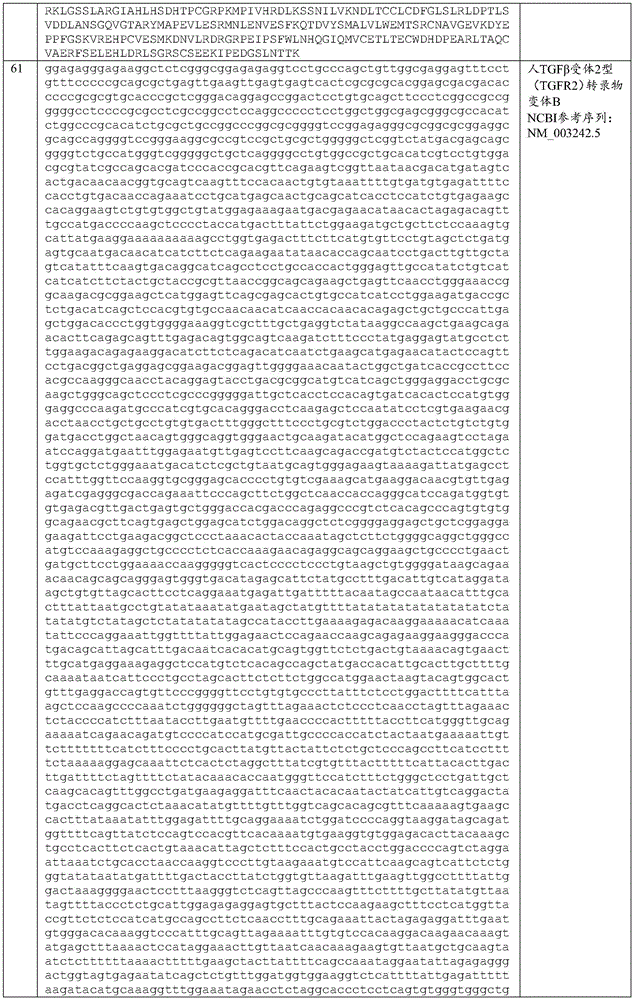


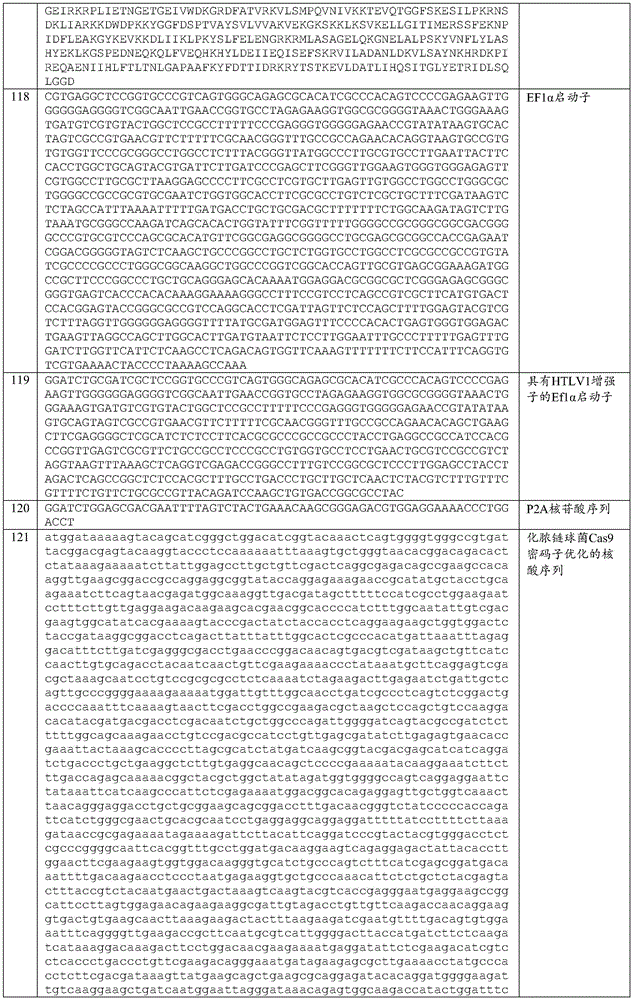
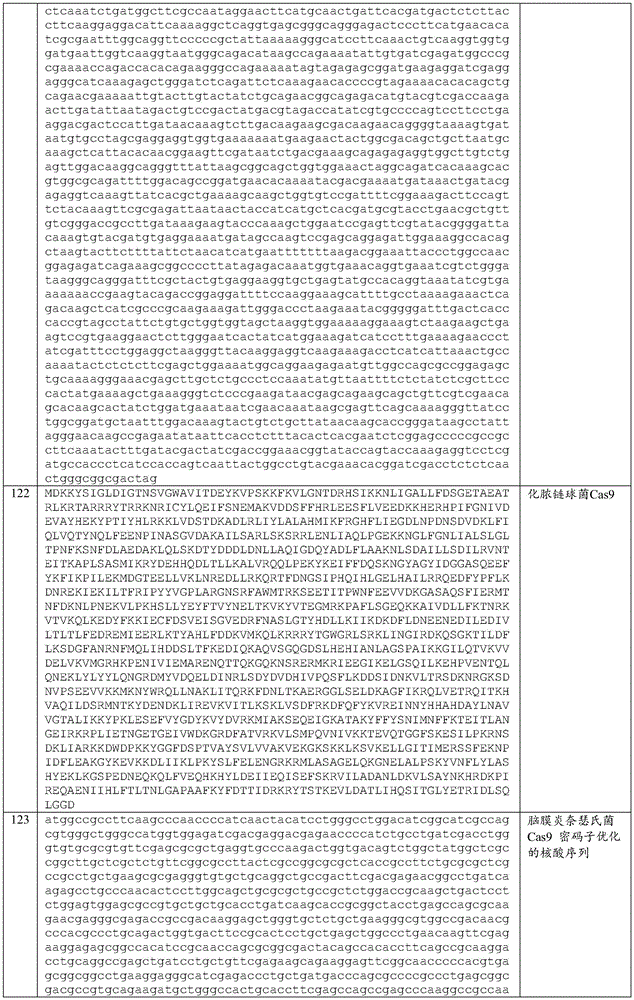
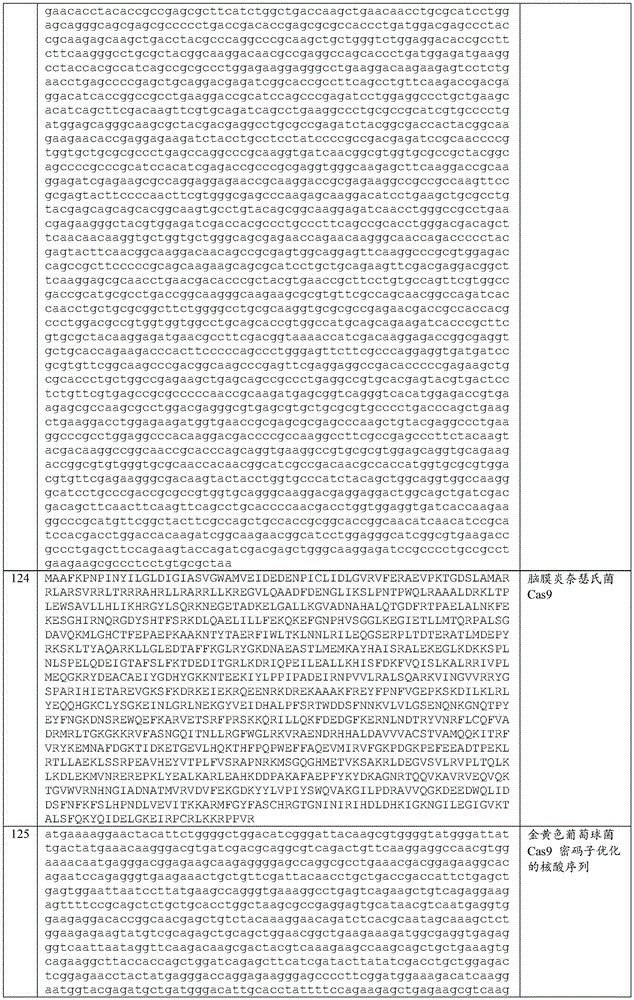
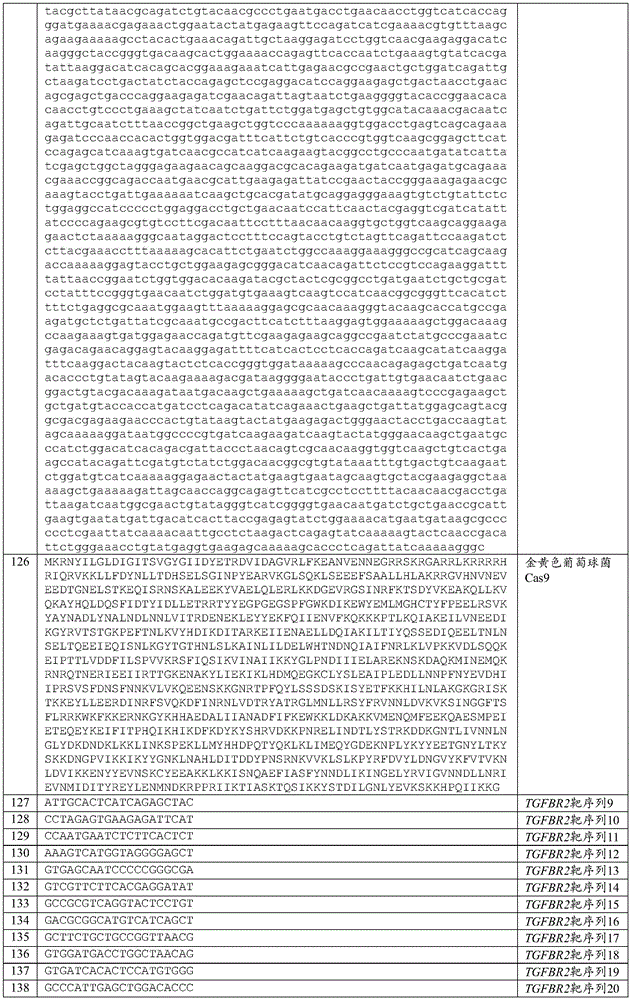

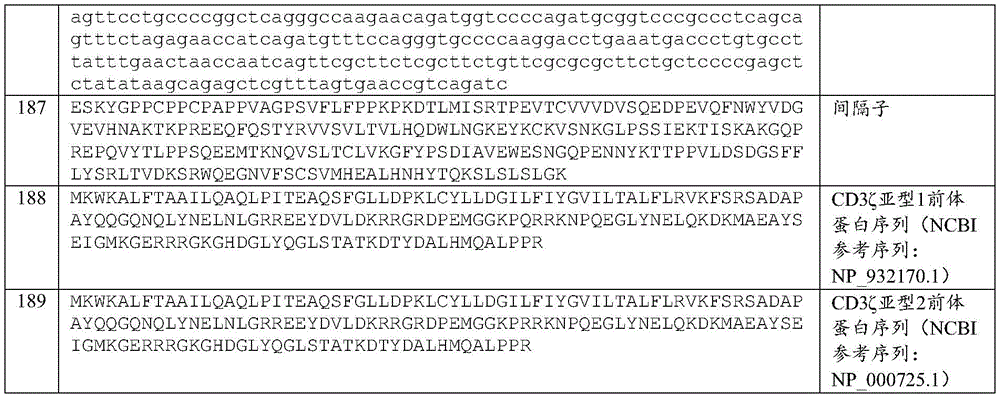
序列表sequence listing
<110> 朱诺治疗学股份有限公司<110> Juno Therapeutics, Inc.
爱迪塔斯医药股份有限公司Editas Pharmaceuticals Co., Ltd.
<120> 从经修饰的TGFBR2基因座表达重组受体的细胞、相关多核苷酸和方法<120> Cells, related polynucleotides and methods expressing recombinant receptors from a modified TGFBR2 locus
<130> 735042012840<130> 735042012840
<140> 尚未分配<140> Not yet assigned
<141> 同时随同提交<141> also submitted along with
<150> 62/841,575<150> 62/841,575
<151> 2019-05-01<151> 2019-05-01
<160> 189<160> 189
<170> 用于Windows的FastSEQ 4.0版<170> FastSEQ Version 4.0 for Windows
<210> 1<210> 1
<211> 12<211> 12
<212> PRT<212> PRT
<213> 智人(Homo sapiens)<213> Homo sapiens
<220><220>
<223> 间隔子(IgG4铰链)<223> Spacer (IgG4 hinge)
<400> 1<400> 1
Glu Ser Lys Tyr Gly Pro Pro Cys Pro Pro Cys ProGlu Ser Lys Tyr Gly Pro Pro Cys Pro Pro Cys Pro
1 5 101 5 10
<210> 2<210> 2
<211> 36<211> 36
<212> DNA<212> DNA
<213> 智人(Homo sapiens)<213> Homo sapiens
<220><220>
<223> 间隔子(IgG4铰链)<223> Spacer (IgG4 hinge)
<400> 2<400> 2
gaatctaagt acggaccgcc ctgcccccct tgccct 36gaatctaagt acggaccgcc ctgcccccct tgccct 36
<210> 3<210> 3
<211> 119<211> 119
<212> PRT<212> PRT
<213> 智人(Homo sapiens)<213> Homo sapiens
<220><220>
<223> 铰链-CH3间隔子<223> Hinge-CH3 Spacer
<400> 3<400> 3
Glu Ser Lys Tyr Gly Pro Pro Cys Pro Pro Cys Pro Gly Gln Pro ArgGlu Ser Lys Tyr Gly Pro Pro Cys Pro Pro Cys Pro Gly Gln Pro Arg
1 5 10 151 5 10 15
Glu Pro Gln Val Tyr Thr Leu Pro Pro Ser Gln Glu Glu Met Thr LysGlu Pro Gln Val Tyr Thr Leu Pro Pro Ser Gln Glu Glu Met Thr Lys
20 25 30 20 25 30
Asn Gln Val Ser Leu Thr Cys Leu Val Lys Gly Phe Tyr Pro Ser AspAsn Gln Val Ser Leu Thr Cys Leu Val Lys Gly Phe Tyr Pro Ser Asp
35 40 45 35 40 45
Ile Ala Val Glu Trp Glu Ser Asn Gly Gln Pro Glu Asn Asn Tyr LysIle Ala Val Glu Trp Glu Ser Asn Gly Gln Pro Glu Asn Asn Tyr Lys
50 55 60 50 55 60
Thr Thr Pro Pro Val Leu Asp Ser Asp Gly Ser Phe Phe Leu Tyr SerThr Thr Pro Pro Val Leu Asp Ser Asp Gly Ser Phe Phe Leu Tyr Ser
65 70 75 8065 70 75 80
Arg Leu Thr Val Asp Lys Ser Arg Trp Gln Glu Gly Asn Val Phe SerArg Leu Thr Val Asp Lys Ser Arg Trp Gln Glu Gly Asn Val Phe Ser
85 90 95 85 90 95
Cys Ser Val Met His Glu Ala Leu His Asn His Tyr Thr Gln Lys SerCys Ser Val Met His Glu Ala Leu His Asn His Tyr Thr Gln Lys Ser
100 105 110 100 105 110
Leu Ser Leu Ser Leu Gly LysLeu Ser Leu Ser Leu Gly Lys
115 115
<210> 4<210> 4
<211> 229<211> 229
<212> PRT<212> PRT
<213> 智人(Homo sapiens)<213> Homo sapiens
<220><220>
<223> 铰链-CH2-CH3间隔子<223> Hinge-CH2-CH3 Spacer
<400> 4<400> 4
Glu Ser Lys Tyr Gly Pro Pro Cys Pro Pro Cys Pro Ala Pro Glu PheGlu Ser Lys Tyr Gly Pro Pro Cys Pro Pro Cys Pro Ala Pro Glu Phe
1 5 10 151 5 10 15
Leu Gly Gly Pro Ser Val Phe Leu Phe Pro Pro Lys Pro Lys Asp ThrLeu Gly Gly Pro Ser Val Phe Leu Phe Pro Pro Lys Pro Lys Asp Thr
20 25 30 20 25 30
Leu Met Ile Ser Arg Thr Pro Glu Val Thr Cys Val Val Val Asp ValLeu Met Ile Ser Arg Thr Pro Glu Val Thr Cys Val Val Val Asp Val
35 40 45 35 40 45
Ser Gln Glu Asp Pro Glu Val Gln Phe Asn Trp Tyr Val Asp Gly ValSer Gln Glu Asp Pro Glu Val Gln Phe Asn Trp Tyr Val Asp Gly Val
50 55 60 50 55 60
Glu Val His Asn Ala Lys Thr Lys Pro Arg Glu Glu Gln Phe Asn SerGlu Val His Asn Ala Lys Thr Lys Pro Arg Glu Glu Gln Phe Asn Ser
65 70 75 8065 70 75 80
Thr Tyr Arg Val Val Ser Val Leu Thr Val Leu His Gln Asp Trp LeuThr Tyr Arg Val Val Ser Val Leu Thr Val Leu His Gln Asp Trp Leu
85 90 95 85 90 95
Asn Gly Lys Glu Tyr Lys Cys Lys Val Ser Asn Lys Gly Leu Pro SerAsn Gly Lys Glu Tyr Lys Cys Lys Val Ser Asn Lys Gly Leu Pro Ser
100 105 110 100 105 110
Ser Ile Glu Lys Thr Ile Ser Lys Ala Lys Gly Gln Pro Arg Glu ProSer Ile Glu Lys Thr Ile Ser Lys Ala Lys Gly Gln Pro Arg Glu Pro
115 120 125 115 120 125
Gln Val Tyr Thr Leu Pro Pro Ser Gln Glu Glu Met Thr Lys Asn GlnGln Val Tyr Thr Leu Pro Pro Ser Gln Glu Glu Met Thr Lys Asn Gln
130 135 140 130 135 140
Val Ser Leu Thr Cys Leu Val Lys Gly Phe Tyr Pro Ser Asp Ile AlaVal Ser Leu Thr Cys Leu Val Lys Gly Phe Tyr Pro Ser Asp Ile Ala
145 150 155 160145 150 155 160
Val Glu Trp Glu Ser Asn Gly Gln Pro Glu Asn Asn Tyr Lys Thr ThrVal Glu Trp Glu Ser Asn Gly Gln Pro Glu Asn Asn Tyr Lys Thr Thr
165 170 175 165 170 175
Pro Pro Val Leu Asp Ser Asp Gly Ser Phe Phe Leu Tyr Ser Arg LeuPro Pro Val Leu Asp Ser Asp Gly Ser Phe Phe Leu Tyr Ser Arg Leu
180 185 190 180 185 190
Thr Val Asp Lys Ser Arg Trp Gln Glu Gly Asn Val Phe Ser Cys SerThr Val Asp Lys Ser Arg Trp Gln Glu Gly Asn Val Phe Ser Cys Ser
195 200 205 195 200 205
Val Met His Glu Ala Leu His Asn His Tyr Thr Gln Lys Ser Leu SerVal Met His Glu Ala Leu His Asn His Tyr Thr Gln Lys Ser Leu Ser
210 215 220 210 215 220
Leu Ser Leu Gly LysLeu Ser Leu Gly Lys
225225
<210> 5<210> 5
<211> 282<211> 282
<212> PRT<212> PRT
<213> 人工序列<213> Artificial sequences
<220><220>
<223> IgD-铰链-Fc<223> IgD-hinge-Fc
<400> 5<400> 5
Arg Trp Pro Glu Ser Pro Lys Ala Gln Ala Ser Ser Val Pro Thr AlaArg Trp Pro Glu Ser Pro Lys Ala Gln Ala Ser Ser Val Pro Thr Ala
1 5 10 151 5 10 15
Gln Pro Gln Ala Glu Gly Ser Leu Ala Lys Ala Thr Thr Ala Pro AlaGln Pro Gln Ala Glu Gly Ser Leu Ala Lys Ala Thr Thr Ala Pro Ala
20 25 30 20 25 30
Thr Thr Arg Asn Thr Gly Arg Gly Gly Glu Glu Lys Lys Lys Glu LysThr Thr Arg Asn Thr Gly Arg Gly Gly Glu Glu Lys Lys Lys Glu Lys
35 40 45 35 40 45
Glu Lys Glu Glu Gln Glu Glu Arg Glu Thr Lys Thr Pro Glu Cys ProGlu Lys Glu Glu Gln Glu Glu Arg Glu Thr Lys Thr Pro Glu Cys Pro
50 55 60 50 55 60
Ser His Thr Gln Pro Leu Gly Val Tyr Leu Leu Thr Pro Ala Val GlnSer His Thr Gln Pro Leu Gly Val Tyr Leu Leu Thr Pro Ala Val Gln
65 70 75 8065 70 75 80
Asp Leu Trp Leu Arg Asp Lys Ala Thr Phe Thr Cys Phe Val Val GlyAsp Leu Trp Leu Arg Asp Lys Ala Thr Phe Thr Cys Phe Val Val Gly
85 90 95 85 90 95
Ser Asp Leu Lys Asp Ala His Leu Thr Trp Glu Val Ala Gly Lys ValSer Asp Leu Lys Asp Ala His Leu Thr Trp Glu Val Ala Gly Lys Val
100 105 110 100 105 110
Pro Thr Gly Gly Val Glu Glu Gly Leu Leu Glu Arg His Ser Asn GlyPro Thr Gly Gly Val Glu Glu Gly Leu Leu Glu Arg His Ser Asn Gly
115 120 125 115 120 125
Ser Gln Ser Gln His Ser Arg Leu Thr Leu Pro Arg Ser Leu Trp AsnSer Gln Ser Gln His Ser Arg Leu Thr Leu Pro Arg Ser Leu Trp Asn
130 135 140 130 135 140
Ala Gly Thr Ser Val Thr Cys Thr Leu Asn His Pro Ser Leu Pro ProAla Gly Thr Ser Val Thr Cys Thr Leu Asn His Pro Ser Leu Pro Pro
145 150 155 160145 150 155 160
Gln Arg Leu Met Ala Leu Arg Glu Pro Ala Ala Gln Ala Pro Val LysGln Arg Leu Met Ala Leu Arg Glu Pro Ala Ala Gln Ala Pro Val Lys
165 170 175 165 170 175
Leu Ser Leu Asn Leu Leu Ala Ser Ser Asp Pro Pro Glu Ala Ala SerLeu Ser Leu Asn Leu Leu Ala Ser Ser Asp Pro Pro Glu Ala Ala Ser
180 185 190 180 185 190
Trp Leu Leu Cys Glu Val Ser Gly Phe Ser Pro Pro Asn Ile Leu LeuTrp Leu Leu Cys Glu Val Ser Gly Phe Ser Pro Pro Asn Ile Leu Leu
195 200 205 195 200 205
Met Trp Leu Glu Asp Gln Arg Glu Val Asn Thr Ser Gly Phe Ala ProMet Trp Leu Glu Asp Gln Arg Glu Val Asn Thr Ser Gly Phe Ala Pro
210 215 220 210 215 220
Ala Arg Pro Pro Pro Gln Pro Gly Ser Thr Thr Phe Trp Ala Trp SerAla Arg Pro Pro Gln Pro Gly Ser Thr Thr Phe Trp Ala Trp Ser
225 230 235 240225 230 235 240
Val Leu Arg Val Pro Ala Pro Pro Ser Pro Gln Pro Ala Thr Tyr ThrVal Leu Arg Val Pro Ala Pro Pro Ser Pro Gln Pro Ala Thr Tyr Thr
245 250 255 245 250 255
Cys Val Val Ser His Glu Asp Ser Arg Thr Leu Leu Asn Ala Ser ArgCys Val Val Ser His Glu Asp Ser Arg Thr Leu Leu Asn Ala Ser Arg
260 265 270 260 265 270
Ser Leu Glu Val Ser Tyr Val Thr Asp HisSer Leu Glu Val Ser Tyr Val Thr Asp His
275 280 275 280
<210> 6<210> 6
<211> 24<211> 24
<212> PRT<212> PRT
<213> 人工序列<213> Artificial sequences
<220><220>
<223> T2A<223> T2A
<400> 6<400> 6
Leu Glu Gly Gly Gly Glu Gly Arg Gly Ser Leu Leu Thr Cys Gly AspLeu Glu Gly Gly Gly Glu Gly Arg Gly Ser Leu Leu Thr Cys Gly Asp
1 5 10 151 5 10 15
Val Glu Glu Asn Pro Gly Pro ArgVal Glu Glu Asn Pro Gly Pro Arg
20 20
<210> 7<210> 7
<211> 357<211> 357
<212> PRT<212> PRT
<213> 人工序列<213> Artificial sequences
<220><220>
<223> tEGFR<223>tEGFR
<400> 7<400> 7
Met Leu Leu Leu Val Thr Ser Leu Leu Leu Cys Glu Leu Pro His ProMet Leu Leu Leu Val Thr Ser Leu Leu Leu Cys Glu Leu Pro His Pro
1 5 10 151 5 10 15
Ala Phe Leu Leu Ile Pro Arg Lys Val Cys Asn Gly Ile Gly Ile GlyAla Phe Leu Leu Ile Pro Arg Lys Val Cys Asn Gly Ile Gly Ile Gly
20 25 30 20 25 30
Glu Phe Lys Asp Ser Leu Ser Ile Asn Ala Thr Asn Ile Lys His PheGlu Phe Lys Asp Ser Leu Ser Ile Asn Ala Thr Asn Ile Lys His Phe
35 40 45 35 40 45
Lys Asn Cys Thr Ser Ile Ser Gly Asp Leu His Ile Leu Pro Val AlaLys Asn Cys Thr Ser Ile Ser Gly Asp Leu His Ile Leu Pro Val Ala
50 55 60 50 55 60
Phe Arg Gly Asp Ser Phe Thr His Thr Pro Pro Leu Asp Pro Gln GluPhe Arg Gly Asp Ser Phe Thr His Thr Pro Pro Leu Asp Pro Gln Glu
65 70 75 8065 70 75 80
Leu Asp Ile Leu Lys Thr Val Lys Glu Ile Thr Gly Phe Leu Leu IleLeu Asp Ile Leu Lys Thr Val Lys Glu Ile Thr Gly Phe Leu Leu Ile
85 90 95 85 90 95
Gln Ala Trp Pro Glu Asn Arg Thr Asp Leu His Ala Phe Glu Asn LeuGln Ala Trp Pro Glu Asn Arg Thr Asp Leu His Ala Phe Glu Asn Leu
100 105 110 100 105 110
Glu Ile Ile Arg Gly Arg Thr Lys Gln His Gly Gln Phe Ser Leu AlaGlu Ile Ile Arg Gly Arg Thr Lys Gln His Gly Gln Phe Ser Leu Ala
115 120 125 115 120 125
Val Val Ser Leu Asn Ile Thr Ser Leu Gly Leu Arg Ser Leu Lys GluVal Val Ser Leu Asn Ile Thr Ser Leu Gly Leu Arg Ser Leu Lys Glu
130 135 140 130 135 140
Ile Ser Asp Gly Asp Val Ile Ile Ser Gly Asn Lys Asn Leu Cys TyrIle Ser Asp Gly Asp Val Ile Ile Ser Gly Asn Lys Asn Leu Cys Tyr
145 150 155 160145 150 155 160
Ala Asn Thr Ile Asn Trp Lys Lys Leu Phe Gly Thr Ser Gly Gln LysAla Asn Thr Ile Asn Trp Lys Lys Leu Phe Gly Thr Ser Gly Gln Lys
165 170 175 165 170 175
Thr Lys Ile Ile Ser Asn Arg Gly Glu Asn Ser Cys Lys Ala Thr GlyThr Lys Ile Ile Ser Asn Arg Gly Glu Asn Ser Cys Lys Ala Thr Gly
180 185 190 180 185 190
Gln Val Cys His Ala Leu Cys Ser Pro Glu Gly Cys Trp Gly Pro GluGln Val Cys His Ala Leu Cys Ser Pro Glu Gly Cys Trp Gly Pro Glu
195 200 205 195 200 205
Pro Arg Asp Cys Val Ser Cys Arg Asn Val Ser Arg Gly Arg Glu CysPro Arg Asp Cys Val Ser Cys Arg Asn Val Ser Arg Gly Arg Glu Cys
210 215 220 210 215 220
Val Asp Lys Cys Asn Leu Leu Glu Gly Glu Pro Arg Glu Phe Val GluVal Asp Lys Cys Asn Leu Leu Glu Gly Glu Pro Arg Glu Phe Val Glu
225 230 235 240225 230 235 240
Asn Ser Glu Cys Ile Gln Cys His Pro Glu Cys Leu Pro Gln Ala MetAsn Ser Glu Cys Ile Gln Cys His Pro Glu Cys Leu Pro Gln Ala Met
245 250 255 245 250 255
Asn Ile Thr Cys Thr Gly Arg Gly Pro Asp Asn Cys Ile Gln Cys AlaAsn Ile Thr Cys Thr Gly Arg Gly Pro Asp Asn Cys Ile Gln Cys Ala
260 265 270 260 265 270
His Tyr Ile Asp Gly Pro His Cys Val Lys Thr Cys Pro Ala Gly ValHis Tyr Ile Asp Gly Pro His Cys Val Lys Thr Cys Pro Ala Gly Val
275 280 285 275 280 285
Met Gly Glu Asn Asn Thr Leu Val Trp Lys Tyr Ala Asp Ala Gly HisMet Gly Glu Asn Asn Thr Leu Val Trp Lys Tyr Ala Asp Ala Gly His
290 295 300 290 295 300
Val Cys His Leu Cys His Pro Asn Cys Thr Tyr Gly Cys Thr Gly ProVal Cys His Leu Cys His Pro Asn Cys Thr Tyr Gly Cys Thr Gly Pro
305 310 315 320305 310 315 320
Gly Leu Glu Gly Cys Pro Thr Asn Gly Pro Lys Ile Pro Ser Ile AlaGly Leu Glu Gly Cys Pro Thr Asn Gly Pro Lys Ile Pro Ser Ile Ala
325 330 335 325 330 335
Thr Gly Met Val Gly Ala Leu Leu Leu Leu Leu Val Val Ala Leu GlyThr Gly Met Val Gly Ala Leu Leu Leu Leu Leu Val Val Ala Leu Gly
340 345 350 340 345 350
Ile Gly Leu Phe MetIle Gly Leu Phe Met
355 355
<210> 8<210> 8
<211> 27<211> 27
<212> PRT<212> PRT
<213> 智人(Homo sapiens)<213> Homo sapiens
<220><220>
<223> CD28<223> CD28
<300><300>
<308> Uniprot P10747<308> Uniprot P10747
<309> 1989-07-01<309> 1989-07-01
<400> 8<400> 8
Phe Trp Val Leu Val Val Val Gly Gly Val Leu Ala Cys Tyr Ser LeuPhe Trp Val Leu Val Val Val Gly Gly Val Leu Ala Cys Tyr Ser Leu
1 5 10 151 5 10 15
Leu Val Thr Val Ala Phe Ile Ile Phe Trp ValLeu Val Thr Val Ala Phe Ile Ile Phe Trp Val
20 25 20 25
<210> 9<210> 9
<211> 66<211> 66
<212> PRT<212> PRT
<213> 智人(Homo sapiens)<213> Homo sapiens
<220><220>
<223> CD28<223> CD28
<300><300>
<308> Uniprot P10747<308> Uniprot P10747
<309> 1989-07-01<309> 1989-07-01
<400> 9<400> 9
Ile Glu Val Met Tyr Pro Pro Pro Tyr Leu Asp Asn Glu Lys Ser AsnIle Glu Val Met Tyr Pro Pro Pro Tyr Leu Asp Asn Glu Lys Ser Asn
1 5 10 151 5 10 15
Gly Thr Ile Ile His Val Lys Gly Lys His Leu Cys Pro Ser Pro LeuGly Thr Ile Ile His Val Lys Gly Lys His Leu Cys Pro Ser Pro Leu
20 25 30 20 25 30
Phe Pro Gly Pro Ser Lys Pro Phe Trp Val Leu Val Val Val Gly GlyPhe Pro Gly Pro Ser Lys Pro Phe Trp Val Leu Val Val Val Gly Gly
35 40 45 35 40 45
Val Leu Ala Cys Tyr Ser Leu Leu Val Thr Val Ala Phe Ile Ile PheVal Leu Ala Cys Tyr Ser Leu Leu Val Thr Val Ala Phe Ile Ile Phe
50 55 60 50 55 60
Trp ValTrp Val
6565
<210> 10<210> 10
<211> 41<211> 41
<212> PRT<212> PRT
<213> 智人(Homo sapiens)<213> Homo sapiens
<220><220>
<223> CD28<223> CD28
<300><300>
<308> Uniprot P10757<308> Uniprot P10757
<309> 1989-07-01<309> 1989-07-01
<400> 10<400> 10
Arg Ser Lys Arg Ser Arg Leu Leu His Ser Asp Tyr Met Asn Met ThrArg Ser Lys Arg Ser Arg Leu Leu His Ser Asp Tyr Met Asn Met Thr
1 5 10 151 5 10 15
Pro Arg Arg Pro Gly Pro Thr Arg Lys His Tyr Gln Pro Tyr Ala ProPro Arg Arg Pro Gly Pro Thr Arg Lys His Tyr Gln Pro Tyr Ala Pro
20 25 30 20 25 30
Pro Arg Asp Phe Ala Ala Tyr Arg SerPro Arg Asp Phe Ala Ala Tyr Arg Ser
35 40 35 40
<210> 11<210> 11
<211> 41<211> 41
<212> PRT<212> PRT
<213> 智人(Homo sapiens)<213> Homo sapiens
<220><220>
<223> CD28 (LL至GG)<223> CD28 (LL to GG)
<400> 11<400> 11
Arg Ser Lys Arg Ser Arg Gly Gly His Ser Asp Tyr Met Asn Met ThrArg Ser Lys Arg Ser Arg Gly Gly His Ser Asp Tyr Met Asn Met Thr
1 5 10 151 5 10 15
Pro Arg Arg Pro Gly Pro Thr Arg Lys His Tyr Gln Pro Tyr Ala ProPro Arg Arg Pro Gly Pro Thr Arg Lys His Tyr Gln Pro Tyr Ala Pro
20 25 30 20 25 30
Pro Arg Asp Phe Ala Ala Tyr Arg SerPro Arg Asp Phe Ala Ala Tyr Arg Ser
35 40 35 40
<210> 12<210> 12
<211> 42<211> 42
<212> PRT<212> PRT
<213> 智人(Homo sapiens)<213> Homo sapiens
<220><220>
<223> 4-1BB<223> 4-1BB
<300><300>
<308> Uniprot Q07011.1<308> Uniprot Q07011.1
<309> 1995-02-01<309> 1995-02-01
<400> 12<400> 12
Lys Arg Gly Arg Lys Lys Leu Leu Tyr Ile Phe Lys Gln Pro Phe MetLys Arg Gly Arg Lys Lys Leu Leu Tyr Ile Phe Lys Gln Pro Phe Met
1 5 10 151 5 10 15
Arg Pro Val Gln Thr Thr Gln Glu Glu Asp Gly Cys Ser Cys Arg PheArg Pro Val Gln Thr Thr Gln Glu Glu Asp Gly Cys Ser Cys Arg Phe
20 25 30 20 25 30
Pro Glu Glu Glu Glu Gly Gly Cys Glu LeuPro Glu Glu Glu Glu Gly Gly Cys Glu Leu
35 40 35 40
<210> 13<210> 13
<211> 112<211> 112
<212> PRT<212> PRT
<213> 智人(Homo sapiens)<213> Homo sapiens
<220><220>
<223> CD3ζ<223> CD3ζ
<400> 13<400> 13
Arg Val Lys Phe Ser Arg Ser Ala Asp Ala Pro Ala Tyr Gln Gln GlyArg Val Lys Phe Ser Arg Ser Ala Asp Ala Pro Ala Tyr Gln Gln Gly
1 5 10 151 5 10 15
Gln Asn Gln Leu Tyr Asn Glu Leu Asn Leu Gly Arg Arg Glu Glu TyrGln Asn Gln Leu Tyr Asn Glu Leu Asn Leu Gly Arg Arg Glu Glu Tyr
20 25 30 20 25 30
Asp Val Leu Asp Lys Arg Arg Gly Arg Asp Pro Glu Met Gly Gly LysAsp Val Leu Asp Lys Arg Arg Gly Arg Asp Pro Glu Met Gly Gly Lys
35 40 45 35 40 45
Pro Arg Arg Lys Asn Pro Gln Glu Gly Leu Tyr Asn Glu Leu Gln LysPro Arg Arg Lys Asn Pro Gln Glu Gly Leu Tyr Asn Glu Leu Gln Lys
50 55 60 50 55 60
Asp Lys Met Ala Glu Ala Tyr Ser Glu Ile Gly Met Lys Gly Glu ArgAsp Lys Met Ala Glu Ala Tyr Ser Glu Ile Gly Met Lys Gly Glu Arg
65 70 75 8065 70 75 80
Arg Arg Gly Lys Gly His Asp Gly Leu Tyr Gln Gly Leu Ser Thr AlaArg Arg Gly Lys Gly His Asp Gly Leu Tyr Gln Gly Leu Ser Thr Ala
85 90 95 85 90 95
Thr Lys Asp Thr Tyr Asp Ala Leu His Met Gln Ala Leu Pro Pro ArgThr Lys Asp Thr Tyr Asp Ala Leu His Met Gln Ala Leu Pro Pro Arg
100 105 110 100 105 110
<210> 14<210> 14
<211> 112<211> 112
<212> PRT<212> PRT
<213> 智人(Homo sapiens)<213> Homo sapiens
<220><220>
<223> CD3ζ<223> CD3ζ
<400> 14<400> 14
Arg Val Lys Phe Ser Arg Ser Ala Glu Pro Pro Ala Tyr Gln Gln GlyArg Val Lys Phe Ser Arg Ser Ala Glu Pro Pro Ala Tyr Gln Gln Gly
1 5 10 151 5 10 15
Gln Asn Gln Leu Tyr Asn Glu Leu Asn Leu Gly Arg Arg Glu Glu TyrGln Asn Gln Leu Tyr Asn Glu Leu Asn Leu Gly Arg Arg Glu Glu Tyr
20 25 30 20 25 30
Asp Val Leu Asp Lys Arg Arg Gly Arg Asp Pro Glu Met Gly Gly LysAsp Val Leu Asp Lys Arg Arg Gly Arg Asp Pro Glu Met Gly Gly Lys
35 40 45 35 40 45
Pro Arg Arg Lys Asn Pro Gln Glu Gly Leu Tyr Asn Glu Leu Gln LysPro Arg Arg Lys Asn Pro Gln Glu Gly Leu Tyr Asn Glu Leu Gln Lys
50 55 60 50 55 60
Asp Lys Met Ala Glu Ala Tyr Ser Glu Ile Gly Met Lys Gly Glu ArgAsp Lys Met Ala Glu Ala Tyr Ser Glu Ile Gly Met Lys Gly Glu Arg
65 70 75 8065 70 75 80
Arg Arg Gly Lys Gly His Asp Gly Leu Tyr Gln Gly Leu Ser Thr AlaArg Arg Gly Lys Gly His Asp Gly Leu Tyr Gln Gly Leu Ser Thr Ala
85 90 95 85 90 95
Thr Lys Asp Thr Tyr Asp Ala Leu His Met Gln Ala Leu Pro Pro ArgThr Lys Asp Thr Tyr Asp Ala Leu His Met Gln Ala Leu Pro Pro Arg
100 105 110 100 105 110
<210> 15<210> 15
<211> 112<211> 112
<212> PRT<212> PRT
<213> 智人(Homo sapiens)<213> Homo sapiens
<220><220>
<223> CD3ζ<223> CD3ζ
<400> 15<400> 15
Arg Val Lys Phe Ser Arg Ser Ala Asp Ala Pro Ala Tyr Lys Gln GlyArg Val Lys Phe Ser Arg Ser Ala Asp Ala Pro Ala Tyr Lys Gln Gly
1 5 10 151 5 10 15
Gln Asn Gln Leu Tyr Asn Glu Leu Asn Leu Gly Arg Arg Glu Glu TyrGln Asn Gln Leu Tyr Asn Glu Leu Asn Leu Gly Arg Arg Glu Glu Tyr
20 25 30 20 25 30
Asp Val Leu Asp Lys Arg Arg Gly Arg Asp Pro Glu Met Gly Gly LysAsp Val Leu Asp Lys Arg Arg Gly Arg Asp Pro Glu Met Gly Gly Lys
35 40 45 35 40 45
Pro Arg Arg Lys Asn Pro Gln Glu Gly Leu Tyr Asn Glu Leu Gln LysPro Arg Arg Lys Asn Pro Gln Glu Gly Leu Tyr Asn Glu Leu Gln Lys
50 55 60 50 55 60
Asp Lys Met Ala Glu Ala Tyr Ser Glu Ile Gly Met Lys Gly Glu ArgAsp Lys Met Ala Glu Ala Tyr Ser Glu Ile Gly Met Lys Gly Glu Arg
65 70 75 8065 70 75 80
Arg Arg Gly Lys Gly His Asp Gly Leu Tyr Gln Gly Leu Ser Thr AlaArg Arg Gly Lys Gly His Asp Gly Leu Tyr Gln Gly Leu Ser Thr Ala
85 90 95 85 90 95
Thr Lys Asp Thr Tyr Asp Ala Leu His Met Gln Ala Leu Pro Pro ArgThr Lys Asp Thr Tyr Asp Ala Leu His Met Gln Ala Leu Pro Pro Arg
100 105 110 100 105 110
<210> 16<210> 16
<211> 335<211> 335
<212> PRT<212> PRT
<213> 人工序列<213> Artificial sequences
<220><220>
<223> tEGFR<223>tEGFR
<400> 16<400> 16
Arg Lys Val Cys Asn Gly Ile Gly Ile Gly Glu Phe Lys Asp Ser LeuArg Lys Val Cys Asn Gly Ile Gly Ile Gly Glu Phe Lys Asp Ser Leu
1 5 10 151 5 10 15
Ser Ile Asn Ala Thr Asn Ile Lys His Phe Lys Asn Cys Thr Ser IleSer Ile Asn Ala Thr Asn Ile Lys His Phe Lys Asn Cys Thr Ser Ile
20 25 30 20 25 30
Ser Gly Asp Leu His Ile Leu Pro Val Ala Phe Arg Gly Asp Ser PheSer Gly Asp Leu His Ile Leu Pro Val Ala Phe Arg Gly Asp Ser Phe
35 40 45 35 40 45
Thr His Thr Pro Pro Leu Asp Pro Gln Glu Leu Asp Ile Leu Lys ThrThr His Thr Pro Pro Leu Asp Pro Gln Glu Leu Asp Ile Leu Lys Thr
50 55 60 50 55 60
Val Lys Glu Ile Thr Gly Phe Leu Leu Ile Gln Ala Trp Pro Glu AsnVal Lys Glu Ile Thr Gly Phe Leu Leu Ile Gln Ala Trp Pro Glu Asn
65 70 75 8065 70 75 80
Arg Thr Asp Leu His Ala Phe Glu Asn Leu Glu Ile Ile Arg Gly ArgArg Thr Asp Leu His Ala Phe Glu Asn Leu Glu Ile Ile Arg Gly Arg
85 90 95 85 90 95
Thr Lys Gln His Gly Gln Phe Ser Leu Ala Val Val Ser Leu Asn IleThr Lys Gln His Gly Gln Phe Ser Leu Ala Val Val Ser Leu Asn Ile
100 105 110 100 105 110
Thr Ser Leu Gly Leu Arg Ser Leu Lys Glu Ile Ser Asp Gly Asp ValThr Ser Leu Gly Leu Arg Ser Leu Lys Glu Ile Ser Asp Gly Asp Val
115 120 125 115 120 125
Ile Ile Ser Gly Asn Lys Asn Leu Cys Tyr Ala Asn Thr Ile Asn TrpIle Ile Ser Gly Asn Lys Asn Leu Cys Tyr Ala Asn Thr Ile Asn Trp
130 135 140 130 135 140
Lys Lys Leu Phe Gly Thr Ser Gly Gln Lys Thr Lys Ile Ile Ser AsnLys Lys Leu Phe Gly Thr Ser Gly Gln Lys Thr Lys Ile Ile Ser Asn
145 150 155 160145 150 155 160
Arg Gly Glu Asn Ser Cys Lys Ala Thr Gly Gln Val Cys His Ala LeuArg Gly Glu Asn Ser Cys Lys Ala Thr Gly Gln Val Cys His Ala Leu
165 170 175 165 170 175
Cys Ser Pro Glu Gly Cys Trp Gly Pro Glu Pro Arg Asp Cys Val SerCys Ser Pro Glu Gly Cys Trp Gly Pro Glu Pro Arg Asp Cys Val Ser
180 185 190 180 185 190
Cys Arg Asn Val Ser Arg Gly Arg Glu Cys Val Asp Lys Cys Asn LeuCys Arg Asn Val Ser Arg Gly Arg Glu Cys Val Asp Lys Cys Asn Leu
195 200 205 195 200 205
Leu Glu Gly Glu Pro Arg Glu Phe Val Glu Asn Ser Glu Cys Ile GlnLeu Glu Gly Glu Pro Arg Glu Phe Val Glu Asn Ser Glu Cys Ile Gln
210 215 220 210 215 220
Cys His Pro Glu Cys Leu Pro Gln Ala Met Asn Ile Thr Cys Thr GlyCys His Pro Glu Cys Leu Pro Gln Ala Met Asn Ile Thr Cys Thr Gly
225 230 235 240225 230 235 240
Arg Gly Pro Asp Asn Cys Ile Gln Cys Ala His Tyr Ile Asp Gly ProArg Gly Pro Asp Asn Cys Ile Gln Cys Ala His Tyr Ile Asp Gly Pro
245 250 255 245 250 255
His Cys Val Lys Thr Cys Pro Ala Gly Val Met Gly Glu Asn Asn ThrHis Cys Val Lys Thr Cys Pro Ala Gly Val Met Gly Glu Asn Asn Thr
260 265 270 260 265 270
Leu Val Trp Lys Tyr Ala Asp Ala Gly His Val Cys His Leu Cys HisLeu Val Trp Lys Tyr Ala Asp Ala Gly His Val Cys His Leu Cys His
275 280 285 275 280 285
Pro Asn Cys Thr Tyr Gly Cys Thr Gly Pro Gly Leu Glu Gly Cys ProPro Asn Cys Thr Tyr Gly Cys Thr Gly Pro Gly Leu Glu Gly Cys Pro
290 295 300 290 295 300
Thr Asn Gly Pro Lys Ile Pro Ser Ile Ala Thr Gly Met Val Gly AlaThr Asn Gly Pro Lys Ile Pro Ser Ile Ala Thr Gly Met Val Gly Ala
305 310 315 320305 310 315 320
Leu Leu Leu Leu Leu Val Val Ala Leu Gly Ile Gly Leu Phe MetLeu Leu Leu Leu Leu Val Val Ala Leu Gly Ile Gly Leu Phe Met
325 330 335 325 330 335
<210> 17<210> 17
<211> 18<211> 18
<212> PRT<212> PRT
<213> 人工序列<213> Artificial sequences
<220><220>
<223> T2A<223> T2A
<400> 17<400> 17
Glu Gly Arg Gly Ser Leu Leu Thr Cys Gly Asp Val Glu Glu Asn ProGlu Gly Arg Gly Ser Leu Leu Thr Cys Gly Asp Val Glu Glu Asn Pro
1 5 10 151 5 10 15
Gly ProGly Pro
<210> 18<210> 18
<211> 22<211> 22
<212> PRT<212> PRT
<213> 人工序列<213> Artificial sequences
<220><220>
<223> P2A<223> P2A
<400> 18<400> 18
Gly Ser Gly Ala Thr Asn Phe Ser Leu Leu Lys Gln Ala Gly Asp ValGly Ser Gly Ala Thr Asn Phe Ser Leu Leu Lys Gln Ala Gly Asp Val
1 5 10 151 5 10 15
Glu Glu Asn Pro Gly ProGlu Glu Asn Pro Gly Pro
20 20
<210> 19<210> 19
<211> 19<211> 19
<212> PRT<212> PRT
<213> 人工序列<213> Artificial sequences
<220><220>
<223> P2A<223> P2A
<400> 19<400> 19
Ala Thr Asn Phe Ser Leu Leu Lys Gln Ala Gly Asp Val Glu Glu AsnAla Thr Asn Phe Ser Leu Leu Lys Gln Ala Gly Asp Val Glu Glu Asn
1 5 10 151 5 10 15
Pro Gly ProPro Gly Pro
<210> 20<210> 20
<211> 20<211> 20
<212> PRT<212> PRT
<213> 人工序列<213> Artificial sequences
<220><220>
<223> E2A<223> E2A
<400> 20<400> 20
Gln Cys Thr Asn Tyr Ala Leu Leu Lys Leu Ala Gly Asp Val Glu SerGln Cys Thr Asn Tyr Ala Leu Leu Lys Leu Ala Gly Asp Val Glu Ser
1 5 10 151 5 10 15
Asn Pro Gly ProAsn Pro Gly Pro
20 20
<210> 21<210> 21
<211> 22<211> 22
<212> PRT<212> PRT
<213> 人工序列<213> Artificial sequences
<220><220>
<223> F2A<223> F2A
<400> 21<400> 21
Val Lys Gln Thr Leu Asn Phe Asp Leu Leu Lys Leu Ala Gly Asp ValVal Lys Gln Thr Leu Asn Phe Asp Leu Leu Lys Leu Ala Gly Asp Val
1 5 10 151 5 10 15
Glu Ser Asn Pro Gly ProGlu Ser Asn Pro Gly Pro
20 20
<210> 22<210> 22
<211> 10<211> 10
<212> PRT<212> PRT
<213> 人工序列<213> Artificial sequences
<220><220>
<223> 接头<223> Connector
<220><220>
<221> 重复序列<221> Repeat sequences
<222> (5)...(9)<222> (5)...(9)
<223> SGGGG重复5次<223> SGGGG repeated 5 times
<400> 22<400> 22
Pro Gly Gly Gly Ser Gly Gly Gly Gly ProPro Gly Gly Gly Ser Gly Gly Gly Gly Gly Pro
1 5 101 5 10
<210> 23<210> 23
<211> 17<211> 17
<212> PRT<212> PRT
<213> 人工序列<213> Artificial sequences
<220><220>
<223> 接头<223> Connector
<400> 23<400> 23
Gly Ser Ala Asp Asp Ala Lys Lys Asp Ala Ala Lys Lys Asp Gly LysGly Ser Ala Asp Asp Ala Lys Lys Asp Ala Ala Lys Lys Asp Gly Lys
1 5 10 151 5 10 15
SerSer
<210> 24<210> 24
<211> 66<211> 66
<212> DNA<212> DNA
<213> 人工序列<213> Artificial sequences
<220><220>
<223> GMCSFRα链信号序列<223> GMCSFRα chain signal sequence
<400> 24<400> 24
atgcttctcc tggtgacaag ccttctgctc tgtgagttac cacacccagc attcctcctg 60atgcttctcc tggtgacaag ccttctgctc tgtgagttac cacacccagc attcctcctg 60
atccca 66atccca 66
<210> 25<210> 25
<211> 22<211> 22
<212> PRT<212> PRT
<213> 人工序列<213> Artificial sequences
<220><220>
<223> GMCSFRα链信号序列<223> GMCSFRα chain signal sequence
<400> 25<400> 25
Met Leu Leu Leu Val Thr Ser Leu Leu Leu Cys Glu Leu Pro His ProMet Leu Leu Leu Val Thr Ser Leu Leu Leu Cys Glu Leu Pro His Pro
1 5 10 151 5 10 15
Ala Phe Leu Leu Ile ProAla Phe Leu Leu Ile Pro
20 20
<210> 26<210> 26
<211> 18<211> 18
<212> PRT<212> PRT
<213> 人工序列<213> Artificial sequences
<220><220>
<223> CD8α信号肽<223> CD8α signal peptide
<400> 26<400> 26
Met Ala Leu Pro Val Thr Ala Leu Leu Leu Pro Leu Ala Leu Leu LeuMet Ala Leu Pro Val Thr Ala Leu Leu Leu Pro Leu Ala Leu Leu Leu
1 5 10 151 5 10 15
His AlaHis Ala
<210> 27<210> 27
<211> 15<211> 15
<212> PRT<212> PRT
<213> 人工序列<213> Artificial sequences
<220><220>
<223> 铰链<223> Hinges
<400> 27<400> 27
Glu Pro Lys Ser Cys Asp Lys Thr His Thr Cys Pro Pro Cys ProGlu Pro Lys Ser Cys Asp Lys Thr His Thr Cys Pro Pro Cys Pro
1 5 10 151 5 10 15
<210> 28<210> 28
<211> 12<211> 12
<212> PRT<212> PRT
<213> 人工序列<213> Artificial sequences
<220><220>
<223> 铰链<223> Hinges
<400> 28<400> 28
Glu Arg Lys Cys Cys Val Glu Cys Pro Pro Cys ProGlu Arg Lys Cys Cys Val Glu Cys Pro Pro Cys Pro
1 5 101 5 10
<210> 29<210> 29
<211> 61<211> 61
<212> PRT<212> PRT
<213> 人工序列<213> Artificial sequences
<220><220>
<223> 铰链<223> Hinges
<400> 29<400> 29
Glu Leu Lys Thr Pro Leu Gly Asp Thr His Thr Cys Pro Arg Cys ProGlu Leu Lys Thr Pro Leu Gly Asp Thr His Thr Cys Pro Arg Cys Pro
1 5 10 151 5 10 15
Glu Pro Lys Ser Cys Asp Thr Pro Pro Pro Cys Pro Arg Cys Pro GluGlu Pro Lys Ser Cys Asp Thr Pro Pro Cys Pro Arg Cys Pro Glu
20 25 30 20 25 30
Pro Lys Ser Cys Asp Thr Pro Pro Pro Cys Pro Arg Cys Pro Glu ProPro Lys Ser Cys Asp Thr Pro Pro Pro Cys Pro Arg Cys Pro Glu Pro
35 40 45 35 40 45
Lys Ser Cys Asp Thr Pro Pro Pro Cys Pro Arg Cys ProLys Ser Cys Asp Thr Pro Pro Cys Pro Arg Cys Pro
50 55 60 50 55 60
<210> 30<210> 30
<211> 12<211> 12
<212> PRT<212> PRT
<213> 人工序列<213> Artificial sequences
<220><220>
<223> 铰链<223> Hinges
<400> 30<400> 30
Glu Ser Lys Tyr Gly Pro Pro Cys Pro Ser Cys ProGlu Ser Lys Tyr Gly Pro Pro Cys Pro Ser Cys Pro
1 5 101 5 10
<210> 31<210> 31
<211> 5<211> 5
<212> PRT<212> PRT
<213> 人工序列<213> Artificial sequences
<220><220>
<223> 铰链<223> Hinges
<220><220>
<221> 变体<221> variants
<222> (1)...(1)<222> (1)...(1)
<223> Xaa是甘氨酸、半胱氨酸或精氨酸<223> Xaa is glycine, cysteine or arginine
<220><220>
<221> 变体<221> variants
<222> (4)...(4)<222> (4)...(4)
<223> Xaa是半胱氨酸或苏氨酸<223> Xaa is cysteine or threonine
<400> 31<400> 31
Xaa Pro Pro Xaa ProXaa Pro Pro Xaa Pro
1 51 5
<210> 32<210> 32
<211> 9<211> 9
<212> PRT<212> PRT
<213> 人工序列<213> Artificial sequences
<220><220>
<223> 铰链<223> Hinges
<400> 32<400> 32
Tyr Gly Pro Pro Cys Pro Pro Cys ProTyr Gly Pro Pro Cys Pro Pro Cys Pro
1 51 5
<210> 33<210> 33
<211> 10<211> 10
<212> PRT<212> PRT
<213> 人工序列<213> Artificial sequences
<220><220>
<223> 铰链<223> Hinges
<400> 33<400> 33
Lys Tyr Gly Pro Pro Cys Pro Pro Cys ProLys Tyr Gly Pro Pro Cys Pro Pro Cys Pro
1 5 101 5 10
<210> 34<210> 34
<211> 14<211> 14
<212> PRT<212> PRT
<213> 人工序列<213> Artificial sequences
<220><220>
<223> 铰链<223> Hinges
<400> 34<400> 34
Glu Val Val Val Lys Tyr Gly Pro Pro Cys Pro Pro Cys ProGlu Val Val Val Lys Tyr Gly Pro Cys Pro Pro Cys Pro
1 5 101 5 10
<210> 35<210> 35
<211> 11<211> 11
<212> PRT<212> PRT
<213> 人工序列<213> Artificial sequences
<220><220>
<223> CDR L1<223> CDR L1
<400> 35<400> 35
Arg Ala Ser Gln Asp Ile Ser Lys Tyr Leu AsnArg Ala Ser Gln Asp Ile Ser Lys Tyr Leu Asn
1 5 101 5 10
<210> 36<210> 36
<211> 7<211> 7
<212> PRT<212> PRT
<213> 人工序列<213> Artificial sequences
<220><220>
<223> CDR L2<223> CDR L2
<400> 36<400> 36
Ser Arg Leu His Ser Gly ValSer Arg Leu His Ser Gly Val
1 51 5
<210> 37<210> 37
<211> 9<211> 9
<212> PRT<212> PRT
<213> 人工序列<213> Artificial sequences
<220><220>
<223> CDR L3<223> CDR L3
<400> 37<400> 37
Gly Asn Thr Leu Pro Tyr Thr Phe GlyGly Asn Thr Leu Pro Tyr Thr Phe Gly
1 51 5
<210> 38<210> 38
<211> 5<211> 5
<212> PRT<212> PRT
<213> 人工序列<213> Artificial sequences
<220><220>
<223> CDR H1<223> CDR H1
<400> 38<400> 38
Asp Tyr Gly Val SerAsp Tyr Gly Val Ser
1 51 5
<210> 39<210> 39
<211> 16<211> 16
<212> PRT<212> PRT
<213> 人工序列<213> Artificial sequences
<220><220>
<223> CDR H2<223> CDR H2
<400> 39<400> 39
Val Ile Trp Gly Ser Glu Thr Thr Tyr Tyr Asn Ser Ala Leu Lys SerVal Ile Trp Gly Ser Glu Thr Thr Tyr Tyr Asn Ser Ala Leu Lys Ser
1 5 10 151 5 10 15
<210> 40<210> 40
<211> 7<211> 7
<212> PRT<212> PRT
<213> 人工序列<213> Artificial sequences
<220><220>
<223> CDR H3<223> CDR H3
<400> 40<400> 40
Tyr Ala Met Asp Tyr Trp GlyTyr Ala Met Asp Tyr Trp Gly
1 51 5
<210> 41<210> 41
<211> 120<211> 120
<212> PRT<212> PRT
<213> 人工序列<213> Artificial sequences
<220><220>
<223> VH<223> VH
<400> 41<400> 41
Glu Val Lys Leu Gln Glu Ser Gly Pro Gly Leu Val Ala Pro Ser GlnGlu Val Lys Leu Gln Glu Ser Gly Pro Gly Leu Val Ala Pro Ser Gln
1 5 10 151 5 10 15
Ser Leu Ser Val Thr Cys Thr Val Ser Gly Val Ser Leu Pro Asp TyrSer Leu Ser Val Thr Cys Thr Val Ser Gly Val Ser Leu Pro Asp Tyr
20 25 30 20 25 30
Gly Val Ser Trp Ile Arg Gln Pro Pro Arg Lys Gly Leu Glu Trp LeuGly Val Ser Trp Ile Arg Gln Pro Pro Arg Lys Gly Leu Glu Trp Leu
35 40 45 35 40 45
Gly Val Ile Trp Gly Ser Glu Thr Thr Tyr Tyr Asn Ser Ala Leu LysGly Val Ile Trp Gly Ser Glu Thr Thr Tyr Tyr Asn Ser Ala Leu Lys
50 55 60 50 55 60
Ser Arg Leu Thr Ile Ile Lys Asp Asn Ser Lys Ser Gln Val Phe LeuSer Arg Leu Thr Ile Ile Lys Asp Asn Ser Lys Ser Gln Val Phe Leu
65 70 75 8065 70 75 80
Lys Met Asn Ser Leu Gln Thr Asp Asp Thr Ala Ile Tyr Tyr Cys AlaLys Met Asn Ser Leu Gln Thr Asp Asp Thr Ala Ile Tyr Tyr Cys Ala
85 90 95 85 90 95
Lys His Tyr Tyr Tyr Gly Gly Ser Tyr Ala Met Asp Tyr Trp Gly GlnLys His Tyr Tyr Tyr Gly Gly Ser Tyr Ala Met Asp Tyr Trp Gly Gln
100 105 110 100 105 110
Gly Thr Ser Val Thr Val Ser SerGly Thr Ser Val Thr Val Ser Ser
115 120 115 120
<210> 42<210> 42
<211> 107<211> 107
<212> PRT<212> PRT
<213> 人工序列<213> Artificial sequences
<220><220>
<223> VL<223> VL
<400> 42<400> 42
Asp Ile Gln Met Thr Gln Thr Thr Ser Ser Leu Ser Ala Ser Leu GlyAsp Ile Gln Met Thr Gln Thr Thr Ser Ser Leu Ser Ala Ser Leu Gly
1 5 10 151 5 10 15
Asp Arg Val Thr Ile Ser Cys Arg Ala Ser Gln Asp Ile Ser Lys TyrAsp Arg Val Thr Ile Ser Cys Arg Ala Ser Gln Asp Ile Ser Lys Tyr
20 25 30 20 25 30
Leu Asn Trp Tyr Gln Gln Lys Pro Asp Gly Thr Val Lys Leu Leu IleLeu Asn Trp Tyr Gln Gln Lys Pro Asp Gly Thr Val Lys Leu Leu Ile
35 40 45 35 40 45
Tyr His Thr Ser Arg Leu His Ser Gly Val Pro Ser Arg Phe Ser GlyTyr His Thr Ser Arg Leu His Ser Gly Val Pro Ser Arg Phe Ser Gly
50 55 60 50 55 60
Ser Gly Ser Gly Thr Asp Tyr Ser Leu Thr Ile Ser Asn Leu Glu GlnSer Gly Ser Gly Thr Asp Tyr Ser Leu Thr Ile Ser Asn Leu Glu Gln
65 70 75 8065 70 75 80
Glu Asp Ile Ala Thr Tyr Phe Cys Gln Gln Gly Asn Thr Leu Pro TyrGlu Asp Ile Ala Thr Tyr Phe Cys Gln Gln Gly Asn Thr Leu Pro Tyr
85 90 95 85 90 95
Thr Phe Gly Gly Gly Thr Lys Leu Glu Ile ThrThr Phe Gly Gly Gly Thr Lys Leu Glu Ile Thr
100 105 100 105
<210> 43<210> 43
<211> 245<211> 245
<212> PRT<212> PRT
<213> 人工序列<213> Artificial sequences
<220><220>
<223> scFv<223> scFv
<400> 43<400> 43
Asp Ile Gln Met Thr Gln Thr Thr Ser Ser Leu Ser Ala Ser Leu GlyAsp Ile Gln Met Thr Gln Thr Thr Ser Ser Leu Ser Ala Ser Leu Gly
1 5 10 151 5 10 15
Asp Arg Val Thr Ile Ser Cys Arg Ala Ser Gln Asp Ile Ser Lys TyrAsp Arg Val Thr Ile Ser Cys Arg Ala Ser Gln Asp Ile Ser Lys Tyr
20 25 30 20 25 30
Leu Asn Trp Tyr Gln Gln Lys Pro Asp Gly Thr Val Lys Leu Leu IleLeu Asn Trp Tyr Gln Gln Lys Pro Asp Gly Thr Val Lys Leu Leu Ile
35 40 45 35 40 45
Tyr His Thr Ser Arg Leu His Ser Gly Val Pro Ser Arg Phe Ser GlyTyr His Thr Ser Arg Leu His Ser Gly Val Pro Ser Arg Phe Ser Gly
50 55 60 50 55 60
Ser Gly Ser Gly Thr Asp Tyr Ser Leu Thr Ile Ser Asn Leu Glu GlnSer Gly Ser Gly Thr Asp Tyr Ser Leu Thr Ile Ser Asn Leu Glu Gln
65 70 75 8065 70 75 80
Glu Asp Ile Ala Thr Tyr Phe Cys Gln Gln Gly Asn Thr Leu Pro TyrGlu Asp Ile Ala Thr Tyr Phe Cys Gln Gln Gly Asn Thr Leu Pro Tyr
85 90 95 85 90 95
Thr Phe Gly Gly Gly Thr Lys Leu Glu Ile Thr Gly Ser Thr Ser GlyThr Phe Gly Gly Gly Thr Lys Leu Glu Ile Thr Gly Ser Thr Ser Gly
100 105 110 100 105 110
Ser Gly Lys Pro Gly Ser Gly Glu Gly Ser Thr Lys Gly Glu Val LysSer Gly Lys Pro Gly Ser Gly Glu Gly Ser Thr Lys Gly Glu Val Lys
115 120 125 115 120 125
Leu Gln Glu Ser Gly Pro Gly Leu Val Ala Pro Ser Gln Ser Leu SerLeu Gln Glu Ser Gly Pro Gly Leu Val Ala Pro Ser Gln Ser Leu Ser
130 135 140 130 135 140
Val Thr Cys Thr Val Ser Gly Val Ser Leu Pro Asp Tyr Gly Val SerVal Thr Cys Thr Val Ser Gly Val Ser Leu Pro Asp Tyr Gly Val Ser
145 150 155 160145 150 155 160
Trp Ile Arg Gln Pro Pro Arg Lys Gly Leu Glu Trp Leu Gly Val IleTrp Ile Arg Gln Pro Arg Lys Gly Leu Glu Trp Leu Gly Val Ile
165 170 175 165 170 175
Trp Gly Ser Glu Thr Thr Tyr Tyr Asn Ser Ala Leu Lys Ser Arg LeuTrp Gly Ser Glu Thr Thr Tyr Tyr Asn Ser Ala Leu Lys Ser Arg Leu
180 185 190 180 185 190
Thr Ile Ile Lys Asp Asn Ser Lys Ser Gln Val Phe Leu Lys Met AsnThr Ile Ile Lys Asp Asn Ser Lys Ser Gln Val Phe Leu Lys Met Asn
195 200 205 195 200 205
Ser Leu Gln Thr Asp Asp Thr Ala Ile Tyr Tyr Cys Ala Lys His TyrSer Leu Gln Thr Asp Asp Thr Ala Ile Tyr Tyr Cys Ala Lys His Tyr
210 215 220 210 215 220
Tyr Tyr Gly Gly Ser Tyr Ala Met Asp Tyr Trp Gly Gln Gly Thr SerTyr Tyr Gly Gly Ser Tyr Ala Met Asp Tyr Trp Gly Gln Gly Thr Ser
225 230 235 240225 230 235 240
Val Thr Val Ser SerVal Thr Val Ser Ser
245 245
<210> 44<210> 44
<211> 11<211> 11
<212> PRT<212> PRT
<213> 人工序列<213> Artificial sequences
<220><220>
<223> CDR L1<223> CDR L1
<400> 44<400> 44
Lys Ala Ser Gln Asn Val Gly Thr Asn Val AlaLys Ala Ser Gln Asn Val Gly Thr Asn Val Ala
1 5 101 5 10
<210> 45<210> 45
<211> 7<211> 7
<212> PRT<212> PRT
<213> 人工序列<213> Artificial sequences
<220><220>
<223> CDR L2<223> CDR L2
<400> 45<400> 45
Ser Ala Thr Tyr Arg Asn SerSer Ala Thr Tyr Arg Asn Ser
1 51 5
<210> 46<210> 46
<211> 9<211> 9
<212> PRT<212> PRT
<213> 人工序列<213> Artificial sequences
<220><220>
<223> CDR L3<223> CDR L3
<400> 46<400> 46
Gln Gln Tyr Asn Arg Tyr Pro Tyr ThrGln Gln Tyr Asn Arg Tyr Pro Tyr Thr
1 51 5
<210> 47<210> 47
<211> 5<211> 5
<212> PRT<212> PRT
<213> 人工序列<213> Artificial sequences
<220><220>
<223> CDR H1<223> CDR H1
<400> 47<400> 47
Ser Tyr Trp Met AsnSer Tyr Trp Met Asn
1 51 5
<210> 48<210> 48
<211> 17<211> 17
<212> PRT<212> PRT
<213> 人工序列<213> Artificial sequences
<220><220>
<223> CDR H2<223> CDR H2
<400> 48<400> 48
Gln Ile Tyr Pro Gly Asp Gly Asp Thr Asn Tyr Asn Gly Lys Phe LysGln Ile Tyr Pro Gly Asp Gly Asp Thr Asn Tyr Asn Gly Lys Phe Lys
1 5 10 151 5 10 15
GlyGly
<210> 49<210> 49
<211> 13<211> 13
<212> PRT<212> PRT
<213> 人工序列<213> Artificial sequences
<220><220>
<223> CDR H3<223> CDR H3
<400> 49<400> 49
Lys Thr Ile Ser Ser Val Val Asp Phe Tyr Phe Asp TyrLys Thr Ile Ser Ser Val Val Asp Phe Tyr Phe Asp Tyr
1 5 101 5 10
<210> 50<210> 50
<211> 122<211> 122
<212> PRT<212> PRT
<213> 人工序列<213> Artificial sequences
<220><220>
<223> VH<223> VH
<400> 50<400> 50
Glu Val Lys Leu Gln Gln Ser Gly Ala Glu Leu Val Arg Pro Gly SerGlu Val Lys Leu Gln Gln Ser Gly Ala Glu Leu Val Arg Pro Gly Ser
1 5 10 151 5 10 15
Ser Val Lys Ile Ser Cys Lys Ala Ser Gly Tyr Ala Phe Ser Ser TyrSer Val Lys Ile Ser Cys Lys Ala Ser Gly Tyr Ala Phe Ser Ser Tyr
20 25 30 20 25 30
Trp Met Asn Trp Val Lys Gln Arg Pro Gly Gln Gly Leu Glu Trp IleTrp Met Asn Trp Val Lys Gln Arg Pro Gly Gln Gly Leu Glu Trp Ile
35 40 45 35 40 45
Gly Gln Ile Tyr Pro Gly Asp Gly Asp Thr Asn Tyr Asn Gly Lys PheGly Gln Ile Tyr Pro Gly Asp Gly Asp Thr Asn Tyr Asn Gly Lys Phe
50 55 60 50 55 60
Lys Gly Gln Ala Thr Leu Thr Ala Asp Lys Ser Ser Ser Thr Ala TyrLys Gly Gln Ala Thr Leu Thr Ala Asp Lys Ser Ser Ser Thr Ala Tyr
65 70 75 8065 70 75 80
Met Gln Leu Ser Gly Leu Thr Ser Glu Asp Ser Ala Val Tyr Phe CysMet Gln Leu Ser Gly Leu Thr Ser Glu Asp Ser Ala Val Tyr Phe Cys
85 90 95 85 90 95
Ala Arg Lys Thr Ile Ser Ser Val Val Asp Phe Tyr Phe Asp Tyr TrpAla Arg Lys Thr Ile Ser Ser Val Val Asp Phe Tyr Phe Asp Tyr Trp
100 105 110 100 105 110
Gly Gln Gly Thr Thr Val Thr Val Ser SerGly Gln Gly Thr Thr Val Thr Val Ser Ser
115 120 115 120
<210> 51<210> 51
<211> 108<211> 108
<212> PRT<212> PRT
<213> 人工序列<213> Artificial sequences
<220><220>
<223> VL<223> VL
<400> 51<400> 51
Asp Ile Glu Leu Thr Gln Ser Pro Lys Phe Met Ser Thr Ser Val GlyAsp Ile Glu Leu Thr Gln Ser Pro Lys Phe Met Ser Thr Ser Val Gly
1 5 10 151 5 10 15
Asp Arg Val Ser Val Thr Cys Lys Ala Ser Gln Asn Val Gly Thr AsnAsp Arg Val Ser Val Thr Cys Lys Ala Ser Gln Asn Val Gly Thr Asn
20 25 30 20 25 30
Val Ala Trp Tyr Gln Gln Lys Pro Gly Gln Ser Pro Lys Pro Leu IleVal Ala Trp Tyr Gln Gln Lys Pro Gly Gln Ser Pro Lys Pro Leu Ile
35 40 45 35 40 45
Tyr Ser Ala Thr Tyr Arg Asn Ser Gly Val Pro Asp Arg Phe Thr GlyTyr Ser Ala Thr Tyr Arg Asn Ser Gly Val Pro Asp Arg Phe Thr Gly
50 55 60 50 55 60
Ser Gly Ser Gly Thr Asp Phe Thr Leu Thr Ile Thr Asn Val Gln SerSer Gly Ser Gly Thr Asp Phe Thr Leu Thr Ile Thr Asn Val Gln Ser
65 70 75 8065 70 75 80
Lys Asp Leu Ala Asp Tyr Phe Cys Gln Gln Tyr Asn Arg Tyr Pro TyrLys Asp Leu Ala Asp Tyr Phe Cys Gln Gln Tyr Asn Arg Tyr Pro Tyr
85 90 95 85 90 95
Thr Ser Gly Gly Gly Thr Lys Leu Glu Ile Lys ArgThr Ser Gly Gly Gly Thr Lys Leu Glu Ile Lys Arg
100 105 100 105
<210> 52<210> 52
<211> 15<211> 15
<212> PRT<212> PRT
<213> 人工序列<213> Artificial sequences
<220><220>
<223> 接头<223> Connector
<400> 52<400> 52
Gly Gly Gly Gly Ser Gly Gly Gly Gly Ser Gly Gly Gly Gly SerGly Gly Gly Gly Ser Gly Gly Gly Gly Ser Gly Gly Gly Gly Ser
1 5 10 151 5 10 15
<210> 53<210> 53
<211> 245<211> 245
<212> PRT<212> PRT
<213> 人工序列<213> Artificial sequences
<220><220>
<223> scFv<223> scFv
<400> 53<400> 53
Glu Val Lys Leu Gln Gln Ser Gly Ala Glu Leu Val Arg Pro Gly SerGlu Val Lys Leu Gln Gln Ser Gly Ala Glu Leu Val Arg Pro Gly Ser
1 5 10 151 5 10 15
Ser Val Lys Ile Ser Cys Lys Ala Ser Gly Tyr Ala Phe Ser Ser TyrSer Val Lys Ile Ser Cys Lys Ala Ser Gly Tyr Ala Phe Ser Ser Tyr
20 25 30 20 25 30
Trp Met Asn Trp Val Lys Gln Arg Pro Gly Gln Gly Leu Glu Trp IleTrp Met Asn Trp Val Lys Gln Arg Pro Gly Gln Gly Leu Glu Trp Ile
35 40 45 35 40 45
Gly Gln Ile Tyr Pro Gly Asp Gly Asp Thr Asn Tyr Asn Gly Lys PheGly Gln Ile Tyr Pro Gly Asp Gly Asp Thr Asn Tyr Asn Gly Lys Phe
50 55 60 50 55 60
Lys Gly Gln Ala Thr Leu Thr Ala Asp Lys Ser Ser Ser Thr Ala TyrLys Gly Gln Ala Thr Leu Thr Ala Asp Lys Ser Ser Ser Thr Ala Tyr
65 70 75 8065 70 75 80
Met Gln Leu Ser Gly Leu Thr Ser Glu Asp Ser Ala Val Tyr Phe CysMet Gln Leu Ser Gly Leu Thr Ser Glu Asp Ser Ala Val Tyr Phe Cys
85 90 95 85 90 95
Ala Arg Lys Thr Ile Ser Ser Val Val Asp Phe Tyr Phe Asp Tyr TrpAla Arg Lys Thr Ile Ser Ser Val Val Asp Phe Tyr Phe Asp Tyr Trp
100 105 110 100 105 110
Gly Gln Gly Thr Thr Val Thr Val Ser Ser Gly Gly Gly Gly Ser GlyGly Gln Gly Thr Thr Val Thr Val Ser Ser Gly Gly Gly Gly Ser Gly
115 120 125 115 120 125
Gly Gly Gly Ser Gly Gly Gly Gly Ser Asp Ile Glu Leu Thr Gln SerGly Gly Gly Ser Gly Gly Gly Gly Ser Asp Ile Glu Leu Thr Gln Ser
130 135 140 130 135 140
Pro Lys Phe Met Ser Thr Ser Val Gly Asp Arg Val Ser Val Thr CysPro Lys Phe Met Ser Thr Ser Val Gly Asp Arg Val Ser Val Thr Cys
145 150 155 160145 150 155 160
Lys Ala Ser Gln Asn Val Gly Thr Asn Val Ala Trp Tyr Gln Gln LysLys Ala Ser Gln Asn Val Gly Thr Asn Val Ala Trp Tyr Gln Gln Lys
165 170 175 165 170 175
Pro Gly Gln Ser Pro Lys Pro Leu Ile Tyr Ser Ala Thr Tyr Arg AsnPro Gly Gln Ser Pro Lys Pro Leu Ile Tyr Ser Ala Thr Tyr Arg Asn
180 185 190 180 185 190
Ser Gly Val Pro Asp Arg Phe Thr Gly Ser Gly Ser Gly Thr Asp PheSer Gly Val Pro Asp Arg Phe Thr Gly Ser Gly Ser Gly Thr Asp Phe
195 200 205 195 200 205
Thr Leu Thr Ile Thr Asn Val Gln Ser Lys Asp Leu Ala Asp Tyr PheThr Leu Thr Ile Thr Asn Val Gln Ser Lys Asp Leu Ala Asp Tyr Phe
210 215 220 210 215 220
Cys Gln Gln Tyr Asn Arg Tyr Pro Tyr Thr Ser Gly Gly Gly Thr LysCys Gln Gln Tyr Asn Arg Tyr Pro Tyr Thr Ser Gly Gly Gly Thr Lys
225 230 235 240225 230 235 240
Leu Glu Ile Lys ArgLeu Glu Ile Lys Arg
245 245
<210> 54<210> 54
<211> 12<211> 12
<212> PRT<212> PRT
<213> 人工序列<213> Artificial sequences
<220><220>
<223> HC-CDR3<223> HC-CDR3
<400> 54<400> 54
His Tyr Tyr Tyr Gly Gly Ser Tyr Ala Met Asp TyrHis Tyr Tyr Tyr Gly Gly Ser Tyr Ala Met Asp Tyr
1 5 101 5 10
<210> 55<210> 55
<211> 7<211> 7
<212> PRT<212> PRT
<213> 人工序列<213> Artificial sequences
<220><220>
<223> LC-CDR2<223> LC-CDR2
<400> 55<400> 55
His Thr Ser Arg Leu His SerHis Thr Ser Arg Leu His Ser
1 51 5
<210> 56<210> 56
<211> 9<211> 9
<212> PRT<212> PRT
<213> 人工序列<213> Artificial sequences
<220><220>
<223> LC-CDR3<223> LC-CDR3
<400> 56<400> 56
Gln Gln Gly Asn Thr Leu Pro Tyr ThrGln Gln Gly Asn Thr Leu Pro Tyr Thr
1 51 5
<210> 57<210> 57
<211> 735<211> 735
<212> DNA<212> DNA
<213> 人工序列<213> Artificial sequences
<220><220>
<223> 编码scFv的序列<223> Sequence encoding scFv
<400> 57<400> 57
gacatccaga tgacccagac cacctccagc ctgagcgcca gcctgggcga ccgggtgacc 60gacatccaga tgacccagac cacctccagc ctgagcgcca gcctgggcga ccgggtgacc 60
atcagctgcc gggccagcca ggacatcagc aagtacctga actggtatca gcagaagccc 120atcagctgcc gggccagcca ggacatcagc aagtacctga actggtatca gcagaagccc 120
gacggcaccg tcaagctgct gatctaccac accagccggc tgcacagcgg cgtgcccagc 180gacggcaccg tcaagctgct gatctaccac accagccggc tgcacagcgg cgtgcccagc 180
cggtttagcg gcagcggctc cggcaccgac tacagcctga ccatctccaa cctggaacag 240cggtttagcg gcagcggctc cggcaccgac tacagcctga ccatctccaa cctggaacag 240
gaagatatcg ccacctactt ttgccagcag ggcaacacac tgccctacac ctttggcggc 300gaagatatcg ccacctactt ttgccagcag ggcaacacac tgccctacac ctttggcggc 300
ggaacaaagc tggaaatcac cggcagcacc tccggcagcg gcaagcctgg cagcggcgag 360ggaacaaagc tggaaatcac cggcagcacc tccggcagcg gcaagcctgg cagcggcgag 360
ggcagcacca agggcgaggt gaagctgcag gaaagcggcc ctggcctggt ggcccccagc 420ggcagcacca agggcgaggt gaagctgcag gaaagcggcc ctggcctggt ggcccccagc 420
cagagcctga gcgtgacctg caccgtgagc ggcgtgagcc tgcccgacta cggcgtgagc 480cagagcctga gcgtgacctg caccgtgagc ggcgtgagcc tgcccgacta cggcgtgagc 480
tggatccggc agccccccag gaagggcctg gaatggctgg gcgtgatctg gggcagcgag 540tggatccggc agccccccag gaagggcctg gaatggctgg gcgtgatctg gggcagcgag 540
accacctact acaacagcgc cctgaagagc cggctgacca tcatcaagga caacagcaag 600accacctact acaacagcgc cctgaagagc cggctgacca tcatcaagga caacagcaag 600
agccaggtgt tcctgaagat gaacagcctg cagaccgacg acaccgccat ctactactgc 660agccaggtgt tcctgaagat gaacagcctg cagaccgacg acaccgccat ctactactgc 660
gccaagcact actactacgg cggcagctac gccatggact actggggcca gggcaccagc 720gccaagcact actactacgg cggcagctac gccatggact actggggcca gggcaccagc 720
gtgaccgtga gcagc 735gtgaccgtga gcagc 735
<210> 58<210> 58
<211> 18<211> 18
<212> PRT<212> PRT
<213> 人工序列<213> Artificial sequences
<220><220>
<223> 接头<223> Connector
<400> 58<400> 58
Gly Ser Thr Ser Gly Ser Gly Lys Pro Gly Ser Gly Glu Gly Ser ThrGly Ser Thr Ser Gly Ser Gly Lys Pro Gly Ser Gly Glu Gly Ser Thr
1 5 10 151 5 10 15
Lys GlyLys Gly
<210> 59<210> 59
<211> 567<211> 567
<212> PRT<212> PRT
<213> 人工序列<213> Artificial sequences
<220><220>
<223> 人TGFβ受体2型(TGFR2)亚型1<223> Human TGFβ receptor type 2 (TGFR2)
<300><300>
<308> Uniprot P37173<308> Uniprot P37173
<309> 2006-10-17<309> 2006-10-17
<400> 59<400> 59
Met Gly Arg Gly Leu Leu Arg Gly Leu Trp Pro Leu His Ile Val LeuMet Gly Arg Gly Leu Leu Arg Gly Leu Trp Pro Leu His Ile Val Leu
1 5 10 151 5 10 15
Trp Thr Arg Ile Ala Ser Thr Ile Pro Pro His Val Gln Lys Ser ValTrp Thr Arg Ile Ala Ser Thr Ile Pro Pro His Val Gln Lys Ser Val
20 25 30 20 25 30
Asn Asn Asp Met Ile Val Thr Asp Asn Asn Gly Ala Val Lys Phe ProAsn Asn Asp Met Ile Val Thr Asp Asn Asn Gly Ala Val Lys Phe Pro
35 40 45 35 40 45
Gln Leu Cys Lys Phe Cys Asp Val Arg Phe Ser Thr Cys Asp Asn GlnGln Leu Cys Lys Phe Cys Asp Val Arg Phe Ser Thr Cys Asp Asn Gln
50 55 60 50 55 60
Lys Ser Cys Met Ser Asn Cys Ser Ile Thr Ser Ile Cys Glu Lys ProLys Ser Cys Met Ser Asn Cys Ser Ile Thr Ser Ile Cys Glu Lys Pro
65 70 75 8065 70 75 80
Gln Glu Val Cys Val Ala Val Trp Arg Lys Asn Asp Glu Asn Ile ThrGln Glu Val Cys Val Ala Val Trp Arg Lys Asn Asp Glu Asn Ile Thr
85 90 95 85 90 95
Leu Glu Thr Val Cys His Asp Pro Lys Leu Pro Tyr His Asp Phe IleLeu Glu Thr Val Cys His Asp Pro Lys Leu Pro Tyr His Asp Phe Ile
100 105 110 100 105 110
Leu Glu Asp Ala Ala Ser Pro Lys Cys Ile Met Lys Glu Lys Lys LysLeu Glu Asp Ala Ala Ser Pro Lys Cys Ile Met Lys Glu Lys Lys Lys
115 120 125 115 120 125
Pro Gly Glu Thr Phe Phe Met Cys Ser Cys Ser Ser Asp Glu Cys AsnPro Gly Glu Thr Phe Phe Met Cys Ser Cys Ser Ser Asp Glu Cys Asn
130 135 140 130 135 140
Asp Asn Ile Ile Phe Ser Glu Glu Tyr Asn Thr Ser Asn Pro Asp LeuAsp Asn Ile Ile Phe Ser Glu Glu Tyr Asn Thr Ser Asn Pro Asp Leu
145 150 155 160145 150 155 160
Leu Leu Val Ile Phe Gln Val Thr Gly Ile Ser Leu Leu Pro Pro LeuLeu Leu Val Ile Phe Gln Val Thr Gly Ile Ser Leu Leu Pro Pro Leu
165 170 175 165 170 175
Gly Val Ala Ile Ser Val Ile Ile Ile Phe Tyr Cys Tyr Arg Val AsnGly Val Ala Ile Ser Val Ile Ile Ile Phe Tyr Cys Tyr Arg Val Asn
180 185 190 180 185 190
Arg Gln Gln Lys Leu Ser Ser Thr Trp Glu Thr Gly Lys Thr Arg LysArg Gln Gln Lys Leu Ser Ser Thr Trp Glu Thr Gly Lys Thr Arg Lys
195 200 205 195 200 205
Leu Met Glu Phe Ser Glu His Cys Ala Ile Ile Leu Glu Asp Asp ArgLeu Met Glu Phe Ser Glu His Cys Ala Ile Ile Leu Glu Asp Asp Arg
210 215 220 210 215 220
Ser Asp Ile Ser Ser Thr Cys Ala Asn Asn Ile Asn His Asn Thr GluSer Asp Ile Ser Ser Thr Cys Ala Asn Asn Ile Asn His Asn Thr Glu
225 230 235 240225 230 235 240
Leu Leu Pro Ile Glu Leu Asp Thr Leu Val Gly Lys Gly Arg Phe AlaLeu Leu Pro Ile Glu Leu Asp Thr Leu Val Gly Lys Gly Arg Phe Ala
245 250 255 245 250 255
Glu Val Tyr Lys Ala Lys Leu Lys Gln Asn Thr Ser Glu Gln Phe GluGlu Val Tyr Lys Ala Lys Leu Lys Gln Asn Thr Ser Glu Gln Phe Glu
260 265 270 260 265 270
Thr Val Ala Val Lys Ile Phe Pro Tyr Glu Glu Tyr Ala Ser Trp LysThr Val Ala Val Lys Ile Phe Pro Tyr Glu Glu Tyr Ala Ser Trp Lys
275 280 285 275 280 285
Thr Glu Lys Asp Ile Phe Ser Asp Ile Asn Leu Lys His Glu Asn IleThr Glu Lys Asp Ile Phe Ser Asp Ile Asn Leu Lys His Glu Asn Ile
290 295 300 290 295 300
Leu Gln Phe Leu Thr Ala Glu Glu Arg Lys Thr Glu Leu Gly Lys GlnLeu Gln Phe Leu Thr Ala Glu Glu Arg Lys Thr Glu Leu Gly Lys Gln
305 310 315 320305 310 315 320
Tyr Trp Leu Ile Thr Ala Phe His Ala Lys Gly Asn Leu Gln Glu TyrTyr Trp Leu Ile Thr Ala Phe His Ala Lys Gly Asn Leu Gln Glu Tyr
325 330 335 325 330 335
Leu Thr Arg His Val Ile Ser Trp Glu Asp Leu Arg Lys Leu Gly SerLeu Thr Arg His Val Ile Ser Trp Glu Asp Leu Arg Lys Leu Gly Ser
340 345 350 340 345 350
Ser Leu Ala Arg Gly Ile Ala His Leu His Ser Asp His Thr Pro CysSer Leu Ala Arg Gly Ile Ala His Leu His Ser Asp His Thr Pro Cys
355 360 365 355 360 365
Gly Arg Pro Lys Met Pro Ile Val His Arg Asp Leu Lys Ser Ser AsnGly Arg Pro Lys Met Pro Ile Val His Arg Asp Leu Lys Ser Ser Asn
370 375 380 370 375 380
Ile Leu Val Lys Asn Asp Leu Thr Cys Cys Leu Cys Asp Phe Gly LeuIle Leu Val Lys Asn Asp Leu Thr Cys Cys Leu Cys Asp Phe Gly Leu
385 390 395 400385 390 395 400
Ser Leu Arg Leu Asp Pro Thr Leu Ser Val Asp Asp Leu Ala Asn SerSer Leu Arg Leu Asp Pro Thr Leu Ser Val Asp Asp Leu Ala Asn Ser
405 410 415 405 410 415
Gly Gln Val Gly Thr Ala Arg Tyr Met Ala Pro Glu Val Leu Glu SerGly Gln Val Gly Thr Ala Arg Tyr Met Ala Pro Glu Val Leu Glu Ser
420 425 430 420 425 430
Arg Met Asn Leu Glu Asn Val Glu Ser Phe Lys Gln Thr Asp Val TyrArg Met Asn Leu Glu Asn Val Glu Ser Phe Lys Gln Thr Asp Val Tyr
435 440 445 435 440 445
Ser Met Ala Leu Val Leu Trp Glu Met Thr Ser Arg Cys Asn Ala ValSer Met Ala Leu Val Leu Trp Glu Met Thr Ser Arg Cys Asn Ala Val
450 455 460 450 455 460
Gly Glu Val Lys Asp Tyr Glu Pro Pro Phe Gly Ser Lys Val Arg GluGly Glu Val Lys Asp Tyr Glu Pro Pro Phe Gly Ser Lys Val Arg Glu
465 470 475 480465 470 475 480
His Pro Cys Val Glu Ser Met Lys Asp Asn Val Leu Arg Asp Arg GlyHis Pro Cys Val Glu Ser Met Lys Asp Asn Val Leu Arg Asp Arg Gly
485 490 495 485 490 495
Arg Pro Glu Ile Pro Ser Phe Trp Leu Asn His Gln Gly Ile Gln MetArg Pro Glu Ile Pro Ser Phe Trp Leu Asn His Gln Gly Ile Gln Met
500 505 510 500 505 510
Val Cys Glu Thr Leu Thr Glu Cys Trp Asp His Asp Pro Glu Ala ArgVal Cys Glu Thr Leu Thr Glu Cys Trp Asp His Asp Pro Glu Ala Arg
515 520 525 515 520 525
Leu Thr Ala Gln Cys Val Ala Glu Arg Phe Ser Glu Leu Glu His LeuLeu Thr Ala Gln Cys Val Ala Glu Arg Phe Ser Glu Leu Glu His Leu
530 535 540 530 535 540
Asp Arg Leu Ser Gly Arg Ser Cys Ser Glu Glu Lys Ile Pro Glu AspAsp Arg Leu Ser Gly Arg Ser Cys Ser Glu Glu Lys Ile Pro Glu Asp
545 550 555 560545 550 555 560
Gly Ser Leu Asn Thr Thr LysGly Ser Leu Asn Thr Thr Lys
565 565
<210> 60<210> 60
<211> 592<211> 592
<212> PRT<212> PRT
<213> 人工序列<213> Artificial sequences
<220><220>
<223> 人TGFβ受体2型(TGFR2)亚型2<223> Human TGFβ receptor type 2 (TGFR2)
<300><300>
<308> Uniprot P37173<308> Uniprot P37173
<309> 2006-10-17<309> 2006-10-17
<400> 60<400> 60
Met Gly Arg Gly Leu Leu Arg Gly Leu Trp Pro Leu His Ile Val LeuMet Gly Arg Gly Leu Leu Arg Gly Leu Trp Pro Leu His Ile Val Leu
1 5 10 151 5 10 15
Trp Thr Arg Ile Ala Ser Thr Ile Pro Pro His Val Gln Lys Ser AspTrp Thr Arg Ile Ala Ser Thr Ile Pro Pro His Val Gln Lys Ser Asp
20 25 30 20 25 30
Val Glu Met Glu Ala Gln Lys Asp Glu Ile Ile Cys Pro Ser Cys AsnVal Glu Met Glu Ala Gln Lys Asp Glu Ile Ile Cys Pro Ser Cys Asn
35 40 45 35 40 45
Arg Thr Ala His Pro Leu Arg His Ile Asn Asn Asp Met Ile Val ThrArg Thr Ala His Pro Leu Arg His Ile Asn Asn Asp Met Ile Val Thr
50 55 60 50 55 60
Asp Asn Asn Gly Ala Val Lys Phe Pro Gln Leu Cys Lys Phe Cys AspAsp Asn Asn Gly Ala Val Lys Phe Pro Gln Leu Cys Lys Phe Cys Asp
65 70 75 8065 70 75 80
Val Arg Phe Ser Thr Cys Asp Asn Gln Lys Ser Cys Met Ser Asn CysVal Arg Phe Ser Thr Cys Asp Asn Gln Lys Ser Cys Met Ser Asn Cys
85 90 95 85 90 95
Ser Ile Thr Ser Ile Cys Glu Lys Pro Gln Glu Val Cys Val Ala ValSer Ile Thr Ser Ile Cys Glu Lys Pro Gln Glu Val Cys Val Ala Val
100 105 110 100 105 110
Trp Arg Lys Asn Asp Glu Asn Ile Thr Leu Glu Thr Val Cys His AspTrp Arg Lys Asn Asp Glu Asn Ile Thr Leu Glu Thr Val Cys His Asp
115 120 125 115 120 125
Pro Lys Leu Pro Tyr His Asp Phe Ile Leu Glu Asp Ala Ala Ser ProPro Lys Leu Pro Tyr His Asp Phe Ile Leu Glu Asp Ala Ala Ser Pro
130 135 140 130 135 140
Lys Cys Ile Met Lys Glu Lys Lys Lys Pro Gly Glu Thr Phe Phe MetLys Cys Ile Met Lys Glu Lys Lys Lys Pro Gly Glu Thr Phe Phe Met
145 150 155 160145 150 155 160
Cys Ser Cys Ser Ser Asp Glu Cys Asn Asp Asn Ile Ile Phe Ser GluCys Ser Cys Ser Ser Asp Glu Cys Asn Asp Asn Ile Ile Phe Ser Glu
165 170 175 165 170 175
Glu Tyr Asn Thr Ser Asn Pro Asp Leu Leu Leu Val Ile Phe Gln ValGlu Tyr Asn Thr Ser Asn Pro Asp Leu Leu Leu Val Ile Phe Gln Val
180 185 190 180 185 190
Thr Gly Ile Ser Leu Leu Pro Pro Leu Gly Val Ala Ile Ser Val IleThr Gly Ile Ser Leu Leu Pro Pro Leu Gly Val Ala Ile Ser Val Ile
195 200 205 195 200 205
Ile Ile Phe Tyr Cys Tyr Arg Val Asn Arg Gln Gln Lys Leu Ser SerIle Ile Phe Tyr Cys Tyr Arg Val Asn Arg Gln Gln Lys Leu Ser Ser
210 215 220 210 215 220
Thr Trp Glu Thr Gly Lys Thr Arg Lys Leu Met Glu Phe Ser Glu HisThr Trp Glu Thr Gly Lys Thr Arg Lys Leu Met Glu Phe Ser Glu His
225 230 235 240225 230 235 240
Cys Ala Ile Ile Leu Glu Asp Asp Arg Ser Asp Ile Ser Ser Thr CysCys Ala Ile Ile Leu Glu Asp Asp Arg Ser Asp Ile Ser Ser Thr Cys
245 250 255 245 250 255
Ala Asn Asn Ile Asn His Asn Thr Glu Leu Leu Pro Ile Glu Leu AspAla Asn Asn Ile Asn His Asn Thr Glu Leu Leu Pro Ile Glu Leu Asp
260 265 270 260 265 270
Thr Leu Val Gly Lys Gly Arg Phe Ala Glu Val Tyr Lys Ala Lys LeuThr Leu Val Gly Lys Gly Arg Phe Ala Glu Val Tyr Lys Ala Lys Leu
275 280 285 275 280 285
Lys Gln Asn Thr Ser Glu Gln Phe Glu Thr Val Ala Val Lys Ile PheLys Gln Asn Thr Ser Glu Gln Phe Glu Thr Val Ala Val Lys Ile Phe
290 295 300 290 295 300
Pro Tyr Glu Glu Tyr Ala Ser Trp Lys Thr Glu Lys Asp Ile Phe SerPro Tyr Glu Glu Tyr Ala Ser Trp Lys Thr Glu Lys Asp Ile Phe Ser
305 310 315 320305 310 315 320
Asp Ile Asn Leu Lys His Glu Asn Ile Leu Gln Phe Leu Thr Ala GluAsp Ile Asn Leu Lys His Glu Asn Ile Leu Gln Phe Leu Thr Ala Glu
325 330 335 325 330 335
Glu Arg Lys Thr Glu Leu Gly Lys Gln Tyr Trp Leu Ile Thr Ala PheGlu Arg Lys Thr Glu Leu Gly Lys Gln Tyr Trp Leu Ile Thr Ala Phe
340 345 350 340 345 350
His Ala Lys Gly Asn Leu Gln Glu Tyr Leu Thr Arg His Val Ile SerHis Ala Lys Gly Asn Leu Gln Glu Tyr Leu Thr Arg His Val Ile Ser
355 360 365 355 360 365
Trp Glu Asp Leu Arg Lys Leu Gly Ser Ser Leu Ala Arg Gly Ile AlaTrp Glu Asp Leu Arg Lys Leu Gly Ser Ser Leu Ala Arg Gly Ile Ala
370 375 380 370 375 380
His Leu His Ser Asp His Thr Pro Cys Gly Arg Pro Lys Met Pro IleHis Leu His Ser Asp His Thr Pro Cys Gly Arg Pro Lys Met Pro Ile
385 390 395 400385 390 395 400
Val His Arg Asp Leu Lys Ser Ser Asn Ile Leu Val Lys Asn Asp LeuVal His Arg Asp Leu Lys Ser Ser Asn Ile Leu Val Lys Asn Asp Leu
405 410 415 405 410 415
Thr Cys Cys Leu Cys Asp Phe Gly Leu Ser Leu Arg Leu Asp Pro ThrThr Cys Cys Leu Cys Asp Phe Gly Leu Ser Leu Arg Leu Asp Pro Thr
420 425 430 420 425 430
Leu Ser Val Asp Asp Leu Ala Asn Ser Gly Gln Val Gly Thr Ala ArgLeu Ser Val Asp Asp Leu Ala Asn Ser Gly Gln Val Gly Thr Ala Arg
435 440 445 435 440 445
Tyr Met Ala Pro Glu Val Leu Glu Ser Arg Met Asn Leu Glu Asn ValTyr Met Ala Pro Glu Val Leu Glu Ser Arg Met Asn Leu Glu Asn Val
450 455 460 450 455 460
Glu Ser Phe Lys Gln Thr Asp Val Tyr Ser Met Ala Leu Val Leu TrpGlu Ser Phe Lys Gln Thr Asp Val Tyr Ser Met Ala Leu Val Leu Trp
465 470 475 480465 470 475 480
Glu Met Thr Ser Arg Cys Asn Ala Val Gly Glu Val Lys Asp Tyr GluGlu Met Thr Ser Arg Cys Asn Ala Val Gly Glu Val Lys Asp Tyr Glu
485 490 495 485 490 495
Pro Pro Phe Gly Ser Lys Val Arg Glu His Pro Cys Val Glu Ser MetPro Pro Phe Gly Ser Lys Val Arg Glu His Pro Cys Val Glu Ser Met
500 505 510 500 505 510
Lys Asp Asn Val Leu Arg Asp Arg Gly Arg Pro Glu Ile Pro Ser PheLys Asp Asn Val Leu Arg Asp Arg Gly Arg Pro Glu Ile Pro Ser Phe
515 520 525 515 520 525
Trp Leu Asn His Gln Gly Ile Gln Met Val Cys Glu Thr Leu Thr GluTrp Leu Asn His Gln Gly Ile Gln Met Val Cys Glu Thr Leu Thr Glu
530 535 540 530 535 540
Cys Trp Asp His Asp Pro Glu Ala Arg Leu Thr Ala Gln Cys Val AlaCys Trp Asp His Asp Pro Glu Ala Arg Leu Thr Ala Gln Cys Val Ala
545 550 555 560545 550 555 560
Glu Arg Phe Ser Glu Leu Glu His Leu Asp Arg Leu Ser Gly Arg SerGlu Arg Phe Ser Glu Leu Glu His Leu Asp Arg Leu Ser Gly Arg Ser
565 570 575 565 570 575
Cys Ser Glu Glu Lys Ile Pro Glu Asp Gly Ser Leu Asn Thr Thr LysCys Ser Glu Glu Lys Ile Pro Glu Asp Gly Ser Leu Asn Thr Thr Lys
580 585 590 580 585 590
<210> 61<210> 61
<211> 4629<211> 4629
<212> DNA<212> DNA
<213> 人工序列<213> Artificial sequences
<220><220>
<223> 人TGFβ受体2型(TGFR2)转录物变体B<223> Human TGFβ receptor type 2 (TGFR2) transcript variant B
<300><300>
<308> NCBI NM-003242.5<308> NCBI NM-003242.5
<309> 2019-05-28<309> 2019-05-28
<400> 61<400> 61
ggagagggag aaggctctcg ggcggagaga ggtcctgccc agctgttggc gaggagtttc 60ggagagggag aaggctctcg ggcggagaga ggtcctgccc agctgttggc gaggagtttc 60
ctgtttcccc cgcagcgctg agttgaagtt gagtgagtca ctcgcgcgca cggagcgacg 120ctgtttcccc cgcagcgctg agttgaagtt gagtgagtca ctcgcgcgca cggagcgacg 120
acacccccgc gcgtgcaccc gctcgggaca ggagccggac tcctgtgcag cttccctcgg 180acacccccgc gcgtgcaccc gctcgggaca ggagccggac tcctgtgcag cttccctcgg 180
ccgccggggg cctccccgcg cctcgccggc ctccaggccc cctcctggct ggcgagcggg 240ccgccgggggg cctccccgcg cctcgccggc ctccaggccc cctcctggct ggcgagcggg 240
cgccacatct ggcccgcaca tctgcgctgc cggcccggcg cggggtccgg agagggcgcg 300cgccacatct ggcccgcaca tctgcgctgc cggcccggcg cggggtccgg agagggcgcg 300
gcgcggaggc gcagccaggg gtccgggaag gcgccgtccg ctgcgctggg ggctcggtct 360gcgcggaggc gcagccaggg gtccgggaag gcgccgtccg ctgcgctggg ggctcggtct 360
atgacgagca gcggggtctg ccatgggtcg ggggctgctc aggggcctgt ggccgctgca 420atgacgagca gcggggtctg ccatgggtcg ggggctgctc aggggcctgt ggccgctgca 420
catcgtcctg tggacgcgta tcgccagcac gatcccaccg cacgttcaga agtcggttaa 480catcgtcctg tggacgcgta tcgccagcac gatcccaccg cacgttcaga agtcggttaa 480
taacgacatg atagtcactg acaacaacgg tgcagtcaag tttccacaac tgtgtaaatt 540taacgacatg atagtcactg acaacaacgg tgcagtcaag tttccacaac tgtgtaaatt 540
ttgtgatgtg agattttcca cctgtgacaa ccagaaatcc tgcatgagca actgcagcat 600ttgtgatgtg agattttcca cctgtgacaa ccagaaatcc tgcatgagca actgcagcat 600
cacctccatc tgtgagaagc cacaggaagt ctgtgtggct gtatggagaa agaatgacga 660cacctccatc tgtgagaagc cacaggaagt ctgtgtggct gtatggagaa agaatgacga 660
gaacataaca ctagagacag tttgccatga ccccaagctc ccctaccatg actttattct 720gaacataaca ctagagacag tttgccatga ccccaagctc ccctaccatg actttattct 720
ggaagatgct gcttctccaa agtgcattat gaaggaaaaa aaaaagcctg gtgagacttt 780ggaagatgct gcttctccaa agtgcattat gaaggaaaaa aaaaagcctg gtgagacttt 780
cttcatgtgt tcctgtagct ctgatgagtg caatgacaac atcatcttct cagaagaata 840cttcatgtgt tcctgtagct ctgatgagtg caatgacaac atcatcttct cagaagaata 840
taacaccagc aatcctgact tgttgctagt catatttcaa gtgacaggca tcagcctcct 900taacaccagc aatcctgact tgttgctagt catatttcaa gtgacaggca tcagcctcct 900
gccaccactg ggagttgcca tatctgtcat catcatcttc tactgctacc gcgttaaccg 960gccaccactg ggagttgcca tatctgtcat catcatcttc tactgctacc gcgttaaccg 960
gcagcagaag ctgagttcaa cctgggaaac cggcaagacg cggaagctca tggagttcag 1020gcagcagaag ctgagttcaa cctgggaaac cggcaagacg cggaagctca tggagttcag 1020
cgagcactgt gccatcatcc tggaagatga ccgctctgac atcagctcca cgtgtgccaa 1080cgagcactgt gccatcatcc tggaagatga ccgctctgac atcagctcca cgtgtgccaa 1080
caacatcaac cacaacacag agctgctgcc cattgagctg gacaccctgg tggggaaagg 1140caacatcaac cacaacacag agctgctgcc cattgagctg gacaccctgg tggggaaagg 1140
tcgctttgct gaggtctata aggccaagct gaagcagaac acttcagagc agtttgagac 1200tcgctttgct gaggtctata aggccaagct gaagcagaac acttcagagc agtttgagac 1200
agtggcagtc aagatctttc cctatgagga gtatgcctct tggaagacag agaaggacat 1260agtggcagtc aagatctttc cctatgagga gtatgcctct tggaagacag agaaggacat 1260
cttctcagac atcaatctga agcatgagaa catactccag ttcctgacgg ctgaggagcg 1320cttctcagac atcaatctga agcatgagaa catactccag ttcctgacgg ctgaggagcg 1320
gaagacggag ttggggaaac aatactggct gatcaccgcc ttccacgcca agggcaacct 1380gaagacggag ttggggaaac aatactggct gatcaccgcc ttccacgcca agggcaacct 1380
acaggagtac ctgacgcggc atgtcatcag ctgggaggac ctgcgcaagc tgggcagctc 1440acaggagtac ctgacgcggc atgtcatcag ctgggaggac ctgcgcaagc tgggcagctc 1440
cctcgcccgg gggattgctc acctccacag tgatcacact ccatgtggga ggcccaagat 1500cctcgcccgg gggattgctc acctccacag tgatcacact ccatgtggga ggcccaagat 1500
gcccatcgtg cacagggacc tcaagagctc caatatcctc gtgaagaacg acctaacctg 1560gcccatcgtg cacagggacc tcaagagctc caatatcctc gtgaagaacg acctaacctg 1560
ctgcctgtgt gactttgggc tttccctgcg tctggaccct actctgtctg tggatgacct 1620ctgcctgtgt gactttgggc tttccctgcg tctggaccct actctgtctg tggatgacct 1620
ggctaacagt gggcaggtgg gaactgcaag atacatggct ccagaagtcc tagaatccag 1680ggctaacagt gggcaggtgg gaactgcaag atacatggct ccagaagtcc tagaatccag 1680
gatgaatttg gagaatgttg agtccttcaa gcagaccgat gtctactcca tggctctggt 1740gatgaatttg gagaatgttg agtccttcaa gcagaccgat gtctactcca tggctctggt 1740
gctctgggaa atgacatctc gctgtaatgc agtgggagaa gtaaaagatt atgagcctcc 1800gctctgggaa atgacatctc gctgtaatgc agtgggagaa gtaaaagatt atgagcctcc 1800
atttggttcc aaggtgcggg agcacccctg tgtcgaaagc atgaaggaca acgtgttgag 1860atttggttcc aaggtgcggg agcacccctg tgtcgaaagc atgaaggaca acgtgttgag 1860
agatcgaggg cgaccagaaa ttcccagctt ctggctcaac caccagggca tccagatggt 1920agatcgaggg cgaccagaaa ttcccagctt ctggctcaac caccagggca tccagatggt 1920
gtgtgagacg ttgactgagt gctgggacca cgacccagag gcccgtctca cagcccagtg 1980gtgtgagacg ttgactgagt gctgggacca cgacccagag gcccgtctca cagcccagtg 1980
tgtggcagaa cgcttcagtg agctggagca tctggacagg ctctcgggga ggagctgctc 2040tgtggcagaa cgcttcagtg agctggagca tctggacagg ctctcgggga ggagctgctc 2040
ggaggagaag attcctgaag acggctccct aaacactacc aaatagctct tctggggcag 2100ggaggagaag attcctgaag acggctccct aaacactacc aaatagctct tctggggcag 2100
gctgggccat gtccaaagag gctgcccctc tcaccaaaga acagaggcag caggaagctg 2160gctgggccat gtccaaagag gctgcccctc tcaccaaaga acagaggcag caggaagctg 2160
cccctgaact gatgcttcct ggaaaaccaa gggggtcact cccctccctg taagctgtgg 2220cccctgaact gatgcttcct ggaaaaccaa gggggtcact cccctccctg taagctgtgg 2220
ggataagcag aaacaacagc agcagggagt gggtgacata gagcattcta tgcctttgac 2280ggataagcag aaacaacagc agcagggagt gggtgacata gagcattcta tgcctttgac 2280
attgtcatag gataagctgt gttagcactt cctcaggaaa tgagattgat ttttacaata 2340attgtcatag gataagctgt gttagcactt cctcaggaaa tgagattgat ttttacaata 2340
gccaataaca tttgcacttt attaatgcct gtatataaat atgaatagct atgttttata 2400gccaataaca tttgcacttt attaatgcct gtatataaat atgaatagct atgttttata 2400
tatatatata tatatctata tatgtctata gctctatata tatagccata ccttgaaaag 2460tatatatata tatatctata tatgtctata gctctatata tatagccata ccttgaaaag 2460
agacaaggaa aaacatcaaa tattcccagg aaattggttt tattggagaa ctccagaacc 2520agacaaggaa aaacatcaaa tattcccagg aaattggttt tattggagaa ctccagaacc 2520
aagcagagaa ggaagggacc catgacagca ttagcatttg acaatcacac atgcagtggt 2580aagcagagaa ggaagggacc catgacagca ttagcatttg acaatcacac atgcagtggt 2580
tctctgactg taaaacagtg aactttgcat gaggaaagag gctccatgtc tcacagccag 2640tctctgactg taaaacagtg aactttgcat gaggaaagag gctccatgtc tcacagccag 2640
ctatgaccac attgcacttg cttttgcaaa ataatcattc cctgcctagc acttctcttc 2700ctatgaccac attgcacttg cttttgcaaa ataatcattc cctgcctagc acttctcttc 2700
tggccatgga actaagtaca gtggcactgt ttgaggacca gtgttcccgg ggttcctgtg 2760tggccatgga actaagtaca gtggcactgt ttgaggacca gtgttcccgg ggttcctgtg 2760
tgcccttatt tctcctggac ttttcattta agctccaagc cccaaatctg gggggctagt 2820tgcccttatt tctcctggac ttttcattta agctccaagc cccaaatctg gggggctagt 2820
ttagaaactc tccctcaacc tagtttagaa actctacccc atctttaata ccttgaatgt 2880ttagaaactc tccctcaacc tagtttagaa actctacccc atctttaata ccttgaatgt 2880
tttgaacccc actttttacc ttcatgggtt gcagaaaaat cagaacagat gtccccatcc 2940tttgaacccc actttttacc ttcatgggtt gcagaaaaat cagaacagat gtccccatcc 2940
atgcgattgc cccaccatct actaatgaaa aattgttctt tttttcatct ttcccctgca 3000atgcgattgc cccaccatct actaatgaaa aattgttctt tttttcatct ttcccctgca 3000
cttatgttac tattctctgc tcccagcctt catccttttc taaaaaggag caaattctca 3060cttatgttac tattctctgc tcccagcctt catccttttc taaaaaggag caaattctca 3060
ctctaggctt tatcgtgttt actttttcat tacacttgac ttgattttct agttttctat 3120ctctaggctt tatcgtgttt actttttcat tacacttgac ttgattttct agttttctat 3120
acaaacacca atgggttcca tctttctggg ctcctgattg ctcaagcaca gtttggcctg 3180acaaacacca atgggttcca tctttctggg ctcctgattg ctcaagcaca gtttggcctg 3180
atgaagagga tttcaactac acaatactat cattgtcagg actatgacct caggcactct 3240atgaagagga tttcaactac acaatactat cattgtcagg actatgacct caggcactct 3240
aaacatatgt tttgtttggt cagcacagcg tttcaaaaag tgaagccact ttataaatat 3300aaacatatgt tttgtttggt cagcacagcg tttcaaaaag tgaagccact ttataaatat 3300
ttggagattt tgcaggaaaa tctggatccc caggtaagga tagcagatgg ttttcagtta 3360ttggagattt tgcaggaaaa tctggatccc caggtaagga tagcagatgg ttttcagtta 3360
tctccagtcc acgttcacaa aatgtgaagg tgtggagaca cttacaaagc tgcctcactt 3420tctccagtcc acgttcacaa aatgtgaagg tgtggagaca cttacaaagc tgcctcactt 3420
ctcactgtaa acattagctc tttccactgc ctacctggac cccagtctag gaattaaatc 3480ctcactgtaa acattagctc tttccactgc ctacctggac cccagtctag gaattaaatc 3480
tgcacctaac caaggtccct tgtaagaaat gtccattcaa gcagtcattc tctgggtata 3540tgcacctaac caaggtccct tgtaagaaat gtccattcaa gcagtcattc tctgggtata 3540
taatatgatt ttgactacct tatctggtgt taagatttga agttggcctt ttattggact 3600taatatgatt ttgactacct tatctggtgt taagatttga agttggcctt ttattggact 3600
aaaggggaac tcctttaagg gtctcagtta gcccaagttt cttttgctta tatgttaata 3660aaaggggaac tcctttaagg gtctcagtta gcccaagttt cttttgctta tatgttaata 3660
gttttaccct ctgcattgga gagaggagtg ctttactcca agaagctttc ctcatggtta 3720gttttaccct ctgcattgga gagaggagtg ctttactcca agaagctttc ctcatggtta 3720
ccgttctctc catcatgcca gccttctcaa cctttgcaga aattactaga gaggatttga 3780ccgttctctc catcatgcca gccttctcaa cctttgcaga aattactaga gaggatttga 3780
atgtgggaca caaaggtccc atttgcagtt agaaaatttg tgtccacaag gacaagaaca 3840atgtgggaca caaaggtccc atttgcagtt agaaaatttg tgtccacaag gacaagaaca 3840
aagtatgagc tttaaaactc cataggaaac ttgttaatca acaaagaagt gttaatgctg 3900aagtatgagc tttaaaactc cataggaaac ttgttaatca acaaagaagt gttaatgctg 3900
caagtaatct cttttttaaa actttttgaa gctacttatt ttcagccaaa taggaatatt 3960caagtaatct cttttttaaa actttttgaa gctacttatt ttcagccaaa taggaatatt 3960
agagagggac tggtagtgag aatatcagct ctgtttggat ggtggaaggt ctcattttat 4020agagagggac tggtagtgag aatatcagct ctgtttggat ggtggaaggt ctcattttat 4020
tgagattttt aagatacatg caaaggtttg gaaatagaac ctctaggcac cctcctcagt 4080tgagattttt aagatacatg caaaggtttg gaaatagaac ctctaggcac cctcctcagt 4080
gtgggtgggc tgagagttaa agacagtgtg gctgcagtag catagaggcg cctagaaatt 4140gtgggtgggc tgagagttaa agacagtgtg gctgcagtag catagaggcg cctagaaatt 4140
ccacttgcac cgtagggcat gctgatacca tcccaatagc tgttgcccat tgacctctag 4200ccacttgcac cgtagggcat gctgatacca tcccaatagc tgttgcccat tgacctctag 4200
tggtgagttt ctagaatact ggtccattca tgagatattc aagattcaag agtattctca 4260tggtgagttt ctagaatact ggtccattca tgagatattc aagattcaag agtattctca 4260
cttctgggtt atcagcataa actggaatgt agtgtcagag gatactgtgg cttgttttgt 4320cttctgggtt atcagcataa actggaatgt agtgtcagag gatactgtgg cttgttttgt 4320
ttatgttttt ttttcttatt caagaaaaaa gaccaaggaa taacattctg tagttcctaa 4380ttatgttttt ttttcttatt caagaaaaaa gaccaaggaa taacattctg tagttcctaa 4380
aaatactgac ttttttcact actatacata aagggaaagt tttattcttt tatggaacac 4440aaatactgac ttttttcact actatacata aagggaaagt tttattcttt tatggaacac 4440
ttcagctgta ctcatgtatt aaaataggaa tgtgaatgct atatactctt tttatatcaa 4500ttcagctgta ctcatgtatt aaaataggaa tgtgaatgct atatactctt tttatatcaa 4500
aagtctcaag cacttatttt tattctatgc attgtttgtc ttttacataa ataaaatgtt 4560aagtctcaag cacttatttt tattctatgc attgtttgtc ttttacataa ataaaatgtt 4560
tattagattg aataaagcaa aatactcagg tgagcatcct gcctcctgtt cccattccta 4620tattagattg aataaagcaa aatactcagg tgagcatcct gcctcctgtt cccattccta 4620
gtagctaaa 4629gtagctaaa 4629
<210> 62<210> 62
<211> 4704<211> 4704
<212> DNA<212> DNA
<213> 人工序列<213> Artificial sequences
<220><220>
<223> 人TGFβ受体2型(TGFR2)转录物变体A<223> Human TGFβ receptor type 2 (TGFR2) transcript variant A
<300><300>
<308> NCBI NM_001024847.2<308> NCBI NM_001024847.2
<309> 2020-03-01<309> 2020-03-01
<400> 62<400> 62
ggagagggag aaggctctcg ggcggagaga ggtcctgccc agctgttggc gaggagtttc 60ggagagggag aaggctctcg ggcggagaga ggtcctgccc agctgttggc gaggagtttc 60
ctgtttcccc cgcagcgctg agttgaagtt gagtgagtca ctcgcgcgca cggagcgacg 120ctgtttcccc cgcagcgctg agttgaagtt gagtgagtca ctcgcgcgca cggagcgacg 120
acacccccgc gcgtgcaccc gctcgggaca ggagccggac tcctgtgcag cttccctcgg 180acacccccgc gcgtgcaccc gctcgggaca ggagccggac tcctgtgcag cttccctcgg 180
ccgccggggg cctccccgcg cctcgccggc ctccaggccc cctcctggct ggcgagcggg 240ccgccgggggg cctccccgcg cctcgccggc ctccaggccc cctcctggct ggcgagcggg 240
cgccacatct ggcccgcaca tctgcgctgc cggcccggcg cggggtccgg agagggcgcg 300cgccacatct ggcccgcaca tctgcgctgc cggcccggcg cggggtccgg agagggcgcg 300
gcgcggaggc gcagccaggg gtccgggaag gcgccgtccg ctgcgctggg ggctcggtct 360gcgcggaggc gcagccaggg gtccgggaag gcgccgtccg ctgcgctggg ggctcggtct 360
atgacgagca gcggggtctg ccatgggtcg ggggctgctc aggggcctgt ggccgctgca 420atgacgagca gcggggtctg ccatgggtcg ggggctgctc aggggcctgt ggccgctgca 420
catcgtcctg tggacgcgta tcgccagcac gatcccaccg cacgttcaga agtcggatgt 480catcgtcctg tggacgcgta tcgccagcac gatcccaccg cacgttcaga agtcggatgt 480
ggaaatggag gcccagaaag atgaaatcat ctgccccagc tgtaatagga ctgcccatcc 540ggaaatggag gcccagaaag atgaaatcat ctgccccagc tgtaatagga ctgcccatcc 540
actgagacat attaataacg acatgatagt cactgacaac aacggtgcag tcaagtttcc 600actgagacat attaataacg acatgatagt cactgacaac aacggtgcag tcaagtttcc 600
acaactgtgt aaattttgtg atgtgagatt ttccacctgt gacaaccaga aatcctgcat 660acaactgtgt aaattttgtg atgtgagatt ttccacctgt gacaaccaga aatcctgcat 660
gagcaactgc agcatcacct ccatctgtga gaagccacag gaagtctgtg tggctgtatg 720gagcaactgc agcatcacct ccatctgtga gaagccacag gaagtctgtg tggctgtatg 720
gagaaagaat gacgagaaca taacactaga gacagtttgc catgacccca agctccccta 780gagaaagaat gacgagaaca taacactaga gacagtttgc catgacccca agctccccta 780
ccatgacttt attctggaag atgctgcttc tccaaagtgc attatgaagg aaaaaaaaaa 840ccatgacttt attctggaag atgctgcttc tccaaagtgc attatgaagg aaaaaaaaaa 840
gcctggtgag actttcttca tgtgttcctg tagctctgat gagtgcaatg acaacatcat 900gcctggtgag actttcttca tgtgttcctg tagctctgat gagtgcaatg acaacatcat 900
cttctcagaa gaatataaca ccagcaatcc tgacttgttg ctagtcatat ttcaagtgac 960cttctcagaa gaatataaca ccagcaatcc tgacttgttg ctagtcatat ttcaagtgac 960
aggcatcagc ctcctgccac cactgggagt tgccatatct gtcatcatca tcttctactg 1020aggcatcagc ctcctgccac cactgggagt tgccatatct gtcatcatca tcttctactg 1020
ctaccgcgtt aaccggcagc agaagctgag ttcaacctgg gaaaccggca agacgcggaa 1080ctaccgcgtt aaccggcagc agaagctgag ttcaacctgg gaaaccggca agacgcggaa 1080
gctcatggag ttcagcgagc actgtgccat catcctggaa gatgaccgct ctgacatcag 1140gctcatggag ttcagcgagc actgtgccat catcctggaa gatgaccgct ctgacatcag 1140
ctccacgtgt gccaacaaca tcaaccacaa cacagagctg ctgcccattg agctggacac 1200ctccacgtgt gccaacaaca tcaaccacaa cacagagctg ctgcccattg agctggacac 1200
cctggtgggg aaaggtcgct ttgctgaggt ctataaggcc aagctgaagc agaacacttc 1260cctggtgggg aaaggtcgct ttgctgaggt ctataaggcc aagctgaagc agaacacttc 1260
agagcagttt gagacagtgg cagtcaagat ctttccctat gaggagtatg cctcttggaa 1320agagcagttt gagacagtgg cagtcaagat ctttccctat gaggagtatg cctcttggaa 1320
gacagagaag gacatcttct cagacatcaa tctgaagcat gagaacatac tccagttcct 1380gacagagaag gacatcttct cagacatcaa tctgaagcat gagaacatac tccagttcct 1380
gacggctgag gagcggaaga cggagttggg gaaacaatac tggctgatca ccgccttcca 1440gacggctgag gagcggaaga cggagttggg gaaacaatac tggctgatca ccgccttcca 1440
cgccaagggc aacctacagg agtacctgac gcggcatgtc atcagctggg aggacctgcg 1500cgccaagggc aacctacagg agtacctgac gcggcatgtc atcagctggg aggacctgcg 1500
caagctgggc agctccctcg cccgggggat tgctcacctc cacagtgatc acactccatg 1560caagctgggc agctccctcg cccgggggat tgctcacctc cacagtgatc acactccatg 1560
tgggaggccc aagatgccca tcgtgcacag ggacctcaag agctccaata tcctcgtgaa 1620tgggaggccc aagatgccca tcgtgcacag ggacctcaag agctccaata tcctcgtgaa 1620
gaacgaccta acctgctgcc tgtgtgactt tgggctttcc ctgcgtctgg accctactct 1680gaacgaccta acctgctgcc tgtgtgactt tgggctttcc ctgcgtctgg accctactct 1680
gtctgtggat gacctggcta acagtgggca ggtgggaact gcaagataca tggctccaga 1740gtctgtggat gacctggcta acagtgggca ggtgggaact gcaagataca tggctccaga 1740
agtcctagaa tccaggatga atttggagaa tgttgagtcc ttcaagcaga ccgatgtcta 1800agtcctagaa tccaggatga atttggagaa tgttgagtcc ttcaagcaga ccgatgtcta 1800
ctccatggct ctggtgctct gggaaatgac atctcgctgt aatgcagtgg gagaagtaaa 1860ctccatggct ctggtgctct gggaaatgac atctcgctgt aatgcagtgg gagaagtaaa 1860
agattatgag cctccatttg gttccaaggt gcgggagcac ccctgtgtcg aaagcatgaa 1920agattatgag cctccatttg gttccaaggt gcgggagcac ccctgtgtcg aaagcatgaa 1920
ggacaacgtg ttgagagatc gagggcgacc agaaattccc agcttctggc tcaaccacca 1980ggacaacgtg ttgagagatc gagggcgacc agaaattccc agcttctggc tcaaccacca 1980
gggcatccag atggtgtgtg agacgttgac tgagtgctgg gaccacgacc cagaggcccg 2040gggcatccag atggtgtgtg agacgttgac tgagtgctgg gaccacgacc cagaggcccg 2040
tctcacagcc cagtgtgtgg cagaacgctt cagtgagctg gagcatctgg acaggctctc 2100tctcacagcc cagtgtgtgg cagaacgctt cagtgagctg gagcatctgg acaggctctc 2100
ggggaggagc tgctcggagg agaagattcc tgaagacggc tccctaaaca ctaccaaata 2160ggggaggagc tgctcggagg agaagattcc tgaagacggc tccctaaaca ctaccaaata 2160
gctcttctgg ggcaggctgg gccatgtcca aagaggctgc ccctctcacc aaagaacaga 2220gctcttctgg ggcaggctgg gccatgtcca aagaggctgc ccctctcacc aaagaacaga 2220
ggcagcagga agctgcccct gaactgatgc ttcctggaaa accaaggggg tcactcccct 2280ggcagcagga agctgcccct gaactgatgc ttcctggaaa accaaggggg tcactcccct 2280
ccctgtaagc tgtggggata agcagaaaca acagcagcag ggagtgggtg acatagagca 2340ccctgtaagc tgtggggata agcagaaaca acagcagcag ggagtgggtg acatagagca 2340
ttctatgcct ttgacattgt cataggataa gctgtgttag cacttcctca ggaaatgaga 2400ttctatgcct ttgacattgt cataggataa gctgtgttag cacttcctca ggaaatgaga 2400
ttgattttta caatagccaa taacatttgc actttattaa tgcctgtata taaatatgaa 2460ttgattttta caatagccaa taacatttgc actttattaa tgcctgtata taaatatgaa 2460
tagctatgtt ttatatatat atatatatat ctatatatgt ctatagctct atatatatag 2520tagctatgtt ttatatatat atatatatat ctatatatgt ctatagctct atatatatag 2520
ccataccttg aaaagagaca aggaaaaaca tcaaatattc ccaggaaatt ggttttattg 2580ccataccttg aaaagagaca aggaaaaaca tcaaatattc ccaggaaatt ggttttattg 2580
gagaactcca gaaccaagca gagaaggaag ggacccatga cagcattagc atttgacaat 2640gagaactcca gaaccaagca gagaaggaag ggacccatga cagcattagc atttgacaat 2640
cacacatgca gtggttctct gactgtaaaa cagtgaactt tgcatgagga aagaggctcc 2700cacacatgca gtggttctct gactgtaaaa cagtgaactt tgcatgagga aagaggctcc 2700
atgtctcaca gccagctatg accacattgc acttgctttt gcaaaataat cattccctgc 2760atgtctcaca gccagctatg accacattgc acttgctttt gcaaaataat cattccctgc 2760
ctagcacttc tcttctggcc atggaactaa gtacagtggc actgtttgag gaccagtgtt 2820ctagcacttc tcttctggcc atggaactaa gtacagtggc actgtttgag gaccagtgtt 2820
cccggggttc ctgtgtgccc ttatttctcc tggacttttc atttaagctc caagccccaa 2880cccggggttc ctgtgtgccc ttatttctcc tggacttttc atttaagctc caagccccaa 2880
atctgggggg ctagtttaga aactctccct caacctagtt tagaaactct accccatctt 2940atctgggggg ctagtttaga aactctccct caacctagtt tagaaactct accccatctt 2940
taataccttg aatgttttga accccacttt ttaccttcat gggttgcaga aaaatcagaa 3000taataccttg aatgttttga accccacttt ttaccttcat gggttgcaga aaaatcagaa 3000
cagatgtccc catccatgcg attgccccac catctactaa tgaaaaattg ttcttttttt 3060cagatgtccc catccatgcg attgccccac catctactaa tgaaaaattg ttcttttttt 3060
catctttccc ctgcacttat gttactattc tctgctccca gccttcatcc ttttctaaaa 3120catctttccc ctgcacttat gttactattc tctgctccca gccttcatcc ttttctaaaa 3120
aggagcaaat tctcactcta ggctttatcg tgtttacttt ttcattacac ttgacttgat 3180aggagcaaat tctcactcta ggctttatcg tgtttacttt ttcattacac ttgacttgat 3180
tttctagttt tctatacaaa caccaatggg ttccatcttt ctgggctcct gattgctcaa 3240tttctagttt tctatacaaa caccaatggg ttccatcttt ctgggctcct gattgctcaa 3240
gcacagtttg gcctgatgaa gaggatttca actacacaat actatcattg tcaggactat 3300gcacagtttg gcctgatgaa gaggatttca actacacaat actatcattg tcaggactat 3300
gacctcaggc actctaaaca tatgttttgt ttggtcagca cagcgtttca aaaagtgaag 3360gacctcaggc actctaaaca tatgttttgt ttggtcagca cagcgtttca aaaagtgaag 3360
ccactttata aatatttgga gattttgcag gaaaatctgg atccccaggt aaggatagca 3420ccactttata aatatttgga gattttgcag gaaaatctgg atccccaggt aaggatagca 3420
gatggttttc agttatctcc agtccacgtt cacaaaatgt gaaggtgtgg agacacttac 3480gatggttttc agttatctcc agtccacgtt cacaaaatgt gaaggtgtgg agacacttac 3480
aaagctgcct cacttctcac tgtaaacatt agctctttcc actgcctacc tggaccccag 3540aaagctgcct cacttctcac tgtaaacatt agctctttcc actgcctacc tggaccccag 3540
tctaggaatt aaatctgcac ctaaccaagg tcccttgtaa gaaatgtcca ttcaagcagt 3600tctaggaatt aaatctgcac ctaaccaagg tcccttgtaa gaaatgtcca ttcaagcagt 3600
cattctctgg gtatataata tgattttgac taccttatct ggtgttaaga tttgaagttg 3660cattctctgg gtatataata tgattttgac taccttatct ggtgttaaga tttgaagttg 3660
gccttttatt ggactaaagg ggaactcctt taagggtctc agttagccca agtttctttt 3720gccttttatt ggactaaagg ggaactcctt taagggtctc agttagccca agtttctttt 3720
gcttatatgt taatagtttt accctctgca ttggagagag gagtgcttta ctccaagaag 3780gcttatatgt taatagtttt accctctgca ttggagagag gagtgcttta ctccaagaag 3780
ctttcctcat ggttaccgtt ctctccatca tgccagcctt ctcaaccttt gcagaaatta 3840ctttcctcat ggttaccgtt ctctccatca tgccagcctt ctcaaccttt gcagaaatta 3840
ctagagagga tttgaatgtg ggacacaaag gtcccatttg cagttagaaa atttgtgtcc 3900ctagagagga tttgaatgtg ggacacaaag gtcccatttg cagttagaaa atttgtgtcc 3900
acaaggacaa gaacaaagta tgagctttaa aactccatag gaaacttgtt aatcaacaaa 3960acaaggacaa gaacaaagta tgagctttaa aactccatag gaaacttgtt aatcaacaaa 3960
gaagtgttaa tgctgcaagt aatctctttt ttaaaacttt ttgaagctac ttattttcag 4020gaagtgttaa tgctgcaagt aatctctttt ttaaaacttt ttgaagctac ttattttcag 4020
ccaaatagga atattagaga gggactggta gtgagaatat cagctctgtt tggatggtgg 4080ccaaatagga atattagaga gggactggta gtgagaatat cagctctgtt tggatggtgg 4080
aaggtctcat tttattgaga tttttaagat acatgcaaag gtttggaaat agaacctcta 4140aaggtctcat tttattgaga ttttttaagat acatgcaaag gtttggaaat agaacctcta 4140
ggcaccctcc tcagtgtggg tgggctgaga gttaaagaca gtgtggctgc agtagcatag 4200ggcaccctcc tcagtgtggg tgggctgaga gttaaagaca gtgtggctgc agtagcatag 4200
aggcgcctag aaattccact tgcaccgtag ggcatgctga taccatccca atagctgttg 4260aggcgcctag aaattccact tgcaccgtag ggcatgctga taccatccca atagctgttg 4260
cccattgacc tctagtggtg agtttctaga atactggtcc attcatgaga tattcaagat 4320cccattgacc tctagtggtg agtttctaga atactggtcc attcatgaga tattcaagat 4320
tcaagagtat tctcacttct gggttatcag cataaactgg aatgtagtgt cagaggatac 4380tcaagagtat tctcacttct gggttatcag cataaactgg aatgtagtgt cagaggatac 4380
tgtggcttgt tttgtttatg tttttttttc ttattcaaga aaaaagacca aggaataaca 4440tgtggcttgt tttgtttatg tttttttttc ttattcaaga aaaaagacca aggaataaca 4440
ttctgtagtt cctaaaaata ctgacttttt tcactactat acataaaggg aaagttttat 4500ttctgtagtt cctaaaaata ctgacttttt tcactactat acataaaggg aaagttttat 4500
tcttttatgg aacacttcag ctgtactcat gtattaaaat aggaatgtga atgctatata 4560tcttttatgg aacacttcag ctgtactcat gtattaaaat aggaatgtga atgctatata 4560
ctctttttat atcaaaagtc tcaagcactt atttttattc tatgcattgt ttgtctttta 4620ctctttttat atcaaaagtc tcaagcactt atttttattc tatgcattgt ttgtctttta 4620
cataaataaa atgtttatta gattgaataa agcaaaatac tcaggtgagc atcctgcctc 4680cataaataaa atgtttatta gattgaataa agcaaaatac tcaggtgagc atcctgcctc 4680
ctgttcccat tcctagtagc taaa 4704ctgttcccat tcctagtagc taaa 4704
<210> 63<210> 63
<211> 20<211> 20
<212> RNA<212> RNA
<213> 人工序列<213> Artificial sequences
<220><220>
<223> TGFBR2靶向结构域序列1<223> TGFBR2 targeting
<400> 63<400> 63
gcagaccgau gucuacucca 20
<210> 64<210> 64
<211> 20<211> 20
<212> RNA<212> RNA
<213> 人工序列<213> Artificial sequences
<220><220>
<223> TGFBR2靶向结构域序列2<223> TGFBR2 targeting
<400> 64<400> 64
ccccuaccau gacuuuauuc 20
<210> 65<210> 65
<211> 20<211> 20
<212> RNA<212> RNA
<213> 人工序列<213> Artificial sequences
<220><220>
<223> TGFBR2靶向结构域序列3<223> TGFBR2 targeting
<400> 65<400> 65
gacaucucgc uguaaugcag 20
<210> 66<210> 66
<211> 20<211> 20
<212> RNA<212> RNA
<213> 人工序列<213> Artificial sequences
<220><220>
<223> TGFBR2靶向结构域序列4<223> TGFBR2 targeting
<400> 66<400> 66
cacaugaaga aagucucacc 20
<210> 67<210> 67
<211> 20<211> 20
<212> RNA<212> RNA
<213> 人工序列<213> Artificial sequences
<220><220>
<223> TGFBR2靶向结构域序列5<223> TGFBR2 targeting
<400> 67<400> 67
augauaguca cugacaacaa 20
<210> 68<210> 68
<211> 20<211> 20
<212> RNA<212> RNA
<213> 人工序列<213> Artificial sequences
<220><220>
<223> TGFBR2靶向结构域序列6<223> TGFBR2 targeting
<400> 68<400> 68
cuccaucugu gagaagccac 20
<210> 69<210> 69
<211> 610<211> 610
<212> DNA<212> DNA
<213> 人工序列<213> Artificial sequences
<220><220>
<223> TGFBR2 5'同源臂序列1<223> TGFBR2 5'
<400> 69<400> 69
tacatgcaga ttttttgaag gcagaagctg tgtcattttt tttcatgttc ccaatgtcct 60tacatgcaga ttttttgaag gcagaagctg tgtcattttt tttcatgttc ccaatgtcct 60
gagcttagat aacactcagt aaatggtttg tctttttatt tggcaatatt gaggacctgc 120gagcttagat aacactcagt aaatggtttg tctttttatt tggcaatatt gaggacctgc 120
tgtgtgctaa gtgcagttta cagtagtgaa gaagacatgg taccttccag catggagttc 180tgtgtgctaa gtgcagttta cagtagtgaa gaagacatgg taccttccag catggagttc 180
cctgtccgtg ggggatggca agagtaggga aagacagatg tgaaatcaag aggtagagtc 240cctgtccgtg ggggatggca agagtaggga aagacagatg tgaaatcaag aggtagagtc 240
atagttcatt tagtttaagt tgtactgaat tgttacctag gaaaagtata aggtgctatg 300atagttcatt tagtttaagt tgtactgaat tgttacctag gaaaagtata aggtgctatg 300
aaaatgtata aaataagaca gttttccaag tttttctagg cctctcttaa gcagtgacat 360aaaatgtata aaataagaca gttttccaag tttttctagg cctctcttaa gcagtgacat 360
ttaagctgaa gtttgaagga agagcagggg atgacgaaca gatggccaga ggcagggaag 420ttaagctgaa gtttgaagga agagcagggg atgacgaaca gatggccaga ggcagggaag 420
gctgaacgag catgcacttg catccctgaa ataaaaatta acaatatcgt atctacaaaa 480gctgaacgag catgcacttg catccctgaa ataaaaatta acaatatcgt atctacaaaa 480
actatgcaga tgctaaaatc tatagatgct caggcatgaa cccacttcct gacagtactt 540actatgcaga tgctaaaatc tatagatgct caggcatgaa cccacttcct gacagtactt 540
acctaccaca tccaactcct tctctccttg ttttgtttcc ccatcagaat ataacaccag 600acctaccaca tccaactcct tctctccttg ttttgtttcc ccatcagaat ataacaccag 600
caatcctgac 610caatcctgac 610
<210> 70<210> 70
<211> 600<211> 600
<212> DNA<212> DNA
<213> 人工序列<213> Artificial sequences
<220><220>
<223> TGFBR2 5'同源臂序列2<223> TGFBR2 5'
<400> 70<400> 70
gtgcagttta cagtagtgaa gaagacatgg taccttccag catggagttc cctgtccgtg 60gtgcagttta cagtagtgaa gaagacatgg taccttccag catggagttc cctgtccgtg 60
ggggatggca agagtaggga aagacagatg tgaaatcaag aggtagagtc atagttcatt 120ggggatggca agagtaggga aagacagatg tgaaatcaag aggtagagtc atagttcatt 120
tagtttaagt tgtactgaat tgttacctag gaaaagtata aggtgctatg aaaatgtata 180tagtttaagt tgtactgaat tgttacctag gaaaagtata aggtgctatg aaaatgtata 180
aaataagaca gttttccaag tttttctagg cctctcttaa gcagtgacat ttaagctgaa 240aaataagaca gttttccaag tttttctagg cctctcttaa gcagtgacat ttaagctgaa 240
gtttgaagga agagcagggg atgacgaaca gatggccaga ggcagggaag gctgaacgag 300gtttgaagga agagcagggg atgacgaaca gatggccaga ggcagggaag gctgaacgag 300
catgcacttg catccctgaa ataaaaatta acaatatcgt atctacaaaa actatgcaga 360catgcacttg catccctgaa ataaaaatta acaatatcgt atctacaaaa actatgcaga 360
tgctaaaatc tatagatgct caggcatgaa cccacttcct gacagtactt acctaccaca 420tgctaaaatc tatagatgct caggcatgaa cccacttcct gacagtactt acctaccaca 420
tccaactcct tctctccttg ttttgtttcc ccatcagaat ataacaccag caatcctgac 480tccaactcct tctctccttg ttttgtttcc ccatcagaat ataacaccag caatcctgac 480
ttgttgctag tcatatttca agtgacaggc atcagcctcc tgccaccact gggagttgcc 540ttgttgctag tcatatttca agtgacaggc atcagcctcc tgccaccact gggagttgcc 540
atatctgtca tcatcatctt ctactgctac cgcgttaacc ggcagcagaa gctgagttca 600atatctgtca tcatcatctt ctactgctac cgcgttaacc ggcagcagaa gctgagttca 600
<210> 71<210> 71
<211> 600<211> 600
<212> DNA<212> DNA
<213> 人工序列<213> Artificial sequences
<220><220>
<223> TGFBR2 5'同源臂序列3<223> TGFBR2 5'
<400> 71<400> 71
atggagttca gcgagcactg tgccatcatc ctggaagatg accgctctga catcagctcc 60atggagttca gcgagcactg tgccatcatc ctggaagatg accgctctga catcagctcc 60
acgtgtgcca acaacatcaa ccacaacaca gagctgctgc ccattgagct ggacaccctg 120acgtgtgcca acaacatcaa ccacaacaca gagctgctgc ccattgagct ggacaccctg 120
gtggggaaag gtcgctttgc tgaggtctat aaggccaagc tgaagcagaa cacttcagag 180gtggggaaag gtcgctttgc tgaggtctat aaggccaagc tgaagcagaa cacttcagag 180
cagtttgaga cagtggcagt caagatcttt ccctatgagg agtatgcctc ttggaagaca 240cagtttgaga cagtggcagt caagatcttt ccctatgagg agtatgcctc ttggaagaca 240
gagaaggaca tcttctcaga catcaatctg aagcatgaga acatactcca gttcctgacg 300gagaaggaca tcttctcaga catcaatctg aagcatgaga acatactcca gttcctgacg 300
gctgaggagc ggaagacgga gttggggaaa caatactggc tgatcaccgc cttccacgcc 360gctgaggagc ggaagacgga gttggggaaa caatactggc tgatcaccgc cttccacgcc 360
aagggcaacc tacaggagta cctgacgcgg catgtcatca gctgggagga cctgcgcaag 420aagggcaacc tacaggagta cctgacgcgg catgtcatca gctgggagga cctgcgcaag 420
ctgggcagct ccctcgcccg ggggattgct cacctccaca gtgatcacac tccatgtggg 480ctgggcagct ccctcgcccg ggggattgct cacctccaca gtgatcacac tccatgtggg 480
aggcccaaga tgcccatcgt gcacagggac ctcaagagct ccaatatcct cgtgaagaac 540aggcccaaga tgcccatcgt gcacagggac ctcaagagct ccaatatcct cgtgaagaac 540
gacctaacct gctgcctgtg tgactttggg ctttccctgc gtctggaccc tactctgtct 600gacctaacct gctgcctgtg tgactttggg ctttccctgc gtctggaccc tactctgtct 600
<210> 72<210> 72
<211> 600<211> 600
<212> DNA<212> DNA
<213> 人工序列<213> Artificial sequences
<220><220>
<223> TGFBR2 3'同源臂序列1<223> TGFBR2 3'
<400> 72<400> 72
gtaagttaga gctagtgcta gatccccttt accttgagcc tggcctcacc ctacctcttg 60gtaagttaga gctagtgcta gatccccttt accttgagcc tggcctcacc ctacctcttg 60
atccatatct cctggctctt atctcaaaca gccctgtact ctggacactg gtctagggaa 120atccatatct cctggctctt atctcaaaca gccctgtact ctggacactg gtctagggaa 120
tctagccaaa gtatggagtc tgccttgagc atactctgct ctgtcctgcc tgagcatttt 180tctagccaaa gtatggagtc tgccttgagc atactctgct ctgtcctgcc tgagcatttt 180
tgctaatgga cagcatttct cctcctatct tcaaatcctt cccagttcag cacatttttt 240tgctaatgga cagcatttct cctcctatct tcaaatcctt cccagttcag cacattttttt 240
cctcctggat caatcctcat ttctcttcca gcaaatgttt tttctttgtt tcaagcactg 300cctcctggat caatcctcat ttctcttcca gcaaatgttt tttctttgtt tcaagcactg 300
ttagtacttt acctctattt tttccctctc ttatggttgt actcagtcct ttctgctcta 360ttagtacttt acctctattt tttccctctc ttatggttgt actcagtcct ttctgctcta 360
tactagctgt agttgtgttg gtttctttgt attaaaagca tcgtggaagg caatctccct 420tactagctgt agttgtgttg gtttctttgt attaaaagca tcgtggaagg caatctccct 420
gaagtccaaa tctacatcca catggtcacc caagatatgt agcacaatgc cttgaacatt 480gaagtccaaa tctacatcca catggtcacc caagatatgt agcacaatgc cttgaacatt 480
gaaagtaaaa taagtacttg tcgactgagt gagcacttcc actcttgaag cactctcaca 540gaaagtaaaa taagtacttg tcgactgagt gagcacttcc actcttgaag cactctcaca 540
gattaaaatg gaaatgtttt tggctaagaa actattggaa ggtgattgga aatcaccaca 600gattaaaatg gaaatgtttt tggctaagaa actattggaa ggtgattgga aatcaccaca 600
<210> 73<210> 73
<211> 20<211> 20
<212> RNA<212> RNA
<213> 人工序列<213> Artificial sequences
<220><220>
<223> TGFBR2靶向结构域序列<223> TGFBR2 targeting domain sequence
<400> 73<400> 73
guggaugacc uggcuaacag 20
<210> 74<210> 74
<211> 20<211> 20
<212> DNA<212> DNA
<213> 人工序列<213> Artificial sequences
<220><220>
<223> TGFBR2靶序列1<223>
<400> 74<400> 74
gcagaccgat gtctactcca 20
<210> 75<210> 75
<211> 20<211> 20
<212> DNA<212> DNA
<213> 人工序列<213> Artificial sequences
<220><220>
<223> TGFBR2靶序列2<223>
<400> 75<400> 75
gacatctcgc tgtaatgcag 20
<210> 76<210> 76
<211> 20<211> 20
<212> DNA<212> DNA
<213> 人工序列<213> Artificial sequences
<220><220>
<223> TGFBR2靶序列3<223>
<400> 76<400> 76
acagtgatca cactccatgt 20
<210> 77<210> 77
<211> 1189<211> 1189
<212> DNA<212> DNA
<213> 智人(Homo sapiens)<213> Homo sapiens
<220><220>
<223> EF1α启动子<223> EF1α promoter
<300><300>
<308> Genebank J04617.1<308> Genebank J04617.1
<309> 1994-11-07<309> 1994-11-07
<400> 77<400> 77
cgtgaggctc cggtgcccgt cagtgggcag agcgcacatc gcccacagtc cccgagaagt 60cgtgaggctc cggtgcccgt cagtgggcag agcgcacatc gcccacagtc cccgagaagt 60
tggggggagg ggtcggcaat tgaaccggtg cctagagaag gtggcgcggg gtaaactggg 120tgggggggagg ggtcggcaat tgaaccggtg cctagagaag gtggcgcggg gtaaactggg 120
aaagtgatgt cgtgtactgg ctccgccttt ttcccgaggg tgggggagaa ccgtatataa 180aaagtgatgt cgtgtactgg ctccgccttt ttcccgaggg tgggggagaa ccgtatataa 180
gtgcagtagt cgccgtgaac gttctttttc gcaacgggtt tgccgccaga acacaggtaa 240gtgcagtagt cgccgtgaac gttctttttc gcaacgggtt tgccgccaga acacaggtaa 240
gtgccgtgtg tggttcccgc gggcctggcc tctttacggg ttatggccct tgcgtgcctt 300gtgccgtgtg tggttcccgc gggcctggcc tctttacggg ttatggccct tgcgtgcctt 300
gaattacttc cacgcccctg gctgcagtac gtgattcttg atcccgagct tcgggttgga 360gaattacttc cacgcccctg gctgcagtac gtgattcttg atcccgagct tcgggttgga 360
agtgggtggg agagttcgag gccttgcgct taaggagccc cttcgcctcg tgcttgagtt 420agtgggtggg agagttcgag gccttgcgct taaggagccc cttcgcctcg tgcttgagtt 420
gaggcctggc ctgggcgctg gggccgccgc gtgcgaatct ggtggcacct tcgcgcctgt 480gaggcctggc ctgggcgctg gggccgccgc gtgcgaatct ggtggcacct tcgcgcctgt 480
ctcgctgctt tcgataagtc tctagccatt taaaattttt gatgacctgc tgcgacgctt 540ctcgctgctt tcgataagtc tctagccatt taaaattttt gatgacctgc tgcgacgctt 540
tttttctggc aagatagtct tgtaaatgcg ggccaagatc tgcacactgg tatttcggtt 600ttttttctggc aagatagtct tgtaaatgcg ggccaagatc tgcacactgg tatttcggtt 600
tttggggccg cgggcggcga cggggcccgt gcgtcccagc gcacatgttc ggcgaggcgg 660tttggggccg cgggcggcga cggggcccgt gcgtcccagc gcacatgttc ggcgaggcgg 660
ggcctgcgag cgcggccacc gagaatcgga cgggggtagt ctcaagctgg ccggcctgct 720ggcctgcgag cgcggccacc gagaatcgga cgggggtagt ctcaagctgg ccggcctgct 720
ctggtgcctg gcctcgcgcc gccgtgtatc gccccgccct gggcggcaag gctggcccgg 780ctggtgcctg gcctcgcgcc gccgtgtatc gccccgccct gggcggcaag gctggcccgg 780
tcggcaccag ttgcgtgagc ggaaagatgg ccgcttcccg gccctgctgc agggagctca 840tcggcaccag ttgcgtgagc ggaaagatgg ccgcttcccg gccctgctgc agggagctca 840
aaatggagga cgcggcgctc gggagagcgg gcgggtgagt cacccacaca aaggaaaagg 900aaatggagga cgcggcgctc gggagagcgg gcgggtgagt cacccacaca aaggaaaagg 900
gcctttccgt cctcagccgt cgcttcatgt gactccacgg agtaccgggc gccgtccagg 960gcctttccgt cctcagccgt cgcttcatgt gactccacgg agtaccgggc gccgtccagg 960
cacctcgatt agttctcgag cttttggagt acgtcgtctt taggttgggg ggaggggttt 1020cacctcgatt agttctcgag cttttggagt acgtcgtctt taggttgggg ggaggggttt 1020
tatgcgatgg agtttcccca cactgagtgg gtggagactg aagttaggcc agcttggcac 1080tatgcgatgg agtttcccca cactgagtgg gtggagactg aagttaggcc agcttggcac 1080
ttgatgtaat tctccttgga atttgccctt tttgagtttg gatcttggtt cattctcaag 1140ttgatgtaat tctccttgga atttgccctt tttgagtttg gatcttggtt cattctcaag 1140
cctcagacag tggttcaaag tttttttctt ccatttcagg tgtcgtgaa 1189cctcagacag tggttcaaag ttttttttctt ccatttcagg tgtcgtgaa 1189
<210> 78<210> 78
<211> 25<211> 25
<212> DNA<212> DNA
<213> 人工序列<213> Artificial sequences
<220><220>
<223> 人HBB剪接受体位点<223> Human HBB splice acceptor site
<400> 78<400> 78
ctgacctctt ctcttcctcc cacag 25ctgacctctt ctcttcctcc cacag 25
<210> 79<210> 79
<211> 13<211> 13
<212> DNA<212> DNA
<213> 人工序列<213> Artificial sequences
<220><220>
<223> 人IgG剪接受体位点<223> Human IgG splice acceptor site
<400> 79<400> 79
tttctctcca cag 13
<210> 80<210> 80
<211> 20<211> 20
<212> DNA<212> DNA
<213> 人工序列<213> Artificial sequences
<220><220>
<223> TGFBR2靶序列A<223> TGFBR2 target sequence A
<400> 80<400> 80
gtagctctga tgagtgcaat 20
<210> 81<210> 81
<211> 20<211> 20
<212> DNA<212> DNA
<213> 人工序列<213> Artificial sequences
<220><220>
<223> TGFBR2靶序列B<223> TGFBR2 target sequence B
<400> 81<400> 81
atgaatctct tcactctagg 20
<210> 82<210> 82
<211> 107<211> 107
<212> PRT<212> PRT
<213> 人工序列<213> Artificial sequences
<220><220>
<223> FKBP<223> FKBP
<400> 82<400> 82
Gly Val Gln Val Glu Thr Ile Ser Pro Gly Asp Gly Arg Thr Phe ProGly Val Gln Val Glu Thr Ile Ser Pro Gly Asp Gly Arg Thr Phe Pro
1 5 10 151 5 10 15
Lys Arg Gly Gln Thr Cys Val Val His Tyr Thr Gly Met Leu Glu AspLys Arg Gly Gln Thr Cys Val Val His Tyr Thr Gly Met Leu Glu Asp
20 25 30 20 25 30
Gly Lys Lys Met Asp Ser Ser Arg Asp Arg Asn Lys Pro Phe Lys PheGly Lys Lys Met Asp Ser Ser Arg Asp Arg Asn Lys Pro Phe Lys Phe
35 40 45 35 40 45
Met Leu Gly Lys Gln Glu Val Ile Arg Gly Trp Glu Glu Gly Val AlaMet Leu Gly Lys Gln Glu Val Ile Arg Gly Trp Glu Glu Gly Val Ala
50 55 60 50 55 60
Gln Met Ser Val Gly Gln Arg Ala Lys Leu Thr Ile Ser Pro Asp TyrGln Met Ser Val Gly Gln Arg Ala Lys Leu Thr Ile Ser Pro Asp Tyr
65 70 75 8065 70 75 80
Ala Tyr Gly Ala Thr Gly His Pro Gly Ile Ile Pro Pro His Ala ThrAla Tyr Gly Ala Thr Gly His Pro Gly Ile Ile Pro Pro His Ala Thr
85 90 95 85 90 95
Leu Val Phe Asp Val Glu Leu Leu Lys Leu GluLeu Val Phe Asp Val Glu Leu Leu Lys Leu Glu
100 105 100 105
<210> 83<210> 83
<211> 107<211> 107
<212> PRT<212> PRT
<213> 人工序列<213> Artificial sequences
<220><220>
<223> FKBP12v36<223> FKBP12v36
<400> 83<400> 83
Gly Val Gln Val Glu Thr Ile Ser Pro Gly Asp Gly Arg Thr Phe ProGly Val Gln Val Glu Thr Ile Ser Pro Gly Asp Gly Arg Thr Phe Pro
1 5 10 151 5 10 15
Lys Arg Gly Gln Thr Cys Val Val His Tyr Thr Gly Met Leu Glu AspLys Arg Gly Gln Thr Cys Val Val His Tyr Thr Gly Met Leu Glu Asp
20 25 30 20 25 30
Gly Lys Lys Val Asp Ser Ser Arg Asp Arg Asn Lys Pro Phe Lys PheGly Lys Lys Val Asp Ser Ser Arg Asp Arg Asn Lys Pro Phe Lys Phe
35 40 45 35 40 45
Met Leu Gly Lys Gln Glu Val Ile Arg Gly Trp Glu Glu Gly Val AlaMet Leu Gly Lys Gln Glu Val Ile Arg Gly Trp Glu Glu Gly Val Ala
50 55 60 50 55 60
Gln Met Ser Val Gly Gln Arg Ala Lys Leu Thr Ile Ser Pro Asp TyrGln Met Ser Val Gly Gln Arg Ala Lys Leu Thr Ile Ser Pro Asp Tyr
65 70 75 8065 70 75 80
Ala Tyr Gly Ala Thr Gly His Pro Gly Ile Ile Pro Pro His Ala ThrAla Tyr Gly Ala Thr Gly His Pro Gly Ile Ile Pro Pro His Ala Thr
85 90 95 85 90 95
Leu Val Phe Asp Val Glu Leu Leu Lys Leu GluLeu Val Phe Asp Val Glu Leu Leu Lys Leu Glu
100 105 100 105
<210> 84<210> 84
<211> 16<211> 16
<212> PRT<212> PRT
<213> 人工序列<213> Artificial sequences
<220><220>
<223> 人C-Src酰化基序<223> Human C-Src acylation motif
<400> 84<400> 84
Met Gly Ser Asn Lys Ser Lys Pro Lys Asp Ala Ser Gln Arg Arg ArgMet Gly Ser Asn Lys Ser Lys Pro Lys Asp Ala Ser Gln Arg Arg Arg
1 5 10 151 5 10 15
<210> 85<210> 85
<211> 5<211> 5
<212> PRT<212> PRT
<213> 人工序列<213> Artificial sequences
<220><220>
<223> 双重酰化基序<223> Double acylation motif
<220><220>
<221> 变体<221> variants
<222> (4)...(4)<222> (4)...(4)
<223> Xaa是任何氨基酸<223> Xaa is any amino acid
<400> 85<400> 85
Met Gly Cys Xaa CysMet Gly Cys Xaa Cys
1 51 5
<210> 86<210> 86
<211> 4<211> 4
<212> PRT<212> PRT
<213> 人工序列<213> Artificial sequences
<220><220>
<223> CAAX基序<223> CAAX motif
<220><220>
<221> 变体<221> variants
<222> (4)...(4)<222> (4)...(4)
<223> Xaa是任何氨基酸<223> Xaa is any amino acid
<400> 86<400> 86
Cys Ala Ala XaaCys Ala Ala Xaa
11
<210> 87<210> 87
<211> 20<211> 20
<212> DNA<212> DNA
<213> 人工序列<213> Artificial sequences
<220><220>
<223> TGFBR2靶序列C<223> TGFBR2 target sequence C
<400> 87<400> 87
acaggagtac ctgacgcggc 20
<210> 88<210> 88
<211> 20<211> 20
<212> DNA<212> DNA
<213> 人工序列<213> Artificial sequences
<220><220>
<223> TGFBR2靶序列D<223> TGFBR2 target sequence D
<400> 88<400> 88
ctgttagcca ggtcatccac 20
<210> 89<210> 89
<211> 20<211> 20
<212> DNA<212> DNA
<213> 人工序列<213> Artificial sequences
<220><220>
<223> TGFBR2靶序列E<223> TGFBR2 target sequence E
<400> 89<400> 89
gggtgtccag ctcaatgggc 20
<210> 90<210> 90
<211> 20<211> 20
<212> DNA<212> DNA
<213> 人工序列<213> Artificial sequences
<220><220>
<223> TGFBR2靶序列F<223> TGFBR2 target sequence F
<400> 90<400> 90
tcataatgca ctttggagaa 20
<210> 91<210> 91
<211> 20<211> 20
<212> DNA<212> DNA
<213> 人工序列<213> Artificial sequences
<220><220>
<223> TGFBR2靶序列G<223> TGFBR2 target sequence G
<400> 91<400> 91
tgactttatt ctggaagatg 20
<210> 92<210> 92
<211> 20<211> 20
<212> DNA<212> DNA
<213> 人工序列<213> Artificial sequences
<220><220>
<223> TGFBR2靶序列4<223>
<400> 92<400> 92
ggccgctgca catcgtcctg 20
<210> 93<210> 93
<211> 20<211> 20
<212> DNA<212> DNA
<213> 人工序列<213> Artificial sequences
<220><220>
<223> TGFBR2靶序列5<223>
<400> 93<400> 93
gcggggtctg ccatgggtcg 20
<210> 94<210> 94
<211> 20<211> 20
<212> DNA<212> DNA
<213> 人工序列<213> Artificial sequences
<220><220>
<223> TGFBR2靶序列6<223>
<400> 94<400> 94
agttgctcat gcaggatttc 20agttgctcat gcaggatttc 20
<210> 95<210> 95
<211> 20<211> 20
<212> DNA<212> DNA
<213> 人工序列<213> Artificial sequences
<220><220>
<223> TGFBR2靶序列7<223>
<400> 95<400> 95
aagtcatggt aggggagctt 20
<210> 96<210> 96
<211> 20<211> 20
<212> DNA<212> DNA
<213> 人工序列<213> Artificial sequences
<220><220>
<223> TGFBR2靶序列8<223>
<400> 96<400> 96
agtcatggta ggggagcttg 20
<210> 97<210> 97
<211> 96<211> 96
<212> RNA<212> RNA
<213> 人工序列<213> Artificial sequences
<220><220>
<223> 示例性gRNA互补结构域<223> Exemplary gRNA complementary domains
<220><220>
<221> 修饰的碱基<221> Modified bases
<222> (1)...(20)<222> (1)...(20)
<223> a、c、u、g、未知或其他<223> a, c, u, g, unknown or other
<220><220>
<221> 修饰的碱基<221> Modified bases
<222> (1)...(20)<222> (1)...(20)
<223> n是a、c、g或u<223> n is a, c, g or u
<400> 97<400> 97
nnnnnnnnnn nnnnnnnnnn guuuuagagc uagaaauagc aaguuaaaau aaggcuaguc 60nnnnnnnnnn nnnnnnnnnn guuuuagagc uagaaauagc aaguuaaaau aaggcuaguc 60
cguuaucaac uugaaaaagu ggcaccgagu cggugc 96cguuaucaac uugaaaaagu ggcaccgagu cggugc 96
<210> 98<210> 98
<211> 104<211> 104
<212> RNA<212> RNA
<213> 人工序列<213> Artificial sequences
<220><220>
<223> 示例性gRNA互补结构域<223> Exemplary gRNA complementary domains
<220><220>
<221> 修饰的碱基<221> Modified bases
<222> (1)...(20)<222> (1)...(20)
<223> a、c、u、g、未知或其他<223> a, c, u, g, unknown or other
<220><220>
<221> 修饰的碱基<221> Modified bases
<222> (1)...(20)<222> (1)...(20)
<223> n是a、c、g或u<223> n is a, c, g or u
<400> 98<400> 98
nnnnnnnnnn nnnnnnnnnn guuuuagagc uaugcugaaa agcauagcaa guuaaaauaa 60nnnnnnnnnn nnnnnnnnnn guuuuagagc uaugcugaaa agcauagcaa guuaaaauaa 60
ggcuaguccg uuaucaacuu gaaaaagugg caccgagucg gugc 104ggcuaguccg uuaucaacuu gaaaaagugg caccgagucg gugc 104
<210> 99<210> 99
<211> 106<211> 106
<212> RNA<212> RNA
<213> 人工序列<213> Artificial sequences
<220><220>
<223> 示例性gRNA互补结构域<223> Exemplary gRNA complementary domains
<220><220>
<221> 修饰的碱基<221> Modified bases
<222> (1)...(20)<222> (1)...(20)
<223> a、c、u、g、未知或其他<223> a, c, u, g, unknown or other
<220><220>
<221> 修饰的碱基<221> Modified bases
<222> (1)...(20)<222> (1)...(20)
<223> n是a、c、g或u<223> n is a, c, g or u
<400> 99<400> 99
nnnnnnnnnn nnnnnnnnnn guuuuagagc uaugcuggaa acagcauagc aaguuaaaau 60nnnnnnnnnn nnnnnnnnnn guuuuagagc uaugcuggaa acagcauagc aaguuaaaau 60
aaggcuaguc cguuaucaac uugaaaaagu ggcaccgagu cggugc 106aaggcuaguc cguuaucaac uugaaaaagu ggcaccgagu cggugc 106
<210> 100<210> 100
<211> 116<211> 116
<212> RNA<212> RNA
<213> 人工序列<213> Artificial sequences
<220><220>
<223> 示例性gRNA互补结构域<223> Exemplary gRNA complementary domains
<220><220>
<221> 修饰的碱基<221> Modified bases
<222> (1)...(20)<222> (1)...(20)
<223> a、c、u、g、未知或其他<223> a, c, u, g, unknown or other
<220><220>
<221> 修饰的碱基<221> Modified bases
<222> (1)...(20)<222> (1)...(20)
<223> n是a、c、g或u<223> n is a, c, g or u
<400> 100<400> 100
nnnnnnnnnn nnnnnnnnnn guuuuagagc uaugcuguuu uggaaacaaa acagcauagc 60nnnnnnnnnn nnnnnnnnnn guuuuagagc uaugcuguuu uggaaacaaa acagcauagc 60
aaguuaaaau aaggcuaguc cguuaucaac uugaaaaagu ggcaccgagu cggugc 116aaguuaaaau aaggcuaguc cguuaucaac uugaaaaagu ggcaccgagu cggugc 116
<210> 101<210> 101
<211> 96<211> 96
<212> RNA<212> RNA
<213> 人工序列<213> Artificial sequences
<220><220>
<223> 示例性gRNA互补结构域<223> Exemplary gRNA complementary domains
<220><220>
<221> 修饰的碱基<221> Modified bases
<222> (1)...(20)<222> (1)...(20)
<223> a、c、u、g、未知或其他<223> a, c, u, g, unknown or other
<220><220>
<221> 修饰的碱基<221> Modified bases
<222> (1)...(20)<222> (1)...(20)
<223> n是a、c、g或u<223> n is a, c, g or u
<400> 101<400> 101
nnnnnnnnnn nnnnnnnnnn guauuagagc uagaaauagc aaguuaauau aaggcuaguc 60nnnnnnnnnn nnnnnnnnnn guauuagagc uagaaauagc aaguuaauau aaggcuaguc 60
cguuaucaac uugaaaaagu ggcaccgagu cggugc 96cguuaucaac uugaaaaagu ggcaccgagu cggugc 96
<210> 102<210> 102
<211> 96<211> 96
<212> RNA<212> RNA
<213> 人工序列<213> Artificial sequences
<220><220>
<223> 示例性gRNA互补结构域<223> Exemplary gRNA complementary domains
<220><220>
<221> 修饰的碱基<221> Modified bases
<222> (1)...(20)<222> (1)...(20)
<223> a、c、u、g、未知或其他<223> a, c, u, g, unknown or other
<220><220>
<221> 修饰的碱基<221> Modified bases
<222> (1)...(20)<222> (1)...(20)
<223> n是a、c、g或u<223> n is a, c, g or u
<400> 102<400> 102
nnnnnnnnnn nnnnnnnnnn guuuaagagc uagaaauagc aaguuuaaau aaggcuaguc 60nnnnnnnnnn nnnnnnnnnn guuuaagagc uagaaauagc aaguuuaaau aaggcuaguc 60
cguuaucaac uugaaaaagu ggcaccgagu cggugc 96cguuaucaac uugaaaaagu ggcaccgagu cggugc 96
<210> 103<210> 103
<211> 116<211> 116
<212> RNA<212> RNA
<213> 人工序列<213> Artificial sequences
<220><220>
<223> 示例性gRNA互补结构域<223> Exemplary gRNA complementary domains
<220><220>
<221> 修饰的碱基<221> Modified bases
<222> (1)...(20)<222> (1)...(20)
<223> a、c、u、g、未知或其他<223> a, c, u, g, unknown or other
<220><220>
<221> 修饰的碱基<221> Modified bases
<222> (1)...(20)<222> (1)...(20)
<223> n是a、c、g或u<223> n is a, c, g or u
<400> 103<400> 103
nnnnnnnnnn nnnnnnnnnn guauuagagc uaugcuguau uggaaacaau acagcauagc 60nnnnnnnnnn nnnnnnnnnn guauuagagc uaugcuguau uggaaacaau acagcauagc 60
aaguuaauau aaggcuaguc cguuaucaac uugaaaaagu ggcaccgagu cggugc 116aaguuaauau aaggcuaguc cguuaucaac uugaaaaagu ggcaccgagu cggugc 116
<210> 104<210> 104
<211> 47<211> 47
<212> RNA<212> RNA
<213> 人工序列<213> Artificial sequences
<220><220>
<223> 示例性近端和尾结构域<223> Exemplary proximal and tail domains
<400> 104<400> 104
aaggcuaguc cguuaucaac uugaaaaagu ggcaccgagu cggugcu 47aaggcuaguc cguuaucaac uugaaaaagu ggcaccgagu cggugcu 47
<210> 105<210> 105
<211> 49<211> 49
<212> RNA<212> RNA
<213> 人工序列<213> Artificial sequences
<220><220>
<223> 示例性近端和尾结构域<223> Exemplary proximal and tail domains
<400> 105<400> 105
aaggcuaguc cguuaucaac uugaaaaagu ggcaccgagu cgguggugc 49aaggcuaguc cguuaucaac uugaaaaagu ggcaccgagu cgguggugc 49
<210> 106<210> 106
<211> 51<211> 51
<212> RNA<212> RNA
<213> 人工序列<213> Artificial sequences
<220><220>
<223> 示例性近端和尾结构域<223> Exemplary proximal and tail domains
<400> 106<400> 106
aaggcuaguc cguuaucaac uugaaaaagu ggcaccgagu cggugcggau c 51aaggcuaguc cguuaucaac uugaaaaagu ggcaccgagu cggugcggau
<210> 107<210> 107
<211> 31<211> 31
<212> RNA<212> RNA
<213> 人工序列<213> Artificial sequences
<220><220>
<223> 示例性近端和尾结构域<223> Exemplary proximal and tail domains
<400> 107<400> 107
aaggcuaguc cguuaucaac uugaaaaagu g 31aaggcuaguc cguuaucaac uugaaaaagu g 31
<210> 108<210> 108
<211> 18<211> 18
<212> RNA<212> RNA
<213> 人工序列<213> Artificial sequences
<220><220>
<223> 示例性近端和尾结构域<223> Exemplary proximal and tail domains
<400> 108<400> 108
aaggcuaguc cguuauca 18
<210> 109<210> 109
<211> 12<211> 12
<212> RNA<212> RNA
<213> 人工序列<213> Artificial sequences
<220><220>
<223> 示例性近端和尾结构域<223> Exemplary proximal and tail domains
<400> 109<400> 109
aaggcuaguc cg 12
<210> 110<210> 110
<211> 102<211> 102
<212> RNA<212> RNA
<213> 人工序列<213> Artificial sequences
<220><220>
<223> 示例性嵌合gRNA<223> Exemplary chimeric gRNAs
<220><220>
<221> 修饰的碱基<221> Modified bases
<222> (1)...(20)<222> (1)...(20)
<223> a、c、u、g、未知或其他<223> a, c, u, g, unknown or other
<220><220>
<221> 修饰的碱基<221> Modified bases
<222> (1)...(20)<222> (1)...(20)
<223> n是a、c、g或u<223> n is a, c, g or u
<400> 110<400> 110
nnnnnnnnnn nnnnnnnnnn guuuuagagc uagaaauagc aaguuaaaau aaggcuaguc 60nnnnnnnnnn nnnnnnnnnn guuuuagagc uagaaauagc aaguuaaaau aaggcuaguc 60
cguuaucaac uugaaaaagu ggcaccgagu cggugcuuuu uu 102cguuaucaac uugaaaaagu ggcaccgagu cggugcuuuu uu 102
<210> 111<210> 111
<211> 102<211> 102
<212> RNA<212> RNA
<213> 人工序列<213> Artificial sequences
<220><220>
<223> 示例性嵌合gRNA<223> Exemplary chimeric gRNAs
<220><220>
<221> 修饰的碱基<221> Modified bases
<222> (1)...(20)<222> (1)...(20)
<223> a、c、u、g、未知或其他<223> a, c, u, g, unknown or other
<220><220>
<221> 修饰的碱基<221> Modified bases
<222> (1)...(20)<222> (1)...(20)
<223> n是a、c、g或u<223> n is a, c, g or u
<400> 111<400> 111
nnnnnnnnnn nnnnnnnnnn guuuuaguac ucuggaaaca gaaucuacua aaacaaggca 60nnnnnnnnnn nnnnnnnnnn guuuuaguac ucuggaaaca gaaucuacua aaacaaggca 60
aaaugccgug uuuaucucgu caacuuguug gcgagauuuu uu 102aaaugccgug uuuaucucgu caacuuguug gcgagauuuu uu 102
<210> 112<210> 112
<211> 1344<211> 1344
<212> PRT<212> PRT
<213> 变形链球菌(streptococcus mutans)<213> Streptococcus mutans
<220><220>
<223> Cas9<223> Cas9
<400> 112<400> 112
Lys Lys Pro Tyr Ser Ile Gly Leu Asp Ile Gly Thr Asn Ser Val GlyLys Lys Pro Tyr Ser Ile Gly Leu Asp Ile Gly Thr Asn Ser Val Gly
1 5 10 151 5 10 15
Trp Ala Val Val Thr Asp Asp Tyr Lys Val Pro Ala Lys Lys Met LysTrp Ala Val Val Thr Asp Asp Tyr Lys Val Pro Ala Lys Lys Met Lys
20 25 30 20 25 30
Val Leu Gly Asn Thr Asp Lys Ser His Ile Glu Lys Asn Leu Leu GlyVal Leu Gly Asn Thr Asp Lys Ser His Ile Glu Lys Asn Leu Leu Gly
35 40 45 35 40 45
Ala Leu Leu Phe Asp Ser Gly Asn Thr Ala Glu Asp Arg Arg Leu LysAla Leu Leu Phe Asp Ser Gly Asn Thr Ala Glu Asp Arg Arg Leu Lys
50 55 60 50 55 60
Arg Thr Ala Arg Arg Arg Tyr Thr Arg Arg Arg Asn Arg Ile Leu TyrArg Thr Ala Arg Arg Arg Tyr Thr Arg Arg Arg Asn Arg Ile Leu Tyr
65 70 75 8065 70 75 80
Leu Gln Glu Ile Phe Ser Glu Glu Met Gly Lys Val Asp Asp Ser PheLeu Gln Glu Ile Phe Ser Glu Glu Met Gly Lys Val Asp Asp Ser Phe
85 90 95 85 90 95
Phe His Arg Leu Glu Asp Ser Phe Leu Val Thr Glu Asp Lys Arg GlyPhe His Arg Leu Glu Asp Ser Phe Leu Val Thr Glu Asp Lys Arg Gly
100 105 110 100 105 110
Glu Arg His Pro Ile Phe Gly Asn Leu Glu Glu Glu Val Lys Tyr HisGlu Arg His Pro Ile Phe Gly Asn Leu Glu Glu Glu Val Lys Tyr His
115 120 125 115 120 125
Glu Asn Phe Pro Thr Ile Tyr His Leu Arg Gln Tyr Leu Ala Asp AsnGlu Asn Phe Pro Thr Ile Tyr His Leu Arg Gln Tyr Leu Ala Asp Asn
130 135 140 130 135 140
Pro Glu Lys Val Asp Leu Arg Leu Val Tyr Leu Ala Leu Ala His IlePro Glu Lys Val Asp Leu Arg Leu Val Tyr Leu Ala Leu Ala His Ile
145 150 155 160145 150 155 160
Ile Lys Phe Arg Gly His Phe Leu Ile Glu Gly Lys Phe Asp Thr ArgIle Lys Phe Arg Gly His Phe Leu Ile Glu Gly Lys Phe Asp Thr Arg
165 170 175 165 170 175
Asn Asn Asp Val Gln Arg Leu Phe Gln Glu Phe Leu Ala Val Tyr AspAsn Asn Asp Val Gln Arg Leu Phe Gln Glu Phe Leu Ala Val Tyr Asp
180 185 190 180 185 190
Asn Thr Phe Glu Asn Ser Ser Leu Gln Glu Gln Asn Val Gln Val GluAsn Thr Phe Glu Asn Ser Ser Leu Gln Glu Gln Asn Val Gln Val Glu
195 200 205 195 200 205
Glu Ile Leu Thr Asp Lys Ile Ser Lys Ser Ala Lys Lys Asp Arg ValGlu Ile Leu Thr Asp Lys Ile Ser Lys Ser Ala Lys Lys Asp Arg Val
210 215 220 210 215 220
Leu Lys Leu Phe Pro Asn Glu Lys Ser Asn Gly Arg Phe Ala Glu PheLeu Lys Leu Phe Pro Asn Glu Lys Ser Asn Gly Arg Phe Ala Glu Phe
225 230 235 240225 230 235 240
Leu Lys Leu Ile Val Gly Asn Gln Ala Asp Phe Lys Lys His Phe GluLeu Lys Leu Ile Val Gly Asn Gln Ala Asp Phe Lys Lys His Phe Glu
245 250 255 245 250 255
Leu Glu Glu Lys Ala Pro Leu Gln Phe Ser Lys Asp Thr Tyr Glu GluLeu Glu Glu Lys Ala Pro Leu Gln Phe Ser Lys Asp Thr Tyr Glu Glu
260 265 270 260 265 270
Glu Leu Glu Val Leu Leu Ala Gln Ile Gly Asp Asn Tyr Ala Glu LeuGlu Leu Glu Val Leu Leu Ala Gln Ile Gly Asp Asn Tyr Ala Glu Leu
275 280 285 275 280 285
Phe Leu Ser Ala Lys Lys Leu Tyr Asp Ser Ile Leu Leu Ser Gly IlePhe Leu Ser Ala Lys Lys Leu Tyr Asp Ser Ile Leu Leu Ser Gly Ile
290 295 300 290 295 300
Leu Thr Val Thr Asp Val Gly Thr Lys Ala Pro Leu Ser Ala Ser MetLeu Thr Val Thr Asp Val Gly Thr Lys Ala Pro Leu Ser Ala Ser Met
305 310 315 320305 310 315 320
Ile Gln Arg Tyr Asn Glu His Gln Met Asp Leu Ala Gln Leu Lys GlnIle Gln Arg Tyr Asn Glu His Gln Met Asp Leu Ala Gln Leu Lys Gln
325 330 335 325 330 335
Phe Ile Arg Gln Lys Leu Ser Asp Lys Tyr Asn Glu Val Phe Ser AspPhe Ile Arg Gln Lys Leu Ser Asp Lys Tyr Asn Glu Val Phe Ser Asp
340 345 350 340 345 350
Val Ser Lys Asp Gly Tyr Ala Gly Tyr Ile Asp Gly Lys Thr Asn GlnVal Ser Lys Asp Gly Tyr Ala Gly Tyr Ile Asp Gly Lys Thr Asn Gln
355 360 365 355 360 365
Glu Ala Phe Tyr Lys Tyr Leu Lys Gly Leu Leu Asn Lys Ile Glu GlyGlu Ala Phe Tyr Lys Tyr Leu Lys Gly Leu Leu Asn Lys Ile Glu Gly
370 375 380 370 375 380
Ser Gly Tyr Phe Leu Asp Lys Ile Glu Arg Glu Asp Phe Leu Arg LysSer Gly Tyr Phe Leu Asp Lys Ile Glu Arg Glu Asp Phe Leu Arg Lys
385 390 395 400385 390 395 400
Gln Arg Thr Phe Asp Asn Gly Ser Ile Pro His Gln Ile His Leu GlnGln Arg Thr Phe Asp Asn Gly Ser Ile Pro His Gln Ile His Leu Gln
405 410 415 405 410 415
Glu Met Arg Ala Ile Ile Arg Arg Gln Ala Glu Phe Tyr Pro Phe LeuGlu Met Arg Ala Ile Ile Arg Arg Gln Ala Glu Phe Tyr Pro Phe Leu
420 425 430 420 425 430
Ala Asp Asn Gln Asp Arg Ile Glu Lys Leu Leu Thr Phe Arg Ile ProAla Asp Asn Gln Asp Arg Ile Glu Lys Leu Leu Thr Phe Arg Ile Pro
435 440 445 435 440 445
Tyr Tyr Val Gly Pro Leu Ala Arg Gly Lys Ser Asp Phe Ala Trp LeuTyr Tyr Val Gly Pro Leu Ala Arg Gly Lys Ser Asp Phe Ala Trp Leu
450 455 460 450 455 460
Ser Arg Lys Ser Ala Asp Lys Ile Thr Pro Trp Asn Phe Asp Glu IleSer Arg Lys Ser Ala Asp Lys Ile Thr Pro Trp Asn Phe Asp Glu Ile
465 470 475 480465 470 475 480
Val Asp Lys Glu Ser Ser Ala Glu Ala Phe Ile Asn Arg Met Thr AsnVal Asp Lys Glu Ser Ser Ala Glu Ala Phe Ile Asn Arg Met Thr Asn
485 490 495 485 490 495
Tyr Asp Leu Tyr Leu Pro Asn Gln Lys Val Leu Pro Lys His Ser LeuTyr Asp Leu Tyr Leu Pro Asn Gln Lys Val Leu Pro Lys His Ser Leu
500 505 510 500 505 510
Leu Tyr Glu Lys Phe Thr Val Tyr Asn Glu Leu Thr Lys Val Lys TyrLeu Tyr Glu Lys Phe Thr Val Tyr Asn Glu Leu Thr Lys Val Lys Tyr
515 520 525 515 520 525
Lys Thr Glu Gln Gly Lys Thr Ala Phe Phe Asp Ala Asn Met Lys GlnLys Thr Glu Gln Gly Lys Thr Ala Phe Phe Asp Ala Asn Met Lys Gln
530 535 540 530 535 540
Glu Ile Phe Asp Gly Val Phe Lys Val Tyr Arg Lys Val Thr Lys AspGlu Ile Phe Asp Gly Val Phe Lys Val Tyr Arg Lys Val Thr Lys Asp
545 550 555 560545 550 555 560
Lys Leu Met Asp Phe Leu Glu Lys Glu Phe Asp Glu Phe Arg Ile ValLys Leu Met Asp Phe Leu Glu Lys Glu Phe Asp Glu Phe Arg Ile Val
565 570 575 565 570 575
Asp Leu Thr Gly Leu Asp Lys Glu Asn Lys Val Phe Asn Ala Ser TyrAsp Leu Thr Gly Leu Asp Lys Glu Asn Lys Val Phe Asn Ala Ser Tyr
580 585 590 580 585 590
Gly Thr Tyr His Asp Leu Cys Lys Ile Leu Asp Lys Asp Phe Leu AspGly Thr Tyr His Asp Leu Cys Lys Ile Leu Asp Lys Asp Phe Leu Asp
595 600 605 595 600 605
Asn Ser Lys Asn Glu Lys Ile Leu Glu Asp Ile Val Leu Thr Leu ThrAsn Ser Lys Asn Glu Lys Ile Leu Glu Asp Ile Val Leu Thr Leu Thr
610 615 620 610 615 620
Leu Phe Glu Asp Arg Glu Met Ile Arg Lys Arg Leu Glu Asn Tyr SerLeu Phe Glu Asp Arg Glu Met Ile Arg Lys Arg Leu Glu Asn Tyr Ser
625 630 635 640625 630 635 640
Asp Leu Leu Thr Lys Glu Gln Val Lys Lys Leu Glu Arg Arg His TyrAsp Leu Leu Thr Lys Glu Gln Val Lys Lys Leu Glu Arg Arg His Tyr
645 650 655 645 650 655
Thr Gly Trp Gly Arg Leu Ser Ala Glu Leu Ile His Gly Ile Arg AsnThr Gly Trp Gly Arg Leu Ser Ala Glu Leu Ile His Gly Ile Arg Asn
660 665 670 660 665 670
Lys Glu Ser Arg Lys Thr Ile Leu Asp Tyr Leu Ile Asp Asp Gly AsnLys Glu Ser Arg Lys Thr Ile Leu Asp Tyr Leu Ile Asp Asp Gly Asn
675 680 685 675 680 685
Ser Asn Arg Asn Phe Met Gln Leu Ile Asn Asp Asp Ala Leu Ser PheSer Asn Arg Asn Phe Met Gln Leu Ile Asn Asp Asp Ala Leu Ser Phe
690 695 700 690 695 700
Lys Glu Glu Ile Ala Lys Ala Gln Val Ile Gly Glu Thr Asp Asn LeuLys Glu Glu Ile Ala Lys Ala Gln Val Ile Gly Glu Thr Asp Asn Leu
705 710 715 720705 710 715 720
Asn Gln Val Val Ser Asp Ile Ala Gly Ser Pro Ala Ile Lys Lys GlyAsn Gln Val Val Ser Asp Ile Ala Gly Ser Pro Ala Ile Lys Lys Gly
725 730 735 725 730 735
Ile Leu Gln Ser Leu Lys Ile Val Asp Glu Leu Val Lys Ile Met GlyIle Leu Gln Ser Leu Lys Ile Val Asp Glu Leu Val Lys Ile Met Gly
740 745 750 740 745 750
His Gln Pro Glu Asn Ile Val Val Glu Met Ala Arg Glu Asn Gln PheHis Gln Pro Glu Asn Ile Val Val Glu Met Ala Arg Glu Asn Gln Phe
755 760 765 755 760 765
Thr Asn Gln Gly Arg Arg Asn Ser Gln Gln Arg Leu Lys Gly Leu ThrThr Asn Gln Gly Arg Arg Asn Ser Gln Gln Arg Leu Lys Gly Leu Thr
770 775 780 770 775 780
Asp Ser Ile Lys Glu Phe Gly Ser Gln Ile Leu Lys Glu His Pro ValAsp Ser Ile Lys Glu Phe Gly Ser Gln Ile Leu Lys Glu His Pro Val
785 790 795 800785 790 795 800
Glu Asn Ser Gln Leu Gln Asn Asp Arg Leu Phe Leu Tyr Tyr Leu GlnGlu Asn Ser Gln Leu Gln Asn Asp Arg Leu Phe Leu Tyr Tyr Leu Gln
805 810 815 805 810 815
Asn Gly Arg Asp Met Tyr Thr Gly Glu Glu Leu Asp Ile Asp Tyr LeuAsn Gly Arg Asp Met Tyr Thr Gly Glu Glu Leu Asp Ile Asp Tyr Leu
820 825 830 820 825 830
Ser Gln Tyr Asp Ile Asp His Ile Ile Pro Gln Ala Phe Ile Lys AspSer Gln Tyr Asp Ile Asp His Ile Ile Pro Gln Ala Phe Ile Lys Asp
835 840 845 835 840 845
Asn Ser Ile Asp Asn Arg Val Leu Thr Ser Ser Lys Glu Asn Arg GlyAsn Ser Ile Asp Asn Arg Val Leu Thr Ser Ser Lys Glu Asn Arg Gly
850 855 860 850 855 860
Lys Ser Asp Asp Val Pro Ser Lys Asp Val Val Arg Lys Met Lys SerLys Ser Asp Asp Val Pro Ser Lys Asp Val Val Arg Lys Met Lys Ser
865 870 875 880865 870 875 880
Tyr Trp Ser Lys Leu Leu Ser Ala Lys Leu Ile Thr Gln Arg Lys PheTyr Trp Ser Lys Leu Leu Ser Ala Lys Leu Ile Thr Gln Arg Lys Phe
885 890 895 885 890 895
Asp Asn Leu Thr Lys Ala Glu Arg Gly Gly Leu Thr Asp Asp Asp LysAsp Asn Leu Thr Lys Ala Glu Arg Gly Gly Leu Thr Asp Asp Asp Lys
900 905 910 900 905 910
Ala Gly Phe Ile Lys Arg Gln Leu Val Glu Thr Arg Gln Ile Thr LysAla Gly Phe Ile Lys Arg Gln Leu Val Glu Thr Arg Gln Ile Thr Lys
915 920 925 915 920 925
His Val Ala Arg Ile Leu Asp Glu Arg Phe Asn Thr Glu Thr Asp GluHis Val Ala Arg Ile Leu Asp Glu Arg Phe Asn Thr Glu Thr Asp Glu
930 935 940 930 935 940
Asn Asn Lys Lys Ile Arg Gln Val Lys Ile Val Thr Leu Lys Ser AsnAsn Asn Lys Lys Ile Arg Gln Val Lys Ile Val Thr Leu Lys Ser Asn
945 950 955 960945 950 955 960
Leu Val Ser Asn Phe Arg Lys Glu Phe Glu Leu Tyr Lys Val Arg GluLeu Val Ser Asn Phe Arg Lys Glu Phe Glu Leu Tyr Lys Val Arg Glu
965 970 975 965 970 975
Ile Asn Asp Tyr His His Ala His Asp Ala Tyr Leu Asn Ala Val IleIle Asn Asp Tyr His His Ala His Asp Ala Tyr Leu Asn Ala Val Ile
980 985 990 980 985 990
Gly Lys Ala Leu Leu Gly Val Tyr Pro Gln Leu Glu Pro Glu Phe ValGly Lys Ala Leu Leu Gly Val Tyr Pro Gln Leu Glu Pro Glu Phe Val
995 1000 1005 995 1000 1005
Tyr Gly Asp Tyr Pro His Phe His Gly His Lys Glu Asn Lys Ala ThrTyr Gly Asp Tyr Pro His Phe His Gly His Lys Glu Asn Lys Ala Thr
1010 1015 1020 1010 1015 1020
Ala Lys Lys Phe Phe Tyr Ser Asn Ile Met Asn Phe Phe Lys Lys AspAla Lys Lys Phe Phe Tyr Ser Asn Ile Met Asn Phe Phe Lys Lys Asp
1025 1030 1035 10401025 1030 1035 1040
Asp Val Arg Thr Asp Lys Asn Gly Glu Ile Ile Trp Lys Lys Asp GluAsp Val Arg Thr Asp Lys Asn Gly Glu Ile Ile Trp Lys Lys Asp Glu
1045 1050 1055 1045 1050 1055
His Ile Ser Asn Ile Lys Lys Val Leu Ser Tyr Pro Gln Val Asn IleHis Ile Ser Asn Ile Lys Lys Val Leu Ser Tyr Pro Gln Val Asn Ile
1060 1065 1070 1060 1065 1070
Val Lys Lys Val Glu Glu Gln Thr Gly Gly Phe Ser Lys Glu Ser IleVal Lys Lys Val Glu Glu Gln Thr Gly Gly Phe Ser Lys Glu Ser Ile
1075 1080 1085 1075 1080 1085
Leu Pro Lys Gly Asn Ser Asp Lys Leu Ile Pro Arg Lys Thr Lys LysLeu Pro Lys Gly Asn Ser Asp Lys Leu Ile Pro Arg Lys Thr Lys Lys
1090 1095 1100 1090 1095 1100
Phe Tyr Trp Asp Thr Lys Lys Tyr Gly Gly Phe Asp Ser Pro Ile ValPhe Tyr Trp Asp Thr Lys Lys Tyr Gly Gly Phe Asp Ser Pro Ile Val
1105 1110 1115 11201105 1110 1115 1120
Ala Tyr Ser Ile Leu Val Ile Ala Asp Ile Glu Lys Gly Lys Ser LysAla Tyr Ser Ile Leu Val Ile Ala Asp Ile Glu Lys Gly Lys Ser Lys
1125 1130 1135 1125 1130 1135
Lys Leu Lys Thr Val Lys Ala Leu Val Gly Val Thr Ile Met Glu LysLys Leu Lys Thr Val Lys Ala Leu Val Gly Val Thr Ile Met Glu Lys
1140 1145 1150 1140 1145 1150
Met Thr Phe Glu Arg Asp Pro Val Ala Phe Leu Glu Arg Lys Gly TyrMet Thr Phe Glu Arg Asp Pro Val Ala Phe Leu Glu Arg Lys Gly Tyr
1155 1160 1165 1155 1160 1165
Arg Asn Val Gln Glu Glu Asn Ile Ile Lys Leu Pro Lys Tyr Ser LeuArg Asn Val Gln Glu Glu Asn Ile Ile Lys Leu Pro Lys Tyr Ser Leu
1170 1175 1180 1170 1175 1180
Phe Lys Leu Glu Asn Gly Arg Lys Arg Leu Leu Ala Ser Ala Arg GluPhe Lys Leu Glu Asn Gly Arg Lys Arg Leu Leu Ala Ser Ala Arg Glu
1185 1190 1195 12001185 1190 1195 1200
Leu Gln Lys Gly Asn Glu Ile Val Leu Pro Asn His Leu Gly Thr LeuLeu Gln Lys Gly Asn Glu Ile Val Leu Pro Asn His Leu Gly Thr Leu
1205 1210 1215 1205 1210 1215
Leu Tyr His Ala Lys Asn Ile His Lys Val Asp Glu Pro Lys His LeuLeu Tyr His Ala Lys Asn Ile His Lys Val Asp Glu Pro Lys His Leu
1220 1225 1230 1220 1225 1230
Asp Tyr Val Asp Lys His Lys Asp Glu Phe Lys Glu Leu Leu Asp ValAsp Tyr Val Asp Lys His Lys Asp Glu Phe Lys Glu Leu Leu Asp Val
1235 1240 1245 1235 1240 1245
Val Ser Asn Phe Ser Lys Lys Tyr Thr Leu Ala Glu Gly Asn Leu GluVal Ser Asn Phe Ser Lys Lys Lys Tyr Thr Leu Ala Glu Gly Asn Leu Glu
1250 1255 1260 1250 1255 1260
Lys Ile Lys Glu Leu Tyr Ala Gln Asn Asn Gly Glu Asp Leu Lys GluLys Ile Lys Glu Leu Tyr Ala Gln Asn Asn Gly Glu Asp Leu Lys Glu
1265 1270 1275 12801265 1270 1275 1280
Leu Ala Ser Ser Phe Ile Asn Leu Leu Thr Phe Thr Ala Ile Gly AlaLeu Ala Ser Ser Phe Ile Asn Leu Leu Thr Phe Thr Ala Ile Gly Ala
1285 1290 1295 1285 1290 1295
Pro Ala Thr Phe Lys Phe Phe Asp Lys Asn Ile Asp Arg Lys Arg TyrPro Ala Thr Phe Lys Phe Phe Asp Lys Asn Ile Asp Arg Lys Arg Tyr
1300 1305 1310 1300 1305 1310
Thr Ser Thr Thr Glu Ile Leu Asn Ala Thr Leu Ile His Gln Ser IleThr Ser Thr Thr Glu Ile Leu Asn Ala Thr Leu Ile His Gln Ser Ile
1315 1320 1325 1315 1320 1325
Thr Gly Leu Tyr Glu Thr Arg Ile Asp Leu Asn Lys Leu Gly Gly AspThr Gly Leu Tyr Glu Thr Arg Ile Asp Leu Asn Lys Leu Gly Gly Asp
1330 1335 1340 1330 1335 1340
<210> 113<210> 113
<211> 1367<211> 1367
<212> PRT<212> PRT
<213> 化脓链球菌(Streptococcus pyogenes)<213> Streptococcus pyogenes
<220><220>
<223> Cas9<223> Cas9
<400> 113<400> 113
Asp Lys Lys Tyr Ser Ile Gly Leu Asp Ile Gly Thr Asn Ser Val GlyAsp Lys Lys Tyr Ser Ile Gly Leu Asp Ile Gly Thr Asn Ser Val Gly
1 5 10 151 5 10 15
Trp Ala Val Ile Thr Asp Glu Tyr Lys Val Pro Ser Lys Lys Phe LysTrp Ala Val Ile Thr Asp Glu Tyr Lys Val Pro Ser Lys Lys Phe Lys
20 25 30 20 25 30
Val Leu Gly Asn Thr Asp Arg His Ser Ile Lys Lys Asn Leu Ile GlyVal Leu Gly Asn Thr Asp Arg His Ser Ile Lys Lys Asn Leu Ile Gly
35 40 45 35 40 45
Ala Leu Leu Phe Asp Ser Gly Glu Thr Ala Glu Ala Thr Arg Leu LysAla Leu Leu Phe Asp Ser Gly Glu Thr Ala Glu Ala Thr Arg Leu Lys
50 55 60 50 55 60
Arg Thr Ala Arg Arg Arg Tyr Thr Arg Arg Lys Asn Arg Ile Cys TyrArg Thr Ala Arg Arg Arg Tyr Thr Arg Arg Lys Asn Arg Ile Cys Tyr
65 70 75 8065 70 75 80
Leu Gln Glu Ile Phe Ser Asn Glu Met Ala Lys Val Asp Asp Ser PheLeu Gln Glu Ile Phe Ser Asn Glu Met Ala Lys Val Asp Asp Ser Phe
85 90 95 85 90 95
Phe His Arg Leu Glu Glu Ser Phe Leu Val Glu Glu Asp Lys Lys HisPhe His Arg Leu Glu Glu Ser Phe Leu Val Glu Glu Asp Lys Lys His
100 105 110 100 105 110
Glu Arg His Pro Ile Phe Gly Asn Ile Val Asp Glu Val Ala Tyr HisGlu Arg His Pro Ile Phe Gly Asn Ile Val Asp Glu Val Ala Tyr His
115 120 125 115 120 125
Glu Lys Tyr Pro Thr Ile Tyr His Leu Arg Lys Lys Leu Val Asp SerGlu Lys Tyr Pro Thr Ile Tyr His Leu Arg Lys Lys Leu Val Asp Ser
130 135 140 130 135 140
Thr Asp Lys Ala Asp Leu Arg Leu Ile Tyr Leu Ala Leu Ala His MetThr Asp Lys Ala Asp Leu Arg Leu Ile Tyr Leu Ala Leu Ala His Met
145 150 155 160145 150 155 160
Ile Lys Phe Arg Gly His Phe Leu Ile Glu Gly Asp Leu Asn Pro AspIle Lys Phe Arg Gly His Phe Leu Ile Glu Gly Asp Leu Asn Pro Asp
165 170 175 165 170 175
Asn Ser Asp Val Asp Lys Leu Phe Ile Gln Leu Val Gln Thr Tyr AsnAsn Ser Asp Val Asp Lys Leu Phe Ile Gln Leu Val Gln Thr Tyr Asn
180 185 190 180 185 190
Gln Leu Phe Glu Glu Asn Pro Ile Asn Ala Ser Gly Val Asp Ala LysGln Leu Phe Glu Glu Asn Pro Ile Asn Ala Ser Gly Val Asp Ala Lys
195 200 205 195 200 205
Ala Ile Leu Ser Ala Arg Leu Ser Lys Ser Arg Arg Leu Glu Asn LeuAla Ile Leu Ser Ala Arg Leu Ser Lys Ser Arg Arg Leu Glu Asn Leu
210 215 220 210 215 220
Ile Ala Gln Leu Pro Gly Glu Lys Lys Asn Gly Leu Phe Gly Asn LeuIle Ala Gln Leu Pro Gly Glu Lys Lys Asn Gly Leu Phe Gly Asn Leu
225 230 235 240225 230 235 240
Ile Ala Leu Ser Leu Gly Leu Thr Pro Asn Phe Lys Ser Asn Phe AspIle Ala Leu Ser Leu Gly Leu Thr Pro Asn Phe Lys Ser Asn Phe Asp
245 250 255 245 250 255
Leu Ala Glu Asp Ala Lys Leu Gln Leu Ser Lys Asp Thr Tyr Asp AspLeu Ala Glu Asp Ala Lys Leu Gln Leu Ser Lys Asp Thr Tyr Asp Asp
260 265 270 260 265 270
Asp Leu Asp Asn Leu Leu Ala Gln Ile Gly Asp Gln Tyr Ala Asp LeuAsp Leu Asp Asn Leu Leu Ala Gln Ile Gly Asp Gln Tyr Ala Asp Leu
275 280 285 275 280 285
Phe Leu Ala Ala Lys Asn Leu Ser Asp Ala Ile Leu Leu Ser Asp IlePhe Leu Ala Ala Lys Asn Leu Ser Asp Ala Ile Leu Leu Ser Asp Ile
290 295 300 290 295 300
Leu Arg Val Asn Thr Glu Ile Thr Lys Ala Pro Leu Ser Ala Ser MetLeu Arg Val Asn Thr Glu Ile Thr Lys Ala Pro Leu Ser Ala Ser Met
305 310 315 320305 310 315 320
Ile Lys Arg Tyr Asp Glu His His Gln Asp Leu Thr Leu Leu Lys AlaIle Lys Arg Tyr Asp Glu His His Gln Asp Leu Thr Leu Leu Lys Ala
325 330 335 325 330 335
Leu Val Arg Gln Gln Leu Pro Glu Lys Tyr Lys Glu Ile Phe Phe AspLeu Val Arg Gln Gln Leu Pro Glu Lys Tyr Lys Glu Ile Phe Phe Asp
340 345 350 340 345 350
Gln Ser Lys Asn Gly Tyr Ala Gly Tyr Ile Asp Gly Gly Ala Ser GlnGln Ser Lys Asn Gly Tyr Ala Gly Tyr Ile Asp Gly Gly Ala Ser Gln
355 360 365 355 360 365
Glu Glu Phe Tyr Lys Phe Ile Lys Pro Ile Leu Glu Lys Met Asp GlyGlu Glu Phe Tyr Lys Phe Ile Lys Pro Ile Leu Glu Lys Met Asp Gly
370 375 380 370 375 380
Thr Glu Glu Leu Leu Val Lys Leu Asn Arg Glu Asp Leu Leu Arg LysThr Glu Glu Leu Leu Val Lys Leu Asn Arg Glu Asp Leu Leu Arg Lys
385 390 395 400385 390 395 400
Gln Arg Thr Phe Asp Asn Gly Ser Ile Pro His Gln Ile His Leu GlyGln Arg Thr Phe Asp Asn Gly Ser Ile Pro His Gln Ile His Leu Gly
405 410 415 405 410 415
Glu Leu His Ala Ile Leu Arg Arg Gln Glu Asp Phe Tyr Pro Phe LeuGlu Leu His Ala Ile Leu Arg Arg Gln Glu Asp Phe Tyr Pro Phe Leu
420 425 430 420 425 430
Lys Asp Asn Arg Glu Lys Ile Glu Lys Ile Leu Thr Phe Arg Ile ProLys Asp Asn Arg Glu Lys Ile Glu Lys Ile Leu Thr Phe Arg Ile Pro
435 440 445 435 440 445
Tyr Tyr Val Gly Pro Leu Ala Arg Gly Asn Ser Arg Phe Ala Trp MetTyr Tyr Val Gly Pro Leu Ala Arg Gly Asn Ser Arg Phe Ala Trp Met
450 455 460 450 455 460
Thr Arg Lys Ser Glu Glu Thr Ile Thr Pro Trp Asn Phe Glu Glu ValThr Arg Lys Ser Glu Glu Thr Ile Thr Pro Trp Asn Phe Glu Glu Val
465 470 475 480465 470 475 480
Val Asp Lys Gly Ala Ser Ala Gln Ser Phe Ile Glu Arg Met Thr AsnVal Asp Lys Gly Ala Ser Ala Gln Ser Phe Ile Glu Arg Met Thr Asn
485 490 495 485 490 495
Phe Asp Lys Asn Leu Pro Asn Glu Lys Val Leu Pro Lys His Ser LeuPhe Asp Lys Asn Leu Pro Asn Glu Lys Val Leu Pro Lys His Ser Leu
500 505 510 500 505 510
Leu Tyr Glu Tyr Phe Thr Val Tyr Asn Glu Leu Thr Lys Val Lys TyrLeu Tyr Glu Tyr Phe Thr Val Tyr Asn Glu Leu Thr Lys Val Lys Tyr
515 520 525 515 520 525
Val Thr Glu Gly Met Arg Lys Pro Ala Phe Leu Ser Gly Glu Gln LysVal Thr Glu Gly Met Arg Lys Pro Ala Phe Leu Ser Gly Glu Gln Lys
530 535 540 530 535 540
Lys Ala Ile Val Asp Leu Leu Phe Lys Thr Asn Arg Lys Val Thr ValLys Ala Ile Val Asp Leu Leu Phe Lys Thr Asn Arg Lys Val Thr Val
545 550 555 560545 550 555 560
Lys Gln Leu Lys Glu Asp Tyr Phe Lys Lys Ile Glu Cys Phe Asp SerLys Gln Leu Lys Glu Asp Tyr Phe Lys Lys Ile Glu Cys Phe Asp Ser
565 570 575 565 570 575
Val Glu Ile Ser Gly Val Glu Asp Arg Phe Asn Ala Ser Leu Gly ThrVal Glu Ile Ser Gly Val Glu Asp Arg Phe Asn Ala Ser Leu Gly Thr
580 585 590 580 585 590
Tyr His Asp Leu Leu Lys Ile Ile Lys Asp Lys Asp Phe Leu Asp AsnTyr His Asp Leu Leu Lys Ile Ile Lys Asp Lys Asp Phe Leu Asp Asn
595 600 605 595 600 605
Glu Glu Asn Glu Asp Ile Leu Glu Asp Ile Val Leu Thr Leu Thr LeuGlu Glu Asn Glu Asp Ile Leu Glu Asp Ile Val Leu Thr Leu Thr Leu
610 615 620 610 615 620
Phe Glu Asp Arg Glu Met Ile Glu Glu Arg Leu Lys Thr Tyr Ala HisPhe Glu Asp Arg Glu Met Ile Glu Glu Arg Leu Lys Thr Tyr Ala His
625 630 635 640625 630 635 640
Leu Phe Asp Asp Lys Val Met Lys Gln Leu Lys Arg Arg Arg Tyr ThrLeu Phe Asp Asp Lys Val Met Lys Gln Leu Lys Arg Arg Arg Tyr Thr
645 650 655 645 650 655
Gly Trp Gly Arg Leu Ser Arg Lys Leu Ile Asn Gly Ile Arg Asp LysGly Trp Gly Arg Leu Ser Arg Lys Leu Ile Asn Gly Ile Arg Asp Lys
660 665 670 660 665 670
Gln Ser Gly Lys Thr Ile Leu Asp Phe Leu Lys Ser Asp Gly Phe AlaGln Ser Gly Lys Thr Ile Leu Asp Phe Leu Lys Ser Asp Gly Phe Ala
675 680 685 675 680 685
Asn Arg Asn Phe Met Gln Leu Ile His Asp Asp Ser Leu Thr Phe LysAsn Arg Asn Phe Met Gln Leu Ile His Asp Asp Ser Leu Thr Phe Lys
690 695 700 690 695 700
Glu Asp Ile Gln Lys Ala Gln Val Ser Gly Gln Gly Asp Ser Leu HisGlu Asp Ile Gln Lys Ala Gln Val Ser Gly Gln Gly Asp Ser Leu His
705 710 715 720705 710 715 720
Glu His Ile Ala Asn Leu Ala Gly Ser Pro Ala Ile Lys Lys Gly IleGlu His Ile Ala Asn Leu Ala Gly Ser Pro Ala Ile Lys Lys Gly Ile
725 730 735 725 730 735
Leu Gln Thr Val Lys Val Val Asp Glu Leu Val Lys Val Met Gly ArgLeu Gln Thr Val Lys Val Val Asp Glu Leu Val Lys Val Met Gly Arg
740 745 750 740 745 750
His Lys Pro Glu Asn Ile Val Ile Glu Met Ala Arg Glu Asn Gln ThrHis Lys Pro Glu Asn Ile Val Ile Glu Met Ala Arg Glu Asn Gln Thr
755 760 765 755 760 765
Thr Gln Lys Gly Gln Lys Asn Ser Arg Glu Arg Met Lys Arg Ile GluThr Gln Lys Gly Gln Lys Asn Ser Arg Glu Arg Met Lys Arg Ile Glu
770 775 780 770 775 780
Glu Gly Ile Lys Glu Leu Gly Ser Gln Ile Leu Lys Glu His Pro ValGlu Gly Ile Lys Glu Leu Gly Ser Gln Ile Leu Lys Glu His Pro Val
785 790 795 800785 790 795 800
Glu Asn Thr Gln Leu Gln Asn Glu Lys Leu Tyr Leu Tyr Tyr Leu GlnGlu Asn Thr Gln Leu Gln Asn Glu Lys Leu Tyr Leu Tyr Tyr Leu Gln
805 810 815 805 810 815
Asn Gly Arg Asp Met Tyr Val Asp Gln Glu Leu Asp Ile Asn Arg LeuAsn Gly Arg Asp Met Tyr Val Asp Gln Glu Leu Asp Ile Asn Arg Leu
820 825 830 820 825 830
Ser Asp Tyr Asp Val Asp His Ile Val Pro Gln Ser Phe Leu Lys AspSer Asp Tyr Asp Val Asp His Ile Val Pro Gln Ser Phe Leu Lys Asp
835 840 845 835 840 845
Asp Ser Ile Asp Asn Lys Val Leu Thr Arg Ser Asp Lys Asn Arg GlyAsp Ser Ile Asp Asn Lys Val Leu Thr Arg Ser Asp Lys Asn Arg Gly
850 855 860 850 855 860
Lys Ser Asp Asn Val Pro Ser Glu Glu Val Val Lys Lys Met Lys AsnLys Ser Asp Asn Val Pro Ser Glu Glu Val Val Lys Lys Met Lys Asn
865 870 875 880865 870 875 880
Tyr Trp Arg Gln Leu Leu Asn Ala Lys Leu Ile Thr Gln Arg Lys PheTyr Trp Arg Gln Leu Leu Asn Ala Lys Leu Ile Thr Gln Arg Lys Phe
885 890 895 885 890 895
Asp Asn Leu Thr Lys Ala Glu Arg Gly Gly Leu Ser Glu Leu Asp LysAsp Asn Leu Thr Lys Ala Glu Arg Gly Gly Leu Ser Glu Leu Asp Lys
900 905 910 900 905 910
Ala Gly Phe Ile Lys Arg Gln Leu Val Glu Thr Arg Gln Ile Thr LysAla Gly Phe Ile Lys Arg Gln Leu Val Glu Thr Arg Gln Ile Thr Lys
915 920 925 915 920 925
His Val Ala Gln Ile Leu Asp Ser Arg Met Asn Thr Lys Tyr Asp GluHis Val Ala Gln Ile Leu Asp Ser Arg Met Asn Thr Lys Tyr Asp Glu
930 935 940 930 935 940
Asn Asp Lys Leu Ile Arg Glu Val Lys Val Ile Thr Leu Lys Ser LysAsn Asp Lys Leu Ile Arg Glu Val Lys Val Ile Thr Leu Lys Ser Lys
945 950 955 960945 950 955 960
Leu Val Ser Asp Phe Arg Lys Asp Phe Gln Phe Tyr Lys Val Arg GluLeu Val Ser Asp Phe Arg Lys Asp Phe Gln Phe Tyr Lys Val Arg Glu
965 970 975 965 970 975
Ile Asn Asn Tyr His His Ala His Asp Ala Tyr Leu Asn Ala Val ValIle Asn Asn Tyr His His Ala His Asp Ala Tyr Leu Asn Ala Val Val
980 985 990 980 985 990
Gly Thr Ala Leu Ile Lys Lys Tyr Pro Lys Leu Glu Ser Glu Phe ValGly Thr Ala Leu Ile Lys Lys Tyr Pro Lys Leu Glu Ser Glu Phe Val
995 1000 1005 995 1000 1005
Tyr Gly Asp Tyr Lys Val Tyr Asp Val Arg Lys Met Ile Ala Lys SerTyr Gly Asp Tyr Lys Val Tyr Asp Val Arg Lys Met Ile Ala Lys Ser
1010 1015 1020 1010 1015 1020
Glu Gln Glu Ile Gly Lys Ala Thr Ala Lys Tyr Phe Phe Tyr Ser AsnGlu Gln Glu Ile Gly Lys Ala Thr Ala Lys Tyr Phe Phe Tyr Ser Asn
1025 1030 1035 10401025 1030 1035 1040
Ile Met Asn Phe Phe Lys Thr Glu Ile Thr Leu Ala Asn Gly Glu IleIle Met Asn Phe Phe Lys Thr Glu Ile Thr Leu Ala Asn Gly Glu Ile
1045 1050 1055 1045 1050 1055
Arg Lys Arg Pro Leu Ile Glu Thr Asn Gly Glu Thr Gly Glu Ile ValArg Lys Arg Pro Leu Ile Glu Thr Asn Gly Glu Thr Gly Glu Ile Val
1060 1065 1070 1060 1065 1070
Trp Asp Lys Gly Arg Asp Phe Ala Thr Val Arg Lys Val Leu Ser MetTrp Asp Lys Gly Arg Asp Phe Ala Thr Val Arg Lys Val Leu Ser Met
1075 1080 1085 1075 1080 1085
Pro Gln Val Asn Ile Val Lys Lys Thr Glu Val Gln Thr Gly Gly PhePro Gln Val Asn Ile Val Lys Lys Lys Thr Glu Val Gln Thr Gly Gly Phe
1090 1095 1100 1090 1095 1100
Ser Lys Glu Ser Ile Leu Pro Lys Arg Asn Ser Asp Lys Leu Ile AlaSer Lys Glu Ser Ile Leu Pro Lys Arg Asn Ser Asp Lys Leu Ile Ala
1105 1110 1115 11201105 1110 1115 1120
Arg Lys Lys Asp Trp Asp Pro Lys Lys Tyr Gly Gly Phe Asp Ser ProArg Lys Lys Asp Trp Asp Pro Lys Lys Tyr Gly Gly Phe Asp Ser Pro
1125 1130 1135 1125 1130 1135
Thr Val Ala Tyr Ser Val Leu Val Val Ala Lys Val Glu Lys Gly LysThr Val Ala Tyr Ser Val Leu Val Val Ala Lys Val Glu Lys Gly Lys
1140 1145 1150 1140 1145 1150
Ser Lys Lys Leu Lys Ser Val Lys Glu Leu Leu Gly Ile Thr Ile MetSer Lys Lys Leu Lys Ser Val Lys Glu Leu Leu Gly Ile Thr Ile Met
1155 1160 1165 1155 1160 1165
Glu Arg Ser Ser Phe Glu Lys Asn Pro Ile Asp Phe Leu Glu Ala LysGlu Arg Ser Ser Phe Glu Lys Asn Pro Ile Asp Phe Leu Glu Ala Lys
1170 1175 1180 1170 1175 1180
Gly Tyr Lys Glu Val Lys Lys Asp Leu Ile Ile Lys Leu Pro Lys TyrGly Tyr Lys Glu Val Lys Lys Asp Leu Ile Ile Lys Leu Pro Lys Tyr
1185 1190 1195 12001185 1190 1195 1200
Ser Leu Phe Glu Leu Glu Asn Gly Arg Lys Arg Met Leu Ala Ser AlaSer Leu Phe Glu Leu Glu Asn Gly Arg Lys Arg Met Leu Ala Ser Ala
1205 1210 1215 1205 1210 1215
Gly Glu Leu Gln Lys Gly Asn Glu Leu Ala Leu Pro Ser Lys Tyr ValGly Glu Leu Gln Lys Gly Asn Glu Leu Ala Leu Pro Ser Lys Tyr Val
1220 1225 1230 1220 1225 1230
Asn Phe Leu Tyr Leu Ala Ser His Tyr Glu Lys Leu Lys Gly Ser ProAsn Phe Leu Tyr Leu Ala Ser His Tyr Glu Lys Leu Lys Gly Ser Pro
1235 1240 1245 1235 1240 1245
Glu Asp Asn Glu Gln Lys Gln Leu Phe Val Glu Gln His Lys His TyrGlu Asp Asn Glu Gln Lys Gln Leu Phe Val Glu Gln His Lys His Tyr
1250 1255 1260 1250 1255 1260
Leu Asp Glu Ile Ile Glu Gln Ile Ser Glu Phe Ser Lys Arg Val IleLeu Asp Glu Ile Ile Glu Gln Ile Ser Glu Phe Ser Lys Arg Val Ile
1265 1270 1275 12801265 1270 1275 1280
Leu Ala Asp Ala Asn Leu Asp Lys Val Leu Ser Ala Tyr Asn Lys HisLeu Ala Asp Ala Asn Leu Asp Lys Val Leu Ser Ala Tyr Asn Lys His
1285 1290 1295 1285 1290 1295
Arg Asp Lys Pro Ile Arg Glu Gln Ala Glu Asn Ile Ile His Leu PheArg Asp Lys Pro Ile Arg Glu Gln Ala Glu Asn Ile Ile His Leu Phe
1300 1305 1310 1300 1305 1310
Thr Leu Thr Asn Leu Gly Ala Pro Ala Ala Phe Lys Tyr Phe Asp ThrThr Leu Thr Asn Leu Gly Ala Pro Ala Ala Phe Lys Tyr Phe Asp Thr
1315 1320 1325 1315 1320 1325
Thr Ile Asp Arg Lys Arg Tyr Thr Ser Thr Lys Glu Val Leu Asp AlaThr Ile Asp Arg Lys Arg Tyr Thr Ser Thr Lys Glu Val Leu Asp Ala
1330 1335 1340 1330 1335 1340
Thr Leu Ile His Gln Ser Ile Thr Gly Leu Tyr Glu Thr Arg Ile AspThr Leu Ile His Gln Ser Ile Thr Gly Leu Tyr Glu Thr Arg Ile Asp
1345 1350 1355 13601345 1350 1355 1360
Leu Ser Gln Leu Gly Gly AspLeu Ser Gln Leu Gly Gly Asp
1365 1365
<210> 114<210> 114
<211> 1387<211> 1387
<212> PRT<212> PRT
<213> 嗜热链球菌(Streptococcus thermophilus)<213> Streptococcus thermophilus
<220><220>
<223> Cas9<223> Cas9
<400> 114<400> 114
Thr Lys Pro Tyr Ser Ile Gly Leu Asp Ile Gly Thr Asn Ser Val GlyThr Lys Pro Tyr Ser Ile Gly Leu Asp Ile Gly Thr Asn Ser Val Gly
1 5 10 151 5 10 15
Trp Ala Val Thr Thr Asp Asn Tyr Lys Val Pro Ser Lys Lys Met LysTrp Ala Val Thr Thr Asp Asn Tyr Lys Val Pro Ser Lys Lys Met Lys
20 25 30 20 25 30
Val Leu Gly Asn Thr Ser Lys Lys Tyr Ile Lys Lys Asn Leu Leu GlyVal Leu Gly Asn Thr Ser Lys Lys Tyr Ile Lys Lys Asn Leu Leu Gly
35 40 45 35 40 45
Val Leu Leu Phe Asp Ser Gly Ile Thr Ala Glu Gly Arg Arg Leu LysVal Leu Leu Phe Asp Ser Gly Ile Thr Ala Glu Gly Arg Arg Leu Lys
50 55 60 50 55 60
Arg Thr Ala Arg Arg Arg Tyr Thr Arg Arg Arg Asn Arg Ile Leu TyrArg Thr Ala Arg Arg Arg Tyr Thr Arg Arg Arg Asn Arg Ile Leu Tyr
65 70 75 8065 70 75 80
Leu Gln Glu Ile Phe Ser Thr Glu Met Ala Thr Leu Asp Asp Ala PheLeu Gln Glu Ile Phe Ser Thr Glu Met Ala Thr Leu Asp Asp Ala Phe
85 90 95 85 90 95
Phe Gln Arg Leu Asp Asp Ser Phe Leu Val Pro Asp Asp Lys Arg AspPhe Gln Arg Leu Asp Asp Ser Phe Leu Val Pro Asp Asp Lys Arg Asp
100 105 110 100 105 110
Ser Lys Tyr Pro Ile Phe Gly Asn Leu Val Glu Glu Lys Ala Tyr HisSer Lys Tyr Pro Ile Phe Gly Asn Leu Val Glu Glu Lys Ala Tyr His
115 120 125 115 120 125
Asp Glu Phe Pro Thr Ile Tyr His Leu Arg Lys Tyr Leu Ala Asp SerAsp Glu Phe Pro Thr Ile Tyr His Leu Arg Lys Tyr Leu Ala Asp Ser
130 135 140 130 135 140
Thr Lys Lys Ala Asp Leu Arg Leu Val Tyr Leu Ala Leu Ala His MetThr Lys Lys Ala Asp Leu Arg Leu Val Tyr Leu Ala Leu Ala His Met
145 150 155 160145 150 155 160
Ile Lys Tyr Arg Gly His Phe Leu Ile Glu Gly Glu Phe Asn Ser LysIle Lys Tyr Arg Gly His Phe Leu Ile Glu Gly Glu Phe Asn Ser Lys
165 170 175 165 170 175
Asn Asn Asp Ile Gln Lys Asn Phe Gln Asp Phe Leu Asp Thr Tyr AsnAsn Asn Asp Ile Gln Lys Asn Phe Gln Asp Phe Leu Asp Thr Tyr Asn
180 185 190 180 185 190
Ala Ile Phe Glu Ser Asp Leu Ser Leu Glu Asn Ser Lys Gln Leu GluAla Ile Phe Glu Ser Asp Leu Ser Leu Glu Asn Ser Lys Gln Leu Glu
195 200 205 195 200 205
Glu Ile Val Lys Asp Lys Ile Ser Lys Leu Glu Lys Lys Asp Arg IleGlu Ile Val Lys Asp Lys Ile Ser Lys Leu Glu Lys Lys Asp Arg Ile
210 215 220 210 215 220
Leu Lys Leu Phe Pro Gly Glu Lys Asn Ser Gly Ile Phe Ser Glu PheLeu Lys Leu Phe Pro Gly Glu Lys Asn Ser Gly Ile Phe Ser Glu Phe
225 230 235 240225 230 235 240
Leu Lys Leu Ile Val Gly Asn Gln Ala Asp Phe Arg Lys Cys Phe AsnLeu Lys Leu Ile Val Gly Asn Gln Ala Asp Phe Arg Lys Cys Phe Asn
245 250 255 245 250 255
Leu Asp Glu Lys Ala Ser Leu His Phe Ser Lys Glu Ser Tyr Asp GluLeu Asp Glu Lys Ala Ser Leu His Phe Ser Lys Glu Ser Tyr Asp Glu
260 265 270 260 265 270
Asp Leu Glu Thr Leu Leu Gly Tyr Ile Gly Asp Asp Tyr Ser Asp ValAsp Leu Glu Thr Leu Leu Gly Tyr Ile Gly Asp Asp Tyr Ser Asp Val
275 280 285 275 280 285
Phe Leu Lys Ala Lys Lys Leu Tyr Asp Ala Ile Leu Leu Ser Gly PhePhe Leu Lys Ala Lys Lys Leu Tyr Asp Ala Ile Leu Leu Ser Gly Phe
290 295 300 290 295 300
Leu Thr Val Thr Asp Asn Glu Thr Glu Ala Pro Leu Ser Ser Ala MetLeu Thr Val Thr Asp Asn Glu Thr Glu Ala Pro Leu Ser Ser Ala Met
305 310 315 320305 310 315 320
Ile Lys Arg Tyr Asn Glu His Lys Glu Asp Leu Ala Leu Leu Lys GluIle Lys Arg Tyr Asn Glu His Lys Glu Asp Leu Ala Leu Leu Lys Glu
325 330 335 325 330 335
Tyr Ile Arg Asn Ile Ser Leu Lys Thr Tyr Asn Glu Val Phe Lys AspTyr Ile Arg Asn Ile Ser Leu Lys Thr Tyr Asn Glu Val Phe Lys Asp
340 345 350 340 345 350
Asp Thr Lys Asn Gly Tyr Ala Gly Tyr Ile Asp Gly Lys Thr Asn GlnAsp Thr Lys Asn Gly Tyr Ala Gly Tyr Ile Asp Gly Lys Thr Asn Gln
355 360 365 355 360 365
Glu Asp Phe Tyr Val Tyr Leu Lys Lys Leu Leu Ala Glu Phe Glu GlyGlu Asp Phe Tyr Val Tyr Leu Lys Lys Leu Leu Ala Glu Phe Glu Gly
370 375 380 370 375 380
Ala Asp Tyr Phe Leu Glu Lys Ile Asp Arg Glu Asp Phe Leu Arg LysAla Asp Tyr Phe Leu Glu Lys Ile Asp Arg Glu Asp Phe Leu Arg Lys
385 390 395 400385 390 395 400
Gln Arg Thr Phe Asp Asn Gly Ser Ile Pro Tyr Gln Ile His Leu GlnGln Arg Thr Phe Asp Asn Gly Ser Ile Pro Tyr Gln Ile His Leu Gln
405 410 415 405 410 415
Glu Met Arg Ala Ile Leu Asp Lys Gln Ala Lys Phe Tyr Pro Phe LeuGlu Met Arg Ala Ile Leu Asp Lys Gln Ala Lys Phe Tyr Pro Phe Leu
420 425 430 420 425 430
Ala Lys Asn Lys Glu Arg Ile Glu Lys Ile Leu Thr Phe Arg Ile ProAla Lys Asn Lys Glu Arg Ile Glu Lys Ile Leu Thr Phe Arg Ile Pro
435 440 445 435 440 445
Tyr Tyr Val Gly Pro Leu Ala Arg Gly Asn Ser Asp Phe Ala Trp SerTyr Tyr Val Gly Pro Leu Ala Arg Gly Asn Ser Asp Phe Ala Trp Ser
450 455 460 450 455 460
Ile Arg Lys Arg Asn Glu Lys Ile Thr Pro Trp Asn Phe Glu Asp ValIle Arg Lys Arg Asn Glu Lys Ile Thr Pro Trp Asn Phe Glu Asp Val
465 470 475 480465 470 475 480
Ile Asp Lys Glu Ser Ser Ala Glu Ala Phe Ile Asn Arg Met Thr SerIle Asp Lys Glu Ser Ser Ala Glu Ala Phe Ile Asn Arg Met Thr Ser
485 490 495 485 490 495
Phe Asp Leu Tyr Leu Pro Glu Glu Lys Val Leu Pro Lys His Ser LeuPhe Asp Leu Tyr Leu Pro Glu Glu Lys Val Leu Pro Lys His Ser Leu
500 505 510 500 505 510
Leu Tyr Glu Thr Phe Asn Val Tyr Asn Glu Leu Thr Lys Val Arg PheLeu Tyr Glu Thr Phe Asn Val Tyr Asn Glu Leu Thr Lys Val Arg Phe
515 520 525 515 520 525
Ile Ala Glu Ser Met Arg Asp Tyr Gln Phe Leu Asp Ser Lys Gln LysIle Ala Glu Ser Met Arg Asp Tyr Gln Phe Leu Asp Ser Lys Gln Lys
530 535 540 530 535 540
Lys Asp Ile Val Arg Leu Tyr Phe Lys Asp Lys Arg Lys Val Thr AspLys Asp Ile Val Arg Leu Tyr Phe Lys Asp Lys Arg Lys Val Thr Asp
545 550 555 560545 550 555 560
Lys Asp Ile Ile Glu Tyr Leu His Ala Ile Tyr Gly Tyr Asp Gly IleLys Asp Ile Ile Glu Tyr Leu His Ala Ile Tyr Gly Tyr Asp Gly Ile
565 570 575 565 570 575
Glu Leu Lys Gly Ile Glu Lys Gln Phe Asn Ser Ser Leu Ser Thr TyrGlu Leu Lys Gly Ile Glu Lys Gln Phe Asn Ser Ser Leu Ser Thr Tyr
580 585 590 580 585 590
His Asp Leu Leu Asn Ile Ile Asn Asp Lys Glu Phe Leu Asp Asp SerHis Asp Leu Leu Asn Ile Ile Asn Asp Lys Glu Phe Leu Asp Asp Ser
595 600 605 595 600 605
Ser Asn Glu Ala Ile Ile Glu Glu Ile Ile His Thr Leu Thr Ile PheSer Asn Glu Ala Ile Ile Glu Glu Ile Ile His Thr Leu Thr Ile Phe
610 615 620 610 615 620
Glu Asp Arg Glu Met Ile Lys Gln Arg Leu Ser Lys Phe Glu Asn IleGlu Asp Arg Glu Met Ile Lys Gln Arg Leu Ser Lys Phe Glu Asn Ile
625 630 635 640625 630 635 640
Phe Asp Lys Ser Val Leu Lys Lys Leu Ser Arg Arg His Tyr Thr GlyPhe Asp Lys Ser Val Leu Lys Lys Leu Ser Arg Arg His Tyr Thr Gly
645 650 655 645 650 655
Trp Gly Lys Leu Ser Ala Lys Leu Ile Asn Gly Ile Arg Asp Glu LysTrp Gly Lys Leu Ser Ala Lys Leu Ile Asn Gly Ile Arg Asp Glu Lys
660 665 670 660 665 670
Ser Gly Asn Thr Ile Leu Asp Tyr Leu Ile Asp Asp Gly Ile Ser AsnSer Gly Asn Thr Ile Leu Asp Tyr Leu Ile Asp Asp Gly Ile Ser Asn
675 680 685 675 680 685
Arg Asn Phe Met Gln Leu Ile His Asp Asp Ala Leu Ser Phe Lys LysArg Asn Phe Met Gln Leu Ile His Asp Asp Ala Leu Ser Phe Lys Lys
690 695 700 690 695 700
Lys Ile Gln Lys Ala Gln Ile Ile Gly Asp Glu Asp Lys Gly Asn IleLys Ile Gln Lys Ala Gln Ile Ile Gly Asp Glu Asp Lys Gly Asn Ile
705 710 715 720705 710 715 720
Lys Glu Val Val Lys Ser Leu Pro Gly Ser Pro Ala Ile Lys Lys GlyLys Glu Val Val Lys Ser Leu Pro Gly Ser Pro Ala Ile Lys Lys Gly
725 730 735 725 730 735
Ile Leu Gln Ser Ile Lys Ile Val Asp Glu Leu Val Lys Val Met GlyIle Leu Gln Ser Ile Lys Ile Val Asp Glu Leu Val Lys Val Met Gly
740 745 750 740 745 750
Gly Arg Lys Pro Glu Ser Ile Val Val Glu Met Ala Arg Glu Asn GlnGly Arg Lys Pro Glu Ser Ile Val Val Glu Met Ala Arg Glu Asn Gln
755 760 765 755 760 765
Tyr Thr Asn Gln Gly Lys Ser Asn Ser Gln Gln Arg Leu Lys Arg LeuTyr Thr Asn Gln Gly Lys Ser Asn Ser Gln Gln Arg Leu Lys Arg Leu
770 775 780 770 775 780
Glu Lys Ser Leu Lys Glu Leu Gly Ser Lys Ile Leu Lys Glu Asn IleGlu Lys Ser Leu Lys Glu Leu Gly Ser Lys Ile Leu Lys Glu Asn Ile
785 790 795 800785 790 795 800
Pro Ala Lys Leu Ser Lys Ile Asp Asn Asn Ala Leu Gln Asn Asp ArgPro Ala Lys Leu Ser Lys Ile Asp Asn Asn Ala Leu Gln Asn Asp Arg
805 810 815 805 810 815
Leu Tyr Leu Tyr Tyr Leu Gln Asn Gly Lys Asp Met Tyr Thr Gly AspLeu Tyr Leu Tyr Tyr Leu Gln Asn Gly Lys Asp Met Tyr Thr Gly Asp
820 825 830 820 825 830
Asp Leu Asp Ile Asp Arg Leu Ser Asn Tyr Asp Ile Asp His Ile IleAsp Leu Asp Ile Asp Arg Leu Ser Asn Tyr Asp Ile Asp His Ile Ile
835 840 845 835 840 845
Pro Gln Ala Phe Leu Lys Asp Asn Ser Ile Asp Asn Lys Val Leu ValPro Gln Ala Phe Leu Lys Asp Asn Ser Ile Asp Asn Lys Val Leu Val
850 855 860 850 855 860
Ser Ser Ala Ser Asn Arg Gly Lys Ser Asp Asp Val Pro Ser Leu GluSer Ser Ala Ser Asn Arg Gly Lys Ser Asp Asp Val Pro Ser Leu Glu
865 870 875 880865 870 875 880
Val Val Lys Lys Arg Lys Thr Phe Trp Tyr Gln Leu Leu Lys Ser LysVal Val Lys Lys Arg Lys Thr Phe Trp Tyr Gln Leu Leu Lys Ser Lys
885 890 895 885 890 895
Leu Ile Ser Gln Arg Lys Phe Asp Asn Leu Thr Lys Ala Glu Arg GlyLeu Ile Ser Gln Arg Lys Phe Asp Asn Leu Thr Lys Ala Glu Arg Gly
900 905 910 900 905 910
Gly Leu Ser Pro Glu Asp Lys Ala Gly Phe Ile Gln Arg Gln Leu ValGly Leu Ser Pro Glu Asp Lys Ala Gly Phe Ile Gln Arg Gln Leu Val
915 920 925 915 920 925
Glu Thr Arg Gln Ile Thr Lys His Val Ala Arg Leu Leu Asp Glu LysGlu Thr Arg Gln Ile Thr Lys His Val Ala Arg Leu Leu Asp Glu Lys
930 935 940 930 935 940
Phe Asn Asn Lys Lys Asp Glu Asn Asn Arg Ala Val Arg Thr Val LysPhe Asn Asn Lys Lys Asp Glu Asn Asn Arg Ala Val Arg Thr Val Lys
945 950 955 960945 950 955 960
Ile Ile Thr Leu Lys Ser Thr Leu Val Ser Gln Phe Arg Lys Asp PheIle Ile Thr Leu Lys Ser Thr Leu Val Ser Gln Phe Arg Lys Asp Phe
965 970 975 965 970 975
Glu Leu Tyr Lys Val Arg Glu Ile Asn Asp Phe His His Ala His AspGlu Leu Tyr Lys Val Arg Glu Ile Asn Asp Phe His His Ala His Asp
980 985 990 980 985 990
Ala Tyr Leu Asn Ala Val Val Ala Ser Ala Leu Leu Lys Lys Tyr ProAla Tyr Leu Asn Ala Val Val Ala Ser Ala Leu Leu Lys Lys Tyr Pro
995 1000 1005 995 1000 1005
Lys Leu Glu Pro Glu Phe Val Tyr Gly Asp Tyr Pro Lys Tyr Asn SerLys Leu Glu Pro Glu Phe Val Tyr Gly Asp Tyr Pro Lys Tyr Asn Ser
1010 1015 1020 1010 1015 1020
Phe Arg Glu Arg Lys Ser Ala Thr Glu Lys Val Tyr Phe Tyr Ser AsnPhe Arg Glu Arg Lys Ser Ala Thr Glu Lys Val Tyr Phe Tyr Ser Asn
1025 1030 1035 10401025 1030 1035 1040
Ile Met Asn Ile Phe Lys Lys Ser Ile Ser Leu Ala Asp Gly Arg ValIle Met Asn Ile Phe Lys Lys Ser Ile Ser Leu Ala Asp Gly Arg Val
1045 1050 1055 1045 1050 1055
Ile Glu Arg Pro Leu Ile Glu Val Asn Glu Glu Thr Gly Glu Ser ValIle Glu Arg Pro Leu Ile Glu Val Asn Glu Glu Thr Gly Glu Ser Val
1060 1065 1070 1060 1065 1070
Trp Asn Lys Glu Ser Asp Leu Ala Thr Val Arg Arg Val Leu Ser TyrTrp Asn Lys Glu Ser Asp Leu Ala Thr Val Arg Arg Val Leu Ser Tyr
1075 1080 1085 1075 1080 1085
Pro Gln Val Asn Val Val Lys Lys Val Glu Glu Gln Asn His Gly LeuPro Gln Val Asn Val Val Lys Lys Val Glu Glu Gln Asn His Gly Leu
1090 1095 1100 1090 1095 1100
Asp Arg Gly Lys Pro Lys Gly Leu Phe Asn Ala Asn Leu Ser Ser LysAsp Arg Gly Lys Pro Lys Gly Leu Phe Asn Ala Asn Leu Ser Ser Lys
1105 1110 1115 11201105 1110 1115 1120
Pro Lys Pro Asn Ser Asn Glu Asn Leu Val Gly Ala Lys Glu Tyr LeuPro Lys Pro Asn Ser Asn Glu Asn Leu Val Gly Ala Lys Glu Tyr Leu
1125 1130 1135 1125 1130 1135
Asp Pro Lys Lys Tyr Gly Gly Tyr Ala Gly Ile Ser Asn Ser Phe ThrAsp Pro Lys Lys Tyr Gly Gly Tyr Ala Gly Ile Ser Asn Ser Phe Thr
1140 1145 1150 1140 1145 1150
Val Leu Val Lys Gly Thr Ile Glu Lys Gly Ala Lys Lys Lys Ile ThrVal Leu Val Lys Gly Thr Ile Glu Lys Gly Ala Lys Lys Lys Ile Thr
1155 1160 1165 1155 1160 1165
Asn Val Leu Glu Phe Gln Gly Ile Ser Ile Leu Asp Arg Ile Asn TyrAsn Val Leu Glu Phe Gln Gly Ile Ser Ile Leu Asp Arg Ile Asn Tyr
1170 1175 1180 1170 1175 1180
Arg Lys Asp Lys Leu Asn Phe Leu Leu Glu Lys Gly Tyr Lys Asp IleArg Lys Asp Lys Leu Asn Phe Leu Leu Glu Lys Gly Tyr Lys Asp Ile
1185 1190 1195 12001185 1190 1195 1200
Glu Leu Ile Ile Glu Leu Pro Lys Tyr Ser Leu Phe Glu Leu Ser AspGlu Leu Ile Ile Glu Leu Pro Lys Tyr Ser Leu Phe Glu Leu Ser Asp
1205 1210 1215 1205 1210 1215
Gly Ser Arg Arg Met Leu Ala Ser Ile Leu Ser Thr Asn Asn Lys ArgGly Ser Arg Arg Met Leu Ala Ser Ile Leu Ser Thr Asn Asn Lys Arg
1220 1225 1230 1220 1225 1230
Gly Glu Ile His Lys Gly Asn Gln Ile Phe Leu Ser Gln Lys Phe ValGly Glu Ile His Lys Gly Asn Gln Ile Phe Leu Ser Gln Lys Phe Val
1235 1240 1245 1235 1240 1245
Lys Leu Leu Tyr His Ala Lys Arg Ile Ser Asn Thr Ile Asn Glu AsnLys Leu Leu Tyr His Ala Lys Arg Ile Ser Asn Thr Ile Asn Glu Asn
1250 1255 1260 1250 1255 1260
His Arg Lys Tyr Val Glu Asn His Lys Lys Glu Phe Glu Glu Leu PheHis Arg Lys Tyr Val Glu Asn His Lys Lys Glu Phe Glu Glu Leu Phe
1265 1270 1275 12801265 1270 1275 1280
Tyr Tyr Ile Leu Glu Phe Asn Glu Asn Tyr Val Gly Ala Lys Lys AsnTyr Tyr Ile Leu Glu Phe Asn Glu Asn Tyr Val Gly Ala Lys Lys Asn
1285 1290 1295 1285 1290 1295
Gly Lys Leu Leu Asn Ser Ala Phe Gln Ser Trp Gln Asn His Ser IleGly Lys Leu Leu Asn Ser Ala Phe Gln Ser Trp Gln Asn His Ser Ile
1300 1305 1310 1300 1305 1310
Asp Glu Leu Cys Ser Ser Phe Ile Gly Pro Thr Gly Ser Glu Arg LysAsp Glu Leu Cys Ser Ser Phe Ile Gly Pro Thr Gly Ser Glu Arg Lys
1315 1320 1325 1315 1320 1325
Gly Leu Phe Glu Leu Thr Ser Arg Gly Ser Ala Ala Asp Phe Glu PheGly Leu Phe Glu Leu Thr Ser Arg Gly Ser Ala Ala Asp Phe Glu Phe
1330 1335 1340 1330 1335 1340
Leu Gly Val Lys Ile Pro Arg Tyr Arg Asp Tyr Thr Pro Ser Ser LeuLeu Gly Val Lys Ile Pro Arg Tyr Arg Asp Tyr Thr Pro Ser Ser Leu
1345 1350 1355 13601345 1350 1355 1360
Leu Lys Asp Ala Thr Leu Ile His Gln Ser Val Thr Gly Leu Tyr GluLeu Lys Asp Ala Thr Leu Ile His Gln Ser Val Thr Gly Leu Tyr Glu
1365 1370 1375 1365 1370 1375
Thr Arg Ile Asp Leu Ala Lys Leu Gly Glu GlyThr Arg Ile Asp Leu Ala Lys Leu Gly Glu Gly
1380 1385 1380 1385
<210> 115<210> 115
<211> 1333<211> 1333
<212> PRT<212> PRT
<213> 无害李斯特菌(Listeria innocua)<213> Listeria innocua
<220><220>
<223> Cas9<223> Cas9
<400> 115<400> 115
Lys Lys Pro Tyr Thr Ile Gly Leu Asp Ile Gly Thr Asn Ser Val GlyLys Lys Pro Tyr Thr Ile Gly Leu Asp Ile Gly Thr Asn Ser Val Gly
1 5 10 151 5 10 15
Trp Ala Val Leu Thr Asp Gln Tyr Asp Leu Val Lys Arg Lys Met LysTrp Ala Val Leu Thr Asp Gln Tyr Asp Leu Val Lys Arg Lys Met Lys
20 25 30 20 25 30
Ile Ala Gly Asp Ser Glu Lys Lys Gln Ile Lys Lys Asn Phe Trp GlyIle Ala Gly Asp Ser Glu Lys Lys Gln Ile Lys Lys Asn Phe Trp Gly
35 40 45 35 40 45
Val Arg Leu Phe Asp Glu Gly Gln Thr Ala Ala Asp Arg Arg Met AlaVal Arg Leu Phe Asp Glu Gly Gln Thr Ala Ala Asp Arg Arg Met Ala
50 55 60 50 55 60
Arg Thr Ala Arg Arg Arg Ile Glu Arg Arg Arg Asn Arg Ile Ser TyrArg Thr Ala Arg Arg Arg Ile Glu Arg Arg Arg Asn Arg Ile Ser Tyr
65 70 75 8065 70 75 80
Leu Gln Gly Ile Phe Ala Glu Glu Met Ser Lys Thr Asp Ala Asn PheLeu Gln Gly Ile Phe Ala Glu Glu Met Ser Lys Thr Asp Ala Asn Phe
85 90 95 85 90 95
Phe Cys Arg Leu Ser Asp Ser Phe Tyr Val Asp Asn Glu Lys Arg AsnPhe Cys Arg Leu Ser Asp Ser Phe Tyr Val Asp Asn Glu Lys Arg Asn
100 105 110 100 105 110
Ser Arg His Pro Phe Phe Ala Thr Ile Glu Glu Glu Val Glu Tyr HisSer Arg His Pro Phe Phe Ala Thr Ile Glu Glu Glu Val Glu Tyr His
115 120 125 115 120 125
Lys Asn Tyr Pro Thr Ile Tyr His Leu Arg Glu Glu Leu Val Asn SerLys Asn Tyr Pro Thr Ile Tyr His Leu Arg Glu Glu Leu Val Asn Ser
130 135 140 130 135 140
Ser Glu Lys Ala Asp Leu Arg Leu Val Tyr Leu Ala Leu Ala His IleSer Glu Lys Ala Asp Leu Arg Leu Val Tyr Leu Ala Leu Ala His Ile
145 150 155 160145 150 155 160
Ile Lys Tyr Arg Gly Asn Phe Leu Ile Glu Gly Ala Leu Asp Thr GlnIle Lys Tyr Arg Gly Asn Phe Leu Ile Glu Gly Ala Leu Asp Thr Gln
165 170 175 165 170 175
Asn Thr Ser Val Asp Gly Ile Tyr Lys Gln Phe Ile Gln Thr Tyr AsnAsn Thr Ser Val Asp Gly Ile Tyr Lys Gln Phe Ile Gln Thr Tyr Asn
180 185 190 180 185 190
Gln Val Phe Ala Ser Gly Ile Glu Asp Gly Ser Leu Lys Lys Leu GluGln Val Phe Ala Ser Gly Ile Glu Asp Gly Ser Leu Lys Lys Leu Glu
195 200 205 195 200 205
Asp Asn Lys Asp Val Ala Lys Ile Leu Val Glu Lys Val Thr Arg LysAsp Asn Lys Asp Val Ala Lys Ile Leu Val Glu Lys Val Thr Arg Lys
210 215 220 210 215 220
Glu Lys Leu Glu Arg Ile Leu Lys Leu Tyr Pro Gly Glu Lys Ser AlaGlu Lys Leu Glu Arg Ile Leu Lys Leu Tyr Pro Gly Glu Lys Ser Ala
225 230 235 240225 230 235 240
Gly Met Phe Ala Gln Phe Ile Ser Leu Ile Val Gly Ser Lys Gly AsnGly Met Phe Ala Gln Phe Ile Ser Leu Ile Val Gly Ser Lys Gly Asn
245 250 255 245 250 255
Phe Gln Lys Pro Phe Asp Leu Ile Glu Lys Ser Asp Ile Glu Cys AlaPhe Gln Lys Pro Phe Asp Leu Ile Glu Lys Ser Asp Ile Glu Cys Ala
260 265 270 260 265 270
Lys Asp Ser Tyr Glu Glu Asp Leu Glu Ser Leu Leu Ala Leu Ile GlyLys Asp Ser Tyr Glu Glu Asp Leu Glu Ser Leu Leu Ala Leu Ile Gly
275 280 285 275 280 285
Asp Glu Tyr Ala Glu Leu Phe Val Ala Ala Lys Asn Ala Tyr Ser AlaAsp Glu Tyr Ala Glu Leu Phe Val Ala Ala Lys Asn Ala Tyr Ser Ala
290 295 300 290 295 300
Val Val Leu Ser Ser Ile Ile Thr Val Ala Glu Thr Glu Thr Asn AlaVal Val Leu Ser Ser Ile Ile Thr Val Ala Glu Thr Glu Thr Asn Ala
305 310 315 320305 310 315 320
Lys Leu Ser Ala Ser Met Ile Glu Arg Phe Asp Thr His Glu Glu AspLys Leu Ser Ala Ser Met Ile Glu Arg Phe Asp Thr His Glu Glu Asp
325 330 335 325 330 335
Leu Gly Glu Leu Lys Ala Phe Ile Lys Leu His Leu Pro Lys His TyrLeu Gly Glu Leu Lys Ala Phe Ile Lys Leu His Leu Pro Lys His Tyr
340 345 350 340 345 350
Glu Glu Ile Phe Ser Asn Thr Glu Lys His Gly Tyr Ala Gly Tyr IleGlu Glu Ile Phe Ser Asn Thr Glu Lys His Gly Tyr Ala Gly Tyr Ile
355 360 365 355 360 365
Asp Gly Lys Thr Lys Gln Ala Asp Phe Tyr Lys Tyr Met Lys Met ThrAsp Gly Lys Thr Lys Gln Ala Asp Phe Tyr Lys Tyr Met Lys Met Thr
370 375 380 370 375 380
Leu Glu Asn Ile Glu Gly Ala Asp Tyr Phe Ile Ala Lys Ile Glu LysLeu Glu Asn Ile Glu Gly Ala Asp Tyr Phe Ile Ala Lys Ile Glu Lys
385 390 395 400385 390 395 400
Glu Asn Phe Leu Arg Lys Gln Arg Thr Phe Asp Asn Gly Ala Ile ProGlu Asn Phe Leu Arg Lys Gln Arg Thr Phe Asp Asn Gly Ala Ile Pro
405 410 415 405 410 415
His Gln Leu His Leu Glu Glu Leu Glu Ala Ile Leu His Gln Gln AlaHis Gln Leu His Leu Glu Glu Leu Glu Ala Ile Leu His Gln Gln Ala
420 425 430 420 425 430
Lys Tyr Tyr Pro Phe Leu Lys Glu Asn Tyr Asp Lys Ile Lys Ser LeuLys Tyr Tyr Pro Phe Leu Lys Glu Asn Tyr Asp Lys Ile Lys Ser Leu
435 440 445 435 440 445
Val Thr Phe Arg Ile Pro Tyr Phe Val Gly Pro Leu Ala Asn Gly GlnVal Thr Phe Arg Ile Pro Tyr Phe Val Gly Pro Leu Ala Asn Gly Gln
450 455 460 450 455 460
Ser Glu Phe Ala Trp Leu Thr Arg Lys Ala Asp Gly Glu Ile Arg ProSer Glu Phe Ala Trp Leu Thr Arg Lys Ala Asp Gly Glu Ile Arg Pro
465 470 475 480465 470 475 480
Trp Asn Ile Glu Glu Lys Val Asp Phe Gly Lys Ser Ala Val Asp PheTrp Asn Ile Glu Glu Lys Val Asp Phe Gly Lys Ser Ala Val Asp Phe
485 490 495 485 490 495
Ile Glu Lys Met Thr Asn Lys Asp Thr Tyr Leu Pro Lys Glu Asn ValIle Glu Lys Met Thr Asn Lys Asp Thr Tyr Leu Pro Lys Glu Asn Val
500 505 510 500 505 510
Leu Pro Lys His Ser Leu Cys Tyr Gln Lys Tyr Leu Val Tyr Asn GluLeu Pro Lys His Ser Leu Cys Tyr Gln Lys Tyr Leu Val Tyr Asn Glu
515 520 525 515 520 525
Leu Thr Lys Val Arg Tyr Ile Asn Asp Gln Gly Lys Thr Ser Tyr PheLeu Thr Lys Val Arg Tyr Ile Asn Asp Gln Gly Lys Thr Ser Tyr Phe
530 535 540 530 535 540
Ser Gly Gln Glu Lys Glu Gln Ile Phe Asn Asp Leu Phe Lys Gln LysSer Gly Gln Glu Lys Glu Gln Ile Phe Asn Asp Leu Phe Lys Gln Lys
545 550 555 560545 550 555 560
Arg Lys Val Lys Lys Lys Asp Leu Glu Leu Phe Leu Arg Asn Met SerArg Lys Val Lys Lys Lys Lys Asp Leu Glu Leu Phe Leu Arg Asn Met Ser
565 570 575 565 570 575
His Val Glu Ser Pro Thr Ile Glu Gly Leu Glu Asp Ser Phe Asn SerHis Val Glu Ser Pro Thr Ile Glu Gly Leu Glu Asp Ser Phe Asn Ser
580 585 590 580 585 590
Ser Tyr Ser Thr Tyr His Asp Leu Leu Lys Val Gly Ile Lys Gln GluSer Tyr Ser Thr Tyr His Asp Leu Leu Lys Val Gly Ile Lys Gln Glu
595 600 605 595 600 605
Ile Leu Asp Asn Pro Val Asn Thr Glu Met Leu Glu Asn Ile Val LysIle Leu Asp Asn Pro Val Asn Thr Glu Met Leu Glu Asn Ile Val Lys
610 615 620 610 615 620
Ile Leu Thr Val Phe Glu Asp Lys Arg Met Ile Lys Glu Gln Leu GlnIle Leu Thr Val Phe Glu Asp Lys Arg Met Ile Lys Glu Gln Leu Gln
625 630 635 640625 630 635 640
Gln Phe Ser Asp Val Leu Asp Gly Val Val Leu Lys Lys Leu Glu ArgGln Phe Ser Asp Val Leu Asp Gly Val Val Leu Lys Lys Leu Glu Arg
645 650 655 645 650 655
Arg His Tyr Thr Gly Trp Gly Arg Leu Ser Ala Lys Leu Leu Met GlyArg His Tyr Thr Gly Trp Gly Arg Leu Ser Ala Lys Leu Leu Met Gly
660 665 670 660 665 670
Ile Arg Asp Lys Gln Ser His Leu Thr Ile Leu Asp Tyr Leu Met AsnIle Arg Asp Lys Gln Ser His Leu Thr Ile Leu Asp Tyr Leu Met Asn
675 680 685 675 680 685
Asp Asp Gly Leu Asn Arg Asn Leu Met Gln Leu Ile Asn Asp Ser AsnAsp Asp Gly Leu Asn Arg Asn Leu Met Gln Leu Ile Asn Asp Ser Asn
690 695 700 690 695 700
Leu Ser Phe Lys Ser Ile Ile Glu Lys Glu Gln Val Thr Thr Ala AspLeu Ser Phe Lys Ser Ile Ile Glu Lys Glu Gln Val Thr Thr Ala Asp
705 710 715 720705 710 715 720
Lys Asp Ile Gln Ser Ile Val Ala Asp Leu Ala Gly Ser Pro Ala IleLys Asp Ile Gln Ser Ile Val Ala Asp Leu Ala Gly Ser Pro Ala Ile
725 730 735 725 730 735
Lys Lys Gly Ile Leu Gln Ser Leu Lys Ile Val Asp Glu Leu Val SerLys Lys Gly Ile Leu Gln Ser Leu Lys Ile Val Asp Glu Leu Val Ser
740 745 750 740 745 750
Val Met Gly Tyr Pro Pro Gln Thr Ile Val Val Glu Met Ala Arg GluVal Met Gly Tyr Pro Pro Gln Thr Ile Val Val Glu Met Ala Arg Glu
755 760 765 755 760 765
Asn Gln Thr Thr Gly Lys Gly Lys Asn Asn Ser Arg Pro Arg Tyr LysAsn Gln Thr Thr Gly Lys Gly Lys Asn Asn Ser Arg Pro Arg Tyr Lys
770 775 780 770 775 780
Ser Leu Glu Lys Ala Ile Lys Glu Phe Gly Ser Gln Ile Leu Lys GluSer Leu Glu Lys Ala Ile Lys Glu Phe Gly Ser Gln Ile Leu Lys Glu
785 790 795 800785 790 795 800
His Pro Thr Asp Asn Gln Glu Leu Arg Asn Asn Arg Leu Tyr Leu TyrHis Pro Thr Asp Asn Gln Glu Leu Arg Asn Asn Arg Leu Tyr Leu Tyr
805 810 815 805 810 815
Tyr Leu Gln Asn Gly Lys Asp Met Tyr Thr Gly Gln Asp Leu Asp IleTyr Leu Gln Asn Gly Lys Asp Met Tyr Thr Gly Gln Asp Leu Asp Ile
820 825 830 820 825 830
His Asn Leu Ser Asn Tyr Asp Ile Asp His Ile Val Pro Gln Ser PheHis Asn Leu Ser Asn Tyr Asp Ile Asp His Ile Val Pro Gln Ser Phe
835 840 845 835 840 845
Ile Thr Asp Asn Ser Ile Asp Asn Leu Val Leu Thr Ser Ser Ala GlyIle Thr Asp Asn Ser Ile Asp Asn Leu Val Leu Thr Ser Ser Ala Gly
850 855 860 850 855 860
Asn Arg Glu Lys Gly Asp Asp Val Pro Pro Leu Glu Ile Val Arg LysAsn Arg Glu Lys Gly Asp Asp Val Pro Pro Leu Glu Ile Val Arg Lys
865 870 875 880865 870 875 880
Arg Lys Val Phe Trp Glu Lys Leu Tyr Gln Gly Asn Leu Met Ser LysArg Lys Val Phe Trp Glu Lys Leu Tyr Gln Gly Asn Leu Met Ser Lys
885 890 895 885 890 895
Arg Lys Phe Asp Tyr Leu Thr Lys Ala Glu Arg Gly Gly Leu Thr GluArg Lys Phe Asp Tyr Leu Thr Lys Ala Glu Arg Gly Gly Leu Thr Glu
900 905 910 900 905 910
Ala Asp Lys Ala Arg Phe Ile His Arg Gln Leu Val Glu Thr Arg GlnAla Asp Lys Ala Arg Phe Ile His Arg Gln Leu Val Glu Thr Arg Gln
915 920 925 915 920 925
Ile Thr Lys Asn Val Ala Asn Ile Leu His Gln Arg Phe Asn Tyr GluIle Thr Lys Asn Val Ala Asn Ile Leu His Gln Arg Phe Asn Tyr Glu
930 935 940 930 935 940
Lys Asp Asp His Gly Asn Thr Met Lys Gln Val Arg Ile Val Thr LeuLys Asp Asp His Gly Asn Thr Met Lys Gln Val Arg Ile Val Thr Leu
945 950 955 960945 950 955 960
Lys Ser Ala Leu Val Ser Gln Phe Arg Lys Gln Phe Gln Leu Tyr LysLys Ser Ala Leu Val Ser Gln Phe Arg Lys Gln Phe Gln Leu Tyr Lys
965 970 975 965 970 975
Val Arg Asp Val Asn Asp Tyr His His Ala His Asp Ala Tyr Leu AsnVal Arg Asp Val Asn Asp Tyr His His Ala His Asp Ala Tyr Leu Asn
980 985 990 980 985 990
Gly Val Val Ala Asn Thr Leu Leu Lys Val Tyr Pro Gln Leu Glu ProGly Val Val Ala Asn Thr Leu Leu Lys Val Tyr Pro Gln Leu Glu Pro
995 1000 1005 995 1000 1005
Glu Phe Val Tyr Gly Asp Tyr His Gln Phe Asp Trp Phe Lys Ala AsnGlu Phe Val Tyr Gly Asp Tyr His Gln Phe Asp Trp Phe Lys Ala Asn
1010 1015 1020 1010 1015 1020
Lys Ala Thr Ala Lys Lys Gln Phe Tyr Thr Asn Ile Met Leu Phe PheLys Ala Thr Ala Lys Lys Gln Phe Tyr Thr Asn Ile Met Leu Phe Phe
1025 1030 1035 10401025 1030 1035 1040
Ala Gln Lys Asp Arg Ile Ile Asp Glu Asn Gly Glu Ile Leu Trp AspAla Gln Lys Asp Arg Ile Ile Asp Glu Asn Gly Glu Ile Leu Trp Asp
1045 1050 1055 1045 1050 1055
Lys Lys Tyr Leu Asp Thr Val Lys Lys Val Met Ser Tyr Arg Gln MetLys Lys Tyr Leu Asp Thr Val Lys Lys Val Met Ser Tyr Arg Gln Met
1060 1065 1070 1060 1065 1070
Asn Ile Val Lys Lys Thr Glu Ile Gln Lys Gly Glu Phe Ser Lys AlaAsn Ile Val Lys Lys Thr Glu Ile Gln Lys Gly Glu Phe Ser Lys Ala
1075 1080 1085 1075 1080 1085
Thr Ile Lys Pro Lys Gly Asn Ser Ser Lys Leu Ile Pro Arg Lys ThrThr Ile Lys Pro Lys Gly Asn Ser Ser Lys Leu Ile Pro Arg Lys Thr
1090 1095 1100 1090 1095 1100
Asn Trp Asp Pro Met Lys Tyr Gly Gly Leu Asp Ser Pro Asn Met AlaAsn Trp Asp Pro Met Lys Tyr Gly Gly Leu Asp Ser Pro Asn Met Ala
1105 1110 1115 11201105 1110 1115 1120
Tyr Ala Val Val Ile Glu Tyr Ala Lys Gly Lys Asn Lys Leu Val PheTyr Ala Val Val Ile Glu Tyr Ala Lys Gly Lys Asn Lys Leu Val Phe
1125 1130 1135 1125 1130 1135
Glu Lys Lys Ile Ile Arg Val Thr Ile Met Glu Arg Lys Ala Phe GluGlu Lys Lys Ile Ile Arg Val Thr Ile Met Glu Arg Lys Ala Phe Glu
1140 1145 1150 1140 1145 1150
Lys Asp Glu Lys Ala Phe Leu Glu Glu Gln Gly Tyr Arg Gln Pro LysLys Asp Glu Lys Ala Phe Leu Glu Glu Gln Gly Tyr Arg Gln Pro Lys
1155 1160 1165 1155 1160 1165
Val Leu Ala Lys Leu Pro Lys Tyr Thr Leu Tyr Glu Cys Glu Glu GlyVal Leu Ala Lys Leu Pro Lys Tyr Thr Leu Tyr Glu Cys Glu Glu Gly
1170 1175 1180 1170 1175 1180
Arg Arg Arg Met Leu Ala Ser Ala Asn Glu Ala Gln Lys Gly Asn GlnArg Arg Arg Met Leu Ala Ser Ala Asn Glu Ala Gln Lys Gly Asn Gln
1185 1190 1195 12001185 1190 1195 1200
Gln Val Leu Pro Asn His Leu Val Thr Leu Leu His His Ala Ala AsnGln Val Leu Pro Asn His Leu Val Thr Leu Leu His His Ala Ala Asn
1205 1210 1215 1205 1210 1215
Cys Glu Val Ser Asp Gly Lys Ser Leu Asp Tyr Ile Glu Ser Asn ArgCys Glu Val Ser Asp Gly Lys Ser Leu Asp Tyr Ile Glu Ser Asn Arg
1220 1225 1230 1220 1225 1230
Glu Met Phe Ala Glu Leu Leu Ala His Val Ser Glu Phe Ala Lys ArgGlu Met Phe Ala Glu Leu Leu Ala His Val Ser Glu Phe Ala Lys Arg
1235 1240 1245 1235 1240 1245
Tyr Thr Leu Ala Glu Ala Asn Leu Asn Lys Ile Asn Gln Leu Phe GluTyr Thr Leu Ala Glu Ala Asn Leu Asn Lys Ile Asn Gln Leu Phe Glu
1250 1255 1260 1250 1255 1260
Gln Asn Lys Glu Gly Asp Ile Lys Ala Ile Ala Gln Ser Phe Val AspGln Asn Lys Glu Gly Asp Ile Lys Ala Ile Ala Gln Ser Phe Val Asp
1265 1270 1275 12801265 1270 1275 1280
Leu Met Ala Phe Asn Ala Met Gly Ala Pro Ala Ser Phe Lys Phe PheLeu Met Ala Phe Asn Ala Met Gly Ala Pro Ala Ser Phe Lys Phe Phe
1285 1290 1295 1285 1290 1295
Glu Thr Thr Ile Glu Arg Lys Arg Tyr Asn Asn Leu Lys Glu Leu LeuGlu Thr Thr Ile Glu Arg Lys Arg Tyr Asn Asn Leu Lys Glu Leu Leu
1300 1305 1310 1300 1305 1310
Asn Ser Thr Ile Ile Tyr Gln Ser Ile Thr Gly Leu Tyr Glu Ser ArgAsn Ser Thr Ile Ile Tyr Gln Ser Ile Thr Gly Leu Tyr Glu Ser Arg
1315 1320 1325 1315 1320 1325
Lys Arg Leu Asp AspLys Arg Leu Asp Asp
1330 1330
<210> 116<210> 116
<211> 1082<211> 1082
<212> PRT<212> PRT
<213> 脑膜炎奈瑟氏菌(Neisseria meningitidis)<213> Neisseria meningitidis
<220><220>
<223> Cas9<223> Cas9
<400> 116<400> 116
Met Ala Ala Phe Lys Pro Asn Ser Ile Asn Tyr Ile Leu Gly Leu AspMet Ala Ala Phe Lys Pro Asn Ser Ile Asn Tyr Ile Leu Gly Leu Asp
1 5 10 151 5 10 15
Ile Gly Ile Ala Ser Val Gly Trp Ala Met Val Glu Ile Asp Glu GluIle Gly Ile Ala Ser Val Gly Trp Ala Met Val Glu Ile Asp Glu Glu
20 25 30 20 25 30
Glu Asn Pro Ile Arg Leu Ile Asp Leu Gly Val Arg Val Phe Glu ArgGlu Asn Pro Ile Arg Leu Ile Asp Leu Gly Val Arg Val Phe Glu Arg
35 40 45 35 40 45
Ala Glu Val Pro Lys Thr Gly Asp Ser Leu Ala Met Ala Arg Arg LeuAla Glu Val Pro Lys Thr Gly Asp Ser Leu Ala Met Ala Arg Arg Leu
50 55 60 50 55 60
Ala Arg Ser Val Arg Arg Leu Thr Arg Arg Arg Ala His Arg Leu LeuAla Arg Ser Val Arg Arg Leu Thr Arg Arg Arg Ala His Arg Leu Leu
65 70 75 8065 70 75 80
Arg Thr Arg Arg Leu Leu Lys Arg Glu Gly Val Leu Gln Ala Ala AsnArg Thr Arg Arg Leu Leu Lys Arg Glu Gly Val Leu Gln Ala Ala Asn
85 90 95 85 90 95
Phe Asp Glu Asn Gly Leu Ile Lys Ser Leu Pro Asn Thr Pro Trp GlnPhe Asp Glu Asn Gly Leu Ile Lys Ser Leu Pro Asn Thr Pro Trp Gln
100 105 110 100 105 110
Leu Arg Ala Ala Ala Leu Asp Arg Lys Leu Thr Pro Leu Glu Trp SerLeu Arg Ala Ala Ala Leu Asp Arg Lys Leu Thr Pro Leu Glu Trp Ser
115 120 125 115 120 125
Ala Val Leu Leu His Leu Ile Lys His Arg Gly Tyr Leu Ser Gln ArgAla Val Leu Leu His Leu Ile Lys His Arg Gly Tyr Leu Ser Gln Arg
130 135 140 130 135 140
Lys Asn Glu Gly Glu Thr Ala Asp Lys Glu Leu Gly Ala Leu Leu LysLys Asn Glu Gly Glu Thr Ala Asp Lys Glu Leu Gly Ala Leu Leu Lys
145 150 155 160145 150 155 160
Gly Val Ala Gly Asn Ala His Ala Leu Gln Thr Gly Asp Phe Arg ThrGly Val Ala Gly Asn Ala His Ala Leu Gln Thr Gly Asp Phe Arg Thr
165 170 175 165 170 175
Pro Ala Glu Leu Ala Leu Asn Lys Phe Glu Lys Glu Ser Gly His IlePro Ala Glu Leu Ala Leu Asn Lys Phe Glu Lys Glu Ser Gly His Ile
180 185 190 180 185 190
Arg Asn Gln Arg Ser Asp Tyr Ser His Thr Phe Ser Arg Lys Asp LeuArg Asn Gln Arg Ser Asp Tyr Ser His Thr Phe Ser Arg Lys Asp Leu
195 200 205 195 200 205
Gln Ala Glu Leu Ile Leu Leu Phe Glu Lys Gln Lys Glu Phe Gly AsnGln Ala Glu Leu Ile Leu Leu Phe Glu Lys Gln Lys Glu Phe Gly Asn
210 215 220 210 215 220
Pro His Val Ser Gly Gly Leu Lys Glu Gly Ile Glu Thr Leu Leu MetPro His Val Ser Gly Gly Leu Lys Glu Gly Ile Glu Thr Leu Leu Met
225 230 235 240225 230 235 240
Thr Gln Arg Pro Ala Leu Ser Gly Asp Ala Val Gln Lys Met Leu GlyThr Gln Arg Pro Ala Leu Ser Gly Asp Ala Val Gln Lys Met Leu Gly
245 250 255 245 250 255
His Cys Thr Phe Glu Pro Ala Glu Pro Lys Ala Ala Lys Asn Thr TyrHis Cys Thr Phe Glu Pro Ala Glu Pro Lys Ala Ala Lys Asn Thr Tyr
260 265 270 260 265 270
Thr Ala Glu Arg Phe Ile Trp Leu Thr Lys Leu Asn Asn Leu Arg IleThr Ala Glu Arg Phe Ile Trp Leu Thr Lys Leu Asn Asn Leu Arg Ile
275 280 285 275 280 285
Leu Glu Gln Gly Ser Glu Arg Pro Leu Thr Asp Thr Glu Arg Ala ThrLeu Glu Gln Gly Ser Glu Arg Pro Leu Thr Asp Thr Glu Arg Ala Thr
290 295 300 290 295 300
Leu Met Asp Glu Pro Tyr Arg Lys Ser Lys Leu Thr Tyr Ala Gln AlaLeu Met Asp Glu Pro Tyr Arg Lys Ser Lys Leu Thr Tyr Ala Gln Ala
305 310 315 320305 310 315 320
Arg Lys Leu Leu Gly Leu Glu Asp Thr Ala Phe Phe Lys Gly Leu ArgArg Lys Leu Leu Gly Leu Glu Asp Thr Ala Phe Phe Lys Gly Leu Arg
325 330 335 325 330 335
Tyr Gly Lys Asp Asn Ala Glu Ala Ser Thr Leu Met Glu Met Lys AlaTyr Gly Lys Asp Asn Ala Glu Ala Ser Thr Leu Met Glu Met Lys Ala
340 345 350 340 345 350
Tyr His Ala Ile Ser Arg Ala Leu Glu Lys Glu Gly Leu Lys Asp LysTyr His Ala Ile Ser Arg Ala Leu Glu Lys Glu Gly Leu Lys Asp Lys
355 360 365 355 360 365
Lys Ser Pro Leu Asn Leu Ser Pro Glu Leu Gln Asp Glu Ile Gly ThrLys Ser Pro Leu Asn Leu Ser Pro Glu Leu Gln Asp Glu Ile Gly Thr
370 375 380 370 375 380
Ala Phe Ser Leu Phe Lys Thr Asp Glu Asp Ile Thr Gly Arg Leu LysAla Phe Ser Leu Phe Lys Thr Asp Glu Asp Ile Thr Gly Arg Leu Lys
385 390 395 400385 390 395 400
Asp Arg Ile Gln Pro Glu Ile Leu Glu Ala Leu Leu Lys His Ile SerAsp Arg Ile Gln Pro Glu Ile Leu Glu Ala Leu Leu Lys His Ile Ser
405 410 415 405 410 415
Phe Asp Lys Phe Val Gln Ile Ser Leu Lys Ala Leu Arg Arg Ile ValPhe Asp Lys Phe Val Gln Ile Ser Leu Lys Ala Leu Arg Arg Ile Val
420 425 430 420 425 430
Pro Leu Met Glu Gln Gly Lys Arg Tyr Asp Glu Ala Cys Ala Glu IlePro Leu Met Glu Gln Gly Lys Arg Tyr Asp Glu Ala Cys Ala Glu Ile
435 440 445 435 440 445
Tyr Gly Asp His Tyr Gly Lys Lys Asn Thr Glu Glu Lys Ile Tyr LeuTyr Gly Asp His Tyr Gly Lys Lys Asn Thr Glu Glu Lys Ile Tyr Leu
450 455 460 450 455 460
Pro Pro Ile Pro Ala Asp Glu Ile Arg Asn Pro Val Val Leu Arg AlaPro Pro Ile Pro Ala Asp Glu Ile Arg Asn Pro Val Val Leu Arg Ala
465 470 475 480465 470 475 480
Leu Ser Gln Ala Arg Lys Val Ile Asn Gly Val Val Arg Arg Tyr GlyLeu Ser Gln Ala Arg Lys Val Ile Asn Gly Val Val Arg Arg Tyr Gly
485 490 495 485 490 495
Ser Pro Ala Arg Ile His Ile Glu Thr Ala Arg Glu Val Gly Lys SerSer Pro Ala Arg Ile His Ile Glu Thr Ala Arg Glu Val Gly Lys Ser
500 505 510 500 505 510
Phe Lys Asp Arg Lys Glu Ile Glu Lys Arg Gln Glu Glu Asn Arg LysPhe Lys Asp Arg Lys Glu Ile Glu Lys Arg Gln Glu Glu Asn Arg Lys
515 520 525 515 520 525
Asp Arg Glu Lys Ala Ala Ala Lys Phe Arg Glu Tyr Phe Pro Asn PheAsp Arg Glu Lys Ala Ala Ala Lys Phe Arg Glu Tyr Phe Pro Asn Phe
530 535 540 530 535 540
Val Gly Glu Pro Lys Ser Lys Asp Ile Leu Lys Leu Arg Leu Tyr GluVal Gly Glu Pro Lys Ser Lys Asp Ile Leu Lys Leu Arg Leu Tyr Glu
545 550 555 560545 550 555 560
Gln Gln His Gly Lys Cys Leu Tyr Ser Gly Lys Glu Ile Asn Leu GlyGln Gln His Gly Lys Cys Leu Tyr Ser Gly Lys Glu Ile Asn Leu Gly
565 570 575 565 570 575
Arg Leu Asn Glu Lys Gly Tyr Val Glu Ile Asp His Ala Leu Pro PheArg Leu Asn Glu Lys Gly Tyr Val Glu Ile Asp His Ala Leu Pro Phe
580 585 590 580 585 590
Ser Arg Thr Trp Asp Asp Ser Phe Asn Asn Lys Val Leu Val Leu GlySer Arg Thr Trp Asp Asp Ser Phe Asn Asn Lys Val Leu Val Leu Gly
595 600 605 595 600 605
Ser Glu Asn Gln Asn Lys Gly Asn Gln Thr Pro Tyr Glu Tyr Phe AsnSer Glu Asn Gln Asn Lys Gly Asn Gln Thr Pro Tyr Glu Tyr Phe Asn
610 615 620 610 615 620
Gly Lys Asp Asn Ser Arg Glu Trp Gln Glu Phe Lys Ala Arg Val GluGly Lys Asp Asn Ser Arg Glu Trp Gln Glu Phe Lys Ala Arg Val Glu
625 630 635 640625 630 635 640
Thr Ser Arg Phe Pro Arg Ser Lys Lys Gln Arg Ile Leu Leu Gln LysThr Ser Arg Phe Pro Arg Ser Lys Lys Gln Arg Ile Leu Leu Gln Lys
645 650 655 645 650 655
Phe Asp Glu Asp Gly Phe Lys Glu Arg Asn Leu Asn Asp Thr Arg TyrPhe Asp Glu Asp Gly Phe Lys Glu Arg Asn Leu Asn Asp Thr Arg Tyr
660 665 670 660 665 670
Val Asn Arg Phe Leu Cys Gln Phe Val Ala Asp Arg Met Arg Leu ThrVal Asn Arg Phe Leu Cys Gln Phe Val Ala Asp Arg Met Arg Leu Thr
675 680 685 675 680 685
Gly Lys Gly Lys Lys Arg Val Phe Ala Ser Asn Gly Gln Ile Thr AsnGly Lys Gly Lys Lys Arg Val Phe Ala Ser Asn Gly Gln Ile Thr Asn
690 695 700 690 695 700
Leu Leu Arg Gly Phe Trp Gly Leu Arg Lys Val Arg Ala Glu Asn AspLeu Leu Arg Gly Phe Trp Gly Leu Arg Lys Val Arg Ala Glu Asn Asp
705 710 715 720705 710 715 720
Arg His His Ala Leu Asp Ala Val Val Val Ala Cys Ser Thr Val AlaArg His His Ala Leu Asp Ala Val Val Val Ala Cys Ser Thr Val Ala
725 730 735 725 730 735
Met Gln Gln Lys Ile Thr Arg Phe Val Arg Tyr Lys Glu Met Asn AlaMet Gln Gln Lys Ile Thr Arg Phe Val Arg Tyr Lys Glu Met Asn Ala
740 745 750 740 745 750
Phe Asp Gly Lys Thr Ile Asp Lys Glu Thr Gly Glu Val Leu His GlnPhe Asp Gly Lys Thr Ile Asp Lys Glu Thr Gly Glu Val Leu His Gln
755 760 765 755 760 765
Lys Thr His Phe Pro Gln Pro Trp Glu Phe Phe Ala Gln Glu Val MetLys Thr His Phe Pro Gln Pro Trp Glu Phe Phe Ala Gln Glu Val Met
770 775 780 770 775 780
Ile Arg Val Phe Gly Lys Pro Asp Gly Lys Pro Glu Phe Glu Glu AlaIle Arg Val Phe Gly Lys Pro Asp Gly Lys Pro Glu Phe Glu Glu Ala
785 790 795 800785 790 795 800
Asp Thr Leu Glu Lys Leu Arg Thr Leu Leu Ala Glu Lys Leu Ser SerAsp Thr Leu Glu Lys Leu Arg Thr Leu Leu Ala Glu Lys Leu Ser Ser
805 810 815 805 810 815
Arg Pro Glu Ala Val His Glu Tyr Val Thr Pro Leu Phe Val Ser ArgArg Pro Glu Ala Val His Glu Tyr Val Thr Pro Leu Phe Val Ser Arg
820 825 830 820 825 830
Ala Pro Asn Arg Lys Met Ser Gly Gln Gly His Met Glu Thr Val LysAla Pro Asn Arg Lys Met Ser Gly Gln Gly His Met Glu Thr Val Lys
835 840 845 835 840 845
Ser Ala Lys Arg Leu Asp Glu Gly Val Ser Val Leu Arg Val Pro LeuSer Ala Lys Arg Leu Asp Glu Gly Val Ser Val Leu Arg Val Pro Leu
850 855 860 850 855 860
Thr Gln Leu Lys Leu Lys Asp Leu Glu Lys Met Val Asn Arg Glu ArgThr Gln Leu Lys Leu Lys Asp Leu Glu Lys Met Val Asn Arg Glu Arg
865 870 875 880865 870 875 880
Glu Pro Lys Leu Tyr Glu Ala Leu Lys Ala Arg Leu Glu Ala His LysGlu Pro Lys Leu Tyr Glu Ala Leu Lys Ala Arg Leu Glu Ala His Lys
885 890 895 885 890 895
Asp Asp Pro Ala Lys Ala Phe Ala Glu Pro Phe Tyr Lys Tyr Asp LysAsp Asp Pro Ala Lys Ala Phe Ala Glu Pro Phe Tyr Lys Tyr Asp Lys
900 905 910 900 905 910
Ala Gly Asn Arg Thr Gln Gln Val Lys Ala Val Arg Val Glu Gln ValAla Gly Asn Arg Thr Gln Gln Val Lys Ala Val Arg Val Glu Gln Val
915 920 925 915 920 925
Gln Lys Thr Gly Val Trp Val Arg Asn His Asn Gly Ile Ala Asp AsnGln Lys Thr Gly Val Trp Val Arg Asn His Asn Gly Ile Ala Asp Asn
930 935 940 930 935 940
Ala Thr Met Val Arg Val Asp Val Phe Glu Lys Gly Asp Lys Tyr TyrAla Thr Met Val Arg Val Asp Val Phe Glu Lys Gly Asp Lys Tyr Tyr
945 950 955 960945 950 955 960
Leu Val Pro Ile Tyr Ser Trp Gln Val Ala Lys Gly Ile Leu Pro AspLeu Val Pro Ile Tyr Ser Trp Gln Val Ala Lys Gly Ile Leu Pro Asp
965 970 975 965 970 975
Arg Ala Val Val Gln Gly Lys Asp Glu Glu Asp Trp Gln Leu Ile AspArg Ala Val Val Gln Gly Lys Asp Glu Glu Asp Trp Gln Leu Ile Asp
980 985 990 980 985 990
Asp Ser Phe Asn Phe Lys Phe Ser Leu His Pro Asn Asp Leu Val GluAsp Ser Phe Asn Phe Lys Phe Ser Leu His Pro Asn Asp Leu Val Glu
995 1000 1005 995 1000 1005
Val Ile Thr Lys Lys Ala Arg Met Phe Gly Tyr Phe Ala Ser Cys HisVal Ile Thr Lys Lys Ala Arg Met Phe Gly Tyr Phe Ala Ser Cys His
1010 1015 1020 1010 1015 1020
Arg Gly Thr Gly Asn Ile Asn Ile Arg Ile His Asp Leu Asp His LysArg Gly Thr Gly Asn Ile Asn Ile Arg Ile His Asp Leu Asp His Lys
1025 1030 1035 10401025 1030 1035 1040
Ile Gly Lys Asn Gly Ile Leu Glu Gly Ile Gly Val Lys Thr Ala LeuIle Gly Lys Asn Gly Ile Leu Glu Gly Ile Gly Val Lys Thr Ala Leu
1045 1050 1055 1045 1050 1055
Ser Phe Gln Lys Tyr Gln Ile Asp Glu Leu Gly Lys Glu Ile Arg ProSer Phe Gln Lys Tyr Gln Ile Asp Glu Leu Gly Lys Glu Ile Arg Pro
1060 1065 1070 1060 1065 1070
Cys Arg Leu Lys Lys Arg Pro Pro Val ArgCys Arg Leu Lys Lys Arg Pro Pro Val Arg
1075 1080 1075 1080
<210> 117<210> 117
<211> 1368<211> 1368
<212> PRT<212> PRT
<213> 化脓链球菌(Streptococcus pyogenes)<213> Streptococcus pyogenes
<220><220>
<223> Cas9<223> Cas9
<400> 117<400> 117
Met Asp Lys Lys Tyr Ser Ile Gly Leu Asp Ile Gly Thr Asn Ser ValMet Asp Lys Lys Tyr Ser Ile Gly Leu Asp Ile Gly Thr Asn Ser Val
1 5 10 151 5 10 15
Gly Trp Ala Val Ile Thr Asp Glu Tyr Lys Val Pro Ser Lys Lys PheGly Trp Ala Val Ile Thr Asp Glu Tyr Lys Val Pro Ser Lys Lys Phe
20 25 30 20 25 30
Lys Val Leu Gly Asn Thr Asp Arg His Ser Ile Lys Lys Asn Leu IleLys Val Leu Gly Asn Thr Asp Arg His Ser Ile Lys Lys Asn Leu Ile
35 40 45 35 40 45
Gly Ala Leu Leu Phe Asp Ser Gly Glu Thr Ala Glu Ala Thr Arg LeuGly Ala Leu Leu Phe Asp Ser Gly Glu Thr Ala Glu Ala Thr Arg Leu
50 55 60 50 55 60
Lys Arg Thr Ala Arg Arg Arg Tyr Thr Arg Arg Lys Asn Arg Ile CysLys Arg Thr Ala Arg Arg Arg Tyr Thr Arg Arg Lys Asn Arg Ile Cys
65 70 75 8065 70 75 80
Tyr Leu Gln Glu Ile Phe Ser Asn Glu Met Ala Lys Val Asp Asp SerTyr Leu Gln Glu Ile Phe Ser Asn Glu Met Ala Lys Val Asp Asp Ser
85 90 95 85 90 95
Phe Phe His Arg Leu Glu Glu Ser Phe Leu Val Glu Glu Asp Lys LysPhe Phe His Arg Leu Glu Glu Ser Phe Leu Val Glu Glu Asp Lys Lys
100 105 110 100 105 110
His Glu Arg His Pro Ile Phe Gly Asn Ile Val Asp Glu Val Ala TyrHis Glu Arg His Pro Ile Phe Gly Asn Ile Val Asp Glu Val Ala Tyr
115 120 125 115 120 125
His Glu Lys Tyr Pro Thr Ile Tyr His Leu Arg Lys Lys Leu Val AspHis Glu Lys Tyr Pro Thr Ile Tyr His Leu Arg Lys Lys Leu Val Asp
130 135 140 130 135 140
Ser Thr Asp Lys Ala Asp Leu Arg Leu Ile Tyr Leu Ala Leu Ala HisSer Thr Asp Lys Ala Asp Leu Arg Leu Ile Tyr Leu Ala Leu Ala His
145 150 155 160145 150 155 160
Met Ile Lys Phe Arg Gly His Phe Leu Ile Glu Gly Asp Leu Asn ProMet Ile Lys Phe Arg Gly His Phe Leu Ile Glu Gly Asp Leu Asn Pro
165 170 175 165 170 175
Asp Asn Ser Asp Val Asp Lys Leu Phe Ile Gln Leu Val Gln Thr TyrAsp Asn Ser Asp Val Asp Lys Leu Phe Ile Gln Leu Val Gln Thr Tyr
180 185 190 180 185 190
Asn Gln Leu Phe Glu Glu Asn Pro Ile Asn Ala Ser Gly Val Asp AlaAsn Gln Leu Phe Glu Glu Asn Pro Ile Asn Ala Ser Gly Val Asp Ala
195 200 205 195 200 205
Lys Ala Ile Leu Ser Ala Arg Leu Ser Lys Ser Arg Arg Leu Glu AsnLys Ala Ile Leu Ser Ala Arg Leu Ser Lys Ser Arg Arg Leu Glu Asn
210 215 220 210 215 220
Leu Ile Ala Gln Leu Pro Gly Glu Lys Lys Asn Gly Leu Phe Gly AsnLeu Ile Ala Gln Leu Pro Gly Glu Lys Lys Asn Gly Leu Phe Gly Asn
225 230 235 240225 230 235 240
Leu Ile Ala Leu Ser Leu Gly Leu Thr Pro Asn Phe Lys Ser Asn PheLeu Ile Ala Leu Ser Leu Gly Leu Thr Pro Asn Phe Lys Ser Asn Phe
245 250 255 245 250 255
Asp Leu Ala Glu Asp Ala Lys Leu Gln Leu Ser Lys Asp Thr Tyr AspAsp Leu Ala Glu Asp Ala Lys Leu Gln Leu Ser Lys Asp Thr Tyr Asp
260 265 270 260 265 270
Asp Asp Leu Asp Asn Leu Leu Ala Gln Ile Gly Asp Gln Tyr Ala AspAsp Asp Leu Asp Asn Leu Leu Ala Gln Ile Gly Asp Gln Tyr Ala Asp
275 280 285 275 280 285
Leu Phe Leu Ala Ala Lys Asn Leu Ser Asp Ala Ile Leu Leu Ser AspLeu Phe Leu Ala Ala Lys Asn Leu Ser Asp Ala Ile Leu Leu Ser Asp
290 295 300 290 295 300
Ile Leu Arg Val Asn Thr Glu Ile Thr Lys Ala Pro Leu Ser Ala SerIle Leu Arg Val Asn Thr Glu Ile Thr Lys Ala Pro Leu Ser Ala Ser
305 310 315 320305 310 315 320
Met Ile Lys Arg Tyr Asp Glu His His Gln Asp Leu Thr Leu Leu LysMet Ile Lys Arg Tyr Asp Glu His His Gln Asp Leu Thr Leu Leu Lys
325 330 335 325 330 335
Ala Leu Val Arg Gln Gln Leu Pro Glu Lys Tyr Lys Glu Ile Phe PheAla Leu Val Arg Gln Gln Leu Pro Glu Lys Tyr Lys Glu Ile Phe Phe
340 345 350 340 345 350
Asp Gln Ser Lys Asn Gly Tyr Ala Gly Tyr Ile Asp Gly Gly Ala SerAsp Gln Ser Lys Asn Gly Tyr Ala Gly Tyr Ile Asp Gly Gly Ala Ser
355 360 365 355 360 365
Gln Glu Glu Phe Tyr Lys Phe Ile Lys Pro Ile Leu Glu Lys Met AspGln Glu Glu Phe Tyr Lys Phe Ile Lys Pro Ile Leu Glu Lys Met Asp
370 375 380 370 375 380
Gly Thr Glu Glu Leu Leu Val Lys Leu Asn Arg Glu Asp Leu Leu ArgGly Thr Glu Glu Leu Leu Val Lys Leu Asn Arg Glu Asp Leu Leu Arg
385 390 395 400385 390 395 400
Lys Gln Arg Thr Phe Asp Asn Gly Ser Ile Pro His Gln Ile His LeuLys Gln Arg Thr Phe Asp Asn Gly Ser Ile Pro His Gln Ile His Leu
405 410 415 405 410 415
Gly Glu Leu His Ala Ile Leu Arg Arg Gln Glu Asp Phe Tyr Pro PheGly Glu Leu His Ala Ile Leu Arg Arg Gln Glu Asp Phe Tyr Pro Phe
420 425 430 420 425 430
Leu Lys Asp Asn Arg Glu Lys Ile Glu Lys Ile Leu Thr Phe Arg IleLeu Lys Asp Asn Arg Glu Lys Ile Glu Lys Ile Leu Thr Phe Arg Ile
435 440 445 435 440 445
Pro Tyr Tyr Val Gly Pro Leu Ala Arg Gly Asn Ser Arg Phe Ala TrpPro Tyr Tyr Val Gly Pro Leu Ala Arg Gly Asn Ser Arg Phe Ala Trp
450 455 460 450 455 460
Met Thr Arg Lys Ser Glu Glu Thr Ile Thr Pro Trp Asn Phe Glu GluMet Thr Arg Lys Ser Glu Glu Thr Ile Thr Pro Trp Asn Phe Glu Glu
465 470 475 480465 470 475 480
Val Val Asp Lys Gly Ala Ser Ala Gln Ser Phe Ile Glu Arg Met ThrVal Val Asp Lys Gly Ala Ser Ala Gln Ser Phe Ile Glu Arg Met Thr
485 490 495 485 490 495
Asn Phe Asp Lys Asn Leu Pro Asn Glu Lys Val Leu Pro Lys His SerAsn Phe Asp Lys Asn Leu Pro Asn Glu Lys Val Leu Pro Lys His Ser
500 505 510 500 505 510
Leu Leu Tyr Glu Tyr Phe Thr Val Tyr Asn Glu Leu Thr Lys Val LysLeu Leu Tyr Glu Tyr Phe Thr Val Tyr Asn Glu Leu Thr Lys Val Lys
515 520 525 515 520 525
Tyr Val Thr Glu Gly Met Arg Lys Pro Ala Phe Leu Ser Gly Glu GlnTyr Val Thr Glu Gly Met Arg Lys Pro Ala Phe Leu Ser Gly Glu Gln
530 535 540 530 535 540
Lys Lys Ala Ile Val Asp Leu Leu Phe Lys Thr Asn Arg Lys Val ThrLys Lys Ala Ile Val Asp Leu Leu Phe Lys Thr Asn Arg Lys Val Thr
545 550 555 560545 550 555 560
Val Lys Gln Leu Lys Glu Asp Tyr Phe Lys Lys Ile Glu Cys Phe AspVal Lys Gln Leu Lys Glu Asp Tyr Phe Lys Lys Ile Glu Cys Phe Asp
565 570 575 565 570 575
Ser Val Glu Ile Ser Gly Val Glu Asp Arg Phe Asn Ala Ser Leu GlySer Val Glu Ile Ser Gly Val Glu Asp Arg Phe Asn Ala Ser Leu Gly
580 585 590 580 585 590
Thr Tyr His Asp Leu Leu Lys Ile Ile Lys Asp Lys Asp Phe Leu AspThr Tyr His Asp Leu Leu Lys Ile Ile Lys Asp Lys Asp Phe Leu Asp
595 600 605 595 600 605
Asn Glu Glu Asn Glu Asp Ile Leu Glu Asp Ile Val Leu Thr Leu ThrAsn Glu Glu Asn Glu Asp Ile Leu Glu Asp Ile Val Leu Thr Leu Thr
610 615 620 610 615 620
Leu Phe Glu Asp Arg Glu Met Ile Glu Glu Arg Leu Lys Thr Tyr AlaLeu Phe Glu Asp Arg Glu Met Ile Glu Glu Arg Leu Lys Thr Tyr Ala
625 630 635 640625 630 635 640
His Leu Phe Asp Asp Lys Val Met Lys Gln Leu Lys Arg Arg Arg TyrHis Leu Phe Asp Asp Lys Val Met Lys Gln Leu Lys Arg Arg Arg Tyr
645 650 655 645 650 655
Thr Gly Trp Gly Arg Leu Ser Arg Lys Leu Ile Asn Gly Ile Arg AspThr Gly Trp Gly Arg Leu Ser Arg Lys Leu Ile Asn Gly Ile Arg Asp
660 665 670 660 665 670
Lys Gln Ser Gly Lys Thr Ile Leu Asp Phe Leu Lys Ser Asp Gly PheLys Gln Ser Gly Lys Thr Ile Leu Asp Phe Leu Lys Ser Asp Gly Phe
675 680 685 675 680 685
Ala Asn Arg Asn Phe Met Gln Leu Ile His Asp Asp Ser Leu Thr PheAla Asn Arg Asn Phe Met Gln Leu Ile His Asp Asp Ser Leu Thr Phe
690 695 700 690 695 700
Lys Glu Asp Ile Gln Lys Ala Gln Val Ser Gly Gln Gly Asp Ser LeuLys Glu Asp Ile Gln Lys Ala Gln Val Ser Gly Gln Gly Asp Ser Leu
705 710 715 720705 710 715 720
His Glu His Ile Ala Asn Leu Ala Gly Ser Pro Ala Ile Lys Lys GlyHis Glu His Ile Ala Asn Leu Ala Gly Ser Pro Ala Ile Lys Lys Gly
725 730 735 725 730 735
Ile Leu Gln Thr Val Lys Val Val Asp Glu Leu Val Lys Val Met GlyIle Leu Gln Thr Val Lys Val Val Asp Glu Leu Val Lys Val Met Gly
740 745 750 740 745 750
Arg His Lys Pro Glu Asn Ile Val Ile Glu Met Ala Arg Glu Asn GlnArg His Lys Pro Glu Asn Ile Val Ile Glu Met Ala Arg Glu Asn Gln
755 760 765 755 760 765
Thr Thr Gln Lys Gly Gln Lys Asn Ser Arg Glu Arg Met Lys Arg IleThr Thr Gln Lys Gly Gln Lys Asn Ser Arg Glu Arg Met Lys Arg Ile
770 775 780 770 775 780
Glu Glu Gly Ile Lys Glu Leu Gly Ser Gln Ile Leu Lys Glu His ProGlu Glu Gly Ile Lys Glu Leu Gly Ser Gln Ile Leu Lys Glu His Pro
785 790 795 800785 790 795 800
Val Glu Asn Thr Gln Leu Gln Asn Glu Lys Leu Tyr Leu Tyr Tyr LeuVal Glu Asn Thr Gln Leu Gln Asn Glu Lys Leu Tyr Leu Tyr Tyr Leu
805 810 815 805 810 815
Gln Asn Gly Arg Asp Met Tyr Val Asp Gln Glu Leu Asp Ile Asn ArgGln Asn Gly Arg Asp Met Tyr Val Asp Gln Glu Leu Asp Ile Asn Arg
820 825 830 820 825 830
Leu Ser Asp Tyr Asp Val Asp His Ile Val Pro Gln Ser Phe Leu LysLeu Ser Asp Tyr Asp Val Asp His Ile Val Pro Gln Ser Phe Leu Lys
835 840 845 835 840 845
Asp Asp Ser Ile Asp Asn Lys Val Leu Thr Arg Ser Asp Lys Asn ArgAsp Asp Ser Ile Asp Asn Lys Val Leu Thr Arg Ser Asp Lys Asn Arg
850 855 860 850 855 860
Gly Lys Ser Asp Asn Val Pro Ser Glu Glu Val Val Lys Lys Met LysGly Lys Ser Asp Asn Val Pro Ser Glu Glu Val Val Lys Lys Met Lys
865 870 875 880865 870 875 880
Asn Tyr Trp Arg Gln Leu Leu Asn Ala Lys Leu Ile Thr Gln Arg LysAsn Tyr Trp Arg Gln Leu Leu Asn Ala Lys Leu Ile Thr Gln Arg Lys
885 890 895 885 890 895
Phe Asp Asn Leu Thr Lys Ala Glu Arg Gly Gly Leu Ser Glu Leu AspPhe Asp Asn Leu Thr Lys Ala Glu Arg Gly Gly Leu Ser Glu Leu Asp
900 905 910 900 905 910
Lys Ala Gly Phe Ile Lys Arg Gln Leu Val Glu Thr Arg Gln Ile ThrLys Ala Gly Phe Ile Lys Arg Gln Leu Val Glu Thr Arg Gln Ile Thr
915 920 925 915 920 925
Lys His Val Ala Gln Ile Leu Asp Ser Arg Met Asn Thr Lys Tyr AspLys His Val Ala Gln Ile Leu Asp Ser Arg Met Asn Thr Lys Tyr Asp
930 935 940 930 935 940
Glu Asn Asp Lys Leu Ile Arg Glu Val Lys Val Ile Thr Leu Lys SerGlu Asn Asp Lys Leu Ile Arg Glu Val Lys Val Ile Thr Leu Lys Ser
945 950 955 960945 950 955 960
Lys Leu Val Ser Asp Phe Arg Lys Asp Phe Gln Phe Tyr Lys Val ArgLys Leu Val Ser Asp Phe Arg Lys Asp Phe Gln Phe Tyr Lys Val Arg
965 970 975 965 970 975
Glu Ile Asn Asn Tyr His His Ala His Asp Ala Tyr Leu Asn Ala ValGlu Ile Asn Asn Tyr His His Ala His Asp Ala Tyr Leu Asn Ala Val
980 985 990 980 985 990
Val Gly Thr Ala Leu Ile Lys Lys Tyr Pro Lys Leu Glu Ser Glu PheVal Gly Thr Ala Leu Ile Lys Lys Tyr Pro Lys Leu Glu Ser Glu Phe
995 1000 1005 995 1000 1005
Val Tyr Gly Asp Tyr Lys Val Tyr Asp Val Arg Lys Met Ile Ala LysVal Tyr Gly Asp Tyr Lys Val Tyr Asp Val Arg Lys Met Ile Ala Lys
1010 1015 1020 1010 1015 1020
Ser Glu Gln Glu Ile Gly Lys Ala Thr Ala Lys Tyr Phe Phe Tyr SerSer Glu Gln Glu Ile Gly Lys Ala Thr Ala Lys Tyr Phe Phe Tyr Ser
1025 1030 1035 10401025 1030 1035 1040
Asn Ile Met Asn Phe Phe Lys Thr Glu Ile Thr Leu Ala Asn Gly GluAsn Ile Met Asn Phe Phe Lys Thr Glu Ile Thr Leu Ala Asn Gly Glu
1045 1050 1055 1045 1050 1055
Ile Arg Lys Arg Pro Leu Ile Glu Thr Asn Gly Glu Thr Gly Glu IleIle Arg Lys Arg Pro Leu Ile Glu Thr Asn Gly Glu Thr Gly Glu Ile
1060 1065 1070 1060 1065 1070
Val Trp Asp Lys Gly Arg Asp Phe Ala Thr Val Arg Lys Val Leu SerVal Trp Asp Lys Gly Arg Asp Phe Ala Thr Val Arg Lys Val Leu Ser
1075 1080 1085 1075 1080 1085
Met Pro Gln Val Asn Ile Val Lys Lys Thr Glu Val Gln Thr Gly GlyMet Pro Gln Val Asn Ile Val Lys Lys Thr Glu Val Gln Thr Gly Gly
1090 1095 1100 1090 1095 1100
Phe Ser Lys Glu Ser Ile Leu Pro Lys Arg Asn Ser Asp Lys Leu IlePhe Ser Lys Glu Ser Ile Leu Pro Lys Arg Asn Ser Asp Lys Leu Ile
1105 1110 1115 11201105 1110 1115 1120
Ala Arg Lys Lys Asp Trp Asp Pro Lys Lys Tyr Gly Gly Phe Asp SerAla Arg Lys Lys Asp Trp Asp Pro Lys Lys Tyr Gly Gly Phe Asp Ser
1125 1130 1135 1125 1130 1135
Pro Thr Val Ala Tyr Ser Val Leu Val Val Ala Lys Val Glu Lys GlyPro Thr Val Ala Tyr Ser Val Leu Val Val Ala Lys Val Glu Lys Gly
1140 1145 1150 1140 1145 1150
Lys Ser Lys Lys Leu Lys Ser Val Lys Glu Leu Leu Gly Ile Thr IleLys Ser Lys Lys Leu Lys Ser Val Lys Glu Leu Leu Gly Ile Thr Ile
1155 1160 1165 1155 1160 1165
Met Glu Arg Ser Ser Phe Glu Lys Asn Pro Ile Asp Phe Leu Glu AlaMet Glu Arg Ser Ser Phe Glu Lys Asn Pro Ile Asp Phe Leu Glu Ala
1170 1175 1180 1170 1175 1180
Lys Gly Tyr Lys Glu Val Lys Lys Asp Leu Ile Ile Lys Leu Pro LysLys Gly Tyr Lys Glu Val Lys Lys Asp Leu Ile Ile Lys Leu Pro Lys
1185 1190 1195 12001185 1190 1195 1200
Tyr Ser Leu Phe Glu Leu Glu Asn Gly Arg Lys Arg Met Leu Ala SerTyr Ser Leu Phe Glu Leu Glu Asn Gly Arg Lys Arg Met Leu Ala Ser
1205 1210 1215 1205 1210 1215
Ala Gly Glu Leu Gln Lys Gly Asn Glu Leu Ala Leu Pro Ser Lys TyrAla Gly Glu Leu Gln Lys Gly Asn Glu Leu Ala Leu Pro Ser Lys Tyr
1220 1225 1230 1220 1225 1230
Val Asn Phe Leu Tyr Leu Ala Ser His Tyr Glu Lys Leu Lys Gly SerVal Asn Phe Leu Tyr Leu Ala Ser His Tyr Glu Lys Leu Lys Gly Ser
1235 1240 1245 1235 1240 1245
Pro Glu Asp Asn Glu Gln Lys Gln Leu Phe Val Glu Gln His Lys HisPro Glu Asp Asn Glu Gln Lys Gln Leu Phe Val Glu Gln His Lys His
1250 1255 1260 1250 1255 1260
Tyr Leu Asp Glu Ile Ile Glu Gln Ile Ser Glu Phe Ser Lys Arg ValTyr Leu Asp Glu Ile Ile Glu Gln Ile Ser Glu Phe Ser Lys Arg Val
1265 1270 1275 12801265 1270 1275 1280
Ile Leu Ala Asp Ala Asn Leu Asp Lys Val Leu Ser Ala Tyr Asn LysIle Leu Ala Asp Ala Asn Leu Asp Lys Val Leu Ser Ala Tyr Asn Lys
1285 1290 1295 1285 1290 1295
His Arg Asp Lys Pro Ile Arg Glu Gln Ala Glu Asn Ile Ile His LeuHis Arg Asp Lys Pro Ile Arg Glu Gln Ala Glu Asn Ile Ile His Leu
1300 1305 1310 1300 1305 1310
Phe Thr Leu Thr Asn Leu Gly Ala Pro Ala Ala Phe Lys Tyr Phe AspPhe Thr Leu Thr Asn Leu Gly Ala Pro Ala Ala Phe Lys Tyr Phe Asp
1315 1320 1325 1315 1320 1325
Thr Thr Ile Asp Arg Lys Arg Tyr Thr Ser Thr Lys Glu Val Leu AspThr Thr Ile Asp Arg Lys Arg Tyr Thr Ser Thr Lys Glu Val Leu Asp
1330 1335 1340 1330 1335 1340
Ala Thr Leu Ile His Gln Ser Ile Thr Gly Leu Tyr Glu Thr Arg IleAla Thr Leu Ile His Gln Ser Ile Thr Gly Leu Tyr Glu Thr Arg Ile
1345 1350 1355 13601345 1350 1355 1360
Asp Leu Ser Gln Leu Gly Gly AspAsp Leu Ser Gln Leu Gly Gly Asp
1365 1365
<210> 118<210> 118
<211> 1205<211> 1205
<212> DNA<212> DNA
<213> 人工序列<213> Artificial sequences
<220><220>
<223> EF1α启动子<223> EF1α promoter
<400> 118<400> 118
cgtgaggctc cggtgcccgt cagtgggcag agcgcacatc gcccacagtc cccgagaagt 60cgtgaggctc cggtgcccgt cagtgggcag agcgcacatc gcccacagtc cccgagaagt 60
tggggggagg ggtcggcaat tgaaccggtg cctagagaag gtggcgcggg gtaaactggg 120tgggggggagg ggtcggcaat tgaaccggtg cctagagaag gtggcgcggg gtaaactggg 120
aaagtgatgt cgtgtactgg ctccgccttt ttcccgaggg tgggggagaa ccgtatataa 180aaagtgatgt cgtgtactgg ctccgccttt ttcccgaggg tgggggagaa ccgtatataa 180
gtgcactagt cgccgtgaac gttctttttc gcaacgggtt tgccgccaga acacaggtaa 240gtgcactagt cgccgtgaac gttctttttc gcaacgggtt tgccgccaga acacaggtaa 240
gtgccgtgtg tggttcccgc gggcctggcc tctttacggg ttatggccct tgcgtgcctt 300gtgccgtgtg tggttcccgc gggcctggcc tctttacggg ttatggccct tgcgtgcctt 300
gaattacttc cacctggctg cagtacgtga ttcttgatcc cgagcttcgg gttggaagtg 360gaattacttc cacctggctg cagtacgtga ttcttgatcc cgagcttcgg gttggaagtg 360
ggtgggagag ttcgtggcct tgcgcttaag gagccccttc gcctcgtgct tgagttgtgg 420ggtggggagag ttcgtggcct tgcgcttaag gagccccttc gcctcgtgct tgagttgtgg 420
cctggcctgg gcgctggggc cgccgcgtgc gaatctggtg gcaccttcgc gcctgtctcg 480cctggcctgg gcgctggggc cgccgcgtgc gaatctggtg gcaccttcgc gcctgtctcg 480
ctgctttcga taagtctcta gccatttaaa atttttgatg acctgctgcg acgctttttt 540ctgctttcga taagtctcta gccatttaaa atttttgatg acctgctgcg acgctttttt 540
tctggcaaga tagtcttgta aatgcgggcc aagatcagca cactggtatt tcggtttttg 600tctggcaaga tagtcttgta aatgcgggcc aagatcagca cactggtatt tcggttttttg 600
gggccgcggg cggcgacggg gcccgtgcgt cccagcgcac atgttcggcg aggcggggcc 660gggccgcggg cggcgacggg gcccgtgcgt cccagcgcac atgttcggcg aggcggggcc 660
tgcgagcgcg gccaccgaga atcggacggg ggtagtctca agctgcccgg cctgctctgg 720tgcgagcgcg gccaccgaga atcggacggg ggtagtctca agctgcccgg cctgctctgg 720
tgcctggcct cgcgccgccg tgtatcgccc cgccctgggc ggcaaggctg gcccggtcgg 780tgcctggcct cgcgccgccg tgtatcgccc cgccctgggc ggcaaggctg gcccggtcgg 780
caccagttgc gtgagcggaa agatggccgc ttcccggccc tgctgcaggg agcacaaaat 840caccagttgc gtgagcggaa agatggccgc ttcccggccc tgctgcaggg agcacaaaat 840
ggaggacgcg gcgctcggga gagcgggcgg gtgagtcacc cacacaaagg aaaagggcct 900ggaggacgcg gcgctcggga gagcgggcgg gtgagtcacc cacacaaagg aaaagggcct 900
ttccgtcctc agccgtcgct tcatgtgact ccacggagta ccgggcgccg tccaggcacc 960ttccgtcctc agccgtcgct tcatgtgact ccacggagta ccgggcgccg tccaggcacc 960
tcgattagtt ctccagcttt tggagtacgt cgtctttagg ttggggggag gggttttatg 1020tcgattagtt ctccagcttt tggagtacgt cgtctttagg ttggggggag gggtttttatg 1020
cgatggagtt tccccacact gagtgggtgg agactgaagt taggccagct tggcacttga 1080cgatggagtt tccccacact gagtgggtgg agactgaagt taggccagct tggcacttga 1080
tgtaattctc cttggaattt gccctttttg agtttggatc ttggttcatt ctcaagcctc 1140tgtaattctc cttggaattt gccctttttg agtttggatc ttggttcatt ctcaagcctc 1140
agacagtggt tcaaagtttt tttcttccat ttcaggtgtc gtgaaaacta cccctaaaag 1200agacagtggt tcaaagtttt tttcttccat ttcaggtgtc gtgaaaacta cccctaaaag 1200
ccaaa 1205ccaaa 1205
<210> 119<210> 119
<211> 544<211> 544
<212> DNA<212> DNA
<213> 人工序列<213> Artificial sequences
<220><220>
<223> 具有HTLV1增强子的Ef1α启动子<223> Ef1α promoter with HTLV1 enhancer
<400> 119<400> 119
ggatctgcga tcgctccggt gcccgtcagt gggcagagcg cacatcgccc acagtccccg 60ggatctgcga tcgctccggt gcccgtcagt gggcagagcg cacatcgccc acagtccccg 60
agaagttggg gggaggggtc ggcaattgaa ccggtgccta gagaaggtgg cgcggggtaa 120agaagttggg gggaggggtc ggcaattgaa ccggtgccta gagaaggtgg cgcggggtaa 120
actgggaaag tgatgtcgtg tactggctcc gcctttttcc cgagggtggg ggagaaccgt 180actgggaaag tgatgtcgtg tactggctcc gcctttttcc cgagggtggg ggagaaccgt 180
atataagtgc agtagtcgcc gtgaacgttc tttttcgcaa cgggtttgcc gccagaacac 240atataagtgc agtagtcgcc gtgaacgttc tttttcgcaa cgggtttgcc gccagaacac 240
agctgaagct tcgaggggct cgcatctctc cttcacgcgc ccgccgccct acctgaggcc 300agctgaagct tcgaggggct cgcatctctc cttcacgcgc ccgccgccct acctgaggcc 300
gccatccacg ccggttgagt cgcgttctgc cgcctcccgc ctgtggtgcc tcctgaactg 360gccatccacg ccggttgagt cgcgttctgc cgcctcccgc ctgtggtgcc tcctgaactg 360
cgtccgccgt ctaggtaagt ttaaagctca ggtcgagacc gggcctttgt ccggcgctcc 420cgtccgccgt ctaggtaagt ttaaagctca ggtcgagacc gggcctttgt ccggcgctcc 420
cttggagcct acctagactc agccggctct ccacgctttg cctgaccctg cttgctcaac 480cttggagcct acctagactc agccggctct ccacgctttg cctgaccctg cttgctcaac 480
tctacgtctt tgtttcgttt tctgttctgc gccgttacag atccaagctg tgaccggcgc 540tctacgtctt tgtttcgttt tctgttctgc gccgttacag atccaagctg tgaccggcgc 540
ctac 544ctac 544
<210> 120<210> 120
<211> 66<211> 66
<212> DNA<212> DNA
<213> 人工序列<213> Artificial sequences
<220><220>
<223> P2A核苷酸序列<223> P2A nucleotide sequence
<400> 120<400> 120
ggatctggag cgacgaattt tagtctactg aaacaagcgg gagacgtgga ggaaaaccct 60ggatctggag cgacgaattt tagtctactg aaacaagcgg gagacgtgga ggaaaaccct 60
ggacct 66ggacct 66
<210> 121<210> 121
<211> 4107<211> 4107
<212> DNA<212> DNA
<213> 化脓链球菌(Streptococcus pyogenes)<213> Streptococcus pyogenes
<220><220>
<223> Cas9 密码子优化的核酸序列<223> Cas9 codon-optimized nucleic acid sequence
<400> 121<400> 121
atggataaaa agtacagcat cgggctggac atcggtacaa actcagtggg gtgggccgtg 60atggataaaa agtacagcat cgggctggac atcggtacaa actcagtggg gtgggccgtg 60
attacggacg agtacaaggt accctccaaa aaatttaaag tgctgggtaa cacggacaga 120attacggacg agtacaaggt accctccaaa aaatttaaag tgctgggtaa cacggacaga 120
cactctataa agaaaaatct tattggagcc ttgctgttcg actcaggcga gacagccgaa 180cactctataa agaaaaatct tattggagcc ttgctgttcg actcaggcga gacagccgaa 180
gccacaaggt tgaagcggac cgccaggagg cggtatacca ggagaaagaa ccgcatatgc 240gccacaaggt tgaagcggac cgccaggagg cggtatacca ggagaaagaa ccgcatatgc 240
tacctgcaag aaatcttcag taacgagatg gcaaaggttg acgatagctt tttccatcgc 300tacctgcaag aaatcttcag taacgagatg gcaaaggttg acgatagctt tttccatcgc 300
ctggaagaat cctttcttgt tgaggaagac aagaagcacg aacggcaccc catctttggc 360ctggaagaat cctttcttgt tgaggaagac aagaagcacg aacggcaccc catctttggc 360
aatattgtcg acgaagtggc atatcacgaa aagtacccga ctatctacca cctcaggaag 420aatattgtcg acgaagtggc atatcacgaa aagtacccga ctatctacca cctcaggaag 420
aagctggtgg actctaccga taaggcggac ctcagactta tttatttggc actcgcccac 480aagctggtgg actctaccga taaggcggac ctcagactta ttttttggc actcgcccac 480
atgattaaat ttagaggaca tttcttgatc gagggcgacc tgaacccgga caacagtgac 540atgattaaat ttagaggaca tttcttgatc gagggcgacc tgaacccgga caacagtgac 540
gtcgataagc tgttcatcca acttgtgcag acctacaatc aactgttcga agaaaaccct 600gtcgataagc tgttcatcca acttgtgcag acctacaatc aactgttcga agaaaaccct 600
ataaatgctt caggagtcga cgctaaagca atcctgtccg cgcgcctctc aaaatctaga 660ataaatgctt caggagtcga cgctaaagca atcctgtccg cgcgcctctc aaaatctaga 660
agacttgaga atctgattgc tcagttgccc ggggaaaaga aaaatggatt gtttggcaac 720agacttgaga atctgattgc tcagttgccc ggggaaaaga aaaatggatt gtttggcaac 720
ctgatcgccc tcagtctcgg actgacccca aatttcaaaa gtaacttcga cctggccgaa 780ctgatcgccc tcagtctcgg actgacccca aatttcaaaa gtaacttcga cctggccgaa 780
gacgctaagc tccagctgtc caaggacaca tacgatgacg acctcgacaa tctgctggcc 840gacgctaagc tccagctgtc caaggacaca tacgatgacg acctcgacaa tctgctggcc 840
cagattgggg atcagtacgc cgatctcttt ttggcagcaa agaacctgtc cgacgccatc 900cagattgggg atcagtacgc cgatctcttt ttggcagcaa agaacctgtc cgacgccatc 900
ctgttgagcg atatcttgag agtgaacacc gaaattacta aagcacccct tagcgcatct 960ctgttgagcg atatcttgag agtgaacacc gaaattacta aagcacccct tagcgcatct 960
atgatcaagc ggtacgacga gcatcatcag gatctgaccc tgctgaaggc tcttgtgagg 1020atgatcaagc ggtacgacga gcatcatcag gatctgaccc tgctgaaggc tcttgtgagg 1020
caacagctcc ccgaaaaata caaggaaatc ttctttgacc agagcaaaaa cggctacgct 1080caacagctcc ccgaaaaata caaggaaatc ttctttgacc agagcaaaaa cggctacgct 1080
ggctatatag atggtggggc cagtcaggag gaattctata aattcatcaa gcccattctc 1140ggctatatag atggtggggc cagtcaggag gaattctata aattcatcaa gcccattctc 1140
gagaaaatgg acggcacaga ggagttgctg gtcaaactta acagggagga cctgctgcgg 1200gagaaaatgg acggcacaga ggagttgctg gtcaaactta acagggagga cctgctgcgg 1200
aagcagcgga cctttgacaa cgggtctatc ccccaccaga ttcatctggg cgaactgcac 1260aagcagcgga cctttgacaa cgggtctatc ccccaccaga ttcatctggg cgaactgcac 1260
gcaatcctga ggaggcagga ggatttttat ccttttctta aagataaccg cgagaaaata 1320gcaatcctga ggaggcagga ggatttttat ccttttctta aagataaccg cgagaaaata 1320
gaaaagattc ttacattcag gatcccgtac tacgtgggac ctctcgcccg gggcaattca 1380gaaaagattc ttacattcag gatcccgtac tacgtgggac ctctcgcccg gggcaattca 1380
cggtttgcct ggatgacaag gaagtcagag gagactatta caccttggaa cttcgaagaa 1440cggtttgcct ggatgacaag gaagtcagag gagactatta caccttggaa cttcgaagaa 1440
gtggtggaca agggtgcatc tgcccagtct ttcatcgagc ggatgacaaa ttttgacaag 1500gtggtggaca agggtgcatc tgcccagtct ttcatcgagc ggatgacaaa ttttgacaag 1500
aacctcccta atgagaaggt gctgcccaaa cattctctgc tctacgagta ctttaccgtc 1560aacctcccta atgagaaggt gctgcccaaa cattctctgc tctacgagta ctttaccgtc 1560
tacaatgaac tgactaaagt caagtacgtc accgagggaa tgaggaagcc ggcattcctt 1620tacaatgaac tgactaaagt caagtacgtc accgagggaa tgaggaagcc ggcattcctt 1620
agtggagaac agaagaaggc gattgtagac ctgttgttca agaccaacag gaaggtgact 1680agtggagaac agaagaaggc gattgtagac ctgttgttca agaccaacag gaaggtgact 1680
gtgaagcaac ttaaagaaga ctactttaag aagatcgaat gttttgacag tgtggaaatt 1740gtgaagcaac ttaaagaaga ctactttaag aagatcgaat gttttgacag tgtggaaatt 1740
tcaggggttg aagaccgctt caatgcgtca ttggggactt accatgatct tctcaagatc 1800tcaggggttg aagaccgctt caatgcgtca ttggggactt accatgatct tctcaagatc 1800
ataaaggaca aagacttcct ggacaacgaa gaaaatgagg atattctcga agacatcgtc 1860ataaaggaca aagacttcct ggacaacgaa gaaaatgagg atattctcga agacatcgtc 1860
ctcaccctga ccctgttcga agacagggaa atgatagaag agcgcttgaa aacctatgcc 1920ctcaccctga ccctgttcga agacagggaa atgatagaag agcgcttgaa aacctatgcc 1920
cacctcttcg acgataaagt tatgaagcag ctgaagcgca ggagatacac aggatgggga 1980cacctcttcg acgataaagt tatgaagcag ctgaagcgca ggagatacac aggatgggga 1980
agattgtcaa ggaagctgat caatggaatt agggataaac agagtggcaa gaccatactg 2040agattgtcaa ggaagctgat caatggaatt agggataaac agagtggcaa gaccatactg 2040
gatttcctca aatctgatgg cttcgccaat aggaacttca tgcaactgat tcacgatgac 2100gatttcctca aatctgatgg cttcgccaat aggaacttca tgcaactgat tcacgatgac 2100
tctcttacct tcaaggagga cattcaaaag gctcaggtga gcgggcaggg agactccctt 2160tctcttacct tcaaggagga cattcaaaag gctcaggtga gcgggcaggg agactccctt 2160
catgaacaca tcgcgaattt ggcaggttcc cccgctatta aaaagggcat ccttcaaact 2220catgaacaca tcgcgaattt ggcaggttcc cccgctatta aaaagggcat ccttcaaact 2220
gtcaaggtgg tggatgaatt ggtcaaggta atgggcagac ataagccaga aaatattgtg 2280gtcaaggtgg tggatgaatt ggtcaaggta atgggcagac ataagccaga aaatattgtg 2280
atcgagatgg cccgcgaaaa ccagaccaca cagaagggcc agaaaaatag tagagagcgg 2340atcgagatgg cccgcgaaaa ccagaccaca cagaagggcc agaaaaatag tagagagcgg 2340
atgaagagga tcgaggaggg catcaaagag ctgggatctc agattctcaa agaacacccc 2400atgaagagga tcgaggaggg catcaaagag ctgggatctc agattctcaa agaacacccc 2400
gtagaaaaca cacagctgca gaacgaaaaa ttgtacttgt actatctgca gaacggcaga 2460gtagaaaaca cacagctgca gaacgaaaaa ttgtacttgt actatctgca gaacggcaga 2460
gacatgtacg tcgaccaaga acttgatatt aatagactgt ccgactatga cgtagaccat 2520gacatgtacg tcgaccaaga acttgatatt aatagactgt ccgactatga cgtagaccat 2520
atcgtgcccc agtccttcct gaaggacgac tccattgata acaaagtctt gacaagaagc 2580atcgtgcccc agtccttcct gaaggacgac tccattgata acaaagtctt gacaagaagc 2580
gacaagaaca ggggtaaaag tgataatgtg cctagcgagg aggtggtgaa aaaaatgaag 2640gacaagaaca ggggtaaaag tgataatgtg cctagcgagg aggtggtgaa aaaaatgaag 2640
aactactggc gacagctgct taatgcaaag ctcattacac aacggaagtt cgataatctg 2700aactactggc gacagctgct taatgcaaag ctcattacac aacggaagtt cgataatctg 2700
acgaaagcag agagaggtgg cttgtctgag ttggacaagg cagggtttat taagcggcag 2760acgaaagcag agagaggtgg cttgtctgag ttggacaagg cagggtttat taagcggcag 2760
ctggtggaaa ctaggcagat cacaaagcac gtggcgcaga ttttggacag ccggatgaac 2820ctggtggaaa ctaggcagat cacaaagcac gtggcgcaga ttttggacag ccggatgaac 2820
acaaaatacg acgaaaatga taaactgata cgagaggtca aagttatcac gctgaaaagc 2880acaaaatacg acgaaaatga taaactgata cgagaggtca aagttatcac gctgaaaagc 2880
aagctggtgt ccgattttcg gaaagacttc cagttctaca aagttcgcga gattaataac 2940aagctggtgt ccgattttcg gaaagacttc cagttctaca aagttcgcga gattaataac 2940
taccatcatg ctcacgatgc gtacctgaac gctgttgtcg ggaccgcctt gataaagaag 3000taccatcatg ctcacgatgc gtacctgaac gctgttgtcg ggaccgcctt gataaagaag 3000
tacccaaagc tggaatccga gttcgtatac ggggattaca aagtgtacga tgtgaggaaa 3060tacccaaagc tggaatccga gttcgtatac ggggattaca aagtgtacga tgtgaggaaa 3060
atgatagcca agtccgagca ggagattgga aaggccacag ctaagtactt cttttattct 3120atgatagcca agtccgagca ggagattgga aaggccacag ctaagtactt cttttattct 3120
aacatcatga atttttttaa gacggaaatt accctggcca acggagagat cagaaagcgg 3180aacatcatga atttttttaa gacggaaatt accctggcca acggagagat cagaaagcgg 3180
ccccttatag agacaaatgg tgaaacaggt gaaatcgtct gggataaggg cagggatttc 3240ccccttatag agacaaatgg tgaaacaggt gaaatcgtct gggataaggg cagggatttc 3240
gctactgtga ggaaggtgct gagtatgcca caggtaaata tcgtgaaaaa aaccgaagta 3300gctactgtga ggaaggtgct gagtatgcca caggtaaata tcgtgaaaaa aaccgaagta 3300
cagaccggag gattttccaa ggaaagcatt ttgcctaaaa gaaactcaga caagctcatc 3360cagaccggag gattttccaa ggaaagcatt ttgcctaaaa gaaactcaga caagctcatc 3360
gcccgcaaga aagattggga ccctaagaaa tacgggggat ttgactcacc caccgtagcc 3420gcccgcaaga aagattggga ccctaagaaa tacgggggat ttgactcacc caccgtagcc 3420
tattctgtgc tggtggtagc taaggtggaa aaaggaaagt ctaagaagct gaagtccgtg 3480tattctgtgc tggtggtagc taaggtggaa aaaggaaagt ctaagaagct gaagtccgtg 3480
aaggaactct tgggaatcac tatcatggaa agatcatcct ttgaaaagaa ccctatcgat 3540aaggaactct tgggaatcac tatcatggaa agatcatcct ttgaaaagaa ccctatcgat 3540
ttcctggagg ctaagggtta caaggaggtc aagaaagacc tcatcattaa actgccaaaa 3600ttcctggagg ctaagggtta caaggaggtc aagaaagacc tcatcattaa actgccaaaa 3600
tactctctct tcgagctgga aaatggcagg aagagaatgt tggccagcgc cggagagctg 3660tactctctct tcgagctgga aaatggcagg aagagaatgt tggccagcgc cggagagctg 3660
caaaagggaa acgagcttgc tctgccctcc aaatatgtta attttctcta tctcgcttcc 3720caaaagggaa acgagcttgc tctgccctcc aaatatgtta attttctcta tctcgcttcc 3720
cactatgaaa agctgaaagg gtctcccgaa gataacgagc agaagcagct gttcgtcgaa 3780cactatgaaa agctgaaagg gtctcccgaa gataacgagc agaagcagct gttcgtcgaa 3780
cagcacaagc actatctgga tgaaataatc gaacaaataa gcgagttcag caaaagggtt 3840cagcacaagc actatctgga tgaaataatc gaacaaataa gcgagttcag caaaagggtt 3840
atcctggcgg atgctaattt ggacaaagta ctgtctgctt ataacaagca ccgggataag 3900atcctggcgg atgctaattt ggacaaagta ctgtctgctt ataacaagca ccgggataag 3900
cctattaggg aacaagccga gaatataatt cacctcttta cactcacgaa tctcggagcc 3960cctattaggg aacaagccga gaatataatt cacctcttta cactcacgaa tctcggagcc 3960
cccgccgcct tcaaatactt tgatacgact atcgaccgga aacggtatac cagtaccaaa 4020cccgccgcct tcaaatactt tgatacgact atcgaccgga aacggtatac cagtaccaaa 4020
gaggtcctcg atgccaccct catccaccag tcaattactg gcctgtacga aacacggatc 4080gaggtcctcg atgccaccct catccaccag tcaattactg gcctgtacga aacacggatc 4080
gacctctctc aactgggcgg cgactag 4107gacctctctc aactgggcgg cgactag 4107
<210> 122<210> 122
<211> 1368<211> 1368
<212> PRT<212> PRT
<213> 化脓链球菌(Streptococcus pyogenes)<213> Streptococcus pyogenes
<220><220>
<223> Cas9<223> Cas9
<400> 122<400> 122
Met Asp Lys Lys Tyr Ser Ile Gly Leu Asp Ile Gly Thr Asn Ser ValMet Asp Lys Lys Tyr Ser Ile Gly Leu Asp Ile Gly Thr Asn Ser Val
1 5 10 151 5 10 15
Gly Trp Ala Val Ile Thr Asp Glu Tyr Lys Val Pro Ser Lys Lys PheGly Trp Ala Val Ile Thr Asp Glu Tyr Lys Val Pro Ser Lys Lys Phe
20 25 30 20 25 30
Lys Val Leu Gly Asn Thr Asp Arg His Ser Ile Lys Lys Asn Leu IleLys Val Leu Gly Asn Thr Asp Arg His Ser Ile Lys Lys Asn Leu Ile
35 40 45 35 40 45
Gly Ala Leu Leu Phe Asp Ser Gly Glu Thr Ala Glu Ala Thr Arg LeuGly Ala Leu Leu Phe Asp Ser Gly Glu Thr Ala Glu Ala Thr Arg Leu
50 55 60 50 55 60
Lys Arg Thr Ala Arg Arg Arg Tyr Thr Arg Arg Lys Asn Arg Ile CysLys Arg Thr Ala Arg Arg Arg Tyr Thr Arg Arg Lys Asn Arg Ile Cys
65 70 75 8065 70 75 80
Tyr Leu Gln Glu Ile Phe Ser Asn Glu Met Ala Lys Val Asp Asp SerTyr Leu Gln Glu Ile Phe Ser Asn Glu Met Ala Lys Val Asp Asp Ser
85 90 95 85 90 95
Phe Phe His Arg Leu Glu Glu Ser Phe Leu Val Glu Glu Asp Lys LysPhe Phe His Arg Leu Glu Glu Ser Phe Leu Val Glu Glu Asp Lys Lys
100 105 110 100 105 110
His Glu Arg His Pro Ile Phe Gly Asn Ile Val Asp Glu Val Ala TyrHis Glu Arg His Pro Ile Phe Gly Asn Ile Val Asp Glu Val Ala Tyr
115 120 125 115 120 125
His Glu Lys Tyr Pro Thr Ile Tyr His Leu Arg Lys Lys Leu Val AspHis Glu Lys Tyr Pro Thr Ile Tyr His Leu Arg Lys Lys Leu Val Asp
130 135 140 130 135 140
Ser Thr Asp Lys Ala Asp Leu Arg Leu Ile Tyr Leu Ala Leu Ala HisSer Thr Asp Lys Ala Asp Leu Arg Leu Ile Tyr Leu Ala Leu Ala His
145 150 155 160145 150 155 160
Met Ile Lys Phe Arg Gly His Phe Leu Ile Glu Gly Asp Leu Asn ProMet Ile Lys Phe Arg Gly His Phe Leu Ile Glu Gly Asp Leu Asn Pro
165 170 175 165 170 175
Asp Asn Ser Asp Val Asp Lys Leu Phe Ile Gln Leu Val Gln Thr TyrAsp Asn Ser Asp Val Asp Lys Leu Phe Ile Gln Leu Val Gln Thr Tyr
180 185 190 180 185 190
Asn Gln Leu Phe Glu Glu Asn Pro Ile Asn Ala Ser Gly Val Asp AlaAsn Gln Leu Phe Glu Glu Asn Pro Ile Asn Ala Ser Gly Val Asp Ala
195 200 205 195 200 205
Lys Ala Ile Leu Ser Ala Arg Leu Ser Lys Ser Arg Arg Leu Glu AsnLys Ala Ile Leu Ser Ala Arg Leu Ser Lys Ser Arg Arg Leu Glu Asn
210 215 220 210 215 220
Leu Ile Ala Gln Leu Pro Gly Glu Lys Lys Asn Gly Leu Phe Gly AsnLeu Ile Ala Gln Leu Pro Gly Glu Lys Lys Asn Gly Leu Phe Gly Asn
225 230 235 240225 230 235 240
Leu Ile Ala Leu Ser Leu Gly Leu Thr Pro Asn Phe Lys Ser Asn PheLeu Ile Ala Leu Ser Leu Gly Leu Thr Pro Asn Phe Lys Ser Asn Phe
245 250 255 245 250 255
Asp Leu Ala Glu Asp Ala Lys Leu Gln Leu Ser Lys Asp Thr Tyr AspAsp Leu Ala Glu Asp Ala Lys Leu Gln Leu Ser Lys Asp Thr Tyr Asp
260 265 270 260 265 270
Asp Asp Leu Asp Asn Leu Leu Ala Gln Ile Gly Asp Gln Tyr Ala AspAsp Asp Leu Asp Asn Leu Leu Ala Gln Ile Gly Asp Gln Tyr Ala Asp
275 280 285 275 280 285
Leu Phe Leu Ala Ala Lys Asn Leu Ser Asp Ala Ile Leu Leu Ser AspLeu Phe Leu Ala Ala Lys Asn Leu Ser Asp Ala Ile Leu Leu Ser Asp
290 295 300 290 295 300
Ile Leu Arg Val Asn Thr Glu Ile Thr Lys Ala Pro Leu Ser Ala SerIle Leu Arg Val Asn Thr Glu Ile Thr Lys Ala Pro Leu Ser Ala Ser
305 310 315 320305 310 315 320
Met Ile Lys Arg Tyr Asp Glu His His Gln Asp Leu Thr Leu Leu LysMet Ile Lys Arg Tyr Asp Glu His His Gln Asp Leu Thr Leu Leu Lys
325 330 335 325 330 335
Ala Leu Val Arg Gln Gln Leu Pro Glu Lys Tyr Lys Glu Ile Phe PheAla Leu Val Arg Gln Gln Leu Pro Glu Lys Tyr Lys Glu Ile Phe Phe
340 345 350 340 345 350
Asp Gln Ser Lys Asn Gly Tyr Ala Gly Tyr Ile Asp Gly Gly Ala SerAsp Gln Ser Lys Asn Gly Tyr Ala Gly Tyr Ile Asp Gly Gly Ala Ser
355 360 365 355 360 365
Gln Glu Glu Phe Tyr Lys Phe Ile Lys Pro Ile Leu Glu Lys Met AspGln Glu Glu Phe Tyr Lys Phe Ile Lys Pro Ile Leu Glu Lys Met Asp
370 375 380 370 375 380
Gly Thr Glu Glu Leu Leu Val Lys Leu Asn Arg Glu Asp Leu Leu ArgGly Thr Glu Glu Leu Leu Val Lys Leu Asn Arg Glu Asp Leu Leu Arg
385 390 395 400385 390 395 400
Lys Gln Arg Thr Phe Asp Asn Gly Ser Ile Pro His Gln Ile His LeuLys Gln Arg Thr Phe Asp Asn Gly Ser Ile Pro His Gln Ile His Leu
405 410 415 405 410 415
Gly Glu Leu His Ala Ile Leu Arg Arg Gln Glu Asp Phe Tyr Pro PheGly Glu Leu His Ala Ile Leu Arg Arg Gln Glu Asp Phe Tyr Pro Phe
420 425 430 420 425 430
Leu Lys Asp Asn Arg Glu Lys Ile Glu Lys Ile Leu Thr Phe Arg IleLeu Lys Asp Asn Arg Glu Lys Ile Glu Lys Ile Leu Thr Phe Arg Ile
435 440 445 435 440 445
Pro Tyr Tyr Val Gly Pro Leu Ala Arg Gly Asn Ser Arg Phe Ala TrpPro Tyr Tyr Val Gly Pro Leu Ala Arg Gly Asn Ser Arg Phe Ala Trp
450 455 460 450 455 460
Met Thr Arg Lys Ser Glu Glu Thr Ile Thr Pro Trp Asn Phe Glu GluMet Thr Arg Lys Ser Glu Glu Thr Ile Thr Pro Trp Asn Phe Glu Glu
465 470 475 480465 470 475 480
Val Val Asp Lys Gly Ala Ser Ala Gln Ser Phe Ile Glu Arg Met ThrVal Val Asp Lys Gly Ala Ser Ala Gln Ser Phe Ile Glu Arg Met Thr
485 490 495 485 490 495
Asn Phe Asp Lys Asn Leu Pro Asn Glu Lys Val Leu Pro Lys His SerAsn Phe Asp Lys Asn Leu Pro Asn Glu Lys Val Leu Pro Lys His Ser
500 505 510 500 505 510
Leu Leu Tyr Glu Tyr Phe Thr Val Tyr Asn Glu Leu Thr Lys Val LysLeu Leu Tyr Glu Tyr Phe Thr Val Tyr Asn Glu Leu Thr Lys Val Lys
515 520 525 515 520 525
Tyr Val Thr Glu Gly Met Arg Lys Pro Ala Phe Leu Ser Gly Glu GlnTyr Val Thr Glu Gly Met Arg Lys Pro Ala Phe Leu Ser Gly Glu Gln
530 535 540 530 535 540
Lys Lys Ala Ile Val Asp Leu Leu Phe Lys Thr Asn Arg Lys Val ThrLys Lys Ala Ile Val Asp Leu Leu Phe Lys Thr Asn Arg Lys Val Thr
545 550 555 560545 550 555 560
Val Lys Gln Leu Lys Glu Asp Tyr Phe Lys Lys Ile Glu Cys Phe AspVal Lys Gln Leu Lys Glu Asp Tyr Phe Lys Lys Ile Glu Cys Phe Asp
565 570 575 565 570 575
Ser Val Glu Ile Ser Gly Val Glu Asp Arg Phe Asn Ala Ser Leu GlySer Val Glu Ile Ser Gly Val Glu Asp Arg Phe Asn Ala Ser Leu Gly
580 585 590 580 585 590
Thr Tyr His Asp Leu Leu Lys Ile Ile Lys Asp Lys Asp Phe Leu AspThr Tyr His Asp Leu Leu Lys Ile Ile Lys Asp Lys Asp Phe Leu Asp
595 600 605 595 600 605
Asn Glu Glu Asn Glu Asp Ile Leu Glu Asp Ile Val Leu Thr Leu ThrAsn Glu Glu Asn Glu Asp Ile Leu Glu Asp Ile Val Leu Thr Leu Thr
610 615 620 610 615 620
Leu Phe Glu Asp Arg Glu Met Ile Glu Glu Arg Leu Lys Thr Tyr AlaLeu Phe Glu Asp Arg Glu Met Ile Glu Glu Arg Leu Lys Thr Tyr Ala
625 630 635 640625 630 635 640
His Leu Phe Asp Asp Lys Val Met Lys Gln Leu Lys Arg Arg Arg TyrHis Leu Phe Asp Asp Lys Val Met Lys Gln Leu Lys Arg Arg Arg Tyr
645 650 655 645 650 655
Thr Gly Trp Gly Arg Leu Ser Arg Lys Leu Ile Asn Gly Ile Arg AspThr Gly Trp Gly Arg Leu Ser Arg Lys Leu Ile Asn Gly Ile Arg Asp
660 665 670 660 665 670
Lys Gln Ser Gly Lys Thr Ile Leu Asp Phe Leu Lys Ser Asp Gly PheLys Gln Ser Gly Lys Thr Ile Leu Asp Phe Leu Lys Ser Asp Gly Phe
675 680 685 675 680 685
Ala Asn Arg Asn Phe Met Gln Leu Ile His Asp Asp Ser Leu Thr PheAla Asn Arg Asn Phe Met Gln Leu Ile His Asp Asp Ser Leu Thr Phe
690 695 700 690 695 700
Lys Glu Asp Ile Gln Lys Ala Gln Val Ser Gly Gln Gly Asp Ser LeuLys Glu Asp Ile Gln Lys Ala Gln Val Ser Gly Gln Gly Asp Ser Leu
705 710 715 720705 710 715 720
His Glu His Ile Ala Asn Leu Ala Gly Ser Pro Ala Ile Lys Lys GlyHis Glu His Ile Ala Asn Leu Ala Gly Ser Pro Ala Ile Lys Lys Gly
725 730 735 725 730 735
Ile Leu Gln Thr Val Lys Val Val Asp Glu Leu Val Lys Val Met GlyIle Leu Gln Thr Val Lys Val Val Asp Glu Leu Val Lys Val Met Gly
740 745 750 740 745 750
Arg His Lys Pro Glu Asn Ile Val Ile Glu Met Ala Arg Glu Asn GlnArg His Lys Pro Glu Asn Ile Val Ile Glu Met Ala Arg Glu Asn Gln
755 760 765 755 760 765
Thr Thr Gln Lys Gly Gln Lys Asn Ser Arg Glu Arg Met Lys Arg IleThr Thr Gln Lys Gly Gln Lys Asn Ser Arg Glu Arg Met Lys Arg Ile
770 775 780 770 775 780
Glu Glu Gly Ile Lys Glu Leu Gly Ser Gln Ile Leu Lys Glu His ProGlu Glu Gly Ile Lys Glu Leu Gly Ser Gln Ile Leu Lys Glu His Pro
785 790 795 800785 790 795 800
Val Glu Asn Thr Gln Leu Gln Asn Glu Lys Leu Tyr Leu Tyr Tyr LeuVal Glu Asn Thr Gln Leu Gln Asn Glu Lys Leu Tyr Leu Tyr Tyr Leu
805 810 815 805 810 815
Gln Asn Gly Arg Asp Met Tyr Val Asp Gln Glu Leu Asp Ile Asn ArgGln Asn Gly Arg Asp Met Tyr Val Asp Gln Glu Leu Asp Ile Asn Arg
820 825 830 820 825 830
Leu Ser Asp Tyr Asp Val Asp His Ile Val Pro Gln Ser Phe Leu LysLeu Ser Asp Tyr Asp Val Asp His Ile Val Pro Gln Ser Phe Leu Lys
835 840 845 835 840 845
Asp Asp Ser Ile Asp Asn Lys Val Leu Thr Arg Ser Asp Lys Asn ArgAsp Asp Ser Ile Asp Asn Lys Val Leu Thr Arg Ser Asp Lys Asn Arg
850 855 860 850 855 860
Gly Lys Ser Asp Asn Val Pro Ser Glu Glu Val Val Lys Lys Met LysGly Lys Ser Asp Asn Val Pro Ser Glu Glu Val Val Lys Lys Met Lys
865 870 875 880865 870 875 880
Asn Tyr Trp Arg Gln Leu Leu Asn Ala Lys Leu Ile Thr Gln Arg LysAsn Tyr Trp Arg Gln Leu Leu Asn Ala Lys Leu Ile Thr Gln Arg Lys
885 890 895 885 890 895
Phe Asp Asn Leu Thr Lys Ala Glu Arg Gly Gly Leu Ser Glu Leu AspPhe Asp Asn Leu Thr Lys Ala Glu Arg Gly Gly Leu Ser Glu Leu Asp
900 905 910 900 905 910
Lys Ala Gly Phe Ile Lys Arg Gln Leu Val Glu Thr Arg Gln Ile ThrLys Ala Gly Phe Ile Lys Arg Gln Leu Val Glu Thr Arg Gln Ile Thr
915 920 925 915 920 925
Lys His Val Ala Gln Ile Leu Asp Ser Arg Met Asn Thr Lys Tyr AspLys His Val Ala Gln Ile Leu Asp Ser Arg Met Asn Thr Lys Tyr Asp
930 935 940 930 935 940
Glu Asn Asp Lys Leu Ile Arg Glu Val Lys Val Ile Thr Leu Lys SerGlu Asn Asp Lys Leu Ile Arg Glu Val Lys Val Ile Thr Leu Lys Ser
945 950 955 960945 950 955 960
Lys Leu Val Ser Asp Phe Arg Lys Asp Phe Gln Phe Tyr Lys Val ArgLys Leu Val Ser Asp Phe Arg Lys Asp Phe Gln Phe Tyr Lys Val Arg
965 970 975 965 970 975
Glu Ile Asn Asn Tyr His His Ala His Asp Ala Tyr Leu Asn Ala ValGlu Ile Asn Asn Tyr His His Ala His Asp Ala Tyr Leu Asn Ala Val
980 985 990 980 985 990
Val Gly Thr Ala Leu Ile Lys Lys Tyr Pro Lys Leu Glu Ser Glu PheVal Gly Thr Ala Leu Ile Lys Lys Tyr Pro Lys Leu Glu Ser Glu Phe
995 1000 1005 995 1000 1005
Val Tyr Gly Asp Tyr Lys Val Tyr Asp Val Arg Lys Met Ile Ala LysVal Tyr Gly Asp Tyr Lys Val Tyr Asp Val Arg Lys Met Ile Ala Lys
1010 1015 1020 1010 1015 1020
Ser Glu Gln Glu Ile Gly Lys Ala Thr Ala Lys Tyr Phe Phe Tyr SerSer Glu Gln Glu Ile Gly Lys Ala Thr Ala Lys Tyr Phe Phe Tyr Ser
1025 1030 1035 10401025 1030 1035 1040
Asn Ile Met Asn Phe Phe Lys Thr Glu Ile Thr Leu Ala Asn Gly GluAsn Ile Met Asn Phe Phe Lys Thr Glu Ile Thr Leu Ala Asn Gly Glu
1045 1050 1055 1045 1050 1055
Ile Arg Lys Arg Pro Leu Ile Glu Thr Asn Gly Glu Thr Gly Glu IleIle Arg Lys Arg Pro Leu Ile Glu Thr Asn Gly Glu Thr Gly Glu Ile
1060 1065 1070 1060 1065 1070
Val Trp Asp Lys Gly Arg Asp Phe Ala Thr Val Arg Lys Val Leu SerVal Trp Asp Lys Gly Arg Asp Phe Ala Thr Val Arg Lys Val Leu Ser
1075 1080 1085 1075 1080 1085
Met Pro Gln Val Asn Ile Val Lys Lys Thr Glu Val Gln Thr Gly GlyMet Pro Gln Val Asn Ile Val Lys Lys Thr Glu Val Gln Thr Gly Gly
1090 1095 1100 1090 1095 1100
Phe Ser Lys Glu Ser Ile Leu Pro Lys Arg Asn Ser Asp Lys Leu IlePhe Ser Lys Glu Ser Ile Leu Pro Lys Arg Asn Ser Asp Lys Leu Ile
1105 1110 1115 11201105 1110 1115 1120
Ala Arg Lys Lys Asp Trp Asp Pro Lys Lys Tyr Gly Gly Phe Asp SerAla Arg Lys Lys Asp Trp Asp Pro Lys Lys Tyr Gly Gly Phe Asp Ser
1125 1130 1135 1125 1130 1135
Pro Thr Val Ala Tyr Ser Val Leu Val Val Ala Lys Val Glu Lys GlyPro Thr Val Ala Tyr Ser Val Leu Val Val Ala Lys Val Glu Lys Gly
1140 1145 1150 1140 1145 1150
Lys Ser Lys Lys Leu Lys Ser Val Lys Glu Leu Leu Gly Ile Thr IleLys Ser Lys Lys Leu Lys Ser Val Lys Glu Leu Leu Gly Ile Thr Ile
1155 1160 1165 1155 1160 1165
Met Glu Arg Ser Ser Phe Glu Lys Asn Pro Ile Asp Phe Leu Glu AlaMet Glu Arg Ser Ser Phe Glu Lys Asn Pro Ile Asp Phe Leu Glu Ala
1170 1175 1180 1170 1175 1180
Lys Gly Tyr Lys Glu Val Lys Lys Asp Leu Ile Ile Lys Leu Pro LysLys Gly Tyr Lys Glu Val Lys Lys Asp Leu Ile Ile Lys Leu Pro Lys
1185 1190 1195 12001185 1190 1195 1200
Tyr Ser Leu Phe Glu Leu Glu Asn Gly Arg Lys Arg Met Leu Ala SerTyr Ser Leu Phe Glu Leu Glu Asn Gly Arg Lys Arg Met Leu Ala Ser
1205 1210 1215 1205 1210 1215
Ala Gly Glu Leu Gln Lys Gly Asn Glu Leu Ala Leu Pro Ser Lys TyrAla Gly Glu Leu Gln Lys Gly Asn Glu Leu Ala Leu Pro Ser Lys Tyr
1220 1225 1230 1220 1225 1230
Val Asn Phe Leu Tyr Leu Ala Ser His Tyr Glu Lys Leu Lys Gly SerVal Asn Phe Leu Tyr Leu Ala Ser His Tyr Glu Lys Leu Lys Gly Ser
1235 1240 1245 1235 1240 1245
Pro Glu Asp Asn Glu Gln Lys Gln Leu Phe Val Glu Gln His Lys HisPro Glu Asp Asn Glu Gln Lys Gln Leu Phe Val Glu Gln His Lys His
1250 1255 1260 1250 1255 1260
Tyr Leu Asp Glu Ile Ile Glu Gln Ile Ser Glu Phe Ser Lys Arg ValTyr Leu Asp Glu Ile Ile Glu Gln Ile Ser Glu Phe Ser Lys Arg Val
1265 1270 1275 12801265 1270 1275 1280
Ile Leu Ala Asp Ala Asn Leu Asp Lys Val Leu Ser Ala Tyr Asn LysIle Leu Ala Asp Ala Asn Leu Asp Lys Val Leu Ser Ala Tyr Asn Lys
1285 1290 1295 1285 1290 1295
His Arg Asp Lys Pro Ile Arg Glu Gln Ala Glu Asn Ile Ile His LeuHis Arg Asp Lys Pro Ile Arg Glu Gln Ala Glu Asn Ile Ile His Leu
1300 1305 1310 1300 1305 1310
Phe Thr Leu Thr Asn Leu Gly Ala Pro Ala Ala Phe Lys Tyr Phe AspPhe Thr Leu Thr Asn Leu Gly Ala Pro Ala Ala Phe Lys Tyr Phe Asp
1315 1320 1325 1315 1320 1325
Thr Thr Ile Asp Arg Lys Arg Tyr Thr Ser Thr Lys Glu Val Leu AspThr Thr Ile Asp Arg Lys Arg Tyr Thr Ser Thr Lys Glu Val Leu Asp
1330 1335 1340 1330 1335 1340
Ala Thr Leu Ile His Gln Ser Ile Thr Gly Leu Tyr Glu Thr Arg IleAla Thr Leu Ile His Gln Ser Ile Thr Gly Leu Tyr Glu Thr Arg Ile
1345 1350 1355 13601345 1350 1355 1360
Asp Leu Ser Gln Leu Gly Gly AspAsp Leu Ser Gln Leu Gly Gly Asp
1365 1365
<210> 123<210> 123
<211> 3249<211> 3249
<212> DNA<212> DNA
<213> 脑膜炎奈瑟氏菌(Neisseria meningitidis)<213> Neisseria meningitidis
<220><220>
<223> Cas9 密码子优化的核酸序列<223> Cas9 codon-optimized nucleic acid sequence
<400> 123<400> 123
atggccgcct tcaagcccaa ccccatcaac tacatcctgg gcctggacat cggcatcgcc 60atggccgcct tcaagcccaa ccccatcaac tacatcctgg gcctggacat cggcatcgcc 60
agcgtgggct gggccatggt ggagatcgac gaggacgaga accccatctg cctgatcgac 120agcgtgggct gggccatggt ggagatcgac gaggacgaga accccatctg cctgatcgac 120
ctgggtgtgc gcgtgttcga gcgcgctgag gtgcccaaga ctggtgacag tctggctatg 180ctgggtgtgc gcgtgttcga gcgcgctgag gtgcccaaga ctggtgacag tctggctatg 180
gctcgccggc ttgctcgctc tgttcggcgc cttactcgcc ggcgcgctca ccgccttctg 240gctcgccggc ttgctcgctc tgttcggcgc cttactcgcc ggcgcgctca ccgccttctg 240
cgcgctcgcc gcctgctgaa gcgcgagggt gtgctgcagg ctgccgactt cgacgagaac 300cgcgctcgcc gcctgctgaa gcgcgagggt gtgctgcagg ctgccgactt cgacgagaac 300
ggcctgatca agagcctgcc caacactcct tggcagctgc gcgctgccgc tctggaccgc 360ggcctgatca agagcctgcc caacactcct tggcagctgc gcgctgccgc tctggaccgc 360
aagctgactc ctctggagtg gagcgccgtg ctgctgcacc tgatcaagca ccgcggctac 420aagctgactc ctctggagtg gagcgccgtg ctgctgcacc tgatcaagca ccgcggctac 420
ctgagccagc gcaagaacga gggcgagacc gccgacaagg agctgggtgc tctgctgaag 480ctgagccagc gcaagaacga gggcgagacc gccgacaagg agctgggtgc tctgctgaag 480
ggcgtggccg acaacgccca cgccctgcag actggtgact tccgcactcc tgctgagctg 540ggcgtggccg acaacgccca cgccctgcag actggtgact tccgcactcc tgctgagctg 540
gccctgaaca agttcgagaa ggagagcggc cacatccgca accagcgcgg cgactacagc 600gccctgaaca agttcgagaa ggagagcggc cacatccgca accagcgcgg cgactacagc 600
cacaccttca gccgcaagga cctgcaggcc gagctgatcc tgctgttcga gaagcagaag 660cacaccttca gccgcaagga cctgcaggcc gagctgatcc tgctgttcga gaagcagaag 660
gagttcggca acccccacgt gagcggcggc ctgaaggagg gcatcgagac cctgctgatg 720gagttcggca acccccacgt gagcggcggc ctgaaggagg gcatcgagac cctgctgatg 720
acccagcgcc ccgccctgag cggcgacgcc gtgcagaaga tgctgggcca ctgcaccttc 780acccagcgcc ccgccctgag cggcgacgcc gtgcagaaga tgctgggcca ctgcaccttc 780
gagccagccg agcccaaggc cgccaagaac acctacaccg ccgagcgctt catctggctg 840gagccagccg agcccaaggc cgccaagaac acctacaccg ccgagcgctt catctggctg 840
accaagctga acaacctgcg catcctggag cagggcagcg agcgccccct gaccgacacc 900accaagctga acaacctgcg catcctggag cagggcagcg agcgccccct gaccgacacc 900
gagcgcgcca ccctgatgga cgagccctac cgcaagagca agctgaccta cgcccaggcc 960gagcgcgcca ccctgatgga cgagccctac cgcaagagca agctgaccta cgcccaggcc 960
cgcaagctgc tgggtctgga ggacaccgcc ttcttcaagg gcctgcgcta cggcaaggac 1020cgcaagctgc tgggtctgga ggacaccgcc ttcttcaagg gcctgcgcta cggcaaggac 1020
aacgccgagg ccagcaccct gatggagatg aaggcctacc acgccatcag ccgcgccctg 1080aacgccgagg ccagcaccct gatggagatg aaggcctacc acgccatcag ccgcgccctg 1080
gagaaggagg gcctgaagga caagaagagt cctctgaacc tgagccccga gctgcaggac 1140gagaaggagg gcctgaagga caagaagagt cctctgaacc tgagccccga gctgcaggac 1140
gagatcggca ccgccttcag cctgttcaag accgacgagg acatcaccgg ccgcctgaag 1200gagatcggca ccgccttcag cctgttcaag accgacgagg acatcaccgg ccgcctgaag 1200
gaccgcatcc agcccgagat cctggaggcc ctgctgaagc acatcagctt cgacaagttc 1260gaccgcatcc agcccgagat cctggaggcc ctgctgaagc acatcagctt cgacaagttc 1260
gtgcagatca gcctgaaggc cctgcgccgc atcgtgcccc tgatggagca gggcaagcgc 1320gtgcagatca gcctgaaggc cctgcgccgc atcgtgcccc tgatggagca gggcaagcgc 1320
tacgacgagg cctgcgccga gatctacggc gaccactacg gcaagaagaa caccgaggag 1380tacgacgagg cctgcgccga gatctacggc gaccactacg gcaagaagaa caccgaggag 1380
aagatctacc tgcctcctat ccccgccgac gagatccgca accccgtggt gctgcgcgcc 1440aagatctacc tgcctcctat ccccgccgac gagatccgca accccgtggt gctgcgcgcc 1440
ctgagccagg cccgcaaggt gatcaacggc gtggtgcgcc gctacggcag ccccgcccgc 1500ctgagccagg cccgcaaggt gatcaacggc gtggtgcgcc gctacggcag ccccgcccgc 1500
atccacatcg agaccgcccg cgaggtgggc aagagcttca aggaccgcaa ggagatcgag 1560atccacatcg agaccgcccg cgaggtgggc aagagcttca aggaccgcaa ggagatcgag 1560
aagcgccagg aggagaaccg caaggaccgc gagaaggccg ccgccaagtt ccgcgagtac 1620aagcgccagg aggagaaccg caaggaccgc gagaaggccg ccgccaagtt ccgcgagtac 1620
ttccccaact tcgtgggcga gcccaagagc aaggacatcc tgaagctgcg cctgtacgag 1680ttccccaact tcgtgggcga gcccaagagc aaggacatcc tgaagctgcg cctgtacgag 1680
cagcagcacg gcaagtgcct gtacagcggc aaggagatca acctgggccg cctgaacgag 1740cagcagcacg gcaagtgcct gtacagcggc aaggagatca acctgggccg cctgaacgag 1740
aagggctacg tggagatcga ccacgccctg cccttcagcc gcacctggga cgacagcttc 1800aagggctacg tggagatcga ccacgccctg cccttcagcc gcacctggga cgacagcttc 1800
aacaacaagg tgctggtgct gggcagcgag aaccagaaca agggcaacca gaccccctac 1860aacaacaagg tgctggtgct gggcagcgag aaccagaaca agggcaacca gaccccctac 1860
gagtacttca acggcaagga caacagccgc gagtggcagg agttcaaggc ccgcgtggag 1920gagtacttca acggcaagga caacagccgc gagtggcagg agttcaaggc ccgcgtggag 1920
accagccgct tcccccgcag caagaagcag cgcatcctgc tgcagaagtt cgacgaggac 1980accagccgct tcccccgcag caagaagcag cgcatcctgc tgcagaagtt cgacgaggac 1980
ggcttcaagg agcgcaacct gaacgacacc cgctacgtga accgcttcct gtgccagttc 2040ggcttcaagg agcgcaacct gaacgacacc cgctacgtga accgcttcct gtgccagttc 2040
gtggccgacc gcatgcgcct gaccggcaag ggcaagaagc gcgtgttcgc cagcaacggc 2100gtggccgacc gcatgcgcct gaccggcaag ggcaagaagc gcgtgttcgc cagcaacggc 2100
cagatcacca acctgctgcg cggcttctgg ggcctgcgca aggtgcgcgc cgagaacgac 2160cagatcacca acctgctgcg cggcttctgg ggcctgcgca aggtgcgcgc cgagaacgac 2160
cgccaccacg ccctggacgc cgtggtggtg gcctgcagca ccgtggccat gcagcagaag 2220cgccaccacg ccctggacgc cgtggtggtg gcctgcagca ccgtggccat gcagcagaag 2220
atcacccgct tcgtgcgcta caaggagatg aacgccttcg acggtaaaac catcgacaag 2280atcacccgct tcgtgcgcta caaggagatg aacgccttcg acggtaaaac catcgacaag 2280
gagaccggcg aggtgctgca ccagaagacc cacttccccc agccctggga gttcttcgcc 2340gagaccggcg aggtgctgca ccagaagacc cacttccccc agccctggga gttcttcgcc 2340
caggaggtga tgatccgcgt gttcggcaag cccgacggca agcccgagtt cgaggaggcc 2400caggaggtga tgatccgcgt gttcggcaag cccgacggca agcccgagtt cgaggaggcc 2400
gacacccccg agaagctgcg caccctgctg gccgagaagc tgagcagccg ccctgaggcc 2460gacacccccg agaagctgcg caccctgctg gccgagaagc tgagcagccg ccctgaggcc 2460
gtgcacgagt acgtgactcc tctgttcgtg agccgcgccc ccaaccgcaa gatgagcggt 2520gtgcacgagt acgtgactcc tctgttcgtg agccgcgccc ccaaccgcaa gatgagcggt 2520
cagggtcaca tggagaccgt gaagagcgcc aagcgcctgg acgagggcgt gagcgtgctg 2580cagggtcaca tggagaccgt gaagagcgcc aagcgcctgg acgagggcgt gagcgtgctg 2580
cgcgtgcccc tgacccagct gaagctgaag gacctggaga agatggtgaa ccgcgagcgc 2640cgcgtgcccc tgacccagct gaagctgaag gacctggaga agatggtgaa ccgcgagcgc 2640
gagcccaagc tgtacgaggc cctgaaggcc cgcctggagg cccacaagga cgaccccgcc 2700gagcccaagc tgtacgaggc cctgaaggcc cgcctggagg cccacaagga cgaccccgcc 2700
aaggccttcg ccgagccctt ctacaagtac gacaaggccg gcaaccgcac ccagcaggtg 2760aaggccttcg ccgagccctt ctacaagtac gacaaggccg gcaaccgcac ccagcaggtg 2760
aaggccgtgc gcgtggagca ggtgcagaag accggcgtgt gggtgcgcaa ccacaacggc 2820aaggccgtgc gcgtggagca ggtgcagaag accggcgtgt gggtgcgcaa ccacaacggc 2820
atcgccgaca acgccaccat ggtgcgcgtg gacgtgttcg agaagggcga caagtactac 2880atcgccgaca acgccaccat ggtgcgcgtg gacgtgttcg agaagggcga caagtactac 2880
ctggtgccca tctacagctg gcaggtggcc aagggcatcc tgcccgaccg cgccgtggtg 2940ctggtgccca tctacagctg gcaggtggcc aagggcatcc tgcccgaccg cgccgtggtg 2940
cagggcaagg acgaggagga ctggcagctg atcgacgaca gcttcaactt caagttcagc 3000cagggcaagg acgaggagga ctggcagctg atcgacgaca gcttcaactt caagttcagc 3000
ctgcacccca acgacctggt ggaggtgatc accaagaagg cccgcatgtt cggctacttc 3060ctgcacccca acgacctggt ggaggtgatc accaagaagg cccgcatgtt cggctacttc 3060
gccagctgcc accgcggcac cggcaacatc aacatccgca tccacgacct ggaccacaag 3120gccagctgcc accgcggcac cggcaacatc aacatccgca tccacgacct ggaccacaag 3120
atcggcaaga acggcatcct ggagggcatc ggcgtgaaga ccgccctgag cttccagaag 3180atcggcaaga acggcatcct ggagggcatc ggcgtgaaga ccgccctgag cttccagaag 3180
taccagatcg acgagctggg caaggagatc cgcccctgcc gcctgaagaa gcgccctcct 3240taccagatcg acgagctggg caaggagatc cgcccctgcc gcctgaagaa gcgccctcct 3240
gtgcgctaa 3249gtgcgctaa 3249
<210> 124<210> 124
<211> 1082<211> 1082
<212> PRT<212> PRT
<213> 脑膜炎奈瑟氏菌(Neisseria meningitidis)<213> Neisseria meningitidis
<220><220>
<223> Cas9<223> Cas9
<400> 124<400> 124
Met Ala Ala Phe Lys Pro Asn Pro Ile Asn Tyr Ile Leu Gly Leu AspMet Ala Ala Phe Lys Pro Asn Pro Ile Asn Tyr Ile Leu Gly Leu Asp
1 5 10 151 5 10 15
Ile Gly Ile Ala Ser Val Gly Trp Ala Met Val Glu Ile Asp Glu AspIle Gly Ile Ala Ser Val Gly Trp Ala Met Val Glu Ile Asp Glu Asp
20 25 30 20 25 30
Glu Asn Pro Ile Cys Leu Ile Asp Leu Gly Val Arg Val Phe Glu ArgGlu Asn Pro Ile Cys Leu Ile Asp Leu Gly Val Arg Val Phe Glu Arg
35 40 45 35 40 45
Ala Glu Val Pro Lys Thr Gly Asp Ser Leu Ala Met Ala Arg Arg LeuAla Glu Val Pro Lys Thr Gly Asp Ser Leu Ala Met Ala Arg Arg Leu
50 55 60 50 55 60
Ala Arg Ser Val Arg Arg Leu Thr Arg Arg Arg Ala His Arg Leu LeuAla Arg Ser Val Arg Arg Leu Thr Arg Arg Arg Ala His Arg Leu Leu
65 70 75 8065 70 75 80
Arg Ala Arg Arg Leu Leu Lys Arg Glu Gly Val Leu Gln Ala Ala AspArg Ala Arg Arg Leu Leu Lys Arg Glu Gly Val Leu Gln Ala Ala Asp
85 90 95 85 90 95
Phe Asp Glu Asn Gly Leu Ile Lys Ser Leu Pro Asn Thr Pro Trp GlnPhe Asp Glu Asn Gly Leu Ile Lys Ser Leu Pro Asn Thr Pro Trp Gln
100 105 110 100 105 110
Leu Arg Ala Ala Ala Leu Asp Arg Lys Leu Thr Pro Leu Glu Trp SerLeu Arg Ala Ala Ala Leu Asp Arg Lys Leu Thr Pro Leu Glu Trp Ser
115 120 125 115 120 125
Ala Val Leu Leu His Leu Ile Lys His Arg Gly Tyr Leu Ser Gln ArgAla Val Leu Leu His Leu Ile Lys His Arg Gly Tyr Leu Ser Gln Arg
130 135 140 130 135 140
Lys Asn Glu Gly Glu Thr Ala Asp Lys Glu Leu Gly Ala Leu Leu LysLys Asn Glu Gly Glu Thr Ala Asp Lys Glu Leu Gly Ala Leu Leu Lys
145 150 155 160145 150 155 160
Gly Val Ala Asp Asn Ala His Ala Leu Gln Thr Gly Asp Phe Arg ThrGly Val Ala Asp Asn Ala His Ala Leu Gln Thr Gly Asp Phe Arg Thr
165 170 175 165 170 175
Pro Ala Glu Leu Ala Leu Asn Lys Phe Glu Lys Glu Ser Gly His IlePro Ala Glu Leu Ala Leu Asn Lys Phe Glu Lys Glu Ser Gly His Ile
180 185 190 180 185 190
Arg Asn Gln Arg Gly Asp Tyr Ser His Thr Phe Ser Arg Lys Asp LeuArg Asn Gln Arg Gly Asp Tyr Ser His Thr Phe Ser Arg Lys Asp Leu
195 200 205 195 200 205
Gln Ala Glu Leu Ile Leu Leu Phe Glu Lys Gln Lys Glu Phe Gly AsnGln Ala Glu Leu Ile Leu Leu Phe Glu Lys Gln Lys Glu Phe Gly Asn
210 215 220 210 215 220
Pro His Val Ser Gly Gly Leu Lys Glu Gly Ile Glu Thr Leu Leu MetPro His Val Ser Gly Gly Leu Lys Glu Gly Ile Glu Thr Leu Leu Met
225 230 235 240225 230 235 240
Thr Gln Arg Pro Ala Leu Ser Gly Asp Ala Val Gln Lys Met Leu GlyThr Gln Arg Pro Ala Leu Ser Gly Asp Ala Val Gln Lys Met Leu Gly
245 250 255 245 250 255
His Cys Thr Phe Glu Pro Ala Glu Pro Lys Ala Ala Lys Asn Thr TyrHis Cys Thr Phe Glu Pro Ala Glu Pro Lys Ala Ala Lys Asn Thr Tyr
260 265 270 260 265 270
Thr Ala Glu Arg Phe Ile Trp Leu Thr Lys Leu Asn Asn Leu Arg IleThr Ala Glu Arg Phe Ile Trp Leu Thr Lys Leu Asn Asn Leu Arg Ile
275 280 285 275 280 285
Leu Glu Gln Gly Ser Glu Arg Pro Leu Thr Asp Thr Glu Arg Ala ThrLeu Glu Gln Gly Ser Glu Arg Pro Leu Thr Asp Thr Glu Arg Ala Thr
290 295 300 290 295 300
Leu Met Asp Glu Pro Tyr Arg Lys Ser Lys Leu Thr Tyr Ala Gln AlaLeu Met Asp Glu Pro Tyr Arg Lys Ser Lys Leu Thr Tyr Ala Gln Ala
305 310 315 320305 310 315 320
Arg Lys Leu Leu Gly Leu Glu Asp Thr Ala Phe Phe Lys Gly Leu ArgArg Lys Leu Leu Gly Leu Glu Asp Thr Ala Phe Phe Lys Gly Leu Arg
325 330 335 325 330 335
Tyr Gly Lys Asp Asn Ala Glu Ala Ser Thr Leu Met Glu Met Lys AlaTyr Gly Lys Asp Asn Ala Glu Ala Ser Thr Leu Met Glu Met Lys Ala
340 345 350 340 345 350
Tyr His Ala Ile Ser Arg Ala Leu Glu Lys Glu Gly Leu Lys Asp LysTyr His Ala Ile Ser Arg Ala Leu Glu Lys Glu Gly Leu Lys Asp Lys
355 360 365 355 360 365
Lys Ser Pro Leu Asn Leu Ser Pro Glu Leu Gln Asp Glu Ile Gly ThrLys Ser Pro Leu Asn Leu Ser Pro Glu Leu Gln Asp Glu Ile Gly Thr
370 375 380 370 375 380
Ala Phe Ser Leu Phe Lys Thr Asp Glu Asp Ile Thr Gly Arg Leu LysAla Phe Ser Leu Phe Lys Thr Asp Glu Asp Ile Thr Gly Arg Leu Lys
385 390 395 400385 390 395 400
Asp Arg Ile Gln Pro Glu Ile Leu Glu Ala Leu Leu Lys His Ile SerAsp Arg Ile Gln Pro Glu Ile Leu Glu Ala Leu Leu Lys His Ile Ser
405 410 415 405 410 415
Phe Asp Lys Phe Val Gln Ile Ser Leu Lys Ala Leu Arg Arg Ile ValPhe Asp Lys Phe Val Gln Ile Ser Leu Lys Ala Leu Arg Arg Ile Val
420 425 430 420 425 430
Pro Leu Met Glu Gln Gly Lys Arg Tyr Asp Glu Ala Cys Ala Glu IlePro Leu Met Glu Gln Gly Lys Arg Tyr Asp Glu Ala Cys Ala Glu Ile
435 440 445 435 440 445
Tyr Gly Asp His Tyr Gly Lys Lys Asn Thr Glu Glu Lys Ile Tyr LeuTyr Gly Asp His Tyr Gly Lys Lys Asn Thr Glu Glu Lys Ile Tyr Leu
450 455 460 450 455 460
Pro Pro Ile Pro Ala Asp Glu Ile Arg Asn Pro Val Val Leu Arg AlaPro Pro Ile Pro Ala Asp Glu Ile Arg Asn Pro Val Val Leu Arg Ala
465 470 475 480465 470 475 480
Leu Ser Gln Ala Arg Lys Val Ile Asn Gly Val Val Arg Arg Tyr GlyLeu Ser Gln Ala Arg Lys Val Ile Asn Gly Val Val Arg Arg Tyr Gly
485 490 495 485 490 495
Ser Pro Ala Arg Ile His Ile Glu Thr Ala Arg Glu Val Gly Lys SerSer Pro Ala Arg Ile His Ile Glu Thr Ala Arg Glu Val Gly Lys Ser
500 505 510 500 505 510
Phe Lys Asp Arg Lys Glu Ile Glu Lys Arg Gln Glu Glu Asn Arg LysPhe Lys Asp Arg Lys Glu Ile Glu Lys Arg Gln Glu Glu Asn Arg Lys
515 520 525 515 520 525
Asp Arg Glu Lys Ala Ala Ala Lys Phe Arg Glu Tyr Phe Pro Asn PheAsp Arg Glu Lys Ala Ala Ala Lys Phe Arg Glu Tyr Phe Pro Asn Phe
530 535 540 530 535 540
Val Gly Glu Pro Lys Ser Lys Asp Ile Leu Lys Leu Arg Leu Tyr GluVal Gly Glu Pro Lys Ser Lys Asp Ile Leu Lys Leu Arg Leu Tyr Glu
545 550 555 560545 550 555 560
Gln Gln His Gly Lys Cys Leu Tyr Ser Gly Lys Glu Ile Asn Leu GlyGln Gln His Gly Lys Cys Leu Tyr Ser Gly Lys Glu Ile Asn Leu Gly
565 570 575 565 570 575
Arg Leu Asn Glu Lys Gly Tyr Val Glu Ile Asp His Ala Leu Pro PheArg Leu Asn Glu Lys Gly Tyr Val Glu Ile Asp His Ala Leu Pro Phe
580 585 590 580 585 590
Ser Arg Thr Trp Asp Asp Ser Phe Asn Asn Lys Val Leu Val Leu GlySer Arg Thr Trp Asp Asp Ser Phe Asn Asn Lys Val Leu Val Leu Gly
595 600 605 595 600 605
Ser Glu Asn Gln Asn Lys Gly Asn Gln Thr Pro Tyr Glu Tyr Phe AsnSer Glu Asn Gln Asn Lys Gly Asn Gln Thr Pro Tyr Glu Tyr Phe Asn
610 615 620 610 615 620
Gly Lys Asp Asn Ser Arg Glu Trp Gln Glu Phe Lys Ala Arg Val GluGly Lys Asp Asn Ser Arg Glu Trp Gln Glu Phe Lys Ala Arg Val Glu
625 630 635 640625 630 635 640
Thr Ser Arg Phe Pro Arg Ser Lys Lys Gln Arg Ile Leu Leu Gln LysThr Ser Arg Phe Pro Arg Ser Lys Lys Gln Arg Ile Leu Leu Gln Lys
645 650 655 645 650 655
Phe Asp Glu Asp Gly Phe Lys Glu Arg Asn Leu Asn Asp Thr Arg TyrPhe Asp Glu Asp Gly Phe Lys Glu Arg Asn Leu Asn Asp Thr Arg Tyr
660 665 670 660 665 670
Val Asn Arg Phe Leu Cys Gln Phe Val Ala Asp Arg Met Arg Leu ThrVal Asn Arg Phe Leu Cys Gln Phe Val Ala Asp Arg Met Arg Leu Thr
675 680 685 675 680 685
Gly Lys Gly Lys Lys Arg Val Phe Ala Ser Asn Gly Gln Ile Thr AsnGly Lys Gly Lys Lys Arg Val Phe Ala Ser Asn Gly Gln Ile Thr Asn
690 695 700 690 695 700
Leu Leu Arg Gly Phe Trp Gly Leu Arg Lys Val Arg Ala Glu Asn AspLeu Leu Arg Gly Phe Trp Gly Leu Arg Lys Val Arg Ala Glu Asn Asp
705 710 715 720705 710 715 720
Arg His His Ala Leu Asp Ala Val Val Val Ala Cys Ser Thr Val AlaArg His His Ala Leu Asp Ala Val Val Val Ala Cys Ser Thr Val Ala
725 730 735 725 730 735
Met Gln Gln Lys Ile Thr Arg Phe Val Arg Tyr Lys Glu Met Asn AlaMet Gln Gln Lys Ile Thr Arg Phe Val Arg Tyr Lys Glu Met Asn Ala
740 745 750 740 745 750
Phe Asp Gly Lys Thr Ile Asp Lys Glu Thr Gly Glu Val Leu His GlnPhe Asp Gly Lys Thr Ile Asp Lys Glu Thr Gly Glu Val Leu His Gln
755 760 765 755 760 765
Lys Thr His Phe Pro Gln Pro Trp Glu Phe Phe Ala Gln Glu Val MetLys Thr His Phe Pro Gln Pro Trp Glu Phe Phe Ala Gln Glu Val Met
770 775 780 770 775 780
Ile Arg Val Phe Gly Lys Pro Asp Gly Lys Pro Glu Phe Glu Glu AlaIle Arg Val Phe Gly Lys Pro Asp Gly Lys Pro Glu Phe Glu Glu Ala
785 790 795 800785 790 795 800
Asp Thr Pro Glu Lys Leu Arg Thr Leu Leu Ala Glu Lys Leu Ser SerAsp Thr Pro Glu Lys Leu Arg Thr Leu Leu Ala Glu Lys Leu Ser Ser
805 810 815 805 810 815
Arg Pro Glu Ala Val His Glu Tyr Val Thr Pro Leu Phe Val Ser ArgArg Pro Glu Ala Val His Glu Tyr Val Thr Pro Leu Phe Val Ser Arg
820 825 830 820 825 830
Ala Pro Asn Arg Lys Met Ser Gly Gln Gly His Met Glu Thr Val LysAla Pro Asn Arg Lys Met Ser Gly Gln Gly His Met Glu Thr Val Lys
835 840 845 835 840 845
Ser Ala Lys Arg Leu Asp Glu Gly Val Ser Val Leu Arg Val Pro LeuSer Ala Lys Arg Leu Asp Glu Gly Val Ser Val Leu Arg Val Pro Leu
850 855 860 850 855 860
Thr Gln Leu Lys Leu Lys Asp Leu Glu Lys Met Val Asn Arg Glu ArgThr Gln Leu Lys Leu Lys Asp Leu Glu Lys Met Val Asn Arg Glu Arg
865 870 875 880865 870 875 880
Glu Pro Lys Leu Tyr Glu Ala Leu Lys Ala Arg Leu Glu Ala His LysGlu Pro Lys Leu Tyr Glu Ala Leu Lys Ala Arg Leu Glu Ala His Lys
885 890 895 885 890 895
Asp Asp Pro Ala Lys Ala Phe Ala Glu Pro Phe Tyr Lys Tyr Asp LysAsp Asp Pro Ala Lys Ala Phe Ala Glu Pro Phe Tyr Lys Tyr Asp Lys
900 905 910 900 905 910
Ala Gly Asn Arg Thr Gln Gln Val Lys Ala Val Arg Val Glu Gln ValAla Gly Asn Arg Thr Gln Gln Val Lys Ala Val Arg Val Glu Gln Val
915 920 925 915 920 925
Gln Lys Thr Gly Val Trp Val Arg Asn His Asn Gly Ile Ala Asp AsnGln Lys Thr Gly Val Trp Val Arg Asn His Asn Gly Ile Ala Asp Asn
930 935 940 930 935 940
Ala Thr Met Val Arg Val Asp Val Phe Glu Lys Gly Asp Lys Tyr TyrAla Thr Met Val Arg Val Asp Val Phe Glu Lys Gly Asp Lys Tyr Tyr
945 950 955 960945 950 955 960
Leu Val Pro Ile Tyr Ser Trp Gln Val Ala Lys Gly Ile Leu Pro AspLeu Val Pro Ile Tyr Ser Trp Gln Val Ala Lys Gly Ile Leu Pro Asp
965 970 975 965 970 975
Arg Ala Val Val Gln Gly Lys Asp Glu Glu Asp Trp Gln Leu Ile AspArg Ala Val Val Gln Gly Lys Asp Glu Glu Asp Trp Gln Leu Ile Asp
980 985 990 980 985 990
Asp Ser Phe Asn Phe Lys Phe Ser Leu His Pro Asn Asp Leu Val GluAsp Ser Phe Asn Phe Lys Phe Ser Leu His Pro Asn Asp Leu Val Glu
995 1000 1005 995 1000 1005
Val Ile Thr Lys Lys Ala Arg Met Phe Gly Tyr Phe Ala Ser Cys HisVal Ile Thr Lys Lys Ala Arg Met Phe Gly Tyr Phe Ala Ser Cys His
1010 1015 1020 1010 1015 1020
Arg Gly Thr Gly Asn Ile Asn Ile Arg Ile His Asp Leu Asp His LysArg Gly Thr Gly Asn Ile Asn Ile Arg Ile His Asp Leu Asp His Lys
1025 1030 1035 10401025 1030 1035 1040
Ile Gly Lys Asn Gly Ile Leu Glu Gly Ile Gly Val Lys Thr Ala LeuIle Gly Lys Asn Gly Ile Leu Glu Gly Ile Gly Val Lys Thr Ala Leu
1045 1050 1055 1045 1050 1055
Ser Phe Gln Lys Tyr Gln Ile Asp Glu Leu Gly Lys Glu Ile Arg ProSer Phe Gln Lys Tyr Gln Ile Asp Glu Leu Gly Lys Glu Ile Arg Pro
1060 1065 1070 1060 1065 1070
Cys Arg Leu Lys Lys Arg Pro Pro Val ArgCys Arg Leu Lys Lys Arg Pro Pro Val Arg
1075 1080 1075 1080
<210> 125<210> 125
<211> 3159<211> 3159
<212> DNA<212> DNA
<213> 金黄色葡萄球菌(staphylococcus aureus)<213> Staphylococcus aureus
<220><220>
<223> Cas9 密码子优化的核酸序列<223> Cas9 codon-optimized nucleic acid sequence
<400> 125<400> 125
atgaaaagga actacattct ggggctggac atcgggatta caagcgtggg gtatgggatt 60atgaaaagga actacattct ggggctggac atcgggatta caagcgtggg gtatgggatt 60
attgactatg aaacaaggga cgtgatcgac gcaggcgtca gactgttcaa ggaggccaac 120attgactatg aaacaaggga cgtgatcgac gcaggcgtca gactgttcaa ggaggccaac 120
gtggaaaaca atgagggacg gagaagcaag aggggagcca ggcgcctgaa acgacggaga 180gtggaaaaca atgagggacg gagaagcaag aggggagcca ggcgcctgaa acgacggaga 180
aggcacagaa tccagagggt gaagaaactg ctgttcgatt acaacctgct gaccgaccat 240aggcacagaa tccagagggt gaagaaactg ctgttcgatt acaacctgct gaccgaccat 240
tctgagctga gtggaattaa tccttatgaa gccagggtga aaggcctgag tcagaagctg 300tctgagctga gtggaattaa tccttatgaa gccagggtga aaggcctgag tcagaagctg 300
tcagaggaag agttttccgc agctctgctg cacctggcta agcgccgagg agtgcataac 360tcagaggaag agttttccgc agctctgctg cacctggcta agcgccgagg agtgcataac 360
gtcaatgagg tggaagagga caccggcaac gagctgtcta caaaggaaca gatctcacgc 420gtcaatgagg tggaagagga caccggcaac gagctgtcta caaaggaaca gatctcacgc 420
aatagcaaag ctctggaaga gaagtatgtc gcagagctgc agctggaacg gctgaagaaa 480aatagcaaag ctctggaaga gaagtatgtc gcagagctgc agctggaacg gctgaagaaa 480
gatggcgagg tgagagggtc aattaatagg ttcaagacaa gcgactacgt caaagaagcc 540gatggcgagg tgagagggtc aattaatagg ttcaagacaa gcgactacgt caaagaagcc 540
aagcagctgc tgaaagtgca gaaggcttac caccagctgg atcagagctt catcgatact 600aagcagctgc tgaaagtgca gaaggcttac caccagctgg atcagagctt catcgatact 600
tatatcgacc tgctggagac tcggagaacc tactatgagg gaccaggaga agggagcccc 660tatatcgacc tgctggagac tcggagaacc tactatgagg gaccaggaga agggagcccc 660
ttcggatgga aagacatcaa ggaatggtac gagatgctga tgggacattg cacctatttt 720ttcggatgga aagacatcaa ggaatggtac gagatgctga tgggacattg cacctatttt 720
ccagaagagc tgagaagcgt caagtacgct tataacgcag atctgtacaa cgccctgaat 780ccagaagagc tgagaagcgt caagtacgct tataacgcag atctgtacaa cgccctgaat 780
gacctgaaca acctggtcat caccagggat gaaaacgaga aactggaata ctatgagaag 840gacctgaaca acctggtcat caccagggat gaaaacgaga aactggaata ctatgagaag 840
ttccagatca tcgaaaacgt gtttaagcag aagaaaaagc ctacactgaa acagattgct 900ttccagatca tcgaaaacgt gtttaagcag aagaaaaagc ctacactgaa acagattgct 900
aaggagatcc tggtcaacga agaggacatc aagggctacc gggtgacaag cactggaaaa 960aaggagatcc tggtcaacga agaggacatc aagggctacc gggtgacaag cactggaaaa 960
ccagagttca ccaatctgaa agtgtatcac gatattaagg acatcacagc acggaaagaa 1020ccagagttca ccaatctgaa agtgtatcac gatattaagg acatcacagc acggaaagaa 1020
atcattgaga acgccgaact gctggatcag attgctaaga tcctgactat ctaccagagc 1080atcattgaga acgccgaact gctggatcag attgctaaga tcctgactat ctaccagagc 1080
tccgaggaca tccaggaaga gctgactaac ctgaacagcg agctgaccca ggaagagatc 1140tccgaggaca tccaggaaga gctgactaac ctgaacagcg agctgaccca ggaagagatc 1140
gaacagatta gtaatctgaa ggggtacacc ggaacacaca acctgtccct gaaagctatc 1200gaacagatta gtaatctgaa ggggtacacc ggaacacaca acctgtccct gaaagctatc 1200
aatctgattc tggatgagct gtggcataca aacgacaatc agattgcaat ctttaaccgg 1260aatctgattc tggatgagct gtggcataca aacgacaatc agattgcaat ctttaaccgg 1260
ctgaagctgg tcccaaaaaa ggtggacctg agtcagcaga aagagatccc aaccacactg 1320ctgaagctgg tcccaaaaaa ggtggacctg agtcagcaga aagagatccc aaccacactg 1320
gtggacgatt tcattctgtc acccgtggtc aagcggagct tcatccagag catcaaagtg 1380gtggacgatt tcattctgtc acccgtggtc aagcggagct tcatccagag catcaaagtg 1380
atcaacgcca tcatcaagaa gtacggcctg cccaatgata tcattatcga gctggctagg 1440atcaacgcca tcatcaagaa gtacggcctg cccaatgata tcattatcga gctggctagg 1440
gagaagaaca gcaaggacgc acagaagatg atcaatgaga tgcagaaacg aaaccggcag 1500gagaagaaca gcaaggacgc acagaagatg atcaatgaga tgcagaaacg aaaccggcag 1500
accaatgaac gcattgaaga gattatccga actaccggga aagagaacgc aaagtacctg 1560accaatgaac gcattgaaga gattatccga actaccggga aagagaacgc aaagtacctg 1560
attgaaaaaa tcaagctgca cgatatgcag gagggaaagt gtctgtattc tctggaggcc 1620attgaaaaaa tcaagctgca cgatatgcag gagggaaagt gtctgtattc tctggaggcc 1620
atccccctgg aggacctgct gaacaatcca ttcaactacg aggtcgatca tattatcccc 1680atccccctgg aggacctgct gaacaatcca ttcaactacg aggtcgatca tattatcccc 1680
agaagcgtgt ccttcgacaa ttcctttaac aacaaggtgc tggtcaagca ggaagagaac 1740agaagcgtgt ccttcgacaa ttcctttaac aacaaggtgc tggtcaagca ggaagagaac 1740
tctaaaaagg gcaataggac tcctttccag tacctgtcta gttcagattc caagatctct 1800tctaaaaagg gcaataggac tcctttccag tacctgtcta gttcagattc caagatctct 1800
tacgaaacct ttaaaaagca cattctgaat ctggccaaag gaaagggccg catcagcaag 1860tacgaaacct ttaaaaagca cattctgaat ctggccaaag gaaagggccg catcagcaag 1860
accaaaaagg agtacctgct ggaagagcgg gacatcaaca gattctccgt ccagaaggat 1920accaaaaagg agtacctgct ggaagagcgg gacatcaaca gattctccgt ccagaaggat 1920
tttattaacc ggaatctggt ggacacaaga tacgctactc gcggcctgat gaatctgctg 1980tttattaacc ggaatctggt ggacacaaga tacgctactc gcggcctgat gaatctgctg 1980
cgatcctatt tccgggtgaa caatctggat gtgaaagtca agtccatcaa cggcgggttc 2040cgatcctatt tccgggtgaa caatctggat gtgaaagtca agtccatcaa cggcgggttc 2040
acatcttttc tgaggcgcaa atggaagttt aaaaaggagc gcaacaaagg gtacaagcac 2100acatcttttc tgaggcgcaa atggaagttt aaaaaggagc gcaacaaagg gtacaagcac 2100
catgccgaag atgctctgat tatcgcaaat gccgacttca tctttaagga gtggaaaaag 2160catgccgaag atgctctgat tatcgcaaat gccgacttca tctttaagga gtggaaaaag 2160
ctggacaaag ccaagaaagt gatggagaac cagatgttcg aagagaagca ggccgaatct 2220ctggacaaag ccaagaaagt gatggagaac cagatgttcg aagagaagca ggccgaatct 2220
atgcccgaaa tcgagacaga acaggagtac aaggagattt tcatcactcc tcaccagatc 2280atgcccgaaa tcgagacaga acaggagtac aaggagattt tcatcactcc tcaccagatc 2280
aagcatatca aggatttcaa ggactacaag tactctcacc gggtggataa aaagcccaac 2340aagcatatca aggatttcaa ggactacaag tactctcacc gggtggataa aaagcccaac 2340
agagagctga tcaatgacac cctgtatagt acaagaaaag acgataaggg gaataccctg 2400agagagctga tcaatgacac cctgtatagt acaagaaaag acgataaggg gaataccctg 2400
attgtgaaca atctgaacgg actgtacgac aaagataatg acaagctgaa aaagctgatc 2460attgtgaaca atctgaacgg actgtacgac aaagataatg acaagctgaa aaagctgatc 2460
aacaaaagtc ccgagaagct gctgatgtac caccatgatc ctcagacata tcagaaactg 2520aacaaaagtc ccgagaagct gctgatgtac caccatgatc ctcagacata tcagaaactg 2520
aagctgatta tggagcagta cggcgacgag aagaacccac tgtataagta ctatgaagag 2580aagctgatta tggagcagta cggcgacgag aagaacccac tgtataagta ctatgaagag 2580
actgggaact acctgaccaa gtatagcaaa aaggataatg gccccgtgat caagaagatc 2640actgggaact acctgaccaa gtatagcaaa aaggataatg gccccgtgat caagaagatc 2640
aagtactatg ggaacaagct gaatgcccat ctggacatca cagacgatta ccctaacagt 2700aagtactatg ggaacaagct gaatgcccat ctggacatca cagacgatta ccctaacagt 2700
cgcaacaagg tggtcaagct gtcactgaag ccatacagat tcgatgtcta tctggacaac 2760cgcaacaagg tggtcaagct gtcactgaag ccatacagat tcgatgtcta tctggacaac 2760
ggcgtgtata aatttgtgac tgtcaagaat ctggatgtca tcaaaaagga gaactactat 2820ggcgtgtata aatttgtgac tgtcaagaat ctggatgtca tcaaaaagga gaactactat 2820
gaagtgaata gcaagtgcta cgaagaggct aaaaagctga aaaagattag caaccaggca 2880gaagtgaata gcaagtgcta cgaagaggct aaaaagctga aaaagattag caaccaggca 2880
gagttcatcg cctcctttta caacaacgac ctgattaaga tcaatggcga actgtatagg 2940gagttcatcg cctcctttta caacaacgac ctgattaaga tcaatggcga actgtatagg 2940
gtcatcgggg tgaacaatga tctgctgaac cgcattgaag tgaatatgat tgacatcact 3000gtcatcgggg tgaacaatga tctgctgaac cgcattgaag tgaatatgat tgacatcact 3000
taccgagagt atctggaaaa catgaatgat aagcgccccc ctcgaattat caaaacaatt 3060taccgagagt atctggaaaa catgaatgat aagcgccccc ctcgaattat caaaacaatt 3060
gcctctaaga ctcagagtat caaaaagtac tcaaccgaca ttctgggaaa cctgtatgag 3120gcctctaaga ctcagagtat caaaaagtac tcaaccgaca ttctgggaaa cctgtatgag 3120
gtgaagagca aaaagcaccc tcagattatc aaaaagggc 3159gtgaagagca aaaagcaccc tcagattatc aaaaagggc 3159
<210> 126<210> 126
<211> 1053<211> 1053
<212> PRT<212> PRT
<213> 金黄色葡萄球菌(Staphylococcus aureus)<213> Staphylococcus aureus
<220><220>
<223> Cas9<223> Cas9
<400> 126<400> 126
Met Lys Arg Asn Tyr Ile Leu Gly Leu Asp Ile Gly Ile Thr Ser ValMet Lys Arg Asn Tyr Ile Leu Gly Leu Asp Ile Gly Ile Thr Ser Val
1 5 10 151 5 10 15
Gly Tyr Gly Ile Ile Asp Tyr Glu Thr Arg Asp Val Ile Asp Ala GlyGly Tyr Gly Ile Ile Asp Tyr Glu Thr Arg Asp Val Ile Asp Ala Gly
20 25 30 20 25 30
Val Arg Leu Phe Lys Glu Ala Asn Val Glu Asn Asn Glu Gly Arg ArgVal Arg Leu Phe Lys Glu Ala Asn Val Glu Asn Asn Glu Gly Arg Arg
35 40 45 35 40 45
Ser Lys Arg Gly Ala Arg Arg Leu Lys Arg Arg Arg Arg His Arg IleSer Lys Arg Gly Ala Arg Arg Leu Lys Arg Arg Arg Arg His Arg Ile
50 55 60 50 55 60
Gln Arg Val Lys Lys Leu Leu Phe Asp Tyr Asn Leu Leu Thr Asp HisGln Arg Val Lys Lys Leu Leu Phe Asp Tyr Asn Leu Leu Thr Asp His
65 70 75 8065 70 75 80
Ser Glu Leu Ser Gly Ile Asn Pro Tyr Glu Ala Arg Val Lys Gly LeuSer Glu Leu Ser Gly Ile Asn Pro Tyr Glu Ala Arg Val Lys Gly Leu
85 90 95 85 90 95
Ser Gln Lys Leu Ser Glu Glu Glu Phe Ser Ala Ala Leu Leu His LeuSer Gln Lys Leu Ser Glu Glu Glu Phe Ser Ala Ala Leu Leu His Leu
100 105 110 100 105 110
Ala Lys Arg Arg Gly Val His Asn Val Asn Glu Val Glu Glu Asp ThrAla Lys Arg Arg Gly Val His Asn Val Asn Glu Val Glu Glu Asp Thr
115 120 125 115 120 125
Gly Asn Glu Leu Ser Thr Lys Glu Gln Ile Ser Arg Asn Ser Lys AlaGly Asn Glu Leu Ser Thr Lys Glu Gln Ile Ser Arg Asn Ser Lys Ala
130 135 140 130 135 140
Leu Glu Glu Lys Tyr Val Ala Glu Leu Gln Leu Glu Arg Leu Lys LysLeu Glu Glu Lys Tyr Val Ala Glu Leu Gln Leu Glu Arg Leu Lys Lys
145 150 155 160145 150 155 160
Asp Gly Glu Val Arg Gly Ser Ile Asn Arg Phe Lys Thr Ser Asp TyrAsp Gly Glu Val Arg Gly Ser Ile Asn Arg Phe Lys Thr Ser Asp Tyr
165 170 175 165 170 175
Val Lys Glu Ala Lys Gln Leu Leu Lys Val Gln Lys Ala Tyr His GlnVal Lys Glu Ala Lys Gln Leu Leu Lys Val Gln Lys Ala Tyr His Gln
180 185 190 180 185 190
Leu Asp Gln Ser Phe Ile Asp Thr Tyr Ile Asp Leu Leu Glu Thr ArgLeu Asp Gln Ser Phe Ile Asp Thr Tyr Ile Asp Leu Leu Glu Thr Arg
195 200 205 195 200 205
Arg Thr Tyr Tyr Glu Gly Pro Gly Glu Gly Ser Pro Phe Gly Trp LysArg Thr Tyr Tyr Glu Gly Pro Gly Glu Gly Ser Pro Phe Gly Trp Lys
210 215 220 210 215 220
Asp Ile Lys Glu Trp Tyr Glu Met Leu Met Gly His Cys Thr Tyr PheAsp Ile Lys Glu Trp Tyr Glu Met Leu Met Gly His Cys Thr Tyr Phe
225 230 235 240225 230 235 240
Pro Glu Glu Leu Arg Ser Val Lys Tyr Ala Tyr Asn Ala Asp Leu TyrPro Glu Glu Leu Arg Ser Val Lys Tyr Ala Tyr Asn Ala Asp Leu Tyr
245 250 255 245 250 255
Asn Ala Leu Asn Asp Leu Asn Asn Leu Val Ile Thr Arg Asp Glu AsnAsn Ala Leu Asn Asp Leu Asn Asn Leu Val Ile Thr Arg Asp Glu Asn
260 265 270 260 265 270
Glu Lys Leu Glu Tyr Tyr Glu Lys Phe Gln Ile Ile Glu Asn Val PheGlu Lys Leu Glu Tyr Tyr Glu Lys Phe Gln Ile Ile Glu Asn Val Phe
275 280 285 275 280 285
Lys Gln Lys Lys Lys Pro Thr Leu Lys Gln Ile Ala Lys Glu Ile LeuLys Gln Lys Lys Lys Pro Thr Leu Lys Gln Ile Ala Lys Glu Ile Leu
290 295 300 290 295 300
Val Asn Glu Glu Asp Ile Lys Gly Tyr Arg Val Thr Ser Thr Gly LysVal Asn Glu Glu Asp Ile Lys Gly Tyr Arg Val Thr Ser Thr Gly Lys
305 310 315 320305 310 315 320
Pro Glu Phe Thr Asn Leu Lys Val Tyr His Asp Ile Lys Asp Ile ThrPro Glu Phe Thr Asn Leu Lys Val Tyr His Asp Ile Lys Asp Ile Thr
325 330 335 325 330 335
Ala Arg Lys Glu Ile Ile Glu Asn Ala Glu Leu Leu Asp Gln Ile AlaAla Arg Lys Glu Ile Ile Glu Asn Ala Glu Leu Leu Asp Gln Ile Ala
340 345 350 340 345 350
Lys Ile Leu Thr Ile Tyr Gln Ser Ser Glu Asp Ile Gln Glu Glu LeuLys Ile Leu Thr Ile Tyr Gln Ser Ser Glu Asp Ile Gln Glu Glu Leu
355 360 365 355 360 365
Thr Asn Leu Asn Ser Glu Leu Thr Gln Glu Glu Ile Glu Gln Ile SerThr Asn Leu Asn Ser Glu Leu Thr Gln Glu Glu Ile Glu Gln Ile Ser
370 375 380 370 375 380
Asn Leu Lys Gly Tyr Thr Gly Thr His Asn Leu Ser Leu Lys Ala IleAsn Leu Lys Gly Tyr Thr Gly Thr His Asn Leu Ser Leu Lys Ala Ile
385 390 395 400385 390 395 400
Asn Leu Ile Leu Asp Glu Leu Trp His Thr Asn Asp Asn Gln Ile AlaAsn Leu Ile Leu Asp Glu Leu Trp His Thr Asn Asp Asn Gln Ile Ala
405 410 415 405 410 415
Ile Phe Asn Arg Leu Lys Leu Val Pro Lys Lys Val Asp Leu Ser GlnIle Phe Asn Arg Leu Lys Leu Val Pro Lys Lys Val Asp Leu Ser Gln
420 425 430 420 425 430
Gln Lys Glu Ile Pro Thr Thr Leu Val Asp Asp Phe Ile Leu Ser ProGln Lys Glu Ile Pro Thr Thr Leu Val Asp Asp Phe Ile Leu Ser Pro
435 440 445 435 440 445
Val Val Lys Arg Ser Phe Ile Gln Ser Ile Lys Val Ile Asn Ala IleVal Val Lys Arg Ser Phe Ile Gln Ser Ile Lys Val Ile Asn Ala Ile
450 455 460 450 455 460
Ile Lys Lys Tyr Gly Leu Pro Asn Asp Ile Ile Ile Glu Leu Ala ArgIle Lys Lys Tyr Gly Leu Pro Asn Asp Ile Ile Ile Glu Leu Ala Arg
465 470 475 480465 470 475 480
Glu Lys Asn Ser Lys Asp Ala Gln Lys Met Ile Asn Glu Met Gln LysGlu Lys Asn Ser Lys Asp Ala Gln Lys Met Ile Asn Glu Met Gln Lys
485 490 495 485 490 495
Arg Asn Arg Gln Thr Asn Glu Arg Ile Glu Glu Ile Ile Arg Thr ThrArg Asn Arg Gln Thr Asn Glu Arg Ile Glu Glu Ile Ile Arg Thr Thr
500 505 510 500 505 510
Gly Lys Glu Asn Ala Lys Tyr Leu Ile Glu Lys Ile Lys Leu His AspGly Lys Glu Asn Ala Lys Tyr Leu Ile Glu Lys Ile Lys Leu His Asp
515 520 525 515 520 525
Met Gln Glu Gly Lys Cys Leu Tyr Ser Leu Glu Ala Ile Pro Leu GluMet Gln Glu Gly Lys Cys Leu Tyr Ser Leu Glu Ala Ile Pro Leu Glu
530 535 540 530 535 540
Asp Leu Leu Asn Asn Pro Phe Asn Tyr Glu Val Asp His Ile Ile ProAsp Leu Leu Asn Asn Pro Phe Asn Tyr Glu Val Asp His Ile Ile Pro
545 550 555 560545 550 555 560
Arg Ser Val Ser Phe Asp Asn Ser Phe Asn Asn Lys Val Leu Val LysArg Ser Val Ser Phe Asp Asn Ser Phe Asn Asn Lys Val Leu Val Lys
565 570 575 565 570 575
Gln Glu Glu Asn Ser Lys Lys Gly Asn Arg Thr Pro Phe Gln Tyr LeuGln Glu Glu Asn Ser Lys Lys Lys Gly Asn Arg Thr Pro Phe Gln Tyr Leu
580 585 590 580 585 590
Ser Ser Ser Asp Ser Lys Ile Ser Tyr Glu Thr Phe Lys Lys His IleSer Ser Ser Asp Ser Lys Ile Ser Tyr Glu Thr Phe Lys Lys His Ile
595 600 605 595 600 605
Leu Asn Leu Ala Lys Gly Lys Gly Arg Ile Ser Lys Thr Lys Lys GluLeu Asn Leu Ala Lys Gly Lys Gly Arg Ile Ser Lys Thr Lys Lys Glu
610 615 620 610 615 620
Tyr Leu Leu Glu Glu Arg Asp Ile Asn Arg Phe Ser Val Gln Lys AspTyr Leu Leu Glu Glu Arg Asp Ile Asn Arg Phe Ser Val Gln Lys Asp
625 630 635 640625 630 635 640
Phe Ile Asn Arg Asn Leu Val Asp Thr Arg Tyr Ala Thr Arg Gly LeuPhe Ile Asn Arg Asn Leu Val Asp Thr Arg Tyr Ala Thr Arg Gly Leu
645 650 655 645 650 655
Met Asn Leu Leu Arg Ser Tyr Phe Arg Val Asn Asn Leu Asp Val LysMet Asn Leu Leu Arg Ser Tyr Phe Arg Val Asn Asn Leu Asp Val Lys
660 665 670 660 665 670
Val Lys Ser Ile Asn Gly Gly Phe Thr Ser Phe Leu Arg Arg Lys TrpVal Lys Ser Ile Asn Gly Gly Phe Thr Ser Phe Leu Arg Arg Lys Trp
675 680 685 675 680 685
Lys Phe Lys Lys Glu Arg Asn Lys Gly Tyr Lys His His Ala Glu AspLys Phe Lys Lys Glu Arg Asn Lys Gly Tyr Lys His His Ala Glu Asp
690 695 700 690 695 700
Ala Leu Ile Ile Ala Asn Ala Asp Phe Ile Phe Lys Glu Trp Lys LysAla Leu Ile Ile Ala Asn Ala Asp Phe Ile Phe Lys Glu Trp Lys Lys
705 710 715 720705 710 715 720
Leu Asp Lys Ala Lys Lys Val Met Glu Asn Gln Met Phe Glu Glu LysLeu Asp Lys Ala Lys Lys Val Met Glu Asn Gln Met Phe Glu Glu Lys
725 730 735 725 730 735
Gln Ala Glu Ser Met Pro Glu Ile Glu Thr Glu Gln Glu Tyr Lys GluGln Ala Glu Ser Met Pro Glu Ile Glu Thr Glu Gln Glu Tyr Lys Glu
740 745 750 740 745 750
Ile Phe Ile Thr Pro His Gln Ile Lys His Ile Lys Asp Phe Lys AspIle Phe Ile Thr Pro His Gln Ile Lys His Ile Lys Asp Phe Lys Asp
755 760 765 755 760 765
Tyr Lys Tyr Ser His Arg Val Asp Lys Lys Pro Asn Arg Glu Leu IleTyr Lys Tyr Ser His Arg Val Asp Lys Lys Pro Asn Arg Glu Leu Ile
770 775 780 770 775 780
Asn Asp Thr Leu Tyr Ser Thr Arg Lys Asp Asp Lys Gly Asn Thr LeuAsn Asp Thr Leu Tyr Ser Thr Arg Lys Asp Asp Lys Gly Asn Thr Leu
785 790 795 800785 790 795 800
Ile Val Asn Asn Leu Asn Gly Leu Tyr Asp Lys Asp Asn Asp Lys LeuIle Val Asn Asn Leu Asn Gly Leu Tyr Asp Lys Asp Asn Asp Lys Leu
805 810 815 805 810 815
Lys Lys Leu Ile Asn Lys Ser Pro Glu Lys Leu Leu Met Tyr His HisLys Lys Leu Ile Asn Lys Ser Pro Glu Lys Leu Leu Met Tyr His His
820 825 830 820 825 830
Asp Pro Gln Thr Tyr Gln Lys Leu Lys Leu Ile Met Glu Gln Tyr GlyAsp Pro Gln Thr Tyr Gln Lys Leu Lys Leu Ile Met Glu Gln Tyr Gly
835 840 845 835 840 845
Asp Glu Lys Asn Pro Leu Tyr Lys Tyr Tyr Glu Glu Thr Gly Asn TyrAsp Glu Lys Asn Pro Leu Tyr Lys Tyr Tyr Glu Glu Thr Gly Asn Tyr
850 855 860 850 855 860
Leu Thr Lys Tyr Ser Lys Lys Asp Asn Gly Pro Val Ile Lys Lys IleLeu Thr Lys Tyr Ser Lys Lys Asp Asn Gly Pro Val Ile Lys Lys Ile
865 870 875 880865 870 875 880
Lys Tyr Tyr Gly Asn Lys Leu Asn Ala His Leu Asp Ile Thr Asp AspLys Tyr Tyr Gly Asn Lys Leu Asn Ala His Leu Asp Ile Thr Asp Asp
885 890 895 885 890 895
Tyr Pro Asn Ser Arg Asn Lys Val Val Lys Leu Ser Leu Lys Pro TyrTyr Pro Asn Ser Arg Asn Lys Val Val Lys Leu Ser Leu Lys Pro Tyr
900 905 910 900 905 910
Arg Phe Asp Val Tyr Leu Asp Asn Gly Val Tyr Lys Phe Val Thr ValArg Phe Asp Val Tyr Leu Asp Asn Gly Val Tyr Lys Phe Val Thr Val
915 920 925 915 920 925
Lys Asn Leu Asp Val Ile Lys Lys Glu Asn Tyr Tyr Glu Val Asn SerLys Asn Leu Asp Val Ile Lys Lys Glu Asn Tyr Tyr Glu Val Asn Ser
930 935 940 930 935 940
Lys Cys Tyr Glu Glu Ala Lys Lys Leu Lys Lys Ile Ser Asn Gln AlaLys Cys Tyr Glu Glu Ala Lys Lys Leu Lys Lys Ile Ser Asn Gln Ala
945 950 955 960945 950 955 960
Glu Phe Ile Ala Ser Phe Tyr Asn Asn Asp Leu Ile Lys Ile Asn GlyGlu Phe Ile Ala Ser Phe Tyr Asn Asn Asp Leu Ile Lys Ile Asn Gly
965 970 975 965 970 975
Glu Leu Tyr Arg Val Ile Gly Val Asn Asn Asp Leu Leu Asn Arg IleGlu Leu Tyr Arg Val Ile Gly Val Asn Asn Asp Leu Leu Asn Arg Ile
980 985 990 980 985 990
Glu Val Asn Met Ile Asp Ile Thr Tyr Arg Glu Tyr Leu Glu Asn MetGlu Val Asn Met Ile Asp Ile Thr Tyr Arg Glu Tyr Leu Glu Asn Met
995 1000 1005 995 1000 1005
Asn Asp Lys Arg Pro Pro Arg Ile Ile Lys Thr Ile Ala Ser Lys ThrAsn Asp Lys Arg Pro Pro Arg Ile Ile Lys Thr Ile Ala Ser Lys Thr
1010 1015 1020 1010 1015 1020
Gln Ser Ile Lys Lys Tyr Ser Thr Asp Ile Leu Gly Asn Leu Tyr GluGln Ser Ile Lys Lys Tyr Ser Thr Asp Ile Leu Gly Asn Leu Tyr Glu
1025 1030 1035 10401025 1030 1035 1040
Val Lys Ser Lys Lys His Pro Gln Ile Ile Lys Lys GlyVal Lys Ser Lys Lys Lys His Pro Gln Ile Ile Lys Lys Lys Gly
1045 1050 1045 1050
<210> 127<210> 127
<211> 20<211> 20
<212> DNA<212> DNA
<213> 人工序列<213> Artificial sequences
<220><220>
<223> TGFBR2靶序列9<223>
<400> 127<400> 127
attgcactca tcagagctac 20
<210> 128<210> 128
<211> 20<211> 20
<212> DNA<212> DNA
<213> 人工序列<213> Artificial sequences
<220><220>
<223> TGFBR2靶序列10<223>
<400> 128<400> 128
cctagagtga agagattcat 20
<210> 129<210> 129
<211> 20<211> 20
<212> DNA<212> DNA
<213> 人工序列<213> Artificial sequences
<220><220>
<223> TGFBR2靶序列11<223>
<400> 129<400> 129
ccaatgaatc tcttcactct 20ccaatgaatc tcttcactct 20
<210> 130<210> 130
<211> 20<211> 20
<212> DNA<212> DNA
<213> 人工序列<213> Artificial sequences
<220><220>
<223> TGFBR2靶序列12<223>
<400> 130<400> 130
aaagtcatgg taggggagct 20
<210> 131<210> 131
<211> 20<211> 20
<212> DNA<212> DNA
<213> 人工序列<213> Artificial sequences
<220><220>
<223> TGFBR2靶序列13<223>
<400> 131<400> 131
gtgagcaatc ccccgggcga 20
<210> 132<210> 132
<211> 20<211> 20
<212> DNA<212> DNA
<213> 人工序列<213> Artificial sequences
<220><220>
<223> TGFBR2靶序列14<223>
<400> 132<400> 132
gtcgttcttc acgaggatat 20gtcgttcttc acgaggatat 20
<210> 133<210> 133
<211> 20<211> 20
<212> DNA<212> DNA
<213> 人工序列<213> Artificial sequences
<220><220>
<223> TGFBR2靶序列15<223>
<400> 133<400> 133
gccgcgtcag gtactcctgt 20
<210> 134<210> 134
<211> 20<211> 20
<212> DNA<212> DNA
<213> 人工序列<213> Artificial sequences
<220><220>
<223> TGFBR2靶序列16<223>
<400> 134<400> 134
gacgcggcat gtcatcagct 20
<210> 135<210> 135
<211> 20<211> 20
<212> DNA<212> DNA
<213> 人工序列<213> Artificial sequences
<220><220>
<223> TGFBR2靶序列17<223>
<400> 135<400> 135
gcttctgctg ccggttaacg 20
<210> 136<210> 136
<211> 20<211> 20
<212> DNA<212> DNA
<213> 人工序列<213> Artificial sequences
<220><220>
<223> TGFBR2靶序列18<223>
<400> 136<400> 136
gtggatgacc tggctaacag 20
<210> 137<210> 137
<211> 20<211> 20
<212> DNA<212> DNA
<213> 人工序列<213> Artificial sequences
<220><220>
<223> TGFBR2靶序列19<223> TGFBR2 target sequence 19
<400> 137<400> 137
gtgatcacac tccatgtggg 20
<210> 138<210> 138
<211> 20<211> 20
<212> DNA<212> DNA
<213> 人工序列<213> Artificial sequences
<220><220>
<223> TGFBR2靶序列20<223>
<400> 138<400> 138
gcccattgag ctggacaccc 20
<210> 139<210> 139
<211> 20<211> 20
<212> DNA<212> DNA
<213> 人工序列<213> Artificial sequences
<220><220>
<223> TGFBR2靶序列21<223>
<400> 139<400> 139
gcggtcatct tccaggatga 20
<210> 140<210> 140
<211> 20<211> 20
<212> DNA<212> DNA
<213> 人工序列<213> Artificial sequences
<220><220>
<223> TGFBR2靶序列22<223>
<400> 140<400> 140
gggagctgcc cagcttgcgc 20
<210> 141<210> 141
<211> 20<211> 20
<212> DNA<212> DNA
<213> 人工序列<213> Artificial sequences
<220><220>
<223> TGFBR2靶序列23<223> TGFBR2 target sequence 23
<400> 141<400> 141
gttgatgttg ttggcacacg 20
<210> 142<210> 142
<211> 20<211> 20
<212> DNA<212> DNA
<213> 人工序列<213> Artificial sequences
<220><220>
<223> TGFBR2靶序列24<223>
<400> 142<400> 142
ggcatcttgg gcctcccaca 20
<210> 143<210> 143
<211> 20<211> 20
<212> DNA<212> DNA
<213> 人工序列<213> Artificial sequences
<220><220>
<223> TGFBR2靶序列25<223>
<400> 143<400> 143
gcggcatgtc atcagctggg 20gcggcatgtc atcagctggg 20
<210> 144<210> 144
<211> 20<211> 20
<212> DNA<212> DNA
<213> 人工序列<213> Artificial sequences
<220><220>
<223> TGFBR2靶序列26<223> TGFBR2 target sequence 26
<400> 144<400> 144
gctcctcagc cgtcaggaac 20
<210> 145<210> 145
<211> 20<211> 20
<212> DNA<212> DNA
<213> 人工序列<213> Artificial sequences
<220><220>
<223> TGFBR2靶序列27<223>
<400> 145<400> 145
gctggtgtta tattctgatg 20
<210> 146<210> 146
<211> 20<211> 20
<212> DNA<212> DNA
<213> 人工序列<213> Artificial sequences
<220><220>
<223> TGFBR2靶序列28<223>
<400> 146<400> 146
ccgacttctg aacgtgcggt 20
<210> 147<210> 147
<211> 20<211> 20
<212> DNA<212> DNA
<213> 人工序列<213> Artificial sequences
<220><220>
<223> TGFBR2靶序列29<223> TGFBR2 target sequence 29
<400> 147<400> 147
tgctggcgat acgcgtccac 20
<210> 148<210> 148
<211> 20<211> 20
<212> DNA<212> DNA
<213> 人工序列<213> Artificial sequences
<220><220>
<223> TGFBR2靶序列30<223>
<400> 148<400> 148
cccgacttct gaacgtgcgg 20
<210> 149<210> 149
<211> 20<211> 20
<212> DNA<212> DNA
<213> 人工序列<213> Artificial sequences
<220><220>
<223> TGFBR2靶序列31<223> TGFBR2 target sequence 31
<400> 149<400> 149
ccaccgcacg ttcagaagtc 20ccaccgcacg ttcagaagtc 20
<210> 150<210> 150
<211> 20<211> 20
<212> DNA<212> DNA
<213> 人工序列<213> Artificial sequences
<220><220>
<223> TGFBR2靶序列32<223> TGFBR2 target sequence 32
<400> 150<400> 150
tcacccgact tctgaacgtg 20
<210> 151<210> 151
<211> 20<211> 20
<212> DNA<212> DNA
<213> 人工序列<213> Artificial sequences
<220><220>
<223> TGFBR2靶序列33<223> TGFBR2 target sequence 33
<400> 151<400> 151
cccaccgcac gttcagaagt 20
<210> 152<210> 152
<211> 20<211> 20
<212> DNA<212> DNA
<213> 人工序列<213> Artificial sequences
<220><220>
<223> TGFBR2靶序列34<223> TGFBR2 target sequence 34
<400> 152<400> 152
cgagcagcgg ggtctgccat 20
<210> 153<210> 153
<211> 20<211> 20
<212> DNA<212> DNA
<213> 人工序列<213> Artificial sequences
<220><220>
<223> TGFBR2靶序列35<223>
<400> 153<400> 153
acgagcagcg gggtctgcca 20
<210> 154<210> 154
<211> 20<211> 20
<212> DNA<212> DNA
<213> 人工序列<213> Artificial sequences
<220><220>
<223> TGFBR2靶序列36<223>
<400> 154<400> 154
agcggggtct gccatgggtc 20agcggggtct gccatgggtc 20
<210> 155<210> 155
<211> 20<211> 20
<212> DNA<212> DNA
<213> 人工序列<213> Artificial sequences
<220><220>
<223> TGFBR2靶序列37<223> TGFBR2 target sequence 37
<400> 155<400> 155
cctgagcagc ccccgaccca 20
<210> 156<210> 156
<211> 20<211> 20
<212> DNA<212> DNA
<213> 人工序列<213> Artificial sequences
<220><220>
<223> TGFBR2靶序列38<223> TGFBR2 target sequence 38
<400> 156<400> 156
aacgtgcggt gggatcgtgc 20
<210> 157<210> 157
<211> 20<211> 20
<212> DNA<212> DNA
<213> 人工序列<213> Artificial sequences
<220><220>
<223> TGFBR2靶序列39<223>
<400> 157<400> 157
ggacgatgtg cagcggccac 20
<210> 158<210> 158
<211> 20<211> 20
<212> DNA<212> DNA
<213> 人工序列<213> Artificial sequences
<220><220>
<223> TGFBR2靶序列40<223>
<400> 158<400> 158
gtccacagga cgatgtgcag 20
<210> 159<210> 159
<211> 20<211> 20
<212> DNA<212> DNA
<213> 人工序列<213> Artificial sequences
<220><220>
<223> TGFBR2靶序列41<223> TGFBR2 target sequence 41
<400> 159<400> 159
catgggtcgg gggctgctca 20
<210> 160<210> 160
<211> 20<211> 20
<212> DNA<212> DNA
<213> 人工序列<213> Artificial sequences
<220><220>
<223> TGFBR2靶序列42<223>
<400> 160<400> 160
ccatgggtcg ggggctgctc 20ccatgggtcg ggggctgctc 20
<210> 161<210> 161
<211> 20<211> 20
<212> DNA<212> DNA
<213> 人工序列<213> Artificial sequences
<220><220>
<223> TGFBR2靶序列43<223> TGFBR2 target sequence 43
<400> 161<400> 161
cagcggggtc tgccatgggt 20cagcggggtc tgccatgggt 20
<210> 162<210> 162
<211> 20<211> 20
<212> DNA<212> DNA
<213> 人工序列<213> Artificial sequences
<220><220>
<223> TGFBR2靶序列44<223> TGFBR2 target sequence 44
<400> 162<400> 162
atgggtcggg ggctgctcag 20
<210> 163<210> 163
<211> 20<211> 20
<212> DNA<212> DNA
<213> 人工序列<213> Artificial sequences
<220><220>
<223> TGFBR2靶序列45<223>
<400> 163<400> 163
cggggtctgc catgggtcgg 20
<210> 164<210> 164
<211> 20<211> 20
<212> DNA<212> DNA
<213> 人工序列<213> Artificial sequences
<220><220>
<223> TGFBR2靶序列46<223> TGFBR2 target sequence 46
<400> 164<400> 164
aggaagtctg tgtggctgta 20
<210> 165<210> 165
<211> 20<211> 20
<212> DNA<212> DNA
<213> 人工序列<213> Artificial sequences
<220><220>
<223> TGFBR2靶序列47<223> TGFBR2 target sequence 47
<400> 165<400> 165
ctccatctgt gagaagccac 20
<210> 166<210> 166
<211> 20<211> 20
<212> DNA<212> DNA
<213> 人工序列<213> Artificial sequences
<220><220>
<223> TGFBR2靶序列48<223>
<400> 166<400> 166
atgatagtca ctgacaacaa 20
<210> 167<210> 167
<211> 20<211> 20
<212> DNA<212> DNA
<213> 人工序列<213> Artificial sequences
<220><220>
<223> TGFBR2靶序列49<223> TGFBR2 target sequence 49
<400> 167<400> 167
gatgctgcag ttgctcatgc 20
<210> 168<210> 168
<211> 20<211> 20
<212> DNA<212> DNA
<213> 人工序列<213> Artificial sequences
<220><220>
<223> TGFBR2靶序列50<223>
<400> 168<400> 168
acagccacac agacttcctg 20
<210> 169<210> 169
<211> 20<211> 20
<212> DNA<212> DNA
<213> 人工序列<213> Artificial sequences
<220><220>
<223> TGFBR2靶序列51<223>
<400> 169<400> 169
gaagccacag gaagtctgtg 20
<210> 170<210> 170
<211> 20<211> 20
<212> DNA<212> DNA
<213> 人工序列<213> Artificial sequences
<220><220>
<223> TGFBR2靶序列52<223> TGFBR2 target sequence 52
<400> 170<400> 170
ttcctgtggc ttctcacaga 20
<210> 171<210> 171
<211> 20<211> 20
<212> DNA<212> DNA
<213> 人工序列<213> Artificial sequences
<220><220>
<223> TGFBR2靶序列53<223> TGFBR2 target sequence 53
<400> 171<400> 171
ctgtggcttc tcacagatgg 20ctgtggcttc tcacagatgg 20
<210> 172<210> 172
<211> 20<211> 20
<212> DNA<212> DNA
<213> 人工序列<213> Artificial sequences
<220><220>
<223> TGFBR2靶序列54<223>
<400> 172<400> 172
tcacaaaatt tacacagttg 20
<210> 173<210> 173
<211> 20<211> 20
<212> DNA<212> DNA
<213> 人工序列<213> Artificial sequences
<220><220>
<223> TGFBR2靶序列55<223>
<400> 173<400> 173
cccctaccat gactttattc 20cccctaccat gactttattc 20
<210> 174<210> 174
<211> 20<211> 20
<212> DNA<212> DNA
<213> 人工序列<213> Artificial sequences
<220><220>
<223> TGFBR2靶序列56<223>
<400> 174<400> 174
ccagaataaa gtcatggtag 20
<210> 175<210> 175
<211> 20<211> 20
<212> DNA<212> DNA
<213> 人工序列<213> Artificial sequences
<220><220>
<223> TGFBR2靶序列57<223> TGFBR2 target sequence 57
<400> 175<400> 175
gacaacatca tcttctcaga 20
<210> 176<210> 176
<211> 20<211> 20
<212> DNA<212> DNA
<213> 人工序列<213> Artificial sequences
<220><220>
<223> TGFBR2靶序列58<223> TGFBR2 target sequence 58
<400> 176<400> 176
tccagaataa agtcatggta 20
<210> 177<210> 177
<211> 20<211> 20
<212> DNA<212> DNA
<213> 人工序列<213> Artificial sequences
<220><220>
<223> TGFBR2靶序列59<223> TGFBR2 target sequence 59
<400> 177<400> 177
ggtaggggag cttggggtca 20
<210> 178<210> 178
<211> 20<211> 20
<212> DNA<212> DNA
<213> 人工序列<213> Artificial sequences
<220><220>
<223> TGFBR2靶序列60<223>
<400> 178<400> 178
ttctccaaag tgcattatga 20
<210> 179<210> 179
<211> 20<211> 20
<212> DNA<212> DNA
<213> 人工序列<213> Artificial sequences
<220><220>
<223> TGFBR2靶序列61<223> TGFBR2 target sequence 61
<400> 179<400> 179
catcttccag aataaagtca 20
<210> 180<210> 180
<211> 20<211> 20
<212> DNA<212> DNA
<213> 人工序列<213> Artificial sequences
<220><220>
<223> TGFBR2靶序列62<223> TGFBR2 target sequence 62
<400> 180<400> 180
cacatgaaga aagtctcacc 20
<210> 181<210> 181
<211> 20<211> 20
<212> DNA<212> DNA
<213> 人工序列<213> Artificial sequences
<220><220>
<223> TGFBR2靶序列63<223> TGFBR2 target sequence 63
<400> 181<400> 181
ttccagaata aagtcatggt 20
<210> 182<210> 182
<211> 20<211> 20
<212> DNA<212> DNA
<213> 人工序列<213> Artificial sequences
<220><220>
<223> TGFBR2靶序列64<223> TGFBR2 target sequence 64
<400> 182<400> 182
ttttccttca taatgcactt 20
<210> 183<210> 183
<211> 326<211> 326
<212> PRT<212> PRT
<213> 智人(Homo sapiens)<213> Homo sapiens
<220><220>
<223> 人IgG2 Fc<223> Human IgG2 Fc
<300><300>
<308> Uniprot P10859<308> Uniprot P10859
<309> 2008-12-16<309> 2008-12-16
<400> 183<400> 183
Ala Ser Thr Lys Gly Pro Ser Val Phe Pro Leu Ala Pro Cys Ser ArgAla Ser Thr Lys Gly Pro Ser Val Phe Pro Leu Ala Pro Cys Ser Arg
1 5 10 151 5 10 15
Ser Thr Ser Glu Ser Thr Ala Ala Leu Gly Cys Leu Val Lys Asp TyrSer Thr Ser Glu Ser Thr Ala Ala Leu Gly Cys Leu Val Lys Asp Tyr
20 25 30 20 25 30
Phe Pro Glu Pro Val Thr Val Ser Trp Asn Ser Gly Ala Leu Thr SerPhe Pro Glu Pro Val Thr Val Ser Trp Asn Ser Gly Ala Leu Thr Ser
35 40 45 35 40 45
Gly Val His Thr Phe Pro Ala Val Leu Gln Ser Ser Gly Leu Tyr SerGly Val His Thr Phe Pro Ala Val Leu Gln Ser Ser Gly Leu Tyr Ser
50 55 60 50 55 60
Leu Ser Ser Val Val Thr Val Pro Ser Ser Asn Phe Gly Thr Gln ThrLeu Ser Ser Val Val Thr Val Pro Ser Ser Asn Phe Gly Thr Gln Thr
65 70 75 8065 70 75 80
Tyr Thr Cys Asn Val Asp His Lys Pro Ser Asn Thr Lys Val Asp LysTyr Thr Cys Asn Val Asp His Lys Pro Ser Asn Thr Lys Val Asp Lys
85 90 95 85 90 95
Thr Val Glu Arg Lys Cys Cys Val Glu Cys Pro Pro Cys Pro Ala ProThr Val Glu Arg Lys Cys Cys Val Glu Cys Pro Cys Pro Ala Pro
100 105 110 100 105 110
Pro Val Ala Gly Pro Ser Val Phe Leu Phe Pro Pro Lys Pro Lys AspPro Val Ala Gly Pro Ser Val Phe Leu Phe Pro Pro Lys Pro Lys Asp
115 120 125 115 120 125
Thr Leu Met Ile Ser Arg Thr Pro Glu Val Thr Cys Val Val Val AspThr Leu Met Ile Ser Arg Thr Pro Glu Val Thr Cys Val Val Val Asp
130 135 140 130 135 140
Val Ser His Glu Asp Pro Glu Val Gln Phe Asn Trp Tyr Val Asp GlyVal Ser His Glu Asp Pro Glu Val Gln Phe Asn Trp Tyr Val Asp Gly
145 150 155 160145 150 155 160
Val Glu Val His Asn Ala Lys Thr Lys Pro Arg Glu Glu Gln Phe AsnVal Glu Val His Asn Ala Lys Thr Lys Pro Arg Glu Glu Gln Phe Asn
165 170 175 165 170 175
Ser Thr Phe Arg Val Val Ser Val Leu Thr Val Val His Gln Asp TrpSer Thr Phe Arg Val Val Ser Val Leu Thr Val Val His Gln Asp Trp
180 185 190 180 185 190
Leu Asn Gly Lys Glu Tyr Lys Cys Lys Val Ser Asn Lys Gly Leu ProLeu Asn Gly Lys Glu Tyr Lys Cys Lys Val Ser Asn Lys Gly Leu Pro
195 200 205 195 200 205
Ala Pro Ile Glu Lys Thr Ile Ser Lys Thr Lys Gly Gln Pro Arg GluAla Pro Ile Glu Lys Thr Ile Ser Lys Thr Lys Gly Gln Pro Arg Glu
210 215 220 210 215 220
Pro Gln Val Tyr Thr Leu Pro Pro Ser Arg Glu Glu Met Thr Lys AsnPro Gln Val Tyr Thr Leu Pro Pro Ser Arg Glu Glu Met Thr Lys Asn
225 230 235 240225 230 235 240
Gln Val Ser Leu Thr Cys Leu Val Lys Gly Phe Tyr Pro Ser Asp IleGln Val Ser Leu Thr Cys Leu Val Lys Gly Phe Tyr Pro Ser Asp Ile
245 250 255 245 250 255
Ser Val Glu Trp Glu Ser Asn Gly Gln Pro Glu Asn Asn Tyr Lys ThrSer Val Glu Trp Glu Ser Asn Gly Gln Pro Glu Asn Asn Tyr Lys Thr
260 265 270 260 265 270
Thr Pro Pro Met Leu Asp Ser Asp Gly Ser Phe Phe Leu Tyr Ser LysThr Pro Pro Met Leu Asp Ser Asp Gly Ser Phe Phe Leu Tyr Ser Lys
275 280 285 275 280 285
Leu Thr Val Asp Lys Ser Arg Trp Gln Gln Gly Asn Val Phe Ser CysLeu Thr Val Asp Lys Ser Arg Trp Gln Gln Gly Asn Val Phe Ser Cys
290 295 300 290 295 300
Ser Val Met His Glu Ala Leu His Asn His Tyr Thr Gln Lys Ser LeuSer Val Met His Glu Ala Leu His Asn His Tyr Thr Gln Lys Ser Leu
305 310 315 320305 310 315 320
Ser Leu Ser Pro Gly LysSer Leu Ser Pro Gly Lys
325 325
<210> 184<210> 184
<211> 327<211> 327
<212> PRT<212> PRT
<213> 智人(Homo sapiens)<213> Homo sapiens
<220><220>
<223> 人IgG4 Fc<223> Human IgG4 Fc
<300><300>
<308> Uniprot P01861<308> Uniprot P01861
<309> 1986-07-21<309> 1986-07-21
<400> 184<400> 184
Ala Ser Thr Lys Gly Pro Ser Val Phe Pro Leu Ala Pro Cys Ser ArgAla Ser Thr Lys Gly Pro Ser Val Phe Pro Leu Ala Pro Cys Ser Arg
1 5 10 151 5 10 15
Ser Thr Ser Glu Ser Thr Ala Ala Leu Gly Cys Leu Val Lys Asp TyrSer Thr Ser Glu Ser Thr Ala Ala Leu Gly Cys Leu Val Lys Asp Tyr
20 25 30 20 25 30
Phe Pro Glu Pro Val Thr Val Ser Trp Asn Ser Gly Ala Leu Thr SerPhe Pro Glu Pro Val Thr Val Ser Trp Asn Ser Gly Ala Leu Thr Ser
35 40 45 35 40 45
Gly Val His Thr Phe Pro Ala Val Leu Gln Ser Ser Gly Leu Tyr SerGly Val His Thr Phe Pro Ala Val Leu Gln Ser Ser Gly Leu Tyr Ser
50 55 60 50 55 60
Leu Ser Ser Val Val Thr Val Pro Ser Ser Ser Leu Gly Thr Lys ThrLeu Ser Ser Val Val Thr Val Pro Ser Ser Ser Ser Leu Gly Thr Lys Thr
65 70 75 8065 70 75 80
Tyr Thr Cys Asn Val Asp His Lys Pro Ser Asn Thr Lys Val Asp LysTyr Thr Cys Asn Val Asp His Lys Pro Ser Asn Thr Lys Val Asp Lys
85 90 95 85 90 95
Arg Val Glu Ser Lys Tyr Gly Pro Pro Cys Pro Ser Cys Pro Ala ProArg Val Glu Ser Lys Tyr Gly Pro Cys Pro Ser Cys Pro Ala Pro
100 105 110 100 105 110
Glu Phe Leu Gly Gly Pro Ser Val Phe Leu Phe Pro Pro Lys Pro LysGlu Phe Leu Gly Gly Pro Ser Val Phe Leu Phe Pro Pro Lys Pro Lys
115 120 125 115 120 125
Asp Thr Leu Met Ile Ser Arg Thr Pro Glu Val Thr Cys Val Val ValAsp Thr Leu Met Ile Ser Arg Thr Pro Glu Val Thr Cys Val Val Val
130 135 140 130 135 140
Asp Val Ser Gln Glu Asp Pro Glu Val Gln Phe Asn Trp Tyr Val AspAsp Val Ser Gln Glu Asp Pro Glu Val Gln Phe Asn Trp Tyr Val Asp
145 150 155 160145 150 155 160
Gly Val Glu Val His Asn Ala Lys Thr Lys Pro Arg Glu Glu Gln PheGly Val Glu Val His Asn Ala Lys Thr Lys Pro Arg Glu Glu Gln Phe
165 170 175 165 170 175
Asn Ser Thr Tyr Arg Val Val Ser Val Leu Thr Val Leu His Gln AspAsn Ser Thr Tyr Arg Val Val Ser Val Leu Thr Val Leu His Gln Asp
180 185 190 180 185 190
Trp Leu Asn Gly Lys Glu Tyr Lys Cys Lys Val Ser Asn Lys Gly LeuTrp Leu Asn Gly Lys Glu Tyr Lys Cys Lys Val Ser Asn Lys Gly Leu
195 200 205 195 200 205
Pro Ser Ser Ile Glu Lys Thr Ile Ser Lys Ala Lys Gly Gln Pro ArgPro Ser Ser Ile Glu Lys Thr Ile Ser Lys Ala Lys Gly Gln Pro Arg
210 215 220 210 215 220
Glu Pro Gln Val Tyr Thr Leu Pro Pro Ser Gln Glu Glu Met Thr LysGlu Pro Gln Val Tyr Thr Leu Pro Pro Ser Gln Glu Glu Met Thr Lys
225 230 235 240225 230 235 240
Asn Gln Val Ser Leu Thr Cys Leu Val Lys Gly Phe Tyr Pro Ser AspAsn Gln Val Ser Leu Thr Cys Leu Val Lys Gly Phe Tyr Pro Ser Asp
245 250 255 245 250 255
Ile Ala Val Glu Trp Glu Ser Asn Gly Gln Pro Glu Asn Asn Tyr LysIle Ala Val Glu Trp Glu Ser Asn Gly Gln Pro Glu Asn Asn Tyr Lys
260 265 270 260 265 270
Thr Thr Pro Pro Val Leu Asp Ser Asp Gly Ser Phe Phe Leu Tyr SerThr Thr Pro Pro Val Leu Asp Ser Asp Gly Ser Phe Phe Leu Tyr Ser
275 280 285 275 280 285
Arg Leu Thr Val Asp Lys Ser Arg Trp Gln Glu Gly Asn Val Phe SerArg Leu Thr Val Asp Lys Ser Arg Trp Gln Glu Gly Asn Val Phe Ser
290 295 300 290 295 300
Cys Ser Val Met His Glu Ala Leu His Asn His Tyr Thr Gln Lys SerCys Ser Val Met His Glu Ala Leu His Asn His Tyr Thr Gln Lys Ser
305 310 315 320305 310 315 320
Leu Ser Leu Ser Leu Gly LysLeu Ser Leu Ser Leu Gly Lys
325 325
<210> 185<210> 185
<211> 133<211> 133
<212> DNA<212> DNA
<213> 人工序列<213> Artificial sequences
<220><220>
<223> SV40聚A信号<223> SV40 poly A signal
<400> 185<400> 185
tgctttattt gtgaaatttg tgatgctatt gctttatttg taaccattat aagctgcaat 60tgctttattt gtgaaatttg tgatgctatt gctttatttg taaccattat aagctgcaat 60
aaacaagtta acaacaacaa ttgcattcat tttatgtttc aggttcaggg ggaggtgtgg 120aaacaagtta acaacaacaa ttgcattcat tttatgtttc aggttcaggg ggaggtgtgg 120
gaggtttttt aaa 133gaggtttttt aaa 133
<210> 186<210> 186
<211> 347<211> 347
<212> DNA<212> DNA
<213> 人工序列<213> Artificial sequences
<220><220>
<223> MND启动子<223> MND promoter
<400> 186<400> 186
gaacagagaa acaggagaat atgggccaaa caggatatct gtggtaagca gttcctgccc 60gaacagagaa acaggagaat atgggccaaa caggatatct gtggtaagca gttcctgccc 60
cggctcaggg ccaagaacag ttggaacagc agaatatggg ccaaacagga tatctgtggt 120cggctcaggg ccaagaacag ttggaacagc agaatatggg ccaaacagga tatctgtggt 120
aagcagttcc tgccccggct cagggccaag aacagatggt ccccagatgc ggtcccgccc 180aagcagttcc tgccccggct cagggccaag aacagatggt ccccagatgc ggtcccgccc 180
tcagcagttt ctagagaacc atcagatgtt tccagggtgc cccaaggacc tgaaatgacc 240tcagcagttt ctagagaacc atcagatgtt tccagggtgc cccaaggacc tgaaatgacc 240
ctgtgcctta tttgaactaa ccaatcagtt cgcttctcgc ttctgttcgc gcgcttctgc 300ctgtgcctta tttgaactaa ccaatcagtt cgcttctcgc ttctgttcgc gcgcttctgc 300
tccccgagct ctatataagc agagctcgtt tagtgaaccg tcagatc 347tccccgagct ctatataagc agagctcgtt tagtgaaccg tcagatc 347
<210> 187<210> 187
<211> 228<211> 228
<212> PRT<212> PRT
<213> 人工序列<213> Artificial sequences
<220><220>
<223> 间隔子<223> Spacer
<400> 187<400> 187
Glu Ser Lys Tyr Gly Pro Pro Cys Pro Pro Cys Pro Ala Pro Pro ValGlu Ser Lys Tyr Gly Pro Pro Cys Pro Pro Cys Pro Ala Pro Pro Val
1 5 10 151 5 10 15
Ala Gly Pro Ser Val Phe Leu Phe Pro Pro Lys Pro Lys Asp Thr LeuAla Gly Pro Ser Val Phe Leu Phe Pro Pro Lys Pro Lys Asp Thr Leu
20 25 30 20 25 30
Met Ile Ser Arg Thr Pro Glu Val Thr Cys Val Val Val Asp Val SerMet Ile Ser Arg Thr Pro Glu Val Thr Cys Val Val Val Asp Val Ser
35 40 45 35 40 45
Gln Glu Asp Pro Glu Val Gln Phe Asn Trp Tyr Val Asp Gly Val GluGln Glu Asp Pro Glu Val Gln Phe Asn Trp Tyr Val Asp Gly Val Glu
50 55 60 50 55 60
Val His Asn Ala Lys Thr Lys Pro Arg Glu Glu Gln Phe Gln Ser ThrVal His Asn Ala Lys Thr Lys Pro Arg Glu Glu Gln Phe Gln Ser Thr
65 70 75 8065 70 75 80
Tyr Arg Val Val Ser Val Leu Thr Val Leu His Gln Asp Trp Leu AsnTyr Arg Val Val Ser Val Leu Thr Val Leu His Gln Asp Trp Leu Asn
85 90 95 85 90 95
Gly Lys Glu Tyr Lys Cys Lys Val Ser Asn Lys Gly Leu Pro Ser SerGly Lys Glu Tyr Lys Cys Lys Val Ser Asn Lys Gly Leu Pro Ser Ser
100 105 110 100 105 110
Ile Glu Lys Thr Ile Ser Lys Ala Lys Gly Gln Pro Arg Glu Pro GlnIle Glu Lys Thr Ile Ser Lys Ala Lys Gly Gln Pro Arg Glu Pro Gln
115 120 125 115 120 125
Val Tyr Thr Leu Pro Pro Ser Gln Glu Glu Met Thr Lys Asn Gln ValVal Tyr Thr Leu Pro Pro Ser Gln Glu Glu Met Thr Lys Asn Gln Val
130 135 140 130 135 140
Ser Leu Thr Cys Leu Val Lys Gly Phe Tyr Pro Ser Asp Ile Ala ValSer Leu Thr Cys Leu Val Lys Gly Phe Tyr Pro Ser Asp Ile Ala Val
145 150 155 160145 150 155 160
Glu Trp Glu Ser Asn Gly Gln Pro Glu Asn Asn Tyr Lys Thr Thr ProGlu Trp Glu Ser Asn Gly Gln Pro Glu Asn Asn Tyr Lys Thr Thr Pro
165 170 175 165 170 175
Pro Val Leu Asp Ser Asp Gly Ser Phe Phe Leu Tyr Ser Arg Leu ThrPro Val Leu Asp Ser Asp Gly Ser Phe Phe Leu Tyr Ser Arg Leu Thr
180 185 190 180 185 190
Val Asp Lys Ser Arg Trp Gln Glu Gly Asn Val Phe Ser Cys Ser ValVal Asp Lys Ser Arg Trp Gln Glu Gly Asn Val Phe Ser Cys Ser Val
195 200 205 195 200 205
Met His Glu Ala Leu His Asn His Tyr Thr Gln Lys Ser Leu Ser LeuMet His Glu Ala Leu His Asn His Tyr Thr Gln Lys Ser Leu Ser Leu
210 215 220 210 215 220
Ser Leu Gly LysSer Leu Gly Lys
225225
<210> 188<210> 188
<211> 164<211> 164
<212> PRT<212> PRT
<213> 智人(Homo sapiens)<213> Homo sapiens
<220><220>
<223> CD3ζ亚型1前体蛋白<223>
<300><300>
<308> NP_932170.1<308> NP_932170.1
<309> 2020-03-28<309> 2020-03-28
<400> 188<400> 188
Met Lys Trp Lys Ala Leu Phe Thr Ala Ala Ile Leu Gln Ala Gln LeuMet Lys Trp Lys Ala Leu Phe Thr Ala Ala Ile Leu Gln Ala Gln Leu
1 5 10 151 5 10 15
Pro Ile Thr Glu Ala Gln Ser Phe Gly Leu Leu Asp Pro Lys Leu CysPro Ile Thr Glu Ala Gln Ser Phe Gly Leu Leu Asp Pro Lys Leu Cys
20 25 30 20 25 30
Tyr Leu Leu Asp Gly Ile Leu Phe Ile Tyr Gly Val Ile Leu Thr AlaTyr Leu Leu Asp Gly Ile Leu Phe Ile Tyr Gly Val Ile Leu Thr Ala
35 40 45 35 40 45
Leu Phe Leu Arg Val Lys Phe Ser Arg Ser Ala Asp Ala Pro Ala TyrLeu Phe Leu Arg Val Lys Phe Ser Arg Ser Ala Asp Ala Pro Ala Tyr
50 55 60 50 55 60
Gln Gln Gly Gln Asn Gln Leu Tyr Asn Glu Leu Asn Leu Gly Arg ArgGln Gln Gly Gln Asn Gln Leu Tyr Asn Glu Leu Asn Leu Gly Arg Arg
65 70 75 8065 70 75 80
Glu Glu Tyr Asp Val Leu Asp Lys Arg Arg Gly Arg Asp Pro Glu MetGlu Glu Tyr Asp Val Leu Asp Lys Arg Arg Gly Arg Asp Pro Glu Met
85 90 95 85 90 95
Gly Gly Lys Pro Gln Arg Arg Lys Asn Pro Gln Glu Gly Leu Tyr AsnGly Gly Lys Pro Gln Arg Arg Lys Asn Pro Gln Glu Gly Leu Tyr Asn
100 105 110 100 105 110
Glu Leu Gln Lys Asp Lys Met Ala Glu Ala Tyr Ser Glu Ile Gly MetGlu Leu Gln Lys Asp Lys Met Ala Glu Ala Tyr Ser Glu Ile Gly Met
115 120 125 115 120 125
Lys Gly Glu Arg Arg Arg Gly Lys Gly His Asp Gly Leu Tyr Gln GlyLys Gly Glu Arg Arg Arg Gly Lys Gly His Asp Gly Leu Tyr Gln Gly
130 135 140 130 135 140
Leu Ser Thr Ala Thr Lys Asp Thr Tyr Asp Ala Leu His Met Gln AlaLeu Ser Thr Ala Thr Lys Asp Thr Tyr Asp Ala Leu His Met Gln Ala
145 150 155 160145 150 155 160
Leu Pro Pro ArgLeu Pro Pro Arg
<210> 189<210> 189
<211> 163<211> 163
<212> PRT<212> PRT
<213> 智人(Homo sapiens)<213> Homo sapiens
<220><220>
<223> CD3ζ亚型2前体蛋白<223>
<300><300>
<308> NP_000725.1<308> NP_000725.1
<309> 2020-02-20<309> 2020-02-20
<400> 189<400> 189
Met Lys Trp Lys Ala Leu Phe Thr Ala Ala Ile Leu Gln Ala Gln LeuMet Lys Trp Lys Ala Leu Phe Thr Ala Ala Ile Leu Gln Ala Gln Leu
1 5 10 151 5 10 15
Pro Ile Thr Glu Ala Gln Ser Phe Gly Leu Leu Asp Pro Lys Leu CysPro Ile Thr Glu Ala Gln Ser Phe Gly Leu Leu Asp Pro Lys Leu Cys
20 25 30 20 25 30
Tyr Leu Leu Asp Gly Ile Leu Phe Ile Tyr Gly Val Ile Leu Thr AlaTyr Leu Leu Asp Gly Ile Leu Phe Ile Tyr Gly Val Ile Leu Thr Ala
35 40 45 35 40 45
Leu Phe Leu Arg Val Lys Phe Ser Arg Ser Ala Asp Ala Pro Ala TyrLeu Phe Leu Arg Val Lys Phe Ser Arg Ser Ala Asp Ala Pro Ala Tyr
50 55 60 50 55 60
Gln Gln Gly Gln Asn Gln Leu Tyr Asn Glu Leu Asn Leu Gly Arg ArgGln Gln Gly Gln Asn Gln Leu Tyr Asn Glu Leu Asn Leu Gly Arg Arg
65 70 75 8065 70 75 80
Glu Glu Tyr Asp Val Leu Asp Lys Arg Arg Gly Arg Asp Pro Glu MetGlu Glu Tyr Asp Val Leu Asp Lys Arg Arg Gly Arg Asp Pro Glu Met
85 90 95 85 90 95
Gly Gly Lys Pro Arg Arg Lys Asn Pro Gln Glu Gly Leu Tyr Asn GluGly Gly Lys Pro Arg Arg Lys Asn Pro Gln Glu Gly Leu Tyr Asn Glu
100 105 110 100 105 110
Leu Gln Lys Asp Lys Met Ala Glu Ala Tyr Ser Glu Ile Gly Met LysLeu Gln Lys Asp Lys Met Ala Glu Ala Tyr Ser Glu Ile Gly Met Lys
115 120 125 115 120 125
Gly Glu Arg Arg Arg Gly Lys Gly His Asp Gly Leu Tyr Gln Gly LeuGly Glu Arg Arg Arg Gly Lys Gly His Asp Gly Leu Tyr Gln Gly Leu
130 135 140 130 135 140
Ser Thr Ala Thr Lys Asp Thr Tyr Asp Ala Leu His Met Gln Ala LeuSer Thr Ala Thr Lys Asp Thr Tyr Asp Ala Leu His Met Gln Ala Leu
145 150 155 160145 150 155 160
Pro Pro ArgPro Pro Arg
Claims (99)
Applications Claiming Priority (3)
| Application Number | Priority Date | Filing Date | Title |
|---|---|---|---|
| US201962841575P | 2019-05-01 | 2019-05-01 | |
| US62/841,575 | 2019-05-01 | ||
| PCT/US2020/030815 WO2020223535A1 (en) | 2019-05-01 | 2020-04-30 | Cells expressing a recombinant receptor from a modified tgfbr2 locus, related polynucleotides and methods |
Publications (1)
| Publication Number | Publication Date |
|---|---|
| CN114025788A true CN114025788A (en) | 2022-02-08 |
Family
ID=70918970
Family Applications (1)
| Application Number | Title | Priority Date | Filing Date |
|---|---|---|---|
| CN202080047290.9A Pending CN114025788A (en) | 2019-05-01 | 2020-04-30 | Cells, related polynucleotides and methods for expressing recombinant receptors from modified TGFBR2 loci |
Country Status (13)
| Country | Link |
|---|---|
| US (1) | US20220184131A1 (en) |
| EP (1) | EP3962520A1 (en) |
| JP (1) | JP2022531222A (en) |
| KR (1) | KR20220016475A (en) |
| CN (1) | CN114025788A (en) |
| AU (1) | AU2020265741A1 (en) |
| BR (1) | BR112021021075A2 (en) |
| CA (1) | CA3136737A1 (en) |
| IL (1) | IL287207A (en) |
| MA (1) | MA55811A (en) |
| MX (1) | MX2021013219A (en) |
| SG (1) | SG11202111360YA (en) |
| WO (1) | WO2020223535A1 (en) |
Families Citing this family (20)
| Publication number | Priority date | Publication date | Assignee | Title |
|---|---|---|---|---|
| US11162079B2 (en) | 2019-05-10 | 2021-11-02 | The Regents Of The University Of California | Blood type O Rh-hypo-immunogenic pluripotent cells |
| MX2021013713A (en) | 2019-05-10 | 2021-12-10 | Univ California | MODIFIED PLURIPOTENT CELLS. |
| WO2022212393A1 (en) * | 2021-03-30 | 2022-10-06 | The Regents Of The University Of California | Transplanted cell protection via modified fc receptors |
| WO2022232277A1 (en) * | 2021-04-27 | 2022-11-03 | TCR2 Therapeutics Inc. | COMPOSITIONS AND METHODS FOR TCR REPROGRAMMING USING FUSION PROTEINS AND TGFβR SWITCH |
| WO2022232840A1 (en) * | 2021-04-29 | 2022-11-03 | The Regents Of The University Of California | Systems and methods for genetic editing with increased efficiency |
| EP4355879A4 (en) * | 2021-06-14 | 2025-07-23 | Kamau Therapeutics Inc | Method for genetic manipulation of hematopoietic stem and progenitor cells for erythrocyte-specific expression of therapeutic proteins |
| WO2023007373A1 (en) * | 2021-07-26 | 2023-02-02 | Crispr Therapeutics Ag | Methods for manufacturing genetically engineered car-t cells |
| WO2023010436A1 (en) * | 2021-08-05 | 2023-02-09 | 卡瑞济(北京)生命科技有限公司 | Tcr expression construct, and preparation method therefor and use thereof |
| WO2023072081A1 (en) * | 2021-10-25 | 2023-05-04 | Biocytogen Pharmaceuticals (Beijing) Co., Ltd. | Genetically modified non-human animal with human or chimeric tgfbr2 |
| WO2023081900A1 (en) | 2021-11-08 | 2023-05-11 | Juno Therapeutics, Inc. | Engineered t cells expressing a recombinant t cell receptor (tcr) and related systems and methods |
| EP4433577A1 (en) * | 2021-11-15 | 2024-09-25 | Neogene Therapeutics B.V. | Engineered t cells with reduced tgf-beta receptor signaling |
| WO2023111913A1 (en) * | 2021-12-15 | 2023-06-22 | Crispr Therapeutics Ag | Engineered anti-liv1 cell with regnase-1 and/or tgfbrii disruption |
| TW202400778A (en) * | 2022-03-23 | 2024-01-01 | 瑞士商Crispr治療公司 | Anti-cd19 car-t cells with multiple gene edits and therapeutic uses thereof |
| KR20240040035A (en) * | 2022-09-16 | 2024-03-27 | 한국과학기술연구원 | Chimeric Antigen Receptor Cell Prepared Using CRISPR/Cas9 Knock―and Uses Thereof |
| WO2024102860A1 (en) * | 2022-11-09 | 2024-05-16 | Shoreline Biosciences, Inc. | Engineered cells for therapy |
| WO2025096638A2 (en) | 2023-10-30 | 2025-05-08 | Turnstone Biologics Corp. | Genetically modified tumor infilitrating lymphocytes and methods of producing and using the same |
| WO2025137439A2 (en) * | 2023-12-20 | 2025-06-26 | Intellia Therapeutics, Inc. | Engineered t cells |
| WO2025137646A1 (en) | 2023-12-22 | 2025-06-26 | Recode Therapeutics, Inc. | Gene editing methods and compositions for treating cystic fibrosis |
| WO2025212519A1 (en) | 2024-04-01 | 2025-10-09 | Moonlight Bio, Inc. | Dll3 binding proteins and uses thereof |
| US20250345431A1 (en) | 2024-05-10 | 2025-11-13 | Juno Therapeutics, Inc. | Genetically engineered t cells expressing a cd19 chimeric antigen receptor (car) and uses thereof for allogeneic cell therapy |
Family Cites Families (154)
| Publication number | Priority date | Publication date | Assignee | Title |
|---|---|---|---|---|
| US4452773A (en) | 1982-04-05 | 1984-06-05 | Canadian Patents And Development Limited | Magnetic iron-dextran microspheres |
| US4690915A (en) | 1985-08-08 | 1987-09-01 | The United States Of America As Represented By The Department Of Health And Human Services | Adoptive immunotherapy as a treatment modality in humans |
| US4795698A (en) | 1985-10-04 | 1989-01-03 | Immunicon Corporation | Magnetic-polymer particles |
| IN165717B (en) | 1986-08-07 | 1989-12-23 | Battelle Memorial Institute | |
| US5219740A (en) | 1987-02-13 | 1993-06-15 | Fred Hutchinson Cancer Research Center | Retroviral gene transfer into diploid fibroblasts for gene therapy |
| US5052558A (en) | 1987-12-23 | 1991-10-01 | Entravision, Inc. | Packaged pharmaceutical product |
| US5033252A (en) | 1987-12-23 | 1991-07-23 | Entravision, Inc. | Method of packaging and sterilizing a pharmaceutical product |
| DE68919715T2 (en) | 1988-12-28 | 1995-04-06 | Stefan Miltenyi | METHOD AND MATERIALS FOR HIGHLY GRADUATED MAGNETIC SPLITTING OF BIOLOGICAL MATERIALS. |
| US5200084A (en) | 1990-09-26 | 1993-04-06 | Immunicon Corporation | Apparatus and methods for magnetic separation |
| WO1992008796A1 (en) | 1990-11-13 | 1992-05-29 | Immunex Corporation | Bifunctional selectable fusion genes |
| DE4123760C2 (en) | 1991-07-18 | 2000-01-20 | Dade Behring Marburg Gmbh | Seroreactive areas on the HPV 16 proteins E1 and E2 |
| US5487994A (en) | 1992-04-03 | 1996-01-30 | The Johns Hopkins University | Insertion and deletion mutants of FokI restriction endonuclease |
| US5356802A (en) | 1992-04-03 | 1994-10-18 | The Johns Hopkins University | Functional domains in flavobacterium okeanokoites (FokI) restriction endonuclease |
| US5436150A (en) | 1992-04-03 | 1995-07-25 | The Johns Hopkins University | Functional domains in flavobacterium okeanokoities (foki) restriction endonuclease |
| US5323907A (en) | 1992-06-23 | 1994-06-28 | Multi-Comp, Inc. | Child resistant package assembly for dispensing pharmaceutical medications |
| DE4228458A1 (en) | 1992-08-27 | 1994-06-01 | Beiersdorf Ag | Multicistronic expression units and their use |
| AU6953394A (en) | 1993-05-21 | 1994-12-20 | Targeted Genetics Corporation | Bifunctional selectable fusion genes based on the cytosine deaminase (cd) gene |
| DE69534629D1 (en) | 1994-01-18 | 2005-12-29 | Scripps Research Inst | DERIVATIVES OF ZINC FINGER PROTEINS AND METHODS |
| US6140466A (en) | 1994-01-18 | 2000-10-31 | The Scripps Research Institute | Zinc finger protein derivatives and methods therefor |
| EP0781331B1 (en) | 1994-08-20 | 2008-09-03 | Gendaq Limited | Improvements in or relating to binding proteins for recognition of dna |
| GB9824544D0 (en) | 1998-11-09 | 1999-01-06 | Medical Res Council | Screening system |
| US5827642A (en) | 1994-08-31 | 1998-10-27 | Fred Hutchinson Cancer Research Center | Rapid expansion method ("REM") for in vitro propagation of T lymphocytes |
| WO1996013593A2 (en) | 1994-10-26 | 1996-05-09 | Procept, Inc. | Soluble single chain t cell receptors |
| WO1996018105A1 (en) | 1994-12-06 | 1996-06-13 | The President And Fellows Of Harvard College | Single chain t-cell receptor |
| US5789538A (en) | 1995-02-03 | 1998-08-04 | Massachusetts Institute Of Technology | Zinc finger proteins with high affinity new DNA binding specificities |
| US5840306A (en) | 1995-03-22 | 1998-11-24 | Merck & Co., Inc. | DNA encoding human papillomavirus type 18 |
| US20020150914A1 (en) | 1995-06-30 | 2002-10-17 | Kobenhavns Universitet | Recombinant antibodies from a phage display library, directed against a peptide-MHC complex |
| DE19608753C1 (en) | 1996-03-06 | 1997-06-26 | Medigene Gmbh | Transduction system based on rep-negative adeno-associated virus vector |
| WO1997034634A1 (en) | 1996-03-20 | 1997-09-25 | Sloan-Kettering Institute For Cancer Research | Single chain fv constructs of anti-ganglioside gd2 antibodies |
| US5925523A (en) | 1996-08-23 | 1999-07-20 | President & Fellows Of Harvard College | Intraction trap assay, reagents and uses thereof |
| GB9710807D0 (en) | 1997-05-23 | 1997-07-23 | Medical Res Council | Nucleic acid binding proteins |
| GB9710809D0 (en) | 1997-05-23 | 1997-07-23 | Medical Res Council | Nucleic acid binding proteins |
| EP1019439B1 (en) | 1997-10-02 | 2011-11-16 | Altor BioScience Corporation | Soluble single-chain t-cell receptor proteins |
| WO1999060119A2 (en) | 1998-05-19 | 1999-11-25 | Avidex, Ltd. | Multivalent t cell receptor complexes |
| JP2002524081A (en) | 1998-09-04 | 2002-08-06 | スローン − ケッタリング インスティチュート フォー キャンサー リサーチ | Fusion receptor specific for prostate-specific membrane antigen and uses thereof |
| US6140081A (en) | 1998-10-16 | 2000-10-31 | The Scripps Research Institute | Zinc finger binding domains for GNN |
| US6410319B1 (en) | 1998-10-20 | 2002-06-25 | City Of Hope | CD20-specific redirected T cells and their use in cellular immunotherapy of CD20+ malignancies |
| US6599692B1 (en) | 1999-09-14 | 2003-07-29 | Sangamo Bioscience, Inc. | Functional genomics using zinc finger proteins |
| US6453242B1 (en) | 1999-01-12 | 2002-09-17 | Sangamo Biosciences, Inc. | Selection of sites for targeting by zinc finger proteins and methods of designing zinc finger proteins to bind to preselected sites |
| US6534261B1 (en) | 1999-01-12 | 2003-03-18 | Sangamo Biosciences, Inc. | Regulation of endogenous gene expression in cells using zinc finger proteins |
| CA2394850C (en) | 1999-12-06 | 2012-02-07 | Sangamo Biosciences, Inc. | Methods of using randomized libraries of zinc finger proteins for the identification of gene function |
| EP2207032A1 (en) | 2000-02-08 | 2010-07-14 | Sangamo BioSciences, Inc. | Cells expressing zinc finger protein for drug discovery |
| US20020061512A1 (en) | 2000-02-18 | 2002-05-23 | Kim Jin-Soo | Zinc finger domains and methods of identifying same |
| US20040191260A1 (en) | 2003-03-26 | 2004-09-30 | Technion Research & Development Foundation Ltd. | Compositions capable of specifically binding particular human antigen presenting molecule/pathogen-derived antigen complexes and uses thereof |
| US20030044787A1 (en) | 2000-05-16 | 2003-03-06 | Joung J. Keith | Methods and compositions for interaction trap assays |
| AU2001265346A1 (en) | 2000-06-02 | 2001-12-17 | Memorial Sloan-Kettering Cancer Center | Artificial antigen presenting cells and methods of use thereof |
| JP2002060786A (en) | 2000-08-23 | 2002-02-26 | Kao Corp | Bactericidal antifouling agent for hard surfaces |
| CA2425862C (en) | 2000-11-07 | 2013-01-22 | City Of Hope | Cd19-specific redirected immune cells |
| US7067317B2 (en) | 2000-12-07 | 2006-06-27 | Sangamo Biosciences, Inc. | Regulation of angiogenesis with zinc finger proteins |
| GB0108491D0 (en) | 2001-04-04 | 2001-05-23 | Gendaq Ltd | Engineering zinc fingers |
| US7070995B2 (en) | 2001-04-11 | 2006-07-04 | City Of Hope | CE7-specific redirected immune cells |
| US20090257994A1 (en) | 2001-04-30 | 2009-10-15 | City Of Hope | Chimeric immunoreceptor useful in treating human cancers |
| WO2003016496A2 (en) | 2001-08-20 | 2003-02-27 | The Scripps Research Institute | Zinc finger binding domains for cnn |
| NZ531208A (en) | 2001-08-31 | 2005-08-26 | Avidex Ltd | Multivalent soluble T cell receptor (TCR) complexes |
| US7939059B2 (en) | 2001-12-10 | 2011-05-10 | California Institute Of Technology | Method for the generation of antigen-specific lymphocytes |
| US7262054B2 (en) | 2002-01-22 | 2007-08-28 | Sangamo Biosciences, Inc. | Zinc finger proteins for DNA binding and gene regulation in plants |
| US8106255B2 (en) | 2002-01-23 | 2012-01-31 | Dana Carroll | Targeted chromosomal mutagenasis using zinc finger nucleases |
| US6992176B2 (en) | 2002-02-13 | 2006-01-31 | Technion Research & Development Foundation Ltd. | Antibody having a T-cell receptor-like specificity, yet higher affinity, and the use of same in the detection and treatment of cancer, viral infection and autoimmune disease |
| US20030223994A1 (en) | 2002-02-20 | 2003-12-04 | Hoogenboom Henricus Renerus Jacobus Mattheus | MHC-peptide complex binding ligands |
| US20030170238A1 (en) | 2002-03-07 | 2003-09-11 | Gruenberg Micheal L. | Re-activated T-cells for adoptive immunotherapy |
| EP1504092B2 (en) | 2002-03-21 | 2014-06-25 | Sangamo BioSciences, Inc. | Methods and compositions for using zinc finger endonucleases to enhance homologous recombination |
| US7446190B2 (en) | 2002-05-28 | 2008-11-04 | Sloan-Kettering Institute For Cancer Research | Nucleic acids encoding chimeric T cell receptors |
| JP2006502748A (en) | 2002-09-05 | 2006-01-26 | カリフォルニア インスティテュート オブ テクノロジー | Methods of using chimeric nucleases to induce gene targeting |
| CA2501870C (en) | 2002-10-09 | 2013-07-02 | Avidex Limited | Single chain recombinant t cell receptors |
| US20050129671A1 (en) | 2003-03-11 | 2005-06-16 | City Of Hope | Mammalian antigen-presenting T cells and bi-specific T cells |
| US20050025763A1 (en) | 2003-05-08 | 2005-02-03 | Protein Design Laboratories, Inc. | Therapeutic use of anti-CS1 antibodies |
| US7888121B2 (en) | 2003-08-08 | 2011-02-15 | Sangamo Biosciences, Inc. | Methods and compositions for targeted cleavage and recombination |
| US8409861B2 (en) | 2003-08-08 | 2013-04-02 | Sangamo Biosciences, Inc. | Targeted deletion of cellular DNA sequences |
| US7972854B2 (en) | 2004-02-05 | 2011-07-05 | Sangamo Biosciences, Inc. | Methods and compositions for targeted cleavage and recombination |
| MXPA06008700A (en) | 2004-02-06 | 2007-01-19 | Morphosys Ag | Anti-cd38 human antibodies and uses therefor. |
| US20060034850A1 (en) | 2004-05-27 | 2006-02-16 | Weidanz Jon A | Antibodies as T cell receptor mimics, methods of production and uses thereof |
| US20090304679A1 (en) | 2004-05-27 | 2009-12-10 | Weidanz Jon A | Antibodies as T cell receptor mimics, methods of production and uses thereof |
| US20090226474A1 (en) | 2004-05-27 | 2009-09-10 | Weidanz Jon A | Antibodies as T cell receptor mimics, methods of production and uses thereof |
| ATE475669T1 (en) | 2004-06-29 | 2010-08-15 | Immunocore Ltd | CELLS EXPRESSING A MODIFIED T-CELL RECEPTOR |
| KR20070060115A (en) | 2004-09-16 | 2007-06-12 | 상가모 바이오사이언스 인코포레이티드 | Compositions and Methods for Protein Production |
| MX2007003910A (en) | 2004-10-01 | 2007-06-07 | Avidex Ltd | T-cell receptors containing a non-native disulfide interchain bond linked to therapeutic agents. |
| JP5225069B2 (en) | 2005-03-23 | 2013-07-03 | ゲンマブ エー/エス | Antibodies against CD38 for the treatment of multiple myeloma |
| CA2651494C (en) | 2006-05-25 | 2015-09-29 | Sangamo Biosciences, Inc. | Engineered cleavage half-domains |
| CA2651499C (en) | 2006-05-25 | 2015-06-30 | Sangamo Biosciences, Inc. | Methods and compositions for ccr-5 gene inactivation |
| EP1914242A1 (en) | 2006-10-19 | 2008-04-23 | Sanofi-Aventis | Novel anti-CD38 antibodies for the treatment of cancer |
| WO2008120203A2 (en) | 2007-03-29 | 2008-10-09 | Technion Research & Development Foundation Ltd. | Antibodies and their uses for diagnosis and treatment of cytomegalovirus infection and associated diseases |
| US8389282B2 (en) | 2007-03-30 | 2013-03-05 | Memorial Sloan-Kettering Cancer Center | Constitutive expression of costimulatory ligands on adoptively transferred T lymphocytes |
| AU2008244473B2 (en) | 2007-04-26 | 2013-06-20 | Sangamo Therapeutics, Inc. | Targeted integration into the PPP1R12C locus |
| US8727132B2 (en) | 2007-12-07 | 2014-05-20 | Miltenyi Biotec Gmbh | Sample processing system and methods |
| US8479118B2 (en) | 2007-12-10 | 2013-07-02 | Microsoft Corporation | Switching search providers within a browser search box |
| EP2238168B8 (en) | 2007-12-26 | 2014-07-23 | Biotest AG | Agents targeting cd138 and uses thereof |
| JP2011518555A (en) | 2008-04-14 | 2011-06-30 | サンガモ バイオサイエンシーズ, インコーポレイテッド | Linear donor constructs for targeted integration |
| US20120164718A1 (en) | 2008-05-06 | 2012-06-28 | Innovative Micro Technology | Removable/disposable apparatus for MEMS particle sorting device |
| JP5173594B2 (en) | 2008-05-27 | 2013-04-03 | キヤノン株式会社 | Management apparatus, image forming apparatus, and processing method thereof |
| US8703489B2 (en) | 2008-08-22 | 2014-04-22 | Sangamo Biosciences, Inc. | Methods and compositions for targeted single-stranded cleavage and targeted integration |
| EP2361263A1 (en) | 2008-10-31 | 2011-08-31 | Abbott Biotherapeutics Corp. | Use of anti-cs1 antibodies for treatment of rare lymphomas |
| CN102625655B (en) | 2008-12-04 | 2016-07-06 | 桑格摩生物科学股份有限公司 | Zinc finger nuclease is used to carry out genome editor in rats |
| CN102471380B (en) | 2009-04-01 | 2015-01-14 | 霍夫曼-拉罗奇有限公司 | Anti-fcrh5 antibodies and immunoconjugates and methods of use |
| WO2011044186A1 (en) | 2009-10-06 | 2011-04-14 | The Board Of Trustees Of The University Of Illinois | Human single-chain t cell receptors |
| WO2011056894A2 (en) | 2009-11-03 | 2011-05-12 | Jensen Michael C | TRUNCATED EPIDERIMAL GROWTH FACTOR RECEPTOR (EGFRt) FOR TRANSDUCED T CELL SELECTION |
| US8956828B2 (en) | 2009-11-10 | 2015-02-17 | Sangamo Biosciences, Inc. | Targeted disruption of T cell receptor genes using engineered zinc finger protein nucleases |
| SG177025A1 (en) | 2010-06-21 | 2012-01-30 | Agency Science Tech & Res | Hepatitis b virus specific antibody and uses thereof |
| CA2788850C (en) | 2010-02-09 | 2019-06-25 | Sangamo Biosciences, Inc. | Targeted genomic modification with partially single-stranded donor molecules |
| SG185367A1 (en) | 2010-04-26 | 2012-12-28 | Sangamo Biosciences Inc | Genome editing of a rosa locus using zinc-finger nucleases |
| EP2571512B1 (en) | 2010-05-17 | 2017-08-23 | Sangamo BioSciences, Inc. | Novel dna-binding proteins and uses thereof |
| EP2596011B1 (en) | 2010-07-21 | 2018-10-03 | Sangamo Therapeutics, Inc. | Methods and compositions for modification of a hla locus |
| EP2646469B1 (en) | 2010-12-01 | 2017-11-01 | The United States of America, as represented by The Secretary, Department of Health and Human Services | Chimeric rabbit/human ror1 antibodies |
| PH12013501201A1 (en) | 2010-12-09 | 2013-07-29 | Univ Pennsylvania | Use of chimeric antigen receptor-modified t cells to treat cancer |
| CA2821080C (en) | 2010-12-14 | 2021-02-02 | University Of Maryland, Baltimore | Universal anti-tag chimeric antigen receptor-expressing t cells and methods of treating cancer |
| JOP20210044A1 (en) | 2010-12-30 | 2017-06-16 | Takeda Pharmaceuticals Co | Anti-CD38 . antibody |
| CN106074601A (en) | 2011-03-23 | 2016-11-09 | 弗雷德哈钦森癌症研究中心 | Method and composition for cellular immunotherapy |
| EP2694553B1 (en) | 2011-04-01 | 2017-10-11 | Memorial Sloan-Kettering Cancer Center | T cell receptor-like antibodies specific for a wt1 peptide presented by hla-a2 |
| SG194115A1 (en) | 2011-04-05 | 2013-11-29 | Cellectis | Method for the generation of compact tale-nucleases and uses thereof |
| US8398282B2 (en) | 2011-05-12 | 2013-03-19 | Delphi Technologies, Inc. | Vehicle front lighting assembly and systems having a variable tint electrowetting element |
| IL277027B (en) | 2011-09-21 | 2022-07-01 | Sangamo Therapeutics Inc | Methods and preparations for regulating transgene expression |
| US8895264B2 (en) | 2011-10-27 | 2014-11-25 | Sangamo Biosciences, Inc. | Methods and compositions for modification of the HPRT locus |
| JP6368243B2 (en) | 2011-11-11 | 2018-08-08 | フレッド ハッチンソン キャンサー リサーチ センター | T-cell immunotherapy targeted to cyclin A1 for cancer |
| US9458205B2 (en) | 2011-11-16 | 2016-10-04 | Sangamo Biosciences, Inc. | Modified DNA-binding proteins and uses thereof |
| JP6850528B2 (en) | 2012-02-13 | 2021-03-31 | シアトル チルドレンズ ホスピタル ドゥーイング ビジネス アズ シアトル チルドレンズ リサーチ インスティテュート | Bispecific chimeric antigen receptor and its therapeutic use |
| WO2013126726A1 (en) | 2012-02-22 | 2013-08-29 | The Trustees Of The University Of Pennsylvania | Double transgenic t cells comprising a car and a tcr and their methods of use |
| CN107557334B (en) | 2012-05-03 | 2021-06-25 | 弗雷德哈钦森癌症研究中心 | T cell receptor with enhanced affinity and preparation method thereof |
| EP2847338B1 (en) | 2012-05-07 | 2018-09-19 | Sangamo Therapeutics, Inc. | Methods and compositions for nuclease-mediated targeted integration of transgenes |
| ES2842102T3 (en) | 2012-08-20 | 2021-07-12 | Hutchinson Fred Cancer Res | Method and compositions for cellular immunotherapy |
| NZ746914A (en) | 2012-10-02 | 2020-03-27 | Memorial Sloan Kettering Cancer Center | Compositions and methods for immunotherapy |
| AU2013329186B2 (en) | 2012-10-10 | 2019-02-14 | Sangamo Therapeutics, Inc. | T cell modifying compounds and uses thereof |
| AU2013355327A1 (en) | 2012-12-05 | 2015-06-11 | Sangamo Therapeutics, Inc. | Methods and compositions for regulation of metabolic disorders |
| WO2014097442A1 (en) | 2012-12-20 | 2014-06-26 | 三菱電機株式会社 | On-board device, and program |
| KR102332790B1 (en) | 2013-02-15 | 2021-12-01 | 더 리젠츠 오브 더 유니버시티 오브 캘리포니아 | Chimeric Antigen Receptor and Methods of Use Thereof |
| WO2014151960A2 (en) | 2013-03-14 | 2014-09-25 | Bellicum Pharmaceuticals, Inc. | Methods for controlling t cell proliferation |
| CA2910489A1 (en) | 2013-05-15 | 2014-11-20 | Sangamo Biosciences, Inc. | Methods and compositions for treatment of a genetic condition |
| EP3004337B1 (en) | 2013-05-29 | 2017-08-02 | Cellectis | Methods for engineering t cells for immunotherapy by using rna-guided cas nuclease system |
| TWI725931B (en) | 2013-06-24 | 2021-05-01 | 美商建南德克公司 | Anti-fcrh5 antibodies |
| US9822162B2 (en) | 2013-07-15 | 2017-11-21 | The United States Of America, As Represented By The Secretary, Department Of Health And Human Services | Anti-human papillomavirus 16 E6 T cell receptors |
| CN105452448B (en) | 2013-07-15 | 2020-07-28 | 美国卫生和人力服务部 | Method for preparing anti-human papilloma virus antigen T cell |
| EP3925618A1 (en) | 2013-07-29 | 2021-12-22 | 2seventy bio, Inc. | Multipartite signaling proteins and uses thereof |
| US9108442B2 (en) | 2013-08-20 | 2015-08-18 | Ricoh Company, Ltd. | Image forming apparatus |
| JP6772063B2 (en) | 2014-02-14 | 2020-10-21 | ベリカム ファーマシューティカルズ, インコーポレイテッド | Methods for activating cells using inducible chimeric polypeptides |
| CN106163547A (en) | 2014-03-15 | 2016-11-23 | 诺华股份有限公司 | Use Chimeric antigen receptor treatment cancer |
| JP2017513485A (en) | 2014-04-18 | 2017-06-01 | エディタス・メディシン,インコーポレイテッド | CRISPR-CAS related methods, compositions and components for cancer immunotherapy |
| US10301370B2 (en) | 2014-05-02 | 2019-05-28 | The Trustees Of The University Of Pennsylvania | Compositions and methods of chimeric autoantibody receptor T cells |
| WO2015171932A1 (en) | 2014-05-08 | 2015-11-12 | Sangamo Biosciences, Inc. | Methods and compositions for treating huntington's disease |
| CA2950192A1 (en) | 2014-05-29 | 2015-12-03 | The United States Of America, As Represented By The Secretary, Department Of Health And Human Services | Anti-human papillomavirus 16 e7 t cell receptors |
| WO2016014794A1 (en) | 2014-07-25 | 2016-01-28 | Sangamo Biosciences, Inc. | Methods and compositions for modulating nuclease-mediated genome engineering in hematopoietic stem cells |
| US9616090B2 (en) | 2014-07-30 | 2017-04-11 | Sangamo Biosciences, Inc. | Gene correction of SCID-related genes in hematopoietic stem and progenitor cells |
| PL3177640T3 (en) | 2014-08-08 | 2020-11-02 | The Board Of Trustees Of The Leland Stanford Junior University | High affinity pd-1 agents and methods of use |
| ES2688035T3 (en) | 2014-08-29 | 2018-10-30 | Gemoab Monoclonals Gmbh | Universal antigen receptor that expresses immune cells for addressing multiple multiple antigens, procedure for manufacturing it and using it for the treatment of cancer, infections and autoimmune diseases |
| HUE057777T2 (en) | 2014-12-05 | 2022-06-28 | Memorial Sloan Kettering Cancer Center | Chimeric antigen receptors targeting g-protein coupled receptor and uses thereof |
| SG10201901707QA (en) | 2014-12-05 | 2019-03-28 | Memorial Sloan Kettering Cancer Center | Antibodies targeting b-cell maturation antigen and methods of use |
| CA2969870A1 (en) | 2014-12-05 | 2016-06-09 | Memorial Sloan-Kettering Cancer Center | Chimeric antigen receptors targeting b-cell maturation antigen and uses thereof |
| WO2016090329A2 (en) | 2014-12-05 | 2016-06-09 | Memorial Sloan-Kettering Cancer Center | Antibodies targeting g-protein coupled receptor and methods of use |
| CN108024544B (en) | 2015-07-13 | 2022-04-29 | 桑格摩生物治疗股份有限公司 | Delivery methods and compositions for nuclease-mediated genome engineering |
| MX2018006767A (en) | 2015-12-04 | 2019-03-14 | Novartis Ag | COMPOSITIONS AND METHODS FOR IMMUNOLOGICAL ONCOLOGY. |
| AU2016369490C1 (en) | 2015-12-18 | 2021-12-23 | Sangamo Therapeutics, Inc. | Targeted disruption of the T cell receptor |
| WO2017193107A2 (en) | 2016-05-06 | 2017-11-09 | Juno Therapeutics, Inc. | Genetically engineered cells and methods of making the same |
| JP7114490B2 (en) * | 2016-06-24 | 2022-08-08 | アイセル・ジーン・セラピューティクス・エルエルシー | Construction of chimeric antibody receptors (CARs) and methods of their use |
| JP7060591B2 (en) * | 2016-10-17 | 2022-04-26 | 2セブンティ バイオ インコーポレイテッド | TGFβR2 endonuclease variant, composition, and method of use |
| EP3692063A1 (en) * | 2017-10-03 | 2020-08-12 | Juno Therapeutics, Inc. | Hpv-specific binding molecules |
| CN111527209B (en) * | 2017-11-01 | 2024-11-12 | 爱迪塔斯医药股份有限公司 | Methods, compositions and components for CRISPR-CAS9 editing of TGFBR2 in T cells for immunotherapy |
| KR20210096638A (en) * | 2018-11-28 | 2021-08-05 | 보드 오브 리전츠, 더 유니버시티 오브 텍사스 시스템 | Multiplex Genome Editing of Immune Cells to Enhance Function and Resistance to Inhibitory Environments |
-
2020
- 2020-04-30 US US17/607,816 patent/US20220184131A1/en not_active Abandoned
- 2020-04-30 WO PCT/US2020/030815 patent/WO2020223535A1/en not_active Ceased
- 2020-04-30 BR BR112021021075A patent/BR112021021075A2/en unknown
- 2020-04-30 AU AU2020265741A patent/AU2020265741A1/en active Pending
- 2020-04-30 SG SG11202111360YA patent/SG11202111360YA/en unknown
- 2020-04-30 MX MX2021013219A patent/MX2021013219A/en unknown
- 2020-04-30 KR KR1020217039324A patent/KR20220016475A/en active Pending
- 2020-04-30 MA MA055811A patent/MA55811A/en unknown
- 2020-04-30 JP JP2021564439A patent/JP2022531222A/en active Pending
- 2020-04-30 CN CN202080047290.9A patent/CN114025788A/en active Pending
- 2020-04-30 EP EP20729274.9A patent/EP3962520A1/en active Pending
- 2020-04-30 CA CA3136737A patent/CA3136737A1/en active Pending
-
2021
- 2021-10-12 IL IL287207A patent/IL287207A/en unknown
Also Published As
| Publication number | Publication date |
|---|---|
| BR112021021075A2 (en) | 2021-12-14 |
| AU2020265741A1 (en) | 2021-11-25 |
| CA3136737A1 (en) | 2020-11-05 |
| US20220184131A1 (en) | 2022-06-16 |
| MA55811A (en) | 2022-03-09 |
| WO2020223535A1 (en) | 2020-11-05 |
| IL287207A (en) | 2021-12-01 |
| EP3962520A1 (en) | 2022-03-09 |
| MX2021013219A (en) | 2022-02-17 |
| JP2022531222A (en) | 2022-07-06 |
| KR20220016475A (en) | 2022-02-09 |
| SG11202111360YA (en) | 2021-11-29 |
Similar Documents
| Publication | Publication Date | Title |
|---|---|---|
| CN114025788A (en) | Cells, related polynucleotides and methods for expressing recombinant receptors from modified TGFBR2 loci | |
| JP7589047B2 (en) | Methods for producing cells expressing recombinant receptors and related compositions | |
| US11952408B2 (en) | HPV-specific binding molecules | |
| JP7630280B2 (en) | T CELLS EXPRESSING RECOMBINANT RECEPTORS, RELATED POLYNUCLEOTIDES, AND METHODS | |
| US20240216508A1 (en) | Engineered t cells conditionally expressing a recombinant receptor, related polynucleotides and methods | |
| JP7754722B2 (en) | Cells expressing chimeric receptors from an altered CD247 locus, related polynucleotides, and methods | |
| US20230398148A1 (en) | Cells expressing a chimeric receptor from a modified invariant cd3 immunoglobulin superfamily chain locus and related polynucleotides and methods | |
| RU2835579C2 (en) | Methods of producing cells expressing recombinant receptor and related compositions |
Legal Events
| Date | Code | Title | Description |
|---|---|---|---|
| PB01 | Publication | ||
| PB01 | Publication | ||
| SE01 | Entry into force of request for substantive examination | ||
| SE01 | Entry into force of request for substantive examination |