WO2020185812A1 - Solid state forms of ripretinib - Google Patents
Solid state forms of ripretinib Download PDFInfo
- Publication number
- WO2020185812A1 WO2020185812A1 PCT/US2020/021957 US2020021957W WO2020185812A1 WO 2020185812 A1 WO2020185812 A1 WO 2020185812A1 US 2020021957 W US2020021957 W US 2020021957W WO 2020185812 A1 WO2020185812 A1 WO 2020185812A1
- Authority
- WO
- WIPO (PCT)
- Prior art keywords
- ripretinib
- solid state
- theta
- degrees
- state form
- Prior art date
- Legal status (The legal status is an assumption and is not a legal conclusion. Google has not performed a legal analysis and makes no representation as to the accuracy of the status listed.)
- Ceased
Links
Classifications
-
- C—CHEMISTRY; METALLURGY
- C07—ORGANIC CHEMISTRY
- C07D—HETEROCYCLIC COMPOUNDS
- C07D471/00—Heterocyclic compounds containing nitrogen atoms as the only ring hetero atoms in the condensed system, at least one ring being a six-membered ring with one nitrogen atom, not provided for by groups C07D451/00 - C07D463/00
- C07D471/02—Heterocyclic compounds containing nitrogen atoms as the only ring hetero atoms in the condensed system, at least one ring being a six-membered ring with one nitrogen atom, not provided for by groups C07D451/00 - C07D463/00 in which the condensed system contains two hetero rings
- C07D471/04—Ortho-condensed systems
-
- A—HUMAN NECESSITIES
- A61—MEDICAL OR VETERINARY SCIENCE; HYGIENE
- A61P—SPECIFIC THERAPEUTIC ACTIVITY OF CHEMICAL COMPOUNDS OR MEDICINAL PREPARATIONS
- A61P35/00—Antineoplastic agents
Definitions
- the present disclosure relates to solid state forms of ripretinib, processes for preparation thereof, as well as a pharmaceutical composition including the same.
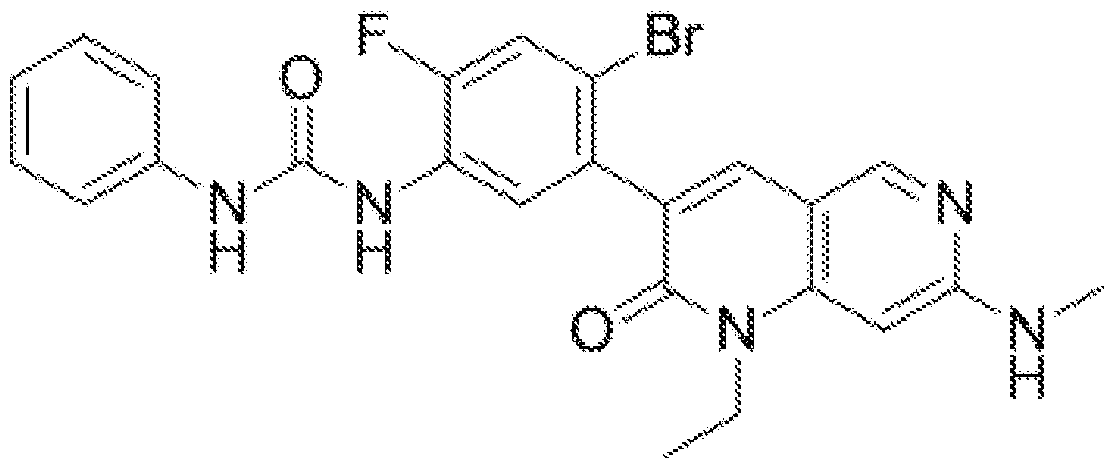
- Ripretinib has the chemical name N-(4-bromo-5-(l-ethyl-7-(methylamino)-2-oxo-l,2- dihydro-l,6-naphthyridin-3-yl)-2-fluorophenyl)-N'-phenylurea.
- Ripretinib has the following chemical structure:
- Ripretinib (DCC-2618) is an investigational, orally administered kinase switch control inhibitor being developed for the treatment of gastrointestinal stromal tumors (GIST), advanced systemic mastocytosis (ASM), gliomas, and other solid tumors driven by tyrosine-protein kinase KIT (KIT) or platelet derived growth factor alpha (PDGFRa) kinase.
- GIST gastrointestinal stromal tumors
- ASM advanced systemic mastocytosis
- KIT tyrosine-protein kinase KIT
- PDGFRa platelet derived growth factor alpha
- Ripretinib is disclosed in U.S. Patent No. 8,461,179.
- Polymorphism the occurrence of different crystal forms, is a property of some molecules and molecular complexes.
- a single compound, like ripretinib or salt thereof, may give rise to a variety of polymorphs having distinct crystal structures and physical properties like melting point, thermal behaviors (e.g. measured by thermogravimetric analysis - "TGA”, or differential scanning calorimetry - “DSC”), powder X-ray diffraction (PXRD) pattern, infrared absorption fingerprint, Raman absorption fingerprint, and solid state ( 13 C-) NMR spectrum.
- TGA thermogravimetric analysis -
- DSC differential scanning calorimetry -
- PXRD powder X-ray diffraction
- Different salts and solid state forms (including solvated forms) of an active pharmaceutical ingredient may possess different properties. Such variations in the properties of different salts and solid state forms and solvates may provide a basis for improving formulation, for example, by facilitating better processing or handling characteristics, improving the dissolution profile, or improving stability (polymorph as well as chemical stability) and shelf- life. These variations in the properties of different salts and solid state forms may also provide improvements to the final dosage form, for instance, if they serve to improve bioavailability. Different salts and solid state forms and solvates of an active pharmaceutical ingredient may also give rise to a variety of polymorphs or crystalline forms, which may in turn provide additional opportunities to use variations in the properties and characteristics of a solid active
- Discovering new salts, solid state forms, cocrystals and solvates of a pharmaceutical product can provide materials having desirable processing properties, such as ease of handling, ease of processing, storage stability, and ease of purification or as desirable intermediate crystal forms that facilitate conversion to other salts or polymorphic forms.
- New salts, polymorphic forms, cocrystals and solvates of a pharmaceutically useful compound can also provide an opportunity to improve the performance characteristics of a pharmaceutical product (dissolution profile, bioavailability, etc.).
- the present disclosure relates to solid state forms of ripretinib, to processes for preparation thereof, and to pharmaceutical compositions including these solid state forms or combinations thereof.
- the present disclosure encompasses process for preparation of solid state forms of ripretinib. [0011] The present disclosure also provides uses of the solid state forms of ripretinib for preparing other solid state forms of ripretinib, salts of ripretinib, and solid state forms thereof.
- the present disclosure encompasses the above described solid state forms of ripretinib for use in the preparation of pharmaceutical compositions and/or formulations, and in another embodiments for the treatment of gastrointestinal stromal tumors (GIST), advanced systemic mastocytosis (ASM), gliomas, and other solid tumors driven by tyrosine-protein kinase KIT (KIT) or platelet derived growth factor alpha (PDGFRa) kinase.
- GIST gastrointestinal stromal tumors
- ASM advanced systemic mastocytosis
- KIT tyrosine-protein kinase KIT
- PDGFRa platelet derived growth factor alpha
- the present disclosure encompasses the use of the above described solid state forms of ripretinib for the preparation of pharmaceutical compositions and/or formulations.
- compositions including solid state forms of ripretinib.
- the present disclosure encompasses pharmaceutical formulations including solid state forms of ripretinib or combinations thereof and at least one pharmaceutically acceptable excipient.
- the pharmaceutical composition or formulation includes oral dosage forms, e.g. tablet or capsule.
- the present disclosure encompasses processes to prepare said pharmaceutical formulations of solid state forms of ripretinib, including combining solid state forms of ripretinib or combinations thereof, prepared according to the present disclosure, with at least one pharmaceutically acceptable excipient.
- the solid state forms of ripretinib as defined herein, as well as the pharmaceutical compositions or formulations of solid state forms of ripretinib prepared according to the present disclosure, can be used as medicaments, in embodiments for the treatment of gastrointestinal stromal tumors (GIST), advanced systemic mastocytosis (ASM), gliomas, and other solid tumors driven by tyrosine-protein kinase KIT (KIT) or platelet derived growth factor alpha (PDGFRa) kinase.
- GIST gastrointestinal stromal tumors
- ASM advanced systemic mastocytosis
- KIT tyrosine-protein kinase KIT
- PDGFRa platelet derived growth factor alpha
- the present disclosure also provides methods of treating GIST or other condition as described in the present disclosure by administering a therapeutically effective amount of solid state forms of ripretinib or combinations thereof prepared according to the present disclosure, or at least one of the above pharmaceutical compositions or formulations, to a subject suffering from GIST, or otherwise in need of the treatment.
- the present disclosure also provides uses of solid state forms of the present disclosure, or at least one of the above pharmaceutical compositions or formulations, for the manufacture of a medicament for treating gastrointestinal stromal tumors (GIST), advanced systemic
- ASM mastocytosis
- KIT tyrosine-protein kinase KIT
- PDGFRa platelet derived growth factor alpha
- Figure 1 shows a powder X-ray diffraction pattern ("powder XRD” or "PXRD”) of Ripretinib form 1 prepared in Example 1;
- Figure 2 shows a PXRD of Ripretinib form 1 prepared in Example 20;
- Figure 3 shows a PXRD of Ripretinib form 3 prepared in Example 6;
- Figure 4 shows a PXRD of Ripretinib form 3 prepared in Example 19;
- Figure 5 shows a PXRD of Ripretinib amorphous form
- Figure 6 shows a PXRD of Ripretinib form 4.
- Figure 7 shows a PXRD of Ripretinib form 5
- Figure 8 shows a PXRD pattern of Ripretinib form 9;.
- Figure 9 shows a 1H-13C CP-MAS spectra of Ripretinib form 1
- Figure 10 shows a 1H-13C CP-MAS spectra of Ripretinib form 3.
- the present disclosure relates to solid state forms of ripretinib, to processes for preparation thereof, and to pharmaceutical compositions including these solid state forms or combinations thereof.
- the solid state forms of ripretinib according to the present disclosure may have advantageous properties selected from at least one of: chemical or polymorphic purity, flowability, solubility, dissolution rate, bioavailability, morphology or crystal habit, stability such as chemical stability as well as thermal and mechanical stability with respect to
- polymorphic conversion stability towards dehydration and/or storage stability, a lower degree of hygroscopicity, low content of residual solvents and advantageous processing and handling characteristics such as compressibility, or bulk density.
- a crystal form may be referred to herein as being characterized by graphical data "as depicted in" a Figure.
- Such data include, for example, powder X-ray diffractograms and solid state NMR spectra.
- the graphical data potentially provides additional technical information to further define the respective solid state form (a so-called "fingerprint") which can not necessarily be described by reference to numerical values or peak positions alone. In any event, the skilled person will understand that such graphical data
- representations of data may be subject to small variations, e.g., in peak relative intensities and peak positions due to factors such as variations in instrument response and variations in sample concentration and purity, which are well known to the skilled person. Nonetheless, the skilled person would readily be capable of comparing the graphical data in the Figures herein with graphical data generated for an unknown crystal form and confirm whether the two sets of graphical data are characterizing the same crystal form or two different crystal forms.
- a crystal form of ripretinib referred to herein as being characterized by graphical data "as depicted in" a Figure will thus be understood to include any crystal forms of ripretinib, characterized with the graphical data having such small variations, as are well known to the skilled person, in comparison with the Figure.
- a solid state form may be referred to herein as polymorphically pure or substantially free of any other solid state (or polymorphic) forms.
- the expression “substantially free of any other forms” will be understood to mean that the solid state form contains about 20% or less, about 10% or less, about 5% or less, about 2% or less, about 1% or less, or about 0% of any other forms of the subject compound as measured, for example, by PXRD.
- solid state forms of ripretinib and salts thereof described herein as substantially free of any other solid state forms would be understood to contain greater than about 80% (w/w), greater than about 90% (w/w), greater than about 95% (w/w), greater than about 98% (w/w), greater than about 99% (w/w), or about 100% (w/w) of the subject solid state forms of ripretinib. Accordingly, in some embodiments of the disclosure, the described solid state forms of ripretinib may contain from about 1% to about 20% (w/w), from about 5% to about 20% (w/w), or from about 5% to about 10% (w/w) of one or more other solid state forms of the same ripretinib.
- the recycle delay was 8 s and the cross-polarization contact time was 2 ms.
- the term "isolated" in reference to solid state forms of ripretinib and salts thereof of the present disclosure corresponds to solid state forms of ripretinib and salts thereof that are physically separated from the reaction mixture in which it is formed.
- a thing e.g., a reaction mixture
- room temperature often abbreviated "RT.”
- RT room temperature
- room temperature is from about 20°C to about 30°C, or about 22°C to about 27°C, or about 25°C.
- a process or step may be referred to herein as being carried out “overnight.” This refers to a time interval, e.g., for the process or step, that spans the time during the night, when that process or step may not be actively observed. This time interval is from about 8 to about 20 hours, or about 10 to about 18 hours, in embodiments about 16 hours.
- wet crystalline form refers to a polymorph that was not dried using any conventional techniques to remove residual solvent. Examples for such conventional techniques can be, but not limited to, evaporation, vacuum drying, oven drying, drying under nitrogen flow, etc.
- dry crystalline form refers to a polymorph that was dried using any conventional techniques to remove residual solvent.
- conventional techniques can be, but are not limited to, evaporation, vacuum drying, oven drying, drying under nitrogen flow, etc.
- an “anhydrous” in relation to crystalline ripretinib relates to a crystalline ripretinib which does not include any crystalline water (or other solvents) in a defined, stoichiometric amount within the crystal. Moreover, an “anhydrous” form does not contain more than 1% (w/w) of either water or organic solvents as measured for example by TGA.
- solvate refers to a crystal form that incorporates a solvent in the crystal structure.
- the solvent is water, the solvate is often referred to as a "hydrate.”
- the solvent in a solvate may be present in either a
- the amount of solvent employed in a chemical process may be referred to herein as a number of "volumes” or “vol” or “V.”
- a material may be referred to as being suspended in 10 volumes (or 10 vol or 10V) of a solvent.
- this expression would be understood to mean milliliters of the solvent per gram of the material being suspended, such that suspending 5 grams of a material in 10 volumes of a solvent means that the solvent is used in an amount of 10 milliliters of the solvent per gram of the material that is being suspended or, in this example, 50 mL of the solvent.
- v/v may be used to indicate the number of volumes of a solvent that are added to a liquid mixture based on the volume of that mixture. For example, adding methyl tert-butyl ether (MTBE) (1.5 v/v) to a 100 ml reaction mixture would indicate that 150 mL of MTBE was added.
- MTBE methyl tert-butyl ether
- reduced pressure refers to a pressure of about 10 mbar to about 50 mbar.
- non-hygroscopic in relation to crystalline ripretinib refers to less than 0.2% (w/w) of water absorption after 24h exposure to 25°C/80%RH, determined according to European Pharmacopoeia 10.0, chapter 01/2008:51100.
- Water can be for example atmospheric water.
- the present disclosure includes solid state forms of ripretinib (free base).
- the present disclosure further includes crystalline forms of ripretinib.
- the crystalline forms according to the present invention may be anhydrous forms.
- crystalline forms according to the present invention may be solvates including hydrates.
- crystalline forms according to the invention may be mixed solvates.
- a solid state form of ripretinib which is amorphous.
- the present disclosure further includes a solid state form of ripretinib designated as Form 1.
- Form 1 of ripretinib can be characterized by data selected from one or more of the following: a PXRD pattern having peaks at 9.3, 11.8, 17.2, 24.4 and 27.0 degrees 2-theta ⁇ 0.2 degrees 2-theta; a PXRD pattern as depicted in Figure 1; or combinations of these data.
- Form 1 of ripretinib can be characterized by data selected from one or more of the following: a PXRD pattern having peaks at 9.3, 11.8, 17.2, 24.4 and 27.0 degrees 2-theta ⁇ 0.2 degrees 2-theta; a PXRD pattern as depicted in Figure 2; or combinations of these data.
- Form 1 of ripretinib may be further characterized by the PXRD pattern having peaks at 9.3, 11.8, 17.2, 24.4 and 27.0 degrees 2-theta ⁇ 0.2 degrees 2-theta, and also having one, two, three, four or five additional peaks at 7.4, 10.8, 18.6, 20.5 and 23.7 degrees 2-theta ⁇ 0.2 degrees 2-theta.
- Form 1 of ripretinib may be characterized by a PXRD pattern having peaks at 7.4, 9.3, 10.8, 11.8, 17.2, 18.6, 20.5, 23.7, 24.4 and 27.0 degrees 2-theta ⁇ 0.2 degrees 2- theta.
- Form 1 of ripretinib may alternatively or additionally be characterized by a solid state 13C NMR spectrum having peaks at 162.9, 160.0, 139.5, 128.9, 121.6 ⁇ 0.2 ppm.
- Form 1 of ripretinib may alternatively or additionally be characterized by a solid state 13C NMR spectrum having the following chemical shift absolute differences from a reference peak at 87.4 ppm ⁇ 0.2 ppm of 75.5, 72.6, 52.1, 41.5, 34.2 ⁇ 0.1 ppm.
- Form 1 of ripretinib may alternatively or additionally be characterized by a solid state 13C NMR spectrum substantially as depicted in Figure 9.
- Form 1 of ripretinib may be characterized by each of the above characteristics alone or by all possible combinations, e.g., by a PXRD pattern having peaks at 9.3, 11.8, 17.2, 24.4 and 27.0 degrees 2-theta ⁇ 0.2 degrees 2-theta and a PXRD pattern as depicted in Figure 1.
- Form 1 of ripretinib may be an anhydrous form. In any embodiment of the present invention, Form 1 may be non-hygroscopic.
- the present disclosure further includes a solid state form of ripretinib designated as Form 3.
- Form 3 of ripretinib can be characterized by data selected from one or more of the following: a PXRD pattern having peaks at 6.5, 9.3, 9.8, 11.8 and 13.1 degrees 2-theta ⁇ 0.2 degrees 2-theta; a PXRD pattern as depicted in Figure 3; or combinations of these data.
- Form 3 of ripretinib may alternatively or additionally be characterized by data selected from one or more of the following: a PXRD pattern having peaks at 6.5, 9.3, 9.8, 11.8 and 13.1 degrees 2-theta ⁇ 0.2 degrees 2-theta; a PXRD pattern as depicted in Figure 4; or combinations of these data.
- Form 3 of ripretinib may be further characterized by the PXRD pattern having peaks at 6.5, 9.3, 9.8, 11.8 and 13.1 degrees 2-theta ⁇ 0.2 degrees 2-theta, and also having one, two, three, four or five additional peaks at 10.8, 14.4, 17.2, 20.5 and 27.0 degrees 2-theta ⁇ 0.2 degrees 2-theta.
- Form 3 of ripretinib may be characterized by a PXRD pattern having peaks at 6.5, 9.3, 9.8, 10.8, 11.8, 13.1, 14.4, 17.2, 20.5 and 27.0 degrees 2-theta ⁇ 0.2 degrees 2- theta.
- Form 3 of ripretinib may alternatively or additionally be characterized by a solid state 13C NMR spectrum having peaks at 160.1, 151.3, 139.1, 118.9, 109.4 ⁇ 0.2 ppm.
- Form 3 of ripretinib may alternatively or additionally be characterized by a solid state 13C NMR spectrum having the following chemical shift absolute differences from a reference peak at 89.4 ppm ⁇ 0.2 ppm of 70.7, 61.9, 49.7, 29.5, 20.0 ⁇ 0.1 ppm.
- Form 3 of ripretinib may alternatively or additionally be characterized by a solid state 13C NMR spectrum substantially as depicted in Figure 10.
- Form 3 of ripretinib may be characterized by each of the above characteristics alone or by all possible combinations, e.g., by a PXRD pattern having peaks at 6.5, 9.3, 9.8, 11.8 and 13.1 degrees 2-theta ⁇ 0.2 degrees 2-theta and a PXRD pattern as depicted in Figure 3.
- Form 3 of ripretinib may be a hydrate form.
- the present disclosure further includes a solid state form of ripretinib designated as amorphous form.
- Amorphous form of ripretinib can be characterized by a PXRD pattern as depicted in Figure 5.
- the present disclosure further includes a solid state form of ripretinib designated as Form 4.
- Form 4 of ripretinib can be characterized by data selected from one or more of the following: a PXRD pattern having peaks at 6.7, 12.5, 18.9, 21.9 and 26.0 degrees 2-theta ⁇ 0.2 degrees 2-theta; a PXRD pattern as depicted in Figure 6; or combinations of these data.
- Form 4 of ripretinib may be further characterized by the PXRD pattern having peaks at 6.7, 12.5, 18.9, 21.9 and 26.0 degrees 2-theta ⁇ 0.2 degrees 2-theta, and also having one, two, three, four or five additional peaks at 7.0, 11.6, 13.5, 16.1 and 24.2 degrees 2-theta ⁇ 0.2 degrees 2-theta.
- Form 4 of ripretinib may be characterized by a PXRD pattern having peaks at 6.7, 7.0, 11.6, 12.5, 13.5, 16.1, 18.9, 21.9, 24.2 and 26.0 degrees 2-theta ⁇ 0.2 degrees 2- theta.
- Form 4 of ripretinib may be characterized by each of the above characteristics alone or by all possible combinations, e.g., by a PXRD pattern having peaks at 6.7, 12.5, 18.9, 21.9 and 26.0 degrees 2-theta ⁇ 0.2 degrees 2-theta and a PXRD pattern as depicted in Figure 6.
- Form 4 of ripretinib may be a DMSO/FhO solvate.
- the present disclosure further includes a solid state form of ripretinib designated as Form 5.
- Form 5 of ripretinib can be characterized by data selected from one or more of the following: a PXRD pattern having peaks at 7.0, 8.0, 12.7, 20.1 and 26.5 degrees 2-theta ⁇ 0.2 degrees 2-theta; a PXRD pattern as depicted in Figure 7; or combinations of these data.
- Form 5 of ripretinib may be further characterized by the PXRD pattern having peaks at 7.0, 8.0, 12.7, 20.1 and 26.5 degrees 2-theta ⁇ 0.2 degrees 2-theta, and also having one, two, three, four or five additional peaks at 11.4, 14.4, 17.6, 24.4 and 25.3 degrees 2-theta ⁇ 0.2 degrees 2-theta.
- Form 5 of ripretinib may be characterized by a PXRD pattern having peaks at 7.0, 8.0, 11.4, 12.7, 14.4, 17.6, 20.1, 24.4, 25.3 and 26.5 degrees 2-theta ⁇ 0.2 degrees 2- theta.
- Form 5 of ripretinib may be characterized by each of the above characteristics alone or by all possible combinations, e.g., by a PXRD pattern having peaks at 7.0, 8.0, 12.7, 20.1 and 26.5 degrees 2-theta ⁇ 0.2 degrees 2-theta and a PXRD pattern as depicted in Figure 7.
- Form 5 of ripretinib may be an acetic acid solvate.
- the present disclosure further includes a solid state form of ripretinib designated as Form 9.
- Form 9 of ripretinib can be characterized by data selected from one or more of the following: a PXRD pattern having peaks at 6.4, 12.8, 16.2, 20.7 and 24.7 degrees 2-theta ⁇ 0.2 degrees 2-theta; a PXRD pattern as depicted in Figure 8; or combinations of these data.
- Form 9 of ripretinib may be further characterized by the PXRD pattern having peaks at 6.4, 12.8, 16.2, 20.7 and 24.7 degrees 2-theta ⁇ 0.2 degrees 2-theta, and also having one, two, three, four or five additional peaks at 18.9, 20.4, 22.8, 23.4, and 33.4 degrees 2-theta ⁇ 0.2 degrees 2-theta.
- Form 9 of ripretinib may be characterized by a PXRD pattern having peaks at 6.4, 12.8, 16.2, 18.9, 20.4, 20.7, 22.8, 23.4, 24.7 and 33.4 degrees 2-theta ⁇ 0.2 degrees 2-theta.
- Form 9 of ripretinib may be characterized by each of the above characteristics alone or by all possible combinations, e.g., by a PXRD pattern having peaks at 6.4, 12.8, 16.2, 20.7 and 24.7 degrees 2-theta ⁇ 0.2 degrees 2-theta and a PXRD pattern as depicted in Figure 8.
- Form 9 of ripretinib may be a DMSO solvate.
- the present disclosure also provides the use of the solid state forms of ripretinib of the present disclosure for preparing different solid state forms of ripretinib, salts of ripretinib and solid state forms thereof.
- the present disclosure further encompasses processes for preparing the solid state forms of ripretinib of the present disclosure.
- the disclosure further includes processes for preparing different solid state forms of ripretinib or salts of ripretinib and solid state forms thereof.
- the process includes preparing at least one of the solid state forms of ripretinib of the present disclosure, and converting it to different solid state forms of ripretinib or salts of ripretinib and solid state forms thereof.
- the conversion can be done, for example, by a process including reacting at least one of the obtained solid state forms of ripretinib with an appropriate acid to obtain ripretinib acid addition salt.
- the present disclosure encompasses the above described solid state forms of ripretinib for use in the preparation of pharmaceutical compositions and/or formulations, in embodiments for the treatment of GIST.
- the present disclosure encompasses the use of the above described solid state forms of ripretinib for the preparation of pharmaceutical compositions and/or formulations.
- the present disclosure further provides pharmaceutical compositions including the solid state forms of ripretinib of the present disclosure.
- the present disclosure encompasses pharmaceutical formulations including solid state forms of ripretinib of the present disclosure, and at least one pharmaceutically acceptable excipient.
- the pharmaceutical formulations according to the present disclosure may be for oral administration in a form of a tablet or a capsule.
- compositions of the present invention contain any one or a
- the pharmaceutical formulations of the present disclosure can contain one or more excipients. Excipients are added to the formulation for a variety of purposes.
- Diluents increase the bulk of a solid pharmaceutical composition, and can make a pharmaceutical dosage form containing the composition easier for the patient and caregiver to handle.
- Diluents for solid compositions include, for example, microcrystalline cellulose (e.g. Avicel®), microfme cellulose, lactose, starch, pregelatinized starch, calcium carbonate, calcium sulfate, sugar, dextrates, dextrin, dextrose, dibasic calcium phosphate dihydrate, tribasic calcium phosphate, kaolin, magnesium carbonate, magnesium oxide, maltodextrin, mannitol,
- polymethacrylates e.g. Eudragit®
- potassium chloride powdered cellulose, sodium chloride, sorbitol, and talc.
- Solid pharmaceutical compositions that are compacted into a dosage form, such as a tablet can include excipients whose functions include helping to bind the active ingredient and other excipients together after compression.
- Binders for solid pharmaceutical compositions include acacia, alginic acid, carbomer (e.g. carbopol), carboxymethylcellulose sodium, dextrin, ethyl cellulose, gelatin, guar gum, hydrogenated vegetable oil, hydroxyethyl cellulose, hydroxypropyl cellulose (e.g. Klucel®), hydroxypropyl methyl cellulose (e.g.
- Methocel® liquid glucose, magnesium aluminum silicate, maltodextrin, methylcellulose, polymethacrylates, povidone (e.g. Kollidon®, Plasdone®), pregelatinized starch, sodium alginate, and starch.
- povidone e.g. Kollidon®, Plasdone®
- pregelatinized starch sodium alginate, and starch.
- the dissolution rate of a compacted solid pharmaceutical composition in the patient's stomach can be increased by the addition of a disintegrant to the composition.
- Disintegrants include alginic acid, carboxymethylcellulose calcium, carboxymethylcellulose sodium (e.g. Ac- Di-Sol®, Primellose®), colloidal silicon dioxide, croscarmellose sodium, crospovidone (e.g. Kollidon®, Polyplasdone®), guar gum, magnesium aluminum silicate, methyl cellulose, microcrystalline cellulose, polacrilin potassium, powdered cellulose, pregelatinized starch, sodium alginate, sodium starch glycolate (e.g. Explotab®), and starch.
- alginic acid include alginic acid, carboxymethylcellulose calcium, carboxymethylcellulose sodium (e.g. Ac- Di-Sol®, Primellose®), colloidal silicon dioxide, croscarmellose sodium, crospovidone (e.g. Kollidon®, Polyplasdone®),
- Glidants can be added to improve the flowability of a non-compacted solid composition and to improve the accuracy of dosing.
- Excipients that can function as glidants include colloidal silicon dioxide, magnesium trisilicate, powdered cellulose, starch, talc, and tribasic calcium phosphate.
- a dosage form such as a tablet is made by the compaction of a powdered composition
- the composition is subjected to pressure from a punch and dye.
- Some excipients and active ingredients have a tendency to adhere to the surfaces of the punch and dye, which can cause the product to have pitting and other surface irregularities.
- a lubricant can be added to the composition to reduce adhesion and ease the release of the product from the dye.
- Lubricants include magnesium stearate, calcium stearate, glyceryl monostearate, glyceryl palmitostearate, hydrogenated castor oil, hydrogenated vegetable oil, mineral oil, polyethylene glycol, sodium benzoate, sodium lauryl sulfate, sodium stearyl fumarate, stearic acid, talc, and zinc stearate.
- Flavoring agents and flavor enhancers make the dosage form more palatable to the patient.
- Common flavoring agents and flavor enhancers for pharmaceutical products that can be included in the composition of the present invention include maltol, vanillin, ethyl vanillin, menthol, citric acid, fumaric acid, ethyl maltol, and tartaric acid.
- Solid and liquid compositions can also be dyed using any pharmaceutically acceptable colorant to improve their appearance and/or facilitate patient identification of the product and unit dosage level.
- liquid pharmaceutical compositions of the present disclosure the active ingredient and any other solid excipients may be dissolved or suspended in a liquid carrier such as water, vegetable oil, alcohol, polyethylene glycol, propylene glycol, or glycerin.
- a liquid carrier such as water, vegetable oil, alcohol, polyethylene glycol, propylene glycol, or glycerin.
- Liquid pharmaceutical compositions can contain emulsifying agents to disperse uniformly throughout the composition an active ingredient or other excipient that is not soluble in the liquid carrier.
- Emulsifying agents that can be useful in liquid compositions of the present invention include, for example, gelatin, egg yolk, casein, cholesterol, acacia, tragacanth, chondrus, pectin, methyl cellulose, carbomer, cetostearyl alcohol, and cetyl alcohol.
- Liquid pharmaceutical compositions of the present disclosure can also contain a viscosity enhancing agent to improve the mouth-feel of the product and/or coat the lining of the gastrointestinal tract.
- a viscosity enhancing agent include acacia, alginic acid bentonite, carbomer,
- carboxymethylcellulose calcium or sodium cetostearyl alcohol, methyl cellulose, ethylcellulose, gelatin guar gum, hydroxyethyl cellulose, hydroxypropyl cellulose, hydroxypropyl methyl cellulose, maltodextrin, polyvinyl alcohol, povidone, propylene carbonate, propylene glycol alginate, sodium alginate, sodium starch glycolate, starch tragacanth, and xanthan gum.
- Sweetening agents such as sorbitol, saccharin, sodium saccharin, sucrose, aspartame, fructose, mannitol, and invert sugar can be added to improve the taste.
- Preservatives and chelating agents such as alcohol, sodium benzoate, butylated hydroxyl toluene, butylated hydroxyanisole, and ethylenediamine tetraacetic acid can be added at levels safe for ingestion to improve storage stability.
- a liquid composition can also contain a buffer such as gluconic acid, lactic acid, citric acid, or acetic acid, sodium gluconate, sodium lactate, sodium citrate, or sodium acetate. Selection of excipients and the amounts used can be readily determined by the formulation scientist based upon experience and consideration of standard procedures and reference works in the field.
- a buffer such as gluconic acid, lactic acid, citric acid, or acetic acid, sodium gluconate, sodium lactate, sodium citrate, or sodium acetate.
- the solid compositions of the present disclosure include powders, granulates, aggregates, and compacted compositions.
- the dosages include dosages suitable for oral, buccal, rectal, parenteral (including subcutaneous, intramuscular, and intravenous), inhalant, and ophthalmic administration. Although the most suitable administration in any given case will depend on the nature and severity of the condition being treated, the most preferred route of the present disclosure is oral.
- the dosages can be conveniently presented in unit dosage form and prepared by any of the methods well-known in the pharmaceutical arts.
- Dosage forms include solid dosage forms like tablets, powders, capsules,
- suppositories sachets, troches, and lozenges, as well as liquid syrups, suspensions, and elixirs.
- the dosage form of the present disclosure can be a capsule containing the
- composition such as a powdered or granulated solid composition of the invention, within either a hard or soft shell.
- the shell can be made from gelatin and optionally contain a plasticizer such as glycerin and sorbitol, and an opacifying agent or colorant.
- compositions and dosage forms can be formulated into compositions and dosage forms according to methods known in the art.
- a composition for tableting or capsule filling can be prepared by wet granulation.
- wet granulation some or all of the active ingredients and excipients in powder form are blended and then further mixed in the presence of a liquid, typically water, that causes the powders to clump into granules.
- the granulate is screened and/or milled, dried, and then screened and/or milled to the desired particle size.
- the granulate can then be tableted, or other excipients can be added prior to tableting, such as a glidant and/or a lubricant.
- a tableting composition can be prepared conventionally by dry blending.
- the blended composition of the actives and excipients can be compacted into a slug or a sheet and then comminuted into compacted granules. The compacted granules can subsequently be compressed into a tablet.
- a blended composition can be compressed directly into a compacted dosage form using direct compression techniques.
- Direct compression produces a more uniform tablet without granules.
- Excipients that are particularly well suited for direct compression tableting include microcrystalline cellulose, spray dried lactose, dicalcium phosphate dihydrate, and colloidal silica. The proper use of these and other excipients in direct compression tableting is known to those in the art with experience and skill in particular formulation challenges of direct compression tableting.
- a capsule filling of the present invention can comprise any of the aforementioned blends and granulates that were described with reference to tableting, but they are not subjected to a final tableting step.
- a pharmaceutical formulation of ripretinib is formulated for administration to a mammal, such as a human.
- Ripretinib can be formulated, for example, as a viscous liquid solution or suspension, such as a clear solution, for injection.
- the formulation can contain one or more solvents.
- a suitable solvent can be selected by considering the solvent's physical and chemical stability at various pH levels, viscosity (which would allow for
- Suitable solvents include alcohol USP, benzyl alcohol NF, benzyl benzoate USP, and Castor oil USP. Additional substances can be added to the formulation such as buffers, solubilizers, and antioxidants, among others.
- Ansel et ak Pharmaceutical Dosage Forms and Drug Delivery Systems, 7th ed.
- the present disclosure encompasses a process to prepare said formulations of solid state forms of ripretinib by combining the solid state forms prepared according to the present disclosure and at least one pharmaceutically acceptable excipient.
- Solid state forms of ripretinib as defined herein, as well as the pharmaceutical compositions or formulations of ripretinib can be used as medicaments, in embodiments for the treatment of GIST.
- the present disclosure also provides a method of treating of GIST, by administering a therapeutically effective amount of the solid state forms of ripretinib prepared according to the present disclosure, or at least one of the above pharmaceutical compositions or formulations, to a subject suffering from GIST, or otherwise in need of the treatment.
- the present disclosure also provides the use of solid state forms of ripretinib, or at least one of the above pharmaceutical compositions or formulations for the manufacture of a medicament for treating GIST.
- Powder X-ray diffraction pattern (“PXRD”) method:
- Sample is powdered in a mortar and pestle and applied directly on a silicon plate holder.
- Ripretinib can be prepared according to any known method, for example the procedure described in U.S. Patent No. 8,461,179.
- a suspension of ripretinib (20 mg) in acetonitrile (10 mL) was heated to the boiling point. The suspension was cooled down to room temperature. The solid was isolated by vacuum filtration. The obtained solid corresponds to ripretinib form 1 as confirmed by PXRD.
- a suspension of ripretinib (200 mg) in acetonitrile (100 mL) was heated to the boiling point.
- the suspension was cooled down to room temperature.
- the solid was isolated by vacuum filtration.
- the obtained solid corresponds to ripretinib form 1 as confirmed by PXRD.
- a suspension of ripretinib (20 mg) in different solvents (triethylamine, amyl acetate, amyl alcohol, i-butanol, i-butyl acetate, n-butyl acetate, sec-butyl acetate, tert-butyl acetate, cumene, 1,2-dichloroethene, 1,2-dichloroethane, cyclomethylethyl ether, diethyl malonate, diethoxymethane, diisopropyl ether, ethyl acetoacetate, ethylbenzene, 1 -propanol, i-propyl acetate, n-propyl acetate, 1,2-propylene carbonate, 3- pentanone, m-xylene) (10 mL) was heated to the boiling point. The suspension was cooled down to room temperature. The solid was isolated by vacuum filtration. The obtained solid corresponds to
- Ripretinib 500 mg was dissolved in dimethyl sulfoxide (30 mL). The obtained clear solution was filtered and was frozen using a liquid nitrogen bath within 10 minutes, and lyophilized for 72 hours (temperature -40°C, pressure 270-330 pbar). The obtained solid corresponds to ripretinib form 4 as confirmed by PXRD.
- Ripretinib 120 mg, amorphous form was dissolved in NMP (N-methylpyrrolidone)
- Ripretinib (305 mg, amorphous form) was dissolved in solvent mixture DMSO:Water (16 ml, 9: lvolume ratio,) at 50 °C, and water (previously cooled to 0-5 °C) was added dropwise in solution (64 ml), and additionally stirred at 450 rpm for 1 hour. Obtained solid was isolated by vacuum filtration. Ripretinib Form 1 was obtained as confirmed by PXRD.
- Ripretinib (314 mg, amorphous form) was dissolved in solvent mixture DMSO:Water (35 ml, 9: lvolume ratio) at 80 °C, and water (water temperature approximately 25 °C ) (105 ml) was added dropwise in solution, and additionally stirred at 450 rpm for 1 hour. Obtained solid was isolated by vacuum filtration. Ripretinib Form 1 was obtained as confirmed by PXRD.
- Ripretinib (1960 mg, amorphous form) was dissolved in solvent mixture DMSO:Water (300 ml, 9: lvolume ratio,) at 60 °C (in 1L reactor) and water (water temperature approximately 25 °C ) (300 ml) was added dropwise in solution, and additionally stirred (mechanical stirrer) at 250 rpm for 1 hour. Obtained solid was isolated by vacuum filtration. Ripretinib Form 1 was obtained as confirmed by PXRD.
- Ripretinib (305 mg, amorphous form) was dissolved in solvent mixture DMSO:Water (60 ml, 9: lvolume ratio,) at room temperature, and water (previously cooled to 0-5 °C) (180 ml) was added dropwise in solution. Solution was crystallized after 13 ml of added water, and additionally stirred at 450 rpm for 1 hour. Obtained solid was isolated by vacuum filtration. Ripretinib Form 9 was obtained as confirmed by PXRD.
- Ripretinib (329 mg, amorphous form) was dissolved in solvent mixture DMSO:Water (35 ml, 9: lvolume ratio,) at 40°C, and water (water temperature approximately 25°C ) (105 ml) was added dropwise in solution, and additionally stirred at 450 rpm for 1 hour. Obtained solid was isolated (302 mg, Yield: 91.7%) by vacuum filtration. Ripretinib Form 9 was obtained as confirmed by PXRD.
- Ripretinib (307 mg, amorphous form) was dissolved in solvent mixture DMSO:Water (37 ml, 9: lvolume ratio) at 60 °C, and water was added dropwise in solution (74 ml), and additional stirred by 450 rpm for 1 hour. Solution was crystallized after 13 ml of water was added. Obtained solid was isolated by vacuum filtration.. Ripretinib Form 1 was obtained as confirmed by PXRD.
Landscapes
- Chemical & Material Sciences (AREA)
- Organic Chemistry (AREA)
- Health & Medical Sciences (AREA)
- General Chemical & Material Sciences (AREA)
- Medicinal Chemistry (AREA)
- Nuclear Medicine, Radiotherapy & Molecular Imaging (AREA)
- Chemical Kinetics & Catalysis (AREA)
- Pharmacology & Pharmacy (AREA)
- Life Sciences & Earth Sciences (AREA)
- Animal Behavior & Ethology (AREA)
- General Health & Medical Sciences (AREA)
- Public Health (AREA)
- Veterinary Medicine (AREA)
- Medicinal Preparation (AREA)
Abstract
The present disclosure relates to solid state forms of ripretinib, processes for preparation thereof, as well as a pharmaceutical composition including the same.
Description
Solid State Forms of Ripretinib
TECHNICAL FIELD
[0001] The present disclosure relates to solid state forms of ripretinib, processes for preparation thereof, as well as a pharmaceutical composition including the same.
BACKGROUND
[0002] Ripretinib has the chemical name N-(4-bromo-5-(l-ethyl-7-(methylamino)-2-oxo-l,2- dihydro-l,6-naphthyridin-3-yl)-2-fluorophenyl)-N'-phenylurea. Ripretinib has the following chemical structure:
[0003] Ripretinib (DCC-2618) is an investigational, orally administered kinase switch control inhibitor being developed for the treatment of gastrointestinal stromal tumors (GIST), advanced systemic mastocytosis (ASM), gliomas, and other solid tumors driven by tyrosine-protein kinase KIT (KIT) or platelet derived growth factor alpha (PDGFRa) kinase.
[0004] Ripretinib is disclosed in U.S. Patent No. 8,461,179.
[0005] Polymorphism, the occurrence of different crystal forms, is a property of some molecules and molecular complexes. A single compound, like ripretinib or salt thereof, may give rise to a variety of polymorphs having distinct crystal structures and physical properties like melting point, thermal behaviors (e.g. measured by thermogravimetric analysis - "TGA", or differential scanning calorimetry - "DSC"), powder X-ray diffraction (PXRD) pattern, infrared absorption fingerprint, Raman absorption fingerprint, and solid state (13C-) NMR spectrum. One or more of these techniques may be used to distinguish different polymorphic forms of a compound.
[0006] Different salts and solid state forms (including solvated forms) of an active pharmaceutical ingredient may possess different properties. Such variations in the properties of different salts and solid state forms and solvates may provide a basis for improving formulation, for example, by facilitating better processing or handling characteristics, improving the dissolution profile, or improving stability (polymorph as well as chemical stability) and shelf- life. These variations in the properties of different salts and solid state forms may also provide improvements to the final dosage form, for instance, if they serve to improve bioavailability. Different salts and solid state forms and solvates of an active pharmaceutical ingredient may also give rise to a variety of polymorphs or crystalline forms, which may in turn provide additional opportunities to use variations in the properties and characteristics of a solid active
pharmaceutical ingredient for providing an improved product.
[0007] Discovering new salts, solid state forms, cocrystals and solvates of a pharmaceutical product can provide materials having desirable processing properties, such as ease of handling, ease of processing, storage stability, and ease of purification or as desirable intermediate crystal forms that facilitate conversion to other salts or polymorphic forms. New salts, polymorphic forms, cocrystals and solvates of a pharmaceutically useful compound can also provide an opportunity to improve the performance characteristics of a pharmaceutical product (dissolution profile, bioavailability, etc.). It enlarges the repertoire of materials that a formulation scientist has available for formulation optimization, for example by providing a product with different properties, e.g., a different crystal habit, higher crystallinity or polymorphic stability which may offer better processing or handling characteristics, improved dissolution profile, or improved shelf-life.
[0008] In the case of ripretinib, there is a need for a solid state form suitable for use in the pharmaceutical industry.
SUMMARY
[0009] The present disclosure relates to solid state forms of ripretinib, to processes for preparation thereof, and to pharmaceutical compositions including these solid state forms or combinations thereof.
[0010] The present disclosure encompasses process for preparation of solid state forms of ripretinib.
[0011] The present disclosure also provides uses of the solid state forms of ripretinib for preparing other solid state forms of ripretinib, salts of ripretinib, and solid state forms thereof.
[0012] In another embodiment, the present disclosure encompasses the above described solid state forms of ripretinib for use in the preparation of pharmaceutical compositions and/or formulations, and in another embodiments for the treatment of gastrointestinal stromal tumors (GIST), advanced systemic mastocytosis (ASM), gliomas, and other solid tumors driven by tyrosine-protein kinase KIT (KIT) or platelet derived growth factor alpha (PDGFRa) kinase.
[0013] In another embodiment, the present disclosure encompasses the use of the above described solid state forms of ripretinib for the preparation of pharmaceutical compositions and/or formulations.
[0014] The present disclosure further provides pharmaceutical compositions including solid state forms of ripretinib.
[0015] In yet another embodiment, the present disclosure encompasses pharmaceutical formulations including solid state forms of ripretinib or combinations thereof and at least one pharmaceutically acceptable excipient. The pharmaceutical composition or formulation includes oral dosage forms, e.g. tablet or capsule. The present disclosure encompasses processes to prepare said pharmaceutical formulations of solid state forms of ripretinib, including combining solid state forms of ripretinib or combinations thereof, prepared according to the present disclosure, with at least one pharmaceutically acceptable excipient.
[0016] The solid state forms of ripretinib as defined herein, as well as the pharmaceutical compositions or formulations of solid state forms of ripretinib prepared according to the present disclosure, can be used as medicaments, in embodiments for the treatment of gastrointestinal stromal tumors (GIST), advanced systemic mastocytosis (ASM), gliomas, and other solid tumors driven by tyrosine-protein kinase KIT (KIT) or platelet derived growth factor alpha (PDGFRa) kinase.
[0017] The present disclosure also provides methods of treating GIST or other condition as described in the present disclosure by administering a therapeutically effective amount of solid state forms of ripretinib or combinations thereof prepared according to the present disclosure, or at least one of the above pharmaceutical compositions or formulations, to a subject suffering from GIST, or otherwise in need of the treatment.
[0018] The present disclosure also provides uses of solid state forms of the present disclosure, or at least one of the above pharmaceutical compositions or formulations, for the manufacture of a medicament for treating gastrointestinal stromal tumors (GIST), advanced systemic
mastocytosis (ASM), gliomas, and other solid tumors driven by tyrosine-protein kinase KIT (KIT) or platelet derived growth factor alpha (PDGFRa) kinase.
BRIEF DESCRIPTION OF THE FIGURES
[0019] Figure 1 shows a powder X-ray diffraction pattern ("powder XRD" or "PXRD") of Ripretinib form 1 prepared in Example 1;
[0020] Figure 2 shows a PXRD of Ripretinib form 1 prepared in Example 20;
[0021] Figure 3 shows a PXRD of Ripretinib form 3 prepared in Example 6;
[0022] Figure 4 shows a PXRD of Ripretinib form 3 prepared in Example 19;
[0023] Figure 5 shows a PXRD of Ripretinib amorphous form;
[0024] Figure 6 shows a PXRD of Ripretinib form 4;
[0025] Figure 7 shows a PXRD of Ripretinib form 5;
[0026] Figure 8 shows a PXRD pattern of Ripretinib form 9;.
[0027] Figure 9 shows a 1H-13C CP-MAS spectra of Ripretinib form 1; and
[0028] Figure 10 shows a 1H-13C CP-MAS spectra of Ripretinib form 3.
DETAILED DESCRIPTION
[0029] The present disclosure relates to solid state forms of ripretinib, to processes for preparation thereof, and to pharmaceutical compositions including these solid state forms or combinations thereof.
[0030] The solid state forms of ripretinib according to the present disclosure may have advantageous properties selected from at least one of: chemical or polymorphic purity, flowability, solubility, dissolution rate, bioavailability, morphology or crystal habit, stability such as chemical stability as well as thermal and mechanical stability with respect to
polymorphic conversion, stability towards dehydration and/or storage stability, a lower degree of hygroscopicity, low content of residual solvents and advantageous processing and handling characteristics such as compressibility, or bulk density.
[0031] A crystal form may be referred to herein as being characterized by graphical data "as depicted in" a Figure. Such data include, for example, powder X-ray diffractograms and solid state NMR spectra. As is well-known in the art, the graphical data potentially provides
additional technical information to further define the respective solid state form (a so-called "fingerprint") which can not necessarily be described by reference to numerical values or peak positions alone. In any event, the skilled person will understand that such graphical
representations of data may be subject to small variations, e.g., in peak relative intensities and peak positions due to factors such as variations in instrument response and variations in sample concentration and purity, which are well known to the skilled person. Nonetheless, the skilled person would readily be capable of comparing the graphical data in the Figures herein with graphical data generated for an unknown crystal form and confirm whether the two sets of graphical data are characterizing the same crystal form or two different crystal forms. A crystal form of ripretinib referred to herein as being characterized by graphical data "as depicted in" a Figure will thus be understood to include any crystal forms of ripretinib, characterized with the graphical data having such small variations, as are well known to the skilled person, in comparison with the Figure.
[0032] A solid state form (or polymorph) may be referred to herein as polymorphically pure or substantially free of any other solid state (or polymorphic) forms. As used herein in this context, the expression "substantially free of any other forms" will be understood to mean that the solid state form contains about 20% or less, about 10% or less, about 5% or less, about 2% or less, about 1% or less, or about 0% of any other forms of the subject compound as measured, for example, by PXRD. Thus, solid state forms of ripretinib and salts thereof described herein as substantially free of any other solid state forms would be understood to contain greater than about 80% (w/w), greater than about 90% (w/w), greater than about 95% (w/w), greater than about 98% (w/w), greater than about 99% (w/w), or about 100% (w/w) of the subject solid state forms of ripretinib. Accordingly, in some embodiments of the disclosure, the described solid state forms of ripretinib may contain from about 1% to about 20% (w/w), from about 5% to about 20% (w/w), or from about 5% to about 10% (w/w) of one or more other solid state forms of the same ripretinib.
[0033] The modifier "about" should be considered as disclosing the range defined by the absolute values of the two endpoints. For example, the expression "from about 2 to about 4" also discloses the range "from 2 to 4." When used to modify a single number, the term“about” may refer to plus or minus 10% of the indicated number and includes the indicated number. For example, "about 10%" may indicate a range of 9% to 11%, and "about 1" means from 0.9-1.1.
[0034] As used herein, unless stated otherwise, PXRD peaks reported herein are preferably measured using CuK a radiation, l = 1.5418 A. Preferably, XRPD peaks reported herein are measured using CuK a radiation, l = 1.5418 A, at a temperature of 25 ± 3°C.
[0035] As used herein, unless stated otherwise, 13C CP/MAS NMR spectra employing cross polarization were acquired using the standard pulse scheme at spinning frequency of 12 kHz.
The recycle delay was 8 s and the cross-polarization contact time was 2 ms. The strength of spin locking fields BI(13C) expressed in frequency units co 1/2p=gB1 was 64 kHz, preferably at a temperature 293 K ±3°C
As used herein, the term "isolated" in reference to solid state forms of ripretinib and salts thereof of the present disclosure corresponds to solid state forms of ripretinib and salts thereof that are physically separated from the reaction mixture in which it is formed.
[0036] A thing, e.g., a reaction mixture, may be characterized herein as being at, or allowed to come to "room temperature", often abbreviated "RT." This means that the temperature of the thing is close to, or the same as, that of the space, e.g., the room or fume hood, in which the thing is located. Typically, room temperature is from about 20°C to about 30°C, or about 22°C to about 27°C, or about 25°C. A process or step may be referred to herein as being carried out "overnight." This refers to a time interval, e.g., for the process or step, that spans the time during the night, when that process or step may not be actively observed. This time interval is from about 8 to about 20 hours, or about 10 to about 18 hours, in embodiments about 16 hours.
[0037] As used herein, the expression "wet crystalline form" refers to a polymorph that was not dried using any conventional techniques to remove residual solvent. Examples for such conventional techniques can be, but not limited to, evaporation, vacuum drying, oven drying, drying under nitrogen flow, etc.
[0038] As used herein, the expression "dry crystalline form" refers to a polymorph that was dried using any conventional techniques to remove residual solvent. Examples of such conventional techniques can be, but are not limited to, evaporation, vacuum drying, oven drying, drying under nitrogen flow, etc.
[0039] As used herein, and unless stated otherwise, the term“anhydrous” in relation to crystalline ripretinib relates to a crystalline ripretinib which does not include any crystalline water (or other solvents) in a defined, stoichiometric amount within the crystal. Moreover, an
“anhydrous” form does not contain more than 1% (w/w) of either water or organic solvents as measured for example by TGA.
[0040] The term "solvate", as used herein and unless indicated otherwise, refers to a crystal form that incorporates a solvent in the crystal structure. When the solvent is water, the solvate is often referred to as a "hydrate." The solvent in a solvate may be present in either a
stoichiometric or in a non-stoichiometric amount.
[0041] The amount of solvent employed in a chemical process, e.g., a reaction or a crystallization, may be referred to herein as a number of "volumes" or "vol" or "V." For example, a material may be referred to as being suspended in 10 volumes (or 10 vol or 10V) of a solvent. In this context, this expression would be understood to mean milliliters of the solvent per gram of the material being suspended, such that suspending 5 grams of a material in 10 volumes of a solvent means that the solvent is used in an amount of 10 milliliters of the solvent per gram of the material that is being suspended or, in this example, 50 mL of the solvent. In another context, the term "v/v" may be used to indicate the number of volumes of a solvent that are added to a liquid mixture based on the volume of that mixture. For example, adding methyl tert-butyl ether (MTBE) (1.5 v/v) to a 100 ml reaction mixture would indicate that 150 mL of MTBE was added.
[0042] As used herein, the term "reduced pressure" refers to a pressure of about 10 mbar to about 50 mbar.
[0043] As used herein the term non-hygroscopic in relation to crystalline ripretinib refers to less than 0.2% (w/w) of water absorption after 24h exposure to 25°C/80%RH, determined according to European Pharmacopoeia 10.0, chapter 01/2008:51100. Water can be for example atmospheric water.
[0044] The present disclosure includes solid state forms of ripretinib (free base). The present disclosure further includes crystalline forms of ripretinib. In embodiments, the crystalline forms according to the present invention may be anhydrous forms. In other embodiments, crystalline forms according to the present invention may be solvates including hydrates. In other embodiments, crystalline forms according to the invention may be mixed solvates. In yet further embodiments there is provided a solid state form of ripretinib which is amorphous.
[0045] The present disclosure further includes a solid state form of ripretinib designated as Form 1. Form 1 of ripretinib can be characterized by data selected from one or more of the
following: a PXRD pattern having peaks at 9.3, 11.8, 17.2, 24.4 and 27.0 degrees 2-theta ± 0.2 degrees 2-theta; a PXRD pattern as depicted in Figure 1; or combinations of these data.
Alternatively, Form 1 of ripretinib can be characterized by data selected from one or more of the following: a PXRD pattern having peaks at 9.3, 11.8, 17.2, 24.4 and 27.0 degrees 2-theta ± 0.2 degrees 2-theta; a PXRD pattern as depicted in Figure 2; or combinations of these data.
[0046] Form 1 of ripretinib may be further characterized by the PXRD pattern having peaks at 9.3, 11.8, 17.2, 24.4 and 27.0 degrees 2-theta ± 0.2 degrees 2-theta, and also having one, two, three, four or five additional peaks at 7.4, 10.8, 18.6, 20.5 and 23.7 degrees 2-theta ± 0.2 degrees 2-theta.
[0047] Alternatively, Form 1 of ripretinib may be characterized by a PXRD pattern having peaks at 7.4, 9.3, 10.8, 11.8, 17.2, 18.6, 20.5, 23.7, 24.4 and 27.0 degrees 2-theta ± 0.2 degrees 2- theta.
[0048] In any embodiment of the present invention Form 1 of ripretinib may alternatively or additionally be characterized by a solid state 13C NMR spectrum having peaks at 162.9, 160.0, 139.5, 128.9, 121.6 ± 0.2 ppm. Form 1 of ripretinib may alternatively or additionally be characterized by a solid state 13C NMR spectrum having the following chemical shift absolute differences from a reference peak at 87.4 ppm ± 0.2 ppm of 75.5, 72.6, 52.1, 41.5, 34.2± 0.1 ppm. In any embodiment of the present invention, Form 1 of ripretinib may alternatively or additionally be characterized by a solid state 13C NMR spectrum substantially as depicted in Figure 9.
[0049] Form 1 of ripretinib may be characterized by each of the above characteristics alone or by all possible combinations, e.g., by a PXRD pattern having peaks at 9.3, 11.8, 17.2, 24.4 and 27.0 degrees 2-theta ± 0.2 degrees 2-theta and a PXRD pattern as depicted in Figure 1.
[0050] Form 1 of ripretinib according to any of the above embodiments may be an anhydrous form. In any embodiment of the present invention, Form 1 may be non-hygroscopic.
[0051] The present disclosure further includes a solid state form of ripretinib designated as Form 3. Form 3 of ripretinib can be characterized by data selected from one or more of the following: a PXRD pattern having peaks at 6.5, 9.3, 9.8, 11.8 and 13.1 degrees 2-theta ± 0.2 degrees 2-theta; a PXRD pattern as depicted in Figure 3; or combinations of these data.
[0052] In any embodiment of the present invention Form 3 of ripretinib may alternatively or additionally be characterized by data selected from one or more of the following: a PXRD
pattern having peaks at 6.5, 9.3, 9.8, 11.8 and 13.1 degrees 2-theta ± 0.2 degrees 2-theta; a PXRD pattern as depicted in Figure 4; or combinations of these data.
[0053] Form 3 of ripretinib may be further characterized by the PXRD pattern having peaks at 6.5, 9.3, 9.8, 11.8 and 13.1 degrees 2-theta ± 0.2 degrees 2-theta, and also having one, two, three, four or five additional peaks at 10.8, 14.4, 17.2, 20.5 and 27.0 degrees 2-theta ± 0.2 degrees 2-theta.
[0054] Alternatively, Form 3 of ripretinib may be characterized by a PXRD pattern having peaks at 6.5, 9.3, 9.8, 10.8, 11.8, 13.1, 14.4, 17.2, 20.5 and 27.0 degrees 2-theta ± 0.2 degrees 2- theta.
[0055] In any embodiment of the present invention Form 3 of ripretinib may alternatively or additionally be characterized by a solid state 13C NMR spectrum having peaks at 160.1, 151.3, 139.1, 118.9, 109.4 ± 0.2 ppm. Form 3 of ripretinib may alternatively or additionally be characterized by a solid state 13C NMR spectrum having the following chemical shift absolute differences from a reference peak at 89.4 ppm ± 0.2 ppm of 70.7, 61.9, 49.7, 29.5, 20.0 ± 0.1 ppm. In any embodiment of the present invention, Form 3 of ripretinib may alternatively or additionally be characterized by a solid state 13C NMR spectrum substantially as depicted in Figure 10.
[0056] Form 3 of ripretinib may be characterized by each of the above characteristics alone or by all possible combinations, e.g., by a PXRD pattern having peaks at 6.5, 9.3, 9.8, 11.8 and 13.1 degrees 2-theta ± 0.2 degrees 2-theta and a PXRD pattern as depicted in Figure 3.
[0057] Form 3 of ripretinib according to any of the above embodiments may be a hydrate form.
[0058] The present disclosure further includes a solid state form of ripretinib designated as amorphous form. Amorphous form of ripretinib can be characterized by a PXRD pattern as depicted in Figure 5.
[0059] The present disclosure further includes a solid state form of ripretinib designated as Form 4. Form 4 of ripretinib can be characterized by data selected from one or more of the following: a PXRD pattern having peaks at 6.7, 12.5, 18.9, 21.9 and 26.0 degrees 2-theta ± 0.2 degrees 2-theta; a PXRD pattern as depicted in Figure 6; or combinations of these data.
[0060] Form 4 of ripretinib may be further characterized by the PXRD pattern having peaks at 6.7, 12.5, 18.9, 21.9 and 26.0 degrees 2-theta ± 0.2 degrees 2-theta, and also having one, two,
three, four or five additional peaks at 7.0, 11.6, 13.5, 16.1 and 24.2 degrees 2-theta ± 0.2 degrees 2-theta.
[0061] Alternatively, Form 4 of ripretinib may be characterized by a PXRD pattern having peaks at 6.7, 7.0, 11.6, 12.5, 13.5, 16.1, 18.9, 21.9, 24.2 and 26.0 degrees 2-theta ± 0.2 degrees 2- theta.
[0062] Form 4 of ripretinib may be characterized by each of the above characteristics alone or by all possible combinations, e.g., by a PXRD pattern having peaks at 6.7, 12.5, 18.9, 21.9 and 26.0 degrees 2-theta ± 0.2 degrees 2-theta and a PXRD pattern as depicted in Figure 6.
[0063] Form 4 of ripretinib according to any of the above embodiments may be a DMSO/FhO solvate.
[0064] The present disclosure further includes a solid state form of ripretinib designated as Form 5. Form 5 of ripretinib can be characterized by data selected from one or more of the following: a PXRD pattern having peaks at 7.0, 8.0, 12.7, 20.1 and 26.5 degrees 2-theta ± 0.2 degrees 2-theta; a PXRD pattern as depicted in Figure 7; or combinations of these data.
[0065] Form 5 of ripretinib may be further characterized by the PXRD pattern having peaks at 7.0, 8.0, 12.7, 20.1 and 26.5 degrees 2-theta ± 0.2 degrees 2-theta, and also having one, two, three, four or five additional peaks at 11.4, 14.4, 17.6, 24.4 and 25.3 degrees 2-theta ± 0.2 degrees 2-theta.
[0066] Alternatively, Form 5 of ripretinib may be characterized by a PXRD pattern having peaks at 7.0, 8.0, 11.4, 12.7, 14.4, 17.6, 20.1, 24.4, 25.3 and 26.5 degrees 2-theta ± 0.2 degrees 2- theta.
[0067] Form 5 of ripretinib may be characterized by each of the above characteristics alone or by all possible combinations, e.g., by a PXRD pattern having peaks at 7.0, 8.0, 12.7, 20.1 and 26.5 degrees 2-theta ± 0.2 degrees 2-theta and a PXRD pattern as depicted in Figure 7.
[0068] Form 5 of ripretinib according to any of the above embodiments may be an acetic acid solvate.
[0069] The present disclosure further includes a solid state form of ripretinib designated as Form 9. Form 9 of ripretinib can be characterized by data selected from one or more of the following: a PXRD pattern having peaks at 6.4, 12.8, 16.2, 20.7 and 24.7 degrees 2-theta ± 0.2 degrees 2-theta; a PXRD pattern as depicted in Figure 8; or combinations of these data.
[0070] Form 9 of ripretinib may be further characterized by the PXRD pattern having peaks at 6.4, 12.8, 16.2, 20.7 and 24.7 degrees 2-theta ± 0.2 degrees 2-theta, and also having one, two, three, four or five additional peaks at 18.9, 20.4, 22.8, 23.4, and 33.4 degrees 2-theta ± 0.2 degrees 2-theta.
[0071] Alternatively, Form 9 of ripretinib may be characterized by a PXRD pattern having peaks at 6.4, 12.8, 16.2, 18.9, 20.4, 20.7, 22.8, 23.4, 24.7 and 33.4 degrees 2-theta ± 0.2 degrees 2-theta.
[0072] Form 9 of ripretinib may be characterized by each of the above characteristics alone or by all possible combinations, e.g., by a PXRD pattern having peaks at 6.4, 12.8, 16.2, 20.7 and 24.7 degrees 2-theta ± 0.2 degrees 2-theta and a PXRD pattern as depicted in Figure 8.
[0073] Form 9 of ripretinib according to any of the above embodiments may be a DMSO solvate.
[0074] The present disclosure also provides the use of the solid state forms of ripretinib of the present disclosure for preparing different solid state forms of ripretinib, salts of ripretinib and solid state forms thereof.
[0075] The present disclosure further encompasses processes for preparing the solid state forms of ripretinib of the present disclosure. The disclosure further includes processes for preparing different solid state forms of ripretinib or salts of ripretinib and solid state forms thereof. The process includes preparing at least one of the solid state forms of ripretinib of the present disclosure, and converting it to different solid state forms of ripretinib or salts of ripretinib and solid state forms thereof. The conversion can be done, for example, by a process including reacting at least one of the obtained solid state forms of ripretinib with an appropriate acid to obtain ripretinib acid addition salt.
[0076] In another embodiment the present disclosure encompasses the above described solid state forms of ripretinib for use in the preparation of pharmaceutical compositions and/or formulations, in embodiments for the treatment of GIST.
[0077] In another embodiment the present disclosure encompasses the use of the above described solid state forms of ripretinib for the preparation of pharmaceutical compositions and/or formulations.
[0078] The present disclosure further provides pharmaceutical compositions including the solid state forms of ripretinib of the present disclosure.
[0079] In yet another embodiment, the present disclosure encompasses pharmaceutical formulations including solid state forms of ripretinib of the present disclosure, and at least one pharmaceutically acceptable excipient. The pharmaceutical formulations according to the present disclosure may be for oral administration in a form of a tablet or a capsule.
[0080] Pharmaceutical formulations of the present invention contain any one or a
combination of the solid state forms of ripretinib of the present disclosure. In addition to the active ingredient, the pharmaceutical formulations of the present disclosure can contain one or more excipients. Excipients are added to the formulation for a variety of purposes.
[0081] Diluents increase the bulk of a solid pharmaceutical composition, and can make a pharmaceutical dosage form containing the composition easier for the patient and caregiver to handle. Diluents for solid compositions include, for example, microcrystalline cellulose (e.g. Avicel®), microfme cellulose, lactose, starch, pregelatinized starch, calcium carbonate, calcium sulfate, sugar, dextrates, dextrin, dextrose, dibasic calcium phosphate dihydrate, tribasic calcium phosphate, kaolin, magnesium carbonate, magnesium oxide, maltodextrin, mannitol,
polymethacrylates (e.g. Eudragit®), potassium chloride, powdered cellulose, sodium chloride, sorbitol, and talc.
[0082] Solid pharmaceutical compositions that are compacted into a dosage form, such as a tablet, can include excipients whose functions include helping to bind the active ingredient and other excipients together after compression. Binders for solid pharmaceutical compositions include acacia, alginic acid, carbomer (e.g. carbopol), carboxymethylcellulose sodium, dextrin, ethyl cellulose, gelatin, guar gum, hydrogenated vegetable oil, hydroxyethyl cellulose, hydroxypropyl cellulose (e.g. Klucel®), hydroxypropyl methyl cellulose (e.g. Methocel®), liquid glucose, magnesium aluminum silicate, maltodextrin, methylcellulose, polymethacrylates, povidone (e.g. Kollidon®, Plasdone®), pregelatinized starch, sodium alginate, and starch.
[0083] The dissolution rate of a compacted solid pharmaceutical composition in the patient's stomach can be increased by the addition of a disintegrant to the composition. Disintegrants include alginic acid, carboxymethylcellulose calcium, carboxymethylcellulose sodium (e.g. Ac- Di-Sol®, Primellose®), colloidal silicon dioxide, croscarmellose sodium, crospovidone (e.g. Kollidon®, Polyplasdone®), guar gum, magnesium aluminum silicate, methyl cellulose, microcrystalline cellulose, polacrilin potassium, powdered cellulose, pregelatinized starch, sodium alginate, sodium starch glycolate (e.g. Explotab®), and starch.
[0084] Glidants can be added to improve the flowability of a non-compacted solid composition and to improve the accuracy of dosing. Excipients that can function as glidants include colloidal silicon dioxide, magnesium trisilicate, powdered cellulose, starch, talc, and tribasic calcium phosphate.
[0085] When a dosage form such as a tablet is made by the compaction of a powdered composition, the composition is subjected to pressure from a punch and dye. Some excipients and active ingredients have a tendency to adhere to the surfaces of the punch and dye, which can cause the product to have pitting and other surface irregularities. A lubricant can be added to the composition to reduce adhesion and ease the release of the product from the dye. Lubricants include magnesium stearate, calcium stearate, glyceryl monostearate, glyceryl palmitostearate, hydrogenated castor oil, hydrogenated vegetable oil, mineral oil, polyethylene glycol, sodium benzoate, sodium lauryl sulfate, sodium stearyl fumarate, stearic acid, talc, and zinc stearate.
[0086] Flavoring agents and flavor enhancers make the dosage form more palatable to the patient. Common flavoring agents and flavor enhancers for pharmaceutical products that can be included in the composition of the present invention include maltol, vanillin, ethyl vanillin, menthol, citric acid, fumaric acid, ethyl maltol, and tartaric acid.
[0087] Solid and liquid compositions can also be dyed using any pharmaceutically acceptable colorant to improve their appearance and/or facilitate patient identification of the product and unit dosage level.
[0088] In liquid pharmaceutical compositions of the present disclosure, the active ingredient and any other solid excipients may be dissolved or suspended in a liquid carrier such as water, vegetable oil, alcohol, polyethylene glycol, propylene glycol, or glycerin.
[0089] Liquid pharmaceutical compositions can contain emulsifying agents to disperse uniformly throughout the composition an active ingredient or other excipient that is not soluble in the liquid carrier. Emulsifying agents that can be useful in liquid compositions of the present invention include, for example, gelatin, egg yolk, casein, cholesterol, acacia, tragacanth, chondrus, pectin, methyl cellulose, carbomer, cetostearyl alcohol, and cetyl alcohol.
[0090] Liquid pharmaceutical compositions of the present disclosure can also contain a viscosity enhancing agent to improve the mouth-feel of the product and/or coat the lining of the gastrointestinal tract. Such agents include acacia, alginic acid bentonite, carbomer,
carboxymethylcellulose calcium or sodium, cetostearyl alcohol, methyl cellulose, ethylcellulose,
gelatin guar gum, hydroxyethyl cellulose, hydroxypropyl cellulose, hydroxypropyl methyl cellulose, maltodextrin, polyvinyl alcohol, povidone, propylene carbonate, propylene glycol alginate, sodium alginate, sodium starch glycolate, starch tragacanth, and xanthan gum.
[0091] Sweetening agents such as sorbitol, saccharin, sodium saccharin, sucrose, aspartame, fructose, mannitol, and invert sugar can be added to improve the taste.
[0092] Preservatives and chelating agents such as alcohol, sodium benzoate, butylated hydroxyl toluene, butylated hydroxyanisole, and ethylenediamine tetraacetic acid can be added at levels safe for ingestion to improve storage stability.
[0093] According to the present disclosure, a liquid composition can also contain a buffer such as gluconic acid, lactic acid, citric acid, or acetic acid, sodium gluconate, sodium lactate, sodium citrate, or sodium acetate. Selection of excipients and the amounts used can be readily determined by the formulation scientist based upon experience and consideration of standard procedures and reference works in the field.
[0094] The solid compositions of the present disclosure include powders, granulates, aggregates, and compacted compositions. The dosages include dosages suitable for oral, buccal, rectal, parenteral (including subcutaneous, intramuscular, and intravenous), inhalant, and ophthalmic administration. Although the most suitable administration in any given case will depend on the nature and severity of the condition being treated, the most preferred route of the present disclosure is oral. The dosages can be conveniently presented in unit dosage form and prepared by any of the methods well-known in the pharmaceutical arts.
[0095] Dosage forms include solid dosage forms like tablets, powders, capsules,
suppositories, sachets, troches, and lozenges, as well as liquid syrups, suspensions, and elixirs.
[0096] The dosage form of the present disclosure can be a capsule containing the
composition, such as a powdered or granulated solid composition of the invention, within either a hard or soft shell. The shell can be made from gelatin and optionally contain a plasticizer such as glycerin and sorbitol, and an opacifying agent or colorant.
[0097] The active ingredient and excipients can be formulated into compositions and dosage forms according to methods known in the art.
[0098] A composition for tableting or capsule filling can be prepared by wet granulation. In wet granulation, some or all of the active ingredients and excipients in powder form are blended and then further mixed in the presence of a liquid, typically water, that causes the powders to
clump into granules. The granulate is screened and/or milled, dried, and then screened and/or milled to the desired particle size. The granulate can then be tableted, or other excipients can be added prior to tableting, such as a glidant and/or a lubricant.
[0099] A tableting composition can be prepared conventionally by dry blending. For example, the blended composition of the actives and excipients can be compacted into a slug or a sheet and then comminuted into compacted granules. The compacted granules can subsequently be compressed into a tablet.
[00100] As an alternative to dry granulation, a blended composition can be compressed directly into a compacted dosage form using direct compression techniques. Direct compression produces a more uniform tablet without granules. Excipients that are particularly well suited for direct compression tableting include microcrystalline cellulose, spray dried lactose, dicalcium phosphate dihydrate, and colloidal silica. The proper use of these and other excipients in direct compression tableting is known to those in the art with experience and skill in particular formulation challenges of direct compression tableting.
[00101] A capsule filling of the present invention can comprise any of the aforementioned blends and granulates that were described with reference to tableting, but they are not subjected to a final tableting step.
[00102] In further embodiments, a pharmaceutical formulation of ripretinib is formulated for administration to a mammal, such as a human. Ripretinib can be formulated, for example, as a viscous liquid solution or suspension, such as a clear solution, for injection. The formulation can contain one or more solvents. A suitable solvent can be selected by considering the solvent's physical and chemical stability at various pH levels, viscosity (which would allow for
syringeability), fluidity, boiling point, miscibility, and purity. Suitable solvents include alcohol USP, benzyl alcohol NF, benzyl benzoate USP, and Castor oil USP. Additional substances can be added to the formulation such as buffers, solubilizers, and antioxidants, among others. Ansel et ak, Pharmaceutical Dosage Forms and Drug Delivery Systems, 7th ed.
[00103] The present disclosure encompasses a process to prepare said formulations of solid state forms of ripretinib by combining the solid state forms prepared according to the present disclosure and at least one pharmaceutically acceptable excipient.
[00104] Solid state forms of ripretinib as defined herein, as well as the pharmaceutical compositions or formulations of ripretinib can be used as medicaments, in embodiments for the
treatment of GIST.
[00105] The present disclosure also provides a method of treating of GIST, by administering a therapeutically effective amount of the solid state forms of ripretinib prepared according to the present disclosure, or at least one of the above pharmaceutical compositions or formulations, to a subject suffering from GIST, or otherwise in need of the treatment.
[00106] The present disclosure also provides the use of solid state forms of ripretinib, or at least one of the above pharmaceutical compositions or formulations for the manufacture of a medicament for treating GIST.
[00107] Having described the solid state forms of ripretinib with reference to certain exemplary embodiments, other embodiments will become apparent to one skilled in the art from consideration of the specification. The disclosure is further illustrated by reference to the following examples describing in detail the preparation of the composition and methods of use of the disclosure. It will be apparent to those skilled in the art that many modifications, both to materials and methods, may be practiced without departing from the scope of the disclosure.
ANALYTICAL METHODS
Powder X-ray diffraction pattern ("PXRD") method:
[00108] Sample is powdered in a mortar and pestle and applied directly on a silicon plate holder. The X-ray powder diffraction pattern was measured with Philips X'Pert PRO X-ray powder diffractometer, equipped with Cu irradiation source =1.54184 A (Angstrom),
X’Celerator (2.022° 2Q) detector. Scanning parameters: angle range: 3-40 deg., step size 0.0167, time per step 37 seconds, continuous scan.
[00109] The described peak positions were determined without using silicon powder as an internal standard in an admixture with the sample measured.
13C solid state Nuclear Magnetic Resonance ("ss-NMR" or 13C solid state NMR) method
[00110] Solid state NMR spectra were measured at 11.7 T using a Bruker Avance III HD 500 US/WB NMR spectrometer (Karlsruhe, Germany, 2013). The 13C CP/MAS NMR spectra employing cross-polarization were acquired using the standard pulse scheme at spinning frequency of 12 kHz. The recycle delay was 8 s and the cross-polarization contact time was 2 ms. The strength of spin-locking fields BI(13C) expressed in frequency units co 1/2p=gB1 was 64 kHz.
[00111] The 13C NMR scale was referenced to a-glycine (176.03 ppm). Frictional heating of the spinning samples was offset by active cooling, and the temperature calibration was performed with Pb(N03)2. The NMR spectrometer was completely calibrated and all
experimental parameters were carefully optimized prior the investigation. Magic angle was set using KBr during standard optimization procedure and homogeneity of magnetic field was optimized using adamantane sample (resulting line-width at half-height Dnl/2 was less than 3.5 Hz at 250 ms of acquisition time).
EXAMPLES
[00112] Ripretinib can be prepared according to any known method, for example the procedure described in U.S. Patent No. 8,461,179.
Example 1: Preparation of Ripretinib form 1
[00113] A suspension of ripretinib (20 mg) in acetonitrile (10 mL) was heated to the boiling point. The suspension was cooled down to room temperature. The solid was isolated by vacuum filtration. The obtained solid corresponds to ripretinib form 1 as confirmed by PXRD.
Example 2: Preparation of Ripretinib form 1
[00114] A suspension of ripretinib (200 mg) in acetonitrile (100 mL) was heated to the boiling point. The suspension was cooled down to room temperature. The solid was isolated by vacuum filtration. The obtained solid corresponds to ripretinib form 1 as confirmed by PXRD.
Example 3: Preparation of Ripretinib form 1
[00115] A suspension of ripretinib (20 mg) in different solvents (triethylamine, amyl acetate, amyl alcohol, i-butanol, i-butyl acetate, n-butyl acetate, sec-butyl acetate, tert-butyl acetate, cumene, 1,2-dichloroethene, 1,2-dichloroethane, cyclomethylethyl ether, diethyl malonate, diethoxymethane, diisopropyl ether, ethyl acetoacetate, ethylbenzene, 1 -propanol, i-propyl acetate, n-propyl acetate, 1,2-propylene carbonate, 3- pentanone, m-xylene) (10 mL) was heated to the boiling point. The suspension was cooled down to room temperature. The solid was isolated by vacuum filtration. The obtained solid corresponds to ripretinib form 1 as confirmed by PXRD.
Example 4: Preparation of Ripretinib form 3
[00116] A suspension of Ripretinib (20 mg) in different solvents (10 mL, water; mixture of 3% acetone in water; or mixture of 1% methanol in water) was heated to the boiling point. The
suspension was cooled down to room temperature. The solid was isolated by vacuum filtration. The obtained solid corresponds to ripretinib form 3 as confirmed by PXRD.
Example 5: Preparation of Ripretinib form 3
[00117] A suspension of Ripretinib (200 mg) in mixture of 3% acetone in water (100 mL) was heated to the boiling point. The suspension was cooled down to room temperature. The solid was isolated by vacuum filtration. The obtained solid corresponds to ripretinib form 3 as confirmed by PXRD.
Example 6: Preparation of Ripretinib form 3
[00118] A suspension of Ripretinib (400 mg) in mixture of 3% acetone in water (200 mL) was heated to the boiling point. The suspension was cooled down to room temperature. The solid was isolated by vacuum filtration. The obtained solid corresponds to ripretinib form 3 as confirmed by PXRD.
Example 7: Preparation of amorphous Ripretinib
[00119] Ripretinib (500 mg) was subjected to milling in ball mill (agate jar, 2 agate balls f = 7 mm, frequency: 25 Hz, time: 6 hours). The obtained solid corresponds to amorphous ripretinib as confirmed by PXRD.
Example 8: Preparation of amorphous Ripretinib
[00120] Ripretinib (4 grams) was subjected to milling in ball mill (zirconium oxide jar, 7 zirconium oxide balls, f = 9 mm, frequency: 800 rpm, time: 6 hours). The obtained solid corresponds to amorphous ripretinib as confirmed by PXRD.
Example 9: Preparation of Ripretinib form 4
[00121] Ripretinib (500 mg) was dissolved in dimethyl sulfoxide (30 mL). The obtained clear solution was filtered and was frozen using a liquid nitrogen bath within 10 minutes, and lyophilized for 72 hours (temperature -40°C, pressure 270-330 pbar). The obtained solid corresponds to ripretinib form 4 as confirmed by PXRD.
Example 10: Preparation of Ripretinib form 5
[00122] A suspension of Ripretinib (200 mg) in mixture of acetic acid (60 mL) was heated to the boiling point. The solution was cooled down to the room temperature. The solid was isolated by vacuum filtration. The obtained solid corresponds to ripretinib form 5 as confirmed by PXRD.
Example 11: Preparation of Ripretinib form 1
[00123] A suspension of Ripretinib (50 mg, amorphous form) and acetone or methanol (2 mL) was stirred in closed clear glass vial at 450 rpm for 1 day at room temperature. The solid was isolated by vacuum filtration. Ripretinib Form 1 was obtained as confirmed by PXRD.
Example 12: Preparation of Ripretinib form 1
[00124] Ripretinib (120 mg, amorphous form) was dissolved in NMP (N-methylpyrrolidone)
(11 ml) at room temperature, and water (previously cooled to 0-5 °C) was added dropwise in solution (44 ml). The crystallization was momentary. Obtained solid was isolated by vacuum filtration. Ripretinib Form 1 was obtained as confirmed by PXRD.
Example 13: Preparation of Ripretinib form 1
[00125] Ripretinib (305 mg, amorphous form) was dissolved in solvent mixture DMSO:Water (16 ml, 9: lvolume ratio,) at 50 °C, and water (previously cooled to 0-5 °C) was added dropwise in solution (64 ml), and additionally stirred at 450 rpm for 1 hour. Obtained solid was isolated by vacuum filtration. Ripretinib Form 1 was obtained as confirmed by PXRD.
Example 14: Preparation of Ripretinib form 1
[00126] Ripretinib (314 mg, amorphous form) was dissolved in solvent mixture DMSO:Water (35 ml, 9: lvolume ratio) at 80 °C, and water (water temperature approximately 25 °C ) (105 ml) was added dropwise in solution, and additionally stirred at 450 rpm for 1 hour. Obtained solid was isolated by vacuum filtration. Ripretinib Form 1 was obtained as confirmed by PXRD.
Example 15: Preparation of Ripretinib form 1
[00127] Ripretinib (1960 mg, amorphous form) was dissolved in solvent mixture DMSO:Water (300 ml, 9: lvolume ratio,) at 60 °C (in 1L reactor) and water (water temperature approximately 25 °C ) (300 ml) was added dropwise in solution, and additionally stirred (mechanical stirrer) at 250 rpm for 1 hour. Obtained solid was isolated by vacuum filtration. Ripretinib Form 1 was obtained as confirmed by PXRD.
Example 16: Preparation of Ripretinib form 9
[00128] Ripretinib (305 mg, amorphous form) was dissolved in solvent mixture DMSO:Water (60 ml, 9: lvolume ratio,) at room temperature, and water (previously cooled to 0-5 °C) (180 ml) was added dropwise in solution. Solution was crystallized after 13 ml of added water, and
additionally stirred at 450 rpm for 1 hour. Obtained solid was isolated by vacuum filtration. Ripretinib Form 9 was obtained as confirmed by PXRD.
Example 17: Preparation of Ripretinib form 9
[00129] Ripretinib (329 mg, amorphous form) was dissolved in solvent mixture DMSO:Water (35 ml, 9: lvolume ratio,) at 40°C, and water (water temperature approximately 25°C ) (105 ml) was added dropwise in solution, and additionally stirred at 450 rpm for 1 hour. Obtained solid was isolated (302 mg, Yield: 91.7%) by vacuum filtration. Ripretinib Form 9 was obtained as confirmed by PXRD.
Example 18: Preparation of Ripretinib form 3
[00130] A suspension of Ripretinib (50 mg, form 9) and solvent mixture acetone: Water (2 ml, 1 :9 volume ratio,) was stirred in closed clear glass vial at 350 rpm for 3 days at room
temperature. The solid was isolated by vacuum filtration. Ripretinib Form 3 was obtained as confirmed by PXRD.
Example 19: Preparation of Ripretinib form 3
[00131] A suspension of Ripretinib (620 mg, form 9) and solvent mixture Acetone: Water (20 ml, 1 :9 volume ratio,) was stirred at 500 rpm for 90 min at 70 °C. The solid was isolated by vacuum filtration. Ripretinib Form 3 was obtained as confirmed by PXRD.
Example 20: Preparation of Ripretinib form 1
[00132] Ripretinib (307 mg, amorphous form) was dissolved in solvent mixture DMSO:Water (37 ml, 9: lvolume ratio) at 60 °C, and water was added dropwise in solution (74 ml), and additional stirred by 450 rpm for 1 hour. Solution was crystallized after 13 ml of water was added. Obtained solid was isolated by vacuum filtration.. Ripretinib Form 1 was obtained as confirmed by PXRD.
Example 21: Preparation of Ripretinib form 1
[00133] A suspension of Ripretinib (50 mg, amorphous form) and acetone (2 mL) or methanol (2 mL) was stirred in closed clear glass vial at 450 rpm for 1 day at room temperature. The solid was isolated by vacuum filtration. Ripretinib Form 1 was obtained as confirmed by PXRD.
Example 22: Preparation of amorphous Ripretinib
[00134] Ripretinib (500 mg, form 1) was subjected to milling in ball mill (agate jar, 2 agate balls f = 7 mm, frequency: 25 Hz, time: 6 hours). The obtained solid corresponds to amorphous ripretinib as confirmed by PXRD.
Claims
Claims
1. A solid state form of ripretinib designated as Form 1, characterized by data selected from one or more of the following:
an XRPD pattern having peaks at: 9.3, 11.8, 17.2, 24.4 and 27.0 degrees 2-theta ± 0.2 degrees 2-theta;
an XRPD pattern substantially as depicted in Figure 1 or Figure 2;
a solid state 13C NMR spectrum having peaks at 162.9, 160.0, 139.5, 128.9, 121.6 ± 0.2 ppm;
a solid state 13C NMR spectrum having the following chemical shift absolute differences from a reference peak at 87.4 ppm ± 0.2 ppm of 75.5, 72.6, 52.1, 41.5,
34.2± 0.1 ppm;
a solid state 13C NMR spectrum substantially as depicted in Figure 9; or combinations of these data.
2. The solid Form 1 of ripretinib according to claim 1, wherein said solid state form is
characterized by an XRPD pattern having peaks at: 9.3, 11.8, 17.2, 24.4 and 27.0 degrees 2-theta ± 0.2 degrees 2-theta, and also having one, two, three, four or five additional peaks at 7.4, 10.8, 18.6, 20.5 and 23.7 degrees 2-theta ± 0.2 degrees 2-theta; and preferably wherein said solid state form is characterized by an XRPD having peaks at: 7.4, 9.3, 10.8, 11.8, 17.2, 18.6, 20.5, 23.7, 24.4 and 27.0 degrees 2-theta ± 0.2 degrees 2-theta.
3. The solid state Form 1 according to claim 1 or claim 2; wherein said solid state form is an anhydrous form.
4. A solid state form of ripretinib designated as Form 3, characterized by data selected from one or more of the following:
an XRPD pattern having peaks at: 6.5, 9.3, 9.8, 11.8 and 13.1 degrees 2-theta ± 0.2 degrees 2-theta;
an XRPD pattern substantially as depicted in Figure 3 or Figure 4;
a solid state 13C NMR spectrum having peaks at 160.1, 151.3, 139.1, 118.9, 109.4 ± 0.2 ppm;
a solid state 13C NMR spectrum having the following chemical shift absolute differences from a reference peak at 89.4 ppm ± 0.2 ppm of 70.7, 61.9, 49.7, 29.5, 20.0 ± 0.1 ppm;
a solid state 13C NMR spectrum substantially as depicted in Figure 10; or combinations of these data.
5. The solid state Form 3 of ripretinib according to claim 4, wherein said solid state form is characterized by an XRPD pattern having peaks at: 6.5, 9.3, 9.8, 11.8 and 13.1 degrees 2- theta ± 0.2 degrees 2-theta, and also having one, two, three, four or five additional peaks at
10.8, 14.4, 17.2, 20.5 and 27.0 degrees 2-theta ± 0.2 degrees 2-theta; and preferably wherein said solid state form is characterized by an XRPD pattern having peaks at: 7.4,
9.3, 10.8, 11.8, 17.2, 18.6, 20.5, 23.7, 24.4 and 27.0 degrees 2-theta ± 0.2 degrees 2-theta.
6. The crystalline Form 3 according to claim 4 or claim 5 wherein said form is a hydrate.
7. Amorphous ripretinib, optionally characterized by a PXRD pattern substantially as
depicted in Figure 5.
8. A solid state form of ripretinib designated as Form 9, characterized by data selected from one or more of the following:
an XRPD pattern having peaks at: 6.4, 12.8, 16.2, 20.7 and 24.7 degrees 2-theta ± 0.2 degrees 2-theta;
an XRPD pattern substantially as depicted in Figure 8; or
combinations of these data.
9. The solid state Form 9 of ripretinib according to claim 8, wherein said solid state form is characterized by an XRPD pattern having peaks at: 6.4, 12.8, 16.2, 20.7 and 24.7 degrees 2-theta ± 0.2 degrees 2-theta, and also having one, two, three, four or five additional peaks at 18.9, 20.4, 22.8, 23.4, and 33.4 degrees 2-theta ± 0.2 degrees 2-theta; and preferably wherein said solid state form is characterized by an XRPD pattern having peaks at 6.4,
12.8, 16.2, 18.9, 20.4, 20.7, 22.8, 23.4, 24.7 and 33.4 degrees 2-theta ± 0.2 degrees 2-theta.
10. The crystalline Form 9 according to claim 8 or claim 9; wherein said solid state form is a DMSO solvate.
11. Use of a solid state form of ripretinib as defined in any of claims 1 to 10, for preparing other solid state forms of ripretinib, salts of ripretinib, or a pharmaceutical composition, or a pharmaceutical formulation comprising another solid state form of ripretinib or salts of ripretinib.
12. A pharmaceutical composition comprising a solid state form of ripretinib as defined in any of claims 1 to 10; preferably wherein the pharmaceutical composition comprises a solid state form of ripretinib as defined in any of claims 1-7.
13. A pharmaceutical formulation comprising a solid state form of ripretinib as defined in any of claims 1 to 10, and at least one pharmaceutically acceptable excipient; preferably wherein the pharmaceutical formulation comprises a solid state form of ripretinib as defined in any of claims 1 to 7, and at least one pharmaceutically acceptable excipient.
14. Use of a solid state form of ripretinib as defined in any of claims 1 to 10, and preferably a solid state form of ripretinib as defined in any of claims 1 to 7, for the preparation of a pharmaceutical composition or pharmaceutical formulation.
15. A solid state form of ripretinib as defined in any of claims 1 to 10, and preferably a solid state form of ripretinib as defined in any of claims 1 to 7, for use in the preparation of a pharmaceutical composition or pharmaceutical formulation.
16. A process for preparing a pharmaceutical formulation according to claim 13 comprising combining a solid state form of ripretinib as defined in any of claims 1 to 10, and preferably a solid state form of ripretinib as defined in any of claims 1 to 7, with at least one pharmaceutical acceptable excipient.
17. A solid state form of ripretinib as defined in any of claims 1 to 10 and preferably a solid state form of ripretinib as defined in any of claims 1 to 7, the pharmaceutical composition according to claim 12, or the pharmaceutical formulation according to claim 13, for use in therapy.
18. A solid state form of ripretinib as defined in any of claims 1 to 10 and preferably a solid state form of ripretinib as defined in any of claims 1 to 7, the pharmaceutical composition according to claim 12, or the pharmaceutical formulation according to claim 13, for use in the treatment of gastrointestinal stromal tumors (GIST), advanced systemic mastocytosis (ASM), gliomas, and other solid tumors driven by tyrosine-protein kinase KIT (KIT) or platelet derived growth factor alpha (PDGFRa) kinase.
19. A method of treating influenza comprising administering to a subject suffering from: gastrointestinal stromal tumors (GIST), advanced systemic mastocytosis (ASM), gliomas, and other solid tumors driven by tyrosine-protein kinase KIT (KIT) or platelet derived growth factor alpha (PDGFRa) kinase, or otherwise in need of treatment, a therapeutically effective amount of a solid state form of ripretinib as defined in any of claims 1 to 10, and preferably a solid state form of ripretinib as defined in any of claims 1 to 7, or the pharmaceutical composition according to claim 12, or the pharmaceutical formulation according to claim 13, for use in therapy.
Priority Applications (4)
| Application Number | Priority Date | Filing Date | Title |
|---|---|---|---|
| EP20717416.0A EP3938363A1 (en) | 2019-03-11 | 2020-03-11 | Solid state forms of ripretinib |
| US17/437,552 US12509456B2 (en) | 2019-03-11 | 2020-03-11 | Solid state forms of ripretinib |
| IL286218A IL286218A (en) | 2019-03-11 | 2021-09-09 | Crystalline forms of rifatinib |
| US19/304,158 US20250382295A1 (en) | 2019-03-11 | 2025-08-19 | Solid state forms of ripretinib |
Applications Claiming Priority (8)
| Application Number | Priority Date | Filing Date | Title |
|---|---|---|---|
| US201962816547P | 2019-03-11 | 2019-03-11 | |
| US62/816,547 | 2019-03-11 | ||
| US201962823039P | 2019-03-25 | 2019-03-25 | |
| US62/823,039 | 2019-03-25 | ||
| US201962831816P | 2019-04-10 | 2019-04-10 | |
| US62/831,816 | 2019-04-10 | ||
| US201962892045P | 2019-08-27 | 2019-08-27 | |
| US62/892,045 | 2019-08-27 |
Related Child Applications (2)
| Application Number | Title | Priority Date | Filing Date |
|---|---|---|---|
| US17/437,552 A-371-Of-International US12509456B2 (en) | 2019-03-11 | 2020-03-11 | Solid state forms of ripretinib |
| US19/304,158 Continuation US20250382295A1 (en) | 2019-03-11 | 2025-08-19 | Solid state forms of ripretinib |
Publications (1)
| Publication Number | Publication Date |
|---|---|
| WO2020185812A1 true WO2020185812A1 (en) | 2020-09-17 |
Family
ID=70190141
Family Applications (1)
| Application Number | Title | Priority Date | Filing Date |
|---|---|---|---|
| PCT/US2020/021957 Ceased WO2020185812A1 (en) | 2019-03-11 | 2020-03-11 | Solid state forms of ripretinib |
Country Status (4)
| Country | Link |
|---|---|
| US (2) | US12509456B2 (en) |
| EP (1) | EP3938363A1 (en) |
| IL (1) | IL286218A (en) |
| WO (1) | WO2020185812A1 (en) |
Cited By (12)
| Publication number | Priority date | Publication date | Assignee | Title |
|---|---|---|---|---|
| WO2021138485A1 (en) * | 2019-12-30 | 2021-07-08 | Deciphera Pharmaceuticals, Llc | Compositions of 1-(4-bromo-5-(1-ethyl-7-(methylamino)-2-oxo-1,2-dihydro-1,6-naphthyridin-3-yl)-2-fluorophenyl)-3-phenylurea |
| US11185535B2 (en) | 2019-12-30 | 2021-11-30 | Deciphera Pharmaceuticals, Llc | Amorphous kinase inhibitor formulations and methods of use thereof |
| US11266635B2 (en) | 2019-08-12 | 2022-03-08 | Deciphera Pharmaceuticals, Llc | Methods of treating gastrointestinal stromal tumors |
| CN114213411A (en) * | 2022-01-24 | 2022-03-22 | 成都伊诺达博医药科技有限公司 | Synthetic method of Rispertinib |
| US11344536B1 (en) | 2019-08-12 | 2022-05-31 | Deciphera Pharmaceuticals, Llc | Methods of treating gastrointestinal stromal tumors |
| US11395818B2 (en) | 2019-12-30 | 2022-07-26 | Deciphera Pharmaceuticals, Llc | Compositions of 1-(4-bromo-5-(1-ethyl-7-(methylamino)-2-oxo-1,2-dihydro-1,6-naphthyridin-3-yl)-2-fluorophenyl)-3-phenylurea |
| WO2022162690A1 (en) * | 2021-01-28 | 2022-08-04 | Dr. Reddy's Laboratories Limited | Process for the preparation of ripretinib and solid state forms thereof |
| WO2023122322A1 (en) | 2021-12-24 | 2023-06-29 | Teva Pharmaceuticals International Gmbh | Improved processes for the preparation of ripretinib |
| US11779572B1 (en) | 2022-09-02 | 2023-10-10 | Deciphera Pharmaceuticals, Llc | Methods of treating gastrointestinal stromal tumors |
| US11986463B2 (en) | 2018-01-31 | 2024-05-21 | Deciphera Pharmaceuticals, Llc | Combination therapy for the treatment of gastrointestinal stromal tumor |
| US12102620B2 (en) | 2018-01-31 | 2024-10-01 | Deciphera Pharmaceuticals, Llc | Combination therapy for the treatment of mastocytosis |
| US12509456B2 (en) | 2019-03-11 | 2025-12-30 | Deciphera Pharmaceuticals, Llc | Solid state forms of ripretinib |
Citations (2)
| Publication number | Priority date | Publication date | Assignee | Title |
|---|---|---|---|---|
| US8461179B1 (en) | 2012-06-07 | 2013-06-11 | Deciphera Pharmaceuticals, Llc | Dihydronaphthyridines and related compounds useful as kinase inhibitors for the treatment of proliferative diseases |
| WO2013184119A1 (en) * | 2012-06-07 | 2013-12-12 | Flynn Daniel L | Dihydronaphthyridines and related compounds useful as kinase inhibitors for the treatment of proliferative diseases |
Family Cites Families (301)
| Publication number | Priority date | Publication date | Assignee | Title |
|---|---|---|---|---|
| DE1115350B (en) | 1959-04-17 | 1961-10-19 | Siemens Ag | Circuit breaker, in particular line circuit breaker, with a drive mechanism consisting of a knee joint for the switching element |
| GB971307A (en) | 1961-03-02 | 1964-09-30 | Wellcome Found | 5-anilinopyrimidines |
| GB1127875A (en) | 1967-03-23 | 1968-09-18 | Parke Davis & Co | 4-(5-nitro-2-furyl) thiazolyl hydantoins and hydrouracils |
| US3949002A (en) | 1970-11-13 | 1976-04-06 | Imperial Chemical Industries Limited | Process for producing sulfone containing thiophenols |
| US3818024A (en) | 1972-02-16 | 1974-06-18 | Velsicol Chemical Corp | Benzothiazol substituted thiadiazolidines |
| CH565887A5 (en) | 1972-08-22 | 1975-08-29 | Ciba Geigy Ag | |
| US3939122A (en) | 1973-04-11 | 1976-02-17 | Bayer Aktiengesellschaft | Process for the preparation of compounds which contain hydantoin rings |
| FR2337554A1 (en) | 1976-01-08 | 1977-08-05 | Buzas Andre | (1)-Substd. (2)-phenyl-(4)-butyl-pyrazolidine dione salts - analgesics and antiinflammatories with little ulcerogenic action |
| JPS5915247B2 (en) | 1976-09-14 | 1984-04-09 | 古河電気工業株式会社 | Fixed position stopping method for moving objects using electric power control |
| US4093624A (en) | 1977-01-31 | 1978-06-06 | Icn Pharmaceuticals, Inc. | 1,2,4-Thiadiazolidine-3,5-dione |
| FR2396549A2 (en) | 1977-07-06 | 1979-02-02 | Buzas Andre | Antiinflammatory pyrazolidine-di:one cpds. - with reduced ulcerogenic activity |
| US4256758A (en) | 1979-06-11 | 1981-03-17 | Merck & Co., Inc. | 4-Substituted-3-hydroxy-3-pyrroline-2,5-dione inhibitors of glycolic acid oxidase |
| US4298743A (en) | 1979-09-11 | 1981-11-03 | Merck & Co., Inc. | 4-(Substituted phenyl thiazolyl)-3-hydroxy-3-pyrroline-2,5-diones |
| US4296237A (en) | 1979-09-11 | 1981-10-20 | Merck & Co., Inc. | 4-(Pyridyl, piperazinyl and thiazolyl substituted thiazolyl)-3-hydroxy-3-pyrroline-2,5-diones |
| US4432992A (en) | 1979-11-05 | 1984-02-21 | Merck & Co., Inc. | 4-[5(and 4)-Substituted-2-thienyl]-3-hydroxy-3-pyrroline-2,5-dione inhibitors of glycolic acid oxidase |
| US4366189A (en) | 1979-12-21 | 1982-12-28 | Ciba-Geigy Corporation | 4-Heterocyclyl-4'-vinylstilbenes |
| JPS59177557A (en) | 1983-03-28 | 1984-10-08 | Fuji Photo Film Co Ltd | Silver halide color photosensitive material |
| DE3406329A1 (en) | 1984-02-22 | 1985-08-22 | Merck Patent Gmbh, 6100 Darmstadt | PYRIDONE |
| US4816454A (en) | 1984-09-21 | 1989-03-28 | Cassella Aktiengesellschaft | 4,5-dihydro-3(2H)-pyridazinones and their pharmacological use |
| US5514691A (en) | 1993-05-20 | 1996-05-07 | Immunopharmaceutics, Inc. | N-(4-halo-isoxazolyl)-sulfonamides and derivatives thereof that modulate the activity of endothelin |
| US5103014A (en) | 1987-09-30 | 1992-04-07 | American Home Products Corporation | Certain 3,3'-[[[(2-phenyl-4-thiazolyl)methoxy]phenyl]methylene]dithiobis-propanoic acid derivatives |
| AU606808B2 (en) | 1988-06-29 | 1991-02-14 | Otsuka Pharmaceutical Factory, Inc. | Arylcarboxamide substituted by alkylphosphonates, process for preparing the same and a pharmaceutical composition containing the same |
| FR2662162B1 (en) | 1990-05-18 | 1995-01-20 | Adir | NOVEL DERIVATIVES OF AMINO PIPERIDINE, AMINO PYRROLIDINE AND AMINO PERHYDROAZEPINE, PROCESSES FOR THEIR PREPARATION AND THE PHARMACEUTICAL COMPOSITIONS CONTAINING THEM. |
| GB9012936D0 (en) | 1990-06-11 | 1990-08-01 | Fujisawa Pharmaceutical Co | Thiophene derivatives,processes for preparation thereof and pharmaceutical composition comprising the same |
| US5254715A (en) | 1990-11-07 | 1993-10-19 | Warner-Lambert Company | Aminosulfonyl carbamates |
| ATE157355T1 (en) | 1991-01-21 | 1997-09-15 | Shionogi & Co | 3-BENZYLIDENE-1-CARBAMOYL-2-PYRROLIDONE ANALOGUE |
| US5162360A (en) | 1991-06-24 | 1992-11-10 | Warner-Lambert Company | 2-heteroatom containing urea and thiourea ACAT inhibitors |
| GB9816837D0 (en) | 1998-08-04 | 1998-09-30 | Zeneca Ltd | Amide derivatives |
| GB9125515D0 (en) | 1991-11-29 | 1992-01-29 | Merck Sharp & Dohme | Therapeutic agents |
| KR950704314A (en) | 1992-12-01 | 1995-11-17 | 가와노 다케히코 | 1,8-naphthyridin-2-one derivatives and methods of use thereof (1,8-NAPHTHYRIDIN-2-ONE DERIVATIVE AND USE THEREOF) |
| DE4302702A1 (en) | 1993-02-01 | 1994-08-04 | Bayer Ag | Arylaminosulfonylureas |
| WO1994021617A1 (en) | 1993-03-19 | 1994-09-29 | Dowelanco | A process for preparing halogenated isothiazoles |
| WO1994022872A1 (en) | 1993-03-30 | 1994-10-13 | Yoshitomi Pharmaceutical Industries, Ltd. | Cell adhesion inhibitor and thienotriazolodiazepine compound |
| WO1994024095A1 (en) | 1993-04-16 | 1994-10-27 | Abbott Laboratories | Immunosuppressive agents |
| CA2123728A1 (en) | 1993-05-21 | 1994-11-22 | Noriyoshi Sueda | Urea derivatives and their use as acat inhibitors |
| JPH09504004A (en) | 1993-08-20 | 1997-04-22 | スミスクライン・ビーチャム・パブリック・リミテッド・カンパニー | Amide and urea derivatives for 5HT1D receptor antagonists |
| DE4337847A1 (en) | 1993-11-05 | 1995-05-11 | Bayer Ag | Substituted phenylaminosulphonylureas |
| JPH09506101A (en) | 1993-12-07 | 1997-06-17 | スミスクライン・ビーチャム・パブリック・リミテッド・カンパニー | Heterocyclic biphenylylamides useful as 5HT1D antagonists |
| DE4343831A1 (en) | 1993-12-22 | 1995-06-29 | Magyar Tudomanyos Akademia | New N-substd. N-acyloxy:methyl-N'-sulphonyl-urea cpds |
| FR2715155B1 (en) | 1994-01-19 | 1996-07-26 | Mayoly Spindler | Monoamine oxidase B inhibitors and methods of preparing them. |
| DE4414840A1 (en) | 1994-04-28 | 1995-11-02 | Bayer Ag | Substituted phenylaminosulfonylureas |
| CN100384825C (en) | 1994-06-15 | 2008-04-30 | 大塚制药株式会社 | Benzheterocyclic derivatives |
| JP3117721B2 (en) | 1994-11-24 | 2000-12-18 | エフ・ホフマン−ラ ロシュ アーゲー | New benzyl pyrimidines |
| US5494925A (en) | 1994-12-02 | 1996-02-27 | Sterling Winthrop Inc. | 2-heterocyclyloxymethyl and 2-heterocyclylthiomethyl-1,2,5-thiadiazolidin-3-one 1,1-dioxides and compositions and method of use thereof |
| CA2208244A1 (en) | 1994-12-22 | 1996-06-27 | Laramie Mary Gaster | Tetracyclic spiro compounds, process for their preparation and their use as 5ht1d receptor antagonists |
| PL184490B1 (en) | 1995-02-02 | 2002-11-29 | Smithkline Beecham Plc | New indole derivatives as a T receptor antagonist |
| EP0739884B1 (en) | 1995-04-24 | 2003-08-13 | Semiconductor Energy Laboratory Co., Ltd. | Liquid crystal compound and liquid crystal composition containing the same |
| US6123964A (en) | 1995-10-27 | 2000-09-26 | Merck & Co., Inc. | Wet granulation formulation of a growth hormone secretagogue |
| JPH09221476A (en) | 1995-12-15 | 1997-08-26 | Otsuka Pharmaceut Co Ltd | Medicinal composition |
| GB9605945D0 (en) | 1996-03-21 | 1996-05-22 | Smithkline Beecham Plc | Novel compounds |
| GB9607219D0 (en) | 1996-04-04 | 1996-06-12 | Smithkline Beecham Plc | Novel compounds |
| PL192628B1 (en) | 1996-04-23 | 2006-11-30 | Vertex Pharma | Urea derivatives, pharmaceutical compositions and application of them |
| US6147088A (en) | 1996-05-20 | 2000-11-14 | Merck & Co., Inc. | Antagonists of gonadotropin releasing hormone |
| CA2255858C (en) | 1996-05-24 | 2007-09-11 | Neurosearch A/S | Phenyl derivatives containing an acidic group, their preparation and their use as chloride channel blockers |
| GB9623833D0 (en) | 1996-11-16 | 1997-01-08 | Zeneca Ltd | Chemical compound |
| US6020357A (en) | 1996-12-23 | 2000-02-01 | Dupont Pharmaceuticals Company | Nitrogen containing heteroaromatics as factor Xa inhibitors |
| ATE230742T1 (en) | 1997-03-27 | 2003-01-15 | Great Lakes Chemical Europ | 2-(2'-HYDROXPHENYL)-BENZOTRIAZOLES AND THEIR USE AS LIGHT PROTECTIVE AGENTS FOR ORGANIC POLYMERS |
| US6187799B1 (en) | 1997-05-23 | 2001-02-13 | Onyx Pharmaceuticals | Inhibition of raf kinase activity using aryl ureas |
| DE69826695T2 (en) | 1997-05-23 | 2006-02-02 | Bayer Pharmaceuticals Corp., West Haven | ARYLENE DERIVATIVES FOR THE TREATMENT OF INFLAMMATORY OR IMMUNOMODULATORY DISEASES |
| US6235786B1 (en) | 1997-08-06 | 2001-05-22 | Abbott Laboratories | Reverse hydroxamate inhibitors of matrix metalloproteinases |
| US6294573B1 (en) | 1997-08-06 | 2001-09-25 | Abbott Laboratories | Reverse hydroxamate inhibitors of matrix metalloproteinases |
| AU739066B2 (en) | 1997-09-23 | 2001-10-04 | Astrazeneca Ab | Amide derivatives for the treatment of diseases mediated by cytokines |
| IT1295933B1 (en) | 1997-10-30 | 1999-05-28 | Great Lakes Chemical Italia | 2- (2'-HYDROXYPHENYL) BENZOTHRIAZOLS AND PROCEDURE FOR THEIR PREPARATION |
| AU1367599A (en) | 1997-11-03 | 1999-05-24 | Boehringer Ingelheim Pharmaceuticals, Inc. | Aromatic heterocyclic compounds as anti-inflammatory agents |
| US20070244120A1 (en) | 2000-08-18 | 2007-10-18 | Jacques Dumas | Inhibition of raf kinase using substituted heterocyclic ureas |
| US20080300281A1 (en) | 1997-12-22 | 2008-12-04 | Jacques Dumas | Inhibition of p38 Kinase Activity Using Aryl and Heteroaryl Substituted Heterocyclic Ureas |
| US7329670B1 (en) | 1997-12-22 | 2008-02-12 | Bayer Pharmaceuticals Corporation | Inhibition of RAF kinase using aryl and heteroaryl substituted heterocyclic ureas |
| NZ505844A (en) | 1997-12-22 | 2003-10-31 | Bayer Ag | Inhibition of raf kinase using substituted heterocyclic ureas |
| WO1999032110A1 (en) | 1997-12-22 | 1999-07-01 | Bayer Corporation | INHIBITION OF p38 KINASE ACTIVITY USING ARYL AND HETEROARYL SUBSTITUTED HETEROCYCLIC UREAS |
| US7517880B2 (en) | 1997-12-22 | 2009-04-14 | Bayer Pharmaceuticals Corporation | Inhibition of p38 kinase using symmetrical and unsymmetrical diphenyl ureas |
| DE1041982T1 (en) | 1997-12-22 | 2001-06-07 | Bayer Corp., Pittsburgh | INHIBITION OF p38 KINASE ACTIVITY BY SUBSTITUTED HETEROCYCLIC UREAS |
| SK285371B6 (en) | 1997-12-22 | 2006-12-07 | Bayer Corporation | Aryl and heteroaryl substituted heterocyclic ureas, their use and pharmaceutical composition containing thereof |
| US6887893B1 (en) | 1997-12-24 | 2005-05-03 | Sankyo Company, Limited | Methods and compositions for treatment and prevention of tumors, tumor-related disorders and cachexia |
| JPH11209350A (en) | 1998-01-26 | 1999-08-03 | Eisai Co Ltd | Nitrogen-containing heterocyclic derivative and medicine containing the same |
| EP0956855B1 (en) | 1998-04-24 | 2003-03-12 | K.U. Leuven Research & Development | Immunosuppressive effects of 8 substituted xanthine derivatives |
| PT1077931E (en) | 1998-05-15 | 2005-03-31 | Astrazeneca Ab | BEZAMIDE DERIVATIVES FOR THE TREATMENT OF DISEASES MEDIATED BY CYTOKINES |
| US6197599B1 (en) | 1998-07-30 | 2001-03-06 | Guorong Chin | Method to detect proteins |
| AU753360B2 (en) | 1998-07-31 | 2002-10-17 | Nippon Soda Co., Ltd. | Phenylazole compounds, process for producing the same and drugs for hyperlipemia |
| JP2002525358A (en) | 1998-09-25 | 2002-08-13 | アストラゼネカ アクチボラグ | Benzamide derivatives and their use as cytokine inhibitors |
| HK1038564A1 (en) | 1998-10-08 | 2002-03-22 | Smithkline Beecham Plc | Pyrrole-2,5-diones as gsk-3 inhibitors |
| GB9823873D0 (en) | 1998-10-30 | 1998-12-30 | Pharmacia & Upjohn Spa | 2-ureido-thiazole derivatives,process for their preparation,and their use as antitumour agents |
| JP2002534468A (en) | 1999-01-13 | 2002-10-15 | バイエル コーポレイション | ω-Carboxyaryl-substituted diphenylureas as p38 kinase inhibitors |
| EP1140840B1 (en) | 1999-01-13 | 2006-03-22 | Bayer Pharmaceuticals Corp. | -g(v)-carboxyaryl substituted diphenyl ureas as raf kinase inhibitors |
| US8124630B2 (en) | 1999-01-13 | 2012-02-28 | Bayer Healthcare Llc | ω-carboxyaryl substituted diphenyl ureas as raf kinase inhibitors |
| US7928239B2 (en) | 1999-01-13 | 2011-04-19 | Bayer Healthcare Llc | Inhibition of RAF kinase using quinolyl, isoquinolyl or pyridyl ureas |
| UA73492C2 (en) | 1999-01-19 | 2005-08-15 | Aromatic heterocyclic compounds as antiinflammatory agents | |
| CN1156452C (en) | 1999-03-12 | 2004-07-07 | 贝林格尔·英格海姆药物公司 | Compounds as anti-inflammatory agents |
| JP2000275886A (en) | 1999-03-23 | 2000-10-06 | Konica Corp | Electrophotographic photoreceptor and process cartridge and image forming device using the same |
| US6548529B1 (en) | 1999-04-05 | 2003-04-15 | Bristol-Myers Squibb Company | Heterocyclic containing biphenyl aP2 inhibitors and method |
| US6410254B1 (en) | 1999-05-18 | 2002-06-25 | Cytokinetics | Compositions and assays utilizing ADP or phosphate for detecting protein modulators |
| AU5283600A (en) | 1999-05-24 | 2000-12-12 | Cor Therapeutics, Inc. | Inhibitors of factor xa |
| JP3972163B2 (en) | 1999-06-18 | 2007-09-05 | 株式会社大塚製薬工場 | Phosphonic acid diester derivatives |
| CA2381882C (en) | 1999-08-13 | 2011-01-25 | Vertex Pharmaceuticals Incorporated | Inhibitors of c-jun n-terminal kinases (jnk) and other protein kinases |
| AR035016A1 (en) | 1999-08-25 | 2004-04-14 | Takeda Chemical Industries Ltd | COMPOSITION OF AZOL PROMOTER OF PRODUCTION / SECRETION OF NEUROTROFINE, COMPOSITE PRODROGA OF THE SAME, PHARMACEUTICAL COMPOSITION THAT INCLUDES IT AND USE OF THE SAME TO PREPARE THIS LAST. |
| US7071199B1 (en) | 1999-09-17 | 2006-07-04 | Abbott Gmbh & Cco. Kg | Kinase inhibitors as therapeutic agents |
| US6525046B1 (en) | 2000-01-18 | 2003-02-25 | Boehringer Ingelheim Pharmaceuticals, Inc. | Aromatic heterocyclic compounds as antiinflammatory agents |
| US6906063B2 (en) | 2000-02-04 | 2005-06-14 | Portola Pharmaceuticals, Inc. | Platelet ADP receptor inhibitors |
| GB0008264D0 (en) | 2000-04-04 | 2000-05-24 | Smithkline Beecham Plc | Novel method and compounds |
| US6500628B1 (en) | 2000-05-25 | 2002-12-31 | Millennium Pharmaceuticals, Inc. | Nucleic acid molecules encoding human kinase and phosphatase homologues and uses therefor |
| JP2004503534A (en) | 2000-06-14 | 2004-02-05 | ワーナー−ランバート・カンパニー、リミテッド、ライアビリティ、カンパニー | 1,2,4-Trisubstituted benzenes as inhibitors of 15-lipoxygenase |
| WO2002000647A1 (en) | 2000-06-23 | 2002-01-03 | Bristol-Myers Squibb Pharma Company | Heteroaryl-phenyl substituted factor xa inhibitors |
| AU2001277723A1 (en) | 2000-08-11 | 2002-02-25 | Nippon Chemiphar Co., Ltd. | Ppardelta activators |
| US20020173507A1 (en) | 2000-08-15 | 2002-11-21 | Vincent Santora | Urea compounds and methods of uses |
| US6645990B2 (en) | 2000-08-15 | 2003-11-11 | Amgen Inc. | Thiazolyl urea compounds and methods of uses |
| US20040067938A1 (en) | 2000-09-29 | 2004-04-08 | Penglie Zhang | Quaternary amines and related inhibitors of factor xa |
| CA2425097A1 (en) | 2000-10-05 | 2002-04-11 | Fujisawa Pharmaceutical Co., Ltd. | Benzamide compounds as apo b secretion inhibitors |
| AU2002248269A1 (en) | 2000-10-19 | 2002-08-12 | Smithkline Beecham Corporation | Use of p38 inhibitors for the treatment of inflammation-enhanced cough |
| IL155029A0 (en) | 2000-10-27 | 2003-10-31 | Novartis Ag | Treatment of gastrointestinal stromal tumors |
| US7235576B1 (en) | 2001-01-12 | 2007-06-26 | Bayer Pharmaceuticals Corporation | Omega-carboxyaryl substituted diphenyl ureas as raf kinase inhibitors |
| JP2002226464A (en) | 2001-01-30 | 2002-08-14 | Sumitomo Pharmaceut Co Ltd | Triaryl analogs and uses thereof |
| EP1362037A1 (en) | 2001-02-15 | 2003-11-19 | Boehringer Ingelheim Pharmaceuticals Inc. | Process for synthesis of heteroaryl-substituted urea compounds useful as antiinflammatory agents |
| US20030165873A1 (en) | 2001-03-02 | 2003-09-04 | Come Jon H. | Three hybrid assay system |
| US20050054617A1 (en) | 2001-06-29 | 2005-03-10 | Alain Moussy | Use of potent, selective and non toxic c-kit inhibitors for treating mastocytosis |
| DE60219793T2 (en) | 2001-07-11 | 2008-01-24 | Boehringer Ingelheim Pharmaceuticals, Inc., Ridgefield | Process for the treatment of cytokine-mediated diseases |
| EP1281399A3 (en) | 2001-08-01 | 2004-02-11 | Warner-Lambert Company | Dual inhibitors of wax ester and cholesteryl ester synthesis for inhibiting sebum production |
| US7211575B2 (en) | 2001-09-13 | 2007-05-01 | Boehringer Ingelheim Pharmaceuticals, Inc. | Methods of treating cytokine mediated diseases |
| RU2316326C2 (en) | 2001-12-03 | 2008-02-10 | Байер Фамэсьютиклс Копэрейшн | Method and composition for cancer disease treatment, tosylate and pharmaceutically acceptable salts of n-(4-chloro-3-(trifluoromethyl)phenyl)-n'-(4-(2-(n-methylcarbamoyl)-4-pyridyloxy)phenyl)urea |
| RU2004121898A (en) | 2001-12-19 | 2006-01-20 | Атеродженикс, Инк. (Us) | CHALKONE DERIVATIVES AND THEIR APPLICATION FOR TREATMENT OF DISEASES |
| WO2003059373A2 (en) | 2002-01-16 | 2003-07-24 | Ramot At Tel Aviv University Ltd. | Compositions and their use for enhancing and inhibiting fertilization |
| EP1469833B1 (en) | 2002-02-01 | 2021-05-19 | Bend Research, Inc. | Method for making homogeneous spray-dried solid amorphous drug dispersions utilizing modified spray-drying apparatus |
| PT1478358E (en) | 2002-02-11 | 2013-09-11 | Bayer Healthcare Llc | Sorafenib tosylate for the treatment of diseases characterized by abnormal angiogenesis |
| US20030216396A1 (en) | 2002-02-11 | 2003-11-20 | Bayer Corporation | Pyridine, quinoline, and isoquinoline N-oxides as kinase inhibitors |
| WO2003068223A1 (en) | 2002-02-11 | 2003-08-21 | Bayer Corporation | Aryl ureas with raf kinase and angiogenesis inhibiting activity |
| DE60319066T2 (en) | 2002-02-25 | 2009-02-26 | Boehringer Ingelheim Pharmaceuticals, Inc., Ridgefield | 1,4-DISUBSTITUTED BENZO-CONDENSED CYCLOALKYL UREA COMPOUNDS FOR THE TREATMENT OF CYTOKIN-MEDIATED DISEASES |
| RU2004129285A (en) | 2002-02-28 | 2005-10-27 | Ф.Хоффманн-Ля Рош Аг (Ch) | THIAZOLE DERIVATIVES AS NPY RECEPTOR ANTAGONISTS |
| US6995144B2 (en) | 2002-03-14 | 2006-02-07 | Eisai Co., Ltd. | Nitrogen containing heterocyclic compounds and medicines containing the same |
| US20030225089A1 (en) | 2002-04-10 | 2003-12-04 | Boehringer Ingelheim Pharma Gmbh & Co. Kg | Pharmaceutical compositions based on anticholinergics and p38 kinase inhibitors |
| JP2005538975A (en) | 2002-07-03 | 2005-12-22 | アステックス テクノロジー リミテッド | 3- (Hetero) arylmethoxypyridines and their analogs as p38 MAP kinase inhibitors |
| US20040138216A1 (en) | 2002-12-23 | 2004-07-15 | Boehringer Ingelheim Pharma Gmbh & Co. Kg | Process for the preparation of an essentially pure polymorph of an n-pyrazolyl-n'-naphthyl-urea |
| US20080045531A1 (en) | 2002-12-31 | 2008-02-21 | Flynn Daniel L | Anti-inflammatory medicaments |
| US7202257B2 (en) | 2003-12-24 | 2007-04-10 | Deciphera Pharmaceuticals, Llc | Anti-inflammatory medicaments |
| US7279576B2 (en) | 2002-12-31 | 2007-10-09 | Deciphera Pharmaceuticals, Llc | Anti-cancer medicaments |
| US7144911B2 (en) | 2002-12-31 | 2006-12-05 | Deciphera Pharmaceuticals Llc | Anti-inflammatory medicaments |
| US20040171075A1 (en) | 2002-12-31 | 2004-09-02 | Flynn Daniel L | Modulation of protein functionalities |
| WO2005024755A2 (en) | 2002-12-31 | 2005-03-17 | Deciphera Pharmaceuticals, Llc. | Medicaments for the treatment of neurodegenerative disorders or diabetes |
| UY28213A1 (en) | 2003-02-28 | 2004-09-30 | Bayer Pharmaceuticals Corp | NEW CYANOPIRIDINE DERIVATIVES USEFUL IN THE TREATMENT OF CANCER AND OTHER DISORDERS. |
| ES2357288T3 (en) | 2003-02-28 | 2011-04-25 | Bayer Healthcare Llc | DERIVATIVES OF 2-OXO-1,3,5-PERHYDROTRIAZAPINE USEFUL IN THE TREATMENT OF HYPERPROLIFERATIVE ANGIOGENESIS AND INFLAMMATORY DISORDERS. |
| CA2516627A1 (en) | 2003-02-28 | 2004-09-16 | Bayer Pharmaceuticals Corporation | Substituted pyridine derivatives useful in the treatment of cancer and other disorders |
| US20050014753A1 (en) | 2003-04-04 | 2005-01-20 | Irm Llc | Novel compounds and compositions as protein kinase inhibitors |
| WO2004113352A1 (en) | 2003-06-19 | 2004-12-29 | Amedis Pharmaceuticals Ltd. | Silylated heterocyclylurea derivatives as cytokine-inhibitors |
| WO2005002673A1 (en) | 2003-07-03 | 2005-01-13 | Astex Therapeutics Limited | Raf kinase inhibitors |
| PL1558582T3 (en) | 2003-07-22 | 2006-05-31 | Arena Pharm Inc | Diaryl and arylheteroaryl urea derivatives as modulators of the 5-ht2a serotonin receptor useful for the prophylaxis and treatment of disorders related thereto |
| CL2004001884A1 (en) | 2003-08-04 | 2005-06-03 | Pfizer Prod Inc | DRYING PROCEDURE FOR SPRAYING FOR THE FORMATION OF SOLID DISPERSIONS AMORPHES OF A PHARMACO AND POLYMERS. |
| JP4758349B2 (en) | 2003-10-08 | 2011-08-24 | アイアールエム・リミテッド・ライアビリティ・カンパニー | Compounds and compositions as protein kinase inhibitors |
| WO2005048953A2 (en) | 2003-11-13 | 2005-06-02 | Ambit Biosciences Corporation | Amide derivatives as kinase modulators |
| US20080220497A1 (en) | 2003-12-24 | 2008-09-11 | Flynn Daniel L | Modulation of protein functionalities |
| US20070191336A1 (en) | 2003-12-24 | 2007-08-16 | Flynn Daniel L | Anti-inflammatory medicaments |
| ATE548353T1 (en) | 2004-03-23 | 2012-03-15 | Arena Pharm Inc | METHOD FOR PRODUCING SUBSTITUTED N-ARYL-N'-Ä3-(1H-PYRAZOLE-5-YL)PHENYLÜ-UREAS AND INTERMEDIATE THEREOF. |
| MXPA06012394A (en) | 2004-04-30 | 2007-01-31 | Bayer Pharmaceuticals Corp | Substituted pyrazolyl urea derivatives useful in the treatment of cancer. |
| AU2005270068B2 (en) | 2004-07-02 | 2012-04-19 | Exelixis, Inc. | C-Met modulators and method of use |
| JP2008509982A (en) | 2004-08-16 | 2008-04-03 | プロシディオン・リミテッド | Aryl urea derivatives |
| CN102964294A (en) | 2004-09-02 | 2013-03-13 | 遗传技术研究公司 | Pyridyl inhibitors of hedgehog signalling |
| US20070054916A1 (en) | 2004-10-01 | 2007-03-08 | Amgen Inc. | Aryl nitrogen-containing bicyclic compounds and methods of use |
| EP1799669A1 (en) | 2004-10-13 | 2007-06-27 | Merck Patent GmbH | Heterocyclic substituted bisarylurea derivatives as kinase inhibitors |
| JP5314244B2 (en) | 2004-10-27 | 2013-10-16 | 富山化学工業株式会社 | Novel nitrogen-containing heterocyclic compounds and salts thereof |
| GT200500321A (en) | 2004-11-09 | 2006-09-04 | COMPOUNDS AND COMPOSITIONS AS INHIBITORS OF PROTEIN KINASE. | |
| US7612200B2 (en) | 2004-12-07 | 2009-11-03 | Locus Pharmaceuticals, Inc. | Inhibitors of protein kinases |
| JP5197016B2 (en) | 2004-12-23 | 2013-05-15 | デシファラ ファーマスーティカルズ, エルエルシー | Enzyme modulators and therapy |
| AU2005325676A1 (en) | 2004-12-23 | 2006-08-03 | Deciphera Pharmaceuticals, Llc | Anti-inflammatory medicaments |
| GB0500435D0 (en) | 2005-01-10 | 2005-02-16 | Novartis Ag | Organic compounds |
| US7622583B2 (en) | 2005-01-14 | 2009-11-24 | Chemocentryx, Inc. | Heteroaryl sulfonamides and CCR2 |
| CN101160127A (en) | 2005-01-19 | 2008-04-09 | 艾尼纳制药公司 | Diaryl and arylheteroaryl urea derivatives as 5-HT2A serotonin receptor modulators for the prevention or treatment of progressive multifocal leukoencephalopathy |
| AR052886A1 (en) | 2005-01-26 | 2007-04-11 | Arena Pharm Inc | PROCEDURES TO PREPARE PHENYLPIRAZOL REPLACED UREAS AND TO OBTAIN YOUR SYNTHESIS INTERMEDIARIES |
| PT1855652E (en) | 2005-01-28 | 2016-01-26 | Bend Res Inc | Drying of drug-containing particles |
| ES2543607T3 (en) | 2005-03-10 | 2015-08-20 | Gilead Connecticut, Inc. | Certain substituted amides, method of obtaining, and method of use |
| DE102005015253A1 (en) | 2005-04-04 | 2006-10-05 | Merck Patent Gmbh | New pyrazole derivatives are tyrosine kinase inhibitors useful to treat e.g. solid tumors, diabetic retinopathy, age-related macular degeneration or inflammatory disease, osteoarthritis and rickets |
| CN101287707A (en) | 2005-10-13 | 2008-10-15 | 德福根有限公司 | kinase inhibitor |
| JP2009518298A (en) | 2005-12-01 | 2009-05-07 | バイエル ヘルスケア リミティド ライアビリティ カンパニー | Urea compounds useful for cancer treatment |
| TW200804349A (en) | 2005-12-23 | 2008-01-16 | Kalypsys Inc | Novel substituted pyrimidinyloxy ureas as inhibitors of protein kinases |
| EP1973408A2 (en) | 2006-01-04 | 2008-10-01 | Locus Pharmaceuticals, Inc. | Inhibitors of protein kinases |
| CA2649000A1 (en) | 2006-04-12 | 2007-10-18 | Merck Patent Gesellschaft Mit Beschraenkter Haftung | N-oxides of heterocyclic substituted bisarylureas for treating kinase-mediated diseases |
| CA2649994A1 (en) | 2006-04-26 | 2007-11-08 | Cancer Research Technology Limited | Imidazo[4,5-b]pyridin-2-one and oxazolo[4,5-b]pyridin-2-one compounds and analogs thereof as cancer therapeutic compounds |
| EP2018167A4 (en) | 2006-05-15 | 2010-07-14 | Irm Llc | Compositions and methods for fgf receptor kinases inhibitors |
| US20080064717A1 (en) | 2006-05-19 | 2008-03-13 | Rajesh Iyengar | Inhibitors of diacylglycerol O-acyltransferase type 1 enzyme |
| WO2008033858A2 (en) | 2006-09-11 | 2008-03-20 | Cgi Pharmaceuticals, Inc. | Kinase inhibitors, and methods of using and identifying kinase inhibitors |
| CN101516379A (en) | 2006-09-14 | 2009-08-26 | 迪赛孚尔制药有限公司 | Kinase inhibitors useful for the treatment of proliferative diseases |
| US7897762B2 (en) | 2006-09-14 | 2011-03-01 | Deciphera Pharmaceuticals, Llc | Kinase inhibitors useful for the treatment of proliferative diseases |
| US8188113B2 (en) | 2006-09-14 | 2012-05-29 | Deciphera Pharmaceuticals, Inc. | Dihydropyridopyrimidinyl, dihydronaphthyidinyl and related compounds useful as kinase inhibitors for the treatment of proliferative diseases |
| US20120225057A1 (en) | 2006-10-11 | 2012-09-06 | Deciphera Pharmaceuticals, Llc | Methods and compositions for the treatment of myeloproliferative diseases and other proliferative diseases |
| US7790756B2 (en) | 2006-10-11 | 2010-09-07 | Deciphera Pharmaceuticals, Llc | Kinase inhibitors useful for the treatment of myleoproliferative diseases and other proliferative diseases |
| CN101528744A (en) | 2006-10-20 | 2009-09-09 | Irm责任有限公司 | Compositions and methods for modulating C-KIT and PDGFR receptors |
| US20080248548A1 (en) | 2007-04-09 | 2008-10-09 | Flynn Daniel L | Modulation of protein functionalities |
| US20080248487A1 (en) | 2007-04-09 | 2008-10-09 | Flynn Daniel L | Modulation of protein functionalities |
| US8513266B2 (en) | 2007-04-10 | 2013-08-20 | Exelixis, Inc. | Methods of treating cancer using pyridopyrimidinone inhibitors of PI3K alpha |
| EP2146716A4 (en) | 2007-04-20 | 2010-08-11 | Deciphera Pharmaceuticals Llc | Kinase inhibitors useful for the treatment of myleoproliferative diseases and other proliferative diseases |
| US20110189167A1 (en) | 2007-04-20 | 2011-08-04 | Flynn Daniel L | Methods and Compositions for the Treatment of Myeloproliferative Diseases and other Proliferative Diseases |
| AU2008294535A1 (en) | 2007-09-04 | 2009-03-12 | Biolipox Ab | BIS-aromatic compounds useful in the treatment of inflammation |
| WO2009076454A2 (en) | 2007-12-12 | 2009-06-18 | Calcimedica, Inc. | Compounds that modulate intracellular calcium |
| CN102083828B (en) | 2008-02-22 | 2013-11-13 | Irm责任有限公司 | Heterocyclic compounds and compositions as C-KIT and PDGFR kinase inhibitors |
| BRPI0908573A2 (en) | 2008-03-05 | 2012-12-25 | Methylgene Inc | protein tyrosine kinase activity inhibitors |
| US20090281089A1 (en) | 2008-04-11 | 2009-11-12 | Genentech, Inc. | Pyridyl inhibitors of hedgehog signalling |
| US20110071197A1 (en) | 2008-04-16 | 2011-03-24 | Peter Nilsson | Bis-aryl compounds for use as medicaments |
| US20110112193A1 (en) | 2008-05-14 | 2011-05-12 | Peter Nilsson | Bis-aryl compounds for use as medicaments |
| WO2010011837A1 (en) | 2008-07-24 | 2010-01-28 | Bristol-Myers Squibb Company | Fused heterocyclic compounds useful as kinase modulators |
| MX2011004535A (en) | 2008-10-29 | 2011-11-18 | Deciphera Pharmaceuticals Llc | Cyclopropane amides and analogs exhibiting anti-cancer and anti-proliferative activities. |
| EP3130396B1 (en) | 2009-03-27 | 2021-03-17 | Bend Research, Inc. | Spray-drying process |
| WO2010124283A2 (en) | 2009-04-24 | 2010-10-28 | The Jackson Laboratory | Methods and compositions relating to hematologic malignancies |
| US8648066B2 (en) | 2009-05-22 | 2014-02-11 | Exelixis, Inc. | Benzoxazepines as inhibitors of PI3K/mTOR and methods of their use and manufacture |
| US8394858B2 (en) | 2009-12-03 | 2013-03-12 | Novartis Ag | Cyclohexane derivatives and uses thereof |
| US20110237563A1 (en) | 2010-03-23 | 2011-09-29 | Dominique Costantini | Fast dissolving drug delivery systems |
| WO2011123788A1 (en) | 2010-04-01 | 2011-10-06 | Duke University | Compositions and methods for the treatment of cancer |
| EP2563773A1 (en) | 2010-04-29 | 2013-03-06 | Deciphera Pharmaceuticals, LLC | Pyridone amides and analogs exhibiting anti-cancer and anti-proliferative activites |
| SG10201503394PA (en) | 2010-04-29 | 2015-06-29 | Deciphera Pharmaceuticals Llc | Cyclopropyl Dicarboxamides And Analogs Exhibiting Anti-Cancer And Anti-Proliferative Activities |
| WO2011150198A1 (en) | 2010-05-27 | 2011-12-01 | Ambit Biosciences Corporation | Azolyl urea compounds and methods of use thereof |
| US20130225581A1 (en) | 2010-07-16 | 2013-08-29 | Kyowa Hakko Kirin Co., Ltd | Nitrogen-containing aromatic heterocyclic derivative |
| WO2012035131A1 (en) | 2010-09-16 | 2012-03-22 | University Of Zurich | Treatment of abl overexpressing b-cell lymphoma |
| EP2618924A1 (en) | 2010-09-24 | 2013-07-31 | Bend Research, Inc. | High-temperature spray drying process and apparatus |
| US20140147415A1 (en) | 2010-11-05 | 2014-05-29 | Ab Science | Treatment of mastocytosis with masitinib |
| EA201390766A1 (en) | 2010-11-24 | 2013-11-29 | Экселиксис, Инк. | PETROXAZEPINS AS PI3K / mTOR INHIBITORS AND METHODS FOR THEIR USE AND OBTAIN |
| MX356704B (en) | 2011-01-11 | 2018-06-11 | Novartis Ag | Combination. |
| AU2012240240A1 (en) | 2011-04-04 | 2013-05-09 | Netherlands Cancer Institute | Methods and compositions for predicting resistance to anticancer treatment with protein kinase inhibitors |
| CN102731385A (en) | 2011-04-08 | 2012-10-17 | 湖南有色凯铂生物药业有限公司 | 3-chloro-N-methyl-2-picolinamide compound and 3-methoxyl-N-methyl-2-picolinamide compound and use thereof as anticancer medicament |
| EP3430907A1 (en) | 2011-07-29 | 2019-01-23 | Medivation Prostate Therapeutics LLC | Treatment of breast cancer |
| WO2013036232A2 (en) | 2011-09-08 | 2013-03-14 | Deciphera Pharmaceuticals, Llc | Methods and compositions for the treatment of myeloproliferative diseases and other proliferative diseases |
| AU2013201121A1 (en) | 2011-09-20 | 2013-04-04 | Vical Incorporated | Synergistic anti-tumor efficacy using alloantigen combination immunotherapy |
| RS56608B1 (en) | 2011-10-14 | 2018-02-28 | Array Biopharma Inc | Solid dispersion |
| AU2012327190B2 (en) | 2011-11-22 | 2015-12-24 | Deciphera Pharmaceuticals, Llc | Pyridone amides and analogs exhibiting anit-cancer and anti-proliferative activities |
| KR101338510B1 (en) | 2011-12-09 | 2013-12-11 | 포항공과대학교 산학협력단 | Pharmaceutical composition for preventing or treating hepatitis, liver cirrhosis, or liver cnacer comprising aminoquinolone derivatives |
| US9187474B2 (en) | 2012-03-07 | 2015-11-17 | Deciphera Pharmaceuticals, Llc | Raf inhibitor compounds |
| AR090151A1 (en) | 2012-03-07 | 2014-10-22 | Lilly Co Eli | RAF INHIBITING COMPOUNDS |
| EP3842044A1 (en) | 2012-03-23 | 2021-06-30 | Array Biopharma, Inc. | Compounds for use in the treatment of brain metastases in a patient with erbb2+ breast cancer |
| US9254288B2 (en) | 2012-05-07 | 2016-02-09 | The Translational Genomics Research Institute | Susceptibility of tumors to tyrosine kinase inhibitors and treatment thereof |
| WO2013177420A2 (en) | 2012-05-23 | 2013-11-28 | St. Jude Children's Research Hospital | Methods and compositions for the treatment of bcr-abl positive lymphoblastic leukemias |
| EP2875014B1 (en) | 2012-07-17 | 2017-11-29 | Washington University | Anti-mucus drugs and uses therefor |
| US20150225369A1 (en) | 2012-08-29 | 2015-08-13 | Merck Patent Gmbh | Ddr2 inhibitors for the treatment of osteoarthritis |
| EP2890815B1 (en) | 2012-08-31 | 2019-03-20 | The Regents of the University of Colorado | Methods for diagnosis and treatment of cancer |
| EP2892893B2 (en) | 2012-09-10 | 2019-10-16 | F.Hoffmann-La Roche Ag | 6-amino acid heteroaryldihydropyrimidines for the treatment and prophylaxis of hepatitis b virus infection |
| WO2014040242A1 (en) | 2012-09-12 | 2014-03-20 | 湖南有色凯铂生物药业有限公司 | 3-chloro- and 3-methoxy-n-methyl-2-pyridine carboxamide compound and application thereof as anticancer medicament |
| CN103664787B (en) | 2012-09-17 | 2015-09-09 | 南京圣和药业股份有限公司 | Alkynes heteroaromatic ring compounds and application thereof |
| TWI609686B (en) | 2012-10-04 | 2018-01-01 | Ab科學公司 | Use of masitinib for treatment of cancer in patient subpopulations identified using predictor factors |
| WO2014058317A1 (en) | 2012-10-10 | 2014-04-17 | Stichting Het Nederlands Kanker Instituut-Antoni van Leeuwenhoek Ziekenhuis | Methods and means for predicting resistance to anti-cancer treatment |
| FR3000492B1 (en) | 2012-12-28 | 2015-09-11 | Oribase Pharma | NOVEL AZAINDOLE DERIVATIVES AS MULTIKINASE INHIBITORS |
| FR3000493A1 (en) | 2012-12-28 | 2014-07-04 | Oribase Pharma | NEW INHIBITORS OF PROTEIN KINASES |
| WO2014160183A1 (en) | 2013-03-13 | 2014-10-02 | The United States Of America,As Represented By The Secretary,Department Of Health And Human Services | Methods for modulating chemotherapeutic cytotoxicity |
| CN104045642B (en) | 2013-03-14 | 2016-08-24 | 上海医药工业研究院 | Containing pyrimidine or the fused ring compound of pyridine and the application as antitumor drug thereof |
| US9012635B2 (en) | 2013-03-15 | 2015-04-21 | Deciphera Pharmaceuticals, Llc | Pyridone amides and analogs exhibiting anti-cancer and anti-proliferative activities |
| PH12015502336B1 (en) | 2013-03-15 | 2022-07-15 | Deciphera Pharmaceuticals Llc | N-acyl-n'-(pyridin-2-yl) ureas and analogs exhibiting anti-cancer and anti-proliferative activities |
| WO2014145029A2 (en) | 2013-03-15 | 2014-09-18 | Deciphera Pharmaceuticals, Llc | N-acyl-n'-(pyridin-2-yl) ureas and analogs exhibiting anti-cancer and anti-proliferative activities |
| US9133183B2 (en) | 2013-03-15 | 2015-09-15 | Deciphera Pharmaceuticals, Llc | Imidazolidinones and analogs exhibiting anti-cancer and anti-proliferative activities |
| WO2014145023A1 (en) | 2013-03-15 | 2014-09-18 | Deciphera Pharmaceuticals, Llc | 1,2,4-triazol-5-ones and analogs exhibiting anti-cancer and anti-proliferative activities |
| KR20240013846A (en) | 2013-03-15 | 2024-01-30 | 데시페라 파마슈티칼스, 엘엘씨. | 2-aminopyrimidin-6-ones and analogs exhibiting anti-cancer and anti-proliferative activities |
| EP2994140A4 (en) | 2013-05-07 | 2017-05-03 | Inhibikase Therapeutics, Inc. | Methods for treating hcv infection |
| FR3008979B1 (en) | 2013-07-23 | 2015-07-24 | Servier Lab | NOVEL PHOSPHATE DERIVATIVES, PROCESS FOR THEIR PREPARATION AND PHARMACEUTICAL COMPOSITIONS CONTAINING THEM |
| WO2015051252A1 (en) | 2013-10-03 | 2015-04-09 | Duke University | Compositions and methods for treating cancer with jak2 activity |
| WO2015069217A1 (en) | 2013-11-05 | 2015-05-14 | Baylor College Of Medicine | Src kinase inhibition as treatment for lympangioleiomyomatosis and tuberous sclerosis |
| US9457019B2 (en) | 2013-11-07 | 2016-10-04 | Deciphera Pharmaceuticals, Llc | Methods for inhibiting tie-2 kinase useful in the treatment of cancer |
| KR20160070188A (en) | 2013-11-07 | 2016-06-17 | 데시페라 파마슈티칼스, 엘엘씨. | Methods for inhibiting tie2 kinase useful in the treatment of cancer |
| CN105765065A (en) | 2013-11-22 | 2016-07-13 | 日本国成育医疗研究中心 | Novel chimera gene ATF7IP-PDGFRB for acute lymphoblastic leukemia |
| WO2015092423A1 (en) | 2013-12-20 | 2015-06-25 | Respivert Limited | Urea derivatives useful as kinase inhibitors |
| WO2015106292A1 (en) | 2014-01-13 | 2015-07-16 | Coferon, Inc. | Bcr-abl tyrosine-kinase ligands capable of dimerizing in an aqueous solution, and methods of using same |
| WO2015106294A1 (en) | 2014-01-13 | 2015-07-16 | Coferon,Inc. | Bivalent bcr-abl tyrosine kinase ligands, and methods of using same |
| AU2015236165A1 (en) | 2014-03-25 | 2016-10-13 | University Of Utah Research Foundation | Peptide inhibitors of Bcr-Abl oligomerization |
| US20170114415A1 (en) | 2014-05-30 | 2017-04-27 | The Regents Of The University Of Colorado, A Body Corporate | Activating ntrk1 gene fusions predictive of kinase inhibitor therapy |
| SG11201700849XA (en) | 2014-08-07 | 2017-03-30 | Pharmacyclics Llc | Novel formulations of a bruton's tyrosine kinase inhibitor |
| TW201618785A (en) | 2014-08-13 | 2016-06-01 | 西建阿維拉米斯研究公司 | Methods of treatment using an ERK inhibitor |
| CN105461699B (en) | 2014-09-25 | 2019-07-09 | 广东东阳光药业有限公司 | Substituted heterocyclic compound and its application method and purposes |
| WO2016061231A1 (en) | 2014-10-14 | 2016-04-21 | Deciphera Pharmaceuticals, Llc | Inhibition of tumor cell interactions with the microenvironment resulting in a reduction in tumor growth and disease progression |
| JP2017532344A (en) | 2014-10-14 | 2017-11-02 | デシファラ ファーマスーティカルズ, エルエルシー | TRK kinase-mediated inhibition of tumor growth and disease progression |
| US20170360791A1 (en) | 2014-12-04 | 2017-12-21 | Astex Pharmaceuticals, Inc. | Pharmaceutical compositions for increasing the bioavailability of poorly soluble drugs |
| US20160166679A1 (en) | 2014-12-12 | 2016-06-16 | Purdue Research Foundation | Method of treatment using folate conjugates and tyrosine kinase inhibitors |
| EP3034092A1 (en) | 2014-12-17 | 2016-06-22 | Université de Lausanne | Adoptive immunotherapy for treating cancer |
| WO2016103223A1 (en) | 2014-12-23 | 2016-06-30 | Fratagene Therapeutics Ltd. | Methods of treating friedreich's ataxia using src inhibitors |
| US20160193151A1 (en) | 2015-01-06 | 2016-07-07 | Maria Del Pilar Noriega Escobar | Dosage form incorporating an amorphous drug solid solution |
| CN113181362B (en) | 2015-01-13 | 2023-06-13 | 国立大学法人京都大学 | Medicament for preventing and/or treating amyotrophic lateral sclerosis |
| US9637488B2 (en) | 2015-01-29 | 2017-05-02 | Fuqiang Ruan | Heterocyclic compounds as inhibitors of class I PI3KS |
| WO2016135046A1 (en) | 2015-02-24 | 2016-09-01 | Academisch Medisch Centrum | Inhibitors of raf1, mst1, and pkl1 for use in the treatment of a retrovirus |
| WO2016154524A1 (en) | 2015-03-26 | 2016-09-29 | Emory University | Carbonic anhydrase inhibitors and uses related thereto |
| US20180177792A1 (en) | 2015-05-29 | 2018-06-28 | Ignyta, Inc. | Compositions and methods for treating patients with rtk mutant cells |
| EP3120851A1 (en) | 2015-07-21 | 2017-01-25 | Pangaea Biotech S.L. | 4-amino-6-(2,6-dichlorophenyl)-8-methyl-2-(phenylamino)-pyrido[2,3-d]pyrimidin-7(8h)-one for treatment of solid cancers |
| US20190008859A1 (en) | 2015-08-21 | 2019-01-10 | Acerta Pharma B.V. | Therapeutic Combinations of a MEK Inhibitor and a BTK Inhibitor |
| WO2017042944A1 (en) | 2015-09-10 | 2017-03-16 | 国立大学法人山梨大学 | Therapeutic agent or treatment method for philadelphia chromosome-positive (ph+) acute lymphocytic leukemia (all) |
| EP3370715A4 (en) | 2015-11-02 | 2019-05-15 | Yale University | CHIMERIC PROTEIN-TARGETING COMPOUNDS AND METHODS OF PREPARING AND USING THE SAME |
| CN109310768A (en) | 2015-12-29 | 2019-02-05 | 得克萨斯大学体系董事会 | Inhibition of P38 MAPK for the treatment of cancer |
| AU2016393870B2 (en) | 2016-02-26 | 2023-01-19 | Celgene Corporation | IDH1 inhibitors for the treatment of haematological malignancies and solid tumours |
| WO2017214514A1 (en) | 2016-06-09 | 2017-12-14 | Bioxcel Corporation | Use of src family kinase inhibitor in ribosomal disorder |
| US20190224341A1 (en) | 2016-06-29 | 2019-07-25 | The General Hospital Corporation | Renal clearable organic nanocarriers |
| EP4000634A1 (en) | 2016-09-13 | 2022-05-25 | Kyowa Kirin Co., Ltd. | Medicinal composition comprising tivozanib |
| TW201822764A (en) | 2016-09-14 | 2018-07-01 | 美商基利科學股份有限公司 | Syk inhibitors |
| CA3036384A1 (en) | 2016-09-14 | 2018-03-22 | Gilead Sciences, Inc. | Syk inhibitors |
| WO2018106595A1 (en) | 2016-12-05 | 2018-06-14 | Fate Therapeutics, Inc. | Compositions and methods for immune cell modulation in adoptive immunotherapies |
| CN106822128A (en) | 2017-02-24 | 2017-06-13 | 南华大学附属第医院 | The new opplication of tyrosine kinase inhibitor DCC 2036 |
| JP2020517618A (en) | 2017-04-21 | 2020-06-18 | エピザイム,インコーポレイティド | Combination therapy with EHMT2 inhibitor |
| US11802875B2 (en) | 2017-05-30 | 2023-10-31 | Albert Einstein College Of Medicine | Method for treating neoadjuvant chemotherapy-induced metastasis |
| EP3630110A1 (en) | 2017-05-30 | 2020-04-08 | Deciphera Pharmaceuticals, Inc. | Use of 1-[4-bromo-5-[1-ethyl-7-(methylamino)-2-oxo-1,2-dihydro-1,6-naphthyridin-3-yl]-2-fluorophenyl]-3-phenylurea and analogs for the treatment of cancers associated with genetic abnormalities in platelet derived growth factor receptoralpha |
| EP3700574B1 (en) | 2017-10-27 | 2024-08-28 | Plexxikon Inc. | Formulations of a compound modulating kinases |
| SG11202007198WA (en) | 2018-01-31 | 2020-08-28 | Deciphera Pharmaceuticals Llc | Combination therapy for the treatment of gastrointestinal stromal tumors |
| CA3089630A1 (en) | 2018-01-31 | 2019-08-08 | Deciphera Pharmaceuticals, Llc | Combination therapy for the treatment of mastocytosis |
| CN108379591B (en) | 2018-04-03 | 2022-03-29 | 深圳大学 | Synthesis of immune agonist targeting compound and application thereof |
| HUE073437T2 (en) | 2018-12-28 | 2026-01-28 | Deciphera Pharmaceuticals Llc | Csf1r inhibitors for use in treating tenosynovial giant cell tumors |
| WO2020185812A1 (en) | 2019-03-11 | 2020-09-17 | Teva Pharmaceuticals International Gmbh | Solid state forms of ripretinib |
| EP4295846A3 (en) | 2019-05-10 | 2024-02-28 | Deciphera Pharmaceuticals, LLC | Heteroarylaminopyrimidine amide autophagy inhibitors and methods of use thereof |
| CN114127057B (en) | 2019-05-10 | 2024-07-12 | 德西费拉制药有限责任公司 | Phenylaminopyrimidine amide autophagy inhibitors and methods of use thereof |
| US11590134B2 (en) | 2019-06-17 | 2023-02-28 | Deciphera Pharmaceuticals, Llc | Aminopyrimidine amide autophagy inhibitors and methods of use thereof |
| TWI878335B (en) | 2019-08-12 | 2025-04-01 | 美商迪賽孚爾製藥有限公司 | Methods of treating gastrointestinal stromal tumors |
| KR20220045189A (en) | 2019-08-12 | 2022-04-12 | 데시페라 파마슈티칼스, 엘엘씨. | How to treat gastrointestinal stromal tumors |
| SMT202300467T1 (en) * | 2019-12-30 | 2024-01-10 | Deciphera Pharmaceuticals Llc | Amorphous kinase inhibitor formulations and methods of use thereof |
| SMT202400484T1 (en) | 2019-12-30 | 2025-01-14 | Deciphera Pharmaceuticals Llc | COMPOSITIONS OF 1-(4-BROMO-5-(1-ETHYL-7-(METHYLAMINO)-2-OXO-1,2-DIHYDRO-1,6-NAPHTHYRIDIN-3-YL)-2-FLUOROPHENYL)-3-PHENYLUREA |
| PT4084779T (en) | 2019-12-30 | 2024-11-06 | Deciphera Pharmaceuticals Llc | Compositions of 1-(4-bromo-5-(1-ethyl-7-(methylamino)-2-oxo-1,2-dihydro-1,6-naphthyridin-3-yl)-2-fluorophenyl)-3-phenylurea |
| CN114902895B (en) | 2022-04-06 | 2023-12-12 | 安徽科技学院 | Energy recovery type greenhouse based on vegetable planting |
| US11779572B1 (en) | 2022-09-02 | 2023-10-10 | Deciphera Pharmaceuticals, Llc | Methods of treating gastrointestinal stromal tumors |
| JP2025177557A (en) | 2024-05-24 | 2025-12-05 | キヤノン株式会社 | Light guide element, image display device, and method for manufacturing light guide element |
-
2020
- 2020-03-11 WO PCT/US2020/021957 patent/WO2020185812A1/en not_active Ceased
- 2020-03-11 US US17/437,552 patent/US12509456B2/en active Active
- 2020-03-11 EP EP20717416.0A patent/EP3938363A1/en active Pending
-
2021
- 2021-09-09 IL IL286218A patent/IL286218A/en unknown
-
2025
- 2025-08-19 US US19/304,158 patent/US20250382295A1/en active Pending
Patent Citations (2)
| Publication number | Priority date | Publication date | Assignee | Title |
|---|---|---|---|---|
| US8461179B1 (en) | 2012-06-07 | 2013-06-11 | Deciphera Pharmaceuticals, Llc | Dihydronaphthyridines and related compounds useful as kinase inhibitors for the treatment of proliferative diseases |
| WO2013184119A1 (en) * | 2012-06-07 | 2013-12-12 | Flynn Daniel L | Dihydronaphthyridines and related compounds useful as kinase inhibitors for the treatment of proliferative diseases |
Non-Patent Citations (2)
| Title |
|---|
| ANSEL ET AL.: "Pharmaceutical Dosage Forms and Drug Delivery Systems" |
| See also references of EP3938363A1 |
Cited By (54)
| Publication number | Priority date | Publication date | Assignee | Title |
|---|---|---|---|---|
| US11986463B2 (en) | 2018-01-31 | 2024-05-21 | Deciphera Pharmaceuticals, Llc | Combination therapy for the treatment of gastrointestinal stromal tumor |
| US12102620B2 (en) | 2018-01-31 | 2024-10-01 | Deciphera Pharmaceuticals, Llc | Combination therapy for the treatment of mastocytosis |
| US12509456B2 (en) | 2019-03-11 | 2025-12-30 | Deciphera Pharmaceuticals, Llc | Solid state forms of ripretinib |
| US12059410B2 (en) | 2019-08-12 | 2024-08-13 | Deciphera Pharmaceuticals, Llc | Methods of treating gastrointestinal stromal tumors |
| US11813251B2 (en) | 2019-08-12 | 2023-11-14 | Deciphera Pharmaceuticals, Llc | Methods of treating gastrointestinal stromal tumors |
| US11344536B1 (en) | 2019-08-12 | 2022-05-31 | Deciphera Pharmaceuticals, Llc | Methods of treating gastrointestinal stromal tumors |
| US12318373B2 (en) | 2019-08-12 | 2025-06-03 | Deciphera Pharmaceuticals, Llc | Methods of treating gastrointestinal stromal tumors |
| US12295944B2 (en) | 2019-08-12 | 2025-05-13 | Deciphera Pharmaceuticals, Llc | Methods of treating gastrointestinal stromal tumors |
| US11426390B2 (en) | 2019-08-12 | 2022-08-30 | Deciphera Pharmaceuticals, Llc | Methods of treating gastrointestinal stromal tumors |
| US12023327B2 (en) | 2019-08-12 | 2024-07-02 | Deciphera Pharmaceuticals, Llc | Methods of treating gastrointestinal stromal tumors |
| US11433056B1 (en) | 2019-08-12 | 2022-09-06 | Deciphera Pharmaceuticals, Llc | Methods of treating gastrointestinal stromal tumors |
| US11529336B2 (en) | 2019-08-12 | 2022-12-20 | Deciphera Pharmaceuticals, Llc | Methods of treating gastrointestinal stromal tumors |
| US11534432B2 (en) | 2019-08-12 | 2022-12-27 | Deciphera Pharmaceuticals, Llc | Methods of treating gastrointestinal stromal tumors |
| US11576904B2 (en) | 2019-08-12 | 2023-02-14 | Deciphera Pharmaceuticals, Llc | Methods of treating gastrointestinal stromal tumors |
| US12023325B2 (en) | 2019-08-12 | 2024-07-02 | Deciphera Pharmaceuticals, Llc | Methods of treating gastrointestinal stromal tumors |
| US12023326B2 (en) | 2019-08-12 | 2024-07-02 | Deciphera Pharmaceuticals, Llc | Methods of treating gastrointestinal stromal tumors |
| US11266635B2 (en) | 2019-08-12 | 2022-03-08 | Deciphera Pharmaceuticals, Llc | Methods of treating gastrointestinal stromal tumors |
| US11969414B2 (en) | 2019-08-12 | 2024-04-30 | Deciphera Pharmaceuticals, Llc | Methods of treating gastrointestinal stromal tumors |
| US12059411B2 (en) | 2019-08-12 | 2024-08-13 | Deciphera Pharmaceuticals, Llc | Methods of treating gastrointestinal stromal tumors |
| KR20250060322A (en) | 2019-12-30 | 2025-05-07 | 데시페라 파마슈티칼스, 엘엘씨 | Amorphous kinase inhibitor formulations and methods of use thereof |
| KR20220123058A (en) | 2019-12-30 | 2022-09-05 | 데시페라 파마슈티칼스, 엘엘씨. | 1-(4-Bromo-5-(1-ethyl-7-(methylamino)-2-oxo-1,2-dihydro-1,6-naphthyridin-3-yl)-2-fluorophenyl ) -3-Phenylurea composition |
| US11801237B2 (en) | 2019-12-30 | 2023-10-31 | Deciphera Pharmaceuticals, Llc | Amorphous kinase inhibitor formulations and methods of use thereof |
| WO2021138483A1 (en) * | 2019-12-30 | 2021-07-08 | Deciphera Pharmaceuticals, Llc | Amorphous kinase inhibitor formulations and methods of use thereof |
| US11844788B1 (en) | 2019-12-30 | 2023-12-19 | Deciphera Pharmaceuticals, Llc | Compositions of 1-(4-bromo-5-(1-ethyl-7-(methylamino)-2-oxo-1,2-dihydro-1,6-naphthyridin-3-yl)-2-fluoropheyl)-3-phenylurea |
| US11850241B1 (en) | 2019-12-30 | 2023-12-26 | Deciphera Pharmaceuticals, Llc | Compositions of 1-(4-bromo-5-(1-ethyl-7-(methylamino)-2-oxo-1,2-dihydro-1,6-naphthyridin-3-yl)-2-fluoropheyl)-3-phenylurea |
| US11850240B1 (en) | 2019-12-30 | 2023-12-26 | Deciphera Pharmaceuticals, Llc | Compositions of 1-(4-bromo-5-(1-ethyl-7-(methylamino)-2-oxo-1,2-dihydro-1,6-naphthyridin-3-yl)-2-fluoropheyl)-3-phenylurea |
| US11896585B2 (en) | 2019-12-30 | 2024-02-13 | Deciphera Pharmaceuticals, Llc | Compositions of 1-(4-bromo-5-(1-ethyl-7-(methylamino)-2-oxo-1,2-dihydro-1,6-naphthyridin-3-yl)-2-fluorophenyl)-3-phenylurea |
| TWI899133B (en) * | 2019-12-30 | 2025-10-01 | 美商迪賽孚爾製藥有限公司 | Amorphous kinase inhibitor formulations and methods of use thereof |
| US11903933B2 (en) | 2019-12-30 | 2024-02-20 | Deciphera Pharmaceuticals, Llc | Compositions of 1-(4-bromo-5-(1-ethyl-7-(methylamino)-2-oxo-1,2-dihydro-1,6-naphthyridin-3-yl)-2-fluoropheyl)-3-phenylurea |
| AU2020417282B2 (en) * | 2019-12-30 | 2023-08-31 | Deciphera Pharmaceuticals, Llc | Compositions of 1-(4-bromo-5-(1-ethyl-7-(methylamino)-2-oxo-1,2-dihydro-1,6-naphthyridin-3-yl)-2-fluorophenyl)-3-phenylurea |
| AU2020419197B2 (en) * | 2019-12-30 | 2023-08-31 | Deciphera Pharmaceuticals, Llc | Amorphous kinase inhibitor formulations and methods of use thereof |
| US11969415B1 (en) | 2019-12-30 | 2024-04-30 | Deciphera Pharmaceuticals, Llc | (methylamino)-2-oxo-1,2-dihydro-1,6-naphthyridin-3-yl)-2-fluoropheyl)-3-phenylurea |
| US11395818B2 (en) | 2019-12-30 | 2022-07-26 | Deciphera Pharmaceuticals, Llc | Compositions of 1-(4-bromo-5-(1-ethyl-7-(methylamino)-2-oxo-1,2-dihydro-1,6-naphthyridin-3-yl)-2-fluorophenyl)-3-phenylurea |
| EP4327827A3 (en) * | 2019-12-30 | 2024-05-29 | Deciphera Pharmaceuticals, LLC | Amorphous kinase inhibitor formulations and methods of use thereof |
| US11612591B2 (en) | 2019-12-30 | 2023-03-28 | Deciphera Pharmaceuticals, Llc | Compositions of 1-(4-bromo-5-(1-ethyl-7-(methylamino)-2-oxo-1,2-dihydro-1,6-naphthyridin-3-yl)-2-fluorophenyl)-3-phenylurea |
| US11576903B2 (en) | 2019-12-30 | 2023-02-14 | Deciphera Pharmaceuticals, Llc | Amorphous kinase inhibitor formulations and methods of use thereof |
| US11793795B2 (en) | 2019-12-30 | 2023-10-24 | Deciphera Pharmaceuticals, Llc | Compositions of 1-(4-bromo-5-(1-ethyl-7-(methylamino)-2-oxo-1,2-dihydro-1,6-naphthyridin-3-yl)-2-fluorophenyl)-3-phenylurea |
| US12023328B2 (en) | 2019-12-30 | 2024-07-02 | Deciphera Pharmaceuticals, Llc | Compositions of 1-(4-bromo-5-(1-ethyl-7-(methylamino)-2-oxo-1,2-dihydro-1,6-naphthyridin-3-yl)-2-fluoropheyl)-3-phenylurea |
| US11918564B1 (en) | 2019-12-30 | 2024-03-05 | Deciphera Pharmaceuticals, Llc | Compositions of 1-(4-bromo-5-(1-ethyl-7-(methylamino)-2-oxo-1,2-dihydro-1,6-naphthyridin-3-yl)-2-fluoropheyl)-3-phenylurea |
| WO2021138485A1 (en) * | 2019-12-30 | 2021-07-08 | Deciphera Pharmaceuticals, Llc | Compositions of 1-(4-bromo-5-(1-ethyl-7-(methylamino)-2-oxo-1,2-dihydro-1,6-naphthyridin-3-yl)-2-fluorophenyl)-3-phenylurea |
| US12064422B2 (en) | 2019-12-30 | 2024-08-20 | Deciphera Pharmaceuticals, Llc | Compositions of 1-(4-bromo-5-(1-ethyl-7-(methylamino)-2-oxo-1,2-dihydro-1,6-naphthyridin-3-yl)-2-fluoropheyl)-3-phenylurea |
| US11185535B2 (en) | 2019-12-30 | 2021-11-30 | Deciphera Pharmaceuticals, Llc | Amorphous kinase inhibitor formulations and methods of use thereof |
| EP4084779B1 (en) * | 2019-12-30 | 2024-10-09 | Deciphera Pharmaceuticals, LLC | Compositions of 1-(4-bromo-5-(1-ethyl-7-(methylamino)-2-oxo-1,2-dihydro-1,6-naphthyridin-3-yl)-2-fluorophenyl)-3-phenylurea |
| US12213967B2 (en) | 2019-12-30 | 2025-02-04 | Deciphera Pharmaceuticals, Llc | Compositions of 1-(4-bromo-5-(1-ethyl-7-(methylamino)-2-oxo-1,2-dihydro-1,6-naphthyridin-3-yl)-2-fluoropheyl)-3-phenylurea |
| US12213968B2 (en) | 2019-12-30 | 2025-02-04 | Deciphera Pharmaceuticals, Llc | Compositions of 1-(4-bromo-5-(1-ethyl-7-(methylamino)-2-oxo-1,2-dihydro-1,6-naphthyridin-3-yl)-2-fluoropheyl)-3-phenylurea |
| US12226406B2 (en) | 2019-12-30 | 2025-02-18 | Deciphera Pharmaceuticals, Llc | Compositions of 1-(4-bromo-5-(1-ethyl-7-(methylamino)-2-oxo-1,2-dihydro-1,6-naphthyridin-3-yl)-2-fluoropheyl)-3-phenylurea |
| KR20250057151A (en) | 2019-12-30 | 2025-04-28 | 데시페라 파마슈티칼스, 엘엘씨 | Compositions of 1-(4-bromo-5-(1-ethyl-7-(methylamino)-2-oxo-1,2-dihydro-1,6-naphthyridin-3-yl)-2-fluorophenyl)-3-phenylurea |
| US11911370B1 (en) | 2019-12-30 | 2024-02-27 | Deciphera Pharmaceuticals, Llc | Compositions of 1-(4-bromo-5-(1-ethyl-7-(methylamino)-2-oxo-1,2-dihydro-1,6-naphthyridin-3-yl)-2-fluoropheyl)-3-phenylurea |
| EP4501931A3 (en) * | 2019-12-30 | 2025-05-07 | Deciphera Pharmaceuticals, LLC | Compositions of 1-(4-bromo-5-(1-ethyl-7-(methylamino)-2-oxo-1,2-dihydro-1,6-naphthyridin-3-yl)-2-fluoropheyl)-3-phenylurea |
| US12318374B2 (en) | 2019-12-30 | 2025-06-03 | Deciphera Pharmaceuticals, Llc | Compositions of 1-(4-bromo-5-(1-ethyl-7-(methylamino)-2-oxo-1,2-dihydro-1,6-naphthyridin-3-yl)-2-fluoropheyl)-3-phenylurea |
| WO2022162690A1 (en) * | 2021-01-28 | 2022-08-04 | Dr. Reddy's Laboratories Limited | Process for the preparation of ripretinib and solid state forms thereof |
| WO2023122322A1 (en) | 2021-12-24 | 2023-06-29 | Teva Pharmaceuticals International Gmbh | Improved processes for the preparation of ripretinib |
| CN114213411A (en) * | 2022-01-24 | 2022-03-22 | 成都伊诺达博医药科技有限公司 | Synthetic method of Rispertinib |
| US11779572B1 (en) | 2022-09-02 | 2023-10-10 | Deciphera Pharmaceuticals, Llc | Methods of treating gastrointestinal stromal tumors |
Also Published As
| Publication number | Publication date |
|---|---|
| EP3938363A1 (en) | 2022-01-19 |
| IL286218A (en) | 2021-10-31 |
| US20250382295A1 (en) | 2025-12-18 |
| US12509456B2 (en) | 2025-12-30 |
| US20220144825A1 (en) | 2022-05-12 |
Similar Documents
| Publication | Publication Date | Title |
|---|---|---|
| US20250382295A1 (en) | Solid state forms of ripretinib | |
| US20250361215A1 (en) | Solid state forms of tafamidis and salts thereof | |
| WO2023064519A1 (en) | Solid state forms of elacestrant and processes for preparation thereof | |
| WO2022261410A1 (en) | Solid state forms of lanifibranor and process for preparation thereof | |
| US12492214B2 (en) | Solid state forms of Risdiplam and process for preparation thereof | |
| EP3880663A1 (en) | Solid state forms of daprodustat and process for preparation thereof | |
| WO2024121805A1 (en) | Solid state forms of zipalertinib and process for preparation thereof | |
| US12421214B2 (en) | Solid state forms of aprocitentan and process for preparation thereof | |
| EP4504717A1 (en) | Solid state forms of zavegepant hydrochloride and process for preparation thereof | |
| EP4182318B1 (en) | Solid state forms of rucaparib salts | |
| EP4508035A1 (en) | Solid state forms of mavacamten and process for preparation thereof | |
| WO2022177927A1 (en) | Unhydrous crystalline form of omecamtiv mecarbil dihydrobromide salt | |
| WO2021216628A1 (en) | Solid state forms of trifarotene and process for preparation thereof | |
| US20240279167A1 (en) | Crystalline polymorphs of rigosertib sodium | |
| US20240246914A1 (en) | Solid state form of centanafadine hcl and process for preparation thereof | |
| US20230227413A1 (en) | Solid state forms of ensartinib and ensartinib salts | |
| WO2024201244A1 (en) | Solid state forms of bavdegalutamide and process for preparation thereof | |
| WO2024180476A1 (en) | Solid state forms of anlotinib and process for preparation thereof | |
| WO2020154581A1 (en) | Solid state forms of fedovapagon-salicyclic acid co-crystal |
Legal Events
| Date | Code | Title | Description |
|---|---|---|---|
| 121 | Ep: the epo has been informed by wipo that ep was designated in this application |
Ref document number: 20717416 Country of ref document: EP Kind code of ref document: A1 |
|
| NENP | Non-entry into the national phase |
Ref country code: DE |
|
| ENP | Entry into the national phase |
Ref document number: 2020717416 Country of ref document: EP Effective date: 20211011 |
|
| WWG | Wipo information: grant in national office |
Ref document number: 17437552 Country of ref document: US |