WO1994012649A2 - Gene therapy for cystic fibrosis - Google Patents
Gene therapy for cystic fibrosis Download PDFInfo
- Publication number
- WO1994012649A2 WO1994012649A2 PCT/US1993/011667 US9311667W WO9412649A2 WO 1994012649 A2 WO1994012649 A2 WO 1994012649A2 US 9311667 W US9311667 W US 9311667W WO 9412649 A2 WO9412649 A2 WO 9412649A2
- Authority
- WO
- WIPO (PCT)
- Prior art keywords
- adenovirus
- cftr
- gene therapy
- leu
- lle
- Prior art date
- Legal status (The legal status is an assumption and is not a legal conclusion. Google has not performed a legal analysis and makes no representation as to the accuracy of the status listed.)
- Ceased
Links
Classifications
-
- C—CHEMISTRY; METALLURGY
- C12—BIOCHEMISTRY; BEER; SPIRITS; WINE; VINEGAR; MICROBIOLOGY; ENZYMOLOGY; MUTATION OR GENETIC ENGINEERING
- C12N—MICROORGANISMS OR ENZYMES; COMPOSITIONS THEREOF; PROPAGATING, PRESERVING, OR MAINTAINING MICROORGANISMS; MUTATION OR GENETIC ENGINEERING; CULTURE MEDIA
- C12N15/00—Mutation or genetic engineering; DNA or RNA concerning genetic engineering, vectors, e.g. plasmids, or their isolation, preparation or purification; Use of hosts therefor
- C12N15/09—Recombinant DNA-technology
- C12N15/63—Introduction of foreign genetic material using vectors; Vectors; Use of hosts therefor; Regulation of expression
- C12N15/79—Vectors or expression systems specially adapted for eukaryotic hosts
- C12N15/85—Vectors or expression systems specially adapted for eukaryotic hosts for animal cells
- C12N15/86—Viral vectors
-
- A—HUMAN NECESSITIES
- A61—MEDICAL OR VETERINARY SCIENCE; HYGIENE
- A61P—SPECIFIC THERAPEUTIC ACTIVITY OF CHEMICAL COMPOUNDS OR MEDICINAL PREPARATIONS
- A61P1/00—Drugs for disorders of the alimentary tract or the digestive system
- A61P1/18—Drugs for disorders of the alimentary tract or the digestive system for pancreatic disorders, e.g. pancreatic enzymes
-
- A—HUMAN NECESSITIES
- A61—MEDICAL OR VETERINARY SCIENCE; HYGIENE
- A61P—SPECIFIC THERAPEUTIC ACTIVITY OF CHEMICAL COMPOUNDS OR MEDICINAL PREPARATIONS
- A61P11/00—Drugs for disorders of the respiratory system
-
- A—HUMAN NECESSITIES
- A61—MEDICAL OR VETERINARY SCIENCE; HYGIENE
- A61P—SPECIFIC THERAPEUTIC ACTIVITY OF CHEMICAL COMPOUNDS OR MEDICINAL PREPARATIONS
- A61P43/00—Drugs for specific purposes, not provided for in groups A61P1/00-A61P41/00
-
- C—CHEMISTRY; METALLURGY
- C07—ORGANIC CHEMISTRY
- C07K—PEPTIDES
- C07K14/00—Peptides having more than 20 amino acids; Gastrins; Somatostatins; Melanotropins; Derivatives thereof
- C07K14/435—Peptides having more than 20 amino acids; Gastrins; Somatostatins; Melanotropins; Derivatives thereof from animals; from humans
- C07K14/46—Peptides having more than 20 amino acids; Gastrins; Somatostatins; Melanotropins; Derivatives thereof from animals; from humans from vertebrates
- C07K14/47—Peptides having more than 20 amino acids; Gastrins; Somatostatins; Melanotropins; Derivatives thereof from animals; from humans from vertebrates from mammals
- C07K14/4701—Peptides having more than 20 amino acids; Gastrins; Somatostatins; Melanotropins; Derivatives thereof from animals; from humans from vertebrates from mammals not used
- C07K14/4712—Cystic fibrosis
-
- A—HUMAN NECESSITIES
- A61—MEDICAL OR VETERINARY SCIENCE; HYGIENE
- A61K—PREPARATIONS FOR MEDICAL, DENTAL OR TOILETRY PURPOSES
- A61K38/00—Medicinal preparations containing peptides
-
- A—HUMAN NECESSITIES
- A61—MEDICAL OR VETERINARY SCIENCE; HYGIENE
- A61K—PREPARATIONS FOR MEDICAL, DENTAL OR TOILETRY PURPOSES
- A61K48/00—Medicinal preparations containing genetic material which is inserted into cells of the living body to treat genetic diseases; Gene therapy
-
- C—CHEMISTRY; METALLURGY
- C12—BIOCHEMISTRY; BEER; SPIRITS; WINE; VINEGAR; MICROBIOLOGY; ENZYMOLOGY; MUTATION OR GENETIC ENGINEERING
- C12N—MICROORGANISMS OR ENZYMES; COMPOSITIONS THEREOF; PROPAGATING, PRESERVING, OR MAINTAINING MICROORGANISMS; MUTATION OR GENETIC ENGINEERING; CULTURE MEDIA
- C12N2710/00—MICROORGANISMS OR ENZYMES; COMPOSITIONS THEREOF; PROPAGATING, PRESERVING, OR MAINTAINING MICROORGANISMS; MUTATION OR GENETIC ENGINEERING; CULTURE MEDIA dsDNA viruses
- C12N2710/00011—Details
- C12N2710/10011—Adenoviridae
- C12N2710/10311—Mastadenovirus, e.g. human or simian adenoviruses
- C12N2710/10341—Use of virus, viral particle or viral elements as a vector
- C12N2710/10343—Use of virus, viral particle or viral elements as a vector viral genome or elements thereof as genetic vector
-
- C—CHEMISTRY; METALLURGY
- C12—BIOCHEMISTRY; BEER; SPIRITS; WINE; VINEGAR; MICROBIOLOGY; ENZYMOLOGY; MUTATION OR GENETIC ENGINEERING
- C12N—MICROORGANISMS OR ENZYMES; COMPOSITIONS THEREOF; PROPAGATING, PRESERVING, OR MAINTAINING MICROORGANISMS; MUTATION OR GENETIC ENGINEERING; CULTURE MEDIA
- C12N2830/00—Vector systems having a special element relevant for transcription
- C12N2830/42—Vector systems having a special element relevant for transcription being an intron or intervening sequence for splicing and/or stability of RNA
Definitions
- Cystic Fibrosis is the most common fatal genetic disease in humans (Boat, T.F. et al. in The Metabolic Basis of Inherited Diseases (Scriver, C.R. et al. eds., McGraw-Hill, New York (1989)). Approximately one in every 2,500 infants in the United States is born with the disease. At the present time, there are approximately 30,000 CF patients in the United States. Despite current standard therapy, the median age of survival is only 26 years. Disease of the pulmonary airways is the major cause of morbidity and is responsible for 95% of the mortality. The first manifestation of lung disease is often a cough, followed by progressive dyspnea. Tenacious sputum becomes purulent because of colonization of
- Chronic bronchitis and bronchiectasis can be partially treated with current therapy, but the course is punctuated by increasingly frequent exacerbations of the pulmonary disease. As the disease progresses, the patient's activity is progressively limited. End-stage lung disease is heralded by increasing hypoxemia, pulmonary hypertension, and cor pulmonale.
- the protein product of the CF associated gene is called the cystic fibrosis
- CFTR transmembrane conductance regulator
- CFTR has been postulated to regulate the outward flow of anions from epithelial cells in response to phosphorylation by cyclic AMP-dependent protein kinase or protein kinase C (Riordan, J.R. et al. (1989) Science 245:1066-1073; Welsh, 1986; Frizzell, R.A. et al. (1986) Science 233:558-560; Welsh, M.J. and Liedtke, CM. (1986) Nature 322:467; Li, M. et al.
- Nutritional regimens include pancreatic enzymes and fat-soluble vitamins. Bronchodilators are used at times. Corticosteroids have been used to reduce inflammation, but they may produce significant adverse effects and their benefits are not certain. In extreme cases, lung transplantation is sometimes attempted (Marshall, S. et al. (1990) Chest 98:1488).
- alpha-1-antitrypsin purified from human plasma has been aerosolized to deliver enzyme activity to lungs of CF patients (McElvaney, N. et al. (1991) The Lancet 337:392).
- Another approach would be the use of agents to inhibit the action of oxidants derived from neutrophils.
- biochemical parameters have been successfully measured, the long term beneficial effects of these treatments have not been established.
- ⁇ ucleotides such as ATP or UTP, stimulate purinergic receptors in the airway epithelium. As a result, they open a class of chloride channel that is different from CFTR chloride channels. In vitro studies indicate that ATP and UTP can stimulate chloride secretion (Knowles, M. et al. (1991) N. Eng. J. Med. 325:533). Preliminary trials to test the ability of nucleotides to stimulate secretion in vivo, and thereby correct the electrolyte transport abnormalities are underway.
- cystic fibrosis remains a lethal disease, and no current therapy treats the basic defect.
- two general approaches may prove feasible. These are: 1) protein replacement therapy to deliver the wild type protein to patients to augment their defective protein, and; 2) gene replacement therapy to deliver wild type copies of the CF associated gene. Since the most life threatening manifestations of CF involve pulmonary complications, epithelial cells of the upper airways are appropriate target cells for therapy.
- the instant invention relates to vectors for transferring selected genetic material of interest (e.g., D ⁇ A or R ⁇ A) to cells in vivo.
- the vectors are adenovirus-based.
- Advantages of adenovirus-based vectors for gene therapy are that they appear to be relatively safe and can be manipulated to encode the desired gene product and at the same time are inactivated in terms of their ability to replicate in a normal lytic viral life cycle.
- adenovirus has a natural tropism for airway epithelia. Therefore, adenovirus-based vectors are particularly preferred for respiratory gene therapy applications such as gene therapy for cystic fibrosis.
- the adenovirus-based gene therapy vector comprises an adenovirus 2 serotype genome in which the Ela and Elb regions of the genome, which are involved in early stages of viral replication have been deleted and replaced by genetic material of interest (e.g., D ⁇ A encoding the cystic fibrosis transmembrane regulator protein).
- the adenovirus-based therapy vector is a pseudo-adenovirus (PAV).
- PAVs contain no potentially harmful viral genes, have a theoretical capacity for foreign material of nearly 36 kb, may be produced in reasonably high titers and maintain the tropism of the parent adenovirus for dividing and non-dividing human target cell types.
- PAVs comprise adenovirus inverted terminal repeats and the minimal sequences of a wild- type adenovirus type 2 genome necessary for efficient replication and packaging by a helper virus and genetic material of interest.
- the PAV contains adenovirus 2 sequences.
- the adenovirus-based gene therapy vector contains the open reading frame 6 (ORF6) of adenoviral early region 4 (E4) from the E4 promoter and is deleted for all other E4 open reading frames.
- ORF6 open reading frame 6
- E4 adenoviral early region 4
- this vector can include deletions in the E1 and/or E3 regions.
- the adenovirus-based gene therapy vector contains the open reading frame 3 (ORF3) of adenoviral E4 from the E4 promoter and is deleted for all other E4 open reading frames.
- this vector can include deletions in the E1 and/or E3 regions. The deletion of non-essential open reading frames of E4 increases the cloning capacity by approximately 2 kb without significantly reducing the viability of the virus in cell culture. In combination with deletions in the E1 and/or E3 regions of adenovirus vectors, the theoretical insert capacity of the resultant vectors is increased to 8-9 kb.
- the invention also relates to methods of gene therapy using the disclosed vectors and genetically engineered cells produced by the method.
- Table I shows CFTR mutants wherein the known association with CF (Y, yes or N, no), exon localization, domain location and presence (+) or absence (-) of bands A, B, and C of mutant CFTR species is shown.
- TM6 indicates transmembrane domain 6; NBD nucleotide binding domain; ECD, extracellular domain and Term, termination at 21 codons past residue 1337;
- Table II shows the nucleotide sequence of Ad2/CFTR-1
- Table III depicts a nucleotide analysis of Ad2-ORF6/PGK-CFTR
- mutants The convention for naming mutants is first the amino acid normally found at the particular residue, the residue number (Riordan, T.R. et al. (1989) Science 245:1066-1073). and the amino acid to which the residue was converted.
- the single letter amino acid code is used: D, aspartic acid; F, phenylalanine; G, glycine; I, isoleucine; K, lysine; M, methionine; N, asparagine; Q, glutamine; R, arginine; S, serine; W, tryptophan.
- G551D is a mutant in which glycine 551 is converted to aspartic acid;
- Figure 1 shows alignment of CFTR partial cDNA clones used in construction of cDNA containing complete coding sequence of the CFTR, only restriction sites relevant to the DNA constructions described below are shown;
- Figure 2 depicts plasmid construction of the CFTR cDNA clone pKK-CFTRl: Figure 3 depicts plasmid construction of the CFTR cDNA clone pKK-CFTR2; Figure 4 depicts plasmid construction of the CFTR cDNA clone pSC-CFTR2; Figure 5 shows a plasmid map of the CFTR cDNA clone pSC-CFTR2;
- Figure 6 shows the DNA sequence of synthetic DNAs used for insertion of an intron into the CFTR cDNA sequence, with the relevant restriction endonuclease sites and nucleotide positions noted;
- FIGs 7 A and 7B depict plasmid construction of the CFTR cDNA clone pKK- CFTR3;
- Figure 8 shows a plasmid map of the CFTR cDNA pKK-CFTR3 containing an intron between nucleotides 1716 and 1717;
- Figure 9 shows treatment of CFTR with glycosidases
- Figures 10A and 10B show an analysis of CFTR expressed from COS-7 transfected cells
- Figures 11 A and 11B show pulse-chase labeling of wild type and ⁇ F508 mutant CFTR in COS-7 transfected cells
- Figures 12A-12D show immunolocalization of wild type and ⁇ F508 mutant CFTR; and COS-7 cells transfected with pMT-CFTR or pMT-CFTR- ⁇ F508;
- Figure 13 shows an analysis of mutant forms of CFTR
- Figure 14 shows a map of the first generation adenovirus based vector encoding CFTR (Ad2/CFTR-1);
- Figure 15 shows the plasmid construction of the Ad2/CFTR-1 vector
- Figure 16 shows an example of UV fluorescence from an agarose gel electrophoresis of products of nested RT-PCR from lung homogenates of cotton rats which received Ad2/CFTR-1. The gel demonstrates that the homogenates were positive for virally-encoded CFTR mRNA;
- Figure 17 shows an example of UV fluorescence from an agarose gel electrophoresis of products of nested RT-PCR from organ homogenates of cotton rats. The gel demonstrates that all organs of the infected rats were negative for Ad2/CFTR with the exception of the small bowel;
- Figures 18A and 18B show differential cell analyses of bronchoalveolar lavage specimens from control and infected rats. These data demonstrate that none of the rats treated with Ad2/CFTR-1 had a change in the total or differential white blood cell count 4, 10, and 14 days after infection (Figure 18 A) and 3, 7, and 14 days after infection (Figure 18B);
- Figure 19 shows hematoxilyn and eosin stained sections of cotton rat tracheas from both treated and control rats sacrificed at different time points after infection with
- Figures 20A and 20B show examples of UV fluorescence from an agarose gel electrophoresis, stained with ethidium bromide, of products of RT-PCR from nasal brushings of Rhesus monkeys after application of Ad2/CFTR-1 or Ad2/ ⁇ -Gal;
- Figure 21 shows lights microscopy and immunocytochemistry from monkey nasal brushings.
- the microscopy revealed that there was a positive reaction when nasal epithelial cells from monkeys exposed to Ad2/CFTR-1 were stained with antibodies to CFTR;
- Figure 22 shows immunocytochemistry of monkey nasal turbinate biopsies. This microscopy reveals increased immunofluorescence at the apical membrane of the surface epithelium from biopsies obtained from monkeys treated with Ad2/CFTR-1 over that seen at the apical membrane of the surface epithelium from biopsies obtained from control monkeys;
- Figures 23A-23D show serum antibody titers in Rhesus monkeys after three vector administrations. These graphs demonstrate that all three monkeys treated with Ad2/CFTR-1 developed antibodies against adenovirus; Figure 24 shows hematoxilyn and eosin stained sections from monkey medial turbinate biopsies. These sections demonstrate that turbinate biopsy specimens from control monkeys could not be differentiated from those from monkeys treated with Ad2/CFTR-1 when reviewed by an independent pathologist; Figures 25A-25I show photomicrographs of human nasal mucosa immediately before, during, and after Ad2/CFTR-1 application.
- This section shows a morphology consistent with CF, i.e., a thickened basement membrane and occasional morphonuclear cells in the submucosa, but no
- FIG 27 shows transepithelial voltage (V t ) across the nasal epithelium of a normal human subject.
- Amiloride ( ⁇ M) and terbutaline ( ⁇ M) were perfused onto the mucosal surface beginning at the times indicated. Under basal conditions (V t ) was electrically negative. Perfusion of amiloride onto the mucosal surface inhibited (V t ) by blocking apical Na + channels;
- FIGS 28A and 28B show transepithelial voltage (V t ) across the nasal epithelium of normal human subjects ( Figure 28A) and patients with CF ( Figure 28B). Values were obtained under basal conditions, during perfusion with amiloride ( ⁇ M), and during perfusion of amiloride plus terbutaline ( ⁇ M) onto the mucosal surface. Data are from seven normal subjects and nine patients with CF. In patients with CF, (V t ) was more electrically negative than in normal subjects ( Figure 28B). Amiloride inhibited (V t ) in CF patients, as it did in normal subjects. However, V t failed to hyperpolarize when terbutaline was perfused onto the epithelium in the presence of amiloride. Instead, (V t ) either did not change or became less negative, a result very different from that observed in normal subjects;
- Figures 29A and 29B show transepithelial voltage (V t ) across the nasal epithelium of a third patient before ( Figure 29A) and after ( Figure 29B) administration of approximately 25 MOI of Ad2/CFTR-1. Amiloride and terbutaline were perfused onto the mucosal surface beginning at the times indicated.
- Figure 29A shows an example from the third patient before treatment.
- Figure 29B shows that in contrast to the response before Ad2/CFTR-1 was applied, after virus replication, in the presence of amiloride, terbutaline stimulated V t ;
- Figures 30A-30F show the time of course changes in transepithelial electrical properties before and after administration of Ad2/CFTR-1.
- Figures 30 A and 3 OB are from the first patient who received approximately 1 MOI; Figures 30C and 30D are from the second patient who received approximately 3 MOI; and Figures 30E and 3 OF are from the third patient who received approximately 25 MOI.
- Figures 30A, 30C, and 30E show values of basal transeptithelial voltage (V t ) and Figures 30B, 30D, and 30F show the change in transepithelial voltage ( ⁇ V t ) following perfusion of terbutaline in the presence of amiloride. Day zero indicates the day of Ad2/CFTR-1 administration.
- Figures 30A, 30C, and 30E show the time course of changes in basal V t for all three patients.
- the top graph shows basal transepithelial voltage (V t ) and the bottom graph shows the change in transepithelial voltage following perfusion with terbutaline in the presence of amiloride ( ⁇ V t ).
- Closed symbols are data from two patients that received local anesthetic/vasoconstriction and placement of the applicator for thirty minutes. Open symbol is data from a patient that received local
- Figure 32 shows a map of the second generation adenovirus based vector, PAV
- Figure 33 shows the plasmid construction of a second generation adenoviral vector 6 (Ad E4 ORF6);
- Figure 34 is a schematic of Ad2-ORF6/PGK-CFTR which differs from Ad2/CFTR in that the latter utilized the endogenous E1a promoter, had no poly A addition signal directly downstream of CFTR and retained an intact E4 region;
- Figure 35 shows short-circuit currents from human CF nasal polyp epithelial cells infected with Ad2-ORF6/PGK-CFTR at multiplicities of 0.3, 3, and 50.
- Figures 36A-36D show immunocytochemistry of nasal brushings by laser scanning microscopy of the Rhesus monkey C, before infection (36A) and on 7 days (36B); 24 (36C); and 38 (36D) after the first infection with Ad2-ORF6/PGK-CFTR;
- Figures 37A-37D show immunocytochemistry of nasal brushings by laser scanning microscopy of Rhesus monkey D, before infection (37A) and on days 7 (37B); 24 (37C); and 48 (37D) after the first infection with Ad2-ORF6/PGK-CFTR;
- Figures 38A-38D show immunocytochemistry of nasal brushings by laser scanning microscopy of the Rhesus monkey E, before infection (38 A) and on days 7 (38B); 24 (38C); and 48 (38D) after the first infection with Ad2-ORF6/PGK-CFTR;
- Figures 39A-39C show summaries of the clinical signs (or lack thereof) of infection with Ad2-ORF6/PGK-CFTR;
- Figures 40A-40C shows a summary of blood counts, sedimentation rate, and clinical chemistries after infection with Ad2-ORF6/PGK-CFTR for monkeys C, D, and E. There was no evidence of a systemic inflammatory response or other abnormalities of the clinical chemistries;
- Figure 41 shows summaries of white blood cells counts in monkeys C, D, and E after infection with Ad2-ORF6/PGK-CFTR. These date indictate that the administration of Ad2- ORF6/PGK-CFTR caused no change in the distribution and number of inflammatory cells at any of the time points following viral administration;
- Figure 42 shows histology of submucosal biopsy performed on Rhesus monkey C on day 4 after the second viral instillation of Ad2-ORF6/PGK-CFTR. Hematoxylin and eosin stain revealed no evidence of inflammation or cytopathic changes;
- Figure 43 shows histology of submucosal biopsy performed on Rhesus monkey D on day 11 after the second viral instillation of Ad2-ORF6/PGK-CFTR. Hematoxylin and eosin stain revealed no evidence of inflammation or cytopathic changes;
- Figure 44 shows histology of submucosal biopsy performed on Rhesus monkey E on day 18 after the second viral instillation of Ad2-ORF6/PGK-CFTR. Hematoxylin and eosin stain revealed no evidence of inflammation or cytopathic changes; and Figures 45A-45C show antibody titers to adenovirus prior to and after the first and second administrations of Ad2-ORF6/PGK-CFTR. Prior to administration of Ad2-ORF6/PGK-
- the phrase "gene therapy” refers to the transfer of genetic material (e.g., DNA or RNA) of interest into a host to treat or prevent a genetic or acquired disease or condition.
- the genetic material of interest encodes a product (e.g., a protein polypeptide, peptide or functional RNA) whose production in vivo is desired.
- the genetic material of interest can encode a hormone, receptor, enzyme or (poly) peptide of therapeutic value.
- genetic material of interest examples include DNA encoding: the cystic fibrosis transmembrane regulator (CFTR), Factor VIII, low density lipoprotein receptor, beta- galactosidase, alpha-galactosidase, beta-glucocerebrosidase, insulin, parathyroid hormone, and alpha- 1-antitrypsin.
- CFTR cystic fibrosis transmembrane regulator
- Factor VIII Factor VIII
- low density lipoprotein receptor beta- galactosidase
- alpha-galactosidase alpha-galactosidase
- beta-glucocerebrosidase insulin
- alpha- 1-antitrypsin alpha- 1-antitrypsin
- CFTR coding sequences in some suitable vector in a viral or other carrier delivered directly to the airways of CF patients. Since disease of the pulmonary airways is the major cause of morbidity and is responsible for 95% of mortality, airway epithelial cells are preferred target cells for CF gene therapy.
- the first generation of CF gene therapy is likely to be transient and to require repeated delivery to the airways. Eventually, however, gene therapy may offer a cure for CF when the identity of the precursor or stem cell to air epithelial cells becomes known.
- viruses Other issues associated with the use of viruses are the possibility of recombination with related viruses naturally infecting the treated patient, complementation of the viral defects by simultaneous expression of wild type virus proteins and containment of aerosols of the engineered viruses.
- Retroviruses Although defective retroviruses are the best characterized system and so far the only one approved for use in human gene therapy (Miller, A.D. (1990) Blood 76:271), the major issue in relation to CF is the requirement for dividing cells to achieve DNA integration and gene expression. Were conditions found to induce airway cell division, the in vivo application of retroviruses, especially if repeated over many years, would necessitate assessment of the safety aspects of insertional mutagenesis in this context.
- Adeno-Associated Virus - is a naturally occurring defective virus that requires other viruses such as adenoviruses or herpes viruses as helper viruses(Muzyczka, N. (1992) in Current Topics in Microbiology and Immunology 158:97). It is also one of the few viruses that may integrate its DNA into non-dividing cells, although this is not yet certain. Vectors containing as little as 300 base pairs of AAV can be packaged and can integrate, but space for exogenous DNA is limited to about 4.5 kb. CFTR DNA may be towards the upper limit of packaging. Furthermore, the packaging process itself is presently inefficient and safety issues such as immunogenecity, complementation and containment will also apply to AAV.
- Plasmid DNA - Naked plasmid can be introduced into muscle cells by injection into the tissue. Expression can extend over many months but the number of positive cells is low (Wolff, J. et al. (1989) Science 247:1465). Cationic lipids aid introduction of DNA into some cells in culture (Feigner, P. and Ringold, G.M. (1989) Nature 337:387). Injection of cationic lipid plasmid DNA complexes into the circulation of mice has been shown to result in expression of the DNA in lung (Brigham, K. et al. (1989) Am. J. Med. Sci. 298:278).
- Adenovirus - Defective adenoviruses at present appear to be a promising approach to
- Adenovirus can be any virus that has a wide range of viruses.
- Adenovirus can be any virus that has a wide range of viruses.
- adenovirus has a natural tropism for airway epithelia. The viruses are able to infect quiescent cells as are found in the airways, offering a major advantage over
- retroviruses Adenovirus expression is achieved without integration of the viral DNA into the host cell chromosome, thereby alleviating concerns about insertional mutagenesis.
- adenoviruses have been used as live enteric vaccines for many years with an excellent safety profile (Schwartz, A.R. et al. (1974) Am. Rev. Respir. Dis. 109:233-238).
- adenovirus mediated gene transfer has been demonstrated in a number of instances including transfer of alpha- 1-antitrypsin and CFTR to the lungs of cotton rats (Rosenfeld, M.A. et al. (1991) Science 252:431-434; Rosenfeld et al., (1992) Cell 68:143-155).
- a first generation adenovirus vector encoding CFTR (Ad2/CFTR), made as described in the following Example 7, achieves most of these goals and was used in the human trials described in Example 10.
- Figure 14 shows a map of Ad2/CFTR-1.
- this first generation virus includes viral DNA derived from the common relatively benign adenovirus 2 serotype.
- the Ela and Elb regions of the viral genome, which are involved in early stages of viral replication have been deleted. Their removal impairs viral gene expression and viral replication.
- the protein products of these genes also have immortalizing and transforming function in some non-permissive cells.
- the CFTR coding sequence is inserted into the viral genome in place of the Ela/Elb region and transcription of the CFTR sequence is driven by the endogenous Ela promoter. This is a moderately strong promoter that is functional in a variety of cells. In contrast to some adenovirus vectors (Rosenfeld, M. et al. (1992) Cell 68:143), this adenovirus retains the E3 viral coding region. As a consequence of the inclusion of E3, the length of the adenovirus-CFTR DNA is greater than that of the wild-type adenovirus. The greater length of the recombinant viral DNA renders it more difficult to package. This means that the growth of the Ad2/CFTR virus is impaired even in permissive cells that provide the missing Ela and Elb functions.
- the E3 region of the Ad2/CFTR-1 encodes a variety of proteins.
- One of these proteins, gpl9 is believed to interact with and prevent presentation of class 1 proteins of the major histocompatability complex (MHC) (Gooding, C.R. and Wold, W.S.M. (1990) Crit. Rev. Immunol. 10:53).
- MHC major histocompatability complex
- This property prevents recognition of the infected cells and thus may allow viral latency.
- the presence of E3 sequences therefore, has two useful attributes; first, the large size of the viral DNA renders it doubly defective for replication (i.e., it lacks early functions and is packaged poorly) and second, the absence of MHC presentation could be useful in later applications of Ad2/CFTR-1 in gene therapy involving multiple
- E3 deleted virus such as might be obtained by recombination of an El plus E3 deleted virus with wild-type virus, is reported to outgrow wild-type in tissue culture (Barkner, K.L. and Sharp, P. (1983) Nucleic Acids Research 11 :6003).
- Ad2/CFTR-1 adenovirus vector
- Ad2/ ⁇ -gal a related virus encoding the marker ⁇ - galactosidase
- the Ad2/CFTR-1 virus has been shown to encode CFTR by demonstrating the presence of the protein in 293 cells.
- the Ad2/ ⁇ -gal virus was shown to produce its protein in a variety of cell lines grown in tissue culture including a monkey bronchiolar cell line (4MBR-5), primary hamster tracheal epithelial cells, human HeLa, human CF PAC cells (see Example 8) and airway epithelial cells from CF patients (Rich, O. et al. (1990) Nature 347:358).
- Ad2/CFTR-1 is constructed from adenovirus 2 (Ad2) DNA sequences.
- Ad3 adenovirus 5
- Ad7 adenovirus 7
- Adenoviral vectors currently in use retain most (> 80%) of the parental viral genetic material leaving their safety untested and in doubt. Second-generation vector systems containing minimal adenoviral regulatory, packaging and replication sequences have therefore been developed.
- Pseudo-Adenovirus Vectors (PAV)-PAVs contain adenovirus inverted terminal repeats and the minimal adenovirus 5' sequences required for helper virus dependent replication and packaging of the vector. These vectors contain no potentially harmful viral genes, have a theoretical capacity for foreign material of nearly 36 kb, may be produced in reasonably high titers and maintain the tropism of the parent virus for dividing and non- dividing human target cell types.
- the PAV vector can be maintained as either a plasmid-borne construct or as an infectious viral particle.
- PAV is composed of the minimal sequences from wild type adenovirus type 2 necessary for efficient replication and packaging of these sequences and any desired additional exogenous genetic material, by either a wild-type or defective helper virus.
- PAV contains adenovirus 2 (Ad2) sequences as shown in Figure 17, from nucleotide (nt) 0-356 forming the 5' end of the vector and the last 109 nt of Ad2 forming the 3' end of the construct.
- the sequences includes the Ad2 flanking inverted terminal repeats (5'ITR) and the 5' ITR adjoining sequences containing the known packaging signal and Ela enhancer.
- 5'ITR Ad2 flanking inverted terminal repeats
- Ela enhancer Ad2 flanking inverted terminal repeats
- Various convenient restriction sites have been incorporated into the fragments, allowing the insertion of promoter/gene cassettes which can be packaged in the PAV virion and used for gene transfer (e.g. for gene therapy).
- the construction and propagation of PAV is described in detail in the following Example 11. By not containing most native adenoviral DNA, the PAVs described herein are less likely to produce a patient immune reponse or to replicate in a host.
- the PAV vectors can accomodate foreign DNA up to a maximum length of nearly 36 kb.
- the PAV vectors therefore, are especially useful for cloning larger genes (e.g., CFTR (7.5 kb)); Factor VIII (8 kb); Factor IX (9 kb)), which, traditional vectors have difficulty accomodating.
- PAV vectors can be used to transfer more than one gene, or more than one copy of a particular gene.
- PAVs can be used to deliver CFTR in conjunction with other genes such as anti proteases (e.g., antiprotease alpha- 1-antitrypsin) tissue inhibitor of metaloproteinase, antioxidants (e.g., superoxide dismutase), enhancers of local host defense (e.g., interferons), mucolytics (e.g., DNase); and proteins which block inflammatory cytokines.
- anti proteases e.g., antiprotease alpha- 1-antitrypsin
- tissue inhibitor of metaloproteinase e.g., antioxidants (e.g., superoxide dismutase), enhancers of local host defense (e.g., interferons), mucolytics (e.g., DNase); and proteins which block inflammatory cytokines.
- antioxidants e.g., superoxide dismutase
- enhancers of local host defense e.g., interferons
- E4 open reading frame 3 An adenoviral construct expressing only the open reading frame 6 (ORF6) of adenoviral early region 4 (E4) from the E4 promoter and which is deleted for all other known E4 open reading frames was constructed as described in detail in Example 12. Expression of E4 open reading frame 3 is also sufficient to provide E4 functions required for DNA replication and late protein synthesis. However, it provides these functions with reduced efficiency compared to expression of ORF6, which will likely result in lower levels of virus production. Therefore expressing ORF6, rather than ORF3, appears to be a better choice for producing recombinant adenovirus vectors.
- Adenovirus early region 4 is required for efficient virus particle assembly.
- Adenovirus early region 4 encodes functions required for efficient DNA replication, late gene expression, and host cell shutoff. Halbert, D.N. et al. (1985) J. Virol. 56:250-257.
- the deletion of non-essential open reading frames of E4 increases the cloning capacity of recombinant adenovirus vectors by approximately 2 kb of insert DNA without significantly reducing the viability of the virus in cell culture.
- the theoretical insert capacity of the resultant vectors is increased to 8-9 kb.
- An example of where this increased cloning capacity may prove useful is in the development of a gene therapy vector encoding CFTR.
- the first generation adenoviral vector approaches the maximum packaging capacity for viral DNA encapsidation. As a result, this virus grows poorly and may occassionaly give rise to defective progeny.
- Including an E4 deletion in the adenovirus vector should alleviate these problems.
- it allows flexibility in the choice of promoters to drive CFTR expression from the virus.
- strong promoters such as the adenovirus major late promoter, the cytomegalo virus immediate early promoter or a cellular promoter such as the CFTR promoter, which may be too large for first-generation adenovirus can be used to drive expression.
- ORF6 the 19 kD protein produced from open reading frame 6 and 7 (ORF6/7) complexes with and activates cellular transcription factor E2F, which is required for maximal activation of early region 2.
- Early region 2 encodes proteins required for viral DNA replication.
- Activated transcription factor E2F is present in proliferating cells and is involved in the expression of genes required for cell proliferation (e.g., DHFR, c-myc), whereas activated E2F is present in lower levels in non-proliferating cells. Therefore, the expression of only ORF6 of E4 should allow the virus to replicate normally in tissue culture cells (e.g., 293 cells), but the absence of ORF6/7 would prevent the potential activation of transcription factor E2F in non-dividing primary cellls and thereby reduce the potential for viral DNA replication.
- CF patients die of lung disease
- the lung is a preferred target for gene therapy.
- the hallmark abnormality of the disease is defective electrolyte transport by the epithelial cells that line the airways.
- Numerous investigators (reviewed in Quinton, F. (1990) FASEB J. 4:2709) have observed: a) a complete loss of cAMP-mediated transepithelial chloride secretion, and b) a two to three fold increase in the rate of Na+ absorption.
- cAMP- stimulated chloride secretion requires a chloride channel in the apical membrane (Welsh, M.J. (1987) Physiol Rev. 67:1143-1184).
- CFTR is a phosphorylation-regulated chloride channel and that the properties of the CFTR chloride channel are the same as those of the chloride channels in the apical membrane, indicate that CFTR itself mediates transepithelial chloride secretion.
- This conclusion was supported by studies localizing CFTR in lung tissue: CFTR is located in the apical membrane of airway epithelial cells (Denning, G.M. et al. (1992) J. Cell Biol. 118:551) and has been reported to be present in the
- CF pulmonary phenotype The identity of the specific cells in the airway epithelium that express CFTR cannot be accurately determined by immunocytochemical means, because of the low abundance of protein.
- functional studies suggest that the ciliated epithelial cells and perhaps nonciliated cells of the surface epithelium are among the main cell types involved in electrolyte transport.
- the present preferred target cell for gene therapy would appear to be the mature cells that line the pulmonary airways. These are not rapidly dividing cells; rather, most of them are nonproliferating and many may be terminally differentiated.
- the identification of the progenitor cells in the airway is uncertain.
- CFTR may also be present in submucosal glands (Trezise, A.E.
- the airway epithelium provides two main advantages for gene therapy.
- CF is an autosomal recessive disease and heterozygotes have no lung disease.
- CF cells expressing wild-type CFTR (Johnson, L.G. et al. (1992) Nature Gen. 2:21). The data obtained showed that when an epithelium is reconstituted with as few as 6-10% of corrected cells, chloride secretion is comparable to that observed with an epithelium containing 100% corrected cells. Although CFTR expression in the recombinant cells is probably higher than in normal cells, this result suggests that in vivo correction of all CF airway cells may not be required. c. Recent observations show that CFTR containing some CF-associated mutations retains residual chloride channel activity (Sheppard, D.N. et al. (1992) Pediatr. Pulmon Suppl. 8:250; Strong, T.V.
- CFTR Human CFTR has been expressed in transgenic mice under the control of the surfactant protein C(SPC) gene promoter (Whitesett, J.A. et al. (1992) Nature Gen. 2:13) and the casein promoter (Ditullio, P. et al (1992) Bio/Technology 10:74 ). In those mice, CFTR was overexpressed in bronchiolar and alveolar epithelial cells and in the mammary glands, respectively. Yet despite the massive overexpression in the transgenic animals, there were no observable morphologic or functional abnormalities. In addition, expression of CFTR in the lungs of cotton rats produced no reported abnormalities (Rosenfeld, M.A. et al. (1992) Cell 68:143-155).
- CFTR or portions of the CFTR from regulatory sequences capable of directing transcription and/or translation in the bacterial host cell might result in inviability of the host cell due to toxicity of the transcript or of the full length CFTR protein or fragments thereof.
- This inadvertent gene expression could occur from either plasmid regulatory sequences or cryptic regulatory sequences within the recombinant CFTR plasmid which are capable of functioning in E. coli.
- Toxic expression of the CFTR coding sequences would be greatly compounded if a large number of copies of the CFTR cDNA were present in cells because a high copy number plasmid was used.
- partial CFTR clone T 16-4.5 was cleaved with restriction enzymes Sph 1 and Pst 1 and the resulting 3.9 kb restriction fragment containing exons 11 through most of exon 24 (including an uncharacterized 119 bp insertion reported by Riordan et al. between nucleotides 1716 and 1717), was isolated by agarose gel purification and ligated between the Sph 1 and Pst 1 sites of the pMBl based vector pkk223-3 (Brosius and Holy, (1984) Proc. Natl. Acad. Sci.
- Partial CFTR clone T11 was cleaved with Eco Rl and Hinc II and the 1.9 kb band encoding the first 1786 nucleotides of the CFTR cDNA plus an additional 100 bp of DNA at the 5' end was isolated by agarose gel purification.
- This restriction fragment was inserted between the Eco R1 site and Sma 1 restriction site of the plamid Bluescript Sk- (Stratagene, catalogue number 212206), such that the CFTR sequences were now flanked on the upstream (5') side by a Sal 1 site from the cloning vector.
- This clone, designated T11-R was cleaved with Sal 1 and Sph 1 and the resultant 1.8 kb band isolated by agarose gel purification.
- Plasmid pkk-4.5 was cleaved with Sal 1 and Sph 1 and the large fragment was isolated by agarose gel purification. The purified T11-R fragment and pkk-4.5 fragments were ligated to construct pkk-CFTRl.
- pkk-CFTRl contains exons 1 through 24 of the CFTR cDNA. It was discovered that this plasmid is stably maintained in E. coli cells and confers no measureably disadvantageous growth characteristics upon host cells.
- pkk-CFTRl contains, between nucleotides 1716 and 1717, the 119 bp insert DNA derived from partial cDNA clone Tl 6-4.5 described above.
- subsequent sequence analysis of pkk-CFTR1 revealed unreported differences in the coding sequence between that portion of CFTR1 derived from partial cDNA clone Tl 1 and the published CFTR cDNA sequence. These undesired differences included a 1 base-pair deletion at position 995 and a C to T transition at position 1507.
- pkk-CFTRl was cleaved with Xba I and Hpa I, and dephosphorylated with calf intestinal alkaline phosphatase.
- the small unwanted Xba I/Hpa I restriction fragment from pKK-CFTRl was digested with Sph I.
- Tl 6- 1 was cleaved with Xba I and Ace I and the 1.15 kb fragment isolated by agarose gel purification.
- T 16-4.5 was cleaved with Ace I and Hpa I and the 0.65 kb band was also isolated by agarose gel purification.
- the two agarose gel purified restriction fragments and the dephosphorylated pKK-CFTRl were ligated to produce pKK-CFTR2.
- pKK-CFTR2 could have been constructed using corresponding restriction fragments from the partial CFTR cDNA clone C1-1/5.
- pKK-CFTR2 contains the uninterrupted CFTR protein coding sequence and conferred slow growth upon E. coli host cells in which it was inserted, whereas pKK-CFTRl did not.
- the origin of replication of pKK-CFTR2 is derived from pMBl and confers a plasmid copy number of 15-20 copies per host cell.
- CFTR cDNA An additional enhancement of host cell viability was accomplished by a further reduction in the copy number of CFTR cDNA per host cell. This was achieved by transferring the CFTR cDNA into the plasmid vector, pSC-3Z.
- pSC-3Z was constructed using the pSClOl replication origin of the low copy number plasmid pLG338 (Stoker et al., Gene 18, 335 (1982)) and the ampicillin resistance gene and polylinker of pGEM-3Z
- pLG338 was cleaved with Sph I and Pvu ll and the 2.8 kb fragment containing the replication origin isolated by agarose gel purification.
- pGEM-3Z was cleaved with Alw Nl, the resultant restriction fragment ends treated with T4 DNA polymerase and deoxynucleotide triphosphates, cleaved with Sph I and the 1.9 kb band containing the ampicillin resistance gene and the poiylinker was isolated by agarose gel purification.
- the pLG338 and pGEM-3Z fragments were ligated together to produce the low copy number cloning vector pSC-3Z.
- pSC-3Z and other plasmids containing pSC101 origins of replication are maintained at approximately five copies per cell (Sambrook et al, supra).
- pKK-CFTR2 was cleaved with Eco RV. Pst I and Sal I and then passed over a Sephacryl S400 spun column (available from Pharmacia) according to the manufacturer's procedure in order to remove the Sal l to Eco RV restriction fragment which was retained within the column.
- pSC-3Z was digested with Sma I and Pst l and also passed over a Sephacryl S400 spun column to remove the small Sma I/Pst I
- a second method for enhancing host cell viability comprises disruption of the CFTR protein coding sequence.
- a synthetic intron was designed for insertion between nucleotides 1716 and 1717 of the CFTR cDNA.
- This intron is especially advantageous because of its easily manageable size.
- it is designed to be efficiently spliced from CFTR primary RNA transcripts when expressed in eukaryotic cells.
- Four synthetic oligonucleotides were synthesized (1195RG, 1196RG, 1197RG and 1198RG) collectively extending from the Sph I cleavage site at position 1700 to the Hinc II cleavage site at position 1785 and including the additional 83 nucleotides between 1716 and 1717 (see Figure 6).
- oligonucleotides were phosphorylated with T4 polynucleotide kinase as described by Sambrook et al., mixed together, heated to 95°C for 5 minutes in the same buffer used during phosphorylation, and allowed to cool to room temperature over several hours to allow annealing of the single stranded oligonucleotides.
- plasmid T11 was made by cleaving the Sal I site in the poiylinker, repairing the recessed ends of the cleaved DNA with deoxynucleotide triphosphates and the large fragment of DNA Polymerase I and religating the DNA. This plasmid was then digested with Eco RV and Nru I and religated.
- T16- ⁇ 5' extended from the Nru I site at position 490 of the CFTR cDNA to the 3' end of clone Tl 6 and contained single sites for Sph I and Hinc II at positions corresponding to nucleotides 1700 and 1785 of the CFTR cDNA.
- T16- ⁇ 5' plasmid was cleaved with Sph I and Hinc II and the large fragment was isolated by agarose gel purification. The annealed synthetic oligonucleotides were ligated into this vector fragment to generate T16-intron.
- Tl 6-intron was then digested with Eco Rl and Sma I and the large fragment was isolated by agarose gel purification.
- T16-4.5 was digested with Eco Rl and Sca I and the 790 bp fragment was also isolated by agarose gel purification.
- the purified T16-intron and T16- 4.5 fragments were ligated to produce T16-intron-2.
- T16-intron-2 contains CFTR cDNA sequences extending from the Nru I site at position 490 to the Sea I site at position 2818, and includes the unique Hpa I site at position 2463 which is not present in T 16-1 or T16-intron-1.
- T-16-intron-2 was then cleaved with Xba I and Hpa I and the 1800 bp fragment was isolated by agarose gel purification.
- pKK-CFTRl was digested with Xba I and Hpa I and the large fragment was also isolated by agarose gel purification and ligated with the fragment derived from T16-intron-2 to yield pKK-CFTR3, shown in Figure 8.
- the CFTR cDNA within pKK-CFTR3 is identical to that within pSC-CFTR2 and pKK-CFTR2 except for the insertion of the 83 bp intron between nucleotides 1716 and 1717. The insertion of this intron resulted in improved growth characteristics for cells harboring pKK-CFTR3 relative to cells containing the unmodified CFTR cDNA in pKK-CFTR2.
- Example 4 In vitro Transcription/Translation
- CFTR cDNA open reading frame was verified by in vitro transcription/translation.
- This method also provided the initial CFTR protein for identification purposes. 5 micrograms of pSC-CFTR2 plasmid DNA were linearized with Sal I and used to direct the synthesis of CFTR RNA transcripts with T7 RNA polymerase as described by the supplier (Stratagene). This transcript was extracted with phenol and chloroform and precipitated with ethanol. The transcript was resuspended in 25 microliters of water and varying amounts were added to a reticulocyte lysate in vitro translation system (Promega).
- E. coli RNA polymerase promoter between nucleotides 748 and 778 which conforms well to the derived consensus sequence for E. coli promoters (Reznikoff and McClure, Maximizing Gene Expression, 1, Butterworth Publishers, Stoneham, MA). If this sequence functions as a promoter functions in E. coli, it could direct synthesis of potentially toxic partial CFTR polypeptides. Thus, an additional advantageous procedure for maintaining plasmids containing CFTR cDNAs in E.coli would be to alter the sequence of this potential promoter such that it will not function in E. coli. This may be accomplished without altering the amino acid sequence encoded by the CFTR cDNA.
- plasmids containing complete or partial CFTR cDNA's would be altered by site-directed mutagenesis using synthetic olignucleotides (Zoller and Smith, (1983) Methods Enzymol. 100:468 ). More specifically, altering the nucleotide sequence at position 908 from a T to C and at position 774 from an A to a G effectively eliminates the activity of this promoter sequence without altering the amino acid coding potential of the CFTR open reading frame.
- Other potential regulatory signals within the CFTR cDNA for transcription and translation could also be advantageously altered and/or deleted by the same method.
- Futher analysis has identified a sequence extending from nucleotide 908 to 936 which functions efficiently as a transcriptional promoter element in E. coli (Gregory, R.J. et al. (1990) Nature 347:382-386). Mutation at position 936 is capable of inactivating this promoter and allowing the CFTR cDNA to be stably maintained as a plasmid in E. coli (Cheng, S.H. et al. (1990) Cell 63:827-834). Specifically position 936 has been altered from a C to a T residue without the amino acid sequence encoded by the cDNA being altered. Other mutations within this regulatory element described in Gregory, R.J. et al.
- CFTR cDNA displays apparent toxicity in E. coli cells
- other types of host cells may not be affected in this way.
- Alternative host systems in which the entire CFTR cDNA protein encoding region may be maintained and/or expressed include other bacterial species and yeast. It is not possible a priori to predict which cells might be resistant and which might not. Screening a number of different host/vector combinations is necessary to find a suitable host tolerant of expression of the full length protein or potentially toxic fragments thereof.
- DNA preparation - Construction of the recombinant Ad2/CFTR-1 virus (the sequence of which is shown in Table II and as SEQ ID NO:3) was accomplished as follows: The CFTR cDNA was excised from the plasmid pCMV-CFTR-936C using restriction enzymes Spel and EcII361. pCMV-CFTR-936C consists of a minimal CFTR cDNA encompassing nucleotides 123-4622 of the published CFTR sequence cloned into the multiple cloning site of pRC/CMV (Invitrogen Corp.) using synthetic linkers. The CFTR cDNA within this plasmid has been completely sequenced. The Spel/EcII361 restriction fragment contains 47 bp of 5' sequence derived from synthetic linkers and the multiple cloning site of the vector.
- CFTR cDNA (the sequence of which is shown as SEQ ID NO: 1 and the amino acid sequence encoded by the CFTR cDNA is shown as SEQ ID NO:2) was inserted between the Nhel and SnaBl restriction sites of the adenovirus gene transfer vector pBR-Ad2-7.
- pBR- Ad2-7 is a pBR322 based plasmid containing an approximately 7 kb insert derived from the 5' 10680 bp of Ad2 inserted between the Clal and BamHl sites of pBR322.
- Ad2 fragment From this Ad2 fragment, the sequences corresponding to Ad2 nucleotides 546-3497 were deleted and replaced with a 12 bp multiple cloning site containing an Nhel site, an Mlul site, and a SnaBl site.
- the construct also contains the 5' inverted terminal repeat and viral packaging signals, the Ela enhancer and promoter, the Elb 3' intron and the 3' untranslated region and
- the resulting plasmid was called pBR-Ad2-7/CFTR. Its use to assemble virus is described below.
- the vector pBR-Ad2-7/CFTR was cleaved with BstB1 at the site corresponding to the unique BstBl site at 10670 in Ad2.
- the cleaved plamid DNA was ligated to BstBl restricted Ad2 DNA.
- the reaction was used to transfect 293 cells by the calcium phosphate procedure. Approximately 7-8 days following transfection, a single plaque appeared and was used to reinfect a dish of 293 cells. Following development of cytopathic effect (CPE), the medium was removed and saved.
- CPE cytopathic effect
- Total DNA was prepared from the infected cells and analyzed by restriction analysis with multiple enzymes to verify the integrity of the construct. Viral supernatant was then used to infect 293 cells and upon development of CPE, expression of CFTR was assayed by the protein kinase A (PKA) immunoprecipitation assay (Gregory, R.J. et al. (1990) Nature 347:382 ). Following these verification procedures, the virus was further purified by two rounds of plaque purification.
- PKA protein kinase A
- Plaque purified virus was grown into a small seed stock by inoculation at low multiplicities of infection onto 293 cells grown in monolayers in 925 medium supplemented with 10% bovine calf serum. Material at this stage was designated a Research Viral Seed Stock (RVSS) and was used in all preliminary experiments. 3.
- Virus Host Cell - Ad2/CFTR-1 is propagated in human 293 cells (ATCC CRL 1573). These cells are a human embryonal kidney cell line which were immortalized with sheared fragments of human Ad5 DNA. The 293 cell line expresses adenovirus early region 1 gene products and in consequence, will support the growth of El deficient adenoviruses.
- 293 cells could be considered a packaging cell line, but they differ from usual retrovirus lines in that they do not provide missing viral structural proteins, rather, they provide only some missing viral early functions.
- Production lots of virus are propagated in 293 cells derived from the Working Cell Bank (WCB).
- the WCB is in turn derived from the Master Cell Bank (MCB) which was grown up from a fresh vial of cells obtained from ATCC.
- MCB Master Cell Bank
- 293 cells are of human origin, they are being tested extensively for the presence of biological agents.
- the MCB and WCB are being characterized for identity and the absence of adventitious agents by
- Ad2/CFTR-1 Production lots of Ad2/CFTR-1 are produced by inoculation of approximately 5-10 x
- the cells are shaken loose from the flask and transferred with medium to a 250 ml centrifuge bottle and spun at 1000 xg.
- the cell pellet is resuspended in 4 ml phosphate buffered saline containing 0.1 g/l CaCl 2 and 0.1g/l MgCl 2 and the cells subjected to cycles of freeze-thaw to release virus. Cellular debris is removed by centrifugation at 1000 xg for 15 min.
- the supernatant from this centrifugation is layered on top of the CsCI step gradient: 2 ml 1.4g/ml CsCI and 3 ml 1.25g/ml CsCI in 10 mM Tris, 1 mM EDTA (TE) and spun for 1 hour at 35,000 rpm in a Beckman SW41 rotor.
- Virus is then removed from the interface between the two CsCI layers, mixed with 1.35 g/ml CsCI in TE and then subjected to a 2.5 hour equilibrium centrifugation at 75,000 rpm in a TLN-100 rotor.
- Virus is removed by puncturing the side of the tube with a hypodermic needle and gently removing the banded virus.
- the sample is dialyzed against 2 changes of 2 liters of phosphate buffered saline with 10% sucrose.
- dialyzed virus is stable at 4°C for several weeks or can be stored for longer periods at -80°C Aliquots of material for human use will be tested and while awaiting the results of these tests, the remainder will be stored frozen. The tests to be performed are described below:
- SDS polyacrylamide gel electrophoresis of purified virions reveals a number of polypeptides, many of which have been characterized.
- the protein profile obtained was indistinguishable. This indicates that additional equilibrium centrifugation does not purify the virus further, and may suggest that even the less intense bands detected in the virus preparations represent minor virion components rather than contaminating proteins.
- the identity of the protein bands is presently being established by N-terminal sequence analysis.
- the material to be administered to patients will be 2 x 10 6 pfu, 2 x 10 7 pfu and 5 x 10? pfu of purified Ad2/CFTR-1. Assuming a minimum particle to pfu ratio of 500, this corresponds to 1 x 10 9 , 1 x 10 10 and 2.5 x 10 10 viral particles, these correspond to a dose by mass of 0.25 ⁇ g, 2.5 ⁇ g and 6.25 ⁇ g assuming a moleuclar mass for adenovirus of 150 x 10 6 .
- Ad2/CFTR-1 The origin of the materials from which a production lot of the purified Ad2/CFTR-1 is derived was described in detail above and is illustrated as a flow diagram in Figure 6. All the starting materials from which the purified virus is made (i.e., MCB, and WCB, and the MVSS) will be extensively tested. Further, the growth medium used will be tested and the serum will be from only approved suppliers who will provide test certificates. In this way, all the components used to generate a production lot will have been characterized. Following growth, the production lot virus will be purified by two rounds of CsCI centrifugation, dialyzed, and tested. A production lot should constitute 1-5 x 10 10 pfu Ad2/CFTR-1.
- an IDCP assay developed for the detection of contaminants in recombinant proteins produced in Chinese hamster ovary (CHO) cells will be used.
- these assays detect bovine serum albumin (BSA), transferrin and IgG heavy and light chain derived from the serum added to the growth medium.
- BSA bovine serum albumin
- transferrin IgG heavy and light chain derived from the serum added to the growth medium.
- Nucleic acids and proteins would be expected to be separated from purified virus preparations upon equilibrium density centrifugation. Furthermore, the 293 cells are not expected to contain VL30 sequences. Biologically active nucleic cells should be detected.
- lung lavage and blood samples were taken for analysis.
- the lungs were fixed and processed for normal light-level histology.
- Blood and lavage fluid were evaluated for total leukocyte count and leukocyte differential.
- lavage fluid was also evaluated for total protein.
- lung sections were evaluated for signs of inflammation and airway epithelial damage. With the small sample size, the data from this preliminary study were not amenable to statistical analyses, however, some general trends could be ascertained.
- peripheral blood samples total leukocyte counts showed no apparent dose- or time- dependent changes.
- a second, single intratracheal dose, hamster study has been initiated. This study is designed to assess the possibility of the spread of ineffective viral vectors to organs outside of the lung and the antibody response of the animals to the adenoviral vector.
- the three treatment groups (vehicle control, low dose virus, high dose virus) each contained 12 animals. Animals will be evaluated at three time points: 1 day, 7 days, and 1 month.
- viral vector persistence and possible spread will be evaluated by the assessment of the presence of infective virions in numerous organs including lung, gut, heart, liver, spleen, kidney, brain and gonads. Changes in adenoviral antibody titer will be measured in peripheral blood and lung lavage. Additionally, lung lavage, peripheral blood and lung histology will be evaluated as in the previous study. b. Primate studies.
- the epithelial cell density in the nasal cavity of the Rhesus monkey is estimated to be 2 x 10 6 cells/cm (based on an average nasal epithelial cell diameter of 7 ⁇ m) and the surface near 25-50 cm 2 . Thus, there are about 5 x 10 7 cells in the nasal epithelium of Rhesus monkey.
- the higher viral doses (20-200 MOI) were used in vivo. Thus doses in the range of 10 9 -10 10 pfu were used.
- Ad- ⁇ -Gal virus two different preparations of Ad- ⁇ -Gal virus: one that was purified on a CsCI gradient and then dialyzed against Tris-buffered saline to remove the CsCI, and a crude unpurified one was used.
- Titers of Ad- ⁇ -Gal viruses were ⁇ 2 x 10 10 pfu/ml and > 1 x 10 13 pfu/ml, respectively, and both preparations produced detectable ⁇ -galactosidase activity in 293 cells.
- Monkeys were anesthetized by intramuscular injection of ketamine (15 mg/kg). One week before administration of virus, the nasal mucosa of each monkey was brushed to establish baseline cell differentials and levels of ⁇ -galactosidase. Blood was drawn for baseline determination of cell differentials, blood chemistries, adenovirus antibody titers, and viral cultures. Each monkey was also examined for weight, temperature, appetite, and general health prior to infection.
- the entire epithelium of one nasal cavity was used in each monkey.
- a foley catheter (size 10) was inserted through each nasal cavity into the pharynx, inflated with 2-3 ml of air, and then pulled anteriorly to obtain tight posterior occlusion at the posterior choana.
- Both nasal cavities were then irrigated with a solution ( ⁇ 5 ml) of 5 mM dithiothreitol plus 0.2 U/ml neuraminidase in phosphate-buffered saline (PBS) for five minutes. This solution was used to dissolve any residual mucus overlaying the epithelia. (It was subsequently found that such treatment is not required.)
- PBS phosphate-buffered saline
- the virus (Ad- ⁇ -Gal) was then slowly instilled into the right nostril with the posterior balloon inflated.
- the viral solution remained in contact with the nasal mucosa for 30 minutes. At the end of 30 minutes, the remaining viral solution was removed by suction.
- the balloons were deflated, the catheters removed, and the monkey allowed to recover from anesthesia.
- Monkey A received the CsCl- purified virus ( ⁇ 1.5 ml) and Monkey B received the crude virus ( ⁇ 6 ml), (note that this was the second exposure of Monkey A to the recombinant adenovirus). Both monkeys were followed daily for appearance of the nasal mucosa, conjunctivitis, appetite, activity, and stool consistency.
- the nasal mucosa was first impregnated with 5 drops of Afrin (0.05% oxymetazoline hydrochloride, Schering- Plough) and 1 ml of 2% Lidocaine for 5 min.
- a cytobrush (the kind typically used for Pap smears) was then used to gently rub the mucosa for about 10 seconds.
- a flexible fiberoptic bronchoscope a 3 mm cytology brush (Bard) was advanced through the bronchoscope into the trachea, and a small area was brushed for about 10 seconds. This procedure was repeated twice to obtain a total of ⁇ 10 6 cells/ml.
- Cells were then collected on slides (approximately 2 x 10 4 cells/slide using a Cytospin 3 (Shandon, PA)) for subsequent staining (see below).
- ⁇ - galactosidase To determine viral efficacy, nasal, pharyngeal, and tracheal cells were stained for ⁇ - galactosidase using X-gal (5 bromo-4-chloro-3-indolyl- ⁇ -D-galactoside). Cleavage of X-gal by ⁇ -galactosidase produces a blue color that can be seen with light microscopy.
- the Ad- ⁇ - gal vector included a nuclear-localization signal (NLS) (from SV40 large T-antigen) at the amino-terminus of the ⁇ -galactosidase sequence to direct expression of this protein to the nucleus. Thus, the number of blue nuclei after staining was determined.
- NLS nuclear-localization signal
- RT-PCR reverse transcriptase-polymerase chain reaction
- Whether there was any inflammatory response was assessed by visual inspection of the nasal epithelium and by cytological examination of Wright-stained cells (cytospin). The percentage of neutrophils and lymphocytes were compared to that of the control nostril and to the normal values from four control monkeys. Systemic repsonses by white blood cell counts, sedimentation rate, and fever were also assessed.
- Viral replication at each of the time points was assessed by testing for the presence of live virus in the supernatant of the cell suspension from swabs or brushes. Each supernatant was used to infect (at several dilutions) the virus-sensitive 293 cell line. Cytopathic changes in the 293 cells were monitored for 1 week and then the cells were fixed and stained for ⁇ - galactosidase. Cytopathic effects and blue-stained cells indicated the presence of live virus. Positive supernatants will also be subjected to analysis of nonintegrating DNA to identify
- Antibody titers to type 2 adenovirus and to the recombinant adenovirus were determined by ELISA. Blood/serum analysis was performed using an automated chemistry analyzer Hitachi 737 and an automated hematology analyzer Technicom H6. The blood buffy coat was cultured in A549 cells for wild type adenovirus and was cultured in the permissive 293 cells.
- X-Gal stains of the pharyngeal swabs revealed blue-stained cells in both monkeys on days 4, 7, and 14; only a few of the cells had clear nuclear localization of the pigment and some pigment was seen in extracellular debris.
- X-Gal stains from the right nostril of monkey A revealed a total of 135 ciliated cells with nuclear-localized blue stain.
- the control side had only 4 blue cells
- Monkey B had 2 blue cells from the infected nostril and none from the control side. Blue cells were not seen on day 7, 14, or 21.
- RT-PCR on day 3 post infection revealed a band of the correct size that hybridized with a ⁇ -Gal probe, consistent with ⁇ -Gal mRNA in the samples from Monkey A control nostril and Monkey B infected nostril.
- epithelial cells from a nasal polyp of a CF patient were cultured on permeable filter supports. These cells form an electrically tight epithelial monolayer after several days in culture. Eight days after seeding, the cells were exposed to the Ad2/CFTR virus for 6 hours. Three days later, the short-circuit current (lsc) across the monolayer was measured. cAMP agonists did not increase the lsc, indicating that there was no change in chloride secretion. However, this defect was corrected after infection with recombinant Ad2/CFTR.
- Ad2/CFTR also corrected the CF chloride channel defect in CF tracheal epithelial cells. Additional studies indicated that Ad2/CFTR was able to correct the chloride secretory defect without altering the
- Ad2/CFTR-1 was prepared as described in Example 7.
- the DNA construct comprises a full length copy of the Ad2 genome of approximately 37.5 kb from which the early region 1 genes (nucleotides 546 to 3497) have been replaced by cDNA for CFTR (nucleotides 123 to 4622 of the published CFTR sequence with 53 additional linker nucleotides).
- the viral Ela promoter was used for CFTR cDNA. Termination/polyadenylation occurs at the site normally used by the Elb and protein IX transcripts. The recombinant virus E3 region was conserved.
- the size of the Ad2-CFTR-1 vector is approximately 104.5% that of wild-type adenovirus.
- the recombinant virus was grown in 293 cells that complement the E1 early viral promoters.
- the cells were frozen and thawed three times to release the virus and the preparation was purified on a CsCI gradient, then dialyzed against Tris-buffered saline (TBS) to remove the CsCI, as described.
- TBS Tris-buffered saline
- Rats Twenty two cotton rats (6-8 weeks old, weighing between 80-100 g) were used for this study. Rats were anesthetized by inhaled methoxyflurane (Pitman Moore, Inc., Mundelen, 111). Virus was applied to the lungs by nasal instillation during inspiration.
- the second group of rats was used to test the effect of repeat administration of the recombinant virus. All 12 rats received 2.1 x 10 8 pfu of the Ad2/CFTR-1 virus on day 0 and 9 of the rats received a second dose of 3.2 x 10 8 pfu of Ad2/CFTR-1 14 days later. Groups of one control rat and three experimental rats were sacrificed at 3, 7, or 14 days after the second administration of virus. Before necropsy, the trachea was cannulated and
- brochoaveolar lavage was performed with 3 ml aliquots of phosphate-buffered saline. A median sternotomy was performed and the right ventricle cannulated for blood collection. The right lung and trachea were fixed in 4% formaldehyde and the left lung was frozen in liquid nitrogen and kept at -70°C for evaluation by immunochemistry, reverse transcriptase polymerase chain reaction (RT-PCR), and viral culture. Other organs were removed and quickly frozen in liquid nitrogen for evaluation by polymerase chain reaction (PCR).
- PCR polymerase chain reaction
- Monkeys Three female Rhesus monkeys were used for this study; a fourth female monkey was kept in the same room, and was used as control.
- the monkeys were anesthetized by intramuscular injection of ketamine (15 mg/kg).
- the entire epithelium of one nasal cavity in each monkey was used for virus application.
- a foley catheter (size 10) was inserted through each nasal cavity into the pharynx, the balloon was inflated with 2-3 ml of air, and then pulled anteriorly to obtain a tight occlusion at the posterior choana.
- the Ad2/CFTR-1 virus was then instilled slowly in the right nostril with the posterior balloon inflated.
- the viral solution remained in contact with the nasal mucosa for 30 min.
- the balloons were deflated, the catheters were removed, and the monkeys were allowed to recover from anesthesia. A similar procedure was performed on the left nostril, except that TBS solution was instilled as a control.
- the monkeys received a total of three doses of the virus over a period of 5 months. The total dose given was 2.5 x 10 9 pfu the first time, 2.3 x 10 9 pfu the second time, and 2.8 x 10 9 pfu the third time. It was estimated that the cell density of the nasal epithelia to be 2 x 10 6 cells/cm 2 and a surface area of 25 to 50 cm 2 . This corresponds to a multiplicity of infection (MOI) of approximately 25.
- MOI multiplicity of infection
- the animals were evaluated 1 week before the first administration of virus, on the day of administration, and on days 1, 3, 6, 13, 21, 27, and 42 days after infection.
- the second administration of virus occurred on day 55.
- the monkeys were evaluated on day 55 and then on days 56, 59, 62, 69, 76, 83, 89, 96, 103, and 111.
- For the third administration on day 134, only the left nostril was cannulated and exposed to the virus.
- the control monkey received instillations of PBS instead of virus. Biopsies of the left medial turbinate were carried out on day 135 in one of the infected monkeys, on day 138 on the second infected monkey, and on day 142 on the third infected monkey and on the control monkey.
- monkeys were anesthetized by intramuscular injection of ketamine
- the nasal mucosa was first impregnated with 5 drops of Afrin (0.05% oxymetazoline hydrochloride, Schering-Plough) and 1 ml of 2%
- the nasal mucosa, conjunctivas, and pharynx were visually inspected.
- the monkeys were also examined for lymphadenopathy.
- Venous blood from the monkeys was collected by standard venipuncture technique. Blood/serum analysis was performed in the clinical laboratory of the University of Iowa
- Sera were obtained and anti-adeno viral antibody titers were measured by an enzyme- linked immunoadsorbant assay (ELISA).
- ELISA enzyme- linked immunoadsorbant assay
- 50 ng/well of filled adenovirus (Lee Biomolecular Research Laboratories, San Diego, Ca) in 0.1 M NaHCO 3 were coated on 96 well plates at 4°C overnight.
- the test samples at appropriate dilutions were added, starting at a dilution of 1/50.
- the samples were incubated for 1 hour, the plates washed, and a goat anti-human IgG HRP conjugate (Jackson ImmunoResearch Laboratories, West Grove, PA) was added and incubated for 1 hour.
- the plates were washed and O-Phenylenediamine (Sigma Chemical Co., St. Louis, MO) was added for 30 min. at room temperature.
- the assay was stopped with 4.5 M H 2 SO 4 and read at 490 nm on a Molecular Devices microplate reader.
- the titer was calculated as the product of the reciprocal of the initial dilution and the reciprocal of the dilution in the last well with an OD>0.100.
- Neutralizing antibodies measure the ability of the monkey serum to prevent infection of 293 cells by adenovirus.
- Monkey serum (1 :25 dilution) [or nasal washings (1 :2 dilutions)] was added in two-fold serial dilutions to a 96 well plate.
- Adenovirus (2.5 x 10 5 pfu) was added and incubated for 1 hour at 37°C. The 293 cells were then added to all wells and the plates were incubated until the serum-free control wells exhibited >95% cytopathic effect. The titer was calculated as the product of the reciprocal of the initial dilution times the reciprocal of the dilution in the last well showing >95% cytopathic effect. Bronchoalveolar lavage and nasal brushings for cytology
- Bronchoalveolar lavage was performed by cannulating the trachea with a silastic catheter and injecting 5 ml of PBS. Gentle suction was applied to recover the fluid.
- the BAL sample was spun at 5000 rpm for 5 min. and cells were resuspended in 293 media at a concentration of 10 6 cells/ml.
- Cells were obtained from the monkey's nasal epithelium by gently rubbing the nasal mucosa for about 3 sec. with a cytobrush. The resulting cells were dislodged from the brushes into 2 ml of PBS. Forty microliters of the cell suspension were cytocentrifuged onto slides and stained with Wright's stain. Samples were examined by light microscopy.
- Pieces of lung and trachea of the cotton rats and nasal biopsies were frozen in liquid nitrogen on O.C.T. compound. Cryosections and paraffin sections of the specimens were used for immunofluorescence microscopy. Cytospin slides of nasal brushings were prepared on gelatin coated slides and fixed with paraformaldehyde. The tissue was permeabilized with Triton X-100, then a pool of monoclonal antibodies to CFTR (M13-1, Ml-4) (Denning, G.M. et al. (1992) J. Clin. Invest. 89:339-349) was added and incubated for 12 hours.
- the primary antibody was removed and an anti-mouse biotinylated antibody (Biomeda, Foster City, CA) was added. After removal of the secondary antibody, streptavidin FITC (Biomeda, Foster City, Ca) was added and the slides were observed under a laser scanning confocal
- PCR was performed on pieces of small bowel, brain, heart, kidney, liver, ovaries, and spleen from cotton rats. Approximately 1 g of the rat organs was mechanically ground and mixed with 50 ⁇ l sterile water, boiled for 5 min., and centrifuged. A 5 ⁇ l aliquot of the supernatant was removed for further analysis. Monkey nasal brushings suspensions were also used for PCR.
- Nested PCR primer sets were designed to selectively amplify Ad2/CFTR-1 DNA over endogenous CFTR by placing one primer from each set in the adenovirus sequence and the other primer in the CFTR sequence.
- the first primer set amplifies a 723 bp fragment and is shown below:
- the nested primer set amplifies a 506 bp fragment and is shown below:
- PCR procedure could detect as little as 50 pfu of viral DNA.
- RT-PCR was used to detect vector-generated mRNA in cotton rat lung tissue and samples from nasal brushings from monkeys.
- a 200 ⁇ l aliquot of guanidine isothiocyanate solution (4 M guanidine isothiocyanate, 25 mM sodium citrate pH 7.0, 0.5% sarcosyl, and 0.1 M ⁇ -mercaptoethanol) was added to a frozen section of each lung and pellet from nasal brushings and the tissue was mechanically ground.
- Total RNA was isolated utilizing a single-step method (Chomczynski, P. and Sacchi, N. et al. (1987) Analytical Biochemistry 162:156-159; Hanson, CA. et al. (1990) Am. J. Pathol.
- RQ1 RNase-free DNase Promega Corp., Madison WI
- Reverse transcriptase was omitted from the reaction with the remaining 2 ⁇ l of the purified RNA prep, as a control in which preparations (both +/- RT) were then amplified using nested primer sets and the PCR protocols described above. A 10 ⁇ l aliquot of the final amplification reaction was analyzed on a 1% agarose gel and visualized with ethidium bromide.
- Viral cultures were performed on the permissive 293 cell line.
- 1 g of lung was frozen/thawed 3-6 times and then mechanically disrupted in 200 ⁇ l of 293 media.
- the cell suspension was spun for 5 min and the supernatant was collected. Fifty ⁇ l of the supernatant was added in duplicate to 293 cells grown in 96 well plates at 50% confluence. The 293 cells were incubated for 72 hr at 37°C, then fixed with a mixture of equal parts of methanol and acetone for 10 min. and incubated with FITC-labeled anti-adenovirus monoclonal antibodies
- immunofluorescence was interpreted as positive culture.
- the sensitivity of the assay was evaluated by adding dilutions of Ad2/CFTR-1 to 50 ⁇ l of the lung homogenate from one of the control rats. Viral replication was detected when as little as 1 pfu was added.
- CFTR CFTR was detected at the apical membrane of bronchial epithelium from all rats exposed to Ad2/CFTR-1, but not from control rats. The location of recombinant CFTR at the apical membrane is consistent with the location of endogenous CFTR in human airway epithelium. Recombinant CFTR was detected above background levels because endogenous levels of CFTR in airway epithelia are very low and thus, difficult to detect by
- Ad2/CFTR-1 directs the expression of CFTR mRNA in the lung of the cotton rat and CFTR protein in the intrapulmonary airways. Safety of Ad2/CFTR-1 in cotton rats.
- Sections of the lung stained by H&E were also prepared. There was no evidence of viral inclusions or any other changes characteristic of adenoviral infection (Prince, G.A. et al. (1993) J Virol. 67:101-111). When coded lung sections were evaluated by a skilled reader who was unaware of which sections were treated, she was unable to distinguish between sections from the treated and untreated lungs.
- Ad2/CFTR-1 The cells lining the respiratory tract and the immune system of primates are similar to those of humans.
- Ad2/CFTR-1 was applied on three occasions as described in the methods to the nasal epithelium of three Rhesus monkeys.
- the epithelium was brushed using a procedure similar to that used to sample the airway epithelium of humans during fiberoptic bronchoscopy.
- RT-PCR was used as described above for the cotton rats.
- RT - PCR was positive on cells brushed from the right nostril of all three monkeys, although it was only detectable for 18 days after virus administration.
- An example of the results are shown in Figure 20A.
- the presence of a positive reaction in cells from the left nostril most likely represents some virus movement to the left side due to drainage, or possibly from the monkey moving the virus from one nostril to the other with its fingers after it recovered from anesthesia.
- FIG. 20B The specificity of the RT-PCR is shown in Figure 20B.
- Ad2/ ⁇ Gal-1 which encodes ⁇ - galactosidase.
- Ad2/ ⁇ Gal-1 which encodes ⁇ - galactosidase.
- primers were used to reverse transcribe the ⁇ -galactosidase mRNA and amplify the cDNA, the appropriate PCR product was detected.
- the PCR product did not hybridize to the CFTR probe on Southern blot. This result shows the specificity of the reaction for amplification of the adenovirus-directed CFTR transcript.
- RNAses may have degraded RNA after cell acquisition.
- Viral DNA was detected by PCR in brushings from the nasal epithelium for seventy days after application of the virus. This result indicates that although mRNA was not detected after 2 weeks, viral DNA was present for a prolonged period and may have been transcriptionally active.
- FIG. 21 shows an example of the immunocytochemistry of the brushed cells. A positive reaction is clearly evident in cells exposed to Ad2/CFTR-1. The cells were scored as positive by
- Immunocytochemistry when evaluated by a reader uninformed to the identity of the samples. Immunocytochemistry remained positive for five to six weeks for the three monkeys, even after the second administration of Ad2/CFTR-1. On occasion, a few positive staining cells were observed from the contralateral nostril of the monkeys. However, this was of short duration, lasting at most one week.
- Sections of nasal turbinate biopsies obtained within a week after the third infection were also examined. In sections from the control monkey, little if any immunofluorescence from the surface epithelium was observed, but the submucosal glands showed significant staining of CFTR (Fig. 22). These observations are consistent with results of previous studies (Engelhardt, J.F. and Wilson, J.M. (1992) Nature Gen. 2:240-248.) In contrast, sections from monkeys that received Ad2/CFTR-1 revealed increased immunofluorescence at the apical membrane of the surface epithelium. The submucosal glands did not appear to have greater immunostraining than was observed under control conditions. These results indicate that Ad2/CFTR-1 can transfer the CFTR cDNA to the airway epithelium of Rhesus monkeys, even in seropositive animals (see below).
- Figure 23 shows that all three treated monkeys developed antibodies against adenovirus. Antibody titers measured by ELISA rose within two weeks after the first infection. With subsequent infections the titer rose within days. The sentinel monkey had low antibody titers throughout the experiment. Tests for the presence of neutralizing antibodies were also performed. After the first administration, neutralizing antibodies were not observed, but they were detected after the second administration and during the third viral administration (Fig. 23).
- Ad2/CFTR-1 expresses CFTR in the airway epithelium of cotton rats and primates: CFTR mRNA was detected using RT-PCR and protein was detected by immunocytochemistry. Duration of expression as assessed immunocytochemically was five to six weeks. Because very little protein is required to generate Cl- secretion (Welsh, M.J. (1987) Physiol. Rev. 67:1143-1184; Trapnell, B.C. et al.
- Ad2/CFTR-1 can effectively transfer CFTR cDNA to airway epithelium and direct the expression of CFTR. They also suggest that transfer is relatively safe in animals. Thus, they suggest that Ad2/CFTR-1 may be a good vector for treating patients with CF. This was confirmed in the following example.
- the recombinant adenovirus Ad2/CFTR-1 was used to deliver CFTR cDNA.
- the DNA construct comprises a full length copy of the Ad2 genome from which the early region 1 genes (nucleotides 546 to 3497) have been replaced by cDNA for CFTR.
- the viral Ela promoter was used for CFTR cDNA; this is a low to moderate strength promoter. Termination/polyadenylation occurs at the site normally used by Elb and protein IX transcripts. The E3 region of the virus was conserved. Patients
- Genotype was determined by IG Labs
- the first patient was a 21 year old woman who was diagnosed at 3 months after birth. She had pancreatic insufficiency, a positive sweat chloride test (101 mEq/1), and is homozygous for the ⁇ F508 mutation. Her NIH score was 90 and her FEV1 was 83% predicted.
- the second patient was a 36 year old man who was diagnosed at the age of 13 when he presented with symptoms of pancreatic insufficiency.
- a sweat chloride test revealed a chloride concentration of 70 mEq/l. He is a heterozygote with the ⁇ F508 and G55ID mutations. His NIH score was 88 and his FEVI was 66% predicted.
- the third patient was a 50 year old woman, diagnosed at the age of 9 with a positive sweat chloride test (104 mEq/1). She has pancreatic insufficiency and insulin dependent diabetes mellitus. She is homozygous for the ⁇ F508 mutation. Her NIH score was 73 and her FEVI was 65% predicted.
- the transepithelial electric potential difference across the nasal epithelium was measured using techniques similar to those previously described (Alton, E.W.F.W. et al (1987) Thorax 42:815-817; Knowles, M. et al. (1981) N. Eng. J. Med. 305:1489-1495).
- a 23 gauge subcutaneous needle connected with sterile normal saline solution to a silver/silver chloride pellet (E.W. Wright, Guilford, CT) was used as a reference electrode.
- the exploring electrode was a size 8 rubber catheter (modified Argyle ⁇ Foley catheter, St. Louis, MO) with one side hole at the tip.
- the catheter was filled with Ringer's solution containing (in mM), 135 NaCl, 2.4 KH 2 PO 2 , K 2 HPO 4 , 1.2CaCL 2 , 1.2 MgCl 2 and 10 Hepes (titrated to pH 7.4 with NaOH) and was connected to a silver/silver chloride pellet. Voltage was measured with a voltmeter (Keithley Instruments Inc., Cleveland, OH) connected to a strip chart recorder (Servocorder, Watanabe Instruments, Japan). Prior to the measurements, the silver/silver chloride pellets were connected in series with the Ringer's solution; the pellets were changed if the recorded V ⁇ was greater than ⁇ 4 mV.
- the rubber catheter was introduced into the nostril under telescopic guidance (Hopkins Telescope, Karl Storz, Tuttlingen West Germany) and the side hole of the catheter was placed next to the study area in the medical aspect of the inferior nasal turbinate.
- the patients were taken to the operating room and monitoring was commenced using continuous EKG and pulse oximetry recording as well as automatic intermittent blood pressure measurement.
- the nasal mucosa was anesthetized by atomizing 0.5 ml of 5% cocaine.
- the mucosa in the area of the inferior turbinate was then packed with cotton pledgets previously soaked in a mixture of 2 ml of 0.1% adrenaline and 8 ml of 1% tetracaine.
- the pledgets remained in place for 10-40 min.
- the applicator was introduced through the nostril and positioned on the medial aspect of the inferior turbinate, at least three centimeters from its anterior tip ( Figures 25A-25I).
- the viral suspension was infused into the applicator through connecting catheters.
- the position of the applicator was monitored endoscopically to ensure that it did not move and that enough pressure was applied to prevent leakage.
- the viral suspension was removed, and the applicator was withdrawn.
- the virus was applied using the modified Foley catheter used for V t measurements.
- the catheter was introduced without anesthetic under endoscopic guidance until the side hole of the catheter was in contact with the area of interest in the inferior turbinate.
- the viral solution was infused slowly until a drop of solution was seen with the telescope. The catheter was left in place for thirty minutes and then removed.
- Cells were obtained from the area of virus administration approximately 2 weeks before treatment and then at weekly intervals after treatment.
- the inferior turbinate was packed for 10 minutes with cotton pledgets previously soaked in 1 ml of 5% cocaine. Under endoscopic control, the area of administration was gently brushed for 5 seconds. The brushed cells were dislodged in PBS. Swabs of the nasal epithelia were collected using cotton tipped applicators without anesthesia. Cytospin slides were prepared and stained with Wright's stain. Light microscopy was used to assess the respiratory epithelial cells and inflammatory cells. For biopsies, sedatives/anesthesia was administered as described for the application procedure.
- the submucosa was injected with 1% xylocaine, with 1/100,000 epinephrine. The area of virus application on the inferior turbinate was removed. The specimen was fixed in 4%
- Ad2/CFTR-1 On day one after Ad2/CFTR-1 administration and at all subsequent time points, Ad2/CFTR-1 from the nasal epithelium, pharynx, blood, urine, or stool could not be cultured. As a control for the sensitivity of the culture assay, samples were routinely spiked with 10 and 100 IU Ad2/CFTR-1. In every case, the spiked samples were positive, indicating that, at a minimum, 10 IU of Ad2/CFTR should have been detected. No evidence of a systemic response as assessed by history, physical examination, serum chemistries or cell counts, chest and sinus X-rays, pulmonary function tests, or arterial blood gases performed before and after Ad2/CFTR-1 administration. An increase in antibodies to adenovirus was not detectable by ELISA or by neutralization for 35 days after treatment.
- neutrophilia had resolved in both groups.
- Respiratory epithelial cells obtained by nasal brushing appeared normal at one week and at subsequent time points, and showed no evidence of inclusion bodies.
- the epithelium was biopsied on day three in the first patient and day one in the second patient.
- Independent evaluation by two pathologists not otherwise associated with the study suggested changes consistent with mild trauma and possible ischemia (probably secondary to the anesthetic/vasoconstrictors used before virus administration), but there were no abnormalities suggestive of virus- mediated damage.
- Ad2/CFTR-1 was administered as in the first two patients, and on the left side, the virus was administered without anesthesia or the applicator, instead using a small Foley catheter to apply and maintain Ad2/CFTR-1 in a relatively defined area by surface tension (Figure 25E).
- Figure 25E the symptoms and physical findings were the same as those observed in the first two patients.
- the first patient developed symptoms of a sore throat and increased cough that began three weeks after treatment and persisted for two days. Six weeks after treatment she developed an exacerbation of her bronchitis/bronchiectasis and hemoptysis that required hospitalization. The second patient had a transient episode of minimal hemoptysis three weeks after treatment; it was not accompanied by any other symptoms before or after the episode. The third patient has an exacerbation of bronchitis three weeks after treatment for which she was given oral antibiotics. Based on each patient's pretreatment clinical history, evaluation of the episodes, and viral cultures, no evidence could be discerned that linked these episodes to administration of Ad2/CFTR-1. Rather the episodes appeared consistent with the normal course of disease in each individual.
- CFTR Cl- channel function causes abnormal ion transport across affected epithelia, which in turn contributes to the pathogenesis of CF-associated airway disease (Boat, T.F. et al. in The Metabolic Basis of Inherited Diseases (Scriver, C.R. et al. eds., McGraw-Hill, New York (1989); Quinton, P.M. (1990) FASEB J. 4:2709-2717).
- ion transport is dominated by two electrically conductive processes: amiloride- sensitive absorption of Na + from the mucosal to the submucosal surface and cAMP- stimulated Cl- secretion in the opposite direction.
- Figure 28A shows results from seven normal subjects: basal V t was -10.5 ⁇ 1.0mV, and in the presence of amiloride, terbutaline hyperpolarized V t by -2.3 ⁇ 0.5mV.
- V t was more electrically negative than in normal subjects ( Figure 28B), as has been previously reported (Knowles, M. et al. (1981) N Eng. J. Med. 305:1489- 1495). Basal V t was -37.0 ⁇ 2.4 mV, much more negative than values in normal subjects (P ⁇ 0.001). (Note the difference in scale in Figure 28 A and Figure 28B). Amiloride inhibited V t , as it did in normal subjects. However, V t failed to hyperpolarize when terbutaline was perfused onto the epithelium in the presence of amiloride. Instead, V t either did not change or became less negative: on average V t depolarized by +1.8 ⁇ 0.6 mV, a result very different from that observed in normal subjects. (P ⁇ 0.001).
- FIG. 29 A shows an example from the third patient before ( Figure 29 A) and after ( Figure 29B) treatment
- Figures 30A, 30C, and 30E show the time course of changes in basal V t for all three patients.
- the decrease in basal Vf suggests that application of
- Ad2/CFTR-1 corrected the CF electolyte transport defect in nasal epithelium of all three patients. Additional evidence came from an examination of the response to terbutaline.
- Figure 30B shows that in contrast to the response before Ad2/CFTR-1 was applied, after virus replication, in the presence of amiloride, terbutaline stimulated V t .
- Figures 30B, 30D, and 3 OF show the time course of the response.
- the Ela promoter was chosen because CFTR normally expressed at very low levels in airway epithelial cells (Trapnell, B.C. et al. (1991) Proc. Natl. Acad. Sci. USA 88:6565-6569). It is also difficult to detect CFTR protein and mRNA in normal human airway epithelia, although function is readily detected because a single ion channel can conduct a very large number of ions per second and thus efficiently support Cl- transport.
- a recombinant adenovirus administered directly to humans, rather than using a in vitro protocol involving removal of cells from the patient, transduction of the cells in culture, followed by reintroduction of the cells into the patient.
- a related adenovirus vector produced ⁇ -galactosidase activity in 20% of infected epithelial cells as assessed by fluorescence-activated cell analysis (Zabner et al. submitted for publication).
- fluorescence-activated cell analysis Zabner et al. submitted for publication.
- pharmacologic dose of adenovirus in CF airways might correspond to an MOI of one. If it is estimated that there are 2x10 6 cells/cm 2 in the airway (Mariassy, A.T. in Comparative Biology of the Normal Lung (CRC Press, Boca Raton 1992), and that the airways from the trachea to the respiratory bronchioles have a surface area of 1400 cm 2 (Weibel, E.R.
- adenovirus vector to the nasal epithelium in these three patients was well-tolerated. Although mild inflammation was observed in the nasal epithelium of all three patients following administration of Ad2/CFTR-1, similar changes were observed in two volunteers who underwent a sham procedure using saline rather than the viral vector. Clearly a combination of anesthetic- and procedure-related trauma resulted in the changes in the nasal mucosa. There is insufficient evidence to conclude that no inflammation results from virus administration. However, using a modified administration of the highest MOI of virus tested (25 MOI) in one patient, no inflammation was observed under conditions that resulted in evidence of biophysical efficacy that lasted until the area was removed by biopsy at three days.
- the PAV construct was made by inserting the Ad2 packaging signal and El enhancer region (0-358 nt) in Bluescript II SK- (Stratagene, LaJolla, CA).
- PAV II was constructed similarly, except the Ad2 packaging signal and El enhancer region contained 0-380 nt.
- the addition of nucleotides at the 5' end results in larger PAVs, which may be more efficiently packaged, yet would include more adenoviral sequences and therefore could potentially be more immunogenic or more capable of replicating.
- a complementary plasmid was also built in pBluescript SKII-.
- This complementary plasmid contains the Ad2 major late promoter (MLP) and tripartite leader (TPL) DNA and an SV40 T-antigen nuclear localization signal (NLS) and polyadenylation signal (SVpA).
- MLP Ad2 major late promoter
- TPL tripartite leader
- NLS SV40 T-antigen nuclear localization signal
- SVpA polyadenylation signal
- this plasmid contains a convenient restriction site for the insertion of genes of interest between the MLP/TPL and SV40 poly A. This construct is engineered such that the entire cassette may be excised and inserted into the former PAV I or PAV II construct.
- PAV infectious particles was performed by excision of PAV from the plasmid with the Apa I and Sac II restriction endonucleases and co-transfection into 293 cells (an Ela/Elb expressing cell line) (Graham, F.L. et al, (1977) J. Gen Virol 36:59-74) with either wild-type Ad2, or packaging/replication deficient helper virus. Purification of PAV from helper can be accompanied by CsCI gradient isolation as PAV viral particles will be of a lower density and will band at a higher position in the gradient.
- PAV adenoviral vectors
- helper virus for replication and packaging and this helper virus will be the predominant species in any PAV preparation.
- To increase the proportion of PAV in viral preparation several approaches can be employed. For example, one can use a helper virus which is partially defective for packaging into virions (either by virtue of mutations in the packaging sequences (Grable, M. and Hearing P. (1992) J. Virol.
- helper virus dependent upon PAV for its own replication. This may most easily be accomplished by deleting an essential gene from the helper virus (e.g. IX or a terminal protein) and placing that gene in the PAV vector. In this way neither PAV nor the helper virus is capable of independent replication - PAV and the helper virus are therefore co-dependent. This should result in higher PAV representation in the resulting virus preparation.
- helper virus e.g. IX or a terminal protein
- a third approach is to develop a novel packaging cell line, which is capable of generating significant quantities of PAV virion free from contaminating helper virus.
- a novel protein IX, (pIX) packaging system has been developed. This system exploits several documented features of adenovirus molecular biology. The first is that adenoviral defective particles are known to comprise up to 30% or more of standard wild-type adenoviral preparations. These defective or incomplete particles are stable and contain 15-95% of the adenoviral genome, typically 15-30%. Packaging of a PAV genome (15-30% of wild-type genome) should package comparably. Secondly, stable packaging of full-length Ad genome but not genomes ⁇ 95% required the presence of the adenoviral gene designated pIX.
- the novel packaging system is based on the generation of an Ad protein pIX expressing 293 cell line.
- Both of these two constructs would be introduced into the 293/pIX cell line as purified DNA.
- yields of both predicted progeny viruses as seen in current PAV/Ad2 production experiments can be obtained.
- Virus containing lysates from these cells can then be titered independently (for the marker gene activity specific to either vector) and used to infect standard 293 (lacking pIX) at a multiplicity of infection of 1 relative to PAV.
- Ad2-E4/ORF6 Figure 33 shows the plasmid construction of Ad2-E4/ORF6 which is an adenovirus 2 based vector deleted for all Ad2 sequences between nucleotides 32815 and 35577. This deletion removes all open reading frames of E4 but leaves the E4 promoter and first 32-37 nucleotides of the E4 mRNA intact. In place of the deleted sequences, a DNA fragment encoding ORF6 (Ad2 nucleotides 34082-33178) which was derived by polymerase chain reaction of Ad2 DNA with ORF6 specific DNA primers
- the PCR fragment was first ligated to a DNA fragment including the inverted terminal repeat (ITR) and E4 promoter region of Ad2 (Ad2 nucleotides 35937-35577) and cloned in the bacterial plasmid pBluescript (Stratagene) to create plasmid ORF6.
- ITR inverted terminal repeat
- Ad2 Ad2 nucleotides 35937-35577
- the fragment encompassing the ITR and ORF6 was subcloned into a second plasmid, pAd ⁇ E4, which contains the 3' end of Ad2 from a Sac I site to the 3' ITR (Ad2 nucleotides 28562-35937) and is deleted for all E4 sequences (promoter to poly A site Ad2 positions 32815-35641) using flanking restriction sites.
- pAdORF6 was cut with restriction enzyme Pacl and ligated to Ad2 DNA digested with Pad. This Pad site corresponds to Ad2 nucleotide 28612.
- 293 cells were transfected with the ligation and the resulting virus was subjected to restriction analysis to verify that the Ad2 E4 region had been substituted with the corresponding region of pAdORF6 and that the only remaining E4 open reading frame was ORF6.
- a cell line could in theory be established that would fully complement E4 functions deleted from a recombinant virus.
- the problem with this approach is that E4 functions in the regulation of host cell protein synthesis and is therefore toxic to cells.
- the present recombinant adenoviruses are deleted for the El region and must be grown in 293 cells which complement El functions.
- the E4 promoter is activated by the Ela gene product, and therefore to prevent inadvertent toxic expression of E4 transcription of E4 must be tightly regulated.
- the requirements of such a promoter or transactivating system is that in the uninduced state expression must be low enough to avoid toxicity to the host cell, but in the induced state must be sufficiently activated to make enough E4 gene product to complement the E4 deleted virus during virus production.
- An adenoviral vector is prepared as described in Example 7 while substituting the phosphoglycerate kinase (PGK) promoter for the Ela promoter.
- PGK phosphoglycerate kinase
- Example 15 Generation of Ad2-ORF6/PGK-CFTR
- This protocol uses a second generation adenovirus vector named Ad2-ORF6/PGK- CFTR.
- This virus lacks El and in its place contains a modified transcription unit with the PGK promoter and a poly A addition site flanking the CFTR cDNA.
- the PGK promoter is of only moderate strength but is long lasting and not subject to shut off.
- the E4 region of the vector has also been modified in that the whole coding sequence has been removed and replaced by ORF6, the only E4 gene essential for growth of Ad in tissue culture. This has the effect of generating a genome of 101% the size of wild type Ad2.
- the DNA construct comprises a full length copy of the Ad2 genome from which the early region 1 (El) genes (present at the 5' end of the viral genome) have been deleted and replaced by an expression cassette encoding CFTR.
- the expression cassette includes the promoter for phosphoglycerate kinase (PGK) and a polyadenylation (poly A) addition signal from the bovine growth hormone gene (BGH).
- PGK phosphoglycerate kinase
- poly A polyadenylation
- BGH bovine growth hormone gene
- ORF6 open reading frame 6
- the adenovirus vector is referred to as AD2-ORF6/PGK-CFTR and is illustrated schematically in Figure 34.
- Ad2 genomic regions flanking E1 and E4 deletions, and insertions into the genome are being completely sequenced.
- Ad2/CFTR-1 The Ad2-ORF6/PGK-CFTR construct differs from the one used in our earlier protocol (Ad2/CFTR-1) in that the latter utilized the endogenous Ela promoter, had no poly A addition signal directly downstream of CFTR and retained an intact E4 region.
- Ad2/CFTR-1 The properties of Ad2/CFTR-1 in tissue culture and in animal studies have been reported (Rich et al, (1993) Human Gene Therapy 4:461-467; and Zabner et al. (1993) Nature Genetics (in Press).
- nucleotides 357 to 3328 of Ad2 have been deleted and replaced with (in order 5' to 3') 22 nucleotides of linker, 534 nucleotides of the PGK promoter, 86 nucleotides of linker, nucleotides 123-4622 of the published CFTR sequence (Riordan et al. (1989) Science 245:1066-1073), 21 nucleotides of linker, and a 32 nucleotide synthetic BGH poly A addition signal followed by a final 11 nucleotides of linker.
- the topology of the 5' end of the recombinant molecule is illustrated in Figure 34.
- Ad2 sequences between nucleotides 32815 and 35577 have been deleted to remove all open reading frames of E4 but retain the E4 promoter, the E4 cap sites and first 32-37 nucleotides of E4 mRNA.
- the deleted sequences were replaced with a fragment derived by PCR which contains open reading frame 6 of Ad2 (nucleotides 34082-33178) and a synthetic poly A addition signal.
- the topology of the 3' end of the molecule is shown in Figure 34. The sequence of this segment of the molecule will be confirmed.
- the remainder of the Ad2 viral DNA sequence is published in Roberts, R.J. in Adenovirus DNA. (W.
- Ad2-ORF6/PGK-CFTR vector The overall size of the Ad2-ORF6/PGK-CFTR vector is 36,336 bp which is 101.3% of full length Ad2. See Table III for the sequence of Ad2-ORF6/PGK-CFTR.
- the CFTR transcript is predicted to initiate at one of three closely spaced
- a hybrid 5' untranslated region is comprised of 72, 80 or 81 nucleotides of PGK promoter region, 86 nucleotide of linker sequence, and 10 nucleotides derived from the CFTR insert. Transcriptional termination is expected to be directed by the BGH poly A addition signal at recombinant vector nucleotide 5530 yielding an approximately 4.7 kb transcript.
- the CFTR coding region comprises nucleotides 1010-5454 of the recombinant virus and nucleotides 182, 181 or 173 to 4624, 4623, or 4615 of the PGK-CFTR-BGH mRNA respectively, depending on which transcriptional initiation site is used.
- the CFTR cDNA there are two differences from the published (Riordan et al, cited supra) cDNA sequence. An A to C change at position 1990 of the CFTR cDNA (published CFTR cDNA coordinates) which was an error in the original published sequence, and a T to C change introduced at position 936.
- the change at position 936 is translationally silent but increases the stability of the cDNA when propagated in bacterial plasmids (Gregory et al. (1990) Nature 347:382-386; and Cheng et al. (1990) Cell 63:827-834).
- the 3' untranslated region of the predicted CFTR transcript comprises 21 nucleotides of linker sequence and
- a high expression level reporter gene encoding the E. coli ⁇ galactosidase protein fused to a nuclear localization signal derived from the SV40 T-antigen was therefore constructed. Reporter gene transcription is driven by the powerful CMV early gene constitutive promoter. Specifically, the El region of wild type Ad2 between nucleotides 357- 3498 has been deleted and replaced it with a 515 bp fragment containing the CMV promoter and a 3252 bp fragment encoding the ⁇ galactosidase gene.
- the vector is similar to several earlier adenovirus vectors encoding CFTR but it differs in three specific ways from the Ad2/CFTR-1 construct.
- CFTR Transcription of CFTR is from the PGK promoter. This is a promoter of only moderate strength but because it is a so-called house keeping promoter we considered it more likely to be capable of long term albeit perhaps low level expression. It may also be less likely to be subject to "shut-down" than some of the very strong promoters used in other studies especially with retroviruses. Since CFTR is not an abundant protein longevity of expression is probably more critical than high level expression. Expression from the PGK promoter in a retrovirus vector has been shown to be long lasting (Apperley et al. (1991) Blood 78:310-317).
- Ad2-ORG6/PGK-CFTR contains an exogenous poly A addition signal after the CFTR coding region and prior to the protein IX coding sequence of the Ad2 El region. Since protein is believed to be involved in packaging of virions, this coding region was retained.
- a large portion of the E4 region of the Ad2 genome has been deleted for two reasons.
- the first reason is to decrease the size of the vector used or expression of CFTR.
- Adenovirus vectors with genomes much larger than wild type are packaged less efficiently and are therefore difficult to grow to high titer.
- the combination of the deletions in the El and E4 regions in Ad2-ORF6/PGK-CFTR reduce the genome size to 101% of wild type. In practice it is straightforward to prepare high titer lots of this virus.
- the second reason to remove E4 sequences relates to the safety of adenovirus vectors.
- a goal of these studies is to remove as many viral genes as possible to inactive the Ad2 virus backbone in as many ways as possible.
- the OF 6/7 gene of the E4 region encodes a protein that is involved in activation of the cellular transcription factor E2-F which is in turn implicated in the activation of the E2 region of adenovirus (Hemstrom et al. (1991) J Virol. 65:1440-1449). Therefore removal of ORF6/7 from adenovirus vectors may provide a further margin of safety at least when grown in non-proliferating cells.
- the promoter/enhancer use to drive transcription of ORF6 of E4 is the endogenous E4 promoter.
- This promoter requires Ela for activation and contains Ela core enhancer elements and SPl transcription factor binding sites (reviewed in Berk, A.J. (1986) Ann. Rev. Genet. 20:75-79).
- Ad2-ORF6/PGK-CFTR The only replication origins present in Ad2-ORF6/PGK-CFTR are those present in the Ad2 parent genome. Replication of Ad2-ORF6/PGK-CFTR sequences has not been detected except when complemented with wild type El activity.
- Ad2-ORF6/PGK-CFTR virus was accomplished by in vivo recombination of Ad2-ORF6 DNA and a plasmid containing the 5' 10.7 kb of adenovirus engineered to have an expression cassette encoding the human CFTR cDNA driven by the PGK promoter and a BGH poly A signal in place of the El coding region.
- the generation of the plasmid, pBRAd2/PGK-CFTR is described here.
- the starting plasmid contains an approximately 7.5 kb insert cloned into the Clal and BamHI sites of pBR322 and comprises the first 10,680 nucleotides of Ad2 with a deletion of the Ad2 sequences between nucleotides 356 and 3328.
- This plasmid contains a CMV promoter inserted into the Clal and Spel sites at the region of the E1 deletion and is designated pBRAd2/CMV.
- the plasmid also contains the Ad2 5' ITR, packaging and replication sequences and El enhancer. The El promoter, Ela and most of Elb coding region has been deleted.
- the 3' terminal portion of the Elb coding region coincides with the pIX promoter which was retained.
- the CMV promoter was removed and replaced with the PGK promoter as a Clal and Spel fragment from the plasmid PGK-GCR.
- the resulting plasmid
- pBRAd2/PGK was digested with Ayrll and BstBl and the excised fragment replaced with the Spel to BstBl fragment from the plasmid construct pAd2Ela/CFTR. This transferred a fragment containing the CFTR cDNA, BGH poly A signal and the Ad2 genomic sequences from 3327 to 10,670.
- the resulting plasmid is designated pBRAd2/PGK-CFTR.
- the CFTR cDNA fragment was originally derived from the plasmid pCMV-CFTR-936C using restriction enzymes Spel and Ecll36II.
- pCMV-CFTR-936C consists of a minimal CFTR cDNA encompassing nucleotides 123-4622 of the published CFTR sequence cloned into the multiple cloning site of pRC/CMV (Invitrogen Corp.) using synthetic linkers. The CFTR cDNA within this plasmid has been completely sequenced.
- Ad2 backbone virus with the E4 region that expresses only open reading frame 6 was constructed as follows.
- a DNA fragment encoding ORF6 (Ad2 nucleotides 34082- 33178) was derived by PCR with ORF6 specific DNA primers. Additional sequences supplied by the oligonucleotides include cloning sites at the 5' and 3' ends of the PCR fragment. (Clal and BamHI respectively) and a poly A addition sequence AAT AAA at the 3' end to ensure correct polyadenylation of ORF6 mRNA.
- the PCR fragment was cloned into pBluescript (Stratagene) along with an Ad2 fragment (nucleotides 35937-35577) containing the inverted terminal repeat, E4 promoter, E4 mRNA cap sites and first 32-37 nucleotides of E4 mRNA to create pORF6.
- a Sall-BamHI fragment encompassing the ITR and ORF6 was used to replace the Sall-BamHI fragment encompassing the ITR and E4 deletion in pAd ⁇ E4 contains the 3' end of Ad2 from a Spel site to the 3' ITR (nucleotides 27123-35937) and is deleted for all E4 sequences including the promoter and poly A signal (nucleotides 32815- 35641).
- the resulting construct, pAdE4ORF6 was cut with Pacl and ligated to Ad2 DNA digested with Pad nucleotide 28612). 293 cells were transfected with the ligation reaction to generate virus containing only open reading frame 6 from the E4 region.
- Ad2-ORF6/PGK-CFTR The ability of Ad2-ORF6/PGK-CFTR to express CFTR in several cell lines, including human HeLa cells, human 293 cells, and primary cultures of normal and CF human airway epithelia was tested. As an example, the results from the human 293 cells is related here. When human 293 cells were grown on culture dishes, the vector was able to transfer CFTR cDNA and express CFTR as assessed by immunoprecipitation and by functional assays of halide efflux. Gregory, R.J. et al. (1990) Nature 347:382-386; Cheng, S.H. et al. (1990) Cell 63:827-834.
- Ad2-ORF6/PGK-CFTR virus Two preparations of Ad2-ORF6/PGK-CFTR virus were used in this study. Both were prepared at Genzyme Corporation, in a Research Laboratory. The preparations were purified on a CsCI gradient and then dialyzed against tris-buffered saline to remove the CsCI. The preparation for the first administration (lot #2) had a titer of 2 x 10 10 IU/ml. The preparation for the second administration (lot #6) had a titer of 4 x 10 10 IU/ml. Animals
- Monkey C (#20046) weighed 6.4 kg.
- Monkey D (#20047) weighed 6.25 kg.
- Monkey E (#20048) weighed 10 kg.
- the monkeys were housed in the University of Iowa at least 360 days before the start of the study. The animals were maintained with free access to food and water throughout the study. The animals were part of a safety study and efficacy study for a different viral vector (Ad2/CFTR-1) and they were exposed to 3 nasal viral instillation throughout the year. The previous instillation of Ad2/CFTR-1 was performed 116 days prior to the initiation of this study.
- the monkeys were anesthetized by intramuscular injection of ketamine (15 mg/kg). The entire epithelium of one nasal cavity in each monkey was used for this study.
- a foley catheter (size 10) was inserted through each nasal cavity into the pharynx, the balloon was inflated with a 2-3 ml of air, and then pulled anteriorly to obtain a tight occlusion at the posterior choana.
- the Ad2-ORF6/PGK-CFTR virus was then instilled slowly into the right nostril with the posterior balloon inflated. The viral solution remained in contact with the nasal mucosa for 30 min. The balloons were deflated, the catheters were removed, and the monkeys were allowed to recover from anesthesia.
- the viral preparation had a titer of 2 x 10 10 IU/ml and each monkey received approximately 0.3 ml.
- the total dose applied to each monkey was approximately 6.5 x 10 9 IU. This total dose is approximately half the highest dose proposed for the human study.
- a 6 kg monkey received a dose approximately 3 times greater that the highest proposed dose for a 60 kg human. Timing of evaluations.
- the animals were evaluated on the day of administration, and on days 3, 7, 24, 38, and 44 days after infection.
- the second administration of virus occurred on day 44.
- the monkeys were evaluated on day 48 and then on days 55, 62, and 129.
- monkeys were anesthetized by intramuscular injection of ketamine
- nasal epithelial cells 15 mg/kg.
- the nasal mucosa was first impregnated with 5 drops of Afrin (0.05% oxymetazoline hydrochloride, Schering-Plough) and 1 ml of 2% Lidocaine for 5 minutes.
- a cytobrush was then used to gently rub the mucosa for about 3 sec.
- pharyngeal epithelial swabs a cotton-tipped applicator was rubbed over the back of the pharynx 2-3 times. The resulting cells were dislodged from brushes or applicators into 2 ml of sterile PBS.
- Venous blood from the monkeys was collected by standard venipuncture technique. Blood/serum analysis was performed in the clinical laboratory of the University of Iowa Hospitals and Clinics using a Hitatchi 737 automated chemistry analyzer and a Technicom H6 automated hematology analyzer.
- Sera from the monkeys were obtained and anti-adeno viral antibody titers were measured by ELISA.
- ELISA For the ELISA, 50 ng/well of killed adenovirus (Lee Biomolecular Research Laboratories, San Diego, Ca) was coated in 0.1M NaHCO 3 at 4° C overnight on 96 well plates. The test samples at appropriate dilutions were added, starting at a dilution of 1/50. The samples were incubated for 1 hour, the plates washed, and a goat anti-human IgG HRP conjugate (Jackson ImmunoResearch Laboratories, West Grove, PA) was added for 1 hour. The plates were washed and O-Phenylenediamine (OPD) (Sigma Chemical Co., St.
- OPD O-Phenylenediamine
- Nasal washings were obtained to test for the possibility of secretory antibodies that could act as neutralizing antibodies.
- Three ml of sterile PBS was slowly instilled into the nasal cavity of the monkeys, the fluid was collected by gravity. The washings were centrifuged at 1000 RPM for 5 minutes and the supernatant was used for anti-adenoviral, and neutralizing antibody measurement.
- Cells were obtained from the monkey's nasal epithelium by gently rubbing the nasal mucosa for about 3 seconds with a cytobrush. The resulting cells were dislodged from the brushes into 2 ml of PBS. The cell suspension was spun at 5000 rpm for 5 min. and resuspended in 293 media at a concentration of 10" cells/ml. Forty ⁇ l of the cell suspension was placed on slides using a Cytospin. Cytospin slides were stained with Wright's stain and analyzed for cell differential using light microscopy.
- the supernatant from the nasal brushings and pharyngeal swabs of the monkeys were used. Twenty-five ⁇ l of the supernatant was added in duplicate to 293 cells. 293 cells were used at 50% confluence and were seeded in 96 well plates. 293 cells were incubated for 72 hours at 37°C, then fixed with a mixture of equal parts of methanol and acetone for 10 min and incubated with an FITC label anti-adenovirus monoclonal antibodies (Chemicon, Light Diagnostics, Temecuca, Ca) for 30 min. Positive nuclear immunofluorescence was interpreted as positive culture.
- Cells were obtained by brushing. Eighty ⁇ l of cell suspension were spun onto gelatin- coated slides. The slides were allowed to air dry, and then fixed with 4% paraformaldehyde. The cells were permeabilized with 0.2 Triton-X (Pierce, Rockford, II) and then blocked for 60 minutes with 5% goat serum (Sigma, Mo). A pool of monoclonal antibodies (M13-1, Ml-4, and M6-4) (Gregory et al., (1990) Nature 347:382-386); Denning et al., (1992) J Cell Biol. 118:(3) 551-559); Denning et al, (1992) Nature 358:761-764) were added and incubated for 12 hours.
- the primary antibody was washed off and an antimouse biotinylated antibody (Biomeda, Foster City, Ca) was added. After washing, the secondary antibody, streptavidin FITC (Biomeda, Foster City, Ca) was added and the slides were observed with a laser scanning confocal microscope. Biopsies
- nasal medial turbinate biopsies were obtained on day 4, 11 and 18 after the second viral administration as described before (Zabner et al (1993) Human Gene Therapy, in press). Nasal biopsies were fixed in 4% formaldehyde and H&E stained sections were reviewed.
- FIG. 36A-36D, 37A-37D, and 38A-38D show examples from each monkey.
- the presence of live virus was tested in the supernatant of cell suspensions from swabs and brushes from each nostril and the pharynx. Each supernatant was used to infect the virus-sensitive 293 cell line. Live virus was never detected at any of the time points. The rapid loss of live virus suggests that there was no viral replication.
- Epithelial inflammation was assessed by cytological examination of Wright-stained cells (cytospin) obtained from brushings of the nasal epithelium. The percentage of neutrophils and lymphocytes from the infected nostrils were compared to those of the control nostrils and values from four control monkeys. Wright stains of cells from nasal brushing were performed on each of the evaluation days. Neutrophils and lymphocytes accounted for less than 5% of total cells at all time points. The data are shown in Figure 41. The data indicate that administration of Ad2-ORF6/PGK-CFTR caused no change in the distribution or number of inflammatory cells at any of the time points following virus administration, even during a second administration of the virus. The biopsy slides obtained after the second Ad2-ORF6/PGK-CFTR administration were reviewed by an independent pathologist, who found no evidence of inflammation or any other cytopathic effects. Figures 42 to 44 show an example from each monkey.
- Figures 45A-45C shows that all three monkeys had developed antibody titers to adenovirus prior to the first infection with Ad2-ORF6/PGK-CFTR (Zabner et al. (1993) Human Gene Therapy (in press)).
- Antibody titers measured by ELISA rose within one week after the first and second administration and peaked at day 24. No anti-adenoviral antibodies were detected by ELISA or neutralizing assay in nasal washings of any of the monkeys.
- Ad2-ORF6/PGK-CFTR can effectively transfer CFTR cDNA to airway epithelium and direct the expression of CFTR. They also indicate that transfer and expression is safe in primates.
- pept 28478 28790 133K protein (virion morphogenesis);
- IVS ⁇ 12915 16388 major late mRNA intron precedes penton mRNA
- IVS ⁇ 12915 26333 major late mRNA intron precedes 100K mRNA; 1st
- pept 14547 16304 1 Illa protein (peripentonal hexon-as ⁇ ociaced
- pept 18778 19887 1 pV protein (minor core protein); codon_start 1 signal 20188 20193 major late mRNA L2 polyadenyation signal
- pept 20240 20992 1 pVI protein (hexon-associated precursor);
- pept 21077 23983 1 hexon protein (virion component II);
- Pept 26318 24729 C1 DBF protein (DNA binding or 72K protein);
- TCT GCT GAC AAT CTA TCT GAA AAA TTG GAA AGA GAA TGG GAT AGA GAG 312 Ser Ala Asp Asn Leu Ser Glu Lys Leu Glu Arg Glu Trp Asp Arg Glu
- CAA TCT TTT AAA CAG ACT GGA GAG TTT GGG GAA AAA AGG AAG AAT TCT 2232 Gln Ser Phe Lys Gln Thr Gly Glu Phe Gly Glu Lys Arg Lys Asn Ser
- AAA CAA GCA TTT GCT GAT TGC ACA GTA ATT CTC TGT GAA CAC AGG ATA 4344 Lys Gln Ala Phe Ala Asp Cys Thr Val lle Leu Cys Glu His Arg lle
- AAAACTGGGA CAGGGGAGAA CCTAGGGTGA TATTAACCAG GGGCCATGAA TCACCTTTTG 5902 GTCTGGAGGG AAGCCTTGGG GCTGATCGAG TTGTTGCCCA CAGCTGTATG ATTCCCAGCC 5962
Landscapes
- Health & Medical Sciences (AREA)
- Life Sciences & Earth Sciences (AREA)
- Chemical & Material Sciences (AREA)
- Organic Chemistry (AREA)
- Engineering & Computer Science (AREA)
- General Health & Medical Sciences (AREA)
- Bioinformatics & Cheminformatics (AREA)
- Genetics & Genomics (AREA)
- Medicinal Chemistry (AREA)
- Nuclear Medicine, Radiotherapy & Molecular Imaging (AREA)
- General Chemical & Material Sciences (AREA)
- Pharmacology & Pharmacy (AREA)
- Chemical Kinetics & Catalysis (AREA)
- Animal Behavior & Ethology (AREA)
- Zoology (AREA)
- Public Health (AREA)
- Veterinary Medicine (AREA)
- Biotechnology (AREA)
- Biomedical Technology (AREA)
- Biochemistry (AREA)
- Biophysics (AREA)
- Wood Science & Technology (AREA)
- Molecular Biology (AREA)
- General Engineering & Computer Science (AREA)
- Pulmonology (AREA)
- Proteomics, Peptides & Aminoacids (AREA)
- Physics & Mathematics (AREA)
- Virology (AREA)
- Gastroenterology & Hepatology (AREA)
- Plant Pathology (AREA)
- Microbiology (AREA)
- Toxicology (AREA)
- Medicines That Contain Protein Lipid Enzymes And Other Medicines (AREA)
- Medicines Containing Material From Animals Or Micro-Organisms (AREA)
- Micro-Organisms Or Cultivation Processes Thereof (AREA)
- Acyclic And Carbocyclic Compounds In Medicinal Compositions (AREA)
- Saccharide Compounds (AREA)
- Pharmaceuticals Containing Other Organic And Inorganic Compounds (AREA)
Abstract
Description


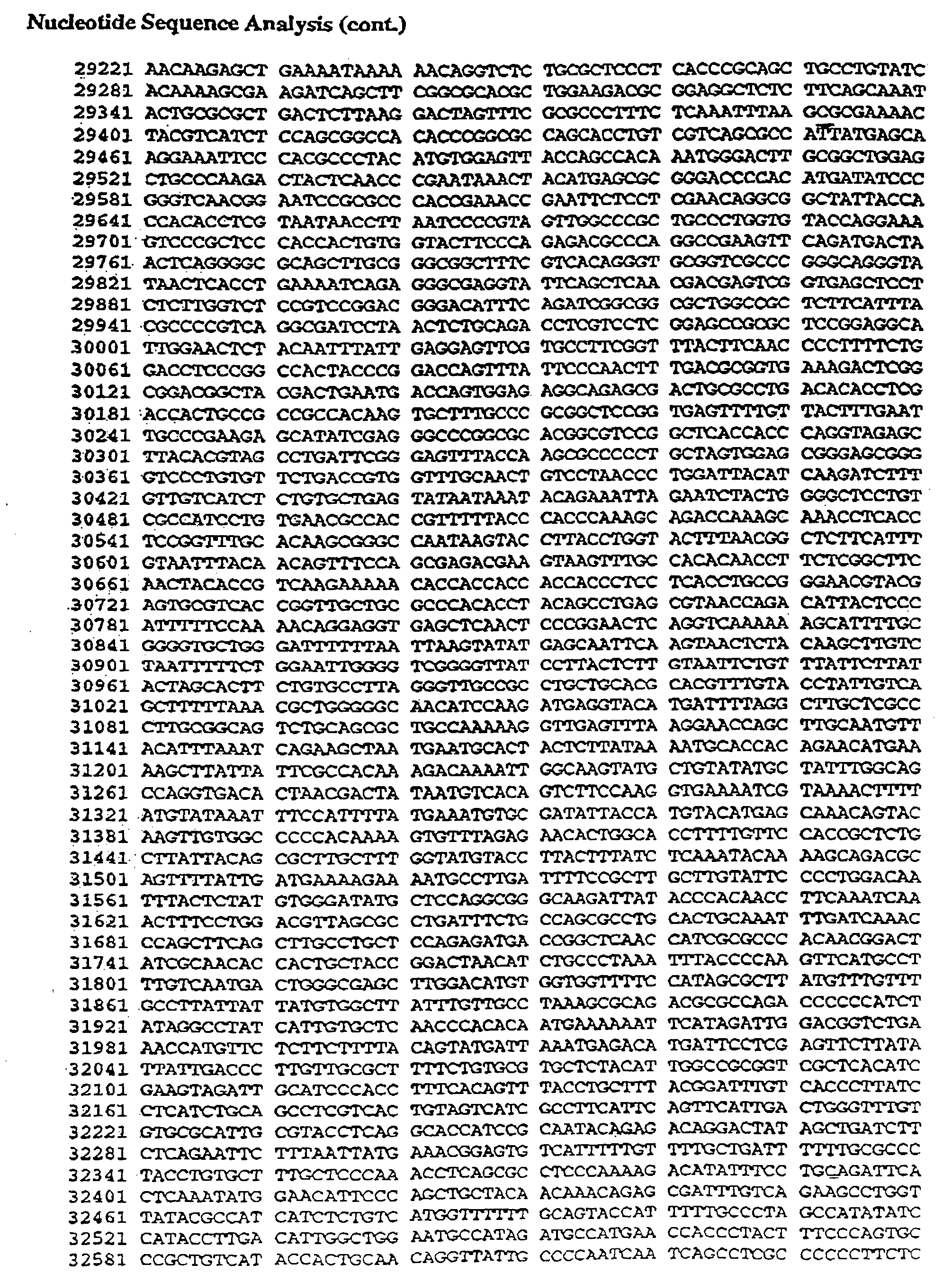
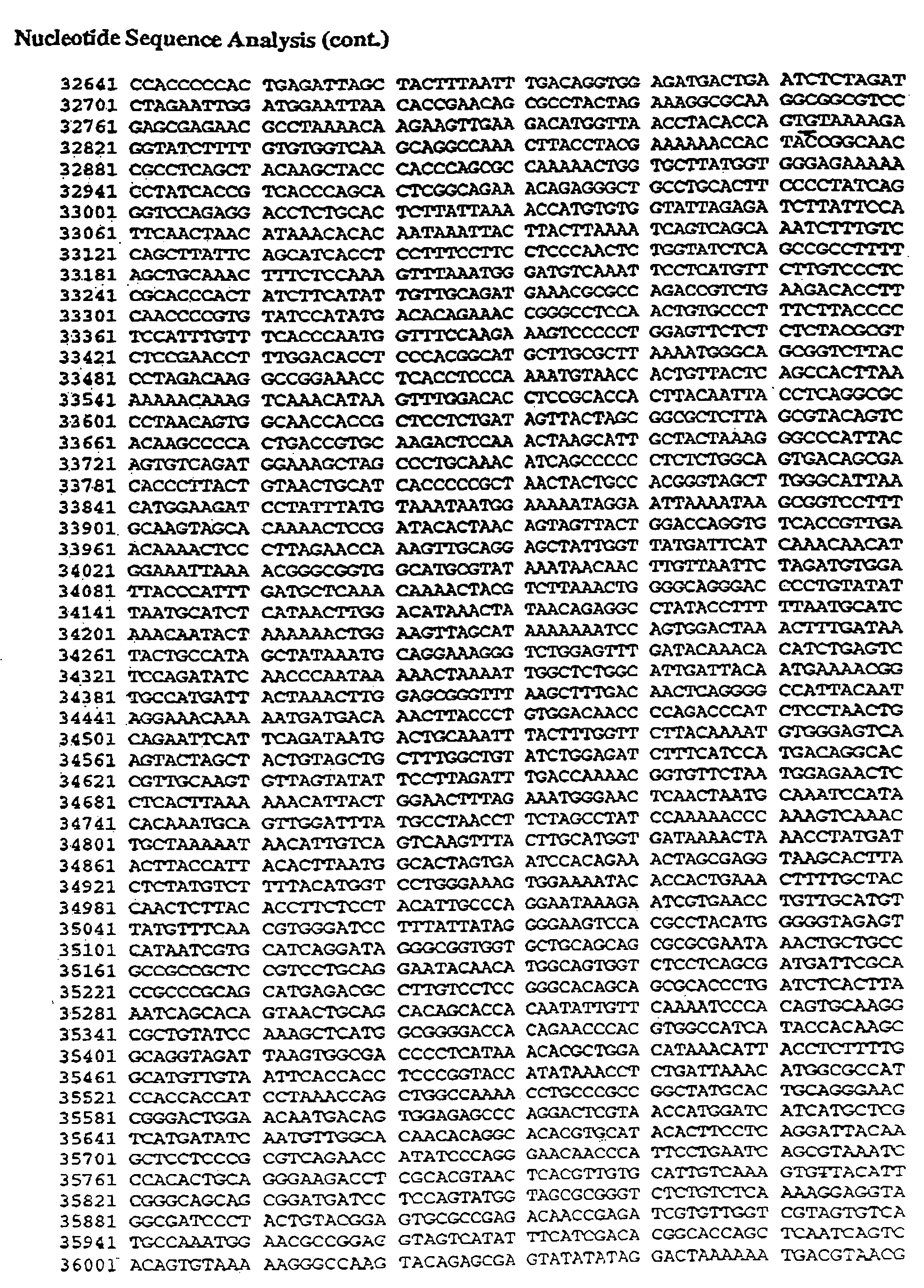

Claims
Priority Applications (4)
| Application Number | Priority Date | Filing Date | Title |
|---|---|---|---|
| JP6513485A JPH08503855A (en) | 1992-12-03 | 1993-12-02 | Gene therapy for cystic fibrosis |
| CA002145641A CA2145641C (en) | 1992-12-03 | 1993-12-02 | Pseudo-adenovirus vectors |
| AU57349/94A AU680459B2 (en) | 1992-12-03 | 1993-12-02 | Gene therapy for cystic fibrosis |
| EP94903386A EP0673431A1 (en) | 1992-12-03 | 1993-12-02 | Gene therapy for cystic fibrosis |
Applications Claiming Priority (6)
| Application Number | Priority Date | Filing Date | Title |
|---|---|---|---|
| US98547892A | 1992-12-03 | 1992-12-03 | |
| US07/985,478 | 1992-12-03 | ||
| US13068293A | 1993-10-01 | 1993-10-01 | |
| US08/130,682 | 1993-10-01 | ||
| US08/136,742 | 1993-10-13 | ||
| US08/136,742 US5670488A (en) | 1992-12-03 | 1993-10-13 | Adenovirus vector for gene therapy |
Publications (2)
| Publication Number | Publication Date |
|---|---|
| WO1994012649A2 true WO1994012649A2 (en) | 1994-06-09 |
| WO1994012649A3 WO1994012649A3 (en) | 1994-11-10 |
Family
ID=27384036
Family Applications (1)
| Application Number | Title | Priority Date | Filing Date |
|---|---|---|---|
| PCT/US1993/011667 Ceased WO1994012649A2 (en) | 1992-12-03 | 1993-12-02 | Gene therapy for cystic fibrosis |
Country Status (5)
| Country | Link |
|---|---|
| EP (4) | EP1024198A3 (en) |
| JP (1) | JPH08503855A (en) |
| AU (1) | AU680459B2 (en) |
| CA (2) | CA2592997A1 (en) |
| WO (1) | WO1994012649A2 (en) |
Cited By (544)
| Publication number | Priority date | Publication date | Assignee | Title |
|---|---|---|---|---|
| WO1994028152A1 (en) * | 1993-05-28 | 1994-12-08 | Transgene S.A. | Defective adenoviruses and corresponding complementation lines |
| WO1995000655A1 (en) * | 1993-06-24 | 1995-01-05 | Mc Master University | Adenovirus vectors for gene therapy |
| WO1995002697A1 (en) * | 1993-07-13 | 1995-01-26 | Rhone-Poulenc Rorer S.A. | Defective adenovirus vectors and use thereof in gene therapy |
| FR2718749A1 (en) * | 1994-04-18 | 1995-10-20 | Centre Nat Rech Scient | Viral vectors and use in gene therapy. |
| WO1995034671A1 (en) * | 1994-06-10 | 1995-12-21 | Genvec, Inc. | Complementary adenoviral vector systems and cell lines |
| WO1996010642A1 (en) * | 1994-10-04 | 1996-04-11 | Rhone-Poulenc Rorer S.A. | Adenovirus-derived viral vectors having two therapeutic genes: suicide and immunopotentiating |
| EP0707071A1 (en) * | 1994-08-16 | 1996-04-17 | Introgene B.V. | Recombinant vectors derived from adenovirus for use in gene therapy |
| WO1996018418A1 (en) * | 1994-12-12 | 1996-06-20 | Genetic Therapy, Inc. | Improved adenoviral vectors and producer cells |
| WO1996022378A1 (en) * | 1995-01-20 | 1996-07-25 | Rhone-Poulenc Rorer S.A. | Cells for the production of recombinant adenoviruses |
| FR2729674A1 (en) * | 1995-01-20 | 1996-07-26 | Centre Nat Rech Scient | Cells for prodn. of recombinant adeno and adeno-associated virus |
| WO1996030534A1 (en) | 1995-03-24 | 1996-10-03 | Genzyme Corporation | Adenovirus vectors for gene therapy |
| US5585362A (en) * | 1989-08-22 | 1996-12-17 | The Regents Of The University Of Michigan | Adenovirus vectors for gene therapy |
| FR2735789A1 (en) * | 1995-06-23 | 1996-12-27 | Centre Nat Rech Scient | RECOMBINANT ADENOVIRUSES, THEIR USE FOR PREPARING AVA, COMPLEMENTARY CELL LINE AND PHARMACEUTICAL COMPOSITIONS CONTAINING THEM |
| FR2738575A1 (en) * | 1995-09-08 | 1997-03-14 | Centre Nat Rech Scient | CELLS FOR THE PRODUCTION OF RECOMBINANT ADENOVIRUSES |
| FR2741891A1 (en) * | 1995-06-01 | 1997-06-06 | Centre Nat Rech Scient | CELLS FOR THE PRODUCTION OF RECOMBINANT ADENOVIRUSES |
| EP0701401A4 (en) * | 1993-04-08 | 1997-07-16 | Genetic Therapy Inc | Adenoviral vectors including dna encoding lung surfactant protein |
| US5652224A (en) * | 1995-02-24 | 1997-07-29 | The Trustees Of The University Of Pennsylvania | Methods and compositions for gene therapy for the treatment of defects in lipoprotein metabolism |
| WO1997021826A3 (en) * | 1995-12-14 | 1997-09-12 | Genvec Inc | Complementary adenoviral vector systems and cell lines |
| US5698202A (en) * | 1995-06-05 | 1997-12-16 | The Wistar Institute Of Anatomy & Biology | Replication-defective adenovirus human type 5 recombinant as a rabies vaccine carrier |
| US5707618A (en) * | 1995-03-24 | 1998-01-13 | Genzyme Corporation | Adenovirus vectors for gene therapy |
| WO1998014593A2 (en) | 1996-10-01 | 1998-04-09 | Geron Corporation | Human telomerase catalytic subunit |
| WO1997045550A3 (en) * | 1996-05-31 | 1998-04-09 | Baxter Int | Mini-adenoviral vector |
| US5756283A (en) * | 1995-06-05 | 1998-05-26 | The Trustees Of The University Of Pennsylvania | Method for improved production of recombinant adeno-associated viruses for gene therapy |
| US5776677A (en) * | 1989-08-22 | 1998-07-07 | Hsc Research Development Corporation | Methods of detecting cystic fibrosis gene by nucleic acid hybridization |
| WO1998032860A1 (en) * | 1997-01-28 | 1998-07-30 | Baxter International Inc. | Methods for highly efficient generation of adenoviral vectors |
| WO1998046779A1 (en) * | 1997-04-14 | 1998-10-22 | Genzyme Corporation | Adenoviral vectors comprising a modified e4 region but retaining e4orf3 |
| WO1998054345A1 (en) * | 1997-05-30 | 1998-12-03 | Baxter International Inc. | Mini-adenoviral vector |
| FR2763959A1 (en) * | 1997-06-02 | 1998-12-04 | Transgene Sa | NOVEL RECOMBINANT ADENOVIRAL VECTORS INCLUDING A SPLICE SEQUENCE |
| US5849561A (en) * | 1997-05-22 | 1998-12-15 | Cornell Research Foundation, Inc. | Method for the production of non-group C adenoviral vectors |
| US5851521A (en) * | 1995-03-31 | 1998-12-22 | Case Western Reserve University | Viral vectors and their use for treating hyperproliferative disorders, in particular restenosis |
| US5856152A (en) * | 1994-10-28 | 1999-01-05 | The Trustees Of The University Of Pennsylvania | Hybrid adenovirus-AAV vector and methods of use therefor |
| US5872154A (en) * | 1995-02-24 | 1999-02-16 | The Trustees Of The University Of Pennsylvania | Method of reducing an immune response to a recombinant adenovirus |
| US5935935A (en) * | 1993-06-10 | 1999-08-10 | Genetic Therapy, Inc. | Adenoviral vectors for treatment of hemophilia |
| EP0797436A4 (en) * | 1994-11-03 | 1999-09-08 | Cell Genesys Inc | Novel adenoviral vectors, packaging cell lines, recombinant adenoviruses and methods |
| US6001557A (en) * | 1994-10-28 | 1999-12-14 | The Trustees Of The University Of Pennsylvania | Adenovirus and methods of use thereof |
| EP0974668A1 (en) * | 1998-07-07 | 2000-01-26 | Transgene S.A. | Use of adenoviral E4 reading frames to improve expression of a gene of interest |
| US6019978A (en) * | 1995-06-05 | 2000-02-01 | The Wistar Institute Of Anatomy And Biology | Replication-defective adenovirus human type 5 recombinant as a vaccine carrier |
| US6080569A (en) * | 1993-06-24 | 2000-06-27 | Merck & Co., Inc. | Adenovirus vectors generated from helper viruses and helper-dependent vectors |
| US6132989A (en) * | 1996-06-03 | 2000-10-17 | University Of Washington | Methods and compositions for enhanced stability of non-adenoviral DNA |
| US6133028A (en) * | 1993-05-28 | 2000-10-17 | Transgene S.A. | Defective adenoviruses and corresponding complementation lines |
| US6140087A (en) * | 1993-06-24 | 2000-10-31 | Advec, Inc. | Adenovirus vectors for gene therapy |
| WO2000075353A1 (en) * | 1999-06-02 | 2000-12-14 | Trustees Of The University Of Pennsylvania | Compositions and methods useful for production of recombinant viruses which require helper viruses |
| WO2001003722A1 (en) * | 1999-07-09 | 2001-01-18 | Mayo Foundation For Medical Education And Research | Cftr polypeptides, fragments thereof and methods of use to overcome biosynthetic misprocessing |
| WO2001025464A1 (en) * | 1999-09-30 | 2001-04-12 | Chiron Corporation | Materials and methods for simplified aav production |
| US6221646B1 (en) | 1997-07-31 | 2001-04-24 | Chiron Corporation | Materials and methods for simplified AAV production |
| US6225456B1 (en) | 1998-05-07 | 2001-05-01 | University Technololy Corporation | Ras suppressor SUR-5 |
| US6238893B1 (en) | 1995-06-15 | 2001-05-29 | Introgene B.V. | Method for intracellular DNA amplification |
| US6251677B1 (en) | 1997-08-25 | 2001-06-26 | The Trustees Of The University Of Pennsylvania | Hybrid adenovirus-AAV virus and methods of use thereof |
| US6251957B1 (en) | 1995-02-24 | 2001-06-26 | Trustees Of The University Of Pennsylvania | Method of reducing an immune response to a recombinant virus |
| US6261551B1 (en) | 1995-06-05 | 2001-07-17 | The Trustees Of The University Of Pennsylvania | Recombinant adenovirus and adeno-associated virus, cell lines, and methods of production and use thereof |
| WO2001074900A2 (en) | 2000-03-31 | 2001-10-11 | Aventis Pharmaceuticals Products Inc. | Nuclear factor kb inducing factor |
| WO2002002641A1 (en) | 2000-06-16 | 2002-01-10 | Human Genome Sciences, Inc. | Antibodies that immunospecifically bind to blys |
| US6344445B1 (en) | 1995-10-19 | 2002-02-05 | Cantab Pharmaceutical Research Limited | Herpes virus vectors and their uses |
| US6372208B1 (en) | 1999-09-28 | 2002-04-16 | The Trustees Of The University Of Pennsylvania | Method of reducing an immune response to a recombinant virus |
| US6379943B1 (en) | 1999-03-05 | 2002-04-30 | Merck & Co., Inc. | High-efficiency Cre/loxp based system for construction of adenovirus vectors |
| US6387368B1 (en) | 1999-02-08 | 2002-05-14 | The Trustees Of The University Of Pennsylvania | Hybrid adenovirus-AAV virus and methods of use thereof |
| US6403370B1 (en) | 1997-02-10 | 2002-06-11 | Genstar Therapeutics Corporation | Oncolytic/immunogenic complementary-adenoviral vector system |
| US6413776B1 (en) | 1998-06-12 | 2002-07-02 | Galapagos Geonomics N.V. | High throughput screening of gene function using adenoviral libraries for functional genomics applications |
| US6441156B1 (en) | 1998-12-30 | 2002-08-27 | The United States Of America As Represented By The Department Of Health And Human Services | Calcium channel compositions and methods of use thereof |
| WO2002022800A3 (en) * | 2000-09-15 | 2002-10-24 | Micromun Privates Inst Fuer Mi | Expression cassettes and adenovirus vectors |
| WO2002097033A2 (en) | 2001-05-25 | 2002-12-05 | Human Genome Sciences, Inc. | Antibodies that immunospecifically bind to trail receptors |
| US6506889B1 (en) | 1998-05-19 | 2003-01-14 | University Technology Corporation | Ras suppressor SUR-8 and related compositions and methods |
| US6512161B1 (en) | 1998-01-08 | 2003-01-28 | Aventis Pharmaceuticals, Inc. | Transgenic rabbit that expresses a functional human lipoprotein (a) |
| EP1084236A4 (en) * | 1998-06-09 | 2003-04-02 | Merck & Co Inc | NOVEL ADENOVIRAL VECTORS FOR GENE THERAPY |
| WO2003078453A1 (en) | 2002-03-15 | 2003-09-25 | Wyeth Holdings Corporation | Mutants of the p4 protein of nontypable haemophilus influenzae with reduced enzymatic activity |
| WO2003086458A1 (en) | 2002-04-12 | 2003-10-23 | Medimmune, Inc. | Recombinant anti-interleukin-9 antibodies |
| US6638502B1 (en) | 1997-04-28 | 2003-10-28 | Gencell Sas | Adenovirus-mediated intratumoral delivery of an angiogenesis antagonist for the treatment of tumors |
| US6653088B1 (en) | 1997-10-24 | 2003-11-25 | Aventis Pharma S.A. | Interaction test for the investigation of inhibitory molecules of the interaction between a presenilin and the β-amyloid peptide |
| US6669942B2 (en) * | 1994-10-17 | 2003-12-30 | Aventis Pharma S.A. | Defective adenoviruses including a therapeutic gene and an immunoprotectove gene |
| US6670188B1 (en) | 1998-04-24 | 2003-12-30 | Crucell Holland B.V. | Packaging systems for human recombinant adenovirus to be used in gene therapy |
| US6696423B1 (en) | 1997-08-29 | 2004-02-24 | Biogen, Inc. | Methods and compositions for therapies using genes encoding secreted proteins such as interferon-beta |
| US6730507B1 (en) | 1993-06-24 | 2004-05-04 | Merck & Co., Inc. | Use of helper-dependent adenoviral vectors of alternative serotypes permits repeat vector administration |
| US6759393B1 (en) | 1999-04-12 | 2004-07-06 | Pfizer Inc. | Growth hormone and growth hormone releasing hormone compositions |
| US6783980B2 (en) | 1995-06-15 | 2004-08-31 | Crucell Holland B.V. | Packaging systems for human recombinant adenovirus to be used in gene therapy |
| WO2005093064A1 (en) | 2004-03-29 | 2005-10-06 | Galpharma Co., Ltd. | Novel galectin 9 modification protein and use thereof |
| US6974694B2 (en) | 1995-06-07 | 2005-12-13 | Advec, Inc. | Adenoviruses for control of gene expression |
| WO2006020071A2 (en) | 2004-07-16 | 2006-02-23 | The Government Of The United States Of America As Represented By The Secretary Of The Department Of Health And Human Services | Vaccines against aids comprising cmv/r-nucleic acid constructs |
| US7008776B1 (en) | 1996-12-06 | 2006-03-07 | Aventis Pharmaceuticals Inc. | Compositions and methods for effecting the levels of high density lipoprotein (HDL) cholesterol and apolipoprotein AI very low density lipoprotein (VLDL) cholesterol and low density lipoprotein (LDL) cholesterol |
| US7045347B2 (en) | 1993-06-24 | 2006-05-16 | Advec, Inc. | Helper dependent adenovirus vectors based on integrase family site-specific recombinases |
| US7060442B2 (en) | 2000-10-30 | 2006-06-13 | Regents Of The University Of Michigan | Modulators on Nod2 signaling |
| WO2006085979A2 (en) | 2004-07-09 | 2006-08-17 | The Henry M. Jackson Foundation For The Advancement Of Military Medicine, Inc. | Soluble forms of hendra and nipah virus g glycoprotein |
| WO2006102095A2 (en) | 2005-03-18 | 2006-09-28 | Medimmune, Inc. | Framework-shuffling of antibodies |
| US7135187B2 (en) | 1993-06-24 | 2006-11-14 | Advec, Inc. | System for production of helper dependent adenovirus vectors based on use of endonucleases |
| US7138512B2 (en) | 2002-04-10 | 2006-11-21 | Georgetown University | Gene SHINC-2 and diagnostic and therapeutic uses thereof |
| US7205272B1 (en) | 1999-07-09 | 2007-04-17 | Mayo Foundation For Medical Education And Research | CFTR polypeptides, fragments thereof and methods of use to overcome biosynthetic misprocessing |
| US7235393B2 (en) | 2002-04-29 | 2007-06-26 | The Trustees Of The University Of Pennsylvania | Method for direct rescue and amplification of integrated viruses from cellular DNA of tissues |
| US7244565B2 (en) | 2002-04-10 | 2007-07-17 | Georgetown University | Gene shinc-3 and diagnostic and therapeutic uses thereof |
| US7253272B2 (en) | 2001-04-06 | 2007-08-07 | Georgetown University | Gene BRCC-2 and diagnostic and therapeutic uses thereof |
| US7252822B2 (en) | 2002-10-08 | 2007-08-07 | Rinat Neuroscience Corp. | Methods for treating post-surgical pain by administering an anti-nerve growth factor antagonist |
| US7255860B2 (en) | 2002-10-08 | 2007-08-14 | Rinat Neuroscience Corp. | Methods for treating post-surgical pain by administering an anti-nerve growth factor antagonist antibody |
| EP1854476A2 (en) | 2000-02-09 | 2007-11-14 | Bas Medical, Inc. | Use of relaxin to treat diseases related to vasoconstriction |
| WO2008020335A2 (en) | 2006-06-09 | 2008-02-21 | Novartis Ag | Immunogenic compositions for streptococcus agalactiae |
| WO2008031854A2 (en) | 2006-09-12 | 2008-03-20 | INSERM (Institut National de la Santé et de la Recherche Médicale) | Nucleic acids for expressing a polynucleotide of interest in mammalian cancer cells |
| US7351811B2 (en) | 2001-04-06 | 2008-04-01 | Georgetown University | Gene SCC-112 and diagnostic and therapeutic uses thereof |
| EP1925626A1 (en) | 2003-07-21 | 2008-05-28 | Transgene S.A. | Novel multifunctional cytokines |
| EP1935979A2 (en) | 1999-07-14 | 2008-06-25 | Novartis Vaccines and Diagnostics S.r.l. | Antigenic meningococcal peptides |
| US7393534B2 (en) | 2003-07-15 | 2008-07-01 | Barros Research Institute | Compositions and methods for immunotherapy of cancer and infectious diseases |
| EP1953243A2 (en) | 2000-06-15 | 2008-08-06 | Novartis Vaccines and Diagnostics, Inc. | Polynucleotides related to colon cancer |
| WO2008105797A2 (en) | 2006-06-30 | 2008-09-04 | Bristol-Myers Squibb Company | Polynucleotides encoding novel pcsk9 variants |
| EP1967205A2 (en) | 2000-08-30 | 2008-09-10 | Pfizer Products Inc. | Anti-IgE vaccines |
| US7425329B2 (en) | 2004-04-07 | 2008-09-16 | Rinat Neuroscience Corp. | Methods for treating bone cancer pain by administering a nerve growth factor antagonist |
| US7432057B2 (en) | 2004-01-30 | 2008-10-07 | Michigan State University | Genetic test for PSE-susceptible turkeys |
| EP1978098A2 (en) | 1999-12-10 | 2008-10-08 | Invitrogen Corporation | Use of multiple recombination sites with unique specificity in recombinational cloning |
| WO2008124176A2 (en) | 2007-04-10 | 2008-10-16 | The Administrators Of The Tulane Educational Fund | Soluble and membrane-anchored forms of lassa virus subunit proteins |
| US7442520B2 (en) | 2001-04-06 | 2008-10-28 | Georgetown University | Gene BRCC-3 and diagnostic and therapeutic uses thereof |
| US7462698B2 (en) | 2005-07-22 | 2008-12-09 | Y's Therapeutics Co., Ltd. | Anti-CD26 antibodies and methods of use thereof |
| WO2008157379A2 (en) | 2007-06-21 | 2008-12-24 | Macrogenics, Inc. | Covalent diabodies and uses thereof |
| WO2009002193A1 (en) | 2007-06-27 | 2008-12-31 | Auckland Uniservices Limited | Polypeptides and polynucleotides for artemin and related ligands, and methods of use thereof |
| EP2027874A2 (en) | 2000-11-28 | 2009-02-25 | Medimmune, Inc. | Methods of administering/dosing anti-rsv antibodies for prophylaxis and treatment |
| US7498407B2 (en) | 2001-11-09 | 2009-03-03 | Georgetown University | Vascular endothelial cell growth inhibitor, VEGI-192a |
| EP2039768A1 (en) | 1996-11-13 | 2009-03-25 | Novartis Vaccines and Diagnostics, Inc. | Mutant forms of Fas ligand and uses thereof |
| US7514593B2 (en) | 2003-05-30 | 2009-04-07 | The University Of North Carolina At Chapel Hill | Animal model for chronic obstructive pulmonary disease and cystic fibrosis |
| EP2058408A2 (en) | 2003-02-14 | 2009-05-13 | Sagres Discovery, Inc. | Therapeutic GPCR targets in cancer |
| EP2062591A1 (en) | 2005-04-07 | 2009-05-27 | Novartis Vaccines and Diagnostics, Inc. | CACNA1E in cancer diagnosis detection and treatment |
| WO2009079649A1 (en) | 2007-12-18 | 2009-06-25 | Bioalliance C.V. | Antibodies recognizing a carbohydrate containing epitope on cd-43 and cea expressed on cancer cells and methods using same |
| EP2075346A2 (en) | 2002-01-08 | 2009-07-01 | Novartis Vaccines and Diagnostics, Inc. | Gene products differentially expressed in cancerous breast cells and their methods of use |
| EP2075255A1 (en) | 2000-03-08 | 2009-07-01 | Novartis Vaccines and Diagnostics, Inc. | Human FGF-23 gene and gene expression products |
| EP2083088A2 (en) | 2005-04-07 | 2009-07-29 | Novartis Vaccines and Diagnostics, Inc. | Cancer-related genes |
| US7569364B2 (en) | 2002-12-24 | 2009-08-04 | Pfizer Inc. | Anti-NGF antibodies and methods using same |
| EP2093233A1 (en) | 2002-03-21 | 2009-08-26 | Sagres Discovery, Inc. | Novel compositions and methods in cancer |
| EP2100902A1 (en) | 2002-10-08 | 2009-09-16 | Rinat Neuroscience Corp. | Methods for treating pain by administering an antagonist antibody against the nerve growth factor and an opioid analgesic, and compositions containing the same |
| EP2105496A1 (en) | 2000-12-08 | 2009-09-30 | Life Technologies Corporation | Methods and compositions for synthesis of nucleic acid molecules using multiple recognition sites |
| US7604798B2 (en) | 2004-07-15 | 2009-10-20 | Northwestern University | Methods and compositions for importing nucleic acids into cell nuclei |
| EP2128270A1 (en) | 2003-08-08 | 2009-12-02 | Genenews Inc. | Osteoarthritis biomarkers and uses thereof |
| US7674605B2 (en) | 2006-06-07 | 2010-03-09 | Bioalliance C.V. | Antibodies recognizing a carbohydrate containing epitope on CD-43 and CEA expressed on cancer cells and methods using same |
| WO2010027364A1 (en) | 2008-09-07 | 2010-03-11 | Glyconex Inc. | Anti-extended type i glycosphingolipid antibody, derivatives thereof and use |
| EP2163626A1 (en) | 1999-11-18 | 2010-03-17 | Novartis Vaccines and Diagnostics, Inc. | Human FGF-21 gene and gene expression products |
| WO2010029513A2 (en) | 2008-09-12 | 2010-03-18 | Rinat Neuroscience Corporation | Pcsk9 antagonists |
| US7700359B2 (en) | 2000-06-02 | 2010-04-20 | Novartis Vaccines And Diagnostics, Inc. | Gene products differentially expressed in cancerous cells |
| EP2191846A1 (en) | 2003-02-19 | 2010-06-02 | Rinat Neuroscience Corp. | Method for treating pain by administering a nerve growth factor antagonist and an NSAID and composition containing the same |
| WO2010072684A1 (en) | 2008-12-22 | 2010-07-01 | Universität Regensburg | Norrin in the treatment of diseases associated with an increased tgf-beta activity |
| EP2204376A2 (en) | 2004-07-20 | 2010-07-07 | Sagres Discovery, Inc. | Novel therapeutic targets in cancer |
| WO2010080538A1 (en) | 2008-12-19 | 2010-07-15 | Macrogenics, Inc. | Covalent diabodies and uses thereof |
| EP2210945A2 (en) | 1998-01-14 | 2010-07-28 | Novartis Vaccines and Diagnostics S.r.l. | Neisseria meningitidis antigens |
| US7767387B2 (en) | 2003-06-13 | 2010-08-03 | Sagres Discovery, Inc. | Therapeutic targets in cancer |
| WO2010086828A2 (en) | 2009-02-02 | 2010-08-05 | Rinat Neuroscience Corporation | Agonist anti-trkb monoclonal antibodies |
| US7776523B2 (en) | 2000-12-07 | 2010-08-17 | Novartis Vaccines And Diagnostics, Inc. | Endogenous retroviruses up-regulated in prostate cancer |
| WO2010096561A1 (en) | 2009-02-18 | 2010-08-26 | The United States Of America, As Represented By The Secretary, Department Of Health And Human Services | Synthetic hiv/siv gag proteins and uses thereof |
| US7785608B2 (en) | 2002-08-30 | 2010-08-31 | Wyeth Holdings Corporation | Immunogenic compositions for the prevention and treatment of meningococcal disease |
| WO2010100632A2 (en) | 2009-03-06 | 2010-09-10 | Novartis Ag | Chlamydia antigens |
| EP2228389A2 (en) | 2001-04-13 | 2010-09-15 | Human Genome Sciences, Inc. | Antibodies against vascular endothelial growth factor 2 |
| WO2010118243A2 (en) | 2009-04-08 | 2010-10-14 | Genentech, Inc. | Use of il-27 antagonists to treat lupus |
| US7816076B2 (en) | 2003-02-14 | 2010-10-19 | Sagres Discovery, Inc. | Therapeutic targets in cancer |
| EP2251424A1 (en) | 1999-05-19 | 2010-11-17 | Novartis Vaccines and Diagnostics S.r.l. | Antigenic neisserial peptides |
| WO2010141329A1 (en) | 2009-06-01 | 2010-12-09 | Medimmune, Llc | Molecules with extended half-lives and uses thereof |
| EP2261341A2 (en) | 1998-05-01 | 2010-12-15 | Novartis Vaccines and Diagnostics, Inc. | Neisseria meningitidis antigens and compositions |
| EP2263692A1 (en) | 2002-12-24 | 2010-12-22 | Rinat Neuroscience Corp. | Anti-NGF antibodies and methods using same |
| WO2010146511A1 (en) | 2009-06-17 | 2010-12-23 | Pfizer Limited | Treatment of overactive bladder |
| EP2267005A1 (en) | 2003-04-09 | 2010-12-29 | Novartis Vaccines and Diagnostics S.r.l. | ADP-ribosylating toxin from Listeria monocytogenes |
| EP2270177A1 (en) | 2001-03-27 | 2011-01-05 | Novartis Vaccines and Diagnostics S.r.l. | Streptococcus pneumoniae proteins and nucleic acids |
| EP2272566A2 (en) | 2003-08-18 | 2011-01-12 | MedImmune, LLC | Humanisation of antibodies |
| WO2011004263A2 (en) | 2009-07-07 | 2011-01-13 | Novartis Ag | Conserved escherichia coli immunogens |
| EP2275551A2 (en) | 1999-10-29 | 2011-01-19 | Novartis Vaccines and Diagnostics S.r.l. | Neisserial antigenic peptides |
| EP2275129A2 (en) | 2000-01-17 | 2011-01-19 | Novartis Vaccines and Diagnostics S.r.l. | Outer membrane vesicle (OMV) vaccine comprising N. meningitidis serogroup B outer membrane proteins |
| WO2011007257A1 (en) | 2009-07-16 | 2011-01-20 | Novartis Ag | Detoxified escherichia coli immunogens |
| EP2278006A2 (en) | 1997-11-06 | 2011-01-26 | Novartis Vaccines and Diagnostics S.r.l. | Neisserial antigens |
| EP2278007A1 (en) | 1999-04-30 | 2011-01-26 | Novartis Vaccines and Diagnostics S.r.l. | Conserved neisserial antigens |
| EP2277894A1 (en) | 2000-10-27 | 2011-01-26 | Novartis Vaccines and Diagnostics S.r.l. | Nucleic acids and proteins from streptococcus groups A & B |
| WO2011020079A1 (en) | 2009-08-13 | 2011-02-17 | Calmune Corporation | Antibodies against human respiratory syncytial virus (rsv) and methods of use |
| EP2292663A2 (en) | 2006-08-28 | 2011-03-09 | Kyowa Hakko Kirin Co., Ltd. | Antagonistic human light-specific human monoclonal antibodies |
| EP2298807A2 (en) | 2004-07-30 | 2011-03-23 | Rinat Neuroscience Corp. | Antibodies directed against amyloid-beta peptide and methods using same |
| EP2298796A2 (en) | 2001-03-27 | 2011-03-23 | Novartis Vaccines and Diagnostics S.r.l. | Staphylococcus aureus proteins and nucleic acids |
| EP2298869A1 (en) | 2003-06-13 | 2011-03-23 | University Of Medicine And Dentistry Of New Jersey | Recombinant protein production in the presence of mRNA interferase |
| EP2298795A1 (en) | 2005-02-18 | 2011-03-23 | Novartis Vaccines and Diagnostics, Inc. | Immunogens from uropathogenic escherichia coli |
| WO2011035205A2 (en) | 2009-09-18 | 2011-03-24 | Calmune Corporation | Antibodies against candida, collections thereof and methods of use |
| EP2302039A1 (en) | 2002-06-13 | 2011-03-30 | Novartis Vaccines and Diagnostics, Inc. | Virus-like particles comprising HML-2 gag polypeptide |
| WO2011046457A1 (en) | 2009-10-16 | 2011-04-21 | Auckland Uniservices Limited | Anti-neoplastic uses of artemin antagonists |
| EP2316922A1 (en) | 2002-05-24 | 2011-05-04 | Schering Corporation | Neutralizing human anti-IGFR antibody |
| EP2316487A1 (en) | 2003-04-11 | 2011-05-04 | MedImmune, LLC | Recombinant IL-9 antibodies & uses thereof |
| WO2011053991A2 (en) | 2009-11-02 | 2011-05-05 | The Regents Of The University Of California | Vault complexes for cytokine delivery |
| EP2319941A2 (en) | 2005-10-21 | 2011-05-11 | GeneNews Inc. | Method and apparatus for correlating levels of biomarker products with disease |
| WO2011058302A1 (en) | 2009-11-10 | 2011-05-19 | Guy's And St Thomas's Nhs Foundation Trust | Bacteremia-associated antigen from staphylococcus aureus |
| EP2332961A2 (en) | 2001-10-11 | 2011-06-15 | Wyeth Holdings Corporation | Novel immunogenic compositions for the prevention and treatment of meningococcal disease |
| EP2335724A1 (en) | 2001-12-12 | 2011-06-22 | Novartis Vaccines and Diagnostics S.r.l. | Immunisation against chlamydia trachomatis |
| US7968690B2 (en) | 2003-12-23 | 2011-06-28 | Rinat Neuroscience Corp. | Agonist anti-trkC antibodies and methods using same |
| US7973139B2 (en) | 2004-03-26 | 2011-07-05 | Human Genome Sciences, Inc. | Antibodies against nogo receptor |
| EP2341060A1 (en) | 2000-12-12 | 2011-07-06 | MedImmune, LLC | Molecules with extended half-lives, compositions and uses thereof |
| US7989426B2 (en) | 2002-02-15 | 2011-08-02 | Johns Hopkins University School Of Medicine | Selective induction of apoptosis to treat ocular disease by expression of PEDF |
| EP2351584A1 (en) | 2003-12-23 | 2011-08-03 | Genentech, Inc. | Novel anti-IL 13 antibodies and uses thereof |
| EP2353389A1 (en) | 2003-04-21 | 2011-08-10 | Epeius Biotechnologies Corporation | Methods and compositions for treating disorders |
| EP2357192A1 (en) | 1999-02-26 | 2011-08-17 | Human Genome Sciences, Inc. | Human endokine alpha and methods of use |
| WO2011104687A1 (en) | 2010-02-24 | 2011-09-01 | Rinat Neuroscience Corporation | Antagonist anti-il-7 receptor antibodies and methods |
| WO2011104632A1 (en) | 2010-02-26 | 2011-09-01 | Novartis Ag | Immunogenic proteins and compositions |
| WO2011111007A2 (en) | 2010-03-11 | 2011-09-15 | Rinat Neuroscience Corporation | ANTIBODIES WITH pH DEPENDENT ANTIGEN BINDING |
| EP2368578A1 (en) | 2003-01-09 | 2011-09-28 | Macrogenics, Inc. | Identification and engineering of antibodies with variant Fc regions and methods of using same |
| EP2371389A2 (en) | 2002-08-14 | 2011-10-05 | MacroGenics, Inc. | FcgammaRIIB-specific antibodies and methods of use thereof |
| WO2011121576A2 (en) | 2010-04-01 | 2011-10-06 | Novartis Ag | Immunogenic proteins and compositions |
| EP2380592A2 (en) | 2005-11-14 | 2011-10-26 | Rinat Neuroscience Corp. | Antagonist antibodies directed against calcitonin gene-related peptide and methods using same |
| WO2011133931A1 (en) | 2010-04-22 | 2011-10-27 | Genentech, Inc. | Use of il-27 antagonists for treating inflammatory bowel disease |
| WO2011139688A2 (en) | 2010-04-28 | 2011-11-10 | The J. David Gladstone Institutes | Methods for generating cardiomyocytes |
| EP2387995A1 (en) | 2006-03-30 | 2011-11-23 | PTC Therapeutics, Inc. | Methods for the production of functional protein from DNA having a nonsense mutation and the treatment of disorders associated therewith |
| WO2011153323A2 (en) | 2010-06-02 | 2011-12-08 | Alnylam Pharmaceuticals, Inc. | Compositions and methods directed to treating liver fibrosis |
| WO2011154553A2 (en) | 2010-06-11 | 2011-12-15 | Cellartis Ab | Novel micrornas for the detection and isolaton of human embryonic stem cell-derived cardiac cell types |
| EP2402359A1 (en) | 2000-12-28 | 2012-01-04 | Wyeth LLC | Recombinant protective protein from streptococcus pneumoniae |
| WO2012006596A2 (en) | 2010-07-09 | 2012-01-12 | Calmune Corporation | Anti-human respiratory syncytial virus (rsv) antibodies and methods of use |
| EP2407548A1 (en) | 2006-10-16 | 2012-01-18 | MedImmune, LLC | Molecules with reduced half-lives, compositions and uses thereof |
| WO2012015758A2 (en) | 2010-07-30 | 2012-02-02 | Saint Louis University | Methods of treating pain |
| WO2012018687A1 (en) | 2010-08-02 | 2012-02-09 | Macrogenics, Inc. | Covalent diabodies and uses thereof |
| EP2422811A2 (en) | 2004-10-27 | 2012-02-29 | MedImmune, LLC | Modulation of antibody specificity by tailoring the affinity to cognate antigens |
| EP2431054A2 (en) | 2000-06-15 | 2012-03-21 | Human Genome Sciences, Inc. | Human tumor necrosis factor delta and epsilon |
| WO2012072769A1 (en) | 2010-12-01 | 2012-06-07 | Novartis Ag | Pneumococcal rrgb epitopes and clade combinations |
| WO2012075243A2 (en) | 2010-12-01 | 2012-06-07 | The University Of North Carolina At Chapel Hill | Methods and compositions for targeting sites of neovascular growth |
| WO2012075337A2 (en) | 2010-12-01 | 2012-06-07 | Spinal Modulation, Inc. | Directed delivery of agents to neural anatomy |
| WO2012079046A2 (en) | 2010-12-10 | 2012-06-14 | Alnylam Pharmaceuticals, Inc. | Compositions and methods for inhibiting expression of klf-1 and bcl11a genes |
| WO2012078967A2 (en) | 2010-12-10 | 2012-06-14 | Alnylam Pharmaceuticals, Inc. | Compositions and methods for increasing erythropoietin (epo) production |
| US8263395B2 (en) | 1999-10-07 | 2012-09-11 | Aventis Pharma S.A. | Recombinant adenoviruses preparation and adenovirus banks |
| EP2500030A2 (en) | 2005-11-04 | 2012-09-19 | Genentech, Inc. | Use of complement pathway inhibitors to treat ocular diseases |
| EP2505209A1 (en) | 2006-06-26 | 2012-10-03 | MacroGenics, Inc. | Fcgamma-RIIB-specific antibodies and methods of the use thereof |
| EP2510947A1 (en) | 2009-04-14 | 2012-10-17 | Novartis AG | Compositions for immunising against Staphylococcus aureus |
| EP2520669A2 (en) | 2005-02-07 | 2012-11-07 | GeneNews Inc. | Mild osteoathritis biomarkers and uses thereof |
| WO2012162068A2 (en) | 2011-05-21 | 2012-11-29 | Macrogenics, Inc. | Deimmunized serum-binding domains and their use for extending serum half-life |
| EP2530090A2 (en) | 2006-10-19 | 2012-12-05 | CSL Limited | Anti-IL-13R alpha 1 antibodies and their uses thereof |
| US8329669B2 (en) | 2006-07-28 | 2012-12-11 | Sanofi | Composition and method for treatment of tumors |
| WO2012177784A2 (en) | 2011-06-21 | 2012-12-27 | Alnylam Pharmaceuticals | Angiopoietin-like 3 (angptl3) irna compostions and methods of use thereof |
| WO2012178033A2 (en) | 2011-06-23 | 2012-12-27 | Alnylam Pharmaceuticals, Inc. | Serpina1 sirnas: compositions of matter and methods of treatment |
| WO2013019857A2 (en) | 2011-08-01 | 2013-02-07 | Alnylam Pharmaceuticals, Inc. | Method for improving the success rate of hematopoietic stem cell transplants |
| WO2013028527A1 (en) | 2011-08-23 | 2013-02-28 | Indiana University Research And Technology Corporation | Compositions and methods for treating cancer |
| WO2013028740A1 (en) | 2011-08-22 | 2013-02-28 | Saint Louis University | Compositions and methods for treating inflammation |
| EP2572726A1 (en) | 2007-08-01 | 2013-03-27 | Novartis AG | Compositions comprising pneumococcal antigens |
| EP2573114A1 (en) | 2005-08-10 | 2013-03-27 | MacroGenics, Inc. | Identification and engineering of antibodies with variant Fc regions and methods of using same |
| EP2586790A2 (en) | 2006-08-16 | 2013-05-01 | Novartis AG | Immunogens from uropathogenic Escherichia coli |
| WO2013068946A2 (en) | 2011-11-11 | 2013-05-16 | Rinat Neuroscience Corp. | Antibodies specific for trop-2 and their uses |
| WO2013093707A1 (en) | 2011-12-22 | 2013-06-27 | Rinat Neuroscience Corp. | Human growth hormone receptor antagonist antibodies and methods of use thereof |
| WO2013093693A1 (en) | 2011-12-22 | 2013-06-27 | Rinat Neuroscience Corp. | Staphylococcus aureus specific antibodies and uses thereof |
| EP2610267A1 (en) | 2006-12-18 | 2013-07-03 | Genentech, Inc. | Antagonist anti-Notch3 antibodies and their use in the prevention and treatment of Notch3-related diseases |
| WO2013106273A2 (en) | 2012-01-09 | 2013-07-18 | Serpin Pharma, Llc | Peptides and methods of using same |
| WO2013155204A2 (en) | 2012-04-10 | 2013-10-17 | Alnylam Pharmaceuticals, Inc. | Compositions and methods for inhibiting expression of the alas1 gene |
| US8563001B2 (en) | 2008-11-05 | 2013-10-22 | Regents Of The University Of Minnesota | Multicomponent immunogenic composition for the prevention of beta-hemolytic streptococcal (BHS) disease |
| WO2013163430A2 (en) | 2012-04-26 | 2013-10-31 | Alnylam Pharmaceuticals | Serpinc1 irna compositions and methods of use thereof |
| US8574597B2 (en) | 2006-12-22 | 2013-11-05 | Wyeth Llc | Immunogenic compositions for the prevention and treatment of meningococcal disease |
| US8623831B2 (en) | 2000-03-31 | 2014-01-07 | Aventis Pharmaceuticals Inc. | Nuclear factor κB inducing factor |
| WO2014006063A2 (en) | 2012-07-02 | 2014-01-09 | Medizinische Universität Wien | Complement split product c4d for the treatment of inflammatory conditions |
| WO2014011705A1 (en) | 2012-07-09 | 2014-01-16 | The Regents Of The University Of California | Vault immunotherapy |
| US8647622B2 (en) | 2007-08-29 | 2014-02-11 | Sanofi | Humanized anti-CXCR5 antibodies, derivatives thereof and their use |
| WO2014025767A1 (en) | 2012-08-07 | 2014-02-13 | National Cheng Kung University | Use of il-20 antagonists for treating liver diseases |
| WO2014066443A1 (en) | 2012-10-23 | 2014-05-01 | Emory University | Gm-csf and il-4 conjugates, compositions, and methods related thereto |
| WO2014071206A1 (en) | 2012-11-02 | 2014-05-08 | True North Therapeutics, Inc. | Anti-complement c1s antibodies and uses thereof |
| WO2014072876A1 (en) | 2012-11-09 | 2014-05-15 | Pfizer Inc. | Platelet-derived growth factor b specific antibodies and compositions and uses thereof |
| WO2014089313A1 (en) | 2012-12-05 | 2014-06-12 | Alnylam Pharmaceuticals | PCSK9 iRNA COMPOSITIONS AND METHODS OF USE THEREOF |
| WO2014107739A1 (en) | 2013-01-07 | 2014-07-10 | Eleven Biotherapeutics, Inc. | Antibodies against pcsk9 |
| WO2014153258A2 (en) | 2013-03-14 | 2014-09-25 | Epeius Biotechnologies Corporation | Improved thymidine kinase gene |
| WO2014160871A2 (en) | 2013-03-27 | 2014-10-02 | The General Hospital Corporation | Methods and agents for treating alzheimer's disease |
| WO2014164981A1 (en) | 2013-03-12 | 2014-10-09 | The General Hospital Corporation | Modified mullerian inhibiting substance (mis) proteins and uses thereof for the treatment of diseases |
| WO2014164703A1 (en) | 2013-03-11 | 2014-10-09 | University Of Florida Research Foundation, Inc. | Delivery of card protein as therapy for occular inflammation |
| US8871503B2 (en) | 2006-03-28 | 2014-10-28 | Isis Innovation Limited | Construct |
| WO2014182661A2 (en) | 2013-05-06 | 2014-11-13 | Alnylam Pharmaceuticals, Inc | Dosages and methods for delivering lipid formulated nucleic acid molecules |
| WO2014181229A2 (en) | 2013-05-07 | 2014-11-13 | Rinat Neuroscience Corp. | Anti-glucagon receptor antibodies and methods of use thereof |
| WO2014190137A1 (en) | 2013-05-22 | 2014-11-27 | Alnylam Pharmaceuticals, Inc. | SERPINA1 iRNA COMPOSITIONS AND METHODS OF USE THEREOF |
| WO2014190157A1 (en) | 2013-05-22 | 2014-11-27 | Alnylam Pharmaceuticals, Inc. | Tmprss6 compositions and methods of use thereof |
| WO2014200921A1 (en) | 2013-06-10 | 2014-12-18 | Ipierian, Inc. | Methods of treating a tauopathy |
| US8916517B2 (en) | 2009-11-02 | 2014-12-23 | The Administrators Of The Tulane Educational Fund | Analogs of pituitary adenylate cyclase-activating polypeptide (PACAP) and methods for their use |
| WO2014205511A1 (en) | 2013-06-25 | 2014-12-31 | University Of Canberra | Methods and compositions for modulating cancer stem cells |
| EP2829551A1 (en) | 2006-10-19 | 2015-01-28 | CSL Limited | High affinity antibody antagonists of interleukin-13 receptor alpha 1 |
| WO2015015401A2 (en) | 2013-08-02 | 2015-02-05 | Pfizer Inc. | Anti-cxcr4 antibodies and antibody-drug conjugates |
| US8981061B2 (en) | 2001-03-20 | 2015-03-17 | Novo Nordisk A/S | Receptor TREM (triggering receptor expressed on myeloid cells) and uses thereof |
| US8986710B2 (en) | 2012-03-09 | 2015-03-24 | Pfizer Inc. | Neisseria meningitidis compositions and methods thereof |
| WO2015039187A1 (en) | 2013-09-18 | 2015-03-26 | University Of Canberra | Stem cell modulation ii |
| US9000127B2 (en) | 2012-02-15 | 2015-04-07 | Novo Nordisk A/S | Antibodies that bind and block triggering receptor expressed on myeloid cells-1 (TREM-1) |
| WO2015050990A1 (en) | 2013-10-02 | 2015-04-09 | Alnylam Pharmaceuticals, Inc. | Compositions and methods for inhibiting expression of the lect2 gene |
| US9006181B2 (en) | 2004-07-21 | 2015-04-14 | The Administrators Of The Tulane Educational Fund | Treatment of renal dysfunction and multiple myeloma using PACAP compounds |
| US9017659B2 (en) | 2006-11-03 | 2015-04-28 | Epeius Biotechnologies Corporation | Pathotropic targeted gene delivery system for cancer and other disorders |
| WO2015073580A1 (en) | 2013-11-13 | 2015-05-21 | Pfizer Inc. | Tumor necrosis factor-like ligand 1a specific antibodies and compositions and uses thereof |
| WO2015089321A2 (en) | 2013-12-11 | 2015-06-18 | The General Hospital Corporation | Use of mullerian inhibiting substance (mis) proteins for contraception and ovarian reserve preservation |
| WO2015087187A1 (en) | 2013-12-10 | 2015-06-18 | Rinat Neuroscience Corp. | Anti-sclerostin antibodies |
| WO2015109212A1 (en) | 2014-01-17 | 2015-07-23 | Pfizer Inc. | Anti-il-2 antibodies and compositions and uses thereof |
| WO2015123264A1 (en) | 2014-02-11 | 2015-08-20 | Alnylam Pharmaceuticals, Inc. | Ketohexokinase (khk) irna compositions and methods of use thereof |
| US9115348B2 (en) | 2010-05-10 | 2015-08-25 | The Regents Of The University Of California | Endoribonuclease compositions and methods of use thereof |
| WO2015127094A1 (en) | 2014-02-19 | 2015-08-27 | University Of Florida Research Foundation, Inc. | Delivery of nrf2 as therapy for protection against reactive oxygen species |
| WO2015148790A1 (en) | 2014-03-27 | 2015-10-01 | Dyax Corp. | Compositions and methods for treatment of diabetic macular edema |
| WO2015168474A1 (en) | 2014-04-30 | 2015-11-05 | President And Fellows Of Harvard College | Fusion proteins for treating cancer and related methods |
| US9181312B2 (en) | 2009-11-19 | 2015-11-10 | The Regents Of The University Of California | Vault complexes for facilitating biomolecule delivery |
| WO2015175375A1 (en) | 2014-05-13 | 2015-11-19 | Short Jay M | Conditionally active biological proteins |
| WO2015175510A1 (en) | 2014-05-12 | 2015-11-19 | Alnylam Pharmaceuticals, Inc. | Methods and compositions for treating a serpinc1-associated disorder |
| WO2015179724A1 (en) | 2014-05-22 | 2015-11-26 | Alnylam Pharmaceuticals, Inc. | Angiotensinogen (agt) irna compositions and methods of use thereof |
| WO2015195531A2 (en) | 2014-06-18 | 2015-12-23 | Albert Einstein College Of Medicine, Inc. | Syntac polypeptides and uses thereof |
| DE202013012241U1 (en) | 2012-05-25 | 2016-01-18 | Emmanuelle Charpentier | Compositions for RNA-directed modification of a target DNA and for RNA-driven modulation of transcription |
| US9273111B2 (en) | 2004-11-29 | 2016-03-01 | Universite De Lorraine | Therapeutic TREM-1 peptides |
| WO2016033331A1 (en) | 2014-08-28 | 2016-03-03 | Bioatla, Llc | Conditionally active chimeric antigen receptors for modified t-cells |
| WO2016029262A1 (en) | 2014-08-25 | 2016-03-03 | University Of Canberra | Compositions for modulating cancer stem cells and uses therefor |
| WO2016040441A1 (en) | 2014-09-09 | 2016-03-17 | Unum Therapeutics | Chimeric receptors and uses thereof in immune therapy |
| WO2016057893A1 (en) | 2014-10-10 | 2016-04-14 | Alnylam Pharmaceuticals, Inc. | Compositions and methods for inhibition of hao1 (hydroxyacid oxidase 1 (glycolate oxidase)) gene expression |
| WO2016077321A1 (en) | 2014-11-10 | 2016-05-19 | Alnylam Pharmaceuticals, Inc. | Hepatitis b virus (hbv) irna compositions and methods of use thereof |
| EP3023502A1 (en) | 2008-04-10 | 2016-05-25 | Cell Signaling Technology, Inc. | Compositions and methods for detecting egfr mutations in cancer |
| WO2016081444A1 (en) | 2014-11-17 | 2016-05-26 | Alnylam Pharmaceuticals, Inc. | Apolipoprotein c3 (apoc3) irna compositions and methods of use thereof |
| WO2016092419A1 (en) | 2014-12-09 | 2016-06-16 | Rinat Neuroscience Corp. | Anti-pd-1 antibodies and methods of use thereof |
| WO2016109774A1 (en) | 2015-01-02 | 2016-07-07 | Dyax Corp. | Bispecific antibodies against plasma kallikrein and factor xii |
| WO2016130806A2 (en) | 2015-02-13 | 2016-08-18 | Alnylam Pharmaceuticals, Inc. | Patatin-like phospholipase domain containing 3 (pnpla3) irna compositions and methods of use thereof |
| WO2016148994A1 (en) | 2015-03-13 | 2016-09-22 | The Jackson Laboratory | A three-component crispr/cas complex system and uses thereof |
| WO2016164371A1 (en) | 2015-04-07 | 2016-10-13 | The J. David Gladstone Institutes, A Testamentary Trust Established Under The Will Of J. David Gladstone | Methods for inducing cell division of postmitotic cells |
| WO2016164405A1 (en) | 2015-04-06 | 2016-10-13 | Yung Shin Pharmaceutical Industrial Co. Ltd. | Antibodies binding to canine vascular endothelial growth factor and uses thereof in treating canine angiogenesis-related diseases |
| WO2016166629A1 (en) | 2015-04-13 | 2016-10-20 | Pfizer Inc. | Therapeutic antibodies and their uses |
| WO2016179342A2 (en) | 2015-05-06 | 2016-11-10 | Alnylam Pharmaceuticals, Inc. | Factor xii (hageman factor) (f12), kallikrein b, plasma (fletcher factor) 1 (klkb1), and kininogen 1 (kng1) irna compositions and methods of use thereof |
| WO2016196655A1 (en) | 2015-06-03 | 2016-12-08 | The Regents Of The University Of California | Cas9 variants and methods of use thereof |
| WO2016201301A1 (en) | 2015-06-12 | 2016-12-15 | Alnylam Pharmaceuticals, Inc. | Complement component c5 irna compositions and methods of use thereof |
| US9550830B2 (en) | 2012-02-15 | 2017-01-24 | Novo Nordisk A/S | Antibodies that bind and block triggering receptor expressed on myeloid cells-1 (TREM-1) |
| WO2017015619A1 (en) | 2015-07-23 | 2017-01-26 | The Regents Of The University Of California | Antibodies to coagulation factor xia and uses thereof |
| WO2017015431A1 (en) | 2015-07-21 | 2017-01-26 | Dyax Corp. | A monoclonal antibody inhibitor of factor xiia |
| US9556240B2 (en) | 2010-08-23 | 2017-01-31 | Wyeth Llc | Stable formulations of Neisseria meningitidis rLP2086 antigens |
| WO2017023861A1 (en) | 2015-08-03 | 2017-02-09 | The Regents Of The University Of California | Compositions and methods for modulating abhd2 activity |
| WO2017029583A2 (en) | 2015-08-19 | 2017-02-23 | Pfizer Inc. | Tissue factor pathway inhibitor antibodies and uses thereof |
| WO2017040287A1 (en) | 2015-08-28 | 2017-03-09 | Serpin Pharma, Llc | Methods for treatment of diseases |
| WO2017049011A1 (en) | 2015-09-15 | 2017-03-23 | Scholar Rock, Inc. | Anti-pro/latent-myostatin antibodies and uses thereof |
| WO2017048843A1 (en) | 2015-09-14 | 2017-03-23 | Alnylam Pharmaceuticals, Inc. | Compositions and methods for inhibiting expression of the alas1 gene |
| WO2017066760A1 (en) | 2015-10-16 | 2017-04-20 | The Trustees Of Columbia University In The City Of New York | Compositions and methods for inhibition of lineage specific antigens |
| WO2017064546A1 (en) | 2015-09-24 | 2017-04-20 | Crispr Therapeutics Ag | Novel family of rna-programmable endonucleases and their uses in genome editing and other applications |
| WO2017070561A1 (en) | 2015-10-23 | 2017-04-27 | Pfizer Inc. | Anti-il-2 antibodies and compositions and uses thereof |
| WO2017075037A1 (en) | 2015-10-27 | 2017-05-04 | Scholar Rock, Inc. | Primed growth factors and uses thereof |
| WO2017087599A1 (en) | 2015-11-18 | 2017-05-26 | Lyvgen Biopharma Holdings Limited | Anti-pd-1 antibodies and therapeutic uses thereof |
| US9663568B2 (en) | 2012-02-15 | 2017-05-30 | Novo Nordisk A/S | Antibodies that bind peptidoglycan recognition protein 1 |
| WO2017100236A1 (en) | 2015-12-07 | 2017-06-15 | Alnylam Pharmaceuticals, Inc. | Methods and compositions for treating a serpinc1-associated disorder |
| WO2017120546A1 (en) | 2016-01-08 | 2017-07-13 | The Regents Of The University Of California | Conditionally active heterodimeric polypeptides and methods of use thereof |
| WO2017125831A1 (en) | 2016-01-21 | 2017-07-27 | Pfizer Inc. | Mono and bispecific antibodies for epidermal growth factor receptor variant iii and cd3 and their uses |
| WO2017151940A2 (en) | 2016-03-03 | 2017-09-08 | Cue Biopharma, Inc. | T-cell modulatory multimeric polypeptides and methods of use thereof |
| US9758567B2 (en) | 2007-04-09 | 2017-09-12 | The General Hospital Corporation | Hemojuvelin fusion proteins and uses thereof |
| US9757443B2 (en) | 2010-09-10 | 2017-09-12 | Wyeth Llc | Non-lipidated variants of Neisseria meningitidis ORF2086 antigens |
| WO2017165245A2 (en) | 2016-03-19 | 2017-09-28 | F1 Oncology, Inc. | Methods and compositions for transducing lymphocytes and regulated expansion thereof |
| WO2017176651A1 (en) | 2016-04-04 | 2017-10-12 | True North Therapeutics, Inc. | Anti-complement factor bb antibodies and uses thereof |
| WO2017182981A1 (en) | 2016-04-20 | 2017-10-26 | Washington University | Ppar agonist or lxr agonist for use in the treatment of systemic lupus erythematosus by modulation of lap activity |
| US9802987B2 (en) | 2013-03-08 | 2017-10-31 | Pfizer Inc. | Immunogenic fusion polypeptides |
| US9822150B2 (en) | 2013-09-08 | 2017-11-21 | Pfizer Inc. | Neisseria meningitidis compositions and methods thereof |
| WO2017201131A1 (en) | 2016-05-18 | 2017-11-23 | Albert Einstein College Of Medicine, Inc. | Variant pd-l1 polypeptides, t-cell modulatory multimeric polypeptides, and methods of use thereof |
| WO2017201210A1 (en) | 2016-05-18 | 2017-11-23 | Cue Biopharma, Inc. | T-cell modulatory multimeric polypeptides and methods of use thereof |
| WO2017214518A1 (en) | 2016-06-10 | 2017-12-14 | Alnylam Pharmaceuticals, Inc. | COMPLETMENT COMPONENT C5 iRNA COMPOSTIONS AND METHODS OF USE THEREOF FOR TREATING PAROXYSMAL NOCTURNAL HEMOGLOBINURIA (PNH) |
| WO2018009923A1 (en) | 2016-07-08 | 2018-01-11 | F1 Oncology, Inc. | Methods and compositions for transducing lymphocytes and regulating the activity thereof |
| WO2018053035A1 (en) | 2016-09-13 | 2018-03-22 | The Jackson Laboratory | Targeted dna demethylation and methylation |
| WO2018057648A1 (en) | 2016-09-20 | 2018-03-29 | The Board Of Trustees Of The Leland Stanford Junior University | Peptide regulators of mitochondrial fusion and methods of use |
| EP3300745A1 (en) | 2013-02-15 | 2018-04-04 | The Regents of the University of California | Chimeric antigen receptor and methods of use thereof |
| WO2018071676A1 (en) | 2016-10-12 | 2018-04-19 | Bioverativ Usa Inc. | Anti-c1s antibodies and methods of use thereof |
| EP3312281A2 (en) | 2013-03-14 | 2018-04-25 | Alnylam Pharmaceuticals, Inc. | Complement component c5 irna compositions and methods of use thereof |
| WO2018080573A1 (en) | 2016-10-28 | 2018-05-03 | Massachusetts Institute Of Technology | Crispr/cas global regulator screening platform |
| EP3321283A1 (en) | 2008-06-13 | 2018-05-16 | Pfizer Inc | Treatment of chronic prostatitis |
| WO2018112320A1 (en) | 2016-12-16 | 2018-06-21 | Alnylam Pharmaceuticals, Inc. | Methods for treating or preventing ttr-associated diseases using transthyretin (ttr) irna compositions |
| WO2018119114A1 (en) | 2016-12-22 | 2018-06-28 | Cue Biopharma, Inc. | T-cell modulatory multimeric polypeptides and methods of use thereof |
| EP3345617A1 (en) | 2012-11-30 | 2018-07-11 | GlaxoSmithKline Biologicals S.A. | Pseudomonas antigens and antigen combinations |
| WO2018129474A1 (en) | 2017-01-09 | 2018-07-12 | Cue Biopharma, Inc. | T-cell modulatory multimeric polypeptides and methods of use thereof |
| WO2018136570A1 (en) | 2017-01-18 | 2018-07-26 | F1 Oncology, Inc. | Chimeric antigen receptors against axl or ror2 and methods of use thereof |
| WO2018136566A1 (en) | 2017-01-18 | 2018-07-26 | F1 Oncology, Inc. | Methods of transducing and expanding immune cells and uses thereof |
| WO2018148454A1 (en) | 2017-02-09 | 2018-08-16 | The Regents Of The University Of California | Chimeric t cell antigen receptors and methods of use thereof |
| WO2018148246A1 (en) | 2017-02-07 | 2018-08-16 | Massachusetts Institute Of Technology | Methods and compositions for rna-guided genetic circuits |
| WO2018129507A3 (en) * | 2017-01-09 | 2018-08-16 | Trustees Of Boston University | Generation of airway epithelial organoids from human pluripotent stem cells |
| WO2018161064A1 (en) | 2017-03-03 | 2018-09-07 | F1 Oncology, Inc. | Methods and compositions for transducing and expanding lymphocytes and regulating the activity thereof |
| WO2018158658A1 (en) | 2017-03-03 | 2018-09-07 | Rinat Neuroscience Corp. | Anti-gitr antibodies and methods of use thereof |
| EP3375877A1 (en) | 2013-11-18 | 2018-09-19 | Crispr Therapeutics AG | Crispr-cas system materials and methods |
| WO2018167621A1 (en) | 2017-03-16 | 2018-09-20 | Pfizer Inc. | Tyrosine prototrophy |
| WO2018183293A1 (en) | 2017-03-28 | 2018-10-04 | The Trustees Of The University Of Pennsylvania | Methods to protect transplanted tissue from rejection |
| US10106817B2 (en) | 2013-02-14 | 2018-10-23 | The J. David Gladstone Institutes | Compositions and methods of use thereof for identifying anti-viral agents |
| WO2018200620A1 (en) | 2017-04-25 | 2018-11-01 | National Cheng Kung University | Use of il-20 antagonists for treating eye diseases |
| WO2018220584A1 (en) | 2017-06-02 | 2018-12-06 | Pfizer Inc. | Antibodies specific for flt3 and their uses |
| WO2018231772A1 (en) | 2017-06-13 | 2018-12-20 | Bostongene Corporation | Systems and methods for identifying responders and non-responders to immune checkpoint blockade therapy |
| US10179814B2 (en) | 2014-07-17 | 2019-01-15 | Novo Nordisk A/S | Site directed mutagenesis of TREM-1 antibodies for decreasing viscosity |
| WO2019014418A1 (en) | 2017-07-13 | 2019-01-17 | Massachusetts Institute Of Technology | Targeting the hdac2-sp3 complex to enhance synaptic function |
| US10183070B2 (en) | 2017-01-31 | 2019-01-22 | Pfizer Inc. | Neisseria meningitidis compositions and methods thereof |
| WO2019016784A1 (en) | 2017-07-21 | 2019-01-24 | Universidade De Coimbra | Anti-nucleolin antibody |
| US10196429B2 (en) | 2012-03-09 | 2019-02-05 | Pfizer Inc. | Neisseria meningitidis composition and methods thereof |
| EP3450571A1 (en) | 2014-02-24 | 2019-03-06 | Celgene Corporation | Methods of using an activator of cereblon for neural cell expansion and the treatment of central nervous system disorders |
| WO2019051127A1 (en) | 2017-09-07 | 2019-03-14 | Cue Biopharma, Inc. | T-cell modulatory multimeric polypeptide with conjugation sites and methods of use thereof |
| WO2019051122A2 (en) | 2017-09-08 | 2019-03-14 | Maverick Therapeutics, Inc. | CONDITIONALLY ACTIVATED BINDING MOIETIES CONTAINING Fc REGIONS |
| WO2019070161A2 (en) | 2017-10-04 | 2019-04-11 | Opko Pharmaceuticals, Llc | Articles and methods directed to personalized therapy of cancer |
| WO2019075220A1 (en) | 2017-10-11 | 2019-04-18 | Bioverativ Usa Inc. | Methods of inducing complement activity |
| WO2019079242A1 (en) | 2017-10-16 | 2019-04-25 | Voyager Therapeutics, Inc. | Treatment of amyotrophic lateral sclerosis (als) |
| WO2019079240A1 (en) | 2017-10-16 | 2019-04-25 | Voyager Therapeutics, Inc. | Treatment of amyotrophic lateral sclerosis (als) |
| WO2019084343A1 (en) | 2017-10-25 | 2019-05-02 | The Administrators Of The Tulane Educational Fund | Peptide compositions and methods of use thereof |
| EP3479844A1 (en) | 2005-04-15 | 2019-05-08 | MacroGenics, Inc. | Covalent diabodies and uses thereof |
| WO2019089922A1 (en) | 2017-11-01 | 2019-05-09 | Alnylam Pharmaceuticals, Inc. | Complement component c3 irna compositions and methods of use thereof |
| WO2019100039A1 (en) | 2017-11-20 | 2019-05-23 | Alnylam Pharmaceuticals, Inc. | Serum amyloid p component (apcs) irna compositions and methods of use thereof |
| US10323086B2 (en) | 2002-12-24 | 2019-06-18 | Rinat Neuroscience Corp. | Methods for treating osteoarthritis pain by administering a nerve growth factor antagonist and compositions containing the same |
| WO2019118935A1 (en) | 2017-12-14 | 2019-06-20 | Casebia Therapeutics Limited Liability Partnership | Novel rna-programmable endonuclease systems and their use in genome editing and other applications |
| WO2019139896A1 (en) | 2018-01-09 | 2019-07-18 | Cue Biopharma, Inc. | Multimeric t-cell modulatory polypeptides and methods of use thereof |
| WO2019152705A1 (en) | 2018-02-01 | 2019-08-08 | Pfizer Inc. | Antibodies specific for cd70 and their uses |
| EP3524676A1 (en) | 2011-12-16 | 2019-08-14 | The Board of Trustees of The Leland Stanford Junior University | Opsin polypeptides and methods of use thereof |
| WO2019166946A1 (en) | 2018-02-28 | 2019-09-06 | Pfizer Inc. | Il-15 variants and uses thereof |
| EP3539563A1 (en) | 2012-07-19 | 2019-09-18 | Redwood Bioscience, Inc. | Antibody specific for cd22 and methods of use thereof |
| WO2019183150A1 (en) | 2018-03-19 | 2019-09-26 | Casebia Therapeutics Limited Liability Partnership | Novel rna-programmable endonuclease systems and uses thereof |
| WO2019191114A1 (en) | 2018-03-27 | 2019-10-03 | The Trustees Of The University Of Pennsylvania | Modified immune cells having enhanced function and methods for screening for same |
| WO2019195596A1 (en) | 2018-04-06 | 2019-10-10 | The Regents Of The University Of California | Methods of treating glioblastomas |
| WO2019195586A1 (en) | 2018-04-06 | 2019-10-10 | The Regents Of The University Of California | Methods of treating egfrviii expressing glioblastomas |
| WO2019224715A1 (en) | 2018-05-23 | 2019-11-28 | Pfizer Inc. | Antibodies specific for cd3 and uses thereof |
| WO2019224716A2 (en) | 2018-05-23 | 2019-11-28 | Pfizer Inc. | Antibodies specific for gucy2c and uses thereof |
| US10513699B2 (en) | 2014-09-03 | 2019-12-24 | Bioatla, Llc | Discovering and producing conditionally active biologic proteins in the same eukaryotic cell production hosts |
| EP3587450A1 (en) | 2007-12-17 | 2020-01-01 | Pfizer Limited | Treatment of interstitial cystitis with ngf inhibitors |
| US10525130B2 (en) | 2012-03-26 | 2020-01-07 | Sanofi | Stable IGG4 based binding agent formulations |
| WO2020010035A1 (en) | 2018-07-02 | 2020-01-09 | Voyager Therapeutics, Inc. | Cannula system |
| WO2020010110A1 (en) | 2018-07-03 | 2020-01-09 | Unum Therapeutics Inc. | Chimeric receptors in combination with trans metabolism molecules enhancing glucose import and therapeutic uses thereof |
| WO2020010042A1 (en) | 2018-07-02 | 2020-01-09 | Voyager Therapeutics, Inc. | Treatment of amyotrophic lateral sclerosis and disorders associated with the spinal cord |
| EP3594244A1 (en) | 2013-03-15 | 2020-01-15 | Dyax Corp. | Anti-plasma kallikrein antibodies |
| WO2020033837A1 (en) | 2018-08-09 | 2020-02-13 | Maverick Therapeutics, Inc. | Coexpression and purification method of conditionally activated binding proteins |
| WO2020037125A1 (en) | 2018-08-16 | 2020-02-20 | Alnylam Pharmaceuticals Inc. | Compositions and methods for inhibiting expression of the lect2 gene |
| US10570200B2 (en) | 2013-02-01 | 2020-02-25 | California Institute Of Technology | Antibody-mediated immunocontraception |
| WO2020041456A1 (en) | 2018-08-22 | 2020-02-27 | The Regents Of The University Of California | Variant type v crispr/cas effector polypeptides and methods of use thereof |
| WO2020047527A2 (en) | 2018-09-02 | 2020-03-05 | F1 Bioventures, Llc | Methods and compositions for genetically modifying lymphocytes in blood or in enriched pbmcs |
| WO2020047164A1 (en) | 2018-08-28 | 2020-03-05 | Vor Biopharma, Inc | Genetically engineered hematopoietic stem cells and uses thereof |
| WO2020078270A1 (en) | 2018-10-15 | 2020-04-23 | Elixiron Immunotherapeutics (hong Kong) Limited | Antibodies to granulocyte-macrophage colony stimulating factor and uses thereof |
| WO2020132297A1 (en) | 2018-12-19 | 2020-06-25 | Cue Biopharma, Inc. | Multimeric t-cell modulatory polypeptides and methods of use thereof |
| EP3674409A1 (en) | 2011-03-29 | 2020-07-01 | Alnylam Pharmaceuticals, Inc. | Compositions and methods for inhibiting expression of tmprss6 gene |
| US10711275B2 (en) | 2013-07-12 | 2020-07-14 | Zhen Huang | Methods and compositions for interference with DNA polymerase and DNA synthesis |
| EP3685854A1 (en) | 2012-08-16 | 2020-07-29 | Ipierian, Inc. | Methods of treating a tauopathy |
| US10729790B2 (en) | 2015-05-26 | 2020-08-04 | Salk Institute For Biological Studies | Motor neuron-specific expression vectors |
| EP3693463A1 (en) | 2013-10-04 | 2020-08-12 | Alnylam Pharmaceuticals, Inc. | Compositions and methods for inhibiting expression of the alas1 gene |
| EP3699200A1 (en) | 2013-07-15 | 2020-08-26 | Cell Signaling Technology, Inc. | Anti-mucin 1 binding agents and uses thereof |
| EP3699189A1 (en) | 2014-08-08 | 2020-08-26 | The Board of Trustees of the Leland Stanford Junior University | High affinity pd-1 agents and methods of use |
| WO2020181145A1 (en) | 2019-03-05 | 2020-09-10 | Maverick Therapeutics, Inc. | Conditionally activated binding proteins containing fc regions and moieties targeting tumor antigens |
| WO2020180501A1 (en) | 2019-03-06 | 2020-09-10 | Cue Biopharma, Inc. | T-cell modulatory antigen-presenting polypeptides and methods of use thereof |
| WO2020181062A1 (en) | 2019-03-06 | 2020-09-10 | Cue Biopharma, Inc. | T-cell modulatory multimeric polypeptides and methods of use thereof |
| WO2020186059A2 (en) | 2019-03-12 | 2020-09-17 | Crispr Therapeutics Ag | Novel high fidelity rna-programmable endonuclease systems and uses thereof |
| WO2020206033A1 (en) | 2019-04-02 | 2020-10-08 | Kenjockety Biotechnology, Inc. | Efflux pump-cancer antigen multi-specific antibodies and compositions, reagents, kits and methods related thereto |
| EP3722320A2 (en) | 2012-10-25 | 2020-10-14 | Bioverativ USA Inc. | Anti-complement c1s antibodies and uses thereof |
| US10877045B2 (en) | 2015-07-21 | 2020-12-29 | Saint Louis University | Compositions and methods for diagnosing and treating endometriosis-related infertility |
| US10888611B2 (en) | 2015-02-19 | 2021-01-12 | Pfizer Inc. | Neisseria meningitidis compositions and methods thereof |
| WO2021007515A1 (en) | 2019-07-11 | 2021-01-14 | Tenaya Therapeutics, Inc. | Cardiac cell reprogramming with micrornas and other factors |
| WO2021020979A1 (en) | 2019-07-31 | 2021-02-04 | Memorial Sloan Kettering Cancer Center | Perfusion modulated tumor dose sculpting with single dose radiotherapy |
| WO2021028726A2 (en) | 2019-07-03 | 2021-02-18 | Bostongene Corporation | Systems and methods for sample preparation, sample sequencing, and sequencing data bias correction and quality control |
| WO2021046122A1 (en) | 2019-09-03 | 2021-03-11 | Alnylam Pharmaceuticals, Inc. | Compositions and methods for inhibiting expression of the lect2 gene |
| EP3798234A1 (en) | 2015-09-02 | 2021-03-31 | Immutep S.A.S. | Anti-lag-3 agonistic antibodies |
| EP3798306A1 (en) | 2013-12-12 | 2021-03-31 | Alnylam Pharmaceuticals, Inc. | Complement component irna compositions and methods of use thereof |
| WO2021067747A1 (en) | 2019-10-04 | 2021-04-08 | Alnylam Pharmaceuticals, Inc. | Compositions and methods for silencing ugt1a1 gene expression |
| WO2021072244A1 (en) | 2019-10-11 | 2021-04-15 | Beth Israel Deaconess Medical Center, Inc. | Anti-tn antibodies and uses thereof |
| WO2021071830A1 (en) | 2019-10-07 | 2021-04-15 | University Of Virginia Patent Foundation | Modulating lymphatic vessels in neurological disease |
| WO2021081258A1 (en) | 2019-10-23 | 2021-04-29 | Cue Biopharma, Inc. | TGF-β POLYPEPTIDES |
| WO2021087325A1 (en) | 2019-11-01 | 2021-05-06 | Alnylam Pharmaceuticals, Inc. | Compositions and methods for silencing dnajb1-prkaca fusion gene expression |
| WO2021096763A1 (en) | 2019-11-13 | 2021-05-20 | Alnylam Pharmaceuticals, Inc. | Methods and compositions for treating an angiotensinogen- (agt-) associated disorder |
| US11015211B2 (en) | 2018-08-30 | 2021-05-25 | Tenaya Therapeutics, Inc. | Cardiac cell reprogramming with myocardin and ASCL1 |
| WO2021113736A1 (en) | 2019-12-05 | 2021-06-10 | Massachusetts Institute Of Technology | Single-domain antibody to chloramphenicol |
| EP3835419A1 (en) | 2013-12-12 | 2021-06-16 | The Regents of The University of California | Methods and compositions for modifying a single stranded target nucleic acid |
| US11066465B2 (en) | 2015-12-30 | 2021-07-20 | Kodiak Sciences Inc. | Antibodies and conjugates thereof |
| WO2021151079A1 (en) | 2020-01-24 | 2021-07-29 | University Of Virginia Patent Foundation | Modulating lymphatic vessels in neurological disease |
| WO2021154941A1 (en) | 2020-01-31 | 2021-08-05 | Alnylam Pharmaceuticals, Inc. | Complement component c5 irna compositions for use in the treatment of amyotrophic lateral sclerosis (als) |
| WO2021163066A1 (en) | 2020-02-10 | 2021-08-19 | Alnylam Pharmaceuticals, Inc. | Compositions and methods for silencing vegf-a expression |
| US11111505B2 (en) | 2016-03-19 | 2021-09-07 | Exuma Biotech, Corp. | Methods and compositions for transducing lymphocytes and regulating the activity thereof |
| US11111288B2 (en) | 2014-08-28 | 2021-09-07 | Bioatla, Inc. | Conditionally active chimeric antigen receptors for modified t-cells |
| WO2021178246A1 (en) | 2020-03-02 | 2021-09-10 | Tenaya Therapeutics, Inc. | Gene vector control by cardiomyocyte-expressed micrornas |
| EP3877517A1 (en) | 2018-11-09 | 2021-09-15 | Inari Agriculture, Inc. | Rna-guided nucleases and dna binding proteins |
| EP3888690A2 (en) | 2014-05-16 | 2021-10-06 | MedImmune, LLC | Molecules with altered neonate fc receptor binding having enhanced therapeutic and diagnostic properties |
| WO2021202443A2 (en) | 2020-03-30 | 2021-10-07 | Alnylam Pharmaceucticals, Inc. | Compositions and methods for silencing dnajc15 gene expression |
| WO2021207167A1 (en) | 2020-04-06 | 2021-10-14 | Alnylam Pharmaceuticals, Inc. | Compositions and methods for silencing myoc expression |
| WO2021205325A1 (en) | 2020-04-08 | 2021-10-14 | Pfizer Inc. | Anti-gucy2c antibodies and uses thereof |
| WO2021207189A1 (en) | 2020-04-07 | 2021-10-14 | Alnylam Pharmaceuticals, Inc. | Compositions and methods for silencing scn9a expression |
| US11155610B2 (en) | 2014-06-28 | 2021-10-26 | Kodiak Sciences Inc. | Dual PDGF/VEGF antagonists |
| US11155618B2 (en) | 2018-04-02 | 2021-10-26 | Bristol-Myers Squibb Company | Anti-TREM-1 antibodies and uses thereof |
| EP3898698A1 (en) | 2018-12-21 | 2021-10-27 | Multitude Inc. | Antibodies specific to muc18 |
| WO2021224850A1 (en) | 2020-05-06 | 2021-11-11 | Crispr Therapeutics Ag | Mask peptides and masked anti-ptk7 antibodies comprising such |
| WO2021237097A1 (en) | 2020-05-21 | 2021-11-25 | Alnylam Pharmaceuticals, Inc. | Compositions and methods for inhibiting marc1 gene expression |
| WO2021247423A1 (en) | 2020-06-04 | 2021-12-09 | Kenjockety Biotechnology, Inc. | Abcg2 efflux pump-cancer antigen multi-specific antibodies and compositions, reagents, kits and methods related thereto |
| WO2021247995A2 (en) | 2020-06-04 | 2021-12-09 | Voyager Therapeutics, Inc. | Compositions and methods of treating neuropathic pain |
| WO2021257512A1 (en) | 2020-06-15 | 2021-12-23 | Academia Sinica | Humanized ace2-fc fusion protein for treatment and prevention of sars-cov-2 infection |
| DE212020000516U1 (en) | 2019-03-07 | 2022-01-17 | The Regents of the University of California | CRISPR-CAS effector polypeptides |
| WO2022013775A1 (en) | 2020-07-17 | 2022-01-20 | Pfizer Inc. | Therapeutic antibodies and their uses |
| WO2022023972A1 (en) | 2020-07-30 | 2022-02-03 | Pfizer Inc. | Cells having gene duplications and uses thereof |
| WO2022032085A1 (en) | 2020-08-07 | 2022-02-10 | The Jackson Laboratory | Targeted sequence insertion compositions and methods |
| US11261428B2 (en) | 2018-03-15 | 2022-03-01 | KSQ Therapeutics, Inc. | Gene-regulating compositions and methods for improved immunotherapy |
| WO2022087041A1 (en) | 2020-10-21 | 2022-04-28 | Alnylam Pharmaceuticals, Inc. | Methods and compositions for treating primary hyperoxaluria |
| US11325948B2 (en) | 2016-03-19 | 2022-05-10 | Exuma Biotech Corp. | Methods and compositions for genetically modifying lymphocytes to express polypeptides comprising the intracellular domain of MPL |
| US11332713B2 (en) | 2016-11-16 | 2022-05-17 | KSQ Therapeutics, Inc. | Gene-regulating compositions and methods for improved immunotherapy |
| WO2022120256A2 (en) | 2020-12-04 | 2022-06-09 | Bostongene Corporation | Hierarchical machine learning techniques for identifying molecular categories from expression data |
| WO2022119873A1 (en) | 2020-12-01 | 2022-06-09 | Alnylam Pharmaceuticals, Inc. | Methods and compositions for inhibition of hao1 (hydroxyacid oxidase 1 (glycolate oxidase)) gene expression |
| WO2022155500A1 (en) | 2021-01-14 | 2022-07-21 | Senti Biosciences, Inc. | Secretable payload regulation |
| US11396551B2 (en) | 2018-02-01 | 2022-07-26 | Pfizer Inc. | Chimeric antigen receptors targeting CD70 |
| WO2022157548A1 (en) | 2021-01-24 | 2022-07-28 | Forrest Michael David | Inhibitors of atp synthase - cosmetic and therapeutic uses |
| US11406710B2 (en) | 2017-09-08 | 2022-08-09 | Takeda Pharmaceutical Company Limited | Constrained conditionally activated binding proteins |
| WO2022187289A1 (en) | 2021-03-01 | 2022-09-09 | Exuma Biotech Corp. | Methods and compositions for the delivery of retroviral particles |
| WO2022232615A1 (en) | 2021-04-29 | 2022-11-03 | Bostongene Corporation | Machine learning techniques for estimating tumor cell expression complex tumor tissue |
| EP4101928A1 (en) | 2021-06-11 | 2022-12-14 | Bayer AG | Type v rna programmable endonuclease systems |
| WO2022259190A1 (en) | 2021-06-10 | 2022-12-15 | Janssen Biotech, Inc. | Nucleic acid coding for klk2-gpi fusion protein, recombinant cells, and uses thereof |
| WO2022258753A1 (en) | 2021-06-11 | 2022-12-15 | Bayer Aktiengesellschaft | Type v rna programmable endonuclease systems |
| WO2023278576A1 (en) | 2021-06-30 | 2023-01-05 | Alnylam Pharmaceuticals, Inc. | Methods and compositions for treating an angiotensinogen- (agt-) associated disorder |
| EP4121110A1 (en) | 2020-03-18 | 2023-01-25 | Memorial Sloan Kettering Cancer Center | Anti-ceramide antibodies |
| WO2023012627A1 (en) | 2021-08-02 | 2023-02-09 | Pfizer Inc. | Improved expression vectors and uses thereof |
| US11584790B2 (en) | 2017-04-14 | 2023-02-21 | Kodiak Sciences Inc. | Complement factor D antagonist antibodies and conjugates thereof |
| EP4144841A1 (en) | 2021-09-07 | 2023-03-08 | Bayer AG | Novel small rna programmable endonuclease systems with impoved pam specificity and uses thereof |
| WO2023049933A1 (en) | 2021-09-27 | 2023-03-30 | Sotio Biotech Inc. | Chimeric receptor polypeptides in combination with trans metabolism molecules that re-direct glucose metabolites out of the glycolysis pathway and therapeutic uses thereof |
| WO2023069979A1 (en) | 2021-10-20 | 2023-04-27 | University Of Rochester | Isolated glial progenitor cells for use in the competition treatment of age-related white matter loss |
| WO2023081633A1 (en) | 2021-11-02 | 2023-05-11 | University Of Rochester | Tcf7l2 mediated remyelination in the brain |
| WO2023091909A1 (en) | 2021-11-16 | 2023-05-25 | Sotio Biotech Inc. | Treatment of myxoid/round cell liposarcoma patients |
| WO2023091954A2 (en) | 2021-11-19 | 2023-05-25 | The Trustees Of The University Of Pennsylvania | Engineered pan-leukocyte antigen cd45 to facilitate car t cell therapy |
| US11667949B2 (en) | 2018-02-15 | 2023-06-06 | The Trustees Of Princeton University | Reporter construct and biosensor for interferon second messenger 2-5A |
| WO2023102388A1 (en) | 2021-11-30 | 2023-06-08 | Sanofi Pasteur Inc. | Human metapneumovirus viral vector-based vaccines |
| WO2023114658A1 (en) | 2021-12-13 | 2023-06-22 | Kenjockety Biotechnology, Inc. | Anti-abcb1 antibodies |
| US11685780B2 (en) | 2019-03-05 | 2023-06-27 | Takeda Pharmaceutical Company Limited | Single domain antigen binding domains that bind human Trop2 |
| WO2023118068A1 (en) | 2021-12-23 | 2023-06-29 | Bayer Aktiengesellschaft | Novel small type v rna programmable endonuclease systems |
| WO2023131901A1 (en) | 2022-01-07 | 2023-07-13 | Johnson & Johnson Enterprise Innovation Inc. | Materials and methods of il-1beta binding proteins |
| EP4212175A1 (en) | 2015-04-06 | 2023-07-19 | Bioverativ USA Inc. | Humanized anti-c1s antibodies and methods of use thereof |
| WO2023147177A1 (en) | 2022-01-31 | 2023-08-03 | Bostongene Corporation | Machine learning techniques for cytometry |
| WO2023148598A1 (en) | 2022-02-02 | 2023-08-10 | Pfizer Inc. | Cysteine prototrophy |
| WO2023159220A1 (en) | 2022-02-18 | 2023-08-24 | Kenjockety Biotechnology, Inc. | Anti-cd47 antibodies |
| WO2023168305A1 (en) | 2022-03-01 | 2023-09-07 | Exuma Biotech Corp. | Viral particles with membrane-bound hyaluronidase |
| US11781156B2 (en) | 2020-10-09 | 2023-10-10 | Tenaya Therapeutics, Inc. | Plakophillin-2 gene therapy methods and compositions |
| WO2023237587A1 (en) | 2022-06-10 | 2023-12-14 | Bayer Aktiengesellschaft | Novel small type v rna programmable endonuclease systems |
| EP4299739A1 (en) | 2022-06-30 | 2024-01-03 | Inari Agriculture Technology, Inc. | Compositions, systems, and methods for genome editing |
| EP4299733A1 (en) | 2022-06-30 | 2024-01-03 | Inari Agriculture Technology, Inc. | Compositions, systems, and methods for genome editing |
| WO2024005864A1 (en) | 2022-06-30 | 2024-01-04 | Inari Agriculture Technology, Inc. | Compositions, systems, and methods for genome editing |
| WO2024005863A1 (en) | 2022-06-30 | 2024-01-04 | Inari Agriculture Technology, Inc. | Compositions, systems, and methods for genome editing |
| WO2024015561A1 (en) | 2022-07-15 | 2024-01-18 | Bostongene Corporation | Techniques for detecting homologous recombination deficiency (hrd) |
| WO2024013727A1 (en) | 2022-07-15 | 2024-01-18 | Janssen Biotech, Inc. | Material and methods for improved bioengineered pairing of antigen-binding variable regions |
| US11879011B2 (en) | 2016-05-13 | 2024-01-23 | Bioatla, Inc. | Anti-ROR2 antibodies, antibody fragments, their immunoconjucates and uses thereof |
| EP4324481A2 (en) | 2014-03-21 | 2024-02-21 | Teva Pharmaceuticals International GmbH | Antagonist antibodies directed against calcitonin gene-related peptide and methods using same |
| WO2024040208A1 (en) | 2022-08-19 | 2024-02-22 | Sotio Biotech Inc. | Genetically engineered immune cells with chimeric receptor polypeptides in combination with multiple trans metabolism molecules and therapeutic uses thereof |
| WO2024040207A1 (en) | 2022-08-19 | 2024-02-22 | Sotio Biotech Inc. | Genetically engineered natural killer (nk) cells with chimeric receptor polypeptides in combination with trans metabolism molecules and therapeutic uses thereof |
| US11912784B2 (en) | 2019-10-10 | 2024-02-27 | Kodiak Sciences Inc. | Methods of treating an eye disorder |
| WO2024044659A1 (en) | 2022-08-24 | 2024-02-29 | Tectonic Therapeutic, Inc. | Constitutively active g protein-coupled receptor compositions and methods of use thereof |
| WO2024068996A1 (en) | 2022-09-30 | 2024-04-04 | Centre Hospitalier Universitaire Vaudois (C.H.U.V.) | Anti-sars-cov-2 antibodies and use thereof in the treatment of sars-cov-2 infection |
| US11963990B2 (en) | 2021-04-30 | 2024-04-23 | Kalivir Immunotherapeutics, Inc. | Oncolytic viruses for modified MHC expression |
| US11970707B2 (en) | 2017-09-18 | 2024-04-30 | Children's Hospital Medical Center | Strong insulator and uses thereof in gene delivery |
| WO2024091824A1 (en) | 2022-10-26 | 2024-05-02 | Ada Forsyth Institute, Inc. | Differentiation and reprogramming of chondrocyte |
| WO2024105633A1 (en) | 2022-11-18 | 2024-05-23 | Kyoto Prefectural Public University Corporation | Compositions for mitophagy induction and uses thereof |
| EP4385568A2 (en) | 2010-04-06 | 2024-06-19 | Alnylam Pharmaceuticals, Inc. | Compositions and methods for inhibiting expression of cd274/pd-l1 gene |
| WO2024129743A2 (en) | 2022-12-13 | 2024-06-20 | Bluerock Therapeutics Lp | Engineered type v rna programmable endonucleases and their uses |
| US12018297B2 (en) | 2018-07-16 | 2024-06-25 | The Regents Of The University Of Michigan | Nuclease-mediated nucleic acid modification |
| US12036257B2 (en) | 2017-10-31 | 2024-07-16 | Kalivir Immunotherapeutics, Inc. | Platform oncolytic vector for systemic delivery |
| WO2024163747A2 (en) | 2023-02-02 | 2024-08-08 | University Of Rochester | Competitive replacement of glial cells |
| WO2024167814A1 (en) | 2023-02-06 | 2024-08-15 | Bluerock Therapeutics Lp | Degron fusion proteins and methods of production and use thereof |
| US12071476B2 (en) | 2018-03-02 | 2024-08-27 | Kodiak Sciences Inc. | IL-6 antibodies and fusion constructs and conjugates thereof |
| WO2024178397A2 (en) | 2023-02-24 | 2024-08-29 | Elevatebio Technologies, Inc. | Modified immune effector cells and methods of use |
| US12077785B2 (en) | 2018-08-14 | 2024-09-03 | Sotio Biotech Inc. | Chimeric antigen receptor polypeptides in combination with trans metabolism molecules modulating Krebs cycle and therapeutic uses thereof |
| WO2024189583A1 (en) | 2023-03-15 | 2024-09-19 | Kyoto Prefectural Public University Corporation | Peptide expression constructs and uses thereof |
| EP4434541A2 (en) | 2019-01-23 | 2024-09-25 | New York University | Antibodies specific to delta 1 chain of t cell receptor |
| US12104165B2 (en) | 2019-04-01 | 2024-10-01 | Tenaya Therapeutics, Inc. | Adeno-associated virus with engineered capsid |
| WO2024215987A1 (en) | 2023-04-14 | 2024-10-17 | Sotio Biotech Inc. | IMMUNE CELLS FOR TREATING CANCER IN COMBINATION WITH IL-15/IL-15Rα CONJUGATES |
| WO2024215989A1 (en) | 2023-04-14 | 2024-10-17 | Sotio Biotech Inc. | ENGINEERED IMMUNE CELLS FOR TREATING CANCER IN COMBINATION WITH IL-2/IL-15 RECEPTOR βγ AGONISTS |
| US12128102B2 (en) | 2016-03-08 | 2024-10-29 | Takeda Pharmaceutical Company Limited | Constrained conditionally activated binding proteins |
| WO2024243578A1 (en) | 2023-05-25 | 2024-11-28 | Dispatch Biotherapeutics, Inc. | Synthetic cancer antigens as targets for treating cancers |
| WO2024241203A1 (en) | 2023-05-19 | 2024-11-28 | King Abdullah University Of Science And Technology | Methods and compositions comprising prokaryotic argonaute and pna |
| US12162951B2 (en) | 2020-07-17 | 2024-12-10 | Janssen Biotech, Inc. | Anti-idiotypic antibodies against anti-KLK2 antibodies |
| WO2025007073A2 (en) | 2023-06-29 | 2025-01-02 | Dispatch Biotherapeutics, Inc. | Synthetic cytokine receptors |
| US12213468B2 (en) | 2015-05-26 | 2025-02-04 | California Institute Of Technology | Population control using engineered translocations |
| WO2025030010A1 (en) | 2023-08-01 | 2025-02-06 | Vor Biopharma Inc. | Compositions comprising genetically engineered hematopoietic stem cells and methods of use thereof |
| WO2025038492A1 (en) | 2023-08-11 | 2025-02-20 | Abalytics Oncology, Inc. | Anti-ctla-4 antibodies and related binding molecules and methods and uses thereof |
| US12263227B2 (en) | 2018-11-28 | 2025-04-01 | Crispr Therapeutics Ag | Optimized mRNA encoding CAS9 for use in LNPs |
| WO2025076291A1 (en) | 2023-10-06 | 2025-04-10 | Bluerock Therapeutics Lp | Engineered type v rna programmable endonucleases and their uses |
| WO2025096811A1 (en) | 2023-10-31 | 2025-05-08 | Bostongene Corporation | Machine learning technique for identifying ici responders and non-responders |
| WO2025111402A1 (en) | 2023-11-21 | 2025-05-30 | Board Of Regents Of The University Of Nebraska | Anti-amyloid beta antibodies and related compositions and methods thereof |
| US12331103B2 (en) | 2017-06-16 | 2025-06-17 | Protelica, Inc. | Fibronectin binding domain chimeric antigen receptors and methods of use thereof |
| WO2025137344A1 (en) | 2023-12-20 | 2025-06-26 | Bristol-Myers Squibb Company | Antibodies targeting il-18 receptor beta (il-18rβ) and related methods |
| US12343397B2 (en) | 2018-05-17 | 2025-07-01 | Regents Of The University Of Minnesota | Drug-resistant immune cells and methods of use thereof |
| EP4588512A2 (en) | 2017-07-10 | 2025-07-23 | Genzyme Corporation | Methods and compositions for treating a bleeding event in a subject having hemophilia |
| EP4597112A2 (en) | 2017-10-27 | 2025-08-06 | New York University | Anti-galectin-9 antibodies and uses thereof |
| WO2025165590A1 (en) | 2024-02-02 | 2025-08-07 | Seven Bridges Genomics Inc. | Techniques for improved tumor mutational burden (tmb) determination using a population-specific genomic reference |
| US12383611B2 (en) | 2019-09-27 | 2025-08-12 | Pfizer Inc. | Neisseria meningitidis compositions and methods thereof |
| EP4599057A1 (en) | 2022-11-09 | 2025-08-13 | The Regents of University of California | High-throughput discovery of multi-partite crispr-based editors |
| WO2025171388A1 (en) | 2024-02-09 | 2025-08-14 | Dispatch Biotherapeutics, Inc. | Engineered cancer antigens with modified domains and related methods and uses |
| WO2025171383A2 (en) | 2024-02-09 | 2025-08-14 | Dispatch Biotherapeutics, Inc. | Engineered cancer antigens and related methods and uses |
| US12403165B2 (en) | 2020-11-19 | 2025-09-02 | KaliVir Immunotherapeutcs, Inc. | Oncolytic immunotherapy by tumor micro-environment remodeling |
| US12416006B2 (en) | 2021-08-31 | 2025-09-16 | Alnylam Pharmaceuticals, Inc. | Cell death-inducing DFFA-like effector B (CIDEB) iRNA compositions and methods of use thereof |
| WO2025199352A2 (en) | 2024-03-20 | 2025-09-25 | Juno Therapeutics, Inc. | Antibodies specific for solute carrier family 34 member 2 (slc34a2) |
| WO2025240670A2 (en) | 2024-05-15 | 2025-11-20 | Abalytics Oncology, Inc. | Anti-pd-1 antibodies and related binding molecules and methods and uses thereof |
| WO2026006767A1 (en) | 2024-06-28 | 2026-01-02 | Dispatch Biotherapeutics, Inc. | Tethered il-9/il-9r and related engineered cells and methods |
Families Citing this family (11)
| Publication number | Priority date | Publication date | Assignee | Title |
|---|---|---|---|---|
| AU710962B2 (en) * | 1993-05-28 | 1999-09-30 | Transgene S.A. | Defective adenoviruses and corresponding complementation lines |
| US7888466B2 (en) | 1996-01-11 | 2011-02-15 | Human Genome Sciences, Inc. | Human G-protein chemokine receptor HSATU68 |
| US7625859B1 (en) | 2000-02-16 | 2009-12-01 | Oregon Health & Science University | HER-2 binding antagonists |
| JP4838962B2 (en) * | 1999-11-02 | 2011-12-14 | 株式会社ディナベック研究所 | Recombinant Sendai virus vector for exogenous gene transfer into airway epithelial cells |
| US7198924B2 (en) | 2000-12-11 | 2007-04-03 | Invitrogen Corporation | Methods and compositions for synthesis of nucleic acid molecules using multiple recognition sites |
| AU2004206250B8 (en) | 2003-01-21 | 2009-09-17 | Bristol-Myers Squibb Company | Polynucleotide encoding a novel acyl coenzyme a, monoacylglycerol acyltransferase-3 (MGAT3), and uses thereof |
| EP2287341B1 (en) | 2003-12-01 | 2013-02-13 | Life Technologies Corporation | Nucleic acid molecules containing recombination sites and methods of using the same |
| EP2132300B1 (en) * | 2007-03-09 | 2011-01-12 | Vectorlogics, Inc. | Cells for adenovirus vector and protein production |
| MX2017006216A (en) | 2014-11-14 | 2018-08-29 | Voyager Therapeutics Inc | Compositions and methods of treating amyotrophic lateral sclerosis (als). |
| US12084673B2 (en) * | 2017-10-17 | 2024-09-10 | Fundació Institut D'investigació En Ciencies De La Salut Germans Trias I Pujol | Vectors for the treatment of Friedreich's ataxia |
| WO2025090427A1 (en) | 2023-10-23 | 2025-05-01 | University Of Rochester | Glial-targeted relief of hyperexcitability in neurodegenerative diseases |
Family Cites Families (8)
| Publication number | Priority date | Publication date | Assignee | Title |
|---|---|---|---|---|
| JPS5823408U (en) * | 1981-08-07 | 1983-02-14 | アルプス電気株式会社 | microwave oscillator |
| FR2573436B1 (en) * | 1984-11-20 | 1989-02-17 | Pasteur Institut | RECOMBINANT DNA COMPRISING A NUCLEOTIDE SEQUENCE ENCODING A DETERMINED POLYPEPTIDE UNDER THE CONTROL OF AN ADENOVIRUS PROMOTER, VECTORS CONTAINING THIS RECOMBINANT DNA, EUKARYOT CELLS TRANSFORMED BY THIS RECOMBINANT DNA, THE CONSTITUTION OF VACCINES |
| CA2037478A1 (en) * | 1990-03-05 | 1991-09-06 | Richard Gregory | Diagnostic and treatment methods involving the cystic fibrosis transmembrane regulator |
| AU663725B2 (en) * | 1991-08-20 | 1995-10-19 | United States Of America, Represented By The Secretary, Department Of Health And Human Services, The | Adenovirus mediated transfer of genes to the gastrointestinal tract |
| FR2688514A1 (en) * | 1992-03-16 | 1993-09-17 | Centre Nat Rech Scient | Defective recombinant adenoviruses expressing cytokines and antitumour drugs containing them |
| FR2705686B1 (en) * | 1993-05-28 | 1995-08-18 | Transgene Sa | New defective adenoviruses and corresponding complementation lines. |
| JPH08511423A (en) * | 1993-06-10 | 1996-12-03 | ジェネティック セラピー,インコーポレイテッド | Adenovirus vector for treatment of hemophilia |
| FR2707664B1 (en) * | 1993-07-13 | 1995-09-29 | Centre Nat Rech Scient | Viral vectors and use in gene therapy. |
-
1993
- 1993-12-02 EP EP00201123A patent/EP1024198A3/en not_active Withdrawn
- 1993-12-02 WO PCT/US1993/011667 patent/WO1994012649A2/en not_active Ceased
- 1993-12-02 AU AU57349/94A patent/AU680459B2/en not_active Expired
- 1993-12-02 JP JP6513485A patent/JPH08503855A/en active Pending
- 1993-12-02 CA CA002592997A patent/CA2592997A1/en not_active Abandoned
- 1993-12-02 EP EP94903386A patent/EP0673431A1/en not_active Withdrawn
- 1993-12-02 CA CA002145641A patent/CA2145641C/en not_active Expired - Lifetime
- 1993-12-02 EP EP98203205A patent/EP0905253A3/en not_active Withdrawn
- 1993-12-02 EP EP98203206A patent/EP0911413A3/en not_active Withdrawn
Cited By (881)
| Publication number | Priority date | Publication date | Assignee | Title |
|---|---|---|---|---|
| US5776677A (en) * | 1989-08-22 | 1998-07-07 | Hsc Research Development Corporation | Methods of detecting cystic fibrosis gene by nucleic acid hybridization |
| US5585362A (en) * | 1989-08-22 | 1996-12-17 | The Regents Of The University Of Michigan | Adenovirus vectors for gene therapy |
| US6730777B1 (en) | 1989-08-22 | 2004-05-04 | Hsc Research Development Corporation | Cystic fibrosis gene |
| US6902907B1 (en) | 1989-08-22 | 2005-06-07 | Hsc Research Development Corporation | Cystic fibrosis gene |
| US6984487B1 (en) | 1989-08-22 | 2006-01-10 | Hsc Research Development Corporation | Cystic fibrosis gene |
| US6201107B1 (en) | 1989-08-22 | 2001-03-13 | Hsc Research Development Corporation | Cystic fibrosis gene |
| EP0701401A4 (en) * | 1993-04-08 | 1997-07-16 | Genetic Therapy Inc | Adenoviral vectors including dna encoding lung surfactant protein |
| US7005277B2 (en) | 1993-05-28 | 2006-02-28 | Transgene S.A. | Defective adenoviruses and corresponding complementation lines |
| US6040174A (en) * | 1993-05-28 | 2000-03-21 | Transgene S.A. | Defective adenoviruses and corresponding complementation lines |
| US7067309B2 (en) | 1993-05-28 | 2006-06-27 | Transgene S.A. | Defective adenoviruses and corresponding complementation lines |
| US6133028A (en) * | 1993-05-28 | 2000-10-17 | Transgene S.A. | Defective adenoviruses and corresponding complementation lines |
| EP0919625B1 (en) * | 1993-05-28 | 2002-09-11 | Transgene S.A. | Defective Adenoviruses |
| WO1994028152A1 (en) * | 1993-05-28 | 1994-12-08 | Transgene S.A. | Defective adenoviruses and corresponding complementation lines |
| EP1149916A3 (en) * | 1993-05-28 | 2007-08-29 | Transgene S.A. | Defective Adenoviruses and corresponding transcomplementant cell lines |
| US6649375B2 (en) | 1993-06-10 | 2003-11-18 | Genetic Theraphy, Inc. | Adenoviral vectors for enhanced gene expression |
| US5935935A (en) * | 1993-06-10 | 1999-08-10 | Genetic Therapy, Inc. | Adenoviral vectors for treatment of hemophilia |
| US6566128B1 (en) | 1993-06-24 | 2003-05-20 | Merck & Co., Inc. | Adenovirus vectors generated from helper viruses and helper-dependent vectors |
| US6140087A (en) * | 1993-06-24 | 2000-10-31 | Advec, Inc. | Adenovirus vectors for gene therapy |
| US6080569A (en) * | 1993-06-24 | 2000-06-27 | Merck & Co., Inc. | Adenovirus vectors generated from helper viruses and helper-dependent vectors |
| US7045347B2 (en) | 1993-06-24 | 2006-05-16 | Advec, Inc. | Helper dependent adenovirus vectors based on integrase family site-specific recombinases |
| US7135187B2 (en) | 1993-06-24 | 2006-11-14 | Advec, Inc. | System for production of helper dependent adenovirus vectors based on use of endonucleases |
| WO1995000655A1 (en) * | 1993-06-24 | 1995-01-05 | Mc Master University | Adenovirus vectors for gene therapy |
| US6730507B1 (en) | 1993-06-24 | 2004-05-04 | Merck & Co., Inc. | Use of helper-dependent adenoviral vectors of alternative serotypes permits repeat vector administration |
| WO1995002697A1 (en) * | 1993-07-13 | 1995-01-26 | Rhone-Poulenc Rorer S.A. | Defective adenovirus vectors and use thereof in gene therapy |
| FR2718749A1 (en) * | 1994-04-18 | 1995-10-20 | Centre Nat Rech Scient | Viral vectors and use in gene therapy. |
| US5851806A (en) * | 1994-06-10 | 1998-12-22 | Genvec, Inc. | Complementary adenoviral systems and cell lines |
| US7195896B2 (en) | 1994-06-10 | 2007-03-27 | Genvec, Inc. | Complementary adenoviral vector systems and cell lines |
| WO1995034671A1 (en) * | 1994-06-10 | 1995-12-21 | Genvec, Inc. | Complementary adenoviral vector systems and cell lines |
| US5994106A (en) * | 1994-06-10 | 1999-11-30 | Genvec, Inc. | Stocks of recombinant, replication-deficient adenovirus free of replication-competent adenovirus |
| US6482616B1 (en) | 1994-06-10 | 2002-11-19 | Genvec, Inc. | RCA-free adenoviral vector system and propagation method |
| US6204052B1 (en) | 1994-08-16 | 2001-03-20 | Introgene B.V. | Adenoviral vectors with reduced TNF response and partial E3 region deletion |
| AU711269B2 (en) * | 1994-08-16 | 1999-10-07 | Crucell Holland B.V. | Recombinant vectors derived from adenovirus for use in gene therapy |
| EP0707071A1 (en) * | 1994-08-16 | 1996-04-17 | Introgene B.V. | Recombinant vectors derived from adenovirus for use in gene therapy |
| WO1996010642A1 (en) * | 1994-10-04 | 1996-04-11 | Rhone-Poulenc Rorer S.A. | Adenovirus-derived viral vectors having two therapeutic genes: suicide and immunopotentiating |
| US6669942B2 (en) * | 1994-10-17 | 2003-12-30 | Aventis Pharma S.A. | Defective adenoviruses including a therapeutic gene and an immunoprotectove gene |
| US5871982A (en) * | 1994-10-28 | 1999-02-16 | The Trustees Of The University Of Pennsylvania | Hybrid adenovirus-AAV virus and methods of use thereof |
| US6001557A (en) * | 1994-10-28 | 1999-12-14 | The Trustees Of The University Of Pennsylvania | Adenovirus and methods of use thereof |
| US5856152A (en) * | 1994-10-28 | 1999-01-05 | The Trustees Of The University Of Pennsylvania | Hybrid adenovirus-AAV vector and methods of use therefor |
| US6203975B1 (en) | 1994-10-28 | 2001-03-20 | The Trustees Of The University Of Pennsylvania | Adenovirus and method of use thereof |
| EP0797436A4 (en) * | 1994-11-03 | 1999-09-08 | Cell Genesys Inc | Novel adenoviral vectors, packaging cell lines, recombinant adenoviruses and methods |
| AU709498B2 (en) * | 1994-12-12 | 1999-09-02 | Genetic Therapy, Inc. | Improved adenoviral vectors and producer cells |
| WO1996018418A1 (en) * | 1994-12-12 | 1996-06-20 | Genetic Therapy, Inc. | Improved adenoviral vectors and producer cells |
| FR2729674A1 (en) * | 1995-01-20 | 1996-07-26 | Centre Nat Rech Scient | Cells for prodn. of recombinant adeno and adeno-associated virus |
| WO1996022378A1 (en) * | 1995-01-20 | 1996-07-25 | Rhone-Poulenc Rorer S.A. | Cells for the production of recombinant adenoviruses |
| US6127175A (en) * | 1995-01-20 | 2000-10-03 | Rhone-Poulenc Rorer S.A. | Cells for the production of recombinant adenoviruses |
| US7306794B2 (en) | 1995-02-24 | 2007-12-11 | The Trustees Of The University Of Pennsylvania | Methods and compositions for the treatment of defects in lipoprotein metabolism |
| US5652224A (en) * | 1995-02-24 | 1997-07-29 | The Trustees Of The University Of Pennsylvania | Methods and compositions for gene therapy for the treatment of defects in lipoprotein metabolism |
| US5872154A (en) * | 1995-02-24 | 1999-02-16 | The Trustees Of The University Of Pennsylvania | Method of reducing an immune response to a recombinant adenovirus |
| US6251957B1 (en) | 1995-02-24 | 2001-06-26 | Trustees Of The University Of Pennsylvania | Method of reducing an immune response to a recombinant virus |
| US6887463B2 (en) | 1995-02-24 | 2005-05-03 | The Trustees Of The University Of Pennsylvania | Methods and compositions for the treatment of defects in lipoprotein metabolism |
| US6174527B1 (en) | 1995-02-24 | 2001-01-16 | The Trustees Of The University Of Pennsylvania | Methods and compositions for gene therapy for the treatment of defects in lipoprotein metabolism |
| AU718772B2 (en) * | 1995-03-24 | 2000-04-20 | Genzyme Corporation | Adenovirus vectors for gene therapy |
| EP1923467A3 (en) * | 1995-03-24 | 2009-12-02 | Genzyme Corporation | Adenovirus vectors for gene therapy |
| WO1996030534A1 (en) | 1995-03-24 | 1996-10-03 | Genzyme Corporation | Adenovirus vectors for gene therapy |
| US5707618A (en) * | 1995-03-24 | 1998-01-13 | Genzyme Corporation | Adenovirus vectors for gene therapy |
| EP1923467A2 (en) | 1995-03-24 | 2008-05-21 | Genzyme Corporation | Adenovirus vectors for gene therapy |
| US5824544A (en) * | 1995-03-24 | 1998-10-20 | Genzyme Corporation | Adenovirus vectors for gene therapy |
| US5851521A (en) * | 1995-03-31 | 1998-12-22 | Case Western Reserve University | Viral vectors and their use for treating hyperproliferative disorders, in particular restenosis |
| USRE37933E1 (en) | 1995-03-31 | 2002-12-10 | Case Western Reserve University | Viral vectors and their use for treating hyperproliferative disorders, in particular restenosis |
| AP1011A (en) * | 1995-03-31 | 2001-09-22 | Univ Case Western Reserve | Defective recombinant virus and its use for treating hyperproliferative disorders, in particular restenosis. |
| AU701345B2 (en) * | 1995-03-31 | 1999-01-28 | Case Western Reserve University | Viral vectors and their use for treating hyperproliferative disorders, in particular restenosis |
| FR2741891A1 (en) * | 1995-06-01 | 1997-06-06 | Centre Nat Rech Scient | CELLS FOR THE PRODUCTION OF RECOMBINANT ADENOVIRUSES |
| US5756283A (en) * | 1995-06-05 | 1998-05-26 | The Trustees Of The University Of Pennsylvania | Method for improved production of recombinant adeno-associated viruses for gene therapy |
| US6287571B1 (en) | 1995-06-05 | 2001-09-11 | The Wistar Institute Of Anatomy And Biology | Replication-defective adenovirus human type 5 recombinant as a vaccine carrier |
| US6019978A (en) * | 1995-06-05 | 2000-02-01 | The Wistar Institute Of Anatomy And Biology | Replication-defective adenovirus human type 5 recombinant as a vaccine carrier |
| US5698202A (en) * | 1995-06-05 | 1997-12-16 | The Wistar Institute Of Anatomy & Biology | Replication-defective adenovirus human type 5 recombinant as a rabies vaccine carrier |
| US6261551B1 (en) | 1995-06-05 | 2001-07-17 | The Trustees Of The University Of Pennsylvania | Recombinant adenovirus and adeno-associated virus, cell lines, and methods of production and use thereof |
| US6270996B1 (en) | 1995-06-05 | 2001-08-07 | The Trustees Of The University Of Pennsylvania | Recombinant adenovirus and adeno-associated virus, cell lines and methods of production and use thereof |
| US6281010B1 (en) | 1995-06-05 | 2001-08-28 | The Trustees Of The University Of Pennsylvania | Adenovirus gene therapy vehicle and cell line |
| US6974694B2 (en) | 1995-06-07 | 2005-12-13 | Advec, Inc. | Adenoviruses for control of gene expression |
| US6238893B1 (en) | 1995-06-15 | 2001-05-29 | Introgene B.V. | Method for intracellular DNA amplification |
| EP1445322A1 (en) * | 1995-06-15 | 2004-08-11 | Crucell Holland B.V. | Packaging systems for human recombinant adenovirus to be used in gene therapy |
| US6395519B1 (en) | 1995-06-15 | 2002-05-28 | Introgene B.V. | Means and methods for nucleic acid delivery vehicle design and nucleic acid transfer |
| US6306652B1 (en) | 1995-06-15 | 2001-10-23 | Introgene B.V. | Packaging systems for human recombinant adenovirus to be used in gene therapy |
| US6602706B1 (en) | 1995-06-15 | 2003-08-05 | Introgene B.V. | Packaging systems for human recombinant adenovirus to be used in gene therapy |
| US6783980B2 (en) | 1995-06-15 | 2004-08-31 | Crucell Holland B.V. | Packaging systems for human recombinant adenovirus to be used in gene therapy |
| US7033826B2 (en) | 1995-06-23 | 2006-04-25 | Aventis Pharma S.A. | Recombinant adenoviruses, use thereof for preparing AAVS, complementary cell line, and pharmaceutical compositions containing said adenoviruses |
| WO1997000947A1 (en) * | 1995-06-23 | 1997-01-09 | Rhone-Poulenc Rorer S.A. | Recombinant adenoviruses, use thereof for preparing aavs, complementary cell line, and pharmaceutical compositions containing said adenoviruses |
| FR2735789A1 (en) * | 1995-06-23 | 1996-12-27 | Centre Nat Rech Scient | RECOMBINANT ADENOVIRUSES, THEIR USE FOR PREPARING AVA, COMPLEMENTARY CELL LINE AND PHARMACEUTICAL COMPOSITIONS CONTAINING THEM |
| US6420170B1 (en) | 1995-06-23 | 2002-07-16 | Aventis Pharma S.A. | Recombinant adenoviruses containing an inducible promoter controlling a gene of viral origin |
| FR2738575A1 (en) * | 1995-09-08 | 1997-03-14 | Centre Nat Rech Scient | CELLS FOR THE PRODUCTION OF RECOMBINANT ADENOVIRUSES |
| US6344445B1 (en) | 1995-10-19 | 2002-02-05 | Cantab Pharmaceutical Research Limited | Herpes virus vectors and their uses |
| WO1997021826A3 (en) * | 1995-12-14 | 1997-09-12 | Genvec Inc | Complementary adenoviral vector systems and cell lines |
| WO1997045550A3 (en) * | 1996-05-31 | 1998-04-09 | Baxter Int | Mini-adenoviral vector |
| US6132989A (en) * | 1996-06-03 | 2000-10-17 | University Of Washington | Methods and compositions for enhanced stability of non-adenoviral DNA |
| EP2213740A1 (en) | 1996-10-01 | 2010-08-04 | The Regents of the University of Colorado | Human telomerase catalytic subunit |
| WO1998014593A2 (en) | 1996-10-01 | 1998-04-09 | Geron Corporation | Human telomerase catalytic subunit |
| EP1783139A2 (en) | 1996-10-01 | 2007-05-09 | Geron Corporation | Human telomerase catalytic subunit |
| EP2039768A1 (en) | 1996-11-13 | 2009-03-25 | Novartis Vaccines and Diagnostics, Inc. | Mutant forms of Fas ligand and uses thereof |
| US7008776B1 (en) | 1996-12-06 | 2006-03-07 | Aventis Pharmaceuticals Inc. | Compositions and methods for effecting the levels of high density lipoprotein (HDL) cholesterol and apolipoprotein AI very low density lipoprotein (VLDL) cholesterol and low density lipoprotein (LDL) cholesterol |
| WO1998032860A1 (en) * | 1997-01-28 | 1998-07-30 | Baxter International Inc. | Methods for highly efficient generation of adenoviral vectors |
| US6403370B1 (en) | 1997-02-10 | 2002-06-11 | Genstar Therapeutics Corporation | Oncolytic/immunogenic complementary-adenoviral vector system |
| AU727992B2 (en) * | 1997-04-14 | 2001-01-04 | Genzyme Corporation | Adenoviral vectors comprising a modified E4 region but retaining E4ORF3 |
| WO1998046779A1 (en) * | 1997-04-14 | 1998-10-22 | Genzyme Corporation | Adenoviral vectors comprising a modified e4 region but retaining e4orf3 |
| US6358507B1 (en) | 1997-04-14 | 2002-03-19 | Genzyme Corporation | Transgene expression systems |
| US6100086A (en) * | 1997-04-14 | 2000-08-08 | Genzyme Corporation | Transgene expression systems |
| US6638502B1 (en) | 1997-04-28 | 2003-10-28 | Gencell Sas | Adenovirus-mediated intratumoral delivery of an angiogenesis antagonist for the treatment of tumors |
| US5849561A (en) * | 1997-05-22 | 1998-12-15 | Cornell Research Foundation, Inc. | Method for the production of non-group C adenoviral vectors |
| WO1998054345A1 (en) * | 1997-05-30 | 1998-12-03 | Baxter International Inc. | Mini-adenoviral vector |
| WO1998055639A3 (en) * | 1997-06-02 | 1999-03-04 | Transgene Sa | Recombinant adenoviral vectors comprising a splicing sequence |
| US6399587B1 (en) | 1997-06-02 | 2002-06-04 | Transgene S.A. | Recombinant adenoviral vectors comprising a splicing sequence |
| FR2763959A1 (en) * | 1997-06-02 | 1998-12-04 | Transgene Sa | NOVEL RECOMBINANT ADENOVIRAL VECTORS INCLUDING A SPLICE SEQUENCE |
| US6221646B1 (en) | 1997-07-31 | 2001-04-24 | Chiron Corporation | Materials and methods for simplified AAV production |
| US6251677B1 (en) | 1997-08-25 | 2001-06-26 | The Trustees Of The University Of Pennsylvania | Hybrid adenovirus-AAV virus and methods of use thereof |
| US7256181B2 (en) | 1997-08-29 | 2007-08-14 | Biogen Idec Ma Inc. | Methods and compositions for therapies using genes encoding secreted proteins such as interferon-beta |
| US6696423B1 (en) | 1997-08-29 | 2004-02-24 | Biogen, Inc. | Methods and compositions for therapies using genes encoding secreted proteins such as interferon-beta |
| US6653088B1 (en) | 1997-10-24 | 2003-11-25 | Aventis Pharma S.A. | Interaction test for the investigation of inhibitory molecules of the interaction between a presenilin and the β-amyloid peptide |
| EP2278006A2 (en) | 1997-11-06 | 2011-01-26 | Novartis Vaccines and Diagnostics S.r.l. | Neisserial antigens |
| US6512161B1 (en) | 1998-01-08 | 2003-01-28 | Aventis Pharmaceuticals, Inc. | Transgenic rabbit that expresses a functional human lipoprotein (a) |
| EP2210945A2 (en) | 1998-01-14 | 2010-07-28 | Novartis Vaccines and Diagnostics S.r.l. | Neisseria meningitidis antigens |
| EP2278011A2 (en) | 1998-01-14 | 2011-01-26 | Novartis Vaccines and Diagnostics S.r.l. | Neisseria meningitidis antigens |
| US6670188B1 (en) | 1998-04-24 | 2003-12-30 | Crucell Holland B.V. | Packaging systems for human recombinant adenovirus to be used in gene therapy |
| US6878549B1 (en) | 1998-04-24 | 2005-04-12 | Introgene B.V. | Packaging systems for human recombinant adenovirus to be used in gene therapy |
| US7037716B2 (en) | 1998-04-24 | 2006-05-02 | Crucell Holland B.V. | Packaging systems for human recombinant adenovirus to be used in gene therapy |
| EP2261351A2 (en) | 1998-05-01 | 2010-12-15 | Novartis Vaccines and Diagnostics, Inc. | Neisseria meningitidis antigens and compositions |
| EP2261338A2 (en) | 1998-05-01 | 2010-12-15 | Novartis Vaccines and Diagnostics, Inc. | Neisseria meningitidis antigens and compositions |
| EP2261341A2 (en) | 1998-05-01 | 2010-12-15 | Novartis Vaccines and Diagnostics, Inc. | Neisseria meningitidis antigens and compositions |
| EP2261345A2 (en) | 1998-05-01 | 2010-12-15 | Novartis Vaccines and Diagnostics, Inc. | Neisseria meningitidis antigens and compositions |
| EP2261347A2 (en) | 1998-05-01 | 2010-12-15 | Novartis Vaccines and Diagnostics, Inc. | Neisseria meningitidis antigens and compositions |
| EP2261353A2 (en) | 1998-05-01 | 2010-12-15 | Novartis Vaccines and Diagnostics, Inc. | Neisseria meningitidis antigens and compositions |
| EP2261339A2 (en) | 1998-05-01 | 2010-12-15 | Novartis Vaccines and Diagnostics, Inc. | Neisseria meningitidis antigens and compositions |
| EP2261340A2 (en) | 1998-05-01 | 2010-12-15 | Novartis Vaccines and Diagnostics, Inc. | Neisseria meningitidis antigens and compositions |
| EP2261344A2 (en) | 1998-05-01 | 2010-12-15 | Novartis Vaccines and Diagnostics, Inc. | Neisseria meningitidis antigens and compositions |
| EP2261346A2 (en) | 1998-05-01 | 2010-12-15 | Novartis Vaccines and Diagnostics, Inc. | Neisseria meningitidis antigens and compositions |
| EP2261349A2 (en) | 1998-05-01 | 2010-12-15 | Novartis Vaccines and Diagnostics, Inc. | Neisseria meningitidis antigens and compositions |
| EP2261343A2 (en) | 1998-05-01 | 2010-12-15 | Novartis Vaccines and Diagnostics, Inc. | Neisseria meningitidis antigens and compositions |
| EP2261354A2 (en) | 1998-05-01 | 2010-12-15 | Novartis Vaccines and Diagnostics, Inc. | Neisseria meningitidis antigens and compositions |
| EP2261356A2 (en) | 1998-05-01 | 2010-12-15 | Novartis Vaccines and Diagnostics, Inc. | Neisseria meningitidis antigens and compositions |
| EP2261352A2 (en) | 1998-05-01 | 2010-12-15 | Novartis Vaccines and Diagnostics, Inc. | Neisseria meningitidis antigens and compositions |
| EP2261348A2 (en) | 1998-05-01 | 2010-12-15 | Novartis Vaccines and Diagnostics, Inc. | Neisseria meningitidis antigens and compositions |
| EP2261355A2 (en) | 1998-05-01 | 2010-12-15 | Novartis Vaccines and Diagnostics, Inc. | Neisseria meningitidis antigens and compositions |
| EP2261350A2 (en) | 1998-05-01 | 2010-12-15 | Novartis Vaccines and Diagnostics, Inc. | Neisseria meningitidis antigens and compositions |
| EP2261357A2 (en) | 1998-05-01 | 2010-12-15 | Novartis Vaccines and Diagnostics, Inc. | Neisseria meningitidis antigens and compositions |
| EP2261342A2 (en) | 1998-05-01 | 2010-12-15 | Novartis Vaccines and Diagnostics, Inc. | Neisseria meningitidis antigens and compositions |
| US6225456B1 (en) | 1998-05-07 | 2001-05-01 | University Technololy Corporation | Ras suppressor SUR-5 |
| US6506889B1 (en) | 1998-05-19 | 2003-01-14 | University Technology Corporation | Ras suppressor SUR-8 and related compositions and methods |
| EP1084236A4 (en) * | 1998-06-09 | 2003-04-02 | Merck & Co Inc | NOVEL ADENOVIRAL VECTORS FOR GENE THERAPY |
| US7029848B2 (en) | 1998-06-12 | 2006-04-18 | Galapagos Genomics N.V. | High throughput screening of gene function using libraries for functional genomics applications |
| US6413776B1 (en) | 1998-06-12 | 2002-07-02 | Galapagos Geonomics N.V. | High throughput screening of gene function using adenoviral libraries for functional genomics applications |
| EP0974668A1 (en) * | 1998-07-07 | 2000-01-26 | Transgene S.A. | Use of adenoviral E4 reading frames to improve expression of a gene of interest |
| EP1199368A3 (en) * | 1998-07-07 | 2002-07-17 | Transgene S.A. | Use of adenoviral e4 reading frames to improve expression of a gene of interest |
| US6475480B1 (en) | 1998-07-07 | 2002-11-05 | Transgene S.A. | Use of adenoviral E4 reading frames to improve expression of a gene of interest |
| US6979724B2 (en) * | 1998-12-30 | 2005-12-27 | The United States Of America As Represented By The Secretary Of The Department Of Health And Human Services | Calcium channel proteins |
| US6441156B1 (en) | 1998-12-30 | 2002-08-27 | The United States Of America As Represented By The Department Of Health And Human Services | Calcium channel compositions and methods of use thereof |
| US6387368B1 (en) | 1999-02-08 | 2002-05-14 | The Trustees Of The University Of Pennsylvania | Hybrid adenovirus-AAV virus and methods of use thereof |
| EP2357192A1 (en) | 1999-02-26 | 2011-08-17 | Human Genome Sciences, Inc. | Human endokine alpha and methods of use |
| US6379943B1 (en) | 1999-03-05 | 2002-04-30 | Merck & Co., Inc. | High-efficiency Cre/loxp based system for construction of adenovirus vectors |
| US6759393B1 (en) | 1999-04-12 | 2004-07-06 | Pfizer Inc. | Growth hormone and growth hormone releasing hormone compositions |
| EP2278007A1 (en) | 1999-04-30 | 2011-01-26 | Novartis Vaccines and Diagnostics S.r.l. | Conserved neisserial antigens |
| EP2290083A1 (en) | 1999-04-30 | 2011-03-02 | Novartis Vaccines and Diagnostics S.r.l. | Conserved neisserial antigens |
| EP2251424A1 (en) | 1999-05-19 | 2010-11-17 | Novartis Vaccines and Diagnostics S.r.l. | Antigenic neisserial peptides |
| WO2000075353A1 (en) * | 1999-06-02 | 2000-12-14 | Trustees Of The University Of Pennsylvania | Compositions and methods useful for production of recombinant viruses which require helper viruses |
| WO2001003722A1 (en) * | 1999-07-09 | 2001-01-18 | Mayo Foundation For Medical Education And Research | Cftr polypeptides, fragments thereof and methods of use to overcome biosynthetic misprocessing |
| US7695923B2 (en) | 1999-07-09 | 2010-04-13 | Mayo Foundation For Medical Education And Research | CFTR polypeptides methods to overcome biosynthetic misprocessing |
| US7205272B1 (en) | 1999-07-09 | 2007-04-17 | Mayo Foundation For Medical Education And Research | CFTR polypeptides, fragments thereof and methods of use to overcome biosynthetic misprocessing |
| EP1935979A2 (en) | 1999-07-14 | 2008-06-25 | Novartis Vaccines and Diagnostics S.r.l. | Antigenic meningococcal peptides |
| US6372208B1 (en) | 1999-09-28 | 2002-04-16 | The Trustees Of The University Of Pennsylvania | Method of reducing an immune response to a recombinant virus |
| WO2001025464A1 (en) * | 1999-09-30 | 2001-04-12 | Chiron Corporation | Materials and methods for simplified aav production |
| US8263395B2 (en) | 1999-10-07 | 2012-09-11 | Aventis Pharma S.A. | Recombinant adenoviruses preparation and adenovirus banks |
| EP2275553A2 (en) | 1999-10-29 | 2011-01-19 | Novartis Vaccines and Diagnostics S.r.l. | Neisserial antigenic peptides |
| EP2975127A1 (en) | 1999-10-29 | 2016-01-20 | GlaxoSmithKline Biologicals SA | Neisserial antigenic peptides |
| EP2275552A2 (en) | 1999-10-29 | 2011-01-19 | Novartis Vaccines and Diagnostics S.r.l. | Neisserial antigenic peptides |
| EP2275551A2 (en) | 1999-10-29 | 2011-01-19 | Novartis Vaccines and Diagnostics S.r.l. | Neisserial antigenic peptides |
| EP2275554A2 (en) | 1999-10-29 | 2011-01-19 | Novartis Vaccines and Diagnostics S.r.l. | Neisserial antigenic peptides |
| EP2163626A1 (en) | 1999-11-18 | 2010-03-17 | Novartis Vaccines and Diagnostics, Inc. | Human FGF-21 gene and gene expression products |
| EP1978098A2 (en) | 1999-12-10 | 2008-10-08 | Invitrogen Corporation | Use of multiple recombination sites with unique specificity in recombinational cloning |
| EP2210948A2 (en) | 1999-12-10 | 2010-07-28 | Life Technologies Corporation | Use of multiple recombination sites with unique specificity in recombinational cloning |
| EP2281570A2 (en) | 2000-01-17 | 2011-02-09 | Novartis Vaccines and Diagnostics S.r.l. | Outer membrane vesicle (OMV) vaccine comprising n. meningitidis serogroup B outer membrane proteins |
| EP2275129A2 (en) | 2000-01-17 | 2011-01-19 | Novartis Vaccines and Diagnostics S.r.l. | Outer membrane vesicle (OMV) vaccine comprising N. meningitidis serogroup B outer membrane proteins |
| EP2289545A2 (en) | 2000-01-17 | 2011-03-02 | Novartis Vaccines and Diagnostics S.r.l. | Supplemented OMV vaccine against meningococcus |
| EP2281571A2 (en) | 2000-01-17 | 2011-02-09 | Novartis Vaccines and Diagnostics S.r.l. | Outer membrane vesicle (omv) vaccine comprising n. meningitidids serogroup b outer membrane proteins |
| EP1854476A2 (en) | 2000-02-09 | 2007-11-14 | Bas Medical, Inc. | Use of relaxin to treat diseases related to vasoconstriction |
| EP2075255A1 (en) | 2000-03-08 | 2009-07-01 | Novartis Vaccines and Diagnostics, Inc. | Human FGF-23 gene and gene expression products |
| US8642739B2 (en) | 2000-03-31 | 2014-02-04 | Aventis Pharmaceuticals Inc. | Nuclear factor κB inducing factor |
| US8623831B2 (en) | 2000-03-31 | 2014-01-07 | Aventis Pharmaceuticals Inc. | Nuclear factor κB inducing factor |
| WO2001074900A2 (en) | 2000-03-31 | 2001-10-11 | Aventis Pharmaceuticals Products Inc. | Nuclear factor kb inducing factor |
| US8221983B2 (en) | 2000-06-02 | 2012-07-17 | Novartis Vaccines And Diagnostics, Inc. | Gene products differentially expressed in cancerous cells |
| US7700359B2 (en) | 2000-06-02 | 2010-04-20 | Novartis Vaccines And Diagnostics, Inc. | Gene products differentially expressed in cancerous cells |
| EP1953243A2 (en) | 2000-06-15 | 2008-08-06 | Novartis Vaccines and Diagnostics, Inc. | Polynucleotides related to colon cancer |
| EP2431054A2 (en) | 2000-06-15 | 2012-03-21 | Human Genome Sciences, Inc. | Human tumor necrosis factor delta and epsilon |
| EP2281843A1 (en) | 2000-06-16 | 2011-02-09 | Human Genome Sciences, Inc. | Antibodies that immunospecifically bind to blys |
| EP2275449A1 (en) | 2000-06-16 | 2011-01-19 | Human Genome Sciences, Inc. | Antibodies that immunospecifically bind to blys |
| WO2002002641A1 (en) | 2000-06-16 | 2002-01-10 | Human Genome Sciences, Inc. | Antibodies that immunospecifically bind to blys |
| EP2281842A1 (en) | 2000-06-16 | 2011-02-09 | Human Genome Sciences, Inc. | Antibodies that immunospecifically bind to BLyS |
| EP2361635A2 (en) | 2000-08-30 | 2011-08-31 | Pfizer Products Inc. | Anti IgE vaccines |
| EP1967206A2 (en) | 2000-08-30 | 2008-09-10 | Pfizer Products Inc. | Anti-IgE vaccines |
| US8273356B2 (en) | 2000-08-30 | 2012-09-25 | Pfizer Inc. | Anti-IgE vaccines |
| US7897151B2 (en) | 2000-08-30 | 2011-03-01 | Pharmacia & Upjohn Company, Llc | Anti-IgE vaccines |
| EP1967205A2 (en) | 2000-08-30 | 2008-09-10 | Pfizer Products Inc. | Anti-IgE vaccines |
| EP2065052A2 (en) | 2000-08-30 | 2009-06-03 | Pfizer Products Inc. | Anti-IgE vaccines |
| WO2002022800A3 (en) * | 2000-09-15 | 2002-10-24 | Micromun Privates Inst Fuer Mi | Expression cassettes and adenovirus vectors |
| EP2284181A1 (en) | 2000-10-27 | 2011-02-16 | Novartis Vaccines and Diagnostics S.r.l. | Nucleic acids and proteins from streptococcus groups A and B |
| EP2896629A1 (en) | 2000-10-27 | 2015-07-22 | Novartis Vaccines and Diagnostics S.r.l. | Nucleic acids and proteins from streptococcus group A & B |
| EP2277896A1 (en) | 2000-10-27 | 2011-01-26 | Novartis Vaccines and Diagnostics S.r.l. | Nucleic acids and proteins from streptococcus groups A & B |
| EP2277894A1 (en) | 2000-10-27 | 2011-01-26 | Novartis Vaccines and Diagnostics S.r.l. | Nucleic acids and proteins from streptococcus groups A & B |
| EP2284182A1 (en) | 2000-10-27 | 2011-02-16 | Novartis Vaccines and Diagnostics S.r.l. | Nucleic acids and proteins from streptococcus groups A and B |
| EP2284183A1 (en) | 2000-10-27 | 2011-02-16 | Novartis Vaccines and Diagnostics S.r.l. | Nucleic acids and proteins from streptococcus groups A and B |
| EP2277895A1 (en) | 2000-10-27 | 2011-01-26 | Novartis Vaccines and Diagnostics S.r.l. | Nucleic acids and proteins from streptococcus groups A & B |
| US7060442B2 (en) | 2000-10-30 | 2006-06-13 | Regents Of The University Of Michigan | Modulators on Nod2 signaling |
| US7375086B2 (en) | 2000-10-30 | 2008-05-20 | The Regents Of The University Of Michigan | Modulators of Nod2 signaling |
| EP2027874A2 (en) | 2000-11-28 | 2009-02-25 | Medimmune, Inc. | Methods of administering/dosing anti-rsv antibodies for prophylaxis and treatment |
| EP2412384A1 (en) | 2000-11-28 | 2012-02-01 | MedImmune, LLC | Methods of administering/dosing anti-RSV antibodies for prophylaxis and treatment |
| EP2338512A1 (en) | 2000-11-28 | 2011-06-29 | MedImmune, LLC | Methods of administering/dosing anti-RSV antibodies for prophylaxis and treatment |
| EP2336368A1 (en) | 2000-12-07 | 2011-06-22 | Novartis Vaccines and Diagnostics, Inc. | Endogenous retroviruses up-regulated in prostate cancer |
| US7776523B2 (en) | 2000-12-07 | 2010-08-17 | Novartis Vaccines And Diagnostics, Inc. | Endogenous retroviruses up-regulated in prostate cancer |
| EP2339035A1 (en) | 2000-12-07 | 2011-06-29 | Novartis Vaccines and Diagnostics, Inc. | Endogenous retroviruses up-regulated in prostate cancer |
| EP2105496A1 (en) | 2000-12-08 | 2009-09-30 | Life Technologies Corporation | Methods and compositions for synthesis of nucleic acid molecules using multiple recognition sites |
| EP3569610A2 (en) | 2000-12-12 | 2019-11-20 | Medlmmune, LLC | Molecules with extended half lives, compositions and uses thereof |
| EP2357187A1 (en) | 2000-12-12 | 2011-08-17 | MedImmune, LLC | Molecules with extended half-lives, compositions and uses thereof |
| EP2341060A1 (en) | 2000-12-12 | 2011-07-06 | MedImmune, LLC | Molecules with extended half-lives, compositions and uses thereof |
| EP2354149A1 (en) | 2000-12-12 | 2011-08-10 | MedImmune, LLC | Molecules with extended half-lives, compositions and uses thereof |
| EP2402359A1 (en) | 2000-12-28 | 2012-01-04 | Wyeth LLC | Recombinant protective protein from streptococcus pneumoniae |
| US8981061B2 (en) | 2001-03-20 | 2015-03-17 | Novo Nordisk A/S | Receptor TREM (triggering receptor expressed on myeloid cells) and uses thereof |
| EP2270177A1 (en) | 2001-03-27 | 2011-01-05 | Novartis Vaccines and Diagnostics S.r.l. | Streptococcus pneumoniae proteins and nucleic acids |
| EP2278009A1 (en) | 2001-03-27 | 2011-01-26 | Novartis Vaccines and Diagnostics S.r.l. | Streptococcus pneumoniae proteins and nucleic acids |
| EP2278008A2 (en) | 2001-03-27 | 2011-01-26 | Novartis Vaccines and Diagnostics S.r.l. | Streptococcus pneumoniae proteins and nucleic acids |
| EP2270176A1 (en) | 2001-03-27 | 2011-01-05 | Novartis Vaccines and Diagnostics S.r.l. | Streptococcus pneumoniae proteins and nucleic acids |
| EP2270175A1 (en) | 2001-03-27 | 2011-01-05 | Novartis Vaccines and Diagnostics S.r.l. | Streptococcus pneumoniae proteins and nucleic acids |
| EP2314697A1 (en) | 2001-03-27 | 2011-04-27 | Novartis Vaccines and Diagnostics S.r.l. | Streptococcus pneumoniae proteins and nucleic acids |
| EP2298796A2 (en) | 2001-03-27 | 2011-03-23 | Novartis Vaccines and Diagnostics S.r.l. | Staphylococcus aureus proteins and nucleic acids |
| EP2278010A1 (en) | 2001-03-27 | 2011-01-26 | Novartis Vaccines and Diagnostics S.r.l. | Streptococcus pneumoniae proteins and nucleic acids |
| US7442520B2 (en) | 2001-04-06 | 2008-10-28 | Georgetown University | Gene BRCC-3 and diagnostic and therapeutic uses thereof |
| US7351811B2 (en) | 2001-04-06 | 2008-04-01 | Georgetown University | Gene SCC-112 and diagnostic and therapeutic uses thereof |
| US7253272B2 (en) | 2001-04-06 | 2007-08-07 | Georgetown University | Gene BRCC-2 and diagnostic and therapeutic uses thereof |
| EP2228389A2 (en) | 2001-04-13 | 2010-09-15 | Human Genome Sciences, Inc. | Antibodies against vascular endothelial growth factor 2 |
| WO2002097033A2 (en) | 2001-05-25 | 2002-12-05 | Human Genome Sciences, Inc. | Antibodies that immunospecifically bind to trail receptors |
| EP2332961A2 (en) | 2001-10-11 | 2011-06-15 | Wyeth Holdings Corporation | Novel immunogenic compositions for the prevention and treatment of meningococcal disease |
| US11116829B2 (en) | 2001-10-11 | 2021-09-14 | Wyeth Holdings Llc | Immunogenic compositions for the prevention and treatment of meningococcal disease |
| EP2371836A1 (en) | 2001-10-11 | 2011-10-05 | Wyeth Holdings Corporation | Novel immunogenic compositions for the prevention and treatment of meningococcal disease |
| EP2371837A1 (en) | 2001-10-11 | 2011-10-05 | Wyeth Holdings Corporation | Novel immunogenic compositions for the prevention and treatment of meningococcal disease |
| US9757444B2 (en) | 2001-10-11 | 2017-09-12 | Wyeth Holdings Llc | Immunogenic compositions for the prevention and treatment of meningococcal disease |
| EP2351767A2 (en) | 2001-10-11 | 2011-08-03 | Wyeth Holdings Corporation | Novel immunogenic compositions for the prevention and treatment of meningococcal disease |
| EP2366707A1 (en) | 2001-10-11 | 2011-09-21 | Wyeth Holdings Corporation | Novel immunogenic compositions for the prevention and treatment of meningococcal disease |
| US8563006B2 (en) | 2001-10-11 | 2013-10-22 | Wyeth Holdings Corporation | Immunogenic compositions for the prevention and treatment of meningococcal disease |
| EP2341062A2 (en) | 2001-10-11 | 2011-07-06 | Wyeth Holdings Corporation | Novel immunogenic compositions for the prevention and treatment of meningococcal disease |
| EP2341063A2 (en) | 2001-10-11 | 2011-07-06 | Wyeth Holdings Corporation | Novel immunogenic compositions for the prevention and treatment of meningococcal disease |
| US10300122B2 (en) | 2001-10-11 | 2019-05-28 | Wyeth Holdings Llc | Immunogenic compositions for the prevention and treatment of meningococcal disease |
| EP2343308A2 (en) | 2001-10-11 | 2011-07-13 | Wyeth Holdings Corporation | Novel immunogenic compositions for the prevention and treatment of meningococcal disease |
| EP2348036A2 (en) | 2001-10-11 | 2011-07-27 | Wyeth Holdings Corporation | Novel immunogenic compositions for the prevention and treatment of meningococcal disease |
| US9107873B2 (en) | 2001-10-11 | 2015-08-18 | Wyeth Holdings Llc | Immunogenic compositions for the prevention and treatment of meningococcal disease |
| US9132182B2 (en) | 2001-10-11 | 2015-09-15 | Wyeth Holdings Llc | Immunogenic compositions for the prevention and treatment of meningococcal disease |
| US8563007B1 (en) | 2001-10-11 | 2013-10-22 | Wyeth Holdings Corporation | Immunogenic compositions for the prevention and treatment of meningococcal disease |
| US8101194B2 (en) | 2001-10-11 | 2012-01-24 | Wyeth Llc | Immunogenic compositions for the prevention and treatment of meningococcal disease |
| EP2371838A1 (en) | 2001-10-11 | 2011-10-05 | Wyeth Holdings Corporation | Novel immunogenic compositions for the prevention and treatment of meningococcal disease |
| US9168293B2 (en) | 2001-10-11 | 2015-10-27 | Wyeth Holdings Llc | Immunogenic compositions for the prevention and treatment of meningococcal disease |
| EP2348034A2 (en) | 2001-10-11 | 2011-07-27 | Wyeth Holdings Corporation | Novel immunogenic compositions for the prevention and treatment of meningococcal disease |
| EP2348035A2 (en) | 2001-10-11 | 2011-07-27 | Wyeth Holdings Corporation | Novel immunogenic compositions for the prevention and treatment of meningococcal disease |
| US9623101B2 (en) | 2001-10-11 | 2017-04-18 | Wyeth Holdings Llc | Immunogenic compositions for the prevention and treatment of meningococcal disease |
| EP3199539A1 (en) | 2001-10-11 | 2017-08-02 | Wyeth Holdings LLC | Novel immunogenic compositions for the prevention and treatment of meningococcal disease |
| US7498407B2 (en) | 2001-11-09 | 2009-03-03 | Georgetown University | Vascular endothelial cell growth inhibitor, VEGI-192a |
| US7750133B2 (en) | 2001-11-09 | 2010-07-06 | Georgetown University | Vascular endothelial cell growth inhibitor, VEGI-192a |
| EP2335724A1 (en) | 2001-12-12 | 2011-06-22 | Novartis Vaccines and Diagnostics S.r.l. | Immunisation against chlamydia trachomatis |
| EP2335723A1 (en) | 2001-12-12 | 2011-06-22 | Novartis Vaccines and Diagnostics S.r.l. | Immunisation against chlamydia trachomatis |
| EP2075346A2 (en) | 2002-01-08 | 2009-07-01 | Novartis Vaccines and Diagnostics, Inc. | Gene products differentially expressed in cancerous breast cells and their methods of use |
| US7989426B2 (en) | 2002-02-15 | 2011-08-02 | Johns Hopkins University School Of Medicine | Selective induction of apoptosis to treat ocular disease by expression of PEDF |
| US7666626B2 (en) | 2002-03-15 | 2010-02-23 | Wyeth Holdings Corporation | Mutants of the P4 protein of nontypable Haemophilus influenzae with reduced enzymatic activity |
| WO2003078453A1 (en) | 2002-03-15 | 2003-09-25 | Wyeth Holdings Corporation | Mutants of the p4 protein of nontypable haemophilus influenzae with reduced enzymatic activity |
| US7615229B2 (en) | 2002-03-15 | 2009-11-10 | Wyeth Holdings Corporation | Mutants of the P4 protein of nontypable Haemophilus influenzae with reduced enzymatic activity |
| EP2093233A1 (en) | 2002-03-21 | 2009-08-26 | Sagres Discovery, Inc. | Novel compositions and methods in cancer |
| US7138512B2 (en) | 2002-04-10 | 2006-11-21 | Georgetown University | Gene SHINC-2 and diagnostic and therapeutic uses thereof |
| US7244565B2 (en) | 2002-04-10 | 2007-07-17 | Georgetown University | Gene shinc-3 and diagnostic and therapeutic uses thereof |
| WO2003086458A1 (en) | 2002-04-12 | 2003-10-23 | Medimmune, Inc. | Recombinant anti-interleukin-9 antibodies |
| EP2270049A2 (en) | 2002-04-12 | 2011-01-05 | Medimmune, Inc. | Recombinant anti-interleukin-9-antibody |
| US7235393B2 (en) | 2002-04-29 | 2007-06-26 | The Trustees Of The University Of Pennsylvania | Method for direct rescue and amplification of integrated viruses from cellular DNA of tissues |
| EP2316922A1 (en) | 2002-05-24 | 2011-05-04 | Schering Corporation | Neutralizing human anti-IGFR antibody |
| EP2316921A1 (en) | 2002-05-24 | 2011-05-04 | Schering Corporation | Neutralizing human anti-IGFR antibody |
| EP2302039A1 (en) | 2002-06-13 | 2011-03-30 | Novartis Vaccines and Diagnostics, Inc. | Virus-like particles comprising HML-2 gag polypeptide |
| US8518694B2 (en) | 2002-06-13 | 2013-08-27 | Novartis Vaccines And Diagnostics, Inc. | Nucleic acid vector comprising a promoter and a sequence encoding a polypeptide from the endogenous retrovirus PCAV |
| EP2371389A2 (en) | 2002-08-14 | 2011-10-05 | MacroGenics, Inc. | FcgammaRIIB-specific antibodies and methods of use thereof |
| US7785608B2 (en) | 2002-08-30 | 2010-08-31 | Wyeth Holdings Corporation | Immunogenic compositions for the prevention and treatment of meningococcal disease |
| EP2100902A1 (en) | 2002-10-08 | 2009-09-16 | Rinat Neuroscience Corp. | Methods for treating pain by administering an antagonist antibody against the nerve growth factor and an opioid analgesic, and compositions containing the same |
| US7252822B2 (en) | 2002-10-08 | 2007-08-07 | Rinat Neuroscience Corp. | Methods for treating post-surgical pain by administering an anti-nerve growth factor antagonist |
| US7255860B2 (en) | 2002-10-08 | 2007-08-14 | Rinat Neuroscience Corp. | Methods for treating post-surgical pain by administering an anti-nerve growth factor antagonist antibody |
| US10323086B2 (en) | 2002-12-24 | 2019-06-18 | Rinat Neuroscience Corp. | Methods for treating osteoarthritis pain by administering a nerve growth factor antagonist and compositions containing the same |
| EP2263692A1 (en) | 2002-12-24 | 2010-12-22 | Rinat Neuroscience Corp. | Anti-NGF antibodies and methods using same |
| EP2270048A2 (en) | 2002-12-24 | 2011-01-05 | Rinat Neuroscience Corp. | Anti-NGF antibodies and methods using same |
| EP3539569A1 (en) | 2002-12-24 | 2019-09-18 | Rinat Neuroscience Corp. | Anti-ngf antibodies and methods using the same in treating pain associated with musculo-skeletal disorders |
| US11008386B2 (en) | 2002-12-24 | 2021-05-18 | Rinat Neuroscience Corp. | Anti-NGF antibodies and methods using same |
| US7569364B2 (en) | 2002-12-24 | 2009-08-04 | Pfizer Inc. | Anti-NGF antibodies and methods using same |
| EP2368578A1 (en) | 2003-01-09 | 2011-09-28 | Macrogenics, Inc. | Identification and engineering of antibodies with variant Fc regions and methods of using same |
| EP2058408A2 (en) | 2003-02-14 | 2009-05-13 | Sagres Discovery, Inc. | Therapeutic GPCR targets in cancer |
| US7816076B2 (en) | 2003-02-14 | 2010-10-19 | Sagres Discovery, Inc. | Therapeutic targets in cancer |
| EP2191846A1 (en) | 2003-02-19 | 2010-06-02 | Rinat Neuroscience Corp. | Method for treating pain by administering a nerve growth factor antagonist and an NSAID and composition containing the same |
| EP2267005A1 (en) | 2003-04-09 | 2010-12-29 | Novartis Vaccines and Diagnostics S.r.l. | ADP-ribosylating toxin from Listeria monocytogenes |
| EP2316487A1 (en) | 2003-04-11 | 2011-05-04 | MedImmune, LLC | Recombinant IL-9 antibodies & uses thereof |
| EP2353389A1 (en) | 2003-04-21 | 2011-08-10 | Epeius Biotechnologies Corporation | Methods and compositions for treating disorders |
| US8952214B2 (en) | 2003-05-30 | 2015-02-10 | The University Of North Carolina At Chapel Hill | Animal model for chronic obstructive pulmonary disease and cystic fibrosis |
| US7772458B2 (en) | 2003-05-30 | 2010-08-10 | The University Of North Carolina At Chapel Hill | Animal model for chronic obstructive pulmonary disease and cystic fibrosis |
| US7514593B2 (en) | 2003-05-30 | 2009-04-07 | The University Of North Carolina At Chapel Hill | Animal model for chronic obstructive pulmonary disease and cystic fibrosis |
| EP2298869A1 (en) | 2003-06-13 | 2011-03-23 | University Of Medicine And Dentistry Of New Jersey | Recombinant protein production in the presence of mRNA interferase |
| US7767387B2 (en) | 2003-06-13 | 2010-08-03 | Sagres Discovery, Inc. | Therapeutic targets in cancer |
| EP2302040A1 (en) | 2003-06-13 | 2011-03-30 | University Of Medicine And Dentistry Of New Jersey | Medical use of mRNA interferase |
| US8257714B2 (en) | 2003-07-15 | 2012-09-04 | Michigan State University | Compositions and methods for immunotherapy of cancer and infectious diseases |
| US7393534B2 (en) | 2003-07-15 | 2008-07-01 | Barros Research Institute | Compositions and methods for immunotherapy of cancer and infectious diseases |
| EP1944318A1 (en) | 2003-07-21 | 2008-07-16 | Transgene S.A. | Novel multifunctional cytokines |
| EP1925626A1 (en) | 2003-07-21 | 2008-05-28 | Transgene S.A. | Novel multifunctional cytokines |
| EP2128270A1 (en) | 2003-08-08 | 2009-12-02 | Genenews Inc. | Osteoarthritis biomarkers and uses thereof |
| EP2272566A2 (en) | 2003-08-18 | 2011-01-12 | MedImmune, LLC | Humanisation of antibodies |
| EP2351584A1 (en) | 2003-12-23 | 2011-08-03 | Genentech, Inc. | Novel anti-IL 13 antibodies and uses thereof |
| US7968690B2 (en) | 2003-12-23 | 2011-06-28 | Rinat Neuroscience Corp. | Agonist anti-trkC antibodies and methods using same |
| EP3718564A1 (en) | 2003-12-23 | 2020-10-07 | Genentech, Inc. | Novel anti-il 13 antibodies and uses thereof |
| EP2805728A1 (en) | 2003-12-23 | 2014-11-26 | Genentech, Inc. | Novel anti-IL 13 antibodies and uses thereof |
| EP2402756A2 (en) | 2003-12-23 | 2012-01-04 | Rinat Neuroscience Corp. | Agonist anti-trkC antibodies and methods using same |
| US7432057B2 (en) | 2004-01-30 | 2008-10-07 | Michigan State University | Genetic test for PSE-susceptible turkeys |
| US7973139B2 (en) | 2004-03-26 | 2011-07-05 | Human Genome Sciences, Inc. | Antibodies against nogo receptor |
| WO2005093064A1 (en) | 2004-03-29 | 2005-10-06 | Galpharma Co., Ltd. | Novel galectin 9 modification protein and use thereof |
| EP2206728A1 (en) | 2004-04-07 | 2010-07-14 | Rinat Neuroscience Corp. | Methods for treating bone cancer pain by administering a nerve growth factor antagonistic antibody |
| EP3372614A1 (en) | 2004-04-07 | 2018-09-12 | Rinat Neuroscience Corp. | Methods for treating bone cancer pain by administering a nerve growth factor antagonist |
| US7425329B2 (en) | 2004-04-07 | 2008-09-16 | Rinat Neuroscience Corp. | Methods for treating bone cancer pain by administering a nerve growth factor antagonist |
| US8226951B2 (en) | 2004-04-07 | 2012-07-24 | Pfizer Inc. | Methods for treating bone cancer by administering a nerve growth factor antagonist antibody |
| EP3381930A1 (en) | 2004-07-09 | 2018-10-03 | The Henry M. Jackson Foundation for the Advancement of Military Medicine, Inc. | Soluble forms of hendra and nipah virus g glycoprotein |
| EP2495252A2 (en) | 2004-07-09 | 2012-09-05 | The Henry M. Jackson Foundation for the Advancement of Military Medicine, Inc. | Soluble forms of hendra and nipah virus G glycoprotein |
| WO2006085979A2 (en) | 2004-07-09 | 2006-08-17 | The Henry M. Jackson Foundation For The Advancement Of Military Medicine, Inc. | Soluble forms of hendra and nipah virus g glycoprotein |
| US7604798B2 (en) | 2004-07-15 | 2009-10-20 | Northwestern University | Methods and compositions for importing nucleic acids into cell nuclei |
| WO2006020071A2 (en) | 2004-07-16 | 2006-02-23 | The Government Of The United States Of America As Represented By The Secretary Of The Department Of Health And Human Services | Vaccines against aids comprising cmv/r-nucleic acid constructs |
| EP2397490A1 (en) | 2004-07-16 | 2011-12-21 | THE UNITED STATES OF AMERICA, represented by THE SECRETARY, DEPARTMENT OF HEALTH AND HUMAN SERVICES | Vaccine constructs and combinations of vaccines designed to improve the breadth of the immune response to diverse strains and clades of HIV |
| EP2204376A2 (en) | 2004-07-20 | 2010-07-07 | Sagres Discovery, Inc. | Novel therapeutic targets in cancer |
| US9006181B2 (en) | 2004-07-21 | 2015-04-14 | The Administrators Of The Tulane Educational Fund | Treatment of renal dysfunction and multiple myeloma using PACAP compounds |
| EP2298807A2 (en) | 2004-07-30 | 2011-03-23 | Rinat Neuroscience Corp. | Antibodies directed against amyloid-beta peptide and methods using same |
| EP2422811A2 (en) | 2004-10-27 | 2012-02-29 | MedImmune, LLC | Modulation of antibody specificity by tailoring the affinity to cognate antigens |
| US10603357B2 (en) | 2004-11-29 | 2020-03-31 | Bristol-Myers Squibb Company | Therapeutic TREM-1 peptides |
| US9273111B2 (en) | 2004-11-29 | 2016-03-01 | Universite De Lorraine | Therapeutic TREM-1 peptides |
| EP2520669A2 (en) | 2005-02-07 | 2012-11-07 | GeneNews Inc. | Mild osteoathritis biomarkers and uses thereof |
| EP2298795A1 (en) | 2005-02-18 | 2011-03-23 | Novartis Vaccines and Diagnostics, Inc. | Immunogens from uropathogenic escherichia coli |
| WO2006102095A2 (en) | 2005-03-18 | 2006-09-28 | Medimmune, Inc. | Framework-shuffling of antibodies |
| EP2083088A2 (en) | 2005-04-07 | 2009-07-29 | Novartis Vaccines and Diagnostics, Inc. | Cancer-related genes |
| EP2062591A1 (en) | 2005-04-07 | 2009-05-27 | Novartis Vaccines and Diagnostics, Inc. | CACNA1E in cancer diagnosis detection and treatment |
| EP3272358A1 (en) | 2005-04-11 | 2018-01-24 | Rinat Neuroscience Corporation | Methods for treating osteoarthitis pain by administering a nerve growth factor antagonist and compositions containing the same |
| EP2305711A2 (en) | 2005-04-11 | 2011-04-06 | Rinat Neuroscience Corp. | Methods for treating osteoarthitis pain by administering a nerve growth factor antagonist and compositions containing the same |
| EP3479844A1 (en) | 2005-04-15 | 2019-05-08 | MacroGenics, Inc. | Covalent diabodies and uses thereof |
| US8030469B2 (en) | 2005-07-22 | 2011-10-04 | Sbi Incubation Co., Ltd. | Anti-CD26 antibodies and methods of use thereof |
| US7462698B2 (en) | 2005-07-22 | 2008-12-09 | Y's Therapeutics Co., Ltd. | Anti-CD26 antibodies and methods of use thereof |
| EP2573114A1 (en) | 2005-08-10 | 2013-03-27 | MacroGenics, Inc. | Identification and engineering of antibodies with variant Fc regions and methods of using same |
| EP2319941A2 (en) | 2005-10-21 | 2011-05-11 | GeneNews Inc. | Method and apparatus for correlating levels of biomarker products with disease |
| EP2998318A1 (en) | 2005-11-04 | 2016-03-23 | Genentech, Inc. | Use of complement pathway inhibitors to treat ocular diseases |
| EP3299027A1 (en) | 2005-11-04 | 2018-03-28 | Genentech, Inc. | Use of complement pathway inhibitors to treat ocular diseases |
| EP2500030A2 (en) | 2005-11-04 | 2012-09-19 | Genentech, Inc. | Use of complement pathway inhibitors to treat ocular diseases |
| EP3842458A1 (en) | 2005-11-14 | 2021-06-30 | Teva Pharmaceuticals International GmbH | Antagonist antibodies directed against calcitonin gene-related peptide |
| EP2380592A2 (en) | 2005-11-14 | 2011-10-26 | Rinat Neuroscience Corp. | Antagonist antibodies directed against calcitonin gene-related peptide and methods using same |
| EP3045182A1 (en) | 2005-11-14 | 2016-07-20 | Labrys Biologics Inc. | Antagonist antibodies directed against calcitonin gene-related peptide and methods using same |
| EP3069731A1 (en) | 2005-11-14 | 2016-09-21 | Labrys Biologics Inc. | Antagonist antibodies directed against calcitonin gene-related peptide and methods using same |
| EP3178493A1 (en) | 2005-11-14 | 2017-06-14 | Labrys Biologics Inc. | Antagonist antibodies directed against calcitonin gene-related peptide and methods using same |
| US8871503B2 (en) | 2006-03-28 | 2014-10-28 | Isis Innovation Limited | Construct |
| US11214815B2 (en) | 2006-03-28 | 2022-01-04 | Ip2Ipo Innovations Limited | Nucleic acid Construct |
| EP2387995A1 (en) | 2006-03-30 | 2011-11-23 | PTC Therapeutics, Inc. | Methods for the production of functional protein from DNA having a nonsense mutation and the treatment of disorders associated therewith |
| US9193794B2 (en) | 2006-06-07 | 2015-11-24 | Bioalliance C.V. | Antibodies recognizing a carbohydrate containing epitope on CD-43 and CEA expressed on cancer cells and methods using same |
| US7674605B2 (en) | 2006-06-07 | 2010-03-09 | Bioalliance C.V. | Antibodies recognizing a carbohydrate containing epitope on CD-43 and CEA expressed on cancer cells and methods using same |
| WO2008020335A2 (en) | 2006-06-09 | 2008-02-21 | Novartis Ag | Immunogenic compositions for streptococcus agalactiae |
| EP2505209A1 (en) | 2006-06-26 | 2012-10-03 | MacroGenics, Inc. | Fcgamma-RIIB-specific antibodies and methods of the use thereof |
| EP2671946A1 (en) | 2006-06-30 | 2013-12-11 | Bristol-Myers Squibb Company | Polynucleotides encoding novel PCSK9 variants |
| EP2639301A2 (en) | 2006-06-30 | 2013-09-18 | Bristol-Myers Squibb Company | Polynucleotides encoding novel PCSK9 variants |
| WO2008105797A2 (en) | 2006-06-30 | 2008-09-04 | Bristol-Myers Squibb Company | Polynucleotides encoding novel pcsk9 variants |
| US8329669B2 (en) | 2006-07-28 | 2012-12-11 | Sanofi | Composition and method for treatment of tumors |
| EP2586790A2 (en) | 2006-08-16 | 2013-05-01 | Novartis AG | Immunogens from uropathogenic Escherichia coli |
| EP2484696A1 (en) | 2006-08-28 | 2012-08-08 | Kyowa Hakko Kirin Co., Ltd. | Antagonistic human light-specific human monoclonal antibodies |
| EP2292663A2 (en) | 2006-08-28 | 2011-03-09 | Kyowa Hakko Kirin Co., Ltd. | Antagonistic human light-specific human monoclonal antibodies |
| WO2008031854A2 (en) | 2006-09-12 | 2008-03-20 | INSERM (Institut National de la Santé et de la Recherche Médicale) | Nucleic acids for expressing a polynucleotide of interest in mammalian cancer cells |
| EP2508535A1 (en) | 2006-09-12 | 2012-10-10 | INSERM (Institut National de la Santé et de la Recherche Médicale) | Nucleic acids for expressing a polynucleotide of interest in mammalian cancer cells |
| EP2407548A1 (en) | 2006-10-16 | 2012-01-18 | MedImmune, LLC | Molecules with reduced half-lives, compositions and uses thereof |
| EP2530090A2 (en) | 2006-10-19 | 2012-12-05 | CSL Limited | Anti-IL-13R alpha 1 antibodies and their uses thereof |
| EP2829551A1 (en) | 2006-10-19 | 2015-01-28 | CSL Limited | High affinity antibody antagonists of interleukin-13 receptor alpha 1 |
| US9017659B2 (en) | 2006-11-03 | 2015-04-28 | Epeius Biotechnologies Corporation | Pathotropic targeted gene delivery system for cancer and other disorders |
| EP2610267A1 (en) | 2006-12-18 | 2013-07-03 | Genentech, Inc. | Antagonist anti-Notch3 antibodies and their use in the prevention and treatment of Notch3-related diseases |
| US8574597B2 (en) | 2006-12-22 | 2013-11-05 | Wyeth Llc | Immunogenic compositions for the prevention and treatment of meningococcal disease |
| US9758567B2 (en) | 2007-04-09 | 2017-09-12 | The General Hospital Corporation | Hemojuvelin fusion proteins and uses thereof |
| US10611820B2 (en) | 2007-04-09 | 2020-04-07 | The General Hospital Corporation | Nucleic acids encoding hemojuvelin fusion proteins and uses thereof |
| WO2008124176A2 (en) | 2007-04-10 | 2008-10-16 | The Administrators Of The Tulane Educational Fund | Soluble and membrane-anchored forms of lassa virus subunit proteins |
| WO2008157379A2 (en) | 2007-06-21 | 2008-12-24 | Macrogenics, Inc. | Covalent diabodies and uses thereof |
| EP3424951A1 (en) | 2007-06-21 | 2019-01-09 | MacroGenics, Inc. | Covalent diabodies and uses thereof |
| WO2009002193A1 (en) | 2007-06-27 | 2008-12-31 | Auckland Uniservices Limited | Polypeptides and polynucleotides for artemin and related ligands, and methods of use thereof |
| EP2572726A1 (en) | 2007-08-01 | 2013-03-27 | Novartis AG | Compositions comprising pneumococcal antigens |
| US9815902B2 (en) | 2007-08-29 | 2017-11-14 | Sanofi | Humanized anti-CXCR5 antibodies, derivatives thereof and their uses |
| US9243067B2 (en) | 2007-08-29 | 2016-01-26 | Sanofi | Humanized anti-CXCR5 antibodies, derivatives thereof and their use |
| US9175087B2 (en) | 2007-08-29 | 2015-11-03 | Sanofi | Humanized anti-CXCR5 antibodies, derivatives thereof and their use |
| US8980262B2 (en) | 2007-08-29 | 2015-03-17 | Sanofi | Humanized anti-CXCR5 antibodies, derivatives thereof and their use |
| US9228019B2 (en) | 2007-08-29 | 2016-01-05 | Sanofi | Humanized anti-CXCR5 antibodies, derivatives thereof and their use |
| US8647622B2 (en) | 2007-08-29 | 2014-02-11 | Sanofi | Humanized anti-CXCR5 antibodies, derivatives thereof and their use |
| EP3587450A1 (en) | 2007-12-17 | 2020-01-01 | Pfizer Limited | Treatment of interstitial cystitis with ngf inhibitors |
| US7982017B2 (en) | 2007-12-18 | 2011-07-19 | Bioalliance C.V. | Antibodies recognizing a carbohydrate containing epitope on CD-43 and CEA expressed on cancer cells and methods using same |
| US9334329B2 (en) | 2007-12-18 | 2016-05-10 | Bioalliance C.V. | Antibodies recognizing a carbohydrate containing epitope on CD-43 and CEA expressed on cancer cells and methods using same |
| US8568718B2 (en) | 2007-12-18 | 2013-10-29 | Bioalliance C.V. | Antibodies recognizing a carbohydrate containing epitope on CD-43 and CEA expressed on cancer cells and methods using same |
| WO2009079649A1 (en) | 2007-12-18 | 2009-06-25 | Bioalliance C.V. | Antibodies recognizing a carbohydrate containing epitope on cd-43 and cea expressed on cancer cells and methods using same |
| EP3023502A1 (en) | 2008-04-10 | 2016-05-25 | Cell Signaling Technology, Inc. | Compositions and methods for detecting egfr mutations in cancer |
| EP3321283A1 (en) | 2008-06-13 | 2018-05-16 | Pfizer Inc | Treatment of chronic prostatitis |
| WO2010027364A1 (en) | 2008-09-07 | 2010-03-11 | Glyconex Inc. | Anti-extended type i glycosphingolipid antibody, derivatives thereof and use |
| WO2010029513A2 (en) | 2008-09-12 | 2010-03-18 | Rinat Neuroscience Corporation | Pcsk9 antagonists |
| US8563001B2 (en) | 2008-11-05 | 2013-10-22 | Regents Of The University Of Minnesota | Multicomponent immunogenic composition for the prevention of beta-hemolytic streptococcal (BHS) disease |
| US9127050B2 (en) | 2008-11-05 | 2015-09-08 | Regents Of The University Of Minnesota | Multicomponent immunogenic composition for the prevention of beta-hemolytic streptococcal (BHS) disease |
| EP2786762A2 (en) | 2008-12-19 | 2014-10-08 | MacroGenics, Inc. | Covalent diabodies and uses thereof |
| EP3482769A1 (en) | 2008-12-19 | 2019-05-15 | MacroGenics, Inc. | Covalent diabodies and uses thereof |
| WO2010080538A1 (en) | 2008-12-19 | 2010-07-15 | Macrogenics, Inc. | Covalent diabodies and uses thereof |
| WO2010072684A1 (en) | 2008-12-22 | 2010-07-01 | Universität Regensburg | Norrin in the treatment of diseases associated with an increased tgf-beta activity |
| WO2010086828A2 (en) | 2009-02-02 | 2010-08-05 | Rinat Neuroscience Corporation | Agonist anti-trkb monoclonal antibodies |
| WO2010096561A1 (en) | 2009-02-18 | 2010-08-26 | The United States Of America, As Represented By The Secretary, Department Of Health And Human Services | Synthetic hiv/siv gag proteins and uses thereof |
| WO2010100632A2 (en) | 2009-03-06 | 2010-09-10 | Novartis Ag | Chlamydia antigens |
| EP3549602A1 (en) | 2009-03-06 | 2019-10-09 | GlaxoSmithKline Biologicals S.A. | Chlamydia antigens |
| WO2010118243A2 (en) | 2009-04-08 | 2010-10-14 | Genentech, Inc. | Use of il-27 antagonists to treat lupus |
| EP3263128A2 (en) | 2009-04-14 | 2018-01-03 | GlaxoSmithKline Biologicals S.A. | Compositions for immunising against staphylococcus aureus |
| EP2510947A1 (en) | 2009-04-14 | 2012-10-17 | Novartis AG | Compositions for immunising against Staphylococcus aureus |
| WO2010141329A1 (en) | 2009-06-01 | 2010-12-09 | Medimmune, Llc | Molecules with extended half-lives and uses thereof |
| WO2010146511A1 (en) | 2009-06-17 | 2010-12-23 | Pfizer Limited | Treatment of overactive bladder |
| WO2011004263A2 (en) | 2009-07-07 | 2011-01-13 | Novartis Ag | Conserved escherichia coli immunogens |
| EP2837386A1 (en) | 2009-07-16 | 2015-02-18 | Novartis AG | Detoxified Escherichia coli immunogens |
| WO2011007257A1 (en) | 2009-07-16 | 2011-01-20 | Novartis Ag | Detoxified escherichia coli immunogens |
| WO2011020079A1 (en) | 2009-08-13 | 2011-02-17 | Calmune Corporation | Antibodies against human respiratory syncytial virus (rsv) and methods of use |
| WO2011035205A2 (en) | 2009-09-18 | 2011-03-24 | Calmune Corporation | Antibodies against candida, collections thereof and methods of use |
| WO2011046457A1 (en) | 2009-10-16 | 2011-04-21 | Auckland Uniservices Limited | Anti-neoplastic uses of artemin antagonists |
| US9597372B2 (en) | 2009-11-02 | 2017-03-21 | The Regents Of The University Of California | Vault complexes for cytokine delivery |
| US10780147B2 (en) | 2009-11-02 | 2020-09-22 | The Regents Of The University Of California | Vault complexes for cytokine delivery |
| US8916517B2 (en) | 2009-11-02 | 2014-12-23 | The Administrators Of The Tulane Educational Fund | Analogs of pituitary adenylate cyclase-activating polypeptide (PACAP) and methods for their use |
| WO2011053991A2 (en) | 2009-11-02 | 2011-05-05 | The Regents Of The University Of California | Vault complexes for cytokine delivery |
| US8920807B2 (en) | 2009-11-02 | 2014-12-30 | The Regents Of The University Of California | Vault complexes for cytokine delivery |
| US11793860B2 (en) | 2009-11-02 | 2023-10-24 | The Regents Of The University Of California | Vault complexes for cytokine delivery |
| WO2011058302A1 (en) | 2009-11-10 | 2011-05-19 | Guy's And St Thomas's Nhs Foundation Trust | Bacteremia-associated antigen from staphylococcus aureus |
| US9181312B2 (en) | 2009-11-19 | 2015-11-10 | The Regents Of The University Of California | Vault complexes for facilitating biomolecule delivery |
| US9951107B2 (en) | 2009-11-19 | 2018-04-24 | The Regets Of The University Of California | Vault complexes |
| WO2011104687A1 (en) | 2010-02-24 | 2011-09-01 | Rinat Neuroscience Corporation | Antagonist anti-il-7 receptor antibodies and methods |
| WO2011104632A1 (en) | 2010-02-26 | 2011-09-01 | Novartis Ag | Immunogenic proteins and compositions |
| WO2011111007A2 (en) | 2010-03-11 | 2011-09-15 | Rinat Neuroscience Corporation | ANTIBODIES WITH pH DEPENDENT ANTIGEN BINDING |
| WO2011121576A2 (en) | 2010-04-01 | 2011-10-06 | Novartis Ag | Immunogenic proteins and compositions |
| EP4385568A2 (en) | 2010-04-06 | 2024-06-19 | Alnylam Pharmaceuticals, Inc. | Compositions and methods for inhibiting expression of cd274/pd-l1 gene |
| WO2011133931A1 (en) | 2010-04-22 | 2011-10-27 | Genentech, Inc. | Use of il-27 antagonists for treating inflammatory bowel disease |
| WO2011139688A2 (en) | 2010-04-28 | 2011-11-10 | The J. David Gladstone Institutes | Methods for generating cardiomyocytes |
| US9708646B2 (en) | 2010-05-10 | 2017-07-18 | The Regents Of The University Of California | Endoribonuclease compositions and methods of use thereof |
| US9115348B2 (en) | 2010-05-10 | 2015-08-25 | The Regents Of The University Of California | Endoribonuclease compositions and methods of use thereof |
| US9605246B2 (en) | 2010-05-10 | 2017-03-28 | The Regents Of The University Of California | Endoribonuclease compositions and methods of use thereof |
| EP3078753A1 (en) | 2010-05-10 | 2016-10-12 | The Regents of The University of California | Endoribonuclease compositions and methods of use thereof |
| EP3456827A2 (en) | 2010-06-02 | 2019-03-20 | Alnylam Pharmaceuticals, Inc. | Compositions and methods directed to treating liver fibrosis |
| WO2011153323A2 (en) | 2010-06-02 | 2011-12-08 | Alnylam Pharmaceuticals, Inc. | Compositions and methods directed to treating liver fibrosis |
| WO2011154553A2 (en) | 2010-06-11 | 2011-12-15 | Cellartis Ab | Novel micrornas for the detection and isolaton of human embryonic stem cell-derived cardiac cell types |
| WO2012006596A2 (en) | 2010-07-09 | 2012-01-12 | Calmune Corporation | Anti-human respiratory syncytial virus (rsv) antibodies and methods of use |
| WO2012015758A2 (en) | 2010-07-30 | 2012-02-02 | Saint Louis University | Methods of treating pain |
| WO2012018687A1 (en) | 2010-08-02 | 2012-02-09 | Macrogenics, Inc. | Covalent diabodies and uses thereof |
| US9556240B2 (en) | 2010-08-23 | 2017-01-31 | Wyeth Llc | Stable formulations of Neisseria meningitidis rLP2086 antigens |
| US10512681B2 (en) | 2010-09-10 | 2019-12-24 | Wyeth Llc | Non-lipidated variants of Neisseria meningitidis ORF2086 antigens |
| US9757443B2 (en) | 2010-09-10 | 2017-09-12 | Wyeth Llc | Non-lipidated variants of Neisseria meningitidis ORF2086 antigens |
| US11077180B2 (en) | 2010-09-10 | 2021-08-03 | Wyeth Llc | Non-lipidated variants of Neisseria meningitidis ORF2086 antigens |
| WO2012072769A1 (en) | 2010-12-01 | 2012-06-07 | Novartis Ag | Pneumococcal rrgb epitopes and clade combinations |
| WO2012075337A2 (en) | 2010-12-01 | 2012-06-07 | Spinal Modulation, Inc. | Directed delivery of agents to neural anatomy |
| WO2012075243A2 (en) | 2010-12-01 | 2012-06-07 | The University Of North Carolina At Chapel Hill | Methods and compositions for targeting sites of neovascular growth |
| EP2698635A2 (en) | 2010-12-01 | 2014-02-19 | The University Of North Carolina At Chapel Hill | Methods and compositions for targeting sites of neovascular growth |
| WO2012079046A2 (en) | 2010-12-10 | 2012-06-14 | Alnylam Pharmaceuticals, Inc. | Compositions and methods for inhibiting expression of klf-1 and bcl11a genes |
| WO2012078967A2 (en) | 2010-12-10 | 2012-06-14 | Alnylam Pharmaceuticals, Inc. | Compositions and methods for increasing erythropoietin (epo) production |
| EP3674409A1 (en) | 2011-03-29 | 2020-07-01 | Alnylam Pharmaceuticals, Inc. | Compositions and methods for inhibiting expression of tmprss6 gene |
| WO2012162068A2 (en) | 2011-05-21 | 2012-11-29 | Macrogenics, Inc. | Deimmunized serum-binding domains and their use for extending serum half-life |
| EP3656860A1 (en) | 2011-06-21 | 2020-05-27 | Alnylam Pharmaceuticals, Inc. | Angiopoietin-like 3 (angptl3) irna compositions and methods of use thereof |
| WO2012177784A2 (en) | 2011-06-21 | 2012-12-27 | Alnylam Pharmaceuticals | Angiopoietin-like 3 (angptl3) irna compostions and methods of use thereof |
| EP3444348A1 (en) | 2011-06-21 | 2019-02-20 | Alnylam Pharmaceuticals, Inc. | Angiopoietin-like 3 (angptl3) irna compositions and methods of use thereof |
| EP4092120A1 (en) | 2011-06-21 | 2022-11-23 | Alnylam Pharmaceuticals, Inc. | Angiopoietin-like 3 (anglptl3) irna compositions and methods of use thereof |
| EP4134433A1 (en) | 2011-06-23 | 2023-02-15 | Alnylam Pharmaceuticals, Inc. | Serpina1 sirnas: compositions of matter and methods of treatment |
| EP3597750A1 (en) | 2011-06-23 | 2020-01-22 | Alnylam Pharmaceuticals, Inc. | Serpina1 sirnas: compositions of matter and methods of treatment |
| WO2012178033A2 (en) | 2011-06-23 | 2012-12-27 | Alnylam Pharmaceuticals, Inc. | Serpina1 sirnas: compositions of matter and methods of treatment |
| EP3366312A1 (en) | 2011-06-23 | 2018-08-29 | Alnylam Pharmaceuticals, Inc. | Serpina 1 sirnas: compositions of matter and methods of treatment |
| WO2013019857A2 (en) | 2011-08-01 | 2013-02-07 | Alnylam Pharmaceuticals, Inc. | Method for improving the success rate of hematopoietic stem cell transplants |
| WO2013028740A1 (en) | 2011-08-22 | 2013-02-28 | Saint Louis University | Compositions and methods for treating inflammation |
| WO2013028527A1 (en) | 2011-08-23 | 2013-02-28 | Indiana University Research And Technology Corporation | Compositions and methods for treating cancer |
| WO2013068946A2 (en) | 2011-11-11 | 2013-05-16 | Rinat Neuroscience Corp. | Antibodies specific for trop-2 and their uses |
| EP3524676A1 (en) | 2011-12-16 | 2019-08-14 | The Board of Trustees of The Leland Stanford Junior University | Opsin polypeptides and methods of use thereof |
| WO2013093707A1 (en) | 2011-12-22 | 2013-06-27 | Rinat Neuroscience Corp. | Human growth hormone receptor antagonist antibodies and methods of use thereof |
| WO2013093693A1 (en) | 2011-12-22 | 2013-06-27 | Rinat Neuroscience Corp. | Staphylococcus aureus specific antibodies and uses thereof |
| EP3381461A1 (en) | 2012-01-09 | 2018-10-03 | Serpin Pharma, LLC | Peptides and methods of using same |
| WO2013106273A2 (en) | 2012-01-09 | 2013-07-18 | Serpin Pharma, Llc | Peptides and methods of using same |
| US12291581B2 (en) | 2012-01-09 | 2025-05-06 | Serpin Pharma, Llc | Serpin peptides and methods of using the same |
| US10899797B2 (en) | 2012-01-09 | 2021-01-26 | Serpin Pharma, Llc | Peptides and methods of using same |
| US10189904B2 (en) | 2012-02-15 | 2019-01-29 | Novo Nordisk A/S | Antibodies that bind and block triggering receptor expressed on myeloid cells-1 (TREM-1) |
| US10906965B2 (en) | 2012-02-15 | 2021-02-02 | Novo Nordisk A/S | Methods of treating autoimmune disease or chronic inflammation wtih antibodies that bind peptidoglycan recognition protein 1 |
| US9663568B2 (en) | 2012-02-15 | 2017-05-30 | Novo Nordisk A/S | Antibodies that bind peptidoglycan recognition protein 1 |
| US9000127B2 (en) | 2012-02-15 | 2015-04-07 | Novo Nordisk A/S | Antibodies that bind and block triggering receptor expressed on myeloid cells-1 (TREM-1) |
| US10150809B2 (en) | 2012-02-15 | 2018-12-11 | Bristol-Myers Squibb Company | Antibodies that bind peptidoglycan recognition protein 1 |
| US9550830B2 (en) | 2012-02-15 | 2017-01-24 | Novo Nordisk A/S | Antibodies that bind and block triggering receptor expressed on myeloid cells-1 (TREM-1) |
| US10906975B2 (en) | 2012-02-15 | 2021-02-02 | Novo Nordisk A/S | Methods of treating autoimmune disease or chronic inflammation with antibodies that bind and block triggering receptor expressed on myeloid cells-1 (TREM-1) |
| US10196429B2 (en) | 2012-03-09 | 2019-02-05 | Pfizer Inc. | Neisseria meningitidis composition and methods thereof |
| US9561269B2 (en) | 2012-03-09 | 2017-02-07 | Pfizer Inc. | Neisseria meningitidis compositions and methods thereof |
| US11472850B2 (en) | 2012-03-09 | 2022-10-18 | Pfizer Inc. | Neisseria meningitidis composition and methods thereof |
| US9724402B2 (en) | 2012-03-09 | 2017-08-08 | Pfizer Inc. | Neisseria meningitidis composition and methods thereof |
| US10829521B2 (en) | 2012-03-09 | 2020-11-10 | Pfizer Inc. | Neisseria meningitidis composition and methods thereof |
| US8986710B2 (en) | 2012-03-09 | 2015-03-24 | Pfizer Inc. | Neisseria meningitidis compositions and methods thereof |
| US10550159B2 (en) | 2012-03-09 | 2020-02-04 | Pfizer Inc. | Neisseria meningitidis composition and methods thereof |
| US10525130B2 (en) | 2012-03-26 | 2020-01-07 | Sanofi | Stable IGG4 based binding agent formulations |
| EP3868883A1 (en) | 2012-04-10 | 2021-08-25 | Alnylam Pharmaceuticals, Inc. | Compositions and methods for inhibiting expression of the alas1 gene |
| WO2013155204A2 (en) | 2012-04-10 | 2013-10-17 | Alnylam Pharmaceuticals, Inc. | Compositions and methods for inhibiting expression of the alas1 gene |
| EP3284824A1 (en) | 2012-04-10 | 2018-02-21 | Alnylam Pharmaceuticals, Inc. | Compositions and methods for inhibiting expression of the alas1 gene |
| EP4209592A1 (en) | 2012-04-26 | 2023-07-12 | Genzyme Corporation | Serpinc1 irna compositions and methods of use thereof |
| WO2013163430A2 (en) | 2012-04-26 | 2013-10-31 | Alnylam Pharmaceuticals | Serpinc1 irna compositions and methods of use thereof |
| DE202013012241U1 (en) | 2012-05-25 | 2016-01-18 | Emmanuelle Charpentier | Compositions for RNA-directed modification of a target DNA and for RNA-driven modulation of transcription |
| EP3401400A1 (en) | 2012-05-25 | 2018-11-14 | The Regents of The University of California | Methods and compositions for rna-directed target dna modification and for rna-directed modulation of transcription |
| EP4570908A2 (en) | 2012-05-25 | 2025-06-18 | The Regents of the University of California | Methods and compositions for rna-directed target dna modification and for rna-directed modulation of transcription |
| DE202013012242U1 (en) | 2012-05-25 | 2016-02-02 | Emmanuelle Charpentier | Compositions for RNA-directed modification of a target DNA and for RNA-driven modulation of transcription |
| DE202013012240U1 (en) | 2012-05-25 | 2016-02-02 | Emmanuelle Charpentier | Compositions for RNA-directed modification of a target DNA and for RNA-driven modulation of transcription |
| EP4289948A2 (en) | 2012-05-25 | 2023-12-13 | The Regents of the University of California | Methods and compositions for rna-directed target dna modification and for rna-directed modulation of transcription |
| EP3597749A1 (en) | 2012-05-25 | 2020-01-22 | The Regents of The University of California | Methods and compositions for rna-directed target dna modification and for rna-directed modulation of transcription |
| EP3241902A1 (en) | 2012-05-25 | 2017-11-08 | The Regents of The University of California | Methods and compositions for rna-directed target dna modification and for rna-directed modulation of transcription |
| WO2014006063A2 (en) | 2012-07-02 | 2014-01-09 | Medizinische Universität Wien | Complement split product c4d for the treatment of inflammatory conditions |
| WO2014011705A1 (en) | 2012-07-09 | 2014-01-16 | The Regents Of The University Of California | Vault immunotherapy |
| EP3539563A1 (en) | 2012-07-19 | 2019-09-18 | Redwood Bioscience, Inc. | Antibody specific for cd22 and methods of use thereof |
| WO2014025767A1 (en) | 2012-08-07 | 2014-02-13 | National Cheng Kung University | Use of il-20 antagonists for treating liver diseases |
| EP3685854A1 (en) | 2012-08-16 | 2020-07-29 | Ipierian, Inc. | Methods of treating a tauopathy |
| WO2014066443A1 (en) | 2012-10-23 | 2014-05-01 | Emory University | Gm-csf and il-4 conjugates, compositions, and methods related thereto |
| EP3587455A1 (en) | 2012-10-23 | 2020-01-01 | Emory University | Gm-csf and il-4 conjugates, compositions, and methods related thereto |
| EP4613778A2 (en) | 2012-10-25 | 2025-09-10 | Bioverativ USA Inc. | Anti-complement c1s antibodies and uses thereof |
| EP3722320A2 (en) | 2012-10-25 | 2020-10-14 | Bioverativ USA Inc. | Anti-complement c1s antibodies and uses thereof |
| WO2014071206A1 (en) | 2012-11-02 | 2014-05-08 | True North Therapeutics, Inc. | Anti-complement c1s antibodies and uses thereof |
| EP3906944A1 (en) | 2012-11-02 | 2021-11-10 | Bioverativ USA Inc. | Anti-complement c1s antibodies and uses thereof |
| WO2014072876A1 (en) | 2012-11-09 | 2014-05-15 | Pfizer Inc. | Platelet-derived growth factor b specific antibodies and compositions and uses thereof |
| EP3345617A1 (en) | 2012-11-30 | 2018-07-11 | GlaxoSmithKline Biologicals S.A. | Pseudomonas antigens and antigen combinations |
| EP4083209A1 (en) | 2012-12-05 | 2022-11-02 | Alnylam Pharmaceuticals, Inc. | Pcsk9 irna compositions and methods of use thereof |
| EP3336187A1 (en) | 2012-12-05 | 2018-06-20 | Alnylam Pharmaceuticals, Inc. | Pcsk9 irna compositions and methods of use thereof |
| WO2014089313A1 (en) | 2012-12-05 | 2014-06-12 | Alnylam Pharmaceuticals | PCSK9 iRNA COMPOSITIONS AND METHODS OF USE THEREOF |
| WO2014107739A1 (en) | 2013-01-07 | 2014-07-10 | Eleven Biotherapeutics, Inc. | Antibodies against pcsk9 |
| US10570200B2 (en) | 2013-02-01 | 2020-02-25 | California Institute Of Technology | Antibody-mediated immunocontraception |
| US10106817B2 (en) | 2013-02-14 | 2018-10-23 | The J. David Gladstone Institutes | Compositions and methods of use thereof for identifying anti-viral agents |
| EP3300745A1 (en) | 2013-02-15 | 2018-04-04 | The Regents of the University of California | Chimeric antigen receptor and methods of use thereof |
| EP3881868A1 (en) | 2013-02-15 | 2021-09-22 | The Regents Of The University Of California | Chimeric antigen receptor and methods of use thereof |
| EP3613439A1 (en) | 2013-02-15 | 2020-02-26 | The Regents Of The University Of California | Chimeric antigen receptor and methods of use thereof |
| EP4303232A2 (en) | 2013-02-15 | 2024-01-10 | The Regents of The University of California | Chimeric antigen receptor and methods of use thereof |
| US9802987B2 (en) | 2013-03-08 | 2017-10-31 | Pfizer Inc. | Immunogenic fusion polypeptides |
| WO2014164703A1 (en) | 2013-03-11 | 2014-10-09 | University Of Florida Research Foundation, Inc. | Delivery of card protein as therapy for occular inflammation |
| WO2014164981A1 (en) | 2013-03-12 | 2014-10-09 | The General Hospital Corporation | Modified mullerian inhibiting substance (mis) proteins and uses thereof for the treatment of diseases |
| US9925276B2 (en) | 2013-03-14 | 2018-03-27 | Epeius Biotechnologies Corporation | Thymidine kinase gene |
| US11364307B2 (en) | 2013-03-14 | 2022-06-21 | Genvivo, Inc. | Thymidine kinase gene |
| US10350302B2 (en) | 2013-03-14 | 2019-07-16 | Genvivo, Inc. | Thymidine kinase diagnostic assay for gene therapy applications |
| EP3312281A2 (en) | 2013-03-14 | 2018-04-25 | Alnylam Pharmaceuticals, Inc. | Complement component c5 irna compositions and methods of use thereof |
| EP4649950A2 (en) | 2013-03-14 | 2025-11-19 | Alnylam Pharmaceuticals, Inc. | Complement component c5 irna compositions and methods of use thereof |
| WO2014153258A2 (en) | 2013-03-14 | 2014-09-25 | Epeius Biotechnologies Corporation | Improved thymidine kinase gene |
| US9999683B2 (en) | 2013-03-14 | 2018-06-19 | Epeius Biotechnologies Corporation | Method for identifying and treating a patient having tumor lesions comprising administering a gene therapy retroviral vector particle comprising a mutated HSV-thymidine kinase (HSV-TK) polynucleotide |
| US10610603B2 (en) | 2013-03-14 | 2020-04-07 | Genvivo, Inc. | Thymidine kinase gene |
| US11253611B2 (en) | 2013-03-14 | 2022-02-22 | Genvivo, Inc. | Thymidine kinase diagnostic assay for gene therapy applications |
| EP3594244A1 (en) | 2013-03-15 | 2020-01-15 | Dyax Corp. | Anti-plasma kallikrein antibodies |
| EP3708184A1 (en) | 2013-03-27 | 2020-09-16 | The General Hospital Corporation | Methods and agents for treating alzheimer s disease |
| WO2014160871A2 (en) | 2013-03-27 | 2014-10-02 | The General Hospital Corporation | Methods and agents for treating alzheimer's disease |
| WO2014182661A2 (en) | 2013-05-06 | 2014-11-13 | Alnylam Pharmaceuticals, Inc | Dosages and methods for delivering lipid formulated nucleic acid molecules |
| WO2014181229A2 (en) | 2013-05-07 | 2014-11-13 | Rinat Neuroscience Corp. | Anti-glucagon receptor antibodies and methods of use thereof |
| EP3587578A1 (en) | 2013-05-22 | 2020-01-01 | Alnylam Pharmaceuticals, Inc. | Tmprss6 irna compositions and methods of use thereof |
| EP3828276A1 (en) | 2013-05-22 | 2021-06-02 | Alnylam Pharmaceuticals, Inc. | Tmprss6 irna compositions and methods of use thereof |
| WO2014190157A1 (en) | 2013-05-22 | 2014-11-27 | Alnylam Pharmaceuticals, Inc. | Tmprss6 compositions and methods of use thereof |
| WO2014190137A1 (en) | 2013-05-22 | 2014-11-27 | Alnylam Pharmaceuticals, Inc. | SERPINA1 iRNA COMPOSITIONS AND METHODS OF USE THEREOF |
| EP3760228A1 (en) | 2013-06-10 | 2021-01-06 | Ipierian, Inc. | Methods of treating a tauopathy |
| WO2014200921A1 (en) | 2013-06-10 | 2014-12-18 | Ipierian, Inc. | Methods of treating a tauopathy |
| WO2014205511A1 (en) | 2013-06-25 | 2014-12-31 | University Of Canberra | Methods and compositions for modulating cancer stem cells |
| US10711275B2 (en) | 2013-07-12 | 2020-07-14 | Zhen Huang | Methods and compositions for interference with DNA polymerase and DNA synthesis |
| EP3699200A1 (en) | 2013-07-15 | 2020-08-26 | Cell Signaling Technology, Inc. | Anti-mucin 1 binding agents and uses thereof |
| US9708405B2 (en) | 2013-08-02 | 2017-07-18 | Pfizer Inc. | Anti-CXCR4 antibodies and antibody-drug conjugates |
| US10144781B2 (en) | 2013-08-02 | 2018-12-04 | Pfizer Inc. | Anti-CXCR4 antibodies and antibody-drug conjugates |
| WO2015015401A2 (en) | 2013-08-02 | 2015-02-05 | Pfizer Inc. | Anti-cxcr4 antibodies and antibody-drug conjugates |
| EP4050033A1 (en) | 2013-08-02 | 2022-08-31 | Pfizer Inc. | Anti-cxcr4 antibodies and antibody-drug conjugates |
| US9822150B2 (en) | 2013-09-08 | 2017-11-21 | Pfizer Inc. | Neisseria meningitidis compositions and methods thereof |
| US10899802B2 (en) | 2013-09-08 | 2021-01-26 | Pfizer Inc. | Neisseria meningitidis compositions and methods thereof |
| US11680087B2 (en) | 2013-09-08 | 2023-06-20 | Pfizer Inc. | Neisseria meningitidis compositions and methods thereof |
| WO2015039187A1 (en) | 2013-09-18 | 2015-03-26 | University Of Canberra | Stem cell modulation ii |
| WO2015050990A1 (en) | 2013-10-02 | 2015-04-09 | Alnylam Pharmaceuticals, Inc. | Compositions and methods for inhibiting expression of the lect2 gene |
| EP3693463A1 (en) | 2013-10-04 | 2020-08-12 | Alnylam Pharmaceuticals, Inc. | Compositions and methods for inhibiting expression of the alas1 gene |
| WO2015073580A1 (en) | 2013-11-13 | 2015-05-21 | Pfizer Inc. | Tumor necrosis factor-like ligand 1a specific antibodies and compositions and uses thereof |
| EP3760719A1 (en) | 2013-11-18 | 2021-01-06 | CRISPR Therapeutics AG | Crispr-cas system materials and methods |
| EP3375877A1 (en) | 2013-11-18 | 2018-09-19 | Crispr Therapeutics AG | Crispr-cas system materials and methods |
| WO2015087187A1 (en) | 2013-12-10 | 2015-06-18 | Rinat Neuroscience Corp. | Anti-sclerostin antibodies |
| WO2015089321A2 (en) | 2013-12-11 | 2015-06-18 | The General Hospital Corporation | Use of mullerian inhibiting substance (mis) proteins for contraception and ovarian reserve preservation |
| EP4008339A1 (en) | 2013-12-11 | 2022-06-08 | The General Hospital Corporation | Use of mullerian inhibiting substance (mis) proteins for contraception |
| EP3798306A1 (en) | 2013-12-12 | 2021-03-31 | Alnylam Pharmaceuticals, Inc. | Complement component irna compositions and methods of use thereof |
| EP3835419A1 (en) | 2013-12-12 | 2021-06-16 | The Regents of The University of California | Methods and compositions for modifying a single stranded target nucleic acid |
| WO2015109212A1 (en) | 2014-01-17 | 2015-07-23 | Pfizer Inc. | Anti-il-2 antibodies and compositions and uses thereof |
| WO2015123264A1 (en) | 2014-02-11 | 2015-08-20 | Alnylam Pharmaceuticals, Inc. | Ketohexokinase (khk) irna compositions and methods of use thereof |
| EP3960860A2 (en) | 2014-02-11 | 2022-03-02 | Alnylam Pharmaceuticals, Inc. | Ketohexokinase (khk) irna compositions and methods of use thereof |
| WO2015127094A1 (en) | 2014-02-19 | 2015-08-27 | University Of Florida Research Foundation, Inc. | Delivery of nrf2 as therapy for protection against reactive oxygen species |
| EP3450571A1 (en) | 2014-02-24 | 2019-03-06 | Celgene Corporation | Methods of using an activator of cereblon for neural cell expansion and the treatment of central nervous system disorders |
| EP4324481A2 (en) | 2014-03-21 | 2024-02-21 | Teva Pharmaceuticals International GmbH | Antagonist antibodies directed against calcitonin gene-related peptide and methods using same |
| WO2015148790A1 (en) | 2014-03-27 | 2015-10-01 | Dyax Corp. | Compositions and methods for treatment of diabetic macular edema |
| WO2015168474A1 (en) | 2014-04-30 | 2015-11-05 | President And Fellows Of Harvard College | Fusion proteins for treating cancer and related methods |
| WO2015175510A1 (en) | 2014-05-12 | 2015-11-19 | Alnylam Pharmaceuticals, Inc. | Methods and compositions for treating a serpinc1-associated disorder |
| WO2015175375A1 (en) | 2014-05-13 | 2015-11-19 | Short Jay M | Conditionally active biological proteins |
| EP3888690A2 (en) | 2014-05-16 | 2021-10-06 | MedImmune, LLC | Molecules with altered neonate fc receptor binding having enhanced therapeutic and diagnostic properties |
| EP3739048A1 (en) | 2014-05-22 | 2020-11-18 | Alnylam Pharmaceuticals, Inc. | Angiotensinogen (agt) irna compositions and methods of use thereof |
| WO2015179724A1 (en) | 2014-05-22 | 2015-11-26 | Alnylam Pharmaceuticals, Inc. | Angiotensinogen (agt) irna compositions and methods of use thereof |
| EP3480213A1 (en) | 2014-06-18 | 2019-05-08 | Albert Einstein College of Medicine, Inc. | Syntac polypeptides and uses thereof |
| WO2015195531A2 (en) | 2014-06-18 | 2015-12-23 | Albert Einstein College Of Medicine, Inc. | Syntac polypeptides and uses thereof |
| EP3483179A1 (en) | 2014-06-18 | 2019-05-15 | Albert Einstein College of Medicine, Inc. | Syntac polypeptides and uses thereof |
| US11155610B2 (en) | 2014-06-28 | 2021-10-26 | Kodiak Sciences Inc. | Dual PDGF/VEGF antagonists |
| US12116408B2 (en) | 2014-07-17 | 2024-10-15 | Novo Nordisk A/S | Site directed mutagenesis of TREM-1 antibodies for decreasing viscosity |
| US11072654B2 (en) | 2014-07-17 | 2021-07-27 | Novo Nordisk A/S | Site directed mutagenesis of TREM-1 antibodies for decreasing viscosity |
| US10179814B2 (en) | 2014-07-17 | 2019-01-15 | Novo Nordisk A/S | Site directed mutagenesis of TREM-1 antibodies for decreasing viscosity |
| EP3699189A1 (en) | 2014-08-08 | 2020-08-26 | The Board of Trustees of the Leland Stanford Junior University | High affinity pd-1 agents and methods of use |
| WO2016029262A1 (en) | 2014-08-25 | 2016-03-03 | University Of Canberra | Compositions for modulating cancer stem cells and uses therefor |
| US11111288B2 (en) | 2014-08-28 | 2021-09-07 | Bioatla, Inc. | Conditionally active chimeric antigen receptors for modified t-cells |
| WO2016033331A1 (en) | 2014-08-28 | 2016-03-03 | Bioatla, Llc | Conditionally active chimeric antigen receptors for modified t-cells |
| US11584927B2 (en) | 2014-08-28 | 2023-02-21 | Bioatla, Inc. | Conditionally active chimeric antigen receptors for modified T-cells |
| EP4074735A1 (en) | 2014-08-28 | 2022-10-19 | BioAtla, Inc. | Conditionally active chimeric antigen receptors for modified t-cells |
| US10513699B2 (en) | 2014-09-03 | 2019-12-24 | Bioatla, Llc | Discovering and producing conditionally active biologic proteins in the same eukaryotic cell production hosts |
| WO2016040441A1 (en) | 2014-09-09 | 2016-03-17 | Unum Therapeutics | Chimeric receptors and uses thereof in immune therapy |
| EP4039809A1 (en) | 2014-10-10 | 2022-08-10 | Alnylam Pharmaceuticals, Inc. | Compositions and methods for inhibition of hao1 (hydroxyacid oxidase 1 (glycolate oxidase)) gene expression |
| WO2016057893A1 (en) | 2014-10-10 | 2016-04-14 | Alnylam Pharmaceuticals, Inc. | Compositions and methods for inhibition of hao1 (hydroxyacid oxidase 1 (glycolate oxidase)) gene expression |
| EP4647079A2 (en) | 2014-11-10 | 2025-11-12 | Alnylam Pharmaceuticals, Inc. | Hepatitis b virus (hbv) irna compositions and methods of use thereof |
| WO2016077321A1 (en) | 2014-11-10 | 2016-05-19 | Alnylam Pharmaceuticals, Inc. | Hepatitis b virus (hbv) irna compositions and methods of use thereof |
| EP3647424A1 (en) | 2014-11-10 | 2020-05-06 | Alnylam Pharmaceuticals, Inc. | Hepatitis b virus (hbv) irna compositions and methods of use thereof |
| WO2016081444A1 (en) | 2014-11-17 | 2016-05-26 | Alnylam Pharmaceuticals, Inc. | Apolipoprotein c3 (apoc3) irna compositions and methods of use thereof |
| EP4166572A1 (en) | 2014-12-09 | 2023-04-19 | Rinat Neuroscience Corp. | Anti-pd-1 antibodies and methods of use thereof |
| WO2016092419A1 (en) | 2014-12-09 | 2016-06-16 | Rinat Neuroscience Corp. | Anti-pd-1 antibodies and methods of use thereof |
| WO2016109774A1 (en) | 2015-01-02 | 2016-07-07 | Dyax Corp. | Bispecific antibodies against plasma kallikrein and factor xii |
| EP4670785A2 (en) | 2015-01-02 | 2025-12-31 | Takeda Pharmaceutical Company Limited | BISPECIFIC ANTIBODIES AGAINST PLASMA CALICREIN AND FACTOR XII |
| WO2016130806A2 (en) | 2015-02-13 | 2016-08-18 | Alnylam Pharmaceuticals, Inc. | Patatin-like phospholipase domain containing 3 (pnpla3) irna compositions and methods of use thereof |
| US10888611B2 (en) | 2015-02-19 | 2021-01-12 | Pfizer Inc. | Neisseria meningitidis compositions and methods thereof |
| EP3858992A1 (en) | 2015-03-13 | 2021-08-04 | The Jackson Laboratory | A three-component crispr/cas complex system and uses thereof |
| WO2016148994A1 (en) | 2015-03-13 | 2016-09-22 | The Jackson Laboratory | A three-component crispr/cas complex system and uses thereof |
| WO2016164405A1 (en) | 2015-04-06 | 2016-10-13 | Yung Shin Pharmaceutical Industrial Co. Ltd. | Antibodies binding to canine vascular endothelial growth factor and uses thereof in treating canine angiogenesis-related diseases |
| EP4212175A1 (en) | 2015-04-06 | 2023-07-19 | Bioverativ USA Inc. | Humanized anti-c1s antibodies and methods of use thereof |
| WO2016164371A1 (en) | 2015-04-07 | 2016-10-13 | The J. David Gladstone Institutes, A Testamentary Trust Established Under The Will Of J. David Gladstone | Methods for inducing cell division of postmitotic cells |
| US11541102B2 (en) | 2015-04-07 | 2023-01-03 | The J. David Gladstone Institutes, A Testamentary Trust Established Under The Will Of J. David Gladstone | Methods for inducing cell division of postmitotic cells |
| US10669596B2 (en) | 2015-04-07 | 2020-06-02 | The J. David Gladstone Institutes, A Testamentary Trust Established Under The Will Of J. David Gladstone | Methods for inducing cell division of postmitotic cells |
| EP4647446A2 (en) | 2015-04-13 | 2025-11-12 | Pfizer Inc. | Therapeutic antibodies and their uses |
| EP4234581A2 (en) | 2015-04-13 | 2023-08-30 | Pfizer Inc. | Therapeutic antibodies and their uses |
| EP3988117A1 (en) | 2015-04-13 | 2022-04-27 | Pfizer Inc. | Therapeutic antibodies and their uses |
| WO2016166629A1 (en) | 2015-04-13 | 2016-10-20 | Pfizer Inc. | Therapeutic antibodies and their uses |
| WO2016179342A2 (en) | 2015-05-06 | 2016-11-10 | Alnylam Pharmaceuticals, Inc. | Factor xii (hageman factor) (f12), kallikrein b, plasma (fletcher factor) 1 (klkb1), and kininogen 1 (kng1) irna compositions and methods of use thereof |
| US11642423B2 (en) | 2015-05-26 | 2023-05-09 | Salk Institute For Biological Studies | Motor neuron-specific expression vectors |
| US10729790B2 (en) | 2015-05-26 | 2020-08-04 | Salk Institute For Biological Studies | Motor neuron-specific expression vectors |
| US12213468B2 (en) | 2015-05-26 | 2025-02-04 | California Institute Of Technology | Population control using engineered translocations |
| WO2016196655A1 (en) | 2015-06-03 | 2016-12-08 | The Regents Of The University Of California | Cas9 variants and methods of use thereof |
| WO2016201301A1 (en) | 2015-06-12 | 2016-12-15 | Alnylam Pharmaceuticals, Inc. | Complement component c5 irna compositions and methods of use thereof |
| US10877045B2 (en) | 2015-07-21 | 2020-12-29 | Saint Louis University | Compositions and methods for diagnosing and treating endometriosis-related infertility |
| WO2017015431A1 (en) | 2015-07-21 | 2017-01-26 | Dyax Corp. | A monoclonal antibody inhibitor of factor xiia |
| EP4011916A1 (en) | 2015-07-21 | 2022-06-15 | Takeda Pharmaceutical Company Limited | A monoclonal antibody inhibitor of factor xiia |
| WO2017015619A1 (en) | 2015-07-23 | 2017-01-26 | The Regents Of The University Of California | Antibodies to coagulation factor xia and uses thereof |
| WO2017023861A1 (en) | 2015-08-03 | 2017-02-09 | The Regents Of The University Of California | Compositions and methods for modulating abhd2 activity |
| WO2017029583A2 (en) | 2015-08-19 | 2017-02-23 | Pfizer Inc. | Tissue factor pathway inhibitor antibodies and uses thereof |
| WO2017040287A1 (en) | 2015-08-28 | 2017-03-09 | Serpin Pharma, Llc | Methods for treatment of diseases |
| US11020462B2 (en) | 2015-08-28 | 2021-06-01 | Serpin Pharma | Methods for treatment of diseases |
| US11680104B2 (en) | 2015-09-02 | 2023-06-20 | Immutep S.A.S. | Anti-LAG-3 antibodies |
| EP3798234A1 (en) | 2015-09-02 | 2021-03-31 | Immutep S.A.S. | Anti-lag-3 agonistic antibodies |
| WO2017048843A1 (en) | 2015-09-14 | 2017-03-23 | Alnylam Pharmaceuticals, Inc. | Compositions and methods for inhibiting expression of the alas1 gene |
| EP4461312A2 (en) | 2015-09-15 | 2024-11-13 | Scholar Rock, Inc. | Anti-pro/latent-myostatin antibodies and uses thereof |
| EP3922645A1 (en) | 2015-09-15 | 2021-12-15 | Scholar Rock, Inc. | Anti-pro/latent-myostatin antibodies and uses thereof |
| WO2017049011A1 (en) | 2015-09-15 | 2017-03-23 | Scholar Rock, Inc. | Anti-pro/latent-myostatin antibodies and uses thereof |
| WO2017064546A1 (en) | 2015-09-24 | 2017-04-20 | Crispr Therapeutics Ag | Novel family of rna-programmable endonucleases and their uses in genome editing and other applications |
| WO2017066760A1 (en) | 2015-10-16 | 2017-04-20 | The Trustees Of Columbia University In The City Of New York | Compositions and methods for inhibition of lineage specific antigens |
| EP4265633A2 (en) | 2015-10-16 | 2023-10-25 | The Trustees Of Columbia University In The City Of New York | Compositions and methods for inhibition of lineage specific antigens |
| WO2017070561A1 (en) | 2015-10-23 | 2017-04-27 | Pfizer Inc. | Anti-il-2 antibodies and compositions and uses thereof |
| WO2017075037A1 (en) | 2015-10-27 | 2017-05-04 | Scholar Rock, Inc. | Primed growth factors and uses thereof |
| WO2017087599A1 (en) | 2015-11-18 | 2017-05-26 | Lyvgen Biopharma Holdings Limited | Anti-pd-1 antibodies and therapeutic uses thereof |
| WO2017100236A1 (en) | 2015-12-07 | 2017-06-15 | Alnylam Pharmaceuticals, Inc. | Methods and compositions for treating a serpinc1-associated disorder |
| EP4424828A1 (en) | 2015-12-07 | 2024-09-04 | Genzyme Corporation | Methods and compositions for treating a serpinc1-associated disorder |
| US11066465B2 (en) | 2015-12-30 | 2021-07-20 | Kodiak Sciences Inc. | Antibodies and conjugates thereof |
| WO2017120546A1 (en) | 2016-01-08 | 2017-07-13 | The Regents Of The University Of California | Conditionally active heterodimeric polypeptides and methods of use thereof |
| WO2017125831A1 (en) | 2016-01-21 | 2017-07-27 | Pfizer Inc. | Mono and bispecific antibodies for epidermal growth factor receptor variant iii and cd3 and their uses |
| WO2017151940A2 (en) | 2016-03-03 | 2017-09-08 | Cue Biopharma, Inc. | T-cell modulatory multimeric polypeptides and methods of use thereof |
| US12128102B2 (en) | 2016-03-08 | 2024-10-29 | Takeda Pharmaceutical Company Limited | Constrained conditionally activated binding proteins |
| US11111505B2 (en) | 2016-03-19 | 2021-09-07 | Exuma Biotech, Corp. | Methods and compositions for transducing lymphocytes and regulating the activity thereof |
| US12325728B2 (en) | 2016-03-19 | 2025-06-10 | Exuma Biotech Corp. | Methods and compositions for genetically modifying lymphocytes to express polypeptides comprising the intracellular domain of CD79A and CD79B |
| WO2017165245A2 (en) | 2016-03-19 | 2017-09-28 | F1 Oncology, Inc. | Methods and compositions for transducing lymphocytes and regulated expansion thereof |
| US11325948B2 (en) | 2016-03-19 | 2022-05-10 | Exuma Biotech Corp. | Methods and compositions for genetically modifying lymphocytes to express polypeptides comprising the intracellular domain of MPL |
| US12258574B2 (en) | 2016-03-19 | 2025-03-25 | Exuma Biotech Corp. | Methods and compositions for transducing lymphocytes and regulating the activity thereof |
| WO2017176651A1 (en) | 2016-04-04 | 2017-10-12 | True North Therapeutics, Inc. | Anti-complement factor bb antibodies and uses thereof |
| WO2017182981A1 (en) | 2016-04-20 | 2017-10-26 | Washington University | Ppar agonist or lxr agonist for use in the treatment of systemic lupus erythematosus by modulation of lap activity |
| US11879011B2 (en) | 2016-05-13 | 2024-01-23 | Bioatla, Inc. | Anti-ROR2 antibodies, antibody fragments, their immunoconjucates and uses thereof |
| US12311032B2 (en) | 2016-05-13 | 2025-05-27 | BioAlta, Inc. | Anti-Ror2 antibodies, antibody fragments, their immunoconjugates and uses thereof |
| WO2017201131A1 (en) | 2016-05-18 | 2017-11-23 | Albert Einstein College Of Medicine, Inc. | Variant pd-l1 polypeptides, t-cell modulatory multimeric polypeptides, and methods of use thereof |
| WO2017201210A1 (en) | 2016-05-18 | 2017-11-23 | Cue Biopharma, Inc. | T-cell modulatory multimeric polypeptides and methods of use thereof |
| WO2017214518A1 (en) | 2016-06-10 | 2017-12-14 | Alnylam Pharmaceuticals, Inc. | COMPLETMENT COMPONENT C5 iRNA COMPOSTIONS AND METHODS OF USE THEREOF FOR TREATING PAROXYSMAL NOCTURNAL HEMOGLOBINURIA (PNH) |
| WO2018009923A1 (en) | 2016-07-08 | 2018-01-11 | F1 Oncology, Inc. | Methods and compositions for transducing lymphocytes and regulating the activity thereof |
| WO2018053037A1 (en) | 2016-09-13 | 2018-03-22 | The Jackson Laboratory | Targeted enhanced dna demethylation |
| WO2018053035A1 (en) | 2016-09-13 | 2018-03-22 | The Jackson Laboratory | Targeted dna demethylation and methylation |
| WO2018057648A1 (en) | 2016-09-20 | 2018-03-29 | The Board Of Trustees Of The Leland Stanford Junior University | Peptide regulators of mitochondrial fusion and methods of use |
| WO2018071676A1 (en) | 2016-10-12 | 2018-04-19 | Bioverativ Usa Inc. | Anti-c1s antibodies and methods of use thereof |
| EP4652926A2 (en) | 2016-10-12 | 2025-11-26 | Bioverativ USA Inc. | Anti-c1s antibodies and methods of use thereof |
| WO2018080573A1 (en) | 2016-10-28 | 2018-05-03 | Massachusetts Institute Of Technology | Crispr/cas global regulator screening platform |
| US11332713B2 (en) | 2016-11-16 | 2022-05-17 | KSQ Therapeutics, Inc. | Gene-regulating compositions and methods for improved immunotherapy |
| WO2018112320A1 (en) | 2016-12-16 | 2018-06-21 | Alnylam Pharmaceuticals, Inc. | Methods for treating or preventing ttr-associated diseases using transthyretin (ttr) irna compositions |
| EP4360647A2 (en) | 2016-12-22 | 2024-05-01 | Cue Biopharma, Inc. | T-cell modulatory multimeric polypeptides and methods of use thereof |
| WO2018119114A1 (en) | 2016-12-22 | 2018-06-28 | Cue Biopharma, Inc. | T-cell modulatory multimeric polypeptides and methods of use thereof |
| WO2018129474A1 (en) | 2017-01-09 | 2018-07-12 | Cue Biopharma, Inc. | T-cell modulatory multimeric polypeptides and methods of use thereof |
| US10590392B2 (en) | 2017-01-09 | 2020-03-17 | Trustees Of Boston University | Generation of airway epithelial organoids from human pluripotent stem cells |
| WO2018129507A3 (en) * | 2017-01-09 | 2018-08-16 | Trustees Of Boston University | Generation of airway epithelial organoids from human pluripotent stem cells |
| WO2018136566A1 (en) | 2017-01-18 | 2018-07-26 | F1 Oncology, Inc. | Methods of transducing and expanding immune cells and uses thereof |
| WO2018136570A1 (en) | 2017-01-18 | 2018-07-26 | F1 Oncology, Inc. | Chimeric antigen receptors against axl or ror2 and methods of use thereof |
| US10543267B2 (en) | 2017-01-31 | 2020-01-28 | Pfizer Inc. | Neisseria meningitidis compositions and methods thereof |
| US10183070B2 (en) | 2017-01-31 | 2019-01-22 | Pfizer Inc. | Neisseria meningitidis compositions and methods thereof |
| US11730800B2 (en) | 2017-01-31 | 2023-08-22 | Pfizer Inc. | Neisseria meningitidis compositions and methods thereof |
| US10813989B2 (en) | 2017-01-31 | 2020-10-27 | Pfizer Inc. | Neisseria meningitidis compositions and methods thereof |
| WO2018148246A1 (en) | 2017-02-07 | 2018-08-16 | Massachusetts Institute Of Technology | Methods and compositions for rna-guided genetic circuits |
| WO2018148454A1 (en) | 2017-02-09 | 2018-08-16 | The Regents Of The University Of California | Chimeric t cell antigen receptors and methods of use thereof |
| WO2018158658A1 (en) | 2017-03-03 | 2018-09-07 | Rinat Neuroscience Corp. | Anti-gitr antibodies and methods of use thereof |
| WO2018161064A1 (en) | 2017-03-03 | 2018-09-07 | F1 Oncology, Inc. | Methods and compositions for transducing and expanding lymphocytes and regulating the activity thereof |
| WO2018167621A1 (en) | 2017-03-16 | 2018-09-20 | Pfizer Inc. | Tyrosine prototrophy |
| WO2018183293A1 (en) | 2017-03-28 | 2018-10-04 | The Trustees Of The University Of Pennsylvania | Methods to protect transplanted tissue from rejection |
| US12466879B2 (en) | 2017-04-14 | 2025-11-11 | Kodiak Sciences Inc. | Complement factor D antagonist antibodies and conjugates thereof |
| US11584790B2 (en) | 2017-04-14 | 2023-02-21 | Kodiak Sciences Inc. | Complement factor D antagonist antibodies and conjugates thereof |
| WO2018200620A1 (en) | 2017-04-25 | 2018-11-01 | National Cheng Kung University | Use of il-20 antagonists for treating eye diseases |
| WO2018220584A1 (en) | 2017-06-02 | 2018-12-06 | Pfizer Inc. | Antibodies specific for flt3 and their uses |
| EP3879535A1 (en) | 2017-06-13 | 2021-09-15 | BostonGene Corporation | Systems and methods for identifying cancer treatments from normalized biomarker scores |
| WO2018231772A1 (en) | 2017-06-13 | 2018-12-20 | Bostongene Corporation | Systems and methods for identifying responders and non-responders to immune checkpoint blockade therapy |
| EP4012713A1 (en) | 2017-06-13 | 2022-06-15 | BostonGene Corporation | Systems and methods for generating, visualizing and classifying molecular functional profiles |
| WO2018231771A1 (en) | 2017-06-13 | 2018-12-20 | Bostongene Corporation | Systems and methods for generating, visualizing and classifying molecular functional profiles |
| WO2018231762A1 (en) | 2017-06-13 | 2018-12-20 | Bostongene, Corporation | Systems and methods for identifying cancer treatments from normalized biomarker scores |
| US12331103B2 (en) | 2017-06-16 | 2025-06-17 | Protelica, Inc. | Fibronectin binding domain chimeric antigen receptors and methods of use thereof |
| EP4588512A2 (en) | 2017-07-10 | 2025-07-23 | Genzyme Corporation | Methods and compositions for treating a bleeding event in a subject having hemophilia |
| WO2019014418A1 (en) | 2017-07-13 | 2019-01-17 | Massachusetts Institute Of Technology | Targeting the hdac2-sp3 complex to enhance synaptic function |
| WO2019016784A1 (en) | 2017-07-21 | 2019-01-24 | Universidade De Coimbra | Anti-nucleolin antibody |
| WO2019051127A1 (en) | 2017-09-07 | 2019-03-14 | Cue Biopharma, Inc. | T-cell modulatory multimeric polypeptide with conjugation sites and methods of use thereof |
| US11406710B2 (en) | 2017-09-08 | 2022-08-09 | Takeda Pharmaceutical Company Limited | Constrained conditionally activated binding proteins |
| US11744893B2 (en) | 2017-09-08 | 2023-09-05 | Takeda Pharmaceutical Company Limited | Constrained conditionally activated binding proteins |
| US12478673B2 (en) | 2017-09-08 | 2025-11-25 | Takeda Pharmaceutical Company Limited | Constrained conditionally activated binding proteins |
| US11744892B2 (en) | 2017-09-08 | 2023-09-05 | Takeda Pharmaceutical Company Limited | Constrained conditionally activated binding proteins |
| WO2019051122A2 (en) | 2017-09-08 | 2019-03-14 | Maverick Therapeutics, Inc. | CONDITIONALLY ACTIVATED BINDING MOIETIES CONTAINING Fc REGIONS |
| US11970707B2 (en) | 2017-09-18 | 2024-04-30 | Children's Hospital Medical Center | Strong insulator and uses thereof in gene delivery |
| US11215618B2 (en) | 2017-10-04 | 2022-01-04 | Hesperix SA | Articles and methods directed to personalized therapy of cancer |
| WO2019070161A2 (en) | 2017-10-04 | 2019-04-11 | Opko Pharmaceuticals, Llc | Articles and methods directed to personalized therapy of cancer |
| WO2019075220A1 (en) | 2017-10-11 | 2019-04-18 | Bioverativ Usa Inc. | Methods of inducing complement activity |
| EP4124658A2 (en) | 2017-10-16 | 2023-02-01 | Voyager Therapeutics, Inc. | Treatment of amyotrophic lateral sclerosis (als) |
| WO2019079242A1 (en) | 2017-10-16 | 2019-04-25 | Voyager Therapeutics, Inc. | Treatment of amyotrophic lateral sclerosis (als) |
| EP4454654A2 (en) | 2017-10-16 | 2024-10-30 | Voyager Therapeutics, Inc. | Treatment of amyotrophic lateral sclerosis (als) |
| WO2019079240A1 (en) | 2017-10-16 | 2019-04-25 | Voyager Therapeutics, Inc. | Treatment of amyotrophic lateral sclerosis (als) |
| WO2019084343A1 (en) | 2017-10-25 | 2019-05-02 | The Administrators Of The Tulane Educational Fund | Peptide compositions and methods of use thereof |
| EP4597112A2 (en) | 2017-10-27 | 2025-08-06 | New York University | Anti-galectin-9 antibodies and uses thereof |
| US12226440B2 (en) | 2017-10-31 | 2025-02-18 | Kalivir Immunotherapeutics, Inc. | Platform oncolytic vector for systemic delivery |
| US12036257B2 (en) | 2017-10-31 | 2024-07-16 | Kalivir Immunotherapeutics, Inc. | Platform oncolytic vector for systemic delivery |
| US12318419B2 (en) | 2017-10-31 | 2025-06-03 | Kalivir Immunotherapeutics, Inc. | Platform oncolytic vector for systemic delivery |
| US12472217B2 (en) | 2017-10-31 | 2025-11-18 | Kalivir Immunotherapeutics, Inc. | Platform oncolytic vector for systemic delivery |
| WO2019089922A1 (en) | 2017-11-01 | 2019-05-09 | Alnylam Pharmaceuticals, Inc. | Complement component c3 irna compositions and methods of use thereof |
| WO2019100039A1 (en) | 2017-11-20 | 2019-05-23 | Alnylam Pharmaceuticals, Inc. | Serum amyloid p component (apcs) irna compositions and methods of use thereof |
| WO2019118935A1 (en) | 2017-12-14 | 2019-06-20 | Casebia Therapeutics Limited Liability Partnership | Novel rna-programmable endonuclease systems and their use in genome editing and other applications |
| WO2019139896A1 (en) | 2018-01-09 | 2019-07-18 | Cue Biopharma, Inc. | Multimeric t-cell modulatory polypeptides and methods of use thereof |
| US11987634B2 (en) | 2018-02-01 | 2024-05-21 | Pfizer Inc. | Antibodies specific for CD70 and their uses |
| US12152081B2 (en) | 2018-02-01 | 2024-11-26 | Pfizer Inc. | Chimeric antigen receptors targeting CD70 |
| US11377500B2 (en) | 2018-02-01 | 2022-07-05 | Pfizer Inc. | Antibodies specific for CD70 and their uses |
| WO2019152705A1 (en) | 2018-02-01 | 2019-08-08 | Pfizer Inc. | Antibodies specific for cd70 and their uses |
| US11396551B2 (en) | 2018-02-01 | 2022-07-26 | Pfizer Inc. | Chimeric antigen receptors targeting CD70 |
| US11667949B2 (en) | 2018-02-15 | 2023-06-06 | The Trustees Of Princeton University | Reporter construct and biosensor for interferon second messenger 2-5A |
| WO2019166946A1 (en) | 2018-02-28 | 2019-09-06 | Pfizer Inc. | Il-15 variants and uses thereof |
| US12071476B2 (en) | 2018-03-02 | 2024-08-27 | Kodiak Sciences Inc. | IL-6 antibodies and fusion constructs and conjugates thereof |
| US12280111B2 (en) | 2018-03-15 | 2025-04-22 | KSQ Therapeutics, Inc. | Gene-regulating compositions and methods for improved immunotherapy |
| US12123021B2 (en) | 2018-03-15 | 2024-10-22 | KSQ Therapeutics, Inc. | Gene-regulating compositions and methods for improved immunotherapy |
| US11261428B2 (en) | 2018-03-15 | 2022-03-01 | KSQ Therapeutics, Inc. | Gene-regulating compositions and methods for improved immunotherapy |
| US11459544B2 (en) | 2018-03-15 | 2022-10-04 | KSQ Therapeutics, Inc. | Gene-regulating compositions and methods for improved immunotherapy |
| US12084682B2 (en) | 2018-03-15 | 2024-09-10 | KSQ Therapeutics, Inc. | Gene-regulating compositions and methods for improved immunotherapy |
| US12203110B2 (en) | 2018-03-19 | 2025-01-21 | Crispr Therapeutics Ag | RNA-programmable endonuclease systems and uses thereof |
| WO2019183150A1 (en) | 2018-03-19 | 2019-09-26 | Casebia Therapeutics Limited Liability Partnership | Novel rna-programmable endonuclease systems and uses thereof |
| WO2019191114A1 (en) | 2018-03-27 | 2019-10-03 | The Trustees Of The University Of Pennsylvania | Modified immune cells having enhanced function and methods for screening for same |
| US11155618B2 (en) | 2018-04-02 | 2021-10-26 | Bristol-Myers Squibb Company | Anti-TREM-1 antibodies and uses thereof |
| US11919954B2 (en) | 2018-04-02 | 2024-03-05 | Bristol-Myers Squibb Company | Anti-TREM-1 antibodies and uses thereof |
| US11952420B2 (en) | 2018-04-02 | 2024-04-09 | Bristol-Myers Squibb Company | Nucleic acids encoding anti-TREM-1 antibodies |
| WO2019195586A1 (en) | 2018-04-06 | 2019-10-10 | The Regents Of The University Of California | Methods of treating egfrviii expressing glioblastomas |
| WO2019195596A1 (en) | 2018-04-06 | 2019-10-10 | The Regents Of The University Of California | Methods of treating glioblastomas |
| US12343397B2 (en) | 2018-05-17 | 2025-07-01 | Regents Of The University Of Minnesota | Drug-resistant immune cells and methods of use thereof |
| WO2019224716A2 (en) | 2018-05-23 | 2019-11-28 | Pfizer Inc. | Antibodies specific for gucy2c and uses thereof |
| US11525010B2 (en) | 2018-05-23 | 2022-12-13 | Pfizer Inc. | Antibodies specific for GUCY2c and uses thereof |
| WO2019224715A1 (en) | 2018-05-23 | 2019-11-28 | Pfizer Inc. | Antibodies specific for cd3 and uses thereof |
| US12269896B2 (en) | 2018-05-23 | 2025-04-08 | Pfizer Inc. | Antibodies specific for GUCY2c and uses thereof |
| EP4414034A2 (en) | 2018-05-23 | 2024-08-14 | Pfizer Inc. | Antibodies specific for cd3 and uses thereof |
| US11434292B2 (en) | 2018-05-23 | 2022-09-06 | Pfizer Inc. | Antibodies specific for CD3 and uses thereof |
| WO2020010042A1 (en) | 2018-07-02 | 2020-01-09 | Voyager Therapeutics, Inc. | Treatment of amyotrophic lateral sclerosis and disorders associated with the spinal cord |
| WO2020010035A1 (en) | 2018-07-02 | 2020-01-09 | Voyager Therapeutics, Inc. | Cannula system |
| WO2020010110A1 (en) | 2018-07-03 | 2020-01-09 | Unum Therapeutics Inc. | Chimeric receptors in combination with trans metabolism molecules enhancing glucose import and therapeutic uses thereof |
| US12018297B2 (en) | 2018-07-16 | 2024-06-25 | The Regents Of The University Of Michigan | Nuclease-mediated nucleic acid modification |
| WO2020033837A1 (en) | 2018-08-09 | 2020-02-13 | Maverick Therapeutics, Inc. | Coexpression and purification method of conditionally activated binding proteins |
| US12077785B2 (en) | 2018-08-14 | 2024-09-03 | Sotio Biotech Inc. | Chimeric antigen receptor polypeptides in combination with trans metabolism molecules modulating Krebs cycle and therapeutic uses thereof |
| WO2020037125A1 (en) | 2018-08-16 | 2020-02-20 | Alnylam Pharmaceuticals Inc. | Compositions and methods for inhibiting expression of the lect2 gene |
| WO2020041456A1 (en) | 2018-08-22 | 2020-02-27 | The Regents Of The University Of California | Variant type v crispr/cas effector polypeptides and methods of use thereof |
| WO2020047164A1 (en) | 2018-08-28 | 2020-03-05 | Vor Biopharma, Inc | Genetically engineered hematopoietic stem cells and uses thereof |
| EP4512890A2 (en) | 2018-08-28 | 2025-02-26 | Vor Biopharma, Inc. | Genetically engineered hermatopoietic stem cells and uses thereof |
| US11913012B2 (en) | 2018-08-30 | 2024-02-27 | Tenaya Therapeutics, Inc. | Cardiac cell reprogramming with myocardin and ASCL1 |
| US11015211B2 (en) | 2018-08-30 | 2021-05-25 | Tenaya Therapeutics, Inc. | Cardiac cell reprogramming with myocardin and ASCL1 |
| US12168778B2 (en) | 2018-08-30 | 2024-12-17 | Tenaya Therapeutics, Inc. | Cardiac cell reprogramming with myocardin and ASCL1 |
| WO2020047527A2 (en) | 2018-09-02 | 2020-03-05 | F1 Bioventures, Llc | Methods and compositions for genetically modifying lymphocytes in blood or in enriched pbmcs |
| WO2020078270A1 (en) | 2018-10-15 | 2020-04-23 | Elixiron Immunotherapeutics (hong Kong) Limited | Antibodies to granulocyte-macrophage colony stimulating factor and uses thereof |
| US12291567B2 (en) | 2018-10-15 | 2025-05-06 | Elixiron Immunotherapeutics (hong Kong) Limited | Antibodies to granulocyte-macrophage colony stimulating factor and uses thereof |
| EP3877517A1 (en) | 2018-11-09 | 2021-09-15 | Inari Agriculture, Inc. | Rna-guided nucleases and dna binding proteins |
| US12263227B2 (en) | 2018-11-28 | 2025-04-01 | Crispr Therapeutics Ag | Optimized mRNA encoding CAS9 for use in LNPs |
| EP4650365A2 (en) | 2018-12-19 | 2025-11-19 | Cue Biopharma, Inc. | Multimeric t-cell modulatory polypeptides and methods of use thereof |
| WO2020132297A1 (en) | 2018-12-19 | 2020-06-25 | Cue Biopharma, Inc. | Multimeric t-cell modulatory polypeptides and methods of use thereof |
| EP3898698A1 (en) | 2018-12-21 | 2021-10-27 | Multitude Inc. | Antibodies specific to muc18 |
| EP4434541A2 (en) | 2019-01-23 | 2024-09-25 | New York University | Antibodies specific to delta 1 chain of t cell receptor |
| WO2020181145A1 (en) | 2019-03-05 | 2020-09-10 | Maverick Therapeutics, Inc. | Conditionally activated binding proteins containing fc regions and moieties targeting tumor antigens |
| US11685780B2 (en) | 2019-03-05 | 2023-06-27 | Takeda Pharmaceutical Company Limited | Single domain antigen binding domains that bind human Trop2 |
| WO2020180501A1 (en) | 2019-03-06 | 2020-09-10 | Cue Biopharma, Inc. | T-cell modulatory antigen-presenting polypeptides and methods of use thereof |
| WO2020181062A1 (en) | 2019-03-06 | 2020-09-10 | Cue Biopharma, Inc. | T-cell modulatory multimeric polypeptides and methods of use thereof |
| DE212020000516U1 (en) | 2019-03-07 | 2022-01-17 | The Regents of the University of California | CRISPR-CAS effector polypeptides |
| EP4219700A1 (en) | 2019-03-07 | 2023-08-02 | The Regents of the University of California | Crispr-cas effector polypeptides and methods of use thereof |
| EP4613867A2 (en) | 2019-03-12 | 2025-09-10 | CRISPR Therapeutics AG | Novel high fidelity rna-programmable endonuclease systems and uses thereof |
| WO2020186059A2 (en) | 2019-03-12 | 2020-09-17 | Crispr Therapeutics Ag | Novel high fidelity rna-programmable endonuclease systems and uses thereof |
| US12104165B2 (en) | 2019-04-01 | 2024-10-01 | Tenaya Therapeutics, Inc. | Adeno-associated virus with engineered capsid |
| WO2020206033A1 (en) | 2019-04-02 | 2020-10-08 | Kenjockety Biotechnology, Inc. | Efflux pump-cancer antigen multi-specific antibodies and compositions, reagents, kits and methods related thereto |
| WO2021028726A2 (en) | 2019-07-03 | 2021-02-18 | Bostongene Corporation | Systems and methods for sample preparation, sample sequencing, and sequencing data bias correction and quality control |
| US12205675B2 (en) | 2019-07-03 | 2025-01-21 | Bostongene Corporation | Techniques for bias correction in sequence data |
| EP4567125A2 (en) | 2019-07-03 | 2025-06-11 | BostonGene Corporation | Systems and methods for sample preparation, sample sequencing, and sequencing data bias correction and quality control |
| WO2021007515A1 (en) | 2019-07-11 | 2021-01-14 | Tenaya Therapeutics, Inc. | Cardiac cell reprogramming with micrornas and other factors |
| WO2021020979A1 (en) | 2019-07-31 | 2021-02-04 | Memorial Sloan Kettering Cancer Center | Perfusion modulated tumor dose sculpting with single dose radiotherapy |
| WO2021046122A1 (en) | 2019-09-03 | 2021-03-11 | Alnylam Pharmaceuticals, Inc. | Compositions and methods for inhibiting expression of the lect2 gene |
| US12383611B2 (en) | 2019-09-27 | 2025-08-12 | Pfizer Inc. | Neisseria meningitidis compositions and methods thereof |
| WO2021067747A1 (en) | 2019-10-04 | 2021-04-08 | Alnylam Pharmaceuticals, Inc. | Compositions and methods for silencing ugt1a1 gene expression |
| US12503699B2 (en) | 2019-10-04 | 2025-12-23 | Alnylam Pharmaceuticals, Inc. | Compositions and methods for silencing UGT1a1 gene expression |
| WO2021071830A1 (en) | 2019-10-07 | 2021-04-15 | University Of Virginia Patent Foundation | Modulating lymphatic vessels in neurological disease |
| US11912784B2 (en) | 2019-10-10 | 2024-02-27 | Kodiak Sciences Inc. | Methods of treating an eye disorder |
| WO2021072244A1 (en) | 2019-10-11 | 2021-04-15 | Beth Israel Deaconess Medical Center, Inc. | Anti-tn antibodies and uses thereof |
| WO2021081258A1 (en) | 2019-10-23 | 2021-04-29 | Cue Biopharma, Inc. | TGF-β POLYPEPTIDES |
| WO2021087325A1 (en) | 2019-11-01 | 2021-05-06 | Alnylam Pharmaceuticals, Inc. | Compositions and methods for silencing dnajb1-prkaca fusion gene expression |
| WO2021096763A1 (en) | 2019-11-13 | 2021-05-20 | Alnylam Pharmaceuticals, Inc. | Methods and compositions for treating an angiotensinogen- (agt-) associated disorder |
| WO2021113736A1 (en) | 2019-12-05 | 2021-06-10 | Massachusetts Institute Of Technology | Single-domain antibody to chloramphenicol |
| WO2021151079A1 (en) | 2020-01-24 | 2021-07-29 | University Of Virginia Patent Foundation | Modulating lymphatic vessels in neurological disease |
| WO2021154941A1 (en) | 2020-01-31 | 2021-08-05 | Alnylam Pharmaceuticals, Inc. | Complement component c5 irna compositions for use in the treatment of amyotrophic lateral sclerosis (als) |
| WO2021163066A1 (en) | 2020-02-10 | 2021-08-19 | Alnylam Pharmaceuticals, Inc. | Compositions and methods for silencing vegf-a expression |
| WO2021178246A1 (en) | 2020-03-02 | 2021-09-10 | Tenaya Therapeutics, Inc. | Gene vector control by cardiomyocyte-expressed micrornas |
| EP4121110A1 (en) | 2020-03-18 | 2023-01-25 | Memorial Sloan Kettering Cancer Center | Anti-ceramide antibodies |
| WO2021202443A2 (en) | 2020-03-30 | 2021-10-07 | Alnylam Pharmaceucticals, Inc. | Compositions and methods for silencing dnajc15 gene expression |
| WO2021207167A1 (en) | 2020-04-06 | 2021-10-14 | Alnylam Pharmaceuticals, Inc. | Compositions and methods for silencing myoc expression |
| WO2021207189A1 (en) | 2020-04-07 | 2021-10-14 | Alnylam Pharmaceuticals, Inc. | Compositions and methods for silencing scn9a expression |
| WO2021205325A1 (en) | 2020-04-08 | 2021-10-14 | Pfizer Inc. | Anti-gucy2c antibodies and uses thereof |
| WO2021224850A1 (en) | 2020-05-06 | 2021-11-11 | Crispr Therapeutics Ag | Mask peptides and masked anti-ptk7 antibodies comprising such |
| WO2021237097A1 (en) | 2020-05-21 | 2021-11-25 | Alnylam Pharmaceuticals, Inc. | Compositions and methods for inhibiting marc1 gene expression |
| WO2021247423A1 (en) | 2020-06-04 | 2021-12-09 | Kenjockety Biotechnology, Inc. | Abcg2 efflux pump-cancer antigen multi-specific antibodies and compositions, reagents, kits and methods related thereto |
| WO2021247995A2 (en) | 2020-06-04 | 2021-12-09 | Voyager Therapeutics, Inc. | Compositions and methods of treating neuropathic pain |
| WO2021257512A1 (en) | 2020-06-15 | 2021-12-23 | Academia Sinica | Humanized ace2-fc fusion protein for treatment and prevention of sars-cov-2 infection |
| US12162951B2 (en) | 2020-07-17 | 2024-12-10 | Janssen Biotech, Inc. | Anti-idiotypic antibodies against anti-KLK2 antibodies |
| WO2022013775A1 (en) | 2020-07-17 | 2022-01-20 | Pfizer Inc. | Therapeutic antibodies and their uses |
| WO2022023972A1 (en) | 2020-07-30 | 2022-02-03 | Pfizer Inc. | Cells having gene duplications and uses thereof |
| WO2022032085A1 (en) | 2020-08-07 | 2022-02-10 | The Jackson Laboratory | Targeted sequence insertion compositions and methods |
| US11781156B2 (en) | 2020-10-09 | 2023-10-10 | Tenaya Therapeutics, Inc. | Plakophillin-2 gene therapy methods and compositions |
| WO2022087041A1 (en) | 2020-10-21 | 2022-04-28 | Alnylam Pharmaceuticals, Inc. | Methods and compositions for treating primary hyperoxaluria |
| US12403165B2 (en) | 2020-11-19 | 2025-09-02 | KaliVir Immunotherapeutcs, Inc. | Oncolytic immunotherapy by tumor micro-environment remodeling |
| WO2022119873A1 (en) | 2020-12-01 | 2022-06-09 | Alnylam Pharmaceuticals, Inc. | Methods and compositions for inhibition of hao1 (hydroxyacid oxidase 1 (glycolate oxidase)) gene expression |
| WO2022120256A2 (en) | 2020-12-04 | 2022-06-09 | Bostongene Corporation | Hierarchical machine learning techniques for identifying molecular categories from expression data |
| WO2022155500A1 (en) | 2021-01-14 | 2022-07-21 | Senti Biosciences, Inc. | Secretable payload regulation |
| WO2022157548A1 (en) | 2021-01-24 | 2022-07-28 | Forrest Michael David | Inhibitors of atp synthase - cosmetic and therapeutic uses |
| WO2022187289A1 (en) | 2021-03-01 | 2022-09-09 | Exuma Biotech Corp. | Methods and compositions for the delivery of retroviral particles |
| WO2022232615A1 (en) | 2021-04-29 | 2022-11-03 | Bostongene Corporation | Machine learning techniques for estimating tumor cell expression complex tumor tissue |
| US11963990B2 (en) | 2021-04-30 | 2024-04-23 | Kalivir Immunotherapeutics, Inc. | Oncolytic viruses for modified MHC expression |
| US12016893B2 (en) | 2021-04-30 | 2024-06-25 | Kalivir Immunotherapeutics, Inc. | Oncolytic viruses for modified MHC expression |
| WO2022259190A1 (en) | 2021-06-10 | 2022-12-15 | Janssen Biotech, Inc. | Nucleic acid coding for klk2-gpi fusion protein, recombinant cells, and uses thereof |
| WO2022258753A1 (en) | 2021-06-11 | 2022-12-15 | Bayer Aktiengesellschaft | Type v rna programmable endonuclease systems |
| EP4101928A1 (en) | 2021-06-11 | 2022-12-14 | Bayer AG | Type v rna programmable endonuclease systems |
| WO2023278576A1 (en) | 2021-06-30 | 2023-01-05 | Alnylam Pharmaceuticals, Inc. | Methods and compositions for treating an angiotensinogen- (agt-) associated disorder |
| WO2023012627A1 (en) | 2021-08-02 | 2023-02-09 | Pfizer Inc. | Improved expression vectors and uses thereof |
| US12416006B2 (en) | 2021-08-31 | 2025-09-16 | Alnylam Pharmaceuticals, Inc. | Cell death-inducing DFFA-like effector B (CIDEB) iRNA compositions and methods of use thereof |
| EP4144841A1 (en) | 2021-09-07 | 2023-03-08 | Bayer AG | Novel small rna programmable endonuclease systems with impoved pam specificity and uses thereof |
| WO2023036669A1 (en) | 2021-09-07 | 2023-03-16 | Bayer Aktiengesellschaft | Novel small rna programmable endonuclease systems with impoved pam specificity and uses thereof |
| WO2023049933A1 (en) | 2021-09-27 | 2023-03-30 | Sotio Biotech Inc. | Chimeric receptor polypeptides in combination with trans metabolism molecules that re-direct glucose metabolites out of the glycolysis pathway and therapeutic uses thereof |
| WO2023069987A1 (en) | 2021-10-20 | 2023-04-27 | University Of Rochester | Rejuvenation treatment of age-related white matter loss cross reference to related application |
| WO2023069979A1 (en) | 2021-10-20 | 2023-04-27 | University Of Rochester | Isolated glial progenitor cells for use in the competition treatment of age-related white matter loss |
| WO2023081633A1 (en) | 2021-11-02 | 2023-05-11 | University Of Rochester | Tcf7l2 mediated remyelination in the brain |
| WO2023091909A1 (en) | 2021-11-16 | 2023-05-25 | Sotio Biotech Inc. | Treatment of myxoid/round cell liposarcoma patients |
| WO2023091954A2 (en) | 2021-11-19 | 2023-05-25 | The Trustees Of The University Of Pennsylvania | Engineered pan-leukocyte antigen cd45 to facilitate car t cell therapy |
| WO2023102388A1 (en) | 2021-11-30 | 2023-06-08 | Sanofi Pasteur Inc. | Human metapneumovirus viral vector-based vaccines |
| WO2023114658A1 (en) | 2021-12-13 | 2023-06-22 | Kenjockety Biotechnology, Inc. | Anti-abcb1 antibodies |
| WO2023118068A1 (en) | 2021-12-23 | 2023-06-29 | Bayer Aktiengesellschaft | Novel small type v rna programmable endonuclease systems |
| WO2023131901A1 (en) | 2022-01-07 | 2023-07-13 | Johnson & Johnson Enterprise Innovation Inc. | Materials and methods of il-1beta binding proteins |
| WO2023147177A1 (en) | 2022-01-31 | 2023-08-03 | Bostongene Corporation | Machine learning techniques for cytometry |
| WO2023148598A1 (en) | 2022-02-02 | 2023-08-10 | Pfizer Inc. | Cysteine prototrophy |
| WO2023159220A1 (en) | 2022-02-18 | 2023-08-24 | Kenjockety Biotechnology, Inc. | Anti-cd47 antibodies |
| WO2023168305A1 (en) | 2022-03-01 | 2023-09-07 | Exuma Biotech Corp. | Viral particles with membrane-bound hyaluronidase |
| WO2023237587A1 (en) | 2022-06-10 | 2023-12-14 | Bayer Aktiengesellschaft | Novel small type v rna programmable endonuclease systems |
| WO2024005864A1 (en) | 2022-06-30 | 2024-01-04 | Inari Agriculture Technology, Inc. | Compositions, systems, and methods for genome editing |
| EP4299739A1 (en) | 2022-06-30 | 2024-01-03 | Inari Agriculture Technology, Inc. | Compositions, systems, and methods for genome editing |
| WO2024005863A1 (en) | 2022-06-30 | 2024-01-04 | Inari Agriculture Technology, Inc. | Compositions, systems, and methods for genome editing |
| EP4299733A1 (en) | 2022-06-30 | 2024-01-03 | Inari Agriculture Technology, Inc. | Compositions, systems, and methods for genome editing |
| WO2024013727A1 (en) | 2022-07-15 | 2024-01-18 | Janssen Biotech, Inc. | Material and methods for improved bioengineered pairing of antigen-binding variable regions |
| WO2024015561A1 (en) | 2022-07-15 | 2024-01-18 | Bostongene Corporation | Techniques for detecting homologous recombination deficiency (hrd) |
| WO2024040207A1 (en) | 2022-08-19 | 2024-02-22 | Sotio Biotech Inc. | Genetically engineered natural killer (nk) cells with chimeric receptor polypeptides in combination with trans metabolism molecules and therapeutic uses thereof |
| WO2024040208A1 (en) | 2022-08-19 | 2024-02-22 | Sotio Biotech Inc. | Genetically engineered immune cells with chimeric receptor polypeptides in combination with multiple trans metabolism molecules and therapeutic uses thereof |
| WO2024044659A1 (en) | 2022-08-24 | 2024-02-29 | Tectonic Therapeutic, Inc. | Constitutively active g protein-coupled receptor compositions and methods of use thereof |
| WO2024068996A1 (en) | 2022-09-30 | 2024-04-04 | Centre Hospitalier Universitaire Vaudois (C.H.U.V.) | Anti-sars-cov-2 antibodies and use thereof in the treatment of sars-cov-2 infection |
| WO2024091824A1 (en) | 2022-10-26 | 2024-05-02 | Ada Forsyth Institute, Inc. | Differentiation and reprogramming of chondrocyte |
| EP4599057A1 (en) | 2022-11-09 | 2025-08-13 | The Regents of University of California | High-throughput discovery of multi-partite crispr-based editors |
| WO2024105633A1 (en) | 2022-11-18 | 2024-05-23 | Kyoto Prefectural Public University Corporation | Compositions for mitophagy induction and uses thereof |
| WO2024129743A2 (en) | 2022-12-13 | 2024-06-20 | Bluerock Therapeutics Lp | Engineered type v rna programmable endonucleases and their uses |
| WO2024163747A2 (en) | 2023-02-02 | 2024-08-08 | University Of Rochester | Competitive replacement of glial cells |
| WO2024167814A1 (en) | 2023-02-06 | 2024-08-15 | Bluerock Therapeutics Lp | Degron fusion proteins and methods of production and use thereof |
| WO2024178397A2 (en) | 2023-02-24 | 2024-08-29 | Elevatebio Technologies, Inc. | Modified immune effector cells and methods of use |
| WO2024189583A1 (en) | 2023-03-15 | 2024-09-19 | Kyoto Prefectural Public University Corporation | Peptide expression constructs and uses thereof |
| WO2024215989A1 (en) | 2023-04-14 | 2024-10-17 | Sotio Biotech Inc. | ENGINEERED IMMUNE CELLS FOR TREATING CANCER IN COMBINATION WITH IL-2/IL-15 RECEPTOR βγ AGONISTS |
| WO2024215987A1 (en) | 2023-04-14 | 2024-10-17 | Sotio Biotech Inc. | IMMUNE CELLS FOR TREATING CANCER IN COMBINATION WITH IL-15/IL-15Rα CONJUGATES |
| WO2024241203A1 (en) | 2023-05-19 | 2024-11-28 | King Abdullah University Of Science And Technology | Methods and compositions comprising prokaryotic argonaute and pna |
| WO2024243578A1 (en) | 2023-05-25 | 2024-11-28 | Dispatch Biotherapeutics, Inc. | Synthetic cancer antigens as targets for treating cancers |
| WO2025007073A2 (en) | 2023-06-29 | 2025-01-02 | Dispatch Biotherapeutics, Inc. | Synthetic cytokine receptors |
| WO2025030010A1 (en) | 2023-08-01 | 2025-02-06 | Vor Biopharma Inc. | Compositions comprising genetically engineered hematopoietic stem cells and methods of use thereof |
| WO2025038492A1 (en) | 2023-08-11 | 2025-02-20 | Abalytics Oncology, Inc. | Anti-ctla-4 antibodies and related binding molecules and methods and uses thereof |
| WO2025076291A1 (en) | 2023-10-06 | 2025-04-10 | Bluerock Therapeutics Lp | Engineered type v rna programmable endonucleases and their uses |
| WO2025096811A1 (en) | 2023-10-31 | 2025-05-08 | Bostongene Corporation | Machine learning technique for identifying ici responders and non-responders |
| WO2025111402A1 (en) | 2023-11-21 | 2025-05-30 | Board Of Regents Of The University Of Nebraska | Anti-amyloid beta antibodies and related compositions and methods thereof |
| WO2025137344A1 (en) | 2023-12-20 | 2025-06-26 | Bristol-Myers Squibb Company | Antibodies targeting il-18 receptor beta (il-18rβ) and related methods |
| WO2025165590A1 (en) | 2024-02-02 | 2025-08-07 | Seven Bridges Genomics Inc. | Techniques for improved tumor mutational burden (tmb) determination using a population-specific genomic reference |
| WO2025171383A2 (en) | 2024-02-09 | 2025-08-14 | Dispatch Biotherapeutics, Inc. | Engineered cancer antigens and related methods and uses |
| WO2025171388A1 (en) | 2024-02-09 | 2025-08-14 | Dispatch Biotherapeutics, Inc. | Engineered cancer antigens with modified domains and related methods and uses |
| WO2025199352A2 (en) | 2024-03-20 | 2025-09-25 | Juno Therapeutics, Inc. | Antibodies specific for solute carrier family 34 member 2 (slc34a2) |
| WO2025240670A2 (en) | 2024-05-15 | 2025-11-20 | Abalytics Oncology, Inc. | Anti-pd-1 antibodies and related binding molecules and methods and uses thereof |
| WO2026006767A1 (en) | 2024-06-28 | 2026-01-02 | Dispatch Biotherapeutics, Inc. | Tethered il-9/il-9r and related engineered cells and methods |
Also Published As
| Publication number | Publication date |
|---|---|
| EP1024198A3 (en) | 2002-05-29 |
| EP0673431A1 (en) | 1995-09-27 |
| EP0911413A3 (en) | 2000-11-15 |
| JPH08503855A (en) | 1996-04-30 |
| CA2145641C (en) | 2008-05-27 |
| WO1994012649A3 (en) | 1994-11-10 |
| EP0905253A3 (en) | 2000-11-02 |
| AU680459B2 (en) | 1997-07-31 |
| EP0911413A2 (en) | 1999-04-28 |
| EP1024198A2 (en) | 2000-08-02 |
| CA2145641A1 (en) | 1994-06-09 |
| AU5734994A (en) | 1994-06-22 |
| EP0905253A2 (en) | 1999-03-31 |
| CA2592997A1 (en) | 1994-06-09 |
Similar Documents
| Publication | Publication Date | Title |
|---|---|---|
| AU680459B2 (en) | Gene therapy for cystic fibrosis | |
| US5670488A (en) | Adenovirus vector for gene therapy | |
| EP0644944B1 (en) | Adeno-associated virus with inverted terminal repeat sequences as promoter for the in vivo transfer of a functional cftr gene | |
| Zabner et al. | Safety and efficacy of repetitive adenovirus–mediated transfer of CFTR cDNA to airway epithelia of primates and cotton rats | |
| US6686200B1 (en) | Methods and compositions for the large scale production of recombinant adeno-associated virus | |
| JP4167725B2 (en) | Novel adenoviral vectors, packaging cell lines, recombinant adenoviruses and methods | |
| Engelhardt et al. | Adenovirus-mediated transfer of the CFTR gene to lung of nonhuman primates: biological efficacy study | |
| EP0787200B1 (en) | Improved adenovirus and methods of use thereof | |
| JP2948910B2 (en) | Adenovirus vectors for gene therapy | |
| AU727992B2 (en) | Adenoviral vectors comprising a modified E4 region but retaining E4ORF3 | |
| Wilson et al. | Gene Therapy of Cystic Fibrosis Lung Disease Using E1 Deleted Adenoviruses: A Phase I Trial. University of Michigan, Ann Arbor, Michigan and University of Pennsylvania, Philadelphia, Pennsylvania | |
| JPH11507240A (en) | Recombinant adenovirus and adeno-associated virus, cell lines, and methods of production and uses thereof | |
| MASTRANGELI et al. | Gene therapy for the respiratory manifestations of cystic fibrosis | |
| US7318919B2 (en) | Adenovirus vectors for gene therapy | |
| AU765709B2 (en) | Gene therapy for cystic fibrosis | |
| Feuerbach et al. | Progress in human gene therapy | |
| AU725816B2 (en) | Gene therapy for cystic fibrosis | |
| Wilson | Principal Investigator | |
| EP0801526A1 (en) | Gene transduction system | |
| Sharma et al. | Development of adenovirus vectors for gene therapy | |
| WO2001018224A1 (en) | Adenoviral vectors modified for increased and persistent expression of the cystic fibrosis transmembrane conductance regulator gene in human airway epithelia | |
| HK1014549B (en) | Adeno-associated virus with inverted terminal repeat sequences as promoter for the in vivo transfer of a functional cftr gene |
Legal Events
| Date | Code | Title | Description |
|---|---|---|---|
| AK | Designated states |
Kind code of ref document: A2 Designated state(s): AU CA JP |
|
| AL | Designated countries for regional patents |
Kind code of ref document: A2 Designated state(s): AT BE CH DE DK ES FR GB GR IE IT LU MC NL PT SE |
|
| DFPE | Request for preliminary examination filed prior to expiration of 19th month from priority date (pct application filed before 20040101) | ||
| 121 | Ep: the epo has been informed by wipo that ep was designated in this application | ||
| WWE | Wipo information: entry into national phase |
Ref document number: 2145641 Country of ref document: CA |
|
| WWE | Wipo information: entry into national phase |
Ref document number: 1994903386 Country of ref document: EP |
|
| WWP | Wipo information: published in national office |
Ref document number: 1994903386 Country of ref document: EP |
|
| WWW | Wipo information: withdrawn in national office |
Ref document number: 1994903386 Country of ref document: EP |