EP3124488A1 - Organic electroluminescent materials and devices - Google Patents
Organic electroluminescent materials and devices Download PDFInfo
- Publication number
- EP3124488A1 EP3124488A1 EP16179494.6A EP16179494A EP3124488A1 EP 3124488 A1 EP3124488 A1 EP 3124488A1 EP 16179494 A EP16179494 A EP 16179494A EP 3124488 A1 EP3124488 A1 EP 3124488A1
- Authority
- EP
- European Patent Office
- Prior art keywords
- compound
- group
- ring
- nitrogen
- layer
- Prior art date
- Legal status (The legal status is an assumption and is not a legal conclusion. Google has not performed a legal analysis and makes no representation as to the accuracy of the status listed.)
- Granted
Links
- 0 Cc1nc(-c2c(*3)ccc4c2cccc4)c3c2ccccc12 Chemical compound Cc1nc(-c2c(*3)ccc4c2cccc4)c3c2ccccc12 0.000 description 19
- SFGBDWIJDNYWMM-UHFFFAOYSA-N I[n](c1c2cccc1)c(cc1)c2c2c1c(cccc1)c1[s]2 Chemical compound I[n](c1c2cccc1)c(cc1)c2c2c1c(cccc1)c1[s]2 SFGBDWIJDNYWMM-UHFFFAOYSA-N 0.000 description 2
- SBXTZSGXDLUYQQ-UHFFFAOYSA-N I[n](c1ccccc1c1c2)c1cc1c2c2ccccc2[s]1 Chemical compound I[n](c1ccccc1c1c2)c1cc1c2c2ccccc2[s]1 SBXTZSGXDLUYQQ-UHFFFAOYSA-N 0.000 description 2
- VVWJNPWTDGGGLJ-UHFFFAOYSA-N Ic(cc1)ccc1-[n]1c2cc(-c(cc3c4c5ccc(-c6cccc(-c7cc(-c(cc8c9c%10ccc(-c%11ccccc%11)c9)ccc8[n]%10C8=CC=[I]C=C8)ccc7)c6)c4)ccc3[n]5C3=CC=[I]C=C3)ccc2c2c1cccc2 Chemical compound Ic(cc1)ccc1-[n]1c2cc(-c(cc3c4c5ccc(-c6cccc(-c7cc(-c(cc8c9c%10ccc(-c%11ccccc%11)c9)ccc8[n]%10C8=CC=[I]C=C8)ccc7)c6)c4)ccc3[n]5C3=CC=[I]C=C3)ccc2c2c1cccc2 VVWJNPWTDGGGLJ-UHFFFAOYSA-N 0.000 description 2
- HSIXIZPAQAXXQG-UHFFFAOYSA-N C(C1)c(c2c3cccc2)c2[n]3-c(cccc3)c3P3(c(cccc4)c4-[n]4c5ccccc55)C2=C1Oc1ccc5c4c31 Chemical compound C(C1)c(c2c3cccc2)c2[n]3-c(cccc3)c3P3(c(cccc4)c4-[n]4c5ccccc55)C2=C1Oc1ccc5c4c31 HSIXIZPAQAXXQG-UHFFFAOYSA-N 0.000 description 1
- PSXBGUOFVYAVTC-UHFFFAOYSA-N C(c1cc(C2=N[I]=NC(c3ccccc3)=N2)ccc1)c1cc(cccc2)c2c2ccccc12 Chemical compound C(c1cc(C2=N[I]=NC(c3ccccc3)=N2)ccc1)c1cc(cccc2)c2c2ccccc12 PSXBGUOFVYAVTC-UHFFFAOYSA-N 0.000 description 1
- IQVYSFXSBYGSSY-UHFFFAOYSA-N CC1(C)C(C=[I]C=C2)=C2c2ccccc12 Chemical compound CC1(C)C(C=[I]C=C2)=C2c2ccccc12 IQVYSFXSBYGSSY-UHFFFAOYSA-N 0.000 description 1
- CVRGSUWJBLTDQW-UHFFFAOYSA-N CC1(C)c(cc(cc2)-[n](c3ccccc33)c(c4ccccc44)c3c(c3ccccc33)c4[n]3I)c2-c2ccccc12 Chemical compound CC1(C)c(cc(cc2)-[n](c3ccccc33)c(c4ccccc44)c3c(c3ccccc33)c4[n]3I)c2-c2ccccc12 CVRGSUWJBLTDQW-UHFFFAOYSA-N 0.000 description 1
- QPCPGOGBVVYKBG-UHFFFAOYSA-N CC1(C)c(cc(cc2)-[n](c3ccccc3c3c4c5c6cccc5)c3c(cccc3)c3c4[n]6-c3cc(C)ccc3)c2-c2ccccc12 Chemical compound CC1(C)c(cc(cc2)-[n](c3ccccc3c3c4c5c6cccc5)c3c(cccc3)c3c4[n]6-c3cc(C)ccc3)c2-c2ccccc12 QPCPGOGBVVYKBG-UHFFFAOYSA-N 0.000 description 1
- QOFKZKAXIBJAAI-UHFFFAOYSA-N CC1(C)c(cc(cc2)-[n](c3ccccc3c3c4c5ccccc55)c3ccc4[n]5-c(cc3)ccc3I)c2-c2ccccc12 Chemical compound CC1(C)c(cc(cc2)-[n](c3ccccc3c3c4c5ccccc55)c3ccc4[n]5-c(cc3)ccc3I)c2-c2ccccc12 QOFKZKAXIBJAAI-UHFFFAOYSA-N 0.000 description 1
- GRFPXNOGSUWAQB-UHFFFAOYSA-N CC1(C)c2cc(N(c(cc3)ccc3-c(cc3)cc(c4ccccc44)c3[n]4-c3ccccc3)c(cc3)ccc3-c3c4[s]c5ccccc5c4ccc3)ccc2-c2c1cccc2 Chemical compound CC1(C)c2cc(N(c(cc3)ccc3-c(cc3)cc(c4ccccc44)c3[n]4-c3ccccc3)c(cc3)ccc3-c3c4[s]c5ccccc5c4ccc3)ccc2-c2c1cccc2 GRFPXNOGSUWAQB-UHFFFAOYSA-N 0.000 description 1
- ZZCHPMRVFUOIDU-UHFFFAOYSA-N C[n]1c(-c2ccccc2)nc2cc(-c(cc3)cc4c3c(-c3ccccc3)c(cccc3)c3c4-c3ccccc3)ccc12 Chemical compound C[n]1c(-c2ccccc2)nc2cc(-c(cc3)cc4c3c(-c3ccccc3)c(cccc3)c3c4-c3ccccc3)ccc12 ZZCHPMRVFUOIDU-UHFFFAOYSA-N 0.000 description 1
- GRSYSTZBSUQGBD-UHFFFAOYSA-N Cc1cccc(-[n](c(cccc2)c2c2c3c4c5cccc4)c2c(cccc2)c2c3[n]5-c(cc2)cc3c2[s]c2ccccc32)c1 Chemical compound Cc1cccc(-[n](c(cccc2)c2c2c3c4c5cccc4)c2c(cccc2)c2c3[n]5-c(cc2)cc3c2[s]c2ccccc32)c1 GRSYSTZBSUQGBD-UHFFFAOYSA-N 0.000 description 1
- ZOCPCZJTVBMXDW-UHFFFAOYSA-N Cc1cccc(-[n](c(cccc2)c2c2c3c4c5cccc4)c2c(cccc2)c2c3[n]5-c(cc2)cc3c2c2ccccc2[s]3)c1 Chemical compound Cc1cccc(-[n](c(cccc2)c2c2c3c4c5cccc4)c2c(cccc2)c2c3[n]5-c(cc2)cc3c2c2ccccc2[s]3)c1 ZOCPCZJTVBMXDW-UHFFFAOYSA-N 0.000 description 1
- KVVVABANVIWKQP-UHFFFAOYSA-N Cc1cccc(-[n](c(cccc2)c2c2c3c4c5cccc4)c2ccc3[n]5-c(cc2)ccc2-c2ccccc2)c1 Chemical compound Cc1cccc(-[n](c(cccc2)c2c2c3c4c5cccc4)c2ccc3[n]5-c(cc2)ccc2-c2ccccc2)c1 KVVVABANVIWKQP-UHFFFAOYSA-N 0.000 description 1
- MNTQPISVAFUVJN-UHFFFAOYSA-N Cc1cccc(-[n](c(cccc2)c2c2c3c4ccccc44)c2ccc3[n]4-c2cc(-c3ccccc3)ccc2)c1 Chemical compound Cc1cccc(-[n](c(cccc2)c2c2c3c4ccccc44)c2ccc3[n]4-c2cc(-c3ccccc3)ccc2)c1 MNTQPISVAFUVJN-UHFFFAOYSA-N 0.000 description 1
- KOPULORCTKDRNI-UHFFFAOYSA-N Cc1cccc(-[n](c2c3)c4cc5cc(-c(cc6)cc7c6c6ccc8c(cccc9)c9ccc8c6[n]7-c6cccc(C)c6)c(cccc6)c6c5cc4c2ccc3-c(cccc23)c2c2ccccc2c(c2c4cccc2)c3[n]4-c2cccc(C)c2)c1 Chemical compound Cc1cccc(-[n](c2c3)c4cc5cc(-c(cc6)cc7c6c6ccc8c(cccc9)c9ccc8c6[n]7-c6cccc(C)c6)c(cccc6)c6c5cc4c2ccc3-c(cccc23)c2c2ccccc2c(c2c4cccc2)c3[n]4-c2cccc(C)c2)c1 KOPULORCTKDRNI-UHFFFAOYSA-N 0.000 description 1
- AJURTHKQOVLDMH-UHFFFAOYSA-N Cc1cccc(-[n](c2c3cccc2)c(cc2)c3c(c3ccccc33)c2[n]3-c2ccccc2)c1 Chemical compound Cc1cccc(-[n](c2c3cccc2)c(cc2)c3c(c3ccccc33)c2[n]3-c2ccccc2)c1 AJURTHKQOVLDMH-UHFFFAOYSA-N 0.000 description 1
- STYMVTHJOZCMKD-UHFFFAOYSA-N Cc1cccc(-[n](c2ccccc2c2c(cccc3)c3c3c4c5cccc4)c2c3[n]5-c2ccccc2)c1 Chemical compound Cc1cccc(-[n](c2ccccc2c2c(cccc3)c3c3c4c5cccc4)c2c3[n]5-c2ccccc2)c1 STYMVTHJOZCMKD-UHFFFAOYSA-N 0.000 description 1
- SIEHTOYTJKYYCC-UHFFFAOYSA-N Cc1cccc(-[n]2c(c3c(cc4)c5ccccc5[s]3)c4c3ccccc23)c1 Chemical compound Cc1cccc(-[n]2c(c3c(cc4)c5ccccc5[s]3)c4c3ccccc23)c1 SIEHTOYTJKYYCC-UHFFFAOYSA-N 0.000 description 1
- WJDXYEQHJVKWOV-UHFFFAOYSA-N Cc1cccc(-[n]2c(cc(cc3)-c4ccc(c5cc(-c6ccccc6)ccc5[n]5-c6cc(C)ccc6)c5c4)c3c3ccccc23)c1 Chemical compound Cc1cccc(-[n]2c(cc(cc3)-c4ccc(c5cc(-c6ccccc6)ccc5[n]5-c6cc(C)ccc6)c5c4)c3c3ccccc23)c1 WJDXYEQHJVKWOV-UHFFFAOYSA-N 0.000 description 1
- YTYYDALGYGBCHL-UHFFFAOYSA-N Cc1cccc(-[n]2c3c(c4ccccc4[s]4)c4ccc3c3c2cccc3)c1 Chemical compound Cc1cccc(-[n]2c3c(c4ccccc4[s]4)c4ccc3c3c2cccc3)c1 YTYYDALGYGBCHL-UHFFFAOYSA-N 0.000 description 1
- MQGCLYMUTDPNGX-UHFFFAOYSA-N Cc1cccc(-c2nc(-c(cc3)ccc3-c3cccc(-c4nc(-c(cc5)ccc5I)nc(-c5ccccc5)n4)c3)nc(-c3ccccc3)n2)c1 Chemical compound Cc1cccc(-c2nc(-c(cc3)ccc3-c3cccc(-c4nc(-c(cc5)ccc5I)nc(-c5ccccc5)n4)c3)nc(-c3ccccc3)n2)c1 MQGCLYMUTDPNGX-UHFFFAOYSA-N 0.000 description 1
- RCMHCFOXUUHLJG-UHFFFAOYSA-N I[n](c(cccc1)c1c1c2)c1cc1c2[s]c2c1cccc2 Chemical compound I[n](c(cccc1)c1c1c2)c1cc1c2[s]c2c1cccc2 RCMHCFOXUUHLJG-UHFFFAOYSA-N 0.000 description 1
- PYZKLLJARKNUJT-UHFFFAOYSA-N I[n](c(cccc1)c1c1c2c3ccccc33)c1c(cccc1)c1c2[n]3-c(cc1)ccc1-c(cc1)ccc1-c1ccccc1 Chemical compound I[n](c(cccc1)c1c1c2c3ccccc33)c1c(cccc1)c1c2[n]3-c(cc1)ccc1-c(cc1)ccc1-c1ccccc1 PYZKLLJARKNUJT-UHFFFAOYSA-N 0.000 description 1
- SJEQYSQNMCPXGG-UHFFFAOYSA-N I[n](c1c2cccc1)c(cc1)c2c(c2ccccc22)c1[n]2-c(cc1)cc2c1[s]c1ccccc21 Chemical compound I[n](c1c2cccc1)c(cc1)c2c(c2ccccc22)c1[n]2-c(cc1)cc2c1[s]c1ccccc21 SJEQYSQNMCPXGG-UHFFFAOYSA-N 0.000 description 1
- BBVDFEBFAOSHJB-UHFFFAOYSA-N I[n](c1c2cccc1)c(cc1)c2c(c2ccccc22)c1[n]2-c(cc1)cc2c1c(cccc1)c1[s]2 Chemical compound I[n](c1c2cccc1)c(cc1)c2c(c2ccccc22)c1[n]2-c(cc1)cc2c1c(cccc1)c1[s]2 BBVDFEBFAOSHJB-UHFFFAOYSA-N 0.000 description 1
- ISXLSXFTJQPHAK-UHFFFAOYSA-N I[n](c1c2cccc1)c(cc1)c2c(c2ccccc22)c1[n]2-c1c2[s]c(cccc3)c3c2ccc1 Chemical compound I[n](c1c2cccc1)c(cc1)c2c(c2ccccc22)c1[n]2-c1c2[s]c(cccc3)c3c2ccc1 ISXLSXFTJQPHAK-UHFFFAOYSA-N 0.000 description 1
- AAMUZNAEAXGLMT-UHFFFAOYSA-N I[n](c1c2cccc1)c(cc1)c2c(c2ccccc22)c1[n]2-c1cccc(-c2ccccc2)c1 Chemical compound I[n](c1c2cccc1)c(cc1)c2c(c2ccccc22)c1[n]2-c1cccc(-c2ccccc2)c1 AAMUZNAEAXGLMT-UHFFFAOYSA-N 0.000 description 1
- ZIBKAPXHHFZNLX-UHFFFAOYSA-N I[n](c1c2cccc1)c(cc1)c2c(c2ccccc22)c1[n]2-c1ccccc1 Chemical compound I[n](c1c2cccc1)c(cc1)c2c(c2ccccc22)c1[n]2-c1ccccc1 ZIBKAPXHHFZNLX-UHFFFAOYSA-N 0.000 description 1
- ICHOMRNCCQSJCH-UHFFFAOYSA-N I[n](c1ccccc11)c(cc2)c1c(c1ccccc11)c2[n]1-c(cc1)ccc1-c1ccccc1 Chemical compound I[n](c1ccccc11)c(cc2)c1c(c1ccccc11)c2[n]1-c(cc1)ccc1-c1ccccc1 ICHOMRNCCQSJCH-UHFFFAOYSA-N 0.000 description 1
- ZBJBWSKUTHTUFH-UHFFFAOYSA-N I[n](c1ccccc1c1c2)c1cc(cc1c(c3c4)ccc4-c(cc4)cc5c4c(cc(cc(c4ccccc4[n]4-c6ccccc6)c4c4)c4c4)c4[n]5I)c2cc1[n]3-c1ccccc1 Chemical compound I[n](c1ccccc1c1c2)c1cc(cc1c(c3c4)ccc4-c(cc4)cc5c4c(cc(cc(c4ccccc4[n]4-c6ccccc6)c4c4)c4c4)c4[n]5I)c2cc1[n]3-c1ccccc1 ZBJBWSKUTHTUFH-UHFFFAOYSA-N 0.000 description 1
- BLDORPYUNINIJI-UHFFFAOYSA-N I[n](c1ccccc1c1c2c3ccccc33)c1ccc2[n]3-c1cc(-c(cc2)ccc2-c2ccccc2)ccc1 Chemical compound I[n](c1ccccc1c1c2c3ccccc33)c1ccc2[n]3-c1cc(-c(cc2)ccc2-c2ccccc2)ccc1 BLDORPYUNINIJI-UHFFFAOYSA-N 0.000 description 1
- BOOIBPBQILBGQU-UHFFFAOYSA-N I[n]1c(c2ccc(cccc3)c3c2cc2)c2c2c1cccc2 Chemical compound I[n]1c(c2ccc(cccc3)c3c2cc2)c2c2c1cccc2 BOOIBPBQILBGQU-UHFFFAOYSA-N 0.000 description 1
- XXZQTYSTYIHQGU-UHFFFAOYSA-N I[n]1c2c(c3ccccc3[s]3)c3ccc2c2c1cccc2 Chemical compound I[n]1c2c(c3ccccc3[s]3)c3ccc2c2c1cccc2 XXZQTYSTYIHQGU-UHFFFAOYSA-N 0.000 description 1
- JROSYLDULUHYEK-UHFFFAOYSA-N Ic(cc1)ccc1-[n](c1c2cccc1)c(cc1)c2c(c2c3cccc2)c1[n]3-c(cc1)ccc1-c(cc1)ccc1-c1ccccc1 Chemical compound Ic(cc1)ccc1-[n](c1c2cccc1)c(cc1)c2c(c2c3cccc2)c1[n]3-c(cc1)ccc1-c(cc1)ccc1-c1ccccc1 JROSYLDULUHYEK-UHFFFAOYSA-N 0.000 description 1
- GEUVEJVVCPSORI-UHFFFAOYSA-N Nc1nc2nc(cc(cc3)-c(ccc4n5)cc4nc(nc4N)c5nc4N)c3nc2nc1C#N Chemical compound Nc1nc2nc(cc(cc3)-c(ccc4n5)cc4nc(nc4N)c5nc4N)c3nc2nc1C#N GEUVEJVVCPSORI-UHFFFAOYSA-N 0.000 description 1
- LZEIQIDBVKXOSL-UHFFFAOYSA-N O=C(c1ccc(-c2nc3c(C(F)(F)F)cc(C(F)(F)F)cc3[n]22)c3c1c-1ccc3C2=O)[n]2c-1nc1c(C(F)(F)F)cc(C(F)(F)F)cc21 Chemical compound O=C(c1ccc(-c2nc3c(C(F)(F)F)cc(C(F)(F)F)cc3[n]22)c3c1c-1ccc3C2=O)[n]2c-1nc1c(C(F)(F)F)cc(C(F)(F)F)cc21 LZEIQIDBVKXOSL-UHFFFAOYSA-N 0.000 description 1
- QJWCFPNFFLARIU-UHFFFAOYSA-N c(cc1)ccc1-[n]1c(-c(cc2)ccc2-c2cc3c(-c4cc5ccccc5cc4)c(ccc(-c(cc4)cc5c4[s]c4c5ccnc4-c(cc4)cc5c4c(-c4cc6ccccc6cc4)c(cccc4)c4c5-c4cc5ccccc5cc4)c4)c4c(-c4cc(cccc5)c5cc4)c3cc2)nc2ccccc12 Chemical compound c(cc1)ccc1-[n]1c(-c(cc2)ccc2-c2cc3c(-c4cc5ccccc5cc4)c(ccc(-c(cc4)cc5c4[s]c4c5ccnc4-c(cc4)cc5c4c(-c4cc6ccccc6cc4)c(cccc4)c4c5-c4cc5ccccc5cc4)c4)c4c(-c4cc(cccc5)c5cc4)c3cc2)nc2ccccc12 QJWCFPNFFLARIU-UHFFFAOYSA-N 0.000 description 1
- QMZAUFIPSJQTDN-UHFFFAOYSA-N c(cc1)ccc1-c(c(-c1cccc2c11)c3-c1ccc2-c1nc(-c2ccccc2)nc(-c2ccccc2)n1)c(cccc1)c1c3-c1ccccc1 Chemical compound c(cc1)ccc1-c(c(-c1cccc2c11)c3-c1ccc2-c1nc(-c2ccccc2)nc(-c2ccccc2)n1)c(cccc1)c1c3-c1ccccc1 QMZAUFIPSJQTDN-UHFFFAOYSA-N 0.000 description 1
- VTSAYWZCLNPTGP-UHFFFAOYSA-N c(cc1)ccc1-c(cc1)ccc1-c(cc1)ccc1N(c(cc1)ccc1-c1c2[o]c3ccccc3c2ccc1)c(cc1)ccc1-c1cccc2c1[o]c1ccccc21 Chemical compound c(cc1)ccc1-c(cc1)ccc1-c(cc1)ccc1N(c(cc1)ccc1-c1c2[o]c3ccccc3c2ccc1)c(cc1)ccc1-c1cccc2c1[o]c1ccccc21 VTSAYWZCLNPTGP-UHFFFAOYSA-N 0.000 description 1
- OQGBDSWQLHPLMU-UHFFFAOYSA-N c(cc1)ccc1-c(cc1)ccc1N(c(cc1)cc2c1-c1ccccc1C21c2ccccc2-c2ccccc12)c1ccc(c(cccc2)c2[n]2-c3ccccc3)c2c1 Chemical compound c(cc1)ccc1-c(cc1)ccc1N(c(cc1)cc2c1-c1ccccc1C21c2ccccc2-c2ccccc12)c1ccc(c(cccc2)c2[n]2-c3ccccc3)c2c1 OQGBDSWQLHPLMU-UHFFFAOYSA-N 0.000 description 1
- HZUJQNWHEKLRRN-UHFFFAOYSA-N c(cc1)ccc1-c1c(cccc2)c2c(-c(cc2)ccc2-c2c(-c3ccccc3)c(ncnc3)c3c3ccccc23)c2c1cccc2 Chemical compound c(cc1)ccc1-c1c(cccc2)c2c(-c(cc2)ccc2-c2c(-c3ccccc3)c(ncnc3)c3c3ccccc23)c2c1cccc2 HZUJQNWHEKLRRN-UHFFFAOYSA-N 0.000 description 1
- GJGCCNUIADTBMJ-UHFFFAOYSA-N c(cc1)ccc1-c1cc(-c2ccccc2)nc(-c2nc(-c3cc(-c4ccccc4)cc(-c4ccccc4)n3)nc(-c3nc(-c4ccccc4)cc(-c4ccccc4)c3)n2)c1 Chemical compound c(cc1)ccc1-c1cc(-c2ccccc2)nc(-c2nc(-c3cc(-c4ccccc4)cc(-c4ccccc4)n3)nc(-c3nc(-c4ccccc4)cc(-c4ccccc4)c3)n2)c1 GJGCCNUIADTBMJ-UHFFFAOYSA-N 0.000 description 1
- FMIOBFIZYHOJIZ-UHFFFAOYSA-N c(cc1)ccc1-c1nc(-[n](c(cccc2)c2c2c3c4ccccc44)c2c(cccc2)c2c3[n]4-c2ccccc2)nc2c1cccc2 Chemical compound c(cc1)ccc1-c1nc(-[n](c(cccc2)c2c2c3c4ccccc44)c2c(cccc2)c2c3[n]4-c2ccccc2)nc2c1cccc2 FMIOBFIZYHOJIZ-UHFFFAOYSA-N 0.000 description 1
- DEECBJZHFWCFGJ-UHFFFAOYSA-N c(cc1)ccc1-c1nc(-[n](c2ccccc2c2c3)c2ccc3-c(cc2)cc(c3ccccc33)c2[n]3-c2ccccc2)nc2c1cccc2 Chemical compound c(cc1)ccc1-c1nc(-[n](c2ccccc2c2c3)c2ccc3-c(cc2)cc(c3ccccc33)c2[n]3-c2ccccc2)nc2c1cccc2 DEECBJZHFWCFGJ-UHFFFAOYSA-N 0.000 description 1
- BTTAQDYIKMBVNE-UHFFFAOYSA-N c(cc1)ccc1-c1nc(-[n]2c3c(cccc4)c4c4[o]c(cccc5)c5c4c3c3c2cccc3)nc2c1cccc2 Chemical compound c(cc1)ccc1-c1nc(-[n]2c3c(cccc4)c4c4[o]c(cccc5)c5c4c3c3c2cccc3)nc2c1cccc2 BTTAQDYIKMBVNE-UHFFFAOYSA-N 0.000 description 1
- ZDSLPLSVHVJHTP-UHFFFAOYSA-N c(cc1)ccc1-c1nc(-[n]2c3c(cccc4)c4c4[s]c5ccccc5c4c3c3c2cccc3)nc2c1cccc2 Chemical compound c(cc1)ccc1-c1nc(-[n]2c3c(cccc4)c4c4[s]c5ccccc5c4c3c3c2cccc3)nc2c1cccc2 ZDSLPLSVHVJHTP-UHFFFAOYSA-N 0.000 description 1
- LUHGRORAYUUJNH-UHFFFAOYSA-N c(cc1)ccc1-c1nc(-c(cc2)ccc2-c(cc2)ccc2-c2nc(cccc3)c3[n]2-c2ccccc2)c(ccc2ccccc22)c2n1 Chemical compound c(cc1)ccc1-c1nc(-c(cc2)ccc2-c(cc2)ccc2-c2nc(cccc3)c3[n]2-c2ccccc2)c(ccc2ccccc22)c2n1 LUHGRORAYUUJNH-UHFFFAOYSA-N 0.000 description 1
- FCBSUHZOYMBLIX-UHFFFAOYSA-N c(cc1)ccc1-c1nc(-c2cc(-c3c(cccc4)c4c(cccc4)c4c3)cc(-c3cnccc3)c2)nc(-c2ccccc2)n1 Chemical compound c(cc1)ccc1-c1nc(-c2cc(-c3c(cccc4)c4c(cccc4)c4c3)cc(-c3cnccc3)c2)nc(-c2ccccc2)n1 FCBSUHZOYMBLIX-UHFFFAOYSA-N 0.000 description 1
- YFRHCRCGWJBZQK-UHFFFAOYSA-N c(cc1)ccc1-c1nc(c(-c2cc(cccc3)c3cc2)c(cccc2)c2c2-c3cc(cccc4)c4cc3)c2[n]1-c1ccccc1 Chemical compound c(cc1)ccc1-c1nc(c(-c2cc(cccc3)c3cc2)c(cccc2)c2c2-c3cc(cccc4)c4cc3)c2[n]1-c1ccccc1 YFRHCRCGWJBZQK-UHFFFAOYSA-N 0.000 description 1
- PHBJYIUTTPNUBD-UHFFFAOYSA-N c(cc1)ccc1-c1nc(cccc2)c2[n]1-c(cc1)ccc1-c1c(cccc2)c2c(-c2cc3ccccc3cc2)c2ccccc12 Chemical compound c(cc1)ccc1-c1nc(cccc2)c2[n]1-c(cc1)ccc1-c1c(cccc2)c2c(-c2cc3ccccc3cc2)c2ccccc12 PHBJYIUTTPNUBD-UHFFFAOYSA-N 0.000 description 1
- HTKIDJQPMUNGDG-UHFFFAOYSA-N c1c(-c2ccccc2)[o]c(-c(cc2)ccc2N(c2ccccc2)c(cc2)ccc2-c(cc2)ccc2N(c2ccccc2)c(cc2)ccc2-c2ccc(-c3ccccc3)[o]2)c1 Chemical compound c1c(-c2ccccc2)[o]c(-c(cc2)ccc2N(c2ccccc2)c(cc2)ccc2-c(cc2)ccc2N(c2ccccc2)c(cc2)ccc2-c2ccc(-c3ccccc3)[o]2)c1 HTKIDJQPMUNGDG-UHFFFAOYSA-N 0.000 description 1
- UTNBVZZNYFUEKK-UHFFFAOYSA-N c1cc(-c(cc2)ncc2-c2cc(-c(cc3)cnc3-c3cccc(-c4ccccn4)n3)cc(-c3cccnc3)c2)ncc1 Chemical compound c1cc(-c(cc2)ncc2-c2cc(-c(cc3)cnc3-c3cccc(-c4ccccn4)n3)cc(-c3cccnc3)c2)ncc1 UTNBVZZNYFUEKK-UHFFFAOYSA-N 0.000 description 1
- JASGSAUVHZGECC-UHFFFAOYSA-N c1ccc(C2(C(C=[I]C=C3)=C3c3ccccc23)c2ccccc2)cc1 Chemical compound c1ccc(C2(C(C=[I]C=C3)=C3c3ccccc23)c2ccccc2)cc1 JASGSAUVHZGECC-UHFFFAOYSA-N 0.000 description 1
Images


Classifications
-
- C—CHEMISTRY; METALLURGY
- C07—ORGANIC CHEMISTRY
- C07D—HETEROCYCLIC COMPOUNDS
- C07D495/00—Heterocyclic compounds containing in the condensed system at least one hetero ring having sulfur atoms as the only ring hetero atoms
- C07D495/02—Heterocyclic compounds containing in the condensed system at least one hetero ring having sulfur atoms as the only ring hetero atoms in which the condensed system contains two hetero rings
- C07D495/04—Ortho-condensed systems
-
- C—CHEMISTRY; METALLURGY
- C07—ORGANIC CHEMISTRY
- C07D—HETEROCYCLIC COMPOUNDS
- C07D519/00—Heterocyclic compounds containing more than one system of two or more relevant hetero rings condensed among themselves or condensed with a common carbocyclic ring system not provided for in groups C07D453/00 or C07D455/00
-
- C—CHEMISTRY; METALLURGY
- C09—DYES; PAINTS; POLISHES; NATURAL RESINS; ADHESIVES; COMPOSITIONS NOT OTHERWISE PROVIDED FOR; APPLICATIONS OF MATERIALS NOT OTHERWISE PROVIDED FOR
- C09K—MATERIALS FOR MISCELLANEOUS APPLICATIONS, NOT PROVIDED FOR ELSEWHERE
- C09K11/00—Luminescent, e.g. electroluminescent, chemiluminescent materials
- C09K11/02—Use of particular materials as binders, particle coatings or suspension media therefor
- C09K11/025—Use of particular materials as binders, particle coatings or suspension media therefor non-luminescent particle coatings or suspension media
-
- C—CHEMISTRY; METALLURGY
- C09—DYES; PAINTS; POLISHES; NATURAL RESINS; ADHESIVES; COMPOSITIONS NOT OTHERWISE PROVIDED FOR; APPLICATIONS OF MATERIALS NOT OTHERWISE PROVIDED FOR
- C09K—MATERIALS FOR MISCELLANEOUS APPLICATIONS, NOT PROVIDED FOR ELSEWHERE
- C09K11/00—Luminescent, e.g. electroluminescent, chemiluminescent materials
- C09K11/06—Luminescent, e.g. electroluminescent, chemiluminescent materials containing organic luminescent materials
-
- H—ELECTRICITY
- H10—SEMICONDUCTOR DEVICES; ELECTRIC SOLID-STATE DEVICES NOT OTHERWISE PROVIDED FOR
- H10K—ORGANIC ELECTRIC SOLID-STATE DEVICES
- H10K50/00—Organic light-emitting devices
- H10K50/10—OLEDs or polymer light-emitting diodes [PLED]
- H10K50/11—OLEDs or polymer light-emitting diodes [PLED] characterised by the electroluminescent [EL] layers
-
- H—ELECTRICITY
- H10—SEMICONDUCTOR DEVICES; ELECTRIC SOLID-STATE DEVICES NOT OTHERWISE PROVIDED FOR
- H10K—ORGANIC ELECTRIC SOLID-STATE DEVICES
- H10K50/00—Organic light-emitting devices
- H10K50/10—OLEDs or polymer light-emitting diodes [PLED]
- H10K50/11—OLEDs or polymer light-emitting diodes [PLED] characterised by the electroluminescent [EL] layers
- H10K50/12—OLEDs or polymer light-emitting diodes [PLED] characterised by the electroluminescent [EL] layers comprising dopants
-
- H—ELECTRICITY
- H10—SEMICONDUCTOR DEVICES; ELECTRIC SOLID-STATE DEVICES NOT OTHERWISE PROVIDED FOR
- H10K—ORGANIC ELECTRIC SOLID-STATE DEVICES
- H10K85/00—Organic materials used in the body or electrodes of devices covered by this subclass
- H10K85/30—Coordination compounds
- H10K85/341—Transition metal complexes, e.g. Ru(II)polypyridine complexes
- H10K85/342—Transition metal complexes, e.g. Ru(II)polypyridine complexes comprising iridium
-
- H—ELECTRICITY
- H10—SEMICONDUCTOR DEVICES; ELECTRIC SOLID-STATE DEVICES NOT OTHERWISE PROVIDED FOR
- H10K—ORGANIC ELECTRIC SOLID-STATE DEVICES
- H10K85/00—Organic materials used in the body or electrodes of devices covered by this subclass
- H10K85/60—Organic compounds having low molecular weight
- H10K85/649—Aromatic compounds comprising a hetero atom
- H10K85/657—Polycyclic condensed heteroaromatic hydrocarbons
-
- H—ELECTRICITY
- H10—SEMICONDUCTOR DEVICES; ELECTRIC SOLID-STATE DEVICES NOT OTHERWISE PROVIDED FOR
- H10K—ORGANIC ELECTRIC SOLID-STATE DEVICES
- H10K85/00—Organic materials used in the body or electrodes of devices covered by this subclass
- H10K85/60—Organic compounds having low molecular weight
- H10K85/649—Aromatic compounds comprising a hetero atom
- H10K85/657—Polycyclic condensed heteroaromatic hydrocarbons
- H10K85/6572—Polycyclic condensed heteroaromatic hydrocarbons comprising only nitrogen in the heteroaromatic polycondensed ring system, e.g. phenanthroline or carbazole
-
- C—CHEMISTRY; METALLURGY
- C09—DYES; PAINTS; POLISHES; NATURAL RESINS; ADHESIVES; COMPOSITIONS NOT OTHERWISE PROVIDED FOR; APPLICATIONS OF MATERIALS NOT OTHERWISE PROVIDED FOR
- C09K—MATERIALS FOR MISCELLANEOUS APPLICATIONS, NOT PROVIDED FOR ELSEWHERE
- C09K2211/00—Chemical nature of organic luminescent or tenebrescent compounds
- C09K2211/10—Non-macromolecular compounds
- C09K2211/1018—Heterocyclic compounds
- C09K2211/1025—Heterocyclic compounds characterised by ligands
- C09K2211/1029—Heterocyclic compounds characterised by ligands containing one nitrogen atom as the heteroatom
-
- C—CHEMISTRY; METALLURGY
- C09—DYES; PAINTS; POLISHES; NATURAL RESINS; ADHESIVES; COMPOSITIONS NOT OTHERWISE PROVIDED FOR; APPLICATIONS OF MATERIALS NOT OTHERWISE PROVIDED FOR
- C09K—MATERIALS FOR MISCELLANEOUS APPLICATIONS, NOT PROVIDED FOR ELSEWHERE
- C09K2211/00—Chemical nature of organic luminescent or tenebrescent compounds
- C09K2211/10—Non-macromolecular compounds
- C09K2211/1018—Heterocyclic compounds
- C09K2211/1025—Heterocyclic compounds characterised by ligands
- C09K2211/1029—Heterocyclic compounds characterised by ligands containing one nitrogen atom as the heteroatom
- C09K2211/1037—Heterocyclic compounds characterised by ligands containing one nitrogen atom as the heteroatom with sulfur
-
- C—CHEMISTRY; METALLURGY
- C09—DYES; PAINTS; POLISHES; NATURAL RESINS; ADHESIVES; COMPOSITIONS NOT OTHERWISE PROVIDED FOR; APPLICATIONS OF MATERIALS NOT OTHERWISE PROVIDED FOR
- C09K—MATERIALS FOR MISCELLANEOUS APPLICATIONS, NOT PROVIDED FOR ELSEWHERE
- C09K2211/00—Chemical nature of organic luminescent or tenebrescent compounds
- C09K2211/10—Non-macromolecular compounds
- C09K2211/1018—Heterocyclic compounds
- C09K2211/1025—Heterocyclic compounds characterised by ligands
- C09K2211/1044—Heterocyclic compounds characterised by ligands containing two nitrogen atoms as heteroatoms
-
- C—CHEMISTRY; METALLURGY
- C09—DYES; PAINTS; POLISHES; NATURAL RESINS; ADHESIVES; COMPOSITIONS NOT OTHERWISE PROVIDED FOR; APPLICATIONS OF MATERIALS NOT OTHERWISE PROVIDED FOR
- C09K—MATERIALS FOR MISCELLANEOUS APPLICATIONS, NOT PROVIDED FOR ELSEWHERE
- C09K2211/00—Chemical nature of organic luminescent or tenebrescent compounds
- C09K2211/18—Metal complexes
- C09K2211/185—Metal complexes of the platinum group, i.e. Os, Ir, Pt, Ru, Rh or Pd
-
- H—ELECTRICITY
- H10—SEMICONDUCTOR DEVICES; ELECTRIC SOLID-STATE DEVICES NOT OTHERWISE PROVIDED FOR
- H10K—ORGANIC ELECTRIC SOLID-STATE DEVICES
- H10K2101/00—Properties of the organic materials covered by group H10K85/00
- H10K2101/10—Triplet emission
-
- H—ELECTRICITY
- H10—SEMICONDUCTOR DEVICES; ELECTRIC SOLID-STATE DEVICES NOT OTHERWISE PROVIDED FOR
- H10K—ORGANIC ELECTRIC SOLID-STATE DEVICES
- H10K50/00—Organic light-emitting devices
- H10K50/10—OLEDs or polymer light-emitting diodes [PLED]
- H10K50/14—Carrier transporting layers
- H10K50/15—Hole transporting layers
-
- H—ELECTRICITY
- H10—SEMICONDUCTOR DEVICES; ELECTRIC SOLID-STATE DEVICES NOT OTHERWISE PROVIDED FOR
- H10K—ORGANIC ELECTRIC SOLID-STATE DEVICES
- H10K50/00—Organic light-emitting devices
- H10K50/10—OLEDs or polymer light-emitting diodes [PLED]
- H10K50/14—Carrier transporting layers
- H10K50/16—Electron transporting layers
-
- H—ELECTRICITY
- H10—SEMICONDUCTOR DEVICES; ELECTRIC SOLID-STATE DEVICES NOT OTHERWISE PROVIDED FOR
- H10K—ORGANIC ELECTRIC SOLID-STATE DEVICES
- H10K50/00—Organic light-emitting devices
- H10K50/10—OLEDs or polymer light-emitting diodes [PLED]
- H10K50/18—Carrier blocking layers
Definitions
- the claimed invention was made by, on behalf of, and/or in connection with one or more of the following parties to a joint university corporation research agreement: The Regents of the University of Michigan, Princeton University, University of Southern California, and the Universal Display Corporation. The agreement was in effect on and before the date the claimed invention was made, and the claimed invention was made as a result of activities undertaken within the scope of the agreement.
- the present invention relates to organic compounds for use as hosts or delayed fluorescent emitters in organic light emitting devices such as organic light emitting diodes.
- Opto-electronic devices that make use of organic materials are becoming increasingly desirable for a number of reasons. Many of the materials used to make such devices are relatively inexpensive, so organic opto-electronic devices have the potential for cost advantages over inorganic devices. In addition, the inherent properties of organic materials, such as their flexibility, may make them well suited for particular applications such as fabrication on a flexible substrate. Examples of organic opto-electronic devices include organic light emitting diodes/devices (OLEDs), organic phototransistors, organic photovoltaic cells, and organic photodetectors. For OLEDs, the organic materials may have performance advantages over conventional materials. For example, the wavelength at which an organic emissive layer emits light may generally be readily tuned with appropriate dopants.
- OLEDs make use of thin organic films that emit light when voltage is applied across the device. OLEDs are becoming an increasingly interesting technology for use in applications such as flat panel displays, illumination, and backlighting. Several OLED materials and configurations are described in U.S. Pat. Nos. 5,844,363 , 6,303,238 , and 5,707,745 , which are incorporated herein by reference in their entirety.
- phosphorescent emissive molecules is a full color display. Industry standards for such a display call for pixels adapted to emit particular colors, referred to as "saturated" colors. In particular, these standards call for saturated red, green, and blue pixels.
- the OLED can be designed to emit white light. In conventional liquid crystal displays emission from a white backlight is filtered using absorption filters to produce red, green and blue emission. The same technique can also be used with OLEDs.
- the white OLED can be either a single EML device or a stack structure. Color may be measured using CIE coordinates, which are well known to the art.
- a green emissive molecule is tris(2-phenylpyridine) iridium, denoted Ir(ppy) 3 , which has the following structure:
- organic includes polymeric materials as well as small molecule organic materials that may be used to fabricate organic opto-electronic devices.
- Small molecule refers to any organic material that is not a polymer, and "small molecules” may actually be quite large. Small molecules may include repeat units in some circumstances. For example, using a long chain alkyl group as a substituent does not remove a molecule from the "small molecule” class. Small molecules may also be incorporated into polymers, for example as a pendent group on a polymer backbone or as a part of the backbone. Small molecules may also serve as the core moiety of a dendrimer, which consists of a series of chemical shells built on the core moiety.
- the core moiety of a dendrimer may be a fluorescent or phosphorescent small molecule emitter.
- a dendrimer may be a "small molecule,” and it is believed that all dendrimers currently used in the field of OLEDs are small molecules.
- top means furthest away from the substrate, while “bottom” means closest to the substrate.
- first layer is described as “disposed over” a second layer, the first layer is disposed further away from substrate. There may be other layers between the first and second layer, unless it is specified that the first layer is "in contact with” the second layer.
- a cathode may be described as “disposed over” an anode, even though there are various organic layers in between.
- solution processible means capable of being dissolved, dispersed, or transported in and/or deposited from a liquid medium, either in solution or suspension form.
- a ligand may be referred to as "photoactive” when it is believed that the ligand directly contributes to the photoactive properties of an emissive material.
- a ligand may be referred to as "ancillary” when it is believed that the ligand does not contribute to the photoactive properties of an emissive material, although an ancillary ligand may alter the properties of a photoactive ligand.
- a first "Highest Occupied Molecular Orbital” (HOMO) or “Lowest Unoccupied Molecular Orbital” (LUMO) energy level is “greater than” or "higher than” a second HOMO or LUMO energy level if the first energy level is closer to the vacuum energy level.
- IP ionization potentials
- a higher HOMO energy level corresponds to an IP having a smaller absolute value (an IP that is less negative).
- a higher LUMO energy level corresponds to an electron affinity (EA) having a smaller absolute value (an EA that is less negative).
- the LUMO energy level of a material is higher than the HOMO energy level of the same material.
- a "higher” HOMO or LUMO energy level appears closer to the top of such a diagram than a "lower” HOMO or LUMO energy level.
- a first work function is "greater than” or “higher than” a second work function if the first work function has a higher absolute value. Because work functions are generally measured as negative numbers relative to vacuum level, this means that a "higher” work function is more negative. On a conventional energy level diagram, with the vacuum level at the top, a “higher” work function is illustrated as further away from the vacuum level in the downward direction. Thus, the definitions of HOMO and LUMO energy levels follow a different convention than work functions.
- a compound that has a formula selected from the group consisting of: and
- a first organic light emitting device comprises: an anode; a cathode; and an organic layer disposed between the anode and the cathode.
- the organic layer comprising the novel compound disclosed herein.
- the device can be a consumer product, an electronic component module, an organic light-emitting device, and/or a lighting panel.
- a formulation containing the novel compound disclosed herein is provided.
- an OLED comprises at least one organic layer disposed between and electrically connected to an anode and a cathode.
- the anode injects holes and the cathode injects electrons into the organic layer(s).
- the injected holes and electrons each migrate toward the oppositely charged electrode.
- an "exciton” which is a localized electron-hole pair having an excited energy state, is formed.
- Light is emitted when the exciton relaxes via a photoemissive mechanism.
- the exciton may be localized on an excimer or an exciplex. Non-radiative mechanisms, such as thermal relaxation, may also occur, but are generally considered undesirable.
- the initial OLEDs used emissive molecules that emitted light from their singlet states ("fluorescence") as disclosed, for example, in U.S. Pat. No. 4,769,292 , which is incorporated by reference in its entirety. Fluorescent emission generally occurs in a time frame of less than 10 nanoseconds.
- FIG. 1 shows an organic light emitting device 100.
- Device 100 may include a substrate 110, an anode 115, a hole injection layer 120, a hole transport layer 125, an electron blocking layer 130, an emissive layer 135, a hole blocking layer 140, an electron transport layer 145, an electron injection layer 150, a protective layer 155, a cathode 160, and a barrier layer 170.
- Cathode 160 is a compound cathode having a first conductive layer 162 and a second conductive layer 164.
- Device 100 may be fabricated by depositing the layers described, in order. The properties and functions of these various layers, as well as example materials, are described in more detail in US 7,279,704 at cols. 6-10, which are incorporated by reference.
- each of these layers are available.
- a flexible and transparent substrate-anode combination is disclosed in U.S. Pat. No. 5,844,363 , which is incorporated by reference in its entirety.
- An example of a p-doped hole transport layer is m-MTDATA doped with F 4 -TCNQ at a molar ratio of 50:1, as disclosed in U.S. Patent Application Publication No. 2003/0230980 , which is incorporated by reference in its entirety.
- Examples of emissive and host materials are disclosed in U.S. Pat. No. 6,303,238 to Thompson et al. , which is incorporated by reference in its entirety.
- An example of an n-doped electron transport layer is BPhen doped with Li at a molar ratio of 1:1, as disclosed in U.S. Patent Application Publication No. 2003/0230980 , which is incorporated by reference in its entirety.
- U.S. Pat. Nos. 5,703,436 and 5,707,745 which are incorporated by reference in their entireties, disclose examples of cathodes including compound cathodes having a thin layer of metal such as Mg:Ag with an overlying transparent, electrically-conductive, sputter-deposited ITO layer.
- the theory and use of blocking layers is described in more detail in U.S. Pat. No. 6,097,147 and U.S. Patent Application Publication No.
- FIG. 2 shows an inverted OLED 200.
- the device includes a substrate 210, a cathode 215, an emissive layer 220, a hole transport layer 225, and an anode 230.
- Device 200 may be fabricated by depositing the layers described, in order. Because the most common OLED configuration has a cathode disposed over the anode, and device 200 has cathode 215 disposed under anode 230, device 200 may be referred to as an "inverted" OLED. Materials similar to those described with respect to device 100 may be used in the corresponding layers of device 200.
- FIG. 2 provides one example of how some layers may be omitted from the structure of device 100.
- FIGS. 1 and 2 The simple layered structure illustrated in FIGS. 1 and 2 is provided by way of non-limiting example, and it is understood that embodiments of the invention may be used in connection with a wide variety of other structures.
- the specific materials and structures described are exemplary in nature, and other materials and structures may be used.
- Functional OLEDs may be achieved by combining the various layers described in different ways, or layers may be omitted entirely, based on design, performance, and cost factors. Other layers not specifically described may also be included. Materials other than those specifically described may be used. Although many of the examples provided herein describe various layers as comprising a single material, it is understood that combinations of materials, such as a mixture of host and dopant, or more generally a mixture, may be used. Also, the layers may have various sublayers.
- hole transport layer 225 transports holes and injects holes into emissive layer 220, and may be described as a hole transport layer or a hole injection layer.
- an OLED may be described as having an "organic layer" disposed between a cathode and an anode. This organic layer may comprise a single layer, or may further comprise multiple layers of different organic materials as described, for example, with respect to FIGS. 1 and 2 .
- OLEDs comprised of polymeric materials (PLEDs) such as disclosed in U.S. Pat. No. 5,247,190 to Friend et al. , which is incorporated by reference in its entirety.
- PLEDs polymeric materials
- OLEDs having a single organic layer may be used.
- OLEDs may be stacked, for example as described in U.S. Pat. No. 5,707,745 to Forrest et al , which is incorporated by reference in its entirety.
- the OLED structure may deviate from the simple layered structure illustrated in FIGS. 1 and 2 .
- the substrate may include an angled reflective surface to improve out-coupling, such as a mesa structure as described in U.S. Pat. No. 6,091,195 to Forrest et al. , and/or a pit structure as described in U.S. Pat. No. 5,834,893 to Bulovic et al. , which are incorporated by reference in their entireties.
- any of the layers of the various embodiments may be deposited by any suitable method.
- preferred methods include thermal evaporation, ink-jet, such as described in U.S. Pat. Nos. 6,013,982 and 6,087,196 , which are incorporated by reference in their entireties, organic vapor phase deposition (OVPD), such as described in U.S. Pat. No. 6,337,102 to Forrest et al. , which is incorporated by reference in its entirety, and deposition by organic vapor jet printing (OVJP), such as described in U.S. Pat. No. 7,431,968 , which is incorporated by reference in its entirety.
- OVPD organic vapor phase deposition
- OJP organic vapor jet printing
- Other suitable deposition methods include spin coating and other solution based processes.
- Solution based processes are preferably carried out in nitrogen or an inert atmosphere.
- preferred methods include thermal evaporation.
- Preferred patterning methods include deposition through a mask, cold welding such as described in U.S. Pat. Nos. 6,294,398 and 6,468,819 , which are incorporated by reference in their entireties, and patterning associated with some of the deposition methods such as ink-jet and OVJD. Other methods may also be used.
- the materials to be deposited may be modified to make them compatible with a particular deposition method. For example, substituents such as alkyl and aryl groups, branched or unbranched, and preferably containing at least 3 carbons, may be used in small molecules to enhance their ability to undergo solution processing.
- Substituents having 20 carbons or more may be used, and 3-20 carbons is a preferred range. Materials with asymmetric structures may have better solution processibility than those having symmetric structures, because asymmetric materials may have a lower tendency to recrystallize. Dendrimer substituents may be used to enhance the ability of small molecules to undergo solution processing.
- Devices fabricated in accordance with embodiments of the present invention may further optionally comprise a barrier layer.
- a barrier layer One purpose of the barrier layer is to protect the electrodes and organic layers from damaging exposure to harmful species in the environment including moisture, vapor and/or gases, etc.
- the barrier layer may be deposited over, under or next to a substrate, an electrode, or over any other parts of a device including an edge.
- the barrier layer may comprise a single layer, or multiple layers.
- the barrier layer may be formed by various known chemical vapor deposition techniques and may include compositions having a single phase as well as compositions having multiple phases. Any suitable material or combination of materials may be used for the barrier layer.
- the barrier layer may incorporate an inorganic or an organic compound or both.
- the preferred barrier layer comprises a mixture of a polymeric material and a non-polymeric material as described in U.S. Pat. No. 7,968,146 , PCT Pat. Application Nos. PCT/US2007/023098 and PCT/US2009/042829 , which are herein incorporated by reference in their entireties.
- the aforesaid polymeric and non-polymeric materials comprising the barrier layer should be deposited under the same reaction conditions and/or at the same time.
- the weight ratio of polymeric to non-polymeric material may be in the range of 95:5 to 5:95.
- the polymeric material and the non-polymeric material may be created from the same precursor material.
- the mixture of a polymeric material and a non-polymeric material consists essentially of polymeric silicon and inorganic silicon.
- Devices fabricated in accordance with embodiments of the invention can be incorporated into a wide variety of electronic component modules (or units) that can be incorporated into a variety of electronic products or intermediate components. Examples of such electronic products or intermediate components include display screens, lighting devices such as discrete light source devices or lighting panels, etc. that can be utilized by the end-user product manufacturers. Such electronic component modules can optionally include the driving electronics and/or power source(s). Devices fabricated in accordance with embodiments of the invention can be incorporated into a wide variety of consumer products that have one or more of the electronic component modules (or units) incorporated therein. Such consumer products would include any kind of products that include one or more light source(s) and/or one or more of some type of visual displays.
- Some examples of such consumer products include flat panel displays, computer monitors, medical monitors, televisions, billboards, lights for interior or exterior illumination and/or signaling, heads-up displays, fully or partially transparent displays, flexible displays, laser printers, telephones, cell phones, tablets, phablets, personal digital assistants (PDAs), wearable device, laptop computers, digital cameras, camcorders, viewfinders, micro-displays, 3-D displays, vehicles, a large area wall, theater or stadium screen, or a sign.
- PDAs personal digital assistants
- Various control mechanisms may be used to control devices fabricated in accordance with the present invention, including passive matrix and active matrix. Many of the devices are intended for use in a temperature range comfortable to humans, such as 18 degrees C. to 30 degrees C., and more preferably at room temperature (20-25 degrees C), but could be used outside this temperature range, for example, from -40 degree C to + 80 degree C.
- the materials and structures described herein may have applications in devices other than OLEDs.
- other optoelectronic devices such as organic solar cells and organic photodetectors may employ the materials and structures.
- organic devices such as organic transistors, may employ the materials and structures.
- halo includes fluorine, chlorine, bromine, and iodine.
- alkyl as used herein contemplates both straight and branched chain alkyl radicals.
- Preferred alkyl groups are those containing from one to fifteen carbon atoms and includes methyl, ethyl, propyl, 1-methylethyl, butyl, 1-methylpropyl, 2-methylpropyl, pentyl, 1-methylbutyl, 2-methylbutyl, 3-methylbutyl, 1,1-dimethylpropyl, 1,2-dimethylpropyl, 2,2-dimethylpropyl,and the like. Additionally, the alkyl group may be optionally substituted.
- cycloalkyl as used herein contemplates cyclic alkyl radicals.
- Preferred cycloalkyl groups are those containing 3 to 10 ring carbon atoms and includes cyclopropyl, cyclopentyl, cyclohexyl, adamantyl, and the like. Additionally, the cycloalkyl group may be optionally substituted.
- alkenyl as used herein contemplates both straight and branched chain alkene radicals.
- Preferred alkenyl groups are those containing two to fifteen carbon atoms. Additionally, the alkenyl group may be optionally substituted.
- alkynyl as used herein contemplates both straight and branched chain alkyne radicals. Preferred alkynyl groups are those containing two to fifteen carbon atoms. Additionally, the alkynyl group may be optionally substituted.
- aralkyl or "arylalkyl” as used herein are used interchangeably and contemplate an alkyl group that has as a substituent an aromatic group. Additionally, the aralkyl group may be optionally substituted.
- heterocyclic group contemplates aromatic and non-aromatic cyclic radicals.
- Hetero-aromatic cyclic radicals also means heteroaryl.
- Preferred hetero-non-aromatic cyclic groups are those containing 3 to 7 ring atoms which includes at least one hetero atom, and includes cyclic amines such as morpholino, piperdino, pyrrolidino, and the like, and cyclic ethers, such as tetrahydrofuran, tetrahydropyran, and the like. Additionally, the heterocyclic group may be optionally substituted.
- aryl or "aromatic group” as used herein contemplates single-ring groups and polycyclic ring systems.
- the polycyclic rings may have two or more rings in which two carbons are common to two adjoining rings (the rings are "fused") wherein at least one of the rings is aromatic, e.g., the other rings can be cycloalkyls, cycloalkenyls, aryl, heterocycles, and/or heteroaryls.
- Preferred aryl groups are those containing six to thirty carbon atoms, preferably six to twenty carbon atoms, more preferably six to twelve carbon atoms. Especially preferred is an aryl group having six carbons, ten carbons or twelve carbons.
- Suitable aryl groups include phenyl, biphenyl, triphenyl, triphenylene, tetraphenylene, naphthalene, anthracene, phenalene, phenanthrene, fluorene, pyrene, chrysene, perylene, and azulene, preferably phenyl, biphenyl, triphenyl, triphenylene, fluorene, and naphthalene. Additionally, the aryl group may be optionally substituted.
- heteroaryl contemplates single-ring hetero-aromatic groups that may include from one to five heteroatoms.
- heteroaryl also includes polycyclic hetero-aromatic systems having two or more rings in which two atoms are common to two adjoining rings (the rings are "fused") wherein at least one of the rings is a heteroaryl, e.g., the other rings can be cycloalkyls, cycloalkenyls, aryl, heterocycles, and/or heteroaryls.
- Preferred heteroaryl groups are those containing three to thirty carbon atoms, preferably three to twenty carbon atoms, more preferably three to twelve carbon atoms.
- Suitable heteroaryl groups include dibenzothiophene, dibenzofuran, dibenzoselenophene, furan, thiophene, benzofuran, benzothiophene, benzoselenophene, carbazole, indolocarbazole, pyridylindole, pyrrolodipyridine, pyrazole, imidazole, triazole, oxazole, thiazole, oxadiazole, oxatriazole, dioxazole, thiadiazole, pyridine, pyridazine, pyrimidine, pyrazine, triazine, oxazine, oxathiazine, oxadiazine, indole, benzimidazole, indazole, indoxazine, benzoxazole, benzisoxazole, benzothiazole, quinoline, isoquinoline, cinnoline, qui
- alkyl, cycloalkyl, alkenyl, alkynyl, aralkyl, heterocyclic group, aryl, and heteroaryl may be unsubstituted or may be substituted with one or more substituents selected from the group consisting of deuterium, halogen, alkyl, cycloalkyl, heteroalkyl, arylalkyl, alkoxy, aryloxy, amino, cyclic amino, silyl, alkenyl, cycloalkenyl, heteroalkenyl, alkynyl, aryl, heteroaryl, acyl, carbonyl, carboxylic acid, ether, ester, nitrile, isonitrile, sulfanyl, sulfinyl, sulfonyl, phosphino, and combinations thereof.
- substituted indicates that a substituent other than H is bonded to the relevant position, such as carbon.
- substituent other than H such as carbon.
- R 1 is mono-substituted
- one R 1 must be other than H.
- R 1 is di-substituted
- two of R 1 must be other than H.
- R 1 is hydrogen for all available positions.
- aza-dibenzofuran i.e. aza-dibenzofuran, aza-dibenzothiophene, etc.
- azatriphenylene encompasses both dibenzo[ f,h ]quinoxaline and dibenzo[ f,h ]quinoline.
- IQE internal quantum efficiency
- E-type delayed fluorescence does not rely on the collision of two triplets, but rather on the thermal population between the triplet states and the singlet excited states.
- Compounds that are capable of generating E-type delayed fluorescence are required to have very small singlet-triplet gaps.
- Thermal energy can activate the transition from the triplet state back to the singlet state.
- This type of delayed fluorescence is also known as thermally activated delayed fluorescence (TADF).
- TADF thermally activated delayed fluorescence
- a distinctive feature of TADF is that the delayed component increases as temperature rises due to the increased thermal energy. If the reverse intersystem crossing rate is fast enough to minimize the non-radiative decay from the triplet state, the fraction of back populated singlet excited states can potentially reach 75%. The total singlet fraction can be 100%, far exceeding the spin statistics limit for electrically generated excitons.
- E-type delayed fluorescence characteristics can be found in an exciplex system or in a single compound. Without being bound by theory, it is believed that E-type delayed fluorescence requires the luminescent material to have a small singlet-triplet energy gap ( ⁇ E S-T ).
- Organic, non-metal containing, donor-acceptor luminescent materials may be able to achieve this.
- the emission in these materials is often characterized as a donor-acceptor charge-transfer (CT) type emission.
- CT charge-transfer
- the spatial separation of the HOMO and LUMO in these donor-acceptor type compounds often results in small ⁇ E S-T .
- These states may involve CT states.
- donor-acceptor luminescent materials are constructed by connecting an electron donor moiety such as amino- or carbazole-derivatives and an electron acceptor moiety such as N-containing six-membered aromatic ring.
- X is O. In some embodiments, X is S.
- At least one of X 5 and X 6 is nitrogen.
- the adjacent substitutions on X 5 and X 6 are not joined or fused into a ring.
- X 1 to X 4 are all carbon.
- At least one of X 1 to X 4 is nitrogen, and at least one of X 5 and X 6 is nitrogen.
- At least one of R and R' comprises at least one chemical group selected from the group consisting of triphenylene, carbazole, dibenzothiphene, dibenzofuran, dibenzoselenophene, azatriphenylene, azacarbazole, aza-dibenzothiophene, aza-dibenzofuran, and aza-dibenzoselenophene.
- the compound has at least five aromatic rings fused together.
- the compound has at least six aromatic rings fused together.
- the compound is selected from the group consisting of: and wherein Z 1 to Z 16 are each independently selected from the group consisting of carbon and nitrogen.
- the compound comprises a group selected from the group consisting of: wherein the dotted lines represent a possible substitution.
- the compound is substituted by a group selected from the group consisting of D 1 through D 244 shown below:
- a first organic light emitting device comprising: an anode; a cathode; and an organic layer disposed between the anode and the cathode.
- the organic layer comprises a compound having a formula selected from the group consisting of: and
- the organic layer is an emissive layer and the compound is a host.
- the organic layer further comprises a phosphorescent emissive dopant; wherein the emissive dopant is a transition metal complex having at least one ligand or part of the ligand if the ligand is more than bidentate, selected from the group consisting of:
- the organic layer is a charge carrier blocking layer and the compound is a charge carrier blocking material in the organic layer.
- the organic layer is a charge carrier transporting layer and the compound is a charge carrier transporting material in the organic layer.
- the device can be incorporated into a consumer product, an electronic component module, an organic light-emitting device, or a lighting panel.
- the organic layer is an emissive layer and the compound is an emitter.
- the first organic light emitting device emits a luminescent radiation at room temperature when a voltage is applied across the first organic light emitting device, and the luminescent radiation comprises a delayed fluorescence process.
- the emissive layer further comprises a host material.
- the emissive layer further comprises a first phosphorescent emitting material. In some embodiments, the emissive layer further comprises a second phosphorescent emitting material.
- the first organic light emitting device emits a white light at room temperature when a voltage is applied across the organic light emitting device.
- the compound emits a blue light with a peak wavelength of about 400 nm to about 500 nm.
- the compound emits a yellow light with a peak wavelength of about 530 nm to about 580 nm.
- a formulation comprising a compound having a formula selected from the group consisting of: and is disclosed.
- a compound having a formula selected from the group consisting of: is disclosed.
- Formula 1-1, Formula 1-2, and Formula 1-3 are disclosed.
- a formulation that comprises the first compound of the present disclosure is described.
- the formulation can include one or more components selected from the group consisting of a solvent, a host, a hole injection material, hole transport material, and an electron transport layer material, disclosed herein.
- the materials described herein as useful for a particular layer in an organic light emitting device may be used in combination with a wide variety of other materials present in the device.
- emissive dopants disclosed herein may be used in conjunction with a wide variety of hosts, transport layers, blocking layers, injection layers, electrodes and other layers that may be present.
- the materials described or referred to below are non-limiting examples of materials that may be useful in combination with the compounds disclosed herein, and one of skill in the art can readily consult the literature to identify other materials that may be useful in combination.
- a charge transport layer can be doped with conductivity dopants to substantially alter its density of charge carriers, which will in turn alter its conductivity.
- the conductivity is increased by generating charge carriers in the matrix material, and depending on the type of dopant, a change in the Fermi level of the semiconductor may also be achieved.
- Hole-transporting layer can be doped by p-type conductivity dopants and n-type conductivity dopants are used in the electron-transporting layer.
- Non-limiting examples of the conductivity dopants that may be used in an OLED in combination with materials disclosed herein are exemplified below together with references that disclose those materials: EP01617493 , EP01968131 , EP2020694 , EP2684932 , US20050139810 , US20070160905 , US20090167167 , US2010288362 , WO06081780 , WO2009003455 , WO2009008277 , WO2009011327 , WO2014009310 , US2007252140 , US2015060804 and US2012146012 .
- a hole injecting/transporting material to be used in the present invention is not particularly limited, and any compound may be used as long as the compound is typically used as a hole injecting/transporting material.
- the material include, but are not limited to: a phthalocyanine or porphyrin derivative; an aromatic amine derivative; an indolocarbazole derivative; a polymer containing fluorohydrocarbon; a polymer with conductivity dopants; a conducting polymer, such as PEDOT/PSS; a self-assembly monomer derived from compounds such as phosphonic acid and silane derivatives; a metal oxide derivative, such as MoO x ; a p-type semiconducting organic compound, such as 1,4,5,8,9,12-Hexaazatriphenylenehexacarbonitrile; a metal complex, and a cross-linkable compounds.
- aromatic amine derivatives used in HIL or HTL include, but are not limited to the following general structures:
- Each of Ar 1 to Ar 9 is selected from the group consisting of aromatic hydrocarbon cyclic compounds such as benzene, biphenyl, triphenyl, triphenylene, naphthalene, anthracene, phenalene, phenanthrene, fluorene, pyrene, chrysene, perylene, and azulene; the group consisting of aromatic heterocyclic compounds such as dibenzothiophene, dibenzofuran, dibenzoselenophene, furan, thiophene, benzofuran, benzothiophene, benzoselenophene, carbazole, indolocarbazole, pyridylindole, pyrrolodipyridine, pyrazole, imidazole, triazole, oxazole, thiazole, oxadiazole, oxatriazole, dioxazole, thiadiazole, pyridine, pyridazine
- Each Ar may be unsubstituted or may be substituted by a substituent selected from the group consisting of deuterium, halide, alkyl, cycloalkyl, heteroalkyl, arylalkyl, alkoxy, aryloxy, amino, silyl, alkenyl, cycloalkenyl, heteroalkenyl, alkynyl, aryl, heteroaryl, acyl, carbonyl, carboxylic acids, ester, nitrile, isonitrile, sulfanyl, sulfinyl, sulfonyl, phosphino, and combinations thereof.
- a substituent selected from the group consisting of deuterium, halide, alkyl, cycloalkyl, heteroalkyl, arylalkyl, alkoxy, aryloxy, amino, silyl, alkenyl, cycloalkenyl, heteroalkenyl, alkynyl, aryl, hetero
- Ar 1 to Ar 9 is independently selected from the group consisting of: wherein k is an integer from 1 to 20; X 101 to X 108 is C (including CH) or N; Z 101 is NAr 1 , O, or S; Ar 1 has the same group defined above.
- metal complexes used in HIL or HTL include, but are not limited to the following general formula: wherein Met is a metal, which can have an atomic weight greater than 40; (Y 101 -Y 102 ) is a bidentate ligand, Y 101 and Y 102 are independently selected from C, N, O, P, and S; L 101 is an ancillary ligand; k' is an integer value from 1 to the maximum number of ligands that may be attached to the metal; and k'+k" is the maximum number of ligands that may be attached to the metal.
- (Y 101 -Y 102 ) is a 2-phenylpyridine derivative. In another aspect, (Y 101 -Y 102 ) is a carbene ligand. In another aspect, Met is selected from Ir, Pt, Os, and Zn. In a further aspect, the metal complex has a smallest oxidation potential in solution vs. Fc + /Fc couple less than about 0.6 V.
- Non-limiting examples of the HIL and HTL materials that may be used in an OLED in combination with materials disclosed herein are exemplified below together with references that disclose those materials: CN102702075 , DE102012005215 , EP01624500 , EP01698613 , EP01806334 , EP01930964 , EP01972613 , EP01997799 , EP02011790 , EP02055700 , EP02055701 , EP1725079 , EP2085382 , EP2660300 , EP650955 , JP07-073529 , JP2005112765 , JP2007091719 , JP2008021687 , JP2014-009196 , KR20110088898 , KR20130077473 , TW201139402 , US06517957 , US20020158242 , US20030162053 , US20050123751 , US20060182993 , US200602402
- An electron blocking layer may be used to reduce the number of electrons and/or excitons that leave the emissive layer.
- the presence of such a blocking layer in a device may result in substantially higher efficiencies, and or longer lifetime, as compared to a similar device lacking a blocking layer.
- a blocking layer may be used to confine emission to a desired region of an OLED.
- the EBL material has a higher LUMO (closer to the vacuum level) and/or higher triplet energy than the emitter closest to the EBL interface.
- the EBL material has a higher LUMO (closer to the vacuum level) and or higher triplet energy than one or more of the hosts closest to the EBL interface.
- the compound used in EBL contains the same molecule or the same functional groups used as one of the hosts described below.
- the light emitting layer of the organic EL device of the present invention preferably contains at least a metal complex as light emitting dopant material, and may contain one or more additional host materials using the metal complex as a dopant material.
- the host material are not particularly limited, and any metal complexes or organic compounds may be used as long as the triplet energy of the host is larger than that of the dopant. Any host material may be used with any dopant so long as the triplet criteria is satisfied.
- Examples of metal complexes used as host are preferred to have the following general formula: wherein Met is a metal; (Y 103 -Y 104 ) is a bidentate ligand, Y 103 and Y 104 are independently selected from C, N, O, P, and S; L 101 is an another ligand; k' is an integer value from 1 to the maximum number of ligands that may be attached to the metal; and k'+k" is the maximum number of ligands that may be attached to the metal.
- the metal complexes are: wherein (O-N) is a bidentate ligand, having metal coordinated to atoms O and N.
- Met is selected from Ir and Pt.
- (Y 103 -Y 104 ) is a carbene ligand.
- organic compounds used as additional host are selected from the group consisting of aromatic hydrocarbon cyclic compounds such as benzene, biphenyl, triphenyl, triphenylene, naphthalene, anthracene, phenalene, phenanthrene, fluorene, pyrene, chrysene, perylene, azulene; group consisting aromatic heterocyclic compounds such as dibenzothiophene, dibenzofuran, dibenzoselenophene, furan, thiophene, benzofuran, benzothiophene, benzoselenophene, carbazole, indolocarbazole, pyridylindole, pyrrolodipyridine, pyrazole, imidazole, triazole, oxazole, thiazole, oxadiazole, oxatriazole, dioxazole, thiadiazole, pyridine, pyridazine,
- each group is further substituted by a substituent selected from the group consisting of hydrogen, deuterium, halide, alkyl, cycloalkyl, heteroalkyl, arylalkyl, alkoxy, aryloxy, amino, silyl, alkenyl, cycloalkenyl, heteroalkenyl, alkynyl, aryl, heteroaryl, acyl, carbonyl, carboxylic acids, ester, nitrile, isonitrile, sulfanyl, sulfinyl, sulfonyl, phosphino, and combinations thereof.
- a substituent selected from the group consisting of hydrogen, deuterium, halide, alkyl, cycloalkyl, heteroalkyl, arylalkyl, alkoxy, aryloxy, amino, silyl, alkenyl, cycloalkenyl, heteroalkenyl, alkynyl, aryl, heteroaryl, acy
- host compound contains at least one of the following groups in the molecule: wherein R 101 to R 107 is independently selected from the group consisting of hydrogen, deuterium, halide, alkyl, cycloalkyl, heteroalkyl, arylalkyl, alkoxy, aryloxy, amino, silyl, alkenyl, cycloalkenyl, heteroalkenyl, alkynyl, aryl, heteroaryl, acyl, carbonyl, carboxylic acids, ester, nitrile, isonitrile, sulfanyl, sulfinyl, sulfonyl, phosphino, and combinations thereof, when it is aryl or heteroaryl, it has the similar definition as Ar's mentioned above.
- k is an integer from 0 to 20 or 1 to 20; k'" is an integer from 0 to 20.
- X 101 to X 108 is selected from C (including CH) or N.
- Z 101 and Z 102 is selected from NR 101 , O, or S.
- Non-limiting examples of the additional host materials that may be used in an OLED in combination with the host compound disclosed herein are exemplified below together with references that disclose those materials: EP2034538 , EP2034538A , EP2757608 , JP2007254297 , KR20100079458 , KR20120088644 , KR20120129733 , KR20130115564 , TW201329200 , US20030175553 , US20050238919 , US20060280965 , US20090017330 , US20090030202 , US20090167162 , US20090302743 , US20090309488 , US20100012931 , US20100084966 , US20100187984 , US2010187984 , US2012075273 , US2012126221 , US2013009543 , US2013105787 , US2013175519 , US2014001446 , US20140183503 , US201402250
- An emitter example is not particularly limited, and any compound may be used as long as the compound is typically used as an emitter material.
- suitable emitter materials include, but are not limited to, compounds which can produce emissions via phosphorescence, fluorescence, thermally activated delayed fluorescence, i.e., TADF (also referred to as E-type delayed fluorescence), triplet-triplet annihilation, or combinations of these processes.
- Non-limiting examples of the emitter materials that may be used in an OLED in combination with materials disclosed herein are exemplified below together with references that disclose those materials: CN103694277 , CN1696137 , EB01238981 , EP01239526 , EP01961743 , EP1239526 , EP1244155 , EP1642951 , EP1647554 , EP1841834 , EP1841834B , EP2062907 , EP2730583 , JP2012074444 , JP2013110263 , JP4478555 , KR1020090133652 , KR20120032054 , KR20130043460 , TW201332980 , US06699599 , US06916554 , US20010019782 , US20020034656 , US20030068526 , US20030072964 , US20030138657 , US20050123788 , US20050244673 , US200512379
- a hole blocking layer may be used to reduce the number of holes and/or excitons that leave the emissive layer.
- the presence of such a blocking layer in a device may result in substantially higher efficiencies and/or longer lifetime as compared to a similar device lacking a blocking layer.
- a blocking layer may be used to confine emission to a desired region of an OLED.
- the HBL material has a lower HOMO (further from the vacuum level) and or higher triplet energy than the emitter closest to the HBL interface.
- the HBL material has a lower HOMO (further from the vacuum level) and or higher triplet energy than one or more of the hosts closest to the HBL interface.
- compound used in HBL contains the same molecule or the same functional groups used as host described above.
- compound used in HBL contains at least one of the following groups in the molecule: wherein k is an integer from 1 to 20; L 101 is an another ligand, k' is an integer from 1 to 3.
- Electron transport layer may include a material capable of transporting electrons. Electron transport layer may be intrinsic (undoped), or doped. Doping may be used to enhance conductivity. Examples of the ETL material are not particularly limited, and any metal complexes or organic compounds may be used as long as they are typically used to transport electrons.
- compound used in ETL contains at least one of the following groups in the molecule: wherein R 101 is selected from the group consisting of hydrogen, deuterium, halide, alkyl, cycloalkyl, heteroalkyl, arylalkyl, alkoxy, aryloxy, amino, silyl, alkenyl, cycloalkenyl, heteroalkenyl, alkynyl, aryl, heteroaryl, acyl, carbonyl, carboxylic acids, ester, nitrile, isonitrile, sulfanyl, sulfinyl, sulfonyl, phosphino, and combinations thereof, when it is aryl or heteroaryl, it has the similar definition as Ar's mentioned above.
- Ar 1 to Ar 3 has the similar definition as Ar's mentioned above.
- k is an integer from 1 to 20.
- X 101 to X 108 is selected from C (including CH) or N.
- the metal complexes used in ETL include, but are not limited to the following general formula: wherein (O-N) or (N-N) is a bidentate ligand, having metal coordinated to atoms O, N or N, N; L 101 is another ligand; k' is an integer value from 1 to the maximum number of ligands that may be attached to the metal.
- Non-limiting examples of the ETL materials that may be used in an OLED in combination with materials disclosed herein are exemplified below together with references that disclose those materials: CN103508940 , EP01602648 , EP01734038 , EP01956007 , JP2004-022334 , JP2005149918 , JP2005-268199 , KR0117693 , KR20130108183 , US20040036077 , US20070104977 , US2007018155 , US20090101870 , US20090115316 , US20090140637 , US20090179554 , US2009218940 , US2010108990 , US2011156017 , US2011210320 , US2012193612 , US2012214993 , US2014014925 , US2014014927 , US20140284580 , US6656612 , US8415031 , WO2003060956 , WO2007111263 , WO
- the CGL plays an essential role in the performance, which is composed of an n-doped layer and a p-doped layer for injection of electrons and holes, respectively. Electrons and holes are supplied from the CGL and electrodes. The consumed electrons and holes in the CGL are refilled by the electrons and holes injected from the cathode and anode, respectively; then, the bipolar currents reach a steady state gradually.
- Typical CGL materials include n and p conductivity dopants used in the transport layers.
- the hydrogen atoms can be partially or fully deuterated.
- any specifically listed substituent such as, without limitation, methyl, phenyl, pyridyl, etc. encompasses undeuterated, partially deuterated, and fully deuterated versions thereof.
- classes of substituents such as, without limitation, alkyl, aryl, cycloalkyl, heteroaryl, etc. also encompass undeuterated, partially deuterated, and fully deuterated versions thereof.
- Pd 2 (dba) 3 is tri(dibenzylideneacetone) dipalladium(0)
- SPhos is dicyclohexyl(2',6'-dimethoxy-[1,1'-biphenyl]-2-yl)phosphine
- DCM is dichloromethane
- OLED organic light-emitting diode
- the anode electrode was 120 nm of indium tin oxide (ITO).
- the cathode electrode consisted of 1 nm of LiF followed by 100 nm of Al. All devices were encapsulated with a glass lid sealed with an epoxy resin in a nitrogen glove box ( ⁇ 1 ppm of H 2 O and O 2 ) immediately after fabrication, and a moisture getter was incorporated inside the package.
- a first set of device examples have organic stacks consisting of, sequentially, from the ITO surface, 10 nm of LG101 (from LG Chem) as the hole injection layer (HIL), 40 nm of PPh-TPD as the hole-transport layer (HTL), 40 nm of emissive layer (EML), followed by 35 nm of aDBT-ADN with LiQ as the electron-transport layer (ETL).
- the EML has two components, 97 wt% of invented compounds (Compounds 9073(S), or 20737(S)) or comparative compounds (CC-1, CC-2 or CC-3) as the host, and 3 wt% of RD as the emitter.
- Table D1 is a summary of the device data, emission color and external quantum efficiency (EQE), recorded at 1000 nits for the devices.
- Device ID Host Emission Color EQE [%]
- Device-1 Compound 9073(S) Red 24.4
- Device-2 Compound 20737(S) Red 23.9
- Device-C2 CC-2 Red 11.6
- Table D1 shows that OLEDs (Device-1 and Device-2) using inventive compounds as the host in the EML are much more efficient than their conterparts using comparative compounds (CC-1, CC-2 and CC-3) as the host.
- the superior performance of the inventice compounds are attributable to their unique chemical structures containing benzo-fused aza-dibenzothiophene that might have facilitated charge transport to achieve a more balanced charge carrier fluxes inside the devices, which is critical to enhance OLED device performance.
Landscapes
- Chemical & Material Sciences (AREA)
- Organic Chemistry (AREA)
- Engineering & Computer Science (AREA)
- Materials Engineering (AREA)
- Physics & Mathematics (AREA)
- Spectroscopy & Molecular Physics (AREA)
- Optics & Photonics (AREA)
- Crystallography & Structural Chemistry (AREA)
- Inorganic Chemistry (AREA)
- Electroluminescent Light Sources (AREA)
- Heterocyclic Carbon Compounds Containing A Hetero Ring Having Oxygen Or Sulfur (AREA)
- Nitrogen And Oxygen Or Sulfur-Condensed Heterocyclic Ring Systems (AREA)
Description
- This application claims priority under 35 U.S.C. § 1.119(e)(1) to
U.S. Provisional Application Serial No. 62/198,173, filed July 29, 2015 - The claimed invention was made by, on behalf of, and/or in connection with one or more of the following parties to a joint university corporation research agreement: The Regents of the University of Michigan, Princeton University, University of Southern California, and the Universal Display Corporation. The agreement was in effect on and before the date the claimed invention was made, and the claimed invention was made as a result of activities undertaken within the scope of the agreement.
- The present invention relates to organic compounds for use as hosts or delayed fluorescent emitters in organic light emitting devices such as organic light emitting diodes.
- Opto-electronic devices that make use of organic materials are becoming increasingly desirable for a number of reasons. Many of the materials used to make such devices are relatively inexpensive, so organic opto-electronic devices have the potential for cost advantages over inorganic devices. In addition, the inherent properties of organic materials, such as their flexibility, may make them well suited for particular applications such as fabrication on a flexible substrate. Examples of organic opto-electronic devices include organic light emitting diodes/devices (OLEDs), organic phototransistors, organic photovoltaic cells, and organic photodetectors. For OLEDs, the organic materials may have performance advantages over conventional materials. For example, the wavelength at which an organic emissive layer emits light may generally be readily tuned with appropriate dopants.
- OLEDs make use of thin organic films that emit light when voltage is applied across the device. OLEDs are becoming an increasingly interesting technology for use in applications such as flat panel displays, illumination, and backlighting. Several OLED materials and configurations are described in
U.S. Pat. Nos. 5,844,363 ,6,303,238 , and5,707,745 , which are incorporated herein by reference in their entirety. - One application for phosphorescent emissive molecules is a full color display. Industry standards for such a display call for pixels adapted to emit particular colors, referred to as "saturated" colors. In particular, these standards call for saturated red, green, and blue pixels. Alternatively the OLED can be designed to emit white light. In conventional liquid crystal displays emission from a white backlight is filtered using absorption filters to produce red, green and blue emission. The same technique can also be used with OLEDs.The white OLED can be either a single EML device or a stack structure. Color may be measured using CIE coordinates, which are well known to the art.
- One example of a green emissive molecule is tris(2-phenylpyridine) iridium, denoted Ir(ppy)3, which has the following structure:

- In this, and later figures herein, we depict the dative bond from nitrogen to metal (here, Ir) as a straight line.
- As used herein, the term "organic" includes polymeric materials as well as small molecule organic materials that may be used to fabricate organic opto-electronic devices. "Small molecule" refers to any organic material that is not a polymer, and "small molecules" may actually be quite large. Small molecules may include repeat units in some circumstances. For example, using a long chain alkyl group as a substituent does not remove a molecule from the "small molecule" class. Small molecules may also be incorporated into polymers, for example as a pendent group on a polymer backbone or as a part of the backbone. Small molecules may also serve as the core moiety of a dendrimer, which consists of a series of chemical shells built on the core moiety. The core moiety of a dendrimer may be a fluorescent or phosphorescent small molecule emitter. A dendrimer may be a "small molecule," and it is believed that all dendrimers currently used in the field of OLEDs are small molecules.
- As used herein, "top" means furthest away from the substrate, while "bottom" means closest to the substrate. Where a first layer is described as "disposed over" a second layer, the first layer is disposed further away from substrate. There may be other layers between the first and second layer, unless it is specified that the first layer is "in contact with" the second layer. For example, a cathode may be described as "disposed over" an anode, even though there are various organic layers in between.
- As used herein, "solution processible" means capable of being dissolved, dispersed, or transported in and/or deposited from a liquid medium, either in solution or suspension form.
- A ligand may be referred to as "photoactive" when it is believed that the ligand directly contributes to the photoactive properties of an emissive material. A ligand may be referred to as "ancillary" when it is believed that the ligand does not contribute to the photoactive properties of an emissive material, although an ancillary ligand may alter the properties of a photoactive ligand.
- As used herein, and as would be generally understood by one skilled in the art, a first "Highest Occupied Molecular Orbital" (HOMO) or "Lowest Unoccupied Molecular Orbital" (LUMO) energy level is "greater than" or "higher than" a second HOMO or LUMO energy level if the first energy level is closer to the vacuum energy level. Since ionization potentials (IP) are measured as a negative energy relative to a vacuum level, a higher HOMO energy level corresponds to an IP having a smaller absolute value (an IP that is less negative). Similarly, a higher LUMO energy level corresponds to an electron affinity (EA) having a smaller absolute value (an EA that is less negative). On a conventional energy level diagram, with the vacuum level at the top, the LUMO energy level of a material is higher than the HOMO energy level of the same material. A "higher" HOMO or LUMO energy level appears closer to the top of such a diagram than a "lower" HOMO or LUMO energy level.
- As used herein, and as would be generally understood by one skilled in the art, a first work function is "greater than" or "higher than" a second work function if the first work function has a higher absolute value. Because work functions are generally measured as negative numbers relative to vacuum level, this means that a "higher" work function is more negative. On a conventional energy level diagram, with the vacuum level at the top, a "higher" work function is illustrated as further away from the vacuum level in the downward direction. Thus, the definitions of HOMO and LUMO energy levels follow a different convention than work functions.
- More details on OLEDs, and the definitions described above, can be found in
US Pat. No. 7,279,704 , which is incorporated herein by reference in its entirety. - According to an embodiment, a compound is provided that has a formula selected from the group consisting of:


- wherein X is selected from the group consisting of O, S, and Se;
- wherein X1 to X10 are each independently selected from the group consisting of carbon and nitrogen;
- wherein at least one of X1 to X6 is nitrogen;
- wherein R and R' each independently represent from mono to the possible maximum number of substitutions, or no substitution;
- wherein R and R' are each independently selected from the group consisting of hydrogen, deuterium, halogen, alkyl, cycloalkyl, heteroalkyl, arylalkyl, alkoxy, aryloxy, amino, silyl, alkenyl, cycloalkenyl, heteroalkenyl, alkynyl, aryl, heteroaryl, acyl, carbonyl, carboxylic acid, ester, nitrile, isonitrile, sulfanyl, sulfinyl, sulfonyl, phosphino, and combinations thereof;
- wherein any adjacent substitutions on the same ring are optionally joined or fused into a ring; and
- wherein at least one of R and R' is not hydrogen or deuterium;
- According to another embodiment, a first organic light emitting device is disclosed. The first organic light emitting diode comprises: an anode; a cathode; and an organic layer disposed between the anode and the cathode. The organic layer comprising the novel compound disclosed herein.
- The device can be a consumer product, an electronic component module, an organic light-emitting device, and/or a lighting panel.
- According to yet another embodiment, a formulation containing the novel compound disclosed herein is provided.
-
-
FIG. 1 shows an organic light emitting device. -
FIG. 2 shows an inverted organic light emitting device that does not have a separate electron transport layer. - Generally, an OLED comprises at least one organic layer disposed between and electrically connected to an anode and a cathode. When a current is applied, the anode injects holes and the cathode injects electrons into the organic layer(s). The injected holes and electrons each migrate toward the oppositely charged electrode. When an electron and hole localize on the same molecule, an "exciton," which is a localized electron-hole pair having an excited energy state, is formed. Light is emitted when the exciton relaxes via a photoemissive mechanism. In some cases, the exciton may be localized on an excimer or an exciplex. Non-radiative mechanisms, such as thermal relaxation, may also occur, but are generally considered undesirable.
- The initial OLEDs used emissive molecules that emitted light from their singlet states ("fluorescence") as disclosed, for example, in
U.S. Pat. No. 4,769,292 , which is incorporated by reference in its entirety. Fluorescent emission generally occurs in a time frame of less than 10 nanoseconds. - More recently, OLEDs having emissive materials that emit light from triplet states ("phosphorescence") have been demonstrated. Baldo et al., "Highly Efficient Phosphorescent Emission from Organic Electroluminescent Devices," Nature, vol. 395, 151-154, 1998; ("Baldo-I") and Baldo et al., "Very high-efficiency green organic light-emitting devices based on electrophosphorescence," Appl. Phys. Lett., vol. 75, No. 3, 4-6 (1999) ("Baldo-II"), are incorporated by reference in their entireties. Phosphorescence is described in more detail in
US Pat. No. 7,279,704 at cols. 5-6, which are incorporated by reference. -
FIG. 1 shows an organiclight emitting device 100. The figures are not necessarily drawn to scale.Device 100 may include asubstrate 110, ananode 115, ahole injection layer 120, ahole transport layer 125, anelectron blocking layer 130, anemissive layer 135, ahole blocking layer 140, anelectron transport layer 145, anelectron injection layer 150, aprotective layer 155, acathode 160, and abarrier layer 170.Cathode 160 is a compound cathode having a firstconductive layer 162 and a secondconductive layer 164.Device 100 may be fabricated by depositing the layers described, in order. The properties and functions of these various layers, as well as example materials, are described in more detail inUS 7,279,704 at cols. 6-10, which are incorporated by reference. - More examples for each of these layers are available. For example, a flexible and transparent substrate-anode combination is disclosed in
U.S. Pat. No. 5,844,363 , which is incorporated by reference in its entirety. An example of a p-doped hole transport layer is m-MTDATA doped with F4-TCNQ at a molar ratio of 50:1, as disclosed inU.S. Patent Application Publication No. 2003/0230980 , which is incorporated by reference in its entirety. Examples of emissive and host materials are disclosed inU.S. Pat. No. 6,303,238 to Thompson et al. , which is incorporated by reference in its entirety. An example of an n-doped electron transport layer is BPhen doped with Li at a molar ratio of 1:1, as disclosed inU.S. Patent Application Publication No. 2003/0230980 , which is incorporated by reference in its entirety.U.S. Pat. Nos. 5,703,436 and5,707,745 , which are incorporated by reference in their entireties, disclose examples of cathodes including compound cathodes having a thin layer of metal such as Mg:Ag with an overlying transparent, electrically-conductive, sputter-deposited ITO layer. The theory and use of blocking layers is described in more detail inU.S. Pat. No. 6,097,147 andU.S. Patent Application Publication No. 2003/0230980 , which are incorporated by reference in their entireties. Examples of injection layers are provided inU.S. Patent Application Publication No. 2004/0174116 , which is incorporated by reference in its entirety. A description of protective layers may be found inU.S. Patent Application Publication No. 2004/0174116 , which is incorporated by reference in its entirety. -
FIG. 2 shows aninverted OLED 200. The device includes asubstrate 210, acathode 215, anemissive layer 220, ahole transport layer 225, and ananode 230.Device 200 may be fabricated by depositing the layers described, in order. Because the most common OLED configuration has a cathode disposed over the anode, anddevice 200 hascathode 215 disposed underanode 230,device 200 may be referred to as an "inverted" OLED. Materials similar to those described with respect todevice 100 may be used in the corresponding layers ofdevice 200.FIG. 2 provides one example of how some layers may be omitted from the structure ofdevice 100. - The simple layered structure illustrated in
FIGS. 1 and2 is provided by way of non-limiting example, and it is understood that embodiments of the invention may be used in connection with a wide variety of other structures. The specific materials and structures described are exemplary in nature, and other materials and structures may be used. Functional OLEDs may be achieved by combining the various layers described in different ways, or layers may be omitted entirely, based on design, performance, and cost factors. Other layers not specifically described may also be included. Materials other than those specifically described may be used. Although many of the examples provided herein describe various layers as comprising a single material, it is understood that combinations of materials, such as a mixture of host and dopant, or more generally a mixture, may be used. Also, the layers may have various sublayers. The names given to the various layers herein are not intended to be strictly limiting. For example, indevice 200,hole transport layer 225 transports holes and injects holes intoemissive layer 220, and may be described as a hole transport layer or a hole injection layer. In one embodiment, an OLED may be described as having an "organic layer" disposed between a cathode and an anode. This organic layer may comprise a single layer, or may further comprise multiple layers of different organic materials as described, for example, with respect toFIGS. 1 and2 . - Structures and materials not specifically described may also be used, such as OLEDs comprised of polymeric materials (PLEDs) such as disclosed in
U.S. Pat. No. 5,247,190 to Friend et al. , which is incorporated by reference in its entirety. By way of further example, OLEDs having a single organic layer may be used. OLEDs may be stacked, for example as described inU.S. Pat. No. 5,707,745 to Forrest et al , which is incorporated by reference in its entirety. The OLED structure may deviate from the simple layered structure illustrated inFIGS. 1 and2 . For example, the substrate may include an angled reflective surface to improve out-coupling, such as a mesa structure as described inU.S. Pat. No. 6,091,195 to Forrest et al. , and/or a pit structure as described inU.S. Pat. No. 5,834,893 to Bulovic et al. , which are incorporated by reference in their entireties. - Unless otherwise specified, any of the layers of the various embodiments may be deposited by any suitable method. For the organic layers, preferred methods include thermal evaporation, ink-jet, such as described in
U.S. Pat. Nos. 6,013,982 and6,087,196 , which are incorporated by reference in their entireties, organic vapor phase deposition (OVPD), such as described inU.S. Pat. No. 6,337,102 to Forrest et al. , which is incorporated by reference in its entirety, and deposition by organic vapor jet printing (OVJP), such as described inU.S. Pat. No. 7,431,968 , which is incorporated by reference in its entirety. Other suitable deposition methods include spin coating and other solution based processes. Solution based processes are preferably carried out in nitrogen or an inert atmosphere. For the other layers, preferred methods include thermal evaporation. Preferred patterning methods include deposition through a mask, cold welding such as described inU.S. Pat. Nos. 6,294,398 and6,468,819 , which are incorporated by reference in their entireties, and patterning associated with some of the deposition methods such as ink-jet and OVJD. Other methods may also be used. The materials to be deposited may be modified to make them compatible with a particular deposition method. For example, substituents such as alkyl and aryl groups, branched or unbranched, and preferably containing at least 3 carbons, may be used in small molecules to enhance their ability to undergo solution processing. Substituents having 20 carbons or more may be used, and 3-20 carbons is a preferred range. Materials with asymmetric structures may have better solution processibility than those having symmetric structures, because asymmetric materials may have a lower tendency to recrystallize. Dendrimer substituents may be used to enhance the ability of small molecules to undergo solution processing. - Devices fabricated in accordance with embodiments of the present invention may further optionally comprise a barrier layer. One purpose of the barrier layer is to protect the electrodes and organic layers from damaging exposure to harmful species in the environment including moisture, vapor and/or gases, etc. The barrier layer may be deposited over, under or next to a substrate, an electrode, or over any other parts of a device including an edge. The barrier layer may comprise a single layer, or multiple layers. The barrier layer may be formed by various known chemical vapor deposition techniques and may include compositions having a single phase as well as compositions having multiple phases. Any suitable material or combination of materials may be used for the barrier layer. The barrier layer may incorporate an inorganic or an organic compound or both. The preferred barrier layer comprises a mixture of a polymeric material and a non-polymeric material as described in
U.S. Pat. No. 7,968,146 , PCT Pat. Application Nos.PCT/US2007/023098 andPCT/US2009/042829 , which are herein incorporated by reference in their entireties. To be considered a "mixture", the aforesaid polymeric and non-polymeric materials comprising the barrier layer should be deposited under the same reaction conditions and/or at the same time. The weight ratio of polymeric to non-polymeric material may be in the range of 95:5 to 5:95. The polymeric material and the non-polymeric material may be created from the same precursor material. In one example, the mixture of a polymeric material and a non-polymeric material consists essentially of polymeric silicon and inorganic silicon. - Devices fabricated in accordance with embodiments of the invention can be incorporated into a wide variety of electronic component modules (or units) that can be incorporated into a variety of electronic products or intermediate components. Examples of such electronic products or intermediate components include display screens, lighting devices such as discrete light source devices or lighting panels, etc. that can be utilized by the end-user product manufacturers. Such electronic component modules can optionally include the driving electronics and/or power source(s). Devices fabricated in accordance with embodiments of the invention can be incorporated into a wide variety of consumer products that have one or more of the electronic component modules (or units) incorporated therein. Such consumer products would include any kind of products that include one or more light source(s) and/or one or more of some type of visual displays. Some examples of such consumer products include flat panel displays, computer monitors, medical monitors, televisions, billboards, lights for interior or exterior illumination and/or signaling, heads-up displays, fully or partially transparent displays, flexible displays, laser printers, telephones, cell phones, tablets, phablets, personal digital assistants (PDAs), wearable device, laptop computers, digital cameras, camcorders, viewfinders, micro-displays, 3-D displays, vehicles, a large area wall, theater or stadium screen, or a sign. Various control mechanisms may be used to control devices fabricated in accordance with the present invention, including passive matrix and active matrix. Many of the devices are intended for use in a temperature range comfortable to humans, such as 18 degrees C. to 30 degrees C., and more preferably at room temperature (20-25 degrees C), but could be used outside this temperature range, for example, from -40 degree C to + 80 degree C.
- The materials and structures described herein may have applications in devices other than OLEDs. For example, other optoelectronic devices such as organic solar cells and organic photodetectors may employ the materials and structures. More generally, organic devices, such as organic transistors, may employ the materials and structures.
- The term "halo," "halogen," or "halide" as used herein includes fluorine, chlorine, bromine, and iodine.
- The term "alkyl" as used herein contemplates both straight and branched chain alkyl radicals. Preferred alkyl groups are those containing from one to fifteen carbon atoms and includes methyl, ethyl, propyl, 1-methylethyl, butyl, 1-methylpropyl, 2-methylpropyl, pentyl, 1-methylbutyl, 2-methylbutyl, 3-methylbutyl, 1,1-dimethylpropyl, 1,2-dimethylpropyl, 2,2-dimethylpropyl,and the like. Additionally, the alkyl group may be optionally substituted.
- The term "cycloalkyl" as used herein contemplates cyclic alkyl radicals. Preferred cycloalkyl groups are those containing 3 to 10 ring carbon atoms and includes cyclopropyl, cyclopentyl, cyclohexyl, adamantyl, and the like. Additionally, the cycloalkyl group may be optionally substituted.
- The term "alkenyl" as used herein contemplates both straight and branched chain alkene radicals. Preferred alkenyl groups are those containing two to fifteen carbon atoms. Additionally, the alkenyl group may be optionally substituted.
- The term "alkynyl" as used herein contemplates both straight and branched chain alkyne radicals. Preferred alkynyl groups are those containing two to fifteen carbon atoms. Additionally, the alkynyl group may be optionally substituted.
- The terms "aralkyl" or "arylalkyl" as used herein are used interchangeably and contemplate an alkyl group that has as a substituent an aromatic group. Additionally, the aralkyl group may be optionally substituted.
- The term "heterocyclic group" as used herein contemplates aromatic and non-aromatic cyclic radicals. Hetero-aromatic cyclic radicals also means heteroaryl. Preferred hetero-non-aromatic cyclic groups are those containing 3 to 7 ring atoms which includes at least one hetero atom, and includes cyclic amines such as morpholino, piperdino, pyrrolidino, and the like, and cyclic ethers, such as tetrahydrofuran, tetrahydropyran, and the like. Additionally, the heterocyclic group may be optionally substituted.
- The term "aryl" or "aromatic group" as used herein contemplates single-ring groups and polycyclic ring systems. The polycyclic rings may have two or more rings in which two carbons are common to two adjoining rings (the rings are "fused") wherein at least one of the rings is aromatic, e.g., the other rings can be cycloalkyls, cycloalkenyls, aryl, heterocycles, and/or heteroaryls. Preferred aryl groups are those containing six to thirty carbon atoms, preferably six to twenty carbon atoms, more preferably six to twelve carbon atoms. Especially preferred is an aryl group having six carbons, ten carbons or twelve carbons. Suitable aryl groups include phenyl, biphenyl, triphenyl, triphenylene, tetraphenylene, naphthalene, anthracene, phenalene, phenanthrene, fluorene, pyrene, chrysene, perylene, and azulene, preferably phenyl, biphenyl, triphenyl, triphenylene, fluorene, and naphthalene. Additionally, the aryl group may be optionally substituted.
- The term "heteroaryl" as used herein contemplates single-ring hetero-aromatic groups that may include from one to five heteroatoms. The term heteroaryl also includes polycyclic hetero-aromatic systems having two or more rings in which two atoms are common to two adjoining rings (the rings are "fused") wherein at least one of the rings is a heteroaryl, e.g., the other rings can be cycloalkyls, cycloalkenyls, aryl, heterocycles, and/or heteroaryls. Preferred heteroaryl groups are those containing three to thirty carbon atoms, preferably three to twenty carbon atoms, more preferably three to twelve carbon atoms. Suitable heteroaryl groups include dibenzothiophene, dibenzofuran, dibenzoselenophene, furan, thiophene, benzofuran, benzothiophene, benzoselenophene, carbazole, indolocarbazole, pyridylindole, pyrrolodipyridine, pyrazole, imidazole, triazole, oxazole, thiazole, oxadiazole, oxatriazole, dioxazole, thiadiazole, pyridine, pyridazine, pyrimidine, pyrazine, triazine, oxazine, oxathiazine, oxadiazine, indole, benzimidazole, indazole, indoxazine, benzoxazole, benzisoxazole, benzothiazole, quinoline, isoquinoline, cinnoline, quinazoline, quinoxaline, naphthyridine, phthalazine, pteridine, xanthene, acridine, phenazine, phenothiazine, phenoxazine, benzofuropyridine, furodipyridine, benzothienopyridine, thienodipyridine, benzoselenophenopyridine, and selenophenodipyridine, preferably dibenzothiophene, dibenzofuran, dibenzoselenophene, carbazole, indolocarbazole, imidazole, pyridine, triazine, benzimidazole, 1,2-azaborine, 1,3-azaborine, 1,4-azaborine, borazine, and aza-analogs thereof. Additionally, the heteroaryl group may be optionally substituted.
- The alkyl, cycloalkyl, alkenyl, alkynyl, aralkyl, heterocyclic group, aryl, and heteroaryl may be unsubstituted or may be substituted with one or more substituents selected from the group consisting of deuterium, halogen, alkyl, cycloalkyl, heteroalkyl, arylalkyl, alkoxy, aryloxy, amino, cyclic amino, silyl, alkenyl, cycloalkenyl, heteroalkenyl, alkynyl, aryl, heteroaryl, acyl, carbonyl, carboxylic acid, ether, ester, nitrile, isonitrile, sulfanyl, sulfinyl, sulfonyl, phosphino, and combinations thereof.
- As used herein, "substituted" indicates that a substituent other than H is bonded to the relevant position, such as carbon. Thus, for example, where R1 is mono-substituted, then one R1 must be other than H. Similarly, where R1 is di-substituted, then two of R1 must be other than H. Similarly, where R1 is unsubstituted, R1 is hydrogen for all available positions.
- The "aza" designation in the fragments described herein, i.e. aza-dibenzofuran, aza-dibenzothiophene, etc. means that one or more of the C-H groups in the respective fragment can be replaced by a nitrogen atom, for example, and without any limitation, azatriphenylene encompasses both dibenzo[f,h]quinoxaline and dibenzo[f,h]quinoline. One of ordinary skill in the art can readily envision other nitrogen analogs of the aza-derivatives described above, and all such analogs are intended to be encompassed by the terms as set forth herein.
- It is believed that the internal quantum efficiency (IQE) of fluorescent OLEDs can exceed the 25% spin statistics limit through delayed fluorescence. As used herein, there are two types of delayed fluorescence, i.e. P-type delayed fluorescence and E-type delayed fluorescence. P-type delayed fluorescence is generated from triplet-triplet annihilation (TTA).
- On the other hand, E-type delayed fluorescence does not rely on the collision of two triplets, but rather on the thermal population between the triplet states and the singlet excited states. Compounds that are capable of generating E-type delayed fluorescence are required to have very small singlet-triplet gaps. Thermal energy can activate the transition from the triplet state back to the singlet state. This type of delayed fluorescence is also known as thermally activated delayed fluorescence (TADF). A distinctive feature of TADF is that the delayed component increases as temperature rises due to the increased thermal energy. If the reverse intersystem crossing rate is fast enough to minimize the non-radiative decay from the triplet state, the fraction of back populated singlet excited states can potentially reach 75%. The total singlet fraction can be 100%, far exceeding the spin statistics limit for electrically generated excitons.
- E-type delayed fluorescence characteristics can be found in an exciplex system or in a single compound. Without being bound by theory, it is believed that E-type delayed fluorescence requires the luminescent material to have a small singlet-triplet energy gap (ΔES-T). Organic, non-metal containing, donor-acceptor luminescent materials may be able to achieve this. The emission in these materials is often characterized as a donor-acceptor charge-transfer (CT) type emission. The spatial separation of the HOMO and LUMO in these donor-acceptor type compounds often results in small ΔES-T. These states may involve CT states. Often, donor-acceptor luminescent materials are constructed by connecting an electron donor moiety such as amino- or carbazole-derivatives and an electron acceptor moiety such as N-containing six-membered aromatic ring.
- It is to be understood that when a molecular fragment is described as being a substituent or otherwise attached to another moiety, its name may be written as if it were a fragment (e.g. phenyl, phenylene, naphthyl, dibenzofuryl) or as if it were the whole molecule (e.g. benzene, naphthalene, dibenzofuran). As used herein, these different ways of designating a substituent or attached fragment are considered to be equivalent.
- According to an aspect of the present disclosure, a compound having a formula selected from the group consisting of:
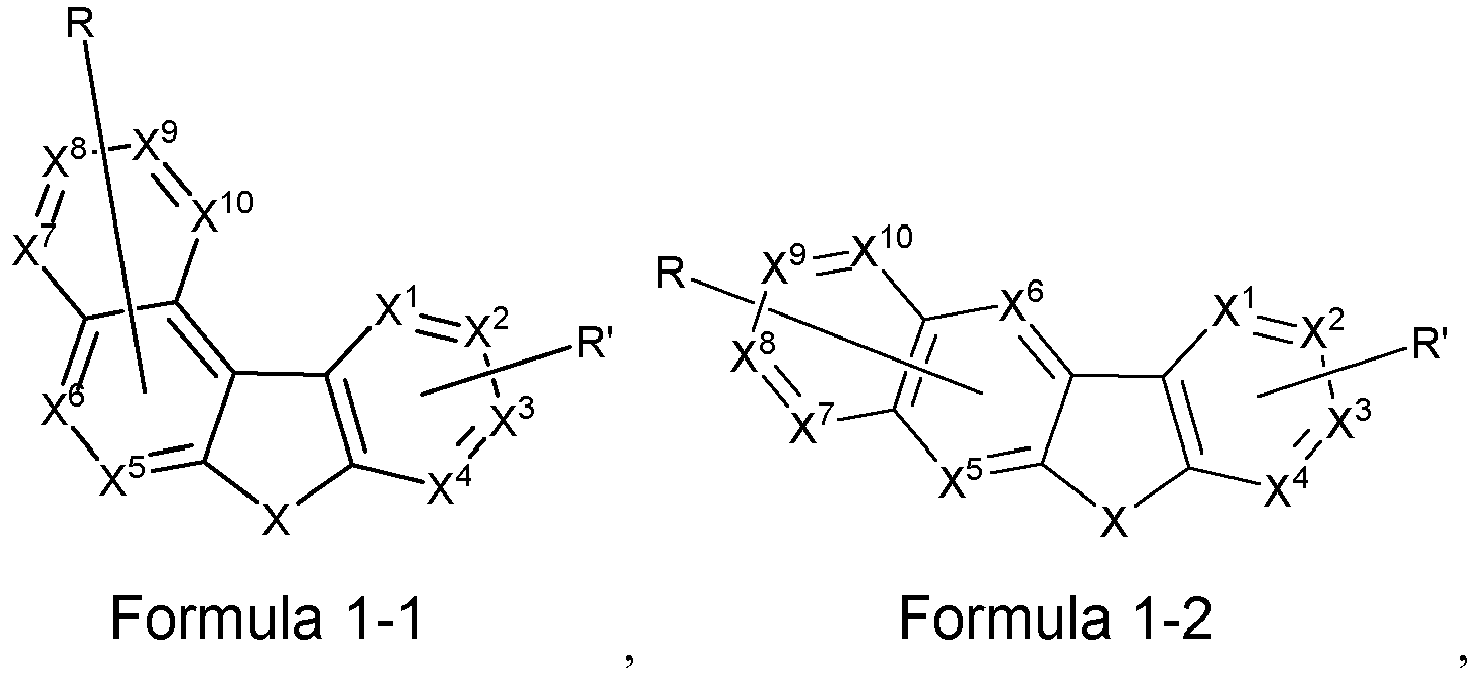
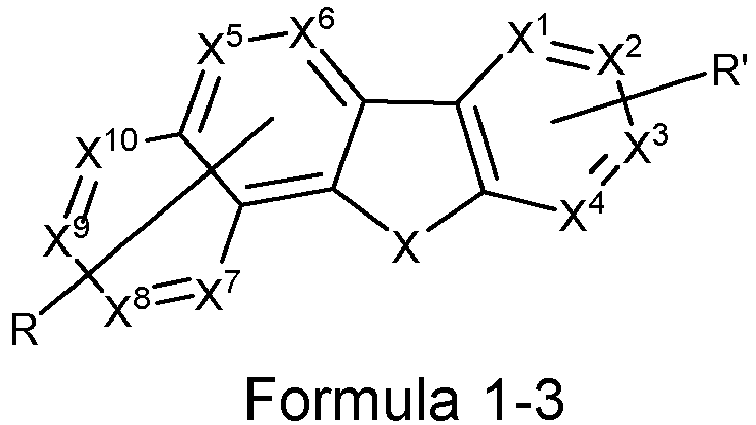
- is disclosed wherein X is selected from the group consisting of O, S, and Se;
- wherein X1 to X10 are each independently selected from the group consisting of carbon and nitrogen;
- wherein at least one of X1 to X6 is nitrogen;
- wherein R and R' each independently represent from mono to the possible maximum number of substitutions, or no substitution;
- wherein R and R' are each independently selected from the group consisting of hydrogen, deuterium, halogen, alkyl, cycloalkyl, heteroalkyl, arylalkyl, alkoxy, aryloxy, amino, silyl, alkenyl, cycloalkenyl, heteroalkenyl, alkynyl, aryl, heteroaryl, acyl, carbonyl, carboxylic acid, ester, nitrile, isonitrile, sulfanyl, sulfinyl, sulfonyl, phosphino, and combinations thereof;
- wherein any adjacent substitutions on the same ring are optionally joined or fused into a ring; and
- wherein at least one of R and R' is not hydrogen or deuterium;
- In some embodiments of the compound, X is O. In some embodiments, X is S.
- In some embodiments of the compound, at least one of X5 and X6 is nitrogen.
- In some embodiments of the compound, the adjacent substitutions on X5 and X6 are not joined or fused into a ring.
- In some embodiments of the compound, X1 to X4 are all carbon.
- In some embodiments of the compound, at least one of X1 to X4 is nitrogen, and at least one of X5 and X6 is nitrogen.
- In some embodiments of the compound, at least one of R and R' comprises at least one chemical group selected from the group consisting of triphenylene, carbazole, dibenzothiphene, dibenzofuran, dibenzoselenophene, azatriphenylene, azacarbazole, aza-dibenzothiophene, aza-dibenzofuran, and aza-dibenzoselenophene.
- In some embodiments, the compound has at least five aromatic rings fused together.
- In some embodiments, the compound has at least six aromatic rings fused together.
- In some embodiments, the compound is selected from the group consisting of:

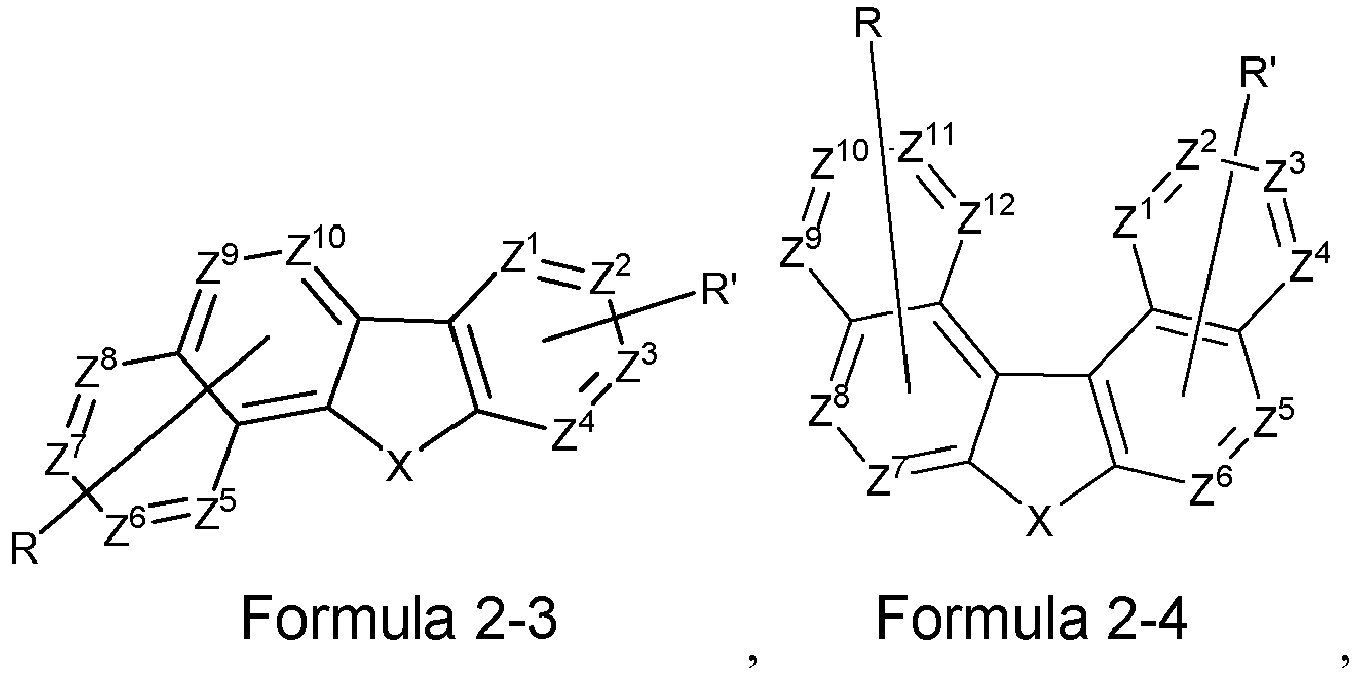


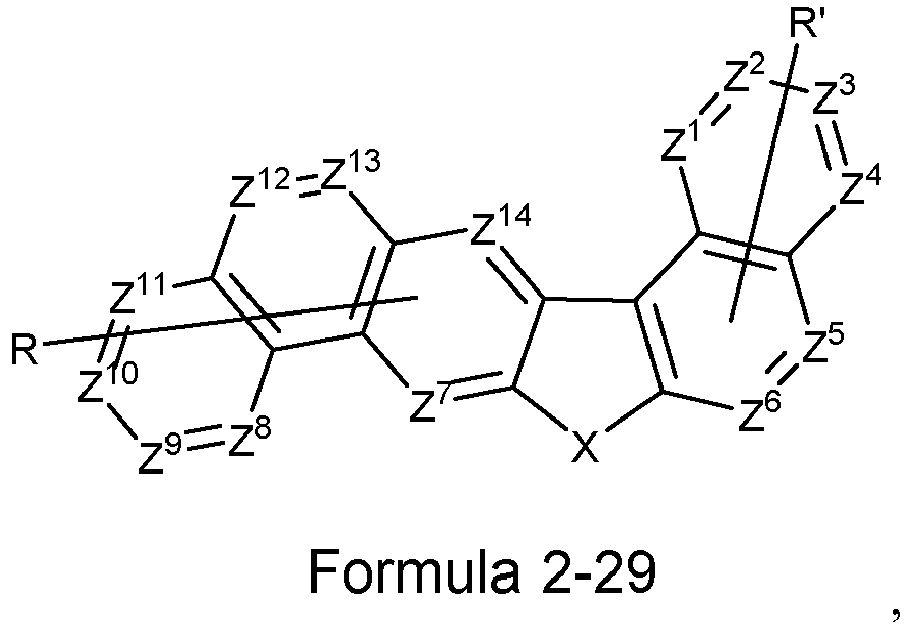


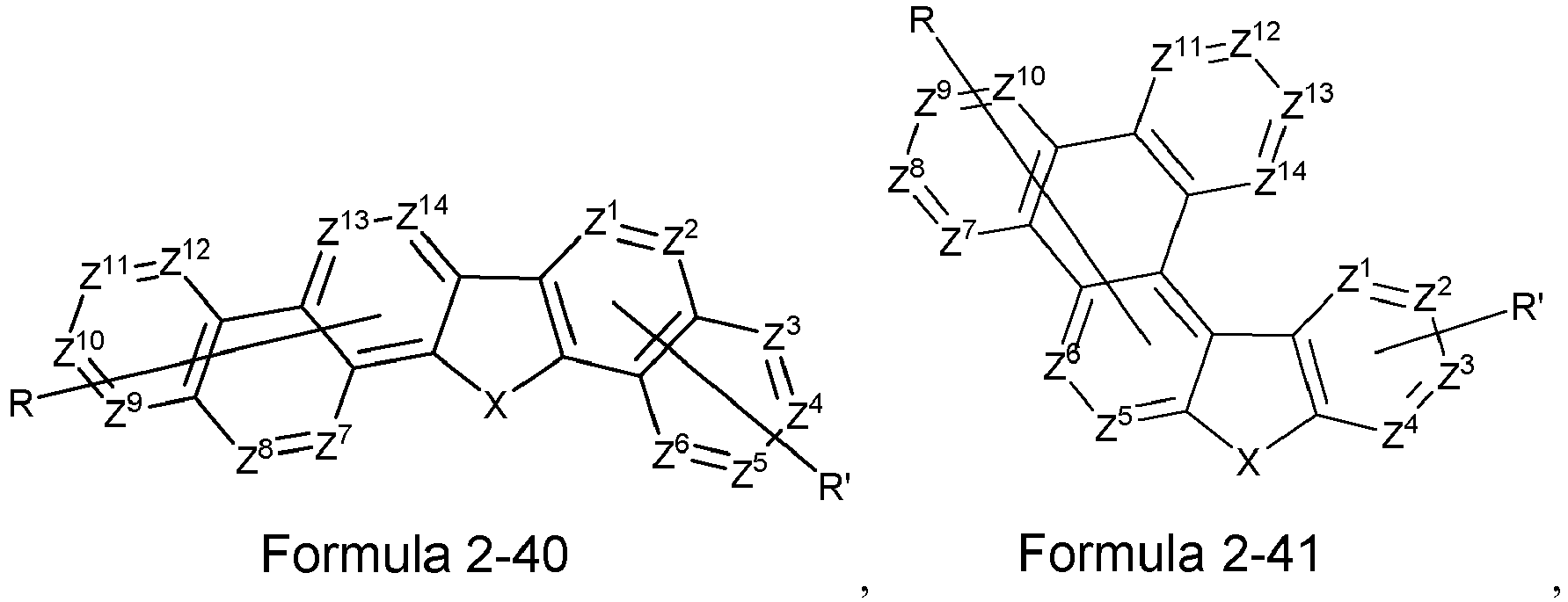
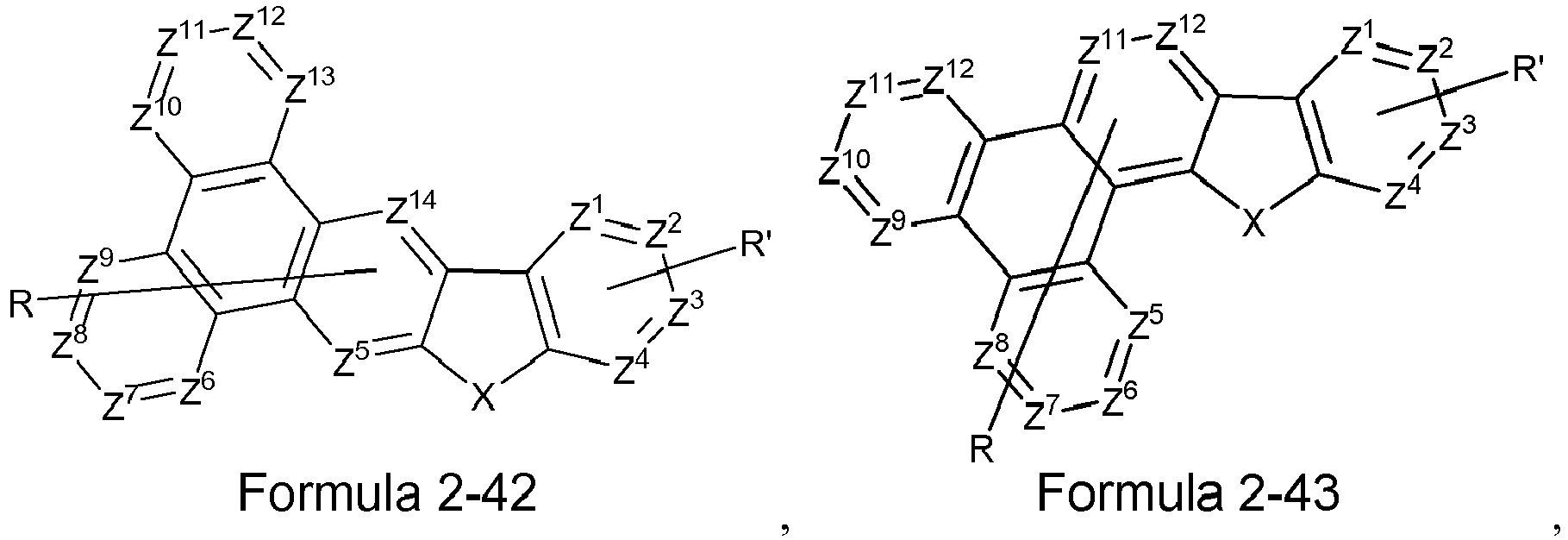


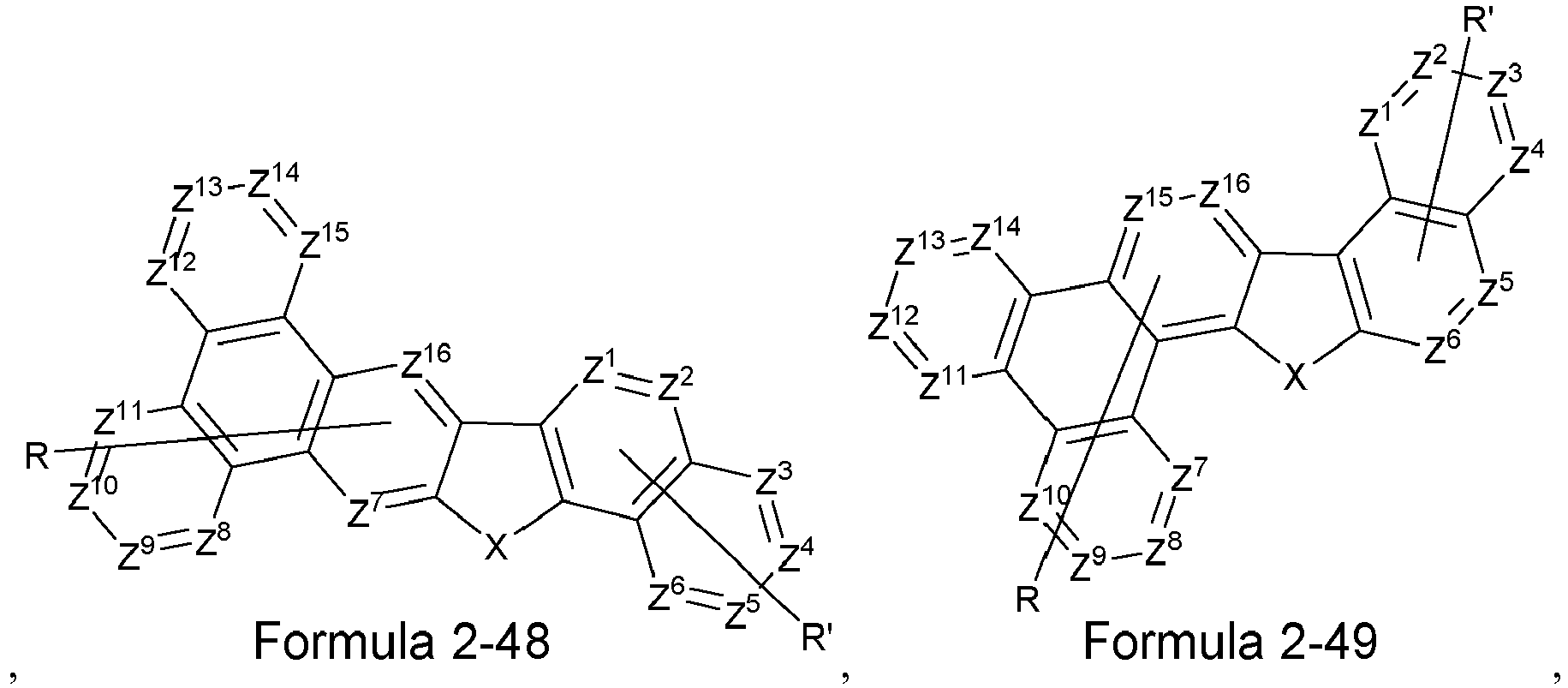


- In some embodiments, the compound comprises a group selected from the group consisting of:


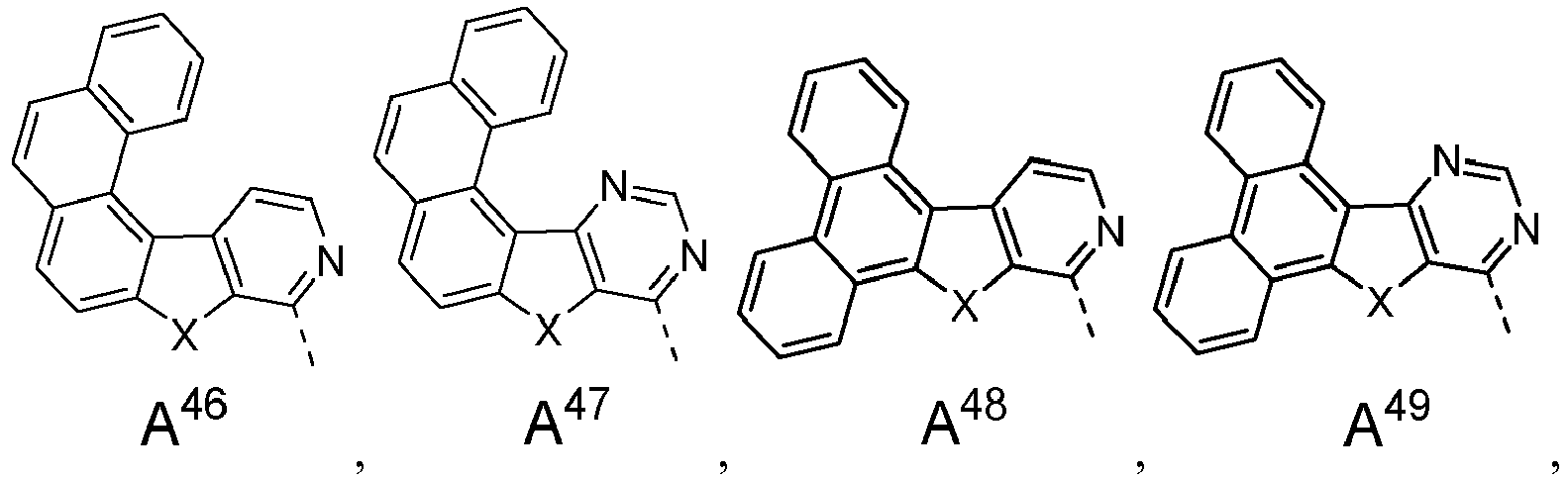


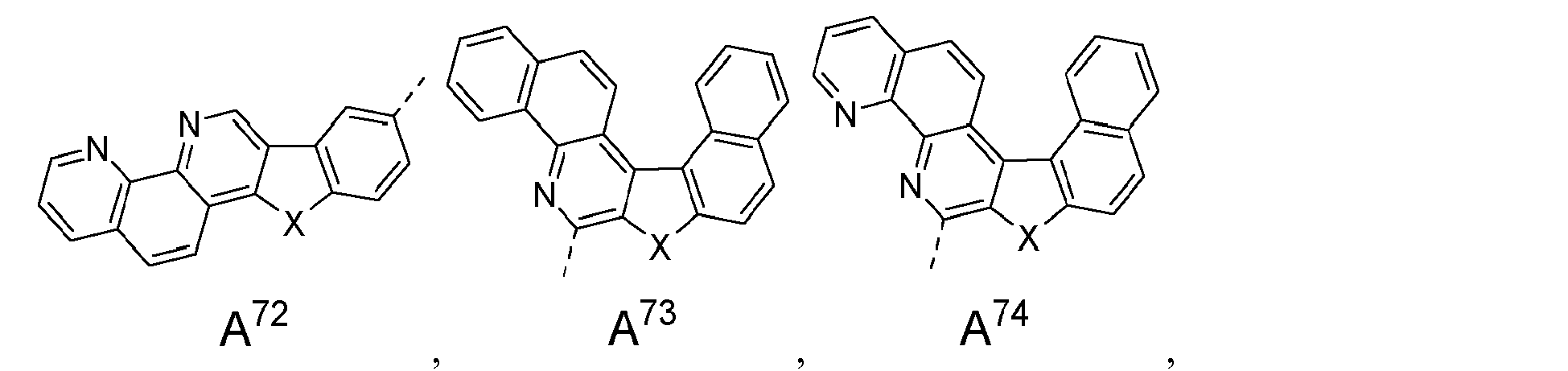
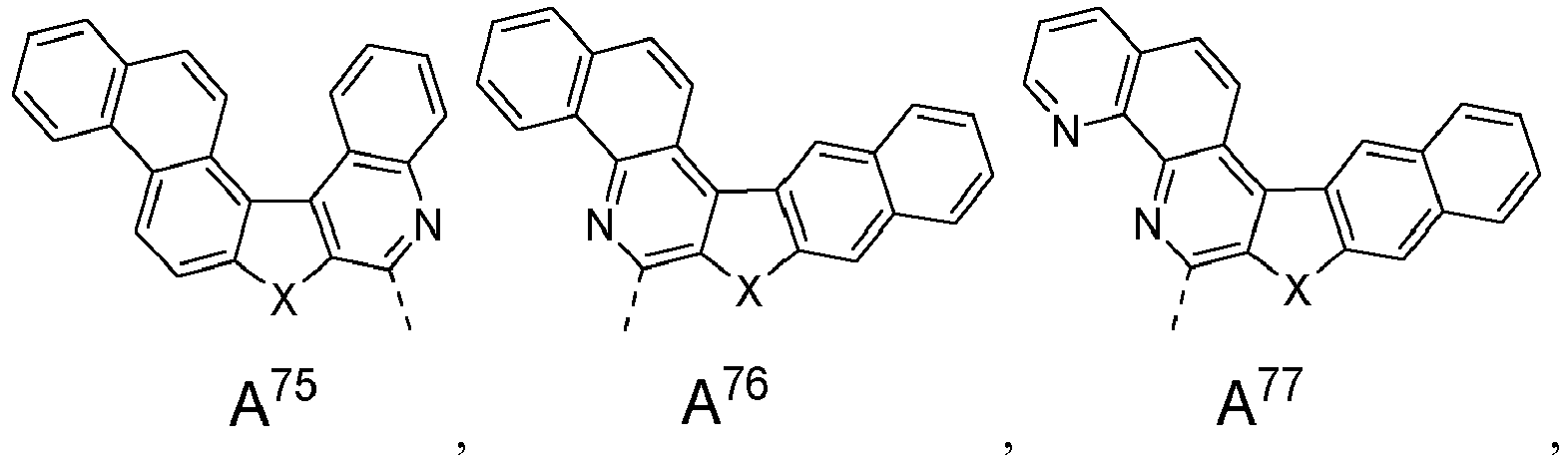


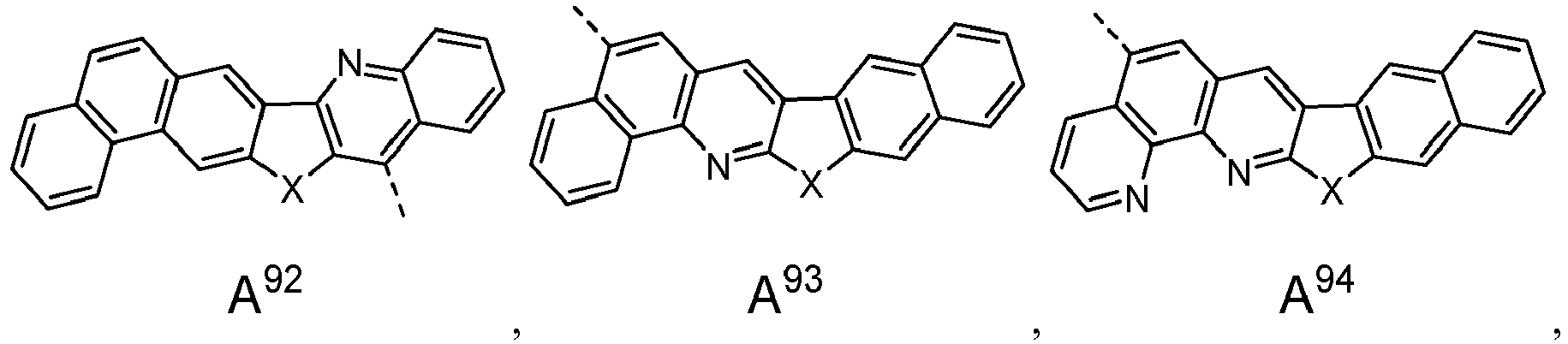


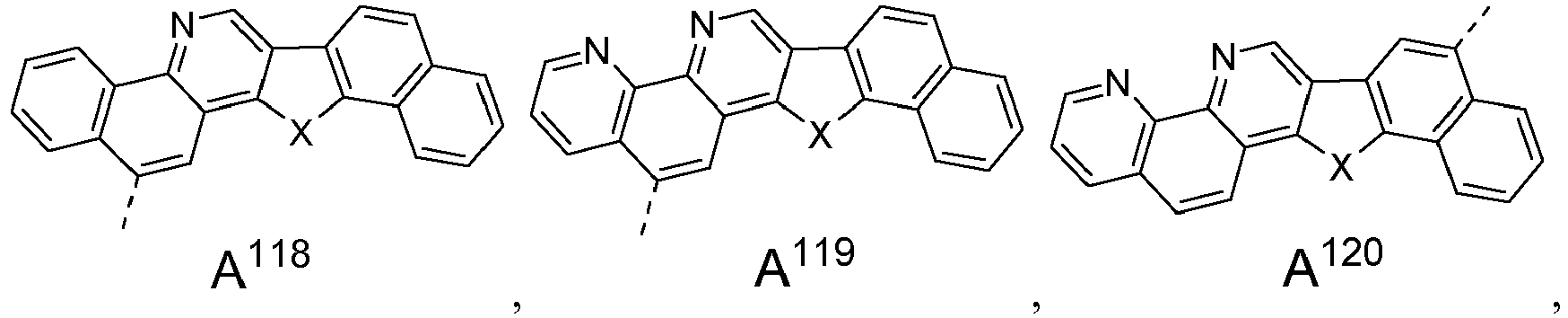


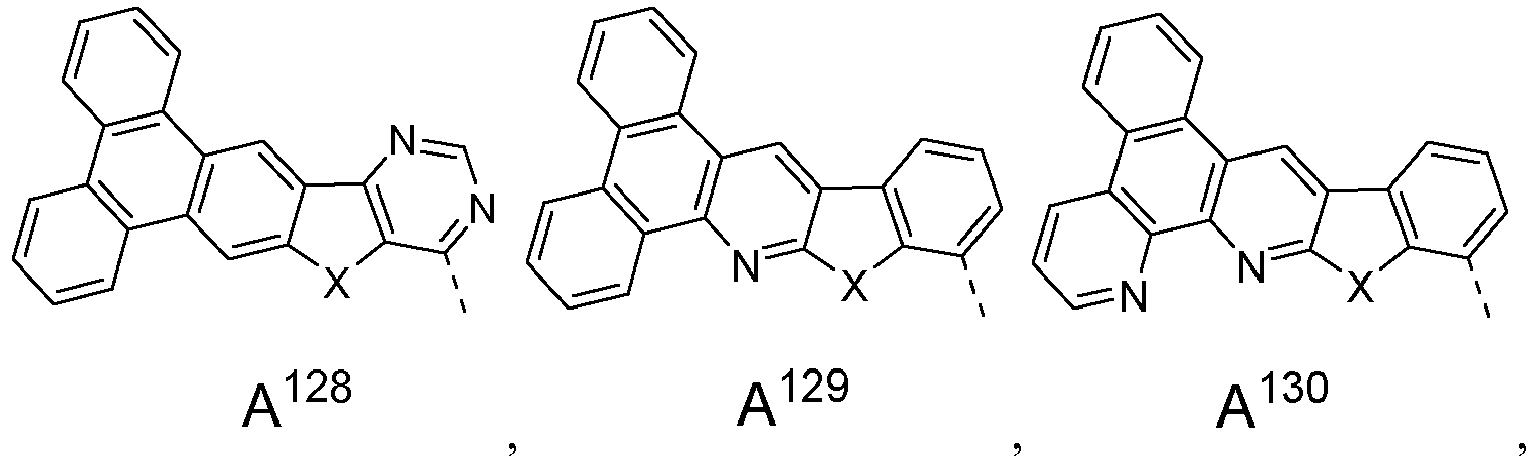


- In some embodiments of the compounds A1 through A144, the compound is substituted by a group selected from the group consisting of D1 through D244 shown below:
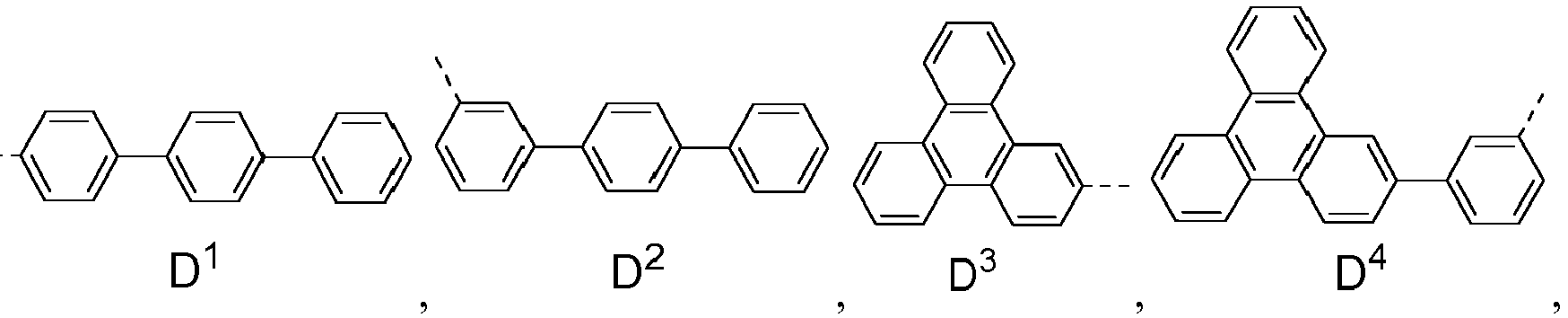

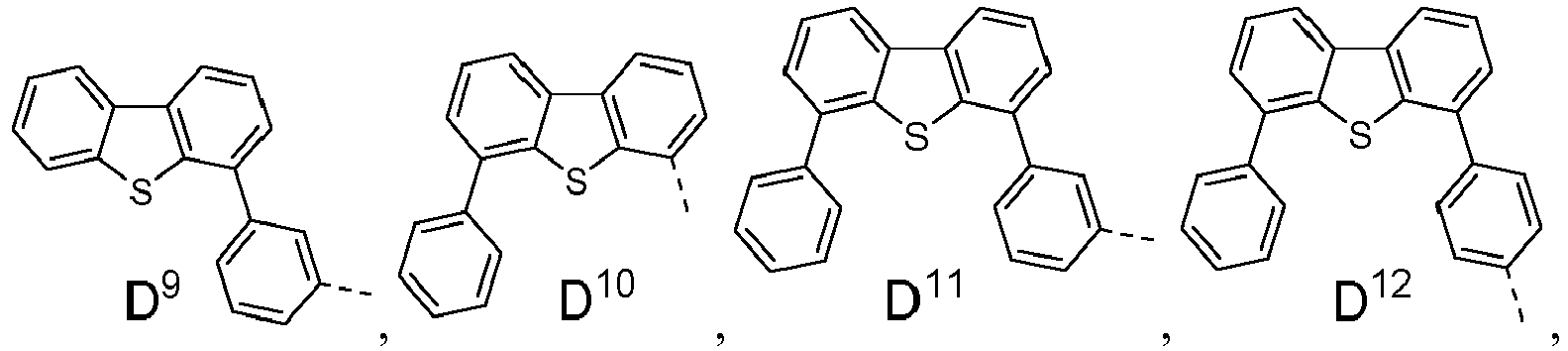
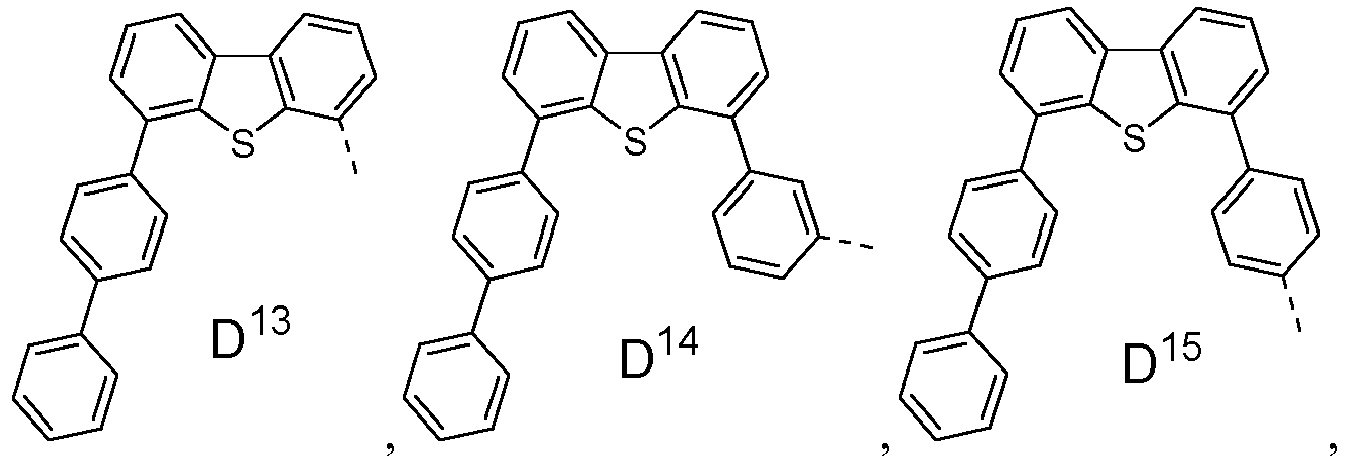

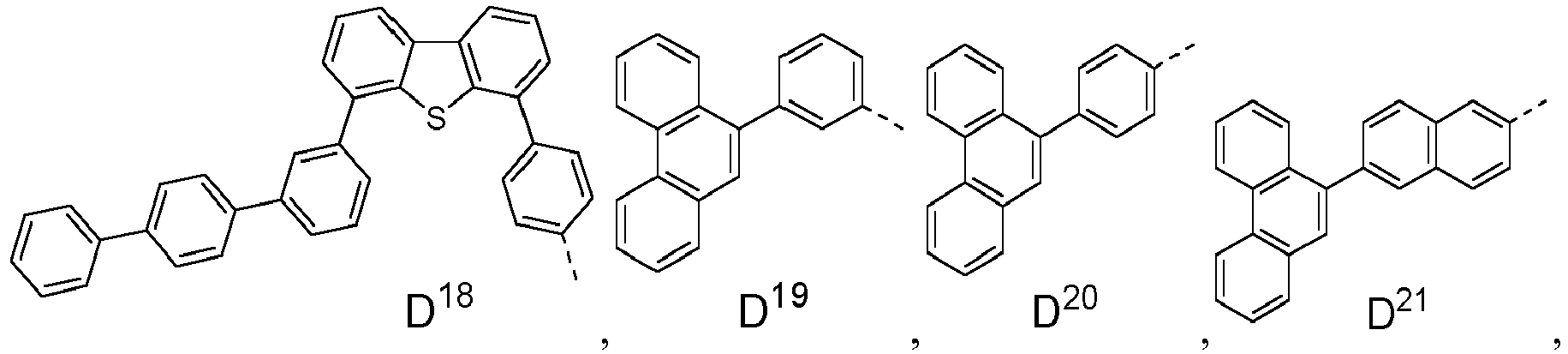

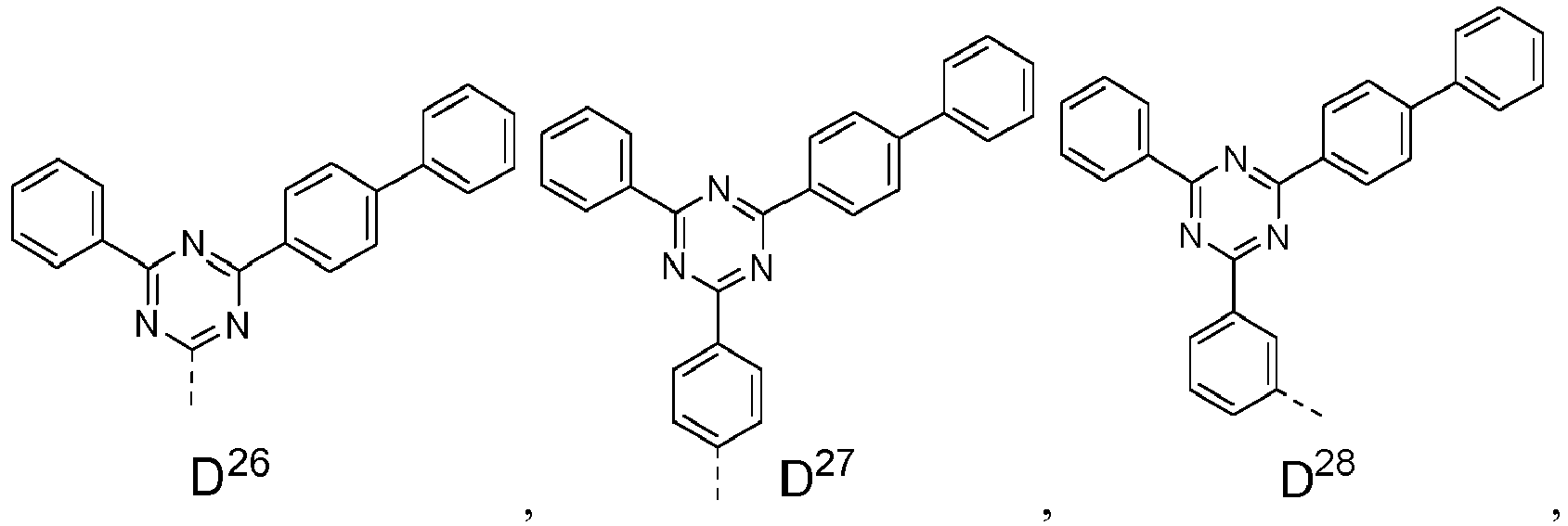


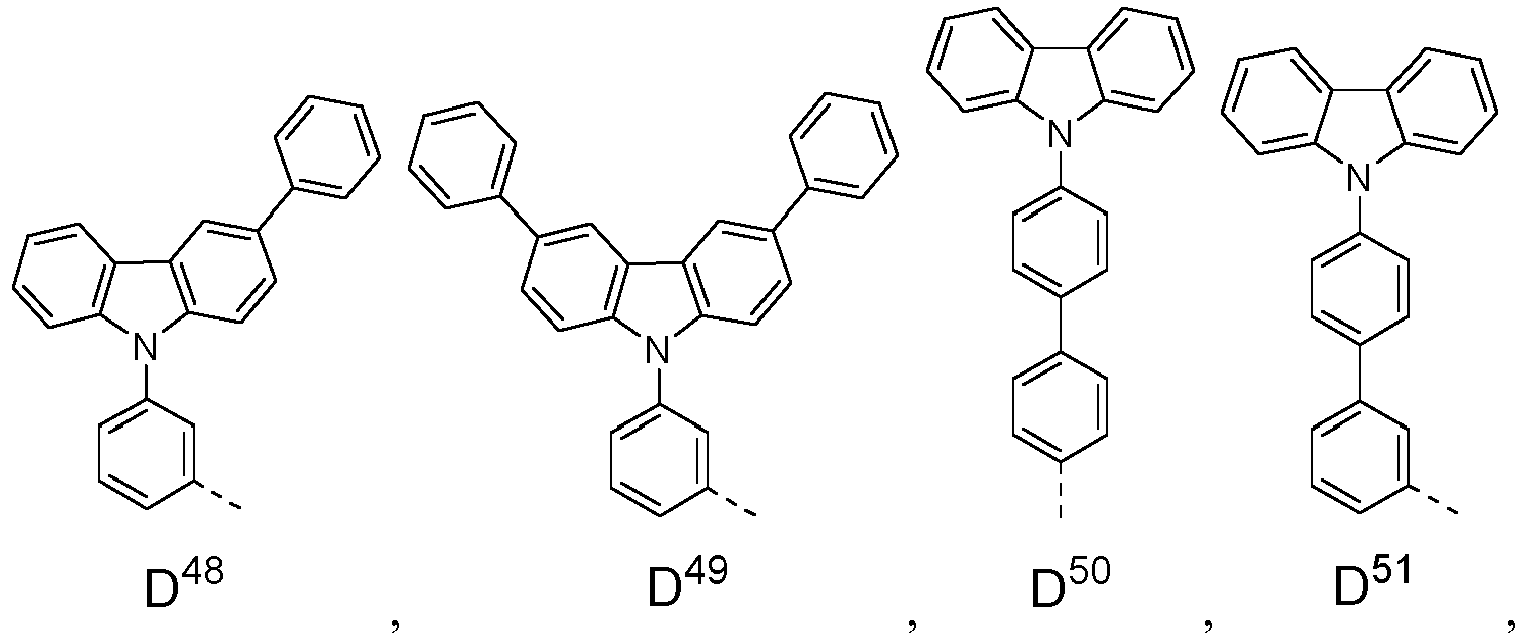
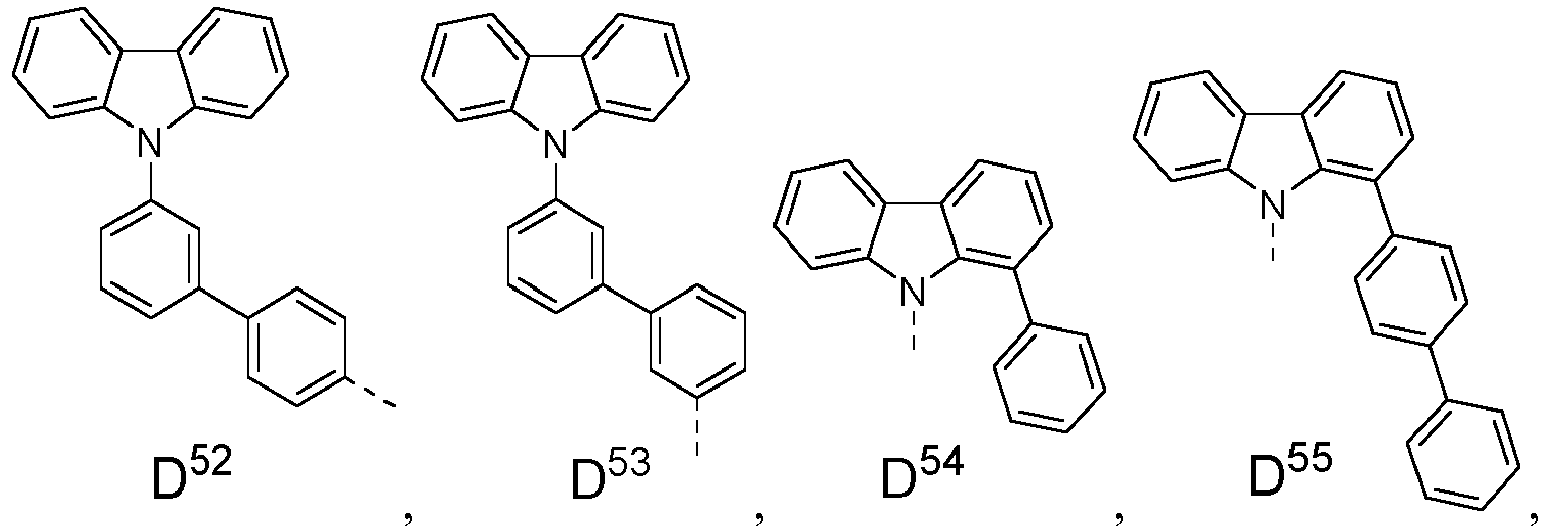


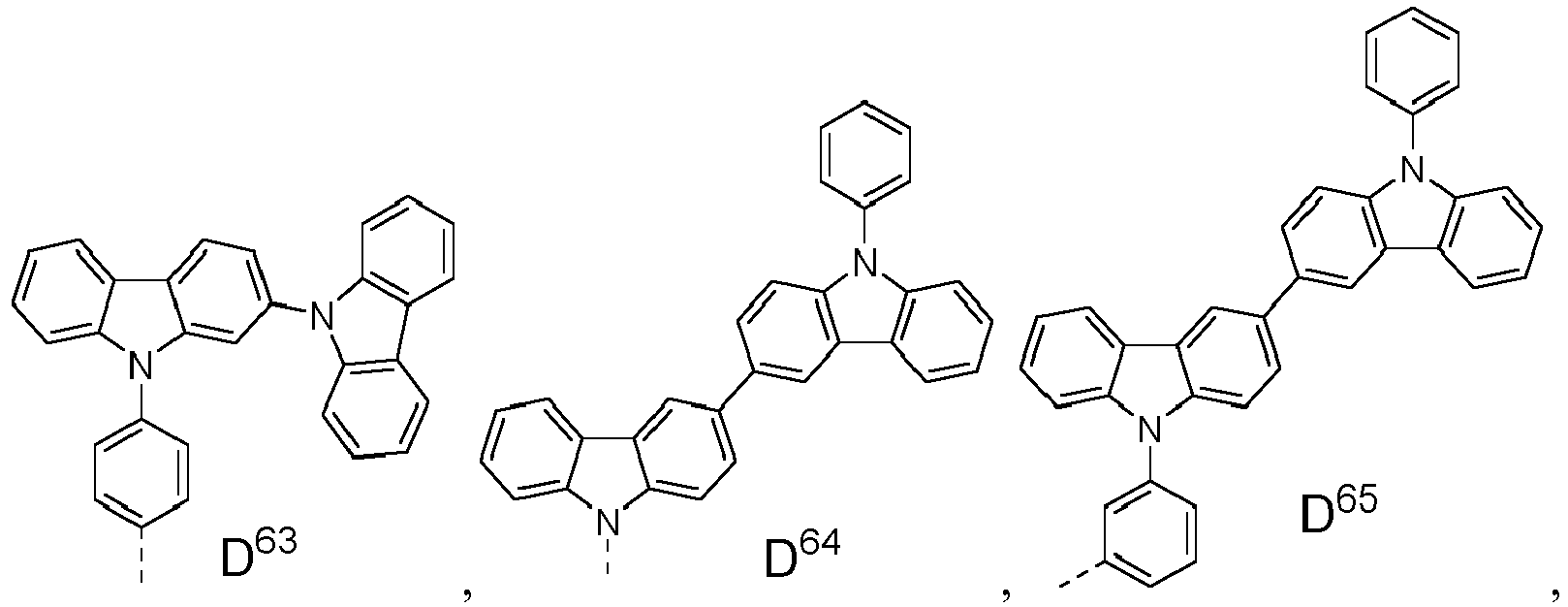


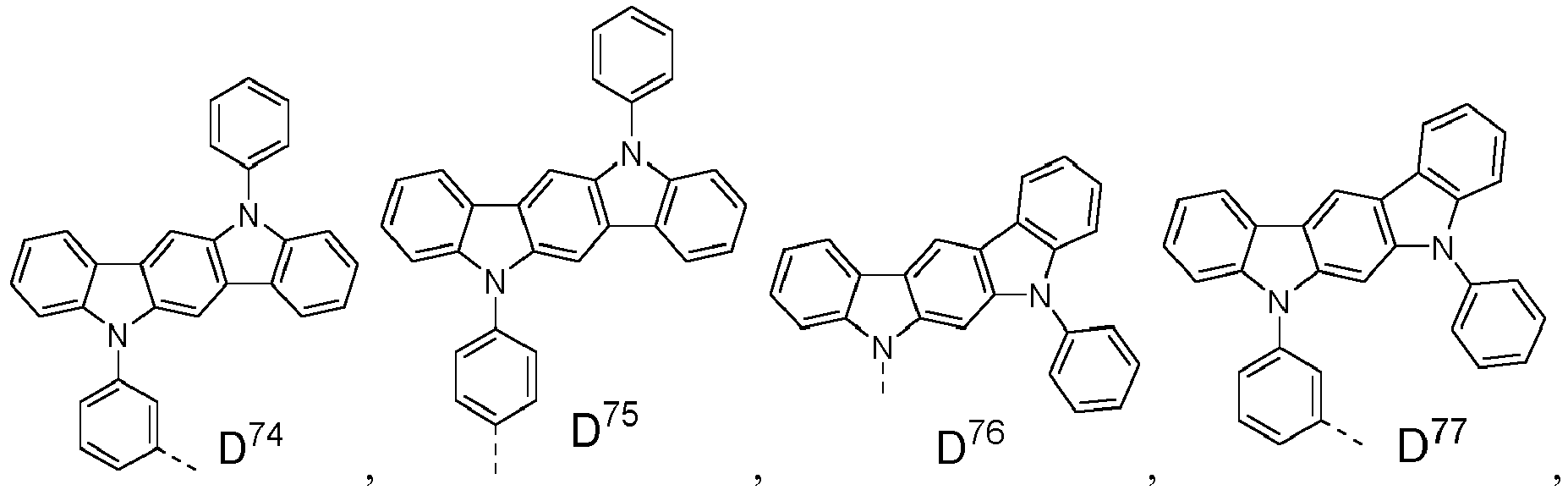


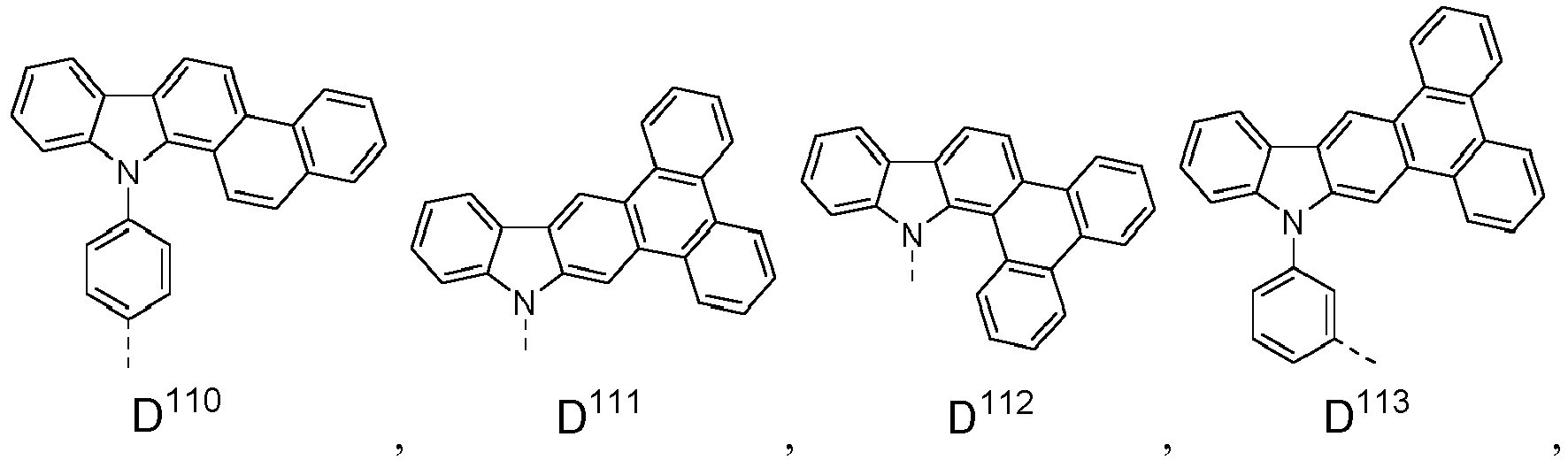

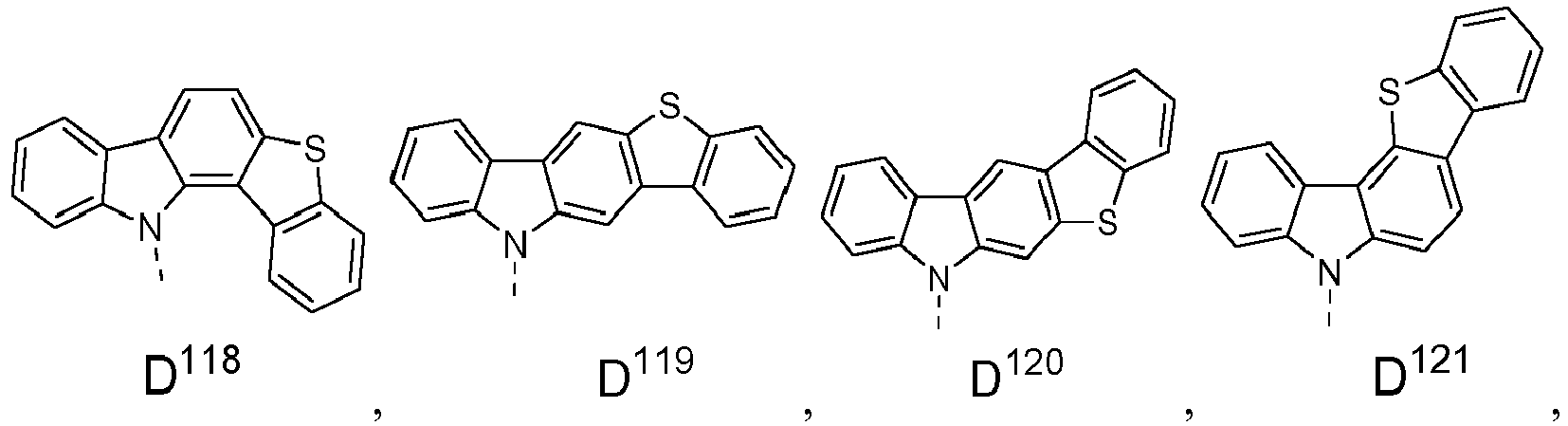
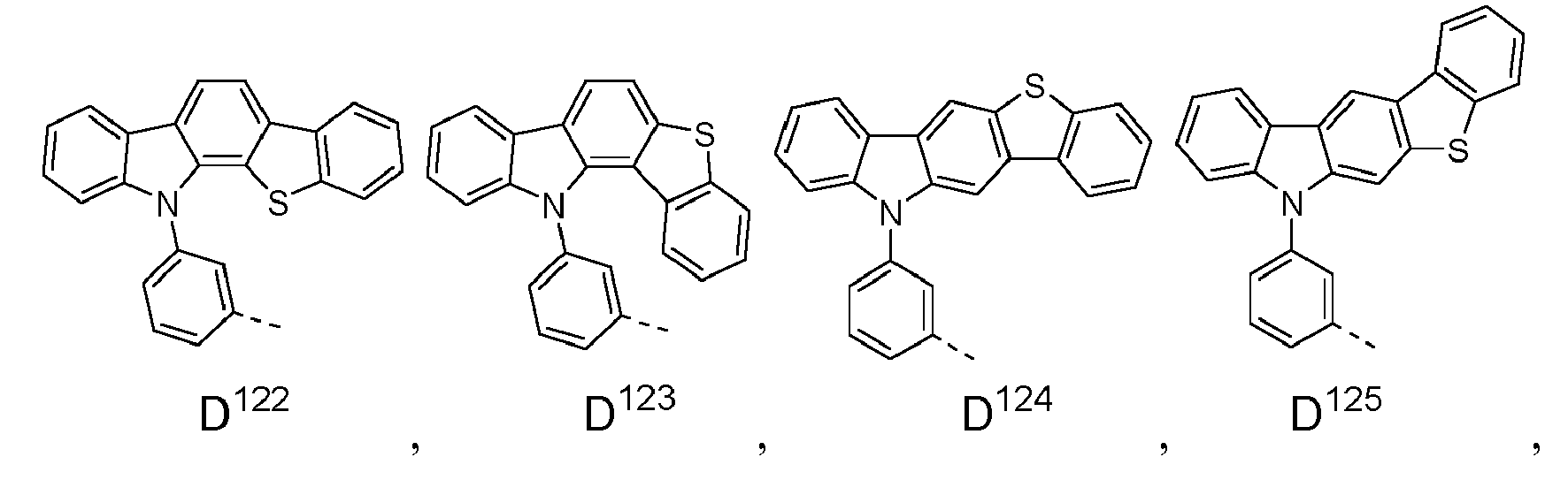


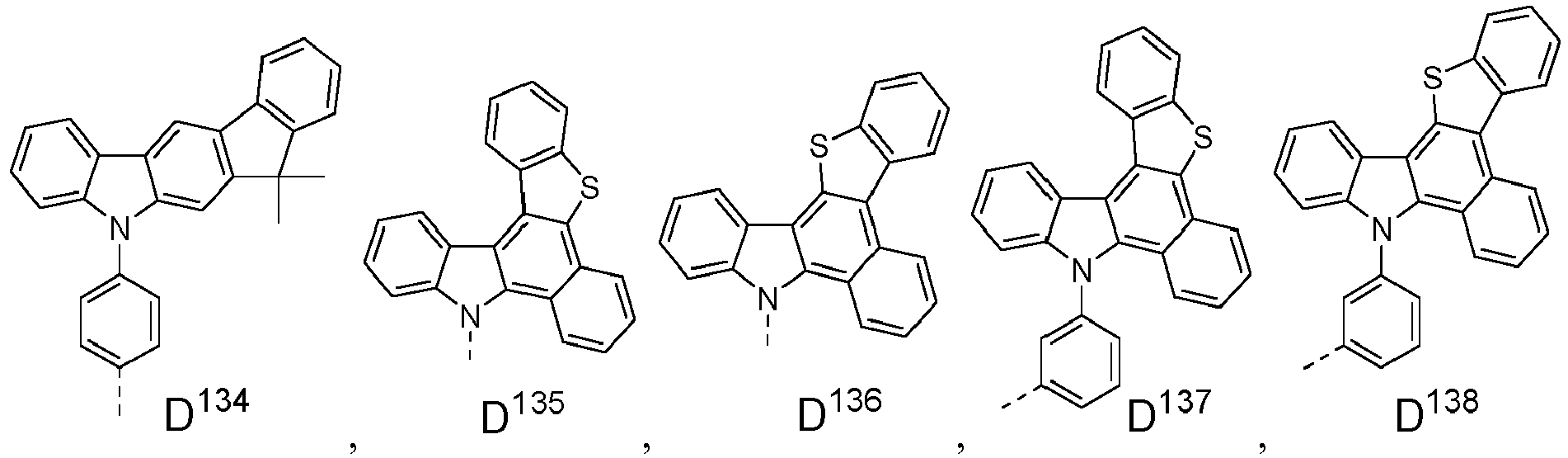

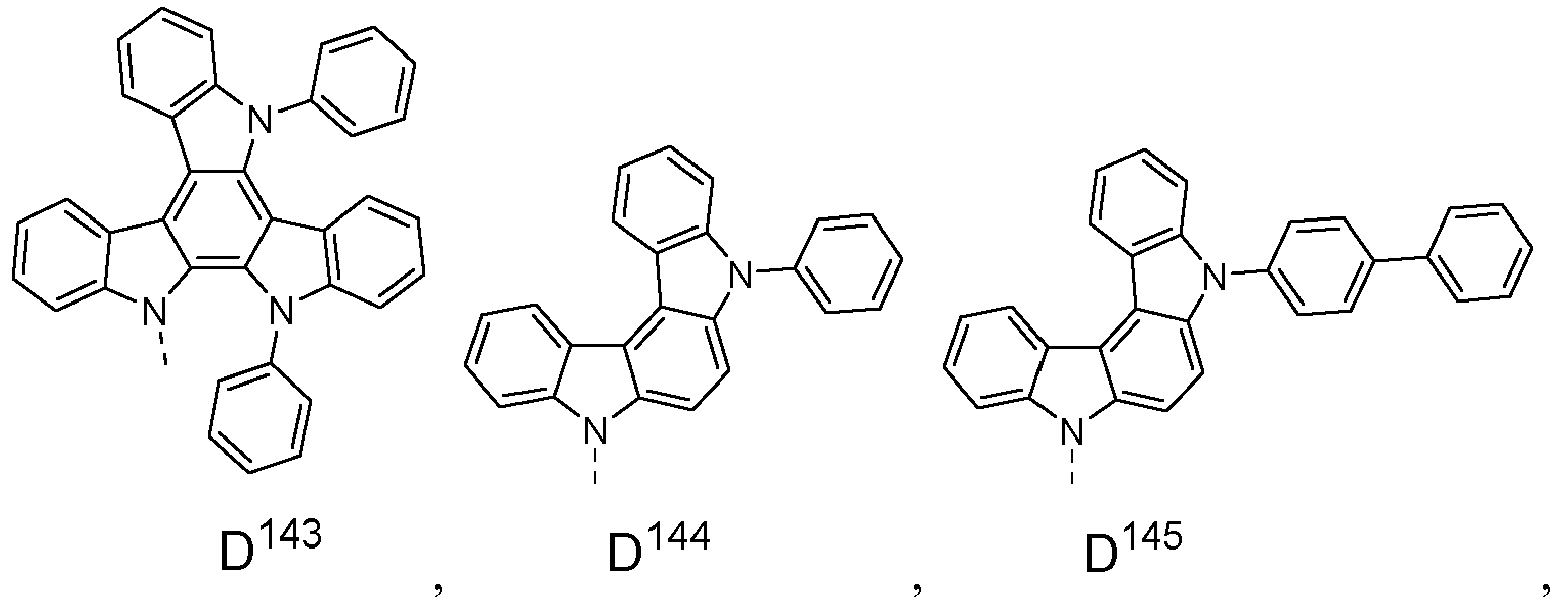


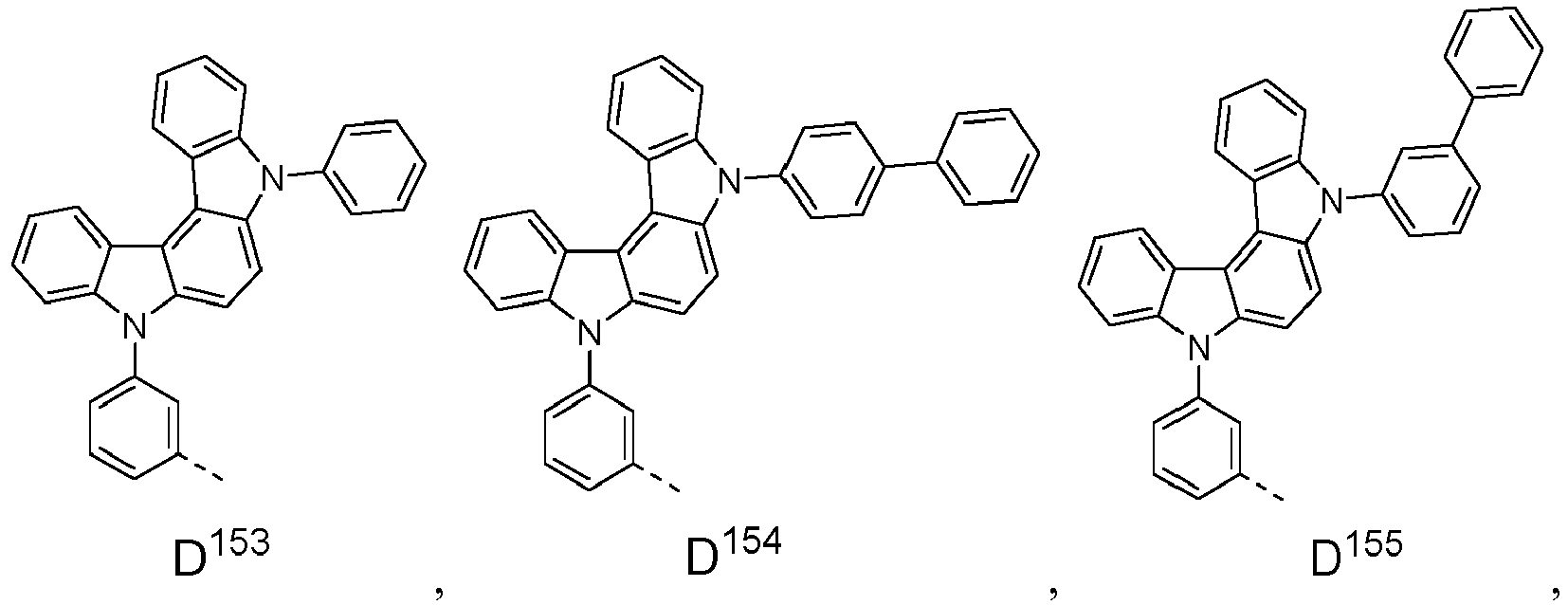


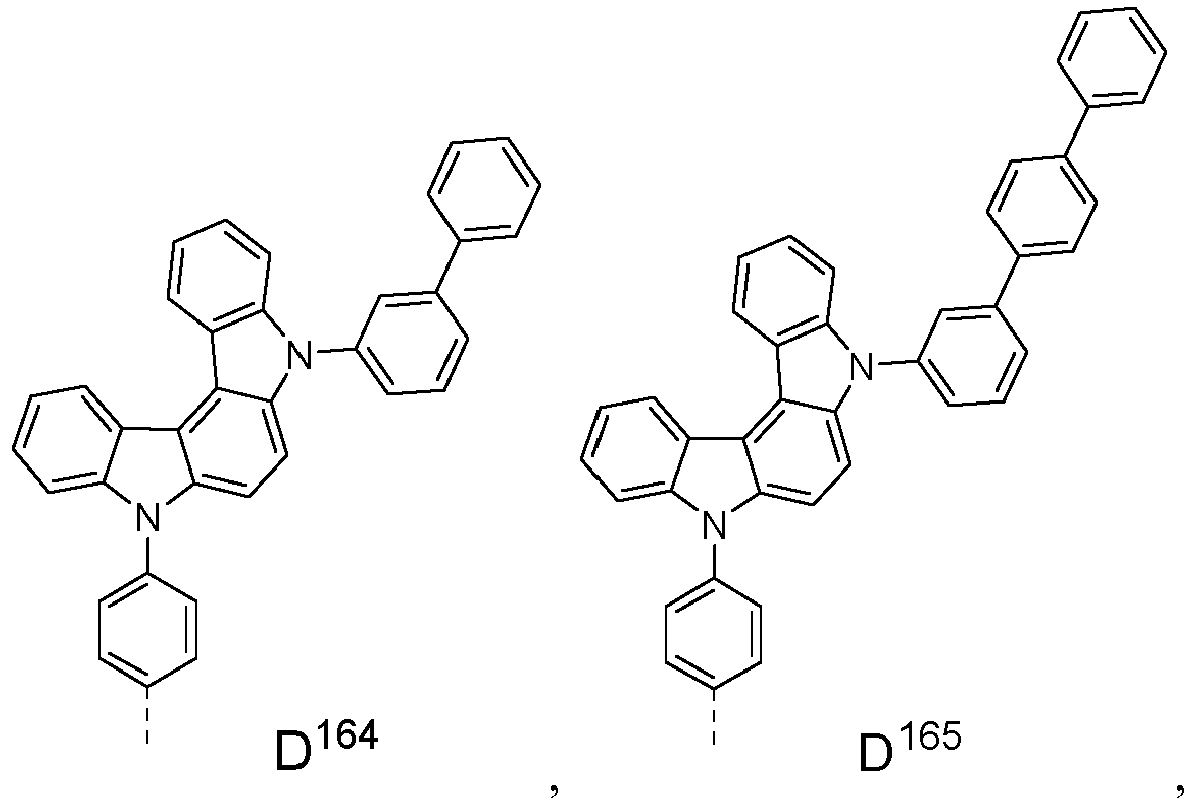

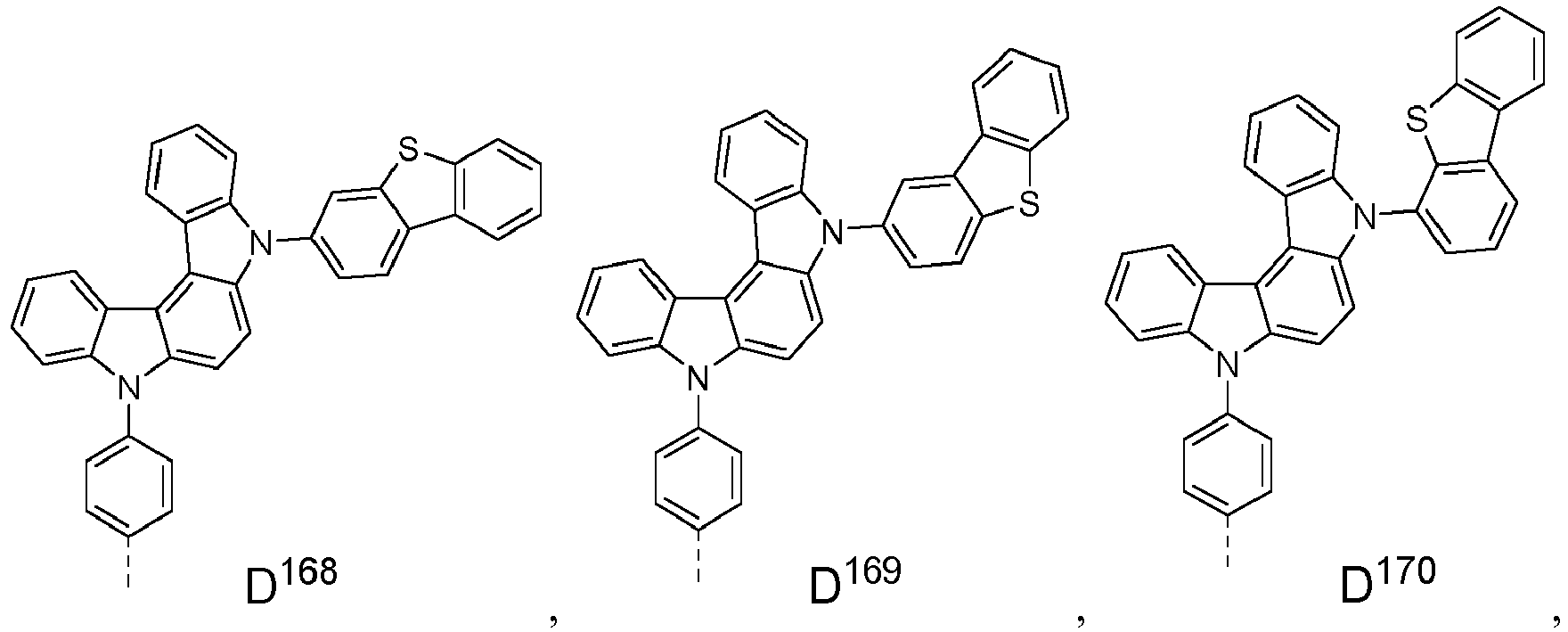


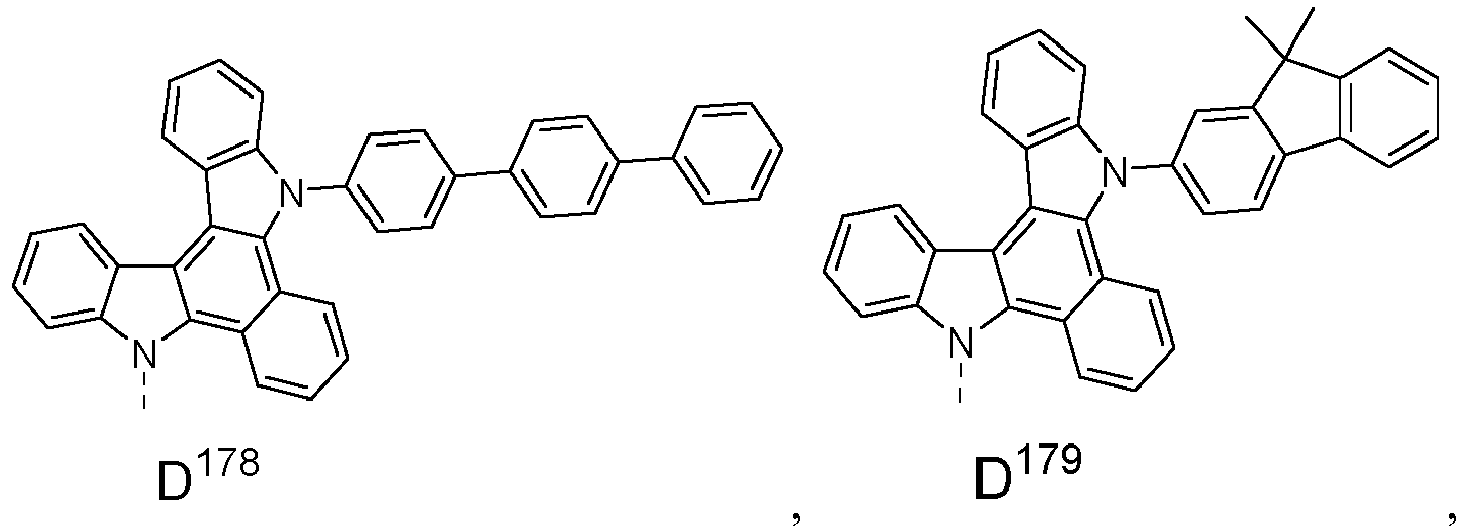


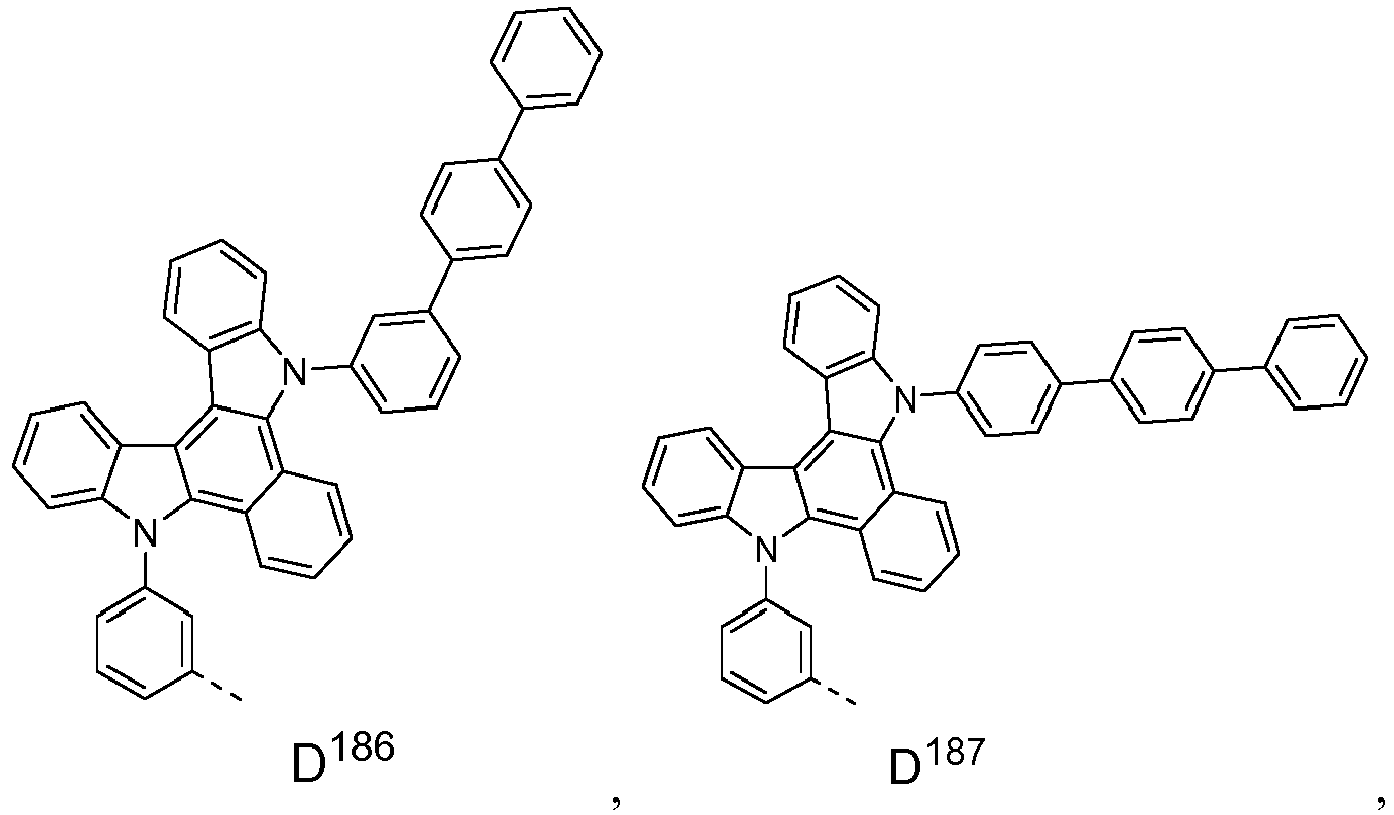


- In some embodiments, the compound is Compound x(Label) having the formula A i D j ; wherein x=144j+i-144, where i is an integer from 1 to 144, and j is an integer from 1 to 244; and wherein Label is the name of X atom in the corresponding A'.
- According to another aspect of the present disclosure, a first organic light emitting device comprising: an anode; a cathode; and an organic layer disposed between the anode and the cathode is disclosed. The organic layer comprises a compound having a formula selected from the group consisting of:

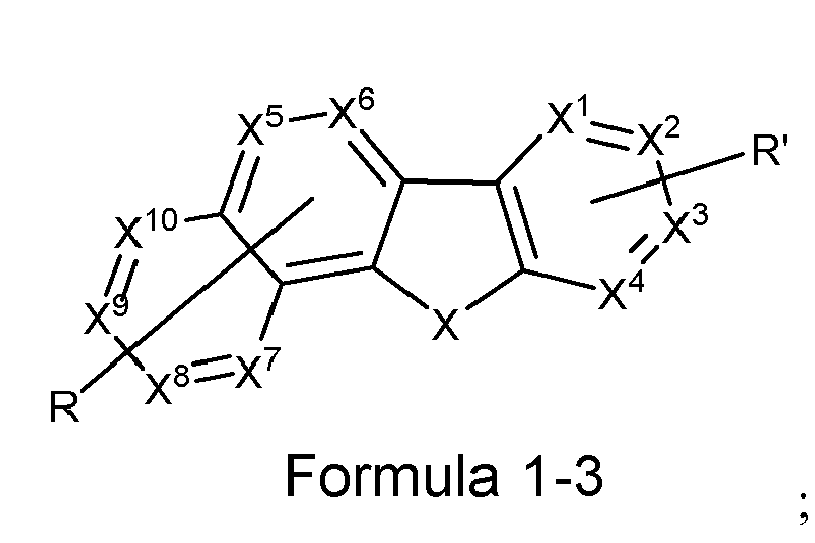
- wherein X is selected from the group consisting of O, S, and Se; wherein X1 to X10 are each independently selected from the group consisting of carbon and nitrogen; wherein at least one of X1 to X6 is nitrogen; wherein R and R' each independently represent from mono to the possible maximum number of substitutions, or no substitution; wherein R and R' are each independently selected from the group consisting of hydrogen, deuterium, halogen, alkyl, cycloalkyl, heteroalkyl, arylalkyl, alkoxy, aryloxy, amino, silyl, alkenyl, cycloalkenyl, heteroalkenyl, alkynyl, aryl, heteroaryl, acyl, carbonyl, carboxylic acid, ester, nitrile, isonitrile, sulfanyl, sulfinyl, sulfonyl, phosphino, and combinations thereof; wherein any adjacent substitutions on the same ring are optionally joined or fused into a ring; and
- wherein at least one of R and R' is not hydrogen or deuterium;
- In some embodiments of the first organic light emitting device, the organic layer is an emissive layer and the compound is a host.
- In some embodiments of the first organic light emitting device, the organic layer further comprises a phosphorescent emissive dopant; wherein the emissive dopant is a transition metal complex having at least one ligand or part of the ligand if the ligand is more than bidentate, selected from the group consisting of:
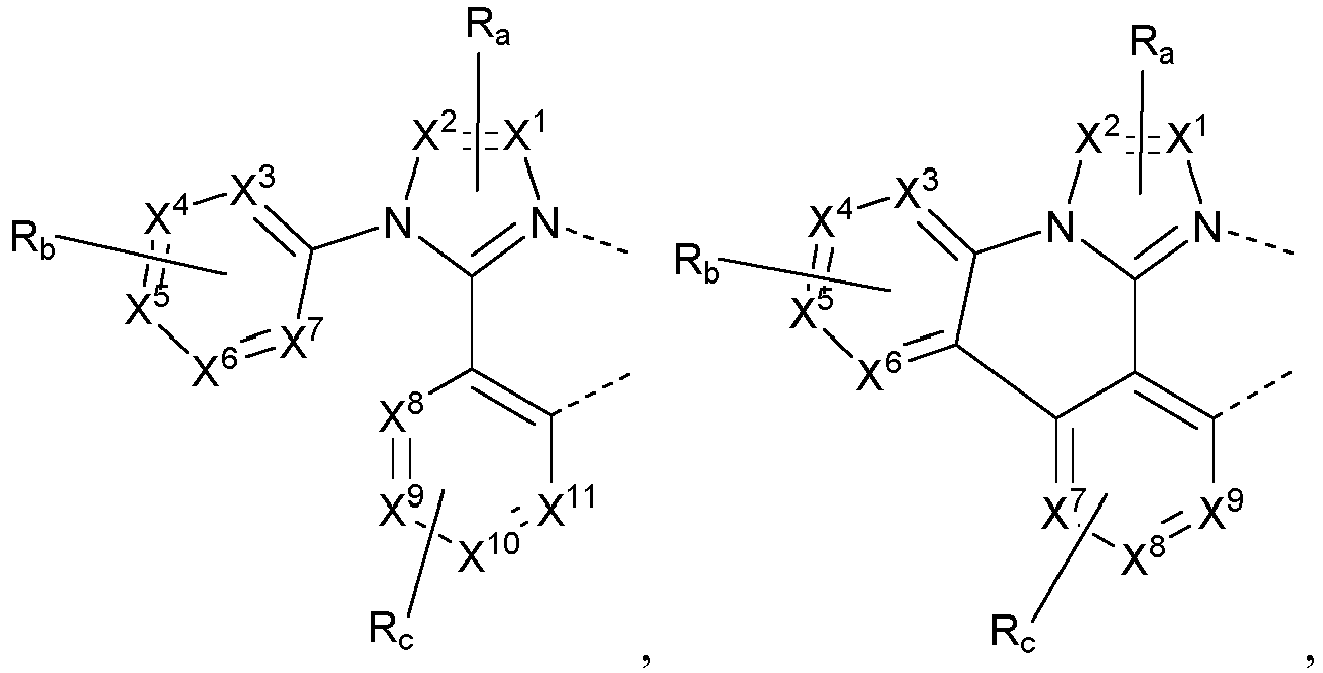
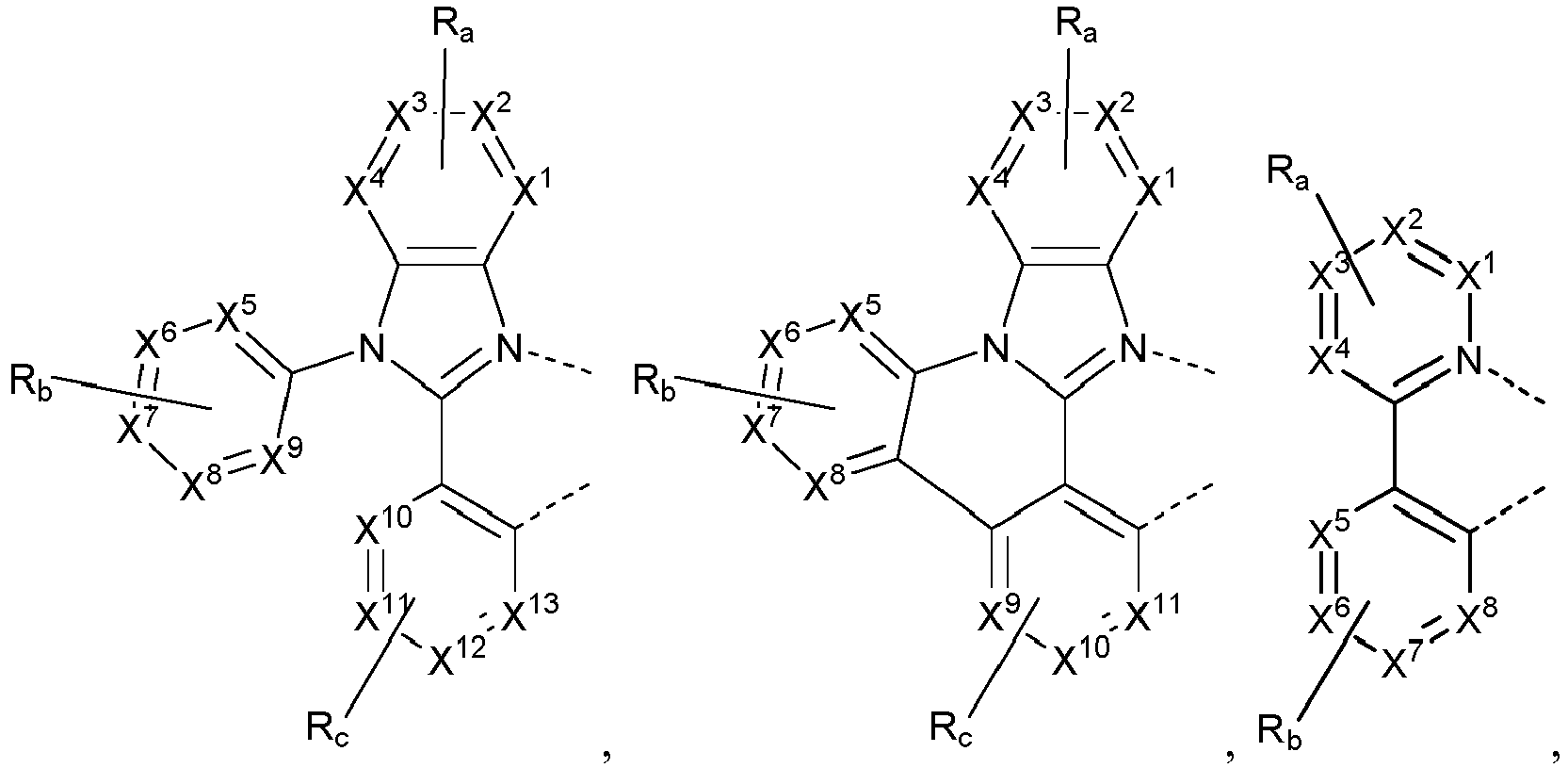


- , wherein each X1 to X13 are independently selected from the group consisting of carbon and nitrogen;
- wherein Z is selected from the group consisting of BR', NR', PR', O, S, Se, C=O, S=O, SO2, CR'R", SiR'R", and GeR'R";
- wherein R' and R" are optionally fused or joined to form a ring;
- wherein each Ra, Rb, Rc, and Rd may represent from mono substitution to the possible maximum number of substitution, or no substitution;
- wherein R', R", Ra, Rb, Rc, and Rd are each independently selected from the group consisting of hydrogen, deuterium, halogen, alkyl, cycloalkyl, heteroalkyl, arylalkyl, alkoxy, aryloxy, amino, silyl, alkenyl, cycloalkenyl, heteroalkenyl, alkynyl, aryl, heteroaryl, acyl, carbonyl, carboxylic acids, ester, nitrile, isonitrile, sulfanyl, sulfinyl, sulfonyl, phosphino, and combinations thereof; and
- wherein any two adjacent substitutents of Ra, Rb, Rc, and Rd are optionally fused or joined to form a ring or form a multidentate ligand.
- In some embodiments of the first organic light emitting device, the organic layer is a charge carrier blocking layer and the compound is a charge carrier blocking material in the organic layer.
- In some embodiments of the first organic light emitting device, the organic layer is a charge carrier transporting layer and the compound is a charge carrier transporting material in the organic layer.
- In some embodiments of the first organic light emitting device, the device can be incorporated into a consumer product, an electronic component module, an organic light-emitting device, or a lighting panel.
- In some embodiments of the first organic light emitting device, the organic layer is an emissive layer and the compound is an emitter.
- In some embodiments of the first organic light emitting device where the compound is an emitter in the emissive layer, the first organic light emitting device emits a luminescent radiation at room temperature when a voltage is applied across the first organic light emitting device, and the luminescent radiation comprises a delayed fluorescence process.
- In some embodiments of the first organic light emitting device where the compound is an emitter in the emissive layer, the emissive layer further comprises a host material.
- In some embodiments of the first organic light emitting device where the compound is an emitter in the emissive layer, the emissive layer further comprises a first phosphorescent emitting material. In some embodiments, the emissive layer further comprises a second phosphorescent emitting material.
- In some embodiments where the compound is an emitter in the emissive layer and the emissive layer further comprises a first phosphorescent emitting material, the first organic light emitting device emits a white light at room temperature when a voltage is applied across the organic light emitting device. In some embodiments of the white light emitting device, the compound emits a blue light with a peak wavelength of about 400 nm to about 500 nm. In some embodiments of the white light emitting device, the compound emits a yellow light with a peak wavelength of about 530 nm to about 580 nm.
- In another aspect of the present disclosure, a formulation comprising a compound having a formula selected from the group consisting of:
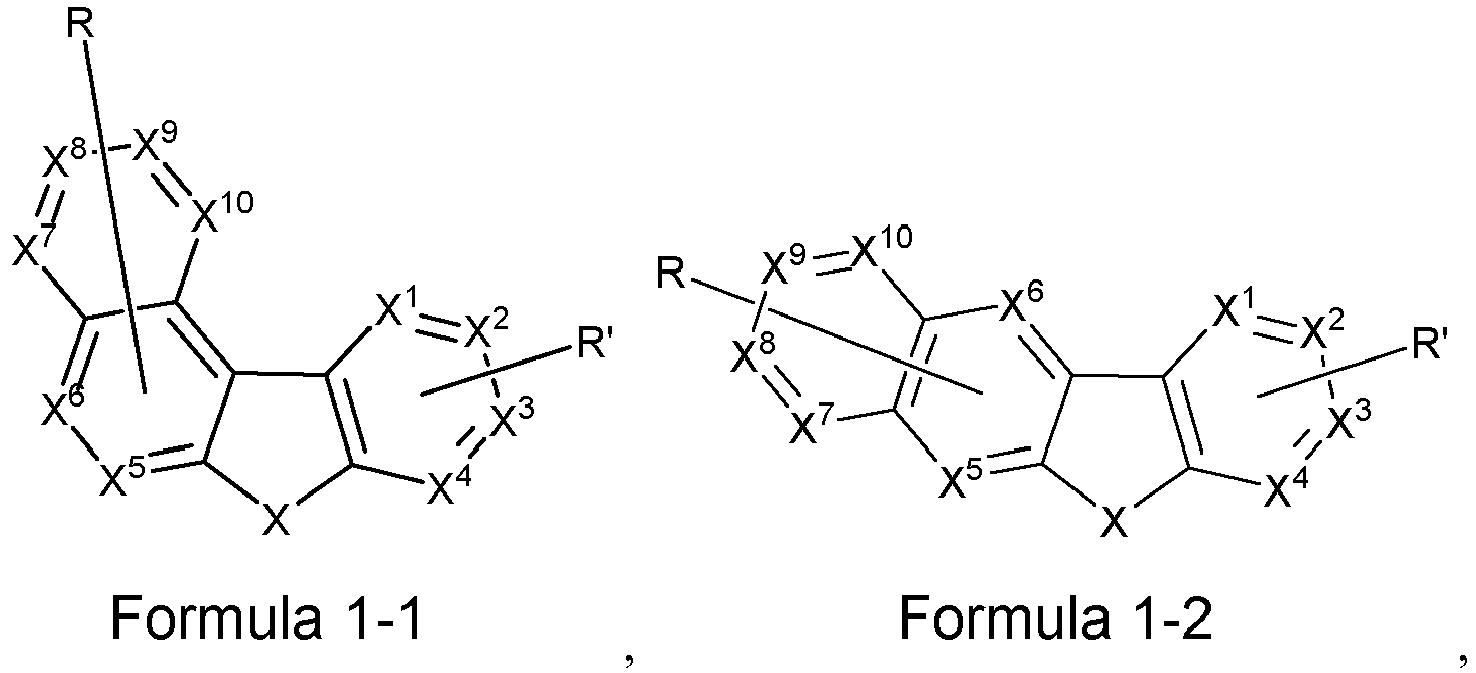

In Formula 1-1, Formula 1-2, and Formula 1-3, - X is selected from the group consisting of O, S, and Se;
- wherein X1 to X10 are each independently selected from the group consisting of carbon and nitrogen;
- wherein at least one of X1 to X6 is nitrogen;
- wherein R and R' each independently represent from mono to the possible maximum number of substitutions, or no substitution;
- wherein R and R' are each independently selected from the group consisting of hydrogen, deuterium, halogen, alkyl, cycloalkyl, heteroalkyl, arylalkyl, alkoxy, aryloxy, amino, silyl, alkenyl, cycloalkenyl, heteroalkenyl, alkynyl, aryl, heteroaryl, acyl, carbonyl, carboxylic acid, ester, nitrile, isonitrile, sulfanyl, sulfinyl, sulfonyl, phosphino, and combinations thereof;
- wherein any adjacent substitutions on the same ring are optionally joined or fused into a ring; and
- wherein at least one of R and R' is not hydrogen or deuterium;
- In yet another aspect of the present disclsoure, a formulation that comprises the first compound of the present disclosure is described. The formulation can include one or more components selected from the group consisting of a solvent, a host, a hole injection material, hole transport material, and an electron transport layer material, disclosed herein.
- The materials described herein as useful for a particular layer in an organic light emitting device may be used in combination with a wide variety of other materials present in the device. For example, emissive dopants disclosed herein may be used in conjunction with a wide variety of hosts, transport layers, blocking layers, injection layers, electrodes and other layers that may be present. The materials described or referred to below are non-limiting examples of materials that may be useful in combination with the compounds disclosed herein, and one of skill in the art can readily consult the literature to identify other materials that may be useful in combination.
- A charge transport layer can be doped with conductivity dopants to substantially alter its density of charge carriers, which will in turn alter its conductivity. The conductivity is increased by generating charge carriers in the matrix material, and depending on the type of dopant, a change in the Fermi level of the semiconductor may also be achieved. Hole-transporting layer can be doped by p-type conductivity dopants and n-type conductivity dopants are used in the electron-transporting layer.
- Non-limiting examples of the conductivity dopants that may be used in an OLED in combination with materials disclosed herein are exemplified below together with references that disclose those materials:
EP01617493 EP01968131 EP2020694 ,EP2684932 ,US20050139810 ,US20070160905 ,US20090167167 ,US2010288362 ,WO06081780 WO2009003455 ,WO2009008277 ,WO2009011327 ,WO2014009310 ,US2007252140 ,US2015060804 andUS2012146012 .


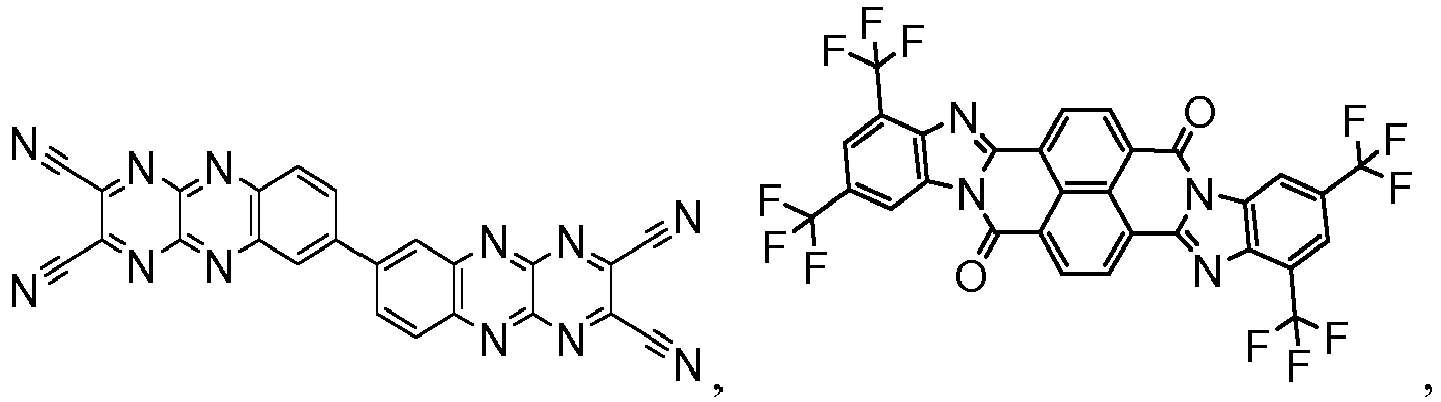

- A hole injecting/transporting material to be used in the present invention is not particularly limited, and any compound may be used as long as the compound is typically used as a hole injecting/transporting material. Examples of the material include, but are not limited to: a phthalocyanine or porphyrin derivative; an aromatic amine derivative; an indolocarbazole derivative; a polymer containing fluorohydrocarbon; a polymer with conductivity dopants; a conducting polymer, such as PEDOT/PSS; a self-assembly monomer derived from compounds such as phosphonic acid and silane derivatives; a metal oxide derivative, such as MoOx; a p-type semiconducting organic compound, such as 1,4,5,8,9,12-Hexaazatriphenylenehexacarbonitrile; a metal complex, and a cross-linkable compounds.
- Examples of aromatic amine derivatives used in HIL or HTL include, but are not limited to the following general structures:


- Each of Ar1 to Ar9 is selected from the group consisting of aromatic hydrocarbon cyclic compounds such as benzene, biphenyl, triphenyl, triphenylene, naphthalene, anthracene, phenalene, phenanthrene, fluorene, pyrene, chrysene, perylene, and azulene; the group consisting of aromatic heterocyclic compounds such as dibenzothiophene, dibenzofuran, dibenzoselenophene, furan, thiophene, benzofuran, benzothiophene, benzoselenophene, carbazole, indolocarbazole, pyridylindole, pyrrolodipyridine, pyrazole, imidazole, triazole, oxazole, thiazole, oxadiazole, oxatriazole, dioxazole, thiadiazole, pyridine, pyridazine, pyrimidine, pyrazine, triazine, oxazine, oxathiazine, oxadiazine, indole, benzimidazole, indazole, indoxazine, benzoxazole, benzisoxazole, benzothiazole, quinoline, isoquinoline, cinnoline, quinazoline, quinoxaline, naphthyridine, phthalazine, pteridine, xanthene, acridine, phenazine, phenothiazine, phenoxazine, benzofuropyridine, furodipyridine, benzothienopyridine, thienodipyridine, benzoselenophenopyridine, and selenophenodipyridine; and the group consisting of 2 to 10 cyclic structural units which are groups of the same type or different types selected from the aromatic hydrocarbon cyclic group and the aromatic heterocyclic group and are bonded to each other directly or via at least one of oxygen atom, nitrogen atom, sulfur atom, silicon atom, phosphorus atom, boron atom, chain structural unit and the aliphatic cyclic group. Each Ar may be unsubstituted or may be substituted by a substituent selected from the group consisting of deuterium, halide, alkyl, cycloalkyl, heteroalkyl, arylalkyl, alkoxy, aryloxy, amino, silyl, alkenyl, cycloalkenyl, heteroalkenyl, alkynyl, aryl, heteroaryl, acyl, carbonyl, carboxylic acids, ester, nitrile, isonitrile, sulfanyl, sulfinyl, sulfonyl, phosphino, and combinations thereof.
- In one aspect, Ar1 to Ar9 is independently selected from the group consisting of:


- Examples of metal complexes used in HIL or HTL include, but are not limited to the following general formula:
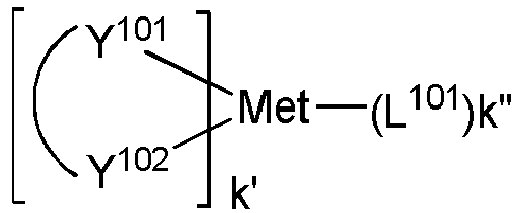
- In one aspect, (Y101-Y102) is a 2-phenylpyridine derivative. In another aspect, (Y101-Y102) is a carbene ligand. In another aspect, Met is selected from Ir, Pt, Os, and Zn. In a further aspect, the metal complex has a smallest oxidation potential in solution vs. Fc+/Fc couple less than about 0.6 V.
- Non-limiting examples of the HIL and HTL materials that may be used in an OLED in combination with materials disclosed herein are exemplified below together with references that disclose those materials:
CN102702075 ,DE102012005215 ,EP01624500 EP01698613 EP01806334 EP01930964 EP01972613 EP01997799 EP02011790 EP02055700 EP02055701 EP1725079 ,EP2085382 ,EP2660300 ,EP650955 JP07-073529 JP2005112765 JP2007091719 JP2008021687 JP2014-009196 KR20110088898 KR20130077473 TW201139402 US06517957 ,US20020158242 ,US20030162053 ,US20050123751 ,US20060182993 ,US20060240279 ,US20070145888 ,US20070181874 ,US20070278938 ,US20080014464 ,US20080091025 ,US20080106190 ,US20080124572 ,US20080145707 ,US20080220265 ,US20080233434 ,US20080303417 ,US2008107919 ,US20090115320 ,US20090167161 ,US2009066235 ,US2011007385 ,US20110163302 ,US2011240968 ,US2011278551 ,US2012205642 ,US2013241401 ,US20140117329 ,US2014183517 ,US5061569 ,US5639914 ,WO05075451 WO07125714 WO08023550 WO08023759 WO2009145016 ,WO2010061824 ,WO2011075644 ,WO2012177006 ,WO2013018530 ,WO2013039073 ,WO2013087142 ,WO2013118812 ,WO2013120577 ,WO2013157367 ,WO2013175747 ,WO2014002873 ,WO2014015935 ,WO2014015937 ,WO2014030872 ,WO2014030921 ,WO2014034791 ,WO2014104514 ,WO2014157018 ,
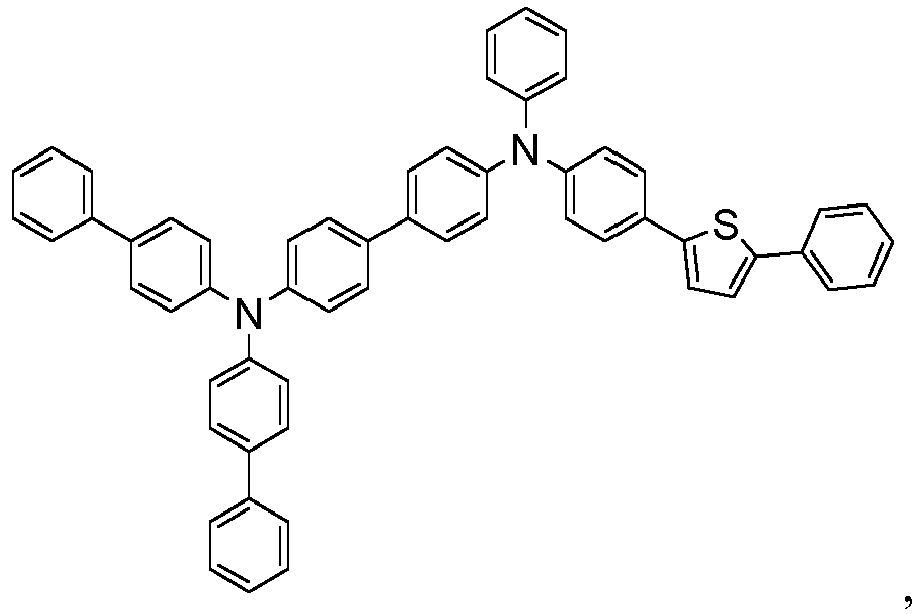


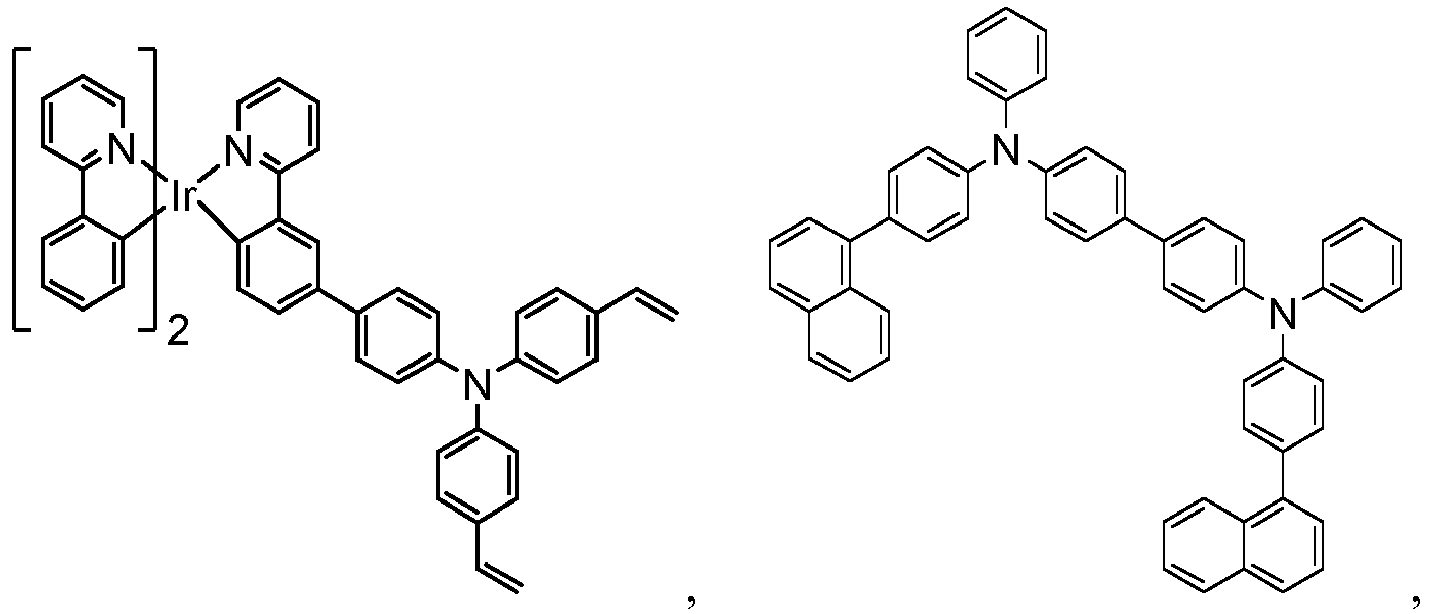


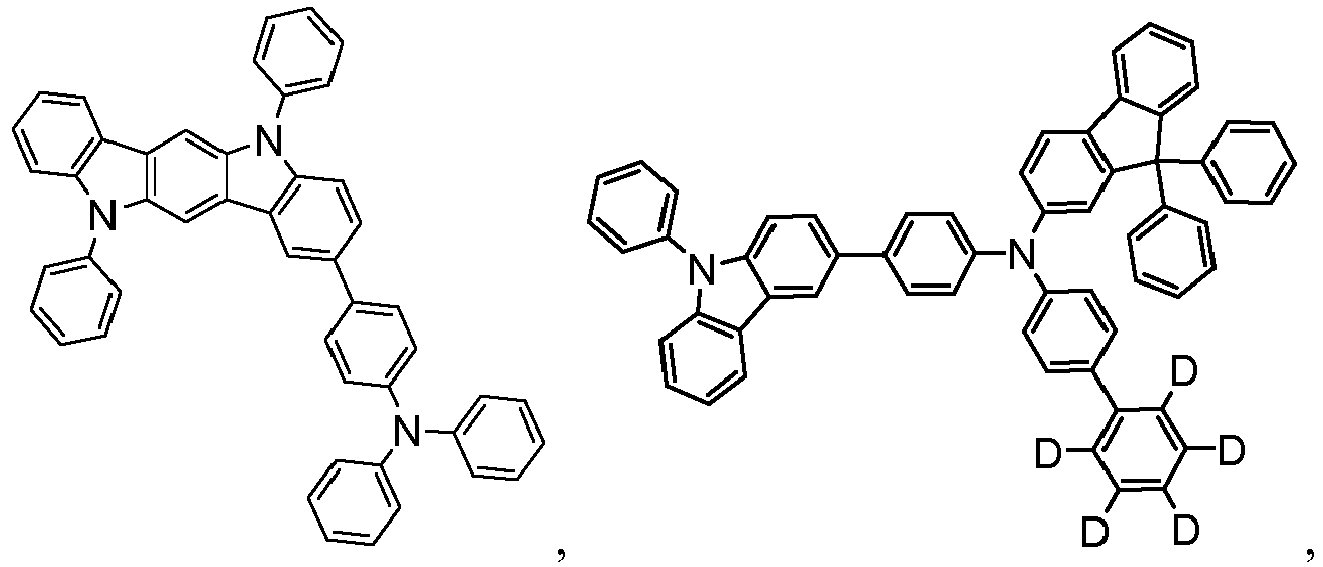


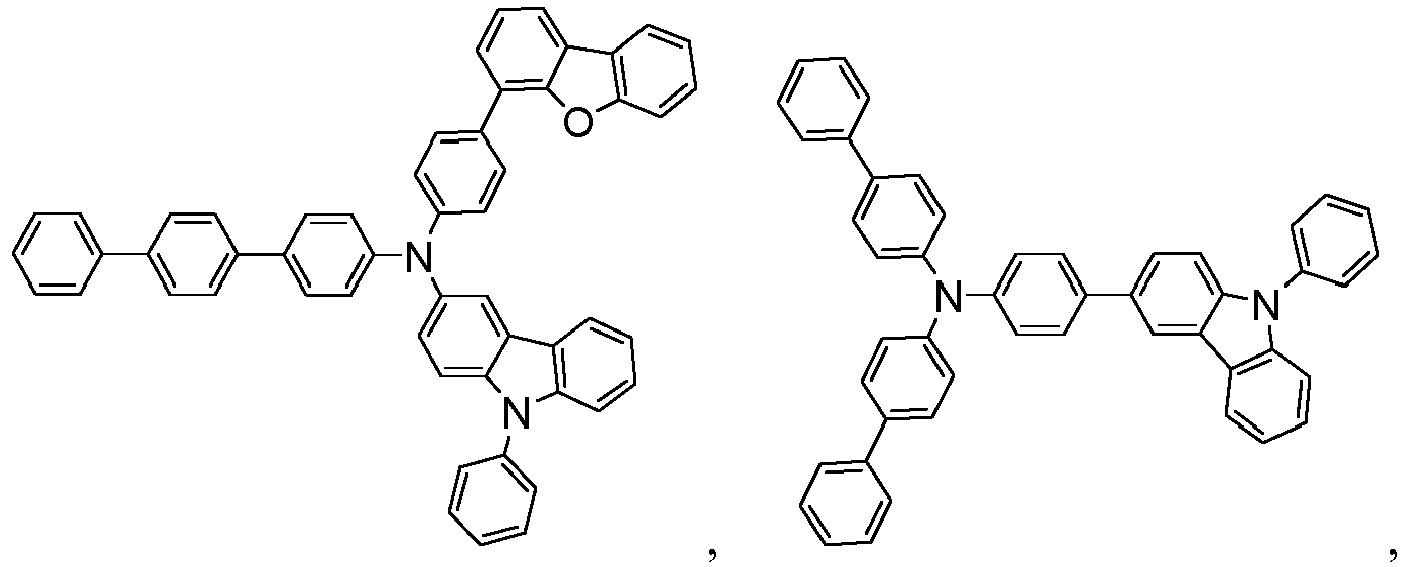


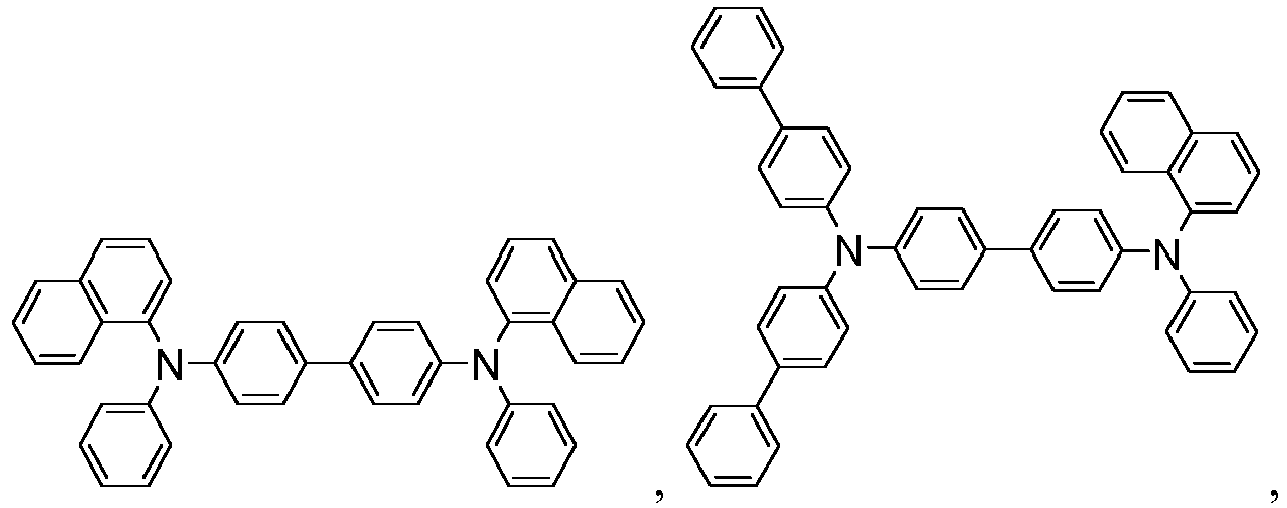

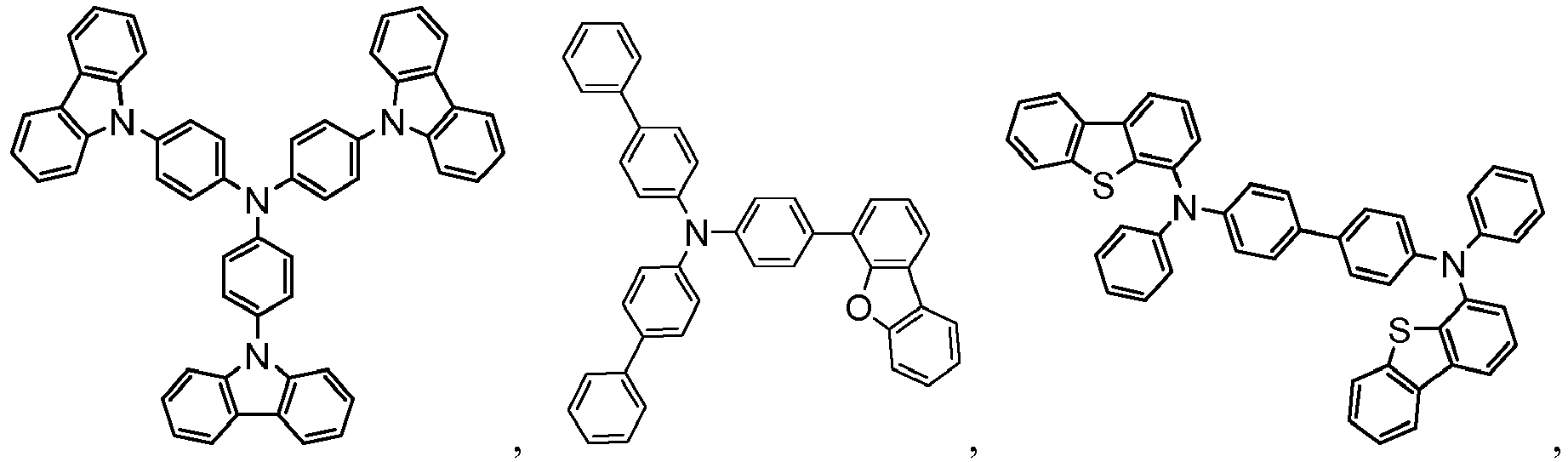


- An electron blocking layer (EBL) may be used to reduce the number of electrons and/or excitons that leave the emissive layer. The presence of such a blocking layer in a device may result in substantially higher efficiencies, and or longer lifetime, as compared to a similar device lacking a blocking layer. Also, a blocking layer may be used to confine emission to a desired region of an OLED. In some embodiments, the EBL material has a higher LUMO (closer to the vacuum level) and/or higher triplet energy than the emitter closest to the EBL interface. In some embodiments, the EBL material has a higher LUMO (closer to the vacuum level) and or higher triplet energy than one or more of the hosts closest to the EBL interface. In one aspect, the compound used in EBL contains the same molecule or the same functional groups used as one of the hosts described below.
- The light emitting layer of the organic EL device of the present invention preferably contains at least a metal complex as light emitting dopant material, and may contain one or more additional host materials using the metal complex as a dopant material. Examples of the host material are not particularly limited, and any metal complexes or organic compounds may be used as long as the triplet energy of the host is larger than that of the dopant. Any host material may be used with any dopant so long as the triplet criteria is satisfied.
- Examples of metal complexes used as host are preferred to have the following general formula:

- In one aspect, the metal complexes are:
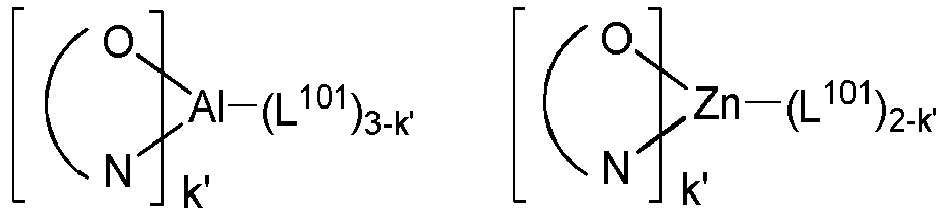
- In another aspect, Met is selected from Ir and Pt. In a further aspect, (Y103-Y104) is a carbene ligand.
- Examples of other organic compounds used as additional host are selected from the group consisting of aromatic hydrocarbon cyclic compounds such as benzene, biphenyl, triphenyl, triphenylene, naphthalene, anthracene, phenalene, phenanthrene, fluorene, pyrene, chrysene, perylene, azulene; group consisting aromatic heterocyclic compounds such as dibenzothiophene, dibenzofuran, dibenzoselenophene, furan, thiophene, benzofuran, benzothiophene, benzoselenophene, carbazole, indolocarbazole, pyridylindole, pyrrolodipyridine, pyrazole, imidazole, triazole, oxazole, thiazole, oxadiazole, oxatriazole, dioxazole, thiadiazole, pyridine, pyridazine, pyrimidine, pyrazine, triazine, oxazine, oxathiazine, oxadiazine, indole, benzimidazole, indazole, indoxazine, benzoxazole, benzisoxazole, benzothiazole, quinoline, isoquinoline, cinnoline, quinazoline, quinoxaline, naphthyridine, phthalazine, pteridine, xanthene, acridine, phenazine, phenothiazine, phenoxazine, benzofuropyridine, furodipyridine, benzothienopyridine, thienodipyridine, benzoselenophenopyridine, and selenophenodipyridine; and group consisting 2 to 10 cyclic structural units which are groups of the same type or different types selected from the aromatic hydrocarbon cyclic group and the aromatic heterocyclic group and are bonded to each other directly or via at least one of oxygen atom, nitrogen atom, sulfur atom, silicon atom, phosphorus atom, boron atom, chain structural unit and the aliphatic cyclic group. Wherein each group is further substituted by a substituent selected from the group consisting of hydrogen, deuterium, halide, alkyl, cycloalkyl, heteroalkyl, arylalkyl, alkoxy, aryloxy, amino, silyl, alkenyl, cycloalkenyl, heteroalkenyl, alkynyl, aryl, heteroaryl, acyl, carbonyl, carboxylic acids, ester, nitrile, isonitrile, sulfanyl, sulfinyl, sulfonyl, phosphino, and combinations thereof.
- In one aspect, host compound contains at least one of the following groups in the molecule:


- Non-limiting examples of the additional host materials that may be used in an OLED in combination with the host compound disclosed herein are exemplified below together with references that disclose those materials:
EP2034538 ,EP2034538A ,EP2757608 ,JP2007254297 KR20100079458 KR20120088644 KR20120129733 KR20130115564 TW201329200 US20030175553 ,US20050238919 ,US20060280965 ,US20090017330 ,US20090030202 ,US20090167162 ,US20090302743 ,US20090309488 ,US20100012931 ,US20100084966 ,US20100187984 ,US2010187984 ,US2012075273 ,US2012126221 ,US2013009543 ,US2013105787 ,US2013175519 ,US2014001446 ,US20140183503 ,US20140225088 ,US2014034914 ,US7154114 ,WO2001039234 ,WO2004093207 ,WO2005014551 ,WO2005089025 ,WO2006072002 ,WO2006114966 ,WO2007063754 ,WO2008056746 ,WO2009003898 ,WO2009021126 ,WO2009063833 ,WO2009066778 ,WO2009066779 ,WO2009086028 ,WO2010056066 ,WO2010107244 ,WO2011081423 ,WO2011081431 ,WO2011086863 ,WO2012128298 ,WO2012133644 ,WO2012133649 ,WO2013024872 ,WO2013035275 ,WO2013081315 ,WO2013191404 ,WO2014142472 ,

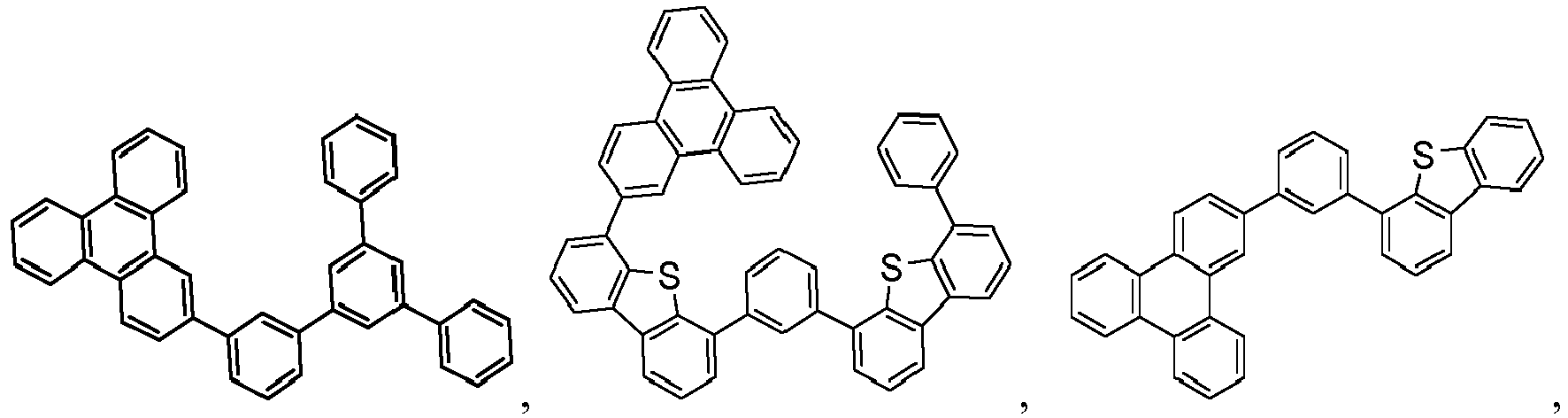

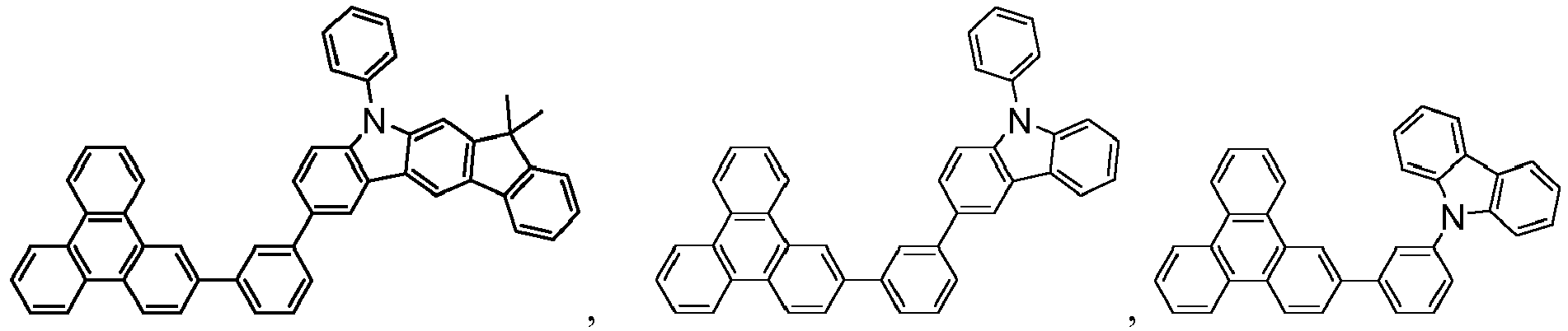

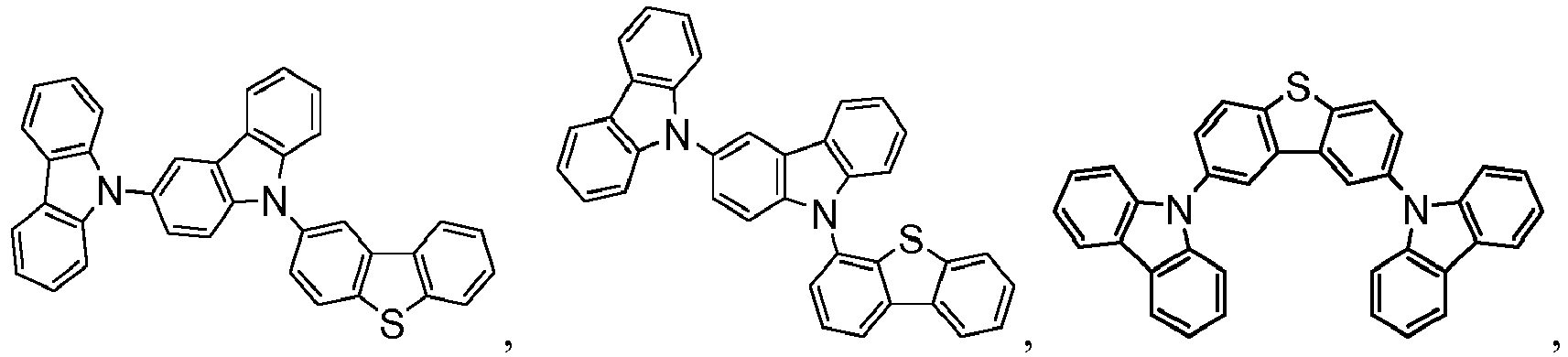
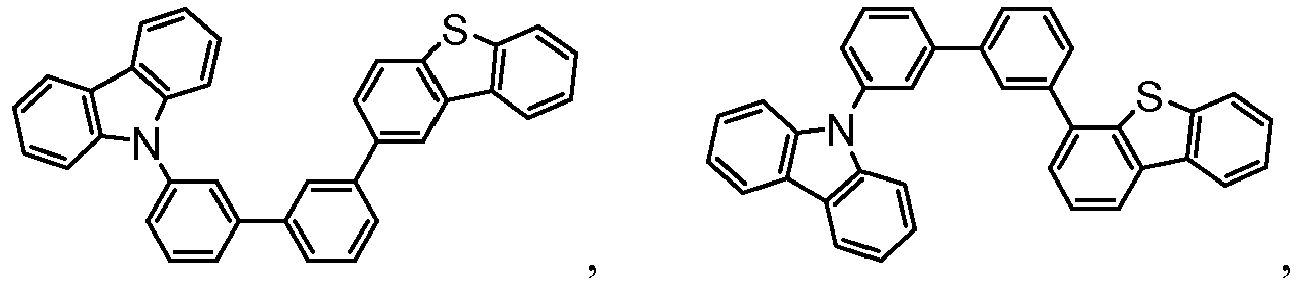


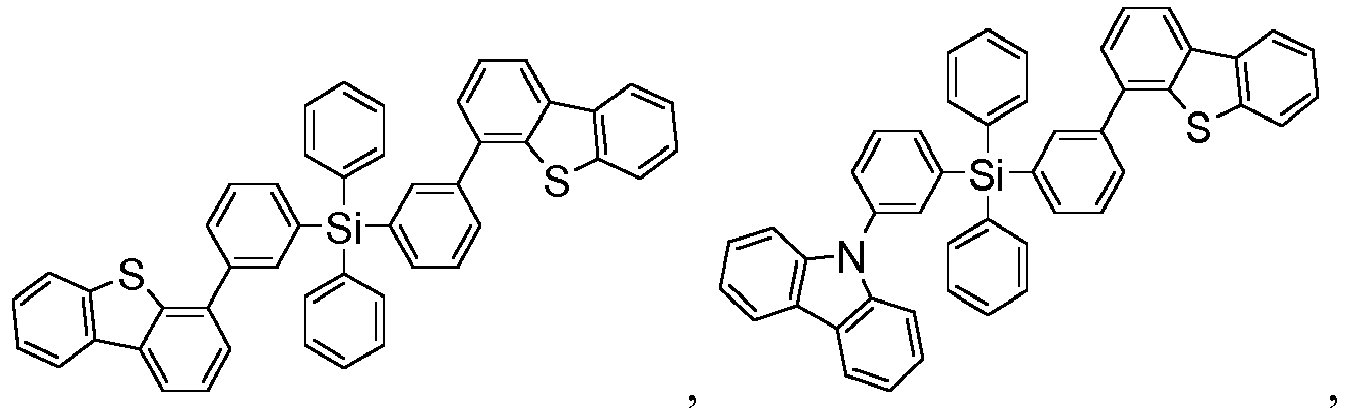

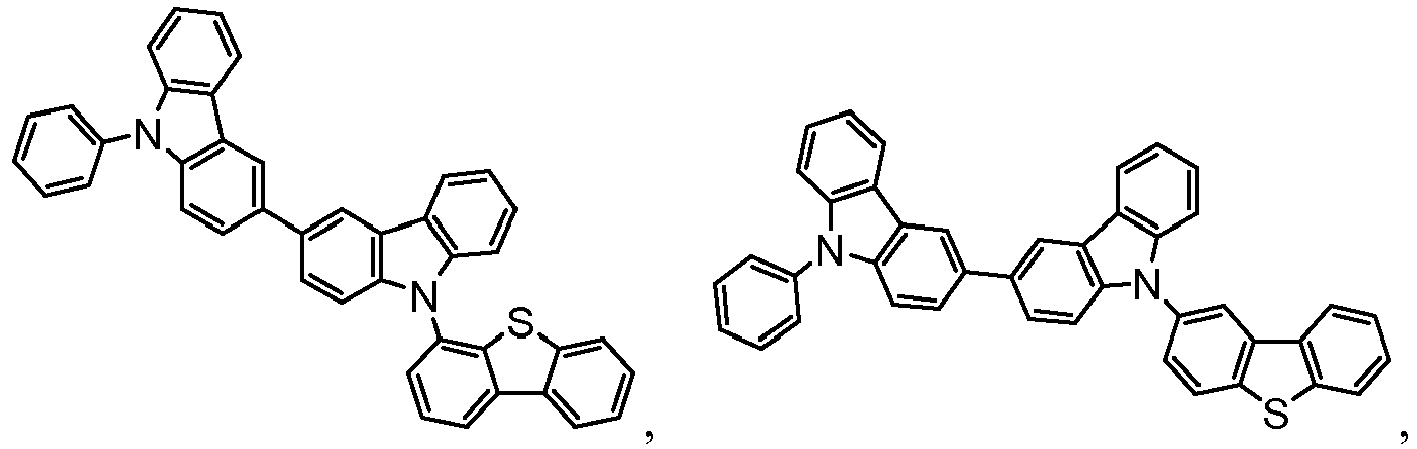


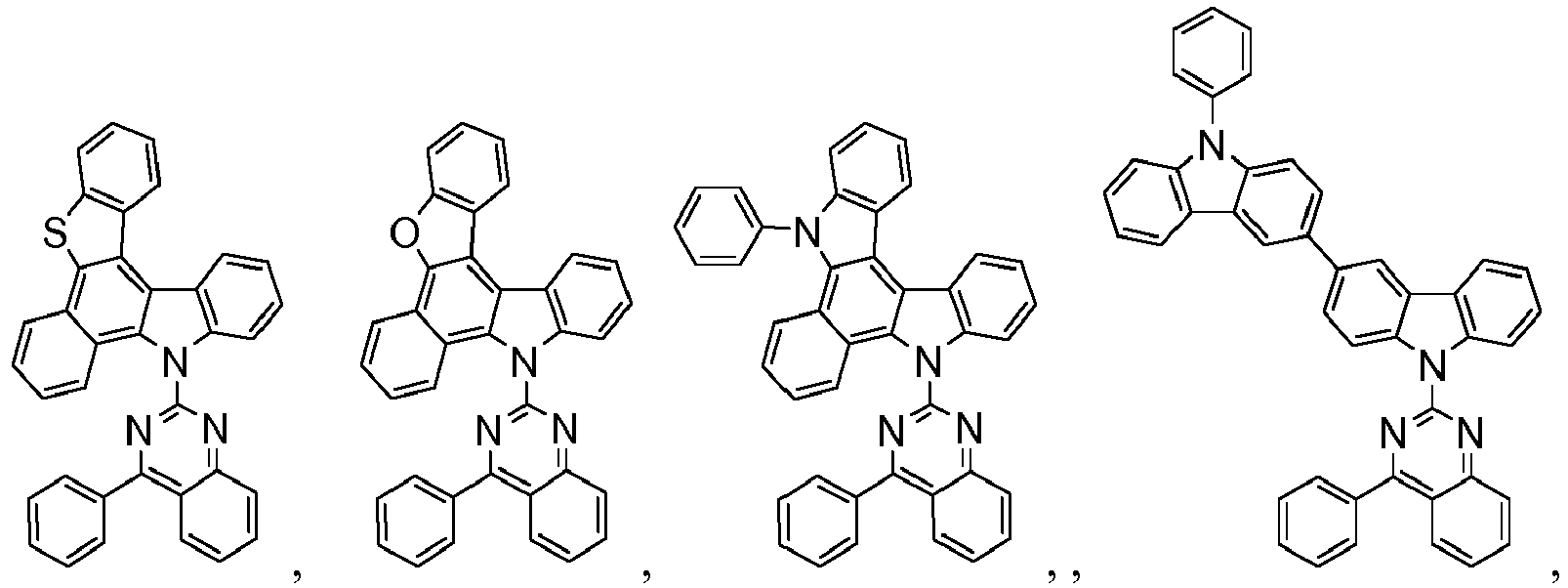


- An emitter example is not particularly limited, and any compound may be used as long as the compound is typically used as an emitter material. Examples of suitable emitter materials include, but are not limited to, compounds which can produce emissions via phosphorescence, fluorescence, thermally activated delayed fluorescence, i.e., TADF (also referred to as E-type delayed fluorescence), triplet-triplet annihilation, or combinations of these processes.
- Non-limiting examples of the emitter materials that may be used in an OLED in combination with materials disclosed herein are exemplified below together with references that disclose those materials:
CN103694277 ,CN1696137 ,EB01238981 EP01239526 EP01961743 EP1239526 ,EP1244155 ,EP1642951 ,EP1647554 ,EP1841834 ,EP1841834B ,EP2062907 ,EP2730583 ,JP2012074444 JP2013110263 JP4478555 KR1020090133652 KR20120032054 KR20130043460 TW201332980 US06699599 ,US06916554 ,US20010019782 ,US20020034656 ,US20030068526 ,US20030072964 ,US20030138657 ,US20050123788 ,US20050244673 ,US2005123791 ,US2005260449 ,US20060008670 ,US20060065890 ,US20060127696 ,US20060134459 ,US20060134462 ,US20060202194 ,US20060251923 ,US20070034863 ,US20070087321 ,US20070103060 ,US20070111026 ,US20070190359 ,US20070231600 ,US2007034863 ,US2007104979 ,US2007104980 ,US2007138437 ,US2007224450 ,US2007278936 ,US20080020237 ,US20080233410 ,US20080261076 ,US20080297033 ,US200805851 ,US2008161567 ,US2008210930 ,US20090039776 ,US20090108737 ,US20090115322 ,US20090179555 ,US2009085476 ,US2009104472 ,US20100090591 ,US20100148663 ,US20100244004 ,US20100295032 ,US2010102716 ,US2010105902 ,US2010244004 ,US2010270916 ,US20110057559 ,US20110108822 ,US20110204333 ,US2011215710 ,US2011227049 ,US2011285275 ,US2012292601 ,US20130146848 ,US2013033172 ,US2013165653 ,US2013181190 ,US2013334521 ,US20140246656 ,US2014103305 ,US6303238 ,US6413656 ,US6653654 ,US6670645 ,US6687266 ,US6835469 ,US6921915 ,US7279704 ,US7332232 ,US7378162 ,US7534505 ,US7675228 ,US7728137 ,US7740957 ,US7759489 ,US7951947 ,US8067099 ,US8592586 ,US8871361 ,WO06081973 WO06121811 WO07018067 WO07108362 WO07115970 WO07115981 WO08035571 WO2002015645 ,WO2003040257 ,WO2005019373 ,WO2006056418 ,WO2008054584 ,WO2008078800 ,WO2008096609 ,WO2008101842 ,WO2009000673 ,WO2009050281 ,WO2009100991 ,WO2010028151 ,WO2010054731 ,WO2010086089 ,WO2010118029 ,WO2011044988 ,WO2011051404 ,WO2011107491 ,WO2012020327 ,WO2012163471 ,WO2013094620 ,WO2013107487 ,WO2013174471 ,WO2014007565 ,WO2014008982 ,WO2014023377 ,WO2014024131 ,WO2014031977 ,WO2014038456 ,WO2014112450 ,
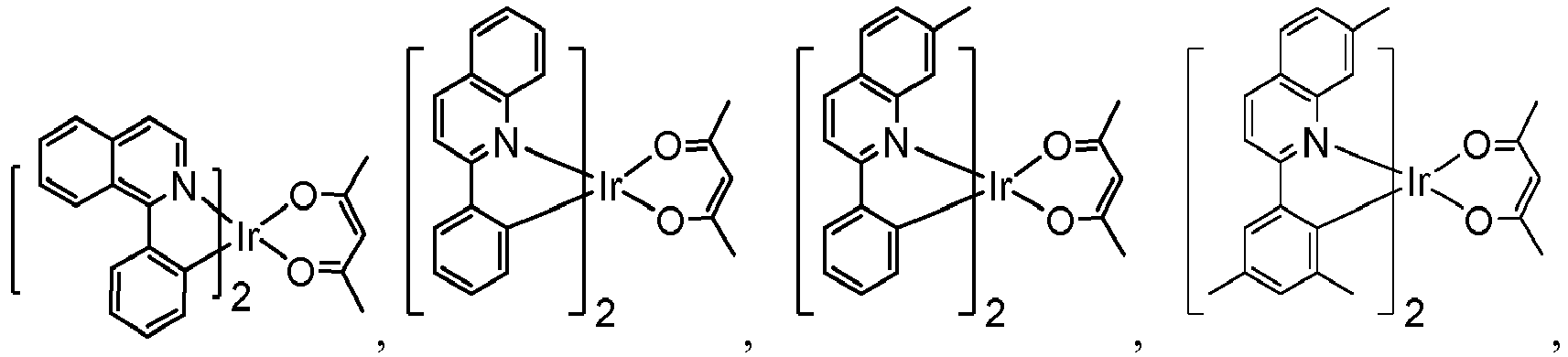

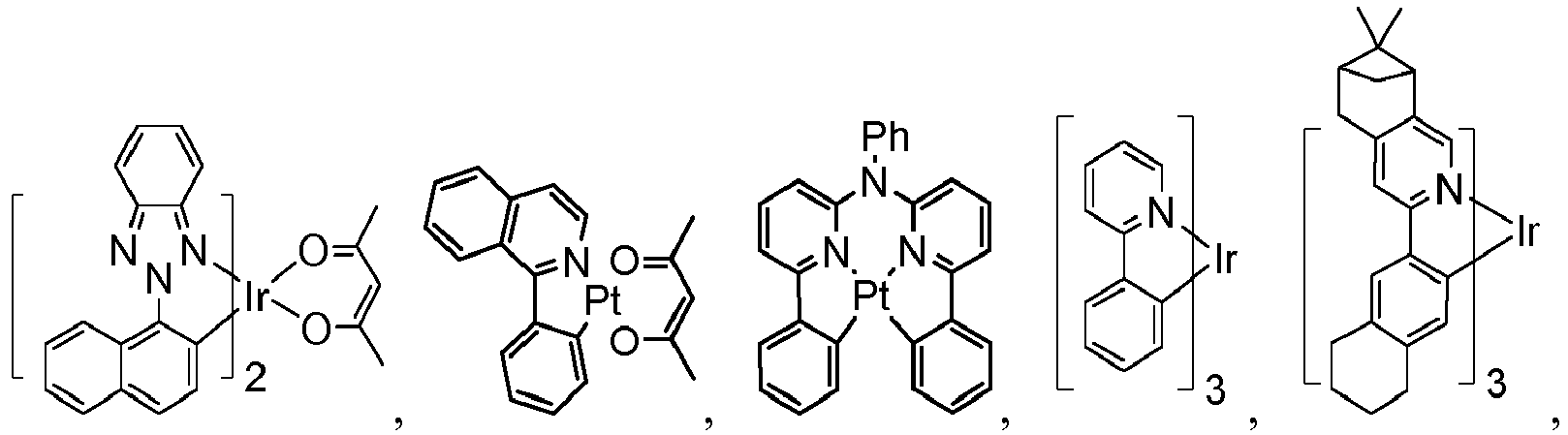

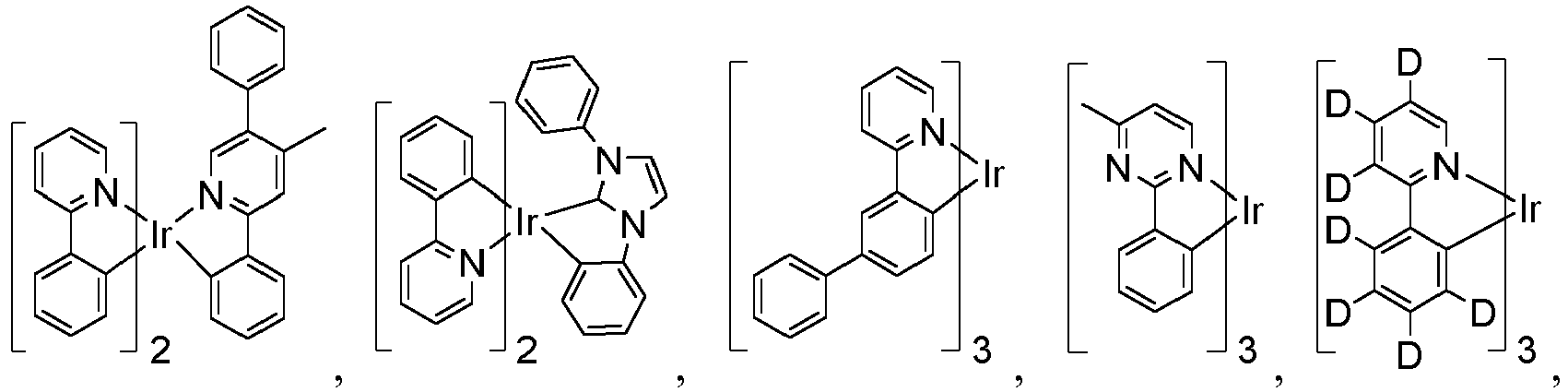


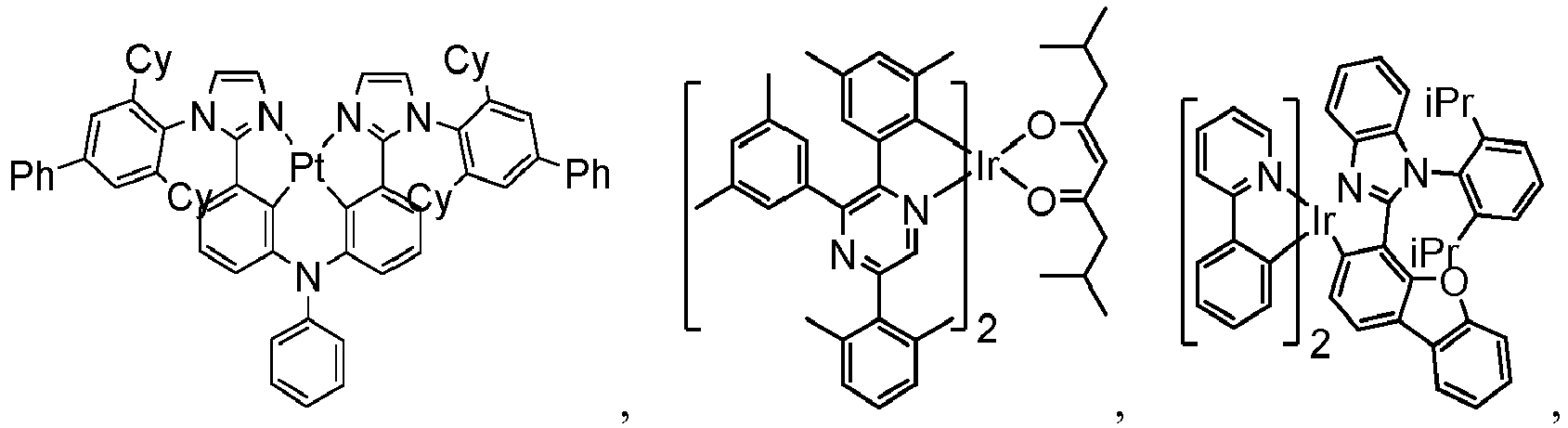


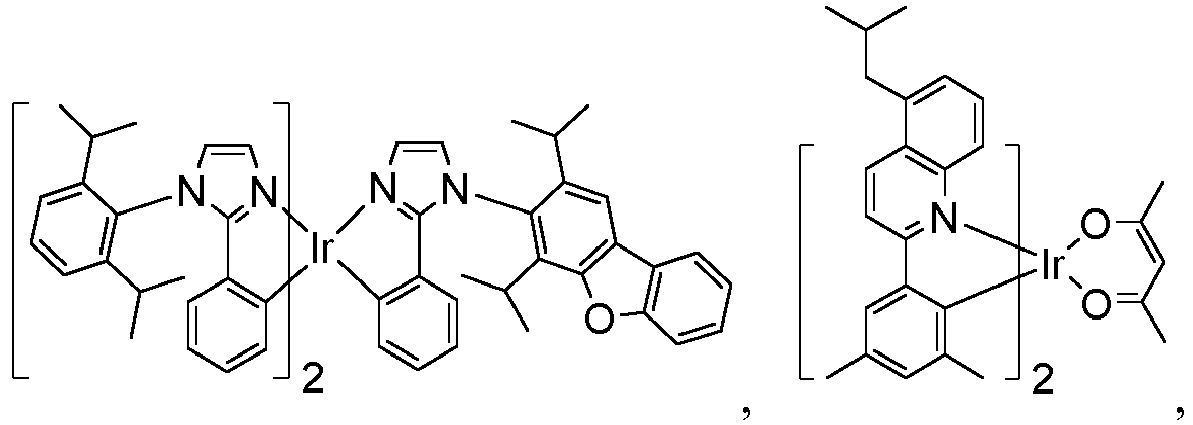


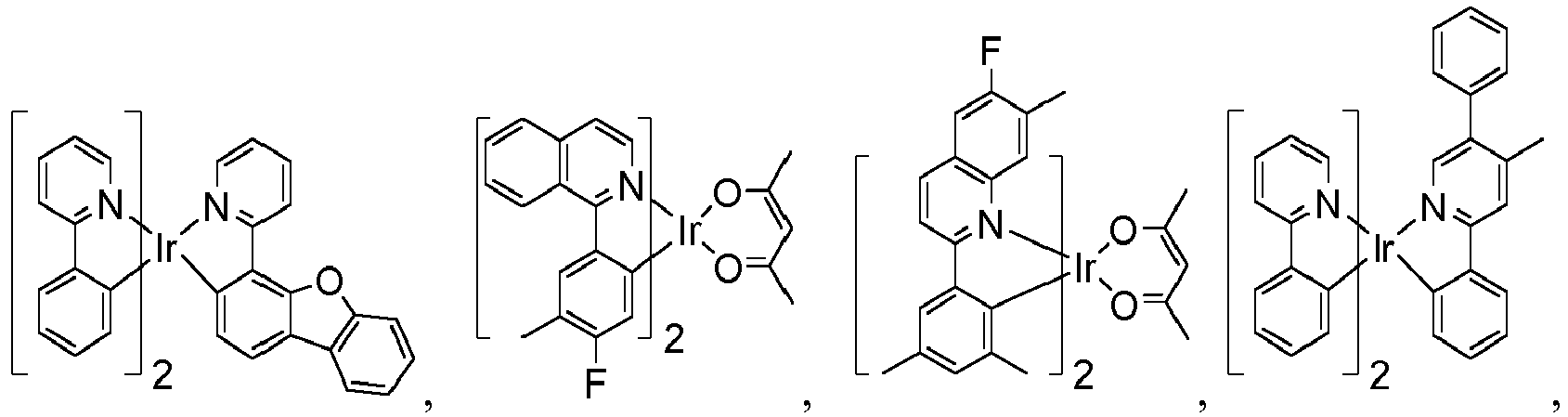


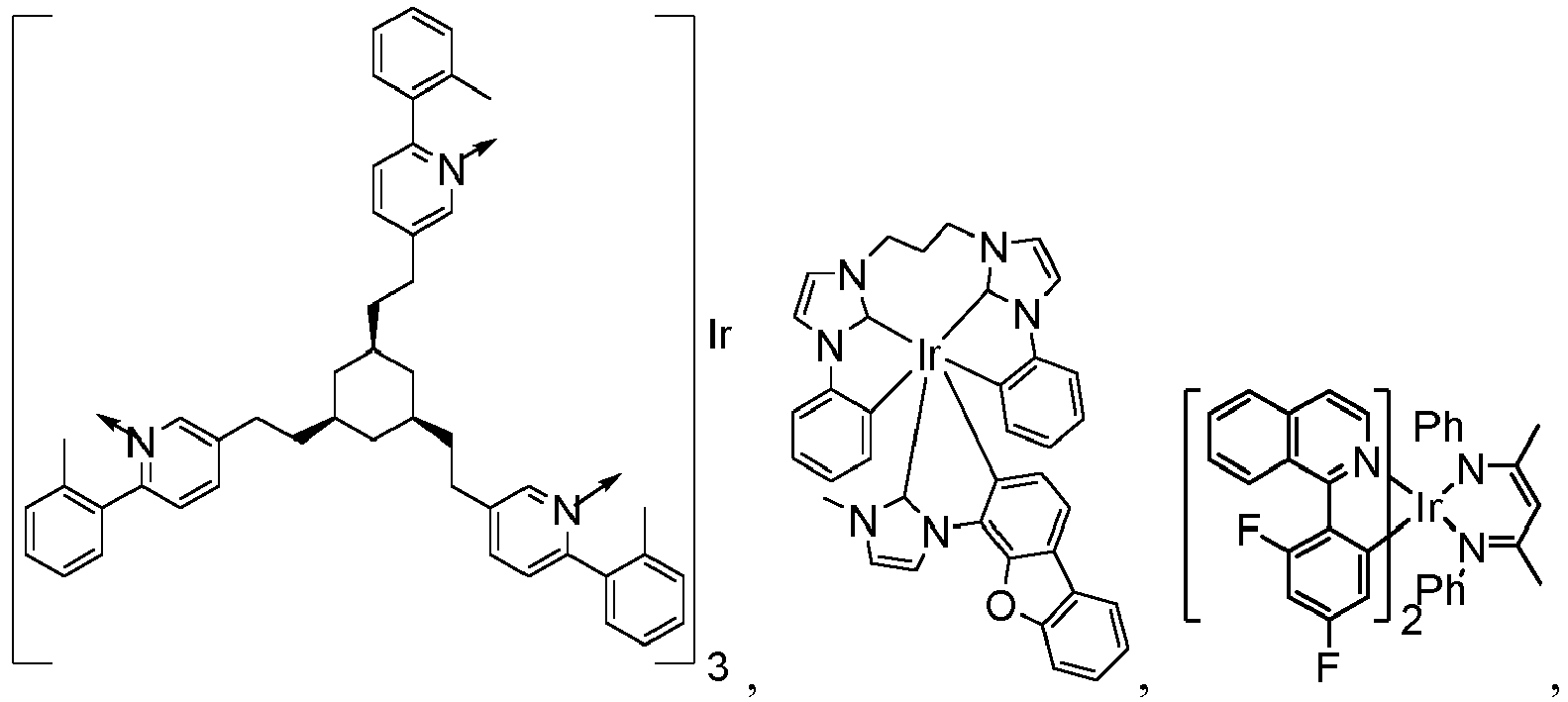

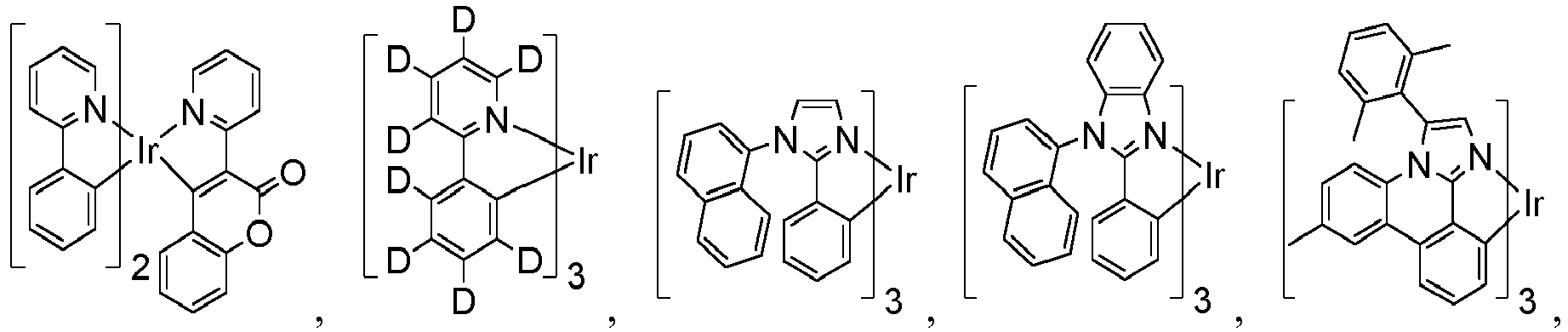
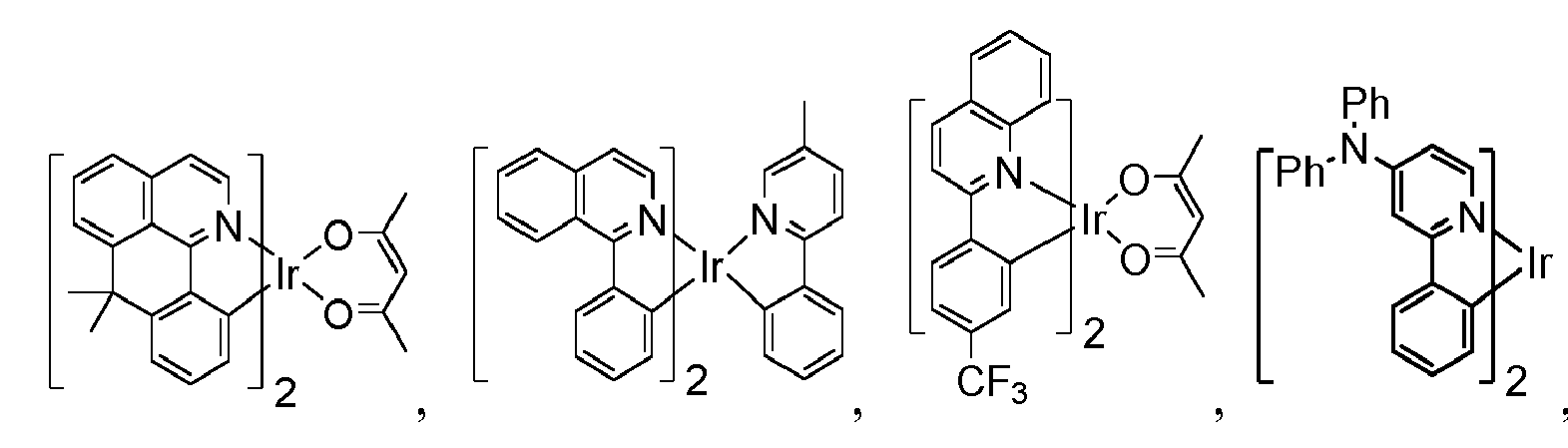
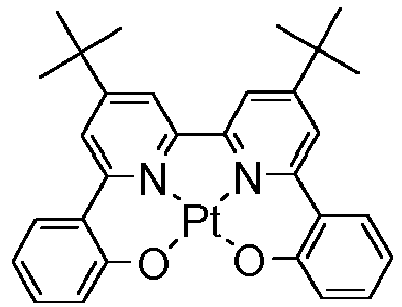
- A hole blocking layer (HBL) may be used to reduce the number of holes and/or excitons that leave the emissive layer. The presence of such a blocking layer in a device may result in substantially higher efficiencies and/or longer lifetime as compared to a similar device lacking a blocking layer. Also, a blocking layer may be used to confine emission to a desired region of an OLED. In some embodiments, the HBL material has a lower HOMO (further from the vacuum level) and or higher triplet energy than the emitter closest to the HBL interface. In some embodiments, the HBL material has a lower HOMO (further from the vacuum level) and or higher triplet energy than one or more of the hosts closest to the HBL interface.
- In one aspect, compound used in HBL contains the same molecule or the same functional groups used as host described above.
- In another aspect, compound used in HBL contains at least one of the following groups in the molecule:

- Electron transport layer (ETL) may include a material capable of transporting electrons. Electron transport layer may be intrinsic (undoped), or doped. Doping may be used to enhance conductivity. Examples of the ETL material are not particularly limited, and any metal complexes or organic compounds may be used as long as they are typically used to transport electrons.
- In one aspect, compound used in ETL contains at least one of the following groups in the molecule:


- In another aspect, the metal complexes used in ETL include, but are not limited to the following general formula:

- Non-limiting examples of the ETL materials that may be used in an OLED in combination with materials disclosed herein are exemplified below together with references that disclose those materials:
CN103508940 ,EP01602648 EP01734038 EP01956007 JP2004-022334 JP2005149918 JP2005-268199 KR0117693 KR20130108183 US20040036077 ,US20070104977 ,US2007018155 ,US20090101870 ,US20090115316 ,US20090140637 ,US20090179554 ,US2009218940 ,US2010108990 ,US2011156017 ,US2011210320 ,US2012193612 ,US2012214993 ,US2014014925 ,US2014014927 ,US20140284580 ,US6656612 ,US8415031 ,WO2003060956 ,WO2007111263 ,WO2009148269 ,WO2010067894 ,WO2010072300 ,WO2011074770 ,WO2011105373 ,WO2013079217 ,WO2013145667 ,WO2013180376 ,WO2014104499 ,WO2014104535 ,


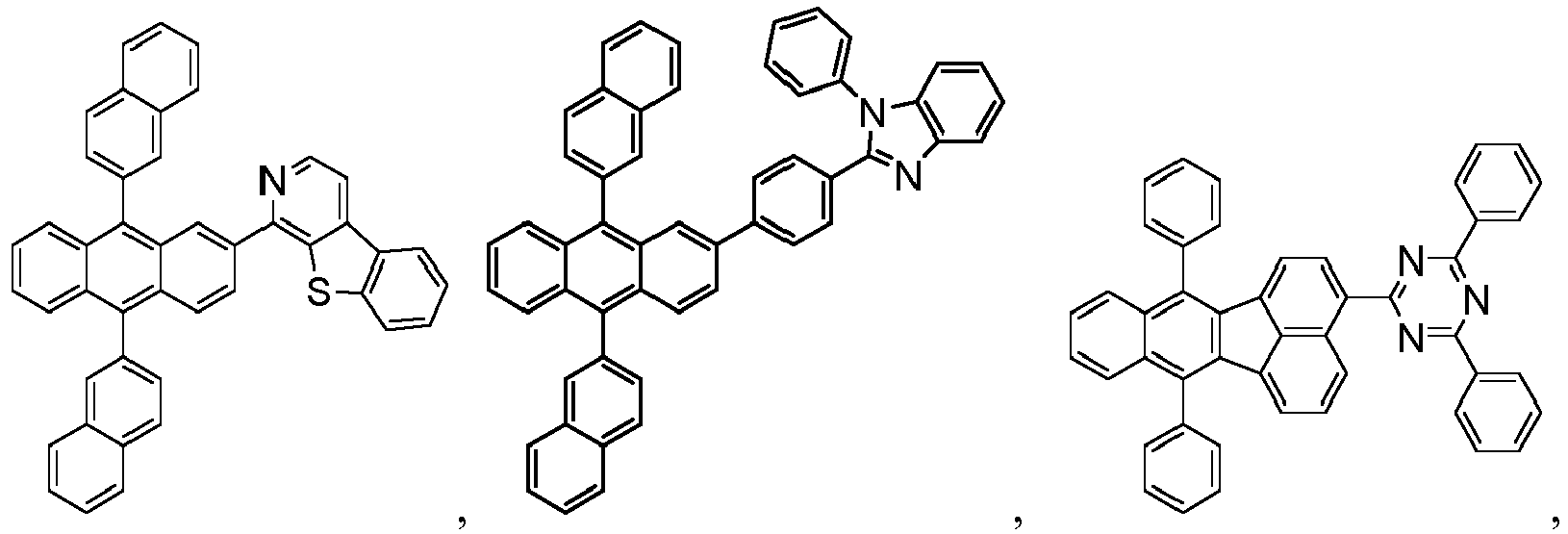
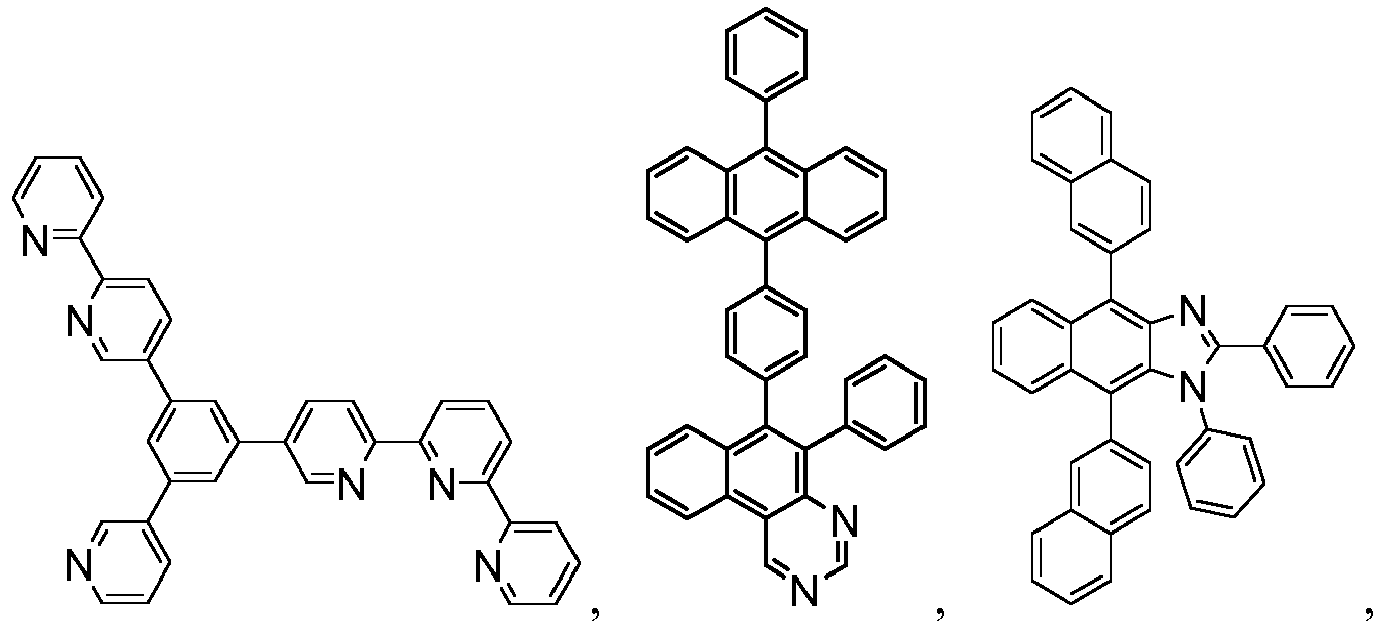


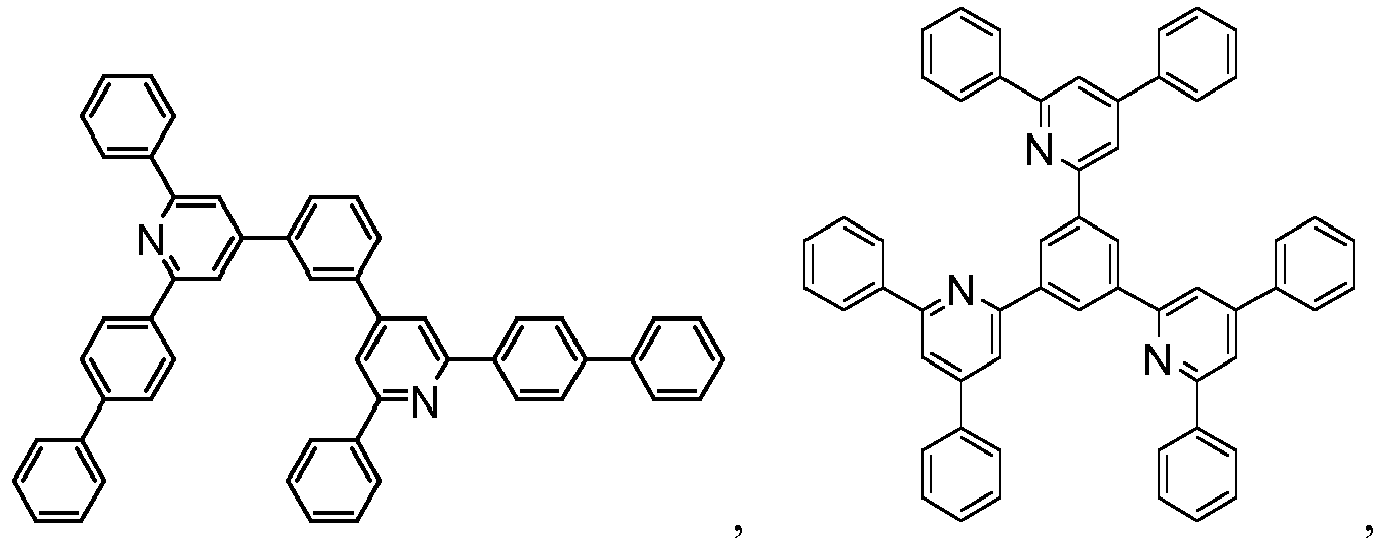
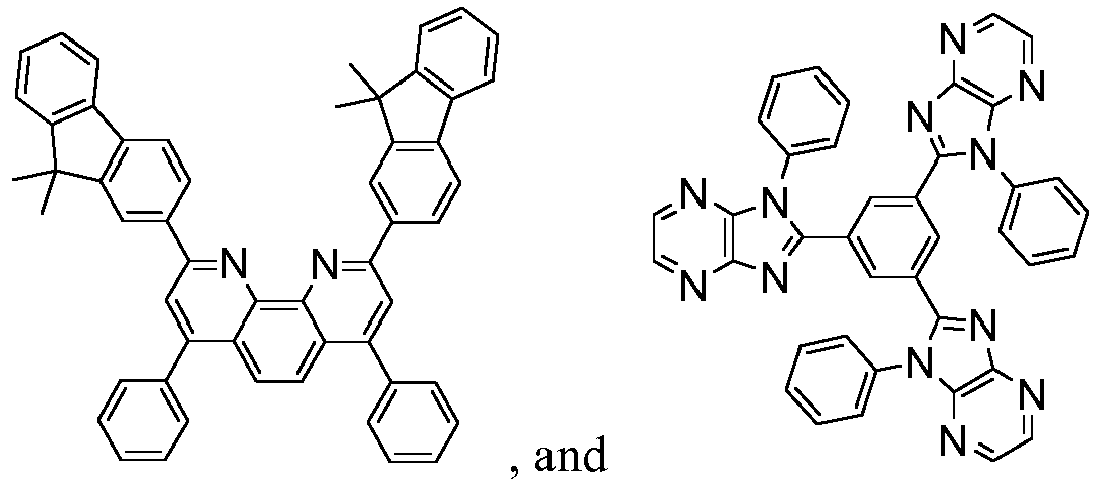
- In tandem or stacked OLEDs, the CGL plays an essential role in the performance, which is composed of an n-doped layer and a p-doped layer for injection of electrons and holes, respectively. Electrons and holes are supplied from the CGL and electrodes. The consumed electrons and holes in the CGL are refilled by the electrons and holes injected from the cathode and anode, respectively; then, the bipolar currents reach a steady state gradually. Typical CGL materials include n and p conductivity dopants used in the transport layers.
- In any above-mentioned compounds used in each layer of the OLED device, the hydrogen atoms can be partially or fully deuterated. Thus, any specifically listed substituent, such as, without limitation, methyl, phenyl, pyridyl, etc. encompasses undeuterated, partially deuterated, and fully deuterated versions thereof. Similarly, classes of substituents such as, without limitation, alkyl, aryl, cycloalkyl, heteroaryl, etc. also encompass undeuterated, partially deuterated, and fully deuterated versions thereof.
- Chemical abbreviations used throughout this document are as follows: Pd2(dba)3 is tri(dibenzylideneacetone) dipalladium(0); SPhos is dicyclohexyl(2',6'-dimethoxy-[1,1'-biphenyl]-2-yl)phosphine; and DCM is dichloromethane.
-

- A solution of 9-phenyl-9H,9'H-3,3'-bicarbazole (3.5 g, 8.57 mmol), 6-chlorobenzo[4,5] thieno[2,3-c]quinoline (3.47 g, 12.85 mmol), sodium tert-butoxide (2.059 g, 21.42 mmol) in o-xylene (200 ml) was degassed for 20 mins. Pd2(dba)3 (0.392 g, 0.428 mmol), SPhos (0.352 g, 0.857 mmol) were added. The mixture was heated to reflux under nitrogen for 16 hours. After cooling to room temperature, the solid was removed by filtration and the solvent was evaporated. The residue was purified by column chromatography on silica gel with heptane/DCM (7/3 to 6/4, v/v) as eluent and recrystallization from heptane to yield Compound 9073(S) (4.0g, 73%) as a yellow solid.
-

- A solution of 9-phenyl-9H,9'H-3,3'-bicarbazole (3.15 g, 7.71 mmol), 6-chlorodibenzo[f,h]benzo[4,5]thieno[2,3-c]quinoline (3.42 g, 9.25 mmol), Pd2(dba)3 (0.282 g, 0.308 mmol), SPhos (0.8 g, 1.951 mmol) and sodium tert-butoxide (1.703 g, 17.74 mmol), in o-xylene (200 ml) was degased and refluxed under nitrogen for 24 hours. After cooling to room temperature, the solid was removed by filtration and the solvent was evaporated. The residue was purified by column chromatography on silica gel with heptane/DCM (7/3 to 1/99, v/v) as eluent and trituration with ethanol to yield Compound 9195(S) as a yellow solid.
-

- A solution of 6-chlorobenzo[4,5]thieno[2,3-c]quinoline (2.87 g, 10.65 mmol) and 5-([1,1'-biphenyl]-4-yl)-5,8-dihydroindolo[2,3-c]carbazole (2.9 g, 7.10 mmol), sodium tert-butoxide (1.706 g, 17.75 mmol) in o-xylene (20 ml) was degassed for 20 mins. Pd2(dba)3 (0.325 g, 0.355 mmol), SPhos (0.291 g, 0.710 mmol) were added. The mixture was heated to reflux under nitrogen for 3 h. After coling to room temperature, the reaction mixture was filtered through a short plug of silica gel. Upon evaporation off the solvent, the residue was triturated successively with ethanol, ethyl acetate, toluene, DCM and toluene to yield Compound 20737(S) (2.3 g, 50%) as a yellow solid.
- Application in OLED: All devices were fabricated by high vacuum (∼ 10-7 Torr) thermal evaporation. The anode electrode was 120 nm of indium tin oxide (ITO). The cathode electrode consisted of 1 nm of LiF followed by 100 nm of Al. All devices were encapsulated with a glass lid sealed with an epoxy resin in a nitrogen glove box (<1 ppm of H2O and O2) immediately after fabrication, and a moisture getter was incorporated inside the package.
- Device Examples: A first set of device examples have organic stacks consisting of, sequentially, from the ITO surface, 10 nm of LG101 (from LG Chem) as the hole injection layer (HIL), 40 nm of PPh-TPD as the hole-transport layer (HTL), 40 nm of emissive layer (EML), followed by 35 nm of aDBT-ADN with LiQ as the electron-transport layer (ETL). The EML has two components, 97 wt% of invented compounds (Compounds 9073(S), or 20737(S)) or comparative compounds (CC-1, CC-2 or CC-3) as the host, and 3 wt% of RD as the emitter. The structure of the compounds used are shown below:

Table D1, below, is a summary of the device data, emission color and external quantum efficiency (EQE), recorded at 1000 nits for the devices. Device ID Host Emission Color EQE [%] Device-1 Compound 9073(S) Red 24.4 Device-2 Compound 20737(S) Red 23.9 Device-C1 CC-1 Red 10.2 Device-C2 CC-2 Red 11.6 Device-C3 CC-3 Red 21.2 - The data in Table D1 shows that OLEDs (Device-1 and Device-2) using inventive compounds as the host in the EML are much more efficient than their conterparts using comparative compounds (CC-1, CC-2 and CC-3) as the host. The superior performance of the inventice compounds are attributable to their unique chemical structures containing benzo-fused aza-dibenzothiophene that might have facilitated charge transport to achieve a more balanced charge carrier fluxes inside the devices, which is critical to enhance OLED device performance.
- It is understood that the various embodiments described herein are by way of example only, and are not intended to limit the scope of the invention. For example, many of the materials and structures described herein may be substituted with other materials and structures without deviating from the spirit of the invention. The present invention as claimed may therefore include variations from the particular examples and preferred embodiments described herein, as will be apparent to one of skill in the art. It is understood that various theories as to why the invention works are not intended to be limiting.
- The invention is further described by the following numbered aspects:
- 1. A compound having a formula selected from the group consisting of:


- wherein X is selected from the group consisting of O, S, and Se;
- wherein X1 to X10 are each independently selected from the group consisting of carbon and nitrogen;
- wherein at least one of X1 to X6 is nitrogen;
- wherein R and R' each independently represent from mono to the possible maximum number of substitutions, or no substitution;
- wherein R and R' are each independently selected from the group consisting of hydrogen, deuterium, halogen, alkyl, cycloalkyl, heteroalkyl, arylalkyl, alkoxy, aryloxy, amino, silyl, alkenyl, cycloalkenyl, heteroalkenyl, alkynyl, aryl, heteroaryl, acyl, carbonyl, carboxylic acid, ester, nitrile, isonitrile, sulfanyl, sulfinyl, sulfonyl, phosphino, and combinations thereof;
- wherein any adjacent substitutions on the same ring are optionally joined or fused into a ring; and
- wherein at least one of R and R' is not hydrogen or deuterium;
- 2. The compound of aspect 1, wherein X is O.
- 3. The compound of aspect 1, wherein X is S.
- 4. The compound of aspect 1, wherein at least one of X5 and X6 is nitrogen.
- 5. The compound of aspect 1, wherein the adjacent substitutions on X5 and X6 are not joined or fused into a ring.
- 6. The compound of aspect 1, wherein X1 to X4 are all carbon.
- 7. The compound of aspect 1, wherein at least one of X1 to X4 is nitrogen, and at least one of X5 and X6 is nitrogen.
- 8. The compound of aspect 1, wherein at least one of R and R' comprises at least one chemical group selected from the group consisting of triphenylene, carbazole, dibenzothiphene, dibenzofuran, dibenzoselenophene, azatriphenylene, azacarbazole, aza-dibenzothiophene, aza-dibenzofuran, and aza-dibenzoselenophene.
- 9. The compound of aspect 1, wherein the compound has at least five aromatic rings fused together.
- 10. The compound of aspect 1, wherein the compound has at least six aromatic rings fused together.
- 11. The compound of aspect 1, wherein the compound is selected from the group consisting of Formula 2-1 to Formula 2-51 as described herein before.
wherein Z1 to Z16 are each independently selected from the group consisting of carbon and nitrogen. - 12. The compound of aspect 1, wherein the compound comprises a group selected from the group consisting of groups A1 to A144 as described herein before,
wherein the dotted lines represent a possible substitution. - 13. The compound of aspect 12, wherein the compound is substituted by a group selected from the group consisting of groups D1 to D244 as described herein before.
- 14. The compound of aspect 13, wherein the compound is Compound x(Label) having the formula A i D j ;
wherein x=144j+i-144, where i is an integer from 1 to 144, and j is an integer from 1 to 244; and
wherein Label is the X in the corresponding A i . - 15. A first organic light emitting device comprising:
- an anode;
- a cathode; and
- an organic layer, disposed between the anode and the cathode, comprising a compound of any one of aspects 1 to 14.
- 16. The first organic light emitting device of aspect 15, wherein the organic layer is an emissive layer and the compound is a host.
- 17. The first organic light emitting device of aspect 15, wherein the organic layer further comprises a phosphorescent emissive dopant; wherein the emissive dopant is a transition metal complex having at least one ligand or part of the ligand if the ligand is more than bidentate, selected from the group consisting of:


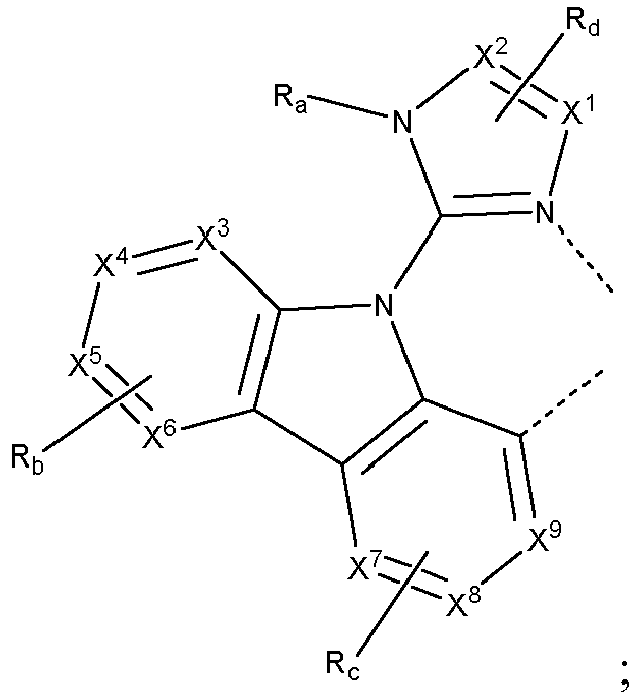
- wherein each X1 to X13 are independently selected from the group consisting of carbon and nitrogen;
- wherein Z is selected from the group consisting of BR', NR', PR', O, S, Se, C=O, S=O, SO2, CR'R", SiR'R", and GeR'R";
- wherein R' and R" are optionally fused or joined to form a ring;
- wherein each Ra, Rb, Rc, and Rd may represent from mono substitution to the possible maximum number of substitution, or no substitution;
- wherein R', R", Ra, Rb, Rc, and Rd are each independently selected from the group consisting of hydrogen, deuterium, halogen, alkyl, cycloalkyl, heteroalkyl, arylalkyl, alkoxy, aryloxy, amino, silyl, alkenyl, cycloalkenyl, heteroalkenyl, alkynyl, aryl, heteroaryl, acyl, carbonyl, carboxylic acids, ester, nitrile, isonitrile, sulfanyl, sulfinyl, sulfonyl, phosphino, and combinations thereof; and
- wherein any two adjacent substitutents of Ra, Rb, Rc, and Rd are optionally fused or joined to form a ring or form a multidentate ligand.
- 18. The first organic light emitting device of aspect 15, wherein the organic layer is a charge carrier blocking layer and the compound is a charge carrier blocking material in the organic layer.
- 19. The first organic light emitting device of aspect 15, wherein the organic layer is a charge carrier transporting layer and the compound is a charge carrier transporting material in the organic layer.
- 20. The first organic light emitting device of aspect 15, wherein the device is selected from the group consisting of a consumer product, an electronic component module, an organic light-emitting device, and a lighting panel.
- 21. The first organic light emitting device of aspect 15, wherein the organic layer is an emissive layer and the compound is an emitter.
- 22. The first organic light emitting device of aspect 21, wherein the first organic light emitting device emits a luminescent radiation at room temperature when a voltage is applied across the first organic light emitting device, and wherein the luminescent radiation comprises a delayed fluorescence process.
- 23. The first organic light emitting device of aspect 21, wherein the emissive layer further comprises a host material.
- 24. The first organic light emitting device of aspect 21, wherein the emissive layer further comprises a first phosphorescent emitting material.
- 25. The first organic light emitting device of aspect 24, wherein the emissive layer further comprises a second phosphorescent emitting material.
- 26. The first organic light emitting device of aspect 24, wherein the first organic light emitting device emits a white light at room temperature when a voltage is applied across the organic light emitting device.
- 27. The first organic light emitting device of aspect 26, wherein the compound emits a blue light with a peak wavelength of about 400 nm to about 500 nm.
- 28. The first organic light emitting device of aspect 26, wherein the compound emits a yellow light with a peak wavelength of about 530 nm to about 580 nm.
- 29. A formulation comprising a compound of any one of aspects 1 to 14.
Claims (15)
- A compound having a formula selected from the group consisting of:
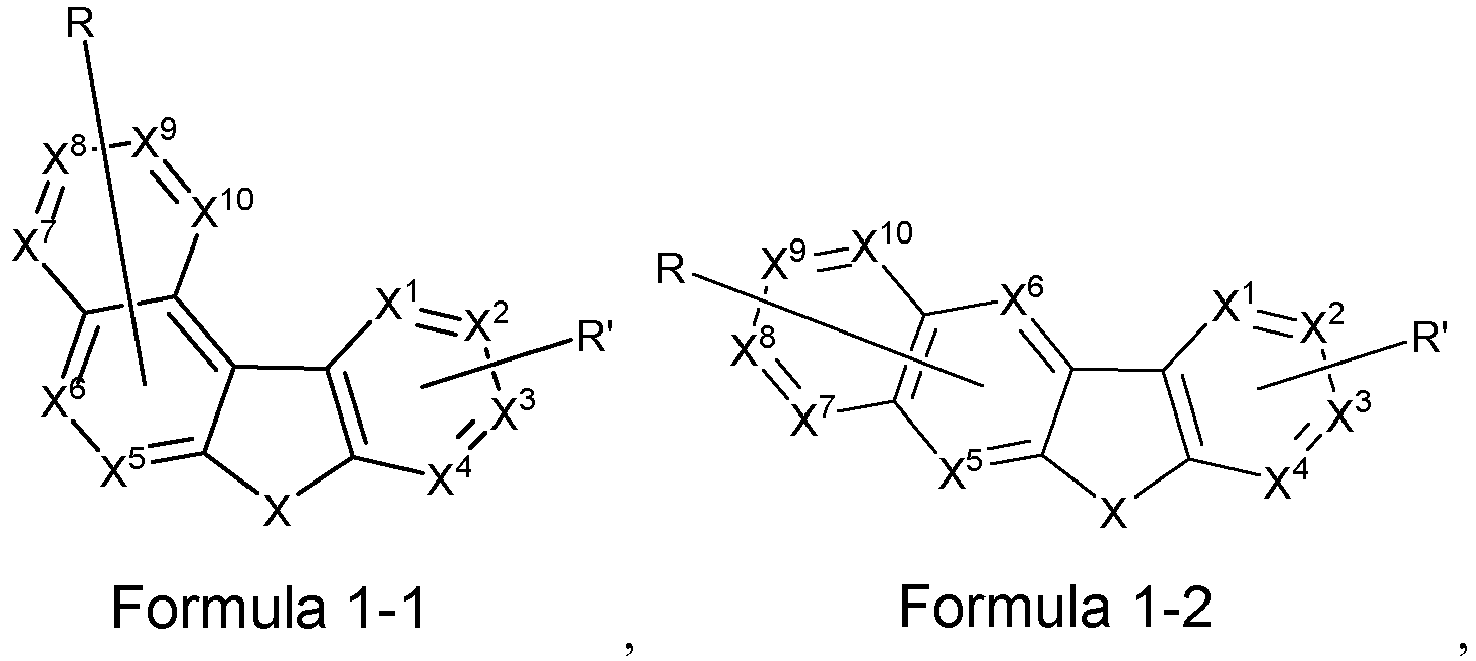
 wherein X is selected from the group consisting of O, S, and Se;wherein X1 to X10 are each independently selected from the group consisting of carbon and nitrogen;wherein at least one of X1 to X6 is nitrogen;wherein R and R' each independently represent from mono to the possible maximum number of substitutions, or no substitution;wherein R and R' are each independently selected from the group consisting of hydrogen, deuterium, halogen, alkyl, cycloalkyl, heteroalkyl, arylalkyl, alkoxy, aryloxy, amino, silyl, alkenyl, cycloalkenyl, heteroalkenyl, alkynyl, aryl, heteroaryl, acyl, carbonyl, carboxylic acid, ester, nitrile, isonitrile, sulfanyl, sulfinyl, sulfonyl, phosphino, and combinations thereof;wherein any adjacent substitutions on the same ring are optionally joined or fused into a ring; andwherein at least one of R and R' is not hydrogen or deuterium;provided that when adjacent subsitutions on X5 and X6 in Formula I-1 and I-3 fuse into a six-member ring, this ring and the ring having X7 to X10 can not be pyridine at the same time.
 - The compound of claim 1, wherein at least one of X5 and X6 is nitrogen.
- The compound of claim 1, wherein the adjacent substitutions on X5 and X6 are not joined or fused into a ring.
- The compound of claim 1, wherein X1 to X4 are all carbon.
- The compound of claim 1, wherein at least one of X1 to X4 is nitrogen, and at least one of X5 and X6 is nitrogen.
- The compound of claim 1, wherein at least one of R and R' comprises at least one chemical group selected from the group consisting of triphenylene, carbazole, dibenzothiphene, dibenzofuran, dibenzoselenophene, azatriphenylene, azacarbazole, aza-dibenzothiophene, aza-dibenzofuran, and aza-dibenzoselenophene.
- The compound of claim 1, wherein the compound has at least five aromatic rings fused together.
- The compound of claim 1, wherein the compound is selected from the group consisting of:
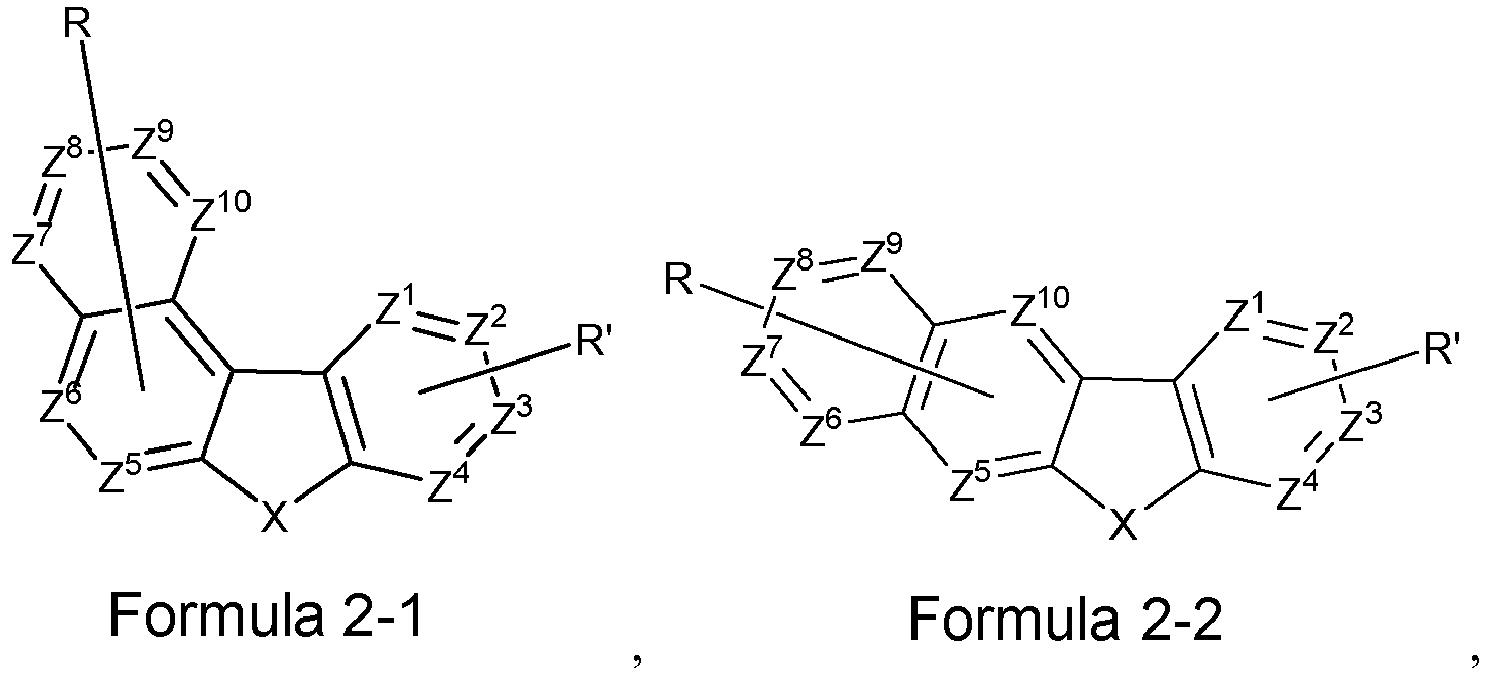
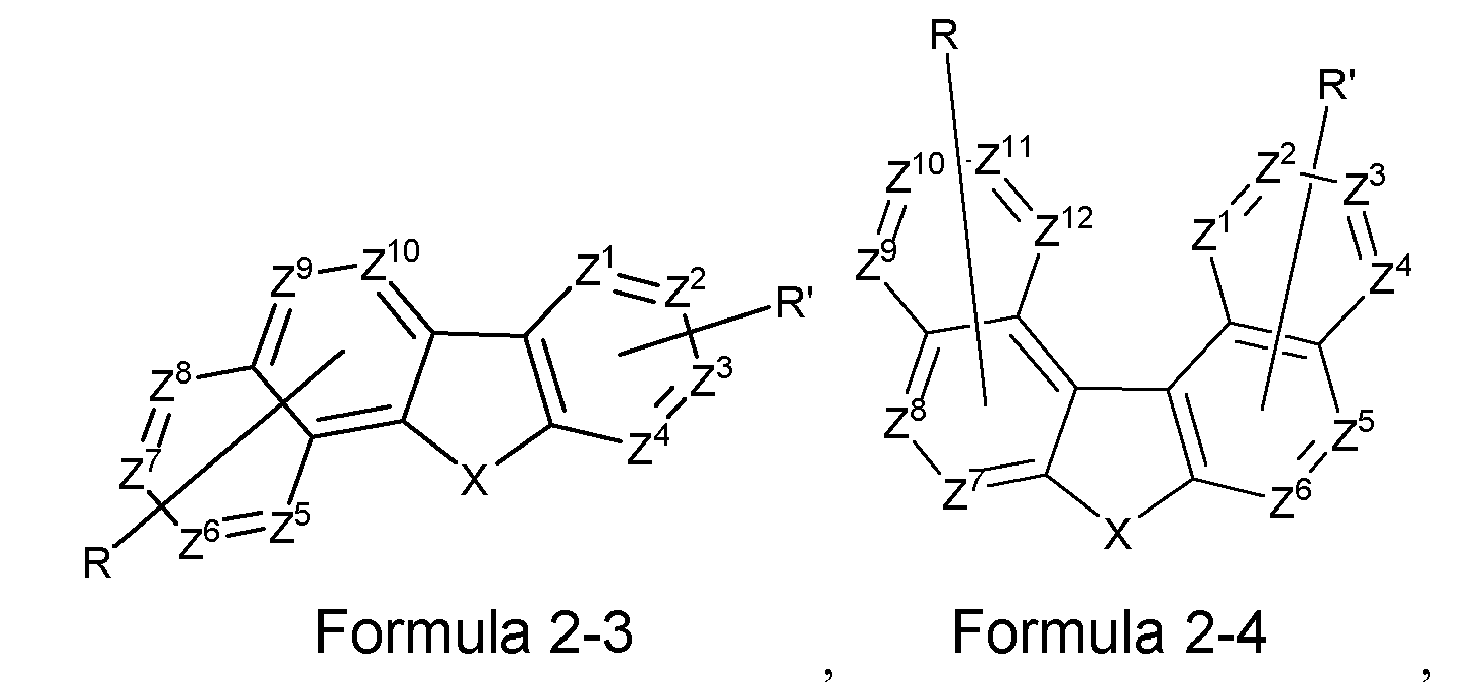


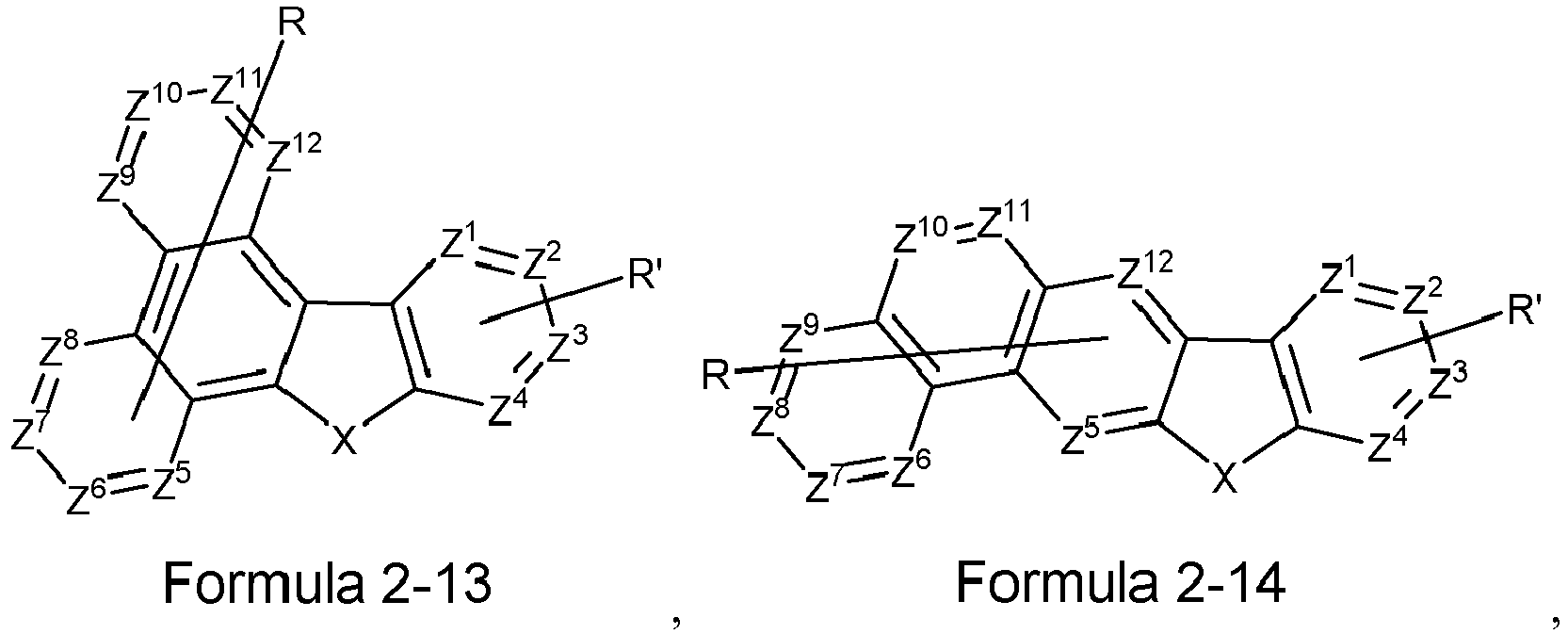
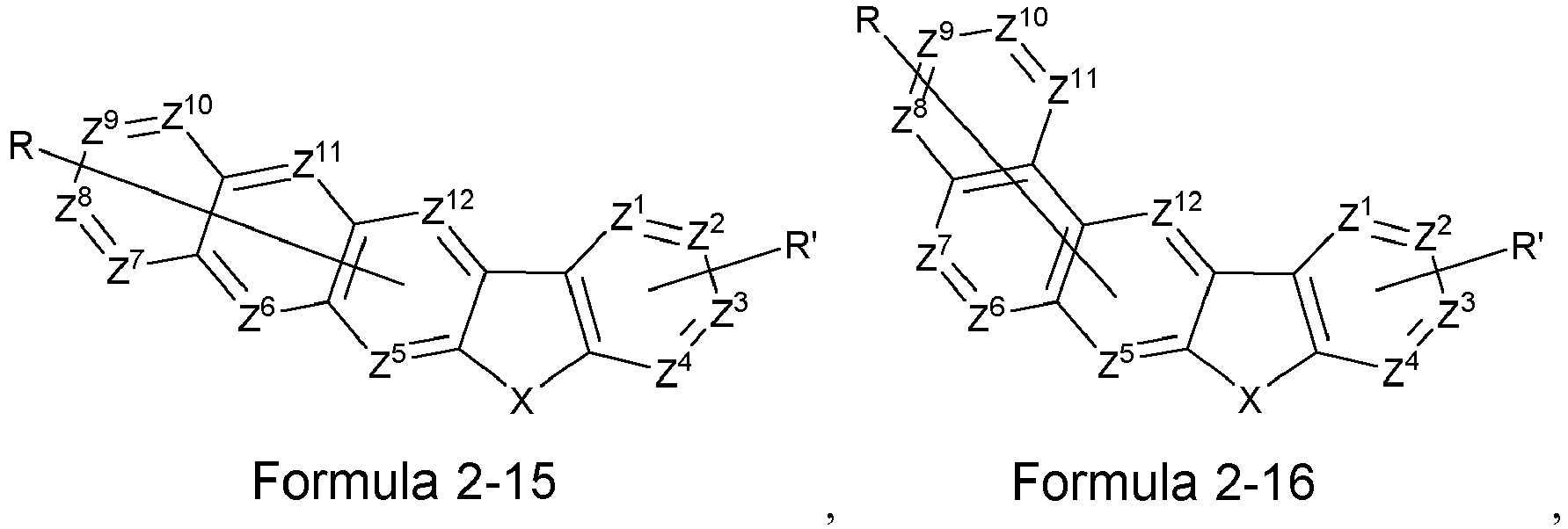


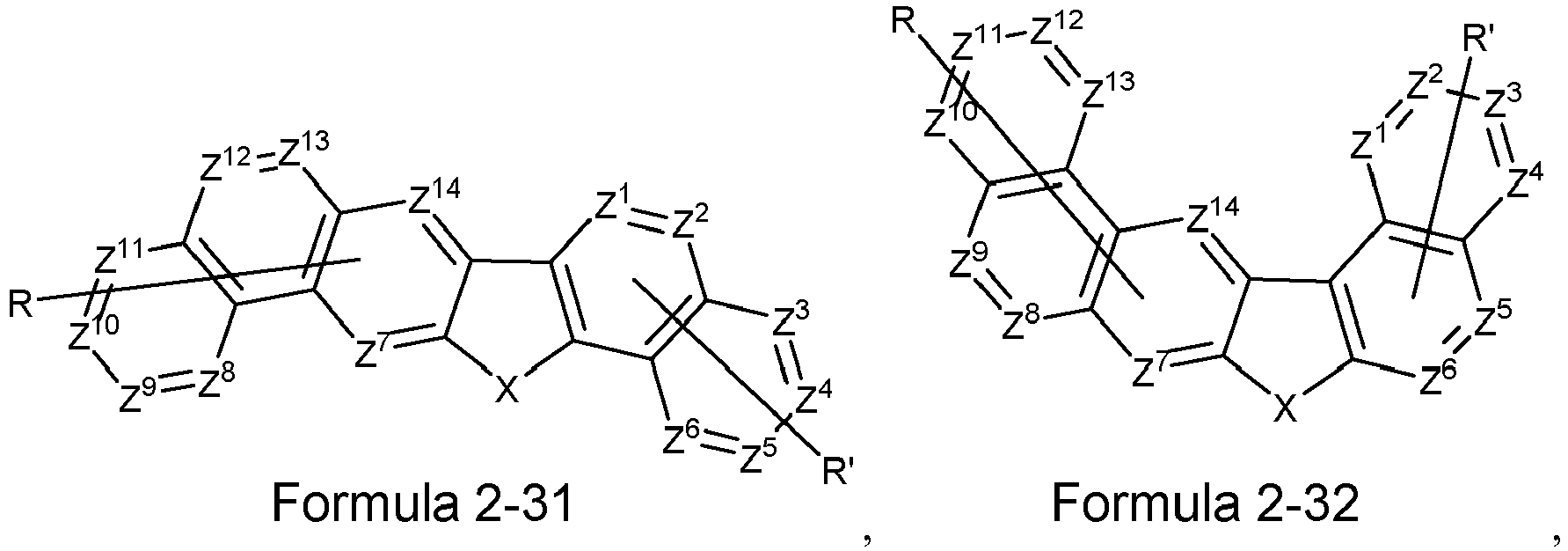


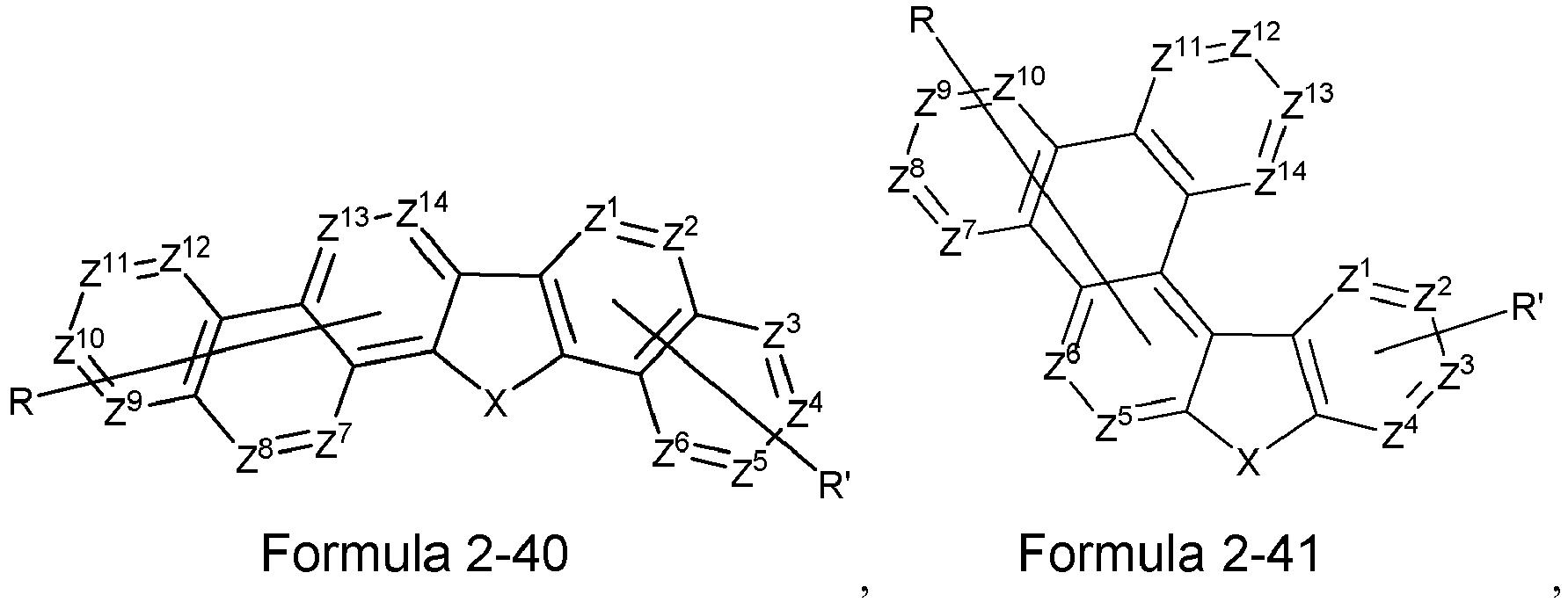


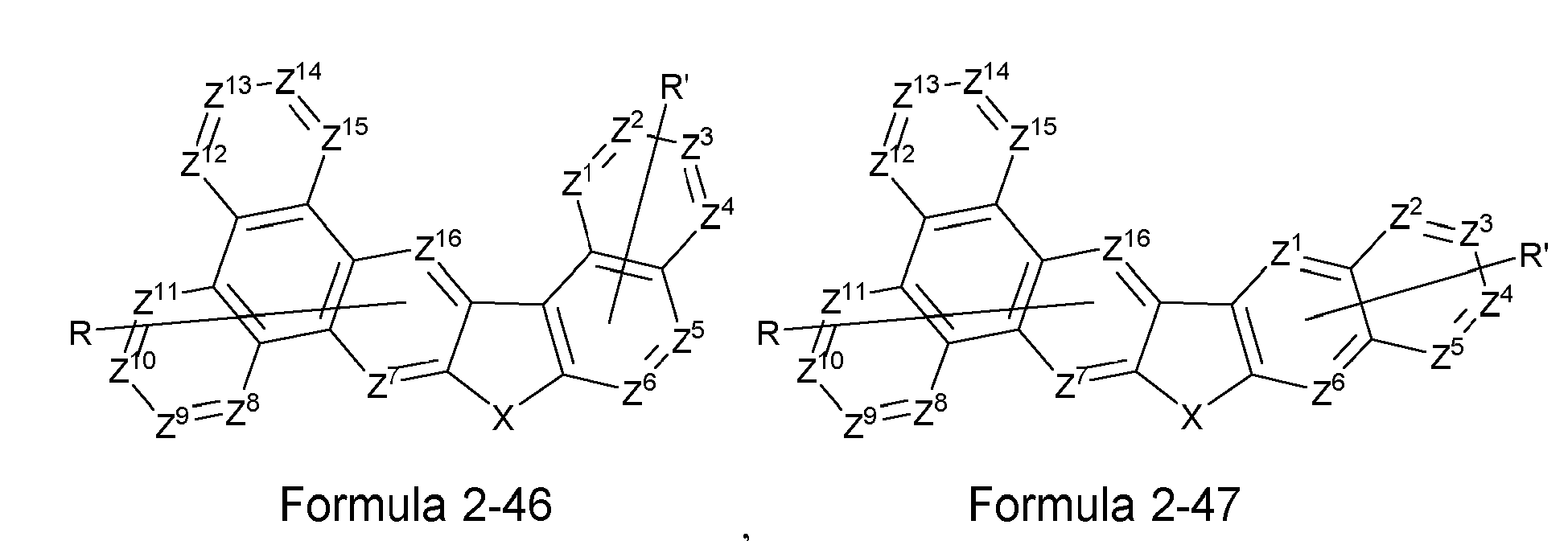


- The compound of claim 1, wherein the compound comprises a group selected from the group consisting of:
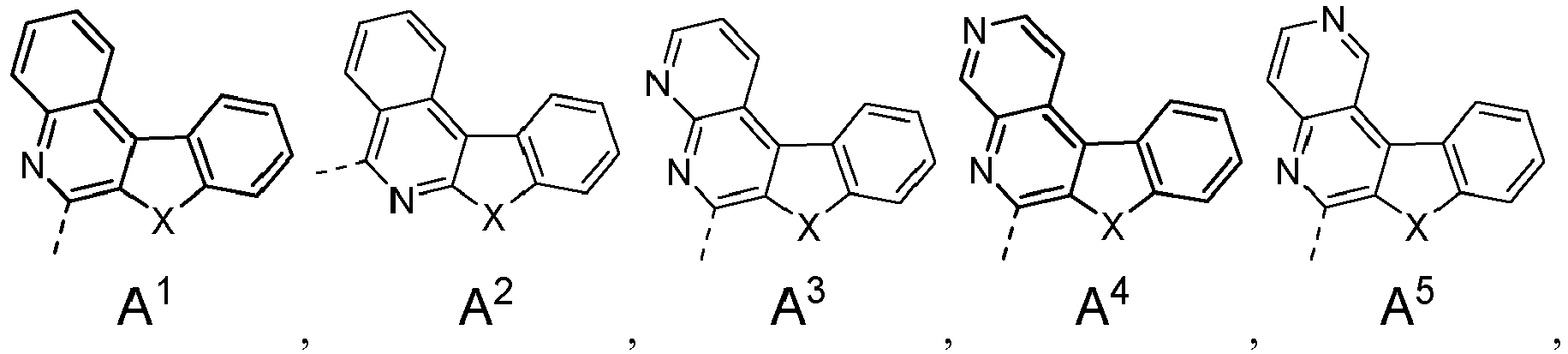


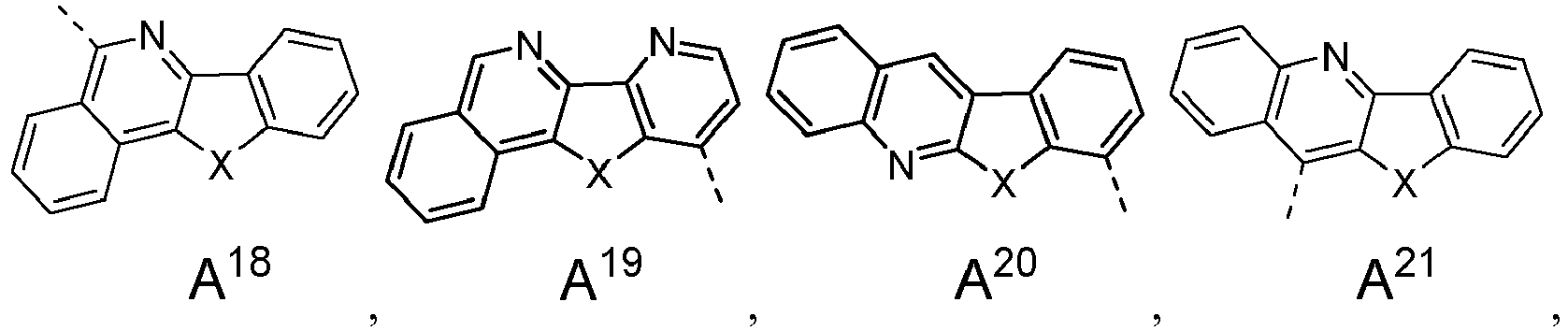


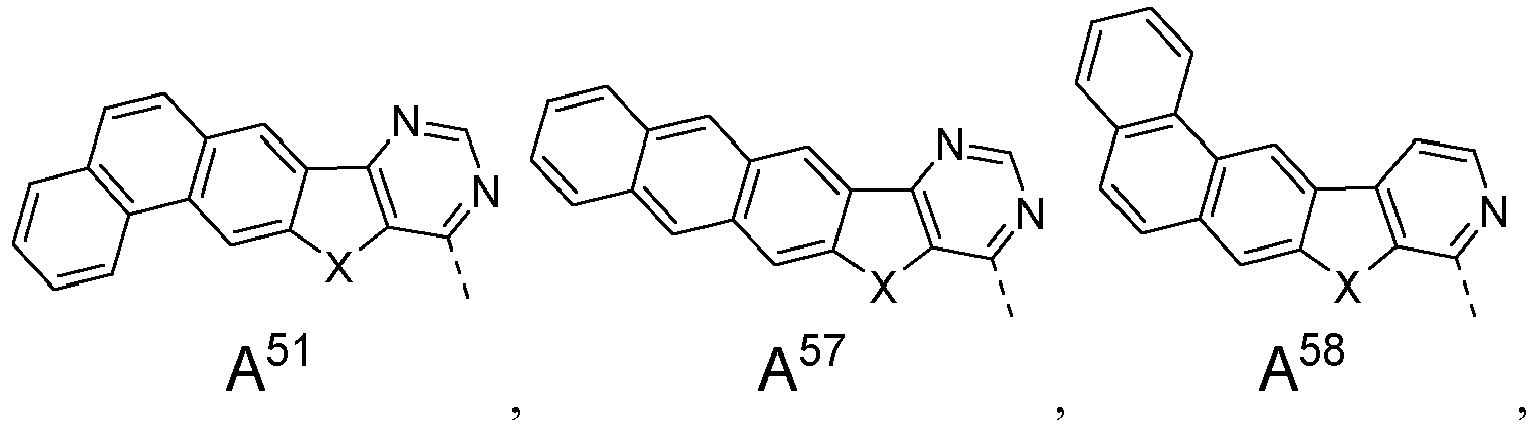

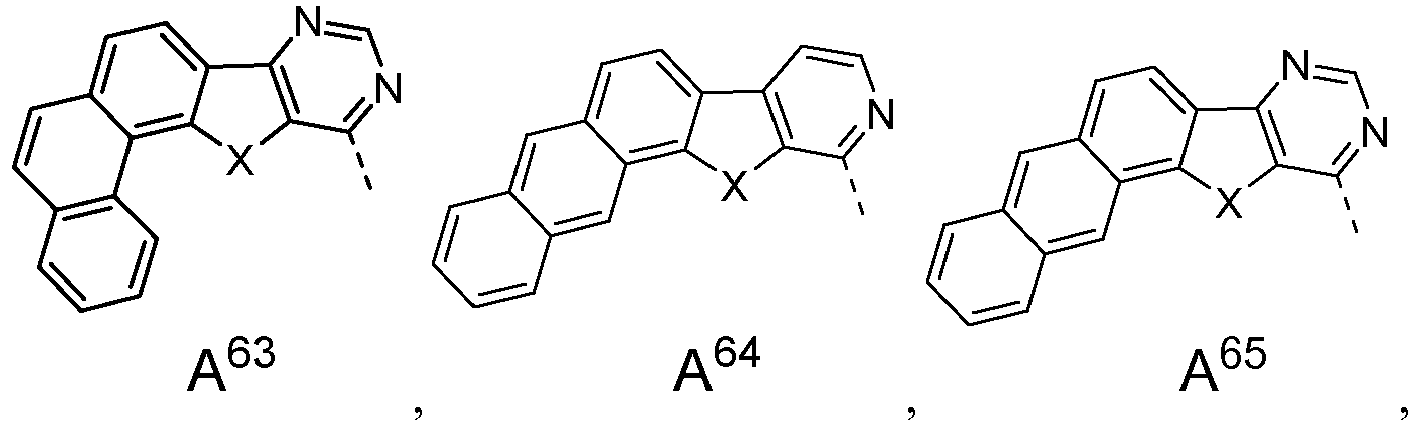


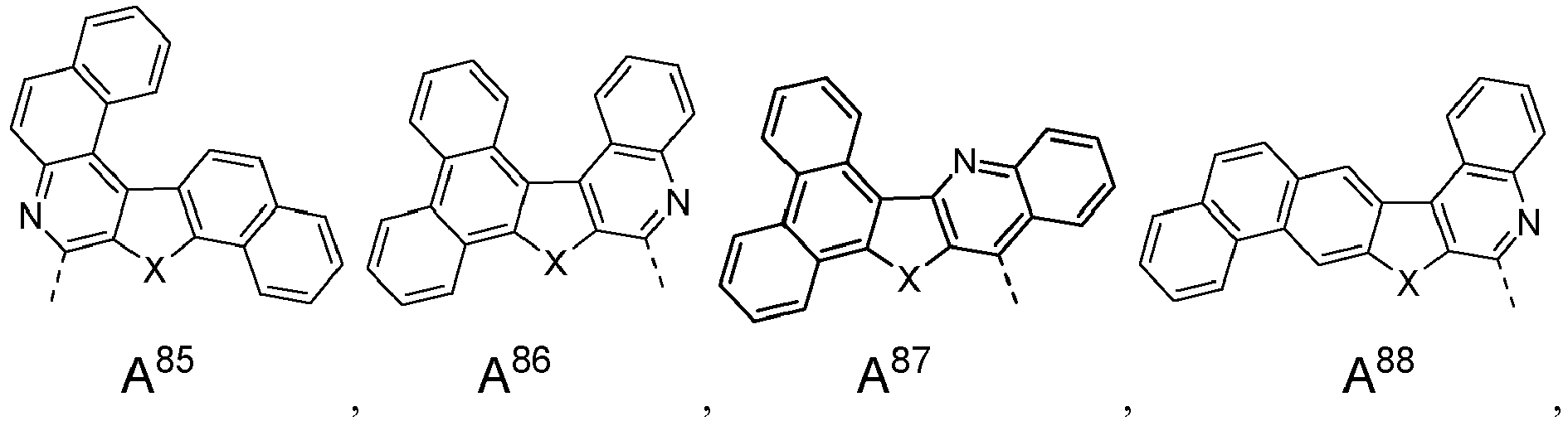
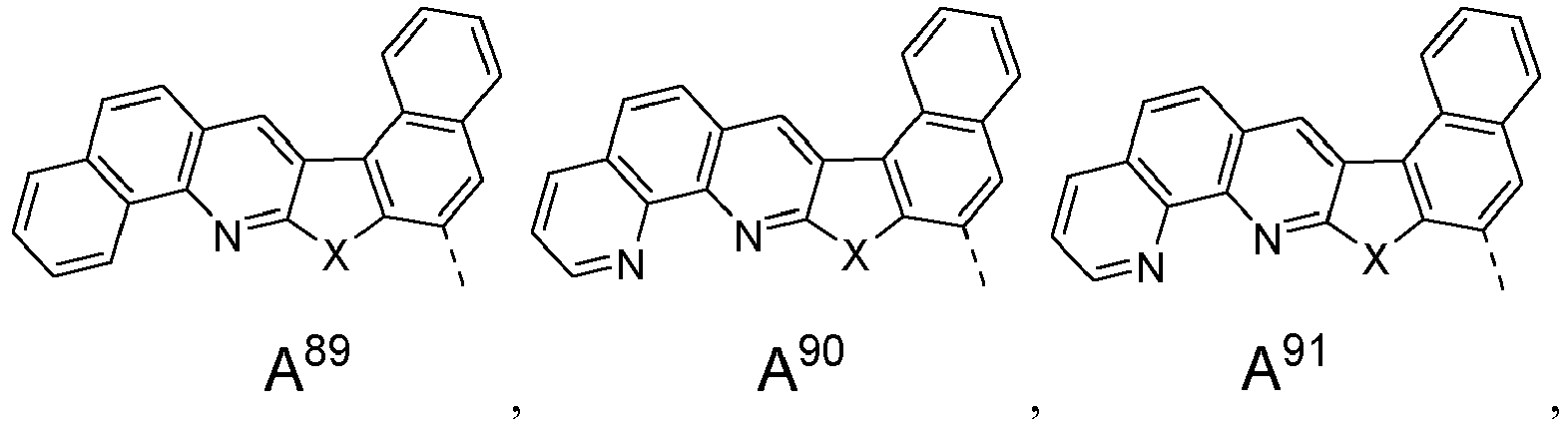


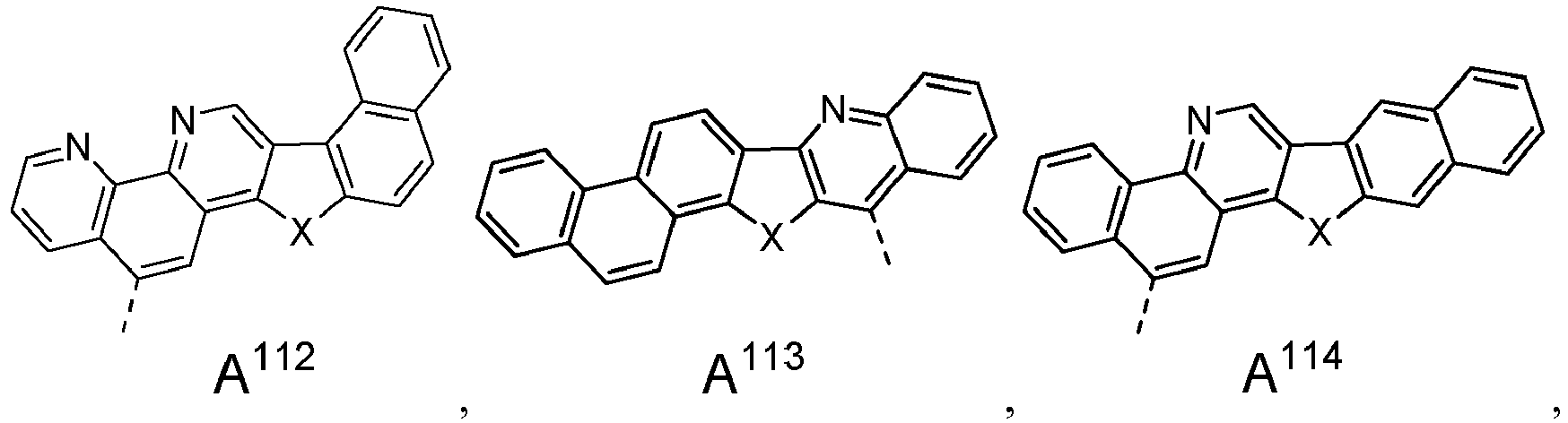
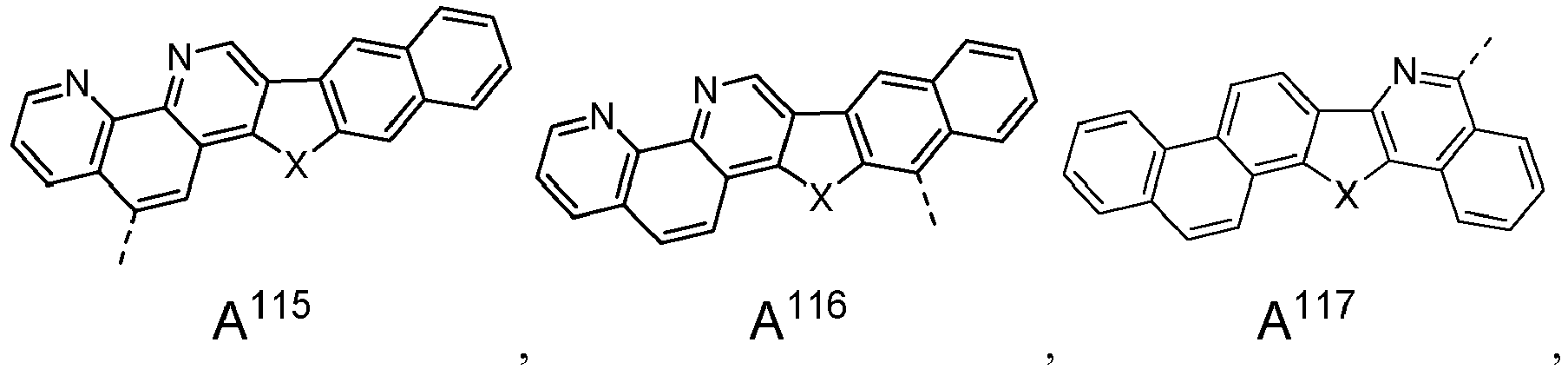
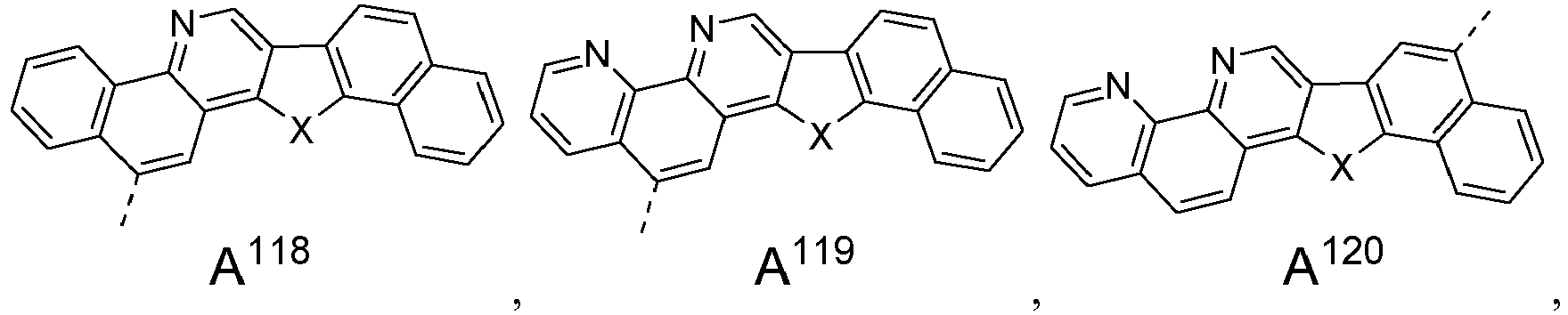

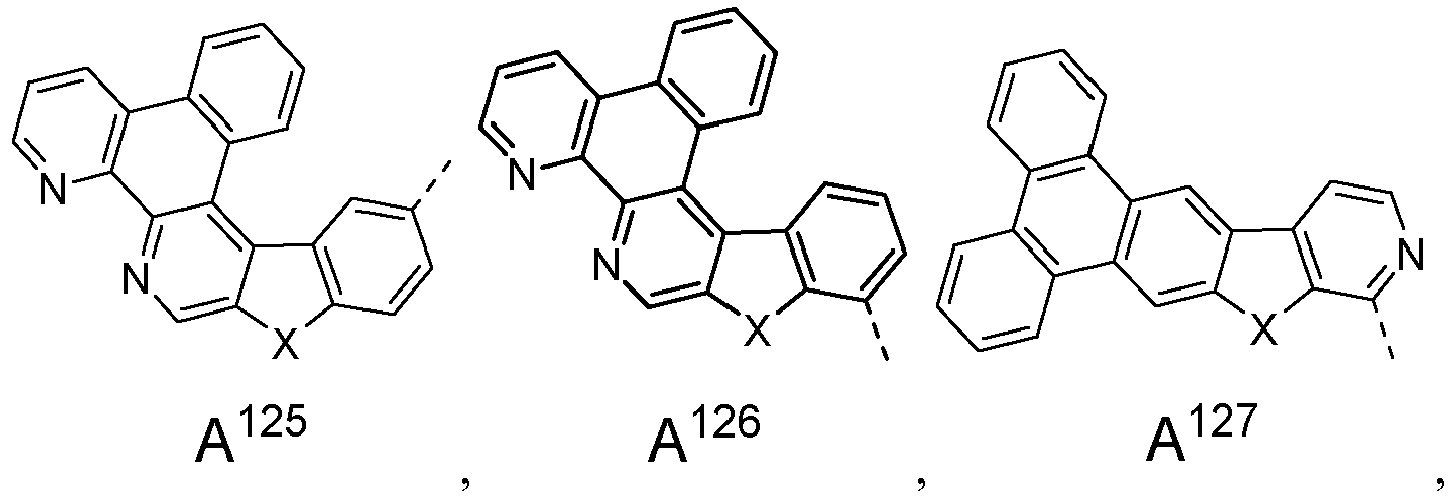
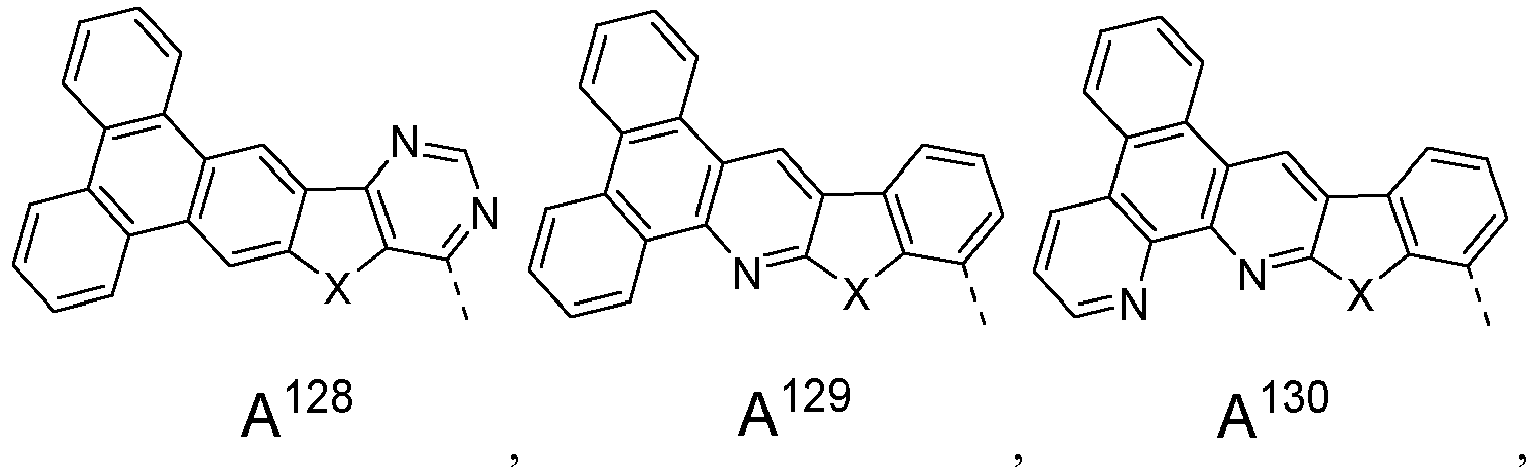

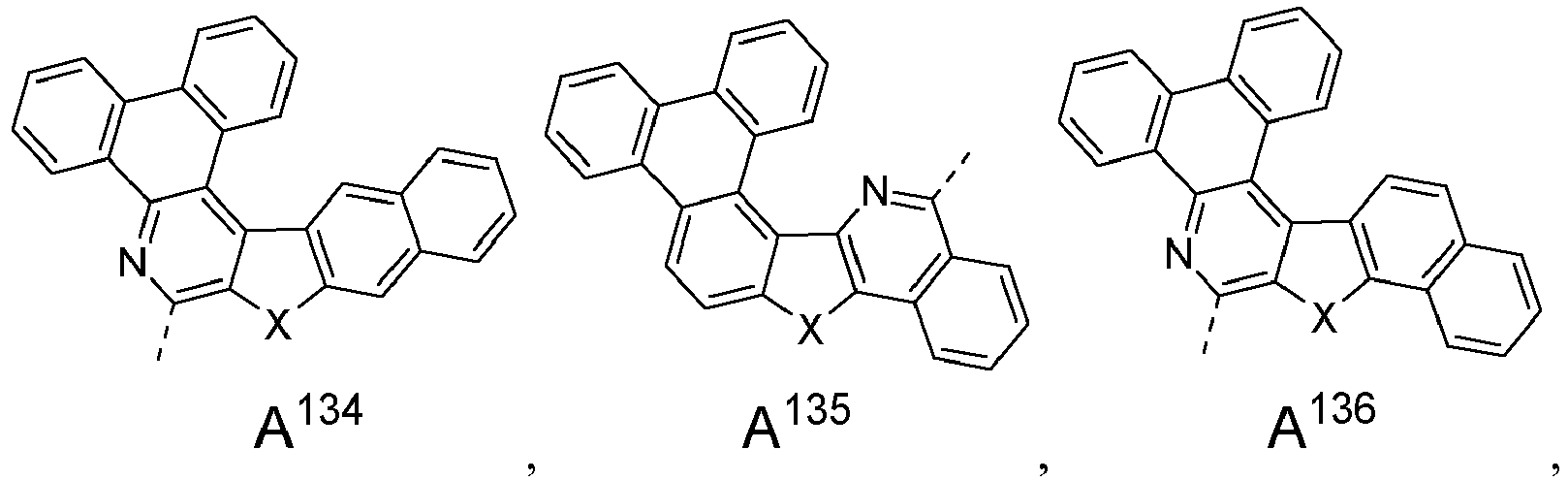


- The compound of claim 9, wherein the compound is substituted by a group selected from the group consisting of:

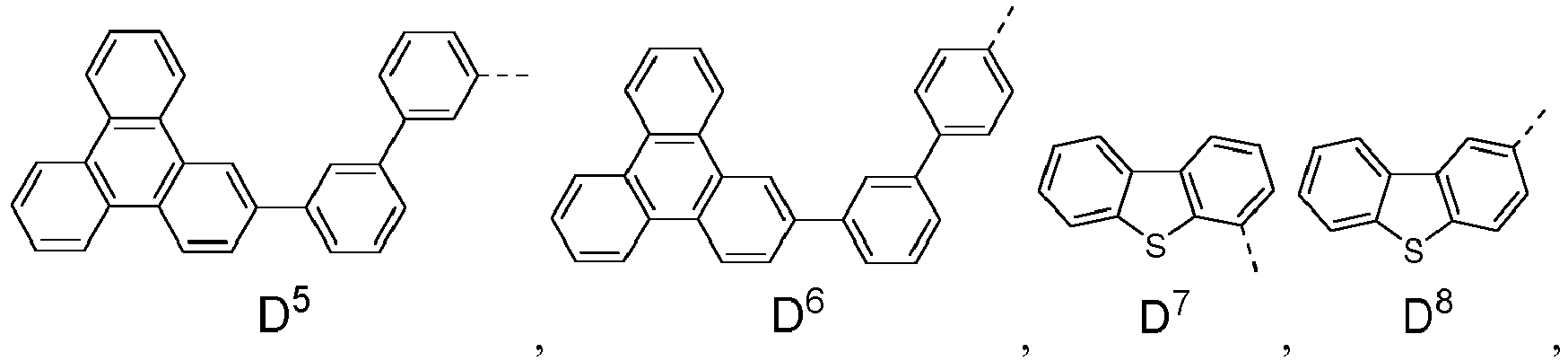


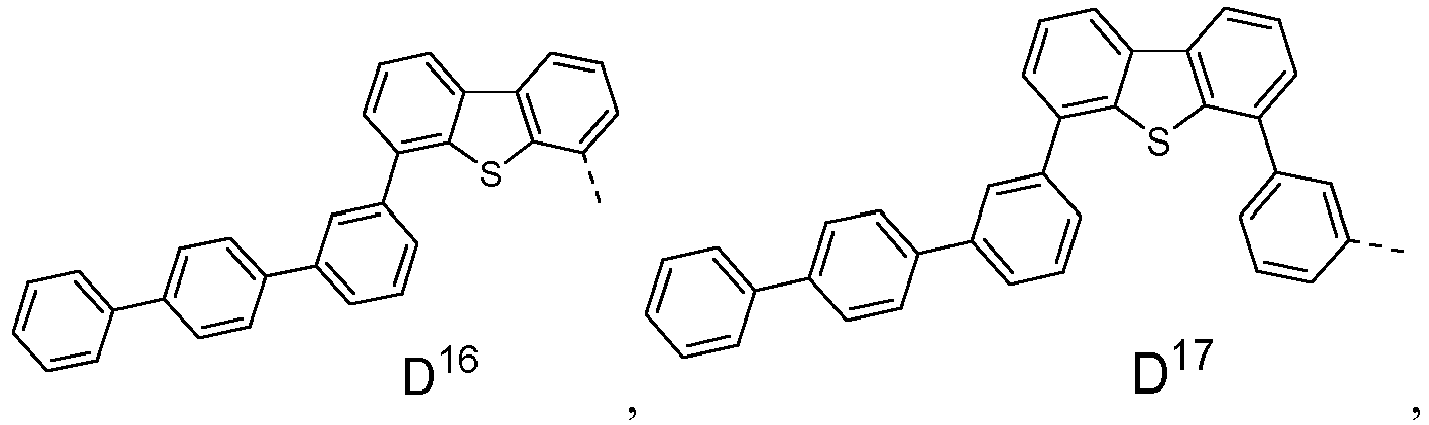
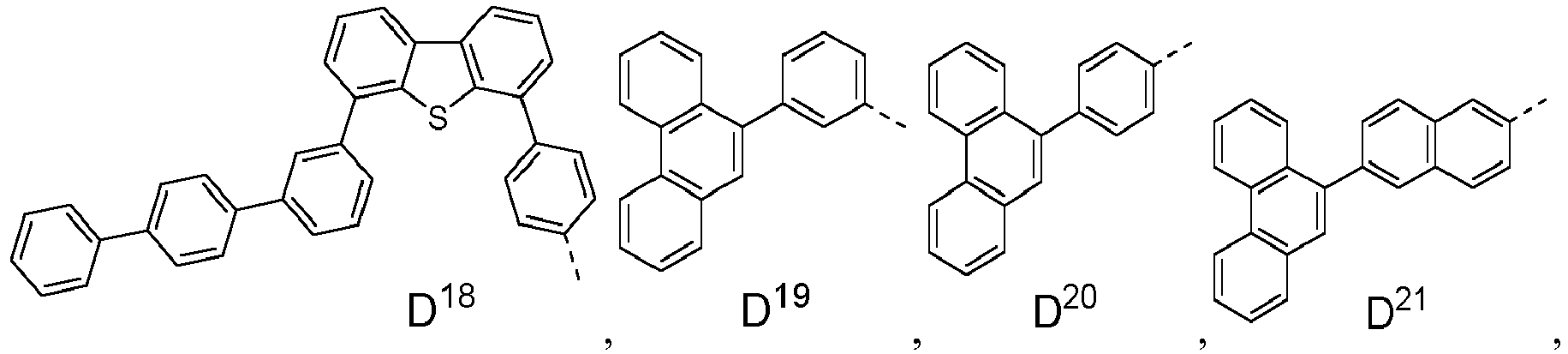
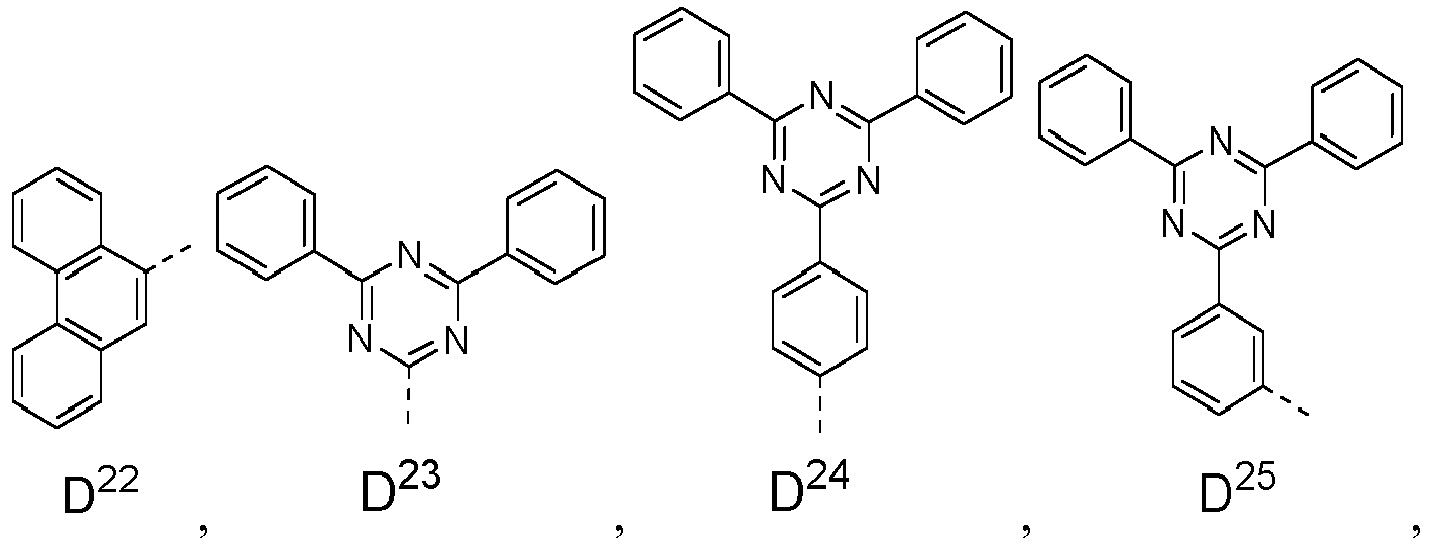


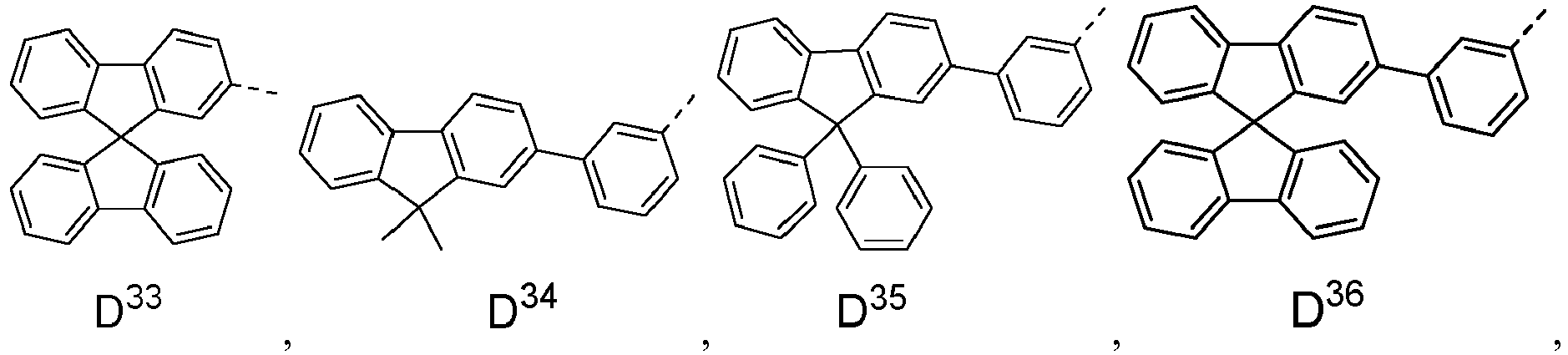

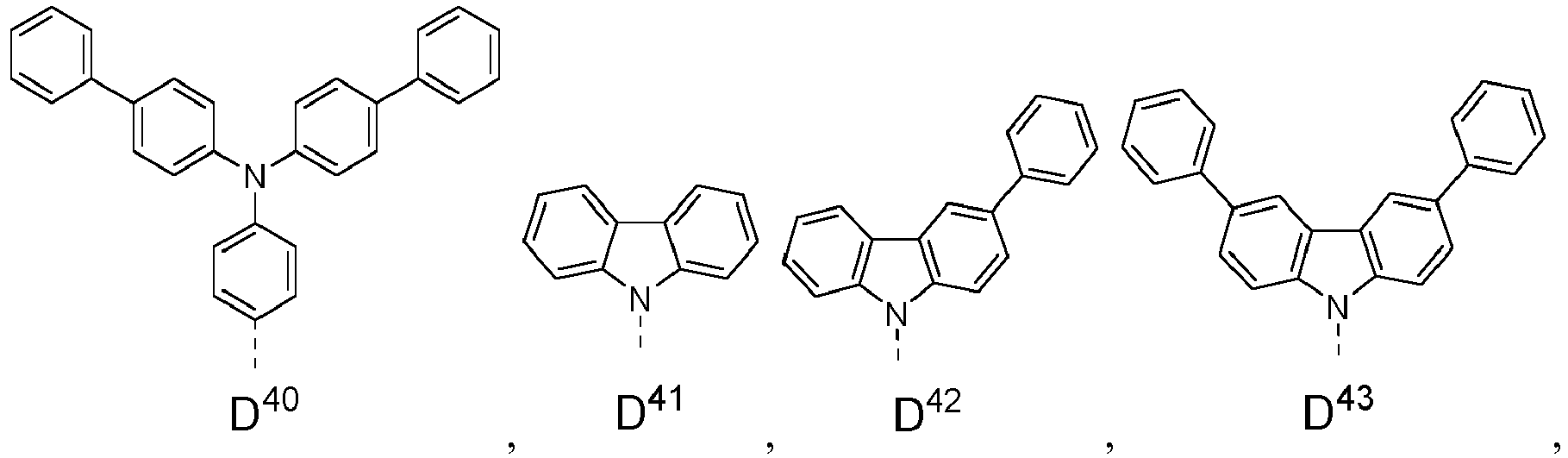

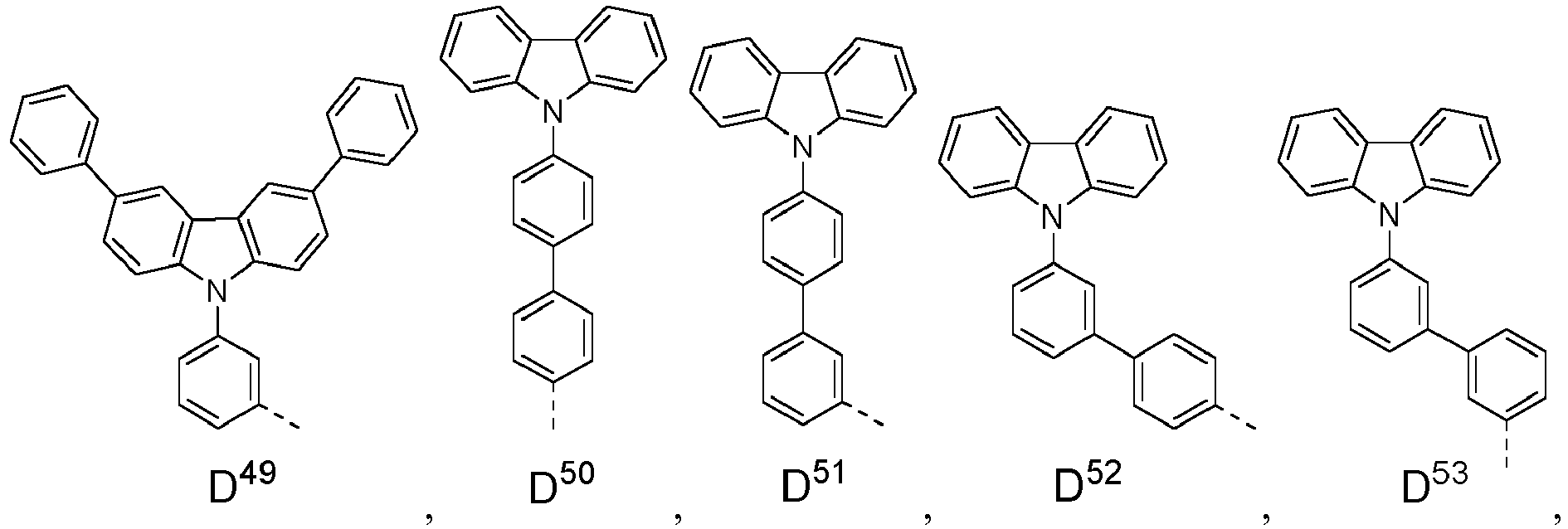

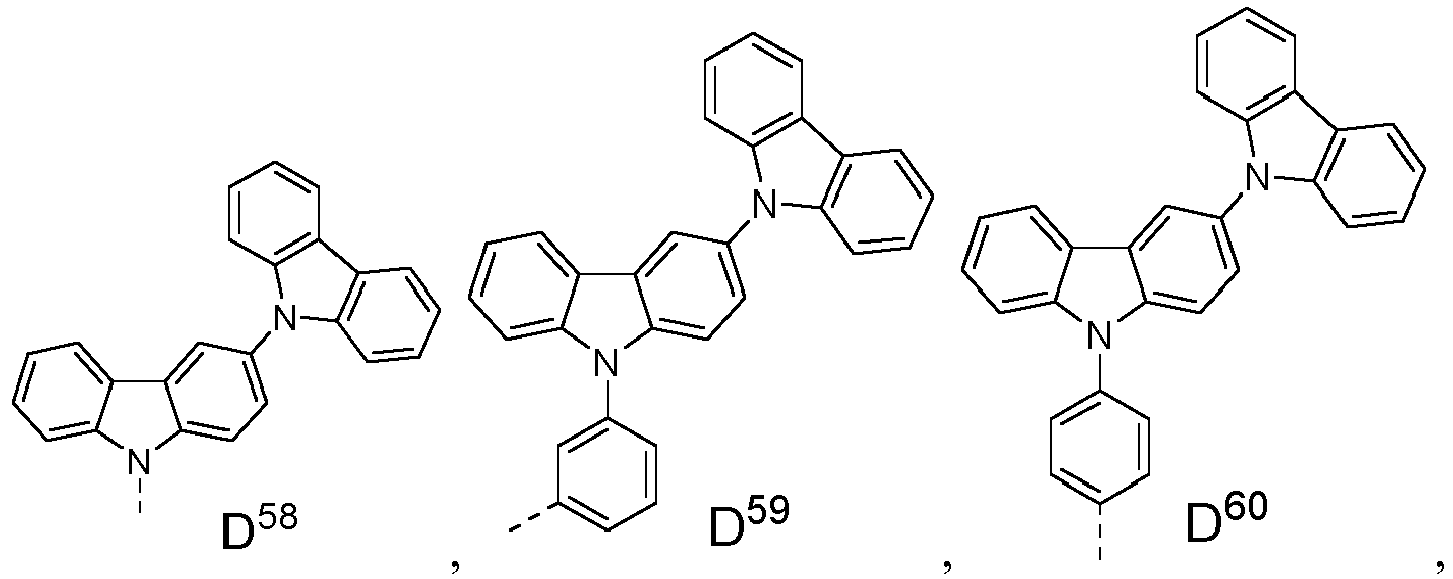


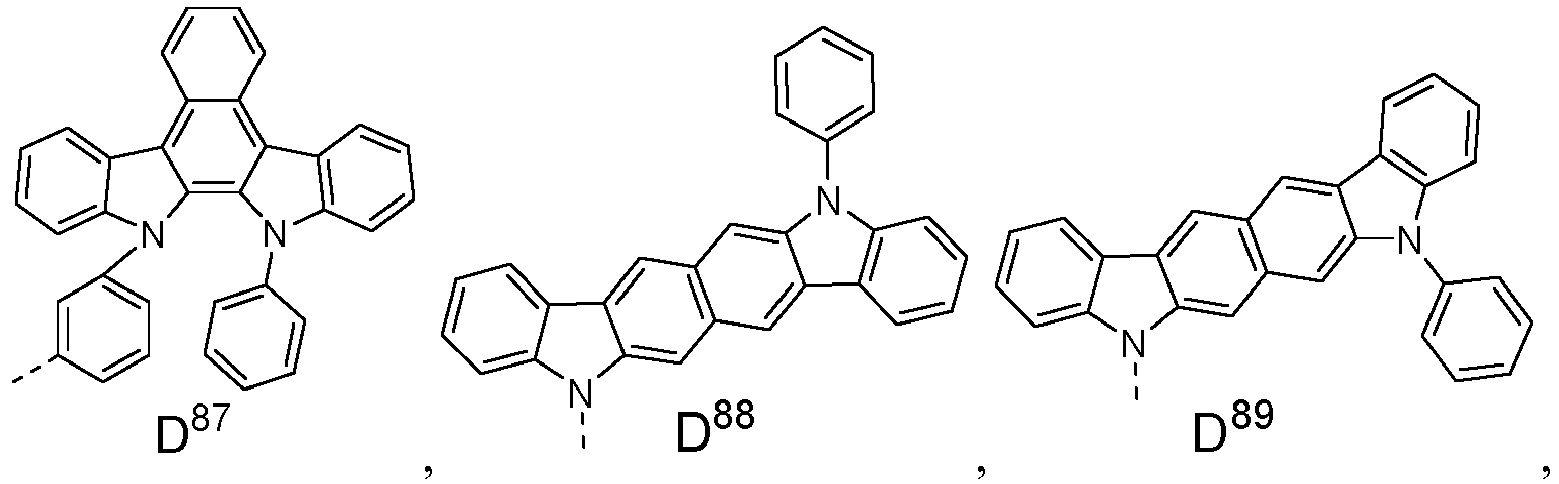
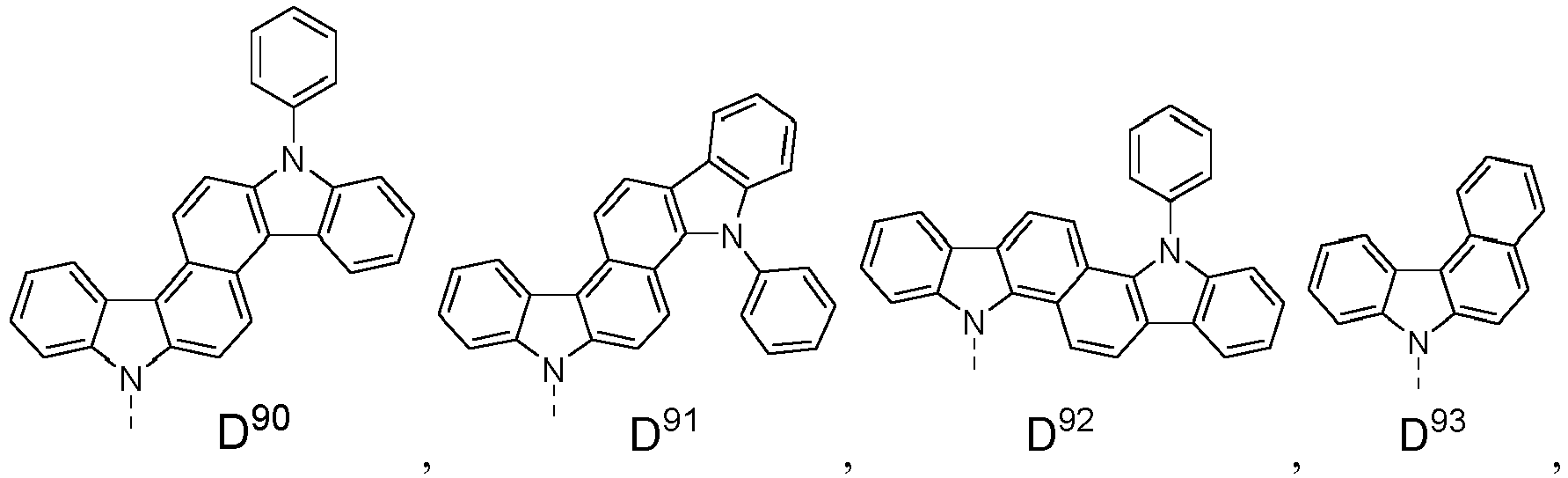

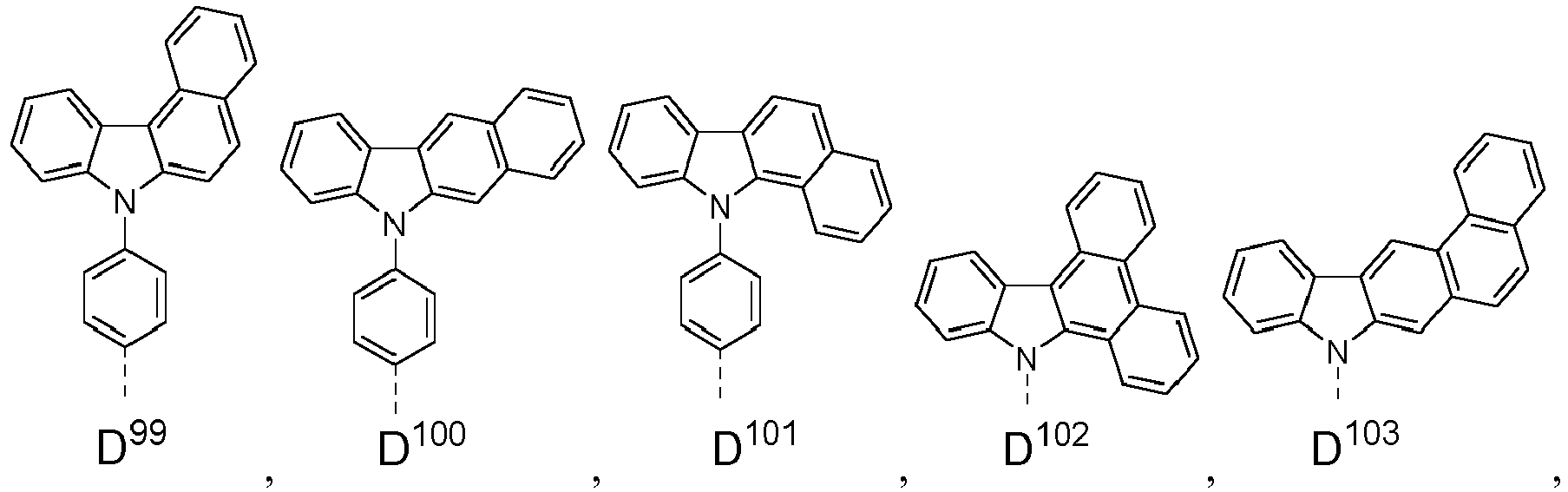


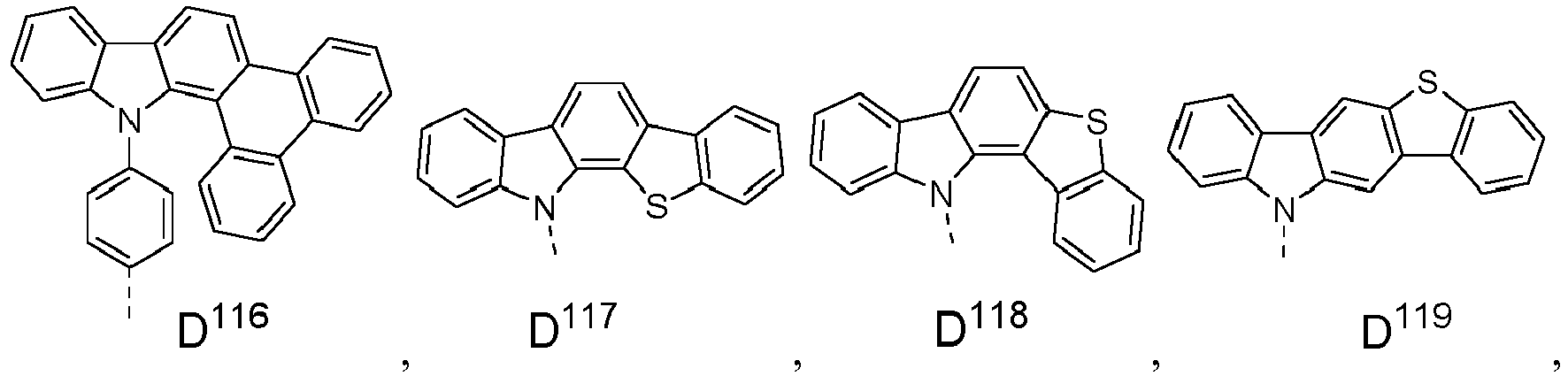


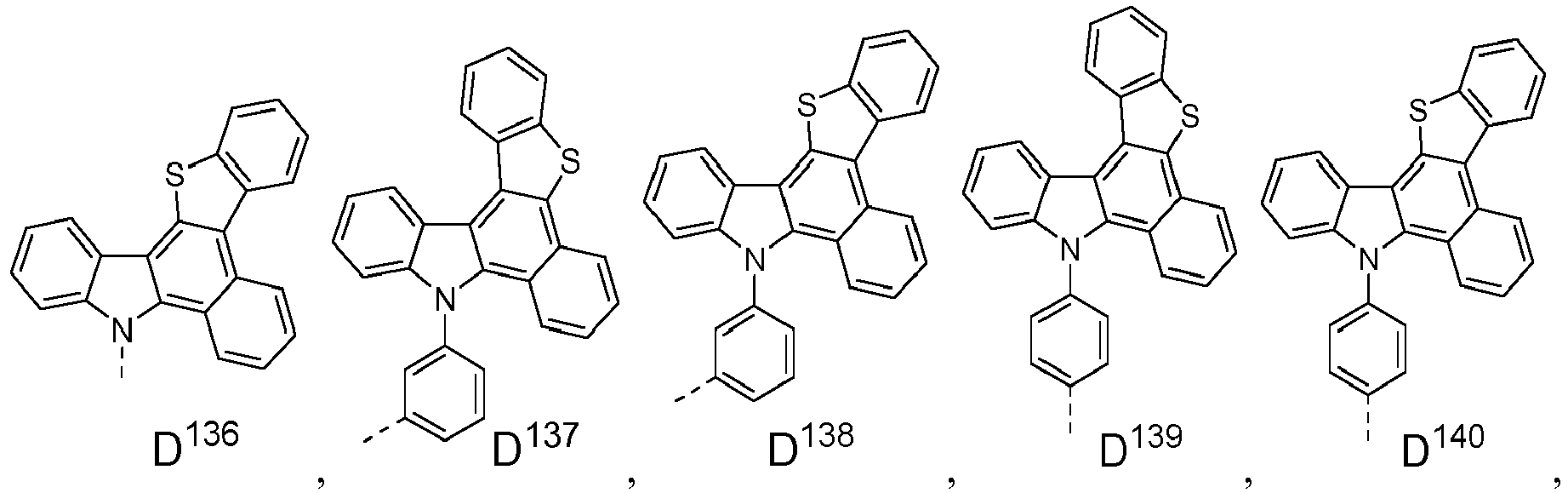


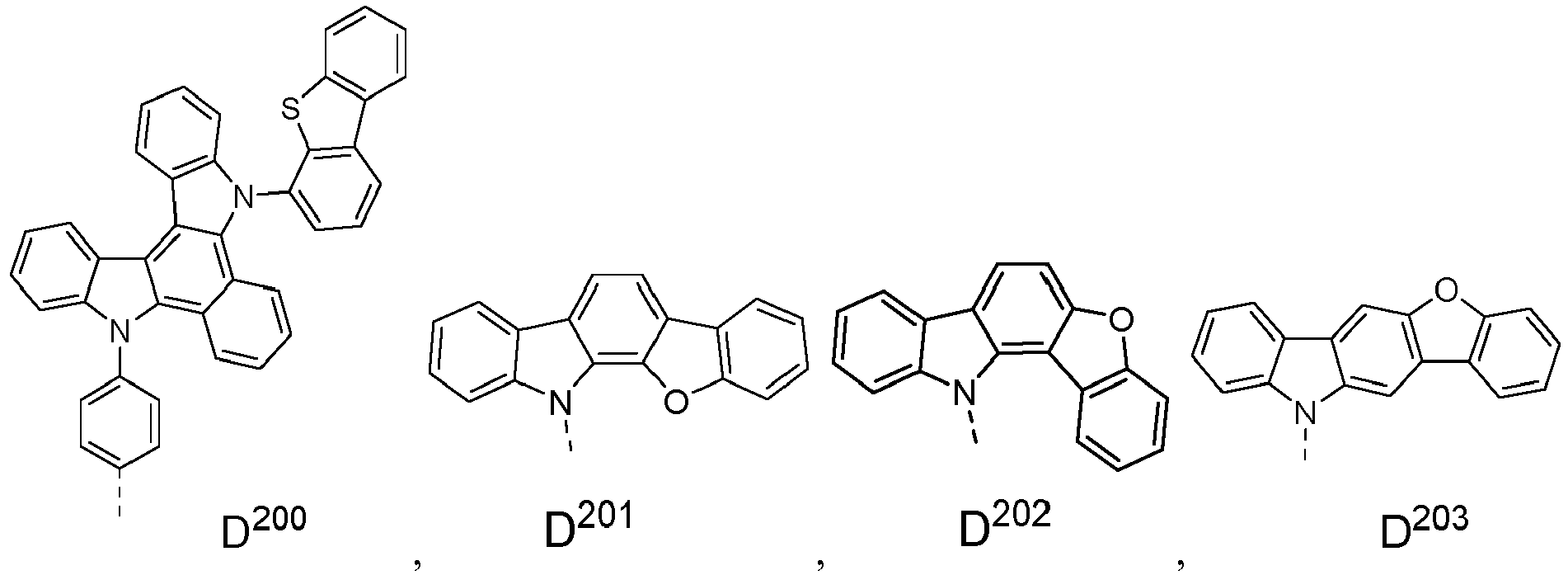


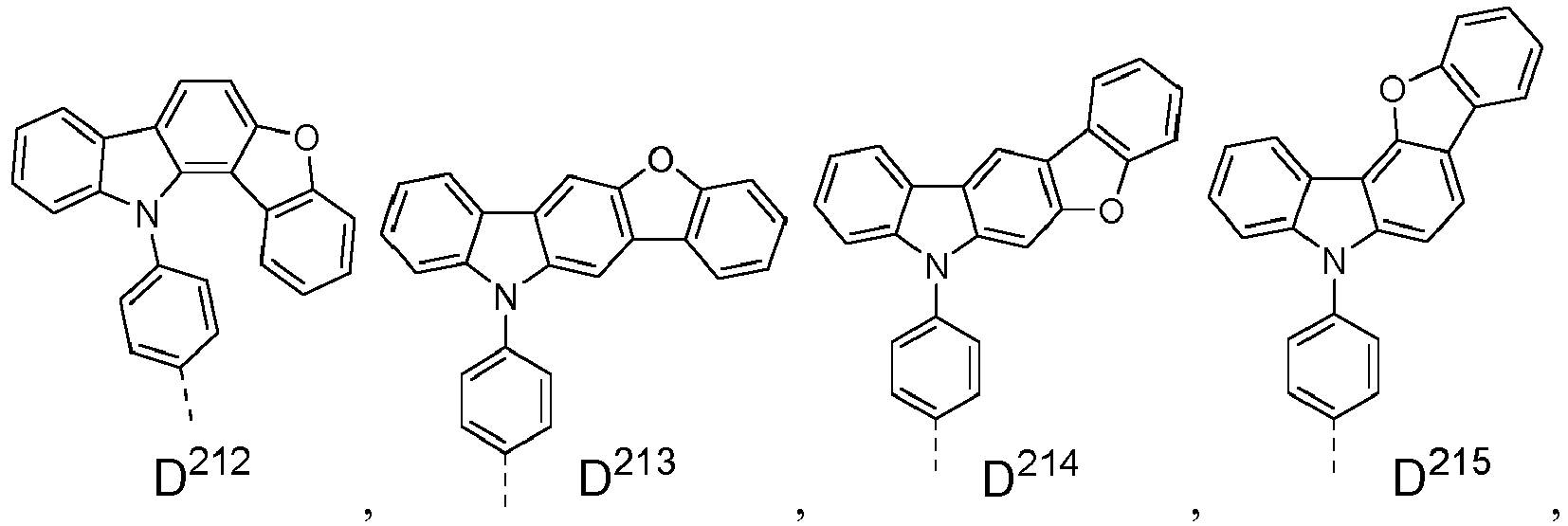
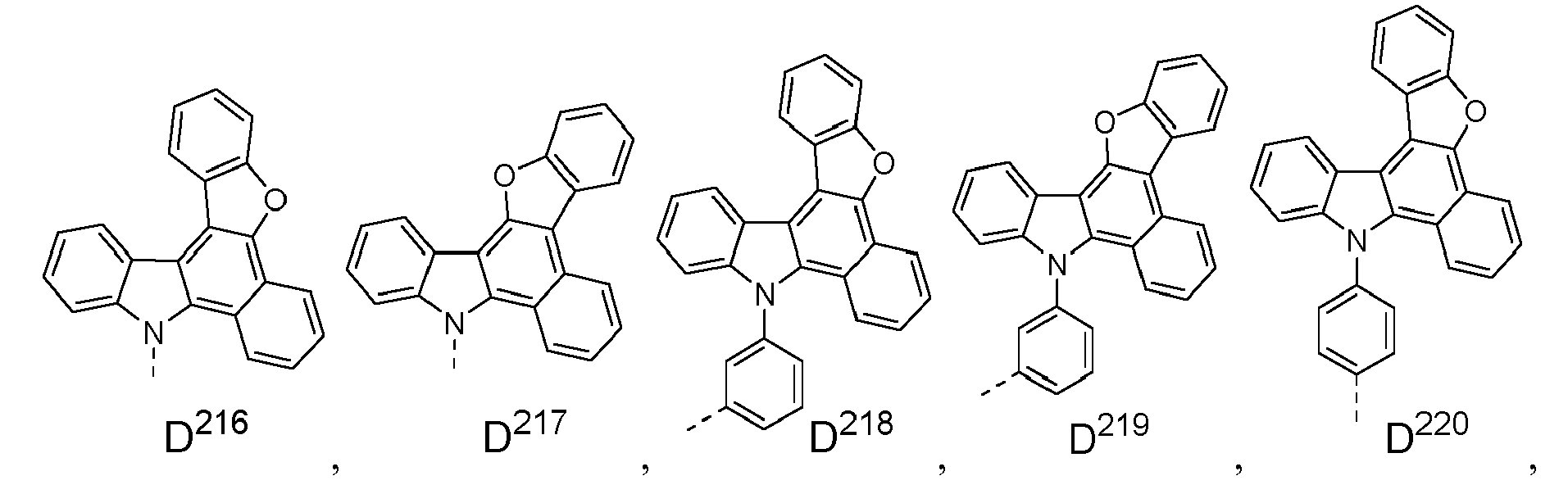
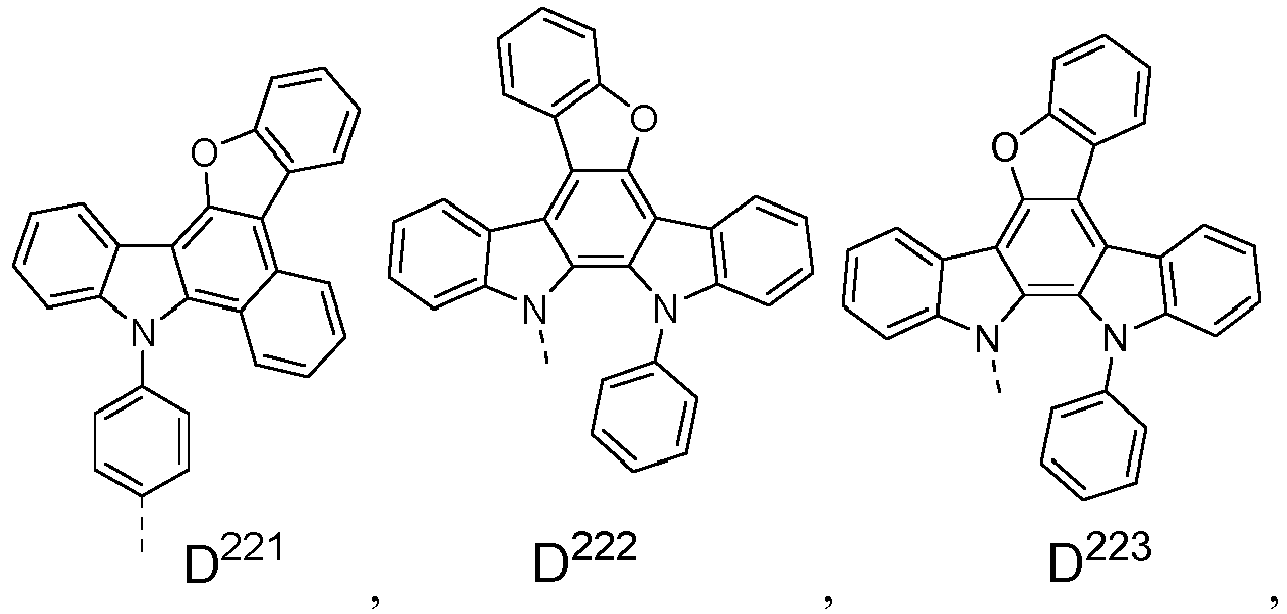

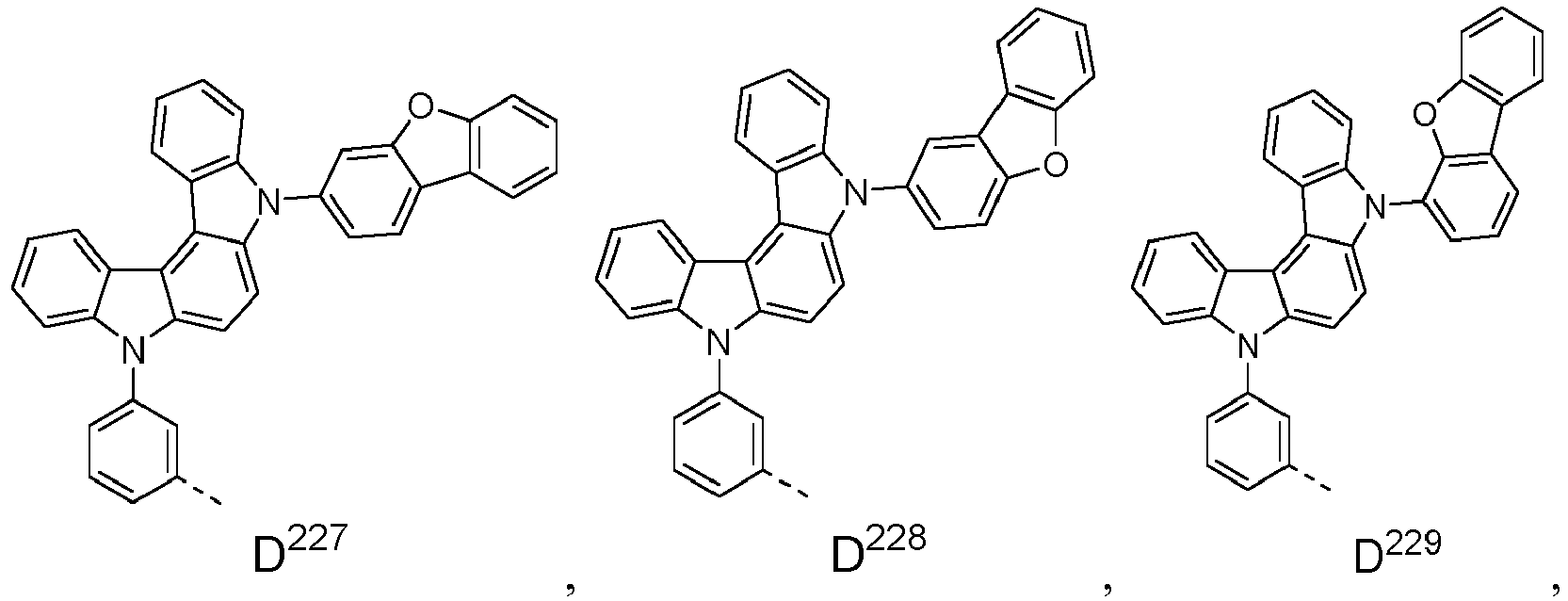
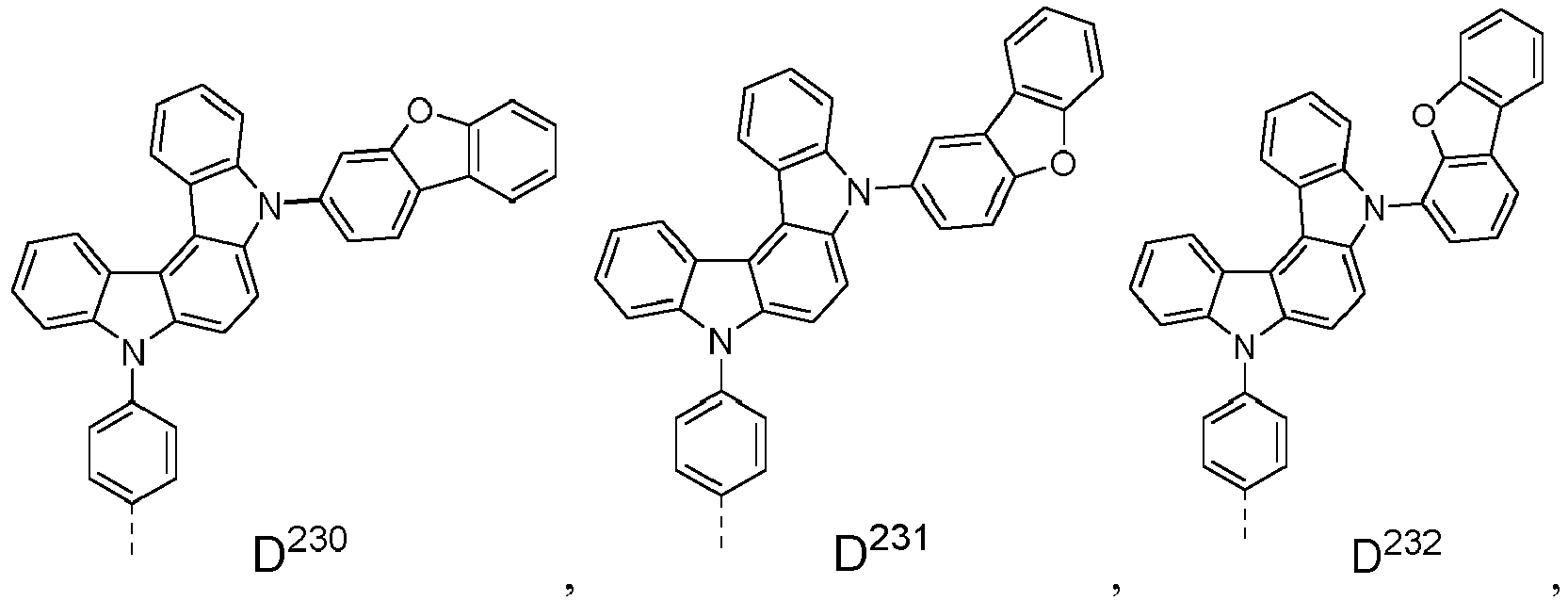


- The compound of claim 10, wherein the compound is Compound x(Label) having the formula A i D j ;
wherein x=144j+i-144, where i is an integer from 1 to 144, and j is an integer from 1 to 244; and
wherein Label is the X in the corresponding A'. - A first organic light emitting device comprising:an anode;a cathode; andan organic layer, disposed between the anode and the cathode, comprising a compound as defined in any one of the previous claims.
- The first organic light emitting device of claim 12, wherein the organic layer is an emissive layer and the compound is a host.
- The first organic light emitting device of claim 12, wherein the organic layer further comprises a phosphorescent emissive dopant; wherein the emissive dopant is a transition metal complex having at least one ligand or part of the ligand if the ligand is more than bidentate, selected from the group consisting of:


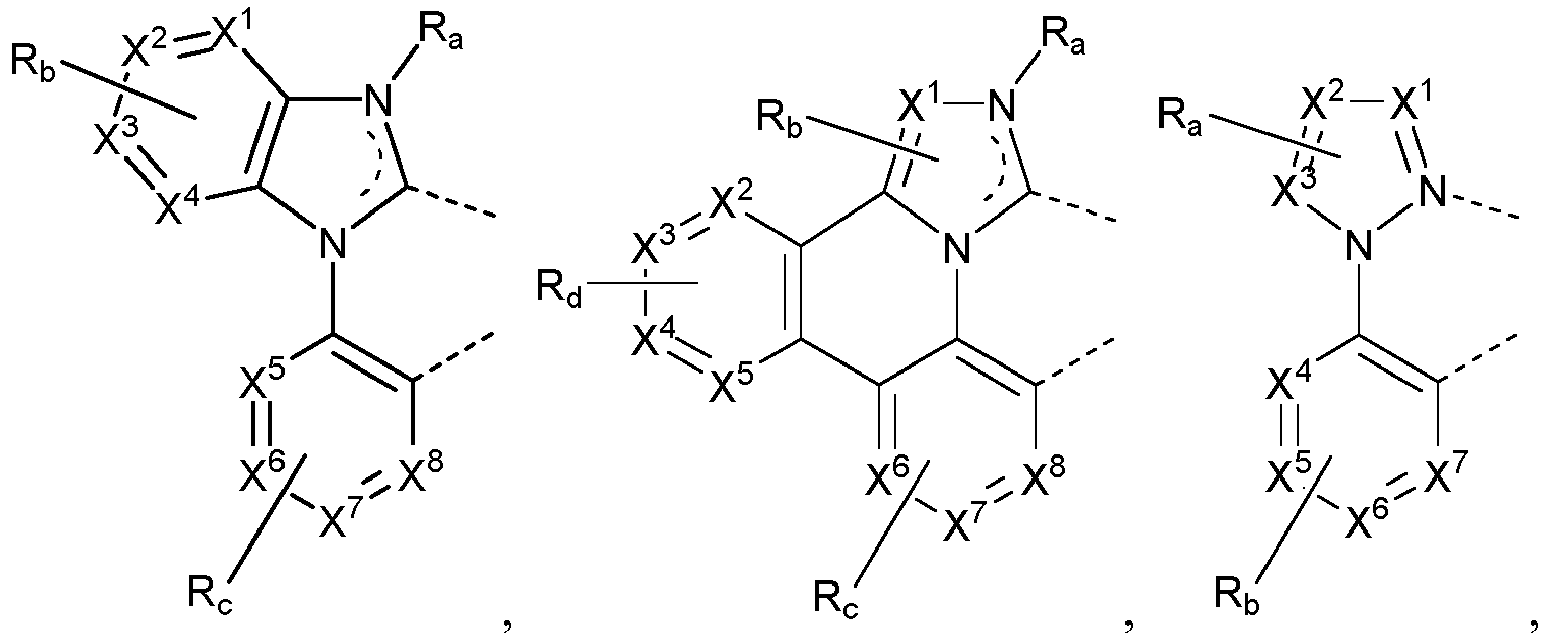

 wherein each X1 to X13 are independently selected from the group consisting of carbon and nitrogen;wherein Z is selected from the group consisting of BR', NR', PR', O, S, Se, C=O, S=O, SO2, CR'R", SiR'R", and GeR'R";wherein R' and R" are optionally fused or joined to form a ring;wherein each Ra, Rb, Rc, and Rd may represent from mono substitution to the possible maximum number of substitution, or no substitution;wherein R', R", Ra, Rb, Rc, and Rd are each independently selected from the group consisting of hydrogen, deuterium, halogen, alkyl, cycloalkyl, heteroalkyl, arylalkyl, alkoxy, aryloxy, amino, silyl, alkenyl, cycloalkenyl, heteroalkenyl, alkynyl, aryl, heteroaryl, acyl, carbonyl, carboxylic acids, ester, nitrile, isonitrile, sulfanyl, sulfinyl, sulfonyl, phosphino, and combinations thereof; andwherein any two adjacent substitutents of Ra, Rb, Rc, and Rd are optionally fused or joined to form a ring or form a multidentate ligand.
 - A formulation comprising a compound as defined in any one of claims 1 to 11.
Applications Claiming Priority (2)
| Application Number | Priority Date | Filing Date | Title |
|---|---|---|---|
| US201562198173P | 2015-07-29 | 2015-07-29 | |
| US15/173,806 US11127905B2 (en) | 2015-07-29 | 2016-06-06 | Organic electroluminescent materials and devices |
Publications (2)
| Publication Number | Publication Date |
|---|---|
| EP3124488A1 true EP3124488A1 (en) | 2017-02-01 |
| EP3124488B1 EP3124488B1 (en) | 2020-04-08 |
Family
ID=56411546
Family Applications (1)
| Application Number | Title | Priority Date | Filing Date |
|---|---|---|---|
| EP16179494.6A Active EP3124488B1 (en) | 2015-07-29 | 2016-07-14 | Organic electroluminescent materials and devices |
Country Status (5)
| Country | Link |
|---|---|
| US (2) | US11127905B2 (en) |
| EP (1) | EP3124488B1 (en) |
| JP (1) | JP6850086B2 (en) |
| KR (2) | KR102604511B1 (en) |
| CN (3) | CN112521399B (en) |
Cited By (1)
| Publication number | Priority date | Publication date | Assignee | Title |
|---|---|---|---|---|
| US11495753B2 (en) | 2017-03-16 | 2022-11-08 | Semiconductor Energy Laboratory Co., Ltd. | Organic compound, light-emitting element, light-emitting device, electronic device, and lighting device |
Families Citing this family (18)
| Publication number | Priority date | Publication date | Assignee | Title |
|---|---|---|---|---|
| CN109311904B (en) * | 2016-06-22 | 2022-03-29 | 出光兴产株式会社 | Certain substituted benzofuro-and benzothienoquinolines for use in organic light emitting diodes |
| US20190031673A1 (en) * | 2017-07-27 | 2019-01-31 | Semiconductor Energy Laboratory Co., Ltd. | Organic Compound, Light-Emitting Element, Light-Emitting Device, Electronic Device, and Lighting Device |
| KR102571882B1 (en) | 2017-09-01 | 2023-08-29 | 가부시키가이샤 큐럭스 | Compositions Used in Organic Light-Emitting Diodes |
| WO2019063288A1 (en) * | 2017-09-26 | 2019-04-04 | Cynora Gmbh | Organic molecules, in particular for use in optoelctronic devices |
| US12484443B2 (en) * | 2018-03-16 | 2025-11-25 | Nippon Steel Chemical & Material Co., Ltd. | Organic electroluminescent element |
| US12415949B2 (en) | 2018-06-28 | 2025-09-16 | Sk Inc. | Compound, organic electroluminescent device, and display device |
| JP2021516656A (en) * | 2018-09-28 | 2021-07-08 | エルティー・マテリアルズ・カンパニー・リミテッドLT Materials Co., Ltd. | Heterocyclic compounds and organic light emitting devices containing them |
| US11476425B2 (en) | 2018-09-28 | 2022-10-18 | Lt Materials Co., Ltd. | Heterocyclic compound and organic light emitting element comprising same |
| TWI795444B (en) * | 2018-10-01 | 2023-03-11 | 南韓商Lt素材股份有限公司 | Heterocyclic compound and organic light emitting device comprising the same |
| CN109678868A (en) * | 2018-11-08 | 2019-04-26 | 浙江华显光电科技有限公司 | A kind of red phosphorescent compound and its organic luminescent device using the compound |
| CN109678876A (en) * | 2018-11-08 | 2019-04-26 | 浙江华显光电科技有限公司 | A kind of red phosphorescent compound and its organic luminescent device using the compound |
| CN109503607A (en) * | 2018-11-26 | 2019-03-22 | 浙江华显光电科技有限公司 | A kind of phosphorescence host compound and its organic electroluminescence device using the compound |
| KR102177586B1 (en) * | 2018-11-26 | 2020-11-11 | 엘티소재주식회사 | Heterocyclic compound and organic light emitting device comprising the same |
| KR102211131B1 (en) * | 2019-01-25 | 2021-02-03 | 엘티소재주식회사 | Compound, composition and organic optoelectronic device and display device |
| KR102885310B1 (en) * | 2019-04-04 | 2025-11-13 | 덕산네오룩스 주식회사 | Compound for organic electric element and organic electric device comprising the same |
| WO2023085789A1 (en) * | 2021-11-10 | 2023-05-19 | 주식회사 엘지화학 | Novel compound and organic light-emitting device comprising same |
| CN116997554A (en) * | 2021-11-10 | 2023-11-03 | 株式会社Lg化学 | Novel compounds and organic light-emitting devices containing the same |
| CN120058717B (en) * | 2025-04-25 | 2025-08-26 | 上海隆盛化工有限公司 | 12-chlorobenzo[f]benzofurano[3,2-c]isoquinoline and its preparation method and application |
Citations (325)
| Publication number | Priority date | Publication date | Assignee | Title |
|---|---|---|---|---|
| US4769292A (en) | 1987-03-02 | 1988-09-06 | Eastman Kodak Company | Electroluminescent device with modified thin film luminescent zone |
| US5061569A (en) | 1990-07-26 | 1991-10-29 | Eastman Kodak Company | Electroluminescent device with organic electroluminescent medium |
| US5247190A (en) | 1989-04-20 | 1993-09-21 | Cambridge Research And Innovation Limited | Electroluminescent devices |
| JPH0773529A (en) | 1993-08-31 | 1995-03-17 | Hitachi Ltd | Magneto-optical recording method and magneto-optical recording medium |
| EP0650955A1 (en) | 1993-11-01 | 1995-05-03 | Hodogaya Chemical Co., Ltd. | Amine compound and electro-luminescence device comprising same |
| US5703436A (en) | 1994-12-13 | 1997-12-30 | The Trustees Of Princeton University | Transparent contacts for organic devices |
| US5707745A (en) | 1994-12-13 | 1998-01-13 | The Trustees Of Princeton University | Multicolor organic light emitting devices |
| US5834893A (en) | 1996-12-23 | 1998-11-10 | The Trustees Of Princeton University | High efficiency organic light emitting devices with light directing structures |
| US5844363A (en) | 1997-01-23 | 1998-12-01 | The Trustees Of Princeton Univ. | Vacuum deposited, non-polymeric flexible organic light emitting devices |
| US6013982A (en) | 1996-12-23 | 2000-01-11 | The Trustees Of Princeton University | Multicolor display devices |
| US6087196A (en) | 1998-01-30 | 2000-07-11 | The Trustees Of Princeton University | Fabrication of organic semiconductor devices using ink jet printing |
| US6091195A (en) | 1997-02-03 | 2000-07-18 | The Trustees Of Princeton University | Displays having mesa pixel configuration |
| US6097147A (en) | 1998-09-14 | 2000-08-01 | The Trustees Of Princeton University | Structure for high efficiency electroluminescent device |
| WO2001039234A2 (en) | 1999-11-24 | 2001-05-31 | The Trustees Of Princeton University | Organic light emitting diode having a blue phosphorescent molecule as an emitter |
| US20010019782A1 (en) | 1999-12-27 | 2001-09-06 | Tatsuya Igarashi | Light-emitting material comprising orthometalated iridium complex, light-emitting device, high efficiency red light-emitting device, and novel iridium complex |
| US6294398B1 (en) | 1999-11-23 | 2001-09-25 | The Trustees Of Princeton University | Method for patterning devices |
| US6303238B1 (en) | 1997-12-01 | 2001-10-16 | The Trustees Of Princeton University | OLEDs doped with phosphorescent compounds |
| US6337102B1 (en) | 1997-11-17 | 2002-01-08 | The Trustees Of Princeton University | Low pressure vapor phase deposition of organic thin films |
| WO2002015645A1 (en) | 2000-08-11 | 2002-02-21 | The Trustees Of Princeton University | Organometallic compounds and emission-shifting organic electrophosphorescence |
| US20020034656A1 (en) | 1998-09-14 | 2002-03-21 | Thompson Mark E. | Organometallic complexes as phosphorescent emitters in organic LEDs |
| US6413656B1 (en) | 1998-09-14 | 2002-07-02 | The University Of Southern California | Reduced symmetry porphyrin molecules for producing enhanced luminosity from phosphorescent organic light emitting devices |
| EP1239526A2 (en) | 2001-03-08 | 2002-09-11 | Canon Kabushiki Kaisha | Metal coordination compound, luminescene device and display apparatus |
| EP1238981A2 (en) | 2001-03-08 | 2002-09-11 | Canon Kabushiki Kaisha | Metal coordination compound, luminescence device and display apparatus |
| EP1244155A2 (en) | 2001-03-14 | 2002-09-25 | Canon Kabushiki Kaisha | Metal coordination compound, luminescence device and display apparatus |
| US20020158242A1 (en) | 1999-12-31 | 2002-10-31 | Se-Hwan Son | Electronic device comprising organic compound having p-type semiconducting characteristics |
| US6517957B1 (en) | 1997-05-19 | 2003-02-11 | Canon Kabushiki Kaisha | Organic compound and electroluminescent device using the same |
| US20030068526A1 (en) | 2000-11-30 | 2003-04-10 | Canon Kabushiki Kaisha | Luminescence device and display apparatus |
| US20030072964A1 (en) | 2001-10-17 | 2003-04-17 | Kwong Raymond C. | Phosphorescent compounds and devices comprising the same |
| WO2003040257A1 (en) | 2001-11-07 | 2003-05-15 | E. I. Du Pont De Nemours And Company | Electroluminescent platinum compounds and devices made with such compounds |
| US20030138657A1 (en) | 2000-12-07 | 2003-07-24 | Canon Kabushiki Kaisha | Deuterated semi-conducting organic compounds used for opto-electronic devices |
| WO2003060956A2 (en) | 2002-01-18 | 2003-07-24 | Lg Chem, Ltd. | New material for transporting electrons and organic electroluminescent display using the same |
| US20030162053A1 (en) | 1996-06-25 | 2003-08-28 | Marks Tobin J. | Organic light - emitting diodes and methods for assembly and enhanced charge injection |
| US20030175553A1 (en) | 2001-12-28 | 2003-09-18 | Thompson Mark E. | White light emitting oleds from combined monomer and aggregate emission |
| US6653654B1 (en) | 2002-05-01 | 2003-11-25 | The University Of Hong Kong | Electroluminescent materials |
| US6656612B2 (en) | 1999-07-22 | 2003-12-02 | Fuji Photo Film Co., Ltd. | Heterocyclic compounds, materials for light emitting devices and light emitting devices using the same |
| US20030230980A1 (en) | 2002-06-18 | 2003-12-18 | Forrest Stephen R | Very low voltage, high efficiency phosphorescent oled in a p-i-n structure |
| US6670645B2 (en) | 2000-06-30 | 2003-12-30 | E. I. Du Pont De Nemours And Company | Electroluminescent iridium compounds with fluorinated phenylpyridines, phenylpyrimidines, and phenylquinolines and devices made with such compounds |
| JP2004022334A (en) | 2002-06-17 | 2004-01-22 | Konica Minolta Holdings Inc | Organic electroluminescence element and display device |
| US6687266B1 (en) | 2002-11-08 | 2004-02-03 | Universal Display Corporation | Organic light emitting materials and devices |
| US20040036077A1 (en) | 2002-08-22 | 2004-02-26 | Fuji Photo Film Co., Ltd. | Light emitting element |
| US20040174116A1 (en) | 2001-08-20 | 2004-09-09 | Lu Min-Hao Michael | Transparent electrodes |
| WO2004093207A2 (en) | 2003-04-15 | 2004-10-28 | Covion Organic Semiconductors Gmbh | Mixtures of matrix materials and organic semiconductors capable of emission, use of the same and electronic components containing said mixtures |
| WO2005014551A1 (en) | 2003-08-07 | 2005-02-17 | Nippon Steel Chemical Co., Ltd. | Aluminum chelate compelx for organic el material |
| WO2005019373A2 (en) | 2003-08-19 | 2005-03-03 | Basf Aktiengesellschaft | Transition metal complexes comprising carbene ligands serving as emitters for organic light-emitting diodes (oled's) |
| JP2005112765A (en) | 2003-10-07 | 2005-04-28 | Mitsui Chemicals Inc | Heterocyclic compound and organic electroluminescent device containing the compound |
| JP2005149918A (en) | 2003-11-17 | 2005-06-09 | Fuji Electric Fa Components & Systems Co Ltd | External circuit handle device for circuit breaker |
| US20050123791A1 (en) | 2003-12-05 | 2005-06-09 | Deaton Joseph C. | Organic electroluminescent devices |
| US20050123751A1 (en) | 2003-08-25 | 2005-06-09 | Tetsuo Tsutsui | Electrode device for organic device, electronic device having electrode device for organic device, and method of forming electrode device for organic device |
| US20050123788A1 (en) | 2003-12-05 | 2005-06-09 | Shouguan Huo | Organic element for electroluminescent devices |
| US20050139810A1 (en) | 2003-12-04 | 2005-06-30 | Olaf Kuehl | Method of doping organic semiconductors with quinone derivatives and 1, 3, 2 - dioxaborine derivatives |
| US6916554B2 (en) | 2002-11-06 | 2005-07-12 | The University Of Southern California | Organic light emitting materials and devices |
| WO2005075451A1 (en) | 2004-02-09 | 2005-08-18 | Nippon Steel Chemical Co., Ltd. | Aminodibenzodioxin derivative and organic electroluminescent device using same |
| WO2005089025A1 (en) | 2004-03-15 | 2005-09-22 | Nippon Steel Chemical Co., Ltd. | Organic electroluminescent device |
| JP2005268199A (en) | 2003-07-31 | 2005-09-29 | Mitsubishi Chemicals Corp | Compound, charge transport material and organic electroluminescence device |
| US20050238919A1 (en) | 2004-04-23 | 2005-10-27 | Fuji Photo Film Co., Ltd. | Organic electroluminescent device |
| US20050244673A1 (en) | 2002-08-27 | 2005-11-03 | Fujitsu Limited | Organometallic complex, organic EL element and organic EL display |
| CN1696137A (en) | 2005-04-30 | 2005-11-16 | 中国科学院长春应用化学研究所 | Red light iridium complexes with quinoline nitrogen heterocycles as ligands and their applications |
| US20050260449A1 (en) | 2004-05-18 | 2005-11-24 | Robert Walters | Complexes with tridentate ligands |
| EP1602648A1 (en) | 2003-03-13 | 2005-12-07 | Idemitsu Kosan Co., Ltd. | Nitrogen-containing heterocycle derivative and organic electroluminescent element using the same |
| US20060008670A1 (en) | 2004-07-06 | 2006-01-12 | Chun Lin | Organic light emitting materials and devices |
| EP1617493A2 (en) | 2004-07-08 | 2006-01-18 | Junji Kido | Organic devices, organic electroluminescent devices and organic solar cells |
| EP1624500A1 (en) | 2004-08-05 | 2006-02-08 | Novaled GmbH | Spiro bifluorene compounds as organic semiconductor matrix materials |
| US20060065890A1 (en) | 2001-04-05 | 2006-03-30 | Covion Organic Semiconductors Gmbh | Rhodium and iridium complexes |
| EP1642951A2 (en) | 2004-10-04 | 2006-04-05 | LG Electronics Inc. | Iridium-based luminescent compounds having phenylpyridine moieties with organosilicon group, and organic electroluminescence devices using the compounds as colour-emitting materials |
| EP1647554A2 (en) | 2003-07-22 | 2006-04-19 | Idemitsu Kosan Co., Ltd. | Metal complex compound and organic electroluminescent device using same |
| WO2006056418A2 (en) | 2004-11-25 | 2006-06-01 | Basf Aktiengesellschaft | Use of transition metal carbene complexes in organic light-emitting diodes (oleds) |
| US20060127696A1 (en) | 2002-08-24 | 2006-06-15 | Covion Organic Semiconductors Gmbh | Rhodium and iridium complexes |
| US20060134459A1 (en) | 2004-12-17 | 2006-06-22 | Shouquan Huo | OLEDs with mixed-ligand cyclometallated complexes |
| US20060134462A1 (en) | 2004-12-22 | 2006-06-22 | Industrial Technology Research Institute | Organometallic complex and organic electroluminescent devices utilizing the same |
| WO2006072002A2 (en) | 2004-12-30 | 2006-07-06 | E.I. Dupont De Nemours And Company | Organometallic complexes |
| WO2006081780A1 (en) | 2005-02-04 | 2006-08-10 | Novaled Ag | Dopants for organic semiconductors |
| WO2006081973A1 (en) | 2005-02-03 | 2006-08-10 | Merck Patent Gmbh | Metal complexes |
| US20060182993A1 (en) | 2004-08-10 | 2006-08-17 | Mitsubishi Chemical Corporation | Compositions for organic electroluminescent device and organic electroluminescent device |
| EP1698613A1 (en) | 2003-12-26 | 2006-09-06 | Hodogaya Chemical Co., Ltd. | Tetramine compound and organic el device |
| US20060202194A1 (en) | 2005-03-08 | 2006-09-14 | Jeong Hyun C | Red phosphorescene compounds and organic electroluminescence device using the same |
| US20060240279A1 (en) | 2005-04-21 | 2006-10-26 | Vadim Adamovich | Non-blocked phosphorescent OLEDs |
| WO2006114966A1 (en) | 2005-04-18 | 2006-11-02 | Konica Minolta Holdings, Inc. | Organic electroluminescent device, display and illuminating device |
| US20060251923A1 (en) | 2005-05-06 | 2006-11-09 | Chun Lin | Stability OLED materials and devices |
| EP1725079A1 (en) | 2004-03-11 | 2006-11-22 | Mitsubishi Chemical Corporation | Composition for charge-transporting film and ion compound, charge-transporting film and organic electroluminescent device using same, and method for manufacturing organic electroluminescent device and method for producing charge-transporting film |
| US20060280965A1 (en) | 2005-05-31 | 2006-12-14 | Raymond Kwong | Triphenylene hosts in phosphorescent light emitting diodes |
| EP1734038A1 (en) | 2004-04-07 | 2006-12-20 | Idemitsu Kosan Co., Ltd. | Nitrogenous heterocycle derivative and organic electroluminescent element employing the same |
| US7154114B2 (en) | 2004-05-18 | 2006-12-26 | Universal Display Corporation | Cyclometallated iridium carbene complexes for use as hosts |
| US20070018155A1 (en) | 2005-07-22 | 2007-01-25 | Bae Jae S | New imidazole derivatives, preparation method thereof and organic electronic device using the same |
| WO2007018067A1 (en) | 2005-08-05 | 2007-02-15 | Idemitsu Kosan Co., Ltd. | Transition metal complex compound and organic electroluminescent device using same |
| US20070034863A1 (en) | 2003-09-29 | 2007-02-15 | Rocco Fortte | Metal complexes |
| JP2007091719A (en) | 2005-08-30 | 2007-04-12 | Mitsubishi Chemicals Corp | Organic compound, charge transport material, material for organic electroluminescence device, charge transport material composition, and organic electroluminescence device |
| US20070087321A1 (en) | 2003-09-09 | 2007-04-19 | Csaba Pribenszky | Post-thaw survival of chryopreserved biological material by hydrostatic pressure challenge |
| US20070103060A1 (en) | 2003-11-04 | 2007-05-10 | Takasago International Corporation | Platinum complex and light emitting device |
| US20070104979A1 (en) | 2005-11-07 | 2007-05-10 | Jung Keun Kim | Red phosphorescent compound and organic electroluminescent device using the same |
| US20070104977A1 (en) | 2005-11-07 | 2007-05-10 | Idemitsu Kosan Co., Ltd. | Organic electroluminescent device |
| US20070104980A1 (en) | 2005-11-07 | 2007-05-10 | Jung Keun Kim | Red phosphorescent compounds and organic electroluminescent devices using the same |
| US20070111026A1 (en) | 2005-11-15 | 2007-05-17 | Deaton Joseph C | Oled devices with dinuclear copper compounds |
| WO2007063754A1 (en) | 2005-12-01 | 2007-06-07 | Nippon Steel Chemical Co., Ltd. | Compound for organic electroluminescent element and organic electroluminescent element |
| US20070138437A1 (en) | 2005-12-15 | 2007-06-21 | Chuo University | Metal complex compound and organic electroluminescence device using the compound |
| US20070145888A1 (en) | 2005-11-16 | 2007-06-28 | Idemitsu Kosan Co., Ltd. | Aromatic amine derivatives and organic electroluminescence device using the same |
| EP1806334A1 (en) | 2004-10-29 | 2007-07-11 | Idemitsu Kosan Co., Ltd. | Aromatic amine compound and organic electroluminescent device using same |
| US20070160905A1 (en) | 2006-01-11 | 2007-07-12 | Idemitsu Kosan Co., Ltd. | Novel imide derivative, material for organic electroluminescent device and organic electroluminescent device using the same |
| US20070181874A1 (en) | 2004-12-30 | 2007-08-09 | Shiva Prakash | Charge transport layers and organic electron devices comprising same |
| US20070190359A1 (en) | 2006-02-10 | 2007-08-16 | Knowles David B | Metal complexes of cyclometallated imidazo[1,2-ƒ]phenanthridine and diimidazo[1,2-a:1',2'-c]quinazoline ligands and isoelectronic and benzannulated analogs thereof |
| US20070224450A1 (en) | 2006-03-23 | 2007-09-27 | Jung Keun Kim | Red phosphorescent compound and organic electroluminescent device using the same |
| WO2007108362A1 (en) | 2006-03-17 | 2007-09-27 | Konica Minolta Holdings, Inc. | Organic electroluminescent device, display and illuminating device |
| US20070231600A1 (en) | 2006-03-31 | 2007-10-04 | Canon Kabushiki Kaisha | Organic compound for light-emitting device, light-emitting device, and image display apparatus |
| JP2007254297A (en) | 2006-03-20 | 2007-10-04 | Nippon Steel Chem Co Ltd | Luminescent layer compound and organic electroluminescent device |
| WO2007111263A1 (en) | 2006-03-27 | 2007-10-04 | Idemitsu Kosan Co., Ltd. | Nitrogen-containing heterocyclic derivative and organic electroluminescent device using same |
| EP1841834A1 (en) | 2004-12-23 | 2007-10-10 | Ciba Specialty Chemicals Holding Inc. | Electroluminescent metal complexes with nucleophilic carbene ligands |
| WO2007115981A1 (en) | 2006-04-04 | 2007-10-18 | Basf Se | Transition metal complexes comprising one noncarbene ligand and one or two carbene ligands and their use in oleds |
| WO2007115970A1 (en) | 2006-04-05 | 2007-10-18 | Basf Se | Heteroleptic transition metal-carbene complexes and their use in organic light-emitting diodes (oleds) |
| US20070252140A1 (en) | 2006-03-21 | 2007-11-01 | Michael Limmert | Heterocyclic Radical or Diradical, the Dimers, Oligomers, Polymers, Dispiro Compounds and Polycycles Thereof, the Use Thereof, Organic Semiconductive Material and Electronic or Optoelectronic Component |
| WO2007125714A1 (en) | 2006-04-26 | 2007-11-08 | Idemitsu Kosan Co., Ltd. | Aromatic amine derivative, and organic electroluminescence element using the same |
| US20070278936A1 (en) | 2006-06-02 | 2007-12-06 | Norman Herron | Red emitter complexes of IR(III) and devices made with such compounds |
| US20080005851A1 (en) | 2006-06-16 | 2008-01-10 | Eva Maria Perez-Prat Vinuesa | Cleaning and/or treatment compositions |
| US20080014464A1 (en) | 2006-06-22 | 2008-01-17 | Idemitsu Kosan Co., Ltd. | Organic electroluminescent device using aryl amine derivative containing heterocycle |
| US20080020237A1 (en) | 2006-07-18 | 2008-01-24 | Xiaofan Ren | Light emitting device containing phosphorescent complex |
| JP2008021687A (en) | 2006-07-10 | 2008-01-31 | Mitsubishi Chemicals Corp | Organic electroluminescent element material, organic electroluminescent element composition, and organic electroluminescent element |
| US7332232B2 (en) | 2004-02-03 | 2008-02-19 | Universal Display Corporation | OLEDs utilizing multidentate ligand systems |
| WO2008023759A1 (en) | 2006-08-23 | 2008-02-28 | Idemitsu Kosan Co., Ltd. | Aromatic amine derivatives and organic electroluminescence devices using the same |
| WO2008035571A1 (en) | 2006-09-20 | 2008-03-27 | Konica Minolta Holdings, Inc. | Organic electroluminescence element |
| US20080091025A1 (en) | 2006-09-15 | 2008-04-17 | Idemitsu Kosan Co., Ltd. | Aromatic amine derivative and organic electroluminescence device using the same |
| US20080107919A1 (en) | 2004-11-29 | 2008-05-08 | Seok-Hwan Hwang | Phenylcarbazole-based compound and organic electroluminescent device employing the same |
| WO2008054584A1 (en) | 2006-11-03 | 2008-05-08 | Universal Display Corporation | Improved stability oled materials and devices |
| WO2008056746A1 (en) | 2006-11-09 | 2008-05-15 | Nippon Steel Chemical Co., Ltd. | Compound for organic electroluminescent device and organic electroluminescent device |
| US20080124572A1 (en) | 2006-11-24 | 2008-05-29 | Idemitsu Kosan Co., Ltd. | Aromatic amine derivative and organic electroluminescence device using the same |
| EP1930964A1 (en) | 2005-09-30 | 2008-06-11 | Idemitsu Kosan Co., Ltd. | Organic electroluminescent device |
| US20080145707A1 (en) | 2006-12-15 | 2008-06-19 | Idemitsu Kosan Co., Ltd. | Aromatic amine derivative and organic electroluminescence device using the same |
| WO2008078800A1 (en) | 2006-12-27 | 2008-07-03 | Sumitomo Chemical Company, Limited | Metal complex, polymer compound and device containing those |
| EP1956007A1 (en) | 2005-12-02 | 2008-08-13 | Idemitsu Kosan Co., Ltd. | Nitrogenous heterocyclic derivative and organic electroluminescence device making use of the same |
| WO2008096609A1 (en) | 2007-02-05 | 2008-08-14 | Idemitsu Kosan Co., Ltd. | Transition metal complex compound and organic electroluminescent device using the same |
| EP1961743A1 (en) | 2005-12-15 | 2008-08-27 | Chuo University | Metal complex compound and organic electroluminescent device using same |
| WO2008101842A1 (en) | 2007-02-23 | 2008-08-28 | Basf Se | Electroluminescent metal complexes with benzotriazoles |
| US20080210930A1 (en) | 2004-11-30 | 2008-09-04 | Canon Kabushiki Kaisha | Metal Complex, Light-Emitting Device, and Image Display Apparatus |
| EP1968131A1 (en) | 2005-12-27 | 2008-09-10 | Idemitsu Kosan Co., Ltd. | Material for organic electroluminescent device and organic electroluminescent device |
| US20080220265A1 (en) | 2006-12-08 | 2008-09-11 | Universal Display Corporation | Cross-linkable Iridium Complexes and Organic Light-Emitting Devices Using the Same |
| EP1972613A1 (en) | 2006-01-13 | 2008-09-24 | Idemitsu Kosan Co., Ltd. | Aromatic amine derivatives and organic electroluminescent devices made by using the same |
| US20080233434A1 (en) | 2005-08-08 | 2008-09-25 | Idemitsu Kosan Co., Ltd. | Aromatic amine derivatives and electroluminescence device using the same |
| US20080233410A1 (en) | 2005-11-17 | 2008-09-25 | Idemitsu Kosan Co., Ltd. | Transition metal complex compound |
| US7431968B1 (en) | 2001-09-04 | 2008-10-07 | The Trustees Of Princeton University | Process and apparatus for organic vapor jet deposition |
| US20080261076A1 (en) | 2007-03-08 | 2008-10-23 | Universal Display Corporation | Phosphorescent materials |
| EP1997799A1 (en) | 2006-03-07 | 2008-12-03 | Idemitsu Kosan Co., Ltd. | Aromatic amine derivative and organic electroluminescent device using same |
| US20080297033A1 (en) | 2006-02-10 | 2008-12-04 | Knowles David B | Blue phosphorescent imidazophenanthridine materials |
| US20080303417A1 (en) | 2005-01-05 | 2008-12-11 | Idemitsu Kosan Co., Ltd. | Aromatic Amine Derivative and Organic Electroluminescent Device Using Same |
| WO2009000673A2 (en) | 2007-06-22 | 2008-12-31 | Basf Se | Light emitting cu(i) complexes |
| WO2009003898A1 (en) | 2007-07-05 | 2009-01-08 | Basf Se | Organic light-emitting diodes containing carbene transition metal complex emitters and at least one compound selected from disilylcarbazoles, disilyldibenzofurans, disilyldibenzothiophenes, disilyldibenzophospholes, disilyldibenzothiophene s-oxides and disilyldibenzothiophene s,s-dioxides |
| WO2009003455A1 (en) | 2007-07-04 | 2009-01-08 | Novaled Ag | Quinoid compounds and the use thereof in semiconducting matrix materials, electronic and optoelectronic components |
| US20090017330A1 (en) | 2007-07-10 | 2009-01-15 | Idemitsu Kosan Co., Ltd. | Material for organic electroluminescence device and organic electroluminescence device utilizing the same |
| WO2009008277A1 (en) | 2007-07-11 | 2009-01-15 | Idemitsu Kosan Co., Ltd. | Material for organic electroluminescent element, and organic electroluminescent element |
| WO2009011327A1 (en) | 2007-07-18 | 2009-01-22 | Idemitsu Kosan Co., Ltd. | Organic electroluminescent device material and organic electroluminescent device |
| US20090030202A1 (en) | 2007-07-10 | 2009-01-29 | Idemitsu Kosan Co., Ltd. | Material for organic electroluminescent element and organic electroluminescent element employing the same |
| EP2020694A1 (en) | 2006-04-20 | 2009-02-04 | Idemitsu Kosan Co., Ltd. | Organic light-emitting device |
| WO2009021126A2 (en) | 2007-08-08 | 2009-02-12 | Universal Display Corporation | Benzo-fused thiophene or benzo-fused furan compounds comprising a triphenylene group |
| US20090039776A1 (en) | 2007-08-09 | 2009-02-12 | Canon Kabushiki Kaisha | Organometallic complex and organic light-emitting element using same |
| EP2034538A1 (en) | 2006-06-02 | 2009-03-11 | Idemitsu Kosan Co., Ltd. | Material for organic electroluminescence element, and organic electroluminescence element using the material |
| US20090066235A1 (en) | 2007-08-06 | 2009-03-12 | Idemitsu Kosan Co., Ltd. | Aromatic amine derivative and organic electroluminescence device using the same |
| US20090085476A1 (en) | 2007-09-27 | 2009-04-02 | Chun Gun Park | Red phosphorescent compound and organic electroluminescent device using the same |
| US20090101870A1 (en) | 2007-10-22 | 2009-04-23 | E. I. Du Pont De Nemours And Company | Electron transport bi-layers and devices made with such bi-layers |
| WO2009050281A1 (en) | 2007-10-17 | 2009-04-23 | Basf Se | Transition metal complexes with bridged carbene ligands and use thereof in oleds |
| US20090104472A1 (en) | 2007-10-18 | 2009-04-23 | Sfc Co., Ltd | Red phosphorescent compounds and organic electroluminescent devices using the same |
| US20090108737A1 (en) | 2006-12-08 | 2009-04-30 | Raymond Kwong | Light-emitting organometallic complexes |
| US20090115322A1 (en) | 2007-10-04 | 2009-05-07 | Walters Robert W | Complexes with tridentate ligands |
| US20090115316A1 (en) | 2007-11-02 | 2009-05-07 | Shiying Zheng | Organic electroluminescent device having an azatriphenylene derivative |
| US20090115320A1 (en) | 2005-04-18 | 2009-05-07 | Idemitsu Kosan Co., Ltd. | Aromatic triamine compound and organic electtroluminescence device using the same |
| US7534505B2 (en) | 2004-05-18 | 2009-05-19 | The University Of Southern California | Organometallic compounds for use in electroluminescent devices |
| WO2009063833A1 (en) | 2007-11-15 | 2009-05-22 | Idemitsu Kosan Co., Ltd. | Benzochrysene derivative and organic electroluminescent device using the same |
| EP2062907A2 (en) | 2000-12-01 | 2009-05-27 | Canon Kabushiki Kaisha | Metal coordination compound, luminescence device and display apparatus |
| WO2009066778A1 (en) | 2007-11-22 | 2009-05-28 | Idemitsu Kosan Co., Ltd. | Organic el element and solution containing organic el material |
| WO2009066779A1 (en) | 2007-11-22 | 2009-05-28 | Idemitsu Kosan Co., Ltd. | Organic el element |
| US20090140637A1 (en) | 2005-07-11 | 2009-06-04 | Idemitsu Kosan Co., Ltd. | Nitrogen-containing heterocyclic derivative having electron-attracting substituent and organic electroluminescence element using the same |
| US20090167167A1 (en) | 2006-06-05 | 2009-07-02 | Idemitsu Kosan Co., Ltd. | Organic electroluminescent device and material for organic electroluminescent device |
| US20090167161A1 (en) | 2007-12-28 | 2009-07-02 | Idemitsu Kosan Co., Ltd. | Aromatic amine derivatives and organic electroluminescence device using the same |
| US20090167162A1 (en) | 2007-12-28 | 2009-07-02 | Universal Display Corporation | Dibenzothiophene-containing materials in phosphorescent light emitting diodes |
| WO2009086028A2 (en) | 2007-12-28 | 2009-07-09 | Universal Display Corporation | Carbazole-containing materials in phosphorescent light emitting diodes |
| US20090179554A1 (en) | 2006-05-11 | 2009-07-16 | Hitoshi Kuma | Organic electroluminescent device |
| US20090179555A1 (en) | 2007-11-20 | 2009-07-16 | Gracel Display Inc. | Novel red electroluminescent compounds and organic electroluminescent device using the same |
| WO2009100991A1 (en) | 2008-02-12 | 2009-08-20 | Basf Se | Electroluminescent metal complexes with dibenzo[f,h]quinoxalines |
| US20090218940A1 (en) | 2002-09-19 | 2009-09-03 | Canon Kabushiki Kaisha | Phenanthroline compound and organic light emitting device using same |
| WO2009145016A1 (en) | 2008-05-29 | 2009-12-03 | 出光興産株式会社 | Aromatic amine derivative and organic electroluminescent device using the same |
| WO2009148269A2 (en) | 2008-06-04 | 2009-12-10 | 주식회사 두산 | Benzofluoranthene derivative and an organic luminescent element employing the same |
| US20090302743A1 (en) | 2008-06-05 | 2009-12-10 | Idemitsu Kosan Co., Ltd. | Material for organic electroluminescence device and organic electroluminescence device using the same |
| US20090309488A1 (en) | 2008-06-05 | 2009-12-17 | Idemitsu Kosan Co., Ltd. | Material for organic electroluminescence device and organic electroluminescence device using the same |
| US20100012931A1 (en) | 2008-06-05 | 2010-01-21 | Idemitsu Kosan Co., Ltd. | Polycyclic compounds and organic electroluminescence device employing the same |
| US7675228B2 (en) | 2006-06-14 | 2010-03-09 | E.I. Du Pont De Nemours And Company | Electroluminescent iridium compounds with silylated, germanylated, and stannylated ligands, and devices made with such compounds |
| WO2010028151A1 (en) | 2008-09-03 | 2010-03-11 | Universal Display Corporation | Phosphorescent materials |
| US20100084966A1 (en) | 2006-12-13 | 2010-04-08 | Konica Minolta Holdings, Inc. | Organic electroluminescent element, display device and lighting device |
| US20100090591A1 (en) | 2008-09-16 | 2010-04-15 | Universal Display Corporation | Phosphorescent materials |
| US20100105902A1 (en) | 2008-10-23 | 2010-04-29 | Semiconductor Energy Laboratory Co., Ltd. | Organometallic Complex, and Light-Emitting Element, Light-Emitting Device, and Electronic Device Including the Organometallic Complex |
| US20100102716A1 (en) | 2008-10-29 | 2010-04-29 | Jung-Keun Kim | Red color phosphorescent material and organic electroluminescent device using the same |
| US20100108990A1 (en) | 2005-08-05 | 2010-05-06 | Idemitsu Kosan Co., Ltd. | Nitrogenous heterocyclic derivative and organic electroluminescence device making use of the same |
| WO2010054731A1 (en) | 2008-11-13 | 2010-05-20 | Merck Patent Gmbh | Materials for organic electroluminescent devices |
| WO2010056066A1 (en) | 2008-11-13 | 2010-05-20 | Gracel Display Inc. | Novel organometallic compounds for electroluminescence and organic electroluminescent device using the same |
| US7728137B2 (en) | 2003-03-11 | 2010-06-01 | Merck Patent Gmbh | Metal complexes |
| WO2010061824A1 (en) | 2008-11-25 | 2010-06-03 | 出光興産株式会社 | Aromatic amine derivative, and organic electroluminescent element |
| US20100148663A1 (en) | 2008-12-12 | 2010-06-17 | Universal Display Corporation | Blue Emitter with High Efficiency Based on Imidazo[1,2-f] Phenanthridine Iridium Complexes |
| WO2010067894A1 (en) | 2008-12-12 | 2010-06-17 | Canon Kabushiki Kaisha | Triazine compound and organic light emitting device using the same |
| US7740957B2 (en) | 2005-03-08 | 2010-06-22 | Lg Electronics Inc. | Red phosphorescence compounds and organic electroluminescence device using the same |
| WO2010072300A1 (en) | 2008-12-22 | 2010-07-01 | Merck Patent Gmbh | Organic electroluminescent device comprising triazine derivatives |
| KR20100079458A (en) | 2008-12-31 | 2010-07-08 | 덕산하이메탈(주) | Bis-carbazole compound and organic electric element using same, terminal thereof |
| US7759489B2 (en) | 2006-01-27 | 2010-07-20 | Idemitsu Kosan Co., Ltd. | Transition metal complex compound and organic electroluminescence device using the compound |
| US20100187984A1 (en) | 2009-01-16 | 2010-07-29 | Universal Display Corporation | Materials with aza-dibenzothiophene or aza-dibenzofuran core for pholed |
| WO2010086089A1 (en) | 2009-02-02 | 2010-08-05 | Merck Patent Gmbh | Metal complexes |
| WO2010107244A2 (en) | 2009-03-20 | 2010-09-23 | Dow Advanced Display Materials, Ltd. | Novel organic electroluminescent compounds and organic electroluminescent device using the same |
| US20100244004A1 (en) | 2009-03-23 | 2010-09-30 | Universal Display Corporation | Heteroleptic iridium complex |
| WO2010118029A1 (en) | 2009-04-06 | 2010-10-14 | Universal Display Corporation | Metal complex comprising novel ligand structures |
| US20100270916A1 (en) | 2009-04-28 | 2010-10-28 | Universal Display Corporation | Iridium complex with methyl-d3 substitution |
| US20100288362A1 (en) | 2009-05-13 | 2010-11-18 | Hatwar Tukaram K | Internal connector for organic electronic devices |
| US20100295032A1 (en) | 2009-05-20 | 2010-11-25 | Universal Display Corporation | Metal complexes with boron-nitrogen heterocycle containing ligands |
| US20110007385A1 (en) | 2009-07-08 | 2011-01-13 | Furukawa Electric Co., Ltd. | Optical fiber for optical amplification, optical fiber amplifier, and optical fiber laser |
| US20110057559A1 (en) | 2007-12-28 | 2011-03-10 | Universal Display Corporation | Phosphorescent emitters and host materials with improved stability |
| WO2011044988A1 (en) | 2009-10-16 | 2011-04-21 | Merck Patent Gmbh | Metal complexes |
| WO2011051404A1 (en) | 2009-10-28 | 2011-05-05 | Basf Se | Heteroleptic carbene complexes and use thereof in organic electronics |
| US20110108822A1 (en) | 2008-11-13 | 2011-05-12 | Merck Patent Gmbh | Materials for organic electroluminescent devices |
| WO2011074770A2 (en) | 2009-12-16 | 2011-06-23 | 제일모직 주식회사 | Compound for organic photoelectric device and organic photoelectric device including same |
| WO2011075644A2 (en) | 2009-12-18 | 2011-06-23 | Plextronics, Inc. | Copolymers of 3,4-dialkoxythiophenes and methods for making and devices |
| US7968146B2 (en) | 2006-11-01 | 2011-06-28 | The Trustees Of Princeton University | Hybrid layers for use in coatings on electronic devices or other articles |
| US20110156017A1 (en) | 2008-09-24 | 2011-06-30 | Dong-Hoon Lee | Novel anthracene derivatives and organic electronic device using same |
| WO2011081431A2 (en) | 2009-12-30 | 2011-07-07 | 주식회사 두산 | Organic light emitting compound, and organic electroluminescent device using same |
| US20110163302A1 (en) | 2008-06-30 | 2011-07-07 | Universal Display Corporation | Hole transport materials having a sulfur-containing group |
| WO2011081423A2 (en) | 2009-12-30 | 2011-07-07 | 주식회사 두산 | Triphenylene compound and organic electroluminescence device including the same |
| WO2011086863A1 (en) | 2010-01-15 | 2011-07-21 | 富士フイルム株式会社 | Organic electroluminescent element |
| KR20110088898A (en) | 2010-01-29 | 2011-08-04 | 주식회사 이엘엠 | Organic electroluminescent composition and organic electroluminescent device comprising same |
| US20110204333A1 (en) | 2010-02-25 | 2011-08-25 | Universal Display Corporation | Phosphorescent emitters |
| US20110210320A1 (en) | 2008-09-02 | 2011-09-01 | Doosan Corporation | Anthracene derivative and organic electroluminescence element using the same |
| WO2011105373A1 (en) | 2010-02-25 | 2011-09-01 | 保土谷化学工業株式会社 | Substituted pyridyl compound and organic electroluminescent element |
| US20110215710A1 (en) | 2010-03-03 | 2011-09-08 | Universal Display Corporation | Phosphorescent materials |
| WO2011107491A1 (en) | 2010-03-01 | 2011-09-09 | Technische Universität Braunschweig | Luminescent organometallic compound |
| US20110240968A1 (en) | 2010-04-01 | 2011-10-06 | Hee-Yeon Kim | Organic light-emitting device |
| US20110266526A1 (en) * | 2010-04-28 | 2011-11-03 | Universal Display Corporation | Triphenylene-Benzofuran/Benzothiophene/Benzoselenophene Compounds With Substituents Joining To Form Fused Rings |
| TW201139402A (en) | 2010-01-21 | 2011-11-16 | Idemitsu Kosan Co | Aromatic amine derivative, and organic electroluminescent element comprising same |
| US20110285275A1 (en) | 2010-05-18 | 2011-11-24 | Industrial Technology Research Institute | Organometallic compound, organic electroluminescence device and composition employing the same |
| US8067099B2 (en) | 2007-05-30 | 2011-11-29 | Canon Kabushiki Kaisha | Phosphorescent material, and organic electroluminescent device and image display apparatus using same |
| WO2012020327A1 (en) | 2010-04-16 | 2012-02-16 | Basf Se | Bridged benzimidazole-carbene complexes and use thereof in oleds |
| US20120075273A1 (en) | 2010-09-29 | 2012-03-29 | Canon Kabushiki Kaisha | Indolo[3,2,1-jk]carbazole compound and organic light-emitting device containing the same |
| KR20120032054A (en) | 2010-07-28 | 2012-04-05 | 롬엔드하스전자재료코리아유한회사 | Novel organic luminescent compounds and organic electroluminescent device using the same |
| JP2012074444A (en) | 2010-09-28 | 2012-04-12 | Konica Minolta Holdings Inc | Material for organic electroluminescent element, organic electroluminescent element, display element, lighting system and metal complex compound |
| US20120126221A1 (en) | 2009-07-31 | 2012-05-24 | Fujifilm Corporation | Charge-transporting material and organic electroluminescence device |
| US20120193612A1 (en) | 2010-12-24 | 2012-08-02 | Lg Chem, Ltd. | Organic light emitting diode and manufacturing method thereof |
| KR20120088644A (en) | 2012-07-20 | 2012-08-08 | 주식회사 두산 | Organic light-emitting compound and organic electroluminescent device using the same |
| US20120205642A1 (en) | 2009-10-23 | 2012-08-16 | Hodogaya Chemical Co., Ltd | Organic electroluminescent device |
| US20120214993A1 (en) | 2009-08-21 | 2012-08-23 | Sagami Chemical Research Institute, | Cyclic azine derivatives, processes for producing these, and organic electroluminescent element containing these as component |
| WO2012128298A1 (en) | 2011-03-24 | 2012-09-27 | 出光興産株式会社 | Bis-carbazole derivative and organic electroluminescent element using same |
| CN102702075A (en) | 2012-06-13 | 2012-10-03 | 吉林奥来德光电材料股份有限公司 | Organic electroluminescent material containing tertiary aromatic amine structure and preparation method and application thereof |
| WO2012133644A1 (en) | 2011-03-31 | 2012-10-04 | 富士フイルム株式会社 | Organic electroluminescent element, light-emitting device using organic electroluminescent element, display device using organic electroluminescent element, lighting device using organic electroluminescent element, and compound for organic electroluminescent element |
| WO2012133649A1 (en) | 2011-03-31 | 2012-10-04 | 富士フイルム株式会社 | Charge transport material, organic electroluminescence element, light-emitting device, display apparatus, and illumination apparatus |
| KR20120117693A (en) | 2011-04-15 | 2012-10-24 | 에스에프씨 주식회사 | New compounds and organic light-emitting diode including the same |
| US20120292601A1 (en) | 2011-05-19 | 2012-11-22 | Universal Display Corporation | Phosphorescent heteroleptic phenylbenzimidazole dopants and new synthetic methodology |
| KR20120129733A (en) | 2011-05-20 | 2012-11-28 | (주)씨에스엘쏠라 | Organic light compound and organic light device using the same |
| WO2012163471A1 (en) | 2011-06-03 | 2012-12-06 | Merck Patent Gmbh | Metal complexes |
| WO2012177006A2 (en) | 2011-06-22 | 2012-12-27 | 덕산하이메탈(주) | Compound for organic electronics, organic electronics using same, and electronic device for same |
| US20130009543A1 (en) | 2011-07-08 | 2013-01-10 | Semiconductor Energy Laboratory Co., Ltd. | Heterocyclic compound, light-emitting element, light-emitting device, electronic device, and lighting device |
| WO2013018530A1 (en) | 2011-08-01 | 2013-02-07 | Canon Kabushiki Kaisha | AMINOINDOLO[3,2,1-jk]CARBAZOLE COMPOUND AND ORGANIC LIGHT-EMITTING DEVICE INCLUDING THE SAME |
| US20130033172A1 (en) | 2011-08-05 | 2013-02-07 | Heh-Lung Huang | Organometallic compound and organic electroluminescence device employing the same |
| WO2013024872A1 (en) | 2011-08-18 | 2013-02-21 | 出光興産株式会社 | Biscarbazole derivative and organic electroluminescence element using same |
| WO2013035275A1 (en) | 2011-09-09 | 2013-03-14 | 出光興産株式会社 | Nitrogen-containing heteroaromatic ring compound |
| WO2013039073A1 (en) | 2011-09-15 | 2013-03-21 | 出光興産株式会社 | Aromatic amine derivative and organic electroluminescence element using same |
| US8415031B2 (en) | 2011-01-24 | 2013-04-09 | Universal Display Corporation | Electron transporting compounds |
| DE102012005215B3 (en) | 2012-03-15 | 2013-04-11 | Novaled Ag | New substituted N-phenyl-4-(4-(4-(phenylamino)phenyl)phenyl)aniline derivatives useful for an organic semiconducting component, preferably an organic light-emitting diode or a photovoltaic component, preferably a solar cell |
| KR20130043460A (en) | 2011-10-20 | 2013-04-30 | 에스에프씨 주식회사 | Organic metal compounds and organic light emitting diodes comprising the same |
| US20130105787A1 (en) | 2010-07-13 | 2013-05-02 | Toray Industries, Inc. | Light emitting element |
| WO2013079217A1 (en) | 2011-11-30 | 2013-06-06 | Novaled Ag | Display |
| WO2013081315A1 (en) | 2011-11-28 | 2013-06-06 | 덕산하이메탈(주) | Compound for organic electronic device, organic electronic device comprising same and electronic device comprising the organic electronic device |
| JP2013110263A (en) | 2011-11-21 | 2013-06-06 | Konica Minolta Holdings Inc | Organic electroluminescent element and illuminating device |
| US20130146848A1 (en) | 2011-12-09 | 2013-06-13 | Universal Display Corporation | Novel Organic Light Emitting Materials |
| WO2013087142A1 (en) | 2011-12-12 | 2013-06-20 | Merck Patent Gmbh | Compounds for electronic devices |
| US20130165653A1 (en) | 2011-12-23 | 2013-06-27 | Semiconductor Energy Laboratory Co., Ltd. | Organometallic Complex, Light-Emitting Element, Light-Emitting Device, Electronic Device, and Lighting Device |
| KR20130077473A (en) | 2011-12-29 | 2013-07-09 | 제일모직주식회사 | Compound for organic optoelectronic device, organic light emitting diode including the same and display including the organic light emitting diode |
| US20130175519A1 (en) | 2010-09-13 | 2013-07-11 | Canon Kabushiki Kaisha | New condensed polycyclic compound and organic light-emitting element using the same |
| TW201329200A (en) | 2011-11-16 | 2013-07-16 | 羅門哈斯電子材料韓國公司 | Novel organic electroluminescent compounds and organic electroluminescent device using the same |
| US20130181190A1 (en) | 2012-01-17 | 2013-07-18 | Universal Display Corporation | Novel heteroleptic iridium complexe |
| WO2013107487A1 (en) | 2012-01-16 | 2013-07-25 | Merck Patent Gmbh | Organic metal complexes |
| WO2013118812A1 (en) | 2012-02-10 | 2013-08-15 | 出光興産株式会社 | Organic electroluminescent element |
| TW201332980A (en) | 2012-01-12 | 2013-08-16 | Basf Se | Metal complex of dibenzo[F,H]quinoxaline |
| WO2013120577A1 (en) | 2012-02-14 | 2013-08-22 | Merck Patent Gmbh | Spirobifluorene compounds for organic electroluminescent devices |
| US20130241401A1 (en) | 2012-03-15 | 2013-09-19 | Universal Display Corporation | Secondary hole transporting layer with diarylamino-phenyl-carbazole compounds |
| KR20130108183A (en) | 2012-03-22 | 2013-10-02 | 다우 글로벌 테크놀로지스 엘엘씨 | Electron transport layers and films containing the same |
| WO2013145667A1 (en) | 2012-03-29 | 2013-10-03 | ソニー株式会社 | Organic electroluminescence element |
| KR20130115564A (en) | 2012-04-12 | 2013-10-22 | 주식회사 엘지화학 | New compound and organic light emitting device using the same |
| WO2013157367A1 (en) | 2012-04-18 | 2013-10-24 | 保土谷化学工業株式会社 | Novel triphenylene derivative, and organic electroluminescent element in which said derivative is used |
| EP2660300A2 (en) | 2010-12-29 | 2013-11-06 | LG Chem, Ltd. | Novel compound, and organic light-emitting device using same |
| US8592586B2 (en) | 2008-06-10 | 2013-11-26 | Basf Se | Transition metal complexes and use thereof in organic light-emitting diodes V |
| WO2013174471A1 (en) | 2012-05-24 | 2013-11-28 | Merck Patent Gmbh | Metal complexes comprising condensed heteroaromatic rings |
| WO2013175747A1 (en) | 2012-05-22 | 2013-11-28 | 出光興産株式会社 | Organic electroluminescent element |
| WO2013180376A1 (en) | 2012-05-30 | 2013-12-05 | Alpha Chem Co., Ltd. | New electron transport material and organic electroluminescent device using the same |
| US20130334521A1 (en) | 2011-04-06 | 2013-12-19 | Korea Research Institute Of Chemical Technology | Novel organometallic compound, and organic light-emitting diode using same |
| WO2013191404A1 (en) | 2012-06-22 | 2013-12-27 | 덕산하이메탈(주) | Compound, organic electronic element using same, and electronic device thereof |
| US20140001446A1 (en) | 2011-12-05 | 2014-01-02 | Yumiko Mizuki | Material for organic electroluminescence device and organic electroluminescence device |
| WO2014002873A1 (en) | 2012-06-29 | 2014-01-03 | 出光興産株式会社 | Aromatic amine derivative and organic electroluminescent element |
| WO2014007565A1 (en) | 2012-07-04 | 2014-01-09 | 제일모직 주식회사 | Compound for organic optoelectric device, organic optoelectric device comprising same, and display apparatus comprising organic optoelectric device |
| EP2684932A1 (en) | 2012-07-09 | 2014-01-15 | Novaled AG | Diarylamino matrix material doped with a mesomeric radialene compound |
| CN103508940A (en) | 2012-06-21 | 2014-01-15 | 昆山维信诺显示技术有限公司 | 6, 6-disubstituted-6-H-benzo[cd]pyrene derivatives and intermediates, and preparation methods and applications of derivatives and intermediates |
| US20140014927A1 (en) | 2012-07-10 | 2014-01-16 | Mi-Kyung Kim | Organic light emitting device |
| WO2014008982A1 (en) | 2012-07-13 | 2014-01-16 | Merck Patent Gmbh | Metal complexes |
| US20140014925A1 (en) | 2012-07-11 | 2014-01-16 | Samsung Display Co., Ltd. | Novel compound with electron injection and/or electron transport capabilities and organic light-emitting device including the same |
| WO2014015937A1 (en) | 2012-07-23 | 2014-01-30 | Merck Patent Gmbh | Compounds and organic electroluminescent devices |
| WO2014015935A2 (en) | 2012-07-23 | 2014-01-30 | Merck Patent Gmbh | Compounds and organic electronic devices |
| US20140027741A1 (en) * | 2012-07-25 | 2014-01-30 | Bum-Woo Park | Heterocyclic compounds and organic light-emitting devices including the same |
| US20140034914A1 (en) | 2012-01-23 | 2014-02-06 | Udc Ireland Limited | Organic Electroluminescent Device; A Charge Transporting Material For The Organic Electroluminescent Device; And A Luminescent Device, A Display Device And A Lighting System Using The Organic Electroluminescent Device |
| WO2014024131A1 (en) | 2012-08-09 | 2014-02-13 | Basf Se | Transition metal complexes with carbene ligands and use thereof in oleds |
| WO2014023377A2 (en) | 2012-08-07 | 2014-02-13 | Merck Patent Gmbh | Metal complexes |
| WO2014031977A1 (en) | 2012-08-24 | 2014-02-27 | Arizona Board Of Regents For And On Behalf Of Arizona State University | Metal compounds and methods and uses thereof |
| WO2014030921A1 (en) | 2012-08-21 | 2014-02-27 | Rohm And Haas Electronic Materials Korea Ltd. | Novel organic electroluminescence compounds and organic electroluminescence device containing the same |
| WO2014030872A2 (en) | 2012-08-21 | 2014-02-27 | 제일모직 주식회사 | Organic photoelectric element and display device comprising same |
| WO2014034791A1 (en) | 2012-08-31 | 2014-03-06 | 出光興産株式会社 | Organic electroluminescent element |
| WO2014038456A1 (en) | 2012-09-04 | 2014-03-13 | コニカミノルタ株式会社 | Organic electroluminescent element, lighting device and display device |
| CN103694277A (en) | 2013-12-12 | 2014-04-02 | 江西冠能光电材料有限公司 | Red-phosphorescence organic light emitting diode (LED) |
| US20140103305A1 (en) | 2007-03-08 | 2014-04-17 | Universal Display Corporation | 5-substituted 2-phenylquinoline complexes materials for light emitting diode |
| US20140117329A1 (en) | 2012-10-29 | 2014-05-01 | Samsung Display Co., Ltd. | Amine-based compound and organic light emitting device including the same |
| EP2730583A1 (en) | 2012-11-09 | 2014-05-14 | Universal Display Corporation | Iridium complexes with aza-benzo fused ligands |
| WO2014104535A1 (en) | 2012-12-31 | 2014-07-03 | 제일모직 주식회사 | Compound for organic optoelectronic device, organic light-emitting diode including same, and display apparatus including said organic light-emitting diode |
| WO2014104499A1 (en) | 2012-12-31 | 2014-07-03 | 제일모직 주식회사 | Compound for organic optoelectronic element, organic light-emitting element comprising same, and display device comprising the organic light-emitting element |
| US20140183517A1 (en) | 2011-09-09 | 2014-07-03 | Lg Chem, Ltd. | Material for organic light-emitting device, and organic light-emitting device using same |
| WO2014104514A1 (en) | 2012-12-31 | 2014-07-03 | 제일모직 주식회사 | Organic optoelectronic device, and display device including same |
| US20140183503A1 (en) | 2012-12-28 | 2014-07-03 | Semiconductor Energy Laboratory Co., Ltd. | Light-Emitting Element, Light-Emitting Device, Electronic Appliance, and Lighting Device |
| EP2757608A1 (en) | 2011-09-12 | 2014-07-23 | Nippon Steel & Sumikin Chemical Co., Ltd. | Organic electroluminescent element |
| WO2014112450A1 (en) | 2013-01-17 | 2014-07-24 | Canon Kabushiki Kaisha | Organic light-emitting element |
| US20140225088A1 (en) | 2013-02-12 | 2014-08-14 | Cheil Industries Inc. | Compound for organic optoelectronic device, organic light emitting diode including the same, and display including the organic light emitting diode |
| US20140246656A1 (en) | 2013-03-01 | 2014-09-04 | Semiconductor Energy Laboratory Co., Ltd. | Organometallic Complex, Light-Emitting Element, Light-Emitting Device, Electronic Device, and Lighting Device |
| WO2014142472A1 (en) | 2013-03-15 | 2014-09-18 | 덕산하이메탈(주) | Compound for organic electrical element, organic electrical element using same, and electronic device thereof |
| US20140284580A1 (en) | 2013-03-22 | 2014-09-25 | E-Ray Optoelectronics Techonology Co., Ltd. | Electron transporting compounds and organic electroluminescent devices using the same |
| WO2014157018A1 (en) | 2013-03-26 | 2014-10-02 | Semiconductor Energy Laboratory Co., Ltd. | Organic compound, light-emitting element, light-emitting device, display device, electronic device, and lighting device |
| US8871361B2 (en) | 2011-02-23 | 2014-10-28 | Universal Display Corporation | Tetradentate platinum complexes |
| WO2014199637A1 (en) * | 2013-06-11 | 2014-12-18 | 出光興産株式会社 | Material for organic electroluminescent elements, organic electroluminescent element using same, and electronic device |
| US20150060804A1 (en) | 2012-04-12 | 2015-03-05 | Siemens Aktiengesellschaft | Organic electronic components having organic superdonors having at least two coupled carbene groups and use thereof as an n-type dopants |
| US20150060813A1 (en) * | 2013-08-29 | 2015-03-05 | Semiconductor Energy Laboratory Co., Ltd. | Heterocyclic Compound, Light-Emitting Element, Light-Emitting Device, Electronic Device, and Lighting Device |
| WO2015093814A1 (en) * | 2013-12-16 | 2015-06-25 | Rohm And Haas Electronic Materials Korea Ltd. | Organic electroluminescent compounds and organic electroluminescent device comprising the same |
| US20150207082A1 (en) * | 2014-01-23 | 2015-07-23 | Universal Display Corporation | Organic materials for oleds |
| WO2015199489A2 (en) * | 2014-06-27 | 2015-12-30 | 희성소재(주) | Heterocyclic compound and organic light emitting device using same |
| EP3029125A1 (en) * | 2014-12-05 | 2016-06-08 | LG Display Co., Ltd. | Delayed fluorescence compound, and organic light emitting diode and display device using the same |
Family Cites Families (61)
| Publication number | Priority date | Publication date | Assignee | Title |
|---|---|---|---|---|
| BE524877A (en) * | 1952-12-10 | |||
| US6528187B1 (en) | 1998-09-08 | 2003-03-04 | Fuji Photo Film Co., Ltd. | Material for luminescence element and luminescence element using the same |
| US20020121638A1 (en) | 2000-06-30 | 2002-09-05 | Vladimir Grushin | Electroluminescent iridium compounds with fluorinated phenylpyridines, phenylpyrimidines, and phenylquinolines and devices made with such compounds |
| JP2002050860A (en) | 2000-08-04 | 2002-02-15 | Toray Eng Co Ltd | Mounting method and mounting device |
| JP3812730B2 (en) | 2001-02-01 | 2006-08-23 | 富士写真フイルム株式会社 | Transition metal complex and light emitting device |
| JP4310077B2 (en) | 2001-06-19 | 2009-08-05 | キヤノン株式会社 | Metal coordination compound and organic light emitting device |
| CN100440568C (en) | 2001-06-20 | 2008-12-03 | 昭和电工株式会社 | Light-emitting materials and organic light-emitting devices |
| US7250226B2 (en) | 2001-08-31 | 2007-07-31 | Nippon Hoso Kyokai | Phosphorescent compound, a phosphorescent composition and an organic light-emitting device |
| JP4365196B2 (en) | 2002-12-27 | 2009-11-18 | 富士フイルム株式会社 | Organic electroluminescence device |
| JP4365199B2 (en) | 2002-12-27 | 2009-11-18 | 富士フイルム株式会社 | Organic electroluminescence device |
| EP1606296B1 (en) | 2003-03-24 | 2009-08-05 | University Of Southern California | PHENYL-PYRAZOLE COMPLEXES OF Ir |
| US7090928B2 (en) | 2003-04-01 | 2006-08-15 | The University Of Southern California | Binuclear compounds |
| US7029765B2 (en) | 2003-04-22 | 2006-04-18 | Universal Display Corporation | Organic light emitting devices having reduced pixel shrinkage |
| JP4673744B2 (en) | 2003-05-29 | 2011-04-20 | 新日鐵化学株式会社 | Organic electroluminescence device |
| JP2005011610A (en) | 2003-06-18 | 2005-01-13 | Nippon Steel Chem Co Ltd | Organic electroluminescence device |
| US20050025993A1 (en) | 2003-07-25 | 2005-02-03 | Thompson Mark E. | Materials and structures for enhancing the performance of organic light emitting devices |
| US20060269780A1 (en) | 2003-09-25 | 2006-11-30 | Takayuki Fukumatsu | Organic electroluminescent device |
| JP4822687B2 (en) | 2003-11-21 | 2011-11-24 | 富士フイルム株式会社 | Organic electroluminescence device |
| US7491823B2 (en) | 2004-05-18 | 2009-02-17 | The University Of Southern California | Luminescent compounds with carbene ligands |
| US7393599B2 (en) | 2004-05-18 | 2008-07-01 | The University Of Southern California | Luminescent compounds with carbene ligands |
| US7445855B2 (en) | 2004-05-18 | 2008-11-04 | The University Of Southern California | Cationic metal-carbene complexes |
| WO2005123873A1 (en) | 2004-06-17 | 2005-12-29 | Konica Minolta Holdings, Inc. | Organic electroluminescent device material, organic electroluminescent device, display and illuminating device |
| CA2568667A1 (en) | 2004-06-28 | 2006-01-05 | Ciba Specialty Chemicals Holding Inc. | Electroluminescent metal complexes with triazoles and benzotriazoles |
| EP2178348B1 (en) | 2004-07-23 | 2012-11-21 | Konica Minolta Holdings, Inc. | Organic electroluminescent element, display and illuminator |
| GB2437453B (en) | 2005-02-04 | 2011-05-04 | Konica Minolta Holdings Inc | Material for organic electroluminescence element, organic electroluminescence element, display device and lighting device |
| JP5125502B2 (en) | 2005-03-16 | 2013-01-23 | コニカミノルタホールディングス株式会社 | Organic electroluminescence element material, organic electroluminescence element |
| DE102005014284A1 (en) | 2005-03-24 | 2006-09-28 | Basf Ag | Use of compounds containing aromatic or heteroaromatic rings containing groups via carbonyl groups as matrix materials in organic light-emitting diodes |
| JPWO2006103874A1 (en) | 2005-03-29 | 2008-09-04 | コニカミノルタホールディングス株式会社 | ORGANIC ELECTROLUMINESCENT ELEMENT MATERIAL, ORGANIC ELECTROLUMINESCENT ELEMENT, DISPLAY DEVICE AND LIGHTING DEVICE |
| JP4533796B2 (en) | 2005-05-06 | 2010-09-01 | 富士フイルム株式会社 | Organic electroluminescence device |
| WO2006132173A1 (en) | 2005-06-07 | 2006-12-14 | Nippon Steel Chemical Co., Ltd. | Organic metal complex and organic electroluminescent device using same |
| US7638072B2 (en) | 2005-06-27 | 2009-12-29 | E. I. Du Pont De Nemours And Company | Electrically conductive polymer compositions |
| WO2007004380A1 (en) | 2005-07-01 | 2007-01-11 | Konica Minolta Holdings, Inc. | Organic electroluminescent element material, organic electroluminescent element, display device, and lighting equipment |
| WO2007028417A1 (en) | 2005-09-07 | 2007-03-15 | Technische Universität Braunschweig | Triplett emitter having condensed five-membered rings |
| JP4887731B2 (en) | 2005-10-26 | 2012-02-29 | コニカミノルタホールディングス株式会社 | Organic electroluminescence element, display device and lighting device |
| KR20080085000A (en) | 2005-12-01 | 2008-09-22 | 신닛테츠가가쿠 가부시키가이샤 | Organic electroluminescent device |
| WO2007117289A2 (en) * | 2005-12-14 | 2007-10-18 | Inotek Pharmaceuticals Corporation | Methods for treating or preventing erectile dysfunction or urinary incontinence |
| JP5589251B2 (en) | 2006-09-21 | 2014-09-17 | コニカミノルタ株式会社 | Organic electroluminescence element material |
| EP2150556B1 (en) | 2007-04-26 | 2011-01-12 | Basf Se | Silanes containing phenothiazine-s-oxide or phenothiazine-s,s-dioxide groups and the use thereof in oleds |
| WO2008142976A1 (en) | 2007-05-16 | 2008-11-27 | Konica Minolta Holdings, Inc. | Organic electroluminescence element, display device, illuminating device and organic electroluminescence element material |
| WO2008143059A1 (en) | 2007-05-16 | 2008-11-27 | Konica Minolta Holdings, Inc. | Organic electroluminescence element, organic electroluminescence element material, display device and illuminating device |
| WO2009008201A1 (en) | 2007-07-07 | 2009-01-15 | Idemitsu Kosan Co., Ltd. | Naphthalene derivative, material for organic el element, and organic el element using the material |
| US8779655B2 (en) | 2007-07-07 | 2014-07-15 | Idemitsu Kosan Co., Ltd. | Organic electroluminescence device and material for organic electroluminescence device |
| US20090045731A1 (en) | 2007-07-07 | 2009-02-19 | Idemitsu Kosan Co., Ltd. | Organic electroluminescence device and material for organic electroluminescence device |
| JP5473600B2 (en) | 2007-07-07 | 2014-04-16 | 出光興産株式会社 | Chrysene derivative and organic electroluminescence device using the same |
| WO2009008205A1 (en) | 2007-07-07 | 2009-01-15 | Idemitsu Kosan Co., Ltd. | Organic electroluminescent device and material for organic electroluminescent device |
| CN101688052A (en) | 2007-07-27 | 2010-03-31 | E.I.内穆尔杜邦公司 | Aqueous dispersion of conductive polymer comprising inorganic nanoparticles |
| JP2011500648A (en) | 2007-10-17 | 2011-01-06 | ビーエーエスエフ ソシエタス・ヨーロピア | Transition metal complexes with bridged carbene ligands and their use in OLEDs |
| DE102007053771A1 (en) | 2007-11-12 | 2009-05-14 | Merck Patent Gmbh | Organic electroluminescent devices |
| EP2479234B1 (en) | 2008-05-13 | 2017-06-21 | Konica Minolta Holdings, Inc. | Organic electroluminescent element, display device and lighting device |
| US8227801B2 (en) | 2010-04-26 | 2012-07-24 | Universal Display Corporation | Bicarbzole containing compounds for OLEDs |
| KR101390616B1 (en) | 2012-03-28 | 2014-04-29 | 주식회사 두산 | Novel compounds and organic electro luminescence device using the same |
| KR20130114785A (en) | 2012-04-10 | 2013-10-21 | 롬엔드하스전자재료코리아유한회사 | Novel organic electroluminescent compounds and organic electroluminescent device containing the same |
| KR101695350B1 (en) * | 2012-08-01 | 2017-01-13 | 삼성디스플레이 주식회사 | Heteroring compound and organic light-emitting device including the same |
| KR101438080B1 (en) | 2012-11-22 | 2014-09-11 | (주)피엔에이치테크 | Novel compound for organic electroluminescent device and organic electroluminescent device comprising the same |
| JP6355913B2 (en) | 2013-11-19 | 2018-07-11 | 株式会社エコ・プロジェクト | Ion exchanger including treated waste mud containing aluminum component (Al component), method for producing ion exchanger, and harmful element ion removing agent containing the ion exchanger |
| KR101561566B1 (en) * | 2014-05-28 | 2015-10-27 | 덕산네오룩스 주식회사 | Compound for organic electronic element, organic electronic element using the same, and an electronic device thereof |
| KR101837565B1 (en) * | 2014-08-06 | 2018-03-12 | 삼성에스디아이 주식회사 | Organic compound and organic optoelectric device and display device |
| KR102266693B1 (en) * | 2014-10-31 | 2021-06-21 | 엘티소재주식회사 | Hetero-cyclic compound and organic light emitting device using the same |
| KR102454041B1 (en) * | 2014-12-05 | 2022-10-14 | 엘지디스플레이 주식회사 | Delayed Fluorescence compound, and Organic light emitting diode device and Display device using the same |
| KR101555680B1 (en) | 2015-03-03 | 2015-09-25 | 덕산네오룩스 주식회사 | Compound for organic electric element, organic electric element comprising the same and electronic device thereof |
| KR102319873B1 (en) | 2015-07-10 | 2021-11-02 | 덕산네오룩스 주식회사 | Organic electric element comprising compound for organic electric element and electronic device thereof |
-
2016
- 2016-06-06 US US15/173,806 patent/US11127905B2/en active Active
- 2016-07-06 JP JP2016133931A patent/JP6850086B2/en active Active
- 2016-07-14 EP EP16179494.6A patent/EP3124488B1/en active Active
- 2016-07-28 CN CN202011493160.6A patent/CN112521399B/en active Active
- 2016-07-28 CN CN202410112421.7A patent/CN117946129A/en active Pending
- 2016-07-28 KR KR1020160096065A patent/KR102604511B1/en active Active
- 2016-07-28 CN CN201610604947.2A patent/CN106397460B/en active Active
-
2021
- 2021-08-09 US US17/397,373 patent/US12459955B2/en active Active
-
2023
- 2023-11-15 KR KR1020230158524A patent/KR20230161915A/en not_active Ceased
Patent Citations (351)
| Publication number | Priority date | Publication date | Assignee | Title |
|---|---|---|---|---|
| US4769292A (en) | 1987-03-02 | 1988-09-06 | Eastman Kodak Company | Electroluminescent device with modified thin film luminescent zone |
| US5247190A (en) | 1989-04-20 | 1993-09-21 | Cambridge Research And Innovation Limited | Electroluminescent devices |
| US5061569A (en) | 1990-07-26 | 1991-10-29 | Eastman Kodak Company | Electroluminescent device with organic electroluminescent medium |
| JPH0773529A (en) | 1993-08-31 | 1995-03-17 | Hitachi Ltd | Magneto-optical recording method and magneto-optical recording medium |
| EP0650955A1 (en) | 1993-11-01 | 1995-05-03 | Hodogaya Chemical Co., Ltd. | Amine compound and electro-luminescence device comprising same |
| US5639914A (en) | 1993-11-01 | 1997-06-17 | Hodogaya Chemical Co., Ltd. | Tetraaryl benzidines |
| US5703436A (en) | 1994-12-13 | 1997-12-30 | The Trustees Of Princeton University | Transparent contacts for organic devices |
| US5707745A (en) | 1994-12-13 | 1998-01-13 | The Trustees Of Princeton University | Multicolor organic light emitting devices |
| US20030162053A1 (en) | 1996-06-25 | 2003-08-28 | Marks Tobin J. | Organic light - emitting diodes and methods for assembly and enhanced charge injection |
| US5834893A (en) | 1996-12-23 | 1998-11-10 | The Trustees Of Princeton University | High efficiency organic light emitting devices with light directing structures |
| US6013982A (en) | 1996-12-23 | 2000-01-11 | The Trustees Of Princeton University | Multicolor display devices |
| US5844363A (en) | 1997-01-23 | 1998-12-01 | The Trustees Of Princeton Univ. | Vacuum deposited, non-polymeric flexible organic light emitting devices |
| US6091195A (en) | 1997-02-03 | 2000-07-18 | The Trustees Of Princeton University | Displays having mesa pixel configuration |
| US6517957B1 (en) | 1997-05-19 | 2003-02-11 | Canon Kabushiki Kaisha | Organic compound and electroluminescent device using the same |
| US6337102B1 (en) | 1997-11-17 | 2002-01-08 | The Trustees Of Princeton University | Low pressure vapor phase deposition of organic thin films |
| US6303238B1 (en) | 1997-12-01 | 2001-10-16 | The Trustees Of Princeton University | OLEDs doped with phosphorescent compounds |
| US6087196A (en) | 1998-01-30 | 2000-07-11 | The Trustees Of Princeton University | Fabrication of organic semiconductor devices using ink jet printing |
| US6097147A (en) | 1998-09-14 | 2000-08-01 | The Trustees Of Princeton University | Structure for high efficiency electroluminescent device |
| US20020034656A1 (en) | 1998-09-14 | 2002-03-21 | Thompson Mark E. | Organometallic complexes as phosphorescent emitters in organic LEDs |
| US6413656B1 (en) | 1998-09-14 | 2002-07-02 | The University Of Southern California | Reduced symmetry porphyrin molecules for producing enhanced luminosity from phosphorescent organic light emitting devices |
| US6656612B2 (en) | 1999-07-22 | 2003-12-02 | Fuji Photo Film Co., Ltd. | Heterocyclic compounds, materials for light emitting devices and light emitting devices using the same |
| US6294398B1 (en) | 1999-11-23 | 2001-09-25 | The Trustees Of Princeton University | Method for patterning devices |
| US6468819B1 (en) | 1999-11-23 | 2002-10-22 | The Trustees Of Princeton University | Method for patterning organic thin film devices using a die |
| WO2001039234A2 (en) | 1999-11-24 | 2001-05-31 | The Trustees Of Princeton University | Organic light emitting diode having a blue phosphorescent molecule as an emitter |
| US20010019782A1 (en) | 1999-12-27 | 2001-09-06 | Tatsuya Igarashi | Light-emitting material comprising orthometalated iridium complex, light-emitting device, high efficiency red light-emitting device, and novel iridium complex |
| US7951947B2 (en) | 1999-12-27 | 2011-05-31 | Fujifilm Corporation | Light-emitting material comprising orthometalated iridium complex, light-emitting device, high efficiency red light-emitting device, and novel iridium complex |
| US20020158242A1 (en) | 1999-12-31 | 2002-10-31 | Se-Hwan Son | Electronic device comprising organic compound having p-type semiconducting characteristics |
| US6670645B2 (en) | 2000-06-30 | 2003-12-30 | E. I. Du Pont De Nemours And Company | Electroluminescent iridium compounds with fluorinated phenylpyridines, phenylpyrimidines, and phenylquinolines and devices made with such compounds |
| WO2002015645A1 (en) | 2000-08-11 | 2002-02-21 | The Trustees Of Princeton University | Organometallic compounds and emission-shifting organic electrophosphorescence |
| US20030068526A1 (en) | 2000-11-30 | 2003-04-10 | Canon Kabushiki Kaisha | Luminescence device and display apparatus |
| EP2062907A2 (en) | 2000-12-01 | 2009-05-27 | Canon Kabushiki Kaisha | Metal coordination compound, luminescence device and display apparatus |
| US20030138657A1 (en) | 2000-12-07 | 2003-07-24 | Canon Kabushiki Kaisha | Deuterated semi-conducting organic compounds used for opto-electronic devices |
| US6699599B2 (en) | 2000-12-07 | 2004-03-02 | Canon Kabushiki Kaisha | Deuterated semi-conducting organic compounds used for opto-electronic devices |
| US6921915B2 (en) | 2001-03-08 | 2005-07-26 | Canon Kabushiki Kaisha | Metal coordination compound, luminescence device and display apparatus |
| EP1239526A2 (en) | 2001-03-08 | 2002-09-11 | Canon Kabushiki Kaisha | Metal coordination compound, luminescene device and display apparatus |
| EP1238981A2 (en) | 2001-03-08 | 2002-09-11 | Canon Kabushiki Kaisha | Metal coordination compound, luminescence device and display apparatus |
| EP1244155A2 (en) | 2001-03-14 | 2002-09-25 | Canon Kabushiki Kaisha | Metal coordination compound, luminescence device and display apparatus |
| US20060065890A1 (en) | 2001-04-05 | 2006-03-30 | Covion Organic Semiconductors Gmbh | Rhodium and iridium complexes |
| US20040174116A1 (en) | 2001-08-20 | 2004-09-09 | Lu Min-Hao Michael | Transparent electrodes |
| US7431968B1 (en) | 2001-09-04 | 2008-10-07 | The Trustees Of Princeton University | Process and apparatus for organic vapor jet deposition |
| US20030072964A1 (en) | 2001-10-17 | 2003-04-17 | Kwong Raymond C. | Phosphorescent compounds and devices comprising the same |
| US6835469B2 (en) | 2001-10-17 | 2004-12-28 | The University Of Southern California | Phosphorescent compounds and devices comprising the same |
| WO2003040257A1 (en) | 2001-11-07 | 2003-05-15 | E. I. Du Pont De Nemours And Company | Electroluminescent platinum compounds and devices made with such compounds |
| US20030175553A1 (en) | 2001-12-28 | 2003-09-18 | Thompson Mark E. | White light emitting oleds from combined monomer and aggregate emission |
| WO2003060956A2 (en) | 2002-01-18 | 2003-07-24 | Lg Chem, Ltd. | New material for transporting electrons and organic electroluminescent display using the same |
| US6653654B1 (en) | 2002-05-01 | 2003-11-25 | The University Of Hong Kong | Electroluminescent materials |
| JP2004022334A (en) | 2002-06-17 | 2004-01-22 | Konica Minolta Holdings Inc | Organic electroluminescence element and display device |
| US20030230980A1 (en) | 2002-06-18 | 2003-12-18 | Forrest Stephen R | Very low voltage, high efficiency phosphorescent oled in a p-i-n structure |
| US20040036077A1 (en) | 2002-08-22 | 2004-02-26 | Fuji Photo Film Co., Ltd. | Light emitting element |
| US20060127696A1 (en) | 2002-08-24 | 2006-06-15 | Covion Organic Semiconductors Gmbh | Rhodium and iridium complexes |
| US20050244673A1 (en) | 2002-08-27 | 2005-11-03 | Fujitsu Limited | Organometallic complex, organic EL element and organic EL display |
| US20090218940A1 (en) | 2002-09-19 | 2009-09-03 | Canon Kabushiki Kaisha | Phenanthroline compound and organic light emitting device using same |
| US6916554B2 (en) | 2002-11-06 | 2005-07-12 | The University Of Southern California | Organic light emitting materials and devices |
| US6687266B1 (en) | 2002-11-08 | 2004-02-03 | Universal Display Corporation | Organic light emitting materials and devices |
| US7728137B2 (en) | 2003-03-11 | 2010-06-01 | Merck Patent Gmbh | Metal complexes |
| EP1602648A1 (en) | 2003-03-13 | 2005-12-07 | Idemitsu Kosan Co., Ltd. | Nitrogen-containing heterocycle derivative and organic electroluminescent element using the same |
| WO2004093207A2 (en) | 2003-04-15 | 2004-10-28 | Covion Organic Semiconductors Gmbh | Mixtures of matrix materials and organic semiconductors capable of emission, use of the same and electronic components containing said mixtures |
| EP1647554A2 (en) | 2003-07-22 | 2006-04-19 | Idemitsu Kosan Co., Ltd. | Metal complex compound and organic electroluminescent device using same |
| JP2005268199A (en) | 2003-07-31 | 2005-09-29 | Mitsubishi Chemicals Corp | Compound, charge transport material and organic electroluminescence device |
| WO2005014551A1 (en) | 2003-08-07 | 2005-02-17 | Nippon Steel Chemical Co., Ltd. | Aluminum chelate compelx for organic el material |
| WO2005019373A2 (en) | 2003-08-19 | 2005-03-03 | Basf Aktiengesellschaft | Transition metal complexes comprising carbene ligands serving as emitters for organic light-emitting diodes (oled's) |
| US20050123751A1 (en) | 2003-08-25 | 2005-06-09 | Tetsuo Tsutsui | Electrode device for organic device, electronic device having electrode device for organic device, and method of forming electrode device for organic device |
| US20070087321A1 (en) | 2003-09-09 | 2007-04-19 | Csaba Pribenszky | Post-thaw survival of chryopreserved biological material by hydrostatic pressure challenge |
| US20070034863A1 (en) | 2003-09-29 | 2007-02-15 | Rocco Fortte | Metal complexes |
| JP2005112765A (en) | 2003-10-07 | 2005-04-28 | Mitsui Chemicals Inc | Heterocyclic compound and organic electroluminescent device containing the compound |
| US20070103060A1 (en) | 2003-11-04 | 2007-05-10 | Takasago International Corporation | Platinum complex and light emitting device |
| JP2005149918A (en) | 2003-11-17 | 2005-06-09 | Fuji Electric Fa Components & Systems Co Ltd | External circuit handle device for circuit breaker |
| US20050139810A1 (en) | 2003-12-04 | 2005-06-30 | Olaf Kuehl | Method of doping organic semiconductors with quinone derivatives and 1, 3, 2 - dioxaborine derivatives |
| US20050123788A1 (en) | 2003-12-05 | 2005-06-09 | Shouguan Huo | Organic element for electroluminescent devices |
| US20050123791A1 (en) | 2003-12-05 | 2005-06-09 | Deaton Joseph C. | Organic electroluminescent devices |
| EP1698613A1 (en) | 2003-12-26 | 2006-09-06 | Hodogaya Chemical Co., Ltd. | Tetramine compound and organic el device |
| US7332232B2 (en) | 2004-02-03 | 2008-02-19 | Universal Display Corporation | OLEDs utilizing multidentate ligand systems |
| WO2005075451A1 (en) | 2004-02-09 | 2005-08-18 | Nippon Steel Chemical Co., Ltd. | Aminodibenzodioxin derivative and organic electroluminescent device using same |
| EP1725079A1 (en) | 2004-03-11 | 2006-11-22 | Mitsubishi Chemical Corporation | Composition for charge-transporting film and ion compound, charge-transporting film and organic electroluminescent device using same, and method for manufacturing organic electroluminescent device and method for producing charge-transporting film |
| WO2005089025A1 (en) | 2004-03-15 | 2005-09-22 | Nippon Steel Chemical Co., Ltd. | Organic electroluminescent device |
| EP1734038A1 (en) | 2004-04-07 | 2006-12-20 | Idemitsu Kosan Co., Ltd. | Nitrogenous heterocycle derivative and organic electroluminescent element employing the same |
| US20050238919A1 (en) | 2004-04-23 | 2005-10-27 | Fuji Photo Film Co., Ltd. | Organic electroluminescent device |
| US7279704B2 (en) | 2004-05-18 | 2007-10-09 | The University Of Southern California | Complexes with tridentate ligands |
| US7534505B2 (en) | 2004-05-18 | 2009-05-19 | The University Of Southern California | Organometallic compounds for use in electroluminescent devices |
| US20050260449A1 (en) | 2004-05-18 | 2005-11-24 | Robert Walters | Complexes with tridentate ligands |
| US7154114B2 (en) | 2004-05-18 | 2006-12-26 | Universal Display Corporation | Cyclometallated iridium carbene complexes for use as hosts |
| US20060008670A1 (en) | 2004-07-06 | 2006-01-12 | Chun Lin | Organic light emitting materials and devices |
| EP1617493A2 (en) | 2004-07-08 | 2006-01-18 | Junji Kido | Organic devices, organic electroluminescent devices and organic solar cells |
| EP1624500A1 (en) | 2004-08-05 | 2006-02-08 | Novaled GmbH | Spiro bifluorene compounds as organic semiconductor matrix materials |
| US20060182993A1 (en) | 2004-08-10 | 2006-08-17 | Mitsubishi Chemical Corporation | Compositions for organic electroluminescent device and organic electroluminescent device |
| EP1642951A2 (en) | 2004-10-04 | 2006-04-05 | LG Electronics Inc. | Iridium-based luminescent compounds having phenylpyridine moieties with organosilicon group, and organic electroluminescence devices using the compounds as colour-emitting materials |
| EP1806334A1 (en) | 2004-10-29 | 2007-07-11 | Idemitsu Kosan Co., Ltd. | Aromatic amine compound and organic electroluminescent device using same |
| WO2006056418A2 (en) | 2004-11-25 | 2006-06-01 | Basf Aktiengesellschaft | Use of transition metal carbene complexes in organic light-emitting diodes (oleds) |
| US20080107919A1 (en) | 2004-11-29 | 2008-05-08 | Seok-Hwan Hwang | Phenylcarbazole-based compound and organic electroluminescent device employing the same |
| US20080210930A1 (en) | 2004-11-30 | 2008-09-04 | Canon Kabushiki Kaisha | Metal Complex, Light-Emitting Device, and Image Display Apparatus |
| JP4478555B2 (en) | 2004-11-30 | 2010-06-09 | キヤノン株式会社 | Metal complex, light emitting element and image display device |
| US20060134459A1 (en) | 2004-12-17 | 2006-06-22 | Shouquan Huo | OLEDs with mixed-ligand cyclometallated complexes |
| US20060134462A1 (en) | 2004-12-22 | 2006-06-22 | Industrial Technology Research Institute | Organometallic complex and organic electroluminescent devices utilizing the same |
| EP1841834B1 (en) | 2004-12-23 | 2009-05-06 | Ciba Holding Inc. | Electroluminescent metal complexes with nucleophilic carbene ligands |
| EP1841834A1 (en) | 2004-12-23 | 2007-10-10 | Ciba Specialty Chemicals Holding Inc. | Electroluminescent metal complexes with nucleophilic carbene ligands |
| US20070181874A1 (en) | 2004-12-30 | 2007-08-09 | Shiva Prakash | Charge transport layers and organic electron devices comprising same |
| WO2006072002A2 (en) | 2004-12-30 | 2006-07-06 | E.I. Dupont De Nemours And Company | Organometallic complexes |
| US20080303417A1 (en) | 2005-01-05 | 2008-12-11 | Idemitsu Kosan Co., Ltd. | Aromatic Amine Derivative and Organic Electroluminescent Device Using Same |
| US20080161567A1 (en) | 2005-02-03 | 2008-07-03 | Merck Patent Gmbh | Metal Complexes |
| WO2006081973A1 (en) | 2005-02-03 | 2006-08-10 | Merck Patent Gmbh | Metal complexes |
| WO2006081780A1 (en) | 2005-02-04 | 2006-08-10 | Novaled Ag | Dopants for organic semiconductors |
| US7740957B2 (en) | 2005-03-08 | 2010-06-22 | Lg Electronics Inc. | Red phosphorescence compounds and organic electroluminescence device using the same |
| US7378162B2 (en) | 2005-03-08 | 2008-05-27 | Lg Electronics Inc. | Organic electroluminescence devices using red phosphorescence compounds |
| US20060202194A1 (en) | 2005-03-08 | 2006-09-14 | Jeong Hyun C | Red phosphorescene compounds and organic electroluminescence device using the same |
| US20090115320A1 (en) | 2005-04-18 | 2009-05-07 | Idemitsu Kosan Co., Ltd. | Aromatic triamine compound and organic electtroluminescence device using the same |
| WO2006114966A1 (en) | 2005-04-18 | 2006-11-02 | Konica Minolta Holdings, Inc. | Organic electroluminescent device, display and illuminating device |
| US20060240279A1 (en) | 2005-04-21 | 2006-10-26 | Vadim Adamovich | Non-blocked phosphorescent OLEDs |
| CN1696137A (en) | 2005-04-30 | 2005-11-16 | 中国科学院长春应用化学研究所 | Red light iridium complexes with quinoline nitrogen heterocycles as ligands and their applications |
| WO2006121811A1 (en) | 2005-05-06 | 2006-11-16 | Universal Display Corporation | Stability oled materials and devices with improved stability |
| US20060251923A1 (en) | 2005-05-06 | 2006-11-09 | Chun Lin | Stability OLED materials and devices |
| US20060280965A1 (en) | 2005-05-31 | 2006-12-14 | Raymond Kwong | Triphenylene hosts in phosphorescent light emitting diodes |
| US20090140637A1 (en) | 2005-07-11 | 2009-06-04 | Idemitsu Kosan Co., Ltd. | Nitrogen-containing heterocyclic derivative having electron-attracting substituent and organic electroluminescence element using the same |
| US20070018155A1 (en) | 2005-07-22 | 2007-01-25 | Bae Jae S | New imidazole derivatives, preparation method thereof and organic electronic device using the same |
| US20100108990A1 (en) | 2005-08-05 | 2010-05-06 | Idemitsu Kosan Co., Ltd. | Nitrogenous heterocyclic derivative and organic electroluminescence device making use of the same |
| WO2007018067A1 (en) | 2005-08-05 | 2007-02-15 | Idemitsu Kosan Co., Ltd. | Transition metal complex compound and organic electroluminescent device using same |
| US20080233434A1 (en) | 2005-08-08 | 2008-09-25 | Idemitsu Kosan Co., Ltd. | Aromatic amine derivatives and electroluminescence device using the same |
| JP2007091719A (en) | 2005-08-30 | 2007-04-12 | Mitsubishi Chemicals Corp | Organic compound, charge transport material, material for organic electroluminescence device, charge transport material composition, and organic electroluminescence device |
| EP1930964A1 (en) | 2005-09-30 | 2008-06-11 | Idemitsu Kosan Co., Ltd. | Organic electroluminescent device |
| US20070104979A1 (en) | 2005-11-07 | 2007-05-10 | Jung Keun Kim | Red phosphorescent compound and organic electroluminescent device using the same |
| US20070104977A1 (en) | 2005-11-07 | 2007-05-10 | Idemitsu Kosan Co., Ltd. | Organic electroluminescent device |
| US20070104980A1 (en) | 2005-11-07 | 2007-05-10 | Jung Keun Kim | Red phosphorescent compounds and organic electroluminescent devices using the same |
| US20070111026A1 (en) | 2005-11-15 | 2007-05-17 | Deaton Joseph C | Oled devices with dinuclear copper compounds |
| US20070145888A1 (en) | 2005-11-16 | 2007-06-28 | Idemitsu Kosan Co., Ltd. | Aromatic amine derivatives and organic electroluminescence device using the same |
| US20080233410A1 (en) | 2005-11-17 | 2008-09-25 | Idemitsu Kosan Co., Ltd. | Transition metal complex compound |
| WO2007063754A1 (en) | 2005-12-01 | 2007-06-07 | Nippon Steel Chemical Co., Ltd. | Compound for organic electroluminescent element and organic electroluminescent element |
| EP1956007A1 (en) | 2005-12-02 | 2008-08-13 | Idemitsu Kosan Co., Ltd. | Nitrogenous heterocyclic derivative and organic electroluminescence device making use of the same |
| US20070138437A1 (en) | 2005-12-15 | 2007-06-21 | Chuo University | Metal complex compound and organic electroluminescence device using the compound |
| EP1961743A1 (en) | 2005-12-15 | 2008-08-27 | Chuo University | Metal complex compound and organic electroluminescent device using same |
| EP1968131A1 (en) | 2005-12-27 | 2008-09-10 | Idemitsu Kosan Co., Ltd. | Material for organic electroluminescent device and organic electroluminescent device |
| US20070160905A1 (en) | 2006-01-11 | 2007-07-12 | Idemitsu Kosan Co., Ltd. | Novel imide derivative, material for organic electroluminescent device and organic electroluminescent device using the same |
| EP1972613A1 (en) | 2006-01-13 | 2008-09-24 | Idemitsu Kosan Co., Ltd. | Aromatic amine derivatives and organic electroluminescent devices made by using the same |
| US7759489B2 (en) | 2006-01-27 | 2010-07-20 | Idemitsu Kosan Co., Ltd. | Transition metal complex compound and organic electroluminescence device using the compound |
| US20070190359A1 (en) | 2006-02-10 | 2007-08-16 | Knowles David B | Metal complexes of cyclometallated imidazo[1,2-ƒ]phenanthridine and diimidazo[1,2-a:1',2'-c]quinazoline ligands and isoelectronic and benzannulated analogs thereof |
| US20080297033A1 (en) | 2006-02-10 | 2008-12-04 | Knowles David B | Blue phosphorescent imidazophenanthridine materials |
| EP1997799A1 (en) | 2006-03-07 | 2008-12-03 | Idemitsu Kosan Co., Ltd. | Aromatic amine derivative and organic electroluminescent device using same |
| WO2007108362A1 (en) | 2006-03-17 | 2007-09-27 | Konica Minolta Holdings, Inc. | Organic electroluminescent device, display and illuminating device |
| JP2007254297A (en) | 2006-03-20 | 2007-10-04 | Nippon Steel Chem Co Ltd | Luminescent layer compound and organic electroluminescent device |
| US20120146012A1 (en) | 2006-03-21 | 2012-06-14 | Novaled Ag | Heterocyclic Radical or Diradical, The Dimers, Oligomers, Polymers, Dispiro Compounds and Polycycles Thereof, the Use Thereof, Organic Semiconductive Material and Electronic or Optoelectronic Component |
| US20070252140A1 (en) | 2006-03-21 | 2007-11-01 | Michael Limmert | Heterocyclic Radical or Diradical, the Dimers, Oligomers, Polymers, Dispiro Compounds and Polycycles Thereof, the Use Thereof, Organic Semiconductive Material and Electronic or Optoelectronic Component |
| US20070224450A1 (en) | 2006-03-23 | 2007-09-27 | Jung Keun Kim | Red phosphorescent compound and organic electroluminescent device using the same |
| WO2007111263A1 (en) | 2006-03-27 | 2007-10-04 | Idemitsu Kosan Co., Ltd. | Nitrogen-containing heterocyclic derivative and organic electroluminescent device using same |
| US20070231600A1 (en) | 2006-03-31 | 2007-10-04 | Canon Kabushiki Kaisha | Organic compound for light-emitting device, light-emitting device, and image display apparatus |
| WO2007115981A1 (en) | 2006-04-04 | 2007-10-18 | Basf Se | Transition metal complexes comprising one noncarbene ligand and one or two carbene ligands and their use in oleds |
| WO2007115970A1 (en) | 2006-04-05 | 2007-10-18 | Basf Se | Heteroleptic transition metal-carbene complexes and their use in organic light-emitting diodes (oleds) |
| EP2020694A1 (en) | 2006-04-20 | 2009-02-04 | Idemitsu Kosan Co., Ltd. | Organic light-emitting device |
| EP2011790A1 (en) | 2006-04-26 | 2009-01-07 | Idemitsu Kosan Co., Ltd. | Aromatic amine derivative, and organic electroluminescence element using the same |
| US20070278938A1 (en) | 2006-04-26 | 2007-12-06 | Idemitsu Kosan Co., Ltd. | Aromatic amine derivative and electroluminescence device using the same |
| WO2007125714A1 (en) | 2006-04-26 | 2007-11-08 | Idemitsu Kosan Co., Ltd. | Aromatic amine derivative, and organic electroluminescence element using the same |
| US20090179554A1 (en) | 2006-05-11 | 2009-07-16 | Hitoshi Kuma | Organic electroluminescent device |
| US20070278936A1 (en) | 2006-06-02 | 2007-12-06 | Norman Herron | Red emitter complexes of IR(III) and devices made with such compounds |
| EP2034538A1 (en) | 2006-06-02 | 2009-03-11 | Idemitsu Kosan Co., Ltd. | Material for organic electroluminescence element, and organic electroluminescence element using the material |
| US20090167167A1 (en) | 2006-06-05 | 2009-07-02 | Idemitsu Kosan Co., Ltd. | Organic electroluminescent device and material for organic electroluminescent device |
| US7675228B2 (en) | 2006-06-14 | 2010-03-09 | E.I. Du Pont De Nemours And Company | Electroluminescent iridium compounds with silylated, germanylated, and stannylated ligands, and devices made with such compounds |
| US20080005851A1 (en) | 2006-06-16 | 2008-01-10 | Eva Maria Perez-Prat Vinuesa | Cleaning and/or treatment compositions |
| US20080014464A1 (en) | 2006-06-22 | 2008-01-17 | Idemitsu Kosan Co., Ltd. | Organic electroluminescent device using aryl amine derivative containing heterocycle |
| JP2008021687A (en) | 2006-07-10 | 2008-01-31 | Mitsubishi Chemicals Corp | Organic electroluminescent element material, organic electroluminescent element composition, and organic electroluminescent element |
| US20080020237A1 (en) | 2006-07-18 | 2008-01-24 | Xiaofan Ren | Light emitting device containing phosphorescent complex |
| EP2055701A1 (en) | 2006-08-23 | 2009-05-06 | Idemitsu Kosan Co., Ltd. | Aromatic amine derivatives and organic electroluminescent devices made by using the same |
| EP2055700A1 (en) | 2006-08-23 | 2009-05-06 | Idemitsu Kosan Co., Ltd. | Aromatic amine derivatives and organic electroluminescence devices using the same |
| WO2008023759A1 (en) | 2006-08-23 | 2008-02-28 | Idemitsu Kosan Co., Ltd. | Aromatic amine derivatives and organic electroluminescence devices using the same |
| WO2008023550A1 (en) | 2006-08-23 | 2008-02-28 | Idemitsu Kosan Co., Ltd. | Aromatic amine derivative and organic electroluminescent device employing the same |
| US20080106190A1 (en) | 2006-08-23 | 2008-05-08 | Idemitsu Kosan Co., Ltd. | Aromatic amine derivatives and organic electroluminescent device using same |
| US20080091025A1 (en) | 2006-09-15 | 2008-04-17 | Idemitsu Kosan Co., Ltd. | Aromatic amine derivative and organic electroluminescence device using the same |
| WO2008035571A1 (en) | 2006-09-20 | 2008-03-27 | Konica Minolta Holdings, Inc. | Organic electroluminescence element |
| US7968146B2 (en) | 2006-11-01 | 2011-06-28 | The Trustees Of Princeton University | Hybrid layers for use in coatings on electronic devices or other articles |
| WO2008054584A1 (en) | 2006-11-03 | 2008-05-08 | Universal Display Corporation | Improved stability oled materials and devices |
| WO2008056746A1 (en) | 2006-11-09 | 2008-05-15 | Nippon Steel Chemical Co., Ltd. | Compound for organic electroluminescent device and organic electroluminescent device |
| US20080124572A1 (en) | 2006-11-24 | 2008-05-29 | Idemitsu Kosan Co., Ltd. | Aromatic amine derivative and organic electroluminescence device using the same |
| EP2085382A1 (en) | 2006-11-24 | 2009-08-05 | Idemitsu Kosan Co., Ltd. | Aromatic amine derivative and organic electroluminescent element using the same |
| US20080220265A1 (en) | 2006-12-08 | 2008-09-11 | Universal Display Corporation | Cross-linkable Iridium Complexes and Organic Light-Emitting Devices Using the Same |
| US20090108737A1 (en) | 2006-12-08 | 2009-04-30 | Raymond Kwong | Light-emitting organometallic complexes |
| US20100084966A1 (en) | 2006-12-13 | 2010-04-08 | Konica Minolta Holdings, Inc. | Organic electroluminescent element, display device and lighting device |
| US20080145707A1 (en) | 2006-12-15 | 2008-06-19 | Idemitsu Kosan Co., Ltd. | Aromatic amine derivative and organic electroluminescence device using the same |
| WO2008078800A1 (en) | 2006-12-27 | 2008-07-03 | Sumitomo Chemical Company, Limited | Metal complex, polymer compound and device containing those |
| WO2008096609A1 (en) | 2007-02-05 | 2008-08-14 | Idemitsu Kosan Co., Ltd. | Transition metal complex compound and organic electroluminescent device using the same |
| WO2008101842A1 (en) | 2007-02-23 | 2008-08-28 | Basf Se | Electroluminescent metal complexes with benzotriazoles |
| US20080261076A1 (en) | 2007-03-08 | 2008-10-23 | Universal Display Corporation | Phosphorescent materials |
| US20140103305A1 (en) | 2007-03-08 | 2014-04-17 | Universal Display Corporation | 5-substituted 2-phenylquinoline complexes materials for light emitting diode |
| US8067099B2 (en) | 2007-05-30 | 2011-11-29 | Canon Kabushiki Kaisha | Phosphorescent material, and organic electroluminescent device and image display apparatus using same |
| WO2009000673A2 (en) | 2007-06-22 | 2008-12-31 | Basf Se | Light emitting cu(i) complexes |
| WO2009003455A1 (en) | 2007-07-04 | 2009-01-08 | Novaled Ag | Quinoid compounds and the use thereof in semiconducting matrix materials, electronic and optoelectronic components |
| WO2009003898A1 (en) | 2007-07-05 | 2009-01-08 | Basf Se | Organic light-emitting diodes containing carbene transition metal complex emitters and at least one compound selected from disilylcarbazoles, disilyldibenzofurans, disilyldibenzothiophenes, disilyldibenzophospholes, disilyldibenzothiophene s-oxides and disilyldibenzothiophene s,s-dioxides |
| US20090030202A1 (en) | 2007-07-10 | 2009-01-29 | Idemitsu Kosan Co., Ltd. | Material for organic electroluminescent element and organic electroluminescent element employing the same |
| US20090017330A1 (en) | 2007-07-10 | 2009-01-15 | Idemitsu Kosan Co., Ltd. | Material for organic electroluminescence device and organic electroluminescence device utilizing the same |
| WO2009008277A1 (en) | 2007-07-11 | 2009-01-15 | Idemitsu Kosan Co., Ltd. | Material for organic electroluminescent element, and organic electroluminescent element |
| WO2009011327A1 (en) | 2007-07-18 | 2009-01-22 | Idemitsu Kosan Co., Ltd. | Organic electroluminescent device material and organic electroluminescent device |
| US20090066235A1 (en) | 2007-08-06 | 2009-03-12 | Idemitsu Kosan Co., Ltd. | Aromatic amine derivative and organic electroluminescence device using the same |
| WO2009021126A2 (en) | 2007-08-08 | 2009-02-12 | Universal Display Corporation | Benzo-fused thiophene or benzo-fused furan compounds comprising a triphenylene group |
| US20090039776A1 (en) | 2007-08-09 | 2009-02-12 | Canon Kabushiki Kaisha | Organometallic complex and organic light-emitting element using same |
| US20090085476A1 (en) | 2007-09-27 | 2009-04-02 | Chun Gun Park | Red phosphorescent compound and organic electroluminescent device using the same |
| US20090115322A1 (en) | 2007-10-04 | 2009-05-07 | Walters Robert W | Complexes with tridentate ligands |
| WO2009050281A1 (en) | 2007-10-17 | 2009-04-23 | Basf Se | Transition metal complexes with bridged carbene ligands and use thereof in oleds |
| US20090104472A1 (en) | 2007-10-18 | 2009-04-23 | Sfc Co., Ltd | Red phosphorescent compounds and organic electroluminescent devices using the same |
| US20090101870A1 (en) | 2007-10-22 | 2009-04-23 | E. I. Du Pont De Nemours And Company | Electron transport bi-layers and devices made with such bi-layers |
| US20090115316A1 (en) | 2007-11-02 | 2009-05-07 | Shiying Zheng | Organic electroluminescent device having an azatriphenylene derivative |
| WO2009063833A1 (en) | 2007-11-15 | 2009-05-22 | Idemitsu Kosan Co., Ltd. | Benzochrysene derivative and organic electroluminescent device using the same |
| US20090179555A1 (en) | 2007-11-20 | 2009-07-16 | Gracel Display Inc. | Novel red electroluminescent compounds and organic electroluminescent device using the same |
| WO2009066779A1 (en) | 2007-11-22 | 2009-05-28 | Idemitsu Kosan Co., Ltd. | Organic el element |
| WO2009066778A1 (en) | 2007-11-22 | 2009-05-28 | Idemitsu Kosan Co., Ltd. | Organic el element and solution containing organic el material |
| WO2009086028A2 (en) | 2007-12-28 | 2009-07-09 | Universal Display Corporation | Carbazole-containing materials in phosphorescent light emitting diodes |
| US20090167162A1 (en) | 2007-12-28 | 2009-07-02 | Universal Display Corporation | Dibenzothiophene-containing materials in phosphorescent light emitting diodes |
| US20090167161A1 (en) | 2007-12-28 | 2009-07-02 | Idemitsu Kosan Co., Ltd. | Aromatic amine derivatives and organic electroluminescence device using the same |
| US20110057559A1 (en) | 2007-12-28 | 2011-03-10 | Universal Display Corporation | Phosphorescent emitters and host materials with improved stability |
| WO2009100991A1 (en) | 2008-02-12 | 2009-08-20 | Basf Se | Electroluminescent metal complexes with dibenzo[f,h]quinoxalines |
| WO2009145016A1 (en) | 2008-05-29 | 2009-12-03 | 出光興産株式会社 | Aromatic amine derivative and organic electroluminescent device using the same |
| WO2009148269A2 (en) | 2008-06-04 | 2009-12-10 | 주식회사 두산 | Benzofluoranthene derivative and an organic luminescent element employing the same |
| US20100012931A1 (en) | 2008-06-05 | 2010-01-21 | Idemitsu Kosan Co., Ltd. | Polycyclic compounds and organic electroluminescence device employing the same |
| US20090309488A1 (en) | 2008-06-05 | 2009-12-17 | Idemitsu Kosan Co., Ltd. | Material for organic electroluminescence device and organic electroluminescence device using the same |
| US20090302743A1 (en) | 2008-06-05 | 2009-12-10 | Idemitsu Kosan Co., Ltd. | Material for organic electroluminescence device and organic electroluminescence device using the same |
| US8592586B2 (en) | 2008-06-10 | 2013-11-26 | Basf Se | Transition metal complexes and use thereof in organic light-emitting diodes V |
| US20110163302A1 (en) | 2008-06-30 | 2011-07-07 | Universal Display Corporation | Hole transport materials having a sulfur-containing group |
| US20110210320A1 (en) | 2008-09-02 | 2011-09-01 | Doosan Corporation | Anthracene derivative and organic electroluminescence element using the same |
| US20110227049A1 (en) | 2008-09-03 | 2011-09-22 | Universal Display Corporation | Phosphorescent materials |
| WO2010028151A1 (en) | 2008-09-03 | 2010-03-11 | Universal Display Corporation | Phosphorescent materials |
| US20100090591A1 (en) | 2008-09-16 | 2010-04-15 | Universal Display Corporation | Phosphorescent materials |
| US20110156017A1 (en) | 2008-09-24 | 2011-06-30 | Dong-Hoon Lee | Novel anthracene derivatives and organic electronic device using same |
| US20100105902A1 (en) | 2008-10-23 | 2010-04-29 | Semiconductor Energy Laboratory Co., Ltd. | Organometallic Complex, and Light-Emitting Element, Light-Emitting Device, and Electronic Device Including the Organometallic Complex |
| US20100102716A1 (en) | 2008-10-29 | 2010-04-29 | Jung-Keun Kim | Red color phosphorescent material and organic electroluminescent device using the same |
| WO2010054731A1 (en) | 2008-11-13 | 2010-05-20 | Merck Patent Gmbh | Materials for organic electroluminescent devices |
| US20110108822A1 (en) | 2008-11-13 | 2011-05-12 | Merck Patent Gmbh | Materials for organic electroluminescent devices |
| WO2010056066A1 (en) | 2008-11-13 | 2010-05-20 | Gracel Display Inc. | Novel organometallic compounds for electroluminescence and organic electroluminescent device using the same |
| US20110278551A1 (en) | 2008-11-25 | 2011-11-17 | Nobuhiro Yabunouchi | Aromatic amine derivative, and organic electroluminescent element |
| WO2010061824A1 (en) | 2008-11-25 | 2010-06-03 | 出光興産株式会社 | Aromatic amine derivative, and organic electroluminescent element |
| WO2010067894A1 (en) | 2008-12-12 | 2010-06-17 | Canon Kabushiki Kaisha | Triazine compound and organic light emitting device using the same |
| US20100148663A1 (en) | 2008-12-12 | 2010-06-17 | Universal Display Corporation | Blue Emitter with High Efficiency Based on Imidazo[1,2-f] Phenanthridine Iridium Complexes |
| WO2010072300A1 (en) | 2008-12-22 | 2010-07-01 | Merck Patent Gmbh | Organic electroluminescent device comprising triazine derivatives |
| KR20100079458A (en) | 2008-12-31 | 2010-07-08 | 덕산하이메탈(주) | Bis-carbazole compound and organic electric element using same, terminal thereof |
| US20100187984A1 (en) | 2009-01-16 | 2010-07-29 | Universal Display Corporation | Materials with aza-dibenzothiophene or aza-dibenzofuran core for pholed |
| WO2010086089A1 (en) | 2009-02-02 | 2010-08-05 | Merck Patent Gmbh | Metal complexes |
| WO2010107244A2 (en) | 2009-03-20 | 2010-09-23 | Dow Advanced Display Materials, Ltd. | Novel organic electroluminescent compounds and organic electroluminescent device using the same |
| US20100244004A1 (en) | 2009-03-23 | 2010-09-30 | Universal Display Corporation | Heteroleptic iridium complex |
| WO2010118029A1 (en) | 2009-04-06 | 2010-10-14 | Universal Display Corporation | Metal complex comprising novel ligand structures |
| US20100270916A1 (en) | 2009-04-28 | 2010-10-28 | Universal Display Corporation | Iridium complex with methyl-d3 substitution |
| US20100288362A1 (en) | 2009-05-13 | 2010-11-18 | Hatwar Tukaram K | Internal connector for organic electronic devices |
| US20100295032A1 (en) | 2009-05-20 | 2010-11-25 | Universal Display Corporation | Metal complexes with boron-nitrogen heterocycle containing ligands |
| US20110007385A1 (en) | 2009-07-08 | 2011-01-13 | Furukawa Electric Co., Ltd. | Optical fiber for optical amplification, optical fiber amplifier, and optical fiber laser |
| US20120126221A1 (en) | 2009-07-31 | 2012-05-24 | Fujifilm Corporation | Charge-transporting material and organic electroluminescence device |
| US20120214993A1 (en) | 2009-08-21 | 2012-08-23 | Sagami Chemical Research Institute, | Cyclic azine derivatives, processes for producing these, and organic electroluminescent element containing these as component |
| WO2011044988A1 (en) | 2009-10-16 | 2011-04-21 | Merck Patent Gmbh | Metal complexes |
| US20120205642A1 (en) | 2009-10-23 | 2012-08-16 | Hodogaya Chemical Co., Ltd | Organic electroluminescent device |
| WO2011051404A1 (en) | 2009-10-28 | 2011-05-05 | Basf Se | Heteroleptic carbene complexes and use thereof in organic electronics |
| WO2011074770A2 (en) | 2009-12-16 | 2011-06-23 | 제일모직 주식회사 | Compound for organic photoelectric device and organic photoelectric device including same |
| WO2011075644A2 (en) | 2009-12-18 | 2011-06-23 | Plextronics, Inc. | Copolymers of 3,4-dialkoxythiophenes and methods for making and devices |
| WO2011081423A2 (en) | 2009-12-30 | 2011-07-07 | 주식회사 두산 | Triphenylene compound and organic electroluminescence device including the same |
| WO2011081431A2 (en) | 2009-12-30 | 2011-07-07 | 주식회사 두산 | Organic light emitting compound, and organic electroluminescent device using same |
| WO2011086863A1 (en) | 2010-01-15 | 2011-07-21 | 富士フイルム株式会社 | Organic electroluminescent element |
| TW201139402A (en) | 2010-01-21 | 2011-11-16 | Idemitsu Kosan Co | Aromatic amine derivative, and organic electroluminescent element comprising same |
| KR20110088898A (en) | 2010-01-29 | 2011-08-04 | 주식회사 이엘엠 | Organic electroluminescent composition and organic electroluminescent device comprising same |
| WO2011105373A1 (en) | 2010-02-25 | 2011-09-01 | 保土谷化学工業株式会社 | Substituted pyridyl compound and organic electroluminescent element |
| US20110204333A1 (en) | 2010-02-25 | 2011-08-25 | Universal Display Corporation | Phosphorescent emitters |
| WO2011107491A1 (en) | 2010-03-01 | 2011-09-09 | Technische Universität Braunschweig | Luminescent organometallic compound |
| US20110215710A1 (en) | 2010-03-03 | 2011-09-08 | Universal Display Corporation | Phosphorescent materials |
| US20110240968A1 (en) | 2010-04-01 | 2011-10-06 | Hee-Yeon Kim | Organic light-emitting device |
| WO2012020327A1 (en) | 2010-04-16 | 2012-02-16 | Basf Se | Bridged benzimidazole-carbene complexes and use thereof in oleds |
| US20110266526A1 (en) * | 2010-04-28 | 2011-11-03 | Universal Display Corporation | Triphenylene-Benzofuran/Benzothiophene/Benzoselenophene Compounds With Substituents Joining To Form Fused Rings |
| US20110285275A1 (en) | 2010-05-18 | 2011-11-24 | Industrial Technology Research Institute | Organometallic compound, organic electroluminescence device and composition employing the same |
| US20130105787A1 (en) | 2010-07-13 | 2013-05-02 | Toray Industries, Inc. | Light emitting element |
| KR20120032054A (en) | 2010-07-28 | 2012-04-05 | 롬엔드하스전자재료코리아유한회사 | Novel organic luminescent compounds and organic electroluminescent device using the same |
| US20130175519A1 (en) | 2010-09-13 | 2013-07-11 | Canon Kabushiki Kaisha | New condensed polycyclic compound and organic light-emitting element using the same |
| JP2012074444A (en) | 2010-09-28 | 2012-04-12 | Konica Minolta Holdings Inc | Material for organic electroluminescent element, organic electroluminescent element, display element, lighting system and metal complex compound |
| US20120075273A1 (en) | 2010-09-29 | 2012-03-29 | Canon Kabushiki Kaisha | Indolo[3,2,1-jk]carbazole compound and organic light-emitting device containing the same |
| US20120193612A1 (en) | 2010-12-24 | 2012-08-02 | Lg Chem, Ltd. | Organic light emitting diode and manufacturing method thereof |
| EP2660300A2 (en) | 2010-12-29 | 2013-11-06 | LG Chem, Ltd. | Novel compound, and organic light-emitting device using same |
| US8415031B2 (en) | 2011-01-24 | 2013-04-09 | Universal Display Corporation | Electron transporting compounds |
| US8871361B2 (en) | 2011-02-23 | 2014-10-28 | Universal Display Corporation | Tetradentate platinum complexes |
| WO2012128298A1 (en) | 2011-03-24 | 2012-09-27 | 出光興産株式会社 | Bis-carbazole derivative and organic electroluminescent element using same |
| WO2012133644A1 (en) | 2011-03-31 | 2012-10-04 | 富士フイルム株式会社 | Organic electroluminescent element, light-emitting device using organic electroluminescent element, display device using organic electroluminescent element, lighting device using organic electroluminescent element, and compound for organic electroluminescent element |
| WO2012133649A1 (en) | 2011-03-31 | 2012-10-04 | 富士フイルム株式会社 | Charge transport material, organic electroluminescence element, light-emitting device, display apparatus, and illumination apparatus |
| US20130334521A1 (en) | 2011-04-06 | 2013-12-19 | Korea Research Institute Of Chemical Technology | Novel organometallic compound, and organic light-emitting diode using same |
| KR20120117693A (en) | 2011-04-15 | 2012-10-24 | 에스에프씨 주식회사 | New compounds and organic light-emitting diode including the same |
| US20120292601A1 (en) | 2011-05-19 | 2012-11-22 | Universal Display Corporation | Phosphorescent heteroleptic phenylbenzimidazole dopants and new synthetic methodology |
| KR20120129733A (en) | 2011-05-20 | 2012-11-28 | (주)씨에스엘쏠라 | Organic light compound and organic light device using the same |
| WO2012163471A1 (en) | 2011-06-03 | 2012-12-06 | Merck Patent Gmbh | Metal complexes |
| WO2012177006A2 (en) | 2011-06-22 | 2012-12-27 | 덕산하이메탈(주) | Compound for organic electronics, organic electronics using same, and electronic device for same |
| US20130009543A1 (en) | 2011-07-08 | 2013-01-10 | Semiconductor Energy Laboratory Co., Ltd. | Heterocyclic compound, light-emitting element, light-emitting device, electronic device, and lighting device |
| WO2013018530A1 (en) | 2011-08-01 | 2013-02-07 | Canon Kabushiki Kaisha | AMINOINDOLO[3,2,1-jk]CARBAZOLE COMPOUND AND ORGANIC LIGHT-EMITTING DEVICE INCLUDING THE SAME |
| US20130033172A1 (en) | 2011-08-05 | 2013-02-07 | Heh-Lung Huang | Organometallic compound and organic electroluminescence device employing the same |
| WO2013024872A1 (en) | 2011-08-18 | 2013-02-21 | 出光興産株式会社 | Biscarbazole derivative and organic electroluminescence element using same |
| US20140183517A1 (en) | 2011-09-09 | 2014-07-03 | Lg Chem, Ltd. | Material for organic light-emitting device, and organic light-emitting device using same |
| WO2013035275A1 (en) | 2011-09-09 | 2013-03-14 | 出光興産株式会社 | Nitrogen-containing heteroaromatic ring compound |
| EP2757608A1 (en) | 2011-09-12 | 2014-07-23 | Nippon Steel & Sumikin Chemical Co., Ltd. | Organic electroluminescent element |
| WO2013039073A1 (en) | 2011-09-15 | 2013-03-21 | 出光興産株式会社 | Aromatic amine derivative and organic electroluminescence element using same |
| KR20130043460A (en) | 2011-10-20 | 2013-04-30 | 에스에프씨 주식회사 | Organic metal compounds and organic light emitting diodes comprising the same |
| TW201329200A (en) | 2011-11-16 | 2013-07-16 | 羅門哈斯電子材料韓國公司 | Novel organic electroluminescent compounds and organic electroluminescent device using the same |
| JP2013110263A (en) | 2011-11-21 | 2013-06-06 | Konica Minolta Holdings Inc | Organic electroluminescent element and illuminating device |
| WO2013081315A1 (en) | 2011-11-28 | 2013-06-06 | 덕산하이메탈(주) | Compound for organic electronic device, organic electronic device comprising same and electronic device comprising the organic electronic device |
| WO2013079217A1 (en) | 2011-11-30 | 2013-06-06 | Novaled Ag | Display |
| US20140001446A1 (en) | 2011-12-05 | 2014-01-02 | Yumiko Mizuki | Material for organic electroluminescence device and organic electroluminescence device |
| US20130146848A1 (en) | 2011-12-09 | 2013-06-13 | Universal Display Corporation | Novel Organic Light Emitting Materials |
| WO2013087142A1 (en) | 2011-12-12 | 2013-06-20 | Merck Patent Gmbh | Compounds for electronic devices |
| US20130165653A1 (en) | 2011-12-23 | 2013-06-27 | Semiconductor Energy Laboratory Co., Ltd. | Organometallic Complex, Light-Emitting Element, Light-Emitting Device, Electronic Device, and Lighting Device |
| WO2013094620A1 (en) | 2011-12-23 | 2013-06-27 | Semiconductor Energy Laboratory Co., Ltd. | Organometallic complex, light-emitting element, light-emitting device, electronic device, and lighting device |
| KR20130077473A (en) | 2011-12-29 | 2013-07-09 | 제일모직주식회사 | Compound for organic optoelectronic device, organic light emitting diode including the same and display including the organic light emitting diode |
| TW201332980A (en) | 2012-01-12 | 2013-08-16 | Basf Se | Metal complex of dibenzo[F,H]quinoxaline |
| WO2013107487A1 (en) | 2012-01-16 | 2013-07-25 | Merck Patent Gmbh | Organic metal complexes |
| US20130181190A1 (en) | 2012-01-17 | 2013-07-18 | Universal Display Corporation | Novel heteroleptic iridium complexe |
| US20140034914A1 (en) | 2012-01-23 | 2014-02-06 | Udc Ireland Limited | Organic Electroluminescent Device; A Charge Transporting Material For The Organic Electroluminescent Device; And A Luminescent Device, A Display Device And A Lighting System Using The Organic Electroluminescent Device |
| WO2013118812A1 (en) | 2012-02-10 | 2013-08-15 | 出光興産株式会社 | Organic electroluminescent element |
| WO2013120577A1 (en) | 2012-02-14 | 2013-08-22 | Merck Patent Gmbh | Spirobifluorene compounds for organic electroluminescent devices |
| DE102012005215B3 (en) | 2012-03-15 | 2013-04-11 | Novaled Ag | New substituted N-phenyl-4-(4-(4-(phenylamino)phenyl)phenyl)aniline derivatives useful for an organic semiconducting component, preferably an organic light-emitting diode or a photovoltaic component, preferably a solar cell |
| US20130241401A1 (en) | 2012-03-15 | 2013-09-19 | Universal Display Corporation | Secondary hole transporting layer with diarylamino-phenyl-carbazole compounds |
| KR20130108183A (en) | 2012-03-22 | 2013-10-02 | 다우 글로벌 테크놀로지스 엘엘씨 | Electron transport layers and films containing the same |
| WO2013145667A1 (en) | 2012-03-29 | 2013-10-03 | ソニー株式会社 | Organic electroluminescence element |
| US20150060804A1 (en) | 2012-04-12 | 2015-03-05 | Siemens Aktiengesellschaft | Organic electronic components having organic superdonors having at least two coupled carbene groups and use thereof as an n-type dopants |
| KR20130115564A (en) | 2012-04-12 | 2013-10-22 | 주식회사 엘지화학 | New compound and organic light emitting device using the same |
| WO2013157367A1 (en) | 2012-04-18 | 2013-10-24 | 保土谷化学工業株式会社 | Novel triphenylene derivative, and organic electroluminescent element in which said derivative is used |
| WO2013175747A1 (en) | 2012-05-22 | 2013-11-28 | 出光興産株式会社 | Organic electroluminescent element |
| WO2013174471A1 (en) | 2012-05-24 | 2013-11-28 | Merck Patent Gmbh | Metal complexes comprising condensed heteroaromatic rings |
| WO2013180376A1 (en) | 2012-05-30 | 2013-12-05 | Alpha Chem Co., Ltd. | New electron transport material and organic electroluminescent device using the same |
| CN102702075A (en) | 2012-06-13 | 2012-10-03 | 吉林奥来德光电材料股份有限公司 | Organic electroluminescent material containing tertiary aromatic amine structure and preparation method and application thereof |
| CN103508940A (en) | 2012-06-21 | 2014-01-15 | 昆山维信诺显示技术有限公司 | 6, 6-disubstituted-6-H-benzo[cd]pyrene derivatives and intermediates, and preparation methods and applications of derivatives and intermediates |
| WO2013191404A1 (en) | 2012-06-22 | 2013-12-27 | 덕산하이메탈(주) | Compound, organic electronic element using same, and electronic device thereof |
| JP2014009196A (en) | 2012-06-29 | 2014-01-20 | Idemitsu Kosan Co Ltd | Aromatic amine derivative and organic electroluminescent element |
| WO2014002873A1 (en) | 2012-06-29 | 2014-01-03 | 出光興産株式会社 | Aromatic amine derivative and organic electroluminescent element |
| WO2014007565A1 (en) | 2012-07-04 | 2014-01-09 | 제일모직 주식회사 | Compound for organic optoelectric device, organic optoelectric device comprising same, and display apparatus comprising organic optoelectric device |
| WO2014009310A1 (en) | 2012-07-09 | 2014-01-16 | Novaled Ag | Doped organic semiconductive matrix material |
| EP2684932A1 (en) | 2012-07-09 | 2014-01-15 | Novaled AG | Diarylamino matrix material doped with a mesomeric radialene compound |
| US20140014927A1 (en) | 2012-07-10 | 2014-01-16 | Mi-Kyung Kim | Organic light emitting device |
| US20140014925A1 (en) | 2012-07-11 | 2014-01-16 | Samsung Display Co., Ltd. | Novel compound with electron injection and/or electron transport capabilities and organic light-emitting device including the same |
| WO2014008982A1 (en) | 2012-07-13 | 2014-01-16 | Merck Patent Gmbh | Metal complexes |
| KR20120088644A (en) | 2012-07-20 | 2012-08-08 | 주식회사 두산 | Organic light-emitting compound and organic electroluminescent device using the same |
| WO2014015935A2 (en) | 2012-07-23 | 2014-01-30 | Merck Patent Gmbh | Compounds and organic electronic devices |
| WO2014015937A1 (en) | 2012-07-23 | 2014-01-30 | Merck Patent Gmbh | Compounds and organic electroluminescent devices |
| US20140027741A1 (en) * | 2012-07-25 | 2014-01-30 | Bum-Woo Park | Heterocyclic compounds and organic light-emitting devices including the same |
| WO2014023377A2 (en) | 2012-08-07 | 2014-02-13 | Merck Patent Gmbh | Metal complexes |
| WO2014024131A1 (en) | 2012-08-09 | 2014-02-13 | Basf Se | Transition metal complexes with carbene ligands and use thereof in oleds |
| WO2014030872A2 (en) | 2012-08-21 | 2014-02-27 | 제일모직 주식회사 | Organic photoelectric element and display device comprising same |
| WO2014030921A1 (en) | 2012-08-21 | 2014-02-27 | Rohm And Haas Electronic Materials Korea Ltd. | Novel organic electroluminescence compounds and organic electroluminescence device containing the same |
| WO2014031977A1 (en) | 2012-08-24 | 2014-02-27 | Arizona Board Of Regents For And On Behalf Of Arizona State University | Metal compounds and methods and uses thereof |
| WO2014034791A1 (en) | 2012-08-31 | 2014-03-06 | 出光興産株式会社 | Organic electroluminescent element |
| WO2014038456A1 (en) | 2012-09-04 | 2014-03-13 | コニカミノルタ株式会社 | Organic electroluminescent element, lighting device and display device |
| US20140117329A1 (en) | 2012-10-29 | 2014-05-01 | Samsung Display Co., Ltd. | Amine-based compound and organic light emitting device including the same |
| EP2730583A1 (en) | 2012-11-09 | 2014-05-14 | Universal Display Corporation | Iridium complexes with aza-benzo fused ligands |
| US20140183503A1 (en) | 2012-12-28 | 2014-07-03 | Semiconductor Energy Laboratory Co., Ltd. | Light-Emitting Element, Light-Emitting Device, Electronic Appliance, and Lighting Device |
| WO2014104535A1 (en) | 2012-12-31 | 2014-07-03 | 제일모직 주식회사 | Compound for organic optoelectronic device, organic light-emitting diode including same, and display apparatus including said organic light-emitting diode |
| WO2014104514A1 (en) | 2012-12-31 | 2014-07-03 | 제일모직 주식회사 | Organic optoelectronic device, and display device including same |
| WO2014104499A1 (en) | 2012-12-31 | 2014-07-03 | 제일모직 주식회사 | Compound for organic optoelectronic element, organic light-emitting element comprising same, and display device comprising the organic light-emitting element |
| WO2014112450A1 (en) | 2013-01-17 | 2014-07-24 | Canon Kabushiki Kaisha | Organic light-emitting element |
| US20140225088A1 (en) | 2013-02-12 | 2014-08-14 | Cheil Industries Inc. | Compound for organic optoelectronic device, organic light emitting diode including the same, and display including the organic light emitting diode |
| US20140246656A1 (en) | 2013-03-01 | 2014-09-04 | Semiconductor Energy Laboratory Co., Ltd. | Organometallic Complex, Light-Emitting Element, Light-Emitting Device, Electronic Device, and Lighting Device |
| WO2014142472A1 (en) | 2013-03-15 | 2014-09-18 | 덕산하이메탈(주) | Compound for organic electrical element, organic electrical element using same, and electronic device thereof |
| US20140284580A1 (en) | 2013-03-22 | 2014-09-25 | E-Ray Optoelectronics Techonology Co., Ltd. | Electron transporting compounds and organic electroluminescent devices using the same |
| WO2014157018A1 (en) | 2013-03-26 | 2014-10-02 | Semiconductor Energy Laboratory Co., Ltd. | Organic compound, light-emitting element, light-emitting device, display device, electronic device, and lighting device |
| WO2014199637A1 (en) * | 2013-06-11 | 2014-12-18 | 出光興産株式会社 | Material for organic electroluminescent elements, organic electroluminescent element using same, and electronic device |
| EP3010055A1 (en) * | 2013-06-11 | 2016-04-20 | Idemitsu Kosan Co., Ltd | Material for organic electroluminescent elements, organic electroluminescent element using same, and electronic device |
| US20150060813A1 (en) * | 2013-08-29 | 2015-03-05 | Semiconductor Energy Laboratory Co., Ltd. | Heterocyclic Compound, Light-Emitting Element, Light-Emitting Device, Electronic Device, and Lighting Device |
| CN103694277A (en) | 2013-12-12 | 2014-04-02 | 江西冠能光电材料有限公司 | Red-phosphorescence organic light emitting diode (LED) |
| WO2015093814A1 (en) * | 2013-12-16 | 2015-06-25 | Rohm And Haas Electronic Materials Korea Ltd. | Organic electroluminescent compounds and organic electroluminescent device comprising the same |
| US20150207082A1 (en) * | 2014-01-23 | 2015-07-23 | Universal Display Corporation | Organic materials for oleds |
| WO2015199489A2 (en) * | 2014-06-27 | 2015-12-30 | 희성소재(주) | Heterocyclic compound and organic light emitting device using same |
| EP3029125A1 (en) * | 2014-12-05 | 2016-06-08 | LG Display Co., Ltd. | Delayed fluorescence compound, and organic light emitting diode and display device using the same |
Non-Patent Citations (12)
| Title |
|---|
| BALDO ET AL.: "Highly Efficient Phosphorescent Emission from Organic Electroluminescent Devices", NATURE, vol. 395, 1998, pages 151 - 154 |
| BALDO ET AL.: "Very high-efficiency green organic light-emitting devices based on electrophosphorescence", APPL. PHYS. LETT., vol. 75, no. 3, 1999, pages 4 - 6 |
| EDWARD F ELSLAGER ET AL: "Inhibitors of Platelet Aggregation. 3 . { [( Dialkylamino)alkyl]thiof heterocyclic Compounds'", JOURNAL OF MEDICINAL CHEMISTRY, 1 January 1972 (1972-01-01), pages 61 - 65, XP055292550, Retrieved from the Internet <URL:http://pubs.acs.org/doi/pdf/10.1021/jm00271a016> [retrieved on 20160801] * |
| GOERLITZER K ET AL: "11-OXO-5,11-DIHYDRO-BENZOTHIENO[3,2-b][1]CHINOLINE, S,S-DIOXIDE UND THIONIERUNGSPRODUKTE", ARCHIV DER PHARMAZIE, WILEY VERLAG, WEINHEIM, vol. 314, no. 1, 1 January 1981 (1981-01-01), pages 76 - 84, XP000926086, ISSN: 0365-6233 * |
| J.-K. LUO ET AL.: "The synthesis of difluoro[1]benzothieno[2,3-c]quinolines and their N-methyl quaternary salts", J. HETEROCYCLIC CHEM., vol. 27, 1990, pages 2047 - 2052, XP055295112 * |
| JOSÉ MA. QUINTELA ET AL: "Synthesis of Pyrimido[5'',4'':5',6']pyrido[2',3':4,5]thieno[2,3-c]pyridazine and Pyridazino[4',3':4,5]thieno[3,2-b][1,8]naphthyridine, New Tetraheterocyclic Ring Systems", HETEROCYCLES, vol. 45, no. 9, 1997, JP, pages 1733, XP055318427, ISSN: 0385-5414, DOI: 10.3987/COM-97-7865 * |
| K. E. CHIPPENDALE ET AL: "Condensed thiophen ring systems. Part IX. Synthesis and some reactions of [1]benzothieno[3,2-c]cinnolines", JOURNAL OF THE CHEMICAL SOCIETY, PERKIN TRANSACTIONS 1, 1 January 1972 (1972-01-01), GB, pages 2030, XP055318849, ISSN: 0300-922X, DOI: 10.1039/p19720002030 * |
| S YAMAGUCHI: "The synthesis of benzofuroquinolines. V. Some benzofuro[3,2-B]quinoline derivatives", JOURNAL OF HETEROCYCLIC CHEMISTRY, 1 March 1989 (1989-03-01), pages 285 - 287, XP055292564, Retrieved from the Internet <URL:http://onlinelibrary.wiley.com/doi/10.1002/jhet.5570260204/pdf> [retrieved on 20160801], DOI: 10.1002/jhet.5570260204 * |
| S. PANKRAY ET AL.: "THE SYNTHESIS OF MONOMETHOXYNAPHTHO[1',2':4,5]THIENO[2,3-C]QUINOLINES", J. HETEROCYCLIC CHEM., vol. 24, 1987, pages 231-233, XP055295126 * |
| SUDABEH PAKRAY ET AL.: "The synthesis of dimethoxy[1]benzothieno[2,3- c ]quinolines", J. HETEROCYCLIC CHEM., vol. 23, no. 5, 1986, US, pages 1571 - 1577, XP055295119, ISSN: 0022-152X, DOI: 10.1002/jhet.5570230563 * |
| WOLFGANG STADLBAUER ET AL: "Synthese von Benzofuranen durch Cyclodehydrierung von Phenylmalonylheterocyclen", MONATSHEFTE FÜR CHEMIE, vol. 111, no. 5, 1 January 1980 (1980-01-01), Vienna, pages 1005 - 1013, XP055318437, ISSN: 0026-9247, DOI: 10.1007/BF00909657 * |
| YAMAGUCHI ET AL: "The Synthesis of Benzofuroquinolines. X. Some Benzofuro [3,2-c]isoquinoline Derivatives", JOURNAL OF HETEROCYCLIC CHEMISTRY, vol. 32, no. 5, 1 January 1995 (1995-01-01), pages 1517 - 1519, XP055310359 * |
Cited By (2)
| Publication number | Priority date | Publication date | Assignee | Title |
|---|---|---|---|---|
| US11495753B2 (en) | 2017-03-16 | 2022-11-08 | Semiconductor Energy Laboratory Co., Ltd. | Organic compound, light-emitting element, light-emitting device, electronic device, and lighting device |
| US12232420B2 (en) | 2017-03-16 | 2025-02-18 | Semiconductor Energy Laboratory Co., Ltd. | Organic compound, light-emitting element, light-emitting device, electronic device, and lighting device |
Also Published As
| Publication number | Publication date |
|---|---|
| CN117946129A (en) | 2024-04-30 |
| KR20230161915A (en) | 2023-11-28 |
| JP2017031138A (en) | 2017-02-09 |
| CN106397460A (en) | 2017-02-15 |
| CN106397460B (en) | 2020-12-22 |
| US11127905B2 (en) | 2021-09-21 |
| CN112521399B (en) | 2024-01-05 |
| US12459955B2 (en) | 2025-11-04 |
| EP3124488B1 (en) | 2020-04-08 |
| JP6850086B2 (en) | 2021-03-31 |
| CN112521399A (en) | 2021-03-19 |
| US20210376256A1 (en) | 2021-12-02 |
| KR20170015216A (en) | 2017-02-08 |
| US20170033295A1 (en) | 2017-02-02 |
| KR102604511B1 (en) | 2023-11-20 |
Similar Documents
| Publication | Publication Date | Title |
|---|---|---|
| KR102747273B1 (en) | Organic electroluminescent materials and devices | |
| US12459955B2 (en) | Organic electroluminescent materials and devices | |
| EP3261146B1 (en) | Organic electroluminescent materials and devices | |
| EP3101021B1 (en) | Organic electroluminescent materials and devices | |
| EP3381927A1 (en) | Organic electroluminescent materials and devices | |
| EP3297051B1 (en) | Organic electroluminescent materials and devices | |
| US20180175306A1 (en) | Organic Electroluminescent Materials and Devices | |
| EP3401318B1 (en) | Organic electroluminescent materials and devices | |
| EP3305796B1 (en) | Organic electroluminescent materials and devices | |
| EP3231809A2 (en) | Organic electroluminescent materials and devices | |
| KR102317691B1 (en) | Organic electroluminescent materials and devices | |
| EP3323822B1 (en) | Organic electroluminescent materials and devices | |
| KR20220069900A (en) | Organic electroluminescent materials and devices | |
| US20170352809A1 (en) | Organic electroluminescent materials and devices | |
| KR20190000840A (en) | Organic electroluminescent materials and devices | |
| US10811618B2 (en) | Organic electroluminescent materials and devices | |
| KR20240010738A (en) | Organic electroluminescent materials and devices | |
| EP2963038B1 (en) | Organic electroluminescent materials and devices | |
| US10177318B2 (en) | Organic electroluminescent materials and devices |
Legal Events
| Date | Code | Title | Description |
|---|---|---|---|
| PUAI | Public reference made under article 153(3) epc to a published international application that has entered the european phase |
Free format text: ORIGINAL CODE: 0009012 |
|
| STAA | Information on the status of an ep patent application or granted ep patent |
Free format text: STATUS: THE APPLICATION HAS BEEN PUBLISHED |
|
| AK | Designated contracting states |
Kind code of ref document: A1 Designated state(s): AL AT BE BG CH CY CZ DE DK EE ES FI FR GB GR HR HU IE IS IT LI LT LU LV MC MK MT NL NO PL PT RO RS SE SI SK SM TR |
|
| AX | Request for extension of the european patent |
Extension state: BA ME |
|
| STAA | Information on the status of an ep patent application or granted ep patent |
Free format text: STATUS: REQUEST FOR EXAMINATION WAS MADE |
|
| 17P | Request for examination filed |
Effective date: 20170718 |
|
| RBV | Designated contracting states (corrected) |
Designated state(s): AL AT BE BG CH CY CZ DE DK EE ES FI FR GB GR HR HU IE IS IT LI LT LU LV MC MK MT NL NO PL PT RO RS SE SI SK SM TR |
|
| STAA | Information on the status of an ep patent application or granted ep patent |
Free format text: STATUS: EXAMINATION IS IN PROGRESS |
|
| 17Q | First examination report despatched |
Effective date: 20180524 |
|
| GRAP | Despatch of communication of intention to grant a patent |
Free format text: ORIGINAL CODE: EPIDOSNIGR1 |
|
| STAA | Information on the status of an ep patent application or granted ep patent |
Free format text: STATUS: GRANT OF PATENT IS INTENDED |
|
| INTG | Intention to grant announced |
Effective date: 20191106 |
|
| GRAS | Grant fee paid |
Free format text: ORIGINAL CODE: EPIDOSNIGR3 |
|
| GRAA | (expected) grant |
Free format text: ORIGINAL CODE: 0009210 |
|
| STAA | Information on the status of an ep patent application or granted ep patent |
Free format text: STATUS: THE PATENT HAS BEEN GRANTED |
|
| AK | Designated contracting states |
Kind code of ref document: B1 Designated state(s): AL AT BE BG CH CY CZ DE DK EE ES FI FR GB GR HR HU IE IS IT LI LT LU LV MC MK MT NL NO PL PT RO RS SE SI SK SM TR |
|
| REG | Reference to a national code |
Ref country code: CH Ref legal event code: EP Ref country code: AT Ref legal event code: REF Ref document number: 1254241 Country of ref document: AT Kind code of ref document: T Effective date: 20200415 |
|
| REG | Reference to a national code |
Ref country code: DE Ref legal event code: R096 Ref document number: 602016033407 Country of ref document: DE |
|
| REG | Reference to a national code |
Ref country code: IE Ref legal event code: FG4D |
|
| REG | Reference to a national code |
Ref country code: NL Ref legal event code: MP Effective date: 20200408 |
|
| REG | Reference to a national code |
Ref country code: LT Ref legal event code: MG4D |
|
| PG25 | Lapsed in a contracting state [announced via postgrant information from national office to epo] |
Ref country code: LT Free format text: LAPSE BECAUSE OF FAILURE TO SUBMIT A TRANSLATION OF THE DESCRIPTION OR TO PAY THE FEE WITHIN THE PRESCRIBED TIME-LIMIT Effective date: 20200408 Ref country code: NL Free format text: LAPSE BECAUSE OF FAILURE TO SUBMIT A TRANSLATION OF THE DESCRIPTION OR TO PAY THE FEE WITHIN THE PRESCRIBED TIME-LIMIT Effective date: 20200408 Ref country code: PT Free format text: LAPSE BECAUSE OF FAILURE TO SUBMIT A TRANSLATION OF THE DESCRIPTION OR TO PAY THE FEE WITHIN THE PRESCRIBED TIME-LIMIT Effective date: 20200817 Ref country code: FI Free format text: LAPSE BECAUSE OF FAILURE TO SUBMIT A TRANSLATION OF THE DESCRIPTION OR TO PAY THE FEE WITHIN THE PRESCRIBED TIME-LIMIT Effective date: 20200408 Ref country code: GR Free format text: LAPSE BECAUSE OF FAILURE TO SUBMIT A TRANSLATION OF THE DESCRIPTION OR TO PAY THE FEE WITHIN THE PRESCRIBED TIME-LIMIT Effective date: 20200709 Ref country code: NO Free format text: LAPSE BECAUSE OF FAILURE TO SUBMIT A TRANSLATION OF THE DESCRIPTION OR TO PAY THE FEE WITHIN THE PRESCRIBED TIME-LIMIT Effective date: 20200708 Ref country code: SE Free format text: LAPSE BECAUSE OF FAILURE TO SUBMIT A TRANSLATION OF THE DESCRIPTION OR TO PAY THE FEE WITHIN THE PRESCRIBED TIME-LIMIT Effective date: 20200408 Ref country code: IS Free format text: LAPSE BECAUSE OF FAILURE TO SUBMIT A TRANSLATION OF THE DESCRIPTION OR TO PAY THE FEE WITHIN THE PRESCRIBED TIME-LIMIT Effective date: 20200808 |
|
| REG | Reference to a national code |
Ref country code: AT Ref legal event code: MK05 Ref document number: 1254241 Country of ref document: AT Kind code of ref document: T Effective date: 20200408 |
|
| PG25 | Lapsed in a contracting state [announced via postgrant information from national office to epo] |
Ref country code: BG Free format text: LAPSE BECAUSE OF FAILURE TO SUBMIT A TRANSLATION OF THE DESCRIPTION OR TO PAY THE FEE WITHIN THE PRESCRIBED TIME-LIMIT Effective date: 20200708 Ref country code: HR Free format text: LAPSE BECAUSE OF FAILURE TO SUBMIT A TRANSLATION OF THE DESCRIPTION OR TO PAY THE FEE WITHIN THE PRESCRIBED TIME-LIMIT Effective date: 20200408 Ref country code: RS Free format text: LAPSE BECAUSE OF FAILURE TO SUBMIT A TRANSLATION OF THE DESCRIPTION OR TO PAY THE FEE WITHIN THE PRESCRIBED TIME-LIMIT Effective date: 20200408 Ref country code: LV Free format text: LAPSE BECAUSE OF FAILURE TO SUBMIT A TRANSLATION OF THE DESCRIPTION OR TO PAY THE FEE WITHIN THE PRESCRIBED TIME-LIMIT Effective date: 20200408 |
|
| PG25 | Lapsed in a contracting state [announced via postgrant information from national office to epo] |
Ref country code: AL Free format text: LAPSE BECAUSE OF FAILURE TO SUBMIT A TRANSLATION OF THE DESCRIPTION OR TO PAY THE FEE WITHIN THE PRESCRIBED TIME-LIMIT Effective date: 20200408 |
|
| REG | Reference to a national code |
Ref country code: DE Ref legal event code: R097 Ref document number: 602016033407 Country of ref document: DE |
|
| PG25 | Lapsed in a contracting state [announced via postgrant information from national office to epo] |
Ref country code: IT Free format text: LAPSE BECAUSE OF FAILURE TO SUBMIT A TRANSLATION OF THE DESCRIPTION OR TO PAY THE FEE WITHIN THE PRESCRIBED TIME-LIMIT Effective date: 20200408 Ref country code: RO Free format text: LAPSE BECAUSE OF FAILURE TO SUBMIT A TRANSLATION OF THE DESCRIPTION OR TO PAY THE FEE WITHIN THE PRESCRIBED TIME-LIMIT Effective date: 20200408 Ref country code: SM Free format text: LAPSE BECAUSE OF FAILURE TO SUBMIT A TRANSLATION OF THE DESCRIPTION OR TO PAY THE FEE WITHIN THE PRESCRIBED TIME-LIMIT Effective date: 20200408 Ref country code: CZ Free format text: LAPSE BECAUSE OF FAILURE TO SUBMIT A TRANSLATION OF THE DESCRIPTION OR TO PAY THE FEE WITHIN THE PRESCRIBED TIME-LIMIT Effective date: 20200408 Ref country code: ES Free format text: LAPSE BECAUSE OF FAILURE TO SUBMIT A TRANSLATION OF THE DESCRIPTION OR TO PAY THE FEE WITHIN THE PRESCRIBED TIME-LIMIT Effective date: 20200408 Ref country code: AT Free format text: LAPSE BECAUSE OF FAILURE TO SUBMIT A TRANSLATION OF THE DESCRIPTION OR TO PAY THE FEE WITHIN THE PRESCRIBED TIME-LIMIT Effective date: 20200408 Ref country code: EE Free format text: LAPSE BECAUSE OF FAILURE TO SUBMIT A TRANSLATION OF THE DESCRIPTION OR TO PAY THE FEE WITHIN THE PRESCRIBED TIME-LIMIT Effective date: 20200408 Ref country code: DK Free format text: LAPSE BECAUSE OF FAILURE TO SUBMIT A TRANSLATION OF THE DESCRIPTION OR TO PAY THE FEE WITHIN THE PRESCRIBED TIME-LIMIT Effective date: 20200408 |
|
| PLBE | No opposition filed within time limit |
Free format text: ORIGINAL CODE: 0009261 |
|
| STAA | Information on the status of an ep patent application or granted ep patent |
Free format text: STATUS: NO OPPOSITION FILED WITHIN TIME LIMIT |
|
| PG25 | Lapsed in a contracting state [announced via postgrant information from national office to epo] |
Ref country code: SK Free format text: LAPSE BECAUSE OF FAILURE TO SUBMIT A TRANSLATION OF THE DESCRIPTION OR TO PAY THE FEE WITHIN THE PRESCRIBED TIME-LIMIT Effective date: 20200408 Ref country code: MC Free format text: LAPSE BECAUSE OF FAILURE TO SUBMIT A TRANSLATION OF THE DESCRIPTION OR TO PAY THE FEE WITHIN THE PRESCRIBED TIME-LIMIT Effective date: 20200408 Ref country code: PL Free format text: LAPSE BECAUSE OF FAILURE TO SUBMIT A TRANSLATION OF THE DESCRIPTION OR TO PAY THE FEE WITHIN THE PRESCRIBED TIME-LIMIT Effective date: 20200408 |
|
| REG | Reference to a national code |
Ref country code: CH Ref legal event code: PL |
|
| 26N | No opposition filed |
Effective date: 20210112 |
|
| GBPC | Gb: european patent ceased through non-payment of renewal fee |
Effective date: 20200714 |
|
| REG | Reference to a national code |
Ref country code: BE Ref legal event code: MM Effective date: 20200731 |
|
| PG25 | Lapsed in a contracting state [announced via postgrant information from national office to epo] |
Ref country code: GB Free format text: LAPSE BECAUSE OF NON-PAYMENT OF DUE FEES Effective date: 20200714 Ref country code: FR Free format text: LAPSE BECAUSE OF NON-PAYMENT OF DUE FEES Effective date: 20200731 Ref country code: LU Free format text: LAPSE BECAUSE OF NON-PAYMENT OF DUE FEES Effective date: 20200714 Ref country code: LI Free format text: LAPSE BECAUSE OF NON-PAYMENT OF DUE FEES Effective date: 20200731 Ref country code: CH Free format text: LAPSE BECAUSE OF NON-PAYMENT OF DUE FEES Effective date: 20200731 |
|
| PG25 | Lapsed in a contracting state [announced via postgrant information from national office to epo] |
Ref country code: SI Free format text: LAPSE BECAUSE OF FAILURE TO SUBMIT A TRANSLATION OF THE DESCRIPTION OR TO PAY THE FEE WITHIN THE PRESCRIBED TIME-LIMIT Effective date: 20200408 Ref country code: BE Free format text: LAPSE BECAUSE OF NON-PAYMENT OF DUE FEES Effective date: 20200731 |
|
| PG25 | Lapsed in a contracting state [announced via postgrant information from national office to epo] |
Ref country code: IE Free format text: LAPSE BECAUSE OF NON-PAYMENT OF DUE FEES Effective date: 20200714 |
|
| PG25 | Lapsed in a contracting state [announced via postgrant information from national office to epo] |
Ref country code: TR Free format text: LAPSE BECAUSE OF FAILURE TO SUBMIT A TRANSLATION OF THE DESCRIPTION OR TO PAY THE FEE WITHIN THE PRESCRIBED TIME-LIMIT Effective date: 20200408 Ref country code: MT Free format text: LAPSE BECAUSE OF FAILURE TO SUBMIT A TRANSLATION OF THE DESCRIPTION OR TO PAY THE FEE WITHIN THE PRESCRIBED TIME-LIMIT Effective date: 20200408 Ref country code: CY Free format text: LAPSE BECAUSE OF FAILURE TO SUBMIT A TRANSLATION OF THE DESCRIPTION OR TO PAY THE FEE WITHIN THE PRESCRIBED TIME-LIMIT Effective date: 20200408 |
|
| PG25 | Lapsed in a contracting state [announced via postgrant information from national office to epo] |
Ref country code: MK Free format text: LAPSE BECAUSE OF FAILURE TO SUBMIT A TRANSLATION OF THE DESCRIPTION OR TO PAY THE FEE WITHIN THE PRESCRIBED TIME-LIMIT Effective date: 20200408 |
|
| P01 | Opt-out of the competence of the unified patent court (upc) registered |
Effective date: 20230501 |
|
| PGFP | Annual fee paid to national office [announced via postgrant information from national office to epo] |
Ref country code: DE Payment date: 20250729 Year of fee payment: 10 |