EP2580335B1 - Methods and means to modify a plant genome at a nucleotide sequence commonly used in plant genome engineering - Google Patents
Methods and means to modify a plant genome at a nucleotide sequence commonly used in plant genome engineering Download PDFInfo
- Publication number
- EP2580335B1 EP2580335B1 EP11727397.9A EP11727397A EP2580335B1 EP 2580335 B1 EP2580335 B1 EP 2580335B1 EP 11727397 A EP11727397 A EP 11727397A EP 2580335 B1 EP2580335 B1 EP 2580335B1
- Authority
- EP
- European Patent Office
- Prior art keywords
- dna
- nucleotide sequence
- meganuclease
- gene
- plant
- Prior art date
- Legal status (The legal status is an assumption and is not a legal conclusion. Google has not performed a legal analysis and makes no representation as to the accuracy of the status listed.)
- Active
Links
Images


Classifications
-
- C—CHEMISTRY; METALLURGY
- C12—BIOCHEMISTRY; BEER; SPIRITS; WINE; VINEGAR; MICROBIOLOGY; ENZYMOLOGY; MUTATION OR GENETIC ENGINEERING
- C12N—MICROORGANISMS OR ENZYMES; COMPOSITIONS THEREOF; PROPAGATING, PRESERVING, OR MAINTAINING MICROORGANISMS; MUTATION OR GENETIC ENGINEERING; CULTURE MEDIA
- C12N15/00—Mutation or genetic engineering; DNA or RNA concerning genetic engineering, vectors, e.g. plasmids, or their isolation, preparation or purification; Use of hosts therefor
- C12N15/09—Recombinant DNA-technology
- C12N15/63—Introduction of foreign genetic material using vectors; Vectors; Use of hosts therefor; Regulation of expression
- C12N15/79—Vectors or expression systems specially adapted for eukaryotic hosts
- C12N15/82—Vectors or expression systems specially adapted for eukaryotic hosts for plant cells, e.g. plant artificial chromosomes (PACs)
- C12N15/8201—Methods for introducing genetic material into plant cells, e.g. DNA, RNA, stable or transient incorporation, tissue culture methods adapted for transformation
- C12N15/8213—Targeted insertion of genes into the plant genome by homologous recombination
-
- C—CHEMISTRY; METALLURGY
- C12—BIOCHEMISTRY; BEER; SPIRITS; WINE; VINEGAR; MICROBIOLOGY; ENZYMOLOGY; MUTATION OR GENETIC ENGINEERING
- C12N—MICROORGANISMS OR ENZYMES; COMPOSITIONS THEREOF; PROPAGATING, PRESERVING, OR MAINTAINING MICROORGANISMS; MUTATION OR GENETIC ENGINEERING; CULTURE MEDIA
- C12N15/00—Mutation or genetic engineering; DNA or RNA concerning genetic engineering, vectors, e.g. plasmids, or their isolation, preparation or purification; Use of hosts therefor
- C12N15/09—Recombinant DNA-technology
- C12N15/63—Introduction of foreign genetic material using vectors; Vectors; Use of hosts therefor; Regulation of expression
- C12N15/79—Vectors or expression systems specially adapted for eukaryotic hosts
- C12N15/82—Vectors or expression systems specially adapted for eukaryotic hosts for plant cells, e.g. plant artificial chromosomes (PACs)
- C12N15/8241—Phenotypically and genetically modified plants via recombinant DNA technology
- C12N15/8242—Phenotypically and genetically modified plants via recombinant DNA technology with non-agronomic quality (output) traits, e.g. for industrial processing; Value added, non-agronomic traits
- C12N15/8243—Phenotypically and genetically modified plants via recombinant DNA technology with non-agronomic quality (output) traits, e.g. for industrial processing; Value added, non-agronomic traits involving biosynthetic or metabolic pathways, i.e. metabolic engineering, e.g. nicotine, caffeine
-
- C—CHEMISTRY; METALLURGY
- C12—BIOCHEMISTRY; BEER; SPIRITS; WINE; VINEGAR; MICROBIOLOGY; ENZYMOLOGY; MUTATION OR GENETIC ENGINEERING
- C12N—MICROORGANISMS OR ENZYMES; COMPOSITIONS THEREOF; PROPAGATING, PRESERVING, OR MAINTAINING MICROORGANISMS; MUTATION OR GENETIC ENGINEERING; CULTURE MEDIA
- C12N15/00—Mutation or genetic engineering; DNA or RNA concerning genetic engineering, vectors, e.g. plasmids, or their isolation, preparation or purification; Use of hosts therefor
- C12N15/09—Recombinant DNA-technology
- C12N15/63—Introduction of foreign genetic material using vectors; Vectors; Use of hosts therefor; Regulation of expression
- C12N15/79—Vectors or expression systems specially adapted for eukaryotic hosts
- C12N15/82—Vectors or expression systems specially adapted for eukaryotic hosts for plant cells, e.g. plant artificial chromosomes (PACs)
- C12N15/8241—Phenotypically and genetically modified plants via recombinant DNA technology
- C12N15/8242—Phenotypically and genetically modified plants via recombinant DNA technology with non-agronomic quality (output) traits, e.g. for industrial processing; Value added, non-agronomic traits
- C12N15/8243—Phenotypically and genetically modified plants via recombinant DNA technology with non-agronomic quality (output) traits, e.g. for industrial processing; Value added, non-agronomic traits involving biosynthetic or metabolic pathways, i.e. metabolic engineering, e.g. nicotine, caffeine
- C12N15/8245—Phenotypically and genetically modified plants via recombinant DNA technology with non-agronomic quality (output) traits, e.g. for industrial processing; Value added, non-agronomic traits involving biosynthetic or metabolic pathways, i.e. metabolic engineering, e.g. nicotine, caffeine involving modified carbohydrate or sugar alcohol metabolism, e.g. starch biosynthesis
-
- C—CHEMISTRY; METALLURGY
- C12—BIOCHEMISTRY; BEER; SPIRITS; WINE; VINEGAR; MICROBIOLOGY; ENZYMOLOGY; MUTATION OR GENETIC ENGINEERING
- C12N—MICROORGANISMS OR ENZYMES; COMPOSITIONS THEREOF; PROPAGATING, PRESERVING, OR MAINTAINING MICROORGANISMS; MUTATION OR GENETIC ENGINEERING; CULTURE MEDIA
- C12N15/00—Mutation or genetic engineering; DNA or RNA concerning genetic engineering, vectors, e.g. plasmids, or their isolation, preparation or purification; Use of hosts therefor
- C12N15/09—Recombinant DNA-technology
- C12N15/63—Introduction of foreign genetic material using vectors; Vectors; Use of hosts therefor; Regulation of expression
- C12N15/79—Vectors or expression systems specially adapted for eukaryotic hosts
- C12N15/82—Vectors or expression systems specially adapted for eukaryotic hosts for plant cells, e.g. plant artificial chromosomes (PACs)
- C12N15/8241—Phenotypically and genetically modified plants via recombinant DNA technology
- C12N15/8242—Phenotypically and genetically modified plants via recombinant DNA technology with non-agronomic quality (output) traits, e.g. for industrial processing; Value added, non-agronomic traits
- C12N15/8243—Phenotypically and genetically modified plants via recombinant DNA technology with non-agronomic quality (output) traits, e.g. for industrial processing; Value added, non-agronomic traits involving biosynthetic or metabolic pathways, i.e. metabolic engineering, e.g. nicotine, caffeine
- C12N15/8247—Phenotypically and genetically modified plants via recombinant DNA technology with non-agronomic quality (output) traits, e.g. for industrial processing; Value added, non-agronomic traits involving biosynthetic or metabolic pathways, i.e. metabolic engineering, e.g. nicotine, caffeine involving modified lipid metabolism, e.g. seed oil composition
-
- C—CHEMISTRY; METALLURGY
- C12—BIOCHEMISTRY; BEER; SPIRITS; WINE; VINEGAR; MICROBIOLOGY; ENZYMOLOGY; MUTATION OR GENETIC ENGINEERING
- C12N—MICROORGANISMS OR ENZYMES; COMPOSITIONS THEREOF; PROPAGATING, PRESERVING, OR MAINTAINING MICROORGANISMS; MUTATION OR GENETIC ENGINEERING; CULTURE MEDIA
- C12N15/00—Mutation or genetic engineering; DNA or RNA concerning genetic engineering, vectors, e.g. plasmids, or their isolation, preparation or purification; Use of hosts therefor
- C12N15/09—Recombinant DNA-technology
- C12N15/63—Introduction of foreign genetic material using vectors; Vectors; Use of hosts therefor; Regulation of expression
- C12N15/79—Vectors or expression systems specially adapted for eukaryotic hosts
- C12N15/82—Vectors or expression systems specially adapted for eukaryotic hosts for plant cells, e.g. plant artificial chromosomes (PACs)
- C12N15/8241—Phenotypically and genetically modified plants via recombinant DNA technology
- C12N15/8261—Phenotypically and genetically modified plants via recombinant DNA technology with agronomic (input) traits, e.g. crop yield
- C12N15/8271—Phenotypically and genetically modified plants via recombinant DNA technology with agronomic (input) traits, e.g. crop yield for stress resistance, e.g. heavy metal resistance
-
- C—CHEMISTRY; METALLURGY
- C12—BIOCHEMISTRY; BEER; SPIRITS; WINE; VINEGAR; MICROBIOLOGY; ENZYMOLOGY; MUTATION OR GENETIC ENGINEERING
- C12N—MICROORGANISMS OR ENZYMES; COMPOSITIONS THEREOF; PROPAGATING, PRESERVING, OR MAINTAINING MICROORGANISMS; MUTATION OR GENETIC ENGINEERING; CULTURE MEDIA
- C12N15/00—Mutation or genetic engineering; DNA or RNA concerning genetic engineering, vectors, e.g. plasmids, or their isolation, preparation or purification; Use of hosts therefor
- C12N15/09—Recombinant DNA-technology
- C12N15/63—Introduction of foreign genetic material using vectors; Vectors; Use of hosts therefor; Regulation of expression
- C12N15/79—Vectors or expression systems specially adapted for eukaryotic hosts
- C12N15/82—Vectors or expression systems specially adapted for eukaryotic hosts for plant cells, e.g. plant artificial chromosomes (PACs)
- C12N15/8241—Phenotypically and genetically modified plants via recombinant DNA technology
- C12N15/8261—Phenotypically and genetically modified plants via recombinant DNA technology with agronomic (input) traits, e.g. crop yield
- C12N15/8271—Phenotypically and genetically modified plants via recombinant DNA technology with agronomic (input) traits, e.g. crop yield for stress resistance, e.g. heavy metal resistance
- C12N15/8274—Phenotypically and genetically modified plants via recombinant DNA technology with agronomic (input) traits, e.g. crop yield for stress resistance, e.g. heavy metal resistance for herbicide resistance
-
- C—CHEMISTRY; METALLURGY
- C12—BIOCHEMISTRY; BEER; SPIRITS; WINE; VINEGAR; MICROBIOLOGY; ENZYMOLOGY; MUTATION OR GENETIC ENGINEERING
- C12N—MICROORGANISMS OR ENZYMES; COMPOSITIONS THEREOF; PROPAGATING, PRESERVING, OR MAINTAINING MICROORGANISMS; MUTATION OR GENETIC ENGINEERING; CULTURE MEDIA
- C12N15/00—Mutation or genetic engineering; DNA or RNA concerning genetic engineering, vectors, e.g. plasmids, or their isolation, preparation or purification; Use of hosts therefor
- C12N15/09—Recombinant DNA-technology
- C12N15/63—Introduction of foreign genetic material using vectors; Vectors; Use of hosts therefor; Regulation of expression
- C12N15/79—Vectors or expression systems specially adapted for eukaryotic hosts
- C12N15/82—Vectors or expression systems specially adapted for eukaryotic hosts for plant cells, e.g. plant artificial chromosomes (PACs)
- C12N15/8241—Phenotypically and genetically modified plants via recombinant DNA technology
- C12N15/8261—Phenotypically and genetically modified plants via recombinant DNA technology with agronomic (input) traits, e.g. crop yield
- C12N15/8271—Phenotypically and genetically modified plants via recombinant DNA technology with agronomic (input) traits, e.g. crop yield for stress resistance, e.g. heavy metal resistance
- C12N15/8279—Phenotypically and genetically modified plants via recombinant DNA technology with agronomic (input) traits, e.g. crop yield for stress resistance, e.g. heavy metal resistance for biotic stress resistance, pathogen resistance, disease resistance
-
- C—CHEMISTRY; METALLURGY
- C12—BIOCHEMISTRY; BEER; SPIRITS; WINE; VINEGAR; MICROBIOLOGY; ENZYMOLOGY; MUTATION OR GENETIC ENGINEERING
- C12N—MICROORGANISMS OR ENZYMES; COMPOSITIONS THEREOF; PROPAGATING, PRESERVING, OR MAINTAINING MICROORGANISMS; MUTATION OR GENETIC ENGINEERING; CULTURE MEDIA
- C12N15/00—Mutation or genetic engineering; DNA or RNA concerning genetic engineering, vectors, e.g. plasmids, or their isolation, preparation or purification; Use of hosts therefor
- C12N15/09—Recombinant DNA-technology
- C12N15/63—Introduction of foreign genetic material using vectors; Vectors; Use of hosts therefor; Regulation of expression
- C12N15/79—Vectors or expression systems specially adapted for eukaryotic hosts
- C12N15/82—Vectors or expression systems specially adapted for eukaryotic hosts for plant cells, e.g. plant artificial chromosomes (PACs)
- C12N15/8241—Phenotypically and genetically modified plants via recombinant DNA technology
- C12N15/8261—Phenotypically and genetically modified plants via recombinant DNA technology with agronomic (input) traits, e.g. crop yield
- C12N15/8271—Phenotypically and genetically modified plants via recombinant DNA technology with agronomic (input) traits, e.g. crop yield for stress resistance, e.g. heavy metal resistance
- C12N15/8279—Phenotypically and genetically modified plants via recombinant DNA technology with agronomic (input) traits, e.g. crop yield for stress resistance, e.g. heavy metal resistance for biotic stress resistance, pathogen resistance, disease resistance
- C12N15/8286—Phenotypically and genetically modified plants via recombinant DNA technology with agronomic (input) traits, e.g. crop yield for stress resistance, e.g. heavy metal resistance for biotic stress resistance, pathogen resistance, disease resistance for insect resistance
Definitions
- the invention relates to the field of agronomy. More particularly, the invention provides methods and means to introduce a targeted modification, including insertion, deletion or substitution, at a precisely localized nucleotide sequence in the genome of a transgenic plant, wherein the nucleotide sequence is comprised within an element or DNA fragment frequently used in plant transgenesis, such as a commonly used selectable marker gene.
- the modifications are triggered in a first step by induction of a double stranded break at the recognition nucleotide sequence using meganucleases derived from naturally occurring meganucleases which have been re-designed to recognize the recognition site and cleave it.
- WO96/14408 describes an isolated DNA encoding the enzyme I-SceI. This DNA sequence can be incorporated in cloning and expression vectors, transformed cell lines and transgenic animals. The vectors are useful in gene mapping and site-directed insertion of genes.
- WO00/46386 describes methods of modifying, repairing, attenuating and inactivating a gene or other chromosomal DNA in a cell through an I-SceI induced double strand break. Also disclosed are methods of treating or prophylaxis of a genetic disease in an individual in need thereof. Further disclosed are chimeric restriction endonucleases.
- chimeric restriction enzymes can be prepared using hybrids between a zinc-finger domain designed to recognize a specific nucleotide sequence and the non-specific DNA-cleavage domain from a natural restriction enzyme, such as Fokl. Such methods have been described e.g.
- WO2007/049095 describes "LADGLIDADG” homing endonuclease variants having mutations in two separate subdomains, each binding a distinct part of a modified DNA target half site, such that the endonuclease variant is able to cleave a chimeric DNA target sequence comprising the nucleotides bound by each subdomain.
- WO2007/049156 and WO2007/093836 describe I-CreI homing endonuclease variants having novel cleavage specificity and uses thereof.
- WO2007/047859 describes rationally designed meganucleases with altered sequence specificity and DNA binding affinity.
- WO2006/105946 described a method for the exact exchange in plant cells and plants of a target DNA sequence for a DNA sequence of interest through homologous recombination, whereby the selectable or screenable marker used during the homologous recombination phase for temporal selection of the gene replacement events can subsequently be removed without leaving a foot-print and without resorting to in vitro culture during the removal step, employing the therein described method for the removal of a selected DNA by microspore specific expression of a double stranded break inducing rare cleaving endonuclease.
- Gao et al. 2009, The Plant Journal , pp 1-11 describe heritable targeted mutagenesis in maize using a re-designed endonuclease.
- the available potential recognition sites are not entirely random but appear to have some degree of resemblance to the nucleotide sequence originally recognized by the naturally occurring endonuclease upon which the re-designed meganuclease is based.
- the structure-based protein design method to modify the DNA-binding characteristics of I-CreI are based on visual inspection of the I-CreI-DNA co-crystal structure leading to a prediction of a large number of amino acid substitutions that change I-CreI base preference at particular positions in its recognition site.
- Identification of such a pair of recognition site and re-designed meganuclease enhances the available tools to modify a plant genome in a targeted manner, by allowing insertion, deletion or substitution of the DNA in the vicinity of the induced double stranded DNA break at the location of a previously introduced transgene, without having to resort to presence of historically introduced recognition sites for rare-cleaving endonucleases such as e.g. I-SceI (which does not occur naturally in plant cells).
- I-SceI rare-cleaving endonucleases
- a method for introducing a foreign DNA molecule at a predefined site in a genome of a transgenic plant cell comprising the steps of
- the application further provides, plant cells and plants and seeds or propagating parts wherein the foreign DNA has been introduced into the predefined site, which have been obtained by the methods herein provided.
- the application also provides a method of growing a plant wherein the foreign DNA has been introduced into the predefined site, which has been obtained by the methods herein provided comprising the step of applying a chemical to the plant or substrate wherein the plant is grown.
- the application also concerns a process comprising the step of applying a chemical compound on a plant or a seed of a plant wherein the foreign DNA has been introduced into the predefined site, which has been obtained by the methods herein provided.
- Another embodiment of the invention relates to the use of a non-naturally occurring meganuclease or a pair of non-naturally occurring meganucleases as herein described to introduce a foreign DNA into the bar coding region in a plant cell.
- Yet another embodiment of the invention relates to the use of a non-naturally occurring meganuclease to introduce a foreign DNA of interest at a predefined site in a plant cell, wherein said predefined site is a nucleotide sequence different from a recognition site for a naturally occurring meganuclease and is a DNA region previously introduced as an element of a chimeric gene in a transgenic plant, without resorting to the presence of historically introduced recognition sites for rare-cleaving endonucleases, and wherein said meganuclease is re-designed to recognize said predefined site and induces a double-strand break.
- the current invention is based on the observation that functional re-designed, non-naturally occurring meganucleases can be obtained which specifically recognize and cleave a nucleotide sequence (SEQ ID No.1 and SEQ ID No.2 - Figure 1 ), which can be found in the nucleotide sequence of the coding region of the phosphinotricin acetyltransferase gene from Streptomyces hygroscopicus (bar gene) ( Thompson, C., Movva, R., Tizard, R., Crameri, R., Davies, J., Lauwereys, M. ans Botterman, J.
- SEQ ID No. 3 represents the nucleotide sequence of the bar gene.
- the complement of the recognition site of SEQ ID No.1 corresponds to the nucleotide sequence of SEQ ID No. 3 from nucleotide 132 to 153.
- the herein described non-naturally occurring meganucleases are thus capable of recognizing and cleaving a nucleotide sequence in transgenic plants comprising a plant-expressible gene which has a plant expressible promoter operable linked to a DNA region encoding the phosphinotricin acetyltransferase gene from Streptomyces hygroscopicus (bar) and followed by a 3' transcription termination and polyadenylation region functional in plants, the bar coding region comprising the nucleotide sequence which is the complement of the nucleotide sequence of SEQ ID No. 1, such as SEQ ID No. 3.
- the bar coding region has been incorporated in a number of transgenic plants which have been, are or will be commercialized including plants comprising the following events:
- Transgenic plants containing these events therefore contain a recognition sequence for the meganucleases herein described and are suitable subjects for the methods of the invention.
- the plant expressible bar gene is used generally as a selectable marker and numerous transgenic plants have been generated which are also suitable subjects for the methods of the invention. Accordingly, in one embodiment, the invention relates to a method for introducing a foreign DNA molecule at a predefined or preselected site in a (nuclear) genome of a transgenic plant cell comprising the steps of
- DNA regions commonly introduced as part of a transgene in plants include promoter regions such as the 35S promoter of the CaMV 35S transcript ( Odell et al. (1985), Nature 313 : 810-812 ); the FMV 35S promoter ( Richins R.D., Scholthof H.B., Shepherd R.J. (1987) Sequence of the figwort mosaic virus (caulimovirus group). Nucleic Acids Research 15: 8451-8466 ); the promoter of the small subunit of Arabidopsis thaliana Rubisco gene ( Krebbers E., Seurinck J., Herdies L., Cashmore A. R., Timko M. P. (1988).
- Herbicide-Resistant Crops Agricultural, Environmental, Econ...., neo Accession V00618 ; Beck et al (1982) Gene 19(3) p327-336 ); or hpt ( Kaster et al., (1983), NAR 11, 6895-6911 ).
- a preferred DNA region in the context of this invention is the nucleotide sequence of the coding region of the bar gene as mentioned above.
- the redesigned (i.e. non-naturally occurring) meganucleases described herein are based on the naturally occurring meganuclease I-CreI for use as a scaffold.
- I-CreI is a homing endonuclease found in the chloroplasts of Chlamydomonas rheiuhardti ( Thompson et al. 1992, Gene 119, 247-251 ). This endonuclease is a homodimer that recognizes a pseudo-palindromic 22 bp DNA site in the 23SrRNA gene and creates a double stranded DNA break that is used for the introduction of an intron.
- I-CreI is a member of a group of endonucleases carrying a single LAGLIDADG motif.
- LAGLIDADG enzymes contain one or two copies of the consensus motif.
- Single-motif enzymes, such as I-CreI function as homodimers, whereas double-motif enzymes are monomers with two separate domains. Accordingly, when re-designing meganucleases derived from an I-CreI scaffold to recognize a 22 bp nucleotide sequence of interest, two monomeric units are designed, each recognizing a part of the 22 bp recognition site, which are needed in concert to induce a double stranded break at the 22 bp recognition site ( WO2007/047859 ). Concerted action may be achieved by linking the two monomeric units into one single chain meganuclease, or may also be achieved by promoting the formation of heterodimers, as described e.g. in WO2007/047859 .
- the amino acid sequence of a naturally occurring I-CreI monomer is provided as SEQ ID No. 16.
- FIG. 1 A schematic representation thereof is provided in Figure 1 .
- the re-designed double stranded break inducing enzyme may comprise, but need not comprise, a nuclear localization signal (NLS), such as the NLS of SV40 large T-antigen [ Raikhel, Plant Physiol. 100: 1627-1632 (1992 ) and references therein] [ Kalderon et al. Cell 39: 499-509 (1984 )].
- NLS nuclear localization signal
- the nuclear localization signal may be located anywhere in the protein, but is conveniently located at the N-terminal end of the protein.
- the nuclear localization signal may replace one or more of the amino acids of the double stranded break inducing enzyme.
- the amino acid positions would be shifted (increased) accordingly.
- the position of the second unit will also be shifted.
- the corresponding amino acid positions with regard to the I-CreI amino acid sequence can also be identified by determining the optimal alignment as described below. It will be clear that in the single chain redesigned meganuclease the order of the units is irrelevant, i.e. whether the above unit 1 and 2 occur indeed within that order in the single amino acid chain or unit 2 precedes unit one in the single amino acid chain does not make a difference in order for the two units combined to be able to recognize the target sequence.
- Re-designed meganucleases suitable for the invention may comprise an amino acid sequence as represented in SEQ ID No. 5 and 6 (monomeric units which can cleave the recognition site as a heterodimer) or may comprise an amino acid sequence as represented in SEQ ID No. 18 (single chain meganuclease comprising two units represented by amino acid 1 to 167 and from 208 to 362 respectively, linked by a linker sequence represented by amino acids 168 to 205) or may comprise an amino acid sequence comprising the amino acid sequence of SEQ ID No. 18 from 1 to 167 and 206 to 362 (respectively unit 1 and 2 of the single chain meganuclease without the linker).
- the redesigned meganuclease(s) can be provided by expression of a plant expressible recombinant gene(s) encoding such meganuclease(s).
- a DNA region comprising a nucleotide sequence encoding a re-designed meganuclease or meganuclease monomeric unit can be operably linked to a plant-expressible promoter and a DNA region involved in transcription termination and polyadenylation and introduced into a plant or plant cells.
- the recombinant gene(s) encoding redesigned meganuclease(s) may be introduced transiently or stably.
- plant-operative promoter and "plant-expressible promoter” mean a promoter which is capable of driving transcription in a plant, plant tissue, plant organ, plant part, or plant cell. This includes any promoter of plant origin, but also any promoter of non-plant origin which is capable of directing transcription in a plant cell.
- Promoters that may be used in this respect are constitutive promoters, such as the promoter of the cauliflower mosaic virus (CaMV) 35S transcript ( Hapster et al.,1988, Mol. Gen. Genet. 212: 182-190 ), the CaMV 19S promoter ( U.S. Pat. No. 5,352,605 ; WO 84/02913 ; Benfey et al., 1989, EMBO J. 8:2195-2202 ), the subterranean clover virus promoter No 4 or No 7 ( WO 96/06932 ), the Rubisco small subunit promoter ( U.S. Pat. No.
- tissue-specific or organ-specific promoters preferably seed-specific promoters, such as the 2S albumin promoter ( Joseffson et al., 1987, J. Biol. Chem. 262:12196-12201 ), the phaseolin promoter ( U.S. Pat. No. 5,504,200 ; Bustos et al., 1989, Plant Cell 1.(9):839-53 ), the legumine promoter ( Shirsat et al., 1989, Mol. Gen. Genet. 215(2):326-331 ), the "unknown seed protein” (USP) promoter ( Baumlein et al., 1991, Mol. Gen. Genet.
- 2S albumin promoter Joseffson et al., 1987, J. Biol. Chem. 262:12196-12201
- phaseolin promoter U.S. Pat. No. 5,504,200 ; Bustos et al., 1989, Plant Cell 1.(9):839-53
- the legumine promoter Shir
- tissue-specific or organ-specific promoters like organ primordia-specific promoters ( An et al., 1996, Plant Cell 8: 15-30 ), stem-specific promoters ( Keller et al., 1988, EMBO J. 7(12): 3625-3633 ), leaf-specific promoters ( Hudspeth et al., 1989, Plant Mol. Biol. 12: 579-589 ), mesophyl-specific promoters (such as the light-inducible Rubisco promoters), root-specific promoters ( Keller et al., 1989, Genes Dev.
- tissue-specific or organ-specific promoters like organ primordia-specific promoters ( An et al., 1996, Plant Cell 8: 15-30 ), stem-specific promoters ( Keller et al., 1988, EMBO J. 7(12): 3625-3633 ), leaf-specific promoters ( Hudspeth et al., 1989, Plant Mol. Biol
- tuber-specific promoters Keil et al., 1989, EMBO J. 8(5): 1323-1330
- vascular tissue-specific promoters Peleman et al., 1989, Gene 84: 359-369
- stamen-selective promoters WO 89/10396 , WO 92/13956
- dehiscence zone-specific promoters WO 97/13865
- Nucleotide sequences encoding re-designed meganucleases suitable for the invention may comprise the nucleotide sequence of SEQ ID No. 4 from nucleotide position 2004 to nucleotide position 2525 or 2522 or the nucleotide sequence of SEQ ID No. 4 from nucleotide position 4885 to nucleotide position 5405 or 5403.
- an intron functional in plants into the region encoding a meganuclease, particularly a single chain meganuclease.
- Such an intron may for example comprise the nucleotide sequence of SEQ ID No. 17 from nt position 1606 to 1794.
- the DNA region encoding the re-designed meganuclease may be optimized for expression in plants by adapting GC content, codon usage, elimination of unwanted nucleotide sequences.
- the coding region may further be optimized for expression in plants and the synthetic coding region may have a nucleotide sequence which has been designed to fulfill the following criteria:
- SEQ ID No. 17 from nt position 1267 to 1605 and from nt position 1795 to 2541 (wherein the nucleotide sequence encoding the linker present between the two meganuclease units is represented by nt 1957 to 2070).
- the DNA molecule of interest may be introduced into the plant cells by any method known in the art, including Agrobacterium- mediated transformation but also by direct DNA transfer methods.
- the transforming DNA molecule can be transferred into plant cells using any conventional method, including but not limited to direct DNA transfer method.
- direct DNA transfer is any method of DNA introduction into plant cells which does not involve the use of natural Agrobacterium spp. and which is capable of introducing DNA into plant cells.
- the capability of inducing a double stranded break at a preselected site opens up several potential applications.
- Foreign DNA of interest may be introduced into the preselected site either by homologous recombination, or in the process of non-homologous endjoining.
- the double stranded break may also be used to induce the formation of small deletions or insertions at the preselected site, thereby potentially inactivating the chimeric gene comprising the nucleotide sequence of the preselected site.
- the double stranded break at the preselected site will also facilitate replacement of a DNA region in the vicinity of that site for a DNA region of interest e.g. as described in WO 06/105946 , WO08/037436 or WO08/148559 .
- the foreign DNA may be comprised within a repair DNA, wherein the foreign DNA is flanked by at least one flanking DNA region having a nucleotide sequence which is similar to the nucleotide sequence of the DNA region upstream or downstream of the preselected site.
- the repair DNA may comprise the foreign DNA to be inserted flanked by two flanking DNA regions, upstream and downstream of the foreign DNA and which are similar to nucleotide sequence of the DNA region upstream or downstream of the preselected sites.
- the foreign DNA may be integrated as such, i.e. without flanking sequences with homology to the region around the predefined target site (without any further DNA), for integration by non-homologous end-joining.
- flanking DNA region is a DNA with a nucleotide sequences having homology to the DNA regions respectively upstream or downstream of the target DNA sequence or preselected site. This allows to better control the insertion of the foreign DNA or the DNA molecule of interest. Indeed, integration by homologous recombination will allow precise joining of the foreign DNA fragment to the plant nuclear genome up to the nucleotide level.
- flanking DNA regions may vary in length, and should be at least about 10 nucleotides in length. However, the flanking region may be as long as is practically possible (e.g. up to about 100-150 kb such as complete bacterial artificial chromosomes (BACs)).
- BACs complete bacterial artificial chromosomes
- the flanking region will be about 50 bp to about 2000 bp.
- the regions flanking the foreign DNA of interest need not be identical to the DNA regions flanking the preselected site and may have between about 80% to about 100% sequence identity, preferably about 95% to about 100% sequence identity with the DNA regions flanking the preselected site.
- the longer the flanking region the less stringent the requirement for homology.
- the sequence identity is as high as practically possible in the vicinity of the location of exact insertion of the foreign DNA.
- the flanking DNA sequences should preferably be identical to the DNA regions flanking the preselected site.
- the regions flanking the foreign DNA of interest need not have homology to the regions immediately flanking the preselected site, but may have homology to a DNA region of the nuclear genome further remote from that preselected site. Insertion of the foreign DNA will then result in a removal of the target DNA between the preselected insertion site and the DNA region of homology. In other words, the target DNA located between the homology regions will be substituted for the foreign DNA of interest.
- the appropriate configuration of the foreign DNA for repair of the double stranded DNA break by introducing a foreign DNA molecule according to the methods of the invention, in addition to insertions, one can also make targeted replacements or targeted deletions of the genomic region located between the homology regions.
- the foreign DNA to be inserted may also comprise a selectable or screenable marker, which may or may not be removed after insertion.
- “Selectable or screenable markers” as used herein have there usual meaning in the art and include, but are not limited to plant expressible phosphinotricin acetyltransferase, neomycine phosphotransferase, glyphosate oxidase, glyphosate tolerant EPSP enzyme, nitrilase gene, mutant acetolactate synthase or acetohydroxyacid synthase gene, ⁇ -glucoronidase (GUS), R-locus genes, green fluorescent protein and the likes.
- the selection of the plant cell or plant wherein the selectable or screenable marker and the rest of the foreign DNA molecule has been introduced by homologous recombination through the flanking DNA regions can e.g. be achieved by screening for the absence of sequences present in the transforming DNA but located outside of the flanking DNA regions. Indeed, presence of sequences from the transforming DNA outside the flanking DNA regions would indicate that the origination of the transformed plant cells is by random DNA insertion.
- selectable or screenable markers may be included in the transforming DNA molecule outside of the flanking DNA regions, which can then be used to identify those plant cells which do not have the selectable or screenable markers located outside of the transforming DNA and which may have arisen by homologous recombination through the flanking DNA regions.
- the transforming DNA molecule may contain selectable markers outside the flanking DNA regions that allow selection for the absence of such genes (negative selectable marker genes).
- the methods according to the invention allow insertion of any DNA of interest including DNA comprising a nucleotide sequence with a particular nucleotide sequence signature e.g. for subsequent identification.
- the DNA of interest may also be one or more plant expressible gene(s) including but not limited to a herbicide tolerance gene, an insect resistance gene, a disease resistance gene, an abiotic stress resistance gene, a gene encoding an enzyme involved in oil biosynthesis or carbohydrate biosynthesis, a gene encoding an enzyme involved in fiber strength and/or length, a gene encoding an enzyme involved in the biosynthesis of secondary metabolites.
- Herbicide-tolerance genes include a gene encoding the enzyme 5-enolpyruvylshikimate-3-phosphate synthase (EPSPS).
- EPSPS 5-enolpyruvylshikimate-3-phosphate synthase
- Examples of such EPSPS genes are the AroA gene (mutant CT7) of the bacterium Salmonella typhimurium ( Comai et al., 1983, Science 221, 370-371 ), the CP4 gene of the bacterium Agrobacterium sp. ( Barry et al., 1992, Curr. Topics Plant Physiol. 7, 139-145 ), the genes encoding a Petunia EPSPS ( Shah et al., 1986, Science 233, 478-481 ), a Tomato EPSPS ( Gasser et al., 1988, J.
- EPSPS 5-enolpyruvylshikimate-3-phosphate synthase
- Glyphosate-tolerant plants can also be obtained by expressing a gene that encodes a glyphosate oxido-reductase enzyme as described in U.S. Patent Nos. 5,776,760 and 5,463,175 .
- Glyphosate-tolerant plants can also be obtained by expressing a gene that encodes a glyphosate acetyl transferase enzyme as described in for example WO 02/36782 , WO 03/092360 , WO 05/012515 and WO 07/024782 .
- Glyphosate-tolerant plants can also be obtained by selecting plants containing naturally-occurring mutations of the above-mentioned genes, as described in for example WO 01/024615 or WO 03/013226 .
- EPSPS genes that confer glyphosate tolerance are described in e.g.
- herbicide tolereance genes may encode an enzyme detoxifying the herbicide or a mutant glutamine synthase enzyme that is resistant to inhibition, e.g. described in US Patent Application No 11/760,602 .
- One such efficient detoxifying enzyme is an enzyme encoding a phosphinothricin acetyltransferase (such as the bar or pat protein from Streptomyces species). Phosphinothricin acetyltransferases are for example described in U.S. Patent Nos.
- Herbicide-tolerance genes may also confer tolerance to the herbicides inhibiting the enzyme hydroxyphenylpyruvatedioxygenase (HPPD).
- HPPD hydroxyphenylpyruvatedioxygenase
- Hydroxyphenylpyruvatedioxygenases are enzymes that catalyze the reaction in which para-hydroxyphenylpyruvate (HPP) is transformed into homogentisate.
- Plants tolerant to HPPD-inhibitors can be transformed with a gene encoding a naturally-occurring resistant HPPD enzyme, or a gene encoding a mutated or chimeric HPPD enzyme as described in WO 96/38567 , WO 99/24585 , and WO 99/24586 , WO 2009/144079 , WO 2002/046387 , or US 6,768,044 .
- Tolerance to HPPD-inhibitors can also be obtained by transforming plants with genes encoding certain enzymes enabling the formation of homogentisate despite the inhibition of the native HPPD enzyme by the HPPD-inhibitor. Such plants and genes are described in WO 99/34008 and WO 02/36787 .
- Tolerance of plants to HPPD inhibitors can also be improved by transforming plants with a gene encoding an enzyme having prephenate deshydrogenase (PDH) activity in addition to a gene encoding an HPPD-tolerant enzyme, as described in WO 2004/024928 . Further, plants can be made more tolerant to HPPD-inhibitor herbicides by adding into their genome a gene encoding an enzyme capable of metabolizing or degrading HPPD inhibitors, such as the CYP450 enzymes shown in WO 2007/103567 and WO 2008/150473 .
- PDH prephenate deshydrogenase
- herbicide tolerance genes encode variant ALS enzymes (also known as acetohydroxyacid synthase, AHAS) as described for example in Tranel and Wright (2002, Weed Science 50:700-712 ), but also, in U.S. Patent No. 5,605,011 , 5,378,824 , 5,141,870 , and 5,013,659 .
- AHAS acetohydroxyacid synthase
- Insect resistance gene may comprise a coding sequence encoding:
- An "insect-resistant gene as used herein, further includes transgenes comprising a sequence producing upon expression a double-stranded RNA which upon ingestion by a plant insect pest inhibits the growth of this insect pest, as described e.g. in WO 2007/080126 , WO 2006/129204 , WO 2007/074405 , WO 2007/080127 and WO 2007/035650 .
- Abiotic stress tolerance genes include
- Enzymes involved in carbohydrate biosynthesis include those described in e.g. EP 0571427 , WO 95/04826 , EP 0719338 , WO 96/15248 , WO 96/19581 , WO 96/27674 , WO 97/11188 , WO 97/26362 , WO 97/32985 , WO 97/42328 , WO 97/44472 , WO 97/45545 , WO 98/27212 , WO 98/40503 , WO99/58688 , WO 99/58690 , WO 99/58654 , WO 00/08184 , WO 00/08185 , WO 00/08175 , WO 00/28052 , WO 00/77229 , WO 01/12782 , WO 01/12826 , WO 02/101059 , WO 03/071860 , WO 2004/056999 , WO 2005
- a method for introducing a deletion at a predefined or preselected site in a (nuclear) genome of a transgenic plant cell comprising the steps of
- Such plants may contain a heterologous or foreign DNA sequence inserted at or instead of a target sequence, and will only be different from their progenitor plants by the presence of this heterologous DNA or DNA sequence post exchange.
- the plants obtained by the methods described herein may be further crossed by traditional breeding techniques with other plants to obtain progeny plants comprising the targeted DNA insertion events obtained according to the present invention.
- the plants and seeds according to the application may be further treated with a chemical compound, such as a chemical compound selected from the following lists:
- nucleic acid or protein comprising a sequence of nucleotides or amino acids
- a chimeric gene comprising a DNA region which is functionally or structurally defined may comprise additional DNA regions etc.
- plant part includes any plant organ or plant tissue, including but not limited to fruits, seeds, embryos, meristematic regions, callus tissue, leaves, roots, shoots, flowers, gametophytes, sporophytes, pollen, and microspores.
- sequence identity of two related nucleotide or amino acid sequences, expressed as a percentage, refers to the number of positions in the two optimally aligned sequences which have identical residues (x100) divided by the number of positions compared.
- a gap i.e. a position in an alignment where a residue is present in one sequence but not in the other, is regarded as a position with non-identical residues.
- the alignment of the two sequences is performed by the Needleman and Wunsch algorithm (Needleman and Wunsch 1970).
- the computer-assisted sequence alignment above can be conveniently performed using standard software program such as GAP which is part of the Wisconsin Package Version 10.1 (Genetics Computer Group, Madison, Wisconsin, USA) using the default scoring matrix with a gap creation penalty of 50 and a gap extension penalty of 3.
- RNA molecules are defined by reference to nucleotide sequence of corresponding DNA molecules, the thymine (T) in the nucleotide sequence should be replaced by uracil (U). Whether reference is made to RNA or DNA molecules will be clear from the context of the application.
- Example 1 Description of the T-DNA vectors encoding re-designed meganucleases according to the invention.
- the nucleotide sequence of the resulting plasmid is represented in SEQ ID No. 4.
- the nucleotide sequence of the resulting plasmid is represented in SEQ ID No. 17.
- Example 2 Description of the target tobacco line and assay.
- a phosphinotricin (PPT) tolerant tobacco transgenic plant line was selected that contained a bar coding region under control of a plant-expressible promoter.
- This transgenic line was used as starting material in a transformation wherein the chimeric genes encoding hd BAY39/40 meganucleases were either stably or transiently introduced together with a plant expressible chimeric gene comprising a hygromycinphosphotransferase conferring resistance to hygromycine.
- the break can be repaired by non-homologous end-joining in the absence of repair DNA, resulting in deletion or insertion of one or more base pairs, thereby disrupting the bar coding region, resulting in phosphinotricin sensitivity.
- Example 3 Targeted insertion by non-homologous end-joining.
- Co-delivery of pCV177 comprising the chimeric genes encoding hd BAY39/40 meganucleases or pCV170 comprising the chimeric gene encoding the sc BAY39/40 with repair DNA comprising a selectable marker such as a plant-expressible chimeric gene comprising a 2mepsp coding region (without further homology to the target region) to plant cells comprising a plant expressible chimeric bar gene integrated in their genome and selection of phosphinotricin sensitive plants tolerant to the selection compound such as glyphosate allows the identification of the plant cells wherein repair DNA sequences are integrated in the bar coding region.
- a selectable marker such as a plant-expressible chimeric gene comprising a 2mepsp coding region (without further homology to the target region)
- plant cells comprising a plant expressible chimeric bar gene integrated in their genome and selection of phosphinotricin sensitive plants tolerant to the selection compound such as glypho
- Example 4 Targeted insertion by homologous end-joining.
- repair DNA comprising a selectable marker such as a plant-expressible chimeric gene comprising a 2mepsp coding region flanked upstream by flanking sequences comprising a nucleotide sequence with sequence similarity to the bar coding region of SEQ ID No 3 from nucleotide 1 to nucleotide 132 and flanked downstream by flanking sequences comprising a nucleotide sequence with sequence similarity to the bar coding region of SEQ ID No 3 from nucleotide 154 to nucleotide 552, into plant cells comprising a plant expressible chimeric bar gene integrated in their genome and selection of phosphinotricin sensitive plants tolerant to the selection compound such as glyphosate allows the identification of the plant cells wherein the repair
- Example 5 Targeted double stranded DNA break induction using BAY39/40 single chain and heterodimeric meganuclease in cotton.
- Embryogenic calli from PPT-resistant cotton plants containing a chimeric gene comprising the bar gene under control of the CSVMV promoter were grown on M100 substrate (MS salts, B5 vitamins, MES 0.5 g/L, MgCl 2 .6H 2 O 0.94 g/L, gelrite 2g/L, glucose 30 g/L, pH 5.8) with 2g/L active carbon.
Landscapes
- Health & Medical Sciences (AREA)
- Genetics & Genomics (AREA)
- Life Sciences & Earth Sciences (AREA)
- Engineering & Computer Science (AREA)
- Biotechnology (AREA)
- Biomedical Technology (AREA)
- Chemical & Material Sciences (AREA)
- Bioinformatics & Cheminformatics (AREA)
- Wood Science & Technology (AREA)
- General Engineering & Computer Science (AREA)
- Organic Chemistry (AREA)
- Zoology (AREA)
- Molecular Biology (AREA)
- Cell Biology (AREA)
- Microbiology (AREA)
- Physics & Mathematics (AREA)
- Biophysics (AREA)
- Biochemistry (AREA)
- General Health & Medical Sciences (AREA)
- Plant Pathology (AREA)
- Nutrition Science (AREA)
- Insects & Arthropods (AREA)
- Pest Control & Pesticides (AREA)
- Oil, Petroleum & Natural Gas (AREA)
- Breeding Of Plants And Reproduction By Means Of Culturing (AREA)
- Micro-Organisms Or Cultivation Processes Thereof (AREA)
Description
- The invention relates to the field of agronomy. More particularly, the invention provides methods and means to introduce a targeted modification, including insertion, deletion or substitution, at a precisely localized nucleotide sequence in the genome of a transgenic plant, wherein the nucleotide sequence is comprised within an element or DNA fragment frequently used in plant transgenesis, such as a commonly used selectable marker gene. The modifications are triggered in a first step by induction of a double stranded break at the recognition nucleotide sequence using meganucleases derived from naturally occurring meganucleases which have been re-designed to recognize the recognition site and cleave it.
- The need to introduce targeted modifications in plant genomes, including the control over the location of integration of foreign DNA in plants has become increasingly important, and several methods have been developed in an effort to meet this need (for a review see Kumar and Fladung, 2001, Trends in Plant Science, 6, pp155-159). These methods mostly rely on the initial introduction of a double stranded DNA break at the targeted location.
- Activation of the target locus and/or repair or donor DNA through the induction of double stranded DNA breaks via rare-cutting endonucleases, such as I-SceI. has been shown to increase the frequency of homologous recombination by several orders of magnitude. (Puchta et al., 1996, Proc. Natl. Acad. Sci. U.S.A., 93, pp5055-5060; Chilton and Que, Plant Physiol., 2003; D'Halluin et al. 2008 Plant Biotechnol. J. 6, 93-102).
-
WO96/14408 -
WO00/46386 - In addition, methods have been described which allow the design of rare cleaving endonucleases to alter substrate or sequence-specificity of the enzymes, thus allowing to induce a double stranded break at a locus of interest without being dependent on the presence of a recognition site for any of the natural rare-cleaving endonucleases. Briefly, chimeric restriction enzymes can be prepared using hybrids between a zinc-finger domain designed to recognize a specific nucleotide sequence and the non-specific DNA-cleavage domain from a natural restriction enzyme, such as Fokl. Such methods have been described e.g. in
WO 03/080809 WO94/18313 WO95/09233 WO2004/067736 . Custom made meganucleases or redesigned meganucleases with altered sequence specificity and DNA-binding affinity may also be obtained through rational design as described inWO2007/047859 . -
WO2007/049095 describes "LADGLIDADG" homing endonuclease variants having mutations in two separate subdomains, each binding a distinct part of a modified DNA target half site, such that the endonuclease variant is able to cleave a chimeric DNA target sequence comprising the nucleotides bound by each subdomain. -
WO2007/049156 andWO2007/093836 describe I-CreI homing endonuclease variants having novel cleavage specificity and uses thereof. -
WO2007/047859 describes rationally designed meganucleases with altered sequence specificity and DNA binding affinity. -
WO2006/105946 described a method for the exact exchange in plant cells and plants of a target DNA sequence for a DNA sequence of interest through homologous recombination, whereby the selectable or screenable marker used during the homologous recombination phase for temporal selection of the gene replacement events can subsequently be removed without leaving a foot-print and without resorting to in vitro culture during the removal step, employing the therein described method for the removal of a selected DNA by microspore specific expression of a double stranded break inducing rare cleaving endonuclease. -
US provisional patent application 60/828,04206020370.0 WO2008/037436 describe variants of the methods and means ofWO2006/105946 wherein the removal step of a selected DNA fragment induced by a double stranded break inducing rare cleaving endonuclease is under control of a germline-specific promoter. Other embodiments of the method relied on non-homologous endjoining at one end of the repair DNA and homologous recombination at the other end. - Gao et al. 2009, The Plant Journal , pp 1-11 describe heritable targeted mutagenesis in maize using a re-designed endonuclease.
- Since the re-designed meganucleases are derived from naturally occurring endonucleases, the available potential recognition sites are not entirely random but appear to have some degree of resemblance to the nucleotide sequence originally recognized by the naturally occurring endonuclease upon which the re-designed meganuclease is based. As stated by Gao et al, 2009 (supra) the structure-based protein design method to modify the DNA-binding characteristics of I-CreI are based on visual inspection of the I-CreI-DNA co-crystal structure leading to a prediction of a large number of amino acid substitutions that change I-CreI base preference at particular positions in its recognition site. Individual amino acid substitutions were evaluated experimentally, and those that conferred the desired change in base preference were added to a database of mutations that can be "mixed and matched" to generate derivatives of I-CreI that recognize highly divergent DNA sites. In theory, the combinatorial diversity available using the current mutation database is sufficient to target an engineered endonuclease approximately every 1000 bp in a random DNA sequence.
- Accordingly, there still remains a need for functional re-designed meganucleases which can recognize a recognition site in an DNA element or region previously introduced into a transgenic plant as a commonly used part of a transgene, and induce a double branded DNA break in that region with sufficient efficiency, thereby triggering the events required for e.g. insertion of foreign DNA, deletion or substitution by homologous recombination or non-homologous endjoining at the double stranded break site. Identification of such a pair of recognition site and re-designed meganuclease, enhances the available tools to modify a plant genome in a targeted manner, by allowing insertion, deletion or substitution of the DNA in the vicinity of the induced double stranded DNA break at the location of a previously introduced transgene, without having to resort to presence of historically introduced recognition sites for rare-cleaving endonucleases such as e.g. I-SceI (which does not occur naturally in plant cells).
- These and other problems are solved as described hereinafter in the different detailed embodiments of the invention, as well as in the claims.
- In one embodiment of the invention, a method is provided for introducing a foreign DNA molecule at a predefined site in a genome of a transgenic plant cell comprising the steps of
- a. inducing a double stranded DNA break at the predefined site;
- b. introducing the foreign DNA molecule in the plant cell;
- c. selecting a plant cell wherein the foreign DNA is introduced at the predefined site; and
- d. optionally regenerating the plant cell into a plant
- a. inducing a double stranded DNA break at the predefined site;
- b. introducing the foreign DNA molecule in the plant cell;
- c. selecting a plant cell wherein the foreign DNA is introduced at the predefined site; and
- d. optionally regenerating the plant cell into a plant
- a. inducing a double stranded DNA break at the predefined site;
- b. introducing the foreign DNA molecule in the plant cell;
- c. selecting a plant cell wherein the foreign DNA is introduced at the predefined site;
- d. optionally regenerating the plant cell into a plant
- The application further provides, plant cells and plants and seeds or propagating parts wherein the foreign DNA has been introduced into the predefined site, which have been obtained by the methods herein provided.
- The application also provides a method of growing a plant wherein the foreign DNA has been introduced into the predefined site, which has been obtained by the methods herein provided comprising the step of applying a chemical to the plant or substrate wherein the plant is grown.
- The application also concerns a process comprising the step of applying a chemical compound on a plant or a seed of a plant wherein the foreign DNA has been introduced into the predefined site, which has been obtained by the methods herein provided. Another embodiment of the invention relates to the use of a non-naturally occurring meganuclease or a pair of non-naturally occurring meganucleases as herein described to introduce a foreign DNA into the bar coding region in a plant cell. Yet another embodiment of the invention relates to the use of a non-naturally occurring meganuclease to introduce a foreign DNA of interest at a predefined site in a plant cell, wherein said predefined site is a nucleotide sequence different from a recognition site for a naturally occurring meganuclease and is a DNA region previously introduced as an element of a chimeric gene in a transgenic plant, without resorting to the presence of historically introduced recognition sites for rare-cleaving endonucleases, and wherein said meganuclease is re-designed to recognize said predefined site and induces a double-strand break.
-
-
Figure 1 : Schematic representation of the recognition site and interactions with amino acids of the different meganucleasemonomeric units BAY 39 and BAY40. -
Figure 2 : Amino acid sequence ofBAY 39/40 monomeric unit 2 ("40") (note that the amino acid sequence comprises a SV40 nuclear localization signal (amino acids 1 to 10)). -
Figure 3 : Amino acid sequence ofBAY 39/40 monomeric unit 1 ("39") (note that the amino acid sequence comprises an SV40 nuclear localization signal (amino acids 1 to 10)). -
Figure 4 : Amino acid sequence of thesingle chain BAY 39/40 meganuclease (note that the amino acid sequence comprises an SV40 nuclear localization signal (amino acids 1-12) and a linker region (amino acids 168 to 205)). -
Figure 5 : Alignment of the nucleotide sequence of PCR amplicons around the recognition site of the bar coding regions, in phosphinotricin sensitive lines derived from a transgenic plant comprising a plant expressible bar gene and plant expressible genes for the monomeric units of BAY39/40. 1. nucleotide sequence of a control sample; 2. nucleotide sequence of a phosphinotricin tolerant line; 3-9: nucleotide sequences of phosphinotricin sensitive lines. - The current invention is based on the observation that functional re-designed, non-naturally occurring meganucleases can be obtained which specifically recognize and cleave a nucleotide sequence (SEQ ID No.1 and SEQ ID No.2 -
Figure 1 ), which can be found in the nucleotide sequence of the coding region of the phosphinotricin acetyltransferase gene from Streptomyces hygroscopicus (bar gene) (Thompson, C., Movva, R., Tizard, R., Crameri, R., Davies, J., Lauwereys, M. ans Botterman, J. (1987) Characterization of the herbicide-resistance gene bar from Streptomyces hygroscopicus. The EMBO Journal 6: 2519-2523 (Accession X05822), which nucleotide sequence is present in a commonly used selectable marker gene in plant transgenesis. - SEQ ID No. 3 represents the nucleotide sequence of the bar gene. The complement of the recognition site of SEQ ID No.1 (SEQ ID No. 2) corresponds to the nucleotide sequence of SEQ ID No. 3 from nucleotide 132 to 153. The herein described non-naturally occurring meganucleases are thus capable of recognizing and cleaving a nucleotide sequence in transgenic plants comprising a plant-expressible gene which has a plant expressible promoter operable linked to a DNA region encoding the phosphinotricin acetyltransferase gene from Streptomyces hygroscopicus (bar) and followed by a 3' transcription termination and polyadenylation region functional in plants, the bar coding region comprising the nucleotide sequence which is the complement of the nucleotide sequence of SEQ ID No. 1, such as SEQ ID No. 3.
- The bar coding region has been incorporated in a number of transgenic plants which have been, are or will be commercialized including plants comprising the following events:
- Chicory (Cichorium intybus):
- Events RM3-3, RM3-4, RM3-6 as described in regulatory file 97-148-01p
- Oilseed rape (Brassica napus)
- Event MS1 as described in regulatory files DD95-04 (CA) or 98-278-01p (US)
- Event MS8 as described in regulatory files DD96-17 (CA) or 98-278-01p (US) or
WO 2001/041558 - Event RF1 as described in regulatory files DD95-04 (CA) or 98-278-01p (US)
- Event RF2 as described in regulatory files DD95-04 (CA) or 98-278-01p (US)
- Event RF3 as described in regulatory files DD96-17 (CA) or 98-278-01p (US) or
WO 2001/041558 - Events PHY14, PHY35, PHY36 as described in Japanese deregulatory files
- Cotton (Gossypium hirsutum)
-
Event LLcotton 25 as described in regulatory files 02-042-01p (US) orWO 2003/013224 - Event T303-40 as described in
WO2008/122406 - Event GHB119 as described in regulatory file 08-340-01p (US) or
WO2008/151780
-
- Corn (Zea mays)
- Event TC-6275 (=DAS-06275-8) as described in regulatory file 03-181-01p (US)
- Event Bt176 as described in regulatory file 94-319-01p (US)
- Event B16 (=DLL25) as described in US deregulation dossier 95-145-01p or
WO9506128 - Event DBT418 as described in US deregulation dossier 96-291-01p (US)
- Event ZMA101
- Event CBH351 as described in US deregulation dossier 97-265-01p (US)
- Event MS3 as described in US deregulation file 95-228-01p (US)
- Event MS6 as described in US deregulation file 98-349-01p (US)
- Rice (Oryza sativa)
- Event LLRice62 as described in US deregulation dossier 98-329-01p or
WO 2001/083818 - Event LLRICE601 as described in US deregulation dossier 06-234-01p or
US patent application 2008289060
- Event LLRice62 as described in US deregulation dossier 98-329-01p or
- Soybean (Glycine max)
- Events W62 and W98 described in regulatory file 96-068-01p(US)
- Transgenic plants containing these events therefore contain a recognition sequence for the meganucleases herein described and are suitable subjects for the methods of the invention. Furthermore, the plant expressible bar gene is used generally as a selectable marker and numerous transgenic plants have been generated which are also suitable subjects for the methods of the invention. Accordingly, in one embodiment, the invention relates to a method for introducing a foreign DNA molecule at a predefined or preselected site in a (nuclear) genome of a transgenic plant cell comprising the steps of
- a. inducing a double stranded DNA break at the predefined site;
- b. introducing the foreign DNA molecule in said plant cell; and
- c. selecting a plant cell wherein the foreign DNA is introduced at the predefined site;
- DNA regions commonly introduced as part of a transgene in plants include promoter regions such as the 35S promoter of the CaMV 35S transcript (Odell et al. (1985), Nature 313 : 810-812); the FMV 35S promoter (Richins R.D., Scholthof H.B., Shepherd R.J. (1987) Sequence of the figwort mosaic virus (caulimovirus group). Nucleic Acids Research 15: 8451-8466); the promoter of the small subunit of Arabidopsis thaliana Rubisco gene (Krebbers E., Seurinck J., Herdies L., Cashmore A. R., Timko M. P. (1988). Four genes in two diverged subfamilies encode the ribulose-1,5-bisphosphate carboxylase small subunit polypeptides of Arabidopsis thaliana. Plant Molecular Biology, 11, 745-759); the Casava Vein Mosaic Virus promoter (Verdaguer et al (1996) Plant Mol. Biol. 31: 1129 or Verdaguer et al (1998) Plant Mol. Biol. 37: 1055); the Actin2 promoter from Arabidopsis (An Y.Q., McDowell J.M., Huang S., McKinney E.C., Chambliss S., Meagher R.B. (1996) Strong, constitutive expression of the Arabidopsis ACT2/ACT8 actin subclass in vegetative tissues. The Plant Journal 10: 107-121) or rice (McElroy D., Zhang W., Cao J., Wu R. (1990) Isolation of an efficient actin promoter for use in rice transfomation. The Plant Cell 2: 163-171); the Histone H3 promoter or histone H4 promoter (Chabouté M, Chaubet N, Philipps G, Ehling M and Gigot C (1987) Genomic organization and nucleotide sequences of two histone H3 and two histone H4 genes of Arabidopsis thaliana. Plant Mol. Biol. 8: 179-191); the promoter of the maize (Zea mays) ubiquitin-1 gene (Christensen et al (1992) Plant Mol. Biol. 18: 675); 5' UTR leader sequences such as the cab22L leader (Harpster M, Townsend J, Jones J, Bedbrook J and Dunsmuir P.(1988) Relative strengths of the 35S cauliflower mosaic virus, 1', 2' and nopaline synthase promoters in transformed tobacco, sugarbeet and oilseed rape callus tissue. Mol Gen Genet. 212:182-190); or 5' tev (Carrington J and Freed D (1990) Cap-independent enhancement of translation by a plant potyvirus 5' nontranslated region. J Virol 64(4): 1590-1597); a 3' end of the nopaline synthase gene (Depicker A., Stachel S., Dhaese P., Zambryski P., Goodman H.M. (1982). Nopaline synthase: transcript mapping and DNA sequence. Journal of Molecular and ); a 3' end of the octopine synthase gene (De Greve H., Dhaese P., Seurinck J., Lemmers M., Van Montagu M., Schell J. (1982). Nucleotide sequence and transcript map of the Agrobacterium tumefaciens Ti plasmid-encoded octopine synthase gene. Journal of Molecular and Applied Genetics, 1, 499-511); the CaMV35S terminator (Sanfaçon et al (1991) Genes Dev. 5: 141) transcription termination and polyadenylation region of
gene 7 of the octopine type T-DNA vector (D'Haese et al, 1983, The EMBO Journal, 2, 419-426)
and selectable markers such as bar (Thompson, C., Movva, R., Tizard, R., Crameri, R., Davies, J., Lauwereys, M. ans Botterman, J. (1987) Characterization of the herbicide-resistance gene bar from Streptomyces hygroscopicus. The EMBO Journal 6: 2519-2523 (Accession X05822)); pat (Wohlleben,W., Arnold,W., Broer,I, Hillemann,D., Strauch,E. and Puhler,A. Nucleotide sequence of the phosphinothricin N-acetyltransferase gene from Streptomyces viridochromogenes Tu494 and its expression in Nicotiana tabacum. Gene 70 (1), 25-37 (1988)); 2mepsps (sequence 4 from patentUS6566587 or EMBL number AR337832); CP4 (Padgette S.R., Re D., Barry G., Eichholtz D., Delannay X., Fuchs R.L., Kishore G.M., Fraley R.T. (1996). New weed control opportunities: development of soybeans with a Roundup Ready gene. In Herbicide-Resistant Crops: Agricultural, Environmental, Econ...., neo Accession V00618; Beck et al (1982) Gene 19(3) p327-336); or hpt (Kaster et al., (1983), NAR 11, 6895-6911). - A preferred DNA region in the context of this invention is the nucleotide sequence of the coding region of the bar gene as mentioned above.
- The redesigned (i.e. non-naturally occurring) meganucleases described herein are based on the naturally occurring meganuclease I-CreI for use as a scaffold. I-CreI is a homing endonuclease found in the chloroplasts of Chlamydomonas rheiuhardti (Thompson et al. 1992, Gene 119, 247-251). This endonuclease is a homodimer that recognizes a pseudo-palindromic 22 bp DNA site in the 23SrRNA gene and creates a double stranded DNA break that is used for the introduction of an intron. I-CreI is a member of a group of endonucleases carrying a
single LAGLIDADG motif. LAGLIDADG enzymes contain one or two copies of the consensus motif. Single-motif enzymes, such as I-CreI function as homodimers, whereas double-motif enzymes are monomers with two separate domains. Accordingly, when re-designing meganucleases derived from an I-CreI scaffold to recognize a 22 bp nucleotide sequence of interest, two monomeric units are designed, each recognizing a part of the 22 bp recognition site, which are needed in concert to induce a double stranded break at the 22 bp recognition site (WO2007/047859 ). Concerted action may be achieved by linking the two monomeric units into one single chain meganuclease, or may also be achieved by promoting the formation of heterodimers, as described e.g. inWO2007/047859 . - The amino acid sequence of a naturally occurring I-CreI monomer is provided as SEQ ID No. 16. To re-design I-CreI monomeric units such that the heterodimers thereof recognize the nucleotide sequence of SEQ ID No. 1 and/or 2 the following amino acids are present at the mentioned positions:
- 1. in meganuclease unit 1:
- a. S at position 32;
- b. Y at position 33;
- c. E at position 38;
- d. R at
position 40; - e. K at position 66;
- f. Q at position 80;
- g. T at position 42;
- h. R at position 77;
- i. R at position 68;
- j. R at
position 70; - k. Q at position 44;
- l. I at position 24;
- m. S at position 26;
- n. S at
position 28; - o. R at
position 30.
- 2. in meganuclease unit 2:
- p. R at
position 70; - q. T at position 44;
- r. I at position 24;
- s. S at position 26;
- t. S at
position 28; - u. N at
position 30; - v. S at position 32;
- w. R at position 33;
- x. Q at position 38;
- y. Q at position 80;
- z. R at
position 40; - aa. K at position 66;
- bb. T at position 42;
- cc. R at position 77;
- dd. R at position 68.
- p. R at
- A schematic representation thereof is provided in
Figure 1 . - The re-designed double stranded break inducing enzyme may comprise, but need not comprise, a nuclear localization signal (NLS), such as the NLS of SV40 large T-antigen [Raikhel, Plant Physiol. 100: 1627-1632 (1992) and references therein] [Kalderon et al. Cell 39: 499-509 (1984)]. The nuclear localization signal may be located anywhere in the protein, but is conveniently located at the N-terminal end of the protein. The nuclear localization signal may replace one or more of the amino acids of the double stranded break inducing enzyme. It should be noted that if the re-designed meganuclease has been provided with a NLS at the N-terminus of the protein, such as a 10 or 12 amino acid NLS of SV40, the amino acid positions would be shifted (increased) accordingly. Likewise, in the event two monomeric units are linked into a single chain meganuclease, the position of the second unit will also be shifted. The corresponding amino acid positions with regard to the I-CreI amino acid sequence can also be identified by determining the optimal alignment as described below. It will be clear that in the single chain redesigned meganuclease the order of the units is irrelevant, i.e. whether the
above unit unit 2 precedes unit one in the single amino acid chain does not make a difference in order for the two units combined to be able to recognize the target sequence. - Re-designed meganucleases suitable for the invention may comprise an amino acid sequence as represented in SEQ ID No. 5 and 6 (monomeric units which can cleave the recognition site as a heterodimer) or may comprise an amino acid sequence as represented in SEQ ID No. 18 (single chain meganuclease comprising two units represented by
amino acid 1 to 167 and from 208 to 362 respectively, linked by a linker sequence represented by amino acids 168 to 205) or may comprise an amino acid sequence comprising the amino acid sequence of SEQ ID No. 18 from 1 to 167 and 206 to 362 (respectivelyunit - Conveniently, the redesigned meganuclease(s) can be provided by expression of a plant expressible recombinant gene(s) encoding such meganuclease(s). To this end, a DNA region comprising a nucleotide sequence encoding a re-designed meganuclease or meganuclease monomeric unit can be operably linked to a plant-expressible promoter and a DNA region involved in transcription termination and polyadenylation and introduced into a plant or plant cells. The recombinant gene(s) encoding redesigned meganuclease(s) may be introduced transiently or stably.
- For the purpose of the invention, the term "plant-operative promoter" and "plant-expressible promoter" mean a promoter which is capable of driving transcription in a plant, plant tissue, plant organ, plant part, or plant cell. This includes any promoter of plant origin, but also any promoter of non-plant origin which is capable of directing transcription in a plant cell.
- Promoters that may be used in this respect are constitutive promoters, such as the promoter of the cauliflower mosaic virus (CaMV) 35S transcript (Hapster et al.,1988, Mol. Gen. Genet. 212: 182-190), the CaMV 19S promoter (
U.S. Pat. No. 5,352,605 ;WO 84/02913 virus promoter No 4 or No 7 (WO 96/06932 U.S. Pat. No. 4,962,028 ), the ubiquitin promoter (Holtorf et al., 1995, Plant Mol. Biol. 29:637-649), T-DNA gene promoters such as the octopine synthase (OCS) and nopaline synthase (NOS) promoters from Agrobacterium, and further promoters of genes whose constitutive expression in plants is known to the person skilled in the art. - Further promoters that may be used in this respect are tissue-specific or organ-specific promoters, preferably seed-specific promoters, such as the 2S albumin promoter (Joseffson et al., 1987, J. Biol. Chem. 262:12196-12201), the phaseolin promoter (
U.S. Pat. No. 5,504,200 ; Bustos et al., 1989, Plant Cell 1.(9):839-53), the legumine promoter (Shirsat et al., 1989, Mol. Gen. Genet. 215(2):326-331), the "unknown seed protein" (USP) promoter (Baumlein et al., 1991, Mol. Gen. Genet. 225(3):459-67), the napin promoter (U.S. Pat. No. 5,608,152 ; Stalberg et al., 1996, Planta 199:515-519), the Arabidopsis oleosin promoter (WO 98/45461 WO 91/13980 - Other promoters that can be used are tissue-specific or organ-specific promoters like organ primordia-specific promoters (An et al., 1996, Plant Cell 8: 15-30), stem-specific promoters (Keller et al., 1988, EMBO J. 7(12): 3625-3633), leaf-specific promoters (Hudspeth et al., 1989, Plant Mol. Biol. 12: 579-589), mesophyl-specific promoters (such as the light-inducible Rubisco promoters), root-specific promoters (Keller et al., 1989, Genes Dev. 3: 1639-1646), tuber-specific promoters (Keil et al., 1989, EMBO J. 8(5): 1323-1330), vascular tissue-specific promoters (Peleman et al., 1989, Gene 84: 359-369), stamen-selective promoters (
WO 89/10396 WO 92/13956 WO 97/13865 - Nucleotide sequences encoding re-designed meganucleases suitable for the invention may comprise the nucleotide sequence of SEQ ID No. 4 from nucleotide position 2004 to nucleotide position 2525 or 2522 or the nucleotide sequence of SEQ ID No. 4 from nucleotide position 4885 to nucleotide position 5405 or 5403. To facilitate cloning and other recombinant DNA techniques, it may be advantageous to include an intron functional in plants into the region encoding a meganuclease, particularly a single chain meganuclease. Such an intron may for example comprise the nucleotide sequence of SEQ ID No. 17 from nt position 1606 to 1794.
- The DNA region encoding the re-designed meganuclease may be optimized for expression in plants by adapting GC content, codon usage, elimination of unwanted nucleotide sequences. The coding region may further be optimized for expression in plants and the synthetic coding region may have a nucleotide sequence which has been designed to fulfill the following criteria:
- a) the nucleotide sequence encodes a functional redesigned homing endonuclease as herein described;
- b) the nucleotide sequence has a GC content of about 50% to about 60%;
- c) the nucleotide sequence does not comprise a nucleotide sequence selected from the group consisting of GATAAT, TATAAA, AATATA, AATATT, GATAAA, AATGAA, AATAAG, AATAAA, AATAAT, AACCAA, ATATAA, AATCAA, ATACTA, ATAAAA, ATGAAA, AAGCAT, ATTAAT, ATACAT, AAAATA, ATTAAA, AATTAA, AATACA and CATAAA;
- d) the nucleotide does not comprise a nucleotide sequence selected from the group consisting of CCAAT, ATTGG, GCAAT and ATTGC;
- e) the nucleotide sequence does not comprise a sequence selected from the group consisting of ATTTA, AAGGT, AGGTA, GGTA or GCAGG;
- f) the nucleotide sequence does not comprise a GC stretch consisting of 7 consecutive nucleotides selected from the group of G or C;
- g) the nucleotide sequence does not comprise a AT stretch consisting of 5 consecutive nucleotides selected from the group of A or T; and
- h) the nucleotide sequence does not comprise codons coding for Leu, Ile, Val, Ser, Pro, Thr, Ala that comprise TA or CG duplets in
positions 2 and 3 (i.e. the nucleotide sequence does not comprise the codons TTA, CTA, ATA, GTA, TCG, CCG, ACG and GCG). - An example of such an optimized sequence is represented by SEQ ID No. 17 from nt position 1267 to 1605 and from nt position 1795 to 2541 (wherein the nucleotide sequence encoding the linker present between the two meganuclease units is represented by nt 1957 to 2070).
- It will also be clear that the terms used to describe the method such as "introduction of a DNA fragment" as well as "regeneration of a plant from the cell" do not imply that such DNA fragment necessarily needs to be introduced by transformation techniques. Indeed, it will be immediately clear to the person skilled in the art that the DNA molecule of interest may also be introduced by breeding or crossing techniques from one plant to another.
- However, it will be clear that the DNA molecule of interest may be introduced into the plant cells by any method known in the art, including Agrobacterium-mediated transformation but also by direct DNA transfer methods. The transforming DNA molecule can be transferred into plant cells using any conventional method, including but not limited to direct DNA transfer method. As used herein "direct DNA transfer" is any method of DNA introduction into plant cells which does not involve the use of natural Agrobacterium spp. and which is capable of introducing DNA into plant cells. This includes methods well known in the art such as introduction of DNA by electroporation into protoplasts, introduction of DNA by electroporation into intact plant cells or partially degraded tissues or plant cells, introduction of DNA through the action of agents such as PEG and the like, into protoplasts, use of silicon whiskers, and bombardment with DNA coated microprojectiles.
- The capability of inducing a double stranded break at a preselected site opens up several potential applications. Foreign DNA of interest may be introduced into the preselected site either by homologous recombination, or in the process of non-homologous endjoining. The double stranded break may also be used to induce the formation of small deletions or insertions at the preselected site, thereby potentially inactivating the chimeric gene comprising the nucleotide sequence of the preselected site. The double stranded break at the preselected site will also facilitate replacement of a DNA region in the vicinity of that site for a DNA region of interest e.g. as described in
WO 06/105946 WO08/037436 WO08/148559 - To insert foreign DNA by homologous recombination at the preselected site, the foreign DNA may be comprised within a repair DNA, wherein the foreign DNA is flanked by at least one flanking DNA region having a nucleotide sequence which is similar to the nucleotide sequence of the DNA region upstream or downstream of the preselected site. The repair DNA may comprise the foreign DNA to be inserted flanked by two flanking DNA regions, upstream and downstream of the foreign DNA and which are similar to nucleotide sequence of the DNA region upstream or downstream of the preselected sites. Alternatively, the foreign DNA may be integrated as such, i.e. without flanking sequences with homology to the region around the predefined target site (without any further DNA), for integration by non-homologous end-joining.
- As used herein "a flanking DNA region" is a DNA with a nucleotide sequences having homology to the DNA regions respectively upstream or downstream of the target DNA sequence or preselected site. This allows to better control the insertion of the foreign DNA or the DNA molecule of interest. Indeed, integration by homologous recombination will allow precise joining of the foreign DNA fragment to the plant nuclear genome up to the nucleotide level.
- The flanking DNA regions may vary in length, and should be at least about 10 nucleotides in length. However, the flanking region may be as long as is practically possible (e.g. up to about 100-150 kb such as complete bacterial artificial chromosomes (BACs)).
- Preferably, the flanking region will be about 50 bp to about 2000 bp. Moreover, the regions flanking the foreign DNA of interest need not be identical to the DNA regions flanking the preselected site and may have between about 80% to about 100% sequence identity, preferably about 95% to about 100% sequence identity with the DNA regions flanking the preselected site. The longer the flanking region, the less stringent the requirement for homology. Furthermore, it is preferred that the sequence identity is as high as practically possible in the vicinity of the location of exact insertion of the foreign DNA. Furthermore, to achieve exchange of the target DNA sequence without changing the DNA sequence of the adjacent DNA sequences, the flanking DNA sequences should preferably be identical to the DNA regions flanking the preselected site.
- Moreover, the regions flanking the foreign DNA of interest need not have homology to the regions immediately flanking the preselected site, but may have homology to a DNA region of the nuclear genome further remote from that preselected site. Insertion of the foreign DNA will then result in a removal of the target DNA between the preselected insertion site and the DNA region of homology. In other words, the target DNA located between the homology regions will be substituted for the foreign DNA of interest. Thus, by choosing the appropriate configuration of the foreign DNA for repair of the double stranded DNA break, by introducing a foreign DNA molecule according to the methods of the invention, in addition to insertions, one can also make targeted replacements or targeted deletions of the genomic region located between the homology regions.
- The foreign DNA to be inserted may also comprise a selectable or screenable marker, which may or may not be removed after insertion.
- "Selectable or screenable markers" as used herein have there usual meaning in the art and include, but are not limited to plant expressible phosphinotricin acetyltransferase, neomycine phosphotransferase, glyphosate oxidase, glyphosate tolerant EPSP enzyme, nitrilase gene, mutant acetolactate synthase or acetohydroxyacid synthase gene, β-glucoronidase (GUS), R-locus genes, green fluorescent protein and the likes.
- The selection of the plant cell or plant wherein the selectable or screenable marker and the rest of the foreign DNA molecule has been introduced by homologous recombination through the flanking DNA regions can e.g. be achieved by screening for the absence of sequences present in the transforming DNA but located outside of the flanking DNA regions. Indeed, presence of sequences from the transforming DNA outside the flanking DNA regions would indicate that the origination of the transformed plant cells is by random DNA insertion. To this end, selectable or screenable markers may be included in the transforming DNA molecule outside of the flanking DNA regions, which can then be used to identify those plant cells which do not have the selectable or screenable markers located outside of the transforming DNA and which may have arisen by homologous recombination through the flanking DNA regions. Alternatively, the transforming DNA molecule may contain selectable markers outside the flanking DNA regions that allow selection for the absence of such genes (negative selectable marker genes).
- It will be clear that the methods according to the invention allow insertion of any DNA of interest including DNA comprising a nucleotide sequence with a particular nucleotide sequence signature e.g. for subsequent identification. The DNA of interest may also be one or more plant expressible gene(s) including but not limited to a herbicide tolerance gene, an insect resistance gene, a disease resistance gene, an abiotic stress resistance gene, a gene encoding an enzyme involved in oil biosynthesis or carbohydrate biosynthesis, a gene encoding an enzyme involved in fiber strength and/or length, a gene encoding an enzyme involved in the biosynthesis of secondary metabolites.
- Herbicide-tolerance genes include a gene encoding the enzyme 5-enolpyruvylshikimate-3-phosphate synthase (EPSPS). Examples of such EPSPS genes are the AroA gene (mutant CT7) of the bacterium Salmonella typhimurium (Comai et al., 1983, Science 221, 370-371), the CP4 gene of the bacterium Agrobacterium sp. (Barry et al., 1992, Curr. Topics Plant Physiol. 7, 139-145), the genes encoding a Petunia EPSPS (Shah et al., 1986, Science 233, 478-481), a Tomato EPSPS (Gasser et al., 1988, J. Biol. Chem. 263, 4280-4289), or an Eleusine EPSPS (
WO 01/66704 EP 0837944 ,WO 00/66746 WO 00/66747 WO02/26995 - Glyphosate-tolerant plants can also be obtained by expressing a gene that encodes a glyphosate oxido-reductase enzyme as described in
U.S. Patent Nos. 5,776,760 and5,463,175 . Glyphosate-tolerant plants can also be obtained by expressing a gene that encodes a glyphosate acetyl transferase enzyme as described in for exampleWO 02/36782 WO 03/092360 WO 05/012515 WO 07/024782 WO 01/024615 WO 03/013226 US Patent Application Nos 11/517,991 10/739,610 12/139,408 12/352,532 11/312,866 11/315,678 12/421,292 11/400,598 11/651,752 11/681,285 11/605,824 12/468,205 11/760,570 11/762,526 11/769,327 11/769,255 11/943801 12/362,774 US patent applications 11/588,811 11/185,342 12/364,724 11/185,560 12/423,926 - Other herbicide tolereance genes may encode an enzyme detoxifying the herbicide or a mutant glutamine synthase enzyme that is resistant to inhibition, e.g. described in
US Patent Application No 11/760,602 U.S. Patent Nos. 5,561,236 ;5,648,477 ;5,646,024 ;5,273,894 ;5,637,489 ;5,276,268 ;5,739,082 ;5,908,810 and7,112,665 . - Herbicide-tolerance genes may also confer tolerance to the herbicides inhibiting the enzyme hydroxyphenylpyruvatedioxygenase (HPPD). Hydroxyphenylpyruvatedioxygenases are enzymes that catalyze the reaction in which para-hydroxyphenylpyruvate (HPP) is transformed into homogentisate. Plants tolerant to HPPD-inhibitors can be transformed with a gene encoding a naturally-occurring resistant HPPD enzyme, or a gene encoding a mutated or chimeric HPPD enzyme as described in
WO 96/38567 WO 99/24585 WO 99/24586 WO 2009/144079 ,WO 2002/046387 , orUS 6,768,044 . Tolerance to HPPD-inhibitors can also be obtained by transforming plants with genes encoding certain enzymes enabling the formation of homogentisate despite the inhibition of the native HPPD enzyme by the HPPD-inhibitor. Such plants and genes are described inWO 99/34008 WO 02/36787 WO 2004/024928 . Further, plants can be made more tolerant to HPPD-inhibitor herbicides by adding into their genome a gene encoding an enzyme capable of metabolizing or degrading HPPD inhibitors, such as the CYP450 enzymes shown inWO 2007/103567 andWO 2008/150473 . - Still further herbicide tolerance genes encode variant ALS enzymes (also known as acetohydroxyacid synthase, AHAS) as described for example in Tranel and Wright (2002, Weed Science 50:700-712), but also, in
U.S. Patent No. 5,605,011 ,5,378,824 ,5,141,870 , and5,013,659 . The production of sulfonylurea-tolerant plants and imidazolinone-tolerant plants is described inU.S. Patent Nos. 5,605,011 ;5,013,659 ;5,141,870 ;5,767,361 ;5,731,180 ;5,304,732 ;4,761,373 ;5,331,107 ;5,928,937 ; and5,378,824 ; and international publicationWO 96/33270 WO 2004/040012 ,WO 2004/106529 ,WO 2005/020673 ,WO 2005/093093 ,WO 2006/007373 ,WO 2006/015376 ,WO 2006/024351 , andWO 2006/060634 . Further sulfonylurea- and imidazolinone-tolerance genes are described in for exampleWO 07/024782 US Patent Application No 61/288958 - Insect resistance gene may comprise a coding sequence encoding:
- 1) an insecticidal crystal protein from Bacillus thuringiensis or an insecticidal portion thereof, such as the insecticidal crystal proteins listed by Crickmore et al. (1998, Microbiology and Molecular Biology Reviews, 62: 807-813), updated by Crickmore et al. (2005) at the Bacillus thuringiensis toxin nomenclature, online at: http://www.lifesci.sussex.ac.uk/Home/Neil_Crickmore/Bt/), or insecticidal portions thereof, e.g., proteins of the Cry protein classes Cry1Ab, CrylAc, Cry1B, Cry1C, Cry1D, Cry1F, Cry2Ab, Cry3Aa, or Cry3Bb or insecticidal portions thereof (e.g.
EP 1999141 andWO 2007/107302 ), or such proteins encoded by synthetic genes as e.g. described in andUS Patent Application No 12/249,016 - 2) a crystal protein from Bacillus thuringiensis or a portion thereof which is insecticidal in the presence of a second other crystal protein from Bacillus thuringiensis or a portion thereof, such as the binary toxin made up of the Cry34 and Cry35 crystal proteins (Moellenbeck et al. 2001, Nat. Biotechnol. 19: 668-72; Schnepf et al. 2006, Applied Environm. Microbiol. 71, 1765-1774) or the binary toxin made up of the Cry1A or Cry1F proteins and the Cry2Aa or Cry2Ab or Cry2Ae proteins (
US Patent Appl. No. 12/214,022 EP 08010791.5 - 3) a hybrid insecticidal protein comprising parts of different insecticidal crystal proteins from Bacillus thuringiensis, such as a hybrid of the proteins of 1) above or a hybrid of the proteins of 2) above, e.g., the CrylA.105 protein produced by corn event MON89034 (
WO 2007/027777 ); or - 4) a protein of any one of 1) to 3) above wherein some, particularly 1 to 10, amino acids have been replaced by another amino acid to obtain a higher insecticidal activity to a target insect species, and/or to expand the range of target insect species affected, and/or because of changes introduced into the encoding DNA during cloning or transformation, such as the Cry3Bb1 protein in corn events MON863 or MON88017, or the Cry3A protein in corn event MIR604; or
- 5) an insecticidal secreted protein from Bacillus thuringiensis or Bacillus cereus, or an insecticidal portion thereof, such as the vegetative insecticidal (VIP) proteins listed at: http://www.lifesci.sussex.ac.uk/home/Neil_Crickmore/Bt/vip.html, e.g., proteins from the VIP3Aa protein class; or
- 6) a secreted protein from Bacillus thuringiensis or Bacillus cereus which is insecticidal in the presence of a second secreted protein from Bacillus thuringiensis or B. cereus, such as the binary toxin made up of the VIP1A and VIP2A proteins (
WO 94/21795 - 7) a hybrid insecticidal protein comprising parts from different secreted proteins from Bacillus thuringiensis or Bacillus cereus, such as a hybrid of the proteins in 1) above or a hybrid of the proteins in 2) above; or
- 8) a protein of any one of 5) to 7) above wherein some, particularly 1 to 10, amino acids have been replaced by another amino acid to obtain a higher insecticidal activity to a target insect species, and/or to expand the range of target insect species affected, and/or because of changes introduced into the encoding DNA during cloning or transformation (while still encoding an insecticidal protein), such as the VIP3Aa protein in cotton event COT 102; or
- 9) a secreted protein from Bacillus thuringiensis or Bacillus cereus which is insecticidal in the presence of a crystal protein from Bacillus thuringiensis, such as the binary toxin made up of VIP3 and Cry1A or Cry1F (
US Patent Appl. No. 61/126083 61/195019 US Patent Appl. No. 12/214,022 EP 08010791.5 - 10) a protein of 9) above wherein some, particularly 1 to 10, amino acids have been replaced by another amino acid to obtain a higher insecticidal activity to a target insect species, and/or to expand the range of target insect species affected, and/or because of changes introduced into the encoding DNA during cloning or transformation (while still encoding an insecticidal protein).
- An "insect-resistant gene as used herein, further includes transgenes comprising a sequence producing upon expression a double-stranded RNA which upon ingestion by a plant insect pest inhibits the growth of this insect pest, as described e.g. in
WO 2007/080126 ,WO 2006/129204 ,WO 2007/074405 ,WO 2007/080127 andWO 2007/035650 . -
- 1) a transgene capable of reducing the expression and/or the activity of poly(ADP-ribose) polymerase (PARP) gene in the plant cells or plants as described in
WO 00/04173 WO/2006/045633 ,EP 04077984.5 EP 06009836.5 - 2) a transgene capable of reducing the expression and/or the activity of the PARG encoding genes of the plants or plants cells, as described e.g. in
WO 2004/090140 . - 3) a transgene coding for a plant-functional enzyme of the nicotineamide adenine dinucleotide salvage synthesis pathway including nicotinamidase, nicotinate phosphoribosyltransferase, nicotinic acid mononucleotide adenyl transferase, nicotinamide adenine dinucleotide synthetase or nicotine amide phosphorybosyltransferase as described e.g. in
EP 04077624.7 WO 2006/133827 ,PCT/EP07/002433 EP 1999263 , orWO 2007/107326 . - Enzymes involved in carbohydrate biosynthesis include those described in e.g.
EP 0571427 ,WO 95/04826 EP 0719338 ,WO 96/15248 WO 96/19581 WO 96/27674 WO 97/11188 WO 97/26362 WO 97/32985 WO 97/42328 WO 97/44472 WO 97/45545 WO 98/27212 WO 98/40503 WO99/58688 WO 99/58690 WO 99/58654 WO 00/08184 WO 00/08185 WO 00/08175 WO 00/28052 WO 00/77229 WO 01/12782 WO 01/12826 WO 02/101059 WO 03/071860 WO 2004/056999 ,WO 2005/030942 ,WO 2005/030941 ,WO 2005/095632 ,WO 2005/095617 ,WO 2005/095619 ,WO 2005/095618 ,WO 2005/123927 ,WO 2006/018319 ,WO 2006/103107 ,WO 2006/108702 ,WO 2007/009823 ,WO 00/22140 WO 2006/063862 ,WO 2006/072603 ,WO 02/034923 EP 06090134.5 EP 06090228.5 EP 06090227.7 EP 07090007.1 EP 07090009.7 WO 01/14569 WO 02/79410 WO 03/33540 WO 2004/078983 ,WO 01/19975 WO 95/26407 WO 96/34968 WO 98/20145 WO 99/12950 WO 99/66050 WO 99/53072 US 6,734,341 ,WO 00/11192 WO 98/22604 WO 98/32326 WO 01/98509 WO 01/98509 WO 2005/002359 ,US 5,824,790 ,US 6,013,861 ,WO 94/04693 WO 94/09144 WO 94/11520 WO 95/35026 WO 97/20936 EP 0663956 ,WO 96/01904 WO 96/21023 WO 98/39460 WO 99/24593 WO 95/31553 US 2002031826 ,US 6,284,479 ,US 5,712,107 ,WO 97/47806 WO 97/47807 WO 97/47808 WO 00/14249 WO 00/73422 WO 00/47727 WO 00/73422 EP 06077301.7 US 5,908,975 andEP 0728213 , the production of hyaluronan, as for example disclosed inWO 2006/032538 ,WO 2007/039314 ,WO 2007/039315 ,WO 2007/039316 ,JP 2006304779 WO 2005/012529 . - A method is described for introducing a deletion at a predefined or preselected site in a (nuclear) genome of a transgenic plant cell comprising the steps of
- a. inducing a double stranded DNA break at the predefined site; and
- b. selecting a plant cell having a deletion at said predefined site;
- It is also an object of the application to provide plant cells and plants generated according to the methods of the invention. Gametes, seeds, embryos, either zygotic or somatic, progeny or hybrids of plants comprising the DNA insertion events, which are produced by traditional breeding methods, are also included within the scope of the present application.
- Such plants may contain a heterologous or foreign DNA sequence inserted at or instead of a target sequence, and will only be different from their progenitor plants by the presence of this heterologous DNA or DNA sequence post exchange. The plants obtained by the methods described herein may be further crossed by traditional breeding techniques with other plants to obtain progeny plants comprising the targeted DNA insertion events obtained according to the present invention.
- The plants and seeds according to the application may be further treated with a chemical compound, such as a chemical compound selected from the following lists:
- Fruits/Vegetables Herbicides: Atrazine, Bromacil, Diuron, Glyphosate, Linuron, Metribuzin, Simazine, Trifluralin, Fluazifop, Glufosinate, Halosulfuron Gowan, Paraquat, Propyzamide, Sethoxydim, Butafenacil, Halosulfuron, Indaziflam
- Fruits/Vegetables Insecticides: Aldicarb , Bacillus thuriengiensis, Carbaryl, Carbofuran, Chlorpyrifos, Cypermethrin, Deltamethrin, Abamectin, Cyfluthrin/beta-cyfluthrin, Esfenvalerate, Lambda-cyhalothrin, Acequinocyl, Bifenazate, Methoxyfenozide, Novaluron, Chromafenozide, Thiacloprid, Dinotefuran, Fluacrypyrim, Spirodiclofen, Gamma-cyhalothrin, Spiromesifen, Spinosad, Rynaxypyr, Cyazypyr, Triflumuron,Spirotetramat, Imidacloprid, Flubendiamide, Thiodicarb, Metaflumizone, Sulfoxaflor, Cyflumetofen, Cyanopyrafen, Clothianidin, Thiamethoxam, Spinotoram, Thiodicarb, Flonicamid, Methiocarb, Emamectin-benzoate, Indoxacarb, Fenamiphos, Pyriproxifen, Fenbutatin-oxid
- Fruits/Vegetables Fungicides: Ametoctradin, Azoxystrobin, Benthiavalicarb, Boscalid, Captan, Carbendazim, Chlorothalonil, Copper, Cyazofamid, Cyflufenamid, Cymoxanil, Cyproconazole, Cyprodinil, Difenoconazole, Dimetomorph, Dithianon, Fenamidone, Fenhexamid, Fluazinam, Fludioxonil, Fluopicolide, Fluopyram, Fluoxastrobin, Fluxapyroxad, Folpet, Fosetyl, Iprodione, Iprovalicarb, Isopyrazam, Kresoxim-methyl, Mancozeb, Mandipropamid, Metalaxyl/mefenoxam, Metiram, Metrafenone, Myclobutanil, Penconazole, Penthiopyrad, Picoxystrobin, Propamocarb, Propiconazole, Propineb, Proquinazid, Prothioconazole, Pyraclostrobin, Pyrimethanil, Quinoxyfen, Spiroxamine, Sulphur, Tebuconazole, Thiophanate-methyl, Trifloxystrobin
- Cereals herbicides: 2.4-D, amidosulfuron, bromoxynil, carfentrazone-e, chlorotoluron, chlorsulfuron, clodinafop-p, clopyralid, dicamba, diclofop-m, diflufenican, fenoxaprop, florasulam, flucarbazone-na, flufenacet, flupyrsulfuron-m, fluroxypyr, flurtamone, glyphosate, iodosulfuron, ioxynil, isoproturon, mcpa, mesosulfuron, metsulfuron, pendimethalin, pinoxaden, propoxycarbazone, prosulfocarb, pyroxsulam, sulfosulfuron, thifensulfuron, tralkoxydim, triasulfuron, tribenuron, trifluralin, tritosulfuron
- Cereals Fungicides: Azoxystrobin, Bixafen, Boscalid, Carbendazim, Chlorothalonil, Cyflufenamid, Cyproconazole, Cyprodinil, Dimoxystrobin, Epoxiconazole, Fenpropidin, Fenpropimorph, Fluopyram, Fluoxastrobin, Fluquinconazole, Fluxapyroxad, Isopyrazam, Kresoxim-methyl, Metconazole, Metrafenone, Penthiopyrad, Picoxystrobin, Prochloraz, Propiconazole, Proquinazid, Prothioconazole, Pyraclostrobin, Quinoxyfen, Spiroxamine, Tebuconazole, Thiophanate-methyl , Trifloxystrobin
- Cereals Insecticides: Dimethoate, Lambda-cyhalthrin, Deltamethrin, alpha-Cypermethrin, β-cyfluthrin, Bifenthrin, Imidacloprid, Clothianidin, Thiamethoxam, Thiacloprid, Acetamiprid, Dinetofuran, Clorphyriphos, Pirimicarb, Methiocarb, Sulfoxaflor
- Maize Herbicides: Atrazine, Alachlor, Bromoxynil, Acetochlor, Dicamba, Clopyralid, (S-)Dimethenamid, Glufosinate, Glyphosate, Isoxaflutole, (S-)Metolachlor, Mesotrione, Nicosulfuron, Primisulfuron, Rimsulfuron, Sulcotrione, Foramsulfuron, Topramezone, Tembotrione, Saflufenacil, Thiencarbazone, Flufenacet, Pyroxasulfon
- Maize Insecticides: Carbofuran, Chlorpyrifos, Bifenthrin, Fipronil, Imidacloprid, Lambda-Cyhalothrin, Tefluthrin, Terbufos, Thiamethoxam, Clothianidin, Spiromesifen, Flubendiamide, Triflumuron, Rynaxypyr, Deltamethrin, Thiodicarb, β-Cyfluthrin, Cypermethrin, Bifenthrin, Lufenuron, Tebupirimphos, Ethiprole, Cyazypyr, Thiacloprid, Acetamiprid, Dinetofuran, Avermectin
- Maize Fungicides: Azoxystrobin, Bixafen, Boscalid, Cyproconazole, Dimoxystrobin, Epoxiconazole, Fenitropan, Fluopyram, Fluoxastrobin, Fluxapyroxad, Isopyrazam, Metconazole, Penthiopyrad, Picoxystrobin, Propiconazole, Prothioconazole, Pyraclostrobin, Tebuconazole, Trifloxystrobin
- Rice Herbicides: Butachlor, Propanil, Azimsulfuron, Bensulfuron, Cyhalofop, Daimuron, Fentrazamide, Imazosulfuron, Mefenacet, Oxaziclomefone, Pyrazosulfuron, Pyributicarb, Quinclorac, Thiobencarb, Indanofan, Flufenacet, Fentrazamide, Halosulfuron, Oxaziclomefone, Benzobicyclon, Pyriftalid, Penoxsulam, Bispyribac, Oxadiargyl, Ethoxysulfuron, Pretilachlor, Mesotrione, Tefuryltrione, Oxadiazone, Fenoxaprop, Pyrimisulfan
- Rice Insecticides: Diazinon, Fenobucarb, Benfuracarb, Buprofezin, Dinotefuran, Fipronil, Imidacloprid, Isoprocarb, Thiacloprid, Chromafenozide, Clothianidin, Ethiprole, Flubendiamide, Rynaxypyr, Deltamethrin, Acetamiprid, Thiamethoxam, Cyazypyr, Spinosad, Spinotoram, Emamectin-Benzoate, Cypermethrin, Chlorpyriphos, Etofenprox, Carbofuran, Benfuracarb, Sulfoxaflor
- Rice Fungicides: Azoxystrobin, Carbendazim, Carpropamid, Diclocymet, Difenoconazole, Edifenphos, , Ferimzone, Gentamycin, Hexaconazole, Hymexazol, Iprobenfos (IBP), Isoprothiolane, Isotianil, Kasugamycin, Mancozeb, Metominostrobin, Orysastrobin, Pencycuron, Probenazole, Propiconazole, Propineb, Pyroquilon, Tebuconazole, Thiophanate-methyl, Tiadinil, Tricyclazole, Trifloxystrobin, Validamycin
- Cotton Herbicides: Diuron, Fluometuron, MSMA, Oxyfluorfen, Prometryn, Trifluralin, Carfentrazone, Clethodim, Fluazifop-butyl, Glyphosate, Norflurazon, Pendimethalin, Pyrithiobac-sodium, Trifloxysulfuron, Tepraloxydim, Glufosinate, Flumioxazin, Thidiazuron
- Cotton Insecticides: Acephate, Aldicarb, Chlorpyrifos, Cypermethrin, Deltamethrin, Abamectin, Acetamiprid, Emamectin Benzoate, Imidacloprid, Indoxacarb, Lambda-Cyhalothrin, Spinosad, Thiodicarb, Gamma-Cyhalothrin, Spiromesifen, Pyridalyl, Flonicamid Flubendiamide, Triflumuron, Rynaxypyr, Beta-Cyfluthrin, Spirotetramat
- Clothianidin, Thiamethoxam, Thiacloprid, Dinetofuran, Flubendiamide, Cyazypyr, Spinosad, Spinotoram, gamma Cyhalothrin, 4-[[(6-Chlorpyridin-3-yl)methyl](2,2-difluorethyl)amino]furan-2(5H)-on, Thiodicarb, Avermectin, Flonicamid, Pyridalyl, Spiromesifen, Sulfoxaflor
- Cotton Fungicides: Azoxystrobin, Bixafen, Boscalid, Carbendazim, Chlorothalonil, Copper, Cyproconazole, Difenoconazole, Dimoxystrobin, Epoxiconazole, Fenamidone, Fluazinam, Fluopyram, Fluoxastrobin, Fluxapyroxad, Iprodione, Isopyrazam, Isotianil, Mancozeb, Maneb, Metominostrobin, Penthiopyrad, Picoxystrobin, Propineb, Prothioconazole, Pyraclostrobin, Quintozene, Tebuconazole, Tetraconazole, Thiophanate-methyl, Trifloxystrobin
- Soybean Herbicides: Alachlor, Bentazone, Trifluralin, Chlorimuron-Ethyl, Cloransulam-Methyl, Fenoxaprop, Fomesafen, Fluazifop, Glyphosate, Imazamox, Imazaquin, Imazethapyr, (S-)Metolachlor, Metribuzin, Pendimethalin, Tepraloxydim, Glufosinate
- Soybean Insecticides: Lambda-cyhalothrin, Methomyl, Imidacloprid, Clothianidin, Thiamethoxam, Thiacloprid, Acetamiprid, Dinetofuran, Flubendiamide, Rynaxypyr, Cyazypyr, Spinosad, Spinotoram, Emamectin-Benzoate, Fipronil, Ethiprole, Deltamethrin, β-Cyfluthrin, gamma and lambda Cyhalothrin, 4-[[(6-Chlorpyridin-3-yl)methyl](2,2-difluorethyl)amino]furan-2(5H)-on, Spirotetramat, Spinodiclofen, Triflumuron, Flonicamid, Thiodicarb, beta-Cyfluthrin
- Soybean Fungicides: Azoxystrobin, Bixafen, Boscalid, Carbendazim, Chlorothalonil, Copper, Cyproconazole, Difenoconazole, Dimoxystrobin, Epoxiconazole, Fluazinam, Fluopyram, Fluoxastrobin, Flutriafol, Fluxapyroxad, Isopyrazam, Iprodione, Isotianil, Mancozeb, Maneb, Metconazole, Metominostrobin, Myclobutanil, Penthiopyrad, Picoxystrobin, Propiconazole, Propineb, Prothioconazole, Pyraclostrobin, Tebuconazole, Tetraconazole, Thiophanate-methyl, Trifloxystrobin
- Sugarbeet Herbicides: Chloridazon, Desmedipham, Ethofumesate, Phenmedipham, Triallate, Clopyralid, Fluazifop, Lenacil, Metamitron, Quinmerac, Cycloxydim, Triflusulfuron, Tepraloxydim, Quizalofop
- Sugarbeet Insecticides: Imidacloprid, Clothianidin, Thiamethoxam, Thiacloprid, Acetamiprid, Dinetofuran, Deltamethrin, β-Cyfluthrin, gamma/lambda Cyhalothrin, 4-[[(6-Chlorpyridin-3-yl)methyl](2,2-difluorethyl)amino]furan-2(5H)-on, Tefluthrin, Rynaxypyr, Cyaxypyr, Fipronil, Carbofuran
- Canola Herbicides: Clopyralid, Diclofop, Fluazifop, Glufosinate, Glyphosate, Metazachlor, Trifluralin Ethametsulfuron, Quinmerac, Quizalofop, Clethodim, Tepraloxydim
- Canola Fungicides: Azoxystrobin, Bixafen, Boscalid, Carbendazim, Cyproconazole, Difenoconazole, Dimoxystrobin, Epoxiconazole, Fluazinam, Fluopyram, Fluoxastrobin, Flusilazole, Fluxapyroxad, Iprodione, Isopyrazam, Mepiquat-chloride, Metconazole, Metominostrobin, Paclobutrazole, Penthiopyrad., Picoxystrobin, Prochloraz, Prothioconazole, Pyraclostrobin, Tebuconazole, Thiophanate-methyl, Trifloxystrobin, Vinclozolin
- Canola Insecticides: Carbofuran, Thiacloprid, Deltamethrin, Imidacloprid, Clothianidin, Thiamethoxam, Acetamiprid, Dinetofuran, β-Cyfluthrin, gamma and lambda Cyhalothrin, tau-Fluvaleriate, Ethiprole, Spinosad, Spinotoram, Flubendiamide, Rynaxypyr, Cyazypyr, 4-[[(6-Chlorpyridin-3-yl)methyl](2,2-difluorethyl)amino]furan-2(5H)-on
- As used herein "comprising" is to be interpreted as specifying the presence of the stated features, integers, steps or components as referred to, but does not preclude the presence or addition of one or more features, integers, steps or components, or groups thereof. Thus, e.g., a nucleic acid or protein comprising a sequence of nucleotides or amino acids, may comprise more nucleotides or amino acids than the actually cited ones, i.e., be embedded in a larger nucleic acid or protein. A chimeric gene comprising a DNA region which is functionally or structurally defined may comprise additional DNA regions etc. As used herein, "plant part" includes any plant organ or plant tissue, including but not limited to fruits, seeds, embryos, meristematic regions, callus tissue, leaves, roots, shoots, flowers, gametophytes, sporophytes, pollen, and microspores.
- For the purpose of this invention, the "sequence identity" of two related nucleotide or amino acid sequences, expressed as a percentage, refers to the number of positions in the two optimally aligned sequences which have identical residues (x100) divided by the number of positions compared. A gap, i.e. a position in an alignment where a residue is present in one sequence but not in the other, is regarded as a position with non-identical residues. The alignment of the two sequences is performed by the Needleman and Wunsch algorithm (Needleman and Wunsch 1970). The computer-assisted sequence alignment above, can be conveniently performed using standard software program such as GAP which is part of the Wisconsin Package Version 10.1 (Genetics Computer Group, Madison, Wisconsin, USA) using the default scoring matrix with a gap creation penalty of 50 and a gap extension penalty of 3.
- It will be clear that whenever nucleotide sequences of RNA molecules are defined by reference to nucleotide sequence of corresponding DNA molecules, the thymine (T) in the nucleotide sequence should be replaced by uracil (U). Whether reference is made to RNA or DNA molecules will be clear from the context of the application.
- The following non-limiting Examples describe the use of a re-designed meganuclease to modify plants at the site of a bar coding region already present in the plant genome.
- Unless stated otherwise in the Examples, all recombinant DNA techniques are carried out according to standard protocols as described in Sambrook et al. (1989) Molecular Cloning: A Laboratory Manual, Second Edition, Cold Spring Harbor Laboratory Press, NY and in
Volumes - Throughout the description and Examples, reference is made to the following sequences:
- SEQ ID No. 1: nucleotide sequence of the recognition site of the
re-designed meganucleases BAY 39/BAY40 - SEQ ID No. 2: nucleotide sequence of the complement of the recognition site of the
re-designed meganucleases BAY 39/BAY40 - SEQ ID No. 3: nucleotide sequence of the bar gene coding region
- SEQ ID No. 4: nucleotide sequence of the vector pCV177 expressing a pair of heterodimer meganucleases
BAY 39 and BAY40 - SEQ ID No. 5: amino acid sequence of the meganuclease BAY39/40 monomeric unit 2 ("40")
- SEQ ID No. 6: amino acid sequence of the meganuclease BAY39/40 monomeric unit 1 ("39")
- SEQ ID No. 7: nucleotide sequence of the PCR amplicon of the bar coding region around the BAY39/40 recognition site (control)
- SEQ ID No. 8: nucleotide sequence of the PCR amplicon of the bar coding region around the BAY39/40 recognition site (PPT tolerant line)
- SEQ ID No. 9: nucleotide sequence of the PCR amplicon of the bar coding region around the BAY39/40 recognition site (PPT sensitive line 1)
- SEQ ID No. 10: nucleotide sequence of the PCR amplicon of the bar coding region around the BAY39/40 recognition site (PPT sensitive line 2)
- SEQ ID No. 11: nucleotide sequence of the PCR amplicon of the bar coding region around the BAY39/40 recognition site (PPT sensitive line 3)
- SEQ ID No. 12: nucleotide sequence of the PCR amplicon of the bar coding region around the BAY39/40 recognition site (PPT sensitive line 4)
- SEQ ID No. 13: nucleotide sequence of the PCR amplicon of the bar coding region around the BAY39/40 recognition site (PPT sensitive line 5)
- SEQ ID No. 14: nucleotide sequence of the PCR amplicon of the bar coding region around the BAY39/40 recognition site (PPT sensitive line 6)
- SEQ ID No. 15: nucleotide sequence of the PCR amplicon of the bar coding region around the BAY39/40 recognition site (PPT sensitive line 7)
- SEQ ID No. 16: amino acid sequence of I-CreI natural variant (monomer)
- SEQ ID No. 17: nucleotide sequence of the vector pCV170 expressing a single chain BAY39/BAY40 meganuclease
- SEQ ID No. 18: amino acid sequence of the single chain BAY39/40 meganuclease
- All re-designed meganucleases described herein have been designed by Precision BioSciences Inc., 104 T.W. Alexander Drive, Research Triangle Park, NC27713.
- Using conventional recombinant DNA techniques a chimeric gene encoding a pair of re-designed meganuclease monomers which as a heterodimer recognize the nucleotide sequence of SEQ ID No. 1 or 2 (hd BAY39/40) was constructed, comprising the following operably linked DNA fragments:
- a DNA region encoding the CaMV35S promoter (
SEQ ID No 6 from nt position 1516 to nt position 1933, such asSEQ ID No 4 from nt position 1516 to nt position 1997) - a DNA region comprising the
BAY 39/40monomeric unit 2 encoding region, operably linked to a SV40 NLS at the N-terminus (SEQ ID No 4 from nt position 2004 to 2525 including the stop codon, or to 2522 excluding the stopcodon) - a DNA region involved in 3' end transcription termination and polyadenylation from nopaline synthase gene (
SEQ ID No 4 from nt position 2530 to 2783) - a DNA region encoding the CaMV35S promoter (
SEQ ID No 4 from nt position 4397 to nt position 4814, such asSEQ ID No 4 from nt position 4397 to nt position 4878) - a DNA region comprising the
BAY 39/40monomeric unit 1, operably linked to a SV40 NLS at the N-terminus (SEQ ID No 4 from nt position 4885 to 5405, including the stopcodon, or to 5403, excluding the stop codon) - a DNA region involved in 3' end transcription termination and polyadenylation from nopaline synthase gene (
SEQ ID No 4 from nt position 5411 to 5664). - The nucleotide sequence of the resulting plasmid is represented in SEQ ID No. 4.
- Using conventional recombinant DNA techniques a chimeric gene encoding a single chain re-designed meganuclease which recognize the nucleotide sequence of SEQ ID No. 1 or 2 (sc BAY39/40) was constructed, comprising the following operably linked DNA fragments:
- a DNA region encoding the CaMV35S promoter (SEQ ID No 17 from nt position 691 to nt position 1223)
- leader sequence from Arabidopsis thaliana rbcS ATS1A gene; SEQ ID No 17 from nt position 1224 to nt position 1266; Krebbers et al. 1988 Plant Molecular Biology 11:745-759)
- a DNA region encoding the N-terminal region of the
single chain BAY 39/40 meganuclease, operably linked to a SV40 NLS at the N-terminus, optimized for expression in tobacco (SEQ ID No 17 from nt position 1267 to 1605) - a DNA region encoding the second intron of the potato light inducible tissue-specific ST-LS1 gene (SEQ ID No 17 from nt position 1606 to 1794; X04753; Eckes et al. 1986 Mol. Gen. Genet. 205, 14-22)
- a DNA region encoding the C-terminal region of the
single chain BAY 39/40 meganuclease (SEQ ID No 17 from nt position 1795 to 1798, including the stop codon, or to 2541, excluding the stop codon), including DNA region encoding a linker sequence (SEQ ID No 17 from nt position 1757 to 2070), optimized for expression in tobacco. - a DNA region involved in 3' end transcription termination and polyadenylation from 35S gene (SEQ ID No. 17 from nt position 2545 to 2678).
- The nucleotide sequence of the resulting plasmid is represented in SEQ ID No. 17.
- In order to develop an assay for double stranded DNA break induction, a phosphinotricin (PPT) tolerant tobacco transgenic plant line was selected that contained a bar coding region under control of a plant-expressible promoter.
- This transgenic line was used as starting material in a transformation wherein the chimeric genes encoding hd BAY39/40 meganucleases were either stably or transiently introduced together with a plant expressible chimeric gene comprising a hygromycinphosphotransferase conferring resistance to hygromycine.
- After double stranded DNA break induction at the recognition site in the bar coding region through expression of the plant expressible chimeric genes encoding the BAY39/40 heterodimer, the break can be repaired by non-homologous end-joining in the absence of repair DNA, resulting in deletion or insertion of one or more base pairs, thereby disrupting the bar coding region, resulting in phosphinotricin sensitivity.
- Several plant lines exhibiting phosphinotricine sensitivity and hygromycin resistance were selected. From these plant lines a DNA fragment was amplified by PCR using primers located at either side of the recognition site (
SEQ ID No 1 or 2) in the bar coding region, and the nucleotide sequence of the amplicons was determined. An alignment of the different nucleotide sequences is represented inFigure 5 . - It is clear that in the PPT sensitive plant lines (3 to 9), the recognition site for BAY39/40 has been altered by deletion(3 to 8) or insertion (9) whereas no alteration was found in PPT resistant plant lines (2).
- From these experiments it can thus be concluded that hdBAY39/40 exhibits cleavage activity at the preselected site.
- Co-delivery of pCV177 comprising the chimeric genes encoding hd BAY39/40 meganucleases or pCV170 comprising the chimeric gene encoding the sc BAY39/40 with repair DNA comprising a selectable marker such as a plant-expressible chimeric gene comprising a 2mepsp coding region (without further homology to the target region) to plant cells comprising a plant expressible chimeric bar gene integrated in their genome and selection of phosphinotricin sensitive plants tolerant to the selection compound such as glyphosate allows the identification of the plant cells wherein repair DNA sequences are integrated in the bar coding region.
- Co-delivery of either pCV177, comprising the chimeric genes encoding hd BAY39/40 meganucleases or pCV170, comprising the chimeric gene encoding the sc BAY39/40, with repair DNA comprising a selectable marker such as a plant-expressible chimeric gene comprising a 2mepsp coding region flanked upstream by flanking sequences comprising a nucleotide sequence with sequence similarity to the bar coding region of
SEQ ID No 3 fromnucleotide 1 to nucleotide 132 and flanked downstream by flanking sequences comprising a nucleotide sequence with sequence similarity to the bar coding region ofSEQ ID No 3 from nucleotide 154 to nucleotide 552, into plant cells comprising a plant expressible chimeric bar gene integrated in their genome and selection of phosphinotricin sensitive plants tolerant to the selection compound such as glyphosate allows the identification of the plant cells wherein the repair DNA is integrated in the bar coding region. - Embryogenic calli from PPT-resistant cotton plants containing a chimeric gene comprising the bar gene under control of the CSVMV promoter were grown on M100 substrate (MS salts, B5 vitamins, MES 0.5 g/L, MgCl2.6H2O 0.94 g/L, gelrite 2g/L, glucose 30 g/L, pH 5.8) with 2g/L active carbon. These calli were subjected to microparticle bombardment, using a BioRAD PPS_1000/He Biolistic Particle delivering system essentially as described by Sanford et al., 1992 whereby the particles were coated with either the pCV177 vector encoding the heterodimeric BAY39/40 meganuclease or the pCV170 vector encoding the single chain BAY39/40 meganuclease. A co-delivery was done of the meganuclease vector with a vector containing the 2mEPSPS gene under control of a plant-expressible promoter conferring glyphosate tolerance as a selectable marker gene. After bombardment, the calli were transferred to a medium containing 1mM glyphosate, resulting in about 3000 glyphosate resistant embryogenic calli. Of these, 85 events appeared PPT sensitive, of which 79 events were further molecularly analyzed. These 79 events were characterized for genotype by PCR using primers flanking the target site and subsequent sequencing of the PCR product. The absence of a PCR product is indicative of a large deletion around the target site (table 1).
Table 1: Characterization of PPT-sensitive glyphosate-resistant transformation events. pCV170 (sc) PCR product obtainable # events change at target site # events no 11 large deletion 11 yes 8 no mutation 6 replacement/ insertion 1 deletion 1 pCV177 (hd) PCR product obtainable # events change at target site # events no 33 large deletion 33 yes 27 no mutation 19 insertion 4 deletion 4 - Thus, these results demonstrate that both the single chain as well as the heterodimeric BAY39/40 meganuclease are capable of inducing a targeted double stranded DNA break at the desired position and that targeted deletion, replacement and insertion events can be obtained using these meganucleases in cotton.
-
- <110> Bayer Bioscience N.V. D'Halluin, Kathleen
- <120> Methods and means to modify a plant genome at a nucleotide sequence commonly used in plant genome engineering
- <130> BCS 10-2010
- <160> 18
- <170> PatentIn version 3.5
- <210> 1
<211> 22
<212> DNA
<213> Artificial - <220>
<223> Recognition site for BAY39/40 - <400> 1
gacgaggtcg tccgtccact cc 22 - <210> 2
<211> 22
<212> DNA
<213> Artificial - <220>
<223> Complement of the recognition site for BAY39/40 - <400> 2
ggagtggacg gacgacctcg tc 22 - <210> 3
<211> 552
<212> DNA
<213> Artificial - <220>
<223> Coding region of the phosphinotricin actelyltransferase gene derived from S. hygroscopicus (bar) - <400> 3
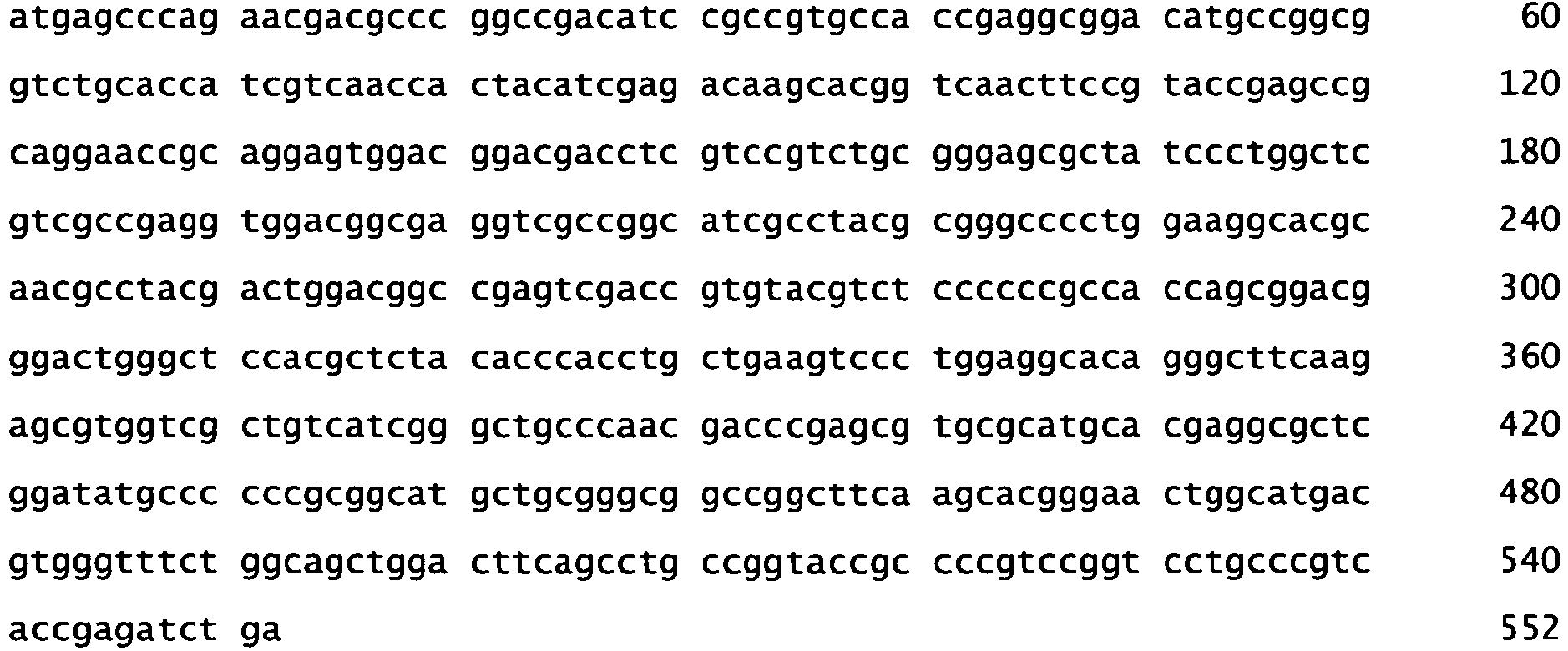
- <210> 4
<211> 6234
<212> DNA
<213> Artificial - <220>
<223> Plasmid pCV177 - <220>
<221> CDS
<222> (2004)..(2522) - <220>
<221> CDS
<222> (4885)..(5403) - <400> 4
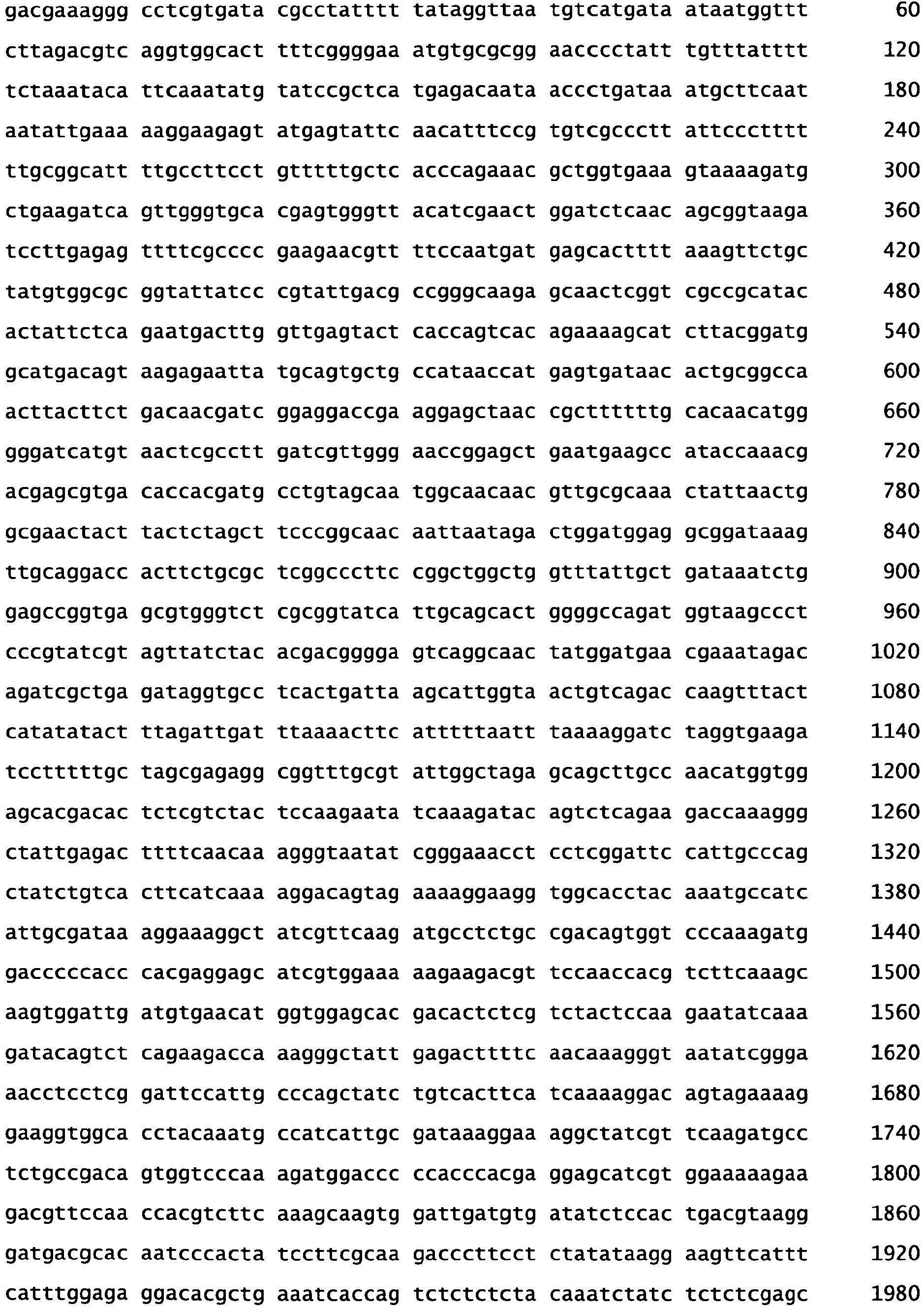
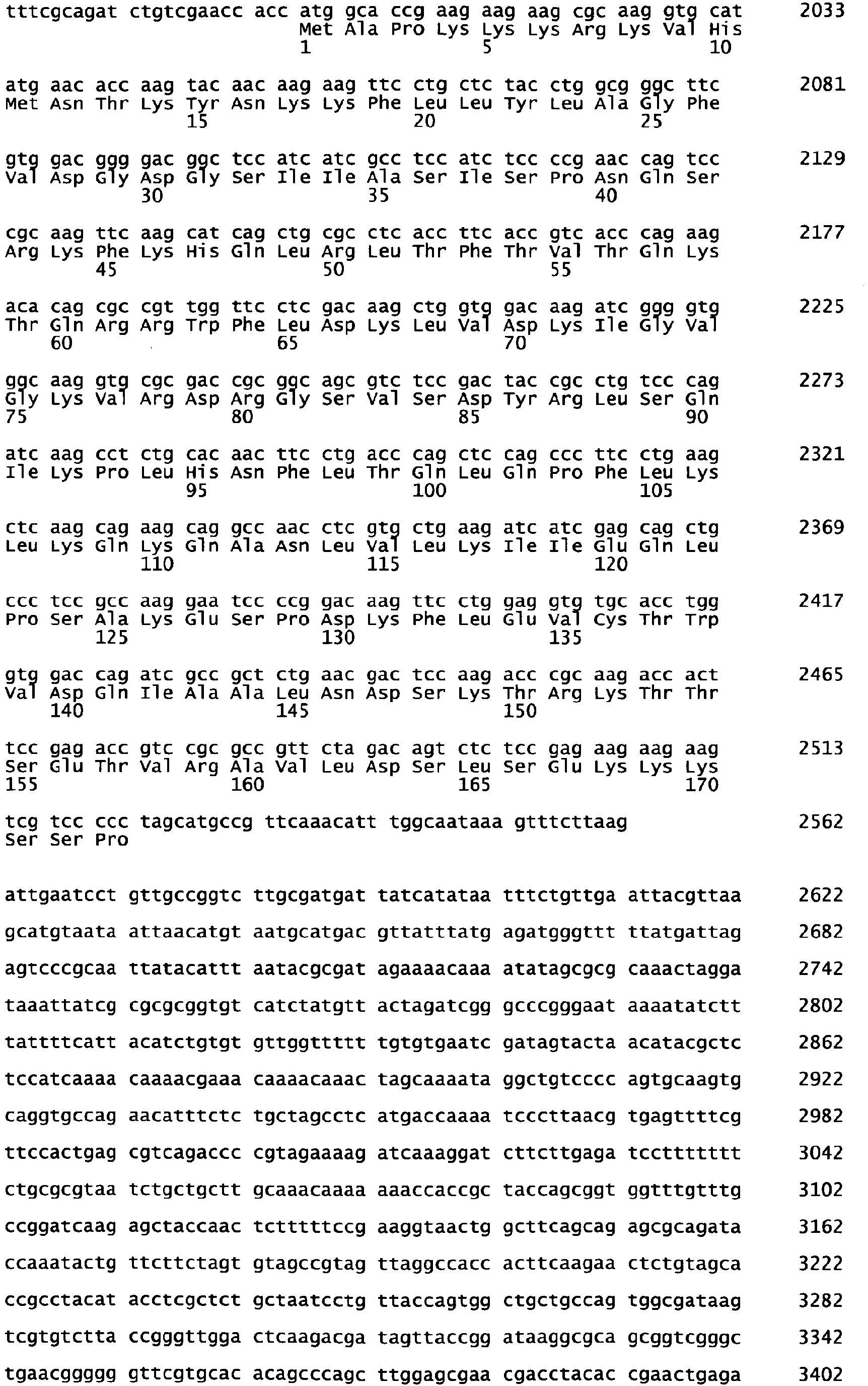

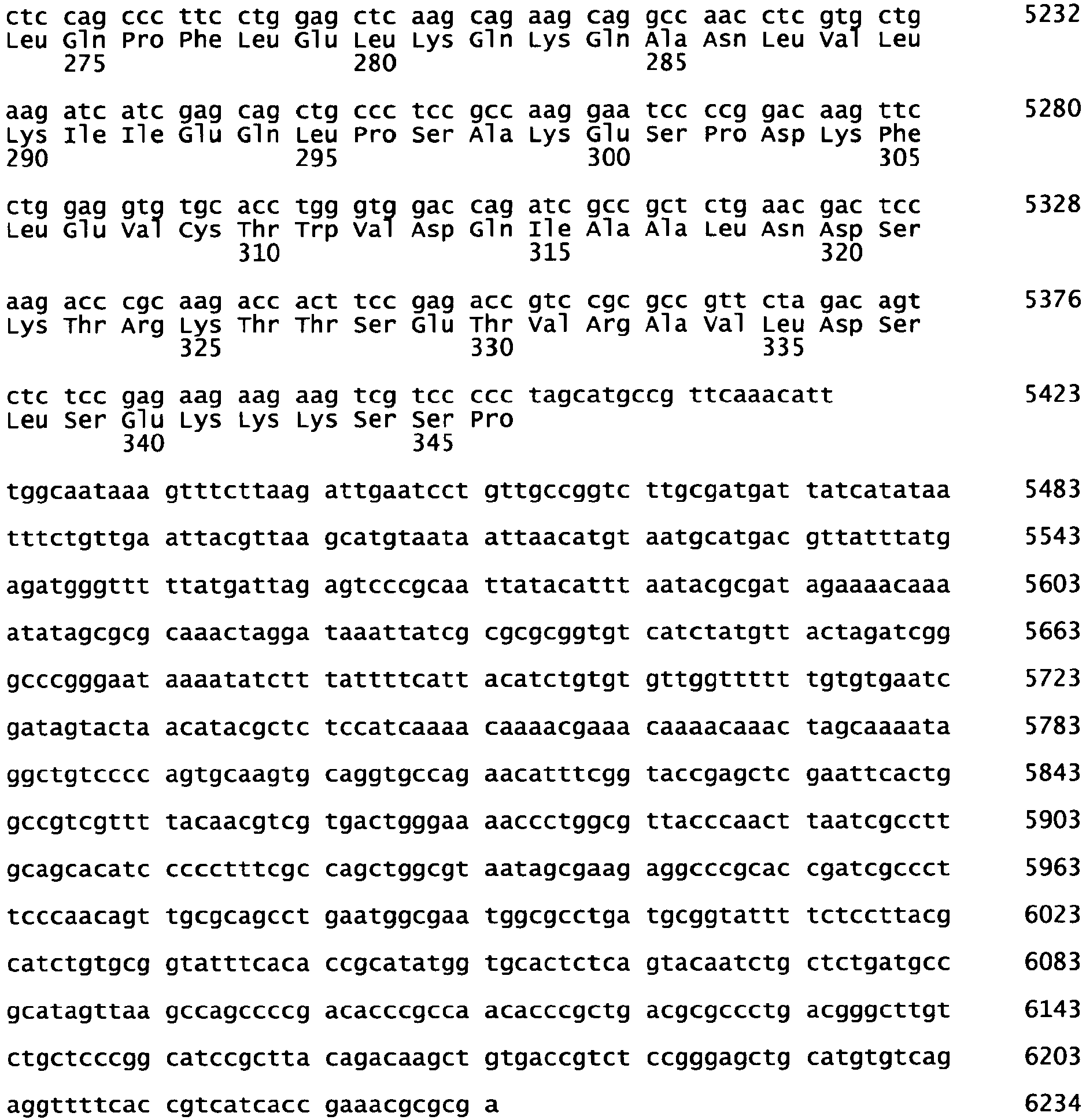
- <210> 5
<211> 173
<212> PRT
<213> Artificial - <220>
<223> Synthetic Construct - <400> 5


- <210> 6
<211> 173
<212> PRT
<213> Artificial - <220>
<223> Synthetic Construct - <400> 6
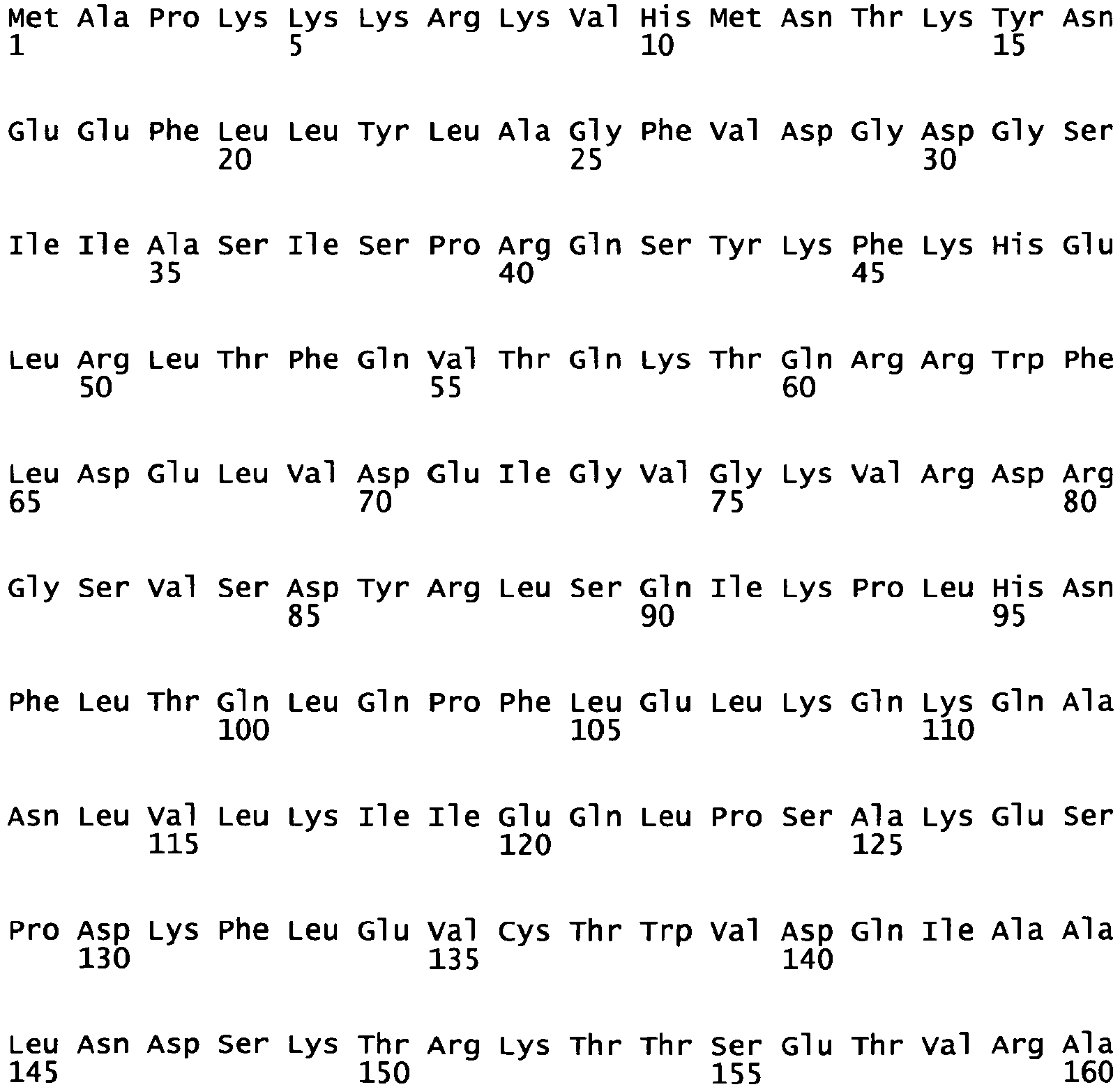

- <210> 7
<211> 68
<212> DNA
<213> Artificial - <220>
<223> PCR amplicon of bar coding region around theBAY 39/40 recognition site (control) - <400> 7

- <210> 8
<211> 68
<212> DNA
<213> Artificial - <220>
<223> PCR amplicon of bar coding region around theBAY 39/40 recognition site (PPT tolerant plant linel) - <400> 8

- <210> 9
<211> 67
<212> DNA
<213> Artificial - <220>
<223> PCR amplicon of bar coding region around theBAY 39/40 recognition site (PPT sensitive plant linel 1) - <400> 9

- <210> 10
<211> 27
<212> DNA
<213> Artificial - <220>
<223> PCR amplicon of bar coding region around theBAY 39/40 recognition site (PPT sensitive plant linel 2) - <400> 10
cggtcaactt ccgtccgtct gcgggac 27 - <210> 11
<211> 61
<212> DNA
<213> Artificial - <220>
<223> PCR amplicon of bar coding region around theBAY 39/40 recognition site (PPT sensitive plant linel 3) - <400> 11


- <210> 12
<211> 49
<212> DNA
<213> Artificial - <220>
<223> PCR amplicon of bar coding region around theBAY 39/40 recognition site (PPT sensitive plant linel 4) - <400> 12
cggtcaactt ccgtaccgag ccgcaggaac cctcgtccgt ctgcgggac 49 - <210> 13
<211> 48
<212> DNA
<213> Artificial - <220>
<223> PCR amplicon of bar coding region around theBAY 39/40 recognition site (PPT sensitive plant linel 5) - <400> 13
cggtcaactt ccgtaccgag ccgcaggaac ctcgtccgtc tgcgggac 48 - <210> 14
<211> 56
<212> DNA
<213> Artificial - <220>
<223> PCR amplicon of bar coding region around theBAY 39/40 recognition site (PPT sensitive plant linel 6) - <400> 14
cggtcaactt ccgtaccgag ccgcaggaac cgcacgacct cgtccgtctg cgggac 56 - <210> 15
<211> 68
<212> DNA
<213> Artificial - <220>
<223> PCR amplicon of bar coding region around theBAY 39/40 recognition site (PPT sensitive plant linel 7) - <400> 15

- <210> 16
<211> 163
<212> PRT
<213> Artificial - <220>
<223> I-CreI - <400> 16
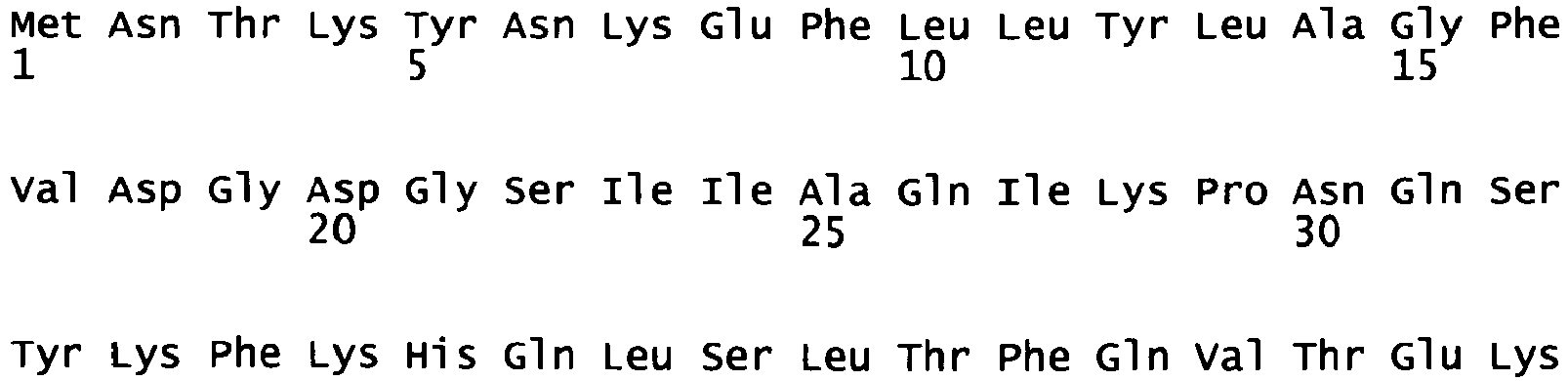
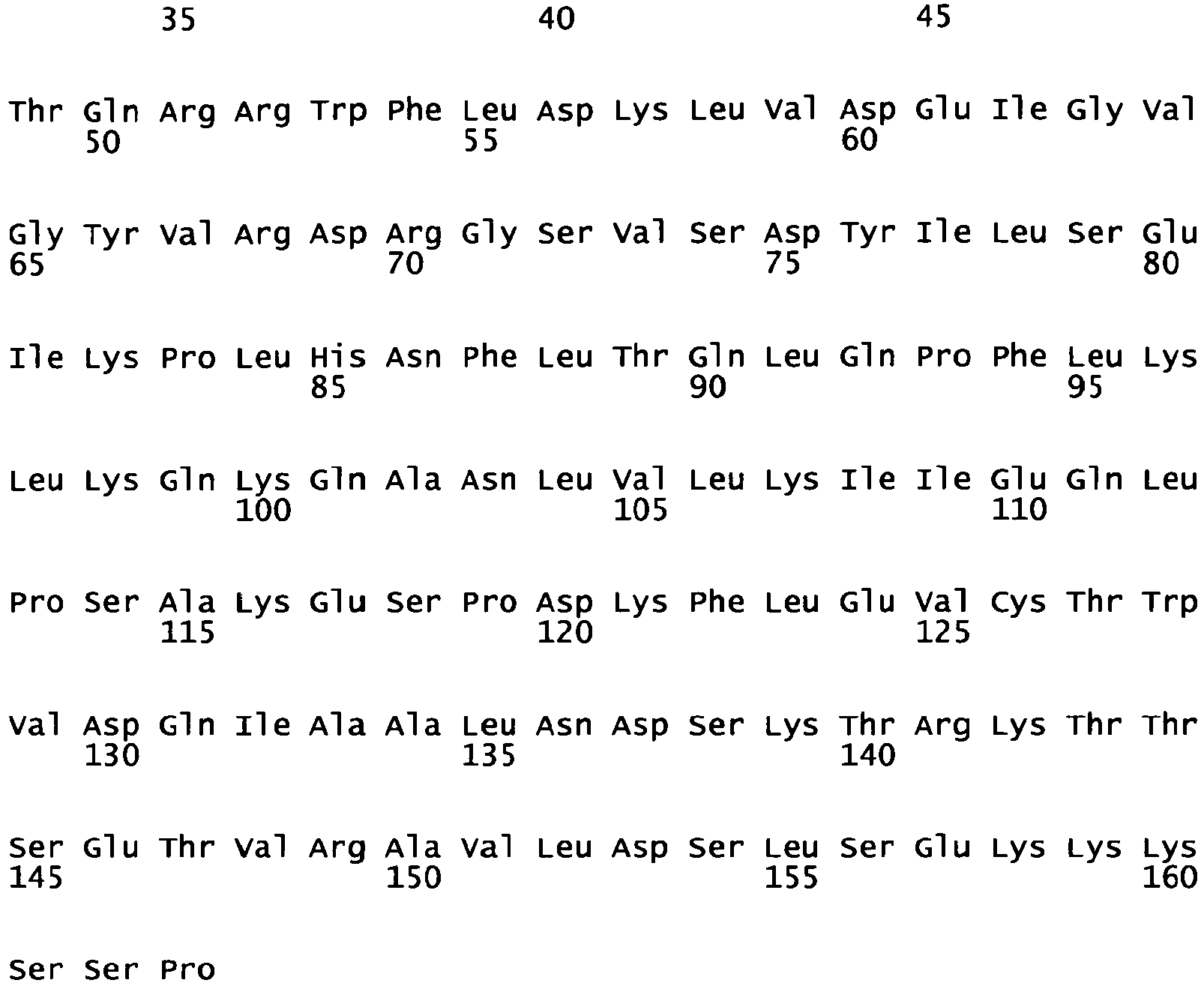
- <210> 17
<211> 4925
<212> DNA
<213> Artificial Sequence - <220>
<223> vector - <220>
<221> CDS
<222> (1267)..(1605) - <220>
<221> CDS
<222> (1795)..(2541) - <400> 17
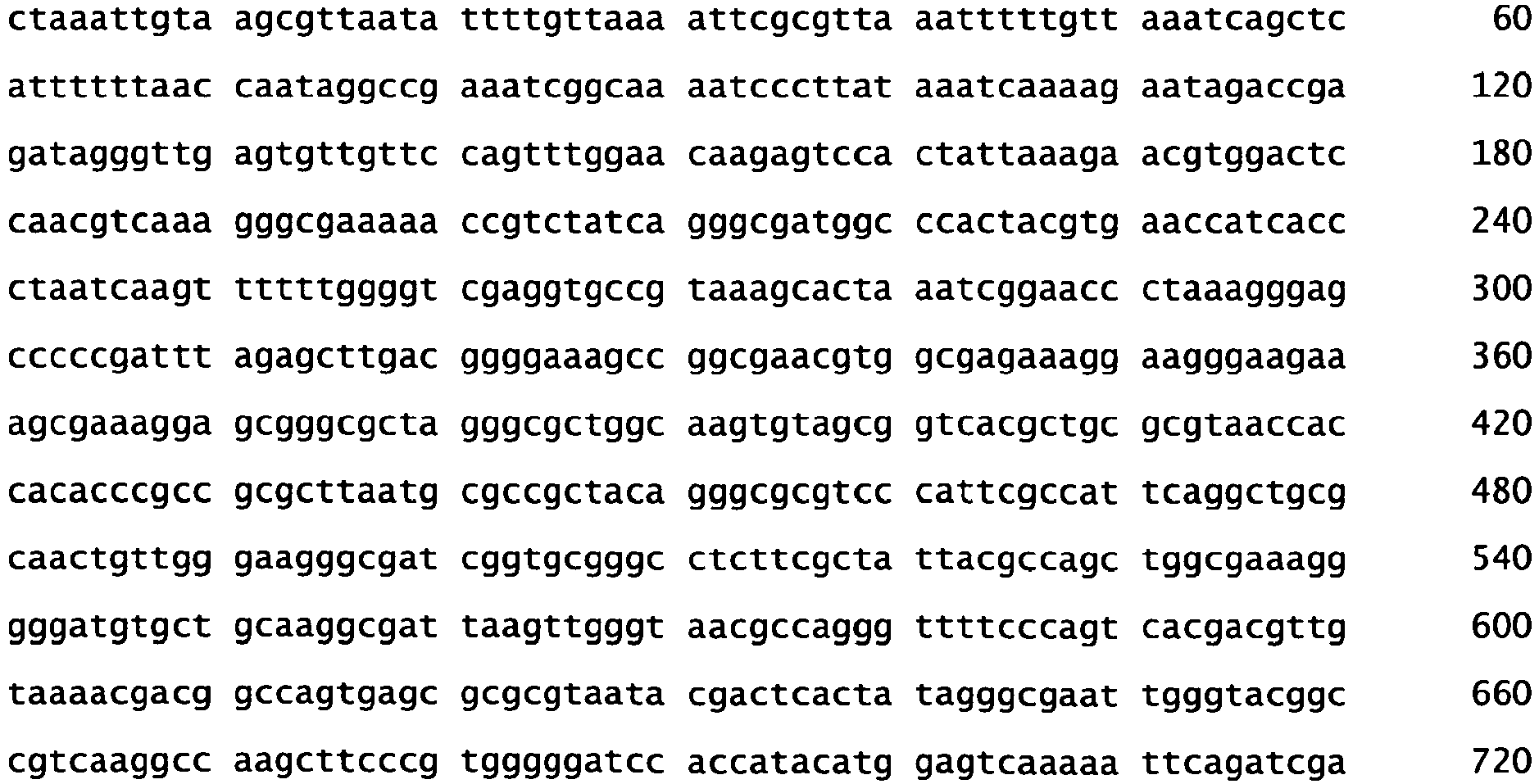


- <210> 18
<211> 362
<212> PRT
<213> Artificial sequence - <220>
<223> synthetic Construct - <400> 18
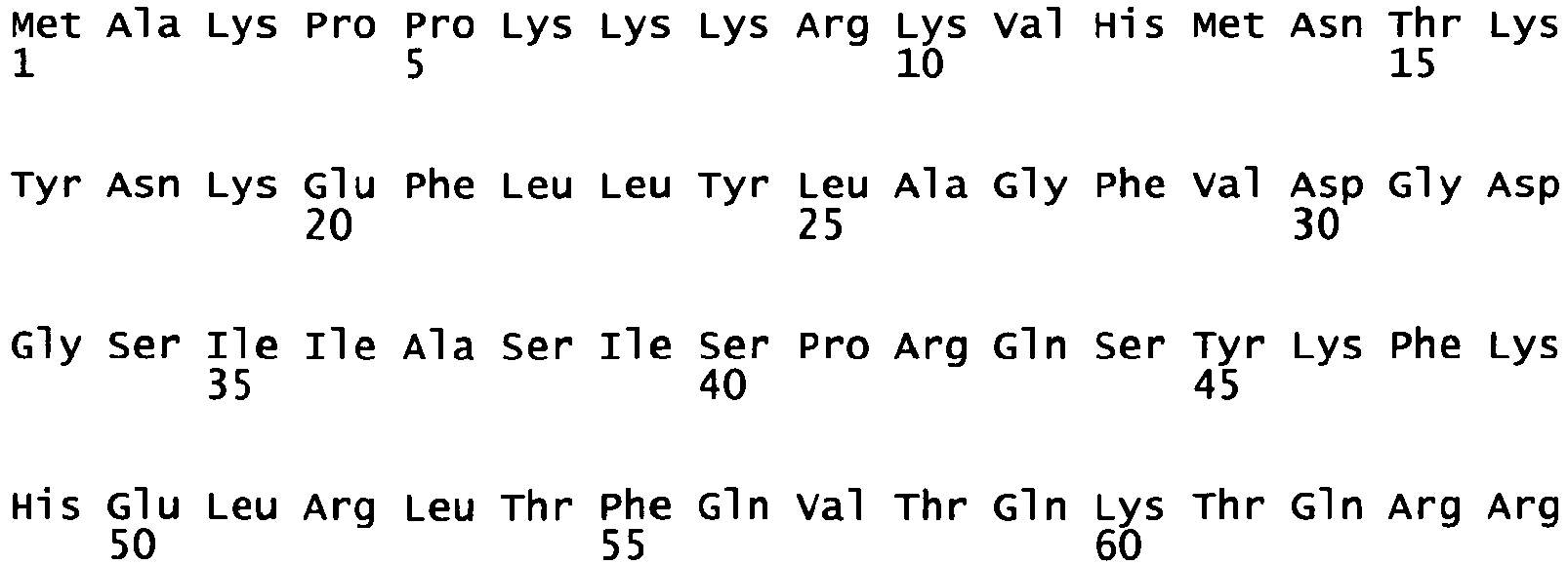

In another embodiment the invention provides a method for introducing a foreign DNA molecule at a predefined site in a genome of a plant cell comprising the steps of
In yet another embodiment, a method is provided for introducing a foreign DNA molecule at a predefined site in a genome of a plant cell comprising the steps of
The foreign DNA may be comprised within a repair DNA, the repair DNA comprising at least one flanking nucleotide sequence homologous to the upstream or downstream sequence of the nucleotide sequence of SEQ ID No. 1 or
SEQ ID No. 2. The foreign DNA may comprises a selectable marker gene and/or a plant expressible gene of interest such as of a herbicide tolerance gene, an insect resistance gene, a disease resistance gene, an abiotic stress resistance gene, a enzyme involved in oil biosynthesis, carbohydrate biosynthesis, a enzyme involved in fiber strength or fiber lenght, an enzyme involved in biosynthesis of secondary metabolites. The foreign DNA may also be integrated as such, i.e. without flanking sequences with homology to the region around the predefined target site (without any further DNA), for integration by non-homologous end-joining
The meganuclease or the pair of meganucleases may be expressed from a chimeric gene or a pair of chimeric genes, each comprising a plant expressible promoter operably linked to a coding region encoding the meganuclease or one of the pair of meganucleases, and further operationally linked to a DNA region involved in transcription termination and polyadenylation functional in a plant cell.
Claims (15)
- A method for introducing a foreign DNA molecule at a predefined site in a genome of a plant cell comprising the steps ofa. inducing a double stranded DNA break at said predefined site;b. introducing said foreign DNA molecule in said plant cell; andc. selecting a plant cell wherein said foreign DNA is introduced at said predefined site; characterized in that said predefined site is a nucleotide sequence different from a recognition site for a naturally occurring meganuclease and is a nucleotide sequence of a DNA region previously introduced as an element of a chimeric gene in a transgenic plant and that said double stranded DNA break is induced by introduction of a non-naturally occurring single chain meganuclease or a pair of non-naturally occurring meganucleases which is/are re-designed to recognize or recognize in concert said predefined site and induces or induce said double stranded break, without resorting to the presence of historically introduced recognition sites for rare-cleaving endonucleases.
- The method of claim 1, wherein said DNA region is a promoter region, a 5' UTR leader sequence, a 3' transcription termination and polyadenylation region, or a selectable marker.
- The method of claim 1 or 2, wherein said DNA region is the 35S promoter of the CaMV 35S transcript, the FMV 35S promoter, the promoter of the small subunit of Arabidopsis thaliana Rubisco gene, the Casava Vein Mosaic Virus promoter, the Actin2 promoter from Arabidopsis, the Histone H3 promoter, the histone H4 promoter, the promoter of the maize (Zea mays) ubiquitin-1 gene, the cab22L leader, 5' tev, the 3' end of the nopaline synthase gene, the 3' end of the octopine synthase gene, the CaMV35S terminator, bar, pat, 2mepsps, CP4, or hpt.
- The method according to any one of claims 1 to 3, wherein said predefined site is a nucleotide sequence of a DNA region encoding a phosphinotricin acetyltransferase as encoded by Streptomyces hygroscopicus (bar coding region).
- A method for introducing a foreign DNA molecule at a predefined site in a genome of a plant cell comprising the steps ofa. inducing a double stranded DNA break at said predefined site;b. introducing said foreign DNA molecule in said plant cell; andc. selecting a plant cell wherein said foreign DNA is introduced at said predefined site; characterized in that said predefined site is a nucleotide sequence different from a recognition site for a naturally occurring meganuclease and is a nucleotide sequence of a DNA region encoding a phosphinotricin acetyltransferase as encoded by Streptomyces hygroscopicus (bar coding region) and that said double stranded DNA break is induced by introduction of a non-naturally occurring single chain meganuclease or a pair of non-naturally occurring meganucleases which is/are re-designed to recognize or recognize in concert said predefined site and induces or induce said double stranded break.
- The method according to any one of claims 1 to 5, wherein said predefined site comprises the nucleotide sequence of SEQ ID No. 1 or SEQ ID No. 2.
- A method for introducing a foreign DNA molecule at a predefined site in a genome of a plant cell comprising the steps ofa. inducing a double stranded DNA break at said predefined site;b. introducing said foreign DNA molecule in said plant cell; andc. selecting a plant cell wherein said foreign DNA is introduced at said predefined site; characterized in that said predefined site is a nucleotide sequence different from a recognition site for a naturally occurring meganuclease and_comprises the nucleotide sequence of SEQ ID No. 1 or SEQ ID No. 2 and that said double stranded DNA break is induced by introduction of a non-naturally occurring single chain meganuclease or a pair of non-naturally occurring meganucleases which is/are re-designed to recognize or recognize in concert said predefined site and induces or induce said double stranded break.
- The method according to any one of claims 1 to 7, wherein said meganuclease or said pair of meganucleases is/are derived from I-CreI and wherein the following amino acids are present in meganuclease unit 1:a. S at position 32;b. Y at position 33;c. E at position 38;d. R at position 40;e. K at position 66;f. Q at position 80;g. T at position 42;h. R at position 77;i. R at position 68;j. R at position 70;k. Q at position 44;l. I at position 24;m. S at position 26;n. S at position 28;o. R at position 30; and wherein the following amino acids are present in meganuclease unit 2:p. R at position 70;q. T at position 44;r. I at position 24;s. S at position 26;t. S at position 28;u. N at position 30;v. S at position 32;w. R at position 33;x. Q at position 38;y. Q at position 80;z. R at position 40;aa. K at position 66;bb. T at position 42;cc. R at position 77;dd. R at position 68.
- The method according to any one of claims 1 to 8, wherein said pair of meganucleases obligatory forms heterodimers or wherein said meganuclease is a single chain meganuclease comprising two domains derived from I-CreI covalently connected by a linker.
- The method according to any one of claims 1 to 9, wherein said pair of meganucleases comprises the amino acid sequence of SEQ ID No. 5 and SEQ ID No. 6, respectively, or said single chain meganuclease comprises the amino acid sequence of SEQ ID No. 18 from position 1 to 167 and from position 206 to 362.
- The method according to any one of claims 1 to 10, wherein said foreign DNA comprises a plant expressible gene of interest.
- The method according to claim 11, wherein said plant expressible gene of interest is selected from the group of a herbicide tolerance gene, an insect resistance gene, a disease resistance gene, an abiotic stress resistance gene,
a gene encoding an enzyme involved in oil biosynthesis or carbohydrate biosynthesis, a gene encoding an enzyme involved in fiber strength or fiber length, a gene encoding an enzyme involved in the biosynthesis of secondary metabolites. - The method according to any one of the preceding claims wherein said plant cell is further regenerated into a plant.
- Use of a meganuclease or a pair of meganucleases as described in any one of claims 1 to 10 to introduce a foreign DNA into the bar coding region.
- Use of a non-naturally occurring meganuclease to introduce a foreign DNA of interest at a predefined site in the genome of a plant cell, wherein said predefined site is a nucleotide sequence different from a recognition site for a naturally occurring meganuclease and is a nucleotide sequence of a DNA region previously introduced as an element of a chimeric gene in a transgenic plant, without resorting to the presence of historically introduced recognition sites for rare-cleaving endonucleases, and wherein said meganuclease is re-designed to recognize said predefined site and induces a double-strand break.
Priority Applications (1)
| Application Number | Priority Date | Filing Date | Title |
|---|---|---|---|
| EP11727397.9A EP2580335B1 (en) | 2010-06-09 | 2011-06-07 | Methods and means to modify a plant genome at a nucleotide sequence commonly used in plant genome engineering |
Applications Claiming Priority (4)
| Application Number | Priority Date | Filing Date | Title |
|---|---|---|---|
| EP10005941 | 2010-06-09 | ||
| US35584910P | 2010-06-17 | 2010-06-17 | |
| PCT/EP2011/002895 WO2011154159A1 (en) | 2010-06-09 | 2011-06-07 | Methods and means to modify a plant genome at a nucleotide sequence commonly used in plant genome engineering |
| EP11727397.9A EP2580335B1 (en) | 2010-06-09 | 2011-06-07 | Methods and means to modify a plant genome at a nucleotide sequence commonly used in plant genome engineering |
Publications (2)
| Publication Number | Publication Date |
|---|---|
| EP2580335A1 EP2580335A1 (en) | 2013-04-17 |
| EP2580335B1 true EP2580335B1 (en) | 2017-05-10 |
Family
ID=44627458
Family Applications (1)
| Application Number | Title | Priority Date | Filing Date |
|---|---|---|---|
| EP11727397.9A Active EP2580335B1 (en) | 2010-06-09 | 2011-06-07 | Methods and means to modify a plant genome at a nucleotide sequence commonly used in plant genome engineering |
Country Status (14)
| Country | Link |
|---|---|
| US (2) | US9574201B2 (en) |
| EP (1) | EP2580335B1 (en) |
| JP (1) | JP6092100B2 (en) |
| KR (1) | KR101995698B1 (en) |
| CN (2) | CN103119169B (en) |
| AR (1) | AR081594A1 (en) |
| AU (1) | AU2011264075B2 (en) |
| BR (1) | BR112012031323A2 (en) |
| CA (1) | CA2801836A1 (en) |
| MX (1) | MX347575B (en) |
| RU (1) | RU2639512C2 (en) |
| SG (1) | SG185668A1 (en) |
| UA (1) | UA115961C2 (en) |
| WO (1) | WO2011154159A1 (en) |
Families Citing this family (11)
| Publication number | Priority date | Publication date | Assignee | Title |
|---|---|---|---|---|
| CN103981149A (en) | 2011-08-22 | 2014-08-13 | 拜尔作物科学公司 | Methods and means to modify a plant genome |
| CN104884626A (en) | 2012-11-20 | 2015-09-02 | 杰.尔.辛普洛公司 | TAL-mediated transfer DNA insertion |
| DK3491915T5 (en) | 2012-12-27 | 2024-09-02 | Keygene Nv | Method of inducing a targeted translocation in a plant |
| WO2014144094A1 (en) * | 2013-03-15 | 2014-09-18 | J.R. Simplot Company | Tal-mediated transfer dna insertion |
| CN105121650A (en) | 2013-04-02 | 2015-12-02 | 拜尔作物科学公司 | Targeted genome engineering in eukaryotes |
| EP3237624B1 (en) | 2014-12-23 | 2020-01-29 | Syngenta Participations AG | Methods and compositions for identifying and enriching for cells comprising site specific genomic modifications |
| US10767190B2 (en) | 2015-12-15 | 2020-09-08 | Basf Agricultural Solutions Seed, Us Llc | Brassicaceae plants resistant to Plasmodiophora brassicae (clubroot) |
| US20190225974A1 (en) | 2016-09-23 | 2019-07-25 | BASF Agricultural Solutions Seed US LLC | Targeted genome optimization in plants |
| CN106508409A (en) * | 2016-11-29 | 2017-03-22 | 马健 | Cultivation method of interplanting peas in corn field in late autumn |
| AR110683A1 (en) * | 2016-12-09 | 2019-04-24 | Newleaf Symbiotics Inc | METHYLOBACTERIUM COMPOSITIONS FOR THE CONTROL OF Fungal DISEASES |
| EP4373260A1 (en) | 2021-07-23 | 2024-05-29 | Basf Agricultural Solutions Seed Us Llc | Blackleg resistant plants and methods for the identification of blackleg resistant plants |
Family Cites Families (221)
| Publication number | Priority date | Publication date | Assignee | Title |
|---|---|---|---|---|
| US2031826A (en) | 1934-09-22 | 1936-02-25 | Homer J Lloyd | Protecting means for mechanisms |
| EP0131623B2 (en) | 1983-01-17 | 1999-07-28 | Monsanto Company | Chimeric genes suitable for expression in plant cells |
| US5352605A (en) | 1983-01-17 | 1994-10-04 | Monsanto Company | Chimeric genes for transforming plant cells using viral promoters |
| US5504200A (en) | 1983-04-15 | 1996-04-02 | Mycogen Plant Science, Inc. | Plant gene expression |
| US4761373A (en) | 1984-03-06 | 1988-08-02 | Molecular Genetics, Inc. | Herbicide resistance in plants |
| US5304732A (en) | 1984-03-06 | 1994-04-19 | Mgi Pharma, Inc. | Herbicide resistance in plants |
| US5331107A (en) | 1984-03-06 | 1994-07-19 | Mgi Pharma, Inc. | Herbicide resistance in plants |
| US5420034A (en) | 1986-07-31 | 1995-05-30 | Calgene, Inc. | Seed-specific transcriptional regulation |
| ATE57390T1 (en) | 1986-03-11 | 1990-10-15 | Plant Genetic Systems Nv | PLANT CELLS OBTAINED BY GENOLOGICAL TECHNOLOGY AND RESISTANT TO GLUTAMINE SYNTHETASE INHIBITORS. |
| US4962028A (en) | 1986-07-09 | 1990-10-09 | Dna Plant Technology Corporation | Plant promotors |
| US5276268A (en) | 1986-08-23 | 1994-01-04 | Hoechst Aktiengesellschaft | Phosphinothricin-resistance gene, and its use |
| US5273894A (en) | 1986-08-23 | 1993-12-28 | Hoechst Aktiengesellschaft | Phosphinothricin-resistance gene, and its use |
| US5637489A (en) | 1986-08-23 | 1997-06-10 | Hoechst Aktiengesellschaft | Phosphinothricin-resistance gene, and its use |
| US5605011A (en) | 1986-08-26 | 1997-02-25 | E. I. Du Pont De Nemours And Company | Nucleic acid fragment encoding herbicide resistant plant acetolactate synthase |
| US5013659A (en) | 1987-07-27 | 1991-05-07 | E. I. Du Pont De Nemours And Company | Nucleic acid fragment encoding herbicide resistant plant acetolactate synthase |
| US5378824A (en) | 1986-08-26 | 1995-01-03 | E. I. Du Pont De Nemours And Company | Nucleic acid fragment encoding herbicide resistant plant acetolactate synthase |
| GB8810120D0 (en) | 1988-04-28 | 1988-06-02 | Plant Genetic Systems Nv | Transgenic nuclear male sterile plants |
| US6013861A (en) | 1989-05-26 | 2000-01-11 | Zeneca Limited | Plants and processes for obtaining them |
| DE3922493A1 (en) | 1989-07-08 | 1991-01-17 | Bayer Ag | PROCESS FOR PREPARING WAESSEN DISPERSIONS OF POLYURETHANES AND THEIR USE AS COATING AGENTS FOR ANY SUBSTRATE |
| WO1991002071A2 (en) | 1989-08-09 | 1991-02-21 | Dekalb Plant Genetics | Methods and compositions for the production of stably transformed, fertile monocot plants and cells thereof |
| US7705215B1 (en) | 1990-04-17 | 2010-04-27 | Dekalb Genetics Corporation | Methods and compositions for the production of stably transformed, fertile monocot plants and cells thereof |
| US5739082A (en) | 1990-02-02 | 1998-04-14 | Hoechst Schering Agrevo Gmbh | Method of improving the yield of herbicide-resistant crop plants |
| US5908810A (en) | 1990-02-02 | 1999-06-01 | Hoechst Schering Agrevo Gmbh | Method of improving the growth of crop plants which are resistant to glutamine synthetase inhibitors |
| EP0472712B1 (en) | 1990-03-16 | 2001-09-12 | Calgene LLC | Novel sequences preferentially expressed in early seed development and methods related thereto |
| WO1992000377A1 (en) | 1990-06-25 | 1992-01-09 | Monsanto Company | Glyphosate tolerant plants |
| WO1992013956A1 (en) | 1991-02-08 | 1992-08-20 | Plant Genetic Systems, N.V. | Stamen-specific promoters from rice |
| DE4104782B4 (en) | 1991-02-13 | 2006-05-11 | Bayer Cropscience Gmbh | Novel plasmids containing DNA sequences that cause changes in carbohydrate concentration and carbohydrate composition in plants, as well as plants and plant cells containing these plasmids |
| GB9104411D0 (en) | 1991-03-01 | 1991-04-17 | Elchrom Limited | Improvement of gel composition in gels for submerged gel electrophoresis |
| US5731180A (en) | 1991-07-31 | 1998-03-24 | American Cyanamid Company | Imidazolinone resistant AHAS mutants |
| US5436150A (en) | 1992-04-03 | 1995-07-25 | The Johns Hopkins University | Functional domains in flavobacterium okeanokoities (foki) restriction endonuclease |
| US5792632A (en) | 1992-05-05 | 1998-08-11 | Institut Pasteur | Nucleotide sequence encoding the enzyme I-SceI and the uses thereof |
| US5305523A (en) | 1992-12-24 | 1994-04-26 | International Business Machines Corporation | Method of direct transferring of electrically conductive elements into a substrate |
| DE4227061A1 (en) | 1992-08-12 | 1994-02-17 | Inst Genbiologische Forschung | A polyfructane sucrase DNA sequence from Erwinia Amylovora |
| GB9218185D0 (en) | 1992-08-26 | 1992-10-14 | Ici Plc | Novel plants and processes for obtaining them |
| DE69233352T2 (en) | 1992-10-14 | 2004-10-07 | Syngenta Ltd | PLANTS AND METHOD FOR THEIR PRODUCTION |
| GB9223454D0 (en) | 1992-11-09 | 1992-12-23 | Ici Plc | Novel plants and processes for obtaining them |
| EP0609013A3 (en) | 1993-01-21 | 1995-11-29 | Matsushita Electric Industrial Co Ltd | Recording and reproducing apparatus. |
| EP0609022A3 (en) | 1993-01-25 | 1995-08-23 | Matsushita Electric Industrial Co Ltd | Image coding apparatus. |
| WO1994018313A1 (en) | 1993-02-12 | 1994-08-18 | The Johns-Hopkins University | Functional domains in flavobacterium okeanokoites (foki) restriction endonuclease |
| HU220714B1 (en) | 1993-03-25 | 2002-04-29 | Novartis Ag. | New pesticide proteins and strains |
| DE4323804A1 (en) | 1993-07-15 | 1995-01-19 | Siemens Ag | Method and device for controlling an m-pulse inverter arrangement, consisting of a master inverter and at least one slave inverter |
| WO1995004826A1 (en) | 1993-08-09 | 1995-02-16 | Institut Für Genbiologische Forschung Berlin Gmbh | Debranching enzymes and dna sequences coding them, suitable for changing the degree of branching of amylopectin starch in plants |
| DE69432796T2 (en) | 1993-09-09 | 2004-04-29 | Bayer Cropscience Gmbh | COMBINATION OF DNA SEQUENCES WHICH ENABLES THE FORMATION OF MODIFIED STARCH IN PLANT CELLS AND PLANTS, METHOD FOR THE PRODUCTION OF THESE PLANTS |
| DE4330960C2 (en) | 1993-09-09 | 2002-06-20 | Aventis Cropscience Gmbh | Combination of DNA sequences that enable the formation of highly amylose-containing starch in plant cells and plants, processes for producing these plants and the modified starch that can be obtained therefrom |
| EP0728213B2 (en) | 1993-11-09 | 2008-12-10 | E.I. Du Pont De Nemours And Company | Transgenic fructan accumulating crops and methods for their production |
| CA2186399C (en) | 1994-03-25 | 2001-09-04 | David Cooke | Method for producing altered starch from potato plants |
| DE69535543T2 (en) | 1994-05-18 | 2008-04-30 | Bayer Bioscience Gmbh | FOR ENZYMES WHO HAVE THE ABILITY TO SYNTHESIZE LINEAR ALPHA 1,4-GLUCANE IN PLANTS, MUSHROOMS, AND MICROORGANISMS, ENCODING DNA SEQUENCES |
| CN1156951A (en) | 1994-06-21 | 1997-08-13 | 曾尼卡有限公司 | Novel plants and methods for their preparation |
| US5824790A (en) | 1994-06-21 | 1998-10-20 | Zeneca Limited | Modification of starch synthesis in plants |
| NL1000064C1 (en) | 1994-07-08 | 1996-01-08 | Stichting Scheikundig Onderzoe | Production of oligosaccharides in transgenic plants. |
| US5616273A (en) | 1994-08-11 | 1997-04-01 | Dynax Corporation | Synergistic surfactant compositions and fire fighting concentrates thereof |
| JPH10505233A (en) | 1994-08-30 | 1998-05-26 | コモンウェルス サイエンティフック アンド インダストリアル リサーチ オーガニゼーション | Circovirus-derived plant transcriptional regulator |
| DE4441408A1 (en) | 1994-11-10 | 1996-05-15 | Inst Genbiologische Forschung | DNA sequences from Solanum tuberosum encoding enzymes involved in starch synthesis, plasmids, bacteria, plant cells and transgenic plants containing these sequences |
| DE4447387A1 (en) | 1994-12-22 | 1996-06-27 | Inst Genbiologische Forschung | Debranching enzymes from plants and DNA sequences encoding these enzymes |
| WO1996021023A1 (en) | 1995-01-06 | 1996-07-11 | Centrum Voor Plantenveredelings- En Reproduktieonderzoek (Cpro - Dlo) | Dna sequences encoding carbohydrate polymer synthesizing enzymes and method for producing transgenic plants |
| DE19509695A1 (en) | 1995-03-08 | 1996-09-12 | Inst Genbiologische Forschung | Process for the preparation of a modified starch in plants, and the modified starch isolatable from the plants |
| HU226259B1 (en) | 1995-04-20 | 2008-07-28 | American Cyanamid Co | Structure-based designed herbicide resistant products |
| US5853973A (en) | 1995-04-20 | 1998-12-29 | American Cyanamid Company | Structure based designed herbicide resistant products |
| AU706009B2 (en) | 1995-05-05 | 1999-06-03 | Brunob Ii B.V. | Improvements in or relating to plant starch composition |
| FR2734842B1 (en) | 1995-06-02 | 1998-02-27 | Rhone Poulenc Agrochimie | DNA SEQUENCE OF A HYDROXY-PHENYL PYRUVATE DIOXYGENASE GENE AND OBTAINING PLANTS CONTAINING A HYDROXY-PHENYL PYRUVATE DIOXYGENASE GENE, TOLERANT TO CERTAIN HERBICIDES |
| US6284479B1 (en) | 1995-06-07 | 2001-09-04 | Pioneer Hi-Bred International, Inc. | Substitutes for modified starch and latexes in paper manufacture |
| US5712107A (en) | 1995-06-07 | 1998-01-27 | Pioneer Hi-Bred International, Inc. | Substitutes for modified starch and latexes in paper manufacture |
| FR2736926B1 (en) | 1995-07-19 | 1997-08-22 | Rhone Poulenc Agrochimie | 5-ENOL PYRUVYLSHIKIMATE-3-PHOSPHATE SYNTHASE MUTEE, CODING GENE FOR THIS PROTEIN AND PROCESSED PLANTS CONTAINING THIS GENE |
| ES2335494T3 (en) | 1995-09-19 | 2010-03-29 | Bayer Bioscience Gmbh | PROCEDURE FOR THE PRODUCTION OF A MODIFIED ALMIDON. |
| CA2234222C (en) | 1995-10-06 | 2007-12-04 | Plant Genetic Systems, N.V. | Seed shattering |
| GB9524938D0 (en) | 1995-12-06 | 1996-02-07 | Zeneca Ltd | Modification of starch synthesis in plants |
| DE19601365A1 (en) | 1996-01-16 | 1997-07-17 | Planttec Biotechnologie Gmbh | Nucleic acid molecules from plants encoding enzymes involved in starch synthesis |
| DE19608918A1 (en) | 1996-03-07 | 1997-09-11 | Planttec Biotechnologie Gmbh | Nucleic Acid Molecules Encoding New Debranching Enzymes from Maize |
| DE19618125A1 (en) | 1996-05-06 | 1997-11-13 | Planttec Biotechnologie Gmbh | Nucleic acid molecules that encode new potato debranching enzymes |
| DE19619918A1 (en) | 1996-05-17 | 1997-11-20 | Planttec Biotechnologie Gmbh | Nucleic acid molecules encoding soluble starch synthases from maize |
| DE69737448T2 (en) | 1996-05-29 | 2007-11-15 | Bayer Cropscience Ag | NUCLEIC ACID MOLECULES CODING FOR ENZYMES FROM WHEAT INVOLVED IN STARCH SYNTHESIS |
| CA2257622C (en) | 1996-06-12 | 2003-02-11 | Pioneer Hi-Bred International, Inc. | Substitutes for modified starch in paper manufacture |
| WO1997047808A1 (en) | 1996-06-12 | 1997-12-18 | Pioneer Hi-Bred International, Inc. | Substitutes for modified starch in paper manufacture |
| WO1997047806A1 (en) | 1996-06-12 | 1997-12-18 | Pioneer Hi-Bred International, Inc. | Substitutes for modified starch in paper manufacture |
| GB9623095D0 (en) | 1996-11-05 | 1997-01-08 | Nat Starch Chem Invest | Improvements in or relating to starch content of plants |
| US6232529B1 (en) | 1996-11-20 | 2001-05-15 | Pioneer Hi-Bred International, Inc. | Methods of producing high-oil seed by modification of starch levels |
| DE19653176A1 (en) | 1996-12-19 | 1998-06-25 | Planttec Biotechnologie Gmbh | New maize nucleic acid molecules and their use to produce a modified starch |
| US5981840A (en) | 1997-01-24 | 1999-11-09 | Pioneer Hi-Bred International, Inc. | Methods for agrobacterium-mediated transformation |
| DE19708774A1 (en) | 1997-03-04 | 1998-09-17 | Max Planck Gesellschaft | Enzymes encoding nucleic acid molecules which have fructosyl polymerase activity |
| DE19709775A1 (en) | 1997-03-10 | 1998-09-17 | Planttec Biotechnologie Gmbh | Nucleic acid molecules encoding corn starch phosphorylase |
| US5977436A (en) | 1997-04-09 | 1999-11-02 | Rhone Poulenc Agrochimie | Oleosin 5' regulatory region for the modification of plant seed lipid composition |
| EP1007712A4 (en) * | 1997-08-05 | 2004-06-30 | Kimeragen Inc | The use of mixed duplex oligonucleotides to effect localized genetic changes in plants |
| GB9718863D0 (en) | 1997-09-06 | 1997-11-12 | Nat Starch Chem Invest | Improvements in or relating to stability of plant starches |
| US5994624A (en) * | 1997-10-20 | 1999-11-30 | Cotton Incorporated | In planta method for the production of transgenic plants |
| DE19749122A1 (en) | 1997-11-06 | 1999-06-10 | Max Planck Gesellschaft | Enzymes encoding nucleic acid molecules that have fructosyl transferase activity |
| US6245968B1 (en) | 1997-11-07 | 2001-06-12 | Aventis Cropscience S.A. | Mutated hydroxyphenylpyruvate dioxygenase, DNA sequence and isolation of plants which contain such a gene and which are tolerant to herbicides |
| FR2770854B1 (en) | 1997-11-07 | 2001-11-30 | Rhone Poulenc Agrochimie | DNA SEQUENCE OF A GENE OF HYDROXY-PHENYL PYRUVATE DIOXYGENASE AND PRODUCTION OF PLANTS CONTAINING SUCH A GENE, HERBICIDE TOLERANT |
| FR2772789B1 (en) | 1997-12-24 | 2000-11-24 | Rhone Poulenc Agrochimie | PROCESS FOR THE ENZYMATIC PREPARATION OF HOMOGENTISATE |
| AU3478499A (en) | 1998-04-09 | 1999-11-01 | E.I. Du Pont De Nemours And Company | Starch r1 phosphorylation protein homologs |
| DE19820607A1 (en) | 1998-05-08 | 1999-11-11 | Hoechst Schering Agrevo Gmbh | New enzyme with starch synthase activity, useful for producing starch for foods and packaging materials |
| DE19820608A1 (en) | 1998-05-08 | 1999-11-11 | Hoechst Schering Agrevo Gmbh | New nucleic acid encoding isoamylase from wheat and related transgenic plants producing starch with altered properties |
| US6891088B1 (en) | 1998-05-13 | 2005-05-10 | Bayer Bioscience Gmbh | Transgenic plants with a modified activity of a plastidial ADP/ATP translocator |
| EP1092033B1 (en) | 1998-06-15 | 2009-04-15 | Brunob Ii B.V. | Improvements in or relating to plants and plant products |
| US6693185B2 (en) | 1998-07-17 | 2004-02-17 | Bayer Bioscience N.V. | Methods and means to modulate programmed cell death in eukaryotic cells |
| DE19836097A1 (en) | 1998-07-31 | 2000-02-03 | Hoechst Schering Agrevo Gmbh | Nucleic acid molecules coding for an alpha-glucosidase, plants that synthesize a modified starch, process for producing the plants, their use and the modified starch |
| DE19836098A1 (en) | 1998-07-31 | 2000-02-03 | Hoechst Schering Agrevo Gmbh | Plants that synthesize a modified starch, process for producing the plants, their use and the modified starch |
| DE19836099A1 (en) | 1998-07-31 | 2000-02-03 | Hoechst Schering Agrevo Gmbh | Nucleic acid molecules coding for a β-amylase, plants which synthesize a modified starch, process for the preparation of the plants, their use and the modified starch |
| AU6018399A (en) | 1998-08-25 | 2000-03-14 | Pioneer Hi-Bred International, Inc. | Plant glutamine: fructose-6-phosphate amidotransferase nucleic acids |
| HUP0103414A3 (en) | 1998-09-02 | 2005-12-28 | Bayer Bioscience Gmbh | Nucleic acid molecules encoding an amylosucrase |
| US6699694B1 (en) | 1998-10-09 | 2004-03-02 | Planttec Biotechnologie Gmbh | Method for producing α-1,6-branched α-1,4-glucans from sucrose |
| DE19924342A1 (en) | 1999-05-27 | 2000-11-30 | Planttec Biotechnologie Gmbh | Genetically modified plant cells and plants with increased activity of an amylosucrase protein and a branching enzyme |
| BR9915152A (en) | 1998-11-09 | 2001-08-07 | Planttec Biotechnologie Gmbh | Rice nucleic acid molecules and their use for the production of modified starch |
| US6531648B1 (en) | 1998-12-17 | 2003-03-11 | Syngenta Participations Ag | Grain processing method and transgenic plants useful therein |
| JP2002533090A (en) * | 1998-12-23 | 2002-10-08 | ザ、サミュアル、ラバツ、ノゥブル、ファウンデイシャン、インク | Plant transformation method |
| JP2002535995A (en) | 1999-02-03 | 2002-10-29 | ザ チルドレンズ メディカル センター コーポレイション | Gene repair involving induction of double-stranded DNA breaks at chromosomal target sites |
| DE19905069A1 (en) | 1999-02-08 | 2000-08-10 | Planttec Biotechnologie Gmbh | Alternansucrase encoding nucleic acid molecules |
| CN1359422A (en) | 1999-04-29 | 2002-07-17 | 辛甄塔有限公司 | Herbicide resistant plants |
| HUP0201018A2 (en) | 1999-04-29 | 2002-07-29 | Syngenta Ltd | Herbicide resistant plants |
| DE19926771A1 (en) | 1999-06-11 | 2000-12-14 | Aventis Cropscience Gmbh | Nucleic acid molecules from wheat, transgenic plant cells and plants and their use for the production of modified starch |
| DE19937348A1 (en) | 1999-08-11 | 2001-02-22 | Aventis Cropscience Gmbh | Nucleic acid molecules from plants encoding enzymes involved in starch synthesis |
| DE19937643A1 (en) | 1999-08-12 | 2001-02-22 | Aventis Cropscience Gmbh | Transgenic cells and plants with altered activity of the GBSSI and BE proteins |
| AU7647000A (en) | 1999-08-20 | 2001-03-19 | Basf Plant Science Gmbh | Increasing the polysaccharide content in plants |
| US6423886B1 (en) | 1999-09-02 | 2002-07-23 | Pioneer Hi-Bred International, Inc. | Starch synthase polynucleotides and their use in the production of new starches |
| GB9921830D0 (en) | 1999-09-15 | 1999-11-17 | Nat Starch Chem Invest | Plants having reduced activity in two or more starch-modifying enzymes |
| AR025996A1 (en) | 1999-10-07 | 2002-12-26 | Valigen Us Inc | NON-TRANSGENIC PLANTS RESISTANT TO HERBICIDES. |
| US6506963B1 (en) | 1999-12-08 | 2003-01-14 | Plant Genetic Systems, N.V. | Hybrid winter oilseed rape and methods for producing same |
| US6585615B2 (en) | 2000-02-17 | 2003-07-01 | Koyo Seiko Co., Ltd. | Power transmission ring and variable diameter pulley assembly using the same |
| BR0109118A (en) | 2000-03-09 | 2002-11-26 | Monsanto Technology Llc | Methods for producing glyphosate tolerant plants and compositions thereof |
| WO2001083818A2 (en) | 2000-04-28 | 2001-11-08 | Aventis Cropscience, N.V. | Glufosinate tolerant rice |
| US6768044B1 (en) | 2000-05-10 | 2004-07-27 | Bayer Cropscience Sa | Chimeric hydroxyl-phenyl pyruvate dioxygenase, DNA sequence and method for obtaining plants containing such a gene, with herbicide tolerance |
| AU8786201A (en) | 2000-09-29 | 2002-04-08 | Syngenta Ltd | Herbicide resistant plants |
| US6734340B2 (en) | 2000-10-23 | 2004-05-11 | Bayer Cropscience Gmbh | Monocotyledon plant cells and plants which synthesise modified starch |
| EP1399566A2 (en) | 2000-10-30 | 2004-03-24 | Maxygen, Inc. | Novel glyphosate n-acetyltransferase (gat) genes |
| FR2815969B1 (en) | 2000-10-30 | 2004-12-10 | Aventis Cropscience Sa | TOLERANT PLANTS WITH HERBICIDES BY METABOLIC BYPASS |
| ES2400699T3 (en) | 2000-12-07 | 2013-04-11 | Syngenta Limited | HYDROXI-PHENYL PIRUVATO DIOXIGENASAS (HPPD) derived from plants and resistant to tricetonic herbicides, and transgenic plants containing DIOXYGENASES |
| US20040107461A1 (en) | 2001-03-30 | 2004-06-03 | Padma Commuri | Glucan chain length domains |
| ATE394497T1 (en) | 2001-06-12 | 2008-05-15 | Bayer Cropscience Ag | TRANSGENIC PLANTS THAT PRODUCE STARCH WITH HIGH AMYLOSE CONTENT |
| US6818807B2 (en) | 2001-08-06 | 2004-11-16 | Bayer Bioscience N.V. | Herbicide tolerant cotton plants having event EE-GH1 |
| US20030084473A1 (en) | 2001-08-09 | 2003-05-01 | Valigen | Non-transgenic herbicide resistant plants |
| US7169982B2 (en) | 2001-10-17 | 2007-01-30 | Basf Plant Science Gmbh | Starch |
| DE10208132A1 (en) | 2002-02-26 | 2003-09-11 | Planttec Biotechnologie Gmbh | Process for the production of maize plants with an increased leaf starch content and their use for the production of maize silage |
| EP1504092B2 (en) | 2002-03-21 | 2014-06-25 | Sangamo BioSciences, Inc. | Methods and compositions for using zinc finger endonucleases to enhance homologous recombination |
| WO2003092360A2 (en) | 2002-04-30 | 2003-11-13 | Verdia, Inc. | Novel glyphosate-n-acetyltransferase (gat) genes |
| FR2844142B1 (en) | 2002-09-11 | 2007-08-17 | Bayer Cropscience Sa | TRANSFORMED PLANTS WITH ENHANCED PRENYLQUINON BIOSYNTHESIS |
| PL377055A1 (en) | 2002-10-29 | 2006-01-23 | Basf Plant Science Gmbh | Compositions and methods for identifying plants having increased tolerance to imidazolinone herbicides |
| AU2003299832B2 (en) | 2002-12-18 | 2009-06-18 | Athenix Corporation | Genes conferring herbicide resistance |
| DK1578973T3 (en) | 2002-12-19 | 2008-11-24 | Bayer Cropscience Ag | Plant cells and plants that synthesize a starch with increased final viscosity |
| US20060206949A1 (en) | 2003-01-28 | 2006-09-14 | Sylvain Arnould | Custom-made meganuclease and use thereof |
| RU2005130914A (en) | 2003-03-07 | 2006-06-10 | БАСФ ПЛАНТ САЙЕНС ГмбХ (DE) | IMPROVED PRODUCTION OF AMYLOSIS IN PLANTS |
| BRPI0408164A (en) | 2003-03-10 | 2006-03-21 | Athenix Corp | gdc-2 genes that confer herbicide resistance |
| US7807881B2 (en) | 2003-03-10 | 2010-10-05 | Athenix Corp. | Methods to confer herbicide resistance |
| US7504561B2 (en) | 2003-03-10 | 2009-03-17 | Athenix Corporation | GDC-1 genes conferring herbicide resistance |
| JP4960699B2 (en) | 2003-04-09 | 2012-06-27 | バイエル・バイオサイエンス・エヌ・ヴェー | Methods and means for increasing plant tolerance to stress conditions |
| EP2535414B1 (en) | 2003-04-29 | 2017-12-13 | Pioneer Hi-Bred International Inc. | Novel glyphosate-n-acetyltransferase (gat) genes |
| BRPI0410544A (en) | 2003-05-22 | 2006-06-20 | Syngenta Participations Ag | modified starch uses, processes for the production of the same |
| MXPA05012733A (en) | 2003-05-28 | 2006-05-17 | Basf Ag | Wheat plants having increased tolerance to imidazolinone herbicides. |
| US7547819B2 (en) | 2003-07-31 | 2009-06-16 | Toyo Boseki Kabushiki Kaisha | Plant producing hyaluronic acid |
| ES2743420T3 (en) | 2003-08-29 | 2020-02-19 | Instituto Nac De Tecnologia Agropecuaria | Rice plants that have increased tolerance against imidazolinone herbicides |
| DE602004030613D1 (en) | 2003-09-30 | 2011-01-27 | Bayer Cropscience Ag | PLANTS WITH REDUCED ACTIVITY OF A CLASS 3 BRANCHING SYSTEM |
| WO2005030941A1 (en) | 2003-09-30 | 2005-04-07 | Bayer Cropscience Gmbh | Plants with increased activity of a class 3 branching enzyme |
| DE602004018824D1 (en) * | 2003-11-18 | 2009-02-12 | Bayer Bioscience Nv | IMPROVED TARGETED DNA INSERTION IN PLANTS |
| AR048026A1 (en) | 2004-03-05 | 2006-03-22 | Bayer Cropscience Gmbh | PROCEDURES FOR THE IDENTIFICATION OF PROTEINS WITH ENZYMATIC ACTIVITY FOSFORILADORA DE ALMIDON |
| AR048024A1 (en) | 2004-03-05 | 2006-03-22 | Bayer Cropscience Gmbh | PLANTS WITH INCREASED ACTIVITY OF DIFFERENT ENZYMES FOSFORILANTES DEL ALMIDON |
| CA2557843C (en) | 2004-03-05 | 2015-06-02 | Bayer Cropscience Gmbh | Plants with reduced activity of a starch phosphorylating enzyme |
| AR048025A1 (en) | 2004-03-05 | 2006-03-22 | Bayer Cropscience Gmbh | PLANTS WITH INCREASED ACTIVITY OF AN ALMIDON FOSFORILING ENZYME |
| US7432082B2 (en) | 2004-03-22 | 2008-10-07 | Basf Ag | Methods and compositions for analyzing AHASL genes |
| NL1026276C2 (en) | 2004-05-26 | 2005-11-30 | John De Groot | Vessel made from internally illuminated light-transmitting material. |
| AU2005262525A1 (en) | 2004-06-16 | 2006-01-19 | Basf Plant Science Gmbh | Polynucleotides encoding mature AHASL proteins for creating imidazolinone-tolerant plants |
| DE102004029763A1 (en) | 2004-06-21 | 2006-01-05 | Bayer Cropscience Gmbh | Plants that produce amylopectin starch with new properties |
| BRPI0513981A (en) | 2004-07-30 | 2008-05-20 | Basf Agrochemical Products Bv | plant, seed, methods for controlling weeds in the vicinity of a sunflower plant and a transformed plant, for increasing ahas activity in a plant, for producing a herbicide resistant plant, for enhancing herbicide tolerance in a tolerant plant the herbicide, to select a transformed plant cell, to increase the herbicide resistance of a plant, and to combat undesirable vegetation, isolated polynucleotide molecule, expression cassette, non-human host cell, transformation vector, plant cell transformed and isolated polypeptide |
| US20070250946A1 (en) | 2004-08-04 | 2007-10-25 | Robert Ascenzi | Monocot Ahass Sequences and Methods of Use |
| PT1786908E (en) | 2004-08-18 | 2010-04-29 | Bayer Cropscience Ag | Plants with increased plastidic activity of r3 starch-phosphorylating enzyme |
| CA2579592C (en) | 2004-09-23 | 2018-01-02 | Bayer Cropscience Gmbh | Plant cells that comprise a nucleic acid encoding hyaluronan synthase, and methods and means for producing hyaluronan |
| BRPI0518249A2 (en) | 2004-10-29 | 2008-11-11 | Bayer Bioscience Nv | strain tolerant cotton plants |
| AR051690A1 (en) | 2004-12-01 | 2007-01-31 | Basf Agrochemical Products Bv | MUTATION INVOLVED IN THE INCREASE OF TOLERANCE TO IMIDAZOLINONE HERBICIDES IN PLANTS |
| EP1672075A1 (en) | 2004-12-17 | 2006-06-21 | Bayer CropScience GmbH | Transformed plant expressing a dextransucrase and synthesizing a modified starch |
| US7488866B2 (en) | 2004-12-22 | 2009-02-10 | Athenix Corporation | gro-1 Herbicide resistance gene and methods for its use |
| US7534937B2 (en) | 2004-12-29 | 2009-05-19 | Athenix Corporation | Genes conferring herbicide resistance |
| EP1679374A1 (en) | 2005-01-10 | 2006-07-12 | Bayer CropScience GmbH | Transformed plant expressing a mutansucrase and synthesizing a modified starch |
| JP2006304779A (en) | 2005-03-30 | 2006-11-09 | Toyobo Co Ltd | Hexosamine high production plant |
| EP1707632A1 (en) | 2005-04-01 | 2006-10-04 | Bayer CropScience GmbH | Phosphorylated waxy potato starch |
| DK1869186T3 (en) | 2005-04-04 | 2011-01-24 | Bayer Bioscience Nv | Methods and means for removing a selected sequence |
| EP1710315A1 (en) | 2005-04-08 | 2006-10-11 | Bayer CropScience GmbH | High phosphate starch |
| CN101175850B (en) | 2005-04-08 | 2013-09-04 | 阿则耐克斯公司 | Identification of a new class of EPSP synthases |
| EP2500429A3 (en) | 2005-05-31 | 2015-10-28 | Devgen N.V. | RNAi for the control of insects and arachnids |
| EP1893759B1 (en) | 2005-06-15 | 2009-08-12 | Bayer BioScience N.V. | Methods for increasing the resistance of plants to hypoxic conditions |
| AR054174A1 (en) | 2005-07-22 | 2007-06-06 | Bayer Cropscience Gmbh | OVERPRINTING OF ALMIDON SYNTHEASE IN VEGETABLES |
| ATE544861T1 (en) | 2005-08-24 | 2012-02-15 | Pioneer Hi Bred Int | METHODS AND COMPOSITIONS FOR EXPRESSING A POLYNUCLEOTIDE OF INTEREST |
| CA2617803C (en) | 2005-08-31 | 2012-05-29 | Monsanto Technology Llc | Nucleotide sequences encoding insecticidal proteins |
| ES2545093T3 (en) | 2005-09-16 | 2015-09-08 | Devgen N.V. | Transgenic plant-based methods for plant pests using RNAi |
| PT2431473T (en) | 2005-09-16 | 2017-02-15 | Monsanto Technology Llc | Methods for genetic control of insect infestations in plants and compositions thereof |
| US20080250533A1 (en) | 2005-10-05 | 2008-10-09 | Claus Frohberg | Plants With an Increased Production of Hyaluronan II |
| US10428341B2 (en) | 2005-10-05 | 2019-10-01 | Basf Se | Transgenic potato plants with increased hyaluronan production |
| CA2624973C (en) | 2005-10-05 | 2016-01-19 | Bayer Cropscience Ag | Production of hyaluronan from plants transgenic for hyaluronan synthase, gfat and udp-glucose dehydrogenase |
| ES2539616T3 (en) * | 2005-10-18 | 2015-07-02 | Precision Biosciences | Rationally designed meganuclease with impaired dimer formation affinity |
| WO2007060495A1 (en) * | 2005-10-25 | 2007-05-31 | Cellectis | I-crei homing endonuclease variants having novel cleavage specificity and use thereof |
| WO2007049095A1 (en) | 2005-10-25 | 2007-05-03 | Cellectis | Laglidadg homing endonuclease variants having mutations in two functional subdomains and use thereof |
| AR057205A1 (en) | 2005-12-01 | 2007-11-21 | Athenix Corp | GRG23 AND GRG51 GENES THAT CONFERENCE RESISTANCE TO HERBICIDES |
| EP2347759B1 (en) | 2006-01-12 | 2017-10-18 | deVGen N.V. | Methods for controlling pests using RNAi |
| BRPI0706227A8 (en) | 2006-01-12 | 2019-01-02 | Devgen Nv | transgenic plant-based methods for plant pests using rnai |
| US20080313769A9 (en) | 2006-01-12 | 2008-12-18 | Athenix Corporation | EPSP synthase domains conferring glyphosate resistance |
| WO2007093836A1 (en) | 2006-02-13 | 2007-08-23 | Cellectis | Meganuclease variants cleaving a dna target sequence from a xp gene and uses thereof |
| US7989679B2 (en) | 2006-03-02 | 2011-08-02 | Athenix Corp. | Methods and compositions for improved enzyme activity in transgenic plants |
| US20070214515A1 (en) | 2006-03-09 | 2007-09-13 | E.I.Du Pont De Nemours And Company | Polynucleotide encoding a maize herbicide resistance gene and methods for use |
| KR20090007718A (en) | 2006-03-21 | 2009-01-20 | 바이엘 바이오사이언스 엔.브이. | Stress resistant plants |
| AU2007228981B2 (en) | 2006-03-21 | 2012-10-04 | BASF Agricultural Solutions Seed US LLC | Novel genes encoding insecticidal proteins |
| CA2651734A1 (en) | 2006-05-12 | 2007-11-22 | Bayer Bioscience N.V. | Novel stress-related microrna molecules and uses thereof |
| AU2007253458B2 (en) * | 2006-05-18 | 2013-04-04 | Biogemma | Method for performing homologous recombination in plants |
| ES2418843T3 (en) | 2006-06-08 | 2013-08-16 | Athenix Corporation | Bacterial glutamine synthetases and methods of use |
| US9045765B2 (en) | 2006-06-09 | 2015-06-02 | Athenix Corporation | EPSP synthase genes conferring herbicide resistance |
| RU2008152187A (en) | 2006-06-13 | 2010-07-20 | Атеникс Корпорейшн (Us) | IMPROVED EPSP SYNTHESIS: COMPOSITIONS AND METHODS OF APPLICATION |
| CA2654812A1 (en) | 2006-06-27 | 2008-01-03 | Athenix Corporation | Grg33, grg35, grg36, grg37, grg38, grg39, and grg50: novel epsp synthase genes conferring herbicide resistance |
| AR061661A1 (en) | 2006-06-27 | 2008-09-10 | Athenix Corp | EPSP SYNTHEASE GENE THAT CONFERTS HERBICIDE RESISTANCE |
| EP1887079A1 (en) | 2006-08-09 | 2008-02-13 | Bayer CropScience AG | Genetically modified plants synthesizing starch with increased swelling power |
| US7928295B2 (en) | 2006-08-24 | 2011-04-19 | Bayer Bioscience N.V. | Herbicide tolerant rice plants and methods for identifying same |
| EP2082051B1 (en) * | 2006-09-28 | 2016-03-23 | Bayer CropScience NV | Methods and means for removal of a selected dna sequence |
| ATE509113T1 (en) | 2006-11-29 | 2011-05-15 | Athenix Corp | IMPROVED GRG23-EPSP SYNTHASES: COMPOSITIONS AND METHODS OF USE THEREOF |
| AR064558A1 (en) | 2006-12-29 | 2009-04-08 | Bayer Cropscience Sa | PROCESS FOR THE MODIFICATION OF THERMAL PROPERTIES AND DIGESTION OF CORN ALMIDONES AND CORN FLOURS |
| AR064557A1 (en) | 2006-12-29 | 2009-04-08 | Bayer Cropscience Ag | CORN STAMP AND CORN FLOURS AND FOODS UNDERSTANDING THIS CORN CORN |
| EP1950303A1 (en) | 2007-01-26 | 2008-07-30 | Bayer CropScience AG | Genetically modified plants which synthesise a starch with low amylase content and higher swelling ability |
| WO2008102199A1 (en) * | 2007-02-20 | 2008-08-28 | Cellectis | Meganuclease variants cleaving a dna target sequence from the beta-2-microglobulin gene and uses thereof |
| WO2008122406A1 (en) | 2007-04-05 | 2008-10-16 | Bayer Bioscience N.V. | Insect resistant cotton plants and methods for identifying same |
| CL2008001592A1 (en) | 2007-05-30 | 2009-03-06 | Syngenta Participations Ag | Plant cell comprising a nucleic acid construct containing a nucleotide sequence encoding a cytochrome p450, and method for conferring resistance to a herbicide in the plant based on the transformation of the construct described above. |
| CA2689345C (en) | 2007-06-05 | 2017-07-11 | Bayer Bioscience N.V. | Methods and means for exact replacement of target dna in eukaryotic organisms |
| EP2162542A1 (en) | 2007-06-11 | 2010-03-17 | Bayer BioScience N.V. | Insect resistant cotton plants comprising elite event ee-gh6 and methods for identifying same |
| EP2240575A2 (en) | 2008-02-01 | 2010-10-20 | Athenix Corporation | Directed evolution of grg31 and grg36 epsp synthase enzymes |
| WO2009114321A2 (en) | 2008-03-11 | 2009-09-17 | Precision Biosciencs, Inc. | Rationally-designed meganucleases for maize genome engineering |
| WO2009144079A1 (en) | 2008-04-14 | 2009-12-03 | Bayer Bioscience N.V. | New mutated hydroxyphenylpyruvate dioxygenase, dna sequence and isolation of plants which are tolerant to hppd inhibitor herbicides |
| EP2300618A1 (en) | 2008-06-13 | 2011-03-30 | Bayer BioScience N.V. | Bollworm insect resistance management in transgenic plants |
| CN101993876A (en) * | 2009-08-18 | 2011-03-30 | 中国农业科学院生物技术研究所 | Modified miR169d precursor sequence and application thereof in gene silencing |
| CN103597082B (en) * | 2011-06-06 | 2017-09-15 | 拜尔作物科学公司 | For the ways and means in preselected site modified plant genome |
-
2011
- 2011-06-07 AU AU2011264075A patent/AU2011264075B2/en not_active Ceased
- 2011-06-07 KR KR1020137000586A patent/KR101995698B1/en not_active Expired - Fee Related
- 2011-06-07 WO PCT/EP2011/002895 patent/WO2011154159A1/en not_active Ceased
- 2011-06-07 SG SG2012085304A patent/SG185668A1/en unknown
- 2011-06-07 CA CA2801836A patent/CA2801836A1/en not_active Abandoned
- 2011-06-07 EP EP11727397.9A patent/EP2580335B1/en active Active
- 2011-06-07 US US13/700,773 patent/US9574201B2/en not_active Expired - Fee Related
- 2011-06-07 MX MX2012014366A patent/MX347575B/en active IP Right Grant
- 2011-06-07 CN CN201180028604.1A patent/CN103119169B/en not_active Expired - Fee Related
- 2011-06-07 JP JP2013513587A patent/JP6092100B2/en not_active Expired - Fee Related
- 2011-06-07 BR BR112012031323A patent/BR112012031323A2/en active Search and Examination
- 2011-06-07 RU RU2012157731A patent/RU2639512C2/en not_active IP Right Cessation
- 2011-06-07 CN CN201811228286.3A patent/CN109504700A/en active Pending
- 2011-06-09 AR ARP110101986A patent/AR081594A1/en unknown
- 2011-07-06 UA UAA201300331A patent/UA115961C2/en unknown
-
2016
- 2016-12-19 US US15/382,794 patent/US20170096674A1/en not_active Abandoned
Non-Patent Citations (2)
| Title |
|---|
| PUCHTA HOLGER: "Repair of genomic double-strand breaks in somatic plant cells by one-sided invasion of homologous sequences", PLANT JOURNAL, vol. 13, no. 3, February 1998 (1998-02-01), pages 331 - 339, ISSN: 0960-7412 * |
| WRIGHT D A ET AL: "High-frequency homologous recombination in plants mediated by zinc-finger nucleases", THE PLANT JOURNAL, BLACKWELL SCIENTIFIC PUBLICATIONS, OXFORD, GB, vol. 44, no. 4, 1 November 2005 (2005-11-01), pages 693 - 705, XP002403198, ISSN: 0960-7412 * |
Also Published As
| Publication number | Publication date |
|---|---|
| WO2011154159A1 (en) | 2011-12-15 |
| SG185668A1 (en) | 2012-12-28 |
| AU2011264075A1 (en) | 2013-01-10 |
| AR081594A1 (en) | 2012-10-03 |
| JP2013531489A (en) | 2013-08-08 |
| EP2580335A1 (en) | 2013-04-17 |
| KR20130083433A (en) | 2013-07-22 |
| JP6092100B2 (en) | 2017-03-08 |
| US20130145490A1 (en) | 2013-06-06 |
| CA2801836A1 (en) | 2011-12-15 |
| US20170096674A1 (en) | 2017-04-06 |
| RU2639512C2 (en) | 2017-12-21 |
| MX347575B (en) | 2017-05-03 |
| US9574201B2 (en) | 2017-02-21 |
| CN103119169B (en) | 2018-11-20 |
| CN103119169A (en) | 2013-05-22 |
| UA115961C2 (en) | 2018-01-25 |
| MX2012014366A (en) | 2013-01-29 |
| AU2011264075B2 (en) | 2015-01-29 |
| RU2012157731A (en) | 2014-07-20 |
| CN109504700A (en) | 2019-03-22 |
| BR112012031323A2 (en) | 2015-09-08 |
| KR101995698B1 (en) | 2019-07-03 |
Similar Documents
| Publication | Publication Date | Title |
|---|---|---|
| EP2580335B1 (en) | Methods and means to modify a plant genome at a nucleotide sequence commonly used in plant genome engineering | |
| EP2748323B1 (en) | Methods and means to modify a plant genome | |
| EP2580336B1 (en) | Methods and means to modify a plant genome at a nucleotide sequence commonly used in plant genome engineering | |
| CA2766975A1 (en) | Methods and means for obtaining plants with enhanced glyphosate tolerance | |
| US20210395757A1 (en) | Methods and means to modify a cotton plant genome at a preselected site | |
| AU2013204310C1 (en) | Methods and means to modify a plant genome |
Legal Events
| Date | Code | Title | Description |
|---|---|---|---|
| PUAI | Public reference made under article 153(3) epc to a published international application that has entered the european phase |
Free format text: ORIGINAL CODE: 0009012 |
|
| 17P | Request for examination filed |
Effective date: 20130109 |
|
| AK | Designated contracting states |
Kind code of ref document: A1 Designated state(s): AL AT BE BG CH CY CZ DE DK EE ES FI FR GB GR HR HU IE IS IT LI LT LU LV MC MK MT NL NO PL PT RO RS SE SI SK SM TR |
|
| AX | Request for extension of the european patent |
Extension state: BA ME |
|
| 17Q | First examination report despatched |
Effective date: 20140203 |
|
| GRAP | Despatch of communication of intention to grant a patent |
Free format text: ORIGINAL CODE: EPIDOSNIGR1 |
|
| INTG | Intention to grant announced |
Effective date: 20161109 |
|
| GRAJ | Information related to disapproval of communication of intention to grant by the applicant or resumption of examination proceedings by the epo deleted |
Free format text: ORIGINAL CODE: EPIDOSDIGR1 |
|
| GRAR | Information related to intention to grant a patent recorded |
Free format text: ORIGINAL CODE: EPIDOSNIGR71 |
|
| GRAS | Grant fee paid |
Free format text: ORIGINAL CODE: EPIDOSNIGR3 |
|
| GRAA | (expected) grant |
Free format text: ORIGINAL CODE: 0009210 |
|
| INTC | Intention to grant announced (deleted) | ||
| AK | Designated contracting states |
Kind code of ref document: B1 Designated state(s): AL AT BE BG CH CY CZ DE DK EE ES FI FR GB GR HR HU IE IS IT LI LT LU LV MC MK MT NL NO PL PT RO RS SE SI SK SM TR |
|
| AX | Request for extension of the european patent |
Extension state: BA ME |
|
| INTG | Intention to grant announced |
Effective date: 20170331 |
|
| REG | Reference to a national code |
Ref country code: GB Ref legal event code: FG4D |
|
| REG | Reference to a national code |
Ref country code: AT Ref legal event code: REF Ref document number: 892378 Country of ref document: AT Kind code of ref document: T Effective date: 20170515 Ref country code: CH Ref legal event code: EP |
|
| REG | Reference to a national code |
Ref country code: IE Ref legal event code: FG4D |
|
| REG | Reference to a national code |
Ref country code: DE Ref legal event code: R096 Ref document number: 602011037802 Country of ref document: DE |
|
| REG | Reference to a national code |
Ref country code: FR Ref legal event code: PLFP Year of fee payment: 7 |
|
| REG | Reference to a national code |
Ref country code: NL Ref legal event code: FP |
|
| REG | Reference to a national code |
Ref country code: LT Ref legal event code: MG4D |
|
| REG | Reference to a national code |
Ref country code: AT Ref legal event code: MK05 Ref document number: 892378 Country of ref document: AT Kind code of ref document: T Effective date: 20170510 |
|
| PG25 | Lapsed in a contracting state [announced via postgrant information from national office to epo] |
Ref country code: GR Free format text: LAPSE BECAUSE OF FAILURE TO SUBMIT A TRANSLATION OF THE DESCRIPTION OR TO PAY THE FEE WITHIN THE PRESCRIBED TIME-LIMIT Effective date: 20170811 Ref country code: HR Free format text: LAPSE BECAUSE OF FAILURE TO SUBMIT A TRANSLATION OF THE DESCRIPTION OR TO PAY THE FEE WITHIN THE PRESCRIBED TIME-LIMIT Effective date: 20170510 Ref country code: FI Free format text: LAPSE BECAUSE OF FAILURE TO SUBMIT A TRANSLATION OF THE DESCRIPTION OR TO PAY THE FEE WITHIN THE PRESCRIBED TIME-LIMIT Effective date: 20170510 Ref country code: NO Free format text: LAPSE BECAUSE OF FAILURE TO SUBMIT A TRANSLATION OF THE DESCRIPTION OR TO PAY THE FEE WITHIN THE PRESCRIBED TIME-LIMIT Effective date: 20170810 Ref country code: LT Free format text: LAPSE BECAUSE OF FAILURE TO SUBMIT A TRANSLATION OF THE DESCRIPTION OR TO PAY THE FEE WITHIN THE PRESCRIBED TIME-LIMIT Effective date: 20170510 Ref country code: AT Free format text: LAPSE BECAUSE OF FAILURE TO SUBMIT A TRANSLATION OF THE DESCRIPTION OR TO PAY THE FEE WITHIN THE PRESCRIBED TIME-LIMIT Effective date: 20170510 Ref country code: ES Free format text: LAPSE BECAUSE OF FAILURE TO SUBMIT A TRANSLATION OF THE DESCRIPTION OR TO PAY THE FEE WITHIN THE PRESCRIBED TIME-LIMIT Effective date: 20170510 |
|
| PG25 | Lapsed in a contracting state [announced via postgrant information from national office to epo] |
Ref country code: BG Free format text: LAPSE BECAUSE OF FAILURE TO SUBMIT A TRANSLATION OF THE DESCRIPTION OR TO PAY THE FEE WITHIN THE PRESCRIBED TIME-LIMIT Effective date: 20170810 Ref country code: LV Free format text: LAPSE BECAUSE OF FAILURE TO SUBMIT A TRANSLATION OF THE DESCRIPTION OR TO PAY THE FEE WITHIN THE PRESCRIBED TIME-LIMIT Effective date: 20170510 Ref country code: SE Free format text: LAPSE BECAUSE OF FAILURE TO SUBMIT A TRANSLATION OF THE DESCRIPTION OR TO PAY THE FEE WITHIN THE PRESCRIBED TIME-LIMIT Effective date: 20170510 Ref country code: PL Free format text: LAPSE BECAUSE OF FAILURE TO SUBMIT A TRANSLATION OF THE DESCRIPTION OR TO PAY THE FEE WITHIN THE PRESCRIBED TIME-LIMIT Effective date: 20170510 Ref country code: IS Free format text: LAPSE BECAUSE OF FAILURE TO SUBMIT A TRANSLATION OF THE DESCRIPTION OR TO PAY THE FEE WITHIN THE PRESCRIBED TIME-LIMIT Effective date: 20170910 Ref country code: RS Free format text: LAPSE BECAUSE OF FAILURE TO SUBMIT A TRANSLATION OF THE DESCRIPTION OR TO PAY THE FEE WITHIN THE PRESCRIBED TIME-LIMIT Effective date: 20170510 |
|
| PG25 | Lapsed in a contracting state [announced via postgrant information from national office to epo] |
Ref country code: EE Free format text: LAPSE BECAUSE OF FAILURE TO SUBMIT A TRANSLATION OF THE DESCRIPTION OR TO PAY THE FEE WITHIN THE PRESCRIBED TIME-LIMIT Effective date: 20170510 Ref country code: SK Free format text: LAPSE BECAUSE OF FAILURE TO SUBMIT A TRANSLATION OF THE DESCRIPTION OR TO PAY THE FEE WITHIN THE PRESCRIBED TIME-LIMIT Effective date: 20170510 Ref country code: RO Free format text: LAPSE BECAUSE OF FAILURE TO SUBMIT A TRANSLATION OF THE DESCRIPTION OR TO PAY THE FEE WITHIN THE PRESCRIBED TIME-LIMIT Effective date: 20170510 Ref country code: DK Free format text: LAPSE BECAUSE OF FAILURE TO SUBMIT A TRANSLATION OF THE DESCRIPTION OR TO PAY THE FEE WITHIN THE PRESCRIBED TIME-LIMIT Effective date: 20170510 Ref country code: CZ Free format text: LAPSE BECAUSE OF FAILURE TO SUBMIT A TRANSLATION OF THE DESCRIPTION OR TO PAY THE FEE WITHIN THE PRESCRIBED TIME-LIMIT Effective date: 20170510 |
|
| REG | Reference to a national code |
Ref country code: DE Ref legal event code: R097 Ref document number: 602011037802 Country of ref document: DE |
|
| PG25 | Lapsed in a contracting state [announced via postgrant information from national office to epo] |
Ref country code: SM Free format text: LAPSE BECAUSE OF FAILURE TO SUBMIT A TRANSLATION OF THE DESCRIPTION OR TO PAY THE FEE WITHIN THE PRESCRIBED TIME-LIMIT Effective date: 20170510 Ref country code: IT Free format text: LAPSE BECAUSE OF FAILURE TO SUBMIT A TRANSLATION OF THE DESCRIPTION OR TO PAY THE FEE WITHIN THE PRESCRIBED TIME-LIMIT Effective date: 20170510 |
|
| PLBE | No opposition filed within time limit |
Free format text: ORIGINAL CODE: 0009261 |
|
| STAA | Information on the status of an ep patent application or granted ep patent |
Free format text: STATUS: NO OPPOSITION FILED WITHIN TIME LIMIT |
|
| REG | Reference to a national code |
Ref country code: IE Ref legal event code: MM4A |
|
| 26N | No opposition filed |
Effective date: 20180213 |
|
| PG25 | Lapsed in a contracting state [announced via postgrant information from national office to epo] |
Ref country code: LU Free format text: LAPSE BECAUSE OF NON-PAYMENT OF DUE FEES Effective date: 20170607 Ref country code: IE Free format text: LAPSE BECAUSE OF NON-PAYMENT OF DUE FEES Effective date: 20170607 |
|
| REG | Reference to a national code |
Ref country code: FR Ref legal event code: PLFP Year of fee payment: 8 |
|
| PG25 | Lapsed in a contracting state [announced via postgrant information from national office to epo] |
Ref country code: SI Free format text: LAPSE BECAUSE OF FAILURE TO SUBMIT A TRANSLATION OF THE DESCRIPTION OR TO PAY THE FEE WITHIN THE PRESCRIBED TIME-LIMIT Effective date: 20170510 |
|
| PG25 | Lapsed in a contracting state [announced via postgrant information from national office to epo] |
Ref country code: MT Free format text: LAPSE BECAUSE OF NON-PAYMENT OF DUE FEES Effective date: 20170607 |
|
| PG25 | Lapsed in a contracting state [announced via postgrant information from national office to epo] |
Ref country code: HU Free format text: LAPSE BECAUSE OF FAILURE TO SUBMIT A TRANSLATION OF THE DESCRIPTION OR TO PAY THE FEE WITHIN THE PRESCRIBED TIME-LIMIT; INVALID AB INITIO Effective date: 20110607 Ref country code: MC Free format text: LAPSE BECAUSE OF FAILURE TO SUBMIT A TRANSLATION OF THE DESCRIPTION OR TO PAY THE FEE WITHIN THE PRESCRIBED TIME-LIMIT Effective date: 20170510 |
|
| PGFP | Annual fee paid to national office [announced via postgrant information from national office to epo] |
Ref country code: NL Payment date: 20190626 Year of fee payment: 9 |
|
| REG | Reference to a national code |
Ref country code: DE Ref legal event code: R081 Ref document number: 602011037802 Country of ref document: DE Owner name: BASF AGRICULTURAL SOLUTIONS SEED US LLC, FLORH, US Free format text: FORMER OWNER: BAYER CROPSCIENCE NV, DIEGEM, BE |
|
| PGFP | Annual fee paid to national office [announced via postgrant information from national office to epo] |
Ref country code: FR Payment date: 20190625 Year of fee payment: 9 Ref country code: BE Payment date: 20190625 Year of fee payment: 9 |
|
| PGFP | Annual fee paid to national office [announced via postgrant information from national office to epo] |
Ref country code: CH Payment date: 20190625 Year of fee payment: 9 |
|
| PG25 | Lapsed in a contracting state [announced via postgrant information from national office to epo] |
Ref country code: CY Free format text: LAPSE BECAUSE OF NON-PAYMENT OF DUE FEES Effective date: 20170510 |
|
| PGFP | Annual fee paid to national office [announced via postgrant information from national office to epo] |
Ref country code: DE Payment date: 20190830 Year of fee payment: 9 Ref country code: GB Payment date: 20190627 Year of fee payment: 9 |
|
| PG25 | Lapsed in a contracting state [announced via postgrant information from national office to epo] |
Ref country code: MK Free format text: LAPSE BECAUSE OF FAILURE TO SUBMIT A TRANSLATION OF THE DESCRIPTION OR TO PAY THE FEE WITHIN THE PRESCRIBED TIME-LIMIT Effective date: 20170510 |
|
| PG25 | Lapsed in a contracting state [announced via postgrant information from national office to epo] |
Ref country code: TR Free format text: LAPSE BECAUSE OF FAILURE TO SUBMIT A TRANSLATION OF THE DESCRIPTION OR TO PAY THE FEE WITHIN THE PRESCRIBED TIME-LIMIT Effective date: 20170510 |
|
| PG25 | Lapsed in a contracting state [announced via postgrant information from national office to epo] |
Ref country code: PT Free format text: LAPSE BECAUSE OF FAILURE TO SUBMIT A TRANSLATION OF THE DESCRIPTION OR TO PAY THE FEE WITHIN THE PRESCRIBED TIME-LIMIT Effective date: 20170510 |
|
| PG25 | Lapsed in a contracting state [announced via postgrant information from national office to epo] |
Ref country code: AL Free format text: LAPSE BECAUSE OF FAILURE TO SUBMIT A TRANSLATION OF THE DESCRIPTION OR TO PAY THE FEE WITHIN THE PRESCRIBED TIME-LIMIT Effective date: 20170510 |
|
| REG | Reference to a national code |
Ref country code: DE Ref legal event code: R119 Ref document number: 602011037802 Country of ref document: DE |
|
| REG | Reference to a national code |
Ref country code: CH Ref legal event code: PL |
|
| REG | Reference to a national code |
Ref country code: NL Ref legal event code: MM Effective date: 20200701 |
|
| GBPC | Gb: european patent ceased through non-payment of renewal fee |
Effective date: 20200607 |
|
| REG | Reference to a national code |
Ref country code: BE Ref legal event code: MM Effective date: 20200630 |
|
| PG25 | Lapsed in a contracting state [announced via postgrant information from national office to epo] |
Ref country code: GB Free format text: LAPSE BECAUSE OF NON-PAYMENT OF DUE FEES Effective date: 20200607 Ref country code: FR Free format text: LAPSE BECAUSE OF NON-PAYMENT OF DUE FEES Effective date: 20200630 Ref country code: NL Free format text: LAPSE BECAUSE OF NON-PAYMENT OF DUE FEES Effective date: 20200701 Ref country code: LI Free format text: LAPSE BECAUSE OF NON-PAYMENT OF DUE FEES Effective date: 20200630 Ref country code: CH Free format text: LAPSE BECAUSE OF NON-PAYMENT OF DUE FEES Effective date: 20200630 |
|
| PG25 | Lapsed in a contracting state [announced via postgrant information from national office to epo] |
Ref country code: BE Free format text: LAPSE BECAUSE OF NON-PAYMENT OF DUE FEES Effective date: 20200630 Ref country code: DE Free format text: LAPSE BECAUSE OF NON-PAYMENT OF DUE FEES Effective date: 20210101 |