EP1887079A1 - Genetically modified plants synthesizing starch with increased swelling power - Google Patents
Genetically modified plants synthesizing starch with increased swelling power Download PDFInfo
- Publication number
- EP1887079A1 EP1887079A1 EP06090134A EP06090134A EP1887079A1 EP 1887079 A1 EP1887079 A1 EP 1887079A1 EP 06090134 A EP06090134 A EP 06090134A EP 06090134 A EP06090134 A EP 06090134A EP 1887079 A1 EP1887079 A1 EP 1887079A1
- Authority
- EP
- European Patent Office
- Prior art keywords
- starch
- activity
- plants
- protein
- plant
- Prior art date
- Legal status (The legal status is an assumption and is not a legal conclusion. Google has not performed a legal analysis and makes no representation as to the accuracy of the status listed.)
- Withdrawn
Links
- 229920002472 Starch Polymers 0.000 title claims abstract description 279
- 235000019698 starch Nutrition 0.000 title claims abstract description 267
- 239000008107 starch Substances 0.000 title claims abstract description 231
- 230000008961 swelling Effects 0.000 title claims description 76
- 230000002194 synthesizing effect Effects 0.000 title description 2
- 230000000694 effects Effects 0.000 claims abstract description 287
- XLYOFNOQVPJJNP-UHFFFAOYSA-N water Substances O XLYOFNOQVPJJNP-UHFFFAOYSA-N 0.000 claims abstract description 170
- 108010023236 starch synthase II Proteins 0.000 claims abstract description 111
- 235000013312 flour Nutrition 0.000 claims abstract description 68
- 229920000881 Modified starch Polymers 0.000 claims abstract description 42
- 235000019426 modified starch Nutrition 0.000 claims abstract description 42
- 239000004368 Modified starch Substances 0.000 claims abstract description 39
- 238000003801 milling Methods 0.000 claims abstract description 6
- 108090000623 proteins and genes Proteins 0.000 claims description 282
- 102000004169 proteins and genes Human genes 0.000 claims description 272
- 150000007523 nucleic acids Chemical class 0.000 claims description 181
- 108020004707 nucleic acids Proteins 0.000 claims description 144
- 102000039446 nucleic acids Human genes 0.000 claims description 144
- 238000000034 method Methods 0.000 claims description 108
- 238000012239 gene modification Methods 0.000 claims description 42
- 230000005017 genetic modification Effects 0.000 claims description 42
- 235000013617 genetically modified food Nutrition 0.000 claims description 42
- 238000004519 manufacturing process Methods 0.000 claims description 33
- 230000002255 enzymatic effect Effects 0.000 claims description 32
- 239000000463 material Substances 0.000 claims description 31
- 230000008569 process Effects 0.000 claims description 23
- 238000002360 preparation method Methods 0.000 claims description 18
- 230000001902 propagating effect Effects 0.000 claims description 8
- 230000001172 regenerating effect Effects 0.000 abstract 1
- 241000196324 Embryophyta Species 0.000 description 542
- 210000004027 cell Anatomy 0.000 description 173
- 229910019142 PO4 Inorganic materials 0.000 description 78
- 239000010452 phosphate Substances 0.000 description 78
- NBIIXXVUZAFLBC-UHFFFAOYSA-K phosphate Chemical compound [O-]P([O-])([O-])=O NBIIXXVUZAFLBC-UHFFFAOYSA-K 0.000 description 72
- 240000007594 Oryza sativa Species 0.000 description 54
- WQZGKKKJIJFFOK-GASJEMHNSA-N Glucose Natural products OC[C@H]1OC(O)[C@H](O)[C@@H](O)[C@@H]1O WQZGKKKJIJFFOK-GASJEMHNSA-N 0.000 description 45
- 235000013339 cereals Nutrition 0.000 description 43
- 239000008103 glucose Substances 0.000 description 43
- 235000007164 Oryza sativa Nutrition 0.000 description 36
- 125000003275 alpha amino acid group Chemical group 0.000 description 34
- 235000009566 rice Nutrition 0.000 description 33
- 240000008042 Zea mays Species 0.000 description 29
- 125000002791 glucosyl group Chemical group C1([C@H](O)[C@@H](O)[C@H](O)[C@H](O1)CO)* 0.000 description 29
- HEMHJVSKTPXQMS-UHFFFAOYSA-M Sodium hydroxide Chemical compound [OH-].[Na+] HEMHJVSKTPXQMS-UHFFFAOYSA-M 0.000 description 27
- 230000014509 gene expression Effects 0.000 description 27
- 239000000523 sample Substances 0.000 description 26
- 230000009466 transformation Effects 0.000 description 26
- 244000098338 Triticum aestivum Species 0.000 description 24
- 244000061456 Solanum tuberosum Species 0.000 description 21
- 235000002017 Zea mays subsp mays Nutrition 0.000 description 21
- 235000002595 Solanum tuberosum Nutrition 0.000 description 20
- 108091032973 (ribonucleotides)n+m Proteins 0.000 description 18
- 235000013305 food Nutrition 0.000 description 18
- 239000000243 solution Substances 0.000 description 18
- VEXZGXHMUGYJMC-UHFFFAOYSA-N Hydrochloric acid Chemical compound Cl VEXZGXHMUGYJMC-UHFFFAOYSA-N 0.000 description 17
- 150000001413 amino acids Chemical class 0.000 description 17
- 238000007429 general method Methods 0.000 description 17
- KCXVZYZYPLLWCC-UHFFFAOYSA-N EDTA Chemical compound OC(=O)CN(CC(O)=O)CCN(CC(O)=O)CC(O)=O KCXVZYZYPLLWCC-UHFFFAOYSA-N 0.000 description 16
- 108010039811 Starch synthase Proteins 0.000 description 16
- 238000004458 analytical method Methods 0.000 description 16
- 108091028043 Nucleic acid sequence Proteins 0.000 description 15
- 235000021307 Triticum Nutrition 0.000 description 15
- 239000000284 extract Substances 0.000 description 15
- 239000000725 suspension Substances 0.000 description 15
- 235000016383 Zea mays subsp huehuetenangensis Nutrition 0.000 description 14
- 239000012634 fragment Substances 0.000 description 14
- 235000009973 maize Nutrition 0.000 description 14
- 108020004414 DNA Proteins 0.000 description 13
- 238000009396 hybridization Methods 0.000 description 13
- 239000002773 nucleotide Substances 0.000 description 13
- 125000003729 nucleotide group Chemical group 0.000 description 13
- 229940100486 rice starch Drugs 0.000 description 13
- 210000001519 tissue Anatomy 0.000 description 13
- 239000000872 buffer Substances 0.000 description 12
- 239000013604 expression vector Substances 0.000 description 12
- RAXXELZNTBOGNW-UHFFFAOYSA-N 1H-imidazole Chemical compound C1=CNC=N1 RAXXELZNTBOGNW-UHFFFAOYSA-N 0.000 description 11
- 229920000856 Amylose Polymers 0.000 description 11
- 229920002261 Corn starch Polymers 0.000 description 11
- 238000000636 Northern blotting Methods 0.000 description 11
- 239000000499 gel Substances 0.000 description 11
- 229920000945 Amylopectin Polymers 0.000 description 10
- XJLXINKUBYWONI-DQQFMEOOSA-N [[(2r,3r,4r,5r)-5-(6-aminopurin-9-yl)-3-hydroxy-4-phosphonooxyoxolan-2-yl]methoxy-hydroxyphosphoryl] [(2s,3r,4s,5s)-5-(3-carbamoylpyridin-1-ium-1-yl)-3,4-dihydroxyoxolan-2-yl]methyl phosphate Chemical compound NC(=O)C1=CC=C[N+]([C@@H]2[C@H]([C@@H](O)[C@H](COP([O-])(=O)OP(O)(=O)OC[C@@H]3[C@H]([C@@H](OP(O)(O)=O)[C@@H](O3)N3C4=NC=NC(N)=C4N=C3)O)O2)O)=C1 XJLXINKUBYWONI-DQQFMEOOSA-N 0.000 description 10
- 238000006243 chemical reaction Methods 0.000 description 10
- 238000000227 grinding Methods 0.000 description 10
- NBSCHQHZLSJFNQ-GASJEMHNSA-N D-Glucose 6-phosphate Chemical compound OC1O[C@H](COP(O)(O)=O)[C@@H](O)[C@H](O)[C@H]1O NBSCHQHZLSJFNQ-GASJEMHNSA-N 0.000 description 9
- VFRROHXSMXFLSN-UHFFFAOYSA-N Glc6P Natural products OP(=O)(O)OCC(O)C(O)C(O)C(O)C=O VFRROHXSMXFLSN-UHFFFAOYSA-N 0.000 description 9
- VFRROHXSMXFLSN-SLPGGIOYSA-N aldehydo-D-glucose 6-phosphate Chemical compound OP(=O)(O)OC[C@@H](O)[C@@H](O)[C@H](O)[C@@H](O)C=O VFRROHXSMXFLSN-SLPGGIOYSA-N 0.000 description 9
- 230000015572 biosynthetic process Effects 0.000 description 9
- 229940045189 glucose-6-phosphate Drugs 0.000 description 9
- 239000013612 plasmid Substances 0.000 description 9
- ZKHQWZAMYRWXGA-KQYNXXCUSA-J ATP(4-) Chemical compound C1=NC=2C(N)=NC=NC=2N1[C@@H]1O[C@H](COP([O-])(=O)OP([O-])(=O)OP([O-])([O-])=O)[C@@H](O)[C@H]1O ZKHQWZAMYRWXGA-KQYNXXCUSA-J 0.000 description 8
- CSCPPACGZOOCGX-UHFFFAOYSA-N Acetone Chemical compound CC(C)=O CSCPPACGZOOCGX-UHFFFAOYSA-N 0.000 description 8
- ZKHQWZAMYRWXGA-UHFFFAOYSA-N Adenosine triphosphate Natural products C1=NC=2C(N)=NC=NC=2N1C1OC(COP(O)(=O)OP(O)(=O)OP(O)(O)=O)C(O)C1O ZKHQWZAMYRWXGA-UHFFFAOYSA-N 0.000 description 8
- IJGRMHOSHXDMSA-UHFFFAOYSA-N Atomic nitrogen Chemical compound N#N IJGRMHOSHXDMSA-UHFFFAOYSA-N 0.000 description 8
- 244000163122 Curcuma domestica Species 0.000 description 8
- 229920001503 Glucan Polymers 0.000 description 8
- 210000001161 mammalian embryo Anatomy 0.000 description 8
- 239000000203 mixture Substances 0.000 description 8
- 238000012545 processing Methods 0.000 description 8
- 239000000047 product Substances 0.000 description 8
- 238000003860 storage Methods 0.000 description 8
- 238000003786 synthesis reaction Methods 0.000 description 8
- 229940100445 wheat starch Drugs 0.000 description 8
- ZBMRKNMTMPPMMK-UHFFFAOYSA-N 2-amino-4-[hydroxy(methyl)phosphoryl]butanoic acid;azane Chemical compound [NH4+].CP(O)(=O)CCC(N)C([O-])=O ZBMRKNMTMPPMMK-UHFFFAOYSA-N 0.000 description 7
- WSFSSNUMVMOOMR-UHFFFAOYSA-N Formaldehyde Chemical compound O=C WSFSSNUMVMOOMR-UHFFFAOYSA-N 0.000 description 7
- 240000005979 Hordeum vulgare Species 0.000 description 7
- 235000007340 Hordeum vulgare Nutrition 0.000 description 7
- 101001135788 Pinus taeda (+)-alpha-pinene synthase, chloroplastic Proteins 0.000 description 7
- 235000005824 Zea mays ssp. parviglumis Nutrition 0.000 description 7
- TZCXTZWJZNENPQ-UHFFFAOYSA-L barium sulfate Chemical compound [Ba+2].[O-]S([O-])(=O)=O TZCXTZWJZNENPQ-UHFFFAOYSA-L 0.000 description 7
- 235000005822 corn Nutrition 0.000 description 7
- 239000008120 corn starch Substances 0.000 description 7
- 235000003373 curcuma longa Nutrition 0.000 description 7
- 210000002257 embryonic structure Anatomy 0.000 description 7
- 230000002068 genetic effect Effects 0.000 description 7
- 230000004048 modification Effects 0.000 description 7
- 238000012986 modification Methods 0.000 description 7
- 230000001105 regulatory effect Effects 0.000 description 7
- 239000006228 supernatant Substances 0.000 description 7
- 238000013518 transcription Methods 0.000 description 7
- 230000035897 transcription Effects 0.000 description 7
- LFQSCWFLJHTTHZ-UHFFFAOYSA-N Ethanol Chemical compound CCO LFQSCWFLJHTTHZ-UHFFFAOYSA-N 0.000 description 6
- DHMQDGOQFOQNFH-UHFFFAOYSA-N Glycine Chemical compound NCC(O)=O DHMQDGOQFOQNFH-UHFFFAOYSA-N 0.000 description 6
- 239000007983 Tris buffer Substances 0.000 description 6
- 238000010790 dilution Methods 0.000 description 6
- 239000012895 dilution Substances 0.000 description 6
- 230000006870 function Effects 0.000 description 6
- 238000010353 genetic engineering Methods 0.000 description 6
- 239000008187 granular material Substances 0.000 description 6
- 230000000977 initiatory effect Effects 0.000 description 6
- 239000012528 membrane Substances 0.000 description 6
- 239000002244 precipitate Substances 0.000 description 6
- 108010038196 saccharide-binding proteins Proteins 0.000 description 6
- LENZDBCJOHFCAS-UHFFFAOYSA-N tris Chemical compound OCC(N)(CO)CO LENZDBCJOHFCAS-UHFFFAOYSA-N 0.000 description 6
- WFPZSXYXPSUOPY-ROYWQJLOSA-N ADP alpha-D-glucoside Chemical compound C([C@H]1O[C@H]([C@@H]([C@@H]1O)O)N1C=2N=CN=C(C=2N=C1)N)OP(O)(=O)OP(O)(=O)O[C@H]1O[C@H](CO)[C@@H](O)[C@H](O)[C@H]1O WFPZSXYXPSUOPY-ROYWQJLOSA-N 0.000 description 5
- WFPZSXYXPSUOPY-UHFFFAOYSA-N ADP-mannose Natural products C1=NC=2C(N)=NC=NC=2N1C(C(C1O)O)OC1COP(O)(=O)OP(O)(=O)OC1OC(CO)C(O)C(O)C1O WFPZSXYXPSUOPY-UHFFFAOYSA-N 0.000 description 5
- 102000004190 Enzymes Human genes 0.000 description 5
- 108090000790 Enzymes Proteins 0.000 description 5
- 240000003183 Manihot esculenta Species 0.000 description 5
- 235000016735 Manihot esculenta subsp esculenta Nutrition 0.000 description 5
- 230000004913 activation Effects 0.000 description 5
- 238000005516 engineering process Methods 0.000 description 5
- 150000002170 ethers Chemical class 0.000 description 5
- 238000000605 extraction Methods 0.000 description 5
- 238000010438 heat treatment Methods 0.000 description 5
- 238000011534 incubation Methods 0.000 description 5
- 210000004379 membrane Anatomy 0.000 description 5
- 235000016709 nutrition Nutrition 0.000 description 5
- 125000002467 phosphate group Chemical group [H]OP(=O)(O[H])O[*] 0.000 description 5
- FDIKHVQUPVCJFA-UHFFFAOYSA-N phosphohistidine Chemical compound OP(=O)(O)NC(C(=O)O)CC1=CN=CN1 FDIKHVQUPVCJFA-UHFFFAOYSA-N 0.000 description 5
- 238000006366 phosphorylation reaction Methods 0.000 description 5
- 229920001592 potato starch Polymers 0.000 description 5
- 238000010186 staining Methods 0.000 description 5
- 239000000126 substance Substances 0.000 description 5
- 239000000758 substrate Substances 0.000 description 5
- 230000009261 transgenic effect Effects 0.000 description 5
- 239000013598 vector Substances 0.000 description 5
- 241000589158 Agrobacterium Species 0.000 description 4
- 241000219194 Arabidopsis Species 0.000 description 4
- 241000219195 Arabidopsis thaliana Species 0.000 description 4
- PEDCQBHIVMGVHV-UHFFFAOYSA-N Glycerine Chemical compound OCC(O)CO PEDCQBHIVMGVHV-UHFFFAOYSA-N 0.000 description 4
- 239000007993 MOPS buffer Substances 0.000 description 4
- TWRXJAOTZQYOKJ-UHFFFAOYSA-L Magnesium chloride Chemical compound [Mg+2].[Cl-].[Cl-] TWRXJAOTZQYOKJ-UHFFFAOYSA-L 0.000 description 4
- SEQKRHFRPICQDD-UHFFFAOYSA-N N-tris(hydroxymethyl)methylglycine Chemical compound OCC(CO)(CO)[NH2+]CC([O-])=O SEQKRHFRPICQDD-UHFFFAOYSA-N 0.000 description 4
- 102000001708 Protein Isoforms Human genes 0.000 description 4
- 108010029485 Protein Isoforms Proteins 0.000 description 4
- FAPWRFPIFSIZLT-UHFFFAOYSA-M Sodium chloride Chemical compound [Na+].[Cl-] FAPWRFPIFSIZLT-UHFFFAOYSA-M 0.000 description 4
- 235000011684 Sorghum saccharatum Nutrition 0.000 description 4
- 229930006000 Sucrose Natural products 0.000 description 4
- CZMRCDWAGMRECN-UGDNZRGBSA-N Sucrose Chemical compound O[C@H]1[C@H](O)[C@@H](CO)O[C@@]1(CO)O[C@@H]1[C@H](O)[C@@H](O)[C@H](O)[C@@H](CO)O1 CZMRCDWAGMRECN-UGDNZRGBSA-N 0.000 description 4
- 241000209140 Triticum Species 0.000 description 4
- 238000010521 absorption reaction Methods 0.000 description 4
- 238000009395 breeding Methods 0.000 description 4
- 238000005119 centrifugation Methods 0.000 description 4
- 230000008859 change Effects 0.000 description 4
- 238000004590 computer program Methods 0.000 description 4
- 238000012217 deletion Methods 0.000 description 4
- 230000037430 deletion Effects 0.000 description 4
- 238000009826 distribution Methods 0.000 description 4
- 238000001035 drying Methods 0.000 description 4
- 238000003306 harvesting Methods 0.000 description 4
- 230000001900 immune effect Effects 0.000 description 4
- 239000002609 medium Substances 0.000 description 4
- 239000006870 ms-medium Substances 0.000 description 4
- 238000002703 mutagenesis Methods 0.000 description 4
- 231100000350 mutagenesis Toxicity 0.000 description 4
- 229930027945 nicotinamide-adenine dinucleotide Natural products 0.000 description 4
- 229910052757 nitrogen Inorganic materials 0.000 description 4
- YBYRMVIVWMBXKQ-UHFFFAOYSA-N phenylmethanesulfonyl fluoride Chemical compound FS(=O)(=O)CC1=CC=CC=C1 YBYRMVIVWMBXKQ-UHFFFAOYSA-N 0.000 description 4
- 229920000642 polymer Polymers 0.000 description 4
- 229920001282 polysaccharide Polymers 0.000 description 4
- 230000008929 regeneration Effects 0.000 description 4
- 238000011069 regeneration method Methods 0.000 description 4
- 238000003757 reverse transcription PCR Methods 0.000 description 4
- 239000013049 sediment Substances 0.000 description 4
- 241000894007 species Species 0.000 description 4
- 229960004793 sucrose Drugs 0.000 description 4
- 238000005406 washing Methods 0.000 description 4
- CIWBSHSKHKDKBQ-JLAZNSOCSA-N Ascorbic acid Natural products OC[C@H](O)[C@H]1OC(=O)C(O)=C1O CIWBSHSKHKDKBQ-JLAZNSOCSA-N 0.000 description 3
- 108091026890 Coding region Proteins 0.000 description 3
- UDMBCSSLTHHNCD-UHFFFAOYSA-N Coenzym Q(11) Natural products C1=NC=2C(N)=NC=NC=2N1C1OC(COP(O)(O)=O)C(O)C1O UDMBCSSLTHHNCD-UHFFFAOYSA-N 0.000 description 3
- 244000205754 Colocasia esculenta Species 0.000 description 3
- 235000006481 Colocasia esculenta Nutrition 0.000 description 3
- 101710088194 Dehydrogenase Proteins 0.000 description 3
- ZHNUHDYFZUAESO-UHFFFAOYSA-N Formamide Chemical compound NC=O ZHNUHDYFZUAESO-UHFFFAOYSA-N 0.000 description 3
- 244000017020 Ipomoea batatas Species 0.000 description 3
- 235000002678 Ipomoea batatas Nutrition 0.000 description 3
- 235000019759 Maize starch Nutrition 0.000 description 3
- 240000004713 Pisum sativum Species 0.000 description 3
- 235000010582 Pisum sativum Nutrition 0.000 description 3
- 240000003829 Sorghum propinquum Species 0.000 description 3
- QAOWNCQODCNURD-UHFFFAOYSA-N Sulfuric acid Chemical compound OS(O)(=O)=O QAOWNCQODCNURD-UHFFFAOYSA-N 0.000 description 3
- UDMBCSSLTHHNCD-KQYNXXCUSA-N adenosine 5'-monophosphate Chemical compound C1=NC=2C(N)=NC=NC=2N1[C@@H]1O[C@H](COP(O)(O)=O)[C@@H](O)[C@H]1O UDMBCSSLTHHNCD-KQYNXXCUSA-N 0.000 description 3
- LNQVTSROQXJCDD-UHFFFAOYSA-N adenosine monophosphate Natural products C1=NC=2C(N)=NC=NC=2N1C1OC(CO)C(OP(O)(O)=O)C1O LNQVTSROQXJCDD-UHFFFAOYSA-N 0.000 description 3
- 230000035578 autophosphorylation Effects 0.000 description 3
- 230000001488 breeding effect Effects 0.000 description 3
- 230000000295 complement effect Effects 0.000 description 3
- 239000002299 complementary DNA Substances 0.000 description 3
- 238000004132 cross linking Methods 0.000 description 3
- 230000007850 degeneration Effects 0.000 description 3
- 238000001212 derivatisation Methods 0.000 description 3
- 235000021186 dishes Nutrition 0.000 description 3
- 235000013399 edible fruits Nutrition 0.000 description 3
- 150000004676 glycans Chemical class 0.000 description 3
- -1 hydroxypropyl Chemical group 0.000 description 3
- 238000003780 insertion Methods 0.000 description 3
- 230000037431 insertion Effects 0.000 description 3
- 238000011835 investigation Methods 0.000 description 3
- 230000026731 phosphorylation Effects 0.000 description 3
- 210000002706 plastid Anatomy 0.000 description 3
- 239000005017 polysaccharide Substances 0.000 description 3
- 210000001938 protoplast Anatomy 0.000 description 3
- 239000011734 sodium Substances 0.000 description 3
- 239000002689 soil Substances 0.000 description 3
- 230000017260 vegetative to reproductive phase transition of meristem Effects 0.000 description 3
- LWTDZKXXJRRKDG-KXBFYZLASA-N (-)-phaseollin Chemical compound C1OC2=CC(O)=CC=C2[C@H]2[C@@H]1C1=CC=C3OC(C)(C)C=CC3=C1O2 LWTDZKXXJRRKDG-KXBFYZLASA-N 0.000 description 2
- HRPVXLWXLXDGHG-UHFFFAOYSA-N Acrylamide Chemical compound NC(=O)C=C HRPVXLWXLXDGHG-UHFFFAOYSA-N 0.000 description 2
- 229920001817 Agar Polymers 0.000 description 2
- 101710134784 Agnoprotein Proteins 0.000 description 2
- 229920000310 Alpha glucan Polymers 0.000 description 2
- 101000661812 Arabidopsis thaliana Probable starch synthase 4, chloroplastic/amyloplastic Proteins 0.000 description 2
- 235000007319 Avena orientalis Nutrition 0.000 description 2
- 244000075850 Avena orientalis Species 0.000 description 2
- 241000195585 Chlamydomonas Species 0.000 description 2
- KRKNYBCHXYNGOX-UHFFFAOYSA-K Citrate Chemical compound [O-]C(=O)CC(O)(CC([O-])=O)C([O-])=O KRKNYBCHXYNGOX-UHFFFAOYSA-K 0.000 description 2
- 241000207199 Citrus Species 0.000 description 2
- 238000002965 ELISA Methods 0.000 description 2
- 102000006395 Globulins Human genes 0.000 description 2
- 108010044091 Globulins Proteins 0.000 description 2
- 239000004471 Glycine Substances 0.000 description 2
- 244000068988 Glycine max Species 0.000 description 2
- 235000010469 Glycine max Nutrition 0.000 description 2
- 244000286779 Hansenula anomala Species 0.000 description 2
- 102100030338 Hexokinase-1 Human genes 0.000 description 2
- 101710198391 Hexokinase-1 Proteins 0.000 description 2
- 241000282414 Homo sapiens Species 0.000 description 2
- 206010020649 Hyperkeratosis Diseases 0.000 description 2
- 241000192130 Leuconostoc mesenteroides Species 0.000 description 2
- 235000010804 Maranta arundinacea Nutrition 0.000 description 2
- KWYHDKDOAIKMQN-UHFFFAOYSA-N N,N,N',N'-tetramethylethylenediamine Chemical compound CN(C)CCN(C)C KWYHDKDOAIKMQN-UHFFFAOYSA-N 0.000 description 2
- 229910019093 NaOCl Inorganic materials 0.000 description 2
- 241000335574 Narayana Species 0.000 description 2
- 239000004677 Nylon Substances 0.000 description 2
- 108091034117 Oligonucleotide Proteins 0.000 description 2
- 241000209094 Oryza Species 0.000 description 2
- 244000046052 Phaseolus vulgaris Species 0.000 description 2
- 235000010627 Phaseolus vulgaris Nutrition 0.000 description 2
- 241000209504 Poaceae Species 0.000 description 2
- 108010076504 Protein Sorting Signals Proteins 0.000 description 2
- RWRDLPDLKQPQOW-UHFFFAOYSA-N Pyrrolidine Chemical compound C1CCNC1 RWRDLPDLKQPQOW-UHFFFAOYSA-N 0.000 description 2
- 238000002123 RNA extraction Methods 0.000 description 2
- 101100043638 Solanum tuberosum SS3 gene Proteins 0.000 description 2
- 101100478426 Streptomyces albogriseolus ssi gene Proteins 0.000 description 2
- 101100366698 Streptomyces violaceus vsi gene Proteins 0.000 description 2
- QAOWNCQODCNURD-UHFFFAOYSA-L Sulfate Chemical compound [O-]S([O-])(=O)=O QAOWNCQODCNURD-UHFFFAOYSA-L 0.000 description 2
- UZMAPBJVXOGOFT-UHFFFAOYSA-N Syringetin Natural products COC1=C(O)C(OC)=CC(C2=C(C(=O)C3=C(O)C=C(O)C=C3O2)O)=C1 UZMAPBJVXOGOFT-UHFFFAOYSA-N 0.000 description 2
- 244000145580 Thalia geniculata Species 0.000 description 2
- 235000012419 Thalia geniculata Nutrition 0.000 description 2
- 239000007997 Tricine buffer Substances 0.000 description 2
- 240000006677 Vicia faba Species 0.000 description 2
- 235000010749 Vicia faba Nutrition 0.000 description 2
- 240000004922 Vigna radiata Species 0.000 description 2
- 235000010721 Vigna radiata var radiata Nutrition 0.000 description 2
- 235000011469 Vigna radiata var sublobata Nutrition 0.000 description 2
- 241000209149 Zea Species 0.000 description 2
- 238000007792 addition Methods 0.000 description 2
- 239000008272 agar Substances 0.000 description 2
- 239000011543 agarose gel Substances 0.000 description 2
- 238000013459 approach Methods 0.000 description 2
- 239000007900 aqueous suspension Substances 0.000 description 2
- 101150103518 bar gene Proteins 0.000 description 2
- 230000008033 biological extinction Effects 0.000 description 2
- 238000009835 boiling Methods 0.000 description 2
- 238000004364 calculation method Methods 0.000 description 2
- 238000004113 cell culture Methods 0.000 description 2
- 239000013043 chemical agent Substances 0.000 description 2
- 239000007795 chemical reaction product Substances 0.000 description 2
- 235000020971 citrus fruits Nutrition 0.000 description 2
- 239000000470 constituent Substances 0.000 description 2
- 238000012258 culturing Methods 0.000 description 2
- 238000005520 cutting process Methods 0.000 description 2
- 235000013681 dietary sucrose Nutrition 0.000 description 2
- 235000019621 digestibility Nutrition 0.000 description 2
- KCFYHBSOLOXZIF-UHFFFAOYSA-N dihydrochrysin Natural products COC1=C(O)C(OC)=CC(C2OC3=CC(O)=CC(O)=C3C(=O)C2)=C1 KCFYHBSOLOXZIF-UHFFFAOYSA-N 0.000 description 2
- 238000001962 electrophoresis Methods 0.000 description 2
- 238000004520 electroporation Methods 0.000 description 2
- 150000002148 esters Chemical class 0.000 description 2
- 125000000487 histidyl group Chemical group [H]N([H])C(C(=O)O*)C([H])([H])C1=C([H])N([H])C([H])=N1 0.000 description 2
- 239000010903 husk Substances 0.000 description 2
- 230000007062 hydrolysis Effects 0.000 description 2
- 238000006460 hydrolysis reaction Methods 0.000 description 2
- 238000001727 in vivo Methods 0.000 description 2
- 230000002779 inactivation Effects 0.000 description 2
- 230000005865 ionizing radiation Effects 0.000 description 2
- 238000002955 isolation Methods 0.000 description 2
- 238000002372 labelling Methods 0.000 description 2
- 239000007788 liquid Substances 0.000 description 2
- 229910001629 magnesium chloride Inorganic materials 0.000 description 2
- YIXJRHPUWRPCBB-UHFFFAOYSA-N magnesium nitrate Chemical compound [Mg+2].[O-][N+]([O-])=O.[O-][N+]([O-])=O YIXJRHPUWRPCBB-UHFFFAOYSA-N 0.000 description 2
- 238000005259 measurement Methods 0.000 description 2
- 238000002156 mixing Methods 0.000 description 2
- 238000010369 molecular cloning Methods 0.000 description 2
- 239000003471 mutagenic agent Substances 0.000 description 2
- 231100000707 mutagenic chemical Toxicity 0.000 description 2
- 230000035772 mutation Effects 0.000 description 2
- 229920001778 nylon Polymers 0.000 description 2
- 230000002018 overexpression Effects 0.000 description 2
- 229920002401 polyacrylamide Polymers 0.000 description 2
- 238000006116 polymerization reaction Methods 0.000 description 2
- SCVFZCLFOSHCOH-UHFFFAOYSA-M potassium acetate Chemical compound [K+].CC([O-])=O SCVFZCLFOSHCOH-UHFFFAOYSA-M 0.000 description 2
- 239000000843 powder Substances 0.000 description 2
- 239000002994 raw material Substances 0.000 description 2
- 230000006798 recombination Effects 0.000 description 2
- 239000012146 running buffer Substances 0.000 description 2
- 238000004062 sedimentation Methods 0.000 description 2
- 230000014639 sexual reproduction Effects 0.000 description 2
- SQGYOTSLMSWVJD-UHFFFAOYSA-N silver(1+) nitrate Chemical compound [Ag+].[O-]N(=O)=O SQGYOTSLMSWVJD-UHFFFAOYSA-N 0.000 description 2
- 239000011780 sodium chloride Substances 0.000 description 2
- SUKJFIGYRHOWBL-UHFFFAOYSA-N sodium hypochlorite Chemical compound [Na+].Cl[O-] SUKJFIGYRHOWBL-UHFFFAOYSA-N 0.000 description 2
- 239000007858 starting material Substances 0.000 description 2
- 238000004659 sterilization and disinfection Methods 0.000 description 2
- 238000006467 substitution reaction Methods 0.000 description 2
- 239000005720 sucrose Substances 0.000 description 2
- 230000009897 systematic effect Effects 0.000 description 2
- 238000001262 western blot Methods 0.000 description 2
- 102100031126 6-phosphogluconolactonase Human genes 0.000 description 1
- 108010029731 6-phosphogluconolactonase Proteins 0.000 description 1
- QTBSBXVTEAMEQO-UHFFFAOYSA-M Acetate Chemical compound CC([O-])=O QTBSBXVTEAMEQO-UHFFFAOYSA-M 0.000 description 1
- 241000209758 Aegilops Species 0.000 description 1
- 241001522110 Aegilops tauschii Species 0.000 description 1
- 241000589156 Agrobacterium rhizogenes Species 0.000 description 1
- 241000589155 Agrobacterium tumefaciens Species 0.000 description 1
- 101100283604 Caenorhabditis elegans pigk-1 gene Proteins 0.000 description 1
- OKTJSMMVPCPJKN-UHFFFAOYSA-N Carbon Chemical compound [C] OKTJSMMVPCPJKN-UHFFFAOYSA-N 0.000 description 1
- 241000701489 Cauliflower mosaic virus Species 0.000 description 1
- 108020004705 Codon Proteins 0.000 description 1
- 235000003392 Curcuma domestica Nutrition 0.000 description 1
- RGHNJXZEOKUKBD-SQOUGZDYSA-M D-gluconate Chemical compound OC[C@@H](O)[C@@H](O)[C@H](O)[C@@H](O)C([O-])=O RGHNJXZEOKUKBD-SQOUGZDYSA-M 0.000 description 1
- 241001057636 Dracaena deremensis Species 0.000 description 1
- 206010013786 Dry skin Diseases 0.000 description 1
- 101150111720 EPSPS gene Proteins 0.000 description 1
- 108010018962 Glucosephosphate Dehydrogenase Proteins 0.000 description 1
- 108010068370 Glutens Proteins 0.000 description 1
- 229920002527 Glycogen Polymers 0.000 description 1
- 102000002812 Heat-Shock Proteins Human genes 0.000 description 1
- 108010004889 Heat-Shock Proteins Proteins 0.000 description 1
- 241000282412 Homo Species 0.000 description 1
- 108091092195 Intron Proteins 0.000 description 1
- 241001465754 Metazoa Species 0.000 description 1
- 229910002651 NO3 Inorganic materials 0.000 description 1
- NHNBFGGVMKEFGY-UHFFFAOYSA-N Nitrate Chemical compound [O-][N+]([O-])=O NHNBFGGVMKEFGY-UHFFFAOYSA-N 0.000 description 1
- 108020004711 Nucleic Acid Probes Proteins 0.000 description 1
- 241001221669 Ostreococcus Species 0.000 description 1
- 241001221668 Ostreococcus tauri Species 0.000 description 1
- 101150040784 PAT1 gene Proteins 0.000 description 1
- 241001364096 Pachycephalidae Species 0.000 description 1
- 101710091688 Patatin Proteins 0.000 description 1
- 101710163504 Phaseolin Proteins 0.000 description 1
- 108010068086 Polyubiquitin Proteins 0.000 description 1
- 238000010802 RNA extraction kit Methods 0.000 description 1
- 239000013614 RNA sample Substances 0.000 description 1
- 108020004511 Recombinant DNA Proteins 0.000 description 1
- 241000220317 Rosa Species 0.000 description 1
- 241000209056 Secale Species 0.000 description 1
- 235000007238 Secale cereale Nutrition 0.000 description 1
- 241000209072 Sorghum Species 0.000 description 1
- 238000002105 Southern blotting Methods 0.000 description 1
- 229910000831 Steel Inorganic materials 0.000 description 1
- NINIDFKCEFEMDL-UHFFFAOYSA-N Sulfur Chemical compound [S] NINIDFKCEFEMDL-UHFFFAOYSA-N 0.000 description 1
- 206010042618 Surgical procedure repeated Diseases 0.000 description 1
- 240000000324 Tradescantia zebrina Species 0.000 description 1
- 102000044159 Ubiquitin Human genes 0.000 description 1
- 108090000848 Ubiquitin Proteins 0.000 description 1
- 208000012886 Vertigo Diseases 0.000 description 1
- 235000007244 Zea mays Nutrition 0.000 description 1
- 101000662549 Zea mays Sucrose synthase 1 Proteins 0.000 description 1
- 108010055615 Zein Proteins 0.000 description 1
- JLCPHMBAVCMARE-UHFFFAOYSA-N [3-[[3-[[3-[[3-[[3-[[3-[[3-[[3-[[3-[[3-[[3-[[5-(2-amino-6-oxo-1H-purin-9-yl)-3-[[3-[[3-[[3-[[3-[[3-[[5-(2-amino-6-oxo-1H-purin-9-yl)-3-[[5-(2-amino-6-oxo-1H-purin-9-yl)-3-hydroxyoxolan-2-yl]methoxy-hydroxyphosphoryl]oxyoxolan-2-yl]methoxy-hydroxyphosphoryl]oxy-5-(5-methyl-2,4-dioxopyrimidin-1-yl)oxolan-2-yl]methoxy-hydroxyphosphoryl]oxy-5-(6-aminopurin-9-yl)oxolan-2-yl]methoxy-hydroxyphosphoryl]oxy-5-(6-aminopurin-9-yl)oxolan-2-yl]methoxy-hydroxyphosphoryl]oxy-5-(6-aminopurin-9-yl)oxolan-2-yl]methoxy-hydroxyphosphoryl]oxy-5-(6-aminopurin-9-yl)oxolan-2-yl]methoxy-hydroxyphosphoryl]oxyoxolan-2-yl]methoxy-hydroxyphosphoryl]oxy-5-(5-methyl-2,4-dioxopyrimidin-1-yl)oxolan-2-yl]methoxy-hydroxyphosphoryl]oxy-5-(4-amino-2-oxopyrimidin-1-yl)oxolan-2-yl]methoxy-hydroxyphosphoryl]oxy-5-(5-methyl-2,4-dioxopyrimidin-1-yl)oxolan-2-yl]methoxy-hydroxyphosphoryl]oxy-5-(5-methyl-2,4-dioxopyrimidin-1-yl)oxolan-2-yl]methoxy-hydroxyphosphoryl]oxy-5-(6-aminopurin-9-yl)oxolan-2-yl]methoxy-hydroxyphosphoryl]oxy-5-(6-aminopurin-9-yl)oxolan-2-yl]methoxy-hydroxyphosphoryl]oxy-5-(4-amino-2-oxopyrimidin-1-yl)oxolan-2-yl]methoxy-hydroxyphosphoryl]oxy-5-(4-amino-2-oxopyrimidin-1-yl)oxolan-2-yl]methoxy-hydroxyphosphoryl]oxy-5-(4-amino-2-oxopyrimidin-1-yl)oxolan-2-yl]methoxy-hydroxyphosphoryl]oxy-5-(6-aminopurin-9-yl)oxolan-2-yl]methoxy-hydroxyphosphoryl]oxy-5-(4-amino-2-oxopyrimidin-1-yl)oxolan-2-yl]methyl [5-(6-aminopurin-9-yl)-2-(hydroxymethyl)oxolan-3-yl] hydrogen phosphate Polymers Cc1cn(C2CC(OP(O)(=O)OCC3OC(CC3OP(O)(=O)OCC3OC(CC3O)n3cnc4c3nc(N)[nH]c4=O)n3cnc4c3nc(N)[nH]c4=O)C(COP(O)(=O)OC3CC(OC3COP(O)(=O)OC3CC(OC3COP(O)(=O)OC3CC(OC3COP(O)(=O)OC3CC(OC3COP(O)(=O)OC3CC(OC3COP(O)(=O)OC3CC(OC3COP(O)(=O)OC3CC(OC3COP(O)(=O)OC3CC(OC3COP(O)(=O)OC3CC(OC3COP(O)(=O)OC3CC(OC3COP(O)(=O)OC3CC(OC3COP(O)(=O)OC3CC(OC3COP(O)(=O)OC3CC(OC3COP(O)(=O)OC3CC(OC3COP(O)(=O)OC3CC(OC3COP(O)(=O)OC3CC(OC3COP(O)(=O)OC3CC(OC3CO)n3cnc4c(N)ncnc34)n3ccc(N)nc3=O)n3cnc4c(N)ncnc34)n3ccc(N)nc3=O)n3ccc(N)nc3=O)n3ccc(N)nc3=O)n3cnc4c(N)ncnc34)n3cnc4c(N)ncnc34)n3cc(C)c(=O)[nH]c3=O)n3cc(C)c(=O)[nH]c3=O)n3ccc(N)nc3=O)n3cc(C)c(=O)[nH]c3=O)n3cnc4c3nc(N)[nH]c4=O)n3cnc4c(N)ncnc34)n3cnc4c(N)ncnc34)n3cnc4c(N)ncnc34)n3cnc4c(N)ncnc34)O2)c(=O)[nH]c1=O JLCPHMBAVCMARE-UHFFFAOYSA-N 0.000 description 1
- 239000002253 acid Substances 0.000 description 1
- 150000005215 alkyl ethers Chemical class 0.000 description 1
- 125000000539 amino acid group Chemical group 0.000 description 1
- 239000011609 ammonium molybdate Substances 0.000 description 1
- 235000018660 ammonium molybdate Nutrition 0.000 description 1
- APUPEJJSWDHEBO-UHFFFAOYSA-P ammonium molybdate Chemical compound [NH4+].[NH4+].[O-][Mo]([O-])(=O)=O APUPEJJSWDHEBO-UHFFFAOYSA-P 0.000 description 1
- 229940010552 ammonium molybdate Drugs 0.000 description 1
- 230000003321 amplification Effects 0.000 description 1
- 235000010323 ascorbic acid Nutrition 0.000 description 1
- 229960005070 ascorbic acid Drugs 0.000 description 1
- 239000011668 ascorbic acid Substances 0.000 description 1
- 238000003556 assay Methods 0.000 description 1
- 238000000211 autoradiogram Methods 0.000 description 1
- 238000000376 autoradiography Methods 0.000 description 1
- 235000015173 baked goods and baking mixes Nutrition 0.000 description 1
- 230000008827 biological function Effects 0.000 description 1
- 235000021329 brown rice Nutrition 0.000 description 1
- 210000004899 c-terminal region Anatomy 0.000 description 1
- 229910052799 carbon Inorganic materials 0.000 description 1
- 230000003197 catalytic effect Effects 0.000 description 1
- 238000006555 catalytic reaction Methods 0.000 description 1
- 210000003855 cell nucleus Anatomy 0.000 description 1
- 210000002421 cell wall Anatomy 0.000 description 1
- 239000001913 cellulose Substances 0.000 description 1
- 229920002678 cellulose Polymers 0.000 description 1
- 238000012512 characterization method Methods 0.000 description 1
- 238000001816 cooling Methods 0.000 description 1
- 238000009402 cross-breeding Methods 0.000 description 1
- 239000003599 detergent Substances 0.000 description 1
- 238000009792 diffusion process Methods 0.000 description 1
- 230000029087 digestion Effects 0.000 description 1
- BNIILDVGGAEEIG-UHFFFAOYSA-L disodium hydrogen phosphate Chemical compound [Na+].[Na+].OP([O-])([O-])=O BNIILDVGGAEEIG-UHFFFAOYSA-L 0.000 description 1
- 229910000397 disodium phosphate Inorganic materials 0.000 description 1
- 235000019800 disodium phosphate Nutrition 0.000 description 1
- 239000003623 enhancer Substances 0.000 description 1
- 238000006911 enzymatic reaction Methods 0.000 description 1
- ZMMJGEGLRURXTF-UHFFFAOYSA-N ethidium bromide Chemical compound [Br-].C12=CC(N)=CC=C2C2=CC=C(N)C=C2[N+](CC)=C1C1=CC=CC=C1 ZMMJGEGLRURXTF-UHFFFAOYSA-N 0.000 description 1
- 229960005542 ethidium bromide Drugs 0.000 description 1
- ZOOODBUHSVUZEM-UHFFFAOYSA-N ethoxymethanedithioic acid Chemical compound CCOC(S)=S ZOOODBUHSVUZEM-UHFFFAOYSA-N 0.000 description 1
- 230000001747 exhibiting effect Effects 0.000 description 1
- 239000011536 extraction buffer Substances 0.000 description 1
- 239000003925 fat Substances 0.000 description 1
- 239000013505 freshwater Substances 0.000 description 1
- 238000010230 functional analysis Methods 0.000 description 1
- 125000000524 functional group Chemical group 0.000 description 1
- 230000004927 fusion Effects 0.000 description 1
- 230000035784 germination Effects 0.000 description 1
- 239000003365 glass fiber Substances 0.000 description 1
- 229940050410 gluconate Drugs 0.000 description 1
- 230000002641 glycemic effect Effects 0.000 description 1
- 229940096919 glycogen Drugs 0.000 description 1
- 229920000578 graft copolymer Polymers 0.000 description 1
- 229940093915 gynecological organic acid Drugs 0.000 description 1
- 229940094991 herring sperm dna Drugs 0.000 description 1
- 238000000265 homogenisation Methods 0.000 description 1
- 239000005457 ice water Substances 0.000 description 1
- 238000011065 in-situ storage Methods 0.000 description 1
- 230000006698 induction Effects 0.000 description 1
- 238000002347 injection Methods 0.000 description 1
- 239000007924 injection Substances 0.000 description 1
- 230000010354 integration Effects 0.000 description 1
- 150000002500 ions Chemical class 0.000 description 1
- 230000002045 lasting effect Effects 0.000 description 1
- 150000002632 lipids Chemical class 0.000 description 1
- 229920002521 macromolecule Polymers 0.000 description 1
- 239000003550 marker Substances 0.000 description 1
- 239000011159 matrix material Substances 0.000 description 1
- 235000012054 meals Nutrition 0.000 description 1
- 238000010297 mechanical methods and process Methods 0.000 description 1
- 230000001404 mediated effect Effects 0.000 description 1
- WSFSSNUMVMOOMR-NJFSPNSNSA-N methanone Chemical compound O=[14CH2] WSFSSNUMVMOOMR-NJFSPNSNSA-N 0.000 description 1
- 210000003470 mitochondria Anatomy 0.000 description 1
- 239000000178 monomer Substances 0.000 description 1
- 150000004712 monophosphates Chemical class 0.000 description 1
- 239000004570 mortar (masonry) Substances 0.000 description 1
- ZIUHHBKFKCYYJD-UHFFFAOYSA-N n,n'-methylenebisacrylamide Chemical compound C=CC(=O)NCNC(=O)C=C ZIUHHBKFKCYYJD-UHFFFAOYSA-N 0.000 description 1
- 210000004897 n-terminal region Anatomy 0.000 description 1
- QJGQUHMNIGDVPM-UHFFFAOYSA-N nitrogen group Chemical group [N] QJGQUHMNIGDVPM-UHFFFAOYSA-N 0.000 description 1
- 238000003199 nucleic acid amplification method Methods 0.000 description 1
- 239000002853 nucleic acid probe Substances 0.000 description 1
- 230000035764 nutrition Effects 0.000 description 1
- 239000003921 oil Substances 0.000 description 1
- 230000003287 optical effect Effects 0.000 description 1
- 210000000056 organ Anatomy 0.000 description 1
- 150000007524 organic acids Chemical class 0.000 description 1
- 235000005985 organic acids Nutrition 0.000 description 1
- 235000013808 oxidized starch Nutrition 0.000 description 1
- LWTDZKXXJRRKDG-UHFFFAOYSA-N phaseollin Natural products C1OC2=CC(O)=CC=C2C2C1C1=CC=C3OC(C)(C)C=CC3=C1O2 LWTDZKXXJRRKDG-UHFFFAOYSA-N 0.000 description 1
- 239000008363 phosphate buffer Substances 0.000 description 1
- 150000003904 phospholipids Chemical class 0.000 description 1
- 108091005981 phosphorylated proteins Proteins 0.000 description 1
- 230000000865 phosphorylative effect Effects 0.000 description 1
- 230000008121 plant development Effects 0.000 description 1
- 230000037039 plant physiology Effects 0.000 description 1
- 238000005498 polishing Methods 0.000 description 1
- 235000011056 potassium acetate Nutrition 0.000 description 1
- 235000012015 potatoes Nutrition 0.000 description 1
- 230000002285 radioactive effect Effects 0.000 description 1
- 238000005215 recombination Methods 0.000 description 1
- 238000011160 research Methods 0.000 description 1
- 108091008146 restriction endonucleases Proteins 0.000 description 1
- 230000002441 reversible effect Effects 0.000 description 1
- 150000003839 salts Chemical class 0.000 description 1
- 238000000926 separation method Methods 0.000 description 1
- 230000001568 sexual effect Effects 0.000 description 1
- 229910001961 silver nitrate Inorganic materials 0.000 description 1
- 239000001509 sodium citrate Substances 0.000 description 1
- NLJMYIDDQXHKNR-UHFFFAOYSA-K sodium citrate Chemical compound O.O.[Na+].[Na+].[Na+].[O-]C(=O)CC(O)(CC([O-])=O)C([O-])=O NLJMYIDDQXHKNR-UHFFFAOYSA-K 0.000 description 1
- 239000012064 sodium phosphate buffer Substances 0.000 description 1
- 229910052938 sodium sulfate Inorganic materials 0.000 description 1
- 235000011152 sodium sulphate Nutrition 0.000 description 1
- 239000007787 solid Substances 0.000 description 1
- 239000007921 spray Substances 0.000 description 1
- 230000000087 stabilizing effect Effects 0.000 description 1
- 238000010561 standard procedure Methods 0.000 description 1
- 239000010959 steel Substances 0.000 description 1
- 230000001954 sterilising effect Effects 0.000 description 1
- 239000011593 sulfur Substances 0.000 description 1
- 229910052717 sulfur Inorganic materials 0.000 description 1
- 239000001117 sulphuric acid Substances 0.000 description 1
- 230000002123 temporal effect Effects 0.000 description 1
- 238000012360 testing method Methods 0.000 description 1
- 230000008719 thickening Effects 0.000 description 1
- 239000002562 thickening agent Substances 0.000 description 1
- 238000012546 transfer Methods 0.000 description 1
- 125000000430 tryptophan group Chemical group [H]N([H])C(C(=O)O*)C([H])([H])C1=C([H])N([H])C2=C([H])C([H])=C([H])C([H])=C12 0.000 description 1
- 235000013976 turmeric Nutrition 0.000 description 1
- 238000009281 ultraviolet germicidal irradiation Methods 0.000 description 1
- 235000013311 vegetables Nutrition 0.000 description 1
- 239000011534 wash buffer Substances 0.000 description 1
- 238000001238 wet grinding Methods 0.000 description 1
- 239000012991 xanthate Substances 0.000 description 1
Images


Classifications
-
- C—CHEMISTRY; METALLURGY
- C12—BIOCHEMISTRY; BEER; SPIRITS; WINE; VINEGAR; MICROBIOLOGY; ENZYMOLOGY; MUTATION OR GENETIC ENGINEERING
- C12N—MICROORGANISMS OR ENZYMES; COMPOSITIONS THEREOF; PROPAGATING, PRESERVING, OR MAINTAINING MICROORGANISMS; MUTATION OR GENETIC ENGINEERING; CULTURE MEDIA
- C12N15/00—Mutation or genetic engineering; DNA or RNA concerning genetic engineering, vectors, e.g. plasmids, or their isolation, preparation or purification; Use of hosts therefor
- C12N15/09—Recombinant DNA-technology
- C12N15/63—Introduction of foreign genetic material using vectors; Vectors; Use of hosts therefor; Regulation of expression
- C12N15/79—Vectors or expression systems specially adapted for eukaryotic hosts
- C12N15/82—Vectors or expression systems specially adapted for eukaryotic hosts for plant cells, e.g. plant artificial chromosomes (PACs)
- C12N15/8241—Phenotypically and genetically modified plants via recombinant DNA technology
- C12N15/8242—Phenotypically and genetically modified plants via recombinant DNA technology with non-agronomic quality (output) traits, e.g. for industrial processing; Value added, non-agronomic traits
- C12N15/8243—Phenotypically and genetically modified plants via recombinant DNA technology with non-agronomic quality (output) traits, e.g. for industrial processing; Value added, non-agronomic traits involving biosynthetic or metabolic pathways, i.e. metabolic engineering, e.g. nicotine, caffeine
- C12N15/8245—Phenotypically and genetically modified plants via recombinant DNA technology with non-agronomic quality (output) traits, e.g. for industrial processing; Value added, non-agronomic traits involving biosynthetic or metabolic pathways, i.e. metabolic engineering, e.g. nicotine, caffeine involving modified carbohydrate or sugar alcohol metabolism, e.g. starch biosynthesis
-
- C—CHEMISTRY; METALLURGY
- C08—ORGANIC MACROMOLECULAR COMPOUNDS; THEIR PREPARATION OR CHEMICAL WORKING-UP; COMPOSITIONS BASED THEREON
- C08B—POLYSACCHARIDES; DERIVATIVES THEREOF
- C08B30/00—Preparation of starch, degraded or non-chemically modified starch, amylose, or amylopectin
- C08B30/04—Extraction or purification
-
- C—CHEMISTRY; METALLURGY
- C08—ORGANIC MACROMOLECULAR COMPOUNDS; THEIR PREPARATION OR CHEMICAL WORKING-UP; COMPOSITIONS BASED THEREON
- C08B—POLYSACCHARIDES; DERIVATIVES THEREOF
- C08B30/00—Preparation of starch, degraded or non-chemically modified starch, amylose, or amylopectin
- C08B30/04—Extraction or purification
- C08B30/042—Extraction or purification from cereals or grains
-
- C—CHEMISTRY; METALLURGY
- C08—ORGANIC MACROMOLECULAR COMPOUNDS; THEIR PREPARATION OR CHEMICAL WORKING-UP; COMPOSITIONS BASED THEREON
- C08B—POLYSACCHARIDES; DERIVATIVES THEREOF
- C08B30/00—Preparation of starch, degraded or non-chemically modified starch, amylose, or amylopectin
- C08B30/04—Extraction or purification
- C08B30/042—Extraction or purification from cereals or grains
- C08B30/044—Extraction or purification from cereals or grains from corn or maize
-
- C—CHEMISTRY; METALLURGY
- C08—ORGANIC MACROMOLECULAR COMPOUNDS; THEIR PREPARATION OR CHEMICAL WORKING-UP; COMPOSITIONS BASED THEREON
- C08B—POLYSACCHARIDES; DERIVATIVES THEREOF
- C08B31/00—Preparation of derivatives of starch
-
- C—CHEMISTRY; METALLURGY
- C12—BIOCHEMISTRY; BEER; SPIRITS; WINE; VINEGAR; MICROBIOLOGY; ENZYMOLOGY; MUTATION OR GENETIC ENGINEERING
- C12N—MICROORGANISMS OR ENZYMES; COMPOSITIONS THEREOF; PROPAGATING, PRESERVING, OR MAINTAINING MICROORGANISMS; MUTATION OR GENETIC ENGINEERING; CULTURE MEDIA
- C12N9/00—Enzymes; Proenzymes; Compositions thereof; Processes for preparing, activating, inhibiting, separating or purifying enzymes
- C12N9/10—Transferases (2.)
- C12N9/1048—Glycosyltransferases (2.4)
- C12N9/1051—Hexosyltransferases (2.4.1)
-
- C—CHEMISTRY; METALLURGY
- C12—BIOCHEMISTRY; BEER; SPIRITS; WINE; VINEGAR; MICROBIOLOGY; ENZYMOLOGY; MUTATION OR GENETIC ENGINEERING
- C12N—MICROORGANISMS OR ENZYMES; COMPOSITIONS THEREOF; PROPAGATING, PRESERVING, OR MAINTAINING MICROORGANISMS; MUTATION OR GENETIC ENGINEERING; CULTURE MEDIA
- C12N9/00—Enzymes; Proenzymes; Compositions thereof; Processes for preparing, activating, inhibiting, separating or purifying enzymes
- C12N9/10—Transferases (2.)
- C12N9/12—Transferases (2.) transferring phosphorus containing groups, e.g. kinases (2.7)
- C12N9/1294—Phosphotransferases with paired acceptors (2.7.9)
Definitions
- the present invention relates to genetically modified plant cells and plants, to methods of producing genetically modified plant cells and plants having increased activity of a protein having the activity of a starch synthase II and increased activity of a protein having the activity of a glucan-water dikinase.
- Such plants synthesize starch with increased hot water swelling power.
- Starch with increased hot water swelling capacity, as well as processes for their preparation are also the subject of the present invention.
- polysaccharides are the main renewable raw materials from plants.
- starch a key position in polysaccharides is the starch, which is one of the most important storage substances in higher plants.
- starch represents a nutritionally physiologically important constituent of human and animal food.
- the structural characteristics of starch containing foodstuffs can be functional (eg water binding capacity, swelling capacity), nutritional (eg digestibility, influence of the food on the glycemic index) or structuring (eg cut resistance , Texture, stickiness, processability) affect properties of various foods.
- Food compositions therefore often contain a starch with certain structural characteristics which dictate the desired properties of the food in question.
- the properties of foods containing starch-storing plant tissues may be affected by the starch contained in the plant tissues.
- the polysaccharide starch is a polymer of chemically unified building blocks, the glucose molecules.
- this is a very complex mixture of different molecular forms, which in terms of their Degree of polymerization, the occurrence of branches of the glucose chains and their chain lengths differ, which may also be modified, for example, be phosphorylated. Therefore, starch is not a uniform raw material.
- amylose a substantially unbranched polymer of alpha-1,4-glycosidically linked glucose molecules, the amylopectin, which is a complex mixture of different branched glucose chains. Branching occurs through the appearance of additional alpha-1,6-glycosidic linkages.
- the synthesized starch consists of about 20% - 25% amylose and about 70% - 75% amylopectin.
- the functional, nutritional or structural properties of the starch e.g. the solubility, retrogradation behavior, water binding capacity, film-forming properties, viscosity, gelatinization properties, freeze-thaw stability, acid stability, gel strength, swelling capacity, digestibility, starch grain size of starches are described i.a. by the structural features of the starch such as the amylose / amylopectin ratio, the molecular weight of the glucose polymers, the pattern of the side chain distribution, the content of ions, the lipid and protein content and / or the starch grain morphology etc.
- breeding-based methods can be used to modify selected structural characteristics of starch and thus also functional, nutritional or structural properties of starch in plant cells. However, today this is only for selected structural features of starch (eg amylopectin / amylose content, US 5,300,145 ) possible. For example, at present it is not possible to influence the content of phosphate in plant starch solely by breeding measures.
- Starch synthases catalyze a polymerization reaction by transferring a glucosyl residue of ADP-glucose to alpha-1,4-glucans, wherein the transferred glucosyl residue is linked to the alpha-1,4-glucan by generation of an alpha-1,4-bond.
- ADP-glucose 1,4-alpha-D-glucan 4-alpha-D-glucosyltransferase
- Starch synthases can be classified into two distinct groups: granule-bound starch synthases (GBSS) and soluble starch synthases (also abbreviated "SS” in the context of the present invention).
- GBSS granule-bound starch synthases
- SS soluble starch synthases
- Starch-bound starch synthases catalyze the synthesis of amylose
- soluble starch synthases are involved in the synthesis of amylopectin
- the group of soluble starch synthases has several isoforms referred to in the literature as SSI, SSII, SSIII, SSIV.
- starch synthases to the individual groups (SSI, SSII, SSIII, SSIV) is based on sequence homologies of the relevant protein sequences of the respective enzymes ( Ball and Morell, 2003, Annu. Rev, Plant Biol. 54, 207-233 ). Each individual isoform of soluble starch synthases is assigned a specific function in starch synthesis according to current doctrine. To date, only one isoform of SSII proteins has been detected in dicotyledonous plants, while in some monocotyledonous plants (eg maize) two distinct classes of SSII proteins have been identified, designated SSIIa and SSIIb, respectively.
- SSIIa is preferentially expressed in the endosperm and SSIIb preferentially in the leaf tissue ( Teltow et al., 2004, J. Expt. Bot. 55 (406), 2131-2145 ).
- the functional, nutritional or structural properties of starch are also influenced by the phosphate content, a non-carbon component of starch. It is to be distinguished between phosphate, which is in the form of monoesters covalently bonded to the glucose molecules of the starch (in the context of the present invention referred to as starch phosphate) and phosphate in the form of starch-associated phospholipids.
- starch phosphate The content of starch phosphate varies depending on the plant variety. For example, certain maize mutants synthesize starched starch starch (0.002% waxy maize and 0.013% high amylose maize) while conventional maize varieties only show traces of starch phosphate. Also small amounts of starch phosphate are found in wheat (0.001%) while in oats and sorghum no starch phosphate could be detected. In rice mutants, less starch phosphate was also found (waxy rice 0.003%) than in conventional rice varieties (0.013%).
- starch phosphate Significant amounts of starch phosphate were detected in tuber or root-starch synthesizing plants such as tapioca (0.008%), sweet potato (0.011%), arrowroot (0.021%) or potato (0.089%).
- the percentages of starch phosphate content cited above are each based on the dry weight of the starch and are from Jane et al. (1996, Cereal Foods World 41 (11), 827-832 ).
- Starch phosphate can be in the form of monoesters at the C2, C3 or C6 position of the polymerized glucose monomers ( Takeda and Hizukuri, 1971, Starch / Strength 23, 267-272 ).
- the phosphate distribution of the phosphate in plant-synthesized starch is generally characterized by covalently bonding about 30% to 40% of the phosphate residues in the C3 position and about 60% to 70% of the phosphate residues in the C6 position of the glucose molecules ( Blennow et al., 2000, Int. J. of Biological Macromolecules 27, 211-218 ). Blennow et al.
- starch phosphate which is bound in C6 position of the glucose molecules, for various starches, such as potato starch (between 7.8 and 33.5 nmol per mg starch, depending on the variety), starch from different Curcuma species (between 1.8 and 63 nmoles per mg), Tapioca starch (2.5 nmol per mg starch), rice starch (1.0 nmol per mg starch), mung bean starch (3.5 nmol per mg starch) and sorghum starch (0.9 nmol per mg starch). In barley starch and starch from various corn waxy mutants, these authors failed to detect any starch phosphate bound at the C6 position.
- starches such as potato starch (between 7.8 and 33.5 nmol per mg starch, depending on the variety), starch from different Curcuma species (between 1.8 and 63 nmoles per mg), Tapioca starch (2.5 nmol per mg starch), rice starch (1.0 nmol per mg starch), mung bean starch (
- the first protein has the enzymatic activity of an alpha-glucan-water dikinase (GWD, EC: 2.7.9.4) ( Ritte et al., 2002, PNAS 99, 7166-7171 ), is often referred to as R1 in particular in the older scientific literature and is bound to the starch granules of the storage starch in potato tubers ( Lorberth et al., 1998, Nature Biotechnology 16, 473-477 ).
- GWD alpha-glucan-water dikinase
- the second protein described in the literature which catalyzes the introduction of starch phosphate into starch, has the enzymatic activity of a phospho-glucan-water dikinase (PWD, EC: 2.7.9.5) ( Kötting et al., 2005, Plant Physiol. 137, 2424-252 . Baunsgaard et al., 2005, Plant Journal 41, 595-605 ).
- PWD phospho-glucan-water dikinase
- GWD can use non-phosphorylated starch as a substrate, ie, a de novo phosphorylation of non-phosphorylated starch can be catalyzed by GWD, while PWD already requires phosphorylated starch as a substrate, ie additional phosphate in already phosphorylated Strength introduces ( Kötting et al., 2005, Plant Physiol. 137, 2424-252 . Baunsgaard et al., 2005, Plant Journal 41, 595-605 ).
- GWD introduces phosphate groups only at the C6 position of the glucose molecules of starch
- PWD phosphorylates only the C3 position of the phosphorylated starch glucose molecules
- WO 02 34923 Wheat plants which have an increased activity of GWD proteins by expression of a GWD-encoding gene from potato are known in WO 02 34923 described. These plants synthesize a starch with significant amounts of starch phosphate in the C6 position of the glucose molecules as compared to corresponding wild-type plants in which no starch phosphate could be detected.
- WO 05 2359 describes the overexpression of a codon-derived codon-optimized potato GWD in maize plants. By means of 31 P NMR, a total phosphate content (bound in C6, C3 and C2 position of the glucose molecules) of the relevant corn starch of 0.0736% of phosphate was determined based on the amount of glucose.
- starches An important functional property, eg in the processing of starches in the food industry, is the swelling power.
- Various structural properties of starches such as the amylose / amylopectin ratio, the side chain length, the molecular weight, the number of branches, have an influence on the swelling capacity of the starch relevant strengths ( Narayana and Moorthy, 2002, Starch / Strength 54, 559-592 ).
- swelling power refers to the behavior of starch in warm / hot aqueous suspensions.
- the swelling capacity is determined by standard by heating starch granules in the presence of an excess of water, removing unbound water after centrifuging the suspension and forming the quotient of the weight of the residue obtained and the weight of the weighed amount of starch.
- starches isolated from tubers or bulbous tissues have a significantly higher hot water swelling capacity.
- Wheat starch isolated from various cultivars, has a swelling capacity of 16.6 g / g to 26.0 g / g (temperature: boiling aqueous 0.1% AgNO 3 suspension) ( Yamamori and Quynh, 2000, Theor Appl Genet 100, 23-38 ).
- Starch isolated from various cultivars of hull-less barley, has a swelling capacity of 16.5 g / g or 19.3 g / g and waxy or amylose free starch of various cultivars of said barley has a swelling capacity of 36.0 g / g to 55.7 g / g (temperature: 70 ° C aqueous 0.1% AgNO 3 .
- cross-linked wheat starches have a swelling capacity of 6.8 g / g to 8.9 g / g
- acetylated wheat starches a maximum swelling capacity of 10.3 g / g
- cross-linked and acetylated wheat starches a swelling capacity of 9.4 g / g while the corresponding underivatized starches had a swelling capacity of 8.8 g / g (measured at 90 ° C; Van Hung and Morita, 2005, Starch / Strength 57, 413-420 ).
- a swelling capacity of about 30 g / g and for cross-linked waxy rice starch a swelling capacity of about 15 g / g was determined, whereas corresponding non-derivatized waxy rice starch had a swelling capacity of about 41 g / g.
- Acetylated rice starch had a swelling capacity of about 20 g / g and cross-linked rice starch a swelling capacity of about 13 g / g, whereas corresponding non-derivatized rice starch had a swelling capacity of about 14 g / g (measured at 90 ° C.). Liu et al., 1999, Starch / Starch 52, 249-252 ).
- US 6,299,907 describes cross-linked starches, wherein the cross-linking reaction after pre-swelling of the respective starches in a sodium hydroxide / sulfate solution was carried out.
- a swelling power of 6.8 g / g to 7.3 g / g (corresponding non-derivatized wheat starch 14.7 g / g) for wheat starch
- a swelling capacity of 9.7 g / g for hydroxypropyl wheat starch (corresponding non-derivatized wheat starch 22.9 g / g)
- for cross-linked corn starch a swelling capacity of 5.9 g / g (corresponding non-derivatized corn starch 16.7 g / g)
- for cross-linked waxy corn starch a swelling capacity of 8.3 g / g (corresponding non-derivatized Waxy corn starch 35.4 g / g) and for cross-linked potato starch a swelling capacity of 6.7 g
- the present invention relates to genetically modified plant cells and genetically modified plants, characterized in that they have an increased activity of a protein having the activity of a starch synthase II and an increased activity of a protein having the activity of a glucan-water dikinase, in comparison to corresponding genetically unmodified wild-type plant cells or wild-type plants.
- a first aspect of the present invention relates to a plant cell or a plant which is genetically modified, the genetic modification leading to an increase in the activity of at least one protein having the activity of a starch synthase II and at the same time of at least one protein having the activity of a glucan-water dikinase , compared to corresponding non-genetically modified wild-type plant cells or wild-type plants.
- the genetic modification may be any genetic modification which results in an increase in the activity of at least one protein having the activity of a starch synthase II and (at the same time) at least one protein having the activity of a glucan-water dikinase in genetically modified plant cells or genetically modified plants , in comparison to corresponding non-genetically modified wild-type plant cells or wild-type plants.
- wild-type plant cell in the context of the present invention means that they are plant cells which served as starting material for the production of the plant cells according to the invention, i. their genetic information, apart from the introduced genetic modification corresponding to a plant cell according to the invention.
- wild-type plant in the context of the present invention means that they are plants which served as starting material for the production of the plants according to the invention, i. their genetic information, apart from the introduced genetic modification corresponding to a plant according to the invention.
- the term “correspondingly” in the context of the present invention means that, when comparing a plurality of articles, the respective articles being compared are kept in the same conditions.
- the term “corresponding” in connection with wild-type plant cell or wild-type plant means that the plant cells or plants compared with each other were grown under the same culture conditions and have the same (culture) age ,
- the term "increased activity of at least one protein having the activity of a starch synthase II" in the context of the present invention means an increase in the expression of endogenous genes encoding proteins with the activity of a starch synthase II and / or an increase in the amount of proteins with the activity a starch synthase II in the cells and / or an increase in the enzymatic activity of proteins with the activity of a starch synthase II in the cells.
- the term "increased activity of a protein having the activity of a glucan-water-dikinase” in the context of the present invention means an increase in the expression of endogenous genes encoding proteins with the activity of a glucan-water-dikinase and / or an increase in the amount on proteins with the activity of a glucan-water dikinase in the cells and / or an increase in the enzymatic activity of proteins with the activity of a glucan-water dikinase in the cells.
- the increase in expression can be determined, for example, by measuring the amount of transcripts encoding proteins having the activity of a starch synthase II or the proteins having the activity of a glucan-water dikinase. This can be done for example by Northern blot analysis or RT-PCR.
- An increase in the amount of transcripts which encode a protein having the activity of a starch synthase II preferably means an increase in the amount of transcripts compared to corresponding non-genetically modified cells by at least 100%, in particular by at least 125%, preferably by at least 150 %, and more preferably at least 200%.
- An increase in the amount of transcripts encoding a protein having the activity of a starch synthase II also means that plants or plant cells which have no detectable amounts of transcripts encoding a protein with the activity of a starch synthase II, detectable amounts according to inventive genetic modification having transcripts encoding a protein having the activity of a starch synthase II.
- An increase in the amount of transcripts which encode a protein having the activity of a glucan-water dikinase preferably means an increase in the amount of transcripts compared with corresponding non-genetically modified cells by at least 50%, in particular by at least 70%, preferably by at least 85%, and more preferably by at least 100%.
- Increasing the amount of transcripts encoding a protein having the activity of a glucan-water dikinase also means that plants or plant cells, having no detectable levels of transcripts encoding a protein having the activity of a glucan-water dikinase, having detectable amounts of transcripts encoding a protein having the activity of a glucan-water dikinase, according to the invention genetic modification.
- increasing the amount of protein having the activity of a starch synthase II or having the activity of a glucan-water dikinase which results in increased activity of these proteins in the respective plant cells can be determined by immunological methods such as Western blot analysis , ELISA (Enzyme Linked Immuno Sorbent Assay) or RIA (Radio Immune Assay).
- An increase in the amount of a protein having the activity of a starch synthase II in this case preferably means an increase in the amount of protein relative to corresponding non-genetically modified cells by at least 100%, in particular by at least 125%, preferably by at least 150% and more preferably by at least 200%.
- An increase in the amount of proteins having the activity of a starch synthase II also means that plants or plant cells which have no detectable amounts of protein with the activity of a starch synthase II, after genetic modification according to the invention have a detectable amount of protein with the activity of a starch synthase II ,
- An increase in the amount of a protein having the activity of a glucan-water dikinase preferably means an increase in the amount of protein concerned compared to corresponding non-genetically modified cells by at least 50%, in particular by at least 70%, preferably by at least 85% and more preferably at least 100%.
- An increase in the amount of protein having the activity of a glucan-water dikinase also means that plants or plant cells which have no detectable amounts of proteins with the activity of a glucan-water dikinase, according to the inventive genetic modification with a detectable amount of protein with having the activity of a glucan-water dikinase.
- the amount of activity of a protein having the activity of a glucan-water dikinase can be detected, for example, as described in the literature ( Mikkelsen et al., 2004, Biochemical Journal 377, 525-532 ; Ritte et al., 2002, PNAS 99, 7166-7171 ).
- the amount of activity of a protein having the activity of a starch synthase II can, for example, as described in the literature ( Nishi et al., 2001, Plant Physiology 127, 459-472 ).
- a preferred method for determining the amount of activity of a protein having the activity of a starch synthase II is described in general methods item 9.
- plant cells according to the invention or plants according to the invention have an activity of a protein having the activity of a starch synthase II, which is at least 6 times, preferably at least 7 times, more preferably at least 8 times, more preferably at least 9 times and especially preferably at least 10 times increased Comparison to corresponding genetically unmodified wild-type plant cells or wild-type plants.
- Proteins with the activity of a starch synthase II have a sequence of specific domains in their structure. At the N-terminus they have a signal peptide for the Transport in plastids. Towards the N-terminus to C-terminus, an N-terminal region and a catalytic domain follow. ( Li et al., 2003, Funct Integr Genomics 3, 76-85 ).
- amino acids 322 to 351 represent domain 1
- amino acids 423 to 462 represent domain 2
- amino acids 641 to 705 represent domain 3.
- Domain 1 is from nucleotides 1190 to 1279
- domain 2 is from nucleotides 1493 to 1612
- domain 3 from nucleotides 2147 to 2350 of the nucleic acid sequence shown in SEQ ID NO 5.
- Nucleic acid sequences and the corresponding amino acid sequences which have a said identity with the domains 1, 2 and 3 and encode a protein having the activity of a starch synthase II are known to the person skilled in the art and are published, for example, under Accession No AY133249 ( Hordeum vulgare ), Accession No AY133248 ( Aegilops tauschii ), Accession Nos XP467757, AAK64284 ( Oryza sativa ), Accession No AAK81729 ( Oryza sativa ) Accession Nos AAD13341, AAS77569, No AAD13342 ( Zea mays ), Accession No AAF13168 ( Manihut esculenta ), Accession No BAD18846 ( Phaseolus vulgaris ), Accession No CAA61241 (Solanum tuberosum), Accession No CAA61269 ( Pisum sativum ), Accession No AAC19119 ( Ipomea batatas ), Accession
- nucleic acid sequences and amino acid sequences encoding a protein having the activity of a starch synthase II are accessible via NCBI (http://www.ncbi.nlm.nih.gov/entrez/) and are expressly included in the description of the present application by reference to the references ,
- the term "protein having the activity of a glucan-water-dikinase” is to be understood as meaning a protein which transfers a beta-phosphate radical of ATP to starch.
- Starches isolated from leaves of an Arabidopsis thaliana sex1-3 mutant have no detectable levels of covalently bound phosphate residues, but are phosphorylated by a protein with the activity of a glucan-water dikinase. That is, non-phosphorylated starch, eg, isolated from leaves of an Arabidopsis thaliana sex1-3 mutant, is used as a substrate in a phosphorylation reaction catalyzed by a protein having the activity of a glucan-water dikinase.
- a protein with the activity of a glucan-water dikinase is transferred to the starch and the gamma-phosphate residue of the ATP to water.
- Another reaction product is AMP (adenosine monophosphate).
- a protein with the activity of a glucan-water dikinase is therefore also referred to as [alpha-1,4-glucan] -water-dikinase or as starch-water-dikinase (EC: 2.7.9.4; Ritte et al., 2002, PNAS 99, 7166-7171 ).
- the intermediate is formed by autophosphorylation of the protein with the activity of a glucan-water dikinase, ie the protein with the activity of a glucan-water dikinase itself catalyzes the reaction leading to the intermediate.
- Amino acid sequences encoding proteins having the activity of a glucan-water dikinase contain a phosphohistidine domain. Phosphohistidine domains are described, for example Tien-Shin Yu et al. (2001, Plant Cell 13, 1907-1918 ).
- a histidine residue in the phosphohistidine domain of the amino acid sequence encoding a protein having the activity of a glucan-water dikinase is phosphorylated ( Mikkelsen et al., 2004, Biochemical Journal 377, 525-532 ).
- amino acids 1064 to 1075 represent the phosphohistidine domain.
- a protein having the activity of a glucan-water dikinase is characterized by having a C-terminal nucleotide binding domain comprised in the amino acid sequence represented by, for example, SEQ ID NO 2 from amino acids 1121 to 1464.
- CBM Carbohydrate Binding Domain
- SEQ ID NO 2 amino acid sequence represented by SEQ ID NO 2 from amino acids 78 to 362.
- Carbohydrate binding domains are characterized, inter alia, by their amino acid sequence having conserved tryptophan residues.
- carbohydrate-binding domain of a glucan-water dikinase is deleted (for example, a deletion of amino acids 1 to 362, however, where amino acids 1 to 77 in the amino acid sequence represented by SEQ ID NO 2 represent a plastid signal peptide), this does not result in the inactivation of the phosphorylating activity of the enzyme ( Mikkelsen et al., 2006, Biochemistry 45, 4674-4682 ).
- Nucleic acid sequences and corresponding amino acid sequences encoding a protein with the activity of a glucan-water dikinase are from different species, such as potato ( WO 97 11188 , GenBank Acc .: AY027522, Y09533), wheat ( WO 00 77229 .
- a further embodiment of the present invention relates to a genetically modified plant cell according to the invention or a genetically modified plant according to the invention, wherein the genetic modification consists in introducing at least one foreign nucleic acid molecule into the genome of the plant cell or into the genome of the plant.
- the term “genetic modification” means the introduction of homologous and / or heterologous foreign nucleic acid molecules into the genome of a plant cell or into the genome of a plant, said Introducing these molecules to increase the activity of a protein having the activity of a glucan-water dikinase and to increase the activity of a protein having the activity of a starch synthase II.
- a foreign nucleic acid molecule By introducing a foreign nucleic acid molecule, the plant cells or plants according to the invention are modified in their genetic information. The presence or expression of at least one foreign nucleic acid molecule results in a phenotypic change.
- "Phenotypic” change preferably means a measurable change of one or more functions of the cells.
- the genetically modified plant cells of the invention and the genetically modified plants of the present invention show an increase in the activity of a protein having the activity of a glucan-water dikinase and an increase in the activity of a protein having the activity of a starch synthase II due to the presence or expression of introduced foreign nucleic acid molecules ,
- foreign nucleic acid molecule is understood in the context of the present invention, such a molecule that either does not naturally occur in corresponding wild-type plant cells, or does not occur naturally in the specific spatial arrangement in wild-type plant cells or in one place in the Genome of the wild-type plant cell, where it does not naturally occur.
- the foreign nucleic acid molecule is a recombinant molecule consisting of various elements whose combination or specific spatial arrangement does not naturally occur in plant cells.
- a foreign nucleic acid molecule can be any nucleic acid molecule which causes an increase in the activity of a protein having the activity of a glucan-water dikinase and a protein having the activity of a starch synthase II in the plant cell or plant.
- recombinant nucleic acid molecule is to be understood as meaning a nucleic acid molecule which has different nucleic acid molecules, which are not naturally present in a combination, as in a recombinant nucleic acid molecule available.
- recombinant nucleic acid molecules may have additional nucleic acid sequences which are not naturally present in combination with said nucleic acid molecules.
- the said additional nucleic acid sequences which are present on a recombinant nucleic acid molecule in combination with a protein having the activity of a glucan-water dikinase or a protein having the activity of a starch synthase II-encoding nucleic acid molecule may be any desired sequences. They may, for example, represent genomic and / or plant nucleic acid sequences.
- said additional nucleic acid sequences are regulatory sequences (promoters, termination signals, enhancers), more preferably regulatory sequences that are active in plant tissue, more preferably tissue-specific regulatory sequences that are active in plant tissue.
- Methods for generating recombinant nucleic acid molecules are known in the art and include genetic engineering methods, such as the connection of nucleic acid molecules by ligation, genetic recombination or the new synthesis of nucleic acid molecules (see, eg Sambrok et al., Molecular Cloning, A Laboratory Manual, 3rd edition (2001) Cold Spring Harbor Laboratory Press, Cold Spring Harbor, NY. ISBN: 0879695773 . Ausubel et al., Short Protocols in Molecular Biology, John Wiley &Sons; 5th edition (2002), ISBN: 0471250929 ).
- the term "genome” is to be understood as meaning the entirety of the genetic material present in a plant cell. It is known to those skilled in the art that in addition to the cell nucleus, other compartments (e.g., plastids, mitochondria) also contain genetic material.
- the plant cells according to the invention and the plants according to the invention are characterized in that at least one foreign nucleic acid molecule encodes a protein having the activity of a glucan-water dikinase.
- the foreign nucleic acid molecules encoding a protein having the activity of a glucan-water dikinase are already those said nucleic acid molecules known in the art from the various plant species, more preferably nucleic acid molecules encoding a protein having the activity of a glucan-water dikinase from potato or Curcuma longa, particularly preferably a protein having the activity of a glucan-water dikinase, which having SEQ ID NO 2 represented amino acid sequence or is encoded by the nucleic acid sequence shown in SEQ ID NO 1.
- Plant cells or plants in particular rice plant cells or rice plants, which have a foreign nucleic acid molecule encoding a protein with the activity of a glucan-water dikinase from Curcuma longa, are characterized by the fact that they synthesize a starch which has a higher starch phosphate content, as plant cells or plants comprising a foreign nucleic acid molecule encoding a protein having the activity of a glucan-water dikinase from other species (eg potato).
- plasmids, vectors and plant cells or plants which have a foreign nucleic acid molecule according to the invention are the subject of the present invention.
- the plant cells according to the invention and the plants according to the invention are characterized in that at least one foreign nucleic acid molecule encodes a protein having the activity of a starch synthase II.
- the foreign nucleic acid molecules coding for a protein having the activity of a starch synthase II are preferably the nucleic acid molecules known to the person skilled in the art from the various plant species, more preferably nucleic acid molecules encoding a protein having the activity of a starch synthase II from wheat, Particularly preferred is a protein having the activity of a starch synthase II which has the amino acid sequence shown under SEQ ID NO 6 or is encoded by the nucleic acid sequence shown in SEQ ID NO 5.
- the plant cells according to the invention and the plants according to the invention are characterized in that a first foreign Nucleic acid molecule encodes a protein having the activity of a glucan-water dikinase, and a second foreign nucleic acid molecule encodes a protein having the activity of a starch synthase II.
- the foreign nucleic acid molecules introduced into the plant cell or plant for genetic modification may be a single nucleic acid molecule or multiple nucleic acid molecules. They may therefore be nucleic acid molecules which contain nucleic acid sequences coding for a protein having the activity of a glucan-water-dikinase and nucleic acid sequences coding for a protein having the activity of a starch synthase II, as well as nucleic acid molecules for which a protein belongs to a protein nucleic acid sequences encoding a glucan-water dikinase activity and nucleic acid sequences encoding a protein having the activity of a starch synthase II on different nucleic acid molecules.
- nucleic acid sequences coding for a protein having the activity of a glucan-water dikinase and the nucleic acid sequences coding for a protein having the activity of a starch synthase II may, for example, be present simultaneously in a vector, plasmid or in linearly present nucleic acid molecules, or constituents of two in each case be separate vectors, plasmids or linear nucleic acid molecules.
- nucleic acid sequences coding for a protein having the activity of a glucan-water dikinase and the nucleic acid sequences coding for a protein having the activity of a starch synthase II are present in two separate nucleic acid molecules, they can either be used simultaneously ("co-transformation") or else one after another, ie, in temporal succession ("supertransformation") into the genome of the plant cell or plant.
- the separate nucleic acid molecules can also be introduced into different individual plant cells or plants of a species. It can thereby be produced plant cells or plants in which the activity of either at least one protein with the activity of a glucan-water dikinase or at least one protein with the activity of a starch synthase II is increased.
- Plants of the invention may then be grown by crossing the plants in which the activity of a protein with activity of a glucan-water dikinase is increased with those in which the activity of a protein having the activity of a starch synthase II is increased.
- mutant cell or a mutant which is characterized in that it already has an increased activity of a protein with the activity of a glucan-water dikinase or increased Activity of a protein having the activity of a starch synthase II can be used.
- the mutants can be both spontaneously (naturally) occurring mutants and those produced by the targeted use of mutagens (such as chemical agents, ionizing radiation) or genetic engineering techniques (eg T-DNA activation tagging). Transposon activation tagging, in situ activation, in vivo mutagenesis).
- Plant cells or plants according to the invention can therefore also be introduced into a mutant cell or a mutant which already has an increased activity of a protein with the activity of a protein by introducing a foreign nucleic acid molecule which leads to an increase in the activity of a protein having the activity of a glucan-water dikinase Starch synthase II.
- Plant cells or plants according to the invention can also be prepared by introducing a foreign nucleic acid molecule which leads to an increase in the activity of a protein having the activity of a starch synthase II into a mutant cell or a mutant which already has an increased activity of a protein with the activity of a glucan-water. Dikinase has to be produced.
- Plant cells or plants of the present invention can also be produced by subjecting a mutant in which the activity of a protein having the activity of a glucan-water dikinase is increased to a plant having an increased activity of a protein due to introduction of a foreign nucleic acid molecule the activity of a starch synthase II crosses. It is also possible to produce plant cells according to the invention or plants according to the invention by using a mutant in which the activity of a protein having the activity of a starch synthase II is increased, with a plant which, due to the Introduction of a foreign nucleic acid molecule having increased activity of a protein having the activity of a glucan-water dikinase crosses.
- Plant cells and plants which are genetically modified by introduction of a protein having the activity of a glucan-water dikinase and / or a protein having the activity of a starch synthase II can be differentiated from wild-type plant cells or wild-type plants inter alia by: they have at least one foreign nucleic acid molecule which does not naturally occur in wild-type plant cells or wild-type plants or in which such a molecule is integrated at one location in the genome of the plant cell according to the invention or in the genome of the plant according to the invention, in wild-type Plant cells or wild-type plants does not occur, ie in a different genomic environment.
- plant cells according to the invention and plants according to the invention can be distinguished from wild-type plant cells or wild-type plants in that they contain at least one copy of the foreign nucleic acid molecule stably integrated into their genome, optionally in addition to naturally occurring in the wild-type plant cells or wild-type plants occurring copies of such a molecule.
- the plant cells according to the invention and the plants according to the invention can be used differentiate from wild-type plant cells or wild-type plants in particular in that this additional copy (s) is (are) located at locations in the genome where it does not occur in wild-type plant cells or wild-type plants. , This can be verified, for example, with the aid of a Southern Blot analysis.
- the plant cells according to the invention and the plants according to the invention of wild-type plant cells or wild-type plants can preferably be distinguished by at least one of the following features: If an introduced foreign nucleic acid molecule is heterologous with respect to the plant cell or plant, the plant cells or plants according to the invention have Transcripts of the introduced nucleic acid molecules. These can be z. B. by Northern blot analysis or by RT-PCR (reverse transcription polymerase chain reaction) prove.
- the plant cells of the invention and the plants of the invention contain a protein which is encoded by an introduced nucleic acid molecule. This can be z. B. be detected by immunological methods, in particular by a Western blot analysis.
- the plant cells of the present invention and the plants of the present invention can be distinguished from wild-type or wild-type plants by, for example, additional expression of the introduced foreign nucleic acid molecules.
- the plant cells according to the invention and the plants according to the invention preferably contain transcripts of the foreign nucleic acid molecules. This can be z. B. by Northern blot analysis or by means of the so-called quantitative RT-PCR can be detected.
- the plants according to the invention may in principle be plants of any plant species, i. both monocotyledonous and dicotyledonous plants. They are preferably crops, i. Plants cultivated by humans for purposes of nutrition or for technical, in particular industrial purposes.
- the plant according to the invention is a starch-storing plant.
- starch-storing plant in the context of the present invention means all plants with plant parts which have a storage strength contain, such as, corn, rice, wheat, rye, oats, barley, cassava, potato, sago, taro, mung bean, pea, sorghum, sweet potato.
- the present invention relates to starch-storing monocotyledonous plants according to the invention, more preferably plants of the (systematic) family Poaceae. Particularly preferably, these are rice, maize or wheat plants.
- wheat plant in the context of the present invention means plant species of the genus Triticum or plants resulting from crossbreeding with plants of the genus Triticum , especially in the agricultural economy cultivated plant species of the genus Triticum or plants derived from crosses with Plants of the genus Triticum have emerged, particularly preferred is Triticum aestivum.
- transform plant in the context of the present invention means plant species of the genus Zea, plant species of the genus Zea, particularly in the agricultural industry, cultivated for commercial purposes, particularly preferably Zea corn.
- rice plant in the context of the present invention means plant species of the genus Oryza, plant species of the genus Oryza, particularly cultivated in the agricultural industry for commercial purposes, particularly preferably Oryza sativa.
- the plant cells according to the invention and the plants according to the invention are transgenic plant cells or transgenic plants.
- Plant cells according to the invention and plants according to the invention synthesize a modified starch in comparison to starch isolated from non-genetically modified wild-type plant cells or wild-type plants.
- Another subject of the present invention therefore relates to plant cells according to the invention or plants according to the invention, characterized in that they synthesize a modified starch compared to starch, isolated from corresponding non-genetically modified wild-type plant cells or isolated from corresponding non-genetically modified wild-type plants.
- the invention further relates to genetically modified plants which contain plant cells according to the invention. Such plants can be produced by regeneration from plant cells according to the invention.
- the present invention also relates to propagation material of plants according to the invention comprising a plant cell according to the invention.
- propagating material includes those components of the plant that are suitable for the production of offspring by vegetative or sexual means.
- cuttings, callus cultures, rhizomes or tubers are suitable for vegetative propagation.
- Other propagation material includes, for example, fruits, seeds, seedlings, protoplasts, cell cultures, etc.
- the propagation material is endosperm-containing seeds (grains).
- the present invention relates to harvestable plant parts of plants according to the invention, such as fruits, storage roots, roots, flowers, buds, shoots or stems, preferably seeds, grains or tubers, these harvestable parts containing plant cells according to the invention.
- Starch which is synthesized by plant cells according to the invention or by plants according to the invention is distinguished, in particular, from starch, isolated from corresponding non-genetically modified wild-type plant cells or, compared with starch, isolated from corresponding non-genetically modified wild-type plants in that it has an increased hot water swelling capacity.
- the genetic modifications introduced into the plant cell according to step a can in principle be any type of modification which can be used to increase the activity of a protein having the enzymatic activity of a starch synthase II and / or to increase the activity of a protein with the enzymatic activity of a glucan-water dikinase.
- step b) and optionally step c) of the processes according to the invention can be carried out by methods known to the person skilled in the art (for example described in "US Pat. Plant Cell Culture Protocols ", 1999, ed. By RD Hall, Humana Press, ISBN 0-89603-549-2 ).
- the production of further plants (depending on the method according to step c) or step d)) of the method according to the invention can be carried out, for example, by vegetative propagation (for example via cuttings, tubers or via callus culture and regeneration of whole plants) or by sexual reproduction.
- sexual reproduction preferably takes place in a controlled manner, ie selected plants with certain characteristics are crossed and multiplied.
- the selection is made preferably in such a way that the further plants (which are produced according to the method according to step c) or step d) have the modifications introduced in the preceding steps.
- the genetic modifications for producing the genetically modified plant cells according to the invention can take place simultaneously or in successive steps. It is irrelevant whether the same method is used for successive genetic modifications, which leads to an increased activity of a protein with the enzymatic activity of a starch synthase II, as for the genetic modification leading to an increased activity of a protein with the enzymatic Activity of a glucan-water dikinase.
- step b) is followed by a process step b) -1, in which plants are selected which have an increased activity of a protein having the activity of a starch synthase II according to step a) i. or having an increased activity of a protein having the activity of a glucan-water dikinase according to step a) ii.
- the selected plants are then used for the further process steps.
- plants are selected which contain the genetic modification according to step a) and have an increase in the activity of a protein having the activity of a starch synthase II which is at least 6 times, preferably at least 7 times, more preferably at least 8 times, particularly preferably at least 9 times, and most preferably at least 10 times, compared to corresponding genetically unmodified wild-type plants.
- plants are selected which contain the genetic modification according to step a) ii and which synthesize a starch which has a starch phosphate content which is at least 4 times, more preferably at least 5 times, particularly preferably at least 6 times higher, compared to corresponding starch genetically unmodified wild-type plants.
- the genetic modification consists in the introduction of at least one foreign nucleic acid molecule into the genome of the plant cell, wherein the presence or expression of the foreign nucleic acid molecule (s) results in an increased activity of a protein the enzymatic activity of a starch synthase II and / or increased activity of a protein with the enzymatic activity of a glucan-water dikinase in the cell leads / lead.
- the genetic modification consists in the introduction of at least one foreign nucleic acid molecule into the genome of the plant cell, wherein the foreign / foreign nucleic acid molecule (s) comprises a protein having the enzymatic activity of a starch synthase II and / or a protein having the enzymatic activity of a glucan-water dikinase coding sequences.
- At least one foreign nucleic acid molecule encodes a protein having the enzymatic activity of a glucan-water dikinase from potato, wheat, rice, corn, soybean, citrus, turmeric or Arabidopsis.
- at least one foreign nucleic acid molecule encodes a protein having the enzymatic activity of a glucan-water dikinase from Curcuma longa or potato, more preferably from potato, and more preferably a protein having the amino acid sequence shown by SEQ ID NO 6 or from the amino acid sequence shown under SEQ ID NO 5 shown nucleic acid sequence is encoded.
- References for nucleic acid sequences encoding proteins having the enzymatic activity of a glucan-water dikinase from said plants are already given above.
- coded at least one foreign nucleic acid molecule is a protein having the enzymatic activity of a starch synthase II from barley, Aegilops, rice, maize, cassava, bean, potato, pea, sweet potato, Arabidopsis, Taro, Ostreococcus or Chlamydomonas.
- at least one foreign nucleic acid molecule encodes a protein having the enzymatic activity of a starch synthase II from wheat.
- References for said nucleic acid sequences encoding proteins having the enzymatic activity of a starch synthase II from the said plants are already given above.
- step a) of the method according to the invention for producing a genetically modified plant it may be a single nucleic acid molecule or a plurality of nucleic acid molecules.
- the foreign nucleic acid molecules encoding a protein having the enzymatic activity of a starch synthase II or encoding a protein having the enzymatic activity of a glucan-water dikinase may be present together on a single nucleic acid molecule, or they may be on separate nucleic acid molecules.
- nucleic acid molecules When the nucleic acid molecules are encoding a protein having the enzymatic activity of a starch synthase II and encoding a protein having the activity of a glucan-water dikinase on a plurality of nucleic acid molecules, these nucleic acid molecules can be introduced into a plant cell simultaneously or in sequential steps.
- a mutant cell or a mutant which is characterized in that it already has an increased activity of a protein with the enzymatic activity of a starch synthase II or having increased activity of a protein having the enzymatic activity of a glucan-water dikinase.
- identity in the context of the present invention is to be understood as meaning the number of matching amino acids / nucleotides (identity) with other proteins / nucleic acids, expressed in percent.
- the identity concerning a protein having the activity of a starch synthase II is preferred by comparing the amino acid sequence given under SEQ ID NO 6 or the identity relating to a nucleic acid molecule encoding a protein having the activity of a starch synthase II by comparisons of the nucleic acid sequence indicated under SEQ ID NO 5 the identity concerning a protein having the activity of a glucan-water dikinase by comparisons of the amino acid sequence given under SEQ ID NO 2 or SEQ ID NO 4 or the identity relating to a nucleic acid molecule encoding a protein having the activity of a glucan-water dikinase by comparison the nucleic acid sequence given under SEQ ID NO 1 or SEQ ID NO 3 is determined to other proteins / nucleic acids with the aid of computer programs.
- the identity must be determined so that the number of amino acids / nucleotides shared by the shorter sequence and the longer sequence determines the percentage of the identity.
- the identity is determined using the known and publicly available computer program ClustalW ( Thompson et al., Nucleic Acids Research 22 (1994), 4673-4680 ).
- ClustalW is publicly available from Julie Thompson (Thompson@EMBL-Heidelberg.DE) and Toby Gibson (Gibson@EMBL-Heidelberg.DE), European Molecular Biology Laboratory, Meyerhofstrasse 1, D 69117 Heidelberg, Germany.
- ClustalW can also be found on various websites including the IGBMC (Institut de Génétique et de Biologie Molé Diagram et Cellulaire, BP163, 67404 Illkirch Cedex, France, ftp://ftp-igbmc.u-strasbg.fr/pub/) and the EBI ( ftp://ftp.ebi.ac.uk/pub/software/) as well as on all mirrored websites of the EBI (European Bioinformatics Institute, Wellcome Trust Genome Campus, Hinxton, Cambridge CB10 1SD, UK).
- the ClustalW computer program of version 1.8 is used to determine the identity between proteins and other proteins described within the scope of the present invention.
- the ClustalW computer program of version 1.8 is used to determine the identity between, for example, the nucleotide sequence of the nucleic acid molecules described in the present invention and the nucleotide sequence of other nucleic acid molecules.
- nucleic acid molecules that are homologous to the molecules described above and are derivatives of these molecules are usually variations of these molecules, which are modifications that exert the same biological function. These may be naturally occurring variations, for example sequences from other species or mutations, which mutations may have occurred naturally or have been introduced by directed mutagenesis. Furthermore, the variations may be synthetically produced sequences.
- allelic variants may be naturally occurring variants as well as synthetically produced or produced by recombinant DNA techniques variants.
- a particular form of derivatives are e.g. Nucleic acid molecules which differ due to the degeneracy of the genetic code of nucleic acid molecules described in the context of the present invention.
- nucleic acid molecules according to the invention which encode a protein having the activity of a starch synthase II and / or a protein having the activity of a glucan-water dikinase
- these are preferably linked to regulatory DNA sequences which ensure transcription in plant cells.
- regulatory DNA sequences which ensure transcription in plant cells.
- These include in particular promoters.
- any promoter active in plant cells is eligible for expression.
- the promoter may be chosen so that the expression is constitutive or only in a certain tissue, at a certain time of plant development or at a time determined by external influences. Both with respect to the plant and with respect to the nucleic acid molecule, the promoter may be homologous or heterologous.
- Suitable promoters are, for example, the promoter of the 35S RNA of Cauliflower Mosaic Virus and the maize ubiquitin promoter for constitutive expression, the patatin gene promoter B33 (FIG. Rocha-Sosa et al., EMBO J. 8 (1989), 23-29 ) for a tuber-specific expression in potatoes or a promoter which ensures expression only in photosynthetically active tissues, eg the ST-LS1 promoter ( Stockhaus et al., Proc. Natl. Acad. Sci. USA 84 (1987), 7943-7947 ; Stockhaus et al., EMBO J.
- HMG promoter from wheat
- USP promoter the phaseolin promoter
- promoters of zein genes from maize Pedersen et al., Cell 29 (1982), 1015-1026 ; Quatroccio et al., Plant Mol. Biol. 15 (1990), 81-93 ), a glutelin promoter ( Leisy et al., Plant Mol. Biol. 14 (1990), 41-50 ; Zheng et al., Plant J. 4 (1993), 357-366 ; Yoshihara et al., FEBS Lett.
- promoters which are activated only at a time determined by external influences (see, for example, US Pat WO 9307279 ). Of interest may also be promoters of heat-shock proteins that allow for easy induction.
- seed-specific promoters can be used, such as, for example, the USP promoter from Vicia faba, which ensures seed-specific expression in Vicia faba and other plants ( Fiedler et al., Plant Mol. Biol. 22 (1993), 669-679 ; Bäumlein et al., Mol. Genet. 225 (1991), 459-467 ).
- a termination sequence (polyandylation signal) may be present which serves to add a poly A tail to the transcript.
- the poly A tail has a function of stabilizing the transcripts.
- Intron sequences may also be present between the promoter and the coding region. Such intron sequences can lead to the stability of the expression and to an increased expression in plants ( Callis et al., 1987, Genes Devel. 1, 1183-1200 ; Luehrsen, and Walbot, 1991, Mol. Genet. 225, 81-93 ; Rethmeier, et al., 1997; Plant Journal. 12 (4): 895-899 ; Rose and Beliakoff, 2000, Plant Physiol. 122 (2), 535-542 ; Vasil et al., 1989, Plant Physiol. 91, 1575-1579 ; XU et al., 2003, Science in China Series C Vol.46 No.6, 561-569 ).
- suitable intron sequences are the first intron of the corn sh1 gene, the first intron of maize poly-ubiquitin gene 1, the first intron of the EPSPS gene from rice or one of the first two introns of the PAT1 gene from Arabidopsis.
- the plants can be genetically modified after step a) as already described above.
- the regeneration of plants after step b) and the production of further plants after step c) have also already been presented above.
- a plant crossed after step d) of the latter two embodiments with plants or progeny of the plants obtained from step b) or c) may be any plant which has an increased activity of a protein having the activity of a starch synthase II or an increased activity of a protein having the activity of a glucan-water dikinase compared to corresponding wild-type plants.
- the increase in the activity of a protein having the activity of a starch synthase II or a protein having the activity of a glucan-water dikinase can be caused by any modification which leads to an increase in the activity of the relevant proteins in the corresponding plants.
- These plants may be mutants or plants modified by genetic engineering methods.
- the mutants can be both spontaneously (naturally) occurring mutants and those which have been produced by the targeted use of mutagens (such as chemical agents, ionizing radiation) or genetic engineering methods (eg transposon activation tagging, T-DNA activation tagging, in vivo mutagenesis).
- the plants produced by genetic engineering are preferably mutants produced by insertion mutagenesis, more preferably genetically modified plants expressing a foreign nucleic acid molecule, particularly preferably genetically modified plants in which the foreign nucleic acid molecule is a protein having the activity of a starch synthase II or a protein encoded with the activity of a glucan-water-dikinase.
- plants are preferably used which have an activity of a protein having the activity of a starch synthase II which is at least 6 times, preferably at least 7 times, more preferably at least 8 times, particularly preferably at least 9 times and completely more preferably at least 10 times, compared to corresponding genetically unmodified wild-type plants.
- methods according to the invention for producing a genetically modified plant are used for the production of plants according to the invention or of plants which have properties of plants according to the invention.
- the present invention also relates to the plants obtainable by the method according to the invention.
- modified starch characterized in that it has an increased hot water swelling capacity.
- the hot water swelling capacity of modified starch according to the invention is increased by at least a factor of 2, in particular by at least a factor of 3 and most preferably by at least a factor of 4, compared to starch isolated from corresponding non-genetically modified wild-type plant cells or isolated from corresponding non-genetically modified wild-type plants.
- the present invention relates to modified starch, characterized in that it has a hot water swelling capacity of at least 110 g / g, preferably of at least 115 g / g, more preferably of at least 120 g / g and particularly preferably of at least 125 g / g.
- the modified starch has a hot water swelling capacity of at most 350 g / g, more preferably of at most 300 g / g, more preferably of at most 250 g / g, and especially preferably of not more than 200 g / g.
- Another object of the present invention relates to modified starch, isolated from a monocotyledonous plant cell or from a monocotyledonous plant, characterized in that it has a hot water swelling capacity of at least 60 g / g, preferably of at least 75 g / g, particularly preferably of at least 90 g / g, particularly preferably of at least 105 g / g and more preferably of at least 120 g / g.
- the modified starch isolated from a monocotyledonous plant cell or monocotyledonous plant, has a hot water swelling capacity of not more than 250 g / g, more preferably of not more than 200 g / g, more preferably of not more than 175 g / g and especially preferably not more than 150 g / g on.
- modified starch isolated from rice plant cells or rice plants characterized in that it has a hot water swelling capacity of at least 65 g / g, preferably of at least 80 g / g, more preferably of at least 100 g / g, particularly preferred of at least 115 g / g, and more preferably of at least 125 g / g.
- the modified starch isolated from a rice plant cell or rice plant, a hot water has swelling powers of at most 250 g / g preferably of not more than 200 g / g, more preferably of not more than 175 g / g and especially preferably of not more than 150 g / g.
- Another preferred object of the present invention relates to modified starch isolated from maize plant cells or maize plants, characterized in that it has a hot water swelling capacity of at least 40 g / g, preferably of at least 55 g / g.
- Another preferred object of the present invention relates to modified starch isolated from wheat plant cells or wheat plants, characterized in that it has a hot water swelling capacity of at least 35 g / g, preferably of at least 50 g / g.
- Starch synthesized by genetically modified plant cells according to the invention or genetically modified plants according to the invention preferably has an increased starch phosphate content.
- the starch phosphate content of starch isolated from plant cells according to the invention or plants according to the invention is significantly higher than the starch phosphate content that would be expected after crossing from the sum of the phosphate contents of the respective parent plants.
- a preferred subject of the present invention therefore relates to modified starch of the invention having increased starch phosphate content compared to starch isolated from corresponding non-genetically modified wild-type plant cells or corresponding non-genetically modified wild-type plants.
- the starch phosphate content of starch according to the invention is preferably at least 10 times, more preferably at least 15 times, particularly preferably at least 20 times and very particularly preferably at least 25 times higher, compared to starch isolated from corresponding non-genetically modified wild-type plant cells or isolated from corresponding non-genetically modified wild-type plants.
- modified starch according to the invention at least 10 times more, more preferably at least 15 times more, especially preferred at least 20 times more and most preferably at least 25 times more starch phosphate in the C6 position of the glucose molecules of the starch than starch isolated from corresponding wild-type plant cells or isolated from corresponding wild-type plants.
- the amount of starch phosphate bound in the C6 position of the glucose molecules can be determined by methods known to those skilled in the art, for example photometrically by coupled enzymatic test or by 31 P-NMR according to Kasemusuwan and Jane (1996, Cereal Chemistry 73, 702-707 ) method can be determined.
- the amount of starch phosphate bound in C6 position of the glucose molecules is preferably determined by the method described under General Methods, Item 2.
- modified starch according to the invention characterized in that it has been isolated from a monocotyledonous plant cell or from a monocotyledonous plant and has a starch phosphate content of at least 11 nmol per mg of starch bound in C6-position of the glucose molecules of the starch of at least 12 nmol per mg of starch.
- this modified starch according to the invention is maize starch, rice starch or wheat starch.
- modified starches according to the invention are native starches.
- native starch in the context of the present invention means that the starch is isolated from plants according to the invention by plants known in the art, harvestable plant parts according to the invention, starch-storing parts or propagation material according to the invention.
- the present invention also relates to modified starch according to the invention, obtainable from plant cells according to the invention or plants according to the invention, from propagation material according to the invention or from harvestable plant parts according to the invention, or obtainable from plants which have been produced by a method according to the invention for producing a genetically modified plant.
- Plant cells or plants which synthesize a modified starch according to the invention are likewise provided by the present invention.
- the present invention further relates to a process for the preparation of a modified starch comprising the step of extracting the starch from a plant cell or a plant according to the invention, from propagation material according to the invention of such a plant and / or from harvestable plant parts of such a plant according to the invention, preferably from starch according to the invention storing parts of such a plant.
- a method also comprises the step of harvesting the cultured plants or plant parts and / or the propagation material of these plants prior to the extraction of the starch, and more preferably further the step of culturing plants according to the invention before harvesting.
- starch-storing parts is to be understood as meaning those parts of a plant in which starch, in contrast to transitory leaf starch, is stored as a depot for lasting longer periods of time.
- Preferred starch-storing plant parts are e.g. Tubers, storage roots and grains, particularly preferred are grains containing an endosperm, particularly preferred are grains containing an endosperm of maize, rice or wheat plants.
- processes for producing a modified starch according to the invention are used to prepare a starch according to the invention.
- Modified starch obtainable by a process according to the invention for the production of modified starch is likewise provided by the present invention.
- inventive plant cells or plants according to the invention for producing a modified starch is the subject of the present invention.
- starch can be changed by, for example, thermal, chemical, enzymatic or mechanical derivatization.
- Derivatized starches are particularly suitable for various food and / or non-food applications.
- the starches according to the invention are better suited as a starting substance for the production of derivatized starches than conventional starches since, for example, they have a higher proportion of reactive functional groups due to the higher starch phosphate content.
- the derivatizations due to the increased hot water swelling power inventive strengths at higher Temperatures are carried out without significantly destroying the starch grain structure.
- the present invention therefore also relates to processes for the preparation of a derivatized starch in which modified starch according to the invention is subsequently derivatized.
- the term "derivatized starch” is to be understood as meaning a modified starch according to the invention whose properties after isolation from plant cells have been altered by means of chemical, enzymatic, thermal or mechanical methods.
- the derivatized starch of the invention is heat and / or acid treated starch.
- the derivatized starches are starch ethers, in particular starch alkyl ethers, O-allyl ethers, hydroxyalkyl ethers, O-carboxylmethyl ethers, nitrogen-containing starch ethers, phosphate-containing starch ethers or sulfur-containing starch ethers.
- the derivatized starches are crosslinked starches.
- the derivatized starches are starch graft polymers.
- the derivatized starches are oxidized starches.
- the derivatized starches are starch esters, in particular starch esters, which are produced using organic Acids were introduced into the starch. Particular preference is given to so-called phosphate, nitrate, sulfate, xanthate, acetate or citrate starches.
- the derivatized starches according to the invention are suitable for various uses in the pharmaceutical industry, in the food and / or non-food sector.
- Methods for preparing derivatized starches according to the invention are known to the person skilled in the art and sufficiently described in the general literature. An overview of the preparation of derivatized starches can be found, for example, in Orthoefer (in Corn, Chemistry and Technology, 1987, eds. Watson and Ramstad, Chapter 16, 479-499 ).
- Derivatized starch obtainable by the process according to the invention for the preparation of a derivatized starch is likewise an object of the present invention.
- modified starches according to the invention for the production of derivatized starch is the subject of the present invention.
- Starch-storing parts of plants are often processed into flours.
- parts of plants from which flours are produced are, for example, tubers of potato plants and grains of cereal plants.
- the endosperm-containing grains of these plants are ground and sieved.
- Starch is a major component of the endosperm.
- other starch-storing parts such as tubers or roots, flour is often prepared by crushing, drying and then grinding of the respective storage organs.
- the strength of the endosperm or starch-containing parts of plants is a substantial proportion of the flour made from the plant parts concerned. The properties of flours are therefore also influenced by the starch present in the flour concerned.
- Plant cells according to the invention and plants according to the invention synthesize an altered starch in comparison to corresponding non-genetically modified wild-type plant cells or non-genetically modified wild-type plants.
- Flours made from the invention Plant cells, plants according to the invention, inventive propagation material or harvestable parts according to the invention therefore have altered properties.
- the properties of flours can also be influenced by mixing starch with flours or by mixing flours with different properties.
- a further subject of the present invention therefore relates to flours containing a starch according to the invention.
- a further subject matter of the present invention relates to flours producible from plant cells according to the invention, plants according to the invention, starch-storing parts of plants according to the invention, from inventive propagation material or from harvestable plant parts according to the invention.
- Preferred starch-storing parts of plants according to the invention for the preparation of flours are tubers, storage roots and an endosperm-containing grains.
- Particularly preferred in the context of the present invention are grains of plants of the (systematic) family Poaceae, more preferably grains of maize, rice or wheat plants.
- fertilizer is to be understood in the context of the present invention obtained by grinding parts of plants powder.
- plant parts are dried before grinding and comminuted and / or sieved after grinding.
- Flours of the invention are distinguished by the starch present in them according to the invention in that they have an altered phosphate content and / or an increased hot water swelling capacity. This is e.g. in the processing of flours in the food industry for many applications, especially in the production of baked goods desired.
- a preferred subject matter of the present invention relates to flours prepared from grains of a monocotyledonous plant, characterized in that it has a hot water swelling capacity of at least 28 g / g, preferably of at least 33% g / g, more preferably at least 38 g / g, and most preferably at least 43 g / g.
- the determination of the hot water swelling power of flours is carried out analogously to the already described method for determining the hot water swelling power for starch, with the difference that in this case flours are used instead of starch.
- a preferred method for determining the hot water swelling capacity of flours is described under General Methods, Item 1.
- a further subject matter of the present invention is a process for the preparation of flours comprising the step of milling plant cells according to the invention, plants according to the invention, parts of plants according to the invention, starch-storing parts of plants according to the invention, propagation material according to the invention or harvestable material according to the invention.
- Flours can be prepared by grinding starch-storing parts of plants according to the invention.
- the person skilled in the art knows how to prepare flours.
- a method of making flours also includes the step of harvesting the cultured plants and / or the propagating material (s) of these plants prior to milling, and most preferably further the step of culturing plants of the invention before harvesting.
- the process for producing flours comprises processing plants according to the invention, starch-storing parts of plants according to the invention, propagation material according to the invention or harvestable material according to the invention before grinding.
- the processing can be, for example, a heat treatment and / or a drying. Heat treatment followed by drying of the heat-treated material is used, for example, in the production of flours from storage roots or tubers such as from potato tubers used before grinding.
- the comminution of plants according to the invention, of starch-storing parts of plants according to the invention, of propagation material according to the invention or of harvestable material according to the invention before milling can likewise constitute a processing in the sense of the present invention.
- the removal of vegetable tissue, such as husks of the grains, before milling also constitutes a pre-grinding processing in the sense of the present invention.
- the process for producing flours after grinding comprises processing the ground material.
- the millbase can be sieved, for example, after grinding, for example, to produce various types of flour.
- Another object of the present invention is the use of genetically modified plant cells according to the invention, inventive plants, parts of inventive plants, starch-storing parts of plants according to the invention, inventive propagating material or harvestable material according to the invention for the production of flours.
- AH32-191 which comprises a coding sequence for a protein having the activity of a starch synthase II
- the complete coding sequence of the protein having wheat starch synthase II activity was prepared from the plasmid pCF31 (described in US Pat WO 97 45545 under the designation pTaSS1) by means of the restriction endonucleases Ecl 136I / and Xho I and into the plasmid IR103-123 cut with the restriction enducleases Eco RV and Xho I (described in US Pat WO 05 030941 ) cloned.
- the resulting expression vector was designated AH32-191.
- the plant expression vector IR103-123 is used for endosperm-specific expression of the target gene under control of the rice globulin promoter.
- the plant expression vector IR103-123 contains the bar gene under the control of the CaMV35S promoter, which was used as a selection marker for the transformation of plants.
- the resulting plants were named oe-SSII-Os-X, where X denotes independent plants resulting from the transformation.
- X denotes independent plants resulting from the transformation.
- Rice plants (variety M202) were analyzed by Agrobacterium containing the plasmid pML82 (described in WO 05 095619 ) using the at Hiei et al. (1994, Plant Journal 6 (2), 271-282 ) transformed method.
- the resulting plants were named oe-GWD-Os-X, where X denotes independent plants resulting from the transformation. 4.
- T2 seeds of homozygous plants of the line oe-SSII-Os-19, GWD-Os-2, oe-GWD-Os-4 and oe-GWD-Os-9 were redesigned and different plants of the line oe-SSII-Os- 19 each pollinated with pollen of the lines oe-GWD-Os-2, oe-GWD-Os-4 or oe-GWD-Os-9.
- the resulting crossbred progeny were isolated with oe-SSII / GWD-Os-1 (oe-SSII-Os-19 X GWD-Os-2), oe-SSII / GWD-Os-2 (oe-SSII-Os-19 X oe -GWD-Os-4) or oe-SSII / GWD-Os-3 (oe-SSII-Os-19 X oe GWD Os-9). 7.
- Embryos of seeds of the lines oe-SSII / GWD-OsX whose flours contain at least 6.0 nmol content of phosphate bound in C6 position of the glucose molecules C6 phosphate per mg of starch were germinated by the method described in General Methods Item 10 and then cultured to produce F2 seeds in the greenhouse.
- F3 seeds of F2 plants of the lines oe-SSII / GWD-Os-1, oe-SSII / GWD-Os-2, oe-SSII / GWD-Os-3, homozygous for the two integrated T DNAs, mediating a increased activity of a protein with the activity of a starch synthase II or mediating an increased activity of a protein with the activity of a glucan-water dikinase were processed into flours according to the method described under General Methods, Item 6. From a portion of these flours, starch was isolated by the method described in General Methods, Item 7. Subsequently, the content of phosphate bound in C6 position of the glucose molecules in flours and starch was determined.
Landscapes
- Chemical & Material Sciences (AREA)
- Health & Medical Sciences (AREA)
- Life Sciences & Earth Sciences (AREA)
- Engineering & Computer Science (AREA)
- Genetics & Genomics (AREA)
- Organic Chemistry (AREA)
- Biochemistry (AREA)
- Medicinal Chemistry (AREA)
- Zoology (AREA)
- Bioinformatics & Cheminformatics (AREA)
- Wood Science & Technology (AREA)
- Biotechnology (AREA)
- Molecular Biology (AREA)
- General Engineering & Computer Science (AREA)
- Materials Engineering (AREA)
- Biomedical Technology (AREA)
- Chemical Kinetics & Catalysis (AREA)
- Polymers & Plastics (AREA)
- Microbiology (AREA)
- General Health & Medical Sciences (AREA)
- Nutrition Science (AREA)
- Cell Biology (AREA)
- Physics & Mathematics (AREA)
- Biophysics (AREA)
- Plant Pathology (AREA)
- Breeding Of Plants And Reproduction By Means Of Culturing (AREA)
- Micro-Organisms Or Cultivation Processes Thereof (AREA)
- Polysaccharides And Polysaccharide Derivatives (AREA)
Abstract
Description
Die vorliegende Erfindung betrifft genetisch modifizierte Pflanzenzellen und Pflanzen, Verfahren zur Herstellung von genetisch modifizierten Pflanzenzellen und Pflanzen, die eine erhöhte Aktivität eines Proteins mit der Aktivität einer Stärkesynthase II und eine erhöhte Aktivität eines Proteins mit der Aktivität einer Glucan-Wasser-Dikinase aufweisen. Solche Pflanzen synthetisieren Stärke mit erhöhtem Heißwasser Quellvermögen. Stärken mit erhöhtem Heißwasser Quellvermögen, sowie Verfahren zu deren Herstellung sind ebenfalls Gegenstand der vorliegenden Erfindung.The present invention relates to genetically modified plant cells and plants, to methods of producing genetically modified plant cells and plants having increased activity of a protein having the activity of a starch synthase II and increased activity of a protein having the activity of a glucan-water dikinase. Such plants synthesize starch with increased hot water swelling power. Starch with increased hot water swelling capacity, as well as processes for their preparation are also the subject of the present invention.
Neben Ölen, Fetten und Proteinen stellen Polysaccharide die wesentlichen nachwachsenden Rohstoffe aus Pflanzen dar. Eine zentrale Stellung bei den Polysacchariden nimmt neben Cellulose die Stärke ein, die einer der wichtigsten Speicherstoffe in Höheren Pflanzen ist.
Weiterhin stellt Stärke einen ernährungsphysiologisch wesentlichen Bestandteil der menschlichen und tierischen Nahrung dar. Die strukturellen Merkmale der in Nahrungsmitteln enthaltenden Stärke können die funktionellen (z.B. Wasserbindungsvermögen, Quellvermögen), ernährungsphysiologischen (z.B. Verdaubarkeit, Einfluß des Nahrungsmittels auf den Glykämischen Index) oder strukturgebenden (z.B. Schnittfestigkeit, Textur, Klebrigkeit, Verarbeitbarkeit) Eigenschaften von verschiedensten Nahrungsmitteln beeinflussen. Nahrungsmittelzusammensetzungen enthalten daher häufig eine Stärke mit bestimmten strukturellen Merkmalen, die die gewünschten Eigenschaften des betreffenden Nahrungsmittels bedingen. Auch die Eigenschaften von Nahrungsmitteln, enthaltend Stärke speichernde Pflanzengewebe (z.B. Körner, Früchte, Mehle), können von der in den Pflanzengeweben enthaltenden Stärke beeinflusst werden.In addition to oils, fats and proteins, polysaccharides are the main renewable raw materials from plants. In addition to cellulose, a key position in polysaccharides is the starch, which is one of the most important storage substances in higher plants.
Furthermore, starch represents a nutritionally physiologically important constituent of human and animal food. The structural characteristics of starch containing foodstuffs can be functional (eg water binding capacity, swelling capacity), nutritional (eg digestibility, influence of the food on the glycemic index) or structuring (eg cut resistance , Texture, stickiness, processability) affect properties of various foods. Food compositions therefore often contain a starch with certain structural characteristics which dictate the desired properties of the food in question. Also, the properties of foods containing starch-storing plant tissues (eg, grains, fruits, flours) may be affected by the starch contained in the plant tissues.
Das Polysaccharid Stärke ist ein Polymer aus chemisch einheitlichen Grundbausteinen, den Glucosemolekülen. Es handelt sich dabei jedoch um ein sehr komplexes Gemisch aus unterschiedlichen Molekülformen, die sich hinsichtlich ihres Polymerisationsgrades, des Auftretens von Verzweigungen der Glucoseketten und deren Kettenlängen unterscheiden, die darüber hinaus modifiziert, z.B. phosphoryliert sein können. Daher stellt Stärke keinen einheitlichen Rohstoff dar. Man unterscheidet insbesondere die Amylose, ein im wesentlichen unverzweigtes Polymer aus alpha-1,4-glycosidisch verknüpften Glucosemolekülen, vom Amylopektin, das ein komplexes Gemisch aus unterschiedlich verzweigten Glucoseketten darstellt. Die Verzweigungen kommen dabei durch das Auftreten von zusätzlichen alpha-1,6-glycosidischen Verknüpfungen zustande. In typischen, für die industrielle Stärkeproduktion oder als Nahrungsmittel verwendeten Pflanzen, wie z.B. Mais, Reis, Weizen oder Kartoffel, besteht die synthetisierte Stärke zu ca. 20% - 25% aus Amylose und zu ca. 70% - 75% aus Amylopektin.The polysaccharide starch is a polymer of chemically unified building blocks, the glucose molecules. However, this is a very complex mixture of different molecular forms, which in terms of their Degree of polymerization, the occurrence of branches of the glucose chains and their chain lengths differ, which may also be modified, for example, be phosphorylated. Therefore, starch is not a uniform raw material. A distinction is made in particular amylose, a substantially unbranched polymer of alpha-1,4-glycosidically linked glucose molecules, the amylopectin, which is a complex mixture of different branched glucose chains. Branching occurs through the appearance of additional alpha-1,6-glycosidic linkages. In typical plants used for industrial starch production or as food, such as corn, rice, wheat or potato, the synthesized starch consists of about 20% - 25% amylose and about 70% - 75% amylopectin.
Die funktionellen, ernährungsphysiologischen oder strukturgebenden Eigenschaften der Stärke, wie z.B. die Löslichkeit, das Retrogradationsverhalten, das Wasserbindevermögen, die Filmbildungseigenschaften, die Viskosität, die Verkleisterungseigenschaften, die Gefrier-Tau-Stabilität, die Säurestabilität, die Gelfestigkeit, das Quellvermögen, die Verdaubarkeit, die Stärkekorngröße von Stärken werden u.a. durch die strukturellen Merkmale der Stärke wie das Amylose/Amylopektin Verhältnis, das Molekulargewicht der Glucosepolymere, das Muster der Seitenkettenverteilung, den Gehalt an Ionen, den Lipid- und Proteingehalt und/oder die Stärkekornmorphologie etc. beeinflusst.The functional, nutritional or structural properties of the starch, e.g. the solubility, retrogradation behavior, water binding capacity, film-forming properties, viscosity, gelatinization properties, freeze-thaw stability, acid stability, gel strength, swelling capacity, digestibility, starch grain size of starches are described i.a. by the structural features of the starch such as the amylose / amylopectin ratio, the molecular weight of the glucose polymers, the pattern of the side chain distribution, the content of ions, the lipid and protein content and / or the starch grain morphology etc.
Durch auf Züchtung basierende Verfahren können ausgewählte strukturelle Merkmale der Stärke und damit auch funktionelle, ernährungsphysiologische oder strukturgebende Eigenschaften von Stärke in pflanzlichen Zellen verändert werden. Jedoch ist dieses heute nur für ausgewählte strukturelle Merkmale von Stärke (z.B. Amylopektin- / Amylosegehalt,
Eine Alternative zu züchterischen Verfahren besteht in der gezielten Modifikation Stärke produzierender Pflanzen durch gentechnische Methoden. Voraussetzung hierfür ist jedoch die Identifizierung und Charakterisierung der an der Stärkesynthese und/oder Stärkemodifikation beteiligten Enzyme und deren anschließende funktionelle Analyse in transgenen Pflanzen.An alternative to breeding methods is the targeted modification of starch-producing plants by genetic engineering methods. The prerequisite for this, however, is the identification and characterization of the starch synthesis and / or starch modification enzymes and their subsequent functional analysis in transgenic plants.
An der Stärkesynthese in pflanzlichen Zellen sind verschiedene Enzyme, die unterschiedliche Reaktionen katalysieren, beteiligt. Stärkesynthasen (EC2.4.1.21, ADP-glucose:1,4-alpha-D-glucan 4-alpha-D-glucosyltransferase) katalysieren eine Polymerisierungsreaktion durch Übertragung eines Glucosylrestes von ADP-Glucose auf alpha-1,4-Glucane, wobei der übertragene Glucosylrest mit dem alpha-1,4-Glucan durch Erzeugung einer alpha-1,4-Bindung verknüpft wird. In fast allen bisher untersuchten Pflanzen konnten jeweils mehrere Isoformen von Stärkesynthasen nachgewiesen werden. Stärkesynthasen können in zwei unterschiedliche Gruppen eingeteilt werden: Stärkekorn gebundene Stärkesynthasen ("granule-bound starch synthases"; GBSS) und lösliche Stärkesynthasen ("soluble starch synthases"; im Zusammenhang mit der vorliegenden Erfindung auch als "SS" abgekürzt). Stärkekorn gebundene Stärkesynthasen katalysieren die Synthese von Amylose, wohingegen lösliche Stärkesynthasen an der Synthese von Amylopektin beteiligt sind (
Die funktionellen, ernährungsphysiologischen oder strukturgebenden Eigenschaften von Stärke werden auch vom Phosphatgehalt, einer nicht-Kohlenstoffkomponente von Stärke, beeinflusst. Dabei ist zwischen Phosphat, welches in Form von Monoestern kovalent an die Glucosemoleküle der Stärke gebunden ist (im Zusammenhang mit der vorliegenden Erfindung als Stärkephosphat bezeichnet) und Phosphat in Form von mit der Stärke assoziierten Phospholipiden zu unterscheiden.The functional, nutritional or structural properties of starch are also influenced by the phosphate content, a non-carbon component of starch. It is to be distinguished between phosphate, which is in the form of monoesters covalently bonded to the glucose molecules of the starch (in the context of the present invention referred to as starch phosphate) and phosphate in the form of starch-associated phospholipids.
Der Gehalt an Stärkephosphat variiert je nach Pflanzensorte. So synthetisieren z.B. bestimmte Maismutanten eine Stärke mit erhöhtem Gehalt an Stärkephosphat (waxy-Mais 0,002% und Hoch-Amylose-Mais 0,013%), während herkömmliche Maissorten nur Spuren von Stärkephosphat aufweisen. Ebenfalls geringe Mengen an Stärkephosphat findet man in Weizen (0,001 %) während in Hafer und Sorghum kein Stärkephosphat nachgewiesen werden konnte. In Reis-Mutanten wurde ebenfalls weniger Stärkephosphat gefunden (waxy-Reis 0,003%) als in herkömmlichen Reissorten (0,013%). Signifikante Mengen von Stärkephosphat wurden in Knollen-oder Wurzelspeicherstärke synthetisierenden Pflanzen wie z.B. Tapioca (0,008%), Süßkartoffel (0,011%), Pfeilwurz (0,021%) oder Kartoffel (0,089%) nachgewiesen. Die im vorangegangenen zitierten prozentualen Werte für den Stärkephosphatgehalt beziehen sich jeweils auf das Trockengewicht der Stärke und sind von
Stärkephosphat kann in Form von Monoestern an der C2, C3 oder C6 Position der polymerisierten Glucosemonomere vorliegen (
Bisher sind zwei Proteine beschrieben, welche die Einführung von kovalenten Bindungen von Phosphatresten an die Glucosemoleküle der Stärke vermitteln. Das erste Protein besitzt die enzymatische Aktivität einer alpha-Glucan-Wasser-Dikinase (GWD, E.C.: 2.7.9.4) (
Ein wesentlicher Unterschied zwischen GWD und PWD bestehet darin, dass GWD nicht phosphorylierte Stärke als Substrat verwenden kann, d.h. eine de novo Phosphorylierung von nicht phosphorylierter Stärke durch GWD katalysiert werden kann, während PWD bereits phosphorylierte Stärke als Substrat benötigt, d.h. zusätzlich Phosphat in bereits phosphorylierte Stärke einführt (
In der von GWD bzw. PWD katalysierten Reaktion werden die Edukte alpha-1,4-Glucan (für GWD) bzw. phosphoryliertes alpha-1,4-Glucan (für PWD), Adenosintriphosphat (ATP) und Wasser zu den Produkten Glucan-Phosphat (Stärkephosphat), Monophosphat und Adenosinmonophosphat umgesetzt (
To date, two proteins have been described which mediate the introduction of covalent bonds of phosphate residues to the glucose molecules of the starch. The first protein has the enzymatic activity of an alpha-glucan-water dikinase (GWD, EC: 2.7.9.4) (
A major difference between GWD and PWD is that GWD can use non-phosphorylated starch as a substrate, ie, a de novo phosphorylation of non-phosphorylated starch can be catalyzed by GWD, while PWD already requires phosphorylated starch as a substrate, ie additional phosphate in already phosphorylated Strength introduces (
In the reaction catalysed by GWD or PWD, the educts alpha-1,4-glucan (for GWD) and phosphorylated alpha-1,4-glucan (for PWD), adenosine triphosphate (ATP) and water become the products glucan-phosphate (Starch phosphate), monophosphate and adenosine monophosphate reacted (
Weizenpflanzen, welche durch Expression eines GWD codierenden Gens aus Kartoffel eine erhöhte Aktivität von GWD Proteinen aufweisen, sind in
Pflanzen, welche durch Überexpression eines PWD codierenden Gens aus Arabidopsis thaliana eine erhöhte Aktivität eines PWD Proteins aufweisen, sind in
Plants which show an increased activity of a PWD protein by overexpression of a PWD coding gene from Arabidopsis thaliana are known in
Eine wichtige funktionelle Eigenschaft, z.B. bei der Verarbeitung von Stärken in der Nahrungsmittelindustrie, stellt das Quellvermögen dar. Verschiedene strukturelle Eigenschaften von Stärken, wie das Amylose / Amylopektinverhältnis, die Seitenkettenlänge, das Molekulargewicht, die Anzahl der Verzweigungen, haben einen Einfluss auf das Quellvermögen der betreffenden Stärken (
Der Fachliteratur kann der Hinweis entnommen werden, dass neben dem Amylose/Amylopektin Verhältnis, der Seitenkettenverteilung des Amylopektins und der Molekulargewichtsverteilung der Stärkepolymere auch die Menge an Stärkephosphat einen Einfluss auf funktionelle Eigenschaften, insbesondere auf das Quellvermögen (swelling power) der Stärke hat (
Es ist darauf hinzuweisen, dass betreffend des Quellvermögens von Stärke zwischen Quellvermögen in kaltem Wasser (z.B. Raumtemperatur) und Quellvermögen in warmem bzw. heißem Wasser zu unterscheiden ist. Native Stärken weisen, wenn überhaupt, in kaltem Wasser ein vernachlässigbares Quellvermögen auf, während physikalisch modifizierte (vorverkleisterte, getrocknete) Stärken bereits in kaltem Wasser quellen können. Herstellungsverfahren für in kaltem Wasser quellende Stärken sind z.B. beschrieben in
Im Vergleich zu Cerealienstärken weisen Stärken isoliert aus Knollen oder knollenartigen Geweben ein wesentlich höheres Heißwasser Quellvermögen auf.
Für Kartoffelstärken, isoliert aus verschiedenen Varietäten, wurde nach der Methode
Durch die Herstellung von Derivaten nativer Stärken können funktionelle Eigenschaften der Stärken verändert werden. Kreuzvernetzte ("cross-linked") Weizenstärken weisen je nach Grad der Kreuzvernetzung ein Quellvermögen von 6,8 g/g bis 8,9 g/g, acetylierte Weizenstärken ein Quellvermögen von maximal 10,3 g/g und gleichzeitig kreuzvernetzte und acetylierte Weizenstärken ein Quellvermögen von 9,4 g/g auf, während die entsprechenden nicht derivatisierten Stärken ein Quellvermögen von 8,8 g/g aufwiesen (gemessen bei 90°C;
Für acetylierte Waxy-Reisstärken wurde ein Quellvermögen von ca. 30 g/g und für kreuzvernetzte Waxy-Reisstärke ein Quellvermögen von ca. 15 g/g ermittelt, während entsprechende nicht derivatisierte Waxy-Reisstärke ein Quellvermögen von ca. 41 g/g aufwies. Acetylierte Reisstärke wies ein Quellvermögen von ca. 20 g/g und kreuzvernetzte Reisstärke ein Quellvermögen von ca. 13 g/g auf, während entsprechende nicht derivatisierte Reisstärke ein Quellvermögen von ca. 14 g/g aufwies (gemessen bei 90°C,
It should be noted that regarding the swelling power of starch, a distinction is made between swelling powers in cold water (eg, room temperature) and swelling power in hot and hot water, respectively. Native starches have, if any, a negligible swelling capacity in cold water, while physically modified (pregelatinized, dried) starches can already swell in cold water. Production methods for cold water swelling starches are described, for example, in US Pat
In comparison to cereal starches, starches isolated from tubers or bulbous tissues have a significantly higher hot water swelling capacity.
For potato starches, isolated from different varieties, was determined by the method
By producing derivatives of native starches, functional properties of the starches can be changed. Depending on the degree of crosslinking, cross-linked wheat starches have a swelling capacity of 6.8 g / g to 8.9 g / g, acetylated wheat starches a maximum swelling capacity of 10.3 g / g and cross-linked and acetylated wheat starches a swelling capacity of 9.4 g / g while the corresponding underivatized starches had a swelling capacity of 8.8 g / g (measured at 90 ° C;
For swollen acetylated waxy starches, a swelling capacity of about 30 g / g and for cross-linked waxy rice starch a swelling capacity of about 15 g / g was determined, whereas corresponding non-derivatized waxy rice starch had a swelling capacity of about 41 g / g. Acetylated rice starch had a swelling capacity of about 20 g / g and cross-linked rice starch a swelling capacity of about 13 g / g, whereas corresponding non-derivatized rice starch had a swelling capacity of about 14 g / g (measured at 90 ° C.).
Der vorliegenden Erfindung liegt die Aufgabe zu Grunde, modifizierte Stärken mit veränderten funktionellen Eigenschaften, sowie Pflanzenzellen und Pflanzen, die eine Stärke mit veränderten funktionellen Eigenschaften synthetisieren, als auch Verfahren und Mittel zur Erzeugung besagter Pflanzen und/oder Pflanzenzellen zur Verfügung zu stellen.It is an object of the present invention to provide modified starches with altered functional properties, as well as plant cells and plants which synthesize a starch with altered functional properties, as well as methods and means for producing said plants and / or plant cells.
Somit betrifft die vorliegende Erfindung genetisch modifizierte Pflanzenzellen und genetisch modifizierte Pflanzen, dadurch gekennzeichnet, dass sie eine erhöhte Aktivität eines Proteins mit der Aktivität einer Stärkesynthase II und eine erhöhte Aktivität eines Proteins mit der Aktivität einer Glucan-Wasser-Dikinase aufweisen, im Vergleich zu entsprechenden genetisch nicht modifizierten Wildtyp-Pflanzenzellen bzw. Wildtyp-Pflanzen.Thus, the present invention relates to genetically modified plant cells and genetically modified plants, characterized in that they have an increased activity of a protein having the activity of a starch synthase II and an increased activity of a protein having the activity of a glucan-water dikinase, in comparison to corresponding genetically unmodified wild-type plant cells or wild-type plants.
Ein erster Aspekt der vorliegenden Erfindung betrifft eine Pflanzenzelle oder eine Pflanze, die genetisch modifiziert ist, wobei die genetische Modifikation zur Erhöhung der Aktivität mindestens eines Proteins mit der Aktivität einer Stärkesynthase II und gleichzeitig mindestens eines Proteins mit der Aktivität einer Glucan-Wasser-Dikinase führt, im Vergleich zu entsprechenden nicht genetisch modifizierten Wildtyp-Pflanzenzellen bzw. Wildtyp-Pflanzen.A first aspect of the present invention relates to a plant cell or a plant which is genetically modified, the genetic modification leading to an increase in the activity of at least one protein having the activity of a starch synthase II and at the same time of at least one protein having the activity of a glucan-water dikinase , compared to corresponding non-genetically modified wild-type plant cells or wild-type plants.
Die genetische Modifikation kann dabei jede genetische Modifikation sein, die zu einer Erhöhung der Aktivität mindestens eines Proteins mit der Aktivität einer Stärkesynthase II und (gleichzeitig) mindestens eines Proteins mit der Aktivität einer Glucan-Wasser-Dikinase in genetisch modifizierten Pflanzenzellen oder genetisch modifizierten Pflanzen führt, im Vergleich zu entsprechenden nicht genetisch modifizierten Wildtyp-Pflanzenzellen oder Wildtyp-Pflanzen.The genetic modification may be any genetic modification which results in an increase in the activity of at least one protein having the activity of a starch synthase II and (at the same time) at least one protein having the activity of a glucan-water dikinase in genetically modified plant cells or genetically modified plants , in comparison to corresponding non-genetically modified wild-type plant cells or wild-type plants.
Der Begriff "Wildtyp-Pflanzenzelle" bedeutet im Zusammenhang mit der vorliegenden Erfindung, dass es sich um Pflanzenzellen handelt, die als Ausgangsmaterial für die Herstellung der erfindungsgemäßen Pflanzenzellen dienten, d.h. deren genetische Information, abgesehen von der eingeführten genetischen Modifikation, der einer erfindungsgemäßen Pflanzenzelle entspricht.The term "wild-type plant cell" in the context of the present invention means that they are plant cells which served as starting material for the production of the plant cells according to the invention, i. their genetic information, apart from the introduced genetic modification corresponding to a plant cell according to the invention.
Der Begriff "Wildtyp-Pflanze" bedeutet im Zusammenhang mit der vorliegenden Erfindung, dass es sich um Pflanzen handelt, die als Ausgangsmaterial für die Herstellung der erfindungsgemäßen Pflanzen dienten, d.h. deren genetische Information, abgesehen von der eingeführten genetischen Modifikation, der einer erfindungsgemäßen Pflanze entspricht.The term "wild-type plant" in the context of the present invention means that they are plants which served as starting material for the production of the plants according to the invention, i. their genetic information, apart from the introduced genetic modification corresponding to a plant according to the invention.
Der Begriff "entsprechend" bedeutet im Zusammenhang mit der vorliegenden Erfindung, dass beim Vergleich von mehreren Gegenständen die betreffenden Gegenstände, die miteinander verglichen werden, unter gleichen Bedingungen gehalten wurden. Im Zusammenhang mit der vorliegenden Erfindung bedeutet der Begriff "entsprechend" im Zusammenhang mit Wildtyp-Pflanzenzelle oder Wildtyp-Pflanze, dass die Pflanzenzellen oder Pflanzen, die miteinander verglichen werden, unter gleichen Kulturbedingungen aufgezogen wurden und dass sie ein gleiches (Kultur-) Alter aufweisen.The term "correspondingly" in the context of the present invention means that, when comparing a plurality of articles, the respective articles being compared are kept in the same conditions. In the context of the present invention, the term "corresponding" in connection with wild-type plant cell or wild-type plant means that the plant cells or plants compared with each other were grown under the same culture conditions and have the same (culture) age ,
Der Begriff "erhöhte Aktivität mindestens eines Proteins mit der Aktivität einer Stärkesynthase II" bedeutet dabei im Rahmen der vorliegenden Erfindung eine Erhöhung der Expression endogener Gene, die Proteine mit der Aktivität einer Stärkesynthase II codieren und/oder eine Erhöhung der Menge an Proteinen mit der Aktivität einer Stärkesynthase II in den Zellen und/oder eine Erhöhung der enzymatischen Aktivität von Proteinen mit der Aktivität einer Stärkesynthase II in den Zellen.The term "increased activity of at least one protein having the activity of a starch synthase II" in the context of the present invention means an increase in the expression of endogenous genes encoding proteins with the activity of a starch synthase II and / or an increase in the amount of proteins with the activity a starch synthase II in the cells and / or an increase in the enzymatic activity of proteins with the activity of a starch synthase II in the cells.
Der Begriff "erhöhte Aktivität eines Proteins mit der Aktivität einer Glucan-Wasser-Dikinase" bedeutet dabei im Rahmen der vorliegenden Erfindung eine Erhöhung der Expression endogener Gene, die Proteine mit der Aktivität einer Glucan-Wasser-Dikinase codieren und/oder eine Erhöhung der Menge an Proteinen mit der Aktivität einer Glucan-Wasser-Dikinase in den Zellen und/oder eine Erhöhung der enzymatischen Aktivität von Proteinen mit der Aktivität einer Glucan-Wasser-Dikinase in den Zellen.The term "increased activity of a protein having the activity of a glucan-water-dikinase" in the context of the present invention means an increase in the expression of endogenous genes encoding proteins with the activity of a glucan-water-dikinase and / or an increase in the amount on proteins with the activity of a glucan-water dikinase in the cells and / or an increase in the enzymatic activity of proteins with the activity of a glucan-water dikinase in the cells.
Die Erhöhung der Expression kann beispielsweise bestimmt werden durch Messung der Menge an Transkripten, die Proteine mit der Aktivität einer Stärkesynthase II oder die Proteine mit der Aktivität einer Glucan-Wasser-Dikinase codieren. Dieses kann z.B. durch Northern-Blot-Analyse oder RT-PCR erfolgen. Eine Erhöhung der Menge an Transkripten, die ein Protein mit der Aktivität einer Stärkesynthase II codieren, bedeutet dabei vorzugsweise eine Erhöhung der Menge an Transkripten im Vergleich zu entsprechenden nicht genetisch modifizierten Zellen um mindestens 100%, insbesondere um mindestens 125%, bevorzugt um mindestens 150% und besonders bevorzugt um mindestens 200%. Eine Erhöhung der Menge an Transkripten, codierend ein Protein mit der Aktivität einer Stärkesynthase II, bedeutet auch, dass Pflanzen oder Pflanzenzellen, die keine nachweisbaren Mengen an Transkripten, codierend ein Protein mit der Aktivität einer Stärkesynthase II, aufweisen, nach erfindungsgemäßer genetischer Modifikation nachweisbare Mengen an Transkripten, codierend ein Protein mit der Aktivität einer Stärkesynthase II aufweisen.
Eine Erhöhung der Menge an Transkripten, die ein Protein mit der Aktivität einer Glucan-Wasser-Dikinase codieren, bedeutet dabei vorzugsweise eine Erhöhung der Menge an Transkripten im Vergleich zu entsprechenden nicht genetisch modifizierten Zellen um mindestens 50%, insbesondere um mindestens 70%, bevorzugt um mindestens 85% und besonders bevorzugt um mindestens 100%.
Eine Erhöhung der Menge an Transkripten, codierend ein Protein mit der Aktivität einer Glucan-Wasser-Dikinase, bedeutet auch, dass Pflanzen oder Pflanzenzellen, die keine nachweisbaren Mengen an Transkripten, codierend ein Protein mit der Aktivität einer Glucan-Wasser-Dikinase, aufweisen, nach erfindungsgemäßer genetischer Modifikation nachweisbare Mengen an Transkripten, codierend ein Protein mit der Aktivität einer Glucan-Wasser-Dikinase, aufweisen.The increase in expression can be determined, for example, by measuring the amount of transcripts encoding proteins having the activity of a starch synthase II or the proteins having the activity of a glucan-water dikinase. This can be done for example by Northern blot analysis or RT-PCR. An increase in the amount of transcripts which encode a protein having the activity of a starch synthase II, preferably means an increase in the amount of transcripts compared to corresponding non-genetically modified cells by at least 100%, in particular by at least 125%, preferably by at least 150 %, and more preferably at least 200%. An increase in the amount of transcripts encoding a protein having the activity of a starch synthase II also means that plants or plant cells which have no detectable amounts of transcripts encoding a protein with the activity of a starch synthase II, detectable amounts according to inventive genetic modification having transcripts encoding a protein having the activity of a starch synthase II.
An increase in the amount of transcripts which encode a protein having the activity of a glucan-water dikinase preferably means an increase in the amount of transcripts compared with corresponding non-genetically modified cells by at least 50%, in particular by at least 70%, preferably by at least 85%, and more preferably by at least 100%.
Increasing the amount of transcripts encoding a protein having the activity of a glucan-water dikinase also means that plants or plant cells, having no detectable levels of transcripts encoding a protein having the activity of a glucan-water dikinase, having detectable amounts of transcripts encoding a protein having the activity of a glucan-water dikinase, according to the invention genetic modification.
Die Erhöhung der Menge an Protein mit der Aktivität einer Stärkesynthase II oder mit der Aktivität einer Glucan-Wasser-Dikinase, die eine erhöhte Aktivität dieser Proteine in den betreffenden Pflanzenzellen zur Folge hat, kann beispielsweise bestimmt werden durch immunologische Methoden wie Western-Blot-Analyse, ELISA (Enzyme Linked Immuno Sorbent Assay) oder RIA (Radio Immune Assay). Eine Erhöhung der Menge eines Proteins mit der Aktivität einer Stärkesynthase II bedeutet dabei vorzugsweise eine Erhöhung der Menge an betreffendem Protein im Vergleich zu entsprechenden nicht genetisch modifizierten Zellen um mindestens 100%, insbesondere um mindestens 125%, bevorzugt um mindestens 150% und besonders bevorzugt um mindestens 200%. Eine Erhöhung der Menge an Proteinen mit der Aktivität einer Stärkesynthase II bedeutet auch, dass Pflanzen oder Pflanzenzellen, die keine nachweisbaren Mengen an Protein mit der Aktivität einer Stärkesynthase II aufweisen, nach erfindungsgemäßer genetischer Modifikation eine nachweisbare Menge an Protein mit der Aktivität einer Stärkesynthase II aufweisen.
Eine Erhöhung der Menge eines Proteins mit der Aktivität einer Glucan-Wasser-Dikinase bedeutet dabei vorzugsweise eine Erhöhung der Menge an betreffendem Protein im Vergleich zu entsprechenden nicht genetisch modifizierten Zellen um mindestens 50%, insbesondere um mindestens 70%, bevorzugt um mindestens 85% und besonders bevorzugt um mindestens 100%.
Eine Erhöhung der Menge an Protein mit der Aktivität einer Glucan-Wasser-Dikinase bedeutet auch, dass Pflanzen oder Pflanzenzellen, die keine nachweisbaren Mengen an Proteinen mit der Aktivität einer Glucan-Wasser-Dikinase aufweisen, nach erfindungsgemäßer genetischer Modifikation eine nachweisbare Menge an Protein mit der Aktivität einer Glucan-Wasser-Dikinase aufweisen.For example, increasing the amount of protein having the activity of a starch synthase II or having the activity of a glucan-water dikinase which results in increased activity of these proteins in the respective plant cells can be determined by immunological methods such as Western blot analysis , ELISA (Enzyme Linked Immuno Sorbent Assay) or RIA (Radio Immune Assay). An increase in the amount of a protein having the activity of a starch synthase II in this case preferably means an increase in the amount of protein relative to corresponding non-genetically modified cells by at least 100%, in particular by at least 125%, preferably by at least 150% and more preferably by at least 200%. An increase in the amount of proteins having the activity of a starch synthase II also means that plants or plant cells which have no detectable amounts of protein with the activity of a starch synthase II, after genetic modification according to the invention have a detectable amount of protein with the activity of a starch synthase II ,
An increase in the amount of a protein having the activity of a glucan-water dikinase preferably means an increase in the amount of protein concerned compared to corresponding non-genetically modified cells by at least 50%, in particular by at least 70%, preferably by at least 85% and more preferably at least 100%.
An increase in the amount of protein having the activity of a glucan-water dikinase also means that plants or plant cells which have no detectable amounts of proteins with the activity of a glucan-water dikinase, according to the inventive genetic modification with a detectable amount of protein with having the activity of a glucan-water dikinase.
Methoden zur Herstellung von Antikörpern, die spezifisch mit einem bestimmten Protein reagieren, d.h. die spezifisch an besagtes Protein binden, sind dem Fachmann bekannt (siehe z.B.
Die Menge der Aktivität eines Proteins mit der Aktivität einer Glucan-Wasser-Dikinase kann z.B. nachgewiesen werden wie in der Literatur beschrieben (
Die Menge der Aktivität eines Proteins mit der Aktivität einer Stärkesynthase II kann z.B. wie in der Literatur beschrieben (
Vorzugsweise weisen erfindungsgemäße Pflanzenzellen oder erfindungsgemäße Pflanzen eine Aktivität eines Proteins mit der Aktivität einer Stärkesynthase II auf, die mindestens 6 fach, bevorzugt mindestens 7 fach, besonders bevorzugt mindestens 8 fach, insbesondere bevorzugt mindestens 9 fach und speziell bevorzugt mindestens 10 fach erhöht ist, im Vergleich zu entsprechenden genetisch nicht modifizierten Wildtyp-Pflanzenzellen bzw. Wildtyp-Pflanzen.Preferably, plant cells according to the invention or plants according to the invention have an activity of a protein having the activity of a starch synthase II, which is at least 6 times, preferably at least 7 times, more preferably at least 8 times, more preferably at least 9 times and especially preferably at least 10 times increased Comparison to corresponding genetically unmodified wild-type plant cells or wild-type plants.
Proteine mit der Aktivität einer Stärkesynthase II (ADP-Glukose-1,4-alpha-D-glucan-4-alpha-D-glucosyltransferase; EC 2.4.1.21) weisen in ihrem Aufbau eine Abfolge bestimmter Domänen auf. Am N-Terminus weisen sie ein Signalpeptid für den Transport in Plastiden auf. In Richtung vom N-Terminus nach C-Terminus folgen eine N-terminale Region und eine katalytische Domäne. (
Im Zusammenhang mit der vorliegenden Erfindung soll unter dem Begriff "Protein mit der Aktivität einer Stärkesynthase II" ein Protein verstanden werden, dass eine Glucosylierungsreaktion katalysiert, bei der Glucosereste des Substrates ADP-Glucose unter Bildung einer alpha-1,4-Verknüpfung auf alpha-1,4-verknüpfte Glucanketten übertragen werden (ADP-Glukose + {(1,4)- alpha-D-glucosyl}(N) <=> ADP + {(1,4)- alpha-D-glucosyl}(N+1)), wobei die Aminosäuresequenz des Proteins mit der Aktivität eines Proteins einer Stärkesynthase II mit den Aminosäuren 322 bis 351 (Domäne 1) der unter SEQ ID NO 6 dargestellten Aminosäuresequenz eine Identität von mindestens 86%, bevorzugt mindestens 93%, besonders bevorzugt mindestens 95% und mit den Aminosäuren 423 bis 462 (Domäne 2) der unter SEQ ID NO 6 dargestellten Aminosäuresequenz eine Identität von mindestens 83%, bevorzugt mindestens 86%, besonders bevorzugt mindestens 95% und mit den Aminosäuren 641 bis 705 (Domäne 3) der unter SEQ ID NO 6 dargestellten Aminosäuresequenz eine Identität von mindestens 70%, vorzugsweise mindestens 82%, bevorzugt 86%, besonders bevorzugt 98%, insbesondere bevorzugt von mindestens 95% aufweist.
Nucleinsäuresequenzen und die dazu korrespondierenden Aminosäuresequenzen, die eine besagte Identität mit den Domänen 1, 2 und 3 aufweisen und ein Protein mit der Aktivität einer Stärkesynthase II codieren, sind dem Fachmann bekannt und z.B. veröffentlicht unter Accession No AY133249 (Hordeum vulgare), Accession No AY133248 (Aegilops tauschii), Accession Nos XP467757, AAK64284 (Oryza sativa), Accession No AAK81729 (Oryza sativa) Accession Nos AAD13341, AAS77569, No AAD13342 (Zea mays), Accession No AAF13168 (Manihut esculenta), Accession No BAD18846 (Phaseolus vulgaris), Accession No CAA61241 (Solanum tuberosum), Accession No CAA61269 (Pisum sativum), Accession No AAC19119 (Ipomea batatas), Accession No AAF 26156 (Arabidopsis thaliana), Accession No AAP41030 (Colocasia esculenta), Accession No AAS88880 (Ostraeococcus tauri), oder Accession No AAC17970 (Chlamydomonas reinhardii). Die genannten Nucleinsäuresequenzen und Aminosäuresequenzen codierend ein Protein mit der Aktivität einer Stärkesynthase II sind zugänglich über NCBI (http://www.ncbi.nlm.nih.gov/entrez/) und sind durch Nennung der Referenzen ausdrücklich in die Beschreibung der vorliegenden Anmeldung aufgenommen.In the context of the present invention, the term "protein having the activity of a starch synthase II" is to be understood as meaning a protein which catalyzes a glucosylation reaction in which glucose residues of the substrate oxidize ADP-glucose to form an alpha-1,4 linkage to alpha 1,4-linked glucan chains (ADP-glucose + {(1,4) -alpha-D-glucosyl} (N) <=> ADP + {(1,4) -α-D-glucosyl} (N + 1)), wherein the amino acid sequence of the protein having the activity of a protein of a starch synthase II with the amino acids 322 to 351 (domain 1) of the amino acid sequence shown under SEQ ID NO 6 an identity of at least 86%, preferably at least 93%, more preferably at least 95% and with the amino acids 423 to 462 (domain 2) of the amino acid sequence shown under SEQ ID NO 6 an identity of at least 83%, preferably at least 86%, more preferably at least 95% and with the amino acids 641 to 705 (domain 3) of under SEQ ID NO 6 has an identity of at least 70%, preferably at least 82%, preferably 86%, particularly preferably 98%, particularly preferably of at least 95%.
Nucleic acid sequences and the corresponding amino acid sequences which have a said identity with the
Im Rahmen der vorliegenden Erfindung soll unter dem Begriff "Protein mit der Aktivität einer Glucan-Wasser-Dikinase" ein Protein verstanden werden, welches einen beta-Phosphatrest von ATP auf Stärke überträgt. Stärken, isoliert aus Blättern einer Arabidopsis thaliana sex1-3 Mutante weisen keine nachweisbaren Mengen an kovalent gebundenen Phosphatresten auf, werden jedoch von einem Protein mit der Aktivität einer Glucan-Wasser-Dikinase phosphoryliert. D.h. nicht-phosphorylierte-Stärke, z.B. isoliert aus Blättern einer Arabidopsis thaliana sex1-3 Mutante, wird in einer durch ein Protein mit der Aktivität einer Glucan-Wasser-Dikinase katalysierten Phosphorylierungsreaktion als Substrat verwendet.
Von einem Protein mit der Aktivität einer Glucan-Wasser-Dikinase wird der beta-Phosphatrest des ATP auf die Stärke und der gamma-Phosphatrest des ATP auf Wasser übertragen. Als weiteres Reaktionsprodukt entsteht AMP (Adenosinmonophosphat). Ein Protein mit der Aktivität einer Glucan-Wasser-Dikinase wird daher auch als [alpha-1,4-Glucan]-Wasser-Dikinase bzw. als Stärke-Wasser-Dikinase bezeichnet (E.C.: 2.7.9.4;
Bei der durch ein Protein mit der Aktivität einer Glucan-Wasser-Dikinase katalysierten Phosphorylierung von Stärke entstehen zusätzliche Phosphatmonoesterbindungen ausschließlich in C6-Position der Glucosemoleküle (Ritte et al., Manuskript in Vorbereitung). Bei der Katalyse der Phosphorylierungsreaktion einer Stärke durch ein Protein mit der Aktivität einer Glucan-Wasser-Dikinase entsteht als Zwischenprodukt ein phosphoryliertes Protein, bei welchem der beta-Phosphatrest des ATP kovalent an eine Aminosäure des Proteins mit der Aktivität einer Glucan-Wasser-Dikinase gebunden ist (
wobei die Aminosäuren 1 bis 77 in der unter SEQ ID NO 2 dargestellten Aminosäuresequenz ein plastidäres Signalpeptid darstellen), führt dies jedoch nicht zur Inaktivierung der phosphorylierenden Aktivität des Enzyms (
Nukleinsäuresequenzen und zu diesen korrespondierende Aminosäuresequenzen, codierend ein Protein mit der Aktivität einer Glucan-Wasser-Dikinase sind aus unterschiedlichen Spezies, wie z.B. Kartoffel (
From a protein with the activity of a glucan-water dikinase, the beta-phosphate residue of the ATP is transferred to the starch and the gamma-phosphate residue of the ATP to water. Another reaction product is AMP (adenosine monophosphate). A protein with the activity of a glucan-water dikinase is therefore also referred to as [alpha-1,4-glucan] -water-dikinase or as starch-water-dikinase (EC: 2.7.9.4;
In the phosphorylation of starch catalyzed by a protein with the activity of a glucan-water dikinase, additional phosphate monoester bonds arise exclusively in the C6 position of the glucose molecules (Ritte et al., Manuscript in preparation). In the catalysis of the phosphorylation reaction of a starch by a protein having the activity of a glucan-water dikinase, a phosphorylated protein forms as an intermediate, wherein the beta-phosphate residue of the ATP is covalently bound to an amino acid of the protein having the activity of a glucan-water dikinase (
however, where
Nucleic acid sequences and corresponding amino acid sequences encoding a protein with the activity of a glucan-water dikinase are from different species, such as potato (
Eine weitere Ausführungsform der vorliegenden Erfindung betrifft eine erfindungsgemäße genetisch modifizierte Pflanzenzelle oder eine erfindungsgemäße genetisch modifizierte Pflanze, wobei die genetische Modifikation in der Einführung mindestens eines fremden Nucleinsäuremoleküls in das Genom der Pflanzenzelle bzw. in das Genom der Pflanze besteht.A further embodiment of the present invention relates to a genetically modified plant cell according to the invention or a genetically modified plant according to the invention, wherein the genetic modification consists in introducing at least one foreign nucleic acid molecule into the genome of the plant cell or into the genome of the plant.
In diesem Zusammenhang bedeutet der Begriff "genetische Modifikation" das Einführen von homologen und/oder heterologen fremden Nucleinsäuremolekülen in das Genom einer Pflanzenzelle oder in das Genom einer Pflanze, wobei besagtes Einführen dieser Moleküle zur Erhöhung der Aktivität eines Proteins mit der Aktivität einer Glucan-Wasser-Dikinase und zur Erhöhung der Aktivität eines Proteins mit der Aktivität einer Stärkesynthase II führt.
Durch Einführung eines fremden Nucleinsäuremoleküls sind die erfindungsgemäßen Pflanzenzellen oder erfindungsgemäßen Pflanzen in ihrer genetischen Information verändert. Das Vorhandensein oder die Expression mindestens eines fremden Nucleinsäuremoleküls führt zu einer phänotypischen Veränderung. "Phänotypische" Veränderung bedeutet dabei vorzugsweise eine messbare Veränderung einer oder mehrerer Funktionen der Zellen. Beispielsweise zeigen die genetisch modifizierten erfindungsgemäßen Pflanzenzellen und die genetisch modifizierten erfindungsgemäßen Pflanzen aufgrund des Vorhandenseins oder bei Expression eingeführter fremder Nucleinsäuremoleküle eine Erhöhung der Aktivität eines Proteins mit der Aktivität einer Glucan-Wasser-Dikinase und eine Erhöhung der Aktivität eines Proteins mit der Aktivität einer Stärkesynthase II.In this context, the term "genetic modification" means the introduction of homologous and / or heterologous foreign nucleic acid molecules into the genome of a plant cell or into the genome of a plant, said Introducing these molecules to increase the activity of a protein having the activity of a glucan-water dikinase and to increase the activity of a protein having the activity of a starch synthase II.
By introducing a foreign nucleic acid molecule, the plant cells or plants according to the invention are modified in their genetic information. The presence or expression of at least one foreign nucleic acid molecule results in a phenotypic change. "Phenotypic" change preferably means a measurable change of one or more functions of the cells. For example, the genetically modified plant cells of the invention and the genetically modified plants of the present invention show an increase in the activity of a protein having the activity of a glucan-water dikinase and an increase in the activity of a protein having the activity of a starch synthase II due to the presence or expression of introduced foreign nucleic acid molecules ,
Unter dem Begriff "fremdes Nukleinsäuremolekül" versteht man im Zusammenhang mit der vorliegenden Erfindung ein solches Molekül, das entweder natürlicherweise in entsprechenden Wildtyp-Pflanzenzellen nicht vorkommt, oder das in der konkreten räumlichen Anordnung nicht natürlicherweise in Wildtyp-Pflanzenzellen vorkommt oder das an einem Ort im Genom der Wildtyp-Pflanzenzelle lokalisiert ist, an dem es natürlicherweise nicht vorkommt. Bevorzugt ist das fremde Nukleinsäuremolekül ein rekombinantes Molekül, das aus verschiedenen Elementen besteht, deren Kombination oder spezifische räumliche Anordnung natürlicherweise in pflanzlichen Zellen nicht auftritt.
Prinzipiell kann ein fremdes Nucleinsäuremolekül jedes beliebige Nucleinsäuremolekül sein, das in der Pflanzenzelle oder Pflanze eine Erhöhung der Aktivität eines Proteins mit der Aktivität einer Glucan-Wasser-Dikinase und eines Proteins mit der Aktivität einer Stärkesynthase II bewirkt.The term "foreign nucleic acid molecule" is understood in the context of the present invention, such a molecule that either does not naturally occur in corresponding wild-type plant cells, or does not occur naturally in the specific spatial arrangement in wild-type plant cells or in one place in the Genome of the wild-type plant cell, where it does not naturally occur. Preferably, the foreign nucleic acid molecule is a recombinant molecule consisting of various elements whose combination or specific spatial arrangement does not naturally occur in plant cells.
In principle, a foreign nucleic acid molecule can be any nucleic acid molecule which causes an increase in the activity of a protein having the activity of a glucan-water dikinase and a protein having the activity of a starch synthase II in the plant cell or plant.
Unter dem Begriff "rekombinantes Nukleinsäuremolekül" soll im Zusammenhang mit der vorliegenden Erfindung ein Nukleinsäuremolekül verstanden werden, welches unterschiedliche Nucleinsäuremoleküle aufweist, die natürlicherweise nicht in einer Kombination vorliegen, wie sie in einem rekombinanten Nucleinsäuremolekül vorliegen. So können rekombinante Nucleinsäuremoleküle z.B., neben Nucleinsäuremolekülen, die ein Protein mit der Aktivität einer Glucan-Wasser-Dikinase und/oder ein Protein mit der Aktivität einer Stärkesynthase II codieren, zusätzliche Nucleinsäuresequenzen aufweisen, welche natürlicherweise nicht in Kombination mit den genannten Nucleinsäuremolekülen vorliegen. Die genannten zusätzlichen Nucleinsäuresequenzen, die auf einem rekombinanten Nucleinsäuremolekül in Kombination mit einem Protein mit der Aktivität einer Glucan-Wasser-Dikinase oder einem Protein mit der Aktivität einer Stärkesynthase II codierenden Nucleinsäuremolekül vorliegen, können dabei beliebige Sequenzen sein. Sie können z.B. genomische und/oder pflanzliche Nucleinsäuresequenzen darstellen. Bevorzugt handelt es sich bei genannten zusätzlichen Nucleinsäuresequenzen um regulatorische Sequenzen (Promotoren, Terminationssignale, Enhancer), besonders bevorzugt um regulatorische Sequenzen, die in pflanzlichem Gewebe aktiv sind, insbesondere bevorzugt um gewebespezifische regulatorische Sequenzen, die in pflanzlichem Gewebe aktiv sind. Methoden zur Erzeugung rekombinanter Nucleinsäuremoleküle sind dem Fachmann bekannt und umfassen gentechnische Methoden, wie z.B. die Verbindung von Nucleinsäuremolekülen durch Ligation, genetische Rekombination oder die Neusynthese von Nucleinsäuremolekülen (siehe z.B.
Unter dem Begriff "Genom" soll im Zusammenhang mit der vorliegenden Erfindung die Gesamtheit des in einer pflanzlichen Zelle vorliegenden Erbmaterials verstanden werden. Dem Fachmann ist bekannt, dass neben dem Zellkern auch andere Kompartimente (z.B. Plastiden, Mitochondrien) Erbmaterial enthalten.In the context of the present invention, the term "genome" is to be understood as meaning the entirety of the genetic material present in a plant cell. It is known to those skilled in the art that in addition to the cell nucleus, other compartments (e.g., plastids, mitochondria) also contain genetic material.
In einer weiteren Ausführungsform sind die erfindungsgemäßen Pflanzenzellen und die erfindungsgemäßen Pflanzen dadurch gekennzeichnet, dass mindestens ein fremdes Nucleinsäuremolekül ein Protein mit der Aktivität einer Glucan-Wasser-Dikinase codiert. Bevorzugt handelt es sich bei den fremden Nucleinsäuremolekülen, codierend ein Protein mit der Aktivität einer Glucan-Wasser-Dikinase um die bereits genannten, dem Fachmann bekannten Nucleinsäuremoleküle aus den verschiedenen Pflanzenspezies, besonders bevorzugt um Nucleinsäuremoleküle, codierend ein Protein mit der Aktivität einer Glucan-Wasser-Dikinase aus Kartoffel oder Curcuma longa, insbesondere bevorzugt ein Protein mit der Aktivität einer Glucan-Wasser-Dikinase, welches die unter SEQ ID NO 2 dargestellte Aminosäuresequenz aufweist oder von der in SEQ ID NO 1 dargestellten Nucleinsäuresequenz codiert wird.In a further embodiment, the plant cells according to the invention and the plants according to the invention are characterized in that at least one foreign nucleic acid molecule encodes a protein having the activity of a glucan-water dikinase. Preferably, the foreign nucleic acid molecules encoding a protein having the activity of a glucan-water dikinase are already those said nucleic acid molecules known in the art from the various plant species, more preferably nucleic acid molecules encoding a protein having the activity of a glucan-water dikinase from potato or Curcuma longa, particularly preferably a protein having the activity of a glucan-water dikinase, which having
Die unter SEQ ID NO 3 und SEQ ID NO 4 dargestellten Sequenzen sind bisher unveröffentlicht. Pflanzenzellen oder Pflanzen, insbesondere Reispflanzenzellen bzw. Reispflanzen, die ein fremdes Nucleinsäuremolekül, codierend ein Protein mit der Aktivität einer Glucan-Wasser-Dikinase aus Curcuma longa, aufweisen, zeichnen sich dadurch aus, dass sie eine Stärke synthetisieren, die einen höheren Stärkephosphatgehalt aufweist, als Pflanzenzellen oder Pflanzen, die ein fremdes Nucleinsäuremolekül, codierend ein Protein mit der Aktivität einer Glucan-Wasser-Dikinase aus anderen Spezies (z.B. Kartoffel) aufweisen.The sequences shown under SEQ ID NO 3 and SEQ ID NO 4 are previously unpublished. Plant cells or plants, in particular rice plant cells or rice plants, which have a foreign nucleic acid molecule encoding a protein with the activity of a glucan-water dikinase from Curcuma longa, are characterized by the fact that they synthesize a starch which has a higher starch phosphate content, as plant cells or plants comprising a foreign nucleic acid molecule encoding a protein having the activity of a glucan-water dikinase from other species (eg potato).
Die vorliegende Erfindung betrifft daher auch Nucleinsäuremoleküle, codierend ein Protein mit der Aktivität einer Glucan-Wasser-Dikinase, ausgesucht aus der Gruppe bestehend aus
- a) Nucleinsäuremolekülen, die ein Protein mit der unter SEQ ID NO 4 Aminosäuresequenz codieren;
- b) Nucleinsäuremolekülen, die ein Protein codieren, dessen Aminosäuresequenz mindestens 90%, vorzugsweise von mindestens 93%, bevorzugt von mindestens 96% und insbesondere bevorzugt von mindestens 99% zu der unter SEQ ID NO 4 dargestellten Aminosäuresequenz aufweisen;
- c) Nucleinsäuremolekülen, die die unter SEQ ID NO 3 dargestellte Nucleinsäuresequenz oder eine komplementäre Sequenz umfassen;
- d) Nucleinsäuremolekülen, die mit der unter SEQ ID NO 3 dargestellten Nucleinsäuresequenz eine Identität von mindestens 90%, vorzugsweise von mindestens 93%, bevorzugt von mindestens 96% und insbesondere bevorzugt von mindestens 99% aufweisen,
- e) Nucleinsäuremolekülen, welche mit mindestens einem Strang der unter a) oder c) beschriebenen Nucleinsäuremolekülen unter stringenten Bedingungen hybridisieren;
- f) Nucleinsäuremolekülen, deren Nucleotidsequenz aufgrund der Degeneration des genetisches Codes von der Sequenz der unter a), oder c) genannten Nucleinsäuremoleküle abweicht;
- g) Nucleinsäuremolekülen, die Fragmente, allelische Varianten und/oder Derivate der unter a), b), c), d), e) oder f) genannten Nucleinsäuremoleküle darstellen,
- h) Nucleinsäuremoleküle, nach a), b), c), d), e), f) oder g), die mit regulatorischen Elementen (Promotor) verknüpft sind, die die Transkription in Pflanzenzellen initiieren oder
- i) Nucleinsäuremoleküle, nach h), wobei die Promotoren gewebespezifische Promotoren, besonders bevorzugt Promotoren, die die Initiation der Transkription spezifisch in pflanzlichen Endospermzellen initiieren, darstellen.
- a) nucleic acid molecules which encode a protein having the amino acid sequence of SEQ ID NO 4;
- b) nucleic acid molecules which encode a protein whose amino acid sequence has at least 90%, preferably of at least 93%, preferably of at least 96% and particularly preferably of at least 99%, to the amino acid sequence shown under SEQ ID NO 4;
- c) nucleic acid molecules comprising the nucleic acid sequence shown in SEQ ID NO 3 or a complementary sequence;
- d) nucleic acid molecules which have an identity of at least 90%, preferably of at least 93%, preferably of at least 96% and particularly preferably of at least 99%, with the nucleic acid sequence represented by SEQ ID NO 3,
- e) nucleic acid molecules which hybridize with at least one strand of the nucleic acid molecules described under a) or c) under stringent conditions;
- f) nucleic acid molecules whose nucleotide sequence deviates from the sequence of the nucleic acid molecules mentioned under a) or c) due to the degeneracy of the genetic code;
- g) nucleic acid molecules which are fragments, allelic variants and / or derivatives of the nucleic acid molecules mentioned under a), b), c), d), e) or f),
- h) nucleic acid molecules according to a), b), c), d), e), f) or g) which are linked to regulatory elements (promoter) which initiate transcription in plant cells or
- i) nucleic acid molecules according to h), wherein the promoters are tissue-specific promoters, particularly preferably promoters which initiate the initiation of transcription specifically in plant endosperm cells.
Weiterhin sind Plasmide, Vektoren und Pflanzenzellen oder Pflanzen, die ein fremdes erfindungsgemäßes Nucleinsäuremolekül aufweisen, Gegenstand der vorliegenden Erfindung.Furthermore, plasmids, vectors and plant cells or plants which have a foreign nucleic acid molecule according to the invention are the subject of the present invention.
In einer weiteren Ausführungsform sind die erfindungsgemäßen Pflanzenzellen und die erfindungsgemäßen Pflanzen dadurch gekennzeichnet, dass mindestens ein fremdes Nucleinsäuremolekül ein Protein mit der Aktivität einer Stärkesynthase II codiert. Bevorzugt handelt es sich bei den fremden Nucleinsäuremolekülen, codierend ein Protein mit der Aktivität einer Stärkesynthase II, um die bereits genannten, dem Fachmann bekannten Nucleinsäuremoleküle aus den verschiedenen Pflanzenspezies, besonders bevorzugt um Nucleinsäuremoleküle, codierend ein Protein mit der Aktivität einer Stärkesynthase II aus Weizen, insbesondere bevorzugt ein Protein mit der Aktivität einer Stärkesynthase II, welches die unter SEQ ID NO 6 dargestellte Aminosäuresequenz aufweist oder von der in SEQ ID NO 5 dargestellten Nucleinsäuresequenz codiert wird.In a further embodiment, the plant cells according to the invention and the plants according to the invention are characterized in that at least one foreign nucleic acid molecule encodes a protein having the activity of a starch synthase II. The foreign nucleic acid molecules coding for a protein having the activity of a starch synthase II are preferably the nucleic acid molecules known to the person skilled in the art from the various plant species, more preferably nucleic acid molecules encoding a protein having the activity of a starch synthase II from wheat, Particularly preferred is a protein having the activity of a starch synthase II which has the amino acid sequence shown under
In einer weiteren Ausführungsform sind die erfindungsgemäßen Pflanzenzellen und die erfindungsgemäßen Pflanzen dadurch gekennzeichnet, dass ein erstes fremdes Nucleinsäuremolekül ein Protein mit der Aktivität einer Glucan-Wasser-Dikinase codiert und ein zweites fremdes Nucleinsäuremolekül ein Protein mit der Aktivität einer Stärkesynthase II codiert.In a further embodiment, the plant cells according to the invention and the plants according to the invention are characterized in that a first foreign Nucleic acid molecule encodes a protein having the activity of a glucan-water dikinase, and a second foreign nucleic acid molecule encodes a protein having the activity of a starch synthase II.
Bei den zur genetischen Modifikation in die Pflanzenzelle oder Pflanze eingebrachten fremden Nukleinsäuremolekülen kann es sich um ein einzelnes Nucleinsäuremolekül oder um mehrere Nucleinsäuremoleküle handeln. Es kann sich daher sowohl um Nucleinsäuremoleküle handeln, die für ein Protein mit der Aktivität einer Glucan-Wasser-Dikinase codierende Nucleinsäuresequenzen und für ein Protein mit der Aktivität einer Stärkesynthase II codierende Nucleinsäuresequenzen enthalten, als auch um Nucleinsäuremoleküle, bei denen die für ein Protein mit der Aktivität einer Glucan-Wasser-Dikinase codierenden Nucleinsäuresequenzen und die für ein Protein mit der Aktivität einer Stärkesynthase II codierenden Nucleinsäuresequenzen auf verschiedenen Nucleinsäuremolekülen vorliegen. Die für ein Protein mit der Aktivität einer Glucan-Wasser-Dikinase codierenden Nucleinsäuresequenzen und die für ein Protein mit der Aktivität einer Stärkesynthase II codierenden Nucleinsäuresequenzen können beispielsweise in einem Vektor, Plasmid oder in linear vorliegenden Nucleinsäuremolekülen gleichzeitig enthalten sein, oder aber Bestandteile von zwei jeweils voneinander getrennten Vektoren, Plasmiden oder linearen Nucleinsäuremolekülen sein.
Liegen die für ein Protein mit der Aktivität einer Glucan-Wasser-Dikinase codierenden Nucleinsäuresequenzen und die für ein Protein mit der Aktivität einer Stärkesynthase II codierenden Nucleinsäuresequenzen in zwei voneinander getrennten Nucleinsäuremolekülen vor, so können sie entweder zeitgleich ("Cotransformation") oder auch nacheinander, d.h. zeitlich aufeinander folgend ("Supertransformation") in das Genom der Pflanzenzelle oder Pflanze eingeführt werden. Die voneinander getrennten Nukleinsäuremoleküle können auch in verschiedene individuelle Pflanzenzellen oder Pflanzen einer Spezies eingeführt werden. Es können dadurch Pflanzenzellen oder Pflanzen erzeugt werden, bei welchen die Aktivität von entweder mindestens einem Protein mit der Aktivität einer Glucan-Wasser-Dikinase oder aber mindestens einem Protein mit der Aktivität einer Stärkesynthase II erhöht ist. Erfindungsgemäße Pflanzen können dann durch anschließendes Kreuzen der Pflanzen, bei welchen die Aktivität eines Proteins mit der Aktivität einer Glucan-Wasser-Dikinase erhöht ist, mit solchen, bei welchen die Aktivität eines Proteins mit der Aktivität einer Stärkesynthase II erhöht ist, hergestellt werden.The foreign nucleic acid molecules introduced into the plant cell or plant for genetic modification may be a single nucleic acid molecule or multiple nucleic acid molecules. They may therefore be nucleic acid molecules which contain nucleic acid sequences coding for a protein having the activity of a glucan-water-dikinase and nucleic acid sequences coding for a protein having the activity of a starch synthase II, as well as nucleic acid molecules for which a protein belongs to a protein nucleic acid sequences encoding a glucan-water dikinase activity and nucleic acid sequences encoding a protein having the activity of a starch synthase II on different nucleic acid molecules. The nucleic acid sequences coding for a protein having the activity of a glucan-water dikinase and the nucleic acid sequences coding for a protein having the activity of a starch synthase II may, for example, be present simultaneously in a vector, plasmid or in linearly present nucleic acid molecules, or constituents of two in each case be separate vectors, plasmids or linear nucleic acid molecules.
If the nucleic acid sequences coding for a protein having the activity of a glucan-water dikinase and the nucleic acid sequences coding for a protein having the activity of a starch synthase II are present in two separate nucleic acid molecules, they can either be used simultaneously ("co-transformation") or else one after another, ie, in temporal succession ("supertransformation") into the genome of the plant cell or plant. The separate nucleic acid molecules can also be introduced into different individual plant cells or plants of a species. It can thereby be produced plant cells or plants in which the activity of either at least one protein with the activity of a glucan-water dikinase or at least one protein with the activity of a starch synthase II is increased. Plants of the invention may then be grown by crossing the plants in which the activity of a protein with activity of a glucan-water dikinase is increased with those in which the activity of a protein having the activity of a starch synthase II is increased.
Weiterhin können zur Einführung eines fremden Nukleinsäuremoleküls anstelle einer Wildtyp-Pflanzenzelle bzw. Wildtyp-Pflanze, eine Mutantenzelle bzw. eine Mutante, die sich dadurch auszeichnet, dass sie bereits eine erhöhte Aktivität eines Proteins mit der Aktivität einer Glucan-Wasser-Dikinase oder eine erhöhte Aktivität eines Proteins mit der Aktivität einer Stärkesynthase II aufweist, verwendet werden. Bei den Mutanten kann es sich sowohl um spontan (natürlich) auftretende Mutanten, als auch um solche handeln, die durch den gezielten Einsatz von Mutagenen (wie z.B. chemische Agentien, ionisierende Strahlung) oder gentechnischen Verfahren (z.B. T-DNA-activation-tagging, Transposon-activation tagging, in situ activation, in vivo-Mutagenese) erzeugt wurden.
Erfindungsgemäße Pflanzenzellen oder erfindungsgemäße Pflanzen können daher auch durch Einführung eines fremden Nucleinsäuremoleküls, welches zur Erhöhung der Aktivität eines Proteins mit der Aktivität einer Glucan-Wasser-Dikinase führt, in eine Mutantenzelle oder eine Mutante, die bereits eine erhöhte Aktivität eines Proteins mit der Aktivität einer Stärkesynthase II aufweist, hergestellt werden. Erfindungsgemäße Pflanzenzellen oder erfindungsgemäße Pflanzen können auch durch Einführung eines fremden Nucleinsäuremoleküls, welches zur Erhöhung der Aktivität eines Proteins mit der Aktivität einer Stärkesynthase II führt, in eine Mutantenzelle oder eine Mutante, die bereits eine erhöhte Aktivität eines Proteins mit der Aktivität einer Glucan-Wasser-Dikinase aufweist, hergestellt werden.
Erfindungsgemäße Pflanzenzellen oder erfindungsgemäße Pflanzen können auch erzeugt werden, indem man eine Mutante, bei welcher die Aktivität eines Proteins mit der Aktivität einer Glucan-Wasser-Dikinase erhöht ist, mit einer Pflanze, die aufgrund der Einführung eines fremden Nucleinsäuremoleküls eine erhöhte Aktivität eines Proteins mit der Aktivität einer Stärkesynthase II aufweist, kreuzt. Ebenso ist es möglich, erfindungsgemäße Pflanzenzellen oder erfindungsgemäße Pflanzen zu erzeugen, indem man eine Mutante, bei welcher die Aktivität eines Proteins mit der Aktivität einer Stärkesynthase II erhöht ist, mit einer Pflanze, die aufgrund der Einführung eines fremden Nucleinsäuremoleküls eine erhöhte Aktivität eines Proteins mit der Aktivität einer Glucan-Wasser-Dikinase aufweist, kreuzt.
Man kann erfindungsgemäße Pflanzen auch dadurch erzeugen, dass man eine Mutante, bei welcher die Aktivität eines Proteins mit der Aktivität einer Stärkesynthase II erhöht ist mit einer Mutante, bei welcher die Aktivität eines Proteins mit der Aktivität einer Glucan-Wasser-Dikinase erhöht ist, kreuzt.Furthermore, for introduction of a foreign nucleic acid molecule in place of a wild-type plant cell or a wild-type plant, a mutant cell or a mutant which is characterized in that it already has an increased activity of a protein with the activity of a glucan-water dikinase or increased Activity of a protein having the activity of a starch synthase II can be used. The mutants can be both spontaneously (naturally) occurring mutants and those produced by the targeted use of mutagens (such as chemical agents, ionizing radiation) or genetic engineering techniques (eg T-DNA activation tagging). Transposon activation tagging, in situ activation, in vivo mutagenesis).
Plant cells or plants according to the invention can therefore also be introduced into a mutant cell or a mutant which already has an increased activity of a protein with the activity of a protein by introducing a foreign nucleic acid molecule which leads to an increase in the activity of a protein having the activity of a glucan-water dikinase Starch synthase II. Plant cells or plants according to the invention can also be prepared by introducing a foreign nucleic acid molecule which leads to an increase in the activity of a protein having the activity of a starch synthase II into a mutant cell or a mutant which already has an increased activity of a protein with the activity of a glucan-water. Dikinase has to be produced.
Plant cells or plants of the present invention can also be produced by subjecting a mutant in which the activity of a protein having the activity of a glucan-water dikinase is increased to a plant having an increased activity of a protein due to introduction of a foreign nucleic acid molecule the activity of a starch synthase II crosses. It is also possible to produce plant cells according to the invention or plants according to the invention by using a mutant in which the activity of a protein having the activity of a starch synthase II is increased, with a plant which, due to the Introduction of a foreign nucleic acid molecule having increased activity of a protein having the activity of a glucan-water dikinase crosses.
One can also produce plants according to the invention by crossing a mutant in which the activity of a protein having the activity of a starch synthase II is increased with a mutant in which the activity of a protein having the activity of a glucan-water dikinase is increased ,
Für die Einführung von DNA in eine pflanzliche Wirtszelle steht eine Vielzahl von Techniken zur Verfügung. Diese Techniken umfassen die Transformation pflanzlicher Zellen mit T-DNA unter Verwendung von Agrobacterium tumefaciens oder Agrobacterium rhizogenes als Transformationsmittel, die Fusion von Protoplasten, die Injektion, die Elektroporation von DNA, die Einbringung der DNA mittels des biolistischen Ansatzes sowie weitere Möglichkeiten.
Die Verwendung der Agrobakterien-vermittelten Transformation von Pflanzenzellen ist intensiv untersucht und u.a. in
The use of Agrobacterium-mediated transformation of plant cells has been extensively studied and discussed in, inter alia
Auch die Transformation monocotyler Pflanzen mittels auf Agrobacterium Transformation basierender Vektoren wurde beschrieben (
Auch die erfolgreiche Transformation anderer Getreidearten wurde bereits beschrieben, z.B. für Gerste (Wan und Lemaux, s.o.; Ritala et al., s.o.;
The successful transformation of other cereals has also been described, eg for barley (Wan and Lemaux, supra; Ritala et al., Supra;
Pflanzenzellen und Pflanzen, die durch Einführung eines Proteins mit der Aktivität einer Glucan-Wasser-Dikinase und/oder eines Proteins mit der Aktivität einer Stärkesynthase II genetisch modifiziert sind, lassen sich von Wildtyp-Pflanzenzellen bzw. Wildtyp-Pflanzen unter anderem dadurch unterscheiden, dass sie mindestens ein fremdes Nucleinsäuremolekül aufweisen, das natürlicherweise in Wildtyp-Pflanzenzellen bzw. Wildtyp-Pflanzen nicht vorkommt oder dadurch, dass ein solches Molekül an einem Ort im Genom der erfindungsgemäßen Pflanzenzelle oder im Genom der erfindungsgemäßen Pflanze integriert vorliegt, an dem es bei Wildtyp-Pflanzenzellen bzw. Wildtyp-Pflanzen nicht vorkommt, d.h. in einer anderen genomischen Umgebung. Ferner lassen sich derartige erfindungsgemäße Pflanzenzellen und erfindungsgemäße Pflanzen von Wildtyp-Pflanzenzellen bzw. Wildtyp-Pflanzen dadurch unterscheiden, dass sie mindestens eine Kopie des fremden Nucleinsäuremoleküls stabil integriert in ihr Genom enthalten, gegebenenfalls zusätzlich zu natürlicherweise in den Wildtyp-Pflanzenzellen bzw. Wildtyp-Pflanzen vorkommenden Kopien eines solchen Moleküls. Handelt es sich bei dem (den) in die erfindungsgemäßen Pflanzenzellen oder erfindungsgemäßen Pflanzen eingeführten fremden Nucleinsäuremolekül(en) um zusätzliche Kopien zu bereits natürlicherweise in den Wildtyp-Pflanzenzellen bzw. Wildtyp-Pflanzen vorkommenden Molekülen, so lassen sich die erfindungsgemäßen Pflanzenzellen und die erfindungsgemäßen Pflanzen von Wildtyp-Pflanzenzellen bzw. Wildtyp-Pflanzen insbesondere dadurch unterscheiden, dass diese zusätzliche(n) Kopie(n) an Orten im Genom lokalisiert ist (sind), an denen sie bei Wildtyp-Pflanzenzellen bzw. Wildtyp-Pflanzen nicht vorkommt (vorkommen). Dies lässt sich beispielsweise mit Hilfe einer Southern Blot-Analyse nachprüfen.Plant cells and plants which are genetically modified by introduction of a protein having the activity of a glucan-water dikinase and / or a protein having the activity of a starch synthase II can be differentiated from wild-type plant cells or wild-type plants inter alia by: they have at least one foreign nucleic acid molecule which does not naturally occur in wild-type plant cells or wild-type plants or in which such a molecule is integrated at one location in the genome of the plant cell according to the invention or in the genome of the plant according to the invention, in wild-type Plant cells or wild-type plants does not occur, ie in a different genomic environment. Furthermore, such plant cells according to the invention and plants according to the invention can be distinguished from wild-type plant cells or wild-type plants in that they contain at least one copy of the foreign nucleic acid molecule stably integrated into their genome, optionally in addition to naturally occurring in the wild-type plant cells or wild-type plants occurring copies of such a molecule. If the foreign nucleic acid molecule (s) introduced into the plant cells or plants according to the invention are additional copies of molecules already naturally occurring in the wild-type plant cells or wild-type plants, the plant cells according to the invention and the plants according to the invention can be used differentiate from wild-type plant cells or wild-type plants in particular in that this additional copy (s) is (are) located at locations in the genome where it does not occur in wild-type plant cells or wild-type plants. , This can be verified, for example, with the aid of a Southern Blot analysis.
Weiterhin lassen sich die erfindungsgemäßen Pflanzenzellen und die erfindungsgemäßen Pflanzen von Wildtyp-Pflanzenzellen bzw. Wildtyp-Pflanzen vorzugsweise durch mindestens eines der folgenden Merkmale unterscheiden: Ist ein eingeführtes fremdes Nucleinsäuremolekül heterolog in bezug auf die Pflanzenzelle oder Pflanze, so weisen die erfindungsgemäßen Pflanzenzellen oder erfindungsgemäßen Pflanzen Transkripte der eingeführten Nucleinsäuremoleküle auf. Diese lassen sich z. B. durch Northern-Blot-Analyse oder durch RT-PCR (Reverse Transcription Polymerase Chain Reaction) nachweisen. Vorzugsweise enthalten die erfindungsgemäßen Pflanzenzellen und die erfindungsgemäßen Pflanzen ein Protein, das durch ein eingeführtes Nucleinsäuremolekül codiert wird. Dies kann z. B. durch immunologische Methoden, insbesondere durch eine Western-Blot-Analyse nachgewiesen werden.
Ist ein eingeführtes fremde Nucleinsäuremolekül homolog in bezug auf die Pflanzenzelle oder Pflanze, können die erfindungsgemäßen Pflanzenzellen und die erfindungsgemäßen Pflanzen von Wildtyp-Pflanzenzellen bzw. Wildtyp-Pflanzen beispielsweise aufgrund der zusätzlichen Expression der eingeführten fremden Nucleinsäuremoleküle unterschieden werden. Die erfindungsgemäßen Pflanzenzellen und die erfindungsgemäßen Pflanzen enthalten vorzugsweise Transkripte der fremden Nucleinsäuremoleküle. Dies kann z. B. durch Northern-Blot-Analyse oder mit Hilfe der so genannten quantitativen RT-PCR nachgewiesen werden.Furthermore, the plant cells according to the invention and the plants according to the invention of wild-type plant cells or wild-type plants can preferably be distinguished by at least one of the following features: If an introduced foreign nucleic acid molecule is heterologous with respect to the plant cell or plant, the plant cells or plants according to the invention have Transcripts of the introduced nucleic acid molecules. These can be z. B. by Northern blot analysis or by RT-PCR (reverse transcription polymerase chain reaction) prove. Preferably, the plant cells of the invention and the plants of the invention contain a protein which is encoded by an introduced nucleic acid molecule. This can be z. B. be detected by immunological methods, in particular by a Western blot analysis.
When an introduced foreign nucleic acid molecule is homologous with respect to the plant cell or plant, the plant cells of the present invention and the plants of the present invention can be distinguished from wild-type or wild-type plants by, for example, additional expression of the introduced foreign nucleic acid molecules. The plant cells according to the invention and the plants according to the invention preferably contain transcripts of the foreign nucleic acid molecules. This can be z. B. by Northern blot analysis or by means of the so-called quantitative RT-PCR can be detected.
Bei den erfindungsgemäßen Pflanzen kann es sich prinzipiell um Pflanzen jeder beliebigen Pflanzenspezies handeln, d.h. sowohl um monocotyle als auch dicotyle Pflanzen. Bevorzugt handelt es sich um Nutzpflanzen, d.h. Pflanzen, die vom Menschen kultiviert werden für Zwecke der Ernährung oder für technische, insbesondere industrielle Zwecke.The plants according to the invention may in principle be plants of any plant species, i. both monocotyledonous and dicotyledonous plants. They are preferably crops, i. Plants cultivated by humans for purposes of nutrition or for technical, in particular industrial purposes.
In einer weiteren Ausführungsform ist die erfindungsgemäße Pflanze, eine Stärke speichernde Pflanze.In a further embodiment, the plant according to the invention is a starch-storing plant.
Der Begriff "Stärke speichernde Pflanze" meint im Zusammenhang mit der vorliegenden Erfindung alle Pflanzen mit Pflanzenteilen, die eine Speicherstärke enthalten, wie z.B., Mais, Reis, Weizen, Roggen, Hafer, Gerste, Maniok, Kartoffel, Sago, Taro, Mungbohne, Erbse, Sorghum, Süßkartoffel.The term "starch-storing plant" in the context of the present invention means all plants with plant parts which have a storage strength contain, such as, corn, rice, wheat, rye, oats, barley, cassava, potato, sago, taro, mung bean, pea, sorghum, sweet potato.
In einer bevorzugten Ausführungsform betrifft die vorliegende Erfindung erfindungsgemäße stärkespeichernde monocotyle Pflanzen, insbesondere bevorzugt Pflanzen der (systematischen) Familie Poaceae. Besonders bevorzugt handelt es sich dabei um Reis-, Mais- oder Weizenpflanzen.In a preferred embodiment, the present invention relates to starch-storing monocotyledonous plants according to the invention, more preferably plants of the (systematic) family Poaceae. Particularly preferably, these are rice, maize or wheat plants.
Der Begriff "Weizenpflanze" meint im Zusammenhang mit der vorliegenden Erfindung Pflanzenspezies der Gattung Triticum oder Pflanzen, die aus Kreuzungen mit Pflanzen der Gattung Triticum hervorgegangen sind, besonders in der Agrarwirtschaft zu kommerziellen Zwecken angebaute Pflanzenspezies der Gattung Triticum bzw. Pflanzen, die aus Kreuzungen mit Pflanzen der Gattung Triticum hervorgegangen sind, insbesondere bevorzugt ist Triticum aestivum. The term "wheat plant" in the context of the present invention means plant species of the genus Triticum or plants resulting from crossbreeding with plants of the genus Triticum , especially in the agricultural economy cultivated plant species of the genus Triticum or plants derived from crosses with Plants of the genus Triticum have emerged, particularly preferred is Triticum aestivum.
Der Begriff "Maispflanze" meint im Zusammenhang mit der vorliegenden Erfindung Pflanzenspezies der Gattung Zea, besonders in der Agrarwirtschaft zu kommerziellen Zwecken angebaute Pflanzenspezies der Gattung Zea, besonders bevorzugt Zea mais. The term "maize plant" in the context of the present invention means plant species of the genus Zea, plant species of the genus Zea, particularly in the agricultural industry, cultivated for commercial purposes, particularly preferably Zea corn.
Der Begriff "Reispflanze" meint im Zusammenhang mit der vorliegenden Erfindung Pflanzenspezies der Gattung Oryza, besonders in der Agrarwirtschaft zu kommerziellen Zwecken angebaute Pflanzenspezies der Gattung Oryza, besonders bevorzugt Oryza sativa. The term "rice plant" in the context of the present invention means plant species of the genus Oryza, plant species of the genus Oryza, particularly cultivated in the agricultural industry for commercial purposes, particularly preferably Oryza sativa.
In einer weiteren Ausführungsform handelt es sich bei den erfindungsgemäßen Pflanzenzellen und bei den erfindungsgemäßen Pflanzen um transgene Pflanzenzellen bzw. transgene Pflanzen.In a further embodiment, the plant cells according to the invention and the plants according to the invention are transgenic plant cells or transgenic plants.
Erfindungsgemäße Pflanzenzellen und erfindungsgemäße Pflanzen synthetisieren eine modifizierte Stärke im Vergleich zu Stärke, isoliert aus nicht genetisch modifizierten Wildtyp-Pflanzenzellen bzw. Wildtyp-Pflanzen.Plant cells according to the invention and plants according to the invention synthesize a modified starch in comparison to starch isolated from non-genetically modified wild-type plant cells or wild-type plants.
Ein weiterer Gegenstand der vorliegenden Erfindung betrifft daher erfindungsgemäße Pflanzenzellen oder erfindungsgemäße Pflanzen, dadurch charakterisiert, dass sie eine modifizierte Stärke synthetisieren im Vergleich zu Stärke, isoliert aus entsprechenden nicht genetisch modifizierten Wildtyp-Pflanzenzellen bzw. isoliert aus entsprechenden nicht genetisch modifizierten Wildtyp-Pflanzen.Another subject of the present invention therefore relates to plant cells according to the invention or plants according to the invention, characterized in that they synthesize a modified starch compared to starch, isolated from corresponding non-genetically modified wild-type plant cells or isolated from corresponding non-genetically modified wild-type plants.
Ferner sind Gegenstand der Erfindung genetisch modifizierte Pflanzen, die erfindungsgemäße Pflanzenzellen enthalten. Derartige Pflanzen können durch Regeneration aus erfindungsgemäßen Pflanzenzellen erzeugt werden.The invention further relates to genetically modified plants which contain plant cells according to the invention. Such plants can be produced by regeneration from plant cells according to the invention.
Die vorliegende Erfindung betrifft auch Vermehrungsmaterial erfindungsgemäßer Pflanzen, enthaltend eine erfindungsgemäße Pflanzenzelle.The present invention also relates to propagation material of plants according to the invention comprising a plant cell according to the invention.
Der Begriff "Vermehrungsmaterial" umfasst dabei jene Bestandteile der Pflanze, die geeignet sind zur Erzeugung von Nachkommen auf vegetativem oder sexuellem Weg. Für die vegetative Vermehrung eignen sich beispielsweise Stecklinge, Calluskulturen, Rhizome oder Knollen. Anderes Vermehrungsmaterial umfasst beispielsweise Früchte, Samen, Sämlinge, Protoplasten, Zellkulturen, etc. Besonders bevorzugt handelt es sich bei dem Vermehrungsmaterial um endospermhaltige Samen (Körner).The term "propagating material" includes those components of the plant that are suitable for the production of offspring by vegetative or sexual means. For example, cuttings, callus cultures, rhizomes or tubers are suitable for vegetative propagation. Other propagation material includes, for example, fruits, seeds, seedlings, protoplasts, cell cultures, etc. Particularly preferably, the propagation material is endosperm-containing seeds (grains).
In einer weiteren Ausführungsform betrifft die vorliegende Erfindung erntebare Pflanzenteile erfindungsgemäßer Pflanzen, wie Früchte, Speicherwurzeln, Wurzeln, Blüten, Knospen, Sprosse oder Stämme, vorzugsweise Samen, Körner oder Knollen, wobei diese erntebaren Teile erfindungsgemäße Pflanzenzellen enthalten.In a further embodiment, the present invention relates to harvestable plant parts of plants according to the invention, such as fruits, storage roots, roots, flowers, buds, shoots or stems, preferably seeds, grains or tubers, these harvestable parts containing plant cells according to the invention.
Stärke, die von erfindungsgemäßen Pflanzenzellen oder von erfindungsgemäßen Pflanzen synthetisiert wird, zeichnet sich im Vergleich zu Stärke, isoliert aus entsprechenden nicht genetisch modifizierten Wildtyp-Pflanzenzellen bzw. im Vergleich zu Stärke, isoliert aus entsprechenden nicht genetisch modifizierten Wildtyp-Pflanzen insbesondere dadurch aus, dass sie ein erhöhtes Heißwasser Quellvermögen aufweist.Starch which is synthesized by plant cells according to the invention or by plants according to the invention is distinguished, in particular, from starch, isolated from corresponding non-genetically modified wild-type plant cells or, compared with starch, isolated from corresponding non-genetically modified wild-type plants in that it has an increased hot water swelling capacity.
Weiterhin betrifft die vorliegende Erfindung auch ein Verfahren zur Herstellung einer genetisch modifizierten Pflanze, worin
- a) eine Pflanzenzelle, genetisch modifiziert wird, wobei die genetische Modifikation die folgenden Schritte i und ii in beliebiger Reihenfolge, einzeln oder gleichzeitig umfasst
- i) Einführung einer genetischen Modifikation in die Pflanzenzelle, wobei die genetische Modifikation zur Erhöhung der Aktivität eines Proteins mit der Aktivität einer Stärkesynthase II, im Vergleich zu entsprechenden nicht genetisch modifizierten Wildtyp-Pflanzenzellen führt,
- ii) Einführung einer genetischen Modifikation in die Pflanzenzelle, wobei die genetische Modifikation zur Erhöhung der Aktivität eines Proteins mit der Aktivität einer Glucan-Wasser-Dikinase, im Vergleich zu entsprechenden nicht genetisch modifizierten Wildtyp-Pflanzenzellen führt
- b) aus Pflanzenzellen von Schritt a) eine Pflanze regeneriert wird;
- c) gegebenenfalls weitere Pflanzen mit Hilfe der Pflanzen nach Schritt b) erzeugt werden
- a) a plant cell is genetically modified, wherein the genetic modification comprises the following steps i and ii in any order, individually or simultaneously
- i) introduction of a genetic modification into the plant cell, wherein the genetic modification leads to the increase of the activity of a protein having the activity of a starch synthase II, in comparison to corresponding non-genetically modified wild-type plant cells,
- ii) introduction of a genetic modification into the plant cell, wherein the genetic modification leads to increase the activity of a protein with the activity of a glucan-water dikinase, compared to corresponding non-genetically modified wild-type plant cells
- b) from plant cells of step a) a plant is regenerated;
- c) if appropriate, further plants are produced with the aid of the plants after step b)
In einer bevorzugten Ausführungsform umfasst das erfindungsgemäße Verfahren zur Herstellung einer genetisch modifizierten Pflanze folgende Schritte:
- a) eine Pflanzenzelle, genetisch modifiziert wird, wobei die genetische Modifikation die folgenden Schritte i und ii in beliebiger Reihenfolge umfasst oder beliebige Kombinationen der folgenden Schritte i und ii einzeln oder gleichzeitig durchgeführt werden
- i) Einführung einer genetischen Modifikation in die Pflanzenzelle, wobei die genetische Modifikation zur Erhöhung der Aktivität eines Proteins mit der Aktivität einer Stärkesynthase II, im Vergleich zu entsprechenden nicht genetisch modifizierten Wildtyp-Pflanzenzellen führt
- ii) Einführung einer genetischen Modifikation in die Pflanzenzelle, wobei die genetische Modifikation zur Erhöhung der Aktivität eines Proteins mit der Aktivität einer Glucan-Wasser-Dikinase, im Vergleich zu entsprechenden nicht genetisch modifizierten Wildtyp-Pflanzenzellen führt
- b) aus Pflanzenzellen enthaltend die genetische Modifikation gemäß den Schritten
- i) a) i
- ii) a) ii
- iii) a) i und a) ii,
- c) in Pflanzenzellen von Pflanzen gemäß Schritt
- i) b) i eine genetische Modifikation gemäß Schritt a) ii,
- ii) b) ii eine genetische Modifikation gemäß Schritt a) i,
- d) gegebenenfalls weitere Pflanzen mit Hilfe der Pflanzen, erhalten nach einem der Schritte b) iii oder c) i oder c) ii erzeugt werden.
- a) a plant cell is genetically modified, wherein the genetic modification comprises the following steps i and ii in any order or any combination of the following steps i and ii are carried out individually or simultaneously
- i) introduction of a genetic modification into the plant cell, wherein the genetic modification leads to increase the activity of a protein having the activity of a starch synthase II, compared to corresponding non-genetically modified wild-type plant cells
- ii) introduction of a genetic modification into the plant cell, wherein the genetic modification leads to increase the activity of a protein with the activity of a glucan-water dikinase, compared to corresponding non-genetically modified wild-type plant cells
- b) from plant cells containing the genetic modification according to the steps
- i) a) i
- ii) a) ii
- iii) a) i and a) ii,
- c) in plant cells of plants according to step
- i) b) i a genetic modification according to step a) ii,
- ii) b) ii a genetic modification according to step a) i,
- d) if appropriate, further plants are produced with the aid of the plants obtained according to one of the steps b) iii or c) i or c) ii.
Für die laut Schritt a) in die Pflanzenzelle eingeführten genetischen Modifikationen gilt, dass es sich grundsätzlich um jede Art von Modifikation handeln kann, die zur Erhöhung der Aktivität eines Proteins mit der enzymatischen Aktivität einer Stärkesynthase II und/oder die zur Erhöhung der Aktivität eines Proteins mit der enzymatischen Aktivität einer Glucan-Wasser-Dikinase führt.For the genetic modifications introduced into the plant cell according to step a), it can in principle be any type of modification which can be used to increase the activity of a protein having the enzymatic activity of a starch synthase II and / or to increase the activity of a protein with the enzymatic activity of a glucan-water dikinase.
Die Regeneration der Pflanzen gemäß Schritt b) und gegebenenfalls Schritt c) der erfindungsgemäßen Verfahren kann nach dem Fachmann bekannten Methoden erfolgen (z.B. beschrieben in "
Die Erzeugung weiterer Pflanzen (je nach Verfahren gemäß Schritt c) oder Schritt d)) der erfindungsgemäßen Verfahren kann z.B. erfolgen durch vegetative Vermehrung (beispielsweise über Stecklinge, Knollen oder über Calluskultur und Regeneration ganzer Pflanzen) oder durch sexuelle Vermehrung. Die sexuelle Vermehrung findet dabei vorzugsweise kontrolliert statt, d.h. es werden ausgewählte Pflanzen mit bestimmten Eigenschaften miteinander gekreuzt und vermehrt. Die Auswahl erfolgt dabei bevorzugt in der Weise, dass die weiteren Pflanzen (die je nach Verfahren gemäß Schritt c) oder Schritt d) erzeugt werden) die in den vorangegangenen Schritten eingeführten Modifikationen aufweisen.The production of further plants (depending on the method according to step c) or step d)) of the method according to the invention can be carried out, for example, by vegetative propagation (for example via cuttings, tubers or via callus culture and regeneration of whole plants) or by sexual reproduction. Sexual reproduction preferably takes place in a controlled manner, ie selected plants with certain characteristics are crossed and multiplied. The selection is made preferably in such a way that the further plants (which are produced according to the method according to step c) or step d) have the modifications introduced in the preceding steps.
In erfindungsgemäßen Verfahren zur Herstellung von genetisch modifizierten Pflanzen können die genetischen Modifikationen zur Erzeugung der erfindungsgemäßen genetisch modifizierten Pflanzenzellen gleichzeitig oder in aufeinander folgenden Schritten erfolgen. Es ist dabei unerheblich, ob für aufeinander folgende genetische Modifikationen, die zu einer erhöhten Aktivität eines Proteins mit der enzymatischen Aktivität einer Stärkesynthase II führt, die gleiche Methode verwendet wird, wie für die genetische Modifikation, die zu einer erhöhten Aktivität eines Proteins mit der enzymatischen Aktivität einer Glucan-Wasser-Dikinase führt.In methods according to the invention for the production of genetically modified plants, the genetic modifications for producing the genetically modified plant cells according to the invention can take place simultaneously or in successive steps. It is irrelevant whether the same method is used for successive genetic modifications, which leads to an increased activity of a protein with the enzymatic activity of a starch synthase II, as for the genetic modification leading to an increased activity of a protein with the enzymatic Activity of a glucan-water dikinase.
In einer bevorzugten Ausführungsform des erfindungsgemäßen Verfahrens zur Herstellung einer genetisch modifizierten Pflanze folgt auf Schritt b) ein Verfahrensschritt b)-1, worin Pflanzen selektiert werden, die eine erhöhte Aktivität eines Proteins mit der Aktivität einer Stärkesynthase II gemäß Schritt a) i aufweisen und/oder die eine erhöhte Aktivität eines Proteins mit der Aktivität einer Glucan-Wasser-Dikinase gemäß Schritt a) ii aufweisen. Die selektierten Pflanzen werden dann für die weiteren Verfahrensschritte verwendet.
Vorzugsweise werden dabei Pflanzen selektiert, die die genetische Modifikation gemäß Schritt a) i enthalten und eine Erhöhung der Aktivität eines Proteins mit der Aktivität einer Stärkesynthase II aufweisen, die mindestens 6 fach, bevorzugt mindestens 7 fach, besonders bevorzugt mindestens 8 fach, insbesondere bevorzugt mindestens 9 fach und ganz besonders bevorzugt mindestens 10 fach erhöht ist, im Vergleich zu entsprechenden genetisch nicht modifizierten Wildtyp-Pflanzen.
Vorzugsweise werden dabei Pflanzen selektiert, die die genetische Modifikation gemäß Schritt a) ii enthalten und die eine Stärke synthetisieren, die einen Stärkephosphatgehalt aufweist, der mindestens 4 fach, besonders bevorzugt mindestens 5 fach, insbesondere bevorzugt mindestens 6 fach erhöht ist, im Vergleich zu entsprechenden genetisch nicht modifizierten Wildtyp-Pflanzen.In a preferred embodiment of the process according to the invention for the production of a genetically modified plant, step b) is followed by a process step b) -1, in which plants are selected which have an increased activity of a protein having the activity of a starch synthase II according to step a) i. or having an increased activity of a protein having the activity of a glucan-water dikinase according to step a) ii. The selected plants are then used for the further process steps.
Preferably, plants are selected which contain the genetic modification according to step a) and have an increase in the activity of a protein having the activity of a starch synthase II which is at least 6 times, preferably at least 7 times, more preferably at least 8 times, particularly preferably at least 9 times, and most preferably at least 10 times, compared to corresponding genetically unmodified wild-type plants.
Preferably, plants are selected which contain the genetic modification according to step a) ii and which synthesize a starch which has a starch phosphate content which is at least 4 times, more preferably at least 5 times, particularly preferably at least 6 times higher, compared to corresponding starch genetically unmodified wild-type plants.
In einer weiteren Ausführungsform des erfindungsgemäßen Verfahrens zur Herstellung einer genetisch modifizierten Pflanze besteht die genetische Modifikation in der Einführung mindestens eines fremden Nucleinsäuremoleküls in das Genom der Pflanzenzelle, wobei das Vorhandensein oder die Expression des/der fremden Nucleinsäuremoleküls/Nukleinsäuremoleküle zu einer erhöhten Aktivität eines Proteins mit der enzymatischen Aktivität einer Stärkesynthase II und/oder zu einer erhöhten Aktivität eines Proteins mit der enzymatischen Aktivität einer Glucan-Wasser-Dikinase in der Zelle führt/führen.In a further embodiment of the method according to the invention for the production of a genetically modified plant, the genetic modification consists in the introduction of at least one foreign nucleic acid molecule into the genome of the plant cell, wherein the presence or expression of the foreign nucleic acid molecule (s) results in an increased activity of a protein the enzymatic activity of a starch synthase II and / or increased activity of a protein with the enzymatic activity of a glucan-water dikinase in the cell leads / lead.
In einer weiteren Ausführungsform des erfindungsgemäßen Verfahrens zur Herstellung einer genetisch modifizierten Pflanze besteht die genetische Modifikation in der Einführung von mindestens einem fremden Nucleinsäuremolekül in das Genom der Pflanzenzelle, wobei das/die fremde/fremden Nucleinsäuremolekül/Nukleinsäuremoleküle ein Protein mit der enzymatischen Aktivität einer Stärkesynthase II und/oder ein Protein mit der enzymatischen Aktivität einer Glucan-Wasser-Dikinase codierende Sequenzen enthalten.In a further embodiment of the method according to the invention for the production of a genetically modified plant, the genetic modification consists in the introduction of at least one foreign nucleic acid molecule into the genome of the plant cell, wherein the foreign / foreign nucleic acid molecule (s) comprises a protein having the enzymatic activity of a starch synthase II and / or a protein having the enzymatic activity of a glucan-water dikinase coding sequences.
In einer weiteren Ausführungsform des erfindungsgemäßen Verfahrens zur Herstellung einer erfindungsgemäßen genetisch modifizierten Pflanze, codiert mindestens ein fremdes Nucleinsäuremolekül ein Protein mit der enzymatischen Aktivität einer Glucan-Wasser-Dikinase aus Kartoffel, Weizen, Reis, Mais, Sojabohne, Citrus, Curcuma oder Arabidopsis. Bevorzugt codiert mindestens ein fremdes Nucleinsäuremolekül ein Protein mit der enzymatischen Aktivität einer Glucan-Wasser-Dikinase aus Curcuma longa oder Kartoffel, besonders bevorzugt aus Kartoffel und insbesondere bevorzugt ein Protein, das die unter SEQ ID NO 6 dargestellte Aminosäuresequenz aufweist oder von der unter SEQ ID NO 5 dargestellten Nucleinsäuresequenz codiert wird. Referenzen für Nucleinsäuresequenzen codierend Proteine mit der enzymatischen Aktivität einer Glucan-Wasser-Dikinase aus den genannten Pflanzen sind bereits weiter oben angegeben.In a further embodiment of the method according to the invention for producing a genetically modified plant according to the invention, at least one foreign nucleic acid molecule encodes a protein having the enzymatic activity of a glucan-water dikinase from potato, wheat, rice, corn, soybean, citrus, turmeric or Arabidopsis. Preferably, at least one foreign nucleic acid molecule encodes a protein having the enzymatic activity of a glucan-water dikinase from Curcuma longa or potato, more preferably from potato, and more preferably a protein having the amino acid sequence shown by
In einer weiteren Ausführungsform des erfindungsgemäßen Verfahrens zur Herstellung einer erfindungsgemäßen genetisch modifizierten Pflanze, codiert mindestens ein fremdes Nucleinsäuremolekül ein Protein mit der enzymatischen Aktivität einer Stärkesynthase II aus Gerste, Aegilops, Reis, Mais, Maniok, Bohne, Kartoffel, Erbse, Süßkartoffel, Arabidopsis, Taro, Ostreococcus oder Chlamydomonas. Bevorzugt codiert mindestens ein fremdes Nucleinsäuremolekül ein Protein mit der enzymatischen Aktivität einer Stärkesynthase II aus Weizen. Referenzen für die genannten Nucleinsäuresequenzen codierend Proteine mit der enzymatischen Aktivität einer Stärkesynthase II aus den genannten Pflanzen sind bereits weiter oben angegeben.In a further embodiment of the method according to the invention for producing a genetically modified plant according to the invention, coded at least one foreign nucleic acid molecule is a protein having the enzymatic activity of a starch synthase II from barley, Aegilops, rice, maize, cassava, bean, potato, pea, sweet potato, Arabidopsis, Taro, Ostreococcus or Chlamydomonas. Preferably, at least one foreign nucleic acid molecule encodes a protein having the enzymatic activity of a starch synthase II from wheat. References for said nucleic acid sequences encoding proteins having the enzymatic activity of a starch synthase II from the said plants are already given above.
Wie oben bereits für zur genetischen Modifikation in eine Pflanzezelle oder Pflanze eingebrachte fremde Nukleinsäuremoleküle beschrieben, kann es sich in Schritt a) des erfindungsgemäßen Verfahrens zur Herstellung einer genetisch modifizierten Pflanze um ein einzelnes Nucleinsäuremolekül oder um mehrere Nucleinsäuremoleküle handeln. So können die fremden Nucleinsäuremoleküle, codierend ein Protein mit der enzymatischen Aktivität einer Stärkesynthase II bzw. codierend ein Protein mit der enzymatischen Aktivität einer Glucan-Wasser-Dikinase zusammen auf einem einzigen Nucleinsäuremolekül vorliegen oder sie können auf getrennten Nucleinsäuremolekülen vorliegen. Liegen die Nucleinsäuremoleküle codierend ein Protein mit der enzymatischen Aktivität einer Stärkesynthase II und codierend ein Protein mit der Aktivität einer Glucan-Wasser-Dikinase auf mehreren Nucleinsäuremolekülen vor, so können diese Nucleinsäuremoleküle gleichzeitig oder in aufeinander folgenden Schritten in eine Pflanzenzelle eingeführt werden.As already described above for foreign nucleic acid molecules introduced into a plant cell or plant for genetic modification, in step a) of the method according to the invention for producing a genetically modified plant, it may be a single nucleic acid molecule or a plurality of nucleic acid molecules. Thus, the foreign nucleic acid molecules encoding a protein having the enzymatic activity of a starch synthase II or encoding a protein having the enzymatic activity of a glucan-water dikinase may be present together on a single nucleic acid molecule, or they may be on separate nucleic acid molecules. When the nucleic acid molecules are encoding a protein having the enzymatic activity of a starch synthase II and encoding a protein having the activity of a glucan-water dikinase on a plurality of nucleic acid molecules, these nucleic acid molecules can be introduced into a plant cell simultaneously or in sequential steps.
Weiterhin können zur Einführung eines fremden Nukleinsäuremoleküls bei der Durchführung erfindungsgemäßer Verfahren anstelle einer Wildtyp-Pflanzenzelle bzw. Wildtyp-Pflanze, eine Mutantenzelle bzw. eine Mutante, die sich dadurch auszeichnet, dass sie bereits eine erhöhte Aktivität eines Proteins mit der enzymatischen Aktivität einer Stärkesynthase II oder eine erhöhte Aktivität eines Proteins mit der enzymatischen Aktivität einer Glucan-Wasser-Dikinase aufweist, verwendet werden. Die weiter oben gemachten Angaben zur Verwendung von Mutanten für die Herstellung erfindungsgemäßer Pflanzenzellen oder Pflanzen, sind hier entsprechend anzuwenden.Furthermore, for the introduction of a foreign nucleic acid molecule in carrying out inventive methods instead of a wild-type plant cell or wild-type plant, a mutant cell or a mutant, which is characterized in that it already has an increased activity of a protein with the enzymatic activity of a starch synthase II or having increased activity of a protein having the enzymatic activity of a glucan-water dikinase. The statements made above on the use of mutants for the production of plant cells or plants according to the invention are to be applied correspondingly here.
In einer bevorzugten Ausführungsform betrifft die vorliegende Erfindung erfindungsgemäße Verfahren zur Herstellung einer genetisch modifizierten Pflanze, worin das Nucleinsäuremolekül, codierend ein Protein mit der enzymatischen Aktivität einer Stärkesynthase II ausgewählt ist, aus der Gruppe bestehend aus
- a) Nucleinsäuremolekülen, die ein Protein mit der unter
SEQ ID NO 6 Aminosäuresequenz codieren; - b) Nucleinsäuremolekülen, die ein Protein mit der Aktivität einer Stärkesynthase II codieren, dessen Aminosäuresequenz mindestens 70%, vorzugsweise von mindestens 80%, bevorzugt von mindestens 90% und insbesondere bevorzugt von mindestens 95% zu der unter
SEQ ID NO 6 dargestellten Aminosäuresequenz aufweisen; - c) Nucleinsäuremolekülen, die die unter
SEQ ID NO 5 dargestellte Nucleinsäuresequenz oder eine komplementäre Sequenz umfassen; - d) Nucleinsäuremolekülen, welche zu den unter c) beschriebenen Nucleinsäuresequenzen eine Identität von mindestens 70%, vorzugsweise von mindestens 80%, bevorzugt von mindestens 90% und insbesondere bevorzugt von mindestens 95% aufweisen,
- e) Nucleinsäuremolekülen, welche mit mindestens einem Strang der unter a) oder c) beschriebenen Nucleinsäuremolekülen unter stringenten Bedingungen hybridisieren;
- f) Nucleinsäuremolekülen, deren Nucleotidsequenz aufgrund der Degeneration des genetisches Codes von der Sequenz der unter a), oder c) genannten Nucleinsäuremoleküle abweicht;
- g) Nucleinsäuremolekülen, die Fragmente, allelische Varianten und/oder Derivate der unter a), b), c), d), e) oder f) genannten Nucleinsäuremoleküle darstellen,
- h) Nucleinsäuremoleküle, codierend ein Protein mit der Aktivität einer Stärkesynthase II, wobei die ein Protein mit der Aktivität einer Stärkesynthase II codierenden Nucleinsäuresequenzen mit regulatorischen Elementen (Promotor) verknüpft sind, die die Transkription in Pflanzenzellen initiieren oder
- i) Nucleinsäuremoleküle, nach h), wobei die Promotoren gewebespezifische Promotoren, besonders bevorzugt Promotoren, die die Initiation der Transkription spezifisch in pflanzlichen Endospermzellen initiieren, darstellen.
- a) nucleic acid molecules which encode a protein having the amino acid sequence of
SEQ ID NO 6; - b) nucleic acid molecules which encode a protein having the activity of a starch synthase II whose amino acid sequence has at least 70%, preferably of at least 80%, preferably of at least 90% and particularly preferably of at least 95%, to the amino acid sequence represented by
SEQ ID NO 6; - c) nucleic acid molecules comprising the nucleic acid sequence shown in
SEQ ID NO 5 or a complementary sequence; - d) nucleic acid molecules which have an identity to the nucleic acid sequences described under c) of at least 70%, preferably of at least 80%, preferably of at least 90% and particularly preferably of at least 95%,
- e) nucleic acid molecules which hybridize with at least one strand of the nucleic acid molecules described under a) or c) under stringent conditions;
- f) nucleic acid molecules whose nucleotide sequence deviates from the sequence of the nucleic acid molecules mentioned under a) or c) due to the degeneracy of the genetic code;
- g) nucleic acid molecules which are fragments, allelic variants and / or derivatives of the nucleic acid molecules mentioned under a), b), c), d), e) or f),
- h) nucleic acid molecules encoding a protein having the activity of a starch synthase II, wherein the nucleic acid sequences encoding a protein having the activity of a starch synthase II are linked to regulatory elements (promoter) which initiate transcription in plant cells or
- i) nucleic acid molecules according to h), wherein the promoters are tissue-specific promoters, particularly preferably promoters which initiate the initiation of transcription specifically in plant endosperm cells.
In einer weiteren bevorzugten Ausführungsform betrifft die vorliegende Erfindung erfindungsgemäße Verfahren zur Herstellung einer genetisch modifizierten Pflanze, worin das Nucleinsäuremolekül, codierend ein Protein mit der enzymatischen Aktivität einer Glucan-Wasser-Dikinase ausgewählt ist, aus der Gruppe bestehend aus
- a) Nucleinsäuremolekülen, die ein Protein mit der unter
SEQ ID NO 2 oder SEQ ID NO 4 dargestellten Aminosäuresequenz codieren; - b) Nucleinsäuremolekülen, die ein Protein codieren, das die Aktivität einer Glucan-Wasser-Dikinase aufweist und dessen Sequenz eine Identität von mindestens 70%, vorzugsweise von mindestens 80%, bevorzugt von mindestens 90% und insbesondere bevorzugt von mindestens 95% zu der unter
SEQ ID NO 2 oder SEQ ID NO 4 dargestellten Aminosäuresequenz aufweisen; - c) Nucleinsäuremolekülen, die die unter
SEQ ID NO 1 oder SEQ ID NO 3 dargestellte Nucleinsäuresequenz oder eine komplementäre Sequenz umfassen; - d) Nucleinsäuremolekülen, welche zu den unter c) beschriebenen Nucleinsäuresequenzen eine Identität von mindestens 70%, vorzugsweise von mindestens 80%, bevorzugt von mindestens 90% und insbesondere bevorzugt von mindestens 95% aufweisen,
- e) Nucleinsäuremolekülen, welche mit mindestens einem Strang der unter a) oder c) beschriebenen Nucleinsäuremolekülen unter stringenten Bedingungen hybridisieren;
- f) Nucleinsäuremolekülen, deren Nucleotidsequenz aufgrund der Degeneration des genetischen Codes von der Sequenz der unter a), oder c) genannten Nucleinsäuremoleküle abweicht;
- g) Nucleinsäuremolekülen, die Fragmente, allelische Varianten und/oder Derivate der unter a), b), c), d), e) oder f) genannten Nucleinsäuremoleküle darstellen,
- h) Nucleinsäuremoleküle, codierend ein Protein mit der Aktivität einer Glucan-Wasser-Dikinase, wobei die ein Protein mit der Aktivität einer Glucan-Wasser-Dikinase codierenden Nucleinsäuresequenzen mit regulatorischen Elementen (Promotor) verknüpft sind, die die Transkription in Pflanzenzellen initiieren oder
- i) Nucleinsäuremoleküle, nach h), wobei die Promotoren gewebespezifische Promotoren, besonders bevorzugt Promotoren, die die Initiation der Transkription spezifisch in pflanzlichen Endospermzellen initiieren, darstellen.
- a) nucleic acid molecules which encode a protein having the amino acid sequence represented by
SEQ ID NO 2 or SEQ ID NO 4; - b) nucleic acid molecules which encode a protein having the activity of a glucan-water dikinase and whose sequence has an identity of at least 70%, preferably at least 80%, preferably at least 90% and particularly preferably at least 95% to that of Have
SEQ ID NO 2 or SEQ ID NO 4 shown amino acid sequence; - c) nucleic acid molecules comprising the nucleic acid sequence shown in
SEQ ID NO 1 or SEQ ID NO 3 or a complementary sequence; - d) nucleic acid molecules which have an identity to the nucleic acid sequences described under c) of at least 70%, preferably of at least 80%, preferably of at least 90% and particularly preferably of at least 95%,
- e) nucleic acid molecules which hybridize with at least one strand of the nucleic acid molecules described under a) or c) under stringent conditions;
- f) nucleic acid molecules whose nucleotide sequence deviates from the sequence of the nucleic acid molecules mentioned under a) or c) due to the degeneracy of the genetic code;
- g) nucleic acid molecules which are fragments, allelic variants and / or derivatives of the nucleic acid molecules mentioned under a), b), c), d), e) or f),
- h) nucleic acid molecules encoding a protein having the activity of a glucan-water dikinase, wherein the nucleic acid sequences encoding a protein having the activity of a glucan-water dikinase are linked to regulatory elements (promoter) which initiate transcription in plant cells or
- i) nucleic acid molecules according to h), wherein the promoters are tissue-specific promoters, particularly preferably promoters which initiate the initiation of transcription specifically in plant endosperm cells.
Unter dem Begriff "Identität" soll im Zusammenhang mit der vorliegenden Erfindung die Anzahl der übereinstimmenden Aminosäuren/Nucleotide (Identität) mit anderen Proteinen/Nudeinsäuren, ausgedrückt in Prozent verstanden werden. Bevorzugt wird die Identität betreffend ein Protein mit der Aktivität einer Stärkesynthase II durch Vergleiche der unter SEQ ID NO 6 angegebenen Aminosäuresequenz bzw. die Identität betreffend ein Nucleinsäuremolekül codierend ein Protein mit der Aktivität einer Stärkesynthase II durch Vergleiche der unter SEQ ID NO 5 angegebenen Nucleinsäuresequenz und die Identität betreffend ein Protein mit der Aktivität einer Glucan-Wasser-Dikinase durch Vergleiche der unter SEQ ID NO 2 oder SEQ ID NO 4 angegebenen Aminosäuresequenz bzw. die Identität betreffend ein Nucleinsäuremolekül codierend ein Protein mit der Aktivität einer Glucan-Wasser-Dikinase durch Vergleiche der unter SEQ ID NO 1 oder SEQ ID NO 3 angegebenen Nucleinsäuresequenz zu anderen Proteinen/Nudeinsäuren mit Hilfe von Computerprogrammen ermittelt. Weisen Sequenzen, die miteinander verglichen werden, unterschiedliche Längen auf, ist die Identität so zu ermitteln, dass die Anzahl an Aminosäuren/Nucleotiden, welche die kürzere Sequenz mit der längeren Sequenz gemeinsam hat, den prozentualen Anteil der Identität bestimmt. Vorzugsweise wird die Identität mittels des bekannten und der Öffentlichkeit zur Verfügung stehenden Computerprogramms ClustalW (
Vorzugsweise wird das ClustalW Computerprogramm der Version 1.8 benutzt, um die Identität zwischen im Rahmen der vorliegenden Erfindung beschriebenen Proteinen und anderen Proteinen zu bestimmen. Dabei sind folgende Parameter einzustellen: KTUPLE=1, TOPDIAG=5, WINDOW=5, PAIRGAP=3, GAPOPEN=10, GAPEXTEND=0.05, GAPDIST=8, MAXDIV=40, MATRIX=GONNET, ENDGAPS(OFF), NOPGAP, NOHGAP.
Vorzugsweise wird das ClustalW Computerprogramm der Version 1.8 benutzt, um die Identität zwischen z.B. der Nucleotidsequenz der im Rahmen der vorliegenden Erfindung beschriebenen Nucleinsäuremoleküle und der Nucleotidsequenz von anderen Nucleinsäuremolekülen zu bestimmen. Dabei sind folgende Parameter einzustellen: KTUPLE=2, TOPDIAGS=4, PAIRGAP=5, DNAMATRIX:IUB, GAPOPEN=10, GAPEXT=5, MAXDIV=40, TRANSITIONS: unweighted.Preferably, the ClustalW computer program of version 1.8 is used to determine the identity between proteins and other proteins described within the scope of the present invention. The following parameters must be set: KTUPLE = 1, TOPDIAG = 5, WINDOW = 5, PAIRGAP = 3, GAPOPEN = 10, GAPEXTEND = 0.05, GAPDIST = 8, MAXDIV = 40, MATRIX = GONNET, ENDGAPS (OFF), NOPGAP, NOHGAP ,
Preferably, the ClustalW computer program of version 1.8 is used to determine the identity between, for example, the nucleotide sequence of the nucleic acid molecules described in the present invention and the nucleotide sequence of other nucleic acid molecules. The following parameters must be set: KTUPLE = 2, TOPDIAGS = 4, PAIRGAP = 5, DNAMATRIX: IUB, GAPOPEN = 10, GAPEXT = 5, MAXDIV = 40, TRANSITIONS: unweighted.
Identität bedeutet ferner, dass funktionelle und/oder strukturelle Äquivalenz zwischen den betreffenden Nucleinsäuremolekülen oder den durch sie codierten Proteinen, besteht. Bei den Nucleinsäuremolekülen, die homolog zu den oben beschriebenen Molekülen sind und Derivate dieser Moleküle darstellen, handelt es sich in der Regel um Variationen dieser Moleküle, die Modifikationen darstellen, die dieselbe biologische Funktion ausüben. Es kann sich dabei sowohl um natürlicherweise auftretende Variationen handeln, beispielsweise um Sequenzen aus anderen Spezies oder um Mutationen, wobei diese Mutationen auf natürliche Weise aufgetreten sein können oder durch gezielte Mutagenese eingeführt wurden. Ferner kann es sich bei den Variationen um synthetisch hergestellte Sequenzen handeln. Bei den allelischen Varianten kann es sich sowohl um natürlich auftretende Varianten handeln, als auch um synthetisch hergestellte oder durch rekombinante DNA-Techniken erzeugte Varianten. Eine spezielle Form von Derivaten stellen z.B. Nucleinsäuremoleküle dar, die auf Grund der Degeneration des genetischen Codes von im Rahmen der vorliegenden Erfindung beschriebenen Nucleinsäuremolekülen abweichen.Identity also means that there is functional and / or structural equivalence between the respective nucleic acid molecules or the proteins encoded by them. The nucleic acid molecules that are homologous to the molecules described above and are derivatives of these molecules are usually variations of these molecules, which are modifications that exert the same biological function. These may be naturally occurring variations, for example sequences from other species or mutations, which mutations may have occurred naturally or have been introduced by directed mutagenesis. Furthermore, the variations may be synthetically produced sequences. The allelic variants may be naturally occurring variants as well as synthetically produced or produced by recombinant DNA techniques variants. A particular form of derivatives are e.g. Nucleic acid molecules which differ due to the degeneracy of the genetic code of nucleic acid molecules described in the context of the present invention.
Der Begriff "Hybridisierung" bedeutet im Rahmen der vorliegenden Erfindung eine Hybridisierung unter konventionellen Hybridisierungsbedingungen, vorzugsweise unter stringenten Bedingungen, wie sie beispielsweise in
- Hybridisierungspuffer:
- 2xSSC; 10xDenhardt-Lösung (Fikoll 400+PEG+BSA; Verhältnis 1:1:1); 0,1% SDS; 5 mM EDTA; 50 mM Na2HPO4; 250 µg/ml Heringssperma DNA; 50 µg/ml tRNA; oder
- 25
M Natriumphoshphatpuffer pH 7,2; 1 mM EDTA; 7% SDS - Hybridisierungstemperatur:
- T=65 bis 68°C
- Waschpuffer: 0,1xSSC; 0,1% SDS
- Waschtemperatur: T=65 bis 68°C.
Als Hybridisierungsprobe zur Isolierung einer Nucleinsäuresequenz, codierend ein Protein mit der Aktivität einer Stärkesynthase II oder mit der Aktivität einer Glucan-Wasser-Dikinase können z.B. Nucleinsäuremoleküle verwendet werden, die exakt die oder im Wesentlichen die unter SEQ ID NO 5 (Stärkesynthase II) oder unter
Bei den als Hybridisierungsprobe verwendeten Fragmenten kann es sich auch um synthetische Fragmente oder Oligonucleotide handeln, die mit Hilfe der gängigen Synthesetechniken hergestellt wurden und deren Sequenz im wesentlichen mit der eines im Rahmen der vorliegenden Erfindung beschriebenen Nucleinsäuremoleküls übereinstimmt. Hat man Gene identifiziert und isoliert, die mit den im Rahmen der vorliegenden Erfindung beschriebenen Nucleinsäuresequenzen hybridisieren, sollte eine Bestimmung der Sequenz und eine Analyse der Eigenschaften der von dieser Sequenz codierten Proteine erfolgen, um festzustellen, ob es sich um Proteine handelt, die die Aktivität einer Stärkesynthase II bzw. die Aktivität einer Glucan-Wasser-Dikinase aufweisen.
Die mit den im Rahmen der vorliegenden Erfindung beschriebenen Nucleinsäuremolekülen hybridisierenden Moleküle umfassen insbesondere Fragmente, Derivate und allelische Varianten der genannten Nucleinsäuremoleküle. Der Begriff "Derivat" bedeutet im Zusammenhang mit der vorliegenden Erfindung, dass die Sequenzen dieser Moleküle sich von den Sequenzen der oben beschriebenen Nucleinsäuremoleküle an einer oder mehreren Positionen unterscheiden und einen hohen Grad an Identität zu diesen Sequenzen aufweisen. Die Abweichungen zu den oben beschriebenen Nucleinsäuremolekülen können dabei z.B. durch Deletion, Addition, Substitution, Insertion oder Rekombination entstanden sein.The term "hybridization" in the context of the present invention means a hybridization under conventional hybridization conditions, preferably under stringent conditions, such as in
- Hybridization buffer:
- 2 × SSC; 10x Denhardt's solution (Fikoll 400 + PEG + BSA; ratio 1: 1: 1); 0.1% SDS; 5 mM EDTA; 50
mM Na 2 HPO 4; 250 μg / ml herring sperm DNA; 50 μg / ml tRNA; or - 25 M sodium phosphate buffer pH 7.2; 1mM EDTA; 7% SDS
- Hybridization temperature:
- T = 65 to 68 ° C
- Wash buffer: 0.1xSSC; 0.1% SDS
- Washing temperature: T = 65 to 68 ° C.
As a hybridization probe for isolating a nucleic acid sequence encoding a protein with the activity of a starch synthase II or with the activity of a glucan-water dikinase, for example, nucleic acid molecules can be used which are exactly or substantially the same as SEQ ID NO 5 (starch synthase II) or below
The fragments used as hybridization probes may also be synthetic fragments or oligonucleotides which have been prepared by means of conventional synthesis techniques and whose sequence substantially coincides with that of a nucleic acid molecule described in the context of the present invention. Once genes have been identified and isolated that hybridize to the nucleic acid sequences described in the present invention, a determination of the sequence and an analysis of the properties of the proteins encoded by that sequence should be made to determine if they are proteins which has the activity of a starch synthase II or the activity of a glucan-water dikinase.
The molecules which hybridize with the nucleic acid molecules described in the context of the present invention comprise, in particular, fragments, derivatives and allelic variants of said nucleic acid molecules. The term "derivative" in the context of the present invention means that the sequences of these molecules differ from the sequences of the nucleic acid molecules described above at one or more positions and have a high degree of identity to these sequences. The deviations from the nucleic acid molecules described above can be caused by deletion, addition, substitution, insertion or recombination, for example.
Zur Expression von erfindungsgemäßen Nucleinsäuremolekülen, die ein Protein mit der Aktivität einer Stärkesynthase II und/oder ein Protein mit der Aktivität einer Glucan-Wasser-Dikinase codieren, werden diese vorzugsweise mit regulatorischen DNA-Sequenzen verknüpft, die die Transkription in pflanzlichen Zellen gewährleisten. Hierzu zählen insbesondere Promotoren. Generell kommt für die Expression jeder in pflanzlichen Zellen aktive Promotor in Frage.
Der Promotor kann dabei so gewählt sein, dass die Expression konstitutiv erfolgt oder nur in einem bestimmten Gewebe, zu einem bestimmten Zeitpunkt der Pflanzenentwicklung oder zu einem durch äußere Einflüsse determinierten Zeitpunkt. Sowohl in bezug auf die Pflanze als auch in bezug auf das Nucleinsäuremolekül kann der Promotor homolog oder heterolog sein.
Geeignete Promotoren sind z.B. der Promotor der 35S RNA des Cauliflower Mosaic Virus und der Ubiquitin-Promotor aus Mais für eine konstitutive Expression, der Patatingen-Promotor B33 (
The promoter may be chosen so that the expression is constitutive or only in a certain tissue, at a certain time of plant development or at a time determined by external influences. Both with respect to the plant and with respect to the nucleic acid molecule, the promoter may be homologous or heterologous.
Suitable promoters are, for example, the promoter of the 35S RNA of Cauliflower Mosaic Virus and the maize ubiquitin promoter for constitutive expression, the patatin gene promoter B33 (FIG.
Ferner kann eine Terminationssequenz (Polyandenylierungssignal) vorhanden sein, die der Addition eines Poly-A-Schwanzes an das Transkript dient. Dem Poly-A-Schwanz wird eine Funktion bei der Stabilisierung der Transkripte beigemessen. Derartige Elemente sind in der Literatur beschrieben (vgl.
Es können auch Intronsequenzen zwischen dem Promotor und der codierenden Region vorhanden sein. Solche Intronsequenzen können zur Stabilität der Expression und zu einer erhöhten Expression in Pflanzen führen (
Eine weitere Ausführungsform der vorliegenden Erfindung betrifft ein Verfahren zur Herstellung einer erfindungsgemäßen genetisch modifizierten Pflanze, worin
- a) eine Pflanzenzelle genetisch modifiziert wird, wobei die genetische Modifikation zur Erhöhung der Aktivität eines Proteins mit der Aktivität einer Stärkesynthase II im Vergleich zu entsprechenden nicht genetisch modifizierten Wildtyp-Pflanzenzellen führt;
- b) aus Pflanzenzellen von Schritt a) eine Pflanze regeneriert wird;
- c) gegebenenfalls weitere Pflanzen mit Hilfe der Pflanzen nach Schritt b) erzeugt werden und
- d) Pflanzen erhalten nach Schritt b) oder c) mit einer Pflanze gekreuzt werden, die eine Erhöhung der Aktivität eines Proteins mit der Aktivität einer Glucan-Wasser-Dikinase aufweist, im Vergleich zu entsprechenden nicht genetisch modifizierten Wildtyp-Pflanzenzellen.
- a) a plant cell is genetically modified, the genetic modification leading to an increase in the activity of a protein having the activity of a starch synthase II in comparison to corresponding non-genetically modified wild-type plant cells;
- b) from plant cells of step a) a plant is regenerated;
- c) if appropriate, further plants are produced with the aid of the plants after step b), and
- d) plants obtained after step b) or c) are crossed with a plant exhibiting an increase in the activity of a protein having the activity of a glucan-water dikinase compared to corresponding non-genetically modified wild-type plant cells.
Eine weitere Ausführungsform der vorliegenden Erfindung betrifft ein Verfahren zur Herstellung einer erfindungsgemäßen genetisch modifizierten Pflanze, worin
- a) eine Pflanzenzelle genetisch modifiziert wird, wobei die genetische Modifikation zur Erhöhung der enzymatischen Aktivität Proteins mit der Aktivität einer Glucan-Wasser-Dikinase im Vergleich zu entsprechenden nicht genetisch modifizierten Wildtyp-Pflanzenzellen führt;
- b) aus Pflanzenzellen von Schritt a) eine Pflanze regeneriert wird;
- c) gegebenenfalls weitere Pflanzen mit Hilfe der Pflanzen nach Schritt b) erzeugt werden und
- d) Pflanzen erhalten nach Schritt b) oder c) mit einer Pflanze gekreuzt werden, die eine Erhöhung der enzymatischen Aktivität eines Proteins mit der Aktivität einer Stärkesynthase II aufweist, im Vergleich zu entsprechenden nicht genetisch modifizierten Wildtyp-Pflanzenzellen.
- a) a plant cell is genetically modified, wherein the genetic modification to increase the enzymatic activity protein with the activity of a glucan-water dikinase compared to corresponding non-genetically modified wild-type plant cells leads;
- b) from plant cells of step a) a plant is regenerated;
- c) if appropriate, further plants are produced with the aid of the plants after step b), and
- d) plants obtained after step b) or c) are crossed with a plant which has an increase in the enzymatic activity of a protein having the activity of a starch synthase II, in comparison to corresponding non-genetically modified wild-type plant cells.
In den beiden letztgenannten Verfahren zur Herstellung einer genetisch modifizierten Pflanze können die Pflanzen nach Schritt a) wie bereits oben beschrieben, genetisch modifiziert werden. Die Regeneration von Pflanzen nach Schritt b) und die Erzeugung weiterer Pflanzen nach Schritt c) wurden ebenfalls bereits weiter oben dargestellt.
Eine Pflanze, die nach Schritt d) der beiden letztgenannten Ausführungsformen mit Pflanzen oder Nachkommen der Pflanzen, erhalten aus Schritt b) oder c), gekreuzt wird, kann jede Pflanze sein, die eine erhöhte Aktivität eines Proteins mit der Aktivität einer Stärkesynthase II bzw. eine erhöhte Aktivität eines Proteins mit der Aktivität einer Glucan-Wasser-Dikinase aufweist, im Vergleich zu entsprechenden Wildtyp-Pflanzen. Die Erhöhung der Aktivität eines Proteins mit der Aktivität einer Stärkesynthase II bzw. eines Proteins mit der Aktivität einer Glucan-Wasser-Dikinase kann dabei durch jede Modifikation hervorgerufen sein, die zu einer Erhöhung der Aktivität der betreffenden Proteine in den entsprechenden Pflanzen führt. Es kann sich bei diesen Pflanzen um Mutanten oder mittels gentechnischer Methoden modifizierte Pflanzen handeln. Bei den Mutanten kann es sich sowohl um spontan (natürlich) auftretende Mutanten, als auch um solche handeln, die durch den gezielten Einsatz von Mutagenen (wie z.B. chemische Agentien, ionisierende Strahlung) oder gentechnischen Verfahren (z.B. Transposon activation tagging, T-DNA activation tagging, in vivo-Mutagenese) erzeugt wurden. Bevorzugt handelt es sich bei den durch gentechnische Verfahren erzeugten Pflanzen um mittels Insertionsmutagenese hergestellte Mutanten, besonders bevorzugt um genetisch modifizierte Pflanzen, die ein fremdes Nucleinsäuremolekül exprimieren, insbesondere bevorzugt um genetisch modifizierte Pflanzen, bei welchen das fremde Nucleinsäuremolekül ein Protein mit der Aktivität einer Stärkesynthase II bzw. ein Proteins mit der Aktivität einer Glucan-Wasser-Dikinase codiert.In the latter two methods for producing a genetically modified plant, the plants can be genetically modified after step a) as already described above. The regeneration of plants after step b) and the production of further plants after step c) have also already been presented above.
A plant crossed after step d) of the latter two embodiments with plants or progeny of the plants obtained from step b) or c) may be any plant which has an increased activity of a protein having the activity of a starch synthase II or an increased activity of a protein having the activity of a glucan-water dikinase compared to corresponding wild-type plants. The increase in the activity of a protein having the activity of a starch synthase II or a protein having the activity of a glucan-water dikinase can be caused by any modification which leads to an increase in the activity of the relevant proteins in the corresponding plants. These plants may be mutants or plants modified by genetic engineering methods. The mutants can be both spontaneously (naturally) occurring mutants and those which have been produced by the targeted use of mutagens (such as chemical agents, ionizing radiation) or genetic engineering methods (eg transposon activation tagging, T-DNA activation tagging, in vivo mutagenesis). The plants produced by genetic engineering are preferably mutants produced by insertion mutagenesis, more preferably genetically modified plants expressing a foreign nucleic acid molecule, particularly preferably genetically modified plants in which the foreign nucleic acid molecule is a protein having the activity of a starch synthase II or a protein encoded with the activity of a glucan-water-dikinase.
Bevorzugt werden für die Kreuzung in den beiden letztgenannten erfindungsgemäßen Verfahren Pflanzen verwendet, die eine Aktivität eines Proteins mit der Aktivität einer Stärkesynthase II aufweisen, die mindestens 6 fach, bevorzugt mindestens 7 fach, besonders bevorzugt mindestens 8 fach, insbesondere bevorzugt mindestens 9 fach und ganz besonders bevorzugt mindestens 10 fach erhöht ist, im Vergleich zu entsprechenden genetisch nicht modifizierten Wildtyp-Pflanzen.
Betreffend Pflanzen, die eine erhöhte Aktivität eines Proteins mit der Aktivität einer Glucan-Wasser-Dikinase aufweisen, werden für die Kreuzung in den beiden letztgenannten erfindungsgemäßen Verfahren vorzugsweise Pflanzen verwendet, die eine Stärke synthetisieren, die einen Stärkephosphatgehalt aufweist, der mindestens 4 fach, besonders bevorzugt mindestens 5 fach, insbesondere bevorzugt mindestens 6 fach erhöht ist, im Vergleich zu entsprechenden genetisch nicht modifizierten Wildtyp-Pflanzen.For the crossing in the latter two methods according to the invention, plants are preferably used which have an activity of a protein having the activity of a starch synthase II which is at least 6 times, preferably at least 7 times, more preferably at least 8 times, particularly preferably at least 9 times and completely more preferably at least 10 times, compared to corresponding genetically unmodified wild-type plants.
Concerning plants having an increased activity of a protein having the activity of a glucan-water dikinase, plants which synthesize a starch having a starch phosphate content of at least 4 times, especially, are preferably used for the crossing in the latter two inventive methods preferably at least 5 times, more preferably at least 6 times, in comparison to corresponding genetically unmodified wild-type plants.
In einer bevorzugten Ausführungsform werden erfindungsgemäße Verfahren zur Herstellung einer genetisch modifizierten Pflanze zur Herstellung von erfindungsgemäßen Pflanzen oder von Pflanzen, die Eigenschaften erfindungsgemäßer Pflanzen aufweisen, verwendet.In a preferred embodiment, methods according to the invention for producing a genetically modified plant are used for the production of plants according to the invention or of plants which have properties of plants according to the invention.
Die vorliegende Erfindung betrifft auch die durch erfindungsgemäße Verfahren erhältlichen Pflanzen.The present invention also relates to the plants obtainable by the method according to the invention.
Es wurde überraschenderweise gefunden, dass erfindungsgemäße Pflanzenzellen und erfindungsgemäße Pflanzen, die eine erhöhte Aktivität eines Proteins mit der Aktivität einer Stärkesynthase II und eine erhöhte Aktivität eines Proteins mit der Aktivität einer Glucan-Wasser-Dikinase aufweisen, eine modifizierte Stärke synthetisieren. Insbesondere die Tatsache, dass Stärke, synthetisiert von erfindungsgemäßen Pflanzenzellen oder erfindungsgemäßen Pflanzen ein erhöhtes Heißwasser Quellvermögen aufweist, war überraschend. Das erhöhte Heißwasser Quellvermögen von Stärken, isolierbar aus erfindungsgemäßen Pflanzenzellen und erfindungsgemäßen Pflanzen verleiht den Stärken Eigenschaften, die sie für bestimmte Anwendungen besser geeignet machen, als herkömmliche Stärken. Wird Stärke z.B. als Dickungsmittel eingesetzt, so führt das erhöhte Heißwasser Quellvermögen der Stärke dazu, dass deutlich weniger Stärke eingesetzt werden muss, um eine gleiche Dickungsleistung zu erzielen. Dieses hat zur Folge, dass z.B. der Kaloriengehalt von mit Stärke angedickten Lebensmitteln reduziert wird.It has surprisingly been found that plant cells according to the invention and plants according to the invention which have an increased activity of a protein with the activity of a starch synthase II and an increased activity of a protein with the activity of a glucan-water dikinase synthesize a modified starch. In particular, the fact that starch synthesized by plant cells according to the invention or plants according to the invention has increased hot water swelling was surprising. The increased hot-water swelling power of starches, isolable from plant cells according to the invention and plants according to the invention gives the starches properties which make them more suitable for certain applications than conventional starches. If starch is e.g. used as a thickener, the increased hot water swelling power of the strength means that significantly less starch must be used to achieve the same thickening performance. This has the consequence that e.g. the caloric content of starch-thickened foods is reduced.
Ein weiterer Gegenstand der vorliegenden Erfindung betrifft modifizierte Stärke, dadurch gekennzeichnet, dass sie ein erhöhtes Heißwasser Quellvermögen aufweist. Besonders bevorzugt ist das Heißwasser Quellvermögen von erfindungsgemäßer modifizierter Stärke um mindestens den Faktor 2, insbesondere um mindestens den Faktor 3 und ganz besonders bevorzugt um mindestens den Faktor 4 erhöht, im Vergleich zu Stärke, isoliert aus entsprechenden nicht genetisch modifizierten Wildtyp-Pflanzezellen bzw. isoliert aus entsprechenden nicht genetisch modifizierten Wildtyp-Pflanzen.Another object of the present invention relates to modified starch, characterized in that it has an increased hot water swelling capacity. Particularly preferably, the hot water swelling capacity of modified starch according to the invention is increased by at least a factor of 2, in particular by at least a factor of 3 and most preferably by at least a factor of 4, compared to starch isolated from corresponding non-genetically modified wild-type plant cells or isolated from corresponding non-genetically modified wild-type plants.
Methoden zur Ermittlung des Heißwasser Quellvermögens sind dem Fachmann bekannt und in der Literatur beschrieben (z.B.
Bevorzugt betrifft die vorliegende Erfindung modifizierte Stärke dadurch gekennzeichnet, dass sie ein Heißwasser Quellvermögen von mindestens 110 g/g, bevorzugt von mindestens 115 g/g, besonders bevorzugt von mindestens 120 g/g und insbesondere bevorzugt von mindestens 125 g/g aufweist. Vorzugsweise weist die modifizierte Stärke ein Heißwasser Quellvermögen von maximal 350 g/g, besonders bevorzugt von maximal 300 g/g, insbesondere bevorzugt von maximal 250 g/g und speziell bevorzugt von maximal 200 g/g auf.Preferably, the present invention relates to modified starch, characterized in that it has a hot water swelling capacity of at least 110 g / g, preferably of at least 115 g / g, more preferably of at least 120 g / g and particularly preferably of at least 125 g / g. Preferably, the modified starch has a hot water swelling capacity of at most 350 g / g, more preferably of at most 300 g / g, more preferably of at most 250 g / g, and especially preferably of not more than 200 g / g.
Ein weiterer Gegenstand der vorliegenden Erfindung betrifft modifizierte Stärke, isoliert aus einer monocotylen Pflanzenzelle oder aus einer monocotylen Pflanze, dadurch charakterisiert, dass sie ein Heißwasser Quellvermögen von mindestens 60 g/g, bevorzugt von mindestens 75 g/g, besonders bevorzugt von mindestens 90 g/g, insbesondere bevorzugt von mindestens 105 g/g und im speziellen bevorzugt von mindestens 120 g/g aufweist. Vorzugsweise weist die modifizierte Stärke, isoliert aus einer monocotylen Pflanzenzelle oder monocotylen Pflanze, ein Heißwasser Quellvermögen von maximal 250 g/g, besonders bevorzugt von maximal 200 g/g, insbesondere bevorzugt von maximal 175 g/g und speziell bevorzugt von maximal 150 g/g auf.Another object of the present invention relates to modified starch, isolated from a monocotyledonous plant cell or from a monocotyledonous plant, characterized in that it has a hot water swelling capacity of at least 60 g / g, preferably of at least 75 g / g, particularly preferably of at least 90 g / g, particularly preferably of at least 105 g / g and more preferably of at least 120 g / g. Preferably, the modified starch, isolated from a monocotyledonous plant cell or monocotyledonous plant, has a hot water swelling capacity of not more than 250 g / g, more preferably of not more than 200 g / g, more preferably of not more than 175 g / g and especially preferably not more than 150 g / g on.
Ein weiterer Gegenstand der vorliegenden Erfindung betrifft modifizierte Stärke, isoliert aus Reispflanzenzellen oder Reispflanzen, dadurch charakterisiert, dass sie ein Heißwasser Quellvermögen von mindestens 65 g/g, bevorzugt von mindestens 80 g/g, besonders bevorzugt von mindestens 100 g/g, insbesondere bevorzugt von mindestens 115 g/g und im speziellen bevorzugt von mindestens 125 g/g aufweist. Vorzugsweise weist die modifizierte Stärke, isoliert aus einer Reispflanzenzelle oder Reispflanze, ein Heißwasser Quellvermögen von maximal 250 g/g, besonders bevorzugt von maximal 200 g/g, insbesondere bevorzugt von maximal 175 g/g und speziell bevorzugt von maximal 150 g/g auf.Another object of the present invention relates to modified starch isolated from rice plant cells or rice plants, characterized in that it has a hot water swelling capacity of at least 65 g / g, preferably of at least 80 g / g, more preferably of at least 100 g / g, particularly preferred of at least 115 g / g, and more preferably of at least 125 g / g. Preferably, the modified starch isolated from a rice plant cell or rice plant, a hot water, has swelling powers of at most 250 g / g preferably of not more than 200 g / g, more preferably of not more than 175 g / g and especially preferably of not more than 150 g / g.
Ein weiterer bevorzugter Gegenstand der vorliegenden Erfindung betrifft modifizierte Stärke, isoliert aus Maispflanzenzellen oder Maispflanzen, dadurch charakterisiert, dass sie ein Heißwasser Quellvermögen von mindestens 40 g/g, bevorzugt von mindestens 55 g/g aufweist.Another preferred object of the present invention relates to modified starch isolated from maize plant cells or maize plants, characterized in that it has a hot water swelling capacity of at least 40 g / g, preferably of at least 55 g / g.
Ein weiterer bevorzugter Gegenstand der vorliegenden Erfindung betrifft modifizierte Stärke, isoliert aus Weizenpflanzenzellen oder Weizenpflanzen, dadurch charakterisiert, dass sie ein Heißwasser Quellvermögen von mindestens 35 g/g, bevorzugt von mindestens 50 g/g aufweist.Another preferred object of the present invention relates to modified starch isolated from wheat plant cells or wheat plants, characterized in that it has a hot water swelling capacity of at least 35 g / g, preferably of at least 50 g / g.
Stärke, synthetisiert von erfindungsgemäßen genetisch modifizierten Pflanzenzellen oder erfindungsgemäßen genetisch modifizierten Pflanzen weist vorzugsweise einen erhöhten Stärkephosphatgehalt auf. Der Stärkephosphatgehalt von Stärke, isoliert aus erfindungsgemäßen Pflanzenzellen oder erfindungsgemäßen Pflanzen ist dabei deutlich höher, als der Stärkephosphatgehalt, den man nach Kreuzung aus der Summe der Phosphatgehalte der betreffenden Elternpflanzen erwarten würde.Starch synthesized by genetically modified plant cells according to the invention or genetically modified plants according to the invention preferably has an increased starch phosphate content. The starch phosphate content of starch isolated from plant cells according to the invention or plants according to the invention is significantly higher than the starch phosphate content that would be expected after crossing from the sum of the phosphate contents of the respective parent plants.
Ein bevorzugter Gegenstand der vorliegenden Erfindung betrifft daher erfindungsgemäße modifizierte Stärke, die einen erhöhten Stärkephosphatgehalt aufweist, im Vergleich zu Stärke, isoliert aus entsprechenden nicht genetisch modifizierten Wildtyp-Pflanzenzellen oder entsprechenden nicht genetisch modifizierten Wildtyp-Pflanzen. Vorzugsweise ist der Stärkephosphatgehalt von erfindungsgemäßer Stärke mindestens 10 fach, besonders bevorzugt mindestens 15 fach, insbesondere bevorzugt mindestens 20 fach und ganz besonders bevorzugt mindestens 25 fach erhöht, im Vergleich zu Stärke, isoliert aus entsprechenden nicht genetisch modifizierten Wildtyp-Pflanzenzellen, bzw. isoliert aus entsprechenden nicht genetisch modifizierten Wildtyp-Pflanzen.A preferred subject of the present invention therefore relates to modified starch of the invention having increased starch phosphate content compared to starch isolated from corresponding non-genetically modified wild-type plant cells or corresponding non-genetically modified wild-type plants. The starch phosphate content of starch according to the invention is preferably at least 10 times, more preferably at least 15 times, particularly preferably at least 20 times and very particularly preferably at least 25 times higher, compared to starch isolated from corresponding non-genetically modified wild-type plant cells or isolated from corresponding non-genetically modified wild-type plants.
Vorzugsweise weist erfindungsgemäße modifizierte Stärke, mindestens 10 fach mehr, besonders bevorzugt mindestens 15 fach mehr, insbesondere bevorzugt mindestens 20 fach mehr und ganz besonders bevorzugt mindestens 25 fach mehr Stärkephosphat in C6-Position der Glucosemoleküle der Stärke auf, als Stärke, isoliert aus entsprechenden Wildtyp-Pflanzenzellen bzw. isoliert aus entsprechenden Wildtyp-Pflanzen.Preferably modified starch according to the invention, at least 10 times more, more preferably at least 15 times more, especially preferred at least 20 times more and most preferably at least 25 times more starch phosphate in the C6 position of the glucose molecules of the starch than starch isolated from corresponding wild-type plant cells or isolated from corresponding wild-type plants.
Die Menge des in C6-Position der Glucosemoleküle gebundenen Stärkephosphates kann mit dem Fachmann bekannten Methoden wie z.B. photometrisch mittels gekoppelten enzymatischen Test oder mittels 31P-NMR nach der bei
Ein weiterer bevorzugter Gegenstand der vorliegenden Erfindung betrifft erfindungsgemäße modifizierte Stärke, dadurch charakterisiert, dass sie aus einer monocotylen Pflanzenzelle oder aus einer monocotylen Pflanze isoliert wurde und einen in C6-Position der Glucosemoleküle der Stäke gebundenen Stärkephosphatgehalt von mindestens 11 nmol pro mg Stärke, besonders bevorzugt von mindestens 12 nmol pro mg Stärke aufweist. Insbesondere bevorzugt handelt es sich bei dieser erfindungsgemäßen modifizierten Stärke, um Mais-, Reis- oder Weizenstärke.Another preferred subject matter of the present invention relates to modified starch according to the invention, characterized in that it has been isolated from a monocotyledonous plant cell or from a monocotyledonous plant and has a starch phosphate content of at least 11 nmol per mg of starch bound in C6-position of the glucose molecules of the starch of at least 12 nmol per mg of starch. Most preferably, this modified starch according to the invention is maize starch, rice starch or wheat starch.
In einer weiteren Ausführungsform der vorliegenden Erfindung handelt es sich bei den erfindungsgemäßen modifizierten Stärken um native Stärken.In a further embodiment of the present invention, the modified starches according to the invention are native starches.
Der Begriff "native Stärke" bedeutet im Zusammenhang mit der vorliegenden Erfindung, dass die Stärke nach dem Fachmann bekannten Methoden aus erfindungsgemäßen Pflanzen, erfindungsgemäßem erntebaren Pflanzenteilen, erfindungsgemäßen Stärke speichernden Teilen oder erfindungsgemäßem Vermehrungsmaterial von Pflanzen isoliert wird.The term "native starch" in the context of the present invention means that the starch is isolated from plants according to the invention by plants known in the art, harvestable plant parts according to the invention, starch-storing parts or propagation material according to the invention.
Die vorliegende Erfindung betrifft auch erfindungsgemäße modifizierte Stärke, erhältlich aus erfindungsgemäßen Pflanzenzellen oder erfindungsgemäßen Pflanzen, aus erfindungsgemäßem Vermehrungsmaterial oder aus erfindungsgemäßen erntebaren Pflanzenteilen, oder erhältlich aus Pflanzen, die mit einem erfindungsgemäßen Verfahren zur Herstellung einer genetisch modifizierten Pflanze hergestellt wurden.The present invention also relates to modified starch according to the invention, obtainable from plant cells according to the invention or plants according to the invention, from propagation material according to the invention or from harvestable plant parts according to the invention, or obtainable from plants which have been produced by a method according to the invention for producing a genetically modified plant.
Pflanzenzellen oder Pflanzen, die eine erfindungsgemäße modifizierte Stärke synthetisieren, sind ebenfalls Gegenstand der vorliegenden Erfindung.Plant cells or plants which synthesize a modified starch according to the invention are likewise provided by the present invention.
Die vorliegende Erfindung betrifft ferner ein Verfahren zur Herstellung einer modifizierten Stärke, umfassend den Schritt der Extraktion der Stärke aus einer erfindungsgemäßen Pflanzenzelle oder einer erfindungsgemäßen Pflanze, aus erfindungsgemäßem Vermehrungsmaterial einer solchen Pflanze und/oder aus erfindungsgemäßen erntebaren Pflanzenteilen einer solchen Pflanze, vorzugsweise aus erfindungsgemäßen Stärke speichernden Teilen einer solchen Pflanze. Vorzugsweise umfasst ein solches Verfahren auch den Schritt des Erntens der kultivierten Pflanzen bzw. Pflanzenteile und/oder des Vermehrungsmaterials dieser Pflanzen vor der Extraktion der Stärke und besonders bevorzugt ferner den Schritt der Kultivierung erfindungsgemäßer Pflanzen vor dem Ernten.The present invention further relates to a process for the preparation of a modified starch comprising the step of extracting the starch from a plant cell or a plant according to the invention, from propagation material according to the invention of such a plant and / or from harvestable plant parts of such a plant according to the invention, preferably from starch according to the invention storing parts of such a plant. Preferably, such a method also comprises the step of harvesting the cultured plants or plant parts and / or the propagation material of these plants prior to the extraction of the starch, and more preferably further the step of culturing plants according to the invention before harvesting.
Verfahren zur Extraktion der Stärke aus Pflanzen oder von Stärke speichernden Teilen von Pflanzen sind dem Fachmann bekannt. Weiterhin sind Verfahren zur Extraktion der Stärke aus verschiedenen Stärke speichernden Pflanzen beschrieben, z. B. in
Unter dem Begriff "Stärke speichernde Teile" sollen im Zusammenhang mit der vorliegenden Erfindung solche Teile einer Pflanze verstanden werden, in welchen Stärke, im Gegensatz zu transitorischer Blattstärke, zur Überdauerung von längeren Zeiträumen als Depot gespeichert wird. Bevorzugte Stärke speichernde Pflanzenteile sind z.B. Knollen, Speicherwurzeln und Körner, besonders bevorzugt sind Körner enthaltend ein Endosperm, insbesondere bevorzugt sind Körner enthaltend ein Endosperm von Mais-, Reis- oder Weizenpflanzen.In the context of the present invention, the term "starch-storing parts" is to be understood as meaning those parts of a plant in which starch, in contrast to transitory leaf starch, is stored as a depot for lasting longer periods of time. Preferred starch-storing plant parts are e.g. Tubers, storage roots and grains, particularly preferred are grains containing an endosperm, particularly preferred are grains containing an endosperm of maize, rice or wheat plants.
In einer bevorzugten Ausführungsform werden erfindungsgemäße Verfahren zur Herstellung einer modifizierten Stärke zur Herstellung einer erfindungsgemäßen Stärke verwendet.In a preferred embodiment, processes for producing a modified starch according to the invention are used to prepare a starch according to the invention.
Modifizierte Stärke, erhältlich nach einem erfindungsgemäßen Verfahren zur Herstellung modifizierter Stärke, ist ebenfalls Gegenstand der vorliegenden Erfindung.Modified starch obtainable by a process according to the invention for the production of modified starch is likewise provided by the present invention.
Weiterhin ist die Verwendung erfindungsgemäßer Pflanzenzellen oder erfindungsgemäßer Pflanzen zur Herstellung einer modifizierten Stärke Gegenstand der vorliegenden Erfindung.Furthermore, the use of inventive plant cells or plants according to the invention for producing a modified starch is the subject of the present invention.
Dem Fachmann ist bekannt, dass die Eigenschaften von Stärke durch z.B. thermische, chemische, enzymatische oder mechanische Derivatisierung verändert werden können. Derivatisierte Stärken sind für verschiedene Anwendungen im Nahrungsmittel- und/oder Nicht-Nahrungsmittelbereich besonders geeignet. Die erfindungsgemäßen Stärken sind als Ausgangssubstanz besser geeignet zur Herstellung von derivatisierten Stärken als herkömmliche Stärken, da sie z.B. durch den höheren Gehalt an Stärkephosphat einen höheren Anteil an reaktiven funktionalen Gruppen aufweisen. Weiterhin können die Derivatisierungen auf Grund des erhöhten Heißwasser Quellvermögens erfindungsgemäßer Stärken bei höheren Temperaturen durchgeführt werden, ohne dabei die Stärkekornstruktur wesentlich zu zerstören.It is known to the person skilled in the art that the properties of starch can be changed by, for example, thermal, chemical, enzymatic or mechanical derivatization. Derivatized starches are particularly suitable for various food and / or non-food applications. The starches according to the invention are better suited as a starting substance for the production of derivatized starches than conventional starches since, for example, they have a higher proportion of reactive functional groups due to the higher starch phosphate content. Furthermore, the derivatizations due to the increased hot water swelling power inventive strengths at higher Temperatures are carried out without significantly destroying the starch grain structure.
Die vorliegende Erfindung betrifft daher auch Verfahren zur Herstellung einer derivatisierten Stärke, worin erfindungsgemäße modifizierte Stärke, nachträglich derivatisiert wird.The present invention therefore also relates to processes for the preparation of a derivatized starch in which modified starch according to the invention is subsequently derivatized.
Unter dem Begriff "derivatisierte Stärke" soll im Zusammenhang mit der vorliegenden Erfindung eine erfindungsgemäße modifizierte Stärke verstanden werden, deren Eigenschaften nach der Isolierung aus pflanzlichen Zellen mit Hilfe von chemischen, enzymatischen, thermischen oder mechanischen Verfahren verändert wurde.In the context of the present invention, the term "derivatized starch" is to be understood as meaning a modified starch according to the invention whose properties after isolation from plant cells have been altered by means of chemical, enzymatic, thermal or mechanical methods.
In einer weiteren Ausführungsform der vorliegenden Erfindung handelt es sich bei der erfindungsgemäßen derivatisierten Stärke um mit Hitze und/oder mit Säure behandelte Stärke.In a further embodiment of the present invention, the derivatized starch of the invention is heat and / or acid treated starch.
In einer weiteren Ausführungsform handelt es sich bei den derivatisierten Stärken um Stärkeether, insbesondere um Stärke-Alkylether, O-Allylether, Hydroxylalkylether, O-Carboxylmethylether, stickstoffhaltige Stärkeether, phosphathaltige Stärkeether oder schwefelhaltige Stärkeether.In a further embodiment, the derivatized starches are starch ethers, in particular starch alkyl ethers, O-allyl ethers, hydroxyalkyl ethers, O-carboxylmethyl ethers, nitrogen-containing starch ethers, phosphate-containing starch ethers or sulfur-containing starch ethers.
In einer weiteren Ausführungsform handelt es sich bei den derivatisierten Stärken um vernetzte Stärken.In another embodiment, the derivatized starches are crosslinked starches.
In einer weiteren Ausführungsform handelt es sich bei den derivatisierten Stärken um Stärke-Pfropf-Polymerisate.In a further embodiment, the derivatized starches are starch graft polymers.
In einer weiteren Ausführungsform handelt es sich bei den derivatisierten Stärken um oxidierte Stärken.In another embodiment, the derivatized starches are oxidized starches.
In einer weiteren Ausführungsform handelt es sich bei den derivatisierten Stärken um Stärkeester, insbesondere um Stärkeester, die unter Verwendung von organischen Säuren in die Stärke eingeführt wurden. Besonders bevorzugt handelt es sich um so genannte Phosphat-, Nitrat-, Sulfat-, Xanthat-, Acetat- oder Citratstärken.In a further embodiment, the derivatized starches are starch esters, in particular starch esters, which are produced using organic Acids were introduced into the starch. Particular preference is given to so-called phosphate, nitrate, sulfate, xanthate, acetate or citrate starches.
Die erfindungsgemäßen derivatisierten Stärken eignen sich für verschiedene Verwendungen in der Pharmaindustrie, im Nahrungsmittel- und/oder Nicht-Nahrungsmittelbereich. Methoden zur Herstellung von erfindungsgemäßen derivatisierten Stärken sind dem Fachmann bekannt und in der allgemeinen Literatur ausreichend beschrieben. Eine Übersicht zur Herstellung von derivatisierten Stärken findet sich z.B. bei Orthoefer (in
Derivatisierte Stärke, erhältlich nach dem erfindungsgemäßen Verfahren zur Herstellung einer derivatisierten Stärke ist ebenfalls Gegenstand der vorliegenden Erfindung.Derivatized starch obtainable by the process according to the invention for the preparation of a derivatized starch is likewise an object of the present invention.
Ferner ist die Verwendung erfindungsgemäßer modifizierter Stärken zur Herstellung von derivatisierter Stärke Gegenstand der vorliegenden Erfindung.Furthermore, the use of modified starches according to the invention for the production of derivatized starch is the subject of the present invention.
Stärke speichernde Teile von Pflanzen werden oft zu Mehlen verarbeitet. Beispiele für Teile von Pflanzen, aus welchen Mehle hergestellt werden, sind z.B. Knollen von Kartoffelpflanzen und Körner von Getreidepflanzen. Zur Herstellung von Mehlen aus Getreidepflanzen werden die endospermhaltigen Körner dieser Pflanzen gemahlen und gesiebt. Stärke ist ein Hauptbestandteil des Endosperms. Bei anderen Pflanzen, die kein Endosperm, sondern andere Stärke speichernde Teile, wie z.B. Knollen oder Wurzeln enthalten, wird Mehl häufig durch Zerkleinern, Trocknen und anschließendem Mahlen der betreffenden Speicherorgane hergestellt. Die Stärke des Endosperms oder enthaltend in Stärke speichernden Teilen von Pflanzen ist ein wesentlicher Anteil des Mehls, welches aus den betreffenden Pflanzenteilen hergestellt wird. Die Eigenschaften von Mehlen werden daher auch durch die in dem betreffenden Mehl vorliegende Stärke beeinflusst. Erfindungsgemäße Pflanzenzellen und erfindungsgemäße Pflanzen synthetisieren eine veränderte Stärke im Vergleich zu entsprechenden nicht genetisch modifizierten Wildtyp-Pflanzenzellen bzw. nicht genetisch modifizierten Wildtyp-Pflanzen. Mehle, hergestellt aus erfindungsgemäßen Pflanzenzellen, erfindungsgemäßen Pflanzen, erfindungsgemäßem Vermehrungsmaterial oder erfindungsgemäßen erntebaren Teilen weisen daher veränderte Eigenschaften auf. Die Eigenschaften von Mehlen können auch durch Mischen von Stärke mit Mehlen oder durch das Mischen von Mehlen mit unterschiedlichen Eigenschaften beeinflusst werden.Starch-storing parts of plants are often processed into flours. Examples of parts of plants from which flours are produced are, for example, tubers of potato plants and grains of cereal plants. To prepare flours from cereal plants, the endosperm-containing grains of these plants are ground and sieved. Starch is a major component of the endosperm. In other plants that contain no endosperm, but other starch-storing parts, such as tubers or roots, flour is often prepared by crushing, drying and then grinding of the respective storage organs. The strength of the endosperm or starch-containing parts of plants is a substantial proportion of the flour made from the plant parts concerned. The properties of flours are therefore also influenced by the starch present in the flour concerned. Plant cells according to the invention and plants according to the invention synthesize an altered starch in comparison to corresponding non-genetically modified wild-type plant cells or non-genetically modified wild-type plants. Flours made from the invention Plant cells, plants according to the invention, inventive propagation material or harvestable parts according to the invention therefore have altered properties. The properties of flours can also be influenced by mixing starch with flours or by mixing flours with different properties.
Ein weiterer Gegenstand der vorliegenden Erfindung betrifft daher Mehle, enthaltend eine erfindungsgemäße Stärke.A further subject of the present invention therefore relates to flours containing a starch according to the invention.
Ein weiterer Gegenstand der vorliegenden Erfindung betrifft Mehle, herstellbar aus erfindungsgemäßen Pflanzenzellen, erfindungsgemäßen Pflanzen, Stärke speichernden Teilen erfindungsgemäßer Pflanzen, aus erfindungsgemäßem Vermehrungsmaterial oder aus erfindungsgemäßen erntebaren Pflanzenteilen. Bevorzugte Stärke speichernde Teile erfindungsgemäßer Pflanzen für die Herstellung von Mehlen sind Knollen, Speicherwurzeln und ein Endosperm enthaltende Körner. Im Zusammenhang mit der vorliegenden Erfindung besonders bevorzugt sind Körner von Pflanzen der (systematischen) Familie Poaceae, insbesondere bevorzugt stammen Körner von Mais-, Reis- oder Weizenpflanzen.A further subject matter of the present invention relates to flours producible from plant cells according to the invention, plants according to the invention, starch-storing parts of plants according to the invention, from inventive propagation material or from harvestable plant parts according to the invention. Preferred starch-storing parts of plants according to the invention for the preparation of flours are tubers, storage roots and an endosperm-containing grains. Particularly preferred in the context of the present invention are grains of plants of the (systematic) family Poaceae, more preferably grains of maize, rice or wheat plants.
Unter dem Begriff "Mehl" soll im Zusammenhang mit der vorliegenden Erfindung ein durch Mahlen von Pflanzenteilen erhaltenes Pulver verstanden werden. Gegebenenfalls werden Pflanzenteile vor dem Mahlen getrocknet und nach dem Mahlen zerkleinert und/oder gesiebt.The term "flour" is to be understood in the context of the present invention obtained by grinding parts of plants powder. Optionally, plant parts are dried before grinding and comminuted and / or sieved after grinding.
Erfindungsgemäße Mehle zeichnen sich auf Grund der in ihnen vorliegenden erfindungsgemäßen Stärke, dadurch aus, dass sie einen veränderten Phosphatgehalt und/oder ein erhöhtes Heißwasser Quellvermögen aufweisen. Dieses ist z.B. bei der Verarbeitung von Mehlen in der Lebensmittelindustrie für viele Anwendungen, insbesondere bei der Herstellung von Backwaren gewünscht.Flours of the invention are distinguished by the starch present in them according to the invention in that they have an altered phosphate content and / or an increased hot water swelling capacity. This is e.g. in the processing of flours in the food industry for many applications, especially in the production of baked goods desired.
Ein bevorzugter Gegenstand der vorliegenden Erfindung betrifft Mehle, hergestellt aus Körnern einer monocotylen Pflanze, dadurch gekennzeichnet, dass sie ein Heißwasser Quellvermögen von mindestens 28 g/g, bevorzugt von mindestens 33 g/g, besonders bevorzugt von mindestens 38 g/g und insbesondere bevorzugt von mindestens 43 g/g aufweisen.A preferred subject matter of the present invention relates to flours prepared from grains of a monocotyledonous plant, characterized in that it has a hot water swelling capacity of at least 28 g / g, preferably of at least 33% g / g, more preferably at least 38 g / g, and most preferably at least 43 g / g.
Die Bestimmung des Heißwasser Quellvermögens von Mehlen erfolgt dabei analog zu der bereits beschriebenen Methode zur Bestimmung des Heißwasser Quellvermögens für Stärke, mit dem Unterschied, dass hierbei Mehle anstelle von Stärke eingesetzt werden. Eine bevorzugte Methode zur Bestimmung des Heißwasser Quellvermögens von Mehlen ist unter Allgemeine Methoden, Punkt 1 beschrieben.The determination of the hot water swelling power of flours is carried out analogously to the already described method for determining the hot water swelling power for starch, with the difference that in this case flours are used instead of starch. A preferred method for determining the hot water swelling capacity of flours is described under General Methods,
Ein weiterer Gegenstand der vorliegenden Erfindung ist ein Verfahren zur Herstellung von Mehlen, umfassend den Schritt des Mahlens von erfindungsgemäßen Pflanzenzellen, erfindungsgemäßen Pflanzen, von Teilen erfindungsgemäßer Pflanzen, Stärke speichernden Teilen von erfindungsgemäßen Pflanzen, erfindungsgemäßem Vermehrungsmaterial oder erfindungsgemäßem erntebarem Material.A further subject matter of the present invention is a process for the preparation of flours comprising the step of milling plant cells according to the invention, plants according to the invention, parts of plants according to the invention, starch-storing parts of plants according to the invention, propagation material according to the invention or harvestable material according to the invention.
Mehle können durch Mahlen von Stärke speichernden Teilen von erfindungsgemäßen Pflanzen hergestellt werden. Dem Fachmann ist bekannt, wie er Mehle herstellt. Vorzugsweise umfasst ein Verfahren zur Herstellung von Mehlen auch den Schritt des Erntens der kultivierten Pflanzen bzw. Pflanzenteile und/oder des Vermehrungsmaterials bzw. der Stärke speichernden Teile dieser Pflanzen vor dem Mahlen und besonders bevorzugt ferner den Schritt der Kultivierung erfindungsgemäßer Pflanzen vor dem Ernten.Flours can be prepared by grinding starch-storing parts of plants according to the invention. The person skilled in the art knows how to prepare flours. Preferably, a method of making flours also includes the step of harvesting the cultured plants and / or the propagating material (s) of these plants prior to milling, and most preferably further the step of culturing plants of the invention before harvesting.
In einer weiteren Ausführungsform der vorliegenden Erfindung umfasst das Verfahren zur Herstellung von Mehlen eine Prozessierung von erfindungsgemäßen Pflanzen, von Stärke speichernden Teilen erfindungsgemäßer Pflanzen, von erfindungsgemäßem Vermehrungsmaterial oder von erfindungsgemäßem erntebarem Material vor dem Mahlen.
Die Prozessierung kann dabei z.B. eine Hitzebehandlung und/oder eine Trocknung sein. Hitzebehandlung gefolgt von einer Trocknung des Hitze behandelten Materials wird z.B. bei der Herstellung von Mehlen aus Speicherwurzeln oder Knollen wie z.B. aus Kartoffelknollen angewendet, bevor das Mahlen erfolgt. Die Zerkleinerung von erfindungsgemäßen Pflanzen, von Stärke speichernden Teilen erfindungsgemäßer Pflanzen, von erfindungsgemäßem Vermehrungsmaterial oder von erfindungsgemäßem erntebarem Material vor dem Mahlen kann ebenfalls eine Prozessierung im Sinne der vorliegenden Erfindung darstellen. Die Entfernung von pflanzlichem Gewebe, wie z.B. von Spelzen der Körner, vor dem Mahlen stellt auch eine Prozessierung vor dem Mahlen in Sinne der vorliegenden Erfindung dar.In a further embodiment of the present invention, the process for producing flours comprises processing plants according to the invention, starch-storing parts of plants according to the invention, propagation material according to the invention or harvestable material according to the invention before grinding.
The processing can be, for example, a heat treatment and / or a drying. Heat treatment followed by drying of the heat-treated material is used, for example, in the production of flours from storage roots or tubers such as from potato tubers used before grinding. The comminution of plants according to the invention, of starch-storing parts of plants according to the invention, of propagation material according to the invention or of harvestable material according to the invention before milling can likewise constitute a processing in the sense of the present invention. The removal of vegetable tissue, such as husks of the grains, before milling also constitutes a pre-grinding processing in the sense of the present invention.
In einer weiteren Ausführungsform der vorliegenden Erfindung umfasst das Verfahren zur Herstellung von Mehlen nach dem Mahlen eine Prozessierung des Mahlgutes.
Das Mahlgut kann dabei z.B. nach dem Mahlen gesiebt werden, um z.B. verschiedene Typenmehle herzustellen.In a further embodiment of the present invention, the process for producing flours after grinding comprises processing the ground material.
The millbase can be sieved, for example, after grinding, for example, to produce various types of flour.
Ein weiterer Gegenstand der vorliegenden Erfindung ist die Verwendung von erfindungsgemäßen genetisch modifizierten Pflanzenzellen, erfindungsgemäßen Pflanzen, von Teilen erfindungsgemäßer Pflanzen, Stärke speichernden Teilen von erfindungsgemäßen Pflanzen, erfindungsgemäßem Vermehrungsmaterial oder erfindungsgemäßem erntebarem Material zur Herstellung von Mehlen.Another object of the present invention is the use of genetically modified plant cells according to the invention, inventive plants, parts of inventive plants, starch-storing parts of plants according to the invention, inventive propagating material or harvestable material according to the invention for the production of flours.
- SEQ ID NO 1: Nucleinsäuresequenz codierend ein Protein mit der Aktivität einer Glucan-Wasser-Dikinase aus Solanum tuberosum. SEQ ID NO 1: Nucleic acid sequence encoding a protein having the activity of a glucan-water dikinase from Solanum tuberosum.
-
SEQ ID NO 2: Aminosäuresequenz des durch SEQ ID NO 1 codierten Proteins mit der Aktivität einer Glucan-Wasser-Dikinase aus Solanum tuberosum. SEQ ID NO 2: Amino acid sequence of the protein encoded by
SEQ ID NO 1 having the activity of a glucan-water dikinase from Solanum tuberosum. - SEQ ID NO 3: Nucleinsäuresequenz codierend ein Protein mit der Aktivität einer Glucan-Wasser-Dikinase aus Curcuma longa. SEQ ID NO 3: Nucleic acid sequence encoding a protein having the activity of a glucan-water dikinase from Curcuma longa.
- SEQ ID NO 4: Aminosäuresequenz des durch SEQ ID NO 3 codierten Proteins mit der Aktivität einer Glucan-Wasser-Dikinase aus Curcuma longa. SEQ ID NO 4: Amino acid sequence of the protein encoded by SEQ ID NO 3 having the activity of a glucan-water dikinase from Curcuma longa.
- SEQ ID NO 5: Nucleinsäuresequenz codierend ein Protein mit der Aktivität einer Stärkesynthase II aus Triticum aestivum. SEQ ID NO 5: Nucleic acid sequence encoding a protein having the activity of a starch synthase II from Triticum aestivum.
- SEQ ID NO 6: Aminosäuresequenz des durch SEQ ID NO 3 codierten Proteins mit der Aktivität einer Stärkesynthase II aus Triticum aestivum. SEQ ID NO 6: Amino acid sequence of the protein coded by SEQ ID NO 3 having the activity of a starch synthase II from Triticum aestivum.
- Fig. 1Fig. 1
- zeigt Zymogrammme zur Bestimmung der Aktivität von Proteinen mit der Aktivität einer Stärkesynthase II im Vergleich zum Wildtyp. Verwendet wurden Gesamtproteinextrakte aus unreifen Körnern (15 Tage nach Blühbeginn) von Wildtyp-Pflanzen (WT) und den von drei unabhängig voneinander aus der Transformation mit dem Expressionsvektor AH32-191 hervorgegangenen genetisch modifizierten Pflanzen (oe-SSII-O.s.-5, oe-SSII-O.s.-12, oe-SSII-O.s.-19). In den Spuren WT und pur sind jeweils gleiche Mengen an Protein der jeweiligen Extrakte aufgetragen. Die Proteinextrakte der genetisch modifizierten Pflanzen wurden sequentiell (1:2, 1:4, 1:6, 1:8, 1:10, 1:20, 1:50 oder 1:100) verdünnt und diese Verdünnungen ebenfalls getrennt voneinander elektrophoretisch aufgetrennt. Durch Vergleich der Intensität der nach Anfärbung mit Lugol'scher Lösung im Zymogrammm vorliegenden spezifischen Produkte synthetisiert durch ein Protein mit der Aktivität einer Stärkesynthase II (durch einen Pfeil gekennzeichnet) von Proteinextrakten aus Wildtyp-Pflanzen mit der Intensität der betreffenden Banden von Proteinextrakten aus genetisch veränderten Pflanzen, kann die Erhöhung der Aktivität einer Stärkesynthase II gegenüber Wildtyp-Pflanzen ermittelt werden. Gleiche Intensitäten bedeuten dabei gleiche Aktivitäten.shows Zymogrammme for determining the activity of proteins with the activity of a starch synthase II compared to the wild type. Total protein extracts from immature grains (15 days after the onset of flowering) of wild-type plants (WT) and of three genetically modified plants (oe-SSII-Os-5, oe-SSII) independently from transformation with the expression vector AH32-191 were used -Os-12, oe-SSII-Os-19). In the traces WT and pure equal amounts of protein of the respective extracts are applied. The protein extracts of the genetically modified plants were diluted sequentially (1: 2, 1: 4, 1: 6, 1: 8, 1:10, 1:20, 1:50 or 1: 100) and these dilutions were separated separately by electrophoresis , By comparing the intensity of the specific products present after staining with Lugol's solution in the Zymogrammm synthesized by a protein with the activity of a starch synthase II (indicated by an arrow) of protein extracts from wild-type plants with the intensity of the respective bands of protein extracts from genetically modified Plants, the increase in the activity of a starch synthase II compared to wild-type plants can be determined. Equal intensities mean the same activities.
- Fig. 2Fig. 2
-
zeigt das das Autoradiogram einer Northern-Blot Analyse unreifer T1-Samen der Reislinien oe-SSII-O.s.-19, oe-SSII-O.s.-20, oe-SSII-O.s.-21, oe-SSII-O.s.-22, oe-SSII-O.s.-23 im Vergleich zu nicht genetisch modifizierten Wildtyp-Pflanzen (WT). Dazu wurde aus jeweils drei Samen von unabhängig aus der Transformation mit dem Expressionsvektor AH32-191 hervorgegangenen Linien RNA extrahiert und nach der unter Allgemeine Methoden, Punkt 8 beschriebenen Methode analysiert. Die mit einer markierten Nucleinsäuresonde codierend für ein Protein mit der Aktivität einer Stärkesynthase II aus Weizen hybridisierende Bande ist mit SSII gekennzeichnet.Figure 3 shows the autoradiogram of northern blot analysis of immature T1 seeds of the rice lines oe-SSII-Os-19, oe-SSII-Os-20, oe-SSII-Os-21, oe-SSII-Os-22, oe-SSII -Os-23 compared to non-genetically modified wild-type plants (WT). For this purpose, in each case three seeds of RNA derived independently from the transformation with the expression vector AH32-191 were extracted and analyzed according to the method described under General Methods,
Item 8. Those labeled with a nucleic acid probe encoding a protein with the activity a starch synthase II wheat-hybridizing band is characterized by SSII. - Fig.3Figure 3
- Zeigt ein Zymogramm von Proteinextrakten aus unreifen T1-Samen der Reislinien oe-SSII-O.s.-8, oe-SSII-O.s.-19, oe-SSII-O.s.-23 im Vergleich zu Samen von nicht genetisch modifizierten Wildtyp-Pflanzen (WT) nach Anfärbung mit Lugol'scher Lösung. Je Linie wurden Proteinextrakte aus zwei (oe-SSII-O.s.-8) bzw. drei (oe-SSII-O.s.-19, oe-SSII-O.s.-23) verschiedenen Körnern analysiert. Die Analyse mittels Zymogramm erfolgte dabei nach der unter Allgemeine Methoden, Punkt 9 beschriebenen Methode. Die Bande im Zymogramm, die für ein Protein mit der Aktivität einer Stärkesynthase II spezifisch ist, ist mit SSII gekennzeichnet.Shows a zymogram of protein extracts from immature T1 seeds of the rice lines oe-SSII-Os-8, oe-SSII-Os-19, oe-SSII-Os-23 compared to seeds from non-genetically modified wild-type plants (WT) Staining with Lugol's solution. For each line, protein extracts from two (oe-SSII-O.s.-8) and three (oe-SSII-O.s.-19, oe-SSII-O.s.-23) different grains were analyzed. The analysis by zymogram was carried out according to the method described under General Methods, Item 9. The band in the zymogram specific for a protein with the activity of a starch synthase II is labeled with SSII.
Im Folgenden werden Methoden beschrieben, welche zur Durchführung der erfindungsgemäßen Verfahren verwendet werden können. Diese Methoden stellen konkrete Ausführungsformen der vorliegenden Erfindung dar, beschränken die vorliegende Erfindung jedoch nicht auf diese Methoden. Dem Fachmann ist bekannt, dass er durch Modifikation der beschriebenen Methoden und/oder durch Ersetzen einzelner Methodenteile durch alternative Methodenteile die Erfindung in gleicher Weise ausführen kann. Der Inhalt aller zitierten Veröffentlichungen ist durch die Nennung des Zitates in die Beschreibung der Anmeldung mit aufgenommen.
- 1. Bestimmung des Heißwasser Quellvermögens (SP, Swelling Power) 100 mg Probe (Stärke oder Mehl) werden in 6 ml Wasser suspendiert und anschließend für 20
Minuten bei 92,5°C gequollen. Während der Inkubation derProbe bei 92,5°C wird die Suspension mehrfach (für die ersten 2 Minuten kontinuierlich,nach 3, 4, 5, 10, 15 bzw. 25 Minuten) durch vorsichtiges, Drehen der Probenbehälter um 360° gemischt. Nach insgesamt 30Minuten Inkubation bei 92,5°C wird die Suspension ca. 1 Minute in Eiswasser abgekühlt, bevor eine Inkubation bei 25°C für 5 Minuten erfolgt. Nach Zentrifugation (Raumtemperatur, 1000xg, 15 Minuten) wird der erhaltene Überstand vorsichtig von dem gelartigen Sediment abgezogen und das Gewicht des Sedimentes ermittelt. Das Heißwasser Quellvermögen wird nach folgender Formel errechnet:
SP = (Gewicht des gelartigen Sedimentes) / (Gewicht der eingewogenen Probe (Mehl oder Stärke)) - 2. Bestimmung des Gehaltes an Stärkephosphat
- a) Bestimmung des Phosphatgehaltes in C6-Position der Glucosemoleküle
In der Stärke können die Positionen C2, C3 und C6 der Glucoseeinheiten phosphoryliert sein. Zur Bestimmung des C6-P-Gehaltes der Stärke bzw. des Mehls (modifiziert nachNielsen et al., 1994, Plant Physiol. 105: 111-117 Zugabe von je 2 Einheiten (units) Glucose-6-Phosphat Dehydrogenase (von Leuconostoc mesenteroides, Boehringer Mannheim) gestartet. Die gemessene Änderung (OD) beruht auf einer äquimolaren Umsetzung von Glucose-6-Phosphat und NADP zu 6-Phosphorglukonat und NADPH, wobei die Bildung des NADPH bei der o. g. Wellenlänge erfasst wird. Die Reaktion wurde bis zum Erreichen eines Endpunktes verfolgt. Aus dem Ergebnis dieser Messung kann der Gehalt an Glucose-6-Phosphat im Hydrolysat errechnet werden:
Um keine fehlerhaften Ergebnisse durch nicht vollständige Hydrolyse der Stärke im eingewogenen Material (Mehl oder Stärke) zu erhalten, wurde anschließend der Grad der Hydrolyse bestimmt. Dazu wurde den jeweiligen in Bezug auf Glucose-6-Phosphat vermessenen Hydrolysaten 10µl Hydrolysat entnommen, mit 10µl 0,7 M NaOH neutralisiert, mit Wasser auf ein Endvolumen von 2ml gebracht und 1:100 mit Wasser verdünnt. 4 µl dieser Verdünnung wurden mit 196µl Messpuffer (100mM Imidazol pH 6,9; 5 mM MgCl2, 1 mM ATP, 0,4 mM NADP) versetzt und zur photometrischen Bestimmung des Glucosegehaltes verwendet. Nach Ermittlung der Basisabsorption bei 340nm wurde die Reaktiondurch Zugabe von 2 µl Enzym-Mix (Hexokinase 1:10; Glucose-6-Phosphat Dehydrogenase aus Hefe 1:10 in Messpuffer) bis zur Erreichung des Endpunktes im Photometer (340nm) verfolgt. Das Messprinzip entspricht dem der ersten Reaktion. Aus den erhaltenen Messwerten kann für die jeweilige Probe die Glucosemenge berechnet werden:
Die Menge an nachgewiesener Glucose der einzelnen Proben entspricht dabei dem Anteil der Stärke, der für die C6-Phosphat Bestimmung zur Verfügung steht. Zur Vereinfachung bei der weiteren Berechnung wird der Glucosegehalt in Stärkegehalt umgerechnet.
Nachfolgend wird das Ergebnis der Glucose-6-Phosphat-Messung mit dem Stärkegehalt der entsprechenden Probe in Relation gesetzt, um so den Gehalt an Glucose-6-Phosphat pro mg hydrolysierter Stärke auszudrücken:
Anders als bei einem Bezug der Menge an Glucose-6-Phosphat auf das eingewogene Gewicht der Probe (Mehl oder Stärke) wird durch diese Weise der Berechnung die Menge an Glucose-6-Phosphat lediglich auf den Teil der Stärke bezogen, welcher vollständig zu Glucose hydrolysiert wurde. - b) Bestimmung des Gesamtphosphatgehaltes
Die Bestimmung des Gesamtphosphatgehaltes erfolgte nach der Methode vonAmes (Methods in Enzymology VIII, (1966), 115-118
Es werden ca. 50 mg Stärke mit 30 µl ethanolischer Magnesiumnitrat-Lösung versetzt und drei Stunden bei 500°C im Muffelofen verascht. Der Rückstand wird mit 300 µl 0,5 M Salzsäure versetzt und 30 min bei 60°C inkubiert. Anschließend wird ein Aliquot auf 300 µl 0,5 M Salzsäure aufgefüllt, zu einer Mischung aus 100 µl 10%iger Ascorbinsäure und 600 µl 0,42% Ammoniummolybdat in 2 M Schwefelsäure gegeben und 20 min bei 45°C inkubiert.
- a) Bestimmung des Phosphatgehaltes in C6-Position der Glucosemoleküle
- 3. Transformation von Reispflanzen
Reispflanzen wurden nach der vonHiei et al. (1994, Plant Journal 6(2), 271-282 - 4. Transformation von Weizenpflanzen
Weizenpflanzen wurden nach der beiBecker et al. (1994, Plant Journal 5, 299-307 - 5. Transformation von Maispflanzen
Unreife Embryonen von Maispflanzen der Linie A188 wurden nach der beiIshida et al. (1996, Nature Biotechnology 14, 745-750 - 6. Prozessierung von Reiskörnern und Herstellung von Reismehlen
Zur Erzeugung von ausreichenden Mengen an Untersuchungsmaterial wurden Reispflanzen im Gewächshaus angezogen und nach Erreichen vollständiger Reife geerntet. Zum weiteren Trocknen wurden die reifen Reiskörner für 3-7 Tage bei 37°C gelagert.
Nachfolgend wurden die Körner mittels eines Entspelzers (Laboratory Paddy sheller, Grainman, Miami, Florida, USA) von den Spelzen befreit und der erhaltene braune Reis wurde durch 1-minütiges Polieren (Pearlest Rice Polisher, Kett, Villa Park, CA, USA) zu weißem Reis prozessiert. Für Untersuchungen der Kornzusammensetzung sowie der Stärkeeigenschaften wurden die weißen Körner mittels einer Labormühle (Cyclotec, Sample mill, Foss, Dänemark) zu sog. Reismehl vermahlen. - 7. Extraktion von Reisstärke aus Reismehl
Die Extraktion von Reisstärke aus Reismehl erfolgte in Anlehnung an die beiWang und Wang (2004; Journal of Cereal Science 39: 291-296
Ca. 10g Reismehl wurden mit 40ml 0,05% (w/v) NaOH für 16-18 Stunden auf einem Schüttler bei Raumtemperatur inkubiert. Nachfolgend wurde die Suspension zur Vervollständigung des Aufschlusses in einen Warring Blender überführt und für 15 Sekunden bei geringer Geschwindigkeit sowie anschließend 45 Sekunden bei hoher Geschwindigkeit durchmischt. Zur Abtrennung von größeren Bestandteilen (z.B. Zellwand) wurde die Suspension auf einander folgend durch Siebe mit einer Maschenweite von 125 µm und 63 µm gegeben. Nach Zentrifugation bei 1500 rpm für 15 Minuten (Microfuge 3.OR; Heraeus) wurde der Überstand abgegossen und die an der Oberfläche des Niederschlages liegende Proteinschicht mit einem Spatel entfernt. Der restliche Niederschlag wurde nochmals in 0,05 % (w/v) NaOH resuspendiert und der oben beschriebene Vorgang wiederholt. Nachfolgend wurde der Niederschlag in Wasser resuspendiert und der pH-Wert der Suspensionmit HCl auf
In einem letzten Schritt wurde die so erhaltene Reisstärke durch Mörsern in ein feines Pulver überführt, welches direkt für weitere Untersuchungen eingesetzt werden kann. - 8. Analyse der Expressionshöhe eines Proteins mittels Northern-Blot
Die Expression einer Nucleinsäure, die ein Protein codiert, wurde mittels Northern-Blot Analyse untersucht. Hierzu wurden für jede unabhängige mittels Transformation erhaltene Pflanze drei unreife Reiskörner (ca. 15 Tage nach der Blüte) geerntet und in flüssigem Stickstoff eingefroren. Zur Homogenisierung wurden die gefrorenen Reiskörner in einer 96 Loch-Mikrotiter-Platte mit einer 4,5 mm Stahlkugel in einer Retsch-Mühle (Modell MM300) für 30 Sekunden bei einer Frequenz von 30 Hertz zerkleinert. Anschließend wurde die RNA mittels Promega RNA-Extraktionskit nach Angaben des Herstellers isoliert (SV 96 Total RNA Isolation System, Bestell-Nr. Z3505, Promega, Mannheim). Die Konzentration der RNA in den einzelnen Proben wurde durch photometrische Bestimmung der Absorption bei 260 nm bestimmt.
Pro Probe wurden jeweils 2 µg RNA auf ein einheitliches Volumen gebracht und mit einem identischen Volumen RNA-Probenpuffer (65% (v/v) Formamid, 8% Formaldehyd, 13% (v/v) Gelpuffer (s. o.), 50 µg/ml Ethidiumbromid) versetzt. Nach Erhitzen (10 min, 65°C) und sofortigem Abkühlen auf Eis wurde dieRNA über ein mM MOPS pH mM MOPS pH
Nachfolgend wurde die RNA mittels Diffusionsblot unter Verwendung von 10x SSC (1,5 M NaCl, 150 mM Na-Citrat pH 7,0) auf eine Hybond-N-Membran transferiert und mittels UV-Bestrahlung auf der Membran immobilisiert.
Für die Hybridisierung des Northern-Blots zum Nachweis der Expression eines Nucleinsäuremoleküls, das ein Protein mit der Aktivität einer Stärkesynthase II codiert, wurde ein ca. 1 kb Spel/BspHl-Fragment des Plasmids AH32-191 (Bp 4568-5686), welches den 5'-Bereich der cDNA, codierend ein Protein mit der Aktivität einer Stärkesynthase II aus Weizen umfasst, verwendet. Die radioaktive Markierung des DNA-Fragmentes erfolgte mittels des Random primed DNA labeling Kit der Firma Roche (Bestell-Nr. 1004 760) unter Verwendung von 32P-alpha-dCTP nach Angaben des Herstellers.
Die Nylonmembran, enthaltend die transferierte RNA, wurde für vier Stunden bei 60°C unter leichtem Schütteln im Wasserbad mit Hybridisierungspuffer (250 mM Na-Phosphat-Puffer pH
Zum Nachweis markierter RNA erfolgte eine Autoradiographie der Nylonmembran auf einen Röntgenfilm bei -70°C für ein bis drei Tage. - 9. Bestimmung der Aktivität eines Proteins mit der Aktivität einer Stärkesynthase II mittels Aktivitätsgel (Zymogrammm)
Der Nachweis von der Aktivität von Proteinen mit der Aktivität einer Stärkesynthase in unreifen Reiskörnern erfolgte mittels Aktivitätsgelen (Zymogrammmen), bei denen Proteinextrakte unter nativen Bedingungen in einem Polyacrylamidgel aufgetrennt und nachfolgend mit entsprechenden Substraten inkubiert werden. Das entstandene Reaktionsprodukt (alpha-Glucan) wurde mittels Lugol'scher Lösung im Gel angefärbt.
Einzelne unreife Reiskörner (ca. 15 Tage nach Blüte) wurden in flüssigem Stickstoff eingefroren und in 150-200 µl kaltem Extraktionspuffer (50 mM Tris/HCI pH Bradford (1976, Anal Biochem 72: 248-254
Die Auftrennung der Proteinextrakte erfolgte mittels kontinuierlichem 7,5% Polyacrylamid-Gel (7,5% Acrylamid:Bisacrylamid 37,5:1; 25 mM Tris/HCl pH 7,6, 192 mM Gylcin, 0,1% (w/v) APS, 0,05% (v/v) TEMED) unter Verwendung von einfach konzentriertem Laufpuffer (25 mM Tris/HCl, 192 mM Glycin). Für jede Probe wurden jeweils Mengen entsprechend 15 µg Protein aufgetragen und dieElektrophorese für 2bis
Nachfolgend wurden die Gele in 15 ml Inkubationspuffer (0,5 mM Natriumcitrat pH 7,0, 25 mM Kaliumacetat, 2 mM EDTA, 2 mM DTT, 0,1% (w/v) Amylopektin, 50 mM Tricine/NaOH pH
Um zu ermitteln, um das wie viel Fache die Aktivität eines Proteins mit der Aktivität einer Stärkesynthase II im Vergleich zu entsprechenden nicht genetisch modifizierten Wildtyp-Pflanzen erhöht ist, wurden Proteinextrakte der genetisch modifizierten Linien jeweils sequentiell verdünnt und entsprechend der oben beschriebenen Methode elektrophoretisch aufgetrennt. Die Durchführung der weiteren Schritte erfolgte wie oben bereits beschrieben. Nach Anfärbung der Zymogrammme mit Lugol'scher Lösung wurde ein optischer Vergleich der Intensität der angefärbten Produkte, produziert durch ein Protein mit der Aktivität einer Stärkesynthase II (in Fig. 1 mit einem Pfeil gekennzeichnet) für die verschiedenen Verdünnungen der Proteinextrakte von genetisch modifizierten Pflanzen mit den betreffenden Produkten des unverdünnten Wildtyp-Proteinextraktes durchgeführt. Da die Intensität der Färbung der Produkte direkt korreliert mit der Aktivität eines Proteins mit der Aktivität einer Stärkesynthase II, weisen Banden der Produkte mit gleichen Intensitäten die gleiche Aktivität auf. Weist die Bande des Produktes eines Proteins mit der Aktivität einer Stärkesynthase II im verdünnten Proteinextrakt die gleiche Intensität auf, wie die betreffende Bande des Produktes von entsprechendem, unverdünntem Proteinextrakt aus Wildtyp-Pflanzen, so entspricht der Verdünnungsfaktor dem Grad der Erhöhung der Aktivität in der betreffenden genetisch modifizierten Pflanze (Vergleiche dazu Fig. 1). - 10. Erzeugung von Pflanzen mittels Reisembryos (Embryo rescue)
Samen werden von der Rispe abgetrennt und die Hüllspelzen entfernt. Das Endosperm wird mit einem Skalpell vom Embryo abgetrennt und für entsprechende Analysen verwendet. Der Embryo wird zur Verbesserung der Benetzbarkeit kurz mit 70% Ethanol behandelt und nachfolgend zur Sterilisation für 20 Minuten in einer Lösung enthaltend 2% NaOCl und einen Tropfen handelsübliches Spülmittel inkubiert.
Anschließend wird die Sterilisationslösung möglichst vollständig entfernt und der Embryo wird einmal für eine Minute und nachfolgend zweimal für jeweils 10 Minuten mit sterilem demineralisiertem Wasser gewaschen. Die Samen werden in Petrischalen auf mit Agar verfestigtem Medium enthaltend jeweils ein Viertel der Salzkonzentration von MS-Medium (Murashige-Skoog Medium) und 4% Saccharose ausgelegt. Anschließend werden die Petrischalen mit Parafilm verschlossen und bei 23°C im Dunkeln inkubiert. Nach der Keimung (ca. 5-7 Tage nach dem Auslegen der Embryos) werden die Petrischalen ins Licht überführt. Haben die Hypocotyle der Keimlinge eine Länge von ca. 2 cm erreicht, werden die Pflanzen in Gläser enthaltend mit Agar verfestigtes MS-Medium mit 2% Saccharose überführt. Nach ausreichender Wurzelbildung können die Pflanzen in Erde getopft werden.
- 1. Determination of Hot Swelling Power (SP, Swelling Power) 100 mg of sample (starch or flour) are suspended in 6 ml of water and then swollen for 20 minutes at 92.5 ° C. During incubation of the sample at 92.5 ° C the suspension is mixed several times (for the first 2 minutes continuously, after 3, 4, 5, 10, 15 or 25 minutes) by gently rotating the sample containers 360 °. After a total of 30 minutes incubation at 92.5 ° C, the suspension is cooled for about 1 minute in ice water before incubation at 25 ° C for 5 minutes. After centrifugation (room temperature, 1000 × g, 15 minutes), the supernatant obtained is carefully separated from the gel Sediment subtracted and determined the weight of the sediment. The hot water swelling capacity is calculated according to the following formula:
SP = (weight of the gel-like sediment) / (weight of the weighed sample (flour or starch)) - 2. Determination of the content of starch phosphate
- a) Determination of the phosphate content in C6 position of the glucose molecules
In terms of strength, positions C2, C3 and C6 of the glucose units can be phosphorylated. To determine the C6-P content of the starch or flour (modified byNielsen et al., 1994, Plant Physiol. 105: 111-117 mM MgCl
In order to avoid erroneous results due to incomplete hydrolysis of the starch in the weighed material (flour or starch), the degree of hydrolysis was subsequently determined. To this was added the respective ones with respect to glucose-6-phosphate Measured hydrolyzates 10μl hydrolyzate, neutralized with 10μl 0.7 M NaOH, brought to a final volume of 2ml with water and diluted 1: 100 with water. 4 μl of this dilution were mixed with 196 μl measuring buffer (100 mM Imidazole pH 6.9, 5mM MgCl
The amount of detected glucose of the individual samples corresponds to the proportion of starch that is available for the C6-phosphate determination. For simplification in the further calculation, the glucose content is converted into starch content.
Hereinafter, the result of the glucose-6-phosphate measurement is compared with the starch content of the corresponding sample so as to express the content of glucose-6-phosphate per mg of hydrolyzed starch:
Unlike when the amount of glucose-6-phosphate is related to the weight of the sample weighed (flour or starch), by this way of calculation, the amount of glucose-6-phosphate is related only to that part of the starch which completely becomes glucose was hydrolyzed. - b) Determination of total phosphate content
The total phosphate content was determined by the method ofAmes (Methods in Enzymology VIII, (1966), 115-118
About 50 mg of starch are mixed with 30 .mu.l of ethanolic magnesium nitrate solution and ashed in a muffle furnace at 500.degree. C. for three hours. The residue is mixed with 300 ul of 0.5 M hydrochloric acid and incubated at 60 ° C for 30 min. Subsequently, an aliquot is made up to 300 ul 0.5 M hydrochloric acid, added to a mixture of 100 ul of 10% ascorbic acid and 600 ul 0.42% ammonium molybdate in 2 M sulfuric acid and incubated at 45 ° C for 20 min.
- a) Determination of the phosphate content in C6 position of the glucose molecules
- 3. Transformation of rice plants
Rice plants were after the ofHiei et al. (1994, Plant Journal 6 (2), 271-282 - 4. Transformation of wheat plants
Wheat plants were added after theBecker et al. (1994, Plant Journal 5, 299-307 - 5. Transformation of corn plants
Immature embryos of maize plants of the line A188 were afterIshida et al. (1996, Nature Biotechnology 14, 745-750 - 6. Processing of rice grains and production of rice flour
Rice plants were grown in the greenhouse and harvested after reaching full maturity to produce sufficient quantities of specimen material. For further drying, the ripe rice grains were stored at 37 ° C for 3-7 days.
Subsequently, the grains were freed from the husks by means of a delaider (Laboratory Paddy sheller, Grainman, Miami, Florida, USA) and the resulting brown rice was obtained by polishing for 1 minute (Pearlest Rice Polisher, Kett, Villa Park, CA, USA) processed white rice. For investigations of the grain composition and the starch properties, the white grains were ground to so-called rice flour by means of a laboratory mill (Cyclotec, Sample mill, Foss, Denmark). - 7. Extraction of rice starch from rice flour
The extraction of rice starch from rice flour was carried out on the basis ofWang and Wang (2004; Journal of Cereal Science 39: 291-296
Approximately 10 g of rice flour were incubated with 40 ml of 0.05% (w / v) NaOH for 16-18 hours on a shaker at room temperature. Subsequently, the suspension was transferred to complete the digestion in a Warring Blender and mixed for 15 seconds at low speed and then 45 seconds at high speed. To separate larger components (eg cell wall), the suspension was passed on successively through sieves with a mesh size of 125 microns and 63 microns. After centrifugation at 1500 rpm for 15 minutes (Microfuge 3.OR; Heraeus), the supernatant was decanted and the protein layer on the surface of the precipitate was removed with a spatula. The remaining precipitate was resuspended in 0.05% (w / v) NaOH and the procedure described above repeated. Subsequently, the precipitate was resuspended in water and the pH of the suspension was adjusted to 6.5 to 7 with HCl. The resulting rice starch was washed a total of three times with water, each washing step involving sedimentation (centrifugation at 1500 rpm, 15 min, RT), discarding the supernatant, and resuspending the precipitate in fresh water. Before the last washing step, the pH value was checked again and if necessary adjusted to pH 7 with HCl. The precipitate of the last washing step was resuspended in acetone, sedimented and the supernatant discarded. After re-resuspending the precipitate in acetone, the suspension was poured into a Petri dish and dried under the hood for at least 18 hours at room temperature.
In a final step, the rice starch thus obtained was converted by mortars into a fine powder, which can be used directly for further investigations. - 8. Analysis of the level of expression of a protein by Northern blot
The expression of a nucleic acid encoding a protein was examined by Northern blot analysis. For this purpose, three immature rice grains (about 15 days after flowering) were harvested for each independent plant obtained by transformation and frozen in liquid nitrogen. For homogenization, the frozen rice grains were minced in a 96-well microtiter plate with a 4.5 mm steel ball in a Retsch mill (Model MM300) for 30 seconds at a frequency of 30 hertz. Subsequently, the RNA was isolated by means of Promega RNA extraction kit according to the manufacturer's instructions (SV 96 Total RNA Isolation System, Order No. Z3505, Promega, Mannheim). The concentration of RNA in the individual samples was determined by photometric determination of the absorption at 260 nm.
For each sample, 2 μg of RNA was brought to a uniform volume and with an identical volume of RNA sample buffer (65% (v / v) formamide, 8% formaldehyde, 13% (v / v) gel buffer (see above), 50 μg / ml Ethidium bromide). After heating (10 min, 65 ° C) and immediately cooling on ice, the RNA was passed over a 1.2% (w / v) agarose gel (20 mM MOPS pH 8.0, 5 mM Na-acetate, 1 mM EDTA, 6 % (v / v) formaldehyde) using RNA running buffer (20 mM MOPS pH 8.0, 5 mM Na-acetate, 1 mM EDTA) at a constant current of 50-80 mA for approximately 2 hours.
Subsequently, the RNA was transferred to Hybond-N membrane by diffusion blot using 10x SSC (1.5 M NaCl, 150 mM Na citrate pH 7.0) and immobilized on the membrane by UV irradiation.
For the hybridization of the Northern blot to detect the expression of a nucleic acid molecule encoding a protein with the activity of a starch synthase II, an approximately 1 kb Spel / BspHI fragment of the plasmid AH32-191 (bp 4568-5686), which was the 5 'region of the cDNA encoding a protein having the activity of a starch synthase II from wheat. The radioactive label of the DNA fragment was carried out using the Random primed DNA labeling kit from Roche (order No. 1004 760) using 32 P-alpha-dCTP according to the manufacturer's instructions.
The nylon membrane containing the transferred RNA was incubated for four hours at 60 ° C with gentle shaking in a water bath with hybridization buffer (250 mM Na phosphate buffer pH 7.2, 1 mM EDTA, 6% (w / v) SDS, 1 % (w / v) BSA) before adding the radiolabelled DNA to the hybridization buffer. After 16 hours of incubation, the hybridization buffer was removed and the membrane was washed successively with 3xSSC and once with 2xSSC (see above) at 60 ° C with gentle shaking in a water bath to remove nonspecifically bound DNA molecules.
To detect labeled RNA, autoradiography of the nylon membrane was performed on X-ray film at -70 ° C for one to three days. - 9. Determination of the activity of a protein with the activity of a starch synthase II by means of activity gel (Zymogrammm)
The activity of proteins with the activity of a starch synthase in immature rice grains was detected by activity gels (Zymogrammmen) in which protein extracts are separated under native conditions in a polyacrylamide gel and subsequently incubated with appropriate substrates. The resulting reaction product (alpha-glucan) was stained by means of Lugol's solution in the gel.
Single unripe rice kernels (about 15 days after flowering) were frozen in liquid nitrogen and suspended in 150-200 μl of cold extraction buffer (50 mM Tris / HCl pH 7.6, 2.5 mM EDTA, 2 mM DTT, 4 mM PMSF, 0 , 1% (w / v) glycogen, 10% (v / v) glycerol). After centrifugation (15 min, 13000 g, 4 ° C), the clear supernatant was transferred to a fresh reaction vessel and an aliquot of the extract to determine the protein content afterBradford (1976, Anal Biochem 72: 248-254
The protein extracts were separated by continuous 7.5% polyacrylamide gel (7.5% acrylamide: bisacrylamide 37.5: 1, 25 mM Tris / HCl pH 7.6, 192 mM glycine, 0.1% (w / v) ) APS, 0.05% (v / v) TEMED) using singly concentrated running buffer (25 mM Tris / HCl, 192 mM glycine). For each sample were in each case amounts corresponding to 15 μg of protein are applied and the electrophoresis is carried out for 2 to 2.5 hours at 4 ° C.
Subsequently, the gels were incubated in 15 ml of incubation buffer (0.5 mM sodium citrate pH 7.0, 25 mM potassium acetate, 2 mM EDTA, 2 mM DTT, 0.1% (w / v) amylopectin, 50 mM Tricine /NaOH pH
In order to determine how much the activity of a protein having the activity of a starch synthase II is increased compared to corresponding non-genetically modified wild-type plants, protein extracts of the genetically modified lines were each sequentially diluted and electrophoresed according to the method described above. The further steps were carried out as already described above. After staining the Zymogrammme with Lugol's solution, an optical comparison of the intensity of the stained products, produced by a protein with the activity of a starch synthase II (indicated in Fig. 1 with an arrow) for the various dilutions of the protein extracts of genetically modified plants with the relevant products of the undiluted wild-type protein extract. Since the intensity of the staining of the products correlates directly with the activity of a protein having the activity of a starch synthase II, bands of products with equal intensities have the same activity. If the band of the product of a protein having the activity of a starch synthase II in the diluted protein extract has the same intensity as the relevant band of the product of corresponding, undiluted protein extract from wild-type plants, the dilution factor corresponds to the degree of increase in the activity in the respective genetically modified plant (cf. FIG. 1). - 10. Production of plants by means of embryos (embryo rescue)
Seeds are separated from the panicle and the glumes removed. The endosperm is separated from the embryo with a scalpel and used for appropriate analyzes. The embryo is briefly treated with 70% ethanol to improve wettability and subsequently sterilized for 20 minutes in one Solution containing 2% NaOCl and a drop of commercial detergent.
Subsequently, the sterilization solution is removed as completely as possible and the embryo is washed once for one minute and subsequently twice for 10 minutes each time with sterile demineralized water. Seeds are placed in Petri dishes on agar-solidified medium containing one quarter of the salt concentration of MS medium (Murashige-Skoog medium) and 4% sucrose. The Petri dishes are then closed with Parafilm and incubated at 23 ° C in the dark. After germination (about 5-7 days after laying out the embryos) the Petri dishes are transferred to the light. If the hypocotyls of the seedlings have reached a length of about 2 cm, the plants are transferred into jars containing agar-solidified MS medium with 2% sucrose. After sufficient rooting, the plants can be potted in soil.
1. Herstellung des pflanzlichen Expressionsvektors AH32-191, der eine codierende Sequenz für ein Protein mit der Aktivität einer Stärkesynthase II umfasst
Die vollständige codierende Sequenz des Proteins mit der Aktivität einer Stärkesynthase II aus Weizen (T.a.-SSII) wurde aus dem Plasmid pCF31 (beschrieben in
2. Herstellung von Reispflanzen, die eine erhöhte Aktivität eines Proteins mit der Aktivität einer Stärkesynthase II aufweisen
Reispflanzen (Varietät M202) wurden mittels Agrobacterium, enthaltend das Plasmid AH32-191, unter Verwendung der bei
3. Herstellung von Reispflanzen, die eine erhöhte Aktivität eines Proteins mit der Aktivität einer Glucan-Wasser-Dikinase aufweisen
Reispflanzen (Varietät M202) wurden mittels Agrobacterium, enthaltend das Plasmid pML82 (beschrieben in
4. Analyse der Reispflanzen, die mit dem Expressionsvektor AH32-191 transformiert wurden
Aus der Transformation mit dem Expressionsvektor AH32-191 hervorgegangene Reispflanzen (T0 Pflanzen) der Linien mit der Bezeichnung oe-SSII-O.s.-X wurden im Gewächshaus in Erde kultiviert. Aus unreifen Körnern (T1-Samen) verschiedener Linien mit der Bezeichnung oe-SSII-O.s.-X wurde RNA isoliert und eine Northern-Blot Analyse nach der unter allgemeine Methoden, Punkt 8 beschriebenen Methode durchgeführt. Es konnten mehrere Linien identifiziert werden, die eine erhöhte Expression eines Proteins mit der Aktivität der Stärkesynthase II aus Weizen im Vergleich zu entsprechenden genetisch nicht modifizierten Wildtyp-Pflanzen aufwiesen (siehe beispielhafte Darstellung in Fig. 2)
Zusätzlich wurde eine erhöhte Aktivität eines Proteins mit der Aktivität einer Stärkesynthase II in unreifen T1-Samen verschiedener Linien oe-SSII-O.s.-X mittels Zymogrammm nachgewiesen (siehe beispielhafte Darstellung in Fig. 1 und 2). Die Durchführung der Analyse mittels Zymogramm erfolgte nach der unter Allgemeine Methoden, Punkt 9 beschriebenen Methode.
5. Analyse der Reispflanzen, die mit dem Expressionsvektor pML82 transformiert wurden
Aus der Transformation mit dem Expressionsvektor pML82 hervorgegangene Reispflanzen (T0 Pflanzen) der Linien mit der Bezeichnung oe-GWD-O.s.-X wurden im Gewächshaus in Erde kultiviert. Aus einzelnen, reifen Körnern (T1-Samen) verschiedener Linien mit der Bezeichnung oe-GWD-O.s.-X wurde Mehl hergestellt. Dazu wurden einzelne Körner fein zerrieben und das geriebene Material anschließend in einer Kugelmühle (Firma Retsch, Modell MM300) für 30 Sekunden bei einer Frequenz von 30 Hertz zerkleinert. Anschließend erfolgte eine Bestimmung des Stärkephosphatgehaltes in der C6-Position von Glucosemolekülen der Mehle nach der unter Allgemeine Methoden, Punkt 2 beschriebenen Methode.
Für ausgewählte Pflanzen wurden folgende Ergebnisse erhalten:
6. Herstellung von Pflanzen, die eine erhöhte Aktivität eines Proteins mit der Aktivität einer Stärkesynthase II und eine erhöhte Aktivität eines Proteins mit der Aktivität einer Glucan-Wasser-Dikinase aufweisen
Jeweils 30 T1 Samen von Pflanzen verschiedener Linien mit der Bezeichnung oe-SSII-O.s.-X bzw. der Linien oe-GWD-O.s.-X wurden erneut im Gewächshaus kultiviert und die betreffenden Pflanzen mit einer Lösung, enthaltend 0,5% Basta® (Bayer CropScience) besprüht. Etwa ein Viertel der behandelten Pflanzen der Linien oe-SSII-O.s.-19, oe-GWD-O.s.-2, oe-GWD-O.s.-4 und oe-GWD-O.s.-9 reagierte sensitiv auf die Behandlung mit Basta®, was darauf schließen ließ, dass sie kein gegen Basta® Resistenz vermittelndes bar-Gen enthielten und die T-DNA der Expressionsvektoren an einem Ort im Genom integriert war bzw. an Orten im Genom integriert waren, die so dicht beieinander liegen, dass sie nicht segregieren. T2 Samen von T1 Pflanzen dieser Linien die resistent gegenüber der Behandlung mit Basta® waren, wurden erneut im Gewächshaus ausgelegt und eine Behandlung mit Basta®, wie soeben beschrieben, durchgeführt. Anschließend wurde die gleiche Behandlung mit Basta® mit T3 Pflanzen dieser Linien durchgeführt: Es konnten dabei verschiedene T3 Pflanzen der Linien oe-GWD-O.s.-19, oe-GWD-O.s.-2, oe-GWD-O.s.-4 und oe-GWD-O.s.-9 identifiziert werden, bei welchen alle Pflanzen resistent gegenüber Basta® waren. Dieses ließ darauf schließen, dass T2 Pflanzen, von denen die betreffenden T3-Samen stammten, homozygot für die integrierte T-DNA waren. T2 Samen von homozygoten Pflanzen der Linie oe-SSII-O.s.-19, GWD-O.s.-2, oe-GWD-O.s.-4 und oe-GWD-O.s.-9 wurden erneut ausgelegt und verschiedene Pflanzen der Linie oe-SSII-O.s.-19 jeweils mit Pollen der Linien oe-GWD-O.s.-2, oe-GWD-O.s.-4 oder oe-GWD-O.s.-9 bestäubt. Die daraus entstandenen Kreuzungsnachkommen wurden mit oe-SSII/GWD-O.s.-1 (oe-SSII-O.s.-19 X GWD-O.s.-2), oe-SSII/GWD-O.s.-2 (oe-SSII-O.s.-19 X oe-GWD-O.s.-4) bzw. oe-SSII/GWD-O.s.-3 (oe-SSII-O.s.-19 X oe-GWD-O.s.-9) bezeichnet.
7. Analyse von Pflanzen, die eine erhöhte Aktivität eines Proteins mit der Aktivität einer Stärkesynthase II und eine erhöhte Aktivität eines Proteins mit der Aktivität einer Glucan-Wasser-Dikinase aufweisen
Von den aus Kreuzungen hervorgegangenen Linien oe-SSII/GWD-O.s.-1, oe-SSII/GWD-O.s.-2, oe-SSII/GWD-O.s.-3 und homozygoten Elternpflanzen (oe-SSII-O.s.-19, oe-GWD-O.s.-2, oe-GWD-O.s.-4 und oe-GWD-O.s.-9) wurden jeweils einzelne F1-Samen geerntet, die Embryos abgetrennt und bei Raumtemperatur gelagert. Mehl, gewonnen aus dem verbleibenden Endosperm der jeweiligen einzelnen F1 Samen, wurde mit der unter Allgemeine Methoden, Punkt 6 beschriebenen Methode auf den Gehalt an in C6-Position von Glucosemolekülen gebundenem Phosphat hin untersucht. Es wurden folgende Ergebnisse erhalten.
The complete coding sequence of the protein having wheat starch synthase II activity (Ta-SSII) was prepared from the plasmid pCF31 (described in US Pat
2. Preparation of rice plants having increased activity of a protein having the activity of a starch synthase II
Rice plants (variety M202) were infected by means of Agrobacterium containing the plasmid AH32-191 using
3. Preparation of rice plants having increased activity of a protein having the activity of a glucan-water dikinase
Rice plants (variety M202) were analyzed by Agrobacterium containing the plasmid pML82 (described in
4. Analysis of rice plants transformed with the expression vector AH32-191
From the transformation with the expression vector AH32-191 resulting rice plants (T0 plants) of the lines named oe-SSII-Os-X were cultivated in the greenhouse in soil. RNA was isolated from immature grains (T1 seeds) of various lines designated oe-SSII-Os-X and Northern blot analysis was carried out according to the method described under general methods,
In addition, an increased activity of a protein with the activity of a starch synthase II in immature T1 seeds of different lines oe-SSII-Os-X was detected by zymogrammm (see exemplary illustration in FIGS. 1 and 2). The analysis by zymogram was carried out according to the method described under General Methods, Item 9.
5. Analysis of rice plants transformed with the expression vector pML82
Rice plants (T0 plants) of the lines named oe-GWD-Os-X resulting from the transformation with the expression vector pML82 were cultured in the greenhouse in soil. Flour was made from individual ripe seeds (T1 seeds) of various lines called oe-GWD-Os-X. For this purpose, individual grains were finely ground and then crushed the grated material in a ball mill (Retsch, model MM300) for 30 seconds at a frequency of 30 hertz. Subsequently, a determination of the starch phosphate content in the C6 position of glucose molecules of the flours was carried out according to the method described under General Methods,
For selected plants, the following results were obtained:
6. Preparation of plants having increased activity of a protein having the activity of a starch synthase II and increased activity of a protein having the activity of a glucan-water dikinase
30 T1 seeds each of plants of different lines named oe-SSII-Os-X or of the lines oe-GWD-Os-X were cultivated again in the greenhouse and the respective plants were treated with a solution containing 0.5% Basta® ( Bayer CropScience). About one quarter of the treated plants of the lines oe-SSII-Os-19, oe-GWD-Os-2, oe-GWD-Os-4 and oe-GWD-Os-9 were sensitive to treatment with Basta® , suggesting this started off that they did not contain ® to Basta resistance mediating bar gene and the T-DNA of the expression vectors was integrated at a site in the genome and were integrated at sites in the genome that are so close together that they do not segregate. T2 seeds from T1 plants of these lines were resistant to the treatment with Basta ® were designed again in the greenhouse and treatment with Basta ®, as just described performed. Subsequently, the same treatment with Basta ® with T3 plants of these lines was carried out: It could thereby different T3 plants of the lines oe
7. Analysis of plants having increased activity of a protein having the activity of a starch synthase II and increased activity of a protein having the activity of a glucan-water dikinase
From the crossbred lines oe-SSII / GWD-Os-1, oe-SSII / GWD-Os-2, oe-SSII / GWD-Os-3 and homozygous parent plants (oe-SSII-Os-19, oe-GWD-Os-2, oe-GWD-Os-4 and oe-GWD-Os-9) each individual F1 seeds were harvested, the embryos separated and stored at room temperature. Flour obtained from the remaining endosperm of the respective individual F1 seeds was examined for the content of phosphate bound in C6 position of glucose molecules by the method described under General Methods,
Embryos von Samen der Linien oe-SSII/GWD-O.s.X, deren Mehle ein Gehalt von in C6-Position der Glucosemoleküle gebundenem Phosphat von mindestens 6,0 nmol C6-Phosphat pro mg Stärke aufwiesen, wurden mittels der unter Allgemeine Methoden Punkt 10 beschriebenen Methode zur Keimung gebracht und anschließend zur Produktion von F2-Samen im Gewächshaus kultiviert. Zur Identifizierung von Nachkommen, die für die beiden integrierten T DNAs, vermittelnd eine erhöhte Aktivität eines Proteins mit der Aktivität einer Stärkesynthase II bzw. vermittelnd eine erhöhte Aktivität eines Proteins mit der Aktivität einer Glucan-Wasser-Dikinase homozygot waren, wurde das soeben für F1-Samen beschriebene Verfahren mit F2-Samen wiederholt. Anschließend wurden wiederum Embryos von Samen, deren Mehle ein Gehalt von in C6-Position der Glucosemoleküle gebundenem Phosphat von mindestens 6,0 nmol C6-Phosphat pro mg Frischgewicht des Samens aufwiesen zur Keimung gebracht und für die Produktion von F3-Samen im Gewächshaus kultiviert. Für einzelne F3-Samen, stammend von jeweils einer F2-Pflanze wurden folgende Ergebnisse erhalten:
Die Tatsache, dass der Gehalt von in C6-Position der Glucosemoleküle gebundenem Phosphat in Mehlen, hergestellt aus einzelnen F3-Samen, die jeweils von einer F2-Pflanze der betreffenden Linie stammten, etwa gleich war, deutet darauf hin, dass die betreffenden F2-Pflanzen homozygot für die beiden integrierten T-DNAs sind.
F3-Samen von F2-Pflanzen der Linien oe-SSII/GWD-O.s.-1, oe-SSII/GWD-O.s.-2, oe-SSII/GWD-O.s.-3, die homozygot für die beiden integrierten T DNAs, vermittelnd eine erhöhte Aktivität eines Proteins mit der Aktivität einer Stärkesynthase II bzw. vermittelnd eine erhöhte Aktivität eines Proteins mit der Aktivität einer Glucan-Wasser-Dikinase waren, wurden nach der unter Allgemeine Methoden Punkt 6 beschriebenen Methode zu Mehlen verarbeitet. Aus einem Teil dieser Mehle wurde nach der unter Allgemeine Methoden Punkt 7 beschriebenen Methode Stärke isoliert. Anschließend wurde der Gehalt von in C6-Position der Glucosemoleküle gebundenem Phosphat in Mehlen und Stärke bestimmt. Es wurden folgende Ergebnisse erhalten:
F3 seeds of F2 plants of the lines oe-SSII / GWD-Os-1, oe-SSII / GWD-Os-2, oe-SSII / GWD-Os-3, homozygous for the two integrated T DNAs, mediating a increased activity of a protein with the activity of a starch synthase II or mediating an increased activity of a protein with the activity of a glucan-water dikinase were processed into flours according to the method described under General Methods,
Die Ermittlung des Heißwasser Quellvermögens von Mehlen bzw. Stärken, hergestellt aus F3-Samen der Linien oe-SSII/GWD-O.s.-X und bezüglich der T-DNA Integrationen homozygoten Pflanzen der Linien SSII-O.s.-19 und oe-GWD-O.s.-X und von Wildtyp-Pflanzen erfolgte nach der unter Allgemeine Methode Punkt 1 beschriebenen Methode. Für die Linien oe-SSII/GWD-O.s.-X wurde dabei in Abweichung von der unter Allgemeine Methoden Punkt 1 beschriebenen Methode die doppelte Menge an Wasser bezogen auf die Menge an Mehl bzw. Stärke eingesetzt, da bei Verwendung der unter Allgemeine Methode Punkt 1 angegebenen Menge an Wasser bei diesen Linien keine Trennung der gequollenen Substanz von dem wässrigen Überstand erkennbar war. Es wurden folgende Ergebnisse erhalten:
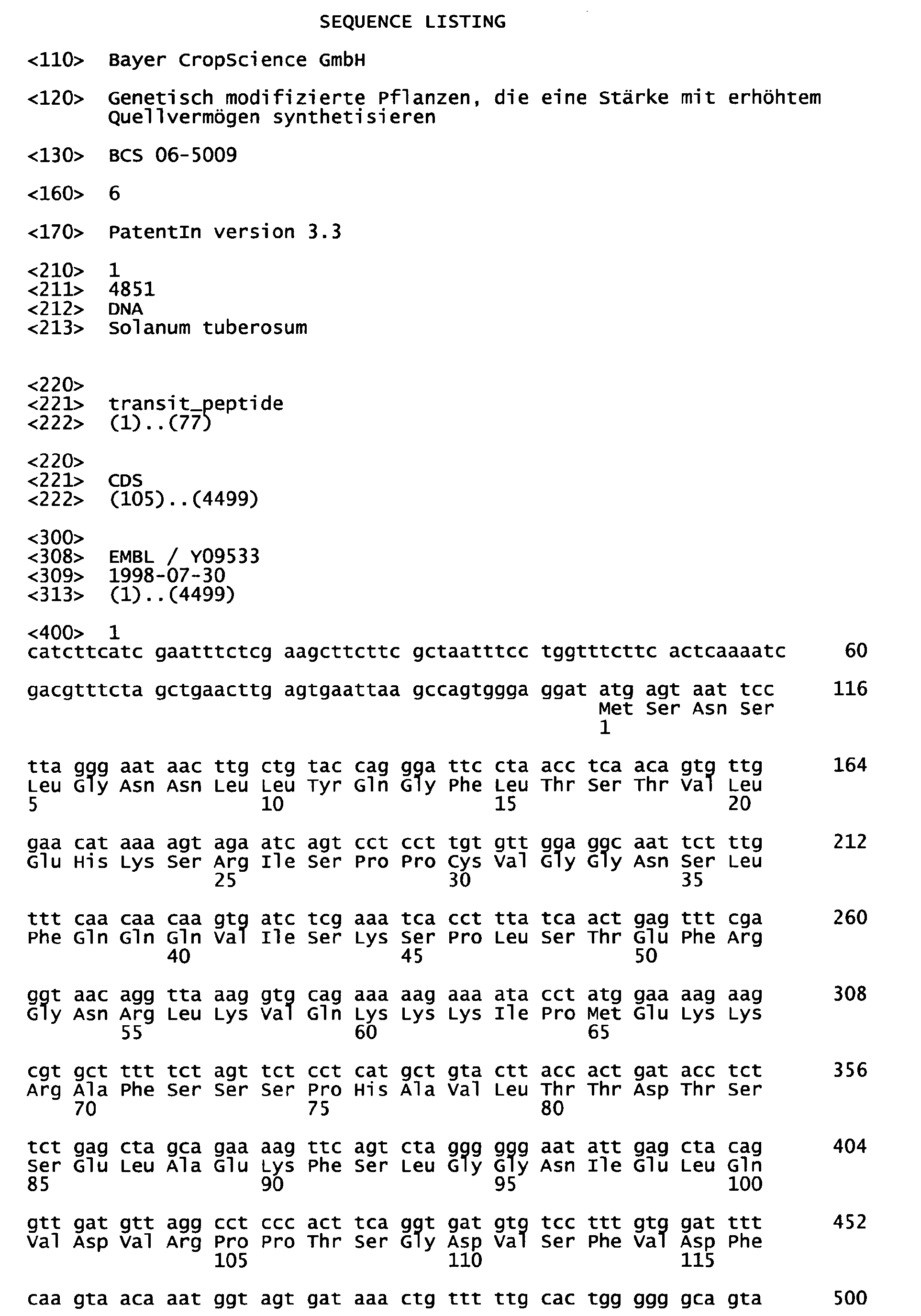
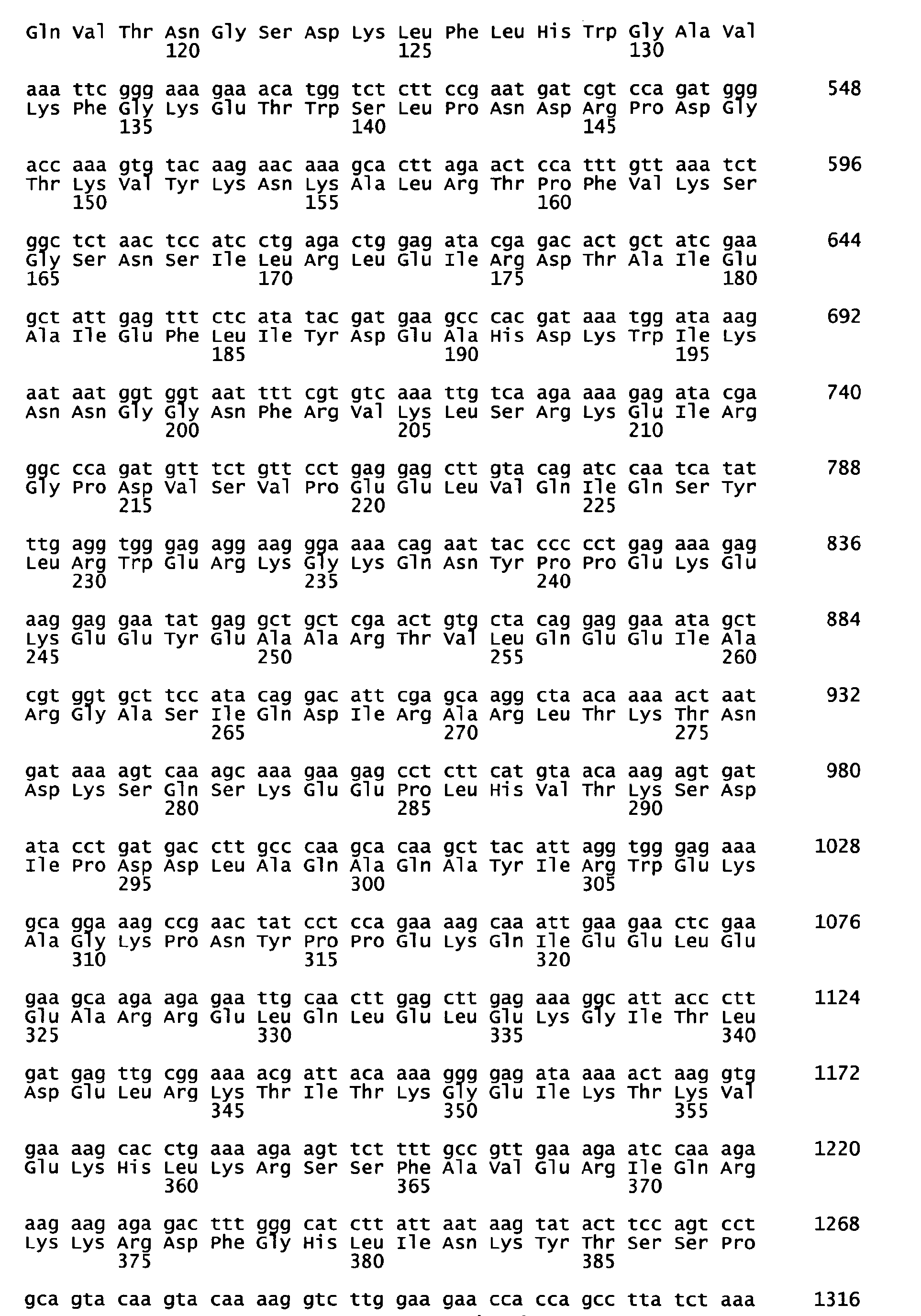

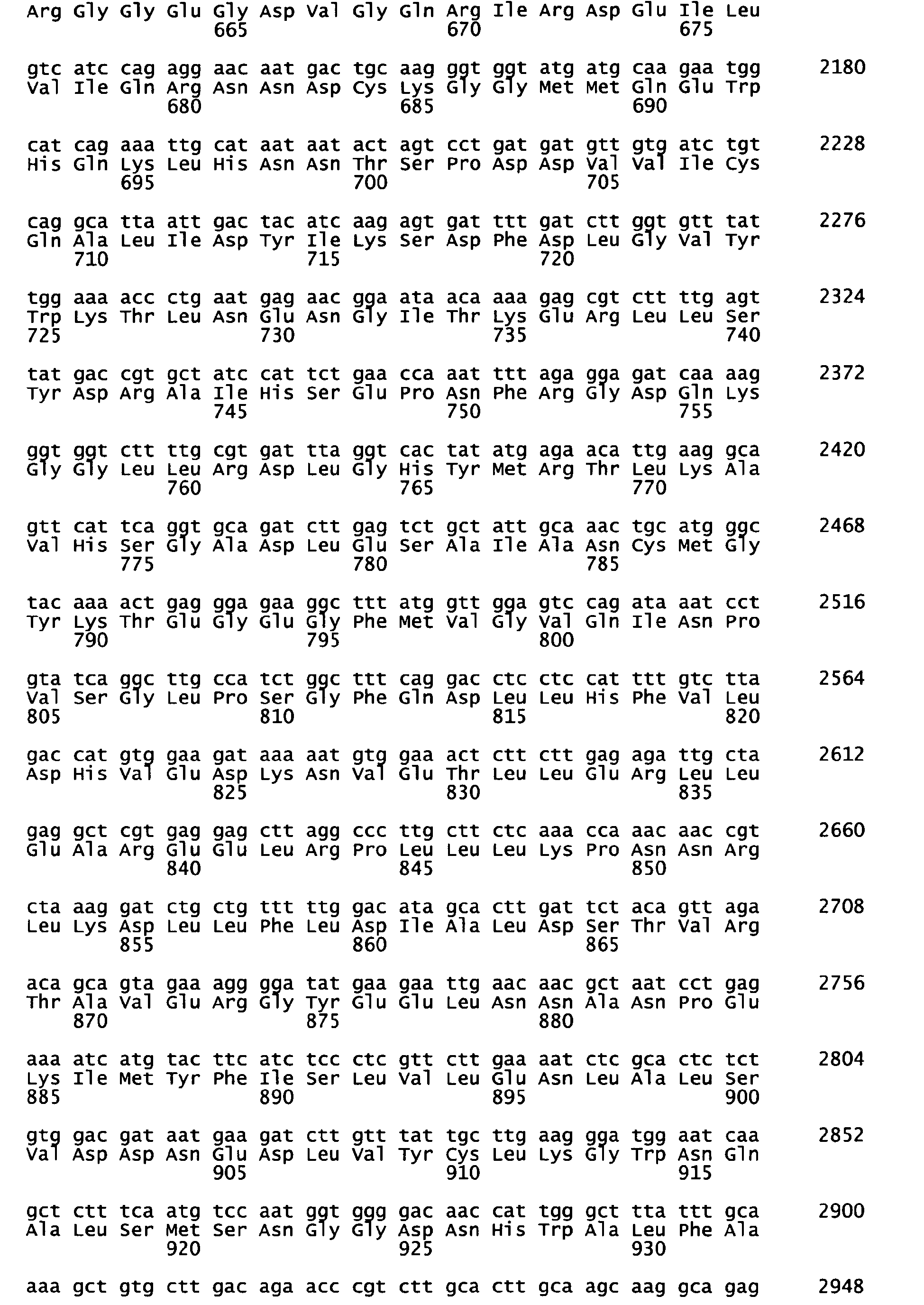


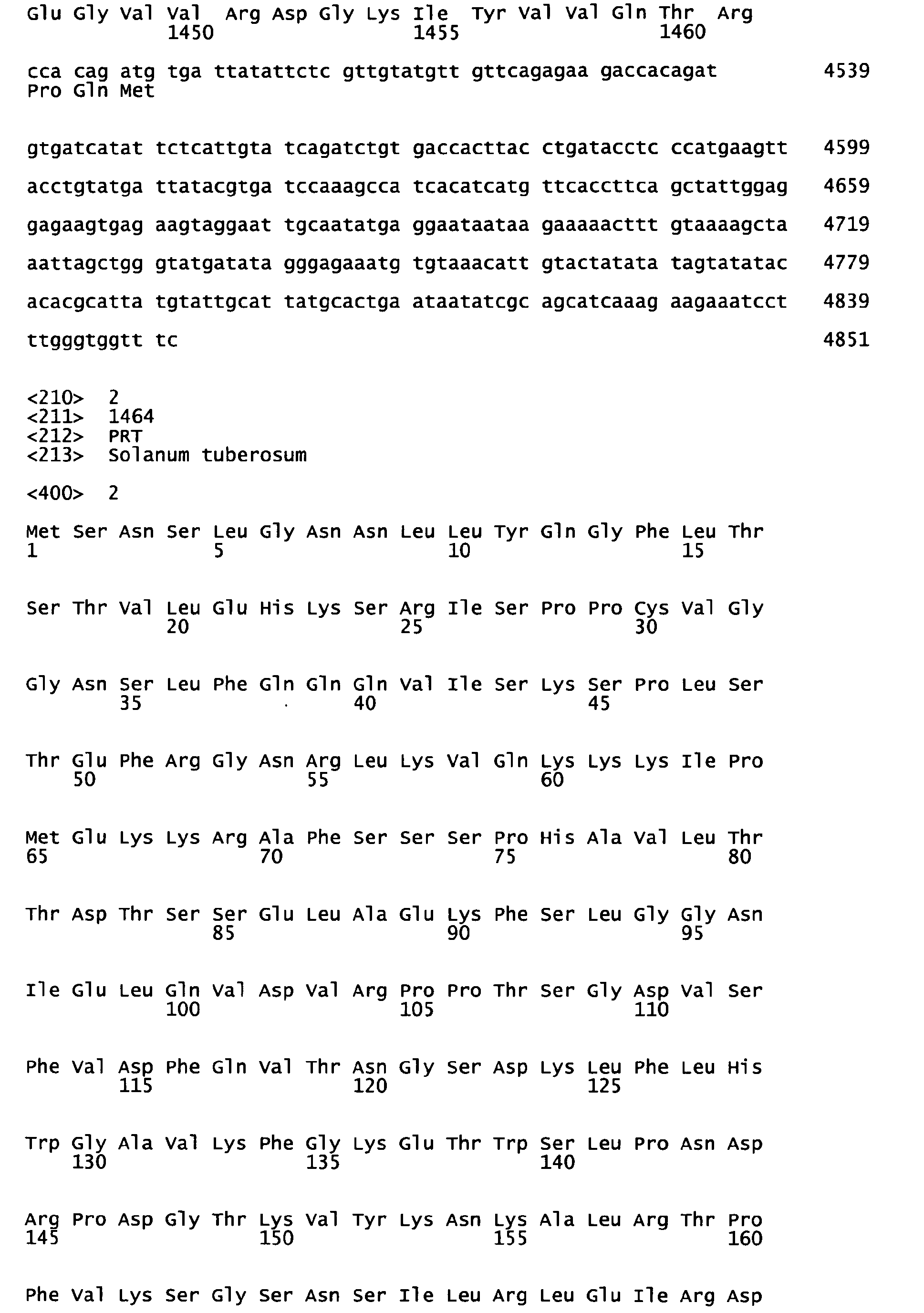
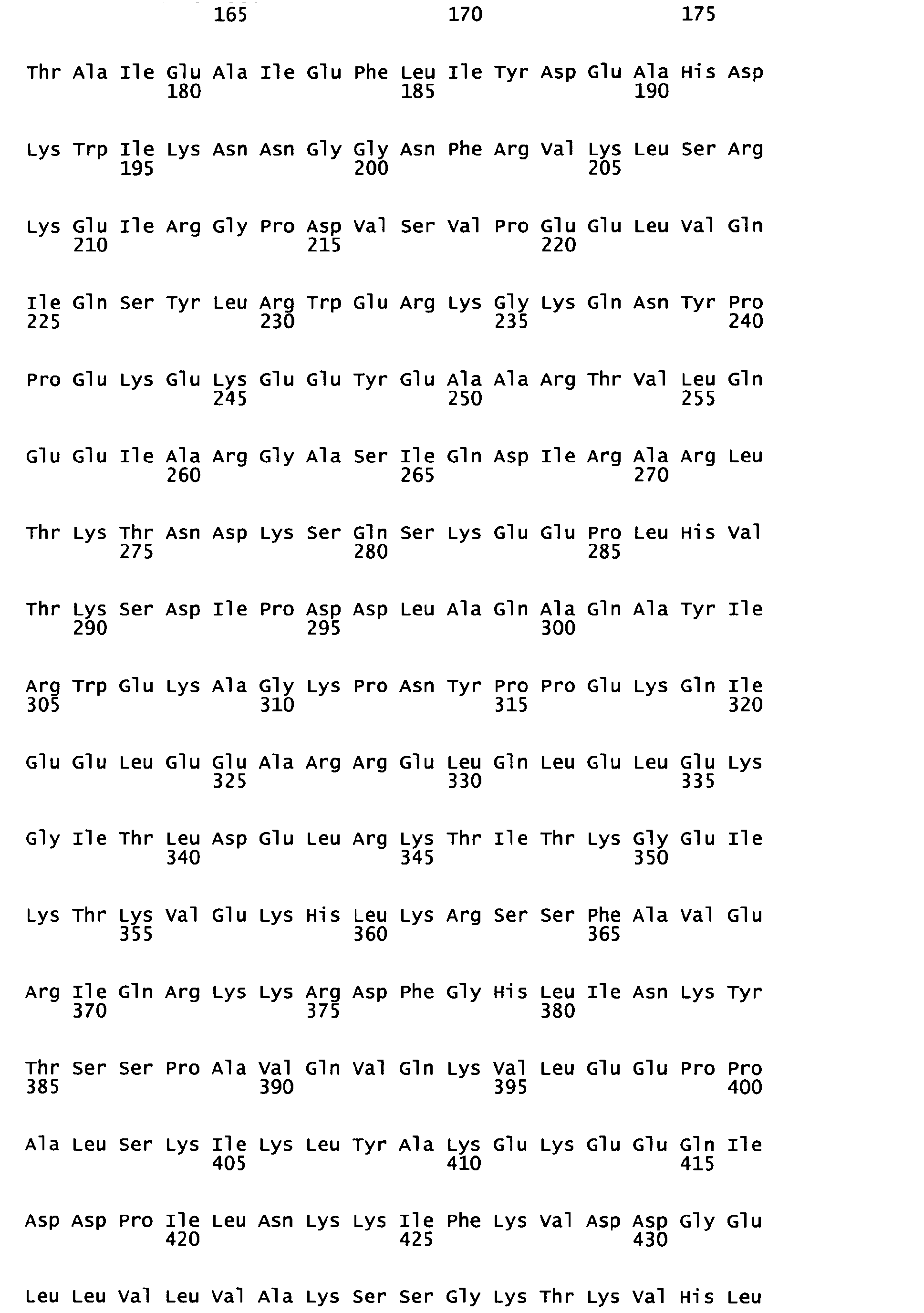

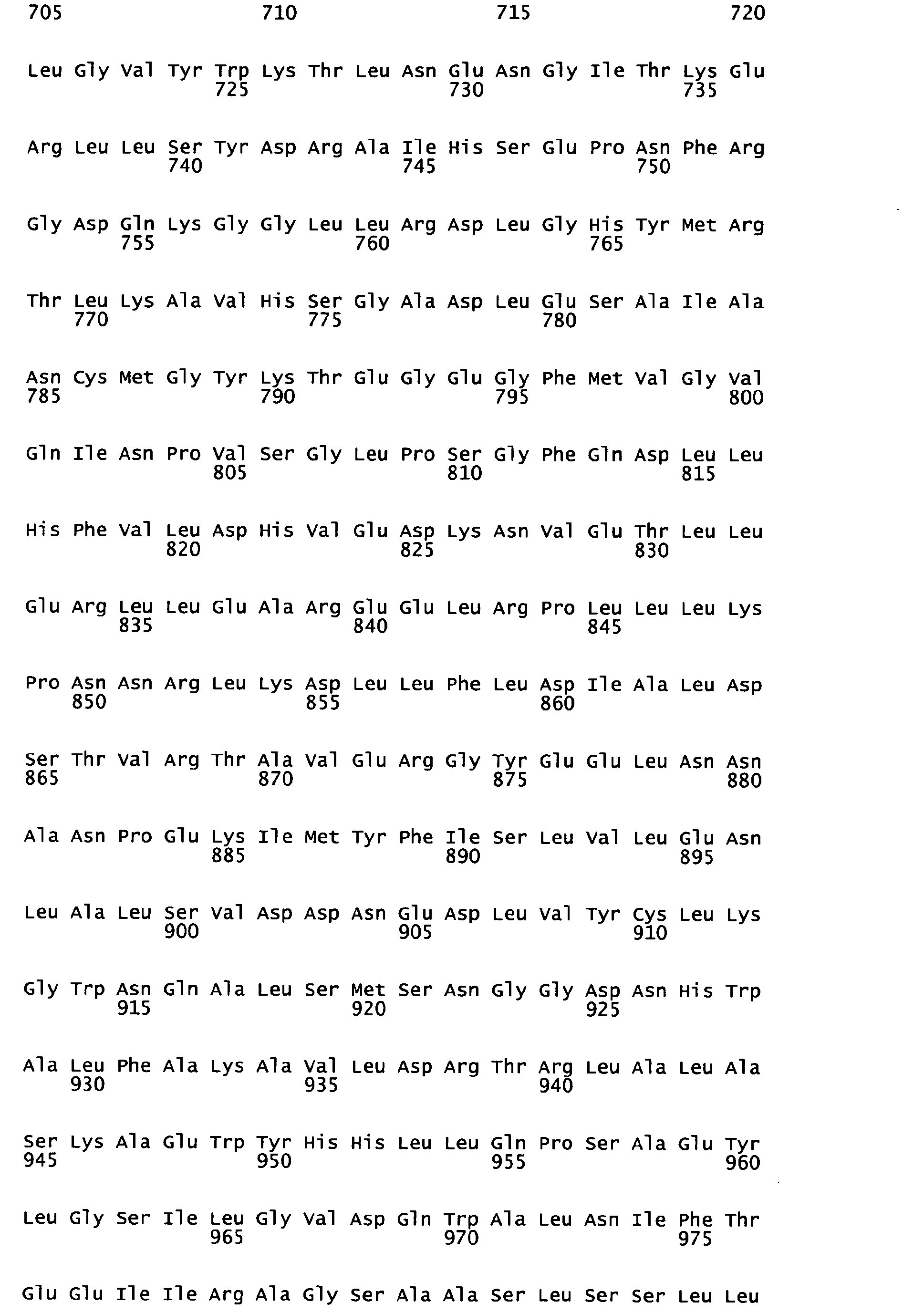
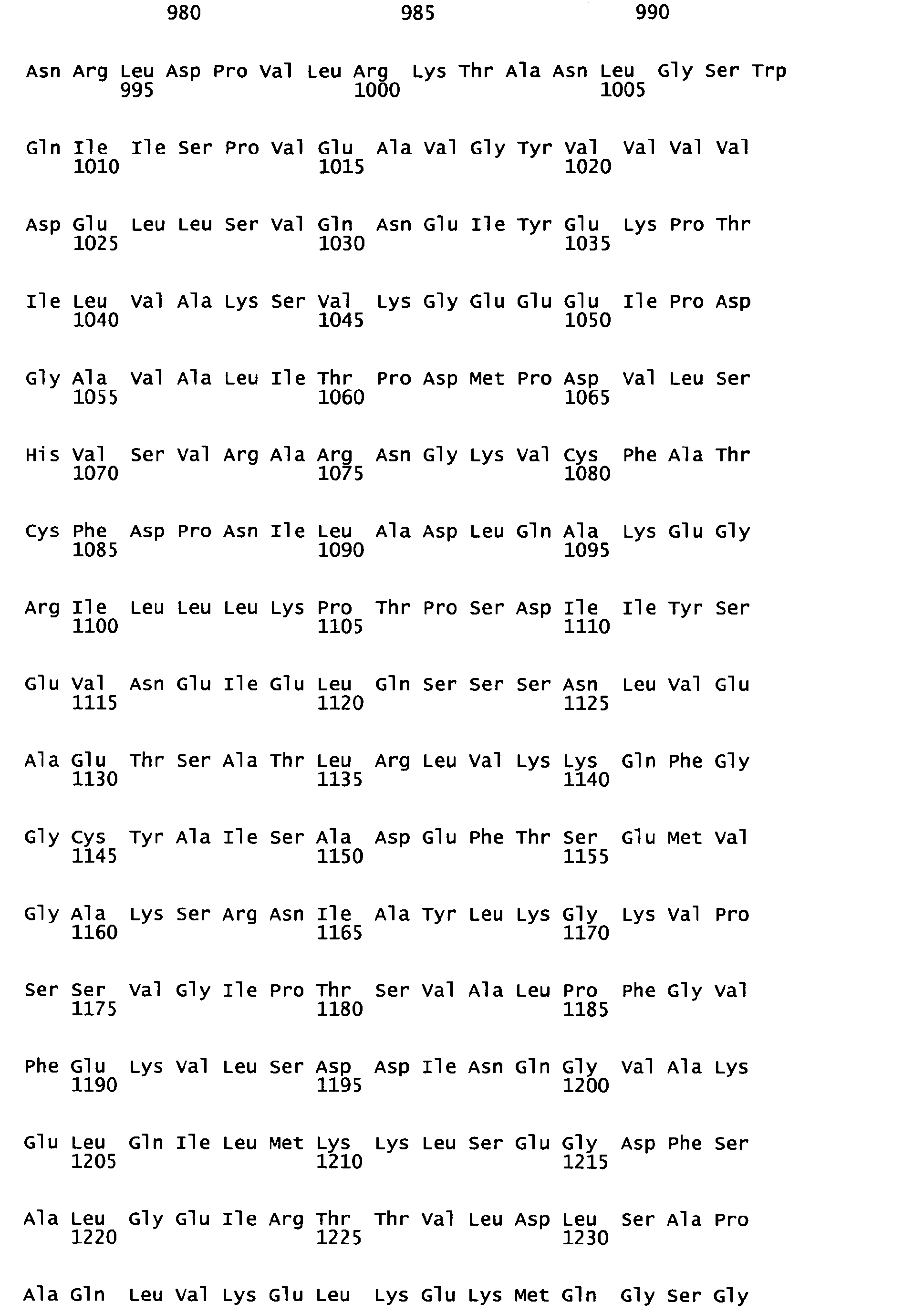
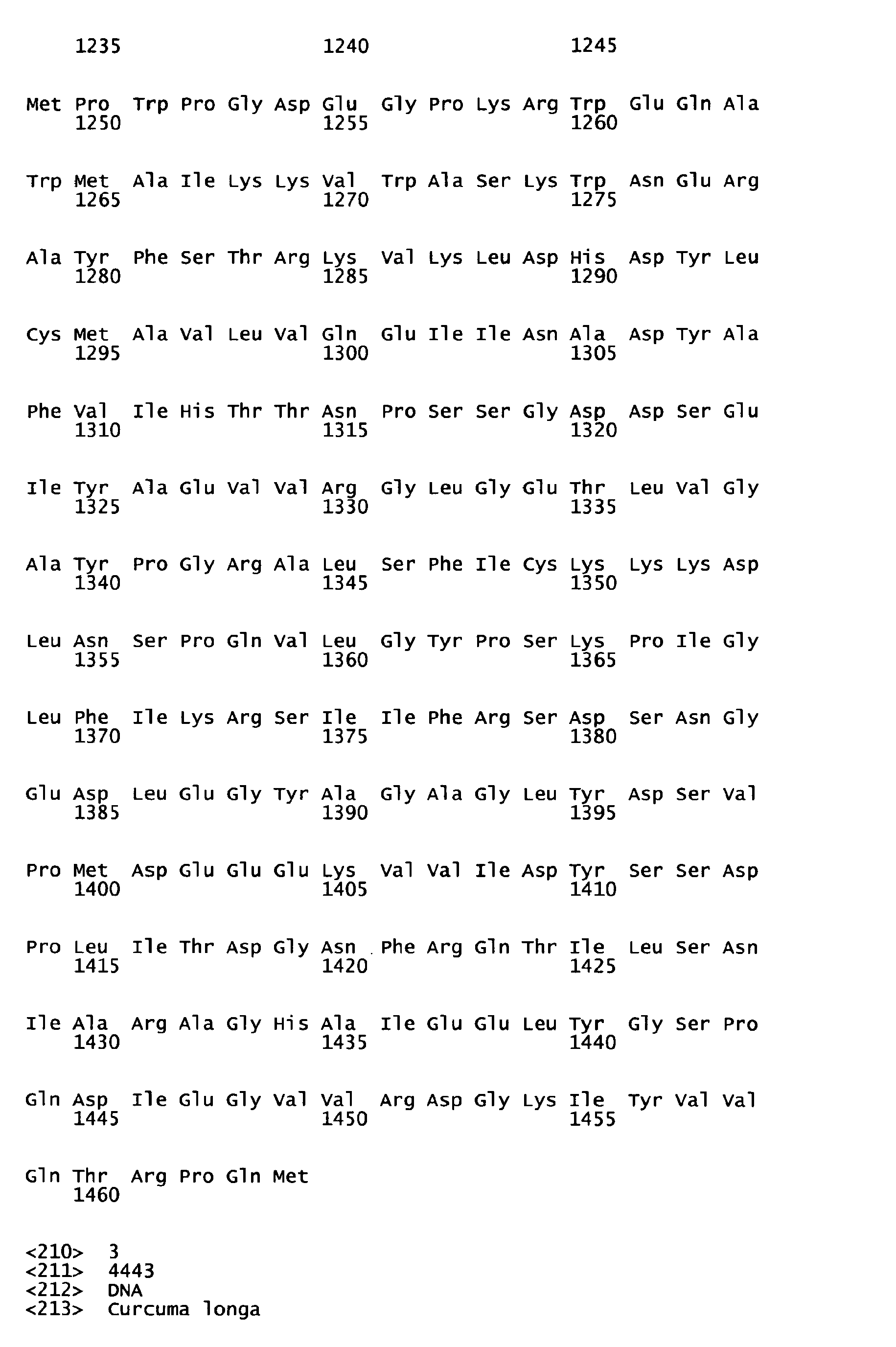
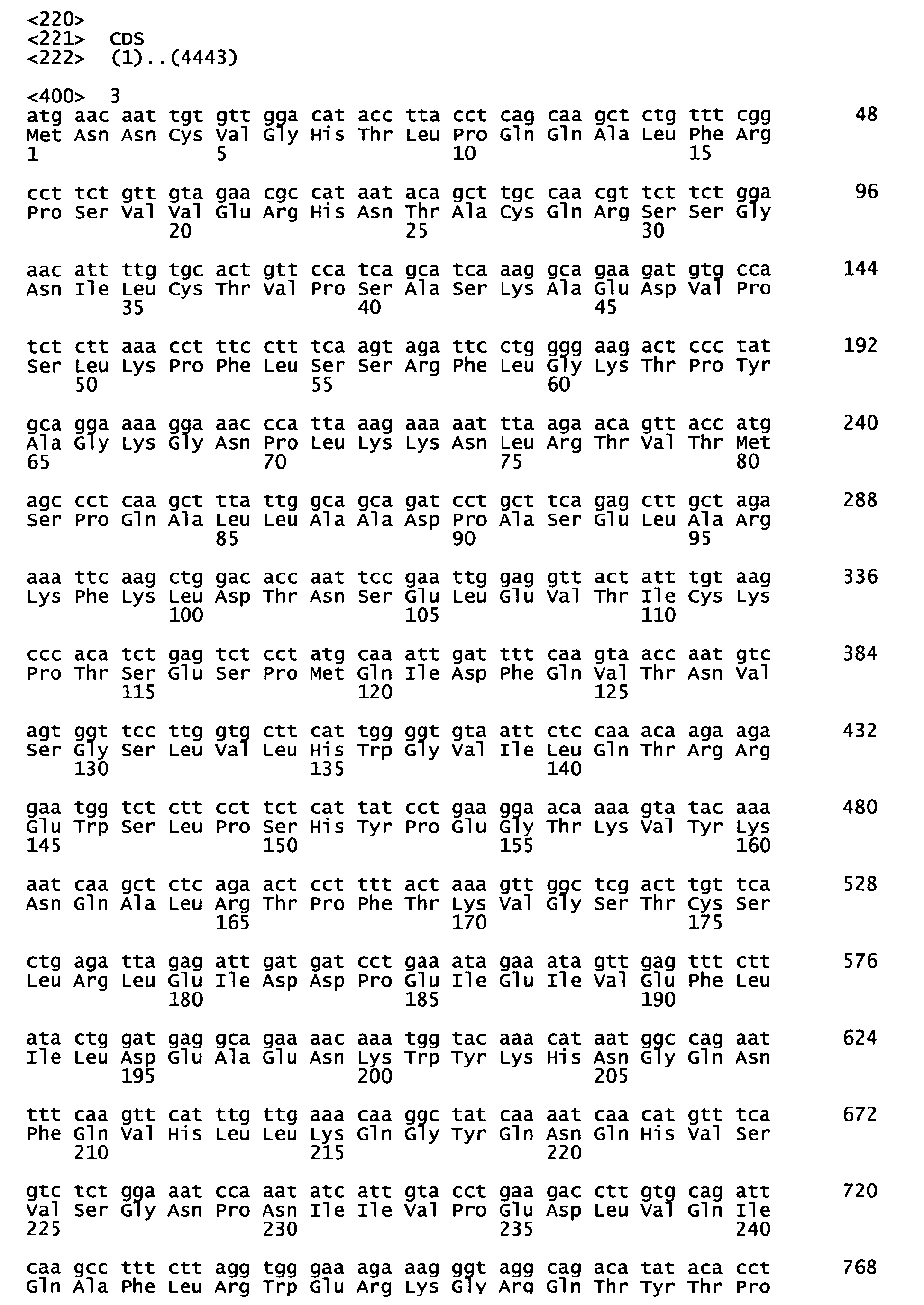
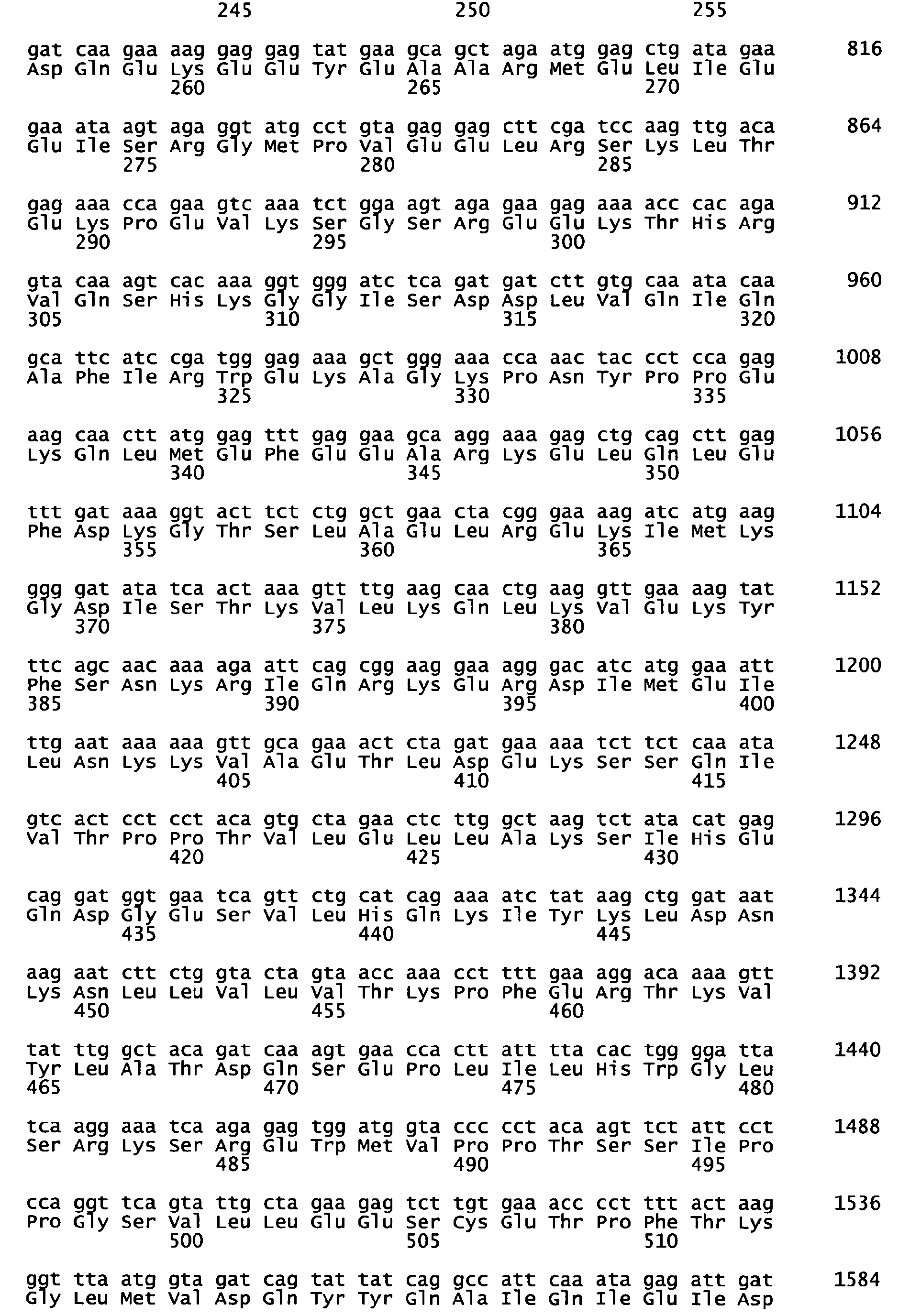

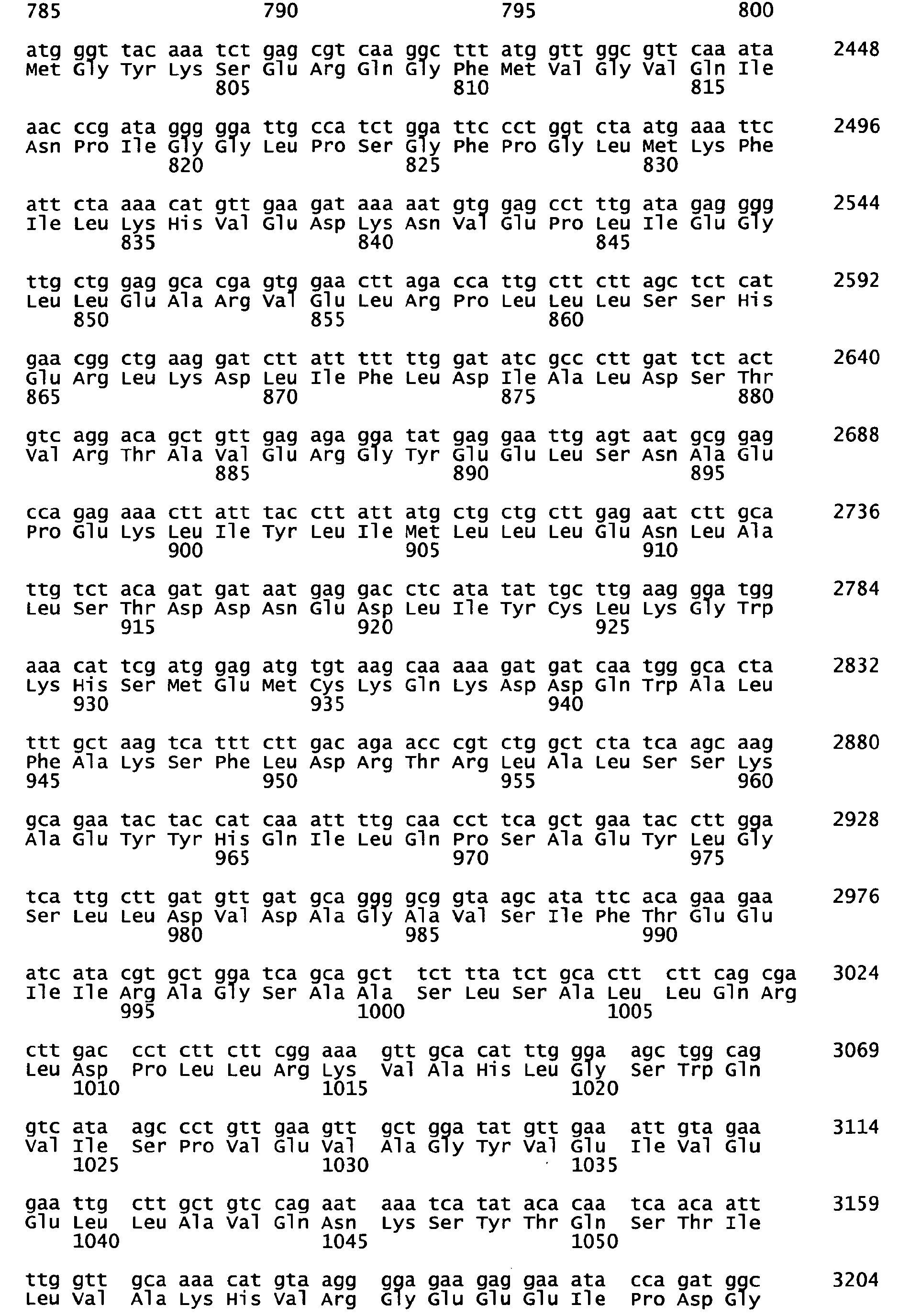

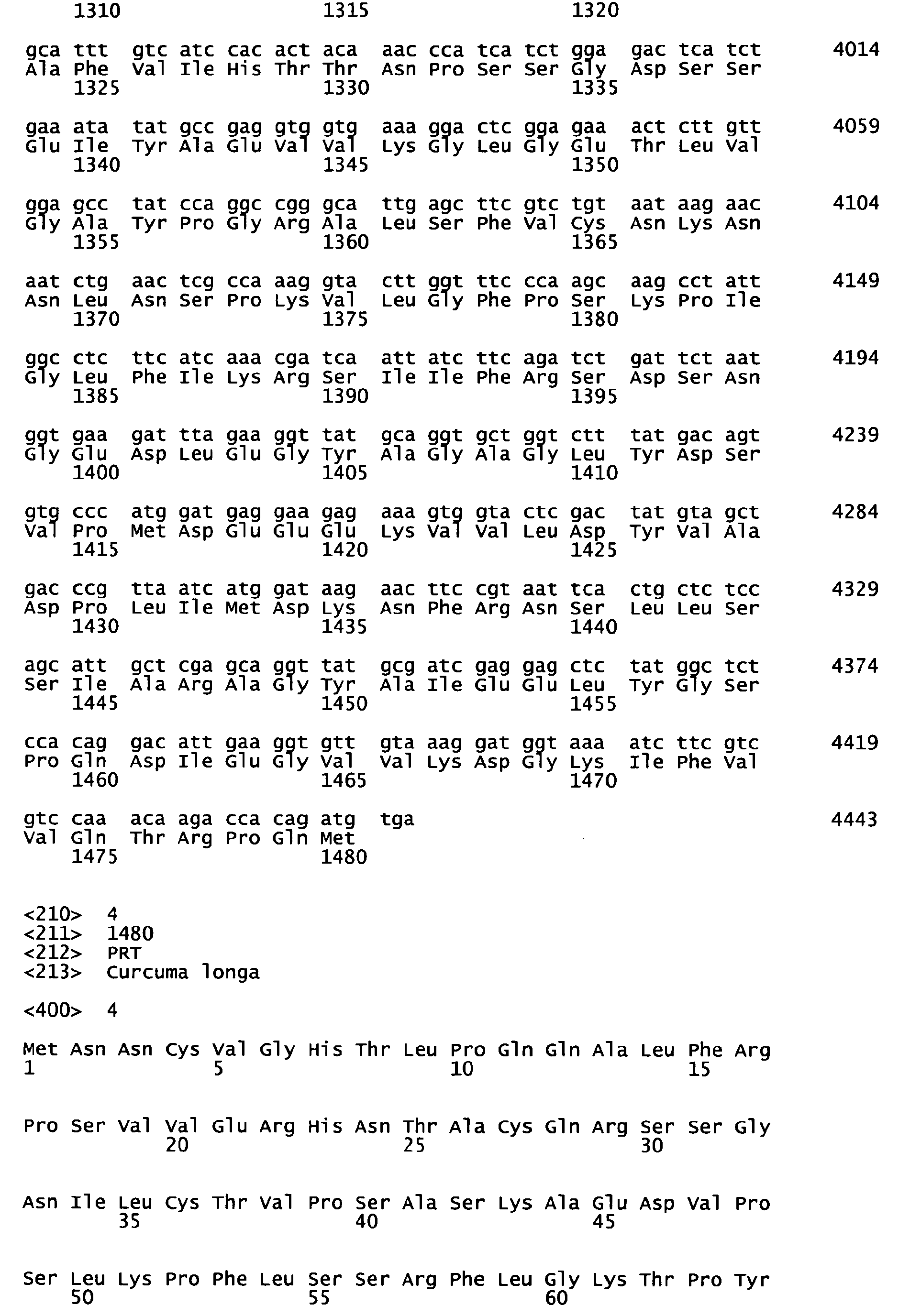
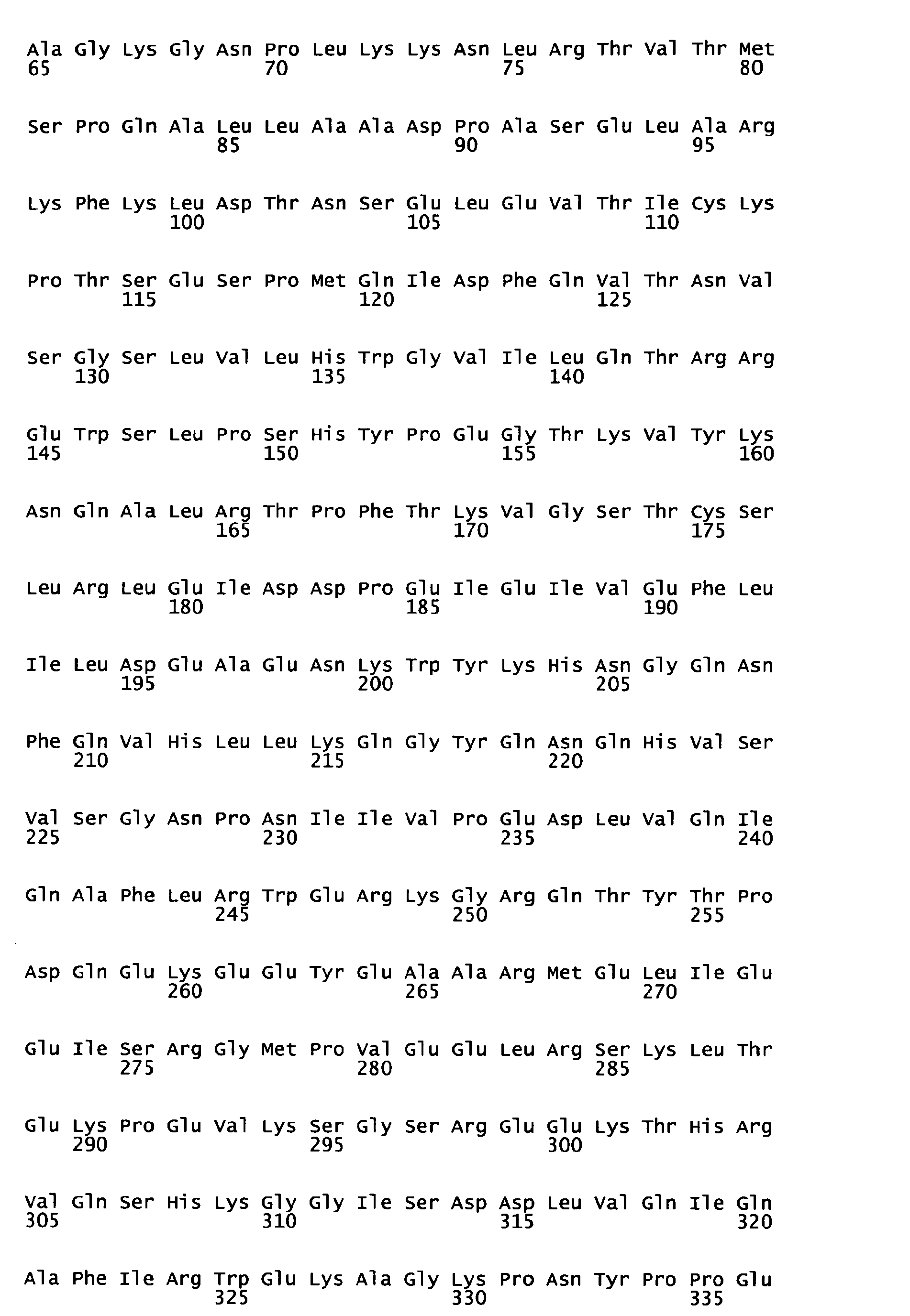

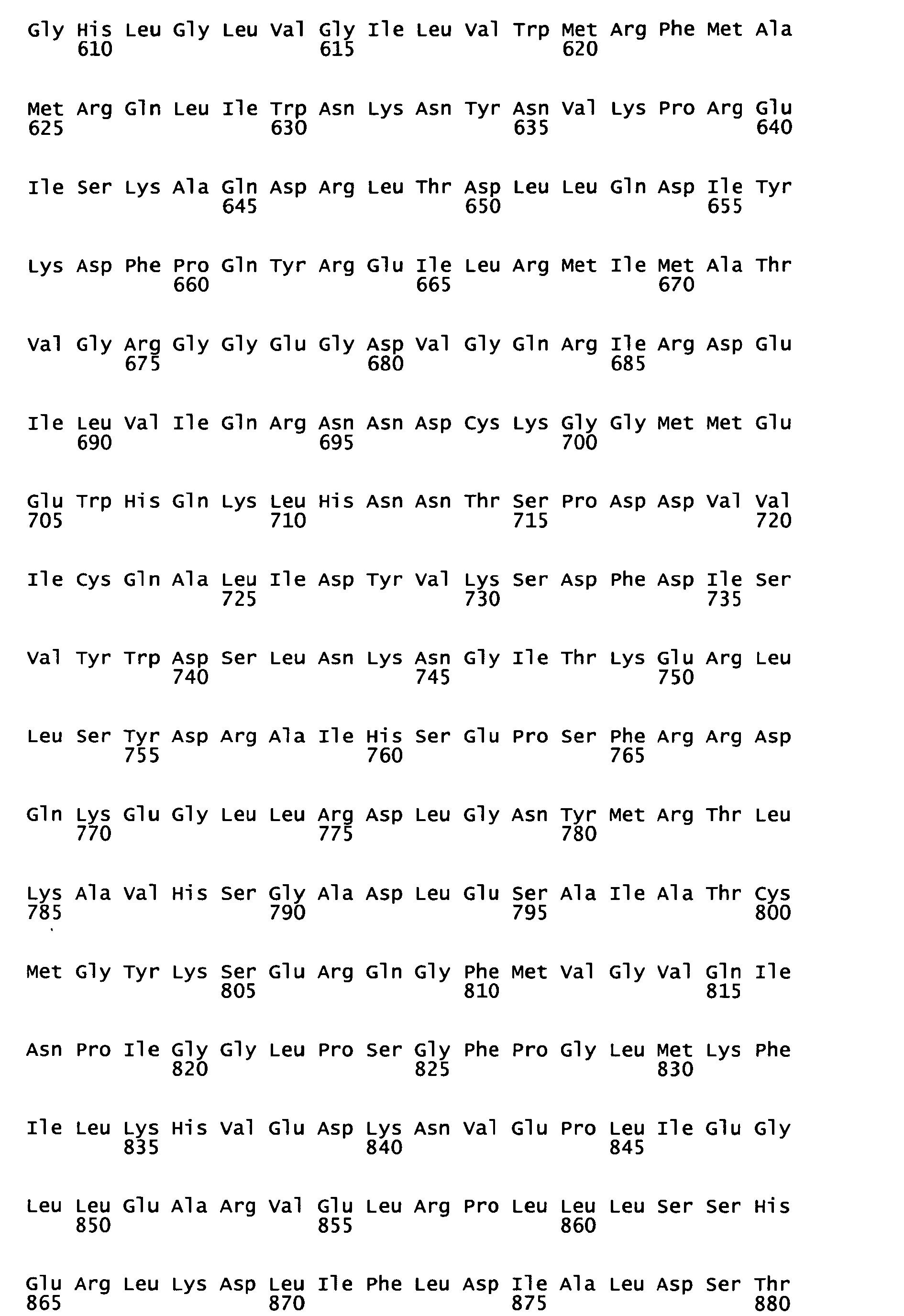

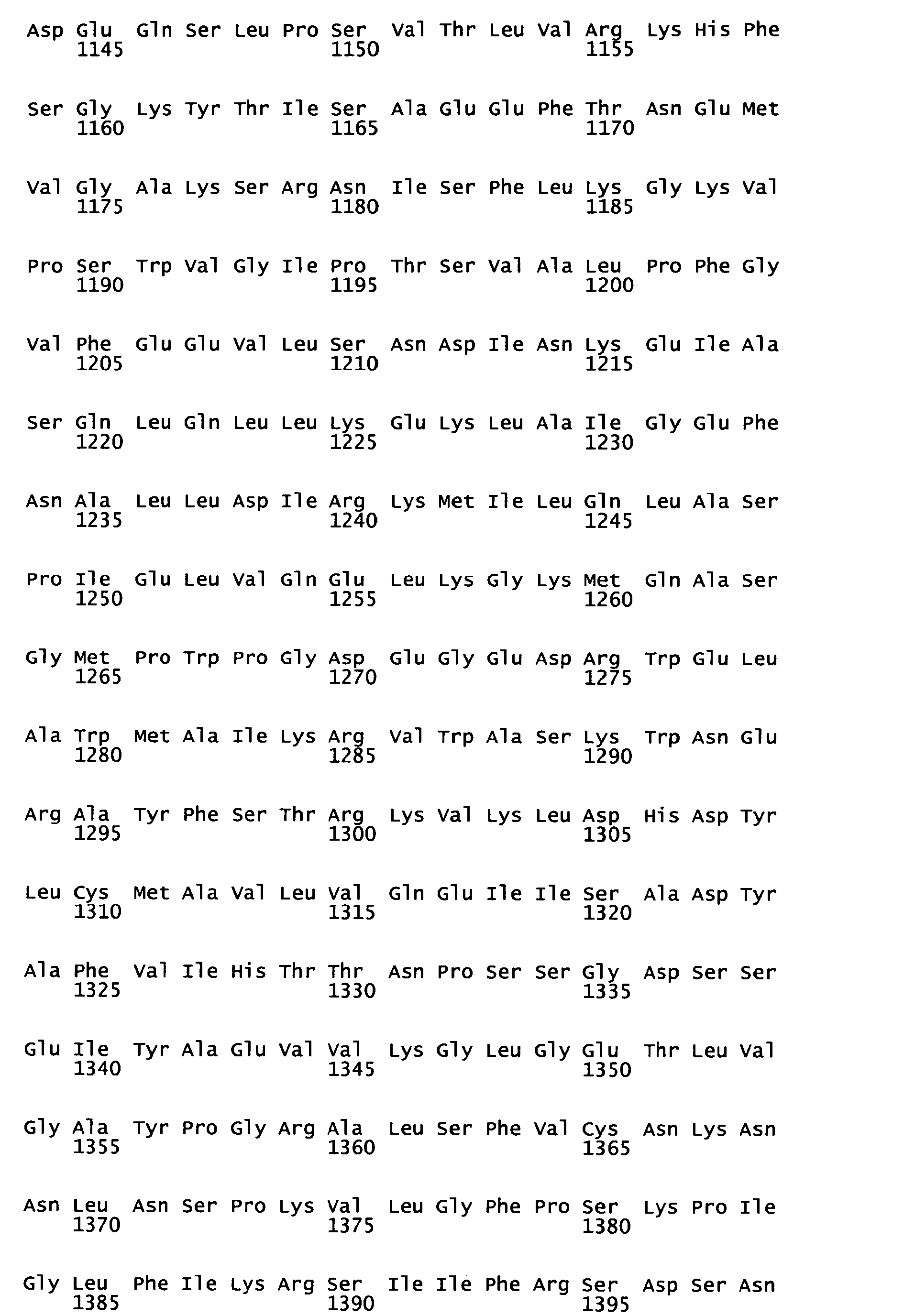
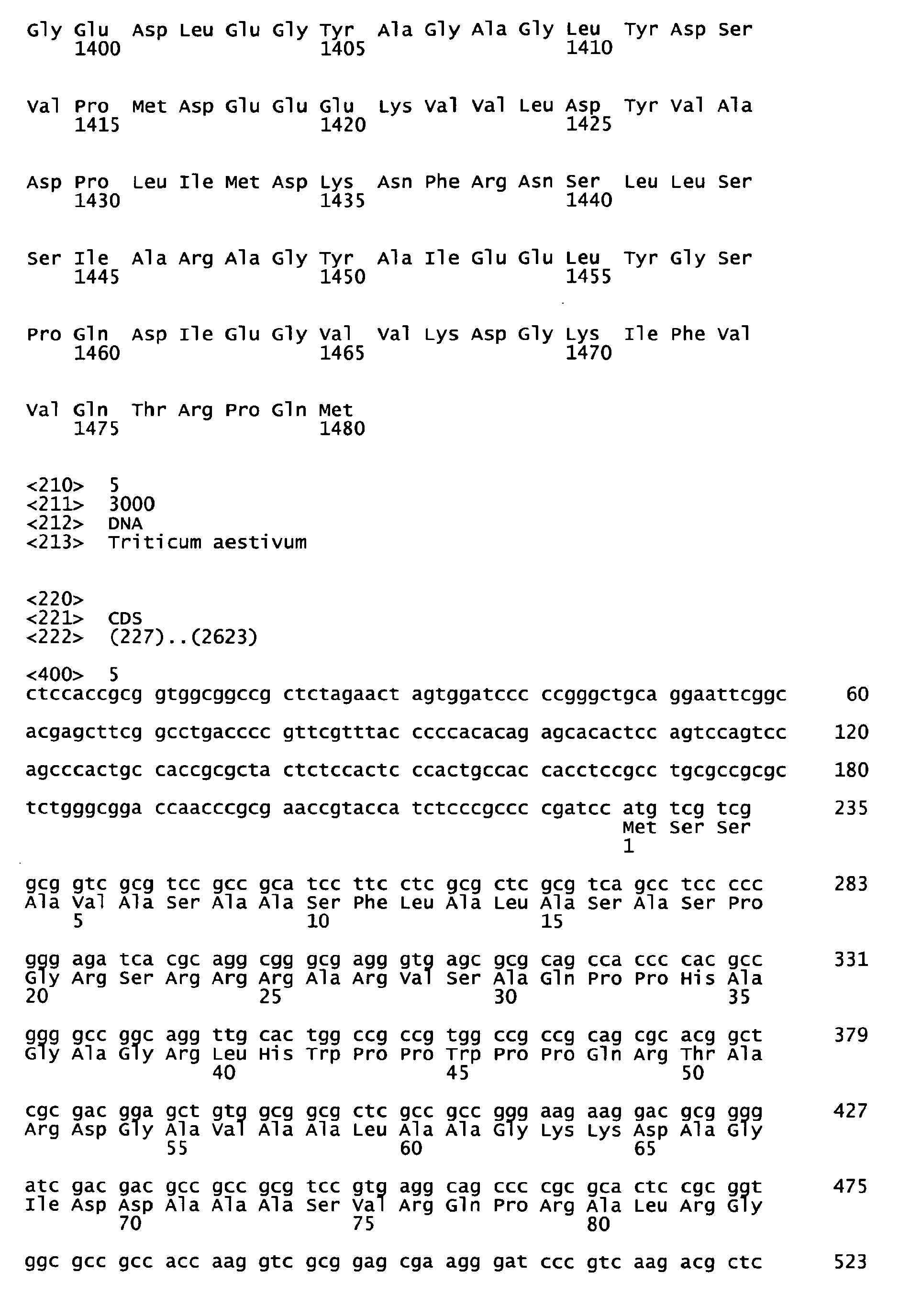
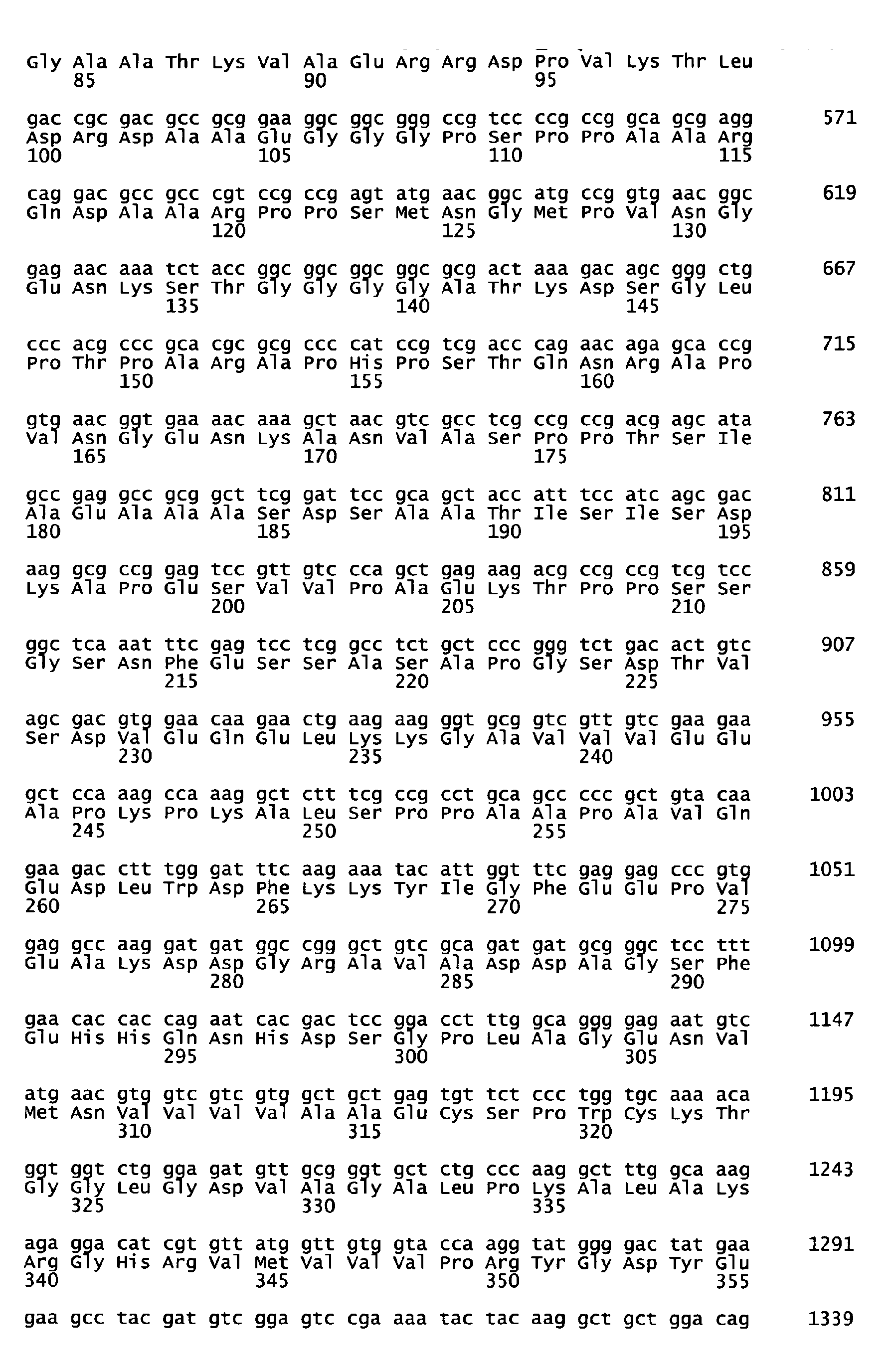


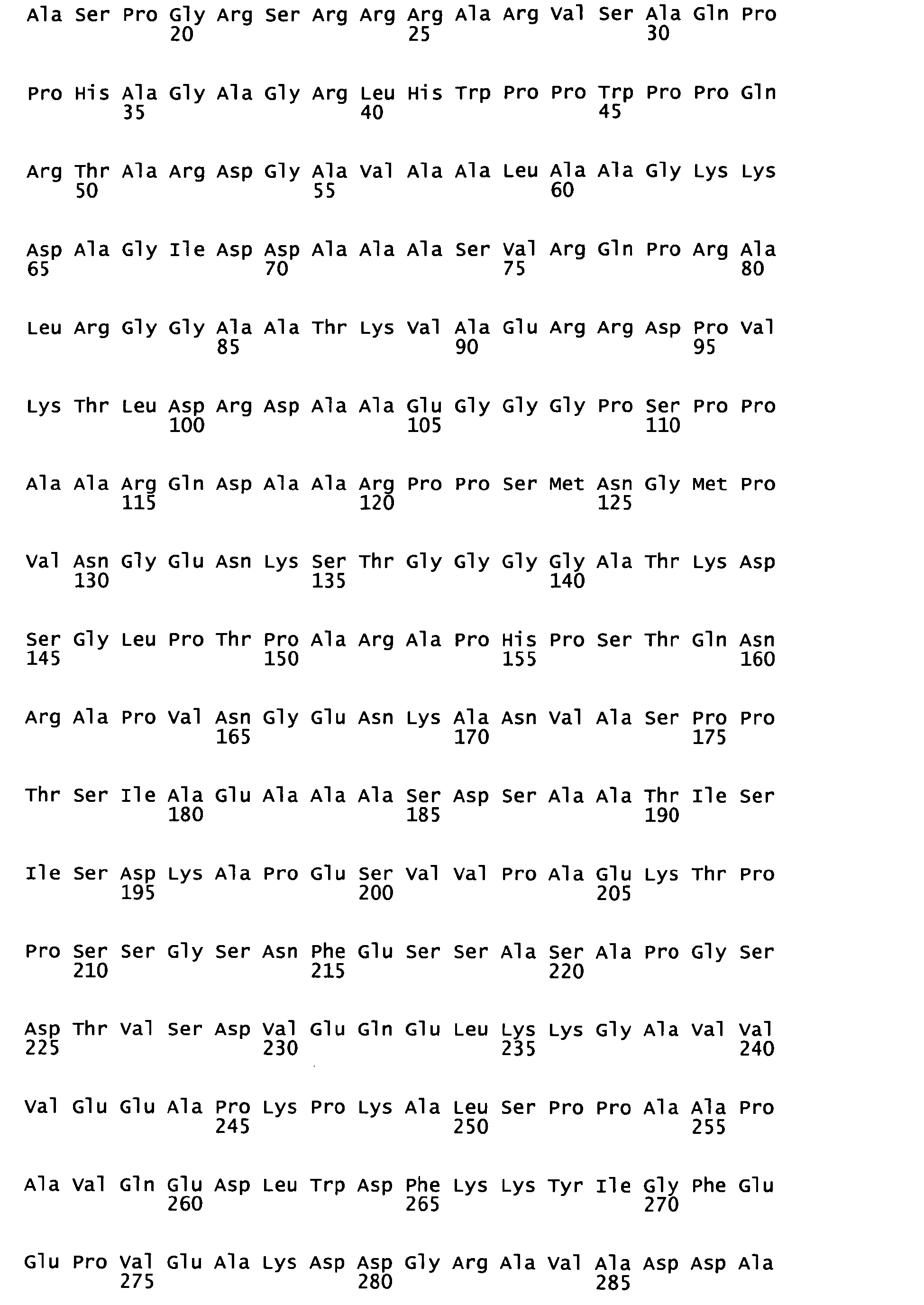


Claims (17)
Priority Applications (12)
| Application Number | Priority Date | Filing Date | Title |
|---|---|---|---|
| EP06090134A EP1887079A1 (en) | 2006-08-09 | 2006-08-09 | Genetically modified plants synthesizing starch with increased swelling power |
| CN200780028601.1A CN101495622B (en) | 2006-08-09 | 2007-08-09 | Genetically Modified Plants Synthesizing Starch with Increased Swellability |
| CA2659535A CA2659535C (en) | 2006-08-09 | 2007-08-09 | Genetically modified plants which synthesize a starch having increased swelling power |
| EP07786696.0A EP2052077B1 (en) | 2006-08-09 | 2007-08-09 | Genetically modified plants which synthesize a starch having increased swelling power |
| PL07786696T PL2052077T3 (en) | 2006-08-09 | 2007-08-09 | Genetically modified plants which synthesize a starch having increased swelling power |
| ARP070103522A AR062301A1 (en) | 2006-08-09 | 2007-08-09 | GENETICALLY MODIFIED PLANTS THAT SYNTHETIZE A STORE WITH GREATER CAPACITY |
| BRPI0716018-6A BRPI0716018B1 (en) | 2006-08-09 | 2007-08-09 | PROCESS FOR THE PRODUCTION OF A GENETICALLY MODIFIED PLANT, MODIFIED STARK, ITS PRODUCTION PROCESS, AND ITS USE, DERIVATIZED STARK AND ITS PRODUCTION PROCESS, AS WELL AS USES OF PLANTS THAT UNDERSTAND GENEGALLY VEGETABLE CELLS DITA PLANT PROPAGATION MATERIAL, AND GENETICALLY MODIFIED VEGETABLE CELLS |
| PCT/EP2007/007282 WO2008017518A1 (en) | 2006-08-09 | 2007-08-09 | Genetically modified plants which synthesize a starch having increased swelling power |
| US12/376,713 US8304606B2 (en) | 2006-08-09 | 2007-08-09 | Genetically modified plants which synthesize a starch having increased swelling power |
| JP2009523210A JP5284261B2 (en) | 2006-08-09 | 2007-08-09 | Genetically modified plants that synthesize starches with increased swelling power |
| AU2007283732A AU2007283732B2 (en) | 2006-08-09 | 2007-08-09 | Genetically modified plants which synthesize a starch having increased swelling power |
| ARP180102014 AR112458A2 (en) | 2006-08-09 | 2018-07-18 | PROCEDURE TO PREPARE A PLANT THAT STORES GENETICALLY MODIFIED STARCH, CELL ISOLATED FROM SUCH PLANT; MODIFIED STARCH, FLOUR AND DERIVATIZED STARCH, AND PROCEDURE TO PREPARE THEM |
Applications Claiming Priority (1)
| Application Number | Priority Date | Filing Date | Title |
|---|---|---|---|
| EP06090134A EP1887079A1 (en) | 2006-08-09 | 2006-08-09 | Genetically modified plants synthesizing starch with increased swelling power |
Publications (1)
| Publication Number | Publication Date |
|---|---|
| EP1887079A1 true EP1887079A1 (en) | 2008-02-13 |
Family
ID=37441320
Family Applications (2)
| Application Number | Title | Priority Date | Filing Date |
|---|---|---|---|
| EP06090134A Withdrawn EP1887079A1 (en) | 2006-08-09 | 2006-08-09 | Genetically modified plants synthesizing starch with increased swelling power |
| EP07786696.0A Not-in-force EP2052077B1 (en) | 2006-08-09 | 2007-08-09 | Genetically modified plants which synthesize a starch having increased swelling power |
Family Applications After (1)
| Application Number | Title | Priority Date | Filing Date |
|---|---|---|---|
| EP07786696.0A Not-in-force EP2052077B1 (en) | 2006-08-09 | 2007-08-09 | Genetically modified plants which synthesize a starch having increased swelling power |
Country Status (10)
| Country | Link |
|---|---|
| US (1) | US8304606B2 (en) |
| EP (2) | EP1887079A1 (en) |
| JP (1) | JP5284261B2 (en) |
| CN (1) | CN101495622B (en) |
| AR (2) | AR062301A1 (en) |
| AU (1) | AU2007283732B2 (en) |
| BR (1) | BRPI0716018B1 (en) |
| CA (1) | CA2659535C (en) |
| PL (1) | PL2052077T3 (en) |
| WO (1) | WO2008017518A1 (en) |
Cited By (13)
| Publication number | Priority date | Publication date | Assignee | Title |
|---|---|---|---|---|
| EP2039772A2 (en) | 2009-01-06 | 2009-03-25 | Bayer CropScience AG | Method for improved utilization of the production potential of transgenic plants introduction |
| EP2039770A2 (en) | 2009-01-06 | 2009-03-25 | Bayer CropScience AG | Method for improved utilization of the production potential of transgenic plants |
| EP2039771A2 (en) | 2009-01-06 | 2009-03-25 | Bayer CropScience AG | Method for improved utilization of the production potential of transgenic plants |
| EP2072506A1 (en) | 2007-12-21 | 2009-06-24 | Bayer CropScience AG | Thiazolyloxyphenylamidine or thiadiazolyloxyphenylamidine und its use as fungicide |
| EP2090168A1 (en) | 2008-02-12 | 2009-08-19 | Bayer CropScience AG | Method for improving plant growth |
| EP2168434A1 (en) | 2008-08-02 | 2010-03-31 | Bayer CropScience AG | Use of azols to increase resistance of plants of parts of plants to abiotic stress |
| EP2223602A1 (en) | 2009-02-23 | 2010-09-01 | Bayer CropScience AG | Method for improved utilisation of the production potential of genetically modified plants |
| EP2227951A1 (en) | 2009-01-23 | 2010-09-15 | Bayer CropScience AG | Application of enaminocarbonyl compounds for combating viruses transmitted by insects |
| US10968257B2 (en) | 2018-04-03 | 2021-04-06 | The Broad Institute, Inc. | Target recognition motifs and uses thereof |
| US11180751B2 (en) | 2015-06-18 | 2021-11-23 | The Broad Institute, Inc. | CRISPR enzymes and systems |
| US11591601B2 (en) | 2017-05-05 | 2023-02-28 | The Broad Institute, Inc. | Methods for identification and modification of lncRNA associated with target genotypes and phenotypes |
| US12297436B2 (en) | 2017-05-18 | 2025-05-13 | The Broad Institute, Inc. | Systems, methods, and compositions for targeted nucleic acid editing |
| US12499971B2 (en) | 2016-09-28 | 2025-12-16 | The Broad Institute, Inc. | Systematic screening and mapping of regulatory elements in non-coding genomic regions, methods, compositions, and applications thereof |
Families Citing this family (61)
| Publication number | Priority date | Publication date | Assignee | Title |
|---|---|---|---|---|
| CL2007003743A1 (en) | 2006-12-22 | 2008-07-11 | Bayer Cropscience Ag | COMPOSITION THAT INCLUDES FENAMIDONA AND AN INSECTICIDE COMPOUND; AND METHOD TO CONTROL FITOPATOGENOS CULTURES AND INSECTS FACING OR PREVENTIVELY. |
| CL2007003744A1 (en) | 2006-12-22 | 2008-07-11 | Bayer Cropscience Ag | COMPOSITION THAT INCLUDES A 2-PYRIDILMETILBENZAMIDE DERIVATIVE AND AN INSECTICIDE COMPOUND; AND METHOD TO CONTROL FITOPATOGENOS CULTURES AND INSECTS FACING OR PREVENTIVELY. |
| EP1950303A1 (en) * | 2007-01-26 | 2008-07-30 | Bayer CropScience AG | Genetically modified plants which synthesise a starch with low amylase content and higher swelling ability |
| EP1969929A1 (en) | 2007-03-12 | 2008-09-17 | Bayer CropScience AG | Substituted phenylamidines and their use as fungicides |
| BRPI0808798A2 (en) | 2007-03-12 | 2014-10-07 | Bayer Cropscience Ag | 3,5-DISSUBSTITUTED PHENOXYPHENYLAMIDINS AND THEIR USE AS FUNGICIDES |
| EP1969934A1 (en) | 2007-03-12 | 2008-09-17 | Bayer CropScience AG | 4-cycloalkyl or 4-aryl substituted phenoxy phenylamidines and their use as fungicides |
| BRPI0808846A2 (en) | 2007-03-12 | 2019-09-24 | Bayer Cropscience Ag | 3-substituted phenoxyphenylamidines and their use as fungicides |
| EP1969930A1 (en) | 2007-03-12 | 2008-09-17 | Bayer CropScience AG | Phenoxy phenylamidines and their use as fungicides |
| JP2010520899A (en) | 2007-03-12 | 2010-06-17 | バイエル・クロツプサイエンス・アクチエンゲゼルシヤフト | Dihalophenoxyphenylamidine and its use as a fungicide |
| EP1969931A1 (en) | 2007-03-12 | 2008-09-17 | Bayer CropScience Aktiengesellschaft | Fluoroalkyl phenylamidines and their use as fungicides |
| US8168567B2 (en) | 2007-04-19 | 2012-05-01 | Bayer Cropscience Ag | Thiadiazolyl oxyphenyl amidines and the use thereof as a fungicide |
| DE102007045956A1 (en) * | 2007-09-26 | 2009-04-09 | Bayer Cropscience Ag | Combination of active ingredients with insecticidal and acaricidal properties |
| DE102007045922A1 (en) * | 2007-09-26 | 2009-04-02 | Bayer Cropscience Ag | Drug combinations with insecticidal and acaricidal properties |
| AR069440A1 (en) | 2007-11-27 | 2010-01-20 | Commw Scient Ind Res Org | PLANTS WITH MODIFIED ALMIDON METABOLISM AND VEGETABLE NUCLEIC ACID MOLECULES CODING INTERVENING ENZYMES |
| DE102008041695A1 (en) * | 2008-08-29 | 2010-03-04 | Bayer Cropscience Ag | Methods for improving plant growth |
| EP2381781B1 (en) | 2008-12-29 | 2016-06-08 | Bayer Intellectual Property GmbH | Method for improved use of the production potential of genetically modified plants |
| WO2010081689A2 (en) | 2009-01-19 | 2010-07-22 | Bayer Cropscience Ag | Cyclic diones and their use as insecticides, acaricides and/or fungicides |
| UA104887C2 (en) | 2009-03-25 | 2014-03-25 | Баєр Кропсаєнс Аг | Synergic combinations of active ingredients |
| NZ595345A (en) | 2009-03-25 | 2014-01-31 | Bayer Cropscience Ag | Active ingredient combinations with insecticidal and acaricidal properties |
| BRPI0924451B1 (en) | 2009-03-25 | 2017-12-26 | Bayer Intellectual Property Gmbh | Combinations of active substances and their uses, as well as methods for the control of animal pests and method for the manufacture of insecticides and acaricides |
| CN102448304B (en) | 2009-03-25 | 2015-03-11 | 拜尔农作物科学股份公司 | Active ingredient combinations having insecticidal and acaricidal properties |
| EP2410849A1 (en) | 2009-03-25 | 2012-02-01 | Bayer CropScience AG | Active ingredient combinations having insecticidal and acaricidal properties |
| BRPI1015543A8 (en) | 2009-05-06 | 2016-05-24 | Bayer Cropscience Ag | CYCLOPENTANEDIONE COMPOUNDS AND THEIR USE AS INSECTICIDES, ACARICIDES AND/OR FUNGICIDES. |
| EP2292094A1 (en) * | 2009-09-02 | 2011-03-09 | Bayer CropScience AG | Active compound combinations |
| MA33933B1 (en) | 2010-01-22 | 2013-01-02 | Bayer Ip Gmbh | COMBINATIONS OF ACARICIDAL AND / OR INSECTICIDAL ACTIVE INGREDIENTS |
| AU2011264075B2 (en) | 2010-06-09 | 2015-01-29 | Bayer Cropscience Nv | Methods and means to modify a plant genome at a nucleotide sequence commonly used in plant genome engineering |
| AU2011264074B2 (en) | 2010-06-09 | 2015-01-22 | Bayer Cropscience Nv | Methods and means to modify a plant genome at a nucleotide sequence commonly used in plant genome engineering |
| CN103313971B (en) | 2010-11-15 | 2015-12-02 | 拜耳知识产权有限责任公司 | N-Arylpyrazole(thio)carboxamides |
| CN103717076B (en) | 2011-08-10 | 2016-04-13 | 拜耳知识产权股份有限公司 | Active compound combinations containing specific tetramic acid derivatives |
| ES2628436T3 (en) | 2011-10-04 | 2017-08-02 | Bayer Intellectual Property Gmbh | RNAi for the control of fungi and oomycetes by the inhibition of the sacropin dehydrogenase gene |
| UA113198C2 (en) | 2012-02-27 | 2016-12-26 | COMBINATIONS OF ACTIVE COMPOUNDS | |
| WO2013139949A1 (en) | 2012-03-23 | 2013-09-26 | Bayer Intellectual Property Gmbh | Compositions comprising a strigolactame compound for enhanced plant growth and yield |
| BR112014026203A2 (en) | 2012-04-23 | 2017-07-18 | Bayer Cropscience Nv | plant-directed genome engineering |
| EP2662370A1 (en) | 2012-05-09 | 2013-11-13 | Bayer CropScience AG | 5-Halogenopyrazole benzofuranyl carboxamides |
| EP2662360A1 (en) | 2012-05-09 | 2013-11-13 | Bayer CropScience AG | 5-Halogenopyrazole indanyl carboxamides |
| EP2662361A1 (en) | 2012-05-09 | 2013-11-13 | Bayer CropScience AG | Pyrazol indanyl carboxamides |
| BR112014027643B1 (en) | 2012-05-09 | 2019-04-24 | Bayer Cropscience Ag | PIRAZOLE-INDANIL-CARBOXAMIDES. |
| EP2662362A1 (en) | 2012-05-09 | 2013-11-13 | Bayer CropScience AG | Pyrazole indanyl carboxamides |
| US9375005B2 (en) | 2012-05-09 | 2016-06-28 | Bayer Cropscience Ag | 5-halogenopyrazole indanyl carboxamides |
| EP2662364A1 (en) | 2012-05-09 | 2013-11-13 | Bayer CropScience AG | Pyrazole tetrahydronaphthyl carboxamides |
| EP2662363A1 (en) | 2012-05-09 | 2013-11-13 | Bayer CropScience AG | 5-Halogenopyrazole biphenylcarboxamides |
| RU2015118926A (en) * | 2012-10-23 | 2016-12-20 | Монтана Стейт Юниверсити | PRODUCTION OF HIGH-QUALITY WHEAT SOLID WHICH HAS AN INCREASED AMILOSE CONTENT |
| EP2735231A1 (en) | 2012-11-23 | 2014-05-28 | Bayer CropScience AG | Active compound combinations |
| CN104837351A (en) | 2012-11-30 | 2015-08-12 | 拜耳作物科学股份公司 | Binary fungicidal or pesticidal mixture |
| WO2014083031A2 (en) | 2012-11-30 | 2014-06-05 | Bayer Cropscience Ag | Binary pesticidal and fungicidal mixtures |
| EA030236B1 (en) | 2012-11-30 | 2018-07-31 | Байер Кропсайенс Акциенгезельшафт | Ternary fungicidal and pesticidal mixtures |
| EP2925134B1 (en) | 2012-11-30 | 2019-12-25 | Bayer CropScience AG | Ternary fungicidal mixtures |
| UA116223C2 (en) | 2012-11-30 | 2018-02-26 | Байєр Кропсайєнс Акцієнгезелльшафт | Binary fungicidal mixtures |
| AR093996A1 (en) | 2012-12-18 | 2015-07-01 | Bayer Cropscience Ag | BACTERICIDAL COMBINATIONS AND BINARY FUNGICIDES |
| BR112015014307A2 (en) | 2012-12-19 | 2017-07-11 | Bayer Cropscience Ag | difluoromethyl nicotinic tetrahydronaphthyl carboxamides |
| BR112015025331A2 (en) | 2013-04-12 | 2017-07-18 | Bayer Cropscience Ag | new triazolintiona derivatives |
| EP2984081B1 (en) | 2013-04-12 | 2017-08-09 | Bayer CropScience Aktiengesellschaft | Novel triazole derivatives |
| US20160058001A1 (en) | 2013-04-19 | 2016-03-03 | Bayer Cropscience Aktiengesellschaft | Method for improved utilization of the production potential of transgenic plants |
| BR112015025907A2 (en) | 2013-04-19 | 2017-07-25 | Bayer Cropscience Ag | binary insecticide or pesticide mixture |
| WO2014177514A1 (en) | 2013-04-30 | 2014-11-06 | Bayer Cropscience Ag | Nematicidal n-substituted phenethylcarboxamides |
| TW201507722A (en) | 2013-04-30 | 2015-03-01 | Bayer Cropscience Ag | N-(2-halogen-2-phenethyl)carboxamides as nematicides and endoparasiticides |
| CN104232681B (en) * | 2014-09-28 | 2017-02-15 | 浙江大学 | Plant expression vector and application thereof in preparing phosphorylation modified rice starch |
| CN109688816A (en) | 2016-07-29 | 2019-04-26 | 拜耳作物科学股份公司 | Active compound combinations and methods for protecting plant propagation material |
| WO2018054832A1 (en) | 2016-09-22 | 2018-03-29 | Bayer Cropscience Aktiengesellschaft | Novel triazole derivatives |
| EP3515906A1 (en) | 2016-09-22 | 2019-07-31 | Bayer CropScience Aktiengesellschaft | Novel triazole derivatives and their use as fungicides |
| BR112020024615A2 (en) | 2018-06-04 | 2021-03-02 | Bayer Aktiengesellschaft | herbicidal bicyclic benzoylpyrazoles |
Citations (3)
| Publication number | Priority date | Publication date | Assignee | Title |
|---|---|---|---|---|
| WO2004056999A1 (en) * | 2002-12-19 | 2004-07-08 | Bayer Cropscience Gmbh | Plant cells and plants which synthesize a starch with an increased final viscosity |
| WO2005002359A2 (en) * | 2003-05-22 | 2005-01-13 | Syngenta Participations Ag | Modified starch, uses, methods for production thereof |
| WO2005095617A2 (en) * | 2004-03-05 | 2005-10-13 | Bayer Cropscience Gmbh | Plants with increased activity of a starch phosphorylating enzyme |
Family Cites Families (9)
| Publication number | Priority date | Publication date | Assignee | Title |
|---|---|---|---|---|
| US299907A (en) | 1884-06-03 | Beelain | ||
| US4280851A (en) * | 1979-12-14 | 1981-07-28 | General Foods Corporation | Process for cooking or gelatinizing materials |
| ES2335494T3 (en) * | 1995-09-19 | 2010-03-29 | Bayer Bioscience Gmbh | PROCEDURE FOR THE PRODUCTION OF A MODIFIED ALMIDON. |
| DE69737448T2 (en) * | 1996-05-29 | 2007-11-15 | Bayer Cropscience Ag | NUCLEIC ACID MOLECULES CODING FOR ENZYMES FROM WHEAT INVOLVED IN STARCH SYNTHESIS |
| US6299907B1 (en) * | 1998-06-12 | 2001-10-09 | Kansas State University Research Foundation | Reversibly swellable starch products |
| US6734340B2 (en) | 2000-10-23 | 2004-05-11 | Bayer Cropscience Gmbh | Monocotyledon plant cells and plants which synthesise modified starch |
| US20060160776A1 (en) | 2003-05-28 | 2006-07-20 | Pharmacia Corporation | Compositions of a cyclooxygenase-2 selective inhibitor and a cannabinoid agent for the treatment of central nervous system damage |
| WO2005100235A1 (en) | 2004-04-15 | 2005-10-27 | Nanonord A/S | Piezoresistive microcantilever sensor |
| GB2426624B (en) | 2004-05-11 | 2008-01-09 | Adeka Corp | Nonaqueous electrolyte composition and nonaqueous electrolyte secondary battery using such composition |
-
2006
- 2006-08-09 EP EP06090134A patent/EP1887079A1/en not_active Withdrawn
-
2007
- 2007-08-09 US US12/376,713 patent/US8304606B2/en not_active Expired - Fee Related
- 2007-08-09 WO PCT/EP2007/007282 patent/WO2008017518A1/en not_active Ceased
- 2007-08-09 JP JP2009523210A patent/JP5284261B2/en not_active Expired - Fee Related
- 2007-08-09 CA CA2659535A patent/CA2659535C/en not_active Expired - Fee Related
- 2007-08-09 EP EP07786696.0A patent/EP2052077B1/en not_active Not-in-force
- 2007-08-09 AU AU2007283732A patent/AU2007283732B2/en not_active Ceased
- 2007-08-09 PL PL07786696T patent/PL2052077T3/en unknown
- 2007-08-09 AR ARP070103522A patent/AR062301A1/en not_active Application Discontinuation
- 2007-08-09 CN CN200780028601.1A patent/CN101495622B/en not_active Expired - Fee Related
- 2007-08-09 BR BRPI0716018-6A patent/BRPI0716018B1/en not_active IP Right Cessation
-
2018
- 2018-07-18 AR ARP180102014 patent/AR112458A2/en unknown
Patent Citations (3)
| Publication number | Priority date | Publication date | Assignee | Title |
|---|---|---|---|---|
| WO2004056999A1 (en) * | 2002-12-19 | 2004-07-08 | Bayer Cropscience Gmbh | Plant cells and plants which synthesize a starch with an increased final viscosity |
| WO2005002359A2 (en) * | 2003-05-22 | 2005-01-13 | Syngenta Participations Ag | Modified starch, uses, methods for production thereof |
| WO2005095617A2 (en) * | 2004-03-05 | 2005-10-13 | Bayer Cropscience Gmbh | Plants with increased activity of a starch phosphorylating enzyme |
Non-Patent Citations (5)
| Title |
|---|
| BLENNOW ET AL: "Structure function relationships of transgenic starches with engineered phosphate substitution and starch branching", INTERNATIONAL JOURNAL OF BIOLOGICAL MACROMOLECULES, BUTTERWORTH & CO., GUILDFORD, GB, vol. 36, no. 3, August 2005 (2005-08-01), pages 159 - 168, XP005001313, ISSN: 0141-8130 * |
| KOETTING O ET AL: "Identification of a novel enzyme required for starch metabolism in Arabidopsis leaves. The phosphoglucan, water dikinase", PLANT PHYSIOLOGY, AMERICAN SOCIETY OF PLANT PHYSIOLOGISTS, ROCKVILLE, MD, US, vol. 137, no. 1, January 2005 (2005-01-01), pages 242 - 252, XP002339144, ISSN: 0032-0889 * |
| MIKKELSEN R ET AL: "Functional characterization of alpha-glucan, water dikinase, the starch phosphorylating enzyme", BIOCHEMICAL JOURNAL, THE BIOCHEMICAL SOCIETY, LONDON, GB, vol. 377, no. 2, 15 January 2004 (2004-01-15), pages 525 - 532, XP002339213, ISSN: 0264-6021 * |
| MORELL M K ET AL: "Barley sex6 mutants lack starch synthase IIa activity and contain a starch with novel properties", PLANT JOURNAL, BLACKWELL SCIENTIFIC PUBLICATIONS, OXFORD, GB, vol. 34, no. 2, April 2003 (2003-04-01), pages 173 - 185, XP002346241, ISSN: 0960-7412 * |
| WADUGE ET AL: "Effect of annealing on the structure and physicochemical properties of barley starches of varying amylose content", FOOD RESEARCH INTERNATIONAL, ELSEVIER APPLIED SCIENCE, BARKING, GB, vol. 39, no. 1, January 2006 (2006-01-01), pages 59 - 77, XP005115117, ISSN: 0963-9969 * |
Cited By (14)
| Publication number | Priority date | Publication date | Assignee | Title |
|---|---|---|---|---|
| EP2072506A1 (en) | 2007-12-21 | 2009-06-24 | Bayer CropScience AG | Thiazolyloxyphenylamidine or thiadiazolyloxyphenylamidine und its use as fungicide |
| EP2090168A1 (en) | 2008-02-12 | 2009-08-19 | Bayer CropScience AG | Method for improving plant growth |
| EP2168434A1 (en) | 2008-08-02 | 2010-03-31 | Bayer CropScience AG | Use of azols to increase resistance of plants of parts of plants to abiotic stress |
| EP2039770A2 (en) | 2009-01-06 | 2009-03-25 | Bayer CropScience AG | Method for improved utilization of the production potential of transgenic plants |
| EP2039771A2 (en) | 2009-01-06 | 2009-03-25 | Bayer CropScience AG | Method for improved utilization of the production potential of transgenic plants |
| EP2039772A2 (en) | 2009-01-06 | 2009-03-25 | Bayer CropScience AG | Method for improved utilization of the production potential of transgenic plants introduction |
| EP2227951A1 (en) | 2009-01-23 | 2010-09-15 | Bayer CropScience AG | Application of enaminocarbonyl compounds for combating viruses transmitted by insects |
| EP2223602A1 (en) | 2009-02-23 | 2010-09-01 | Bayer CropScience AG | Method for improved utilisation of the production potential of genetically modified plants |
| US11180751B2 (en) | 2015-06-18 | 2021-11-23 | The Broad Institute, Inc. | CRISPR enzymes and systems |
| US12499971B2 (en) | 2016-09-28 | 2025-12-16 | The Broad Institute, Inc. | Systematic screening and mapping of regulatory elements in non-coding genomic regions, methods, compositions, and applications thereof |
| US11591601B2 (en) | 2017-05-05 | 2023-02-28 | The Broad Institute, Inc. | Methods for identification and modification of lncRNA associated with target genotypes and phenotypes |
| US12297436B2 (en) | 2017-05-18 | 2025-05-13 | The Broad Institute, Inc. | Systems, methods, and compositions for targeted nucleic acid editing |
| US10968257B2 (en) | 2018-04-03 | 2021-04-06 | The Broad Institute, Inc. | Target recognition motifs and uses thereof |
| US11999767B2 (en) | 2018-04-03 | 2024-06-04 | The Broad Institute, Inc. | Target recognition motifs and uses thereof |
Also Published As
| Publication number | Publication date |
|---|---|
| BRPI0716018B1 (en) | 2018-02-14 |
| AU2007283732B2 (en) | 2013-09-12 |
| AR112458A2 (en) | 2019-10-30 |
| BRPI0716018A2 (en) | 2013-07-30 |
| EP2052077A1 (en) | 2009-04-29 |
| EP2052077B1 (en) | 2014-10-08 |
| CA2659535A1 (en) | 2008-02-14 |
| WO2008017518A1 (en) | 2008-02-14 |
| CN101495622A (en) | 2009-07-29 |
| CA2659535C (en) | 2018-02-06 |
| US20100034953A1 (en) | 2010-02-11 |
| US8304606B2 (en) | 2012-11-06 |
| AU2007283732A1 (en) | 2008-02-14 |
| CN101495622B (en) | 2014-04-16 |
| AR062301A1 (en) | 2008-10-29 |
| PL2052077T3 (en) | 2015-03-31 |
| JP2010500012A (en) | 2010-01-07 |
| JP5284261B2 (en) | 2013-09-11 |
Similar Documents
| Publication | Publication Date | Title |
|---|---|---|
| EP1887079A1 (en) | Genetically modified plants synthesizing starch with increased swelling power | |
| EP1950303A1 (en) | Genetically modified plants which synthesise a starch with low amylase content and higher swelling ability | |
| KR101474025B1 (en) | Overexpression of starch synthase in plants | |
| EP1710315A1 (en) | High phosphate starch | |
| EP1707632A1 (en) | Phosphorylated waxy potato starch | |
| DE102004029763A1 (en) | Plants that produce amylopectin starch with new properties | |
| EP2143797A1 (en) | Wheat starch and wheatmeals and foodstuffs containing these wheat starch/wheatmeals | |
| EP1980619A1 (en) | Method for producing resistant starch | |
| EP1801152A1 (en) | Rice starches with improved quality characteristics | |
| EP1746163A1 (en) | Overexpression of soluble starch synthase II in plants | |
| EP2009108A1 (en) | Starches with high amylose content and improved processing characteristics | |
| DE10064805A1 (en) | Genetically modified monocotyledon plant cell useful for synthesis of modified starch, comprises an extraneous polynucleotide that codes for a protein with the biological activity of an R1 protein from Solanum tuberosum |
Legal Events
| Date | Code | Title | Description |
|---|---|---|---|
| PUAI | Public reference made under article 153(3) epc to a published international application that has entered the european phase |
Free format text: ORIGINAL CODE: 0009012 |
|
| AK | Designated contracting states |
Kind code of ref document: A1 Designated state(s): AT BE BG CH CY CZ DE DK EE ES FI FR GB GR HU IE IS IT LI LT LU LV MC NL PL PT RO SE SI SK TR |
|
| AX | Request for extension of the european patent |
Extension state: AL BA HR MK YU |
|
| AKX | Designation fees paid | ||
| STAA | Information on the status of an ep patent application or granted ep patent |
Free format text: STATUS: THE APPLICATION IS DEEMED TO BE WITHDRAWN |
|
| 18D | Application deemed to be withdrawn |
Effective date: 20080814 |
|
| REG | Reference to a national code |
Ref country code: DE Ref legal event code: 8566 |