CN111760025A - Delivery of Immunosuppressants and Antigens with Specific Duration of Pharmacodynamic Effectiveness for Inducing Immune Tolerance - Google Patents
Delivery of Immunosuppressants and Antigens with Specific Duration of Pharmacodynamic Effectiveness for Inducing Immune Tolerance Download PDFInfo
- Publication number
- CN111760025A CN111760025A CN202010594335.6A CN202010594335A CN111760025A CN 111760025 A CN111760025 A CN 111760025A CN 202010594335 A CN202010594335 A CN 202010594335A CN 111760025 A CN111760025 A CN 111760025A
- Authority
- CN
- China
- Prior art keywords
- immunosuppressant
- duration
- dose
- inhibitor
- therapeutic
- Prior art date
- Legal status (The legal status is an assumption and is not a legal conclusion. Google has not performed a legal analysis and makes no representation as to the accuracy of the status listed.)
- Pending
Links
Images


Classifications
-
- A—HUMAN NECESSITIES
- A61—MEDICAL OR VETERINARY SCIENCE; HYGIENE
- A61K—PREPARATIONS FOR MEDICAL, DENTAL OR TOILETRY PURPOSES
- A61K31/00—Medicinal preparations containing organic active ingredients
- A61K31/185—Acids; Anhydrides, halides or salts thereof, e.g. sulfur acids, imidic, hydrazonic or hydroximic acids
- A61K31/19—Carboxylic acids, e.g. valproic acid
- A61K31/192—Carboxylic acids, e.g. valproic acid having aromatic groups, e.g. sulindac, 2-aryl-propionic acids, ethacrynic acid
-
- A—HUMAN NECESSITIES
- A61—MEDICAL OR VETERINARY SCIENCE; HYGIENE
- A61K—PREPARATIONS FOR MEDICAL, DENTAL OR TOILETRY PURPOSES
- A61K31/00—Medicinal preparations containing organic active ingredients
- A61K31/33—Heterocyclic compounds
- A61K31/395—Heterocyclic compounds having nitrogen as a ring hetero atom, e.g. guanethidine or rifamycins
- A61K31/435—Heterocyclic compounds having nitrogen as a ring hetero atom, e.g. guanethidine or rifamycins having six-membered rings with one nitrogen as the only ring hetero atom
- A61K31/4353—Heterocyclic compounds having nitrogen as a ring hetero atom, e.g. guanethidine or rifamycins having six-membered rings with one nitrogen as the only ring hetero atom ortho- or peri-condensed with heterocyclic ring systems
- A61K31/436—Heterocyclic compounds having nitrogen as a ring hetero atom, e.g. guanethidine or rifamycins having six-membered rings with one nitrogen as the only ring hetero atom ortho- or peri-condensed with heterocyclic ring systems the heterocyclic ring system containing a six-membered ring having oxygen as a ring hetero atom, e.g. rapamycin
-
- A—HUMAN NECESSITIES
- A61—MEDICAL OR VETERINARY SCIENCE; HYGIENE
- A61K—PREPARATIONS FOR MEDICAL, DENTAL OR TOILETRY PURPOSES
- A61K31/00—Medicinal preparations containing organic active ingredients
- A61K31/33—Heterocyclic compounds
- A61K31/395—Heterocyclic compounds having nitrogen as a ring hetero atom, e.g. guanethidine or rifamycins
- A61K31/435—Heterocyclic compounds having nitrogen as a ring hetero atom, e.g. guanethidine or rifamycins having six-membered rings with one nitrogen as the only ring hetero atom
- A61K31/47—Quinolines; Isoquinolines
- A61K31/4709—Non-condensed quinolines and containing further heterocyclic rings
-
- A—HUMAN NECESSITIES
- A61—MEDICAL OR VETERINARY SCIENCE; HYGIENE
- A61K—PREPARATIONS FOR MEDICAL, DENTAL OR TOILETRY PURPOSES
- A61K38/00—Medicinal preparations containing peptides
- A61K38/04—Peptides having up to 20 amino acids in a fully defined sequence; Derivatives thereof
- A61K38/12—Cyclic peptides, e.g. bacitracins; Polymyxins; Gramicidins S, C; Tyrocidins A, B or C
- A61K38/13—Cyclosporins
-
- A—HUMAN NECESSITIES
- A61—MEDICAL OR VETERINARY SCIENCE; HYGIENE
- A61K—PREPARATIONS FOR MEDICAL, DENTAL OR TOILETRY PURPOSES
- A61K38/00—Medicinal preparations containing peptides
- A61K38/16—Peptides having more than 20 amino acids; Gastrins; Somatostatins; Melanotropins; Derivatives thereof
- A61K38/17—Peptides having more than 20 amino acids; Gastrins; Somatostatins; Melanotropins; Derivatives thereof from animals; from humans
- A61K38/1703—Peptides having more than 20 amino acids; Gastrins; Somatostatins; Melanotropins; Derivatives thereof from animals; from humans from vertebrates
- A61K38/1709—Peptides having more than 20 amino acids; Gastrins; Somatostatins; Melanotropins; Derivatives thereof from animals; from humans from vertebrates from mammals
- A61K38/1761—Apoptosis related proteins, e.g. Apoptotic protease-activating factor-1 (APAF-1), Bax, Bax-inhibitory protein(s)(BI; bax-I), Myeloid cell leukemia associated protein (MCL-1), Inhibitor of apoptosis [IAP] or Bcl-2
-
- A—HUMAN NECESSITIES
- A61—MEDICAL OR VETERINARY SCIENCE; HYGIENE
- A61K—PREPARATIONS FOR MEDICAL, DENTAL OR TOILETRY PURPOSES
- A61K38/00—Medicinal preparations containing peptides
- A61K38/16—Peptides having more than 20 amino acids; Gastrins; Somatostatins; Melanotropins; Derivatives thereof
- A61K38/17—Peptides having more than 20 amino acids; Gastrins; Somatostatins; Melanotropins; Derivatives thereof from animals; from humans
- A61K38/1767—Peptides having more than 20 amino acids; Gastrins; Somatostatins; Melanotropins; Derivatives thereof from animals; from humans from invertebrates
-
- A—HUMAN NECESSITIES
- A61—MEDICAL OR VETERINARY SCIENCE; HYGIENE
- A61K—PREPARATIONS FOR MEDICAL, DENTAL OR TOILETRY PURPOSES
- A61K38/00—Medicinal preparations containing peptides
- A61K38/16—Peptides having more than 20 amino acids; Gastrins; Somatostatins; Melanotropins; Derivatives thereof
- A61K38/17—Peptides having more than 20 amino acids; Gastrins; Somatostatins; Melanotropins; Derivatives thereof from animals; from humans
- A61K38/18—Growth factors; Growth regulators
-
- A—HUMAN NECESSITIES
- A61—MEDICAL OR VETERINARY SCIENCE; HYGIENE
- A61K—PREPARATIONS FOR MEDICAL, DENTAL OR TOILETRY PURPOSES
- A61K38/00—Medicinal preparations containing peptides
- A61K38/16—Peptides having more than 20 amino acids; Gastrins; Somatostatins; Melanotropins; Derivatives thereof
- A61K38/17—Peptides having more than 20 amino acids; Gastrins; Somatostatins; Melanotropins; Derivatives thereof from animals; from humans
- A61K38/19—Cytokines; Lymphokines; Interferons
-
- A—HUMAN NECESSITIES
- A61—MEDICAL OR VETERINARY SCIENCE; HYGIENE
- A61K—PREPARATIONS FOR MEDICAL, DENTAL OR TOILETRY PURPOSES
- A61K38/00—Medicinal preparations containing peptides
- A61K38/16—Peptides having more than 20 amino acids; Gastrins; Somatostatins; Melanotropins; Derivatives thereof
- A61K38/17—Peptides having more than 20 amino acids; Gastrins; Somatostatins; Melanotropins; Derivatives thereof from animals; from humans
- A61K38/19—Cytokines; Lymphokines; Interferons
- A61K38/195—Chemokines, e.g. RANTES
-
- A—HUMAN NECESSITIES
- A61—MEDICAL OR VETERINARY SCIENCE; HYGIENE
- A61K—PREPARATIONS FOR MEDICAL, DENTAL OR TOILETRY PURPOSES
- A61K38/00—Medicinal preparations containing peptides
- A61K38/16—Peptides having more than 20 amino acids; Gastrins; Somatostatins; Melanotropins; Derivatives thereof
- A61K38/17—Peptides having more than 20 amino acids; Gastrins; Somatostatins; Melanotropins; Derivatives thereof from animals; from humans
- A61K38/19—Cytokines; Lymphokines; Interferons
- A61K38/20—Interleukins [IL]
-
- A—HUMAN NECESSITIES
- A61—MEDICAL OR VETERINARY SCIENCE; HYGIENE
- A61K—PREPARATIONS FOR MEDICAL, DENTAL OR TOILETRY PURPOSES
- A61K38/00—Medicinal preparations containing peptides
- A61K38/16—Peptides having more than 20 amino acids; Gastrins; Somatostatins; Melanotropins; Derivatives thereof
- A61K38/17—Peptides having more than 20 amino acids; Gastrins; Somatostatins; Melanotropins; Derivatives thereof from animals; from humans
- A61K38/19—Cytokines; Lymphokines; Interferons
- A61K38/21—Interferons [IFN]
-
- A—HUMAN NECESSITIES
- A61—MEDICAL OR VETERINARY SCIENCE; HYGIENE
- A61K—PREPARATIONS FOR MEDICAL, DENTAL OR TOILETRY PURPOSES
- A61K38/00—Medicinal preparations containing peptides
- A61K38/16—Peptides having more than 20 amino acids; Gastrins; Somatostatins; Melanotropins; Derivatives thereof
- A61K38/17—Peptides having more than 20 amino acids; Gastrins; Somatostatins; Melanotropins; Derivatives thereof from animals; from humans
- A61K38/22—Hormones
-
- A—HUMAN NECESSITIES
- A61—MEDICAL OR VETERINARY SCIENCE; HYGIENE
- A61K—PREPARATIONS FOR MEDICAL, DENTAL OR TOILETRY PURPOSES
- A61K38/00—Medicinal preparations containing peptides
- A61K38/16—Peptides having more than 20 amino acids; Gastrins; Somatostatins; Melanotropins; Derivatives thereof
- A61K38/17—Peptides having more than 20 amino acids; Gastrins; Somatostatins; Melanotropins; Derivatives thereof from animals; from humans
- A61K38/36—Blood coagulation or fibrinolysis factors
- A61K38/37—Factors VIII
-
- A—HUMAN NECESSITIES
- A61—MEDICAL OR VETERINARY SCIENCE; HYGIENE
- A61K—PREPARATIONS FOR MEDICAL, DENTAL OR TOILETRY PURPOSES
- A61K38/00—Medicinal preparations containing peptides
- A61K38/16—Peptides having more than 20 amino acids; Gastrins; Somatostatins; Melanotropins; Derivatives thereof
- A61K38/17—Peptides having more than 20 amino acids; Gastrins; Somatostatins; Melanotropins; Derivatives thereof from animals; from humans
- A61K38/38—Albumins
-
- A—HUMAN NECESSITIES
- A61—MEDICAL OR VETERINARY SCIENCE; HYGIENE
- A61K—PREPARATIONS FOR MEDICAL, DENTAL OR TOILETRY PURPOSES
- A61K38/00—Medicinal preparations containing peptides
- A61K38/16—Peptides having more than 20 amino acids; Gastrins; Somatostatins; Melanotropins; Derivatives thereof
- A61K38/43—Enzymes; Proenzymes; Derivatives thereof
-
- A—HUMAN NECESSITIES
- A61—MEDICAL OR VETERINARY SCIENCE; HYGIENE
- A61K—PREPARATIONS FOR MEDICAL, DENTAL OR TOILETRY PURPOSES
- A61K38/00—Medicinal preparations containing peptides
- A61K38/16—Peptides having more than 20 amino acids; Gastrins; Somatostatins; Melanotropins; Derivatives thereof
- A61K38/43—Enzymes; Proenzymes; Derivatives thereof
- A61K38/46—Hydrolases (3)
- A61K38/47—Hydrolases (3) acting on glycosyl compounds (3.2), e.g. cellulases, lactases
-
- A—HUMAN NECESSITIES
- A61—MEDICAL OR VETERINARY SCIENCE; HYGIENE
- A61K—PREPARATIONS FOR MEDICAL, DENTAL OR TOILETRY PURPOSES
- A61K38/00—Medicinal preparations containing peptides
- A61K38/16—Peptides having more than 20 amino acids; Gastrins; Somatostatins; Melanotropins; Derivatives thereof
- A61K38/43—Enzymes; Proenzymes; Derivatives thereof
- A61K38/46—Hydrolases (3)
- A61K38/48—Hydrolases (3) acting on peptide bonds (3.4)
- A61K38/482—Serine endopeptidases (3.4.21)
-
- A—HUMAN NECESSITIES
- A61—MEDICAL OR VETERINARY SCIENCE; HYGIENE
- A61K—PREPARATIONS FOR MEDICAL, DENTAL OR TOILETRY PURPOSES
- A61K38/00—Medicinal preparations containing peptides
- A61K38/16—Peptides having more than 20 amino acids; Gastrins; Somatostatins; Melanotropins; Derivatives thereof
- A61K38/43—Enzymes; Proenzymes; Derivatives thereof
- A61K38/46—Hydrolases (3)
- A61K38/50—Hydrolases (3) acting on carbon-nitrogen bonds, other than peptide bonds (3.5), e.g. asparaginase
-
- A—HUMAN NECESSITIES
- A61—MEDICAL OR VETERINARY SCIENCE; HYGIENE
- A61K—PREPARATIONS FOR MEDICAL, DENTAL OR TOILETRY PURPOSES
- A61K39/00—Medicinal preparations containing antigens or antibodies
- A61K39/0003—Invertebrate antigens
-
- A—HUMAN NECESSITIES
- A61—MEDICAL OR VETERINARY SCIENCE; HYGIENE
- A61K—PREPARATIONS FOR MEDICAL, DENTAL OR TOILETRY PURPOSES
- A61K39/00—Medicinal preparations containing antigens or antibodies
- A61K39/395—Antibodies; Immunoglobulins; Immune serum, e.g. antilymphocytic serum
- A61K39/39533—Antibodies; Immunoglobulins; Immune serum, e.g. antilymphocytic serum against materials from animals
-
- A—HUMAN NECESSITIES
- A61—MEDICAL OR VETERINARY SCIENCE; HYGIENE
- A61K—PREPARATIONS FOR MEDICAL, DENTAL OR TOILETRY PURPOSES
- A61K39/00—Medicinal preparations containing antigens or antibodies
- A61K39/395—Antibodies; Immunoglobulins; Immune serum, e.g. antilymphocytic serum
- A61K39/39533—Antibodies; Immunoglobulins; Immune serum, e.g. antilymphocytic serum against materials from animals
- A61K39/3955—Antibodies; Immunoglobulins; Immune serum, e.g. antilymphocytic serum against materials from animals against proteinaceous materials, e.g. enzymes, hormones, lymphokines
-
- A—HUMAN NECESSITIES
- A61—MEDICAL OR VETERINARY SCIENCE; HYGIENE
- A61K—PREPARATIONS FOR MEDICAL, DENTAL OR TOILETRY PURPOSES
- A61K45/00—Medicinal preparations containing active ingredients not provided for in groups A61K31/00 - A61K41/00
- A61K45/06—Mixtures of active ingredients without chemical characterisation, e.g. antiphlogistics and cardiaca
-
- A—HUMAN NECESSITIES
- A61—MEDICAL OR VETERINARY SCIENCE; HYGIENE
- A61K—PREPARATIONS FOR MEDICAL, DENTAL OR TOILETRY PURPOSES
- A61K47/00—Medicinal preparations characterised by the non-active ingredients used, e.g. carriers or inert additives; Targeting or modifying agents chemically bound to the active ingredient
- A61K47/30—Macromolecular organic or inorganic compounds, e.g. inorganic polyphosphates
- A61K47/34—Macromolecular compounds obtained otherwise than by reactions only involving carbon-to-carbon unsaturated bonds, e.g. polyesters, polyamino acids, polysiloxanes, polyphosphazines, copolymers of polyalkylene glycol or poloxamers
-
- A—HUMAN NECESSITIES
- A61—MEDICAL OR VETERINARY SCIENCE; HYGIENE
- A61K—PREPARATIONS FOR MEDICAL, DENTAL OR TOILETRY PURPOSES
- A61K47/00—Medicinal preparations characterised by the non-active ingredients used, e.g. carriers or inert additives; Targeting or modifying agents chemically bound to the active ingredient
- A61K47/50—Medicinal preparations characterised by the non-active ingredients used, e.g. carriers or inert additives; Targeting or modifying agents chemically bound to the active ingredient the non-active ingredient being chemically bound to the active ingredient, e.g. polymer-drug conjugates
- A61K47/51—Medicinal preparations characterised by the non-active ingredients used, e.g. carriers or inert additives; Targeting or modifying agents chemically bound to the active ingredient the non-active ingredient being chemically bound to the active ingredient, e.g. polymer-drug conjugates the non-active ingredient being a modifying agent
- A61K47/56—Medicinal preparations characterised by the non-active ingredients used, e.g. carriers or inert additives; Targeting or modifying agents chemically bound to the active ingredient the non-active ingredient being chemically bound to the active ingredient, e.g. polymer-drug conjugates the non-active ingredient being a modifying agent the modifying agent being an organic macromolecular compound, e.g. an oligomeric, polymeric or dendrimeric molecule
- A61K47/59—Medicinal preparations characterised by the non-active ingredients used, e.g. carriers or inert additives; Targeting or modifying agents chemically bound to the active ingredient the non-active ingredient being chemically bound to the active ingredient, e.g. polymer-drug conjugates the non-active ingredient being a modifying agent the modifying agent being an organic macromolecular compound, e.g. an oligomeric, polymeric or dendrimeric molecule obtained otherwise than by reactions only involving carbon-to-carbon unsaturated bonds, e.g. polyureas or polyurethanes
- A61K47/593—Polyesters, e.g. PLGA or polylactide-co-glycolide
-
- A—HUMAN NECESSITIES
- A61—MEDICAL OR VETERINARY SCIENCE; HYGIENE
- A61K—PREPARATIONS FOR MEDICAL, DENTAL OR TOILETRY PURPOSES
- A61K47/00—Medicinal preparations characterised by the non-active ingredients used, e.g. carriers or inert additives; Targeting or modifying agents chemically bound to the active ingredient
- A61K47/50—Medicinal preparations characterised by the non-active ingredients used, e.g. carriers or inert additives; Targeting or modifying agents chemically bound to the active ingredient the non-active ingredient being chemically bound to the active ingredient, e.g. polymer-drug conjugates
- A61K47/51—Medicinal preparations characterised by the non-active ingredients used, e.g. carriers or inert additives; Targeting or modifying agents chemically bound to the active ingredient the non-active ingredient being chemically bound to the active ingredient, e.g. polymer-drug conjugates the non-active ingredient being a modifying agent
- A61K47/56—Medicinal preparations characterised by the non-active ingredients used, e.g. carriers or inert additives; Targeting or modifying agents chemically bound to the active ingredient the non-active ingredient being chemically bound to the active ingredient, e.g. polymer-drug conjugates the non-active ingredient being a modifying agent the modifying agent being an organic macromolecular compound, e.g. an oligomeric, polymeric or dendrimeric molecule
- A61K47/59—Medicinal preparations characterised by the non-active ingredients used, e.g. carriers or inert additives; Targeting or modifying agents chemically bound to the active ingredient the non-active ingredient being chemically bound to the active ingredient, e.g. polymer-drug conjugates the non-active ingredient being a modifying agent the modifying agent being an organic macromolecular compound, e.g. an oligomeric, polymeric or dendrimeric molecule obtained otherwise than by reactions only involving carbon-to-carbon unsaturated bonds, e.g. polyureas or polyurethanes
- A61K47/60—Medicinal preparations characterised by the non-active ingredients used, e.g. carriers or inert additives; Targeting or modifying agents chemically bound to the active ingredient the non-active ingredient being chemically bound to the active ingredient, e.g. polymer-drug conjugates the non-active ingredient being a modifying agent the modifying agent being an organic macromolecular compound, e.g. an oligomeric, polymeric or dendrimeric molecule obtained otherwise than by reactions only involving carbon-to-carbon unsaturated bonds, e.g. polyureas or polyurethanes the organic macromolecular compound being a polyoxyalkylene oligomer, polymer or dendrimer, e.g. PEG, PPG, PEO or polyglycerol
-
- A—HUMAN NECESSITIES
- A61—MEDICAL OR VETERINARY SCIENCE; HYGIENE
- A61K—PREPARATIONS FOR MEDICAL, DENTAL OR TOILETRY PURPOSES
- A61K47/00—Medicinal preparations characterised by the non-active ingredients used, e.g. carriers or inert additives; Targeting or modifying agents chemically bound to the active ingredient
- A61K47/50—Medicinal preparations characterised by the non-active ingredients used, e.g. carriers or inert additives; Targeting or modifying agents chemically bound to the active ingredient the non-active ingredient being chemically bound to the active ingredient, e.g. polymer-drug conjugates
- A61K47/69—Medicinal preparations characterised by the non-active ingredients used, e.g. carriers or inert additives; Targeting or modifying agents chemically bound to the active ingredient the non-active ingredient being chemically bound to the active ingredient, e.g. polymer-drug conjugates the conjugate being characterised by physical or galenical forms, e.g. emulsion, particle, inclusion complex, stent or kit
- A61K47/6921—Medicinal preparations characterised by the non-active ingredients used, e.g. carriers or inert additives; Targeting or modifying agents chemically bound to the active ingredient the non-active ingredient being chemically bound to the active ingredient, e.g. polymer-drug conjugates the conjugate being characterised by physical or galenical forms, e.g. emulsion, particle, inclusion complex, stent or kit the form being a particulate, a powder, an adsorbate, a bead or a sphere
-
- A—HUMAN NECESSITIES
- A61—MEDICAL OR VETERINARY SCIENCE; HYGIENE
- A61K—PREPARATIONS FOR MEDICAL, DENTAL OR TOILETRY PURPOSES
- A61K47/00—Medicinal preparations characterised by the non-active ingredients used, e.g. carriers or inert additives; Targeting or modifying agents chemically bound to the active ingredient
- A61K47/50—Medicinal preparations characterised by the non-active ingredients used, e.g. carriers or inert additives; Targeting or modifying agents chemically bound to the active ingredient the non-active ingredient being chemically bound to the active ingredient, e.g. polymer-drug conjugates
- A61K47/69—Medicinal preparations characterised by the non-active ingredients used, e.g. carriers or inert additives; Targeting or modifying agents chemically bound to the active ingredient the non-active ingredient being chemically bound to the active ingredient, e.g. polymer-drug conjugates the conjugate being characterised by physical or galenical forms, e.g. emulsion, particle, inclusion complex, stent or kit
- A61K47/6921—Medicinal preparations characterised by the non-active ingredients used, e.g. carriers or inert additives; Targeting or modifying agents chemically bound to the active ingredient the non-active ingredient being chemically bound to the active ingredient, e.g. polymer-drug conjugates the conjugate being characterised by physical or galenical forms, e.g. emulsion, particle, inclusion complex, stent or kit the form being a particulate, a powder, an adsorbate, a bead or a sphere
- A61K47/6923—Medicinal preparations characterised by the non-active ingredients used, e.g. carriers or inert additives; Targeting or modifying agents chemically bound to the active ingredient the non-active ingredient being chemically bound to the active ingredient, e.g. polymer-drug conjugates the conjugate being characterised by physical or galenical forms, e.g. emulsion, particle, inclusion complex, stent or kit the form being a particulate, a powder, an adsorbate, a bead or a sphere the form being an inorganic particle, e.g. ceramic particles, silica particles, ferrite or synsorb
-
- A—HUMAN NECESSITIES
- A61—MEDICAL OR VETERINARY SCIENCE; HYGIENE
- A61K—PREPARATIONS FOR MEDICAL, DENTAL OR TOILETRY PURPOSES
- A61K47/00—Medicinal preparations characterised by the non-active ingredients used, e.g. carriers or inert additives; Targeting or modifying agents chemically bound to the active ingredient
- A61K47/50—Medicinal preparations characterised by the non-active ingredients used, e.g. carriers or inert additives; Targeting or modifying agents chemically bound to the active ingredient the non-active ingredient being chemically bound to the active ingredient, e.g. polymer-drug conjugates
- A61K47/69—Medicinal preparations characterised by the non-active ingredients used, e.g. carriers or inert additives; Targeting or modifying agents chemically bound to the active ingredient the non-active ingredient being chemically bound to the active ingredient, e.g. polymer-drug conjugates the conjugate being characterised by physical or galenical forms, e.g. emulsion, particle, inclusion complex, stent or kit
- A61K47/6921—Medicinal preparations characterised by the non-active ingredients used, e.g. carriers or inert additives; Targeting or modifying agents chemically bound to the active ingredient the non-active ingredient being chemically bound to the active ingredient, e.g. polymer-drug conjugates the conjugate being characterised by physical or galenical forms, e.g. emulsion, particle, inclusion complex, stent or kit the form being a particulate, a powder, an adsorbate, a bead or a sphere
- A61K47/6927—Medicinal preparations characterised by the non-active ingredients used, e.g. carriers or inert additives; Targeting or modifying agents chemically bound to the active ingredient the non-active ingredient being chemically bound to the active ingredient, e.g. polymer-drug conjugates the conjugate being characterised by physical or galenical forms, e.g. emulsion, particle, inclusion complex, stent or kit the form being a particulate, a powder, an adsorbate, a bead or a sphere the form being a solid microparticle having no hollow or gas-filled cores
- A61K47/6929—Medicinal preparations characterised by the non-active ingredients used, e.g. carriers or inert additives; Targeting or modifying agents chemically bound to the active ingredient the non-active ingredient being chemically bound to the active ingredient, e.g. polymer-drug conjugates the conjugate being characterised by physical or galenical forms, e.g. emulsion, particle, inclusion complex, stent or kit the form being a particulate, a powder, an adsorbate, a bead or a sphere the form being a solid microparticle having no hollow or gas-filled cores the form being a nanoparticle, e.g. an immuno-nanoparticle
-
- A—HUMAN NECESSITIES
- A61—MEDICAL OR VETERINARY SCIENCE; HYGIENE
- A61K—PREPARATIONS FOR MEDICAL, DENTAL OR TOILETRY PURPOSES
- A61K47/00—Medicinal preparations characterised by the non-active ingredients used, e.g. carriers or inert additives; Targeting or modifying agents chemically bound to the active ingredient
- A61K47/50—Medicinal preparations characterised by the non-active ingredients used, e.g. carriers or inert additives; Targeting or modifying agents chemically bound to the active ingredient the non-active ingredient being chemically bound to the active ingredient, e.g. polymer-drug conjugates
- A61K47/69—Medicinal preparations characterised by the non-active ingredients used, e.g. carriers or inert additives; Targeting or modifying agents chemically bound to the active ingredient the non-active ingredient being chemically bound to the active ingredient, e.g. polymer-drug conjugates the conjugate being characterised by physical or galenical forms, e.g. emulsion, particle, inclusion complex, stent or kit
- A61K47/6921—Medicinal preparations characterised by the non-active ingredients used, e.g. carriers or inert additives; Targeting or modifying agents chemically bound to the active ingredient the non-active ingredient being chemically bound to the active ingredient, e.g. polymer-drug conjugates the conjugate being characterised by physical or galenical forms, e.g. emulsion, particle, inclusion complex, stent or kit the form being a particulate, a powder, an adsorbate, a bead or a sphere
- A61K47/6927—Medicinal preparations characterised by the non-active ingredients used, e.g. carriers or inert additives; Targeting or modifying agents chemically bound to the active ingredient the non-active ingredient being chemically bound to the active ingredient, e.g. polymer-drug conjugates the conjugate being characterised by physical or galenical forms, e.g. emulsion, particle, inclusion complex, stent or kit the form being a particulate, a powder, an adsorbate, a bead or a sphere the form being a solid microparticle having no hollow or gas-filled cores
- A61K47/6929—Medicinal preparations characterised by the non-active ingredients used, e.g. carriers or inert additives; Targeting or modifying agents chemically bound to the active ingredient the non-active ingredient being chemically bound to the active ingredient, e.g. polymer-drug conjugates the conjugate being characterised by physical or galenical forms, e.g. emulsion, particle, inclusion complex, stent or kit the form being a particulate, a powder, an adsorbate, a bead or a sphere the form being a solid microparticle having no hollow or gas-filled cores the form being a nanoparticle, e.g. an immuno-nanoparticle
- A61K47/6931—Medicinal preparations characterised by the non-active ingredients used, e.g. carriers or inert additives; Targeting or modifying agents chemically bound to the active ingredient the non-active ingredient being chemically bound to the active ingredient, e.g. polymer-drug conjugates the conjugate being characterised by physical or galenical forms, e.g. emulsion, particle, inclusion complex, stent or kit the form being a particulate, a powder, an adsorbate, a bead or a sphere the form being a solid microparticle having no hollow or gas-filled cores the form being a nanoparticle, e.g. an immuno-nanoparticle the material constituting the nanoparticle being a polymer
- A61K47/6935—Medicinal preparations characterised by the non-active ingredients used, e.g. carriers or inert additives; Targeting or modifying agents chemically bound to the active ingredient the non-active ingredient being chemically bound to the active ingredient, e.g. polymer-drug conjugates the conjugate being characterised by physical or galenical forms, e.g. emulsion, particle, inclusion complex, stent or kit the form being a particulate, a powder, an adsorbate, a bead or a sphere the form being a solid microparticle having no hollow or gas-filled cores the form being a nanoparticle, e.g. an immuno-nanoparticle the material constituting the nanoparticle being a polymer the polymer being obtained otherwise than by reactions involving carbon to carbon unsaturated bonds, e.g. polyesters, polyamides or polyglycerol
-
- A—HUMAN NECESSITIES
- A61—MEDICAL OR VETERINARY SCIENCE; HYGIENE
- A61K—PREPARATIONS FOR MEDICAL, DENTAL OR TOILETRY PURPOSES
- A61K47/00—Medicinal preparations characterised by the non-active ingredients used, e.g. carriers or inert additives; Targeting or modifying agents chemically bound to the active ingredient
- A61K47/50—Medicinal preparations characterised by the non-active ingredients used, e.g. carriers or inert additives; Targeting or modifying agents chemically bound to the active ingredient the non-active ingredient being chemically bound to the active ingredient, e.g. polymer-drug conjugates
- A61K47/69—Medicinal preparations characterised by the non-active ingredients used, e.g. carriers or inert additives; Targeting or modifying agents chemically bound to the active ingredient the non-active ingredient being chemically bound to the active ingredient, e.g. polymer-drug conjugates the conjugate being characterised by physical or galenical forms, e.g. emulsion, particle, inclusion complex, stent or kit
- A61K47/6921—Medicinal preparations characterised by the non-active ingredients used, e.g. carriers or inert additives; Targeting or modifying agents chemically bound to the active ingredient the non-active ingredient being chemically bound to the active ingredient, e.g. polymer-drug conjugates the conjugate being characterised by physical or galenical forms, e.g. emulsion, particle, inclusion complex, stent or kit the form being a particulate, a powder, an adsorbate, a bead or a sphere
- A61K47/6927—Medicinal preparations characterised by the non-active ingredients used, e.g. carriers or inert additives; Targeting or modifying agents chemically bound to the active ingredient the non-active ingredient being chemically bound to the active ingredient, e.g. polymer-drug conjugates the conjugate being characterised by physical or galenical forms, e.g. emulsion, particle, inclusion complex, stent or kit the form being a particulate, a powder, an adsorbate, a bead or a sphere the form being a solid microparticle having no hollow or gas-filled cores
- A61K47/6929—Medicinal preparations characterised by the non-active ingredients used, e.g. carriers or inert additives; Targeting or modifying agents chemically bound to the active ingredient the non-active ingredient being chemically bound to the active ingredient, e.g. polymer-drug conjugates the conjugate being characterised by physical or galenical forms, e.g. emulsion, particle, inclusion complex, stent or kit the form being a particulate, a powder, an adsorbate, a bead or a sphere the form being a solid microparticle having no hollow or gas-filled cores the form being a nanoparticle, e.g. an immuno-nanoparticle
- A61K47/6931—Medicinal preparations characterised by the non-active ingredients used, e.g. carriers or inert additives; Targeting or modifying agents chemically bound to the active ingredient the non-active ingredient being chemically bound to the active ingredient, e.g. polymer-drug conjugates the conjugate being characterised by physical or galenical forms, e.g. emulsion, particle, inclusion complex, stent or kit the form being a particulate, a powder, an adsorbate, a bead or a sphere the form being a solid microparticle having no hollow or gas-filled cores the form being a nanoparticle, e.g. an immuno-nanoparticle the material constituting the nanoparticle being a polymer
- A61K47/6935—Medicinal preparations characterised by the non-active ingredients used, e.g. carriers or inert additives; Targeting or modifying agents chemically bound to the active ingredient the non-active ingredient being chemically bound to the active ingredient, e.g. polymer-drug conjugates the conjugate being characterised by physical or galenical forms, e.g. emulsion, particle, inclusion complex, stent or kit the form being a particulate, a powder, an adsorbate, a bead or a sphere the form being a solid microparticle having no hollow or gas-filled cores the form being a nanoparticle, e.g. an immuno-nanoparticle the material constituting the nanoparticle being a polymer the polymer being obtained otherwise than by reactions involving carbon to carbon unsaturated bonds, e.g. polyesters, polyamides or polyglycerol
- A61K47/6937—Medicinal preparations characterised by the non-active ingredients used, e.g. carriers or inert additives; Targeting or modifying agents chemically bound to the active ingredient the non-active ingredient being chemically bound to the active ingredient, e.g. polymer-drug conjugates the conjugate being characterised by physical or galenical forms, e.g. emulsion, particle, inclusion complex, stent or kit the form being a particulate, a powder, an adsorbate, a bead or a sphere the form being a solid microparticle having no hollow or gas-filled cores the form being a nanoparticle, e.g. an immuno-nanoparticle the material constituting the nanoparticle being a polymer the polymer being obtained otherwise than by reactions involving carbon to carbon unsaturated bonds, e.g. polyesters, polyamides or polyglycerol the polymer being PLGA, PLA or polyglycolic acid
-
- A—HUMAN NECESSITIES
- A61—MEDICAL OR VETERINARY SCIENCE; HYGIENE
- A61K—PREPARATIONS FOR MEDICAL, DENTAL OR TOILETRY PURPOSES
- A61K9/00—Medicinal preparations characterised by special physical form
- A61K9/0012—Galenical forms characterised by the site of application
- A61K9/0019—Injectable compositions; Intramuscular, intravenous, arterial, subcutaneous administration; Compositions to be administered through the skin in an invasive manner
-
- A—HUMAN NECESSITIES
- A61—MEDICAL OR VETERINARY SCIENCE; HYGIENE
- A61K—PREPARATIONS FOR MEDICAL, DENTAL OR TOILETRY PURPOSES
- A61K9/00—Medicinal preparations characterised by special physical form
- A61K9/10—Dispersions; Emulsions
- A61K9/127—Synthetic bilayered vehicles, e.g. liposomes or liposomes with cholesterol as the only non-phosphatidyl surfactant
-
- A—HUMAN NECESSITIES
- A61—MEDICAL OR VETERINARY SCIENCE; HYGIENE
- A61K—PREPARATIONS FOR MEDICAL, DENTAL OR TOILETRY PURPOSES
- A61K9/00—Medicinal preparations characterised by special physical form
- A61K9/48—Preparations in capsules, e.g. of gelatin, of chocolate
- A61K9/50—Microcapsules having a gas, liquid or semi-solid filling; Solid microparticles or pellets surrounded by a distinct coating layer, e.g. coated microspheres, coated drug crystals
- A61K9/51—Nanocapsules; Nanoparticles
-
- A—HUMAN NECESSITIES
- A61—MEDICAL OR VETERINARY SCIENCE; HYGIENE
- A61K—PREPARATIONS FOR MEDICAL, DENTAL OR TOILETRY PURPOSES
- A61K9/00—Medicinal preparations characterised by special physical form
- A61K9/48—Preparations in capsules, e.g. of gelatin, of chocolate
- A61K9/50—Microcapsules having a gas, liquid or semi-solid filling; Solid microparticles or pellets surrounded by a distinct coating layer, e.g. coated microspheres, coated drug crystals
- A61K9/51—Nanocapsules; Nanoparticles
- A61K9/5107—Excipients; Inactive ingredients
- A61K9/5115—Inorganic compounds
-
- A—HUMAN NECESSITIES
- A61—MEDICAL OR VETERINARY SCIENCE; HYGIENE
- A61K—PREPARATIONS FOR MEDICAL, DENTAL OR TOILETRY PURPOSES
- A61K9/00—Medicinal preparations characterised by special physical form
- A61K9/48—Preparations in capsules, e.g. of gelatin, of chocolate
- A61K9/50—Microcapsules having a gas, liquid or semi-solid filling; Solid microparticles or pellets surrounded by a distinct coating layer, e.g. coated microspheres, coated drug crystals
- A61K9/51—Nanocapsules; Nanoparticles
- A61K9/5107—Excipients; Inactive ingredients
- A61K9/513—Organic macromolecular compounds; Dendrimers
- A61K9/5146—Organic macromolecular compounds; Dendrimers obtained otherwise than by reactions only involving carbon-to-carbon unsaturated bonds, e.g. polyethylene glycol, polyamines, polyanhydrides
- A61K9/5153—Polyesters, e.g. poly(lactide-co-glycolide)
-
- A—HUMAN NECESSITIES
- A61—MEDICAL OR VETERINARY SCIENCE; HYGIENE
- A61K—PREPARATIONS FOR MEDICAL, DENTAL OR TOILETRY PURPOSES
- A61K9/00—Medicinal preparations characterised by special physical form
- A61K9/48—Preparations in capsules, e.g. of gelatin, of chocolate
- A61K9/50—Microcapsules having a gas, liquid or semi-solid filling; Solid microparticles or pellets surrounded by a distinct coating layer, e.g. coated microspheres, coated drug crystals
- A61K9/51—Nanocapsules; Nanoparticles
- A61K9/5192—Processes
-
- A—HUMAN NECESSITIES
- A61—MEDICAL OR VETERINARY SCIENCE; HYGIENE
- A61P—SPECIFIC THERAPEUTIC ACTIVITY OF CHEMICAL COMPOUNDS OR MEDICINAL PREPARATIONS
- A61P19/00—Drugs for skeletal disorders
- A61P19/02—Drugs for skeletal disorders for joint disorders, e.g. arthritis, arthrosis
-
- A—HUMAN NECESSITIES
- A61—MEDICAL OR VETERINARY SCIENCE; HYGIENE
- A61P—SPECIFIC THERAPEUTIC ACTIVITY OF CHEMICAL COMPOUNDS OR MEDICINAL PREPARATIONS
- A61P29/00—Non-central analgesic, antipyretic or antiinflammatory agents, e.g. antirheumatic agents; Non-steroidal antiinflammatory drugs [NSAID]
-
- A—HUMAN NECESSITIES
- A61—MEDICAL OR VETERINARY SCIENCE; HYGIENE
- A61P—SPECIFIC THERAPEUTIC ACTIVITY OF CHEMICAL COMPOUNDS OR MEDICINAL PREPARATIONS
- A61P3/00—Drugs for disorders of the metabolism
-
- A—HUMAN NECESSITIES
- A61—MEDICAL OR VETERINARY SCIENCE; HYGIENE
- A61P—SPECIFIC THERAPEUTIC ACTIVITY OF CHEMICAL COMPOUNDS OR MEDICINAL PREPARATIONS
- A61P35/00—Antineoplastic agents
-
- A—HUMAN NECESSITIES
- A61—MEDICAL OR VETERINARY SCIENCE; HYGIENE
- A61P—SPECIFIC THERAPEUTIC ACTIVITY OF CHEMICAL COMPOUNDS OR MEDICINAL PREPARATIONS
- A61P37/00—Drugs for immunological or allergic disorders
-
- A—HUMAN NECESSITIES
- A61—MEDICAL OR VETERINARY SCIENCE; HYGIENE
- A61P—SPECIFIC THERAPEUTIC ACTIVITY OF CHEMICAL COMPOUNDS OR MEDICINAL PREPARATIONS
- A61P37/00—Drugs for immunological or allergic disorders
- A61P37/02—Immunomodulators
- A61P37/06—Immunosuppressants, e.g. drugs for graft rejection
-
- A—HUMAN NECESSITIES
- A61—MEDICAL OR VETERINARY SCIENCE; HYGIENE
- A61P—SPECIFIC THERAPEUTIC ACTIVITY OF CHEMICAL COMPOUNDS OR MEDICINAL PREPARATIONS
- A61P37/00—Drugs for immunological or allergic disorders
- A61P37/08—Antiallergic agents
-
- A—HUMAN NECESSITIES
- A61—MEDICAL OR VETERINARY SCIENCE; HYGIENE
- A61P—SPECIFIC THERAPEUTIC ACTIVITY OF CHEMICAL COMPOUNDS OR MEDICINAL PREPARATIONS
- A61P43/00—Drugs for specific purposes, not provided for in groups A61P1/00-A61P41/00
-
- C—CHEMISTRY; METALLURGY
- C07—ORGANIC CHEMISTRY
- C07K—PEPTIDES
- C07K16/00—Immunoglobulins [IGs], e.g. monoclonal or polyclonal antibodies
- C07K16/18—Immunoglobulins [IGs], e.g. monoclonal or polyclonal antibodies against material from animals or humans
-
- C—CHEMISTRY; METALLURGY
- C07—ORGANIC CHEMISTRY
- C07K—PEPTIDES
- C07K16/00—Immunoglobulins [IGs], e.g. monoclonal or polyclonal antibodies
- C07K16/18—Immunoglobulins [IGs], e.g. monoclonal or polyclonal antibodies against material from animals or humans
- C07K16/24—Immunoglobulins [IGs], e.g. monoclonal or polyclonal antibodies against material from animals or humans against cytokines, lymphokines or interferons
- C07K16/241—Tumor Necrosis Factors
-
- C—CHEMISTRY; METALLURGY
- C07—ORGANIC CHEMISTRY
- C07K—PEPTIDES
- C07K16/00—Immunoglobulins [IGs], e.g. monoclonal or polyclonal antibodies
- C07K16/40—Immunoglobulins [IGs], e.g. monoclonal or polyclonal antibodies against enzymes
-
- C—CHEMISTRY; METALLURGY
- C12—BIOCHEMISTRY; BEER; SPIRITS; WINE; VINEGAR; MICROBIOLOGY; ENZYMOLOGY; MUTATION OR GENETIC ENGINEERING
- C12Y—ENZYMES
- C12Y305/00—Hydrolases acting on carbon-nitrogen bonds, other than peptide bonds (3.5)
- C12Y305/01—Hydrolases acting on carbon-nitrogen bonds, other than peptide bonds (3.5) in linear amides (3.5.1)
- C12Y305/01001—Asparaginase (3.5.1.1)
-
- A—HUMAN NECESSITIES
- A61—MEDICAL OR VETERINARY SCIENCE; HYGIENE
- A61K—PREPARATIONS FOR MEDICAL, DENTAL OR TOILETRY PURPOSES
- A61K39/00—Medicinal preparations containing antigens or antibodies
- A61K2039/505—Medicinal preparations containing antigens or antibodies comprising antibodies
-
- A—HUMAN NECESSITIES
- A61—MEDICAL OR VETERINARY SCIENCE; HYGIENE
- A61K—PREPARATIONS FOR MEDICAL, DENTAL OR TOILETRY PURPOSES
- A61K39/00—Medicinal preparations containing antigens or antibodies
- A61K2039/545—Medicinal preparations containing antigens or antibodies characterised by the dose, timing or administration schedule
-
- A—HUMAN NECESSITIES
- A61—MEDICAL OR VETERINARY SCIENCE; HYGIENE
- A61K—PREPARATIONS FOR MEDICAL, DENTAL OR TOILETRY PURPOSES
- A61K39/00—Medicinal preparations containing antigens or antibodies
- A61K2039/555—Medicinal preparations containing antigens or antibodies characterised by a specific combination antigen/adjuvant
- A61K2039/55511—Organic adjuvants
-
- A—HUMAN NECESSITIES
- A61—MEDICAL OR VETERINARY SCIENCE; HYGIENE
- A61K—PREPARATIONS FOR MEDICAL, DENTAL OR TOILETRY PURPOSES
- A61K39/00—Medicinal preparations containing antigens or antibodies
- A61K2039/57—Medicinal preparations containing antigens or antibodies characterised by the type of response, e.g. Th1, Th2
- A61K2039/575—Medicinal preparations containing antigens or antibodies characterised by the type of response, e.g. Th1, Th2 humoral response
-
- A—HUMAN NECESSITIES
- A61—MEDICAL OR VETERINARY SCIENCE; HYGIENE
- A61K—PREPARATIONS FOR MEDICAL, DENTAL OR TOILETRY PURPOSES
- A61K39/00—Medicinal preparations containing antigens or antibodies
- A61K2039/57—Medicinal preparations containing antigens or antibodies characterised by the type of response, e.g. Th1, Th2
- A61K2039/577—Medicinal preparations containing antigens or antibodies characterised by the type of response, e.g. Th1, Th2 tolerising response
-
- A—HUMAN NECESSITIES
- A61—MEDICAL OR VETERINARY SCIENCE; HYGIENE
- A61K—PREPARATIONS FOR MEDICAL, DENTAL OR TOILETRY PURPOSES
- A61K39/00—Medicinal preparations containing antigens or antibodies
- A61K2039/62—Medicinal preparations containing antigens or antibodies characterised by the link between antigen and carrier
- A61K2039/622—Medicinal preparations containing antigens or antibodies characterised by the link between antigen and carrier non-covalent binding
-
- A—HUMAN NECESSITIES
- A61—MEDICAL OR VETERINARY SCIENCE; HYGIENE
- A61K—PREPARATIONS FOR MEDICAL, DENTAL OR TOILETRY PURPOSES
- A61K2300/00—Mixtures or combinations of active ingredients, wherein at least one active ingredient is fully defined in groups A61K31/00 - A61K41/00
Landscapes
- Health & Medical Sciences (AREA)
- Chemical & Material Sciences (AREA)
- Life Sciences & Earth Sciences (AREA)
- Medicinal Chemistry (AREA)
- General Health & Medical Sciences (AREA)
- Engineering & Computer Science (AREA)
- Public Health (AREA)
- Animal Behavior & Ethology (AREA)
- Veterinary Medicine (AREA)
- Pharmacology & Pharmacy (AREA)
- Bioinformatics & Cheminformatics (AREA)
- Epidemiology (AREA)
- Immunology (AREA)
- Proteomics, Peptides & Aminoacids (AREA)
- Organic Chemistry (AREA)
- Gastroenterology & Hepatology (AREA)
- Nanotechnology (AREA)
- Zoology (AREA)
- General Chemical & Material Sciences (AREA)
- Chemical Kinetics & Catalysis (AREA)
- Nuclear Medicine, Radiotherapy & Molecular Imaging (AREA)
- Optics & Photonics (AREA)
- Biomedical Technology (AREA)
- Physics & Mathematics (AREA)
- Molecular Biology (AREA)
- Genetics & Genomics (AREA)
- Biochemistry (AREA)
- Inorganic Chemistry (AREA)
- Biophysics (AREA)
- Mycology (AREA)
- Microbiology (AREA)
- Hematology (AREA)
- Ceramic Engineering (AREA)
- Endocrinology (AREA)
- Dermatology (AREA)
- Dispersion Chemistry (AREA)
- Rheumatology (AREA)
- Transplantation (AREA)
- Physical Education & Sports Medicine (AREA)
- Obesity (AREA)
Abstract
本发明涉及用于诱导免疫耐受的具有特定药效学有效持续期之免疫抑制剂与抗原的递送。本发明涉及提供免疫抑制剂和在所述免疫抑制剂的药效学有效窗内施用的治疗性大分子以诱导针对所述治疗性大分子的免疫耐受的方法。所述方法允许转变免疫应答以有利于治疗性大分子特异性的致耐受性免疫应答发生。

The present invention relates to the delivery of immunosuppressive agents and antigens with specific pharmacodynamically effective durations for inducing immune tolerance. The present invention relates to methods of providing immunosuppressive agents and therapeutic macromolecules administered within the pharmacodynamically effective window of said immunosuppressive agents to induce immune tolerance to said therapeutic macromolecules. The method allows for shifting the immune response in favor of a therapeutic macromolecule-specific tolerogenic immune response.
Description
本申请是申请日为2014年5月2日、申请号为“201480032224.9”、发明名称为“用于诱导免疫耐受的具有特定药效学有效持续期之免疫抑制剂与抗原的递送”的中国专利申请的分案申请,原申请是国际申请PCT/US2014/036697的中国国家阶段申请。This application is filed on May 2, 2014, the application number is "201480032224.9", and the name of the invention is "delivery of immunosuppressants and antigens with a specific pharmacodynamic effective duration for inducing immune tolerance" in China The divisional application of the patent application, the original application is the Chinese national phase application of the international application PCT/US2014/036697.
相关申请Related applications
本申请依据35 U.S.C.§119要求于2013年5月3日提交的美国临时申请61/819517、于2013年9月24日提交的美国临时申请61/881851、于2013年9月24日提交的美国临时申请61/881913、于2013年9月24日提交的美国临时申请61/881921、于2013年11月21日提交的美国临时申请61/907177、于2014年3月5日提交的美国临时申请61/948313、以及于2014年3月5日提交的美国临时申请61/948384的权益,其每一个的全部内容均通过引用并入本文。This application requires US Provisional Application 61/819517, filed on May 3, 2013, US Provisional Application 61/881851, filed September 24, 2013, and US Provisional Application 61/881851, filed September 24, 2013, pursuant to 35 U.S.C. Provisional Application 61/881913, US Provisional Application 61/881921, filed September 24, 2013, US Provisional Application 61/907177, November 21, 2013, US Provisional Application, March 5, 2014 61/948313, and the benefit of US Provisional Application 61/948384, filed March 5, 2014, each of which is incorporated herein by reference in its entirety.
技术领域technical field
本发明涉及方法,所述方法提供了免疫抑制剂和在免疫抑制剂的药效学有效窗(pharmacodynamically effective window)内施用的治疗性大分子以诱导针对治疗性大分子的免疫耐受。所述方法允许转变(shifting)免疫应答以有利于治疗性大分子特异性的致耐受性免疫应答发生。本文中提供的方法可用于在其中施用治疗性大分子会导致或预期会导致不期望免疫应答的对象中产生致耐受性免疫应答。The present invention relates to methods of providing an immunosuppressant and a therapeutic macromolecule administered within the pharmacodynamically effective window of the immunosuppressant to induce immune tolerance to the therapeutic macromolecule. The method allows for shifting the immune response to occur in favor of a tolerogenic immune response specific for the therapeutic macromolecule. The methods provided herein can be used to generate a tolerogenic immune response in a subject in which administration of a therapeutic macromolecule results or is expected to result in an undesired immune response.
背景技术Background technique
治疗性治疗(例如蛋白质或酶替代治疗)通常导致针对具体治疗的不期望免疫应答。可通过使用免疫抑制药物来降低此类不期望免疫应答。然而,常规的免疫抑制药物作用广泛。另外,为了维持免疫抑制作用,免疫抑制药物治疗一般是终生议题。不幸的是,作用广泛的免疫抑制剂的使用与严重副作用的风险相关,所述副作用例如肿瘤、感染、肾毒性和代谢紊乱。因此,新的致耐受性治疗将是有益的。Therapeutic treatments (eg, protein or enzyme replacement therapy) often result in an undesired immune response to the specific treatment. Such undesired immune responses can be reduced by the use of immunosuppressive drugs. However, conventional immunosuppressive drugs have broad effects. In addition, in order to maintain immunosuppressive effects, immunosuppressive drug therapy is generally a lifelong issue. Unfortunately, the use of broad-acting immunosuppressants is associated with a risk of serious side effects such as tumors, infections, nephrotoxicity and metabolic disturbances. Therefore, new tolerogenic treatments would be beneficial.
发明内容SUMMARY OF THE INVENTION
在一个方面,提供了一种方法,其包括以提供相对于治疗性大分子的施用药效学有效持续期(administration pharmacodynamic effective-life)的施用剂量向第一类对象中的对象施用免疫抑制剂;以及在免疫抑制剂的施用药效学有效持续期的持续时间内向对象施用治疗性大分子。在一个实施方案中,所述药效学有效持续期的持续时间为最短20小时至最长1个月。在一个实施方案中,治疗性大分子与免疫抑制剂彼此未连接。在一个实施方案中,治疗性大分子未与合成纳米载体连接。In one aspect, there is provided a method comprising administering to a subject in a first category of subjects an immunosuppressive agent at an administration dose that provides an administration pharmacodynamic effective-life relative to administration of a therapeutic macromolecule and administering the therapeutic macromolecule to the subject for the duration of the pharmacodynamically effective duration of administration of the immunosuppressant. In one embodiment, the duration of the pharmacodynamically effective duration is a minimum of 20 hours to a maximum of 1 month. In one embodiment, the therapeutic macromolecule and the immunosuppressant are not linked to each other. In one embodiment, the therapeutic macromolecule is not attached to a synthetic nanocarrier.
在本文中提供的任一种方法的一个实施方案中,所述方法还包括基于免疫抑制剂的测试剂量来确定免疫抑制剂的施用剂量。在本文中提供的任一种方法的一个实施方案中,所述测试剂量具有相对于治疗性大分子的测试药效学有效持续期,其持续时间在第二类对象中为最短20小时至最长1个月。In one embodiment of any of the methods provided herein, the method further comprises determining the administered dose of the immunosuppressant based on the tested dose of the immunosuppressant. In one embodiment of any of the methods provided herein, the test dose has a test pharmacodynamically effective duration relative to the therapeutic macromolecule, the duration of which is a minimum of 20 hours to a maximum of 20 hours in the second category of
在另一个方面,提供了本文中提供的任一种免疫抑制剂组合物以用于诱导针对治疗性大分子之耐受的方法中。在本文中提供的任一种方法的一个实施方案中,所述方法包括:(a)以足以引起药效学有效持续期的剂量向对象施用免疫抑制剂,所述药效学有效持续期的持续时间为20小时至1个月;以及(b)在所述药效学有效持续期的持续时间内向所述对象施用治疗性大分子。在本文中提供的任一种方法的一个实施方案中,治疗性大分子与免疫抑制剂彼此未连接。在本文中提供的任一种方法的一个实施方案中,治疗性大分子未与合成纳米载体连接。In another aspect, any of the immunosuppressive compositions provided herein are provided for use in a method of inducing tolerance to a therapeutic macromolecule. In one embodiment of any of the methods provided herein, the method comprises: (a) administering to the subject an immunosuppressive agent in a dose sufficient to induce a pharmacodynamically effective duration of the pharmacodynamically effective duration for a duration of 20 hours to 1 month; and (b) administering a therapeutic macromolecule to the subject for the duration of the pharmacodynamically effective duration. In one embodiment of any of the methods provided herein, the therapeutic macromolecule and the immunosuppressant are not linked to each other. In one embodiment of any of the methods provided herein, the therapeutic macromolecule is not attached to a synthetic nanocarrier.
在另一个方面,提供了本文中提供的任一种免疫抑制剂组合物用于制备用于本文中提供的任一种方法中的药物的用途,所述方法例如在对象中诱导针对治疗性大分子之耐受的方法。在一个实施方案中,所述方法包括(a)以足以引起药效学有效持续期的剂量向对象施用免疫抑制剂,所述药效学有效持续期的持续时间为20小时至1个月;以及(b)在所述药效学有效持续期的持续时间内向所述对象施用治疗性大分子。在本文中提供的任一种方法的一个实施方案中,治疗性大分子与免疫抑制剂彼此未连接。在本文中提供的任一种方法的另一个实施方案中,治疗性大分子未与合成纳米载体连接。In another aspect, there is provided the use of any of the immunosuppressive compositions provided herein for the manufacture of a medicament for use in any of the methods provided herein, eg, inducing in a subject a response to a therapeutically large Methods of molecular tolerance. In one embodiment, the method comprises (a) administering to the subject an immunosuppressant in a dose sufficient to induce a pharmacodynamically effective duration of 20 hours to 1 month; and (b) administering a therapeutic macromolecule to the subject for the duration of the pharmacodynamically effective duration. In one embodiment of any of the methods provided herein, the therapeutic macromolecule and the immunosuppressant are not linked to each other. In another embodiment of any of the methods provided herein, the therapeutic macromolecule is not attached to a synthetic nanocarrier.
在本文中提供的任一种方法、免疫抑制剂或用途的一个实施方案中,所述免疫抑制剂包含合成纳米载体,所述合成纳米载体包含与合成纳米载体连接的免疫抑制剂、可植入渗透泵、双特异性抗体或可植入聚合物储库材料(implantable polymeric depotmaterial)。在本文中提供的任一种方法、免疫抑制剂或用途的一个实施方案中,所述免疫抑制剂包括与合成纳米载体连接的免疫抑制剂。In one embodiment of any of the methods, immunosuppressive agents or uses provided herein, the immunosuppressive agent comprises a synthetic nanocarrier comprising an immunosuppressive, implantable, implantable nanocarrier linked to a synthetic nanocarrier Osmotic pumps, bispecific antibodies or implantable polymeric depotmaterials. In one embodiment of any of the methods, immunosuppressive agents or uses provided herein, the immunosuppressive agent comprises an immunosuppressive agent linked to a synthetic nanocarrier.
在本文中提供的任一种方法、免疫抑制剂或用途的一个实施方案中,所述合成纳米载体包含脂质纳米颗粒、聚合物纳米颗粒、金属纳米颗粒、基于表面活性剂的乳剂、树状聚体、巴基球(buckyball)、纳米线(nanowire)、病毒样颗粒、蛋白质颗粒或包含纳米材料之组合的纳米颗粒,任选地,其中所述纳米颗粒为脂质-聚合物纳米颗粒。In one embodiment of any one of the methods, immunosuppressants, or uses provided herein, the synthetic nanocarriers comprise lipid nanoparticles, polymer nanoparticles, metal nanoparticles, surfactant-based emulsions, dendritic nanoparticles A polymer, a buckyball, a nanowire, a virus-like particle, a protein particle, or a nanoparticle comprising a combination of nanomaterials, optionally wherein the nanoparticle is a lipid-polymer nanoparticle.
在本文中提供的任一种方法、免疫抑制剂或用途的一个实施方案中,所述免疫抑制剂包含他汀类(statins);mTOR抑制剂;TGF-β信号传导剂(TGF-β signaling agent);TGF-β受体激动剂;组蛋白去乙酰化酶抑制剂;皮质类固醇;线粒体功能的抑制剂;P38抑制剂;NF-κβ抑制剂、地塞米松;TCPA-1;IKK VII;腺苷受体激动剂;前列腺素E2激动剂;磷酸二酯酶抑制剂;蛋白酶体抑制剂;激酶抑制剂;G蛋白偶联受体激动剂;G蛋白偶联受体拮抗剂;糖皮质激素;类视黄醇;细胞因子抑制剂;细胞因子受体抑制剂;细胞因子受体激活剂;过氧化物酶体增殖物激活受体(peroxisome proliferator-activated receptor)拮抗剂;过氧化物酶体增殖物激活受体激动剂;组蛋白去乙酰化酶抑制剂;钙调神经磷酸酶(calcineurin)抑制剂;磷酸酶抑制剂;PI3KB抑制剂;自噬抑制剂;芳基烃受体抑制剂;蛋白酶体抑制剂I(proteasome inhibitor I,PSI);氧化的ATP;1DO、维生素D3;环孢素;芳基烃受体抑制剂;白藜芦醇;硫唑嘌呤;6-巯基嘌呤;6-硫鸟嘌呤;FK506;萨菲菌素A(sanglifehrin A);沙美特罗;吗替麦考酚酯(mycophenolate mofetil);阿司匹林及其他COX抑制剂;尼氟灭酸(niflumic acid);雌三醇;或雷公藤内酯(triptolide)。在本文中提供的任一种方法、免疫抑制剂或用途的一个实施方案中,所述免疫抑制剂包含mTOR抑制剂。在本文中提供的任一种方法、免疫抑制剂或用途的一个实施方案中,所述mTOR抑制剂包含雷帕霉素。In one embodiment of any of the methods, immunosuppressive agents or uses provided herein, the immunosuppressive agents comprise statins; mTOR inhibitors; TGF-β signaling agents ; TGF-β receptor agonists; histone deacetylase inhibitors; corticosteroids; inhibitors of mitochondrial function; P38 inhibitors; NF-κβ inhibitors, dexamethasone; TCPA-1; IKK VII; adenosine Receptor Agonist; Prostaglandin E2 Agonist; Phosphodiesterase Inhibitor; Proteasome Inhibitor; Kinase Inhibitor; G Protein Coupled Receptor Agonist; G Protein Coupled Receptor Antagonist; Glucocorticoid; Retinol; Cytokine Inhibitor; Cytokine Receptor Inhibitor; Cytokine Receptor Activator; Peroxisome Proliferator-activated Receptor Antagonist; Peroxisome Proliferator Activating receptor agonist; histone deacetylase inhibitor; calcineurin inhibitor; phosphatase inhibitor; PI3KB inhibitor; autophagy inhibitor; aryl hydrocarbon receptor inhibitor; proteasome Inhibitor I (proteasome inhibitor I, PSI); oxidized ATP; 1DO, vitamin D3; cyclosporine; aryl hydrocarbon receptor inhibitor; resveratrol; azathioprine; 6-mercaptopurine; 6-thioguanine Purine; FK506; sanglifehrin A; salmeterol; mycophenolate mofetil; aspirin and other COX inhibitors; niflumic acid; estriol; or triptolide. In one embodiment of any of the methods, immunosuppressive agents or uses provided herein, the immunosuppressive agent comprises an mTOR inhibitor. In one embodiment of any of the methods, immunosuppressants or uses provided herein, the mTOR inhibitor comprises rapamycin.
在本文中提供的任一种方法、免疫抑制剂或用途的一个实施方案中,基于合成纳米载体中材料的配方总干重(total dry recipe weight),合成纳米载体中免疫抑制剂的载量(loading)为0.0001wt%至50wt%(重量/重量)。在本文中提供的任一种方法、免疫抑制剂或用途的一个实施方案中,基于合成纳米载体中材料的配方总干重,合成纳米载体中免疫抑制剂的载量为0.1wt%至10wt%(重量/重量)。In one embodiment of any one of the methods, immunosuppressants or uses provided herein, the loading of the immunosuppressant in the synthetic nanocarrier is based on the total dry recipe weight of the material in the synthetic nanocarrier ( loading) from 0.0001 wt% to 50 wt% (weight/weight). In one embodiment of any one of the methods, immunosuppressants or uses provided herein, the loading of the immunosuppressant in the synthetic nanocarrier is from 0.1 wt% to 10 wt% based on the total formulation dry weight of the material in the synthetic nanocarrier (weight/weight).
在本文中提供的任一种方法、免疫抑制剂或用途的一个实施方案中,所述治疗性大分子包含治疗性蛋白质或治疗性多核苷酸。在本文中提供的任一种方法、免疫抑制剂或用途的一个实施方案中,所述治疗性蛋白质包含酶、酶辅因子、激素、凝血因子、细胞因子、生长因子、单克隆抗体或多克隆抗体。In one embodiment of any of the methods, immunosuppressants or uses provided herein, the therapeutic macromolecule comprises a therapeutic protein or a therapeutic polynucleotide. In one embodiment of any of the methods, immunosuppressants or uses provided herein, the therapeutic protein comprises an enzyme, enzyme cofactor, hormone, coagulation factor, cytokine, growth factor, monoclonal antibody or polyclonal Antibody.
在本文中提供的任一种方法、免疫抑制剂或用途的一个实施方案中,所述施用药效学有效持续期的持续时间为最短20小时至最长2周。在本文中提供的任一种方法、免疫抑制剂或用途的另一个实施方案中,所述施用药效学有效持续期的持续时间为最短20小时至最长1周。在本文中提供的任一种方法、免疫抑制剂或用途的另一个实施方案中,所述施用药效学有效持续期的持续时间为最短24小时至最长2天。在本文中提供的任一种方法、免疫抑制剂或用途的另一个实施方案中,所述测试药效学有效持续期的持续时间为最短20小时至最长2周。在本文中提供的任一种方法、免疫抑制剂或用途的另一个实施方案中,所述测试药效学有效持续期的持续时间为最短20小时至最长1周。在本文中提供的任一种方法、免疫抑制剂或用途的另一个实施方案中,所述测试药效学有效持续期的持续时间为最短24小时至最长2天。In one embodiment of any of the methods, immunosuppressants or uses provided herein, the duration of the pharmacodynamically effective duration of administration is a minimum of 20 hours to a maximum of 2 weeks. In another embodiment of any of the methods, immunosuppressants or uses provided herein, the duration of the pharmacodynamically effective duration of administration is a minimum of 20 hours to a maximum of 1 week. In another embodiment of any of the methods, immunosuppressants or uses provided herein, the duration of the pharmacodynamically effective duration of administration is a minimum of 24 hours to a maximum of 2 days. In another embodiment of any of the methods, immunosuppressants or uses provided herein, the duration of the test pharmacodynamically effective duration is a minimum of 20 hours to a maximum of 2 weeks. In another embodiment of any of the methods, immunosuppressants or uses provided herein, the duration of the test pharmacodynamically effective duration is a minimum of 20 hours to a maximum of 1 week. In another embodiment of any of the methods, immunosuppressants or uses provided herein, the duration of the test pharmacodynamically effective duration is a minimum of 24 hours and a maximum of 2 days.
在本文中提供的任一种方法、免疫抑制剂或用途的一个实施方案中,基于免疫抑制剂的测试剂量并使用异速缩放(allometric scaling)或等速缩放(isometric scaling)技术来确定免疫抑制剂的施用剂量。在本文中提供的任一种方法、免疫抑制剂或用途的一个实施方案中,第一类对象和第二类对象为同一类对象。在本文中提供的任一种方法、免疫抑制剂或用途的一个实施方案中,第一类对象和第二类对象为不同类对象。In one embodiment of any of the methods, immunosuppressants or uses provided herein, immunosuppression is determined based on a tested dose of the immunosuppressant and using allometric scaling or isometric scaling techniques dose of the drug. In one embodiment of any of the methods, immunosuppressants or uses provided herein, the first type of subject and the second type of subject are the same type of subject. In one embodiment of any of the methods, immunosuppressants or uses provided herein, the first type of subject and the second type of subject are different types of subjects.
在本文中提供的任一种方法、免疫抑制剂或用途的一个实施方案中,所述合成纳米载体包含脂质纳米颗粒。在本文中提供的任一种方法、免疫抑制剂或用途的另一个实施方案中,所述合成纳米载体包含脂质体。在本文中提供的任一种方法、免疫抑制剂或用途的另一个实施方案中,所述合成纳米载体包含金属纳米颗粒。在本文中提供的任一种方法、免疫抑制剂或用途的另一个实施方案中,所述金属纳米颗粒包含金纳米颗粒。在本文中提供的任一种方法、免疫抑制剂或用途的另一个实施方案中,所述合成纳米载体包含聚合物纳米颗粒。在本文中提供的任一种方法、免疫抑制剂或用途的另一个实施方案中,所述聚合物纳米颗粒包含聚合物,其为非甲氧基封端的普朗尼克聚合物。在本文中提供的任一种方法、免疫抑制剂或用途的另一个实施方案中,所述聚合物纳米颗粒包含聚酯、与聚醚连接的聚酯、聚氨基酸、聚碳酸酯、聚缩醛、聚缩酮、多糖、聚乙基
在本文中提供的任一种方法、免疫抑制剂或用途的另一个实施方案中,使用合成纳米载体的动态光散射获得的颗粒大小分布的平均值为大于100nm的直径。在本文中提供的任一种方法、免疫抑制剂或用途的另一个实施方案中,所述直径大于150nm。在本文中提供的任一种方法、免疫抑制剂或用途的另一个实施方案中,所述直径大于200nm。在本文中提供的任一种方法、免疫抑制剂或用途的另一个实施方案中,所述直径大于250nm。在本文中提供的任一种方法、免疫抑制剂或用途的另一个实施方案中,所述直径大于300nm。In another embodiment of any of the methods, immunosuppressants or uses provided herein, the mean value of the particle size distribution obtained using dynamic light scattering of synthetic nanocarriers is greater than 100 nm in diameter. In another embodiment of any of the methods, immunosuppressants or uses provided herein, the diameter is greater than 150 nm. In another embodiment of any of the methods, immunosuppressants or uses provided herein, the diameter is greater than 200 nm. In another embodiment of any of the methods, immunosuppressants or uses provided herein, the diameter is greater than 250 nm. In another embodiment of any of the methods, immunosuppressive agents or uses provided herein, the diameter is greater than 300 nm.
在本文中提供的任一种方法、免疫抑制剂或用途的另一个实施方案中,所述合成纳米载体的纵横比(aspect ratio)大于1∶1、1∶1.2、1∶1.5、1∶2、1∶3、1∶5、1∶7或1∶10。In another embodiment of any of the methods, immunosuppressants or uses provided herein, the synthetic nanocarriers have an aspect ratio greater than 1:1, 1:1.2, 1:1.5, 1:2 , 1:3, 1:5, 1:7 or 1:10.
在另一个方面,提供了制备本文中提供的任一种免疫抑制剂和/或治疗性大分子组合物的方法。在一个实施方案中,制备方法包括产生治疗性大分子的剂量或剂型和产生免疫抑制剂的剂量或剂型。在所提供之任一种制备方法的另一个实施方案中,产生免疫抑制剂的剂量或剂型的步骤包括使免疫抑制剂与合成纳米载体连接。在所提供之任一种制备方法的另一个实施方案中,所述方法还包括将免疫抑制剂的剂量或剂型与治疗性大分子的剂量或剂型在药盒(kit)中组合。In another aspect, methods of making any of the immunosuppressive and/or therapeutic macromolecule compositions provided herein are provided. In one embodiment, the method of manufacture comprises producing a dose or dosage form of a therapeutic macromolecule and producing a dosage or dosage form of an immunosuppressant. In another embodiment of any of the provided methods of manufacture, the step of producing a dose or dosage form of the immunosuppressant comprises linking the immunosuppressant to a synthetic nanocarrier. In another embodiment of any of the provided methods of manufacture, the method further comprises combining a dose or dosage form of an immunosuppressant with a dose or dosage form of a therapeutic macromolecule in a kit.
在另一个方面,任一种所述制备方法均可用于制备用于进行本文中提供的任一种方法的药物,并且还提供了这样的制备方法。在一个实施方案中,所述制备方法用于制备用于诱导针对治疗性大分子之耐受的药物。在另一个实施方案中,所述制备方法用于制备用于施用免疫抑制剂和治疗性大分子使得在免疫抑制剂的药效学有效持续期内施用治疗性大分子的药物。在本文中提供的任一种制备方法的另一个实施方案中,免疫抑制剂未与合成纳米载体连接。In another aspect, any of the methods of preparation can be used to prepare a medicament for carrying out any of the methods provided herein, and such methods of preparation are also provided. In one embodiment, the method of preparation is used to prepare a medicament for inducing tolerance to a therapeutic macromolecule. In another embodiment, the method of preparation is used to prepare a medicament for administration of an immunosuppressant and a therapeutic macromolecule such that the therapeutic macromolecule is administered for the duration of the pharmacodynamically effective duration of the immunosuppressant. In another embodiment of any of the methods of preparation provided herein, the immunosuppressant is not linked to a synthetic nanocarrier.
附图说明Description of drawings
图1示出了针对与OVA和KLH一起施用的经包封雷帕霉素的IgG应答。Figure 1 shows IgG responses to encapsulated rapamycin administered with OVA and KLH.
图2示出了方案和多种雷帕霉素剂量的结果。Figure 2 shows the protocol and results for various rapamycin doses.
图3证明了在与雷帕霉素连接的合成纳米载体的药效学有效持续期内进行施用的效果。Figure 3 demonstrates the effect of administration over the pharmacodynamically effective duration of the rapamycin-linked synthetic nanocarriers.
图4证明了与经包封蛋白质伴随施用之与雷帕霉素连接的合成纳米载体或与GSK1059615连接的纳米载体的效果。Figure 4 demonstrates the effect of either synthetic nanocarriers linked to rapamycin or nanocarriers linked to GSK1059615 with concomitant administration of the encapsulated protein.
具体实施方式Detailed ways
在对本发明进行详细描述之前,应当理解,本发明不限于具体举例说明的材料或工艺参数,因为其当然可以变化。还应理解的是,本文中使用的术语仅是为了描述本发明的一些具体实施方案,并非旨在对描述本发明的替代术语的用途进行限制。Before the present invention is described in detail, it is to be understood that this invention is not limited to the specifically exemplified materials or process parameters, which may, of course, vary. It is also to be understood that the terminology used herein is for the purpose of describing some specific embodiments of the invention only and is not intended to limit the use of alternative terms to describe the invention.
出于所有目的,本文中引用的所有出版物、专利和专利申请(无论上文或下文)均在此通过引用整体并入。All publications, patents and patent applications cited herein (whether above or below) are hereby incorporated by reference in their entirety for all purposes.
除非所述内容另有明确指出,否则本说明书及所附权利要求书中使用的没有数量词修饰的名词表示一个/种或更多个/种。例如,提及的“聚合物”包括两种或更多种此类分子的混合物或不同分子量的单一聚合物种类的混合物,提及的“合成纳米载体”包括两种或更多种此类合成纳米载体的混合物或多种这样的合成纳米载体,提及的“RNA分子”包括两种或更多种此类RNA分子的混合物或多种这样的RNA分子,提及的“免疫抑制剂”包括两种或更多种此类材料的混合物或多种这样的免疫抑制剂分子等。Unless the content clearly dictates otherwise, nouns without a quantifier used in this specification and the appended claims mean one/or more/species. For example, reference to "polymer" includes mixtures of two or more such molecules or mixtures of single polymer species of different molecular weights, and reference to "synthetic nanocarriers" includes two or more such synthetic Mixtures of nanocarriers or a plurality of such synthetic nanocarriers, reference to an "RNA molecule" includes a mixture of two or more such RNA molecules or a plurality of such RNA molecules, and reference to an "immunosuppressant" includes A mixture of two or more such materials or a plurality of such immunosuppressive molecules and the like.
本文中使用的术语“包含/包括”或其变化形式应理解为指包括引用的任何整体(例如特点、要素、特征、特性、方法/处理步骤或限制)或整体(例如特点、要素、特征、特性、方法/处理步骤或限制)的组,但不排除任何其他整体或整体的组。因此,本文中使用的术语“包含/包括”是包括性的并且不排除另外的未引用整体或方法/处理步骤。The term "comprising/comprising" or variations thereof, as used herein, should be understood to include any referenced integer (eg, feature, element, characteristic, characteristic, method/process step or limitation) or integer (eg, feature, element, characteristic, properties, methods/processing steps, or limitations), but does not exclude any other group or group as a whole. Accordingly, the term "comprising/comprising" as used herein is inclusive and does not exclude additional unrecited integers or method/process steps.
在本文中提供任一种组合物和方法的一些实施方案中,可用“基本由...组成”或“由...组成”来替代“包含/包括”。本文中使用的短语“基本由...组成”要求指定的整体或步骤以及不显著影响所要求保护之发明的特征或功能的那些。本文中使用的术语“由...组成”仅用于指所引用的整体(例如特点、要素、特征、特性、方法/处理步骤或限制)或整体(例如特点、要素、特征、特性、方法/处理步骤或限制)的组的存在。In some embodiments of any of the compositions and methods provided herein, "comprising/comprising" may be replaced by "consisting essentially of" or "consisting of." As used herein, the phrase "consisting essentially of" requires the specified integers or steps as well as those that do not significantly affect the character or function of the claimed invention. The term "consisting of" as used herein is used only to refer to the referenced whole (eg, feature, element, characteristic, characteristic, method/process step or limitation) or whole (eg, feature, element, characteristic, characteristic, method) /processing steps or constraints) groups.
A.引言A. Introduction
作为在免疫抑制剂的药效学有效窗(或药效学有效持续期)内施用治疗性大分子的结果,本文中提供的方法可允许提高治疗效果。在一些实施方案中,通过与合成纳米载体连接的方式来施用免疫抑制剂。当向对象施用治疗性大分子时,本文中提供的方法和组合物有助于使免疫抑制剂治疗的益处最大化。The methods provided herein may allow for enhanced therapeutic efficacy as a result of administering the therapeutic macromolecule within the pharmacodynamically effective window (or duration of pharmacodynamics effectiveness) of the immunosuppressant. In some embodiments, the immunosuppressive agent is administered by attachment to synthetic nanocarriers. The methods and compositions provided herein help maximize the benefits of immunosuppressive therapy when a therapeutic macromolecule is administered to a subject.
本发明人已出乎意料且令人惊讶地发现,上述问题和限制可通过实施本文中公开的发明来克服。特别地,本发明人已出乎意料地发现,可提供这样的方法,其包括以提供相对于治疗性大分子的施用药效学有效持续期的施用剂量向对象施用免疫抑制剂,所述施用药效学有效持续期的持续时间为最短20小时至最长1个月;以及在免疫抑制剂的施用药效学有效持续期的持续时间内向对象施用治疗性大分子,其中免疫抑制剂和治疗性大分子彼此未偶联,并且治疗性大分子未与合成纳米载体偶联。本文中还提供了相关组合物。The inventors have unexpectedly and surprisingly discovered that the above-mentioned problems and limitations can be overcome by implementing the invention disclosed herein. In particular, the inventors have unexpectedly discovered that methods can be provided comprising administering to a subject an immunosuppressive agent at an administration dose that provides a pharmacodynamically effective duration relative to administration of a therapeutic macromolecule, the administering The duration of the pharmacodynamically effective duration is a minimum of 20 hours to a maximum of 1 month; and the therapeutic macromolecule is administered to the subject during the duration of the pharmacodynamically effective duration of administration of the immunosuppressive agent, wherein the immunosuppressive agent and the treatment Sexual macromolecules are not coupled to each other, and therapeutic macromolecules are not coupled to synthetic nanocarriers. Related compositions are also provided herein.
在下文中的实施例中对本发明进行举例说明,这些实施例对可用于实施本发明的多种组合物进行了举例说明并且在本发明的某些实施方案中还提供了对药效学有效持续期隐含的概念进行举例说明的数据。The invention is exemplified in the following examples, which illustrate various compositions useful in the practice of the invention and, in certain embodiments of the invention, also provide for the duration of pharmacodynamic efficacy Implicit concepts are exemplified by data.
现在,将在下文对本发明进行更详细的描述。Now, the present invention will be described in more detail below.
B.定义B. Definition
“施用剂量”或“免疫抑制剂的施用剂量”意指适合进行施用的免疫抑制剂的剂量。在一些实施方案中,施用剂量基于免疫抑制剂的测试剂量。在一些实施方案中,可基于来自免疫抑制剂的测试剂量的信息并应用异速缩放技术来确定施用剂量。参见,例如,I.Mahmood,“Interspecies Pharmacokinetic Scaling:Principles and Application ofAllometric Scaling”,Pine House Publishers 2005。在一些实施方案中,可基于来自免疫抑制剂的测试剂量的信息并应用等速缩放技术来确定施用剂量,特别是如果第一类对象和第二类对象来自同一物种的话。在一些实施方案中,除上述使用异速缩放或等速缩放简单预测之外,还可基于测试剂量通过在第二类对象中进行直接实验来确定施用剂量。"Administered dose" or "administered dose of immunosuppressive agent" means a dose of an immunosuppressive agent suitable for administration. In some embodiments, the administered dose is based on a tested dose of the immunosuppressant. In some embodiments, the administered dose can be determined based on information from the tested dose of the immunosuppressant and applying allometric scaling techniques. See, eg, I. Mahmood, "Interspecies Pharmacokinetic Scaling: Principles and Application of Allometric Scaling", Pine House Publishers 2005. In some embodiments, the administered dose can be determined based on information from the tested dose of the immunosuppressant and applying isokinetic scaling techniques, especially if the first and second types of subjects are from the same species. In some embodiments, in addition to the simple predictions described above using allometric or isokinetic scaling, the administered dose may be determined by direct experimentation in a second class of subjects based on the test dose.
“施用”意指以在药理学上可用的方式向对象提供物质。在一些实施方案中,“施用”包括“引起施用”。“引起施用”意指直接或间接地引起、促使、鼓励、帮助、诱导或指导另一方施用物质。"Administering" means providing a substance to a subject in a pharmacologically usable manner. In some embodiments, "administering" includes "causing administration." "Causing administration" means directly or indirectly causing, prompting, encouraging, assisting, inducing, or directing another party to administer a substance.
“施用药效学有效持续期”意指在免疫抑制剂的施用剂量下和在第一类对象中相对于治疗性大分子确定的免疫抑制剂的药效学有效持续期。在一些实施方案中,所述免疫抑制剂可具有相对于治疗性大分子的施用药效学有效持续期,其持续时间的范围为最短20小时至最长1个月,优选最短20小时至最长2周,优选最短20小时至最长1周,优选最短20小时至最长5天,优选最短20小时至最长3天,优选最短24小时至最长2天。优选地,在药效学有效持续期内施用治疗性大分子,因此,在一些实施方案中,可在施用免疫抑制剂的同一时间或稍后施用治疗性大分子,只要治疗性大分子的施用发生在药效学有效持续期的持续时间结束之前即可。"Administration pharmacodynamically effective duration" means the determined pharmacodynamically effective duration of the immunosuppressant at the administered dose of the immunosuppressant and in a first class of subjects relative to a therapeutic macromolecule. In some embodiments, the immunosuppressive agent may have a pharmacodynamically effective duration of administration relative to the therapeutic macromolecule that ranges from a minimum of 20 hours to a maximum of 1 month, preferably a minimum of 20 hours to a maximum 2 weeks long, preferably a minimum of 20 hours to a maximum of 1 week, preferably a minimum of 20 hours to a maximum of 5 days, preferably a minimum of 20 hours to a maximum of 3 days, preferably a minimum of 24 hours to a maximum of 2 days. Preferably, the therapeutic macromolecule is administered for the duration of pharmacodynamic efficacy, thus, in some embodiments, the therapeutic macromolecule may be administered at the same time as the immunosuppressant or later, as long as the therapeutic macromolecule is administered It is sufficient that it occurs before the end of the duration of the pharmacodynamically effective duration.
在用于向对象施用之组合物或剂量的情况下,“有效量”指该组合物或剂量在对象中产生一种或更多种期望应答的量,所述期望应答例如产生致耐受性免疫应答(例如,治疗性大分子特异性B细胞之增殖、活化、诱导、存活、募集的降低或者治疗性大分子特异性抗体之产生的降低)。在一些实施方案中,有效量为治疗有效量。因此,在一些实施方案中,有效量为本文中提供的组合物或剂量之产生本文中提供的一种或更多种期望免疫效应和/或治疗效果的任意量。该量可用于体外或体内目的。对于体内目的,所述量可以是临床医生认为可对需要治疗性大分子施用和/或针对它的抗原特异性免疫耐受的对象具有临床益处的量。In the context of a composition or dose for administration to a subject, an "effective amount" refers to that amount of the composition or dose that produces one or more desired responses, eg, tolerogenicity, in a subject An immune response (eg, reduction in proliferation, activation, induction, survival, recruitment of therapeutic macromolecule-specific B cells, or reduction in the production of therapeutic macromolecule-specific antibodies). In some embodiments, the effective amount is a therapeutically effective amount. Thus, in some embodiments, an effective amount is any amount of a composition or dose provided herein that produces one or more of the desired immune and/or therapeutic effects provided herein. This amount can be used for in vitro or in vivo purposes. For in vivo purposes, the amount can be that amount that the clinician considers to be of clinical benefit to a subject in need of therapeutic macromolecule administration and/or antigen-specific immune tolerance to it.
有效量可涉及降低不期望免疫应答的水平,但是在一些实施方案中,其涉及完全阻止不期望的免疫应答。有效量还可涉及延迟不期望免疫应答的发生。有效量还可以为产生期望治疗终点或期望治疗结果的量。在另一些实施方案中,有效量可涉及增强期望应答(例如治疗终点或结果)的水平。优选地,有效量在对象中产生针对抗原(例如治疗性大分子)的致耐受性免疫应答。可通过常规方法来监测上述任一项的实现。An effective amount can relate to reducing the level of the undesired immune response, but in some embodiments it relates to preventing the undesired immune response altogether. An effective amount can also relate to delaying the development of an undesired immune response. An effective amount can also be an amount that produces a desired therapeutic endpoint or desired therapeutic result. In other embodiments, an effective amount may relate to a level that enhances a desired response (eg, a therapeutic endpoint or outcome). Preferably, an effective amount produces a tolerogenic immune response against an antigen (eg, a therapeutic macromolecule) in a subject. The achievement of any of the above can be monitored by conventional methods.
在所提供之任一种方法的一些实施方案中,有效量为其中期望应答在对象中持续存在的量。在所提供之任一种组合物或方法的另一些实施方案中,有效量为在一段时间内产生可测量的期望应答的量。In some embodiments of any of the provided methods, the effective amount is that amount in which the desired response persists in the subject. In other embodiments of any of the provided compositions or methods, an effective amount is that amount that produces a measurable desired response over a period of time.
当然,有效量将取决于所治疗的具体对象;病症、疾病或紊乱的严重程度;个体患者的参数,包括年龄、身体状况、身材和体重;治疗的持续时间;同时治疗(如果有的话)的性质;具体的施用途径以及在健康从业者的知识和经验范围内的类似因素。这些因素是本领域普通技术人员公知的并且可仅用常规实验就可解决。一般优选使用最大剂量,即根据合理医疗判断的最高安全剂量。然而,本领域普通技术人员将理解,患者可由于医学原因、心理原因或实际上任何其他原因而坚持使用较低剂量或可耐受剂量。Of course, the effective amount will depend on the particular subject being treated; the severity of the condition, disease or disorder; individual patient parameters, including age, physical condition, stature and weight; duration of treatment; concurrent treatment (if any) the specific route of administration and similar factors within the knowledge and experience of the health practitioner. These factors are well known to those of ordinary skill in the art and can be resolved using only routine experimentation. It is generally preferred to use the maximum dose, which is the highest safe dose based on sound medical judgment. However, one of ordinary skill in the art will understand that a patient may insist on a lower or tolerable dose for medical reasons, psychological reasons, or indeed any other reason.
一般来说,本发明组合物中免疫抑制剂和/或治疗性大分子的剂量指免疫抑制剂和/或治疗性大分子的量。或者,可基于提供期望量的免疫抑制剂的合成纳米载体的数量来施用所述剂量。In general, the dose of immunosuppressive and/or therapeutic macromolecule in the compositions of the present invention refers to the amount of immunosuppressive and/or therapeutic macromolecule. Alternatively, the dosage can be administered based on the amount of synthetic nanocarrier that provides the desired amount of immunosuppressive agent.
“抗原”意指B细胞抗原或T细胞抗原。“抗原的类型”意指共有相同或基本相同的抗原性特征的分子。在一些实施方案中,抗原可以是蛋白质、多肽、肽、脂蛋白、糖脂、多核苷酸、多糖或者包含在细胞中或在细胞内表达。在一些实施方案中,例如当抗原是未经充分定义或表征时,抗原可包含在细胞或组织制备物、细胞碎片、细胞外来体、条件化培养基等中。"Antigen" means a B cell antigen or a T cell antigen. "Type of antigen" means molecules that share the same or substantially the same antigenic characteristics. In some embodiments, the antigen may be a protein, polypeptide, peptide, lipoprotein, glycolipid, polynucleotide, polysaccharide, or contained in or expressed in a cell. In some embodiments, eg, when the antigen is not well defined or characterized, the antigen may be contained in cell or tissue preparations, cell debris, cellular exosomes, conditioned media, and the like.
“抗原特异性的”指由于该抗原或其一部分的存在而产生的任何免疫应答或产生特异性地识别或结合该抗原之分子的任何免疫应答。在一些实施方案中,当抗原包含治疗性大分子时,抗原特异性的可意指治疗性大分子特异性的。例如,当免疫应答是抗原特异性抗体产生时,产生特异性地与该抗原(例如治疗性大分子)结合的抗体。作为另一个实例,当免疫应答是抗原特异性B细胞或CD4+ T细胞增殖和/或活性时,增殖和/或活性由识别单独或在与MHC分子、B细胞等的复合物中的抗原或其一部分引起。"Antigen-specific" refers to any immune response that results from the presence of the antigen or a portion thereof or to a molecule that specifically recognizes or binds the antigen. In some embodiments, when the antigen comprises a therapeutic macromolecule, antigen-specific can mean specific for the therapeutic macromolecule. For example, when the immune response is antigen-specific antibody production, antibodies that bind specifically to that antigen (eg, a therapeutic macromolecule) are produced. As another example, when the immune response is antigen-specific B cell or CD4+ T cell proliferation and/or activity, the proliferation and/or activity is determined by the recognition of the antigen alone or in complex with MHC molecules, B cells, etc. or partly caused.
“评估免疫应答”指对体外或体内免疫应答的水平、存在或不存在、降低、升高等的任何测量或确定。可对从对象获得的一份或更多份样品进行这样的测量或确定。这样的评估可用本文中提供的或本领域中另外已知的任何方法来进行。本文中提供的任一种方法均可包括评估免疫应答的步骤。"Assessing an immune response" refers to any measurement or determination of the level, presence or absence, decrease, increase, etc., of an immune response in vitro or in vivo. Such measurements or determinations can be made on one or more samples obtained from a subject. Such assessments can be performed using any method provided herein or otherwise known in the art. Any of the methods provided herein can include the step of assessing an immune response.
“连接”或“连接的”或者“偶联”或“偶联的”(等)意指使一个实体(例如一个部分)与另一个实体化学缔合。在一些实施方案中,连接是共价的,意指连接发生在两个实体之间存在共价键的情况下。在一些非共价实施方案中,非共价连接由非共价相互作用介导,所述非共价相互作用包括但不限于:电荷相互作用、亲和性相互作用、金属配位、物理吸附、主体-客体相互作用、疏水性相互作用、TT堆积相互作用、氢键合相互作用、范德华相互作用、磁性相互作用、静电相互作用、偶极-偶极相互作用和/或其组合。在一些实施方案中,包封是连接的一种形式。在一些实施方案中,治疗性大分子与免疫抑制剂彼此未连接,意指治疗性大分子和免疫抑制剂未经历特异性地意图使彼此化学缔合的过程。在一些实施方案中,治疗性大分子和/或免疫抑制剂未与合成纳米载体连接,意指治疗性大分子(和/或免疫抑制剂)和合成纳米载体未经历特异性地使彼此化学缔合的过程。"Link" or "attached" or "coupled" or "coupled" (etc.) means to chemically associate one entity (eg, a moiety) with another entity. In some embodiments, the linkage is covalent, meaning that the linkage occurs in the presence of a covalent bond between the two entities. In some non-covalent embodiments, the non-covalent attachment is mediated by non-covalent interactions including, but not limited to: charge interactions, affinity interactions, metal coordination, physical adsorption , host-guest interactions, hydrophobic interactions, TT stacking interactions, hydrogen bonding interactions, van der Waals interactions, magnetic interactions, electrostatic interactions, dipole-dipole interactions, and/or combinations thereof. In some embodiments, encapsulation is a form of attachment. In some embodiments, the therapeutic macromolecule and the immunosuppressant are not linked to each other, meaning that the therapeutic macromolecule and the immunosuppressant have not undergone processes specifically intended to chemically associate with each other. In some embodiments, the therapeutic macromolecule and/or immunosuppressive agent is not linked to the synthetic nanocarrier, meaning that the therapeutic macromolecule (and/or immunosuppressive agent) and synthetic nanocarrier have not undergone specific chemical association with each other process of integration.
除非另有指出,否则本文中使用的“平均值”指算术平均值。"Average" as used herein refers to the arithmetic mean unless otherwise indicated.
“对象的类别”意指对共有一个或更多个共同特征(例如生物分类学、饮食习惯、睡眠习惯、免疫系统生物学、某一位置中的有形存在等)的对象的分组。类别无需仅遵循标准的生物分类学。确定在某一类对象中的结果可用于预测在另一类对象中可实现的结果(例如在预测或探索人疾病中使用动物模型)。"Class of subject" means a grouping of subjects that share one or more common characteristics (eg, taxonomy, eating habits, sleeping habits, immune system biology, physical presence in a location, etc.). Categories need not follow only standard taxonomy. Determining outcomes in one class of subjects can be used to predict outcomes achievable in another class of subjects (eg, using animal models in predicting or exploring human disease).
“确定”意指确知实际关系。确定可以以多种方式实现,包括但不限于进行实验或者作出预测。例如,可如下确定免疫抑制剂或治疗性大分子的剂量:以测试剂量开始并使用已知的缩放技术(例如异速缩放或等速缩放)来确定施用剂量。这还可用于确定如本文中提供的方案。在另一个实施方案中,可通过在对象中测试多种剂量来确定所述剂量,即通过以经验和指导数据为基础进行直接实验。在一些实施方案中,“确定”包括“引起确定”。“引起确定”意指引起、促使、鼓励、帮助、诱导或指导实体确知实际关系或者与实体协同作用以使其确知实际关系;包括直接或间接地,或者明确或隐含地。"Determined" means that the actual relationship is known with certainty. Determination can be accomplished in a variety of ways, including but not limited to conducting experiments or making predictions. For example, the dose of an immunosuppressant or therapeutic macromolecule can be determined by starting with a test dose and using known scaling techniques (eg allometric or isokinetic scaling) to determine the administered dose. This can also be used to determine protocols as provided herein. In another embodiment, the dose can be determined by testing various doses in subjects, ie, by direct experimentation based on empirical and guideline data. In some embodiments, "determining" includes "causing a determination." "Causing determination" means causing, procuring, encouraging, helping, inducing, or directing an entity to ascertain an actual relationship or to act in concert with an entity to make it ascertain an actual relationship; including directly or indirectly, or explicitly or implicitly.
“剂型”意指在适合向对象施用的介质、载体、载剂或装置中的药理学和/或免疫学活性材料。本文中提供的任一种组合物或剂量均可以是剂型形式。"Dosage form" means a pharmacologically and/or immunologically active material in a medium, carrier, vehicle or device suitable for administration to a subject. Any of the compositions or doses provided herein can be in the form of a dosage form.
“剂量”指在给定时间内向对象施用的药理学和/或免疫学活性材料的具体量。A "dose" refers to a specific amount of a pharmacologically and/or immunologically active material administered to a subject over a given period of time.
“包封”意指将至少一部分物质封装在合成纳米载体内。在一些实施方案中,将物质全部封装在合成纳米载体内。在另一些实施方案中,大部分或全部的经包封物质不暴露于合成载体外部的局部环境。在另一些实施方案中,不超过50%、40%、30%、20%、10%或5%(重量/重量)暴露于局部环境。包封与吸附不同,吸附将大部分或全部的物质置于合成纳米载体的表面上并使物质暴露于合成纳米载体外部的局部环境。"Encapsulation" means encapsulating at least a portion of a substance within a synthetic nanocarrier. In some embodiments, the substance is fully encapsulated within a synthetic nanocarrier. In other embodiments, most or all of the encapsulated material is not exposed to the local environment outside the synthetic carrier. In other embodiments, no more than 50%, 40%, 30%, 20%, 10%, or 5% (w/w) are exposed to the local environment. Encapsulation is distinct from adsorption, which places most or all of the material on the surface of the synthetic nanocarrier and exposes the material to the local environment outside the synthetic nanocarrier.
“产生”意指自身直接或间接地引起作用例如发生生理学或免疫学应答(例如,致耐受性免疫应答)。"Producing" means directly or indirectly causing an effect by itself, eg, the development of a physiological or immunological response (eg, a tolerogenic immune response).
“鉴定对象”为这样的任何活动或活动集合,其允许临床医生将对象识别为可受益于本文中提供的方法、组合物或药盒的对象。优选地,经鉴定的对象为本文中提供的这样的对象,其需要来自治疗性大分子的治疗益处和/或其中已发生或预期发生抗治疗性大分子特异性抗体应答(或正处于发生抗治疗性大分子特异性抗体应答的风险之中)。所述活动或活动集合可以本身直接采取或者间接采取。在本文中提供之任一种方法的一个实施方案中,所述方法还包括鉴定需要本文中提供的方法、组合物或药盒的对象。"Identifying a subject" is any activity or collection of activities that allows a clinician to identify a subject as one who may benefit from the methods, compositions or kits provided herein. Preferably, an identified subject is a subject provided herein in need of a therapeutic benefit from a therapeutic macromolecule and/or in which an anti-therapeutic macromolecule-specific antibody response has occurred or is expected to occur (or is in the process of developing an anti-therapeutic macromolecule-specific antibody response). risk of a therapeutic macromolecule-specific antibody response). The activity or set of activities may itself be taken directly or indirectly. In one embodiment of any of the methods provided herein, the method further comprises identifying a subject in need of a method, composition or kit provided herein.
“免疫抑制剂”意指这样的化合物,其导致APC具有免疫抑制作用(例如,致耐受性作用)或者T细胞或B细胞被抑制。免疫抑制作用一般指APC产生或表达降低、抑制或预防不期望的免疫应答或促进期望免疫应答(例如,调节性免疫应答)的细胞因子或其他因子。当APC在识别由该APC呈递之抗原的免疫细胞上获取免疫抑制功能(属于免疫抑制作用)时,认为该免疫抑制作用对所呈递的抗原具有特异性。不受任何特定理论的限制,认为:免疫抑制作用是免疫抑制剂被递送至APC的结果,优选在抗原存在下。在一个实施方案中,免疫抑制剂致使APC促进一个或更多个免疫效应细胞中的调节性表型。例如,调节性表型的特征可在于:抑制抗原特异性CD4+ T细胞或B细胞的产生、诱导、刺激或募集,抑制抗原特异性抗体的产生,Treg细胞(例如CD4+CD25高FoxP3+Treg细胞)的产生、诱导、刺激或募集等。这可以是CD4+ T细胞或B细胞转化成调节性表型的结果。这也可以是其他免疫细胞(例如CD8+ T细胞、巨噬细胞和iNKT细胞)中诱导FoxP3的结果。在一个实施方案中,免疫抑制剂在其对抗原进行加工之后影响APC的应答。在另一个实施方案中,免疫抑制剂不干涉对抗原的加工。在另一个实施方案中,免疫抑制剂不是细胞凋亡信号传导分子。在另一个实施方案中,免疫抑制剂不是磷脂。"Immunosuppressive" means a compound that causes APCs to have an immunosuppressive effect (eg, a tolerogenic effect) or that T cells or B cells are suppressed. Immunosuppressive effects generally refer to the production or expression of cytokines or other factors by APCs that reduce, inhibit or prevent an undesired immune response or promote a desired immune response (eg, a regulatory immune response). When an APC acquires an immunosuppressive function (belongs to an immunosuppressive effect) on immune cells that recognize the antigen presented by the APC, the immunosuppressive effect is considered to be specific to the presented antigen. Without being bound by any particular theory, it is believed that the immunosuppressive effect is the result of the delivery of the immunosuppressant to the APC, preferably in the presence of the antigen. In one embodiment, the immunosuppressive agent causes APCs to promote a regulatory phenotype in one or more immune effector cells. For example, a regulatory phenotype can be characterized by: inhibition of the production, induction, stimulation, or recruitment of antigen-specific CD4+ T cells or B cells, inhibition of antigen-specific antibody production, Treg cells (eg, CD4+CD25 high FoxP3+ Treg cells) ) generation, induction, stimulation or recruitment, etc. This can be the result of the conversion of CD4+ T cells or B cells to a regulatory phenotype. This can also be a consequence of the induction of FoxP3 in other immune cells such as CD8+ T cells, macrophages and iNKT cells. In one embodiment, the immunosuppressive agent affects the APC's response after it has processed the antigen. In another embodiment, the immunosuppressive agent does not interfere with the processing of the antigen. In another embodiment, the immunosuppressive agent is not an apoptotic signaling molecule. In another embodiment, the immunosuppressant is not a phospholipid.
免疫抑制剂包括但不限于:他汀类;mTOR抑制剂,例如雷帕霉素或雷帕霉素类似物;TGF-β信号传导剂;TGF-β受体激动剂;组蛋白去乙酰化酶抑制剂,例如曲古抑菌素A;皮质类固醇;线粒体功能的抑制剂,例如鱼藤酮;P38抑制剂;NF-κβ抑制剂,例如6Bio、地塞米松、TCPA-1、IKK VII;腺苷受体激动剂;前列腺素E2激动剂(prostaglandin E2 agonist,PGE2),例如米索前列醇;磷酸二酯酶抑制剂,例如磷酸二酯酶4抑制剂(phosphodiesterase4 inhibitor,PDE4),例如咯利普兰;蛋白酶体抑制剂;激酶抑制剂;G蛋白偶联受体激动剂;G蛋白偶联受体拮抗剂;糖皮质激素;类视黄醇;细胞因子抑制剂;细胞因子受体抑制剂;细胞因子受体激活剂;过氧化物酶体增殖物激活受体拮抗剂;过氧化物酶体增殖物激活受体激动剂;组蛋白去乙酰化酶抑制剂;钙调神经磷酸酶抑制剂;磷酸酶抑制剂;PI3KB抑制剂,例如TGX-221;自噬抑制剂,例如3-甲基腺嘌呤;芳基烃受体抑制剂;蛋白酶体抑制剂I(PSI);以及氧化的ATP,例如P2X受体阻断剂。免疫抑制剂还包括:IDO、维生素D3、环孢素(例如环孢素A)、芳基烃受体抑制剂、白藜芦醇、硫唑嘌呤(azathiopurine,Aza)、6-巯基嘌呤(6-mercaptopurine,6-MP)、6-硫鸟嘌呤(6-thioguanine,6-TG)、FK506、萨菲菌素A、沙美特罗、吗替麦考酚酯(mycophenolate mofetil,MMF)、阿司匹林以及其他COX抑制剂、尼氟灭酸、雌三醇、甲氨喋呤和雷公藤内酯。在一些实施方案中,免疫抑制剂可包括本文中提供的药剂中的任一种。Immunosuppressants include, but are not limited to: statins; mTOR inhibitors such as rapamycin or rapamycin analogs; TGF-beta signaling agents; TGF-beta receptor agonists; histone deacetylase inhibition agents such as trichostatin A; corticosteroids; inhibitors of mitochondrial function such as rotenone; P38 inhibitors; NF-κβ inhibitors such as 6Bio, dexamethasone, TCPA-1, IKK VII; adenosine receptors Agonists; prostaglandin E2 agonists (PGE2), such as misoprostol; phosphodiesterase inhibitors, such as
免疫抑制剂可以是直接提供对APC的免疫抑制作用或者其可以是间接提供免疫抑制作用的化合物(即,在施用后以某种方式进行加工)。因此,免疫抑制剂包括本文中提供的任何化合物的前药形式。An immunosuppressive agent can be a compound that directly provides immunosuppressive effects on APCs or it can be a compound that provides immunosuppressive effects indirectly (ie, is processed in some way after administration). Thus, immunosuppressive agents include prodrug forms of any of the compounds provided herein.
在本文中提供之任一种方法、组合物或药盒的一些实施方案中,本文中提供的免疫抑制剂与合成纳米载体连接。在一些优选实施方案中,免疫抑制剂是除构成合成纳米载体之结构的材料之外的组分。例如,在一个实施方案中,当合成纳米载体由一种或更多种聚合物构成时,免疫抑制剂为除所述一种或更多种聚合物之外并与其连接的化合物。作为另一个实例,在一个实施方案中,当合成纳米载体由一种或更多种脂质构成时,免疫抑制剂仍为除所述一种或更多种脂质之外并与其连接。在一些实施方案中,例如当合成纳米载体的材料也引起免疫抑制作用时,免疫抑制剂为除合成纳米载体的材料之外存在的引起免疫抑制作用的组分。In some embodiments of any of the methods, compositions or kits provided herein, an immunosuppressant provided herein is linked to a synthetic nanocarrier. In some preferred embodiments, the immunosuppressive agent is a component other than the material constituting the structure of the synthetic nanocarrier. For example, in one embodiment, when the synthetic nanocarrier is composed of one or more polymers, the immunosuppressant is a compound in addition to and linked to the one or more polymers. As another example, in one embodiment, when the synthetic nanocarrier is composed of one or more lipids, the immunosuppressive agent is still in addition to and attached to the one or more lipids. In some embodiments, such as when the material from which the nanocarrier is synthesized also causes an immunosuppressive effect, the immunosuppressive agent is a component that is present in addition to the material from which the nanocarrier is synthesized that causes the immunosuppressive effect.
在本文中提供之任一种方法、组合物或药盒的一些实施方案中,免疫抑制剂是例如纳米结晶形式的形式,由此免疫抑制剂的形式本身是颗粒或颗粒样。在一些实施方案中,这样的形式模拟病毒或其他外来病原体。很多药物是已被纳米化的并且本领域普通技术人员知晓用于产生这样的药物形式的合适方法。药物纳米晶体(例如纳米结晶雷帕霉素)是本领域普通技术人员已知的(Katteboinaa,等2009,International Journal of PharmTechResesarch;第1卷,第3期;第682-694页)。本文中使用的“药物纳米晶体”指不包含载体或基质材料的药物(例如,免疫抑制剂)的形式。在一些实施方案中,药物纳米晶体包含90%、95%、98%或99%或更多药物。用于产生药物纳米晶体的方法包括但不限于:研磨、高压均质化、沉淀、喷雾干燥、超临界溶液的迅速膨胀(rapid expansion of supercriticalsolution,RESS)、
其他示例性的免疫抑制剂包括但不限于:小分子药物、天然产品、抗体(例如针对CD20、CD3、CD4的抗体)、基于生物制品的药物、基于碳水化合物的药物、纳米颗粒、脂质体、RNAi、反义核酸、适配体、甲氨蝶呤、NSAID;芬戈莫德;那他珠单抗;阿仑单抗;抗-CD3;他克莫司(FK506);细胞因子和生长因子,例如TGF-β和IL-10;等。在本文中提供的任一个方面或实施方案中,免疫抑制剂可与合成纳米载体连接或者以可植入渗透泵(例如
当与合成纳米载体连接时,免疫抑制剂的“载量”为基于合成纳米载体中材料的配方总干重之与合成纳米载体连接的免疫抑制剂的量(重量/重量)。一般来说,将所述载量计算为整个合成纳米载体群的平均值。在一个实施方案中,基于所有合成纳米载体的平均值,免疫抑制剂的载量为0.0001wt%至99wt%。在另一个实施方案中,免疫抑制剂的载量为0.01wt%至50wt%。在另一个实施方案中,所述载量为0.1wt%至20wt%。在另一个实施方案中,免疫抑制剂的载量为0.1wt%至10wt%。在又一个实施方案中,免疫抑制剂的载量为1wt%至10wt%。在又一个实施方案中,所述载量为7wt%至20wt%。在又一个实施方案中,基于整个合成纳米载体群的平均值,免疫抑制剂的载量为至少0.1wt%、至少0.2wt%、至少0.3wt%、至少0.4wt%、至少0.5wt%、至少0.6wt%、至少0.7wt%、至少0.8wt%、至少0.9wt%、至少1wt%、至少2wt%、至少3wt%、至少4wt%、至少5wt%、至少6wt%、至少7wt%、至少8wt%、至少9wt%、至少10wt%、至少11wt%、至少12wt%、至少13wt%、至少14wt%、至少15wt%、至少16wt%、至少17wt%、至少18wt%、至少19wt%或至少20wt%、至少25wt%、至少30wt%、至少40wt%、至少50wt%、至少60wt%、至少70wt%、至少80wt%、至少90wt%、至少95wt%、至少96wt%、至少97wt%、至少98wt%或至少99wt%。在又一个实施方案中,基于整个合成纳米载体群的平均值,免疫抑制剂的载量为0.1wt%、0.2wt%、0.3wt%、0.4wt%、0.5wt%、0.6wt%、0.7wt%、0.8wt%、0.9wt%、1wt%、2wt%、3wt%、4wt%、5wt%、6wt%、7wt%、8wt%、9wt%、10wt%、11wt%、12wt%、13wt%、14wt%、15wt%、16wt%、17wt%、18wt%、19wt%或20wt%。在上述实施方案的一些实施方案中,基于整个合成纳米载体群的平均值,免疫抑制剂的载量为不超过25wt%。在一些实施方案中,可如实施例中所述或者如本领域中另外已知的计算载量。When attached to a synthetic nanocarrier, the "load" of an immunosuppressant is the amount of immunosuppressant attached to the synthetic nanocarrier (weight/weight) based on the total dry weight of the formulation of the material in the synthetic nanocarrier. In general, the loading is calculated as an average of the entire population of synthetic nanocarriers. In one embodiment, the loading of the immunosuppressant ranges from 0.0001 wt% to 99 wt% based on the average of all synthetic nanocarriers. In another embodiment, the loading of the immunosuppressant is from 0.01 wt% to 50 wt%. In another embodiment, the loading is from 0.1 wt% to 20 wt%. In another embodiment, the loading of the immunosuppressant is from 0.1 wt% to 10 wt%. In yet another embodiment, the loading of the immunosuppressant is 1 wt% to 10 wt%. In yet another embodiment, the loading is from 7 wt% to 20 wt%. In yet another embodiment, the loading of the immunosuppressant is at least 0.1 wt %, at least 0.2 wt %, at least 0.3 wt %, at least 0.4 wt %, at least 0.5 wt %, at least 0.5 wt %, based on the average of the entire synthetic nanocarrier population. 0.6wt%, at least 0.7wt%, at least 0.8wt%, at least 0.9wt%, at least 1wt%, at least 2wt%, at least 3wt%, at least 4wt%, at least 5wt%, at least 6wt%, at least 7wt%, at least 8wt% , at least 9wt%, at least 10wt%, at least 11wt%, at least 12wt%, at least 13wt%, at least 14wt%, at least 15wt%, at least 16wt%, at least 17wt%, at least 18wt%, at least 19wt% or at least 20wt%, at least 25wt%, at least 30wt%, at least 40wt%, at least 50wt%, at least 60wt%, at least 70wt%, at least 80wt%, at least 90wt%, at least 95wt%, at least 96wt%, at least 97wt%, at least 98wt% or at least 99wt% . In yet another embodiment, the loading of the immunosuppressant is 0.1 wt %, 0.2 wt %, 0.3 wt %, 0.4 wt %, 0.5 wt %, 0.6 wt %, 0.7 wt % based on the average value of the entire synthetic nanocarrier population %, 0.8wt%, 0.9wt%, 1wt%, 2wt%, 3wt%, 4wt%, 5wt%, 6wt%, 7wt%, 8wt%, 9wt%, 10wt%, 11wt%, 12wt%, 13wt%, 14wt% %, 15wt%, 16wt%, 17wt%, 18wt%, 19wt% or 20wt%. In some of the above embodiments, the loading of the immunosuppressant is no more than 25 wt% based on the average of the entire population of synthetic nanocarriers. In some embodiments, the capacity can be calculated as described in the Examples or as otherwise known in the art.
在一些实施方案中,当免疫抑制剂的形式本身是颗粒或颗粒样(例如纳米结晶免疫抑制剂)时,免疫抑制剂的载量为颗粒等中免疫抑制剂的量(重量/重量)。在这样的一些实施方案中,载量可接近97%、98%、99%或更多。In some embodiments, when the form of the immunosuppressant is itself a particle or particle-like (eg, nanocrystalline immunosuppressant), the loading of the immunosuppressant is the amount of immunosuppressant in the particle or the like (weight/weight). In some such embodiments, the loading may approach 97%, 98%, 99% or more.
“合成纳米载体的最大尺寸”意指沿合成纳米载体之任意轴测量的该纳米载体的最大尺寸。“合成纳米载体的最小尺寸”意指沿合成纳米载体之任意轴测量的该合成纳米载体的最小尺寸。例如,对于球形合成纳米载体,合成纳米载体的最大尺寸和最小尺寸基本相同并且是其直径的尺寸。类似地,对于立方形合成纳米载体,合成纳米载体的最小尺寸是其高度、宽度或长度中的最小者,而合成纳米载体的最大尺寸是其高度、宽度或长度中的最大者。在一个实施方案中,基于样品中合成纳米载体的总数,该样品中至少75%,优选至少80%,更优选至少90%的合成纳米载体的最小尺寸等于或大于100nm。在一个实施方案中,基于样品中合成纳米载体的总数,该样品中至少75%,优选至少80%,更优选至少90%的合成纳米载体的最大尺寸等于或小于5μm。优选地,基于样品中合成纳米载体的总数,该样品中至少75%,优选至少80%,更优选至少90%的合成纳米载体的最小尺寸大于110nm,更优选大于120nm,更优选大于130nm,并且更优选还大于150nm。合成纳米载体的最大尺寸和最小尺寸的纵横比可根据实施方案而不同。例如,合成纳米载体的最大尺寸:最小尺寸的纵横比可以是1∶1至1,000,000∶1,优选1∶1至100,000∶1,更优选1∶1至10,000∶1,更优选1∶1至1000∶1,仍更优选1∶1至100∶1并且还更优选1∶1至10∶1。优选地,基于样品中合成纳米载体的总数,该样品中至少75%,优选至少80%,更优选至少90%的合成纳米载体的最大尺寸等于或小于3μm,更优选等于或小于2μm,更优选等于或小于1μm,更优选等于或小于800nm,更优选等于或小于600nm,并且更优选还等于或小于500nm。在一些优选实施方案中,基于样品中合成纳米载体的总数,该样品中至少75%,优选至少80%,更优选至少90%的合成纳米载体的最小尺寸等于或大于100nm,更优选地等于或大于120nm,更优选等于或大于130nm,更优选等于或大于140nm,并且更优选还等于或大于150nm。在一些实施方案中,可如下获得合成纳米载体尺寸(例如,有效直径)的测量:使合成纳米载体混悬于液体介质(通常为水性介质)中并使用动态光散射(dynamic light scattering,DLS)(例如使用BrookhavenZetaPALS仪器)。例如,可将合成纳米载体的混悬液从水性缓冲液稀释到纯化水中以获得约0.01mg/mL至0.1mg/mL的最终合成纳米载体混悬液浓度。可在用于DLS分析的合适比色皿内直接制备经稀释的混悬液或者可将经稀释的混悬液转移至用于DLS分析的合适比色皿。然后,可将比色皿放置在DLS中,允许平衡至受控温度,随后基于针对介质之黏度和样品之折射指数的合适输入,扫描足够的时间以获取稳定且可重现的分布。然后,报道有效直径或分布的平均值。确定高纵横比或非球形合成纳米载体的有效尺寸可需要放大技术(例如电子显微术)以获得更精确的测量。合成纳米载体的“尺寸”或“大小”或“直径”意指例如使用动态光散射获得的颗粒大小分布的平均值。"Maximum dimension of a synthetic nanocarrier" means the largest dimension of the nanocarrier measured along any axis of the synthetic nanocarrier. "Minimum dimension of a synthetic nanocarrier" means the smallest dimension of the synthetic nanocarrier measured along any axis of the synthetic nanocarrier. For example, for spherical synthetic nanocarriers, the largest and smallest dimensions of the synthetic nanocarrier are substantially the same and are the dimensions of its diameter. Similarly, for cubic synthetic nanocarriers, the smallest dimension of the synthetic nanocarrier is the smallest of its height, width or length, and the largest dimension of the synthetic nanocarrier is the largest of its height, width or length. In one embodiment, at least 75%, preferably at least 80%, more preferably at least 90% of the synthetic nanocarriers in the sample have a minimum dimension equal to or greater than 100 nm, based on the total number of synthetic nanocarriers in the sample. In one embodiment, based on the total number of synthetic nanocarriers in the sample, at least 75%, preferably at least 80%, more preferably at least 90% of the synthetic nanocarriers in the sample have a largest dimension equal to or less than 5 μm. Preferably, based on the total number of synthetic nanocarriers in the sample, at least 75%, preferably at least 80%, more preferably at least 90% of the synthetic nanocarriers in the sample have a minimum dimension greater than 110 nm, more preferably greater than 120 nm, more preferably greater than 130 nm, and More preferably also larger than 150 nm. The aspect ratio of the largest and smallest dimensions of the synthetic nanocarriers can vary depending on the embodiment. For example, the aspect ratio of the largest dimension to the smallest dimension of the synthetic nanocarrier may be 1:1 to 1,000,000:1, preferably 1:1 to 100,000:1, more preferably 1:1 to 10,000:1, more preferably 1:1 to 1000 :1, still more preferably from 1:1 to 100:1 and still more preferably from 1:1 to 10:1. Preferably, based on the total number of synthetic nanocarriers in the sample, at least 75%, preferably at least 80%, more preferably at least 90% of the synthetic nanocarriers in the sample have a largest dimension equal to or less than 3 μm, more preferably equal to or less than 2 μm, more preferably It is equal to or less than 1 μm, more preferably equal to or less than 800 nm, more preferably equal to or less than 600 nm, and more preferably also equal to or less than 500 nm. In some preferred embodiments, at least 75%, preferably at least 80%, more preferably at least 90% of the synthetic nanocarriers in the sample have a minimum dimension equal to or greater than 100 nm, more preferably equal to or greater than 100 nm, based on the total number of synthetic nanocarriers in the sample. More than 120 nm, more preferably equal to or more than 130 nm, more preferably equal to or more than 140 nm, and more preferably also equal to or more than 150 nm. In some embodiments, measurements of synthetic nanocarrier size (eg, effective diameter) can be obtained by suspending the synthetic nanocarriers in a liquid medium (usually an aqueous medium) and using dynamic light scattering (DLS) (eg using the Brookhaven ZetaPALS instrument). For example, a suspension of synthetic nanocarriers can be diluted from an aqueous buffer into purified water to obtain a final synthetic nanocarrier suspension concentration of about 0.01 mg/mL to 0.1 mg/mL. The diluted suspension can be prepared directly in a suitable cuvette for DLS analysis or the diluted suspension can be transferred to a suitable cuvette for DLS analysis. The cuvette can then be placed in the DLS, allowed to equilibrate to a controlled temperature, and then scanned for sufficient time to obtain a stable and reproducible distribution based on appropriate inputs for the viscosity of the medium and the refractive index of the sample. Then, the mean of the effective diameter or distribution is reported. Determining the effective size of high aspect ratio or non-spherical synthetic nanocarriers may require magnification techniques (eg, electron microscopy) to obtain more precise measurements. The "dimension" or "size" or "diameter" of a synthetic nanocarrier means the mean value of the particle size distribution obtained, for example, using dynamic light scattering.
“非甲氧基封端的聚合物”意指至少一个末端以不同于甲氧基的部分结尾的聚合物。在一些实施方案中,所述聚合物具有至少两个以不同于甲氧基的部分结尾的末端。在另一些实施方案中,所述聚合物没有以甲氧基结尾的末端。“非甲氧基封端的普朗尼克聚合物”意指不同于两端都具有甲氧基的线性普朗尼克聚合物的聚合物。本文中提供的聚合物纳米颗粒可包含非甲氧基封端的聚合物或非甲氧基封端的普朗尼克聚合物。"Non-methoxy-terminated polymer" means a polymer having at least one end terminated with a moiety other than a methoxy group. In some embodiments, the polymer has at least two ends that end in moieties other than methoxy. In other embodiments, the polymer does not have methoxy-terminated ends. "Non-methoxy-terminated Pluronic polymer" means a polymer other than a linear Pluronic polymer having methoxy groups at both ends. The polymeric nanoparticles provided herein may comprise non-methoxy-terminated polymers or non-methoxy-terminated Pluronic polymers.
“可药用赋形剂”或“可药用载体”意指与药理学活性材料一起使用以配制组合物的药理学惰性材料。可药用赋形剂包括本领域中已知的多种材料,包括但不限于:糖类(例如葡萄糖、乳糖等)、防腐剂(例如抗微生物剂)、重构助剂(reconstitution aid)、着色剂、盐水(例如磷酸缓冲盐水)和缓冲剂。"Pharmaceutically acceptable excipient" or "pharmaceutically acceptable carrier" means a pharmacologically inert material with which the pharmacologically active material is used to formulate a composition. Pharmaceutically acceptable excipients include a variety of materials known in the art, including, but not limited to, carbohydrates (eg, glucose, lactose, etc.), preservatives (eg, antimicrobials), reconstitution aids, Colorants, saline (eg, phosphate buffered saline), and buffers.
“药效学有效持续期”意指在向对象施用免疫抑制剂后的第一剂量依赖期,在所述第一剂量依赖期内施用抗原在对象中产生在第二时期内可测量的抗原特异性耐受,所述第二时期从施用抗原后5天至3个月的时间开始。在一些实施方案中,可将药效学有效持续期测量为在一个或更多个对象(例如第一类对象)中测量的个体药效学有效持续期的平均值,并且可在每个被测量对象中测量一次或更多次。"Pharmacodynamically effective duration" means the first dose-dependent period following administration of an immunosuppressant to a subject during which administration of the antigen produces in the subject measurable antigen-specificity in the second period Sexual tolerance, the second period begins at a time from 5 days to 3 months after administration of the antigen. In some embodiments, the pharmacodynamic duration of effectiveness can be measured as the average of the individual pharmacodynamic durations of effectiveness measured in one or more subjects (eg, a first category of subjects), and can be measured in each subject One or more measurements in the measurement object.
“提供”意指个体进行的供给用于实施本发明的所需项目或项目组或方法的活动或活动集合。所述活动或活动集合可本身直接采取或者间接采取。"Providing" means an activity or collection of activities performed by an individual to supply a desired item or group of items or method for carrying out the present invention. The activity or set of activities may itself be taken directly or indirectly.
“提供对象”为这样的任何活动或活动集合,其促使临床医生与对象接触并向其施用本文中提供的组合物或者对其进行本文中提供的方法。优选地,所述对象是需要治疗性大分子施用和针对它的抗原特异性免疫耐受的对象。所述活动或活动集合可本身直接采取或者间接采取。本文中提供的任一种方法的一个实施方案中,所述方法还包括提供对象。"Providing a subject" is any activity or set of activities that causes a clinician to contact and administer a composition provided herein or perform a method provided herein on a subject. Preferably, the subject is one in need of therapeutic macromolecule administration and antigen-specific immune tolerance against it. The activity or set of activities may itself be taken directly or indirectly. In one embodiment of any of the methods provided herein, the method further comprises providing a subject.
“对象”意指动物,包括温血哺乳动物,例如人和灵长类动物;禽类;驯养的家养或农场动物,例如猫、狗、绵羊、山羊、牛、马和猪;实验室动物,例如小鼠、大鼠和豚鼠;鱼;爬行动物;动物园动物和野生动物;等。"Subject" means animals, including warm-blooded mammals, such as humans and primates; birds; domesticated or farm animals, such as cats, dogs, sheep, goats, cattle, horses, and pigs; laboratory animals, such as Mice, rats and guinea pigs; fish; reptiles; zoo animals and wildlife; etc.
“合成纳米载体”意指不存在于自然界中并且至少一个维度的尺寸小于或等于5微米的离散物体。白蛋白纳米颗粒一般作为合成纳米载体包括在内,然而在某些实施方案中,合成纳米载体不包括白蛋白纳米颗粒。在一些实施方案中,合成纳米载体不包含壳聚糖。在另一些实施方案中,合成纳米载体不是基于脂质的纳米颗粒。在另一些实施方案中,合成纳米载体不包含磷脂。"Synthetic nanocarrier" means a discrete object that does not exist in nature and has a size of less than or equal to 5 microns in at least one dimension. Albumin nanoparticles are generally included as synthetic nanocarriers, however in certain embodiments, synthetic nanocarriers do not include albumin nanoparticles. In some embodiments, the synthetic nanocarriers do not contain chitosan. In other embodiments, the synthetic nanocarriers are not lipid-based nanoparticles. In other embodiments, the synthetic nanocarriers do not contain phospholipids.
合成纳米载体可以是但不限于以下中的一种或多种:基于脂质的纳米颗粒(在本文中也称为脂质纳米颗粒,即构成其结构的大部分材料为脂质的纳米颗粒)、聚合物纳米颗粒、金属纳米颗粒、基于表面活性剂的乳剂、树状聚体、巴基球、纳米线、病毒样颗粒(即,主要由非感染性或具有低感染性的病毒结构蛋白构成的颗粒)、基于肽或蛋白质的颗粒(在本文中也称为蛋白质颗粒,即,构成其结构的大部分材料是肽或蛋白质的颗粒)(例如白蛋白纳米颗粒)和/或使用纳米材料之组合开发的纳米颗粒(例如脂质-聚合物纳米颗粒)。合成纳米载体可以是多种不同的形状,包括但不限于球形、立方形、棱锥形、长方形、圆柱形、环形等。根据本发明的合成纳米载体包括一个或更多个表面。适用于实施本发明的示例性合成纳米载体包括:(1)Gref等的美国专利5,543,158中公开的生物可降解纳米颗粒,(2)Saltzman等的公开的美国专利申请20060002852中的聚合物纳米颗粒,(3)DeSimone等的公开的美国专利申请20090028910中以平版印刷方式构建的纳米颗粒,(4)von Andrian等的WO 2009/051837的公开内容,(5)Penades等的公开的美国专利申请2008/0145441中公开的纳米颗粒,(6)de los Rios等的公开的美国专利申请20090226525中公开的蛋白质纳米颗粒,(7)Sebbel等的公开的美国专利申请20060222652中公开的病毒样颗粒,(8)Bachmann等的公开的美国专利申请20060251677中公开的核酸连接的病毒样颗粒,(9)WO2010047839A1或WO2009106999A2中公开的病毒样颗粒,(10)P.Paolicelli等,“Surface-modified PLGA-based Nanoparticles that can Efficiently Associate and Deliver Virus-likeParticles”Nanomedicine.5(6):843-853(2010)中公开的经纳米沉淀的纳米颗粒,(11)美国公开2002/0086049中公开的凋亡细胞、凋亡体或者合成或半合成模拟物,或者(12)Look等,Nanogel-based delivery of mycophenolic acid ameliorates systemic lupuserythematosus in mice”J.Clinical Investigation 123(4):1741-1749(2013)中的那些。在一些实施方案中,合成纳米载体的纵横比可大于1∶1、1∶1.2、1∶1.5、1∶2、1∶3、1∶5、1∶7,或大于1∶10。Synthetic nanocarriers may be, but are not limited to, one or more of the following: lipid-based nanoparticles (also referred to herein as lipid nanoparticles, ie nanoparticles whose structure constitutes most of the material lipid) , polymer nanoparticles, metal nanoparticles, surfactant-based emulsions, dendrimers, buckyballs, nanowires, virus-like particles (i.e., consisting primarily of non-infectious or low-infectious viral structural proteins particles), peptide- or protein-based particles (also referred to herein as protein particles, i.e. particles in which most of the material making up their structure is peptide or protein) (e.g. albumin nanoparticles) and/or using a combination of nanomaterials Combinatorially developed nanoparticles (eg lipid-polymer nanoparticles). Synthetic nanocarriers can be in many different shapes, including but not limited to spherical, cubic, pyramidal, rectangular, cylindrical, annular, and the like. Synthetic nanocarriers according to the present invention comprise one or more surfaces. Exemplary synthetic nanocarriers suitable for use in practicing the present invention include: (1) the biodegradable nanoparticles disclosed in US Patent No. 5,543,158 to Gref et al., (2) the polymeric nanoparticles disclosed in US Patent Application 20060002852 to Saltzman et al. Published, (3) Lithographically constructed nanoparticles in Published US Patent Application 20090028910 to DeSimone et al., (4) WO 2009/051837 to von Andrian et al., (5) Published US Patent Application 2008/ to Penades et al. Nanoparticles disclosed in 0145441, (6) protein nanoparticles disclosed in published US patent application 20090226525 of de los Rios et al., (7) virus-like particles disclosed in published US patent application 20060222652 of Sebbel et al., (8) Nucleic acid linked virus-like particles disclosed in published US patent application 20060251677 to Bachmann et al., (9) virus-like particles disclosed in WO2010047839A1 or WO2009106999A2, (10) P. Paolicelli et al., "Surface-modified PLGA-based Nanoparticles that can Nanoprecipitated nanoparticles disclosed in Efficiently Associate and Deliver Virus-like Particles" Nanomedicine. 5(6):843-853 (2010), (11) Apoptotic cells, apoptotic bodies or apoptotic bodies disclosed in US Publication 2002/0086049 Synthetic or semi-synthetic mimetics, or those in (12) Look et al., Nanogel-based delivery of mycophenolic acid ameliorates systemic lupuserythematosus in mice" J. Clinical Investigation 123(4): 1741-1749 (2013). In some embodiments The aspect ratio of the synthetic nanocarriers can be greater than 1:1, 1:1.2, 1:1.5, 1:2, 1:3, 1:5, 1:7, or greater than 1:10.
最小尺寸等于或小于约100nm、优选等于或小于100nm之根据本发明的合成纳米载体不包含具有激活补体的羟基的表面,或者作为替代地包含基本由不是激活补体之羟基的部分组成的表面。在一个优选实施方案中,最小尺寸等于或小于约100nm、优选等于或小于100nm之根据本发明的合成纳米载体不包含显著激活补体的表面,或者作为替代地包含基本由不显著激活补体的部分组成的表面。在一个更优选的实施方案中,最小尺寸等于或小于约100nm、优选等于或小于100nm之根据本发明的合成纳米载体不包含激活补体的表面,或者作为替代地包含基本由不激活补体的部分组成的表面。在一些实施方案中,合成纳米载体不包含病毒样颗粒。在一些实施方案中,合成纳米载体的纵横比可大于1∶1、1∶1.2、1∶1.5、1∶2、1∶3、1∶5、1∶7,或大于1∶10。Synthetic nanocarriers according to the present invention with a minimum dimension equal to or less than about 100 nm, preferably equal to or less than 100 nm, do not comprise a surface with complement-activating hydroxyl groups, or alternatively comprise a surface consisting essentially of moieties that are not complement-activating hydroxyl groups. In a preferred embodiment, synthetic nanocarriers according to the present invention having a minimum dimension of equal to or less than about 100 nm, preferably equal to or less than 100 nm, do not comprise, or instead comprise substantially, moieties that do not significantly activate complement. s surface. In a more preferred embodiment, synthetic nanocarriers according to the present invention having a minimum dimension equal to or less than about 100 nm, preferably equal to or less than 100 nm, do not comprise a complement-activating surface, or alternatively comprise a portion consisting essentially of a complement-inactivating portion s surface. In some embodiments, the synthetic nanocarriers do not contain virus-like particles. In some embodiments, the aspect ratio of the synthetic nanocarriers can be greater than 1:1, 1:1.2, 1:1.5, 1:2, 1:3, 1:5, 1:7, or greater than 1:10.
“测试剂量”或“免疫抑制剂的测试剂量”意指用于进行测试的免疫抑制剂的剂量。"Test dose" or "test dose of immunosuppressant" means the dose of immunosuppressant used to perform the test.
“测试药效学有效持续期”意指在免疫抑制剂的测试剂量下和在第二类对象中相对于治疗性大分子确定的免疫抑制剂的药效学有效持续期。在一些实施方案中,所述免疫抑制剂可具有相对于治疗性大分子的测试药效学有效持续期,其持续时间的范围可以是最短20小时至最长1个月,优选最短20小时至最长2周,最短20小时至最长1周,优选最短20小时至最长5天,优选最短20小时至最长3天,优选最短24小时至最长2天。"Duration of test pharmacodynamic efficacy" means the duration of pharmacodynamic efficacy of an immunosuppressant at a test dose of the immunosuppressant and in a second class of subjects as determined relative to a therapeutic macromolecule. In some embodiments, the immunosuppressive agent may have a tested pharmacodynamically effective duration relative to the therapeutic macromolecule, which duration may range from a minimum of 20 hours to a maximum of 1 month, preferably a minimum of 20 hours to
“治疗性大分子”指可向对象施用并且具有治疗效果的任何蛋白质、碳水化合物、脂质或核酸。在一些实施方案中,向对象施用治疗性大分子可引起不期望的免疫应答,包括抗治疗性大分子特异性抗体的产生。如本文中所述,在一些实施方案中,施用如本文中提供的治疗性大分子可增强该治疗性大分子的治疗有效性,例如通过降低针对它的不期望免疫应答。在一些实施方案中,治疗性大分子可以是治疗性多核苷酸或治疗性蛋白质。"Therapeutic macromolecule" refers to any protein, carbohydrate, lipid, or nucleic acid that can be administered to a subject and that has a therapeutic effect. In some embodiments, administration of a therapeutic macromolecule to a subject can elicit an undesired immune response, including the production of antibodies specific to the therapeutic macromolecule. As described herein, in some embodiments, administration of a therapeutic macromolecule as provided herein can enhance the therapeutic effectiveness of the therapeutic macromolecule, eg, by reducing undesired immune responses against it. In some embodiments, the therapeutic macromolecule can be a therapeutic polynucleotide or a therapeutic protein.
“治疗性多核苷酸”意指可向对象施用并且具有治疗效果的任何多核苷酸或基于多核苷酸的治疗。这样的治疗包括基因沉默。这样的治疗的实例在本领域中是已知的并且包括但不限于:裸RNA(包括信使RNA、经修饰的信使RNA以及RNAi的形式)。本文中的其他部分还提供了其他治疗性多核苷酸的实例。治疗性多核苷酸可在细胞中产生、在细胞上产生或者由细胞产生,并且还可使用无细胞体外方法获得或者由完全体外合成方法获得。因此,对象包括需要前述任何治疗性多核苷酸进行治疗的任何对象。这样的对象包括将接受前述任何治疗性多核苷酸的那些。"Therapeutic polynucleotide" means any polynucleotide or polynucleotide-based therapy that can be administered to a subject and that has a therapeutic effect. Such treatments include gene silencing. Examples of such treatments are known in the art and include, but are not limited to, naked RNA (including messenger RNA, modified messenger RNA, and forms of RNAi). Examples of other therapeutic polynucleotides are also provided elsewhere herein. Therapeutic polynucleotides can be produced in cells, on cells, or by cells, and can also be obtained using cell-free in vitro methods or by fully in vitro synthetic methods. Thus, a subject includes any subject in need of treatment with any of the foregoing therapeutic polynucleotides. Such subjects include those who will receive any of the aforementioned therapeutic polynucleotides.
“治疗性蛋白质”意指可向对象施用并且具有治疗效果的任何蛋白质或基于蛋白质的治疗。这样的治疗包括蛋白质替代治疗和蛋白质补充治疗。这样的治疗还包括施用外源或外来蛋白质、抗体治疗和细胞治疗或基于细胞的治疗。治疗性蛋白质包括但不限于:酶、酶辅因子、激素、凝血因子、细胞因子、生长因子、单克隆抗体、抗体-药物缀合物和多克隆抗体。本文中的其他部分还提供了其他治疗性蛋白质的实例。治疗性蛋白质可在细胞中产生、在细胞上产生或者由细胞产生,并且可从这样的细胞获得或者以这样的细胞的形式施用。在一些实施方案中,治疗性蛋白质在哺乳动物细胞、昆虫细胞、酵母细胞、细菌细胞、植物细胞、转基因动物细胞、转基因植物细胞等中产生、在其上产生或者由其产生。治疗性蛋白质可在这样的细胞中重组产生。治疗性蛋白质可在经病毒转化的细胞中产生、在其上产生或者由其产生。因此,对象可包括需要前述任何治疗性蛋白质进行治疗的任何对象。这样的对象包括将接受前述任何治疗性蛋白质的那些。"Therapeutic protein" means any protein or protein-based therapy that can be administered to a subject and that has a therapeutic effect. Such treatments include protein replacement therapy and protein supplementation therapy. Such treatments also include administration of exogenous or foreign proteins, antibody therapy, and cell therapy or cell-based therapy. Therapeutic proteins include, but are not limited to, enzymes, enzyme cofactors, hormones, coagulation factors, cytokines, growth factors, monoclonal antibodies, antibody-drug conjugates, and polyclonal antibodies. Examples of other therapeutic proteins are also provided elsewhere herein. Therapeutic proteins can be produced in, on or by cells, and can be obtained from or administered in the form of such cells. In some embodiments, the therapeutic protein is produced in, on or by mammalian cells, insect cells, yeast cells, bacterial cells, plant cells, transgenic animal cells, transgenic plant cells, and the like. Therapeutic proteins can be recombinantly produced in such cells. Therapeutic proteins can be produced in, on, or by virally transformed cells. Thus, a subject can include any subject in need of treatment with any of the foregoing therapeutic proteins. Such subjects include those who will receive any of the aforementioned therapeutic proteins.
C.可用于实施所述方法的组合物C. Compositions Useful for Carrying out the Methods
本文中提供了可用于降低不期望免疫应答的产生和促进治疗性大分子特异性致耐受性免疫应答的产生的方法及相关组合物。通过在免疫抑制剂之相对于治疗性大分子的药效学有效持续期内施用治疗性大分子,所述方法和组合物有助于使施用免疫抑制剂的益处最大化。可用其中期望针对治疗性大分子的致耐受性免疫应答的对象来实施本发明的方法。这样的对象包括将施用治疗性大分子的那些。特别可用于实施本发明的是相对于治疗性大分子之药效学有效持续期的持续时间的范围最短20小时至最长1个月的免疫抑制剂。多种免疫抑制剂可用于实施本发明。Provided herein are methods and related compositions useful for reducing the generation of undesired immune responses and promoting the generation of therapeutic macromolecule-specific tolerogenic immune responses. The methods and compositions help maximize the benefits of administering the immunosuppressant by administering the therapeutic macromolecule within the duration of its pharmacodynamic efficacy relative to the therapeutic macromolecule. The methods of the invention can be practiced with subjects in which a tolerogenic immune response to a therapeutic macromolecule is desired. Such subjects include those to whom the therapeutic macromolecule will be administered. Particularly useful in the practice of the present invention are immunosuppressive agents with durations ranging from a minimum of 20 hours to a maximum of 1 month relative to the duration of the pharmacodynamically effective duration of the therapeutic macromolecule. A variety of immunosuppressive agents can be used in the practice of the present invention.
在某些实施方案中,所述免疫抑制剂可以是装置(例如可植入渗透泵)的形式。可用于实施本发明的一种此类可植入渗透泵为


在一些实施方案中,所述免疫抑制剂可以是双特异性抗体(BsAb)的形式,其中一个可变区设计成靶向选择性地结合免疫细胞上之目的大分子的抗原受体(例如BCR),而另一个可变区设计成结合参与刺激耐受之免疫细胞上的靶标(例如细胞表面受体)。在另一个实施方案中,BsAb由设计成靶向与目的大分子结合之另一抗体的可变区的一个可变区(抗独特型区或抗体)和设计成结合参与刺激耐受之免疫细胞上的靶标(例如细胞表面受体)的另一可变区组成。通过将两种结合特异性组合,可提高BsAb免疫抑制剂的选择性和效力并且可诱导目的大分子的免疫耐受。在一些实施方案中,免疫抑制剂BsAb靶标包括但不限于B细胞上的CD-19、CD-20、CD-21、CD-22(参考:M.R.Clatworthy,American Journal ofTransplantation 2011;11:1359-1367),和GITR(糖皮质激素诱导的肿瘤坏死因子(Glucocorticoid-induced tumor necrosis factor)(tumor necrosis factor,TNF))受体家族相关基因。GITR为与TNF受体家族成员同源的I型跨膜蛋白。GITR在静息CD4+和CD8+T细胞上以低水平表达并且在T细胞活化后上调。GITR的连接提供了增强CD4+和CD8+T细胞增殖和效应功能的共刺激信号,特别是在次最佳T细胞受体(T-cell receptor,TCR)刺激的情况下。另外,GITR在调节性T细胞(Treg)上以高水平组成型表达并且已被探索作为用于克服Treg抑制的潜在靶标。使用GITR配体通过GITR的信号传导消除Treg的抑制作用、增强自体反应性和同种异体反应性T细胞应答并加强自身免疫)。另一BsAb靶标可包含LAG3(akaCD223)。与CD4相比,CD223以更高亲和力与II类MHC结合,并且认为这种相互作用参与T细胞活化和稳态增殖的负调节。此外,CD223由CD4+CD25+调节性T细胞表达,并且已表明CD223可参与其调节功能,除此之外还有本领域中已知的其他这样的靶标。In some embodiments, the immunosuppressive agent may be in the form of a bispecific antibody (BsAb) in which one variable region is designed to target an antigen receptor (eg, BCR) that selectively binds to a macromolecule of interest on immune cells ), while the other variable region is designed to bind targets on immune cells involved in stimulating tolerance (eg, cell surface receptors). In another embodiment, the BsAb consists of one variable region (anti-idiotypic region or antibody) designed to target the variable region of another antibody that binds to the macromolecule of interest and designed to bind to immune cells involved in stimulating tolerance Another variable region of a target (eg, a cell surface receptor) on the . By combining the two binding specificities, the selectivity and potency of BsAb immunosuppressants can be improved and immune tolerance to the macromolecule of interest can be induced. In some embodiments, immunosuppressive BsAb targets include, but are not limited to, CD-19, CD-20, CD-21, CD-22 on B cells (Reference: M.R. Clatworthy, American Journal of Transplantation 2011;11:1359-1367 ), and GITR (glucocorticoid-induced tumor necrosis factor (Glucocorticoid-induced tumor necrosis factor) (tumor necrosis factor, TNF)) receptor family related genes. GITR is a type I transmembrane protein homologous to members of the TNF receptor family. GITR is expressed at low levels on resting CD4+ and CD8+ T cells and is upregulated upon T cell activation. The ligation of GITR provides a costimulatory signal that enhances CD4+ and CD8+ T cell proliferation and effector function, especially under suboptimal T-cell receptor (TCR) stimulation. Additionally, GITR is constitutively expressed at high levels on regulatory T cells (Tregs) and has been explored as a potential target for overcoming Treg suppression. Signaling through GITR using GITR ligands abrogates the inhibitory effect of Tregs, enhances autoreactive and alloreactive T cell responses, and enhances autoimmunity). Another BsAb target may comprise LAG3 (aka CD223). CD223 binds to MHC class II with higher affinity than CD4, and this interaction is thought to be involved in the negative regulation of T-cell activation and homeostatic proliferation. In addition, CD223 is expressed by CD4+CD25+ regulatory T cells, and CD223 has been shown to be involved in its regulatory function, among other such targets known in the art.
在某些实施方案中,所述免疫抑制剂可以是可植入聚合物储库材料的形式。在一些实施方案中,可植入聚合物储库材料包含生物相容性的生物可降解热塑性聚合物、速率调节剂和生物活性材料的微多孔固体基质。所述基质在溶液或悬浮液中形成以形成可注射的液体。基质控制生物活性剂从基质的释放速率和释放程度。形成储库的过程部分地负责速率和释放控制的发生。液体组合物与体内原位或身体外部之水性介质的使聚合物体系凝固的相互作用至少部分地引起期望的受控释放谱,其为多种组合物的组分和浓度的变化的函数。示例性的可植入聚合物储库材料可见于Dunn等之标题为“Polymeric compositionsuseful as controlled release implants”的美国专利5,702,716;和Brodbeck等之标题为“Gel composition and methods”的美国专利6,130,200中。In certain embodiments, the immunosuppressive agent may be in the form of an implantable polymeric depot material. In some embodiments, the implantable polymeric reservoir material comprises a microporous solid matrix of a biocompatible biodegradable thermoplastic polymer, a rate modifier, and a bioactive material. The bases are formed in solutions or suspensions to form injectable liquids. The matrix controls the rate and extent of release of the bioactive agent from the matrix. The process of forming the reservoir is in part responsible for the rate and release control taking place. The interaction of the liquid composition with an aqueous medium in situ or outside the body to solidify the polymer system results, at least in part, on the desired controlled release profile that is a function of variations in composition and concentration of the various compositions. Exemplary implantable polymer reservoir materials can be found in US Patent 5,702,716, entitled "Polymeric compositions useful as controlled release implants," by Dunn et al.; and US Patent 6,130,200, entitled "Gel composition and methods," by Brodbeck et al.
所述免疫抑制剂还可以以包含免疫抑制剂的合成纳米载体的形式施用。根据本发明,可使用多种合成纳米载体。在一些实施方案中,合成纳米载体为球体或球状体。在一些实施方案中,合成纳米载体是平的或板状的。在一些实施方案中,合成纳米载体为立方体物或者是立方体的。在一些实施方案中,合成纳米载体为卵形或椭圆形。在一些实施方案中,合成纳米载体为圆柱体、圆锥体或棱锥体。The immunosuppressant can also be administered in the form of a synthetic nanocarrier comprising the immunosuppressant. According to the present invention, a variety of synthetic nanocarriers can be used. In some embodiments, the synthetic nanocarriers are spheres or spheroids. In some embodiments, the synthetic nanocarriers are flat or plate-like. In some embodiments, the synthetic nanocarriers are cuboid or cuboid. In some embodiments, the synthetic nanocarriers are oval or elliptical. In some embodiments, the synthetic nanocarriers are cylinders, cones or pyramids.
在一些实施方案中,期望使用在尺寸或形状方面相对均一的合成纳米载体群使得每个合成纳米载体具有类似的特性。例如,基于合成纳米载体的总数,至少80%、至少90%或至少95%的合成纳米载体的最小尺寸或最大尺寸可落入合成纳米载体之平均直径或平均尺寸的5%、10%或20%内。In some embodiments, it is desirable to use a population of synthetic nanocarriers that are relatively uniform in size or shape so that each synthetic nanocarrier has similar properties. For example, based on the total number of synthetic nanocarriers, at least 80%, at least 90%, or at least 95% of the synthetic nanocarriers may have a minimum or maximum dimension that falls within 5%, 10%, or 20% of the average diameter or average size of the synthetic nanocarriers %Inside.
合成纳米载体可以是实心的或中空的并且可包含一个或更多个层。在一些实施方案中,相对于其他层,每个层均具有独特的组合物和独特的特性。仅为了给出一个实例,合成纳米载体可具有芯/壳结构,其中芯为一个层(例如聚合物芯)而壳为第二层(例如脂质双层或单层)。合成纳米载体可包含多个不同的层。Synthetic nanocarriers can be solid or hollow and can contain one or more layers. In some embodiments, each layer has a unique composition and unique properties relative to the other layers. To give only one example, a synthetic nanocarrier may have a core/shell structure, where the core is one layer (eg, a polymeric core) and the shell is a second layer (eg, a lipid bilayer or monolayer). Synthetic nanocarriers can contain multiple distinct layers.
在一些实施方案中,合成纳米载体可任选地包含一种或更多种脂质。在一些实施方案中,合成纳米载体可包含脂质体。在一些实施方案中,合成纳米载体可包含脂质双层。在一些实施方案中,合成纳米载体可包含脂质单层。在一些实施方案中,合成纳米载体可包含胶束。在一些实施方案中,合成纳米载体可包含由脂质层(例如,脂质双层、脂质单层等)包围的包含聚合物基质的芯。在一些实施方案中,合成纳米载体可包含由脂质层(例如,脂质双层、脂质单层等)包围的非聚合物芯(例如,金属颗粒、量子点、陶瓷颗粒、骨颗粒、病毒颗粒、蛋白质、核酸、碳水化合物等)。In some embodiments, synthetic nanocarriers can optionally comprise one or more lipids. In some embodiments, synthetic nanocarriers can comprise liposomes. In some embodiments, synthetic nanocarriers can comprise lipid bilayers. In some embodiments, synthetic nanocarriers can comprise lipid monolayers. In some embodiments, the synthetic nanocarriers can comprise micelles. In some embodiments, synthetic nanocarriers can comprise a core comprising a polymer matrix surrounded by lipid layers (eg, lipid bilayers, lipid monolayers, etc.). In some embodiments, synthetic nanocarriers can comprise a non-polymeric core (eg, metal particles, quantum dots, ceramic particles, bone particles, etc.) surrounded by lipid layers (eg, lipid bilayers, lipid monolayers, etc.). virus particles, proteins, nucleic acids, carbohydrates, etc.).
在另一些实施方案中,合成纳米载体可包含金属颗粒、量子点、陶瓷颗粒等。在一些实施方案中,非聚合物合成纳米载体是非聚合物组分的聚集体,例如金属原子(例如,金原子)的聚集体。In other embodiments, synthetic nanocarriers may comprise metal particles, quantum dots, ceramic particles, and the like. In some embodiments, the non-polymeric synthetic nanocarriers are aggregates of non-polymeric components, such as aggregates of metal atoms (eg, gold atoms).
在一些实施方案中,合成纳米载体可任选地包含一种或更多种两亲性实体。在一些实施方案中,两亲性实体可促进产生稳定性提高、均匀性提高或黏度提高的合成纳米载体。在一些实施方案中,两亲性实体可与脂质膜(例如,脂质双层、脂质单层等)的内表面相缔合。本领域中已知的很多两亲性实体均适用于制备根据本发明的合成纳米载体。这样的两亲性实体包括但不限于:磷酸甘油酯;磷脂酰胆碱;二棕榈酰磷脂酰胆碱(DPPC);二油烯基磷脂酰乙醇胺(DOPE);二油烯氧基丙基三乙铵(DOTMA);二油酰磷脂酰胆碱;胆固醇;胆固醇酯;二酰甘油;琥珀酸二酰甘油酯;二磷脂酰甘油(DPPG);十六烷醇(hexanedecanol);脂肪醇,例如聚乙二醇(PEG);聚氧乙烯-9-月桂基醚;表面活性脂肪酸,例如棕榈酸或油酸;脂肪酸;脂肪酸单甘油酯;脂肪酸二甘油酯;脂肪酸酰胺;去水山梨糖醇三油酸酯(


在一些实施方案中,合成纳米载体可任选地包含一种或更多种碳水化合物。碳水化合物可以是天然的或合成的。碳水化合物可以是衍生化的天然碳水化合物。在某些实施方案中,碳水化合物包含单糖或二糖,包括但不限于:葡萄糖、果糖、半乳糖、核糖、乳糖、蔗糖、麦芽糖、海藻糖、纤维二糖、甘露糖、木糖、阿拉伯糖、葡萄糖醛酸、半乳糖醛酸、甘露糖醛酸、葡糖胺、半乳糖胺和神经氨酸。在某些实施方案中,碳水化合物为多糖,包括但不限于:普鲁兰多糖、纤维素、微晶纤维素、羟丙基甲基纤维素(HPMC)、羟基纤维素(HC)、甲基纤维素(MC)、葡聚糖、环葡聚糖、糖原、羟乙基淀粉、角叉菜胶、糖苷配糖基(glycon)、直链淀粉、壳聚糖、N,O-羧甲基壳聚糖、藻胶和藻酸、淀粉、甲壳质、菊粉、魔芋、葡甘露聚糖、石耳素(pustulan)、肝素、透明质酸、凝胶多糖(curdlan)和黄原胶。在一些实施方案中,合成纳米载体不包含(或者特别排除)碳水化合物,例如多糖。在某些实施方案中,碳水化合物可包含碳水化合物衍生物,例如糖醇,包括但不限于:甘露糖醇、山梨糖醇、木糖醇、赤藓糖醇、麦芽糖醇和乳糖醇。In some embodiments, synthetic nanocarriers can optionally include one or more carbohydrates. Carbohydrates can be natural or synthetic. The carbohydrate can be a derivatized natural carbohydrate. In certain embodiments, carbohydrates comprise monosaccharides or disaccharides, including but not limited to: glucose, fructose, galactose, ribose, lactose, sucrose, maltose, trehalose, cellobiose, mannose, xylose, arabinose Sugar, glucuronic acid, galacturonic acid, mannuronic acid, glucosamine, galactosamine and neuraminic acid. In certain embodiments, the carbohydrate is a polysaccharide, including but not limited to: pullulan, cellulose, microcrystalline cellulose, hydroxypropyl methylcellulose (HPMC), hydroxycellulose (HC), methylcellulose Cellulose (MC), dextran, cyclodextran, glycogen, hydroxyethyl starch, carrageenan, aglycon, amylose, chitosan, N,O-carboxymethyl Chitosan, algin and alginic acid, starch, chitin, inulin, konjac, glucomannan, pustulan, heparin, hyaluronic acid, curdlan and xanthan gum. In some embodiments, synthetic nanocarriers do not include (or specifically exclude) carbohydrates, such as polysaccharides. In certain embodiments, carbohydrates can include carbohydrate derivatives, such as sugar alcohols, including, but not limited to: mannitol, sorbitol, xylitol, erythritol, maltitol, and lactitol.
在一些实施方案中,合成纳米载体可包含一种或更多种聚合物。在一些实施方案中,合成纳米载体可包含一种或更多种这样的聚合物,其为非甲氧基封端的普朗尼克聚合物。在一些实施方案中,构成合成纳米载体的至少1%、2%、3%、4%、5%、10%、15%、20%、25%、30%、35%、40%、45%、50%、55%、60%、65%、70%、75%、80%、85%、90%、95%、97%或99%(重量/重量)聚合物为非甲氧基封端的普朗尼克聚合物。在一些实施方案中,构成合成纳米载体的所有聚合物均为非甲氧基封端的普朗尼克聚合物。在一些实施方案中,合成纳米载体包含一种或更多种这样的聚合物,其为非甲氧基封端的聚合物。在一些实施方案中,构成合成纳米载体的至少1%、2%、3%、4%、5%、10%、15%、20%、25%、30%、35%、40%、45%、50%、55%、60%、65%、70%、75%、80%、85%、90%、95%、97%或99%(重量/重量)聚合物为非甲氧基封端的聚合物。在一些实施方案中,构成合成纳米载体的所有聚合物均为非甲氧基封端的聚合物。在一些实施方案中,合成纳米载体包含一种或更多种不含普朗尼克聚合物的聚合物。在一些实施方案中,构成合成纳米载体的至少1%、2%、3%、4%、5%、10%、15%、20%、25%、30%、35%、40%、45%、50%、55%、60%、65%、70%、75%、80%、85%、90%、95%、97%或99%(重量/重量)聚合物不包含普朗尼克聚合物。在一些实施方案中,构成合成纳米载体的所有聚合物均不包含普朗尼克聚合物。在一些实施方案中,这样的聚合物可由包被层(例如,脂质体、脂质单层、胶束等)包围。在一些实施方案中,合成纳米载体中的多种组分可与聚合物连接。In some embodiments, synthetic nanocarriers can comprise one or more polymers. In some embodiments, synthetic nanocarriers may comprise one or more polymers that are non-methoxy-terminated Pluronic polymers. In some embodiments, at least 1%, 2%, 3%, 4%, 5%, 10%, 15%, 20%, 25%, 30%, 35%, 40%, 45% of the synthetic nanocarriers , 50%, 55%, 60%, 65%, 70%, 75%, 80%, 85%, 90%, 95%, 97% or 99% (w/w) polymer is non-methoxy terminated Pluronic polymers. In some embodiments, all polymers that make up the synthetic nanocarriers are non-methoxy-terminated Pluronic polymers. In some embodiments, the synthetic nanocarriers comprise one or more polymers that are non-methoxy terminated polymers. In some embodiments, at least 1%, 2%, 3%, 4%, 5%, 10%, 15%, 20%, 25%, 30%, 35%, 40%, 45% of the synthetic nanocarriers , 50%, 55%, 60%, 65%, 70%, 75%, 80%, 85%, 90%, 95%, 97% or 99% (w/w) polymer is non-methoxy terminated polymer. In some embodiments, all polymers that make up the synthetic nanocarriers are non-methoxy terminated polymers. In some embodiments, the synthetic nanocarriers comprise one or more polymers that do not contain a pluronic polymer. In some embodiments, at least 1%, 2%, 3%, 4%, 5%, 10%, 15%, 20%, 25%, 30%, 35%, 40%, 45% of the synthetic nanocarriers , 50%, 55%, 60%, 65%, 70%, 75%, 80%, 85%, 90%, 95%, 97% or 99% (w/w) polymers do not contain Pluronic polymers . In some embodiments, none of the polymers making up the synthetic nanocarriers comprise Pluronic polymers. In some embodiments, such polymers can be surrounded by a coating layer (eg, liposomes, lipid monolayers, micelles, etc.). In some embodiments, various components in the synthetic nanocarriers can be attached to the polymer.
可通过多种方法中的任一种来使免疫抑制剂与合成纳米载体连接。一般来说,连接可以是免疫抑制剂与合成纳米载体之间键合的结果。这种键合可导致免疫抑制剂与合成纳米载体的表面连接和/或包含(包封)在合成纳米载体中。然而,在一些实施方案中,由于合成纳米载体的结构的原因,免疫抑制剂被合成纳米载体包封而不是与合成纳米载体键合。在一些优选实施方案中,合成纳米载体包含本文中提供的聚合物,并且免疫抑制剂与聚合物连接。The immunosuppressant can be attached to the synthetic nanocarrier by any of a variety of methods. In general, the linkage can be the result of bonding between the immunosuppressant and the synthetic nanocarrier. This bonding can result in the attachment of the immunosuppressant to the surface of the synthetic nanocarrier and/or its inclusion (encapsulation) in the synthetic nanocarrier. However, in some embodiments, the immunosuppressant is encapsulated by the synthetic nanocarrier rather than bound to the synthetic nanocarrier due to the structure of the synthetic nanocarrier. In some preferred embodiments, the synthetic nanocarrier comprises a polymer provided herein, and the immunosuppressant is attached to the polymer.
当由于免疫抑制剂与合成纳米载体之间的键合而发生连接时,所述连接可经由偶联部分发生。偶联部分可以是免疫抑制剂通过它与合成纳米载体键合的任何部分。这样的部分包括共价键(例如酰胺键或酯键)以及使免疫抑制剂与合成纳米载体(共价或非共价)键合的独立分子。这样的分子包含接头或聚合物或其单元。例如,偶联部分可包含与免疫抑制剂静电结合的带电聚合物。作为另一个实例,偶联部分可包含与免疫抑制剂共价键合的聚合物或其单元。When the linkage occurs due to the linkage between the immunosuppressant and the synthetic nanocarrier, the linkage can occur via the coupling moiety. The coupling moiety can be any moiety through which the immunosuppressant is bound to the synthetic nanocarrier. Such moieties include covalent bonds (eg, amide or ester bonds) as well as separate molecules that link the immunosuppressant to synthetic nanocarriers (covalently or non-covalently). Such molecules comprise linkers or polymers or units thereof. For example, the coupling moiety may comprise a charged polymer that is electrostatically bound to the immunosuppressant. As another example, the coupling moiety may comprise a polymer or unit thereof covalently bonded to the immunosuppressant.
在一些优选实施方案中,合成纳米载体包含本文中提供的聚合物。这些合成纳米载体可以是完全聚合物的或者其可以是聚合物与其他材料的混合物。In some preferred embodiments, the synthetic nanocarriers comprise the polymers provided herein. These synthetic nanocarriers can be completely polymeric or they can be a mixture of polymers and other materials.
在一些实施方案中,合成纳米载体中的聚合物缔合以形成聚合物基质。在这些实施方案中的一些中,组分如免疫抑制剂可与聚合物基质中的一种或更多种聚合物共价缔合。在一些实施方案中,共价缔合由接头介导。在一些实施方案中,组分可与聚合物基质中的一种或更多种聚合物非共价缔合。例如,在一些实施方案中,组分可包封在聚合物基质内、被聚合物基质包围和/或分散在聚合物基质中。作为替代或补充,组分与聚合物基质中的一种或更多种聚合物可通过疏水性相互作用、电荷相互作用、范德华力等缔合。多种聚合物以及用于由其形成聚合物基质的方法均是常规已知的。In some embodiments, the polymers in the synthetic nanocarriers associate to form a polymer matrix. In some of these embodiments, components such as immunosuppressants can be covalently associated with one or more polymers in the polymer matrix. In some embodiments, the covalent association is mediated by a linker. In some embodiments, the components can be non-covalently associated with one or more polymers in the polymer matrix. For example, in some embodiments, the components may be encapsulated within, surrounded by, and/or dispersed in a polymer matrix. Alternatively or in addition, the components may associate with one or more polymers in the polymer matrix through hydrophobic interactions, charge interactions, van der Waals forces, and the like. Various polymers and methods for forming polymer matrices therefrom are conventionally known.
聚合物可以是天然聚合物或非天然(合成)聚合物。聚合物可以是含有两个或更多个单体的均聚物或共聚物。就序列而言,共聚物可以是随机的、嵌段的,或者包含随机序列和嵌段序列的组合。通常来说,根据本发明的聚合物是有机聚合物。The polymers can be natural polymers or non-natural (synthetic) polymers. The polymers may be homopolymers or copolymers containing two or more monomers. In terms of sequence, the copolymers can be random, block, or comprise a combination of random and block sequences. Generally speaking, the polymers according to the present invention are organic polymers.
在一些实施方案中,聚合物包含聚酯、聚碳酸酯、聚酰胺或聚醚或其单元。在另一些实施方案中,聚合物包含聚(乙二醇)(PEG)、聚丙二醇、聚(乳酸)、聚(乙醇酸)、聚乳酸-乙醇酸共聚物或聚己内酯或其单元。在一些实施方案中,优选地,聚合物是生物可降解的。因此,在这些实施方案中,优选地,如果聚合物包含聚醚(例如聚(乙二醇)、聚丙二醇或其单元),则该聚合物包含聚醚和生物可降解聚合物的嵌段共聚物,使得该聚合物是生物可降解的。在另一些实施方案中,聚合物不仅包含聚醚或其单元,例如聚(乙二醇)或聚丙二醇或其单元。In some embodiments, the polymer comprises polyester, polycarbonate, polyamide or polyether or units thereof. In other embodiments, the polymer comprises poly(ethylene glycol) (PEG), polypropylene glycol, poly(lactic acid), poly(glycolic acid), poly(lactic-co-glycolic acid), or polycaprolactone or units thereof. In some embodiments, preferably, the polymer is biodegradable. Thus, in these embodiments, preferably, if the polymer comprises a polyether (eg, poly(ethylene glycol), polypropylene glycol, or units thereof), the polymer comprises a block copolymerization of a polyether and a biodegradable polymer material, making the polymer biodegradable. In other embodiments, the polymer comprises not only polyethers or units thereof, such as poly(ethylene glycol) or polypropylene glycol or units thereof.
适用于本发明中的聚合物的其他实例包括但不限于:聚乙烯、聚碳酸酯(例如聚(1,3-二
在一些实施方案中,根据本发明的聚合物包括已由美国食品药品管理局(U.S.Food and Drug Administration,FDA)根据21C.F.R.§177.2600批准用于人的聚合物,包括但不限于:聚酯(例如,聚乳酸、聚乳酸-乙醇酸共聚物、聚己内酯、聚戊内酯、聚(1,3-二
在一些实施方案中,聚合物可以是亲水性的。例如,聚合物可包含阴离子基团(例如,磷酸根基团、硫酸根基团、羧酸根基团);阳离子基团(例如,季胺基团);或极性基团(例如,羟基、巯基、胺基)。在一些实施方案中,包含亲水性聚合物基质的合成纳米载体在合成纳米载体内产生亲水性环境。在一些实施方案中,聚合物可以是疏水性的。在一些实施方案中,包含疏水性聚合物基质的合成纳米载体在合成纳米载体内产生疏水性环境。对聚合物之亲水性或疏水性的选择可影响合成纳米载体中掺入(例如连接)的材料的性质。In some embodiments, the polymer can be hydrophilic. For example, polymers can contain anionic groups (eg, phosphate groups, sulfate groups, carboxylate groups); cationic groups (eg, quaternary amine groups); or polar groups (eg, hydroxyl, thiol, amine group). In some embodiments, a synthetic nanocarrier comprising a hydrophilic polymer matrix creates a hydrophilic environment within the synthetic nanocarrier. In some embodiments, the polymer can be hydrophobic. In some embodiments, a synthetic nanocarrier comprising a hydrophobic polymer matrix creates a hydrophobic environment within the synthetic nanocarrier. The choice of hydrophilicity or hydrophobicity of the polymer can affect the properties of the materials incorporated (eg, linked) in the synthetic nanocarriers.
在一些实施方案中,可用一个或更多个部分和/或官能团对聚合物进行修饰。根据本发明可使用多种部分或官能团。在一些实施方案中,可用聚乙二醇(PEG)、碳水化合物和/或由多糖衍生的无环聚缩醛(Papisov,2001,ACS Symposium Series,786:301)对聚合物进行修饰。某些实施方案可使用Gref等的美国专利No.5543158或Von Andrian等的WO公开WO2009/051837的一般性教导来进行。In some embodiments, the polymer can be modified with one or more moieties and/or functional groups. Various moieties or functional groups can be used in accordance with the present invention. In some embodiments, polymers can be modified with polyethylene glycol (PEG), carbohydrates, and/or acyclic polyacetals derived from polysaccharides (Papisov, 2001, ACS Symposium Series, 786:301). Certain embodiments can be performed using the general teachings of US Patent No. 5,543,158 to Gref et al. or WO publication WO 2009/051837 to Von Andrian et al.
在一些实施方案中,可用脂质或脂肪酸基团来对聚合物进行修饰。在一些实施方案中,脂肪酸基团可以是以下中的一种或更多种:丁酸、己酸、辛酸、癸酸、月桂酸、肉豆蔻酸、棕榈酸、硬脂酸、花生酸、山嵛酸或二十四烷酸。在一些实施方案中,脂肪酸基团可以是以下中的一种或更多种:棕榈油酸、油酸、异油酸、亚油酸、α-亚油酸、γ-亚油酸、花生四烯酸、鳕油酸、花生四烯酸、二十碳五烯酸、二十二碳六烯酸或芥酸。In some embodiments, the polymers can be modified with lipid or fatty acid groups. In some embodiments, the fatty acid group may be one or more of the following: butyric acid, caproic acid, caprylic acid, capric acid, lauric acid, myristic acid, palmitic acid, stearic acid, arachidic acid, benzin Cimic acid or tetracosanoic acid. In some embodiments, the fatty acid group may be one or more of the following: palmitoleic acid, oleic acid, linoleic acid, linoleic acid, alpha-linoleic acid, gamma-linoleic acid, arachidonic acid enoic acid, codoleic acid, arachidonic acid, eicosapentaenoic acid, docosahexaenoic acid or erucic acid.
在一些实施方案中,聚合物可以是聚酯,包含含有乳酸和乙醇酸单元的共聚物,例如聚乳酸-乙醇酸共聚物和聚丙交酯-乙交酯共聚物,在本文中将其统称为“PLGA”;以及含有乙醇酸单元的均聚物(在本文中称为“PGA”)和含有乳酸单元的均聚物,例如聚-L-乳酸、聚-D-乳酸、聚-D,L-乳酸、聚-L-丙交酯、聚-D-丙交酯和聚-D,L-丙交酯(在本文中统称为“PLA”)。在一些实施方案中,示例性的聚酯包括例如:聚羟基酸;PEG共聚物及丙交酯和乙交酯的共聚物(例如,PLA-PEG共聚物、PGA-PEG共聚物、PLGA-PEG共聚物,及其衍生物。在一些实施方案中,聚酯包括例如:聚(己内酯)、聚(己内酯)-PEG共聚物、聚L-丙交酯-L-赖氨酸共聚物、聚(丝氨酸酯)、聚(4-羟基-L-脯氨酸酯)、聚[α-(4-氨基丁基)-L-乙醇酸],及其衍生物。In some embodiments, the polymer may be a polyester, including copolymers containing lactic and glycolic acid units, such as polylactic-glycolic acid and polylactide-glycolide, which are collectively referred to herein as "PLGA"; and homopolymers containing glycolic acid units (referred to herein as "PGA") and homopolymers containing lactic acid units, such as poly-L-lactic acid, poly-D-lactic acid, poly-D,L - Lactic acid, poly-L-lactide, poly-D-lactide and poly-D,L-lactide (collectively referred to herein as "PLA"). In some embodiments, exemplary polyesters include, for example: polyhydroxyacids; PEG copolymers and copolymers of lactide and glycolide (eg, PLA-PEG copolymers, PGA-PEG copolymers, PLGA-PEG Copolymers, and derivatives thereof. In some embodiments, polyesters include, for example: poly(caprolactone), poly(caprolactone)-PEG copolymers, poly-L-lactide-L-lysine copolymers compounds, poly(serine esters), poly(4-hydroxy-L-proline esters), poly[α-(4-aminobutyl)-L-glycolic acid], and derivatives thereof.
在一些实施方案中,聚合物可以是PLGA。PLGA是乳酸和乙醇酸的生物相容性的生物可降解共聚物,并且多种PLGA形式通过乳酸:乙醇酸之比来表征。乳酸可以是L-乳酸、D-乳酸或D,L-乳酸。可通过改变乳酸:乙醇酸之比来调节PLGA的降解速率。在一些实施方案中,根据本发明使用的PLGA的特征在于:乳酸:乙醇酸之比为约85∶15、约75∶25、约60∶40、约50∶50、约40∶60、约25∶75或约15∶85。In some embodiments, the polymer can be PLGA. PLGA is a biocompatible, biodegradable copolymer of lactic and glycolic acids, and various PLGA forms are characterized by the ratio of lactic acid: glycolic acid. Lactic acid may be L-lactic acid, D-lactic acid or D,L-lactic acid. The degradation rate of PLGA can be adjusted by changing the ratio of lactic acid: glycolic acid. In some embodiments, the PLGA used in accordance with the present invention is characterized by a lactic acid:glycolic acid ratio of about 85:15, about 75:25, about 60:40, about 50:50, about 40:60, about 25 :75 or about 15:85.
在一些实施方案中,聚合物可以是一种或更多种丙烯酸类聚合物。在某些实施方案中,丙烯酸类聚合物包括例如:丙烯酸和甲基丙烯酸共聚物、甲基丙烯酸甲酯共聚物、甲基丙烯酸乙氧基乙酯、甲基丙烯酸氰基乙酯、甲基丙烯酸氨基烷酯共聚物、聚(丙烯酸)、聚(甲基丙烯酸)、甲基丙烯酸烷基酰胺共聚物、聚(甲基丙烯酸甲酯)、聚(甲基丙烯酸酐)、甲基丙烯酸甲酯、聚甲基丙烯酸酯、聚(甲基丙烯酸甲酯)共聚物、聚丙烯酰胺、甲基丙烯酸氨基烷酯共聚物、甲基丙烯酸缩水甘油酯共聚物、聚氰基丙烯酸酯以及包含前述聚合物中一种或更多种的组合。丙烯酸类聚合物可包括丙烯酸酯和甲基丙烯酸酯的具有低含量季铵基团的完全聚合的共聚物。In some embodiments, the polymer can be one or more acrylic polymers. In certain embodiments, acrylic polymers include, for example: acrylic and methacrylic acid copolymers, methyl methacrylate copolymers, ethoxyethyl methacrylate, cyanoethyl methacrylate, methacrylic acid Aminoalkyl ester copolymer, poly(acrylic acid), poly(methacrylic acid), methacrylic acid alkylamide copolymer, poly(methyl methacrylate), poly(methacrylic anhydride), methyl methacrylate, Polymethacrylates, poly(methyl methacrylate) copolymers, polyacrylamides, aminoalkyl methacrylate copolymers, glycidyl methacrylate copolymers, polycyanoacrylates, and polymers comprising the foregoing a combination of one or more. Acrylic polymers may include fully polymerized copolymers of acrylates and methacrylates with low levels of quaternary ammonium groups.
在一些实施方案中,聚合物可以是阳离子聚合物。一般来说,阳离子聚合物能够缩合和/或保护核酸的带负电链。含胺聚合物例如聚(赖氨酸)(Zauner等,1998,Adv.DrugDel.Rev.,30:97;和Kabanov等,1995,Bioconjugate Chem.,6:7)、聚(乙烯亚胺)(PEI;Boussif等,1995,Proc.Natl.Acad.Sci.,USA,1995,92:7297)和聚(酰胺胺)树状聚体(Kukowska-Latallo等,1996,Proc.Natl.Acad.Sci.,USA,93:4897;Tang等,1996,Bioconjugate Chem.,7:703;和Haensler等,1993,Bioconjugate Chem.,4:372)在生理pH下带正电并且与核酸形成离子对。在一些实施方案中,合成纳米载体可不包含(或者可排除)阳离子聚合物。In some embodiments, the polymer can be a cationic polymer. In general, cationic polymers are capable of condensing and/or protecting negatively charged strands of nucleic acids. Amine-containing polymers such as poly(lysine) (Zauner et al., 1998, Adv. Drug Del. Rev., 30:97; and Kabanov et al., 1995, Bioconjugate Chem., 6:7), poly(ethyleneimine) ( PEI; Boussif et al., 1995, Proc. Natl. Acad. Sci., USA, 1995, 92:7297) and poly(amidoamine) dendrimers (Kukowska-Latallo et al., 1996, Proc. Natl. Acad. Sci. , USA, 93:4897; Tang et al., 1996, Bioconjugate Chem., 7:703; and Haensler et al., 1993, Bioconjugate Chem., 4:372) are positively charged at physiological pH and form ion pairs with nucleic acids. In some embodiments, synthetic nanocarriers may be free of (or may exclude) cationic polymers.
在一些实施方案中,聚合物可以是携带阳离子侧链的可降解聚酯(Putnam等,1999,Macromolecules,32:3658;Barrera等,1993,J.Am.Chem.Soc.,115:11010;Kwon等,1989,Macromolecules,22:3250;Lim等,1999,J.Am.Chem.Soc.,121:5633;和Zhou等,1990,Macromolecules,23:3399)。这些聚酯的实例包括聚L-丙交酯-L-赖氨酸共聚物(Barrera等,1993,J.Am.Chem.Soc.,115:11010)、聚(丝氨酸酯)(Zhou等,1990,Macromolecules,23:3399)、聚(4-羟基-L-脯氨酸酯)(Putnam等,1999,Macromolecules,32:3658;和Lim等,1999,J.Am.Chem.Soc.,121:5633)和聚(4-羟基-L-脯氨酸酯)(Putnam等,1999,Macromolecules,32:3658;和Lim等,1999,J.Am.Chem.Soc.,121:5633)。In some embodiments, the polymer may be a degradable polyester bearing cationic side chains (Putnam et al., 1999, Macromolecules, 32:3658; Barrera et al., 1993, J. Am. Chem. Soc., 115: 11010; Kwon et al, 1989, Macromolecules, 22: 3250; Lim et al, 1999, J. Am. Chem. Soc., 121: 5633; and Zhou et al, 1990, Macromolecules, 23: 3399). Examples of these polyesters include poly-L-lactide-L-lysine copolymers (Barrera et al., 1993, J. Am. Chem. Soc., 115: 11010), poly(serine esters) (Zhou et al., 1990 , Macromolecules, 23: 3399), poly(4-hydroxy-L-proline ester) (Putnam et al., 1999, Macromolecules, 32: 3658; and Lim et al., 1999, J. Am. Chem. Soc., 121: 5633) and poly(4-hydroxy-L-proline ester) (Putnam et al., 1999, Macromolecules, 32:3658; and Lim et al., 1999, J. Am. Chem. Soc., 121:5633).
这些和其他聚合物的特性及其制备方法在本领域中是公知的(参见,例如,美国专利6,123,727;5,804,178;5,770,417;5,736,372;5,716,404;6,095,148;5,837,752;5,902,599;5,696,175;5,514,378;5,512,600;5,399,665;5,019,379;5,010,167;4,806,621;4,638,045;和4,946,929;Wang等,2001,J.Am.Chem.Soc.,123:9480;Lim等.,2001,J.Am.Chem.Soc.,123:2460;Langer,2000,Acc.Chem.Res.,33:94;Langer,1999,J.Control.Release,62:7;和Uhrich等,1999,Chem.Rev.,99:3181)。更一般地,用于合成某些合适聚合物的多种方法在以下中进行了描述:Concise Encyclopedia of PolymerScience and Polymeric Amines and Ammonium Salts,由Goethals编辑,PergamonPress,1980;Principles of Polymerization,Odian,John Wiley&Sons,第四版,2004;Contemporary Polymer Chemistry,Allcock等,Prentice-Hall,1981;Deming等,1997,Nature,390:386;以及美国专利6,506,577、6,632,922、6,686,446和6,818,732。这些和其他聚合物的特性及其制备方法在本领域中是公知的(参见,例如,美国专利6,123,727;5,804,178;5,770,417;5,736,372;5,716,404;6,095,148;5,837,752;5,902,599;5,696,175;5,514,378;5,512,600;5,399,665;5,019,379 5,010,167; 4,806,621; 4,638,045; and 4,946,929; Wang et al., 2001, J.Am.Chem.Soc., 123:9480; , Acc. Chem. Res., 33: 94; Langer, 1999, J. Control. Release, 62: 7; and Uhrich et al., 1999, Chem. Rev., 99: 3181). More generally, various methods for synthesizing certain suitable polymers are described in: Concise Encyclopedia of PolymerScience and Polymeric Amines and Ammonium Salts, edited by Goethals, Pergamon Press, 1980; Principles of Polymerization, Odian, John Wiley & Sons , Fourth Edition, 2004; Contemporary Polymer Chemistry, Allcock et al, Prentice-Hall, 1981; Deming et al, 1997, Nature, 390:386; and US Patents 6,506,577, 6,632,922, 6,686,446 and 6,818,732.
在一些实施方案中,聚合物可以是直链聚合物或支链聚合物。在一些实施方案中,聚合物可以是树状聚体。在一些实施方案中,聚合物可彼此基本交联。在一些实施方案中,聚合物可基本无交联。在一些实施方案中,可根据本发明在不经历交联步骤的情况下使用聚合物。还应当理解的是,合成纳米载体可包含前述及其他聚合物的嵌段共聚物、接枝共聚物、共混物、混合物和/或加合物。本领域技术人员将认识到,本文中所列举的聚合物代表可根据本发明使用之聚合物的示例性的非全面性列表。In some embodiments, the polymer may be a linear polymer or a branched polymer. In some embodiments, the polymer can be a dendrimer. In some embodiments, the polymers can be substantially cross-linked to each other. In some embodiments, the polymer may be substantially free of crosslinks. In some embodiments, polymers can be used in accordance with the present invention without undergoing a crosslinking step. It should also be understood that the synthetic nanocarriers may comprise block copolymers, graft copolymers, blends, mixtures and/or adducts of the foregoing and other polymers. Those skilled in the art will recognize that the polymers recited herein represent an exemplary, non-exhaustive list of polymers that can be used in accordance with the present invention.
在一些实施方案中,合成纳米载体不包含聚合物组分。在一些实施方案中,合成纳米载体可包含金属颗粒、量子点、陶瓷颗粒等。在一些实施方案中,非聚合物合成纳米载体为非聚合物组分的聚集体,例如金属原子(例如,金原子)的聚集体。In some embodiments, the synthetic nanocarriers do not contain polymeric components. In some embodiments, synthetic nanocarriers may comprise metal particles, quantum dots, ceramic particles, and the like. In some embodiments, the non-polymeric synthetic nanocarriers are aggregates of non-polymeric components, such as aggregates of metal atoms (eg, gold atoms).
根据本发明的组合物可包含与可药用赋形剂(例如防腐剂、缓冲剂、盐水和磷酸缓冲盐水)组合的组分。所述组合物可使用常规的药物制备和配合技术制成以实现可用的剂型。在一个实施方案中,将组合物(例如包含合成纳米载体的那些)与防腐剂一起混悬于无菌盐水溶液中以用于注射。Compositions according to the present invention may comprise components in combination with pharmaceutically acceptable excipients such as preservatives, buffers, saline and phosphate buffered saline. The compositions can be prepared using conventional pharmaceutical preparation and compounding techniques to achieve usable dosage forms. In one embodiment, compositions (eg, those comprising synthetic nanocarriers) are suspended in sterile saline solution for injection with a preservative.
在一些实施方案中,当制备合成纳米载体用作载体时,用于使组分与合成纳米载体连接方法是可用的。如果组分是小分子,有利地可在组装合成纳米载体之前使该组分与聚合物连接。在一些实施方案中,还有利的是,可制备具有表面基团的合成纳米载体,其可用于通过使用这些表面基团来使组分与合成纳米载体连接,而非使组分与聚合物连接并然后在构建合成纳米载体中使用该聚合物缀合物。In some embodiments, methods for attaching components to synthetic nanocarriers are available when preparing synthetic nanocarriers for use as carriers. If the component is a small molecule, it can advantageously be linked to the polymer prior to assembly of the synthetic nanocarrier. In some embodiments, it is also advantageous to prepare synthetic nanocarriers with surface groups that can be used to attach components to synthetic nanocarriers, rather than polymers, through the use of these surface groups and then use the polymer conjugates in the construction of synthetic nanocarriers.
在某些实施方案中,连接可以是共价接头。在一些实施方案中,根据本发明的组分可与外表面经由1,2,3-三唑接头共价连接,所述接头通过纳米载体之表面上的叠氮基与含有炔基之组分的1,3-偶极环加成反应形成或者通过纳米载体之表面上的炔与含有叠氮基之组分的1,3-偶极环加成反应形成。优选在Cu(I)催化剂以及合适Cu(I)配体和还原剂存在下进行这样的环加成反应以将Cu(II)化合物还原成催化活性的Cu(I)化合物。还可将这种Cu(I)催化的叠氮化物-炔环加成(CuAAC)称为点击反应。In certain embodiments, the linkage can be a covalent linker. In some embodiments, a component according to the present invention can be covalently linked to the outer surface via a 1,2,3-triazole linker via an azide group on the surface of the nanocarrier to the alkynyl-containing component The 1,3-dipolar cycloaddition reaction of the nanocarrier is formed by the 1,3-dipolar cycloaddition reaction of the alkyne on the surface of the nanocarrier and the azide group-containing component. Such cycloaddition reactions are preferably carried out in the presence of a Cu(I) catalyst and a suitable Cu(I) ligand and reducing agent to reduce the Cu(II) compound to a catalytically active Cu(I) compound. This Cu(I)-catalyzed azide-alkyne cycloaddition (CuAAC) may also be referred to as a click reaction.
另外,共价连接可包含共价接头,其包括酰胺接头、二硫接头、硫醚接头、腙接头、酰肼接头、亚胺或肟接头、脲或硫脲接头、脒接头、胺接头和磺酰胺接头。Additionally, covalent linkages may comprise covalent linkers including amide linkers, disulfide linkers, thioether linkers, hydrazone linkers, hydrazide linkers, imine or oxime linkers, urea or thiourea linkers, amidine linkers, amine linkers and sulfone linkers Amide linker.
酰胺接头通过一种组分(例如免疫抑制剂)上的胺与第二组分(例如纳米载体)的羧酸基团之间的酰胺键形成。接头中的酰胺键可使用经适当保护的氨基酸和活化羧酸(例如N-羟基琥珀酰亚胺活化的酯)利用任何常规的酰胺键形成反应形成。The amide linker is formed by an amide bond between an amine on one component (eg, an immunosuppressant) and a carboxylic acid group on a second component (eg, a nanocarrier). The amide bond in the linker can be formed using any conventional amide bond forming reaction using an appropriately protected amino acid and an activated carboxylic acid (eg, an N-hydroxysuccinimide activated ester).
二硫接头通过在形式为例如R1-S-S-R2的两个硫原子之间形成二硫(S-S)键构成。二硫键可通过使含有巯基/硫醇基(-SH)的组分与聚合物或纳米载体上的另一个活化巯基进行巯基交换形成,或者通过使含有巯基/硫醇基的纳米载体与含有活化巯基的组分进行巯基交换形成。Disulfide linkers are constructed by forming a disulfide (S-S) bond between two sulfur atoms of the form, eg, R1-S-S-R2. Disulfide bonds can be formed by sulfhydryl exchange of a sulfhydryl/thiol group (-SH)-containing component with another activated sulfhydryl group on the polymer or nanocarrier, or by exchanging a sulfhydryl/thiol group-containing nanocarrier with a The sulfhydryl-activated component undergoes sulfhydryl exchange to form.
三唑接头,特别是其中R1和R2可以是任何化学实体之
在一些实施方案中,制备聚合物链末端包含叠氮化合物或炔基团的聚合物。然后,使用这种聚合物以使得多个炔或叠氮化物基团位于合成纳米载体之表面的方式制备合成纳米载体。或者,可通过另一途径制备合成纳米载体并随后用炔或叠氮化物进行官能化。在炔(如果聚合物包含叠氮化物)基团或叠氮化物(如果聚合物包含炔)基团存在下制备该组分。然后,在催化剂存在或不存在下使该组分与纳米载体经由1,3-偶极环加成反应而反应,所述催化剂使该组分与颗粒通过1,4-二取代的1,2,3-三唑接头连接。In some embodiments, polymers are prepared that contain azide or alkyne groups at the ends of the polymer chain. This polymer is then used to prepare synthetic nanocarriers in such a way that multiple alkyne or azide groups are located on the surface of the synthetic nanocarriers. Alternatively, synthetic nanocarriers can be prepared by another route and subsequently functionalized with alkynes or azides. This component is prepared in the presence of alkyne (if the polymer contains azide) groups or azide (if the polymer contains alkyne) groups. This component is then reacted with the nanocarrier via a 1,3-dipolar cycloaddition in the presence or absence of a catalyst that passes the component and the particle through a 1,4-disubstituted 1,2 , 3-triazole linker connection.
硫醚接头通过以例如R1-S-R2的形式形成硫-碳(硫醚)键构成。硫醚可通过一种组分上的巯基/硫醇基(-SH)与第二组分上的烷基化基团(例如卤化物或环氧化物)的烷基化形成。硫醚接头还可通过将一种组分上的巯基/硫醇基Michael加成到含有马来酰亚胺基团或乙烯砜基团作为Michael接受体之第二组分上的缺电子烯基团形成。在另一种方式中,硫醚接头可通过一种组分上的巯基/硫醇基与第二组分上的烯基团的自由基巯基-烯反应制备。Thioether linkers are formed by forming sulfur-carbon (thioether) bonds in the form of, for example, R1-S-R2. Thioethers can be formed by alkylation of a sulfhydryl/thiol group (-SH) on one component with an alkylating group (eg, a halide or epoxide) on a second component. Thioether linkers can also be obtained by Michael addition of a sulfhydryl/thiol group on one component to an electron-deficient alkenyl group on a second component containing a maleimide group or vinylsulfone group as a Michael acceptor group formation. In another approach, the thioether linker can be prepared by the free radical mercapto-ene reaction of a thiol/thiol group on one component with an alkenyl group on a second component.
腙接头通过使一种组分上的酰肼基团与第二组分上的醛/酮基团反应形成。Hydrazone linkers are formed by reacting a hydrazide group on one component with an aldehyde/ketone group on a second component.
酰肼接头通过使一种组分上的肼基团与第二组分上的羧酸基团反应形成。这样的反应一般使用与其中羧酸经活化试剂激活的酰胺键形成类似的化学来进行。Hydrazide linkers are formed by reacting a hydrazine group on one component with a carboxylic acid group on a second component. Such reactions are generally carried out using chemistry similar to amide bond formation in which the carboxylic acid is activated by an activating reagent.
亚胺接头或肟接头通过使一种组分上的胺或N-烷氧基胺(或氨基氧基)基团与第二组分上的醛或酮基团反应形成。An imine linker or oxime linker is formed by reacting an amine or N-alkoxyamine (or aminooxy) group on one component with an aldehyde or ketone group on a second component.
脲或硫脲接头通过使一种组分上的胺基团与第二组分上的异腈酸酯或硫代异腈酸酯基团反应制备。Urea or thiourea linkers are prepared by reacting an amine group on one component with an isocyanate or thioisocyanate group on a second component.
脒接头通过使一种组分上的胺基团与第二组分上的亚氨酸酯基团反应制备。Amidine linkers are prepared by reacting an amine group on one component with an imidate group on a second component.
胺接头通过一种组分上的胺基团与第二组分上的烷基化基团(例如卤化物、环氧化物或磺酸酯基团)的烷基化反应形成。或者,胺接头还可通过使一种组分上的胺基团与第二组分上的醛或酮基团在合适还原剂(例如氰基硼氢化钠或三乙酰氧基硼氢化钠)存在下进行还原胺化形成。Amine linkers are formed by the alkylation of an amine group on one component with an alkylating group (eg, a halide, epoxide, or sulfonate group) on a second component. Alternatively, the amine linker can also be formed by exposing an amine group on one component to an aldehyde or ketone group on a second component in the presence of a suitable reducing agent such as sodium cyanoborohydride or sodium triacetoxyborohydride Reductive amination was carried out under the following conditions.
磺酰胺接头通过使一种组分上的胺基团与第二组分上的磺酰卤(例如磺酰氯)基团反应形成。Sulfonamide linkers are formed by reacting an amine group on one component with a sulfonyl halide (eg, sulfonyl chloride) group on a second component.
砜接头通过将亲核体Michael加成到乙烯砜形成。乙烯砜或亲核体可以在纳米载体的表面上或者与组分连接。The sulfone linker is formed by Michael addition of the nucleophile to vinylsulfone. The vinyl sulfone or nucleophile can be on the surface of the nanocarrier or attached to the component.
组分与纳米载体缀合还可通过非共价缀合方法缀合。例如,带负电的免疫抑制剂可与带正电的纳米载体通过静电吸附缀合。含有金属配体的组分可与含有金属复合物的纳米载体经由金属-配体复合物缀合。Conjugation of components to nanocarriers can also be accomplished by non-covalent conjugation methods. For example, negatively charged immunosuppressants can be conjugated to positively charged nanocarriers by electrostatic adsorption. The metal ligand-containing component can be conjugated to the metal complex-containing nanocarrier via the metal-ligand complex.
在一些实施方案中,可在组装合成纳米载体之前使组分与聚合物(例如聚乳酸-乙二醇嵌段共聚物)连接,或者合成纳米载体可形成为在其表面上具有反应性或可活化基团。在后一种情况下,组分可使用与通过合成纳米载体之表面呈现的连接化学相容的基团制备。在另一些实施方案中,可使用合适的接头使肽组分与VLP或脂质体连接。接头为能够将两个分子连接在一起的化合物或试剂。在一个实施方案中,接头可以是Hermanson 2008中所述的同双功能试剂或异双功能试剂。例如,可在EDC存在下用同双功能接头己二酸二酰肼(adipic dihydrazide,ADH)处理表面上包含羧基的VLP或脂质体合成纳米载体以形成具有ADH接头的相应合成纳米载体。然后,使所得ADH连接的合成纳米载体经由该纳米载体上ADH接头的另一端与含有酸基团的肽组分缀合以产生相应的VLP或脂质体肽缀合物。In some embodiments, the components can be linked to a polymer (eg, a polylactic acid-ethylene glycol block copolymer) prior to assembly of the synthetic nanocarrier, or the synthetic nanocarrier can be formed to be reactive or reactive on its surface activated group. In the latter case, the components can be prepared using groups that are chemically compatible with the linkages presented by the surface of the synthetic nanocarriers. In other embodiments, the peptide component can be linked to the VLP or liposome using a suitable linker. A linker is a compound or reagent capable of linking two molecules together. In one embodiment, the linker may be a homobifunctional reagent or a heterobifunctional reagent as described in Hermanson 2008. For example, VLP or liposome synthetic nanocarriers containing carboxyl groups on the surface can be treated with the homobifunctional linker adipic dihydrazide (ADH) in the presence of EDC to form the corresponding synthetic nanocarriers with ADH linkers. The resulting ADH-linked synthetic nanocarriers are then conjugated with the acid group-containing peptide component via the other end of the ADH linker on the nanocarrier to generate the corresponding VLP or liposomal peptide conjugates.
有关可用缀合方法的详细描述,参见Hermanson G T“BioconjugateTechniques”,第2版,由Academic Press出版,Inc.,2008。除共价连接之外,组分可与预先形成的合成纳米载体通过吸附连接或者其可在形成合成纳米载体期间通过包封连接。For a detailed description of available conjugation methods, see Hermanson G T "Bioconjugate Techniques", 2nd edition, published by Academic Press, Inc., 2008. In addition to covalent attachment, the components may be attached to the pre-formed synthetic nanocarrier by adsorption or it may be attached by encapsulation during formation of the synthetic nanocarrier.
可通过例如以纳米结晶形式使用、装载到
本文中提供的任何免疫抑制剂均可用于所提供的方法或组合物中,并且在一些实施方案中,可与合成纳米载体连接。免疫抑制剂包括但不限于:他汀类;mTOR抑制剂,例如雷帕霉素或雷帕霉素类似物;TGF-β信号传导剂;TGF-β受体激动剂;组蛋白去乙酰化酶(HDAC)抑制剂;皮质类固醇;线粒体功能的抑制剂,例如鱼藤酮;P38抑制剂;NF-κβ抑制剂;腺苷受体激动剂;前列腺素E2激动剂;磷酸二酯酶抑制剂,例如磷酸二酯酶4抑制剂;蛋白酶体抑制剂;激酶抑制剂;G蛋白偶联受体激动剂;G蛋白偶联受体拮抗剂;糖皮质激素;类视黄醇;细胞因子抑制剂;细胞因子受体抑制剂;细胞因子受体激活剂;过氧化物酶体增殖物激活受体拮抗剂;过氧化物酶体增殖物激活受体激动剂;组蛋白去乙酰化酶抑制剂;钙调神经磷酸酶抑制剂;磷酸酶抑制剂和氧化的ATP。免疫抑制剂还包括IDO、维生素D3、环孢素A、芳基烃受体抑制剂、白藜芦醇、硫唑嘌呤、6-巯基嘌呤、阿司匹林、尼氟灭酸、雌三醇、雷公藤内酯、白介素(例如,IL-1、IL-10)、环孢素A、靶向细胞因子或细胞因子受体的siRNA等。Any of the immunosuppressive agents provided herein can be used in the provided methods or compositions, and in some embodiments, can be linked to synthetic nanocarriers. Immunosuppressants include, but are not limited to: statins; mTOR inhibitors such as rapamycin or rapamycin analogs; TGF-beta signaling agents; TGF-beta receptor agonists; histone deacetylases ( HDAC) inhibitors; corticosteroids; inhibitors of mitochondrial function, such as rotenone; P38 inhibitors; NF-κβ inhibitors; adenosine receptor agonists; prostaglandin E2 agonists;
他汀类的实例包括:阿托伐他汀





mTOR抑制剂的实例包括雷帕霉素及其类似物(例如,CCL-779、RAD001、AP23573、C20-甲基烯丙基雷帕霉素(C20-Mavap)、C16-(S)-丁基磺酰氨基雷帕霉素(C16-Bsrap)、C16-(S)-3-甲基吲哚雷帕霉素(C16-iRap)(Bayle等Chemistry&Biology 2006,13:99-107))、AZD8055、BEZ235(NVP-BEZ235)、大黄根酸(大黄酚)、地磷莫司(deforolimus,MK-8669)、依维莫司(RAD0001)、KU-0063794、PI-103、PP242、坦罗莫司和WYE-354(可获自Selleck,Houston,TX,USA)。Examples of mTOR inhibitors include rapamycin and its analogs (eg, CCL-779, RAD001, AP23573, C20-methylallyl rapamycin (C20-Mavap), C16-(S)-butyl Sulfonamidorapamycin (C16-Bsrap), C16-(S)-3-methylindorapamycin (C16-iRap) (Bayle et al Chemistry & Biology 2006, 13: 99-107)), AZD8055, BEZ235 (NVP-BEZ235), rhein (chrysophanol), defosolimus (deforolimus, MK-8669), everolimus (RAD0001), KU-0063794, PI-103, PP242, temsirolimus and WYE-354 (available from Selleck, Houston, TX, USA).
TGF-β信号传导剂的实例包括TGF-β配体(例如,活化素A、GDF1、GDF11、骨形态生成蛋白、nodal、TGF-β)及其受体(例如,ACVR1B、ACVR1C、ACVR2A、ACVR2B、BMPR2、BMPR1A、BMPR1B、TGFβRI、TGFβRII)、R-SMADS/co-SMADS(例如,SMAD1、SMAD2、SMAD3、SMAD4、SMAD5、SMAD8)和配体抑制剂(例如,卵泡抑素、头蛋白(noggin)、脊索蛋白(chordin)、DAN、lefty、LTBP1、THBS1、Decorin)。Examples of TGF-beta signaling agents include TGF-beta ligands (eg, activin A, GDF1, GDF11, bone morphogenetic protein, nodal, TGF-beta) and receptors thereof (eg, ACVR1B, ACVR1C, ACVR2A, ACVR2B) , BMPR2, BMPR1A, BMPR1B, TGFβRI, TGFβRII), R-SMADS/co-SMADS (eg, SMAD1, SMAD2, SMAD3, SMAD4, SMAD5, SMAD8) and ligand inhibitors (eg, follistatin, noggin ), chordin, DAN, lefty, LTBP1, THBS1, Decorin).
线粒体功能的抑制剂的实例包括苍术苷(二钾盐)、米醇菌酸(三铵盐)、羰基氰化物间氯苯腙、羧基苍术苷(例如,来自欧苍术(Atractylis gummifera))、CGP-37157、(-)-鱼藤素(例如,来自绢毛萌豆(Mundulea sericea))、F16、己糖激酶II VDAC结合结构域肽、寡霉素、鱼藤酮、Ru360、SFK1和缬氨霉素(例如,来自极暗黄链霉菌(Streptomycesfulvissimus)(EMD4Biosciences,USA)。Examples of inhibitors of mitochondrial function include atractylodes (dipotassium salt), mycolic acid (triammonium salt), carbonyl cyanide m-chlorophenylhydrazone, carboxy atractyloside (eg, from Atractylis gummifera), CGP -37157, (-)-rotenin (eg, from Mundulea sericea), F16, hexokinase II VDAC binding domain peptide, oligomycin, rotenone, Ru360, SFK1 and valinomycin (For example, from Streptomyces fulvissimus (EMD4 Biosciences, USA).
P38抑制剂的实例包括SB-203580(4-(4-氟苯基)-2-(4-甲基亚磺酰基苯基)-5-(4-吡啶基)1H-咪唑)、SB-239063(反式-1-(4羟基环己基)-4-(氟苯基)-5-(2-甲氧基-嘧啶-4-基)咪唑)、SB-220025(5-(2氨基-4-嘧啶基)-4-(4-氟苯基)-1-(4-哌啶基)咪唑))和ARRY-797。Examples of P38 inhibitors include SB-203580 (4-(4-fluorophenyl)-2-(4-methylsulfinylphenyl)-5-(4-pyridyl)1H-imidazole), SB-239063 (trans-1-(4hydroxycyclohexyl)-4-(fluorophenyl)-5-(2-methoxy-pyrimidin-4-yl)imidazole), SB-220025(5-(2amino-4 -pyrimidinyl)-4-(4-fluorophenyl)-1-(4-piperidinyl)imidazole)) and ARRY-797.
NF(例如,NK-κβ)抑制剂的实例包括IFRD1、2-(1,8-萘啶-2-基)苯酚、5-氨基水杨酸、BAY 11-7082、BAY 11-7085、CAPE(咖啡酸苯乙酯)、马来酸二乙酯、IKK-2抑制剂IV、IMD0354、乳胞素、MG-132[Z-Leu-Leu-Leu-CHO]、NFκB激活抑制剂III、NF-κB激活抑制剂II、JSH-23、小白菊内酯、氧化苯胂(PAO)、PPM-18、吡咯烷二硫代氨基甲酸铵盐、QNZ、RO 106-9920、楝酰胺、楝酰胺AL、楝酰胺C、楝酰胺I、楝酰胺J、洛克米兰醇(rocaglaol)、(R)-MG-132、水杨酸钠、雷公藤内酯(PG490)和蟛蜞菊内酯(wedelolactone)。Examples of NF (eg, NK-κβ) inhibitors include IFRD1, 2-(1,8-naphthyridin-2-yl)phenol, 5-aminosalicylic acid, BAY 11-7082, BAY 11-7085, CAPE ( Caffeic acid phenethyl), diethyl maleate, IKK-2 inhibitor IV, IMD0354, lactacystin, MG-132 [Z-Leu-Leu-Leu-CHO], NFκB activation inhibitor III, NF- κB Activation Inhibitor II, JSH-23, Parthenolide, Phenylarsine Oxide (PAO), PPM-18, Ammonium Pyrrolidine Dithiocarbamate, QNZ, RO 106-9920, Neemamide, Neemamide AL, Neemamide C, Neemamide I, Neemamide J, rocaglaol, (R)-MG-132, sodium salicylate, triptolide (PG490) and wedelolactone.
腺苷受体激动剂的实例包括CGS-21680和ATL-146e。Examples of adenosine receptor agonists include CGS-21680 and ATL-146e.
前列腺素E2激动剂的实例包括E-Prostanoid 2和E-Prostanoid 4。Examples of prostaglandin E2 agonists include E-Prostanoid 2 and E-Prostanoid 4.
磷酸二酯酶抑制剂(非选择性和选择性抑制剂)的实例包括咖啡因、氨茶碱、IBMX(3-异丁基-1-甲基黄嘌呤)、副黄嘌呤、己酮可可碱、可可碱、茶碱、甲基化黄嘌呤、长春西汀、EHNA(赤型-9-(2-羟基-3-壬基)腺嘌呤)、阿那格雷、依诺昔酮(PERFANTM)、米立农、左西孟旦、日中花碱(mesembrine)、异丁司特、吡拉米司特、木犀草素、屈他维林、罗氟司特(DAXASTM、DALIRESPTM)、西地那非



蛋白酶体抑制剂的实例包括硼替佐米、双硫仑、表没食子儿茶素-3-没食子酸酯和salinosporamide A。Examples of proteasome inhibitors include bortezomib, disulfiram, epigallocatechin-3-gallate, and salinosporamide A.
激酶抑制剂的实例包括贝伐单抗、BIBW 2992、西妥昔单抗


糖皮质激素的实例包括氢化可的松(皮质醇)、醋酸可的松、泼尼松、泼尼松龙、甲泼尼龙、地塞米松、倍他米松、曲安西龙、倍氯米松、醋酸氟氢可的松、醋酸脱氧皮质酮(DOCA)和醛固酮。Examples of glucocorticoids include hydrocortisone (cortisol), cortisone acetate, prednisone, prednisolone, methylprednisolone, dexamethasone, betamethasone, triamcinolone, beclomethasone, acetic acid Fludrocortisone, deoxycorticosterone acetate (DOCA), and aldosterone.
类视黄醇的实例包括视黄醇、视黄醛、维A酸(视黄酸、


细胞因子抑制剂的实例包括IL1ra、IL1受体拮抗剂、IGFBP、TNF-BF、尿调节素、α-2-巨球蛋白、环孢素A、喷他眯和己酮可可豆碱
过氧化物酶体增殖物激活受体拮抗剂的实例包括GW9662、PPARγ拮抗剂III、G335和T0070907(EMD4Biosciences,USA)。Examples of peroxisome proliferator-activated receptor antagonists include GW9662, PPARγ antagonist III, G335 and T0070907 (EMD4 Biosciences, USA).
过氧化物酶体增殖物激活受体激动剂的实例包括吡格列酮、环格列酮、氯贝丁酯、GW1929、GW7647、L-165,041、LY 171883、PPARγ激活剂、Fmoc-Leu、曲格列酮和WY-14643(EMD4Biosciences,USA)。Examples of peroxisome proliferator-activated receptor agonists include pioglitazone, ciglitazone, clofibrate, GW1929, GW7647, L-165,041, LY 171883, PPARγ activator, Fmoc-Leu, Treg Listone and WY-14643 (EMD4 Biosciences, USA).
组蛋白去乙酰化酶抑制剂的实例包括异羟肟酸(或氧肟酸盐)例如曲古抑菌素A、环四肽(例如trapoxin B)和缩酚酸肽、苯甲酰胺、亲电性酮类、脂族酸化合物(例如苯丁酸和丙戊酸)、异羟肟酸(例如伏立诺他(SAHA)、贝利司他(PXD101)、LAQ824和帕比司他(LBH589))、苯甲酰胺例如恩替诺特(MS-275)、CI994和mocetinostat(MGCD0103),烟酰胺、NAD衍生物、二氢香豆素类、萘并吡喃酮类、以及2-羟基萘醛。Examples of histone deacetylase inhibitors include hydroxamic acids (or hydroxamates) such as trichostatin A, cyclic tetrapeptides (eg trapoxin B) and depsipeptides, benzamides, electrophiles Sex ketones, aliphatic acid compounds (such as phenylbutyric acid and valproic acid), hydroxamic acids (such as vorinostat (SAHA), belinostat (PXD101), LAQ824 and panobinostat (LBH589) ), benzamides such as entinostat (MS-275), CI994 and mocetinostat (MGCD0103), nicotinamide, NAD derivatives, dihydrocoumarins, naphthopyrones, and 2-hydroxynaphthaldehyde .
钙调神经磷酸酶抑制剂的实例包括环孢素、吡美莫司、伏环孢素(voclosporin)和他克莫司。Examples of calcineurin inhibitors include cyclosporine, pimecrolimus, voclosporin, and tacrolimus.
磷酸酶抑制剂的实例包括BN82002盐酸盐、CP-91149、花萼海绵诱癌素A(calyculin A)、斑蝥酸、斑蝥素、氯氰菊酯、乙基-3,4-迪磷他汀、福司曲星钠盐、MAZ51、甲基-3,4-迪磷他汀、NSC 95397、去甲斑蝥素、来自凹形原甲藻(prorocentrum concavum)的冈田酸铵盐、冈田酸、冈田酸钾盐、冈田酸钠盐、氧化苯胂、多种磷酸酶抑制剂混合物、蛋白质磷酸酶1C、蛋白质磷酸酶2A抑制剂蛋白、蛋白质磷酸酶2A1、蛋白质磷酸酶2A2和正钒酸钠。Examples of phosphatase inhibitors include BN82002 hydrochloride, CP-91149, calyculin A, cantharidinic acid, cantharidin, cypermethrin, ethyl-3,4-difostrostatin, forstracin sodium salt, MAZ51, methyl-3,4-difostatin, NSC 95397, norcantharidin, ammonium okadaic acid from prorocentrum concavum, okadaic acid, okadaic acid potassium salt, okadaic acid Sodium titanate, phenylarsine oxide, multiple phosphatase inhibitor cocktails, protein phosphatase 1C, protein phosphatase 2A inhibitor protein, protein phosphatase 2A1, protein phosphatase 2A2, and sodium orthovanadate.
在一些实施方案中,治疗性大分子可以以治疗性大分子自身的形式递送或者以其片段或衍生物的形式递送。治疗性大分子可包括治疗性蛋白质和治疗性多核苷酸。治疗性蛋白质包括但不限于:可输注的治疗性蛋白质、酶、酶辅因子、激素、凝血因子、细胞因子和干扰素、生长因子、单克隆抗体和多克隆抗体(例如作为替代治疗施用于对象)以及与庞皮病(Pompe’s disease)相关的蛋白质(例如,酸性葡糖苷酶α,rhGAA)(例如,Myozyme和Lumizyme(Genzyme))。治疗性蛋白质还包括参与凝血级联的蛋白质。治疗性蛋白质包括但不限于:因子VIII、因子VII、因子IX、因子V、冯·维勒布兰德因子(von Willebrandfactor)、von Heldebrant因子、组织纤溶酶原激活物、胰岛素、生长激素、红细胞生成素α、VEGF、血小板生成素、溶菌酶、抗凝血酶等。治疗性蛋白质还包括脂肪素(adipokine),例如瘦素和脂联素。治疗性蛋白质的其他实例如下文及本文中的其他部分所述。In some embodiments, the therapeutic macromolecule can be delivered as the therapeutic macromolecule itself or as a fragment or derivative thereof. Therapeutic macromolecules can include therapeutic proteins and therapeutic polynucleotides. Therapeutic proteins include, but are not limited to, infusible therapeutic proteins, enzymes, enzyme cofactors, hormones, coagulation factors, cytokines and interferons, growth factors, monoclonal and polyclonal antibodies (eg, administered as replacement therapy for subject) and proteins associated with Pompe's disease (eg, acid glucosidase alpha, rhGAA) (eg, Myozyme and Lumizyme (Genzyme)). Therapeutic proteins also include proteins involved in the coagulation cascade. Therapeutic proteins include, but are not limited to: factor VIII, factor VII, factor IX, factor V, von Willebrand factor, von Heldebrant factor, tissue plasminogen activator, insulin, growth hormone, Erythropoietin alpha, VEGF, thrombopoietin, lysozyme, antithrombin, etc. Therapeutic proteins also include adipokines such as leptin and adiponectin. Additional examples of therapeutic proteins are described below and elsewhere herein.
用于患有溶酶体贮积症之对象的酶替代治疗中的治疗性蛋白质的实例包括但不限于:用于治疗戈谢病(Gaucher’s disease)的伊米苷酶(例如,CEREZYMETM),用于治疗法布里病(Fabry disease)的a-半乳糖苷酶A(a-gal A)(例如,阿加糖酶β、FABRYZYMETM),用于治疗庞皮病的酸性α-葡糖苷酶(GAA(例如,酸性葡糖苷酶α、LUMIZYMETM、MYOZYMETM),和用于治疗黏多醣贮积症(Mucopolysaccharidose)的芳基硫酸酯酶B(例如,拉罗尼酶、ALDURAZYMETM、艾杜硫酶、ELAPRASETM、芳基硫酸酯酶B、NAGLAZYMETM)、聚乙二醇化重组尿酸酶(pegloticase)(KRYSTEXXA)和聚乙二醇化重组假丝酵母尿酸酶(pegsiticase)。Examples of therapeutic proteins for use in enzyme replacement therapy in subjects with lysosomal storage disorders include, but are not limited to: imiglucerase (eg, CEREZYME ™ ) for the treatment of Gaucher's disease, Alpha-galactosidase A (a-gal A) for the treatment of Fabry disease (eg, agalsidase beta, FABRYZYME ™ ), acid alpha-glucosidase for the treatment of Pompe disease (GAA (eg, acid glucosidase alpha, LUMIZYME ™ , MYOZYME ™ ), and arylsulfatase B (eg, Laronylase, ALDURAZYME ™ , Aidur) for the treatment of mucopolysaccharidose Thiozyme, ELAPRASE ™ , Arylsulfatase B, NAGLAZYME ™ ), pegloticase (KRYSTEXXA), and pegsiticase.
酶的实例包括:氧化还原酶、转移酶、水解酶、裂合酶、异构酶、天冬酰胺酶、尿酸酶、糖苷酶、天冬酰胺酶、尿酸酶、蛋白酶、核酸酶、胶原酶、透明质酸酶、肝素酶、类肝素酶、细胞溶素(lysin)和连接酶。Examples of enzymes include: oxidoreductases, transferases, hydrolases, lyases, isomerases, asparaginases, uricases, glycosidases, asparaginases, uricases, proteases, nucleases, collagenases, Hyaluronidase, heparinase, heparanase, lysin and ligase.
治疗性蛋白质还可包括分离自或来源于细菌、真菌或病毒来源的任何酶、毒素或其他蛋白质或肽。Therapeutic proteins may also include any enzymes, toxins or other proteins or peptides isolated or derived from bacterial, fungal or viral sources.
激素的实例包括:褪黑激素(N-乙酰基-5-甲氧基色胺)、血清素、甲状腺素(或四碘甲腺原氨酸)(甲状腺激素)、三碘甲腺氨酸(甲状腺激素)、肾上腺素(或肾上腺激素)、去甲肾上腺素(或去甲肾上腺激素)、多巴胺(或催乳素抑制激素)、抗米勒管激素(或米勒管抑制因子或激素)、脂连蛋白、促肾上腺皮质激素(或促皮质素)、血管紧张素原和血管紧张素、抗利尿激素(或加压素、精氨酸加压素)、心房钠尿肽(或心钠素)、降钙素、胆囊收缩素、促皮质素释放激素、红细胞生成素、促卵泡激素、胃泌素、生长素释放肽、胰高血糖素、胰高血糖素样肽(GLP-1)、GIP、促性腺素释放激素、生长激素释放激素、人绒毛膜促性腺素、人胎盘催乳素、生长激素、抑制素、胰岛素、胰岛素样生长因子(或生长调节素)、瘦素、黄体化激素、黑素细胞刺激激素、食欲素、催产素、甲状旁腺激素、催乳素、松弛素、分泌素、生长激素抑制素、血小板生成素、甲状腺刺激激素(或促甲状腺素)、促甲状腺素释放激素、皮质醇、醛固酮、睾酮、去氢表雄酮、雄烯二酮、二氢睾酮、雌二醇、雌酮、雌三醇、黄体酮、骨化三醇(1,25-二羟基维生素D3)、骨化二醇(25-羟基维生素D3)、前列腺素类、白三烯类、前列环素、血栓烷类、催乳素释放激素、促脂解素、脑钠尿肽、神经肽Y、组胺、内皮素、胰多肽、肾素和脑啡肽。Examples of hormones include: melatonin (N-acetyl-5-methoxytryptamine), serotonin, thyroxine (or tetraiodothyronine) (thyroid hormone), triiodothyronine (thyroid hormone) hormone), epinephrine (or adrenaline), norepinephrine (or norepinephrine), dopamine (or prolactin-inhibiting hormone), anti-Miller duct hormone (or Miller duct inhibitory factor or hormone), adiponectin protein, adrenocorticotropic hormone (or corticotropin), angiotensinogen and angiotensin, vasopressin (or vasopressin, arginine vasopressin), atrial natriuretic peptide (or atrial natriuretic hormone), Calcitonin, cholecystokinin, corticotropin-releasing hormone, erythropoietin, follicle-stimulating hormone, gastrin, ghrelin, glucagon, glucagon-like peptide (GLP-1), GIP, Gonadotropin-releasing hormone, growth hormone-releasing hormone, human chorionic gonadotropin, human placental prolactin, growth hormone, statin, insulin, insulin-like growth factor (or somatotropin), leptin, luteinizing hormone, melanin Hormone, orexin, oxytocin, parathyroid hormone, prolactin, relaxin, secretin, somatostatin, thrombopoietin, thyroid stimulating hormone (or thyrotropin), thyrotropin-releasing hormone, Cortisol, aldosterone, testosterone, dehydroepiandrosterone, androstenedione, dihydrotestosterone, estradiol, estrone, estriol, progesterone, calcitriol (1,25-dihydroxyvitamin D3) , calcidiol (25-hydroxyvitamin D3), prostaglandins, leukotrienes, prostacyclins, thromboxanes, prolactin-releasing hormone, lipotropin, brain natriuretic peptide, neuropeptide Y, group Amine, endothelin, pancreatic polypeptide, renin and enkephalin.
血液因子或凝血因子的实例包括因子I(纤维蛋白原)、因子II(凝血酶原)、组织因子、因子V(前加速素,不稳定因子)、因子VII(稳定因子、前转化素)、因子VIII(抗血友病球蛋白)、因子IX(克雷司马斯因子(Christmas factor)或血浆促凝血酶原激酶组分)、因子X(斯图尔特因子(Stuart-Prower factor))、因子Xa、因子XI、因子XII(哈格曼因子(Hagemanfactor))、因子XIII(纤维蛋白稳定因子)、冯·维勒布兰德因子、前激肽释放酶(弗莱彻因子(Fletcher factor))、高分子量激肽原(HMWK)(菲兹杰拉尔德因子(Fitzgeraldfactor))、纤连蛋白、纤维蛋白、凝血酶、抗凝血酶III、肝素辅因子II、蛋白C、蛋白S、蛋白Z、蛋白Z相关蛋白酶抑制剂(ZPI)、纤溶酶原、α2-抗纤溶酶、组织纤溶酶原激活物(tPA)、尿激酶、纤溶酶原激活物抑制剂-1(PAI1)、纤溶酶原激活物抑制剂-2(PAI2)、癌促凝物质或阿法依伯汀(Epogen,Procrit)。Examples of blood or coagulation factors include factor I (fibrinogen), factor II (prothrombin), tissue factor, factor V (preaccelerin, labile factor), factor VII (stabilizer, preconvertin), Factor VIII (antihemophilic globulin), Factor IX (Christmas factor or plasma thromboplastin component), Factor X (Stuart-Prower factor), Factor Xa, Factor XI, factor XII (Hageman factor), factor XIII (fibrin stabilizing factor), von Willebrand factor, prekallikrein (Fletcher factor), high Molecular weight kininogen (HMWK) (Fitzgerald factor), fibronectin, fibrin, thrombin, antithrombin III, heparin cofactor II, protein C, protein S, protein Z, Protein Z-related protease inhibitor (ZPI), plasminogen, α2-antiplasmin, tissue plasminogen activator (tPA), urokinase, plasminogen activator inhibitor-1 (PAI1), Plasminogen activator inhibitor-2 (PAI2), cancer procoagulant or Epogen, Procrit.
细胞因子的实例包括淋巴因子、白介素、以及趋化因子、1型细胞因子(例如IFN-γ、TGF-β)和2型细胞因子(例如IL-4、IL-10和IL-13)。Examples of cytokines include lymphokines, interleukins, and chemokines,
生长因子的实例包括肾上腺髓质素(AM)、血管生成素(Ang)、自分泌运动因子、骨形态生成蛋白(Bone morphogenetic protein,BMP)、脑源性神经营养因子(Brain-derivedneurotrophic factor,BDNF)、表皮生长因子(Epidermal growth factor,EGF)、红细胞生成素(EPO)、成纤维细胞生长因子(Fibroblast growth factor,FGF)、神经胶质细胞系源性神经营养因子(Glial cell line-derived neurotrophic factor,GDNF)、粒细胞集落刺激因子(Granulocyte colony-stimulating factor,G-CSF)、粒细胞-巨噬细胞集落刺激因子(Granulocyte macrophage colony-stimulating factor,GM-CSF)、生长分化因子-9(Growth differentiation factor-9,GDF9)、肝细胞生长因子(Hepatocyte growthfactor,HGF)、肝癌源性生长因子(Hepatoma-derived growth factor,HDGF)、胰岛素样生长因子(Insulin-like growth factor,IGF)、促移行因子、肌生长抑制素(GDF-8)、神经生长因子(Nerve growth factor,NGF)及其他神经营养因子、血小板源性生长因子(Platelet-derived growth factor,PDGF)、血小板生成素(TPO)、转化生长因子α(Transforming growth factor alpha,TGF-α)、转化生长因子β(Transforming growthfactor beta,TGF-β)、肿瘤坏死因子α(Tumour_necrosis_factor-alpha,TNF-α)、血管内皮生长因子(Vascular endothelial growth factor,VEGF)、Wnt信号传导途径、胎盘生长因子(placental growth factor,P1GF)、(胎牛促生长素,Foetal Bovine Somatotrophin)(FBS)、IL-1、IL-2、IL-3、IL-4、IL-5、IL-6和IL-7。Examples of growth factors include adrenomedullin (AM), angiopoietin (Ang), autotaxin, bone morphogenetic protein (BMP), brain-derived neurotrophic factor (BDNF) ), epidermal growth factor (EGF), erythropoietin (EPO), fibroblast growth factor (FGF), glial cell line-derived neurotrophic factor factor, GDNF), granulocyte colony-stimulating factor (Granulocyte colony-stimulating factor, G-CSF), granulocyte-macrophage colony-stimulating factor (Granulocyte macrophage colony-stimulating factor, GM-CSF), growth differentiation factor-9 ( Growth differentiation factor-9 (GDF9), Hepatocyte growth factor (HGF), Hepatoma-derived growth factor (HDGF), Insulin-like growth factor (IGF), Migration factor, myostatin (GDF-8), nerve growth factor (NGF) and other neurotrophic factors, platelet-derived growth factor (PDGF), thrombopoietin (TPO) , Transforming growth factor alpha (Transforming growth factor alpha, TGF-α), transforming growth factor beta (Transforming growth factor beta, TGF-β), tumor necrosis factor alpha (Tumour_necrosis_factor-alpha, TNF-α), Vascular endothelial growth factor (Vascular endothelial growth factor, VEGF), Wnt signaling pathway, placental growth factor (P1GF), (foetal bovine somatotrophin, Foetal Bovine Somatotrophin) (FBS), IL-1, IL-2, IL-3, IL-4, IL- 5. IL-6 and IL-7.
单克隆抗体的实例包括阿巴伏单抗、阿昔单抗、阿达木单抗、阿德木单抗、阿非莫单抗、阿夫土珠单抗(Afutuzumab)、培化阿珠单抗、ALD、阿仑单抗、阿妥莫单抗喷替酸盐、麻安莫单抗、安芦珠单抗、抗胸腺细胞珠蛋白、阿泊珠单抗、阿西莫单抗、阿塞珠单抗、Atlizumab(托珠单抗)、阿托木单抗、Bapineuzumab、巴利昔单抗、巴维昔单抗、贝妥莫单抗、贝利木单抗、Benralizumab、柏替木单抗、贝索单抗、贝伐单抗、比西单抗、莫比伐珠单抗、二Blinatumomab、Brentuximab vedotin、Briakinumab、卡那单抗、莫坎妥珠单抗、卡罗单抗喷地肽、卡妥索单抗、西利珠单抗、赛妥珠单抗、西妥昔单抗、泊西他珠单抗、Cixutumumab、克立昔单抗、Clivatuzumab tetraxetan、Conatumumab、Dacetuzumab、达珠单抗、Daratumumab、狄迪诺塞麦、地莫单抗、阿托度单抗、Dorlixizumab、依美昔单抗、依库珠单抗、埃巴单抗、依决可单抗、依法利珠单抗、依芬古单抗、埃罗妥珠单抗、艾西莫单抗、培戈赖莫单抗、西依匹莫单抗、依帕珠单抗、Erlizumab、厄妥索单抗、Etaracizumab、艾韦单抗、Fanolesomab、法拉莫单抗、Farletuzumab、非维珠单抗、非扎奴单抗、Figitumumab、芳妥珠单抗、Foravirumab、Fresolimumab、Galiximab、Gantenerumab、加维莫单抗、吉妥单抗、GC1008、Girentuximab、Glembatumumab vedotin、戈利木单抗、Gomiliximab、Ibalizumab、替伊莫单抗、伊戈伏单抗、英西单抗、英夫利昔单抗、Intetumumab、伊诺莫单抗、奥英妥珠单抗、依匹木单抗、Iratumumab、凯利昔单抗、拉贝珠单抗、Lebrikizumab、来马索单抗、乐地单抗、来沙木单抗、利韦单抗、林妥珠单抗、Lorvotuzumab mertansine、Lucatumumab、鲁昔单抗、马帕木单抗、马司莫单抗、马妥珠单抗、美泊利单抗、美替木单抗、Milatuzumab、明瑞莫单抗、米妥莫单抗、莫罗木单抗、Motavizumab、鼠单克隆抗体-CD3、他那可单抗、Naptumomabestafenatox、那他珠单抗、奈巴库单抗、Necitumumab、奈瑞莫单抗、尼妥珠单抗、巯诺莫单抗、Ocrelizumab、奥度莫单抗、奥法木单抗、Olaratumab、奥马珠单抗、莫奥珠单抗、奥戈伏单抗、Otelixizumab、Pagibaximab、帕利珠单抗、帕尼单抗、Panobacumab、帕考珠单抗、Pemtumomab、帕妥珠单抗、Pexelizumab、平妥莫单抗、普立昔单抗、Pritumumab、雷韦单抗、雷莫芦单抗、雷珠单抗、Raxibacumab、瑞加韦单抗、瑞利珠单抗、Rilotumumab、利妥昔单抗、Robatumumab、Rontalizumab、罗维珠单抗、鲁利单抗、沙妥莫单抗喷地肽、司韦单抗西罗珠单抗、西法木单抗、Siltuximab、西利珠单抗、Solanezumab、Sonepcizumab、Sontuzumab、Stamulumab、硫索单抗、Tacatuzumab tetraxetan、他度珠单抗、Talizumab、尼珠单抗、帕他普莫单抗、替非珠单抗、阿替莫单抗、Tenatumomab、替奈昔单抗、Teplizumab、Ticilimumab(替西木单抗)、替加珠单抗、托珠单抗(atlizumab)、托利珠单抗、托西莫单抗、曲妥珠单抗、替西木单抗、Tucotuzumab celmoleukin、妥韦单抗、乌珠单抗、Ustekinumab、伐利昔单抗、维多珠单抗、维妥珠单抗、维帕莫单抗、Visilizumab、伏洛昔单抗、伏妥莫单抗、Zalutumumab、扎木单抗、齐拉木单抗和阿佐莫单抗。单克隆抗体还包括抗-TNF-a抗体。Examples of monoclonal antibodies include abavolumab, abciximab, adalimumab, adalimumab, afelimumab, Afutuzumab, pegmatizumab , ALD, alemtuzumab, atumumab pentetate, maamamumab, amrulizumab, antithymocyte globin, apolizumab, asimulumab, ace Zizumab, Atlizumab (tocilizumab), atolizumab, Bapineuzumab, basiliximab, baviximab, betlimumab, belimumab, benralizumab, batimimumab Antibacterial, bezoximab, bevacizumab, bisimumab, mobivacizumab, bis-Blinatumomab, Brentuximab vedotin, Briakinumab, canakinumab, mocantuzumab, carolumab pentetide , Catuzumab, cilizumab, certolizumab, cetuximab, pocetizumab, Cixutumumab, criximab, Clivatuzumab tetraxetan, Conatumumab, Dacetuzumab, daclizumab , Daratumumab, didinosumab, demolizumab, atezolizumab, Dorlixizumab, emebecimab, eculizumab, ebolizumab, edrecolizumab, efalizumab , elfengumab, erlotuzumab, exilimumab, pegrolizumab, epilimumab, epalizumab, erlizumab, ertuzumab, Etaracizumab, Ivirtuzumab, Fanolesomab, Faratumumab, Farletuzumab, Felicizumab, Felicumumab, Figitumumab, Fantuzumab, Foravirumab, Fresolimumab, Galiximab, Gantenerumab, Gavelimumab, Gemtuzumab Monoclonal antibody, GC1008, Girentuximab, Glembatumumab vedotin, golimumab, Gomiliximab, Ibalizumab, tiimumab, igovumab, incilizumab, infliximab, intetumumab, inoliximab, Inituzumab, ipilimumab, Iratumumab, keliximab, labetizumab, lebrikizumab, lemazumab, lentuzumab, lebrizumab, rivirimab, Lintuzumab, Lorvotuzumab mertansine, Lucatumumab, Luximab, Mapamumab, Maslimumab, Matuzumab, Mepolizumab, Metilimumab, Milatuzumab, Mingrui Momomab, Mitotumomab, Murumumab, Motavizumab, Murine mAb-CD3, Tanacomab, Naptumomabestafenatox, Natal Zizumab, Nebacumab, Necitumumab, Nerelimumab, Nimotuzumab, Menolizumab, Ocrelizumab, Odulimumab, Ofatumumab, Olaratumab, Omalizumab , Moocetizumab, Ogovolumab, Otelixizumab, Pagibaximab, Palivizumab, Panitumumab, Panobacumab, Pacolizumab, Pemtumomab, Pertuzumab, Pexelizumab, Pintulimumab Antiviral, Priximab, Pritumumab, Ravizumab, Ramucirumab, Ranibizumab, Raxibacumab, Regavirumab, Relizumab, Rilotumumab, Rituximab, Robatumumab, Rontalizumab, rovizumab, lulimumab, sattuzumab, pentetide, seltuzumab, sivolizumab, sifalimumab, Siltuximab, cilizumab, Solanezumab, Sonepcizumab, Sontuzumab, Stamulumab, Thioxetan, Tacatuzumab tetraxetan, taluzumab, Talizumab, nivolumab, patapriumab, tefezumab, atezolizumab, Tenatumomab, tenezimab, Teplizumab, Ticilimumab (temslimumab), tegalizumab, tocilizumab (atlizumab), tocilizumab, tosilimumab, trastuzumab, temslimumab, Tucotuzumab celmoleukin, tovir Monoclonal antibody, Utuzumab, Ustekinumab, Valiximab, Vedolizumab, Veltuzumab, Velpalimumab, Visilizumab, Voroximab, Votulumab, Zalutumumab, Zalimumab, zipramumab, and atezolizumab. Monoclonal antibodies also include anti-TNF-alpha antibodies.
输注治疗或可注射的治疗性蛋白质的实例包括例如:托珠单抗


另外的治疗性蛋白质包括例如:工程化蛋白质,例如Fc融合蛋白、双特异性抗体、多特异性抗体、纳米体、抗原结合蛋白、抗体片段和蛋白质缀合物,例如抗体药物缀合物。Additional therapeutic proteins include, for example, engineered proteins, such as Fc fusion proteins, bispecific antibodies, multispecific antibodies, Nanobodies, antigen binding proteins, antibody fragments, and protein conjugates, such as antibody drug conjugates.
治疗性多核苷酸包括但不限于:核酸适配体例如哌加他尼(Macugen,一种聚乙二醇化抗VEGF适配体)、反义治疗性多核苷酸例如反义多核苷酸或反义寡核苷酸(例如,抗病毒药福米韦生,或米泊美生,靶向载脂蛋白B的信使RNA以降低胆固醇水平的反义治疗剂);小干扰RNA(siRNA)(例如,dicer底物siRNA分子(DsiRNA),其为以极高效力介导RNAi的25-30个碱基对的不对称双链RNA);或经修饰的信使RNA(mmRNA)例如Fougerolles等的美国专利申请2013/0115272和Schrum等的公开的美国专利申请2012/0251618中所述的那些。Therapeutic polynucleotides include, but are not limited to, nucleic acid aptamers such as pegatanide (Macugen, a PEGylated anti-VEGF aptamer), antisense therapeutic polynucleotides such as antisense polynucleotides or antisense polynucleotides. Sense oligonucleotides (eg, the antiviral drugs fomivirsen, or mipomexane, antisense therapeutics that target the messenger RNA of apolipoprotein B to lower cholesterol levels); small interfering RNA (siRNA) (eg, dicer substrate siRNA molecules (DsiRNAs), which are asymmetric double-stranded RNAs of 25-30 base pairs that mediate RNAi with extremely high potency); or modified messenger RNAs (mmRNAs) such as US Patent Application by Fougerolles et al. 2013/0115272 and those described in published US Patent Application 2012/0251618 to Schrum et al.
可根据本发明的一些方面使用的其他治疗性大分子对本领域技术人员是显而易见的,并且本发明在此方面不受限制。Other therapeutic macromolecules that can be used in accordance with some aspects of the invention will be apparent to those skilled in the art, and the invention is not limited in this regard.
在一些实施方案中,组分(例如治疗性大分子或免疫抑制剂)可以是经分离的。“经分离的”指组分与其天然环境分离并且以足够量存在以允许其鉴定或使用。这意味着,例如,组分可(i)通过表达克隆选择性地产生或者(ii)通过色谱或电泳进行纯化。经分离的组分可以但不需要是基本纯的。由于可将经分离的组分与可药用赋形剂一起混合在药物制剂中,所述组分可仅占制剂的小重量百分比。组分仍是经分离的,只要其已与在活系统中与其相关的物质分离,即与其他脂质或蛋白质分离。本文中提供的任一种组分均可以是经分离的并且以经分离形式包含在组合物中或者用于方法中。In some embodiments, components (eg, therapeutic macromolecules or immunosuppressants) can be isolated. "Isolated" means that a component is separated from its natural environment and is present in a sufficient amount to permit its identification or use. This means, for example, that components can be (i) selectively produced by expression cloning or (ii) purified by chromatography or electrophoresis. The isolated components can, but need not, be substantially pure. Since the isolated components may be admixed in the pharmaceutical formulation together with pharmaceutically acceptable excipients, the components may constitute only a small weight percent of the formulation. A component is still isolated as long as it has been separated from the material with which it is associated in a living system, ie from other lipids or proteins. Any of the components provided herein can be isolated and included in a composition or used in a method in isolated form.
D.制备和使用所述方法及相关组合物的方法D. Methods of Making and Using the Methods and Related Compositions
在所述免疫抑制剂包括可植入渗透泵的实施方案中,可使用含有免疫抑制剂的溶液的

在所述免疫抑制剂包括双特异性抗体(BsAb)的实施方案中,可根据本领域中已知的方法通过遗传学或生物学方法(例如使两种不同的杂交瘤细胞系融合)或者通过化学方法(例如使两个抗体分子经由合适的接头交联)来制备双特异性抗体。已开发了用于产生BsAb的数种方法。可通过使两种杂交瘤系融合,产生能够分泌BsAb的四体瘤(quadroma)来生物学产生BsAb。还可遗传学产生BsAb,并且多种遗传技术已用于产生双特异性分子。产生BsAb的第三种方法是通过化学手段使用多种同双功能和异双功能化学接头(参考:Bispecific Antibodies,由Roland E.Kontermann编辑,Springer,2011)。有关形成的更多信息可见于文献中,所述文献包括但不限于M.Peipp等,“Bispecific antibodiestargeting cancer cells”Biochemical Society Transaction第507-511页第30卷第4章(2002)。与使用单克隆抗体的方法类似,可通过皮下或静脉内注射来向患者施用BsAb。In embodiments where the immunosuppressive agent comprises a bispecific antibody (BsAb), the immunosuppressive agent can be genetically or biologically (eg, fusing two different hybridoma cell lines) or by methods known in the art. Bispecific antibodies are prepared chemically (eg, cross-linking two antibody molecules via a suitable linker). Several methods have been developed for the production of BsAbs. BsAbs can be produced biologically by fusing two hybridoma lines to create quadroma capable of secreting BsAbs. BsAbs can also be produced genetically, and a variety of genetic techniques have been used to produce bispecific molecules. A third way to generate BsAbs is by chemical means using a variety of homobifunctional and heterobifunctional chemical linkers (reference: Bispecific Antibodies, edited by Roland E. Kontermann, Springer, 2011). More information on formation can be found in the literature including, but not limited to, M. Peipp et al., "Bispecific antibodies targeting cancer cells" Biochemical Society Transaction pp. 507-511, Vol. 30, Chapter 4 (2002). Similar to methods using monoclonal antibodies, BsAbs can be administered to patients by subcutaneous or intravenous injection.
在某些实施方案中,所述免疫抑制剂可以是可植入聚合物储库材料的形式。可根据见于例如Dunn等之标题为“Polymeric compositions useful as controlled releaseimplants”的美国专利5,702,716;和Brodbeck等之标题为“Gel composition andmethods”的美国专利6,130,200中的常规实践来配制和施用可植入聚合物储库材料。In certain embodiments, the immunosuppressive agent may be in the form of an implantable polymeric depot material. Implantable polymers can be formulated and administered according to conventional practice found in, for example, Dunn et al., U.S. Patent No. 5,702,716, entitled "Polymeric compositions useful as controlled release implants"; and Brodbeck et al., U.S. Patent No. 6,130,200, entitled "Gel composition and methods". Repository material.
在一些实施方案中,免疫抑制剂是与合成纳米载体连接的。可使用本领域中已知的多种方法来制备合成纳米载体。例如,可通过以下方法及本领域普通技术人员公知的其他方法来形成合成纳米载体:例如,纳米沉淀、使用流体通道的流体聚焦、喷雾干燥、单乳化溶剂蒸发和复乳化溶剂蒸发、溶剂萃取、相分离、研磨、微乳化法、微制造、纳米制造、牺牲层、简单凝聚和复合凝聚。作为替代或补充,用于单分散半导体纳米材料、电导性纳米材料、磁性纳米材料、有机纳米材料及其他纳米材料的水性溶剂和有机溶剂合成已有描述(Pellegrino等,2005,Small,1:48;Murray等,2000,Ann.Rev.Mat.Sci.,30:545;和Trindade等,2001,Chem.Mat.,13:3843)。另外的方法已在以下文献中进行了描述(参见,例如,Doubrow,编辑,“Microcapsules and Nanoparticles in Medicine and Pharmacy,”CRC Press,Boca Raton,1992;Mathiowitz等,1987,J.Control.Release,5:13;Mathiowitz等,1987,Reactive Polymers,6:275;和Mathiowitz等,1988,J.Appl.Polymer Sci.,35:755;美国专利5578325和6007845;P.Paolicelli等,“Surface-modified PLGA-basedNanoparticles that can Efficiently Associate and Deliver Virus-likeParticles”Nanomedicine.5(6):843-853(2010))。In some embodiments, the immunosuppressive agent is linked to a synthetic nanocarrier. Synthetic nanocarriers can be prepared using a variety of methods known in the art. For example, synthetic nanocarriers can be formed by methods such as nanoprecipitation, fluid focusing using fluidic channels, spray drying, solvent evaporation for single and double emulsions, solvent extraction, and other methods known to those of ordinary skill in the art. Phase separation, milling, microemulsion, microfabrication, nanofabrication, sacrificial layers, simple coacervation and complex coacervation. Alternatively or in addition, aqueous and organic solvent syntheses for monodisperse semiconducting nanomaterials, conductive nanomaterials, magnetic nanomaterials, organic nanomaterials and other nanomaterials have been described (Pellegrino et al., 2005, Small, 1:48 ; Murray et al., 2000, Ann. Rev. Mat. Sci., 30:545; and Trindade et al., 2001, Chem. Mat., 13:3843). Additional methods have been described (see, eg, Doubrow, ed., "Microcapsules and Nanoparticles in Medicine and Pharmacy," CRC Press, Boca Raton, 1992; Mathiowitz et al., 1987, J. Control. Release, 5 : 13; Mathiowitz et al., 1987, Reactive Polymers, 6: 275; and Mathiowitz et al., 1988, J. Appl. Polymer Sci., 35: 755; U.S. Patents 5,578,325 and 6,007,845; based Nanoparticles that can Efficiently Associate and Deliver Virus-like Particles" Nanomedicine. 5(6): 843-853 (2010)).
如果期望的话,可使用多种方法将多种材料包封在合成纳米载体内,所述方法包括但不限于C.Astete等,“Synthesis and characterization of PLGA nanoparticles”J.Biomater.Sci.Polymer Edn,第17卷,第3期,第247-289页(2006);K.Avgoustakis“Pegylated Poly(Lactide)and Poly(Lactide-Co-Glycolide)Nanoparticles:Preparation,Properties and Possible Applications in Drug Delivery”CurrentDrug Delivery 1:321-333(2004);C.Reis等,“Nanoencapsulation I.Methods forpreparation of drug-loaded polymeric nanoparticles”Nanomedicine 2:8-21(2006);P.Paolicelli等,“Surface-modified PLGA-based Nanoparticles that canEfficiently Associate and Deliver Virus-like Particles”Nanomedicine.5(6):843-853(2010)。也可使用适合将材料包封在合成纳米载体内的其他方法,包括但不限于于2003年10月14日授权之Unger的美国专利6,632,671中所公开的方法。If desired, a variety of materials can be encapsulated within synthetic nanocarriers using a variety of methods including, but not limited to, C. Astete et al., "Synthesis and characterization of PLGA nanoparticles" J. Biomater. Sci. Polymer Edn, Vol. 17, No. 3, pp. 247-289 (2006); K. Avgoustakis "Pegylated Poly(Lactide) and Poly(Lactide-Co-Glycolide) Nanoparticles: Preparation, Properties and Possible Applications in Drug Delivery" Current Drug Delivery 1 : 321-333 (2004); C. Reis et al., "Nanoencapsulation I. Methods forpreparation of drug-loaded polymeric nanoparticles" Nanomedicine 2: 8-21 (2006); P. Paolicelli et al., "Surface-modified PLGA-based Nanoparticles that can Efficiently Associate and Deliver Virus-like Particles” Nanomedicine. 5(6): 843-853 (2010). Other methods suitable for encapsulating materials within synthetic nanocarriers may also be used, including but not limited to the methods disclosed in US Patent 6,632,671 to Unger, issued October 14, 2003.
在某些实施方案中,通过纳米沉淀法或喷雾干燥来制备合成纳米载体。可对用于制备合成纳米载体的条件进行改变以产生具有期望尺寸或特性(例如,疏水性、亲水性、外部形态、“黏性”、形状等)的颗粒。制备合成纳米载体的方法及所使用的条件(例如,溶剂、温度、浓度、空气流速等)可取决于待与合成纳米载体连接的材料和/或聚合物基质的组成。In certain embodiments, synthetic nanocarriers are prepared by nanoprecipitation or spray drying. The conditions used to prepare the synthetic nanocarriers can be varied to produce particles of desired size or properties (eg, hydrophobicity, hydrophilicity, external morphology, "stickiness", shape, etc.). The method of preparing the synthetic nanocarrier and the conditions used (eg, solvent, temperature, concentration, air flow rate, etc.) can depend on the composition of the material and/or polymer matrix to be attached to the synthetic nanocarrier.
如果通过上述任一种方法制备的合成纳米载体的尺寸范围在期望范围之外,则可例如使用筛对此类合成纳米载体进行尺寸选择。If the size range of synthetic nanocarriers prepared by any of the above methods is outside the desired range, such synthetic nanocarriers can be size-selected, eg, using sieves.
合成纳米载体的成分(即,组分)可与整个合成纳米载体例如通过一个或更多个共价键连接,或者可借助一个或更多个接头连接。官能化合成纳米载体的另外方法可改编自Saltzman等的公开的美国专利申请2006/0002852、DeSimone等的公开的美国专利申请2009/0028910或Murthy等的公开的国际专利申请WO/2008/127532 A1。The components (ie, components) of the synthetic nanocarrier can be linked to the entire synthetic nanocarrier, eg, by one or more covalent bonds, or can be linked by one or more linkers. Additional methods of functionalizing synthetic nanocarriers can be adapted from published US patent application 2006/0002852 to Saltzman et al., published US patent application 2009/0028910 to DeSimone et al. or published international patent application WO/2008/127532 Al to Murthy et al.
作为替代或补充,合成纳米载体与组分可直接地或间接地经由非共价相互作用连接。在一些非共价实施方案中,非共价偶联由非共价相互作用介导,所述非共价相互作用包括但不限于:电荷相互作用、亲和性相互作用、金属配位、物理吸附、主体-客体相互作用、疏水性相互作用、TT堆积相互作用、氢键合相互作用、范德华相互作用、磁性相互作用、静电相互作用、偶极-偶极相互作用和/或其组合。这样的偶联可布置成在合成纳米载体的外表面或内表面上。在一些实施方案中,包封和/或吸附是偶联的形式。在一些实施方案中,可将合成纳米载体与免疫抑制剂或治疗性大分子通过混合在同一载剂或递送系统中而组合。Alternatively or in addition, the synthetic nanocarriers and components can be linked directly or indirectly via non-covalent interactions. In some non-covalent embodiments, the non-covalent coupling is mediated by non-covalent interactions including, but not limited to: charge interactions, affinity interactions, metal coordination, physical Adsorption, host-guest interactions, hydrophobic interactions, TT stacking interactions, hydrogen bonding interactions, van der Waals interactions, magnetic interactions, electrostatic interactions, dipole-dipole interactions, and/or combinations thereof. Such couplings can be arranged on the outer or inner surface of the synthetic nanocarriers. In some embodiments, encapsulation and/or adsorption is a form of coupling. In some embodiments, synthetic nanocarriers can be combined with immunosuppressants or therapeutic macromolecules by mixing in the same carrier or delivery system.
所提供的组合物可包含无机或有机缓冲剂(例如,磷酸、碳酸、醋酸或柠檬酸的钠盐或钾盐)和pH调节剂(例如,盐酸、氢氧化钠或氢氧化钾、柠檬酸或醋酸的盐、氨基酸及其盐)、抗氧化剂(例如,抗坏血酸、α-生育酚)、表面活性剂(例如,聚山梨醇酯20、聚山梨醇酯80、聚氧乙烯9-10壬基苯酚、去氧胆酸钠)、溶液剂和/或冷冻/冻干稳定剂(例如,蔗糖、乳糖、甘露醇、海藻糖)、渗透调节剂(例如,盐或糖)、抗菌剂(例如,苯甲酸、苯酚、庆大霉素)、消泡剂(例如,聚二甲基硅氧烷)、防腐剂(例如,硫柳汞、2-苯氧基乙醇、EDTA)、聚合物稳定剂和黏度调节剂(例如,聚乙烯吡咯烷酮、泊洛沙姆488、羧甲基纤维素)和潜溶剂(例如甘油、聚乙二醇、乙醇)。The provided compositions can include inorganic or organic buffers (eg, sodium or potassium salts of phosphoric acid, carbonic acid, acetic acid, or citric acid) and pH adjusting agents (eg, hydrochloric acid, sodium or potassium hydroxide, citric acid, or Acetic acid salts, amino acids and their salts), antioxidants (eg, ascorbic acid, alpha-tocopherol), surfactants (eg,
根据本发明的组合物可包含可药用赋形剂。所述组合物可使用常规的药物制备和配合技术制成以实现可用的剂型,或者可使用专业技术制成(例如在
应当理解,本发明的组合物可以以任何合适的方式制备,并且本发明不以任何方式局限于可使用本文中所述的方法制备的组合物。对合适制备方法的选择可需要注意所缔合的具体部分的特性。It should be understood that the compositions of the present invention may be prepared in any suitable manner and that the present invention is in no way limited to compositions that may be prepared using the methods described herein. Selection of a suitable method of preparation may require attention to the nature of the particular moiety being associated.
在一些实施方案中,免疫治疗剂、治疗性大分子或包含此类材料的组合物是在无菌条件下制备的,或者是经最终灭菌的。这可确保所得材料或组合物是无菌的和非感染性的,从而当与非无菌材料或组合物相比时,安全性提高。这提供了有价值的安全措施,尤其是当接受所述材料或组合物的对象有免疫缺陷,患有感染和/或易受感染时。在一些实施方案中,可将所述材料或组合物冷冻干燥并悬浮储存或者作为冻干粉末储存,这取决于不丧失活性的长期配制策略。In some embodiments, immunotherapeutic agents, therapeutic macromolecules, or compositions comprising such materials are prepared under sterile conditions, or are terminally sterilized. This ensures that the resulting material or composition is sterile and non-infectious, resulting in increased safety when compared to non-sterile materials or compositions. This provides a valuable safety measure, especially when the subject receiving the material or composition is immunocompromised, suffering from and/or susceptible to infection. In some embodiments, the material or composition can be lyophilized and stored in suspension or stored as a lyophilized powder, depending on a long-term formulation strategy that does not lose activity.
根据本发明的施用可通过多种途径,包括但不限于:皮下、静脉内、腹膜内、肌内、经粘膜、经皮、经皮肤或皮内途径。在一个优选实施方案中,施用经由皮下施用途径。可使用常规方法将本文中提及的组合物配制和制备成用于施用,在一些实施方案中用于伴随施用。Administration according to the present invention can be by a variety of routes including, but not limited to: subcutaneous, intravenous, intraperitoneal, intramuscular, transmucosal, transdermal, transdermal or intradermal routes. In a preferred embodiment, administration is via the subcutaneous route of administration. The compositions referred to herein can be formulated and prepared for administration, in some embodiments concomitantly, using conventional methods.
可以以有效量(例如本文中其他部分所述的有效量)施用本发明的组合物。根据本发明,剂型的剂量可包含不同量的免疫抑制剂或治疗性大分子。剂型中存在的免疫抑制剂或治疗性大分子的量可根据以下方面而不同:治疗性大分子、免疫抑制剂的性质、需达到的治疗益处、及其他这样的参数。在一些实施方案中,可进行剂量范围研究以建立任何剂型中存在的免疫抑制剂或治疗性大分子的最佳治疗量。在一些实施方案中,免疫抑制剂或治疗性大分子以在施用于对象后有效产生针对治疗性大分子的致耐受性免疫应答的量存在于剂型中。可使用常规的剂量范围研究和技术来确定免疫抑制剂或治疗性大分子之在对象中有效产生致耐受性免疫应答的量。免疫抑制剂或治疗性大分子的施用可以以多种频率发生。The compositions of the present invention may be administered in effective amounts, such as those described elsewhere herein. According to the present invention, the dosage of the dosage form may contain various amounts of immunosuppressive or therapeutic macromolecules. The amount of the immunosuppressant or therapeutic macromolecule present in the dosage form can vary depending on the therapeutic macromolecule, the nature of the immunosuppressant, the therapeutic benefit to be achieved, and other such parameters. In some embodiments, dose ranging studies can be performed to establish the optimal therapeutic amount of immunosuppressant or therapeutic macromolecule present in any dosage form. In some embodiments, the immunosuppressant or therapeutic macromolecule is present in the dosage form in an amount effective to generate a tolerogenic immune response against the therapeutic macromolecule upon administration to a subject. Routine dose-ranging studies and techniques can be used to determine an amount of an immunosuppressant or therapeutic macromolecule effective to generate a tolerogenic immune response in a subject. Administration of immunosuppressive agents or therapeutic macromolecules can occur at various frequencies.
本公开内容的另一个方面涉及药盒。在一些实施方案中,所述药盒包含提供药效学有效持续期的免疫抑制剂剂量。在一些实施方案中,所述药盒还包含治疗性大分子的剂量。免疫抑制剂剂量和治疗性大分子剂量可包含在药盒中的独立容器中或者包含在药盒中的同一容器中。在一些实施方案中,所述容器为小瓶或安瓿。在一些实施方案中,治疗性大分子剂量和/或免疫抑制剂剂量包含在与容器分开的溶液中,使得可随后将治疗性大分子剂量和/或免疫抑制剂剂量添加至容器。在一些实施方案中,治疗性大分子剂量和/或免疫抑制剂剂量以冻干形式各自存在于独立容器中或同一容器中,使得它们可随后重构。在一些实施方案中,所述药盒还包含用于重构、混合、施用等的说明书。在一些实施方案中,所述说明书包含对本文中所述的方法的说明。说明书可以是任何合适的形式,例如,作为印刷插入物或标签。在一些实施方案中,所述药盒还包含一个或更多个注射器。Another aspect of the present disclosure relates to kits. In some embodiments, the kit comprises a dose of an immunosuppressant that provides a pharmacodynamically effective duration. In some embodiments, the kit further comprises a dose of the therapeutic macromolecule. The immunosuppressant dose and the therapeutic macromolecule dose can be contained in separate containers in the kit or in the same container in the kit. In some embodiments, the container is a vial or ampoule. In some embodiments, the therapeutic macromolecule dose and/or immunosuppressant dose is contained in a solution separate from the container, such that the therapeutic macromolecule dose and/or immunosuppressant dose can be subsequently added to the container. In some embodiments, the therapeutic macromolecule dose and/or the immunosuppressive dose are each present in lyophilized form in separate containers or in the same container so that they can be subsequently reconstituted. In some embodiments, the kit further comprises instructions for reconstitution, mixing, administration, and the like. In some embodiments, the instructions include instructions for the methods described herein. The instructions may be in any suitable form, eg, as a printed insert or label. In some embodiments, the kit further comprises one or more syringes.
实施例Example
实施例1:含雷帕霉素的纳米载体Example 1: Nanocarriers Containing Rapamycin
材料Material
雷帕霉素购自TSZ CHEM(185Wilson Street,Framingham,MA01702;产品目录#R1017)。约25,000Da的PLGA购自Lakeshore Biochemicals(756 Tom Martin Drive,Birmingham,AL 35211)。产品代码5050 DLG 2.5A。甲基醚封端的PEG嵌段为约5,000Da并且PLA嵌段为约48,000Da的PLA-PEG-OMe嵌段共聚物购自Lakeshore Biochemicals(756 TomMartin Drive,Birmingham,AL 35211)。产品代码100 DLmPEG 5000 5CE。
方法method
如下制备溶液:Prepare the solution as follows:
溶液1:二氯甲烷中的75mg/mL PLGA、25mg/mL PLA-PEG-OMe和12.5mg/mL的雷帕霉素。该溶液通过将PLGA、PLA-PEG-OMe和雷帕霉素溶解于纯二氯甲烷中制备。Solution 1: 75 mg/mL PLGA, 25 mg/mL PLA-PEG-OMe, and 12.5 mg/mL rapamycin in dichloromethane. This solution was prepared by dissolving PLGA, PLA-PEG-OMe and rapamycin in pure dichloromethane.
溶液2:100mM pH 8磷酸盐缓冲液中的50mg/mL聚乙烯醇。Solution 2: 50 mg/mL polyvinyl alcohol in 100 mM pH 8 phosphate buffer.
溶液3:70mM磷酸盐缓冲液,pH 8。Solution 3: 70 mM phosphate buffer, pH 8.
如下制备水包油型乳剂:将溶液1(1mL)和溶液2(3mL)混合在小玻璃压力管中并使用Branson Digital Sonifier 250以30%振幅进行超声处理60秒。将乳剂添加至含有溶液3(30mL)的50mL敞开烧杯并在室温下搅拌2小时以使二氯甲烷蒸发并混悬形成纳米载体。然后,将一部分的混悬纳米载体经如下洗涤:将纳米载体混悬液转移至离心管并在75,600rcf旋转40分钟,除去上清液并将沉淀物重悬于磷酸缓冲盐水中。重复该洗涤操作并随后将沉淀物重悬于PBS 1X中以获得基于聚合物的标称浓度为10mg/mL的纳米载体混悬液。将混悬液冷冻储存在-20℃下直至使用。An oil-in-water emulsion was prepared as follows: Solution 1 (1 mL) and Solution 2 (3 mL) were mixed in a small glass pressure tube and sonicated using a Branson Digital Sonifier 250 at 30% amplitude for 60 seconds. The emulsion was added to a 50 mL open beaker containing solution 3 (30 mL) and stirred at room temperature for 2 hours to allow the dichloromethane to evaporate and suspend to form the nanocarriers. A portion of the suspended nanocarriers was then washed as follows: The nanocarrier suspension was transferred to a centrifuge tube and spun at 75,600 rcf for 40 minutes, the supernatant was removed and the pellet was resuspended in phosphate buffered saline. This washing procedure was repeated and the pellet was then resuspended in PBS IX to obtain a polymer-based nanocarrier suspension with a nominal concentration of 10 mg/mL. The suspension was stored frozen at -20°C until use.
通过动态光散射确定纳米载体的尺寸。通过HPLC分析确定纳米载体中的雷帕霉素量。通过重量法确定总干纳米载体质量/mL混悬液。The size of the nanocarriers was determined by dynamic light scattering. The amount of rapamycin in the nanocarriers was determined by HPLC analysis. The total dry nanocarrier mass per mL of suspension was determined gravimetrically.
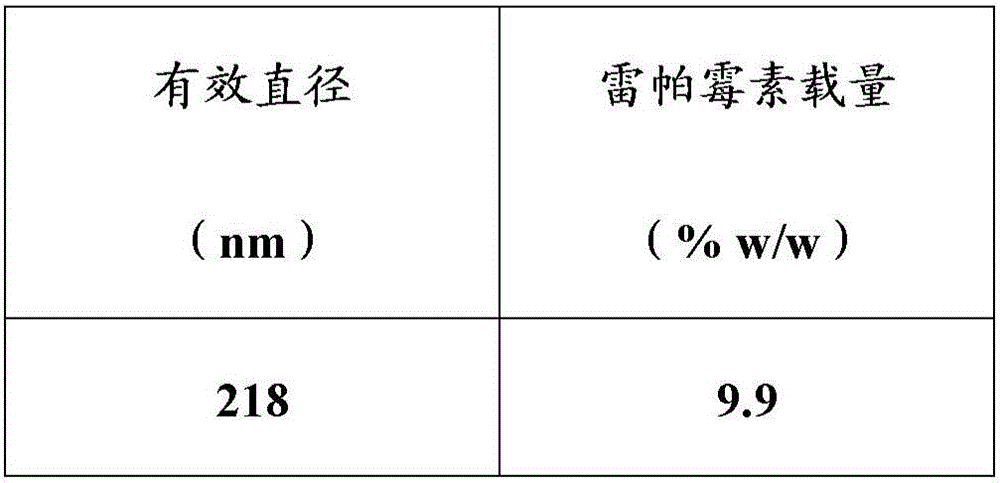
实施例2:包含聚合物-雷帕霉素缀合物的聚合物纳米载体(预示性的)Example 2: Polymer Nanocarriers Containing Polymer-Rapamycin Conjugates (Prognostic)
步骤1:制备PLGA-雷帕霉素缀合物:Step 1: Preparation of PLGA-rapamycin conjugate:
将具有酸端基的PLGA聚合物(7525 DLG1A,酸值0.46mmol/g,LakeshoreBiomaterials;5g,2.3mmol,1.0当量)溶解于30mL二氯甲烷(dichloromethane,DCM)中。添加N,N-二氯环己基碳二亚胺(1.2当量,2.8mmol,0.57g),之后添加雷帕霉素(1.0当量,2.3mmol,2.1g)和4-二甲基氨基吡啶(4-dimethylaminopyridine,DMAP)(2.0当量,4.6mmol,0.56g)。将混合物在室温下搅拌2天。然后,过滤混合物以除去不溶性二环己基脲。将滤液浓缩至体积为约10mL并添加至100mL异丙醇(isopropyl alcohol,IPA)以沉淀出PLGA-雷帕霉素缀合物。移出IPA层并随后用50mL IPA和50mL甲基叔丁基醚(methyl t-butyl ether,MTBE)洗涤聚合物。然后,将聚合物在35℃下真空干燥2天以得到作为白色固体的PLGA-雷帕霉素(约6.5g)。A PLGA polymer with acid end groups (7525 DLG1A, acid number 0.46 mmol/g, Lakeshore Biomaterials; 5 g, 2.3 mmol, 1.0 equiv) was dissolved in 30 mL of dichloromethane (DCM). N,N-Dichlorocyclohexylcarbodiimide (1.2 equiv, 2.8 mmol, 0.57 g) was added followed by rapamycin (1.0 equiv, 2.3 mmol, 2.1 g) and 4-dimethylaminopyridine (4 -dimethylaminopyridine, DMAP) (2.0 equiv, 4.6 mmol, 0.56 g). The mixture was stirred at room temperature for 2 days. Then, the mixture was filtered to remove insoluble dicyclohexylurea. The filtrate was concentrated to a volume of about 10 mL and added to 100 mL of isopropyl alcohol (IPA) to precipitate the PLGA-rapamycin conjugate. The IPA layer was removed and the polymer was then washed with 50 mL of IPA and 50 mL of methyl t-butyl ether (MTBE). Then, the polymer was vacuum dried at 35°C for 2 days to obtain PLGA-rapamycin (about 6.5 g) as a white solid.
步骤2:根据实施例1中所述的操作如下制备包含PLGA-雷帕霉素的纳米载体:Step 2: Nanocarriers comprising PLGA-rapamycin were prepared according to the procedure described in Example 1 as follows:
如下制备用于纳米载体形成的溶液:Solutions for nanocarrier formation were prepared as follows:
溶液1:二氯甲烷中的100mg/mL PLGA-雷帕霉素。该溶液通过将PLGA-雷帕霉素溶解于纯二氯甲烷中制备。溶液2:二氯甲烷中的100mg/mL PLA-PEG。该溶液通过将PLA-PEG溶解于纯二氯甲烷中制备。溶液3:100mM pH 8磷酸盐缓冲液中的50mg/mL聚乙烯醇。Solution 1: 100 mg/mL PLGA-rapamycin in dichloromethane. This solution was prepared by dissolving PLGA-rapamycin in pure dichloromethane. Solution 2: 100 mg/mL PLA-PEG in dichloromethane. This solution was prepared by dissolving PLA-PEG in pure dichloromethane. Solution 3: 50 mg/mL polyvinyl alcohol in 100 mM pH 8 phosphate buffer.
首先制备初级的油包水乳剂。如下制备W1/O1:将溶液1(0.75mL)和溶液2(0.25mL)合并在小压力管中并使用Branson Digital Sonifier 250以50%振幅进行超声处理40秒。然后,如下制备次级乳剂(W1/O1/W2):将溶液3(3.0mL)与初级W1/O1乳剂组合,涡旋10秒并使用Branson Digital Sonifier 250以30%振幅进行超声处理60秒。然后,将W1/O1/W2乳剂添加至含有70mM pH 8磷酸盐缓冲溶液(30mL)的烧杯并在室温下搅拌2小时以使二氯甲烷蒸发并形成纳米载体。将一部分的纳米载体经如下洗涤:将纳米载体混悬液转移至离心管并在75,600×g和4℃下离心35分钟,除去上清液并将沉淀物重悬于磷酸缓冲盐水中。重复洗涤操作并将沉淀物重悬于磷酸缓冲盐水中以获得约10mg/mL的最终纳米载体分散体。A primary water-in-oil emulsion is first prepared. W1/O1 was prepared as follows: Solution 1 (0.75 mL) and Solution 2 (0.25 mL) were combined in a small pressure tube and sonicated using a Branson Digital Sonifier 250 at 50% amplitude for 40 seconds. The secondary emulsion (W1/O1/W2) was then prepared as follows: Solution 3 (3.0 mL) was combined with the primary W1/O1 emulsion, vortexed for 10 seconds and sonicated using a Branson Digital Sonifier 250 at 30% amplitude for 60 seconds. Then, the W1/O1/W2 emulsion was added to a beaker containing 70 mM pH 8 phosphate buffer solution (30 mL) and stirred at room temperature for 2 hours to evaporate the dichloromethane and form the nanocarriers. A portion of the nanocarriers were washed by transferring the nanocarrier suspension to a centrifuge tube and centrifuging at 75,600 xg and 4°C for 35 minutes, removing the supernatant and resuspending the pellet in phosphate buffered saline. The washing procedure was repeated and the pellet was resuspended in phosphate buffered saline to obtain a final nanocarrier dispersion of approximately 10 mg/mL.
实施例3:制备包含雷帕霉素的金纳米载体(AuNC)(预示性的)Example 3: Preparation of Rapamycin-Containing Gold Nanocarriers (AuNCs) (Prognostic)
步骤1.制备HS-PEG-雷帕霉素:
将PEG酸二硫化物(1.0当量)、雷帕霉素(2.0至2.5当量)、DCC(2.5当量)和DMAP(3.0当量)在无水DMF中的溶液在室温下搅拌过夜。通过过滤除去不溶性二环己基脲并将滤液添加至异丙醇(IPA)以沉淀出PEG-二硫化物-二-雷帕霉素酯,用IPA洗涤并干燥。然后,用DMF中的三(2-羧基乙基)膦盐酸盐处理聚合物以将PEG二硫化物还原成巯基PEG雷帕霉素酯(HS-PEG-雷帕霉素)。通过从IPA中沉淀出回收所得聚合物,如前所述进行干燥并通过H NMR和GPC分析。A solution of PEG acid disulfide (1.0 equiv), rapamycin (2.0 to 2.5 equiv), DCC (2.5 equiv) and DMAP (3.0 equiv) in dry DMF was stirred at room temperature overnight. Insoluble dicyclohexylurea was removed by filtration and the filtrate was added to isopropanol (IPA) to precipitate the PEG-disulfide-bis-rapamycin ester, washed with IPA and dried. The polymer was then treated with tris(2-carboxyethyl)phosphine hydrochloride in DMF to reduce the PEG disulfide to mercaptoPEG rapamycin ester (HS-PEG-rapamycin). The resulting polymer was recovered by precipitation from IPA, dried and analyzed by H NMR and GPC as previously described.
步骤2.金NC(AuNC)的形成:
在剧烈搅拌下,将500mL 1mM HAuCl4的水溶液在装备有冷凝器的1L圆底瓶中加热回流10分钟。然后,向搅拌中的溶液迅速添加50mL40mM柠檬酸三钠的溶液。将所得的深酒红色溶液在回流下保持25至30分钟并输出热量,将溶液冷却至室温。然后,通过0.8μm膜过滤器过滤溶液以得到AuNC溶液。使用可见光谱和透射电子显微术对AuNC进行表征。经柠檬酸盐包被的AuNC的直径为约20nm,并且在520nm下具有峰吸光度。With vigorous stirring, 500 mL of 1 mM HAuCl4 in water was heated to reflux in a 1 L round bottom flask equipped with a condenser for 10 minutes. Then, 50 mL of a solution of 40 mM trisodium citrate was rapidly added to the stirring solution. The resulting dark wine red solution was held at reflux for 25 to 30 minutes with exothermic heat and the solution was cooled to room temperature. Then, the solution was filtered through a 0.8 μm membrane filter to obtain AuNC solution. AuNCs were characterized using visible spectroscopy and transmission electron microscopy. The diameter of the citrate-coated AuNCs is about 20 nm and has a peak absorbance at 520 nm.
步骤3.具有HS-PEG-雷帕霉素的AuNC缀合物:Step 3. AuNC conjugate with HS-PEG-rapamycin:
向1mL直径为20nm的经柠檬酸盐包被金纳米载体(1.16nM)添加150μl HS-PEG-雷帕霉素(在10mM pH 9.0碳酸盐缓冲液中10μM)的溶液以产生巯基∶金为2500∶1的摩尔比。将混合物在氩气下在室温下搅拌1小时以使巯基与金纳米载体上的柠檬酸盐完全交换。然后,通过在12,000g下离心30分钟纯化表面上具有PEG-雷帕霉素的AuNC。将上清液倒出并随后用1x PBS缓冲液洗涤含有AuNC-S-PEG-雷帕霉素的沉淀物。然后,将经纯化的金-PEG-雷帕霉素纳米载体重悬于合适的缓冲液中以进行进一步的分析和生物测定。To 1 mL of 20 nm diameter citrate-coated gold nanocarriers (1.16 nM) was added a solution of 150 μl of HS-PEG-rapamycin (10 μM in 10 mM pH 9.0 carbonate buffer) to generate sulfhydryl:gold as 2500:1 molar ratio. The mixture was stirred at room temperature for 1 hour under argon to allow complete exchange of sulfhydryl groups with citrate on gold nanocarriers. Then, AuNCs with PEG-rapamycin on the surface were purified by centrifugation at 12,000 g for 30 minutes. The supernatant was decanted and the AuNC-S-PEG-rapamycin containing pellet was subsequently washed with 1x PBS buffer. The purified gold-PEG-rapamycin nanocarriers were then resuspended in appropriate buffers for further analysis and bioassays.
实施例4:经包封雷帕霉素对引发抗体应答的影响Example 4: Effect of encapsulated rapamycin on eliciting an antibody response
I.IgG的测量I. Measurement of IgG
一般如下测量IgG抗体的水平。使用PBS中的封闭剂酪蛋白(Thermo Fisher,目录#37528)作为稀释剂。使用PBS中的0.05%Tween-20作为洗涤缓冲液,其通过将10ml Tween-20((Sigma,目录#P9416-100mL)添加至2升10x PBS贮存液(PBS:
使用贮存液浓度为10mg/ml的钥孔林普贝血蓝蛋白(KLH)或贮存液浓度为5mg/ml的卵清蛋白(Ovalbumin,OVA)作为包被材料。将两种材料稀释至5μg/ml,并将其用作工作浓度。用100μl经稀释KLH或OVA/孔包被测定板的每个孔,将板用密封膜(VWR目录#60941-120)密封并在4℃下孵育过夜。使用Costar 901796孔平底板作为测定板(Costar 9017)。Keyhole Limpbe limpet hemocyanin (KLH) with a stock concentration of 10 mg/ml or ovalbumin (Ovalbumin, OVA) with a stock concentration of 5 mg/ml were used as coating materials. Both materials were diluted to 5 μg/ml and used as working concentration. Each well of the assay plate was coated with 100 μl of diluted KLH or OVA/well, the plate was sealed with sealing film (VWR catalog #60941-120) and incubated overnight at 4°C. A Costar 901 796-well flat bottom plate was used as the assay plate (Costar 9017).
使用低结合聚丙烯96孔板或管作为在转移至测定板之前在其中制备样品的制备板(set-up plate)。制备板不含任何抗原,因此在制备样品期间血清抗体不与该板结合。如果使用经抗原包被的板来制备样品,使用制备板进行样品制备以最小化在制备或用移液管吸移样品期间可发生的结合。在于制备板中制备样品之前,将孔用稀释剂覆盖以封闭任何非特异性结合,将板密封并在4℃下孵育过夜。A low binding polypropylene 96-well plate or tube was used as the set-up plate in which the samples were prepared prior to transfer to the assay plate. The preparative plate does not contain any antigen, so serum antibodies do not bind to the plate during sample preparation. If an antigen-coated plate is used to prepare the sample, use the preparation plate for sample preparation to minimize binding that can occur during preparation or pipetting of the sample. Before preparing samples in the preparation plate, the wells were covered with diluent to block any non-specific binding, the plate was sealed and incubated overnight at 4°C.
将测定板用洗涤缓冲液洗涤三次,并在最后一次洗涤之后完全吸出孔中的洗涤缓冲液。在洗涤之后,向测定板的每个孔添加300μl稀释剂以封闭非特异性结合并将板在室温下孵育至少2小时。在制备板的合适孔中以1∶40稀释血清样品。使用标准物作为阳性对照。对于KLH,以1μg/mL起始稀释物使用小鼠抗KLH IgG抗体,然后在整个板中稀释3倍。对于OVA,以0.5μg/mL起始稀释物使用小鼠抗OVA IgG抗体,然后在整个板中稀释3倍The assay plate was washed three times with wash buffer and the wash buffer in the wells was completely aspirated after the last wash. After washing, 300 μl of diluent was added to each well of the assay plate to block non-specific binding and the plate was incubated at room temperature for at least 2 hours. Serum samples were diluted 1:40 in appropriate wells of the preparation plate. Use standards as positive controls. For KLH, mouse anti-KLH IgG antibody was used at 1 μg/mL starting dilution, then diluted 3-fold throughout the plate. For OVA, use mouse anti-OVA IgG antibody at a starting dilution of 0.5 μg/mL, then dilute 3-fold throughout the plate
一旦在制备板中制备完所有的样品,将板密封并储存在4℃下,直至测定板的封闭完成。将测定板用洗涤缓冲液洗涤三次,并在最后一次洗涤之后完全吸出洗涤缓冲液。在洗涤之后,向测定板的柱2至柱12添加100μL稀释剂。使用移液管将样品从制备板转移至测定板。在转移之前通过将150μl经稀释的血清用移液管上下吸移3次来混合样品。在混合之后,将每份样品中的150μl从制备板转移并添加至各自的测定板。Once all samples were prepared in the preparation plate, the plate was sealed and stored at 4°C until the closure of the assay plate was complete. The assay plate was washed three times with wash buffer and the wash buffer was completely aspirated after the last wash. After washing, 100 μL of diluent was added to
一旦将每份样品的起始稀释物从制备板转移至测定板,如下在测定板上用移液管吸移连续稀释物:使用移液管取出每份血清样品中的50μl并将其与之前添加的100μl稀释剂混合。在整个板中重复该步骤。在用移液管吸移最后柱的稀释物之后,从最后柱的孔中取出50μl流体并弃掉,在测定板的每个孔中产生100μl的终体积。一旦在测定板中制备完样品稀释物,将板在室温下孵育至少2小时。Once the initial dilution of each sample has been transferred from the prep plate to the assay plate, pipette the serial dilutions on the assay plate as follows: use a pipette to remove 50 μl of each serum sample and mix it with the previous Add 100 μl of diluent to mix. Repeat this step throughout the plate. After pipetting the dilution of the last column, 50 [mu]l of fluid was removed from the wells of the last column and discarded, resulting in a final volume of 100 [mu]l in each well of the assay plate. Once sample dilutions have been prepared in assay plates, plates are incubated at room temperature for at least 2 hours.
在孵育之后,将板用洗涤缓冲液洗涤三次。在稀释剂中以1∶1500(0.33μg/mL)稀释检测抗体(山羊抗小鼠抗IgG,HRP缀合的)并向每个孔添加100μl经稀释的抗体。将板在室温下孵育1小时并随后用洗涤缓冲液洗涤5次,在最后一次洗涤之后完全吸出洗涤缓冲液。在洗涤之后,向孔添加检测底物。在即将添加至测定板之前,将等份的底物A和底物B(BDBiosciences TMB Substrate Reagent Set,目录#555214)合并,向每个孔添加100μl的经混合底物溶液并在暗处孵育10分钟。10分钟时间后,通过向每个孔添加50μl终止溶液(2NH2SO4)终止反应。在添加终止溶液之后,立即通过450nm下的板读数与570nm下的板读数相减评估孔的光密度(optical density,OD)。使用Molecular Device软件SoftMax Prov6.2.2进行数据分析。以稀释度为x轴(log刻度)并以OD值为y轴(线性刻度)制作四参数逻辑曲线拟合图(logistic vurve-fit graph),并确定每份样品的半最大值(EC50)。调整布局顶部的板模板以反映每份样品的稀释度(1/排)。After incubation, the plates were washed three times with wash buffer. The detection antibody (goat anti-mouse anti-IgG, HRP conjugated) was diluted 1:1500 (0.33 μg/mL) in diluent and 100 μl of the diluted antibody was added to each well. Plates were incubated for 1 hour at room temperature and then washed 5 times with wash buffer, which was completely aspirated after the last wash. After washing, detection substrate is added to the wells. Immediately before adding to the assay plate, combine aliquots of Substrate A and Substrate B (BDBiosciences TMB Substrate Reagent Set, catalog #555214), add 100 μl of the mixed substrate solution to each well and incubate in the dark for 10 minute. After a 10 minute period, the reaction was stopped by adding 50 [mu]l of stop solution (2NH2SO4) to each well. Immediately after addition of the stop solution, the optical density (OD) of the wells was assessed by subtracting the plate reading at 450 nm from the plate reading at 570 nm. Data analysis was performed using Molecular Device software SoftMax Prov6.2.2. A four-parameter logistic vurve-fit graph was made with dilution on the x-axis (log scale) and OD value on the y-axis (linear scale) and the half maximum (EC50) was determined for each sample. The plate template at the top of the layout was adjusted to reflect the dilution of each sample (1/row).
II.制备颗粒卵清蛋白(Particulate Ovalbumin Protein,pOVA)II. Preparation of Particulate Ovalbumin Protein (pOVA)
材料Material
鸡卵卵清蛋白(OVA)购自Worthington Biochemical Corporation(730 VassarAvenue,Lakewood,NJ 08701;产品代码LS003054)。磷酸缓冲盐水(Phosphate bufferedsaline,PBS)购自Mediatech(9345 Discovery Boulevard,Manassas,VA 20109;产品代码21-040-CV)。氢氧化钠(NaOH,产品代码367176)和三氟乙酸(trifluoroacetic acid,TFA;产品代码T62200)购自Sigma-Aldrich Corp.(3050 Spruce Street,St.Louis,MO 63103)。Chicken egg ovalbumin (OVA) was purchased from Worthington Biochemical Corporation (730 Vassar Avenue, Lakewood, NJ 08701; product code LS003054). Phosphate bufferedsaline (PBS) was purchased from Mediatech (9345 Discovery Boulevard, Manassas, VA 20109; product code 21-040-CV). Sodium hydroxide (NaOH, product code 367176) and trifluoroacetic acid (TFA; product code T62200) were purchased from Sigma-Aldrich Corp. (3050 Spruce Street, St. Louis, MO 63103).
方法method
如下制备溶液:Prepare the solution as follows:
溶液1:PBS中的15mg/mL OVA。该溶液通过将卵清蛋白直接溶解于PBS中制备。溶液2:水中的1M NaOH。该溶液通过将NaOH直接溶解于无内毒素的水中制备。Solution 1: 15 mg/mL OVA in PBS. This solution was prepared by directly dissolving ovalbumin in PBS. Solution 2: 1M NaOH in water. This solution was prepared by dissolving NaOH directly in endotoxin-free water.
通过重复升降卵清蛋白溶液的pH使OVA凝聚。将溶液1(10mL)添加至含有磁力搅拌棒的20-mL玻璃小瓶。在搅拌的同时,向瓶逐滴添加溶液2,直至溶液达到pH 12。然后,向小瓶逐滴添加TFA,直至溶液达到pH 2。将pH的这种升降再重复3次。然后,向小瓶逐滴添加溶液2,直至溶液达到pH 7。The OVA was coagulated by repeatedly raising and lowering the pH of the ovalbumin solution. Solution 1 (10 mL) was added to a 20-mL glass vial containing a magnetic stir bar. While stirring,
然后,通过高压均质化减小凝聚OVA颗粒的尺寸。将凝聚OVA混悬液上样到具有G10Z相互作用室的Microfluidics LV1中,并随后在20,000psi下使用3程进行均质化。将尺寸为190至240nm的所得颗粒OVA(pOVA)储存在-20C下。Then, the size of the agglomerated OVA particles is reduced by high pressure homogenization. The coagulated OVA suspension was loaded into a Microfluidics LV1 with a G10Z interaction chamber and then homogenized using 3 passes at 20,000 psi. The resulting particle OVA (pOVA) with a size of 190 to 240 nm was stored at -20C.
III.对经包封雷帕霉素对引发抗体应答的体内测试III. In vivo testing of encapsulated rapamycin for eliciting antibody responses
在第0、3和7天,使C57BL/6动物的组(n=5)保持未处理且未免疫(未免疫)、未处理但进行免疫(未处理)或者用来自实施例1之含雷帕霉素的纳米载体进行处理并进行免疫(Rapa-NC)。免疫由注射卵清蛋白的颗粒形式(pOVA)组成。注射发生在后肢内皮下。每次注射的颗粒剂量为100μg雷帕霉素的当量,在三次注射之后总共300μg。从第14天开始,使未经处理和经处理的动物(未处理和Rapa-NC)两周一次地接受以下免疫(第14、28和42天):在前肢内注射如上制备的10μg pOVA(每个30μl),并在尾根部内注射50μg钥孔林普贝血蓝蛋白(KLH,Sigma Aldrich)(每侧50μl)。在图1中的指定的日子对所有动物采血并通过ELISA确定抗OVA应答。On
数据证明,当在本文中提供的药效学有效持续期范围内在施用抗原前7天注射时,经包封的雷帕霉素有效地抑制抗OVA应答。The data demonstrate that encapsulated rapamycin effectively inhibits anti-OVA responses when injected 7 days prior to antigen administration within the pharmacodynamically effective durations provided herein.
实施例5:在经包封雷帕霉素存在下对T细胞活化的剂量依赖性抑制Example 5: Dose-dependent inhibition of T cell activation in the presence of encapsulated rapamycin
为了测试T细胞活化之雷帕霉素介导的抑制的剂量依赖性,以不同剂量对CD45.1+动物(B6.SJL)静脉内注射经包封的雷帕霉素(NP[Rapa],如实施例1中所公开的)(10至50μg雷帕霉素和一个PBS对照)。这些动物与C57BL/6小鼠具有相同的遗传背景,但表达CD45分子的不同同工型(CD45.1,而非CD45.2)。6天后,将通过磁性细胞分选(magnetic cellsorting,MACS;Miltenyi)从OTII小鼠品系的脾和淋巴结分离的T细胞过继转移到经CD45.1+-处理的动物中,所述T细胞表达CD45.2和识别来自在MHC CLII背景下存在的鸡卵清蛋白的肽(OVA323-339或OPII.323)的转基因TCR。还用CFSE(Invitrogen)标记这些细胞以追踪它们的增殖状态。次日(第7天),在后肢内向所有动物皮下注射免疫原性剂量的与TLR7/8激动剂R4848混合的OPII.323。在第11天,将所有动物处死,切除引流注射部位的淋巴结(腘)并通过流式细胞术分析细胞以鉴定经转移的CD45.2+TCRb+CD4+7AAD-T细胞(抗体来自Biolegend)。如图2中所示,注射低至20μg的雷帕霉素甚至在在本文中提供的药效学有效持续期范围内注射纳米载体后6天仍在这些T细胞的活化和存活方面具有抑制作用。提高雷帕霉素的给药产生降低的细胞数量和增殖。To test the dose-dependence of rapamycin-mediated inhibition of T-cell activation, CD45.1+ animals (B6.SJL) were injected intravenously with encapsulated rapamycin (NP[Rapa], as disclosed in Example 1) (10 to 50 μg rapamycin and one PBS control). These animals share the same genetic background as the C57BL/6 mice, but express a different isoform of the CD45 molecule (CD45.1 instead of CD45.2). After 6 days, T cells isolated by magnetic cell sorting (MACS; Miltenyi) from the spleen and lymph nodes of the OTII mouse strain were adoptively transferred into CD45.1+- treated animals, the T cells expressing CD45 .2 and transgenic TCRs that recognize peptides from chicken ovalbumin (OVA 323-339 or OPII.323) present in the context of MHC CLII. These cells were also labeled with CFSE (Invitrogen) to track their proliferative status. The following day (day 7), all animals were injected subcutaneously in the hindlimb with an immunogenic dose of OPII.323 mixed with the TLR7/8 agonist R4848. On
实施例6:使用可植入渗透泵的免疫抑制剂及对其体内致耐受性免疫应答的评价Example 6: Immunosuppressants using implantable osmotic pumps and their evaluation of tolerogenic immune responses in vivo (预示性的)(predictive)
步骤1:step 1:
将雷帕霉素溶解于由甲基亚砜(dimethyl sulfoxide,DMSO)/聚乙二醇400组成的载剂中并装载在

步骤2:Step 2:
在第0、3和7天,使C57BL/6动物的组(n=5)保持未处理且未免疫(无免疫)、未处理但进行免疫(未处理)或者用上述皮下植入在小鼠右侧下腹部内之雷帕霉素装载的渗透泵进行处理并进行免疫。免疫由注射卵清蛋白的颗粒形式(pOVA)组成。借助泵,以2.5mg/kg/天的剂量连续皮下施用雷帕霉素2天。每次注射的雷帕霉素剂量为100μg雷帕霉素的当量,在三次注射之后总共300μg。从第14天开始,使未经处理和经处理的动物(未处理和雷帕霉素装载的泵)两周一次地接受以下免疫(第14、28和42天):在前肢内注射100μg治疗性蛋白质,例如酸性α-葡糖苷酶,或组织纤溶酶原激活物,或红细胞生成素α,或Dorlixizumab,或利妥昔单抗。在第40天和第54天,对所有动物采血并通过ELISA确定抗蛋白质应答。预期,当在本文中提供的药效学有效持续期内注射时,经由植入的渗透泵施用的雷帕霉素有效地抑制抗蛋白质应答,并且预期这些作用甚至在用蛋白质引发并进行两次加强后仍是明显的。On
实施例7:使用可植入渗透泵的免疫抑制剂及对其体内致耐受性免疫应答的评价Example 7: Immunosuppressants using implantable osmotic pumps and their evaluation of tolerogenic immune responses in vivo (预示性的)(predictive)
步骤1:step 1:
将雷帕霉素(Rapa)在N,N-二甲基乙酰胺(N,N-dimethylacetamide,DMAC)中的贮存液(19mg/ml)储存在4℃下并保护防止暴露于光。为了获得基于大鼠体重的合适Rapa浓度,在10%Tween-80、20%DMAC和70%聚乙二醇400(polyethylene glycol 400,PEG400)的混合物中对贮存液进行稀释。将经适当稀释的Rapa装载到已通过在37℃下在无菌盐水中孵育而准备4至6小时的
步骤2:Step 2:
在第0、3和7天,使C57BL/6动物的组(n=5)保持未处理且未免疫(未免疫)、未处理但进行免疫(未处理)或者用上述雷帕霉素装载的渗透泵进行处理并进行免疫。免疫由注射卵清蛋白的颗粒形式(pOVA)组成。借助泵,以2.5mg/kg/天的剂量通过静脉内输注施用雷帕霉素2天。每次输注的雷帕霉素剂量为100μg雷帕霉素的当量,在三次输注之后总共300μg。从第14天开始,使未经处理和经处理的动物(未处理和雷帕霉素装载的泵)两周一次地接受50至100μg治疗性多核苷酸如哌加他尼(Pegaptanib)、米泊美生(Mipomersen)、经修饰信使RNA(mmRNA)(例如de Fougerolles等的美国专利申请2013/0115272中公开的那些)的免疫(第14、28和42天)。On
在第40天和第54天,对所有动物采血并通过ELISA确定抗蛋白质应答。预期,当在本文中提供的药效学有效持续期内注射时,经由植入的渗透泵施用的雷帕霉素有效地抑制抗多核苷酸应答,并且预期这些作用甚至在用多核苷酸引发并进行两次加强后仍是明显的。On
实施例8:用于因子VIII蛋白的耐受诱导之使用化学交联的抗GITR抗体和针对抑Example 8: Use of chemically cross-linked anti-GITR antibodies and antibodies directed against inhibitory factor VIII proteins for tolerance induction 制性因子VIII的抗体的抗独特型抗体的双特异性抗体免疫抑制剂(预示性的)Anti-idiotype Antibody Bispecific Antibody Immunosuppressant (Prognostic)
步骤1:制备双特异性抗体Step 1: Preparation of Bispecific Antibodies
使用ImmunoPure F(ab’)2制备试剂盒(Pierce)根据生产商的说明书制备抗GITR抗体(例如依帕珠单抗)和针对抑制性因子VIII抗体的抗独特型抗体(根据美国专利8071094制备)的F(ab’)2片段。将含有F(ab’)2的级分合并,并使用10,000MWCO离心过滤器(Millipore)进行浓缩。通过在30℃下添加2-巯基乙醇直至20mM的终浓度20至40分钟来将每个F(ab’)2还原成F(ab)-硫醇。将样品在冰上冷却并随后通过在50mM乙酸钠/0.5mM EDTApH 5.3中平衡的经冷却Sephadex G25柱。将含蛋白质的级分合并。然后,通过添加1/2体积经预冷却的12mM交联剂,邻亚苯基二马来酰亚胺(o-phenylenedimaleimide,o-PDM)(溶解于DMF中)在冰浴中使抗GITR Fab-硫醇马来酰亚胺化30分钟。然后,使抗GITR-马来酰亚胺化-Fab通过在50mM乙酸钠/0.5mM EDTA pH 5.3中平衡的经冷却Sephadex G25柱。将含蛋白质的级分合并,并立即以1∶1的摩尔比添加至针对抑制性因子VIII抗体-硫醇-Fab的抗独特型抗体。将反应置于氮气下并在4℃下缓慢搅拌15至20小时。使用1M Tris-HCl pH 8.0将pH调节至pH 8.0,之后添加2-巯基乙醇直至20mM的终浓度。将反应在30℃下孵育20至40分钟,然后通过添加碘乙酰胺直至25mM的终浓度进行烷基化。然后,使混合物通过在PBS pH 7.4中平衡的Superdex 200柱,并收集级分。在非还原条件下,使各个级分在10%SDS-PAGE凝胶上运行并用考马斯亮蓝(Coomassie Brilliant Blue,Sigma)或Silver Snap II试剂盒(Pierce)染色。对双特异性抗体(抗GITR/针对抑制性因子VIII抗体的抗独特型抗体)进行鉴定,将其合并并储存以用作抑制剂(剂量:10μg/天)Anti-GITR antibodies (eg, epratizumab) and anti-idiotype antibodies to inhibitory Factor VIII antibodies (prepared according to US Pat. No. 8,071,094) were prepared using the ImmunoPure F(ab') 2 Prep Kit (Pierce) according to the manufacturer's instructions. The F(ab') 2 fragment. Fractions containing F(ab') 2 were combined and concentrated using a 10,000 MWCO centrifugal filter (Millipore). Each F(ab') 2 was reduced to F(ab)-thiol by adding 2-mercaptoethanol to a final concentration of 20 mM for 20 to 40 minutes at 30°C. The samples were cooled on ice and then passed through a cooled Sephadex G25 column equilibrated in 50 mM sodium acetate/0.5 mM EDTA pH 5.3. The protein containing fractions were pooled. Anti-GITR Fab was then denatured in an ice bath by adding 1/2 volume of pre-cooled 12 mM cross-linker, o-phenylenedimaleimide (o-PDM) (dissolved in DMF) - Thiol maleimidization for 30 minutes. The anti-GITR-maleimidated-Fab was then passed through a cooled Sephadex G25 column equilibrated in 50 mM sodium acetate/0.5 mM EDTA pH 5.3. The protein-containing fractions were pooled and immediately added to the anti-idiotype antibody to the inhibitory Factor VIII antibody-thiol-Fab in a 1:1 molar ratio. The reaction was placed under nitrogen and stirred slowly at 4°C for 15 to 20 hours. The pH was adjusted to pH 8.0 using 1 M Tris-HCl pH 8.0, followed by the addition of 2-mercaptoethanol to a final concentration of 20 mM. Reactions were incubated at 30°C for 20 to 40 minutes and then alkylated by addition of iodoacetamide to a final concentration of 25 mM. The mixture was then passed through a Superdex 200 column equilibrated in PBS pH 7.4 and the fractions collected. Fractions were run on 10% SDS-PAGE gels and stained with Coomassie Brilliant Blue (Sigma) or Silver Snap II kit (Pierce) under non-reducing conditions. Bispecific antibodies (anti-GITR/anti-idiotype to inhibitory factor VIII antibodies) were identified, pooled and stored for use as inhibitors (dose: 10 μg/day)
步骤2:因子VIII的耐受诱导Step 2: Tolerance induction of factor VIII
在第0、3和7天,使C57BL/6动物的组(n=5)保持未处理且未免疫(未免疫)、未处理但进行免疫(未处理)或者以10μg/天用上述双特异性抗体进行处理并进行免疫。免疫由注射卵清蛋白的颗粒形式(pOVA)组成。从第14天开始,使未经处理和经处理的动物(未处理和双特异性抗体处理)两周一次地接受150IU/kg重组人抗血友病因子VIII(因子VIII)的免疫(第14、28和42天)。On
在第40天和第54天,对所有动物采血并通过ELISA确定抗蛋白质应答。预期,当在本文中提供的药效学有效持续期内注射时,双特异性抗体(抗GITR/针对抑制性因子VIII抗体的抗独特型抗体)有效地抑制抗因子VIII应答,并且预期这些作用甚至在用因子VIII蛋白引发并进行两次加强后仍是明显的。On
实施例9:使用可植入聚合物储库材料的免疫抑制剂及对其体内致耐受性免疫的Example 9: Immunosuppressive and Tolerogenic Immunity Using Implantable Polymer Depot Materials 评价(预示性的)evaluation (predictive)
步骤1:凝胶载体的制备Step 1: Preparation of the gel carrier
在Mettler PJ3000顶部装载式天平上量取玻璃容器的皮重。将聚(D,L-丙交酯-乙交酯)共聚物50∶50 RESOMER.RTM.RG502(PLGA-502)称重到玻璃容器中。量取含有PLGA-502的玻璃容器的皮重并添加对应的溶剂(如表2中所示)。多种聚合物/溶剂组合之以百分比表示的量示于下文的表1中。用不锈钢方尖铲人工搅拌聚合物/溶剂混合物,产生含有白色聚合物颗粒的粘性琥珀色糊剂样物质。将含有聚合物/溶剂混合物的容器密封并置于平衡至39℃的控温培养箱中。当聚合物/溶剂混合物似乎变成透明的琥珀色均质凝胶时,将其从培养箱中取出。基于溶剂和聚合物的类型以及溶剂和聚合物的比例,孵育时间间隔的范围可以为1天至4天。用以下聚合物制备另外的储库凝胶载剂:聚(D,L-丙交酯-乙交酯)共聚物50∶50 RESOMER.RTM.L104,PLGA-L104,代码号33007,聚(D,L-丙交酯-乙交酯)共聚物50∶50RESOMER.RTM.RG206,PLGA-206,代码号8815,聚(D,L-丙交酯-乙交酯)共聚物50∶50RESOMER.RTM.RG502,PLGA-502,代码0000366,聚(D,L-丙交酯-乙交酯)共聚物50∶50RESOMER.RTM.RG502H,PLGA-502H,代码号260187,聚(D,L-丙交酯-乙交酯)共聚物50∶50RESOMER.RTM.RG503,PLGA-503,代码号0080765,聚(D,L-丙交酯-乙交酯)共聚物50∶50RESOMER.RTM.RG506,PLGA-506,代码号95051,聚(D,L-丙交酯-乙交酯)共聚物50∶50RESOMER.RTM.RG755,PLGA-755,代码号95037,(Boehringer Ingelheim Chemicals,Inc.,Petersburg,Va.),及以下溶剂或混合物:三乙酸甘油酯(Eastman Chemical Co.,Kingsport,Tenn.)、苯甲酸苄酯(benzyl benzoate,“BB”)、苯甲酸乙酯(ethyl benzoate,“EB”)、苯甲酸甲酯(methyl benzoate,“MB”)、三醋精(triacetin,“TA”)和柠檬酸三乙酯(triethyl citrate,“TC”)(Aldrich Chemical Co.,St Louis,Mo.)。当使用溶剂组合(例如20%三醋精和80%苯甲酸苄酯)时,将溶剂混合物直接添加至经预称重的干聚合物。典型的聚合物分子量为14,400(Mw)至39,700(Mw)[6,400(Mn)至12,200(Mn)]。代表性的凝胶载剂在下文的表1中进行了描述。The glass container was tared on a Mettler PJ3000 top loading balance. Poly(D,L-lactide-glycolide) copolymer 50:50 RESOMER.RTM.RG502 (PLGA-502) was weighed into a glass container. The glass container containing PLGA-502 was tared and the corresponding solvent was added (as shown in Table 2). The amounts in percent for the various polymer/solvent combinations are shown in Table 1 below. Manual stirring of the polymer/solvent mixture with a stainless steel obelisk resulted in a sticky amber paste-like mass containing white polymer particles. The vessel containing the polymer/solvent mixture was sealed and placed in a temperature-controlled incubator equilibrated to 39°C. When the polymer/solvent mixture appears to turn into a clear amber homogeneous gel, remove it from the incubator. The incubation time interval can range from 1 day to 4 days based on the type of solvent and polymer and the ratio of solvent and polymer. Additional depot gel carriers were prepared with the following polymers: Poly(D,L-lactide-glycolide) copolymer 50:50 RESOMER.RTM.L104, PLGA-L104, Code No. 33007, Poly(D) , L-lactide-glycolide) copolymer 50:50RESOMER.RTM.RG206, PLGA-206, code number 8815, poly(D, L-lactide-glycolide) copolymer 50:50RESOMER.RTM .RG502, PLGA-502, code 0000366, poly(D,L-lactide-glycolide) copolymer 50:50 RESOMER.RTM.RG502H, PLGA-502H, code number 260187, poly(D,L-lactide) Ester-glycolide) copolymer 50:50RESOMER.RTM.RG503, PLGA-503, code number 0080765, poly(D,L-lactide-glycolide) copolymer 50:50RESOMER.RTM.RG506, PLGA- 506, Code No. 95051, Poly(D,L-lactide-glycolide) copolymer 50:50 RESOMER.RTM.RG755, PLGA-755, Code No. 95037, (Boehringer Ingelheim Chemicals, Inc., Petersburg, Va. ), and the following solvents or mixtures: triacetin (Eastman Chemical Co., Kingsport, Tenn.), benzyl benzoate ("BB"), ethyl benzoate ("EB"), Methyl benzoate ("MB"), triacetin ("TA"), and triethyl citrate ("TC") (Aldrich Chemical Co., St Louis, Mo.). When a solvent combination (eg, 20% triacetin and 80% benzyl benzoate) is used, the solvent mixture is added directly to the pre-weighed dry polymer. Typical polymer molecular weights range from 14,400 (M w ) to 39,700 (M w ) [6,400 (M n ) to 12,200 (M n )]. Representative gel vehicles are described in Table 1 below.
表1:凝胶载剂Table 1: Gel Vehicles

表2:免疫抑制剂Table 2: Immunosuppressants
阿托伐他汀Atorvastatin
雷帕霉素rapamycin
C16-(S)-丁基磺酰氨基雷帕霉素(C16-Bsrap)C16-(S)-Butylsulfonamidorapamycin (C16-Bsrap)
替西罗莫司temsirolimus
活化素AActivin A
苍术苷(二钾盐)Atractylodes (dipotassium salt)
2-(1,8-萘啶-2-基)-苯酚2-(1,8-Naphthyridin-2-yl)-phenol
E-前列腺素类2E-Prostaglandins 2
茶碱Theophylline
硼替佐米Bortezomib
伊马替尼
甲泼尼龙methylprednisolone
维A酸(视黄酸,
环孢素Acyclosporine A
匹格列酮pioglitazone
吡美莫司pimecrolimus
斑蝥素Cantharidin
将根据上文表2(10%w/w至20%w/w)的多种免疫抑制剂添加至指定的透明琥珀色储库凝胶载剂,并人工混合直至干粉末完全湿润。然后,使用具有连接的方尖金属铲的Caframo机械搅拌器通过常规混合来使混合彻底共混。将最终的均质凝胶免疫抑制剂可植入聚合物储库材料转移至3、10或30cc的一次性注射器以用于储存或分配。Various immunosuppressants according to Table 2 above (10% w/w to 20% w/w) were added to the indicated clear amber reservoir gel vehicle and mixed by hand until the dry powder was completely wet. The mix was then thoroughly blended by conventional mixing using a Caframo mechanical stirrer with an attached metal spatula. Transfer the final homogeneous gel immunosuppressive implantable polymer reservoir material to a 3, 10 or 30 cc single-use syringe for storage or dispensing.
步骤2:评价体内致耐受性免疫应答Step 2: Assess the tolerogenic immune response in vivo
在第0、3和7天,使C57BL/6动物的组(n=5)保持未处理且未免疫(无免疫)、未处理但进行免疫(未处理)或者用上述含有100μg雷帕霉素的可植入聚合物储库材料进行处理并进行免疫。免疫由注射颗粒卵清蛋白(pOVA)组成。将聚合物储库-雷帕霉素植入在后肢内。聚合物储库-雷帕霉素的剂量为100μg雷帕霉素的当量,在三次处理之后总共300μg。从第14天开始,使未经处理和经处理的动物(未处理和Rapa-储库)两周一次地接受以下免疫(第14、28和42天):在前肢内注射2mg/kg治疗性蛋白质,例如重组组织纤溶酶原激活物(recombinant tissue plasminogen activator,rtPA)。在指定的日子对所有动物采血并通过ELISA确定抗rtPA应答。预期,当在本文中提供的药效学有效持续期内注射时,含雷帕霉素的凝胶植入物有效地抑制抗rtPA应答,并且预期这些作用甚至在用rtPA引发并进行两次加强后仍是明显的。On
实施例10:在与合成纳米载体连接的雷帕霉素的药效学有效持续期内的施用Example 10: Administration over the duration of pharmacodynamically effective duration of rapamycin linked to synthetic nanocarriers
材料Material
雷帕霉素购自TSZ CHEM(185 Wilson Street,Framingham,MA 01702;产品代码R1017)。丙交酯∶乙交酯之比为3∶1并且特性黏度为0.69dL/g的PLGA购自SurModicsPharmaceuticals(756 Tom Martin Drive,Birmingham,AL 35211;产品代码7525 DLG7A)。甲基醚封端的PEG嵌段为约5,000Da并且整体特性黏度为0.5DL/g的PLA-PEG-OMe嵌段共聚物购自Lakeshore Biochemicals(756 Tom Martin Drive,Birmingham,AL 35211;产品代码100 DL mPEG 5000 5CE)。
方法method
如下制备溶液:Prepare the solution as follows:
溶液1:二氯甲烷中的75mg/mL PLGA、25mg/mL PLA-PEG-OMe和12.5mg/mL的雷帕霉素。该溶液通过将PLGA、PLA-PEG-OMe和雷帕霉素溶解于纯二氯甲烷中制备。溶液2:100mMpH 8磷酸盐缓冲液中的50mg/mL聚乙烯醇。Solution 1: 75 mg/mL PLGA, 25 mg/mL PLA-PEG-OMe, and 12.5 mg/mL rapamycin in dichloromethane. This solution was prepared by dissolving PLGA, PLA-PEG-OMe and rapamycin in pure dichloromethane. Solution 2: 50 mg/mL polyvinyl alcohol in 100 mM pH 8 phosphate buffer.
使用水包油型乳剂制备纳米载体。如下制备O/W乳剂:将溶液1(1.0mL)和溶液2(3.0mL)合并在小压力管中并使用Branson Digital Sonifier 250以30%振幅进行超声处理60秒。将O/W乳剂添加至含有70mM pH 8磷酸盐缓冲溶液的烧杯。形成三份相同的乳剂并添加至与第一乳剂相同的烧杯。然后,将这些乳剂在室温下搅拌2小时以使二氯甲烷蒸发并形成纳米载体。将一部分的纳米载体经如下洗涤:将纳米载体混悬液转移至离心管并在75,600×g和4℃下离心35分钟,除去上清液并将沉淀物重悬于磷酸缓冲盐水中。重复洗涤操作并将沉淀物重悬于磷酸缓冲盐水中以获得约10mg/mL的最终纳米载体分散体。来自Pall型号4656的1.2μm PES膜注射器式过滤器过滤经洗涤的纳米载体溶液。Nanocarriers were prepared using oil-in-water emulsions. O/W emulsions were prepared as follows: Solution 1 (1.0 mL) and Solution 2 (3.0 mL) were combined in a small pressure tube and sonicated using a Branson Digital Sonifier 250 at 30% amplitude for 60 seconds. The O/W emulsion was added to a beaker containing 70 mM pH 8 phosphate buffered solution. Three identical emulsions were formed and added to the same beaker as the first emulsion. These emulsions were then stirred at room temperature for 2 hours to evaporate the dichloromethane and form the nanocarriers. A portion of the nanocarriers were washed by transferring the nanocarrier suspension to a centrifuge tube and centrifuging at 75,600 xg and 4°C for 35 minutes, removing the supernatant and resuspending the pellet in phosphate buffered saline. The washing procedure was repeated and the pellet was resuspended in phosphate buffered saline to obtain a final nanocarrier dispersion of approximately 10 mg/mL. The washed nanocarrier solution was filtered through a 1.2 μm PES membrane syringe filter from Pall model 4656.
通过动态光散射确定纳米载体的尺寸。通过HPLC分析确定纳米载体中雷帕霉素的量。通过重量法确定总干纳米载体质量/mL混悬液。The size of the nanocarriers was determined by dynamic light scattering. The amount of rapamycin in the nanocarriers was determined by HPLC analysis. The total dry nanocarrier mass per mL of suspension was determined gravimetrically.


确定雷帕霉素装载的纳米载体的免疫抑制窗(药效学有效持续期)Determination of the immunosuppressive window (duration of pharmacodynamic efficacy) of rapamycin-loaded nanocarriers
从在注射钥孔林普贝血蓝蛋白(d0,200μg,KLH)的当天前14、10、7、4、2和1天(分别为d-14、-10、-7、-4、-2和-1)开始,在不同时间点(如图3中所示)在尾静脉内向C57BL/6年龄匹配(5至6周)的雌性静脉内注射0.9mg纳米载体。在第0、7和14天,使所有动物每周接受KLH的注射(200μg,KLH)。在第19天,确定这些动物的血液中的抗体效价。From 14, 10, 7, 4, 2 and 1 days before the day of injection of keyhole limpet hemocyanin (d0, 200 μg, KLH) (d-14, -10, -7, -4, - 2 and -1), C57BL/6 age-matched (5 to 6 weeks) females were injected intravenously with 0.9 mg of nanocarriers in the tail vein at various time points (as shown in Figure 3). On
图3中的结果表明,甚至在免疫前14天注射含雷帕霉素的纳米载体就可改变针对KLH的抗体应答,并且致耐受性纳米载体提供了显著的免疫抑制窗,在该免疫抑制窗内免疫应答的引发被抑制。结果证明,能够在免疫抑制剂的药效学有效持续期内施用免疫抑制剂和抗原来降低抗原特异性免疫应答。The results in Figure 3 demonstrate that injection of rapamycin-containing nanocarriers even 14 days prior to immunization altered antibody responses against KLH, and that tolerogenic nanocarriers provided a significant window of immunosuppression at which The initiation of an immune response within the window is inhibited. The results demonstrate that the administration of the immunosuppressant and the antigen can reduce the antigen-specific immune response for the duration of the pharmacodynamic efficacy of the immunosuppressant.
实施例11:针对具有经包封雷帕霉素的鸡卵清蛋白的抗体特异性致耐受性应答Example 11: Antibody-specific tolerogenic responses against chicken ovalbumin with encapsulated rapamycin
NP[Rapa]材料和方法NP[Rapa] Materials and methods
材料Material
雷帕霉素购自TSZ CHEM(185 Wilson Street,Framingham,MA 01702),产品代码R1017。丙交酯∶乙交酯之比为1∶1并且特性黏度为0.24dL/g的PLGA购自LakeshoreBiomaterials(756 Tom Martin Drive,Birmingham,AL 35211),产品代码5050 DLG 2.5A。甲基醚封端的PEG嵌段为约5,000Da并且整体特性黏度为0.50DL/g的PLA-PEG-OMe嵌段共聚物购自Lakeshore Biomaterials(756 Tom Martin Drive,Birmingham,AL 35211),产品代码100 DL mPEG 5000 5CE。
方法method
如下制备溶液:Prepare the solution as follows:
溶液1:聚合物和雷帕霉素混合物通过将75mg/mL PLGA、25mg/mL PLA-PEG-OMe和12.5mg/mL雷帕霉素溶解于二氯甲烷中制备。溶液2:在100mM pH 8磷酸盐缓冲液中以50mg/mL制备聚乙烯醇。Solution 1: Polymer and rapamycin mixture was prepared by dissolving 75 mg/mL PLGA, 25 mg/mL PLA-PEG-OMe and 12.5 mg/mL rapamycin in dichloromethane. Solution 2: Prepare polyvinyl alcohol at 50 mg/mL in 100 mM pH 8 phosphate buffer.
如下制备O/W乳剂:将溶液1(1.0mL)和溶液2(3.0mL)合并在小玻璃压力管中并使用Branson Digital Sonifier 250以30%振幅进行超声处理60秒。将O/W乳剂添加至含有70mM pH 8磷酸盐缓冲溶液(60mL)的敞开烧杯。制备另外三份相同的O/W乳剂,并添加至与第一乳剂相同的烧杯。然后,将这些乳剂在室温下搅拌2小时以使二氯甲烷蒸发并形成纳米载体。将一部分的纳米载体经如下洗涤:将纳米载体混悬液转移至离心管并在75,600×g和4℃下离心35分钟,除去上清液并将沉淀物重悬于PBS 1X中。重复洗涤操作并将沉淀物重悬于PBS 1X中以获得基于聚合物的标称浓度为10mg/mL的纳米载体混悬液。在独立的烧杯中如上制备相同的配制物并在洗涤步骤之后与第一配制物合并。使用来自Pall型号4656的1.2μm PES膜注射器式过滤器过滤经混合的纳米载体溶液并将其储存在-20℃下。O/W emulsions were prepared as follows: Solution 1 (1.0 mL) and Solution 2 (3.0 mL) were combined in a small glass pressure tube and sonicated using a Branson Digital Sonifier 250 at 30% amplitude for 60 seconds. The O/W emulsion was added to an open beaker containing 70 mM pH 8 phosphate buffer solution (60 mL). Three other identical O/W emulsions were prepared and added to the same beaker as the first emulsion. These emulsions were then stirred at room temperature for 2 hours to evaporate the dichloromethane and form the nanocarriers. A portion of the nanocarriers were washed by transferring the nanocarrier suspension to a centrifuge tube and centrifuging at 75,600 xg and 4°C for 35 minutes, removing the supernatant and resuspending the pellet in PBS IX. The washing procedure was repeated and the pellet was resuspended in PBS IX to obtain a polymer-based nanocarrier suspension with a nominal concentration of 10 mg/mL. The same formulation was prepared as above in a separate beaker and combined with the first formulation after the washing step. The mixed nanocarrier solution was filtered using a 1.2 μm PES membrane syringe filter from Pall model 4656 and stored at -20°C.
通过动态光散射确定纳米载体的尺寸。通过HPLC分析确定纳米载体中雷帕霉素的量。通过重量法确定总干纳米载体质量/mL混悬液。The size of the nanocarriers was determined by dynamic light scattering. The amount of rapamycin in the nanocarriers was determined by HPLC analysis. The total dry nanocarrier mass per mL of suspension was determined gravimetrically.

NP[OVA]材料和方法NP[OVA] Materials and methods
材料Material
卵清蛋白购自Worthington Biochemical Corporation(730 Vassar Avenue,Lakewood,NJ 08701),产品代码LS003054)。具有54%丙交酯和46%乙交酯含量并且特性黏度为0.24dL/g的PLGA购自Lakeshore Biomaterials(756 Tom Martin Drive,Birmingham,AL 35211),产品代码5050 DLG 2.5A)。甲基醚封端的PEG嵌段为约5,000Da并且Mw为28,000Da,特性黏度为0.38dL/g的PLA-PEG嵌段共聚物购自Lakeshore Biomaterials(756 TomMartin Drive,Birmingham,AL 35211),产品代码100 DL mPEG 5000 4CE。
方法method
如下制备溶液:Prepare the solution as follows:
溶液1:在具有10重量%蔗糖的10mM磷酸盐缓冲液pH 8中制备50mg/mL卵清蛋白。溶液2:PLGA通过在化学通风橱中以100mg/1mL二氯甲烷溶解PLGA制备。溶液3:PLA-PEG-OMe通过在化学通风橱中以100mg/mL二氯甲烷溶解PLA-PEG-OMe制备。溶液4:100mM磷酸盐缓冲液,pH 8中的65mg/mL聚乙烯醇。Solution 1: Prepare 50 mg/mL ovalbumin in 10 mM phosphate buffer pH 8 with 10 wt% sucrose. Solution 2: PLGA was prepared by dissolving PLGA at 100 mg/1 mL dichloromethane in a chemical fume hood. Solution 3: PLA-PEG-OMe was prepared by dissolving PLA-PEG-OMe at 100 mg/mL dichloromethane in a chemical fume hood. Solution 4: 65 mg/mL polyvinyl alcohol in 100 mM phosphate buffer, pH 8.
首先,通过将溶液1至溶液3混合产生初级(W1/O)乳剂。将溶液1(0.2mL)、溶液2(0.75mL)和溶液3(0.25mL)合并在经在冰水浴中预冷却>4分钟的小玻璃压力管中并使用Branson Digital Sonifier 250在冰浴上以50%振幅进行超声处理40秒。然后,如下形成次级(W1/O/W2)乳剂:向初级乳剂添加溶液4(3mL),涡旋混合以产生乳状分散体并随后使用Branson Digital Sonifier 250在冰浴上以30%振幅进行超声处理60秒。将次级乳剂添加至含有PBS 1X(30mL)的50mL敞开烧杯。如上所述制备第二相同的双乳剂配制物并添加至与第一乳剂配制物相同的50mL烧杯。将两份制备物在室温下搅拌2小时以使二氯甲烷蒸发并混悬形成合成纳米载体。将一部分的混悬纳米载体经如下洗涤:将纳米载体混悬液转移至离心管,在75,600rcf下旋转50分钟,除去上清液并将沉淀物重悬于PBS 1X中。重复洗涤操作并将沉淀物重悬于PBS 1X中以获得基于聚合物的标称浓度为10mg/mL的纳米载体混悬液。将混悬液冷冻储存在-20℃下直至使用。First, a primary (W1/O) emulsion was created by mixing

NP[GSK1059615]材料和方法NP[GSK1059615] Materials and methods
材料Material
GSK1059615购自MedChem Express(11Deer Park Drive,Suite 102D MonmouthJunction,NJ 08852),产品代码HY-12036。丙交酯∶乙交酯之比为1∶1并且特性黏度为0.24dL/g的PLGA购自Lakeshore Biomaterials(756 Tom Martin Drive,Birmingham,AL35211),产品代码5050 DLG 2.5A。甲基醚封端的PEG嵌段为约5,000Da并且整体特性黏度为0.26DL/g的PLA-PEG-OMe嵌段共聚物购自Lakeshore Biomaterials(756 Tom MartinDrive,Birmingham,AL 35211;产品代码100DL mPEG 5000 5K-E)。Cellgro磷酸缓冲盐水IXpH 7.4(PBS 1X)购自Corning(9345 Discovery Blvd.Manassas,VA 20109),产品代码21-040-CV。GSK1059615 was purchased from MedChem Express (11 Deer Park Drive, Suite 102D Monmouth Junction, NJ 08852), product code HY-12036. PLGA with a lactide:glycolide ratio of 1:1 and an intrinsic viscosity of 0.24 dL/g was purchased from Lakeshore Biomaterials (756 Tom Martin Drive, Birmingham, AL 35211), product code 5050 DLG 2.5A. A PLA-PEG-OMe block copolymer with a methyl ether terminated PEG block of about 5,000 Da and an overall intrinsic viscosity of 0.26DL/g was purchased from Lakeshore Biomaterials (756 Tom Martin Drive, Birmingham, AL 35211; product code 100DL mPEG 5000 5K-E). Cellgro Phosphate Buffered Saline IX pH 7.4 (PBS 1X) was purchased from Corning (9345 Discovery Blvd. Manassas, VA 20109), product code 21-040-CV.
方法method
如下制备溶液:Prepare the solution as follows:
溶液1:将PLGA(125mg)和PLA-PEG-OMe(125mg)溶解于10mL丙酮中。溶液2:以1mLN-甲基-2-吡咯烷酮(NMP)中制备10mg GSK1059615。Solution 1: PLGA (125 mg) and PLA-PEG-OMe (125 mg) were dissolved in 10 mL of acetone. Solution 2: Prepare 10 mg of GSK1059615 in 1 mL of N-methyl-2-pyrrolidone (NMP).
如下制备纳米载体:将溶液1(4mL)和溶液2(0.25mL)合并在小玻璃压力管中并在搅拌下将混合物逐滴添加至含有20mL超纯化水的250mL圆底瓶。将该瓶安装在旋转式蒸发装置上,并在减压下除去丙酮。将一部分的纳米载体经如下洗涤:将纳米载体混悬液转移至离心管并在75,600rcf和4℃下离心50分钟,除去上清液并将沉淀物重悬于PBS 1X中。重复洗涤操作并将沉淀物重悬于PBS 1X中以获得基于聚合物的标称浓度为10mg/mL的纳米载体混悬液。然后,使用来自Pall,型号4656的1.2μm PES膜注射器式过滤器过滤经洗涤的纳米载体溶液。如上制备相同的纳米载体溶液并在过滤步骤之后与第一纳米载体溶液合并。将均质混悬液冷冻储存在-20℃下。Nanocarriers were prepared as follows: Solution 1 (4 mL) and Solution 2 (0.25 mL) were combined in a small glass pressure tube and the mixture was added dropwise with stirring to a 250 mL round bottom flask containing 20 mL of ultra-purified water. The bottle was mounted on a rotary evaporator and the acetone was removed under reduced pressure. A portion of the nanocarriers were washed by transferring the nanocarrier suspension to a centrifuge tube and centrifuging at 75,600 rcf and 4°C for 50 minutes, removing the supernatant and resuspending the pellet in PBS IX. The washing procedure was repeated and the pellet was resuspended in PBS IX to obtain a polymer-based nanocarrier suspension with a nominal concentration of 10 mg/mL. The washed nanocarrier solution was then filtered using a 1.2 μm PES membrane syringe filter from Pall, model 4656. The same nanocarrier solution was prepared as above and combined with the first nanocarrier solution after the filtration step. Homogeneous suspensions were stored frozen at -20°C.
通过动态光散射确定纳米载体的尺寸。通过351nm下的UV吸收确定纳米载体中GSK1059615的量。通过重量法确定总干纳米载体质量/mL混悬液。The size of the nanocarriers was determined by dynamic light scattering. The amount of GSK1059615 in the nanocarriers was determined by UV absorption at 351 nm. The total dry nanocarrier mass per mL of suspension was determined gravimetrically.

在第-21天和第-14天,在尾静脉内对C57BL/6年龄匹配(5至6周)的雌性小鼠静脉内注射盐水(未处理),与1.2mg含雷帕霉素之纳米载体(NP[Rapa])或8mg含GSK1059615之纳米载体(NP[GSK1059615])组合的1.1mg全卵清蛋白装载的纳米载体(NP[OVA])。On days -21 and -14, C57BL/6 age-matched (5 to 6 weeks) female mice were injected intravenously with saline (untreated) with 1.2 mg of rapamycin-containing nano Vehicle (NP[Rapa]) or 1.1 mg of whole ovalbumin-loaded nanocarriers (NP[OVA]) in combination with 8 mg of GSK1059615-containing nanocarriers (NP[GSK1059615]).
在第0天,在后肢内对所有动物皮下注射与2μgCpG混合的25μg颗粒OVA(pOVA),随后在第7天和第14天仅注射25μg pOVA。在第21天,测量抗体效价。在不存在任何处理的情况下,动物发生针对OVA的稳健免疫应答,其可通过抗OVA IgG抗体效价进行测量。图4中所示之第21天的抗体效价证明:在相同溶液(NP[OVA]+NP[Rapa]或NP[GSK1059615])中与经包封OVA伴随施用的合成致耐受性纳米载体的2个剂量甚至在单独注射1次OVA+CpG1次和注射2次OVA后有效地降低针对OVA的抗体形成。这些结果表明:经包封的免疫抑制剂(例如,雷帕霉素和GSK1059615)当与蛋白质伴随递送时可预防针对该蛋白质的抗体形成。All animals were injected subcutaneously in the hindlimb with 25 μg particulate OVA (pOVA) mixed with 2 μg CpG on
实施例12.使用合成纳米载体的施用药效学有效持续期(预示性的)Example 12. Administration Pharmacodynamic Duration of Effectiveness Using Synthetic Nanocarriers (Prognostic)
使用可溶性因子VIII和实施例1的合成纳米载体对非人灵长类动物对象进行试验性试验。将50个非人灵长类动物对象随机分成5组:安慰剂,以及针对剂量范围选择的4个合成纳米载体剂量水平。剂量范围是为了建立20小时至1个月的药效学有效持续期,其中一个优选的药效学有效持续期目标为1天。在第0天,向各个活动组中的所有对象皮下施用一定剂量的合成纳米载体,并且在合成纳米载体剂量的24小时内输注标准输注剂量的因子VIII。两周后,用标准剂量的可溶性因子VIII攻击每个动物并使用标准ELISA技术测量抗因子VIII IgG抗体的水平。选择4个活动组中表现出抗因子VIII IgG抗体的显著降低的最低合成纳米载体剂量作为测试剂量。Experimental tests were performed on non-human primate subjects using soluble factor VIII and the synthetic nanocarriers of Example 1 . Fifty non-human primate subjects were randomized into 5 groups: placebo, and 4 synthetic nanocarrier dose levels selected for the dose range. Dosage ranges are designed to establish a pharmacodynamically effective duration of 20 hours to 1 month, with a preferred pharmacodynamically effective duration target of 1 day. On
然后,对合成纳米载体的测试剂量进行异速缩放以施用于人对象,并用于人临床试验中以确定与标准剂量之可溶性因子VIII一起使用的合成纳米载体的施用剂量水平的范围。然后,确定合成纳米载体和因子VIII的施用剂量以用于常规临床实践。Test doses of synthetic nanocarriers were then allometrically scaled for administration to human subjects and used in human clinical trials to determine a range of administered dose levels of synthetic nanocarriers for use with standard doses of soluble Factor VIII. Then, the administered doses of synthetic nanocarriers and factor VIII are determined for routine clinical practice.
实施例13.使用合成渗透泵的施用药效学有效持续期(预示性的)Example 13. Duration of Pharmacodynamic Effectiveness of Administration Using Synthetic Osmotic Pumps (Prognostic)
使用可溶性因子VIII和渗透泵(一般根据实施例6制备,但在实施例6中用GSKl059615替代雷帕霉素)对非人灵长类动物对象进行试验性试验。将50个非人灵长类动物对象随机分成5组:安慰剂,以及由渗透泵递送并针对剂量范围选择的4个GSK1059615剂量水平。剂量范围是为了建立20小时至1个月的药效学有效持续期,其中一个优选的药效学有效持续期目标为1天。在第0天,向各个活动组中的所有对象皮下施用一定剂量的合成纳米载体,并且在合成纳米载体剂量的24小时内输注标准输注剂量的因子VIII。两周后,用标准剂量的可溶性因子VIII攻击每个动物并使用标准ELISA技术测量抗因子VIII IgG抗体的水平。选择4个活动组中表现出抗因子VIII IgG抗体的显著降低的由渗透泵递送的最低GSK1059615剂量作为测试剂量。Experimental tests were performed on non-human primate subjects using soluble factor VIII and an osmotic pump (generally prepared according to Example 6, but GSK1059615 was used instead of rapamycin in Example 6). Fifty non-human primate subjects were randomized into 5 groups: placebo, and 4 dose levels of GSK1059615 delivered by osmotic pump and selected for a dose range. Dosage ranges are designed to establish a pharmacodynamically effective duration of 20 hours to 1 month, with a preferred pharmacodynamically effective duration target of 1 day. On
然后,对由渗透泵递送之GSK1059615的测试剂量进行异速缩放以施用于人对象,并用于人临床试验中以确定与标准剂量之可溶性因子VIII一起使用的由渗透泵递送之GSK1059615的施用剂量水平的范围。然后,确定由渗透泵递送的GSK1059615以及因子VIII的施用剂量以用于常规临床实践。The test doses of GSK1059615 delivered by osmotic pumps were then allometrically scaled for administration to human subjects and used in human clinical trials to determine the administered dose levels of GSK1059615 delivered by osmotic pumps for use with standard doses of soluble factor VIII range. The administered doses of GSK1059615 and Factor VIII delivered by osmotic pumps were then determined for routine clinical practice.
实施例14:使用治疗性多核苷酸的施用药效学有效持续期(预示性的)Example 14: Duration of Pharmacodynamic Effectiveness of Administration Using Therapeutic Polynucleotides (Prognostic)
使用编码天冬酰胺酶的mmRNA(一般根据de Fougerolles等的美国专利申请2013/0115272制备,(“mmRNA”))和实施例1的合成纳米载体对非人灵长类动物对象进行试验性试验。将50个非人灵长类对象随机分成5组:安慰剂,以及然后针对剂量范围选择的4个合成纳米载体剂量。剂量范围是为了建立20小时至1个月的药效学有效持续期,其中一个优选的药效学有效持续期目标为1天。在第0天,向各个活动组中的所有对象皮下施用所述剂量的合成纳米载体,并且在合成纳米载体剂量的24小时内输注标准输注剂量的因子VIII。两周后,用标准剂量的mmRNA攻击每个动物并使用标准ELISA技术测量抗mmRNA抗体的水平。选择4个活动组中表现出抗mmRNA抗体的显著降低的最低合成纳米载体剂量作为测试剂量。Experimental tests were performed on non-human primate subjects using mmRNA encoding asparaginase (generally prepared according to US Patent Application 2013/0115272 to de Fougerolles et al., ("mmRNA")) and the synthetic nanocarriers of Example 1. 50 non-human primate subjects were randomized into 5 groups: placebo, and then 4 synthetic nanocarrier doses selected for a dose range. Dosage ranges are designed to establish a pharmacodynamically effective duration of 20 hours to 1 month, with a preferred pharmacodynamically effective duration target of 1 day. On
然后,对合成纳米载体的测试剂量进行异速缩放以施用于人对象,并用于人临床试验中以确定与标准剂量水平之mmRNA一起使用的合成纳米载体的施用剂量范围。然后,确定合成纳米载体和mmRNA的施用剂量以用于常规临床实践。Test doses of synthetic nanocarriers were then allometrically scaled for administration to human subjects and used in human clinical trials to determine a range of administered doses of synthetic nanocarriers for use with standard dose levels of mmRNA. Then, the administered doses of synthetic nanocarriers and mmRNA are determined for routine clinical practice.
实施例15.使用纳米结晶免疫抑制剂的施用药效学有效持续期(预示性的)Example 15. Duration of Pharmacodynamic Effectiveness of Administration Using Nanocrystalline Immunosuppressants (Prognostic)
使用可溶性因子VIII和实施例1的合成纳米载体对非人灵长类动物对象进行试验性试验。将50个非人灵长类动物对象随机分成5组:安慰剂,以及然后针对剂量范围选择的4个纳米结晶雷帕霉素剂量水平。剂量范围是为了建立20小时至1个月的药效学有效持续期,其中一个优选的药效学有效持续期目标为1天。在第0天,向各个活动组中的所有对象皮下施用所述剂量的纳米结晶雷帕霉素,并且在结晶雷帕霉素剂量的24小时内输注标准输注剂量的因子VIII。两周后,用标准剂量的可溶性因子VIII攻击每个动物并使用标准ELISA技术测量抗因子VIII IgG抗体的水平。选择4个活动组中表现出抗因子VIII IgG抗体的显著降低的最低纳米结晶雷帕霉素剂量作为测试剂量。Experimental tests were performed on non-human primate subjects using soluble factor VIII and the synthetic nanocarriers of Example 1 . Fifty non-human primate subjects were randomized into 5 groups: placebo, and then 4 nanocrystalline rapamycin dose levels selected for a dose range. Dosage ranges are designed to establish a pharmacodynamically effective duration of 20 hours to 1 month, with a preferred pharmacodynamically effective duration target of 1 day. On
然后,对纳米结晶雷帕霉素的测试剂量进行异速缩放以施用于人对象,并用于人临床试验中以确定与标准剂量之可溶性因子VIII一起使用的纳米结晶雷帕霉素的施用剂量水平的范围。然后,确定纳米结晶雷帕霉素和因子VIII的施用剂量以用于常规临床实践。The test dose of nanocrystalline rapamycin was then allometrically scaled for administration to human subjects and used in human clinical trials to determine the administered dose level of nanocrystalline rapamycin for use with standard doses of soluble factor VIII range. The administered doses of nanocrystalline rapamycin and factor VIII were then determined for routine clinical practice.
实施例16:使用纳米结晶免疫抑制剂的施用药效学有效持续期(预示性的)Example 16: Duration of Pharmacodynamic Effectiveness of Administration Using Nanocrystalline Immunosuppressants (Prognostic)
使用编码天冬酰胺酶的mmRNA(一般根据de Fougerolles等的美国专利申请2013/0115272制备,(“mmRNA”))和纳米结晶雷帕霉素在非人灵长类动物对象中进行试验性试验。将50个非人灵长类对象随机分成5组:安慰剂,以及然后针对剂量范围选择的4个纳米结晶雷帕霉素剂量。剂量范围是为了建立20小时至1个月的药效学有效持续期,其中一个优选的药效学有效持续期目标为1天。在第0天,向各个活动组中的所有对象皮下施用一定剂量的纳米结晶雷帕霉素,并且在纳米结晶雷帕霉素剂量的24小时内输注标准输注剂量的因子VIII。两周后,用标准剂量的mmRNA攻击每个动物并使用标准ELISA技术测量抗mmRNA抗体的水平。选择4个活动组中表现出抗mmRNA抗体的显著降低的最低纳米结晶雷帕霉素剂量作为测试剂量。Experimental experiments were performed in non-human primate subjects using mmRNA encoding asparaginase (generally prepared according to US Patent Application 2013/0115272 to de Fougerolles et al., ("mmRNA")) and nanocrystalline rapamycin. 50 non-human primate subjects were randomized into 5 groups: placebo, and then 4 nanocrystalline rapamycin doses selected for a dose range. Dosage ranges are designed to establish a pharmacodynamically effective duration of 20 hours to 1 month, with a preferred pharmacodynamically effective duration target of 1 day. On
然后,对纳米结晶雷帕霉素的测试剂量进行异速缩放以施用于人对象,并用于人临床试验中以确定与标准剂量水平之mmRNA一起使用的纳米结晶雷帕霉素的施用剂量范围。然后,确定纳米结晶雷帕霉素和mmRNA的施用剂量以用于常规临床实践。The test doses of nanocrystalline rapamycin were then allometrically scaled for administration to human subjects and used in human clinical trials to determine a range of administered doses of nanocrystalline rapamycin for use with standard dose levels of mmRNA. Then, the administered doses of nanocrystalline rapamycin and mmRNA were determined for routine clinical practice.
本发明还涉及以下实施方案:The present invention also relates to the following embodiments:
1.一种方法,其包括:1. A method comprising:
以相对于治疗性大分子而言提供施用药效学有效持续期的施用剂量向第一类对象中的对象施用免疫抑制剂,所述药效学有效持续期的持续时间为最短20小时至最长1个月;以及The immunosuppressant is administered to a subject in the first category of subjects at an administration dose that provides a pharmacodynamically effective duration of administration relative to the therapeutic macromolecule, the duration of the pharmacodynamically effective duration ranging from a minimum of 20 hours to a maximum of 20 hours. 1 month longer; and
在所述免疫抑制剂的施用药效学有效持续期的持续时间内向所述对象施用所述治疗性大分子;administering the therapeutic macromolecule to the subject for the duration of the pharmacodynamically effective duration of administration of the immunosuppressive agent;
其中所述治疗性大分子与免疫抑制剂彼此未连接,并且所述治疗性大分子未与合成纳米载体连接。wherein the therapeutic macromolecule and the immunosuppressant are not linked to each other, and the therapeutic macromolecule is not linked to a synthetic nanocarrier.
2.实施方案1所述的方法,其中所述方法还包括:2. The method of
基于所述免疫抑制剂的测试剂量确定所述免疫抑制剂的施用剂量;Determine the administered dose of the immunosuppressant based on the tested dose of the immunosuppressant;
其中所述测试剂量具有相对于所述治疗性大分子的测试药效学有效持续期,所述药效学有效持续期的持续时间在第二类对象中为最短20小时至最长1个月。wherein the test dose has a tested pharmacodynamically effective duration relative to the therapeutic macromolecule, the duration of the pharmacodynamically effective duration is a minimum of 20 hours to a maximum of 1 month in the second category of subjects .
3.一种免疫抑制剂,其用于诱导针对治疗性大分子之耐受的方法,所述方法包括:(a)以足以引起药效学有效持续期的剂量向对象施用所述免疫抑制剂,所述药效学有效持续期的持续时间为20小时至1个月;以及(b)在所述药效学有效持续期的持续时间内向所述对象施用所述治疗性大分子,其中所述治疗性大分子与免疫抑制剂彼此未连接,并且所述治疗性大分子未与合成纳米载体连接。3. An immunosuppressant for use in inducing a method of tolerance to a therapeutic macromolecule, the method comprising: (a) administering the immunosuppressant to a subject at a dose sufficient to cause a pharmacodynamically effective duration , the duration of the pharmacodynamically effective duration is 20 hours to 1 month; and (b) the therapeutic macromolecule is administered to the subject during the duration of the pharmacodynamically effective duration, wherein the The therapeutic macromolecule and the immunosuppressant are not linked to each other, and the therapeutic macromolecule is not linked to the synthetic nanocarrier.
4.免疫抑制剂用于制备用于以下方法的药物的用途,所述方法包括:(a)以足以引起药效学有效持续期的剂量向对象施用所述免疫抑制剂,所述药效学有效持续期的持续时间为20小时至1个月;以及(b)在所述药效学有效持续期的持续时间内向所述对象施用治疗性大分子,其中所述治疗性大分子与所述免疫抑制剂彼此未连接,并且所述治疗性大分子未与合成纳米载体连接。4. Use of an immunosuppressant for the manufacture of a medicament for use in a method comprising: (a) administering the immunosuppressant to a subject in a dose sufficient to cause a pharmacodynamically effective duration, the pharmacodynamics and (b) administering to the subject a therapeutic macromolecule for the duration of the pharmacodynamically effective duration, wherein the therapeutic macromolecule is associated with the The immunosuppressants are not linked to each other, and the therapeutic macromolecules are not linked to the synthetic nanocarriers.
5.实施方案1或2所述的方法、实施方案3所述的免疫抑制剂或实施方案4所述的用途,其中所述免疫抑制剂包含含有与合成纳米载体连接的免疫抑制剂的合成纳米载体、可植入渗透泵、双特异性抗体或可植入聚合物储库材料。5. The method of
6.前述实施方案中任一项所述的方法、免疫抑制剂或用途,其中所述免疫抑制剂包含与合成纳米载体连接的免疫抑制剂。6. The method, immunosuppressant, or use of any of the preceding embodiments, wherein the immunosuppressive agent comprises an immunosuppressive agent linked to a synthetic nanocarrier.
7.前述实施方案中任一项所述的方法、免疫抑制剂或用途,其中所述合成纳米载体包含脂质纳米颗粒、聚合物纳米颗粒、金属纳米颗粒、基于表面活性剂的乳剂、树状聚体、巴基球、纳米线、病毒样颗粒、蛋白质颗粒或包含纳米材料之组合的纳米颗粒,任选地,其中所述纳米颗粒为脂质-聚合物纳米颗粒。7. The method, immunosuppressant, or use of any one of the preceding embodiments, wherein the synthetic nanocarrier comprises lipid nanoparticles, polymer nanoparticles, metal nanoparticles, surfactant-based emulsions, dendrimer A polymer, a buckyball, a nanowire, a virus-like particle, a protein particle, or a nanoparticle comprising a combination of nanomaterials, optionally wherein the nanoparticle is a lipid-polymer nanoparticle.
8.前述实施方案中任一项所述的方法、免疫抑制剂或用途,其中所述免疫抑制剂包含:他汀类;mTOR抑制剂;TGF-β信号传导剂;TGF-β受体激动剂;组蛋白去乙酰化酶抑制剂;皮质类固醇;线粒体功能的抑制剂;P38抑制剂;NF-κβ抑制剂、地塞米松;TCPA-1;IKKVII;腺苷受体激动剂;前列腺素E2激动剂;磷酸二酯酶抑制剂;蛋白酶体抑制剂;激酶抑制剂;G蛋白偶联受体激动剂;G蛋白偶联受体拮抗剂;糖皮质激素;类视黄醇;细胞因子抑制剂;细胞因子受体抑制剂;细胞因子受体激活剂;过氧化物酶体增殖物激活受体拮抗剂;过氧化物酶体增殖物激活受体激动剂;组蛋白去乙酰化酶抑制剂;钙调神经磷酸酶抑制剂;磷酸酶抑制剂;PI3KB抑制剂;自噬抑制剂;芳基烃受体抑制剂;蛋白酶体抑制剂I(PSI);氧化的ATP;IDO、维生素D3;环孢素;芳基烃受体抑制剂;白藜芦醇;硫唑嘌呤;6-巯基嘌呤;6-硫鸟嘌呤;FK506;萨菲菌素A;沙美特罗;吗替麦考酚酯;阿司匹林及其他COX抑制剂;尼氟灭酸;雌三醇;或雷公藤内酯。8. The method, immunosuppressant, or use of any one of the preceding embodiments, wherein the immunosuppressive agent comprises: a statin; an mTOR inhibitor; a TGF-beta signaling agent; a TGF-beta receptor agonist; Histone deacetylase inhibitor; corticosteroid; inhibitor of mitochondrial function; P38 inhibitor; NF-κβ inhibitor, dexamethasone; TCPA-1; IKKVII; adenosine receptor agonist; prostaglandin E2 agonist ; Phosphodiesterase Inhibitors; Proteasome Inhibitors; Kinase Inhibitors; G Protein Coupled Receptor Agonists; G Protein Coupled Receptor Antagonists; Glucocorticoids; Retinoids; Cytokine Inhibitors factor receptor inhibitor; cytokine receptor activator; peroxisome proliferator-activated receptor antagonist; peroxisome proliferator-activated receptor agonist; histone deacetylase inhibitor; calcineurin Neurophosphatase Inhibitor; Phosphatase Inhibitor; PI3KB Inhibitor; Autophagy Inhibitor; Aryl Hydrocarbon Receptor Inhibitor; Proteasome Inhibitor I (PSI); Oxidized ATP; IDO, Vitamin D3; Cyclosporine; Aryl Hydrocarbon Receptor Inhibitor; Resveratrol; Azathioprine; 6-Mercaptopurine; 6-thioguanine; FK506; COX inhibitors; niflufenac; estriol; or triptolide.
9.实施方案8所述的方法、免疫抑制剂或用途,其中所述免疫抑制剂包含mTOR抑制剂。9. The method, immunosuppressant, or use of embodiment 8, wherein the immunosuppressant comprises an mTOR inhibitor.
10.实施方案9所述的方法、免疫抑制剂或用途,其中所述mTOR抑制剂包含雷帕霉素。10. The method, immunosuppressant, or use of embodiment 9, wherein the mTOR inhibitor comprises rapamycin.
11.前述实施方案中任一项所述的方法、免疫抑制剂或用途,其中基于所述合成纳米载体中材料的配方总干重,所述合成纳米载体中所述免疫抑制剂的载量为0.0001wt%至50wt%(重量/重量)。11. The method, immunosuppressant or use of any one of the preceding embodiments, wherein the loading of the immunosuppressant in the synthetic nanocarrier is based on the total formulation dry weight of the material in the synthetic nanocarrier 0.0001 wt% to 50 wt% (w/w).
12.实施方案11中所述的方法、免疫抑制剂或用途,其中基于所述合成纳米载体中材料的配方总干重,所述合成纳米载体中所述免疫抑制剂的载量为0.1wt%至10wt%(重量/重量)。12. The method, immunosuppressant or use of
13.前述实施方案中任一项所述的方法、免疫抑制剂或用途,其中所述治疗性大分子包含治疗性蛋白质或治疗性多核苷酸。13. The method, immunosuppressant, or use of any of the preceding embodiments, wherein the therapeutic macromolecule comprises a therapeutic protein or a therapeutic polynucleotide.
14.实施方案13所述的方法、免疫抑制剂或用途,其中所述治疗性蛋白质包含酶、酶辅因子、激素、凝血因子、细胞因子、生长因子、单克隆抗体或多克隆抗体。14. The method, immunosuppressant, or use of embodiment 13, wherein the therapeutic protein comprises an enzyme, enzyme cofactor, hormone, coagulation factor, cytokine, growth factor, monoclonal antibody, or polyclonal antibody.
15.前述实施方案中任一项所述的方法、免疫抑制剂或用途,其中所述施用药效学有效持续期的持续时间为最短20小时至最长2周。15. The method, immunosuppressant, or use of any preceding embodiment, wherein the duration of the pharmacodynamically effective duration of administration is a minimum of 20 hours to a maximum of 2 weeks.
16.实施方案15所述的方法、免疫抑制剂或用途,其中所述施用药效学有效持续期的持续时间为最短20小时至最长1周。16. The method, immunosuppressant, or use of
17.实施方案16所述的方法、免疫抑制剂或用途,其中所述施用药效学有效持续期的持续时间为最短24小时至最长2天。17. The method, immunosuppressant, or use of embodiment 16, wherein the duration of the pharmacodynamically effective duration of administration is a minimum of 24 hours to a maximum of 2 days.
18.前述实施方案中任一项所述的方法、免疫抑制剂或用途,其中所述测试药效学有效持续期的持续时间为最短20小时至最长2周。18. The method, immunosuppressant, or use of any one of the preceding embodiments, wherein the duration of the test pharmacodynamically effective duration is a minimum of 20 hours to a maximum of 2 weeks.
19.实施方案18所述的方法、免疫抑制剂或用途,其中所述测试药效学有效持续期的持续时间为最短20小时至最长1周。19. The method, immunosuppressant, or use of embodiment 18, wherein the duration of the test pharmacodynamically effective duration is a minimum of 20 hours to a maximum of 1 week.
20.实施方案19所述的方法、免疫抑制剂或用途,其中所述测试药效学有效持续期的持续时间为最短24小时至最长2天。20. The method, immunosuppressant, or use of embodiment 19, wherein the duration of the test pharmacodynamically effective duration is a minimum of 24 hours to a maximum of 2 days.
21.前述实施方案中任一项所述的方法、免疫抑制剂或用途,其中基于所述免疫抑制剂的测试剂量并使用异速缩放或等速缩放技术来确定所述免疫抑制剂的施用剂量。21. The method, immunosuppressant, or use of any preceding embodiment, wherein the administered dose of the immunosuppressant is determined based on a tested dose of the immunosuppressant and using allometric or isokinetic scaling techniques .
22.前述实施方案中任一项所述的方法、免疫抑制剂或用途,其中所述第一类对象和所述第二类对象为同一类对象。22. The method, immunosuppressant or use of any one of the preceding embodiments, wherein the first type of subject and the second type of subject are the same type of subject.
23.前述实施方案中任一项所述的方法、免疫抑制剂或用途,其中所述第一类对象和所述第二类对象为不同类对象。23. The method, immunosuppressant or use of any of the preceding embodiments, wherein the first type of subject and the second type of subject are different types of subjects.
24.实施方案7所述的方法、免疫抑制剂或用途,其中所述合成纳米载体包含脂质纳米颗粒。24. The method, immunosuppressant, or use of
25.实施方案7所述的方法、免疫抑制剂或用途,其中所述合成纳米载体包含脂质体。25. The method, immunosuppressant, or use of
26.实施方案7所述的方法、免疫抑制剂或用途,其中所述合成纳米载体包含金属纳米颗粒。26. The method, immunosuppressant, or use of
27.实施方案26所述的方法、免疫抑制剂或用途,其中所述金属纳米颗粒包含金纳米颗粒。27. The method, immunosuppressant, or use of embodiment 26, wherein the metal nanoparticles comprise gold nanoparticles.
28.实施方案7所述的方法、免疫抑制剂或用途,其中所述合成纳米载体包含聚合物纳米颗粒。28. The method, immunosuppressant, or use of
29.实施方案28所述的方法、免疫抑制剂或用途,其中所述聚合物纳米颗粒包含聚合物,所述聚合物为非甲氧基封端的普朗尼克聚合物。29. The method, immunosuppressant, or use of embodiment 28, wherein the polymeric nanoparticle comprises a polymer that is a non-methoxy-terminated pluronic polymer.
30.实施方案28或29所述的方法、免疫抑制剂或用途,其中所述聚合物纳米颗粒包含聚酯、与聚醚连接的聚酯、聚氨基酸、聚碳酸酯、聚缩醛、聚缩酮、多糖、聚乙基
31.实施方案30所述的方法、免疫抑制剂或用途,其中所述聚酯包含聚(乳酸)、聚(乙醇酸)、聚乳酸-乙醇酸共聚物或聚己内酯。31. The method, immunosuppressant, or use of embodiment 30, wherein the polyester comprises poly(lactic acid), poly(glycolic acid), poly(lactic-co-glycolic acid), or polycaprolactone.
32.实施方案30或31所述的方法、免疫抑制剂或用途,其中所述聚合物纳米颗粒包含聚酯和与聚醚连接的聚酯。32. The method, immunosuppressant, or use of embodiment 30 or 31, wherein the polymeric nanoparticle comprises a polyester and a polyester linked to a polyether.
33.实施方案30至32中任一项所述的方法、免疫抑制剂或用途,其中所述聚醚包含聚乙二醇或聚丙二醇。33. The method, immunosuppressant, or use of any one of embodiments 30 to 32, wherein the polyether comprises polyethylene glycol or polypropylene glycol.
34.前述实施方案中任一项所述的方法、免疫抑制剂或用途,其中使用所述合成纳米载体的动态光散射获得的颗粒大小分布的平均值为大于100nm的直径。34. The method, immunosuppressant, or use of any one of the preceding embodiments, wherein the mean value of the particle size distribution obtained using dynamic light scattering of the synthetic nanocarriers is greater than 100 nm in diameter.
35.实施方案34所述的方法、免疫抑制剂或用途,其中所述直径大于150nm。35. The method, immunosuppressant, or use of embodiment 34, wherein the diameter is greater than 150 nm.
36.实施方案35所述的方法、免疫抑制剂或用途,其中所述直径大于200nm。36. The method, immunosuppressant, or use of embodiment 35, wherein the diameter is greater than 200 nm.
37.实施方案36所述的方法、免疫抑制剂或用途,其中所述直径大于250nm。37. The method, immunosuppressant, or use of embodiment 36, wherein the diameter is greater than 250 nm.
38.实施方案37所述的方法、免疫抑制剂或用途,其中所述直径大于300nm。38. The method, immunosuppressant, or use of embodiment 37, wherein the diameter is greater than 300 nm.
39.前述实施方案中任一项所述的方法、免疫抑制剂或用途,其中所述合成纳米载体的纵横比大于1∶1、1∶1.2、1∶1.5、1∶2、1∶3、1∶5、1∶7或1∶10。39. The method, immunosuppressant, or use of any preceding embodiment, wherein the synthetic nanocarrier has an aspect ratio greater than 1:1, 1:1.2, 1:1.5, 1:2, 1:3, 1:5, 1:7 or 1:10.
Claims (10)
Applications Claiming Priority (15)
| Application Number | Priority Date | Filing Date | Title |
|---|---|---|---|
| US201361819517P | 2013-05-03 | 2013-05-03 | |
| US61/819,517 | 2013-05-03 | ||
| US201361881921P | 2013-09-24 | 2013-09-24 | |
| US201361881851P | 2013-09-24 | 2013-09-24 | |
| US201361881913P | 2013-09-24 | 2013-09-24 | |
| US61/881,851 | 2013-09-24 | ||
| US61/881,921 | 2013-09-24 | ||
| US61/881,913 | 2013-09-24 | ||
| US201361907177P | 2013-11-21 | 2013-11-21 | |
| US61/907,177 | 2013-11-21 | ||
| US201461948313P | 2014-03-05 | 2014-03-05 | |
| US201461948384P | 2014-03-05 | 2014-03-05 | |
| US61/948,384 | 2014-03-05 | ||
| US61/948,313 | 2014-03-05 | ||
| CN201480032224.9A CN105263478A (en) | 2013-05-03 | 2014-05-02 | Delivery of immunosuppressants and antigens with specific duration of pharmacodynamic efficacy for inducing immune tolerance |
Related Parent Applications (1)
| Application Number | Title | Priority Date | Filing Date |
|---|---|---|---|
| CN201480032224.9A Division CN105263478A (en) | 2013-05-03 | 2014-05-02 | Delivery of immunosuppressants and antigens with specific duration of pharmacodynamic efficacy for inducing immune tolerance |
Publications (1)
| Publication Number | Publication Date |
|---|---|
| CN111760025A true CN111760025A (en) | 2020-10-13 |
Family
ID=51841530
Family Applications (18)
| Application Number | Title | Priority Date | Filing Date |
|---|---|---|---|
| CN201911069459.6A Pending CN110841066A (en) | 2013-05-03 | 2014-05-02 | Tolerogenic synthetic nanocarriers and therapeutic macromolecules for reduced or enhanced pharmacodynamic effects |
| CN201480037123.0A Pending CN105339012A (en) | 2013-05-03 | 2014-05-02 | Topical concomitant administration of synthetic nanocarriers to reduce tolerogenicity in type I and type IV hypersensitivity reactions |
| CN201911069542.3A Pending CN110841067A (en) | 2013-05-03 | 2014-05-02 | Tolerogenic synthetic nanocarriers and therapeutic macromolecules for reduced or enhanced pharmacodynamic effects |
| CN201480032251.6A Pending CN105283175A (en) | 2013-05-03 | 2014-05-02 | Tolerogenic synthetic nanocarriers and therapeutic macromolecules for reduced or enhanced pharmacodynamic effects |
| CN202010594335.6A Pending CN111760025A (en) | 2013-05-03 | 2014-05-02 | Delivery of Immunosuppressants and Antigens with Specific Duration of Pharmacodynamic Effectiveness for Inducing Immune Tolerance |
| CN201480034670.3A Pending CN105338968A (en) | 2013-05-03 | 2014-05-02 | Tolerogenic synthetic nanocarriers that reduce or prevent allergic responses in response to nonallergenic antigens |
| CN201911307714.6A Pending CN111053908A (en) | 2013-05-03 | 2014-05-02 | Dosing Combinations for Reducing Undesirable Humoral Immune Responses |
| CN201910874364.5A Pending CN110694077A (en) | 2013-05-03 | 2014-05-02 | Methods and compositions for enhancing CD4+ regulatory T cells |
| CN201910552107.XA Pending CN110251676A (en) | 2013-05-03 | 2014-05-02 | Tolerogenic synthetic nanocarriers that reduce or prevent allergic reactions in response to non-allergenic antigens |
| CN201910552053.7A Pending CN110251675A (en) | 2013-05-03 | 2014-05-02 | Tolerogenic synthetic nanocarriers that reduce or prevent allergic reactions in response to non-allergenic antigens |
| CN202010594054.0A Pending CN111686255A (en) | 2013-05-03 | 2014-05-02 | Delivery of immunosuppressants and antigens with specific pharmacodynamic effective duration for induction of immune tolerance |
| CN201911306104.4A Pending CN111068061A (en) | 2013-05-03 | 2014-05-02 | Dosing Combinations for Reducing Undesirable Humoral Immune Responses |
| CN201910874452.5A Pending CN110639024A (en) | 2013-05-03 | 2014-05-02 | Methods and compositions for enhancing CD4+ regulatory T cells |
| CN202410981673.3A Pending CN118987263A (en) | 2013-05-03 | 2014-05-02 | Methods and compositions for enhancing CD4+ regulatory T cells |
| CN202410347642.2A Pending CN118370823A (en) | 2013-05-03 | 2014-05-02 | Tolerogenic synthetic nanocarriers and therapeutic macromolecules for reduced or enhanced pharmacodynamic effects |
| CN201480032224.9A Pending CN105263478A (en) | 2013-05-03 | 2014-05-02 | Delivery of immunosuppressants and antigens with specific duration of pharmacodynamic efficacy for inducing immune tolerance |
| CN201480031937.3A Pending CN105307641A (en) | 2013-05-03 | 2014-05-02 | Combinations of administration for reducing an undesired humoral immune response |
| CN201480037076.XA Pending CN105338979A (en) | 2013-05-03 | 2014-05-02 | Methods and compositions for enhancing CD4+ regulatory T cells |
Family Applications Before (4)
| Application Number | Title | Priority Date | Filing Date |
|---|---|---|---|
| CN201911069459.6A Pending CN110841066A (en) | 2013-05-03 | 2014-05-02 | Tolerogenic synthetic nanocarriers and therapeutic macromolecules for reduced or enhanced pharmacodynamic effects |
| CN201480037123.0A Pending CN105339012A (en) | 2013-05-03 | 2014-05-02 | Topical concomitant administration of synthetic nanocarriers to reduce tolerogenicity in type I and type IV hypersensitivity reactions |
| CN201911069542.3A Pending CN110841067A (en) | 2013-05-03 | 2014-05-02 | Tolerogenic synthetic nanocarriers and therapeutic macromolecules for reduced or enhanced pharmacodynamic effects |
| CN201480032251.6A Pending CN105283175A (en) | 2013-05-03 | 2014-05-02 | Tolerogenic synthetic nanocarriers and therapeutic macromolecules for reduced or enhanced pharmacodynamic effects |
Family Applications After (13)
| Application Number | Title | Priority Date | Filing Date |
|---|---|---|---|
| CN201480034670.3A Pending CN105338968A (en) | 2013-05-03 | 2014-05-02 | Tolerogenic synthetic nanocarriers that reduce or prevent allergic responses in response to nonallergenic antigens |
| CN201911307714.6A Pending CN111053908A (en) | 2013-05-03 | 2014-05-02 | Dosing Combinations for Reducing Undesirable Humoral Immune Responses |
| CN201910874364.5A Pending CN110694077A (en) | 2013-05-03 | 2014-05-02 | Methods and compositions for enhancing CD4+ regulatory T cells |
| CN201910552107.XA Pending CN110251676A (en) | 2013-05-03 | 2014-05-02 | Tolerogenic synthetic nanocarriers that reduce or prevent allergic reactions in response to non-allergenic antigens |
| CN201910552053.7A Pending CN110251675A (en) | 2013-05-03 | 2014-05-02 | Tolerogenic synthetic nanocarriers that reduce or prevent allergic reactions in response to non-allergenic antigens |
| CN202010594054.0A Pending CN111686255A (en) | 2013-05-03 | 2014-05-02 | Delivery of immunosuppressants and antigens with specific pharmacodynamic effective duration for induction of immune tolerance |
| CN201911306104.4A Pending CN111068061A (en) | 2013-05-03 | 2014-05-02 | Dosing Combinations for Reducing Undesirable Humoral Immune Responses |
| CN201910874452.5A Pending CN110639024A (en) | 2013-05-03 | 2014-05-02 | Methods and compositions for enhancing CD4+ regulatory T cells |
| CN202410981673.3A Pending CN118987263A (en) | 2013-05-03 | 2014-05-02 | Methods and compositions for enhancing CD4+ regulatory T cells |
| CN202410347642.2A Pending CN118370823A (en) | 2013-05-03 | 2014-05-02 | Tolerogenic synthetic nanocarriers and therapeutic macromolecules for reduced or enhanced pharmacodynamic effects |
| CN201480032224.9A Pending CN105263478A (en) | 2013-05-03 | 2014-05-02 | Delivery of immunosuppressants and antigens with specific duration of pharmacodynamic efficacy for inducing immune tolerance |
| CN201480031937.3A Pending CN105307641A (en) | 2013-05-03 | 2014-05-02 | Combinations of administration for reducing an undesired humoral immune response |
| CN201480037076.XA Pending CN105338979A (en) | 2013-05-03 | 2014-05-02 | Methods and compositions for enhancing CD4+ regulatory T cells |
Country Status (15)
| Country | Link |
|---|---|
| US (15) | US10357483B2 (en) |
| EP (7) | EP3763359A1 (en) |
| JP (19) | JP2016520051A (en) |
| KR (18) | KR20240119155A (en) |
| CN (18) | CN110841066A (en) |
| AU (16) | AU2014262165B2 (en) |
| BR (6) | BR112015027279A8 (en) |
| CA (5) | CA2910584A1 (en) |
| DK (1) | DK2991646T3 (en) |
| EA (6) | EA201592103A3 (en) |
| ES (1) | ES2842206T3 (en) |
| HU (1) | HUE052599T2 (en) |
| IL (14) | IL284732B2 (en) |
| MX (12) | MX382604B (en) |
| WO (5) | WO2014179772A2 (en) |
Families Citing this family (37)
| Publication number | Priority date | Publication date | Assignee | Title |
|---|---|---|---|---|
| MX357630B (en) | 2009-05-27 | 2018-07-17 | Selecta Biosciences Inc | Targeted synthetic nanocarriers with ph sensitive release of immunomodulatory agents. |
| EA030813B1 (en) | 2010-05-26 | 2018-10-31 | Селекта Байосайенсиз, Инк | Methods of generating an antibody immune response and enhancing local induction of immune cytokines when using synthetic nanocarriers coupled with adjuvants |
| US9994443B2 (en) | 2010-11-05 | 2018-06-12 | Selecta Biosciences, Inc. | Modified nicotinic compounds and related methods |
| MX2013012596A (en) | 2011-04-29 | 2014-08-21 | Selecta Biosciences Inc | SYNTHETIC TOLEROGENIC NANOPORTERS TO GENERATE CD8 + T REGULATORS LYMPHOCYTES. |
| WO2013019648A1 (en) | 2011-07-29 | 2013-02-07 | Selecta Biosciences, Inc. | Control of antibody responses to synthetic nanocarriers |
| BR112015027279A8 (en) | 2013-05-03 | 2018-01-30 | Selecta Biosciences Inc | methods and compositions for enhancing cd4 + regulatory t cells |
| US20160074532A1 (en) | 2014-09-07 | 2016-03-17 | Selecta Biosciences, Inc. | Methods and compositions for attenuating gene editing anti-viral transfer vector immune responses |
| WO2017025889A1 (en) * | 2015-08-13 | 2017-02-16 | Pfizer Inc. | Polymeric nanoparticles with dec-205 ligand and co-encapsulating an antigen subject to an autoimmune response and a glucocorticoid receptor agonist |
| US10744209B2 (en) | 2015-11-12 | 2020-08-18 | New York University | Biodegradable polymeric nanoparticle conjugates and use thereof |
| DK3426285T3 (en) * | 2016-03-11 | 2024-08-26 | Cartesian Therapeutics Inc | FORMULATIONS AND DOSES OF PEGYLATED URICASE |
| US11458106B2 (en) | 2016-05-09 | 2022-10-04 | Astrazeneca Ab | Lipid nanoparticles comprising lipophilic anti-inflammatory agents and methods of use thereof |
| EP3494208A1 (en) * | 2016-08-05 | 2019-06-12 | INSERM (Institut National de la Santé et de la Recherche Médicale) | Ex vivo generation of gamma delta foxp3+ regulatory t cells and therapeutic uses thereof |
| EP3494209A1 (en) * | 2016-08-05 | 2019-06-12 | INSERM (Institut National de la Santé et de la Recherche Médicale) | Ex vivo generation of mhcii restricted cd4+foxp3+ regulatory t cells and therapeutic uses thereof |
| JP2020506890A (en) * | 2017-01-07 | 2020-03-05 | セレクタ バイオサイエンシーズ インコーポレーテッドSelecta Biosciences,Inc. | Patterned administration of immunosuppressants coupled to synthetic nanocarriers |
| EP3592389B1 (en) | 2017-03-11 | 2025-05-07 | Cartesian Therapeutics, Inc. | Methods and compositions related to combined treatment with anti-inflammatories and synthetic nanocarriers comprising an immunosuppressant |
| KR20200086670A (en) * | 2017-10-13 | 2020-07-17 | 셀렉타 바이오사이언시즈, 인크. | Methods and compositions for attenuating antiviral delivery vector IgM responses |
| US20200400685A1 (en) * | 2017-12-27 | 2020-12-24 | Vito Nv | Biomarkers for Typing Allograft Recipients |
| CN108295303A (en) * | 2018-02-08 | 2018-07-20 | 中山大学附属第三医院(中山大学肝脏病医院) | A kind of titanium implantation material and its preparation method and application |
| WO2019184993A1 (en) * | 2018-03-29 | 2019-10-03 | 天津键凯科技有限公司 | Combination of polyethylene glycol and rapamycin and use thereof |
| CN109045304B (en) * | 2018-04-13 | 2022-04-05 | 中山大学 | Nucleolar targeting nano-carrier carrying Polymerase I inhibitor and preparation method and application thereof |
| WO2021016293A1 (en) * | 2019-07-22 | 2021-01-28 | University Of Louisville Research Foundation, Inc. | Immunomodulatory compositions and methods of using |
| WO2021096972A1 (en) * | 2019-11-11 | 2021-05-20 | The Regents Of The University Of California | Polymeric nanoparticles that target liver sinusoidal endothelial cells to induce antigen-specific immune tolerance |
| CN110747276B (en) * | 2019-11-22 | 2020-06-30 | 山东大学齐鲁医院 | Application of BACE2 as glioma prognosis/diagnosis/treatment marker |
| CA3173734A1 (en) * | 2020-02-26 | 2021-09-02 | Selecta Biosciences, Inc. | Methods and compositions using synthetic nanocarriers comprising immunosuppressant |
| EP4135693A1 (en) * | 2020-04-14 | 2023-02-22 | Selecta Biosciences, Inc. | Methods and compositions for inducing autophagy |
| CN113825832B (en) * | 2020-07-28 | 2024-12-13 | 浙江大学 | A method for inducing CD4+Foxp3+CD69+Treg expansion in vitro and its use |
| WO2022022599A1 (en) * | 2020-07-28 | 2022-02-03 | 浙江大学 | Method for amplifying in-vitro induced cd4 +foxp3 +cd69 +treg and use thereof |
| JP7544541B2 (en) | 2020-09-14 | 2024-09-03 | 聡 安斎 | Earth Drilling Equipment |
| CN112480244A (en) * | 2020-11-24 | 2021-03-12 | 华科同济干细胞基因工程有限公司 | Anti-allergic nano antibody composition, antibody determination method and spray |
| CN112961831B (en) * | 2021-02-26 | 2022-10-11 | 仲恺农业工程学院 | Preparation method of intestine-derived exosome |
| EP4323015A4 (en) | 2021-04-16 | 2025-10-22 | Askbio Inc | Rational polyploid AAV viruses that cross the blood-brain barrier and induce a reduced humoral response |
| WO2023086615A1 (en) * | 2021-11-14 | 2023-05-19 | Selecta Biosciences, Inc. | Multiple dosing with viral vectors |
| JP2025541237A (en) * | 2022-12-13 | 2025-12-18 | デイナ ファーバー キャンサー インスティチュート,インコーポレイテッド | Checkpoint modulators for enhancing immunotherapy |
| WO2024181580A1 (en) | 2023-03-02 | 2024-09-06 | 国立研究開発法人科学技術振興機構 | Lipid nanoparticles, pharmaceutical composition, and production method for lipid nanoparticles |
| WO2024190532A1 (en) | 2023-03-14 | 2024-09-19 | 株式会社フジミインコーポレーテッド | Polishing composition, concentrated liquid of polishing composition, and polishing method |
| WO2025256977A1 (en) | 2024-06-13 | 2025-12-18 | Bayer Aktiengesellschaft | Novel igm and igg cleaving enzymes |
| WO2025256978A1 (en) | 2024-06-13 | 2025-12-18 | Bayer Aktiengesellschaft | Variants of igm and igg cleaving enzymes |
Citations (2)
| Publication number | Priority date | Publication date | Assignee | Title |
|---|---|---|---|---|
| CN101484461A (en) * | 2006-08-18 | 2009-07-15 | 阿哥斯医疗公司 | Use of CD83 in combination therapy |
| WO2012149252A2 (en) * | 2011-04-29 | 2012-11-01 | Selecta Biosciences, Inc. | Tolerogenic synthetic nanocarriers |
Family Cites Families (292)
| Publication number | Priority date | Publication date | Assignee | Title |
|---|---|---|---|---|
| US1995A (en) | 1841-03-03 | Latch of door and other locks | ||
| US4946929A (en) | 1983-03-22 | 1990-08-07 | Massachusetts Institute Of Technology | Bioerodible articles useful as implants and prostheses having predictable degradation rates |
| US4638045A (en) | 1985-02-19 | 1987-01-20 | Massachusetts Institute Of Technology | Non-peptide polyamino acid bioerodible polymers |
| US4806621A (en) | 1986-01-21 | 1989-02-21 | Massachusetts Institute Of Technology | Biocompatible, bioerodible, hydrophobic, implantable polyimino carbonate article |
| CA1340581C (en) | 1986-11-20 | 1999-06-08 | Joseph P. Vacanti | Chimeric neomorphogenesis of organs by controlled cellular implantation using artificial matrices |
| US5736372A (en) | 1986-11-20 | 1998-04-07 | Massachusetts Institute Of Technology | Biodegradable synthetic polymeric fibrous matrix containing chondrocyte for in vivo production of a cartilaginous structure |
| US5804178A (en) | 1986-11-20 | 1998-09-08 | Massachusetts Institute Of Technology | Implantation of cell-matrix structure adjacent mesentery, omentum or peritoneum tissue |
| DE3875306T2 (en) * | 1987-02-24 | 1993-04-01 | Xoma Corp | IMMUNOSUPPRESSION IN THE TREATMENT OF PEOPLE BASED ON IMMUNOTOXIN. |
| US5912017A (en) | 1987-05-01 | 1999-06-15 | Massachusetts Institute Of Technology | Multiwall polymeric microspheres |
| US5019379A (en) | 1987-07-31 | 1991-05-28 | Massachusetts Institute Of Technology | Unsaturated polyanhydrides |
| JP2670680B2 (en) | 1988-02-24 | 1997-10-29 | 株式会社ビーエムジー | Polylactic acid microspheres containing physiologically active substance and method for producing the same |
| US5010167A (en) | 1989-03-31 | 1991-04-23 | Massachusetts Institute Of Technology | Poly(amide-and imide-co-anhydride) for biological application |
| US5268455A (en) | 1989-05-25 | 1993-12-07 | Genentech, Inc. | Process for making biologically active polypeptides based on transforming growth factor-βsequences |
| US5399665A (en) | 1992-11-05 | 1995-03-21 | Massachusetts Institute Of Technology | Biodegradable polymers for cell transplantation |
| US5843452A (en) | 1992-11-09 | 1998-12-01 | Pharmagenesis, Inc. | Immunotherapy composition and method |
| US5679347A (en) | 1992-12-10 | 1997-10-21 | Brigham And Women's Hospital | Methods of isolating CD1-presented antigens, vaccines comprising CD1-presented antigens, and cell lines for use in said methods |
| EP0678034B1 (en) | 1993-01-11 | 1999-05-26 | Dana Farber Cancer Institute | Inducing cytotoxic t lymphocyte responses |
| US5512600A (en) | 1993-01-15 | 1996-04-30 | Massachusetts Institute Of Technology | Preparation of bonded fiber structures for cell implantation |
| US5514378A (en) | 1993-02-01 | 1996-05-07 | Massachusetts Institute Of Technology | Biocompatible polymer membranes and methods of preparation of three dimensional membrane structures |
| US5543158A (en) | 1993-07-23 | 1996-08-06 | Massachusetts Institute Of Technology | Biodegradable injectable nanoparticles |
| WO1995003035A1 (en) | 1993-07-23 | 1995-02-02 | Massachusetts Institute Of Technology | Polymerized liposomes with enhanced stability for oral delivery |
| US5565215A (en) | 1993-07-23 | 1996-10-15 | Massachusettes Institute Of Technology | Biodegradable injectable particles for imaging |
| US5468729A (en) | 1993-10-26 | 1995-11-21 | Alpha 1 Biomedicals | Method for treatment of autoimmune hepatitis |
| DE69518838T2 (en) | 1994-05-18 | 2001-05-03 | The Protein Engineering Network Of Centres Of Excellence (Pence), Inc. | HETERODIME COMPOSITION OF IMMUNOGENIC POLYPEPTIDES AND METHOD FOR THE USE THEREOF |
| US6007845A (en) | 1994-07-22 | 1999-12-28 | Massachusetts Institute Of Technology | Nanoparticles and microparticles of non-linear hydrophilic-hydrophobic multiblock copolymers |
| US5814617A (en) * | 1994-10-07 | 1998-09-29 | The United States Of America As Represented By The Secretary Of The Navy | Protective 17 KDA malaria hepatic and erythrocytic stage immunogen and gene |
| CA2200869A1 (en) | 1994-10-19 | 1996-05-02 | Bruce C. Trapnell | Gene therapy involving concurrent and repeated administration of adenoviruses and immunosuppressive agents |
| US5716404A (en) | 1994-12-16 | 1998-02-10 | Massachusetts Institute Of Technology | Breast tissue engineering |
| DE69630514D1 (en) | 1995-01-05 | 2003-12-04 | Univ Michigan | SURFACE-MODIFIED NANOPARTICLES AND METHOD FOR THEIR PRODUCTION AND USE |
| US6251957B1 (en) | 1995-02-24 | 2001-06-26 | Trustees Of The University Of Pennsylvania | Method of reducing an immune response to a recombinant virus |
| US6123727A (en) | 1995-05-01 | 2000-09-26 | Massachusetts Institute Of Technology | Tissue engineered tendons and ligaments |
| JP3462313B2 (en) | 1995-08-24 | 2003-11-05 | キッコーマン株式会社 | Mutant uricase, mutant uricase gene, novel recombinant DNA, and method for producing mutant uricase |
| US6095148A (en) | 1995-11-03 | 2000-08-01 | Children's Medical Center Corporation | Neuronal stimulation using electrically conducting polymers |
| DE19545257A1 (en) | 1995-11-24 | 1997-06-19 | Schering Ag | Process for the production of morphologically uniform microcapsules and microcapsules produced by this process |
| US5902599A (en) | 1996-02-20 | 1999-05-11 | Massachusetts Institute Of Technology | Biodegradable polymer networks for use in orthopedic and dental applications |
| EP0937082A2 (en) | 1996-07-12 | 1999-08-25 | Ariad Pharmaceuticals, Inc. | Materials and method for treating or preventing pathogenic fungal infection |
| WO1998010056A1 (en) | 1996-09-03 | 1998-03-12 | Health Research Inc. | Treatment of antigen presenting cells to modulate antigen presenting cell function |
| US6060082A (en) | 1997-04-18 | 2000-05-09 | Massachusetts Institute Of Technology | Polymerized liposomes targeted to M cells and useful for oral or mucosal drug delivery |
| US5837752A (en) | 1997-07-17 | 1998-11-17 | Massachusetts Institute Of Technology | Semi-interpenetrating polymer networks |
| ATE423789T1 (en) | 1997-09-16 | 2009-03-15 | Univ Oregon Health & Science | RECOMBINANT MHC MOLECULES WHICH ARE USEFUL FOR THE MANIPULATION OF ANTIGEN-SPECIFIC T-CELLS |
| EP2042192A3 (en) | 1997-10-30 | 2009-05-27 | Laboratorios LETI, S.L. | Tolerogenic fragments of natural allergens |
| US6018817A (en) | 1997-12-03 | 2000-01-25 | International Business Machines Corporation | Error correcting code retrofit method and apparatus for multiple memory configurations |
| US6197229B1 (en) | 1997-12-12 | 2001-03-06 | Massachusetts Institute Of Technology | Method for high supercoiled DNA content microspheres |
| NZ505325A (en) | 1997-12-23 | 2003-07-25 | Crucell Holland B | Adeno-associated virus and adenovirus chimeric recombinant viruses useful for the integration of foreign genetic information into the chromosomal dna of target cells |
| WO1999034826A1 (en) | 1998-01-09 | 1999-07-15 | Circassia Limited | Methods and compositions for desensitisation |
| FR2775435B1 (en) | 1998-02-27 | 2000-05-26 | Bioalliance Pharma | NANOPARTICLES COMPRISING AT LEAST ONE POLYMER AND AT LEAST ONE COMPOUND CAPABLE OF COMPLEXING ONE OR MORE ACTIVE INGREDIENTS |
| US6632922B1 (en) | 1998-03-19 | 2003-10-14 | The Regents Of The University Of California | Methods and compositions for controlled polypeptide synthesis |
| US6506577B1 (en) | 1998-03-19 | 2003-01-14 | The Regents Of The University Of California | Synthesis and crosslinking of catechol containing copolypeptides |
| US6686446B2 (en) | 1998-03-19 | 2004-02-03 | The Regents Of The University Of California | Methods and compositions for controlled polypeptide synthesis |
| SE9801288D0 (en) | 1998-04-14 | 1998-04-14 | Astra Ab | Vaccine delivery system and method of production |
| US6436392B1 (en) | 1998-05-20 | 2002-08-20 | University Of Iowa Research Foundation | Adeno-associated virus vectors |
| PL202799B1 (en) | 1998-08-06 | 2009-07-31 | Mountain View Pharmaceuticals | Peg-urate oxidase conjugates and use thereof |
| ES2222728T3 (en) | 1998-10-05 | 2005-02-01 | Pharmexa A/S | THERAPEUTIC VACCINATION PROCEDURE. |
| US6306640B1 (en) | 1998-10-05 | 2001-10-23 | Genzyme Corporation | Melanoma antigenic peptides |
| DK2319928T3 (en) | 1998-10-23 | 2013-06-24 | Kirin Amgen Inc | Dimeric thrombopoietic peptidomimetics that bind to MPL receptor and have thrombopoietic activity |
| US6759237B1 (en) | 1998-11-05 | 2004-07-06 | The Trustees Of The University Of Pennsylvania | Adeno-associated virus serotype 1 nucleic acid sequences, vectors and host cells containing same |
| US20040009535A1 (en) | 1998-11-27 | 2004-01-15 | Celltech R&D, Inc. | Compositions and methods for increasing bone mineralization |
| ES2639020T3 (en) | 1998-11-27 | 2017-10-25 | Ucb Pharma S.A. | Compositions and methods to increase bone substance mineralization |
| US6153217A (en) * | 1999-01-22 | 2000-11-28 | Biodelivery Sciences, Inc. | Nanocochleate formulations, process of preparation and method of delivery of pharmaceutical agents |
| US6800296B1 (en) | 1999-05-19 | 2004-10-05 | Massachusetts Institute Of Technology | Modification of surfaces using biological recognition events |
| WO2000074688A1 (en) | 1999-06-08 | 2000-12-14 | The Children's Hospital Of Philadelphia | Methods for preventing formation of inhibitory antibodies in the setting of gene therapy |
| DE19951970A1 (en) | 1999-10-28 | 2001-05-03 | Bionetworks Gmbh | Medicines for tolerance induction |
| EP1267946A4 (en) | 2000-02-28 | 2008-07-02 | Genesegues Inc | Nanocapsule encapsulation system and method |
| AU2001249182A1 (en) | 2000-03-14 | 2001-09-24 | Genetics Institute Inc. | Use of rapamycin and agents that inhibit b7 activity in immunomodulation |
| WO2001085208A2 (en) | 2000-05-05 | 2001-11-15 | Cytos Biotechnology Ag | Molecular antigen arrays and vaccines |
| WO2001091802A1 (en) | 2000-05-30 | 2001-12-06 | Baylor College Of Medicine | Chimeric viral vectors for gene therapy |
| WO2001092551A2 (en) | 2000-06-01 | 2001-12-06 | University Of North Carolina At Chapel Hill | Duplexed parvovirus vectors |
| AU2001269923A1 (en) | 2000-06-19 | 2002-01-02 | Genzyme Corporation | Combination enzyme replacement, gene therapy and small molecule therapy for lysosomal storage diseases |
| US20040204379A1 (en) | 2000-06-19 | 2004-10-14 | Cheng Seng H. | Combination enzyme replacement, gene therapy and small molecule therapy for lysosomal storage diseases |
| US20020014242A1 (en) | 2000-07-31 | 2002-02-07 | Abraham Scaria | Use of rapamycin to inhibit immune response and induce tolerance to gene therapy vector and encoded transgene products |
| MY138883A (en) * | 2000-08-29 | 2009-08-28 | Government Of Malaysia As Represented By The Ministry Of Science Tehnology And Innovation Malaysia | Use of asiatic acid for treatment of cencer |
| CA2319928A1 (en) | 2000-09-18 | 2002-03-18 | Vasogen Ireland Limited | Apoptosis-mimicking synthetic entities and use thereof in medical treatments |
| GB0025414D0 (en) | 2000-10-16 | 2000-11-29 | Consejo Superior Investigacion | Nanoparticles |
| WO2002088304A2 (en) | 2001-04-11 | 2002-11-07 | Trustees Of The University Of Pennsylvania | Compositions and methods for suppressing immune responses |
| US6913915B2 (en) | 2001-08-02 | 2005-07-05 | Phoenix Pharmacologics, Inc. | PEG-modified uricase |
| US6818732B2 (en) | 2001-08-30 | 2004-11-16 | The Regents Of The University Of California | Transition metal initiators for controlled poly (beta-peptide) synthesis from beta-lactam monomers |
| CN1294268C (en) | 2001-09-03 | 2007-01-10 | 上海三维生物技术有限公司 | Recombinant adenovirus vector capable of being duplicated and spread specifcally inside tumor cell |
| ES2266564T3 (en) | 2001-10-19 | 2007-03-01 | Isotechnika Inc. | SYNTHESIS OF CYCLOPORINE ANALOGS. |
| WO2003052051A2 (en) | 2001-12-17 | 2003-06-26 | The Trustees Of The University Of Pennsylvania | Adeno-associated virus (aav) serotype 8 sequences |
| GB0207440D0 (en) | 2002-03-28 | 2002-05-08 | Ppl Therapeutics Scotland Ltd | Tolerogenic antigen-presenting cells |
| US20040038303A1 (en) | 2002-04-08 | 2004-02-26 | Unger Gretchen M. | Biologic modulations with nanoparticles |
| US7485314B2 (en) | 2002-05-06 | 2009-02-03 | Los Angeles Biomedical Research Institute At Harbor-Ucla Medical Center | Induction of antigen specific immunologic tolerance |
| AU2003228768B2 (en) | 2002-05-22 | 2009-02-05 | The Cleveland Clinic Foundation | Induction and maintenance of tolerance to composite tissue allografts |
| WO2003102162A2 (en) | 2002-06-04 | 2003-12-11 | University Of Pittsburgh Of The Commonwealth System Of Higher Education | Novel tolerogenic dendritic cells and therapeutic uses therefor |
| AU2003247880B2 (en) | 2002-07-03 | 2010-09-02 | Coley Pharmaceutical Group, Inc. | Nucleic acid compositions for stimulating immune responses |
| US9809654B2 (en) | 2002-09-27 | 2017-11-07 | Vaccinex, Inc. | Targeted CD1d molecules |
| EP1565183B1 (en) | 2002-11-29 | 2008-08-13 | Maria Grazia Roncarolo | Rapamycin and il-10 for the treatment of autoimmune diseases |
| US8575110B2 (en) | 2003-02-17 | 2013-11-05 | Alpha-O Peptides G | Peptidic nanoparticles as drug delivery and antigen display systems |
| WO2004075861A2 (en) | 2003-02-26 | 2004-09-10 | Children's Hospital, Inc. | Recombinant adeno-associated virus production |
| CN102040662A (en) | 2003-03-14 | 2011-05-04 | 惠氏有限责任公司 | Antibodies against human IL-21 receptor and uses therefor |
| AU2004224762B2 (en) | 2003-03-26 | 2009-12-24 | Kuros Us Llc | Packaging of immunostimulatory oligonucleotides into virus-like particles: method of preparation and use |
| US7186699B2 (en) | 2003-06-03 | 2007-03-06 | Cell Genesys, Inc. | Method for treating cancer by vector-mediated delivery of one or more anti-angiogenic or pro-apoptotic genes |
| US7727969B2 (en) | 2003-06-06 | 2010-06-01 | Massachusetts Institute Of Technology | Controlled release nanoparticle having bound oligonucleotide for targeted delivery |
| EP1486567A1 (en) | 2003-06-11 | 2004-12-15 | Deutsches Krebsforschungszentrum Stiftung des öffentlichen Rechts | Improved adeno-associated virus (AAV) vector for gene therapy |
| WO2005014650A2 (en) | 2003-06-16 | 2005-02-17 | Celltech R & D, Inc. | Antibodies specific for sclerostin and methods for increasing bone mineralization |
| US20060251711A1 (en) | 2003-08-28 | 2006-11-09 | Vgsk Technologies, Inc. | Sterically stabilized carrier for aerosol therapeutics, compositions and methods for treating diseases of the respiratory tract of a mammal |
| US20080160089A1 (en) | 2003-10-14 | 2008-07-03 | Medivas, Llc | Vaccine delivery compositions and methods of use |
| DE10347710B4 (en) | 2003-10-14 | 2006-03-30 | Johannes-Gutenberg-Universität Mainz | Recombinant vaccines and their use |
| JP2008504216A (en) | 2003-12-02 | 2008-02-14 | サイトイミューン サイエンシズ インコーポレイテッド | Methods and compositions for the production of monoclonal antibodies |
| KR101376715B1 (en) | 2003-12-19 | 2014-03-27 | 더 유니버시티 오브 노쓰 캐롤라이나 엣 채플 힐 | Methods for fabricating isolated micro- and nano- structures using soft or imprint lithography |
| CN1960726A (en) | 2004-04-08 | 2007-05-09 | 应用研究系统Ars股份公司 | Composition comprising a jnk inhibitor and cyclosporin |
| EP1756147A2 (en) | 2004-06-01 | 2007-02-28 | Innogenetics N.V. | Peptides for inducing a ctl and/or htl response to hepatitis c virus |
| JP2008512350A (en) * | 2004-07-01 | 2008-04-24 | イェール ユニバーシティ | Polymeric substances that are targeted and loaded with drugs at high density |
| US20080206270A1 (en) | 2004-07-08 | 2008-08-28 | Minev Boris R | Enhancing Class I Antigen Presentation With Synthetic Sequences |
| FR2874384B1 (en) | 2004-08-17 | 2010-07-30 | Genethon | ADENO-ASSOCIATED VIRAL VECTOR FOR PRODUCING EXON JUMP IN A GENE ENCODING A PROTEIN WITH DISPENSABLE DOMAINS |
| US20090017016A1 (en) | 2004-10-05 | 2009-01-15 | Tanox Inc. | Treatment and prevention of hypersensitivity and/or anaphylaxis with anti-ige antibodies in patients receiving replacement therapy |
| US9492400B2 (en) | 2004-11-04 | 2016-11-15 | Massachusetts Institute Of Technology | Coated controlled release polymer particles as efficient oral delivery vehicles for biopharmaceuticals |
| US20060159766A1 (en) | 2004-12-15 | 2006-07-20 | Elan Pharma International Limited | Nanoparticulate tacrolimus formulations |
| CA2593862C (en) | 2004-12-31 | 2014-10-21 | Iceutica Pty Ltd | Nanoparticle composition and methods for synthesis thereof |
| GB0504206D0 (en) | 2005-03-01 | 2005-04-06 | Glaxo Group Ltd | Combination therapy |
| CN101137365A (en) | 2005-03-08 | 2008-03-05 | 生命周期药物公司 | Pharmaceutical compositions comprising sirolimus and/or analogs thereof |
| MX2007011494A (en) * | 2005-03-17 | 2007-12-06 | Elan Pharma Int Ltd | Injectable compositions of nanoparticulate immunosuppressive compounds. |
| US7884109B2 (en) | 2005-04-05 | 2011-02-08 | Wyeth Llc | Purine and imidazopyridine derivatives for immunosuppression |
| EP1871343A2 (en) | 2005-04-12 | 2008-01-02 | Wisconsin Alumni Research Foundation | Micelle composition of polymer and passenger drug |
| WO2006122223A2 (en) | 2005-05-10 | 2006-11-16 | Emory University | Strategies for delivery of active agents using micelles and particles |
| TW200711649A (en) | 2005-06-17 | 2007-04-01 | Combinatorx Inc | Combination therapy for the treatment of immunoinflammatory disorders |
| CN102016814B (en) | 2005-06-17 | 2013-10-23 | 北卡罗来纳大学查珀尔希尔分校 | Nanoparticle fabrication methods, systems, and materials |
| EP1932538A4 (en) | 2005-08-25 | 2009-10-21 | Taiho Pharmaceutical Co Ltd | BIODEGRADABLE NANOTEHICLES WITH IMMOBILIZED OR CAPACITATED T-CELL-RECOGNIZABLE EPITOPEPEPID |
| CN1979166A (en) * | 2005-11-30 | 2007-06-13 | 北京有色金属研究总院 | A process for preparing nano colloidal gold for immunoassay and reaction device thereof |
| ATE552837T1 (en) | 2005-12-02 | 2012-04-15 | Univ Johns Hopkins | USE OF HIGH DOSE OXAZAPHOSPHORINE DRUGS TO TREAT IMMUNE DISORDERS |
| US20070128289A1 (en) * | 2005-12-07 | 2007-06-07 | Zhao Jonathon Z | Nano-and/or micro-particulate formulations for local injection-based treatment of vascular diseases |
| MX2008007287A (en) | 2005-12-08 | 2008-10-27 | Univ Louisville Res Found | Methods and compositions for expanding t regulatory cells. |
| US9267937B2 (en) | 2005-12-15 | 2016-02-23 | Massachusetts Institute Of Technology | System for screening particles |
| WO2007087341A2 (en) | 2006-01-25 | 2007-08-02 | The Board Of Trustees Of The University Of Illinois | Tolerogenic biodegradable artificial antigen presenting system |
| AU2007215328A1 (en) | 2006-02-13 | 2007-08-23 | Oncolytics Biotech Inc. | Use of local immune suppression to enhance oncolytic viral therapy |
| US8021689B2 (en) | 2006-02-21 | 2011-09-20 | Ecole Polytechnique Federale de Lausanne (“EPFL”) | Nanoparticles for immunotherapy |
| US8568487B2 (en) | 2006-02-27 | 2013-10-29 | Biomet Manufacturing, Llc | Patient-specific hip joint devices |
| EP2004666B1 (en) | 2006-03-27 | 2014-09-03 | Globeimmune, Inc. | Ras mutation and compositions and methods related thereto |
| US20070254897A1 (en) * | 2006-04-28 | 2007-11-01 | Resolvyx Pharmaceuticals, Inc. | Compositions and methods for the treatment of cardiovascular disease |
| US8367113B2 (en) | 2006-05-15 | 2013-02-05 | Massachusetts Institute Of Technology | Polymers for functional particles |
| US20110052697A1 (en) | 2006-05-17 | 2011-03-03 | Gwangju Institute Of Science & Technology | Aptamer-Directed Drug Delivery |
| EP1880729A1 (en) | 2006-07-20 | 2008-01-23 | INSERM (Institut National de la Santé et de la Recherche Médicale) | Use of soluble CD160 to suppress immunity |
| US20120269774A1 (en) | 2006-09-21 | 2012-10-25 | Medistem Laboratories, Inc | Allogeneic stem cell transplants in non-conditioned recipients |
| CN101583379B (en) * | 2006-10-05 | 2013-04-03 | 约翰斯霍普金斯大学 | Water-dispersible oral, parenteral and topical formulations of poorly water-soluble drugs using superior polymeric nanoparticles |
| CA2702340C (en) | 2006-10-12 | 2014-12-16 | The University Of Queensland | Compositions and methods for modulating immune responses |
| CN101646418B (en) | 2006-10-12 | 2013-07-17 | 昆士兰大学 | Compositions and methods for modulating immune responses |
| US20100112077A1 (en) * | 2006-11-06 | 2010-05-06 | Abraxis Bioscience, Llc | Nanoparticles of paclitaxel and albumin in combination with bevacizumab against cancer |
| US20100172994A1 (en) | 2006-11-22 | 2010-07-08 | University Of Florida Research Foundation, Inc. | Nanoparticles for Protection of Cells from Oxidative Stress |
| WO2008069942A2 (en) | 2006-12-05 | 2008-06-12 | Biogen Idec Ma Inc. | Novel methods of enhancing delivery of a gene therapy vector using steroids |
| PL2118309T3 (en) | 2006-12-29 | 2015-07-31 | Univ Colorado Regents | Diagnostic and therapeutic target for autoimmune diseases and uses thereof |
| CA2678618C (en) | 2007-02-21 | 2019-03-12 | Vaccinex, Inc. | Modulation of nkt cell activity with antigen-loaded cd1d molecules |
| KR20080078204A (en) | 2007-02-22 | 2008-08-27 | 크레아젠 주식회사 | Mesenchymal stem cell-mediated autologous dendrites with increased immunosuppressive capacity |
| SI2131821T1 (en) * | 2007-03-07 | 2018-11-30 | Abraxis Bioscience, Llc | Nanoparticle comprising rapamycin and albumin as anticancer agent |
| ES2525801T3 (en) | 2007-03-07 | 2014-12-30 | Uti Limited Partnership | Compositions and methods for the prevention and treatment of autoimmune diseases |
| CN101730526A (en) * | 2007-03-07 | 2010-06-09 | 阿布拉科斯生物科学有限公司 | Nanoparticles comprising rapamycin and albumin as anticancer agents |
| WO2008124639A2 (en) | 2007-04-04 | 2008-10-16 | Massachusetts Institute Of Technology | Poly (amino acid) targeting moieties |
| CA2683415C (en) | 2007-04-04 | 2020-12-08 | Sigmoid Pharma Limited | An oral pharmaceutical composition |
| US20090226525A1 (en) | 2007-04-09 | 2009-09-10 | Chimeros Inc. | Self-assembling nanoparticle drug delivery system |
| AU2008239795A1 (en) | 2007-04-12 | 2008-10-23 | Emory University | Novel strategies for delivery of active agents using micelles and particles |
| WO2008150868A1 (en) | 2007-05-29 | 2008-12-11 | The Board Of Trustees Of The University Of Illinois | Methods for inducing therapeutic t cells for immune diseases |
| US20080311140A1 (en) | 2007-05-29 | 2008-12-18 | Baylor College Of Medicine | Antigen specific immunosuppression by dendritic cell therapy |
| JP6035503B2 (en) | 2007-05-31 | 2016-11-30 | アカデミシュ ジーケンハウス ライデン ハー.オー.デー.エン. ルムク | HPV epitopes targeted by T cells infiltrating cervical malignancies for use in vaccines |
| WO2008148761A1 (en) | 2007-06-05 | 2008-12-11 | Novartis Ag | Induction of tolerogenic phenotype in mature dendritic cells |
| US20090004259A1 (en) | 2007-06-14 | 2009-01-01 | Consejo Nacional De Investigaciones Cientificas Y Tecnicas (Conicet) | Methods of preparing a therapeutic formulation comprising galectin-induced tolerogenic dendritic cells |
| US8138183B2 (en) | 2007-07-09 | 2012-03-20 | Astrazeneca Ab | Morpholino pyrimidine derivatives used in diseases linked to mTOR kinase and/or PI3K |
| GB0714963D0 (en) | 2007-08-01 | 2007-09-12 | Novartis Ag | Compositions comprising antigens |
| MX2010001779A (en) | 2007-08-15 | 2010-07-06 | Circassia Ltd | Peptides for desensibilization against allergens. |
| CA2700378A1 (en) | 2007-09-21 | 2009-03-29 | Cytimmune Sciences, Inc. | Nanotherapeutic colloidal metal compositions and methods |
| AU2008314647B2 (en) * | 2007-10-12 | 2013-03-21 | Massachusetts Institute Of Technology | Vaccine nanotechnology |
| WO2009062502A1 (en) | 2007-11-13 | 2009-05-22 | Dandrit Biotech A/S | Method for generating tolerogenic dendritic cells employing decreased temperature |
| US20090142318A1 (en) * | 2007-11-30 | 2009-06-04 | Therakos, Inc. | METHOD TO EXPAND nTREG CELLS USING p70 S6 KINASE ANTAGONIST |
| AU2008346801A1 (en) | 2007-12-31 | 2009-07-16 | Nanocor Therapeutics, Inc. | RNA interference for the treatment of heart failure |
| EP2249900A4 (en) | 2008-02-08 | 2013-11-06 | Terumo Corp | Device for local intraluminal transport of a biologically and physiologically active agent |
| EP2262489A2 (en) | 2008-02-28 | 2010-12-22 | Deutsches Krebsforschungszentrum, Stiftung des öffentlichen Rechts | Hollow nanoparticles and uses thereof |
| US9669057B2 (en) | 2008-04-25 | 2017-06-06 | Duke University | Regulatory B cells and their uses |
| EP2300102B1 (en) | 2008-05-15 | 2014-01-08 | Dynavax Technologies Corporation | Immunostimulatory sequences containing CpG for use in the treatment of allergic rhinitis |
| JP5549014B2 (en) | 2008-05-27 | 2014-07-16 | 国立大学法人名古屋大学 | Immunomodulators and uses thereof |
| US20090297621A1 (en) | 2008-06-03 | 2009-12-03 | Abbott Cardiovascular Systems Inc. | Microparticles For The Treatment Of Disease |
| US8613951B2 (en) | 2008-06-16 | 2013-12-24 | Bind Therapeutics, Inc. | Therapeutic polymeric nanoparticles with mTor inhibitors and methods of making and using same |
| ES2765240T3 (en) | 2008-06-16 | 2020-06-08 | Pfizer | Drug-loaded polymeric nanoparticles and manufacturing procedures and use thereof |
| US20120034156A1 (en) | 2010-08-03 | 2012-02-09 | Searete Llc, A Limited Liability Corporation Of The State Of Delaware | Artificial cells |
| WO2010018384A1 (en) | 2008-08-15 | 2010-02-18 | Circassia Limited | T-cell antigen peptide from allergen for stimulation of il-10 production |
| US8323696B2 (en) | 2008-08-29 | 2012-12-04 | Ecole Polytechnique Federale De Lausanne | Nanoparticles for immunotherapy |
| EP2341953B1 (en) | 2008-09-04 | 2018-11-21 | The General Hospital Corporation | Hydrogels for vocal cord and soft tissue augmentation and repair |
| CN101676291B (en) | 2008-09-18 | 2012-05-09 | 上海海和药物研究开发有限公司 | Rapamycin carbonate analog, pharmaceutical composition thereof, and preparation method and uses thereof |
| US8889124B2 (en) | 2008-09-25 | 2014-11-18 | The Board Of Trustees Of The Leland Stanford Junior University | Tolerogenic populations of dendritic cells |
| US10369204B2 (en) | 2008-10-02 | 2019-08-06 | Dako Denmark A/S | Molecular vaccines for infectious disease |
| US8277812B2 (en) | 2008-10-12 | 2012-10-02 | Massachusetts Institute Of Technology | Immunonanotherapeutics that provide IgG humoral response without T-cell antigen |
| US8343498B2 (en) * | 2008-10-12 | 2013-01-01 | Massachusetts Institute Of Technology | Adjuvant incorporation in immunonanotherapeutics |
| US8591905B2 (en) | 2008-10-12 | 2013-11-26 | The Brigham And Women's Hospital, Inc. | Nicotine immunonanotherapeutics |
| US8343497B2 (en) | 2008-10-12 | 2013-01-01 | The Brigham And Women's Hospital, Inc. | Targeting of antigen presenting cells with immunonanotherapeutics |
| JP5552630B2 (en) | 2008-10-24 | 2014-07-16 | 学校法人 聖マリアンナ医科大学 | Medicament for treating or preventing HTLV-I associated myelopathy, and method for testing the efficacy of antibody therapy for patients with HTLV-I associated myelopathy |
| WO2010047839A1 (en) | 2008-10-25 | 2010-04-29 | Aura Biosciences | Modified plant virus particles and uses therefor |
| WO2010056143A1 (en) | 2008-11-13 | 2010-05-20 | Instituto De Medicina Molecular | The use of adjuvant to facilitate the induction of immune tolerance |
| US20100216804A1 (en) | 2008-12-15 | 2010-08-26 | Zale Stephen E | Long Circulating Nanoparticles for Sustained Release of Therapeutic Agents |
| CA2750098A1 (en) | 2009-01-20 | 2010-07-29 | Myelin Repair Foundation, Inc. | Compositions and methods for induction of antigen-specific tolerance |
| EP2218784A1 (en) | 2009-02-04 | 2010-08-18 | Universität Leipzig | Vector(s) containing an inducible gene encoding a CDK4/CD6 inhibitor useful for treating neurodegenerative disorders |
| EP2891662A1 (en) | 2009-02-05 | 2015-07-08 | Circassia Limited | Grass peptides for vaccine |
| KR20100099849A (en) | 2009-03-04 | 2010-09-15 | 동국대학교 산학협력단 | Composition for treatment of atopic dermatitis comprising immunosuppressant and inhibitors of transglutaminase 2 |
| WO2010114948A2 (en) | 2009-04-02 | 2010-10-07 | University Of Florida Research Foundation, Inc. | An inducible system for highly efficient production of recombinant adeno-associated virus (raav) vectors |
| GB0906159D0 (en) | 2009-04-09 | 2009-05-20 | Summit Corp Plc | Drug combination for the treatment of proteostatic diseases |
| KR20120022984A (en) * | 2009-04-21 | 2012-03-12 | 셀렉타 바이오사이언시즈, 인크. | Immunonanotherapeutics providing a th1-biased response |
| WO2010123501A1 (en) | 2009-04-22 | 2010-10-28 | Massachusetts Institute Of Technology | Innate immune suppression enables repeated delivery of long rna molecules |
| JP5740390B2 (en) | 2009-04-27 | 2015-06-24 | イミューロン リミテッドImmuron Limited | Anti-LPS enhanced immunoglobulin preparation for use in the treatment and / or prevention of pathological disorders |
| MX357630B (en) | 2009-05-27 | 2018-07-17 | Selecta Biosciences Inc | Targeted synthetic nanocarriers with ph sensitive release of immunomodulatory agents. |
| PL398781A1 (en) | 2009-06-25 | 2012-11-19 | Savient Pharmaceuticals, Inc. | Methods and kits for predicting the risk of reaction to infusion and lack of antibody-mediated responses by monitoring serum uric acid during therapy with pegylated uricase |
| AU2010293059B2 (en) | 2009-08-26 | 2017-03-16 | Selecta Biosciences, Inc. | Compositions that induce T cell help |
| AR078161A1 (en) | 2009-09-11 | 2011-10-19 | Hoffmann La Roche | VERY CONCENTRATED PHARMACEUTICAL FORMULATIONS OF AN ANTIBODY ANTI CD20. USE OF THE FORMULATION. TREATMENT METHOD |
| EP2305277A1 (en) | 2009-09-18 | 2011-04-06 | Forskarpatent I Syd AB | Use of tolerogenic dendritic cells in treatment and prevention of atherosclerosis |
| CN101703781A (en) | 2009-10-28 | 2010-05-12 | 陕西北美基因股份有限公司 | Magnetic medicament loading method for immunosuppressant |
| KR101267813B1 (en) | 2009-12-30 | 2013-06-04 | 주식회사 삼양바이오팜 | An injectable composition comprising polymeric nanoparticles containing rapamycin with an improved water solubility and a method for preparing the same, and an anticancer composition comprising the same for a combination therapy with radiation |
| WO2011085231A2 (en) | 2010-01-08 | 2011-07-14 | Selecta Biosciences, Inc. | Synthetic virus-like particles conjugated to human papillomavirus capsid peptides for use as vaccines |
| US9228171B2 (en) | 2010-02-05 | 2016-01-05 | The United States Of America, As Represented By The Secretary, Department Of Health And Human Services | Regulatory B cells (tBREGS) and their use |
| WO2011109833A2 (en) | 2010-03-05 | 2011-09-09 | President And Fellows Of Harvard College | Induced dendritic cell compositions and uses thereof |
| US20110262491A1 (en) | 2010-04-12 | 2011-10-27 | Selecta Biosciences, Inc. | Emulsions and methods of making nanocarriers |
| US20110272836A1 (en) | 2010-04-12 | 2011-11-10 | Selecta Biosciences, Inc. | Eccentric vessels |
| US8927514B2 (en) | 2010-04-30 | 2015-01-06 | City Of Hope | Recombinant adeno-associated vectors for targeted treatment |
| PH12012502143A1 (en) | 2010-05-07 | 2019-07-03 | Xoma Us Llc | Methods for the treatment of il-1beta related conditions |
| EA030813B1 (en) | 2010-05-26 | 2018-10-31 | Селекта Байосайенсиз, Инк | Methods of generating an antibody immune response and enhancing local induction of immune cytokines when using synthetic nanocarriers coupled with adjuvants |
| PH12012502399A1 (en) | 2010-06-07 | 2013-02-11 | Abraxis Bioscience Llc | Combination therapy methods for treating proliferative diseases |
| WO2012019041A2 (en) | 2010-08-04 | 2012-02-09 | Duke University | Regulatory b cells and their uses |
| EP2603520A4 (en) | 2010-08-10 | 2014-02-19 | Ecole Polytech | THERAPEUTIC AGENTS BINDING TO ERYTHROCYTES |
| WO2012024629A1 (en) | 2010-08-20 | 2012-02-23 | Selecta Biosciences, Inc. | Synthetic nanocarrier vaccines comprising proteins obtained or derived from human influenza a virus hemagglutinin |
| AU2011293508A1 (en) * | 2010-08-23 | 2013-01-24 | Selecta Biosciences, Inc. | Targeted multi-epitope dosage forms for induction of an immune response to antigens |
| CA2810842C (en) | 2010-09-09 | 2018-06-26 | Micell Technologies, Inc. | Macrolide dosage forms |
| US10016371B2 (en) | 2010-10-22 | 2018-07-10 | University Of Florida Research Foundation | Antigen-specific, tolerance-inducing microparticles and uses thereof |
| US9994443B2 (en) | 2010-11-05 | 2018-06-12 | Selecta Biosciences, Inc. | Modified nicotinic compounds and related methods |
| US20120171229A1 (en) | 2010-12-30 | 2012-07-05 | Selecta Biosciences, Inc. | Synthetic nanocarriers with reactive groups that release biologically active agents |
| MX2013009191A (en) | 2011-02-08 | 2013-11-04 | Charlotte Mecklenburg Hospital | Antisense oligonucleotides. |
| WO2012112578A2 (en) | 2011-02-14 | 2012-08-23 | The Children's Hospital Of Philadelphia | Improved aav8 vector with enhanced functional activity and methods of use thereof |
| US8654487B2 (en) | 2011-03-11 | 2014-02-18 | Siemens Industry, Inc. | Methods, systems, and apparatus and for detecting parallel electrical arc faults |
| JP6320912B2 (en) | 2011-03-25 | 2018-05-09 | セレクタ バイオサイエンシーズ インコーポレーテッドSelecta Biosciences,Inc. | Osmotically mediated release synthetic nanocarrier |
| US8710200B2 (en) | 2011-03-31 | 2014-04-29 | Moderna Therapeutics, Inc. | Engineered nucleic acids encoding a modified erythropoietin and their expression |
| US20140155469A1 (en) | 2011-04-19 | 2014-06-05 | The Research Foundation Of State University Of New York | Adeno-associated-virus rep sequences, vectors and viruses |
| EP2699688A1 (en) | 2011-04-20 | 2014-02-26 | The Trustees Of The University Of Pennsylvania | Regimens and compositions for aav-mediated passive immunization of airborne pathogens |
| CN103648501A (en) | 2011-05-16 | 2014-03-19 | 建新公司 | Induction of immune tolerance with methotrexate |
| WO2013019648A1 (en) | 2011-07-29 | 2013-02-07 | Selecta Biosciences, Inc. | Control of antibody responses to synthetic nanocarriers |
| US20130058976A1 (en) | 2011-09-06 | 2013-03-07 | Selecta Biosciences, Inc. | Allergen-specific induced tolerogenic dendritic cells for allergy therapy |
| AU2012304313A1 (en) | 2011-09-08 | 2014-03-06 | University Of Florida Research Foundation, Inc. | Materials and methods for modulating immune responses |
| US8865487B2 (en) * | 2011-09-20 | 2014-10-21 | General Electric Company | Large area hermetic encapsulation of an optoelectronic device using vacuum lamination |
| BR112014007852B1 (en) | 2011-10-03 | 2021-11-03 | Moderna Therapeutics, Inc | MODIFIED ISOLATED POLYNUCLEOTIDE AND PHARMACEUTICAL COMPOSITION |
| WO2013058812A1 (en) | 2011-10-19 | 2013-04-25 | President And Fellows Of Harvard College | Targeted delivery to pancreatic islet endothelial cells |
| EP2591801A1 (en) | 2011-11-14 | 2013-05-15 | Universitätsklinikum Hamburg-Eppendorf | Nanoparticle compositions for generation of regulatory T cells and treatment of autoimmune diseases and other chronic inflammatory conditions |
| US10640785B2 (en) | 2011-11-22 | 2020-05-05 | The Children's Hospital Of Philadelphia | Virus vectors for highly efficient transgene delivery |
| US20150111955A1 (en) | 2012-02-17 | 2015-04-23 | The Children's Hospital Of Philadelphia | Aav vector compositions and methods for gene transfer to cells, organs and tissues |
| HUE054087T2 (en) | 2012-04-18 | 2021-09-28 | Childrens Hospital Philadelphia | Composition and methods for highly efficient gene transfer using aav capsid variants |
| CA2871786C (en) | 2012-04-24 | 2021-11-16 | Ohio State Innovation Foundation | Compositions and methods for treating and preventing porcine reproductive and respiratory syndrome |
| MX363147B (en) | 2012-09-17 | 2019-03-11 | Pfizer Inc Star | Therapeutic nanoparticles comprising a therapeutic agent and methods of making and using same. |
| CN102871966B (en) * | 2012-10-19 | 2013-11-20 | 东南大学 | Nano drug carrier particles for improving bioavailability of rapamycin and preparation method thereof |
| EP2968499A4 (en) | 2013-03-15 | 2016-11-30 | Haplomics Inc | COMPOSITIONS AND METHODS FOR INDUCING IMMUNE TOLERANCE IN FACTOR VIII REPLACEMENT THERAPIES IN PATIENTS WITH HEMOPHILIA A |
| US9944918B2 (en) | 2013-03-15 | 2018-04-17 | The United States Of America, As Represented By The Secretary, Dept. Of Health & Human Services | Synthetic methylmalonyl-CoA mutase transgene for the treatment of MUT class methylmalonic acidemia (MMA) |
| CA2909085C (en) | 2013-04-08 | 2023-08-29 | University Of Iowa Research Foundation | Chimeric adeno-associated virus/ bocavirus parvovirus vector |
| TWI679019B (en) | 2013-04-29 | 2019-12-11 | 法商賽諾菲公司 | Anti-il-4/anti-il-13 bispecific antibody formulations |
| BR112015027279A8 (en) | 2013-05-03 | 2018-01-30 | Selecta Biosciences Inc | methods and compositions for enhancing cd4 + regulatory t cells |
| AU2014262164B2 (en) | 2013-05-03 | 2020-02-27 | Selecta Biosciences, Inc. | Dosing combinations for reducing undesired humoral immune responses |
| AU2014274894A1 (en) | 2013-06-04 | 2015-11-26 | Selecta Biosciences, Inc. | Repeated administration of non-immunosupressive antigen specific immunotherapeutics |
| RU2687143C2 (en) | 2013-10-06 | 2019-05-07 | Дзе Юнайтед Стейтс Оф Америка, Эз Репрезентед Бай Дзе Секретари, Департмент Оф Хелс Энд Хьюман Сёрвисез | Modified exotoxin a pseudomonades |
| US9276815B2 (en) * | 2013-12-27 | 2016-03-01 | Dell Products L.P. | N-node virtual link trunking (VLT) systems management plane |
| EP2916319A1 (en) | 2014-03-07 | 2015-09-09 | Fraunhofer-Gesellschaft zur Förderung der angewandten Forschung e.V. | Concept for encoding of information |
| PL3116900T3 (en) | 2014-03-09 | 2021-03-08 | The Trustees Of The University Of Pennsylvania | Compositions useful in treatment of ornithine transcarbamylase (otc) deficiency |
| GB201407322D0 (en) | 2014-04-25 | 2014-06-11 | Ospedale San Raffaele | Gene therapy |
| US20150358333A1 (en) * | 2014-06-04 | 2015-12-10 | Grandios Technologies, Llc | Geo-location and biometric presence security |
| US20150359865A1 (en) | 2014-06-17 | 2015-12-17 | Selecta Biosciences, Inc. | Tolerogenic synthetic nanocarriers for t-cell-mediated autoimmune disease |
| US20160220501A1 (en) | 2015-02-03 | 2016-08-04 | Selecta Biosciences, Inc. | Tolerogenic synthetic nanocarriers to reduce immune responses to therapeutic proteins |
| WO2015200728A1 (en) | 2014-06-25 | 2015-12-30 | Selecta Biosciences, Inc. | Methods and compositions for treatment with synthetic nanocarriers and immune checkpoint inhibitors |
| US20160074532A1 (en) | 2014-09-07 | 2016-03-17 | Selecta Biosciences, Inc. | Methods and compositions for attenuating gene editing anti-viral transfer vector immune responses |
| WO2016055437A1 (en) | 2014-10-06 | 2016-04-14 | Arthrogen B.V. | Aav-based gene therapy |
| CN107072964A (en) | 2014-11-05 | 2017-08-18 | 西莱克塔生物科技公司 | Methods and compositions related to the use of low HLB surfactants in the production of synthetic nanoparticles comprising RAPALOG |
| TWI726897B (en) | 2015-07-15 | 2021-05-11 | 日商協和麒麟股份有限公司 | Antibodies that specifically bind to human CRTH2 |
| WO2017139212A1 (en) | 2016-02-08 | 2017-08-17 | Cyta Therapeutics, Inc. | Particle delivery of rapamycin to the liver |
| AU2016392719A1 (en) | 2016-02-10 | 2018-08-02 | Pfizer Inc. | Therapeutic nanoparticles having EGFR ligands and methods of making and using same |
| DK3426285T3 (en) | 2016-03-11 | 2024-08-26 | Cartesian Therapeutics Inc | FORMULATIONS AND DOSES OF PEGYLATED URICASE |
| GB201608323D0 (en) | 2016-05-12 | 2016-06-29 | Ucb Biopharma Sprl | Pharmaceutical compositions |
| US10545815B2 (en) | 2016-08-03 | 2020-01-28 | Futurewei Technologies, Inc. | System and method for data redistribution in a database |
| US20180071394A1 (en) | 2016-08-25 | 2018-03-15 | Selecta Biosciences, Inc. | Polyester polymer matrices for the delivery of allergens |
| WO2018064215A1 (en) | 2016-09-27 | 2018-04-05 | Selecta Biosciences, Inc. | Recombinant immunotoxins for use in the treatment of cancer |
| US11583504B2 (en) | 2016-11-08 | 2023-02-21 | Modernatx, Inc. | Stabilized formulations of lipid nanoparticles |
| WO2018093868A1 (en) | 2016-11-16 | 2018-05-24 | University Of Florida Research Foundation, Inc. | Immunoglobulin proteases, compositions, and uses thereof |
| US11104887B2 (en) | 2017-01-03 | 2021-08-31 | Ethris Gmbh | Ornithine transcarbamylase coding polyribonucleotides and formulations thereof |
| JP2020506890A (en) | 2017-01-07 | 2020-03-05 | セレクタ バイオサイエンシーズ インコーポレーテッドSelecta Biosciences,Inc. | Patterned administration of immunosuppressants coupled to synthetic nanocarriers |
| EP3592389B1 (en) | 2017-03-11 | 2025-05-07 | Cartesian Therapeutics, Inc. | Methods and compositions related to combined treatment with anti-inflammatories and synthetic nanocarriers comprising an immunosuppressant |
| KR20200086670A (en) | 2017-10-13 | 2020-07-17 | 셀렉타 바이오사이언시즈, 인크. | Methods and compositions for attenuating antiviral delivery vector IgM responses |
| US20210128534A1 (en) | 2018-02-26 | 2021-05-06 | Yissum Research Development Company Of The Hebrew University Of Jerusalem Ltd. | Drug delivery systems |
| CA3103661A1 (en) | 2018-05-09 | 2019-11-14 | Yale University | Particles for spatiotemporal release of agents |
| CN112771070A (en) | 2018-07-16 | 2021-05-07 | 西莱克塔生物科技公司 | Methods and compositions of OTC constructs and vectors |
| MX2021000638A (en) | 2018-07-16 | 2021-06-23 | Selecta Biosciences Inc | Methods and compositions of mma constructs and vectors. |
| JP2022531201A (en) | 2019-04-28 | 2022-07-06 | セレクタ バイオサイエンシーズ インコーポレーテッド | Methods for the treatment of subjects with existing immunity to the virus-introduced vector |
| CN114206396A (en) | 2019-05-28 | 2022-03-18 | 西莱克塔生物科技公司 | Methods and compositions for attenuating an immune response against an antiviral transfer vector |
| EP3980784A1 (en) | 2019-06-04 | 2022-04-13 | Selecta Biosciences, Inc. | Formulations and doses of pegylated uricase |
| EP4048269A1 (en) | 2019-10-21 | 2022-08-31 | Selecta Biosciences, Inc. | Methods and compositions for treating liver diseases and disorders |
| CN118384281A (en) | 2019-11-08 | 2024-07-26 | 西莱克塔生物科技公司 | Formulations and dosages of pegylated uricase |
| CA3173734A1 (en) | 2020-02-26 | 2021-09-02 | Selecta Biosciences, Inc. | Methods and compositions using synthetic nanocarriers comprising immunosuppressant |
| EP4117631A1 (en) | 2020-03-11 | 2023-01-18 | Selecta Biosciences, Inc. | Methods and compositions related to synthetic nanocarriers |
| WO2022057942A1 (en) | 2020-09-21 | 2022-03-24 | 上海宝济药业有限公司 | Pharmaceutical combination and use thereof |
| WO2022098901A1 (en) | 2020-11-04 | 2022-05-12 | Selecta Biosciences, Inc. | Compositions for reducing immune responses against immunoglobulin proteases |
| WO2022150335A1 (en) | 2021-01-05 | 2022-07-14 | Selecta Biosciences, Inc. | Viral vector dosing protocols |
| BR112023020597A2 (en) | 2021-04-09 | 2023-12-12 | Selecta Biosciences Inc | SYNTHETIC NANOCARRIERS COMPRISING AN IMMUNOSUPPRESSANT IN COMBINATION WITH HIGH AFFINITY IL-2 RECEPTOR AGONITS TO INCREASE IMMUNE TOLERANCE |
| EP4079848A1 (en) | 2021-04-22 | 2022-10-26 | Genovis Ab | Immunoglobulin cleaving enzyme |
| WO2023064350A1 (en) | 2021-10-12 | 2023-04-20 | Selecta Biosciences, Inc. | Viral vector dosing protocols |
| WO2023064367A1 (en) | 2021-10-12 | 2023-04-20 | Selecta Biosciences, Inc. | Methods and compositions for attenuating anti-viral transfer vector igm responses |
| US20230357437A1 (en) | 2022-03-09 | 2023-11-09 | Selecta Biosciences, Inc. | Immunosuppressants in combination with anti-igm agents and related dosing |
| CA3264659A1 (en) | 2022-08-11 | 2024-02-15 | Cartesian Therapeutics, Inc. | Compositions and methods related to immunoglobulin proteases and fusions thereof |
-
2014
- 2014-05-02 BR BR112015027279A patent/BR112015027279A8/en not_active Application Discontinuation
- 2014-05-02 WO PCT/US2014/036699 patent/WO2014179772A2/en not_active Ceased
- 2014-05-02 EP EP20167362.1A patent/EP3763359A1/en not_active Withdrawn
- 2014-05-02 US US14/269,056 patent/US10357483B2/en active Active
- 2014-05-02 CN CN201911069459.6A patent/CN110841066A/en active Pending
- 2014-05-02 KR KR1020247024661A patent/KR20240119155A/en not_active Ceased
- 2014-05-02 KR KR1020247024763A patent/KR20240119160A/en not_active Ceased
- 2014-05-02 KR KR1020227004759A patent/KR20220025908A/en not_active Ceased
- 2014-05-02 CN CN201480037123.0A patent/CN105339012A/en active Pending
- 2014-05-02 KR KR1020157034133A patent/KR20160003217A/en not_active Ceased
- 2014-05-02 CN CN201911069542.3A patent/CN110841067A/en active Pending
- 2014-05-02 CN CN201480032251.6A patent/CN105283175A/en active Pending
- 2014-05-02 KR KR1020227004758A patent/KR20220025907A/en not_active Ceased
- 2014-05-02 CN CN202010594335.6A patent/CN111760025A/en active Pending
- 2014-05-02 CN CN201480034670.3A patent/CN105338968A/en active Pending
- 2014-05-02 CN CN201911307714.6A patent/CN111053908A/en active Pending
- 2014-05-02 US US14/269,042 patent/US20140335186A1/en active Pending
- 2014-05-02 CN CN201910874364.5A patent/CN110694077A/en active Pending
- 2014-05-02 IL IL284732A patent/IL284732B2/en unknown
- 2014-05-02 CN CN201910552107.XA patent/CN110251676A/en active Pending
- 2014-05-02 CA CA2910584A patent/CA2910584A1/en active Pending
- 2014-05-02 CN CN201910552053.7A patent/CN110251675A/en active Pending
- 2014-05-02 AU AU2014262165A patent/AU2014262165B2/en active Active
- 2014-05-02 KR KR1020247024665A patent/KR20240119157A/en active Pending
- 2014-05-02 AU AU2014262162A patent/AU2014262162B2/en active Active
- 2014-05-02 KR KR1020157034104A patent/KR20160003830A/en not_active Ceased
- 2014-05-02 EP EP14791089.7A patent/EP2991628A4/en active Pending
- 2014-05-02 IL IL284924A patent/IL284924B2/en unknown
- 2014-05-02 BR BR122020023215-3A patent/BR122020023215B1/en active IP Right Grant
- 2014-05-02 JP JP2016512090A patent/JP2016520051A/en active Pending
- 2014-05-02 KR KR1020157034121A patent/KR20160003215A/en not_active Ceased
- 2014-05-02 JP JP2016512086A patent/JP2016517889A/en active Pending
- 2014-05-02 JP JP2016512091A patent/JP7028556B2/en active Active
- 2014-05-02 CN CN202010594054.0A patent/CN111686255A/en active Pending
- 2014-05-02 CN CN201911306104.4A patent/CN111068061A/en active Pending
- 2014-05-02 WO PCT/US2014/036700 patent/WO2014179773A2/en not_active Ceased
- 2014-05-02 BR BR112015027297-5A patent/BR112015027297B1/en active IP Right Grant
- 2014-05-02 CN CN201910874452.5A patent/CN110639024A/en active Pending
- 2014-05-02 IL IL292190A patent/IL292190A/en unknown
- 2014-05-02 EP EP14791119.2A patent/EP2991629A4/en active Pending
- 2014-05-02 AU AU2014262163A patent/AU2014262163A1/en not_active Abandoned
- 2014-05-02 KR KR1020227004760A patent/KR20220025909A/en not_active Ceased
- 2014-05-02 KR KR1020227004761A patent/KR20220025910A/en not_active Ceased
- 2014-05-02 US US14/269,058 patent/US10335395B2/en active Active
- 2014-05-02 KR KR1020157034143A patent/KR20160003219A/en not_active Ceased
- 2014-05-02 MX MX2015015225A patent/MX382604B/en unknown
- 2014-05-02 MX MX2015015231A patent/MX2015015231A/en unknown
- 2014-05-02 MX MX2021005697A patent/MX2021005697A/en unknown
- 2014-05-02 CN CN202410981673.3A patent/CN118987263A/en active Pending
- 2014-05-02 WO PCT/US2014/036697 patent/WO2014179770A1/en not_active Ceased
- 2014-05-02 JP JP2016512093A patent/JP6818549B2/en active Active
- 2014-05-02 AU AU2014262155A patent/AU2014262155A1/en not_active Abandoned
- 2014-05-02 CA CA2910583A patent/CA2910583C/en active Active
- 2014-05-02 EP EP14791567.2A patent/EP2991630A4/en active Pending
- 2014-05-02 KR KR1020157034120A patent/KR20160003214A/en not_active Ceased
- 2014-05-02 CA CA2910417A patent/CA2910417C/en active Active
- 2014-05-02 JP JP2016512094A patent/JP6580558B2/en active Active
- 2014-05-02 KR KR1020247024767A patent/KR20240116963A/en active Pending
- 2014-05-02 US US14/269,054 patent/US10357482B2/en active Active
- 2014-05-02 BR BR112015027291A patent/BR112015027291A8/en not_active Application Discontinuation
- 2014-05-02 KR KR1020227004756A patent/KR20220025906A/en not_active Ceased
- 2014-05-02 EP EP14791496.4A patent/EP2991646B1/en active Active
- 2014-05-02 WO PCT/US2014/036696 patent/WO2014179769A2/en not_active Ceased
- 2014-05-02 CN CN202410347642.2A patent/CN118370823A/en active Pending
- 2014-05-02 EA EA201592103A patent/EA201592103A3/en unknown
- 2014-05-02 EA EA201592104A patent/EA201592104A3/en unknown
- 2014-05-02 DK DK14791496.4T patent/DK2991646T3/en active
- 2014-05-02 WO PCT/US2014/036687 patent/WO2014179762A1/en not_active Ceased
- 2014-05-02 JP JP2016512092A patent/JP6760838B2/en active Active
- 2014-05-02 MX MX2015015230A patent/MX386917B/en unknown
- 2014-05-02 BR BR112015027281-9A patent/BR112015027281B1/en active IP Right Grant
- 2014-05-02 EP EP14791147.3A patent/EP2991685A4/en active Pending
- 2014-05-02 BR BR112015027288-6A patent/BR112015027288B1/en active IP Right Grant
- 2014-05-02 ES ES14791496T patent/ES2842206T3/en active Active
- 2014-05-02 CN CN201480032224.9A patent/CN105263478A/en active Pending
- 2014-05-02 CN CN201480031937.3A patent/CN105307641A/en active Pending
- 2014-05-02 CN CN201480037076.XA patent/CN105338979A/en active Pending
- 2014-05-02 US US14/269,047 patent/US10434088B2/en active Active
- 2014-05-02 KR KR1020247024766A patent/KR20240119161A/en active Pending
- 2014-05-02 CA CA2910578A patent/CA2910578C/en active Active
- 2014-05-02 AU AU2014262166A patent/AU2014262166B2/en active Active
- 2014-05-02 KR KR1020227004763A patent/KR20220025911A/en not_active Ceased
- 2014-05-02 KR KR1020247024664A patent/KR20240119156A/en not_active Ceased
- 2014-05-02 EA EA201592106A patent/EA201592106A3/en unknown
- 2014-05-02 EA EA201592105A patent/EA201592105A1/en unknown
- 2014-05-02 CA CA2910575A patent/CA2910575C/en active Active
- 2014-05-02 HU HUE14791496A patent/HUE052599T2/en unknown
- 2014-05-02 EA EA201592107A patent/EA201592107A1/en unknown
- 2014-05-02 EP EP14792080.5A patent/EP2991631A4/en active Pending
- 2014-05-02 MX MX2015015229A patent/MX2015015229A/en unknown
- 2014-05-02 KR KR1020157034102A patent/KR20160003212A/en not_active Ceased
- 2014-05-02 EA EA201592102A patent/EA201592102A1/en unknown
- 2014-05-02 MX MX2015015223A patent/MX380164B/en unknown
- 2014-05-02 MX MX2015015221A patent/MX394497B/en unknown
- 2014-05-02 US US14/269,048 patent/US10668053B2/en active Active
-
2015
- 2015-10-22 IL IL24221615A patent/IL242216B/en active IP Right Grant
- 2015-10-26 IL IL242272A patent/IL242272B/en active IP Right Grant
- 2015-10-26 IL IL242273A patent/IL242273B/en active IP Right Grant
- 2015-10-26 IL IL24227015A patent/IL242270B/en active IP Right Grant
- 2015-10-26 IL IL242271A patent/IL242271B/en active IP Right Grant
- 2015-10-30 MX MX2022009538A patent/MX2022009538A/en unknown
- 2015-10-30 MX MX2021001878A patent/MX2021001878A/en unknown
- 2015-10-30 MX MX2021001879A patent/MX2021001879A/en unknown
- 2015-10-30 MX MX2021001982A patent/MX2021001982A/en unknown
- 2015-10-30 MX MX2021012348A patent/MX2021012348A/en unknown
-
2018
- 2018-12-10 JP JP2018231206A patent/JP6983144B2/en active Active
-
2019
- 2019-01-15 JP JP2019004287A patent/JP7134885B2/en active Active
- 2019-05-13 US US16/410,876 patent/US20200069659A1/en not_active Abandoned
- 2019-06-06 US US16/433,622 patent/US20200069660A1/en not_active Abandoned
- 2019-06-11 US US16/438,147 patent/US11298342B2/en active Active
- 2019-08-26 US US16/550,725 patent/US20200113874A1/en not_active Abandoned
- 2019-08-28 JP JP2019155456A patent/JP2020015741A/en active Pending
- 2019-10-15 AU AU2019250117A patent/AU2019250117B2/en active Active
- 2019-10-24 IL IL270133A patent/IL270133B/en unknown
- 2019-10-24 IL IL270135A patent/IL270135B/en unknown
- 2019-10-28 JP JP2019195263A patent/JP7427419B2/en active Active
- 2019-12-02 JP JP2019217946A patent/JP2020073488A/en active Pending
-
2020
- 2020-01-04 AU AU2020200065A patent/AU2020200065B2/en active Active
- 2020-01-24 AU AU2020200565A patent/AU2020200565A1/en not_active Abandoned
- 2020-02-05 AU AU2020200824A patent/AU2020200824A1/en not_active Abandoned
- 2020-04-24 US US16/858,349 patent/US12508249B2/en active Active
- 2020-05-21 IL IL274852A patent/IL274852B/en unknown
- 2020-05-21 AU AU2020203308A patent/AU2020203308A1/en not_active Abandoned
- 2020-07-21 IL IL276205A patent/IL276205B/en active IP Right Grant
-
2021
- 2021-01-04 JP JP2021000191A patent/JP2021073198A/en active Pending
- 2021-03-24 US US17/211,459 patent/US20220071968A1/en not_active Abandoned
- 2021-04-04 IL IL282045A patent/IL282045B/en unknown
- 2021-09-30 JP JP2021162235A patent/JP7489362B2/en active Active
- 2021-11-29 JP JP2021193530A patent/JP2022043071A/en active Pending
-
2022
- 2022-01-12 AU AU2022200157A patent/AU2022200157A1/en not_active Abandoned
- 2022-03-09 US US17/690,437 patent/US12472167B2/en active Active
- 2022-03-09 AU AU2022201641A patent/AU2022201641B2/en active Active
- 2022-03-15 IL IL291394A patent/IL291394A/en unknown
- 2022-05-06 JP JP2022076787A patent/JP7440833B2/en active Active
- 2022-05-06 JP JP2022076702A patent/JP2022122871A/en active Pending
- 2022-05-11 AU AU2022203142A patent/AU2022203142B2/en active Active
- 2022-05-25 AU AU2022203540A patent/AU2022203540A1/en not_active Abandoned
- 2022-12-09 JP JP2022197386A patent/JP2023039981A/en active Pending
-
2023
- 2023-05-11 AU AU2023202955A patent/AU2023202955A1/en not_active Abandoned
- 2023-12-01 US US18/527,060 patent/US20240350462A1/en active Pending
-
2024
- 2024-05-13 JP JP2024077998A patent/JP2024116128A/en active Pending
- 2024-06-28 US US18/757,781 patent/US20250177360A1/en active Pending
- 2024-08-21 AU AU2024213104A patent/AU2024213104A1/en not_active Abandoned
- 2024-09-13 JP JP2024159048A patent/JP2025003994A/en not_active Withdrawn
Patent Citations (2)
| Publication number | Priority date | Publication date | Assignee | Title |
|---|---|---|---|---|
| CN101484461A (en) * | 2006-08-18 | 2009-07-15 | 阿哥斯医疗公司 | Use of CD83 in combination therapy |
| WO2012149252A2 (en) * | 2011-04-29 | 2012-11-01 | Selecta Biosciences, Inc. | Tolerogenic synthetic nanocarriers |
Also Published As
Similar Documents
| Publication | Publication Date | Title |
|---|---|---|
| JP7440833B2 (en) | Tolerogenic synthetic nanocarriers to reduce or prevent anaphylaxis in response to non-allergenic antigens |
Legal Events
| Date | Code | Title | Description |
|---|---|---|---|
| PB01 | Publication | ||
| PB01 | Publication | ||
| SE01 | Entry into force of request for substantive examination | ||
| SE01 | Entry into force of request for substantive examination |