WO2024181580A1 - Lipid nanoparticles, pharmaceutical composition, and production method for lipid nanoparticles - Google Patents
Lipid nanoparticles, pharmaceutical composition, and production method for lipid nanoparticles Download PDFInfo
- Publication number
- WO2024181580A1 WO2024181580A1 PCT/JP2024/008154 JP2024008154W WO2024181580A1 WO 2024181580 A1 WO2024181580 A1 WO 2024181580A1 JP 2024008154 W JP2024008154 W JP 2024008154W WO 2024181580 A1 WO2024181580 A1 WO 2024181580A1
- Authority
- WO
- WIPO (PCT)
- Prior art keywords
- mol
- lipid
- polymer
- antibody
- igg
- Prior art date
- Legal status (The legal status is an assumption and is not a legal conclusion. Google has not performed a legal analysis and makes no representation as to the accuracy of the status listed.)
- Ceased
Links
Classifications
-
- A—HUMAN NECESSITIES
- A61—MEDICAL OR VETERINARY SCIENCE; HYGIENE
- A61P—SPECIFIC THERAPEUTIC ACTIVITY OF CHEMICAL COMPOUNDS OR MEDICINAL PREPARATIONS
- A61P35/00—Antineoplastic agents
-
- A—HUMAN NECESSITIES
- A61—MEDICAL OR VETERINARY SCIENCE; HYGIENE
- A61K—PREPARATIONS FOR MEDICAL, DENTAL OR TOILETRY PURPOSES
- A61K9/00—Medicinal preparations characterised by special physical form
- A61K9/48—Preparations in capsules, e.g. of gelatin, of chocolate
- A61K9/50—Microcapsules having a gas, liquid or semi-solid filling; Solid microparticles or pellets surrounded by a distinct coating layer, e.g. coated microspheres, coated drug crystals
- A61K9/51—Nanocapsules; Nanoparticles
- A61K9/5107—Excipients; Inactive ingredients
- A61K9/5123—Organic compounds, e.g. fats, sugars
-
- A—HUMAN NECESSITIES
- A61—MEDICAL OR VETERINARY SCIENCE; HYGIENE
- A61K—PREPARATIONS FOR MEDICAL, DENTAL OR TOILETRY PURPOSES
- A61K9/00—Medicinal preparations characterised by special physical form
- A61K9/48—Preparations in capsules, e.g. of gelatin, of chocolate
- A61K9/50—Microcapsules having a gas, liquid or semi-solid filling; Solid microparticles or pellets surrounded by a distinct coating layer, e.g. coated microspheres, coated drug crystals
- A61K9/51—Nanocapsules; Nanoparticles
- A61K9/5107—Excipients; Inactive ingredients
- A61K9/513—Organic macromolecular compounds; Dendrimers
- A61K9/5146—Organic macromolecular compounds; Dendrimers obtained otherwise than by reactions only involving carbon-to-carbon unsaturated bonds, e.g. polyethylene glycol, polyamines, polyanhydrides
- A61K9/5153—Polyesters, e.g. poly(lactide-co-glycolide)
-
- A—HUMAN NECESSITIES
- A61—MEDICAL OR VETERINARY SCIENCE; HYGIENE
- A61P—SPECIFIC THERAPEUTIC ACTIVITY OF CHEMICAL COMPOUNDS OR MEDICINAL PREPARATIONS
- A61P43/00—Drugs for specific purposes, not provided for in groups A61P1/00-A61P41/00
-
- A—HUMAN NECESSITIES
- A61—MEDICAL OR VETERINARY SCIENCE; HYGIENE
- A61K—PREPARATIONS FOR MEDICAL, DENTAL OR TOILETRY PURPOSES
- A61K39/00—Medicinal preparations containing antigens or antibodies
- A61K39/395—Antibodies; Immunoglobulins; Immune serum, e.g. antilymphocytic serum
- A61K39/39591—Stabilisation, fragmentation
-
- C—CHEMISTRY; METALLURGY
- C07—ORGANIC CHEMISTRY
- C07K—PEPTIDES
- C07K16/00—Immunoglobulins [IGs], e.g. monoclonal or polyclonal antibodies
- C07K16/18—Immunoglobulins [IGs], e.g. monoclonal or polyclonal antibodies against material from animals or humans
-
- C—CHEMISTRY; METALLURGY
- C07—ORGANIC CHEMISTRY
- C07K—PEPTIDES
- C07K16/00—Immunoglobulins [IGs], e.g. monoclonal or polyclonal antibodies
- C07K16/40—Immunoglobulins [IGs], e.g. monoclonal or polyclonal antibodies against enzymes
-
- C—CHEMISTRY; METALLURGY
- C07—ORGANIC CHEMISTRY
- C07K—PEPTIDES
- C07K2317/00—Immunoglobulins specific features
- C07K2317/70—Immunoglobulins specific features characterized by effect upon binding to a cell or to an antigen
-
- C—CHEMISTRY; METALLURGY
- C07—ORGANIC CHEMISTRY
- C07K—PEPTIDES
- C07K2317/00—Immunoglobulins specific features
- C07K2317/80—Immunoglobulins specific features remaining in the (producing) cell, i.e. intracellular antibodies or intrabodies
Definitions
- the present disclosure relates to lipid nanoparticles.
- the present disclosure relates to lipid nanoparticles that can encapsulate proteins such as antibodies and deliver them into cells, including the cytosol, a pharmaceutical composition, and a method for producing lipid nanoparticles.
- antibody drugs have antigen-specific binding ability, they are not only used as research reagents but are also put to practical use as molecular targeted drugs, making them biopharmaceuticals that play an important role in modern medicine.
- antibodies are highly hydrophilic polymers (approximately 150 kDa), and due to the constraints of biological membrane permeability, their targets are limited to extracellular factors. In other words, if an innovative method for introducing antibodies into cells could be developed, the range of application of antibodies could be expanded from extracellular antigens to intracellular antigens, and new disease applications of antibody drugs could be expected.
- LNP Lipid Nanoparticle
- Comirnaty registered trademark
- Spikevax registered trademark
- LNPs are lipid nanoparticle formulations that efficiently encapsulate negatively charged molecules such as nucleic acids and enhance their delivery to the cytosol, and are also expected to be applied to antibody drugs.
- Non-Patent Document 1 describes that a liposome-based formulation, DOSP:MM27 (imidazole-based helper lipid MM27+aminoglycoside lipid dioleylsuccinylparomomycin (DOSP)), was able to deliver anti-cytokeratin 8 (K8) antibody intracellularly.
- Non-Patent Document 2 describes that antibodies against ⁇ -tubulin and ⁇ -actin could be delivered intracellularly using lipospermine DOGS (dioctadecylglycylspermine) dissolved in ethanol.
- DOGS dioctadecylglycylspermine
- Patent Document 1 describes a method for concentrating a protein having a surface charge by forming a complex between the protein and a polyamino acid in a buffer solution.
- Patent Document 2 describes lipids that form lipid nanoparticles for use in drug delivery systems, which are said to improve escape from endosomes after endocytosis.
- the present disclosure aims to deliver useful proteins into cells, particularly to deliver antibodies against functional proteins within cells, such as cancer cells.
- the inventors discovered that when encapsulating a protein, which is a polymer with a multivalent charge, in lipids, the coexistence of an acidic polymer such as an acidic polyamino acid produces lipid nanoparticles with smaller particle sizes, and thus completed the present disclosure.
- a lipid nanoparticle comprising a composition comprising a protein selected from an antibody and an antibody fragment, a polymer, and a lipid, wherein the protein and the polymer have opposite charges at a predetermined pH.
- the lipid nanoparticle according to (1) in which the protein is encapsulated in the lipid nanoparticle.
- the polymer is an anionic or cationic polymer.
- the cationic polymer is at least one selected from the group consisting of polylysine, polyarginine, polyhistidine, and water-soluble salts thereof.
- the molecular weight of the cationic or anionic polyamino acid is 0.5 kDa to 1000 kDa.
- a pharmaceutical composition comprising a composition comprising a protein selected from an antibody and an antibody fragment, a polymer, and a lipid, wherein the protein and the polymer have opposite charges at a predetermined pH.
- (12-1) A method for delivering an antibody, which is a pharmacologic active ingredient, comprising administering the pharmaceutical composition according to (12) above.
- (12-2) Use of the pharmaceutical composition according to (12) above.
- (13) a droplet formation step of mixing the protein selected from the antibody and the antibody fragment with the polymer to form droplets;
- a method for producing lipid nanoparticles comprising: an encapsulation step of mixing the droplets with the lipid to encapsulate the droplets in the lipid.
- 13-1) The method for producing lipid nanoparticles described in (13), wherein at least one step selected from the droplet formation step and the encapsulation step is a step using a flow channel of a microfluidic device.
- a lipid nanoparticle comprising a composition comprising a protein, a polymer, and a lipid, wherein the polymer has an opposite charge to the protein at a certain pH.
- a protein selected from an antibody or an antibody fragment can be delivered into a cell, including the cytoplasm or nucleus.
- IgG was most efficiently delivered to the cytosol with 1:200 IgG_polyE-LNP.
- FIG. 1 shows that IgG_polyE-LNP was able to deliver hIgG-AF488 to the cytosol in HeLa, HT1080, MDA-MB-231, and SW480 cells.
- IgG_polyE-LNP prepared with t-BuOH lipid solution and IgG_polyE-LNP prepared with 90% t-BuOH lipid solution were similarly capable of delivering antibody to the cytosol.
- FIG. 1 shows that the peak top of the lipid nanoparticle particle size is approximately 100 nm.
- FIG. 1 shows the results of particle size measurement of IgG_polyE-LNP determined by nanoparticle tracking analysis (NTA method).
- FIG. 13 shows images of each cell immunostained in Example 13.
- FIG. 13 shows images of each cell immunostained in Example 13.
- FIG. 13 shows the particle size of hIgG_polyE-LNP in Example 13.
- FIG. 13 shows the encapsulation rate of each antibody in hIgG_polyE-LNP in Example 13.
- FIG. 13 shows the values of hIgG_polyE-LNP in Example 14.
- FIG. 13 is a diagram of each cell immunostained in Example 14.
- FIG. 15 shows the formation of droplets in Example 15.
- FIG. 13 is a diagram of each cell immunostained in Example 16.
- the composition used in this disclosure is a composition comprising a protein, a polymer, and a lipid, characterized in that the polymer has an opposite charge to the protein at a certain pH.
- it is a composition comprising a protein, a polymer, and a lipid, characterized in that the protein and the polymer have an opposite charge at a certain pH.
- the numerical range of 1 to 50 includes 1, 2, 3, 4, 5, 6, 7, 8, 9, 10, 11, 12, 13, 14, 15, 16, 17, 18, 19, 20, 21, 22, 23, 24, 25, 26, 27, 28, 29, 30, 31, 32, 33, 34, 35, 36, 37, 38, 39, 40, 41, 42, 43, 44, 45, 46, 47, 48, 49, and 50.
- the protein used in the present disclosure is a protein selected from an antibody and an antibody fragment.
- An antibody is composed of immunoglobulin (Ig), a protein molecule that specifically binds to an antigen, and includes types such as IgG, IgA, IgM, IgD, and IgE.
- An antibody fragment is a partial fragment of an antibody. The isoelectric point of an antibody or an antibody fragment is generally about pH 7.5 to 9.5.
- the use of the pharmaceutical composition of the present disclosure enables the protein to be more stably transported and stored when applied to humans as a pharmaceutical preparation or diagnostic agent, and further, the protein can be easily administered to humans when in use, making the composition highly useful.
- the protein may have a sugar chain.
- high purity means pharmaceutical-grade purity, i.e., a level that can be used as a human medicine, while for other proteins, high purity means reagent-grade purity, for example, a threshold value of 0.1% by mass or less in terms of the total amount of impurities.
- Antigens to which the antibodies or antibody fragments used in the present disclosure specifically bind include, but are not limited to, polypeptides and peptides present in cells, including the cytoplasm and nucleus, genes including RNA (ribonucleic acid) including mRNA, rRNA, or tRNA, and DNA (deoxyribonucleic acid), lipids including phospholipids such as cardiolipin, or sugar chains bound to the above polypeptides, peptides, genes, or lipids.
- RNA ribonucleic acid
- lipids including phospholipids such as cardiolipin, or sugar chains bound to the above polypeptides, peptides, genes, or lipids.
- antibodies may be produced by the hybridoma method (Kohler and Milstein, Nature 256:495 (1975)) or recombinant method (U.S. Patent No. 4,816,567). They may also be isolated from phage antibody libraries (Clackson et al., Nature 352:624-628 (1991); Marks et al., J. Mol. Biol. 222:581-597 (1991)). They may also be isolated from single B cell clones (N. Biotechnol. 28(5):253-457 (2011)).
- an antibody delivered into the cytoplasm by receptor-dependent endocytosis and endosomal escape by cholic acid, or liposome-mediated endocytosis and endosomal escape by photosensitive benzoporphyrin is translocated into the nucleus by a nuclear localization signal inserted into the sequence (Mol. Pharmaceutics 2016, 13, 1915-1926 and Mol. Pharmaceutics 2015, 12, 9, 3272-3281).
- a nuclear localization signal inserted into the sequence
- the polymer used in the present invention is a polymer with a charge that cancels the charge of the protein to be delivered into the cell under the conditions of use.
- the conditions of use are determined either at the time of manufacture, in blood, or in the cell.
- An acidic or basic polymer anionic polymer, cationic polymer
- Polymers that are considered to have a charge include polymers with carboxyl groups or amino groups. Examples of such polymers include polyamino acids, polyesters, glycosaminoglycans, and polyamides.
- the polymers used in the present disclosure are selected to have opposite charges under the measurement conditions of the protein to be delivered into the cell.
- a combination is selected in which the polymer and protein have opposite charges at a specified pH. It is possible to confirm whether the polymer and protein have opposite charges at a specified pH by measuring the pI values of the polymer and protein. It is possible to determine the pI values of the polymer and protein using known methods such as measuring the zeta potential of a polymer solution in water or measuring using isoelectric focusing of a protein.
- known methods such as measuring the zeta potential of a polymer solution in water or measuring using isoelectric focusing of a protein.
- the polyamino acids used in the present disclosure are selected to have an opposite charge under the measurement conditions of the protein to be delivered into the cell.
- the isoelectric point of the polymer In order for the polymer to associate with the protein, the isoelectric point of the polymer must be different from the isoelectric point of the protein described above, and must be higher or lower than the isoelectric point of the protein.
- the isoelectric point of antibodies and antibody fragments which are examples of proteins, is pH 7.5 to 9.5 as described above, it is preferable that the isoelectric point of the polymer is outside this range, for example, pH 7.0 or lower or 10.0 or higher.
- polymer examples include cationic or anionic polyamino acids or salts thereof.
- anionic polyamino acids include sodium salts of polyglutamic acid and polyaspartic acid
- examples of the cationic polyamino acids include water-soluble salts (e.g., hydrochlorides) of polyarginine, polyhistidine, polylysine, polyornithine, polycitrulline, and the like.
- polyamino acids include sodium poly-L-glutamic acid and sodium poly-L-aspartic acid as anionic polyamino acids, and poly-L-arginine hydrochloride, poly-L-lysine hydrochloride, poly-L-arginine hydrobromide, and poly-L-lysine hydrobromide as cationic polyamino acids.
- the polyamino acids are homopolymers or copolymers, or mixtures thereof. It is preferable that the polyamino acids have a CH2 group between the main chain and the carboxyl group or amino group of the side chain.
- the degree of polymerization can be appropriately selected from the range of 20 to 3000.
- the degree of polymerization can be appropriately selected from the ranges of 60 to 3000, 60 to 2500, 60 to 2000, 60 to 1500, 60 to 1000, 60 to 500, 60 to 400, 60 to 300, and 60 to 200.
- the degree of polymerization can be appropriately selected from the ranges of 80 to 3000, 80 to 2500, 80 to 2000, 80 to 1500, 80 to 1000, 80 to 500, 80 to 400, 80 to 300, and 80 to 200.
- the polymerization degree can be appropriately selected from the ranges of 100 to 3000, 100 to 2500, 100 to 2000, 100 to 1500, 100 to 1000, 100 to 500, 100 to 400, 100 to 300, and 100 to 200.
- the polyglutamic acid may have a degree of polymerization having a molecular weight of 3000 (degree of polymerization 20) to 60,000 (degree of polymerization 408), and in another non-limiting embodiment, the polyglutamic acid may have a degree of polymerization of 3000 (degree of polymerization 20) to 50,000 (degree of polymerization 340), 3000 (degree of polymerization 20) to 40,000 (degree of polymerization 272), 3000 (degree of polymerization 20) to 20,000 (degree of polymerization 136), 3000 (degree of polymerization 20) to 15,000 (degree of polymerization 102), 3000 (degree of polymerization 20) to 10,000 (degree of polymerization 68), 4000 (degree of polymerization 27) to 50,000 (degree of polymerization 340), 4000 (degree of polymerization 2 7) to 40,000 (degree of polymerization 272), 4,000 (degree of polymerization 27) to 30,000 (degree of polymerization
- an antibody or antibody fragment thereof including human immunoglobulin is usually basic and positively charged at plasma pH 7.4, so an anionic polymer can be used.
- polyamino acids such as polyglutamic acid and polyaspartic acid can be preferably used.
- glycosaminoglycans such as hyaluronic acid and heparin can be preferably used as anionic polymers.
- acidic antibodies and antibody fragments that have been approved as therapeutic antibodies (Journal of Chromatography B, Volumes 1065-1066, 2017, Pages 119-128).
- a cationic polymer can be used in the composition of the present disclosure that includes such an antibody or its antibody fragment that is negatively charged at plasma pH 7.4, a cationic polymer can be used.
- polyamino acids such as polyarginine, polylysine, and polyornithine are preferable.
- the pKa, pI, size, shape, etc. of the protein to be delivered can be taken into consideration, and the pKa, pI, molecular weight, shape, etc. of the polymer to be selected can also be taken into consideration.
- the size of the lipid nanoparticles can be reduced.
- a protein including an antibody or an antibody fragment, etc. is stably associated with a polymer having an opposite charge through electrostatic bonding to form droplets.
- the form of association between a protein including an antibody or an antibody fragment, etc., and a polymer can be, for example, a form in which the protein is electrostatically bonded to a polymer having an opposite charge, or a form in which the protein is electrostatically bonded to a polymer having an opposite charge and stably encapsulated within the polymer.
- PPCs Protein-polyelectrolyte complexes
- the formation of the droplets of the present disclosure can be appropriately confirmed by observation under a microscope using differential interference contrast.
- the diameter of the formed droplets can be measured using an ocular micrometer under a transmission electron microscope to obtain an approximate value, a particle size distribution meter using a dynamic light scattering method, a nanoparticle tracking analyzer using the characteristics of both scattered light and Brownian motion, and the like.
- the particle size of the droplets of the present disclosure is determined by nanoparticle tracking analysis. By adjusting the production conditions, droplets of the present disclosure can also be produced in the range of 100 nm to 10 ⁇ m, 200 nm to 2 ⁇ m, or 300 nm to 1 ⁇ m.
- the ratio (mass ratio) of polymer to protein can be set appropriately. For example, it can be in the range of 1:100 to 1:10, or even in the range of 1:10 to 1:1.
- the temperature during mixing can also be set appropriately, for example, in the range of 15 to 40°C, or even in the range of 20°C to 30°C.
- the pH during mixing may be any pH at which the protein and polymer can electrostatically interact with each other, and is preferably, for example, a pH between the isoelectric point of the protein and the isoelectric point of the polymer.
- the droplets formed are separated using a process such as centrifugation, filtration, or deep bed filtration (for example, Patent No. 5361738, etc.), and the droplets reconstituted as an aqueous solution with an appropriate protein concentration can be provided to the next encapsulation process.
- lipid mixture As the lipid used in the present disclosure, at least one type of lipid capable of forming micelles in water is used as a mixture (hereinafter also referred to as lipid mixture). So-called amphipathic lipids having both hydrophilic and hydrophobic portions can be used. Such lipids can be known, and examples of such lipids include phosphatidylinositol, phosphatidylethanolamine, phosphatidylserine, phosphatidic acid, phosphatidylglycerol, phosphatidylcholine, and the like, which are phospholipids known to be components of biological membranes.
- PEG lipids such as DMG-PEG5k, and the like, which are used as surfactants, such as the amphoteric lipid 3-[(3-cholamidopropyl)dimethylammonio]propanesulfonate (CHAPS), the anionic lipid sodium cholic acid salt, and the nonionic lipid octylglycoside, can also be used as appropriate.
- CHAPS amphoteric lipid 3-[(3-cholamidopropyl)dimethylammonio]propanesulfonate
- anionic lipid sodium cholic acid salt e.glycoside
- neutral phospholipids such as 1,2-distearoyl-sn-glycero-3-phosphocholine (DSPC) and PEG lipids such as 1,2-distearoyl-sn-glycero-3-phosphoethanolamine-N-methoxy-polyethylene glycol-2000 (DSPEmPEG2000) may be used.
- DSPC 1,2-distearoyl-sn-glycero-3-phosphocholine
- PEG lipids such as 1,2-distearoyl-sn-glycero-3-phosphoethanolamine-N-methoxy-polyethylene glycol-2000 (DSPEmPEG2000) may be used.
- DSPEmPEG2000 1,2-distearoyl-sn-glycero-3-phosphoethanolamine-N-methoxy-polyethylene glycol-2000
- the cationic lipid comprises 20 mol% to 60 mol%, 20 mol% to 55 mol%, 20 mol% to 50 mol%, 20 mol% to 45 mol%, 20 mol% to 40 mol%, 25 mol% to 55 mol%, 25 mol% to 50 mol%, 25 mol% to 45 mol%, 25 mol% to 40 mol%, 30 mol% to 55 mol%, 30 mol% to 50 mol%, 30 mol% to 45 mol% of the lipid mixture (excluding PEG lipids) present in the lipid nanoparticles of the present disclosure.
- the phospholipids in the lipid mixture (excluding PEG lipids) present in the lipid nanoparticles may comprise 2 mol% to 20 mol%, 2 mol% to 15 mol%, 2 mol% to 12 mol%, 2 mol% to 10 mol%, 2 mol% to 8 mol%, 4 mol% to 15 mol%, 4 mol% to 12 mol%, or 4 mol% to 10 mol%, 4 mol% to 8 mol% (or any percentage or range thereof) of the lipid mixture (excluding PEG lipids) present in the lipid nanoparticles of the present disclosure.
- the phospholipids in the lipid mixture comprise 8 mol% to 15 mol%, 8 mol% to 12 mol%, 8 mol% to 10 mol%, or 5 mol%, 6 mol%, 7 mol%, 8 mol%, 9 mol%, 10 mol%, 11 mol%, or 12 mol% (or any percentage or range thereof) of the lipid mixture (excluding PEG lipids) present in the particle.
- the cholesterol or cholesterol derivatives in the lipid mixture are present in the lipid nanoparticles of the present disclosure in an amount of 20 mol% to 60 mol%, 20 mol% to 55 mol%, 20 mol% to 50 mol%, 20 mol% to 45 mol%, 20 mol% to 40 mol%, 25 mol% to 55 mol%, 25 mol% to 50 mol%, 25 mol% to 45 mol%, 25 mol% to 40 mol%, 30 mol% or more of the lipid mixture (excluding PEG lipids) present in the lipid nanoparticles of the present disclosure.
- the PEG lipid comprises 0.5 mol% to 5 mol%, 0.5 mol% to 8 mol%, 0.5 mol% to 10 mol%, 1.0 mol% to 5 mol%, 1.0 mol% to 8 mol%, 1.0 mol% to 10 mol%, 1.5 mol% to 5 mol%, 1.5 mol% to 8 mol%, 1.5 mol% to 10 mol%, 2.0 mol% to 5 mol%, 2.0 mol% to 8 mol%, 2.0 mol% to 10 mol%, 0.5 mol%, 1.0 mol%, 1.5 mol%, 5 mol%, 8 mol%, 10 mol% (or any percentage or range thereof) of the lipid mixture (excluding the PEG lipid) present in the lipid nanoparticles of the present disclosure.
- the percentage of PEG lipid present in the lipid nanoparticles of the present disclosure is the target amount during manufacturing, and the actual content of PEG lipid present in the formulation may vary, for example
- the composition containing cationic lipids can be 20 mol% to 60 mol% cationic lipids, 20 mol% to 60 mol% cholesterol, and 2 mol% to 20 mol% phospholipids with 0.5 mol% to 10 mol% PEG lipids.
- the composition containing cationic lipids is 40 mol% to 55 mol% cationic lipids, 40 mol% to 55 mol% cholesterol, and 8 mol% to 15 mol% phospholipids with 1.0 mol% to 5 mol% PEG lipids.
- intracellular environment-responsive lipids are also preferably used as cationic lipids in order to increase the efficiency of escape from endosomes after delivery to cells.
- Intracellular environment-responsive lipids are lipids that decompose or change their structure in response to environmental factors such as reducing conditions and pH in the cell.
- intracellular environment-responsive lipids having one or more properties selected from ionizable property, reducing environment responsive property, and self-degrading property can be appropriately used.
- Lipids with ionizable properties have no charge outside the cell, but after being taken up into the cell via endocytosis, they become positively charged under acidic conditions in the endosome and can fuse with the negatively charged endosomal membrane.
- Non-limiting examples of lipids with ionizable properties include a combination of 1,2-dioleoyl-sn-glycero-3-phosphoethanolamine (DOPE) and cholesterol hemisuccinic acid (CHEMS), and a combination of 1,2-dioleoyl-3-dimethylammoniumpropane (DODAP) and phosphatidylserine (PS), which are appropriately used.
- DOPE 1,2-dioleoyl-sn-glycero-3-phosphoethanolamine
- CHEMS cholesterol hemisuccinic acid
- DODAP 1,2-dioleoyl-3-dimethylammoniumpropane
- PS phosphatidylserine
- lipids with ionizable properties is 1,2-dilinoleyl-MC3-N,N-dimethyl-3-aminopropane (DLin-MC3-DMA), which has a tertiary amine in the hydrophilic portion of the amphipathic lipid.
- DLin-MC3-DMA 1,2-dilinoleyl-MC3-N,N-dimethyl-3-aminopropane
- Lipids that are responsive to reducing conditions have no charge outside the cell, but after being taken up into the cell via endocytosis, they become positively charged under acidic conditions in the endosome and can fuse with the negatively charged endosomal membrane.
- Non-limiting examples of lipids with such ionizable properties include a combination of 1,2-dioleoyl-sn-glycero-3-phosphoethanolamine (DOPE) and cholesterol hemisuccinic acid (CHEMS), and a combination of 1,2-dioleoyl-3-dimethylammoniumpropane (DODAP) and phosphatidylserine (PS), which are appropriately used.
- DOPE 1,2-dioleoyl-sn-glycero-3-phosphoethanolamine
- CHEMS cholesterol hemisuccinic acid
- DODAP 1,2-dioleoyl-3-dimethylammoniumpropane
- PS phosphatidylserine
- lipids with such ionizable properties is 1,2-dilinoleyl-MC3-N,N-dimethyl-3-aminopropane (DLin-MC3-DMA), which has a tertiary amine in the hydrophilic portion of the amphipathic lipid.
- DLin-MC3-DMA 1,2-dilinoleyl-MC3-N,N-dimethyl-3-aminopropane
- lipids listed in WO2019-188867 for example, the lipids listed in the following formula (1), can be used.
- R1a and R1b each independently represent an alkylene group having 1 to 6 carbon atoms
- Xa and Xb each independently represent a non-cyclic alkyl tertiary amino group having 1 to 6 carbon atoms and one tertiary amino group, or a cyclic alkylene tertiary amino group having 2 to 5 carbon atoms and one or two tertiary amino groups
- R2a and R2b each independently represent an alkylene group or an oxydialkylene group having 8 or less carbon atoms
- Ya and Yb each independently represent an ester bond, an amide bond, a carbamate bond, an ether bond, or a urea bond
- Za and Zb each independently represent a divalent group derived from an aromatic compound having 3 to 16 carbon atoms, at least one aromatic ring, and optionally having a heteroatom
- R3a and R3b each independently represent a residue derived from a reaction product of a fat-soluble vitamin having a hydroxy
- examples of such lipids include O-Ph-P3C1, O-Ph-P4C1, O-Ph-P4C2, O-BnP4C2, E-Ph-P4C2, L-Ph-P4C2, HD-Ph-P4C2, O-Ph-amide-P4C2, and O-Ph-C3M. These lipids respond to pH, redox activity, and the like, and can increase the efficiency of endosomal escape.
- lipid one or more lipids selected from the compounds described in the Examples below, that is, bis[[4-[2-[[4-(oleoyloxy)phenyl]acetoxy]ethyl]piperidino]ethyl]disulfane (SS-OP) as a lipid having ionizable properties, reducing condition responsive properties, and autolytic properties, 1,2-dioleoyl-sn-glycero-3-phosphoethanolamine (DOPE) as a neutral phospholipid, DMG-PEG5k as a PEG lipid, and ⁇ -sitosterol as cholesterol, can be suitably used.
- DOPE 1,2-dioleoyl-sn-glycero-3-phosphoethanolamine
- the antibody content (protein loading rate) in the lipid nanoparticles of the present disclosure can be appropriately adjusted from within the ranges of 5-95 mol%, 10-90 mol%, or 30-80 mol%.
- the lipid mixture of the present disclosure can be prepared by dispersing the cationic lipids of the present disclosure and other components (lipids, etc.) in an appropriate solvent or dispersion medium, for example, an aqueous solvent or an alcoholic solvent, and performing an operation to induce organization as necessary.
- amphiphilic substances are used in producing the lipid nanoparticles of the present disclosure.
- the amphiphilic substance is selected in consideration of the stability and uniformity of the lipid nanoparticles.
- amphiphilic substances used in the present disclosure include lipids such as phosphoglycerides, phosphatidylcholine, dipalmitoylphosphatidylcholine (DPPC), dioleylphosphatidylethanolamine (DOPE), dioleyloxypropyltriethylammonium (DOTMA), dioleoylphosphatidylcholine, cholesterol, cholesterol esters, diacylglycerol, diacylglycerol succinate, diphosphatidylglycerol (DPPG), hexanedecanol, and polyethylene glycol (PEG).
- lipids such as phosphoglycerides, phosphatidylcholine, dipalmitoylphosphatidylcholine (DPPC), dioleylphosphatidyl
- Aliphatic alcohols such as palmitic acid or oleic acid; fatty acids; fatty acid monoglycerides; fatty acid diglycerides; fatty acid amides; sorbitan trioleate (Span® 85); glycocholate; sorbitan monolaurate (Span® 20); polysorbate 20 (Tween® 20); polysorbate 60 (Tween® 60); polysorbate 65 (Tween® 65); polysorbate 80 (Tween® 65); (Tween® 85); polysorbate 85 (Tween® 85); polyoxyethylene monostearate; surfactin; poloxomer; sorbitan fatty acid esters such as sorbitan trioleate; lecithin; lysolecithin; phosphatidylserine; phosphatidylinositol; sphingomyelin; phosphatidylethanolamine (cephalin); cardiolipin; phosphatidic acid
- the lipid nanoparticles can be produced by the production method described below.
- the lipid nanoparticles have a structure in which droplets formed by the association of a protein containing an antibody or an antibody fragment with a polymer are encapsulated in lipid.
- the protein containing an antibody or an antibody fragment is stably associated with a polymer having an opposite charge through electrostatic bonding to form droplets.
- the form of association between the protein containing an antibody or an antibody fragment and the polymer is not limited to a specific theory, but examples of the form in which the protein is electrostatically bonded to a polymer having an opposite charge and the protein is electrostatically bonded to a polymer having an opposite charge and stably encapsulated in the polymer can be assumed.
- the particle size of the lipid nanoparticles can be measured using a particle size distribution meter using a dynamic light scattering method or a nanoparticle tracking analyzer that utilizes the characteristics of both scattered light and Brownian motion.
- the particle size of the lipid nanoparticles in the present disclosure is determined by nanoparticle tracking analysis and is produced in the range of 10 to 600 nm.
- the lipid nanoparticles can also be produced in the range of 50 to 500 nm or 70 to 400 nm.
- the average particle size distribution determined by nanoparticle tracking analysis is 300 nm or less.
- the peak top is produced at 150 nm or less, and can be produced at 120 nm or less, or even 100 nm or less by adjusting the production conditions. It is said that a particle size of less than 100 nm is easily endocytosed. Furthermore, in tumor cells, etc., it is said that a particle size of less than 100 nm is retained around the cancer tissue through the Enhanced Permeability and Retention effect, increasing selectivity.
- the antibody content (protein loading rate) in the lipid nanoparticles of the present disclosure can be appropriately adjusted within the following ranges: 0.1-10.0 mol%, 0.2-10.0 mol%, 0.3-10.0 mol%, 0.4-10.0 mol%, 0.5-10.0 mol%, 0.1-5.0 mol%, 0.2-5.0 mol%, 0.3-5.0 mol%, 0.4-5.0 mol%, 0.5-5.0 mol%, 0.1-2.0 mol%, 0.2-2.0 mol%, 0.3-2.0 mol%, 0.4-2.0 mol%, 0.5-2.0 mol%.
- compositions In order to formulate the lipid nanoparticles of the present disclosure into pharmaceutical compositions, the lipid nanoparticles can be combined with various pharma- ceutically acceptable additives and bases or carriers for dispersing the active agent(s).
- additives include pH adjusters such as arginine, sodium hydroxide, glycine, hydrochloric acid, citric acid, and mixtures thereof.
- additives include local anesthetics (e.g., benzyl alcohol), isotonicity agents (e.g., sodium chloride, mannitol, sorbitol), adsorption inhibitors (e.g., Tween 80), solubility enhancers (e.g., cyclodextrin and its derivatives), stabilizers (e.g., serum albumin), and reducing agents (e.g., glutathione).
- the pharmaceutical compositions comprising the lipid nanoparticles of the present disclosure can be dispersed in a base or vehicle, which may include a hydrophilic compound capable of dispersing the active agent and any desired additives.
- the base may be selected from a wide range of suitable carriers, including, but not limited to, copolymers of polycarboxylic acids or their salts, copolymers of carboxylic anhydrides (e.g., maleic anhydride) and other monomers (e.g., methyl (meth)acrylate, acrylic acid, etc.), hydrophilic vinyl polymers such as polyvinyl acetate, polyvinyl alcohol, polyvinylpyrrolidone, cellulose derivatives such as hydroxymethylcellulose, hydroxypropylcellulose, etc., and natural polymers such as chitosan, collagen, sodium alginate, gelatin, hyaluronic acid, and non-toxic metal salts thereof.
- suitable carriers including, but not limited to, copolymers of polycarboxylic acids or their salts, copolymers of carboxylic anhydrides (e.g., maleic anhydride) and other monomers (e.g., methyl (meth)acrylate, acrylic acid, etc.), hydrophil
- biodegradable polymers such as polylactic acid, poly(lactic acid-glycolic acid) copolymers, polyhydroxybutyric acid, poly(hydroxybutyric acid-glycolic acid) copolymers, and mixtures thereof, are selected as the base or carrier.
- synthetic fatty acid esters such as polyglycerin fatty acid esters, sucrose fatty acid esters, etc. may also be used as carriers.
- Hydrophilic polymers and other carriers can be used alone or in combination and can impart enhanced structural integrity to the carrier by partial crystallization, ionic bonding, crosslinking, etc.
- Carriers can be provided in a variety of forms including fluid or viscous solutions, gels, pastes, powders, microspheres, and films for direct application to the nasal mucosa. Use of selected carriers in this context can result in enhanced absorption of the biologically active agent.
- compositions of the present disclosure may contain pharma- ceutically acceptable carriers necessary to approximate physiological conditions, such as pH adjusting and buffering agents, tonicity adjusting agents, and wetting agents, e.g., sodium acetate, sodium lactate, sodium chloride, potassium chloride, calcium chloride, sorbitan monolaurate, triethanolamine oleate, and mixtures thereof.
- pharma- ceutically acceptable carriers necessary to approximate physiological conditions, such as pH adjusting and buffering agents, tonicity adjusting agents, and wetting agents, e.g., sodium acetate, sodium lactate, sodium chloride, potassium chloride, calcium chloride, sorbitan monolaurate, triethanolamine oleate, and mixtures thereof.
- conventional non-toxic pharma-ceutically acceptable carriers may be used, including, for example, pharmaceutical grades of mannitol, lactose, starch, magnesium stearate, sodium saccharin, talc, cellulose, glucose, sucrose, magnesium carbonate, and the like.
- Lipid nanoparticles can be produced based on known methods with reference to J. Chem. Phys. 150, 064903 (2019) and the like. Specifically, first, a protein containing an antibody or an antibody fragment and a polymer are mixed in an appropriate ratio to form droplets (droplet formation step).
- the form of association between a protein containing an antibody or an antibody fragment and a polymer is not limited to a specific theory, but examples of the form in which the protein is electrostatically bound to a polymer having an opposite charge, or the protein is electrostatically bound to a polymer having an opposite charge and stably encapsulated within the polymer, can be assumed.
- Mixing can be performed by mixing with a liquid mixer or pipetting, stirring with a stirrer or stirring blade in a mixing container, mixing with a high-speed impinging jet mixer or a multi-inlet vortex mixer, or contacting on a flow path of a microfluidic device (i.e., a microflow path).
- the ratio (mass ratio) of polymer to protein can be appropriately set, but can be, for example, within the range of 100:1 to 10:1, or even within the range of 10:1 to 1:1.
- the temperature during mixing can also be appropriately set, for example, within the range of 15 to 40°C, or 20 to 30°C.
- the pH during mixing may be any pH that allows electrostatic interaction between the protein and the polymer, and is preferably, for example, a pH between the isoelectric point of the protein and the isoelectric point of the polymer.
- the droplets formed are separated using a process such as centrifugation, filtration, or depth filtration (e.g., Patent 5361738, etc.), and the droplets reconstituted as an aqueous solution with an appropriate protein concentration can be provided to the subsequent encapsulation process.
- the droplets are mixed with lipids to encapsulate the droplets in the lipids (encapsulation process), producing lipid nanoparticles.
- This mixing can be performed by using a liquid mixer or pipetting, stirring in a mixing vessel with a stirrer or impeller, or using a high-speed confined impinging jets mixer or a multi-inlet vortex mixer.
- Other industrial production methods such as contacting the droplets on a flow channel of a microfluidic device, alcohol dilution (precipitation), hydration, and emulsification, have also been established.
- the ratio (mass ratio) of lipid to droplets can be set appropriately, and can be, for example, within the range of 1:100 to 10:1, or even within the range of 1:10 to 1:1.
- the temperature during mixing can also be set appropriately, and can be, for example, within the range of 15 to 40°C, or even within the range of 20°C to 30°C.
- the pH during mixing can be, for example, within the range of 5 to 9, and further within the range of h 6 to 8.
- solvents that can be used to dissolve lipids include alcohols such as ethanol, butanol, and tert-butanol, as well as ethylene glycol, glycerin, and polyethylene glycol. However, the solvent should be selected after comprehensively considering the particle formation properties, delivery properties to cells, and toxicity.
- effect The nanoparticles thus produced are evaluated in vitro and in vivo.
- the nanoparticles of the present disclosure have been observed to be localized intracellularly, including in the cytosol and nucleus.
- IgG used was normal human IgG, whole molecule, purified product (manufactured by Fujifilm Wako Pure Chemical Industries, Ltd.) In this specification, it is referred to as IgG or hIgG.
- the polyglutamic acids used had the following sizes (mol wt 3,000-15,000, Sigma).
- the particle diameter, PdI (particle size distribution, and zeta potential ( ⁇ -potential) were evaluated using a Zetasizer Nano ZS (Malvern). The collected samples were diluted 100-fold with PBS and measurements were performed.
- the encapsulation rate was calculated by centrifuging the prepared LNP at 4 ° C. and 20,000 g for 30 minutes using a tabletop ultracentrifuge, measuring the protein concentration of the supernatant. That is, IgG_polyE-LNP was adjusted with PBS (-) so that the antibody concentration was 2 ⁇ M (final sample volume 100 ⁇ L). This was centrifuged at 4 ° C., 20,000 ⁇ g, for 1 hour to precipitate the LNP fraction. 50 ⁇ L of the supernatant was collected, the antibody concentration was measured using Nanodrop, and the encapsulation rate was calculated back from the following formula.
- C IgG refers to the IgG concentration calculated from the supernatant obtained by centrifuging 2 ⁇ M IgG
- C LNP refers to the IgG concentration calculated from the supernatant obtained by centrifuging IgG_polyE-LNP.
- Encapsulation rate of IgG (%) (C IgG ⁇ C LNP )/C IgG ⁇ 100
- HeLa cells HeLa cells obtained from ATCC were cultured in ⁇ -MEM containing 10% bovine serum (BS).
- BS bovine serum
- Dialysis The dialysis membrane used was a 2-14k MWCO dialysis membrane (Spectrum Laboratories Inc.) After filling the dialysis membrane, dialysis was performed by stirring with a Corning Stirrer.
- hIgG-AF488 For the Alexa Fluor 488 modification, 345 ⁇ L of PBS( ⁇ ) was added to 100 ⁇ L of 10 mg/mL hIgG (normal human IgG, Fujifilm Wako Pure Chemical Corporation), and 50 ⁇ L of 1 M NaHCO 3 was added thereto to make the solution basic. The mixture was mixed with 1000 ⁇ g/mL Alexa488-SDP ester (Thermo Fisher Scientific) and mixed by inversion for 1 hour at 25°C in the dark. The antibody fraction was then separated using a PD10 column and purified with Alexa Fluor 488-labeled hIgG (hIgG-AF488). was purified.
- Anti-GFP antibodies were prepared using the Expi293TM Expression System (Thermo Fisher Scientific). Expi293FTM cells were prepared to a concentration of 3,000,000 cells/mL, and 25 mL was added to a 125 mL Erlenmeyer flask. 25 ⁇ g of a plasmid encoding Anti-GFP-IgG (Addgene, Anti-GFP [N86/38.1R]) was mixed with ExpiFectamineTM293 (Thermo Fisher Scientific) and transfected according to the recommended protocol.
- Expi293TM Expression System Thermo Fisher Scientific
- the fraction containing IgG was collected and dialyzed against PBS (pH 7.4) to obtain anti-GFP antibody (anti-GFP-IgG).
- the recovered anti-GFP antibody (anti-GFP-IgG) was stored at 4° C.
- an antibody in a citric acid solution pH 7.5
- the solution was replaced with a citric acid solution (pH 5) using a Micro Biospin (registered trademark) Column 30 (BIORAD).
- Example 1 (Production of LNPs) The lipid was dissolved in chloroform to prepare 20 mM SS-OP, 10 mM DOPE, 20 mM ⁇ -sitosterol, and 10 mM DMG-PEG5k.
- the composition of SS-OP/DOPE/ ⁇ -sitosterol/DMG-PEG5k (molar ratio 45/10/45/1.5) was mixed in a flask at room temperature, and 1 mL of t-BuOH (Fujifilm Wako Pure Chemical Corporation) was added and dissolved, and the chloroform was evaporated in a rotary evaporator to obtain a lipid solution.
- this lipid solution was freeze-dried for 18 to 24 hours, and then dissolved in t-BuOH to prepare a 10 mM lipid solution.
- a lipid solution dissolved in t-BuOH and a polyglutamic acid solution (0.75 mg/mL polyglutamic acid solution (polyE, mol wt 3,000-15,000) dissolved in 10 mM citric acid solution (pH 5) were separately incubated at 40° C. for 30 minutes.
- hIgG:polyE 5:1 (mass ratio) to form hIgG-polyE droplets
- the lipid solution incubated at 40°C for 30 minutes was mixed with the droplet solution by pipetting 15 times to give a 1:4 (volume ratio).
- the mixture was dialyzed against 1,000 times or more volume of PBS (-) (pH 7.4) using a 12-14k MWCO dialysis membrane (Spectrum Laboratories Inc.) to prepare lipid nanoparticles encapsulating hIgG (hIgG_polyE-LNPs).
- Example 2 (Production of LNPs) hIgG_polyE-LNP was produced in the same manner as in Example 1, except that a 90% tBuOH aqueous solution was used instead of tBuOH. (effect)
- Example 3 (Localization in HeLa cells) (Production of LNPs)
- IgG_polyE-LNP(a) to (e) with antibody:lipid ratios of (a) to (e) were prepared in the same manner as in Example 1, except that hIgG-AF488 was used instead of IgG.
- hIgG-AF488:polyE (a) 1:100 (b) 1:200 (c) 1:300 (d) 1:400 (e) 1:500
- the adjusted hIgG-AF488_polyE-LNP was added to serum medium of HeLa cells so that the IgG concentration was 1 ⁇ M, suspended, and incubated for 18 hours under conditions of 37°C and 5% CO2 , and the intracellular localization of hIgG-AF488 was observed.
- Figure 1 A the time course of (b) 1:200 IgG_polyE-LNP was observed, it was found that hIgG was delivered to the cytosol 6 hours after addition.
- Example 4 (Production of various LNPs) (Anti-GFP antibody_polyE-LNP)
- Anti-GFP antibody_polyE-LNP was produced in the same manner as in Example 1, except that anti-GFP antibody was used instead of hIgG.
- Example 5 (a) hIgG-AF488, (b) hIgG-AF488_PolyE, or (c) hIgG-AF488_PolyE-LNP was added to serum-containing medium at 1 ⁇ M to HeLa cells, and the cells were incubated at 37° C. and 5% CO2 for 18 hours to observe the intracellular localization of IgG (FIG. 2A).
- Example 6 In order to demonstrate the usefulness of adding polyE, LNPs (IgG-LNPs) (Reference Example 1) were prepared by mixing polyE-free hIgG with lipids, and a comparative test was carried out with hIgG_polyE-LNP (Example 1). To observe intracellular localization, hIgG-AF488 was used as the hIgG.
- HIgG-LNP and hIgG_polyE-LNP were added to HeLa cells in serum medium at an IgG concentration of 1 ⁇ M, suspended, and incubated at 37°C and 5% CO2 for 18 hours.
- IgG concentration 1 ⁇ M
- Example 7 LgBiT and HiBiT associate to reconstitute nanoluciferase, which emits light when luciferin is added.
- the amount of cytosolic transfer of hIgG_polyE-LNP (Production Example 1) and hIgG-LNP (Production Example 2) was compared.
- hIgG_polyE-LNPs or IgG-LNPs encapsulating hIgG-HiBiT which had a HiBiT sequence genetically engineered to the C-terminus of an anti-GFP antibody (anti-GFP-IgG) (Addgene; Anti-GFP [N86/38.1R], Plasmid #114492), were suspended in serum medium at an IgG concentration of 0.5 ⁇ M and administered to HeLa cells (HeLa-LgBiT) constitutively expressing LgBiT for 18 hours. After incubation, the cells were washed three times with PBS (pH 7.4) and harvested by trypsinization.
- anti-GFP-IgG anti-GFP antibody
- HRas is a member of the Ras protein family and is a protein that is localized in the cell membrane. GFP was localized in the cell membrane by using HeLa cells expressing HRas-GFP, which is a fusion of HRas with GFP.
- Anti-GFP-IgG (Addgene; Anti-GFP [N86/38.1R], Plasmid #114492) (anti-GFP antibody-AF594) labeled with Alexa Fluor 594 was prepared, converted into LNP, and suspended in serum medium to an IgG concentration of 1 ⁇ M in HRas-GFP-expressing HeLa cells for 18 hours, and the intracellular localization of IgG was observed. Co-localization of the fluorescent signals of GFP and anti-GFP-IgG-AF594 was confirmed near the cell membrane where HRas-GFP was present (Figure 5A).
- Non-fluorescently labeled anti-GFP antibodies were converted into LNPs, suspended in serum medium to an IgG concentration of 1 ⁇ M in HRas-GFP-expressing HeLa cells, and incubated for 18 hours. The cells were then fixed with paraformaldehyde and immunostained using an Alexa fluor 568-labeled secondary antibody (ThermoFisher Scientific) to observe the intracellular localization of IgG. As with the fluorescently labeled antibodies, it was confirmed that the fluorescent signal of HRas-GFP and the fluorescent signal of the secondary antibody Alexa fluor 568 were colocalized (Figure 5B). These results demonstrated that both fluorescently labeled and non-fluorescently labeled antibodies can be delivered to the cytosol by IgG_polyE-LNPs.
- Example 9 In order to introduce an antibody that recognizes an endogenous protein, an antibody against nuclear pore complexes (NPC), anti-NPC-IgG (Mab414, Cat#: 902902, BioLegend), was introduced.
- NPC nuclear pore complexes
- hIgG-AF488_polyE-LNP or hIgG-AF488_polyE sample was suspended in serum medium to an IgG concentration of 1 ⁇ M in HeLa cells, and administered for 18 hours. Thereafter, immunostaining was performed to observe the intracellular localization of IgG.
- Example 10 We carried out the delivery of IgG, which not only recognizes intracellular proteins but also exerts cellular functions by inhibiting the activity of the recognized proteins.
- Akt suppresses the activity of proteins that induce apoptosis in cancer cells. It has been reported that IgG (anti-pAKT1-IgG) (Cat#: 700392, Invitrogen), which recognizes phosphorylated Akt (pAkt), an active form of Akt, and inhibits its function, can induce apoptosis in cells by introducing it into HeLa cells. Therefore, we examined whether anti-pAkt1-IgG could be delivered to the cytosol by LNP and induce apoptosis.
- IgG_polyE-LNP encapsulating hIgG and anti-pAkt1-IgG as control IgG was suspended in serum medium to a hIgG concentration of 1 ⁇ M in HeLa cells, and administered for 24 hours. After that, Caspase-Glo (registered trademark) 3/7 Assay reagent (Promega) was added and incubated at room temperature for 1 hour, and the amount of luminescence was quantified. It was confirmed that apoptosis was significantly induced in the group delivered with anti-pAkt1 antibody (anti-pAkt1-IgG) compared to hIgG ( Figure 7A).
- IgG_polyE-LNP The versatility of IgG_polyE-LNP was examined using HT1080 cells, MDA-MB-231 cells, and SW480 cells in addition to HeLa cells.
- IgG_polyE-LNP encapsulating hIgG-AF488 was suspended in serum medium to an IgG concentration of 1 ⁇ M, administered to the cells, incubated for 24 hours, and observed under a confocal microscope.
- hIgGAlexa488 was efficiently delivered to the cytosol ( Figure 8).
- MDA-MB-231 cells and SW480 cells diffusion into the cytosol was confirmed, although the efficiency was not high ( Figure 8). Therefore, it was found that hIgG_polyE-LNP can be delivered to the cytosol in cancer cells other than HeLa cells.
- polyE poly-L-glutamic acid
- the lipid solution and droplet solution which had been prepared to 4 mM with 90% t-BuOH and incubated at 40 ° C. for 30 minutes, were mixed by pipetting 15 times to make the ratio 1: 4 (volume ratio). Thereafter, the mixture was dialyzed against 1,000 times or more volume of PBS (-) using a 12-14k MWCO dialysis membrane (Spectrum Laboratories Inc.) to prepare lipid nanoparticles (hIgG_polyE-LNP) encapsulating IgG. These were added to HeLa cells, and 18 hours later, the cells were fixed and permeabilized, immunostained with Alexa488-labeled anti-human IgG antibody, and the cells were observed using a confocal microscope.
- hIgG_polyE-LNP prepared with 90% t-BuOH lipid solution was also capable of delivering antibodies to the cytosol in the same way as hIgG_polyE-LNP prepared with t-BuOH lipid solution (FIG. 9).
- Lipid Nanoparticles (hIgG_polyE-LNP) was investigated using a microfluidic device.
- Human IgG (10 mg/mL) and polyE (0.75 mg/mL) were dissolved in 10 mM MES buffer (pH 5) at a ratio of 5:1 (w/w), droplets were formed, and the droplets were loaded into a 1 mL syringe (Terumo).
- a 8 mM or 16 mM lipid solution prepared with t-BuOH to give a 1.5 mol% PEG5k mixture of SS-OP:DOPE: ⁇ -sitosterol 45:10:45 was filled into another 1 mL syringe (Terumo). These were set in a syringe pump (kd scientific) and mixed at each flow rate, and the mixture was dialyzed overnight against PBS. The conditions for each sample are shown in the table below.
- Lipid Nanoparticles hIgG_polyE-LNP
- the Lipid Nanoparticles hIgG_polyE-LNP
- the Lipid Nanoparticles prepared under conditions of a lipid concentration of 8 mM and a flow rate of 100 ⁇ L/min had the highest delivery efficiency.
- the particle size of the prepared Lipid Nanoparticle (hIgG_polyE-LNP) was measured (FIG. 13), and the antibody encapsulation rate (FIG. 14) was calculated.
- the particle size of the Lipid Nanoparticle (hIgG_polyE-LNP) prepared under the condition of a flow rate of 500 ⁇ L/min showed a small tendency for the encapsulation rate to be low.
- lipid nanoparticles (hIgG_polyE-LNP) exhibiting desired properties by changing the mixing conditions of the microfluidic device.
- Lipid Nanoparticles (hIgG_polyE-LNP) prepared by adding serum-containing medium to the dialysate to make 200 ⁇ L (fill-up) at 37° C. for 18 hours, and the cells were washed with PBS, fixed with 4% formaldehyde, and permeabilized with 0.1% Triton X-100.
- Immunostaining with anti-Human IgG-Alexa488 suggested that the intracellular delivery efficiency of Lipid Nanoparticles (hIgG_polyE-LNP) prepared using droplets with 2.6k polyglutamic acid was lower than that of droplets with 3-15k and 39k polyglutamic acid (FIGS. 15 and 16).
- Lipid Nanoparticles (hIgG_polyE-LNP) exhibiting desired properties by examining the degree of polymerization of the polymer.
- Hyaluronic acid Example 15
- the efficiency of delivery into the cytoplasm of lipid nanoparticles (hIgG_polyE-LNP) prepared using droplets containing hyaluronic acid with a molecular weight of about 1,000,000 (approximate degree of polymerization of about 2500) and an antibody was confirmed.
- the mixture in which the droplets were formed was adjusted to 40 ⁇ L (fill-up) with 10 mM citrate buffer (pH 5) and then suspended, and 10 ⁇ L of 8 mM lipid solution was added, followed by dialysis overnight against PBS to produce Lipid Nanoparticles (hIgG_polyE-LNP).
- HeLa cells were treated with Lipid Nanoparticles (hIgG_polyE-LNP) prepared by adding serum-containing medium to the dialysate to make 200 ⁇ L (fill-up) at 37° C. for 18 hours, and the cells were washed with PBS, fixed with 4% formaldehyde, and permeabilized with 0.1% Triton X-100.
- Immunostaining with anti-Human IgG-Alexa488 confirmed that IgG contained in the Lipid Nanoparticles (hIgG_polyE-LNP) was delivered to the cytosol (FIG. 18).
- a nuclear molecule-specific antibody (IgG-NLS) is prepared by expressing a gene in which a nuclear localization signal sequence (PAAKRVKLD) is added to the C-terminus of an antibody capable of binding to a target molecule present in the nucleus.
- PAKRVKLD nuclear localization signal sequence
- HeLa cells were treated with lipid nanoparticles (IgG-NLS_polyE-LNP) prepared by adding serum-containing medium to the dialysis solution to make 200 ⁇ L (fill-up) at 37°C for 18 hours, after which the cells were washed with PBS, fixed with 4% formaldehyde, and permeabilized with 0.1% Triton X-100.
- Immunostaining was performed using anti-Human IgG-Alexa488, and the localization of IgG-NLS was observed using a confocal microscope.
- lipid nanoparticles By using charged proteins and polymers with the opposite charge to create lipid nanoparticles, it is possible to produce smaller lipid nanoparticles that are taken up by cells and delivered to the interior of the cell, including the cytosol and nucleus. By using this drug delivery system, it is now possible to introduce antibodies into cells, which was previously difficult, expanding the range of treatment methods.
Landscapes
- Health & Medical Sciences (AREA)
- Chemical & Material Sciences (AREA)
- Engineering & Computer Science (AREA)
- Bioinformatics & Cheminformatics (AREA)
- Life Sciences & Earth Sciences (AREA)
- Veterinary Medicine (AREA)
- Public Health (AREA)
- General Health & Medical Sciences (AREA)
- Medicinal Chemistry (AREA)
- Pharmacology & Pharmacy (AREA)
- Animal Behavior & Ethology (AREA)
- Biomedical Technology (AREA)
- Epidemiology (AREA)
- Optics & Photonics (AREA)
- Nanotechnology (AREA)
- Physics & Mathematics (AREA)
- Chemical Kinetics & Catalysis (AREA)
- General Chemical & Material Sciences (AREA)
- Nuclear Medicine, Radiotherapy & Molecular Imaging (AREA)
- Organic Chemistry (AREA)
- Medicinal Preparation (AREA)
Abstract
Description
本開示は、脂質ナノ粒子に関する。特に、抗体などのタンパク質を脂質ナノ粒子に封入させサイトゾル(細胞質基質)を含む細胞内へ送達することができる脂質ナノ粒子、医薬組成物、および脂質ナノ粒子の製造方法に関する。 The present disclosure relates to lipid nanoparticles. In particular, the present disclosure relates to lipid nanoparticles that can encapsulate proteins such as antibodies and deliver them into cells, including the cytosol, a pharmaceutical composition, and a method for producing lipid nanoparticles.
抗体医薬は、抗原特異的な結合能を有するため、研究用試薬としてのみでなく、分子標的薬として実用化され、現代の医療において重要な役割を担うバイオ医薬品である。しかしながら、抗体は親水性に富む高分子(約150kDa)であり、生体膜透過性の制約から、その標的は細胞外因子に制限される。つまり、抗体の画期的な細胞内への導入方法を開発できれば、抗体の適用範囲を細胞外抗原から細胞内抗原へ拡大することができ、抗体医薬の新たな疾患応用が期待できる。 Because antibody drugs have antigen-specific binding ability, they are not only used as research reagents but are also put to practical use as molecular targeted drugs, making them biopharmaceuticals that play an important role in modern medicine. However, antibodies are highly hydrophilic polymers (approximately 150 kDa), and due to the constraints of biological membrane permeability, their targets are limited to extracellular factors. In other words, if an innovative method for introducing antibodies into cells could be developed, the range of application of antibodies could be expanded from extracellular antigens to intracellular antigens, and new disease applications of antibody drugs could be expected.
新型コロナウイルスワクチン(Comirnaty(登録商標)、Spikevax(登録商標))に代表されるLipid Nanoparticle(LNP)技術は、mRNAなどの核酸分子を標的細胞内に送達でき、バイオ医薬品の適用範囲を拡げた。LNPは核酸などの負電荷分子を効率的に内封化およびサイトゾルへの送達を増強する脂質ナノ粒子製剤であり、抗体医薬への応用も期待される。 Lipid Nanoparticle (LNP) technology, as typified by the novel coronavirus vaccines (Comirnaty (registered trademark), Spikevax (registered trademark)), can deliver nucleic acid molecules such as mRNA into target cells, expanding the scope of application of biopharmaceuticals. LNPs are lipid nanoparticle formulations that efficiently encapsulate negatively charged molecules such as nucleic acids and enhance their delivery to the cytosol, and are also expected to be applied to antibody drugs.
非特許文献1には、リポソームベースの製剤であるDOSP:MM27(イミダゾールベースのヘルパー脂質 MM27+アミノグリコシド脂質ジオレイルスクシニルパロモマイシン(DOSP))が抗サイトケラチン8(K8)抗体を細胞内送達できたことが記載されている。
非特許文献2には、エタノールに溶解させたリポスペルミンDOGS(ジオクタデシルグリシルスペルミン)を用いて、α-tubulinとβ-actinの抗体を細胞内送達できたことが記載されている。
Non-Patent Document 1 describes that a liposome-based formulation, DOSP:MM27 (imidazole-based helper lipid MM27+aminoglycoside lipid dioleylsuccinylparomomycin (DOSP)), was able to deliver anti-cytokeratin 8 (K8) antibody intracellularly.
Non-Patent Document 2 describes that antibodies against α-tubulin and β-actin could be delivered intracellularly using lipospermine DOGS (dioctadecylglycylspermine) dissolved in ethanol.
特許文献1には、緩衝液中で表面電荷を有するタンパク質とポリアミノ酸とが複合体を形成することにより、このタンパク質を濃縮する方法について記載されている。
特許文献2には、薬物送達システムに用いられる脂質ナノ粒子を形成する脂質について記載されている。この脂質を用いると、エンドサイトーシス後にエンドソームから脱出性が良好になるとされる。
Patent Document 1 describes a method for concentrating a protein having a surface charge by forming a complex between the protein and a polyamino acid in a buffer solution.
Patent Document 2 describes lipids that form lipid nanoparticles for use in drug delivery systems, which are said to improve escape from endosomes after endocytosis.
本開示は、有用タンパク質の細胞内への送達、特に、癌細胞などにおいて、細胞内の機能性タンパク質に対する抗体を細胞内へ送達することを目的とする。 The present disclosure aims to deliver useful proteins into cells, particularly to deliver antibodies against functional proteins within cells, such as cancer cells.
発明者らは、多価電荷を持つ高分子であるタンパク質を脂質に封入するにあたり、酸性ポリアミノ酸のような酸性ポリマーを共存させることで、より小さな粒径の脂質ナノ粒子が生成することを見出して本開示を完成させた。 The inventors discovered that when encapsulating a protein, which is a polymer with a multivalent charge, in lipids, the coexistence of an acidic polymer such as an acidic polyamino acid produces lipid nanoparticles with smaller particle sizes, and thus completed the present disclosure.
(1)抗体および抗体フラグメントから選択されるタンパク質と、ポリマーと、脂質と、を含む組成物であって、所定のpHにおいて前記タンパク質と前記ポリマーとが反対の電荷を持つことを特徴とする組成物からなる脂質ナノ粒子。
(2)前記脂質ナノ粒子は、前記タンパク質が封入されている、(1)記載の脂質ナノ粒子。
(3)前記脂質ナノ粒子の粒径を測定したときに粒径分布のピークトップが80から120nmである、(1)または(2)記載の脂質ナノ粒子。
(4)前記抗体または抗体フラグメントが、ポリペプチド、ペプチド、遺伝子、または脂質もしくは前記ポリペプチド、前記ペプチド、前記遺伝子、または前記脂質に結合した糖鎖に特異的に結合する、(1)から(3)のいずれか1項に記載の脂質ナノ粒子。
(5)前記ポリマーが、アニオン性またはカチオン性のポリマーである、(1)から(4)のいずれか1項に記載の脂質ナノ粒子。
(6)前記カチオン性ポリマーが、ポリリジン、ポリアルギニン、ポリヒスチジンおよびこれらの水溶性塩からなる群から選択される少なくとも1つである、(5)記載の脂質ナノ粒子。
(7)前記アニオン性ポリマーが、ポリグルタミン酸、ポリアスパラギン酸からなる群より選択される少なくとも1つのポリアミノ酸またはヒアルロン酸、プルランからなる群より選択される少なくとも1つのグリコサミノグリカンである、(5)記載の脂質ナノ粒子。
(8)前記カチオン性または前記アニオン性ポリアミノ酸の分子量が、0.5kDa~1000kDaである、(5)記載の脂質ナノ粒子。
(9)前記脂質がカチオン性脂質である、前記(1)から(8)のいずれか1項に記載の脂質ナノ粒子。
(10)前記カチオン性脂質が、イオン化可能特性、還元条件応答特性、自己分解性特性から選択される一以上の特性を有する細胞内環境応答性脂質である、(9)記載の脂質ナノ粒子。
(11)さらに中性リン脂質、PEG脂質、およびコレステロールからなる群より選択される一以上の脂質を含む(1)から(10)のいずれか1項に記載の脂質ナノ粒子。。
(12)抗体および抗体フラグメントから選択されるタンパク質と、ポリマーと、脂質と、を含む組成物であって、所定のpHにおいて前記タンパク質と前記ポリマーとが反対の電荷を持つことを特徴とする組成物を含む医薬組成物。
(12-1)前記(12)記載の医薬組成物を投与することを含む薬学的有効成分である抗体の送達方法。
(12-2)前記(12)記載の医薬組成物の使用。
(13)前記抗体および抗体フラグメントから選択されるタンパク質と、前記ポリマーとを混合して液滴を形成させる液滴形成工程と、
前記液滴と前記脂質とを混合して前記脂質に前記液滴を内封させる内封工程と、を備えることを特徴とする脂質ナノ粒子の製造方法。
(13-1)前記液滴形成工程および前記内封工程から選択される少なくとも一つの工程がマイクロ流体デバイスの流路を用いる工程である、(13)記載の脂質ナノ粒子の製造方法。
(14)タンパク質、ポリマー、脂質からなる組成物であって、ポリマーはあるpHにおいてタンパク質と反対の電荷を持つことを特徴とする組成物からなる脂質ナノ粒子。
(1) A lipid nanoparticle comprising a composition comprising a protein selected from an antibody and an antibody fragment, a polymer, and a lipid, wherein the protein and the polymer have opposite charges at a predetermined pH.
(2) The lipid nanoparticle according to (1), in which the protein is encapsulated in the lipid nanoparticle.
(3) The lipid nanoparticle according to (1) or (2), wherein, when the particle size of the lipid nanoparticle is measured, the peak top of the particle size distribution is 80 to 120 nm.
(4) The lipid nanoparticle described in any one of (1) to (3), wherein the antibody or antibody fragment specifically binds to a polypeptide, a peptide, a gene, or a lipid or a sugar chain bound to the polypeptide, the peptide, the gene, or the lipid.
(5) The lipid nanoparticle according to any one of (1) to (4), wherein the polymer is an anionic or cationic polymer.
(6) The lipid nanoparticle according to (5), wherein the cationic polymer is at least one selected from the group consisting of polylysine, polyarginine, polyhistidine, and water-soluble salts thereof.
(7) The lipid nanoparticle described in (5), wherein the anionic polymer is at least one polyamino acid selected from the group consisting of polyglutamic acid and polyaspartic acid, or at least one glycosaminoglycan selected from the group consisting of hyaluronic acid and pullulan.
(8) The lipid nanoparticle according to (5), wherein the molecular weight of the cationic or anionic polyamino acid is 0.5 kDa to 1000 kDa.
(9) The lipid nanoparticle according to any one of (1) to (8), wherein the lipid is a cationic lipid.
(10) The lipid nanoparticle described in (9), wherein the cationic lipid is an intracellular environment-responsive lipid having one or more properties selected from an ionizable property, a reducing condition-responsive property, and a self-degrading property.
(11) The lipid nanoparticle according to any one of (1) to (10), further comprising one or more lipids selected from the group consisting of neutral phospholipids, PEG lipids, and cholesterol.
(12) A pharmaceutical composition comprising a composition comprising a protein selected from an antibody and an antibody fragment, a polymer, and a lipid, wherein the protein and the polymer have opposite charges at a predetermined pH.
(12-1) A method for delivering an antibody, which is a pharmacologic active ingredient, comprising administering the pharmaceutical composition according to (12) above.
(12-2) Use of the pharmaceutical composition according to (12) above.
(13) a droplet formation step of mixing the protein selected from the antibody and the antibody fragment with the polymer to form droplets;
A method for producing lipid nanoparticles, comprising: an encapsulation step of mixing the droplets with the lipid to encapsulate the droplets in the lipid.
(13-1) The method for producing lipid nanoparticles described in (13), wherein at least one step selected from the droplet formation step and the encapsulation step is a step using a flow channel of a microfluidic device.
(14) A lipid nanoparticle comprising a composition comprising a protein, a polymer, and a lipid, wherein the polymer has an opposite charge to the protein at a certain pH.
本開示によれば、抗体および抗体フラグメントから選択されるタンパク質を細胞質や核を含む細胞内に送達できる。 According to the present disclosure, a protein selected from an antibody or an antibody fragment can be delivered into a cell, including the cytoplasm or nucleus.
本開示に用いられる組成物は、タンパク質、ポリマー、脂質からなる組成物あって、ポリマーはあるpHにおいてタンパク質と反対の電荷を持つことを特徴とする組成物である。換言すれば、タンパク質、ポリマー、脂質からなる組成物であって、所定のpHにおいてタンパク質とポリマーとが反対の電荷を持つことを特徴とする組成物である。なお、本開示に用いられる組成物を規定するときに使用され得る数値範囲は、その範囲内のすべての数値について略記されたものである。たとえば、1~50の数値範囲は、1、2、3、4、5、6、7、8、9、10、11、12、13、14、15、16、17、18、19、20、21、22、23、24、25、26、27、28、29、30、31、32、33、34、35、36、37、38、39、40、41、42、43、44、45、46、47、48、49、50が含まれる。 The composition used in this disclosure is a composition comprising a protein, a polymer, and a lipid, characterized in that the polymer has an opposite charge to the protein at a certain pH. In other words, it is a composition comprising a protein, a polymer, and a lipid, characterized in that the protein and the polymer have an opposite charge at a certain pH. Note that the numerical ranges that may be used to define the composition used in this disclosure are abbreviated for all numerical values within the range. For example, the numerical range of 1 to 50 includes 1, 2, 3, 4, 5, 6, 7, 8, 9, 10, 11, 12, 13, 14, 15, 16, 17, 18, 19, 20, 21, 22, 23, 24, 25, 26, 27, 28, 29, 30, 31, 32, 33, 34, 35, 36, 37, 38, 39, 40, 41, 42, 43, 44, 45, 46, 47, 48, 49, and 50.
(タンパク質)
本開示に使用されるタンパク質は、抗体及び抗体フラグメントから選択されるタンパク質である。抗体は、抗原に特異的に結合する分子であるタンパク質である免疫グロブリン(Ig)で構成され、IgG、IgA、IgM、IgD、IgEなどの種類がある。抗体フラグメントは、抗体の一部の断片である。抗体や抗体フラグメントの等電点は、一般にpH7.5~9.5程度である。
(protein)
The protein used in the present disclosure is a protein selected from an antibody and an antibody fragment. An antibody is composed of immunoglobulin (Ig), a protein molecule that specifically binds to an antigen, and includes types such as IgG, IgA, IgM, IgD, and IgE. An antibody fragment is a partial fragment of an antibody. The isoelectric point of an antibody or an antibody fragment is generally about pH 7.5 to 9.5.
タンパク質が抗体または抗体フラグメントであると、これらのタンパク質を製剤または診断剤としてヒトに適用する際に、本開示の医薬組成物を用いれば、より安定に運搬、保存が可能であり、しかも用時にヒトに投与することが容易であり有用性が高い。タンパク質は糖鎖を有していてもよい。
高純度であるとは医療用タンパク質であれば、医薬品レベル、ヒトの医薬品として使用可能なレベルであり、その他のタンパク質では試薬級の高純度、例えば不純物の総量で0.1質量%以下という閾値が挙げられる。
When the protein is an antibody or an antibody fragment, the use of the pharmaceutical composition of the present disclosure enables the protein to be more stably transported and stored when applied to humans as a pharmaceutical preparation or diagnostic agent, and further, the protein can be easily administered to humans when in use, making the composition highly useful. The protein may have a sugar chain.
For medical proteins, high purity means pharmaceutical-grade purity, i.e., a level that can be used as a human medicine, while for other proteins, high purity means reagent-grade purity, for example, a threshold value of 0.1% by mass or less in terms of the total amount of impurities.
本開示で使用される抗体又は抗体フラグメントが特異的に結合する抗原は、細胞質や核を含む細胞内に存在するポリペプチド及びペプチド、mRNA、rRNA、又はtRNA等を含むRNA(リボ核酸)及びDNA(デオキシリボ核酸)等を含む遺伝子、カルジオリピン等のリン脂質を含む脂質、若しくは上記のポリペプチド、ペプチド、遺伝子、又は脂質に結合した糖鎖等が非限定な一形態として好適に挙げられる。具体的な抗体の作製方法は当業者によく知られており、例えばモノクローナル抗体の場合、ハイブリドーマ法(Kohler and Milstein,Nature 256:495(1975))、組換え方法(米国特許第4,816,567号)により製造してもよい。また、ファージ抗体ライブラリーから単離してもよい(Clackson et al.,Nature 352:624-628(1991);Marks et al.,J.Mol.Biol.222:581-597(1991))。また、単一のB細胞クローンから単離してもよい(N.Biotechnol.28(5):253-457(2011))。 Antigens to which the antibodies or antibody fragments used in the present disclosure specifically bind include, but are not limited to, polypeptides and peptides present in cells, including the cytoplasm and nucleus, genes including RNA (ribonucleic acid) including mRNA, rRNA, or tRNA, and DNA (deoxyribonucleic acid), lipids including phospholipids such as cardiolipin, or sugar chains bound to the above polypeptides, peptides, genes, or lipids. Specific methods for producing antibodies are well known to those skilled in the art, and for example, in the case of monoclonal antibodies, they may be produced by the hybridoma method (Kohler and Milstein, Nature 256:495 (1975)) or recombinant method (U.S. Patent No. 4,816,567). They may also be isolated from phage antibody libraries (Clackson et al., Nature 352:624-628 (1991); Marks et al., J. Mol. Biol. 222:581-597 (1991)). They may also be isolated from single B cell clones (N. Biotechnol. 28(5):253-457 (2011)).
免疫原性を低下するためのキメラ抗体、ヒト化抗体又はヒト抗体の作製方法(Journal of Biomedical Science volume 27,1(2020)、生体内で所望の性質や動態を付与するための抗体の改変方法、抗体フラグメントの作製方法、及びPayload等の毒性物質を抗体に連結する方法(Cell,185,15,2789-2805(2022)は公知であり、この公知の方法で改変された抗体及び抗体フラグメントも本開示で適宜使用され得る。
受容体依存性のエンドサイトーシスおよびコール酸によるエンドソーム脱出、または、リポソーム介在性エンドサイトーシスおよび光感受性ベンゾポルフィリンによるエンドソーム脱出によって細胞質内に送達された抗体がその配列中に挿入された核移行シグナル(Nuclear Localization Signal)により核内に移行されることが示されている(Mol. Pharmaceutics 2016, 13, 1915-1926およびMol. Pharmaceutics 2015, 12, 9, 3272-3281)。本開示において、こうした核移行シグナルを抗体に付与することで、細胞質内に送達された本開示に係る抗体を核内に移行させることが可能となる。
Methods for producing chimeric, humanized or human antibodies to reduce immunogenicity (Journal of Biomedical Science volume 27, 1 (2020)), methods for modifying antibodies to impart desired properties or dynamics in vivo, methods for producing antibody fragments, and methods for linking toxic substances such as payload to antibodies (Cell, 185, 15, 2789-2805 (2022) are known, and antibodies and antibody fragments modified by these known methods may also be used as appropriate in the present disclosure.
It has been shown that an antibody delivered into the cytoplasm by receptor-dependent endocytosis and endosomal escape by cholic acid, or liposome-mediated endocytosis and endosomal escape by photosensitive benzoporphyrin, is translocated into the nucleus by a nuclear localization signal inserted into the sequence (Mol. Pharmaceutics 2016, 13, 1915-1926 and Mol. Pharmaceutics 2015, 12, 9, 3272-3281). In the present disclosure, by imparting such a nuclear localization signal to an antibody, it is possible to translocate the antibody according to the present disclosure delivered into the cytoplasm into the nucleus.
(ポリマー)
発明に用いられるポリマーは、細胞内に送達すべきタンパク質と使用の条件においてタンパク質の電荷を打ち消す電荷のポリマーが用いられる。使用の条件とは、製造時、血液中、細胞内の条件のいずれかにおいて決定される。送達すべきタンパク質の等電点電気泳動の結果などを参考に、酸性または塩基性のポリマー(アニオン性ポリマー、カチオン性ポリマー)を用いることができる。電荷を持つと考えられるポリマーとしては、カルボキシル基やアミノ基を持つポリマーが考えられる。そのようなポリマーとしては、ポリアミノ酸やポリエステル、グリコサミノグリカン、ポリアミドなどを挙げることができる。本開示に使用されるポリマーは、細胞内に送達すべきタンパク質の測定条件において、反対の電荷を持つものが選択される。たとえば所定のpHにおいてポリマーとタンパク質が反対の電荷をもつ組合せが選択される。所定のpHにおいてポリマーとタンパク質が反対の電荷をもつかどうかは、ポリマーとタンパク質のpI値を測定することで確認することが可能である。水中のポリマー溶液のゼータ電位の測定やタンパク質の等電点電気泳動を用いた測定等、公知の方法を用いてポリマーやタンパク質のpI値を決定することが可能である。
本開示に使用されるタンパク質については、特許文献1や特開2022-122871号を参照することができる。
(polymer)
The polymer used in the present invention is a polymer with a charge that cancels the charge of the protein to be delivered into the cell under the conditions of use. The conditions of use are determined either at the time of manufacture, in blood, or in the cell. An acidic or basic polymer (anionic polymer, cationic polymer) can be used based on the results of isoelectric focusing of the protein to be delivered. Polymers that are considered to have a charge include polymers with carboxyl groups or amino groups. Examples of such polymers include polyamino acids, polyesters, glycosaminoglycans, and polyamides. The polymers used in the present disclosure are selected to have opposite charges under the measurement conditions of the protein to be delivered into the cell. For example, a combination is selected in which the polymer and protein have opposite charges at a specified pH. It is possible to confirm whether the polymer and protein have opposite charges at a specified pH by measuring the pI values of the polymer and protein. It is possible to determine the pI values of the polymer and protein using known methods such as measuring the zeta potential of a polymer solution in water or measuring using isoelectric focusing of a protein.
For the proteins used in the present disclosure, reference can be made to Patent Document 1 and JP-A-2022-122871.
本開示に使用されるポリアミノ酸は、細胞内に送達すべきタンパク質の測定条件において、反対の電荷を持つものが選択される。ポリマーがタンパク質と会合するには、ポリマーの等電点は、上述したタンパク質の等電点と異なるものであり、タンパク質の等電点よりも高いものか、低いものである必要がある。例えば、タンパク質の例である抗体や抗体フラグメントの等電点は上述したようにpH7.5~9.5であるため、ポリマーの等電点はこの範囲以外、例えばpH7.0以下や10.0以上であることが好ましい。 The polyamino acids used in the present disclosure are selected to have an opposite charge under the measurement conditions of the protein to be delivered into the cell. In order for the polymer to associate with the protein, the isoelectric point of the polymer must be different from the isoelectric point of the protein described above, and must be higher or lower than the isoelectric point of the protein. For example, since the isoelectric point of antibodies and antibody fragments, which are examples of proteins, is pH 7.5 to 9.5 as described above, it is preferable that the isoelectric point of the polymer is outside this range, for example, pH 7.0 or lower or 10.0 or higher.
具体的には、ポリマーとして、カチオン性あるいはアニオン性ポリアミノ酸またはその塩を挙げることができる。アニオン性ポリアミノ酸として、ポリグルタミン酸、ポリアスパラギン酸のナトリウム塩等、カチオン性ポリアミノ酸として、ポリアルギニン、ポリヒスチジン、ポリリジン、ポリオルニチン、ポリシトルリン等の水溶性塩(たとえば塩酸塩)等が挙げられる。本開示において、より好ましい形態のポリアミノ酸の形態は、アニオン性ポリアミノ酸として、ポリ-L-グルタミン酸ナトリウム塩、ポリ-L-アスパラギン酸ナトリウム塩、カチオン性ポリアミノ酸として、ポリ-L-アルギニン塩酸塩、ポリ-L-リジン塩酸塩、ポリ-L-アルギニン臭化水素酸塩、ポリ-L-リジン臭化水素酸塩が例示できる。ポリアミノ酸はホモ重合体もしくは共重合体、またはその混合物である。ポリアミノ酸は主鎖と側鎖のカルボキシル基またはアミノ基との間にCH2基が存在するのが好ましい。重合度は20~3000の範囲から適宜選択することが可能である。例えば、20~3000、20~2500、20~2000、20~1500、20~1000、20~500、20~400、20~300、20~200の重合度の範囲から適宜選択することが可能である。別の非限定の一形態では、40~3000、40~2500、40~2000、40~1500、40~1000、40~500、40~400、40~300、40~200の重合度の範囲から適宜選択することが可能である。別の非限定の一形態では、60~3000、60~2500、60~2000、60~1500、60~1000、60~500、60~400、60~300、60~200の重合度の範囲から適宜選択することが可能である。別の非限定の一形態では、80~3000、80~2500、80~2000、80~1500、80~1000、80~500、80~400、80~300、80~200の重合度の範囲から適宜選択することが可能である。別の非限定の一形態では、100~3000、100~2500、100~2000、100~1500、100~1000、100~500、100~400、100~300、100~200の重合度の範囲から適宜選択することが可能である。例えばポリグルタミン酸の場合、3000(重合度20)~60000(重合度408)の分子量を有する重合度を含むポリグルタミン酸が、別の非限定の一形態では、3000(重合度20)~50000(重合度340)、3000(重合度20)~40000(重合度272)、3000(重合度20)~20000(重合度136)、3000(重合度20)~15000(重合度102)、3000(重合度20)~10000(重合度68)、4000(重合度27)~50000(重合度340)、4000(重合度27)~40000(重合度272)、4000(重合度27)~30000(重合度136)、4000(重合度27)~20000(重合度136)、4000(重合度27)~15000(重合度102)、4000(重合度27)~10000(重合度68)、5000(重合度34)~50000(重合度340)、5000(重合度34)~40000(重合度272)、5000(重合度34)~30000、5000(重合度34)~20000(重合度136)、5000(重合度34)~15000(重合度102)、5000(重合度34)~10000(重合度68)、6000(重合度40)~50000(重合度340)、6000(重合度40)~40000(重合度272)、6000(重合度40)~30000、6000(重合度40)~20000(重合度136)、6000(重合度40)~15000(重合度102)、6000(重合度40)~10000(重合度68)、7000(重合度48)~50000(重合度340)、7000(重合度48)~40000(重合度272)、7000(重合度48)~20000(重合度136)、7000(重合度48)~15000(重合度102)、7000(重合度48)~10000(重合度68)、8000(重合度54)~50000(重合度340)、8000(重合度54)~40000(重合度272)、8000(重合度54)~20000(重合度136)、8000(重合度54)~15000(重合度102)、8000(重合度54)~10000(重合度68)、から選択されるいずれか一以上の分子量を有する重合度を含むポリグルタミン酸が好適に使用され得る。 Specific examples of the polymer include cationic or anionic polyamino acids or salts thereof. Examples of the anionic polyamino acids include sodium salts of polyglutamic acid and polyaspartic acid, and examples of the cationic polyamino acids include water-soluble salts (e.g., hydrochlorides) of polyarginine, polyhistidine, polylysine, polyornithine, polycitrulline, and the like. In the present disclosure, more preferred forms of polyamino acids include sodium poly-L-glutamic acid and sodium poly-L-aspartic acid as anionic polyamino acids, and poly-L-arginine hydrochloride, poly-L-lysine hydrochloride, poly-L-arginine hydrobromide, and poly-L-lysine hydrobromide as cationic polyamino acids. The polyamino acids are homopolymers or copolymers, or mixtures thereof. It is preferable that the polyamino acids have a CH2 group between the main chain and the carboxyl group or amino group of the side chain. The degree of polymerization can be appropriately selected from the range of 20 to 3000. For example, it is possible to appropriately select from the ranges of the degree of polymerization of 20 to 3000, 20 to 2500, 20 to 2000, 20 to 1500, 20 to 1000, 20 to 500, 20 to 400, 20 to 300, and 20 to 200. In another non-limiting embodiment, it is possible to appropriately select from the ranges of the degree of polymerization of 40 to 3000, 40 to 2500, 40 to 2000, 40 to 1500, 40 to 1000, 40 to 500, 40 to 400, 40 to 300, and 40 to 200. In another non-limiting embodiment, the degree of polymerization can be appropriately selected from the ranges of 60 to 3000, 60 to 2500, 60 to 2000, 60 to 1500, 60 to 1000, 60 to 500, 60 to 400, 60 to 300, and 60 to 200. In another non-limiting embodiment, the degree of polymerization can be appropriately selected from the ranges of 80 to 3000, 80 to 2500, 80 to 2000, 80 to 1500, 80 to 1000, 80 to 500, 80 to 400, 80 to 300, and 80 to 200. In another non-limiting embodiment, the polymerization degree can be appropriately selected from the ranges of 100 to 3000, 100 to 2500, 100 to 2000, 100 to 1500, 100 to 1000, 100 to 500, 100 to 400, 100 to 300, and 100 to 200. For example, in the case of polyglutamic acid, the polyglutamic acid may have a degree of polymerization having a molecular weight of 3000 (degree of polymerization 20) to 60,000 (degree of polymerization 408), and in another non-limiting embodiment, the polyglutamic acid may have a degree of polymerization of 3000 (degree of polymerization 20) to 50,000 (degree of polymerization 340), 3000 (degree of polymerization 20) to 40,000 (degree of polymerization 272), 3000 (degree of polymerization 20) to 20,000 (degree of polymerization 136), 3000 (degree of polymerization 20) to 15,000 (degree of polymerization 102), 3000 (degree of polymerization 20) to 10,000 (degree of polymerization 68), 4000 (degree of polymerization 27) to 50,000 (degree of polymerization 340), 4000 (degree of polymerization 2 7) to 40,000 (degree of polymerization 272), 4,000 (degree of polymerization 27) to 30,000 (degree of polymerization 136), 4,000 (degree of polymerization 27) to 20,000 (degree of polymerization 136), 4,000 (degree of polymerization 27) to 15,000 (degree of polymerization 102), 4,000 (degree of polymerization 27) to 10,000 (degree of polymerization 68), 5,000 (degree of polymerization 34) to 50,000 (degree of polymerization 340), 5,000 (degree of polymerization 34) to 40,000 (degree of polymerization 272), 5,000 (degree of polymerization 34) to 30,000, 5,000 (degree of polymerization 34) to 20,000 (degree of polymerization 136), 5,000 (degree of polymerization 34) to 15,000 (degree of polymerization 102) ), 5000 (degree of polymerization 34) to 10000 (degree of polymerization 68), 6000 (degree of polymerization 40) to 50000 (degree of polymerization 340), 6000 (degree of polymerization 40) to 40000 (degree of polymerization 272), 6000 (degree of polymerization 40) to 30000, 6000 (degree of polymerization 40) to 20000 (degree of polymerization 136), 6000 (degree of polymerization 40) to 15000 (degree of polymerization 102), 6000 (degree of polymerization 40) to 10000 (degree of polymerization 68), 7000 (degree of polymerization 48) to 50000 (degree of polymerization 340), 7000 (degree of polymerization 48) to 40000 (degree of polymerization 272), 7000 (degree of polymerization 48) to 20 Polyglutamic acid having a degree of polymerization having one or more molecular weights selected from the following may be preferably used: 000 (degree of polymerization 136), 7000 (degree of polymerization 48) to 15000 (degree of polymerization 102), 7000 (degree of polymerization 48) to 10000 (degree of polymerization 68), 8000 (degree of polymerization 54) to 50000 (degree of polymerization 340), 8000 (degree of polymerization 54) to 40000 (degree of polymerization 272), 8000 (degree of polymerization 54) to 20000 (degree of polymerization 136), 8000 (degree of polymerization 54) to 15000 (degree of polymerization 102), 8000 (degree of polymerization 54) to 10000 (degree of polymerization 68).
たとえば、ヒト免疫グロブリンを含む抗体やその抗体フラグメントは、通常塩基性であり、血漿のpH7.4では正に帯電していることから、アニオン性のポリマーを用いることができる。そのようなポリマーとしては、ポリアミノ酸としては、ポリグルタミン酸やポリアスパラギン酸が好適に使用できる。また、アニオン性ポリマーとして、ヒアルロン酸やヘパリン等のグリコサミノグリカンも好適に使用できる。また、酸性である抗体および抗体フラグメントも、治療用抗体として薬事承認されている例がある(Journal of Chromatography B,Volumes 1065-1066,2017,Pages 119-128)。血漿のpH7.4では負に帯電しているこのような抗体やその抗体フラグメントを含む本開示の組成物には、カチオン性のポリマーを使用することが可能である。そのようなポリマーとしては、ポリアミノ酸としては、ポリアルギニン、ポリリジン、ポリオルニチンが好ましい。
ポリマーの選択にあたっては、送達するタンパク質のpKa、pIや大きさ、形状なども考慮の上、選択するポリマーのpKa、pIや分子量、形状などを勘案して選択することができる。
適切なポリマーを選択すると、脂質ナノ粒子の粒径を小さくすることができる。
本開示に使用されるポリアミノ酸については、特許文献1を参照することができる。
For example, an antibody or antibody fragment thereof including human immunoglobulin is usually basic and positively charged at plasma pH 7.4, so an anionic polymer can be used. As such a polymer, polyamino acids such as polyglutamic acid and polyaspartic acid can be preferably used. Also, glycosaminoglycans such as hyaluronic acid and heparin can be preferably used as anionic polymers. In addition, there are examples of acidic antibodies and antibody fragments that have been approved as therapeutic antibodies (Journal of Chromatography B, Volumes 1065-1066, 2017, Pages 119-128). In the composition of the present disclosure that includes such an antibody or its antibody fragment that is negatively charged at plasma pH 7.4, a cationic polymer can be used. As such a polymer, polyamino acids such as polyarginine, polylysine, and polyornithine are preferable.
In selecting a polymer, the pKa, pI, size, shape, etc. of the protein to be delivered can be taken into consideration, and the pKa, pI, molecular weight, shape, etc. of the polymer to be selected can also be taken into consideration.
By choosing an appropriate polymer, the size of the lipid nanoparticles can be reduced.
For the polyamino acids used in the present disclosure, reference can be made to US Pat. No. 5,999,336
(液滴)
本開示においては、抗体または抗体フラグメント等を含むタンパク質が、反対電荷を有するポリマーと静電結合を伴って安定的に会合し液滴を形成している。特定の理論に拘束されるものではないが、抗体または抗体フラグメント等を含むタンパク質とポリマーとの会合の形態は、タンパク質が反対電荷を有するポリマーと静電的に結合している形態や、タンパク質が反対電荷を有するポリマーと静電的に結合しポリマー内に安定的に包接される形態が一例として想定され得る。タンパク質の高密度形態の一つとして知られている、タンパク質と高分子電解質の複合体(PPC;Protein-polyelectrolyte complex)(Mashiro Mimura et. al.,J.Chem.Phys.150,064903(2019))も本開示の液滴の非限定の一形態として挙げられ、本開示の液滴の形成は、微分干渉コントラスト(Differential Interference Contrast)を利用した顕微鏡下での観察により適宜確認することが可能である。また、形成した液滴の直径は、透過型電子顕微鏡での検鏡下での接眼マイクロメーターを用いて概数値を求めるほか、動的光散乱法を用いた粒度分布計や散乱光とブラウン運動の両方の特性を利用したナノ粒子トラッキング解析計等を用いて測定することができる。本開示の液滴の粒子径は、ナノ粒子トラッキング解析により決定される。製造条件の調整により本開示の液滴は、100nm~10μm、200nm~2μmまたは300nm~1μmの範囲でも製造される。
(Droplets)
In the present disclosure, a protein including an antibody or an antibody fragment, etc., is stably associated with a polymer having an opposite charge through electrostatic bonding to form droplets. Without being bound by a particular theory, the form of association between a protein including an antibody or an antibody fragment, etc., and a polymer can be, for example, a form in which the protein is electrostatically bonded to a polymer having an opposite charge, or a form in which the protein is electrostatically bonded to a polymer having an opposite charge and stably encapsulated within the polymer. Protein-polyelectrolyte complexes (PPCs), known as one of the high-density forms of proteins (Mashiro Mimura et al., J. Chem. Phys. 150, 064903 (2019)), are also listed as non-limiting examples of the droplets of the present disclosure, and the formation of the droplets of the present disclosure can be appropriately confirmed by observation under a microscope using differential interference contrast. In addition, the diameter of the formed droplets can be measured using an ocular micrometer under a transmission electron microscope to obtain an approximate value, a particle size distribution meter using a dynamic light scattering method, a nanoparticle tracking analyzer using the characteristics of both scattered light and Brownian motion, and the like. The particle size of the droplets of the present disclosure is determined by nanoparticle tracking analysis. By adjusting the production conditions, droplets of the present disclosure can also be produced in the range of 100 nm to 10 μm, 200 nm to 2 μm, or 300 nm to 1 μm.
ポリマーとタンパク質の比率(質量比)は、適宜設定することができる。例えば、1:100~1:10の範囲内、さらには1:10~1:1の範囲内とすることができる。混合時の温度も適宜設定することができ、例えば15~40℃、更にはまたは20℃から30℃の範囲内とすることができる。混合の際のpHは、タンパク質とポリマーが静電相互作用しうるpHであればよく、例えばタンパク質の等電点とポリマーの等電点の間のpHであることが好ましい。形成された液滴は、遠心分離、ろ過、または深層濾過等の工程を用いて分離され(例えば、特許第5361738号等)、適切なタンパク質の濃度の水溶液として再構成された液滴を次の内封工程に供与することが可能となる。 The ratio (mass ratio) of polymer to protein can be set appropriately. For example, it can be in the range of 1:100 to 1:10, or even in the range of 1:10 to 1:1. The temperature during mixing can also be set appropriately, for example, in the range of 15 to 40°C, or even in the range of 20°C to 30°C. The pH during mixing may be any pH at which the protein and polymer can electrostatically interact with each other, and is preferably, for example, a pH between the isoelectric point of the protein and the isoelectric point of the polymer. The droplets formed are separated using a process such as centrifugation, filtration, or deep bed filtration (for example, Patent No. 5361738, etc.), and the droplets reconstituted as an aqueous solution with an appropriate protein concentration can be provided to the next encapsulation process.
(脂質)
本開示に用いられる脂質としては、水中でミセルを形成することが可能な少なくとも一種類以上の脂質が混合物(以下、脂質混合物ともいう)として用いられる。親水性と疎水性部分の両方を合わせ持ついわゆる両親媒性脂質を用いることができる。そのような脂質としては公知のものが使用できるが、そのような脂質としては、生体膜の構成成分としても知られているリン脂質であるホルファチジルイノシトール、ホスファチジルエタノールアミン、ホスファチジルセリン、ホスファチジン酸、ホルファチジルグリセロール、ホスファチジルコリン等を挙げることができる。さらに、DMG―PEG5k等のPEG脂質等、界面活性剤として利用されている、両極性脂質の3-[(3-コールアミドプロピル)ジメチルアンモニオ]プロパンスルホネート(CHAPS)、アニオン性脂質のコール酸ナトリウム塩、非イオン性脂質のオクチルグリコシド等も適宜利用され得る。さらに、たとえば、1,2-ジステアロイル-sn-グリセロ-3-ホスホコリン(DSPC)等の中性リン脂質や、1,2-ジステアロイル-sn-グリセロ-3-ホスホエタノールアミン-N-メトキシ-ポリエチレングリコール-2000(DSPEmPEG2000)等のPEG脂質を用いても良い。これらの脂質は、ポリエチレングリコール、タンパク質、ペプチド、糖が連結された複合体であっても良い。
(Fats)
As the lipid used in the present disclosure, at least one type of lipid capable of forming micelles in water is used as a mixture (hereinafter also referred to as lipid mixture). So-called amphipathic lipids having both hydrophilic and hydrophobic portions can be used. Such lipids can be known, and examples of such lipids include phosphatidylinositol, phosphatidylethanolamine, phosphatidylserine, phosphatidic acid, phosphatidylglycerol, phosphatidylcholine, and the like, which are phospholipids known to be components of biological membranes. Furthermore, PEG lipids such as DMG-PEG5k, and the like, which are used as surfactants, such as the amphoteric lipid 3-[(3-cholamidopropyl)dimethylammonio]propanesulfonate (CHAPS), the anionic lipid sodium cholic acid salt, and the nonionic lipid octylglycoside, can also be used as appropriate. Furthermore, for example, neutral phospholipids such as 1,2-distearoyl-sn-glycero-3-phosphocholine (DSPC) and PEG lipids such as 1,2-distearoyl-sn-glycero-3-phosphoethanolamine-N-methoxy-polyethylene glycol-2000 (DSPEmPEG2000) may be used. These lipids may be complexes in which polyethylene glycol, proteins, peptides, and sugars are linked.
本開示の非限定の実施形態では、カチオン性脂質は、本開示の脂質ナノ粒子中に存在する(PEG脂質を除いた)脂質混合物の20mol%~60mol%、20mol%~55mol%、20mol%~50mol%、20mol%~45mol%、20mol%~40mol%、25mol%~55mol%、25mol%~50mol%、25mol%~45mol%、25mol%~40mol%、30mol%~55mol%、30mol%~50mol%、30mol%~45mol%、30mol%~40mol%、35mol%~55mol%、35mol%~50mol%、35mol%~45mol%、35mol%~40mol%、40mol%~55mol%、40mol%~50mol%、40mol%~45mol%、又は39mol%、40mol%、41mol%、42mol%、43mol%、44mol%、45mol%、46mol%、47mol%、48mol%、49mol%、又は50mol%(又はその任意の割合若しくはその範囲)を含み得る。 In non-limiting embodiments of the present disclosure, the cationic lipid comprises 20 mol% to 60 mol%, 20 mol% to 55 mol%, 20 mol% to 50 mol%, 20 mol% to 45 mol%, 20 mol% to 40 mol%, 25 mol% to 55 mol%, 25 mol% to 50 mol%, 25 mol% to 45 mol%, 25 mol% to 40 mol%, 30 mol% to 55 mol%, 30 mol% to 50 mol%, 30 mol% to 45 mol% of the lipid mixture (excluding PEG lipids) present in the lipid nanoparticles of the present disclosure. , 30 mol% to 40 mol%, 35 mol% to 55 mol%, 35 mol% to 50 mol%, 35 mol% to 45 mol%, 35 mol% to 40 mol%, 40 mol% to 55 mol%, 40 mol% to 50 mol%, 40 mol% to 45 mol%, or 39 mol%, 40 mol%, 41 mol%, 42 mol%, 43 mol%, 44 mol%, 45 mol%, 46 mol%, 47 mol%, 48 mol%, 49 mol%, or 50 mol% (or any percentage or range thereof).
本開示の脂質ナノ粒子が脂質混合物としてリン脂質を含む本開示の非限定の実施形態では、脂質ナノ粒子中に存在する(PEG脂質を除いた)脂質混合物中のリン脂質は、本開示の脂質ナノ粒子中に存在する(PEG脂質を除いた)脂質混合物の2mol%~20mol%、2mol%~15mol%、2mol%~12mol%、2mol%~10mol%、2mol%~8mol%、4mol%~15mol%、4mol%~12mol%、又は4mol%~10mol%、4mol%~8mol%(又はその任意の割合若しくはその範囲)を含み得る。別の非限定の本開示の実施形態では、(PEG脂質を除いた)脂質混合物中のリン脂質は、粒子中に存在する(PEG脂質を除いた)脂質混合物中の8mol%~15mol%、8mol%~12mol%、8mol%~10mol%、又は5mol%、6mol%、7mol%、8mol%、9mol%、10mol%、11mol%、又は12mol%(又はその任意の割合若しくはその範囲)を含む。 In non-limiting embodiments of the present disclosure in which the lipid nanoparticles of the present disclosure comprise phospholipids as a lipid mixture, the phospholipids in the lipid mixture (excluding PEG lipids) present in the lipid nanoparticles may comprise 2 mol% to 20 mol%, 2 mol% to 15 mol%, 2 mol% to 12 mol%, 2 mol% to 10 mol%, 2 mol% to 8 mol%, 4 mol% to 15 mol%, 4 mol% to 12 mol%, or 4 mol% to 10 mol%, 4 mol% to 8 mol% (or any percentage or range thereof) of the lipid mixture (excluding PEG lipids) present in the lipid nanoparticles of the present disclosure. In another non-limiting embodiment of the present disclosure, the phospholipids in the lipid mixture (excluding PEG lipids) comprise 8 mol% to 15 mol%, 8 mol% to 12 mol%, 8 mol% to 10 mol%, or 5 mol%, 6 mol%, 7 mol%, 8 mol%, 9 mol%, 10 mol%, 11 mol%, or 12 mol% (or any percentage or range thereof) of the lipid mixture (excluding PEG lipids) present in the particle.
脂質ナノ粒子が脂質混合物としてコレステロール又はコレステロール誘導体を含む本開示の他の非限定の実施形態では、(PEG脂質を除いた)脂質混合物中のコレステロール又はコレステロール誘導体は、本開示の脂質ナノ粒子中に存在する(PEG脂質を除いた)脂質混合物の20mol%~60mol%、20mol%~55mol%、20mol%~50mol%、20mol%~45mol%、20mol%~40mol%、25mol%~55mol%、25mol%~50mol%、25mol%~45mol%、25mol%~40mol%、30mol%~55mol%、30mol%~50mol%、30mol%~45mol%、30mol%~40mol%、35mol%~55mol%、35mol%~50mol%、35mol%~45mol%、35mol%~40mol%、40mol%~55mol%、40mol%~50mol%、40mol%~45mol%、又は39mol%、40mol%、41mol%、42mol%、43mol%、44mol%、45mol%、46mol%、47mol%、48mol%、49mol%、又は50mol%(又はその任意の割合若しくはその範囲)を含み得る。 In other non-limiting embodiments of the present disclosure in which the lipid nanoparticles include cholesterol or cholesterol derivatives as a lipid mixture, the cholesterol or cholesterol derivatives in the lipid mixture (excluding PEG lipids) are present in the lipid nanoparticles of the present disclosure in an amount of 20 mol% to 60 mol%, 20 mol% to 55 mol%, 20 mol% to 50 mol%, 20 mol% to 45 mol%, 20 mol% to 40 mol%, 25 mol% to 55 mol%, 25 mol% to 50 mol%, 25 mol% to 45 mol%, 25 mol% to 40 mol%, 30 mol% or more of the lipid mixture (excluding PEG lipids) present in the lipid nanoparticles of the present disclosure. It may include up to 55 mol%, 30 mol% to 50 mol%, 30 mol% to 45 mol%, 30 mol% to 40 mol%, 35 mol% to 55 mol%, 35 mol% to 50 mol%, 35 mol% to 45 mol%, 35 mol% to 40 mol%, 40 mol% to 55 mol%, 40 mol% to 50 mol%, 40 mol% to 45 mol%, or 39 mol%, 40 mol%, 41 mol%, 42 mol%, 43 mol%, 44 mol%, 45 mol%, 46 mol%, 47 mol%, 48 mol%, 49 mol%, or 50 mol% (or any percentage or range thereof).
他の非限定の本開示の実施形態では、PEG脂質は、本開示の脂質ナノ粒子中に存在する(PEG脂質を除いた)脂質混合物に対して0.5mol%~5mol%、0.5mol%~8mol%、0.5mol%~10mol%、1.0mol%~5mol%、1.0mol%~8mol%、1.0mol%~10mol%、1.5mol%~5mol%、1.5mol%~8mol%、1.5mol%~10mol%、2.0mol%~5mol%、2.0mol%~8mol%、2.0mol%~10mol%、0.5mol%、1.0mol%、1.5mol%、5mol%、8mol%、10mol%(又はその任意の割合若しくはその範囲)を含む。本開示の脂質ナノ粒子中に存在するPEG脂質の割合は、製造の際の標的量であり、製剤中に存在するPEG脂質の実際の含有量は、例えば、±0.5mol%変化し得る。 In other non-limiting embodiments of the present disclosure, the PEG lipid comprises 0.5 mol% to 5 mol%, 0.5 mol% to 8 mol%, 0.5 mol% to 10 mol%, 1.0 mol% to 5 mol%, 1.0 mol% to 8 mol%, 1.0 mol% to 10 mol%, 1.5 mol% to 5 mol%, 1.5 mol% to 8 mol%, 1.5 mol% to 10 mol%, 2.0 mol% to 5 mol%, 2.0 mol% to 8 mol%, 2.0 mol% to 10 mol%, 0.5 mol%, 1.0 mol%, 1.5 mol%, 5 mol%, 8 mol%, 10 mol% (or any percentage or range thereof) of the lipid mixture (excluding the PEG lipid) present in the lipid nanoparticles of the present disclosure. The percentage of PEG lipid present in the lipid nanoparticles of the present disclosure is the target amount during manufacturing, and the actual content of PEG lipid present in the formulation may vary, for example, by ±0.5 mol%.
カチオン性脂質を含有する組成は、20mol%~60mol%のカチオン性脂質、20mol%~60mol%のコレステロール、及び2mol%~20mol%のリン脂質に対して0.5mol%~10mol%のPEG脂質であり得る。別の非限定の本開示の実施形態では、カチオン性脂質を含有する組成は、40mol%~55mol%のカチオン性脂質、40mol%~55mol%のコレステロール、及び8mol%~15mol%のリン脂質に対して1.0mol%~5mol%のPEG脂質である。 The composition containing cationic lipids can be 20 mol% to 60 mol% cationic lipids, 20 mol% to 60 mol% cholesterol, and 2 mol% to 20 mol% phospholipids with 0.5 mol% to 10 mol% PEG lipids. In another non-limiting embodiment of the present disclosure, the composition containing cationic lipids is 40 mol% to 55 mol% cationic lipids, 40 mol% to 55 mol% cholesterol, and 8 mol% to 15 mol% phospholipids with 1.0 mol% to 5 mol% PEG lipids.
本開示においては、カチオン性脂質として、細胞送達後にエンドソームからの脱出効率を上げるために、細胞内環境応答性脂質も好適に使用される。細胞内環境応答性脂質は、細胞内の還元条件やpHなどの環境因子に応答して分解する、またはその構造が変化する脂質である。細胞内環境応答性脂質としては、イオン化可能特性(ionizable property)、還元条件応答特性(reducing environment responsive property)、自己分解性特性(self―degrading property)から選択される一以上の特性を有する細胞内環境応答性脂質が適宜使用され得る。 In the present disclosure, intracellular environment-responsive lipids are also preferably used as cationic lipids in order to increase the efficiency of escape from endosomes after delivery to cells. Intracellular environment-responsive lipids are lipids that decompose or change their structure in response to environmental factors such as reducing conditions and pH in the cell. As intracellular environment-responsive lipids, intracellular environment-responsive lipids having one or more properties selected from ionizable property, reducing environment responsive property, and self-degrading property can be appropriately used.
イオン化可能特性を有する脂質は、細胞外では電荷を有しない一方で、エンドサイトーシスを介して細胞内に取り込まれた後にエンドソーム内の酸性条件下において正に帯電して負電荷を有するエンドソーム膜と融合することが可能である。そのようなイオン化可能特性を有する脂質の非限定の例としては、1,2-ジオレオイル-sn-グリセロ-3-ホスホエタノールアミン(DOPE)とコレステロールヘミコハク酸(CHEMS)との組合せや、1,2-ジオレオイル-3-ジメチルアンモニウムプロパン(DODAP)とフォスファチジルセリン(PS)との組合せ等が適宜使用される。また、両親媒性脂質の親水性部分に三級アミンを有する、1,2-ジリノレイル-MC3-N,N-ジメチル-3-アミノプロパン(DLin-MC3-DMA)もそのようなイオン化可能特性を有する脂質の非限定の例として挙げられる。 Lipids with ionizable properties have no charge outside the cell, but after being taken up into the cell via endocytosis, they become positively charged under acidic conditions in the endosome and can fuse with the negatively charged endosomal membrane. Non-limiting examples of lipids with ionizable properties include a combination of 1,2-dioleoyl-sn-glycero-3-phosphoethanolamine (DOPE) and cholesterol hemisuccinic acid (CHEMS), and a combination of 1,2-dioleoyl-3-dimethylammoniumpropane (DODAP) and phosphatidylserine (PS), which are appropriately used. Another non-limiting example of lipids with ionizable properties is 1,2-dilinoleyl-MC3-N,N-dimethyl-3-aminopropane (DLin-MC3-DMA), which has a tertiary amine in the hydrophilic portion of the amphipathic lipid.
還元条件応答特性を有する脂質は、細胞外では電荷を有しない一方で、エンドサイトーシスを介して細胞内に取り込まれた後にエンドソーム内の酸性条件下において正に帯電して負電荷を有するエンドソーム膜と融合することが可能である。そのようなイオン化可能特性を有する脂質の非限定の例としては、1,2-ジオレオイル-sn-グリセロ-3-ホスホエタノールアミン(DOPE)とコレステロールヘミコハク酸(CHEMS)との組合せや、1,2-ジオレオイル-3-ジメチルアンモニウムプロパン(DODAP)とフォスファチジルセリン(PS)との組合せ等が適宜使用される。また、両親媒性脂質の親水性部分に三級アミンを有する、1,2-ジリノレイル-MC3-N,N-ジメチル-3-アミノプロパン(DLin-MC3-DMA)もそのようなイオン化可能特性を有する脂質の非限定の例として挙げられる。 Lipids that are responsive to reducing conditions have no charge outside the cell, but after being taken up into the cell via endocytosis, they become positively charged under acidic conditions in the endosome and can fuse with the negatively charged endosomal membrane. Non-limiting examples of lipids with such ionizable properties include a combination of 1,2-dioleoyl-sn-glycero-3-phosphoethanolamine (DOPE) and cholesterol hemisuccinic acid (CHEMS), and a combination of 1,2-dioleoyl-3-dimethylammoniumpropane (DODAP) and phosphatidylserine (PS), which are appropriately used. Another non-limiting example of lipids with such ionizable properties is 1,2-dilinoleyl-MC3-N,N-dimethyl-3-aminopropane (DLin-MC3-DMA), which has a tertiary amine in the hydrophilic portion of the amphipathic lipid.
イオン化可能特性および還元条件応答特性に加えて自己分解性特性を有する脂質の非限定の一形態として、WO2019-188867に挙げられている脂質、例えば、以下の式(1)で挙げられた脂質を用いることができる。
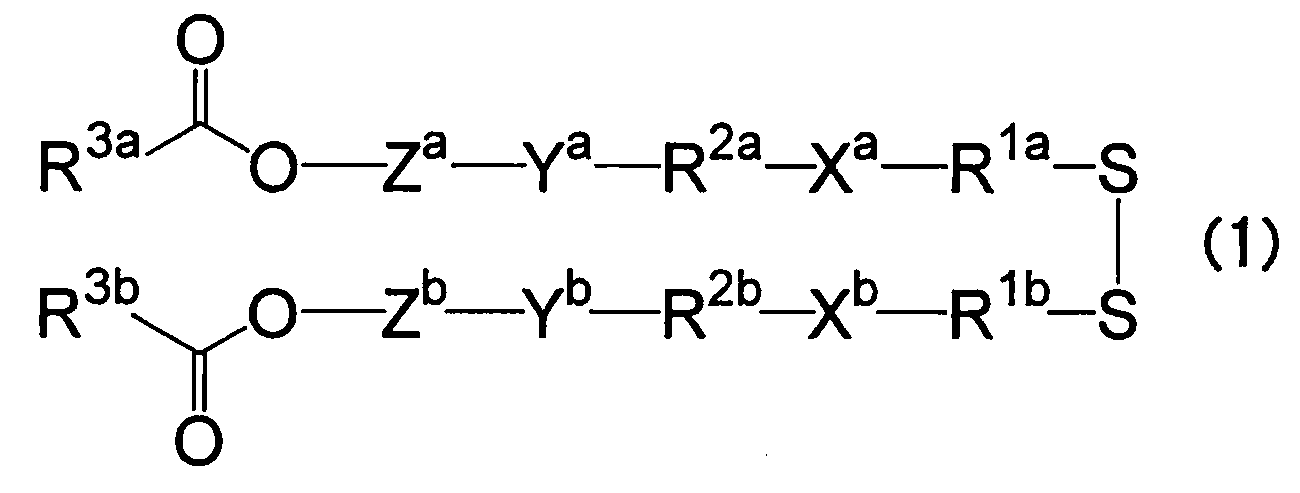
(式(1)中、
R1a及びR1bはそれぞれ独立して、炭素数1~6のアルキレン基を表し、
Xa及びXbはそれぞれ独立して、炭素数が1~6であり、かつ3級アミノ基の数が1の非環状のアルキル3級アミノ基、又は炭素数が2~5であり、かつ3級アミノ基の数が1~2の環状のアルキレン3級アミノ基を表し、
R2a及びR2bはそれぞれ独立して、炭素数8以下のアルキレン基又はオキシジアルキレン基を表し、
Ya及びYbはそれぞれ独立して、エステル結合、アミド結合、カーバメート結合、エーテル結合又はウレア結合を表し、
Za及びZbはそれぞれ独立して、炭素数が3~16であり、少なくとも1つの芳香環を有し、かつヘテロ原子を有していてもよい芳香族化合物から誘導される2価の基を表し、
R3a及びR3bはそれぞれ独立して、水酸基を有する脂溶性ビタミンとコハク酸無水物又はグルタル酸無水物との反応物由来の残基、又は水酸基を有するステロール誘導体とコハク酸無水物又はグルタル酸無水物との反応物由来の残基、又は炭素数12~22の脂肪族炭化水素基を表す。)
As a non-limiting example of a lipid having an autolytic property in addition to an ionizable property and a reducing condition responsive property, the lipids listed in WO2019-188867, for example, the lipids listed in the following formula (1), can be used.
(In formula (1),
R1a and R1b each independently represent an alkylene group having 1 to 6 carbon atoms;
Xa and Xb each independently represent a non-cyclic alkyl tertiary amino group having 1 to 6 carbon atoms and one tertiary amino group, or a cyclic alkylene tertiary amino group having 2 to 5 carbon atoms and one or two tertiary amino groups;
R2a and R2b each independently represent an alkylene group or an oxydialkylene group having 8 or less carbon atoms;
Ya and Yb each independently represent an ester bond, an amide bond, a carbamate bond, an ether bond, or a urea bond;
Za and Zb each independently represent a divalent group derived from an aromatic compound having 3 to 16 carbon atoms, at least one aromatic ring, and optionally having a heteroatom;
R3a and R3b each independently represent a residue derived from a reaction product of a fat-soluble vitamin having a hydroxyl group with succinic anhydride or glutaric anhydride, or a residue derived from a reaction product of a sterol derivative having a hydroxyl group with succinic anhydride or glutaric anhydride, or an aliphatic hydrocarbon group having 12 to 22 carbon atoms.
より具体的には、O-Ph-P3C1、O-Ph-P4C1、O-Ph-P4C2、O-BnP4C2、E-Ph-P4C2、L-Ph-P4C2、HD-Ph-P4C2、O-Ph-amide-P4C2、O-Ph-C3Mを挙げることができる。これらの脂質は、pHや酸化還元活性などにより応答し、エンドソーム脱出効率を上げることができる。


脂質としては、後述する実施例に記載されている化合物、すなわち、イオン化可能特性、還元条件応答特性、及び自己分解性特性を有する脂質としてビス[[4-[2-[[4-(オレオイルオキシ)フェニル]アセトキシ]エチル]ピペリジノ]エチル]ジスルファン(SS-OP)、中性リン脂質として1,2-ジオレオイル-sn-グリセロ-3-ホスホエタノールアミン(DOPE)、PEG脂質としてDMG-PEG5k、コレステロールとしてβ―シトステロールから選択される一つ以上の脂質などが好適に使用され得る。
More specifically, examples of such lipids include O-Ph-P3C1, O-Ph-P4C1, O-Ph-P4C2, O-BnP4C2, E-Ph-P4C2, L-Ph-P4C2, HD-Ph-P4C2, O-Ph-amide-P4C2, and O-Ph-C3M. These lipids respond to pH, redox activity, and the like, and can increase the efficiency of endosomal escape.
As the lipid, one or more lipids selected from the compounds described in the Examples below, that is, bis[[4-[2-[[4-(oleoyloxy)phenyl]acetoxy]ethyl]piperidino]ethyl]disulfane (SS-OP) as a lipid having ionizable properties, reducing condition responsive properties, and autolytic properties, 1,2-dioleoyl-sn-glycero-3-phosphoethanolamine (DOPE) as a neutral phospholipid, DMG-PEG5k as a PEG lipid, and β-sitosterol as cholesterol, can be suitably used.
本開示の脂質ナノ粒子における抗体の含有量(タンパク質負荷率)は、5~95mol%、は10~90mol%、30~80mol%の範囲の中から適宜調製可能である。本開示の脂質混合物は、本開示のカチオン性脂質及びその他の構成成分(脂質等)を適当な溶媒または分散媒、例えば、水性溶媒やアルコール性溶媒中に分散させ、必要に応じて組織化を誘導する操作を行うことにより調製することができる。 The antibody content (protein loading rate) in the lipid nanoparticles of the present disclosure can be appropriately adjusted from within the ranges of 5-95 mol%, 10-90 mol%, or 30-80 mol%. The lipid mixture of the present disclosure can be prepared by dispersing the cationic lipids of the present disclosure and other components (lipids, etc.) in an appropriate solvent or dispersion medium, for example, an aqueous solvent or an alcoholic solvent, and performing an operation to induce organization as necessary.
(他の添加剤)
本開示の脂質ナノ粒子を製造するにあたり、1つまたは2つ以上の両親媒性の物質を用いられる。両親媒性物質は、脂質ナノ粒子の安定性や、均一性などを考慮して選択される。本開示に用いられる両親媒性の例としては、ホスホグリセリド;ホスファチジルコリン;ジパルミトイルホスファチジルコリン(DPPC);ジオレイルホスファチジルエタノールアミン(DOPE);ジオレイルオキシプロピルトリエチルアンモニウム(DOTMA);ジオレオイルホスファチジルコリン;コレステロール;コレステロールエステル;ジアシルグリセロール;ジアシルグリセロールスクシネート;ジホスファチジルグリセロール(DPPG);ヘキサンデカノール;ポリエチレングリコール(PEG)などの脂肪族アルコール;ポリオキシエチレン-9-ラウリルエーテル;パルミチン酸またはオレイン酸などの表面活性脂肪酸;脂肪酸;脂肪酸モノグリセリド;脂肪酸ジグリセリド;脂肪酸アミド;ソルビタントリオレエート(Span(登録商標)85)グリココレート;ソルビタンモノラウレート(Span(登録商標)20);ポリソルベート20(Tween(登録商標)20);ポリソルベート60(Tween(登録商標)60);ポリソルベート65(Tween(登録商標)65);ポリソルベート80(Tween(登録商標)80);ポリソルベート85(Tween(登録商標)85);ポリオキシエチレンモノステアレート;サーファクチン;ポロキソマー(poloxomer);ソルビタントリオレエートなどのソルビタン脂肪酸エステル;レシチン;リゾレシチン;ホスファチジルセリン;ホスファチジルイノシトール;スフィンゴミエリン;ホスファチジルエタノールアミン(ケファリン);カルジオリピン;ホスファチジン酸;セレブロシド;ジセチルホスフェート;ジパルミトイルホスファチジルグリセロール;ステアリルアミン;ドデシルアミン;ヘキサデシルアミン;アセチルパルミテート;グリセロールリシノレエート;ヘキサデシルステアレート;イソプロピルミリステート;チロキサポール;ポリ(エチレングリコール)5000-ホスファチジルエタノールアミン;ポリ(エチレングリコール)400-モノステアレート;リン脂質;高い界面活性物質活性を有する合成および/または天然洗剤;デオキシコレート;シクロデキストリン;カオトロピック塩;イオンペア剤;および、これらの組み合わせが挙げられるが、これらに限定されない。他の添加剤として、脂質ナノ粒子の膜の安定性のために寄与する物質を加えることができる。そのような物質としては、コレステロール、フィトステロール、スティグマステロール、β-シトステロールを挙げることができる。
(Other Additives)
In producing the lipid nanoparticles of the present disclosure, one or more amphiphilic substances are used. The amphiphilic substance is selected in consideration of the stability and uniformity of the lipid nanoparticles. Examples of amphiphilic substances used in the present disclosure include lipids such as phosphoglycerides, phosphatidylcholine, dipalmitoylphosphatidylcholine (DPPC), dioleylphosphatidylethanolamine (DOPE), dioleyloxypropyltriethylammonium (DOTMA), dioleoylphosphatidylcholine, cholesterol, cholesterol esters, diacylglycerol, diacylglycerol succinate, diphosphatidylglycerol (DPPG), hexanedecanol, and polyethylene glycol (PEG). Aliphatic alcohols; polyoxyethylene-9-lauryl ether; surface active fatty acids such as palmitic acid or oleic acid; fatty acids; fatty acid monoglycerides; fatty acid diglycerides; fatty acid amides; sorbitan trioleate (Span® 85); glycocholate; sorbitan monolaurate (Span® 20); polysorbate 20 (Tween® 20); polysorbate 60 (Tween® 60); polysorbate 65 (Tween® 65); polysorbate 80 (Tween® 65); (Tween® 85); polysorbate 85 (Tween® 85); polyoxyethylene monostearate; surfactin; poloxomer; sorbitan fatty acid esters such as sorbitan trioleate; lecithin; lysolecithin; phosphatidylserine; phosphatidylinositol; sphingomyelin; phosphatidylethanolamine (cephalin); cardiolipin; phosphatidic acid; cerebrosides; dicetyl phosphate; dipalmitoyl phosphatidylglycerol; stearyl amine; Examples of additives include, but are not limited to, glycerol ricinoleate, hexadecyl stearate, isopropyl myristate, tyloxapol, poly(ethylene glycol) 5000-phosphatidylethanolamine, poly(ethylene glycol) 400-monostearate, phospholipids, synthetic and/or natural detergents with high surfactant activity, deoxycholate, cyclodextrin, chaotropic salts, ion pairing agents, and combinations thereof. Other additives may be added that contribute to the stability of the lipid nanoparticle membrane. Examples of such additives include cholesterol, phytosterol, stigmasterol, and β-sitosterol.
(脂質ナノ粒子)
脂質ナノ粒子は、後述する製造方法にて製造することができる。脂質ナノ粒子は、抗体または抗体フラグメント等を含むタンパク質とポリマーとが会合して形成された液滴が、脂質内に内封された構造を有している。また、抗体または抗体フラグメント等を含むタンパク質が反対電荷を有するポリマーと静電結合を伴って安定的に会合し液滴を形成している。抗体または抗体フラグメント等を含むタンパク質とポリマーとの会合の形態は、特定の理論に拘束されるものではないが、タンパク質が反対電荷を有するポリマーと静電的に結合している形態や、タンパク質が反対電荷を有するポリマーと静電的に結合しポリマー内に安定的に包接される形態が一例として想定され得る。脂質ナノ粒子の粒径は、動的光散乱法を用いた粒度分布計や散乱光とブラウン運動の両方の特性を利用したナノ粒子トラッキング解析計等を用いて測定することができる。本開示における脂質ナノ粒子の粒子径は、ナノ粒子トラッキング解析により決定され、10~600nmの範囲で製造される。製造条件の調整により50~500nm、70~400nmでの範囲でも製造され得る。ナノ粒子トラッキング解析で決定される、平均粒径分布は300nm以下である。そのピークトップは150nm以下で製造され、製造条件の調整により120nm以下、または100nm以下でも製造され得る。粒径が100nmを下回るとエンドサイトーシスされやすいと言われている。さらに、腫瘍細胞などでは、100nmを下回るとEnhanced Permeability and Retention効果を通じてがん組織周辺に滞留し選択性が上がると言われている。
(Lipid nanoparticles)
The lipid nanoparticles can be produced by the production method described below. The lipid nanoparticles have a structure in which droplets formed by the association of a protein containing an antibody or an antibody fragment with a polymer are encapsulated in lipid. In addition, the protein containing an antibody or an antibody fragment is stably associated with a polymer having an opposite charge through electrostatic bonding to form droplets. The form of association between the protein containing an antibody or an antibody fragment and the polymer is not limited to a specific theory, but examples of the form in which the protein is electrostatically bonded to a polymer having an opposite charge and the protein is electrostatically bonded to a polymer having an opposite charge and stably encapsulated in the polymer can be assumed. The particle size of the lipid nanoparticles can be measured using a particle size distribution meter using a dynamic light scattering method or a nanoparticle tracking analyzer that utilizes the characteristics of both scattered light and Brownian motion. The particle size of the lipid nanoparticles in the present disclosure is determined by nanoparticle tracking analysis and is produced in the range of 10 to 600 nm. By adjusting the production conditions, the lipid nanoparticles can also be produced in the range of 50 to 500 nm or 70 to 400 nm. The average particle size distribution determined by nanoparticle tracking analysis is 300 nm or less. The peak top is produced at 150 nm or less, and can be produced at 120 nm or less, or even 100 nm or less by adjusting the production conditions. It is said that a particle size of less than 100 nm is easily endocytosed. Furthermore, in tumor cells, etc., it is said that a particle size of less than 100 nm is retained around the cancer tissue through the Enhanced Permeability and Retention effect, increasing selectivity.
本開示の脂質ナノ粒子における抗体の含有量(タンパク質負荷率)は、0.1~10.0mol%、0.2~10.0mol%、0.3~10.0mol%、0.4~10.0mol%、0.5~10.0mol%、0.1~5.0mol%、0.2~5.0mol%、0.3~5.0mol%、0.4~5.0mol%、0.5~5.0mol%、0.1~2.0mol%、0.2~2.0mol%、0.3~2.0mol%、0.4~2.0mol%、0.5~2.0mol%、の範囲の中から適宜調製可能である。 The antibody content (protein loading rate) in the lipid nanoparticles of the present disclosure can be appropriately adjusted within the following ranges: 0.1-10.0 mol%, 0.2-10.0 mol%, 0.3-10.0 mol%, 0.4-10.0 mol%, 0.5-10.0 mol%, 0.1-5.0 mol%, 0.2-5.0 mol%, 0.3-5.0 mol%, 0.4-5.0 mol%, 0.5-5.0 mol%, 0.1-2.0 mol%, 0.2-2.0 mol%, 0.3-2.0 mol%, 0.4-2.0 mol%, 0.5-2.0 mol%.
(医薬組成物)
本開示の脂質ナノ粒子を医薬組成物として製剤化するために、脂質ナノ粒子を、様々な薬学的に許容される添加剤、並びに活性剤(複数可)の分散のための基剤又は担体と組み合わせることが可能である。添加剤の例としては、アルギニン、水酸化ナトリウム、グリシン、塩酸、クエン酸、及びこれらの混合物などのpH調整剤が挙げられる。他の添加剤としては、局所麻酔剤(例えば、ベンジルアルコール)、等張剤(例えば、塩化ナトリウム、マンニトール、ソルビトール)、吸着阻害剤(例えば、Tween 80)、溶解度増強剤(例えば、シクロデキストリン及びその誘導体)、安定剤(例えば、血清アルブミン)、及び還元剤(例えば、グルタチオン)が挙げられる。本開示の脂質ナノ粒子を含む医薬組成物は、活性剤及び任意の所望の添加剤を分散させる能力を有する親水性化合物を含み得る、基剤又はビヒクル中に分散され得る。基剤は、ポリカルボン酸又はその塩のコポリマー、カルボン酸無水物(例えば、無水マレイン酸)と他のモノマー(例えば、メチル(メタ)アクリレート、アクリル酸など)とのコポリマー、親水性ビニルポリマー、例えば、ポリ酢酸ビニル、ポリビニルアルコール、ポリビニルピロリドン、セルロース誘導体、例えば、ヒドロキシメチルセルロース、ヒドロキシプロピルセルロース等、並びに天然ポリマー、例えば、キトサン、コラーゲン、アルギン酸ナトリウム、ゼラチン、ヒアルロン酸、及びこれらの非毒性金属塩等を含むが、これらに限定されない広範な好適な担体から選択され得る。多くの場合、生分解性ポリマー、例えば、ポリ乳酸、ポリ(乳酸-グリコール酸)コポリマー、ポリヒドロキシ酪酸、ポリ(ヒドロキシ酪酸-グリコール酸)コポリマー、及びこれらの混合物は、基剤又は担体として選択される。基剤又は担体に代えて、若しくは基剤又は担体に加えて、ポリグリセリン脂肪酸エステル、スクロース脂肪酸エステル等の合成脂肪酸エステルを担体として用いることもできる。親水性ポリマー及び他の担体は、単独で又は組み合わせて使用することができ、部分的な結晶化、イオン結合、架橋等によって、増強された構造的一体性を担体に付与することができる。担体は、流体又は粘性溶液、ゲル、ペースト、粉末、微小球、及び鼻粘膜に直接適用するためのフィルムを含む様々な形態で提供され得る。この文脈における選択された担体の使用は、生物学的活性剤の吸収促進をもたらし得る。
Pharmaceutical Compositions
In order to formulate the lipid nanoparticles of the present disclosure into pharmaceutical compositions, the lipid nanoparticles can be combined with various pharma- ceutically acceptable additives and bases or carriers for dispersing the active agent(s). Examples of additives include pH adjusters such as arginine, sodium hydroxide, glycine, hydrochloric acid, citric acid, and mixtures thereof. Other additives include local anesthetics (e.g., benzyl alcohol), isotonicity agents (e.g., sodium chloride, mannitol, sorbitol), adsorption inhibitors (e.g., Tween 80), solubility enhancers (e.g., cyclodextrin and its derivatives), stabilizers (e.g., serum albumin), and reducing agents (e.g., glutathione). The pharmaceutical compositions comprising the lipid nanoparticles of the present disclosure can be dispersed in a base or vehicle, which may include a hydrophilic compound capable of dispersing the active agent and any desired additives. The base may be selected from a wide range of suitable carriers, including, but not limited to, copolymers of polycarboxylic acids or their salts, copolymers of carboxylic anhydrides (e.g., maleic anhydride) and other monomers (e.g., methyl (meth)acrylate, acrylic acid, etc.), hydrophilic vinyl polymers such as polyvinyl acetate, polyvinyl alcohol, polyvinylpyrrolidone, cellulose derivatives such as hydroxymethylcellulose, hydroxypropylcellulose, etc., and natural polymers such as chitosan, collagen, sodium alginate, gelatin, hyaluronic acid, and non-toxic metal salts thereof. Often, biodegradable polymers such as polylactic acid, poly(lactic acid-glycolic acid) copolymers, polyhydroxybutyric acid, poly(hydroxybutyric acid-glycolic acid) copolymers, and mixtures thereof, are selected as the base or carrier. Instead of or in addition to the base or carrier, synthetic fatty acid esters such as polyglycerin fatty acid esters, sucrose fatty acid esters, etc. may also be used as carriers. Hydrophilic polymers and other carriers can be used alone or in combination and can impart enhanced structural integrity to the carrier by partial crystallization, ionic bonding, crosslinking, etc. Carriers can be provided in a variety of forms including fluid or viscous solutions, gels, pastes, powders, microspheres, and films for direct application to the nasal mucosa. Use of selected carriers in this context can result in enhanced absorption of the biologically active agent.
本開示の医薬組成物は、pH調整及び緩衝剤、張度調整剤、及び湿潤剤、例えば、酢酸ナトリウム、乳酸ナトリウム、塩化ナトリウム、塩化カリウム、塩化カルシウム、モノラウリン酸ソルビタン、オレイン酸トリエタノールアミン、及びこれらの混合物等の、生理学的条件に近づけるために必要な薬学的に許容される物質を担体として含有することも可能である。固体組成物の場合、例えば、医薬基準のマンニトール、ラクトース、デンプン、ステアリン酸マグネシウム、サッカリンナトリウム、タルク、セルロース、グルコース、スクロース、炭酸マグネシウム等を含む従来の非毒性の薬学的に許容される担体が利用可能である。 The pharmaceutical compositions of the present disclosure may contain pharma- ceutically acceptable carriers necessary to approximate physiological conditions, such as pH adjusting and buffering agents, tonicity adjusting agents, and wetting agents, e.g., sodium acetate, sodium lactate, sodium chloride, potassium chloride, calcium chloride, sorbitan monolaurate, triethanolamine oleate, and mixtures thereof. For solid compositions, conventional non-toxic pharma-ceutically acceptable carriers may be used, including, for example, pharmaceutical grades of mannitol, lactose, starch, magnesium stearate, sodium saccharin, talc, cellulose, glucose, sucrose, magnesium carbonate, and the like.
(製造方法)
脂質ナノ粒子は、J.Chem.Phys.150,064903(2019)などを参考にして公知の方法をもとに製造できる。
具体的には、まず抗体または抗体フラグメント等を含むタンパク質とポリマーとを適切な比率で混合して液滴を形成させる(液滴形成工程)。抗体または抗体フラグメント等を含むタンパク質とポリマーとの会合の形態は、特定の理論に拘束されるものではないが、タンパク質が反対電荷を有するポリマーと静電的に結合している形態や、タンパク質が反対電荷を有するポリマーと静電的に結合しポリマー内に静電的に結合し安定的に包接される形態等が、一例として想定され得る。混合は、液体混合機やピペッティングで混合する、混合容器中においてスターラーまたは攪拌翼で撹拌する、高速型衝突噴流(confined impinging jets)ミキサーやマルチインレットボルテックスミキサーを用いて混合する、マイクロ流体デバイスの流路(すなわち、マイクロ流路)上で接触させるなどの操作で行うことができる。ポリマーとタンパク質の比率(質量比)は、適宜設定することができるが、例えば、100:1~10:1の範囲内、さらには10:1~1:1の範囲内とすることができる。混合時の温度も適宜設定することができ、例えば15~40℃、または20℃から30℃の範囲内とすることができる。混合の際のpHは、タンパク質とポリマーが静電相互作用しうるpHであればよく、例えばタンパク質の等電点とポリマーの等電点の間のpHであることが好ましい。形成された液滴は、遠心分離、ろ過、または深層濾過等の工程を用いて分離され(例えば、特許5361738等)、適切なタンパク質の濃度の水溶液として再構成された液滴を次の内封工程に供与することが可能となる。
(Production method)
Lipid nanoparticles can be produced based on known methods with reference to J. Chem. Phys. 150, 064903 (2019) and the like.
Specifically, first, a protein containing an antibody or an antibody fragment and a polymer are mixed in an appropriate ratio to form droplets (droplet formation step). The form of association between a protein containing an antibody or an antibody fragment and a polymer is not limited to a specific theory, but examples of the form in which the protein is electrostatically bound to a polymer having an opposite charge, or the protein is electrostatically bound to a polymer having an opposite charge and stably encapsulated within the polymer, can be assumed. Mixing can be performed by mixing with a liquid mixer or pipetting, stirring with a stirrer or stirring blade in a mixing container, mixing with a high-speed impinging jet mixer or a multi-inlet vortex mixer, or contacting on a flow path of a microfluidic device (i.e., a microflow path). The ratio (mass ratio) of polymer to protein can be appropriately set, but can be, for example, within the range of 100:1 to 10:1, or even within the range of 10:1 to 1:1. The temperature during mixing can also be appropriately set, for example, within the range of 15 to 40°C, or 20 to 30°C. The pH during mixing may be any pH that allows electrostatic interaction between the protein and the polymer, and is preferably, for example, a pH between the isoelectric point of the protein and the isoelectric point of the polymer. The droplets formed are separated using a process such as centrifugation, filtration, or depth filtration (e.g., Patent 5361738, etc.), and the droplets reconstituted as an aqueous solution with an appropriate protein concentration can be provided to the subsequent encapsulation process.
次に、この液滴と脂質を混合して脂質内に液滴を内封させることで(内封工程)、脂質ナノ粒子が製造される。この混合も、液体混合機やピペッティングで混合する、混合容器中においてスターラーまたは攪拌翼で撹拌する、高速型衝突噴流(confined impinging jets)ミキサーやマルチインレットボルテックスミキサーを用いて混合する、などの操作で行うことができる。また、マイクロ流体デバイスの流路上で接触させるなどの操作や、アルコール希釈(沈殿) 法、水和法、乳化法等のほかの工業生産の手法も確立されている。脂質と液滴の比率(質量比)は、適宜設定することができるが、例えば、1:100~10:1の範囲内、さらには1:10~1:1の範囲内とすることができる。混合時の温度も適宜設定することができ、例えば15~40℃、更には20℃から30℃の範囲内とすることができる。混合の際のpHは、例えば5~9の範囲内、更にhが6~8の範囲内とすることができる。なお、脂質ナノ粒子を製造するときに脂質を溶解する溶媒としては、エタノール、ブタノール、tert-ブタノールなどアルコール、エチレングリコール、グリセリン、ポリエチレングリコールなどを用いることができるが、粒子の形成性、細胞への送達性や毒性などを総合的に考慮して選択されるべきである。 Next, the droplets are mixed with lipids to encapsulate the droplets in the lipids (encapsulation process), producing lipid nanoparticles. This mixing can be performed by using a liquid mixer or pipetting, stirring in a mixing vessel with a stirrer or impeller, or using a high-speed confined impinging jets mixer or a multi-inlet vortex mixer. Other industrial production methods, such as contacting the droplets on a flow channel of a microfluidic device, alcohol dilution (precipitation), hydration, and emulsification, have also been established. The ratio (mass ratio) of lipid to droplets can be set appropriately, and can be, for example, within the range of 1:100 to 10:1, or even within the range of 1:10 to 1:1. The temperature during mixing can also be set appropriately, and can be, for example, within the range of 15 to 40°C, or even within the range of 20°C to 30°C. The pH during mixing can be, for example, within the range of 5 to 9, and further within the range of h 6 to 8. In addition, when producing lipid nanoparticles, solvents that can be used to dissolve lipids include alcohols such as ethanol, butanol, and tert-butanol, as well as ethylene glycol, glycerin, and polyethylene glycol. However, the solvent should be selected after comprehensively considering the particle formation properties, delivery properties to cells, and toxicity.
(効果)
生成したナノ粒子は、in vitroおよびin vivoでの評価がなされる。本明細書では、本開示のナノ粒子とすることで、サイトゾルや核等を含む細胞内への局在が観察された。
(effect)
The nanoparticles thus produced are evaluated in vitro and in vivo. Herein, the nanoparticles of the present disclosure have been observed to be localized intracellularly, including in the cytosol and nucleus.
以下、実施例及び比較例に基づいて本開示をより具体的に説明するが、本開示は以下の実施例に限定されるものではない。また、以下の実施例において「%」表示は特に規定しない限り質量基準(質量パ-セント)である。 The present disclosure will be explained in more detail below based on examples and comparative examples, but the present disclosure is not limited to the following examples. In the following examples, "%" is based on mass (mass percent) unless otherwise specified.
[材料および方法]
(試薬)
pH応答性脂質であるss-cleavable and pH-activated lipid-like material(ssPalm)O-Phe(SS-OP 、 NOF Corporation)、1,2-dioleoyl-sn-glycero-3-phosphoethanolamine(DOPE、NOF Corporation)、β-sitosterol(Sigma Aldrich)、1,2-dimyristoyl-rac-glycero-3-methylpolyoxyethyleneglycol chain, molecular weight 5000(DMG-PEG5k、NOF Corporation)は10mMの濃度でクロロホルム(Fujifilm Wako Pure Chemical Corporation)に溶解し使用するまで-30度の冷凍庫にて保存した。
IgGは、正常ヒトIgG,全分子,精製品(富士フイルム和光純薬製)を用いた。本明細書においては、IgG、またはhIgGと表記する。
ポリグルタミン酸は、以下のサイズのものを用いた(mol wt3,000-15,000,sigma)。
[material and method]
(reagent)
pH-responsive lipid ss-cleavable and pH-activated lipid-like material (ssPalm) O-Phe (SS-OP, NOF Corporation), 1,2-dioleoyl-sn-glycero-3-p phosphoethanolamine (DOPE, NOF Corporation), β-sitosterol (Sigma Aldrich), 1,2-dimyristoyl-rac-glycero-3-methylpolyoxyethylene glyc ol chain, molecular weight 5000 (DMG-PEG5k, NOF Corporation) was dissolved in chloroform (Fujifilm Wako Pure Chemical Corporation) at a concentration of 10 mM and stored in a freezer at -30°C until use.
IgG used was normal human IgG, whole molecule, purified product (manufactured by Fujifilm Wako Pure Chemical Industries, Ltd.) In this specification, it is referred to as IgG or hIgG.
The polyglutamic acids used had the following sizes (mol wt 3,000-15,000, Sigma).
(粒径の測定)
粒径は、Zetasizer Nano ZS(Malvern社製)を使って粒子直径、PdI(粒径分布、ゼータ電位(ζ-電位)を評価した。回収したサンプルをPBSに100倍希釈して測定を実施した。
(Measurement of particle size)
The particle diameter, PdI (particle size distribution, and zeta potential (ζ-potential) were evaluated using a Zetasizer Nano ZS (Malvern). The collected samples were diluted 100-fold with PBS and measurements were performed.
(内包率)
内包率は、調製したLNPを卓上超遠心機によって、4℃、20000gにて30分間遠心分離して、上清のタンパク質濃度を測定することで、タンパク質の内封率を算出した。すなわち、IgG_polyE-LNPをPBS(-)で抗体濃度が2μMとなるように調整した(最終サンプル量100μL)。これを4℃、20,000×g、1時間遠心分離することでLNP画分を沈殿させた。上清50μLを回収し、Nanodropにて抗体濃度を測定し、内封率を以下の式から逆算した。ただし、CIgGは2μM IgGを遠心した上清から算出したIgG濃度、CLNPはIgG_polyE-LNPを遠心した上清から算出したIgG濃度を指す。
IgGの内封率(%)=(CIgG-CLNP)/CIgG×100
(Inclusion rate)
The encapsulation rate was calculated by centrifuging the prepared LNP at 4 ° C. and 20,000 g for 30 minutes using a tabletop ultracentrifuge, measuring the protein concentration of the supernatant. That is, IgG_polyE-LNP was adjusted with PBS (-) so that the antibody concentration was 2 μM (final sample volume 100 μL). This was centrifuged at 4 ° C., 20,000 × g, for 1 hour to precipitate the LNP fraction. 50 μL of the supernatant was collected, the antibody concentration was measured using Nanodrop, and the encapsulation rate was calculated back from the following formula. Here, C IgG refers to the IgG concentration calculated from the supernatant obtained by centrifuging 2 μM IgG, and C LNP refers to the IgG concentration calculated from the supernatant obtained by centrifuging IgG_polyE-LNP.
Encapsulation rate of IgG (%)=(C IgG −C LNP )/C IgG ×100
(HeLa細胞)
ATCCから入手したHeLa細胞を10%牛血清(BS)含有α-MEMにて培養した。
(HeLa cells)
HeLa cells obtained from ATCC were cultured in α-MEM containing 10% bovine serum (BS).
(透析)
透析膜には、2-14k MWCO透析膜(Spectrum Laboratories Inc.)を用いた。透析膜に充填した後に、Corning Stirrerにて攪拌して透析を実施した。
(Dialysis)
The dialysis membrane used was a 2-14k MWCO dialysis membrane (Spectrum Laboratories Inc.) After filling the dialysis membrane, dialysis was performed by stirring with a Corning Stirrer.
(hIgG-AF488)
Alexa Fluor 488修飾のため、10mg/mL hIgG(正常ヒトIgG、Fujifilm Wako Pure Chemical Corporation)100μLにPBS(-)345μLを加え、そこに1M NaHCO3 50μLを添加し溶液を塩基性にした後、10mg/mL Alexa488-SDP ester(Thermo Fisher Scientific)と混合し、遮光下、25℃で1時間転倒混和した。その後PD10カラムにて抗体画分を分取し、Alexa Fluor 488標識hIgG(hIgG-AF488)を精製した。
(hIgG-AF488)
For the Alexa Fluor 488 modification, 345 μL of PBS(−) was added to 100 μL of 10 mg/mL hIgG (normal human IgG, Fujifilm Wako Pure Chemical Corporation), and 50 μL of 1 M NaHCO 3 was added thereto to make the solution basic. The mixture was mixed with 1000 μg/mL Alexa488-SDP ester (Thermo Fisher Scientific) and mixed by inversion for 1 hour at 25°C in the dark. The antibody fraction was then separated using a PD10 column and purified with Alexa Fluor 488-labeled hIgG (hIgG-AF488). was purified.
(抗GFP抗体)
抗GFP抗体の調製はExpi293TM Expression System(Thermo Fisher Scientific)にて行った。Expi293FTM細胞を3,000,000cells/mLとなるように準備し、125mL用三角フラスコに25mL加えた。Anti-GFP-IgGをコードするプラスミド(Addgene, Anti-GFP[N86/38.1R])を25μg、ExpiFectamineTM293(Thermo Fisher Scientific)と混合し、その推奨プロトコルに従いトランスフェクションした。トランスフェクション後の20時間後に、ExpiFectamineTM293 Transfectin Enhancer 1を150μLおよびEnhancer 2を1.5mL加え五日間インキュベートした。培養液を50mLチューブに移し、3,200×g、4℃、20分間遠心分離し、上清を回収した。抗体が含まれる上清を0.22μmのフィルターでろ過滅菌した。さらにこの溶液をHiTrap Protein A High Performance(Cytiva)に吸着させ、精製用緩衝液(0.1M Glycine HCl pH=2.7)によってカラムから溶出させた。IgGを含むフラクションを回収し、PBS(pH7.4)にて透析を行ない、抗GFP抗体(anti-GFP-IgG)を得た。回収した抗GFP抗体(anti-GFP-IgG)は4℃条件で保存した。クエン酸溶液(pH5)の抗体を用いる場合は、マイクロバイオスピン(登録商標) カラム30(BIORAD)を用いてクエン酸溶液(pH5)に置換した。
(Anti-GFP antibody)
Anti-GFP antibodies were prepared using the Expi293™ Expression System (Thermo Fisher Scientific). Expi293F™ cells were prepared to a concentration of 3,000,000 cells/mL, and 25 mL was added to a 125 mL Erlenmeyer flask. 25 μg of a plasmid encoding Anti-GFP-IgG (Addgene, Anti-GFP [N86/38.1R]) was mixed with ExpiFectamine™293 (Thermo Fisher Scientific) and transfected according to the recommended protocol. 20 hours after transfection, 150 μL of ExpiFectamineTM293 Transfectin Enhancer 1 and 1.5 mL of Enhancer 2 were added and incubated for five days. The culture solution was transferred to a 50 mL tube, centrifuged at 3,200 × g, 4 ° C, for 20 minutes, and the supernatant was collected. The supernatant containing the antibody was sterilized by filtration using a 0.22 μm filter. This solution was further adsorbed to HiTrap Protein A High Performance (Cytiva) and eluted from the column with purification buffer (0.1 M Glycine HCl pH = 2.7). The fraction containing IgG was collected and dialyzed against PBS (pH 7.4) to obtain anti-GFP antibody (anti-GFP-IgG). The recovered anti-GFP antibody (anti-GFP-IgG) was stored at 4° C. When using an antibody in a citric acid solution (pH 5), the solution was replaced with a citric acid solution (pH 5) using a Micro Biospin (registered trademark) Column 30 (BIORAD).
(hIgG_polyE)
10mMクエン酸溶液(pH5)に溶解したポリ-L-グルタミン酸(polyE、mol wt 3,000-15,000)溶液を40℃の条件で30分間インキュベートした。その後、PBS(-)もしくはクエン酸溶液(pH5)に溶解されたIgG(抗体全て)と上記のpolyEをIgG:polyE=5:1(質量比)となるようにピペッティング10回で混合した。その後、12-14k MWCO透析膜(Spectrum Laboratories Inc.)に充填して、1,000倍以上の体積量のPBS(pH7.4)に浮かしてスターラーで攪拌して透析を実施した。
(hIgG_polyE)
A solution of poly-L-glutamic acid (polyE, mol wt 3,000-15,000) dissolved in 10 mM citric acid solution (pH 5) was incubated at 40° C. for 30 minutes. Then, PBS (−) or citric acid solution was added. The IgG (all antibodies) dissolved in 100 mL of 1000 mM NaCl (pH 5) and the polyE were mixed by pipetting 10 times so that the IgG:polyE ratio was 5:1 (mass ratio). The pellet was loaded into a 1,000-fold volumetric capacity (Fujikura Laboratories Inc.), suspended in PBS (pH 7.4) of 1,000 times its volume, and stirred with a stirrer to perform dialysis.
(実施例1)
(LNPの製造)
脂質をクロロホルムで溶解し、20mM SS-OP、10mM DOPE、20mM β-sitosterol、10mM DMG-PEG5kを調製した。SS-OP/DOPE/β-sitosterol/DMG-PEG5k(モル比 45/10/45/1.5)の組成物をフラスコ内で室温にて混合し、1mLのt-BuOH(富士フィルム和光純薬 Fujifilm Wako Pure Chemical Corporation)を加えて溶解させた後、ロータリーエバポレーターにてクロロホルムを蒸発させ脂質溶液を得た。さらに、この脂質溶液を18から24時間凍結乾燥させ、その後t-BuOHで溶解させることで10mM脂質溶液を作製した。t-BuOHに溶解した脂質溶液と10mMクエン酸溶液(pH5)に溶解したポリグルタミン酸溶液(0.75mg/mLポリグルタミン酸溶液(polyE、mol wt 3,000-15,000)溶液を、別々に40度の条件で30分間インキュベートした。
Example 1
(Production of LNPs)
The lipid was dissolved in chloroform to prepare 20 mM SS-OP, 10 mM DOPE, 20 mM β-sitosterol, and 10 mM DMG-PEG5k. The composition of SS-OP/DOPE/β-sitosterol/DMG-PEG5k (molar ratio 45/10/45/1.5) was mixed in a flask at room temperature, and 1 mL of t-BuOH (Fujifilm Wako Pure Chemical Corporation) was added and dissolved, and the chloroform was evaporated in a rotary evaporator to obtain a lipid solution. Furthermore, this lipid solution was freeze-dried for 18 to 24 hours, and then dissolved in t-BuOH to prepare a 10 mM lipid solution. A lipid solution dissolved in t-BuOH and a polyglutamic acid solution (0.75 mg/mL polyglutamic acid solution (polyE, mol wt 3,000-15,000) dissolved in 10 mM citric acid solution (pH 5) were separately incubated at 40° C. for 30 minutes.
hIgGとpolyEをhIgG:polyE=5:1(質量比)となるようにピペッティング10回で混合しhIgG-polyE液滴を形成した後、40℃で30分インキュベートした脂質溶液と液滴溶液を1:4(体積比)となるようにピペッティング15回で混合した。その後、1,000倍以上の体積量のPBS(-)(pH7.4)に対して12-14k MWCO透析膜(Spectrum Laboratories Inc.)で透析し、hIgGを内包するLipid Nanoparticle(hIgG_polyE-LNP)を調製した。 After mixing hIgG and polyE by pipetting 10 times to give a hIgG:polyE = 5:1 (mass ratio) to form hIgG-polyE droplets, the lipid solution incubated at 40°C for 30 minutes was mixed with the droplet solution by pipetting 15 times to give a 1:4 (volume ratio). After that, the mixture was dialyzed against 1,000 times or more volume of PBS (-) (pH 7.4) using a 12-14k MWCO dialysis membrane (Spectrum Laboratories Inc.) to prepare lipid nanoparticles encapsulating hIgG (hIgG_polyE-LNPs).
(比較例1)
(LNPの製造)
polyEを含まずにhIgGのみを用いた以外は、製造例1と同様に行いLNP化したサンプル(hIgG-LNP)を製造した。
(Comparative Example 1)
(Production of LNPs)
An LNP-converted sample (hIgG-LNP) was produced in the same manner as in Production Example 1, except that only hIgG was used without polyE.
(評価)
実施例1で調製したhIgG_polyE―LNPと、比較例1で調整したhIgG-LNPをZetasizer Nano ZS(Malvern)を使って粒子直径、PdI、ζ-電位を評価した。結果を、図10a,図10bおよび表1に示す。調製したLNPを卓上超遠心機によって、4℃、20000gにて30分間遠心分離して、上清の抗体濃度を測定することで、抗体の内封率を算出した。結果を表1に示す。
(evaluation)
The particle diameter, PdI, and ζ-potential of the hIgG_polyE-LNP prepared in Example 1 and the hIgG-LNP prepared in Comparative Example 1 were evaluated using a Zetasizer Nano ZS (Malvern). The results are shown in Figures 10a and 10b and Table 1. The prepared LNP was centrifuged at 4°C and 20,000 g for 30 minutes using a tabletop ultracentrifuge, and the antibody concentration of the supernatant was measured to calculate the antibody encapsulation rate. The results are shown in Table 1.
(評価)
結果を表1に示す。
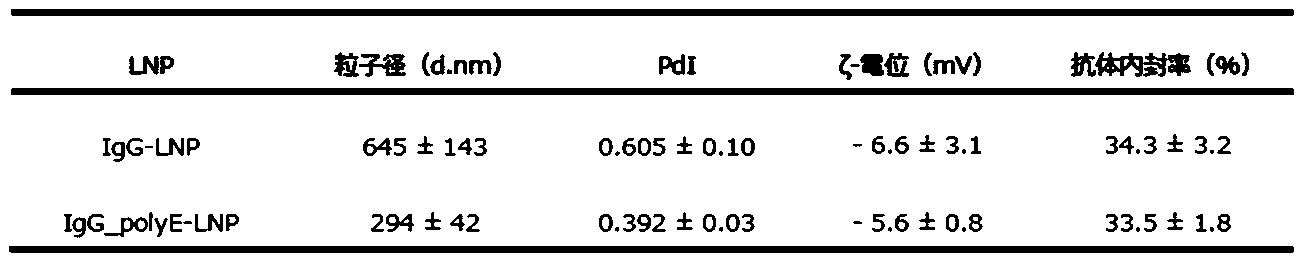
また、NTA法での粒子径の測定に当たっては、PBSにて100倍に希釈した上記LNPをNanoSight NS300を用いて測定した。その結果、粒子径は123±2nmであった。
(evaluation)
The results are shown in Table 1.
In addition, when measuring the particle size by the NTA method, the above LNP diluted 100 times with PBS was measured using NanoSight NS 300. As a result, the particle size was 123±2 nm.
(実施例2)
(LNPの製造)
実施例1において、tBuOHの代わりに90%tBuOH水溶液を用いた以外は実施例1と同様な操作を行い、hIgG_polyE-LNPを製造した。
(効果)
Example 2
(Production of LNPs)
hIgG_polyE-LNP was produced in the same manner as in Example 1, except that a 90% tBuOH aqueous solution was used instead of tBuOH.
(effect)
(実施例3)(HeLa細胞への局在化)
(LNPの製造)
抗体と脂質の混合比によりhIgGのサイトゾルへの送達活性が変化するかどうか検討するために、IgGの代わりにhIgG-AF488を用いた以外は(実施例1)と同様な操作を行い、抗体:脂質比が(a)~(e)の混合比のIgG_polyE-LNP(a)~(e)を調整した。
hIgG-AF488:polyE
(a) 1:100
(b) 1:200
(c) 1:300
(d) 1:400
(e) 1:500
Example 3 (Localization in HeLa cells)
(Production of LNPs)
In order to examine whether the mixing ratio of antibody to lipid changes the delivery activity of hIgG to the cytosol, IgG_polyE-LNP(a) to (e) with antibody:lipid ratios of (a) to (e) were prepared in the same manner as in Example 1, except that hIgG-AF488 was used instead of IgG.
hIgG-AF488:polyE
(a) 1:100
(b) 1:200
(c) 1:300
(d) 1:400
(e) 1:500
調整したhIgG-AF488_polyE-LNPをHeLa細胞の血清培地に、IgG濃度が1μMとなるように添加して懸濁させ、37℃、5%のCO2の条件下で18時間インキュベーションし、hIgG-AF488の細胞内局在を観察した。(b)1:200のIgG_polyE-LNPが最も効率よくhIgGをサイトゾルへ送達した(図1 A))。また、(b)1:200のIgG_polyE-LNPについて経時的な変化を観察したところ、添加後6時間でhIgGがサイトゾルに送達されていたことが分かった。 The adjusted hIgG-AF488_polyE-LNP was added to serum medium of HeLa cells so that the IgG concentration was 1 μM, suspended, and incubated for 18 hours under conditions of 37°C and 5% CO2 , and the intracellular localization of hIgG-AF488 was observed. (b) 1:200 IgG_polyE-LNP delivered hIgG to the cytosol most efficiently (Figure 1 A). In addition, when the time course of (b) 1:200 IgG_polyE-LNP was observed, it was found that hIgG was delivered to the cytosol 6 hours after addition.
(実施例4)
(各種LNPの製造)
(抗GFP抗体_polyE―LNP)
実施例1で、hIgGの代わりに抗GFP抗体を用いた以外は同様の操作を行い、抗GFP抗体_polyE―LNPを製造した。
Example 4
(Production of various LNPs)
(Anti-GFP antibody_polyE-LNP)
Anti-GFP antibody_polyE-LNP was produced in the same manner as in Example 1, except that anti-GFP antibody was used instead of hIgG.
(実施例5)
HeLa細胞に(a)hIgG-AF488、(b)hIgG-AF488_PolyE、(c)hIgG-AF488_PolyE-LNPを1μMとなるように血清培地に添加し、37℃、5%CO2の条件下、18時間インキュベーションし、IgGの細胞内局在を観察した(図2A)。
Example 5
(a) hIgG-AF488, (b) hIgG-AF488_PolyE, or (c) hIgG-AF488_PolyE-LNP was added to serum-containing medium at 1 μM to HeLa cells, and the cells were incubated at 37° C. and 5% CO2 for 18 hours to observe the intracellular localization of IgG (FIG. 2A).
(a)hIgG-AF488、(b)hIgG-AF488_polyEを添加した細胞では、点状のhIgG-AF488由来のシグナルが観察されるだけで、サイトゾルに移行していないことが確認された。一方で、(c)hIgG_polyE-LNPサンプルを添加した細胞でIgG_polyE-LNPは、サイトゾル全体にシグナルが拡散している様子が確認された。 In cells to which (a) hIgG-AF488 and (b) hIgG-AF488_polyE were added, only punctate hIgG-AF488-derived signals were observed, and it was confirmed that they had not migrated into the cytosol. On the other hand, in cells to which (c) the hIgG_polyE-LNP sample was added, it was confirmed that the IgG_polyE-LNP signal was diffused throughout the cytosol.
観察されるシグナルが、IgGの送達によるものであることを確認するために、処理後、細胞をパラホルムアルデヒドで固定し、Alexa fluor 594標識された抗hIgG抗体(anti-hIgG-IgG labeled with Alexa Fulor 594)を用いて免疫染色を行い、hIgGの細胞局在を観察した(図2B)。サイトゾルのIgG-AF488のシグナルとanti-hIgGsecondary antibodyのシグナルが共局在したことから、サイトゾルに存在するAlexa Fluor 488のシグナルは、IgG分子が送達されたことによるものであると判明した。 To confirm that the observed signal was due to the delivery of IgG, cells were fixed with paraformaldehyde after treatment and immunostained with an anti-hIgG antibody labeled with Alexa Fluor 594 (anti-hIgG-IgG labeled with Alexa Fluor 594) to observe the cellular localization of hIgG (Figure 2B). The cytosolic IgG-AF488 signal and the anti-hIgG secondary antibody signal colocalized, indicating that the Alexa Fluor 488 signal present in the cytosol was due to the delivery of IgG molecules.
(実施例6)
polyEを添加することの有用性を示すために、polyEを含まないhIgGと脂質を混合し得られるLNP(IgG-LNP)(参考例1)を調製し、hIgG_polyE-LNP(実施例1)との比較試験を実施した。細胞内局在を観察するために、hIgGは、hIgG-AF488を用いた。
Example 6
In order to demonstrate the usefulness of adding polyE, LNPs (IgG-LNPs) (Reference Example 1) were prepared by mixing polyE-free hIgG with lipids, and a comparative test was carried out with hIgG_polyE-LNP (Example 1). To observe intracellular localization, hIgG-AF488 was used as the hIgG.
HeLa細胞にhIgG-LNPおよびhIgG_polyE-LNPをIgG濃度にして1μMとなるように血清培地に添加して懸濁させ、37℃、5%CO2において18時間インキュベーションを行った。hIgG-AF488の細胞内局在を観察すると、IgG_polyE-LNPでは、サイトゾルで観察される蛍光シグナルが、IgG-LNPと比較して明らかに高いことが確認された(図3A)。それぞれのLNPによって細胞内に移行した抗体量をフローサイトメトリーにて定量すると、hIgG_polyE―LNPの方がhIgG-LNPと比較して2倍程度細胞内取り込み量が増加した(図3B)。 HIgG-LNP and hIgG_polyE-LNP were added to HeLa cells in serum medium at an IgG concentration of 1 μM, suspended, and incubated at 37°C and 5% CO2 for 18 hours. When observing the intracellular localization of hIgG-AF488, it was confirmed that the fluorescent signal observed in the cytosol of IgG_polyE-LNP was clearly higher than that of IgG-LNP (Figure 3A). When the amount of antibody transferred into the cells by each LNP was quantified by flow cytometry, the amount of intracellular uptake was approximately two-fold higher for hIgG_polyE-LNP than for hIgG-LNP (Figure 3B).
(実施例7)
LgBiTとHiBiTは会合することでナノルシフェラーゼnanoLuciferaseを再構成し、ルシフェリンLuciferinを添加すると発光を呈する。この技術を利用してhIgG_polyE-LNP(製造例1)とhIgG-LNP(製造例2)のサイトゾル移行量を比較した。
(Example 7)
LgBiT and HiBiT associate to reconstitute nanoluciferase, which emits light when luciferin is added. Using this technique, the amount of cytosolic transfer of hIgG_polyE-LNP (Production Example 1) and hIgG-LNP (Production Example 2) was compared.
LgBiTを恒常発現するHeLa細胞(HeLa-LgBiT)に対して、抗GFP抗体(anti-GFP-IgG)(Addgene;Anti-GFP[N86/38.1R]、Plasmid #114492)のC末端に遺伝子工学的にHiBiT配列を付与したhIgG-HiBiTを内封するhIgG_polyE-LNPまたはIgG-LNPをIgG濃度にして0.5μMとなるように血清培地に懸濁し、18時間投与した。インキュベート後、PBS(pH7.4)で3回洗浄し、トリプシン処理により細胞を回収後、NanoGlo(登録商標) Live Cell Assay試薬(Promega)と混合して発光量を測定したところ、IgG_polyE-LNPを添加した細胞では、IgG-LNPと比較して5倍以上の発光を示した(図4)。 hIgG_polyE-LNPs or IgG-LNPs encapsulating hIgG-HiBiT, which had a HiBiT sequence genetically engineered to the C-terminus of an anti-GFP antibody (anti-GFP-IgG) (Addgene; Anti-GFP [N86/38.1R], Plasmid #114492), were suspended in serum medium at an IgG concentration of 0.5 μM and administered to HeLa cells (HeLa-LgBiT) constitutively expressing LgBiT for 18 hours. After incubation, the cells were washed three times with PBS (pH 7.4) and harvested by trypsinization. The cells were then mixed with NanoGlo (registered trademark) Live Cell Assay reagent (Promega) and the amount of luminescence was measured. Cells to which IgG_polyE-LNP had been added showed 5 times more luminescence than cells to which IgG-LNP had been added (Figure 4).
(実施例8)
次に、サイトゾルに存在するタンパク質を標的とするIgGをLNPにより送達することで、その分子を認識できるかどうか検討した。
HRasはRasタンパク質ファミリーの一種で、細胞膜に局在するタンパク質であり、これにGFPを融合したHRas-GFPを発現するHeLa細胞を用いることでGFPを細胞膜に局在させた。Alexa Fluor 594で標識したanti-GFP-IgG(Addgene; Anti-GFP[N86/38.1R]、Plasmid #114492)(抗GFP抗体-AF594)を作製し、LNP化し、HRas-GFP発現HeLa細胞にIgG濃度にして1μMとなるように血清培地に懸濁後、18時間投与を行い、IgGの細胞内局在を観察した。HRas-GFPが存在する細胞膜付近においてGFPとanti-GFP-IgG-AF594の蛍光シグナルの共局在が確認された(図5A)。
(Example 8)
Next, we examined whether IgG targeting a protein present in the cytosol could recognize that molecule by delivering it via LNPs.
HRas is a member of the Ras protein family and is a protein that is localized in the cell membrane. GFP was localized in the cell membrane by using HeLa cells expressing HRas-GFP, which is a fusion of HRas with GFP. Anti-GFP-IgG (Addgene; Anti-GFP [N86/38.1R], Plasmid #114492) (anti-GFP antibody-AF594) labeled with Alexa Fluor 594 was prepared, converted into LNP, and suspended in serum medium to an IgG concentration of 1 μM in HRas-GFP-expressing HeLa cells for 18 hours, and the intracellular localization of IgG was observed. Co-localization of the fluorescent signals of GFP and anti-GFP-IgG-AF594 was confirmed near the cell membrane where HRas-GFP was present (Figure 5A).
蛍光標識を施していない抗GFP抗体のサイトゾルへの送達についても検討した。未蛍光標識抗GFP抗体をLNP化し、HRas-GFP発現HeLa細胞にIgG濃度にして1μMとなるように血清培地に懸濁し、18時間インキュベーションした。その後、パラホルムアルデヒドで固定、およびAlexa fluor 568標識二次抗体(ThermoFisher Scientific)を用いて免疫染色を行い、IgGの細胞内局在を観察した。蛍光標識抗体同様にHRas-GFPの蛍光シグナルと2次抗体のAlexa fluor 568の蛍光シグナルが共局在していることが確認された(図5B)。以上の結果から、蛍光標識抗体および蛍光標識されていない抗体ともにIgG_polyE-LNPによってサイトゾル送達可能であることが判明した。 We also investigated the delivery of non-fluorescently labeled anti-GFP antibodies to the cytosol. Non-fluorescently labeled anti-GFP antibodies were converted into LNPs, suspended in serum medium to an IgG concentration of 1 μM in HRas-GFP-expressing HeLa cells, and incubated for 18 hours. The cells were then fixed with paraformaldehyde and immunostained using an Alexa fluor 568-labeled secondary antibody (ThermoFisher Scientific) to observe the intracellular localization of IgG. As with the fluorescently labeled antibodies, it was confirmed that the fluorescent signal of HRas-GFP and the fluorescent signal of the secondary antibody Alexa fluor 568 were colocalized (Figure 5B). These results demonstrated that both fluorescently labeled and non-fluorescently labeled antibodies can be delivered to the cytosol by IgG_polyE-LNPs.
(実施例9)
次に、内在性タンパク質を認識する抗体を導入するため、核膜孔複合体(nuclearpore complexes,NPC)に対する抗体anti-NPC-IgG(Mab414、Cat#: 902902、BioLegend)導入した。HeLa細胞にhIgG-AF488_polyE-LNPまたはhIgG-AF488_polyEサンプルをIgG濃度にして1μMとなるように血清培地に懸濁し、18時間投与を行った。その後、免疫染色を行い、IgGの細胞内局在を観察した。hIgG-AF488_polyEを添加した細胞では、点状のシグナルが確認されるのみであったが、hIgG-AF488_polyE-LNP添加において、核周囲にIgGのシグナルがリング状に確認された(yellow arrow heads)(図6A)。また、核を横切るようにラインプロットを作製したところ、hIgG-AF488_polyE droplet添加では、核シグナル(シアン色)から離れた位置に抗体シグナル(マゼンタ色)が確認されるのに対し、hIgG-AF488_polyE-LNP処理では核シグナルの両端と抗体シグナルが隣接ように検出された(図6B)。さらに、各サンプルで400個程度の細胞を観察し、核周囲に抗体由来のシグナルがリング状に観察される細胞をカウントし、その割合を算出したところ、IgG_polyE-LNP処理によって約20%の細胞に抗NPC抗体を核膜孔に送達でき蛍光イメージングできることが確認された(図6C)。
Example 9
Next, in order to introduce an antibody that recognizes an endogenous protein, an antibody against nuclear pore complexes (NPC), anti-NPC-IgG (Mab414, Cat#: 902902, BioLegend), was introduced. hIgG-AF488_polyE-LNP or hIgG-AF488_polyE sample was suspended in serum medium to an IgG concentration of 1 μM in HeLa cells, and administered for 18 hours. Thereafter, immunostaining was performed to observe the intracellular localization of IgG. In cells to which hIgG-AF488_polyE was added, only dot-like signals were observed, whereas in cells to which hIgG-AF488_polyE-LNP was added, IgG signals were observed in the form of rings around the nucleus (yellow arrow heads) (FIG. 6A). In addition, when a line plot was created across the nucleus, in the case of the addition of hIgG-AF488_polyE droplets, the antibody signal (magenta) was observed at a position distant from the nuclear signal (cyan), whereas in the case of the hIgG-AF488_polyE-LNP treatment, both ends of the nuclear signal and the antibody signal were detected adjacent to each other (FIG. 6B). Furthermore, approximately 400 cells were observed for each sample, and the cells in which a ring-shaped antibody-derived signal was observed around the nucleus were counted and the percentage was calculated. It was confirmed that IgG_polyE-LNP treatment was able to deliver anti-NPC antibodies to the nuclear pores in approximately 20% of the cells, enabling fluorescent imaging (Figure 6C).
(実施例10)
細胞内のタンパク質を認識する活性のみでなく、認識したタンパク質の活性を阻害することで細胞機能を発揮するIgGの送達を実施した。Aktはがん細胞においてアポトーシスを誘導するタンパク質の活性を抑制している。Aktの活性体であるリン酸化Akt(pAkt)を認識し、その機能を阻害するIgG(anti-pAKT1-IgG)(Cat#:700392、Invitrogen)を、HeLa細胞に導入することで、細胞のアポトーシスを誘発できることが報告されている。そこで、anti-pAkt1-IgGをLNPによりサイトゾルへ送達し、アポトーシスを誘導できるか検討した。
HeLa細胞にコントロールIgGとしてhIgGおよびanti-pAkt1-IgGを内封するIgG_polyE-LNPをhIgG濃度にして1μMとなるように血清培地にそれぞれ懸濁し、24時間投与を行った。その後、Caspase-Glo(登録商標) 3/7 Assay試薬(Promega)を加え1時間室温でインキュベート後、発光量を定量したところ、hIgGと比較して、抗pAkt1抗体(anti-pAkt1-IgG)を送達した群では、有意にアポトーシスを誘導されたことが確認された(図7A)。また、細胞生存率をWST-8 assayにより同様の実験条件で検討を行ったところ、抗pAkt1抗体(anti-pAkt1-IgG)を送達するLNP添加を行った群において有意な細胞増殖阻害効果を得た(図7B)。以上の結果から、hIgG_polyE-LNPはタンパク質の活性を阻害可能なIgGをサイトゾルにまで導入でき、細胞機能を制御できることが判明した。
Example 10
We carried out the delivery of IgG, which not only recognizes intracellular proteins but also exerts cellular functions by inhibiting the activity of the recognized proteins. Akt suppresses the activity of proteins that induce apoptosis in cancer cells. It has been reported that IgG (anti-pAKT1-IgG) (Cat#: 700392, Invitrogen), which recognizes phosphorylated Akt (pAkt), an active form of Akt, and inhibits its function, can induce apoptosis in cells by introducing it into HeLa cells. Therefore, we examined whether anti-pAkt1-IgG could be delivered to the cytosol by LNP and induce apoptosis.
IgG_polyE-LNP encapsulating hIgG and anti-pAkt1-IgG as control IgG was suspended in serum medium to a hIgG concentration of 1 μM in HeLa cells, and administered for 24 hours. After that, Caspase-Glo (registered trademark) 3/7 Assay reagent (Promega) was added and incubated at room temperature for 1 hour, and the amount of luminescence was quantified. It was confirmed that apoptosis was significantly induced in the group delivered with anti-pAkt1 antibody (anti-pAkt1-IgG) compared to hIgG (Figure 7A). In addition, when cell viability was examined under the same experimental conditions by WST-8 assay, a significant cell proliferation inhibitory effect was obtained in the group to which LNP delivering anti-pAkt1 antibody (anti-pAkt1-IgG) was added (Figure 7B). From the above results, it was demonstrated that hIgG_polyE-LNP can deliver IgG capable of inhibiting protein activity into the cytosol, thereby controlling cell functions.
(実施例11)
IgG_polyE-LNPの汎用性についてHeLa細胞以外にHT1080細胞、MDA-MB-231細胞、SW480細胞を用いて検討した。hIgG-AF488を内封したIgG_polyE-LNPをIgG濃度にして1μMとなるように血清培地にそれぞれ懸濁し、上記細胞に投与して24時間インキュベートして共焦点顕微鏡にて観察したところ、HT1080細胞では効率良くサイトゾルにhIgGAlexa488が送達されていた(図8)。MDA-MB-231細胞およびSW480細胞では効率は高くないながらも、サイトゾルへの拡散が確認された(図8)。よって、hIgG_polyE-LNPはHeLa細胞以外のがん細胞においてもサイトゾル送達可能であることが判明した。
(Example 11)
The versatility of IgG_polyE-LNP was examined using HT1080 cells, MDA-MB-231 cells, and SW480 cells in addition to HeLa cells. IgG_polyE-LNP encapsulating hIgG-AF488 was suspended in serum medium to an IgG concentration of 1 μM, administered to the cells, incubated for 24 hours, and observed under a confocal microscope. In HT1080 cells, hIgGAlexa488 was efficiently delivered to the cytosol (Figure 8). In MDA-MB-231 cells and SW480 cells, diffusion into the cytosol was confirmed, although the efficiency was not high (Figure 8). Therefore, it was found that hIgG_polyE-LNP can be delivered to the cytosol in cancer cells other than HeLa cells.
(実施例12)
脂質溶液における溶媒を検討するために凍結乾燥後の脂質を90%t-BuOHに溶解した。脂質溶液と10mMクエン酸溶液(pH5)に溶解した0.75mg/mL poly-L-glutamic acid(polyE、mol wt 3,000-15,000)溶液を別々に40度の条件で30分間インキュベートした。その後、3μLのhIgG(10mg/mL)を8μLのpolyEに添加して[IgG:polyE=5:1(質量比)]、29.8μLのクエン酸溶液を添加して、ピペッティング10回で混合し、hIgG-polyE液滴を形成した。90% t-BuOHで4mMに調製し40℃で30分インキュベートした脂質溶液と液滴溶液を1:4(体積比)となるようにピペッティング15回で混合した。その後、1,000倍以上の体積量のPBS(-)に対して12-14k MWCO透析膜(Spectrum Laboratories Inc.)で透析し、IgGを内包するLipid Nanoparticle(hIgG_polyE-LNP)を調製した。これらをHeLa細胞に添加して18時間後に固定化・膜透過処理して、Alexa488標識されたanti-human IgG抗体にて免疫染色を実施して、共焦点顕微鏡によって細胞を観察したところ、90% t-BuOH脂質溶液によって調製したhIgG_polyE-LNPもt-BuOH脂質溶液で調製したhIgG_polyE-LNPと同様にサイトゾルに抗体を送達可能であることが判明した(図9)。
Example 12
To examine the solvent in the lipid solution, the lipid after lyophilization was dissolved in 90% t-BuOH. The lipid solution and 0.75 mg/mL poly-L-glutamic acid (polyE, mol wt 3,000-15,000) solution dissolved in 10 mM citric acid solution (pH 5) were incubated separately at 40 degrees for 30 minutes. Then, 3 μL of hIgG (10 mg/mL) was added to 8 μL of polyE [IgG: polyE = 5: 1 (mass ratio)], 29.8 μL of citric acid solution was added, and mixed by pipetting 10 times to form hIgG-polyE droplets. The lipid solution and droplet solution, which had been prepared to 4 mM with 90% t-BuOH and incubated at 40 ° C. for 30 minutes, were mixed by pipetting 15 times to make the ratio 1: 4 (volume ratio). Thereafter, the mixture was dialyzed against 1,000 times or more volume of PBS (-) using a 12-14k MWCO dialysis membrane (Spectrum Laboratories Inc.) to prepare lipid nanoparticles (hIgG_polyE-LNP) encapsulating IgG. These were added to HeLa cells, and 18 hours later, the cells were fixed and permeabilized, immunostained with Alexa488-labeled anti-human IgG antibody, and the cells were observed using a confocal microscope. It was found that hIgG_polyE-LNP prepared with 90% t-BuOH lipid solution was also capable of delivering antibodies to the cytosol in the same way as hIgG_polyE-LNP prepared with t-BuOH lipid solution (FIG. 9).
(マイクロ流体デバイス:実施例13)
マイクロ流体デバイスを用いてLipid Nanoparticle(hIgG_polyE-LNP)の調製を検討した。
Human IgG(10mg/mL)とpolyE(0.75 mg/mL)を5:1(w/w)になるように10mM MES buffer(pH5)に溶解し、液滴を形成させ、1mLシリンジ(テルモ)に充填した。
SS-OP:DOPE:β-sitosterol=45:10:45の混合液に1.5mol%PEG5kとなるようにt-BuOHで調製した8mMもしくは16mMの脂質溶液を別の1mLシリンジ(テルモ)に充填した。これらをシリンジポンプ(kd scientific)にセットして各流速で混合した後、同混合液をPBSにて終夜透析した。各サンプルの条件を以下の表に示す。
(Microfluidic Device: Example 13)
The preparation of Lipid Nanoparticles (hIgG_polyE-LNP) was investigated using a microfluidic device.
Human IgG (10 mg/mL) and polyE (0.75 mg/mL) were dissolved in 10 mM MES buffer (pH 5) at a ratio of 5:1 (w/w), droplets were formed, and the droplets were loaded into a 1 mL syringe (Terumo).
A 8 mM or 16 mM lipid solution prepared with t-BuOH to give a 1.5 mol% PEG5k mixture of SS-OP:DOPE:β-sitosterol = 45:10:45 was filled into another 1 mL syringe (Terumo). These were set in a syringe pump (kd scientific) and mixed at each flow rate, and the mixture was dialyzed overnight against PBS. The conditions for each sample are shown in the table below.

HeLa細胞に対して、これらのLipid Nanoparticle(hIgG_polyE-LNP)を含む血清含有培地にて18時間処理して、免疫染色にて細胞を観察した。その結果を図11,図12に示す。いずれの条件でも細胞質内への送達が確認されたが、脂質濃度が8mMで流速が100μL/minの条件で作製されたLipid Nanoparticle(hIgG_polyE-LNP)が最も送達効率が高かった。また、脂質と液滴の流速比が1:4で調製したLipid Nanoparticle(hIgG_polyE-LNP)が最も送達効率が高かった。 HeLa cells were treated with serum-containing medium containing these Lipid Nanoparticles (hIgG_polyE-LNP) for 18 hours, and the cells were observed by immunostaining. The results are shown in Figures 11 and 12. Delivery into the cytoplasm was confirmed under all conditions, but the Lipid Nanoparticles (hIgG_polyE-LNP) prepared under conditions of a lipid concentration of 8 mM and a flow rate of 100 μL/min had the highest delivery efficiency. In addition, the Lipid Nanoparticles (hIgG_polyE-LNP) prepared with a lipid to droplet flow rate ratio of 1:4 had the highest delivery efficiency.
作製されたLipid Nanoparticle(hIgG_polyE-LNP)の粒子径を測定し(図13)、抗体内封率(図14)を算定したところ、脂質濃度が8mMで流速100μL/minの条件で作製されたLipid Nanoparticle(hIgG_polyE-LNP)、または脂質と液滴の流速比1:4の条件で作製されたLipid Nanoparticle(hIgG_polyE-LNP)の内封率が高く、粒子径も大きくなる傾向が観察された。一方、流速が500μL/minの条件で作製されたLipid Nanoparticle(hIgG_polyE-LNP)の粒子径は小さく内封率は低い傾向を示した。
上記のようにマイクロ流体デバイスの混合条件を変えることで所望の特性を示すLipid Nanoparticle(hIgG_polyE-LNP)を作製可能であることが示された。
The particle size of the prepared Lipid Nanoparticle (hIgG_polyE-LNP) was measured (FIG. 13), and the antibody encapsulation rate (FIG. 14) was calculated. The Lipid Nanoparticle (hIgG_polyE-LNP) prepared under the conditions of a lipid concentration of 8 mM and a flow rate of 100 μL/min, or the Lipid Nanoparticle (hIgG_polyE-LNP) prepared under the conditions of a lipid to droplet flow rate ratio of 1:4, had a high encapsulation rate and a tendency for the particle size to be large. On the other hand, the particle size of the Lipid Nanoparticle (hIgG_polyE-LNP) prepared under the condition of a flow rate of 500 μL/min showed a small tendency for the encapsulation rate to be low.
As described above, it was demonstrated that it is possible to prepare lipid nanoparticles (hIgG_polyE-LNP) exhibiting desired properties by changing the mixing conditions of the microfluidic device.
(PolyEのサイズ:実施例14)
分子量の異なるPolyEと抗体を含む液滴を用いて調製されたLipid Nanoparticle(hIgG_polyE-LNP)の細胞質内への送達効率を確認した。10mg/mLのIgG4μLを0.375mg/mL、0.75mg/mL、1.5mg/mL、3.0mg/mLの3-15k、39k、2.6kの分子量を有する各ポリグルタミン酸溶液8μLと混合した後、10mMクエン酸緩衝液(pH5)で40μLに調製(Fill-up)した後に懸濁し、さらに8mMの脂質溶液10μLを添加し、PBSで終夜透析してLipid Nanoparticle(hIgG_polyE-LNP)を作製した。
(Size of PolyE: Example 14)
The efficiency of delivery into the cytoplasm of lipid nanoparticles (hIgG_polyE-LNP) prepared using droplets containing PolyE and antibodies with different molecular weights was confirmed. 4 μL of 10 mg/mL IgG was mixed with 8 μL of each polyglutamic acid solution having molecular weights of 3-15k, 39k, and 2.6k at 0.375 mg/mL, 0.75 mg/mL, 1.5 mg/mL, and 3.0 mg/mL, and then the mixture was filled up to 40 μL with 10 mM citrate buffer (pH 5) (fill-up), and then suspended. 10 μL of 8 mM lipid solution was added, and the mixture was dialyzed overnight against PBS to prepare lipid nanoparticles (hIgG_polyE-LNP).
透析液に血清含有培地を添加し200μLに調製(Fill-up)したLipid Nanoparticle(hIgG_polyE-LNP)でHeLa細胞を37℃で18時間処理した後、PBSを用いて洗浄された細胞を4%ホルムアルデヒドで固定し0.1%Triton X-100で膜透過処理を施した。anti-Human IgG-Alexa488によって免疫染色をおこなったところ、2.6kのポリグルタミン酸との液滴を用いて調製されたLipid Nanoparticle(hIgG_polyE-LNP)の細胞内送達効率は3-15k、39kのポリグルタミン酸との液滴を用いて調製されたそれよりもサイトゾルへの送達効率が低いことが示唆された(図15,図16)。
上記のようにポリマーの重合度を検討することで所望の特性を示すLipid Nanoparticle(hIgG_polyE-LNP)を作製可能であることが示された。
HeLa cells were treated with Lipid Nanoparticles (hIgG_polyE-LNP) prepared by adding serum-containing medium to the dialysate to make 200 μL (fill-up) at 37° C. for 18 hours, and the cells were washed with PBS, fixed with 4% formaldehyde, and permeabilized with 0.1% Triton X-100. Immunostaining with anti-Human IgG-Alexa488 suggested that the intracellular delivery efficiency of Lipid Nanoparticles (hIgG_polyE-LNP) prepared using droplets with 2.6k polyglutamic acid was lower than that of droplets with 3-15k and 39k polyglutamic acid (FIGS. 15 and 16).
As described above, it was demonstrated that it is possible to prepare Lipid Nanoparticles (hIgG_polyE-LNP) exhibiting desired properties by examining the degree of polymerization of the polymer.
(ヒアルロン酸:実施例15)
PolyE以外のアニオン性ポリマー、具体的には分子量約1,000,000(重合度概算で約2500)のヒアルロン酸と抗体を含む液滴を用いて調製されたLipid Nanoparticle(hIgG_polyE-LNP)の細胞質内への送達効率を確認した。10mg/mLのIgG3μLを0.09375mg/mL、0.1875mg/mL、0.375mg/mL、0.75mg/mL、1.5mg/mLの各ヒアルロン酸溶液8μLと混合したところ、ヒアルロン酸:IgG(w/w)を1:40~1:5となるように調製された混合液中で、液滴の形成が検鏡下で確認された(図17)。
(Hyaluronic acid: Example 15)
The efficiency of delivery into the cytoplasm of lipid nanoparticles (hIgG_polyE-LNP) prepared using droplets containing hyaluronic acid with a molecular weight of about 1,000,000 (approximate degree of polymerization of about 2500) and an antibody was confirmed. When 3 μL of 10 mg/mL IgG was mixed with 8 μL of hyaluronic acid solutions of 0.09375 mg/mL, 0.1875 mg/mL, 0.375 mg/mL, 0.75 mg/mL, and 1.5 mg/mL, the formation of droplets was confirmed under a microscope in the mixtures prepared so that the hyaluronic acid:IgG (w/w) ratio was 1:40 to 1:5 (FIG. 17).
液滴が形成された混合液を10mMクエン酸緩衝液(pH5)で40μLに調製(Fill-up)した後に懸濁し、さらに8mMの脂質溶液10μLを添加し、PBSで終夜透析してLipid Nanoparticle(hIgG_polyE-LNP)を作製した。
透析液に血清含有培地を添加し200μLに調製(Fill-up)したLipid Nanoparticle(hIgG_polyE-LNP)でHeLa細胞を37℃で18時間処理した後、PBSを用いて洗浄された細胞を4%ホルムアルデヒドで固定し0.1%Triton X-100で膜透過処理を施した。anti-Human IgG-Alexa488によって免疫染色をおこなったところ、Lipid Nanoparticle(hIgG_polyE-LNP)に含まれるIgGがサイトゾルに送達されていることが確認された(図18)。
The mixture in which the droplets were formed was adjusted to 40 μL (fill-up) with 10 mM citrate buffer (pH 5) and then suspended, and 10 μL of 8 mM lipid solution was added, followed by dialysis overnight against PBS to produce Lipid Nanoparticles (hIgG_polyE-LNP).
HeLa cells were treated with Lipid Nanoparticles (hIgG_polyE-LNP) prepared by adding serum-containing medium to the dialysate to make 200 μL (fill-up) at 37° C. for 18 hours, and the cells were washed with PBS, fixed with 4% formaldehyde, and permeabilized with 0.1% Triton X-100. Immunostaining with anti-Human IgG-Alexa488 confirmed that IgG contained in the Lipid Nanoparticles (hIgG_polyE-LNP) was delivered to the cytosol (FIG. 18).
上記のようにPolyE以外のアニオン性ポリマーを使用することで、検鏡下アニオン性ポリマーと抗体を含む液滴の形成が確認可能であることが示された。さらにこのように形成された液滴を用いて調製されたLipid Nanoparticle(hIgG_polyE-LNP)に含まれる抗体が効率よく細胞内に送達されることも示された。 As described above, it was shown that by using an anionic polymer other than PolyE, it was possible to confirm the formation of droplets containing an anionic polymer and an antibody under a microscope. Furthermore, it was shown that the antibody contained in the lipid nanoparticles (hIgG_polyE-LNPs) prepared using the droplets thus formed was efficiently delivered into cells.
(実施例16)
核内に存在する標的分子に結合し得る抗体のC末端に核移行シグナル配列(PAAKRVKLD)を付加した遺伝子を発現させて核内分子特異的抗体(IgG-NLS)を調製する。10mg/mLのIgG-NLSを3μLおよび各濃度の (0.375mg/mL、0.75mg/mL、1.5mg/mL、又は3.0mg/mL濃度のポリグルタミン酸溶液8μLを混合した後、10mMクエン酸緩衝液(pH5)で40μLに調製(Fill-up)した後に懸濁し、さらに8mMの脂質溶液10μLを添加し、PBSで終夜透析してLipid Nanoparticle(IgG-NLS_polyE-LNP)を作製する。
(Example 16)
A nuclear molecule-specific antibody (IgG-NLS) is prepared by expressing a gene in which a nuclear localization signal sequence (PAAKRVKLD) is added to the C-terminus of an antibody capable of binding to a target molecule present in the nucleus. 3 μL of 10 mg/mL IgG-NLS and 8 μL of polyglutamic acid solution of each concentration (0.375 mg/mL, 0.75 mg/mL, 1.5 mg/mL, or 3.0 mg/mL) are mixed, and then the mixture is filled up to 40 μL with 10 mM citrate buffer (pH 5) and suspended, and 10 μL of 8 mM lipid solution is added and dialyzed overnight against PBS to prepare Lipid Nanoparticles (IgG-NLS_polyE-LNP).
透析液に血清含有培地を添加し200μLに調製(Fill-up)したLipid Nanoparticle(IgG-NLS_polyE-LNP)でHeLa細胞を37℃で18時間処理した後、PBSを用いて洗浄された細胞を4%ホルムアルデヒドで固定し0.1%Triton X-100で膜透過処理を施す。anti-Human IgG-Alexa488を用いて免疫染色して、IgG-NLSの局在を共焦点顕微鏡によって観察する。 HeLa cells were treated with lipid nanoparticles (IgG-NLS_polyE-LNP) prepared by adding serum-containing medium to the dialysis solution to make 200 μL (fill-up) at 37°C for 18 hours, after which the cells were washed with PBS, fixed with 4% formaldehyde, and permeabilized with 0.1% Triton X-100. Immunostaining was performed using anti-Human IgG-Alexa488, and the localization of IgG-NLS was observed using a confocal microscope.
電荷を持つタンパク質と反対の電荷のポリマーを用いて脂質ナノ粒子とすることで、より小さな脂質ナノ粒子を製造することができ、細胞に取り込まれサイトゾルや核を含む細胞内に送達される。この薬物送達システムを利用することで、これまで困難であった抗体を細胞内に導入することができるようになり、治療方法の幅を広げることができる。 By using charged proteins and polymers with the opposite charge to create lipid nanoparticles, it is possible to produce smaller lipid nanoparticles that are taken up by cells and delivered to the interior of the cell, including the cytosol and nucleus. By using this drug delivery system, it is now possible to introduce antibodies into cells, which was previously difficult, expanding the range of treatment methods.
Claims (11)
前記液滴と前記脂質とを混合して前記脂質に前記液滴を内封させる内封工程と、を備えることを特徴とする脂質ナノ粒子の製造方法。
a droplet forming step of mixing the protein selected from the antibody and the antibody fragment with the polymer to form droplets;
A method for producing lipid nanoparticles, comprising: an encapsulation step of mixing the droplets with the lipid to encapsulate the droplets in the lipid.
Priority Applications (3)
| Application Number | Priority Date | Filing Date | Title |
|---|---|---|---|
| EP24764057.6A EP4674431A1 (en) | 2023-03-02 | 2024-03-04 | Lipid nanoparticles, pharmaceutical composition, and production method for lipid nanoparticles |
| CN202480016036.0A CN120826236A (en) | 2023-03-02 | 2024-03-04 | Lipid nanoparticles, pharmaceutical composition, and method for producing lipid nanoparticles |
| JP2025504021A JPWO2024181580A1 (en) | 2023-03-02 | 2024-03-04 |
Applications Claiming Priority (2)
| Application Number | Priority Date | Filing Date | Title |
|---|---|---|---|
| JP2023031510 | 2023-03-02 | ||
| JP2023-031510 | 2023-03-02 |
Publications (1)
| Publication Number | Publication Date |
|---|---|
| WO2024181580A1 true WO2024181580A1 (en) | 2024-09-06 |
Family
ID=92589996
Family Applications (1)
| Application Number | Title | Priority Date | Filing Date |
|---|---|---|---|
| PCT/JP2024/008154 Ceased WO2024181580A1 (en) | 2023-03-02 | 2024-03-04 | Lipid nanoparticles, pharmaceutical composition, and production method for lipid nanoparticles |
Country Status (4)
| Country | Link |
|---|---|
| EP (1) | EP4674431A1 (en) |
| JP (1) | JPWO2024181580A1 (en) |
| CN (1) | CN120826236A (en) |
| WO (1) | WO2024181580A1 (en) |
Citations (7)
| Publication number | Priority date | Publication date | Assignee | Title |
|---|---|---|---|---|
| US4816567A (en) | 1983-04-08 | 1989-03-28 | Genentech, Inc. | Recombinant immunoglobin preparations |
| JP2010536786A (en) * | 2007-08-17 | 2010-12-02 | アムジエン・インコーポレーテツド | Preparation of antibody and FC fusion molecule using polycation |
| JP5361738B2 (en) | 2007-01-22 | 2013-12-04 | ジェネンテック, インコーポレイテッド | Purification of polyelectrolyte precipitates and proteins |
| WO2015064591A1 (en) | 2013-10-28 | 2015-05-07 | テルモ株式会社 | Protein aqueous suspension |
| WO2019188867A1 (en) | 2018-03-27 | 2019-10-03 | 日油株式会社 | Novel cationic lipid exhibiting improved intracellular dynamics |
| JP2021519748A (en) * | 2018-01-29 | 2021-08-12 | ザ・ジョンズ・ホプキンス・ユニバーシティ | Polymer nanoparticle composition that enables capsule formulation and sustained release formulation of protein therapeutic agents |
| JP2022122871A (en) | 2013-05-03 | 2022-08-23 | セレクタ バイオサイエンシーズ インコーポレーテッド | Delivery of immunosuppressants with antigens for specific pharmacodynamic duration and induction of immune tolerance |
-
2024
- 2024-03-04 WO PCT/JP2024/008154 patent/WO2024181580A1/en not_active Ceased
- 2024-03-04 CN CN202480016036.0A patent/CN120826236A/en active Pending
- 2024-03-04 JP JP2025504021A patent/JPWO2024181580A1/ja active Pending
- 2024-03-04 EP EP24764057.6A patent/EP4674431A1/en active Pending
Patent Citations (7)
| Publication number | Priority date | Publication date | Assignee | Title |
|---|---|---|---|---|
| US4816567A (en) | 1983-04-08 | 1989-03-28 | Genentech, Inc. | Recombinant immunoglobin preparations |
| JP5361738B2 (en) | 2007-01-22 | 2013-12-04 | ジェネンテック, インコーポレイテッド | Purification of polyelectrolyte precipitates and proteins |
| JP2010536786A (en) * | 2007-08-17 | 2010-12-02 | アムジエン・インコーポレーテツド | Preparation of antibody and FC fusion molecule using polycation |
| JP2022122871A (en) | 2013-05-03 | 2022-08-23 | セレクタ バイオサイエンシーズ インコーポレーテッド | Delivery of immunosuppressants with antigens for specific pharmacodynamic duration and induction of immune tolerance |
| WO2015064591A1 (en) | 2013-10-28 | 2015-05-07 | テルモ株式会社 | Protein aqueous suspension |
| JP2021519748A (en) * | 2018-01-29 | 2021-08-12 | ザ・ジョンズ・ホプキンス・ユニバーシティ | Polymer nanoparticle composition that enables capsule formulation and sustained release formulation of protein therapeutic agents |
| WO2019188867A1 (en) | 2018-03-27 | 2019-10-03 | 日油株式会社 | Novel cationic lipid exhibiting improved intracellular dynamics |
Non-Patent Citations (19)
| Title |
|---|
| "Intracytoplasmic delivery of anionic proteins", MOL THER., vol. 9, no. 6, June 2004 (2004-06-01), pages 964 - 9 |
| CELL, vol. 185, no. 15, 2022, pages 2789 - 2805 |
| CHATIN BMEVEL MDEVALLIERE J ET AL.: "Liposome-based formulation for intracellular delivery of functional proteins", MOL THER NUCLEIC ACIDS. |
| CLACKSON E, NATURE, vol. 352, 1991, pages 624 - 628 |
| HIRAI YUSUKE, HIROSE HISAAKI, IMANISHI MIKI, ASAI TOMOHIRO, FUTAKI SHIROH: "Cytosolic protein delivery using pH-responsive, charge-reversible lipid nanoparticles", SCIENTIFIC REPORTS, NATURE PUBLISHING GROUP, US, vol. 11, no. 1, US , XP093205049, ISSN: 2045-2322, DOI: 10.1038/s41598-021-99180-5 * |
| HIRAI YUSUKE, KAWAGUCHI YOSHIMASA, KASAHARA CHISATO, HIROSE HISAAKI, FUTAKI SHIROH: "Liquid Droplet-Mediated Formulation of Lipid Nanoparticles Encapsulating Immunoglobulin G for Cytosolic Delivery", MOLECULAR PHARMACEUTICS, AMERICAN CHEMICAL SOCIETY, US, vol. 21, no. 4, 1 April 2024 (2024-04-01), US , pages 1653 - 1661, XP093205060, ISSN: 1543-8384, DOI: 10.1021/acs.molpharmaceut.3c00868 * |
| JOURNAL OF BIOMEDICAL SCIENCE, vol. 27 |
| JOURNAL OF CHROMATOGRAPHY B, vol. 1065, no. 1066, 2017, pages 119 - 128 |
| KOHLERMILSTEIN, NATURE, vol. 256, 1975, pages 495 |
| LU TIEMEI, LIESE SUSANNE, SCHOENMAKERS LUDO, WEBER CHRISTOPH A., SUZUKI HIROAKI, HUCK WILHELM T. S., SPRUIJT EVAN: "Endocytosis of Coacervates into Liposomes", JOURNAL OF THE AMERICAN CHEMICAL SOCIETY, AMERICAN CHEMICAL SOCIETY, vol. 144, no. 30, 3 August 2022 (2022-08-03), pages 13451 - 13455, XP093205052, ISSN: 0002-7863, DOI: 10.1021/jacs.2c04096 * |
| MARKS ET AL., J. MOL. BIOL., vol. 222, 1991, pages 581 - 597 |
| MASHIRO MIMURA, J. CHEM. PHYS., vol. 150, pages 064903 |
| MOL. PHARMACEUTICS, vol. 12, no. 9, 2015, pages 3272 - 3281 |
| MOL. PHARMACEUTICS, vol. 13, 2016, pages 1915 - 1926 |
| N. BIOTECHNOL., vol. 28, no. 5, 2011, pages 253 - 457 |
| See also references of EP4674431A1 |
| TSUMURA KEISUKE; HSU WEILIN; MIMURA MASAHIRO; HORIUCHI AIKO; SHIRAKI KENTARO: "Lowering the viscosity of a high-concentration antibody solution by protein–polyelectrolyte complex", JOURNAL OF BIOSCIENCE AND BIOENGINEERING, ELSEVIER, AMSTERDAM, NL, vol. 133, no. 1, 8 October 2021 (2021-10-08), NL , pages 17 - 24, XP086925102, ISSN: 1389-1723, DOI: 10.1016/j.jbiosc.2021.09.011 * |
| YUSUKE HIRAI, HISAAKI HIROSE, MIKI IMANISHI; TOMOHIRO ASAI, SHIROH FUTAKI: "29V09-pm03 Intracellular delivery of negatively charged protein using lipid-based carrier", ABSTRACTS OF THE 141ST ANNUAL MEETING OF THE PHARMACEUTICAL SOCIETY OF JAPAN, MARCH 26-29, 2021, ONLINE, PHARMACEUTICAL SOCIETY OF JAPAN, JP, 26 March 2021 (2021-03-26) - 29 March 2021 (2021-03-29), JP, pages 29V09 - pm03S, XP009559593 * |
| ZHANG YANWEN, CHEN YUFENG, YANG XIAOHAI, HE XIAOXIAO, LI MEI, LIU SONGYANG, WANG KEMIN, LIU JIANBO, MANN STEPHEN: "Giant Coacervate Vesicles As an Integrated Approach to Cytomimetic Modeling", JOURNAL OF THE AMERICAN CHEMICAL SOCIETY, AMERICAN CHEMICAL SOCIETY, vol. 143, no. 7, 24 February 2021 (2021-02-24), pages 2866 - 2874, XP093205055, ISSN: 0002-7863, DOI: 10.1021/jacs.0c12494 * |
Also Published As
| Publication number | Publication date |
|---|---|
| EP4674431A1 (en) | 2026-01-07 |
| JPWO2024181580A1 (en) | 2024-09-06 |
| CN120826236A (en) | 2025-10-21 |
Similar Documents
| Publication | Publication Date | Title |
|---|---|---|
| Rome et al. | Development of the vault particle as a platform technology | |
| CN116496193B (en) | A nanodelivery system for amino acid lipid formation and its application | |
| JPWO2007037444A1 (en) | Vector for delivering the target substance into the nucleus or cell | |
| JP2017502997A (en) | Hybridosomes, compositions containing them, methods for their production, and uses thereof | |
| JP2023543623A (en) | Proteolipid vesicles loaded with fusion-related transmembrane proteins | |
| CN103037840A (en) | Lipid membrane structure with nuclear transferability | |
| CN1863558A (en) | Polyarginine-modified liposomes capable of translocating into the nucleus | |
| Kalra et al. | Virosomes: as a drug delivery carrier | |
| US20100166840A1 (en) | Liposome having lipid membrane containing bacterial cell component | |
| Zhang et al. | Macropinocytosis is the major pathway responsible for DNA transfection in CHO cells by a charge-reversal amphiphile | |
| Jing et al. | Delivery of siRNA complexed with palmitoylated α-peptide/β-peptoid cell-penetrating peptidomimetics: membrane interaction and structural characterization of a lipid-based nanocarrier system | |
| US20090305409A1 (en) | Liposome Capable of Effective Delivery of Given Substance Into Nucleus | |
| US20150140066A1 (en) | Carrier for intracellular delivery of functional protein | |
| EP4442256A1 (en) | Lipid nanoparticle compositions | |
| ES2640060T3 (en) | Process to produce a coated fine particle | |
| JP2006028030A (en) | Liposomes from which liposome encapsulated material can escape from endosomes | |
| KR101916941B1 (en) | Polymeric nanoparticle composition for delivering pDNA and preparation method thereof | |
| JP5067733B2 (en) | Lipid membrane structure capable of delivering target substance into mitochondria | |
| KR20220117133A (en) | Vaccine composition for the prevention of COVID-19 containing ion complex of cationic molecular carrier and SARS-CoV-2 mRNA | |
| WO2024181580A1 (en) | Lipid nanoparticles, pharmaceutical composition, and production method for lipid nanoparticles | |
| US9937127B2 (en) | Method of producing fine particles surface-modified with water-soluble substance | |
| Herringson et al. | Targeting of plasmid DNA‐lipoplexes to cells with molecules anchored via a metal chelator lipid | |
| US20090010999A1 (en) | Complex Particles and Coated Complex Particles | |
| Binici et al. | A comparative study of cationic lipid-enriched LNPs for mRNA vaccine delivery | |
| Wang et al. | Spleen Targeting Nucleic Acid Delivery Vector Based on Metal–Organic Frameworks |
Legal Events
| Date | Code | Title | Description |
|---|---|---|---|
| 121 | Ep: the epo has been informed by wipo that ep was designated in this application |
Ref document number: 24764057 Country of ref document: EP Kind code of ref document: A1 |
|
| ENP | Entry into the national phase |
Ref document number: 2025504021 Country of ref document: JP Kind code of ref document: A |
|
| WWE | Wipo information: entry into national phase |
Ref document number: 2025504021 Country of ref document: JP |
|
| WWE | Wipo information: entry into national phase |
Ref document number: 202480016036.0 Country of ref document: CN |
|
| WWE | Wipo information: entry into national phase |
Ref document number: 2024764057 Country of ref document: EP |
|
| NENP | Non-entry into the national phase |
Ref country code: DE |
|
| WWP | Wipo information: published in national office |
Ref document number: 202480016036.0 Country of ref document: CN |
|
| ENP | Entry into the national phase |
Ref document number: 2024764057 Country of ref document: EP Effective date: 20251002 |
|
| ENP | Entry into the national phase |
Ref document number: 2024764057 Country of ref document: EP Effective date: 20251002 |
|
| ENP | Entry into the national phase |
Ref document number: 2024764057 Country of ref document: EP Effective date: 20251002 |
|
| WWP | Wipo information: published in national office |
Ref document number: 2024764057 Country of ref document: EP |