CN103502275A - Small-molecule hydrophobic tagging of fusion proteins and induced degradation of same - Google Patents
Small-molecule hydrophobic tagging of fusion proteins and induced degradation of same Download PDFInfo
- Publication number
- CN103502275A CN103502275A CN201180066936.9A CN201180066936A CN103502275A CN 103502275 A CN103502275 A CN 103502275A CN 201180066936 A CN201180066936 A CN 201180066936A CN 103502275 A CN103502275 A CN 103502275A
- Authority
- CN
- China
- Prior art keywords
- group
- protein
- fusion protein
- seq
- activity
- Prior art date
- Legal status (The legal status is an assumption and is not a legal conclusion. Google has not performed a legal analysis and makes no representation as to the accuracy of the status listed.)
- Pending
Links
- 108020001507 fusion proteins Proteins 0.000 title claims abstract description 249
- 102000037865 fusion proteins Human genes 0.000 title claims abstract description 249
- 230000002209 hydrophobic effect Effects 0.000 title claims abstract description 110
- 230000015556 catabolic process Effects 0.000 title claims abstract description 57
- 238000006731 degradation reaction Methods 0.000 title claims abstract description 56
- 150000003384 small molecules Chemical class 0.000 title abstract description 17
- 108090000623 proteins and genes Proteins 0.000 claims abstract description 242
- 102000004169 proteins and genes Human genes 0.000 claims abstract description 222
- 238000002372 labelling Methods 0.000 claims abstract description 105
- 125000001165 hydrophobic group Chemical group 0.000 claims abstract description 49
- 201000010099 disease Diseases 0.000 claims abstract description 17
- 208000037265 diseases, disorders, signs and symptoms Diseases 0.000 claims abstract description 17
- 239000003596 drug target Substances 0.000 claims abstract description 14
- 230000000593 degrading effect Effects 0.000 claims abstract description 8
- 210000004027 cell Anatomy 0.000 claims description 145
- 150000001875 compounds Chemical class 0.000 claims description 117
- 238000000034 method Methods 0.000 claims description 103
- 230000000694 effects Effects 0.000 claims description 73
- 125000005647 linker group Chemical group 0.000 claims description 65
- 108090000765 processed proteins & peptides Proteins 0.000 claims description 58
- 102000004196 processed proteins & peptides Human genes 0.000 claims description 55
- 229920001184 polypeptide Polymers 0.000 claims description 54
- 239000000126 substance Substances 0.000 claims description 33
- -1 nuclear transport Proteins 0.000 claims description 26
- 229910052760 oxygen Inorganic materials 0.000 claims description 26
- 229910052717 sulfur Inorganic materials 0.000 claims description 24
- 230000015572 biosynthetic process Effects 0.000 claims description 19
- 229940079593 drug Drugs 0.000 claims description 16
- 239000003814 drug Substances 0.000 claims description 16
- 238000006243 chemical reaction Methods 0.000 claims description 14
- XWNJMSJGJFSGRY-UHFFFAOYSA-N 2-(benzylamino)-3,7-dihydropurin-6-one Chemical compound N1C=2N=CNC=2C(=O)N=C1NCC1=CC=CC=C1 XWNJMSJGJFSGRY-UHFFFAOYSA-N 0.000 claims description 12
- 238000004458 analytical method Methods 0.000 claims description 12
- 239000012867 bioactive agent Substances 0.000 claims description 12
- 239000000758 substrate Substances 0.000 claims description 12
- 102000004190 Enzymes Human genes 0.000 claims description 11
- 108090000790 Enzymes Proteins 0.000 claims description 11
- 102000003960 Ligases Human genes 0.000 claims description 10
- 108090000364 Ligases Proteins 0.000 claims description 10
- 229910052799 carbon Inorganic materials 0.000 claims description 10
- 125000003368 amide group Chemical group 0.000 claims description 9
- 230000027455 binding Effects 0.000 claims description 9
- 230000004071 biological effect Effects 0.000 claims description 9
- 125000001188 haloalkyl group Chemical group 0.000 claims description 9
- 102000040811 transporter activity Human genes 0.000 claims description 9
- 108091092194 transporter activity Proteins 0.000 claims description 9
- RGJOEKWQDUBAIZ-IBOSZNHHSA-N CoASH Chemical class O[C@@H]1[C@H](OP(O)(O)=O)[C@@H](COP(O)(=O)OP(O)(=O)OCC(C)(C)[C@@H](O)C(=O)NCCC(=O)NCCS)O[C@H]1N1C2=NC=NC(N)=C2N=C1 RGJOEKWQDUBAIZ-IBOSZNHHSA-N 0.000 claims description 8
- 150000002148 esters Chemical class 0.000 claims description 8
- 238000003119 immunoblot Methods 0.000 claims description 8
- 108010001814 phosphopantetheinyl transferase Proteins 0.000 claims description 8
- 230000009471 action Effects 0.000 claims description 7
- 150000001350 alkyl halides Chemical class 0.000 claims description 7
- 229910052739 hydrogen Inorganic materials 0.000 claims description 7
- 230000009120 phenotypic response Effects 0.000 claims description 7
- 102000005962 receptors Human genes 0.000 claims description 7
- 108020003175 receptors Proteins 0.000 claims description 7
- WHSOKGZCVSCOJM-UHFFFAOYSA-N 4-amino-1-benzylpyrimidin-2-one Chemical compound O=C1N=C(N)C=CN1CC1=CC=CC=C1 WHSOKGZCVSCOJM-UHFFFAOYSA-N 0.000 claims description 6
- 108010014722 Alkyl and Aryl Transferases Proteins 0.000 claims description 6
- 102000002226 Alkyl and Aryl Transferases Human genes 0.000 claims description 6
- 102000018697 Membrane Proteins Human genes 0.000 claims description 6
- 108010052285 Membrane Proteins Proteins 0.000 claims description 6
- 238000011161 development Methods 0.000 claims description 6
- 230000018109 developmental process Effects 0.000 claims description 6
- 230000004952 protein activity Effects 0.000 claims description 6
- 125000006853 reporter group Chemical group 0.000 claims description 6
- 102000004157 Hydrolases Human genes 0.000 claims description 5
- 108090000604 Hydrolases Proteins 0.000 claims description 5
- 150000007970 thio esters Chemical group 0.000 claims description 5
- 238000013519 translation Methods 0.000 claims description 5
- HBAQYPYDRFILMT-UHFFFAOYSA-N 8-[3-(1-cyclopropylpyrazol-4-yl)-1H-pyrazolo[4,3-d]pyrimidin-5-yl]-3-methyl-3,8-diazabicyclo[3.2.1]octan-2-one Chemical class C1(CC1)N1N=CC(=C1)C1=NNC2=C1N=C(N=C2)N1C2C(N(CC1CC2)C)=O HBAQYPYDRFILMT-UHFFFAOYSA-N 0.000 claims description 4
- 108010004901 Haloalkane dehalogenase Proteins 0.000 claims description 4
- 108010006519 Molecular Chaperones Proteins 0.000 claims description 4
- 230000030833 cell death Effects 0.000 claims description 4
- 230000004060 metabolic process Effects 0.000 claims description 4
- 230000017854 proteolysis Effects 0.000 claims description 4
- 150000003839 salts Chemical class 0.000 claims description 4
- JOYRKODLDBILNP-UHFFFAOYSA-N urethane group Chemical group NC(=O)OCC JOYRKODLDBILNP-UHFFFAOYSA-N 0.000 claims description 4
- 102100029361 Aromatase Human genes 0.000 claims description 3
- 108010078554 Aromatase Proteins 0.000 claims description 3
- 102000037862 Ion Transporter Human genes 0.000 claims description 3
- 108091006671 Ion Transporter Proteins 0.000 claims description 3
- 108090000769 Isomerases Proteins 0.000 claims description 3
- 102000004195 Isomerases Human genes 0.000 claims description 3
- 102000004317 Lyases Human genes 0.000 claims description 3
- 108090000856 Lyases Proteins 0.000 claims description 3
- 102000003939 Membrane transport proteins Human genes 0.000 claims description 3
- 108090000301 Membrane transport proteins Proteins 0.000 claims description 3
- 102000004316 Oxidoreductases Human genes 0.000 claims description 3
- 108090000854 Oxidoreductases Proteins 0.000 claims description 3
- 108091000080 Phosphotransferase Proteins 0.000 claims description 3
- 101710172711 Structural protein Proteins 0.000 claims description 3
- 102000004357 Transferases Human genes 0.000 claims description 3
- 108090000992 Transferases Proteins 0.000 claims description 3
- 238000002835 absorbance Methods 0.000 claims description 3
- 230000003078 antioxidant effect Effects 0.000 claims description 3
- 230000003542 behavioural effect Effects 0.000 claims description 3
- 230000003197 catalytic effect Effects 0.000 claims description 3
- 230000021164 cell adhesion Effects 0.000 claims description 3
- 230000023402 cell communication Effects 0.000 claims description 3
- 230000024245 cell differentiation Effects 0.000 claims description 3
- 230000009087 cell motility Effects 0.000 claims description 3
- 230000008859 change Effects 0.000 claims description 3
- 238000003018 immunoassay Methods 0.000 claims description 3
- 238000004949 mass spectrometry Methods 0.000 claims description 3
- 230000034217 membrane fusion Effects 0.000 claims description 3
- 230000025308 nuclear transport Effects 0.000 claims description 3
- 108020004707 nucleic acids Proteins 0.000 claims description 3
- 102000039446 nucleic acids Human genes 0.000 claims description 3
- 150000007523 nucleic acids Chemical class 0.000 claims description 3
- 230000008520 organization Effects 0.000 claims description 3
- 230000008506 pathogenesis Effects 0.000 claims description 3
- 102000020233 phosphotransferase Human genes 0.000 claims description 3
- 230000015909 regulation of biological process Effects 0.000 claims description 3
- 230000028327 secretion Effects 0.000 claims description 3
- 230000019491 signal transduction Effects 0.000 claims description 3
- FWMNVWWHGCHHJJ-SKKKGAJSSA-N 4-amino-1-[(2r)-6-amino-2-[[(2r)-2-[[(2r)-2-[[(2r)-2-amino-3-phenylpropanoyl]amino]-3-phenylpropanoyl]amino]-4-methylpentanoyl]amino]hexanoyl]piperidine-4-carboxylic acid Chemical compound C([C@H](C(=O)N[C@H](CC(C)C)C(=O)N[C@H](CCCCN)C(=O)N1CCC(N)(CC1)C(O)=O)NC(=O)[C@H](N)CC=1C=CC=CC=1)C1=CC=CC=C1 FWMNVWWHGCHHJJ-SKKKGAJSSA-N 0.000 claims description 2
- 230000005540 biological transmission Effects 0.000 claims description 2
- 230000022532 regulation of transcription, DNA-dependent Effects 0.000 claims 2
- 230000014616 translation Effects 0.000 claims 2
- 102000011781 Karyopherins Human genes 0.000 claims 1
- 108010062228 Karyopherins Proteins 0.000 claims 1
- 230000010039 intracellular degradation Effects 0.000 claims 1
- 230000001105 regulatory effect Effects 0.000 claims 1
- 241000699670 Mus sp. Species 0.000 abstract description 21
- 241000252212 Danio rerio Species 0.000 abstract description 13
- 238000001727 in vivo Methods 0.000 abstract description 13
- 238000004113 cell culture Methods 0.000 abstract description 9
- 210000002257 embryonic structure Anatomy 0.000 abstract description 9
- 125000005073 adamantyl group Chemical group C12(CC3CC(CC(C1)C3)C2)* 0.000 abstract description 4
- 230000001580 bacterial effect Effects 0.000 abstract description 4
- 230000002401 inhibitory effect Effects 0.000 abstract description 3
- 230000004063 proteosomal degradation Effects 0.000 abstract description 3
- 230000001588 bifunctional effect Effects 0.000 abstract description 2
- 230000001413 cellular effect Effects 0.000 abstract description 2
- 238000003908 quality control method Methods 0.000 abstract description 2
- 230000001086 cytosolic effect Effects 0.000 abstract 1
- 230000005748 tumor development Effects 0.000 abstract 1
- 235000018102 proteins Nutrition 0.000 description 165
- YMWUJEATGCHHMB-UHFFFAOYSA-N Dichloromethane Chemical compound ClCCl YMWUJEATGCHHMB-UHFFFAOYSA-N 0.000 description 103
- 238000005481 NMR spectroscopy Methods 0.000 description 87
- XEKOWRVHYACXOJ-UHFFFAOYSA-N Ethyl acetate Chemical compound CCOC(C)=O XEKOWRVHYACXOJ-UHFFFAOYSA-N 0.000 description 85
- 239000000203 mixture Substances 0.000 description 56
- 238000004809 thin layer chromatography Methods 0.000 description 51
- OKKJLVBELUTLKV-UHFFFAOYSA-N Methanol Chemical compound OC OKKJLVBELUTLKV-UHFFFAOYSA-N 0.000 description 42
- VNWKTOKETHGBQD-UHFFFAOYSA-N methane Natural products C VNWKTOKETHGBQD-UHFFFAOYSA-N 0.000 description 36
- 235000019439 ethyl acetate Nutrition 0.000 description 33
- VLKZOEOYAKHREP-UHFFFAOYSA-N n-Hexane Chemical class CCCCCC VLKZOEOYAKHREP-UHFFFAOYSA-N 0.000 description 29
- 239000000243 solution Substances 0.000 description 25
- VYPSYNLAJGMNEJ-UHFFFAOYSA-N Silicium dioxide Chemical compound O=[Si]=O VYPSYNLAJGMNEJ-UHFFFAOYSA-N 0.000 description 22
- 239000000741 silica gel Substances 0.000 description 22
- 229910002027 silica gel Inorganic materials 0.000 description 22
- 239000007832 Na2SO4 Substances 0.000 description 20
- PMZURENOXWZQFD-UHFFFAOYSA-L Sodium Sulfate Chemical compound [Na+].[Na+].[O-]S([O-])(=O)=O PMZURENOXWZQFD-UHFFFAOYSA-L 0.000 description 20
- 229910052938 sodium sulfate Inorganic materials 0.000 description 20
- 235000011152 sodium sulphate Nutrition 0.000 description 20
- XLYOFNOQVPJJNP-UHFFFAOYSA-N water Substances O XLYOFNOQVPJJNP-UHFFFAOYSA-N 0.000 description 20
- 241001465754 Metazoa Species 0.000 description 19
- 239000000284 extract Substances 0.000 description 19
- SMWDFEZZVXVKRB-UHFFFAOYSA-N Quinoline Chemical compound N1=CC=CC2=CC=CC=C21 SMWDFEZZVXVKRB-UHFFFAOYSA-N 0.000 description 18
- 125000000217 alkyl group Chemical group 0.000 description 18
- 125000003118 aryl group Chemical group 0.000 description 18
- 239000012267 brine Substances 0.000 description 18
- HPALAKNZSZLMCH-UHFFFAOYSA-M sodium;chloride;hydrate Chemical compound O.[Na+].[Cl-] HPALAKNZSZLMCH-UHFFFAOYSA-M 0.000 description 18
- 238000003786 synthesis reaction Methods 0.000 description 18
- 230000006870 function Effects 0.000 description 17
- 239000011541 reaction mixture Substances 0.000 description 17
- 206010028980 Neoplasm Diseases 0.000 description 16
- 239000013604 expression vector Substances 0.000 description 16
- RAXXELZNTBOGNW-UHFFFAOYSA-N imidazole Natural products C1=CNC=N1 RAXXELZNTBOGNW-UHFFFAOYSA-N 0.000 description 15
- 239000002609 medium Substances 0.000 description 15
- KAESVJOAVNADME-UHFFFAOYSA-N Pyrrole Chemical compound C=1C=CNC=1 KAESVJOAVNADME-UHFFFAOYSA-N 0.000 description 14
- 238000002474 experimental method Methods 0.000 description 14
- 230000004927 fusion Effects 0.000 description 14
- 239000003446 ligand Substances 0.000 description 14
- 101710146995 Acyl carrier protein Proteins 0.000 description 13
- 150000001412 amines Chemical class 0.000 description 13
- 239000000523 sample Substances 0.000 description 13
- IJGRMHOSHXDMSA-UHFFFAOYSA-N Atomic nitrogen Chemical compound N#N IJGRMHOSHXDMSA-UHFFFAOYSA-N 0.000 description 12
- YTPLMLYBLZKORZ-UHFFFAOYSA-N Thiophene Chemical compound C=1C=CSC=1 YTPLMLYBLZKORZ-UHFFFAOYSA-N 0.000 description 12
- 125000001301 ethoxy group Chemical group [H]C([H])([H])C([H])([H])O* 0.000 description 12
- 238000011282 treatment Methods 0.000 description 12
- ABAUJBZQEHFSKW-UHFFFAOYSA-N 2-[2-(6-chlorohexoxy)ethoxy]ethanamine Chemical compound NCCOCCOCCCCCCCl ABAUJBZQEHFSKW-UHFFFAOYSA-N 0.000 description 11
- JUJWROOIHBZHMG-UHFFFAOYSA-N Pyridine Chemical compound C1=CC=NC=C1 JUJWROOIHBZHMG-UHFFFAOYSA-N 0.000 description 11
- 230000003834 intracellular effect Effects 0.000 description 11
- FCEHBMOGCRZNNI-UHFFFAOYSA-N 1-benzothiophene Chemical compound C1=CC=C2SC=CC2=C1 FCEHBMOGCRZNNI-UHFFFAOYSA-N 0.000 description 10
- SIKJAQJRHWYJAI-UHFFFAOYSA-N Indole Chemical compound C1=CC=C2NC=CC2=C1 SIKJAQJRHWYJAI-UHFFFAOYSA-N 0.000 description 10
- 108060001084 Luciferase Proteins 0.000 description 10
- 238000013459 approach Methods 0.000 description 10
- IOJUPLGTWVMSFF-UHFFFAOYSA-N benzothiazole Chemical compound C1=CC=C2SC=NC2=C1 IOJUPLGTWVMSFF-UHFFFAOYSA-N 0.000 description 10
- 125000004122 cyclic group Chemical group 0.000 description 10
- 125000001072 heteroaryl group Chemical group 0.000 description 10
- 125000000623 heterocyclic group Chemical group 0.000 description 10
- 210000002966 serum Anatomy 0.000 description 10
- 125000000999 tert-butyl group Chemical group [H]C([H])([H])C(*)(C([H])([H])[H])C([H])([H])[H] 0.000 description 10
- 239000003981 vehicle Substances 0.000 description 10
- IAZDPXIOMUYVGZ-UHFFFAOYSA-N Dimethylsulphoxide Chemical compound CS(C)=O IAZDPXIOMUYVGZ-UHFFFAOYSA-N 0.000 description 9
- 239000005089 Luciferase Substances 0.000 description 9
- 238000003556 assay Methods 0.000 description 9
- 230000014509 gene expression Effects 0.000 description 9
- 125000001424 substituent group Chemical group 0.000 description 9
- 239000013598 vector Substances 0.000 description 9
- LMDZBCPBFSXMTL-UHFFFAOYSA-N 1-Ethyl-3-(3-dimethylaminopropyl)carbodiimide Substances CCN=C=NCCCN(C)C LMDZBCPBFSXMTL-UHFFFAOYSA-N 0.000 description 8
- WIWCHWGNONICJI-UHFFFAOYSA-N 2-[4-(1-adamantyl)phenoxy]acetic acid Chemical compound C1=CC(OCC(=O)O)=CC=C1C1(C2)CC(C3)CC2CC3C1 WIWCHWGNONICJI-UHFFFAOYSA-N 0.000 description 8
- DLFVBJFMPXGRIB-UHFFFAOYSA-N Acetamide Chemical compound CC(N)=O DLFVBJFMPXGRIB-UHFFFAOYSA-N 0.000 description 8
- LFQSCWFLJHTTHZ-UHFFFAOYSA-N Ethanol Chemical compound CCO LFQSCWFLJHTTHZ-UHFFFAOYSA-N 0.000 description 8
- JGFZNNIVVJXRND-UHFFFAOYSA-N N,N-Diisopropylethylamine (DIPEA) Chemical compound CCN(C(C)C)C(C)C JGFZNNIVVJXRND-UHFFFAOYSA-N 0.000 description 8
- 239000006166 lysate Substances 0.000 description 8
- JWVCLYRUEFBMGU-UHFFFAOYSA-N quinazoline Chemical compound N1=CN=CC2=CC=CC=C21 JWVCLYRUEFBMGU-UHFFFAOYSA-N 0.000 description 8
- 229920006395 saturated elastomer Chemical group 0.000 description 8
- QVGXLLKOCUKJST-UHFFFAOYSA-N atomic oxygen Chemical compound [O] QVGXLLKOCUKJST-UHFFFAOYSA-N 0.000 description 7
- 238000003818 flash chromatography Methods 0.000 description 7
- 239000007924 injection Substances 0.000 description 7
- 238000002347 injection Methods 0.000 description 7
- 229910052757 nitrogen Inorganic materials 0.000 description 7
- 125000000951 phenoxy group Chemical group [H]C1=C([H])C([H])=C(O*)C([H])=C1[H] 0.000 description 7
- 239000011734 sodium Substances 0.000 description 7
- 238000012360 testing method Methods 0.000 description 7
- 102000035160 transmembrane proteins Human genes 0.000 description 7
- 108091005703 transmembrane proteins Proteins 0.000 description 7
- FPQQSJJWHUJYPU-UHFFFAOYSA-N 3-(dimethylamino)propyliminomethylidene-ethylazanium;chloride Chemical compound Cl.CCN=C=NCCCN(C)C FPQQSJJWHUJYPU-UHFFFAOYSA-N 0.000 description 6
- UHOVQNZJYSORNB-UHFFFAOYSA-N Benzene Chemical compound C1=CC=CC=C1 UHOVQNZJYSORNB-UHFFFAOYSA-N 0.000 description 6
- YLQBMQCUIZJEEH-UHFFFAOYSA-N Furan Chemical compound C=1C=COC=1 YLQBMQCUIZJEEH-UHFFFAOYSA-N 0.000 description 6
- FZWLAAWBMGSTSO-UHFFFAOYSA-N Thiazole Chemical compound C1=CSC=N1 FZWLAAWBMGSTSO-UHFFFAOYSA-N 0.000 description 6
- ZMANZCXQSJIPKH-UHFFFAOYSA-N Triethylamine Chemical compound CCN(CC)CC ZMANZCXQSJIPKH-UHFFFAOYSA-N 0.000 description 6
- DZBUGLKDJFMEHC-UHFFFAOYSA-N acridine Chemical compound C1=CC=CC2=CC3=CC=CC=C3N=C21 DZBUGLKDJFMEHC-UHFFFAOYSA-N 0.000 description 6
- WCZVZNOTHYJIEI-UHFFFAOYSA-N cinnoline Chemical compound N1=NC=CC2=CC=CC=C21 WCZVZNOTHYJIEI-UHFFFAOYSA-N 0.000 description 6
- 235000019441 ethanol Nutrition 0.000 description 6
- 125000005843 halogen group Chemical group 0.000 description 6
- 125000001183 hydrocarbyl group Chemical group 0.000 description 6
- NPZTUJOABDZTLV-UHFFFAOYSA-N hydroxybenzotriazole Substances O=C1C=CC=C2NNN=C12 NPZTUJOABDZTLV-UHFFFAOYSA-N 0.000 description 6
- AWJUIBRHMBBTKR-UHFFFAOYSA-N isoquinoline Chemical compound C1=NC=CC2=CC=CC=C21 AWJUIBRHMBBTKR-UHFFFAOYSA-N 0.000 description 6
- 239000001301 oxygen Substances 0.000 description 6
- 125000001997 phenyl group Chemical group [H]C1=C([H])C([H])=C(*)C([H])=C1[H] 0.000 description 6
- 230000004853 protein function Effects 0.000 description 6
- KSFVNEXYCULLEJ-UHFFFAOYSA-N tert-butyl n-[2-(2-hydroxyethoxy)ethyl]carbamate Chemical compound CC(C)(C)OC(=O)NCCOCCO KSFVNEXYCULLEJ-UHFFFAOYSA-N 0.000 description 6
- 229930192474 thiophene Natural products 0.000 description 6
- 241000588724 Escherichia coli Species 0.000 description 5
- 241000699660 Mus musculus Species 0.000 description 5
- 150000001408 amides Chemical class 0.000 description 5
- 125000004432 carbon atom Chemical group C* 0.000 description 5
- IWLMQQOBLYFGAJ-UHFFFAOYSA-N ethyl 2-[4-(1-adamantyl)phenoxy]acetate Chemical compound C1=CC(OCC(=O)OCC)=CC=C1C1(C2)CC(C3)CC2CC3C1 IWLMQQOBLYFGAJ-UHFFFAOYSA-N 0.000 description 5
- 238000000338 in vitro Methods 0.000 description 5
- PZOUSPYUWWUPPK-UHFFFAOYSA-N indole Natural products CC1=CC=CC2=C1C=CN2 PZOUSPYUWWUPPK-UHFFFAOYSA-N 0.000 description 5
- RKJUIXBNRJVNHR-UHFFFAOYSA-N indolenine Natural products C1=CC=C2CC=NC2=C1 RKJUIXBNRJVNHR-UHFFFAOYSA-N 0.000 description 5
- 238000007912 intraperitoneal administration Methods 0.000 description 5
- 230000001404 mediated effect Effects 0.000 description 5
- 230000035772 mutation Effects 0.000 description 5
- FEMOMIGRRWSMCU-UHFFFAOYSA-N ninhydrin Chemical compound C1=CC=C2C(=O)C(O)(O)C(=O)C2=C1 FEMOMIGRRWSMCU-UHFFFAOYSA-N 0.000 description 5
- 238000011580 nude mouse model Methods 0.000 description 5
- 239000012044 organic layer Substances 0.000 description 5
- 244000045947 parasite Species 0.000 description 5
- QLNJFJADRCOGBJ-UHFFFAOYSA-N propionamide Chemical compound CCC(N)=O QLNJFJADRCOGBJ-UHFFFAOYSA-N 0.000 description 5
- UMJSCPRVCHMLSP-UHFFFAOYSA-N pyridine Natural products COC1=CC=CN=C1 UMJSCPRVCHMLSP-UHFFFAOYSA-N 0.000 description 5
- 230000002829 reductive effect Effects 0.000 description 5
- 102200006531 rs121913529 Human genes 0.000 description 5
- QTZDUJVZYGUSQJ-UHFFFAOYSA-N tert-Butyl (2-(2-(2-(2-azidoethoxy)ethoxy)ethoxy)ethyl)carbamate Chemical compound CC(C)(C)OC(=O)NCCOCCOCCOCCN=[N+]=[N-] QTZDUJVZYGUSQJ-UHFFFAOYSA-N 0.000 description 5
- FRQCQVUXVOJKTG-AXYUOHRYSA-N (2r)-4-(1-adamantyl)-n-[2-[2-(6-chlorohexoxy)ethoxy]ethyl]-2-methylbutanamide Chemical compound C1C(C2)CC3CC2CC1(CC[C@@H](C)C(=O)NCCOCCOCCCCCCCl)C3 FRQCQVUXVOJKTG-AXYUOHRYSA-N 0.000 description 4
- 0 *CCOCCOCCCCCCCl Chemical compound *CCOCCOCCCCCCCl 0.000 description 4
- PCBZRNYXXCIELG-WYFCWLEVSA-N COC1=CC=C(C[C@H](NC(=O)OC2CCCC3(C2)OOC2(O3)C3CC4CC(C3)CC2C4)C(=O)N[C@@H]2[C@@H](CO)O[C@H]([C@@H]2O)N2C=NC3=C2N=CN=C3N(C)C)C=C1 Chemical compound COC1=CC=C(C[C@H](NC(=O)OC2CCCC3(C2)OOC2(O3)C3CC4CC(C3)CC2C4)C(=O)N[C@@H]2[C@@H](CO)O[C@H]([C@@H]2O)N2C=NC3=C2N=CN=C3N(C)C)C=C1 PCBZRNYXXCIELG-WYFCWLEVSA-N 0.000 description 4
- OKTJSMMVPCPJKN-UHFFFAOYSA-N Carbon Chemical compound [C] OKTJSMMVPCPJKN-UHFFFAOYSA-N 0.000 description 4
- 241000196324 Embryophyta Species 0.000 description 4
- 102100027913 Peptidyl-prolyl cis-trans isomerase FKBP1A Human genes 0.000 description 4
- 102000004245 Proteasome Endopeptidase Complex Human genes 0.000 description 4
- 108090000708 Proteasome Endopeptidase Complex Proteins 0.000 description 4
- KYQCOXFCLRTKLS-UHFFFAOYSA-N Pyrazine Chemical compound C1=CN=CC=N1 KYQCOXFCLRTKLS-UHFFFAOYSA-N 0.000 description 4
- CZPWVGJYEJSRLH-UHFFFAOYSA-N Pyrimidine Chemical compound C1=CN=CN=C1 CZPWVGJYEJSRLH-UHFFFAOYSA-N 0.000 description 4
- NINIDFKCEFEMDL-UHFFFAOYSA-N Sulfur Chemical compound [S] NINIDFKCEFEMDL-UHFFFAOYSA-N 0.000 description 4
- 108010006877 Tacrolimus Binding Protein 1A Proteins 0.000 description 4
- 125000002947 alkylene group Chemical group 0.000 description 4
- 125000004429 atom Chemical group 0.000 description 4
- 230000033228 biological regulation Effects 0.000 description 4
- UORVGPXVDQYIDP-UHFFFAOYSA-N borane Chemical compound B UORVGPXVDQYIDP-UHFFFAOYSA-N 0.000 description 4
- KBPLFHHGFOOTCA-UHFFFAOYSA-N caprylic alcohol Natural products CCCCCCCCO KBPLFHHGFOOTCA-UHFFFAOYSA-N 0.000 description 4
- 239000007795 chemical reaction product Substances 0.000 description 4
- 239000002299 complementary DNA Substances 0.000 description 4
- 239000005090 green fluorescent protein Substances 0.000 description 4
- 230000012010 growth Effects 0.000 description 4
- 229910052736 halogen Inorganic materials 0.000 description 4
- 150000002367 halogens Chemical class 0.000 description 4
- 239000003112 inhibitor Substances 0.000 description 4
- 239000000463 material Substances 0.000 description 4
- 125000001624 naphthyl group Chemical group 0.000 description 4
- 230000004481 post-translational protein modification Effects 0.000 description 4
- 125000001436 propyl group Chemical group [H]C([*])([H])C([H])([H])C([H])([H])[H] 0.000 description 4
- 238000000746 purification Methods 0.000 description 4
- 239000007787 solid Substances 0.000 description 4
- 239000011593 sulfur Substances 0.000 description 4
- 125000004354 sulfur functional group Chemical group 0.000 description 4
- DYHSDKLCOJIUFX-UHFFFAOYSA-N tert-butoxycarbonyl anhydride Chemical compound CC(C)(C)OC(=O)OC(=O)OC(C)(C)C DYHSDKLCOJIUFX-UHFFFAOYSA-N 0.000 description 4
- RLXCBXSJBGIUND-UHFFFAOYSA-N tert-butyl n-[2-[2-(6-chlorohexoxy)ethoxy]ethyl]carbamate Chemical compound CC(C)(C)OC(=O)NCCOCCOCCCCCCCl RLXCBXSJBGIUND-UHFFFAOYSA-N 0.000 description 4
- RIOQSEWOXXDEQQ-UHFFFAOYSA-N triphenylphosphine Chemical compound C1=CC=CC=C1P(C=1C=CC=CC=1)C1=CC=CC=C1 RIOQSEWOXXDEQQ-UHFFFAOYSA-N 0.000 description 4
- WJFKNYWRSNBZNX-UHFFFAOYSA-N 10H-phenothiazine Chemical compound C1=CC=C2NC3=CC=CC=C3SC2=C1 WJFKNYWRSNBZNX-UHFFFAOYSA-N 0.000 description 3
- MGADZUXDNSDTHW-UHFFFAOYSA-N 2H-pyran Chemical compound C1OC=CC=C1 MGADZUXDNSDTHW-UHFFFAOYSA-N 0.000 description 3
- LHOUXFCFCBCKPY-UHFFFAOYSA-N 6-(benzylamino)-1h-pyrimidin-2-one Chemical group N1C(=O)N=CC=C1NCC1=CC=CC=C1 LHOUXFCFCBCKPY-UHFFFAOYSA-N 0.000 description 3
- QTBSBXVTEAMEQO-UHFFFAOYSA-M Acetate Chemical compound CC([O-])=O QTBSBXVTEAMEQO-UHFFFAOYSA-M 0.000 description 3
- QTBSBXVTEAMEQO-UHFFFAOYSA-N Acetic acid Chemical compound CC(O)=O QTBSBXVTEAMEQO-UHFFFAOYSA-N 0.000 description 3
- KXDHJXZQYSOELW-UHFFFAOYSA-M Carbamate Chemical compound NC([O-])=O KXDHJXZQYSOELW-UHFFFAOYSA-M 0.000 description 3
- 102100024746 Dihydrofolate reductase Human genes 0.000 description 3
- 239000006144 Dulbecco’s modified Eagle's medium Substances 0.000 description 3
- 108010043121 Green Fluorescent Proteins Proteins 0.000 description 3
- 241000699666 Mus <mouse, genus> Species 0.000 description 3
- 108091028043 Nucleic acid sequence Proteins 0.000 description 3
- 229940079156 Proteasome inhibitor Drugs 0.000 description 3
- 108091030071 RNAI Proteins 0.000 description 3
- 108010008281 Recombinant Fusion Proteins Proteins 0.000 description 3
- 102000007056 Recombinant Fusion Proteins Human genes 0.000 description 3
- 102000006275 Ubiquitin-Protein Ligases Human genes 0.000 description 3
- 108010083111 Ubiquitin-Protein Ligases Proteins 0.000 description 3
- 239000002253 acid Substances 0.000 description 3
- 150000001335 aliphatic alkanes Chemical class 0.000 description 3
- 125000002178 anthracenyl group Chemical group C1(=CC=CC2=CC3=CC=CC=C3C=C12)* 0.000 description 3
- XSCHRSMBECNVNS-UHFFFAOYSA-N benzopyrazine Natural products N1=CC=NC2=CC=CC=C21 XSCHRSMBECNVNS-UHFFFAOYSA-N 0.000 description 3
- 125000001797 benzyl group Chemical group [H]C1=C([H])C([H])=C(C([H])=C1[H])C([H])([H])* 0.000 description 3
- 230000037396 body weight Effects 0.000 description 3
- 201000011510 cancer Diseases 0.000 description 3
- 150000001732 carboxylic acid derivatives Chemical class 0.000 description 3
- 238000000423 cell based assay Methods 0.000 description 3
- 125000004965 chloroalkyl group Chemical group 0.000 description 3
- 108020001096 dihydrofolate reductase Proteins 0.000 description 3
- UAOMVDZJSHZZME-UHFFFAOYSA-N diisopropylamine Chemical compound CC(C)NC(C)C UAOMVDZJSHZZME-UHFFFAOYSA-N 0.000 description 3
- 238000009509 drug development Methods 0.000 description 3
- 238000005516 engineering process Methods 0.000 description 3
- 238000000684 flow cytometry Methods 0.000 description 3
- 125000000524 functional group Chemical group 0.000 description 3
- YRTCKZIKGWZNCU-UHFFFAOYSA-N furo[3,2-b]pyridine Chemical compound C1=CC=C2OC=CC2=N1 YRTCKZIKGWZNCU-UHFFFAOYSA-N 0.000 description 3
- 239000000499 gel Substances 0.000 description 3
- 230000009368 gene silencing by RNA Effects 0.000 description 3
- 229930195733 hydrocarbon Natural products 0.000 description 3
- 150000002430 hydrocarbons Chemical class 0.000 description 3
- 125000004435 hydrogen atom Chemical class [H]* 0.000 description 3
- 125000002887 hydroxy group Chemical group [H]O* 0.000 description 3
- 230000005764 inhibitory process Effects 0.000 description 3
- 230000010354 integration Effects 0.000 description 3
- 230000007774 longterm Effects 0.000 description 3
- 238000003670 luciferase enzyme activity assay Methods 0.000 description 3
- LVWZTYCIRDMTEY-UHFFFAOYSA-N metamizole Chemical compound O=C1C(N(CS(O)(=O)=O)C)=C(C)N(C)N1C1=CC=CC=C1 LVWZTYCIRDMTEY-UHFFFAOYSA-N 0.000 description 3
- 125000000449 nitro group Chemical group [O-][N+](*)=O 0.000 description 3
- 230000000269 nucleophilic effect Effects 0.000 description 3
- 229950000688 phenothiazine Drugs 0.000 description 3
- 239000013612 plasmid Substances 0.000 description 3
- 229940080818 propionamide Drugs 0.000 description 3
- 239000003207 proteasome inhibitor Substances 0.000 description 3
- 238000011002 quantification Methods 0.000 description 3
- 239000002904 solvent Substances 0.000 description 3
- 238000010561 standard procedure Methods 0.000 description 3
- 238000003756 stirring Methods 0.000 description 3
- 238000013518 transcription Methods 0.000 description 3
- 230000035897 transcription Effects 0.000 description 3
- 102000027257 transmembrane receptors Human genes 0.000 description 3
- 108091008578 transmembrane receptors Proteins 0.000 description 3
- 230000005740 tumor formation Effects 0.000 description 3
- 238000001262 western blot Methods 0.000 description 3
- MEGONGZKXXUCDW-PRCGLZTLSA-N (2r)-4-(1-adamantyl)-n-[(1s,2s)-1-hydroxy-1-phenylpropan-2-yl]-n,2-dimethylbutanamide Chemical compound C1([C@H](O)[C@H](C)N(C)C(=O)[C@@H](CCC23CC4CC(CC(C4)C2)C3)C)=CC=CC=C1 MEGONGZKXXUCDW-PRCGLZTLSA-N 0.000 description 2
- 125000000008 (C1-C10) alkyl group Chemical group 0.000 description 2
- VMLKTERJLVWEJJ-UHFFFAOYSA-N 1,5-naphthyridine Chemical compound C1=CC=NC2=CC=CN=C21 VMLKTERJLVWEJJ-UHFFFAOYSA-N 0.000 description 2
- IANQTJSKSUMEQM-UHFFFAOYSA-N 1-benzofuran Chemical compound C1=CC=C2OC=CC2=C1 IANQTJSKSUMEQM-UHFFFAOYSA-N 0.000 description 2
- JKMHFZQWWAIEOD-UHFFFAOYSA-N 2-[4-(2-hydroxyethyl)piperazin-1-yl]ethanesulfonic acid Chemical compound OCC[NH+]1CCN(CCS([O-])(=O)=O)CC1 JKMHFZQWWAIEOD-UHFFFAOYSA-N 0.000 description 2
- NEYXUVGIPJQYGJ-CNEMSGBDSA-N 2-amino-9-[(2r,3r,4s,5r)-2-benzyl-3,4-dihydroxy-5-(hydroxymethyl)oxolan-2-yl]-3h-purin-6-one Chemical compound C1=2NC(N)=NC(=O)C=2N=CN1[C@]1(CC=2C=CC=CC=2)O[C@H](CO)[C@@H](O)[C@H]1O NEYXUVGIPJQYGJ-CNEMSGBDSA-N 0.000 description 2
- KZMYFIUFUAOZHP-UHFFFAOYSA-N 4-(1-adamantyl)phenol Chemical compound C1=CC(O)=CC=C1C1(C2)CC(C3)CC2CC3C1 KZMYFIUFUAOZHP-UHFFFAOYSA-N 0.000 description 2
- KDOPAZIWBAHVJB-UHFFFAOYSA-N 5h-pyrrolo[3,2-d]pyrimidine Chemical compound C1=NC=C2NC=CC2=N1 KDOPAZIWBAHVJB-UHFFFAOYSA-N 0.000 description 2
- KDCGOANMDULRCW-UHFFFAOYSA-N 7H-purine Chemical compound N1=CNC2=NC=NC2=C1 KDCGOANMDULRCW-UHFFFAOYSA-N 0.000 description 2
- UJOBWOGCFQCDNV-UHFFFAOYSA-N 9H-carbazole Chemical compound C1=CC=C2C3=CC=CC=C3NC2=C1 UJOBWOGCFQCDNV-UHFFFAOYSA-N 0.000 description 2
- 108700037654 Acyl carrier protein (ACP) Proteins 0.000 description 2
- 102000048456 Acyl carrier protein (ACP) Human genes 0.000 description 2
- NLXLAEXVIDQMFP-UHFFFAOYSA-N Ammonia chloride Chemical compound [NH4+].[Cl-] NLXLAEXVIDQMFP-UHFFFAOYSA-N 0.000 description 2
- 244000105975 Antidesma platyphyllum Species 0.000 description 2
- 229930192334 Auxin Natural products 0.000 description 2
- 241000894006 Bacteria Species 0.000 description 2
- 108010077805 Bacterial Proteins Proteins 0.000 description 2
- 239000004215 Carbon black (E152) Substances 0.000 description 2
- 230000033616 DNA repair Effects 0.000 description 2
- KCXVZYZYPLLWCC-UHFFFAOYSA-N EDTA Chemical compound OC(=O)CN(CC(O)=O)CCN(CC(O)=O)CC(O)=O KCXVZYZYPLLWCC-UHFFFAOYSA-N 0.000 description 2
- 238000002965 ELISA Methods 0.000 description 2
- 108091006027 G proteins Proteins 0.000 description 2
- 102000030782 GTP binding Human genes 0.000 description 2
- 108091000058 GTP-Binding Proteins 0.000 description 2
- 102000004144 Green Fluorescent Proteins Human genes 0.000 description 2
- 239000007821 HATU Substances 0.000 description 2
- 239000007995 HEPES buffer Substances 0.000 description 2
- 241000282412 Homo Species 0.000 description 2
- WMFOQBRAJBCJND-UHFFFAOYSA-M Lithium hydroxide Chemical compound [Li+].[OH-] WMFOQBRAJBCJND-UHFFFAOYSA-M 0.000 description 2
- 241000124008 Mammalia Species 0.000 description 2
- MZRVEZGGRBJDDB-UHFFFAOYSA-N N-Butyllithium Chemical compound [Li]CCCC MZRVEZGGRBJDDB-UHFFFAOYSA-N 0.000 description 2
- 108700020796 Oncogene Proteins 0.000 description 2
- 102000043276 Oncogene Human genes 0.000 description 2
- PCNDJXKNXGMECE-UHFFFAOYSA-N Phenazine Natural products C1=CC=CC2=NC3=CC=CC=C3N=C21 PCNDJXKNXGMECE-UHFFFAOYSA-N 0.000 description 2
- 229920002685 Polyoxyl 35CastorOil Polymers 0.000 description 2
- 108020004511 Recombinant DNA Proteins 0.000 description 2
- PLXBWHJQWKZRKG-UHFFFAOYSA-N Resazurin Chemical compound C1=CC(=O)C=C2OC3=CC(O)=CC=C3[N+]([O-])=C21 PLXBWHJQWKZRKG-UHFFFAOYSA-N 0.000 description 2
- 240000004808 Saccharomyces cerevisiae Species 0.000 description 2
- 101800001707 Spacer peptide Proteins 0.000 description 2
- 238000003120 Steady-Glo Luciferase Assay System Methods 0.000 description 2
- HEDRZPFGACZZDS-MICDWDOJSA-N Trichloro(2H)methane Chemical compound [2H]C(Cl)(Cl)Cl HEDRZPFGACZZDS-MICDWDOJSA-N 0.000 description 2
- 241000700605 Viruses Species 0.000 description 2
- 102000013814 Wnt Human genes 0.000 description 2
- 108050003627 Wnt Proteins 0.000 description 2
- 230000003213 activating effect Effects 0.000 description 2
- 239000013543 active substance Substances 0.000 description 2
- MOVRNJGDXREIBM-UHFFFAOYSA-N aid-1 Chemical compound O=C1NC(=O)C(C)=CN1C1OC(COP(O)(=O)OC2C(OC(C2)N2C3=C(C(NC(N)=N3)=O)N=C2)COP(O)(=O)OC2C(OC(C2)N2C3=C(C(NC(N)=N3)=O)N=C2)COP(O)(=O)OC2C(OC(C2)N2C3=C(C(NC(N)=N3)=O)N=C2)COP(O)(=O)OC2C(OC(C2)N2C(NC(=O)C(C)=C2)=O)COP(O)(=O)OC2C(OC(C2)N2C3=C(C(NC(N)=N3)=O)N=C2)COP(O)(=O)OC2C(OC(C2)N2C3=C(C(NC(N)=N3)=O)N=C2)COP(O)(=O)OC2C(OC(C2)N2C3=C(C(NC(N)=N3)=O)N=C2)COP(O)(=O)OC2C(OC(C2)N2C(NC(=O)C(C)=C2)=O)COP(O)(=O)OC2C(OC(C2)N2C3=C(C(NC(N)=N3)=O)N=C2)COP(O)(=O)OC2C(OC(C2)N2C3=C(C(NC(N)=N3)=O)N=C2)COP(O)(=O)OC2C(OC(C2)N2C3=C(C(NC(N)=N3)=O)N=C2)COP(O)(=O)OC2C(OC(C2)N2C(NC(=O)C(C)=C2)=O)COP(O)(=O)OC2C(OC(C2)N2C3=C(C(NC(N)=N3)=O)N=C2)COP(O)(=O)OC2C(OC(C2)N2C3=C(C(NC(N)=N3)=O)N=C2)COP(O)(=O)OC2C(OC(C2)N2C3=C(C(NC(N)=N3)=O)N=C2)CO)C(O)C1 MOVRNJGDXREIBM-UHFFFAOYSA-N 0.000 description 2
- 125000003545 alkoxy group Chemical group 0.000 description 2
- 150000001413 amino acids Chemical group 0.000 description 2
- 235000019270 ammonium chloride Nutrition 0.000 description 2
- 239000002363 auxin Substances 0.000 description 2
- 230000008901 benefit Effects 0.000 description 2
- RFRXIWQYSOIBDI-UHFFFAOYSA-N benzarone Chemical compound CCC=1OC2=CC=CC=C2C=1C(=O)C1=CC=C(O)C=C1 RFRXIWQYSOIBDI-UHFFFAOYSA-N 0.000 description 2
- 125000002619 bicyclic group Chemical group 0.000 description 2
- 210000004369 blood Anatomy 0.000 description 2
- 239000008280 blood Substances 0.000 description 2
- 229910000085 borane Inorganic materials 0.000 description 2
- 238000004364 calculation method Methods 0.000 description 2
- 230000003915 cell function Effects 0.000 description 2
- 230000010261 cell growth Effects 0.000 description 2
- 239000013043 chemical agent Substances 0.000 description 2
- 125000003636 chemical group Chemical group 0.000 description 2
- 239000003153 chemical reaction reagent Substances 0.000 description 2
- 238000012790 confirmation Methods 0.000 description 2
- 125000004093 cyano group Chemical group *C#N 0.000 description 2
- 125000001033 ether group Chemical group 0.000 description 2
- 125000001495 ethyl group Chemical group [H]C([H])([H])C([H])([H])* 0.000 description 2
- JUQAECQBUNODQP-UHFFFAOYSA-N furo[3,2-d]pyrimidine Chemical compound C1=NC=C2OC=CC2=N1 JUQAECQBUNODQP-UHFFFAOYSA-N 0.000 description 2
- 125000002541 furyl group Chemical group 0.000 description 2
- 238000007429 general method Methods 0.000 description 2
- 235000009424 haa Nutrition 0.000 description 2
- 125000005842 heteroatom Chemical group 0.000 description 2
- 239000001257 hydrogen Substances 0.000 description 2
- SEOVTRFCIGRIMH-UHFFFAOYSA-N indole-3-acetic acid Chemical compound C1=CC=C2C(CC(=O)O)=CNC2=C1 SEOVTRFCIGRIMH-UHFFFAOYSA-N 0.000 description 2
- 230000003993 interaction Effects 0.000 description 2
- 229910052740 iodine Inorganic materials 0.000 description 2
- 150000002576 ketones Chemical class 0.000 description 2
- KWGKDLIKAYFUFQ-UHFFFAOYSA-M lithium chloride Chemical compound [Li+].[Cl-] KWGKDLIKAYFUFQ-UHFFFAOYSA-M 0.000 description 2
- 239000012139 lysis buffer Substances 0.000 description 2
- 238000001819 mass spectrum Methods 0.000 description 2
- 238000005259 measurement Methods 0.000 description 2
- 108020004999 messenger RNA Proteins 0.000 description 2
- 125000002496 methyl group Chemical group [H]C([H])([H])* 0.000 description 2
- 230000003278 mimic effect Effects 0.000 description 2
- 238000010369 molecular cloning Methods 0.000 description 2
- 125000002950 monocyclic group Chemical group 0.000 description 2
- 125000002757 morpholinyl group Chemical group 0.000 description 2
- 238000010172 mouse model Methods 0.000 description 2
- NJAUTWPSWIXOPR-HNAYVOBHSA-N n-[(1s,2s)-1-hydroxy-1-phenylpropan-2-yl]-n-methyl-3-phenylpropanamide Chemical compound C1([C@H](O)[C@H](C)N(C)C(=O)CCC=2C=CC=CC=2)=CC=CC=C1 NJAUTWPSWIXOPR-HNAYVOBHSA-N 0.000 description 2
- QJGQUHMNIGDVPM-UHFFFAOYSA-N nitrogen group Chemical group [N] QJGQUHMNIGDVPM-UHFFFAOYSA-N 0.000 description 2
- 231100000252 nontoxic Toxicity 0.000 description 2
- 230000003000 nontoxic effect Effects 0.000 description 2
- 231100000956 nontoxicity Toxicity 0.000 description 2
- QUANRIQJNFHVEU-UHFFFAOYSA-N oxirane;propane-1,2,3-triol Chemical compound C1CO1.OCC(O)CO QUANRIQJNFHVEU-UHFFFAOYSA-N 0.000 description 2
- 239000000137 peptide hydrolase inhibitor Substances 0.000 description 2
- 125000001792 phenanthrenyl group Chemical group C1(=CC=CC=2C3=CC=CC=C3C=CC12)* 0.000 description 2
- RDOWQLZANAYVLL-UHFFFAOYSA-N phenanthridine Chemical compound C1=CC=C2C3=CC=CC=C3C=NC2=C1 RDOWQLZANAYVLL-UHFFFAOYSA-N 0.000 description 2
- 125000003386 piperidinyl group Chemical group 0.000 description 2
- 239000008389 polyethoxylated castor oil Substances 0.000 description 2
- BWHMMNNQKKPAPP-UHFFFAOYSA-L potassium carbonate Chemical compound [K+].[K+].[O-]C([O-])=O BWHMMNNQKKPAPP-UHFFFAOYSA-L 0.000 description 2
- 229960003908 pseudoephedrine Drugs 0.000 description 2
- RXWNCPJZOCPEPQ-NVWDDTSBSA-N puromycin Chemical compound C1=CC(OC)=CC=C1C[C@H](N)C(=O)N[C@H]1[C@@H](O)[C@H](N2C3=NC=NC(=C3N=C2)N(C)C)O[C@@H]1CO RXWNCPJZOCPEPQ-NVWDDTSBSA-N 0.000 description 2
- 125000000719 pyrrolidinyl group Chemical group 0.000 description 2
- LISFMEBWQUVKPJ-UHFFFAOYSA-N quinolin-2-ol Chemical compound C1=CC=C2NC(=O)C=CC2=C1 LISFMEBWQUVKPJ-UHFFFAOYSA-N 0.000 description 2
- 150000003254 radicals Chemical class 0.000 description 2
- 108010054624 red fluorescent protein Proteins 0.000 description 2
- 230000001177 retroviral effect Effects 0.000 description 2
- 230000011664 signaling Effects 0.000 description 2
- 229960002930 sirolimus Drugs 0.000 description 2
- 238000002741 site-directed mutagenesis Methods 0.000 description 2
- UCSJYZPVAKXKNQ-HZYVHMACSA-N streptomycin Chemical compound CN[C@H]1[C@H](O)[C@@H](O)[C@H](CO)O[C@H]1O[C@@H]1[C@](C=O)(O)[C@H](C)O[C@H]1O[C@@H]1[C@@H](NC(N)=N)[C@H](O)[C@@H](NC(N)=N)[C@H](O)[C@H]1O UCSJYZPVAKXKNQ-HZYVHMACSA-N 0.000 description 2
- 239000000725 suspension Substances 0.000 description 2
- 238000010189 synthetic method Methods 0.000 description 2
- MTGHKGBOBBMGGJ-UHFFFAOYSA-N tert-butyl n-[6-[2-[2-(6-chlorohexoxy)ethoxy]ethylamino]-6-oxohexyl]carbamate Chemical compound CC(C)(C)OC(=O)NCCCCCC(=O)NCCOCCOCCCCCCCl MTGHKGBOBBMGGJ-UHFFFAOYSA-N 0.000 description 2
- RBNBDIMXFJYDLQ-UHFFFAOYSA-N thieno[3,2-d]pyrimidine Chemical compound C1=NC=C2SC=CC2=N1 RBNBDIMXFJYDLQ-UHFFFAOYSA-N 0.000 description 2
- 125000003396 thiol group Chemical group [H]S* 0.000 description 2
- 231100000331 toxic Toxicity 0.000 description 2
- 230000002588 toxic effect Effects 0.000 description 2
- 230000032258 transport Effects 0.000 description 2
- 238000011269 treatment regimen Methods 0.000 description 2
- 150000003852 triazoles Chemical class 0.000 description 2
- 125000002221 trityl group Chemical group [H]C1=C([H])C([H])=C([H])C([H])=C1C([*])(C1=C(C(=C(C(=C1[H])[H])[H])[H])[H])C1=C([H])C([H])=C([H])C([H])=C1[H] 0.000 description 2
- 108020005087 unfolded proteins Proteins 0.000 description 2
- 238000010200 validation analysis Methods 0.000 description 2
- 235000019786 weight gain Nutrition 0.000 description 2
- JWZZKOKVBUJMES-UHFFFAOYSA-N (+-)-Isoprenaline Chemical compound CC(C)NCC(O)C1=CC=C(O)C(O)=C1 JWZZKOKVBUJMES-UHFFFAOYSA-N 0.000 description 1
- JEVIYXAEHQTVPM-FZCLLLDFSA-N (1S)-N-[2-[2-(6-chlorohexoxy)ethoxy]ethyl]-7,7-dimethyl-2-oxobicyclo[2.2.1]heptane-1-carboxamide Chemical compound C1C[C@@]2(C(=O)NCCOCCOCCCCCCCl)C(=O)CC1C2(C)C JEVIYXAEHQTVPM-FZCLLLDFSA-N 0.000 description 1
- VEBAECXBNHWWDW-QFGHMXTESA-N (2r)-4-(1-adamantyl)-2-methylbutanoic acid Chemical compound C1C(C2)CC3CC2CC1(CC[C@@H](C)C(O)=O)C3 VEBAECXBNHWWDW-QFGHMXTESA-N 0.000 description 1
- HTCICEVONMPSJO-TWJKGYNYSA-N (2s)-4-(1-adamantyl)-2-benzylbutanoic acid Chemical compound C([C@H](CCC12CC3CC(CC(C3)C1)C2)C(=O)O)C1=CC=CC=C1 HTCICEVONMPSJO-TWJKGYNYSA-N 0.000 description 1
- YZACJKRVSHJBAD-IBGZPJMESA-N (2s)-n-[2-[2-(6-chlorohexoxy)ethoxy]ethyl]-2-(3,4,5-trimethoxyphenyl)butanamide Chemical compound ClCCCCCCOCCOCCNC(=O)[C@@H](CC)C1=CC(OC)=C(OC)C(OC)=C1 YZACJKRVSHJBAD-IBGZPJMESA-N 0.000 description 1
- BCTJWNPMAVJQRK-FQEVSTJZSA-N (2s)-n-[2-[2-(6-chlorohexoxy)ethoxy]ethyl]-2-[4-(2-methylpropyl)phenyl]propanamide Chemical compound CC(C)CC1=CC=C([C@H](C)C(=O)NCCOCCOCCCCCCCl)C=C1 BCTJWNPMAVJQRK-FQEVSTJZSA-N 0.000 description 1
- 108091032973 (ribonucleotides)n+m Proteins 0.000 description 1
- FNQJDLTXOVEEFB-UHFFFAOYSA-N 1,2,3-benzothiadiazole Chemical compound C1=CC=C2SN=NC2=C1 FNQJDLTXOVEEFB-UHFFFAOYSA-N 0.000 description 1
- JYEUMXHLPRZUAT-UHFFFAOYSA-N 1,2,3-triazine Chemical compound C1=CN=NN=C1 JYEUMXHLPRZUAT-UHFFFAOYSA-N 0.000 description 1
- BCMCBBGGLRIHSE-UHFFFAOYSA-N 1,3-benzoxazole Chemical compound C1=CC=C2OC=NC2=C1 BCMCBBGGLRIHSE-UHFFFAOYSA-N 0.000 description 1
- KAUBONPVZWNYKU-UHFFFAOYSA-N 1-(1-adamantyl)-3-[2-[2-(6-chlorohexoxy)ethoxy]ethyl]thiourea Chemical compound C1C(C2)CC3CC2CC1(NC(=S)NCCOCCOCCCCCCCl)C3 KAUBONPVZWNYKU-UHFFFAOYSA-N 0.000 description 1
- AJAHVHTZPQVQAS-UHFFFAOYSA-N 1-(1-adamantyl)-3-[2-[2-(6-chlorohexoxy)ethoxy]ethyl]urea Chemical compound C1C(C2)CC3CC2CC1(NC(=O)NCCOCCOCCCCCCCl)C3 AJAHVHTZPQVQAS-UHFFFAOYSA-N 0.000 description 1
- SCJYSGJQOICTPH-HHHXNRCGSA-N 1-[2-[2-(6-chlorohexoxy)ethoxy]ethyl]-3-[(2r)-3-methyl-1,1-diphenylbutan-2-yl]urea Chemical compound C=1C=CC=CC=1C([C@H](NC(=O)NCCOCCOCCCCCCCl)C(C)C)C1=CC=CC=C1 SCJYSGJQOICTPH-HHHXNRCGSA-N 0.000 description 1
- QTJHNJCILMMRIQ-UHFFFAOYSA-N 1-chloro-6-iodohexane Chemical compound ClCCCCCCI QTJHNJCILMMRIQ-UHFFFAOYSA-N 0.000 description 1
- VBHCPGFCIQDXGZ-UHFFFAOYSA-N 1-isocyanatoadamantane Chemical compound C1C(C2)CC3CC2CC1(N=C=O)C3 VBHCPGFCIQDXGZ-UHFFFAOYSA-N 0.000 description 1
- 125000001637 1-naphthyl group Chemical group [H]C1=C([H])C([H])=C2C(*)=C([H])C([H])=C([H])C2=C1[H] 0.000 description 1
- TZMSYXZUNZXBOL-UHFFFAOYSA-N 10H-phenoxazine Chemical compound C1=CC=C2NC3=CC=CC=C3OC2=C1 TZMSYXZUNZXBOL-UHFFFAOYSA-N 0.000 description 1
- 238000005160 1H NMR spectroscopy Methods 0.000 description 1
- BAXOFTOLAUCFNW-UHFFFAOYSA-N 1H-indazole Chemical compound C1=CC=C2C=NNC2=C1 BAXOFTOLAUCFNW-UHFFFAOYSA-N 0.000 description 1
- AAQTWLBJPNLKHT-UHFFFAOYSA-N 1H-perimidine Chemical compound N1C=NC2=CC=CC3=CC=CC1=C32 AAQTWLBJPNLKHT-UHFFFAOYSA-N 0.000 description 1
- CCDDUNSOCJMIJL-UHFFFAOYSA-N 2-(1-adamantyl)-n-[2-[2-(6-chlorohexoxy)ethoxy]ethyl]acetamide Chemical compound C1C(C2)CC3CC2CC1(CC(=O)NCCOCCOCCCCCCCl)C3 CCDDUNSOCJMIJL-UHFFFAOYSA-N 0.000 description 1
- AOTQGWFNFTVXNQ-UHFFFAOYSA-N 2-(1-adamantyl)acetic acid Chemical compound C1C(C2)CC3CC2CC1(CC(=O)O)C3 AOTQGWFNFTVXNQ-UHFFFAOYSA-N 0.000 description 1
- ZBIDZPHRNBZTLT-UHFFFAOYSA-N 2-(1-adamantyl)ethanol Chemical compound C1C(C2)CC3CC2CC1(CCO)C3 ZBIDZPHRNBZTLT-UHFFFAOYSA-N 0.000 description 1
- GIAFURWZWWWBQT-UHFFFAOYSA-N 2-(2-aminoethoxy)ethanol Chemical compound NCCOCCO GIAFURWZWWWBQT-UHFFFAOYSA-N 0.000 description 1
- XVXHAOMZZWTWNH-UHFFFAOYSA-N 2-[2-[2-(2-aminoethoxy)ethoxy]ethoxy]-3-[(2-methylpropan-2-yl)oxy]-3-oxopropanoic acid Chemical compound CC(C)(C)OC(=O)C(C(O)=O)OCCOCCOCCN XVXHAOMZZWTWNH-UHFFFAOYSA-N 0.000 description 1
- GBSKRNSJZMDSFS-JWQCQUIFSA-N 2-[bis[(1r)-1-phenylethyl]amino]-n-[2-[2-(6-chlorohexoxy)ethoxy]ethyl]acetamide Chemical compound C1([C@@H](C)N(CC(=O)NCCOCCOCCCCCCCl)[C@H](C)C=2C=CC=CC=2)=CC=CC=C1 GBSKRNSJZMDSFS-JWQCQUIFSA-N 0.000 description 1
- UXGVMFHEKMGWMA-UHFFFAOYSA-N 2-benzofuran Chemical compound C1=CC=CC2=COC=C21 UXGVMFHEKMGWMA-UHFFFAOYSA-N 0.000 description 1
- 125000001622 2-naphthyl group Chemical group [H]C1=C([H])C([H])=C2C([H])=C(*)C([H])=C([H])C2=C1[H] 0.000 description 1
- VHMICKWLTGFITH-UHFFFAOYSA-N 2H-isoindole Chemical compound C1=CC=CC2=CNC=C21 VHMICKWLTGFITH-UHFFFAOYSA-N 0.000 description 1
- UMZCLZPXPCNKML-UHFFFAOYSA-N 2h-imidazo[4,5-d][1,3]thiazole Chemical compound C1=NC2=NCSC2=N1 UMZCLZPXPCNKML-UHFFFAOYSA-N 0.000 description 1
- XMSJLUKCGWQAHO-UHFFFAOYSA-N 3,3,3-triphenylpropanoic acid Chemical compound C=1C=CC=CC=1C(C=1C=CC=CC=1)(CC(=O)O)C1=CC=CC=C1 XMSJLUKCGWQAHO-UHFFFAOYSA-N 0.000 description 1
- MFEILWXBDBCWKF-UHFFFAOYSA-N 3-phenylpropanoyl chloride Chemical compound ClC(=O)CCC1=CC=CC=C1 MFEILWXBDBCWKF-UHFFFAOYSA-N 0.000 description 1
- JHWZWIVZROVFEM-UHFFFAOYSA-N 4-(2-methylpropyl)-1,3-oxazolidine-2,5-dione Chemical compound CC(C)CC1NC(=O)OC1=O JHWZWIVZROVFEM-UHFFFAOYSA-N 0.000 description 1
- CSDQQAQKBAQLLE-UHFFFAOYSA-N 4-(4-chlorophenyl)-4,5,6,7-tetrahydrothieno[3,2-c]pyridine Chemical compound C1=CC(Cl)=CC=C1C1C(C=CS2)=C2CCN1 CSDQQAQKBAQLLE-UHFFFAOYSA-N 0.000 description 1
- GAMYYCRTACQSBR-UHFFFAOYSA-N 4-azabenzimidazole Chemical compound C1=CC=C2NC=NC2=N1 GAMYYCRTACQSBR-UHFFFAOYSA-N 0.000 description 1
- PMYJGTWUVVVOFO-UHFFFAOYSA-N 4-phenyl-3-furoxancarbonitrile Chemical compound N#CC1=[N+]([O-])ON=C1C1=CC=CC=C1 PMYJGTWUVVVOFO-UHFFFAOYSA-N 0.000 description 1
- XZLIYCQRASOFQM-UHFFFAOYSA-N 5h-imidazo[4,5-d]triazine Chemical compound N1=NC=C2NC=NC2=N1 XZLIYCQRASOFQM-UHFFFAOYSA-N 0.000 description 1
- RUFDYIJGNPVTAY-UHFFFAOYSA-N 6-[(2-methylpropan-2-yl)oxycarbonylamino]hexanoic acid Chemical compound CC(C)(C)OC(=O)NCCCCCC(O)=O RUFDYIJGNPVTAY-UHFFFAOYSA-N 0.000 description 1
- ZCYVEMRRCGMTRW-UHFFFAOYSA-N 7553-56-2 Chemical compound [I] ZCYVEMRRCGMTRW-UHFFFAOYSA-N 0.000 description 1
- 239000005964 Acibenzolar-S-methyl Substances 0.000 description 1
- 102100022900 Actin, cytoplasmic 1 Human genes 0.000 description 1
- 241000251468 Actinopterygii Species 0.000 description 1
- 108010085238 Actins Proteins 0.000 description 1
- 102100033647 Activity-regulated cytoskeleton-associated protein Human genes 0.000 description 1
- 108700028369 Alleles Proteins 0.000 description 1
- 235000005749 Anthriscus sylvestris Nutrition 0.000 description 1
- 101001010152 Aplysia californica Probable glutathione transferase Proteins 0.000 description 1
- 108091003079 Bovine Serum Albumin Proteins 0.000 description 1
- BJVFUTXLOJBSAU-NSTVUKLNSA-N CC(/C=C/C1(C2)C(C3)CC2C[C@@H]3C1)C(O)=O Chemical compound CC(/C=C/C1(C2)C(C3)CC2C[C@@H]3C1)C(O)=O BJVFUTXLOJBSAU-NSTVUKLNSA-N 0.000 description 1
- FEONHEZXWBRZAD-UHFFFAOYSA-N CCCCCCC1CC(CCC2)CC2CC1 Chemical compound CCCCCCC1CC(CCC2)CC2CC1 FEONHEZXWBRZAD-UHFFFAOYSA-N 0.000 description 1
- NSHGQCUKTKYSHY-QFJMNYRUSA-N C[C@@H](CCC1(C2)C(C3)CC2C3C1)C(N(C)C(C)Cc1ccccc1)=O Chemical compound C[C@@H](CCC1(C2)C(C3)CC2C3C1)C(N(C)C(C)Cc1ccccc1)=O NSHGQCUKTKYSHY-QFJMNYRUSA-N 0.000 description 1
- 101100037762 Caenorhabditis elegans rnh-2 gene Proteins 0.000 description 1
- 108020004705 Codon Proteins 0.000 description 1
- 108020004414 DNA Proteins 0.000 description 1
- 108010078339 DNA alkyltransferase Proteins 0.000 description 1
- 241000206602 Eukaryota Species 0.000 description 1
- 108050001049 Extracellular proteins Proteins 0.000 description 1
- 102100026148 Free fatty acid receptor 1 Human genes 0.000 description 1
- 102000001003 Frizzled-4 Human genes 0.000 description 1
- 108050007986 Frizzled-4 Proteins 0.000 description 1
- 108010058643 Fungal Proteins Proteins 0.000 description 1
- 102000003688 G-Protein-Coupled Receptors Human genes 0.000 description 1
- 108090000045 G-Protein-Coupled Receptors Proteins 0.000 description 1
- 206010017577 Gait disturbance Diseases 0.000 description 1
- HVLSXIKZNLPZJJ-TXZCQADKSA-N HA peptide Chemical compound C([C@@H](C(=O)N[C@@H](CC(O)=O)C(=O)N[C@@H](C(C)C)C(=O)N1[C@@H](CCC1)C(=O)N[C@@H](CC(O)=O)C(=O)N[C@@H](CC=1C=CC(O)=CC=1)C(=O)N[C@@H](C)C(O)=O)NC(=O)[C@H]1N(CCC1)C(=O)[C@@H](N)CC=1C=CC(O)=CC=1)C1=CC=C(O)C=C1 HVLSXIKZNLPZJJ-TXZCQADKSA-N 0.000 description 1
- 101000912510 Homo sapiens Free fatty acid receptor 1 Proteins 0.000 description 1
- 101000946860 Homo sapiens T-cell surface glycoprotein CD3 epsilon chain Proteins 0.000 description 1
- DGAQECJNVWCQMB-PUAWFVPOSA-M Ilexoside XXIX Chemical compound C[C@@H]1CC[C@@]2(CC[C@@]3(C(=CC[C@H]4[C@]3(CC[C@@H]5[C@@]4(CC[C@@H](C5(C)C)OS(=O)(=O)[O-])C)C)[C@@H]2[C@]1(C)O)C)C(=O)O[C@H]6[C@@H]([C@H]([C@@H]([C@H](O6)CO)O)O)O.[Na+] DGAQECJNVWCQMB-PUAWFVPOSA-M 0.000 description 1
- 206010061598 Immunodeficiency Diseases 0.000 description 1
- 108010060231 Insect Proteins Proteins 0.000 description 1
- 229930194542 Keto Natural products 0.000 description 1
- OUYCCCASQSFEME-QMMMGPOBSA-N L-tyrosine Chemical compound OC(=O)[C@@H](N)CC1=CC=C(O)C=C1 OUYCCCASQSFEME-QMMMGPOBSA-N 0.000 description 1
- 102000012750 Membrane Glycoproteins Human genes 0.000 description 1
- 108010090054 Membrane Glycoproteins Proteins 0.000 description 1
- 108060004795 Methyltransferase Proteins 0.000 description 1
- 101710143113 Mothers against decapentaplegic homolog 5 Proteins 0.000 description 1
- 101100038121 Mus musculus Ror2 gene Proteins 0.000 description 1
- 238000011794 NU/NU nude mouse Methods 0.000 description 1
- 101100030361 Neurospora crassa (strain ATCC 24698 / 74-OR23-1A / CBS 708.71 / DSM 1257 / FGSC 987) pph-3 gene Proteins 0.000 description 1
- 102000016978 Orphan receptors Human genes 0.000 description 1
- 108070000031 Orphan receptors Proteins 0.000 description 1
- 229910019142 PO4 Inorganic materials 0.000 description 1
- 229930182555 Penicillin Natural products 0.000 description 1
- JGSARLDLIJGVTE-MBNYWOFBSA-N Penicillin G Chemical compound N([C@H]1[C@H]2SC([C@@H](N2C1=O)C(O)=O)(C)C)C(=O)CC1=CC=CC=C1 JGSARLDLIJGVTE-MBNYWOFBSA-N 0.000 description 1
- 102000035195 Peptidases Human genes 0.000 description 1
- 108091005804 Peptidases Proteins 0.000 description 1
- 108010064851 Plant Proteins Proteins 0.000 description 1
- 239000004365 Protease Substances 0.000 description 1
- 108010026552 Proteome Proteins 0.000 description 1
- WTKZEGDFNFYCGP-UHFFFAOYSA-N Pyrazole Chemical compound C=1C=NNC=1 WTKZEGDFNFYCGP-UHFFFAOYSA-N 0.000 description 1
- 241000700159 Rattus Species 0.000 description 1
- 206010038997 Retroviral infections Diseases 0.000 description 1
- 241000283984 Rodentia Species 0.000 description 1
- 102100023085 Serine/threonine-protein kinase mTOR Human genes 0.000 description 1
- 102000049938 Smad5 Human genes 0.000 description 1
- 102100035794 T-cell surface glycoprotein CD3 epsilon chain Human genes 0.000 description 1
- 108010065917 TOR Serine-Threonine Kinases Proteins 0.000 description 1
- 102000043977 Tetraspanins Human genes 0.000 description 1
- 108700031126 Tetraspanins Proteins 0.000 description 1
- 108700019146 Transgenes Proteins 0.000 description 1
- 108010067390 Viral Proteins Proteins 0.000 description 1
- 108010067041 Zebrafish Proteins Proteins 0.000 description 1
- HCHKCACWOHOZIP-UHFFFAOYSA-N Zinc Chemical compound [Zn] HCHKCACWOHOZIP-UHFFFAOYSA-N 0.000 description 1
- DGEZNRSVGBDHLK-UHFFFAOYSA-N [1,10]phenanthroline Chemical compound C1=CN=C2C3=NC=CC=C3C=CC2=C1 DGEZNRSVGBDHLK-UHFFFAOYSA-N 0.000 description 1
- 230000001594 aberrant effect Effects 0.000 description 1
- 150000007513 acids Chemical class 0.000 description 1
- ORILYTVJVMAKLC-UHFFFAOYSA-N adamantane Chemical compound C1C(C2)CC3CC1CC2C3 ORILYTVJVMAKLC-UHFFFAOYSA-N 0.000 description 1
- 229910001573 adamantine Inorganic materials 0.000 description 1
- 101150063416 add gene Proteins 0.000 description 1
- 239000000556 agonist Substances 0.000 description 1
- 150000001336 alkenes Chemical class 0.000 description 1
- 125000003342 alkenyl group Chemical group 0.000 description 1
- 150000001345 alkine derivatives Chemical class 0.000 description 1
- 150000003973 alkyl amines Chemical class 0.000 description 1
- 150000001348 alkyl chlorides Chemical class 0.000 description 1
- 125000000304 alkynyl group Chemical group 0.000 description 1
- APUPEJJSWDHEBO-UHFFFAOYSA-P ammonium molybdate Chemical compound [NH4+].[NH4+].[O-][Mo]([O-])(=O)=O APUPEJJSWDHEBO-UHFFFAOYSA-P 0.000 description 1
- 239000011609 ammonium molybdate Substances 0.000 description 1
- 235000018660 ammonium molybdate Nutrition 0.000 description 1
- 229940010552 ammonium molybdate Drugs 0.000 description 1
- 230000001195 anabolic effect Effects 0.000 description 1
- 238000004873 anchoring Methods 0.000 description 1
- 210000004102 animal cell Anatomy 0.000 description 1
- 238000010171 animal model Methods 0.000 description 1
- 235000021120 animal protein Nutrition 0.000 description 1
- 239000003242 anti bacterial agent Substances 0.000 description 1
- 229940088710 antibiotic agent Drugs 0.000 description 1
- 239000000427 antigen Substances 0.000 description 1
- 108091007433 antigens Proteins 0.000 description 1
- 102000036639 antigens Human genes 0.000 description 1
- 239000004599 antimicrobial Substances 0.000 description 1
- 239000008346 aqueous phase Substances 0.000 description 1
- 125000006615 aromatic heterocyclic group Chemical group 0.000 description 1
- 230000004900 autophagic degradation Effects 0.000 description 1
- 150000003851 azoles Chemical class 0.000 description 1
- 150000001556 benzimidazoles Chemical class 0.000 description 1
- RWCCWEUUXYIKHB-UHFFFAOYSA-N benzophenone Chemical compound C=1C=CC=CC=1C(=O)C1=CC=CC=C1 RWCCWEUUXYIKHB-UHFFFAOYSA-N 0.000 description 1
- 239000012965 benzophenone Substances 0.000 description 1
- 150000001602 bicycloalkyls Chemical group 0.000 description 1
- 230000008436 biogenesis Effects 0.000 description 1
- 230000031018 biological processes and functions Effects 0.000 description 1
- 230000008512 biological response Effects 0.000 description 1
- 229960000074 biopharmaceutical Drugs 0.000 description 1
- OWMVSZAMULFTJU-UHFFFAOYSA-N bis-tris Chemical compound OCCN(CCO)C(CO)(CO)CO OWMVSZAMULFTJU-UHFFFAOYSA-N 0.000 description 1
- 229910052794 bromium Inorganic materials 0.000 description 1
- DNSISZSEWVHGLH-UHFFFAOYSA-N butanamide Chemical compound CCCC(N)=O DNSISZSEWVHGLH-UHFFFAOYSA-N 0.000 description 1
- 210000004899 c-terminal region Anatomy 0.000 description 1
- 125000002837 carbocyclic group Chemical group 0.000 description 1
- 235000014633 carbohydrates Nutrition 0.000 description 1
- 125000005606 carbostyryl group Chemical group 0.000 description 1
- 150000003857 carboxamides Chemical group 0.000 description 1
- 125000003178 carboxy group Chemical group [H]OC(*)=O 0.000 description 1
- 210000001715 carotid artery Anatomy 0.000 description 1
- 239000013553 cell monolayer Substances 0.000 description 1
- 230000004663 cell proliferation Effects 0.000 description 1
- 230000003833 cell viability Effects 0.000 description 1
- 238000005119 centrifugation Methods 0.000 description 1
- 238000012512 characterization method Methods 0.000 description 1
- 238000001311 chemical methods and process Methods 0.000 description 1
- 239000003795 chemical substances by application Substances 0.000 description 1
- 229910052801 chlorine Inorganic materials 0.000 description 1
- WBLIXGSTEMXDSM-UHFFFAOYSA-N chloromethane Chemical compound Cl[CH2] WBLIXGSTEMXDSM-UHFFFAOYSA-N 0.000 description 1
- 210000001136 chorion Anatomy 0.000 description 1
- 238000003776 cleavage reaction Methods 0.000 description 1
- 238000012761 co-transfection Methods 0.000 description 1
- 230000005757 colony formation Effects 0.000 description 1
- 238000010293 colony formation assay Methods 0.000 description 1
- 238000004440 column chromatography Methods 0.000 description 1
- 239000012141 concentrate Substances 0.000 description 1
- 238000009833 condensation Methods 0.000 description 1
- 230000005494 condensation Effects 0.000 description 1
- 238000010276 construction Methods 0.000 description 1
- 230000030944 contact inhibition Effects 0.000 description 1
- 238000011217 control strategy Methods 0.000 description 1
- 230000008878 coupling Effects 0.000 description 1
- 238000010168 coupling process Methods 0.000 description 1
- 238000005859 coupling reaction Methods 0.000 description 1
- 210000004748 cultured cell Anatomy 0.000 description 1
- 125000000753 cycloalkyl group Chemical group 0.000 description 1
- 125000001995 cyclobutyl group Chemical group [H]C1([H])C([H])([H])C([H])(*)C1([H])[H] 0.000 description 1
- 125000000113 cyclohexyl group Chemical group [H]C1([H])C([H])([H])C([H])([H])C([H])(*)C([H])([H])C1([H])[H] 0.000 description 1
- LYHIYZUYZIHTCV-UHFFFAOYSA-N cyclopenta[b]pyran Chemical compound C1=COC2=CC=CC2=C1 LYHIYZUYZIHTCV-UHFFFAOYSA-N 0.000 description 1
- 125000001511 cyclopentyl group Chemical group [H]C1([H])C([H])([H])C([H])([H])C([H])(*)C1([H])[H] 0.000 description 1
- 125000001559 cyclopropyl group Chemical group [H]C1([H])C([H])([H])C1([H])* 0.000 description 1
- 125000004186 cyclopropylmethyl group Chemical group [H]C([H])(*)C1([H])C([H])([H])C1([H])[H] 0.000 description 1
- 231100000135 cytotoxicity Toxicity 0.000 description 1
- 230000003013 cytotoxicity Effects 0.000 description 1
- KWGRBVOPPLSCSI-UHFFFAOYSA-N d-ephedrine Natural products CNC(C)C(O)C1=CC=CC=C1 KWGRBVOPPLSCSI-UHFFFAOYSA-N 0.000 description 1
- 238000012350 deep sequencing Methods 0.000 description 1
- 238000004925 denaturation Methods 0.000 description 1
- 230000036425 denaturation Effects 0.000 description 1
- 229960003964 deoxycholic acid Drugs 0.000 description 1
- 230000001419 dependent effect Effects 0.000 description 1
- 230000000368 destabilizing effect Effects 0.000 description 1
- 238000010586 diagram Methods 0.000 description 1
- 125000005265 dialkylamine group Chemical group 0.000 description 1
- 235000014113 dietary fatty acids Nutrition 0.000 description 1
- IJKVHSBPTUYDLN-UHFFFAOYSA-N dihydroxy(oxo)silane Chemical compound O[Si](O)=O IJKVHSBPTUYDLN-UHFFFAOYSA-N 0.000 description 1
- 229940043279 diisopropylamine Drugs 0.000 description 1
- 238000006471 dimerization reaction Methods 0.000 description 1
- ZUOUZKKEUPVFJK-UHFFFAOYSA-N diphenyl Chemical group C1=CC=CC=C1C1=CC=CC=C1 ZUOUZKKEUPVFJK-UHFFFAOYSA-N 0.000 description 1
- 229940042399 direct acting antivirals protease inhibitors Drugs 0.000 description 1
- 239000006185 dispersion Substances 0.000 description 1
- 238000001647 drug administration Methods 0.000 description 1
- 229940000406 drug candidate Drugs 0.000 description 1
- 238000002651 drug therapy Methods 0.000 description 1
- 230000002900 effect on cell Effects 0.000 description 1
- 229920001971 elastomer Polymers 0.000 description 1
- 210000002472 endoplasmic reticulum Anatomy 0.000 description 1
- PQJJJMRNHATNKG-UHFFFAOYSA-N ethyl bromoacetate Chemical compound CCOC(=O)CBr PQJJJMRNHATNKG-UHFFFAOYSA-N 0.000 description 1
- 210000003527 eukaryotic cell Anatomy 0.000 description 1
- 239000000194 fatty acid Substances 0.000 description 1
- 229930195729 fatty acid Natural products 0.000 description 1
- 150000004665 fatty acids Chemical class 0.000 description 1
- 239000012894 fetal calf serum Substances 0.000 description 1
- 210000002950 fibroblast Anatomy 0.000 description 1
- 239000007850 fluorescent dye Substances 0.000 description 1
- 108091006047 fluorescent proteins Proteins 0.000 description 1
- 102000034287 fluorescent proteins Human genes 0.000 description 1
- 229910052731 fluorine Inorganic materials 0.000 description 1
- 230000002538 fungal effect Effects 0.000 description 1
- 230000005021 gait Effects 0.000 description 1
- 238000010353 genetic engineering Methods 0.000 description 1
- 238000010362 genome editing Methods 0.000 description 1
- 210000004602 germ cell Anatomy 0.000 description 1
- 239000011521 glass Substances 0.000 description 1
- 230000036541 health Effects 0.000 description 1
- XMBWDFGMSWQBCA-UHFFFAOYSA-N hydrogen iodide Chemical compound I XMBWDFGMSWQBCA-UHFFFAOYSA-N 0.000 description 1
- 238000007654 immersion Methods 0.000 description 1
- 210000001822 immobilized cell Anatomy 0.000 description 1
- 238000012606 in vitro cell culture Methods 0.000 description 1
- 238000010348 incorporation Methods 0.000 description 1
- 208000015181 infectious disease Diseases 0.000 description 1
- 230000028709 inflammatory response Effects 0.000 description 1
- 238000001802 infusion Methods 0.000 description 1
- 102000006495 integrins Human genes 0.000 description 1
- 108010044426 integrins Proteins 0.000 description 1
- 230000002452 interceptive effect Effects 0.000 description 1
- 239000000543 intermediate Substances 0.000 description 1
- 239000007928 intraperitoneal injection Substances 0.000 description 1
- 239000011630 iodine Substances 0.000 description 1
- 125000000959 isobutyl group Chemical group [H]C([H])([H])C([H])(C([H])([H])[H])C([H])([H])* 0.000 description 1
- 125000001449 isopropyl group Chemical group [H]C([H])([H])C([H])(*)C([H])([H])[H] 0.000 description 1
- ZLTPDFXIESTBQG-UHFFFAOYSA-N isothiazole Chemical compound C=1C=NSC=1 ZLTPDFXIESTBQG-UHFFFAOYSA-N 0.000 description 1
- 125000000468 ketone group Chemical group 0.000 description 1
- 231100000518 lethal Toxicity 0.000 description 1
- 230000001665 lethal effect Effects 0.000 description 1
- 230000000670 limiting effect Effects 0.000 description 1
- 238000004895 liquid chromatography mass spectrometry Methods 0.000 description 1
- 238000011068 loading method Methods 0.000 description 1
- 231100000053 low toxicity Toxicity 0.000 description 1
- 210000001161 mammalian embryo Anatomy 0.000 description 1
- 230000000873 masking effect Effects 0.000 description 1
- 231100000682 maximum tolerated dose Toxicity 0.000 description 1
- 230000007246 mechanism Effects 0.000 description 1
- 238000012775 microarray technology Methods 0.000 description 1
- 230000000813 microbial effect Effects 0.000 description 1
- 244000005700 microbiome Species 0.000 description 1
- 239000002480 mineral oil Substances 0.000 description 1
- 235000010446 mineral oil Nutrition 0.000 description 1
- 210000001700 mitochondrial membrane Anatomy 0.000 description 1
- 230000000394 mitotic effect Effects 0.000 description 1
- 230000004048 modification Effects 0.000 description 1
- 238000012986 modification Methods 0.000 description 1
- TVMXDCGIABBOFY-UHFFFAOYSA-N n-Octanol Natural products CCCCCCCC TVMXDCGIABBOFY-UHFFFAOYSA-N 0.000 description 1
- PEFVEUUVEMLSAI-UHFFFAOYSA-N n-[2-[2-(6-chlorohexoxy)ethoxy]ethyl]-2,2-dicyclohexylacetamide Chemical compound C1CCCCC1C(C(=O)NCCOCCOCCCCCCCl)C1CCCCC1 PEFVEUUVEMLSAI-UHFFFAOYSA-N 0.000 description 1
- QOMFBWWHVDPJAI-UHFFFAOYSA-N n-[2-[2-(6-chlorohexoxy)ethoxy]ethyl]-2,2-diphenylacetamide Chemical compound C=1C=CC=CC=1C(C(=O)NCCOCCOCCCCCCCl)C1=CC=CC=C1 QOMFBWWHVDPJAI-UHFFFAOYSA-N 0.000 description 1
- LCFTXBPXWIBJTQ-UHFFFAOYSA-N n-[2-[2-(6-chlorohexoxy)ethoxy]ethyl]-2-(9h-fluoren-9-yl)acetamide Chemical compound C1=CC=C2C(CC(=O)NCCOCCOCCCCCCCl)C3=CC=CC=C3C2=C1 LCFTXBPXWIBJTQ-UHFFFAOYSA-N 0.000 description 1
- LDNKWJZQEZNUTQ-PDYHCXRVSA-N n-[2-[2-(6-chlorohexoxy)ethoxy]ethyl]-2-[(2s,5r)-5-methyl-2-propan-2-ylcyclohexyl]oxyacetamide Chemical compound CC(C)[C@@H]1CC[C@@H](C)CC1OCC(=O)NCCOCCOCCCCCCCl LDNKWJZQEZNUTQ-PDYHCXRVSA-N 0.000 description 1
- IYEQTVXTQDPYFH-UHFFFAOYSA-N n-[2-[2-(6-chlorohexoxy)ethoxy]ethyl]-3,3,3-triphenylpropanamide Chemical compound C=1C=CC=CC=1C(C=1C=CC=CC=1)(CC(=O)NCCOCCOCCCCCCCl)C1=CC=CC=C1 IYEQTVXTQDPYFH-UHFFFAOYSA-N 0.000 description 1
- PFSZQZKIZFVTIA-UHFFFAOYSA-N n-[2-[2-(6-chlorohexoxy)ethoxy]ethyl]-6-(3,3,3-triphenylpropanoylamino)hexanamide Chemical compound C=1C=CC=CC=1C(C=1C=CC=CC=1)(CC(=O)NCCCCCC(=O)NCCOCCOCCCCCCCl)C1=CC=CC=C1 PFSZQZKIZFVTIA-UHFFFAOYSA-N 0.000 description 1
- 125000004108 n-butyl group Chemical group [H]C([H])([H])C([H])([H])C([H])([H])C([H])([H])* 0.000 description 1
- 125000003136 n-heptyl group Chemical group [H]C([H])([H])C([H])([H])C([H])([H])C([H])([H])C([H])([H])C([H])([H])C([H])([H])* 0.000 description 1
- 125000001280 n-hexyl group Chemical group C(CCCCC)* 0.000 description 1
- 238000007857 nested PCR Methods 0.000 description 1
- 239000002547 new drug Substances 0.000 description 1
- 231100001083 no cytotoxicity Toxicity 0.000 description 1
- 238000007899 nucleic acid hybridization Methods 0.000 description 1
- 238000002515 oligonucleotide synthesis Methods 0.000 description 1
- 230000003287 optical effect Effects 0.000 description 1
- 230000005305 organ development Effects 0.000 description 1
- 150000004866 oxadiazoles Chemical class 0.000 description 1
- 238000005192 partition Methods 0.000 description 1
- 230000001717 pathogenic effect Effects 0.000 description 1
- 229940049954 penicillin Drugs 0.000 description 1
- MLBYLEUJXUBIJJ-UHFFFAOYSA-N pent-4-ynoic acid Chemical compound OC(=O)CCC#C MLBYLEUJXUBIJJ-UHFFFAOYSA-N 0.000 description 1
- 230000035699 permeability Effects 0.000 description 1
- 230000002085 persistent effect Effects 0.000 description 1
- 125000005561 phenanthryl group Chemical group 0.000 description 1
- NBIIXXVUZAFLBC-UHFFFAOYSA-K phosphate Chemical compound [O-]P([O-])([O-])=O NBIIXXVUZAFLBC-UHFFFAOYSA-K 0.000 description 1
- 239000010452 phosphate Substances 0.000 description 1
- LFSXCDWNBUNEEM-UHFFFAOYSA-N phthalazine Chemical compound C1=NN=CC2=CC=CC=C21 LFSXCDWNBUNEEM-UHFFFAOYSA-N 0.000 description 1
- 125000005543 phthalimide group Chemical class 0.000 description 1
- 230000001766 physiological effect Effects 0.000 description 1
- 125000004193 piperazinyl group Chemical group 0.000 description 1
- 239000003375 plant hormone Substances 0.000 description 1
- 235000021118 plant-derived protein Nutrition 0.000 description 1
- 239000013641 positive control Substances 0.000 description 1
- 235000015320 potassium carbonate Nutrition 0.000 description 1
- 229910000027 potassium carbonate Inorganic materials 0.000 description 1
- 230000003389 potentiating effect Effects 0.000 description 1
- 125000002924 primary amino group Chemical group [H]N([H])* 0.000 description 1
- 210000001236 prokaryotic cell Anatomy 0.000 description 1
- 230000035755 proliferation Effects 0.000 description 1
- VVWRJUBEIPHGQF-MDZDMXLPSA-N propan-2-yl (ne)-n-propan-2-yloxycarbonyliminocarbamate Chemical compound CC(C)OC(=O)\N=N\C(=O)OC(C)C VVWRJUBEIPHGQF-MDZDMXLPSA-N 0.000 description 1
- 238000011321 prophylaxis Methods 0.000 description 1
- 235000004252 protein component Nutrition 0.000 description 1
- 230000012846 protein folding Effects 0.000 description 1
- 238000001742 protein purification Methods 0.000 description 1
- 230000012743 protein tagging Effects 0.000 description 1
- 238000000425 proton nuclear magnetic resonance spectrum Methods 0.000 description 1
- KWGRBVOPPLSCSI-WCBMZHEXSA-N pseudoephedrine Chemical compound CN[C@@H](C)[C@@H](O)C1=CC=CC=C1 KWGRBVOPPLSCSI-WCBMZHEXSA-N 0.000 description 1
- CPNGPNLZQNNVQM-UHFFFAOYSA-N pteridine Chemical compound N1=CN=CC2=NC=CN=C21 CPNGPNLZQNNVQM-UHFFFAOYSA-N 0.000 description 1
- 229950010131 puromycin Drugs 0.000 description 1
- GNGHGFVFONSDEL-UHFFFAOYSA-N pyrazine;pyridazine Chemical compound C1=CC=NN=C1.C1=CN=CC=N1 GNGHGFVFONSDEL-UHFFFAOYSA-N 0.000 description 1
- PBMFSQRYOILNGV-UHFFFAOYSA-N pyridazine Chemical compound C1=CC=NN=C1 PBMFSQRYOILNGV-UHFFFAOYSA-N 0.000 description 1
- 150000008518 pyridopyrimidines Chemical class 0.000 description 1
- 125000004076 pyridyl group Chemical group 0.000 description 1
- 150000003230 pyrimidines Chemical class 0.000 description 1
- 150000005255 pyrrolopyridines Chemical class 0.000 description 1
- 150000004944 pyrrolopyrimidines Chemical class 0.000 description 1
- 125000002943 quinolinyl group Chemical group N1=C(C=CC2=CC=CC=C12)* 0.000 description 1
- ZAHRKKWIAAJSAO-UHFFFAOYSA-N rapamycin Natural products COCC(O)C(=C/C(C)C(=O)CC(OC(=O)C1CCCCN1C(=O)C(=O)C2(O)OC(CC(OC)C(=CC=CC=CC(C)CC(C)C(=O)C)C)CCC2C)C(C)CC3CCC(O)C(C3)OC)C ZAHRKKWIAAJSAO-UHFFFAOYSA-N 0.000 description 1
- 239000002824 redox indicator Substances 0.000 description 1
- 238000012552 review Methods 0.000 description 1
- 229930195734 saturated hydrocarbon Chemical group 0.000 description 1
- 230000007017 scission Effects 0.000 description 1
- 239000002356 single layer Substances 0.000 description 1
- QFJCIRLUMZQUOT-HPLJOQBZSA-N sirolimus Chemical compound C1C[C@@H](O)[C@H](OC)C[C@@H]1C[C@@H](C)[C@H]1OC(=O)[C@@H]2CCCCN2C(=O)C(=O)[C@](O)(O2)[C@H](C)CC[C@H]2C[C@H](OC)/C(C)=C/C=C/C=C/[C@@H](C)C[C@@H](C)C(=O)[C@H](OC)[C@H](O)/C(C)=C/[C@@H](C)C(=O)C1 QFJCIRLUMZQUOT-HPLJOQBZSA-N 0.000 description 1
- 102000030938 small GTPase Human genes 0.000 description 1
- 108060007624 small GTPase Proteins 0.000 description 1
- 229910052708 sodium Inorganic materials 0.000 description 1
- PPASLZSBLFJQEF-RKJRWTFHSA-M sodium ascorbate Substances [Na+].OC[C@@H](O)[C@H]1OC(=O)C(O)=C1[O-] PPASLZSBLFJQEF-RKJRWTFHSA-M 0.000 description 1
- 235000010378 sodium ascorbate Nutrition 0.000 description 1
- 229960005055 sodium ascorbate Drugs 0.000 description 1
- FHHPUSMSKHSNKW-SMOYURAASA-M sodium deoxycholate Chemical compound [Na+].C([C@H]1CC2)[C@H](O)CC[C@]1(C)[C@@H]1[C@@H]2[C@@H]2CC[C@H]([C@@H](CCC([O-])=O)C)[C@@]2(C)[C@@H](O)C1 FHHPUSMSKHSNKW-SMOYURAASA-M 0.000 description 1
- PPASLZSBLFJQEF-RXSVEWSESA-M sodium-L-ascorbate Chemical compound [Na+].OC[C@H](O)[C@H]1OC(=O)C(O)=C1[O-] PPASLZSBLFJQEF-RXSVEWSESA-M 0.000 description 1
- 238000001228 spectrum Methods 0.000 description 1
- 210000000952 spleen Anatomy 0.000 description 1
- 230000006641 stabilisation Effects 0.000 description 1
- 238000011105 stabilization Methods 0.000 description 1
- 230000000087 stabilizing effect Effects 0.000 description 1
- 230000010473 stable expression Effects 0.000 description 1
- 239000007858 starting material Substances 0.000 description 1
- 229960005322 streptomycin Drugs 0.000 description 1
- 125000004434 sulfur atom Chemical group 0.000 description 1
- 230000009885 systemic effect Effects 0.000 description 1
- 230000002123 temporal effect Effects 0.000 description 1
- 125000001412 tetrahydropyranyl group Chemical group 0.000 description 1
- 150000003536 tetrazoles Chemical class 0.000 description 1
- VLLMWSRANPNYQX-UHFFFAOYSA-N thiadiazole Chemical compound C1=CSN=N1.C1=CSN=N1 VLLMWSRANPNYQX-UHFFFAOYSA-N 0.000 description 1
- ONCNIMLKGZSAJT-UHFFFAOYSA-N thieno[3,2-b]furan Chemical compound S1C=CC2=C1C=CO2 ONCNIMLKGZSAJT-UHFFFAOYSA-N 0.000 description 1
- 150000003568 thioethers Chemical class 0.000 description 1
- 150000003573 thiols Chemical class 0.000 description 1
- 210000001519 tissue Anatomy 0.000 description 1
- 108091006107 transcriptional repressors Proteins 0.000 description 1
- 230000001052 transient effect Effects 0.000 description 1
- 125000002023 trifluoromethyl group Chemical group FC(F)(F)* 0.000 description 1
- IEDVJHCEMCRBQM-UHFFFAOYSA-N trimethoprim Chemical compound COC1=C(OC)C(OC)=CC(CC=2C(=NC(N)=NC=2)N)=C1 IEDVJHCEMCRBQM-UHFFFAOYSA-N 0.000 description 1
- 229960001082 trimethoprim Drugs 0.000 description 1
- OUYCCCASQSFEME-UHFFFAOYSA-N tyrosine Natural products OC(=O)C(N)CC1=CC=C(O)C=C1 OUYCCCASQSFEME-UHFFFAOYSA-N 0.000 description 1
- 241001430294 unidentified retrovirus Species 0.000 description 1
- 229930195735 unsaturated hydrocarbon Chemical group 0.000 description 1
- 239000003643 water by type Substances 0.000 description 1
- 239000011701 zinc Substances 0.000 description 1
- 229910052725 zinc Inorganic materials 0.000 description 1
- AIFRHYZBTHREPW-UHFFFAOYSA-N β-carboline Chemical compound N1=CC=C2C3=CC=CC=C3NC2=C1 AIFRHYZBTHREPW-UHFFFAOYSA-N 0.000 description 1
Images


Classifications
-
- G—PHYSICS
- G01—MEASURING; TESTING
- G01N—INVESTIGATING OR ANALYSING MATERIALS BY DETERMINING THEIR CHEMICAL OR PHYSICAL PROPERTIES
- G01N33/00—Investigating or analysing materials by specific methods not covered by groups G01N1/00 - G01N31/00
- G01N33/48—Biological material, e.g. blood, urine; Haemocytometers
- G01N33/50—Chemical analysis of biological material, e.g. blood, urine; Testing involving biospecific ligand binding methods; Immunological testing
- G01N33/53—Immunoassay; Biospecific binding assay; Materials therefor
- G01N33/573—Immunoassay; Biospecific binding assay; Materials therefor for enzymes or isoenzymes
-
- A—HUMAN NECESSITIES
- A61—MEDICAL OR VETERINARY SCIENCE; HYGIENE
- A61K—PREPARATIONS FOR MEDICAL, DENTAL OR TOILETRY PURPOSES
- A61K47/00—Medicinal preparations characterised by the non-active ingredients used, e.g. carriers or inert additives; Targeting or modifying agents chemically bound to the active ingredient
- A61K47/50—Medicinal preparations characterised by the non-active ingredients used, e.g. carriers or inert additives; Targeting or modifying agents chemically bound to the active ingredient the non-active ingredient being chemically bound to the active ingredient, e.g. polymer-drug conjugates
- A61K47/51—Medicinal preparations characterised by the non-active ingredients used, e.g. carriers or inert additives; Targeting or modifying agents chemically bound to the active ingredient the non-active ingredient being chemically bound to the active ingredient, e.g. polymer-drug conjugates the non-active ingredient being a modifying agent
- A61K47/52—Medicinal preparations characterised by the non-active ingredients used, e.g. carriers or inert additives; Targeting or modifying agents chemically bound to the active ingredient the non-active ingredient being chemically bound to the active ingredient, e.g. polymer-drug conjugates the non-active ingredient being a modifying agent the modifying agent being an inorganic compound, e.g. an inorganic ion that is complexed with the active ingredient
-
- A—HUMAN NECESSITIES
- A61—MEDICAL OR VETERINARY SCIENCE; HYGIENE
- A61P—SPECIFIC THERAPEUTIC ACTIVITY OF CHEMICAL COMPOUNDS OR MEDICINAL PREPARATIONS
- A61P31/00—Antiinfectives, i.e. antibiotics, antiseptics, chemotherapeutics
-
- C—CHEMISTRY; METALLURGY
- C07—ORGANIC CHEMISTRY
- C07K—PEPTIDES
- C07K1/00—General methods for the preparation of peptides, i.e. processes for the organic chemical preparation of peptides or proteins of any length
- C07K1/13—Labelling of peptides
-
- C—CHEMISTRY; METALLURGY
- C12—BIOCHEMISTRY; BEER; SPIRITS; WINE; VINEGAR; MICROBIOLOGY; ENZYMOLOGY; MUTATION OR GENETIC ENGINEERING
- C12N—MICROORGANISMS OR ENZYMES; COMPOSITIONS THEREOF; PROPAGATING, PRESERVING, OR MAINTAINING MICROORGANISMS; MUTATION OR GENETIC ENGINEERING; CULTURE MEDIA
- C12N9/00—Enzymes; Proenzymes; Compositions thereof; Processes for preparing, activating, inhibiting, separating or purifying enzymes
- C12N9/14—Hydrolases (3)
-
- G—PHYSICS
- G01—MEASURING; TESTING
- G01N—INVESTIGATING OR ANALYSING MATERIALS BY DETERMINING THEIR CHEMICAL OR PHYSICAL PROPERTIES
- G01N33/00—Investigating or analysing materials by specific methods not covered by groups G01N1/00 - G01N31/00
- G01N33/48—Biological material, e.g. blood, urine; Haemocytometers
- G01N33/50—Chemical analysis of biological material, e.g. blood, urine; Testing involving biospecific ligand binding methods; Immunological testing
- G01N33/5005—Chemical analysis of biological material, e.g. blood, urine; Testing involving biospecific ligand binding methods; Immunological testing involving human or animal cells
- G01N33/5008—Chemical analysis of biological material, e.g. blood, urine; Testing involving biospecific ligand binding methods; Immunological testing involving human or animal cells for testing or evaluating the effect of chemical or biological compounds, e.g. drugs, cosmetics
-
- C—CHEMISTRY; METALLURGY
- C07—ORGANIC CHEMISTRY
- C07K—PEPTIDES
- C07K2319/00—Fusion polypeptide
- C07K2319/20—Fusion polypeptide containing a tag with affinity for a non-protein ligand
-
- C—CHEMISTRY; METALLURGY
- C07—ORGANIC CHEMISTRY
- C07K—PEPTIDES
- C07K2319/00—Fusion polypeptide
- C07K2319/95—Fusion polypeptide containing a motif/fusion for degradation (ubiquitin fusions, PEST sequence)
-
- G—PHYSICS
- G01—MEASURING; TESTING
- G01N—INVESTIGATING OR ANALYSING MATERIALS BY DETERMINING THEIR CHEMICAL OR PHYSICAL PROPERTIES
- G01N2500/00—Screening for compounds of potential therapeutic value
- G01N2500/10—Screening for compounds of potential therapeutic value involving cells
Landscapes
- Health & Medical Sciences (AREA)
- Chemical & Material Sciences (AREA)
- Life Sciences & Earth Sciences (AREA)
- Engineering & Computer Science (AREA)
- Biomedical Technology (AREA)
- Molecular Biology (AREA)
- Immunology (AREA)
- Medicinal Chemistry (AREA)
- General Health & Medical Sciences (AREA)
- Organic Chemistry (AREA)
- Bioinformatics & Cheminformatics (AREA)
- Biochemistry (AREA)
- Urology & Nephrology (AREA)
- Hematology (AREA)
- Genetics & Genomics (AREA)
- Analytical Chemistry (AREA)
- Microbiology (AREA)
- Biotechnology (AREA)
- Zoology (AREA)
- Wood Science & Technology (AREA)
- Pathology (AREA)
- General Physics & Mathematics (AREA)
- Physics & Mathematics (AREA)
- Food Science & Technology (AREA)
- Cell Biology (AREA)
- Veterinary Medicine (AREA)
- Animal Behavior & Ethology (AREA)
- Pharmacology & Pharmacy (AREA)
- Public Health (AREA)
- Toxicology (AREA)
- Tropical Medicine & Parasitology (AREA)
- General Engineering & Computer Science (AREA)
- Biophysics (AREA)
- Proteomics, Peptides & Aminoacids (AREA)
- Inorganic Chemistry (AREA)
- Epidemiology (AREA)
- Communicable Diseases (AREA)
- Oncology (AREA)
- Chemical Kinetics & Catalysis (AREA)
- General Chemical & Material Sciences (AREA)
Abstract
本发明涉及用小分子在活体系统中调节任意感兴趣的蛋白质的能力。具体地,本发明涉及这样的发现:附着疏水部分到蛋白质的表面可模拟蛋白质的部分变性状态,从而使细胞质量控制机构引起其蛋白酶体降解。本发明的方面涉及双功能小分子,其结合一些蛋白质——包括,例如自标记标签,诸如细菌脱卤素酶(HaloTag蛋白质)并在其表面上呈现疏水基团。用疏水部分(例如,金刚烷基部分)疏水性标记HaloTag蛋白质得以实现,并且,标记引起细胞培养物中的胞质蛋白、异戊二烯化蛋白和跨膜融合蛋白降解。本发明还证明,通过降解在斑马鱼胚胎中表达的蛋白质和通过抑制小鼠中RasG12V-驱动的肿瘤发展,疏水性标记的体内有用性。因此,疏水性标记HaloTag融合蛋白提供对任何感兴趣的蛋白质的小分子控制,使其成为确认疾病模型中潜在的药物靶标的理想系统。The present invention relates to the ability to modulate any protein of interest with small molecules in living systems. In particular, the present invention relates to the discovery that attachment of hydrophobic moieties to the surface of a protein mimics the partially denatured state of the protein, allowing cellular quality control machinery to induce its proteasomal degradation. Aspects of the invention relate to bifunctional small molecules that bind proteins including, for example, self-labeling tags such as bacterial dehalogenases (HaloTag proteins) and present hydrophobic groups on their surface. Hydrophobic labeling of HaloTag proteins with hydrophobic moieties (eg, adamantyl moieties) is achieved, and the labeling causes degradation of cytosolic, prenylated and transmembrane fusion proteins in cell culture. The present invention also demonstrates the in vivo usefulness of hydrophobic markers by degrading proteins expressed in zebrafish embryos and by inhibiting RasG12V-driven tumor development in mice. Thus, the hydrophobically tagged HaloTag fusion protein provides small molecule control over any protein of interest, making it an ideal system for identifying potential drug targets in disease models.
Description
发明领域field of invention
本发明涉及化合物和组合物,其可用于干扰和/或扰乱跨膜蛋白质或细胞内蛋白质的功能,以确定或确认蛋白质作为感兴趣的蛋白质。除了化合物和方法外,本发明还涉及确定或确认蛋白质作为用作生物活性剂(药物)靶标的感兴趣的蛋白质以治疗疾病状态或状况的方法。The present invention relates to compounds and compositions that can be used to interfere and/or disrupt the function of transmembrane proteins or intracellular proteins in order to identify or confirm the protein as a protein of interest. In addition to the compounds and methods, the present invention also relates to methods of identifying or validating proteins as proteins of interest for use as targets for bioactive agents (drugs) to treat disease states or conditions.
相关申请和政府支持Related applications and government support
本发明要求2010年12月7日提交的、名称为“Regulation of Protein Function inLive Animals via Hydrophobic Tagging(通过疏水标记调节活体动物内的蛋白质功能)”的临时申请序列号61/420,584和2011年9月1日提交的、名称与本申请相同的61/530,014的优先权,其通过引用以其整体并入本文。The present invention requires Provisional Application Serial No. 61/420,584, filed December 7, 2010, entitled "Regulation of Protein Function in Live Animals via Hydrophobic Tagging" and September 2011 Priority of 61/530,014, filed on 1st, with the same title as this application, which is hereby incorporated by reference in its entirety.
本发明是以国立卫生研究院(National Institutes of Health)(NIH)授予的授权号R01AI084140在政府的支持下进行的。政府在本发明中享有一定权利。This invention was made with Government support under Grant No. R01AI084140 awarded by the National Institutes of Health (NIH). The government has certain rights in this invention.
发明背景Background of the invention
化学生物学的主要挑战之一仍在于利用小分子干扰任意细胞内蛋白质的功能的能力。虽然已经朝向发展特定蛋白质的单独的配体取得了显着进步,但只有约300种核准药物的分子靶标被表征1。此外,经现有方法归类为“无法制药的(undruggable)”的蛋白质组部分估计约为80%2。很可能,许多有吸引力的药物候选物尚待发现,并且,药物开发未来的发展将能够克服被认为是“无法制药的”靶标3,4的界限。因此,对生物学家的挑战仍在于确定那些致病药物靶标。为此,深度测序、微阵列技术和全基因组RNAi筛选的进步已被成功地用于确定有前途的新药物靶标。例如,全基因组RNAi筛选已被用于确定与突变癌基因的合成致死相互作用和用于确定各种致病感染必需的基因5-7。One of the major challenges in chemical biology remains the ability to use small molecules to interfere with the function of any intracellular protein. Although significant progress has been made towards the development of individual ligands for specific proteins, only about 300 molecular targets of approved drugs have been characterized 1 . Furthermore, the fraction of the proteome classified as "undruggable" by existing methods is estimated to be approximately 80% 2 . It is likely that many attractive drug candidates remain to be discovered, and that future advances in drug development will be able to overcome the boundaries of what are considered "undruggable" targets3,4. Thus, the challenge for biologists remains to identify those causative drug targets. To this end, advances in deep sequencing, microarray technology, and genome-wide RNAi screens have been successfully used to identify promising new drug targets. For example, genome-wide RNAi screens have been used to identify synthetic lethal interactions with mutant oncogenes and to identify genes essential for various pathogenic infections5-7.
尽管靶标确定是药物开发中明显重要的第一步,但对这些潜在靶标的体内确认仍是挑战。这部分是由于基于蛋白质功能体外抑制确定的任何抑制性化合物的不可预测的药代动力学/药物动力学。换言之,小分子抑制剂不能产生期望的体内结果是其体内代谢的无法预料的后果?或者仅仅其靶标蛋白质是差的药物靶标?为解决该问题,需要一般的方法来从功能上确认推定的疾病相关蛋白质的调节是否导致期望的体内结果。RNAi为推定药物靶标的生物确认提供最初的预示,然而,双链体RNA的运输和稳定性仍是在整个动物设置(setting)中敲除mRNA表达中的主要障碍8。在不存在靶标蛋白质的直接配体的情况下,当前存在三种基于小分子的方法,来控制感兴趣的蛋白质(POI)的功能9。首先,植物激素生长素可用于使植物E3泛素连接酶(TIR1)与AUX/IAA转录阻抑物(Aid1)的结构域进行二聚,该结构域在融合于POI时可通过接近TIR1被泛素化10。该方法要求融合POI与Aid1,同时引入植物E3连接酶TIR1到细胞中。用于使蛋白质功能失调的第二种一般方法涉及FKBP12和来自mTOR的FKBP12-雷帕霉素结合(FRB)结构域的二聚化。已经证明通过该方法可将POI补充到蛋白酶体或补充到线粒体外膜11-13。再次,至少两种融合蛋白必须被引入到细胞中,以使该系统发挥作用9。最后,已经发现了两个去稳定结构域(DDs)——一个基于FKBP12蛋白质,另一个基于大肠杆菌(E.coli)DHFR蛋白质14,15,以使DD-POI融合蛋白不稳定。导致降解的DD可通过包含FK50616衍生物(在诱变处理的FKBP12的情况下)或大肠杆菌DHFR抑制剂三甲氧苄二氨嘧啶(在DHFR的情况下)而变稳定,最终导致融合蛋白水平增加。虽然DD方法已成功用于若干研究中17-20,但它需要配体的持续存在,以稳定表达融合蛋白。在研究可能不接收足够的稳定配体的发育中胚胎时或在研究POI的长期作用时——在这种情况下,配体必须在研究期间内被注射到动物中,该要求可能是个问题。而且,在POI长期表达的情况下,必须考虑POI水平由于稳定化配体的间歇注入造成的可能波动。Although target identification is an obviously important first step in drug development, in vivo validation of these potential targets remains a challenge. This is partly due to the unpredictable pharmacokinetics/pharmacokinetics of any inhibitory compound determined based on in vitro inhibition of protein function. In other words, is the failure of small molecule inhibitors to produce the desired in vivo results an unforeseen consequence of their in vivo metabolism? Or is it simply that its target protein is a poor drug target? To address this question, general methods are needed to functionally confirm whether modulation of putative disease-associated proteins leads to desired in vivo outcomes. RNAi offers initial promise for the biological validation of putative drug targets, however, trafficking and stability of duplex RNA remains a major hurdle in knocking down mRNA expression in whole animal settings8. Three small molecule-based approaches currently exist to control the function of a protein of interest ( POI ) in the absence of a direct ligand for the target protein9. First, the plant hormone auxin can be used to dimerize the plant E3 ubiquitin ligase (TIR1) with a domain of the AUX/IAA transcriptional repressor (Aid1), which can be ubiquitous by approaching TIR1 when fused to a POI. primed 10 . This method requires the fusion of POI and Aid1, and the simultaneous introduction of the plant E3 ligase TIR1 into the cells. A second general approach for dysfunctional proteins involves dimerization of FKBP12 and the FKBP12-rapamycin-binding (FRB) domain from mTOR. This approach has been shown to recruit POIs to the proteasome or to the outer mitochondrial membrane 11-13 . Again, at least two fusion proteins must be introduced into the cell for the system to function9 . Finally, two destabilizing domains (DDs) - one based on the FKBP12 protein and the other based on the Escherichia coli (E. coli) DHFR protein 14,15 - have been discovered to destabilize DD-POI fusion proteins. DDs leading to degradation can be stabilized by inclusion of FK506 16 derivatives (in the case of mutagenized FKBP12) or the E. coli DHFR inhibitor trimethoprim (in the case of DHFR), resulting in fusion protein levels Increase. Although the DD approach has been successfully used in several studies 17-20 , it requires the persistent presence of the ligand for stable expression of the fusion protein. This requirement can be problematic when studying developing embryos that may not receive enough stable ligand, or when studying the long-term effects of POI - in which case the ligand must be injected into the animal during the study period. Furthermore, in the case of long-term expression of POI, possible fluctuations in POI levels due to intermittent infusions of stabilizing ligands must be considered.
发明概述Summary of the invention
本发明涉及包含疏水部分的疏水化合物,该疏水部分连接于反应性连接体,优选卤代烷(haloalkane)反应性连接体(即,连接体,其包含与卤化酶/水解酶自标记标签诸如halotag具有反应性的卤代烷部分),该反应性连接体与融合蛋白形成共价键,连接疏水化合物与融合蛋白。根据本发明的化合物可用于结合融合蛋白,其中,融合蛋白包含感兴趣的蛋白质(例如,潜在的药物或其它生理学靶标)和自标记标签(诸如halotag(halo标签)、snaptag(snap标签)、cliptag(clip标签)、ACPtag(ACP标签)、MCPtag(MCP标签),除了别的以外),该自标记标签可用于结合疏水化合物与融合蛋白。在本发明的优选方面,疏水化合物包含卤代烷反应性连接体,借助于该卤代烷反应性连接体,疏水部分可通过卤代烷反应性连接体上卤化酶自标记标签(例如,HaloTag)的作用而连接于融合蛋白。当反应后,疏水部分共价结合于融合蛋白。出人意料地发现,共价连接于融合蛋白的疏水部分致使融合蛋白降解(通过与感兴趣的蛋白质相互作用/降解),导致蛋白质变性和融合蛋白的蛋白酶体降解。连接于融合蛋白的疏水部分在降解融合蛋白中的作用可用于分析中,以确定感兴趣的蛋白质对生物学过程——例如疾病状态或状况的调节,诸如癌细胞或组织的生长或抑制——的重要性。确定感兴趣的蛋白质的重要性可用于确立感兴趣的蛋白质作为生物活性剂包括小分子药剂的潜在靶标,以治疗由感兴趣的蛋白质调节的疾病状态或状况。The present invention relates to hydrophobic compounds comprising a hydrophobic moiety attached to a reactive linker, preferably a haloalkane reactive linker (i.e., a linker comprising a halogenase/hydrolase self-labeling tag such as a halotag reactive Haloalkane moiety), the reactive linker forms a covalent bond with the fusion protein, and connects the hydrophobic compound with the fusion protein. The compounds according to the invention can be used to bind fusion proteins comprising a protein of interest (e.g. a potential drug or other physiological target) and a self-labeling tag (such as halotag (halo tag), snaptag (snap tag), cliptag (clip tag), ACPtag (ACP tag), MCPtag (MCP tag), among others), the self-labeling tag can be used to bind hydrophobic compounds to fusion proteins. In a preferred aspect of the invention, the hydrophobic compound comprises a haloalkane-reactive linker by means of which the hydrophobic moiety can be attached to fusion protein. When reacted, the hydrophobic moiety is covalently attached to the fusion protein. It was surprisingly found that covalent attachment of a hydrophobic moiety to a fusion protein results in degradation of the fusion protein (by interaction/degradation with the protein of interest), resulting in protein denaturation and proteasomal degradation of the fusion protein. The role of the hydrophobic moiety attached to the fusion protein in degrading the fusion protein can be used in assays to determine the regulation of a biological process, such as a disease state or condition, such as the growth or inhibition of cancer cells or tissues, by the protein of interest importance. Determining the importance of a protein of interest can be used to establish the protein of interest as a potential target for biologically active agents, including small molecule agents, to treat a disease state or condition modulated by the protein of interest.
在根据本发明确定感兴趣的蛋白质是否是潜在的生物活性剂(例如,药物)靶标的方法中,将疏水性标记的融合蛋白——包含感兴趣的蛋白质——暴露于细胞,并且测量细胞内或细胞表面上疏水性标记的融合蛋白的降解的影响,以确定感兴趣的蛋白质是否是潜在的药物靶标(即,调节疾病或状况,针对该疾病或状况药物或其它治疗可证明是有用的)。在优选实施方式中,该方法包括共价连接融合蛋白——包含感兴趣的蛋白质和自标记多肽——于疏水部分。这可通过表达两种多肽作为融合蛋白而实现。In the method of determining whether a protein of interest is a potential target of a bioactive agent (e.g., a drug) according to the present invention, a hydrophobically tagged fusion protein - comprising the protein of interest - is exposed to a cell, and the intracellular or hydrophobically-tagged fusion proteins on the cell surface to determine whether the protein of interest is a potential drug target (i.e., modulating a disease or condition for which a drug or other treatment may prove useful) . In a preferred embodiment, the method comprises covalently linking a fusion protein - comprising a protein of interest and a self-labeling polypeptide - to a hydrophobic moiety. This can be achieved by expressing the two polypeptides as fusion proteins.
在第一方法方面,本发明包括如下步骤:In terms of a first method, the present invention comprises the steps of:
1.提供疏水性标记的融合蛋白,其中所述融合蛋白包含感兴趣的蛋白质和共价连接于所述融合蛋白的疏水部分,其中所述疏水部分能够在细胞内或细胞表面上降解所述融合蛋白;1. A fusion protein that provides a hydrophobic tag, wherein the fusion protein comprises a protein of interest and a hydrophobic moiety covalently linked to the fusion protein, wherein the hydrophobic moiety is capable of degrading the fusion in a cell or on the cell surface protein;
2.暴露利用所述感兴趣的蛋白质的细胞于所述疏水性标记的融合蛋白(例如,通过融合蛋白的细胞内表达或通过将细胞暴露于融合蛋白),其中,融合蛋白可任选地和优选地在所述细胞内或其表面上通过小分子标记有疏水部分,所述小分子以疏水部分标记融合蛋白的自标记多肽;2. exposing cells utilizing said protein of interest to said hydrophobically tagged fusion protein (e.g., by intracellular expression of the fusion protein or by exposing cells to the fusion protein), wherein the fusion protein may optionally be combined with Preferably, the cell or its surface is marked with a hydrophobic moiety by a small molecule, and the small molecule marks the self-labeling polypeptide of the fusion protein with the hydrophobic moiety;
3.测量细胞内或细胞表面上融合蛋白的降解;和3. Measuring the degradation of the fusion protein within the cell or on the cell surface; and
4.确定融合蛋白的降解是否与蛋白质作为通过感兴趣的蛋白质调节的疾病和/或状况的生物活性剂(例如,药物)的潜在靶标相一致地通过细胞的表型响应变化(例如,被鉴定的细胞的生长和/或活性变化)调节细胞的生物学活性。4. Determine whether degradation of the fusion protein is identified through changes in the phenotypic response of the cell (e.g., identified by the protein as a potential target of a biologically active agent (e.g., drug) for a disease and/or condition modulated by the protein of interest) The growth and/or activity changes of cells) regulate the biological activity of cells.
在优选方面,根据本发明的方法利用融合蛋白——包含感兴趣的蛋白质和疏水地标记融合蛋白的自标记多肽——确定感兴趣的蛋白质是否是潜在的生物活性剂(例如,药物)靶标。该方法包括如下步骤:In a preferred aspect, methods according to the invention utilize fusion proteins—comprising a protein of interest and a self-labeling polypeptide that hydrophobically tags the fusion protein—to determine whether the protein of interest is a potential bioactive agent (eg, drug) target. The method comprises the steps of:
1.提供融合蛋白,其包含感兴趣的蛋白质和多肽自标记标签——在体外或体内,包括在细胞内或细胞表面上;1. Provide fusion proteins comprising protein and polypeptide self-labeling tags of interest—in vitro or in vivo, including within cells or on the cell surface;
2.共价连接所述融合蛋白与化合物,该化合物包含疏水基团(优选地,不是Clog P至少约为1.5的荧光部分)和反应性连接体,其中,反应性连接体是自标记标签的底物,其中所述疏水基团共价连接于所述融合蛋白,从而产生疏水性标记的融合蛋白;2. Covalently linking said fusion protein to a compound comprising a hydrophobic group (preferably not a fluorescent moiety with a Clog P of at least about 1.5) and a reactive linker, wherein the reactive linker is a self-labeling tag a substrate, wherein said hydrophobic group is covalently attached to said fusion protein, thereby producing a hydrophobically tagged fusion protein;
3.任选地,分离所述疏水性标记的融合蛋白;3. Optionally, isolating said hydrophobically tagged fusion protein;
4.暴露利用所述感兴趣的蛋白质的细胞于所述疏水性标记的融合蛋白;4. exposing cells utilizing said protein of interest to said hydrophobically tagged fusion protein;
5.测量所述细胞内或其表面上所述融合蛋白的降解;和任选地5. measuring degradation of said fusion protein in said cell or on its surface; and optionally
6.确定所述融合蛋白的所述降解是否与蛋白质作为通过感兴趣的蛋白质调节的疾病和/或状况的生物活性剂(例如,药物)的潜在靶标相一致地(通过细胞的表型响应变化,例如,被鉴定的细胞的生长和/或活性变化)调节所述细胞的生物学活性。6. Determine whether said degradation of said fusion protein is consistent with the protein being a potential target of a bioactive agent (e.g., a drug) for a disease and/or condition modulated by the protein of interest (by changes in the phenotypic response of the cell , eg, a change in the growth and/or activity of the identified cell) modulates the biological activity of the cell.
在本发明的可选方面,本发明涉及引起细胞中融合蛋白降解的方法,该方法包括如下步骤:In an optional aspect of the invention, the invention relates to a method of causing degradation of a fusion protein in a cell, the method comprising the steps of:
1.在细胞中表达融合蛋白,其中所述融合蛋白包含感兴趣的蛋白质和自标记多肽标签;1. express fusion protein in cell, wherein said fusion protein comprises protein of interest and self-labeling polypeptide tag;
2.在细胞内或所述细胞表面上使所述表达的融合蛋白与化合物反应,所述化合物包含疏水基团和与所述自标记多肽标签具有反应性的基团,其中所述化合物在与所述自标记多肽标签反应后与所述融合蛋白形成共价键,从而形成疏水性标记的融合蛋白;和2. Reacting the expressed fusion protein with a compound comprising a hydrophobic group and a group reactive with the self-labeling polypeptide tag in the cell or on the cell surface, wherein the compound reacts with The self-labeled polypeptide tag reacts to form a covalent bond with the fusion protein, thereby forming a hydrophobic-labeled fusion protein; and
3.使所述融合蛋白在所述细胞内或其表面上降解。3. Degrading the fusion protein within the cell or on its surface.
在本发明的优选方面,在相同的细胞内或其表面上产生融合蛋白,并发生融合蛋白的疏水标记,在该细胞中,感兴趣的蛋白质被利用,以便在产生融合蛋白并且疏水性标记所产生的融合蛋白的相同细胞中确定感兴趣的蛋白质的相关性。因此,在本发明的某些优选方面,融合蛋白通过反应性连接体在体内/在细胞内或细胞表面上共价连接于疏水部分,其通过在细胞内表达融合蛋白(包括在测试动物中,诸如小鼠、大鼠或其它哺乳动物)和暴露融合蛋白于包含疏水部分和反应性连接体的化合物(例如,化合物可被体内施用给测试动物或暴露于在培养基中生长的细胞)进行,其中,连接于融合蛋白的疏水部分将与感兴趣的蛋白质——潜在的重要药物靶标——一致地引起融合蛋白在细胞内或细胞表面上降解,具有可能产生的和可测量的表型响应。注意,融合蛋白可在细胞内产生,并通过应用信号和/或细胞自身的或与融合蛋白一起表达的锚定肽序列锚定到细胞表面上。这样的方法在本领域中是众所周知的,其使得融合蛋白被表达和锚定在细胞表面上,以连接疏水部分。考虑本发明可用于在细胞表面上发挥作用的蛋白质以及在细胞内发挥作用的蛋白质。In a preferred aspect of the invention, the fusion protein is produced and hydrophobic labeling of the fusion protein occurs in the same cell in which the protein of interest is utilized, or on the surface of the same cell in which the fusion protein is produced and hydrophobically labeled. Determine the relevance of the protein of interest in the same cells as the fusion protein produced. Thus, in certain preferred aspects of the invention, the fusion protein is covalently attached to the hydrophobic moiety via a reactive linker in vivo/in the cell or on the cell surface, which is achieved by intracellular expression of the fusion protein (including in test animals, such as mice, rats, or other mammals) and exposing the fusion protein to a compound comprising a hydrophobic moiety and a reactive linker (e.g., the compound can be administered in vivo to a test animal or exposed to cells grown in culture), Herein, a hydrophobic moiety attached to a fusion protein would be consistent with the protein of interest - a potentially important drug target - causing degradation of the fusion protein within the cell or on the cell surface, with a probable and measurable phenotypic response. Note that fusion proteins can be produced intracellularly and anchored to the cell surface through the use of signals and/or anchoring peptide sequences native to the cell or expressed with the fusion protein. Such methods are well known in the art and allow fusion proteins to be expressed and anchored on the cell surface to attach hydrophobic moieties. The present invention is contemplated to be applicable to proteins that function on the surface of cells as well as proteins that function within cells.
在本发明中,融合蛋白包含感兴趣的蛋白质和多肽自标记标签(例如,Halotag、Snaptag、Cliptag、ACP标签或MCP标签),疏水部分可通过反应性连接体结合到该多肽自标记标签。在Halotag融合蛋白的情况下,反应性连接体包含卤代烷基团,其与Halotag的卤化酶反应,以与融合蛋白产生共价键。在Snaptag融合蛋白的情况下,反应性连接体包含苄基鸟嘌呤底物,其与DNA修复蛋白质O6-烷基鸟嘌呤-DNA烷基转移酶反应,以于融合蛋白上提供共价连接的疏水部分。在Cliptag融合蛋白的情况下,反应性连接体包含O2-苄基胞嘧啶部分,以于融合蛋白上提供共价连接的疏水部分。在ACP标签的情况下,反应性连接体包含辅酶A衍生物(CoA衍生物),其通过由酰基载体蛋白质(ACP)磷酸泛酰巯基乙胺基转移酶AcpS(ACP合成酶)催化的翻译后修饰进行共价结合。在MCP标签(突变体)的情况下,反应性连接体包含辅酶A衍生物,其通过由磷酸泛酰巯基乙胺基转移酶Sfp(SFP合成酶),而不是AcpS,催化的翻译后修饰进行共价结合。注意,ACP和MCP标签可用于提供疏水性标记的融合蛋白,该融合蛋白不能穿透细胞——它们限于应用于作为表面蛋白质的感兴趣的蛋白质。In the present invention, the fusion protein comprises the protein of interest and a polypeptide self-labeling tag (for example, Halotag, Snaptag, Cliptag, ACP tag or MCP tag), and the hydrophobic moiety can be bound to the polypeptide self-labeling tag through a reactive linker. In the case of Halotag fusion proteins, the reactive linker comprises a haloalkyl group that reacts with Halotag's halogenase to create a covalent bond with the fusion protein. In the case of Snaptag fusion proteins, the reactive linker comprises a benzylguanine substrate that reacts with the DNA repair protein O 6 -alkylguanine-DNA alkyltransferase to provide covalently attached DNA on the fusion protein. Hydrophobic part. In the case of Cliptag fusion proteins, the reactive linker comprises an O2-benzylcytosine moiety to provide a covalently attached hydrophobic moiety on the fusion protein. In the case of the ACP tag, the reactive linker comprises a coenzyme A derivative (CoA derivative), which is passed through a post-translational process catalyzed by the acyl carrier protein (ACP) phosphopantetheinyl transferase AcpS (ACP synthetase). Modifications are covalently bound. In the case of the MCP tag (mutant), the reactive linker contains a coenzyme A derivative, which is carried out by a post-translational modification catalyzed by the phosphopantetheinyl transferase Sfp (SFP synthetase), rather than AcpS. Covalently bound. Note that ACP and MCP tags can be used to provide hydrophobically tagged fusion proteins that cannot penetrate cells - their application is limited to proteins of interest that are surface proteins.
在上述测量步骤中,可利用确定和量化蛋白质的标准方法,通过测量所述细胞内或其表面上非降解的或降解的融合蛋白,量化降解的蛋白质。这些方法包括——除了其它方法之外——利用连接于报道分子诸如荧光剂或其它报道分子的蛋白质特异性抗体,这样的方法包括免疫分析(例如,ELISA,除了别的以外)和免疫印迹、吸光度分析、质谱法和蛋白质组学方法——除了许多别的以外。定量样品中具体蛋白质的方法在本领域中是众所周知的,并且,容易用于根据本发明的方法。对降解的蛋白质和这样的降解对细胞功能例如细胞生长和/或增殖(例如,细胞死亡)或细胞的其它特性(例如,生物学、生理学特性)的影响的分析证明感兴趣的蛋白质对细胞生长和功能的重要性,并确立感兴趣的蛋白质是否是疾病状态或状况的调节因子,从而确立感兴趣的蛋白质是否是治疗所述疾病状态或状况的潜在靶标(生物活性剂,包括药物)。将感兴趣的蛋白质确定为药学靶标将允许分析发展,以确定显示如感兴趣的蛋白质的潜在抑制剂和/或激动剂的活性的化合物和其它生物活性剂。In the measurement step described above, the degraded protein can be quantified by measuring the non-degraded or degraded fusion protein in the cell or on its surface using standard methods for identifying and quantifying proteins. These methods include - among others - the use of protein-specific antibodies linked to reporters such as fluorescent agents or other reporters, such methods include immunoassays (e.g., ELISA, among others) and immunoblotting, Absorbance analysis, mass spectrometry and proteomics methods - among many others. Methods of quantifying specific proteins in a sample are well known in the art and readily applicable to the methods according to the invention. Analysis of the degraded protein and the effect of such degradation on cellular functions such as cell growth and/or proliferation (e.g., cell death) or other properties of the cell (e.g., biological, physiological properties) demonstrates that the protein of interest has an effect on cell growth and functional importance, and to establish whether the protein of interest is a modulator of a disease state or condition, thereby establishing whether the protein of interest is a potential target (bioactive agent, including a drug) for the treatment of said disease state or condition. Identification of a protein of interest as a pharmaceutical target will allow the development of assays to identify compounds and other bioactive agents that exhibit activity as potential inhibitors and/or agonists of the protein of interest.
在一个方面,根据本发明的化合物可由如下通式表示:In one aspect, compounds according to the invention may be represented by the general formula:

其中,

在根据本发明的可选实施方式中,根据本发明的化合物包含根据如下化学结构的化合物:In an alternative embodiment according to the present invention, the compounds according to the present invention comprise compounds according to the following chemical structures:
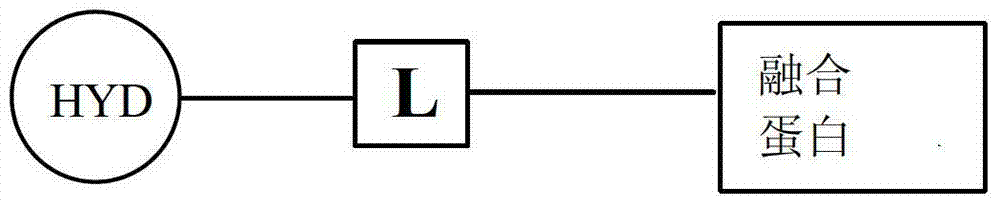
其中,是疏水基团,不是荧光部分,其ClogP至少约为1.5或如本文另外具体描述;in, is a hydrophobic group, not a fluorescent moiety, with a ClogP of at least about 1.5 or as otherwise specifically described herein;


L是化学连接体,其共价结合所述
在本发明的优选方面,

其中,
Z是连接
X是连接Z与基团YR的基团;和X is the group linking Z to the group Y R ; and
YR是与融合蛋白,优选与所述融合蛋白上的自标记标签,具有反应性的基团,其形成连接疏水基团和融合蛋白的共价键。 YR is a group reactive with a fusion protein, preferably with a self-labeling tag on said fusion protein, which forms a covalent bond linking the hydrophobic group and the fusion protein.
在优选方面,Z是不存在(键)的、-(CH2)i-O、-(CH2)i-S、-(CH2)i-N-R、
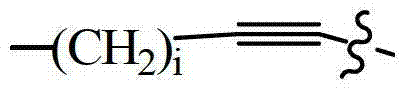
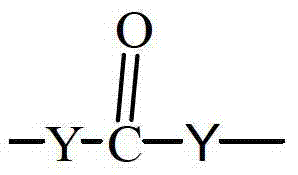
每一个R均是H或C1-C3烷基或链烷醇基团;each R is H or a C 1 -C 3 alkyl or alkanol group;
每一个Y均独立地是键、O、S或N-R;each Y is independently a bond, O, S, or N-R;
和每一个i均独立地是0至100、1至75、1至60、1至55、1至50、1至45、1至40、2至35、3至30、1至15、1至10、1至8、1至6、1、2、3、4或5;and each i is independently 0 to 100, 1 to 75, 1 to 60, 1 to 55, 1 to 50, 1 to 45, 1 to 40, 2 to 35, 3 to 30, 1 to 15, 1 to 10, 1 to 8, 1 to 6, 1, 2, 3, 4 or 5;
在优选方面,X是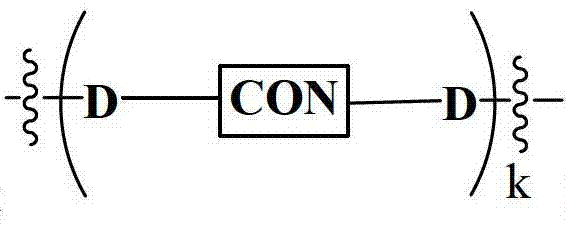
其中,每一个D均独立地是键(不存在)、where each D is independently a key (absent),

-(CH2)m'-;或-(CH 2 ) m' -; or
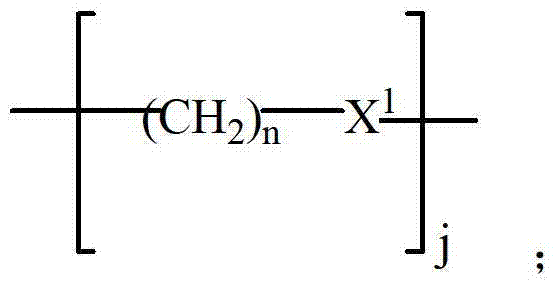
j是1至100、1至75、1至60、1至55、1至50、1至45、1至40、2至35、3至30、1至15、1至10、1至8、1至6、1、2、3、4或5;j is 1 to 100, 1 to 75, 1 to 60, 1 to 55, 1 to 50, 1 to 45, 1 to 40, 2 to 35, 3 to 30, 1 to 15, 1 to 10, 1 to 8, 1 to 6, 1, 2, 3, 4 or 5;
k是1至100、1至75、1至60、1至55、1至50、1至45、1至40、2至35、3至30、1至15、1至10、1至8、1至6、1、2、3、4或5;优选k是1、2、3、4或5;k is 1 to 100, 1 to 75, 1 to 60, 1 to 55, 1 to 50, 1 to 45, 1 to 40, 2 to 35, 3 to 30, 1 to 15, 1 to 10, 1 to 8, 1 to 6, 1, 2, 3, 4 or 5; preferably k is 1, 2, 3, 4 or 5;
m’是1至100、1至75、1至60、1至55、1至50、1至45、1至40、2至35、3至30、1至15、1至10、1至8、1至6、1、2、3、4或5;m' is 1 to 100, 1 to 75, 1 to 60, 1 to 55, 1 to 50, 1 to 45, 1 to 40, 2 to 35, 3 to 30, 1 to 15, 1 to 10, 1 to 8 , 1 to 6, 1, 2, 3, 4 or 5;
n是1至100、1至75、1至60、1至55、1至50、1至45、1至40、2至35、3至30、1至15、1至10、1至8、1至6、1、2、3、4或5;n is 1 to 100, 1 to 75, 1 to 60, 1 to 55, 1 to 50, 1 to 45, 1 to 40, 2 to 35, 3 to 30, 1 to 15, 1 to 10, 1 to 8, 1 to 6, 1, 2, 3, 4 or 5;
X1是O、S或N-R、优选O; X is O, S or NR, preferably O;
Y同上;和Y ditto; and


其中,X2是O、S、NR4、S(O)、S(O)2、-S(O)2O、-OS(O)2或OS(O)2O;Wherein, X 2 is O, S, NR 4 , S(O), S(O) 2 , -S(O) 2 O, -OS(O) 2 or OS(O) 2 O;
X3是O、S、NR4;和 X3 is O, S, NR4 ; and
R4是H或C1-C3烷基或R 4 is H or C 1 -C 3 alkyl or
其药学上可接受的盐、对映异构体或立体异构体。Its pharmaceutically acceptable salts, enantiomers or stereoisomers.
优选地,
在优选方面,YR是与融合蛋白的自标记标签具有反应性的基团,其中,自标记标签优选是Halo标签、Snap标签、Clip标签、ACP标签或MCP标签。优选地,自标记标签是Halo标签,和Halo标签的反应性底物是卤代烷基团——该卤代烷基团其任选地被一个或两个醚基团取代,优选C2-C12氯烷基——该氯烷基任选地被一个(单醚)或两个(二醚)醚基团取代,甚至更优选地,卤烷基二醚基团。在优选方面,卤烷基二醚基团根据如下化学结构:In a preferred aspect, YR is a group reactive with the self-labeling tag of the fusion protein, wherein the self-labeling tag is preferably Halo tag, Snap tag, Clip tag, ACP tag or MCP tag. Preferably, the self-labeling tag is a Halo tag, and the reactive substrate of the Halo tag is a haloalkyl group which is optionally substituted with one or two ether groups, preferably a C2 - C12 chloroalkane Group - the chloroalkyl group is optionally substituted with one (monoether) or two (diether) ether groups, even more preferably, a haloalkyl diether group. In a preferred aspect, the haloalkyl diether group is according to the following chemical structure:


其中,Z和X如上面另外描述。in, Z and X are as otherwise described above.
在可选实施方式中,当融合蛋白包含自标记标签如Snap标签时,YR是苄基鸟嘌呤基团In an alternative embodiment, when the fusion protein comprises a self-labeling tag such as a Snap tag, YR is a benzylguanine group
,其提供根据如下化学结构的化合物:, which provides compounds according to the following chemical structure:

其中,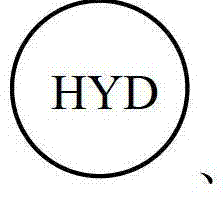
在可选实施方式中,当融合蛋白包含自标记标签如Clip标签时,YR是苄基胞嘧啶基团In an alternative embodiment, when the fusion protein comprises a self-labeling tag such as a Clip tag, YR is a benzylcytosine group

,其形成根据如下化学结构的化合物:, which forms a compound according to the following chemical structure:
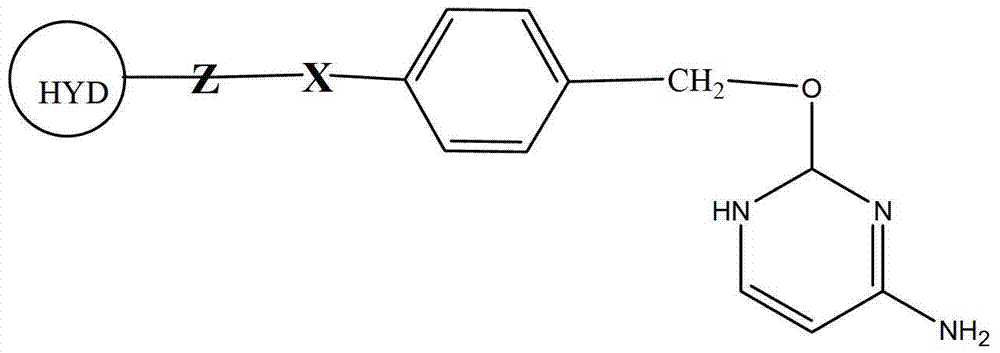
其中,
在进一步可选实施方式中,当融合蛋白包含自标记标签如ACPtag或MCPtag时,YR是辅酶A衍生物In a further alternative embodiment, when the fusion protein comprises a self-labeling tag such as ACPtag or MCPtag, YR is a coenzyme A derivative

,其形成根据如下化学结构的化合物:, which forms a compound according to the following chemical structure:

其中,
通过融合蛋白的自标记标签对上述化合物的反应部分的作用,上述各化合物将产生共价连接于融合蛋白的化合物。Each of the above compounds will produce a compound covalently linked to the fusion protein through the action of the self-labeling tag of the fusion protein on the reactive moiety of the above compound.
通过自标记标签的作用产生的代表性化合物由如下结构表示:A representative compound generated by the action of a self-labeling tag is represented by the following structure:
其中,

YRp是化学部分,其通过融合蛋白——优选融合蛋白的自标记标签蛋白质——对基团YR的作用而形成。Y Rp is a chemical moiety formed by the action of a fusion protein, preferably a self-labeling tag protein of the fusion protein, on the group Y R .
在包含halotag自标记标签蛋白质的融合蛋白的情况下,反应产物是根据如下化学结构的化合物:In the case of a fusion protein comprising a halotag self-labeling tag protein, the reaction product is a compound according to the following chemical structure:

其中,
在包含snaptap或cliptag自标记标签蛋白质的融合蛋白的情况下,反应产物是根据如下化学结构的化合物:In the case of fusion proteins comprising snaptap or cliptag self-labeling tag proteins, the reaction product is a compound according to the following chemical structure:

其中,

在包含ACP或MCP自标记标签蛋白质的融合蛋白的情况下,反应产物是根据如下化学结构的化合物:In the case of fusion proteins comprising ACP or MCP self-labeling tag proteins, the reaction product is a compound according to the following chemical structure:

其中,

附图简介Brief introduction to the drawings
图1显示利用HaloTag融合蛋白系统的疏水性标记策略Figure 1 shows the hydrophobic labeling strategy using the HaloTag fusion protein system
(a)代表性HaloTag配体:HyT5、HyT12、HyT13、HyT16、HyT21和HyT22的化学结构。(b)表达HA-HaloTag-荧光素酶的HEK293T细胞经所示化合物以1μM处理24小时,此时,进行荧光素酶分析。(a) Chemical structures of representative HaloTag ligands: HyT5, HyT12, HyT13, HyT16, HyT21 and HyT22. (b) HEK293T cells expressing HA-HaloTag-luciferase were treated with the indicated compounds at 1 μM for 24 hours, at which time luciferase assays were performed.
图2显示HyT13导致HaloTag融合蛋白的降解Figure 2 shows that HyT13 leads to the degradation of HaloTag fusion protein
(a)表达HA-EGFP-HaloTag的Flp-In293细胞经所示浓度的HyT13处理24小时。溶胞产物用抗-HA和抗-β-肌动蛋白抗体探测。(b)与(a)中相同的细胞系经1μMHyT13处理所示时间。最右边的样品经HyT13处理24小时,此后,提供不含HyT13的培养基达24小时。(c)与(a)中相同的细胞系经蛋白酶体抑制剂MG132(10μM)和YU101(10μM)预处理1小时,然后加入1μM HyT13。在HyT13加入后6小时,从细胞制备溶胞产物。(d)稳定表达EGFP-HaloTag的HeLa细胞经介质或1μMHyT13处理达24小时,然后,细胞内GFP荧光通过流式细胞术被量化。MFI=平均荧光强度。(e)稳定表达所示跨膜HA-HaloTag融合蛋白的HEK293T细胞经1μM HyT13处理24小时。显示的是来自至少三个试验的代表性图像;条带被量化和平均降解±SEM被显示。(f)单细胞阶段斑马鱼胚胎被注射以100ng的HA-HaloTag-Smad5cRNA,生长至256细胞阶段,然后经10μM HyT13处理24小时。显示的是来自至少三个试验的代表性图像;条带被量化和平均降解±SEM被显示。(a) Flp-In293 cells expressing HA-EGFP-HaloTag were treated with the indicated concentrations of HyT13 for 24 hours. Lysates were probed with anti-HA and anti-β-actin antibodies. (b) The same cell lines as in (a) were treated with 1 μM HyT13 for the indicated times. The rightmost sample was treated with HyT13 for 24 hours, after which medium was provided without HyT13 for 24 hours. (c) The same cell line as in (a) was pretreated with proteasome inhibitors MG132 (10 μM) and YU101 (10 μM) for 1 h, followed by the addition of 1 μM HyT13. Lysates were prepared from
图3显示通过HyT13的Halo标签降解的功能确认Figure 3 shows functional confirmation of Halo tag degradation by HyT13
(a)NIH-3T3细胞通过逆转录病毒地被感染以表达HA-HaloTag-HRas(G12V)或HA-HaloTag(D106A)-HRas(G12V)的构建体。然后,细胞经介质或1μM HyT13处理24小时。制备溶胞产物用于免疫印迹法,并且,印迹用抗-HA和抗-β-肌动蛋白抗体探测。(b)将含有10%FBS的培养基中的感染以HA-HaloTag-HRas(G12V)或HA-HaloTag(D106A)-HRas(G12V)的十万个NIH-3T3细胞在10-cm平板上铺平板。次日,将培养基替换为含1%FBS与介质或1μM HyT13的培养基。培养基每2天被更新一次,并且,在第6天将平板绘图。条,5mm。(c)如(b)中所述的集落(foci)的量化。计算来自三个独立的平板的集落数/cm2,其中,误差条表示SEM。(d)十万个表达HA-HaloTag-HRasG12V的NIH-3T3细胞在第0天被注入到裸鼠的胁中。从第0天开始,每日经IP给予小鼠介质或HyT13的注射。每日测量肿瘤大小,并且计算肿瘤体积。每一个处理组使用7只小鼠。误差条表示SEM。(a) NIH-3T3 cells were retrovirally infected to express HA-HaloTag-HRas(G12V) or HA-HaloTag(D106A)-HRas(G12V) constructs. Cells were then treated with vehicle or 1 μM HyT13 for 24 hours. Lysates were prepared for immunoblotting, and the blots were probed with anti-HA and anti-β-actin antibodies. (b) One hundred thousand NIH-3T3 cells infected with HA-HaloTag-HRas(G12V) or HA-HaloTag(D106A)-HRas(G12V) in medium containing 10% FBS were plated on 10-cm plates flat. The next day, medium was replaced with medium containing 1% FBS with medium or 1 μM HyT13. Media was refreshed every 2 days and, on
图4显示HyT13介导的HaloTag融合蛋白降解的示意图Figure 4 shows a schematic diagram of HyT13-mediated degradation of HaloTag fusion protein
融合蛋白——由感兴趣的蛋白质和HaloTag蛋白质组成——在HyT13处理后通过蛋白酶体被降解。The fusion protein - consisting of the protein of interest and the HaloTag protein - is degraded by the proteasome following HyT13 treatment.
图5显示合成的代表性化合物及其测试数目。Figure 5 shows representative compounds synthesized and their numbers tested.
图6显示HyT13的浓度曲线。表达HA-EGFP-HaloTag的Flp-In293细胞经所示浓度的HyT13处理24小时。溶胞产物用抗-HA和抗-β-肌动蛋白抗体探测,其中,β-肌动蛋白充当负荷对照。显示的是三个独立试验的定量,其中误差条表示SEM。Figure 6 shows the concentration profile of HyT13. Flp-In293 cells expressing HA-EGFP-HaloTag were treated with the indicated concentrations of HyT13 for 24 hours. Lysates were probed with anti-HA and anti-β-actin antibodies, where β-actin served as a loading control. Shown are quantifications from three independent experiments, where error bars represent SEM.
图7显示HyT13活性的时间进程。表达HA-EGFP-HaloTag细胞的Flp-In293细胞经1μM HyT13被处理所示时间,并且,溶胞产物用抗-HA和抗-β-肌动蛋白抗体探测。最右边的样品经HyT13处理24小时,此后,提供不含HyT13的培养基达24小时。显示的是三个独立试验的定量,其中误差条表示SEM。Figure 7 shows the time course of HyT13 activity. Flp-In293 cells expressing HA-EGFP-HaloTag cells were treated with 1 μM HyT13 for the indicated times, and the lysates were probed with anti-HA and anti-β-actin antibodies. The rightmost sample was treated with HyT13 for 24 hours, after which medium was provided without HyT13 for 24 hours. Shown are quantifications from three independent experiments, where error bars represent SEM.
图8显示化合物HyT13在上至20μM HyT13的剂量下不表现出毒性。HEK293或HeLa细胞经所示浓度的HyT13处理24小时。氧化还原指示剂刃天青(阿尔玛蓝(alamarBlue),Invitrogen)被用于确定细胞生存力。蛋白酶体抑制剂YU101在指示的浓度下对细胞是有毒性的,并且充当分析的阳性对照。Figure 8 shows that compound HyT13 exhibits no toxicity at doses up to 20 μM HyT13. HEK293 or HeLa cells were treated with the indicated concentrations of HyT13 for 24 hours. The redox indicator resazurin (alamar Blue, Invitrogen) was used to determine cell viability. The proteasome inhibitor YU101 was toxic to cells at the indicated concentrations and served as a positive control for the assay.
图9显示在经HyT13处理的小鼠中没有观察到毒性。裸鼠每日经IP注射以指示浓度的HyT13并在14天的试验过程中被监测体重增长。显示的是每一个处理组在14天期间增加的百分比体重±SEM。每一个处理组由7只小鼠组成。Figure 9 shows that no toxicity was observed in HyT13-treated mice. Nude mice were injected daily IP with indicated concentrations of HyT13 and monitored for body weight gain during the 14-day experiment. Shown is the percent body weight gain ± SEM for each treatment group during the 14 days. Each treatment group consisted of 7 mice.
图10显示血清HyT13测定。Webster Swiss小鼠经IP接受25mg/kg HyT13的注射。注射体积为10μL,由在DMSO中的5μL克列莫佛EL赋形剂和5μL HyT13组成。在注射后1和24小时,自颈动脉收集血液。使血液凝结10分钟,以10,000g下离心5分钟,并且,血清用移液管移到新管中。十微升血清用于生物-报道分子分析,包括使HEK293T荧光素酶-HaloTag细胞的荧光素酶活性退化的能力。HyT13的血清浓度基于随同生物-报道分子分析显示的HyT13的浓度曲线。来自未接收HyT13的小鼠的血清中没有观察到降解活性。每一个处理组均由三只小鼠组成。显示的是平均血清HyT13水平±SEM。Figure 10 shows serum HyT13 assays. Webster Swiss mice received an injection of 25 mg/kg HyT13 IP. The injection volume was 10 μL consisting of 5 μL Cremophor EL vehicle and 5 μL HyT13 in DMSO. Blood was collected from the carotid artery at 1 and 24 hours post-injection. The blood was allowed to clot for 10 minutes, centrifuged at 10,000 g for 5 minutes, and the serum was pipetted into a new tube. Ten microliters of serum were used for bio-reporter assays including the ability to degrade luciferase activity in HEK293T luciferase-HaloTag cells. Serum concentrations of HyT13 were based on the concentration curve of HyT13 shown with the bio-reporter assay. No degradation activity was observed in sera from mice not receiving HyT13. Each treatment group consisted of three mice. Shown are mean serum HyT13 levels ± SEM.
图11显示多种合成的HyT化合物对绿色荧光蛋白质halotag融合蛋白的降解的效果,每种化合物为1μM的浓度。Figure 11 shows the effect of various synthetic HyT compounds on the degradation of the green fluorescent protein halotag fusion protein, each compound at a concentration of 1 μM.
图12a-f显示如本申请实验部分所述的几种融合蛋白降解的代表性免疫印迹凝胶图像。Figures 12a-f show representative immunoblot gel images of degradation of several fusion proteins as described in the experimental section of the present application.
图13显示HA-HaloTag-HRas(G12V)融合蛋白的免疫印迹凝胶图像。Figure 13 shows the western blot gel image of HA-HaloTag-HRas(G12V) fusion protein.
图14显示如本文另外描述共价连接于融合蛋白的多种代表性疏水部分。Figure 14 shows various representative hydrophobic moieties covalently attached to fusion proteins as otherwise described herein.
图15显示根据本发明产生疏水标签(ClogP>1.5)的某些典型方法,该疏水标签具有卤代烷反应性连接体,以能够与细菌卤化酶(halotag)多肽共价连接。疏水标签(HyTs)可通过标准合成化学技术经由连接商业Promega反应性配体和RCO2H、RNH2、ROH、RCH2X而被制备。Figure 15 shows some typical methods of generating hydrophobic tags (ClogP > 1.5) with haloalkane reactive linkers to enable covalent attachment to bacterial halotag polypeptides according to the invention. Hydrophobic tags (HyTs) can be prepared by standard synthetic chemistry techniques via attachment of commercial Promega reactive ligands and RCO2H , RNH2 , ROH, RCH2X .
图16显示本发明中应用的halotag、snaptag、cliptag、ACPtag和MCPtag自标记多肽标签的十个代表性多肽(氨基酸)序列。Figure 16 shows ten representative polypeptide (amino acid) sequences of halotag, snaptag, cliptag, ACPtag and MCPtag self-labeling polypeptide tags used in the present invention.
发明详述Detailed description of the invention
根据本发明,可以应用本领域技术中的常规化学合成方法以及分子生物学、微生物学和重组DNA技术。这样的技术是众所周知的,并且在文献中被另外充分说明。参见,例如,Sambrook等,2001,"Molecular Cloning:A Laboratory Manual";Ausubel编著,1994,"Current Protocols in Molecular Biology"Volumes I-III;Celis编著,1994,"Cell Biology:A Laboratory Handbook"Volumes I-III;Coligan编著,1994,"Current Protocols in Immunology"Volumes I-III;Gait编著,1984,"OligonucleotideSynthesis";Hames&Higgins编著,1985,"Nucleic Acid Hybridization";Hames &Higgins编著,1984,"Transcription And Translation";Freshney编著,1986,"AnimalCell Culture";IRL Press,1986,"Immobilized Cells And Enzymes";Perbal,1984,"APractical Guide To Molecular Cloning"。According to the present invention, conventional chemical synthesis methods as well as molecular biology, microbiology and recombinant DNA techniques in the art can be applied. Such techniques are well known and otherwise fully explained in the literature. See, e.g., Sambrook et al., 2001, "Molecular Cloning: A Laboratory Manual"; Ausubel, ed., 1994, "Current Protocols in Molecular Biology" Volumes I-III; Celis, ed., 1994, "Cell Biology: A Laboratory Handbook" Volumes I -III; Coligan, 1994, "Current Protocols in Immunology" Volumes I-III; Gait, 1984, "Oligonucleotide Synthesis"; Hames & Higgins, 1985, "Nucleic Acid Hybridization"; Hames & Higgins, 1984, "Transcription And Translation" ; Freshney, ed., 1986, "Animal Cell Culture"; IRL Press, 1986, "Immobilized Cells And Enzymes"; Perbal, 1984, "APractical Guide To Molecular Cloning".
在提供数值范围的情况下,应该理解,该范围上下限之间的每一个中间值——除非上下文另外明确说明,相对于下限单位的十分之一(诸如,在含有数个碳原子的基团的情况下)——和任意其它陈述的范围或该陈述范围内的中间值均包含在本发明内。这些较小范围的上下限可独立地包括在这些较小的范围内,其也包含在本发明内,从属于所陈述范围内任意具体排除的界限。在陈述的范围包括界限中的一个或两个时,排除这些包含的界限的任意一个或两者的范围也包含在本发明内。Where a range of values is provided, it is understood that each intervening value between the upper and lower limits of that range—unless the context clearly dictates otherwise—is relative to the tenth of the lower limit's unit (such as, on a basis containing several carbon atoms, In the case of a group) - and any other stated range or intervening values within that stated range are encompassed within the invention. The upper and lower limits of these smaller ranges may independently be included in these smaller ranges, which are also encompassed in the invention, subject to any specifically excluded limit in the stated range. Where the stated range includes one or both of the limits, ranges excluding either or both of those included limits are also included in the invention.
除非另外限定,本文使用的所有技术和科学术语均具有本发明所属领域的普通技术人员通常理解的相同含义。尽管与本文所述的那些相似或等同的任意方法和材料也可以用于实施或测试本发明,但现在描述优选方法和材料。Unless defined otherwise, all technical and scientific terms used herein have the same meaning as commonly understood by one of ordinary skill in the art to which this invention belongs. Although any methods and materials similar or equivalent to those described herein can also be used in the practice or testing of the present invention, the preferred methods and materials are now described.
注意,如本文和所附权利要求书所使用的,单数形式"一(a)"、"和(and)"和"该(the)"包括复数指代,除非上下文另外明确说明。Note that, as used herein and in the appended claims, the singular forms "a," "and," and "the" include plural referents unless the context clearly dictates otherwise.
此外,以下术语将具有下面提出的定义。应该理解,在特定术语没有在下面限定的情况下,该术语将具有其通常被本领域普通技术人员使用的背景下的含义。Additionally, the following terms shall have the definitions set forth below. It should be understood that where a particular term is not defined below, that term will have its meaning in the context in which it is commonly used by those of ordinary skill in the art.
如本文所使用的,除非另有说明,术语“化合物”是指本文公开的任意具体化学化合物。在其在上下文的应用中,该术语一般只单个化合物,其包含疏水部分和连接体,该连接体能够与融合蛋白反应并形成共价键,如本文另外描述。在某些情况下,该术语也可以指公开的化合物的立体异构体和/或旋光异构体(包括外消旋混合物)或富含对映异构体的混合物。在本发明中,在某些情况下,尤其在本发明的优选方面,化合物包含疏水部分和连接体部分,并且,通过共价键化学连接于融合蛋白,以便疏水部分可促进和/或导致作为融合蛋白一部分的感兴趣的蛋白质降解。公开的化合物是那些稳定的并且可以对取代基和要求元素进行选择的化合物,取代基或要求元素被选择,以便稳定的化合物由公开的元素和取代基形成。As used herein, unless otherwise indicated, the term "compound" refers to any specific chemical compound disclosed herein. In its use in this context, the term generally refers to a single compound comprising a hydrophobic moiety and a linker capable of reacting with a fusion protein and forming a covalent bond, as otherwise described herein. In certain instances, the term may also refer to stereoisomers and/or optical isomers (including racemic mixtures) or enantiomerically enriched mixtures of the disclosed compounds. In the present invention, in some cases, especially in preferred aspects of the present invention, the compound comprises a hydrophobic moiety and a linker moiety, and is chemically linked to the fusion protein by a covalent bond, so that the hydrophobic moiety can facilitate and/or lead to act as Degradation of the protein of interest that is part of the fusion protein. The disclosed compounds are those which are stable and the substituents and required elements can be selected such that stable compounds are formed from the disclosed elements and substituents.
术语“患者”或“对象”在整个说明书中被用于描述进行治疗或程序包括预防性治疗或程序的动物,通常是哺乳动物并优选是人的背景下。对于针对具体动物,诸如人患者,的那些感染、状况或疾病状态治疗,术语患者是指该具体动物。在大部分情况下,本发明的患者或对象是任一性别或两种性别的人患者。The term "patient" or "subject" is used throughout the specification in the context of an animal, usually a mammal and preferably a human, undergoing a treatment or procedure, including prophylactic treatment or procedure. For those treatment of infections, conditions or disease states directed to a specific animal, such as a human patient, the term patient refers to that specific animal. In most cases, the patients or subjects of the present invention are human patients of either sex or both sexes.
除非另外说明,术语“有效的”在本文中用于描述在上下文中用于产生或实现预期结果的化合物或组合物的量,无论该结果是否涉及结合疏水部分-连接体化合物于融合蛋白上的结合或化学改性的融合蛋白(与疏水基团共价结合)的应用。术语有效的包含所有其它有效量或有效浓度术语,这些术语被另外描述或使用于本申请中。Unless otherwise stated, the term "effective" is used herein to describe the amount of a compound or composition that is used in the context to produce or achieve a desired result, whether or not that result involves binding of the hydrophobic moiety-linker compound to the fusion protein. Use of conjugated or chemically modified fusion proteins (covalently bound to hydrophobic groups). The term effective includes all other effective amount or effective concentration terms that are otherwise described or used in this application.
术语“感兴趣的蛋白质”被用于描述——除了其它之外——细胞内和细胞外蛋白质,该蛋白质在细胞内或其表面上显示功能并可以被认为是疾病状态或状况的药物靶标。感兴趣的蛋白质包括结构蛋白质、受体、酶、细胞表面蛋白质、与细胞的整体功能有关的蛋白质,包括涉及催化活性、芳化酶活性、传动蛋白活性、解旋酶活性、代谢过程(合成代谢和分解代谢)、抗氧化活性、蛋白水解、生物合成的蛋白质、具有激酶活性、氧化还原酶活性、转移酶活性、水解酶活性、裂合酶活性、异构酶活性、连接酶活性、酶调节因子活性、信号转导蛋白活性、结构分子活性、结合活性(蛋白质、脂质碳水化合物)、受体活性、细胞运动性、膜融合、细胞通信、生物学过程调节、发育、细胞分化、刺激物响应的蛋白质、行为蛋白质、细胞黏着蛋白质、涉及细胞死亡的蛋白质、涉及转运(包括蛋白质转运体活性、核转运、离子转运蛋白活性、通道转运蛋白活性、载体活性、透性酶活性、分泌活性、电子转运蛋白活性、发病机理、蛋白伴侣调节因子活性、核酸结合活性、转录调节因子活性、细胞外组构和生源说活性、翻译调节因子活性)的蛋白质。感兴趣的蛋白质可以包括来自如下的蛋白质:真核生物和原核生物,包括人,作为药物治疗的靶标;其它动物,包括驯养动物、微生物,用于确定抗生素和其它抗微生物剂和植物,甚至病毒等的靶标。感兴趣的蛋白质是包括本发明的融合蛋白的两种蛋白质中的一种,其可被发现于融合蛋白的氨基末端或羧酸末端;另一种蛋白质是报道蛋白质(例如,绿色荧光蛋白质、红色荧光蛋白质,除了别的以外)、更优选自标记标签(例如,Halotag、Snaptag、Cliptag、ACPtag或MCPtag),如本文另外描述。The term "protein of interest" is used to describe, inter alia, intracellular and extracellular proteins that exhibit function within the cell or on its surface and that may be considered drug targets for a disease state or condition. Proteins of interest include structural proteins, receptors, enzymes, cell surface proteins, proteins involved in the overall function of the cell, including those involved in catalytic activity, aromatase activity, transmission protein activity, helicase activity, metabolic processes (anabolic and catabolism), antioxidant activity, proteolysis, biosynthetic proteins, with kinase activity, oxidoreductase activity, transferase activity, hydrolase activity, lyase activity, isomerase activity, ligase activity, enzyme regulation Factor activity, signal transduction protein activity, structural molecule activity, binding activity (proteins, lipid carbohydrates), receptor activity, cell motility, membrane fusion, cell communication, regulation of biological processes, development, cell differentiation, stimuli Responsive proteins, behavioral proteins, cell adhesion proteins, proteins involved in cell death, involved in transport (including protein transporter activity, nuclear transport, ion transporter activity, channel transporter activity, carrier activity, permease activity, secretion activity, Electron transporter activity, pathogenesis, protein chaperone regulator activity, nucleic acid binding activity, transcription regulator activity, extracellular organization and biogenesis activity, translation regulator activity). Proteins of interest may include those from eukaryotes and prokaryotes, including humans, as targets for drug therapy; other animals, including domesticated animals, microorganisms for the determination of antibiotics and other antimicrobial agents, and plants, and even viruses etc. target. The protein of interest is one of the two proteins comprising the fusion protein of the invention, which can be found at the amino or carboxylic acid terminus of the fusion protein; the other protein is a reporter protein (e.g., green fluorescent protein, red Fluorescent proteins, among others), more preferably selected from labeling tags (eg Halotag, Snaptag, Cliptag, ACPtag or MCPtag), as otherwise described herein.
如本文中所使用的,术语“融合蛋白”或“嵌合蛋白质”描述通过连接两个或更多个基因——最初针对单独不同的蛋白质被编码——而产生的蛋白质。融合基因的翻译产生单个多肽(具有两个多肽区段),其功能性质来源于每一个最初的蛋白质。根据本发明的融合蛋白主要是重组融合蛋白并通过重组DNA技术被人工产生。在本发明中,融合蛋白包含感兴趣的蛋白质和第二蛋白质,该第二蛋白质可以是报道蛋白质,诸如绿色或红色荧光蛋白质,或荧光素酶蛋白质,或优选地,融合蛋白的第二蛋白质是自标记多肽标签蛋白质,诸如Halotag、Snaptag、Cliptag、ACPtag或MCPtag,如本文另外描述。注意,感兴趣的蛋白质可位于融合蛋白的氨基末端或羧基末端,并且,连接疏水部分的第二蛋白质(例如,报道分子或标签多肽)可以被相应地定位。As used herein, the term "fusion protein" or "chimeric protein" describes a protein produced by linking two or more genes originally encoded for separate distinct proteins. Translation of the fusion gene produces a single polypeptide (with two polypeptide segments) whose functional properties are derived from each of the original proteins. The fusion protein according to the present invention is mainly a recombinant fusion protein and is artificially produced by recombinant DNA technology. In the present invention, the fusion protein comprises the protein of interest and a second protein, which may be a reporter protein, such as a green or red fluorescent protein, or a luciferase protein, or preferably, the second protein of the fusion protein is Self-labeling polypeptide tag proteins, such as Halotag, Snaptag, Cliptag, ACPtag or MCPtag, as otherwise described herein. Note that the protein of interest can be located at the amino- or carboxyl-terminus of the fusion protein, and the second protein (eg, reporter or tag polypeptide) attached to the hydrophobic moiety can be positioned accordingly.
根据本发明的融合蛋白是重组融合蛋白,其通过融合基因工程而产生。这通常涉及从编码第一蛋白质的cDNA序列去除终止密码子,然后,通过连接或重叠延伸PCR——除了其它技术以外——将第二蛋白质的cDNA序列添加到框架中。引入的DNA序列然后将与其它DNA序列一起被细胞表达为单个蛋白质。该蛋白质可被改造,以包括两个最初蛋白质的全部序列或仅其中之一的部分。如果两个实体(entity)是蛋白质,则可加入间隔肽,这使得蛋白质更加可能如预期独立地折叠和表现。在连接体能够实现蛋白质纯化的情况下,蛋白质或肽融合体中的间隔肽有时通过蛋白酶或化学剂的切割位点被改造,这能够实现两个单独的蛋白质的释放。根据本发明的融合蛋白包含感兴趣的蛋白质和可以连接疏水标签的第二蛋白质。如所述,根据本发明的融合蛋白包含感兴趣的蛋白质和第二多肽,该第二多肽用于共价结合疏水部分,如本文另外描述。第二蛋白质可以是,例如报道多肽,诸如荧光蛋白质或荧光素酶蛋白质,但在本发明的优选方面,第二蛋白质是自标记多肽标签。The fusion protein according to the present invention is a recombinant fusion protein produced by fusion genetic engineering. This usually involves removing the stop codon from the cDNA sequence encoding the first protein, and then adding the cDNA sequence of the second protein in frame by ligation or overlap extension PCR, among other techniques. The introduced DNA sequence will then be expressed by the cell together with other DNA sequences as a single protein. The protein can be engineered to include the entire sequence of the two original proteins or only a portion of one of them. If the two entities are proteins, a spacer peptide can be added, which makes it more likely that the proteins will fold and behave independently as expected. Where linkers enable protein purification, spacer peptides in protein or peptide fusions are sometimes engineered with cleavage sites by proteases or chemical agents, which enable the release of two separate proteins. A fusion protein according to the invention comprises a protein of interest and a second protein to which a hydrophobic tag can be attached. As stated, a fusion protein according to the invention comprises a protein of interest and a second polypeptide for covalently binding a hydrophobic moiety, as otherwise described herein. The second protein may be, for example, a reporter polypeptide, such as a fluorescent protein or a luciferase protein, but in a preferred aspect of the invention, the second protein is a self-labeling polypeptide tag.
根据本发明的融合蛋白可通过利用商业可得的可被用于制备融合基因的表达载体而产生,,该融合基因通过插入适当的DNA序列到表达载体中被产生,而该表达载体被引入到表达细胞中,诸如酵母或细菌细胞,以表达融合蛋白。除了感兴趣的蛋白质之外,本发明还优选利用表达自标记多肽标签的融合蛋白,如本文另外描述,以将疏水部分连接至融合蛋白。The fusion protein according to the present invention can be produced by utilizing a commercially available expression vector that can be used to prepare a fusion gene that is produced by inserting an appropriate DNA sequence into an expression vector that is introduced into Expression cells, such as yeast or bacterial cells, to express the fusion protein. In addition to the protein of interest, the present invention also preferably utilizes fusion proteins expressing self-tagged polypeptide tags, as otherwise described herein, to attach hydrophobic moieties to the fusion proteins.
术语“自标记多肽标签”或“自标记标签”被用于描述用于根据本发明的优选融合蛋白的多肽标签,作为通过与自标记标签具有反应性的连接体共价连接疏水部分与感兴趣的蛋白质的手段。自标记标签包含酶(通常是突变的),该酶可插入到融合蛋白中,并且与特定部分具有反应性,以共价结合连接体(其在一端包含该特定部分和在另一端包含疏水部分)与自标记标签,从而共价结合疏水部分与融合蛋白。优选的自标记标签包括,例如halotag、snaptag、cliptag、ACPtag和MCPtag自标记标签。所有这些标签均容易从来自威斯康辛州麦迪逊市的Promega Corporation(halotag)和马萨诸塞州伊普斯维奇市的New England BioLabs,Inc的商业可得的表达载体.获得,这些载体可适应感兴趣的蛋白质的基因的剪接于表达载体中,以产生包含感兴趣的蛋白质和自标记多肽标签的融合蛋白。The term "self-labeling polypeptide tag" or "self-labeling tag" is used to describe a polypeptide tag for a preferred fusion protein according to the invention as a covalently linked hydrophobic moiety to the protein of interest via a linker reactive with the self-labeling tag. means of protein. The self-labeling tag contains an enzyme (usually mutated) that can be inserted into the fusion protein and is reactive with a specific moiety to covalently bind a linker (which contains the specific moiety at one end and a hydrophobic moiety at the other end) ) and self-labeling tags to covalently bind the hydrophobic moiety to the fusion protein. Preferred self-labeling tags include, for example, halotag, snaptag, cliptag, ACPtag and MCPtag self-labeling tags. All of these tags are readily available from commercially available expression vectors from Promega Corporation (halotag), Madison, Wisconsin, and New England BioLabs, Inc., Ipswich, Mass. The gene for the protein is spliced into an expression vector to generate a fusion protein containing the protein of interest and a self-labeling polypeptide tag.
halotag自标记多肽标签是基于halotag蛋白质——34kDa突变细菌水解酶(卤代烷脱卤素酶),其已由Promega公司整合到表达载体中,是商业可得的。例如,halotag2自标记标签(卤代烷脱卤素酶)序列SEQ ID NO:1(见图16)可在

snaptag自标记多肽标签是基于DNA修复蛋白质O6-烷基鸟嘌呤-DNA烷基转移酶的20kDa突变体,该DNA修复蛋白质O6-烷基鸟嘌呤-DNA烷基转移酶特异性地和快速地与苄基鸟嘌呤(BG)衍生物反应,如本文另外描述,导致snaptag通过存在于snaptag上的硫基团和苄基鸟嘌呤合成探针的苄基被含有探针的合成疏水部分不可逆地共价标记。snaptag与BG衍生物的反应速率在很大程度上独立于附着于BG的合成探针的性质,并允许snap融合蛋白被多种合成探针标记。用于将snaptag整合到多种融合蛋白中的表达载体(例如,psnap-tag(m)、psnap-tag(m)2、psnap-tag(T7)和psnap-tag(T7)-2载体)可从New England Biolabs,Inc.,USA获得。每一种snaptag多肽(snaptagm、snaptagm2、snaptagT7和snaptagT7-2)的多肽序列可以在图16中找到,如:psnap-tag(m)(SEQ ID NO:3)、psnap-tag(m)2(SEQ IDNO:4)、psnap-tag(T7)(SEQ ID NO:5)和psnap-tag(T7)-2(SEQ ID NO:6)。The snaptag self-labeling polypeptide tag is based on a 20kDa mutant of the DNA repair protein O 6 -alkylguanine -DNA alkyltransferase that specifically and rapidly Reaction of benzylguanine (BG) derivatives, as otherwise described herein, causes the snaptag to be irreversibly dislodged by the synthetic hydrophobic moiety containing the probe through the sulfur group present on the snaptag and the benzyl group of the benzylguanine synthetic probe Covalent labeling. The rate of snaptag reaction with BG derivatives is largely independent of the nature of the synthetic probe attached to BG and allows snap fusion proteins to be labeled with a variety of synthetic probes. Expression vectors (e.g., psnap-tag(m), psnap-tag(m)2, psnap-tag(T7), and psnap-tag(T7)-2 vectors) for incorporating snaptags into various fusion proteins are available Obtained from New England Biolabs, Inc., USA. The polypeptide sequence of each snaptag polypeptide (snaptagm, snaptagm2, snaptagT7 and snaptagT7-2) can be found in Figure 16, such as: psnap-tag (m) (SEQ ID NO: 3), psnap-tag (m) 2 ( SEQ ID NO:4), psnap-tag(T7)(SEQ ID NO:5) and psnap-tag(T7)-2(SEQ ID NO:6).
cliptag自标记多肽标签基于snaptag DNA烷基转移酶酶的突变,导致不同的底物特异性。在cliptag蛋白质的情况下,该蛋白质特异性地与O2-苄基胞嘧啶(BC)衍生物反应,通过cliptag上的硫基团和苄基胞嘧啶衍生物上的苄基,在附着于O2-苄基胞嘧啶的合成探针和cliptag之间形成共价键。SNAP-和CLIP-标签融合蛋白可在活细胞中被同时并特异性地标记以不同的合成探针。用于将sliptag整合到多种融合蛋白中的表达载体(例如,clip-tag(m)载体,可得自New England Biolabs,Inc.,USA)。Cliptag多肽(cliptagm)的多肽序列可以在图16中找到,如:pclip-tag(m)(SEQID NO:7)。ClipTag self-labeling peptide tags are based on mutations in the SnapTag DNA alkyltransferase enzyme, resulting in different substrate specificities. In the case of cliptag proteins, the protein reacts specifically with O2-benzylcytosine (BC) derivatives, through the sulfur group on the cliptag and the benzyl group on the benzylcytosine derivatives, after attaching to O2- A covalent bond is formed between the synthetic probe of benzylcytosine and the cliptag. SNAP- and CLIP-tag fusion proteins can be simultaneously and specifically labeled with different synthetic probes in living cells. Expression vectors for incorporating sliptags into various fusion proteins (eg, clip-tag(m) vectors, available from New England Biolabs, Inc., USA). The polypeptide sequence of Cliptag polypeptide (cliptagm) can be found in Figure 16, such as: pclip-tag (m) (SEQID NO: 7).
ACP和MCP标签的应用稍微不同于snap和clip融合蛋白的标记,因为ACP和MCP标签是基于酶催化的翻译后修饰。在该方法中,感兴趣的蛋白质被融合至酰基载体蛋白质(ACP),并且,相应的融合蛋白被特异性地标记以CoA衍生物——通过由磷酸泛酰巯基乙胺基转移酶AcpS(SCP合成酶)催化的翻译后修饰。ACPtag具有9kDa的小尺寸。MCPtag——其是具有相似大小的ACP标签突变体——被磷酸泛酰巯基乙胺基转移酶Sfp(Sfp合成酶)而不是被ACP合成酶标记,从而允许在一个样品中用不同探针标记ACP和MCP选择性地融合蛋白。与halotag、snaptag和cliptag的底物相反,ACPtag(ACPtagm和ACPtagm-2)和MCPtag(MCPtagm)的底物不是细胞透性的,尽管该方法可被容易地用于感兴趣的蛋白质是细胞表面蛋白质的情况。这些标签(pACP-tag(m),pACP-tag(m)-2和pMCP-tag(m))的表达载体可得自New England Biologics,Inc.,Massachussets,USA。这些表达载体可用于容易地适应多种感兴趣的蛋白质,以提供各种融合蛋白,从而在根据本发明的方法中确定感兴趣的蛋白质的功能性和重要性。这些载体可适应感兴趣的蛋白质的基因的剪接于表达载体中,以产生表达于大肠杆菌以及其他表达载体中的包含感兴趣的蛋白质和自标记多肽标签的融合蛋白。ACPtag和MCPtag多肽各自的多肽序列可以在图16中找到,如:pACP-tag(m)(SEQ ID NO:8)、pACP-tag(m)-2(SEQ ID NO:9)和pMCP-tag(m)(SEQ ID NO:10)。The application of ACP and MCP tags is slightly different from the tagging of snap and clip fusion proteins because ACP and MCP tags are based on enzyme-catalyzed post-translational modifications. In this method, the protein of interest is fused to an acyl carrier protein (ACP), and the corresponding fusion protein is specifically labeled with a CoA derivative—by phosphopantetheinyl transferase AcpS (SCP Synthetase) catalyzed post-translational modification. ACPtag has a small size of 9kDa. MCPtag - which is an ACP tag mutant of similar size - is tagged by phosphopantetheinyl transferase Sfp (Sfp synthase) instead of ACP synthase, allowing labeling with different probes in one sample ACP and MCP are selectively fused proteins. In contrast to the substrates of halotag, snaptag, and cliptag, the substrates of ACPtag (ACPtagm and ACPtagm-2) and MCPtag (MCPtagm) are not cell permeable, although this method can be readily adapted for proteins of interest that are cell surface proteins Case. Expression vectors for these tags (pACP-tag(m), pACP-tag(m)-2 and pMCP-tag(m)) are available from New England Biologics, Inc., Massachusetts, USA. These expression vectors can be used to easily adapt a variety of proteins of interest to provide various fusion proteins to determine the functionality and importance of the protein of interest in the methods according to the invention. These vectors can accommodate the splicing of the gene of the protein of interest into expression vectors to produce fusion proteins containing the protein of interest and a self-labeling polypeptide tag expressed in E. coli and other expression vectors. The respective polypeptide sequences of ACPtag and MCPtag polypeptides can be found in Figure 16, such as: pACP-tag(m)(SEQ ID NO:8), pACP-tag(m)-2(SEQ ID NO:9) and pMCP-tag (m) (SEQ ID NO: 10).
用于本发明的优选的自标记标签——halotag、snaptag、cliptag、ACPtag和MCPtag,可在细胞分析和体外应用中用于以包含本文所述疏水部分的合成探针选择性地标记相应的融合蛋白。Preferred self-labeling tags for use in the present invention - halotag, snaptag, cliptag, ACPtag and MCPtag, can be used in cellular assays and in vitro applications to selectively label corresponding fusions with synthetic probes comprising hydrophobic moieties as described herein protein.
术语“疏水基团”或“疏水部分”被用于描述共价连接于根据本发明的融合蛋白的疏水基团,其使融合蛋白中感兴趣的蛋白质失稳和降解,使得融合蛋白在细胞中降解(蛋白酶体降解)。在本发明中,疏水基团具有以下理化特征,具体地,如由如下所表示的:其ClogP值至少约为1.5、至少约1.75、至少约2.0、至少约2.25、至少约2.5、至少约2.75、至少约3.0、至少约3.25、至少约3.5、至少约3.75、至少约4.0、至少约4.25、至少约4.5、至少约4.75、至少约5.0、至少约5.25、至少约5.5。The term "hydrophobic group" or "hydrophobic moiety" is used to describe a hydrophobic group covalently attached to a fusion protein according to the invention, which destabilizes and degrades the protein of interest in the fusion protein, making the fusion protein stable in cells. Degradation (proteasomal degradation). In the present invention, the hydrophobic group has the following physicochemical characteristics, specifically, as represented by: its ClogP value is at least about 1.5, at least about 1.75, at least about 2.0, at least about 2.25, at least about 2.5, at least about 2.75 , at least about 3.0, at least about 3.25, at least about 3.5, at least about 3.75, at least about 4.0, at least about 4.25, at least about 4.5, at least about 4.75, at least about 5.0, at least about 5.25, at least about 5.5.
ClogP是利用ClogP软件可被容易计算的值,该ClogP软件可得自Biobyte,Inc.,Claremont,California,USA,并适用于应用Windows、linux或Apple操作系统的任何计算机。ClogP软件容易适于多种化学程序,包括ChemDraw程序和相关化学结构制图程序。ClogP制定给化学剂或部分的疏水性的值是基于log P正辛醇/水(logPOW)的测定,其是辛醇和水中分子或部分的分配系数的对数(log)。ClogP精确地估计logPOW数,并提供可容易应用于本发明的值的读取。较新版本的ChemDraw软件——可得自CambridgeSoft,Inc.,Cambridge Massachusetts,USA——结合与ClogP软件连接和提供ClogP计算的能力,这可通过仅仅绘制分子和对待利用的疏水分子或部分应用该软件的ClogP计算而容易地实现。因此,根据本发明,事实上,任何疏水部分均可被提出,和被化学合成,以及被结合到反应性连接体中,同时预期该部分在结合到如本文别处所公开的融合蛋白中时,将按照本发明方法导致融合蛋白(包含感兴趣的蛋白质)的降解。ClogP is a value that can be easily calculated using ClogP software, available from Biobyte, Inc., Claremont, California, USA, for any computer using Windows, linux, or Apple operating systems. ClogP software is readily adaptable to a variety of chemical programs, including the ChemDraw program and related chemical structure drawing programs. The value assigned to the hydrophobicity of a chemical agent or moiety by ClogP is based on the measurement of log P n-octanol/water (logPOW), which is the logarithm (log) of the partition coefficient of molecules or moieties in octanol and water. ClogP accurately estimates logPOW numbers and provides readouts of values that can be readily applied to the present invention. Newer versions of ChemDraw software—available from CambridgeSoft, Inc., Cambridge Massachusetts, USA—combine the ability to interface with ClogP software and provide ClogP calculations by simply drawing the molecule and applying the hydrophobic molecule or part to be utilized. The ClogP calculation of the software is easily realized. Thus, in accordance with the present invention, virtually any hydrophobic moiety can be proposed, and chemically synthesized, and incorporated into a reactive linker, with the expectation that the moiety, when incorporated into a fusion protein as disclosed elsewhere herein, The methods according to the invention will result in the degradation of the fusion protein (comprising the protein of interest).
在本发明中,事实上,计算ClogP值至少约为1.5的任何疏水基团(如上文别处所公开的)均可用于促进融合蛋白中感兴趣的蛋白质的降解。代表性疏水基团包括含有至少三个碳原子的任选地取代的烃基,诸如任选地取代的C3-C30烷基、烯基或炔基,包括线性、支链或环状(包括二环、金刚烷基和稠合环基团)烃基、芳基,包括含有单环或2个或更多个稠合环(例如,二、三或四个稠合环)的芳基,诸如任选地取代的苯基,包括任选地取代的萘基(包括1-或2-萘基)、任选地取代的蒽基、菲基和苯甲酰甲基(phenacenyl)
术语“烃”或“烃基”是指含有碳和氢的任何单价自由基,其在性质上可以是直链的、支链的或环状的。烃包括线性、分支和环状烃,包括烷基、亚烷基、饱和和不饱和烃基(例如,烯、炔),包括取代和未取代的芳族基团。The term "hydrocarbon" or "hydrocarbyl" refers to any monovalent free radical containing carbon and hydrogen, which may be linear, branched or cyclic in nature. Hydrocarbons include linear, branched, and cyclic hydrocarbons, including alkyl, alkylene, saturated and unsaturated hydrocarbon groups (eg, alkenes, alkynes), including substituted and unsubstituted aromatic groups.
“烷基”是指含有碳和氢的、充分饱和的单价自由基,其可以是环状的、支链或直链,含有1至30个碳原子、1至20个碳原子,优选1至10个碳原子。烷基的实例是甲基、乙基、正丁基、正己基、正庚基、正辛基、异丙基、2-甲基丙基、环丙基、环丙基甲基、环丁基、环戊基、环戊基乙基、环己基乙基和环己基。优选的烷基是C1-C6或C3-C10烷基。“亚烷基”是指充分饱和的二价烃(可以是直链、支链或环状的),并且,其任选地被取代。用于表示根据本发明化合物的取代基团的其他术语如本领域常规使用。"Alkyl" means a substantially saturated monovalent free radical containing carbon and hydrogen, which may be cyclic, branched or straight chain, containing 1 to 30 carbon atoms, 1 to 20 carbon atoms, preferably 1 to 10 carbon atoms. Examples of alkyl groups are methyl, ethyl, n-butyl, n-hexyl, n-heptyl, n-octyl, isopropyl, 2-methylpropyl, cyclopropyl, cyclopropylmethyl, cyclobutyl , cyclopentyl, cyclopentylethyl, cyclohexylethyl and cyclohexyl. Preferred alkyl groups are C 1 -C 6 or C 3 -C 10 alkyl groups. "Alkylene" means a substantially saturated divalent hydrocarbon (which may be linear, branched or cyclic), and which is optionally substituted. Other terms used to denote substituent groups of compounds according to the invention are as conventionally used in the art.
在上下文中,“芳基”或“芳族的”是指取代的或未取代的单价芳族自由基,其具有单环(例如,苯)或多个稠环(例如,萘基、蒽基、菲基、苯甲酰甲基),并可在环(一个或多个)上的任何位置结合于根据本发明的化合物。在上下文中,芳基的其它实例可包括杂环芳族环系统“杂芳基”基团——其环(单环的)中具有一个或多个氮、氧或硫原子,该环诸如咪唑、呋喃基、吡咯、吡啶基、呋喃基、噻吩、噻唑、吡啶、嘧啶、吡嗪、三唑、
术语“环状的”是指任选地取代的碳环或杂环基团,优选5-或6-元环或稠合环(二、三或四环),优选含有8至14个原子。杂环或杂环基团应该含有至少一个单环——含有3个和7个之间的原子,其中,上至四个原子不是碳并且选自氮、硫和氧。根据本发明的碳环和杂环可以是不饱和的或饱和的。优选的环状基团是烃基,优选不饱和烃基,其任选地被取代。其它优选的环状基团是双环烷基或金刚烷基,其每一种均可任选地被取代。优选的杂环基团是杂芳基或杂芳族基团。The term "cyclic" refers to optionally substituted carbocyclic or heterocyclic groups, preferably 5- or 6-membered rings or fused rings (bi-, tri- or tetracyclic), preferably containing 8 to 14 atoms. A heterocycle or heterocyclic group should contain at least one monocyclic ring - containing between 3 and 7 atoms, of which up to four atoms are not carbon and are selected from nitrogen, sulfur and oxygen. The carbocycles and heterocycles according to the invention may be unsaturated or saturated. Preferred cyclic groups are hydrocarbyl groups, preferably unsaturated hydrocarbyl groups, which are optionally substituted. Other preferred cyclic groups are bicycloalkyl or adamantyl, each of which may be optionally substituted. Preferred heterocyclic groups are heteroaryl or heteroaromatic groups.
术语"杂环基团"在整个本发明说明书中被用于指芳族(“杂芳基”)或非芳族环状基团,其形成环(一个或多个)并包括至少一个杂原子,诸如氮、硫或氧,除了形成环的其他原子以外。杂环可以是饱和的(杂环)或不饱和的(杂芳基)。示例性杂环基团包括,例如吡咯烷基、哌啶基、吗啉基、吡咯、吡啶、吡啶酮、嘧啶、咪唑、吲哚、喹啉、异喹啉、喹嗪、2,4-二氮杂萘、1,5-二氮杂萘、喹唑啉、噌啉、吖啶、phenacene、噻吩、苯并噻吩、呋喃、吡喃、苯并呋喃、噻唑、苯并噻唑、吩噻嗪和喹诺酮(carbostyryl),更优选吡咯烷基、哌啶基、吗啉基、吡咯、吡啶、噻吩、苯并噻吩、噻唑、苯并噻唑、喹啉、喹唑啉、噌啉和喹诺酮,,甚至更优选噻唑、喹啉、喹唑啉、噌啉、喹诺酮、哌嗪基、N-甲基哌嗪基、四氢吡喃基、1,4-二
可用于本发明的示例性杂芳基部分包括例如,吡咯、吡啶、吡啶酮、哒嗪、嘧啶、吡嗪、吡唑、咪唑、三唑、四唑、吲哚、异吲哚、吲嗪、嘌呤、吲唑、喹啉、异喹啉、喹嗪、2,4-二氮杂萘、1,5-二氮杂萘、喹喔啉、喹唑啉、噌啉、蝶啶(pteridine)、咪唑并吡啶、咪唑并三嗪、吡嗪哒嗪、吖啶、菲啶、咔唑、咔唑啉(carbazoline)、伯啶(perimidine)、菲咯啉、phenacene、

术语“取代的”意为在上下文中在碳(或氮)位置取代的羟基、羧基、氰基(C≡N)、硝基(NO2)、卤素(优选地,1、2或3个卤素,尤其是在烷基上,尤其是甲基,诸如三氟甲基)、硫羟基、烷基(优选地,C1-C10,更优选地,C1-C6)、烷氧基(优选地,C1-C10烷基或芳基,包括苯基和取代的苯基)、酯(优选地,C1-C10烷基或芳基),包括亚烷基酯(以便附着是在亚烷基上,而不是位于酯官能上,优选被C1-C10烷基或芳基取代)、硫醚(优选地,C1-C10烷基或芳基)、硫酯(优选地,C1-C10烷基或芳基)、(优选地,C1-C10烷基或芳基)、卤素(F、Cl、Br、I)、硝基或胺(包括五-或六元环亚烷基胺,进一步包括C1-C10烷基胺或C1-C10二烷基胺)、酰胺基——其优选被一个或两个C1-C10烷基取代(包括被一个或两个C1-C10烷基取代的羧基酰胺)、链烷醇(优选地,C1-C10烷基或芳基)或链烷酸(优选地,C1-C10烷基或芳基)。优选地,术语“取代的”在其应用的上下文中意为烷基、烷氧基、卤素、酯、酮基、硝基、氰基和胺(尤其包括单-或二-C1-C10烷基取代的胺)。根据本发明的化合物中任何可取代的位置均可在本发明中被取代,但优选不多于5个,更优选不多于3个取代基存在于单环或环系统上。优选地,术语“未取代的”意为被一个或多个H原子取代。优选的取代基是具有疏水特征的那些,如本文另外描述。注意,将疏水性取代基结合到另外的疏水性较小或非疏水性部分可赋予进入(enter)部分疏水性,如针对本发明所述。用于本发明的芳基(例如,苯基、萘基)上的优选的取代基是硼烷巢式癸硼烷基团(B10H14),其尽管本身不是疏水基团,但提供显著位阻效应的有利特征,以增强本发明中融合蛋白的降解。The term "substituted" means in this context a hydroxyl, carboxyl, cyano (C≡N), nitro (NO 2 ), halogen (preferably, 1, 2 or 3 halogen) substituted at a carbon (or nitrogen) position , especially on alkyl, especially methyl, such as trifluoromethyl), thiol, alkyl (preferably, C 1 -C 10 , more preferably, C 1 -C 6 ), alkoxy ( Preferably, C 1 -C 10 alkyl or aryl, including phenyl and substituted phenyl), esters (preferably, C 1 -C 10 alkyl or aryl), including alkylene esters (so that attachment is On the alkylene, rather than on the ester function, preferably substituted by C 1 -C 10 alkyl or aryl), thioether (preferably, C 1 -C 10 alkyl or aryl), thioester (preferably preferably, C 1 -C 10 alkyl or aryl), (preferably, C 1 -C 10 alkyl or aryl), halogen (F, Cl, Br, I), nitro or amine (including penta- or Six-membered cycloalkyleneamines, further including C 1 -C 10 alkylamines or C 1 -C 10 dialkylamines), amido groups - which are preferably substituted by one or two C 1 -C 10 alkyl groups ( including carboxamides substituted by one or two C 1 -C 10 alkyl groups), alkanols (preferably C 1 -C 10 alkyl or aryl) or alkanoic acids (preferably C 1 -C 10 alkyl or aryl). Preferably, the term "substituted" in the context of its application means alkyl, alkoxy, halogen, ester, keto, nitro, cyano and amine (including especially mono- or di-C 1 -C 10 alkane substituted amines). Any substitutable position in the compounds according to the invention may be substituted in the invention, but preferably no more than 5, more preferably no more than 3 substituents are present on a single ring or ring system. Preferably, the term "unsubstituted" means substituted with one or more H atoms. Preferred substituents are those with hydrophobic character, as otherwise described herein. Note that incorporation of hydrophobic substituents into otherwise less hydrophobic or non-hydrophobic moieties can render the enter moiety hydrophobic, as described for the present invention. A preferred substituent on an aryl group (e.g., phenyl, naphthyl) for use in the present invention is the borane nested decaborane group (B 10 H 14 ), which, while not itself a hydrophobic group, provides significant An advantageous feature of steric hindrance to enhance the degradation of fusion proteins of the invention.
术语“连接体”被用于描述化学基团,在本发明的优选方面,其共价连接疏水部分与融合蛋白。具体地,连接体一端结合疏水部分,而另一端结合融合蛋白。在其最广义的方面,通过使融合蛋白上的亲核基团(胺、硫氢基或羟基)与连接疏水基团的连接体上的亲电子基团(羧酸等)反应(缩合),连接体可利用常规化学连接疏水部分与融合蛋白,从而提供经连接体连接疏水部分与融合蛋白的化合物。在某些优选实施方式中,取决于自标记标签的类型,连接体通过自标记标签对连接体(“反应性连接体”)的反应部分的作用结合至融合蛋白的自标记标签。与各种根据本发明的连接体有关的化学(chemistry)将与疏水部分连接的融合蛋白的函数,尤其在融合蛋白包含自标记蛋白质标签(halotag等,如本文另外描述)的情况下,这种情况下连接体的化学性质将反映自标记蛋白质标签的底物特异性。由于连接体的反应部分对用于本发明的融合蛋白的自标记标签是特异性的,所以位于共价结合于融合蛋白的末端(反应性末端)的连接体的化学性质将是该自标记标签蛋白质的底物特异性的函数。因此,连接体的反应部分作为融合蛋白的自标记标签的底物是特异性的,其中,自标记标签优选HALOtag、SNAPtag、CLIPtag、ACPtag或MCPtag,其在本领域中均是众所周知的。The term "linker" is used to describe the chemical group which, in a preferred aspect of the invention, covalently links the hydrophobic moiety to the fusion protein. Specifically, the linker binds the hydrophobic moiety at one end and the fusion protein at the other end. In its broadest aspect, by reacting (condensing) a nucleophilic group (amine, sulfhydryl, or hydroxyl) on a fusion protein with an electrophilic group (carboxylic acid, etc.) on a linker attached to a hydrophobic group, Linkers can utilize conventional chemistry to link the hydrophobic moiety to the fusion protein, thereby providing a compound in which the hydrophobic moiety is linked to the fusion protein via the linker. In certain preferred embodiments, depending on the type of self-labeling tag, the linker is bound to the self-labeling tag of the fusion protein by the action of the self-labeling tag on the reactive portion of the linker ("reactive linker"). The chemistry associated with the various linkers according to the invention is a function of the fusion protein to be attached to the hydrophobic moiety, especially where the fusion protein comprises a self-labeling protein tag (halotag et al., as otherwise described herein), such In this case the chemical nature of the linker will reflect the substrate specificity of the self-labeled protein tag. Since the reactive portion of the linker is specific for the self-labeling tag used in the fusion protein of the invention, the chemical nature of the linker at the end covalently bound to the fusion protein (the reactive end) will be the self-labeling tag A function of the substrate specificity of a protein. Therefore, the reactive part of the linker is specific as a substrate for the self-labeling tag of the fusion protein, wherein the self-labeling tag is preferably HALOtag, SNAPtag, CLIPtag, ACPtag or MCPtag, which are well known in the art.
优选地,自标记标签是HALOtag,尤其是卤代烷基团(优选C2-C12氯烷基,甚至更优选卤烷基二醚基团,在优选方面,根据下面化学结构的基团:Preferably, the self-labeling tag is a HALOtag, especially a haloalkyl group (preferably a C 2 -C 12 chloroalkyl group, even more preferably a haloalkyl diether group, in a preferred aspect, a group according to the following chemical structure:

在融合蛋白包含自标记标签如SNAPtag的情况下,YR是苄基鸟嘌呤基团,其形成根据如下化学结构的化合物:In case the fusion protein contains a self-labeling tag such as SNAPtag, YR is a benzylguanine group, which forms a compound according to the following chemical structure:
其中,Z和X如上面另外描述。in, Z and X are as otherwise described above.
在融合蛋白包含自标记标签如CLIPtag的情况下,YR是苄基胞嘧啶基团,其形成根据如下化学结构的化合物:In case the fusion protein contains a self-labeling tag such as CLIPtag, Y R is a benzylcytosine group which forms a compound according to the following chemical structure:
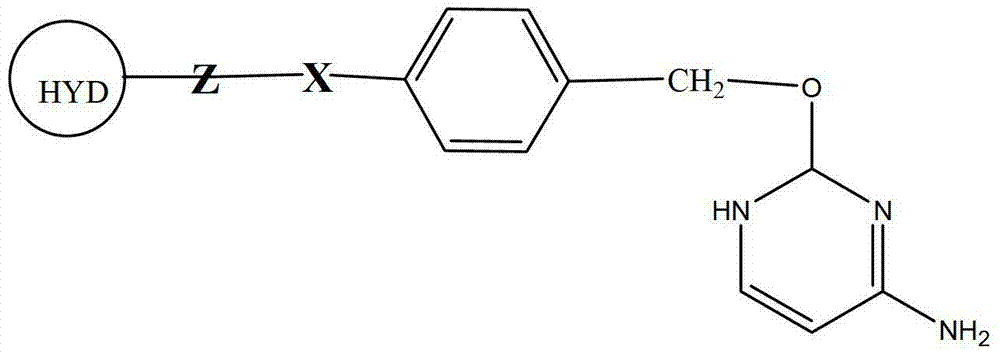
其中,
在融合蛋白包含自标记标签如ACPtag或MCPtag的情况下,YR是辅酶A衍生物,其形成根据如下化学结构的化合物:In case the fusion protein contains a self-labeling tag such as ACPtag or MCPtag, YR is a Coenzyme A derivative which forms a compound according to the following chemical structure:

其中,
术语“接合体(connector)”——在根据本发明的化合物中以符号[CON]表示——被用于描述化学部分,其任选地包括在根据本发明的化合物的连接基团中,如本文另外描述。接合体基团是产生的部分,其通过两个单独的化学区段的简单缩合而形成,该化学区段包含反应性基团,该反应性基团可提供如接合体基团,该接合体基团如另外描述产生连接基团,该连接基团在根据本发明的化合物中共价连接疏水部分与融合蛋白。注意,接合体与连接体的区别在于接合体是用于提供根据本发明的化合物的特定化学的结果,其中,这些基团的反应产物产生可鉴别的接合体基团,该接合体基团形成更长的连接基团,如本文另外描述。The term "connector" - denoted by the symbol [CON] in the compounds according to the invention - is used to describe a chemical moiety, which is optionally included in a linking group of the compounds according to the invention, such as This article describes otherwise. An adapter group is a generated moiety that is formed by simple condensation of two separate chemical segments that contain a reactive group that provides, for example, an adapter group that The groups are as described otherwise to generate linking groups which covalently link the hydrophobic moiety to the fusion protein in the compound according to the invention. Note that adapters are distinguished from linkers in that adapters are the result of specific chemistry used to provide compounds according to the invention, wherein the reaction product of these groups yields an identifiable adapter group that forms Longer linking groups, as otherwise described herein.
用于本发明的一般接合体基团包括如下化学基团:Typical adapter groups useful in the present invention include the following chemical groups:
其中,X2是O、S、NR4、S(O)、S(O)2、-S(O)2O、-OS(O)2或OS(O)2O;Wherein, X 2 is O, S, NR 4 , S(O), S(O) 2 , -S(O) 2 O, -OS(O) 2 or OS(O) 2 O;
X3是O、S、NR4;和 X3 is O, S, NR4 ; and
R4是H或C1-C3烷基。R 4 is H or C 1 -C 3 alkyl.
利用本领域中众所周知的方法容易合成根据本发明的化合物。在本发明中,提供与疏水部分共价连接的反应性连接体的优选方法遵循充分确立的合成化学方法。疏水部分可被衍生,并且,方便的方法是提供包含羧酸或其它亲电子官能团的疏水部分,以与连接体分子上的亲核基团(例如,胺、羟基或硫氢基)反应,从而提供包含疏水部分的连接体。疏水性连接体可包含反应部分,以共价结合连接体与融合蛋白,或者,疏水性连接体可被衍生,以提供能够与融合蛋白反应的官能团(例如,亲核或亲电子部分)。在利用自标记多肽标签共价连接疏水部分与融合蛋白的情况下,含有疏水性的连接体被衍生,以包含(优选地,在远离疏水部分的远末端)化学部分,该化学部分通过自标记标签(例如,halo、snap、clip、ACP或MCP)发挥作用,如本文另外描述。与自标记标签具有反应性的官能团的形成是众所周知的,并且,容易利用本领域中悉知的化学合成技术被提供。在halotag的情况下,卤代烷的形成,在本发明特别优选的方面,氯烷基二醚部分——如本文另外描述——的形成,容易通过商业可得的中间体完成。具体的合成方法提供在下面的实施例部分。在snaptag和cliptag自标记标签的苄基鸟苷和苄基胞嘧啶连接体类似物底物的情况下,这些容易通过分别经苄基鸟苷和苄基胞嘧啶封端的反应性连接体提供。Compounds according to the invention are readily synthesized using methods well known in the art. In the present invention, preferred methods of providing reactive linkers covalently attached to hydrophobic moieties follow well-established synthetic chemistry. Hydrophobic moieties can be derivatized, and, conveniently, provide hydrophobic moieties comprising carboxylic acid or other electrophilic functional groups to react with nucleophilic groups (e.g., amines, hydroxyls, or sulfhydryls) on linker molecules to thereby A linker comprising a hydrophobic moiety is provided. The hydrophobic linker may comprise a reactive moiety to covalently bind the linker to the fusion protein, or the hydrophobic linker may be derivatized to provide a functional group (eg, a nucleophilic or electrophilic moiety) capable of reacting with the fusion protein. Where a self-labeling polypeptide tag is used to covalently link a hydrophobic moiety to a fusion protein, the hydrophobicity-containing linker is derivatized to contain (preferably, at a distal end away from the hydrophobic moiety) a chemical moiety that is self-labeled Tags (eg, halo, snap, clip, ACP, or MCP) function as otherwise described herein. The formation of functional groups reactive with self-labeling tags is well known and readily provided using chemical synthesis techniques known in the art. In the case of halotag, the formation of the haloalkane, and in a particularly preferred aspect of the invention, the formation of the chloroalkyl diether moiety - as otherwise described herein - is readily accomplished through commercially available intermediates. Specific synthetic methods are provided in the Examples section below. In the case of snaptag and cliptag self-labeling tagged benzylguanosine and benzylcytosine linker analog substrates, these are readily provided by reactive linkers capped with benzylguanosine and benzylcytosine, respectively.
当提供包含疏水部分的反应性连接体后,与融合蛋白的反应开始,以共价连接疏水部分与融合蛋白。反应性连接体可通过标准化学反应共价连接于细胞外面的融合蛋白,但优选通过自标记标签在细胞内连接。反应性连接体和融合蛋白可在细胞内反应,分离,然后用于分析,以确定融合蛋白中感兴趣的蛋白质作为潜在靶标功能和重要性,或可选地,融合蛋白和反应性连接体可被细胞内引入到同一细胞中,在该细胞中进行功能和重要性分析。根据本发明的化合物可在体外或体内被利用,并可用于基于细胞的分析和用于动物模型中,条件是多种化合物相对低的毒性与.体内应用一致。The reaction with the fusion protein begins when a reactive linker comprising a hydrophobic moiety is provided to covalently link the hydrophobic moiety to the fusion protein. Reactive linkers can be covalently attached to the fusion protein outside the cell by standard chemical reactions, but are preferably attached intracellularly via a self-labeling tag. The reactive linker and fusion protein can be reacted in cells, isolated, and then used for analysis to determine the function and importance of the protein of interest in the fusion protein as a potential target, or alternatively, the fusion protein and reactive linker can be Introduced intracellularly into the same cell where analysis of function and importance is performed. The compounds according to the invention can be utilized in vitro or in vivo, and can be used in cell-based assays and in animal models, provided that the relatively low toxicity of the compounds is consistent with in vivo use.
根据本发明的化合物可用于基于细胞的分析,通过分析共价连接疏水部分的融合蛋白的降解而导致的细胞功能,确定感兴趣的蛋白质的功能和重要性。这些分析可基于原核生物和/或真核生物细胞并可涉及动物和植物蛋白质以及微生物蛋白质,诸如真菌和细菌蛋白质以及病毒蛋白质。包含感兴趣的蛋白质的融合蛋白的降解可指示感兴趣的蛋白质对调节疾病状态或状况的重要功能的重要性,所述疾病状态或状况,例如,癌细胞生长、炎性反应或其它生物学反应或细菌和/或病毒的增殖。在分析条件下融合蛋白的降解可利用本领域中可利用的许多标准技术之一容易地监测,所述标准技术包括免疫印迹、免疫分析(例如,ELISA,除了别的以外)、吸光度分析、质谱法和蛋白质组学方法,除了别的以外。事实上,任何测量蛋白质的技术均可适合用于本发明的方法——条件是其另外与利用根据本发明的化合物进行的分析的整体一致。The compounds according to the invention are useful in cell-based assays to determine the function and importance of a protein of interest by analyzing cellular function resulting from degradation of fusion proteins covalently linked to hydrophobic moieties. These assays may be based on prokaryotic and/or eukaryotic cells and may involve animal and plant proteins as well as microbial proteins such as fungal and bacterial proteins and viral proteins. Degradation of a fusion protein comprising a protein of interest can indicate the importance of the protein of interest for modulating an important function of a disease state or condition, e.g., cancer cell growth, inflammatory response, or other biological response or the proliferation of bacteria and/or viruses. Degradation of fusion proteins under analytical conditions can be readily monitored using one of many standard techniques available in the art, including immunoblotting, immunoassay (e.g., ELISA, among others), absorbance analysis, mass spectrometry methods and proteomics methods, among others. Virtually any technique for measuring proteins may be suitable for use in the methods of the invention - provided that it is otherwise consistent with the ensemble of assays performed with the compounds according to the invention.
针对药物靶标确认阐明蛋白质功能的体内功能是药物开发中的绊脚石,这可利用本发明疏水性标记方法容易地解决。例如,许多G蛋白-连接的受体(GPCRs)GPCR缺少已知的配体或功能。可以将HaloTag基因引入小鼠基因组,以便敲入的转基因编码与感兴趣的蛋白质,例如孤儿GCPR,融合的halotag融合蛋白。对表达融合蛋白的动物施用疏水标记的反应性连接体会引起融合蛋白的降解(通过促进含有反应性连接体的疏水部分与融合蛋白的共价连接),并且,产生的表型响应会模拟药物作用(例如,作为感兴趣的蛋白质的抑制剂),从而确认GPCR(或任何其它蛋白质)作为药物靶标。Confirmation of in vivo function elucidating protein function against drug targets is a stumbling block in drug development, which can be easily resolved using the hydrophobic labeling method of the present invention. For example, many G protein-linked receptors (GPCRs) GPCRs lack known ligands or functions. The HaloTag gene can be introduced into the mouse genome so that the knock-in transgene encodes a halotag fusion protein fused to a protein of interest, such as an orphan GCPR. Administration of a hydrophobically tagged reactive linker to an animal expressing a fusion protein causes degradation of the fusion protein (by facilitating covalent attachment of the hydrophobic moiety containing the reactive linker to the fusion protein) and produces a phenotypic response that mimics drug action (eg, as an inhibitor of a protein of interest), thereby identifying a GPCR (or any other protein) as a drug target.
本发明提供的时间控制优势的另外的实例是在寄生虫药物靶标确认领域。由于其复杂的生活周期,抑制某些寄生虫蛋白质的功能结果难以确定,即,蛋白质可能在两个阶段被需要——早期阶段在动物载体中和后期阶段在人类中。期望在早期阶段保留蛋白质功能,然后能够在后期阶段将其去除,以便模拟人药物对该寄生虫的作用。通过将特定寄生虫蛋白质的基因替换为与候选基因(产生感兴趣的蛋白质)融合的自标记标签(例如,halotag),然后利用疏水性标记方法引起表达的融合蛋白降解,将能够确认该候选寄生虫蛋白质作为药物靶标。Another example of the temporal control advantages provided by the present invention is in the field of parasite drug target identification. The functional consequences of inhibiting certain parasite proteins are difficult to determine due to their complex life cycle, i.e., proteins may be required at two stages - an early stage in animal vectors and a late stage in humans. The expectation is to retain protein function at an early stage and then be able to remove it at a later stage in order to mimic the effect of a human drug on the parasite. By replacing the gene for a specific parasite protein with a self-labeling tag (e.g., halotag) fused to the candidate gene (producing the protein of interest), and then using a hydrophobic tagging approach to cause degradation of the expressed fusion protein, the candidate parasite will be able to be identified. Insect proteins as drug targets.
本发明现将通过以下实施例的方式被进一步描述,对实施例的描述应被看作仅仅是示例,而不是限制本发明。The present invention will now be further described by way of the following examples, the description of which should be considered as illustrative only, and not as limiting of the invention.
实施例Example
综述review
为建立利用小分子降解任意细胞内蛋白质的通用方法,我们设法获得细胞蛋白质质量控制机构。内部疏水残基在蛋白质核心内中包埋是蛋白质折叠背后的主要驱动力,因而,认为暴露这样的疏水区域是展开蛋白质的特点21-23。例如,内质网Hsp70-类蛋白伴侣BiP特异性地结合疏水性氨基酸并且有助于使缓慢折叠的蛋白质折叠22,24。要是细胞不能正确折叠靶标蛋白质,则展开的蛋白质通过泛素-蛋白酶体系统或自噬而被去除25。我们设法通过添加疏水标签于其表面上模拟蛋白质的部分变性状态,以引起其降解。为测试该假设,我们选择由Promega开发的HaloTag脱卤素酶系统作为融合蛋白组分26。选择该系统是因为HaloTag融合蛋白可以以多种形式商业获得,并且,卤代烷反应性连接体共价结合到HaloTag结构域,表明配体对HaloTag的高度特异性。在此,我们证明在培养的细胞中以及在斑马鱼和小鼠模型中疏水性标记提供对多种大量蛋白质,包括跨膜受体,的快速和有力的控制。To establish a general method for degrading arbitrary intracellular proteins using small molecules, we sought to obtain cellular protein quality control mechanisms. The entrapment of internal hydrophobic residues within the protein core is the main driving force behind protein folding, and thus, the exposure of such hydrophobic regions is thought to be characteristic of unfolded proteins 21-23 . For example, the endoplasmic reticulum Hsp70-like chaperone BiP specifically binds hydrophobic amino acids and helps to fold slowly folding proteins 22,24 . If the cell cannot properly fold the target protein, the unfolded protein is removed by the ubiquitin-proteasome system or by autophagy 25 . We managed to mimic the partially denatured state of the protein by adding a hydrophobic tag on its surface to cause its degradation. To test this hypothesis, we chose the HaloTag dehalogenase system developed by Promega as the fusion protein component 26 . This system was chosen because HaloTag fusion proteins are commercially available in various forms, and the haloalkane-reactive linker is covalently bound to the HaloTag domain, indicating the high specificity of the ligand for HaloTag. Here, we demonstrate that hydrophobic tags provide rapid and robust control of a variety of bulk proteins, including transmembrane receptors, in cultured cells as well as in zebrafish and mouse models.
化学合成chemical synthesis
材料、纯化和分析。Materials, purification and analysis.
用于化学合成的试剂购自Sigma-Aldrich Co.,并且,其在没有进一步纯化的情况下被使用。所有反应均在烘箱干燥或火焰干燥的装配有橡胶隔片的玻璃器皿、在氮的正压力条件下进行。从钠/二苯酮蒸馏THF。从氢化钙蒸馏二氯甲烷。利用预涂覆硅胶(0.25mm)的玻璃平板进行分析薄层层析(TLC)。TLC平板通过暴露于UV光(UV)而被可视化,然后其通过浸入到高铈钼酸铵(CAM)或乙醇茚三酮水溶液(茚三酮)中而被染色,接下来,在热平板上短暂加热。采用指示的溶剂利用硅胶60(230-400目,Merck)进行快速柱层析。Reagents for chemical synthesis were purchased from Sigma-Aldrich Co. and were used without further purification. All reactions were performed under positive pressure of nitrogen in oven-dried or flame-dried glassware fitted with rubber septa. THF was distilled from sodium/benzophenone. Dichloromethane was distilled from calcium hydride. Analytical thin layer chromatography (TLC) was performed using glass plates pre-coated with silica gel (0.25 mm). TLC plates were visualized by exposing to UV light (UV), then they were stained by immersion in ceric ammonium molybdate (CAM) or ethanol aqueous ninhydrin (ninhydrin), followed by a hot plate Heat briefly. Flash column chromatography was performed using silica gel 60 (230-400 mesh, Merck) using the indicated solvents.
1H和13C光谱记录在Bruker Avance DPX-500或Bruker Avance DPX-400NMR光谱仪上。1H NMR光谱表示如下:化学位移、峰裂数(s=单峰、d=双峰、t=三峰、q=四峰、m=多峰、br=宽峰(broad))、整合(integration)和偶合常数(J)——以赫兹(Hz)表示。1H NMR化学位移相对于CDCl3(7.26ppm)和d4-MeOD(3.30ppm)报告。13CNMR相对于CDCl3(77.00ppm)和d4-MeOD(49.00ppm)的中央线被记录。高分辨率质谱在Yale University(耶鲁大学)的Keck生物技术资源实验室(KeckBiotechnology Resource Laboratory)测量。低分辨率质谱在Waters Micromass ZQ质谱仪或Perkin-Elmer API150EX LCMS光谱仪上获得。 1 H and 13 C spectra were recorded on a Bruker Avance DPX-500 or Bruker Avance DPX-400 NMR spectrometer. The 1 H NMR spectrum is expressed as follows: chemical shift, number of peak splits (s=singlet, d=doublet, t=triplet, q=quadruplet, m=multiplet, br=broad), integration (integration ) and coupling constant (J)—expressed in Hertz (Hz). 1 H NMR chemical shifts are reported relative to CDCl 3 (7.26 ppm) and d 4 -MeOD (3.30 ppm). 13 CNMR was recorded relative to the central line of CDCl 3 (77.00 ppm) and d 4 -MeOD (49.00 ppm). High resolution mass spectra were measured at the Keck Biotechnology Resource Laboratory at Yale University. Low resolution mass spectra were obtained on a Waters Micromass ZQ mass spectrometer or a Perkin-Elmer API150EX LCMS spectrometer.
合成实验程序和表征数据Synthesis of experimental procedures and characterization data
化合物(2、3、4、5、6)和对照化合物(1)。Compounds (2, 3, 4, 5, 6) and control compound (1).
方案1.疏水标签(Halotag)的一般合成方案

方案2.HyT13(3)的合成
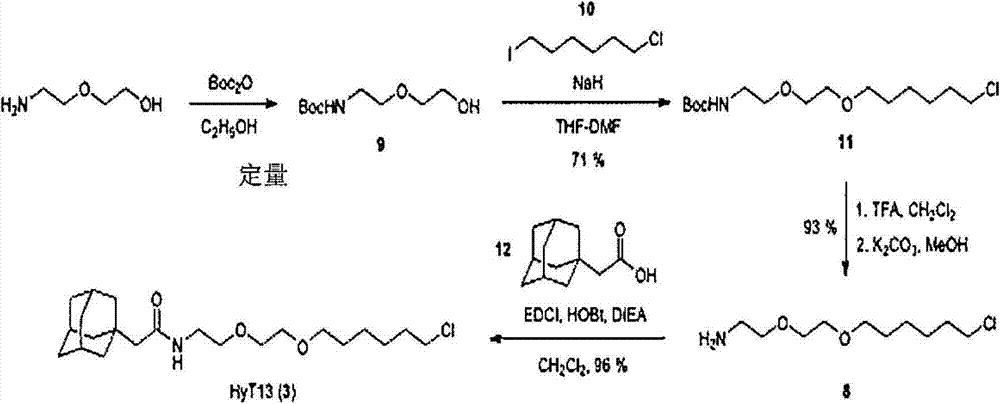
叔丁基(2-(2-羟基乙氧基)乙基)氨基甲酸酯(9):在0℃下,向2-(2-氨基乙氧基)-乙醇(2.1g,20mmol)在C2H5OH(50mL)中的溶液加入Boc2O(4.36g,20mmol)。反应混合物在rt下搅动5h、蒸发,并以CH2Cl2(20mL)和H2O(20mL)进行稀释。混合物用CH2Cl2萃取两次,并且,组合的萃取物用盐水洗涤,在Na2SO4上干燥,过滤并浓缩。残余物在硅胶上进行层析,以供应叔丁基(2-(2-羟基乙氧基)乙基)氨基甲酸酯9(4.09g,定量)。1H NMR(400MHz,CDCl3)δ5.01(brs,1H),3.76-3.72(m,2H),3.58-3.54(m,4H),3.35-3.32(m,2H),2.39(t,J=5.9Hz,1H),1.44(s,9H)。_13CNMR(100MHz,CDCl3)δ156.1,79.3,72.1,70.3,61.7,40.3,28.7。LRMS(ES+)[M+Na]+228.4。TLC(33%EtOAc,在己烷中),Rf0.08(茚三酮)。 Tert-butyl (2-(2-hydroxyethoxy) ethyl) carbamate (9) : at 0°C, to 2-(2-aminoethoxy)-ethanol (2.1g, 20mmol) in A solution in C2H5OH (50 mL) was added Boc2O (4.36 g, 20 mmol). The reaction mixture was stirred at rt for 5 h, evaporated and diluted with CH2Cl2 (20 mL) and H2O (20 mL). The mixture was extracted twice with CH2Cl2 , and the combined extracts were washed with brine, dried over Na2SO4 , filtered and concentrated . The residue was chromatographed on silica gel to provide tert-butyl(2-(2-hydroxyethoxy)ethyl)carbamate 9 (4.09 g, quantitative). 1 H NMR (400MHz, CDCl 3 ) δ5.01(brs, 1H), 3.76-3.72(m, 2H), 3.58-3.54(m, 4H), 3.35-3.32(m, 2H), 2.39(t, J =5.9Hz, 1H), 1.44(s, 9H). - 13 CNMR (100MHz, CDCl 3 ) δ 156.1, 79.3, 72.1, 70.3, 61.7, 40.3, 28.7. LRMS (ES+) [M+Na] + 228.4. TLC (33% EtOAc in hexanes), Rf 0.08 (ninhydrin).
叔丁基(2-(2-((6-氯己基)氧)乙氧基)乙基)氨基甲酸酯(11):在0℃下,向叔丁基(2-(2-羟基乙氧基)乙基)氨基甲酸酯9(2.15g,10.48mmol)在THF(20mL)和DMF(10mL)中的溶液分批加入NaH(在矿物油中的60%分散体,560mg,14.04mmol)。在0℃下搅动0.5h后,在0℃下,将6-氯-1-碘己烷10(Sigma-Aldrich,2.4mL,15.72mmol)加入混合物。在0℃下搅动反应混合物20min,在rt下搅动14h,并在0℃下用饱和NH4Cl水溶液淬火。混合物用乙酸乙酯萃取两次,并且,组合的萃取物用盐水洗涤,在Na2SO4上干燥,过滤并浓缩。残余物在硅胶上进行层析,以提供叔丁基(2-(2-((6-氯己基)氧)乙氧基)乙基)氨基甲酸酯11(2.4g,71%)。1H NMR(400MHz,CDCl3)δ4.98(brs,1H),3.61-3.51(m,8H),3.46(t,J=6.7Hz,2H),3.31(t,J=4.7Hz,2H),1.81-1.74(m,2H),1.61-1.57(m,2H),1.49-1.33(m,4H),1.43(s,9H)。13CNMR(125MHz,CDCl3)δ155.9,79.2,71.2,70.3,70.2,70.0,45.0,32.5,29.4,28.4,26.7,25.4.LRMS(ES+)[M+Na]+346.3。TLC(33%EtOAc,在己烷中),Rf0.36(茚三酮)。 Tert-butyl (2-(2-((6-chlorohexyl)oxy)ethoxy)ethyl) carbamate (11) : at 0°C, to tert-butyl (2-(2-hydroxyethyl Oxy)ethyl)carbamate 9 (2.15 g, 10.48 mmol) in THF (20 mL) and DMF (10 mL) was added NaH (60% dispersion in mineral oil, 560 mg, 14.04 mmol) in portions ). After stirring at 0 °C for 0.5 h, 6-chloro-1-iodohexane 10 (Sigma-Aldrich, 2.4 mL, 15.72 mmol) was added to the mixture at 0 °C. The reaction mixture was stirred at 0 °C for 20 min, at rt for 14 h, and quenched at 0 °C with saturated aqueous NH4Cl . The mixture was extracted twice with ethyl acetate, and the combined extracts were washed with brine, dried over Na2SO4 , filtered and concentrated . The residue was chromatographed on silica gel to afford tert-butyl(2-(2-((6-chlorohexyl)oxy)ethoxy)ethyl)carbamate 11 (2.4 g, 71%). 1 H NMR (400MHz, CDCl 3 ) δ4.98(brs, 1H), 3.61-3.51(m, 8H), 3.46(t, J=6.7Hz, 2H), 3.31(t, J=4.7Hz, 2H) , 1.81-1.74 (m, 2H), 1.61-1.57 (m, 2H), 1.49-1.33 (m, 4H), 1.43 (s, 9H). 13 CNMR (125 MHz, CDCl 3 ) δ 155.9, 79.2, 71.2, 70.3, 70.2, 70.0, 45.0, 32.5, 29.4, 28.4, 26.7, 25.4. LRMS (ES+) [M+Na] + 346.3. TLC (33% EtOAc in hexanes), Rf 0.36 (ninhydrin).
2-(2-((6-氯己基)氧)乙氧基)乙胺(8):在0℃下,向叔丁基(2-(2-((6-氯己基)氧)乙氧基)乙基)氨基甲酸酯11(1.348g,4.171mmol)在CH2Cl2(30mL)中的溶液加入TFA(5mL)。在0℃下搅动2.5h后,在真空下去除TFA和溶剂,并且,残余物用MeOH(30mL)进行稀释。将溶液冷却至5℃,并将K2CO3(1.65g,11.929mmol)加入混合物。混合物在相同的温度下被搅动10min,过滤并蒸发。残余物用H2O(20mL)稀释,并且,混合物用乙酸乙酯萃取四次。组合的萃取物在Na2SO4上干燥,过滤并浓缩。粗制胺通过快速柱层析在硅胶上纯化,以产生2-(2-((6-氯己基)氧)乙氧基)乙胺8(867mg,93%)。1H NMR(400MHz,CDCl3)δ6.47(brs,1H),3.69(t,J=4.9Hz,2H),3.63-3.60(m,2H),3.56-3.53(m,2H),3.52(t,J=6.6Hz,2H),3.44(t,J=6.8Hz,2H),3.12(t,J=4.9Hz,2H),1.79-1.71(m,2H),1.60-1.53(m,2H),1.46-1.39(m,2H),1.36-1.28(m,2H)。13C NMR(100MHz,CDCl3)δ71.1,70.1,69.7,45.0,39.4,32.4,29.1,26.5,25.1。LRMS(ES+)[M+H]+223.8,[M+Na]+246.1。TLC(10%CH3OH,在EtOAc中),Rf0.08(CAM)。 2-(2-((6-chlorohexyl)oxy)ethoxy)ethylamine (8) : at 0°C, to tert-butyl (2-(2-((6-chlorohexyl)oxy)ethoxy (1.348 g, 4.171 mmol) in CH2Cl2 (30 mL) was added TFA (5 mL). After stirring at 0 °C for 2.5 h, TFA and solvent were removed in vacuo, and the residue was diluted with MeOH (30 mL). The solution was cooled to 5 °C, and K2CO3 (1.65 g , 11.929 mmol) was added to the mixture. The mixture was stirred at the same temperature for 10 min, filtered and evaporated. The residue was diluted with H2O (20 mL), and the mixture was extracted four times with ethyl acetate. The combined extracts were dried over Na2SO4 , filtered and concentrated. The crude amine was purified by flash column chromatography on silica gel to yield 2-(2-((6-chlorohexyl)oxy)ethoxy)ethylamine 8 (867 mg, 93%). 1 H NMR (400MHz, CDCl 3 ) δ6.47(brs, 1H), 3.69(t, J=4.9Hz, 2H), 3.63-3.60(m, 2H), 3.56-3.53(m, 2H), 3.52( t, J=6.6Hz, 2H), 3.44(t, J=6.8Hz, 2H), 3.12(t, J=4.9Hz, 2H), 1.79-1.71(m, 2H), 1.60-1.53(m, 2H ), 1.46-1.39 (m, 2H), 1.36-1.28 (m, 2H). 13 C NMR (100 MHz, CDCl 3 ) δ 71.1, 70.1, 69.7, 45.0, 39.4, 32.4, 29.1, 26.5, 25.1. LRMS (ES+) [M+H] + 223.8, [M+Na] + 246.1. TLC (10% CH3OH in EtOAc), Rf 0.08 (CAM).
2-((3r,5r,7r)-金刚烷-1-基)-N-(2-(2-((6-氯己基)氧)乙氧基)乙基)乙酰胺(HyT13, 3):在rt下,向1-金刚烷乙酸12(Sigma-Aldrich,19.5mg,0.10mmol,1.0当量)和2-(2-((6-氯己基)氧)乙氧基)乙胺8(23mg,0.10mmol,1.0当量)在CH2Cl2(1.5mL)中的溶液加入HOBt(16mg,0.12mmol,1.2当量)和DIEA(52μL,3.0当量)。反应混合物在0℃下被冷却,并且,将EDCI(23mg,0.12mmol,1.2当量)加入混合物。所得混合物在rt下被搅动20h,并在0℃下用H2O(5mL)进行淬火。混合物用乙酸乙酯萃取两次,并且,组合的萃取物用盐水洗涤,在Na2SO4上干燥,过滤并浓缩。残余物在硅胶上进行层析,以提供3(HyT13,38mg,96%)。1H NMR(400MHz,CDCl3)δ5.89(brs,1H),3.61-3.59(m,2H),3.57-3.50(m6H),3.47-3.42(m,4H),1.95(s,2H),1.92(s,2H),1.80-1.73(m,2H),1.70-1.56(m,13H),1.48-1.41(m,2H),1.40-1.33(m,2H)。13C NMR(100MHz,CDCl3)δ170.9,71.2,70.2,69.9,51.7,45.0,42.5,38.9,36.7,32.7,32.4,29.4,28.6,26.6,25.3。HRMS(ES+),针对C22H38N8ClNO3[M+H]+400.2613被计算,发现为400.2609。TLC(5%CH3OH,在CH2Cl2中),Rf0.29(CAM)。 2-((3r,5r,7r)-adamantan-1-yl)-N-(2-(2-((6-chlorohexyl)oxy)ethoxy)ethyl)acetamide (HyT13, 3 ) : At rt, to 1-adamantaneacetic acid 12 (Sigma-Aldrich, 19.5mg, 0.10mmol, 1.0 equiv) and 2-(2-((6-chlorohexyl)oxy)ethoxy)ethylamine 8 (23mg , 0.10 mmol, 1.0 equiv) in CH2Cl2 (1.5 mL) was added HOBt (16 mg, 0.12 mmol, 1.2 equiv ) and DIEA (52 μL, 3.0 equiv). The reaction mixture was cooled at 0 °C, and EDCI (23 mg, 0.12 mmol, 1.2 equiv) was added to the mixture. The resulting mixture was stirred at rt for 20 h and quenched with H2O (5 mL) at 0 °C. The mixture was extracted twice with ethyl acetate, and the combined extracts were washed with brine, dried over Na2SO4 , filtered and concentrated . The residue was chromatographed on silica gel to provide 3 (HyT13, 38 mg, 96%). 1 H NMR (400MHz, CDCl 3 ) δ5.89 (brs, 1H), 3.61-3.59 (m, 2H), 3.57-3.50 (m6H), 3.47-3.42 (m, 4H), 1.95 (s, 2H), 1.92 (s, 2H), 1.80-1.73 (m, 2H), 1.70-1.56 (m, 13H), 1.48-1.41 (m, 2H), 1.40-1.33 (m, 2H). 13 C NMR (100 MHz, CDCl 3 ) δ 170.9, 71.2, 70.2, 69.9, 51.7, 45.0, 42.5, 38.9, 36.7, 32.7, 32.4, 29.4, 28.6, 26.6, 25.3. HRMS (ES+), calculated for C 22 H 38 N 8 ClNO 3 [M+H] + 400.2613, found 400.2609. TLC (5% CH3OH in CH2Cl2 ) , Rf 0.29 (CAM).
N-(2-(2-((6-氯己基)氧)乙氧基)乙基)-2,2-二苯基乙酰胺(HyT12,2): N-(2-(2-((6-chlorohexyl)oxy)ethoxy)ethyl)-2,2-diphenylacetamide (HyT12,2):
HyT12通过与HyT13(3)相同的方法被合成。HyT12 was synthesized by the same method as HyT13(3).

1H NMR(400MHz,CDCl3)δ7.35-7.24(m,10H),6.15(s,1H),4.91(s,1H),3.56-3.47(m,10H),3.42(t,J=6.7Hz,2H),1.80-1.73(m,2H),1.62-1.55(m,2H),1.48-1.41(m,2H),1.39-1.31(m,2H)。13C NMR(100MHz,CDCl3)δ171.8,139.4,128.8,128.6,127.1,71.2,70.2,69.9,69.6,59.1,45.0,39.4,32.4,29.4,26.6,25.3。LRMS(ES+)[M+H]+418.4。TLC(5%CH3OH,在CH2Cl2中),Rf0.33(UV,CAM)。 1 H NMR (400MHz, CDCl 3 ) δ7.35-7.24(m, 10H), 6.15(s, 1H), 4.91(s, 1H), 3.56-3.47(m, 10H), 3.42(t, J=6.7 Hz, 2H), 1.80-1.73 (m, 2H), 1.62-1.55 (m, 2H), 1.48-1.41 (m, 2H), 1.39-1.31 (m, 2H). 13 C NMR (100 MHz, CDCl 3 ) δ 171.8, 139.4, 128.8, 128.6, 127.1, 71.2, 70.2, 69.9, 69.6, 59.1, 45.0, 39.4, 32.4, 29.4, 26.6, 25.3. LRMS (ES+) [M+H] + 418.4. TLC (5% CH3OH in CH2Cl2 ), Rf 0.33 (UV, CAM).
N-(2-(2-((6-氯己基)氧)乙氧基)乙基)-2-(9H-芴-9-基)乙酰胺(HyT16,4): N-(2-(2-((6-chlorohexyl)oxy)ethoxy)ethyl)-2-(9H-fluoren-9-yl)acetamide (HyT16,4):
HyT16通过与HyT13(3)相同的方法被合成。HyT16 was synthesized by the same method as HyT13(3).

1H NMR(400MHz,CDCl3)δ7.75(d,J=7.5Hz,2H),7.50(d,J=7.4Hz,2H),7.38(d,J=7.4Hz,1H),7.36(d,J=7.4Hz,1H),7.29(dd,J=7.4,1.0Hz,1H),7.28(dd,J=7.4,1.0Hz,1H),6.0(brs,1H),4.52(t,J=7.4Hz,1H),3.59-3.53(m,6H),3.51-3.49(m,2H),3.47(t,J=6.7Hz,2H),3.36(t,J=6.7Hz,2H),2.59(d,J=7.4Hz,2H),1.72-1.65(m,2H),1.52-1.45(m,2H),1.39-1.32(m,2H),1.30-1.24(m,2H)。13CNMR(100MHz,CDCl3)δ171.2,146.4,140.6,127.3,127.0,124.5,119.8,71.1,70.2,69.8,69.6,45.0,43.9,40.9,39.3,32.4,29.3,26.5,25.3。LRMS(ES+)[M+H]+430.5。TLC(5%CH3OH,在CH2Cl2中),Rf0.36(CAM)。 1 H NMR (400MHz, CDCl 3 ) δ7.75(d, J=7.5Hz, 2H), 7.50(d, J=7.4Hz, 2H), 7.38(d, J=7.4Hz, 1H), 7.36(d , J=7.4Hz, 1H), 7.29(dd, J=7.4, 1.0Hz, 1H), 7.28(dd, J=7.4, 1.0Hz, 1H), 6.0(brs, 1H), 4.52(t, J= 7.4Hz, 1H), 3.59-3.53(m, 6H), 3.51-3.49(m, 2H), 3.47(t, J=6.7Hz, 2H), 3.36(t, J=6.7Hz, 2H), 2.59( d, J=7.4Hz, 2H), 1.72-1.65(m, 2H), 1.52-1.45(m, 2H), 1.39-1.32(m, 2H), 1.30-1.24(m, 2H). 13 CNMR (100MHz, CDCl 3 ) δ171.2, 146.4, 140.6, 127.3, 127.0, 124.5, 119.8, 71.1, 70.2, 69.8, 69.6, 45.0, 43.9, 40.9, 39.3, 32.4, 29.3, 26.5, 25.3. LRMS (ES+) [M+H] + 430.5. TLC (5% CH3OH in CH2Cl2 ) , Rf 0.36 (CAM).
N-(2-(2-((6-氯己基)氧)乙氧基)乙基)-2,2-二环己基乙酰胺(HyT21,5): N-(2-(2-((6-chlorohexyl)oxy)ethoxy)ethyl)-2,2-dicyclohexylacetamide (HyT21,5):
HyT21通过与HyT13(3)相同的方法被合成。HyT21 was synthesized by the same method as HyT13(3).

1H NMR(400MHz,CDCl3)δ5.85(s,1H),3.60-3.51(m,8H),3.47-3.51(m,4H),1.80-1.72(m,2H),1.71-1.57(m,13H),1.49-1.32(m,4H),1.28-1.03(m,8H),0.97-0.88(m,2H)。13C NMR(100MHz,CDCl3)δ174.2,71.2,70.2,70.1,70.0,59.4,45.0,38.7,36.4,32.5,31.5,29.6,29.5,26.7,26.6,26.5,25.4。LRMS(ES+)[M+H]+430.6。TLC(5%CH3OH,在CH2Cl2中),Rf0.34(CAM)。 1 H NMR (400MHz, CDCl 3 ) δ5.85(s, 1H), 3.60-3.51(m, 8H), 3.47-3.51(m, 4H), 1.80-1.72(m, 2H), 1.71-1.57(m , 13H), 1.49-1.32 (m, 4H), 1.28-1.03 (m, 8H), 0.97-0.88 (m, 2H). 13 C NMR (100 MHz, CDCl 3 ) δ 174.2, 71.2, 70.2, 70.1, 70.0, 59.4, 45.0, 38.7, 36.4, 32.5, 31.5, 29.6, 29.5, 26.7, 26.6, 26.5, 25.4. LRMS (ES+) [M+H] + 430.6. TLC (5% CH3OH in CH2Cl2 ) , Rf 0.34 (CAM).
(S)-N-(2-(2-((6-氯己基)氧)乙氧基)乙基)-2-(4-异丁基苯基)丙酰胺(HyT22,6): (S)-N-(2-(2-((6-chlorohexyl)oxy)ethoxy)ethyl)-2-(4-isobutylphenyl)propanamide (HyT22,6):
HyT22通过与HyT13(3)相同的方法被合成。HyT22 was synthesized by the same method as HyT13(3).

1H NMR(500MHz,CDCl3)δ7.18(d,J=8.0Hz,2H),7.09(d,J=8.0Hz,2H),5.88(s,1H),3.53-3.45(m,8H),3.44-3.36(m,5H),2.44(d,J=7.2Hz,2H),1.87-1.79(m,1H),1.61-1.55(m,2H),1.49(d,J=7.2Hz,3H),1.47-1.41(m,2H),1.38-1.32(m,2H),0.89(d,J=6.6Hz,6H)。13C NMR(125MHz,CDCl3)δ174.4,140.5,138.5,129.4,127.2,71.2,70.2,69.9,69.7,46.7,44.9,39.2,32.4,30.1,29.4,26.6,25.3,22.3,18.5。LRMS(ES+)[M+H]+412.6。TLC(10%CH3OH,在CH2Cl2中),Rf0.54(UV,CAM)。 1 H NMR (500MHz, CDCl 3 ) δ7.18(d, J=8.0Hz, 2H), 7.09(d, J=8.0Hz, 2H), 5.88(s, 1H), 3.53-3.45(m, 8H) , 3.44-3.36(m, 5H), 2.44(d, J=7.2Hz, 2H), 1.87-1.79(m, 1H), 1.61-1.55(m, 2H), 1.49(d, J=7.2Hz, 3H ), 1.47-1.41 (m, 2H), 1.38-1.32 (m, 2H), 0.89 (d, J=6.6Hz, 6H). 13 C NMR (125 MHz, CDCl 3 ) δ 174.4, 140.5, 138.5, 129.4, 127.2, 71.2, 70.2, 69.9, 69.7, 46.7, 44.9, 39.2, 32.4, 30.1, 29.4, 26.6, 25.3, 22.3, 18.5. LRMS (ES+) [M+H] + 412.6. TLC (10% CH3OH in CH2Cl2 ) , Rf 0.54 (UV, CAM).
方案3.HyT5(1)的合成
叔丁基(24-氯-11-氧-3,6,9,15,18-五氧杂-12-氮杂二十四基)氨基甲酸酯(14):在rt下,向Boc-11-氨基-3,6,9-三氧杂十一酸13(Peptides International Inc.,Boc-mini-PEG-3,200mg,0.650mmol)和2-(2-((6-氯己基)氧)乙氧基)乙胺8(145mg,0.650mmol)在CH2Cl2(4.5mL)中的溶液加入HOBt(105mg,0.780mmol)和DIEA(280μL,1.625mmol)。将混合物冷却至0℃,并将EDCI(150mg,0.780mmol)加入混合物。使所得混合物达到rt,在rt下搅动20h,并在0℃下用H2O(10mL)淬火。混合物用乙酸乙酯萃取两次,并且,组合的萃取物用盐水洗涤,在Na2SO4上干燥,过滤并浓缩。残余物在硅胶上进行层析,以提供叔丁基(24-氯-11-氧-3,6,9,15,18-五氧杂-12-氮杂二十四基)氨基甲酸酯14(296mg,89%)。1H NMR(400MHz,CDCl3)δ7.18(brs,1H),5.13(brs,1H),4.00(s,2H),3.69-3.47(m,20H),3.43(t,J=6.7Hz,2H),3.31-3.28(m,2H),1.79-1.72(m,2H),1.61-1.54(m,2H),1.47-1.40(m,2H),1.42(s,9H),1.38-1.32(m,2H)。13C NMR(100MHz,CDCl3)δ169.9,155.9,79.1,71.2,70.8,70.5,70.4,70.2,70.1,69.9,69.7,45.0,40.2,38.5,32.4,29.4,28.3,26.6,25.3。LRMS(ES+)[M+H]+535.5。TLC(10%CH3OH,在CH2Cl2中),Rf0.48(CAM)。 Tert-butyl (24-chloro-11-oxo-3,6,9,15,18-pentaoxa-12-azatetradecyl)carbamate (14) : at rt, towards Boc- 11-amino-3,6,9-trioxaundecanoic acid 13 (Peptides International Inc., Boc-mini-PEG-3, 200mg, 0.650mmol) and 2-(2-((6-chlorohexyl)oxy )Ethoxy)ethylamine 8 (145 mg, 0.650 mmol) in CH2Cl2 (4.5 mL) was added HOBt (105 mg, 0.780 mmol) and DIEA (280 μL, 1.625 mmol). The mixture was cooled to 0 °C, and EDCI (150 mg, 0.780 mmol) was added to the mixture. The resulting mixture was brought to rt, stirred at rt for 20 h, and quenched with H2O (10 mL) at 0 °C. The mixture was extracted twice with ethyl acetate, and the combined extracts were washed with brine, dried over Na2SO4 , filtered and concentrated . The residue was chromatographed on silica gel to afford tert-butyl(24-chloro-11-oxo-3,6,9,15,18-pentoxa-12-azatetradecyl)carbamate 14 (296 mg, 89%). 1 H NMR (400MHz, CDCl 3 ) δ7.18(brs, 1H), 5.13(brs, 1H), 4.00(s, 2H), 3.69-3.47(m, 20H), 3.43(t, J=6.7Hz, 2H), 3.31-3.28(m, 2H), 1.79-1.72(m, 2H), 1.61-1.54(m, 2H), 1.47-1.40(m, 2H), 1.42(s, 9H), 1.38-1.32( m, 2H). 13 C NMR (100 MHz, CDCl 3 ) δ 169.9, 155.9, 79.1, 71.2, 70.8, 70.5, 70.4, 70.2, 70.1, 69.9, 69.7, 45.0, 40.2, 38.5, 32.4, 29.4, 28.3, 26.6, 25.3. LRMS (ES+) [M+H] + 535.5. TLC (10% CH3OH in CH2Cl2 ), Rf 0.48 (CAM).
N-(24-氯-11-氧-3,6,9,15,18-五氧杂-12-氮杂二十四基)戊-4-炔酰胺(15):在0℃下,向叔丁基(24-氯-11-氧-3,6,9,15,18-五氧杂-12-氮杂二十四基)氨基甲酸酯14(170mg,0.332mmol)在CH2Cl2(2.5mL)中的溶液加入TFA(0.5mL)。反应混合物在0℃下搅动2.5h并被浓缩。粗制胺被用于下一反应而无需进一步纯化。 N-(24-chloro-11-oxo-3,6,9,15,18-pentaoxa-12-azatetradecyl)pent-4-yne amide (15) : at 0°C, to tert-Butyl(24-chloro-11-oxo-3,6,9,15,18-pentoxa-12-azatetradecyl)carbamate 14 (170 mg, 0.332 mmol) in CH 2 Cl To the solution in 2 (2.5 mL) was added TFA (0.5 mL). The reaction mixture was stirred at 0 °C for 2.5 h and concentrated. The crude amine was used in the next reaction without further purification.
在rt下,向粗制胺(0.330mmol)和4-戊炔酸(32mg,0.330mmol)在CH2Cl2(2.5mL)中的溶液加入HOBt(54mg,0.396mmol)和DIEA(150μL,0.825mmol)。混合物冷却至0℃,并将EDCI(76mg,0.396mmol)加入混合物。使所得混合物达到rt,在rt下搅动17h,并在0℃下用H2O(5mL)淬火。混合物用乙酸乙酯萃取三次,并且,组合的萃取物用盐水洗涤,在Na2SO4上干燥,过滤并浓缩。残余物在硅胶上进行层析,以提供N-(24-氯-11-氧-3,6,9,15,18-五氧杂-12-氮杂二十四基)戊-4-炔酰胺15(140mg,86%)。1H NMR(400MHz,CDCl3)δ7.18(brs,1H),6.71(brs,1H),4.02(s,2H),3.70-3.64(m,4H),3.63-3.59(m,6H),3.57-3.54(m,6H),3.53-3.48(m,4H),3.47-3.42(m,4H),2.54-2.49(m,2H),2.43-2.39(m,2H),1.99(t,J=2.6Hz,1H),1.80-1.72(m,2H),1.62-1.55(m,2H),1.48-1.40(m,2H),1.39-1.31(m,2H)。13C NMR(100MHz,CDCl3)δ171.2,170.3,83.1,71.2,70.6,70.5,70.3,70.2,70.1,70.0,69.9,69.7,69.1,45.0,39.3,38.6,35.0,32.4,29.4,26.6,25.3,14.8。LRMS(ES+)[M+H]+515.62。TLC(5%CH3OH,在CH2Cl2中),Rf0.42(UV,CAM)。To a solution of the crude amine (0.330 mmol) and 4-pentynoic acid (32 mg, 0.330 mmol) in CH2Cl2 (2.5 mL) at rt was added HOBt (54 mg, 0.396 mmol) and DIEA (150 μL, 0.825 mmol). The mixture was cooled to 0 °C, and EDCI (76 mg, 0.396 mmol) was added to the mixture. The resulting mixture was brought to rt, stirred at rt for 17 h, and quenched with H2O (5 mL) at 0 °C. The mixture was extracted three times with ethyl acetate, and the combined extracts were washed with brine, dried over Na2SO4 , filtered and concentrated . The residue was chromatographed on silica gel to afford N-(24-Chloro-11-oxo-3,6,9,15,18-pentaoxa-12-azatetradecyl)pent-4-yne Amide 15 (140 mg, 86%). 1 H NMR (400MHz, CDCl 3 ) δ7.18(brs, 1H), 6.71(brs, 1H), 4.02(s, 2H), 3.70-3.64(m, 4H), 3.63-3.59(m, 6H), 3.57-3.54(m, 6H), 3.53-3.48(m, 4H), 3.47-3.42(m, 4H), 2.54-2.49(m, 2H), 2.43-2.39(m, 2H), 1.99(t, J =2.6Hz, 1H), 1.80-1.72(m, 2H), 1.62-1.55(m, 2H), 1.48-1.40(m, 2H), 1.39-1.31(m, 2H). 13 C NMR (100MHz, CDCl 3 ) δ171.2, 170.3, 83.1, 71.2, 70.6, 70.5, 70.3, 70.2, 70.1, 70.0, 69.9, 69.7, 69.1, 45.0, 39.3, 38.6, 35.0, 32.4, 29.4, 26.6 , 25.3, 14.8. LRMS (ES+) [M+H] + 515.62. TLC (5% CH3OH in CH2Cl2 ), Rf 0.42 (UV, CAM).
叔丁基(2-(2-(2-(2-叠氮基乙氧基)乙氧基)乙氧基)乙基)氨基甲酸酯(16):在0℃下,向11-叠氮基-3,6,9-三氧杂十一烷-1-胺(Fluka,370mg,1.695mmol)在C2H5OH(3.5mL)中的溶液加入Boc2O(370mg,1.695mmol)。反应混合物在rt下搅动12h,并被蒸发。残余物用CH2Cl2(5mL)&H2O(5mL)稀释和混合物用CH2Cl2萃取两次。组合的萃取物用盐水洗涤,在Na2SO4上干燥,过滤并浓缩。粗制残余物通过快速色谱法在硅胶上被纯化,以提供叔丁基(2-(2-(2-(2-叠氮基乙氧基)乙氧基)乙氧基)乙基)氨基甲酸酯16(518mg,96%)。1H NMR(400MHz,CDCl3)δ5.01(s,1H),3.69-3.59(m,10H),3.53(t,J=5.1Hz,2H),3.38(t,J=5.1Hz,2H),3.32-3.29(m,2H),1.43(s,9H)。TLC(10%CH3OH,在CH2Cl2中),Rf0.49(CAM)。 tert-butyl (2-(2-(2-(2-azidoethoxy) ethoxy) ethoxy) ethyl) carbamate (16) : at 0°C, to 11- Nitro-3,6,9-trioxaundecane-1-amine (Fluka, 370 mg, 1.695 mmol) in C2H5OH (3.5 mL) was added Boc2O (370 mg, 1.695 mmol). The reaction mixture was stirred at rt for 12h and evaporated. The residue was diluted with CH 2 Cl 2 (5 mL) & H 2 O (5 mL) and the mixture was extracted twice with CH 2 Cl 2 . The combined extracts were washed with brine, dried over Na2SO4 , filtered and concentrated. The crude residue was purified by flash chromatography on silica gel to afford tert-butyl(2-(2-(2-(2-azidoethoxy)ethoxy)ethoxy)ethyl)amino Formate 16 (518 mg, 96%). 1H NMR (400MHz, CDCl3) δ5.01(s, 1H), 3.69-3.59(m, 10H), 3.53(t, J=5.1Hz, 2H), 3.38(t, J=5.1Hz, 2H), 3.32 -3.29 (m, 2H), 1.43 (s, 9H). TLC (10% CH3OH in CH2Cl2), Rf 0.49 (CAM).
叔丁基(2-(2-(2-(2-(4-(28-氯-3,15-二氧-7,10,13,19,22-五氧杂-4,16-二氮杂二十 八基)-1H-1,2,3-三唑-1-基)乙氧基)乙氧基)乙氧基)乙基)氨基甲酸酯(17):在rt下,向叔丁基(2-(2-(2-(2-叠氮基乙氧基)乙氧基)乙氧基)乙基)氨基甲酸酯16(37mg,0.116mmol)和N-(24-氯-11-氧-3,6,9,15,18-五氧杂-12-氮杂二十四基)戊-4-炔酰胺15(57mg,0.116mmol)在t-BuOH-H2O(1∶1,0.5mL)和THF(0.5mL)中的溶液加入CuSO4·5H2O(3mg,0.012mmol)和抗坏血酸钠(1.0M,在H2O中,3滴)。反应混合物在rt下搅动22h并被蒸发。残余物用H2O(5mL)稀释和混合物用乙酸乙酯萃取三次。组合的萃取物用盐水洗涤,在Na2SO4上干燥、过滤并浓缩。粗制残余物通过快速色谱法在硅胶上被纯化,以产生叔丁基(2-(2-(2-(2-(4-(28-氯-3,15-二氧-7,10,13,19,22-五氧杂-4,16-二氮杂二十八基)-1H-1,2,3-三唑-1-基)乙氧基)乙氧基)乙氧基)乙基)氨基甲酸酯17(86mg,92%)。1H NMR(400MHz,CDCl3)δ7.54(s,1H),7.17(brs,1H),6.60(brs,1H),5.11(brs,1H),4.49(t,J=5.1Hz,2H),4.02(s,2H),3.84(t,J=5.1Hz,2H),3.70-3.38(m,34H),3.31-3.28(m,2H),3.03(t,J=7.4Hz,2H),2.61(t,J=5.1Hz,2H),1.79-1.72(m,2H),1.61-1.54(m,2H),1.47-1.40(m,2H),1.42(s,9H),1.39-1.31(m,2H)。13C NMR(100MHz,CDCl3)δ172.0,170.1,155.9,146.3,122.6,79.1,77.2,71.2,70.65,70.62,70.54,70.51,70.47,70.42,70.3,70.2,70.16,70.14,69.9,69.8,69.7,69.4,50.1,45.0,40.2,39.2,38.5,35.5,32.4,29.4,28.4,26.6,25.3,21.4。LRMS(ES+)[M+Na]+833.48。TLC(5%CH3OH,在CH2Cl2中),Rf0.25(CAM)。 tert-butyl (2-(2-(2-(2-(4-(28-chloro-3,15-dioxo-7,10,13,19,22-pentaoxa-4,16-diaze Heterooctadecyl )-1H-1,2,3-triazol-1-yl)ethoxy)ethoxy)ethoxy)ethyl)carbamate (17): at rt, toward tert-butyl (2-(2-(2-(2-azidoethoxy)ethoxy)ethoxy)ethyl)carbamate 16 (37mg, 0.116mmol) and N-(24- Chloro-11-oxo-3,6,9,15,18-pentoxa-12-azatetradecyl)pent-4-yneamide 15 (57 mg, 0.116 mmol) in t-BuOH-H 2 O (1:1, 0.5 mL) and THF (0.5 mL) were added CuSO 4 ·5H 2 O (3 mg, 0.012 mmol) and sodium ascorbate (1.0 M in H 2 O, 3 drops). The reaction mixture was stirred at rt for 22 h and evaporated. The residue was diluted with H2O (5 mL) and the mixture was extracted three times with ethyl acetate. The combined extracts were washed with brine, dried over Na2SO4 , filtered and concentrated. The crude residue was purified by flash chromatography on silica gel to yield tert-butyl (2-(2-(2-(2-(4-(28-chloro-3,15-dioxo-7,10, 13,19,22-pentoxa-4,16-diazaoctadecyl)-1H-1,2,3-triazol-1-yl)ethoxy)ethoxy)ethoxy) Ethyl) carbamate 17 (86 mg, 92%). 1 H NMR (400MHz, CDCl 3 ) δ7.54(s, 1H), 7.17(brs, 1H), 6.60(brs, 1H), 5.11(brs, 1H), 4.49(t, J=5.1Hz, 2H) , 4.02(s, 2H), 3.84(t, J=5.1Hz, 2H), 3.70-3.38(m, 34H), 3.31-3.28(m, 2H), 3.03(t, J=7.4Hz, 2H), 2.61(t, J=5.1Hz, 2H), 1.79-1.72(m, 2H), 1.61-1.54(m, 2H), 1.47-1.40(m, 2H), 1.42(s, 9H), 1.39-1.31( m, 2H). 13 C NMR (100MHz, CDCl 3 ) δ172.0, 170.1, 155.9, 146.3, 122.6, 79.1, 77.2, 71.2, 70.65, 70.62, 70.54, 70.51, 70.47, 70.42, 70.3, 70.2, 70.16, 70.16, 99.9, , 69.7, 69.4, 50.1, 45.0, 40.2, 39.2, 38.5, 35.5, 32.4, 29.4, 28.4, 26.6, 25.3, 21.4. LRMS (ES+) [M+Na] + 833.48. TLC (5% CH3OH in CH2Cl2 ) , Rf 0.25 (CAM).
3-(1-(2-(2-(2-(2-氨基乙氧基)乙氧基)乙氧基)乙基)-1H-1,2,3-三唑-4-基)-N-(24- 氯-11-氧-3,6,9,15,18-五氧杂-12-氮杂二十四基)丙酰胺(HyT5,1):在0℃下,向叔丁基(2-(2-(2-(2-(4-(28-氯-3,15-二氧-7,10,13,19,22-五氧杂-4,16-二氮杂二十八基)-1H-1,2,3-三唑-1-基)乙氧基)乙氧基)乙氧基)乙基)氨基甲酸酯17(30mg,0.037mmol)在CH2Cl2(2.0mL)中的溶液加入TFA(0.5mL)。在0C下搅动2.5h后,在真空下去除TFA和溶剂,并且,残余物用MeOH(0.5mL)进行稀释。将溶液冷却至5℃,并将K2CO3(26mg,0.185mmol)加入混合物。在相同温度下搅动混合物30min并用乙酸乙酯萃取三次。组合的萃取物用盐水洗涤,在Na2SO4上干燥,过滤并浓缩。粗制残余物通过快速色谱法在硅胶上被纯化,以产生提出结构,3-(1-(2-(2-(2-(2-氨基乙氧基)乙氧基)乙氧基)乙基)-1H-1,2,3-三唑-4-基)-N-(24-氯-11-氧-3,6,9,15,18-五氧杂-12-氮杂二十四基)丙酰胺1(HyT5,24.5mg,93%)。1H NMR(400MHz,CD3OD)δ7.77(s,1H),4.53(t,J=5.1Hz,2H),3.99(s,2H),3.86(t,J=5.1Hz,2H),3.70-3.50(m,28H),3.46(t,J=6.5Hz,2H),3.41(t,J=5.6Hz,2H),3.35(t,J=5.4Hz,2H),3.12(t,J=5.0Hz,2H),2.98(t,J=7.5Hz,2H),2.56(t,J=7.6Hz,2H),1.79-1.72(m,2H),1.61-1.54(m,2H),1.49-1.43(m,2H),1.42-1.35(m,2H)。13C NMR(100MHz,CD3OD)δ174.6,172.7,147.6,124.1,72.1,71.8,71.5,71.4,71.37,71.33,71.29,71.22,71.1,70.6,70.47,70.40,67.9,51.2,45.7,40.6,40.3,39.8,36.2,33.7,30.5,27.7,26.5,22.5。LRMS(ES+)[M+H]+711.36,[M+Na]+733.36。TLC(10%CH3OH,在CH2Cl2中),Rf0.09(茚三酮,CAM)。 3-(1-(2-(2-(2-(2-aminoethoxy)ethoxy)ethoxy)ethyl)-1H-1,2,3-triazol-4-yl)- N-(24- chloro-11-oxo-3,6,9,15,18-pentaoxa-12-azatetradecyl)propionamide (HyT5,1) : at 0°C, to tert-butyl Base (2-(2-(2-(2-(4-(28-chloro-3,15-dioxo-7,10,13,19,22-pentaoxa-4,16-diazabis Octadecyl)-1H-1,2,3-triazol-1-yl)ethoxy)ethoxy)ethoxy)ethyl)carbamate 17 (30mg, 0.037mmol) in CH2Cl To the solution in 2 (2.0 mL) was added TFA (0.5 mL). After stirring at 0 C for 2.5 h, TFA and solvent were removed in vacuo, and the residue was diluted with MeOH (0.5 mL). The solution was cooled to 5°C, and K 2 CO 3 (26 mg, 0.185 mmol) was added to the mixture. The mixture was stirred at the same temperature for 30 min and extracted three times with ethyl acetate. The combined extracts were washed with brine, dried over Na2SO4 , filtered and concentrated. The crude residue was purified by flash chromatography on silica gel to give the proposed structure, 3-(1-(2-(2-(2-(2-aminoethoxy)ethoxy)ethoxy)ethoxy Base)-1H-1,2,3-triazol-4-yl)-N-(24-chloro-11-oxo-3,6,9,15,18-pentaoxa-12-azaetic Tetrayl)propanamide 1 (HyT5, 24.5 mg, 93%). 1 H NMR (400MHz, CD 3 OD) δ7.77(s, 1H), 4.53(t, J=5.1Hz, 2H), 3.99(s, 2H), 3.86(t, J=5.1Hz, 2H), 3.70-3.50(m, 28H), 3.46(t, J=6.5Hz, 2H), 3.41(t, J=5.6Hz, 2H), 3.35(t, J=5.4Hz, 2H), 3.12(t, J =5.0Hz, 2H), 2.98(t, J=7.5Hz, 2H), 2.56(t, J=7.6Hz, 2H), 1.79-1.72(m, 2H), 1.61-1.54(m, 2H), 1.49 -1.43 (m, 2H), 1.42-1.35 (m, 2H). 13 C NMR (100MHz, CD 3 OD) δ174.6, 172.7, 147.6, 124.1, 72.1, 71.8, 71.5, 71.4, 71.37, 71.33, 71.29, 71.22, 71.1, 70.6, 70.47, 70.40, 67.9, 51.2, 45.7, 40.6, 40.3, 39.8, 36.2, 33.7, 30.5, 27.7, 26.5, 22.5. LRMS (ES+) [M+H] + 711.36, [M+Na] + 733.36. TLC (10% CH3OH in CH2Cl2 ), Rf 0.09 ( ninhydrin , CAM).
方案4.HyT6(20)的合成

(4-金刚烷-1-基-苯氧基)乙酸乙基酯(18):在rt下,向4-(1-金刚烷基)苯酚(250mg,1.095mmol)在DMF(2mL)中的溶液加入溴乙酸乙酯(150μL,1.314mmol)和K2CO3(454mg,3.285mmol)。反应混合物在rt下被搅动20h并用H2O(10mL)和乙酸乙酯(10mL)稀释。混合物用乙酸乙酯萃取两次,并且,萃取物用饱和NaHCO3和盐水洗涤。组合的有机层在Na2SO4上干燥,过滤并浓缩。粗制残余物通过快速色谱法在硅胶上被纯化,以产生(4-金刚烷-1-基-苯氧基)乙酸乙基酯18(335mg,量),为白色固体。1H NMR(500MHz,CDCl3)δ7.27(d,J=8.7Hz,2H),6.86(d,J=8.7Hz,2H),4.59(s,2H),4.27(q,J=7.1Hz,2H),2.08(s,3H),1.87(d,J=2.4Hz,6H),1.79-1.71(m,6H),1.30(t,J=7.0Hz,3H)。13C NMR(125MHz,CDCl3)δ169.1,155.6,144.7,125.9,114.1,65.5,61.2,43.3,36.7,35.6,28.9,14.1。TLC(10%CH3OH,在CH2Cl2中),Rf0.48(UV,CAM)。 Ethyl (4-adamantan-1-yl-phenoxy)acetate (18) : To the solution of 4-(1-adamantyl)phenol (250 mg, 1.095 mmol) in DMF (2 mL) at rt To the solution was added ethyl bromoacetate (150 μL, 1.314 mmol) and K 2 CO 3 (454 mg, 3.285 mmol). The reaction mixture was stirred at rt for 20 h and diluted with H 2 O (10 mL) and ethyl acetate (10 mL). The mixture was extracted twice with ethyl acetate, and the extract was washed with saturated NaHCO 3 and brine. The combined organic layers were dried over Na2SO4 , filtered and concentrated. The crude residue was purified by flash chromatography on silica gel to give ethyl (4-adamantan-1-yl-phenoxy)acetate 18 (335 mg, amount) as a white solid. 1 H NMR (500MHz, CDCl 3 ) δ7.27(d, J=8.7Hz, 2H), 6.86(d, J=8.7Hz, 2H), 4.59(s, 2H), 4.27(q, J=7.1Hz , 2H), 2.08(s, 3H), 1.87(d, J=2.4Hz, 6H), 1.79-1.71(m, 6H), 1.30(t, J=7.0Hz, 3H). 13 C NMR (125 MHz, CDCl 3 ) δ 169.1, 155.6, 144.7, 125.9, 114.1, 65.5, 61.2, 43.3, 36.7, 35.6, 28.9, 14.1. TLC (10% CH3OH in CH2Cl2 ) , Rf 0.48 (UV, CAM).
(4-金刚烷-1-基-苯氧基)乙酸(19):在rt下,向酯18(290mg,0.923mmol)在THF-H2O(3mL/3mL)中的溶液加入LiOH·H2O(78mg,1.846mmol)。反应混合物在rt下搅动15h,并在真空下去除THF。含水混合物用H2O(5mL)稀释、冷却至0℃下,并用1N-HCl调至pH4。混合物用乙酸乙酯萃取两次,并且,萃取物用盐水洗涤。组合的有机层在Na2SO4上干燥,过滤并浓缩。粗制残余物用己烷凝固,并且,固体用己烷过滤并在真空下干燥,以供应(4-金刚烷-1-基-苯氧基)乙酸19(246mg,93%),为白色固体。1H NMR(400MHz,CD3OD)δ7.26(d,J=8.8Hz,2H),6.84(d,J=8.8Hz,2H),4.60(s,2H),2.05(s,3H),1.89(s,6H),1.83-1.75(m,6H)。 (4-Adamantan-1-yl-phenoxy)acetic acid (19) : To a solution of ester 18 (290 mg, 0.923 mmol) in THF-H 2 O (3 mL/3 mL) was added LiOH·H at rt 2 O (78 mg, 1.846 mmol). The reaction mixture was stirred at rt for 15 h, and THF was removed under vacuum. The aqueous mixture was diluted with H2O (5 mL), cooled to 0 °C, and adjusted to
3-(1-(1-(4-((3r,5r,7r)-金刚烷-1-基)苯氧基)-2-氧-6,9,12-三氧杂-3-氯杂十四烷 -14-基)-1H-1,2,3-三唑-4-基)-N-(24-氯-11-氧-3,6,9,15,18-五氧杂-12-氯杂二十四基) 丙酰胺(HyT6,20):在rt下,向(4-金刚烷-1-基-苯氧基)乙酸19(6.3mg,0.022mmol)在DMF(0.5mL)中的溶液加入HATU(10mg,0.027mmol)和DIEA(10μL,0.055mmol)。混合物在rt下搅动0.5h,并将HyT51(16.5mg,0.023mmol)在DMF(0.5mL)中的溶液加入混合物。所得混合物在rt下搅动22h并在0℃下用H2O(5mL)淬火。混合物用乙酸乙酯萃取三次,并且,组合的萃取物用盐水洗涤,在Na2SO4上干燥,过滤并浓缩。残余物在硅胶上进行层析,以提供HyT620(19mg,88%)。1HNMR(500MHz,CD3OD)δ7.74(s,1H),7.26(d,J=8.8Hz,2H),6.87(d,J=8.8Hz,2H),5.46(s,1H),4.46(t,J=4.9Hz,2H),4.45(s,2H),3.98(s,2H),3.80(t,J=5.1Hz,2H),3.65(s,4H),3.63-3.61(m,2H),3.59-3.51(m,20H),3.49(t,J=5.5Hz,2H),3.45-3.42(m,4H),3.39(t,J=5.5Hz,2H),3.32(t,J=5.2Hz,2H),2.95(t,J=7.6Hz,2H),2.52(t,J=7.6Hz,2H),2.04(s,3H),1.86(d,J=2.3Hz,6H),1.80-1.70(m,8H),1.57-1.52(m,2H),1.46-1.40(m,2H),1.38-1.32(m,2H)。13C NMR(125MHz,CD3OD)δ174.7,127.0,124.2,115.4,72.2,71.8,71.6,71.5,71.4,71.32,71.30,71.2,71.1,70.8,70.5,70.4,51.3,45.7,44.5,40.3,39.9,39.8,37.8,36.7,36.3,33.7,30.5,30.4,27.7,26.5,22.5。HRMS(ES+),针对C49H80N6O12Cl[M+H]+979.5523计算,发现为979.5529。TLC(10%CH3OH,在CH2Cl2中),Rf0.51(UV,CAM)。 3-(1-(1-(4-((3r,5r,7r)-adamantan-1-yl)phenoxy)-2-oxo-6,9,12-trioxa-3-chloro Tetradecyl -14-yl)-1H-1,2,3-triazol-4-yl)-N-(24-chloro-11-oxygen-3,6,9,15,18-pentaoxa- 12-Chlorotetracosyl) propanamide (HyT6,20): At rt, (4-adamantan-1-yl-phenoxy)acetic acid 19 (6.3mg, 0.022mmol) in DMF (0.5mL ) was added HATU (10 mg, 0.027 mmol) and DIEA (10 μL, 0.055 mmol). The mixture was stirred at rt for 0.5 h, and a solution of HyT51 (16.5 mg, 0.023 mmol) in DMF (0.5 mL) was added to the mixture. The resulting mixture was stirred at rt for 22 h and quenched with H2O (5 mL) at 0 °C. The mixture was extracted three times with ethyl acetate, and the combined extracts were washed with brine, dried over Na2SO4 , filtered and concentrated . The residue was chromatographed on silica gel to provide HyT620 (19 mg, 88%). 1 HNMR (500MHz, CD 3 OD) δ7.74(s, 1H), 7.26(d, J=8.8Hz, 2H), 6.87(d, J=8.8Hz, 2H), 5.46(s, 1H), 4.46 (t, J=4.9Hz, 2H), 4.45(s, 2H), 3.98(s, 2H), 3.80(t, J=5.1Hz, 2H), 3.65(s, 4H), 3.63-3.61(m, 2H), 3.59-3.51(m, 20H), 3.49(t, J=5.5Hz, 2H), 3.45-3.42(m, 4H), 3.39(t, J=5.5Hz, 2H), 3.32(t, J =5.2Hz, 2H), 2.95(t, J=7.6Hz, 2H), 2.52(t, J=7.6Hz, 2H), 2.04(s, 3H), 1.86(d, J=2.3Hz, 6H), 1.80-1.70 (m, 8H), 1.57-1.52 (m, 2H), 1.46-1.40 (m, 2H), 1.38-1.32 (m, 2H). 13 C NMR (125MHz, CD 3 OD) δ174.7, 127.0, 124.2, 115.4, 72.2, 71.8, 71.6, 71.5, 71.4, 71.32, 71.30, 71.2, 71.1, 70.8, 70.5, 70.4, 51.3, 45.7, 44.5, 40.3, 39.9, 39.8, 37.8, 36.7, 36.3, 33.7, 30.5, 30.4, 27.7, 26.5, 22.5. HRMS (ES+), calculated for C49H80N6O12Cl [ M +H] + 979.5523 , found 979.5529. TLC (10% CH3OH in CH2Cl2 ) , Rf 0.51 (UV, CAM).
方案5.HyT7(21)的合成

在rt下,向3,3,3-三苯基丙酸(11.3mg,0.0373mmol)在DMF(0.5mL)中的溶液加入HATU(17mg,0.0447mmol)和DIEA(16μL,0.0932mmol)。混合物在rt下搅动0.5h,并将HyT51(28mg,0.0392mmol)在DMF(0.5mL)中的溶液加入混合物。所得混合物在rt下被搅动20h并在0℃下用H2O(6mL)淬火。混合物用乙酸乙酯萃取三次,并且,组合的萃取物用盐水洗涤,在Na2SO4上干燥,过滤并浓缩。残余物在硅胶上进行层析,以提供N-(2-(2-(2-(2-(4-(28-氯-3,15-二氧-7,10,13,19,22-五氧杂-4,16-二氮杂二十八基)-1H-1,2,3-三唑-1-基)乙氧基)乙氧基)乙氧基)乙基)-3,3,3-三苯基丙酰胺21(HyT7,33.5mg,91%)。1H NMR(500MHz,CD3OD)δ7.75(s,1H),7.37(brs,1H),7.27-7.20(m,12H),7.16-7.13(m,3H),4.47(t,J=5.0Hz,2H),4.00(s,2H),3.82(t,J=5.0Hz,2H),3.68-3.47(m,26H),3.46-3.40(m,6H),3.34(t,J=5.1Hz,2H),3.15(t,J=5.2Hz,2H),3.03-3.01(m,2H),2.96(t,J=7.5Hz,2H),2.54(t,J=7.3Hz,2H),1.77-1.71(m,2H),1.58-1.53(m,2H),1.46-1.41(m,2H),1.38-1.34(m,2H)。13C NMR(125MHz,CD3OD)δ174.7,172.9,172.7,148.3,147.5,130.5,128.7,127.1,124.2,72.1,71.7,714,71.36,71.33,71.2,71.18,71.13,70.9,70.4,70.3,70.2,57.5,51.2,48.1,45.7,40.3,40.0,39.8,36.3,33.7,30.5,27.7,26.4,22.4。HRMS(ES+),针对C52H76N6O11Cl[M+H]+995.5261计算,发现为995.5265。TLC(10%CH3OH,在CH2Cl2中),Rf0.62(UV,CAM)。To a solution of 3,3,3-triphenylpropanoic acid (11.3 mg, 0.0373 mmol) in DMF (0.5 mL) was added HATU (17 mg, 0.0447 mmol) and DIEA (16 μL, 0.0932 mmol) at rt. The mixture was stirred at rt for 0.5 h, and a solution of HyT51 (28 mg, 0.0392 mmol) in DMF (0.5 mL) was added to the mixture. The resulting mixture was stirred at rt for 20 h and quenched with H2O (6 mL) at 0 °C. The mixture was extracted three times with ethyl acetate, and the combined extracts were washed with brine, dried over Na2SO4 , filtered and concentrated . The residue was chromatographed on silica gel to provide N-(2-(2-(2-(2-(4-(28-chloro-3,15-dioxo-7,10,13,19,22- Pentaoxa-4,16-diazaoctadecyl)-1H-1,2,3-triazol-1-yl)ethoxy)ethoxy)ethoxy)ethyl)-3, 3,3-Triphenylpropanamide 21 (HyT7, 33.5 mg, 91%). 1 H NMR (500MHz, CD 3 OD) δ7.75(s, 1H), 7.37(brs, 1H), 7.27-7.20(m, 12H), 7.16-7.13(m, 3H), 4.47(t, J= 5.0Hz, 2H), 4.00(s, 2H), 3.82(t, J=5.0Hz, 2H), 3.68-3.47(m, 26H), 3.46-3.40(m, 6H), 3.34(t, J=5.1 Hz, 2H), 3.15(t, J=5.2Hz, 2H), 3.03-3.01(m, 2H), 2.96(t, J=7.5Hz, 2H), 2.54(t, J=7.3Hz, 2H), 1.77-1.71 (m, 2H), 1.58-1.53 (m, 2H), 1.46-1.41 (m, 2H), 1.38-1.34 (m, 2H). 13 C NMR (125MHz, CD 3 OD) δ174.7, 172.9, 172.7, 148.3, 147.5, 130.5, 128.7, 127.1, 124.2, 72.1, 71.7, 714, 71.36, 71.33, 71.2, 71.18, 71.13, 70.9, 70.4, 70.3, 70.2, 57.5, 51.2, 48.1, 45.7, 40.3, 40.0, 39.8, 36.3, 33.7, 30.5, 27.7, 26.4, 22.4. HRMS (ES + ) , calculated for C52H76N6O11Cl [M+H] + 995.5261 , found 995.5265. TLC (10% CH3OH in CH2Cl2 ) , Rf 0.62 (UV, CAM).
N-(2-(2-((6-氯己基)氧)乙氧基)乙基)-3,3,3-三苯基丙酰胺(HyT8,22): N-(2-(2-((6-chlorohexyl)oxy)ethoxy)ethyl)-3,3,3-triphenylpropanamide (HyT8,22):
HyT8通过与HyT13(3)相同的方法被合成。HyT8 was synthesized by the same method as HyT13(3).

1H NMR(400MHz,CDCl3)δ7.31-7.26(m,12H),7.23-7.19(m,3H),5.36(brs,1H),3.58(s,2H),3.53(t,J=6.7Hz,2H),3.48-3.46(m,2H),3.45-3.41(m,4H),3.22-3.20(m,2H),3.16-3.13(m,2H),1.81-1.74(m,2H),1.63-1.56(m,2H),1.49-1.42(m,2H),1.40-1.32(m,2H)。13C NMR(100MHz,CDCl3)δ170.3,146.3,129.1,127.9,126.2,71.2,70.0,69.8,69.3,56.1,48.4,45.0,38.9,32.4,29.3,26.6,25.3。HRMS(ES+),针对C31H39NO3Cl[M+H]+508.2618计算,发现为508.2617。TLC(10%CH3OH,在CH2Cl2中),Rf0.69(UV,CAM)。 1 H NMR (400MHz, CDCl 3 ) δ7.31-7.26(m, 12H), 7.23-7.19(m, 3H), 5.36(brs, 1H), 3.58(s, 2H), 3.53(t, J=6.7 Hz, 2H), 3.48-3.46(m, 2H), 3.45-3.41(m, 4H), 3.22-3.20(m, 2H), 3.16-3.13(m, 2H), 1.81-1.74(m, 2H), 1.63-1.56 (m, 2H), 1.49-1.42 (m, 2H), 1.40-1.32 (m, 2H). 13 C NMR (100 MHz, CDCl 3 ) δ 170.3, 146.3, 129.1, 127.9, 126.2, 71.2, 70.0, 69.8, 69.3, 56.1, 48.4, 45.0, 38.9, 32.4, 29.3, 26.6, 25.3. HRMS (ES+ ) calcd for C31H39NO3Cl [M+H] + 508.2618 , found 508.2617. TLC (10% CH3OH in CH2Cl2 ) , Rf 0.69 (UV, CAM).
补充方案6.HyT9(24)的合成

叔丁基(6-((2-(2-((6-氯己基)氧)乙氧基)乙基)氨基)-6-氧代己基)氨基甲酸酯23:在rt下,向6-(Boc-氨基)-己酸(28mg,0.121mmol)和胺8(27mg,0.121mmol)在CH2Cl2(1.5mL)中的溶液加入HOBt(20mg,0.145mmol,1.2当量)和DIEA(63μL,0.363mmol)。反应混合物被冷却至0℃,并将EDCI(28mg,0.145mmol,1.2当量)加入混合物。所得混合物在rt下被搅动20h,并在0℃下用H2O(5mL)进行淬火。混合物用乙酸乙酯萃取两次,并且,组合的萃取物用盐水洗涤,在Na2SO4上干燥,过滤并浓缩。残余物在硅胶上进行层析,以提供叔丁基(6-((2-(2-((6-氯己基)氧)乙氧基)乙基)氨基)-6-氧代己基)氨基甲酸酯23(45mg,85%)。1H NMR(400MHz,CDCl3)δ6.09(s,1H),4.59(s,1H),3.60-3.49(m,8H),3.46-3.40(m,4H),2.15(t,J=7.4Hz,2H),1.78-1.71(m,2H),1.66-1.55(m,4H),1.50-1.39(m,4H),1.41(s,9H),1.37-1.27(m,2H)。13CNMR(100MHz,CDCl3)δ172.8,155.9,79.0,71.2,70.1,69.9,69.7,44.9,39.0,36.4,32.4,29.7,29.3,28.3,26.6,26.3,25.3,25.2。TLC(10%CH3OH,在CH2Cl2中),Rf0.46(UV,CAM)。 tert-Butyl(6-((2-(2-((6-chlorohexyl)oxy)ethoxy)ethyl)amino)-6-oxohexyl)carbamate 23: at rt, toward 6 -(Boc-amino)-hexanoic acid (28 mg, 0.121 mmol) and amine 8 (27 mg, 0.121 mmol) in CH2Cl2 (1.5 mL) were added HOBt (20 mg, 0.145 mmol, 1.2 equiv) and DIEA ( 63 μL, 0.363 mmol). The reaction mixture was cooled to 0 °C, and EDCI (28 mg, 0.145 mmol, 1.2 equiv) was added to the mixture. The resulting mixture was stirred at rt for 20 h and quenched with H2O (5 mL) at 0 °C. The mixture was extracted twice with ethyl acetate, and the combined extracts were washed with brine, dried over Na2SO4 , filtered and concentrated . The residue was chromatographed on silica gel to afford tert-butyl(6-((2-(2-((6-chlorohexyl)oxy)ethoxy)ethyl)amino)-6-oxohexyl)amino Formate 23 (45 mg, 85%). 1 H NMR (400MHz, CDCl 3 ) δ6.09(s, 1H), 4.59(s, 1H), 3.60-3.49(m, 8H), 3.46-3.40(m, 4H), 2.15(t, J=7.4 Hz, 2H), 1.78-1.71 (m, 2H), 1.66-1.55 (m, 4H), 1.50-1.39 (m, 4H), 1.41 (s, 9H), 1.37-1.27 (m, 2H). 13 CNMR (100MHz, CDCl 3 ) δ172.8, 155.9, 79.0, 71.2, 70.1, 69.9, 69.7, 44.9, 39.0, 36.4, 32.4, 29.7, 29.3, 28.3, 26.6, 26.3, 25.3, 25.2. TLC (10% CH3OH in CH2Cl2 ) , Rf 0.46 (UV, CAM).
N-(2-(2-((6-氯己基)氧)乙氧基)乙基)-6-(3,3,3-三苯基丙酰胺基)己酰胺(HyT9, 24): N-(2-(2-((6-chlorohexyl)oxy)ethoxy)ethyl)-6-(3,3,3-triphenylpropanamido)hexanamide (HyT9, 24) :
在0℃下,向叔丁基(6-((2-(2-((6-氯己基)氧)乙氧基)乙基)氨基)-6-氧代己基)氨基甲酸酯23(30mg,0.0687mmol)在CH2Cl2(1.5mL)的搅动的溶液中加入TFA(0.5mL)。反应混合物在0℃下搅动2.0h并被浓缩。粗制胺被用于下一反应而无需进一步纯化。At 0°C, to tert-butyl (6-((2-(2-((6-chlorohexyl)oxy)ethoxy)ethyl)amino)-6-oxohexyl)carbamate 23( 30 mg, 0.0687 mmol) To a stirred solution of CH2Cl2 (1.5 mL) was added TFA (0.5 mL ). The reaction mixture was stirred at 0 °C for 2.0 h and concentrated. The crude amine was used in the next reaction without further purification.
在rt下,向粗制胺和3,3,3-三苯基丙酸(20mg,0.068mmol)在CH2Cl2(1.0mL)中的溶液加入HOBt(11mg,0.0816mmol)和DIEA(36μL,0.204mmol)。混合物冷却至0℃,并将EDCI(16mg,0.0816mmol)加入混合物。使所得混合物达到rt,在rt下搅动17h,并在0℃下用H2O(3mL)淬火。混合物用乙酸乙酯萃取三次,并且,组合的萃取物用盐水洗涤,在Na2SO4上干燥,过滤并浓缩。残余物在硅胶上进行层析,以提供24(HyT9,35mg,83%)。1H NMR(500MHz,CD3OD)δ7.89(s,1H),7.23-7.16(m,13H),7.12-7.09(m,3H),3.55-3.45(m,10H),3.42(t,J=6.5Hz,2H),3.30-3.28(m,2H),2.80-2.78(m,2H),2.07(t,J=7.2Hz,2H),1.73-1.67(m,2H),1.56-1.50(m,2H),1.45-1.37(m,4H),1.36-1.31(m,2H),1.11-1.09(m,2H),1.05-1.02(m,2H)。13C NMR(125MHz,CD3OD)δ176.1,172.9,172.8,148.3,130.6,128.6,127.1,72.2,71.2,71.1,70.6,57.6,48.2,40.3,40.0,36.8,33.7,30.5,29.7,27.7,27.4,26.5,26.4。HRMS(ES+),针对C37H50N2O4Cl[M+H]+621.3459计算,发现为621.3460。TLC(10%CH3OH,在CH2Cl2中),Rf0.48(UV,CAM)。To a solution of the crude amine and 3,3,3-triphenylpropionic acid (20 mg, 0.068 mmol) in CH2Cl2 (1.0 mL ) at rt was added HOBt (11 mg, 0.0816 mmol) and DIEA (36 μL , 0.204mmol). The mixture was cooled to 0 °C, and EDCI (16 mg, 0.0816 mmol) was added to the mixture. The resulting mixture was brought to rt, stirred at rt for 17 h, and quenched with H2O (3 mL) at 0 °C. The mixture was extracted three times with ethyl acetate, and the combined extracts were washed with brine, dried over Na2SO4 , filtered and concentrated . The residue was chromatographed on silica gel to provide 24 (HyT9, 35 mg, 83%). 1 H NMR (500MHz, CD 3 OD) δ7.89(s, 1H), 7.23-7.16(m, 13H), 7.12-7.09(m, 3H), 3.55-3.45(m, 10H), 3.42(t, J=6.5Hz, 2H), 3.30-3.28(m, 2H), 2.80-2.78(m, 2H), 2.07(t, J=7.2Hz, 2H), 1.73-1.67(m, 2H), 1.56-1.50 (m, 2H), 1.45-1.37 (m, 4H), 1.36-1.31 (m, 2H), 1.11-1.09 (m, 2H), 1.05-1.02 (m, 2H). 13 C NMR (125MHz, CD 3 OD) δ176.1, 172.9, 172.8, 148.3, 130.6, 128.6, 127.1, 72.2, 71.2, 71.1, 70.6, 57.6, 48.2, 40.3, 40.0, 36.8, 33.7, 30.5, 29.7, 27.7, 27.4, 26.5, 26.4. HRMS ( ES + ) calcd for C37H50N2O4Cl [M+H] + 621.3459 , found 621.3460. TLC (10% CH3OH in CH2Cl2 ) , Rf 0.48 (UV, CAM).
N-(24-氯-11-氧-3,6,9,15,18-五氧杂-12-氮杂二十四基)-3,3,3-三苯基丙酰胺 (HyT10,25):HyT10通过与HyT9类似的方法被合成。 N-(24-chloro-11-oxo-3,6,9,15,18-pentaoxa-12-azatetradecyl)-3,3,3-triphenylpropanamide (HyT10,25 ) : HyT10 was synthesized by a method similar to HyT9.
补充方案7.HyT10(25)的合成
1H NMR(400MHz,CDCl3)δ7.29-7.17(m,15H),7.12(s,1H),5.68(s,1H),4.00(s,2H),3.66-3.64(m,2H),3.62-3.60(m,2H),3.59-3.57(m,4H),3.55-3.51(m,8H),3.20-3.17(m,2H),3.15-3.13(m,2H),1.80-1.73(m,2H),1.62-1.55(m,2H),1.49-1.41(m,2H),1.39-1.32(m,2H)。13CNMR(100MHz,CDCl3)δ170.5,170.1,146.5,129.2,127.9,126.2,71.2,70.6,70.5,70.4,70.3,70.2,69.9,69.7,69.5,56.1,48.1,45.0,39.0,38.5,32.4,29.4,26.6,25.3。HRMS(ES+),针对C39H54N2O7Cl[M+H]+697.3620计算,发现为697.3622。TLC(10%CH3OH,在CH2Cl2中),Rf0.43(UV,CAM)。 1 H NMR (400MHz, CDCl 3 ) δ7.29-7.17(m, 15H), 7.12(s, 1H), 5.68(s, 1H), 4.00(s, 2H), 3.66-3.64(m, 2H), 3.62-3.60(m, 2H), 3.59-3.57(m, 4H), 3.55-3.51(m, 8H), 3.20-3.17(m, 2H), 3.15-3.13(m, 2H), 1.80-1.73(m , 2H), 1.62-1.55 (m, 2H), 1.49-1.41 (m, 2H), 1.39-1.32 (m, 2H). 13 CNMR (100MHz, CDCl 3 ) δ170.5, 170.1, 146.5, 129.2, 127.9, 126.2, 71.2, 70.6, 70.5, 70.4, 70.3, 70.2, 69.9, 69.7, 69.5, 56.1, 48.1, 45.0, 39.0, 38.5, 32.4, 29.4, 26.6, 25.3. HRMS ( ES+), calculated for C39H54N2O7Cl [M+H] + 697.3620 , found 697.3622 . TLC (10% CH3OH in CH2Cl2 ) , Rf 0.43 (UV, CAM).
(S)-N-(2-(2-((6-氯己基)氧)乙氧基)乙基)-2-(3,4,5-三甲氧基苯基)丁酰胺 (HyT11,26):HyT11通过与HyT13(3)相同的方法被合成。 (S)-N-(2-(2-((6-chlorohexyl)oxy)ethoxy)ethyl)-2-(3,4,5-trimethoxyphenyl)butanamide (HyT11,26 ) : HyT11 was synthesized by the same method as HyT13(3).
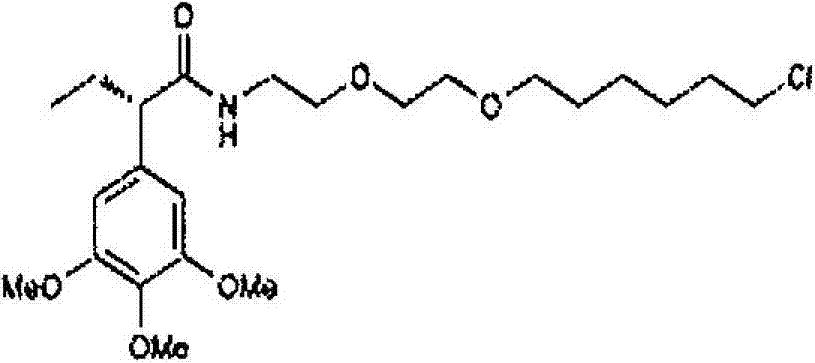
1H NMR(400MHz,CDCl3)δ6.51(s,2H),6.01(brs,1H),3.84(s,6H),3.81(s,3H),3.54-3.45(m,9H),3.43-3.32(m,3H),3.10(t,J=7.5Hz,1H),2.17-2.06(m,1H),1.85-1.70(m,3H),1.61-1.54(m,2H),1.47-1.39(m,2H),1.37-1.30(m,2H),0.87(t,J=7.3Hz,3H)。13C NMR(100MHz,CDCl3)δ173.3,153.2,136.8,135.8,104.7,71.1,70.2,69.9,69.8,60.7,56.0,55.3,44.9,39.2,32.4,29.3,26.6,26.5,25.3,12.3。HRMS(ES+),针对C23H39NO6Cl[M+H]+460.2466计算,发现为460.2465。TLC(10%CH3OH,在CH2Cl2中),Rf0.62(UV,CAM)。 1 H NMR (400MHz, CDCl 3 ) δ6.51(s, 2H), 6.01(brs, 1H), 3.84(s, 6H), 3.81(s, 3H), 3.54-3.45(m, 9H), 3.43- 3.32(m, 3H), 3.10(t, J=7.5Hz, 1H), 2.17-2.06(m, 1H), 1.85-1.70(m, 3H), 1.61-1.54(m, 2H), 1.47-1.39( m, 2H), 1.37-1.30 (m, 2H), 0.87 (t, J = 7.3 Hz, 3H). 13 C NMR (100MHz, CDCl 3 ) δ173.3, 153.2, 136.8, 135.8, 104.7, 71.1, 70.2, 69.9, 69.8, 60.7, 56.0, 55.3, 44.9, 39.2, 32.4, 29.3, 26.6, 26.5, 25.3, 12.3 . HRMS (ES+) calcd for C23H39NO6Cl [M+H] + 460.2466 , found 460.2465 . TLC (10% CH3OH in CH2Cl2 ) , Rf 0.62 (UV, CAM).
2-(4-((3r,5r,7r)-金刚烷-1-基)苯氧基)-N-(2-(2-((6-氯己基)氧)乙氧基)乙基)乙酰 胺(HyT14,27):HyT14通过与HyT13(3)相同的方法被合成。 2-(4-((3r,5r,7r)-adamantan-1-yl)phenoxy)-N-(2-(2-((6-chlorohexyl)oxy)ethoxy)ethyl) Acetamide (HyT14, 27): HyT14 was synthesized by the same method as HyT13(3).
方案8.HyT14(27)的合成
在rt下,向(4-金刚烷-1-基-苯氧基)乙酸19(27mg,0.094mmol)和胺8(21mg,0.094mmol)在CH2Cl2(1.5mL)中的溶液加入HOBt(15mg,0.113mmol)和DIEA(50μL,0.282mmol)。反应混合物在0℃下被冷却,并将EDCI(22mg,0.113mmol)加入混合物。所得混合物在rt下搅动22h,并在0℃下用H2O(4mL)进行淬火。混合物用乙酸乙酯萃取两次,并且,组合的萃取物用盐水洗涤,在Na2SO4上干燥,过滤并浓缩。残余物在硅胶上进行层析,以提供27(HyT14,42mg,92%)。1H NMR(400MHz,CDCl3)δ7.29(d,J=8.8Hz,2H),7.04(brs,1H),6.86(d,J=8.8Hz,2H),4.47(s,2H),3.58-3.52(m,8H),3.51(t,J=6.7Hz,2H),3.44(d,J=6.7Hz,2H),2.08(s,3H),1.87(s,6H),1.79-1.71(m,8H),1.62-1.55(m,2H),1.46-1.38(m,2H),1.37-1.30(m,2H)。13C NMR(100MHz,CDCl3)δ168.4,155.0,145.1,126.0,114.2,71.2,70.3,69.9,67.4,45.0,43.3,38.7,36.7,35.6,32.4,29.4,28.8,26.6,25.3。HRMS(ES+),针对C28H43NO4Cl[M+H]+492.2881计算,发现为492.2883。TLC(10%CH3OH,在CH2Cl2中),Rf0.65(UV,CAM)。To a solution of (4-adamantan-1-yl-phenoxy)acetic acid 19 (27 mg, 0.094 mmol) and amine 8 (21 mg, 0.094 mmol) in CH2Cl2 (1.5 mL) was added HOBt at rt (15 mg, 0.113 mmol) and DIEA (50 μL, 0.282 mmol). The reaction mixture was cooled at 0 °C, and EDCI (22 mg, 0.113 mmol) was added to the mixture. The resulting mixture was stirred at rt for 22 h and quenched with H2O (4 mL) at 0 °C. The mixture was extracted twice with ethyl acetate, and the combined extracts were washed with brine, dried over Na2SO4 , filtered and concentrated . The residue was chromatographed on silica gel to provide 27 (HyT14, 42 mg, 92%). 1 H NMR (400MHz, CDCl 3 ) δ7.29(d, J=8.8Hz, 2H), 7.04(brs, 1H), 6.86(d, J=8.8Hz, 2H), 4.47(s, 2H), 3.58 -3.52(m, 8H), 3.51(t, J=6.7Hz, 2H), 3.44(d, J=6.7Hz, 2H), 2.08(s, 3H), 1.87(s, 6H), 1.79-1.71( m, 8H), 1.62-1.55 (m, 2H), 1.46-1.38 (m, 2H), 1.37-1.30 (m, 2H). 13 C NMR (100 MHz, CDCl 3 ) δ 168.4, 155.0, 145.1, 126.0, 114.2, 71.2, 70.3, 69.9, 67.4, 45.0, 43.3, 38.7, 36.7, 35.6, 32.4, 29.4, 28.8, 26.6, 25.3. HRMS (ES+ ) calcd for C28H43NO4Cl [M+H] + 492.2881 , found 492.2883. TLC (10% CH3OH in CH2Cl2 ) , Rf 0.65 (UV, CAM).
(1S)-N-(2-(2-((6-氯己基)氧)乙氧基)乙基)-7,7-二甲基-2-氧代双环[2.2.1]庚烷-1- 羰酰胺(HyT15,28):Hy15通过与HyT13(3)相同的方法被合成。 (1S)-N-(2-(2-((6-chlorohexyl)oxy)ethoxy)ethyl)-7,7-dimethyl-2-oxobicyclo[2.2.1]heptane- 1- Carboxamide (HyT15, 28) : Hy15 was synthesized by the same method as HyT13(3).

1H NMR(400MHz,CDCl3)δ7.79(s,1H),3.62-3.53(m,6H),3.54-3.48(m,4H),3.46(t,J=6.4Hz,2H),2.53(dd,J=13.9,4.0Hz,1H),2.48(dd,J=5.6,5.0Hz,1H),2.17-2.09(m,1H),2.07(t,J=4.5Hz,1H),1.95(d,J=18.6Hz,2H),1.80-1.73(m,2H),1.62-1.55(m,2H),1.47-1.32(m,4H)。13C NMR(100MHz,CDCl3)δ216.9,169.1,71.2,70.4,70.0,69.8,64.6,50.1,45.0,43.7,43.2,38.6,32.5,29.4,28.1,27.6,26.7,25.4,20.9,20.4。HRMS(ES+),针对C20H35NO4Cl[M+H]+388.2255计算,发现为388.2253。TLC(10%CH3OH,在CH2Cl2中),Rf0.57(UV,CAM)。 1 H NMR (400MHz, CDCl 3 ) δ7.79(s, 1H), 3.62-3.53(m, 6H), 3.54-3.48(m, 4H), 3.46(t, J=6.4Hz, 2H), 2.53( dd, J=13.9, 4.0Hz, 1H), 2.48(dd, J=5.6, 5.0Hz, 1H), 2.17-2.09(m, 1H), 2.07(t, J=4.5Hz, 1H), 1.95(d , J=18.6Hz, 2H), 1.80-1.73 (m, 2H), 1.62-1.55 (m, 2H), 1.47-1.32 (m, 4H). 13 C NMR (100MHz, CDCl 3 ) δ216.9, 169.1, 71.2, 70.4, 70.0, 69.8, 64.6, 50.1, 45.0, 43.7, 43.2, 38.6, 32.5, 29.4, 28.1, 27.6, 26.7, 25.4, 20.9, 20.4 . HRMS (ES+) calcd for C20H35NO4Cl [M+H] + 388.2255 , found 388.2253 . TLC (10% CH3OH in CH2Cl2 ) , Rf 0.57 (UV, CAM).
N-(2-(2-((6-氯己基)氧)乙氧基)乙基)-6-氟-2-萘酰胺(HyT17,29): N-(2-(2-((6-chlorohexyl)oxy)ethoxy)ethyl)-6-fluoro-2-naphthylamide (HyT17,29):
HyT17通过与HyT13(3)相同的方法被合成。HyT17 was synthesized by the same method as HyT13(3).

1H NMR(400MHz,CDCl3)δ8.31(s,1H),7.91(dd,J=9.0,5.6Hz,1H),7.85(dd,J=8.7,8.7Hz,1H),7.83(dd,J=8.5,8.5Hz,1H),7.47(dd,J=9.6,2.4Hz,1H),7.31(ddd,J=8.7,8.7,2.5Hz,1H),3.72-3.70(m,4H),3.69-3.66(m,2H),3.62-3.59(m,2H),3.46(d,J=6.5Hz,2H),3.44(d,J=6.5Hz,2H),1.71-1.64(m,2H),1.57-1.50(m,2H),1.39-1.21(m,4H)。13C NMR(100MHz,CDCl3)δ167.2,162.8,160.3,135.6,135.5,131.4,131.3,131.23,131.21,129.5,127.7,127.6,127.5,124.6,117.3,117.1,111.0,110.8,71.2,70.2,69.9,69.7,44.9,39.7,32.4,29.4,26.5,25.3。HRMS(ES+),针对C21H28NO3ClF[M+H]+396.1742计算,发现为396.1744。TLC(10%CH3OH,在CH2Cl2中),Rf0.65(UV,CAM)。 1 H NMR (400MHz, CDCl 3 ) δ8.31(s, 1H), 7.91(dd, J=9.0, 5.6Hz, 1H), 7.85(dd, J=8.7, 8.7Hz, 1H), 7.83(dd, J=8.5, 8.5Hz, 1H), 7.47(dd, J=9.6, 2.4Hz, 1H), 7.31(ddd, J=8.7, 8.7, 2.5Hz, 1H), 3.72-3.70(m, 4H), 3.69 -3.66(m, 2H), 3.62-3.59(m, 2H), 3.46(d, J=6.5Hz, 2H), 3.44(d, J=6.5Hz, 2H), 1.71-1.64(m, 2H), 1.57-1.50 (m, 2H), 1.39-1.21 (m, 4H). 13 C NMR (100MHz, CDCl 3 ) δ167.2, 162.8, 160.3, 135.6, 135.5, 131.4, 131.3, 131.23, 131.21, 129.5, 127.7, 127.6, 127.5, 124.6, 117.3, 117.1, 1187, 112.2 , 69.9, 69.7, 44.9, 39.7, 32.4, 29.4, 26.5, 25.3. HRMS (ES+), calculated for C21H28NO3ClF [M+H] + 396.1742 , found 396.1744 . TLC (10% CH3OH in CH2Cl2 ) , Rf 0.65 (UV, CAM).
2-(4-((3r,5r,7r)-金刚烷-1-基)苯氧基)-A-(24-氯-11-氧-3,6,9,15,18-五氧杂-12-氮 杂二十四基)乙酰胺(HyT18,30):HyT18通过与HyT9相同的方法被合成。 2-(4-((3r,5r,7r)-adamantan-1-yl)phenoxy)-A-(24-chloro-11-oxo-3,6,9,15,18-pentaoxa -12 - Azatetracosyl)acetamide (HyT18, 30): HyT18 was synthesized by the same method as HyT9.
方案9.HyT18(30)的合成

1H NMR(400MHz,CD3OD)δ7.29(d,J=8.8Hz,2H),6.90(d,J=8.8Hz,2H),4.47(s,2H),3.95(s,2H),3.64(s,4H),3.60-3.51(m,14H),3.47-3.39(m,6H),2.06(s,3H),1.89(d,J=2.2Hz,6H),1.80-1.70(m,8H),1.59-1.52(m,2H),1.48-1.42(m,2H),1.41-1.34(m,2H)。13C NMR(100MHz,CD3OD)δ172.8,171.4,156.9,146.1,127.0,115.4,72.2,71.9,71.5,71.4,71.3,71.2,71.1,70.5,70.4,68.4,45.7,44.5,39.9,39.8,37.8,36.7,33.7,30.5,30.4,27.7,26.5。HRMS(ES+),针对C36H58N2O8Cl[M+H]+681.3871计算,发现为681.3861。TLC(10%CH3OH,在CH2Cl2中),Rf0.62(UV,CAM)。 1 H NMR (400MHz, CD 3 OD) δ7.29(d, J=8.8Hz, 2H), 6.90(d, J=8.8Hz, 2H), 4.47(s, 2H), 3.95(s, 2H), 3.64(s, 4H), 3.60-3.51(m, 14H), 3.47-3.39(m, 6H), 2.06(s, 3H), 1.89(d, J=2.2Hz, 6H), 1.80-1.70(m, 8H), 1.59-1.52 (m, 2H), 1.48-1.42 (m, 2H), 1.41-1.34 (m, 2H). 13 C NMR (100MHz, CD 3 OD) δ172.8, 171.4, 156.9, 146.1, 127.0, 115.4, 72.2, 71.9, 71.5, 71.4, 71.3, 71.2, 71.1, 70.5, 70.4, 68.4, 45.7, 44.5, 39.9, 39.8, 37.8, 36.7, 33.7, 30.5, 30.4, 27.7, 26.5. HRMS (ES+), calculated for C36H58N2O8Cl [ M +H] + 681.3871 , found 681.3861. TLC (10% CH3OH in CH2Cl2 ) , Rf 0.62 (UV, CAM).
N-(2-(2-((6-氯己基)氧)乙氧基)乙基)-2-(((2S,5R)-2-异丙基-5-甲基环己基)氧)乙 酰胺(HyT23,31):HyT23通过与3相同的方法被合成。 N-(2-(2-((6-chlorohexyl)oxy)ethoxy)ethyl)-2-(((2S,5R)-2-isopropyl-5-methylcyclohexyl)oxy) Acetamide (HyT23, 31) : HyT23 was synthesized by the same method as 3.

1H NMR(400MHz,CDCl3)δ6.97(brs,1H),4.05(d,J=15.1Hz,1H),3.84(d,J=15.1Hz,1H),3.61-3.59(m,2H),3.57-3.54(m,4H),3.52(t,J=6.7Hz,2H),3.49(t,J=5.0Hz,2H),3.45(t,J=6.6Hz,2H),3.13(td,J=10.6,4.1Hz,1H),2.12(dtd,J=14.0,7.0,2.8Hz,1H),2.06-2.00(m,1H),1.80-1.73(m,2H),1.67-1.63(m,2H),1.62-1.55(m,2H),1.48-1.23(m,7H),0.96(qd,J=13.8,3.2Hz,1H),0.91(d,J=1.2Hz,3H),0.90(d,J=1.8Hz,3H),0.89-0.81(m,2H),0.77(d,J=6.9Hz,3H)。13CNMR(100MHz,CDCl3)δ170.4,80.5,71.2,70.3,70.0,69.8,67.9,47.9,45.0,40.1,38.4,34.3,32.5,31.3,29.4,26.6,25.9,25.4,23.2,22.2,20.9,16.2。HRMS(ES+),针对C22H43NO4Cl[M+H]+420.2881计算,发现为420.2881。TLC(33%EtOAc,在己烷中),Rf0.14(CAM)。 1 H NMR (400MHz, CDCl 3 ) δ6.97(brs, 1H), 4.05(d, J=15.1Hz, 1H), 3.84(d, J=15.1Hz, 1H), 3.61-3.59(m, 2H) , 3.57-3.54(m, 4H), 3.52(t, J=6.7Hz, 2H), 3.49(t, J=5.0Hz, 2H), 3.45(t, J=6.6Hz, 2H), 3.13(td, J=10.6, 4.1Hz, 1H), 2.12(dtd, J=14.0, 7.0, 2.8Hz, 1H), 2.06-2.00(m, 1H), 1.80-1.73(m, 2H), 1.67-1.63(m, 2H), 1.62-1.55(m, 2H), 1.48-1.23(m, 7H), 0.96(qd, J=13.8, 3.2Hz, 1H), 0.91(d, J=1.2Hz, 3H), 0.90(d , J=1.8Hz, 3H), 0.89-0.81(m, 2H), 0.77(d, J=6.9Hz, 3H). 13 CNMR (100MHz, CDCl 3 ) δ170.4, 80.5, 71.2, 70.3, 70.0, 69.8, 67.9, 47.9, 45.0, 40.1, 38.4, 34.3, 32.5, 31.3, 29.4, 26.6, 25.9, 25.4, 23.2, 22.2, 20.9, 16.2. HRMS (ES+ ) calcd for C22H43NO4Cl [M+H] + 420.2881 , found 420.2881. TLC (33% EtOAc in Hex), Rf 0.14 (CAM).
(R)-N-(2-(2-((6-氯己基)氧)乙氧基)乙基)-2-(2-氟-[1,1′-二苯基]-4-基)丙酰胺 (HyT24,32):HyT24通过与HyT13(3)相同的方法被合成。 (R)-N-(2-(2-((6-chlorohexyl)oxy)ethoxy)ethyl)-2-(2-fluoro-[1,1′-diphenyl]-4-yl ) Propionamide (HyT24, 32) : HyT24 was synthesized by the same method as HyT13(3).

1H NMR(400MHz,CDCl3)δ7.53-7.51(m,2H),7.45-7.33(m,4H),7.17-7.11(m,2H),6.04(brs,1H),3.59-3.48(m,9H),3.46-3.39(m,4H),1.78-1.71(m,2H),1.60-1.53(m,2H),1.54(d,J=7.1Hz,3H),1.46-1.39(m,2H),1.37-1.29(m,2H)。13C NMR(100MHz,CDCl3)δ173.4,160.9,158.4,142.9,142.8,135.4,130.9,130.8,128.9,128.8,128.4,127.7,127.6,71.2,70.2,69.9,69.6,46.5,44.9,39.3,32.4,29.4,26.6,25.3,18.5。HRMS(ES+),针对C25H34NO3ClF[M+H]+450.2211计算,发现为450.2209。TLC(10%CH3OH,在CH2Cl2中),Rf0.66(UV,CAM)。 1 H NMR (400MHz, CDCl 3 ) δ7.53-7.51(m, 2H), 7.45-7.33(m, 4H), 7.17-7.11(m, 2H), 6.04(brs, 1H), 3.59-3.48(m , 9H), 3.46-3.39(m, 4H), 1.78-1.71(m, 2H), 1.60-1.53(m, 2H), 1.54(d, J=7.1Hz, 3H), 1.46-1.39(m, 2H ), 1.37-1.29 (m, 2H). 13 C NMR (100MHz, CDCl 3 ) δ173.4, 160.9, 158.4, 142.9, 142.8, 135.4, 130.9, 130.8, 128.9, 128.8, 128.4, 127.7, 127.6, 71.2, 70.2, 69.9, 69.6, 46.5, 43.9, , 32.4, 29.4, 26.6, 25.3, 18.5. HRMS (ES+ ) calcd for C25H34NO3ClF [M+H] + 450.2211 , found 450.2209. TLC (10% CH3OH in CH2Cl2 ) , Rf 0.66 (UV, CAM).
2-(2,2,4,7-四甲基-3,4-二氢喹啉-1(2H)-基)乙基(2-(2-((6-氯己基)氧)乙氧基)乙基) 氨基甲酸酯(HyT25,33):HyT25通过与3类似的方法被合成。 2-(2,2,4,7-tetramethyl-3,4-dihydroquinolin-1(2H)-yl)ethyl(2-(2-((6-chlorohexyl)oxy)ethoxy Base) ethyl) carbamate (HyT25, 33) : HyT25 was synthesized by a method similar to 3.

1H NMR(400MHz,CD3OD)δ6.97(d,J=7.7Hz,1H),6.51(s,1H),6.42(d,J=7.7Hz,1H),4.13(dd,J=8.7,5.8Hz,1H),4.06(dd,J=8.7,5.7Hz,1H),3.64-3.56(m,4H),3.55-3.50(m,4H),3.47(t,J=6.5Hz,2H),3.30-3.26(m,4H),2.87-2.78(m,1H),2.23(s,3H),1.77-1.70(m,3H),1.62-1.55(m,2H),1.48-1.35(m,5H),1.29(s,3H),1.26(d,J=6.7Hz,3H),1.13(s,3H)。13C NMR(125MHz,CD3OD)δ159.0,145.8,1373,126.9,126.5,118.1,113.4,72.2,71.3,71.2,70.9,63.8,55.2,45.6,44.9,41.7,33.7,30.5,30.0,28.3,27.7,26.5,24.4,21.8,20.8。HRMS(ES+),针对C26H44N2O4Cl[M+H]+483.2990计算,发现为483.2986。TLC(10%CH3OH,在CH2Cl2中),Rf0.43(UV,CAM)。 1 H NMR (400MHz, CD 3 OD) δ6.97(d, J=7.7Hz, 1H), 6.51(s, 1H), 6.42(d, J=7.7Hz, 1H), 4.13(dd, J=8.7 , 5.8Hz, 1H), 4.06(dd, J=8.7, 5.7Hz, 1H), 3.64-3.56(m, 4H), 3.55-3.50(m, 4H), 3.47(t, J=6.5Hz, 2H) , 3.30-3.26(m, 4H), 2.87-2.78(m, 1H), 2.23(s, 3H), 1.77-1.70(m, 3H), 1.62-1.55(m, 2H), 1.48-1.35(m, 5H), 1.29(s, 3H), 1.26(d, J=6.7Hz, 3H), 1.13(s, 3H). 13 C NMR (125MHz, CD 3 OD) δ159.0, 145.8, 1373, 126.9, 126.5, 118.1, 113.4, 72.2, 71.3, 71.2, 70.9, 63.8, 55.2, 45.6, 44.9, 41.7, 33.7, 30.5, 30.0, 28.3, 27.7, 26.5, 24.4, 21.8, 20.8. HRMS (ES + ), calculated for C26H44N2O4Cl [M+H] + 483.2990 , found 483.2986. TLC (10% CH3OH in CH2Cl2 ) , Rf 0.43 (UV, CAM).
2-(10H-吩 
HyT26通过与HyT13(3)类似的方法被合成。HyT26 was synthesized by a method similar to HyT13(3).

1H NMR(500MHz,CD3OD)δ6.79(dd,J=8.2,1.5Hz,1H),6.78(dd,J=8.2,1.5Hz,1H),6.72(d,J=7.5Hz,2H),6.64(dd,J=7.5,1.3Hz,1H),6.62(dd,J=7.4,1.3Hz,1H),6.57(dd,J=7.8,1.3Hz,2H),4.25(t,J=6.4Hz,2H),3.81(t,J=6.4Hz,2H),3.56-3.53(m,3H),3.51(t,J=6.6Hz,3H),3.48(t,J=5.5Hz,2H),3.44(t,J=6.5Hz,2H),3.26(t,J=5.5Hz,2H),1.76-1.70(m,2H),1.59-1.53(m,2H),1.46-1.40(m,2H),1.39-1.32(m,2H)。13C NMR(125MHz,CD3OD)δ159.1,146.5,134.8,125.3,122.6,116.7,113.5,72.6,71.7,71.6,71.3,61.6,46,1,44.7,42.2,34.1,30.9,28.2,26.9。HRMS(ES+),针对C25H34N2O5Cl[M+H]+477.2156计算,发现为477.2152。TLC(10%CH3OH,在CH2Cl2中),Rf0.43(UV,CAM)。 1 H NMR (500MHz, CD 3 OD) δ6.79(dd, J=8.2, 1.5Hz, 1H), 6.78(dd, J=8.2, 1.5Hz, 1H), 6.72(d, J=7.5Hz, 2H ), 6.64(dd, J=7.5, 1.3Hz, 1H), 6.62(dd, J=7.4, 1.3Hz, 1H), 6.57(dd, J=7.8, 1.3Hz, 2H), 4.25(t, J= 6.4Hz, 2H), 3.81(t, J=6.4Hz, 2H), 3.56-3.53(m, 3H), 3.51(t, J=6.6Hz, 3H), 3.48(t, J=5.5Hz, 2H) , 3.44(t, J=6.5Hz, 2H), 3.26(t, J=5.5Hz, 2H), 1.76-1.70(m, 2H), 1.59-1.53(m, 2H), 1.46-1.40(m, 2H ), 1.39-1.32 (m, 2H). 13 C NMR (125MHz, CD 3 OD) δ159.1, 146.5, 134.8, 125.3, 122.6, 116.7, 113.5, 72.6, 71.7, 71.6, 71.3, 61.6, 46, 1, 44.7, 42.2, 34.1, 30.9, 28.2, 26.9. HRMS (ES+ ) calcd for C25H34N2O5Cl [M+H] + 477.2156 , found 477.2152 . TLC (10% CH3OH in CH2Cl2 ) , Rf 0.43 (UV, CAM).
(R)-N-(2-(2-((6-氯己基)氧)乙氧基)乙基)-3,3,3-三氟-2-甲氧基-2-苯基丙酰胺 (HyT27,35):HyT27通过与HyT13(3)相同的方法被合成。 (R)-N-(2-(2-((6-chlorohexyl)oxy)ethoxy)ethyl)-3,3,3-trifluoro-2-methoxy-2-phenylpropanamide (HyT27, 35) : HyT27 was synthesized by the same method as HyT13(3).

1H NMR(400MHz,CDCl3)δ7.55-7.53(m,2H),7.40-7.38(m,3H),7.17(brs,1H),3.59-3.56(m,5H),3.54-3.48(m,5H),3.43(t,J=6.7Hz,2H),3.41(s,3H),1.79-1.72(m,2H),1.61-1.54(m,2H),1.48-1.40(m,2H),1.39-1.31(m,2H)。13CNMR(100MHz,CDCl3)δ166.3,132.6,129.4,128.4,127.6,71.2,70.2,69.9,69.4,54.9,45.0,39.1,32.4,29.4,26,6,25.3。HRMS(ES+),针对C20H30NO4ClF3[M+H]+440.1815计算,发现为440.1814。TLC(33%EtOAc,在己烷中),Rf0.51(UV,CAM)。 1 H NMR (400MHz, CDCl 3 ) δ7.55-7.53(m, 2H), 7.40-7.38(m, 3H), 7.17(brs, 1H), 3.59-3.56(m, 5H), 3.54-3.48(m , 5H), 3.43(t, J=6.7Hz, 2H), 3.41(s, 3H), 1.79-1.72(m, 2H), 1.61-1.54(m, 2H), 1.48-1.40(m, 2H), 1.39-1.31 (m, 2H). 13 CNMR (100MHz, CDCl 3 ) δ166.3, 132.6, 129.4, 128.4, 127.6, 71.2, 70.2, 69.9, 69.4, 54.9, 45.0, 39.1, 32.4, 29.4, 26, 6, 25.3. HRMS ( ES +) calcd for C20H30NO4ClF3 [M+H] + 440.1815 , found 440.1814 . TLC (33% EtOAc in hexanes), Rf 0.51 (UV, CAM).
(R)-1-(2-(2-((6-氯己基)氧)乙氧基)乙基)-3-(3-甲基-1,1-二苯基丁-2-基)脲 (HyT29,36):HyT29通过与HyT13(3)相同的方法被合成。 (R)-1-(2-(2-((6-chlorohexyl)oxy)ethoxy)ethyl)-3-(3-methyl-1,1-diphenylbutan-2-yl) Urea (HyT29, 36) : HyT29 was synthesized by the same method as HyT13(3).

1H NMR(400MHz,CDCl3)δ7.38(dd,J=6.7,6.7Hz,4H),7.32-7.25(m,4H),7.22-7.14(m,2H),4.72(t,J=9.7Hz,1H),4.60(t,J=5.7Hz,1H),4.23(d,J=9.8Hz,1H),3.95(d,J=11.0Hz,1H),3.57(t,J=6.6Hz,2H),3.55-3.42(m,7H),3.37-3.32(m,1H),3.30-3.15(m,2H),1.85-1.78(m,2H),1.76-1.68(m,1H),1.67-1.60(m,2H),1.54-1.46(m,2H),1.44-1.36(m,2H),0.98(d,J=6.8Hz,3H),0.88(d,J=6.8Hz,3H),0.04(s,6H)。13C NMR(100MHz,CDCl3)δ158.3,143.1,142.8,128.7,128.4,128.3,127.9,126.4,126.3,71.2,70.9,70.3,70.0,55.7,45.0,40.5,32.5,29.4,29.2,26.6,25.4,20.8,15.1,0.0。HRMS(ES+),针对C28H42N2O3Cl[M+H]+489.2884计算,发现为489.2881。TLC(10%CH3OH,在CH2Cl2中),Rf0.62(UV,CAM)。 1 H NMR (400MHz, CDCl 3 ) δ7.38(dd, J=6.7, 6.7Hz, 4H), 7.32-7.25(m, 4H), 7.22-7.14(m, 2H), 4.72(t, J=9.7 Hz, 1H), 4.60(t, J=5.7Hz, 1H), 4.23(d, J=9.8Hz, 1H), 3.95(d, J=11.0Hz, 1H), 3.57(t, J=6.6Hz, 2H), 3.55-3.42(m, 7H), 3.37-3.32(m, 1H), 3.30-3.15(m, 2H), 1.85-1.78(m, 2H), 1.76-1.68(m, 1H), 1.67- 1.60(m, 2H), 1.54-1.46(m, 2H), 1.44-1.36(m, 2H), 0.98(d, J=6.8Hz, 3H), 0.88(d, J=6.8Hz, 3H), 0.04 (s, 6H). 13 C NMR (100MHz, CDCl 3 ) δ158.3, 143.1, 142.8, 128.7, 128.4, 128.3, 127.9, 126.4, 126.3, 71.2, 70.9, 70.3, 70.0, 55.7, 45.0, 40.5, 32.5, 29.4, 29.2, 26. , 25.4, 20.8, 15.1, 0.0. HRMS (ES+), calculated for C28H42N2O3Cl [ M+H] + 489.2884 , found 489.2881 . TLC (10% CH3OH in CH2Cl2 ) , Rf 0.62 (UV, CAM).
2-(双((R)-1-苯基乙基)氨基)-N-(2-(2-((6-氯己基)氧)乙氧基)乙基)乙酰胺(HyT30, 37):HyT30通过与HyT13(3)相同的方法被合成。 2-(bis((R)-1-phenylethyl)amino)-N-(2-(2-((6-chlorohexyl)oxy)ethoxy)ethyl)acetamide (HyT30, 37 ) : HyT30 was synthesized by the same method as HyT13(3).
1H NMR(500MHz,CD3OD)δ7.34(s,4H),7.33(s,4H),7.27-7.23(m,2H),4.87(s,2H),3.95(q,J=6.8Hz,2H),3.67-3.60(m,4H),3.52-3.42(m,6H),3.38(d,J=17.6Hz,1H),3.27-3.16(m,2H),2.85(d,J=17.6Hz,1H),1.73-1.68(m,2H),1.60-1.54(m,2H),1.45-1.34(m,4H),1.35(d,J=6.8Hz,6H)。13C NMR(100MHz,CDCl3)170.0,142.7,128.4,127.7,127.2,71.3,70.4,70.0,69.8,59.5,50.3,45.0,38.4,32.4,29.4,26.5,25.4,20.0,-0.03。HRMS(ES+),针对C28H42N2O3Cl[M+H]+489.2884计算,发现为489.2883。TLC(10%CH3OH,在CH2Cl2中),Rf0.56(UV,CAM)。 1 H NMR (500MHz, CD 3 OD) δ7.34(s, 4H), 7.33(s, 4H), 7.27-7.23(m, 2H), 4.87(s, 2H), 3.95(q, J=6.8Hz , 2H), 3.67-3.60(m, 4H), 3.52-3.42(m, 6H), 3.38(d, J=17.6Hz, 1H), 3.27-3.16(m, 2H), 2.85(d, J=17.6 Hz, 1H), 1.73-1.68 (m, 2H), 1.60-1.54 (m, 2H), 1.45-1.34 (m, 4H), 1.35 (d, J=6.8Hz, 6H). 13 C NMR (100 MHz, CDCl 3 ) 170.0, 142.7, 128.4, 127.7, 127.2, 71.3, 70.4, 70.0, 69.8, 59.5, 50.3, 45.0, 38.4, 32.4, 29.4, 26.5, 25.4, 20.0, -0.03. HRMS (ES + ), calculated for C28H42N2O3Cl [M+H] + 489.2884 , found 489.2883 . TLC (10% CH3OH in CH2Cl2 ) , Rf 0.56 (UV, CAM).
方案10.HyT31(42)的合成

酮38和醇39由已报道的程序(Bioorg.Med.Chem.,1998,6,1309-1335)制备。Ketone 38 and
酮38:1H NMR(500MHz,CDCl3)δ7.55(d,J=7.9Hz,1H),7.44(dd,J=2.6,1.4Hz,1H),7.35(t,J=7.9Hz,1H),7.10(ddd,J=8.2,2.7,0.8Hz,1H),6.79-6.74(m,3H),4.54(s,2H),3.85(s,3H),3.83(s,3H),3.23(t,J=8.0Hz,2H),2.98(t,J=6.9Hz,2H),1.47(s,9H)。13C NMR(125MHz,CDCl3)δ198.8,167.6,158.1,148.9,147.4,138.2,133.8,129.7,121.4,120.1,120.0,113.1,111.8,111.3,82.6,77.6,65.6,55.9,55.8,40.7,29.8,28.0。 Ketone 38 : 1 H NMR (500MHz, CDCl 3 ) δ7.55(d, J=7.9Hz, 1H), 7.44(dd, J=2.6, 1.4Hz, 1H), 7.35(t, J=7.9Hz, 1H ), 7.10(ddd, J=8.2, 2.7, 0.8Hz, 1H), 6.79-6.74(m, 3H), 4.54(s, 2H), 3.85(s, 3H), 3.83(s, 3H), 3.23( t, J=8.0Hz, 2H), 2.98(t, J=6.9Hz, 2H), 1.47(s, 9H). 13 C NMR (125MHz, CDCl 3 ) δ198.8, 167.6, 158.1, 148.9, 147.4, 138.2, 133.8, 129.7, 121.4, 120.1, 120.0, 113.1, 111.8, 111.3, 82.6, 77.6, 65.6, 55.94, 55.8 , 29.8, 28.0.
醇39:1H NMR(500MHz,CDCl3)δ7.26(dd,J=8.2,8.2Hz,1H),6.96(d,J=7.7Hz,1H),6.93(s,1H),6.81-6.78(m,2H),6.74-6.71(m,2H),4.68-4.65(m,1H),4.52(s,2H),3.86(s,3H),3.85(s,3H),2.72-2.66(m,1H),2.64-2.58(m,1H),2.12-2.04(m,1H),2.02-1.95(m,1H),1.83(d,J=3.3Hz,1H),1.55(s,1H),1.48(s,9H)。13CNMR(100MHz,CDCl3)δ168.0,158.1,148.8,147.2,146.4,134.3,129.6,120.2,119.1,113.6,112.2,111.7,111.2,82.4,77.2,73.7,65.6,55.9,55.8,40.6,31.6,28.0。TLC(33%EtOAc,在己烷中),Rf0.19(UV,CAM)。 Alcohol 39 : 1 H NMR (500MHz, CDCl 3 ) δ7.26(dd, J=8.2, 8.2Hz, 1H), 6.96(d, J=7.7Hz, 1H), 6.93(s, 1H), 6.81-6.78 (m, 2H), 6.74-6.71(m, 2H), 4.68-4.65(m, 1H), 4.52(s, 2H), 3.86(s, 3H), 3.85(s, 3H), 2.72-2.66(m , 1H), 2.64-2.58(m, 1H), 2.12-2.04(m, 1H), 2.02-1.95(m, 1H), 1.83(d, J=3.3Hz, 1H), 1.55(s, 1H), 1.48(s, 9H). 13 CNMR (100MHz, CDCl 3 ) δ168.0, 158.1, 148.8, 147.2, 146.4, 134.3, 129.6, 120.2, 119.1, 113.6, 112.2, 111.7, 111.2, 82.4, 77.2, 73.7, 65.6, 55.9, 55.8, 31.6, 28.0. TLC (33% EtOAc in hexanes), Rf 0.19 (UV, CAM).
叔丁基 2-(3-((S)-1-(4-((3S,5S,7S)-金刚烷-1-基)苯氧基)-3-(3,4- 二 甲氧基苯基)丙基)苯氧基)乙酸酯40: tert-butyl 2-(3-((S)-1-(4-((3S,5S,7S)-adamantan-1-yl)phenoxy)-3-(3,4- dimethoxy Phenyl)propyl)phenoxy)acetate 40 :
在rt下,向醇39(48mg,0.1193mmol)、4-(1-金刚烷基)苯酚(27mg,0.1193mmol)和三苯膦(35mg,0.1312mmol)在THF(1.2mL)中的溶液加入DIAD(26μL,0.1312mmol)。所得混合物在rt下被搅动20h,并在rt下用H2O/EtOAc(1∶1,5mL)稀释。混合物用乙酸乙酯萃取两次,并且,组合的萃取物用盐水洗涤,在Na2SO4上干燥、过滤并浓缩。残余物在硅胶上进行层析,以提供叔丁基2-(3-((S)-1-(4-((3S,5S,7S)-金刚烷-1-基)苯氧基)-3-(3,4-二甲氧基苯基)丙基)苯氧基)乙酸酯40(55mg,76%)。1H NMR(400MHz,CDCl3)δ7.23(dd,J=7.9,7.9Hz,1H),7.15(d,J=8.8Hz,2H),6.95(d,J=7.7Hz,1H),6.88(s,1H),6.80-6.75(m,4H),6.72(ddd,J=8.2,8.2,1.8Hz,1H),6.62(d,J=1.6Hz,1H),4.94(dd,J=8.9,4.0Hz,1H),4.48(s,2H),3.85(s,3H),3.65(s,3H),2.80-2.72(m,2H),2.29-2.20(m,1H),2.05-1.96(m,4H),1.82-1.69(m,11H),1.45(s,9H)。13C NMR(100MHz,CDCl3)δ167.9,158.1,156.0,148.5,147.0,144.3,143.6,133.9,129.6,125.6,120.1,119.0,115.1,113.2,112.0,111.9,111.1,82.3,78.5,77.2,65.5,55.8,55.4,43.2,40.6,36.7,35.4,31.5,28.9,27.9。LRMS(ES+)[M+Na]+635.8,TLC(25%EtOAc,在己烷中),Rf0.57(UV,CAM)。To a solution of alcohol 39 (48 mg, 0.1193 mmol), 4-(1-adamantyl)phenol (27 mg, 0.1193 mmol) and triphenylphosphine (35 mg, 0.1312 mmol) in THF (1.2 mL) was added at rt DIAD (26 μL, 0.1312 mmol). The resulting mixture was stirred at rt for 20 h and diluted with H2O /EtOAc (1:1, 5 mL) at rt. The mixture was extracted twice with ethyl acetate, and the combined extracts were washed with brine, dried over Na2SO4 , filtered and concentrated . The residue was chromatographed on silica gel to afford tert-butyl 2-(3-((S)-1-(4-((3S,5S,7S)-adamantan-1-yl)phenoxy)- 3-(3,4-Dimethoxyphenyl)propyl)phenoxy)acetate 40 (55 mg, 76%). 1 H NMR (400MHz, CDCl 3 ) δ7.23 (dd, J=7.9, 7.9Hz, 1H), 7.15 (d, J=8.8Hz, 2H), 6.95 (d, J=7.7Hz, 1H), 6.88 (s, 1H), 6.80-6.75 (m, 4H), 6.72 (ddd, J = 8.2, 8.2, 1.8Hz, 1H), 6.62 (d, J = 1.6Hz, 1H), 4.94 (dd, J = 8.9 , 4.0Hz, 1H), 4.48(s, 2H), 3.85(s, 3H), 3.65(s, 3H), 2.80-2.72(m, 2H), 2.29-2.20(m, 1H), 2.05-1.96( m, 4H), 1.82-1.69 (m, 11H), 1.45 (s, 9H). 13 C NMR (100MHz, CDCl 3 ) δ167.9, 158.1, 156.0, 148.5, 147.0, 144.3, 143.6, 133.9, 129.6, 125.6, 120.1, 119.0, 115.1, 113.2, 112.0, 111.9, 111.1, 82.3, 7 , 65.5, 55.8, 55.4, 43.2, 40.6, 36.7, 35.4, 31.5, 28.9, 27.9. LRMS (ES+) [M+Na] + 635.8, TLC (25% EtOAc in hexanes), Rf 0.57 (UV, CAM).
2-(3-((S)-1-(4-((3S,5S,7S)-金刚烷-1-基)苯氧基)-3-(3,4-二甲氧基苯基)丙基)苯氧 基)乙酸41:在0℃下,向叔丁基2-(3-((S)-1-(4-((3S,5S,7S)-金刚烷-1-基)苯氧基)-3-(3,4-二甲氧基苯基)丙基)苯氧基)乙酸酯40(40mg,0.0653mmol)在CH2Cl2(2.0mL)中的搅动溶液加入TFA(0.15mL)。反应混合物在0℃下搅动2.0h并被浓缩。残余物在硅胶上进行层析,以提供酸41(31mg,85%)。1H NMR(400MHz,CD3OD)δ7.22(dd,J=7.9,7.9Hz,1H),7.13(d,J=8.8Hz,2H),6.93-6.88(m,2H),6.84(d,J=8.1Hz,1H),6.78(dd,J=8.2,2.2Hz,1H),6.74(d,J=8.8Hz,2H),6.71(dd,J=8.2,1.7Hz,1H),6.67(d,J=1.7Hz,1H),4.97(dd,J=8.8,4.2Hz,1H),4.59(s,2H),3.78(s,3H),3.56(s,3H),2.74(t,J=7.6Hz,2H),2.22-2.15(m,1H),2.03-1.96(m,4H),1.84-1.79(m,6H),1.78-1.71(m,6H)。13C NMR(100MHz,CD3OD)δ159.7,157.4,150.2,148.6,145.7,144.9,135.6,130.7,126.6,121.7,120.2,116.4,114.3,113.7,113.5,113.2,79.4,56.5,56.1,44.5,41.8,37.8,36.6,32.5,30.5。TLC(10%CH3OH,在CH2Cl2中),Rf0.24(UV,CAM)。 2-(3-((S)-1-(4-((3S,5S,7S)-adamantan-1-yl)phenoxy)-3-(3,4-dimethoxyphenyl) Propyl)phenoxy )acetic acid 41 : at 0°C, to tert-butyl 2-(3-((S)-1-(4-((3S,5S,7S)-adamantan-1-yl) A stirred solution of phenoxy)-3-(3,4-dimethoxyphenyl)propyl)phenoxy)acetate 40 (40 mg, 0.0653 mmol) in CH2Cl2 (2.0 mL ) was added TFA (0.15 mL). The reaction mixture was stirred at 0 °C for 2.0 h and concentrated. The residue was chromatographed on silica gel to provide acid 41 (31 mg, 85%). 1 H NMR (400MHz, CD 3 OD) δ7.22(dd, J=7.9, 7.9Hz, 1H), 7.13(d, J=8.8Hz, 2H), 6.93-6.88(m, 2H), 6.84(d , J=8.1Hz, 1H), 6.78(dd, J=8.2, 2.2Hz, 1H), 6.74(d, J=8.8Hz, 2H), 6.71(dd, J=8.2, 1.7Hz, 1H), 6.67 (d, J=1.7Hz, 1H), 4.97(dd, J=8.8, 4.2Hz, 1H), 4.59(s, 2H), 3.78(s, 3H), 3.56(s, 3H), 2.74(t, J=7.6Hz, 2H), 2.22-2.15(m, 1H), 2.03-1.96(m, 4H), 1.84-1.79(m, 6H), 1.78-1.71(m, 6H). 13 C NMR (100MHz, CD 3 OD) δ159.7, 157.4, 150.2, 148.6, 145.7, 144.9, 135.6, 130.7, 126.6, 121.7, 120.2, 116.4, 114.3, 113.7, 113.5, 113.2, 79.4, 56.5, 5 44.5, 41.8, 37.8, 36.6, 32.5, 30.5. TLC (10% CH3OH in CH2Cl2 ) , Rf 0.24 (UV, CAM).
2-(3-((S)-1-(4-((3S,5S,7S)-金刚烷-1-基)苯氧基)-3-(3,4-二甲氧基苯基)丙基)苯氧 基)-N-24-氯-11-氧-3,6,9,15,18-五氧杂-12-氮杂二十四基)乙酰胺(HyT31,42):42通过与3类似的方法被合成。1H NMR(500MHz,CD3OD)δ7.25(dd,J=7.1,7.1Hz,1H),7.15(d,J=8.7Hz,2H),6.96(d,J=6.8Hz,2H),6.84(d,J=8.2Hz,2H),6.75(d,J=8.8Hz,2H),6.71(d,J=8.2Hz,1H),6.67(d,J=1.4Hz,1H),5.00(dd,J=8.9,4.0Hz,1H),4.47(d,J=3.2Hz,2H),3,92(s,2H),3.77(s,3H),3.59(s,3H),3.56-3.50(m,18H),3.43-3.36(m,6H),2.76(t,J=7.0Hz,2H),2.25-2.17(m,1H),2.02-1.97(m,4H),1.84-1.69(m,14H),1.56-1.51(m,2H),1.45-1.39(m,2H),1.37-1.32(m,2H)。13C NMR(125MHz,CD3OD)δ172.7,171.1,159.5,157.4,150.4,148.8,145.9,145.0,135.8,130.9,126.7,121.8,120.7,116.5,114.8,113.7,113.5,79.5,72.2,72.0,71.4,71.33,71.31,71.2,71.1,70.5,70.4,68.4,56.7,56.3,45.7,44.6,41.8,40.0,39.8,37.9,36.6,33.7,32.5,30.6,30.5,27.7,26.5。HRMS(ES+),针对C53H76N2O11Cl[M+H]+951.5138计算,发现为951.5142。TLC(10%CH3OH,在CH2Cl2中),Rf0.68(UV,CAM)。 2-(3-((S)-1-(4-((3S,5S,7S)-adamantan-1-yl)phenoxy)-3-(3,4-dimethoxyphenyl) Propyl)phenoxy )-N-24-chloro-11-oxo-3,6,9,15,18-pentaoxa-12-azatetradecyl)acetamide (HyT31,42) : 42 was synthesized by a method similar to 3. 1 H NMR (500 MHz, CD 3 OD) δ7.25 (dd, J=7.1, 7.1 Hz, 1H), 7.15 (d, J=8.7 Hz, 2H), 6.96 (d, J=6.8 Hz, 2H), 6.84(d, J=8.2Hz, 2H), 6.75(d, J=8.8Hz, 2H), 6.71(d, J=8.2Hz, 1H), 6.67(d, J=1.4Hz, 1H), 5.00( dd, J=8.9, 4.0Hz, 1H), 4.47(d, J=3.2Hz, 2H), 3, 92(s, 2H), 3.77(s, 3H), 3.59(s, 3H), 3.56-3.50 (m, 18H), 3.43-3.36(m, 6H), 2.76(t, J=7.0Hz, 2H), 2.25-2.17(m, 1H), 2.02-1.97(m, 4H), 1.84-1.69(m , 14H), 1.56-1.51 (m, 2H), 1.45-1.39 (m, 2H), 1.37-1.32 (m, 2H). 13 C NMR (125MHz, CD 3 OD) δ172.7, 171.1, 159.5, 157.4, 150.4, 148.8, 145.9, 145.0, 135.8, 130.9, 126.7, 121.8, 120.7, 116.5, 114.8, 113.7, 113.5, 79.5, 7 72.0, 71.4, 71.33, 71.31, 71.2, 71.1, 70.5, 70.4, 68.4, 56.7, 56.3, 45.7, 44.6, 41.8, 40.0, 39.8, 37.9, 36.6, 33.7, 32.5, 30.6, 30.5, 27.7, 26.5. HRMS (ES+) , calculated for C53H76N2O11Cl [M+H] + 951.5138 , found 951.5142. TLC (10% CH3OH in CH2Cl2 ) , Rf 0.68 (UV, CAM).
N-(2-(2-((6-氯己基)氧)乙氧基)乙基)-4-戊基双环[2.2.2]辛烷-1-羰酰胺(HyT33, 43):HyT33通过与HyT13(3)相同的方法被合成。 N-(2-(2-((6-chlorohexyl)oxy)ethoxy)ethyl)-4-pentylbicyclo[2.2.2]octane-1-carbonamide (HyT33, 43 ) : HyT33 passed Synthesized in the same manner as HyT13(3).
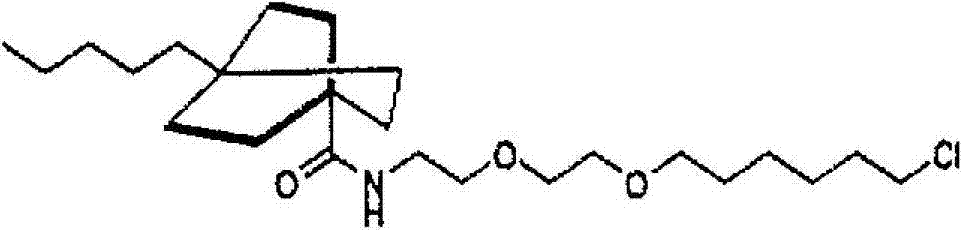
1H NMR(400MHz,CDCl3)δ6.01(t,J=4.8Hz,1H),3.60-3.58(m,2H),3.56-3.54(m,2H),3.52(t,J=6.5Hz,4H),345(t,J=6.7Hz,2H),3.19(t,J=5.3Hz,2H),1.80-1.73(m,2H),1.72-1.68(m,6H),1.63-1.56(m,2H),1.49-1.41(m,2H),1.40-1.34(m,8H),1.30-1.23(m,2H),1.20-1.12(m,4H),1.09-1.03(m,2H),0.86(t,J=7.0Hz,3H)。13C NMR(100MHz,CDCl3)δ178.2,77.2,71.2,70.2,69.9,69.8,45.0,41.2,39.0,38.9,32.7,32.5,30.6,30.3,29.4,28.8,26.6,25.4,23.3,22.6,14.0。HRMS(ES+),针对C24H45NO3Cl[M+H]+430.3088计算,发现为430.3088。TLC(5%CH3OH,在CH2Cl2中),Rf0.51(CAM)。 1 H NMR (400MHz, CDCl 3 ) δ6.01(t, J=4.8Hz, 1H), 3.60-3.58(m, 2H), 3.56-3.54(m, 2H), 3.52(t, J=6.5Hz, 4H), 345(t, J=6.7Hz, 2H), 3.19(t, J=5.3Hz, 2H), 1.80-1.73(m, 2H), 1.72-1.68(m, 6H), 1.63-1.56(m , 2H), 1.49-1.41(m, 2H), 1.40-1.34(m, 8H), 1.30-1.23(m, 2H), 1.20-1.12(m, 4H), 1.09-1.03(m, 2H), 0.86 (t, J = 7.0 Hz, 3H). 13 C NMR (100MHz, CDCl 3 ) δ178.2, 77.2, 71.2, 70.2, 69.9, 69.8, 45.0, 41.2, 39.0, 38.9, 32.7, 32.5, 30.6, 30.3, 29.4, 28.8, 26.6, 25.4, 23.3, 22.6 , 14.0. HRMS (ES+ ) calcd for C24H45NO3Cl [M+H] + 430.3088 , found 430.3088. TLC (5% CH3OH in CH2Cl2 ) , Rf 0.51 (CAM).
方案11.HyT34(44)的合成
在rt下,向胺8(23mg,0.1mmol)在CH2Cl2(1.5mL)中的溶液加入三乙基胺(140μL,1.0mmol)和1-金刚烷基异氰酸酯(18mg,0.1mmol)。反应混合物在rt下搅动16h并被蒸发。残余物在硅胶上进行层析,以产生1-((3s,5s,7s)-金刚烷-1-基)-3-(2-(2-((6-氯己基)氧)乙氧基)乙基)脲44(HyT34,40mg,76%)。1H NMR(400MHz,CDCl3)δ4.81(t,J=5.6Hz,1H),4.46(s,1H),3.60-3.58(m,2H),3.56-3.54(m,2H),3.53(t,J=6.7Hz,2H),3.52(t,J=6.7Hz,2H),3.44(t,J=6.7Hz,2H),3.31(t,J=5.4Hz,1H),3.30(t,J=5.4Hz,1H),2.04(brs,3H),1.93(t,J=2.8Hz,6H),1.79-1.72(m,2H),1.64(t,J=2.8Hz,6H),1.62-1.56(m,2H),1.48-1.40(m,2H),1.39-1.31(m,2H)。13C NMR(100MHz,CDCl3)δ157.4,77.2,71.2,70.9,70.2,70.0,50.7,45.0,42.4,39.9,36.4,32.4,29.5,29.4,26.6,25.3。HRMS(ES+),针对C21H38N2O3Cl[M+H]+401.2571计算,发现为401.2573。TLC(10%CH3OH,在CH2Cl2中),Rf0.59(CAM)。To a solution of amine 8 (23 mg, 0.1 mmol) in CH2Cl2 (1.5 mL ) was added triethylamine (140 μL, 1.0 mmol) and 1-adamantyl isocyanate (18 mg, 0.1 mmol) at rt. The reaction mixture was stirred at rt for 16 h and evaporated. The residue was chromatographed on silica gel to yield 1-((3s,5s,7s)-adamantan-1-yl)-3-(2-(2-((6-chlorohexyl)oxy)ethoxy ) ethyl)urea 44 (HyT34, 40 mg, 76%). 1 H NMR (400MHz, CDCl 3 ) δ4.81(t, J=5.6Hz, 1H), 4.46(s, 1H), 3.60-3.58(m, 2H), 3.56-3.54(m, 2H), 3.53( t, J=6.7Hz, 2H), 3.52(t, J=6.7Hz, 2H), 3.44(t, J=6.7Hz, 2H), 3.31(t, J=5.4Hz, 1H), 3.30(t, J=5.4Hz, 1H), 2.04(brs, 3H), 1.93(t, J=2.8Hz, 6H), 1.79-1.72(m, 2H), 1.64(t, J=2.8Hz, 6H), 1.62- 1.56 (m, 2H), 1.48-1.40 (m, 2H), 1.39-1.31 (m, 2H). 13 C NMR (100 MHz, CDCl 3 ) δ 157.4, 77.2, 71.2, 70.9, 70.2, 70.0, 50.7, 45.0, 42.4, 39.9, 36.4, 32.4, 29.5, 29.4, 26.6, 25.3. HRMS ( ES +) calcd for C21H38N2O3Cl [M+H] + 401.2571 , found 401.2573 . TLC (10% CH3OH in CH2Cl2 ), Rf 0.59 (CAM).
1-((3s,5s,7s)-金刚烷-1-基)-3-(2-(2-((6-氯己基)氧)乙氧基)乙基)硫代脲(HyT35, 45): 1-((3s, 5s, 7s)-adamantan-1-yl)-3-(2-(2-((6-chlorohexyl)oxy)ethoxy)ethyl)thiourea (HyT35, 45 ) :
HyT35通过与HyT34(44)相同的方法被合成。HyT35 was synthesized by the same method as HyT34 (44).

1H NMR(500MHz,CDCl3)δ6.20(s,1H),3.76(s,2H),3.63-3.60(m,3H),3.55-3.49(m,5H),3.45-3.38(m,2H),2.14-1.93(m,9H),1.77-1.72(m,2H),1.69-1.63(m,6H),1.59-1.54(m,2H),1.48-1.39(m,2H),1.38-1.30(m,2H)。13C NMR(125MHz,CDCl3)δ180.8,77.2,71.3,70.4,70.1,53.8,45.0,42.4,42.1,42.0,36.2,32.5,29.7,29.6,29.5,26.8,25.4。HRMS(ES+),针对C21H38N2O2SCl[M+H]+417.2343计算,发现为417.2341。TLC(10%CH3OH,在CH2Cl2中),Rf0.58(CAM)。 1 H NMR (500MHz, CDCl 3 ) δ6.20(s, 1H), 3.76(s, 2H), 3.63-3.60(m, 3H), 3.55-3.49(m, 5H), 3.45-3.38(m, 2H ), 2.14-1.93(m, 9H), 1.77-1.72(m, 2H), 1.69-1.63(m, 6H), 1.59-1.54(m, 2H), 1.48-1.39(m, 2H), 1.38-1.30 (m, 2H). 13 C NMR (125 MHz, CDCl 3 ) δ 180.8, 77.2, 71.3, 70.4, 70.1, 53.8, 45.0, 42.4, 42.1, 42.0, 36.2, 32.5, 29.7, 29.6, 29.5, 26.8, 25.4. HRMS (ES+) calcd for C21H38N2O2SCl [M+H] + 417.2343 , found 417.2341 . TLC (10% CH3OH in CH2Cl2 ), Rf 0.58 (CAM).
方案12.HyT36(49)的合成

(3r,5r,7r)-1-(2-碘乙基)金刚硼(adamantine)46:在rt下,向PPh3(1.57g,6.0mmol)在CH2Cl2(14mL)的搅动的溶液中加入咪唑(442mg,6.5mmol)和碘(1.52g,6.0mmol)。反应混合物被冷却至0℃,并在0℃下搅动5min。1-金刚烷乙醇(901mg,5.0mmol)在CH2Cl2(6mL)中的溶液通过套管被逐滴加入至混合物。所得混合物在0℃下搅动2.0h,并将H2O(20mL)加入冰浴中的混合物。将有机层分离,并且,将水相用CH2Cl2萃取两次。组合的有机层被浓缩。浓缩物通过柱层析被纯化,以提供(3r,5r,7r)-1-(2-碘乙基)金刚硼46(1.375g,95%),作为白色固体。1H NMR(400MHz,CDCl3)δ3.17(d,J=17.9Hz,1H),3.17(dt,J=3.2,1.8Hz,1H),1.95(brs,3H),1.78(d,J=17.9Hz,1H),1.78(dt,J=3.3,1.8Hz,1H),1.71(brs,1H),1.68(brs,2H),1.63-1.61(m,1H),1.61-1.58(m,1H),1.49(d,J=2.4Hz,1H)。TLC(10%EtOAc,在己烷中),Rf0.81(UV,CAM)。 (3r,5r,7r)-1-(2-Iodoethyl)adamantine 46 : To a stirred solution of PPh3 (1.57g, 6.0mmol) in CH2Cl2 ( 14mL ) at rt To this was added imidazole (442 mg, 6.5 mmol) and iodine (1.52 g, 6.0 mmol). The reaction mixture was cooled to 0 °C and stirred at 0 °C for 5 min. A solution of 1-adamantane ethanol (901 mg, 5.0 mmol) in CH2Cl2 (6 mL) was added dropwise to the mixture via cannula . The resulting mixture was stirred at 0 °C for 2.0 h, and H2O (20 mL) was added to the mixture in an ice bath. The organic layer was separated and the aqueous phase was extracted twice with CH2Cl2 . The combined organic layers were concentrated. The concentrate was purified by column chromatography to provide (3r,5r,7r)-1-(2-iodoethyl)adamantboron 46 (1.375 g, 95%) as a white solid. 1 H NMR (400MHz, CDCl 3 ) δ3.17(d, J=17.9Hz, 1H), 3.17(dt, J=3.2, 1.8Hz, 1H), 1.95(brs, 3H), 1.78(d, J= 17.9Hz, 1H), 1.78(dt, J=3.3, 1.8Hz, 1H), 1.71(brs, 1H), 1.68(brs, 2H), 1.63-1.61(m, 1H), 1.61-1.58(m, 1H ), 1.49 (d, J=2.4Hz, 1H). TLC (10% EtOAc in hexanes), Rf 0.81 (UV, CAM).
(R)-4-((3R,5R,7R)-金刚烷-1-基)-N-((1S,2S)-1-羟基-1-苯基丙-2-基)-N,2-二甲基 丁酰胺47:在-78℃下,将正丁基锂溶液(2.5M,在己烷中,0.8mL,2.0mmol,4.0当量)加入至氯化锂(275mg,6.5mmol,13.0当量)和二异丙基胺(0.3mL,2.15mmol,4.3当量)在THF(2mL)中的悬浮液中。所得悬浮液略微加温至0℃,然后冷却至-78℃。(1S,S)-(+)-假麻黄碱丙酰胺(221mg,1.0mmol,2.0当量)在THF(2mL)中的冰冷溶液在30min中通过套管被逐滴加入,并且,反应混合物在78℃下被搅动1.0h,在0℃下被搅动15min,并且在室温下被搅动5min,并且,冷却至0℃。在0℃下,通过套管向该溶液加入碘化物46(145mg,0.5mmol,1.0当量)在THF(1mL)中的溶液,并且,反应混合物在0℃下搅动6h并在室温下搅动20h。浅黄色混合物被冷却至0℃,然后用半饱和的NH4Cl水溶液(10mL)处理,并用乙酸乙酯(10mL×3)萃取。组合的有机层在Na2SO4上干燥,过滤并浓缩。残余物通过快速色谱法在硅胶上被纯化,以提供(R)-4-((3R,5R,7R)-金刚烷-1-基)-N-((1S,2S)-1-羟基-1-苯基丙-2-基)-N,2-二甲基丁酰胺47(178mg,93%)。1H NMR(400MHz,CDCl3)δ7.38-7.30(m,5H),4.62(dd,J=7.3,7.3Hz,1H),4.35(brs,1H),2.81(s,3H),2.50-2.41(m,1H),1.93(s,3H),1.71-1.60(m,7H),1.57-1.41(m,8H),1.17(d,J=7.0Hz,3H),1.08(d,J=6.7Hz,3H),0.98-0.87(m,2H)。13C NMR(100MHz,CDCl3)δ179.3,142.7,128.7,128.3,127.5,126.9,126.3,77.2,76.5,42.3,42.2,37.4,37.2,32.1,28.7,26.9,17.2,15.4。TLC(33%EtOAc,在己烷中),Rf0.24(UV,CAM)。 (R)-4-((3R,5R,7R)-adamantane-1-yl)-N-((1S,2S)-1-hydroxyl-1-phenylpropan-2-yl)-N,2 - Dimethylbutanamide 47: Add n-butyllithium solution (2.5M in hexane, 0.8mL, 2.0mmol, 4.0 equiv) to lithium chloride (275mg, 6.5mmol, 13.0 equiv) and diisopropylamine (0.3 mL, 2.15 mmol, 4.3 equiv) in suspension in THF (2 mL). The resulting suspension was warmed slightly to 0°C and then cooled to -78°C. An ice-cold solution of (1S,S)-(+)-pseudoephedrine propionamide (221 mg, 1.0 mmol, 2.0 equiv) in THF (2 mL) was added dropwise via cannula over 30 min, and the reaction mixture was added at 78 Stirred for 1.0 h at °C, 15 min at 0 °C, and 5 min at room temperature, and cooled to 0 °C. To this solution was added iodide 46 (145 mg, 0.5 mmol, 1.0 equiv) in THF (1 mL) via cannula at 0 °C and the reaction mixture was stirred at 0 °C for 6 h and at room temperature for 20 h. The pale yellow mixture was cooled to 0 °C, then treated with half-saturated aqueous NH4Cl (10 mL), and extracted with ethyl acetate (10 mL x 3). The combined organic layers were dried over Na2SO4 , filtered and concentrated. The residue was purified by flash chromatography on silica gel to provide (R)-4-((3R,5R,7R)-adamantan-1-yl)-N-((1S,2S)-1-hydroxy- 1-phenylpropan-2-yl)-N,2-dimethylbutanamide 47 (178 mg, 93%). 1 H NMR (400MHz, CDCl 3 ) δ7.38-7.30 (m, 5H), 4.62 (dd, J=7.3, 7.3Hz, 1H), 4.35 (brs, 1H), 2.81 (s, 3H), 2.50- 2.41(m, 1H), 1.93(s, 3H), 1.71-1.60(m, 7H), 1.57-1.41(m, 8H), 1.17(d, J=7.0Hz, 3H), 1.08(d, J= 6.7Hz, 3H), 0.98-0.87(m, 2H). 13 C NMR (100 MHz, CDCl 3 ) δ 179.3, 142.7, 128.7, 128.3, 127.5, 126.9, 126.3, 77.2, 76.5, 42.3, 42.2, 37.4, 37.2, 32.1, 28.7, 26.9, 17.2, 15.4. TLC (33% EtOAc in hexanes), Rf 0.24 (UV, CAM).
(R)-4-((3R,5R,7R)-金刚烷-1-基)-2-甲基丁酸48:在rt下,向(R)-4-((3R,5R,7R)-金刚烷-1-基)-N-((1S,2S)-1-羟基-1-苯基丙-2-基)-N,2-二甲基丁酰胺47(120mg,0.313mmol)在1,4-二
(R)-4-((3R,5R,7R)-金刚烷-1-基)-N-(2-(2-((6-氯己基)氧)乙氧基)乙基)-2-甲基丁 酰胺(HyT36,49):HyT36如HyT13通过EDC-介导的连接方法被合成。 (R)-4-((3R,5R,7R)-adamantane-1-yl)-N-(2-(2-((6-chlorohexyl)oxy)ethoxy)ethyl)-2- Methylbutanamide (HyT36, 49) : HyT36 like HyT13 was synthesized by EDC-mediated ligation method.
1H NMR(400MHz,CDCl3)δ5.93(s,1H),3.62-3.59(m,2H),3.57-3.55(m,2H),3.54(t,J=5.0Hz,2H),3.52(t,J=6.5Hz,2H),3.47-3.43(m,4H),2.09-2.01(m,1H),1.92(s,3H),1.79(t,J=6.7Hz,1H),1.75(t,J=6.7Hz,1H),1.69-1.57(m,9H),1.47-1.27(m,11H),1.12(d,J=6.8Hz,3H),1.03-0.98(m,2H)。13C NMR(100MHz,CDCl3)δ176.6,71.2,70.2,70.0,44.9,42.4,42.2,42.1,38.9,37.2,32.5,32.1,29.4,28.7,27.2,26.6,25.4,17.8。HRMS(ES+),针对C25H45NO3Cl[M+H]+442.3088计算,发现为442.3086。TLC(5%CH3OH,在CH2Cl2中),Rf0.40(CAM)。 1 H NMR (400MHz, CDCl 3 ) δ5.93(s, 1H), 3.62-3.59(m, 2H), 3.57-3.55(m, 2H), 3.54(t, J=5.0Hz, 2H), 3.52( t, J=6.5Hz, 2H), 3.47-3.43(m, 4H), 2.09-2.01(m, 1H), 1.92(s, 3H), 1.79(t, J=6.7Hz, 1H), 1.75(t , J=6.7Hz, 1H), 1.69-1.57(m, 9H), 1.47-1.27(m, 11H), 1.12(d, J=6.8Hz, 3H), 1.03-0.98(m, 2H). 13 C NMR (100 MHz, CDCl 3 ) δ 176.6, 71.2, 70.2, 70.0, 44.9, 42.4, 42.2, 42.1, 38.9, 37.2, 32.5, 32.1, 29.4, 28.7, 27.2, 26.6, 25.4, 17.8. HRMS (ES+), calculated for C25H45NO3Cl [M+H] + 442.3088 , found 442.3086 . TLC (5% CH3OH in CH2Cl2 ) , Rf 0.40 (CAM).
HyT39通过与HyT36相同的方法被合成。HyT39 was synthesized by the same method as HyT36.
方案13.HyT39(53)的合成
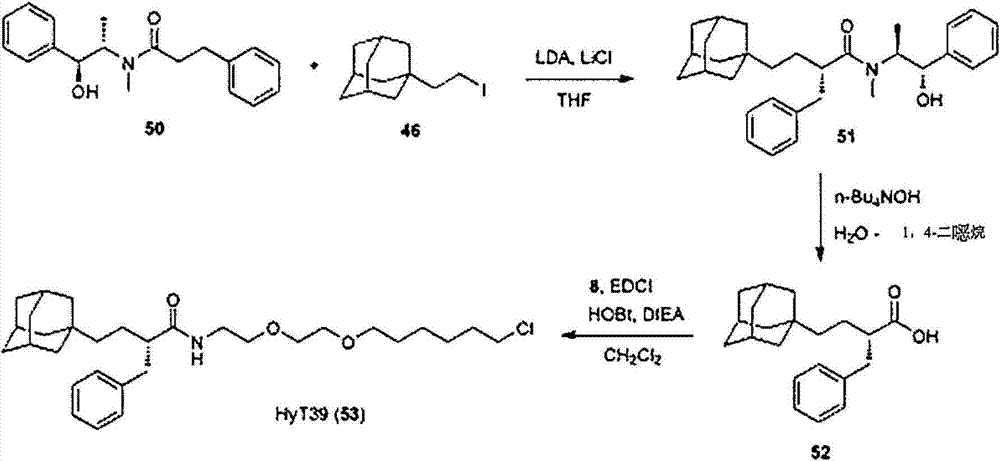
N-((1S,2S)-1-羟基-1-苯基丙-2-基)-N-甲基-3-苯基丙酰胺50:在rt下,向(1S,2S)-(+)-假麻黄碱(496mg,3.0mmol)在THF(9mL)中的溶液加入三乙基胺(0.59mL,4.2mmol)。混合物冷却至0℃,并且将氢化肉桂酰氯(0.54mL,3.6mmol)加入混合物。所得混合物在0℃下搅动0.5h,用H2O(10mL)淬火,并用乙酸乙酯萃取两次。组合的萃取物用盐水洗涤,在Na2SO4上干燥,过滤并浓缩。残余物在硅胶上进行层析,以提供N-((1S,2S)-1-羟基-1-苯基丙-2-基)-N-甲基-3-苯基丙酰胺50(865mg,97%)。1H NMR(500MHz,CD3OD)δ7.38-7.31(m,4H),7.29-7.13(m,6H),4.77(brs,1/2H),4.58(dd,J=11.2,8.2Hz,1H),4.03-3.97(m,1/2H),2.88(d,J=10.7Hz,3H),2.87(t,J=8.1Hz,2H),2.76-2.58(m,2H),0.88(t,J=7.0Hz,3H)。13C NMR(额外的峰是由于结合酰胺的旋转异构体,125MHz,CD3OD)δ175.7,175.6,143.8,142.6,142.5,130.0,129.6,129.5,129.4,129.3,128.8,128.1,128.0,127.13,127.11,76.3,76.1,59.7,36.8,36.2,32.7,32.4,27.9,15.6,14.4。TLC(33%EtOAc,在己烷中),Rf0.08(UV,CAM)。 N-((1S, 2S)-1-hydroxyl-1-phenylpropan-2-yl)-N-methyl-3-phenylpropanamide 50 : at rt, toward (1S, 2S)-(+ ) - A solution of pseudoephedrine (496 mg, 3.0 mmol) in THF (9 mL) was added triethylamine (0.59 mL, 4.2 mmol). The mixture was cooled to 0 °C, and hydrocinnamoyl chloride (0.54 mL, 3.6 mmol) was added to the mixture. The resulting mixture was stirred at 0 °C for 0.5 h, quenched with H2O (10 mL), and extracted twice with ethyl acetate. The combined extracts were washed with brine, dried over Na2SO4 , filtered and concentrated. The residue was chromatographed on silica gel to provide N-((1S,2S)-1-hydroxy-1-phenylpropan-2-yl)-N-methyl-3-phenylpropanamide 50 (865 mg, 97%). 1 H NMR (500MHz, CD 3 OD) δ7.38-7.31(m, 4H), 7.29-7.13(m, 6H), 4.77(brs, 1/2H), 4.58(dd, J=11.2, 8.2Hz, 1H), 4.03-3.97(m, 1/2H), 2.88(d, J=10.7Hz, 3H), 2.87(t, J=8.1Hz, 2H), 2.76-2.58(m, 2H), 0.88(t , J=7.0Hz, 3H). 13 C NMR (extra peak due to bound amide rotamer, 125 MHz, CD 3 OD) δ 175.7, 175.6, 143.8, 142.6, 142.5, 130.0, 129.6, 129.5, 129.4, 129.3, 128.8, 128.1, 128.0 , 127.13, 127.11, 76.3, 76.1, 59.7, 36.8, 36.2, 32.7, 32.4, 27.9, 15.6, 14.4. TLC (33% EtOAc in hexanes), Rf 0.08 (UV, CAM).
(S)-4-((3S,5S,7S)-金刚烷-1-基)-2-苄基-N-((1S,2S)-1-羟基-1-苯基丙-2-基)-N-甲 基丁酰胺51:51通过与47相同的方法被合成。1H NMR(400MHz,CDCl3)7.30-7.28(m,4H),7.27-7.24(m,4H),7.20-7.17(m,2H),4.48(dd,J=6.5,6.5Hz,1H),2.80-2.71(m,2H),2.49(s,3H),1.94(s,3H),1.72-1.59(m,7H),1.55(s,3H),1.43(d,J=2.2Hz,6H),0.99(d,J=7.0Hz,3H),0.97-0.92(m,1H),0.90-0.83(m,2H)。TLC(33%EtOAc,在己烷中),Rf0.43(UV,CAM)。 (S)-4-((3S,5S,7S)-adamantan-1-yl)-2-benzyl-N-((1S,2S)-1-hydroxy-1-phenylpropan-2-yl )-N- methylbutyramide 51:51 was synthesized by the same method as 47. 1 H NMR (400MHz, CDCl 3 ) 7.30-7.28 (m, 4H), 7.27-7.24 (m, 4H), 7.20-7.17 (m, 2H), 4.48 (dd, J=6.5, 6.5Hz, 1H), 2.80-2.71(m, 2H), 2.49(s, 3H), 1.94(s, 3H), 1.72-1.59(m, 7H), 1.55(s, 3H), 1.43(d, J=2.2Hz, 6H) , 0.99 (d, J = 7.0 Hz, 3H), 0.97-0.92 (m, 1H), 0.90-0.83 (m, 2H). TLC (33% EtOAc in hexanes), Rf 0.43 (UV, CAM).
(S)-4-((3S,5S,7S)-金刚烷-1-基)-2-苄基丁酸52:52通过与48相同的方法被合成。1H NMR(400MHz,CDCl3)δ10.15(brs,1H),7.28-7.23(m,2H),7.20-7.14(m,3H),2.94(dd,J=13.8,8.2Hz,1H),2.76(dd,J=13.8,6.5Hz,1H),2.61-2.53(m,1H),1.92(s,3H),1.69-1.56(m,7H),1.54-1.46(m,1H),1.43(d,J=2.0Hz,6H),1.13-1.03(m,2H)。13C NMR(100MHz,CDCl3)δ181.8,139.2,128.6,128.4,126.3,47.9,42.3,41.6,37.9,37.2,32.1,28.7,24.8。TLC(25%EtOAc,在己烷中),Rf0.54(UV)。 (S)-4-((3S,5S,7S)-adamantan-1-yl)-2-benzylbutanoic acid 52:52 was synthesized by the same method as 48. 1 H NMR (400MHz, CDCl 3 ) δ10.15 (brs, 1H), 7.28-7.23 (m, 2H), 7.20-7.14 (m, 3H), 2.94 (dd, J=13.8, 8.2Hz, 1H), 2.76(dd, J=13.8, 6.5Hz, 1H), 2.61-2.53(m, 1H), 1.92(s, 3H), 1.69-1.56(m, 7H), 1.54-1.46(m, 1H), 1.43( d, J = 2.0 Hz, 6H), 1.13-1.03 (m, 2H). 13 C NMR (100 MHz, CDCl 3 ) δ 181.8, 139.2, 128.6, 128.4, 126.3, 47.9, 42.3, 41.6, 37.9, 37.2, 32.1, 28.7, 24.8. TLC (25% EtOAc in hexanes), Rf 0.54 (UV).
(S)-4-((3S,5S,7S)-金刚烷-1-基)-2-苄基-N-(2-(2-((6-氯己基)氧)乙氧基)乙基)丁酰 胺(HyT39,53):HyT39如HyT13通过EDC介导的连接方法被合成。1H NMR(500MHz,CDCl3)δ7.25-7.22(m,2H),7.17-7.14(m,3H),5.72(t,J=5.4Hz,1H),3.52(t,J=6.6Hz,2H),3.50-3.45(m,3H),3.44-3.40(m,1H),3.42(t,J=6.6Hz,2H),3.69-3.33(m,2H),3.31-3.25(m,1H),3.23-3.19(m,1H),2.88(dd,J=13.3,9.6Hz,1H),2.72(dd,J=13.4,5.3Hz,1H),2.16-2.11(m,1H),1.92(s,3H),1.79-1.73(m,2H),1.69-1.56(m,9H),1.47-1.41(m,3H),1.44(d,J=2.2Hz,6H),1.38-1.33(m,2H),1.09-0.97(m,2H)。13C NMR(125MHz,CDCl3)δ174.8,140.1,128.9,128.2,126.0,71.2,70.1,70.0,69.9,51.0,44.9,42.3,42.1,39.2,38.8,37.2,32.5,32.1,29.4,28.6,26.6,25.7,25.4。HRMS(ES+),针对C31H49NO3Cl[M+H]+518.3401计算,发现为518.3405。TLC(5%CH3OH,在CH2Cl2中),Rf0.55(UV,CAM)。 (S)-4-((3S, 5S, 7S)-adamantan-1-yl)-2-benzyl-N-(2-(2-((6-chlorohexyl)oxy)ethoxy)ethyl base) butanamide (HyT39,53): HyT39 like HyT13 was synthesized by EDC-mediated ligation method. 1 H NMR (500MHz, CDCl 3 ) δ7.25-7.22(m, 2H), 7.17-7.14(m, 3H), 5.72(t, J=5.4Hz, 1H), 3.52(t, J=6.6Hz, 2H), 3.50-3.45(m, 3H), 3.44-3.40(m, 1H), 3.42(t, J=6.6Hz, 2H), 3.69-3.33(m, 2H), 3.31-3.25(m, 1H) , 3.23-3.19(m, 1H), 2.88(dd, J=13.3, 9.6Hz, 1H), 2.72(dd, J=13.4, 5.3Hz, 1H), 2.16-2.11(m, 1H), 1.92(s , 3H), 1.79-1.73(m, 2H), 1.69-1.56(m, 9H), 1.47-1.41(m, 3H), 1.44(d, J=2.2Hz, 6H), 1.38-1.33(m, 2H ), 1.09-0.97 (m, 2H). 13 C NMR (125MHz, CDCl 3 ) δ174.8, 140.1, 128.9, 128.2, 126.0, 71.2, 70.1, 70.0, 69.9, 51.0, 44.9, 42.3, 42.1, 39.2, 38.8, 37.2, 32.5, 32.1, 29.4, 28.6 , 26.6, 25.7, 25.4. HRMS (ES+ ) calcd for C31H49NO3Cl [M+H] + 518.3401 , found 518.3405. TLC (5% CH3OH in CH2Cl2 ), Rf 0.55 (UV, CAM).
2-((3r,5r,7r)-金刚烷-1-基)-N-(24-氯-11-氧-3,6,9,15,18-五氧杂-12-氮杂二十四基) 乙酰胺(HyT40,54):HyT40通过与3类似的方法被合成。 2-((3r,5r,7r)-adamantan-1-yl)-N-(24-chloro-11-oxo-3,6,9,15,18-pentaoxa-12-azaeco Tetrayl) acetamide (HyT40,54) : HyT40 was synthesized by a method similar to 3.
方案14.HyT40(54)的合成

1H NMR(400MHz,CDCl3)δ7.18(s,1H),6.19(s,1H),4.04(s,2H),3.70-3.41(m,24H),1.95(s,3H),1.80-1.73(m,4H),1.70-1.55(m,8H),1.61(d,J=2.2Hz,6H),1.48-1.41(m,2H),1.39-1.33(m,2H)。13C NMR(100MHz,CDCl3)δ171.1,171.0,71.2,70.7,70.6,70.5,70.4,70.2,70.1,70.0,69.9,69.8,51.5,45.0,42.5,39.0,38.6,36.7,32.6,32.5,29.4,28.6,26.6,25.4。HRMS(ES+),针对C30H54N2O7Cl[M+H]+589.3620计算,发现为589.3622。TLC(10%CH3OH,在中CH2Cl2),Rf0.66(UV,CAM)。 1 H NMR (400MHz, CDCl 3 ) δ7.18(s, 1H), 6.19(s, 1H), 4.04(s, 2H), 3.70-3.41(m, 24H), 1.95(s, 3H), 1.80- 1.73 (m, 4H), 1.70-1.55 (m, 8H), 1.61 (d, J=2.2Hz, 6H), 1.48-1.41 (m, 2H), 1.39-1.33 (m, 2H). 13 C NMR (100MHz, CDCl 3 ) δ171.1, 171.0, 71.2, 70.7, 70.6, 70.5, 70.4, 70.2, 70.1, 70.0, 69.9, 69.8, 51.5, 45.0, 42.5, 39.0, 38.6, 36.7, 32.6, 32.5 , 29.4, 28.6, 26.6, 25.4. HRMS (ES+), calculated for C30H54N2O7Cl [M+H] + 589.3620 , found 589.3622 . TLC (10% CH3OH in CH2Cl2 ) , Rf 0.66 (UV, CAM).
生物学实验biology experiment
方法method
细胞培养和材料Cell Culture and Materials
指示的细胞在37℃下,在补充有10%胎牛血清和青霉素/链霉素的DMEM中生长。HaloTag蛋白质获自pHT2载体(Promega)。荧光素酶序列获自pGL3-Basic载体(Promega),小鼠Ror2由Sigmar Stricker(Max Planck-Institute for MolecularGenetics(马克斯-普朗克分子遗传学研究所))热心提供,斑马鱼(Danio rerio)Smad5克隆自斑马鱼cDNA文库,并且,H-RasG12V获自Addgene质粒9051——由RobertWeinberg(MIT)贡献。其余跨膜蛋白质克隆自人脾脏cDNA文库(Invitrogen)。通过QuikChange Site Directed mutagenesis kit(QuikChange定点诱变试剂盒)(Stratagene),D106A点突变被引入HaloTag基因。Flp-In293细胞购自Invitrogen。HA-HaloTag-Smad5和EGFP-HaloTag被克隆到pCS2+载体中,而构建体的其余部分被克隆到逆转录病毒pEYK3.1载体(由George Daley,MIT热心提供)中——通过切除GFP41。逆转录病毒在具有pVSV-G和相应的pEYK质粒的GP2-293细胞(Clontech)中产生,并且,指示的细胞如所描述地被感染41。抗-HA抗体购自Covance(克隆16B12),并且,抗-β-肌动蛋白抗体购自Sigma(克隆AC-74)。HyT化合物在DMSO中以1000×原液被存储和整分。Indicated cells were grown at 37°C in DMEM supplemented with 10% fetal calf serum and penicillin/streptomycin. HaloTag protein was obtained from the pHT2 vector (Promega). Luciferase sequences were obtained from the pGL3-Basic vector (Promega), mouse Ror2 was kindly provided by Sigmar Stricker (Max Planck-Institute for Molecular Genetics), zebrafish (Danio rerio) Smad5 Cloned from a zebrafish cDNA library, and H-RasG12V was obtained from Addgene plasmid 9051 - a contribution from Robert Weinberg (MIT). The remaining transmembrane proteins were cloned from a human spleen cDNA library (Invitrogen). The D106A point mutation was introduced into the HaloTag gene by the QuikChange Site Directed mutagenesis kit (QuikChange Site-Directed Mutagenesis Kit) (Stratagene). Flp-In293 cells were purchased from Invitrogen. HA-HaloTag-Smad5 and EGFP-HaloTag were cloned into the pCS2+ vector, while the remainder of the construct was cloned into the retroviral pEYK3.1 vector (kindly provided by George Daley, MIT) by excision of GFP41 . Retroviruses were produced in GP2-293 cells (Clontech) with pVSV-G and corresponding pEYK plasmids, and the indicated cells were infected as described 41 . Anti-HA antibody was purchased from Covance (clone 16B12) and anti-β-actin antibody was purchased from Sigma (clone AC-74). HyT compounds were stocked and aliquoted as 1000X stocks in DMSO.
荧光素酶分析Luciferase assay
将用HA-荧光素酶-HaloTag感染的一万个稳定的HEK293T细胞在96孔板的每一个孔中铺平。次日,一式三份加入指示的HyT化合物,并将细胞再培养24小时。将细胞用冷PBS洗涤一次,并在被动裂解液(Passive Lysis Buffer)(Promega)中裂解。通过Steady-Glo Luciferase Assay System(Steady-Glo荧光素酶分析系统)(Promega)在Wallac Victor2Plate Reader(平板读取器)(Perkin Elmer)上显示荧光素酶活性,并且,荧光素酶活性通过如Bradford分析所确定的蛋白质浓度标准化。Ten thousand stable HEK293T cells infected with HA-luciferase-HaloTag were plated in each well of a 96-well plate. The next day, the indicated HyT compounds were added in triplicate and the cells were incubated for an additional 24 hours. Cells were washed once with cold PBS and lysed in Passive Lysis Buffer (Promega). Luciferase activity was shown on Wallac Victor2Plate Reader (plate reader) (Perkin Elmer) by Steady-Glo Luciferase Assay System (Steady-Glo Luciferase Assay System) (Promega), and luciferase activity was obtained by such as Bradford Protein concentrations determined by the assay were normalized.
免疫印迹法Western blotting
指示的细胞用冷PBS洗涤两次,并且,细胞在裂解液(1×PBS、1%NP-40、1mMEDTA、40mM HEPES)中用蛋白酶抑制剂裂解。通过在10,000g下离心5min清除溶胞产物。总蛋白质浓度通过Bradford分析而确定,并将50μg蛋白质加载到8%Bis-Tris凝胶中。为了在蛋白酶体抑制42后溶解多泛素化和聚集的蛋白质,用具有蛋白酶抑制剂的SDS裂解液(1×PBS、1%NP-40、1%SDS、1%脱氧胆酸钠、1mMEDTA、40mM HEPES)裂解图12e产生的样品。通过标准程序用指示的抗体处理印迹,并且,用ImageJ量化带强度。Indicated cells were washed twice with cold PBS, and cells were lysed with protease inhibitors in lysis buffer (1×PBS, 1% NP-40, 1 mM EDTA, 40 mM HEPES). Lysates were cleared by centrifugation at 10,000 g for 5 min. Total protein concentration was determined by Bradford analysis, and 50 μg of protein was loaded on an 8% Bis-Tris gel. To dissolve polyubiquitinated and aggregated proteins after proteasome inhibition42, use SDS lysate with protease inhibitors (1×PBS, 1% NP-40, 1% SDS, 1% sodium deoxycholate, 1 mM EDTA, 40 mM HEPES) lysed the sample generated in Figure 12e. Blots were treated with the indicated antibodies by standard procedures and band intensities were quantified with ImageJ.
流式细胞术分析Flow Cytometry Analysis
通过共转染pCS2/EGFP-HaloTag和含有嘌呤霉素抗性基因的p-Puro培养稳定的HeLa细胞。分离表达EGFP-HaloTag的克隆细胞群。这些细胞用介质或1μMHyT13处理24小时,用PBS洗涤,并被胰蛋白酶消化。将细胞重悬于不含FBS的DMEM中,并且,通过FACSCalibur(BD Biosciences)测量细胞内GFP水平。Stable HeLa cells were cultured by co-transfection of pCS2/EGFP-HaloTag and p-Puro containing the puromycin resistance gene. Clonal cell populations expressing EGFP-HaloTag were isolated. These cells were treated with vehicle or 1 μM HyT13 for 24 hr, washed with PBS, and trypsinized. Cells were resuspended in FBS-free DMEM, and intracellular GFP levels were measured by FACSCalibur (BD Biosciences).
斑马鱼(Danio rerio)实验Zebrafish (Danio rerio) experiments
野生型鱼种系TLF被用于该研究。将pCS2+质粒中的HA-HaloTag-Smad5用SP6转录试剂盒(Ambion)在体外转录。在一个细胞期以100ng/μL注入mRNA,并将胚胎培养至256细胞期,此时,将它们移至凹玻片(10个/孔)并置入具有或不具有HyT13(10μM)的1ml E2培养基中。在28.6℃下培养胚胎24小时,然后,将其去卵膜(dechorionated)和去卵黄,如述43。每种条件收集大约60个胚胎,用于免疫印迹分析,如上所述。Wild-type fish germline TLF was used for this study. HA-HaloTag-Smad5 in pCS2+ plasmid was transcribed in vitro with SP6 transcription kit (Ambion). Inject mRNA at 100 ng/μL at one cell stage and culture embryos to 256 cell stage, at which point they are moved to concave slides (10/well) and placed in 1 ml E2 with or without HyT13 (10 μM) medium. Embryos were incubated at 28.6°C for 24 hours and then dechorionated and deyolked as described 43 . Approximately 60 embryos per condition were collected for immunoblot analysis as described above.
集落形成分析Colony Formation Assay
将具有DMEM的10%FBS中的用HA-HaloTag-H-RasG12V和HA-HaloTag(D106A)-H-RasG12V感染的十万个NIH-3T3细胞在10-cm细胞培养板上铺平。次日,用1%FBS培养基替换培养基,并且,对细胞施加介质或1μMHyT13。每两天替换培养基和药物。在第6天,给集落照相,并以每1-cm2面积的不同集落数计数。One hundred thousand NIH-3T3 cells infected with HA-HaloTag-H-RasG12V and HA-HaloTag(D106A)-H-RasG12V in 10% FBS with DMEM were plated on 10-cm cell culture plates. The next day, medium was replaced with 1% FBS medium, and medium or 1 μM HyT13 was applied to cells. Media and drugs were replaced every two days. On
肿瘤形成分析Tumor formation analysis
将表达HA-HaloTag-H-RasG12V的十万个NIH-3T3细胞注入到麻醉的6周龄雌性nu/nu裸鼠(Charles River Laboratories)的胁中。两小时后,小鼠经IP注射以介质(10μL体积,具有5μL DMSO和5μL克列莫佛EL)、25mg/kg HyT13或100mg/kg HyT13。药物注射每日持续进行,直到实验结束。在第7天肿瘤出现后,每日用测径器测量肿瘤,并且,利用下列公式计算其体积:a(b)2/2,其中,a和b分别代表肿瘤的最长和最短直径。One hundred thousand NIH-3T3 cells expressing HA-HaloTag-H-RasG12V were injected into the flank of anesthetized 6-week-old female nu/nu nude mice (Charles River Laboratories). Two hours later, mice were injected IP with vehicle (10 μL volume with 5 μL DMSO and 5 μL Cremophor EL), 25 mg/kg HyT13 or 100 mg/kg HyT13. Drug injections continued daily until the end of the experiment. After tumor appearance on
结果result
疏水性标记使HaloTag融合蛋白失稳Hydrophobic tags destabilize HaloTag fusion proteins
本发明人设计了21个不同结构的支架,作为疏水标签(HyTs)的基础,并在这些支架上合成和测试了30种化合物,这些化合物由如下组成:连接至HaloTag卤代烷反应性连接体的疏水部分(表1,图5)。在设计这些双功能分子的疏水部分时,发明人应用了可在Yale University Small Molecule Discovery Center(耶鲁大学小分子发现中心)获得的化合物库,作为非正式的源,来鉴别如下化合物:(1)最大化疏水性、(2)最小化分子重量、和(3)结合化学上不同的并且商业可得的支架。为确定其生物学活性,生成了稳定的HEK293T细胞系——表达荧光素酶-HaloTag融合蛋白,并用HyT化合物以1μM处理这些细胞24小时。引人注目地,若干非毒性化合物呈现降低荧光素酶活性,并且,进一步表征五种最有效的化合物(图1)。所有五种HyT均呈现高疏水性得分(logP范围为+3至+5)并以浓度依赖性方式起作用,然而,具有两个PEG基团的HyT5对照化合物没有降低荧光素酶活性(图1)。基于这些初始数据,继续以下研究:通过含有疏水性的HyT13的疏水性标记引起的降解——由于具有金刚烷基的化合物的报告的高稳定性和细胞渗透性27,28。The present inventors designed 21 scaffolds of different structures as the basis for hydrophobic tags (HyTs), and synthesized and tested 30 compounds on these scaffolds, which consisted of: a hydrophobic part (Table 1, Figure 5). In designing the hydrophobic moieties of these bifunctional molecules, the inventors used the compound libraries available at the Yale University Small Molecule Discovery Center as an informal source to identify the following compounds: (1) Maximize hydrophobicity, (2) minimize molecular weight, and (3) incorporate chemically distinct and commercially available scaffolds. To determine its biological activity, a stable HEK293T cell line expressing luciferase-HaloTag fusion protein was generated and these cells were treated with HyT compound at 1 μΜ for 24 hours. Strikingly, several non-toxic compounds appeared to reduce luciferase activity, and the five most potent compounds were further characterized (Figure 1). All five HyTs exhibited high hydrophobicity scores (logP ranging from +3 to +5) and acted in a concentration-dependent manner, however, the HyT5 control compound with two PEG groups did not reduce luciferase activity (Figure 1 ). Based on these initial data, the following studies were continued: Degradation induced by hydrophobic tags containing HyT13 - due to the reported high stability and cell permeability of compounds with adamantyl groups 27,28 .
因为荧光素酶分析依赖于荧光素酶-HaloTag融合蛋白的活性损失,希望确定荧光素酶活性降低是由于整个融合蛋白的降解还是可能是仅仅由于荧光素酶活性的抑制。生成了稳定的Flp-In293细胞系——具有含有HA-EGFP-HaloTag融合蛋白的单个整合位点,并利用该细胞系和HyT13一起进行动力学研究。免疫印迹法显示,HyT13有效降解融合蛋白,其中最大效力达到100nM(图12a)。HyT13的IC50经分析为21nM(图6)。时程实验揭示,在8小时内达到全部效力,其中,到1.5小时观察到50%降解(图12b和图7)。当细胞用1μM HyT13处理24小时,然后将HyT13除去24小时时,蛋白质水平恢复至起始水平的一半。在20μM的HyT13——IC50值1000倍的剂量——下,没有观察到细胞毒性(图8)。与假设一致的是,疏水性标记模拟部分变性的蛋白质状态,并且,蛋白质最终被输送至蛋白酶体以进行降解,将蛋白酶体抑制剂MG132和YU10129的内含阻止HyT13介导的降解(图12c)。为验证观察到的HA-EGFP-HaloTag水平降低并不是由于在免疫印迹法过程中HA表位的遮蔽而造成的,生成了HeLa细胞系——其稳定地表达EGFP-HaloTag,并通过流式细胞术分析细胞内荧光。与之前的观察一致,以1μMHyT13对这些细胞进行24小时的处理使细胞的平均荧光强度降低几乎7倍(图12d)。总之,这些发现提供第一实验证据——疏水性标记代表可行的蛋白质水平控制策略。Because the luciferase assay relies on the loss of activity of the luciferase-HaloTag fusion protein, it was desired to determine whether the reduced luciferase activity was due to degradation of the entire fusion protein or whether it might be due to inhibition of luciferase activity alone. A stable Flp-In293 cell line with a single integration site containing the HA-EGFP-HaloTag fusion protein was generated and used together with HyT13 for kinetic studies. Western blotting showed that HyT13 efficiently degraded the fusion protein, with a maximum potency reaching 100 nM (Fig. 12a). The IC50 of HyT13 was analyzed to be 21 nM (Figure 6). Time course experiments revealed that full potency was reached within 8 hours, with 50% degradation observed by 1.5 hours (Figure 12b and Figure 7). When cells were treated with 1 μM HyT13 for 24 hours and then HyT13 was removed for 24 hours, protein levels returned to half of the starting level. At 20 μΜ of HyT13, a
跨膜蛋白质和斑马鱼蛋白质的降解Degradation of transmembrane proteins and zebrafish proteins
蛋白质水平小分子控制的现有技术的一个限制是难以降解跨膜蛋白质9。为确定疏水性标记是否也具有该限制,构建体了若干跨膜-HA-HaloTag融合蛋白,以便HaloTag部分将处于细胞内。Ror2是单程跨膜受体酪氨酸激酶样孤儿受体,其在Wnt配体信号转导中发挥作用30。类似地,CD3E是单程跨膜细胞表面糖蛋白,其涉及抗原识别31。CD9是4程跨膜蛋白质,来自跨膜四蛋白(tetraspanin)家族,并在整联蛋白信号转导中发挥作用32。最后,G-蛋白连接受体GPR40和Frizzled-4分别是不具有长链的脂肪酸和Wnt蛋白质的7程跨膜受体33,34。用HyT13处理HEK293T细胞系——稳定表达这些跨膜HaloTag融合蛋白,有效引起其降解(图12e),表明疏水性标记系统降解跨膜蛋白质的潜力。这些实验表明,与HaloTag蛋白质的氨基或羧基末端融合容易受该小分子引起的降解策略的影响,并且,跨膜蛋白质可被HyT13降解。A limitation of current techniques for small molecule control at the protein level is the difficulty in degrading transmembrane proteins 9 . To determine whether hydrophobic tags also have this limitation, several transmembrane-HA-HaloTag fusion proteins were constructed so that the HaloTag portion would be intracellular. Ror2 is a one-way transmembrane receptor tyrosine kinase-like orphan receptor that plays a role in Wnt ligand signaling 30 . Similarly, CD3E is a one-way transmembrane cell surface glycoprotein involved in antigen recognition 31 . CD9 is a 4-pass transmembrane protein from the tetraspanin family and plays a role in integrin signaling 32 . Finally, the G-protein linked receptors GPR40 and Frizzled-4 are 7-pass transmembrane receptors without long chains of fatty acids and Wnt proteins, respectively 33,34 . Treatment of the HEK293T cell line - stably expressing these transmembrane HaloTag fusion proteins - with HyT13 efficiently caused their degradation (Fig. 12e), indicating the potential of the hydrophobic tagging system to degrade transmembrane proteins. These experiments demonstrated that amino- or carboxy-terminal fusions to HaloTag proteins are susceptible to degradation strategies induced by this small molecule, and that transmembrane proteins can be degraded by HyT13.
还研究在斑马鱼中应用疏水性标记系统的可能性。将HA-HaloTag-Smad5cRNA注入到斑马鱼胚胎中,然后,用介质或HyT13处理胚胎。注入的胚胎溶胞产物的免疫印迹法揭示,融合蛋白被非常有效地降解,表明HyT13能够穿透绒毛膜,并可引导HaloTag融合蛋白进行斑马鱼中降解(图12f)。这些实验表明,HyT13能够降解不同细胞系以及斑马鱼胚胎中的融合蛋白。The possibility of applying the hydrophobic labeling system in zebrafish was also investigated. HA-HaloTag-Smad5cRNA was injected into zebrafish embryos, and then, the embryos were treated with medium or HyT13. Immunoblotting of injected embryo lysates revealed that the fusion protein was very efficiently degraded, indicating that HyT13 is able to penetrate the chorion and direct the HaloTag fusion protein for degradation in zebrafish (Fig. 12f). These experiments showed that HyT13 was able to degrade the fusion protein in different cell lines as well as in zebrafish embryos.
HyT13阻抑小鼠中的HaloTag-RasG12V肿瘤负荷HyT13 suppresses HaloTag-RasG12V tumor burden in mice
接下来研究在细胞培养物和小鼠中,通过HyT13进行的癌基因的基于HaloTag的降解的功能作用。小GTPase H-Ras是癌症中最常突变的基因之一,其中,高达90%的癌症在该基因中具有激活突变35。激活突变,诸如H-RasG12V等位基因,导致对细胞外有丝分裂信号的依赖性降低。H-RasG12V在小鼠成纤维细胞细胞系NIH-3T3中的异常表达会导致转化的表型,如通过在细胞培养物和小鼠中的分析所显示的。当表达H-RasG12V的细胞在低血清条件下在培养中生长时,它们失去细胞-细胞接触抑制,并形成不同的集落,而不是作为细胞单层生长。此外,在注入到免疫受损裸鼠中时,这些转化的细胞能够形成肿瘤36,37。研究了(1)HaloTag-H-RasG12V驱使的集落形成是否可在NIH-3T3细胞中受到阻抑,和(2)小鼠中HaloTag-H-RasG12V驱使的肿瘤负荷是否可通过给予HyT13而降低。首先,NIH-3T3细胞用HA-HaloTag-H-RasG12V逆转录病毒构建体进行稳定地感染。编码的融合蛋白容易被HyT13降解(图13a)。为测试HyT13的HaloTag受体特异性,在HaloTag蛋白质(HaloTagD106A)中生成了点突变,其不能与HyT13中的反应性氯化烷烃(chloroalkane)形成共价键26。不同于HA-HaloTag-H-RasG12V,HA-HaloTag(D106A)-H-RasG12V融合蛋白不受HyT13影响(图13a)。接下来。将两个细胞系稀疏地(105细胞/10-cm平板)在含有10%FBS的培养基中铺平。次日,用含有1%FBS的培养基替换培养基,并且,用介质或HyT13处理培养物。到第6天,用介质处理的细胞系和用HyT13处理的表达HA-HaloTag(D106A)-H-RasG12V的细胞均已经形成了多个集落,然而,HyT13处理的表达HA-HaloTag-H-RasG12V的细胞已经长成了正常的细胞单层,非常类似于亲本NIH-3T3细胞(图13b-c)。在HyT13不存在的情况下,与HA-HaloTag(D106A)-H-RasG12V细胞相比,表达HA-HaloTag-H-RasG12V的细胞显示稍高数目的集落。然而,将这观察结果归因于对逆转录病毒感染效率的轻微差异,因为已经观察到这样的实例:其中,HaloTag(D106A)-H-RasG12V细胞也比HA-HaloTag-H-RasG12V细胞显示更多集落(数据未显示)。这些结果表明,疏水性标记可用于在体外细胞培养的背景下降低蛋白质活性。The functional role of HaloTag-based degradation of oncogenes by HyT13 was next investigated in cell culture and mice. The small GTPase H-Ras is one of the most frequently mutated genes in cancer, with up to 90% of cancers harboring activating mutations in this gene 35 . Activating mutations, such as the H-RasG12V allele, result in reduced dependence on extracellular mitotic signals. Aberrant expression of H-RasG12V in the mouse fibroblast cell line NIH-3T3 leads to a transformed phenotype, as shown by analysis in cell culture and in mice. When cells expressing H-RasG12V were grown in culture under low serum conditions, they lost cell-cell contact inhibition and formed distinct colonies instead of growing as a monolayer of cells. Furthermore, these transformed cells were able to form tumors when injected into immunocompromised nude mice 36,37 . It was investigated whether (1) HaloTag-H-RasG12V-driven colony formation could be suppressed in NIH-3T3 cells, and (2) whether HaloTag-H-RasG12V-driven tumor burden in mice could be reduced by administration of HyT13. First, NIH-3T3 cells were stably infected with the HA-HaloTag-H-RasG12V retroviral construct. The encoded fusion protein was readily degraded by HyT13 (Fig. 13a). To test the HaloTag receptor specificity of HyT13, a point mutation was generated in the HaloTag protein (HaloTagD106A), which was unable to form a covalent bond with the reactive chloroalkane in HyT13 26 . Unlike HA-HaloTag-H-RasG12V, the HA-HaloTag(D106A)-H-RasG12V fusion protein was not affected by HyT13 (Fig. 13a). next. Both cell lines were plated sparsely (10 5 cells/10-cm plate) in medium containing 10% FBS. The next day, the medium was replaced with medium containing 1% FBS, and the cultures were treated with medium or HyT13. By
为检验基于HaloTag:HyT13的系统是否能够用于小鼠模型以减轻H-RasG12V-驱使的肿瘤负荷,首先评价了HyT13的药代动力学。在14天的治疗方案中在裸鼠中利用HyT13以上至100mg/kg的剂量进行最大耐受剂量试验。甚至在最高剂量下也没有观察到明显的表型(图9)。接下来,设法确定注射后HyT13的血清生物利用率。以25mg/kg经腹膜内(IP)注射向Swiss Webster小鼠施用HyT13,并在注射后1和24小时收集血清。在HyT13施用后1小时,血清浓度大约为2μM,到24小时,HyT13浓度已降至大约500nM(图10)。基于之前在细胞培养设置中的实验,推测这些血清HyT13浓度足以阻抑H-RasG12V肿瘤在小鼠中形成。为对此进行测试,将表达HA-HaloTag-H-RasG12V的NIH-3T3细胞注入到裸鼠的胁中,并在同一天,启动介质、25mg/kg HyT13或100mg/kg HyT13的每日治疗方案。在第9天,在介质处理的小鼠中观察到明显的实体肿瘤块,并且,肿瘤体积呈指数生长直到第13天,此时,动物被处死。HyT13小鼠中的肿瘤比介质处理的小鼠中的肿瘤平均小6倍,表明HyT13能够减少H-RasG12V肿瘤形成(图13d)。这些数据清楚地表明,HaloTag:HyT13系统在干扰活体动物的蛋白质功能中的有用性。To test whether the HaloTag:HyT13-based system could be used in a mouse model to alleviate H-RasG12V-driven tumor burden, the pharmacokinetics of HyT13 were first evaluated. Maximum tolerated dose trials were performed in nude mice with doses of HyT13 up to 100 mg/kg in a 14-day treatment regimen. No overt phenotype was observed even at the highest dose (Figure 9). Next, an attempt was made to determine the serum bioavailability of HyT13 after injection. HyT13 was administered to Swiss Webster mice by intraperitoneal (IP) injection at 25 mg/kg, and serum was collected 1 and 24 hours after injection. One hour after HyT13 administration, the serum concentration was approximately 2 [mu]M, and by 24 hours, the HyT13 concentration had dropped to approximately 500 nM (Figure 10). Based on previous experiments in a cell culture setting, it was hypothesized that these serum HyT13 concentrations were sufficient to suppress H-RasG12V tumor formation in mice. To test this, NIH-3T3 cells expressing HA-HaloTag-H-RasG12V were injected into the flanks of nude mice, and on the same day, a daily treatment regimen of vehicle, 25 mg/kg HyT13, or 100 mg/kg HyT13 was initiated . On
讨论discuss
本发明涉及新的疏水性标记技术,以在加入小分子后系统地降低特定蛋白质的水平(图9)。该策略相对于现有技术具有若干益处:首先,在化合物施用后而不是在配体撤回后实现蛋白质降解。当蛋白质在研究前需要被长期表达时,这方面尤其相关,因为无需连续配体处理以维持POI的表达,。相反,控制蛋白质丰度的基于DD的方法(见背景部分)要求恒定的药物施用,这是费时和昂贵的。同样,利用基于DD的系统的配体施用之间的融合蛋白浓度还可能存在波动,而HaloTag融合蛋白的表达在降解信号不存在的情况下是稳定的。因此,取决于应用,可期望有这样的系统:其中小分子引起POI降解而不是POI稳定化。第二,HaloTag:HyT13方法依赖于单次引入融合结构域至POI中。该特征与生长素系统形成对比,在生长素系统中,除了融合蛋白以外,还必须表达外源植物E3连接酶。第三,几乎所有的人和小鼠基因均是商业可得的,作为瞬时和慢病毒表达载体中的N-和C末端HaloTag融合体。具有34kDa HaloTag受体的这些蛋白质融合体在许多蛋白质功能的研究中被证明是有用的,因为它们可容易地在体内被标记和利用荧光或生物素标记的HaloTag试剂被纯化。用疏水标签HyT13降解这些融合蛋白的能力只是增加了可能的HaloTag应用的选项(repertoire)。尽管HyT13尚不是商业可得的,但可利用标准合成方法在四步骤中从商业可得的原材料获得该小分子,总产率为63%(方案2,上文)。The present invention involves novel hydrophobic labeling techniques to systematically reduce the levels of specific proteins following the addition of small molecules (Figure 9). This strategy has several benefits over existing techniques: First, protein degradation is achieved after compound administration rather than after ligand withdrawal. This aspect is especially relevant when the protein needs to be expressed long-term prior to the study, since no continuous ligand treatment is required to maintain expression of the POI. In contrast, DD-based approaches to control protein abundance (see Background section) require constant drug administration, which is time-consuming and expensive. Also, fluctuations in fusion protein concentration between ligand administrations with DD-based systems can also occur, whereas expression of the HaloTag fusion protein is stable in the absence of degradation signals. Therefore, depending on the application, it may be desirable to have a system in which small molecules cause POI degradation rather than POI stabilization. Second, the HaloTag:HyT13 approach relies on a single introduction of the fusion domain into the POI. This feature is in contrast to the auxin system, where, in addition to the fusion protein, an exogenous plant E3 ligase must be expressed. Third, almost all human and mouse genes are commercially available as N- and C-terminal HaloTag fusions in transient and lentiviral expression vectors. These protein fusions with the 34kDa HaloTag receptor have proven useful in the study of many protein functions because they can be easily labeled and purified in vivo using fluorescent or biotinylated HaloTag reagents. The ability to degrade these fusion proteins with the hydrophobic tag HyT13 only adds repertoire for possible HaloTag applications. Although HyT13 is not yet commercially available, this small molecule can be obtained in four steps from commercially available starting materials using standard synthetic methods in an overall yield of 63% (
围绕若干基于FKBP12的降解系统的一种批评是其依赖于雷帕霉素、FK506或其衍生物,以引起蛋白质干扰。由于这些是生物活性的小分子,所以,它们可引起与干扰POI无关的生物学作用。相反,HaloTag脱卤素酶是细菌基因,并且,HyT13与HaloTag的共价结合为该系统提供高度的特异性。这种生物正交性(bioorthogonality)可解释显而易见的HyT13细胞毒性的缺乏——甚至在比其在细胞培养物中21nM的IC50值高1,000倍施用后。此外,每日注射以HyT13,100mg/kg,达14天的小鼠体重正常增加,表明HyT13即使在该高剂量下也在体内不具有毒性。One criticism surrounding several FKBP12-based degradation systems is their reliance on rapamycin, FK506, or derivatives thereof, to cause protein interference. Since these are biologically active small molecules, they can cause biological effects unrelated to interference with POIs. In contrast, the HaloTag dehalogenase is a bacterial gene, and the covalent attachment of HyT13 to the HaloTag gives the system a high degree of specificity. This bioorthogonality may explain the apparent lack of HyT13 cytotoxicity - even after administration 1,000-fold higher than its IC50 value of 21 nM in cell culture. Furthermore, mice injected daily with HyT13, 100 mg/kg, for 14 days gained normal body weight, suggesting that HyT13 is not toxic in vivo even at this high dose.
如同若干其它系统性降解方法,HaloTag:HyT13方法也不能降解内源蛋白质,除非HaloTag基因与感兴趣的基因融合。然而,存在两种可行的策略以克服该限制并在培养物中或在或动物中使内源蛋白质受到Halotag:HyT13介导的调节。首先,可以通过靶向的基因组工程产生HaloTag融合构建体。锌指核酸酶20,38,39和同源重组40技术中的最近进展展现了以类似于酵母的方式在啮齿动物中全身性标记内源蛋白质的可能性。第二种方法可以是通过敲低或敲除技术使内源基因失活,并将相应的HaloTag融合基因引入到动物中。两种方法均将绕过对关键基因的早期需求,从而允许在器官发生或疾病发展期间稍后对其功能进行研究。Like several other systemic degradation methods, the HaloTag:HyT13 method does not degrade endogenous proteins unless the HaloTag gene is fused to the gene of interest. However, there are two possible strategies to overcome this limitation and subject endogenous proteins to Halotag:HyT13-mediated regulation in culture or in animals. First, HaloTag fusion constructs can be generated by targeted genome engineering. Recent advances in zinc finger nuclease20,38,39 and homologous recombination40 technologies have opened up the possibility of systemically labeling endogenous proteins in rodents in a manner similar to yeast. The second method can be to inactivate the endogenous gene by knockdown or knockout technology, and introduce the corresponding HaloTag fusion gene into the animal. Both approaches would bypass the early requirement for key genes, allowing their function to be studied later during organogenesis or disease development.
总之,本文描述了在细胞培养物或整个动物中全身性降解任何POI的化学生物方法。该系统要求构建单一融合蛋白,该融合蛋白通过加入非毒性的低分子量疏水标签而被特异性降解。认为该系统尤其适于动物研究,因为如已经通过在斑马鱼和小鼠中进行的实验证明。另外,这些发现表明,疏水性标记代表了促进不依赖于HaloTag:HyT13系统的内源蛋白质的靶向降解的新方法。In summary, this article describes a chemobiological approach to systemically degrade any POI in cell culture or whole animals. This system requires the construction of a single fusion protein that is specifically degraded by the addition of a non-toxic, low-molecular-weight hydrophobic tag. This system is considered to be particularly suitable for animal studies, as has been demonstrated by experiments performed in zebrafish and mice. Additionally, these findings suggest that hydrophobic tags represent a novel approach to facilitate targeted degradation of endogenous proteins independent of the HaloTag:HyT13 system.
参考文献references
1 Overington,J.P.,Al-Lazikani,B.& Hopkins,A.L.How many drug targets arethere?Nat Rev Drug Discov 5,993-996,doi:nrd2199[pii]1 Overington, J.P., Al-Lazikani, B. & Hopkins, A.L. How many drug targets are there? Nat
10.1038/nrd2199(2006).10.1038/nrd2199 (2006).
2 Russ,A.P.& Lampel,S.The druggable genome:an update. Drug DiscovToday 10,1607-1610,doi:S1359-6446(05)03666-4[pii]2 Russ, A.P. & Lampel, S. The druggable genome: an update.
10.1016/S1359-6446(05)03666-4(2005).10.1016/S1359-6446(05)03666-4(2005).
3 Dixon,S.J.& Stockwell,B.R.Identifying druggable disease-modifying geneproducts.Curr Opin Chem Biol 13,549-555,doi:S1367-5931(09)00107-0[pii]3 Dixon, S.J. & Stockwell, B.R. Identifying druggable disease-modifying gene products. Curr
10.1016/j.cbpa.2009.08.003(2009).10.1016/j.cbpa.2009.08.003(2009).
4 Crews,C.M.Targeting the undruggable proteome:the small molecules of mydreams.Chem Biol 17,551-555,doi:S1074-5521(10)00196-1[pii]4 Crews, C.M. Targeting the undruggable proteome: the small molecules of mydreams.
10.1016/j.chembiol.2010.05.011(2010).10.1016/j.chembiol.2010.05.011 (2010).
5 Luo,J.et al.A genome-wide RNAi screen identifies multiple synthetic lethalinteractions with the Ras oncogene.Cell 137,835-848,doi:S0092-8674(09)00529-7[pii]5 Luo, J.et al.A genome-wide RNAi screen identifies multiple synthetic lethal interactions with the Ras oncogene.Cell 137,835-848,doi:S0092-8674(09)00529-7[pii]
10.1016/j.cell.2009.05.006(2009).10.1016/j.cell.2009.05.006 (2009).
6 Krishnan,M.N.et al.RNA interference screen for human genes associatedwith West Nile virus infection.Nature455,242-245,doi:nature07207[pii]6 Krishnan, M.N. et al. RNA interference screen for human genes associated with West Nile virus infection. Nature455, 242-245, doi:nature07207[pii]
10.1038/nature07207(2008).10.1038/nature07207 (2008).
7 Karlas,A.et al.Genome-wide RNAi screen identifies human host factorscrucial for influenza virus replication.Nature463,818-822,doi:nature08760[pii]7 Karlas, A. et al. Genome-wide RNAi screen identifies human host factors crucial for influenza virus replication. Nature463, 818-822, doi:nature08760[pii]
10.1038/nature08760(2010).10.1038/nature08760 (2010).
8 Whitehead,K.A.,Langer,R.&Anderson,D.G.Knocking down barriers:advances in siRNA delivery.Nat Rev Drug Discov8,129-138,doi:nrd2742[pii]8 Whitehead, K.A., Langer, R.&Anderson, D.G. Knocking down barriers: advances in siRNA delivery. Nat Rev Drug Discov8, 129-138, doi:nrd2742[pii]
10.1038/nrd2742(2009).10.1038/nrd2742 (2009).
9 Schrader,E.K.,Wilmington,S.R.& Matouschek,A.Making it easier toregulate protein stability.Chem Biol17,917-918,doi:S1074-5521(10)00316-9[pii]9 Schrader, E.K., Wilmington, S.R. & Matouschek, A. Making it easier to regulate protein stability. Chem Biol17, 917-918, doi: S1074-5521(10)00316-9[pii]
10.1016/j.chembiol.2010.09.004(2010).10.1016/j.chembiol.2010.09.004 (2010).
10 Nishimura,K.,Fukagawa,T.,Takisawa,H.,Kakimoto,T.&Kanemaki,M.Anauxin-based degron system for the rapid depletion of proteins in nonplant cells.NatMethods6,917-922,doi:nmeth.1401[pii]10 Nishimura, K., Fukagawa, T., Takisawa, H., Kakimoto, T. & Kanemaki, M. Anauxin-based degron system for the rapid depletion of proteins in nonplant cells. NatMethods6, 917-922, doi:nmeth.1401 [pii]
10.1038/nmeth.1401(2009).10.1038/nmeth.1401 (2009).
11 Schneekloth,J.S.,Jr.et al.Chemical genetic control of protein levels:selectivein vivo targeted degradation.J Am Chem Soc126,3748-3754,doi:10.1021/ja039025z(2004).11 Schneekloth, J.S., Jr. et al. Chemical genetic control of protein levels: selective in vivo targeted degradation. J Am Chem Soc126, 3748-3754, doi: 10.1021/ja039025z (2004).
12 Sakamoto,K.M.et al.Protacs:chimeric molecules that target proteins to theSkp1-Cullin-F box complex for ubiquitination and degradation.Proc Natl Acad Sci U SA98,8554-8559,doi:10.1073/pnas.14123079812 Sakamoto, K.M. et al. Protacs: chimeric molecules that target proteins to the Skp1-Cullin-F box complex for ubiquitination and degradation. Proc Natl Acad Sci U SA98, 8554-8559, doi: 10.1073/pnas.148123
141230798[pii](2001).141230798[pii](2001).
13 Robinson,M.S.,Sahlender,D.A.&Foster,S.D.Rapid inactivation ofproteins by rapamycin-induced rerouting to mitochondria.Dev Cell 18,324-331,doi:S1534-5807(10)00013-4[pii]13 Robinson, M.S., Sahlender, D.A. & Foster, S.D. Rapid inactivation of proteins by rapamycin-induced rerouting to mitochondria.
10.1016/j.devcel.2009.12.015(2010).10.1016/j.devcel.2009.12.015 (2010).
14 Iwamoto,M.,Bjorklund,T.,Lundberg,C.,Kirik,D.& Wandless,T.J.Ageneral chemical method to regulate protein stability in the mammalian central nervoussystem.Chem Biol 17,981-988,doi:S1074-5521(10)00305-4[pii]14 Iwamoto, M., Bjorklund, T., Lundberg, C., Kirik, D. & Wandless, T.J. General chemical method to regulate protein stability in the mammalian central nervous system.
10.1016/j.chembiol.2010.07.009(2010).10.1016/j.chembiol.2010.07.009 (2010).
15 Banaszynski,L.A.,Chen,L.C.,Maynard-Smith,L.A.,Ooi,A.G.& Wandless,T.J.A rapid,reversible,and tunable method to regulate protein function in living cellsusing synthetic small molecules.Cell 126,995-1004,doi:S0092-8674(06)01013-0[pii]15 Banaszynski, L.A., Chen, L.C., Maynard-Smith, L.A., Ooi, A.G. & Wandless, T.J.A rapid, reversible, and tunable method to regulate protein function in living cells using synthetic small molecules. (06)01013-0[pii]
10.1016/j.cell.2006.07.025(2006).10.1016/j.cell.2006.07.025 (2006).
16 Clackson,T.et al.Redesigning an FKBP-ligand interface to generate chemicaldimerizers with novel specificity.Proc Natl Acad Sci U S A 95,10437-10442(1998).16 Clackson, T. et al. Redesigning an FKBP-ligand interface to generate chemical dimerizers with novel specificity. Proc Natl Acad Sci U S A 95, 10437-10442(1998).
17 Herm-Gotz,A.et al.Rapid control of protein level in the apicomplexanToxoplasma gondii.Nat Methods4,1003-1005,doi:nmeth1134[pii]17 Herm-Gotz, A. et al. Rapid control of protein level in the apicomplexan Toxoplasma gondii.
10.1038/nmeth1134(2007).10.1038/nmeth1134 (2007).
18 Banaszynski,L.A.,Sellmyer,M.A.,Contag,C.H.,Wandless,T.J.& Thorne,S.H.Chemical control of protein stability and function in living mice.Nat Med 14,1123-1127,doi:nm.1754[pii]18 Banaszynski, L.A., Sellmyer, M.A., Contag, C.H., Wandless, T.J. & Thorne, S.H. Chemical control of protein stability and function in living mice.
10.1038/nm.1754(2008).10.1038/nm.1754 (2008).
19 Dvorin,J.D.et al.A plant-like kinase in Plasmodium falciparum regulatesparasite egress from erythrocytes.Science 328,910-912,doi:328/5980/910[pii]19 Dvorin, J.D. et al. A plant-like kinase in Plasmodium falciparum regulates parasite egress from erythrocytes. Science 328, 910-912, doi: 328/5980/910[pii]
10.1126/science.1188191(2010).10.1126/science.1188191 (2010).
20 Pruett-Miller,S.M.,Reading,D.W.,Porter,S.N.&Porteus,M.H.Attenuation of zinc finger nuclease toxicity by small-molecule regulation of proteinlevels.PLoS Genet5,e1000376,doi:10.1371/journal.pgen.1000376(2009).20 Pruett-Miller, S.M., Reading, D.W., Porter, S.N. & Porteus, M.H. Attenuation of zinc finger nuclease toxicity by small-molecule regulation of protein levels. PLoS Genet5, e1000376, doi:10.1371/journal.pgen.1000037
21 Agashe,V.R.,Shastry,M.C.&Udgaonkar,J.B.Initial hydrophobic collapsein the folding of barstar.Nature377,754-757,doi:10.1038/377754a0(1995).21 Agashe, V.R., Shastry, M.C. & Udgaonkar, J.B. Initial hydrophobic collapse in the folding of barstar. Nature 377, 754-757, doi: 10.1038/377754a0 (1995).
22 Gething,M.J.Role and regulation of the ER chaperone BiP.Semin Cell DevBiol 10,465-472,doi:S1084-9521(99)90318-X[pii]22 Gething,M.J.Role and regulation of the ER chaperone BiP.Semin Cell DevBiol 10,465-472,doi:S1084-9521(99)90318-X[pii]
10.1006/scdb.1999.0318(1999).10.1006/scdb.1999.0318(1999).
23 Lins,L.& Brasseur,R.The hydrophobic effect in protein folding.FASEB J9,535-540(1995).23 Lins, L. & Brasseur, R. The hydrophobic effect in protein folding. FASEB J9, 535-540(1995).
24 Blond-Elguindi,S.et al.Affinity panning of a library of peptides displayed onbacteriophages reveals the binding specificity of BiP.Cell 75,717-728,doi:0092-8674(93)90492-9[pii](1993).24 Blond-Elguindi, S. et al. Affinity panning of a library of peptides displayed onbacteriophages reveals the binding specificity of BiP.
25 Kubota,H.Quality control against misfolded proteins in the cytosol:a networkfor cell survival.J Biochem 146,609-616,doi:mvp139[pii]25 Kubota, H. Quality control against misfolded proteins in the cytosol: a network for cell survival. J Biochem 146, 609-616, doi: mvp139[pii]
10.1093/jb/mvp139(2009).10.1093/jb/mvp139 (2009).
26 Los,G.V.et al.HaloTag:a novel protein labeling technology for cell imagingand protein analysis.ACS Chem Biol 3,373-382,doi:10.1021/cb800025k(2008).26 Los, G.V. et al. HaloTag: a novel protein labeling technology for cell imaging and protein analysis.
27 Mathias,L.J.,Jensen,J.J.,Reichert,V.T.,Lewis,C.M.& Tullos,G.L.Adamantane-containing polymers.Acs Sym Ser624,197-207(1996).27 Mathias, L.J., Jensen, J.J., Reichert, V.T., Lewis, C.M. & Tullos, G.L. Adamantane-containing polymers. Acs Sym Ser624, 197-207 (1996).
28 Tsuzuki,N.et al.Adamantane as a brain-directed drug carrier for poorlyabsorbed drug.2.AZT derivatives conjugated with the1-adamantane moiety.J PharmSci83,481-484(1994).28 Tsuzuki, N. et al. Adamantane as a brain-directed drug carrier for poorly absorbed drug. 2. AZT derivatives conjugated with the 1-adamantane moiety. J PharmSci83, 481-484(1994).
29 Elofsson,M.,Splittgerber,U.,Myung,J.,Mohan,R.& Crews,C.M.Towardssubunit-specific proteasome inhibitors:synthesis and evaluation of peptidealpha',beta'-epoxyketones.Chem Biol6,811-822,doi:S1074-5521(99)80128-8[pii](1999).29 Elofsson, M., Splittgerber, U., Myung, J., Mohan, R. & Crews, C.M. Towards subunit-specific proteasome inhibitors: synthesis and evaluation of peptideidealpha', beta'-epoxyketones. Chem Biol6, 811-822, doi :S1074-5521(99)80128-8[pii](1999).
30 Oishi,I.et al.The receptor tyrosine kinase Ror2is involved in non-canonicalWnt5a/JNK signalling pathway.Genes Cells8,645-654,doi:662[pii](2003).30 Oishi, I. et al. The receptor tyrosine kinase Ror2 is involved in non-canonical Wnt5a/JNK signaling pathway.
31 DeJarnette,J.B.et al.Specific requirement for CD3epsilon in T celldevelopment.Proc Natl Acad Sci U S A 95,14909-14914(1998).31 DeJarnette, J.B. et al. Specific requirement for CD3epsilon in T cell development. Proc Natl Acad Sci U S A 95, 14909-14914(1998).
32 Masellis-Smith,A.&Shaw,A.R.CD9-regulated adhesion.Anti-CD9monoclonal antibody induce pre-B cell adhesion to bone marrow fibroblasts through denovo recognition of fibronectin.J Immunol 152,2768-2777(1994).32 Masellis-Smith, A.&Shaw, A.R. CD9-regulated adhesion. Anti-CD9 monoclonal antibody induce pre-B cell adhesion to bone marrow fibroblasts through denovo recognition of fibronectin. J Immunol 152, 2768-2777 (1994).
33Briscoe,C.P.et al.The orphan G protein-coupled receptor GPR40is activatedby medium and long chain fatty acids.J Biol Chem278,11303-11311,doi:10.1074/jbc.M21149520033Briscoe,C.P.et al.The orphan G protein-coupled receptor GPR40is activatedby medium and long chain fatty acids.J Biol Chem278,11303-11311,doi:10.1074/jbc.M211495200
M211495200[pii](2003).M211495200[pii](2003).
34 Kirikoshi,H.et al.Molecular cloning and characterization of human Frizzled-4on chromosome 11q14-q21.Biochem Biophys Res Commun 264,955-961,doi:10.1006/bbrc.1999.161234 Kirikoshi, H. et al. Molecular cloning and characterization of human Frizzled-4 on chromosome 11q14-q21. Biochem Biophys Res Commun 264, 955-961, doi:10.1006/bbrc.1999.1612
S0006-291X(99)91612-1[pii](1999).S0006-291X(99)91612-1[pii](1999).
35 Bos,J.L.ras oncogenes in human cancer:a review.Cancer Res49,4682-4689(1989).35 Bos, J.L.ras oncogenes in human cancer: a review.
36 Parada,L.F.,Tabin,C.J.,Shih,C.& Weinberg,R.A.Human EJ bladdercarcinoma oncogene is homologue of Harvey sarcoma virus ras gene.Nature 297,474-478(1982).36 Parada, L.F., Tabin, C.J., Shih, C. & Weinberg, R.A. Human EJ bladder cancer oncogene is homologue of Harvey sarcoma virus ras gene. Nature 297, 474-478 (1982).
37 Shih,C.& Weinberg,R.A.Isolation of a transforming sequence from a humanbladder carcinoma cell line.Cell29,161-169,doi:0092-8674(82)90100-3[pii](1982).37 Shih, C. & Weinberg, R.A. Isolation of a transforming sequence from a humanbladder carcinoma cell line. Cell29,161-169, doi:0092-8674(82)90100-3[pii](1982).
38 Porteus,M.Design and testing of zinc finger nucleases for use in mammaliancells.Methods Mol Biol435,47-61,doi:10.1007/978-1-59745-232-8_4(2008).38 Porteus, M. Design and testing of zinc finger nucleases for use in mammalian cells. Methods Mol Biol 435, 47-61, doi: 10.1007/978-1-59745-232-8_4 (2008).
39 Ostrand-Rosenberg,S.Animal models of tumor immunity,immunotherapy andcancer vaccines.Curr Opin Immunol16,143-150,doi:10.1016/j.coi.2004.01.00339 Ostrand-Rosenberg, S. Animal models of tumor immunity, immunotherapy and cancer vaccines.
S0952791504000068[pii](2004).S0952791504000068[pii](2004).
40 Rago,C.,Vogelstein,B.& Bunz,F.Genetic knockouts and knockins in humansomatic cells.Nat Protoc 2,2734-2746,doi:nprot.2007.408[pii]40 Rago, C., Vogelstein, B. & Bunz, F. Genetic knockouts and knockins in humansomatic cells.
10.1038/nprot.2007.408(2007).10.1038/nprot.2007.408(2007).
41 Koh,E.Y.,Chen,T.& Daley,G.Q.Novel retroviral vectors to facilitateexpression screens in mammalian cells.Nucleic Acids Res 30,e142(2002).41 Koh, E.Y., Chen, T. & Daley, G.Q. Novel retroviral vectors to facilitate expression screens in mammalian cells.
42Gies,E.et al.Niclosamide prevents the formation of large ubiquitin-containingaggregates caused by proteasome inhibition.PLoS One 5,e14410,doi:10.1371/journal.pone.0014410(2010).42Gies,E.et al.Niclosamide prevents the formation of large ubiquitin-containing aggregates caused by proteasome inhibition.PLoS One 5,e14410,doi:10.1371/journal.pone.0014410(2010).
43 Link,V.,Shevchenko,A.& Heisenberg,C.P.Proteomics of early zebrafishembryos.BMC Dev Biol6,1,doi:1471-213X-6-1[pii]10.1186/1471-213X-6-1(2006).43 Link, V., Shevchenko, A. & Heisenberg, C.P. Proteomics of early zebrafishembryos. BMC Dev Biol6,1, doi:1471-213X-6-1[pii]10.1186/1471-213X-6-1(2006).

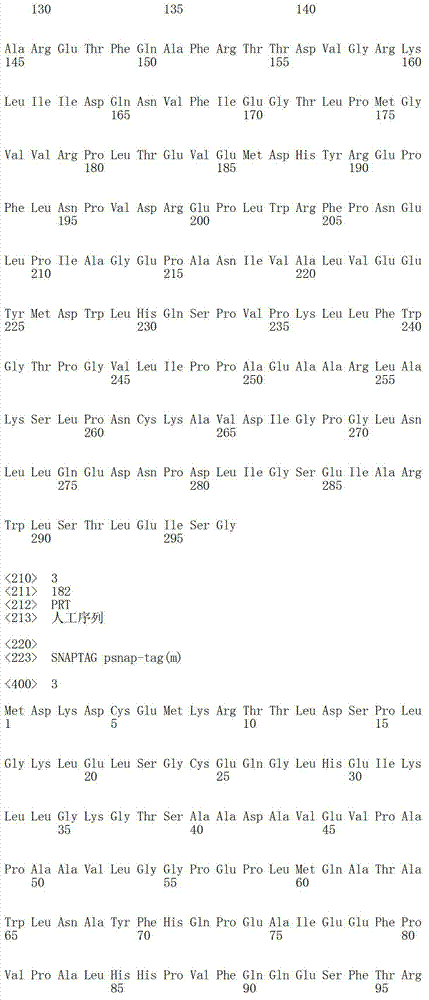


Claims (68)


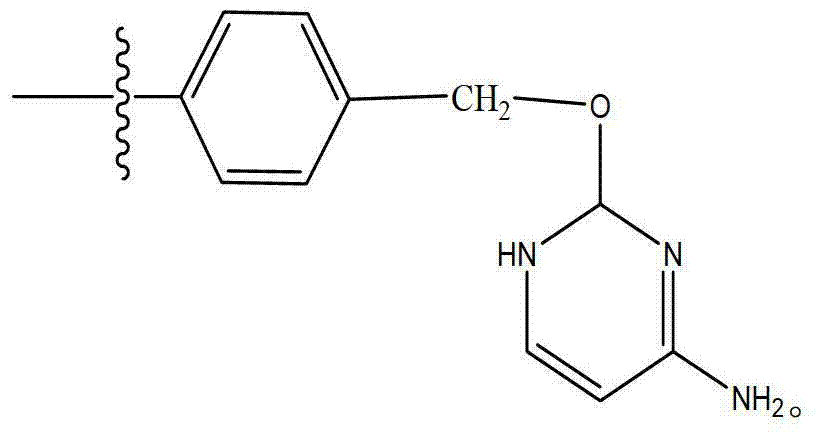


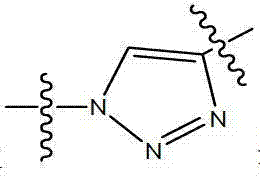





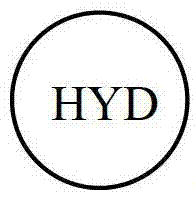


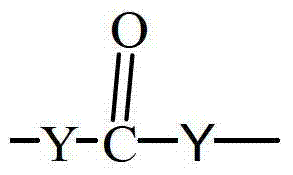




Applications Claiming Priority (5)
| Application Number | Priority Date | Filing Date | Title |
|---|---|---|---|
| US42058410P | 2010-12-07 | 2010-12-07 | |
| US61/420,584 | 2010-12-07 | ||
| US201161530014P | 2011-09-01 | 2011-09-01 | |
| US61/530,014 | 2011-09-01 | ||
| PCT/US2011/063401 WO2012078559A2 (en) | 2010-12-07 | 2011-12-06 | Small-molecule hydrophobic tagging of fusion proteins and induced degradation of same |
Publications (1)
| Publication Number | Publication Date |
|---|---|
| CN103502275A true CN103502275A (en) | 2014-01-08 |
Family
ID=46207674
Family Applications (1)
| Application Number | Title | Priority Date | Filing Date |
|---|---|---|---|
| CN201180066936.9A Pending CN103502275A (en) | 2010-12-07 | 2011-12-06 | Small-molecule hydrophobic tagging of fusion proteins and induced degradation of same |
Country Status (6)
| Country | Link |
|---|---|
| US (3) | US9500653B2 (en) |
| EP (1) | EP2649099A4 (en) |
| CN (1) | CN103502275A (en) |
| AU (2) | AU2011338615B2 (en) |
| CA (1) | CA2823837A1 (en) |
| WO (1) | WO2012078559A2 (en) |
Cited By (2)
| Publication number | Priority date | Publication date | Assignee | Title |
|---|---|---|---|---|
| CN107828876A (en) * | 2017-10-19 | 2018-03-23 | 中国科学院生物物理研究所 | Application of tagged proteins that can covalently bind substrates in CLIP |
| CN107922927A (en) * | 2015-06-19 | 2018-04-17 | 学校法人东京理科大学 | Breaks down proteins induction label and application thereof |
Families Citing this family (138)
| Publication number | Priority date | Publication date | Assignee | Title |
|---|---|---|---|---|
| EP3608317A1 (en) | 2012-01-12 | 2020-02-12 | Yale University | Compounds & methods for the enhanced degradation of targeted proteins & other polypeptides by an e3 ubiquitin ligase |
| JP6604938B2 (en) * | 2013-03-15 | 2019-11-13 | プロメガ コーポレイション | Substrates for covalently anchoring proteins to functional groups or solid surfaces |
| CN104177289B (en) * | 2013-05-23 | 2017-10-27 | 中国人民解放军军事医学科学院毒物药物研究所 | Chlorine hexyloxyethoxy ethyl compound and its pharmaceutical composition and purposes |
| GB201311891D0 (en) | 2013-07-03 | 2013-08-14 | Glaxosmithkline Ip Dev Ltd | Novel compound |
| GB201311888D0 (en) | 2013-07-03 | 2013-08-14 | Glaxosmithkline Ip Dev Ltd | Novel compounds |
| AU2014286990A1 (en) | 2013-07-11 | 2016-02-11 | Novartis Ag | Lysine-specific chemoenzymatic protein modifications using microbial transglutaminase |
| WO2015160845A2 (en) | 2014-04-14 | 2015-10-22 | Arvinas, Inc. | Imide-based modulators of proteolysis and associated methods of use |
| US20180228907A1 (en) | 2014-04-14 | 2018-08-16 | Arvinas, Inc. | Cereblon ligands and bifunctional compounds comprising the same |
| US10071164B2 (en) | 2014-08-11 | 2018-09-11 | Yale University | Estrogen-related receptor alpha based protac compounds and associated methods of use |
| US20190054117A1 (en) * | 2014-12-19 | 2019-02-21 | Novartis Ag | Dimerization switches and uses thereof |
| US9694084B2 (en) | 2014-12-23 | 2017-07-04 | Dana-Farber Cancer Institute, Inc. | Methods to induce targeted protein degradation through bifunctional molecules |
| JP6815318B2 (en) | 2014-12-23 | 2021-01-20 | ダナ−ファーバー キャンサー インスティテュート,インコーポレイテッド | How to Induce Targeted Proteolysis by Bifunctional Molecules |
| HK1245791A1 (en) | 2015-01-20 | 2018-08-31 | 阿尔维纳斯运营股份有限公司 | Compounds and methods for the targeted degradation of the androgen receptor |
| US12312316B2 (en) | 2015-01-20 | 2025-05-27 | Arvinas Operations, Inc. | Compounds and methods for the targeted degradation of androgen receptor |
| HK1249058A1 (en) | 2015-03-18 | 2018-10-26 | Arvinas, Inc. | Compounds and methods for the enhanced degradation of targeted proteins |
| JP6873433B2 (en) | 2015-06-04 | 2021-05-19 | アルヴィナス・オペレーションズ・インコーポレイテッド | Imid modifiers for proteolysis and related uses |
| WO2016197114A1 (en) | 2015-06-05 | 2016-12-08 | Arvinas, Inc. | Tank-binding kinase-1 protacs and associated methods of use |
| WO2017007612A1 (en) | 2015-07-07 | 2017-01-12 | Dana-Farber Cancer Institute, Inc. | Methods to induce targeted protein degradation through bifunctional molecules |
| EP3331905B1 (en) * | 2015-08-06 | 2022-10-05 | Dana-Farber Cancer Institute, Inc. | Targeted protein degradation to attenuate adoptive t-cell therapy associated adverse inflammatory responses |
| WO2017030814A1 (en) | 2015-08-19 | 2017-02-23 | Arvinas, Inc. | Compounds and methods for the targeted degradation of bromodomain-containing proteins |
| EP3370715A4 (en) | 2015-11-02 | 2019-05-15 | Yale University | CHIMERIC PROTEIN-TARGETING COMPOUNDS AND METHODS OF PREPARING AND USING THE SAME |
| US10954287B2 (en) | 2016-04-15 | 2021-03-23 | Ra Pharmaceuticals, Inc. | Ras binding peptides and methods of use |
| EP3445357B1 (en) | 2016-04-22 | 2021-05-26 | Dana-Farber Cancer Institute, Inc. | Bifunctional molecules for degradation of egfr and methods of use |
| CN109562107A (en) | 2016-05-10 | 2019-04-02 | C4医药公司 | Heterocycle degron body for target protein degradation |
| EP3455218A4 (en) | 2016-05-10 | 2019-12-18 | C4 Therapeutics, Inc. | CARBON-BONDED GLUTARIMIDE-TYPE DEGRONIMERS FOR THE DEGRADATION OF TARGET PROTEINS |
| CN109790143A (en) | 2016-05-10 | 2019-05-21 | C4医药公司 | The C of amine connection for target protein degradation3Glutarimide degron body |
| EP4483875A3 (en) | 2016-05-10 | 2025-04-02 | C4 Therapeutics, Inc. | Spirocyclic degronimers for target protein degradation |
| GB201610156D0 (en) | 2016-06-10 | 2016-07-27 | Otsuka Pharma Co Ltd | Cliptac compositions |
| WO2018053354A1 (en) | 2016-09-15 | 2018-03-22 | Arvinas, Inc. | Indole derivatives as estrogen receptor degraders |
| WO2018064589A1 (en) | 2016-09-29 | 2018-04-05 | Dana-Farber Cancer Institute, Inc. | Targeted protein degradation using a mutant e3 ubiquitin ligase |
| MX2019003887A (en) | 2016-10-03 | 2019-11-18 | Sigilon Therapeutics Inc | COMPOUNDS, DEVICES AND USES OF THEM. |
| US10584101B2 (en) | 2016-10-11 | 2020-03-10 | Arvinas, Inc. | Compounds and methods for the targeted degradation of androgen receptor |
| WO2018102067A2 (en) | 2016-11-01 | 2018-06-07 | Arvinas, Inc. | Tau-protein targeting protacs and associated methods of use |
| JP6957620B2 (en) | 2016-12-01 | 2021-11-02 | アルビナス・オペレーションズ・インコーポレイテッドArvinas Operations, Inc. | Tetrahydronaphthalene derivatives and tetrahydroisoquinoline derivatives as estrogen receptor degradants |
| US11173211B2 (en) | 2016-12-23 | 2021-11-16 | Arvinas Operations, Inc. | Compounds and methods for the targeted degradation of rapidly accelerated Fibrosarcoma polypeptides |
| EP3559006A4 (en) | 2016-12-23 | 2021-03-03 | Arvinas Operations, Inc. | COMPOUNDS AND METHODS FOR TARGETED DEGRADATION OF FETAL LIVER KINASE POLYPEPTIDES |
| JP2020505327A (en) | 2016-12-23 | 2020-02-20 | アルビナス・オペレーションズ・インコーポレイテッドArvinas Operations, Inc. | EGFR proteolytic targeting chimeric molecules and related methods of use |
| KR20250117470A (en) | 2016-12-23 | 2025-08-04 | 아비나스 오퍼레이션스, 인코포레이티드 | Compounds and methods for the targeted degradation of rapidly accelerated fibrosarcoma polypeptides |
| US11191741B2 (en) | 2016-12-24 | 2021-12-07 | Arvinas Operations, Inc. | Compounds and methods for the targeted degradation of enhancer of zeste homolog 2 polypeptide |
| JP7266526B6 (en) | 2017-01-26 | 2024-02-15 | アルビナス・オペレーションズ・インコーポレイテッド | Estrogen receptor proteolytic modulators and related methods |
| CA3050309A1 (en) | 2017-01-31 | 2018-08-09 | Arvinas Operations, Inc. | Cereblon ligands and bifunctional compounds comprising the same |
| EP3579847A4 (en) * | 2017-02-08 | 2020-12-09 | Dana Farber Cancer Institute, Inc. | ADJUSTABLE ENDOGENIC PROTEIN DEGRADATION WITH HETEROBIFUNCTIONAL COMPONENTS |
| WO2018148440A1 (en) | 2017-02-08 | 2018-08-16 | Dana-Farber Cancer Institute, Inc. | Regulating chimeric antigen receptors |
| CN118440096A (en) | 2017-06-20 | 2024-08-06 | C4医药公司 | Degradation stator and degradation determinant for N/O-ligation of protein degradation |
| WO2019010201A1 (en) * | 2017-07-03 | 2019-01-10 | Yale University | Small molecule adapter regulated |
| CN118108706A (en) | 2017-09-04 | 2024-05-31 | C4医药公司 | Glutarimide |
| EP3679027A1 (en) | 2017-09-04 | 2020-07-15 | C4 Therapeutics, Inc. | Dihydrobenzimidazolones |
| WO2019043208A1 (en) | 2017-09-04 | 2019-03-07 | F. Hoffmann-La Roche Ag | Dihydroquinolinones |
| US11358948B2 (en) | 2017-09-22 | 2022-06-14 | Kymera Therapeutics, Inc. | CRBN ligands and uses thereof |
| IL273432B (en) | 2017-09-22 | 2022-09-01 | Kymera Therapeutics Inc | Protein degraders and uses thereof |
| WO2019084030A1 (en) | 2017-10-24 | 2019-05-02 | Genentech, Inc. | (4-hydroxypyrrolidin-2-yl)-hydroxamate compounds and methods of use thereof |
| WO2019084026A1 (en) | 2017-10-24 | 2019-05-02 | Genentech, Inc. | (4-hydroxypyrrolidin-2-yl)-heterocyclic compounds and methods of use thereof |
| CN111542318A (en) | 2017-11-10 | 2020-08-14 | 密歇根大学董事会 | ASH1L degraders and methods of treatment therewith |
| WO2019099868A2 (en) | 2017-11-16 | 2019-05-23 | C4 Therapeutics, Inc. | Degraders and degrons for targeted protein degradation |
| EP3710443A1 (en) | 2017-11-17 | 2020-09-23 | Arvinas Operations, Inc. | Compounds and methods for the targeted degradation of interleukin-1 receptor-associated kinase 4 polypeptides |
| US20200354413A1 (en) | 2017-12-15 | 2020-11-12 | Dana-Farber Cancer Institute, Inc. | Stabilized peptide-mediated targeted protein degradation |
| IL315310A (en) | 2017-12-26 | 2024-10-01 | Kymera Therapeutics Inc | IRAK joints and used in them |
| US10792354B2 (en) | 2017-12-31 | 2020-10-06 | University Of Maryland Baltimore County | Feed additive composition for immunoprotection of fish against infectious viral species |
| EP3737675A4 (en) | 2018-01-12 | 2022-01-05 | Kymera Therapeutics, Inc. | CRBN LIGANDS AND USES THEREOF |
| WO2019140380A1 (en) | 2018-01-12 | 2019-07-18 | Kymera Therapeutics, Inc. | Protein degraders and uses thereof |
| GB201800921D0 (en) | 2018-01-19 | 2018-03-07 | Evox Therapeutics Ltd | Intracellular delivery of target silencing technology |
| US11220515B2 (en) * | 2018-01-26 | 2022-01-11 | Yale University | Imide-based modulators of proteolysis and associated methods of use |
| US11028088B2 (en) | 2018-03-10 | 2021-06-08 | Yale University | Modulators of BTK proteolysis and methods of use |
| WO2019183523A1 (en) | 2018-03-23 | 2019-09-26 | Genentech, Inc. | Hetero-bifunctional degrader compounds and their use as modulators of targeted ubiquination (vhl) |
| CN111902141A (en) | 2018-03-26 | 2020-11-06 | C4医药公司 | Glucocerebroside binders for IKAROS degradation |
| US12539292B2 (en) | 2018-04-01 | 2026-02-03 | Arvinas Operations, Inc. | BRM targeting compounds and associated methods of use |
| JP7720698B2 (en) | 2018-04-04 | 2025-08-08 | アルビナス・オペレーションズ・インコーポレイテッド | Modulators of protein degradation and related methods of use |
| KR20210003804A (en) | 2018-04-13 | 2021-01-12 | 아비나스 오퍼레이션스, 인코포레이티드 | Cerebron ligand and bifunctional compound comprising the same |
| EP3781156A4 (en) | 2018-04-16 | 2022-05-18 | C4 Therapeutics, Inc. | SPIROCYCLIC COMPOUNDS |
| EP3578561A1 (en) | 2018-06-04 | 2019-12-11 | F. Hoffmann-La Roche AG | Spiro compounds |
| JP2021527137A (en) | 2018-06-13 | 2021-10-11 | アンフィスタ セラピューティクス リミテッド | Bifunctional molecule for targeting Rpn11 |
| WO2019238886A1 (en) | 2018-06-13 | 2019-12-19 | University Of Dundee | Bifunctional molecules for targeting usp14 |
| JP2021533181A (en) | 2018-06-13 | 2021-12-02 | アンフィスタ セラピューティクス リミテッド | Bifunctional molecule for targeting UchL5 |
| EP3817822A4 (en) | 2018-07-06 | 2022-07-27 | Kymera Therapeutics, Inc. | PROTEIN DEGRADING AGENTS AND THEIR USES |
| WO2020010177A1 (en) | 2018-07-06 | 2020-01-09 | Kymera Therapeutics, Inc. | Tricyclic crbn ligands and uses thereof |
| WO2020023851A1 (en) | 2018-07-26 | 2020-01-30 | Yale University | Bifunctional substitued pyrimidines as modulators of fak proteolyse |
| WO2020041331A1 (en) | 2018-08-20 | 2020-02-27 | Arvinas Operations, Inc. | Proteolysis targeting chimeric (protac) compound with e3 ubiquitin ligase binding activity and targeting alpha-synuclein protein for treating neurodegenerative diseases |
| AU2019323446B2 (en) | 2018-08-22 | 2025-01-30 | Cullgen (Shanghai), Inc. | Tropomyosin receptor kinase (TRK) degradation compounds and methods of use |
| US11969472B2 (en) | 2018-08-22 | 2024-04-30 | Cullgen (Shanghai), Inc. | Tropomyosin receptor kinase (TRK) degradation compounds and methods of use |
| JP2022500368A (en) | 2018-09-07 | 2022-01-04 | アルビナス・オペレーションズ・インコーポレイテッドArvinas Operations, Inc. | Polycyclic compounds and methods for targeted degradation of rapidly progressive fibrosarcoma polypeptides |
| CA3119773A1 (en) | 2018-11-30 | 2020-06-04 | Kymera Therapeutics, Inc. | Irak degraders and uses thereof |
| CN113453679B (en) | 2018-12-20 | 2025-07-08 | C4医药公司 | Targeted protein degradation |
| US20220160890A1 (en) | 2019-02-21 | 2022-05-26 | Locki Therapeutics Limited | Survival-targeting chimeric (surtac) molecules |
| WO2020181232A1 (en) | 2019-03-06 | 2020-09-10 | C4 Therapeutics, Inc. | Heterocyclic compounds for medical treatment |
| CN120574283A (en) | 2019-04-05 | 2025-09-02 | 凯麦拉医疗公司 | STAT degraders and their uses |
| WO2020251972A1 (en) | 2019-06-10 | 2020-12-17 | Kymera Therapeutics, Inc. | Smarca degraders and uses thereof |
| AU2020302118A1 (en) | 2019-06-28 | 2022-02-24 | Kymera Therapeutics, Inc. | IRAK degraders and uses thereof |
| WO2021011913A1 (en) | 2019-07-17 | 2021-01-21 | Arvinas Operations, Inc. | Tau-protein targeting compounds and associated methods of use |
| MX2022002415A (en) | 2019-08-26 | 2022-03-22 | Arvinas Operations Inc | Methods of treating breast cancer with tetrahydronaphthalene derivatives as estrogen receptor degraders. |
| WO2021067606A1 (en) | 2019-10-01 | 2021-04-08 | Arvinas Operations, Inc. | Brm targeting compounds and associated methods of use |
| CN115397821B (en) | 2019-10-17 | 2024-09-03 | 阿尔维纳斯运营股份有限公司 | Bifunctional molecules comprising an E3 ubiquitin ligase binding moiety linked to a BCL6 targeting moiety |
| EP4076524A4 (en) | 2019-12-17 | 2023-11-29 | Kymera Therapeutics, Inc. | IRAQ DEGRADATION AGENTS AND THEIR USES |
| JP2023509366A (en) | 2019-12-17 | 2023-03-08 | カイメラ セラピューティクス, インコーポレイテッド | IRAK dissolving agents and their uses |
| PE20221582A1 (en) | 2019-12-19 | 2022-10-06 | Arvinas Operations Inc | COMPOUNDS AND METHODS FOR DIRECTED DEGRADATION OF ANDROGEN RECEPTOR |
| WO2021127561A1 (en) | 2019-12-20 | 2021-06-24 | C4 Therapeutics, Inc. | Isoindolinone and indazole compounds for the degradation of egfr |
| CN115297931A (en) | 2019-12-23 | 2022-11-04 | 凯麦拉医疗公司 | SMARCA degrading agents and uses thereof |
| WO2023205701A1 (en) | 2022-04-20 | 2023-10-26 | Kumquat Biosciences Inc. | Macrocyclic heterocycles and uses thereof |
| WO2021170109A1 (en) | 2020-02-26 | 2021-09-02 | Cullgen (Shanghai) , Inc. | Tropomyosin receptor kinase (trk) degradation compounds and methods of use |
| MX2022010952A (en) | 2020-03-05 | 2022-10-07 | C4 Therapeutics Inc | Compounds for targeted degradation of brd9. |
| US12528785B2 (en) | 2020-03-19 | 2026-01-20 | Kymera Therapeutics, Inc. | MDM2 degraders and uses thereof |
| EP4146642A1 (en) | 2020-05-09 | 2023-03-15 | Arvinas Operations, Inc. | Methods of manufacturing a bifunctional compound, ultrapure forms of the bifunctional compound, and dosage forms comprising the same |
| TW202210483A (en) | 2020-06-03 | 2022-03-16 | 美商凱麥拉醫療公司 | Crystalline forms of irak degraders |
| WO2022047145A1 (en) | 2020-08-28 | 2022-03-03 | Arvinas Operations, Inc. | Rapidly accelerating fibrosarcoma protein degrading compounds and associated methods of use |
| US12162859B2 (en) | 2020-09-14 | 2024-12-10 | Arvinas Operations, Inc. | Crystalline and amorphous forms of a compound for the targeted degradation of estrogen receptor |
| WO2022120355A1 (en) | 2020-12-02 | 2022-06-09 | Ikena Oncology, Inc. | Tead degraders and uses thereof |
| WO2022129925A1 (en) | 2020-12-18 | 2022-06-23 | Amphista Therapeutics Limited | Novel bifunctional molecules for targeted protein degradation |
| TW202241891A (en) | 2020-12-30 | 2022-11-01 | 美商凱麥拉醫療公司 | Irak degraders and uses thereof |
| WO2022148821A1 (en) | 2021-01-07 | 2022-07-14 | Locki Therapeutics Limited | Usp7 binding survival-targeting chimeric (surtac) molecules & uses thereof |
| WO2022148822A1 (en) | 2021-01-07 | 2022-07-14 | Locki Therapeutics Limited | Usp5 binding survival-targeting chimeric (surtac) molecules & uses thereof |
| EP4285124A4 (en) * | 2021-01-29 | 2025-01-08 | Eurofins DiscoverX Corporation | MOLECULAR ADHESIVE SCREENING ASSAYS AND METHODS OF CARRYING OUT THE SAME |
| US12171768B2 (en) | 2021-02-15 | 2024-12-24 | Kymera Therapeutics, Inc. | IRAK4 degraders and uses thereof |
| KR102578912B1 (en) * | 2021-04-13 | 2023-09-13 | 서울대학교산학협력단 | Novel compounds photo-crosslinked by visible light and uses thereof |
| WO2022220581A1 (en) * | 2021-04-13 | 2022-10-20 | 서울대학교산학협력단 | Novel compound to be photo-crosslinked by visible light, and use thereof |
| CR20230516A (en) | 2021-04-16 | 2024-01-23 | Arvinas Operations Inc | Modulators of bcl6 proteolysis and associated methods of use |
| IL308314A (en) | 2021-05-07 | 2024-01-01 | Kymera Therapeutics Inc | Cdk2 degraders and uses thereof |
| IL308748A (en) | 2021-06-08 | 2024-01-01 | C4 Therapeutics Inc | Therapeutics for the degradation of mutant braf |
| WO2023076161A1 (en) | 2021-10-25 | 2023-05-04 | Kymera Therapeutics, Inc. | Tyk2 degraders and uses thereof |
| AR127505A1 (en) | 2021-10-29 | 2024-01-31 | Kymera Therapeutics Inc | IRAQ-4 DEGRADERS AND SYNTHESIS THEREOF |
| CN118679160A (en) | 2021-11-24 | 2024-09-20 | 阿维纳斯运营公司 | BRM targeting compounds and related methods of use |
| WO2023147594A2 (en) | 2022-01-31 | 2023-08-03 | Kymera Therapeutics, Inc. | Irak degraders and uses thereof |
| US20240060059A1 (en) * | 2022-05-04 | 2024-02-22 | Promega Corporation | Circularly permuted dehalogenase variants |
| US20240174992A1 (en) * | 2022-05-04 | 2024-05-30 | Promega Corporation | Split modified dehalogenase variants |
| WO2023215505A1 (en) * | 2022-05-04 | 2023-11-09 | Promega Corporation | Modified dehalogenase with extended surface loop regions |
| IL316803A (en) | 2022-06-06 | 2025-01-01 | C4 Therapeutics Inc | Bicyclic-substituted glutarimide cereblon binders |
| CN119384408A (en) | 2022-06-16 | 2025-01-28 | 安菲斯塔治疗有限责任公司 | Bifunctional molecules for targeted protein degradation |
| WO2024050016A1 (en) | 2022-08-31 | 2024-03-07 | Oerth Bio Llc | Compositions and methods for targeted inhibition and degradation of proteins in an insect cell |
| WO2024054591A1 (en) | 2022-09-07 | 2024-03-14 | Arvinas Operations, Inc. | Rapidly accelerated fibrosarcoma (raf) degrading compounds and associated methods of use |
| WO2024064358A1 (en) | 2022-09-23 | 2024-03-28 | Ifm Due, Inc. | Compounds and compositions for treating conditions associated with sting activity |
| AU2024212035A1 (en) | 2023-01-26 | 2025-08-14 | Arvinas Operations, Inc. | Cereblon-based kras degrading protacs ans uses related thereto |
| TW202500126A (en) | 2023-05-24 | 2025-01-01 | 美商金橘生物科技公司 | Heterocyclic compounds and uses thereof |
| TW202502779A (en) | 2023-06-30 | 2025-01-16 | 美商金橘生物科技公司 | Substituted heteroaromatic amines and uses thereof |
| WO2025049555A1 (en) | 2023-08-31 | 2025-03-06 | Oerth Bio Llc | Compositions and methods for targeted inhibition and degradation of proteins in an insect cell |
| WO2025076501A1 (en) * | 2023-10-06 | 2025-04-10 | The Scripps Research Institute | High throughput parallel synthesis of small molecule degraders |
| WO2025096855A1 (en) | 2023-11-02 | 2025-05-08 | Kumquat Biosciences Inc. | Degraders and uses thereof |
| WO2025122895A1 (en) | 2023-12-08 | 2025-06-12 | Arvinas Operations, Inc. | Use of androgen receptor degrader for the treatment of spinal and bulbar muscular atrophy |
| GB202319256D0 (en) | 2023-12-15 | 2024-01-31 | Amphista Therapeutics Ltd | Novel compounds for targeted protein degradation |
| WO2025137500A1 (en) | 2023-12-21 | 2025-06-26 | Dana-Farber Cancer Institute, Inc. | Kinase inhibition and degradation |
| WO2025191109A1 (en) | 2024-03-13 | 2025-09-18 | Amphista Therapeutics Limited | Combinations comprising brd9 bifunctional compounds and their use in the treatment of cancer |
Family Cites Families (4)
| Publication number | Priority date | Publication date | Assignee | Title |
|---|---|---|---|---|
| ES2253821T3 (en) * | 1997-07-12 | 2006-06-01 | Cancer Research Technology Limited | PURINE DERIVATIVES QUINASE INHIBITORS THAT DEPENDS ON CYCLINE. |
| US7087386B2 (en) * | 1999-06-11 | 2006-08-08 | The Burnham Institute | Nucleic acid encoding proteins involved in protein degradation, products and methods related thereto |
| EP1577285A4 (en) | 2002-12-25 | 2006-04-12 | Idemitsu Kosan Co | ADAMANTANE DERIVATIVE AND METHOD FOR PRODUCING THE SAME |
| WO2004072232A2 (en) * | 2003-01-31 | 2004-08-26 | Promega Corporation | Covalent tethering of functional groups to proteins |
-
2011
- 2011-12-06 CN CN201180066936.9A patent/CN103502275A/en active Pending
- 2011-12-06 WO PCT/US2011/063401 patent/WO2012078559A2/en not_active Ceased
- 2011-12-06 EP EP11846166.4A patent/EP2649099A4/en not_active Ceased
- 2011-12-06 CA CA2823837A patent/CA2823837A1/en not_active Abandoned
- 2011-12-06 AU AU2011338615A patent/AU2011338615B2/en not_active Ceased
- 2011-12-06 US US13/992,076 patent/US9500653B2/en active Active
-
2016
- 2016-11-04 US US15/343,640 patent/US9632089B2/en active Active
-
2017
- 2017-04-06 US US15/480,627 patent/US10145848B2/en active Active
- 2017-07-07 AU AU2017204640A patent/AU2017204640A1/en not_active Abandoned
Non-Patent Citations (2)
| Title |
|---|
| GEORGYI V. LOS: "HaloTag: A Novel Protein Labeling Technology for Cell Imaging and Protein Analysis", 《ACS CHEMICAL BIOLOGY》 * |
| KUPPAN GOKULAN: "Increase in the Immunogenicity of HIV Peptide Antigens by Chemical Linkage to Polytuftsin (TKPR 40 )", 《DNA AND CELL BIOLOGY》 * |
Cited By (2)
| Publication number | Priority date | Publication date | Assignee | Title |
|---|---|---|---|---|
| CN107922927A (en) * | 2015-06-19 | 2018-04-17 | 学校法人东京理科大学 | Breaks down proteins induction label and application thereof |
| CN107828876A (en) * | 2017-10-19 | 2018-03-23 | 中国科学院生物物理研究所 | Application of tagged proteins that can covalently bind substrates in CLIP |
Also Published As
| Publication number | Publication date |
|---|---|
| US20140302523A1 (en) | 2014-10-09 |
| US20170067874A1 (en) | 2017-03-09 |
| EP2649099A2 (en) | 2013-10-16 |
| WO2012078559A2 (en) | 2012-06-14 |
| US20180356421A9 (en) | 2018-12-13 |
| US9632089B2 (en) | 2017-04-25 |
| AU2011338615A1 (en) | 2013-07-25 |
| US20170307614A1 (en) | 2017-10-26 |
| US9500653B2 (en) | 2016-11-22 |
| CA2823837A1 (en) | 2012-06-14 |
| AU2011338615B2 (en) | 2017-07-27 |
| AU2017204640A1 (en) | 2017-07-27 |
| US10145848B2 (en) | 2018-12-04 |
| EP2649099A4 (en) | 2016-10-19 |
| WO2012078559A3 (en) | 2012-12-06 |
Similar Documents
| Publication | Publication Date | Title |
|---|---|---|
| CN103502275A (en) | Small-molecule hydrophobic tagging of fusion proteins and induced degradation of same | |
| US10500198B2 (en) | Bis-benzylidine piperidone proteasome inhibitor with anticancer activity | |
| JP6987641B2 (en) | Silicon-based drug complex and how to use it | |
| Rubio-Ruiz et al. | Efficient palladium-triggered release of vorinostat from a bioorthogonal precursor | |
| JP2021516237A (en) | Arginase inhibitor | |
| KR20180134860A (en) | TAF1 inhibitor for the treatment of cancer | |
| JP2022533069A (en) | Small molecule modulator of gut bacterial bile acid metabolism | |
| JP6758669B2 (en) | Its use as an ascochlorin derivative and AMPK activator | |
| CA3107305A1 (en) | Tlr7/8 agonists and liposome compositions | |
| Herp et al. | First fluorescent acetylspermidine deacetylation assay for HDAC10 identifies selective inhibitors with cellular target engagement | |
| Yan et al. | Structure–activity relationships for the marine natural product sintokamides: androgen receptor n-terminus antagonists of interest for treatment of metastatic castration-resistant prostate cancer | |
| AU2025201946A1 (en) | GPER proteolytic targeting chimeras | |
| CN107406410A (en) | Organic Tellurium Compounds, composition and its application method | |
| Yang et al. | Next-generation diprovocims with potent human and murine TLR1/TLR2 agonist activity that activate the innate and adaptive immune response | |
| Lan et al. | Visualization of the pH-dependent dynamic distribution of G2A in living cells | |
| WO2005064332A1 (en) | Highly active lysophosphatidic acid and method of screening therewith | |
| CN114728970A (en) | Optical proximity analysis of protein-protein interactions in cells | |
| CN113924304A (en) | Tetrafunctional chemical probe and method for identifying target membrane proteins from living cells or living tissue using the same | |
| Villarini-Torres et al. | Dual Mechanisms of Action of a Halogenated Allyl Fatty Acid against Methicillin-Resistant Staphylococcus aureus | |
| EP3037106A1 (en) | TXA2 inhibitor as stimulator or inducer of MHC Class I cross-presentation | |
| Wang et al. | Discovery of a Novel EGFR PROTAC Degrader against C797S Resistance Mutation with Potent Antitumor Efficacy in NSCLC Treatment | |
| Lin | Development of Small Molecules Towards Novel Protein Targets: From Selective Androgen Receptor Modulators to Affinity Probes for a Novel Immunological Target | |
| Tian et al. | Discovery of Tamsulosin Derivatives with Shifted Selectivity from the α1-Adrenergic Receptor to ANO1 as Potent Antiosteoporotic Agents | |
| Binici | Identification and characterization of small-molecule modulators that promote cancer cell elimination | |
| Swartzel | Development of Diverse Bifunctional Molecules for Interrogating DcpS, HER3, Brachyury, and Phosphorylation-Driven Diseases Towards Therapeutic Applications |
Legal Events
| Date | Code | Title | Description |
|---|---|---|---|
| C06 | Publication | ||
| PB01 | Publication | ||
| C10 | Entry into substantive examination | ||
| SE01 | Entry into force of request for substantive examination | ||
| C02 | Deemed withdrawal of patent application after publication (patent law 2001) | ||
| WD01 | Invention patent application deemed withdrawn after publication |
Application publication date: 20140108 |